Day 6 takes us back to the fictional worlds of Ruritanian kingdoms, and to the streets of 1920s London thanks to this British-German co-production from Anthony Asquith…
The Runaway Princess (1929; UK/Ger.; Anthony Asquith)
On her 21st birthday, the Princess of Lothen Kunitz runs away from her palace to avoid enforced marriage to a stranger. She goes to London with her old tutor, where she tries to earn a living—but is caught up in a fraud scheme…
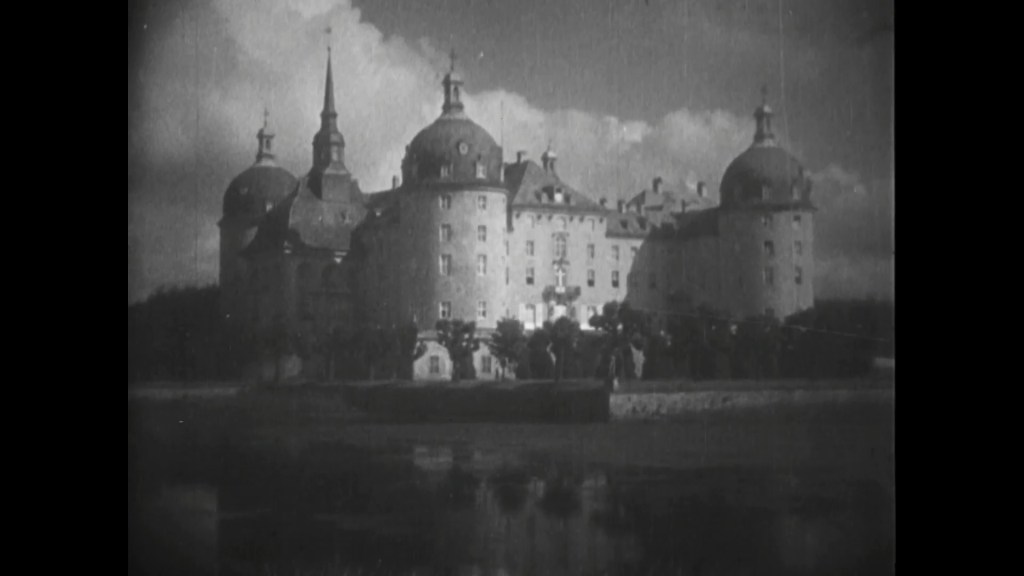
The camera tilts down to reveal a grand castle, somewhere in central Europe. Tops hats are raised to a banner bearing the image of the Princess. It is Priscilla, who is thus preceded by her symbolic trappings. When we finally see her, she is surrounded by courtiers and hussars. (Hussars always look the most gawdy, hence their appearance in all the Ruritanian films streamed thus far from Pordenone; though here I note that they are wearing British-style lacing on their tunics rather than the more continental style frogging. (I have a longstanding interest in nineteenth- and early twentieth-century uniforms, but I’ll try and spare you further observations on this topic.)
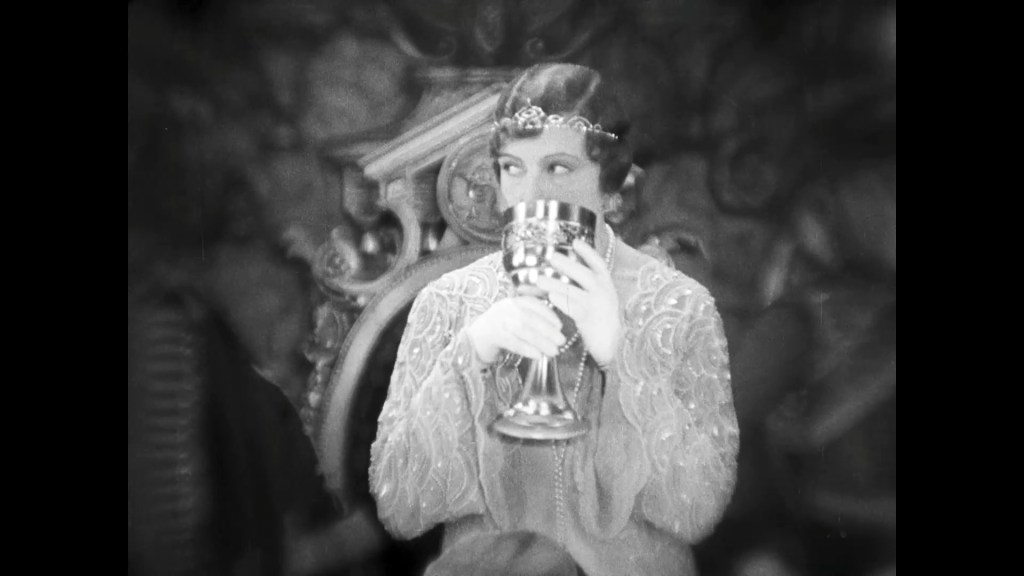
Priscilla is presented with a goblet. She tries to take a good swig of the contents, but her chaperone intervenes. There is a nice gag with the courtiers dealing with the birthday gifts being offered to the Princess. She hands one large item to her aide, who passes it to their right to an usher, who passes it to their right to another usher. The usher looks hopefully to his right, but there’s no-one there, so he tries to hand it back to someone on his left. The aide eventually takes it back, disappears for a moment, and looks furtively behind him once he’s dumped it behind the dais.

A girls’ choir step forward and a singer fluffs her line. The princess tries not to laugh. Sympathy and embarrassment. We feel the awkwardness and absurdity of the occasion.
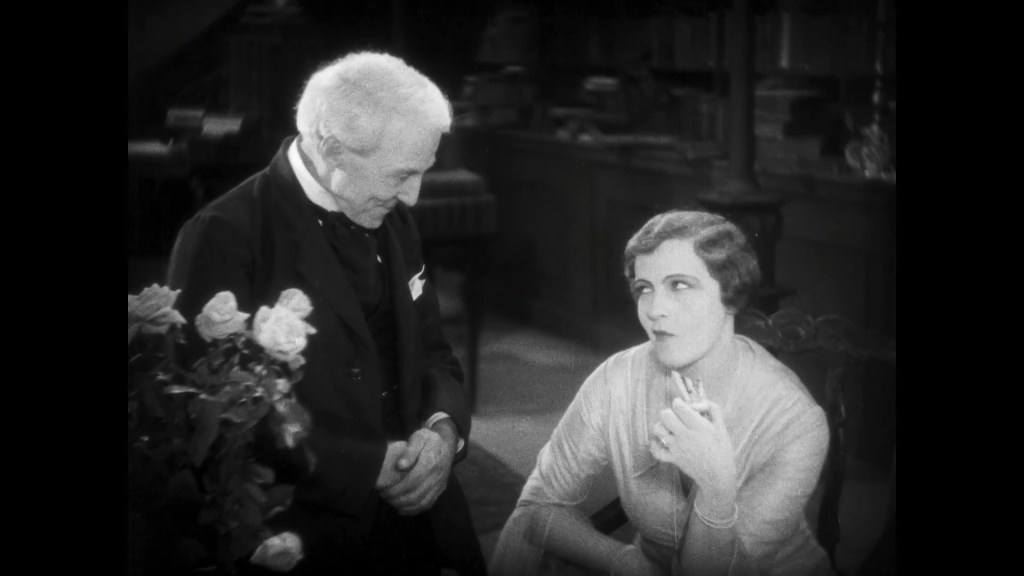
Fritzing is a faithful old tutor to the unhappy princess. Fritzing commiserates with Priscilla in the confines of a large library-cum-study, where she would clearly rather spend her time. They discuss her future, and she says “I wouldn’t marry a prince for anybody.”
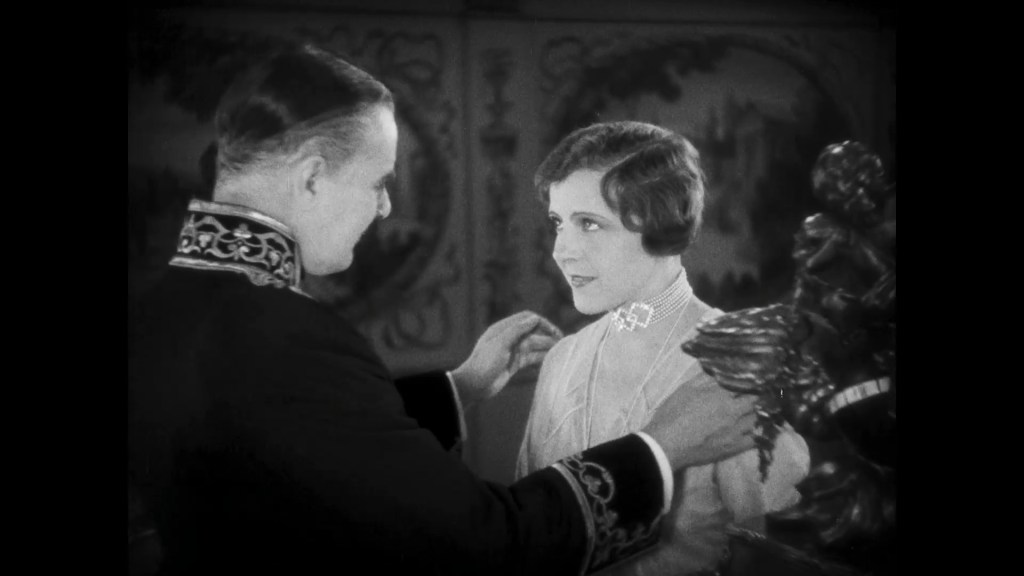
Cue the Grand Duke, her father, giving her a necklace: and an ultimatum. The necklace has been given to all princesses when they come of age: it’s an engagement gift. She must marry the Crown Prince of Savona. The necklace is tight around her throat. Outside, she tries to tear it off: but the courtiers are all around and she must feign contentment.
She plans an escape, sending luggage to Amsterdam. Her packing is interrupted for a bicycle lesson, to take place under the eyes of a stern chaperone.
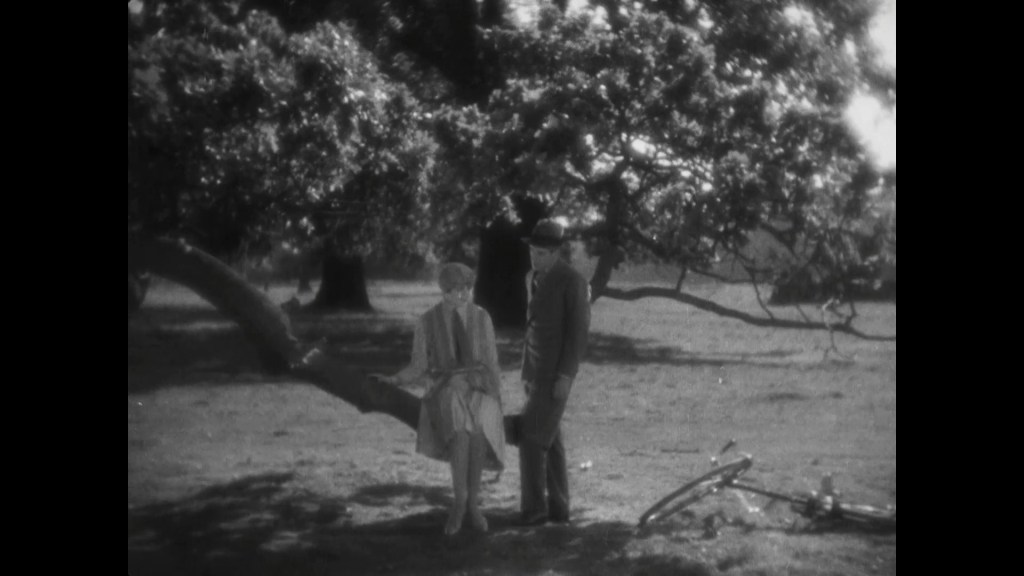
But Priscilla tears off into the woods, where she (quite literally) bumps into a stranger. Under boughs of crushed-focus light and shade, they share a few moments of tranquillity. Then the chaperone intervenes and they are parted.
When the Prince is announced the next day, the camera tracks in grandly and we see only the back of the man’s head. (And yes, I think the eventual pay-off is spelled clearly enough at this point.) Where is the princess? The Grand Duke must improvise: “the joy of her betrothal has caused the Princess to have a breakdown”: cut to the bicycle tyre being repumped as Priscilla and Fritzing ride away to the train station.
But on the train things start to go awry. They are the victim of money forgers, who substitute a duff £5 note for their own currency. And the stranger from the woods is following them, too—and recognizes her face from the newspaper. Also on board is a detective, investigating a gang of fraudsters—who assumes the stranger is likewise on their trail.
Then we are in London. And it’s a London of wonderful business and bustle and crowds. The budgetary constraints creating the kingdom of Lothen Kunitz confine that world to two or three spaces. But in London the streets are the camera’s to roam. The excitement of London excites the camera, which can now track and cut and look at the life of the city.
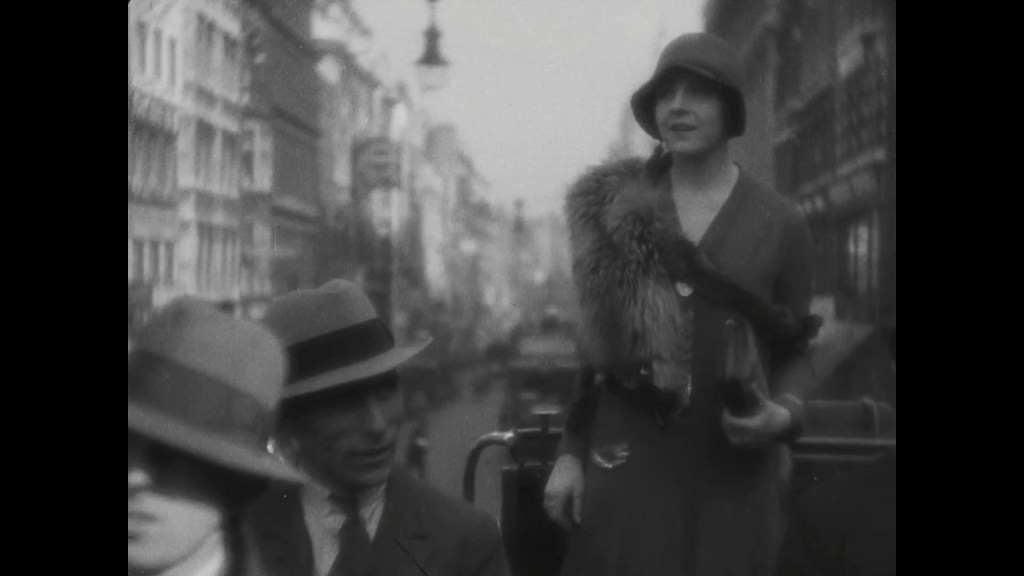
The stranger is still following Priscilla: half-mocking her efforts to get a job. Frankly, his persistence is creepy and I’m not surprised Priscilla is keen to prove him wrong. (If she called the police, the rest of the plot wouldn’t work, which is a shame.)
The race to get a job with another applicant is intercut with a dog race: it’s a neat joke but appears out of nowhere and there’s nothing else like it in the film. (Only when you look at other Asquith films can you see a context: the same kind of intercutting trick is more startlingly used in A Cottage on Dartmoor [1929] when cannons roar into life in a rapid montage of anger and violence in a barbershop.)
Priscilla ends up inserting herself into a modelling role, putting on skates and a dress as the “sportif” model—ending up plunging straight through and past the catwalk into the lobby. It’s a parody of her desire to be in control, trying as she did in Lothen Kunitz to have control over what she does and what she wears.
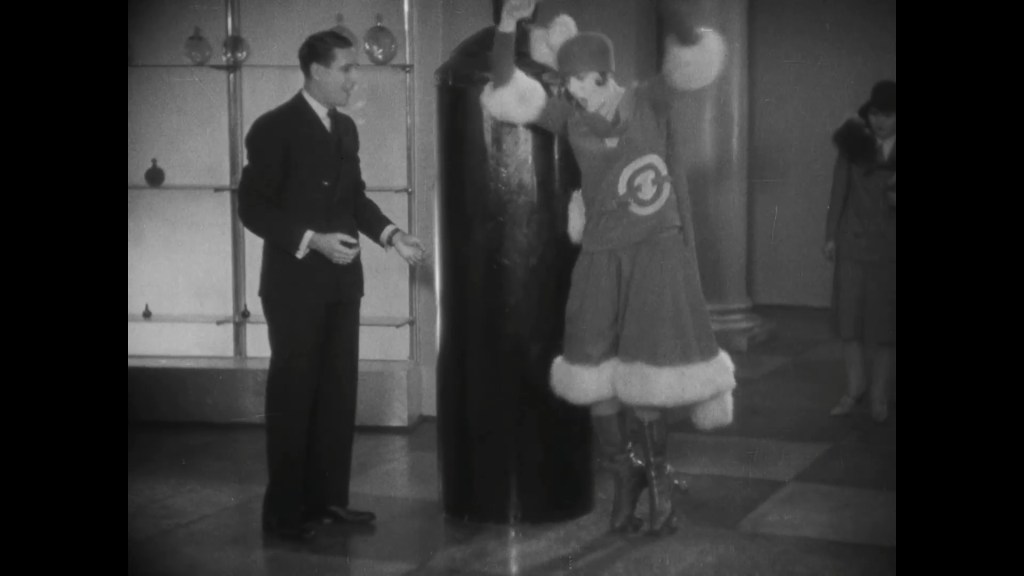
When she gets another job, she ends up being employed by the crooks. When her first failure ends in two of them shouting at her, there is a brilliant montage of faces—framed closer and closer—bearing down on her. It’s a more successful sequence of stylishness than the dog track scene, having more direct purpose and effect within the scene.
Then the smartest of the fraudsters works out that Priscilla is so blithely trusting that they can pay her with fake notes and get her to distribute their currency for them. The detective and the stranger are nosing around, observing notes and getting closer to their goal. At least, the detective thinks so—having earmarked Fritzing and Priscilla as the masterminds.
At every turn, Priscilla bumps into the stranger—who I wished she’d slap. Instead, she tries to show off her job success ordering everything expensive on the menu at a restaurant. (“Princess?” one waiter asks another. “Film star!” the other asserts. It’s much like the link made explicitly at the end of Hans Kungl. Höghet Shinglar: the Ruritanian figure as glamorous star, for whom different rules might apply.)
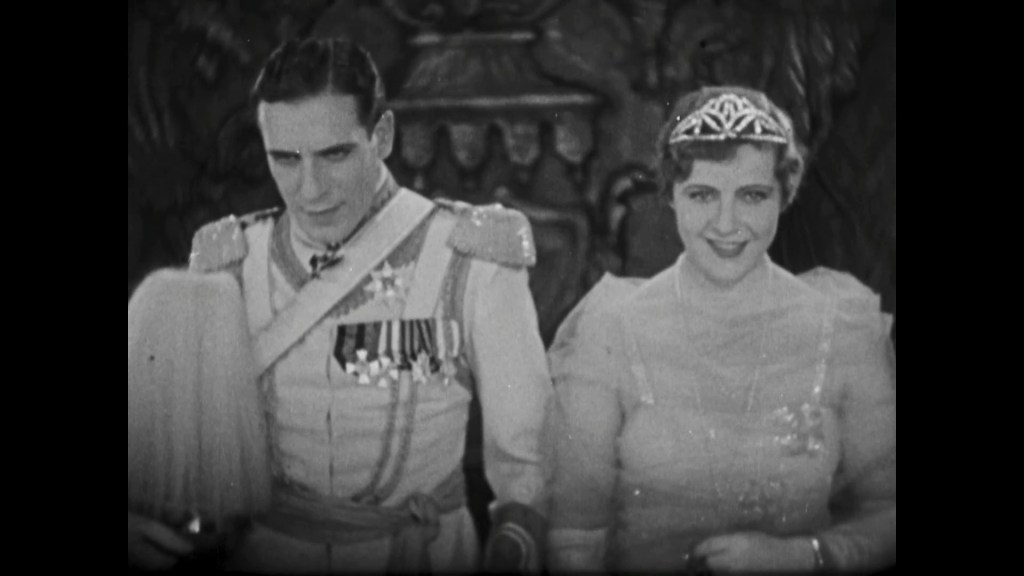
The film comes to a climax as the criminals are grabbed and the princess has to reveal her real name—as does the stranger. And yes, the stranger turns out to be the Crown Prince of Savona.
The royal couple appear at the end, endlessly nodding to an invisible throng of well-wishers. They look happy, but are they? The last shots of the film exactly mirror those at the start: but now the banner being saluted contains an image of the couple, and the camera tilts up from the castle to the sky.
It’s meagre fare, this film. With similar aspects to Hans Kungl. Höghet Shinglar, The Runaway Princess falls short in every point of comparison. It’s not as stylish, not as charming, not as inventive, not as clever. The finale of Hans Kungl. Höghet Shinglar questions the very material of Ruritanian fantasy, whereas The Runaway Princess returns to where it starts. If there is any question of ambiguity at whether the couple are now merely trapped with each other rather than on their own, it is only a hint: the film wraps up so quickly there is no time to think. The relationship between Nickolo and Astrid is much warmer, more developed, and more convincing in Hans Kungl. Höghet Shinglar. In The Runaway Princess, the “stranger” is given no substance at all, and his presence is only bearable given that we know Priscilla seems to like him. And even though she does like him, his stalking her from country to country is still difficult to accept without any scene of real warmth of engagement between them across the entire film. The Austrian actress Mady Christians is very good as Priscilla, but Paul Cavanagh is given so little to work with he can hardly do anything for his character. The Fritzing character is likewise very thin: not the complex character of André in Hans Kungl. Höghet Shinglar (or, in anther Ruritanian example of the period, the tutor figure Dr Jüttner in Lubitsch’s The Student Prince of Old Heidelberg [1927]). In terms of style, there are moments when Asquith has fun (the dog race gag, the quick cutting of close-ups in the argument) but even these stand out awkwardly against the pedestrian pace of much of the film. It’s worth noting too that the print used of The Runaway Princess was not in the best shape. There were sections of what looked like 16mm subbing for 35mm elements, and the film clearly hasn’t been restored recently. I’m still glad to have been shown it, but it’s one of the weaker films to be streamed this year.
Paul Cuff

 The Realm of Silence
One thought on “Pordenone from afar (2022, Day 6)”