
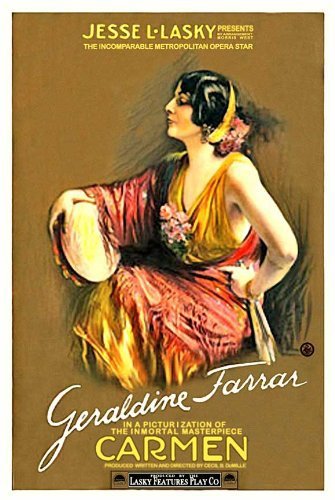
To begin, a confession: I’ve never got on with Bizet’s Carmen. I think I’ve listened to Bizet’s Ivan IV more times than to Carmen. Even for exotic scoring, I’ve more often revisited Djamileh, the one-act opera Bizet wrote immediately prior to Carmen. (In general, I can live my life without castanets and tambourines, thanks.) That I simply don’t find Carmen moving, that I find the music all verve and no magic, is, I know, an absurd, sacrilegious view. It’s why I’ve never been tempted to go and read the Mérimée novella on which the opera is based, and why I have no great investment in pursuing all the cinematic renderings of the story. That said, I have seen Cecil B. DeMille’s Carmen (1915), which lives in my memory only as being beautifully lit and tinted; and also the Chaplin parody of DeMille’s film, Burlesque on Carmen (1915), which I remember being tiresome even at two reels. I’d be curious to see the Raoul Walsh adaptation from 1915, starring Theda Bara, but alas it is lost—presumably forever when Bara’s back catalogue went up in flames at the Fox studios vault fire in 1937. Jacques Feyder’s version from 1926 is on my “you really should watch this” list, though I have listened to the original orchestral score by Ernesto Halffter (which is very nice, and not based on Bizet). All of which is to say that I had never done more than speed through a very grotty print of the US version of Ernst Lubitsch’s film adaptation of Carmen on youtube. However, when a new restoration of the original German version of the film was shown, I thought I would revisit my impressions (and prejudices). So here goes…
Carmen (1918; Ger.; Ernst Lubitsch)
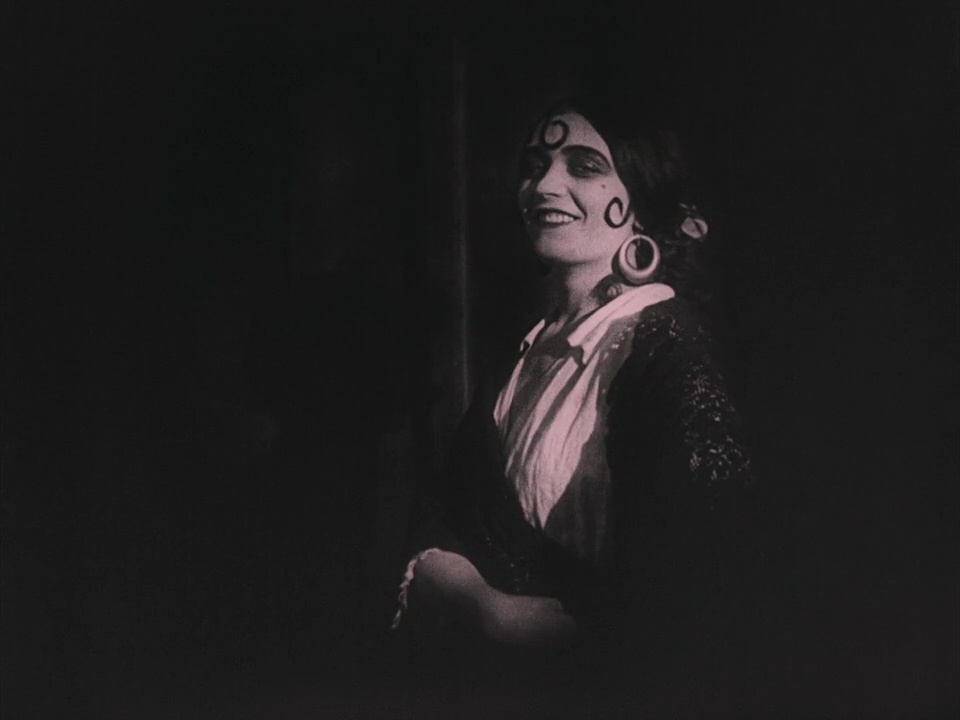
The story is French, the setting Spanish, but here is CARMEN spelt out in German titles. And here is Pola Negri as Carmen, introduced in the credits with a wonderful shot of her in the half-light, as if just emerged from the curtains in our darkened cinema. She is half facing the inner world of the film, half looking out at us. She’s smiling, or is she smirking? Already she is the self-confident, knowing gypsy figure—alluring, teasing, self-assured. But just as the image beings to fade away, her mouth straightens; the teeth still gleam, but it’s no longer quite a smile. What is that look? As if in answer, here is the next title: Harry Liedtke as Don José. His introductory image has none of the playful ambiguity of Negri as Carmen. José stares fixedly beyond us, away from us. His chin is almost tucked into his neck. He frowns. He looks pissed off. He’s less dynamic. He seems stuck in his expression. In her introduction, Negri seems capable of movement; her very pose suggests she’s ready to issue a sarcastic comment or give us a pinch. Liedtke seems fixed, unyielding. His is the last on-screen character introduced, for next we are given a shot of the director himself, Ernst Lubitsch. He’s in his study, smoking. He doesn’t look up from his script, but he knows we’re there. Lubitsch the comedian and actor is quietly promoting his dramatic credentials: the serious author, the well-read filmmaker. (Some day, I will write a post on silent directors who open/end their films with images of themselves: it’s an interesting device.)


So to the drama. José arrives home from leave to his fiancée Dolores. We are dumped into the plot immediately. (Though it’s already changed aspects of Mérimée’s novella, making José more respectable at the outset; even Bizet’s opera doesn’t show us José’s home life.) Lovely warm tinting: brighter yellow for exteriors, warmer amber for interiors. It’s a way of making northern Europe look like southern Europe.) The household is full of laughs and smiles and kisses; but a huge crucifix looms over them on the wall (José looks at it briefly as he stretches and grins). The lovers are supposed to be watching the stove, but are too busy kissing; the mother smells burning and rushes over. (A comic scene, but the setting of the stove is darkly mirrored later in the film when Carmen and José melt lead.)
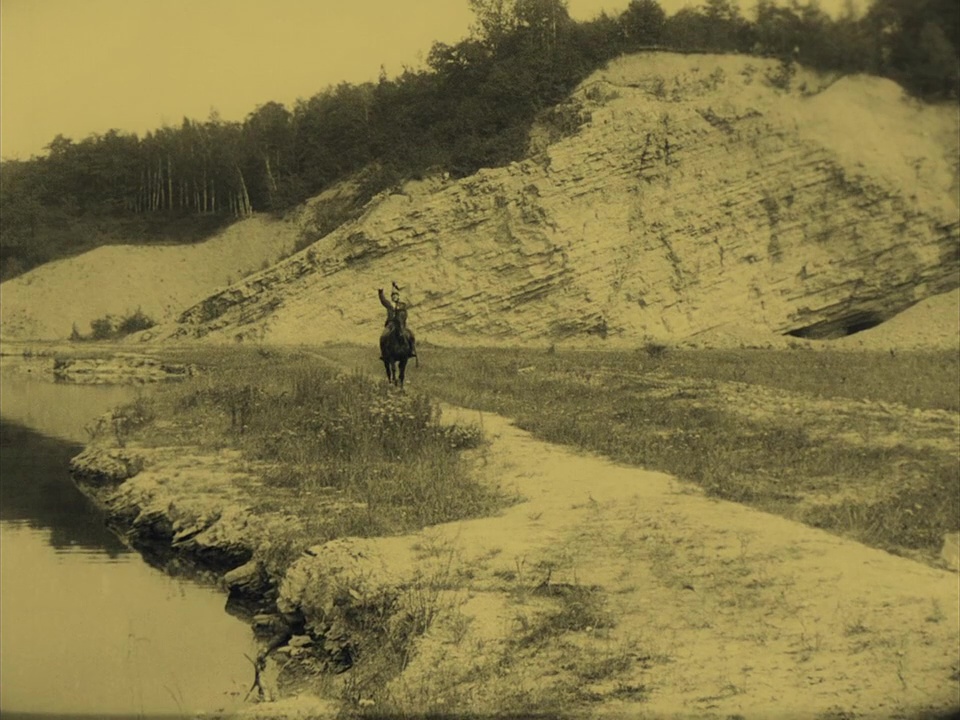

“José is the darling of the village”, we are told: everyone gathers around to hear his tales. He’s a different figure from the one we have seen in the credits: for now, he is animated, laughing, smiling. But a message arrives announcing his promotion and demanding his immediate presence with his regiment. “Will you stay faithful to me, José?” asks Dolores. He and his mother laugh, but—well, we know what story this is. Even the question implies an alternate answer.
We cut straight to Seville, where José is on guard—and Lubitsch is showing off the size of his sets and numbers of extras. A grand parade of children precedes the adults, then a military band. Impressive scenes of bustle and crowds around the tobacco factory that overlooks square. (The scene goes on a while with marching back and forth: it’s ostensibly for the on-screen crowd’s benefit, but it’s for ours too.)

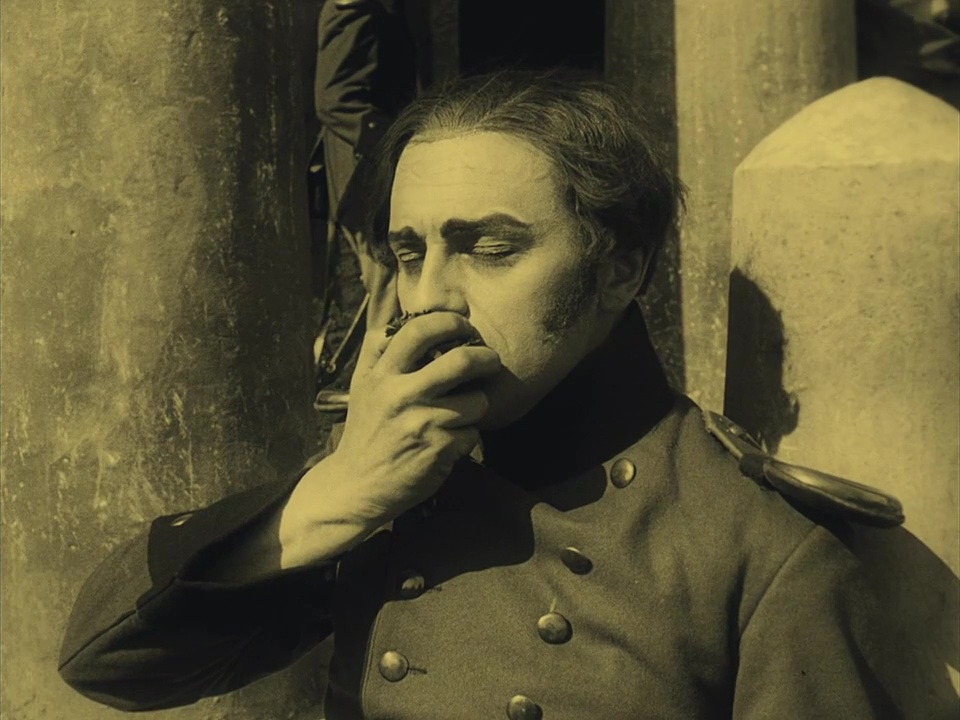
There’s Carmen, at the heart of a group of women on the balcony of the factory. Lubitsch cuts immediately to José reading a letter from Dolores, warning him about local women. From the balcony, Carmen drops her comb and is swiftly surrounded by men wanting to help. In the orchestral score, her theme strikes up like a slap—the same slap she gives to a man who tries to flirt too much with her. Now she’s beside José. Did I say “beside him”? No, she’s more than that: she’s overlooking him, right up against him. She drops a flower from her garland so that it tumbles over his arm onto the floor. He picks it up (but only when he thinks he’s unobserved) and inhales it, stuffs it into his face, then into his tunic. He’s lost already.

Inside the factory. Another huge crucifix on the wall, overlooking the rows of women along the work benches. Carmen receives a note from “her cavalier” asking her to meet him at night. The note is snatched by another woman. Carmen is furious, more so when the woman says everyone knows what sort of woman she is. Carmen clambers over a table, hurls herself into the fray. Lubitsch cuts to the exit: women pour from the factory door. It’s comic how long the camera stays to watch them. (The music too is an endless repetitive flow.) They plea for help from the guards. Carmen is being tussled between women and half undressed by their clutches. She’s ordered by José to follow him. “I’m happy to follow you!” she says, her face opening into a hungry smile.

The holding cell. Carmen calls José “her golden officer”. When José comes to take her to gaol, she presses herself against him. It’s a fabulous performance, the way she flirts with him as her hands are tide, as she bites the flower from his tunic. “Let me slip away and I will love you unto death!” It’s as much a threat as a bargain.


Carmen runs away, down endless sets of steps, ahead of the guards. The locals guide the pursuers the wrong way. (Another divergence from book and opera, where Carmen is freed by José; in Lubitsch’s film, she escapes by her own cunning.) Hands still tied, Carmen removes the barricade to a gate with her teeth. She enters the den of Garcia. (He has bedraggled long hair, a huge black eye.) The den is tinted a murky pink—a pink that’s hardly pink, that might once have been pink. The wash of colour suggests old warmth, sweaty warmth.
José is reprimanded. How could “a strapping fellow” like him be given the run around by a mere girl? (The officer hasn’t met Carmen, clearly.) He is stripped of his rank.
Carmen thinks it worth helping José in prison. The news of his arrest is brought by a street urchin, a young girl whom Carmen kisses and cuddles brusquely. (It’s one of the few moments in the film where Carmen exchanges a kiss without any kind of bargain or ulterior motive.) At the prison, Carmen flirts her way past the guard, with cat-like rubbing and winks. Negri’s performance is big. She gets laughs from the sheer glee of her characterization: it’s outrageous what she, what Carmen, can get away with. Already she’s inside the guard’s room, climbing all over him. A wonderfully silly close-up of the guard who is left open-mouthed at being kissed by Carmen. Besotted, he dutifully delivers a package to José from Carmen. José opens it and inside cake finds note to use file included to saw through bars. Carmen has laid out all the directions for his escape, disguise, and flight to safehouse, while she distracts his guard.
That night, more comic antics with the guard and Carmen. She smothers him, bounces on his knee. It’s a ludicrous scene, but the performances sell it: Negri starts as a kitten clambering over her master, but by the end of the scene the guard is the kitten and she’s feeding him bits of food. (Meanwhile, in the cell, a superimposed vision of José’s fiancée, who appears and then dissolves away; she gently reaches for his sleeve; it’s unexpected and oddly moving. José too is shaken.) The guard returns to Carmen and reports that José snores like a rat. Carmen reacts and the whole tone of the scene is changed: she hurls him aside, throws his papers in the air, storms out. She is angry with him, but also at José for ignoring her plan for his escape.


Back in José’s hometown, Dolores tells José’s mother that she will visit Seville, from whence they have had no news from José. The scene is again dominated by the crucifix on the wall behind the women.
Carmen is summoned to dance before Colonel Rodrigues at his headquarters. Garcia’s wife drags her from bed, winks and nudges her—they’ll be well paid.
The night of the feast: a tracking shot back from the heart of crowd (the Colonel) across the boisterous scene—but not much more is made of the camera move. (The camera can afford to be static when Carmen herself dominates the film.) José has been released and is now on duty for first time; on the way in, Carmen sees him and mocks his low rank. Her smile is beginning to carry more meaning than mere comedy. The prison guard was a comic figure and her insults to him can be discarded; but what of her slights to José? Carmen performs her dance: it’s a whirlwind of gestures. She occupies the frame, stretching her limbs as if to touch every part of it. Legs spread, arms spread, twirling, standing on a table above the crowd. An officer takes her away into corner where they embrace. But Carmen tells his fortune: “beware of back haired girls for they will bring you death”. (The orchestra slides into a strange harmonic no-man’s-land.) José sees her leave under amorous eyes of another man.

Later, José is disappointed to discover a woman waiting for him at the gate is his fiancée, Dolores. He’s guarded, fobs her off.
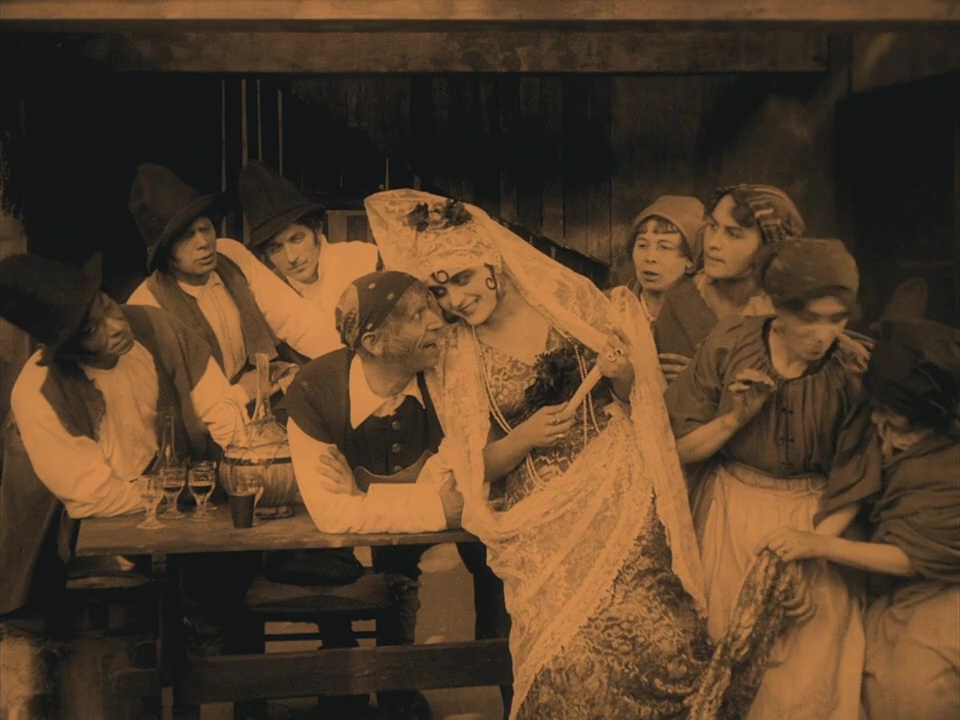
A tavern, filled with smugglers. Carmen will be part of their plan to smuggle goods past the city gates.
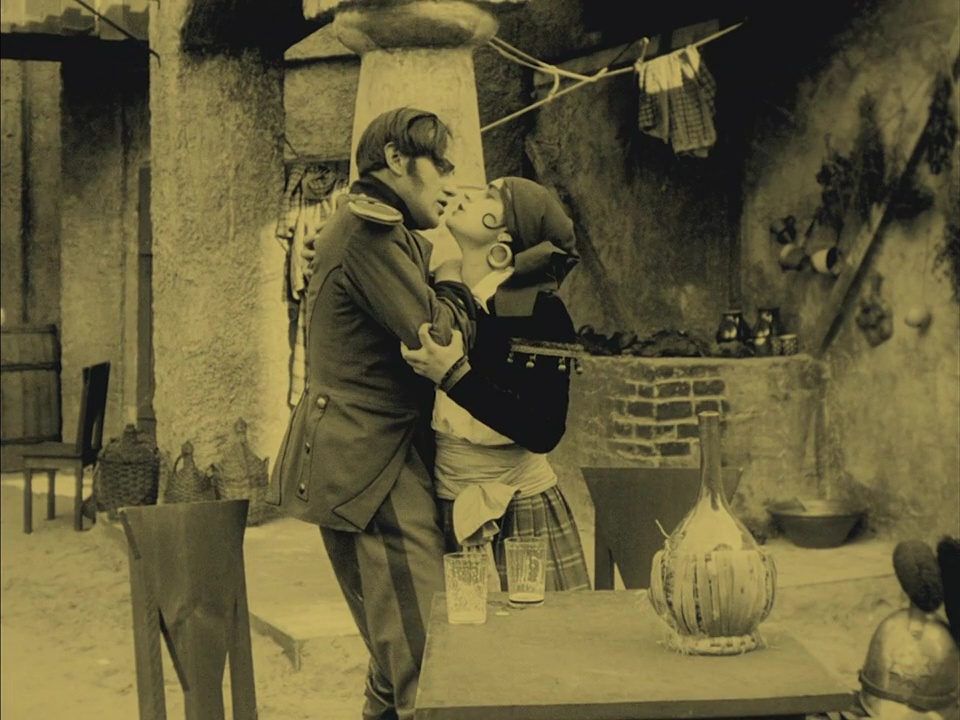
Meanwhile, José is reluctant to meet his fiancée—and now it’s Carmen’s turn to appear in superimposed vision, smiling next to him; he ducks out of his meeting with Dolores—and goes to the smugglers’ tavern. Carmen approaches and launches herself onto his face. It’s a kiss like a slap. She’s sat on the table and she dominates the scene, as ever. The way she throws her head back in laughter is exhilarating. (See how Lubitsch makes the dynamics of the scene more interesting by cutting back to the lonely-looking Dolores in the other tavern.) Now Carmen resists the advances of José, bending her back. But the call to barracks sounds, and Carmen now wants him to stay—a wonderful fanfare from the orchestra, it’s as threatening and weird as the push-and-pull of their physical back-and-forth on screen. Carmen says José might “get a spanking” if he’s late, and laughs: but he takes it seriously as an insult. Look at the way their arms wrench back and forth: a suppressed sexual violence in their gestures. Carmen is triumphant with her gang, as Lubitsch cuts back to José’s sweetheart, still waiting in the other tavern. An older soldier tells her that José is on guard at the gates this night.


By the gates, Dolores approaches and José looks dead behind the eyes when she kisses him. Carmen and the smugglers approach. Carmen laughs from the undergrowth, approaches hands on hips—taking up space within the frame again. She mocks his sweetheart; José grabs Carmen by the wrist. The smugglers look on, amused by Carmen’s game. The couple half-fight, half-embrace. José is on his knees, kissing her feet. She has won. And so the smugglers approach. José spots the danger, but Carmen wrestles him away, forcing herself upon him in a rocky alcove. “I am no longer an honourable soldier, Carmen!” “Sweets regards await you tomorrow”, she says, running away.


(Meanwhile, Carmen’s place in town has been found by a soldier, who reports this to the officer from the feast.)
In the market the next day, José struggles to pay for some food for Carmen. She loads him up like a camel (a crescent helmet instead of a hump) and takes him back to her place with the Garcia clan. Carmen gives the old woman a bottle of spirits and chucks her out. A game of cat and mouse. But who is the prey? Their kisses are violent. She wants to read his fortune, prising open his fingers to paw his palm. (Outside, the officer is on his way.) But instead she decides to pour lead to read the future in its shape. They go to the stove. The tinting is red. It shows us fire but foretells blood. They pour a portion of lead into water. They reach into the bucket to retrieve the resultant shape: it’s a gleaming conglomerate of bones, a cross stuck in its side, a skull grinning at its centre. Carmen and José each hold one end of the lump of portentous metal. They share a close-up, each looking in trepidation at each other. Carmen says the signs bode ill and warns him not to die because of her. It’s uncomfortably intimate, this sharing of fate. But now José says he’s so happy he doesn’t care and makes Carmen dance. She leads him about the room; he gives up playing his guitar, he cannot keep up with her. The camera takes in her weird dance as the officer approaches from the street, passing the drunk old woman on the steps. He walks in on their embrace. She says the good little doggie must beg before its master, which infuriates José. Carmen lifts the sword into his hand. The soldiers fight, and she too aides José in the blows exchanged. The officer falls. It is unclear who issues the fatal blow.


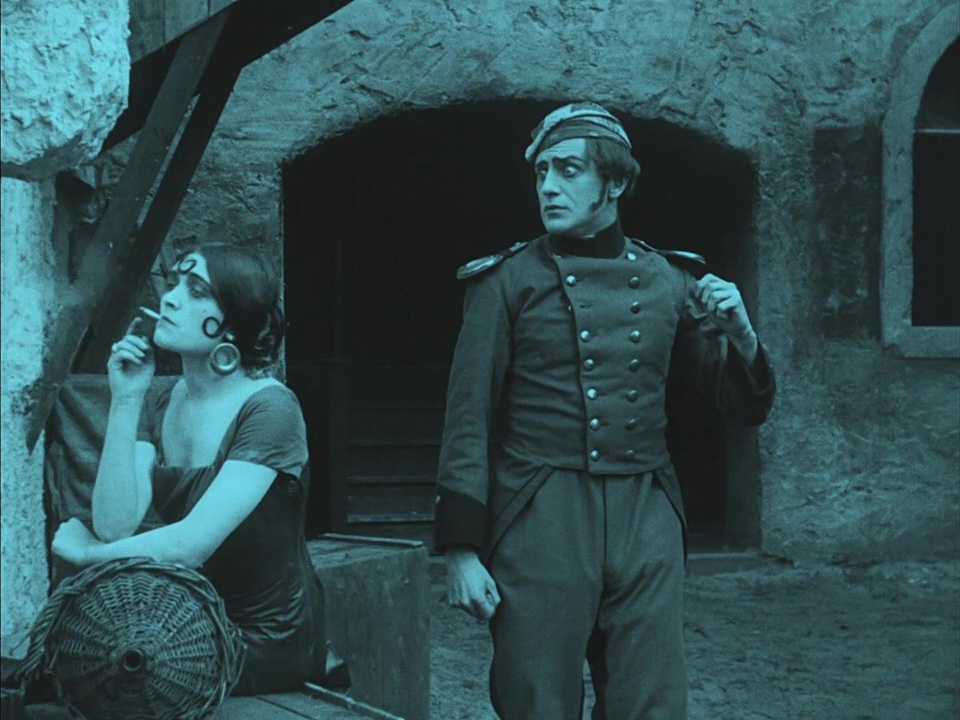
Carmen and José flee. He is wounded. They go to the smugglers. The corner he is given is dingy, dark; the wall looks as though it has spatters of dark mould or blood upon it. Is the smuggling life not good enough for him? What do you expect, Carmen says, given that he’s a murderer now. And the close-up of her saying this, cool, detached, is chilling. (The score hushes to a rumbling bass note, to sparkling shards of Carmen’s melody.) Carmen is so cool, smoking her cigarette. “So go” she says, opening the gate to José, who says they should go their separate ways if they cannot lead a different kind of life together. But he pauses in the gateway. His arms open wide, his performance so unlike her coolness—so much less convincing than her when going “big” in performative terms. (But this makes sense on screen: José is always a weaker character, less reliable, than Carmen.) Negri’s naturalistic now, walking with a manly swing of the shoulders. She goes back to the smugglers, smokes a cigarette, plays cards with them. Cool as anything.


At night, the seashore. Packages being brought onto the land. A marvellous sea, spilling over the rocks. A thin line of smugglers carrying boxes and barrels. It looks genuinely dangerous. There is Pola Negri, wading through the angry, milky tide. (An extra glances at the camera—and surely those behind it—as she passes, as if to say she only just made it, or even to chide the director for making them risk their lives.) Lovely silhouettes of the smugglers against the cave entrance and rocky path up the hillside.


Here is Carmen. And there is José, lying in a stupor. Carmen says she must go to Gibraltar on business. (José is so desperately uninteresting; you can see why Carmen is only after his utility; how could he ever match up to her?) They walk a little way over shards of rock. José begs, clenches his hands. “I am a free gypsy child”, says Carmen, and anyone who tries to force her hand “has lost the game”. José reminds of his sacrifices: an abandoned mother and fiancée. Carmen shows annoyance, but concern too: where will this game end?

The bay of Gibraltar. Carmen in a brilliant little hat, waist sash. Carmen is flirting with another officer, getting him to light her cigarette. Back to José, lying on a rock, looking not bored but boring. Carmen is flirting with the officer. She shoves his face down toward her feet and smokes her cigarette: it’s a fabulous moment.


Later (and what has happened in between?), Carmen is outside with the officer. She exchanges amorous glances with the champion bullfighter, Escamillo. A close-up of each: frank inspection. (In the orchestra, the woodwinds purr.) She approaches, lets her eyes linger, then walks on by. She gets Escamillo to follow her. She’s dressed up. Is she a little too vulnerable like this? Yes, she looks almost nervous in his company. The score flutters, ghosts its themes, her theme. There is something off with the music, and with her.

In a rocky pass, the smugglers shoot down riders. The passengers emerge from the carriage. It’s Carmen and her officer beau, now her victim. He is led away. José leaps in to kiss her. Her arms go limp. He’s such a drag now. He handles her briskly, going off to defend the officer. A pathetic burst of fellow-feeling toward a soldier? He ties his hands, places on the blindfold. But the offer finds his way to one side, cuts the ropes on a rock, escapes, brings reinforcements. The soldiers arrive in numbers. A gunfight. Carmen takes aim, fires. In the fight, José is wounded. The smugglers flee. One hurls himself to his death rather than surrender. (The stakes are being raised in the drama. It’s no longer a case of flirtation with danger, or choices leading to future danger: Lubitsch’s film shows us banditry, whereas Bizet’s opera merely suggests it in dialogue.)


Seville, the day of the bullfights. José is scraggy, groggy, in his stained corner bed. Where is Carmen? She is dressed up to the nines. Escamillo has invited her to ride in his carriage. There is a medium close-up of José: he finally looks convincingly deranged, dangerous. He grabs her and plonks her down onto his grotty bed. A short of the two of them: he is at his worst, she at her best. She looks bored with him. He knows she’s betraying him with a bullfighter. “Yes!!” she shouts. He threatens her with a gun. “Shoot!!” she cries, stretching herself out across the door: occupying space again. He grovels like a dog burying his head into the corner of the room.
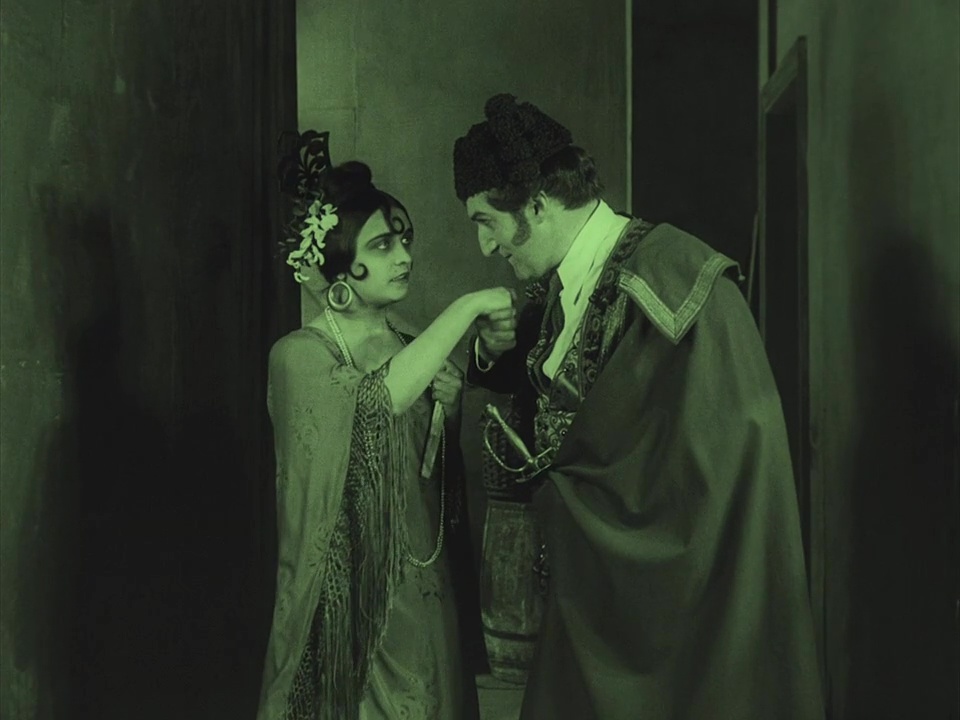
The bullfighters’ parade. Carmen triumphant in Escamillo’s carriage. Lubitsch cuts between Escamillo and Carmen in church, keeling before an altar, and José and a smuggler in his grotty corner. The smuggler says he can’t stand seeing Carmen “betray” José. Carmen looks vulnerable (yes, vulnerable) in Escamillo’s embrace. “May the Madonna protect you”, she says, and promises to meet him here after the right. She totters. She’s become a schoolgirl. The bullfight, intercut with José stumbling into witness Carmen at the ringside. Escamillo victorious. He salutes the crowd, salutes Carmen, is given her fan.


José is by the curtains at the rear of the stands. (Think back to the opening credits: there, too, he was stood in front of black curtains.) There is Carmen. José peeps out from behind the black curtains. Now she must go from vulnerable to—what? Defiant? Yes, but she looks afraid. Even her angry rebuttal of his embraces is nervous. She trembles. She looks round. “Yes, I love him—as I never loved before!” Their last embrace, José and Carmen. The knife appears from behind her back. We watch her face as she receives it. It’s a horrible, protracted scene: we watch her life ebb out of her body across the duration of the shot. She falls. Even in her last moments, she’s occupying space; her death is a slow-motion dance, her arms stretching out to fill the frame. (Even the sight of Carmen’s armpit hair here is itself a kind of marker of her kind of femininity.) On the floor, on a heap of dirt, her eyes are open but twitching. José hurls himself onto her body and weeps. ENDE.


This was a film that I wasn’t expecting to find gripping, but gripped I was by the end. I aim to re/watch more Lubitsch silents for this blog, but I’d cautiously say that this is my favourite of his silent German dramas (as opposed to comedies). As with Anna Boleyn (1920), it’s a film where Lubitsch’s “touch” is visible in the way it highlights drama through comic touches, by allowing heightened performances to dominate. In Anna Boleyn, it’s the smile of the King (Emil Jannings) that spells doom for his subjects: his desires dominate his world and its inhabitants. In Carmen, it’s the sheer expressive freedom of Pola Negri that will bring about her character’s death. The chief pleasures of both films are these central performers, for which Lubitsch allows space to develop. In Carmen, Negri’s fabulous expressiveness totally dominates the film. It’s fun to watch her having fun, fun to watch her manipulate others. (Describing it as such, you can see how the narrative might have been recrafted into a comedy.) That no-one else can get close to Negri’s on-screen panache is fitting. José’s rising fury is a reaction against her own self-assertion of independence; it highlights his own reliance on her, his weakness and vacillation.
I must also mention the new score for this restoration, by Tobias Schwencke. It is more than merely “fitting”. Though it uses the main themes from Bizet’s Carmen, it accentuates the film’s differences with Bizet’s opera and makes it an independent work. Over the restoration credits at the start, the music gently rises—whispering the main theme, as though it were a memory, or a foreshadowing. And over the end credits, after the brutal ending, the music is a strange, gentle lullaby, a music box rendering of Carmen’s theme. I found it weirdly moving. And moving in a way that I have never found the Bizet opera: perhaps I need to see an operatic Carmen to appreciate her presence? Thanks to Pola Negri, I have an interest in Carmen.
Paul Cuff

 The Realm of Silence
One thought on “Carmen (1918; Ger.; Ernst Lubitsch)”