Day 5 of the Bonn festival takes us to Germany, and an exploration of jealousy and marital strife. Described by its opening titles as “A tragicomedy between man and woman”, I was expecting – well, I suppose I was expecting something very much akin to what I got…

Eifersucht (1925; Ger.; Karl Grune)
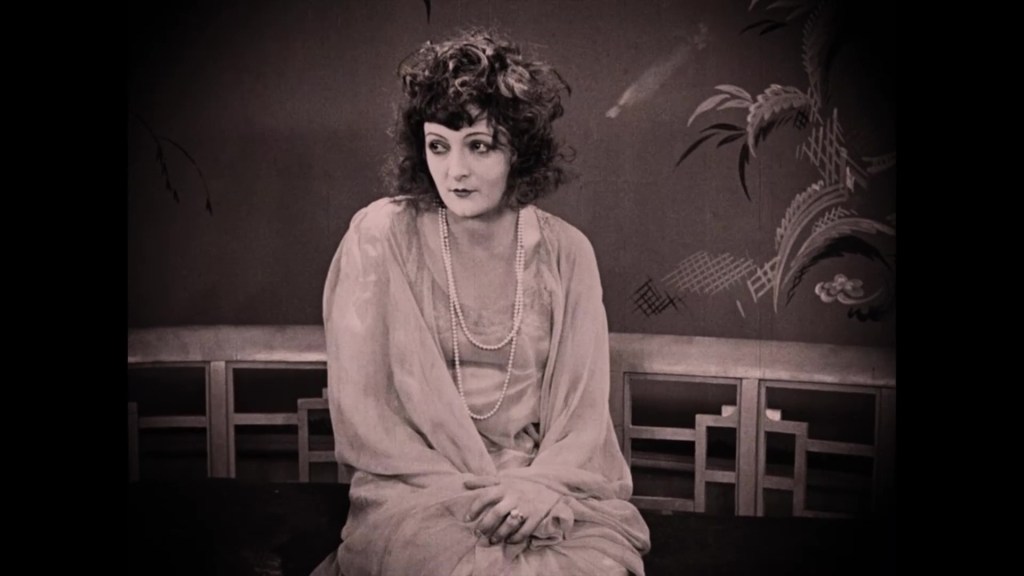
Act 1 establishes what might be called the rules of the game for the remaining film. The opening scene of a husband strangling his wife is revealed to be a stage performance, and the playwright (Georg Alexander) comes on stage to take the applause. He then returns home with his two friends, a husband (Werner Krauss) and wife (Lya De Putti) whose marriage seems to be ideal. But the playwright keeps questioning whether either of the couple feels jealousy, while trying to flirt with the wife. Act 2 sees the first signs of jealousy: the wife receives flowers and refuses to tell her husband the sender; the wife finds a lock of blonde hair in the husband’s pocket watch. The playwright then arrives and flirts with the wife and convinces them to go to the palais de dance. There, the wife makes both men jealous by dancing with a stranger. The husband ends up striking the stranger and the night ends with husband and wife sleeping in separate beds. In Act 3, after a frosty breakfast the wife becomes intrigued by her husband’s correspondence – reading and then stealing his latest letter. She goes to the playwright, then lies that she has been to her friend Lola’s – and is confronted by her husband. In Act 4, the wife gets Lola to lie for her, covering her absence from home both in the past and on future nights. The husband follows her to a giant apartment store, then loses her and blunders about town in search of her. The wife arrives home, still fuming over the husband’s mysterious letter. The husband tells her how much he loves her and begs to know what she has been doing. She asks for his trust, but he insists on knowing the truth. She demands the truth from him and says he would be ashamed to know the truth from her. He raises his hand to strike her but doesn’t land the blow. In Act 5, the husband follows the wife, this time to a strange building on the outskirts of town. He sees his wife kissing a child who address her as “mummy”. Back home, the husband demands (via a note passed via a servant) that the wife leaves the house. Infuriated by her refusal of the truth about the child, he hurls his wife to the floor. The violence is interrupted by the arrival of the playwright, and the truth is eventually discovered. The letter the wife has stolen from the husband refers to his child, whose carer cannot afford it any longer. The husband falls at his wife’s feet and the two are reconciled. ENDE


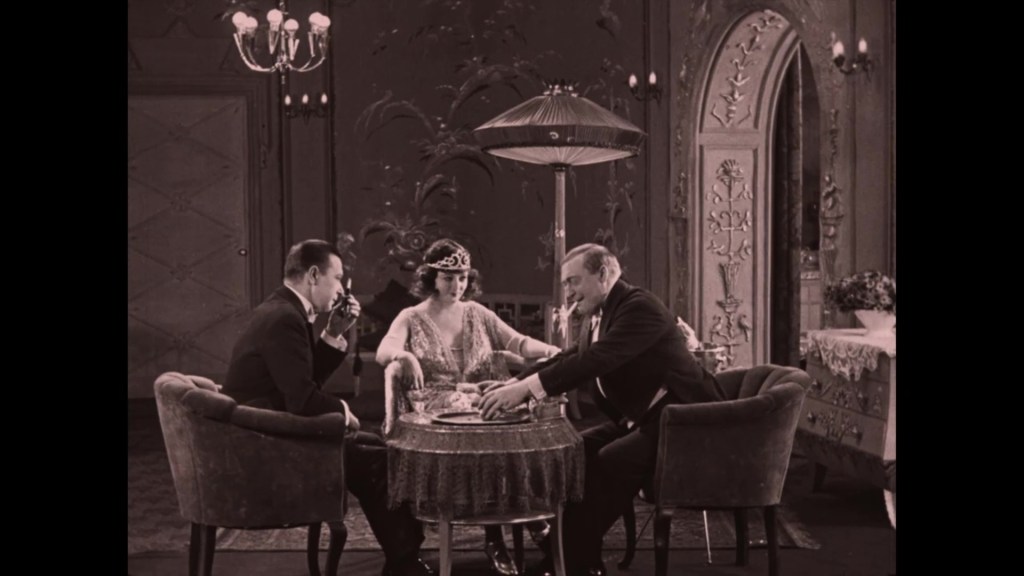


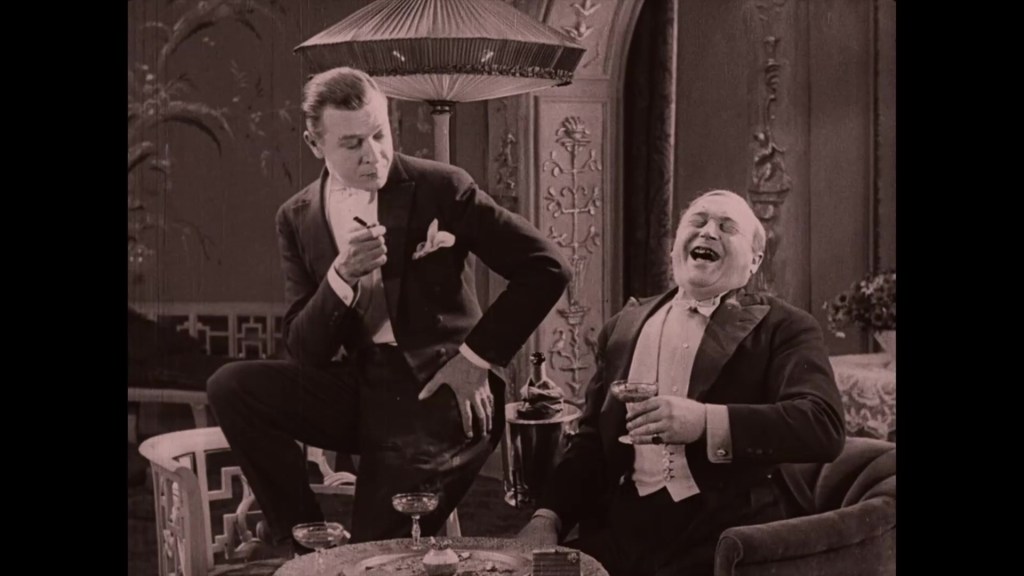


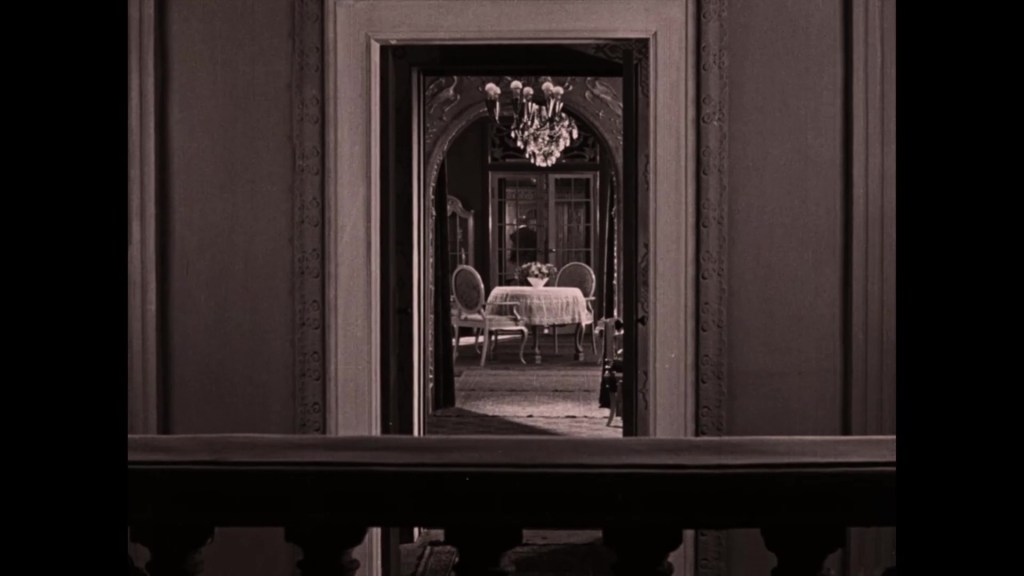
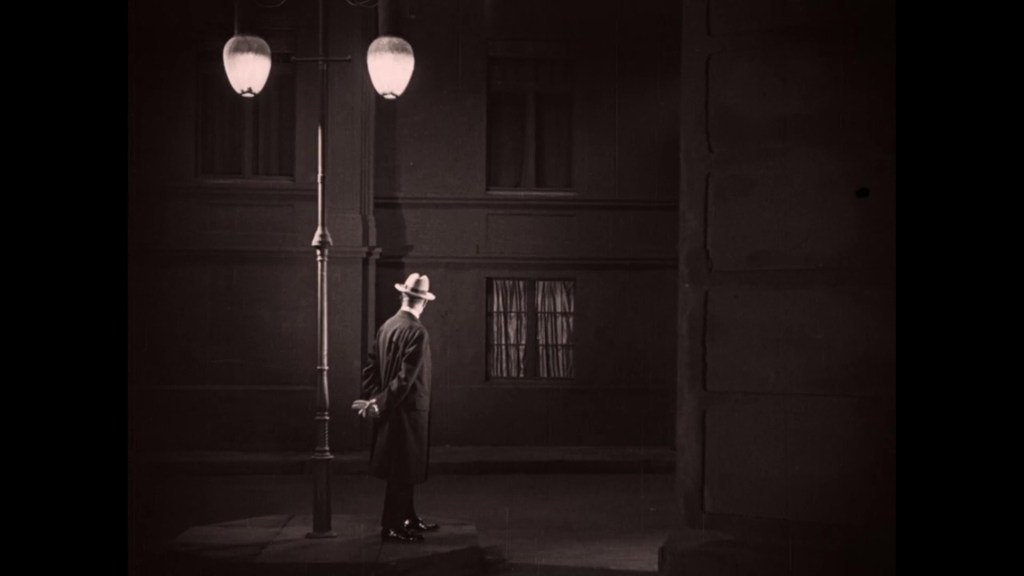
As I said, a plot that doesn’t offer any real surprises. It’s well-written, well-mounted, and well-played. I admired the numerous nice touches that shaped the drama, like the repeated detail of the couple’s shoes: hers next to his at the start, then separate from his during their fallout, then reunited in the final images; or the way their first breakfast scene has them sat side-by-side, but the second has then say on opposite sides of the table. Technically, the film was also well executed. There are also some neat moments of superimposition. Some are simple, like the wife imagining the lock of hair in the watch, or later seeing his imagined lover superimposed over her book. Some are more complex, like the husband seeing his wife dancing with another on the crowded dancefloor – only for the other dancers to fade into ghost-like transparencies, revealing his wife and her partner at the centre (a really lovely effect). Though I liked some deep focus compositions in the apartment, it was the exterior scenes that really stood out. There are several big sets/matte painted night cityscapes, which are reminiscent of Grune’s Die Straße. Particularly effective is the apartment store, with a double paternoster lift and a view across to a multistorey wing illuminated from within. You sense the husband’s fear becoming faintly nightmarish in these surroundings, just as you did with the central character in Die Straße.


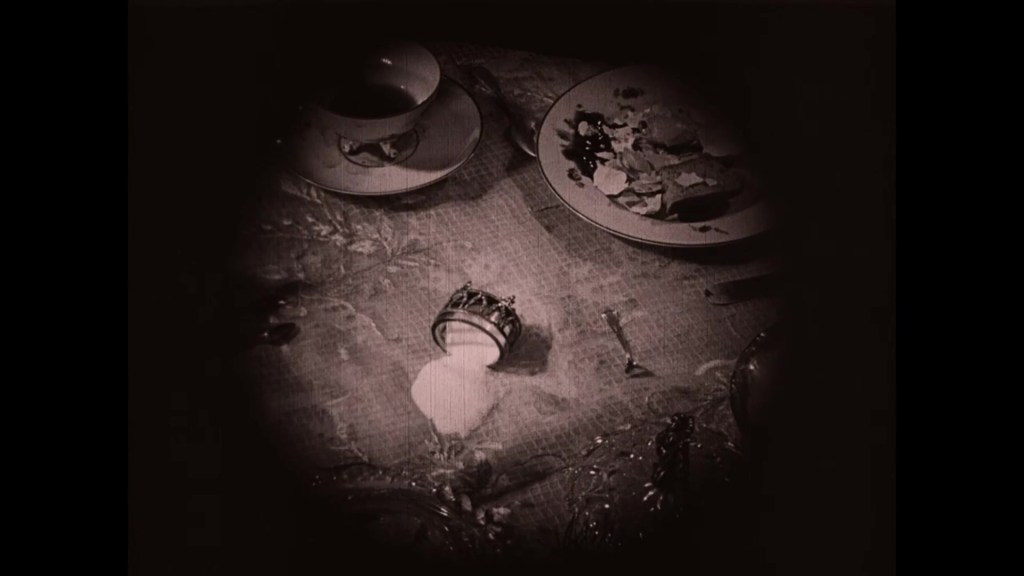


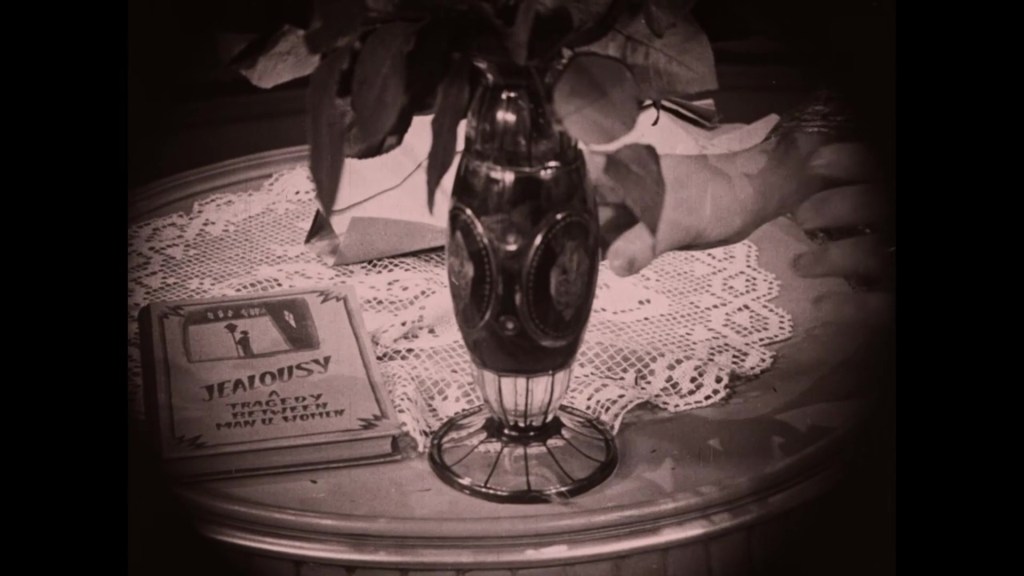



But what interested me particularly with Eifersucht was its script by Paul Czinner. (I have a longstanding project on Czinner that I have kept delaying for various reasons.) I was struck by how many details in Eifersucht match traits from his other films. There is the jealousy over a bunch of flowers (cf. Der Geiger von Florenz (1926)), conflicts spelt out over a breakfast routine (cf. Ariane (1931) and Der träumende Mund (1932)), the woman reflecting on her image in relation to men (Fräulein Else, 1929), the nods to luck and fate (like the spilling of salt) and life’s reflection of art that haunt numerous of Czinner’s other films. Czinner’s authorship is often overshadowed by the two figures with whom he collaborated: his frequent leading actress, Elisabeth Bergner, and his screenplay collaborator, Carl Meyer (often uncredited). In this sense, it was curious to feel how strongly Eifersucht felt like a Czinner film without either of these two influences at play. But also, this made me like Eifersucht less. The marital strife in Grune’s film is more interestingly played, and played out, in Czinner’s Nju (1924), just as the sense of life imitating the tragedy of art is more potent in Czinner’s Der träumende Mund. And Bergner is an infinitely more subtle, complex, and sympathetic performer than De Putti. Werner Krauss’s character, too, is at the very least equalled by Emil Jannings’s character in Nju, for example, and Georg Alexander’s rather underdeveloped character is a pale shadow next to that of Rudolf Forster in Der träumende Mund. (Der träumende Mund, if you’ve not seen it, is a masterpiece.)


More broadly, in fact, my problem with Eifersucht was precisely this sense that what I was watching I had seen done better, and with more dash, elsewhere. Czinner’s films aside, I also thought of E.A. Dupont’s contemporary Varieté (1925), which features De Putti in a much more powerful drama, and one which allows for more complex, stylish cinematic storytelling. (Dupont’s film was also, confusingly, released under the title “Jealousy” in some regions.) Eifersucht’s theatricality is ultimately a kind of limitation. It is, if anything, too neat and tidy, too precisely organized. (Even the dance hall feels oddly well-mannered to sense the wife’s desire for freedom express itself. Think of how many other Weimar films have great party scenes!) Eifersucht feels like an exercise more than a living, evolving drama. Even the interesting outdoor sets and moments of technical skill didn’t lift the film into something more complex or moving. Indeed, I still await being really moved a Karl Grune film: his are films that I admire without truly liking. (See my pieces on Am Rande der Welt (1927) and Die Straße.) The fact that Eifersucht describes itself as a “tragicomedy” rather sums it up: it is neither comic enough nor tragic enough. (All Czinner’s films are much sharper in their comic touches and more tragic in their outcomes.) It is a good film, but not a great one.





The music for this performance was by Richard Siedhoff and Mykyta Sierov. Their combination of piano and oboe worked well, though its emotional register could never make the film more moving than it was. I must also highlight the excellence of the detailed restoration credits at the start of the film: we are given a history of the film’s release, the location and qualities of surviving prints, the ethics behind the restoration choices, and the precise lengths in metres of various copies, as well as the speed used in the transfer. It should be mandatory to have such information at the outset of all films, especially silents. (Yes, the latest restoration Napoléon, I’m thinking of you.)
Paul Cuff

 The Realm of Silence