
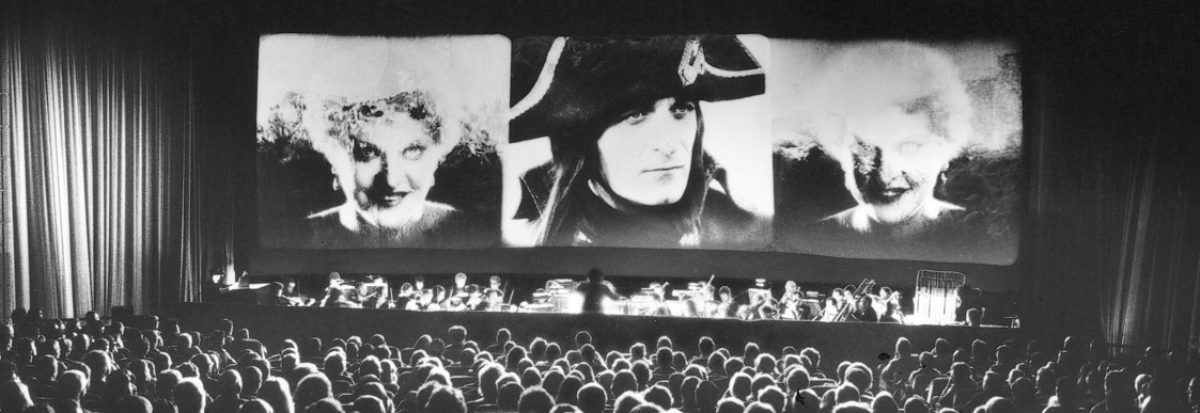
Day 6 and a trip to Sweden for what I might call a drama of the conscience. Everything in this production is as might be expected from the “Golden era” of Swedish cinema. Superb photography? Check. Naturalistic performances? Check. Drama with strong moral centre? Check. Overall satisfaction? Read on…

Thora van Deken (1920; Swe.; John W. Brunius)
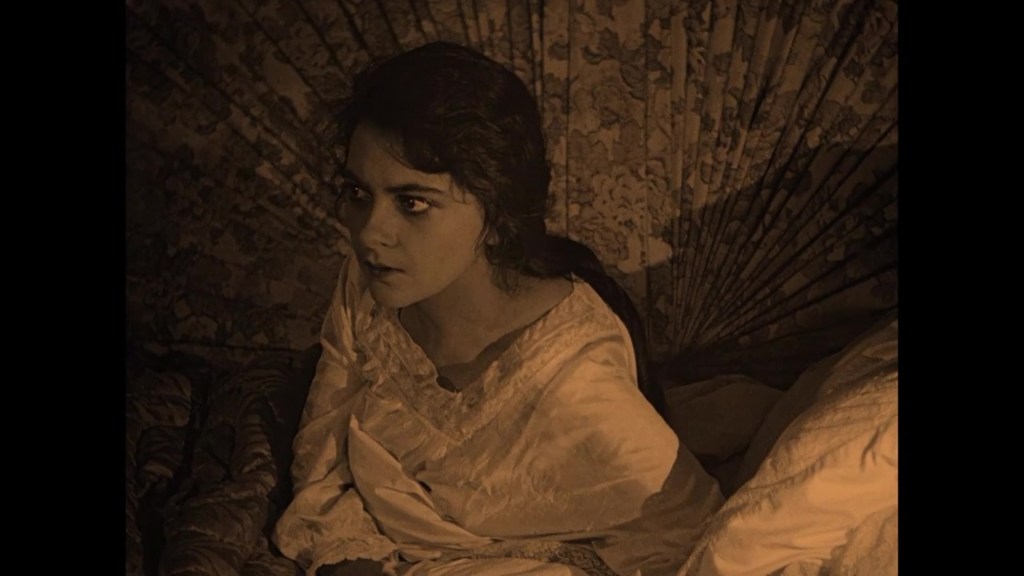
Let’s get straight to the plot. Divorcee Thora van Deken (Pauline Brunius) returns to her dying ex-husband Niels Engelsoft (Hugo Björne). Niels’s will provides a generous annuity for his lawyers, as well as the establishment of a nursing home for women to be run by the brother of his deceased fiancée, Sofie. What it doesn’t provide for is Esther (Jessie Wessel), the daughter of Niels and Thora. Thora demands that Niels cater for Esther, but Niels says that Thora is as embittered and hateful as ever. Thora recalls her mother being “tormented to death” by her father, and how Niels himself was a spoiled youth. Their romance is told in brief flashback: revealing how Niels’s affections were entirely for Esther and not her mother, who was trying to teach their child to look after herself; how Niels betrayed Thora with Sofie (Ellen Dall) at a party; how Esther was the one thing that Thora asked to be hers. As Niels lies dying, Thora steals the will. After the funeral, Thora lies about the will being voluntarily withdrawn and has taken charge of the estate, much to the disgruntlement of the locals and the lawyers. She receives threatening letters, calling her a murderer. Pastor Bjerring (Gösta Ekman), who is in love with Esther, tries to placate Thora’s anger with the world. But Thora denies the law of God, saying there is only the law of the heart: for her, God is dead. Thora secretly adds a postscript to the stolen will, saying that after her death Esther will understand the wickedness of Niels and her own actions to rectify his injustice. Justice Sidenius visits. He recalls his childhood friendship with Thora, and his unspoken love. He warns her of the moves to launch an official investigation, so Thora agrees to a hearing and lies under oath – despite the thought of being damned in the eyes of God. Meanwhile, Bjerring weighs up his fondness for Esther with his desire to join a mission in Asia. Seeing this burgeoning romance, Thora secretly sends the funds necessary for his departure to Asia. When Esther chooses Bjerring over her mother, Thora renounces Esther – who then elopes with Bjerring. In despair, and prematurely ageing with grief, Thora confesses her crime to Sidenius. As Esther and Bjerring sail for the east, Thora prepares to face the consequences. END.




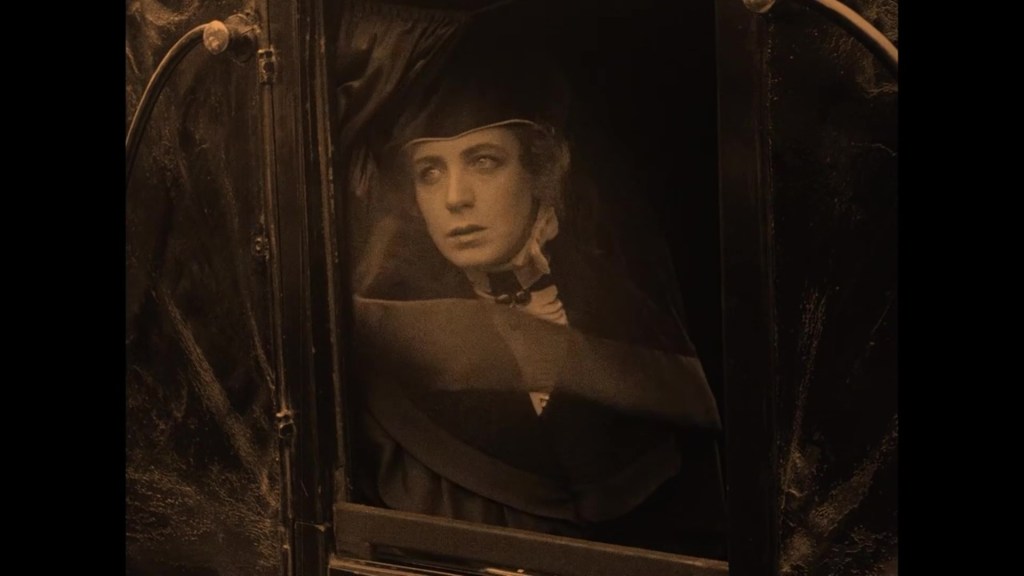
This film belongs to Pauline Brunius (wife of the director), who is simply superb. This is one of the finest, most convincing, and most perfectly judged screen performances you could hope to see. There is such immense depth of emotion to the slightest gesture or move of the eyes. Nothing is overplayed, but everything is crystal clear. A remarkable performance around which the entire film revolves. If none of the other actors are quite on the same level, all are more than capable. There is great sincerity in all the main players and the drama carries tremendous conviction through their combined efforts.


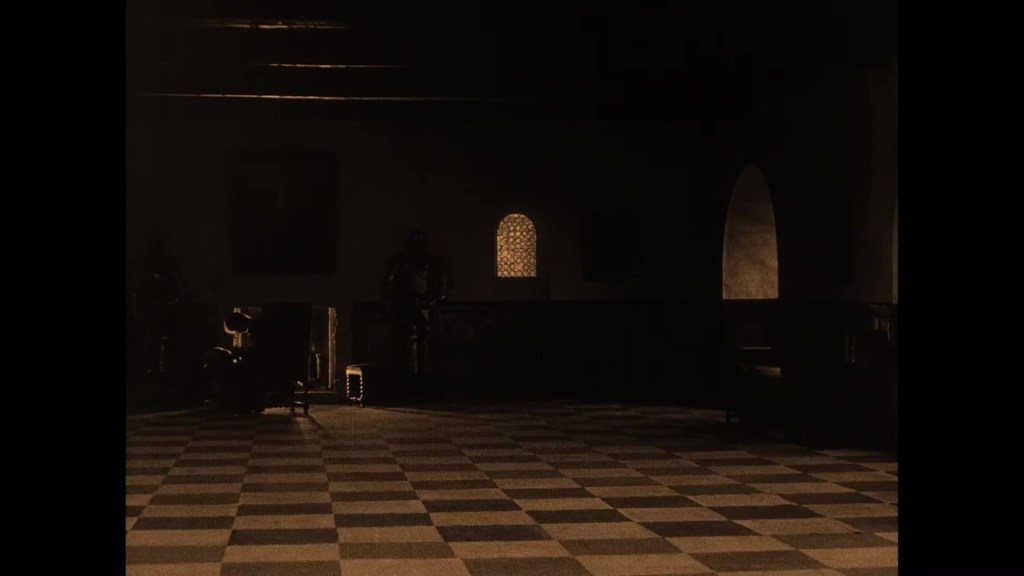
The whole film looks superb in that way that Swedish films of this period tend to: locations are perfectly chosen and perfectly photographed. The warmth and depth and texture of every scene is aided by the tinting, which enhances the mood of the film throughout. This film looks beautiful – and is technically impeccable – in a way that is entirely unshowy. There is some beautiful low-key lighting, as well as some gorgeous early morning exteriors, but even these most (technically) impressive moments are there for a dramatic purpose: enhancing the feeling of the scene. Everything is where it should be, everything contributes to mood and drama.



So how do I feel about the drama itself? (Perhaps this is another way of asking why I didn’t love the film more than I did.) I have pondered this for a while and have rewritten the remaining paragraphs twice over. My only reason is the tone of the narrative and the way it treats Thora. She is by far the most interesting and sympathetic character in the film. She has been wronged by her ex-husband, yet despite this everyone in the community (apart from the lovelorn Sidenius) gang up against her. Though the film clearly puts us – to a degree – on her side, I am unsure if the moral “lesson” of the film remains that she deserves punishment, and her conscience must condemn her. Films can and do find ways of mobilizing our sympathy towards transgressive women, even if the narratives punish them. Is that the case here?


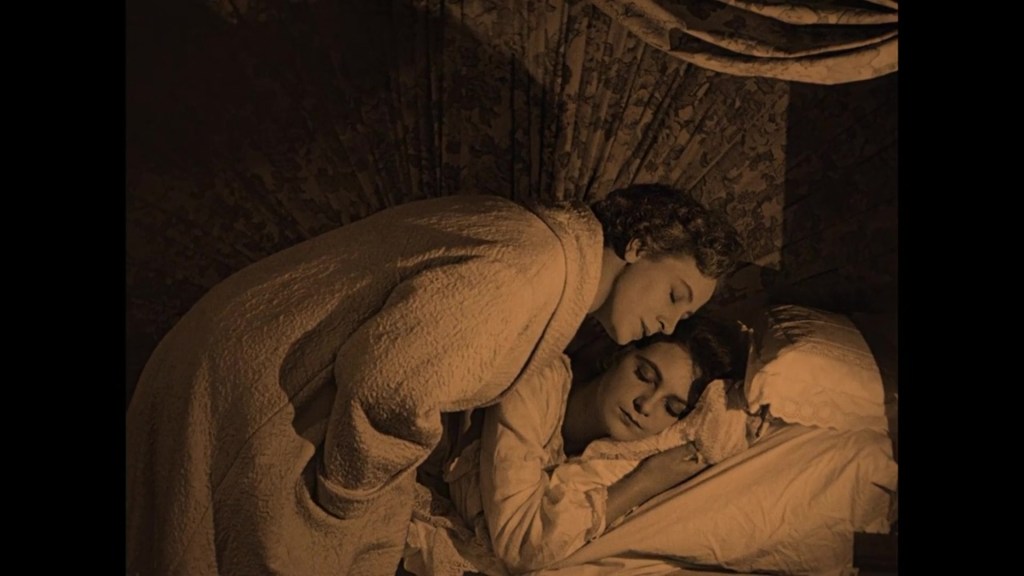


I am curious to know how contemporaries took the tone of religiosity. When Thora prepares to perjure herself under oath, the repeated cutaways to the passage in the Bible about being judged and condemned by God lay on the consequences pretty thick, so when Thora has a vision of her hand being withered by divine wrath it’s genuinely horrifying. Of course, she lies anyway – but are we invited to admire the bravery of her decision to favour her daughter (and herself), or to condemn her actions? This is complicated by how much sympathy we might have for the plight of Thora’s daughter, who wants to run away from her (transgressive) mother. The fact that Esther runs away with a pastor seems to underline the fact that Thora is not on the right side of the moral code. When Thora quite rightly asks why the pastor is willing to risk his life and that of Esther to join a mission he knows is riddled with malaria, the pastor replies: “God will protect me”. How are we meant to feel about this statement? To me, over a hundred years later, it smacks of absurd arrogance and a disregard for his or Esther’s safety. But does the film invite even the possibility of a critical attitude toward the pastor? He is otherwise a very sympathetic character, trying to find a way of understanding Thora. He doesn’t even contradict her when she tells him to his face that God doesn’t exist – though his later statement of belief in divine protection is an implicit counter to Thora. How far does the film (together with Esther) internalize the logic that compels Thora to wrathful judgement? I longed for the film to deliberately court my outrage over Thora’s mistreatment, only to give her some kind of victory at the end. Does the film agree – tacitly if not explicitly – that Thora should be punished, and the daughter and pastor should be free to run away together? Does the film share the pastor’s view that the lovers will find happiness in Asia, and that they won’t succumb to the disease that struck down his predecessors?


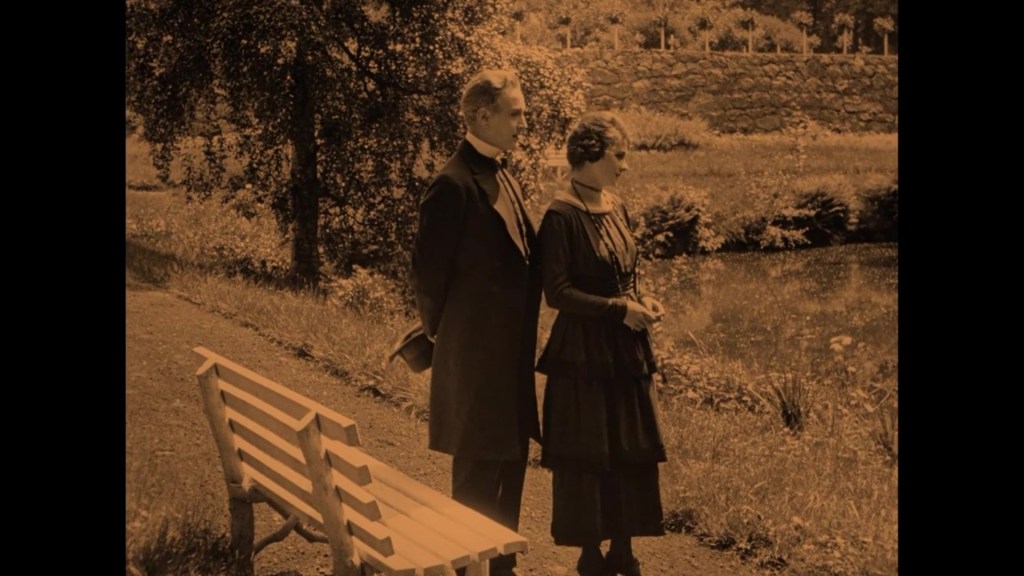


Having written the above, I wonder if I’m not asking unnecessary, if not impossible, questions of the film. After all, the existence of my own attitude – my scepticism – is evidence that one can read, or desire to read, Thora van Deken contrary to its apparent religious moralism. But it’s always possible to do so, with or without the intentions of the film. Other than the fact of Pauline Brunius’s performance, there is no reason to side with her. Is her performance enough to persuade an audience (contemporary or otherwise) that the film is a criticism of the society that condemns her? I’m not sure. If this were a film by Victor Sjöström, for example, I think there would be a clearer sense of siding with Thora – and a clearer indication that she was the victim, not the perpetrator, of injustice. Think of the astonishing power of Sjöström’s Trädgårdsmästaren (1912), for example, or Ingeborg Holm (1913), which famously provoked such outrage that the law was changed in favour of women’s legal power. In these, or in something much later like The Scarlet Letter (1926), it’s evident – but never crude – that the film is on the side of the woman wronged, and that the societies that condemn her are at fault. All these films are more melodramatic than Thora van Deken, which perhaps allows them more freedom to signal their (feminist) sympathies. But what is the attitude of the film – of John W. Brunius – towards Thora? I’m not sure. Perhaps this ambiguity (neutrality, even) makes it successful, but it left me oddly unsatisfied. I suppose what was missing was tears – mine or Thora’s. The tension was so restrained, the film never quite let go – and so nor did I. If I had cried, I might have more confidence in the emotional tenor of the film – and thus its sympathies.


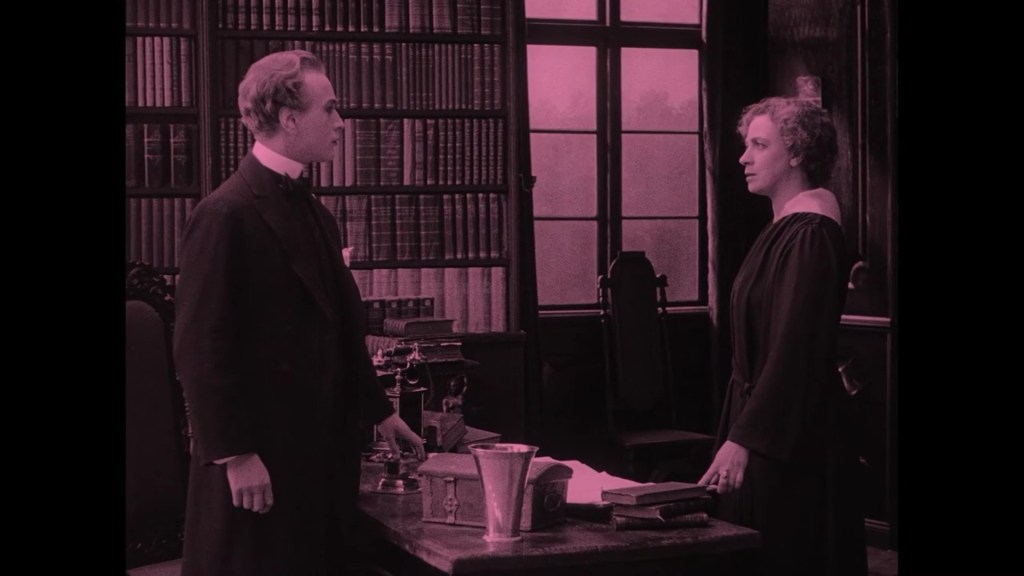


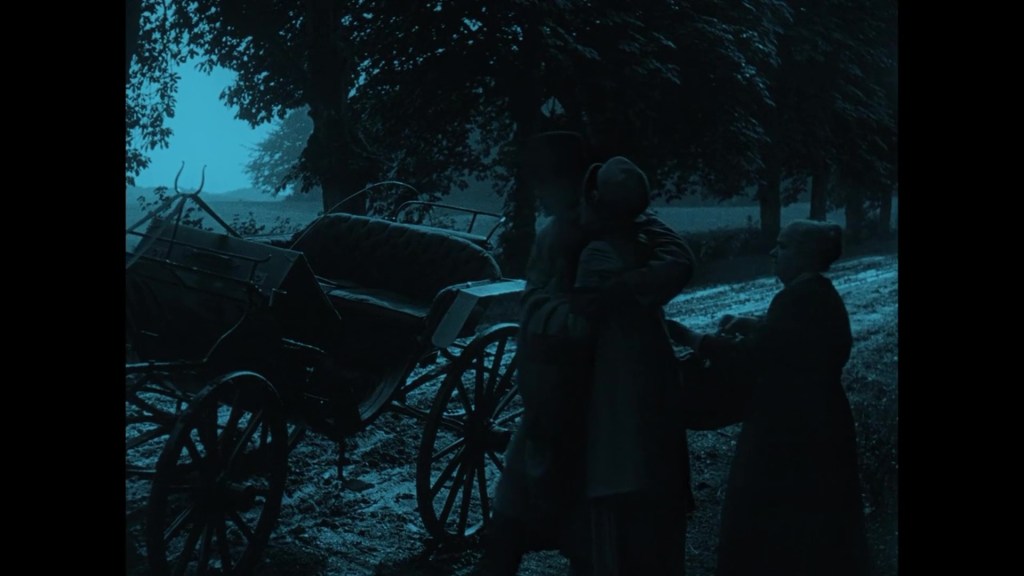


These final paragraphs have been written with the benefit of a night’s sleep. I actually think I dreamt about the film, which proves that it rather got under my skin – even into my brain. I have now gone through it again to take some image captures, and I find it even more beautiful to look at. And every shot of Pauline Brunius – and I do mean every shot – reveals an extraordinary intensity in her performance. I think it absolutely remarkable that she maintains such restraint and yet reveals so much depth of feeling, of psychology, of a character’s past and inner life. Every time she appears on screen, she instantly draws your eye – I really couldn’t stop looking at her. Reading what I wrote yesterday, I find myself more convinced of the film’s sympathy towards Thora. If the film offers us no evidence that it condones her actions, it offers constant evidence for Thora’s motivation – and Pauline Brunius’s performance absolutely demands that we see the world from her perspective. This does not mean we support her actions, but we know why she acted as she did. Only the mob and the (quite unsympathetically portrayed) lawyers actively hate her, and we are clearly not on their side.
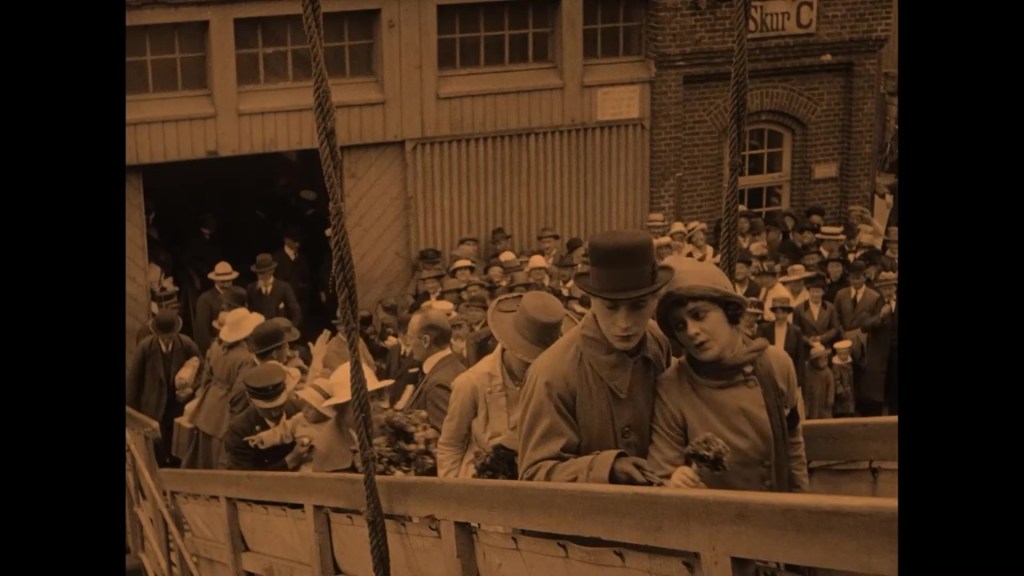


At the end of the film, Thora is ready to mount into the carriage to be taken to face charges. As she steps forward, she stumbles, then straightens herself. There is a cut to a medium shot. We see her hand raised to her chest. Is she about to grip her heart? No, not quite. As her hand approaches her heart, she clenches it into a fist. Her face tenses, almost hardens. She is not courting sympathy but summoning her inner strength just to stand here. Thora stares past us – far past us – and into a kind of imagined distance. The iris slowly closes in on her face, the darkness encroaching, about to swallow her. How can we not feel for her, admire her? And when the film cuts to the final shot of the steamship bearing Esther and Bjerring on board, it is surely far from a happy ending. A powerful film, an extraordinary performance, and much food for thought.
Paul Cuff

 The Realm of Silence
One thought on “Bonn from afar (2024, day 6)”