Day two of my retrospective binge, and we continue our exploration of Gance’s melodramas from the 1910s. Both films were familiar to me, but not in the form they were presented at the Cinémathèque…
Saturday 14 September 2024: Salle Georges Franju, 6.30pm

First up was Le Droit à la vie (1917). I had seen this film in the archives of the Cinémathèque française in 2010, in the company of Kevin Brownlow, and was very impressed by it. However, the copy that we saw had no intertitles at all, so we had only the synopsis to go on. (Some weeks later, Brownlow sent me a list of titles from his Pathé-Baby 9.5mm print, so having seen the film I could then read it!) Thankfully, the film has since been beautifully restored by the Cinémathèque française alongside (as the retrospective notes are keen to acknowledge) TransPerfect Media. The screening last week was, I believe, the premiere of this restoration – so it was a real treat to see it. This was a 4K restoration, based on the surviving 35mm negative. This original element had begun to decompose, so it was supplemented by the safeguard copy made of the negative in 1965. The missing titles were recreated on the basis of those in the 9.5mm version and Gance’s manuscript scenario, both preserved in the collection of the CNC/Cinémathèque française. The font for the titles was recreated after the typography of La Dixième Symphonie. I report this latter information with some pleasure, since one thing that can spoil even the best restoration is a modern font. (I think especially of many North American DVDs that not only translate but transliterate the foreign titles, turning them into the ugliest imaginable insertions into original prints. Urgh! I’ve written about this in an issue of Screen, should anyone be interested in more detailed pedantry.)
The plot of Le Droit à la vie is a pleasingly gripping drama (and yes, spoilers ahead). Pierre Veryal (Pierre Vermoyal) is a prodigiously talented young financier, aided by his two ambitious secretaries, Jacques Althéry (Léon Mathot) and Marc Toln (Georges Paulais). However, Veryal’s absolute – and amoral – devotion to his work is undermining his health, and he ignores his doctor’s recommendation for absolute rest. Veryal’s only real feelings are for his pupil Andrée Maël (Andrée Brabant), an orphan being looked after by her grandmother (Eugénie Bade). But Andrée loves Jacques, who returns her feelings while being financially unable to support a wife. He is about to ask Andrée’s grandmother for permission to marry, but the old woman dies – and Jacques must leave for America to manage Veryal’s affairs, and to win his own fortune. The grandmother has willed that Andrée is entrusted to the care of Veryal, who exploits this to marry Andrée. Many months later, Jacques returns from America a rich man. He not only finds that Andrée is married, but that Veryal has an infectious illness that will condemn Andrée if there is significant “contact”. Despite Jacques’s entreaties, Veryal insists on enjoying his last months of life. He sells all his assets to fund lavish parties. Meanwhile, Marc Toln exploits Veryal’s distraction to embezzle large sums from his accounts. When this is discovered by Veryal during a masked ball, Toln tries to kill his employer – but only succeeds in wounding him, an act witnessed by Jacques. Knowing Jacques is a rival for Andrée’s affections, Veryal falsely supports Toln’s claim that it was Jacques who fired the shot. But at the trial, Jacques is vindicated by Veryal, who dies after having accepted that Andrée will marry Jacques.

Le Droit à la vie is a cracking film. It’s beautifully staged, beautifully lit, and the drama has real heft. The central love triangle – between a corrupt (usually capitalist, usually older) man, a younger woman, and her young lover – is one that recurs in multiple variations across Gance’s work. In Le Droit à la vie it is given its most vivid realization thus far in his filmography. The bite to Veryal’s predatory sexuality comes in the form of his illness, which initially seems to be merely fatigue – but is soon implied to be something more sinister. His increasingly erratic and violent behaviour, coupled with his rapid mental deterioration (even before being shot!), suggests syphilis – a diagnosis surely confirmed by the doctor’s insistence that he must avoid “contact” with his wife. No other kind of “contact” is envisaged as being dangerous, and the horror of Veryal’s “right” to Andrée’s body is as explicit as can be imagined.
Le Droit à la vie finds marvellous imagery with which to make this situation sinister. In particular, there is one remarkable staging of a scene that Gance replicates (closely) in J’accuse and (virtually identically) in La Roue. This is when Jacques witnesses Veryal forcing Andrée into his arms. The brutish embrace is framed within a window and partially-concealed by lace curtains. The equivalent scene in J’accuse is when Jean Diaz sees Edith being assaulted by her brutish husband François at the window – a moment made all the more shocking by the symbolic breaking of the glass and bleeding hand. And in La Roue, when Elie witnesses Norma being assaulted by Hersan, Gance goes further – making the rape of Norma as explicit as could be expected within the laws of censorship. (This scene was so often cut from the film that it was lost from all surviving prints, so the 2019 restoration had to reconstruct it from the 35mm rushes discovered in the archives.) Its iteration in Le Droit à la vie is still very powerful, one of many scenes when the combination of framing, editing, and lighting are united into a perfect mise-en-abïme of the drama.

It is with great sadness that I cannot share any image captures from this film, since it has never been released on any format since the advent of 9.5mm! I really, really hope that it is released on home media because it looks stunning. Burel’s photography is sumptuous, from the dark, complex interior spaces of Veryal’s rooms to the exquisite sun-dappled exteriors where the forbidden lovers meet. During the latter, there is one stunning shot of Jacques and Andrée: he half-concealed behind a tree, his profile outlined in sunlight; she, half-revealed in the clearing beyond, her face and hair haloed with natural back-lighting. My god, my god, my god this is a good-looking film. I cannot praise the visual qualities of the restoration highly enough. The 4K scan does real justice to the film, and seeing it on the big screen in the Salle Franju was incredibly moving. Some of the close-ups of Andrée were ludicrously detailed, simply glowing with life. Such was the sheer presence of this film, I cried just to look at it.
The performances in Le Droit à la vie are very good. Andrée Brabant is a proto-Ivy Close in La Roue, and both women have the long, curly blonde hair of a Mary Pickford – and are as exquisitely lit as she or (very much Gance’s role-model) Lillian Gish. Brabant herself is an engaging presence, able to communicate with her eyes – sometimes directly into the camera – the emotions of her character. Not to repeat myself from my last post, but Léon Mathot is once again both a sensitive and dramatic performer. However, I find him more engaging and affecting in Le Droit à la vie than in Les Gaz mortels. I think this is entirely to do with the respective quality of the films. Le Droit à la vie is a pleasingly dark drama, and the performers have something to work with – Mathot included. Vermoyal is creepy as Veryal, but has a tendency to eye-rolling exaggeration and occasional histrionics (especially when suffering from his bullet wound). I’ve only seen him in Gance’s early films and believe he was an actor from the Grand-Guignol theatre, which might explain his playing-to-the-gallery mode of performance. His was the only performance that stood out for its moments of crudity – but I suppose that conveying the signs of tertiary syphilis gives license to a bit of excess. Actually, I thought one of the most engaging performances in Le Droit à la vie is by Georges Paulais. His role is relatively minor, but there is a great clarity and presence in all of his gestures, all of his glances.
My final word on the film must go the music for this screening by Nicolas Giraud and Fixi. I confess that when I saw the name “Fixi” I was faintly worried about being given something peculiar (a fear not exactly allayed by the sight of his garish shirt as he stood to acknowledge our applause welcoming him to the stage). Fixi was at the piano, but he sometimes swapped the keyboard for his accordion. Giraud played a variety of instruments, from guitar to percussion and acoustic loops. If all this sounds like an odd mix, the result was superb: rhythmically and tonally in tune to the action, and independently musically satisfying. There were some very pleasing combinations of sounds, and such was the variety of combinations that it often felt like the musicians were jamming with the film – but jamming in the best possible sense, of playing off the changes in tempo and dramatic context. The score was well-conceived and well-executed. A pleasure to hear, and an enhanced pleasure to watch. Bravo!
Saturday 14 September 2024: Salle Georges Franju, 8.15pm
Hot on the heels of Le Droit à la vie, released in January 1917, Gance’s Mater Dolorosa (1917) was released in March 1917. Another concentrated melodrama, Mater Dolorosa focuses on Marthe Berliac (Emmy Lynn), who is having an affair with her brother-in-law, the writer Claude Berliac (Armand Tallier). In an attempted suicide, Marthe accidentally shoots her lover. Though she promises the dying Claude never to reveal the truth, Marthe’s secret attracts the interest of hunchbacked blackmailer Jean Dormis (Pierre Vermoyal) and his henchman (Gaston Modot). In attempting to pay off these men, Marthe’s husband Gilles Berliac (Firmin Gémier), a successful doctor, discovers the affair and disowns both Marthe and their son Pierre (Carène). Pierre is sent away to the suburbs of Paris, where he falls dangerously ill. Marital and paternal crises are eventually resolved when the husband sees the sincerity of his wife’s anguish, and is provided with new evidence by loyal servant Ferval (Anthony Gildès). Gilles finally reunites Marthe with Pierre and welcomes both back into his life.
Mater Dolorosa has a complex history during the silent era, and was also remade by Gance as a sound film with the same title in 1932. After being premiered in 1917, the silent version was re-edited and rereleased several times between 1918 and 1926. In 1993, the Cinémathèque Royale Belge undertook two restorations: the first reconstructed the original version of 1917, the second reconstructed the final rerelease version of 1926. The differences between the two include character names, character identities, and intertitles. The restoration of the 1917 version is (for me) by far the most satisfying, and the one I am used to seeing. Tinted and toned, it looks utterly gorgeous – while also being less verbose and more concentrated as a text. (The image captures included in this post are all from a copy of that version.) The 1926 rerelease version of Mater Dolorosa has more (to me, unnecessary and distracting) titles, as well as watering-down the love triangle by demoting the dead lover to a mere friend of Gilles Berliac rather than his brother. It also survives in monochrome only, which denies the film something of its visual richness.
The Cinémathèque française retrospective showed only the 1926 version. I confess that I was disappointed by the quality of the print, which was by far the poorest of any film I saw. It looked as though it had been assembled from copies of copies of copies, as well as being quite badly scratched. The restoration of the 1917 version is in much better shape, as well as offering the original tinting/toning that the 1926 print lacked. The 1993 restoration was shown on 35mm, but it lacked any restoration credits to explain its complex history. (For anyone seeing a copy of the 1917 Mater Dolorosa for the first time, it must have been confusing to see all the letters in the film dated March 1920!) All that said, I still enjoyed seeing the film projected, and with a good accompaniment on piano by Kolia Chabanier, another student from Jean-François Zygel’s school of improvisation.
This was Gance’s first collaboration with Emmy Lynn, and her performance is terrific – it’s her film, from beginning to end, and she carries the drama. With a fabulous wardrobe of dark, velvety dresses, of fur-lined coats, of hats and veils, she is a passionate, sombre diva – retreating into shadows, falling to her knees, her hair haloed against fire, against wintry windows. The intensity of emotion, and her rendering of anguish, is also inseparable from the way Gance visualizes the dramatic tone. I have previously described Gance’s love of sun-soaked southern landscapes. Mater Dolorosa is the antithesis of the outdoorsy brightness evident in the opening scenes of Les Gaz mortels. Mater Dolrosa was shot in and around Paris in the winter of 1916-17. Bleak northern light, forever dimmed by clouds, defines the exterior spaces. The house to which Pierre is exiled is grim in and of itself, but the bare trees and cold glinting pond outside make it doubly so. The climactic sequence, in which Gilles drives his wife through a rundown suburban landscape of dark woods and walled cemetery, is chilling in every sense. This is a cold world, in which passions smoulder in the shadowy interiors of domestic space.


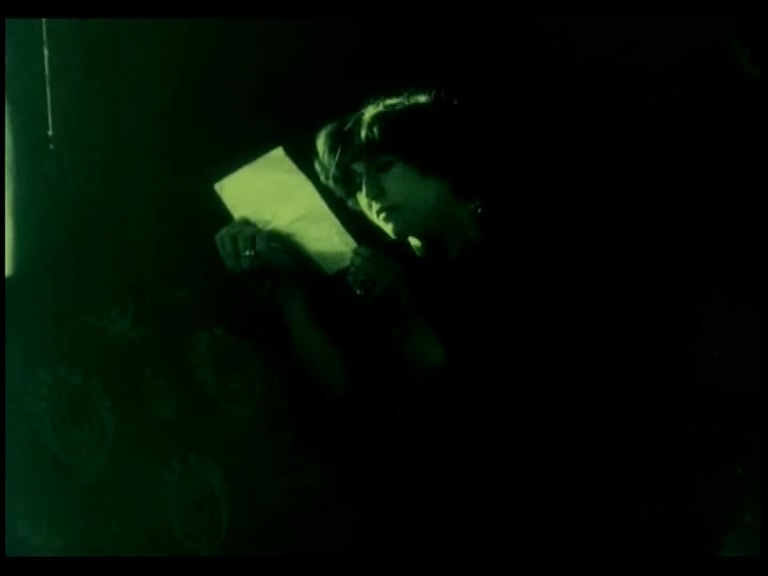
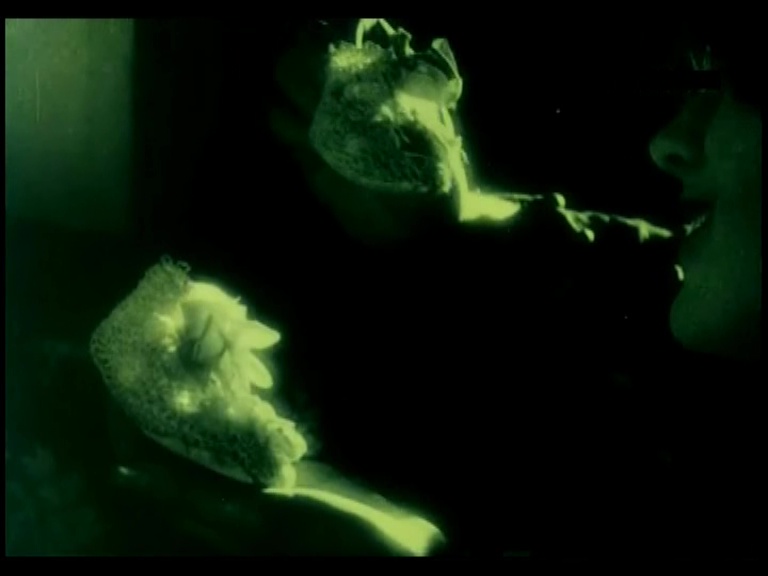


Chiaroscuro lighting defines all the scenes of emotional intensity, from the rich – and faintly sinister – apartment of Claude Berliac to the curtained spaces of Gilles and Marthe. Gance’s compositions delight in great swathes of black, from dramatic drapes to silhouetted figures. Light floods across floors, illuminating patches of action or highlighting pale faces. It’s exquisite to look it, an aesthetic that wraps you up in its atmosphere.


It helps that Gance fills his drama with strange touches and rich images. Take the way that the romping Pierre, playing naked in a fish tank, comes to the window to see his parents. It’s another scene framed by a window, Marthe and Gilles half masked by the lace curtains. The child puts its hands up towards his parents, but can only paw at the lace and glass. It’s such a beautiful moment, and one that sems to carry some extra weight of meaning. It is as though Pierre’s parents don’t really exist: they are as unreachable as a projection, a painting framed by the window. (It’s almost an image from an Ingmar Bergman film.) The compelling oddness of the image unsettles the cosiness of the family so effectively, so completely, that you can totally understand the way Gilles willingly tries to destroy their relationship.


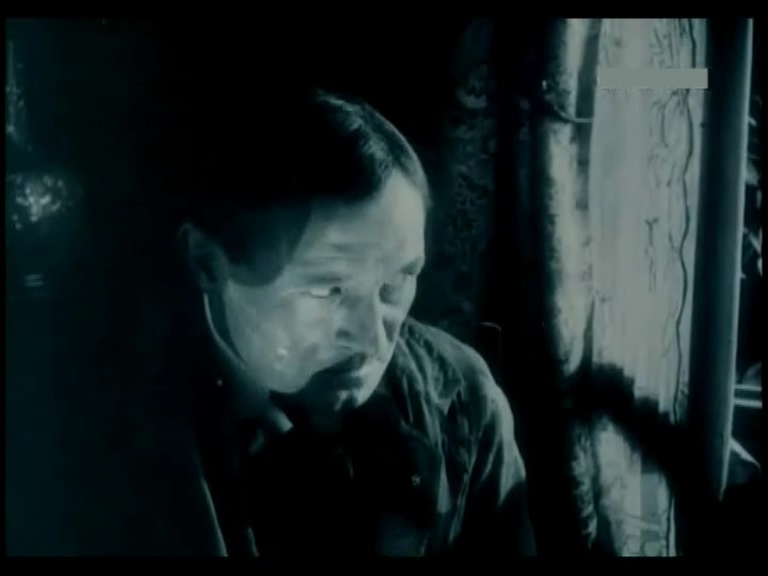


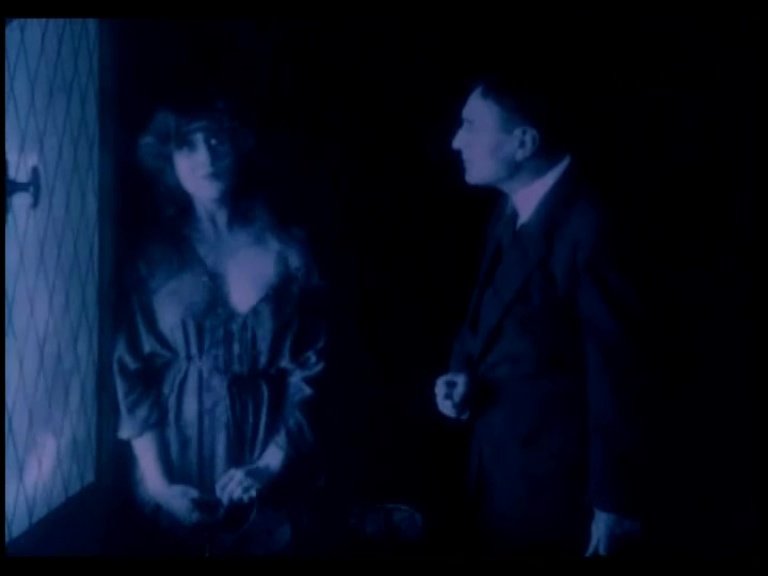


So too with the scene when Gilles deposits Pierre into the care of a nurse in a distant house. Convinced he is not the father of the child, he reaches for a mirror and stares at his image. We see the light gleaming on his face (yet again framed against a window), the cruelty in his eyes. When he reaches for his child, his hands clasp around Pierre’s throat. It’s an embrace and a threat. The same gesture recurs in Gance’s films, each time becoming more complex, more troubling. It’s there in Le Droit à la vie, in Veryal’s sinister embrace of the reluctant Andrée – a gesture of enforced attachment, of physical ownership and restraint. In J’accuse, Edith is raped by German soldiers and gives birth to Angèle, who is adopted by her lover Jean Diaz. This adoption of the half-German Angèle is absorbed into (and complicated by) the film’s narrative concern with revenge and forgiveness. After Édith shows Jean her child for the first time, there is an extraordinary moment when Jean half-protectively, half-threateningly holds Angèle’s throat. Looking into her eyes, he tells her: “I’ll teach you how to become French. Then you can find your own way to punish your father as he deserves.” In La Roue, Sisif clasps his son Elie – who is also his rival in love for Sisif’s adopted daughter Norma – around the neck with the same gesture, realizing that Norma has returned into their life. And in Napoléon, Bonaparte enacts this gesture in the scene with his adopted daughter Hortense, forcing her into a reluctant kiss. (Sadly, I could not make the screening of the 1932 Mater Dolorosa in the retrospective, but the same gesture is evidently in that film: one of its posters uses this subject.)


But to return to the silent Mater Dolorosa, I long to see the 1917 version on a big screen with live music. I love its imagery, its atmosphere, its wintriness, its strangeness. Perhaps the last word on Gance’s film should go to Colette. “Let us praise Mater Dolorosa”, she wrote in June 1917:
Let us praise Emmy Lynn, exhausted young mother, who surpasses everything she promised us in the theatre. Agree with me, since I take so much pleasure in it, that the action progresses in scenes lit with a rare richness – gilded whites, sooty and profound blacks. And my memory also retains certain sombre close ups in which the speaking, suppliant head of Emmy Lynn floats like a decapitated flower.

Paul Cuff

 The Realm of Silence