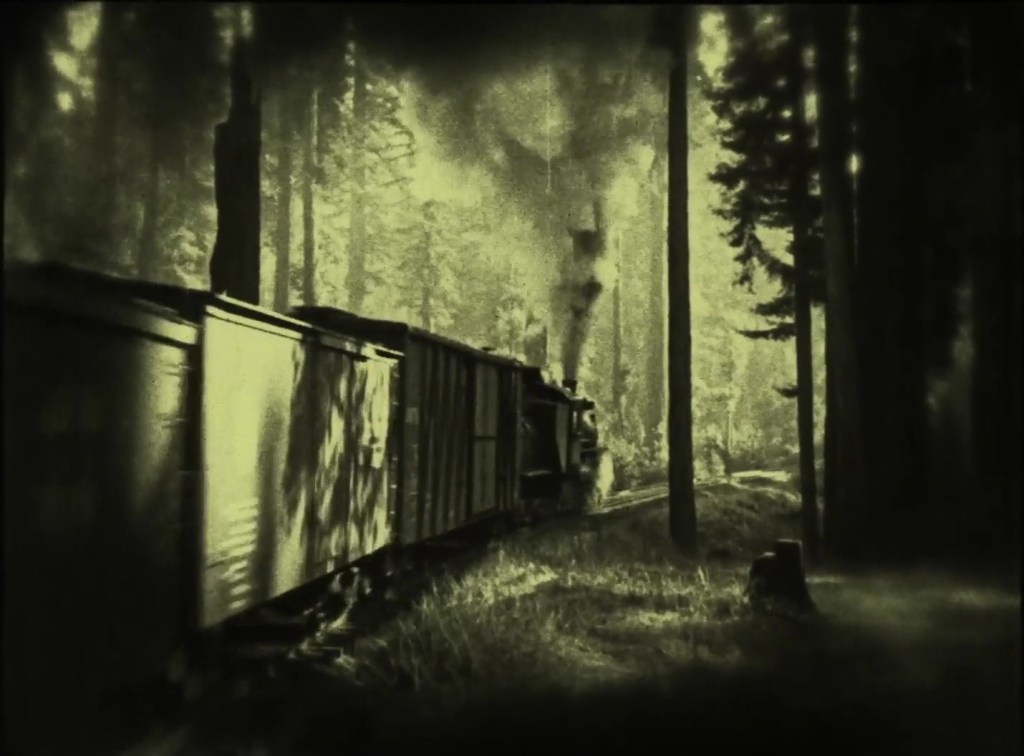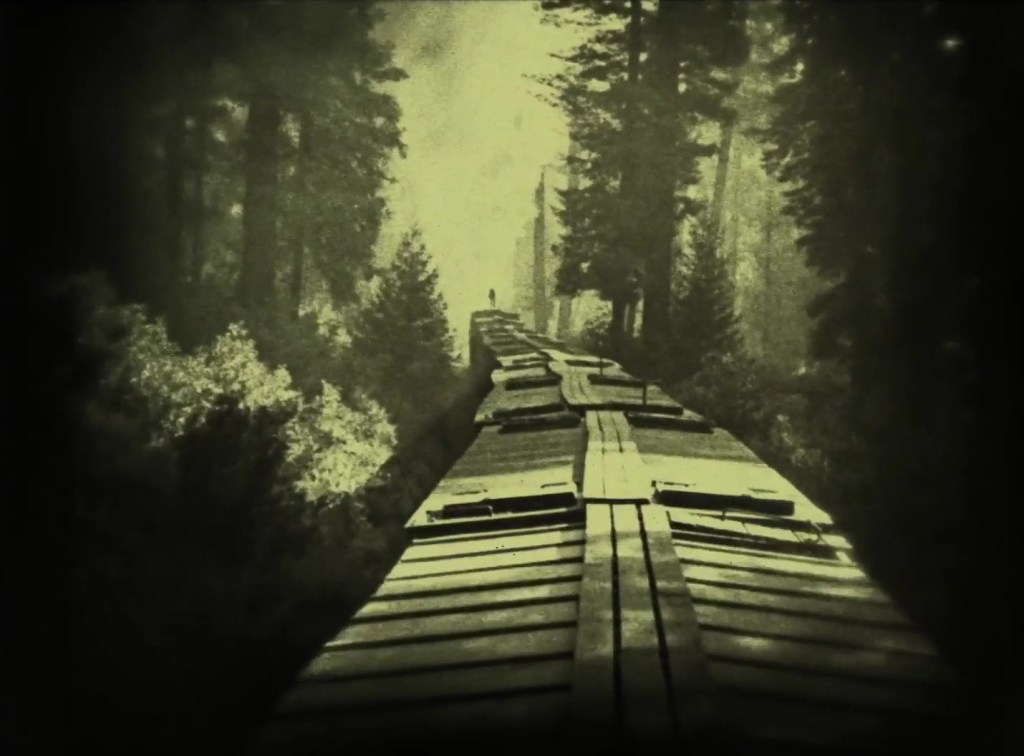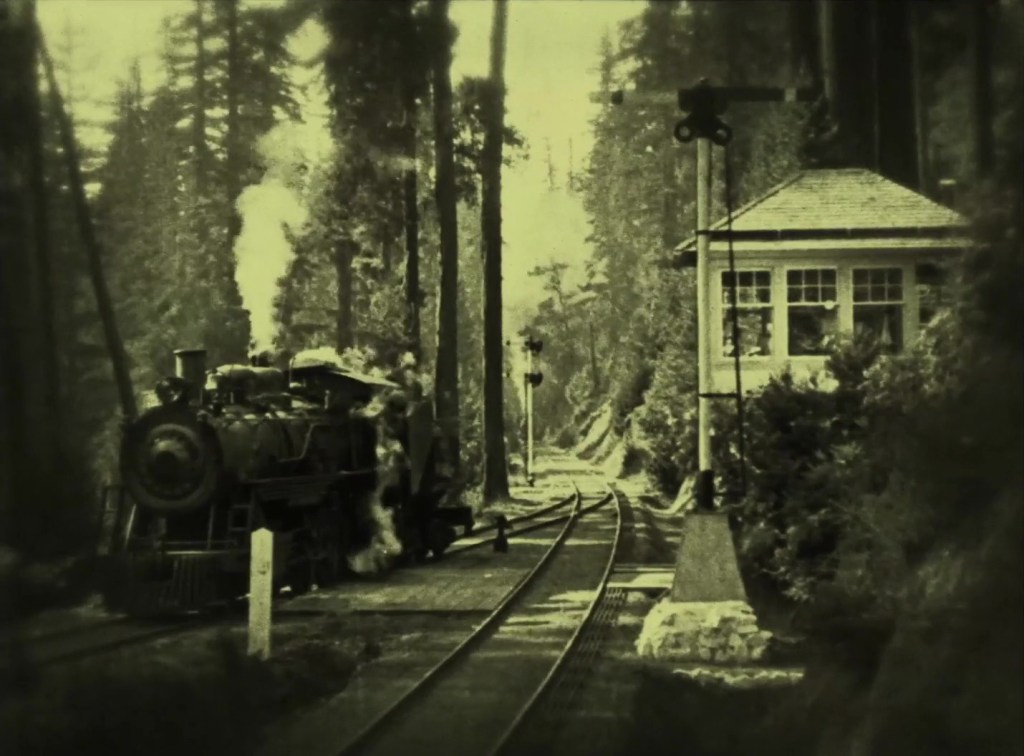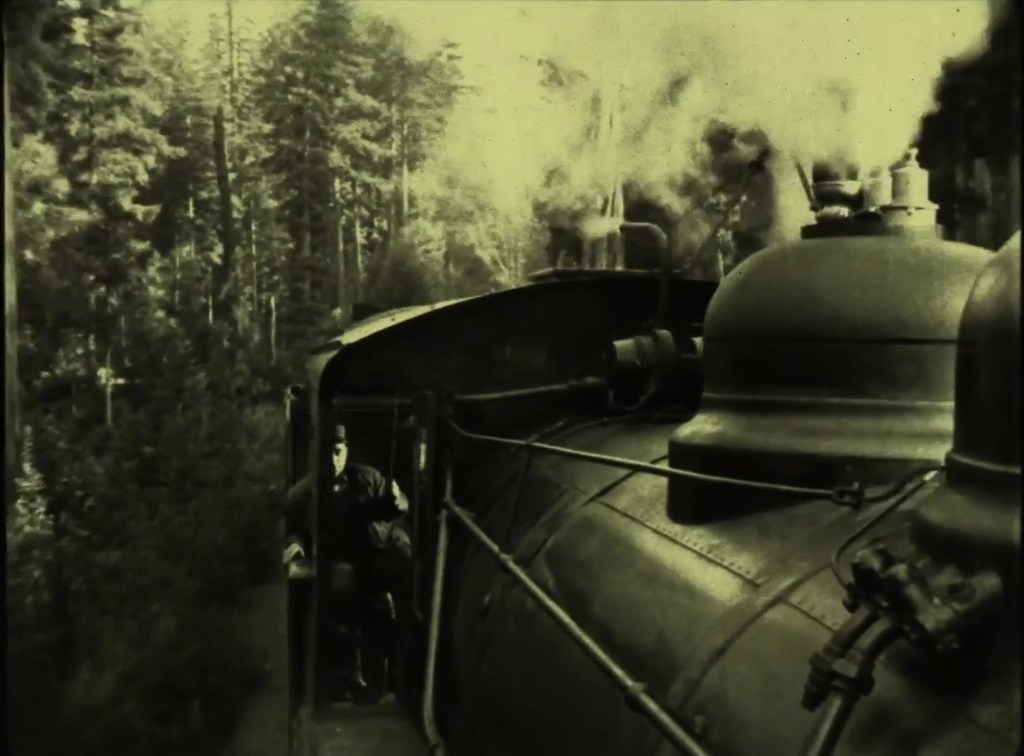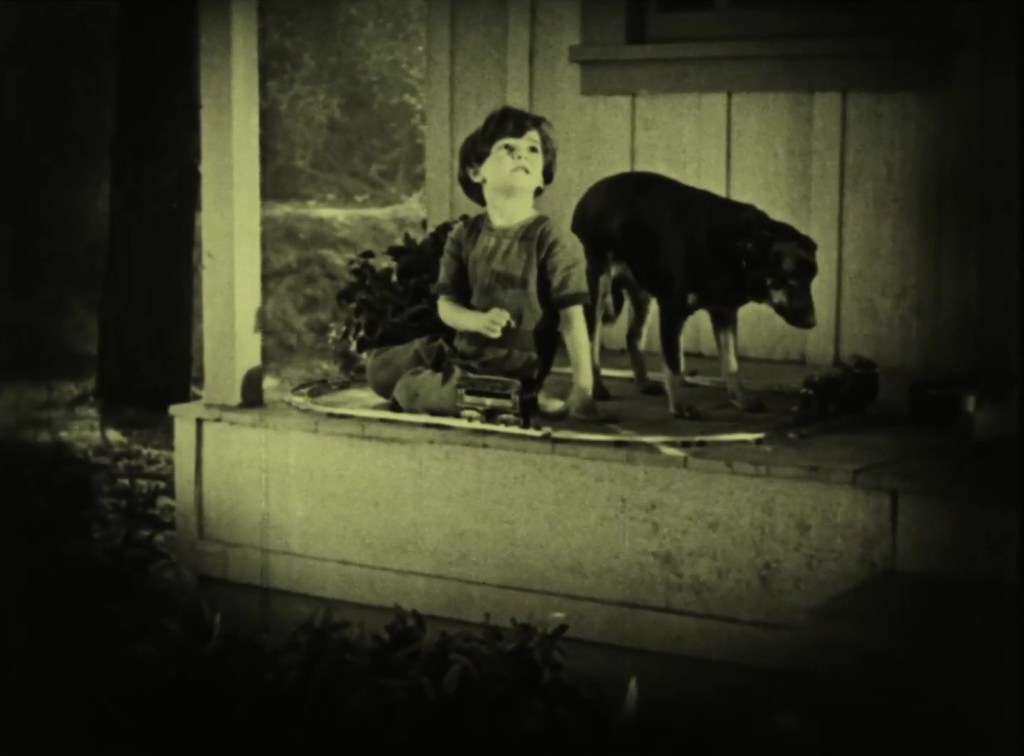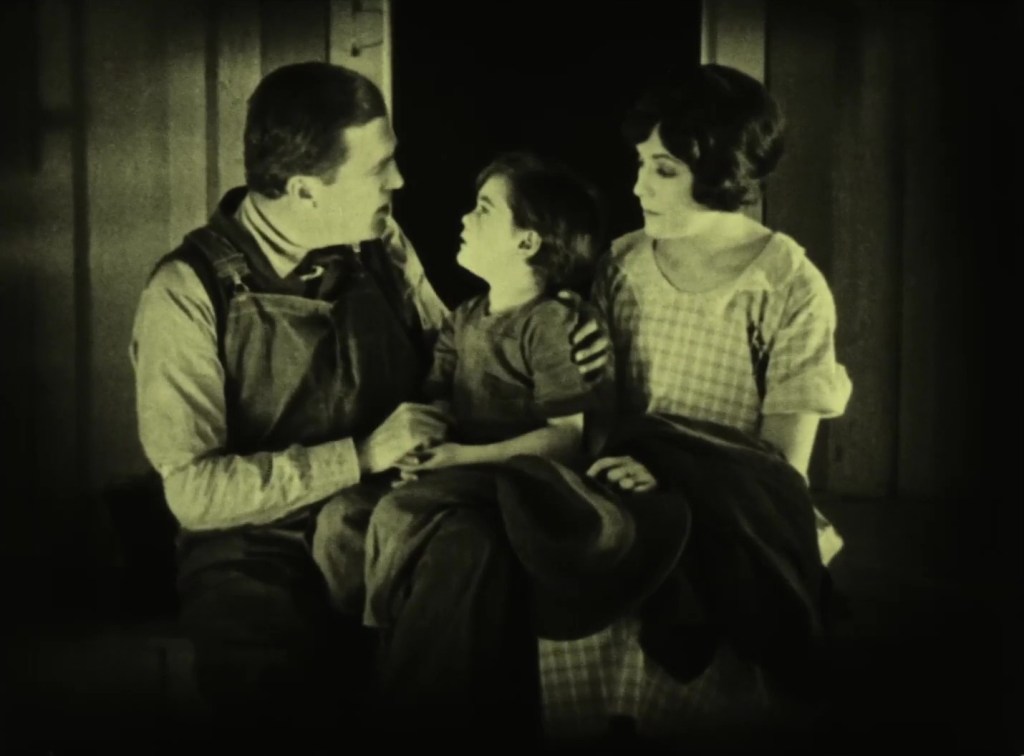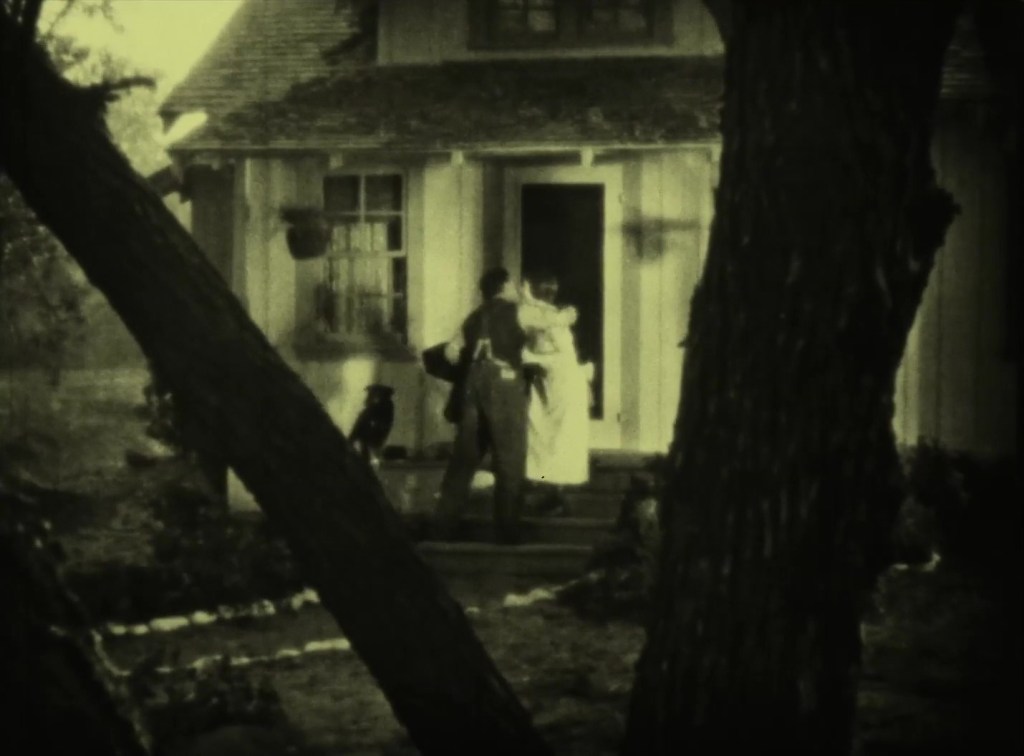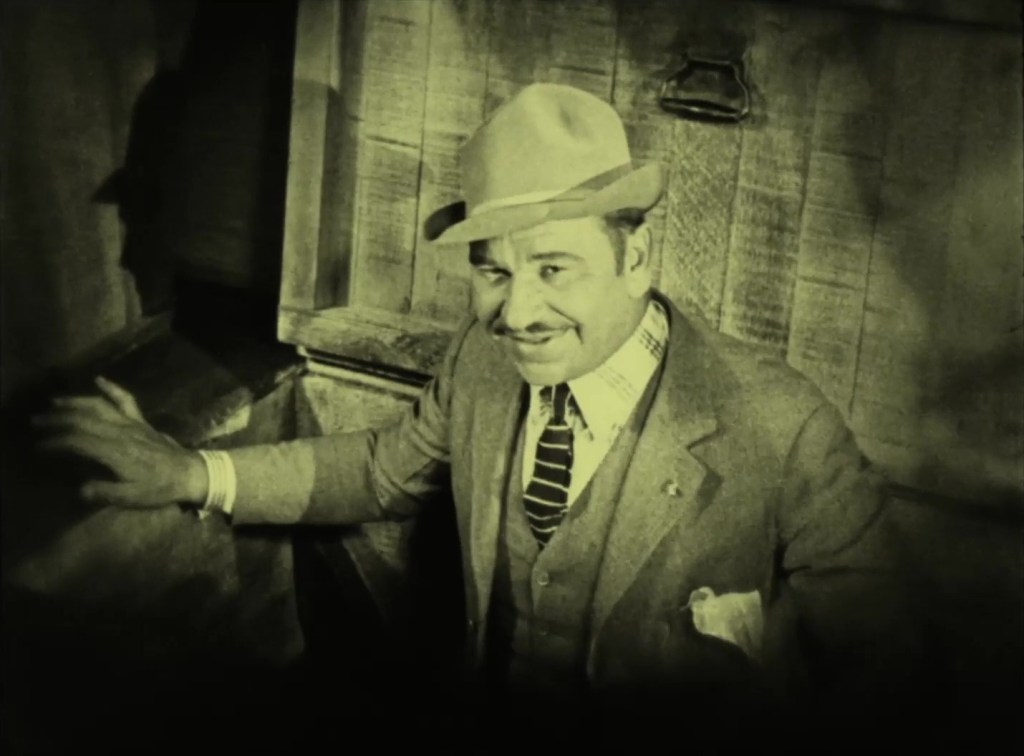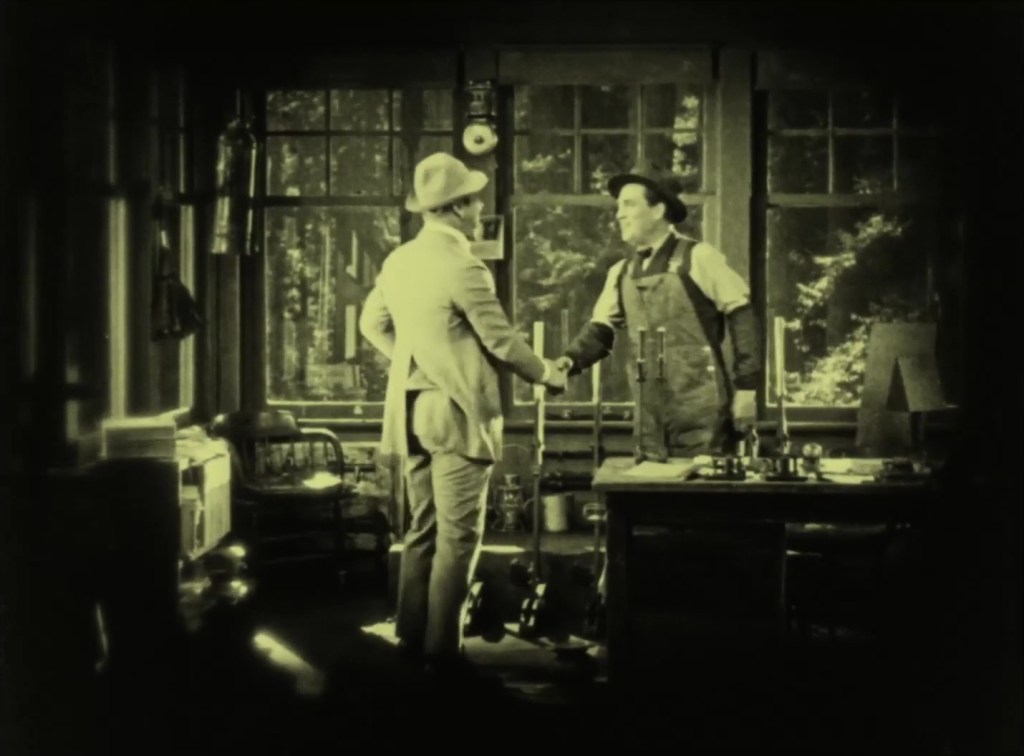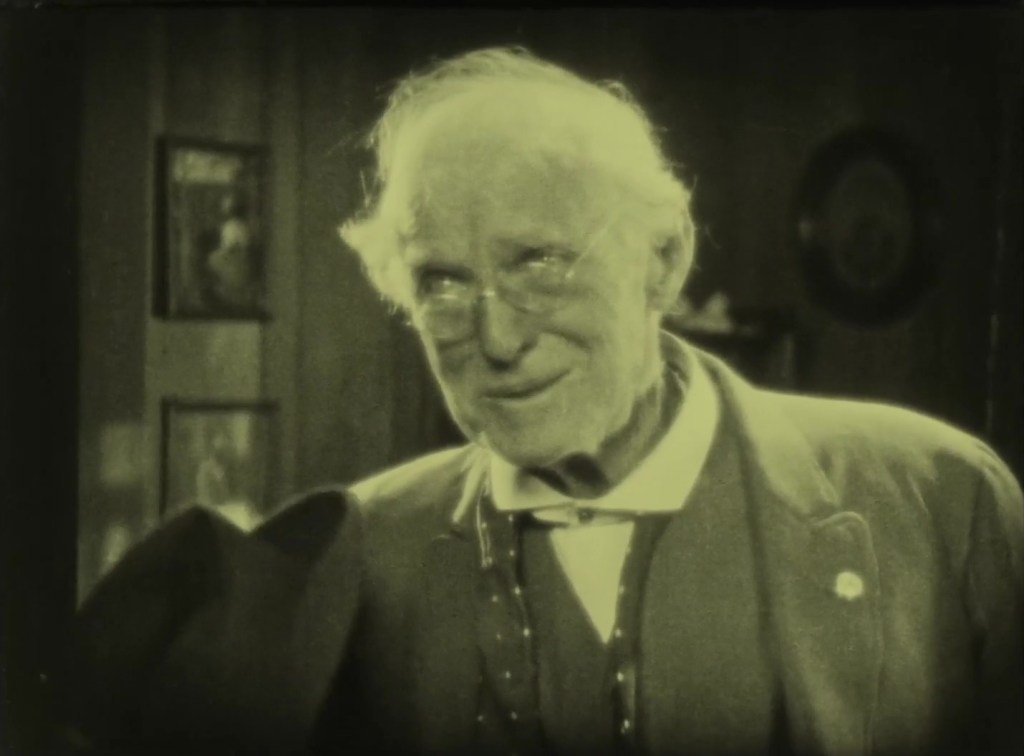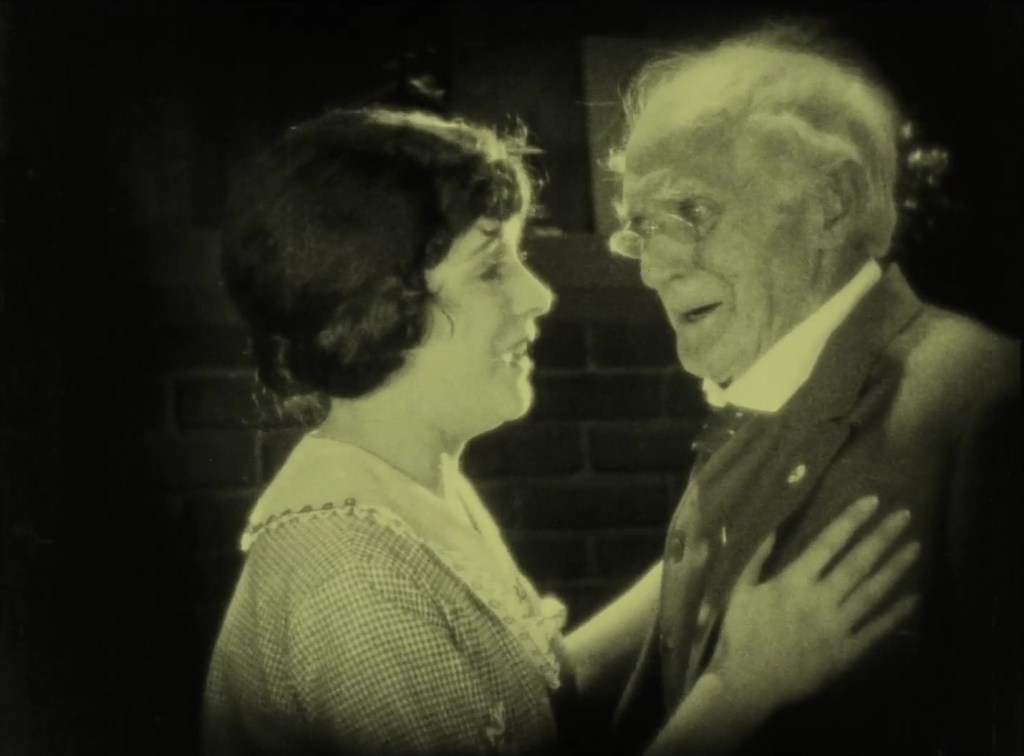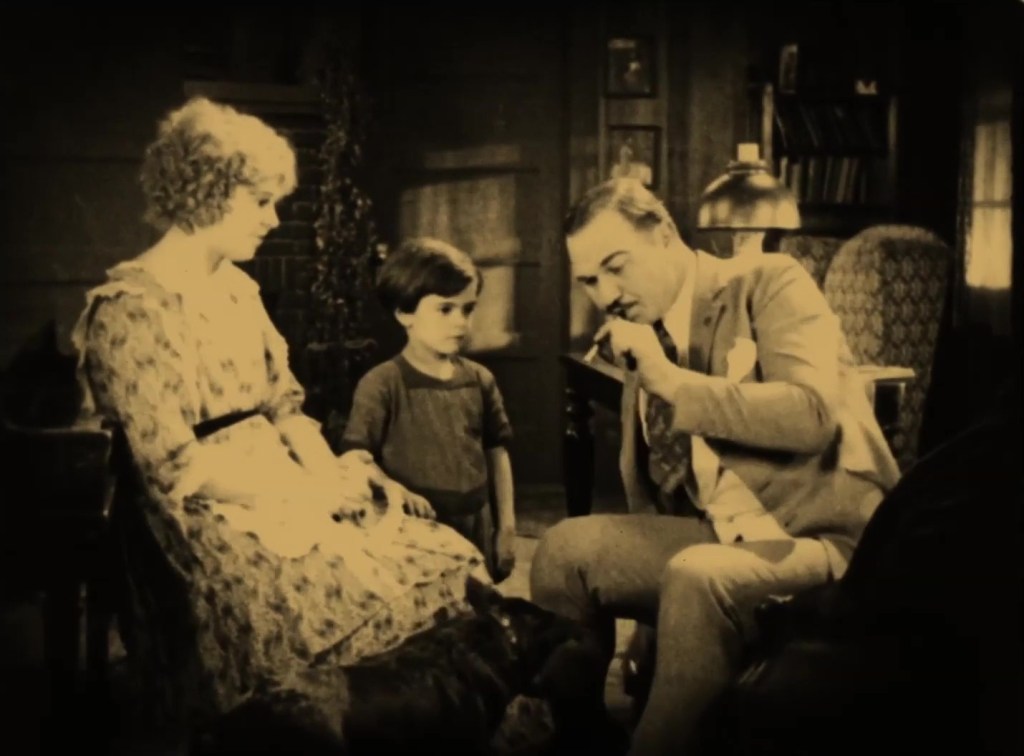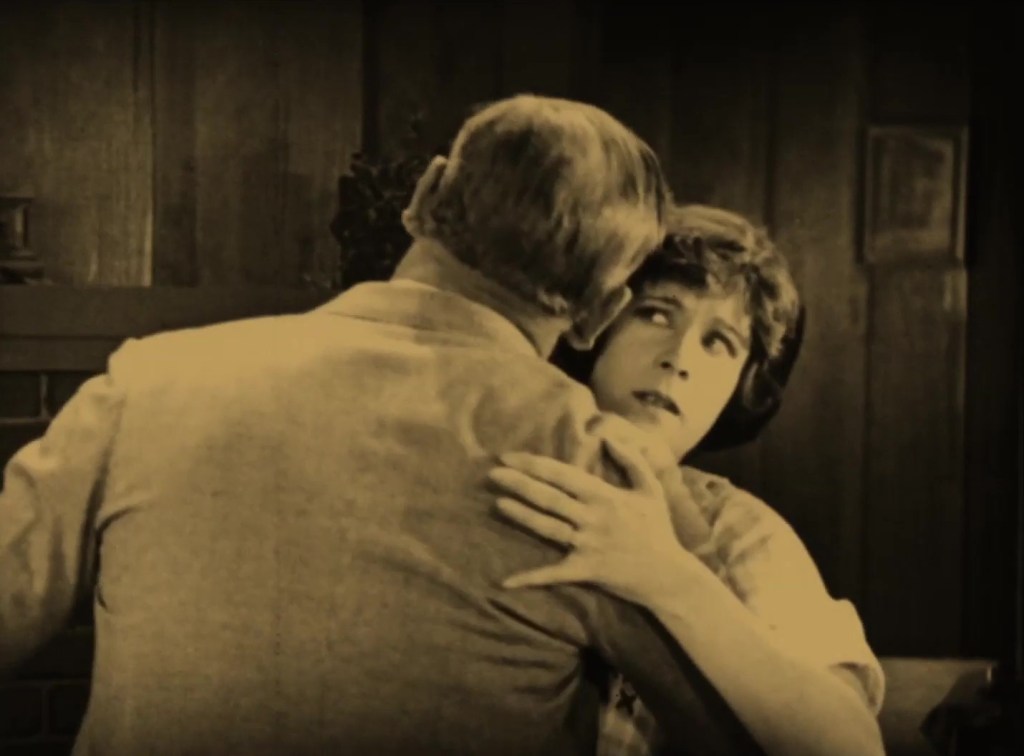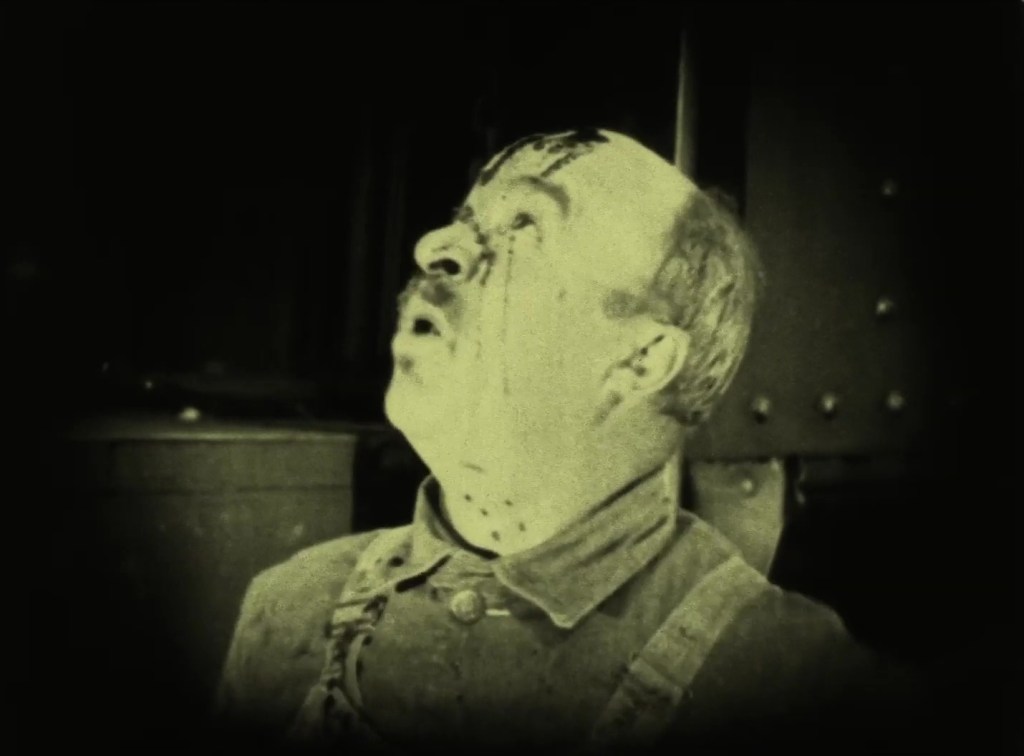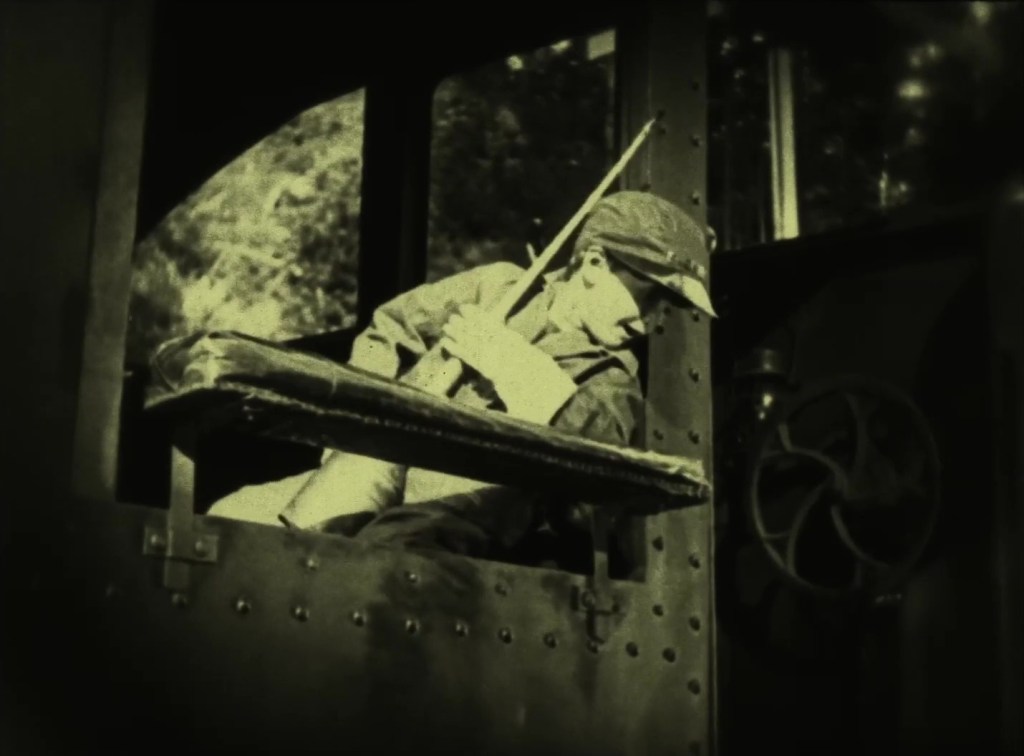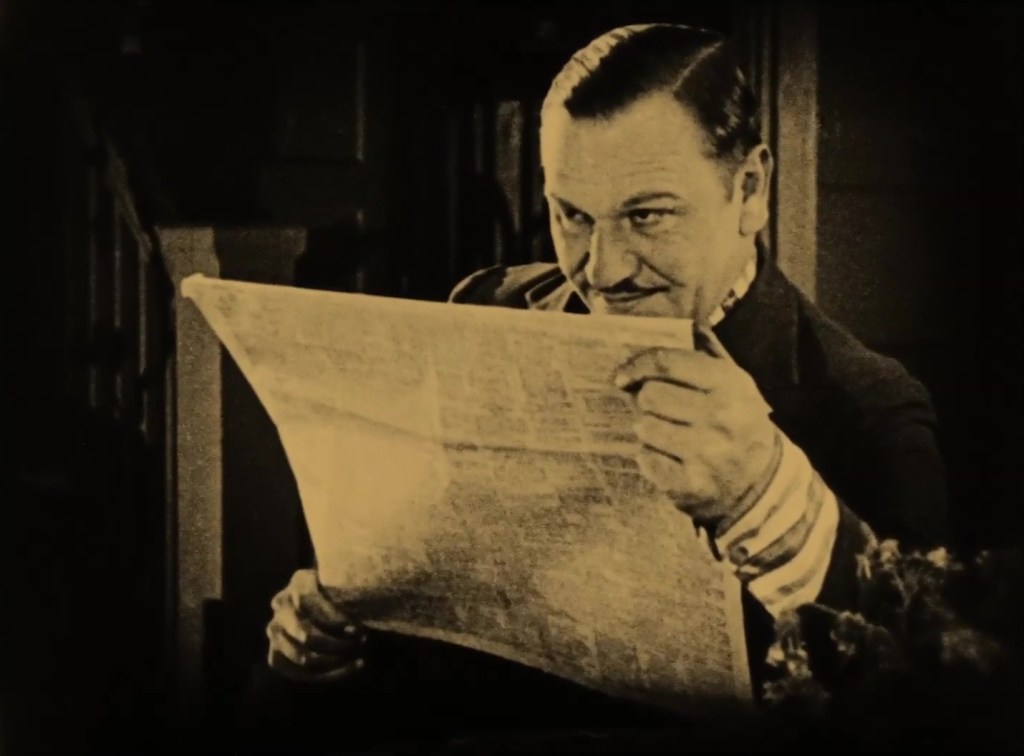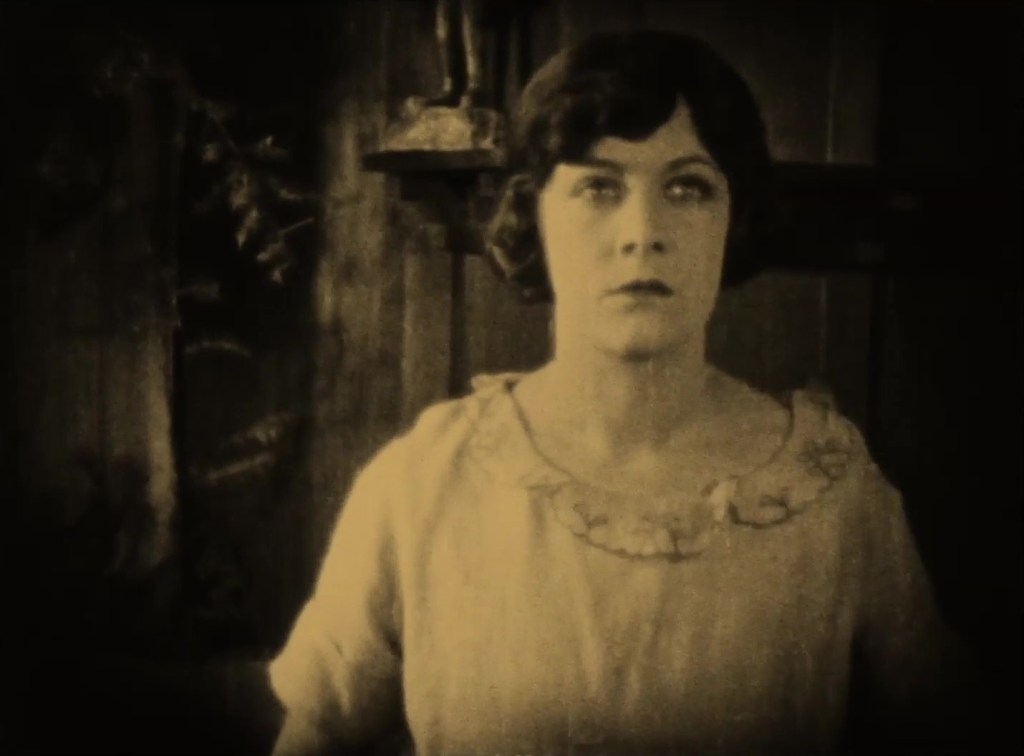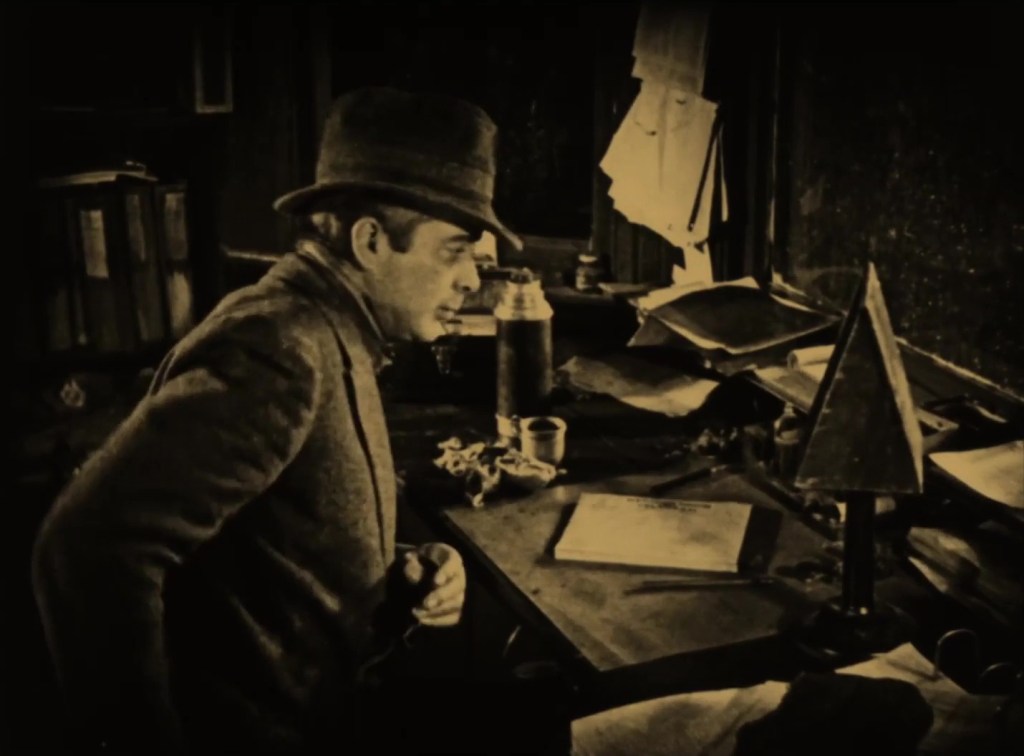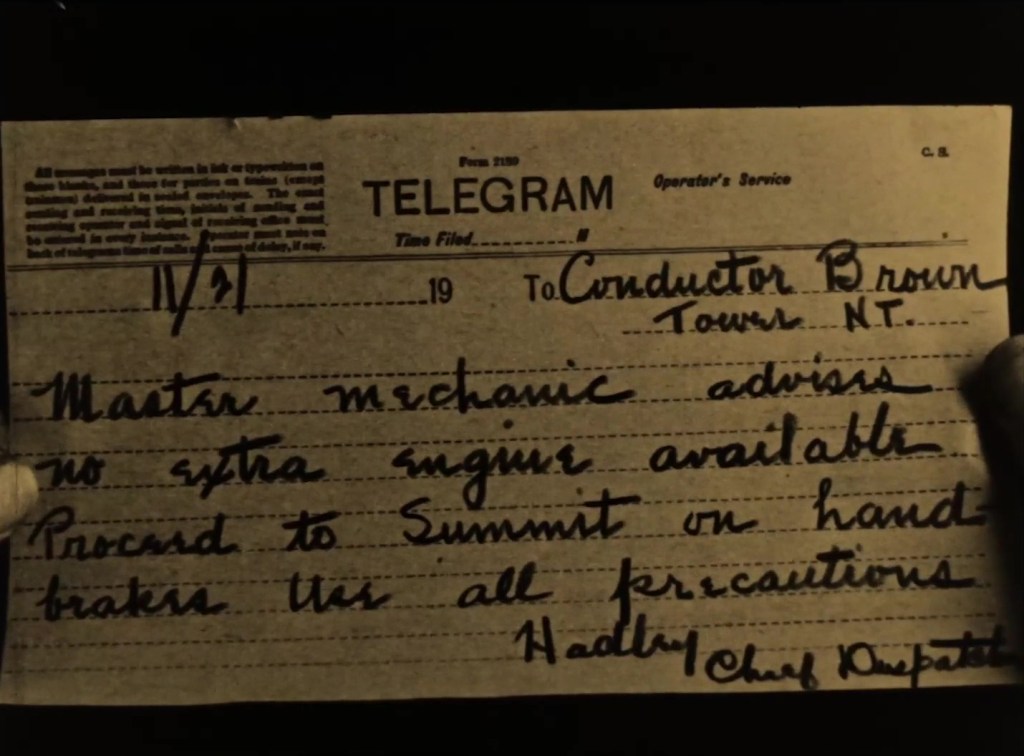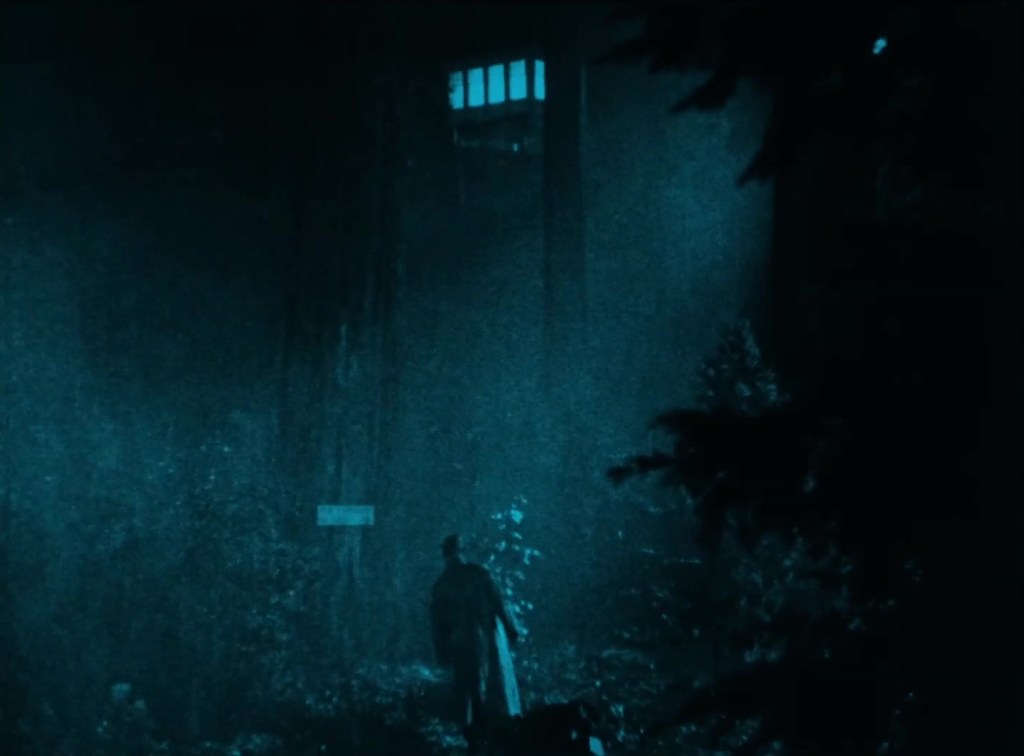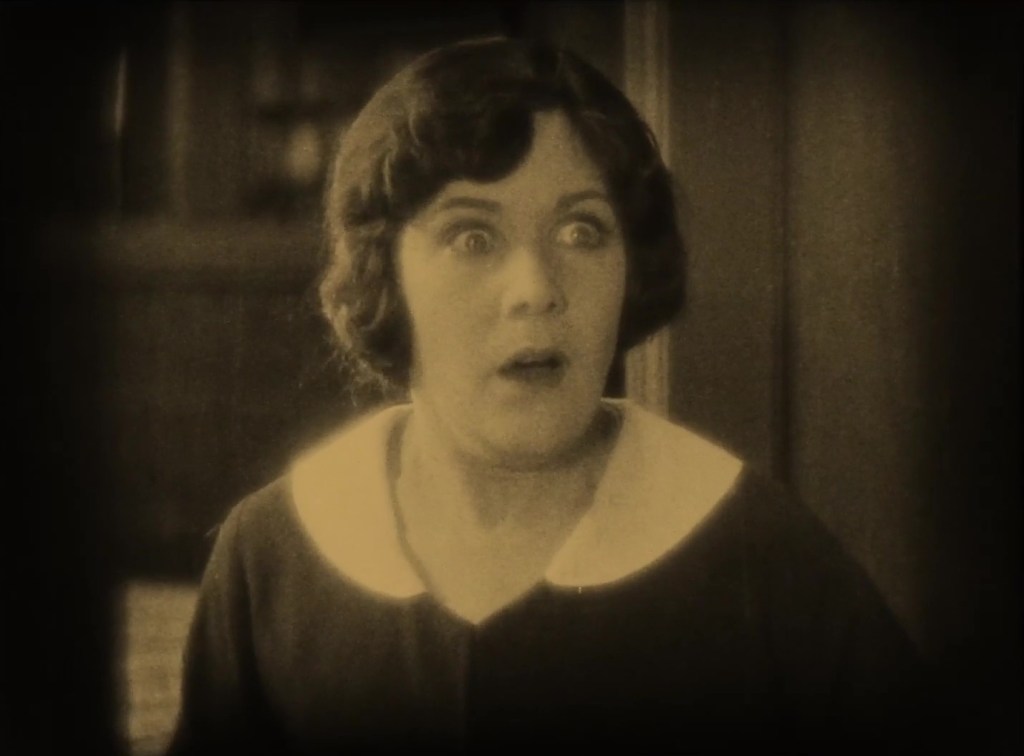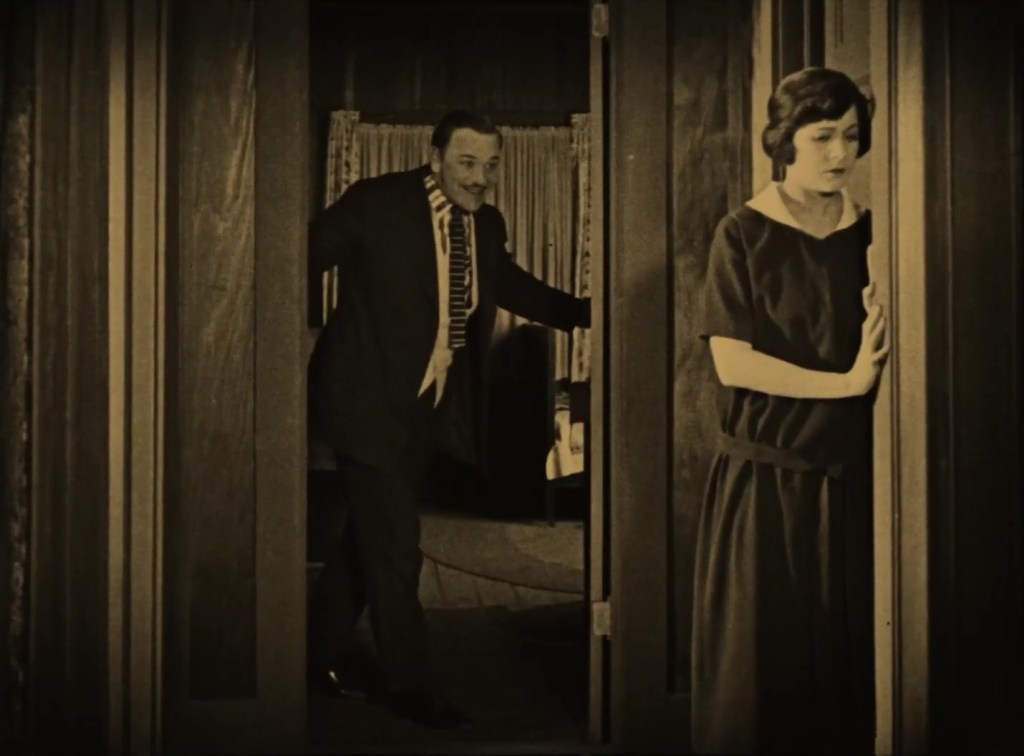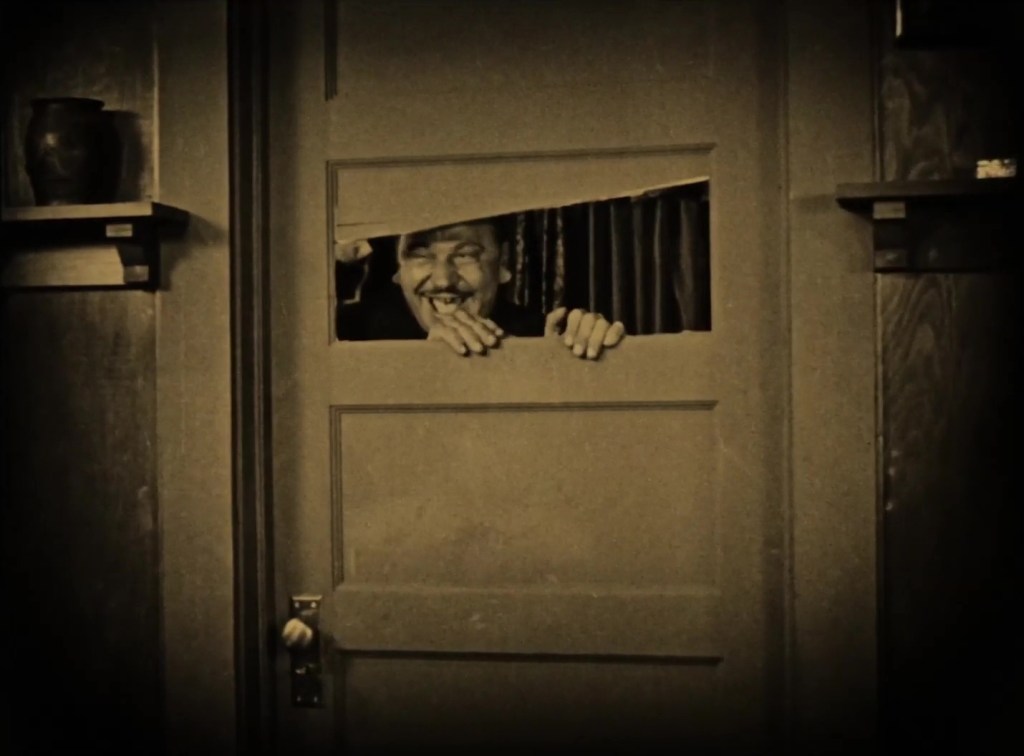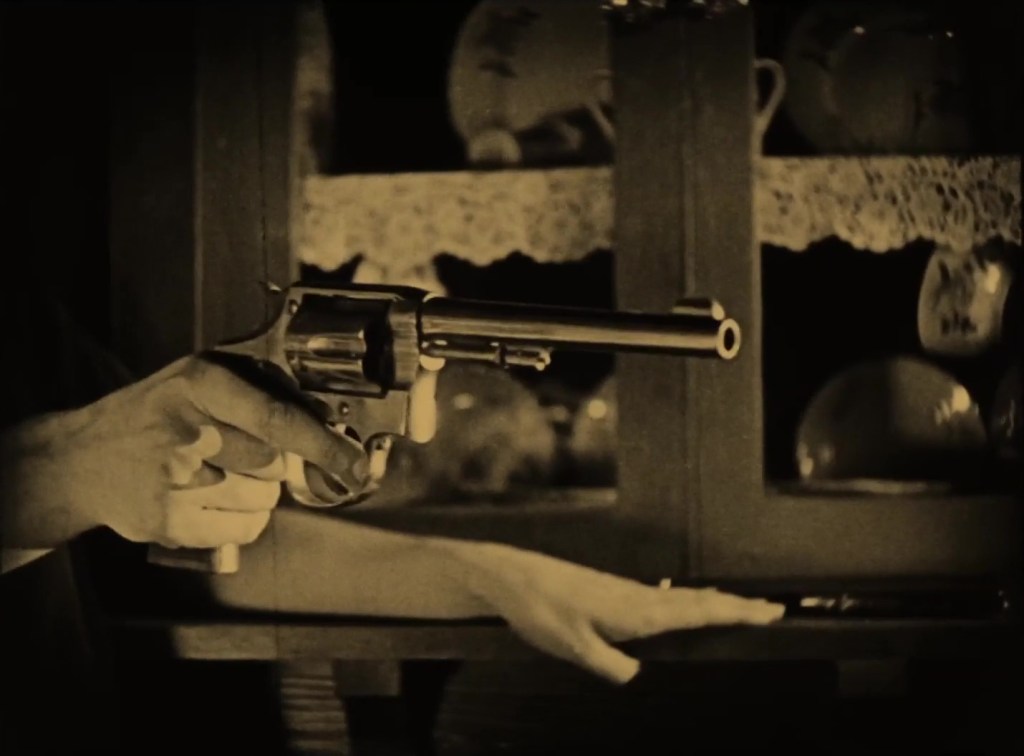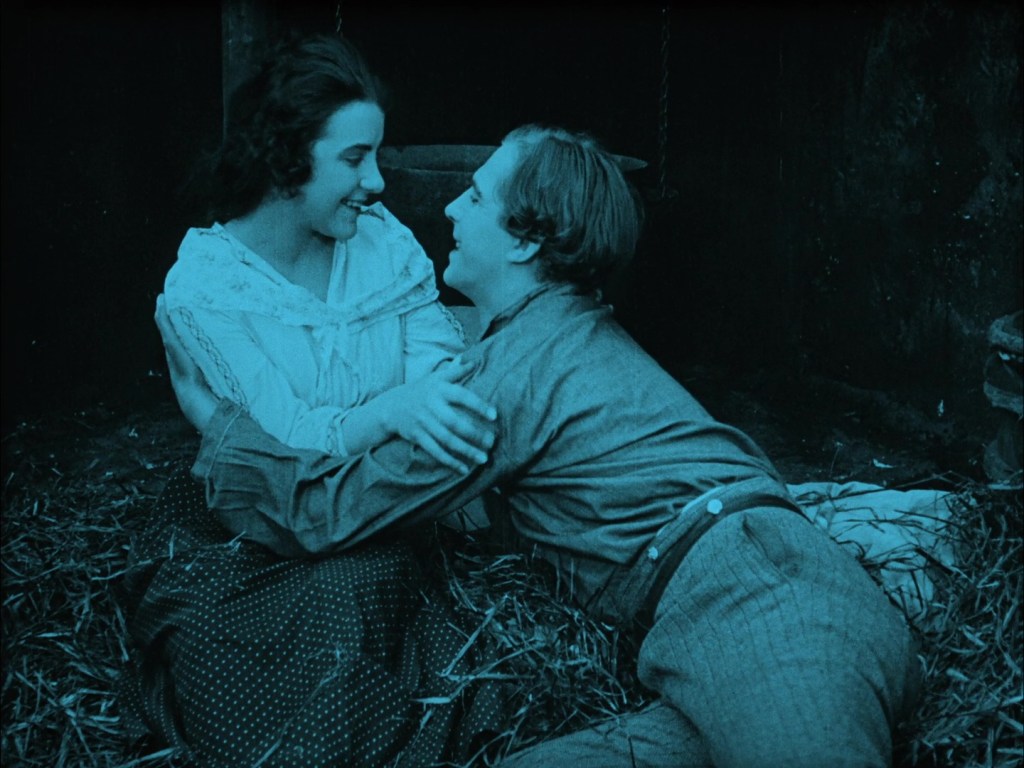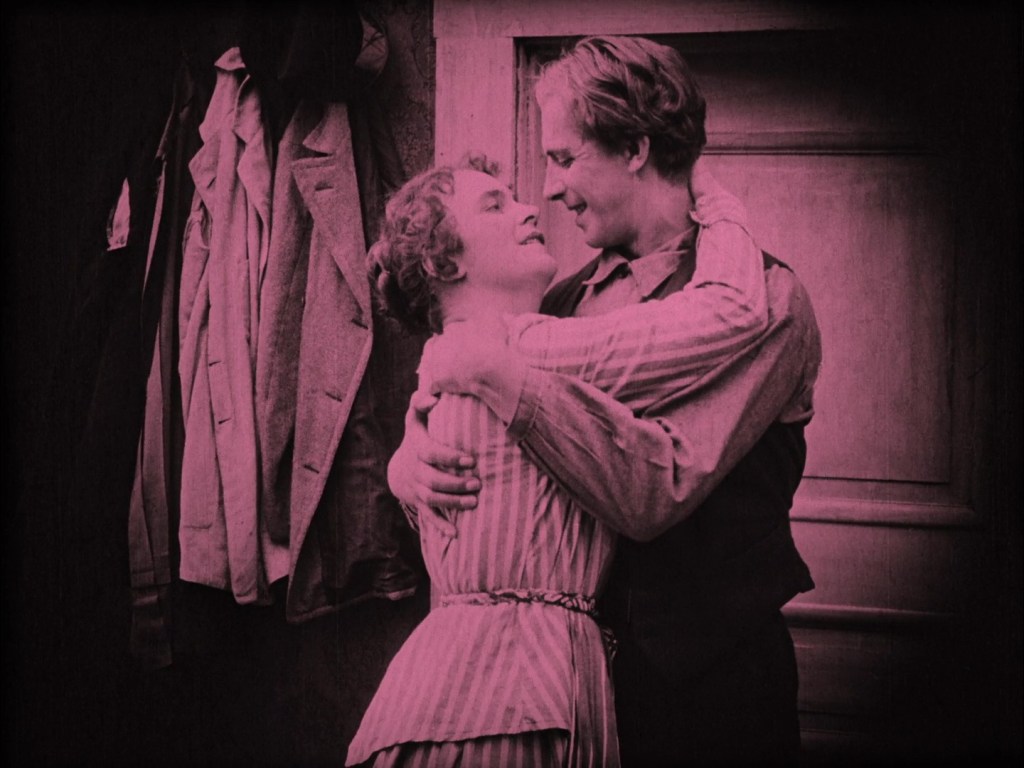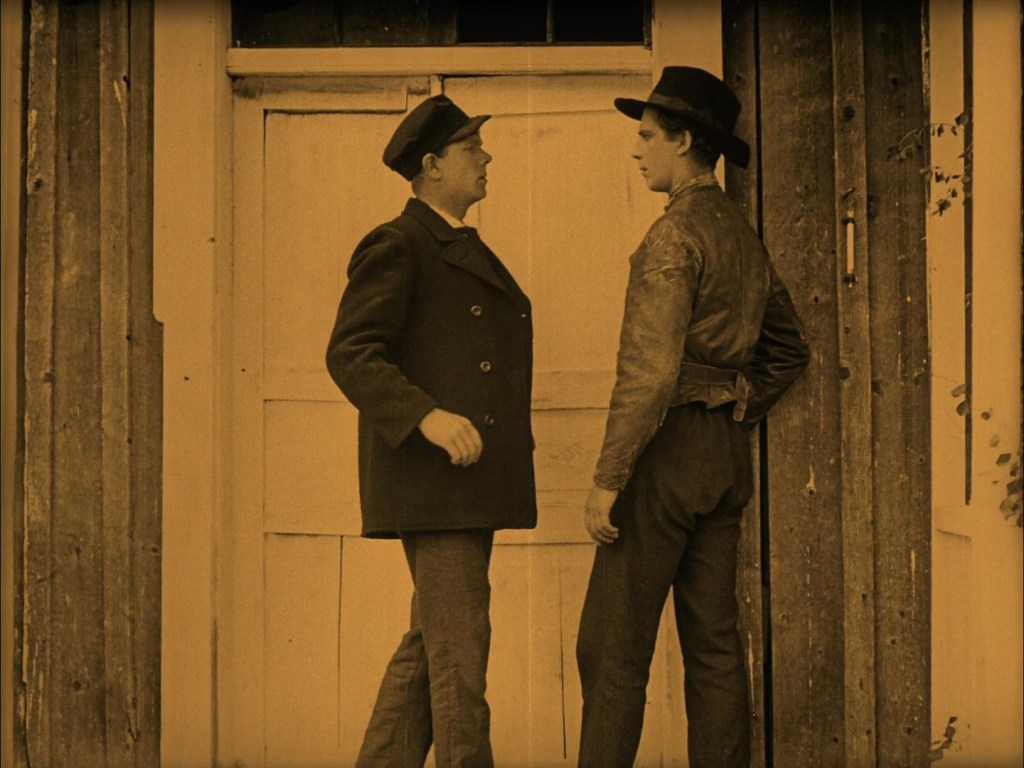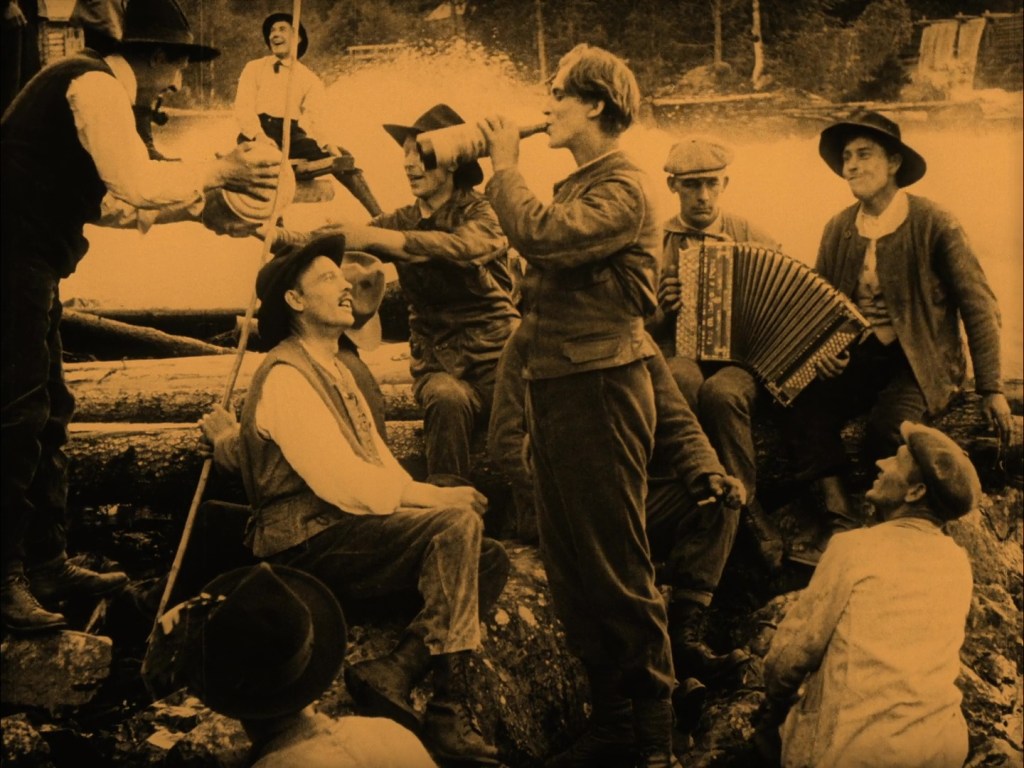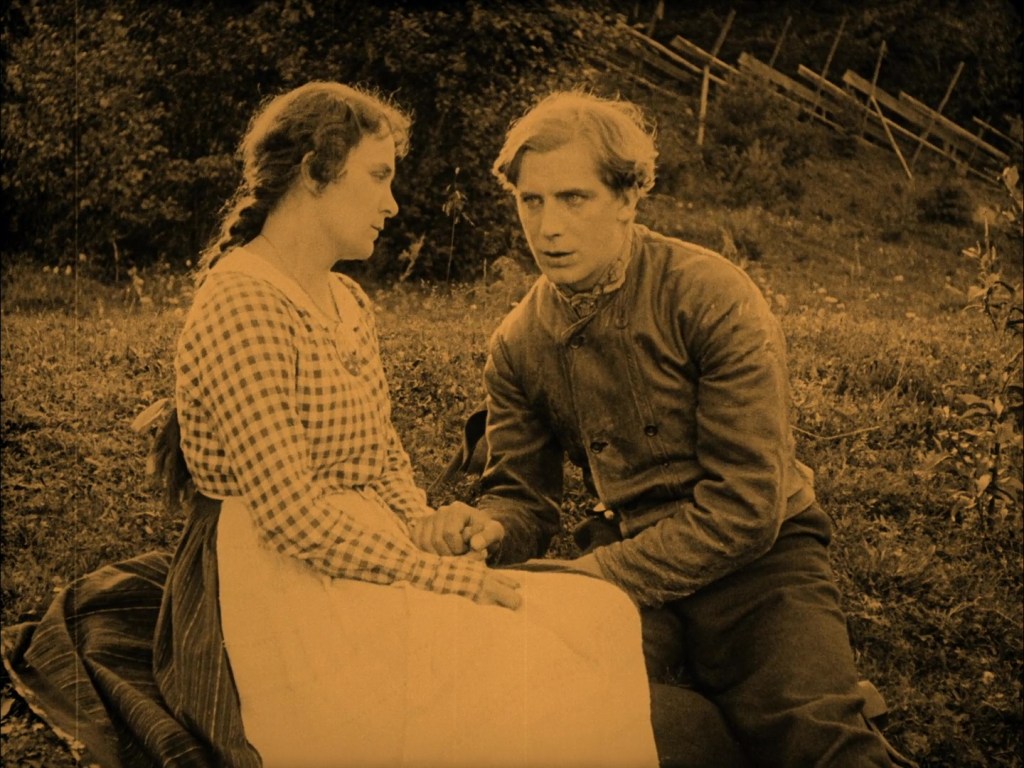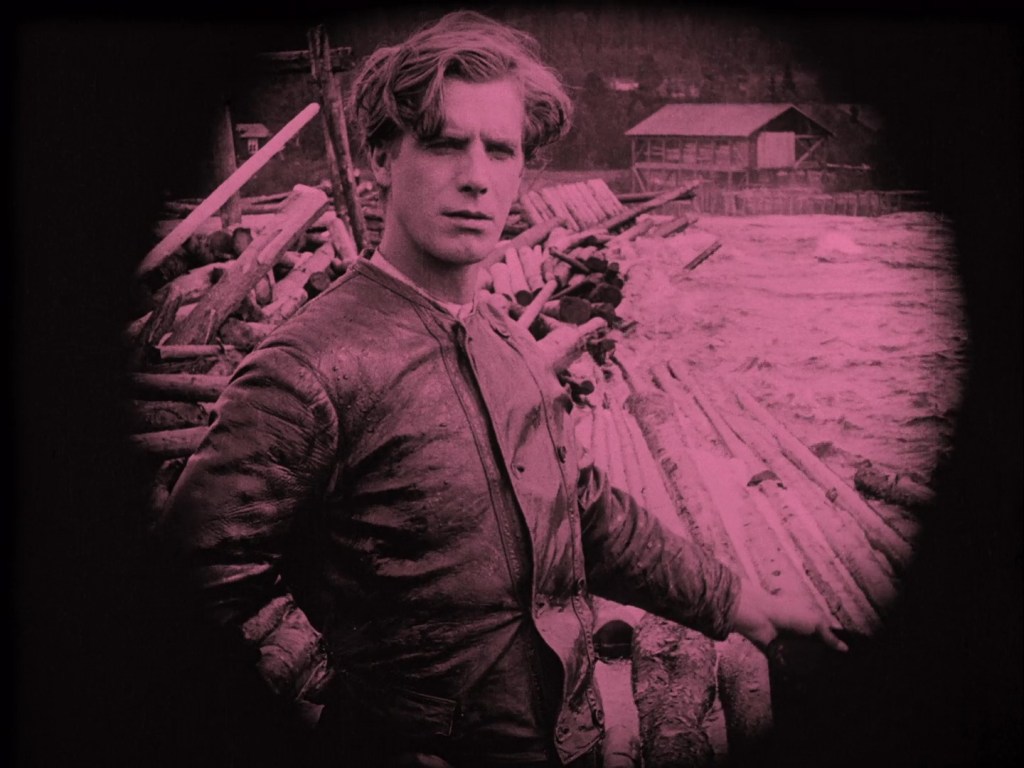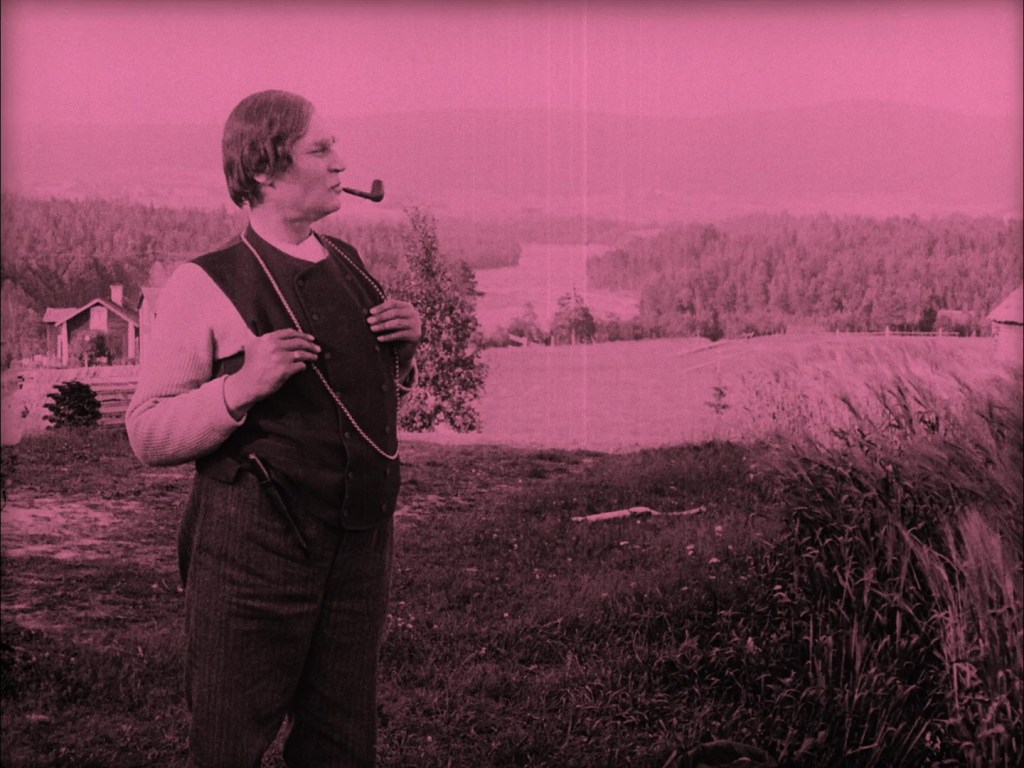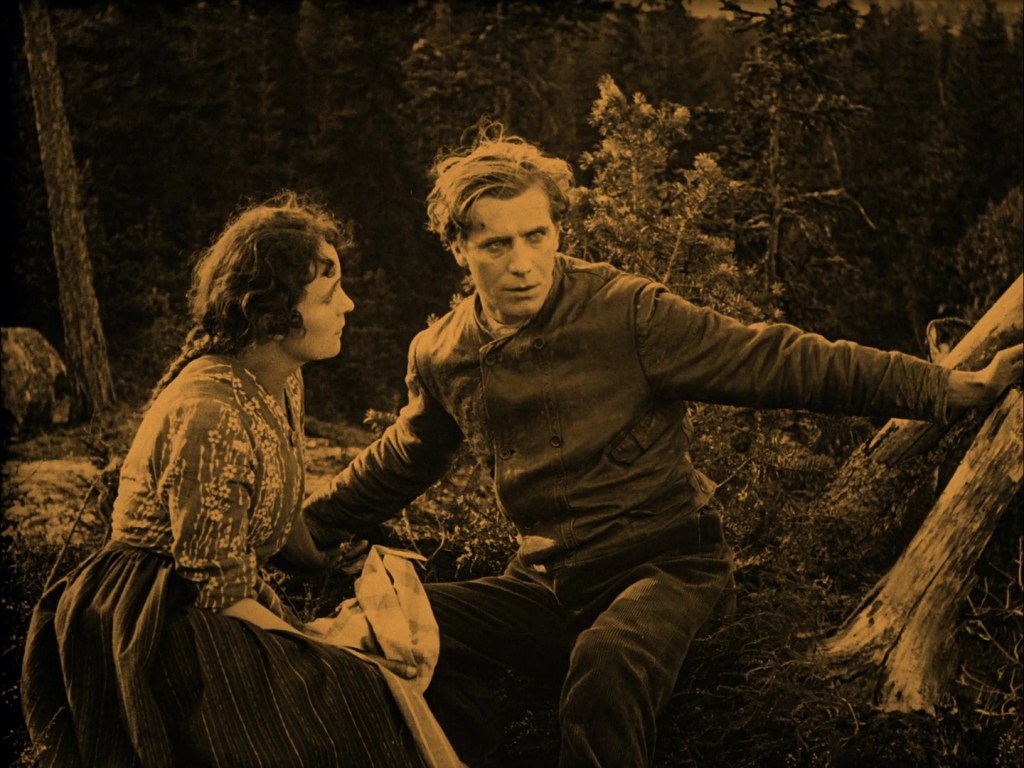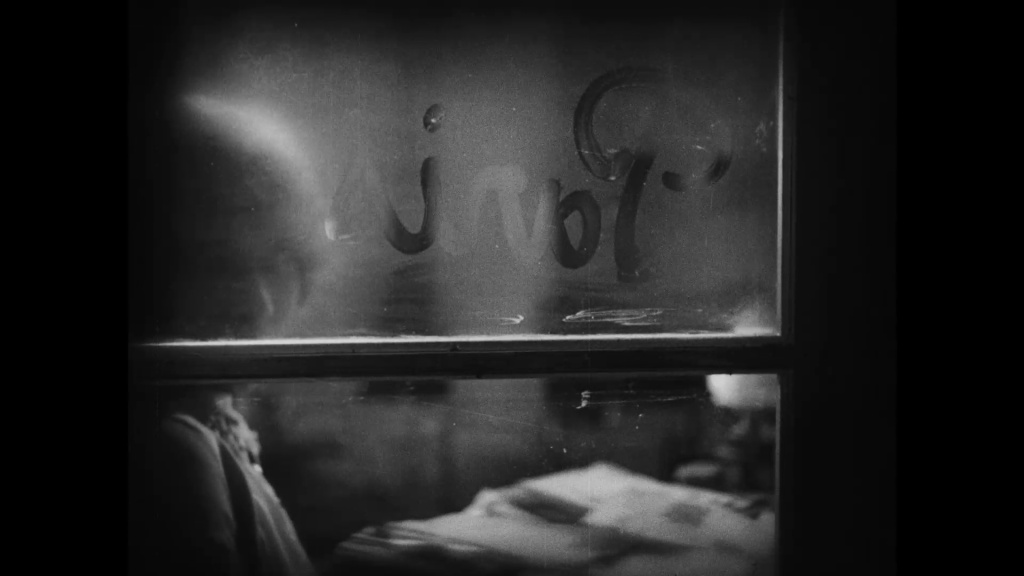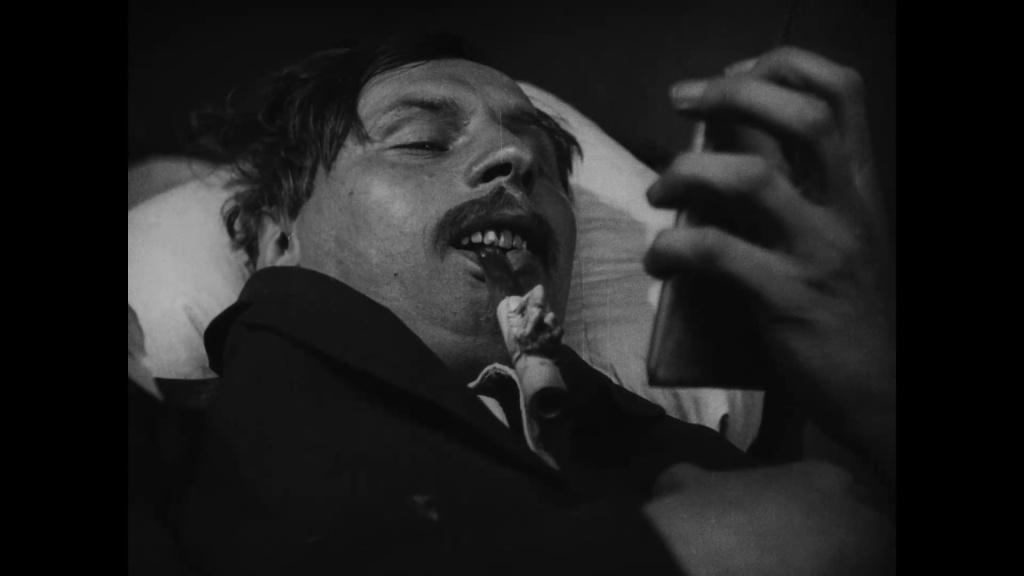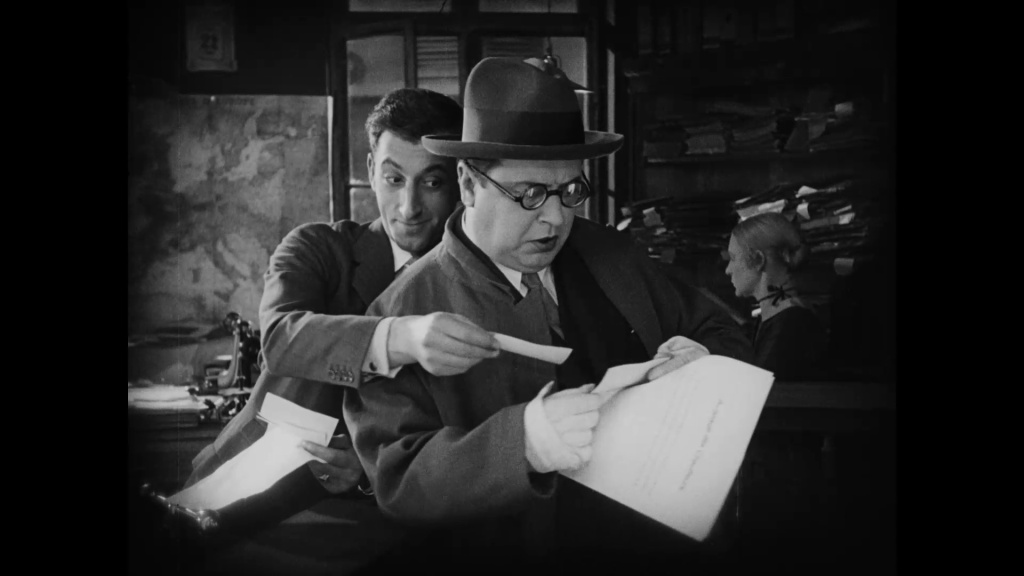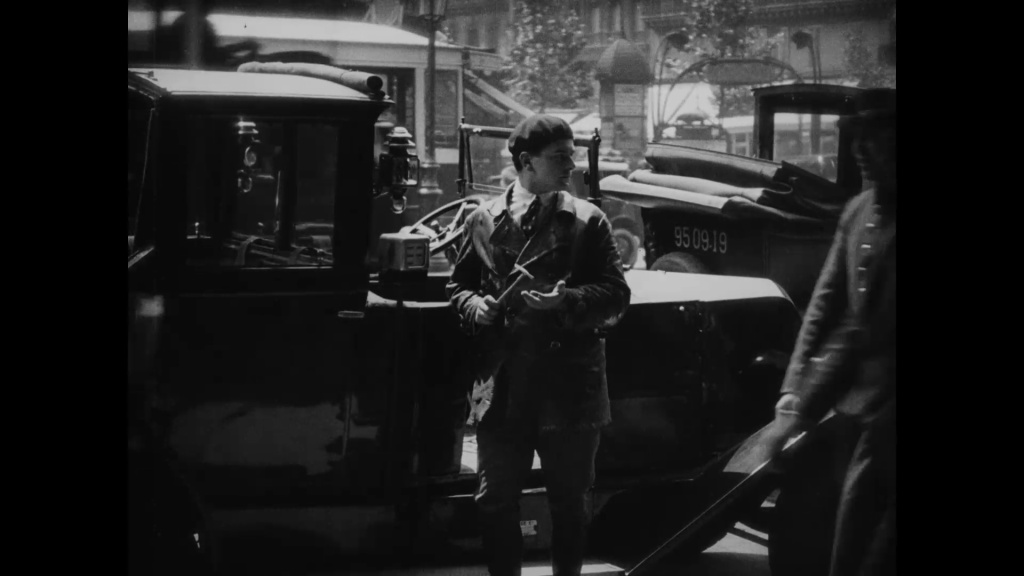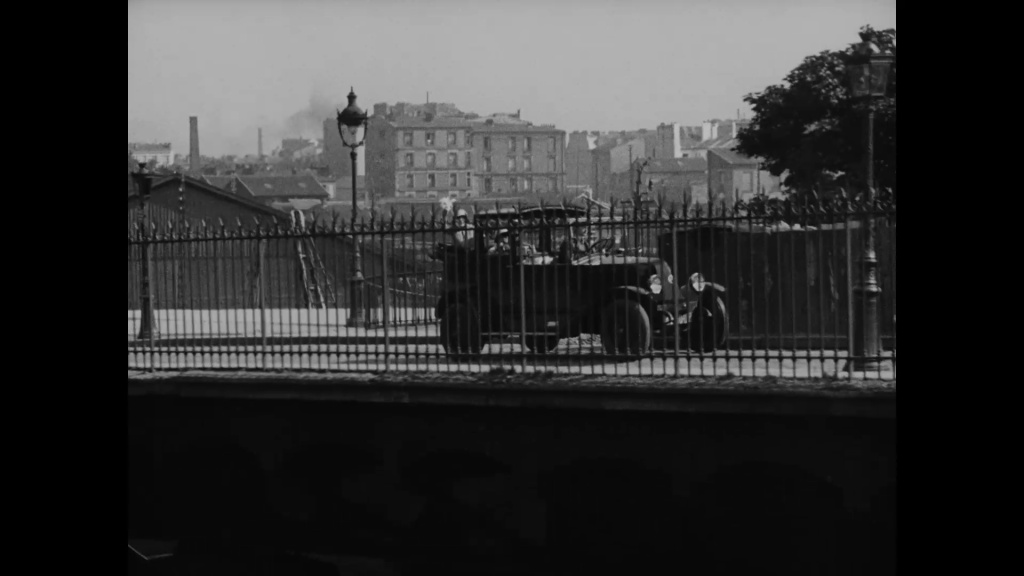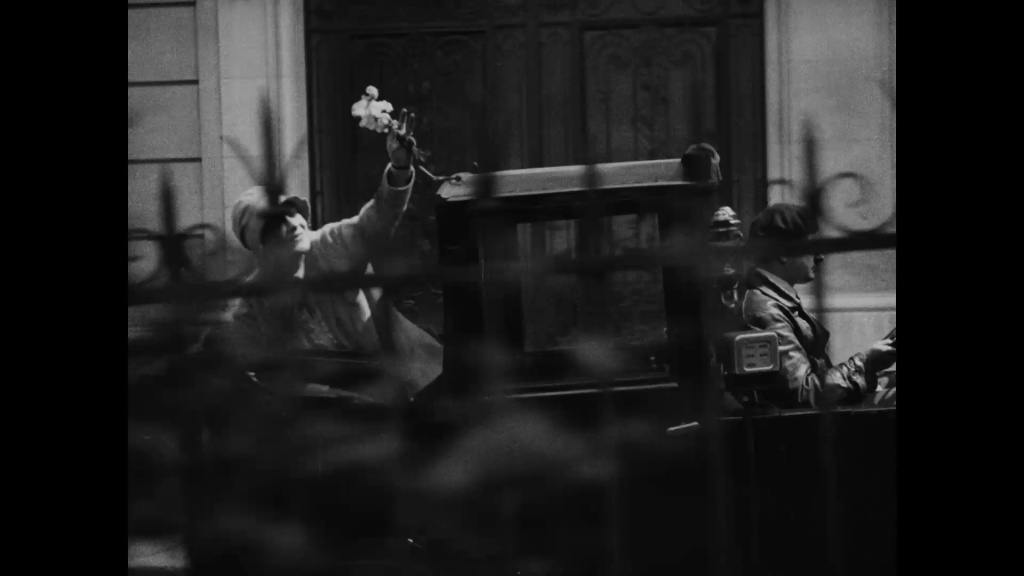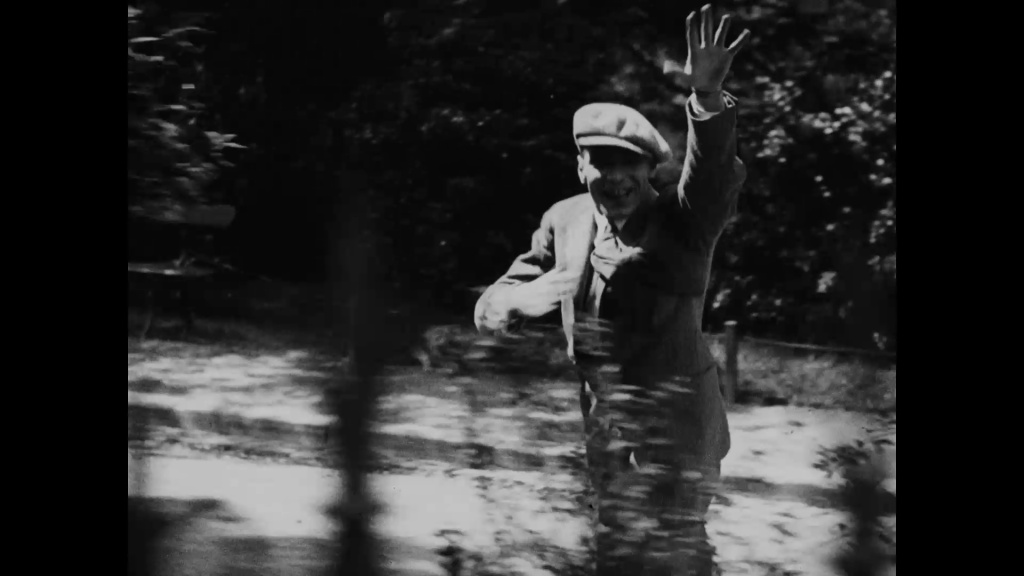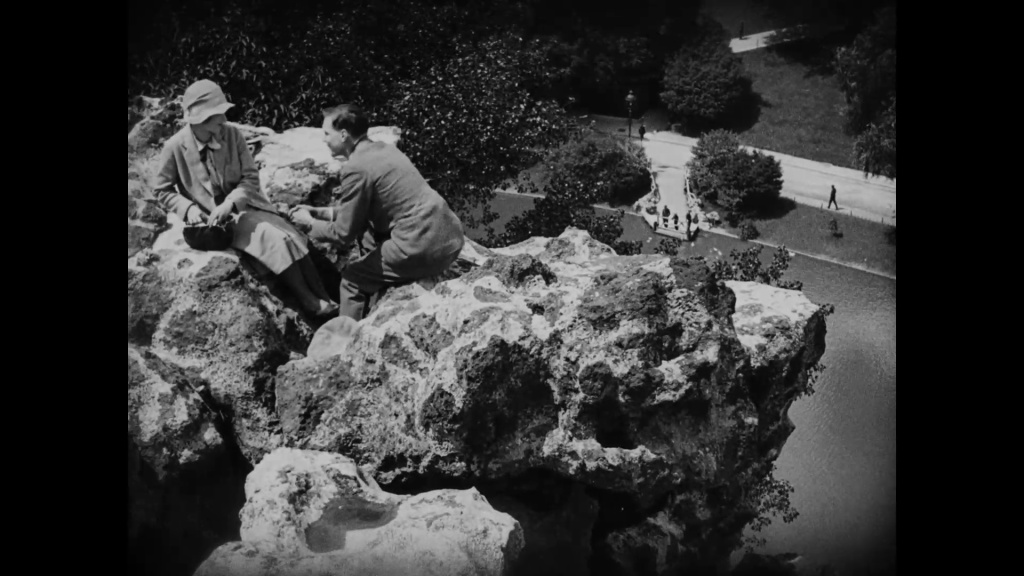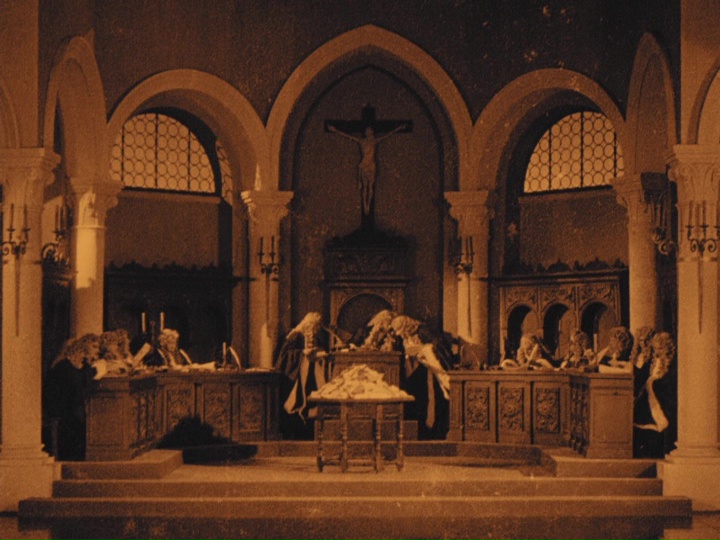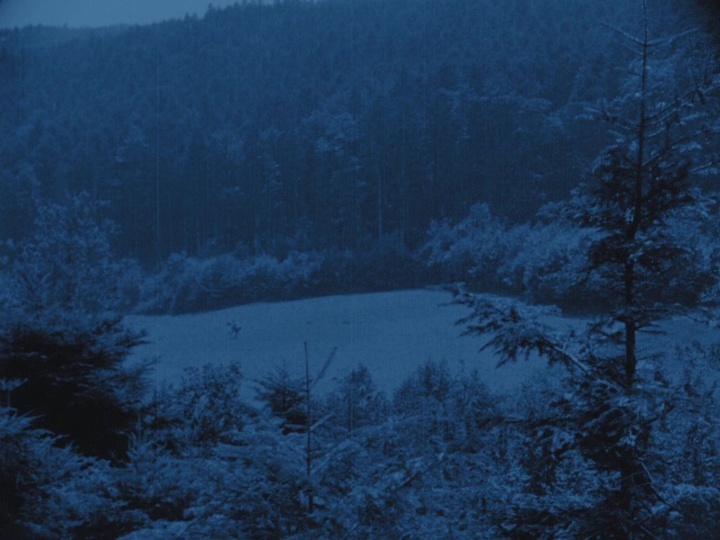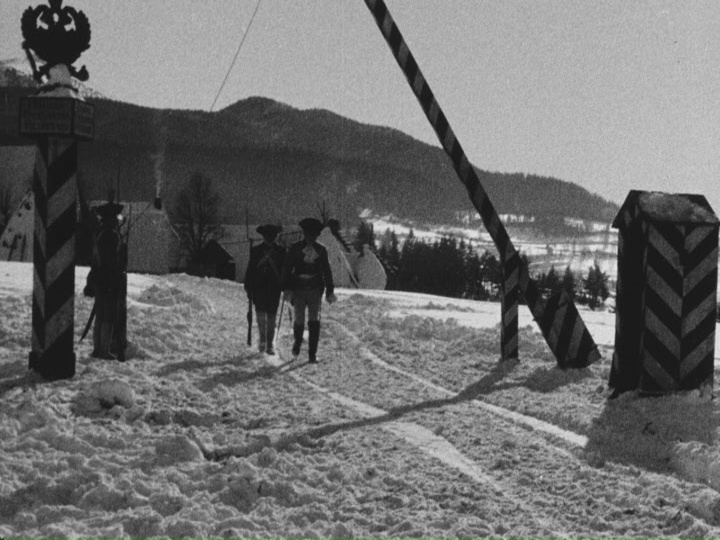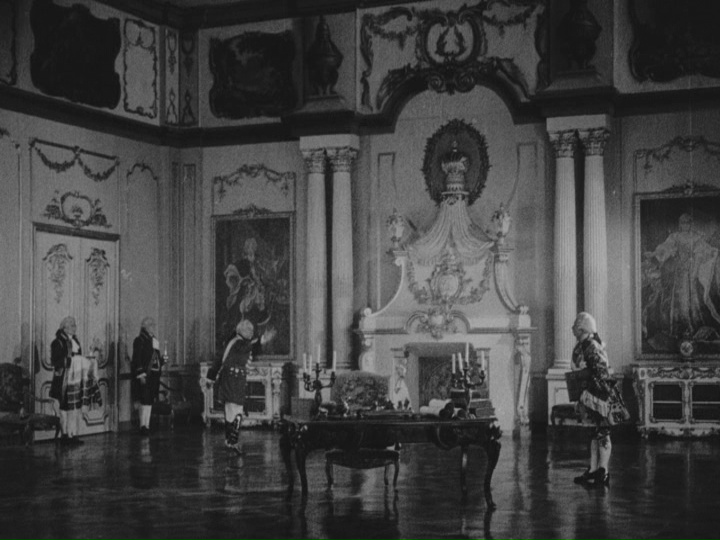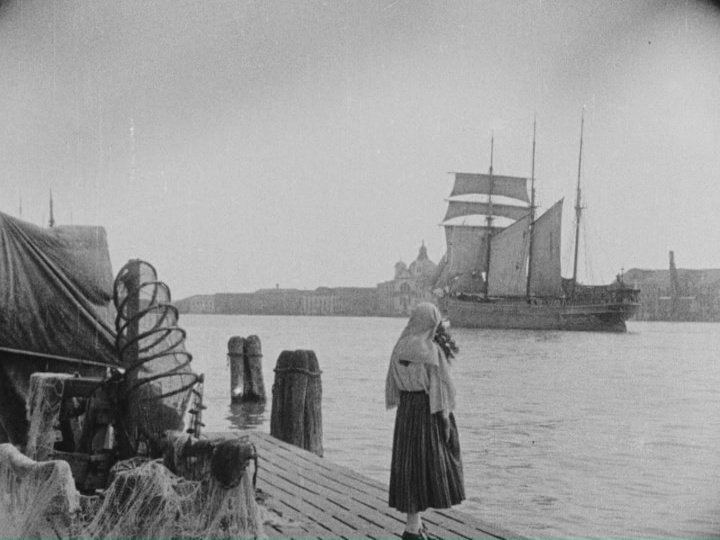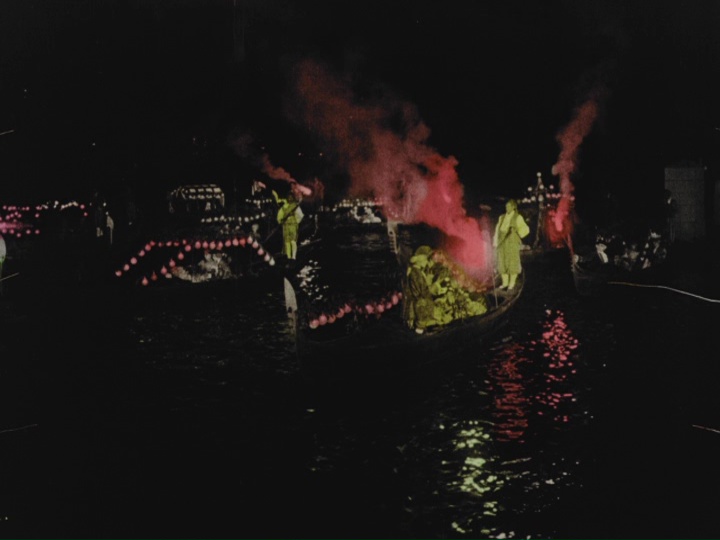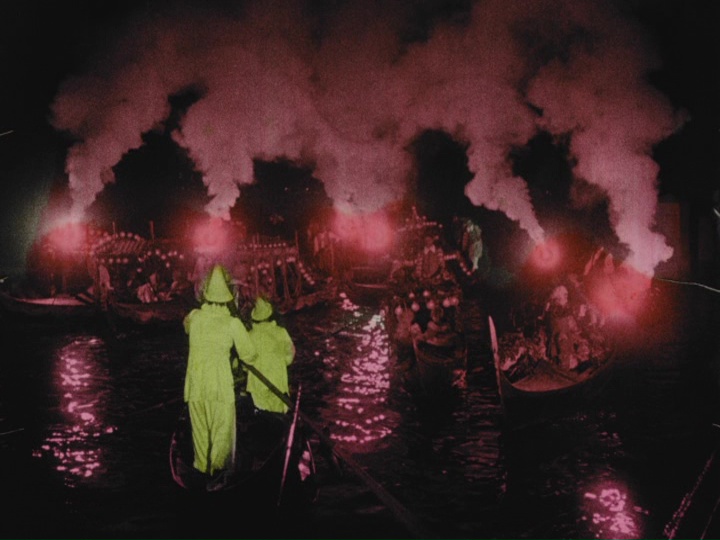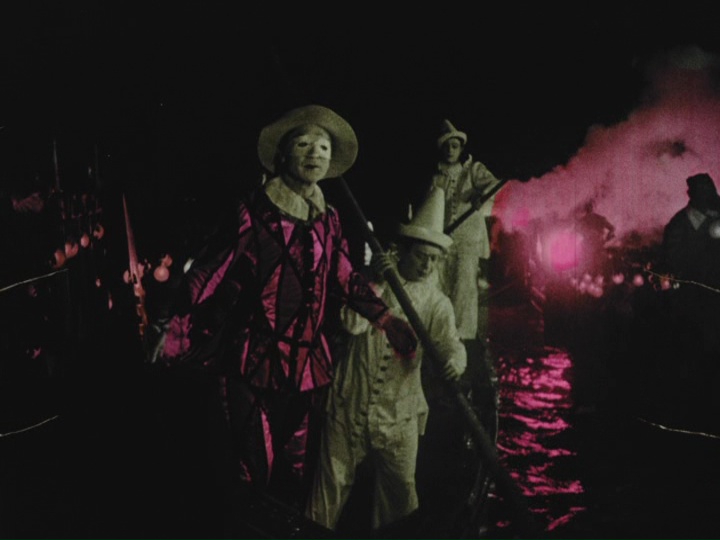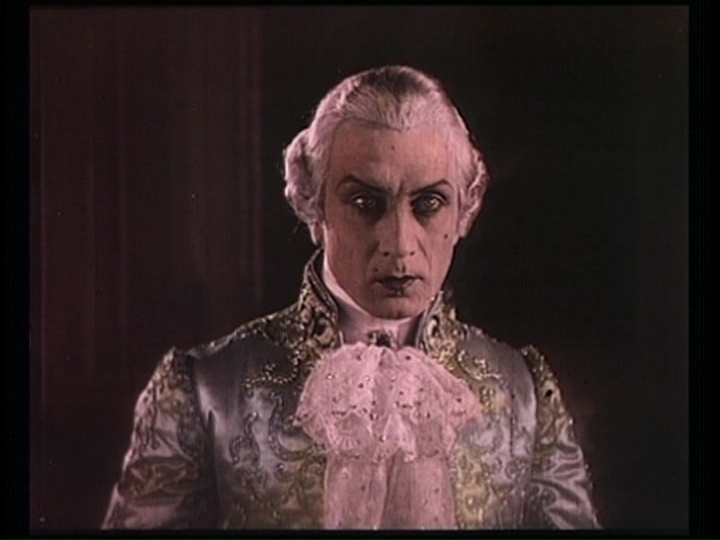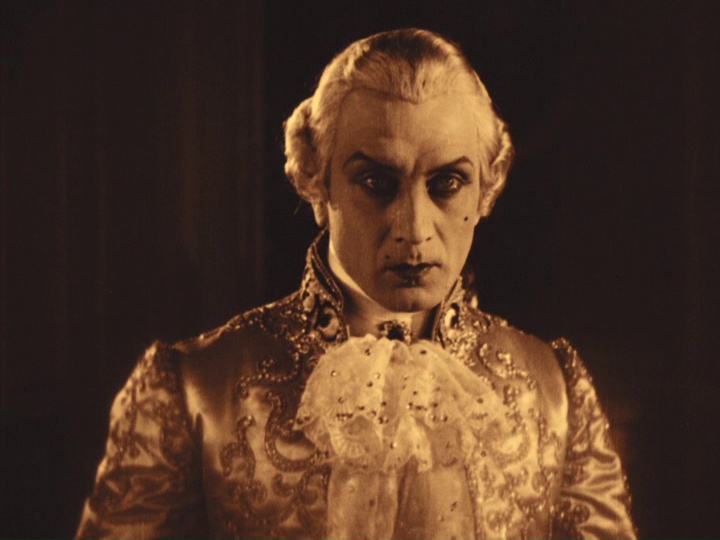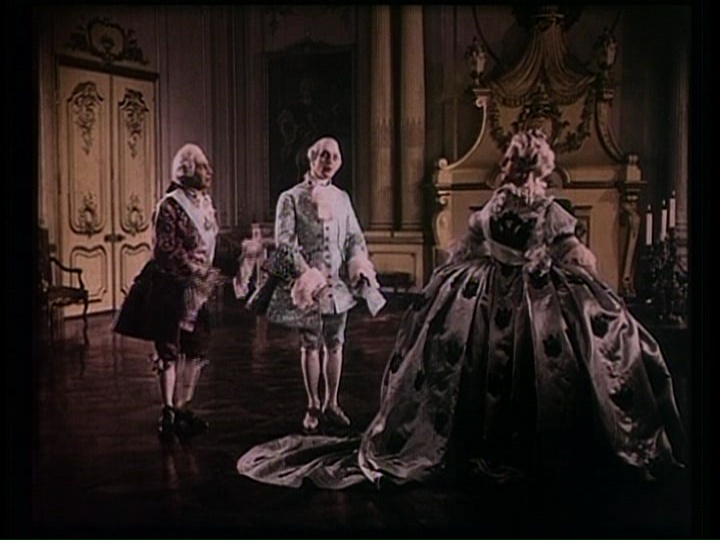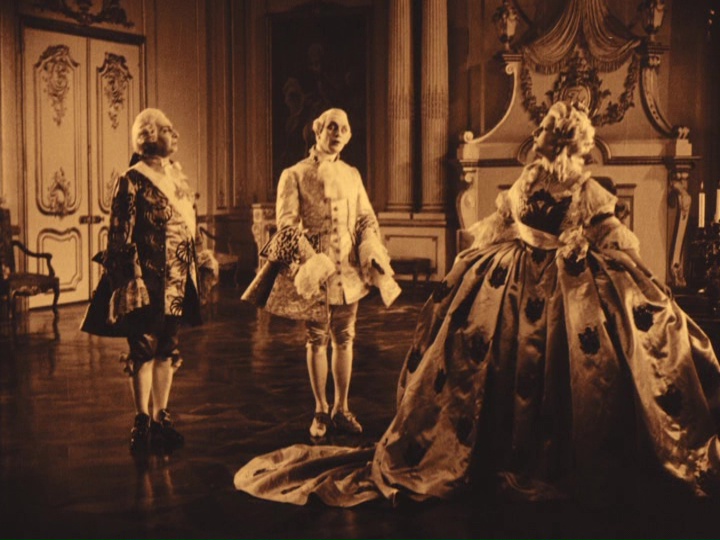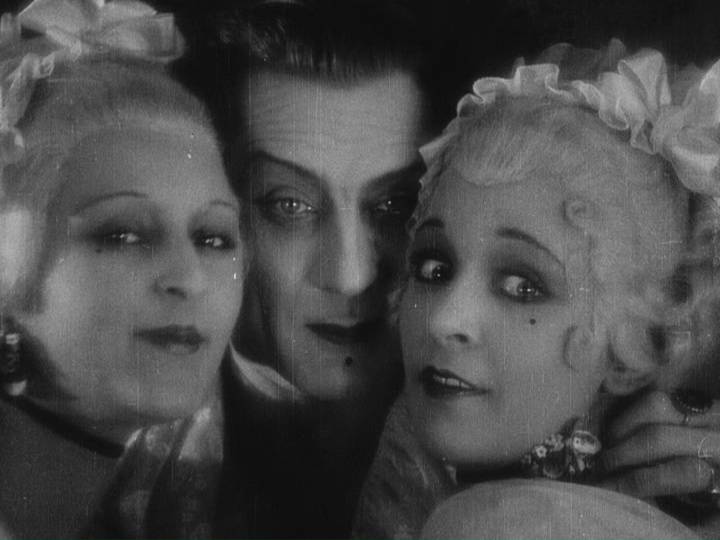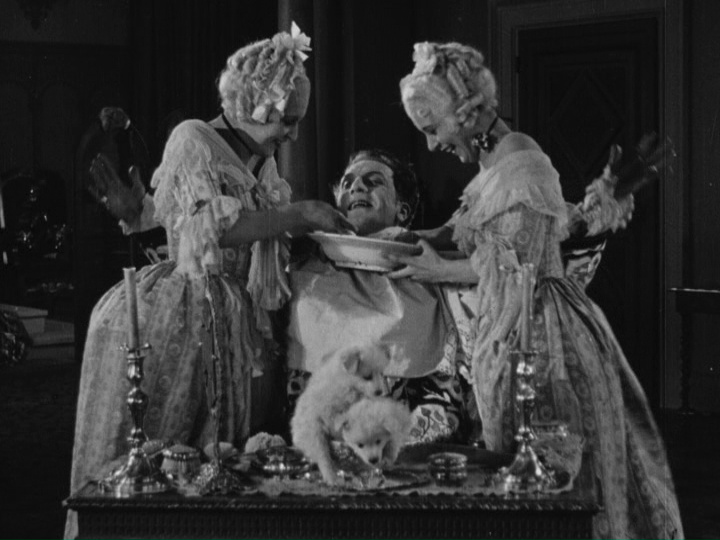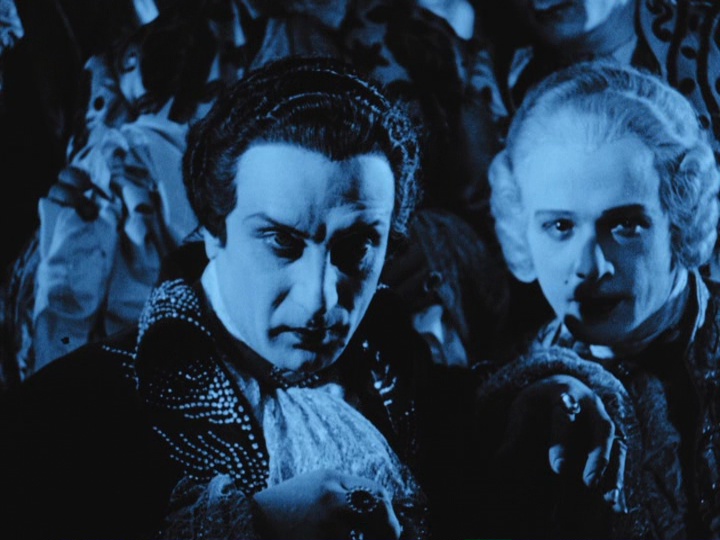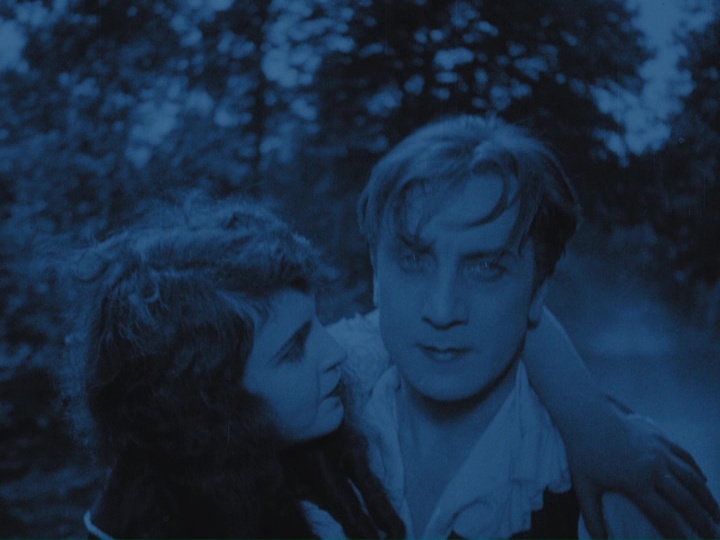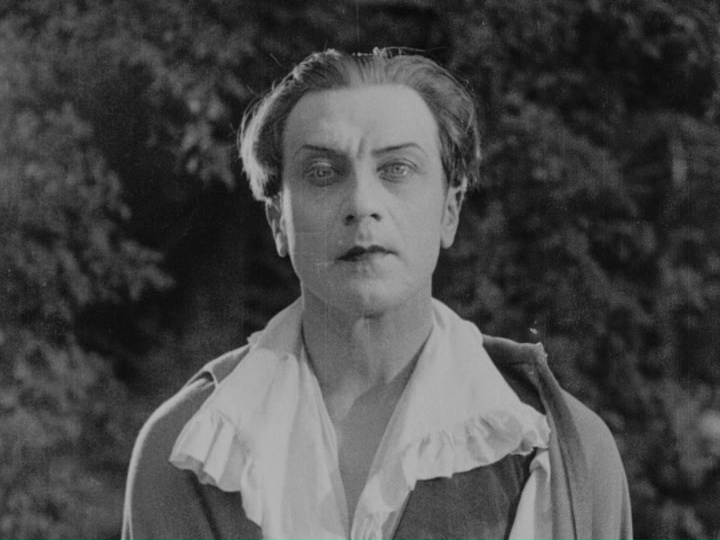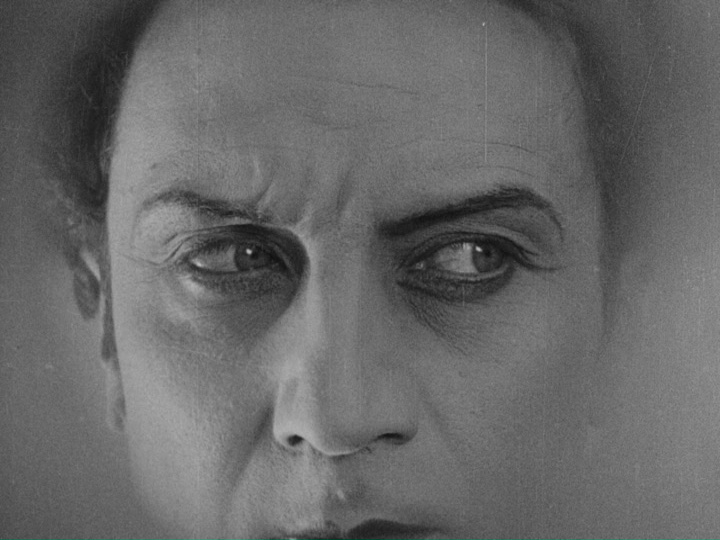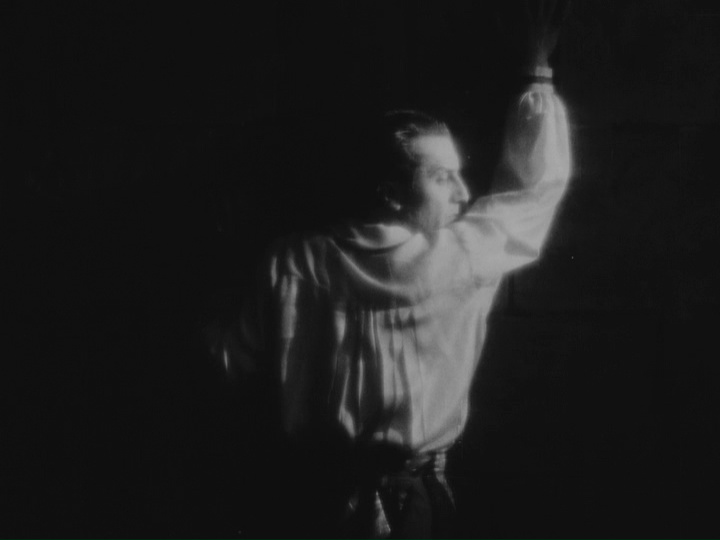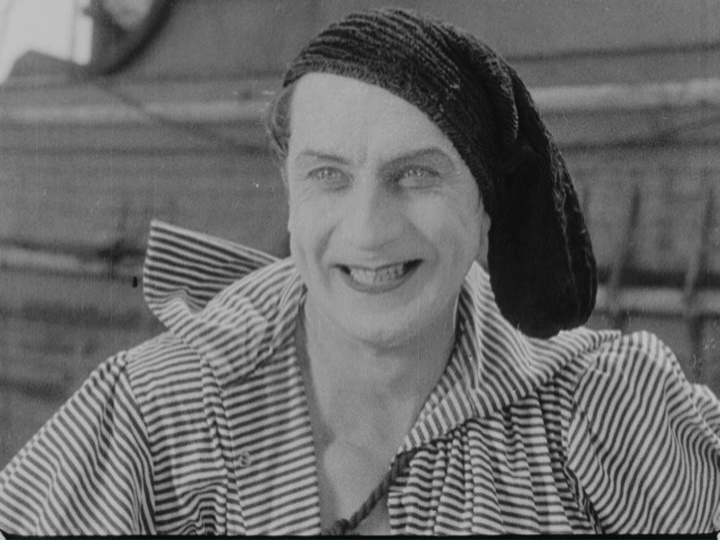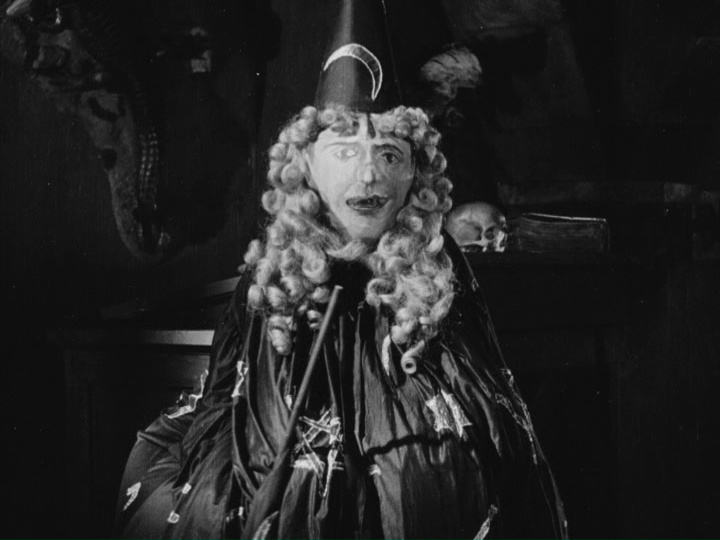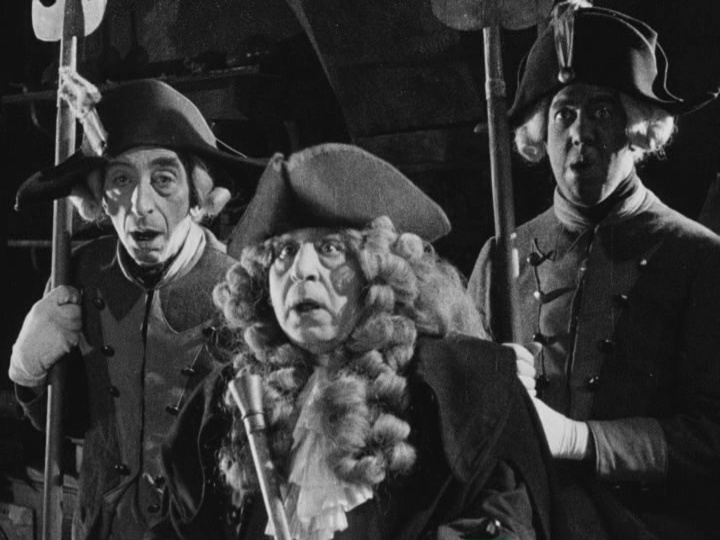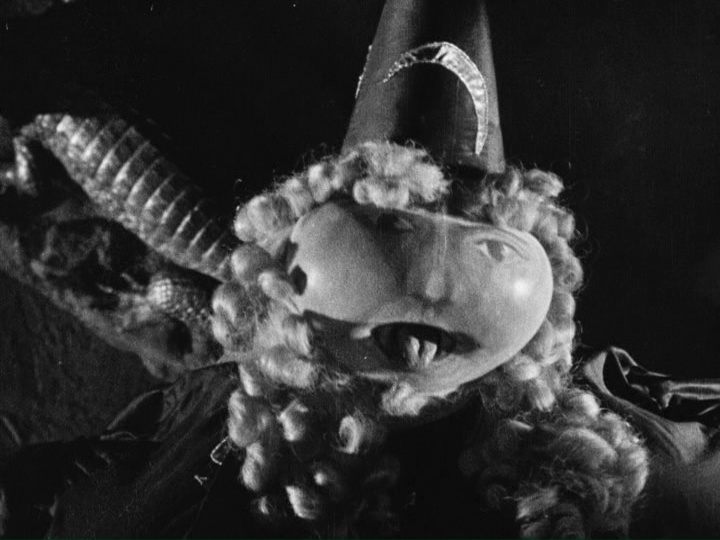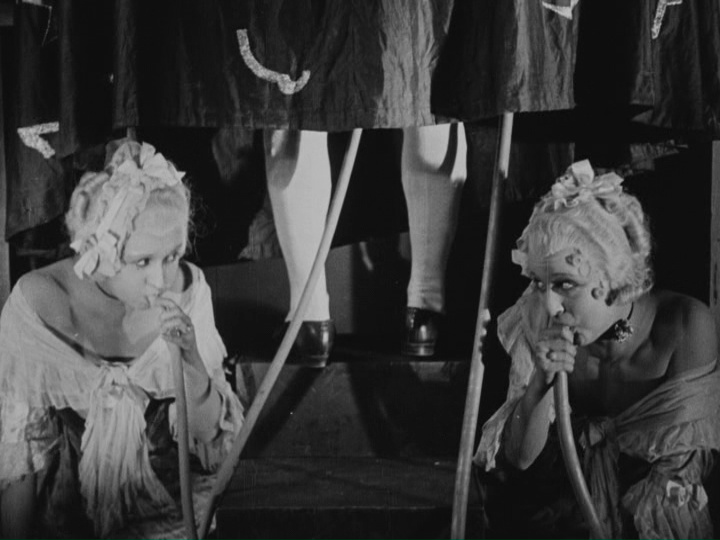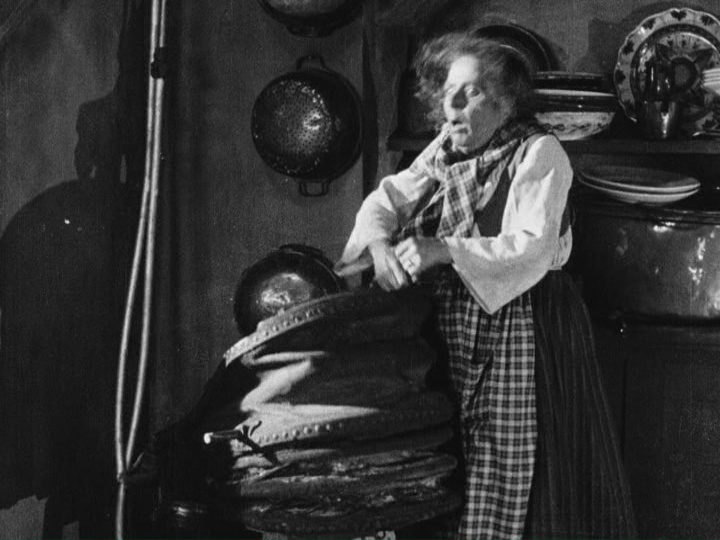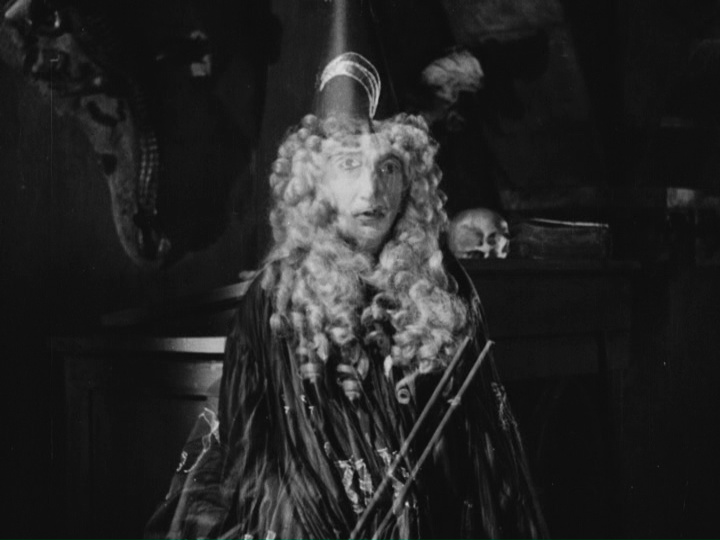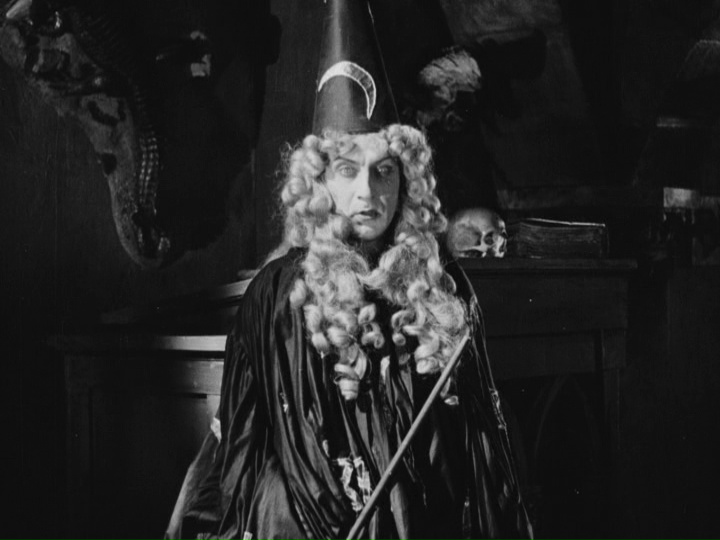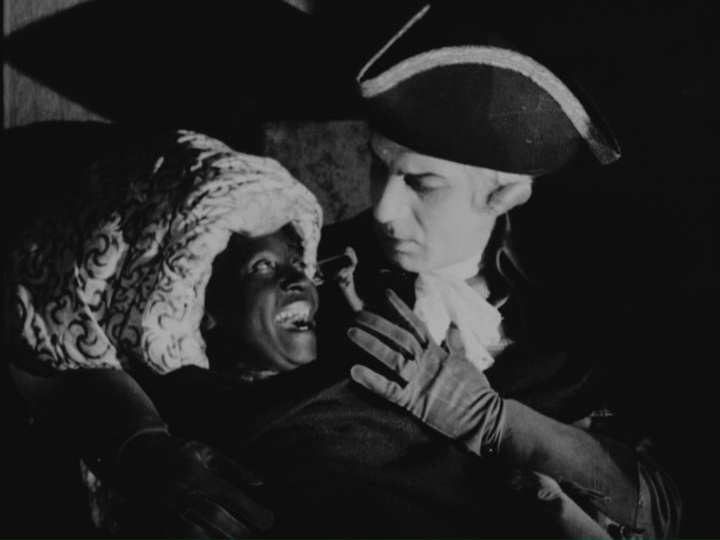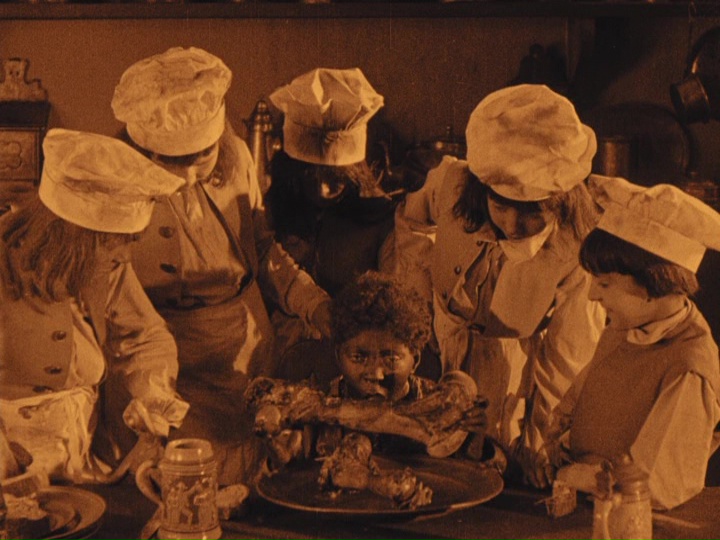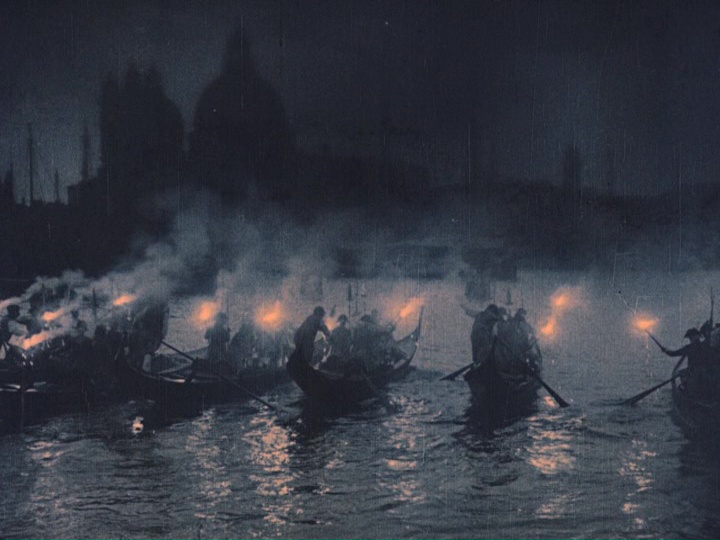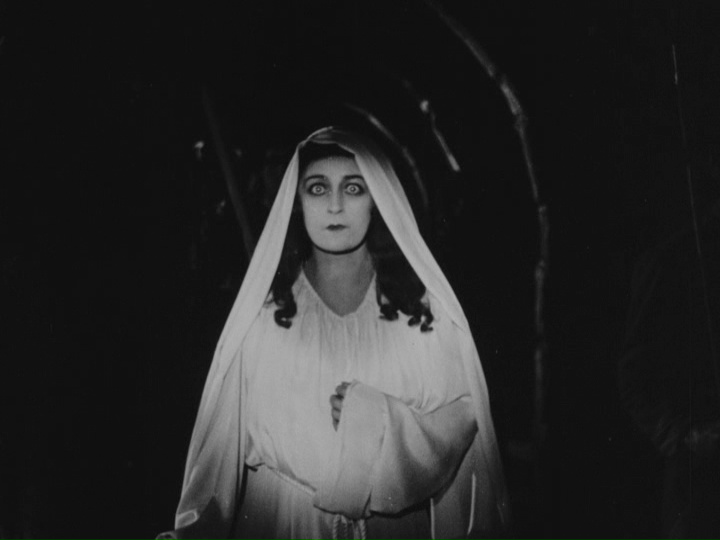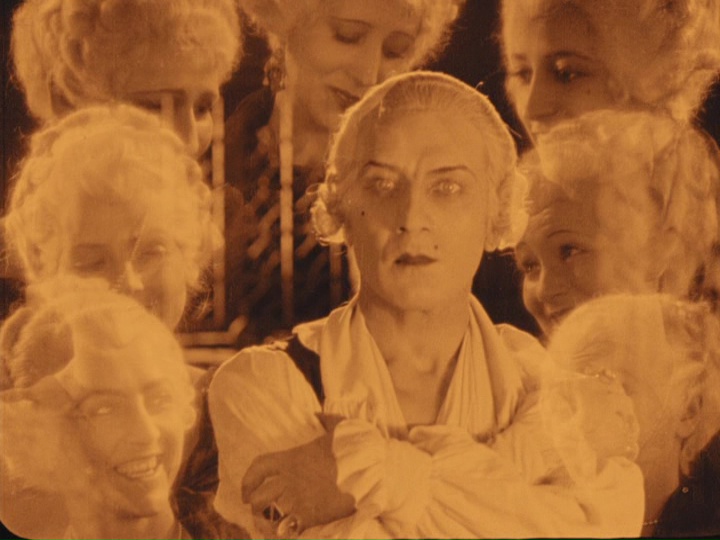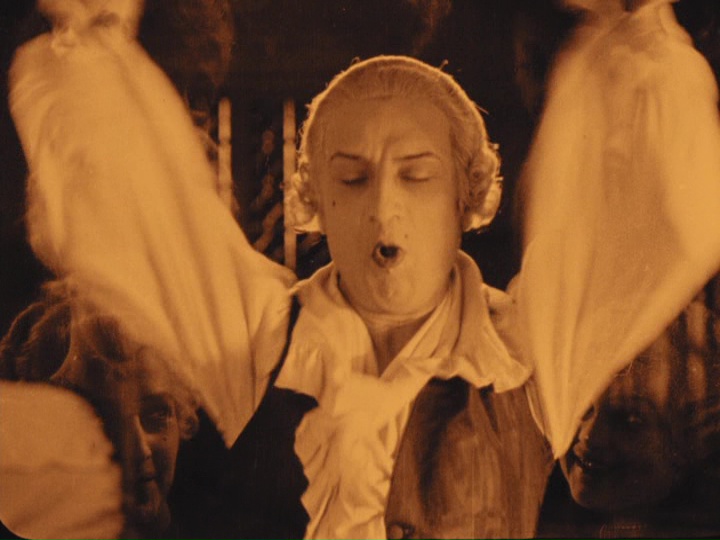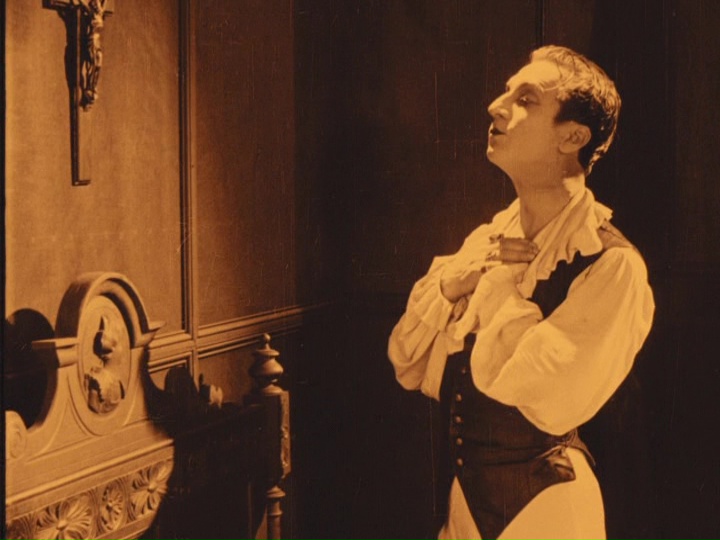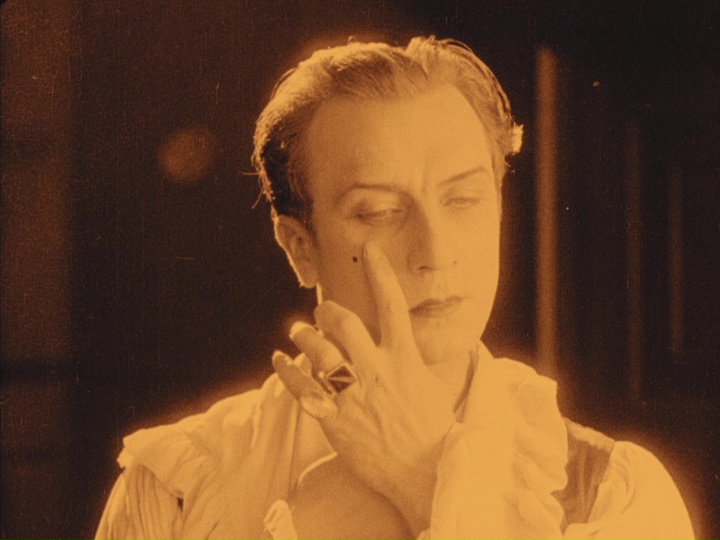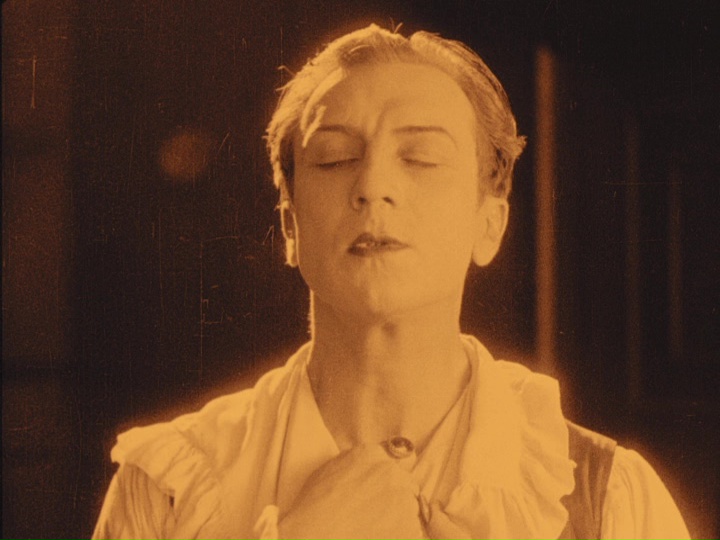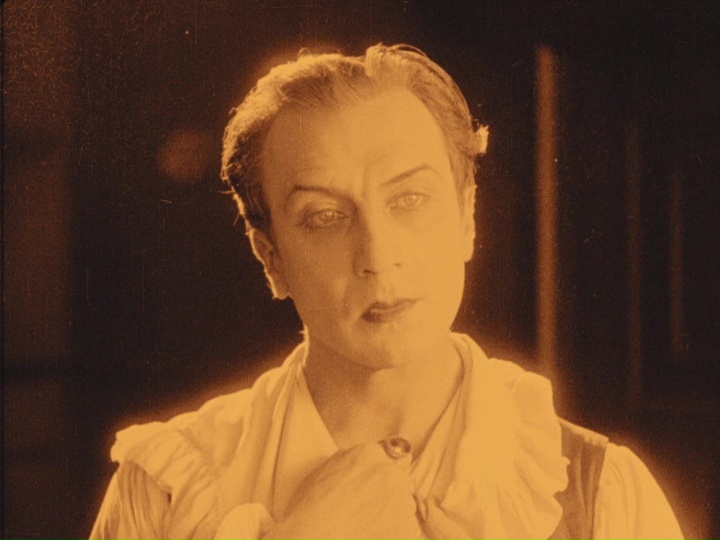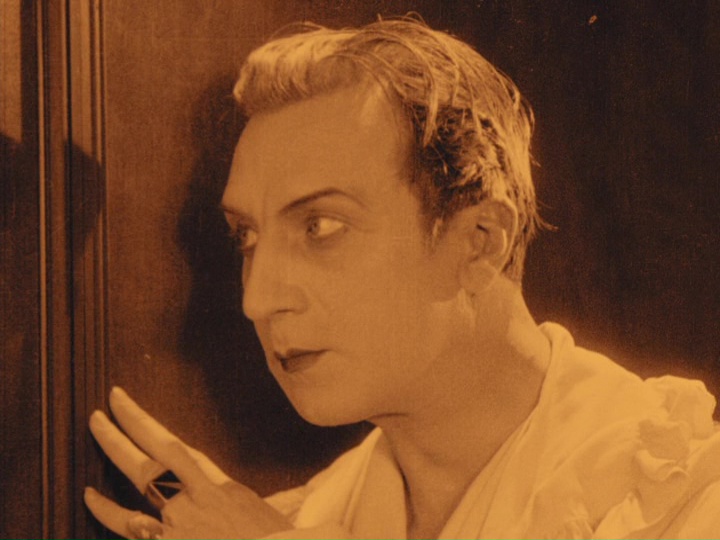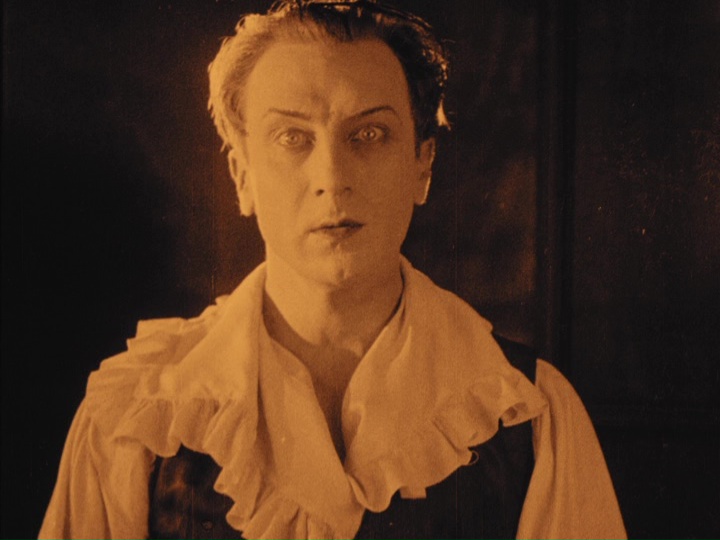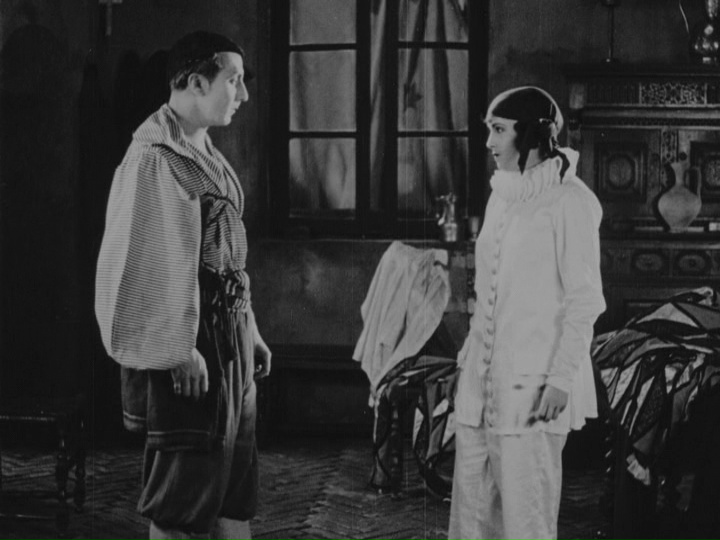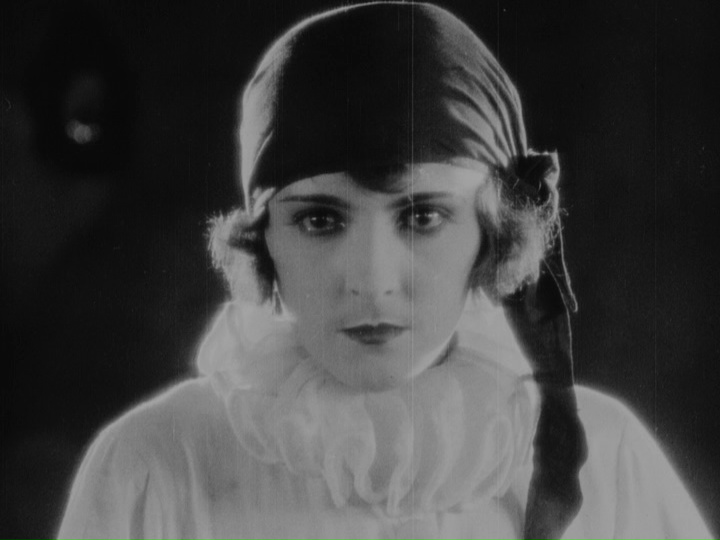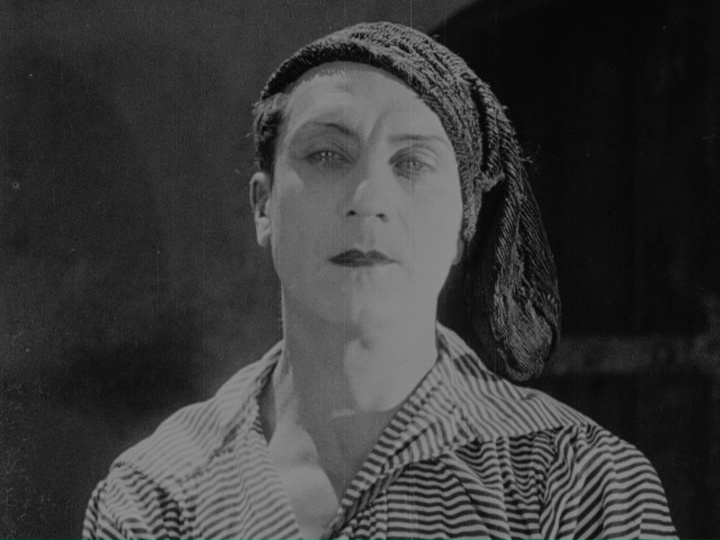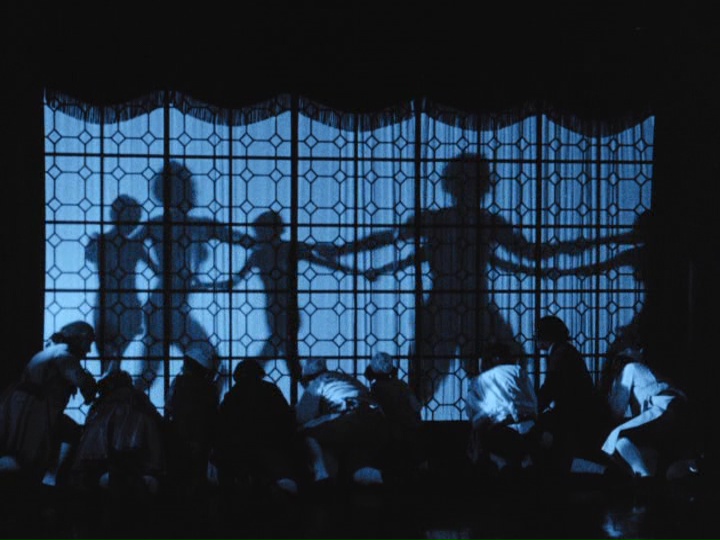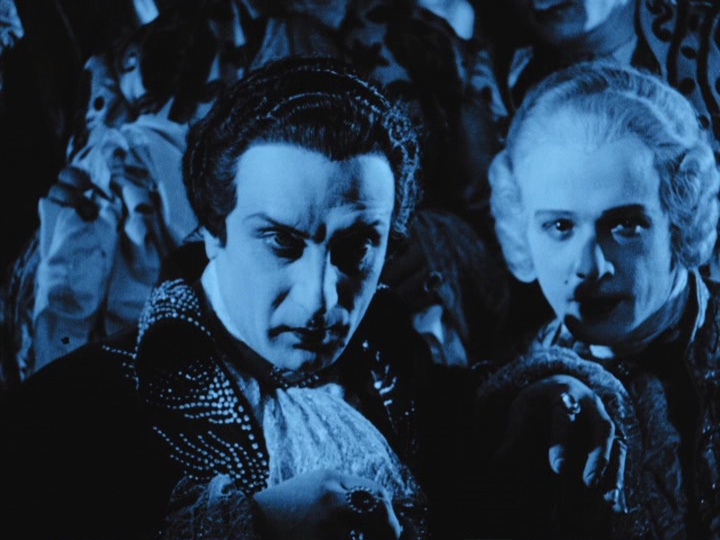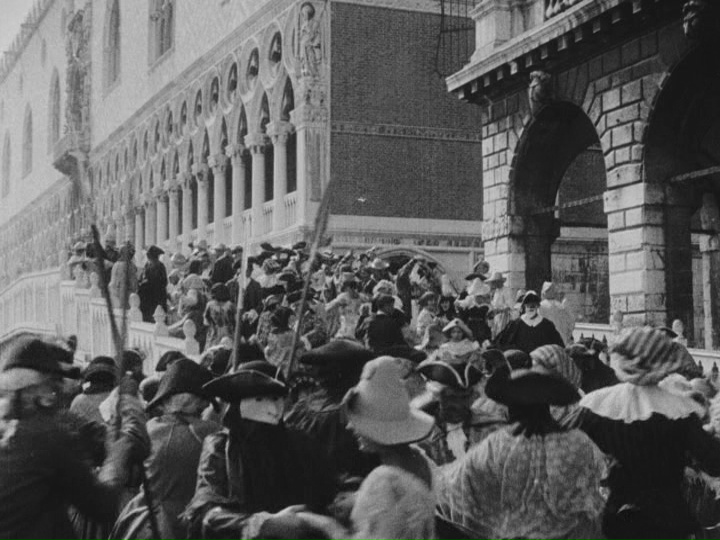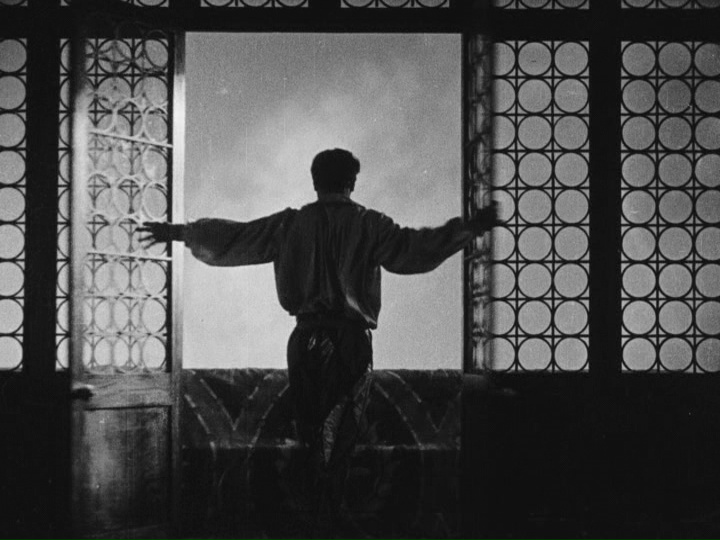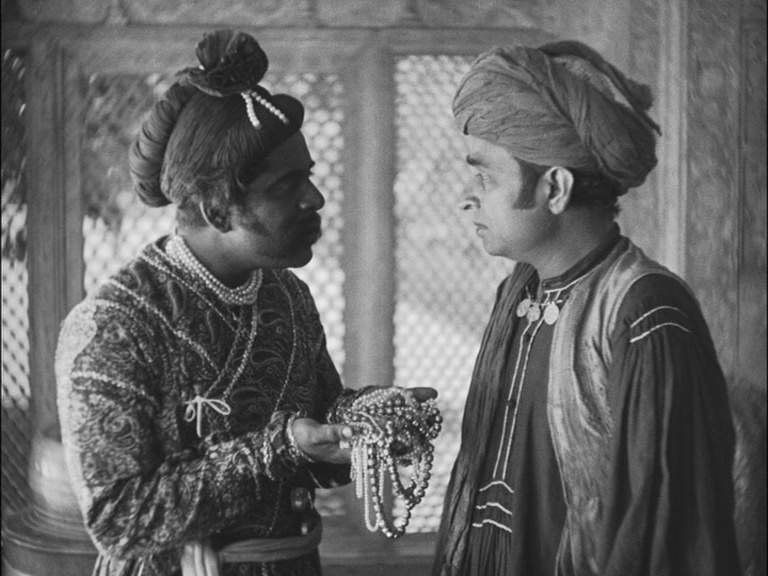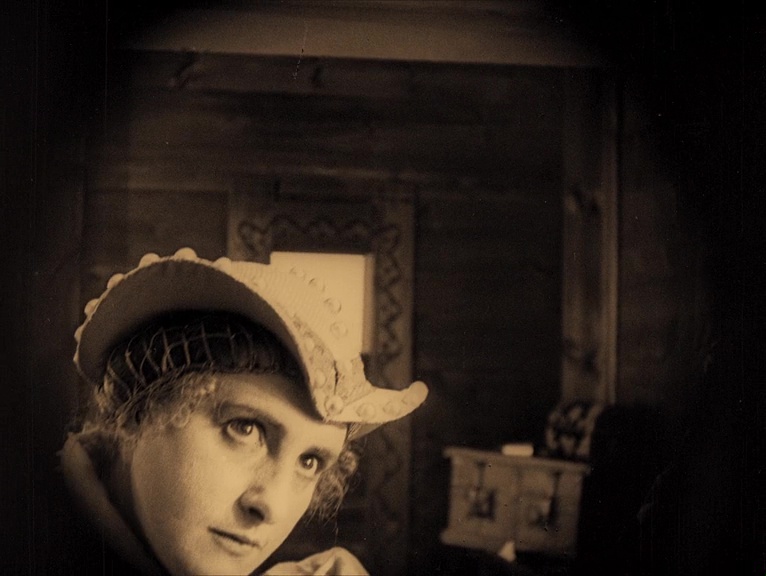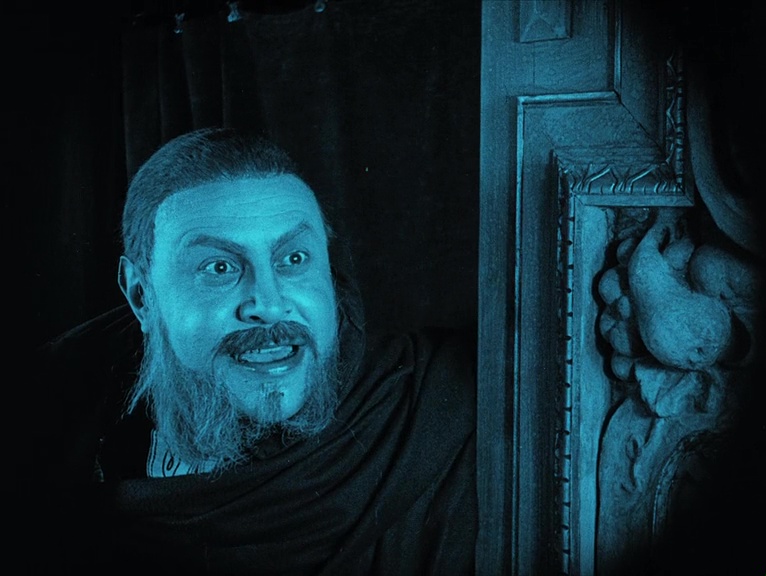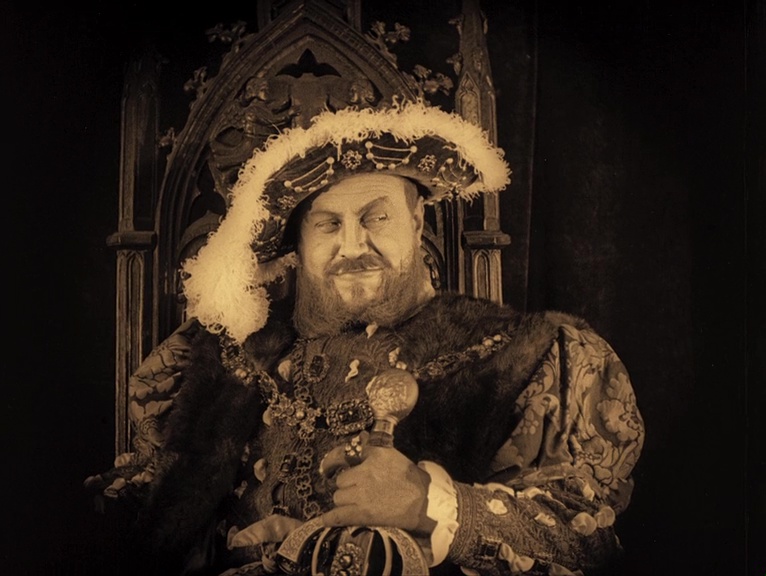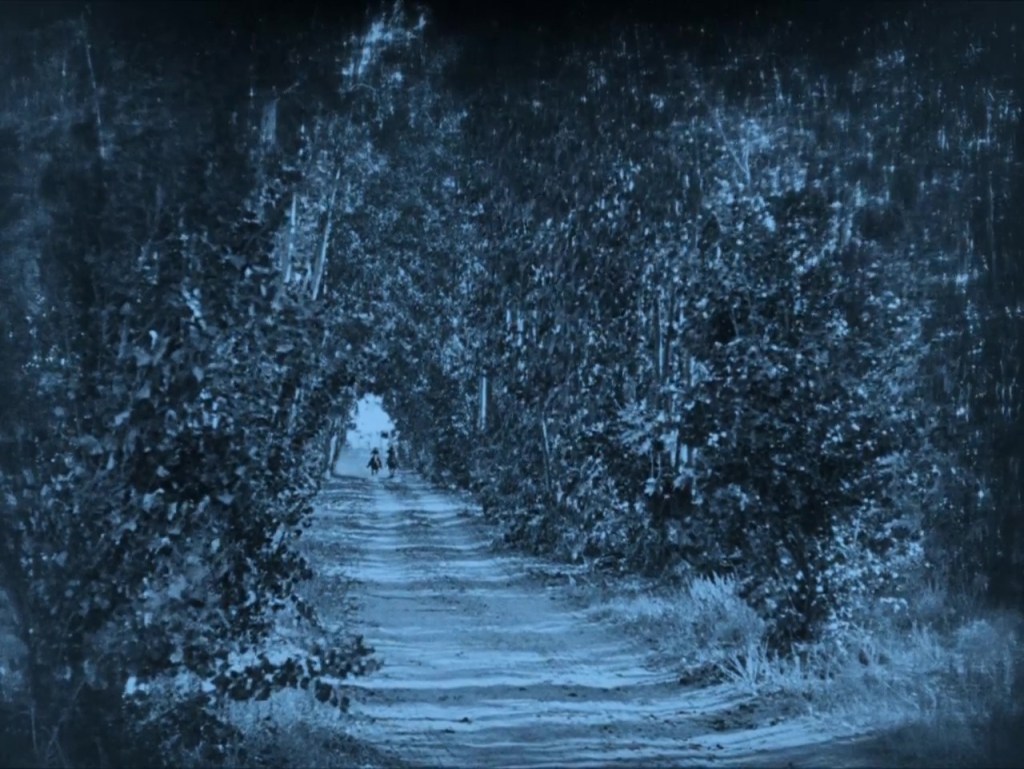
Brüder (1929; Ger.; Werner Hochbaum)

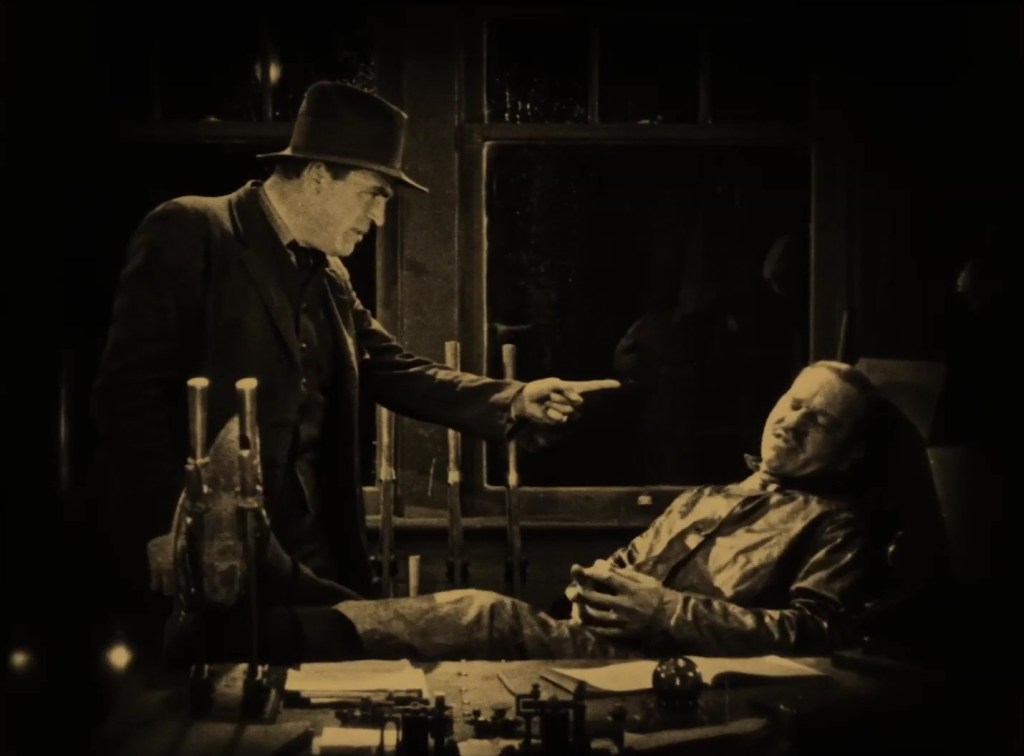
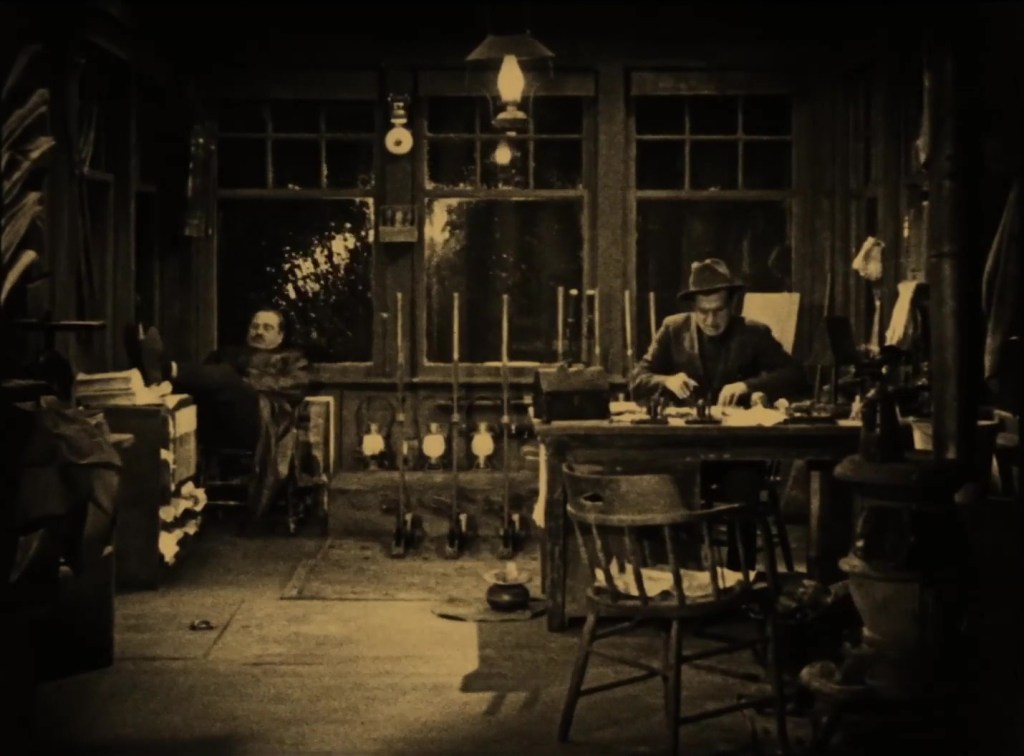
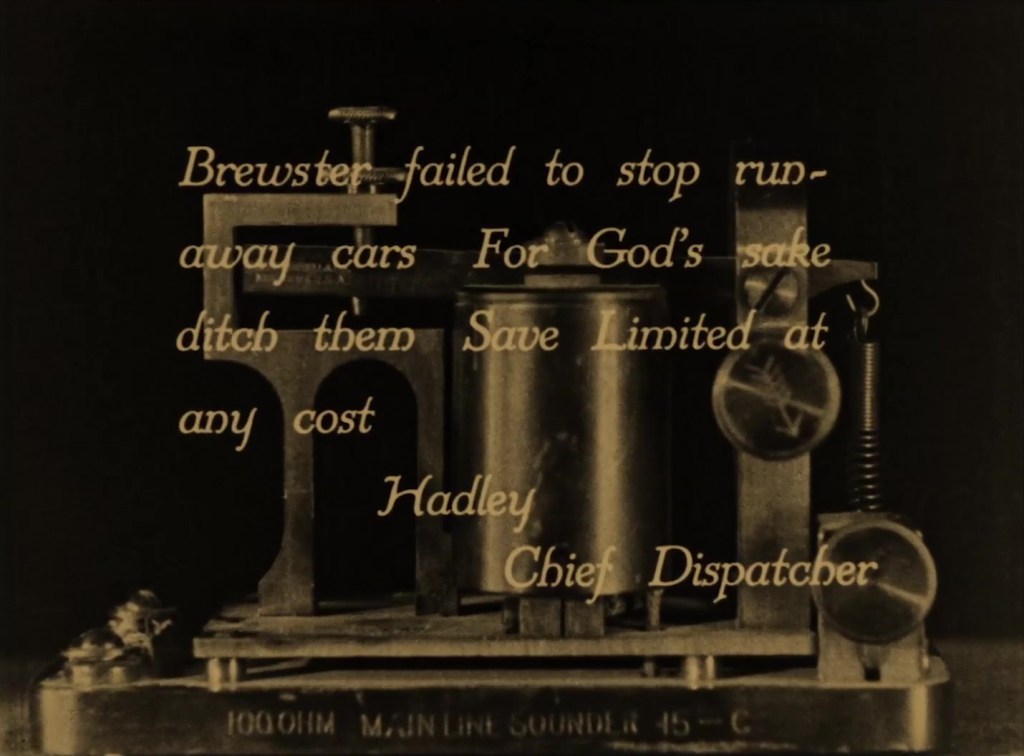
Why did I choose to watch this film? Well, frankly, I was in a bad mood. I started the day in triumphant spirit, having received an unexpectedly early delivery of Dreyer’s Die Gezeichneten (1922). This was the DVD edition produced by ARTE, including a score for the film by Bernd Thewes that I’d never heard. Much to my delight, the back of the box said: “Untertitl: Englisch”. I sat down to enjoy the film. It started. There were no subtitles. I really had been looking forward to seeing (and hearing) Die Gezeichneten, but my German isn’t up to the task of reading the many lengthy titles of this film. After a bleak morning the next day trying and failing to synch up the soundtrack with the video from the DFI Blu-ray release (the intertitles are a different length, the DFI splitting them into multiple titles for the sake of accommodating their dual Danish-English translations), I was in a bad mood. I needed to choose another film to watch. I wanted something angry, bleak. It should be tonally similar to the anticipated grimness of Die Gezeichneten and tonally similar to the irritation of my mood. Hence, Brüder: a film I knew nothing about, other than it seemed moody, bleak, and had a score of equal abrasiveness. Bring it on.

Brüder (1929; Ger.; Werner Hochbaum)

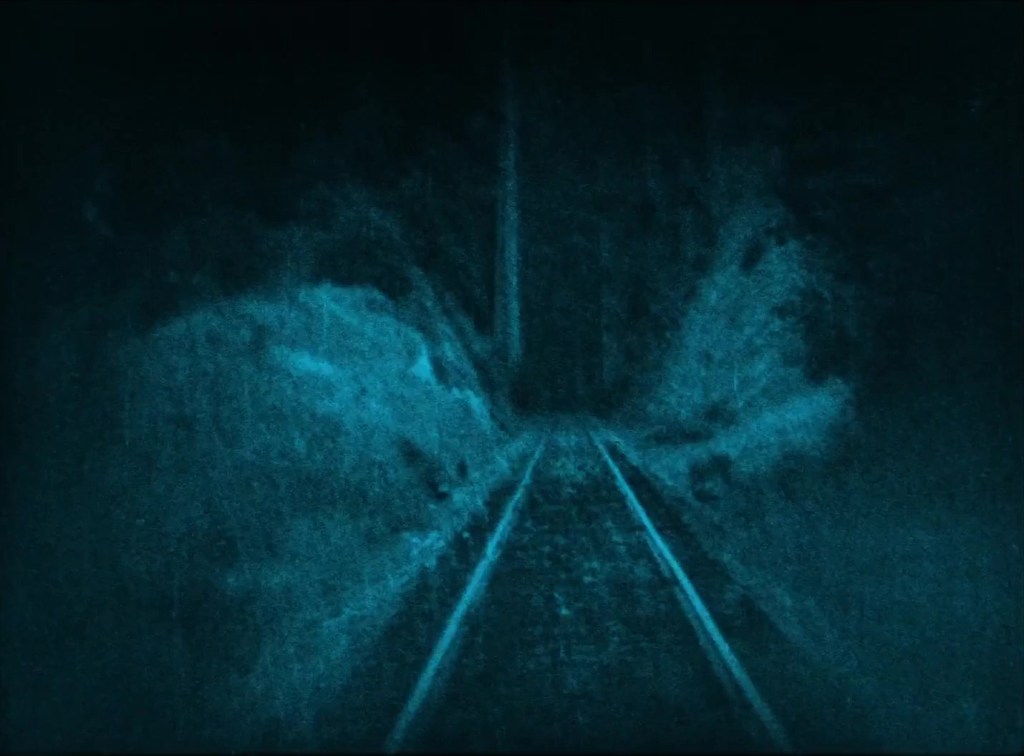
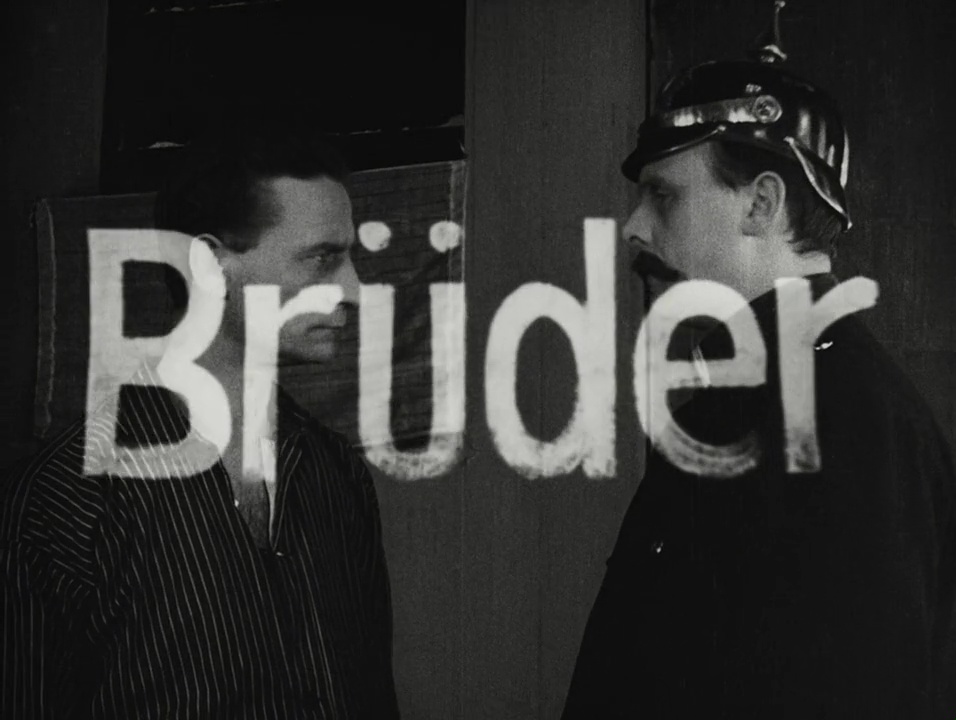
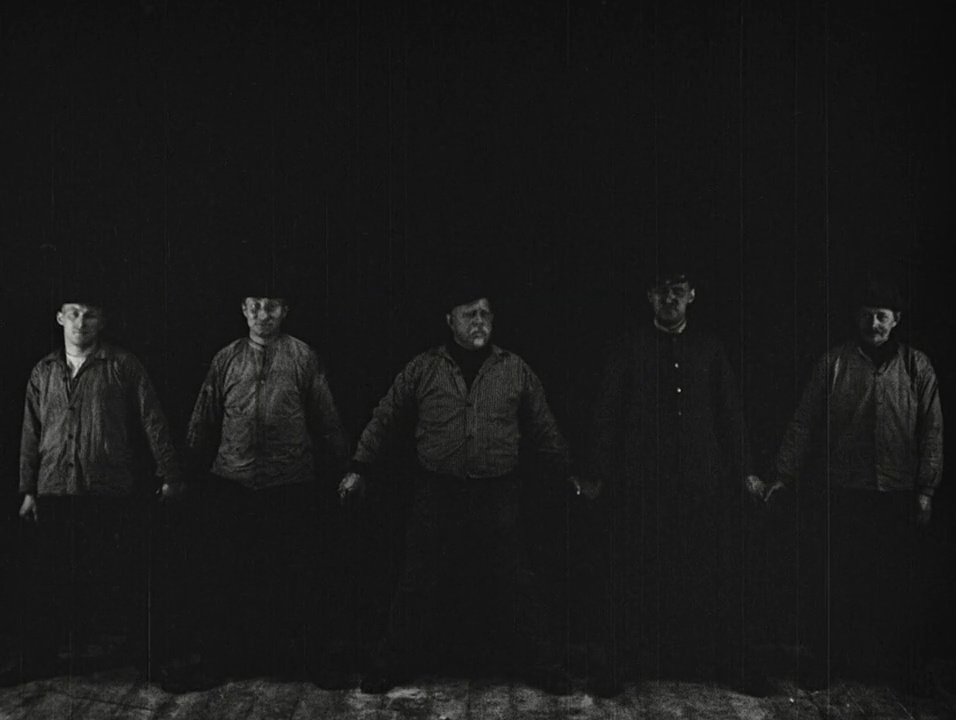
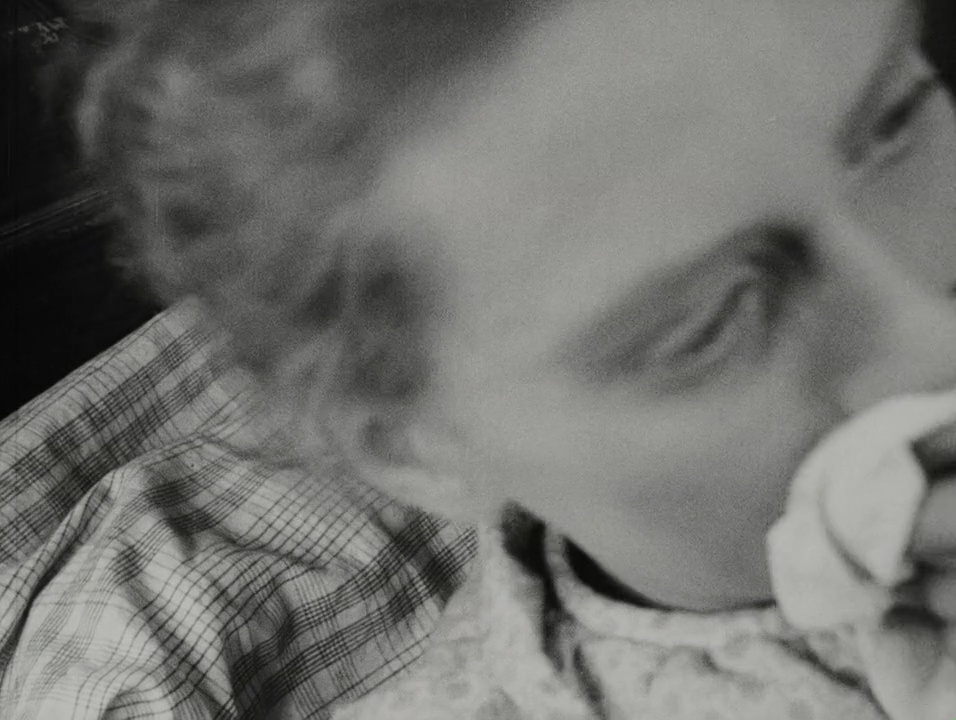
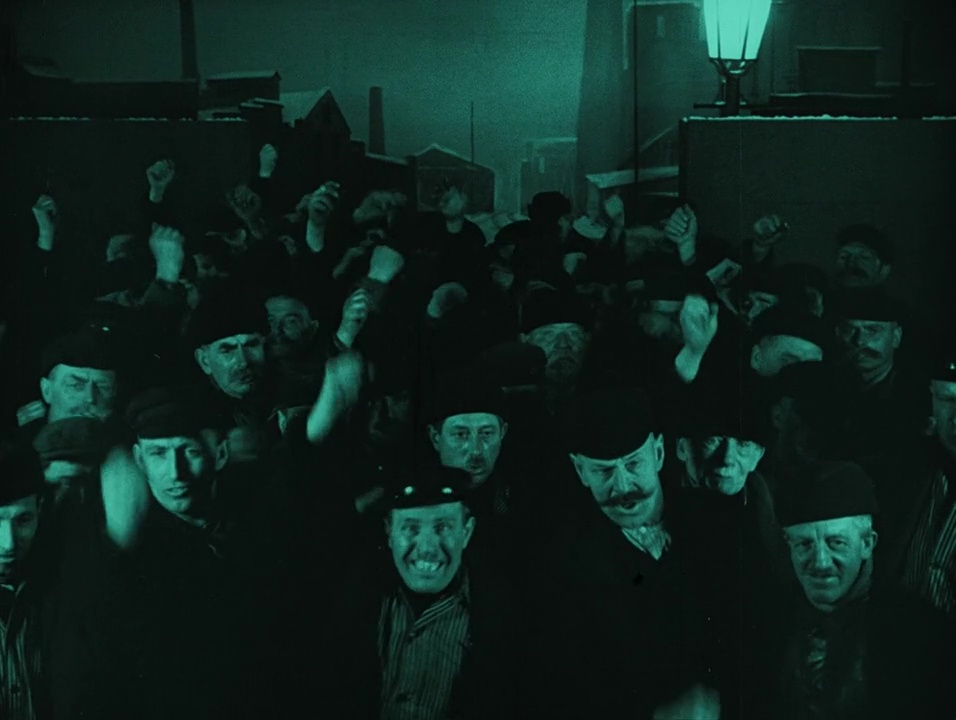
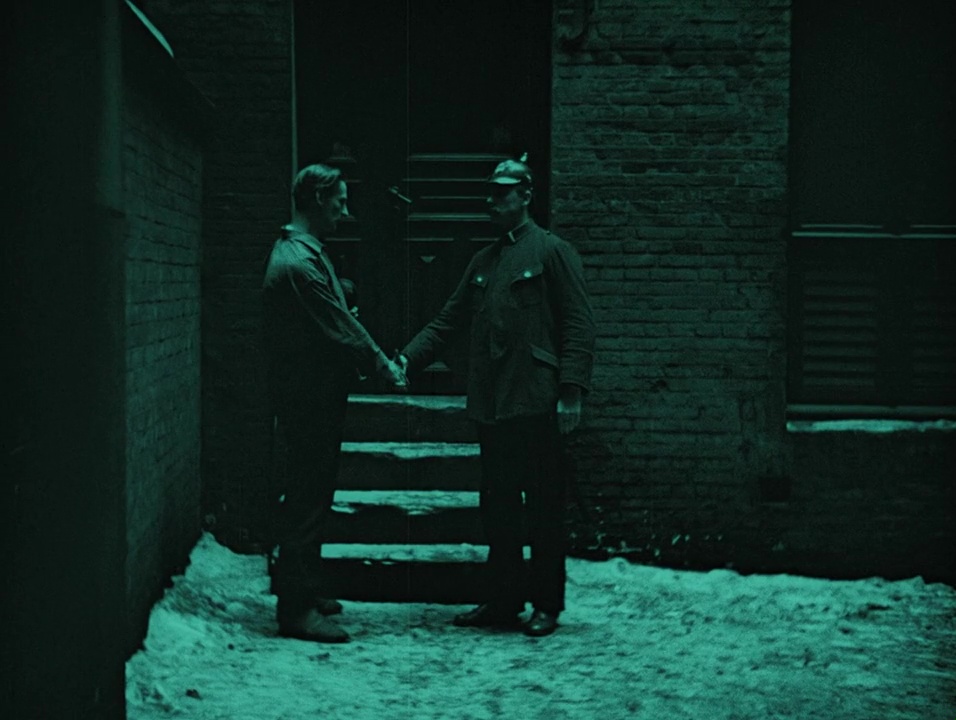
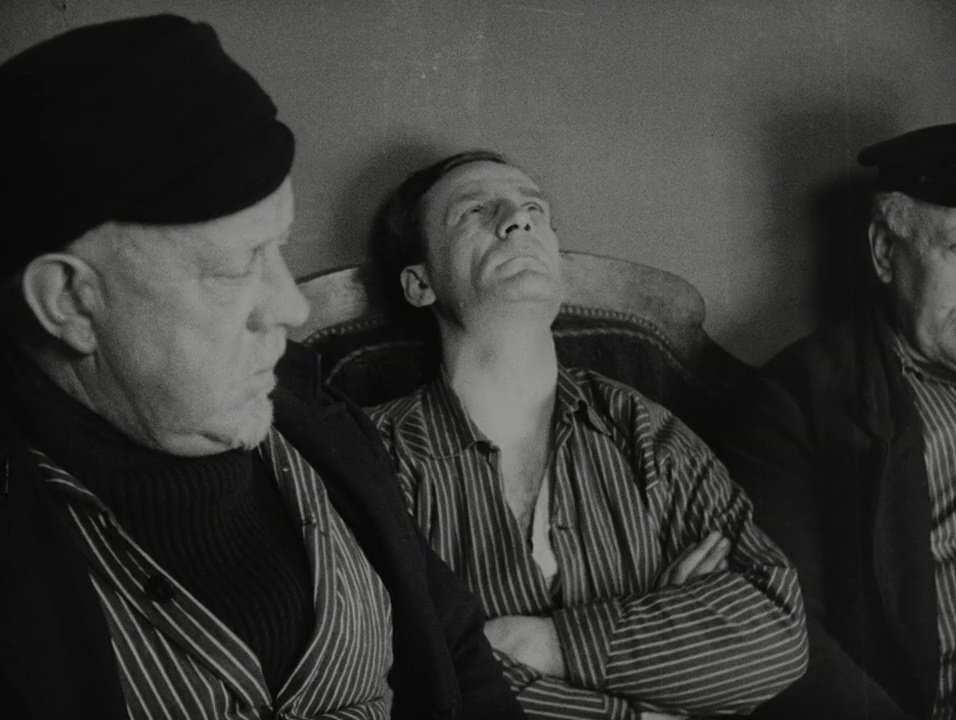
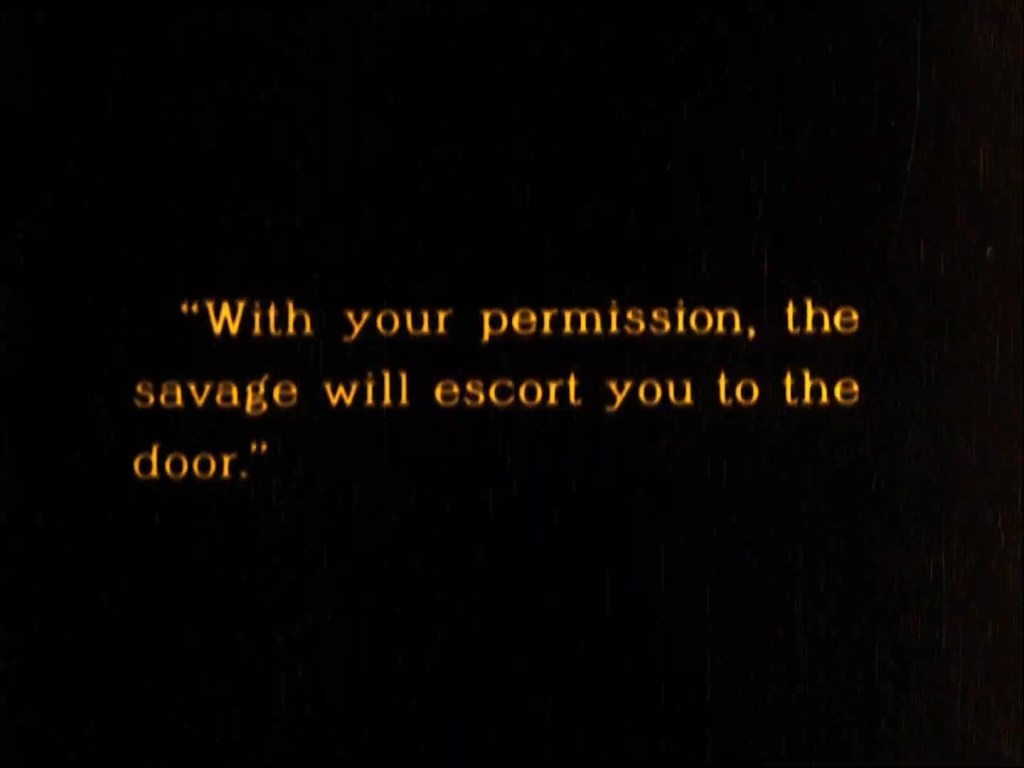
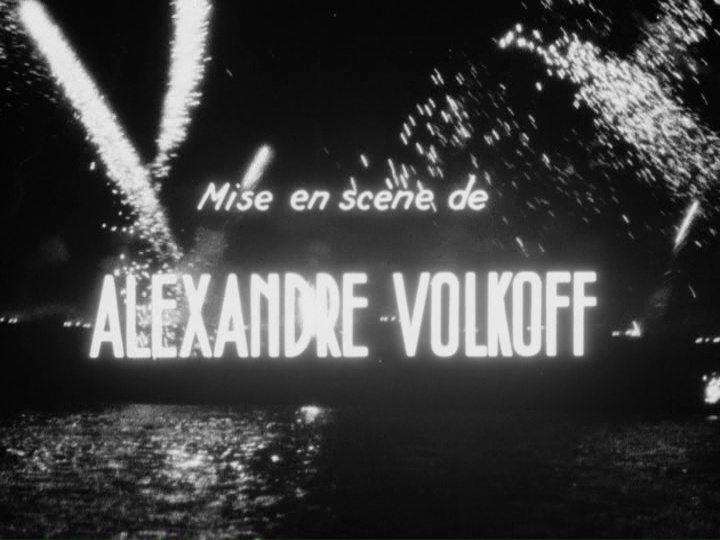
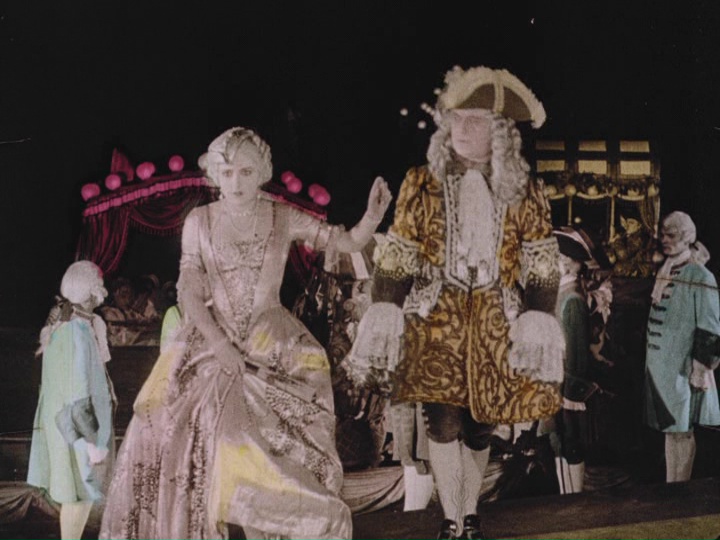
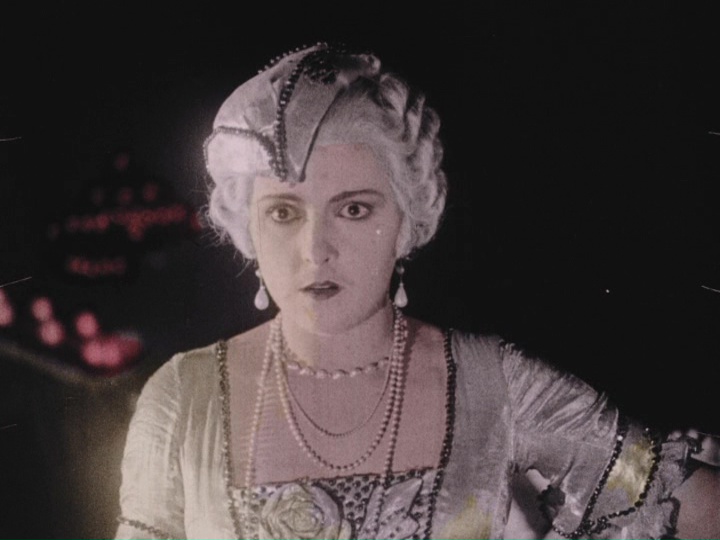
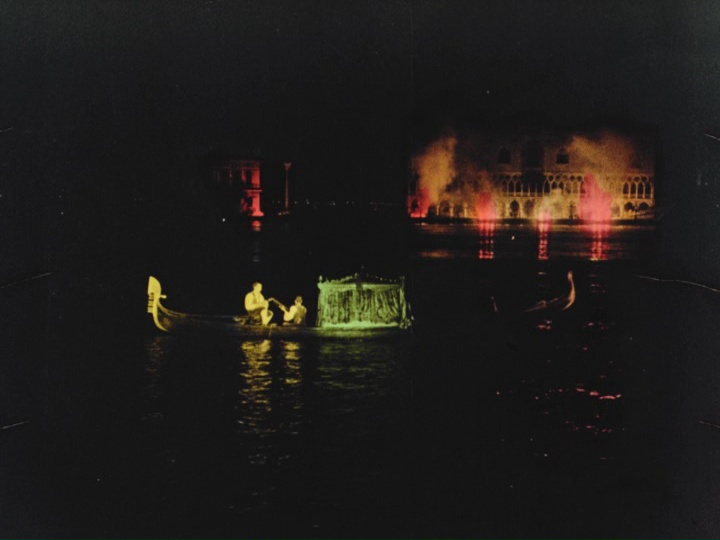
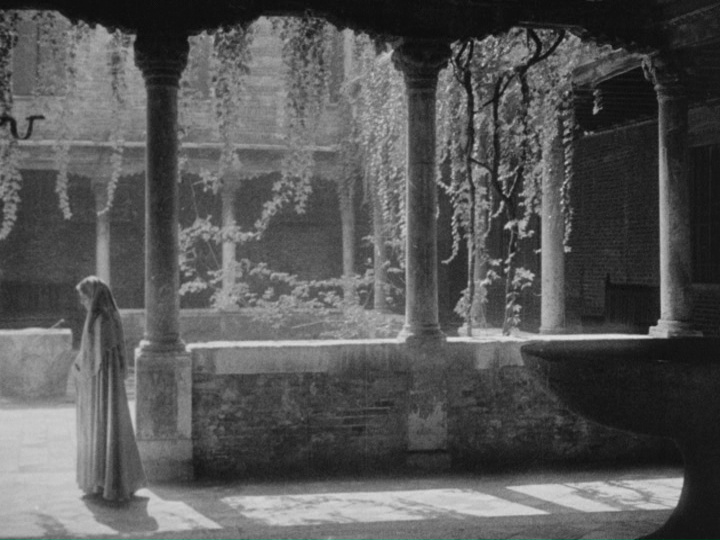
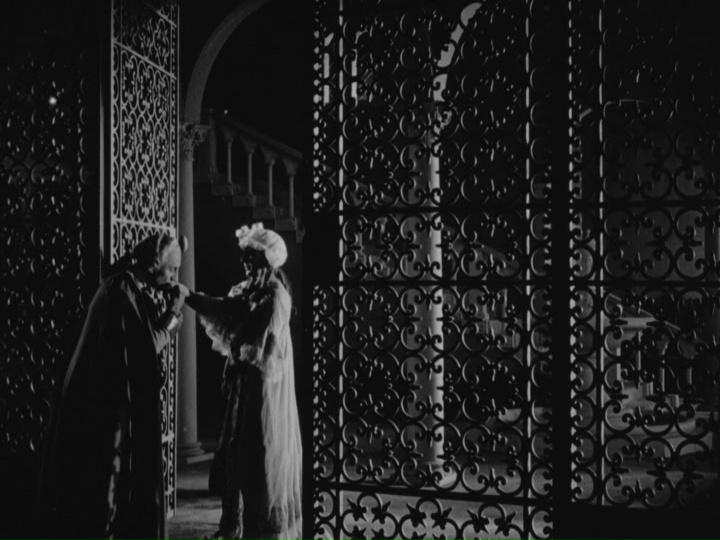
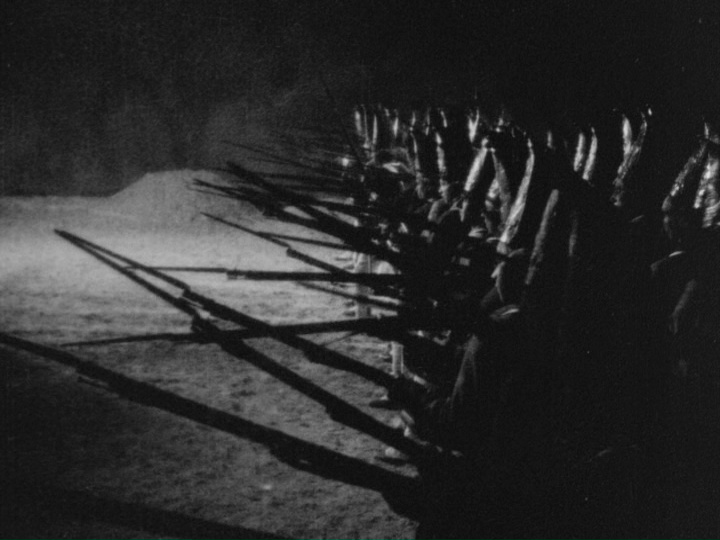
The opening credits are broken up with images—little vignettes in themselves—that foreground the film’s strange tone, it’s blunt and sometimes disjointed editing. “Der Film”—one title announces, before we cut to a shot of two men, one in shirtsleeves, the other in uniform, facing each other. Superimposed in the space between them, the word “Brüder” appears and barges its way forward until it threatens to burst out of the screen. Next, a line of workers, hand in hand, a strike line, stand against a black expanse. They are looking straight at the camera. It’s a weird, intense opening. Then we cut back to more text, and you realize that this is a continuation of the sentence began by “Der Film”, then bridged by the superimposed “Brüder” and subsequent shot: “is based on authentic elements and relates an episode from the dock workers’ strike which took place in Hamburg in 1896-97.” After more credits, a title announces: “This film is an attempt to create, with simple means, a German proletarian film. The performers are dock workers, workers’ wives, children, and other common people. All of whom were appearing in front of a camera for the first time.” The cast list credits no performers, simply listing their roles.

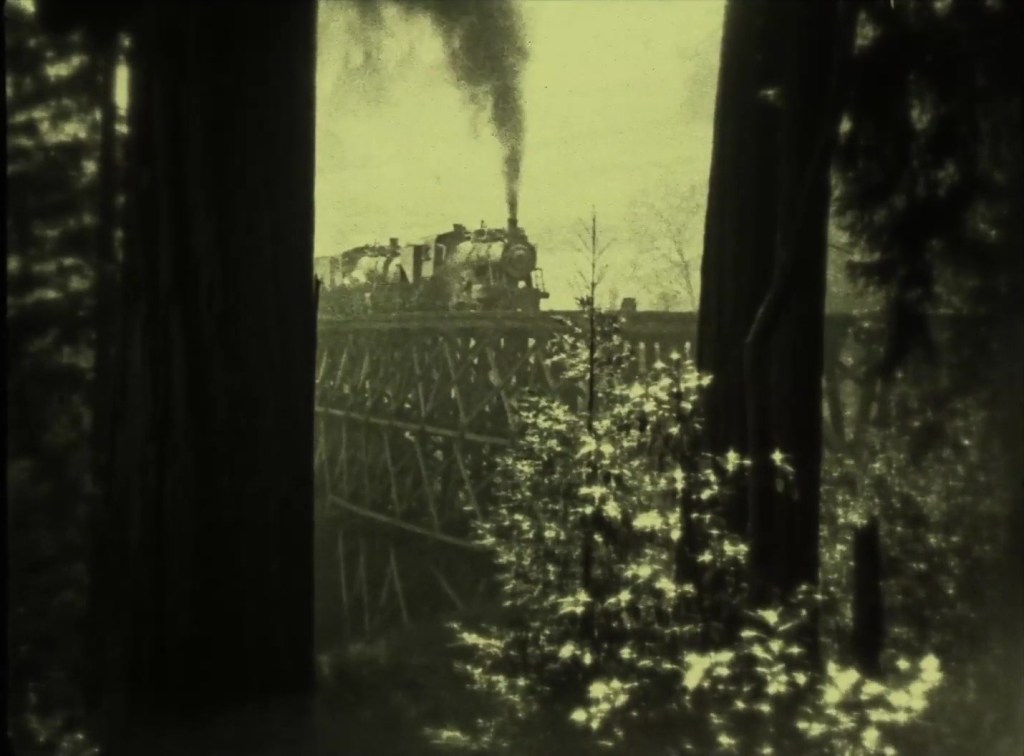
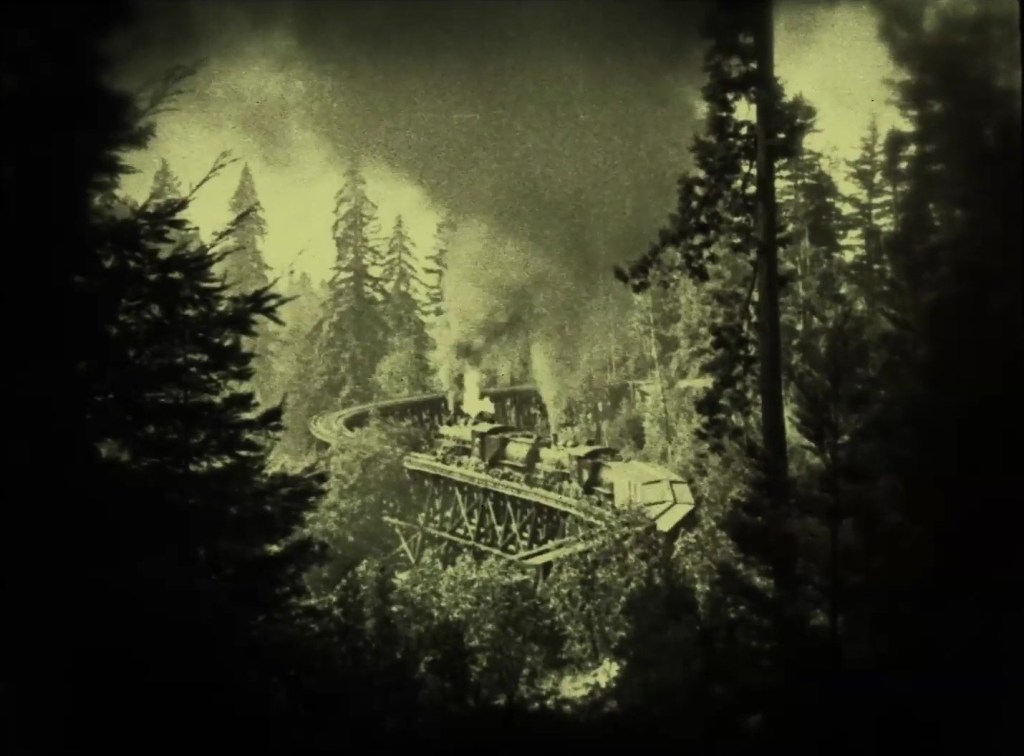
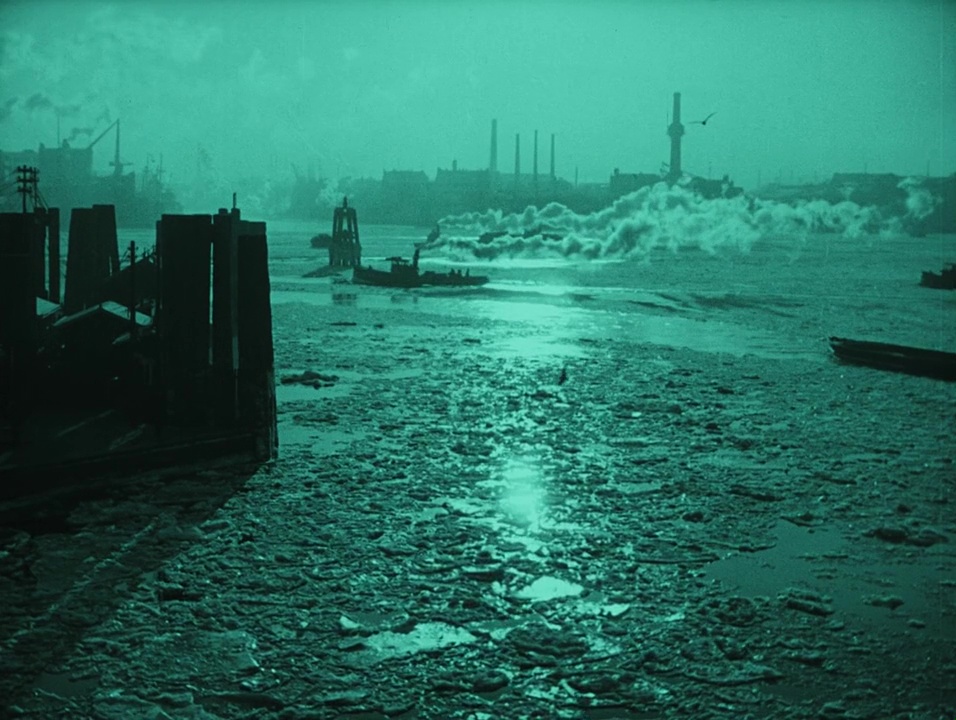
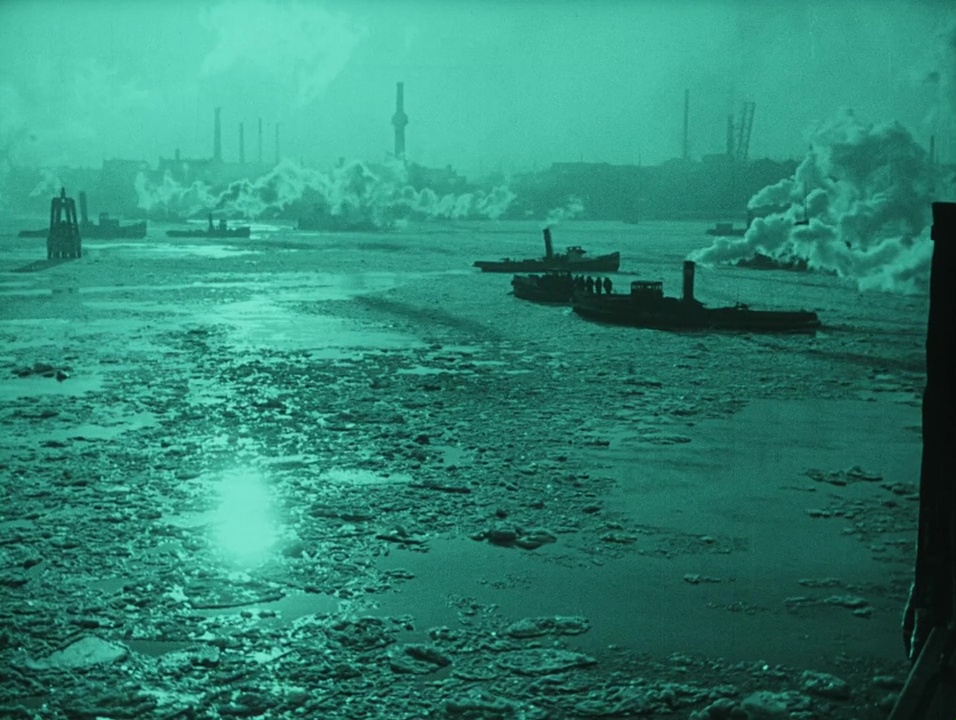
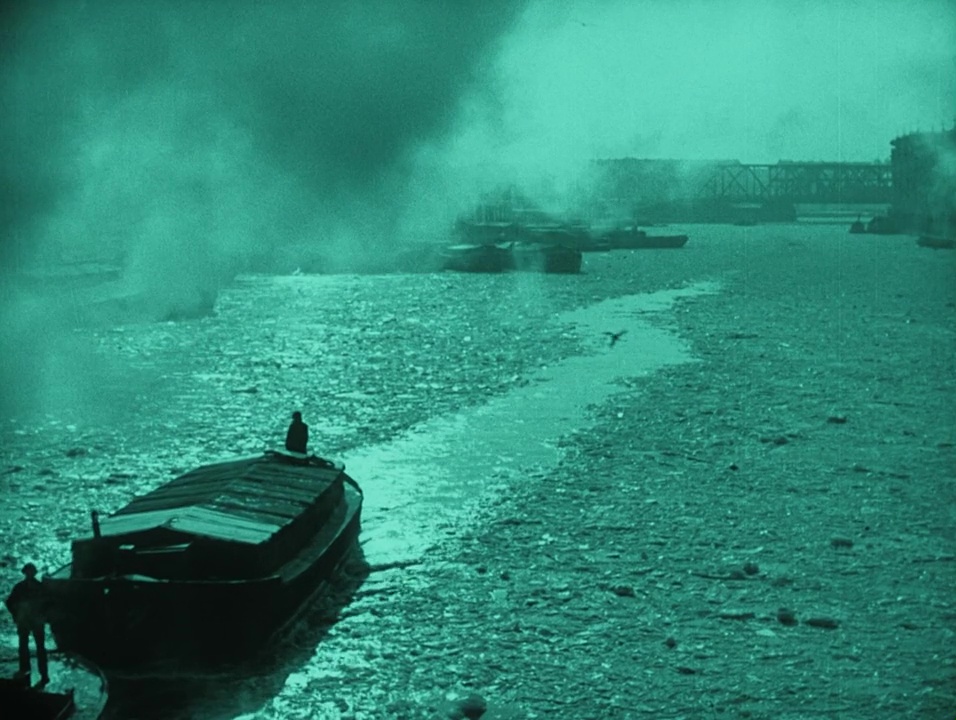
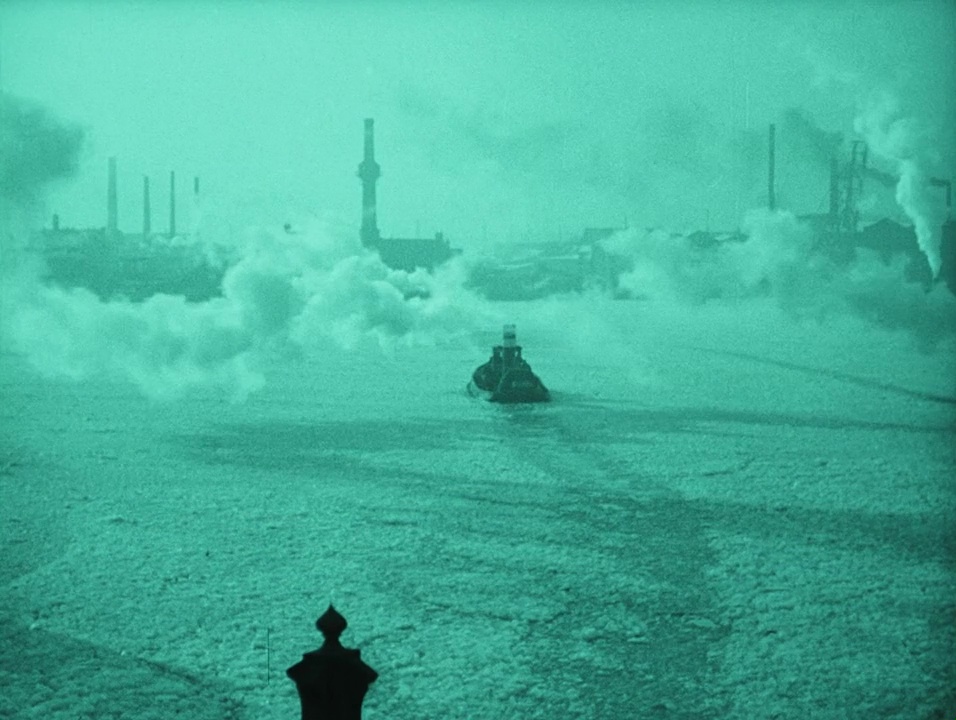
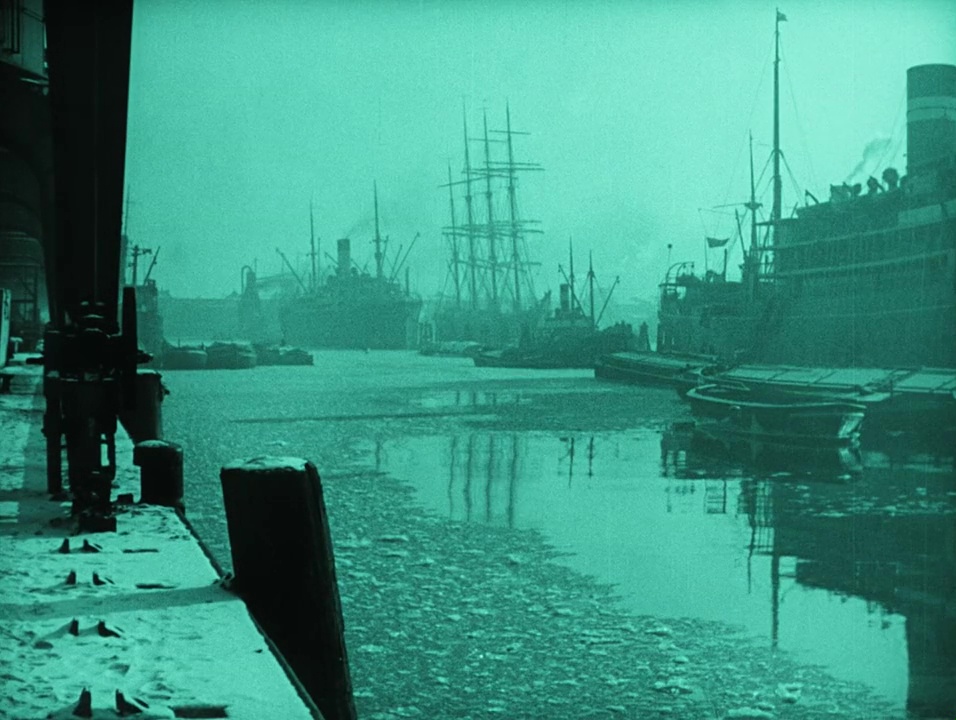
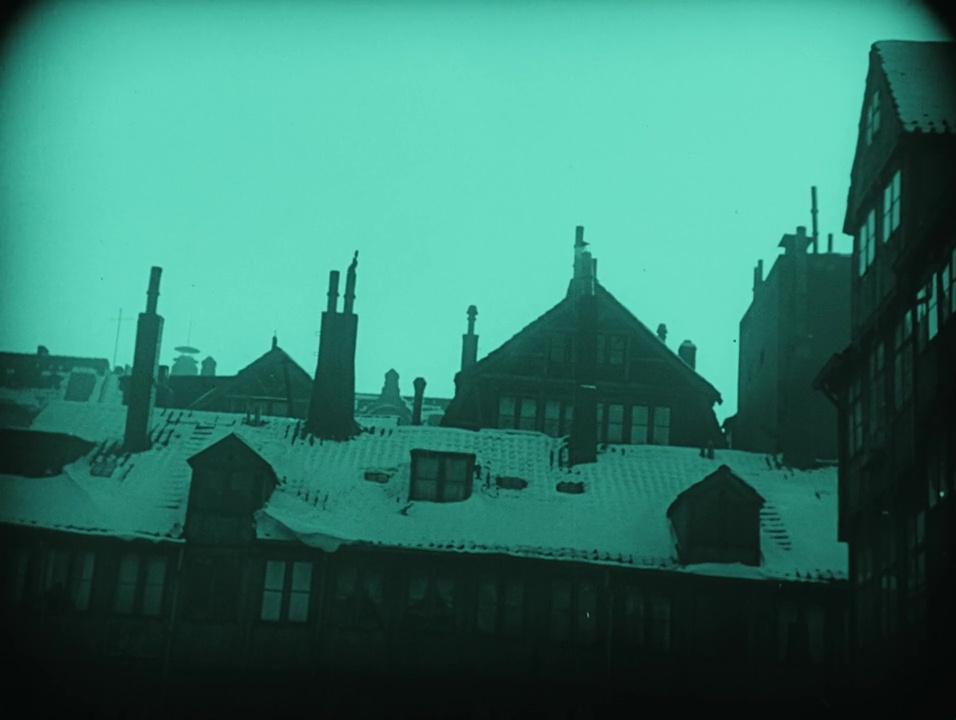
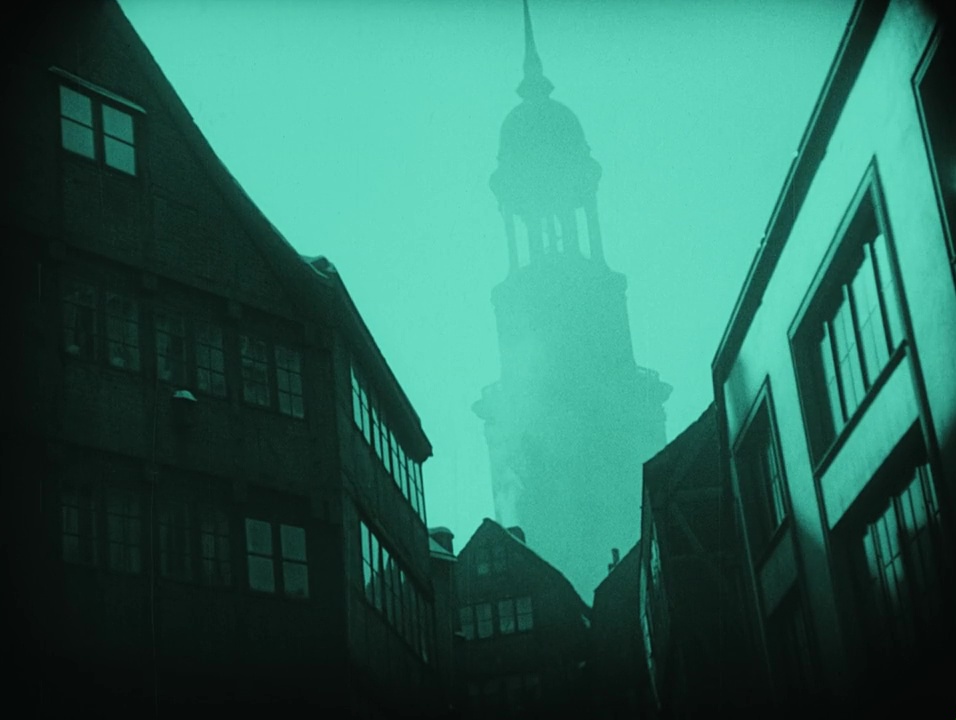
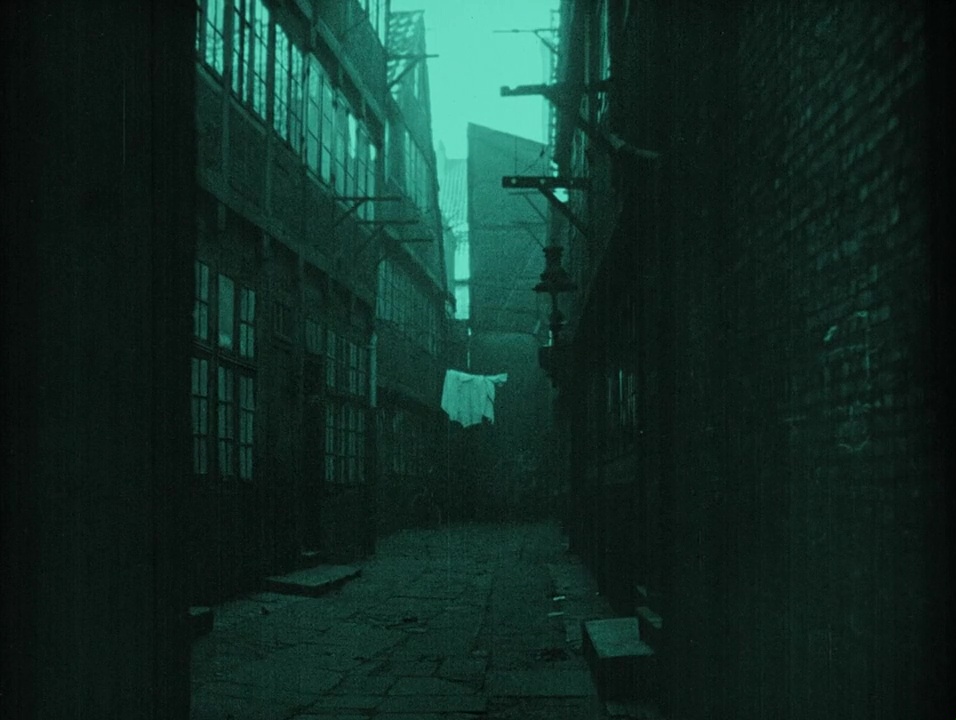
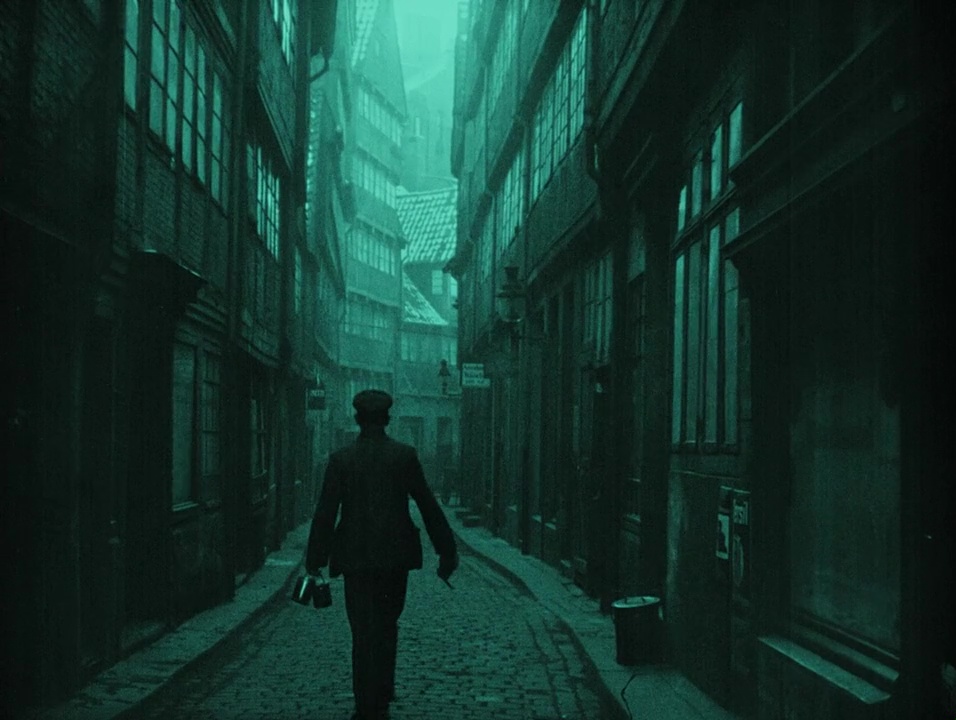
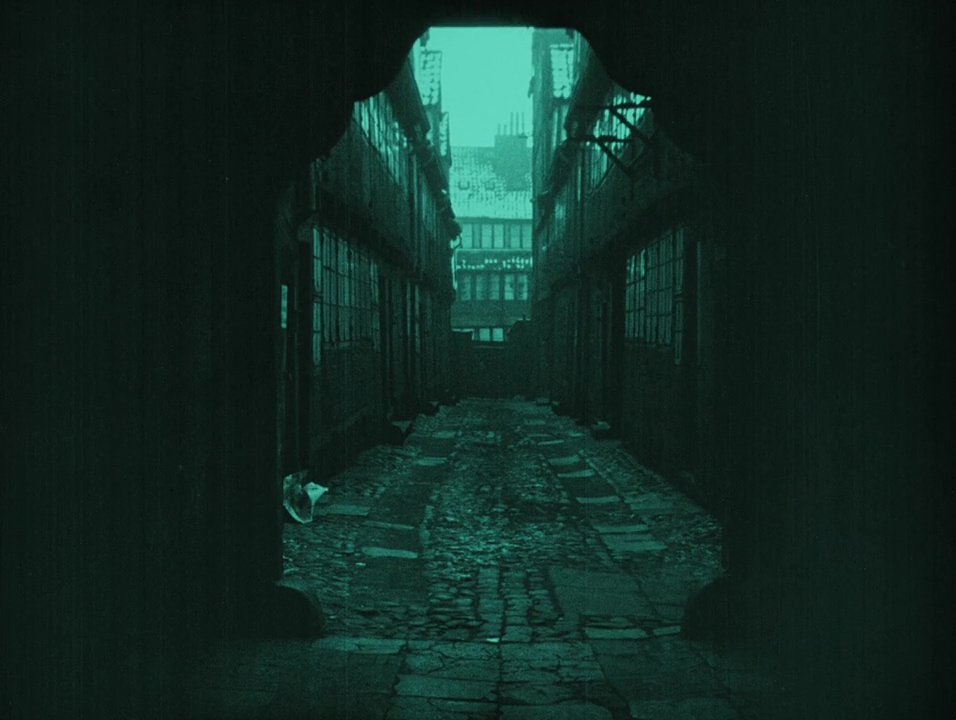
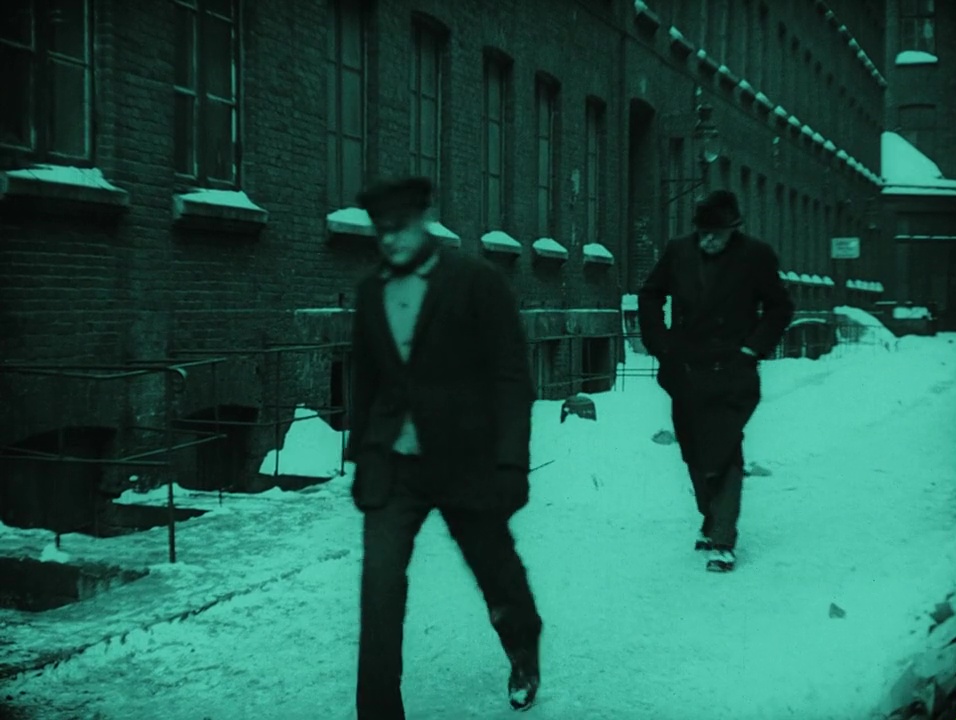
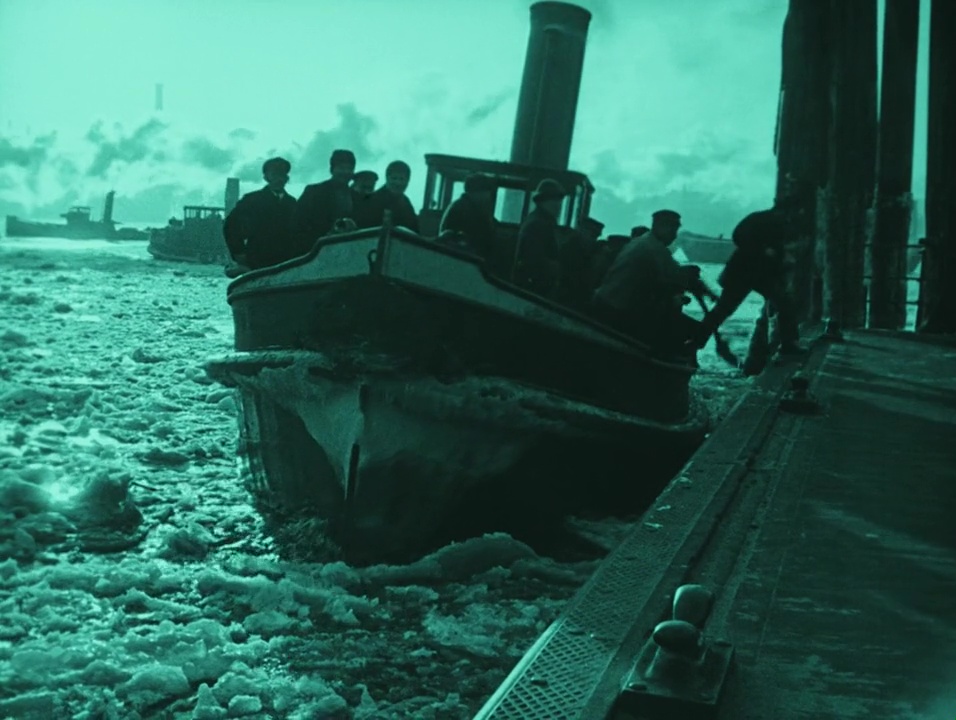
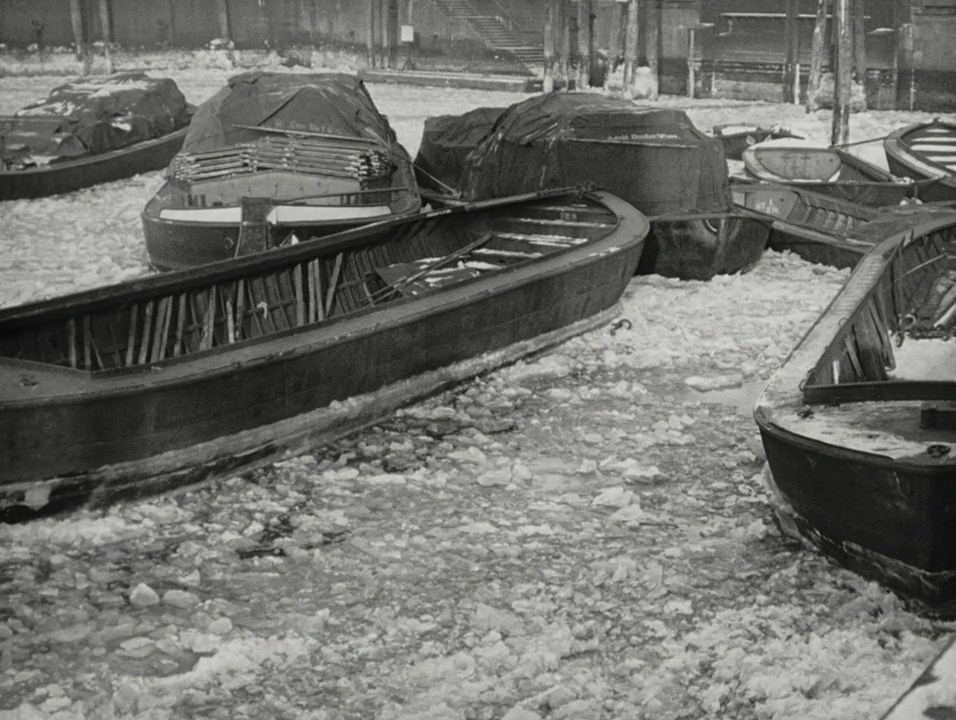
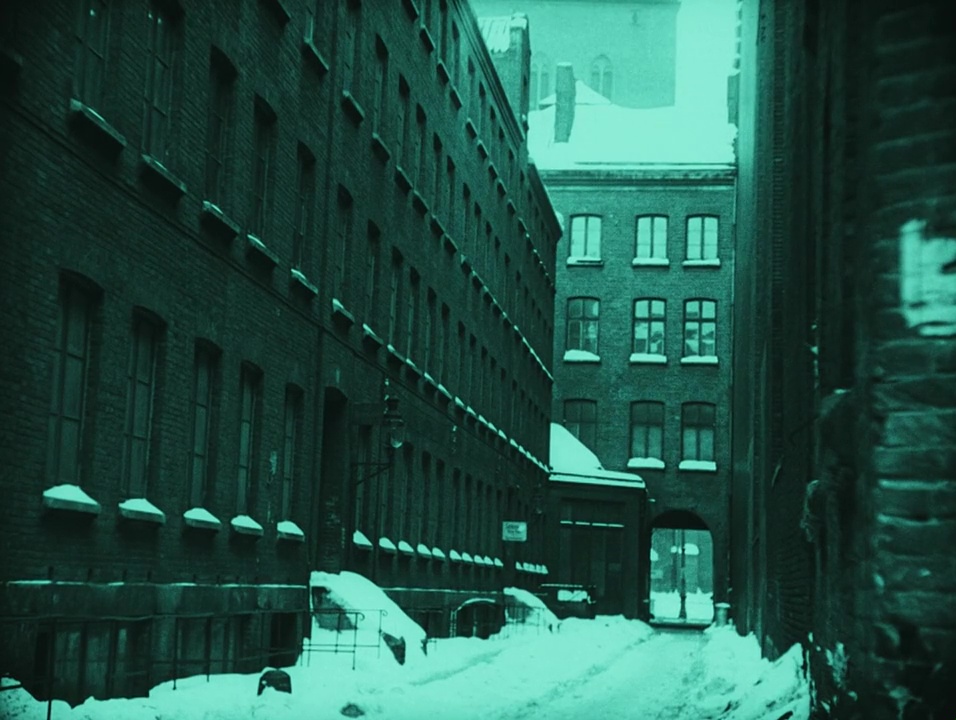
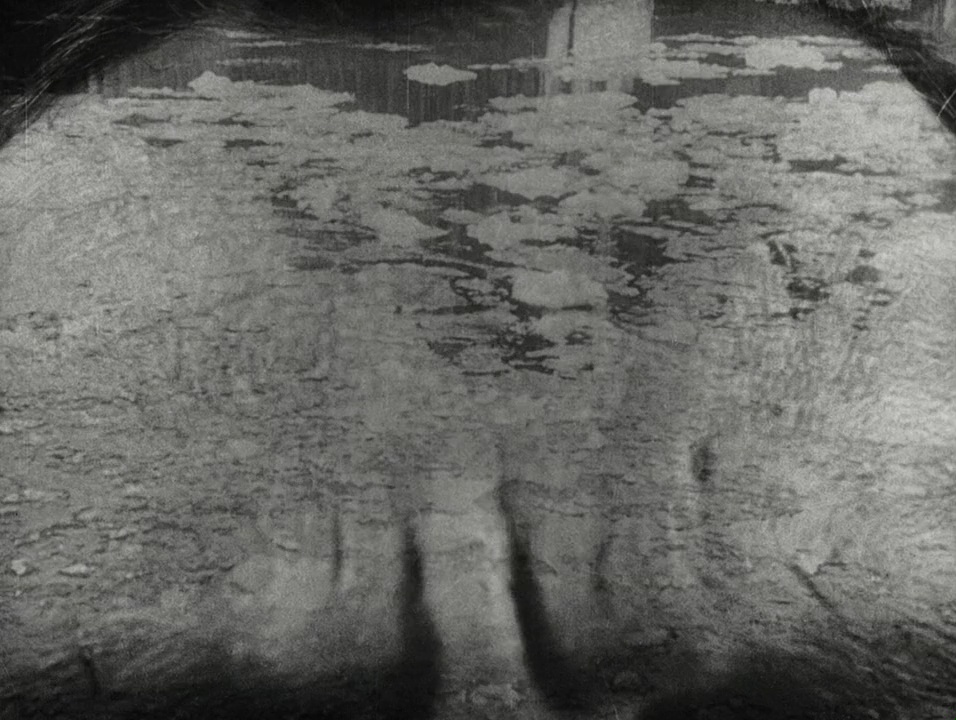
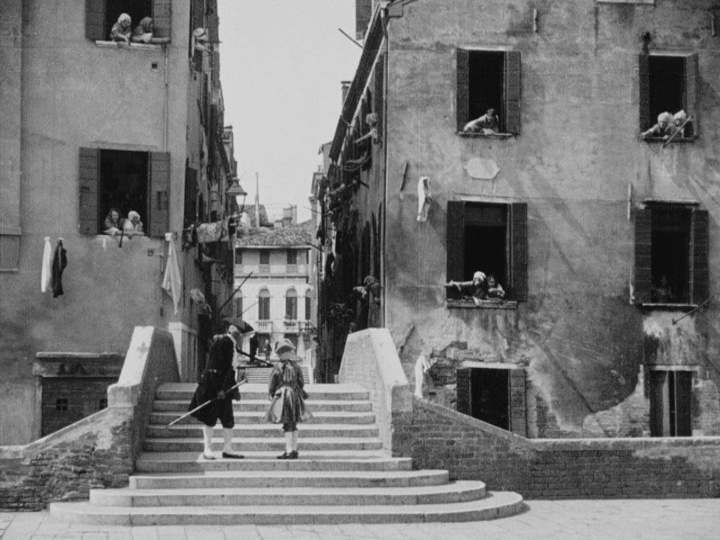
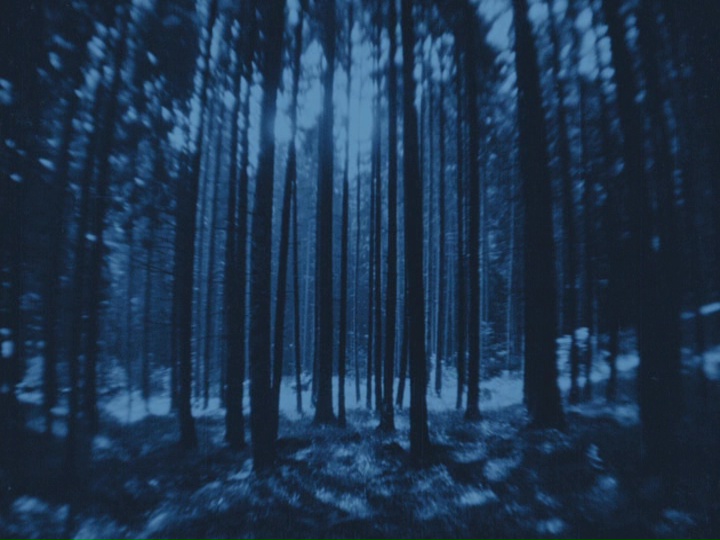
Act 1. “The history of humanity is the history of its class struggles”. (I’m braced!) “On a winter morning in 1896.” Shots of Hamburg harbour. Ice-coated water. Turquoise tinting. Even the glints of sunlight are cold. Dark boats cross the harbour. Clouds of vapour from their stacks. The dockland on the horizon. Industrial chimneys, industrial cranes. Closer shots of the sea, the waves lifting the coating of ice. Strange, viscous ripples on the water’s surface. Gulls, tugs, liners, smoke. The quay. The houses. Rooftops coated in snow. Dark, cramped streets. Nineteenth-century tenements. Washing on the line. Factories. A newspaper drifting down an empty street.

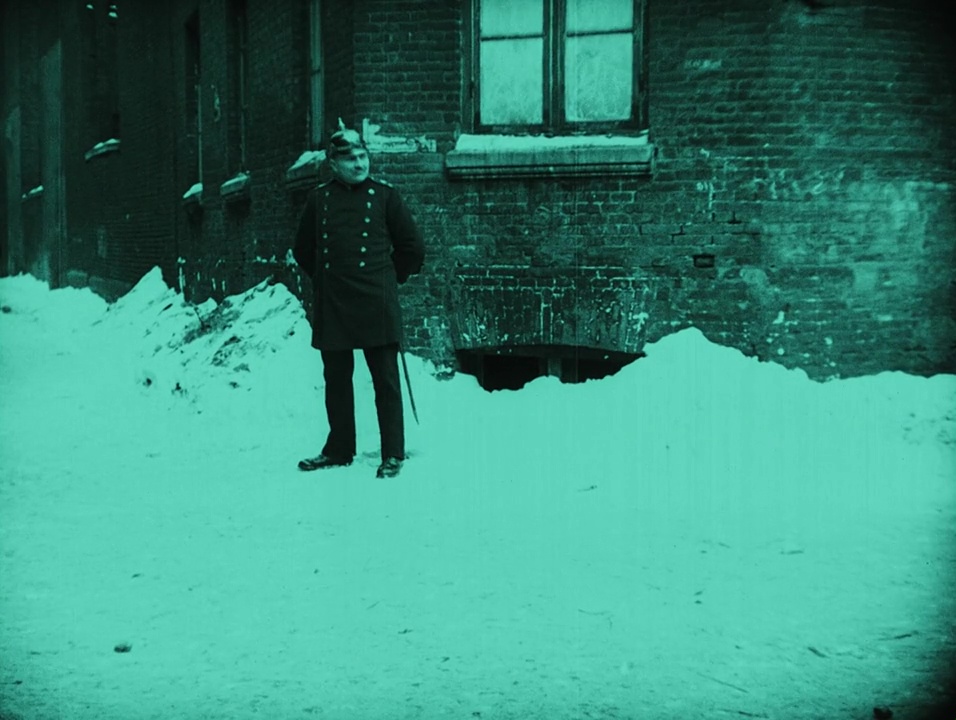
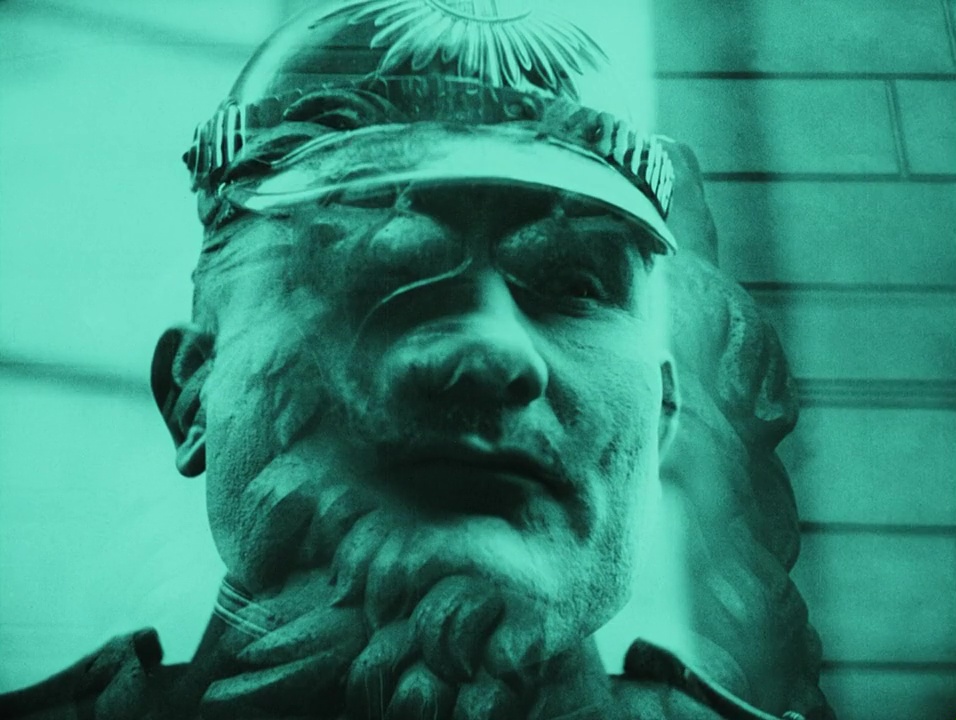
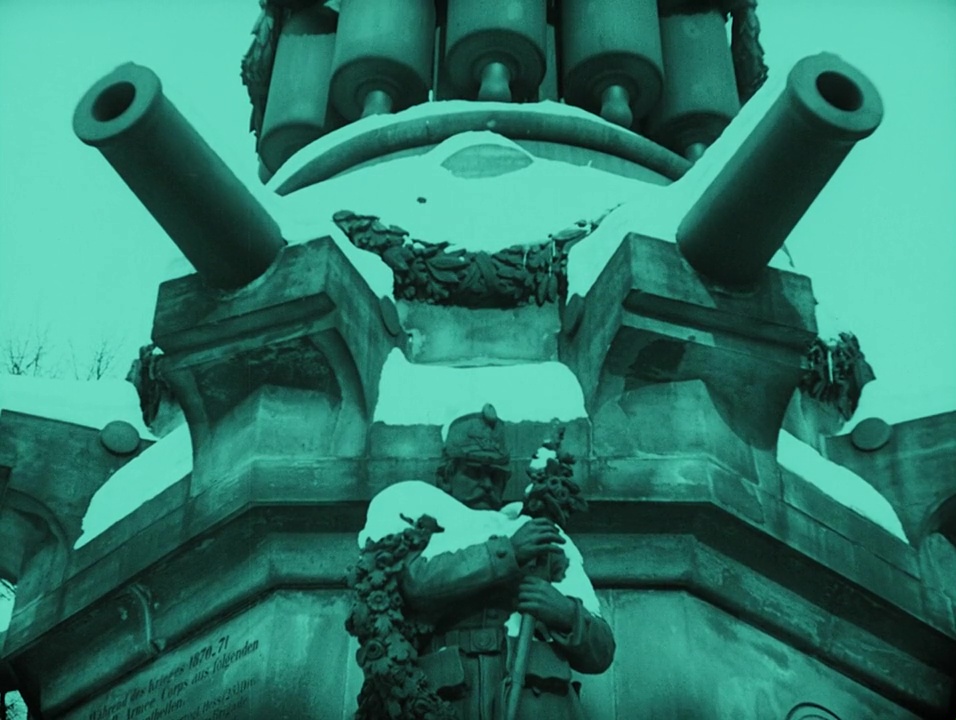
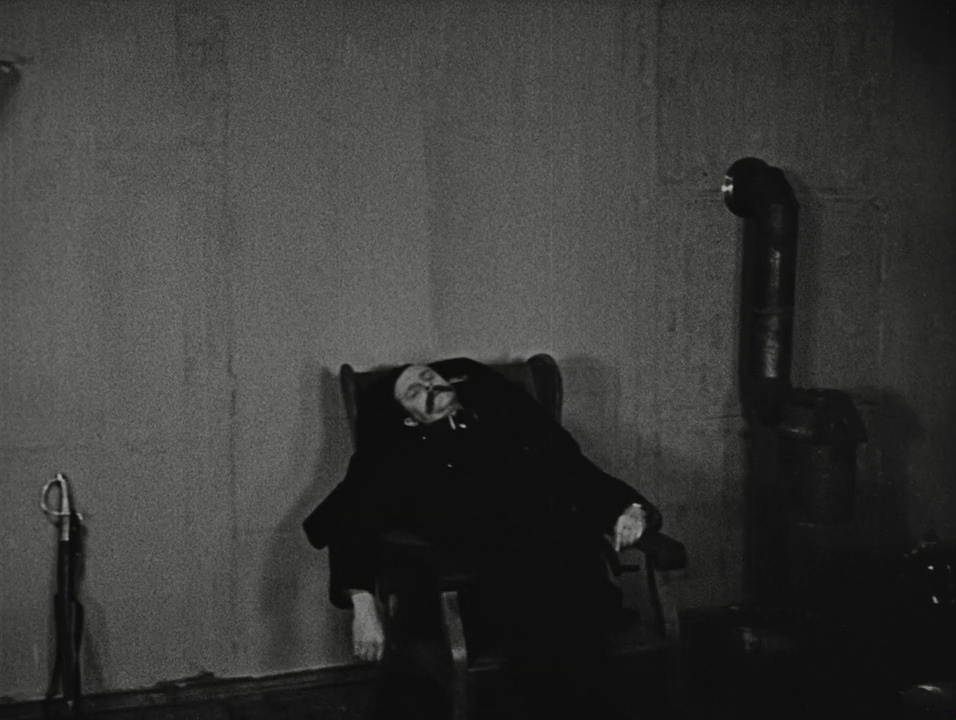
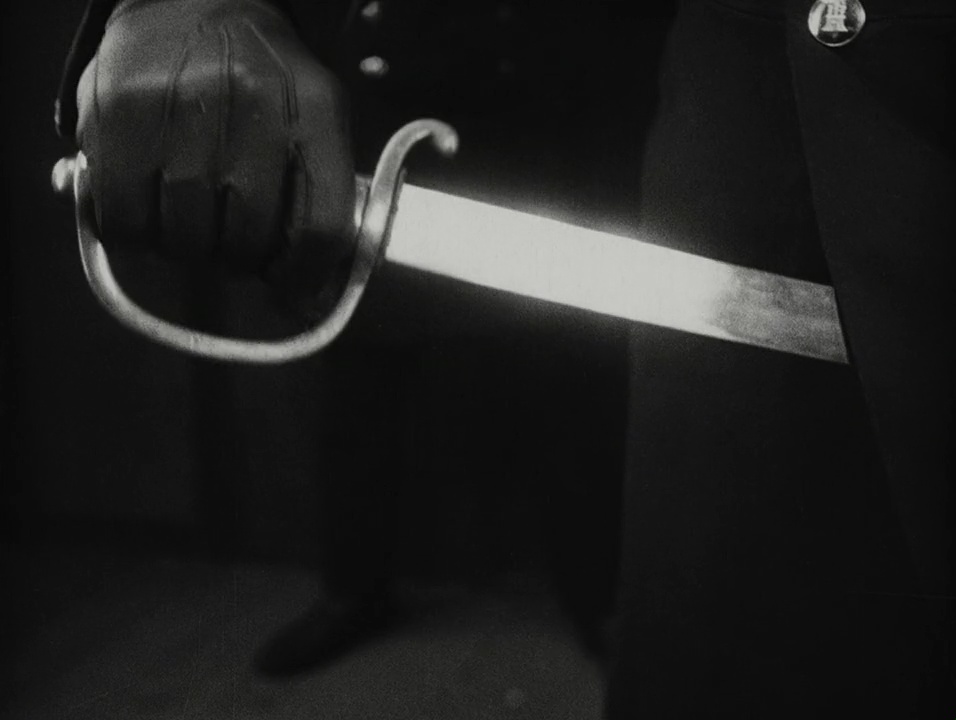
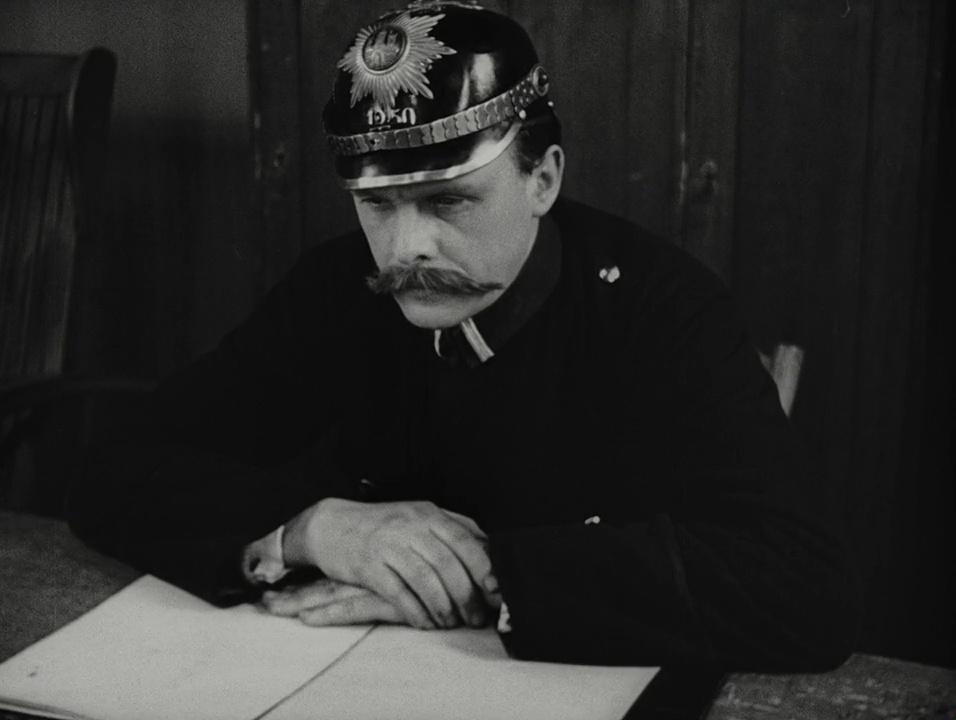
A policeman, conspicuous by the quality of his uniform, the sheen of his spiked helmet. A close-up of his face dissolves slowly onto that of a stone lion. Shots of show-covered monuments to the nation, to the war dead. A statue of Wilhelm II in close-up, the camera tracking back, then panning around the police station; sleeping officers, a tired-looking desk clerk. Nameless men, sleeping in their uniforms; helmets on a cupboard, a sword against the wall.

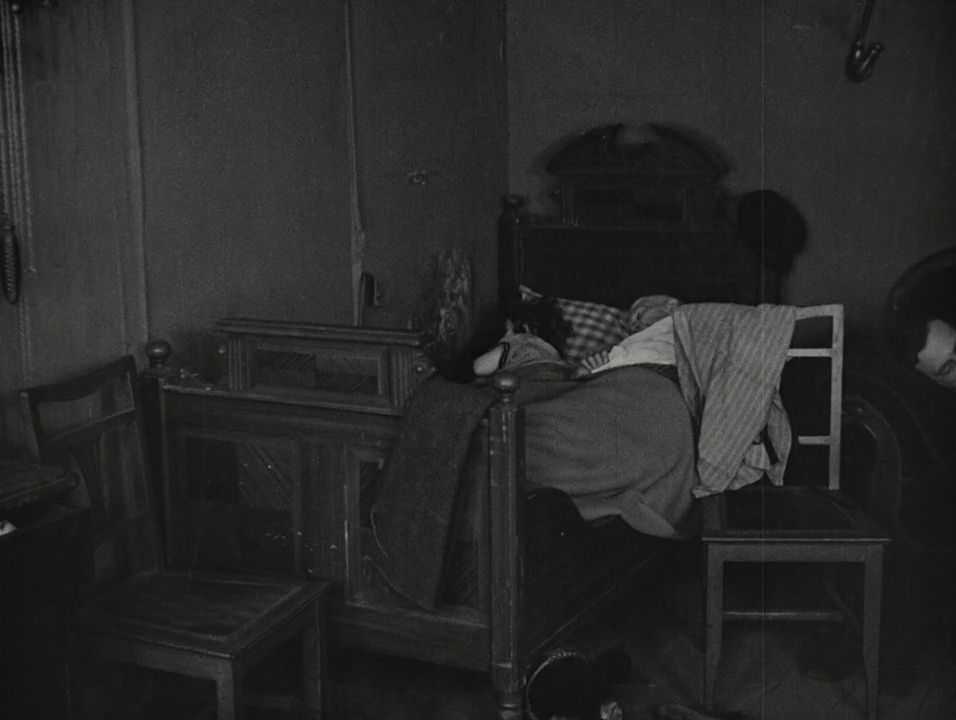
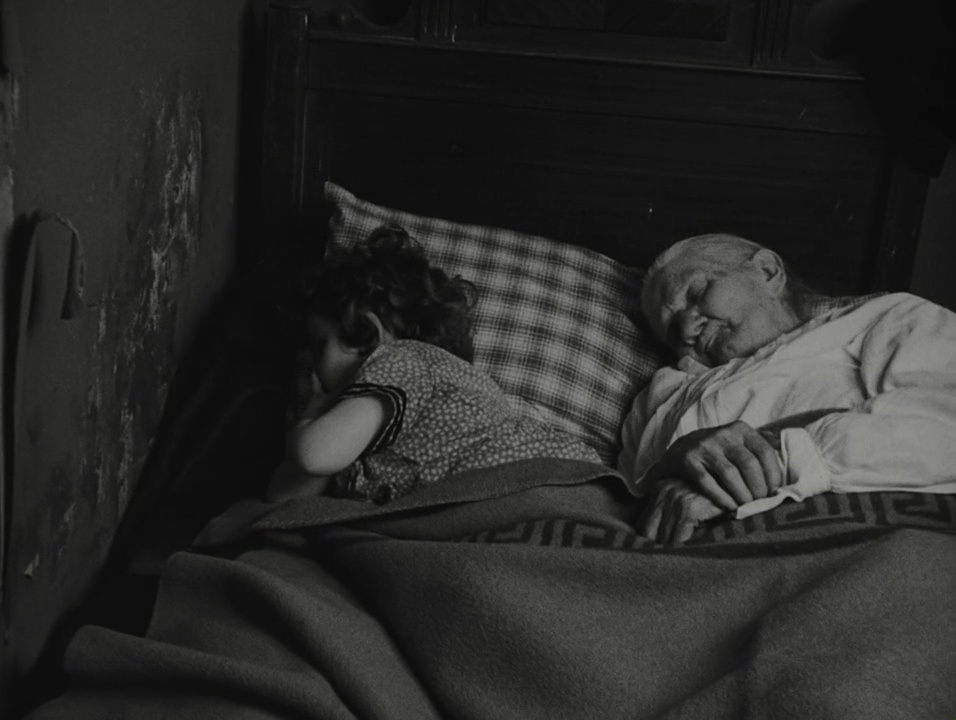
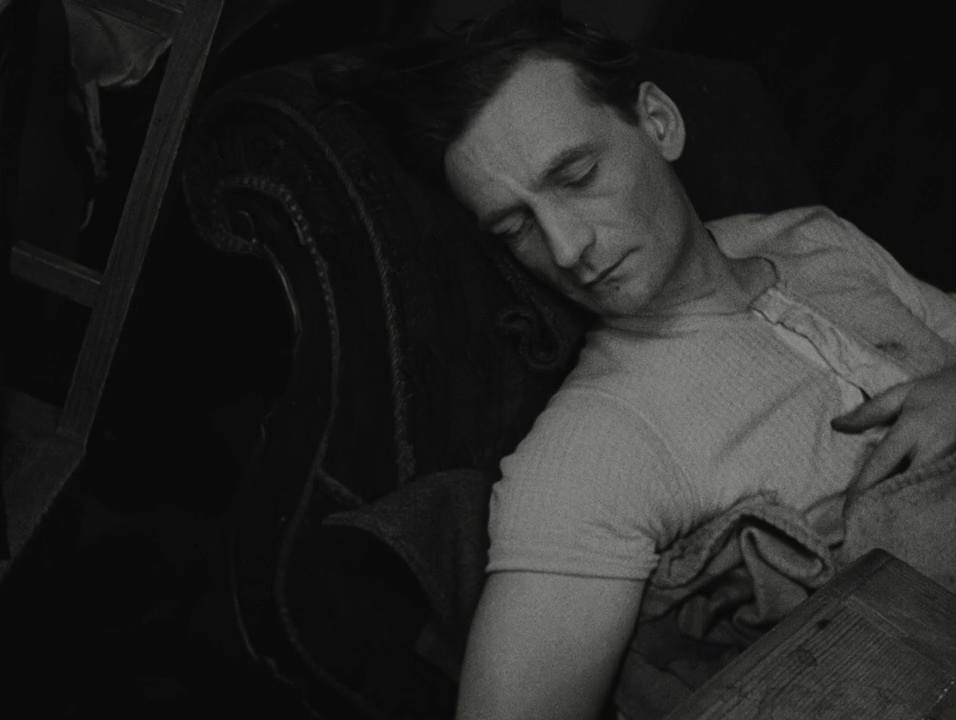
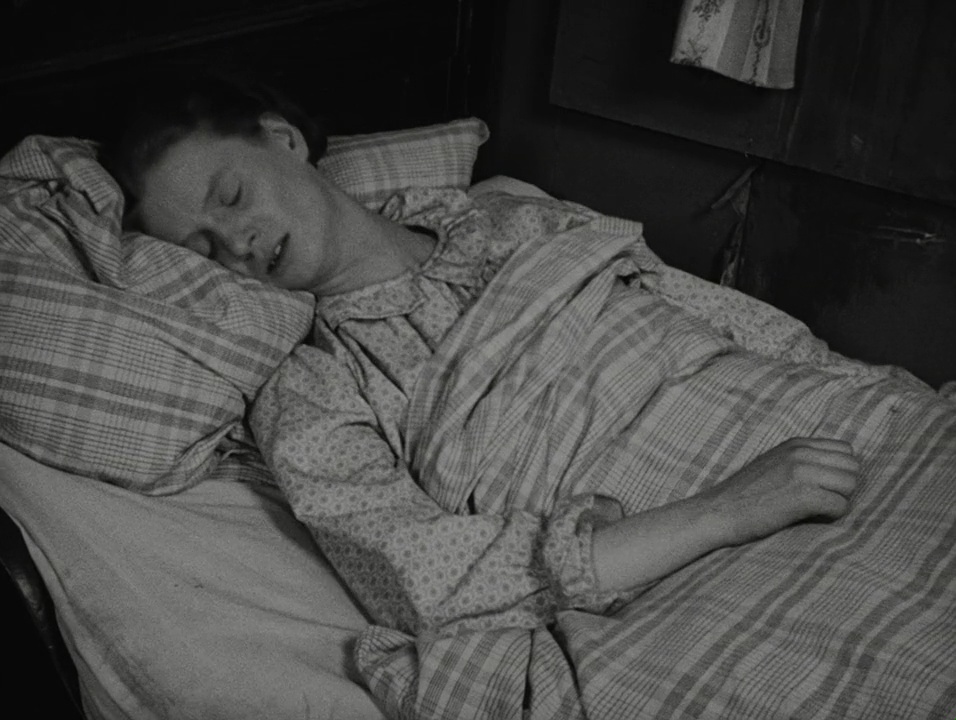
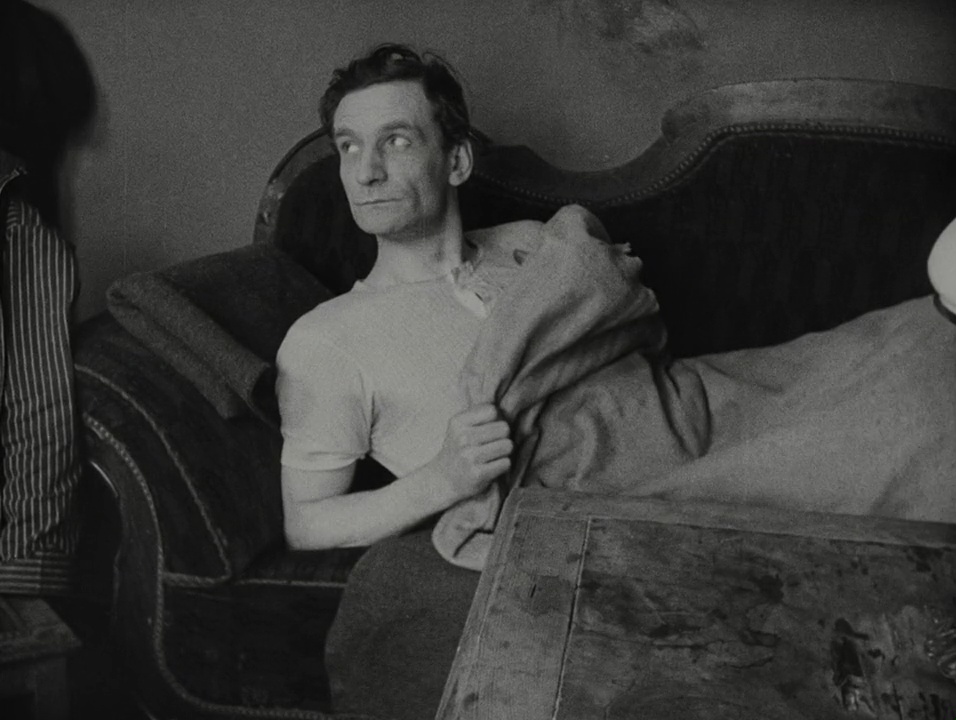
Now cut to another illustration on another wall: an image of liberty urging on a crowd. Another reverse tracking shot, the camera pulling back to reveal the main protagonist’s apartment: The nameless docker sleeps on a sofa, his wife in a single bed, his mother with their child in another single bed. The wife coughs and the camera awkwardly pans down and up the length of her sleeping body: we see the size of the bed, the stiffness of her limbs, the lack of space all around her.

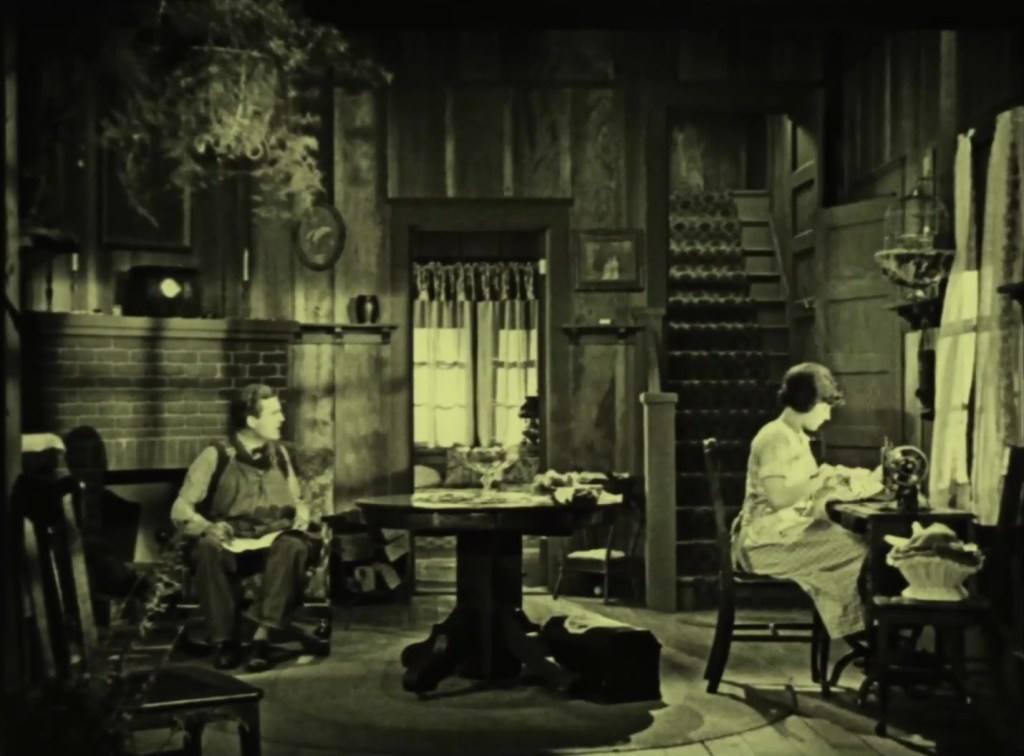
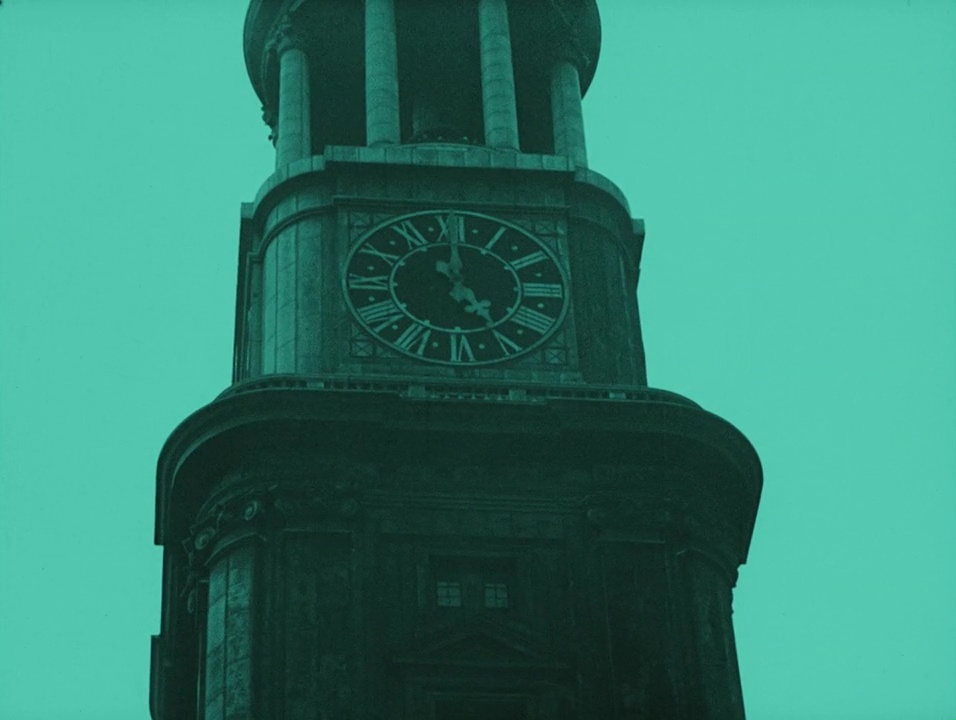
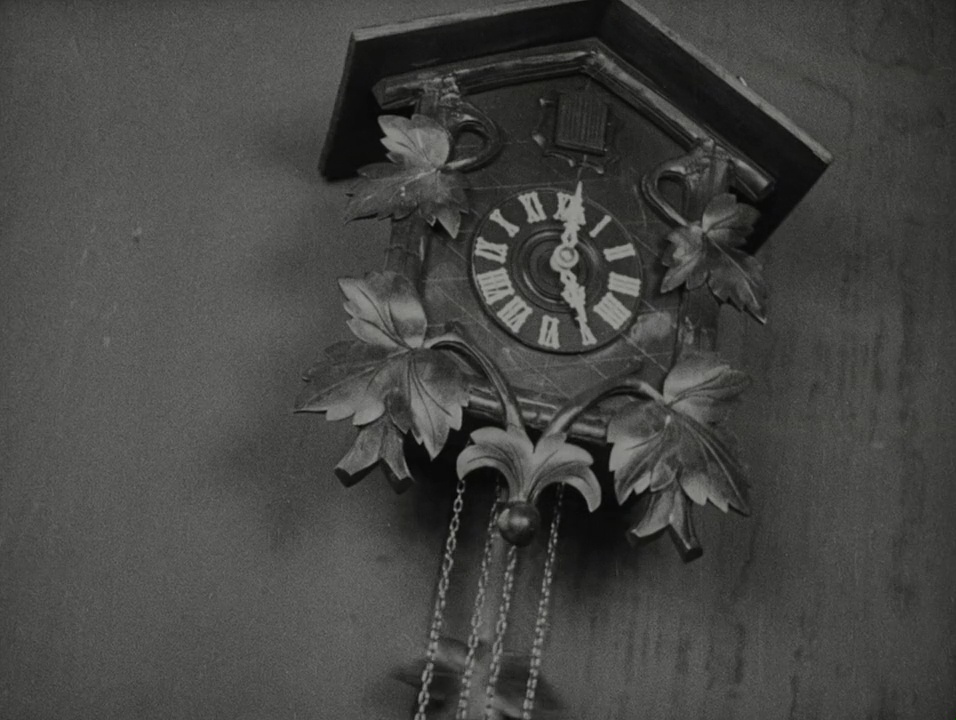
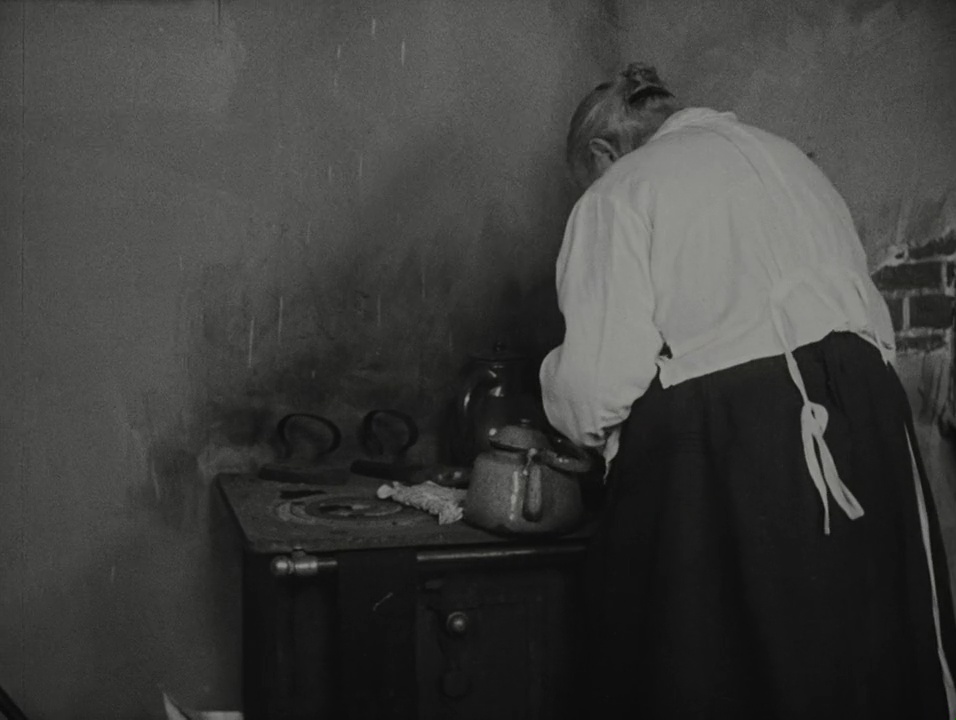
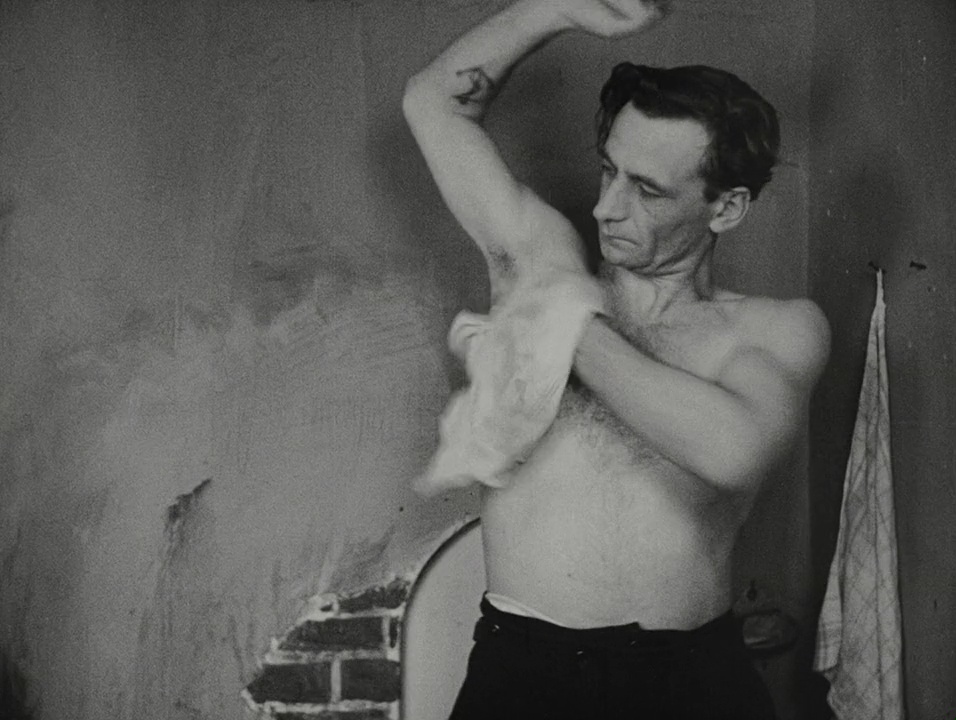
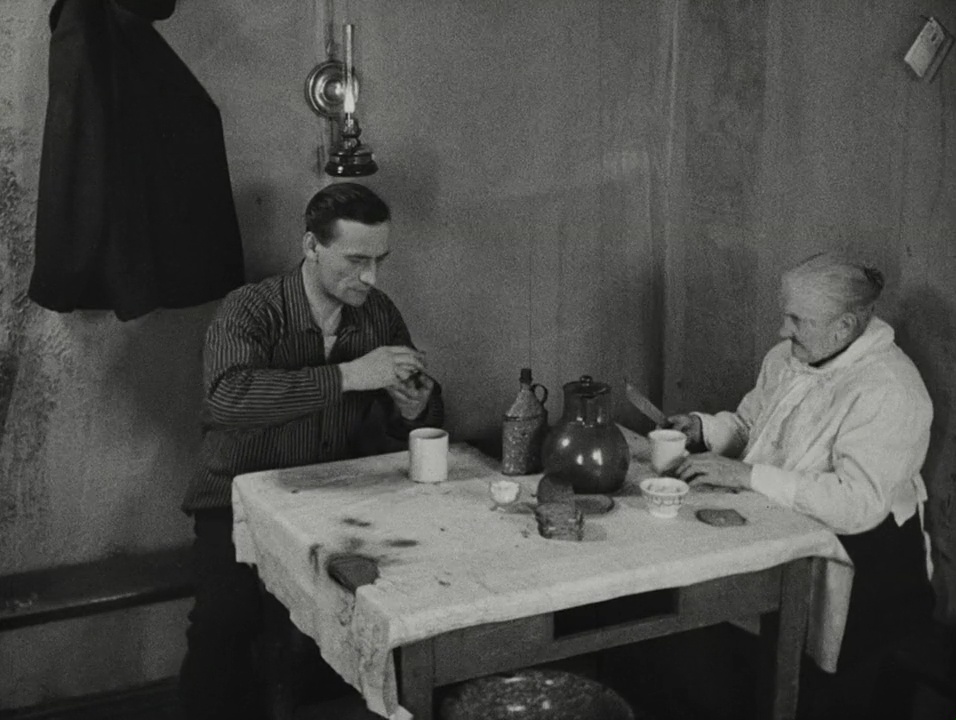
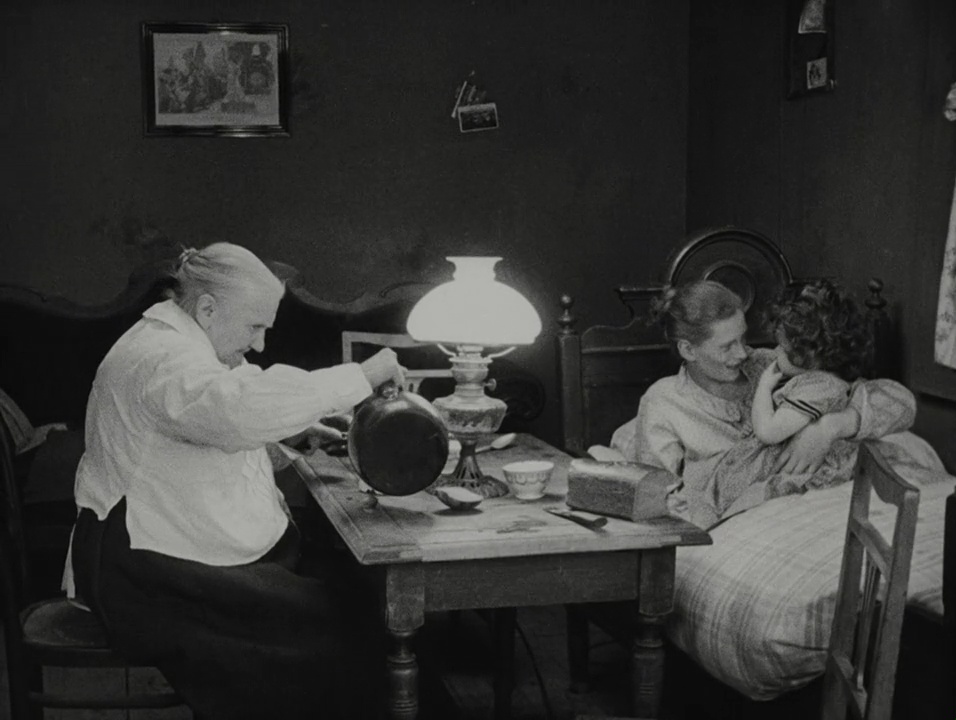
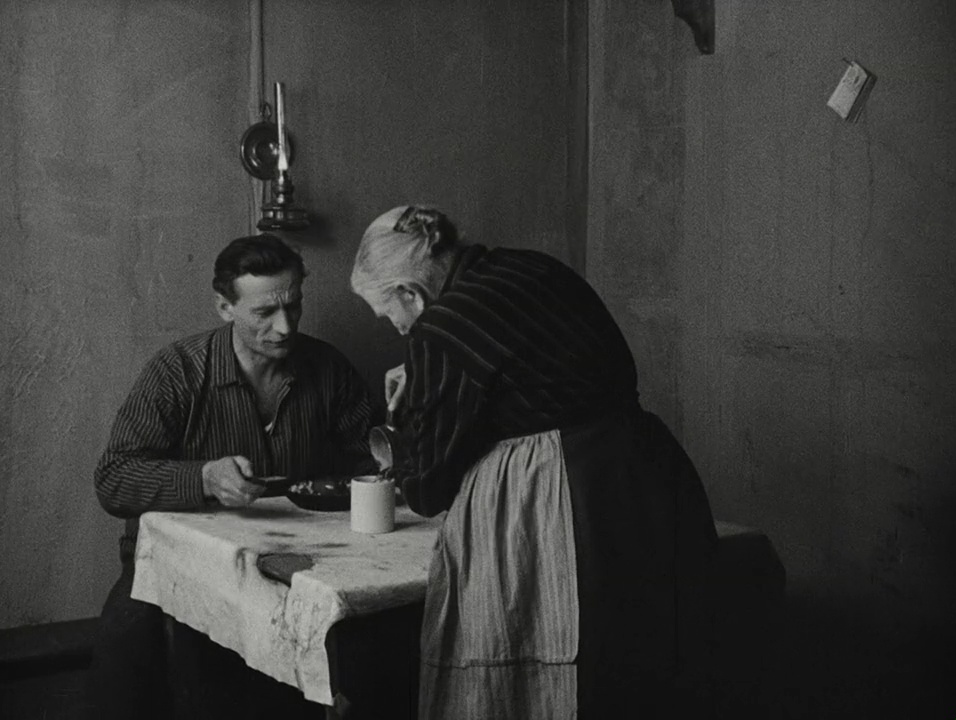
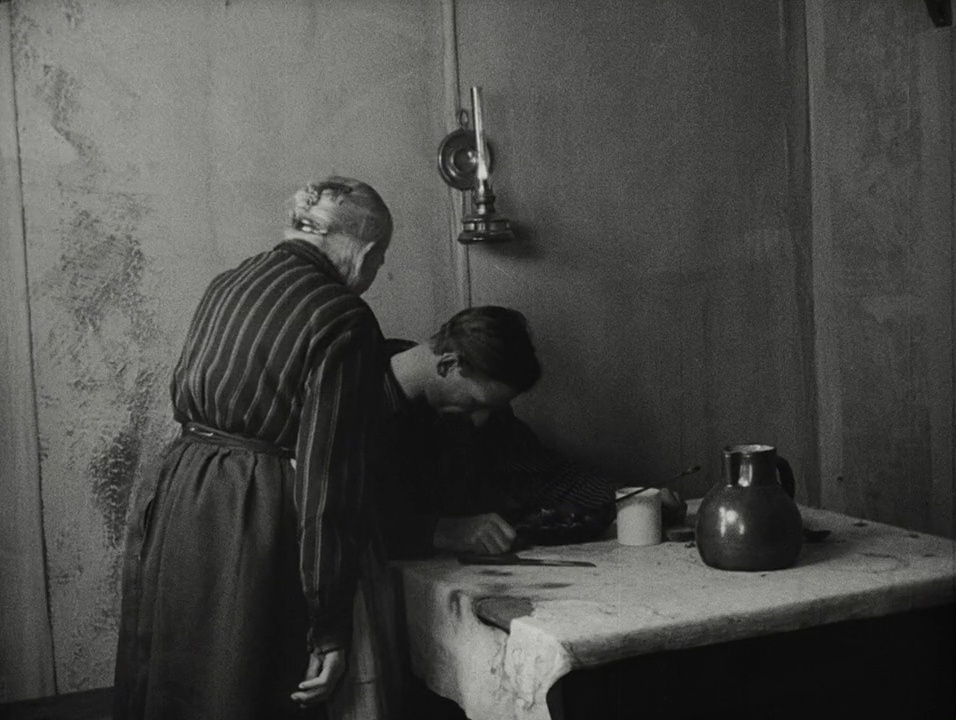
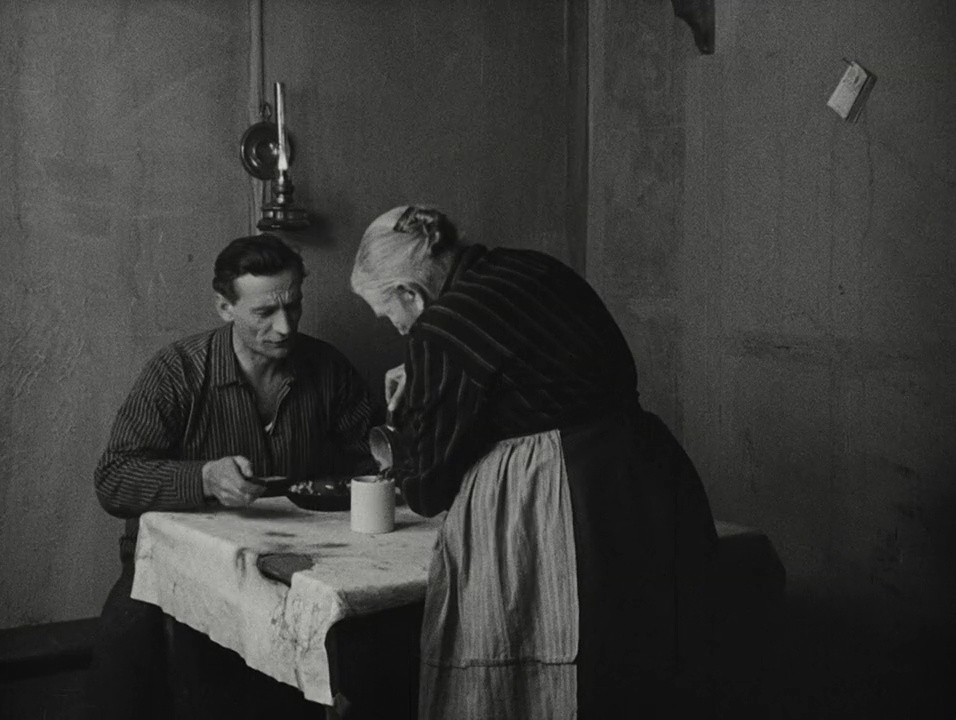
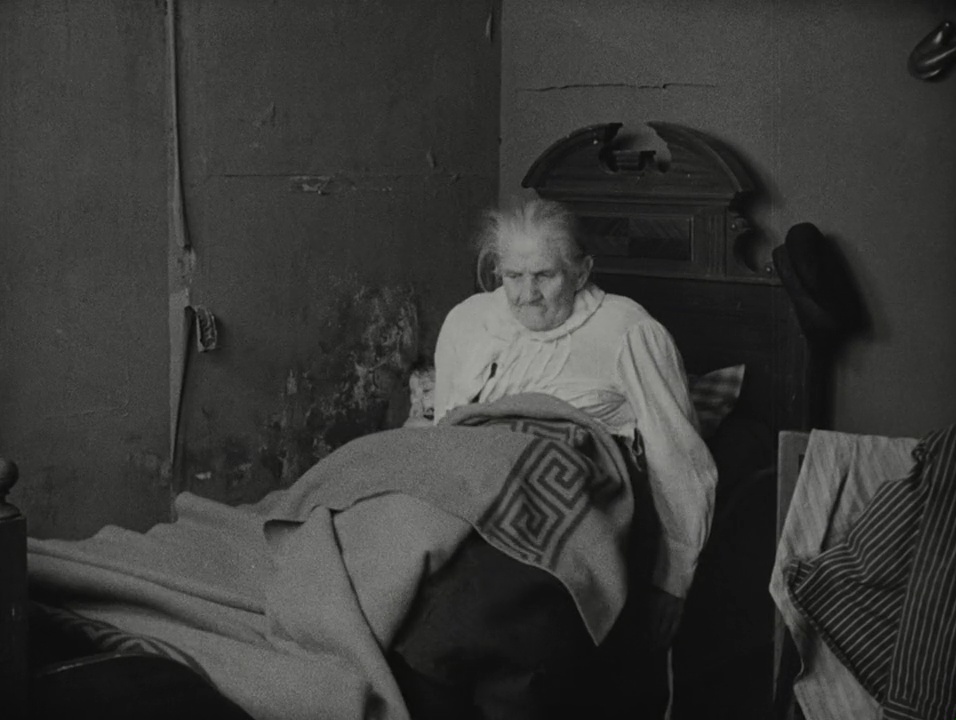
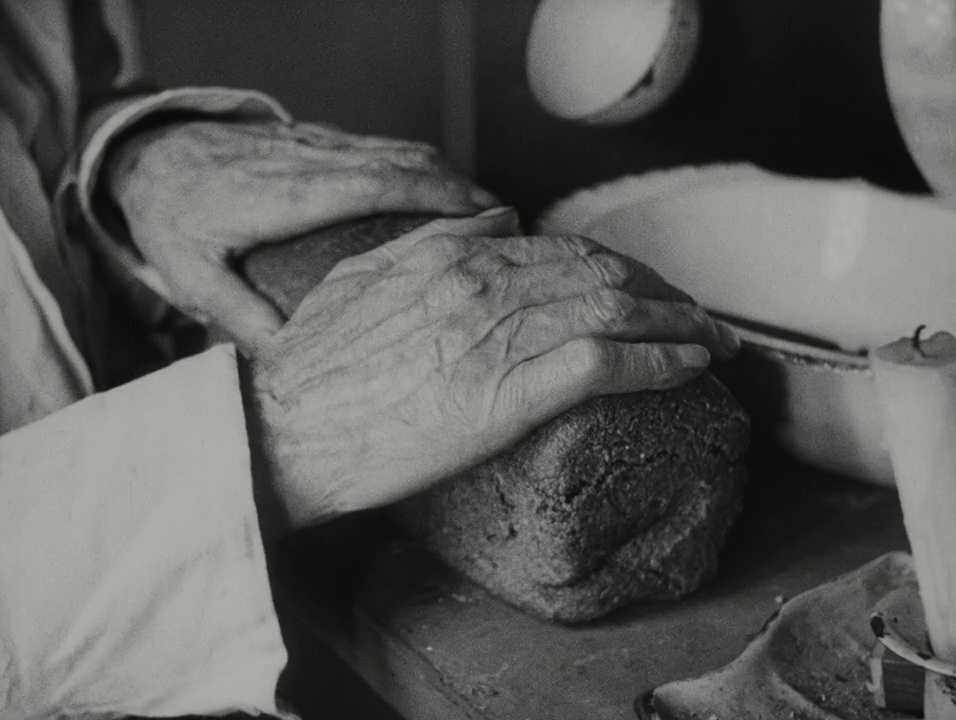
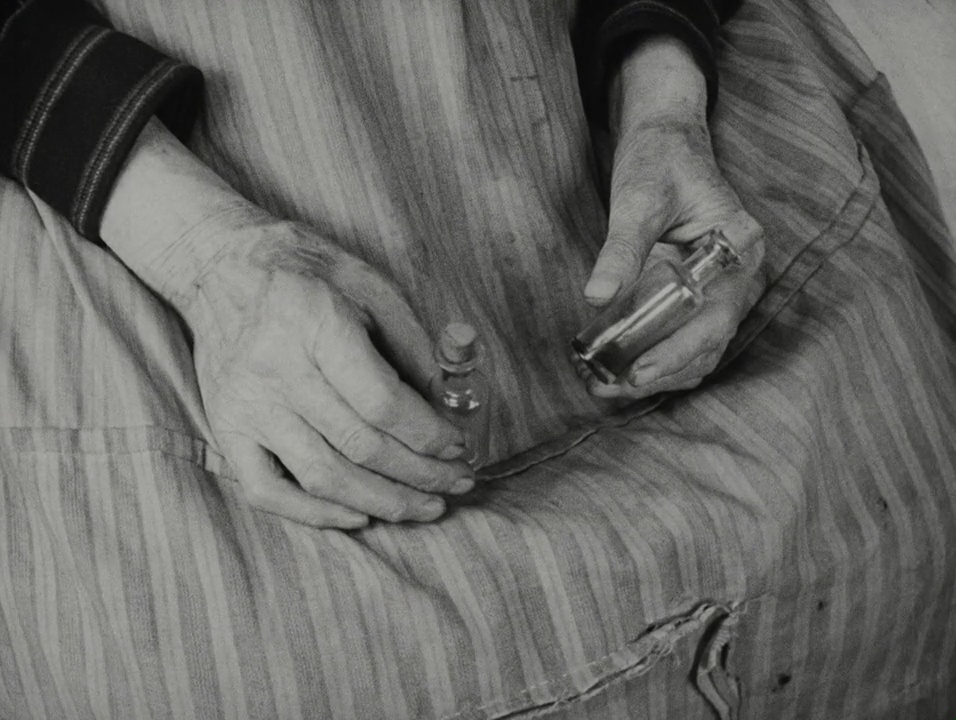
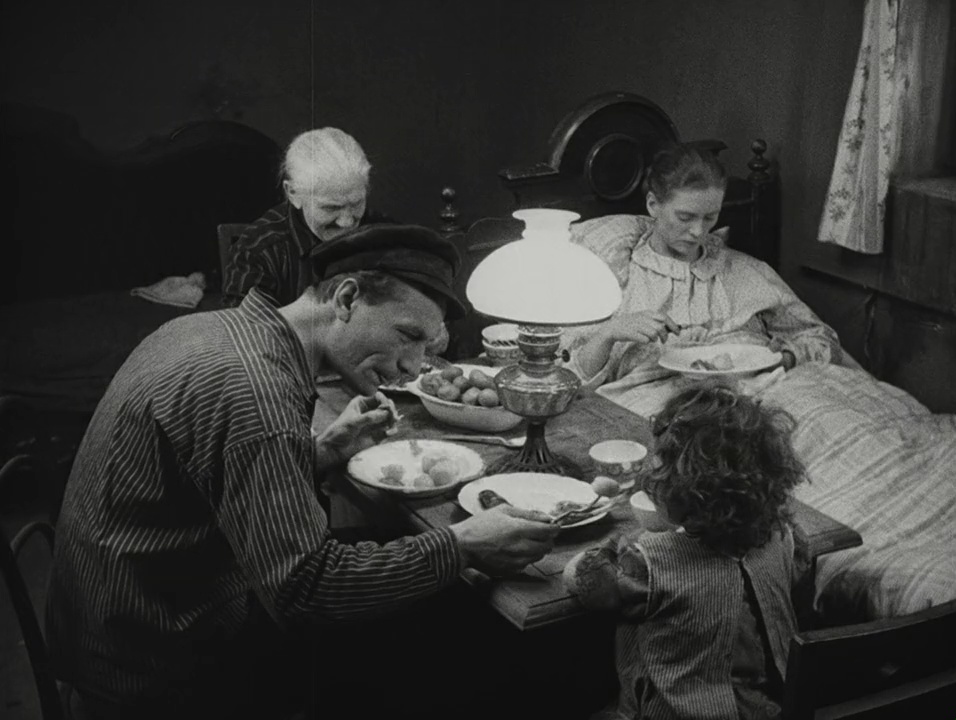
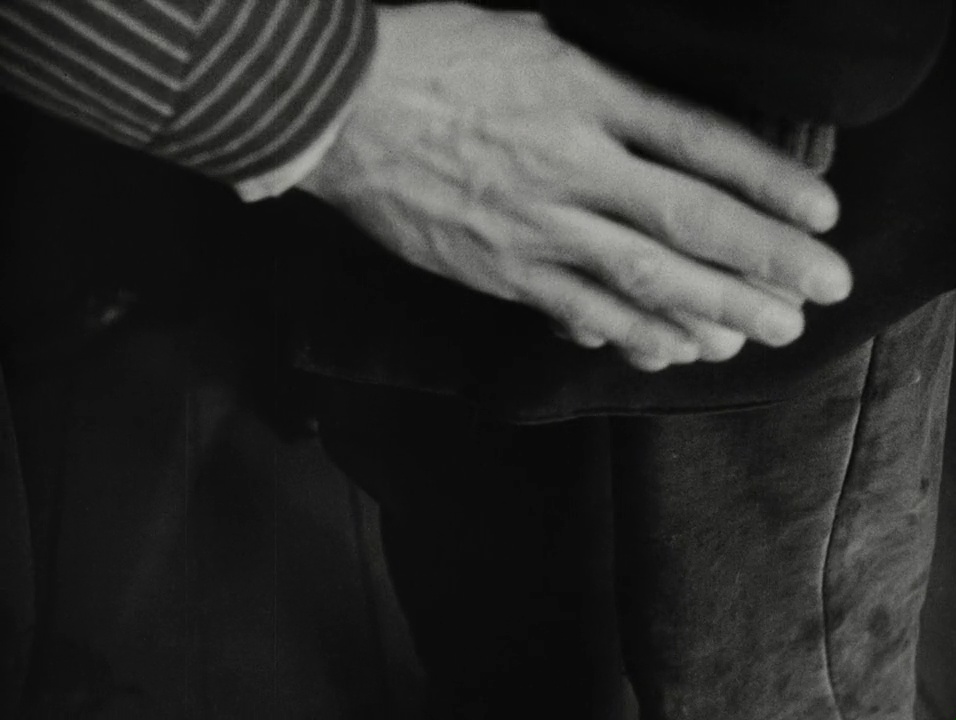
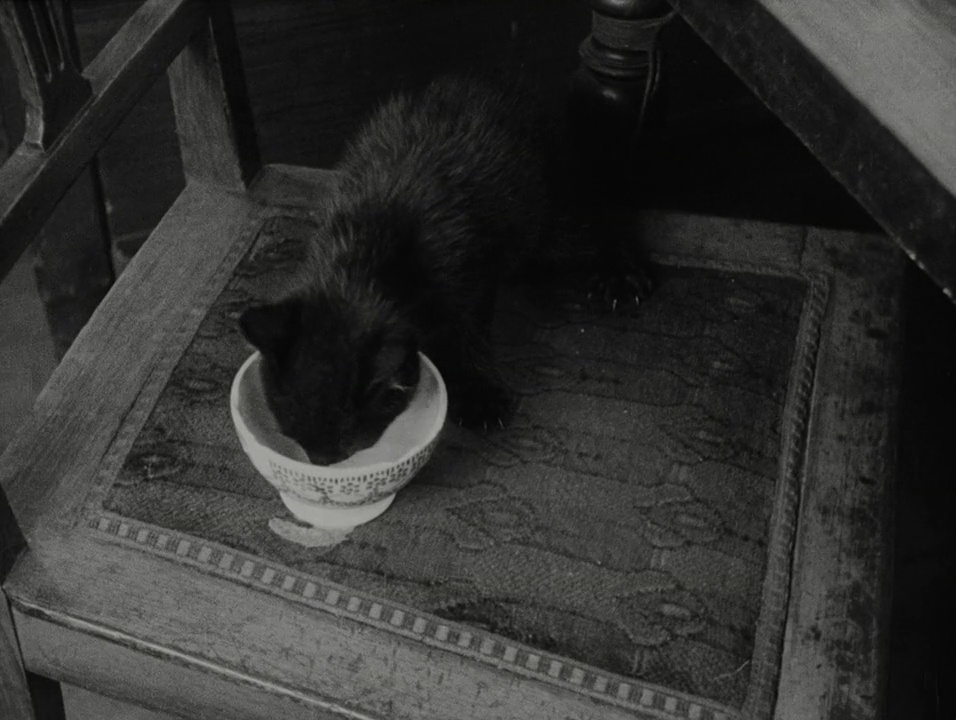
The town clock strikes five in the morning. The clock in the apartment strikes five. The grandmother gets out of bed, puts on her slippers, lights the lamp, goes to the tiny kitchen, lights the stove. The man washes in a sink, towels himself down. In close-up we watch his mother’s ancient hands making the morning coffee, buttering thinly sliced bread. They sit together and eat: one slice of bread each. He sprinkles a pinch of salt on the buttered bread. The camera takes in their breakfast in a single shot: the rationing of the butter, the dividing of the coffee into a flask for him to take to work. Close-ups of their few words; no intertitles. Back to the establishing shot (which establishes only the extremely limited confines of the kitchen table in the corner of the room), a few more unsubtitled words, then he puts on his hat and jacket and heads out into the snow. The mother, wife, and child sit in the main room and eat their slices of bread. The cat laps at a cup. End of Act 1, an “act” that has consisted in the recording of remarkably prosaic details. It’s just everyday life, the morning routine, presented without embellishment. It’s plain, sparse, terse.

Act 2. The docks. Men crowd onto the decks of roofless ferries and are taken across the water to work. The water is black beneath the ice. The smoke is white against the city, black against the sky.

In an office, a clerk bows before the portrait of the Kaiser, then places the day’s papers on a desk and leaves.

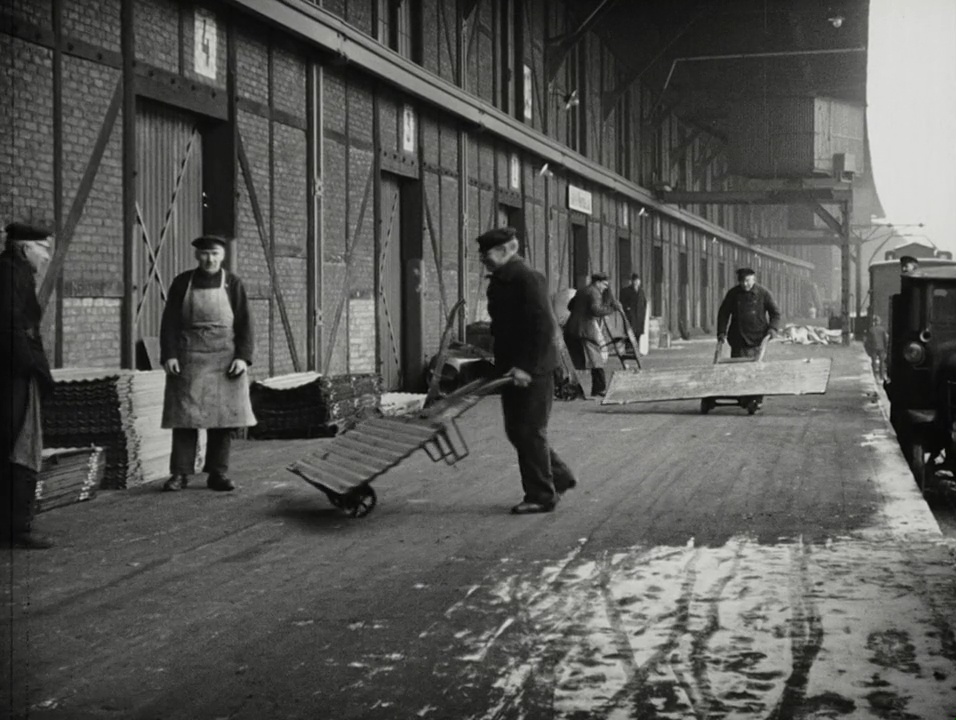
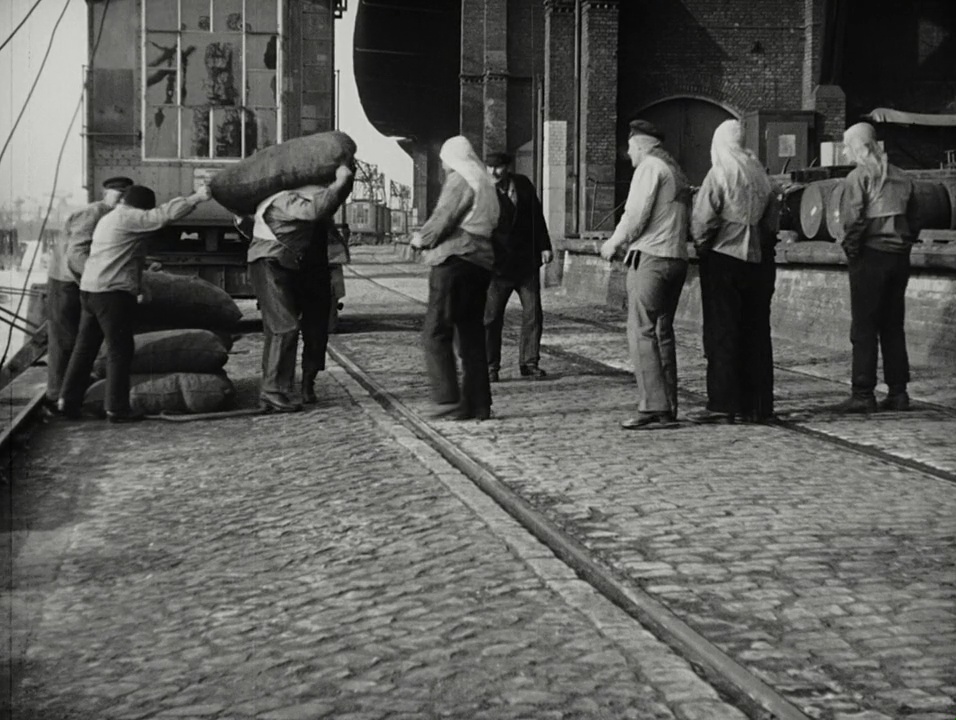
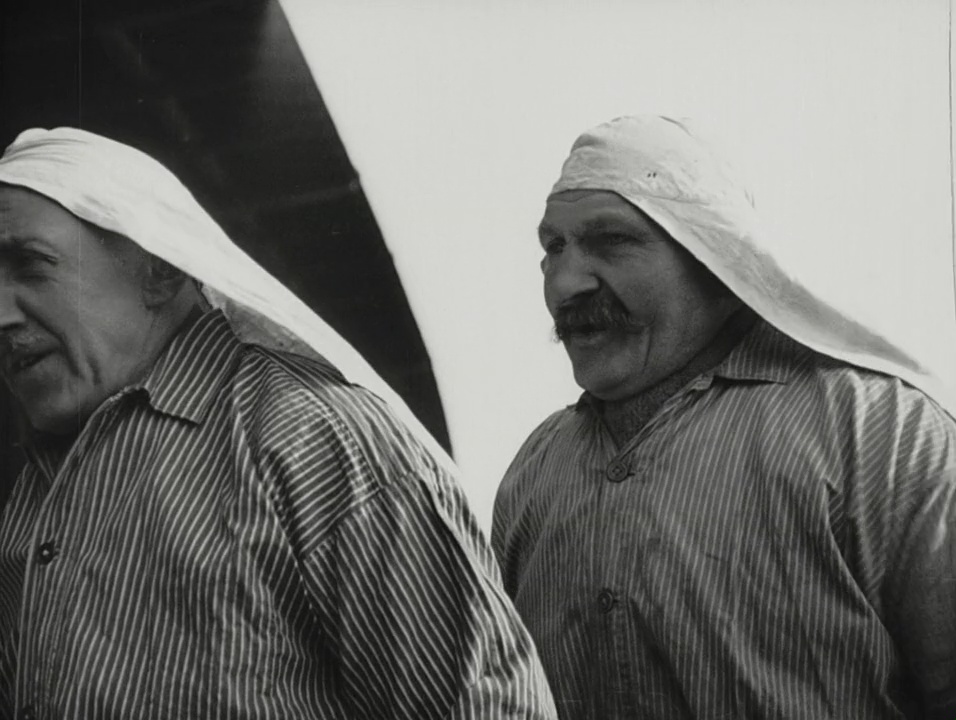
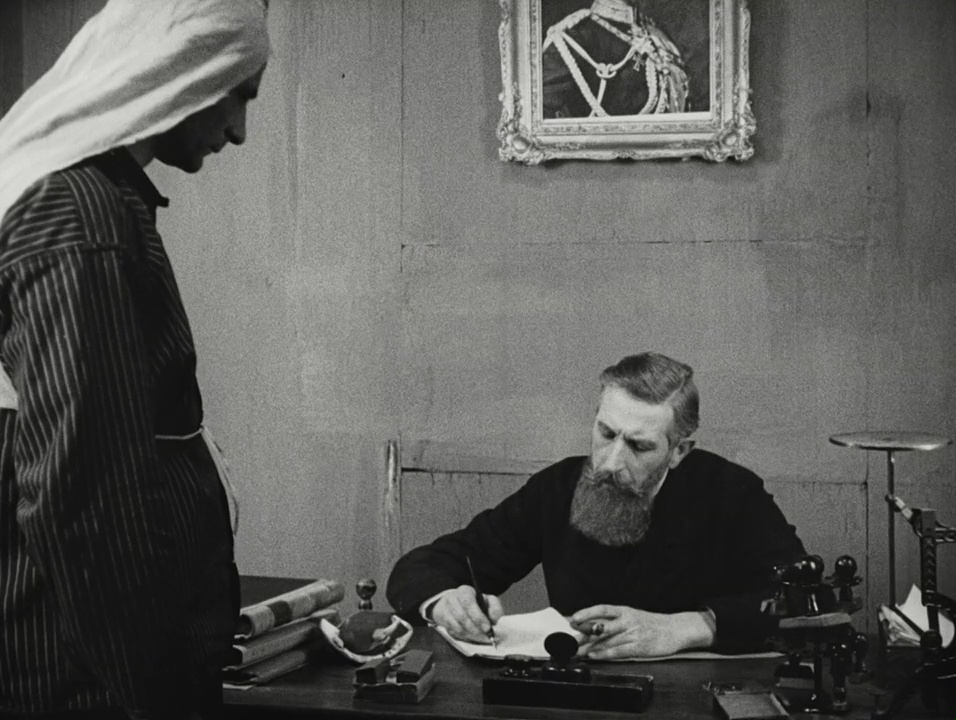
Workers unload the cargo from large ships. It’s daylight now, but the although the tinting has gone the monochrome shots of the docks are just as cold. The dockers wear flat caps, or protective sheets to carry the sacks on their heads. The foreman pushes them on. The workers are angry. The docker leads a delegation to demand a pay rise. He speaks bluntly, the film’s titles render his words briefly. A bearded official sits at the desk below the image of the Kaiser. The gilt of its frame, and the painted gilt of the Kaiser’s uniform, are the only glimpses of luxury we see in the film. The pay rise is rejected: the money is to be reinvested, but not in the workforce.

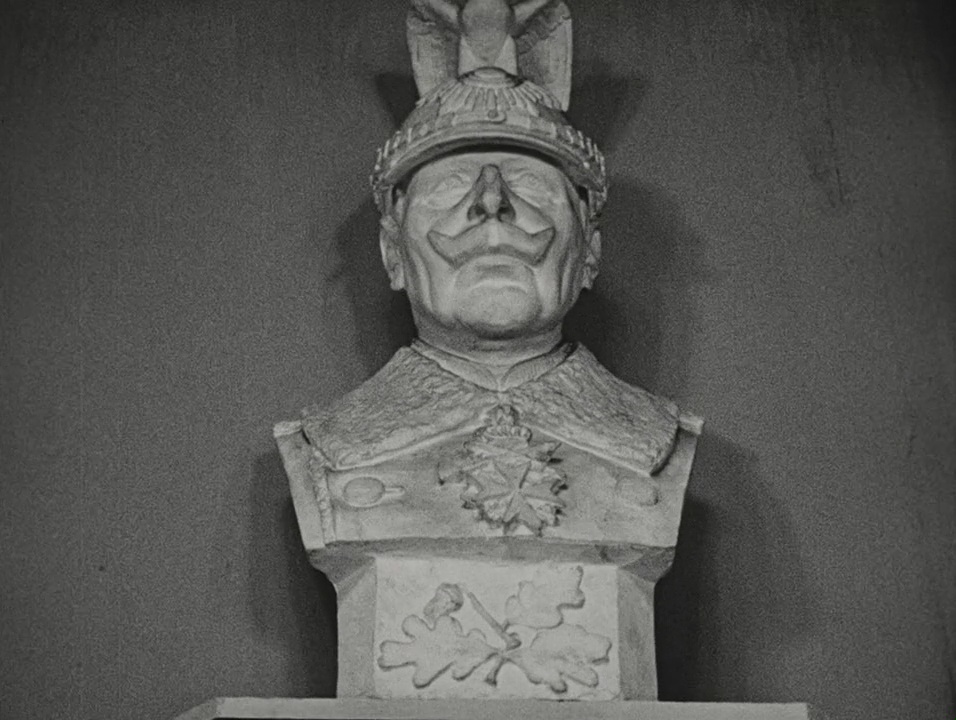
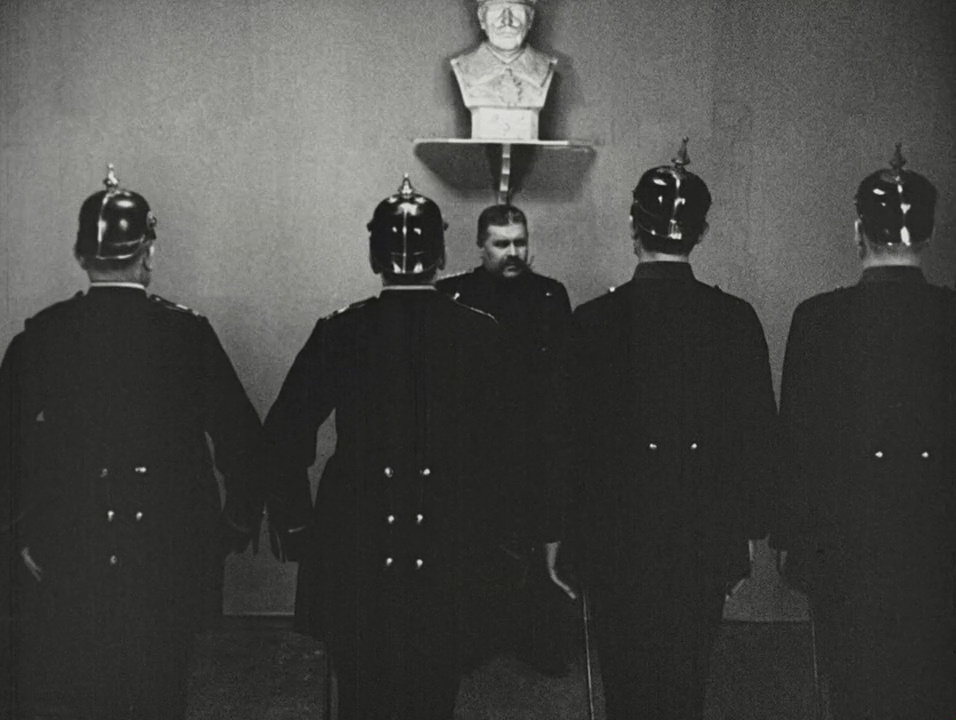
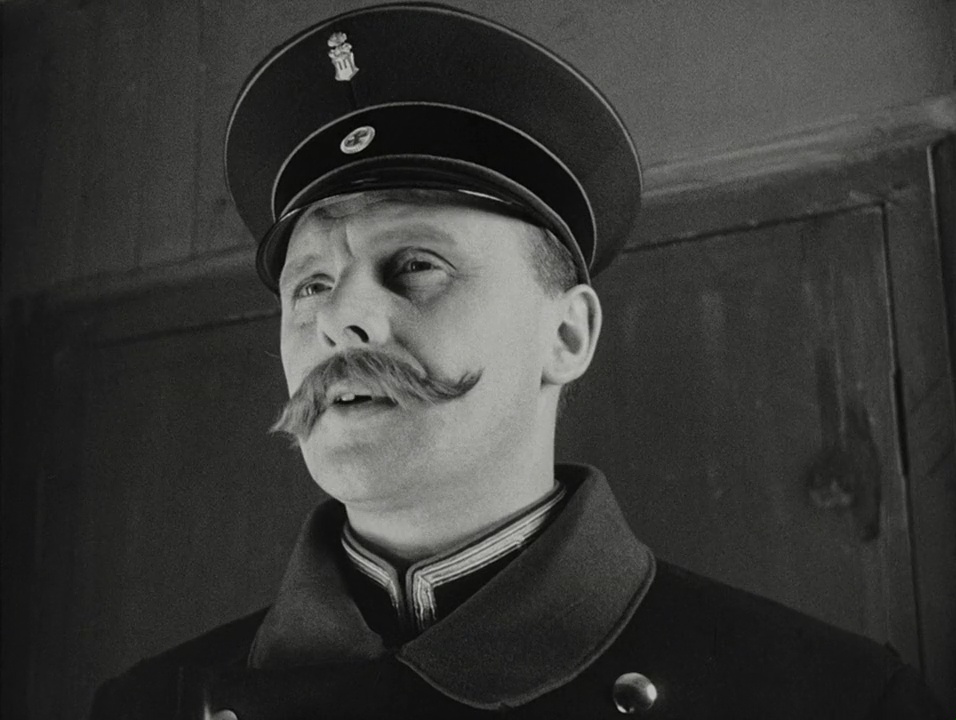
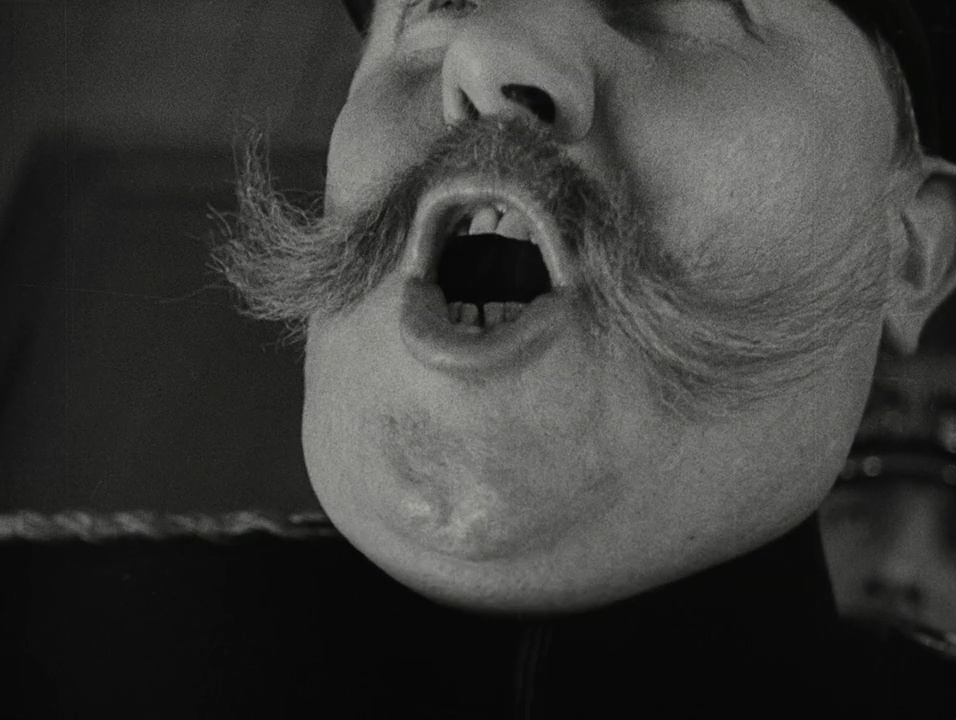
The police station. The camera titles down from the bust of the Kaiser to the moustached face of an officer. His men—including the docker’s brother—look tired. They salute and wearily about-face.

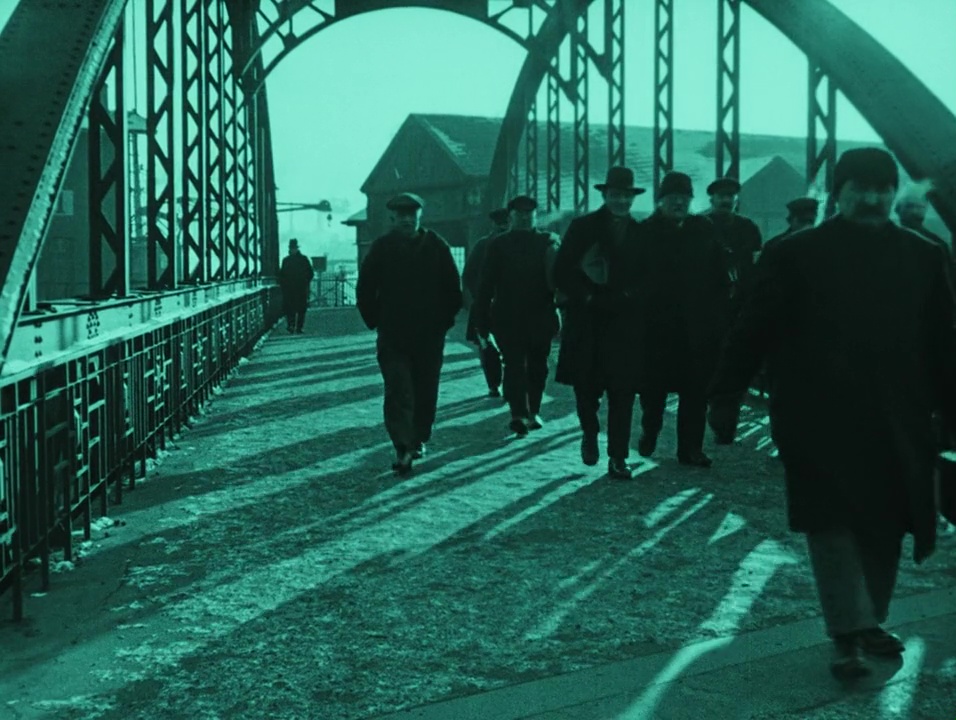
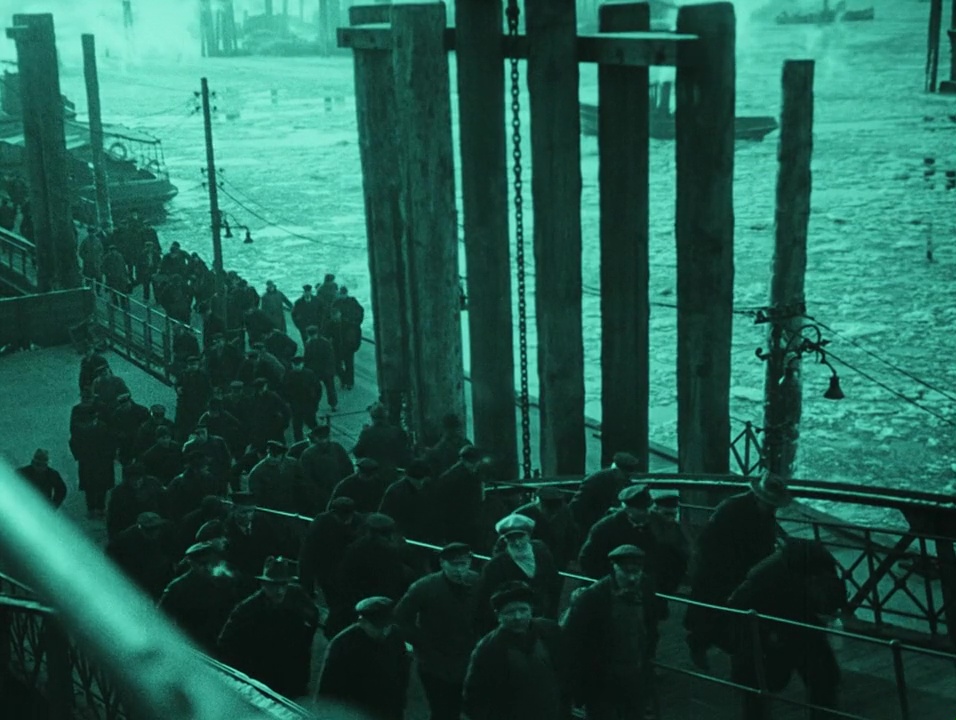
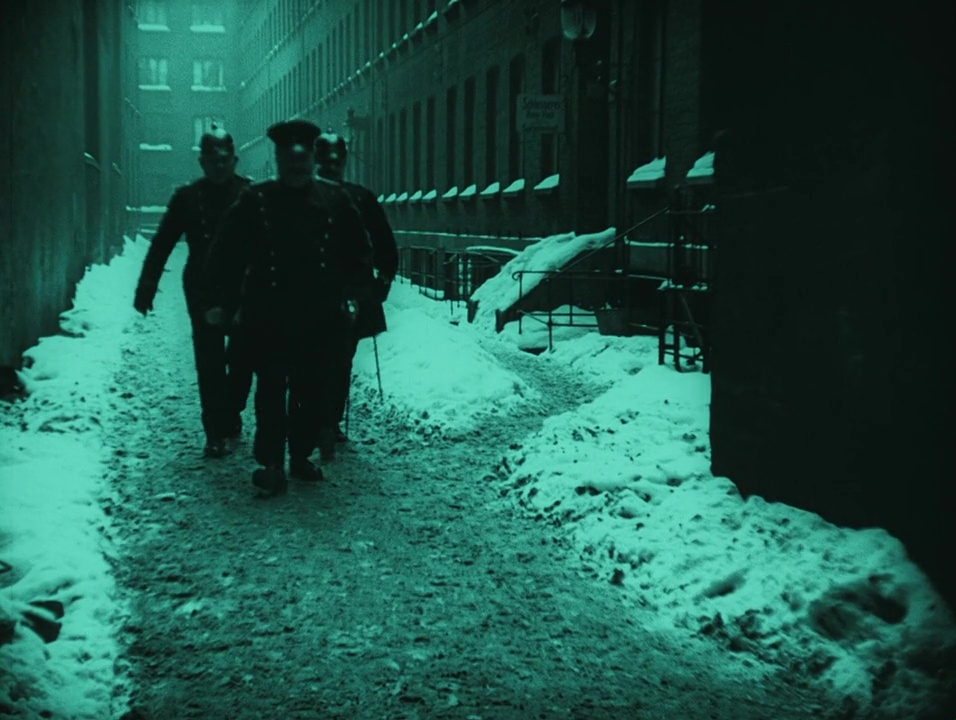
“After 36 hours of toil”: a shift change. The turquoise tinting has returned: it’s the evening, which is indistinguishable from the morning. Weary lines of workers leave the boats, tramp up gangways, over footbridges.

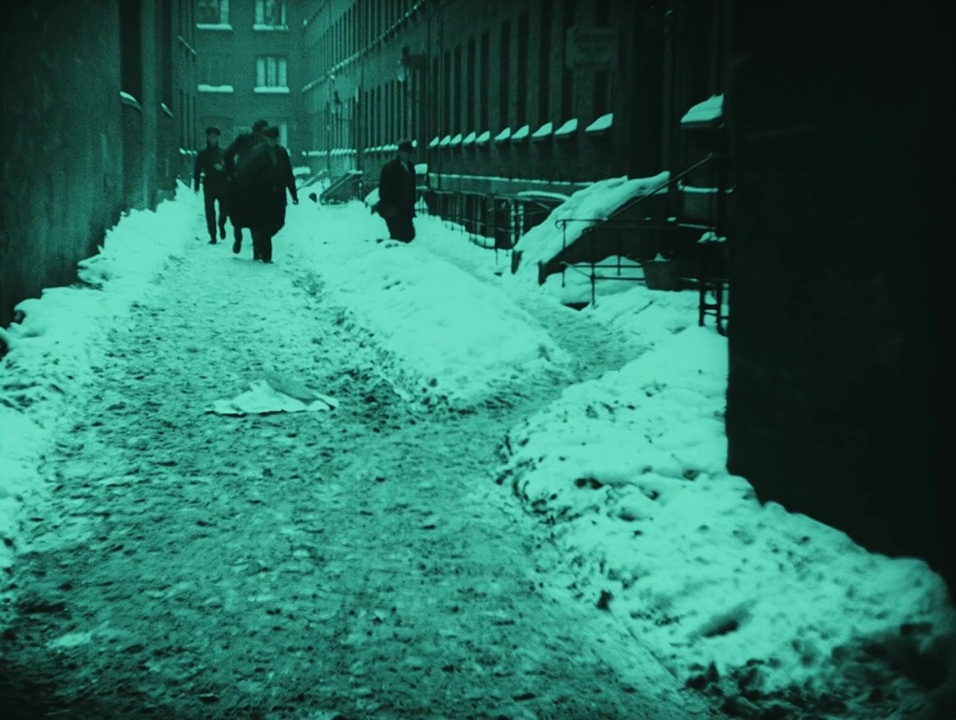
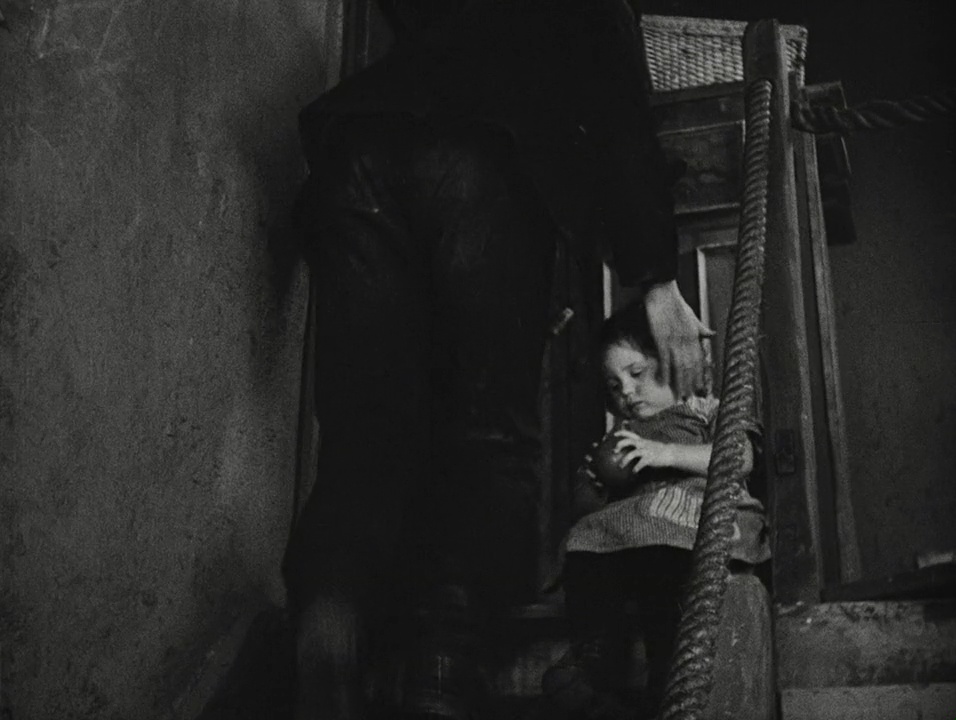
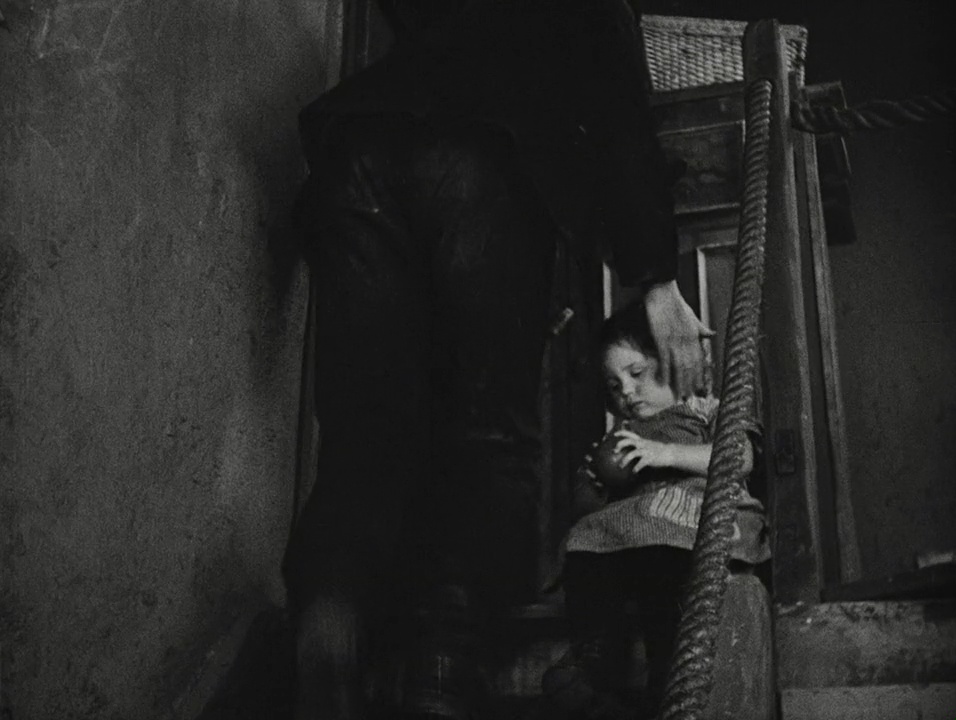
Act 3. The return home. Snowbound streets. Greyish sludge along the narrow paths. Darks lines of indistinguishable tenements. The child on the steps outside the apartment. Her father greets her, goes inside—straight to the kitchen table. A pan of food and a cup of coffee is instantly provided by his mother. The docker eats in silence, alone, wiping his mouth on his sleeve, mopping his brow. But the bread falls from his hand. He falls asleep at his meal.

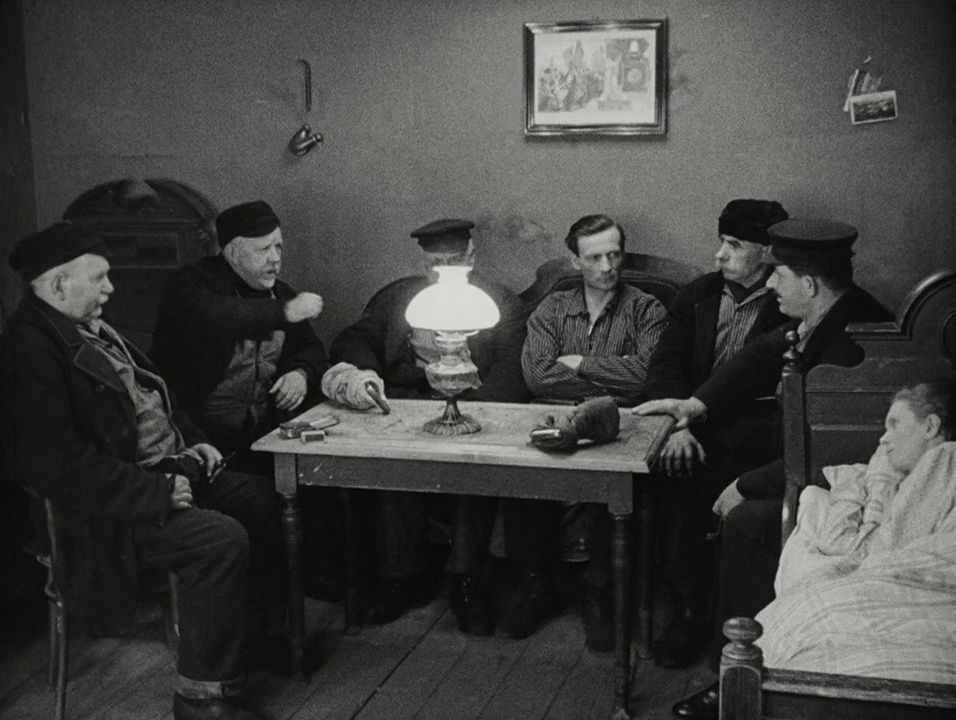
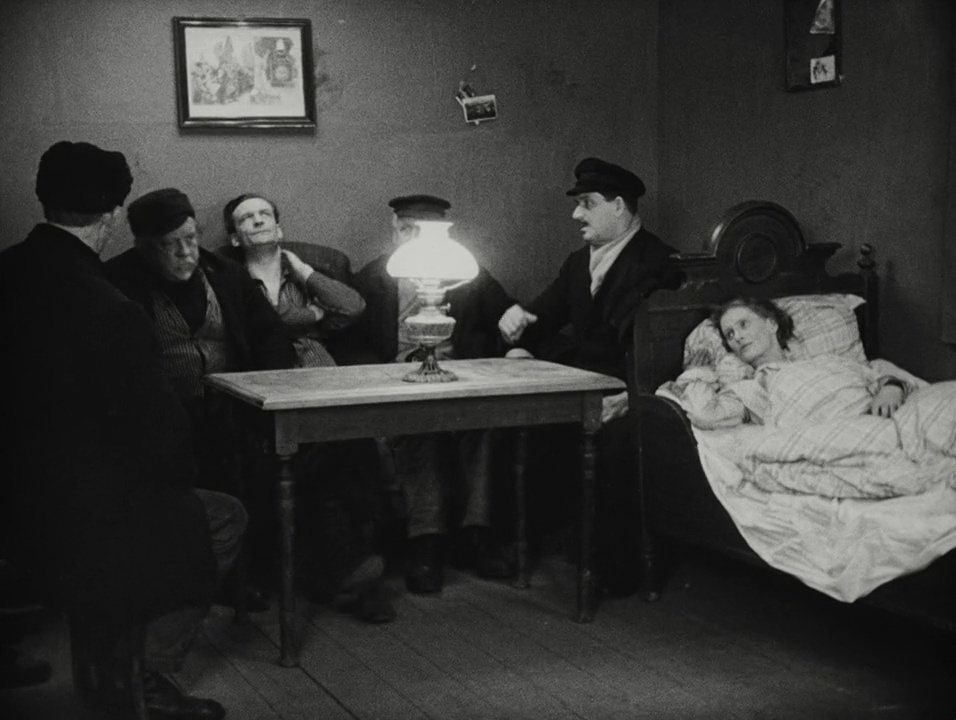
A line of dockers arrive, ascend to the flat. They sit on what we know is the man’s bed, the only space in the house. Look how Hochbaum frames them: the men gathered around a tiny table, while the wife lies in the neighbouring bed, her face just in frame on the right. Only when the labour leader arrives, and gently taps her on the shoulder as he passes, does anyone acknowledge her presence in the room. (But the camera has noticed: it cannot not but notice, the room is so small.)

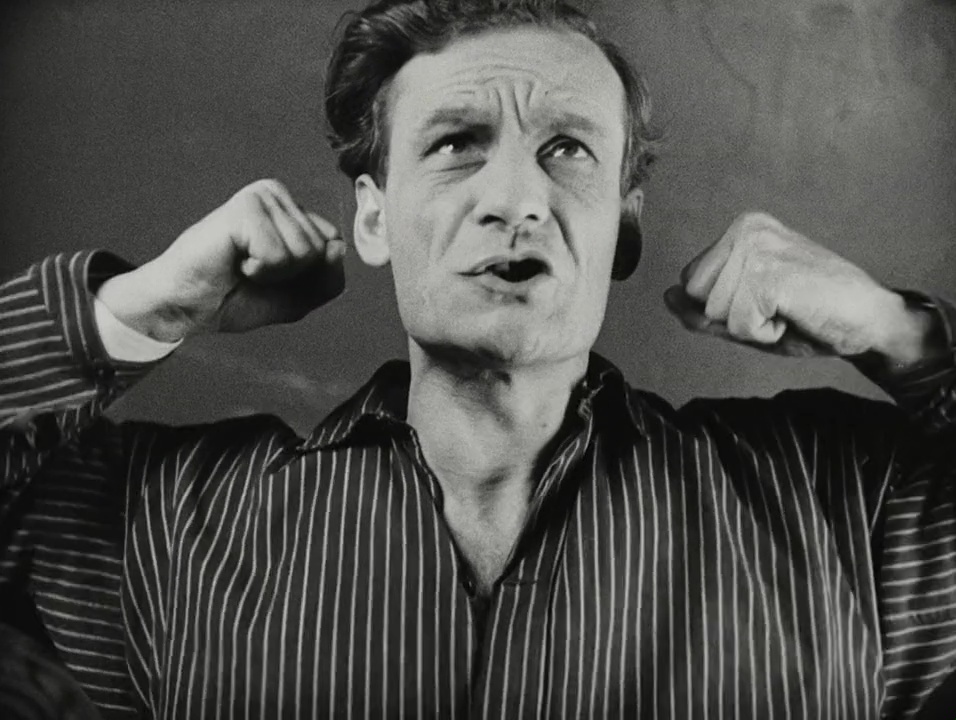
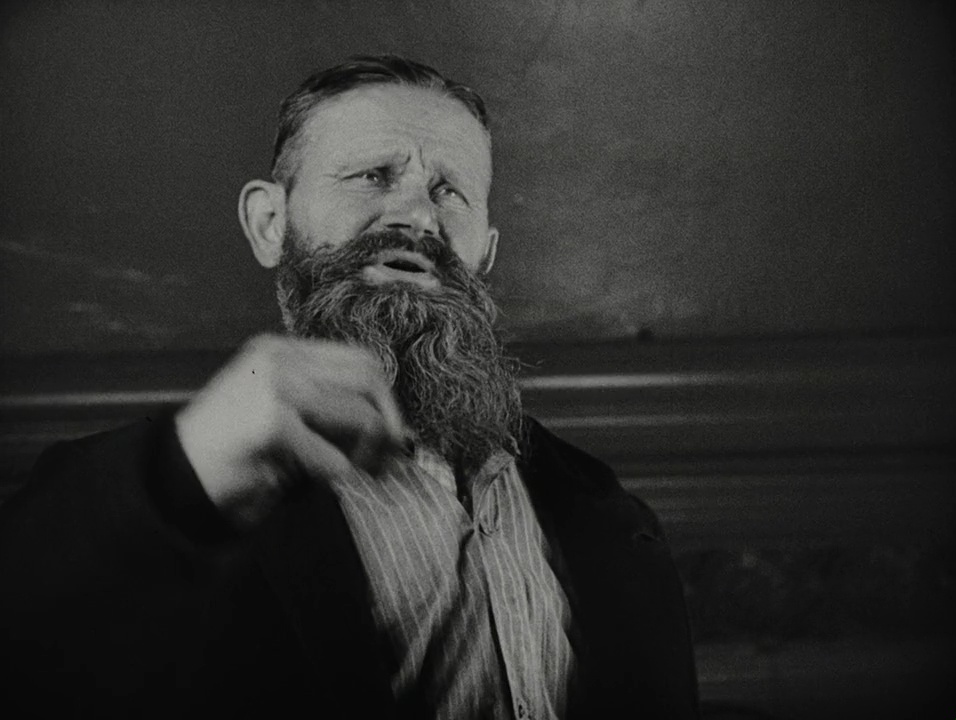
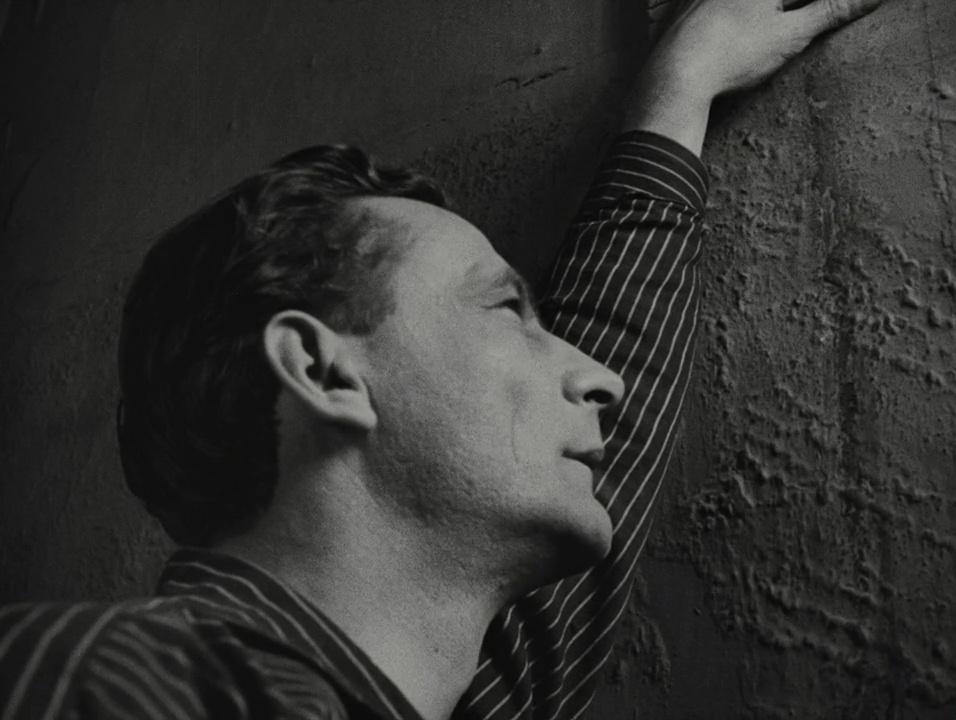
The dockers, at the main protagonist’s urging, agree to strike. Close-ups of his face, from below, earnest, impassioned; of hands clasped. The editing is awkward, unpolished; the shots hold a little too long, or not long enough.

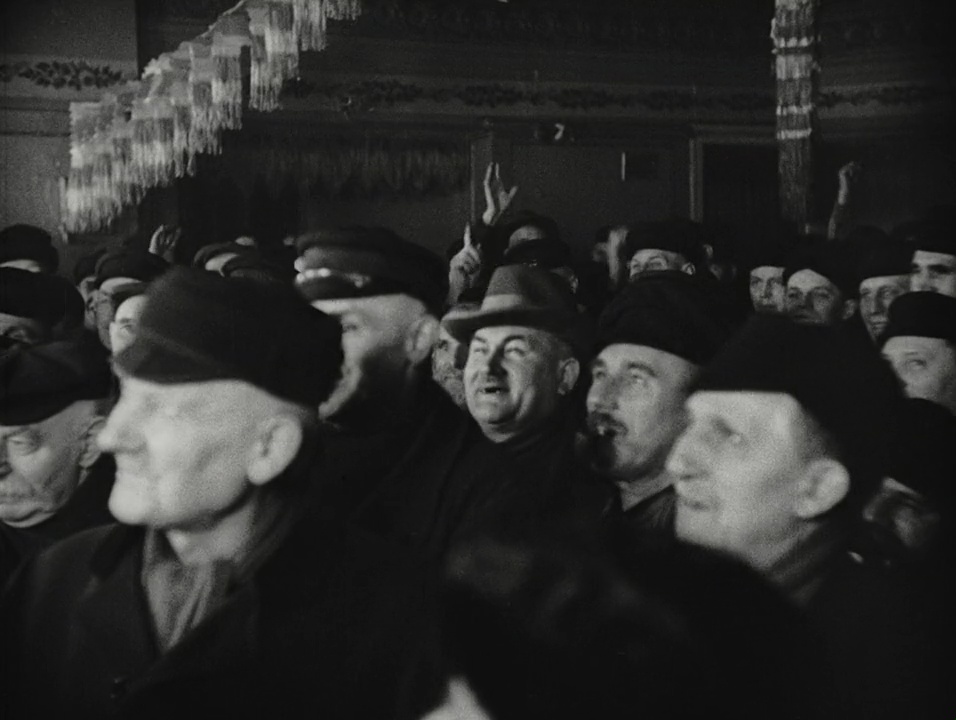
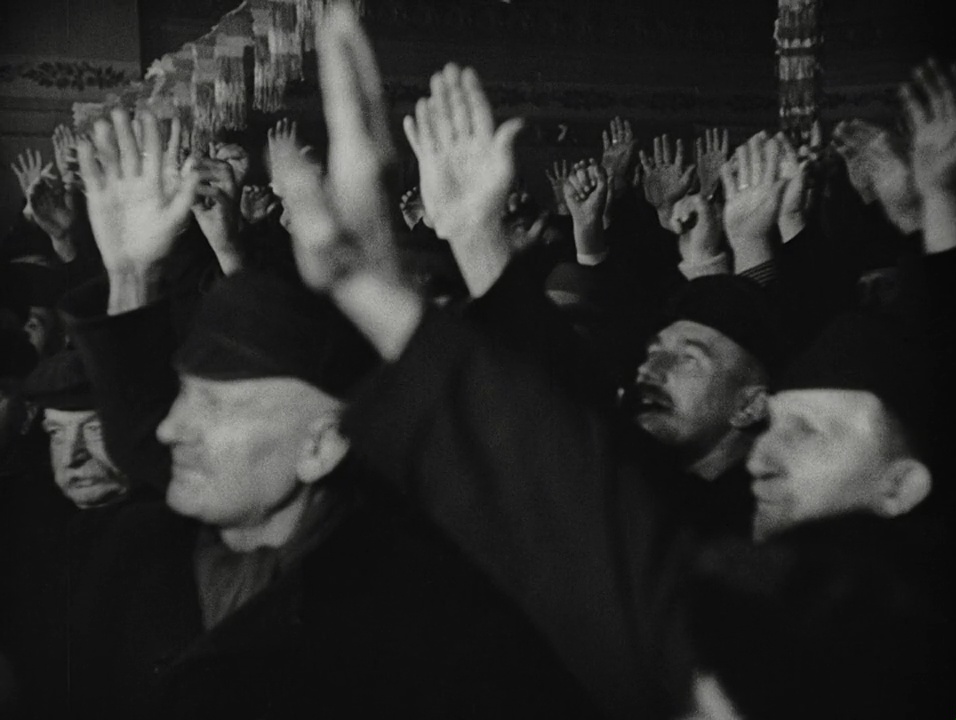
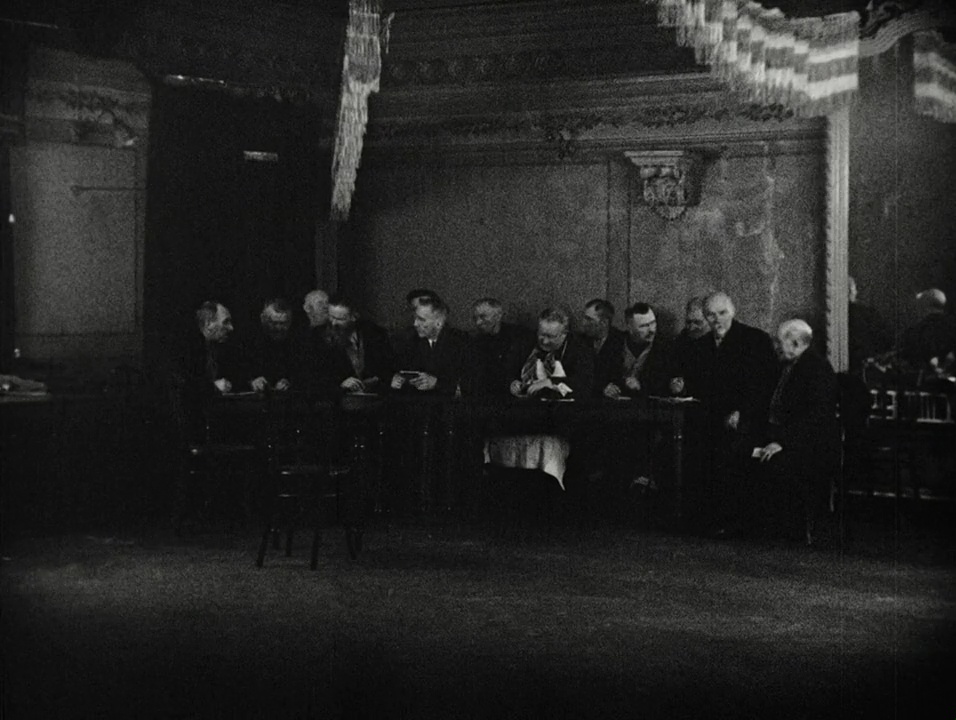
The meeting of the workers. Real faces, working faces. Faces that have known manual labour their whole lives. Close-ups of men speechifying, waving fists. They agree to strike.

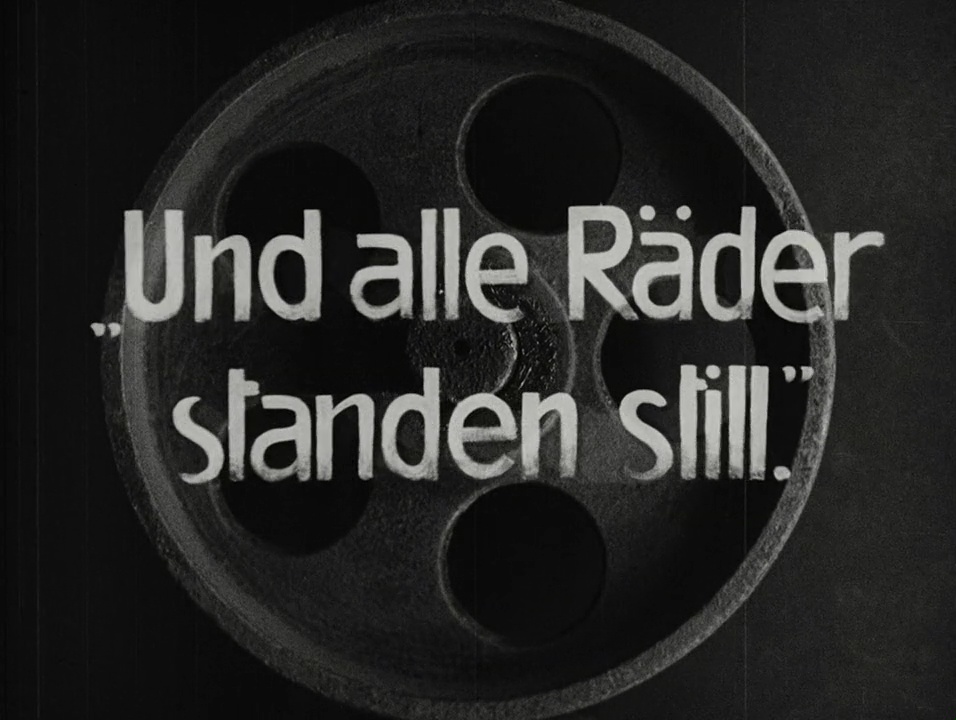
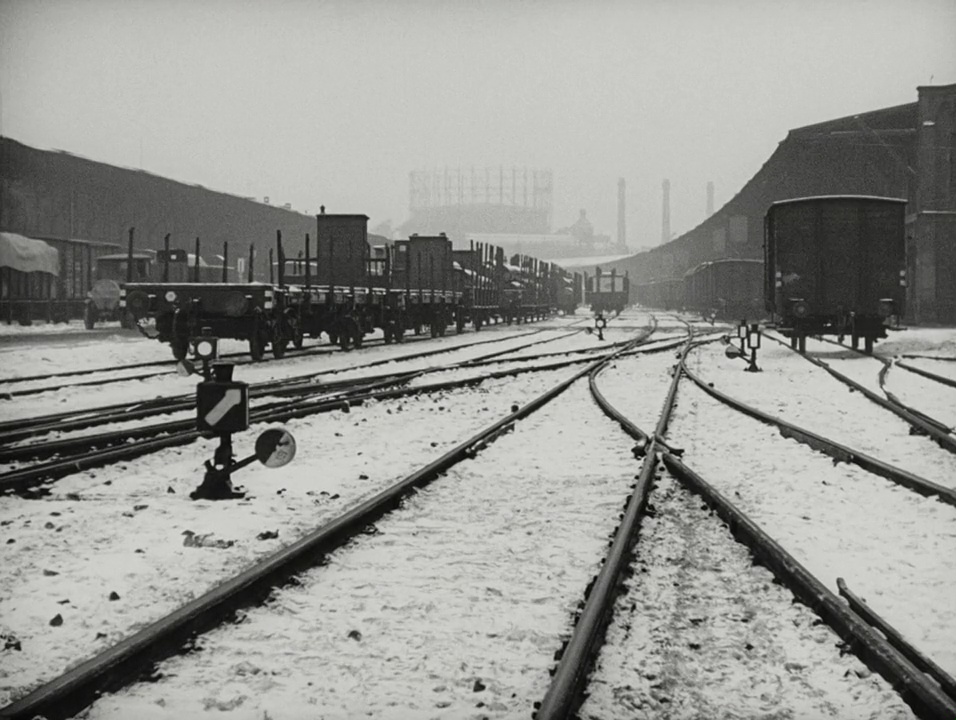
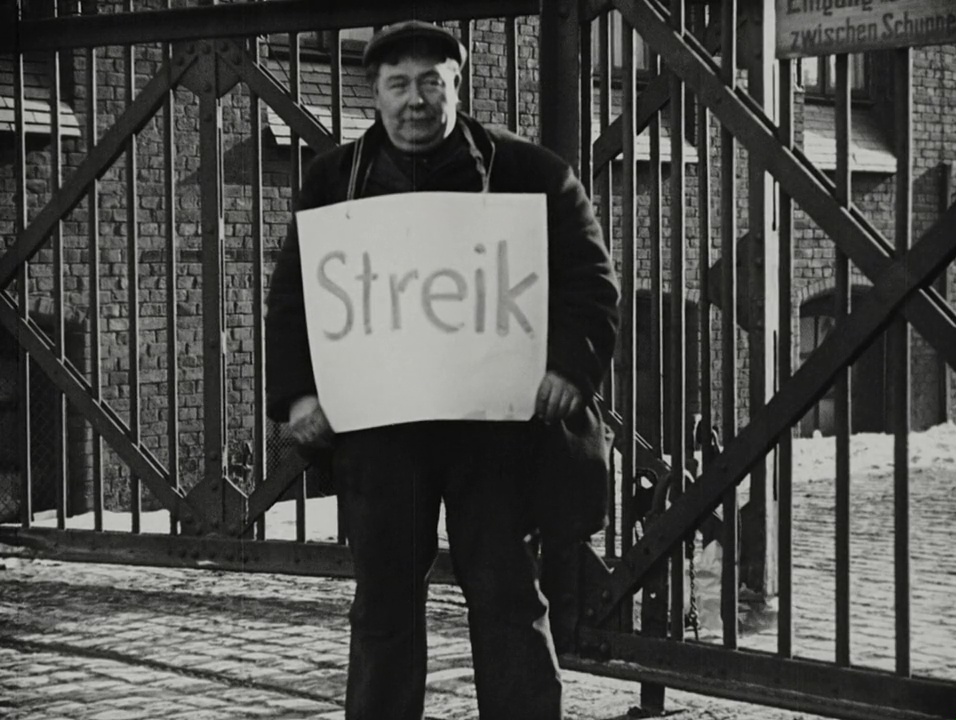
“And all the wheels stood still.” Details of the silent port: ships sat in the tides of ice. Unmoving trains. A man standing at the dockland gates, holding a placard that says: “Strike”. End of Acct 3.

Act 4. The clock strikes five. The docker turns over and goes back to sleep. But his mother still gets up and goes to the kitchen. She gently strokes the loaf of bread. She knows it will have to last now that their income has ceased. It’s a potent image, and one of the ways in which Hochbaum gently complicates the narrative. The men take action, but the women in the household take the consequences.

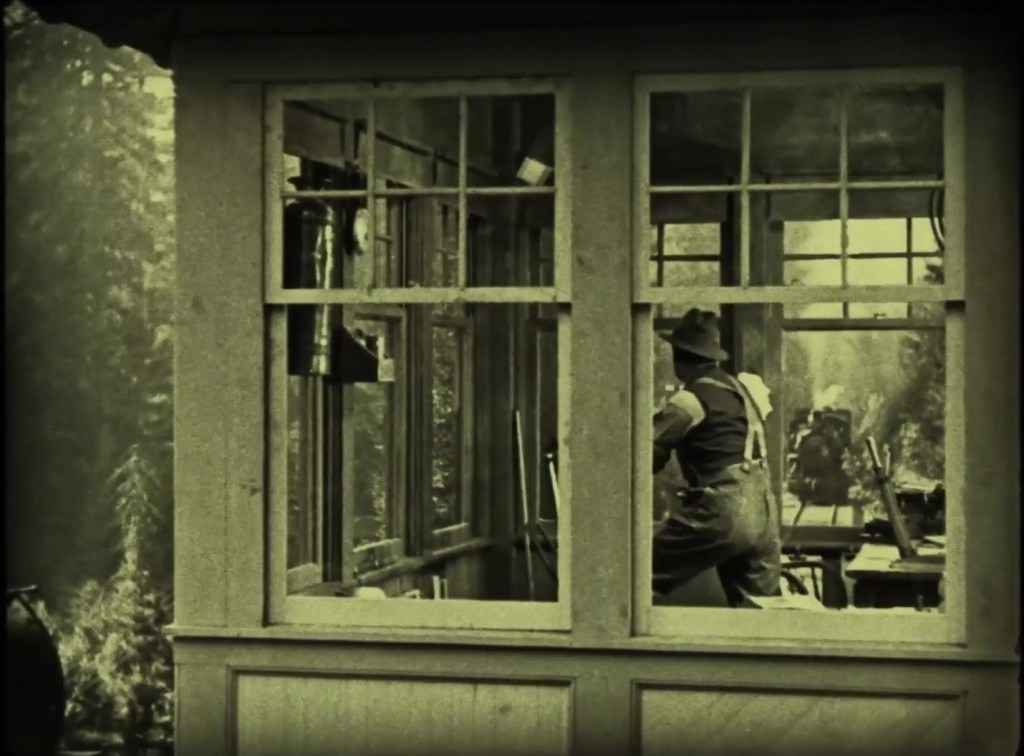
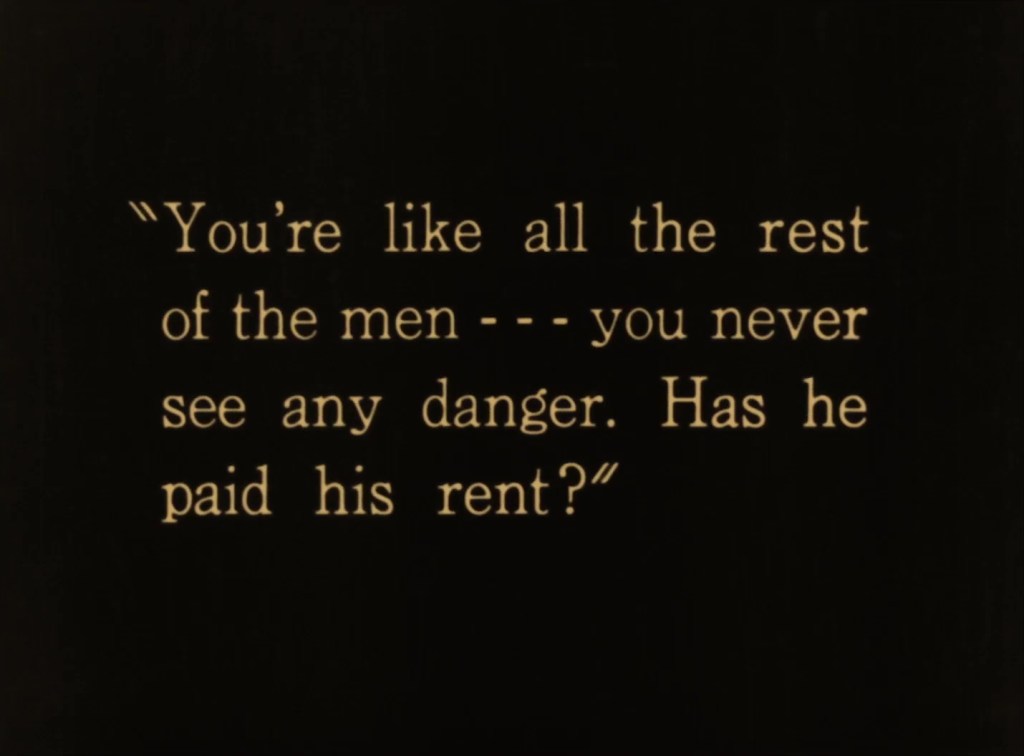
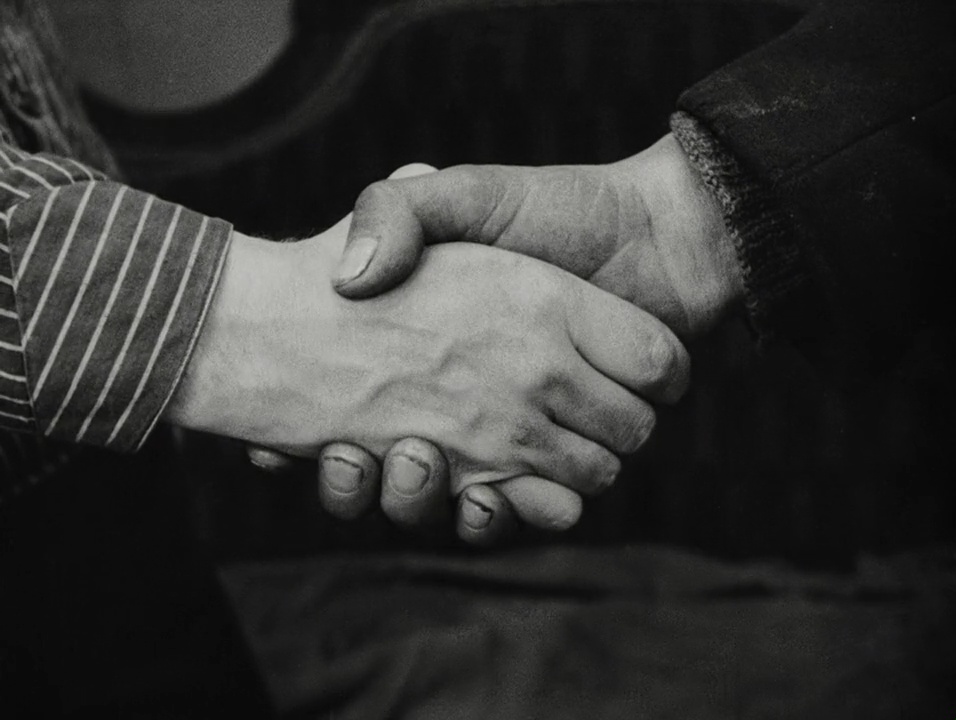
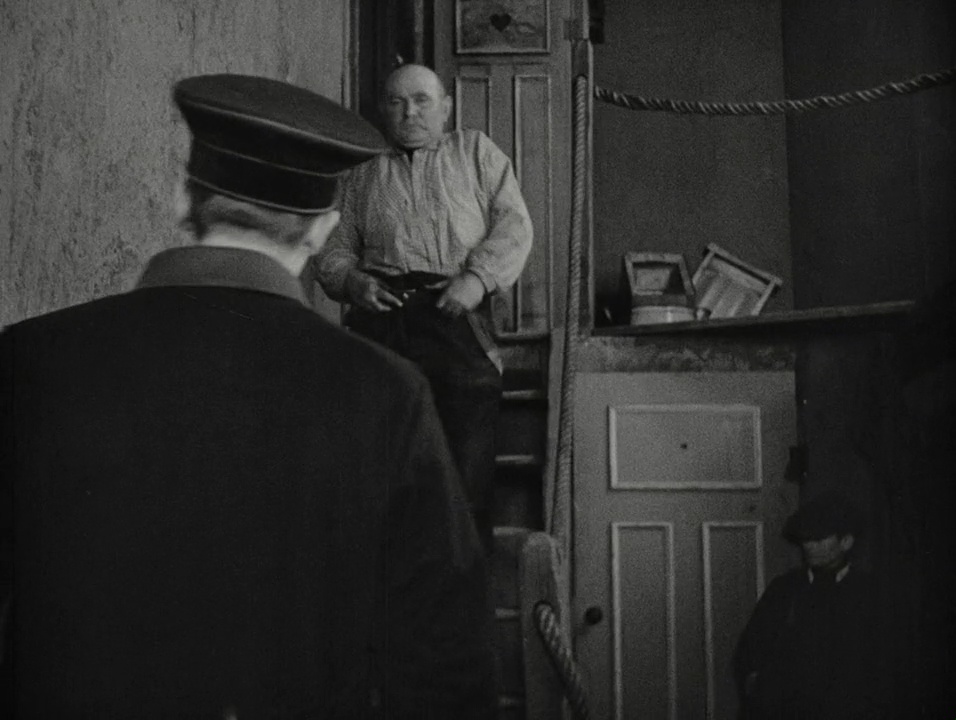
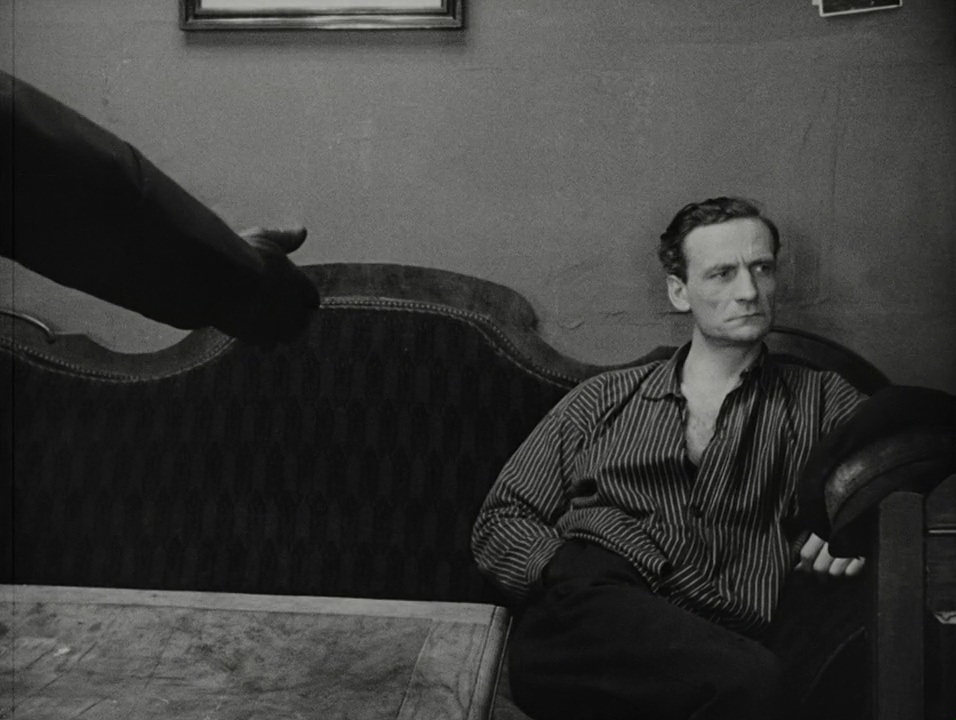
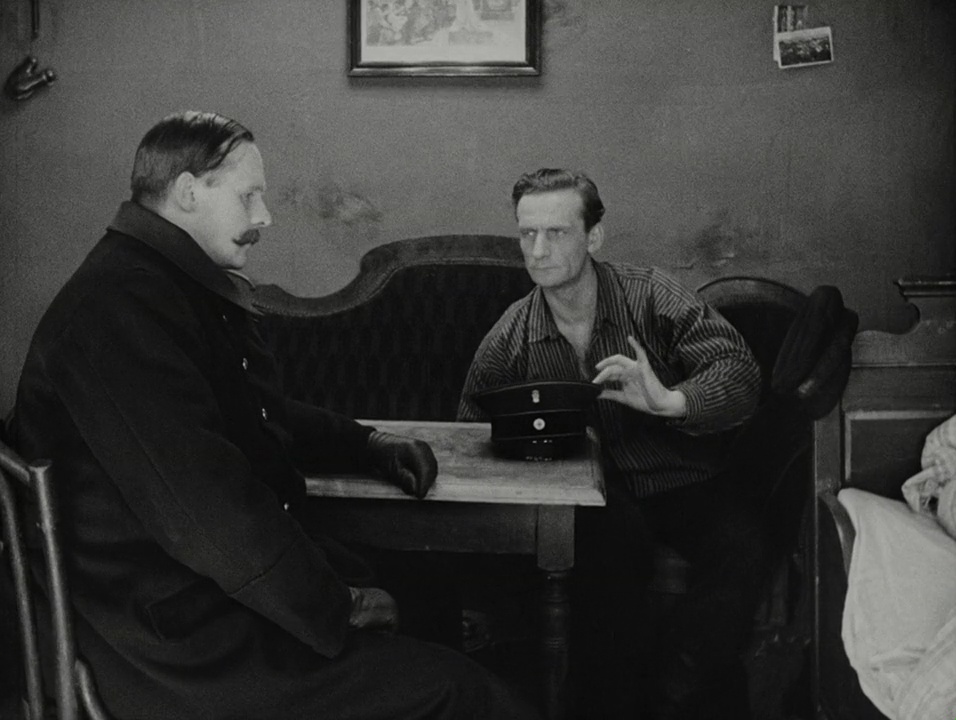
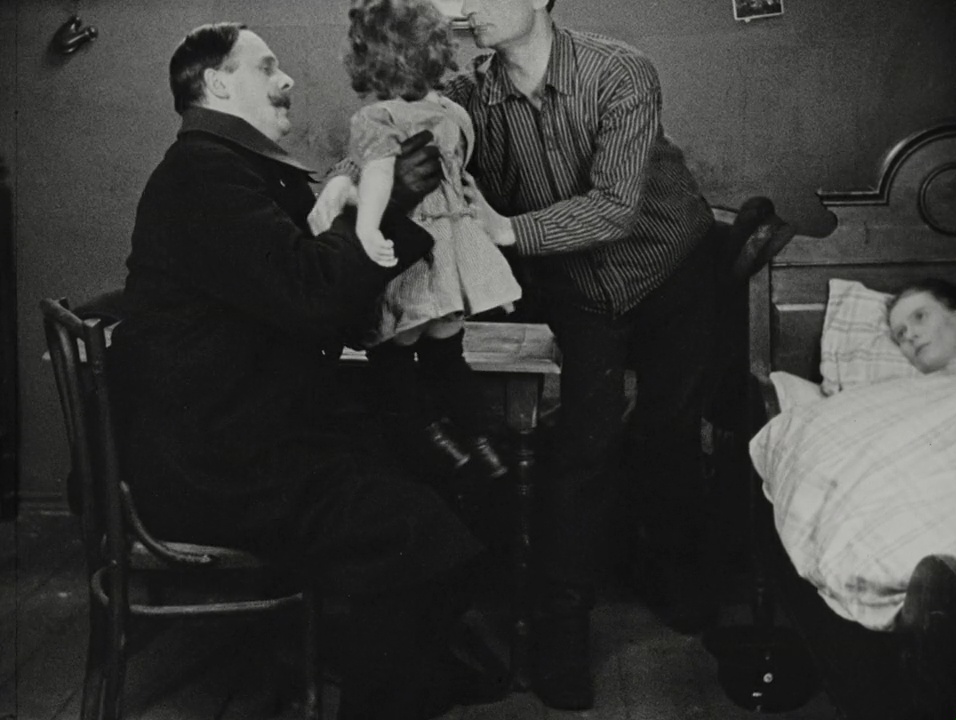
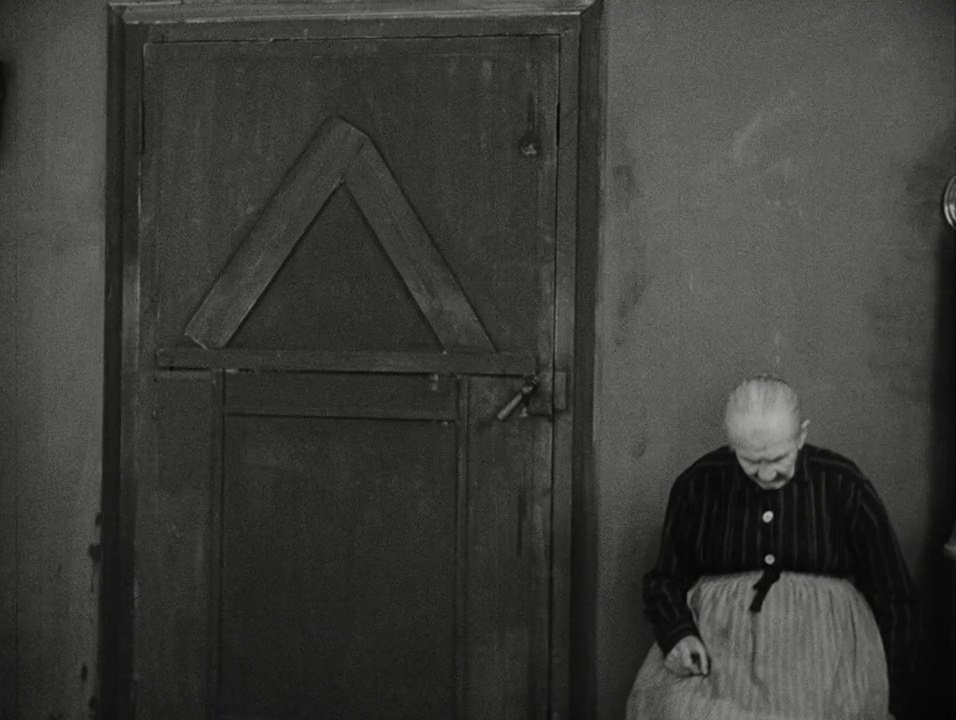
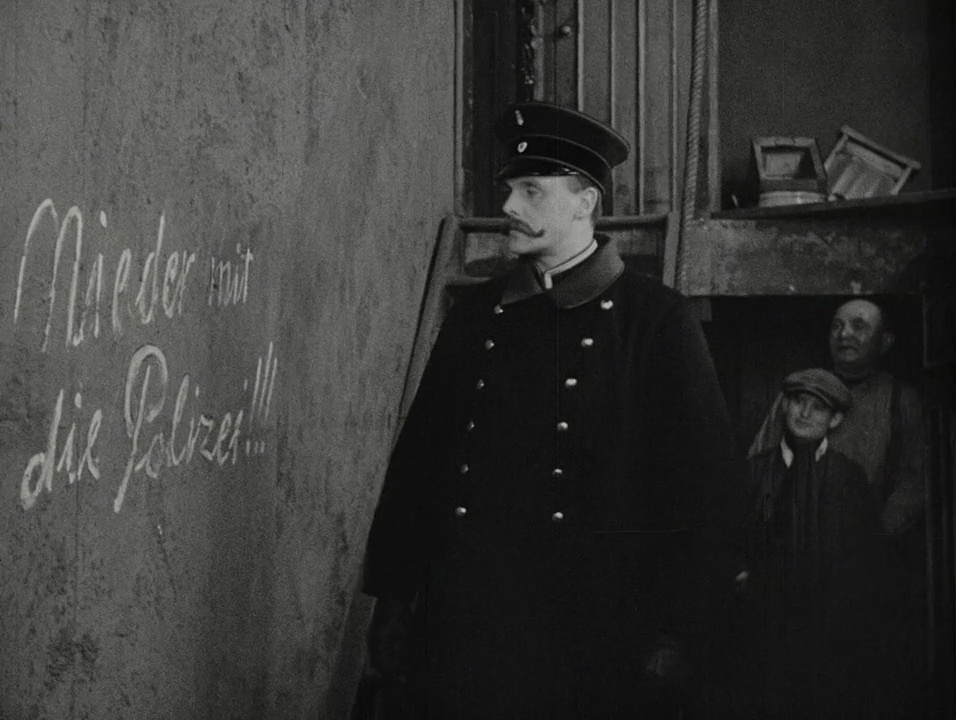
The docker’s brother—the policeman—comes to visit. On the way in, he passes an old man on the stairs, still buttoning up his trousers, who barges the policemen aside. It’s a marker of the brother’s outsider status. (But the scene also reveals what the tiny door is outside the entrance to the docker’s apartment: it’s a toilet shared by the other residents in the block.) It’s the first time we see the family together. The toothless mother smiles and shakes the brother’s hand. “Brother!” he says, stretching out a hand to the docker. Hochbaum shows us the hand extending into the frame, the brother sat moodily in the corner of the sofa—refusing it. When the policeman puts his hat on the table, the docker picks it up and puts it on the floor. The film’s obsession with the significance of uniform is shared by the protagonists. Now the docker’s little girl comes to make friends with her uncle, but she too is manhandled away from the policeman. As he leaves, his hand is again refused by the docker. (But not by his mother, who shakes it, then sits sadly on a seat by the door, head downcast.) Even outside, the policeman is insulted: “Down with the police!”, a child has scrawled on the wall. And the strikers on the street spit in his wake.

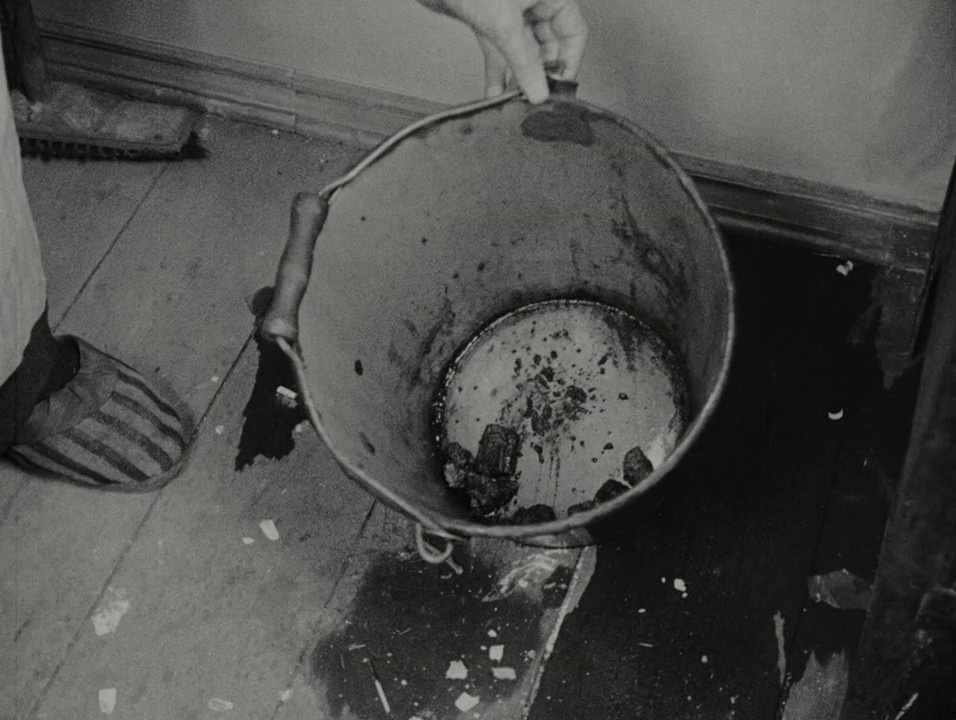
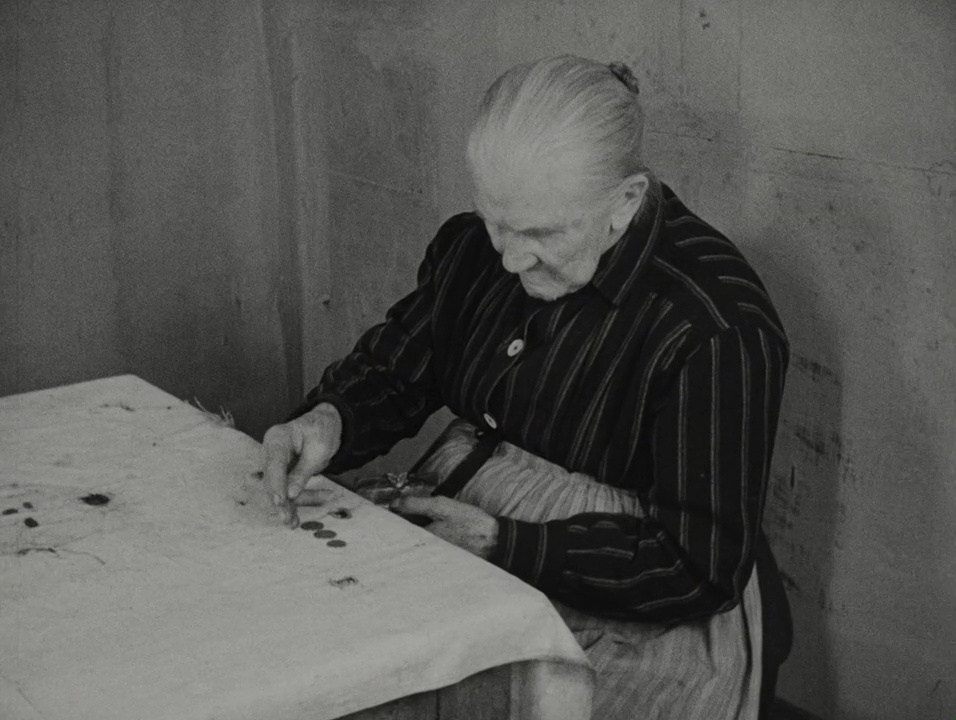
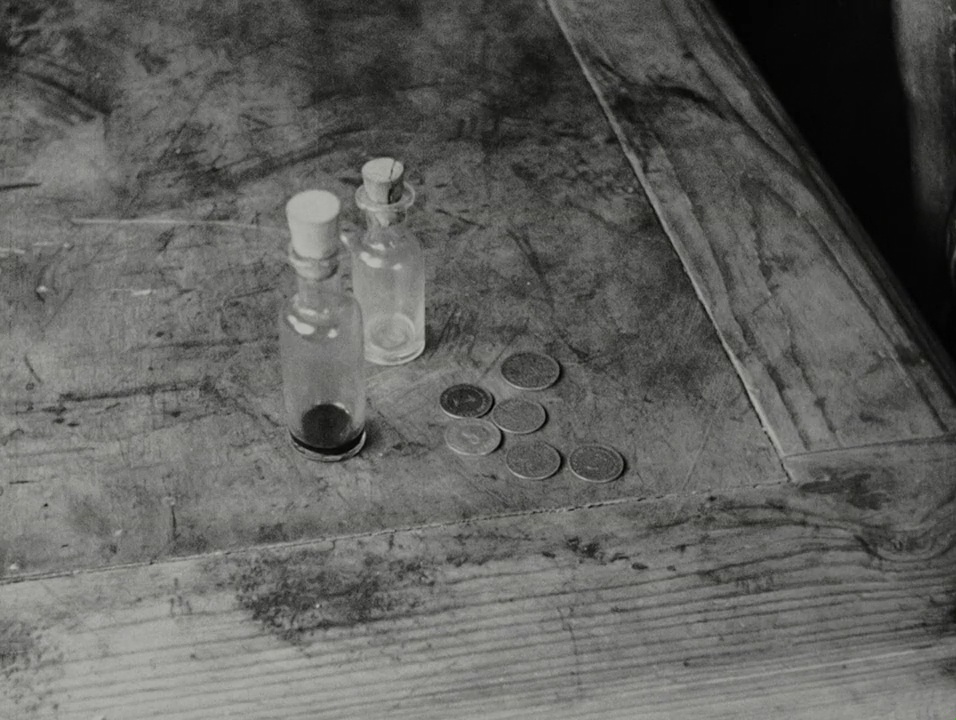
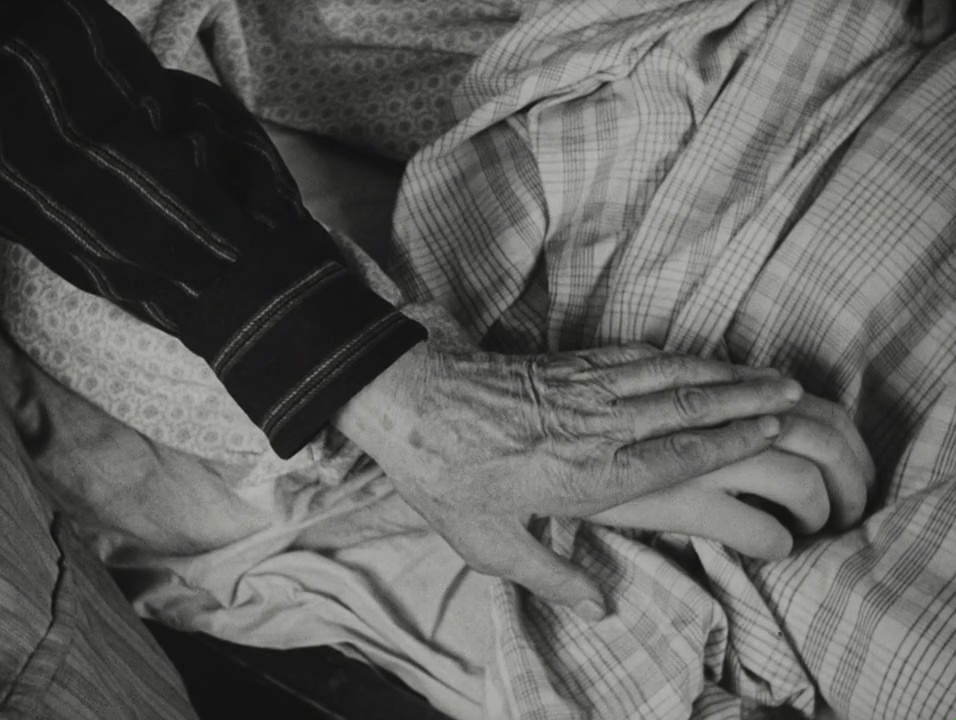
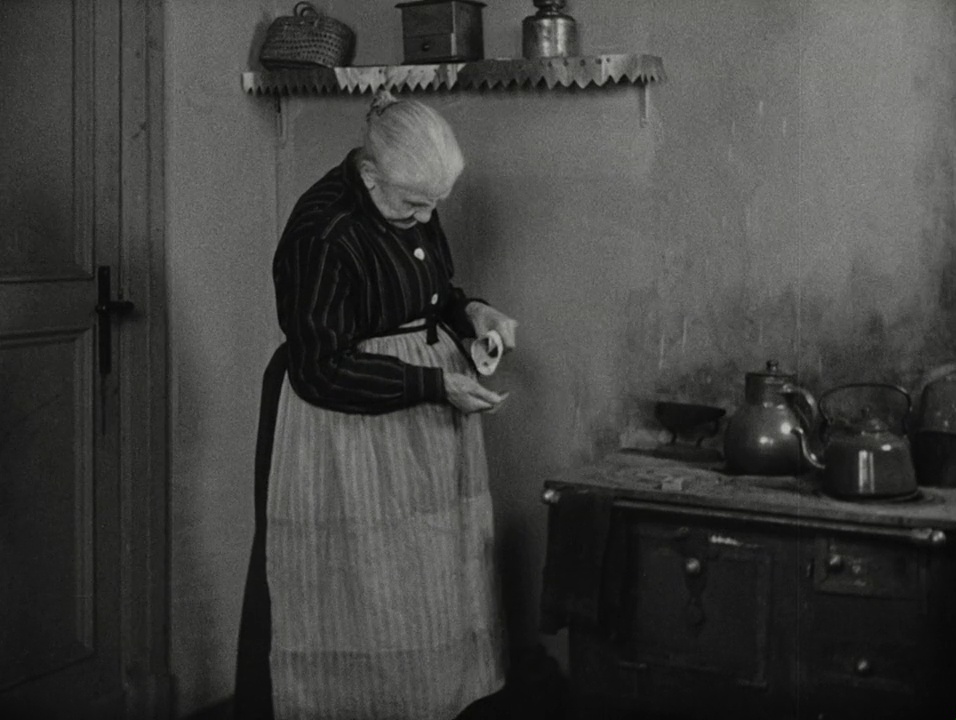
But it’s the next scene that carries more weight. For the mother goes over the household supplies. She looks at the stump of bread, at the few cubes of meat in a metal bucket in the kitchen, at the smear of butter (just lard?) in the pot, at the few pennies left in her purse. She sits alone, a close-up of her ancient hands resting in her lap. The docker’s wife coughs, a thin trickle of blood coming from the corner of her mouth. The mother sits by her bedside and finds two tiny bottles of medicine. They are nearly empty. She puts a few coins next to them, just as she had counted the coins in the kitchen—it’s ostensibly for her calculations, but also for our knowledge. This second showing of money is not the subtlest shot in the film, but the next shots are: we see the mother stroke her daughter-in-law’s hand. It’s one of the only moments of tenderness in the entire film.

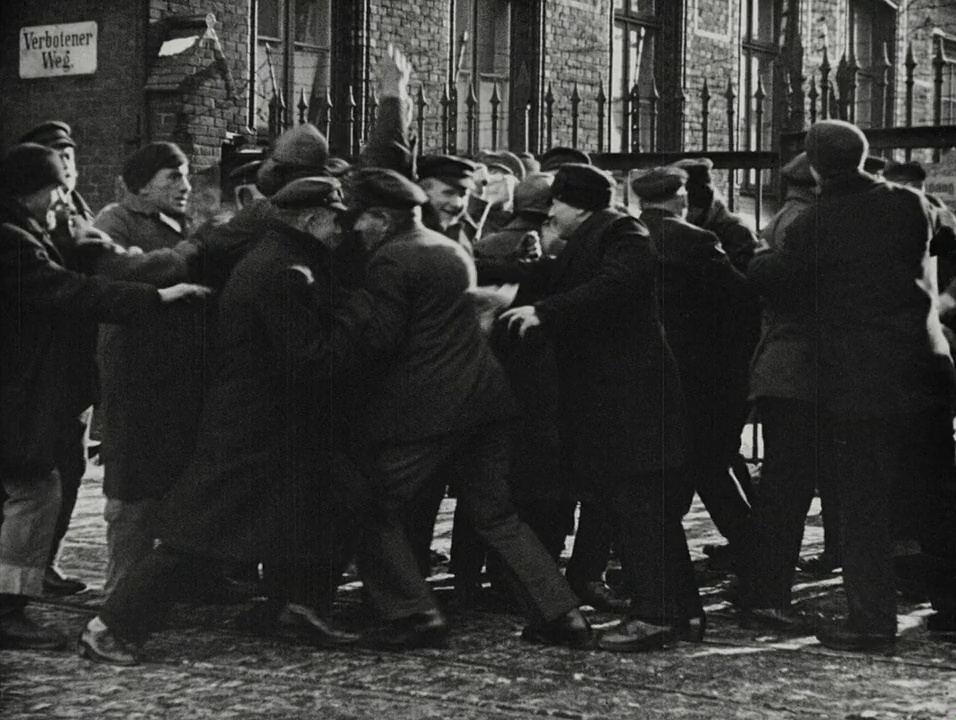
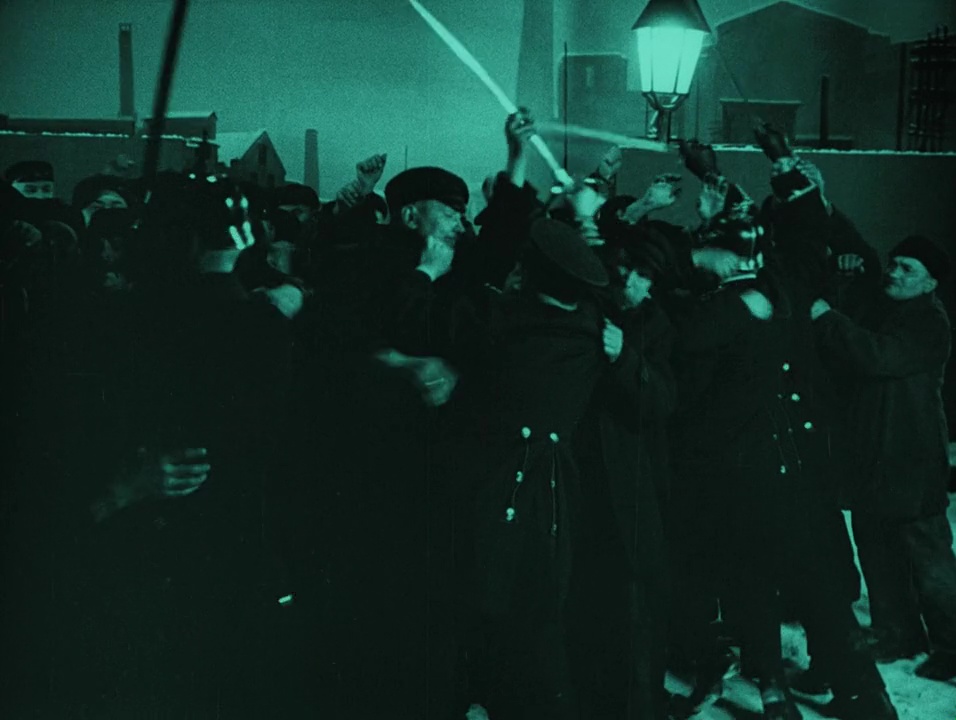
The next scenes show more contact, this time violent: strike-breakers accost the dockers at the gates. But the strike is continued. End of Act 4.

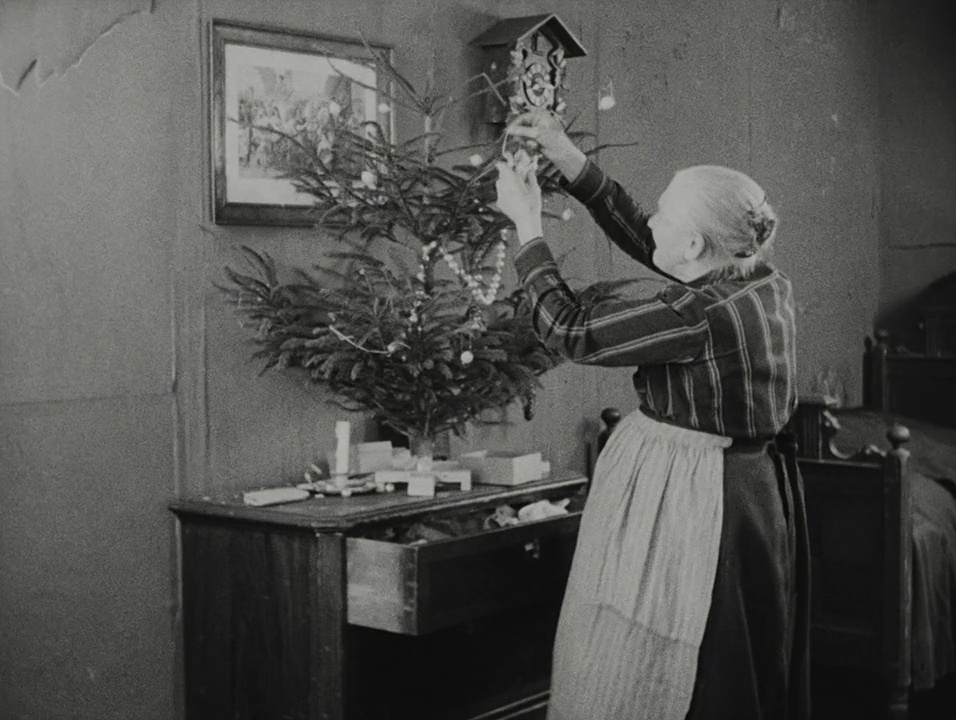
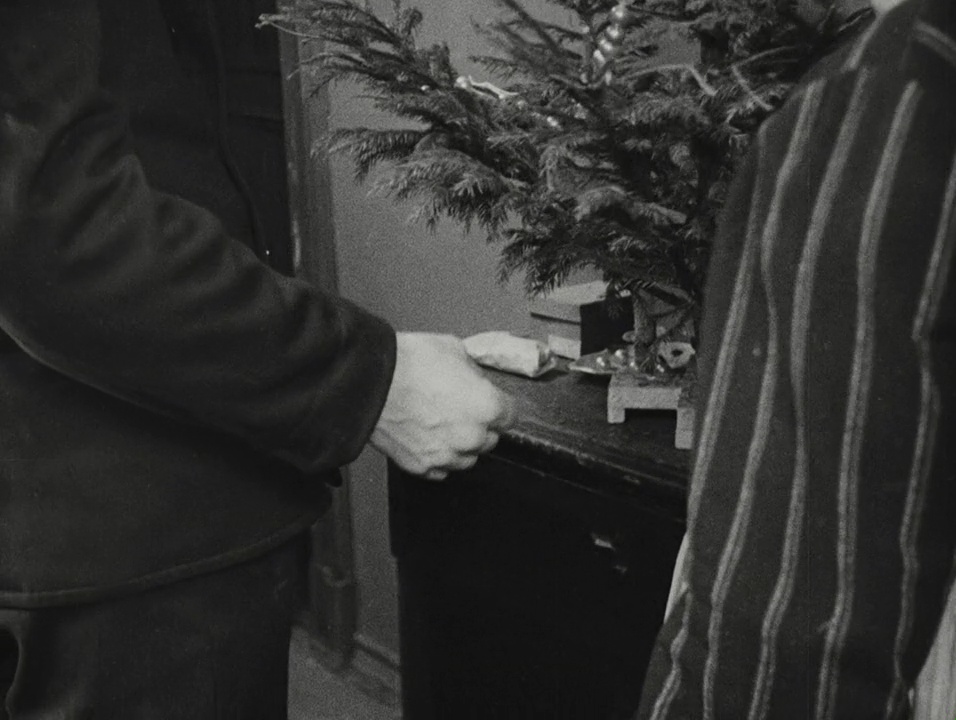
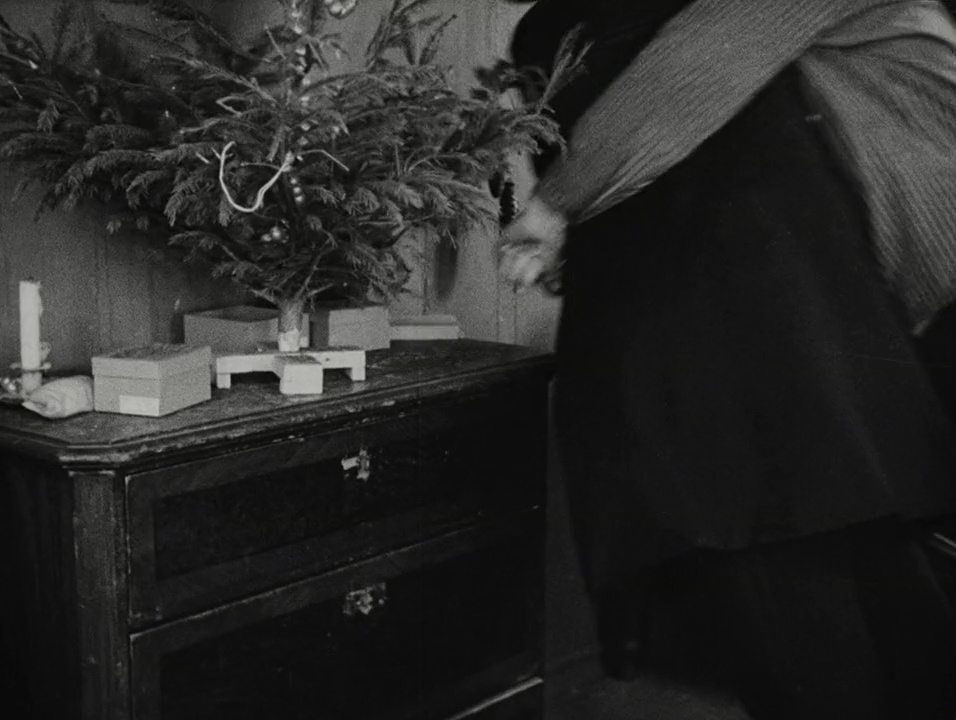
Act 5. Christmas. Shots of snow-covered statues, memorials. The docks still unmoving, the streets still empty. The docker’s mother is putting decorations on a tree. Her granddaughter smiles up at her, and at the little angel she puts on a branch. The tree is small, the decorations sparse. The camera—handheld (for the sake of space, if nothing else)—awkwardly pans around the room. In her sickbed, the wife smiles. The docker returns. He’s about to grab the tree and throw it to the ground, but he sees the look of delight in her daughter’s face and relents.

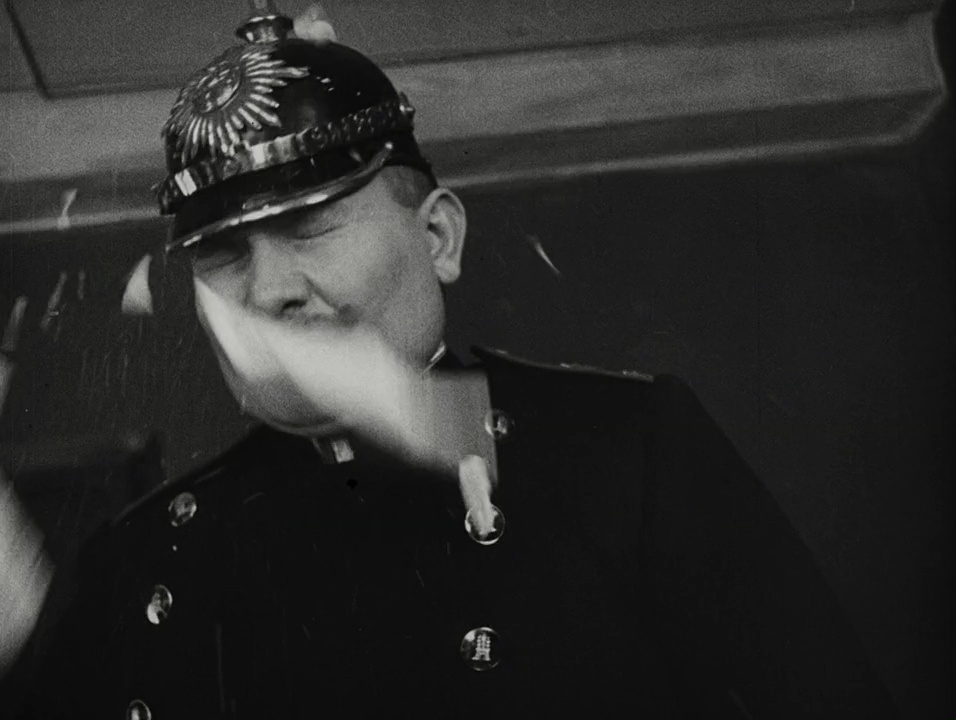
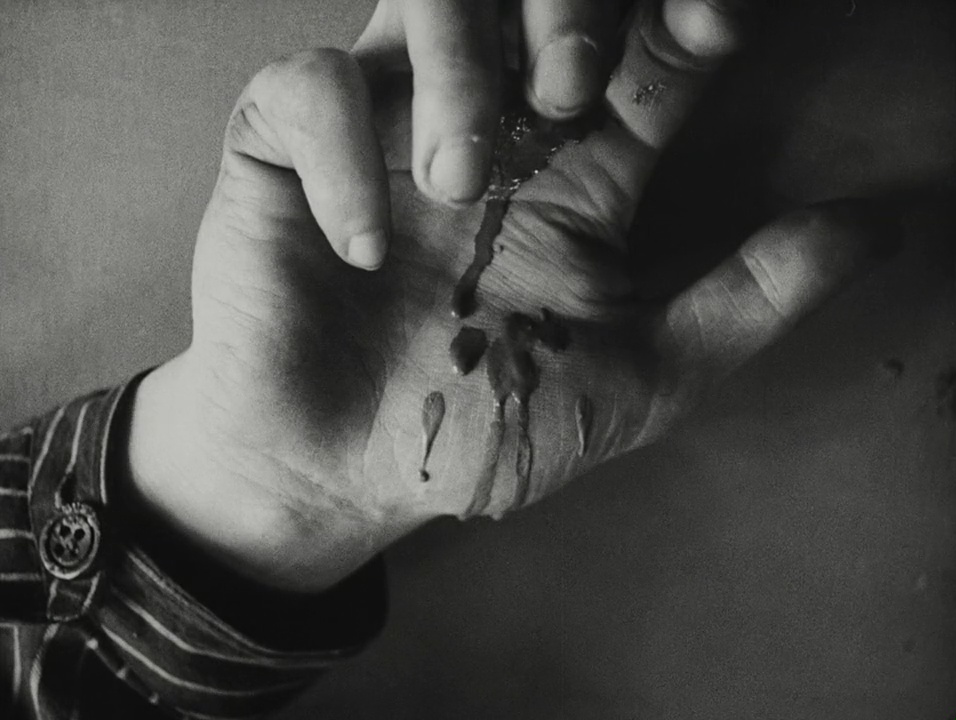
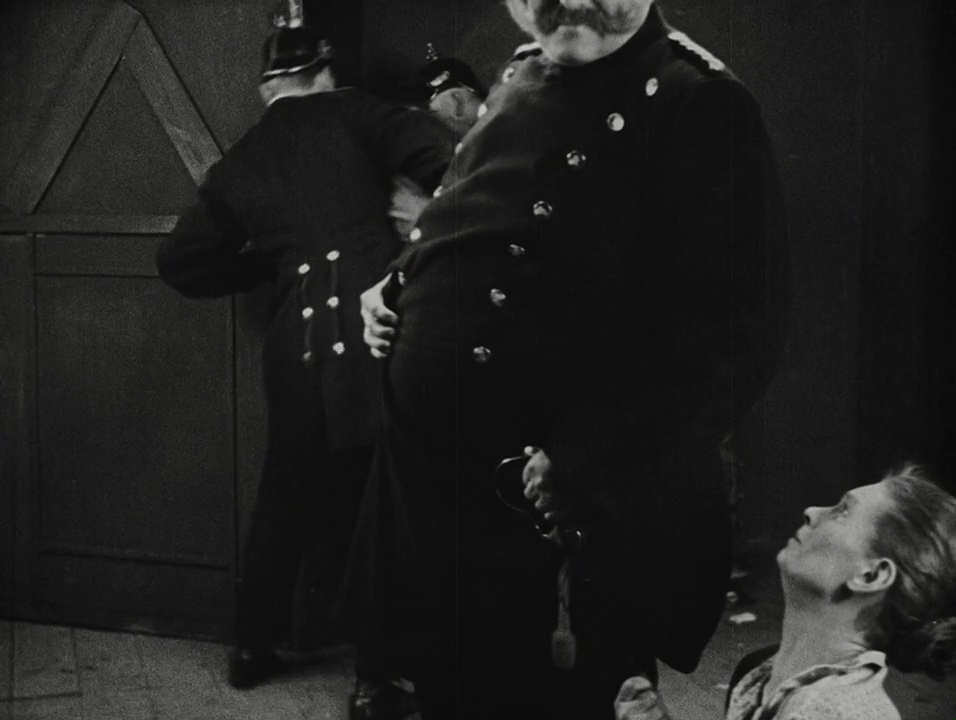
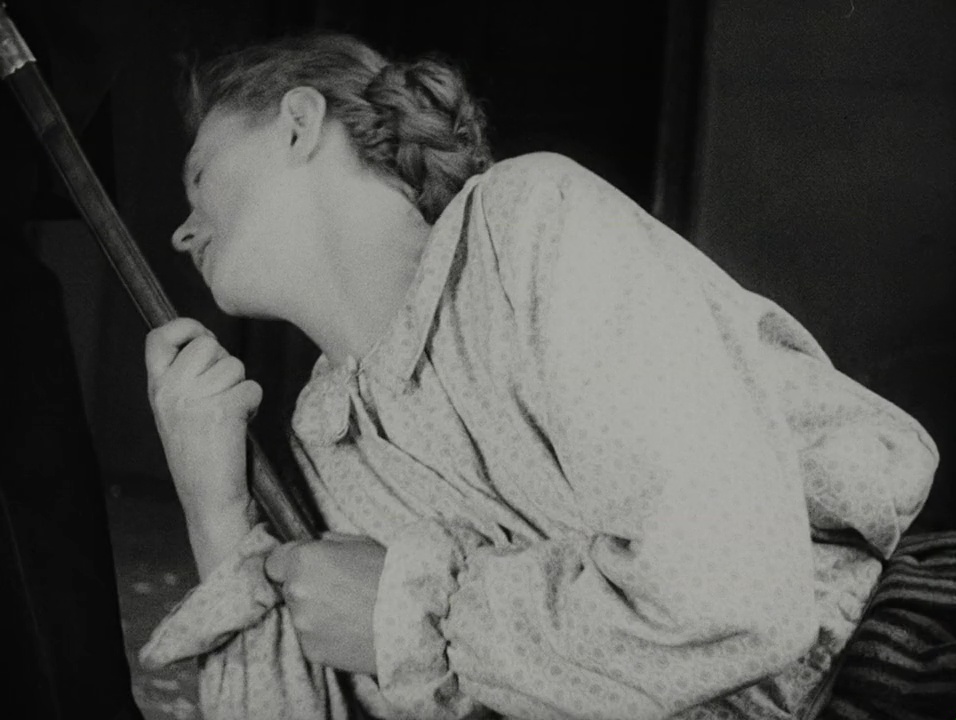
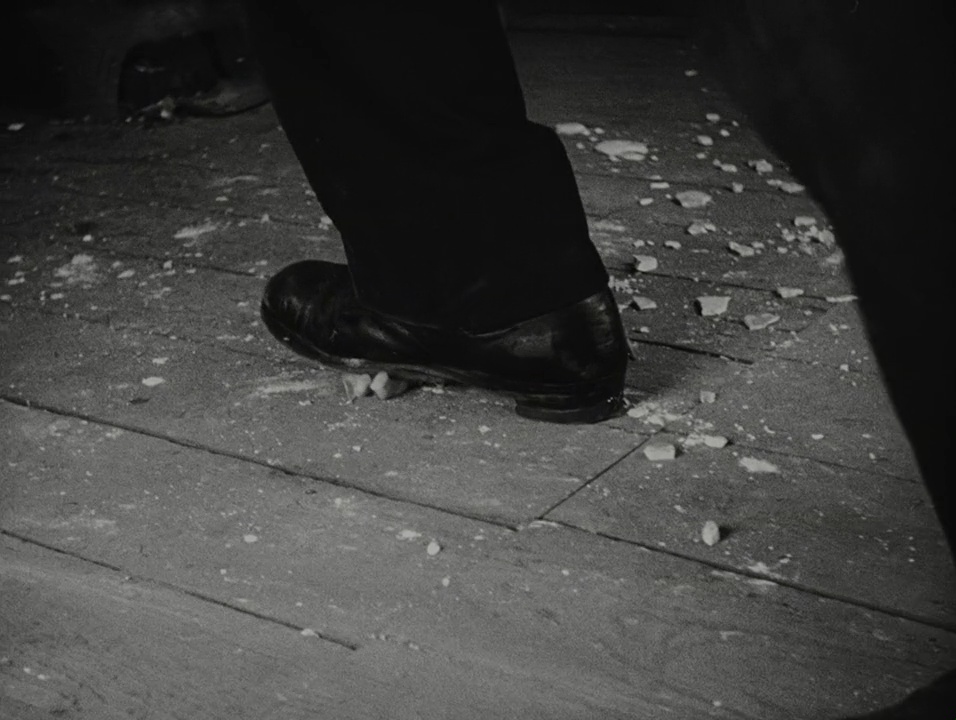
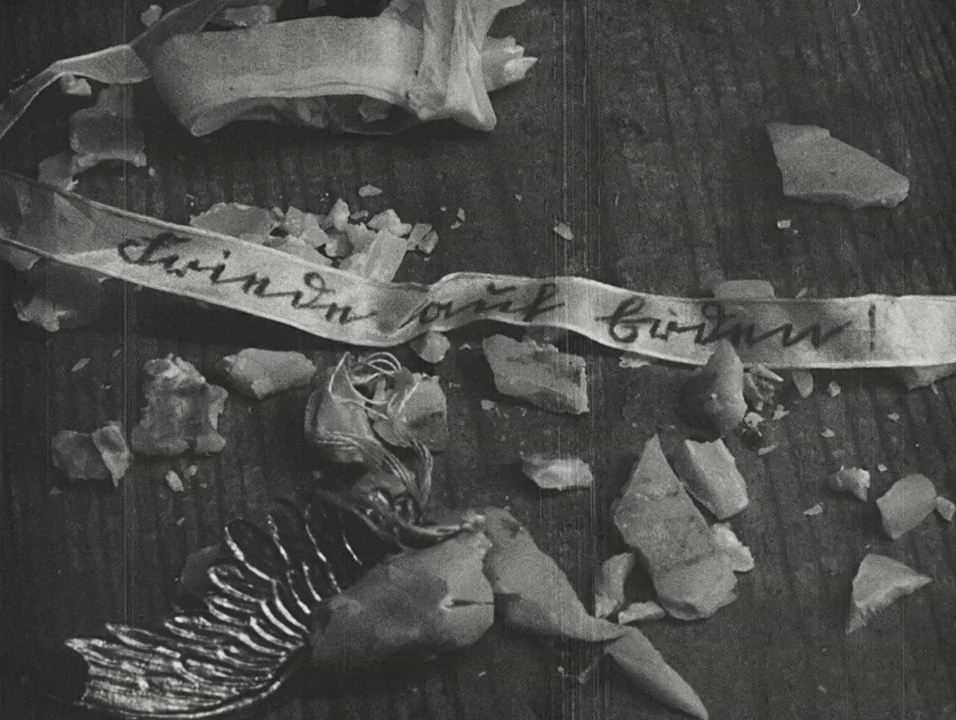
Christmas dinner is about to be interrupted. The family are eating but the police are on their way. The police come in. There is a struggle. The tree falls to the ground, the angel hurled across the floor.  A montage of violent gestures (imperfectly shot, imperfectly edited). The docker tripped, falling, the ceiling swirling, a nail in the wall, his hand flung up, now covered in blood; the wife striking out, being shoved away, dragging herself across the floor; the policeman’s boot crushing the angel, whose banner “Peace on earth” is left pasted to the floor. The old woman hunched on the ground, head down.

At the station, the docker is one of several taken into custody. His brother is left in charge, as a band of dockers sing a protest song outside the station—and the other officers stand guard. “Brothers!, “Freedom!” The words are flung across the screen, part song, part slogan, part though process: for the two brothers stand—per the opening shot of the film—and the docker is ushered out to freedom. As a scuffle breaks out outside the jail, the fifth act ends.

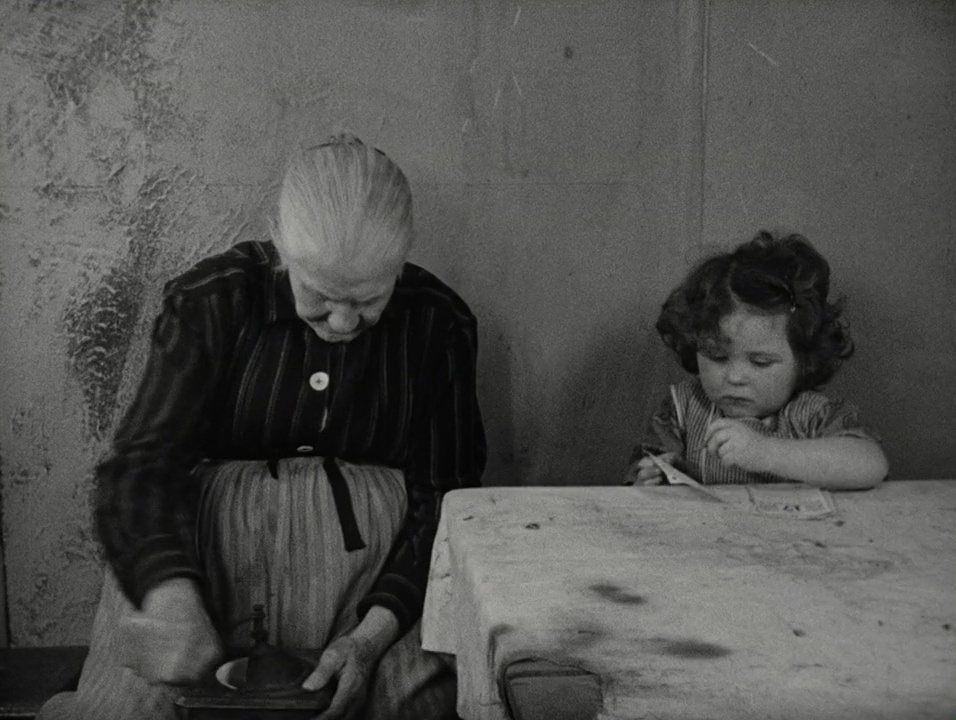
Act 6. Back in his apartment, the leaders of the strike gather. The grandmother leads the little girl into the kitchen and lights the stove. We see her counting the few remaining beans and dutifully grind them.

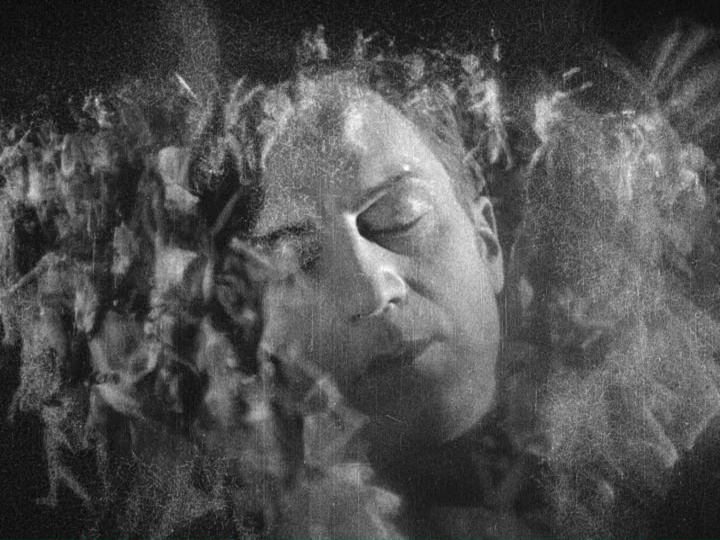
The docker is thinking, and Hochbaum superimposes a montage of scenes from the film over his brow. But the police are here, and the others protect him. The camera slowly pans down an arm, a hand slowly clenching into a fist. Then the docker’s hand touches his, and the camera pans (again, agonizingly slowly) up his arm to his head: we see him shake his head, then speak: “We are making a mistake and struggle in vain against isolated individuals. Stay true to our ideas, forge a powerful community. Then, time and collective strength will get the better of the system, and the future will be ours.” So he says, speaking the message of the film. He allows himself to be led away and, in a prison cell, his wife visits him and sneaks a newspaper into his hand: the strike is over. The docker looks away.

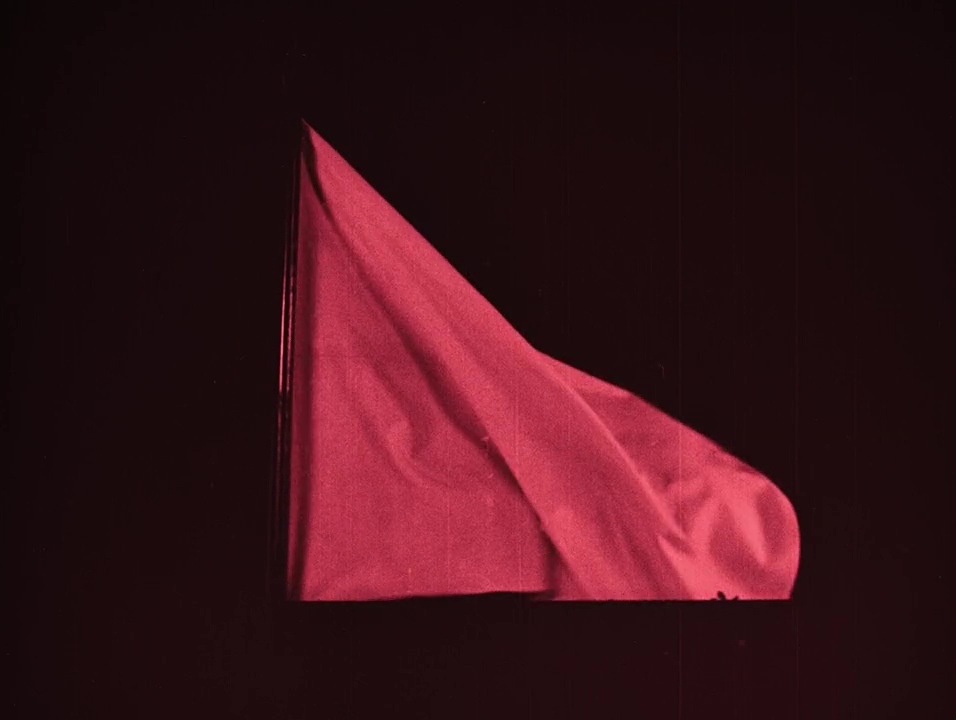
Cut to a flag, the shot tinted red, rising, followed by more text: “On February 8, 1897, the central strike committee published an appeal that ended with a prophetic look in the direction of the future: This eleven-week struggle cost harm and sacrifices of all kinds. It was necessary! Thousands and thousands of spirits that had been asleep until then, the souls of thousands and thousands of women, and maturing youths have been, during these weeks, set ablaze by the spark of enthusiasm.” Iris-in on the red flag. ENDE

Hmm. Well, this film is a decidedly mixed bag. The shots of the docklands are superb: all the atmosphere of place and time are there; the ice-covered waters, the snow-covered streets; the dark tenements, the blank skies, the smoke and dirt. I could have watched a montage of these documentary shots for a long time, so rich and deep was the photography and so starkly beautiful were the images. But even if the photography is excellent, the film as a whole is uneven and often bordering on amateurish. Whenever the camera tracks or pans, it is so slow as to be awkward: and the more meaning the director wishes to convey, the more the effort involved undoes any effect the shots might have. The final scene of the dockers resolving to shield the main protagonist is a case in point: the way the camera takes an eternity to tilt down the man’s arm to see (again with utmost slowness) his fist clench makes the moment so ludicrously portentous that it fails utterly to have any emotive impact. Soo too in the Christmas Day arrest, when the action is too slow, the cutting too imprecise, and the matching of action and image incredibly clumsy.

Hochbaum treads in Eisenstein’s path, both with the casting of non-professionals and in the use of symbolic details (Brüder’s red-tinted flag is surely taken from the red-coloured flag rising at the end of Battleship Potemkin). But whereas Eisenstein’s editing is incredibly dynamic, and his matching of action and image exhilarating and articulate, Hochbaum’s editing here is clumsy and heavy-handed. Indeed, the attempt to use editing and imagery to make his points goes against the realist atmosphere created by the locations and the casting of this self-identifying “German proletarian film”.

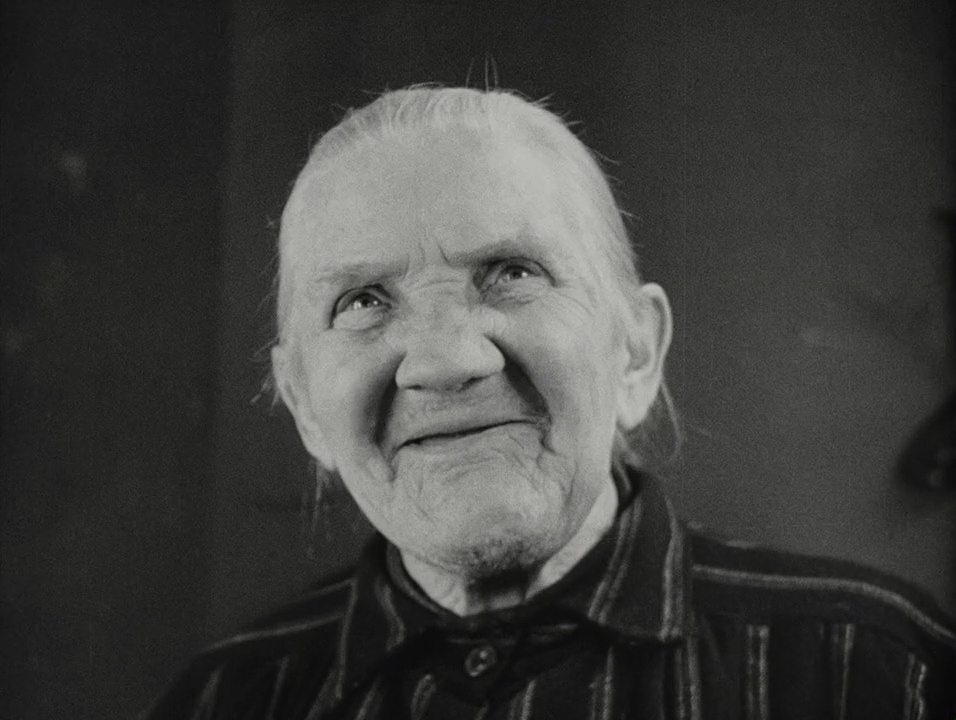
For the performers in this non-professional cast have wonderful faces, and (just as with the landscapes) I could spend a lot of time happily just studying them move and live on camera. The grandmother especially carries so much sense of a life and past in the way she holds herself and moves. But the main docker is not particularly arresting as a performer, and—even when he is just sitting, doing nothing—he feels less engaging than the woman playing his mother. When Hochbaum gives us dramatic close-ups of him speechifying, it’s a little underwhelming. I’d rather have spent my time with the women and child and seen how they went about their business. Surely it’s a failure of the film to adequately engage us with the people on screen: this is meant to be their story, as embodied by real dock workers. But I was never quite engaged by the human drama. The moments of human life were too dominated by clumsy message-making. I loved the scenes without any dialogue, more so because the dialogue itself was slogan-speak not real human speech. When nothing happens in this film, it’s beautiful. But as soon as the film attempts dramatic action, it becomes clumsy and heavy-handed.

Brüder was Werner Hochbaum’s first feature film, his only other silent productions being the short documentaries Vorwärts (1928), Wille und Werk (1929), and Zwei Welten (1929)—none of which I have seen. His cameraman was Gustav Berger, who appears to have worked on no other films other than those few silents by Hochbaum. All these silents were made under the aegis of “Werner Hochbaum Filmproduktion”, suggesting their independence from mainstream studios. The only information I can find on Hochbaum’s early career is in Klaus Kreimeier’s The Ufa Story (California UP, 1999, 287-88, 311; see also the German Wikipedia page on him). Hochbaum seems to have had an interesting life. Though homosexual, he was married to a dancer who died young in 1922. In 1923 he was tried for (and acquitted of) treason, suspected of being a spy in the pay of France. And despite being decidedly left-wing (working for Social Democrat papers in the 1920s, making “proletarian” films like Brüder), Hochbaum stayed in Germany after the Nazis came to power and continued to make films for UFA. But he was subversive enough as an artist to be expelled from the industry in 1939 by the Nazis. Conscripted into the army, he was ultimately excused duties on health grounds—and died in 1946 of a longstanding lung disease.

Given the rather obscure production, I suppose it’s a kind of miracle that Brüder survives, and in such good visual quality. The restoration notes for this version—broadcast on ARTE—state that the film was submitted twice to the censor, first in April 1929 (at 1722 meters) then in August 1929 (at 1989m). The original negative is lost and only copies of the first version of the film survive. The copy as restored by Filmarchiv Austria and the Deutschen Kinemathek in 2021 is 1732m. The copies used for the restoration must have been first-generation prints, for the film looks wonderfully sharp and textured. For me, the location photography is the film’s main appeal.

The score, from 2021-22, is by Alain Schmidinger and performed by members of the Berliner Philharmoniker. The ensemble (twelve players in total) produces something between a soundscape and a score. It blends real instruments with synthesized sound effects and, at two points near the end of the film, extracts from a recording of Telemann’s Oboe Concerto in C Minor (TWV 51:c1). Apart from the latter, the soundtrack is growling, bleak, restless, angry. The score certainly has an ebb and flow, but the tone scarcely changes: only the degree of aggressive angst varies. Walking down a street? Acoustic angst. Confronting your boss? Acoustic angst. Buttering bread? Acoustic angst. Punching a policeman? Acoustic angst. Settling down to sleep? Acoustic angst. The score has no tenderness. Not that the film has a lot of tenderness, but those moments which do—all involving the women—deserve some reaction, some softening, of the score. Quite why it includes the chunk of Telemann—surely extracted from another recording—is a mystery. For the contrast between Telemann’s concerto—all baroque elegance, restrained melancholy, emotive textures—and Schmidinger’s harsh, abrasive soundworld is so vast that it almost serves to make the citation seem ironic. Is it meant to enrich or undermine the emotive scenes around Christmas that it accompanies?

In summary, Brüder was a mixed experience for me. I certainly enjoyed aspects of it: the location shooting was fascinating to watch, as were some of the performers. But the film is very clumsy. It shows us a realistic world, but it cannot mobilize it into a convincing or emotionally complex drama. What moved me about the film were incidental details, its setting, not the narrative. But in one sense Brüder fulfilled its contact: I wanted to be gloomy, and it gave me my gloom.

Paul Cuff

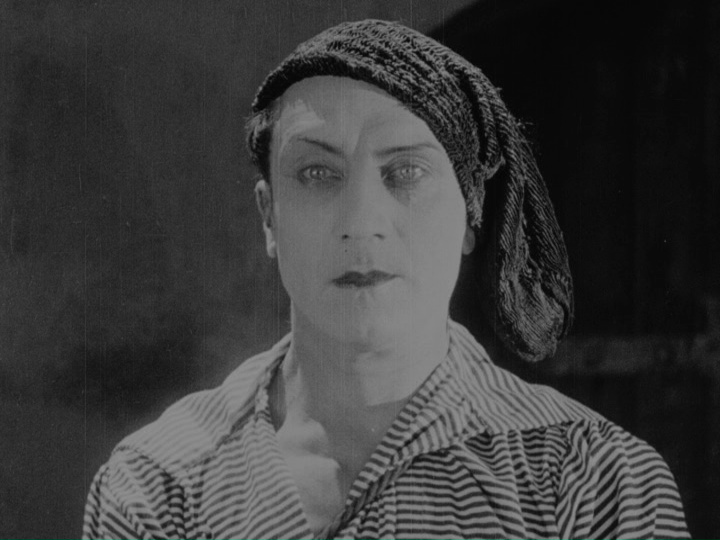
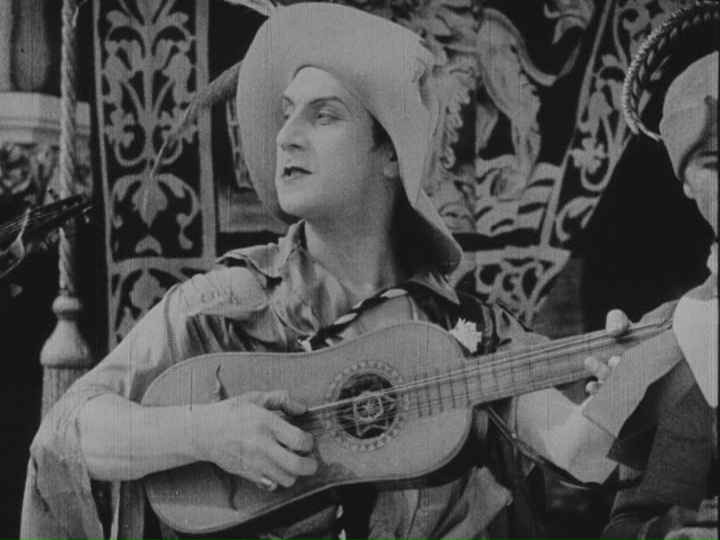
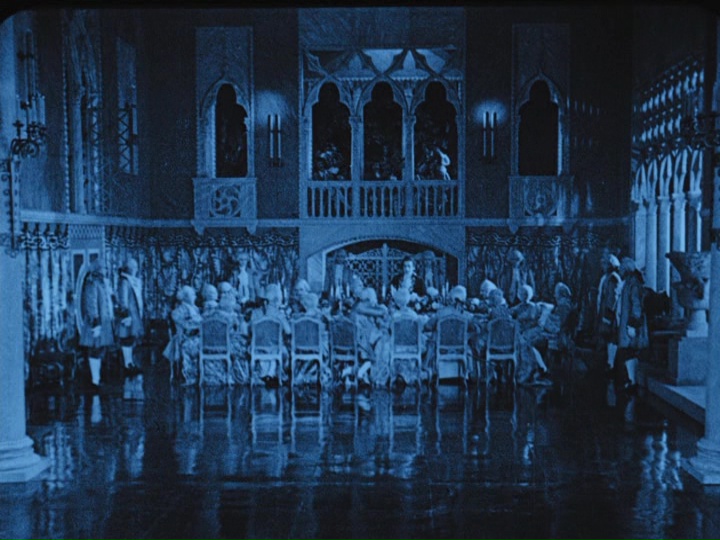
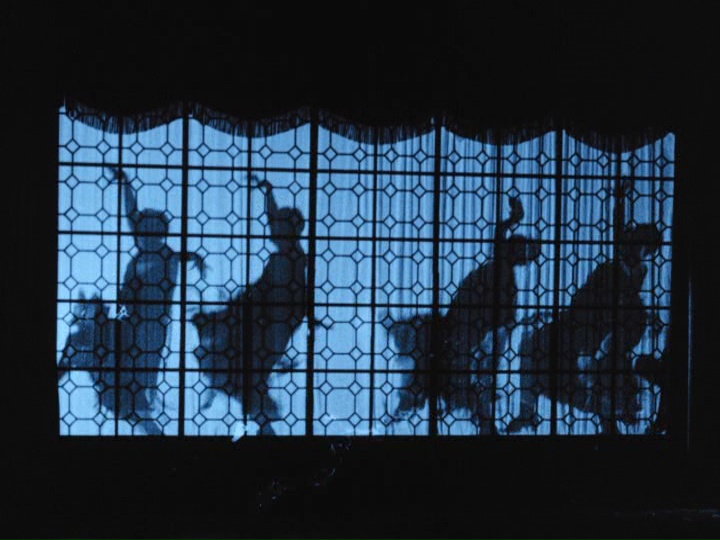
Sången om den eldröda blomman (1919; Swe.; Mauritz Stiller)

By 1918, Mauritz Stiller was one of Sweden’s leading filmmakers. He had joined Svenska Bio in 1912 and worked variously as actor, screenwriter, and director. After making dozens of shorter films in a variety of genres, he was tackling larger subjects with bigger budgets. His next production would be his largest to date: an adaptation of Johannes Linnankoski’s Finnish novel Laulu tulipunaisesta kukasta (1905). In June 1918, Stiller began shooting his exteriors around the river Faxälven, and the nearby towns of Långsele and Sollefteå. The production lasted until August, taking advantage of the lengthy summer evenings and natural locations. Shot by Ragnar Westfelt and the great Henrik Jaenzon (brother of the equally great cameraman Julius Jaenzon), the film would show off the technical prowess of Swedish cinematography and the beauty of the country’s landscape. After finishing shooting the interior scenes in Svenska Bio’s studios in Stockholm, the film was released in April 1919. The musical accompaniment for its first screening was created by the Finnish composer Armas Järnefelt—the first score specially written for any Swedish film. Stiller’s production was a tremendous critical success, both within Sweden and throughout Europe. The strategy of adapting Scandinavian literature for the screen came to dominate Stiller’s work and that of Swedish cinema into the 1920s. Indeed, by the time Sången om den eldröda blomman premiered, Stiller had already nearly finished shooting his next film, Herr Arnes pengar (1919)—an adaptation of Selma Lagerlöf’s novel. The first of many…

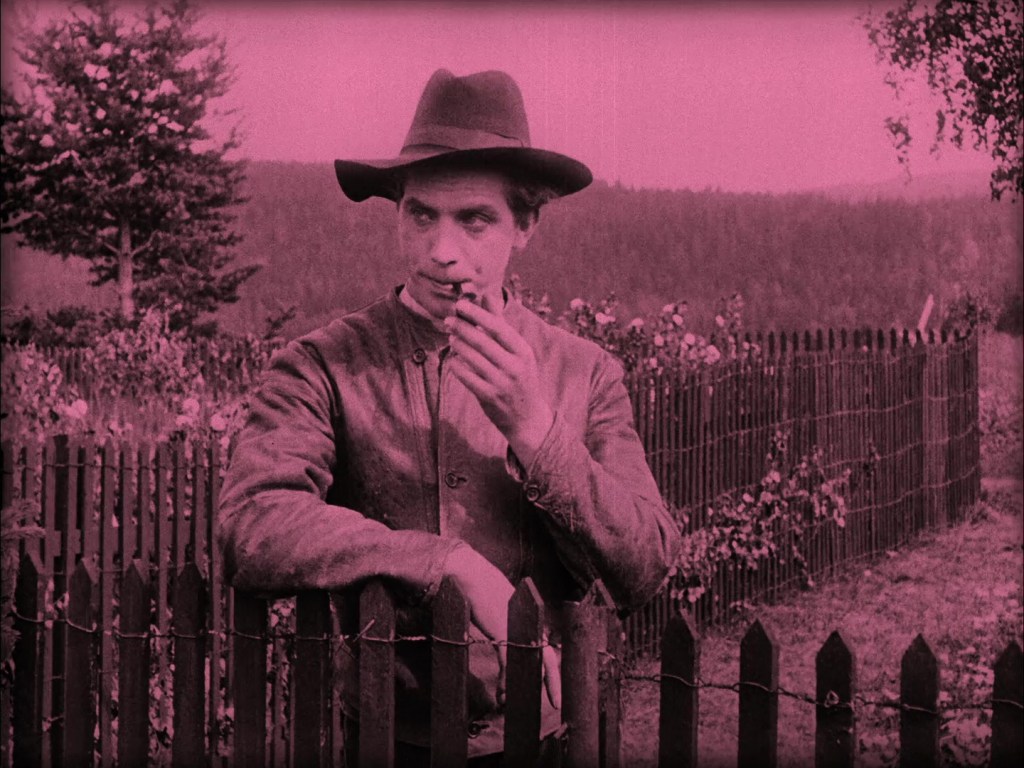
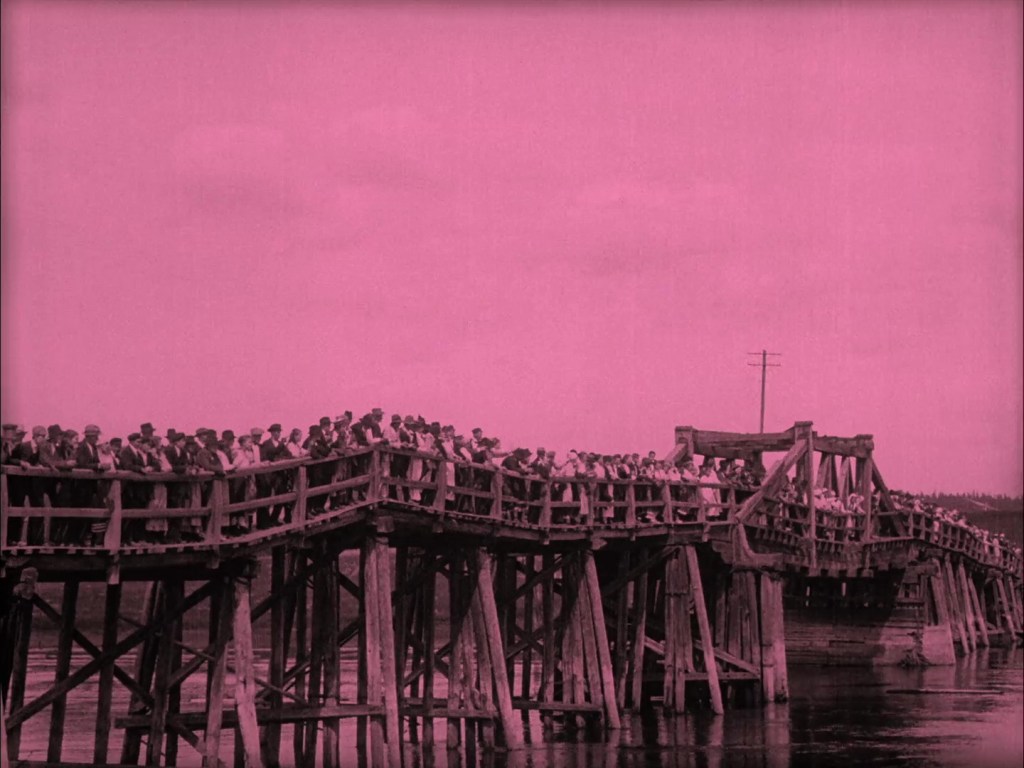
Sången om den eldröda blomman follows the adventures of Olof (Lars Hanson), son of the wealthy farmers of Koskela. Tempted first by Annikki (Greta Almroth), he then attracts the attention of Elli (Lillebil Christensen). The pair are caught in a compromising situation by Olof’s mother (Louise Fahlman), and both Olof and Elli are ejected from their homes for their behaviour. Each goes in a different direction from their village, Olof going to work as a log driver on the river Kohiseva. Here he encounters the proud Kyllikki (Edith Erastoff), who he decides to impress by riding on a log through the Kohiseva rapids. Their romance blooms briefly, but Olof feels he cannot settle and—after a fight with some locals and a confrontation with Kyllikki’s father (Hjalmar Peters)—heads to the city. Here he drifts into a seedy underworld of brothels, where he encounters Elli. This chance meeting drives each to despair at where their lives have led: Elli kills herself, an act which drives Olof back to his homestead. He finds that his parents have died, so he returns to the one woman who was prepared to live with him: Kyllikki.

Having recently watched Stiller’s Gunnar Hedes saga (1923), I can say that Sången om den eldröda blomman has a more engaging story and fewer storytelling impediments. The film shows its literary sources only in the poetic titles that begin each “chapter” (in fact, each reel of the original seven-reel film) and, unlike in Gunnar Hedes saga, there are no awkward visual metaphors inserted into the telling. Though Stiller simplified the story of the original novel—which is more of a Don Juan narrative than the film—it still has a sense of ebb and flow, together with a cumulative power by the final two chapters.

It also made me think this must have been a more personal endeavour for Stiller. The Finnish source material for Sången om den eldröda blomman has some clear emotional resonances with Stiller’s life. Like Olof, Stiller was an outsider: he was an orphan, a Jew, a homosexual, a Finnish-Russian filmmaker working within Sweden, then a Swedish filmmaker working within Hollywood. His childhood was defined by his mother’s suicide and his early adulthood by having to flee to Sweden to avoid conscription in the imperial Russian army. He had to rebuild his life in a foreign land to which he was in every way a foreigner. Sången om den eldröda blomman shows us a man forever on the move, first being ejected from his maternal home, then finding itinerant work in places on the outskirts of towns. He is always on the outside: he meets lovers in remote patches of forest, perched on hills away from civilization. We see him on numerous doorsteps, facing rejection: on the steps of his native Koskela, on the steps of the Moisio farm, in the doorways of the city streets. He doesn’t have a home, a place to settle. Spending most of his time with menfolk at work, he nevertheless sits awkwardly among them: he is prone to rash acts, he gets into fights, he lashes out in rage. (Stiller himself had a famous bad temper.) The story may not have a neat trajectory, but its episodic nature slowly builds up a compelling characterization.

Which brings us to Lars Hanson. Of those that I’ve seen of his performances, this is perhaps my favourite. He’s incredibly beautiful to look at, and manages to present aspects of youthfulness and of experience. There are scenes when he looks barely twenty, and others when he might be forty. The narrative offers him great scope to show off his range. He is by turns wilful, impetuous, violent, tender, vulnerable, grieving, joyful. His performance—and the performances across the cast—are naturalistic, free of odd tics and too much exaggeration. There is an emotional transparency throughout: Hanson signals what his character is feeling through subtle gestures rather than melodramatic ones.

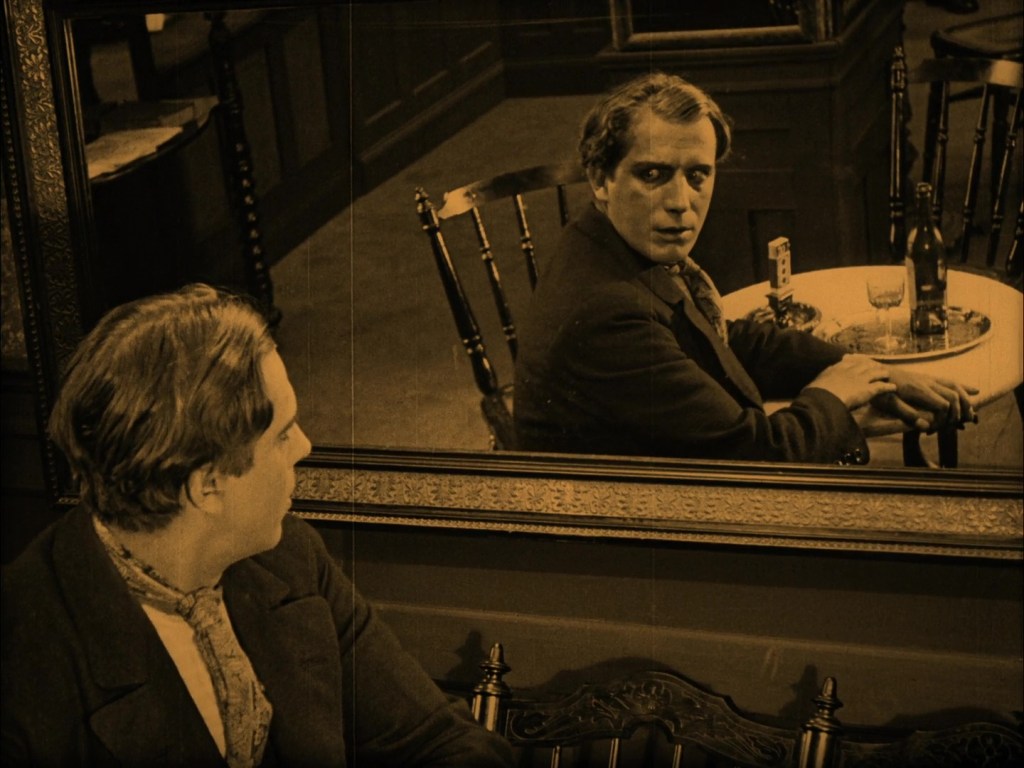
In the penultimate chapter of the film, the scene in which Olof confronts himself in a mirror is a superb combination of performance and direction. Stiller only lets Olof—and us—sense the mirror by framing it almost side on, on the wall overlooking the character. Olof starts to turn his head right, then left. He turns up his collar. Only now does Stiller cut to a frontal view of Olof and the mirror. The glass is angled downward to avoid revealing the camera shooting the scene, but it also serves as a brilliant way of suggesting Olof being overlooked: the mirror is practically peering down at him from the wall. And Hanson’s doubled performance is marvellous. Stiller now cuts between Olof in the room and the reflection in the glass. For the latter, he keeps the corner of the frame in view. The way the reflected figure reaches out, it seems as though the hand might even stretch beyond this frame, into the real space of the bar. And Hanson’s performance as the reflected Olof is wonderfully sinister: it’s an exaggerated version of the facial range we have seen, but only slightly. The raised eyebrow, the widened eyes, the furrowed brow—they are both recognizably his, but weirdly, disturbingly different. Even without the trickery of the mirror scene in Der Student von Prag (1913), this scene is a perfect moment of cinematic uncanniness.

If there are scenes of such complex staging and framing, there are also plenty of rougher, less tidy, aspects of Sången om den eldröda blomman. It’s more of an outdoors film, and there is a kind of roughness in the editing that seems to suit the episodic nature of the story and its rural setting. It’s not merely that Stiller is working outside the so-called “rules” of “continuity editing”. It’s also that he has no interest in neatness or prettiness for its own sake. Stiller is not interested in spatial continuity, but emotive continuity—Stiller places the camera where is needed, where he wants, not where it should go.

Just look at the last scene, set at the Moirio farm, when Olof comes to claim Kyllikki and must confront her father. The interior space is filmed from the outside, then through doorways, then from both behind and in front of Olof. Stiller has interest in showing the initial framing: it echoes the various earlier scenes in which Olof has stood in doorways, always coming or going, and in the mirror scene where his presence within the frame on the wall finally “reveals” what he has become. But once Olof has entered the space, Stiller cuts according to feeling. We see Olof from behind, looking out into the room; then from front on, his back to the door he has just come through. Once Stiller gets all three characters inside this space, he cuts freely from whatever angle he chooses. He wants us to see the emotion on their faces, the way they stand according to each other. It doesn’t matter if it means cutting across lines of sight or viewpoint. Such editing is dynamic, even if it is sometimes disconcerting—perhaps even because it is disconcerting. After all, the scene is about rearranging expectations: Olof is returning to Kyllikki, Kyllikki is disobeying her father, her father and Kyllikki finally discover the history of Olof’s family. Why not film this scene of changing roles, of upended assumptions, in a way that pays no heed to established space or perspective? The scene works. That’s all that matters.

I’ve said that Sången om den eldröda blomman is an “outdoors” film, but this undersells what it achieves with its exterior shooting. Quite simply, this is one of the most beautiful, immersive natural environments you could hope to see on screen. I’ve already gone through the film three times for this review, and every time I gape in wonder at the richness of the photography. Though just about every shot is populated by at least one character, the whole film is defined by the world we see around them.

Olof meets Annikki just as he has felled a tree. They sit surrounded by immense pines, suffused with warm summer light. When they dance, they do so against great expanses of grass bordering by the river. When Olof encounters Kyllikki, we see the farmland behind her, the river before her; the rose garden and the rose itself becomes the place and emblem of their romance. When Olof rides the rapids, we see the huge expanse of water, the shifting tempo of the river, the rocks of the valley, the forests at its edge.

Conversely, when Olof enters the city, at his lowest moral point in the film, the streets are encased in darkness: there is no sense of sky, of space. Furthermore, it’s raining for the only time in the film. The city glistens with a kind of sweat. Clothes and attitudes and morals are all affected by this dark, grim, sodden climate.

All this sense of place, of time, of atmosphere and mood, is enhanced by the tinting and toning. The whole film is in some way coloured, giving an even greater sense of tone and warmth to the images of landscapes. From memory, the restoration from the 1980s was coloured via the Desmet process, a rather crude method of overlaying a colour image on top of a monochrome one. This results in some rather thick, flat colours in many of the earlier restorations of Swedish silents of this period. The earlier restoration of Sången om den eldröda blomman that I’d seen looked far muddier, had far less depth and detail to the colour. In particular, the rapids sequence is utterly transformed by the 2017 digital restoration: the subtle blue toning brings out all the depth and texture of the rocks and trees in the background, leaving the highlights of the swirling, foaming rapids deliciously white. The images are so crips, so detailed, so textured—it’s a real revelation.

But what really, really makes the images in this film work is the score. My word, I’ve been waiting a long time to hear this original score. I’m familiar with some of Järnefelt’s orchestral music, but this score represents the largest work of his I know—indeed, it’s the lengthiest single work in his entire oeuvre. He studied in Berlin and Paris in the 1890s, then (with his wife, the singer Maikki Järnefelt) lived in Germany and worked as a rehearsal pianist and assistant conductor in several opera houses. Returning to Scandinavia, he earned a growing reputation as a conductor, first in his native Finnish city of Viipuri (1898-1903), then in Helsinki (1904-07), and finally at the Royal Opera in Stockholm (1907-32).

Järnefelt never wrote an opera, but he did write much incidental music for the stage—ideal training for silent film music. Being possessed “by an insane Wagner fever” as a youth (and mounting numerous opera productions of Wagner during his time in Helsinki), there are some aspects of recurring motifs in his score for Sången om den eldröda blomman (see Korhonen, 4). There also seems, to me, to be at least one direct nod to Wagner in the score, albeit a subtle (which is to say, quiet!) one. The lengthy passage for solo oboe at the start of the seventh, final, chapter is surely influenced by an equivalent scene in Wagner’s Tannhäuser (1845). Act 1, scene 3, of the opera opens with a lengthy, seemingly improvised, passage played by a shepherd, who sits alone on stage. (In fact, his “pipes” come from an offstage cor anglais.) The image of the lone shepherd is matched on screen in Stiller’s film, as is the fact that the hero of the film is, like Tannhäuser, a man torn between restless physical wants and the desire to settle and find love. Like Tannhäuser, Olof is a pilgrim returning to his home from the “sinful” city. (The title of the film’s final chapter is “The Pilgrimage”, after all.)

But this talk of Wagner is misleading, since Järnefelt’s score is far lighter than Wagnerian music-drama. It’s written for a small orchestra, with parts for flute, oboe, two clarinets, two horns, trumpet, trombone, percussion, piano, harmonium, first and second violins, viola, cello (En afton på Röda Kvarn, 216). In style and tone, it evokes the soundworld of Scandinavian—specifically, Finnish—“national romantic” music. The music is evocative of time and place, somewhat nostalgic even, and makes plentiful use of folk tunes and “rustic” timbres. The use of harmonium as part of the orchestral texture is a particular delight: at times it hints at a religious mode (Olof at the graveyard), at others it evokes the sound of an accordion (the dance scenes). There are leitmotivs for various scenes/characters (Elli and Olof, Olof and Kyllikki), but they are deliberately clear and simple to follow—again, this isn’t a Wagnerian score.

Indeed, the simplicity of the musical structure (which uses plenty of repeats, as well as recurring motifs) was necessitated by the arduous process of composing music for a silent film in this period. Järnefelt later recalled:

I had to build up metre by metre, bit by bit. I received a list of the principal scenes of the film and their durations; but that information proved to be quite wrong, as the film was screened at a much faster pace, and I was horrified to discover how poorly music and image went together. I was obliged to shorten the score. Never in my life had I had to write music in such a way, that I was forced to confirm to the tempo of events—I, who am used to setting the tempo myself! In the end, it all finally worked out. (qtd in Korhonen, 6)

It did indeed “work out”. Though following the broad strokes of the action on screen (the rhythm of the dances, the rivers), and often evoking the sounds occurring in the scene (the sound of the fiddler, the distant hymn from a church), the music is more interested in providing a wider tonal sense of mood for each scene.

Listen to how the score introduces the Moisio farm, where Olof will see and fall for Kyllikki. Under the strings, piano and woodwind spell out a undulating motif; it’s like the burble of the river in the distance, or like the wheatfield that we see rippling in the wind. With this music, the image becomes one of dreamlike wonder. I’ve said how Stiller’s editing is sometimes “rough”. I might better describe it as “open”. The lack of clinical continuity means there is more room for the landscapes to dominate our sense of place, to define a broader imaginative geography. Wherever Stiller places his camera, there is something marvellous to find. Each new shot seems to reveal some new angle, to open some new window onto this world. I could just stare and stare and stare at these landscapes forever.

Look at the scene when, after proving himself worthy of her, Olof tries to explain why he cannot stay with Kyllikki. They are sat in a forest clearing, overlooking the great swathe of valley and river in the distance. It is evening. The light is exquisitely warm, diffuse. The amber tinting makes you feel the warmth radiating from the trees, from the hills in the distance, from the two bodies at the centre of the image. Järnefelt captures all of this perfectly: in his orchestra, the strings are a bed of calm. It’s an acoustic impression of sunset, of a kind of summery hum, sweet and sad and tired. Over this sound, a solo clarinet casts a slow, dreamy melody and is eventually joined by the violin. The two instruments then engage in a languorous, anxious exchange above the hushed strings. The lovers are gently haloed by the evening sky behind them. Christ, Jesus, it’s beautiful to look at, to listen to. I could perch here forever with these lovers—long dead, now—and watch them talk in silence, and listen to the music float over these golden images, arrested from the past. Scenes like these are why I love silent cinema. Iris-out to black.

I must conclude by saying something about the restoration itself. The film was digitized in 2017 by Svenska Filminstitut from “a 35mm b/w dupe negative and a tinted and toned positive nitrate”. In terms of content, it’s the same as the version restored in the 1980s that has been available in various guises since then. But for its presentation on Netflix, there are no notes on how this version compares to that seen in 1919. Looking up the film on the Swedish Film Institute database, I find that the original length was 2657m (across seven reels). The database gives a projection speed of 16fps, making the film 145 minutes when first shown. As presented on Netflix, there is no technical information about the sources used for the 2017 digitized version. How long is it in metres? What frame rate does it have? How does it relate to earlier versions of the film? These are the kinds of questions that must be asked of any silent film, and any decent restoration should be accompanied with at least a few notes on its history. Frustrated by this, I looked elsewhere and spent a tiring but ultimately rewarding morning digging out more information…

My starting point was the CD release of the complete orchestral score (available on the Ondine label). I say “complete”, but Kimmo Korhonen’s liner notes for the CD release are far more informative on this subject than any online notes about the film restoration. Korhonen refers to Ann-Kristin Wallengren’s thesis on music in Swedish silent films, which contains a chapter on Sången om den eldröda blomman and the history of Järnefelt’s score (En afton på Röda Kvarn, 210-45). The music was performed at screenings across several Swedish locations, and was still extant as late as 1931, when Järnefelt conducted extracts of the score for recording. After this, nothing more was heard until the 1980s. As Wallengren relates:

When I started my research, the sheet music for Sången om den eldröda blomman was considered to have been lost long ago. However, after many long telephone conversations, the Finnish Broadcasting Company were quite surprised to find in their holdings the complete orchestral parts. However, the score was still missing. On a loose sheet among the orchestral parts, it was noted that the score and conductor’s part were lent to the composer in 1938. By searching for survivors in Järnefelt’s estate inventory, I found the material in the possession of a relative who kindly lent everything for copying. The score and conductor’s part are now also available at the Finnish Broadcasting Company. (En afton på Röda Kvarn, 214)

After finding this material, a version of the score was assembled for performance in 1988. But by this time, a significant portion of the film had been lost. Sången om den eldröda blomman was released in its full length in April 1919, then rereleased in a shortened version in June 1920. Neither the 1919 nor 1920 versions survive compete, so the 1988 restoration was nearly 45 minutes shorter than Järnefelt’s score, which accorded to the version of 1919 (ibid., 213). Further versions of the score were made to accompany the 1980s restoration. This included an edition by Robert Israel, who worked directly from Järnefelt’s manuscript to prepare the score for a live performance in Helsinki in 2006. A decade later, a new arrangement of the score was made to accompany the new digital restoration of 2017. For this, Jani Kyllönen and Jaakko Kuusisto also worked from Järnefelt’s manuscript score, and the orchestral parts preserved from the original performances in 1919. The recording made in 2018 claims to offer the exact orchestration that Järnefelt presented in 1919, even if not all the music written for the film can be accommodated in the surviving film material. (It’s a shame that the double-CD release couldn’t include more of the music either!)

As so often, this complex history is not even hinted at in the online publicity for the 2017 restoration—at least as far as its release via Netflix is concerned. Another (minor) frustration with this presentation is the way Netflix have encoded the subtitles. The translations seem passable (though the informal idiom of much of the dialogue is lost, as is the lyricism of the poetry), but the timing and placement of the subtitles make it difficult to follow all the original information on screen. This is because the subtitles are held on screen for the whole length of the original title (which is more than enough time to read each line in translation), leaving no time to look at the original text alone. And because the subtitles don’t bother translating the actor credits that appear at the bottom of many titles, you can’t actually read the original text: the credits remain buried under the subtitles. Thanks to this technical decision, I was unable to see the name of the main characters being introduced (together with the name of the performers). It’s such a simple thing but getting it right would have made a big difference to the viewing experience. I do hope this is fixed if/when the film gets a physical release.

On the theme of new presentations for Swedish silents, the Järnefelt score made me want to hear more contemporary music arrangements from this context. Even if specially written scores like Sången om den eldröda blomman are the exception for Swedish films of this period, how many compiled scores (i.e. cue sheets) survive for other films—and therefore could be recreated? Wallengren’s thesis mentions dozens of films for which the musical cues are known to some degree. But Sången om den eldröda blomman is one of the only examples where the original music has been used for a digital release. Many Swedish silents on DVD have modern scores by Matti Bye, whose work was attached to numerous restorations from the 1990s-2000s. These are perfectly acceptable scores, but I find aspects of them very frustrating. Bye has a habit of instructing his string section to improvise atonal chaos at moments of suspense (the image of carriage wheels in Körkarlen (1921)) or high drama (the fight scene in Gösta Berlings saga (1924)) that I find very distracting. These outbursts of musical violence are at odds with the rest of the scores and sit uncomfortably with the films themselves. More broadly, Bye’s music rarely moves me in the way the films do. I’d be deeply curious to experience the films with the kinds of music that audiences might have heard in the 1910s-20s. For the premiere of Victor Sjöström’s Körkarlen at the Röda Kvarn in Stockholm, on New Year’s Day 1921, music was arranged by Eric Westberg. This was based around the music of Ture Rangström, together with works by Mendelssohn, Sibelius, Saint-Saëns, and Reger. With respect to Matti Bye, I’d rather hear music by any of the above.

And if, as Wallengren outlines, this was the standard mode of presentation for films presentation in silent-era Sweden, then we should try and recreate it. If films by Sjöström and Stiller had assembled scores rather than original ones, then it’s a valid and important historical task to recreate what these might have sounded like. Wallengren also explains that even music specially written for a particular film was frequently reused to score other films. Thus, Järnefelt’s music for the rapids sequence in Sången om den eldröda blomman was reused for the similar scenes of the rapids in Stiller’s Johan (1920)—together with six other lengthy pieces from his work. Several of these same pieces were reused for Stiller’s Gunnar Hedes saga and again for Gösta Berlings saga. This kind of borrowing even extended to imported film music. For use in performances of Gösta Berlings saga, music was also taken from the score arranged by Louis Silvers and William F. Peters for Griffith’s Way Down East (1920) (En afton på Röda Kvarn, 141). I’d love to see all these films with the music arranged for them at the time, even if it means hearing the same pieces used and reused in different ways. It’s gorgeous music, so why not hear it more often? When else will you get a chance to hear new recordings of Järnefelt’s work? And beyond the familiar soundscapes of Grieg and Sibelius (or even Nielsen), Scandinavian orchestral music of the early twentieth century—by Hugo Alfvén, Kurt Atterberg, Rued Langgaard, Wilhelm Peterson-Berger, Ture Rangström, Johan Svendsen, et al.—is a great, untapped resource for anyone wishing to arrange contemporary music for silent films.

If I’ve talked about the music for so long, it’s simply because it made such a huge impact on my viewing experience of this film. Seen and heard in this quality, Sången om den eldröda blomman is hypnotically beautiful, emblematic of all the great qualities of Swedish cinema in its “golden era”. I was utterly entranced. With Järnefelt’s original score restored, this is the single best presentation of any silent Swedish film I know. More restorations like this, please.

Paul Cuff

References

Kimmo Korhonen, ‘Song of the Scarlet Flower: A Pioneering Nordic film score’ (trans. Jaakko Mäntyjärvi), Liner notes for Armas Järnefelt: Song of the Scarlet Flower (Full score to the 1919 film), Ondine, ODE1328-2D, 2019.

Ann-Kristin Wallengren, En afton på Röda Kvarn. Svensk stumfilm som musikdrama, PhD Thesis, Lund University, 1998 [available online].

Home media releases of The Sheik (1921; US; George Melford)

This piece is about the various incarnations of The Sheik on home media formats. I write it out of curiosity and out of frustration. Curiosity because the differences between copies of silent films always interests me. Frustration because the object of my curiosity is obscured by the usual opacity and vagueness produced when historical artefacts become digital commodities. Let me explain…

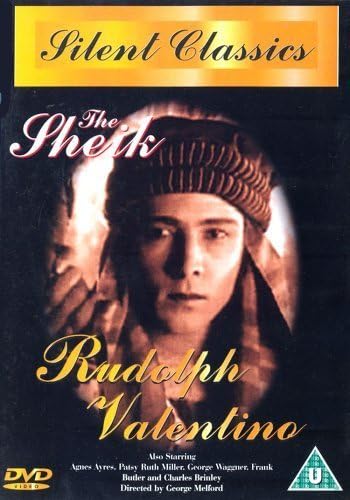
Some years ago, a course on which I was teaching assistant (i.e. seminar tutor) scheduled a screening of The Sheik. Curious as to what copy we would be showing, I looked at the departmental copy: it was the DVD version released in the UK in 2004 by Instant Vision. It presents a monochrome version of the film with a soundtrack of… No, in fact I can’t even remember what the soundtrack was like. What I do remember is that it was such poor quality, visually and musically, that I couldn’t bear for any student on the course to experience the same in this way. (My general rule with screening material is that if I couldn’t sit through it, then neither should my students.) So I looked for alternatives.

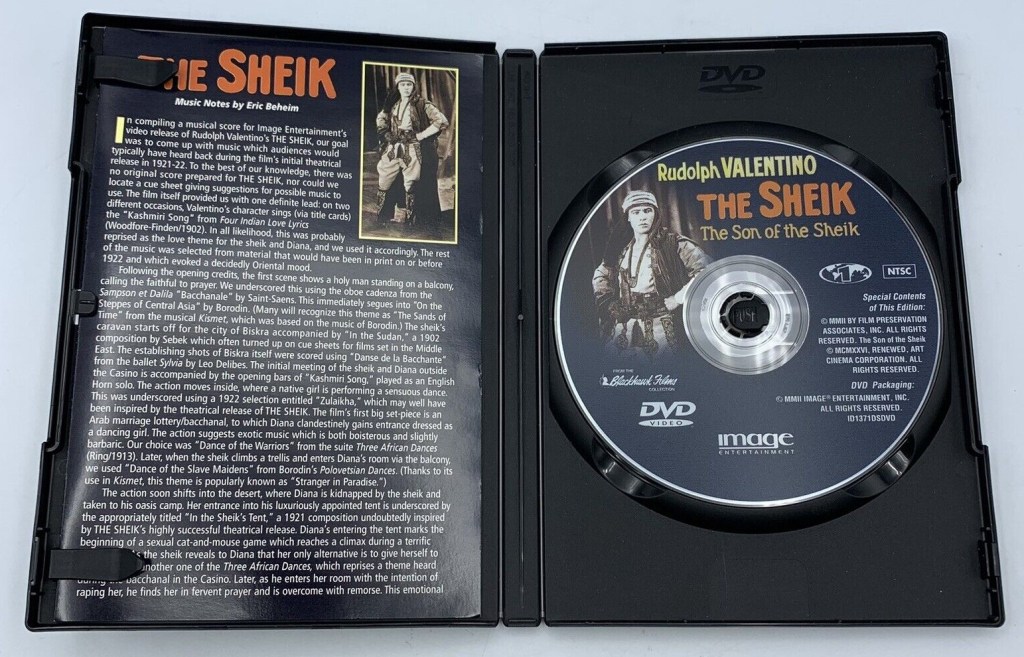
Thankfully, there was at least the DVD produced in the US by Image in 2002. This presented a fully tinted version of the film. However, the score was by the “Café Mauré Orchestra”. Those inverted commas are there for a reason, since this “orchestra” is in fact composed of MIDI (Musical Instrument Digital Interface)-based synthetic sounds—as arranged and performed by Eric Beheim. Though the music choices used (but “used” doesn’t do the MIDI justice: should I say the music is sampled? digitized? synthesized? appropriated? co-opted? press-ganged? harvested? made vassal unto?) are appropriate, the sound of synthetic music rather undoes the benefits of the music itself. Put bluntly, MIDI soundtracks sound cheap. It’s the DVD producers saying: “Listen to how little money we’ve spent on the music! You’ll be amazed!”

So I ripped the DVD and set about compiling my own soundtrack, one that used various nineteenth- and early twentieth-century pieces—including a nice orchestral arrangement of “Kashmiri Song” that Valentino’s character sings in the film. (I even used a couple of the cues from the Beheim score, only these were sampled from actual orchestral recordings.) It worked well and the students enjoyed the film. (More importantly, I enjoyed the film. There are few more maddening experiences in life—well, my life—than sitting through a silent film accompanied by bad music.)

The years passed. I no longer taught on the course that included The Sheik. (Or, for that matter, on any course.) So I was mildly curious when a Blu-ray of the film was announced in 2017. I was poised to buy it, if for the only reason that I try to buy almost anything silent that comes out in a good edition. But then I saw that the score was for theatre organ and my heart sank. (I know, I know, I’m a snob: but really, I just don’t enjoy sitting through over an hour of theatre organ music.) I also considered that my interest in the film was such that I had no real desire to actually buy the Blu-ray. My teaching days seemed to be over, so buying the Blu-ray to try rescoring the film again seemed pointless. I wouldn’t be watching the film, and nor would anyone else. So I passed. Of course, I should have bought the edition anyway. Kino often let their licenses expire, leading to a huge number of titles going out-of-print. Thus, The Sheik duly went OOP.

Paramount then announced their own edition of The Sheik would receive a Blu-ray release in November 2021. Still curious, I searched to see what information I could find about the restoration. I found an interview with Andrea Kalas, who leads Asset Management at Paramount. According to Kalas:

We looked around the world for best sources and Film Preservation Associates graciously loaned us a 35mm black and white print. We also had a finegrain which turned out to have a better overall picture quality, but the print turned out to be great for the intertitles. […] The original frame-per-second cadence was 22fps. The fine grain we used had been ‘stretched’ to 24—essentially by adding frames. With the help of the lab, Pictureshop, we went back to 22fps. […] We had a continuity script that was a critical guide to the digital tinting and toning we added – which was the way the audience in 1921 would have seen it.

The Paramount restoration promised to run to 66 minutes, nine minutes shorter than the Kino Blu-ray and a full twenty minutes shorter than the Image DVD. Kalas’ talk of reversing the stretch-print process of one of their source prints was reassuring—but if the film was “returned” to 22fps, why was the runtime so short?

All of which led me to some basic questions about The Sheik that no home media edition had addressed: How long was the film when shown in 1921? What projection speed was used? What print material survives? Thankfully, the American Film Institute database has some excellent material that is readily accessible. Here, I found that the original length of The Sheik was 6579 feet, which equates to 2005m. (IMDB.com states that the film ran to 1818m when shown in the UK, but I am less inclined to trust IMDB than the AFI when it comes to any film of this vintage.) Even if projected as fast at 24fps, 2005m would be 72 minutes. At 20fps it would be closer to 87 minutes. So how did the previous home media versions of The Sheik relate to this 2005m print, and at what speed did they run?

Well, here are the various incarnations (not including the infinitude of grey market rip-offs) and their runtimes:

  • Paramount VHS (1992) = 79 minutes
  • Image DVD (2002) = 86 minutes
  • Flicker Alley (made-on-demand) DVD (2015) = 76 minutes
  • Kino Blu-ray (2017) = 75 minutes
  • Paramount Blu-ray (2021) = 66 minutes

Maddeningly, nowhere on any single home media release does any company—Paramount, Image, Kino, or Flicker Alley—actually state what the length of their copies are in metres. As a result, we must second guess frame rates and go through each edition to try and work out how they compare to one another…

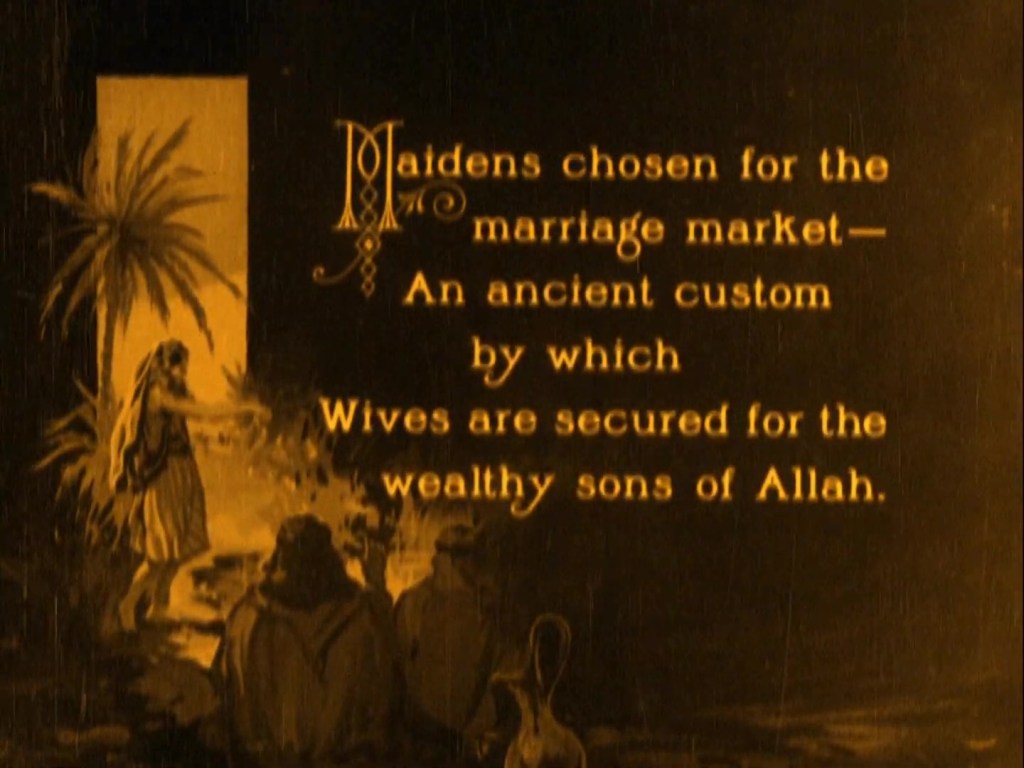
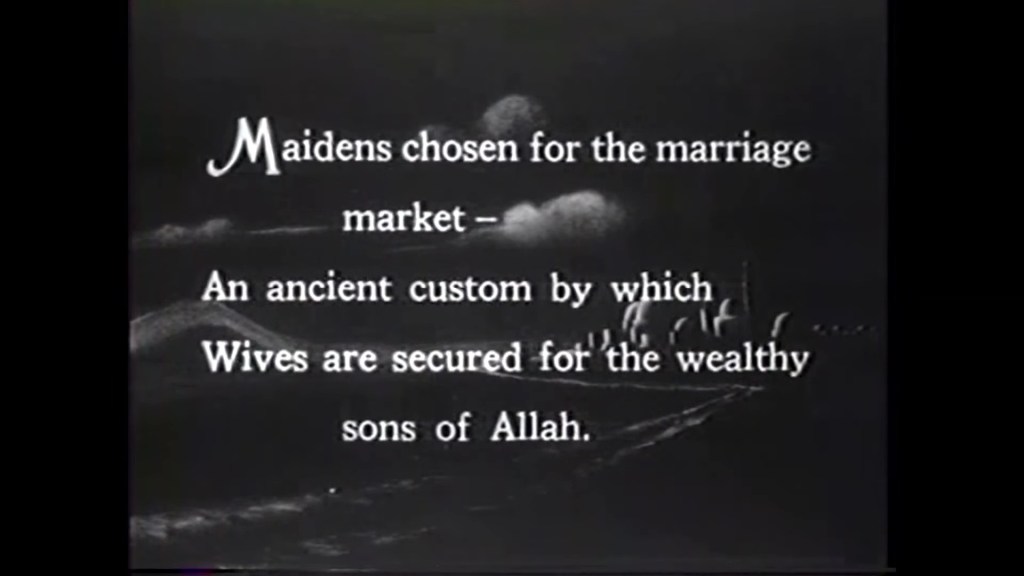
Though there are some minor textual differences between the copies (the Image DVD, for example, is missing one or two intertitles), the basic material remains consistent through these various home media incarnations. One notable exception is the Paramount VHS, which presents different intertitles to the later DVD and Blu-ray editions. The home media review for The Sheik on silentera.com states that the VHS used the re-edited and retitled version of the film, not the original. It’s ironic that the visual quality of the titles presented on the VHS is often superior to that of the DVD/Blu-ray editions: the titles in the reissue print are uniformly strong, sharp, and legible. It’s a shame that many of the original titles have not survived in such a state: after the very high-quality images of live action in the film (especially on Blu-ray), it’s a shock to have to squint at the slightly blurry wording of the titles.

The differences in runtime across the above home media editions are due overwhelmingly to the different framerates applied to the print sources. Deciphering the various video files of these editions has not proved easy, but I can offer an informed estimate of the rates for each. The Image DVD uses the slowest speed of 18fps, the Paramount VHS uses 20fps, Flicker Alley DVD and Kino Blu-ray use 21fps, and the Paramount Blu-ray uses 24fps. Kalas states that the film originally ran at 22fps, though my impression viewing the versions of the film that run to c.75 minutes at 21fps is that this seems perfectly life-like. (It may be that the projection speed used in 1921 was 22fps; but Kalas doesn’t go into any detail about this issue in the interview.)

I’ve checked the Paramount disk and (shorn of new opening/ending credits) the film does indeed last 66 minutes (and nine seconds) and runs at 24fps without any repeated frames. At 24fps, 66 minutes equates to an approximate print length of 1830m. That’s still 175m (6-8 minutes, depending on projection speed) short of the film as seen in 1921. Some of this might be accounted for in the length of intertitles, but it’s still a not insignificant amount of material for such a short film (nearly 9% of its length). I’ve also checked the Paramount Blu-ray against the Kino Blu-ray. It appears to be exactly the same restoration. And I mean exactly the same. The same tints and tones, the same titles, the same scratches and damage. The only difference is the framerate and the soundtrack. I can only presume that Paramount’s centenary restoration of The Sheik was completed by 2017 and Kino simply licensed this version to last until the actual centenary of the film, whereupon Paramount could release their own edition. But why on earth does the Paramount Blu-ray transfer this same restoration at 24fps?

The decision is even stranger when you consider that the soundtrack for Paramount’s Blu-ray—a synth score by Roger Bellon—is the same as the one on Paramount’s VHS thirty years ago. Although Kalas claims the music was “commissioned in 1990 as part of a celebration of Paramount’s 75th”, the VHS edition from 1992 bears a copyright date of 1987 for the soundtrack. (According to various reviews of older home media editions, The Sheik was first released on VHS by Paramount in 1988. I’ve not been able to find any VHS from 1988, only the edition from 1992.) Kalas adds that Bellon’s music “really stands up”, which again begs the question why transfer the film at 24fps when the soundtrack was arranged for a version of the film that ran at 20fps? Another issue with the Bellon score is that it never uses the “Kashmiri Song” that is cited in the film’s intertitles and sung by Valentino on screen. This may well be because the intertitles of the VHS version (for which the score was composed) are from the reissue print, which changes the wording of the Sheik’s song—and thus loses the context of the original song. (While no substitute for a real orchestra, the theatre organ score by Ben Model for the Kino edition at least quotes the “Kashmiri Song” at the appropriate moments.)

Paramount are not alone in sidelining the complex issues and inevitable compromises of film restoration in their home media salesmanship. But in the past I have been irritated by the way some of their press releases muddy the waters of what editions are being presented on Blu-ray, and how they relate to the films as originally presented in the silent era.

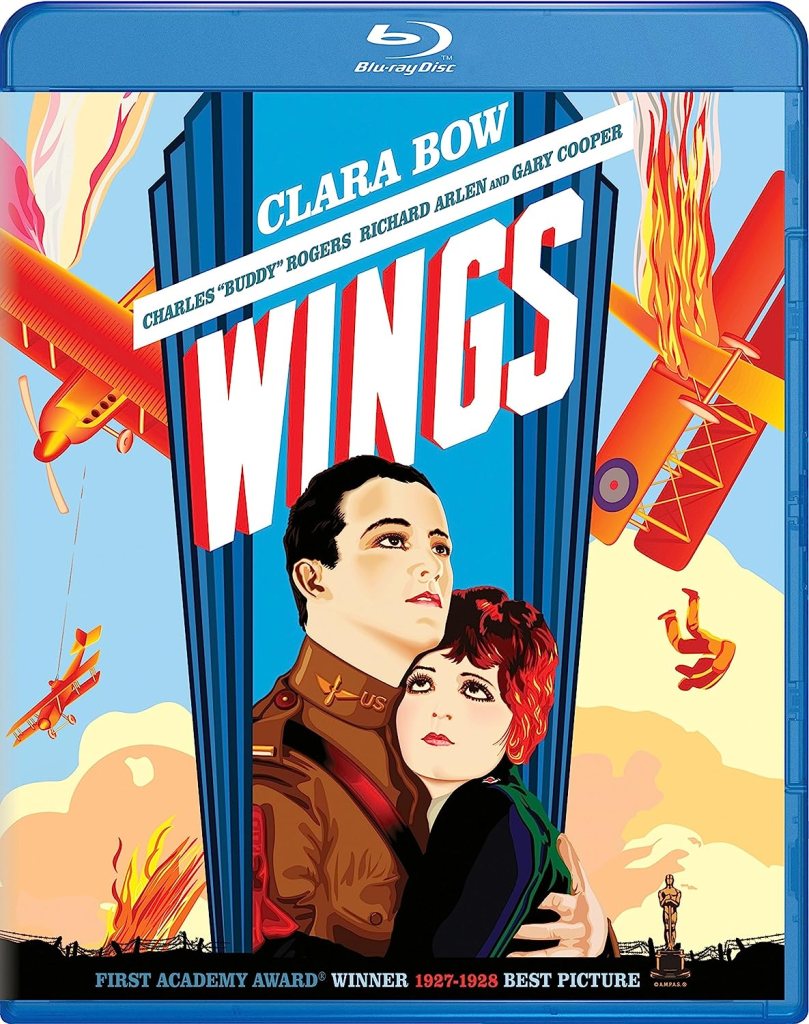
For example, their 2011 Blu-ray release of Wings (William A. Wellman, 1927) was announced with a press release that detailed how they had restored the original score composed by John Stepan Zamecnik (plus the numerous sound effects that were a feature of the film’s initial release). This “newly-restored” soundtrack was announced as the culmination of great effort:

the film’s original paper score was procured from the Library of Congress and recorded with a full orchestra […] Musicians with expertise in silent film music were chosen to recreate a truly orchestral experience.

Note the references to physical artefacts and institutions: paper score, material archive, real musicians. They echo the dual boast of historical sources and modern technologies: celluloid prints scanned using HD software, sheet music from 1927 recorded in 5.1 Dolby Digital Surround sound.

But there is a good deal of ballyhoo (if not bullshit) here. For a start, the only surviving hard copy of the music for Wings was a conductor’s short score, bearing just two or three staves of information. This document lacked details of orchestration, and the structure of its cues did not match the montage of surviving prints. The task of re-editing the score was further hampered by copyright issues: Paramount could not include (or could not afford) several of the musical works originally quoted at length by Zamecnik. And the reorchestration of this music was performative as well as editorial. Contrary to the press release, Dominik Hauser’s arrangement of the “orchestral” score on the Blu-ray is not performed by an orchestra, but instead consists of an assembly of MIDI sound files. The only real musician audible on the soundtrack is Frederick Hodges, whose solo piano interpolations were needed to bridge gaps in the “orchestral” score. Whilst the Paramount edition includes an alternative soundtrack of Gaylord Carter’s organ score, it does not offer Carl Davis’s orchestral score, which was recorded with real musicians for the Photoplay restoration of Wings in 1993. This latter version has never received commercial release.

The spin around Paramount’s release of Wings made me more suspicious than I might otherwise have been when it came to their release of The Sheik. My heart sinks that in 2021 Paramount offered a less satisfying presentation of their own centenary restoration than Kino presented in 2017. (I might add that the Kino edition included an audio commentary track on the film by Gaylyn Studlar, which the Paramount edition lacks. Even if Paramount had been willing and able to reuse this commentary, they would have had to speed-up the track by 114% to match their 24fps presentation of the film.) I have no particular fondness for The Sheik as a film, but even just as a historical document it deserves to be treated with respect. It’s great that Paramount decided to restore and release this silent film on Blu-ray. But why then make choices that lessen its impact?

Paul Cuff

The films of Abel Gance in the Netherlands, 1915-1937

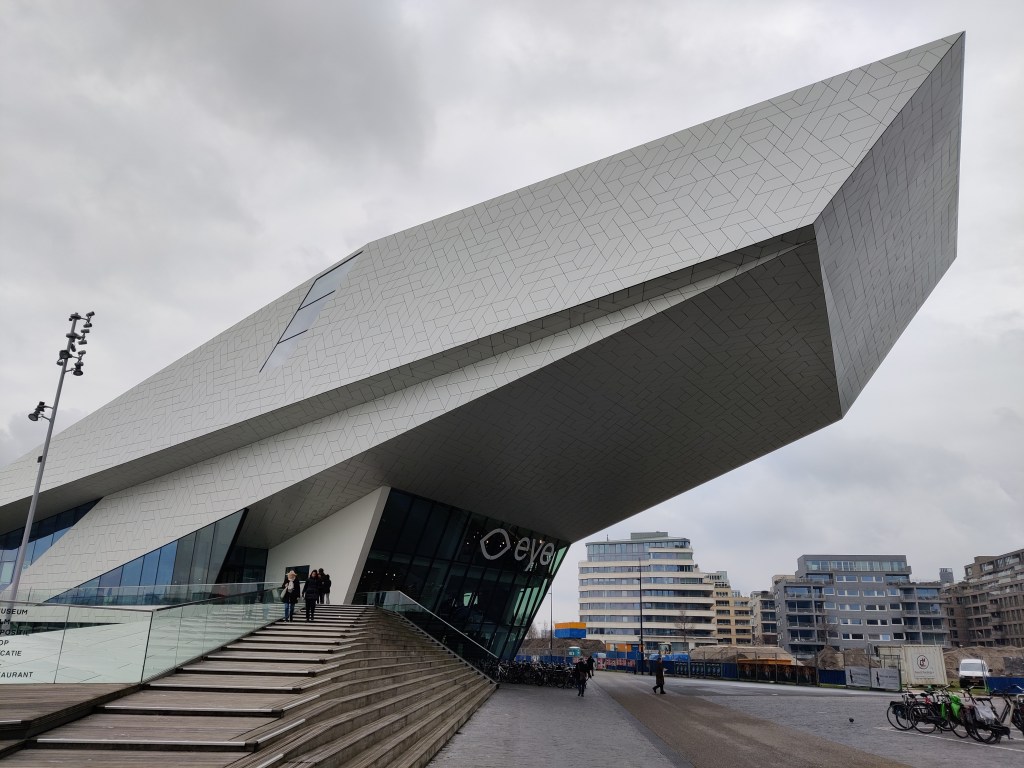
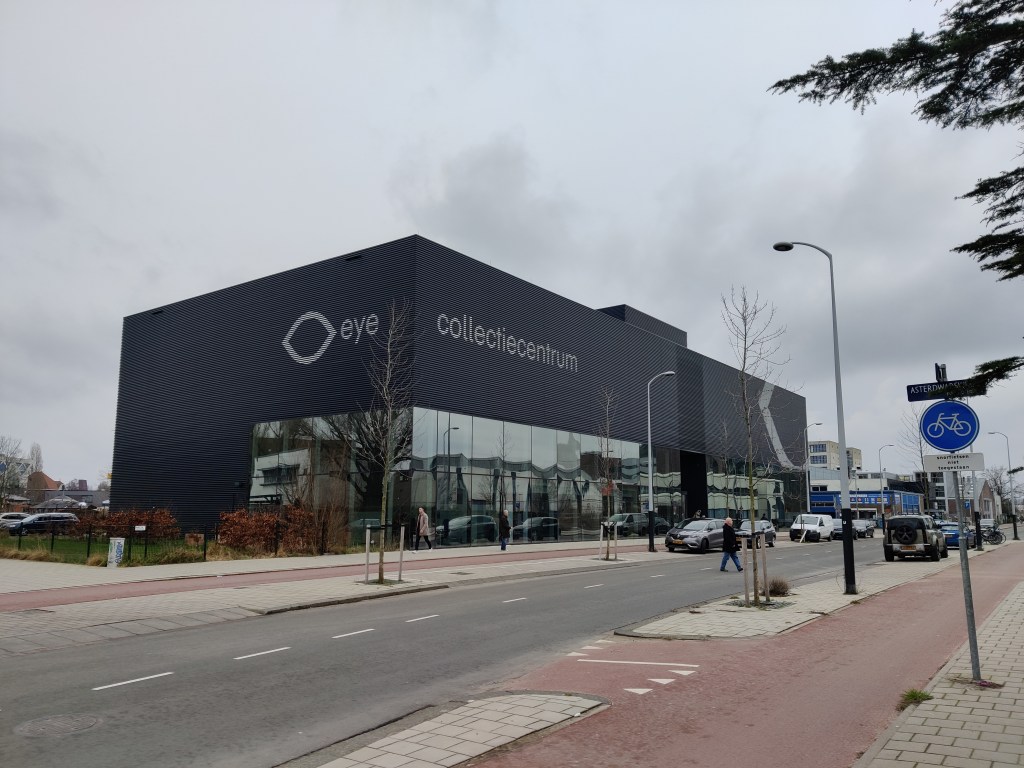
This piece is inspired by a recent trip to Amsterdam to visit the archive of the Eye Filmmuseum. Here, their collection specialist Leenke Ripmeester was an exceedingly helpful host. She not only showed me a unique print of Gance’s first sound film but also introduced me to some fantastic online resources where I could research historical film distribution in the Netherlands. The most remarkable for me was “Cinema Context”, an amazing database containing information from the Dutch film censors and contemporary press reports. (Leenke told me that she herself, in her student days, was part of the team who collated the data from contemporary documents.) It strikes me as a fabulous project, one that I wish every country would pursue. This, together with the newspaper archive, proved tremendously useful in revealing how, when, and in what form Gance’s films were shown in the Netherlands during the 1920s-30s. What follows is a brief account of my visit to the archive that afternoon, and what I have discovered about Gance’s silent and early sound films in the meantime…

Films produced by Le Film d’art (1915-1917)

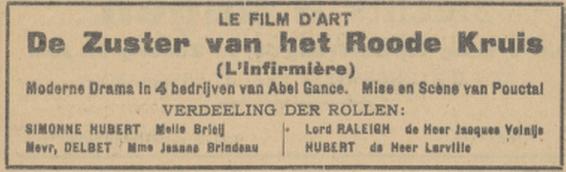
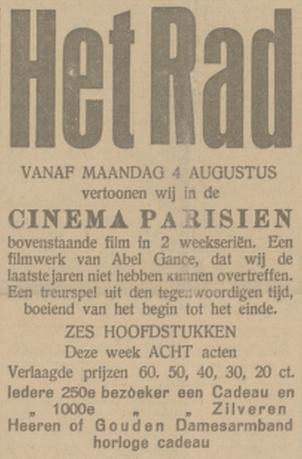
The earliest reference to Gance’s name in the Netherlands press is in 1915, when he had started working for Louis Nalpas’ production company Le Film d’art. His first assignment—as scenarist—was Henri Pouctal’s L’infirmière (1915). The film was released in the Netherlands and the adverts even featured Gance’s name alongside that of Pouctal (see below, from the Arnhemsche courant (17 June 1915)). Thereafter, Gance assumed the direction of his own scripts, and Le Film d’art productions seem to have been distributed in the Netherlands throughout the war years.

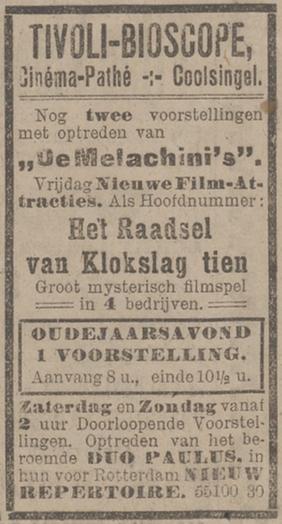
L’Énigme de dix heures (1915). First released in France in August 1915 in a version of 1200m. First shown in the Netherlands in December 1915 under the title “Het Raadsel van klokslag tien”.

La Fleur des ruines (1915). First released in France in late 1915 in a version of three parts (sometimes listed as four parts). First shown in the Netherlands in November 1915 under the title “De Lelie der puinen” or “Een lelie tusschen de puinhoopen”. There is no known length listed for the French version, but the Dutch censors record the length as 900m. (This is the first time Gance is mentioned by name in the reports.)

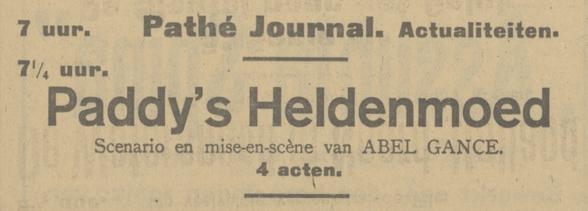
L’Héroïsme de Paddy (1915). First released in France in October 1915 in a version of three parts. First shown in the Netherlands in January 1916 under the title “Paddy’s heldenmoed”. There is no known length listed for the French version, but the Dutch censors record the length as 1200m. An advert in the Arnhemsche courant (26 January 1916) describes the film as being in “four acts”.

Le Fou de la Falaise (1916). First released in France in January 1916 in a version of 1180m in three parts. First shown in the Netherlands in May 1916 under the title “De Gek van de klippen” or “De Dwaas van de rotsen”. Dutch censor also gives length as 1180m.

La Droit à la vie (1917). First released in France in January 1917 in a version of 1355m (some filmographies say 1600m). First shown in the Netherlands in March 1917 under the title “Een Kind uit het volk” or “Het Recht om te leven”. Described by the censor as a “social drama in four acts” with the original act titles: “1. De brand, 2. Oproer, 3. Haar offer, 4. Uitgestoten”.

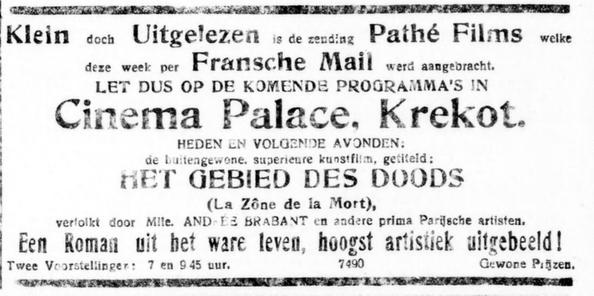
La Zone de la mort (1917). First released in France in October 1917 in a version of 1535m. First shown in the Netherlands in July-August 1918 under the title “Het Vuur” or “Het Gebied des doods”.

Barberousse (1917). First released in France in April 1917 in a version of 1600m. First shown in the Netherlands in December 1921 under the title “De Bende van Barbarossa”. Dutch censor gives length as 1700m (100m longer than Gance filmographies state). After a much-delayed release in Leiden in December 1921, the film was then rereleased in Rotterdam in April-May 1922.

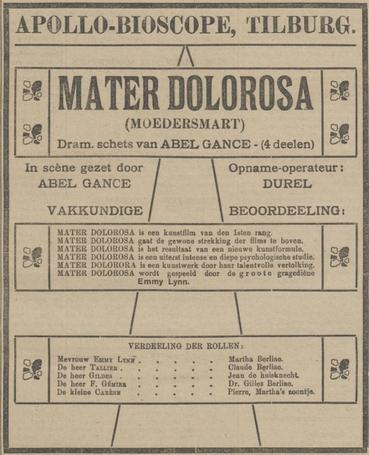
Mater Dolorosa (1917). First released in France in March 1917 in a version of 1510m. First shown in the Netherlands in April 1917 under the titles “Vrouwennoodlot”, “Een Moederhart verloochent zich niet”, or “Moedersmart”. Dutch censor gives length of 1344m and an age certificate of 18+. (This is the first Gance film I have found in the Dutch records to be given an age rating.) The film was rereleased in the Netherlands in June 1920 and again in February 1924.

La Dixième symphonie (1918). First released in France in November 1918 in a version of 1510m. First shown in the Netherlands in October 1919 under the title “De Tiende symphonie”. The release date suggests the film was shown in the wake of J’accuse, presumably to capitalize on the latter’s commercial success (see below).
Films produced by Pathé (1919-23)

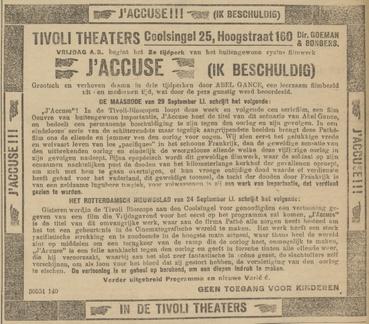
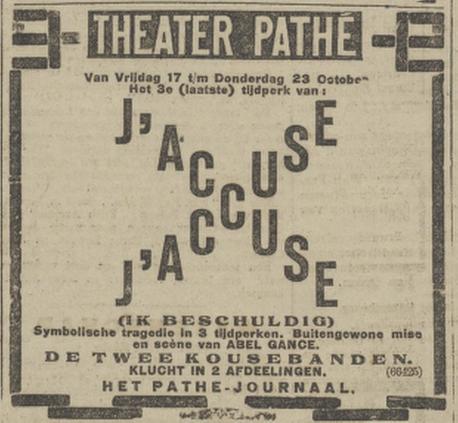
J’accuse! (1919). First shown in France in March-April 1919 in a four-part version of 5250m, released generally in a three-part version of 4350m, rereleased in a version of 3200m in 1922. First shown in the Netherlands in September 1919 under the title “Ik beschuldig”. Censorship records record the length as 4500m (150m longer than Gance filmographies state), divided into three parts. The film evidently had a wide release across the Netherlands, as there are records of screenings in various locations from late 1919 through to September 1920.

La Roue (1922). First shown in France in December 1922 in a six-part version of 11,000m, released generally in a four-part version of 10,495m, then rereleased in 1924 in a two-part version of 4500m. First shown in the Netherlands in a two-part version of 4632m in March 1924 (The Hague). Gance filmographies state the length of the two-part version (which Pathé intended to be the standard export version of La Roue) as 4200m or 4500m, but the Dutch records give a precise length. The records note the title of part two as “De Witte symphonie”, which matches the evidence that the 1924 version was divided into “La Symphonie noire” (part one) and “La Symphonie blanche” (part two). The Dutch censor gives an age certificate of 18+ for La Roue for “ongezonde, krankzinnige vertoning” (i.e. “unhealthy” displays of “mad” behaviour). The film was successful enough to be rereleased in the Netherlands in March 1925 (Amsterdam and Rotterdam) and again in February 1927 (Leiden).

Au secours! (1924). First released in France in October 1924 in a version of 900m. A 752m version of the film was passed for censorship in the Netherlands in October 1928 under the title “Max Linder en het spookslot” but there is no indication that the film was exhibited. The Dutch censor gives this film an age certificate of 18+ for “griezeligheden” (“creepiness”!).

Napoléon, vu par Abel Gance (1927)

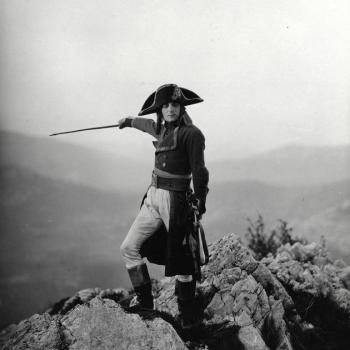
Well, such are the complexities of this film that it needs its own section. Napoléon was first shown in France in April 1927 in a version of 5200m with triptych sequences (the “Opéra” version), then released in May 1927 in a version of 12,961m without triptychs (the “Apollo” version); subsequently prepared for international distribution in a version of 9600m with triptychs (the “definitive” version). First shown in the Netherlands in August 1927, then rereleased in March 1929 and September 1931.

Given the innumerable different versions of the film released in 1927-28, many without supervision by Gance, it is difficult to tell in what form Napoléon was exhibited in the Netherlands. It is possible that the version shown in August 1927 was the same version seen in Berlin in October 1927 and subsequently released in central Europe through UFA. This version was around three hours, which would accord with the Dutch records providing a length of 3946m (170 minutes at 20fps) for Napoléon. However, the film’s Dutch premiere in The Hague predates the first censorship records from March 1929. Though the length of the film is given as 3946m, there are also separate records for two “episodes” of this version: part one is 973m, part two is 1033m (i.e. a total length of only 2006m). The censor records six cuts were made to the version shown in 1929, due to “schijn van ongeklede dames” (i.e. scantily-clad women). The 1931 file states the film has two “episodes” that pass without cuts. For its screenings in 1929, the exhibition records reveal that Napoléon was shown in a programme that also included several films by Walter Ruttmann: the avant-garde shorts Opus II (1922), Opus III (1924), and Opus IV (1925), together with his feature documentary Berlin: die Sinfonie der Grossstadt (1927). Given the potential length of this programme, it would indicate that only a severely reduced version of Napoléon was shown in 1929—perhaps even a version amounting to extracts of the major sequences.

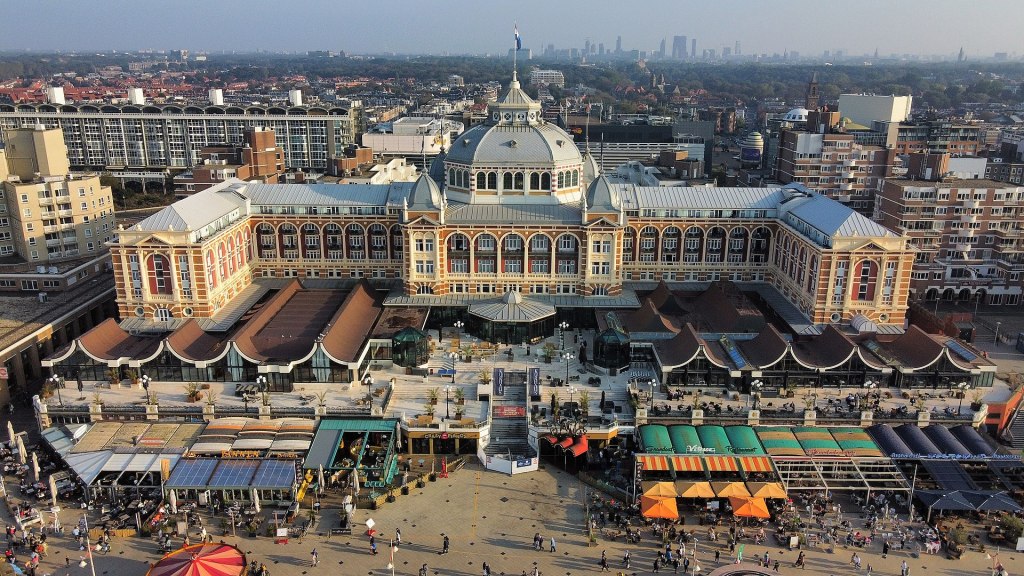
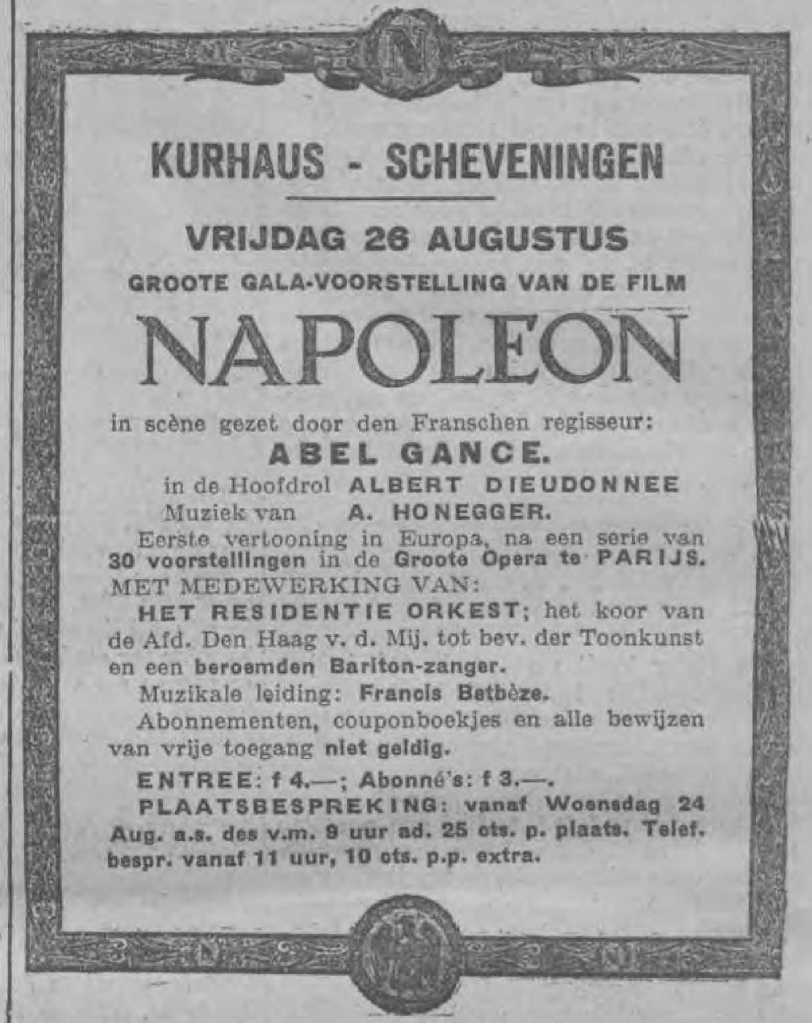
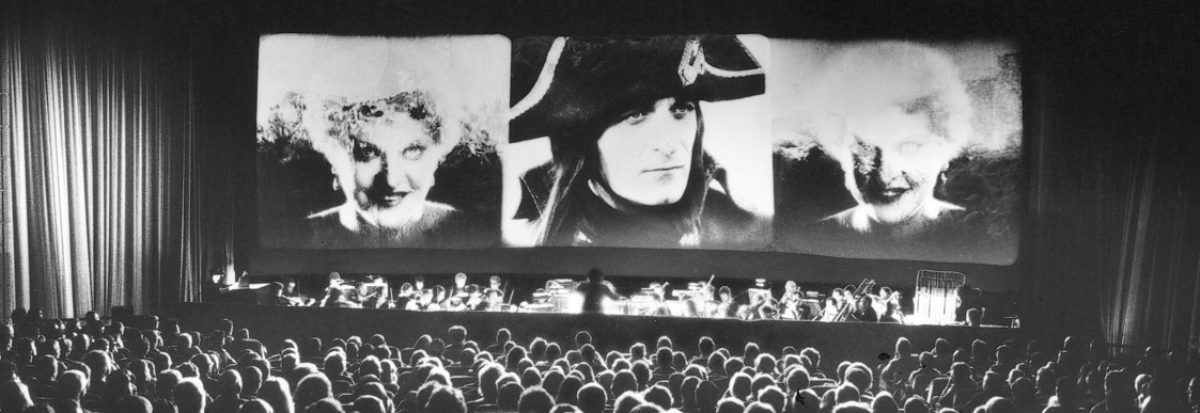
But it is the film’s first exhibition in the Netherlands that intrigues me most. Contemporary reviews indicate that the version of Napoléon shown there in 1927 measured 4000m (De locomotief, 1 October 1927; De Telegraf, 27 August 1927), which accords with the 3946m length given in the censorship records. This version had its gala premiere in the Kurhaus, The Hague, on 26 August 1927. It was clearly a major screening in a grand location (see an image of the venue below).

Musical accompaniment was provided by the 82-man resident orchestra and the 40-strong chorus of the Haagsche Toonkunst, together with the baritone Tilkin Servaes (Het Vaderkabd, 13 August 1927). The conductor was due to be Francis Betbèze, but he was ill the day of the premiere so was replaced by a Mr. Schuyer. The score itself was that written and arranged by Arthur Honegger for the film’s premiere at the Paris Opéra in April 1927. Before reading the Dutch press reports, I had no idea that Honegger’s score was ever performed outside of France in 1927. It must have been specially arranged by Betbèze or Schuyer, because Honegger’s score was designed to accompany a longer version of the film (the Opéra print ran to 5200m, 1200m longer than the Netherlands version). There was also the inherent issue of the score being a rushed and unsatisfactory project. Reviews of the premiere performance in Paris describe Honegger’s music as being badly performed (as well as poorly arranged) and often clashing with the film. This isn’t surprising, given that Honegger walked out on Gance before he had finished work on the score—there were doubtless last-minute changes in editing that meant the music had little chance of synchronizing throughout. So how did the music fare in The Hague performance?

The review of the premiere in De Telegraf (27 August 1927) indicates that the music was as much a failure here as it had been in Paris. Due to bad timing (whether due to projection speed or musical error), the solo baritone had to sing the Marseillaise “at a gallop”. The choir was likewise “forced to sing at a tempo apparently much faster than it had rehearsed”. But this was only one instance of a general problem:

Honegger’s accompanying music has not taken any further steps in solving the problem of film music. One does not get the impression that this music was composed especially for the film. On the contrary. Scenes in which the obsessive violence of revolution can be seen on screen are sometimes accompanied by an idyllic duet of two flutes. Modern and modernist sounds are unleashed on the film when a piano is seen on screen: the piano is represented by a celesta while the orchestra plays Mozart’s B-flat aria from The Marriage of Figaro. No trace of style. Indeed, in many places the music destroyed the mood evoked by the film images. The last act of the film is apparently not accompanied by Honegger’s arrangement. The potpourri then performed has a cheap allure. Thus, the performance ended in a vocal and instrumental debacle. Music synchronized with images: this ideal was a long way off from the premiere of Napoleon!

These are much the same issue cited in the performance of Honegger’s music in Paris. Doubtless, the textual changes to the 4000m version shown in The Hague exacerbated the existing issues with synchronization in the score. But the mere fact that Honegger’s original score accompanied the film is itself an indicator of the effort put into the exhibition of Napoléon in the Netherlands. The press reports feature photos of Gance, and the reviews repeatedly use the word “masterpiece” in their advertisements. However flawed its musical presentation, the film itself made a critical impact.

One last note to add to this section is the fact that Jean Arroy’s documentary Autour de Napoléon (1928) was also shown in the Netherlands. It was first released in France in February 1928 in a version of 1200m. It was released in the Netherlands in May 1928 (at the Centraal Theater, Amsterdam and the Corso cinema, Rotterdam). That it was exhibited at all in the Netherlands indicates that Napoléon generated public interest. After all, various versions of Napoléon continued to circulate there throughout 1927-31.

La Fin du Monde / Das Ende der Welt (1931)

The history of La Fin du monde is exceedingly complex. (For a full account of the production and its context, I refer readers to my book on the subject.) In brief, before surrendering control of the editing to his producer, Gance assembled a version of 5250m (over three hours). The version that was ultimately released was only 2800m (c.100 minutes). It was first shown in Brussels in December 1930, then began its general release in France in January 1931. The German-language version, Das Ende der Welt, was first shown in Zurich in January 1931, then began its general release in Germany in April.

When La Fin du monde is first discussed in the Dutch press, it is under the title “Het Einde der wereld”, the literal Dutch translation of “La Fin du monde”. The Paris correspondents of various Dutch newspapers reported on La Fin du monde and highlighted all the faults that other critics noted (exaggerated performances, poor sound, inept editing). Given that both the film’s production company (L’Écran d’art) and its main distributor (Les Établissements Jacques Haïk) went bankrupt by the end of 1931, it’s not surprising that La Fin du monde was not taken up by distributors in the Netherlands at this stage. A comment in Het Vaderland at the end of the year summed it up well: La Fin du monde “has not yet been shown in our country, but in Berlin it has already sunk like a brick” (19 September 1931).

Although the film was not yet released in the Netherlands, the French-language version had been submitted to the censor in March 1931. I was very intrigued to discover that these records give a precise length for La Fin du monde of 2906m, longer than the 2800m usually cited in filmographies. The files show that the film was given an 18+ rating, describing the film as “sensational, exciting, confused” and included a “banal image of suffering Christ”. Six cuts were made, all of them to the “orgy” sequence near the climax of the film. (One gets the impression of a protestant sensibility in the Dutch censors’ office.) But despite being passed for release, La Fin du monde was not shown in the Netherlands in 1931.

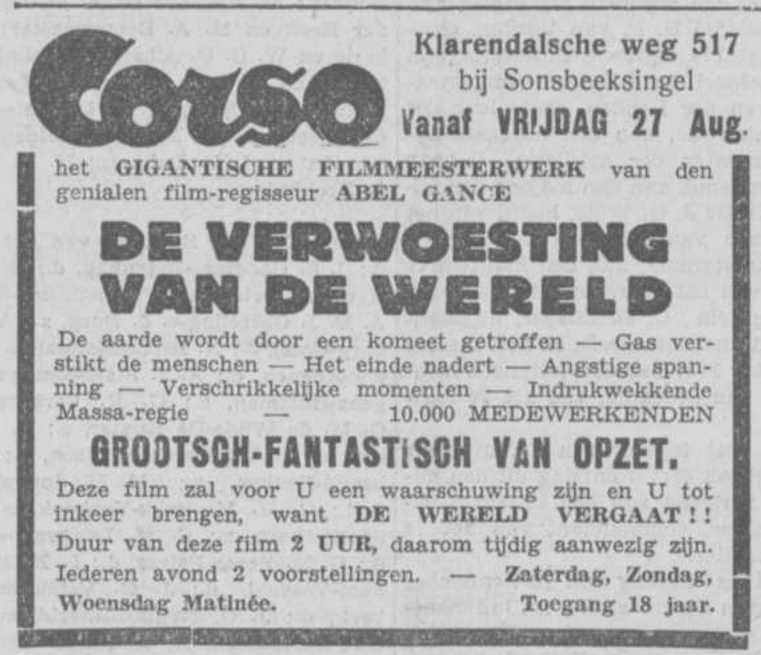
There is a second file from May 1935. The film is now referred to as “Het einde der wereld”, the literal Dutch translation of the French original. But the film is still not released. In December 1935, the film once again comes before the censor—this time under the new title “De Verwoesting van de wereld”, i.e. “The Destruction of the World”. However, the print being submitted is not the French-language version of the film, but the German-language version: Das Ende der Welt. The censor again gives the film an 18+ rating for the film’s “sensational tenor and frivolity”. Two cuts are recorded, totalling 76m of footage. (No content description is given, but one presumes it was the same orgy sequence that again brought out the scissors.)

In June 1936, over five years since it was first shown in Switzerland and Germany, Das Ende der Welt was finally released in the Netherlands under the title “De Verwoesting van de wereld”. It was shown at the Roxy cinema in Leiden, then in various other cities across 1936-37. Why did it take so long for the film to reach the Netherlands? One reason is that the film was such a flop in 1931 that it was perhaps wise to wait until the memory of its failure had faded. For by 1936-37, newspapers were announcing “De Verwoesting van de wereld” as if it were a new production. (Perhaps the title was changed precisely to dissociate the film with its original release.)

The Arnhemsche courant, for example, carried a hyperbolic advert announcing the “gigantic film masterpiece by the genius director Abel Gance” (26 August 1937). The tone of the Dutch press pieces strongly echoes the advertisements in the German press in 1930-31, which also emphasized the scale of the spectacle and the numbers of extras. It is worth noting that it was Viatcheslav Tourjansky who had supervised the editing of the German-language version of Gance’s film. Very little is known about how either the French or German prints were assembled for their release, so the existence of “De Verwoesting van de wereld” is a significant piece of evidence. The adverts for its release in 1936 say the film lasts two hours, though the censor record of 2906m suggests an actual time of 105 minutes. However, with a fifteen-minute interval, you can easily imagine the film becoming a two-hour showing.

There are surprisingly few reviews that I can find from 1936-37, and none of anything like the length of the reviews sent from Paris correspondents to the Dutch press in 1931. The Nieuw weekblad voor de cinematografie calls it an “exciting film” and reassures its readers that the epic story is in the “safe hands” of Abel Gance (17 April 1936). (I think this is the only time I’ve ever seen Gance referred to as a pair of safe hands!) The Dagblad van Noord-Brabant mentions the film’s scale and number of extras but offers scant comment on its quality (20 February 1937).

But thanks to the Eye Filmmuseum, I can at least offer some comment on “De Verwoesting van de wereld”: for a print of 830m (thirty minutes) is preserved in their collection in Amsterdam. I had long thought that no copy of the German version of Gance’s film survived. (I had even said so in print!) So I was incredibly excited to see even this fragment of Das Ende der Welt. The print had Dutch introductory credits and Dutch subtitles, but the soundtrack was most definitely in German. For this, I knew from my earlier research that the main performers (Abel Gance, Victor Francen, Samson Fainsilber etc) had been dubbed by German actors. Only one actor was recast for the German version: Wanda Gréville (credited as Vanda Vengen) replaced Colette Darfeuil from the French version. (Gréville was English but spoke German fluently. She was also intended to shoot scenes for an English-language version of the film, but this version was never assembled in 1931. The version of the film released in the US in 1934 was the French version with English title cards and subtitles.)

Sadly, the first third of the film is entirely missing from the Dutch copy, so there is no sight of Gance as Jean Novalic at all—I had so hoped to hear what he sounded like in the German dub. But Victor Francen as Martial Novalic is there, dubbed in authoritative German. I also spotted at least two scenes featuring German dialogue recorded live on set (i.e. not dubbed), but only with minor characters. Most of the Dutch print consists of the climactic scenes of the comet approaching: we see crowds fleeing in panic, nature running amok, extreme weather etc. Amongst this material are several shots that do not survive in the French version, but nothing significant. Sadly, there is no sign of Wanda Gréville. I had also wondered if there were any extra scenes missing from the surviving French-language copies of the film. The recent Gaumont restoration of La Fin du monde runs to 94 minutes, several minutes short of the prints shown in 1931. But aside from a few very brief shots, there are no major discoveries in the Dutch print. (The only shot that was suggestive of a missing sequence was one shot of Martial Novalic behind-the-scenes at the “Universal Convention” in the last minutes. Assuming this is him after he makes his grand speech, it would belong to the scenes in which he is—according to the script—finally reunited with Geneviève.)

Though it is only a fragment of “De Verwoesting van de wereld” as it was shown in 1936-37, the surviving Dutch print survives in very good visual quality. The viewing copy I saw was an acetate dupe of the 35mm nitrate print held in the archive, so the original should look even better. The 35mm print was part of a private collection of reels purchased by the Eye Filmmuseum in the 1960s. No further information is known about the history of this particular print, or how it ended up being reduced from c.105 minutes to just thirty.

Summary

This was only my second trip to Amsterdam. The first was in 2014 for a screening of Napoléon at the Ziggodome. Here, the film was projected on 35mm and accompanied by Carl Davis conducting the Het Gelders Orkest. This was the most extraordinary performance of the film I have ever seen. For the final triptych, the three screens measured a total of forty metres wide and ten metres tall.

My trip to the Eye Filmmuseum to see the fragment of Das Ende der Welt on a small screen was less spectacular, but nevertheless rewarding. I knew nothing about the print until revisiting the FIAF database in 2021. The mere existence of the print is a miracle, especially as it led me to explore the wonderful Dutch archive sites and discover all kinds of new information on the distribution of Gance’s films. It just proves to show how much more can be gleaned if only you know where to look. And I do hope more of any version of La Fin du monde turns up. (Of course, the mythical three hour cut that Gance assembled would be a dream, but the chances of it existing at all are infinitesimally small.) I have just seen that Kino is to release the recent Gaumont restoration of La Fin du Monde on Blu-ray in North America. Sadly, there are no new extras. Will someone be keen enough to offer a UK release? If so, I can certainly recommend at least one extra: the Dutch print of Das Ende der Welt. (And I know at least one person who’d be keen to do another commentary track. Ahem…)

My thanks once again to Leenke Ripmeester for her time and help within and beyond the archive.

Paul Cuff

Music for Die Liebe der Jeanne Ney (1927; Ger.; G.W. Pabst)

This piece is devoted to the score arranged and orchestrated by Bernd Thewes for the 2016 restoration of Pabst’s Die Liebe der Jeanne Ney (1927). I confess at the outset that I love this score unreservedly. I have relistened to it all the way through a dozen times, and to certain sections of it many times more. No review that I’ve read has gone into much detail about the music, which seems to me a great oversight. This piece tries to make amends for that.

The model for Thewes’s 2016 orchestral score is a piano score from the music collection of the Museum of Modern Art in New York. This anonymous work is not an original composition, but a compilation of existing music. It was likely made in the 1930s when Iris Barry (MoMA’s curator) acquired a copy of Die Liebe der Jeanne Ney from the Reichsfilmarchiv in Berlin. We don’t know the identity of the musician who assembled this piano score, nor does the score identify the pieces of music used within it. While there is recognizable material from familiar composers (Tchaikovsky, Rachmaninov, Verdi), much of the music remains obscure—at least to me.

What’s so pleasing about Thewes’s arrangement is that it treats the identifiable and unidentifiable pieces with equal originality. Thewes began work by dubbing the piano music to match the video of the restored film, then orchestrated the score from scratch to produce a coherent sound world that fitted the images. There is a tremendous sense of freedom in this method: the familiar and the unfamiliar are made to sound equally new. Thewes’s choice of instrumentation is key to this sense of playful recreation. To the forces of a symphony orchestra (including piano) are added electric bass, saxophone, Hammond organ, and drum set. Much like the contents of the original piano score, these forces are a blend of the classical and the popular.

One of the pleasures of listening to scores based on musical compilations is recognizing familiar pieces, and hearing how they are (re)arranged to suit the film. Two of the main themes in the film are well-known pieces by well-known composers. The piece associated with the romance between Jeanne (Édith Jéhanne) and Andreas (Uno Henning) is “June”, from Tchaikovsky’s piano suite The Seasons (op. 37a, 1875-76). In Thewes’s score, this piece—a barcarolle—becomes a warm, mellow, melancholy theme taken up by the strings and supported by the Hammond organ. The organ might suggest a matrimonial—if not religious—tone to such a piece; no doubt it does in this score, but I think the distinctive timbre of the Hammond also offers something else. Its use in prog rock and pop music brings in a very different context than a pipe organ would from the context of theatre or church. (When, in later scenes, it is used in combination with an electric base, the Hammond also brings in the context of horror films.) One might say the Hammond organ is a secular counterpart to traditional pipe organs. Its use in the orchestration of Tchaikovsky’s “June” might hint at religious matrimony but it does so only within the context of secular music: a classical melody rendered on a popular instrument. Its timbre also (to my ears) heightens the sense of melancholy. We first hear the piece when Jeanne is staring into the dark, remembering time spent with the absent Andreas; this music is not just an expression of love, but of love lost or love yet to be fulfilled.

Another recurring theme is the music used for the villain of the film, Khalibiev (played by the deliciously repellent Fritz Rasp). For this, the score uses Rachmaninov’s Prelude no. 5 in G minor (from the op. 23 preludes, 1901-03). The orchestration emphasizes the sinister, irregular gait of the music: with the equivalent of the lowest (lefthand) notes from the piano taken by the bassoon and soon strengthened with brass. Later, Thewes allows the piano to join the orchestra, turning the prelude into a kind of concerto. If the “June” motif is an unpretentious, accessible theme for the lovers, the more flamboyant (more overtly “classical”) Rachmaninov prelude reflects the sinister pretensions of Khalibiev, who poses as a kind of exiled Russian aristocrat.

Other familiar pieces in the score are more radically reworked. “The Internationale” anthem (music composed in 1888) is cited several times. This well-worn tune takes on a new dimension thanks to the way Thewes uses Hammond organ, drums, and brass in his score: there’s suddenly a narrative drive to the music, one that makes it more than a recitation of the anthem’s own themes. The melody becomes threatening (for the battle scenes), boisterous (for the Bolshevik courtroom), and celebratory (for the flashback to Jeanne’s first sight of Andreas). The variations in tempo and orchestration transform what can be a slow, turgid piece (designed for the accompaniment of text, after all, not images) into exciting, thrilling music that sounds fresh and alive.

More subtly, in the scene where Andreas is in a bar, plotting with his comrades, the score uses Tchaikovsky’s “Danse russe”, from 12 Morceaux for piano (op. 40, 1878). But the way the tempo is altered (shifting in line with the ebb and flow of conversation and movement on screen) makes the music entirely serve the film. Likewise, immediately after the above scene, excerpts from Tchaikovsky’s Marche slave (op. 31, 1876) are rearranged to fit the rhythm and content of the images. Its first appearance (for the first shot of the Bolshevik forces gathering for the assault) is only a few bars from the sinister opening of the piece, but Thewes adds cymbals to subtly mimic the splash of horses galloping through the water on screen—and the added rhythm quickens the propulsion of the “march”. A few scenes later, the Marche slave’s next appearance is much in line with the original orchestration (from its finale), but after a couple of bars the organ enters to take up the rhythm: with a few deft touches, a very familiar (and much used) piece of music becomes part of the specific sound world of this score. 
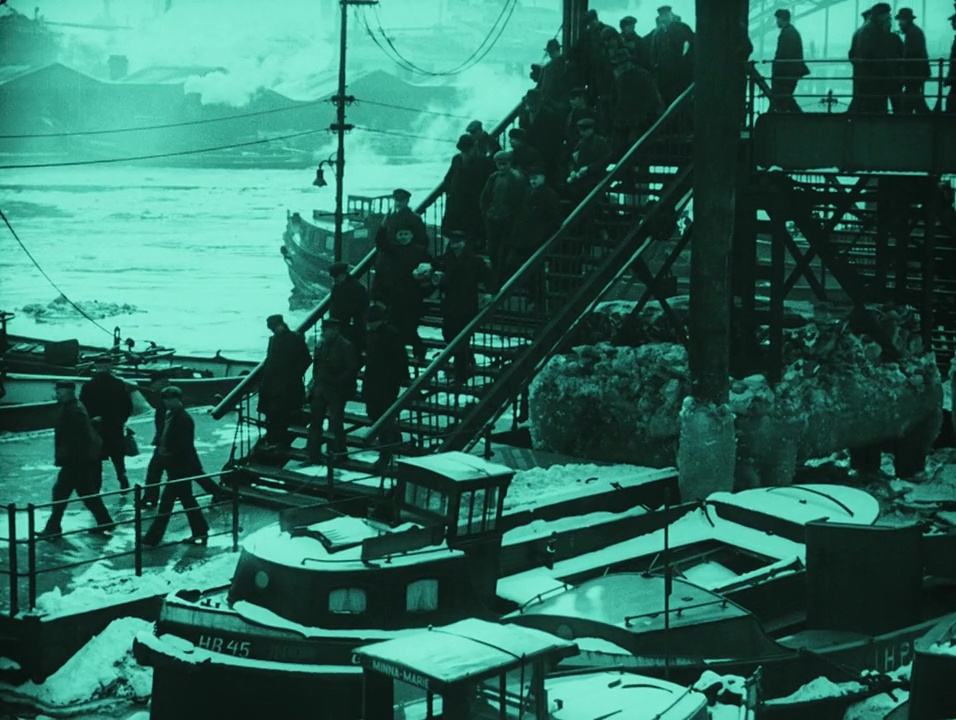
Later in the film comes a piece of music whose transformation particularly struck me when first I heard it. When the newspapers announce the murder of Raymond Ney, the score uses the main theme from Verdi’s overture to La forza del destino (1862/69). It’s a very well-known piece, but in Thewes’s arrangement it took me totally by surprise. For the theme is first spelled out by the organ, supported by drums and brass before the strings enter. After this first iteration (and a fabulous diminuendo that ends in the lowest growlings of the brass), the theme is given over entirely to the organ. It’s the perfect example of making the familiar sound new. There’s more than a hint of prog about this melding of classical repertory with modern instruments (the drum kit and Hammond organ are exemplary of a prog soundscape). It makes the piece doubly new: recontextualizing it to the images of 1927 and to the worlds of both classical and popular music. And, quite simply, it’s fun.
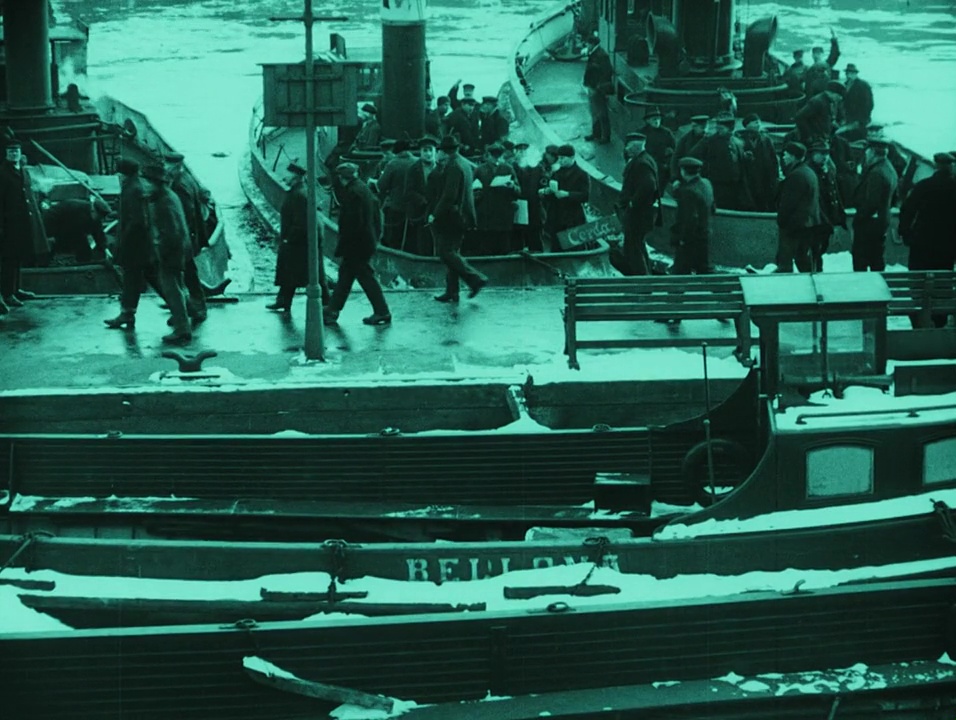
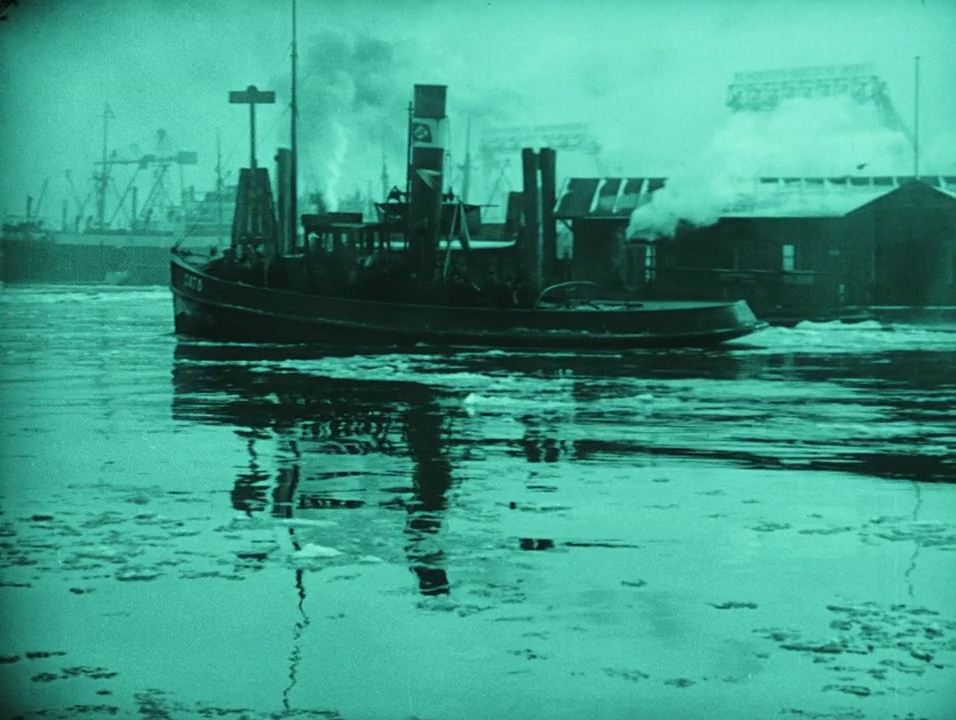
Indeed, I should keep saying just how fun Thewes’s orchestration is throughout. To pick another moment, listen to how we are introduced to the detective agency of Raymond Ney (Adolf E. Licho) in Paris. The score uses Armas Järnefelt’s Præludium (1899-1900), a piece not now familiar for most. (After a lot of digging around trying to identify this piece, I realized that not only had I heard it before but that I actually owned it on CD. I suspect I am among a very small number of people who own a collection of Järnefelt’s work on CD, and an even smaller subset who own more than just the recent release of his music for Stiller’s Sången om den eldröda blomman (1919).) Bearing in mind that Thewes orchestrated this piece from its piano reduction, it’s remarkable how this 2016 arrangement is both similar to and distinct from the original. Thewes’s orchestration makes this charming fanfare sound more baroque than the original (with more emphasis on the bright, shiny timbre of brass). But with the addition of the saxophone, it also melds its tone into the sound world of the rest of the film. Listening to them side-by-side, I find I prefer Thewes’s orchestration to Järnefelt’s own arrangement. (Thewes removes the unnecessary pomp of Järnefelt’s cymbals and glockenspiel for the forte passages.) And the timing of the piece for the action on screen—the growling brass for Gaston’s demand for “Geld! Geld!” , the solo violin for the client’s tearful farewell to both his adulterous wife and his money—is marvellous.

But there is one section of the film that I have listened to even more times, which is when Andreas first arrives in Paris and reunites with Jeanne. This run of scenes—less than ten minutes of screen time—uses pieces of music that I have been unable to identify. Part of their charm for me is exactly this sense of the unknown, and the revelation of how beautifully arranged and orchestrated they are for the film.

The first scene in this section is of Poitra (Hans Jaray) waiting for Andreas outside the train station. The strings spell out the main melody: a simple, sweet, slow sigh. The two men great each other and, as soon as Andreas steps into the taxi, the organ takes up the main theme from the strings. When the car drives away from the station, the drums mark out the underlying beat—as though catching on to the tempo of the traffic. The camera tracks back before the car, and slowly the sense of location becomes the subject of the sequence. For here is the Gare du Nord, filling the width and height of the screen, and traffic filling the foreground. People crisscross the street. The taxi must switch lanes, weave back into view. I find it hard to say what it is about this scene that I find so moving, but I know that the music brings something out of it that is both touching and melancholy. The slow, sweet, sad melody is light music as its most winsomely romantic. I have no idea what piece it is, or who wrote it: but it bears the hallmarks of a popular tune, since it is instantly graspable, hummable, whistleable. It’s a curiously moving experience, too, to find this anonymous melody popping back into one’s head many weeks later (as it did and does into mine), and to be able to rediscover its melodic contours so easily.

The way Thewes’s arrangement handles the tune is also key to its effectiveness. I’m not normally a fan of organ scores for silent films, but I love the use of any keyboard instruments as part of an orchestral texture. For this scene, the texture of the melody is carried by the Hammond organ and—just for the last repetition of the tune—supported by a sweep of undivided strings. Its simplicity as a tune is made doubly effective by the simplicity of its rendering here: all the instruments unite for the final bars, producing a splendid sheen of sound. The presence of the Hammond organ in the midst of this piece gives the music (to my ears) a pleasingly vintage aura, summoning up a past with its warm tones. When I was a child, our neighbour (born, I think, around 1918) had a small Hammond organ at the entrance to his living room. On this, he would accompany himself singing sentimental songs from his youth of the 1930s and 40s. The Hammond organ in Thewes’ score for the melody in this Gare du Nord scene sets me in mind of this kind of popular mode: it is easy on the ear, memorable, sweet, warm. The organ was a widespread instrument in cinemas of the 1920s, and continued to be one of the few surviving aspects of live music in theatres after the arrival of sound. The instrument is thus associated with several generations of cinema sound, and its use here for this piece of (once) popular music is perfectly judged. It’s sentimental in the right way, and makes the texture of the melody more interesting than if scored simply for the sweeping strings. Purely and simply, it’s lovely. And it functions also to underline one of the pleasures of the film: seeing Paris. The sense of nostalgia in the melody also works in relation to the streets we see on screen: we are driving slowly through the past, observing the motions of the people on the street, the slow passage of the cars and trucks. The melody moves as slowly as the taxis, as the camera itself, as it tracks back through the street. It’s perfect.

For the brief scene of Jeanne at her typewriter, dreamily typing Andreas’s name before XXXX-ing it out, we hear a repeat of the melody used earlier in the film that accompanied the lovers’ last embrace in Russia. It’s like the melody is her counterpart to the dreaminess of the tune that greets Andreas at the station. And, like the previous melody, Thewes orchestrates this piece so that it’s a delightfully simplified sweep of sound—the organ this time rounding out the last iteration of the theme (as if repaying the compliment from the previous scene, where the orchestra took over from it at the end).

Next, we cut to Khalibiev and Raymond Ney. Khalibiev is holding a bouquet of flowers, and now Gabrielle (Brigitte Helm) appears. In the score, a delicious combination of piano, harp, and strings sound out a skipping, nervous, innocent melody as she approaches. It’s perfect for Gabrielle, whose naïve trustfulness of Khalibiev almost unnerves the latter. Pabst provides us with an amazing close-up of Gabrielle, staring wide-eyed into the camera. We share Khalibiev’s perspective, gazing at this beautiful face with its gleaming eyes. (Hear how the strings end their phrase with a lovely diminuendo, climbing higher before fading away.) “I’m so happy!” says Gabrielle to Jeanne, and the music has been telling us this already. But beware Khalibiev! The presence of the piano in the orchestration here reminds us of Khalibiev’s own theme, and the way this instrument tends to rumble out from the brass and take it over. And Jeanne’s worried glance at Khalibiev coincides with another melting-away of the main theme in the strings: even when the melodic line is cheerful, the placement of each phrase can carry such subtle shifts in emphasis.

Outside, Poitra is waiting with the car. (Observe here how a cat walks into frame and sits, with perfect timing and placement in the corner of the frame, just before the handheld camera pans left to see the two women emerge from Ney’s building. It’s one of those lovely unplanned moments that comes from filming on location.) The main theme—a four note phrase, with an emphasis, like an excited skip, on the second note—is taken up by the strings. Pabst cuts to a long shot of the whole street. You can see the long flight of steps behind the alley, and the sun throws swathes of light and dark between the buildings. It’s a lovely image, with depth of focus and composition: here again Paris becomes the subject of the scene.

The women get into the back of the cab, which has its roof down to let in the sun. Poitra has with him a little posy of flowers, which he looks at, then throws over his shoulder to Jeanne in the back. The music is so perfectly timed here, swelling in volume in time with Poitra’s gesture. (Again, the melodic content is a simple repetition of material, but the tempo allows the beginning and ending of phrases to make an impact.) The cab sets off and the saxophone takes up the main melody. To me, the saxophone feels delightfully in keeping with both the easy melody and the sense of time and place on screen (and, thus, the emotions of the characters who inhabit it). Pabst’s camera sits facing the two women, each holding their flowers, Gabrielle clutching at Jeanne with her free hand. In the background, the shaded walls and sunlit road flash by. “Are we flying?” asks the enraptured Gabrielle. “Yes, we’re flying—into bliss!”

Listen to the joyful way the music transitions here: brass and drums take over the impetus of the melody, then beat out a faster rhythm. It’s as if the orchestra has warmed up, has broken into a run or a dance. For a few seconds, it’s just the brass and drums, rumbling around in a repeated refrain. It’s like the bumpy road that shakes them around in the cab. It’s the quickened heartbeat of the separated lovers. It’s the excitement of an anticipated meeting. And it’s the premonition of the bustle of the underground club that now appears on screen: for we see Khalibiev descend into the bar where he meets Margot (Hertha von Walther).

Pabst creates a marvellous sense of space here: behind the bar is a huge mirror, reflecting the spiral staircase from above, down which Khalibiev speeds. The orchestra switches to a swinging, brassy, almost tipsy melody. It’s the change in tempo and rhythm, as much as the textural one, that makes the contrast between this scene and that last so effective. The transition between one “cue” and the next itself becomes a chance to switch the orchestration, to emphasize a different texture and mood. Without the score in front of me (and not recognizing the music being used), it’s difficult to know precisely how the original score changes here. Listening to it multiple times, I almost feel that the music for Khalibiev is a kind of parodic distortion of the melody used for Jeanne in the cab. Certainly, it feels as though the first melody—sweet and sentimental—slowly morphs into its boisterous, unbuttoned sequel. The way Thewes orchestrates this shift makes it a perfect match for the images.

In the bar (to a foursquare, oom-pah-oom-pah, beat in the brass), Khalibiev flirts with Margot, orders two liqueurs, and downs his in one. Khalibiev stares at Margot. Pabst gives us a huge close-up of her face, her dark brows and eyes a kind of counterpart to the pale, luminous face and eyes of Gabrielle in the earlier scene. Having been bewildered by Gabrielle, able only to ghost a kiss on her forehead, Khalibiev now grabs Margot and plants a kiss on her brow—then marches back up the stairs, just as the rumbunctious brass rounds off its melody with a flourish.

Andreas is waiting on a bridge by an entrance to the park. (The place we see them visit is the Parc des Buttes-Chaumont.) He turns round, waiting anxiously for Jeanne. The organ, too, sounds out an anxious, excited tremolo. (It’s a kind of acoustic equivalent of an impatient tapping of the foot.) As Pabst cuts to a long shot of the road curving round towards Andreas’ position, the organ begins the melody that defines this next sequence: a quick, delightful, tripping tune that expresses the excitement of the lovers’ reunion. It is swiftly joined by the drums (at first very softly, then with a rattling of a tambourine), these added textures bringing out the sense of giddy fun in the music. For Andreas is leaping at the sight of Jeanne’s car, waving his arms and running towards her—and Pabst begins cutting between parallel tracking shots that follow the lovers. The strings join in, filling in the harmony, strengthening the melody. The organ skips along with the rhythm, while the drums spell out an excited beat underneath—brass occasionally rounding-out the theme. I love, simply love, the mix of texture of timbre that this combination produces: the fizz of the drum set, the deep warble and light chirping of the organ, the sweet richness of the strings. It’s almost silly it’s so delightful. And the scene itself is likewise sillily winsome as the characters rush madly toward one another.

But for their actual meeting, everything slows down, stops. The melody of their courtship—Tchaikovsky’s “June”—floats in on woodwind, supported by wistful strings. And despite their energy, the lovers don’t end their respective journeys with a climactic embrace. Instead, Andreas doffs his cap, and they walk side by side, slowly, into the gardens. It’s strangely innocent, as though neither is quite ready to express their desires. The music waylays our expectations, reminds us of the lovers’ troubled past and uncertain future.

After cutting back to the car, to glimpse Poitra alone with Gabrielle, Pabst’s camera finds the lovers atop an artificial grotto in the park. It’s glorious to see across the rooftops of Paris: you can even match the same image to that of today’s skyline (which, thanks to the city’s ban on tall buildings in its centre, remains much the same as it was in 1927). The image of Jeanne and Andreas makes literal the sense of their elated state in each other’s company. They are (quite literally) on high. But it also carries an implied danger of their fall, of their togetherness being precarious. The music here repeats the same material heard in earlier scenes with the lovers (their last embrace in Russia; Jeanne’s daydream at her typewriter). Again, it is dominated by the tone of the saxophone, which floats over the strings. The orchestration is easy on the ear, but the use of the saxophone gives it a feeling not just of light music but of period light music. It’s a nod to the film’s setting and belonging to the 1920s.

Finally, I must finish with a comment on the last scenes in the film, set on a train as Jeanne wrests the incriminating evidence from Khalibiev. By way of prelude, I should note that the eponymous novel (by Ilya Ehrenburg) on which the film is based has the characters zipping about all over Europe on trains. Even if the film eliminates some of this journeying back and forth, there is more than one scene on a train and Thewes’s orchestration contains distinctive elements for these scenes. He includes percussive instruments, but ones that evoke something more than the simple sounds of coaches rumbling over tracks. Before Andreas is arrested, he is alone in a train carriage. He has just spent the night and morning with Jeanne and their new life beckons. In eighteen seconds of screen time, the score makes us sense everything around and within him. The melody is bright and peppy (it’s another piece I don’t recognize), made brighter and peppier by the addition of drums, bell, and triangle to the orchestra. The quick rhythm of the drums and triangle suggests not just the motion of the train but a kind of inner rhythm of the character: you can sense his joy as he sits, almost fidgety with energy, on the seat and smiles. And the fact that the view through the train window is of dappled trees, the light spilling across Andreas’s beaming face, likewise gives a visual sense of brightness and joy; the same sense of brightness and joy given to the music by the rhythm of drums and the sparks of the triangle.

The regular sounding of the bell harks back to the lovers’ morning, spent walking through Paris and at one point entering a church where they—all too briefly—link hands before the altar. It’s not a wedding, but the promise of a union together. Thewes included the bell in the musical climax for this earlier scene, and now it appears in this scene on the train as a reminder: it’s as if Andreas is summoning the sound of bells in his head, and we can hear it.

All this feeds into the final scene of Jeanne and Khalibiev on the train. Just as Jeanne tries to convince Khalibiev to help her, the two locals in their compartment proffer them sausages and bread. It’s a delightfully farcical way to increase the tension. And the score enters into the farcical spirit. The melody used at this point is a chirrupy, almost childish little theme. Thewes lets the woodwind carry this theme, with the rhythm backed up by the drums. The addition of the bell as a regular chime in this scene, as well as making the simple melody more musically interesting, has an ironic function in that it reminds us of the bell’s presence in earlier scenes: the wedding-like vision in the Paris church, Andreas’s private joy in the train carriage. There’s also a sense of a chiming clock, as if to remind us (musically) of impending deadlines: Jeanne must get the information from Khalibiev before it’s too late. Thus, this amusingly rustic tune functions to underline both the comedy of the scene and the dramatic tension underlying it. Like the scene itself, the music is a kind of elaboration of a simple theme, its function to produce tension by slowing things down at the moment when we want things to hurry up. It’s like the two locals come are humming their own tune, heedless of the drama they suspend by their presence.

After the climax, in which Jeanne wrestles with Khalibiev and finds the missing jewel, there is an extended hiatus before we reach the “end”. The film fades to black, but the black screen continues for another forty seconds until the title “ENDE” appears. Why? (This is not, as far as I am aware, a restorative choice, but the original ending as chosen in 1927.) It’s as if the blank space here—temporal, aesthetic—is a kind of inner space for Jeanne to savour her joy. So we sit in the dark, her blissful smile the last image in our mind’s eye, and the orchestra keeps playing; that it does so shows respect, sympathy even, for the black screen. This hiatus is also a chance for the music to wind down, to relax after the tension of the last scene. The music here derives from the same piece used for the earlier scene at the church, so it’s as if the score is reliving the past—and envisioning the future of the lovers. It makes the ending more complex, somehow, more resonant. And, from my point of view, it nicely refocuses our attention back on the score itself. It deserves to have the last say.

Die Liebe der Jeanne Ney is a film I had seen many years ago but never appreciated. Perhaps one reason is the quality of its earlier incarnation on DVD. That version, released in 2001 by Kino, featured a score by Timothy Brock. Revisiting this now, I am reminded how oddly subdued it feels compared to the film—and most especially to the 2016 score. It’s not just the tone of the music but the quality of the performance and recording. Produced for an earlier release (presumably VHS or even laserdisc) in 1992, the Brock score is performed by the Olympia Chamber Orchestra. This group also recorded other Brock scores for Murnau’s Faust (1926) and Sunrise (1927) in the early 1990s. I love Brock’s score for Faust, but the recording for the soundtrack doesn’t do it justice. The Olympia Chamber Orchestra is an irregular ensemble rather than a professional orchestra. Their performance is perfectly adequate, but I can imagine a far sharper, more convincing rendering. (Frankly, the playing—especially the strings—is sometimes a bit ragged. Too often the ensemble sounds out of sync, if not actually out of tune, and the dull recording hardly helps.)

The production values for the new restoration of Die Liebe der Jeanne Ney belong to a different league altogether. Recorded in February 2017 at the Westdeutscher Rundfunk, with Frank Strobel conducting the WDR Funkhausorchester Köln, the soundtrack for the Blu-ray is superb. Both the orchestral performance and the sound recording are exemplary. (I should namecheck the sound engineers listed in the credits: Rolf Lingenberg and Walter Platte.) This is the kind of result you can get when proper resources are fed into a film restoration.

My deepest thanks go to Bernd Thewes for answering my questions on his work on this score. This piece can only be a small expression of how much joy his music has brought me.

Paul Cuff

Casanova (1927; Fr.; Alexandre Volkoff)

In 1926, Ivan Mosjoukine was at the peak of his career. He had just starred as the titular lead in V. Tourjansky’s Michel Strogoff (1926), an epic adventure film that proved a success in both Europe and Hollywood. A contract with Universal was the result, but Mosjoukine would make one last film in France before he left for America. It was to be produced by Ciné-Alliance, a company founded by Noë Bloch and Gregor Rabinovitch, with financial support from the Société de Cinéromans and UFA. In all aspects this was to be a pan-European film, with cast and crew coming from France, Russia, Germany, Italy, Austria, and Poland. The director, Alexandre Volkoff, had come to France with Mosjoukine and a group of fellow Russian emigres at the start of the 1920s. Together, they had made the serial La Maison du mystère (1922) and the features Les Ombres qui passent (1924) and Kean (1924). Across five months of shooting in August-December 1926, Casanova was shot on location in Venice, Strasbourg, and Grenoble, and in studios at Billancourt, Epinay, and Boulogne. Six months of post-production followed, including the lengthy process of stencil-colouring several sequences, before the film’s premiere in June 1927—but it wasn’t until December 1927 (a full year after shooting ended) that it was released publicly in France. By this time, Mosjoukine had already gone to Hollywood—and come back. The one film he made there, Edward Sloman’s Surrender (1927), was hardly worth the trip. (“Catalog it as fair to middling”, wrote the terse reviewer in Variety (9 November 1927, p. 25).) So Casanova was both the last film Mosjoukine made before his Hollywood debacle, and the first film he released on his return to Europe.

The film follows Casanova’s succession of adventures across Europe. In Venice, we see his affair with the dancer Corticelli (Rina de Liguoro), his abortive duel with the Russian officer Orloff (Paul Guidé), and his assignation with Lady Stanhope (Olga Day). Harried by the gendarmes of Menucci (Carlo Tedeschi) for his debts and supposed involvement in the “black arts”, he travels to Austria. There he encounters Thérèse (Jenny Hugo), whom he tries to save from her brutish captor the Duc de Bayreuth (Albert Decœur). Thwarted in his attempt, he encounters Maria Mari (Diana Karenne) and, in disguise, follows her path into Russia. In Russia, he charms the Empress Catherine (Suzanne Bianchetti) and witnesses her overthrow of her mad husband, Tsar Peter III (Klein Rogge). Re-encountering both Orloff (Catherine’s lover) and Thérèse, Casanova finds himself on the run once more. So he returns to Venice, where it is carnival season. Here he finds both Thérèse and Maria, as well as the authorities and his old enemy Menucci. Maria, furious at Casanova’s interest in Thérèse, ends up helping the authorities capture Casanova. However, with the help of Thérèse, he escapes from prison and sets sail for adventure beyond Venice…

First thing’s first: Casanova looks beautiful. The Flicker Alley Blu-ray presents a new version of a restoration originally completed by Renée Lichtig in the 1980s. Lichtig herself spent years tracking down various prints of the film to reassemble, including one reel of remarkable colour-stencilled material. I had seen Lichtig’s reconstruction of Casanova on an old VHS and was tantalized by the glimpses of sets and locations on screen. But though I knew the story, I wasn’t prepared for just how good the film now looks in its latest digital transfer. The sets are sumptuous, as are the costumes. This is a world on screen that is simply and absolutely pleasurable to behold. The scenes shot in Venice are a joy just to look at: Volkoff composes his exteriors with great care and fills his scenes with life. His cameramen were the experienced Russians Fédote Bourgasoff and Nicolas Toporkoff, together with the Frenchman Léonce-Henri Burel—one of the greatest cinematographers of the age. Thanks to a production that stretched from summer to winter, the film also gives us all the seasons: from the sweltering city of stone in Venice to the hazy forests of Austria and the snows of Russia.

Among all these exteriors, the nighttime sequence at the carnival is the most captivatingly beautiful: here are lanterns blushing pink, fireworks bursting red and gold, costumes glowing in otherworldly yellow.

Sadly, the other colour sequences in the film remain missing. Extracts from one such sequence—the grand ball in Catherine’s court—appear in colour in Kevin Brownlow’s series Cinema Europe (1995). That material comes from a 16mm print in Brownlow’s own collection, which evidently wasn’t used for the new restoration of Casanova. Perhaps the restorers did not know of it, or else the 16mm print is too fragmentary (or not high enough quality) to incorporate into the 35mm material. (Actually, looking at the image captures side-by-side, I see that in fact the 16mm copy shows more information in the frame than the 35mm copy used for the Lichtig restoration. Was this taken from an earlier/better source than the 35mm?) Either way, it’s a shame that this—and any other colour-stencilled scenes that may have existed—do not now survive. (I’ve always thought that the opening credits—Casanova’s name lit-up like fireworks—would have at least been tinted, if not colour-stencilled. The scene uses footage from the nighttime firework display that, later in the film, is elaborately stencilled in colour. Wouldn’t this film show off how colourful it is from the very opening images?)

But is Casanova anything more than eye candy? What kind of film is it? Well, it isn’t quite a biopic, it isn’t quite a romantic melodrama, it isn’t quite a historical epic, it isn’t quite a comedy, it isn’t quite a fantasy. It’s a blend of all the above. It’s a picaresque, episodic adventure with various subplots tying together the lengthy (159 minutes) narrative. And despite being a “light” film, it isn’t without a kind of cumulative substance.

The heart of the film is Ivan Mosjoukine. He revels in his changes of costume, his multiple roles as lover, fighter, comedian, magician. And the film plays along, performing trickery of its own to help him make his escapes.

Early on, he frightens Menucci by performing a magic trick. Growing to enormous proportions, he puffs out into an absurd, leaping balloon in wizard’s costume—his face a bloated ball, tongue waggling from cavernous mouth. The film reveals the outlandish mechanics of the trick within the world on screen (his two female servants inflate him with hidden tubes), but also executes its own cinematic trick: for an in-camera dissolve hides how Casanova removes the skin-tight face mask that enables his wizardry. Mosjoukine even plays up this piece of subterfuge: at the end of the dissolve, he seems to shake off the effect of the transition. It’s as though he’s merged not just from a costume, but from the celluloid mechanics of the trick.

This scene is also emblematic of the number of jokes in the film. For despite the huge amount of money on show in its locations, sets, and costumes, the film doesn’t take itself too seriously. From farcical scenes of disguise, elements of slapstick, to delicate moments of performance, Casanova is full of humour. Most of it is good-natured, but one crude element is the way the film uses Casanova’s black servant Djimi (Bouamerane). Though Djimi gets some good laughs by his reactions to Casanova’s behaviour, he’s also subject to several jokes based on the colour of his skin. He’s often treated like an animal, at one point even being made to chew meat from a bone like a dog. That the child is in blackface hardly helps these jokes land.

But there is also plenty of visual sophistication. Volkoff also uses some inventive montage and photography for many sequences. There is extensive use of mattes, masking, superimpositions, soft focus—as well as tinting, toning, and colour—to manipulate the images, creating atmosphere and mood. The camera is mobile (with some subtle and some dynamic tracking shots), placed at interesting angles (e.g. dug into the ground to film the horses leaping overhead in the chase sequence), and even handheld (for the carnival dancers).

A notable sequence involving all these elements is in the Austrian section, where Casanova is in his room at night. He paces towards the camera, which keeps him in close-up by tracking backwards. Women fill his mind, and the screen: superimposed all around his head. (Again, think how difficult this is, technically: each image of each woman filmed separately, then the multiply-exposed celluloid re-exposed for the scene with Mosjoukine in the centre.) He bats them away, as though they were really there—and they are really there in the frame, after all. Then he approaches the crucifix on the wall, the camera tracking forwards to frame it in close-up. Is the rogue adventurer about to pray? Cut 180° to Casanova, who stands before us as if in confession. But instead of praying, his eyes immediately dart away from our gaze. He then nonchalantly flicks off two fake beauty spots from his cheeks. It’s a strange moment of reflection before the camera, which has taken the spatial place of the crucifix in front of him. Is he self-conscious before us? Before the cross? He clasps his fist and pounds his chest. But if this seems like the start of some kind of private emotional outpouring, it is swiftly allayed. For his eyes once more dart to one side and he cocks his head: he’s heard something. Intercut with Casanova in his room, Volkoff shows a series of brief glimpses into another space. Each of these images—bare feet running across a floor, a chair falling over, hands raised in fear, boots advancing, two figures wrestling—appears in soft focus, the diffuse lighting making each appear tangibly out of reach; these are visual equivalents of muffled sounds. Only the last image, of Thérèse’s mouth opening to scream as hands reach for her throat, is in strong contrast and clear focus. For this image is the visual cue for the piercing sound of her scream. Casanova rushes in to save Thérèse from the Duke of Bayreuth.

This sequence has captivating visual appeal, and it points to the greater emotional attachment Casanova has for Thérèse—as does the elaborate tracking shots of them racing through the woodland roads, her narration appearing in superimposed titles over the passing forest. Casanova may be a rogue, but he also performs good deeds and is susceptible to real feeling. Earlier he has defended a beggar violinist against some rich drunks, and later he risks his life—and abandons his lover—for the sake of Thérèse. Their last scene together intercuts extended close-ups of their faces, Casanova slowly growing more teary-eyed. Mosjoukine’s performance in this shot is strange and beguiling: his eyes narrow just as the tears seem about to fall; it’s as though he’s both willing and curtailing his tears at the same time. It’s the one moment in the film where we get a glimpse of something deeper in his character.

On the theme of emotional tone, I must also discuss the new score for the film by Günter A. Buchwald. I first saw Casanova with an orchestral score by Georges Delerue, dating from 1985. Delerue treated the film as nothing more than a confection of pretty pictures: his music is repetitive, twee, and entirely without substance or interest. The Buchwald score is much more varied, inventive, and tonally adventurous. But I still don’t quite like it.

Buchwald’s score is for small orchestra, but he reserves the sound of this ensemble for the scenes of great drama or the beginning/conclusion of important sections of the film (e.g. the opening, the arrival in Russia, the return to Venice). In-between, the music has a more chamber-like sonority, with much use of the harpsichord. It follows the film’s incidental scenes with incidental music: frequent changes of gear, of mood, of timbre. Though Buchwald quotes various classical pieces (by Vivaldi, Tchaikovsky, Monteverdi), it keeps a sense of ironic detachment from the period of the film: this is neither a recreation of the sound-world of 1760s Europe, nor a recreation of the sound-world of 1920s France. (The original score for the film in 1927 was arranged by Fernand Heurter, and I can find absolutely no information about it at all.)

The result is that the score often feels (to me) rather meandering. It doesn’t help that the orchestra—especially the string section—sometimes struggles to keep together. (I am assuming this is a performance issue and not a deliberate compositional choice.) The score frequently demands the highest register of the strings, which taxes the players’ cohesion. Certain passages (most noteworthy in the emotional climax of the film, when Casanova says farewell to Thérèse) sound scratchy and thin. Then again, in his liner notes to the Blu-ray, Buchwald points out that he sought an almost atonal aspect for some scenes, such as those in Russia with Peter III, so perhaps the astringency I noticed in many places was a deliberate choice. The score was recorded in January 2021, and Buchwald writes that the orchestra was playing for the first time in a year—and doing so with masks and social distancing. These are hardly ideal conditions for sightreading and performing a new score, so perhaps this is also evident in the recording.

What’s missing for me in the music is any kind of sincere emotional engagement. One might argue that this is the film’s problem: it doesn’t have great emotional depth or resonance, so why should the score? But the film is consistently beautiful and beguiling, qualities this score often lacks—indeed, qualities it seems to eschew. Rather than tie the film’s episodic narrative together, the music emphasizes its discord. The score spends much of its time ironically underlining the action. It’s often spiky, acerbic. When it assumes the musical style of formal elegance (the dance themes for scenes in Austria or Russia), it does so ironically: undercutting the rhythm with deliberate slurs or dissonant harmonies. In many ways, it’s the opposite of the Delerue score. The latter smoothed over any sense of drama or tension, whereas Buchwald emphasizes every possible discord.

Just listen to the way he orchestrates the escape of Casanova and Thérèse from the inn in Austria: continuous snare drum; high, angsty strings; Casanova’s main theme rendered dissonant; even the lovers’ kiss is accompanied by a solo clarinet melody that is hardly a melody at all. Everything is unsettled, anxious, chromatically restless. Or in the last part of the film, when Casanova sings to the crowd in the carnival: here Buchwald gives the trombone the part of the voice, but the trombone deliberately slurs and bawls, while a disinterested rhythm shivers through the strings. An intertitle tells us the crowd is spellbound by the singer, but the music sets out to undo any spell he might cast over us. This is a score working against the spirit of the film.

Though Buchwald’s orchestra includes both a mandolin and harpsichord, it avoids citing much music of the film’s period setting in the 1760s (i.e. the late baroque and early classical era). The only piece that is played in its entirety is the opening movement of Vivaldi’s Concerto alla Rustica (in G Major, RV151). This is used for the gorgeous “dance of the swords” sequence, where Volkoff combines elaborate lighting and composition to frame the dance in silhouette and shadow behind screens or cast upon walls. But the piece of Vivaldi used for this four-minute sequence is barely a minute long, so Buchwald not only has to repeat the entire movement but play this “Presto” at a pace so sluggish that it takes nearly twice as long as intended. Thus, the original impetus and shape of the music is changed in a way that makes it less effective for the sequence in the film. There is no climax, no sense of shape that matches Volkoff’s complex montage. The dance, after all, becomes more provocative and enticing—the reaction shots of the male spectators becoming more regular, more intense. (Lest it be thought that using such a well-known work is detrimental, for its inclusion in Cinema Europe in 1995 this same sequence was accompanied by Carl Davis’s arrangement of the third movement of “La primavera” from Vivaldi’s Le quattro stagioni. It works perfectly.)

This Vivaldi movement is the only lengthy musical citation in the film, and I’d be tempted to say the only sincere citation. Most examples are very brief, sometimes just a few bars in length, and serve as punctuation marks—often ironic. Thus, the opening theme of Tchaikovsky’s Symphony No. 4 (1878) appears in one of the climactic scenes in Russia, but no more of that piece is used again. It’s a kind of announcement of grandiloquent, romantic fate that the score has no interest in taking up and developing. Likewise, Buchwald quotes the Monty Norman/John Barry “James Bond theme” (1962-) for the moment when Casanova slides down a snowy slope to avoid his pursuers in Russia. I confess this moment made me writhe with displeasure. It struck me as emblematic of the way the score ironized the film more than it supported it. So too the way Buchwald uses Monteverdi’s opening toccata for L’Orfeo (1607) in the last section of the film. The delicious back-and-forth echo of sounds in this fanfare is transformed into the soundscape for a drunken tavern scene. Monteverdi’s rich major tones morph into the minor and slip out of rhythm; and the addition of a glockenspiel introduces a harsh, brittle sound that further destabilizes the music’s harmonic integrity.

I suppose what I’m trying to say is that this is a cold score for a warm film. Casanova is a fresco of fabulous settings, of rococo costumes, of comedy and romance. I’ve always imagined it being accompanied by something equally filled with warmth and colour. It occurs to me now that the film is a successful imagining of late eighteenth-century drama in a way that Robert Wiene’s Der Rosenkavalier (1926) is an unsuccessful imagining. I mentioned in my review that Richard Strauss’s score is in every way superior to Wiene’s filmmaking; the music for Der Rosenkavalier deserves to accompany something better. What it deserves to accompany, in fact, is Casanova! Strauss provides the kind of emotional richness (and sheer sonic beauty) that’s lacking in Buchwald’s score. But I do appreciate that responses to music are very personal, so it may be that others delight in and savour Buchwald’s score much more than I do. It’s just that I’ve been waiting to see Casanova in its best quality for much of my adult life, and I wish I’d been truly moved. And I feel I could have been moved with a different score.

Despite my musical reservations, I’m immensely pleased that Casanova has finally received a release on Blu-ray. I hope that the next Mosjoukine film to receive full restorative treatment will be Tourjansky’s Michel Strogoff, another work restored by Renée Lichtig in the 1980s. The copy I have (digitized in the mists of time from an archival VHS) features an orchestral score by Amaury du Closel, but I suspect that any future release will substitute it for something else. Closel’s music is strong, though it ignores many of the clear music cues on screen (bells, trumpets) in a way that irked me when first I saw it: Tourjansky’s montage deserves music that really engages with it. I’m curious if Michel Strogoff can offer a more substantial emotional world than Casanova. I’d love to see it in a version that does it full justice. If it looks anything as good as Casanova, it’ll be a real treat.

Paul Cuff

Shiraz: A Romance of India (1928; Ger./In./UK; Franz Osten)

In 1924, a London-based lawyer called Himanshu Rai travelled to Munich. He had founded the Great Eastern Film Corporation and was hoping to join forces with European partners to make films inspired by tales from world religions. Rai met two brothers: Franz and Peter Osten, who together ran the firm Müncher Lichtspielkunst AG (Emelka). Rai and his Indian collaborators—scriptwriter Niranjan Pal and designer Devika Chaudhry—joined forces with the Ostens and their technicians and left for India. In 1925 they made Prem Sanya/The Light of Asia (1925), shot entirely in India using an entirely Indian cast. Its success in Europe encouraged Rai and Osten to team-up again, this time bringing in the support of the UK company British Instructional Films (BIF). BIF started life producing non-fiction films but by the mid-1920s they had begun making features: dramatic recreations of battles of the Great War. But the project they embarked on in 1927-28 was hoped to have a wider appeal. Described as “A Romance of India”, with a screenplay by William A. Burton based on a play by Pal, this film would again be shot in India with an all-Indian cast. Filming took place in and around Agra, with the Maharajah of Jaipur permitting the production to use the historic Mughal palaces as their setting. Set in the early seventeenth-century, the story offered ample opportunity to show-off the settings, costumes, and lore of historic India…

Shiraz: A Romance of India (1928; Ger./In./UK; Franz Osten)

I will let you know the whole story, since it retells the inspiration behind one of India’s most famous landmarks: the Taj Mahal. In Pal’s partially fictionalized version, the child princess Selima is found amid the wreckage of an ambush. Taken home by a potter, she is adopted and raised by his family. The adult Selima (Enakshi Rama Rau) becomes the object of infatuation of the potter’s son Shiraz (Himansu Rai). But she is spotted and kidnapped by a gang of slavers and eventually bought by an agent of Prince Khurram (Charu Roy). Shiraz finds his way to the city where Selima is now part of the Prince’s household, but is unable to intervene as she and the Prince fall in love. This in turn frustrates Dalia (Seeta Devi), a general’s daughter who had hoped to marry the Prince. With the help of her maidservant (Maya Devi), she forges a pass to let Shiraz into the palace—where he is caught with Selima. The Prince orders his execution “under the elephant’s foot” (yes, literally) but when he learns the truth of Dalia’s scheme—culminating in the poisoning of her maid to leave no trail of evidence—he lets Shiraz go. Selima’s true identity is discovered and—since she has royal blood—the Prince is now free to marry her. Eighteen years pass, and Shiraz—now blind—helplessly pines for Selima. When the latter dies and the Prince commissions a design for a monument in her memory, Shriaz’s model is chosen. The two men build the Taj Mahal. THE END.

Well, so much for the story. Being more a kind of extended fable, the characterization is not the most complex imaginable. So, what of the performers?

Let me start by saying that the least appealing aspect of this film is Himansu Rai’s performance. It’s as ineffectual as his character is weak and mopey. There’s no depth or intensity visible in his performance. He doesn’t move expressively, either with his body or with his face. He occasionally holds out his hands or stands still or drops his head a little. And it’s not as if he is restrained in the sense of naturalistic performance. He’s just giving us the basic markers of emotion: but not emotion itself.

Nor did I particularly like Enakshi Rama Rau as Selima. I wonder if this is in part because of the story and the limitations of how the screenplay deals with the cultural politics (I’ll come to this later). As the film never really challenges any of the authorities or institutions, what can Selima do but be demure and wait for external intervention to aid her? But even within this context, Rau’s performance doesn’t offer great range or expressivity. I think Osten’s direction must surely contribute to this. We get glimpses of Rau’s gorgeous eyes, but she spends so much of the film looking down, looking away, covering herself with a veil, that we never get to linger on her face and see her emotions.

This is not the case with Seeta Devi, whose performance as the scheming Dalia is by far the most engaging in the film. You can read the thoughts pass across her face, the emotions light up her eyes. The camera knows what to do with her, too: it gives us plenty of closer shots to show her expressions, her gestures of impatience, seduction, desire, anger. Devi is absolutely magnetic: not merely beautiful, but agile and demonstrative—she’s truly communicative on screen. It’s noteworthy that the film’s titular hero is not used as the face for the BFI’s poster, nor still the film’s leading lady. Instead, it is Seeta Devi who takes centre stage, and anyone looking at the re-release posters or the Blu-ray box would think that she plays the character called Shiraz. Devi was Anglo-Indian, born Renee Smith, and I noted when watching the film that she’s one of the few people on screen who I could lipread speaking English. Doing a little digging online (weirdly enough, on her French Wikipedia page), I find that Devi spoke neither Hindi nor Bengali—and that this was one of the reasons her career in India petered out swiftly after the arrival of sound.

As Prince Khurram, I found myself increasingly drawn in by the performance of Charu Roy. He is understated but in a much more successful way than with Rai or Rau. Roy has a great natural warmth on screen, and he radiates a quiet authority and sense of calm. His is not the most complex of characters (none of them are, to be fair) but he gives a very clear sense of personality, of status, of purpose. I wish Himansu Rai had even a tenth of Charu Roy’s on-screen warmth. Even the minor characters—the Prince’s chief guard, Dalia’s servant—are more expressive, memorable, convincing, than him.

I haven’t said anything much about Franz Osten’s direction. For much of the film, I wasn’t really thinking about it. Everything was neat, concise. But everything was dominated by the settings. The first portion of the film is all exteriors: Shiraz’s small village, the arid landscapes around it. Osten lets the setting do the talking, so much so that I felt a sense of detachment from what was going on in in the drama.

Even when we enter the city of Agra and the beautiful palace interiors and exteriors, the very formality of the surroundings dominated the tone of the drama. Everything is very neatly laid out, with plentiful use of shots that look through archways, down avenues, throughs doors and gates.

Only when the intrigue with Dalia got going did I start to be fully engaged. Here at last was a character with a bit more personality, more of a sense of a human being rather than a storybook figure (the poor potter, the abandoned princess, the noble prince). It is her actions that also seem to inspire Osten to be a bit more inventive. When Dalia forges the stamp on the pass for Shiraz, we see her in a mid-shot crouched by the chest with the official stamps. Osten cuts to what appears at first to be a blank screen. A second later, Dalia’s hand (we know it’s her hand because of the number of jewels it bears) appears slowly from left of frame, passing the document to another hand that appears from the right. Cut to a close-up of Shiraz, waiting at the wall to receive the letter. It is silence, I think, that makes the shot of the hands so startling. The transition is purely visual, and although it offers narrative continuity (the document being forged, the document being transported, the document being delivered), visually the out-of-focus background of a white wall is a stark disruption from the last shot of a dark interior space. Without any kind of background sound—even the gentle hiss of an unoccupied soundtrack—the cut to the white space is startling. Later in the film, Dalia’s thought process is shown through superimposition: we see the document again, the hands, the destination, the threat of discovery. All this is indicative of the more dramatic elements of the story: it is Dalia who tries to change events, to rely on her own wit rather than the will of Allah or the whims of the Prince. Thus Osten must make more of her, more of her agency. When she is removed from the film, the remainder of the story once more becomes a rather uninvolving series of pictures.

This brings me to my major reservation about the film. The film deliberately refuses to interrogate the world it shows us, the world whose cultural/political shape it relies on as the basis of its story. If the setting in seventeenth-century India is meant to avoid the awkwardness of contemporary, twentieth-century history (i.e. the British!), then it also creates other kinds of cultural awkwardness. In the first place, we are presumably meant to be as outraged as Shiraz that Selima has been enslaved, but the film never interrogates slavery—it cannot, since the Prince himself is the chief slaveowner of the state and buys Selima as one among many young female slaves. Indeed, Shiraz himself—at the slave market—shouts that Selima should not be sold because she has been kidnapped, not that slavery itself is an outrage. (He offers no opinion on any of the other poor wretches up for sale.) What’s more, when Selima refuses to give herself (i.e. her body) to the Prince, he replies that he has power enough to force her to take what he wants. The threat of rape is glossed over, as is the implication that that’s how the Prince has operated and continues to operate. The film doesn’t seek to find any complexity or trouble with the way this world works, nor do its main characters: Selima isn’t shocked or defensive with this threat, but simply says that whatever else may be taken, her heart cannot. And the Prince still is prepared to use great cruelty: to have the elephant crush Shiraz to death for not explaining himself, then (eighteen years later) to have Shiraz blinded with a spike so he can’t out-do his design for the Taj Mahal. Each time he relents, but clearly he remains prepared to use violence. His goodness is (albeit vaguely) emphasized by others in their descriptions of him (he is liked by his people etc). But he’s a “good” prince who practices slavery and threatens rape, torture, and death. In short, he should be a more ambiguous, complex character than the film is prepared or able to make him.

Neither does the film show interest in interrogating Shiraz’s actions. After all, Shiraz abandons his poor family to chase after Selima; he doesn’t say goodbye, nor does he ever send word to say what happened to him or to her. Nor does the film question why Shiraz turns down the money offered him by the Prince when he proves Selima’s royal status. Might he not send something back to support his family in his home village? Indeed, the film is populated by characters who passively accept what happens to them. Selima herself is lucky enough that she likes her enslaver, who is (when not torturing or enslaving) kind. Only Dalia has any kind of interest in upsetting the status quo, but she herself is prepared to murder her servant to save her own skin. Dalia is the only character apart from the Prince who wants to exert agency, but even she is trapped within the patriarchal order that can dispose of her on a whim. (She is exiled by the Prince, who says he never wants to see her face again; the film duly complies.) The film isn’t interested in challenging any of the systems it depicts, neither the slavery nor the royal autocracy that are essential elements of the world on screen.

The score for the 2017 restoration of Shiraz is by Anoushka Shankar, with a mixture of Indian and western instruments. (The notes also say that the music was arranged and orchestrated by two others, Danny Keane and Julian Hepple, so I’d be curious to know how this was organized. “Arranged and orchestrated by” is a common credit for scores from the 1920s, but for a new score it is much less so.) The music is absolutely sympathetic to the setting, and I enjoyed how it emphasized subtle elements of rhythm on screen without attempting to mimic everything that was happening. That said, the way the music floats over the images increased my sense of detachment from the drama for a good chunk of the film—but this is far more the film’s doing than the score’s. I didn’t even mind the presence of some chanting during the climactic scene with the elephant. Normally, I dislike voices in scores for silent films. And the fact that I took against the Nitin Sawhney score for Osten’s next Indian film, A Throw of Dice (1929), for the very reason that he includes an irritating trope of whispering voices in the soundtrack, means that I was surprised that I wasn’t bothered by the voices in the score for Shiraz. What makes the different is that Sawhney uses voices in a kind of sonic superimposition over the orchestra: it is a sound element that can only exist via the digital manipulation of volume and balance. This struck me as being entirely alien to the period, turning a score that could be performed live and have a life within a cinema into a soundtrack for DVD. This is a silent film, damn it, not a soundtracked one. But the voices in Shiraz are part of the live performance of the score. They sound from within the orchestra, not from an imposed wash of acoustic sound. While not exactly being a “period” score, it doesn’t deliberately emphasize acoustic aspects that could only derive from the present.

I enjoyed Shiraz, more so as it went along. And while I have reservations about some of the performances and the lack of depth in its story, it is nevertheless a very beautiful film to look at. Much of the restoration derives from the original 35mm negative and looks stunning. You’ll struggle to find a sharper-looking print of a film from this era. I makes me want to revisit the other films produced by this Indian-European collaboration. A Throw of Dice is at least on DVD, but Prem Sanya can still only be seen in off-air copies derived from its broadcast on ARTE from 2001. Nevertheless, I promise to seek out and comment in the future…

Paul Cuff

Anna Boleyn (1920; Ger.; Ernst Lubitsch)

By the start of the 1920s, Ernst Lubitsch was not yet thirty years old and he stood at the top of the list of German directors. He was working with extraordinary speed and skill, producing seven films in 1919 and a further five in 1920. He was making shorter comedies, longer fantasies, historical epics. One month, he was working with a small cast on location in the Alps. The next month, he was constructing elaborate sets in the studio, or herding hundreds of extras through parkland. He was trying his hand at everything—and succeeding. In July 1920, he embarked on “A historical drama in six acts”. The script was by his regular collaborators Hanns Kräly and Norbert Falk, the cast was led by Emil Jannings and Henny Porten—both of whom had starred in Lubitsch’s various productions of the last year. With the aid of UFA’s clout, enormous sets—a tournament ground, palatial exteriors, half a cathedral—were constructed in Berlin-Tempelhof. Kurt Richter and Ferdinand Bellan took charge of the designs, Hans Poelzig the props, Ali Hubert the costumes. Four thousand extras—mostly unemployed—were gathered to populate the scenes. The budget was 8,500,000DM. We can glimpse Lubitsch on set thanks to the trade press, which followed this huge production with interest. Thus can we see him, shirtsleeves rolled up in the summer heat, standing on a pile of timber, presiding over the rising walls of his sets. And there he is, observing the arrival of Friedrich Ebert—President of Germany; Jannings and Porten gather for a photo, but Lubitsch keeps his eyes on the volatile crowd he has assembled—will they start a riot? (Kreimeier, The Ufa Story, 58-59) Evidently, Weimar politics is seething at the fringes of this film; but the film itself, its vision of distant history, foreign history—what lies therein?

Anna Boleyn (1920; Ger.; Ernst Lubitsch)

Opening titles. The colour is c.1920 green and the font is c.1530 gothic.

We are at sea. A marvellous close-up: Anna bobs up into frame, then down out of it again. The motion of the sea is comic, but unsettling. The cabin throws Anna around, has her at its mercy. (And of course the first close-up detaches Anna’s head from her body, something that prefigures her fate; it contains the beheading that the last scene of the film denies us.)

Henry Norris greets her at Dover. We are ashore, with fine sets, fine crowds, glimpses of masts. The courtyard of the Norfolks’s house is full of texture, the house with paintings. Anna is kissing Henry Norris, who dashes off, leaving her at the window, still happy and untroubled.

At court, chez Queen Catherine and Princess Marie. A room of stern women, impeccably dressed. They await the King, the prospect of whom produces looks of fear on the women’s faces.

Henry VIII: Emil Jannings, cutting up a great slab of meat. (I thought of making a joke about this first appearance of a “giant ham” on screen, but decided against it; you can make your own.) And this is as perfect a piece of casting as you could want. As a performer, Jannings is ambition personified, appetite exteriorized. He’s utterly uninhibited. Look at how well fitted he is to this costume, to this part. Look at him drink from that enormous flagon of ale. Look at him feed his jester. (Paul Biensfeldt plays sidekick to Jannings here, as he does in the same way in Das Weib des Pharao; he’s all camp obeisance, playful subservience.) See the look of angry boredom that comes on his face to hear of the queen. And look at the enormous pie, out of which comes a white-clad wench for Henry to carry off.

The throne room is coldly formal. Banners, halberds, windows shaped like blades. The king must be summoned. The jester does his part, singing a comic song about poor Catherine (as Henry kisses his pie-wench). Biensfeldt has a marvellous turn, his face going from smug self-satisfaction at his witty song to mortal terror as the king takes the joke badly. He’s whipped and left whimpering as Henry storms out.

Enter the king into the queen’s room. He rolls his eyes at her chastisement, but then sees the tail of a dress caught in a door: it is Anna. He opens the door. Anna retreats, bows. The king looks over his shoulder. The roomful of ladies-in-waiting look back at him. He slams shut the massive door. He’s all smiles, now, as he approaches Anna—and Anna can’t help but smile a little, too. Nor can we, as Henry flirts with her, for Jannings’ performance is so winningly—how to put it?—apparent. It’s very Lubitsch, in fact, this transparency of desire, this delight in open expression of appetite. “Is the lady afraid of me?” She demurs. “You won’t run away from me again, then?” Henry kisses her hand, opens the door for her to leave. “My niece”, Norfolk explains. “A beautiful niece”, says Henry. Lubitsch ends the scene with black masking that descends from the top of the frame. It’s like the camera itself is winking. What can I say, other than that the scene makes me smile, that Jannings makes me smile, and that a “historical drama” film that can make you smile like this has something about it?

Exterior scenes. Henry with the queen but his eyes are roving elsewhere. Look at him strum his knee impatiently. Anna plays ball in the park. She accidentally hits the ball too far: it hits Henry, who comes over. “You would have lost your head— —if it wasn’t so beautiful”. Note the double extended hyphen. I’ve talked about punctuation in silent titles before, and here is another example of the way it functions to emphasize the intonation of speech we cannot hear. Henry starts with a threat, only to offer a complement. It’s the whole film in a sentence, in a grammatical pause. Henry is a comic flirt and a deadly threat. His smile carries this double meaning. So Henry plays ball with Anna. The ball goes into a bush. Anna runs to the bush, Henry too. (And pause here to observe how beautiful the greenery looks on screen: bright, eye-popping detail of sunlight amid the dark leaves.) The king steals a kiss. (Just now, the jester pops up from the bushes as a witness. He functions for the film as he does in court: to appear and offer an ironic commentary. Here his knowing look is a kind of nod to the audience, as if to say: “we all know what’s afoot here!”) The pair emerge; the queen faints; Anna is shunned.

Norris writes to Anna that he will come to her that night, in a black cloak. So Anna waits. A black-cloaked figure climbs in through a window. It’s the king! Anna recoils. Henry’s smile is eager but threatening. (Look how he’s framed: the sculpture around the recess is of fruit. You can see a pear and grapes in the corner of the frame. It’s a visual nod to hunger, appetite.) Anna pushes him away. The king purses. He will have her, he says, even if it costs him his crown. Norris sees the king slink away, and though Anna begs him to stay he runs away. Norris’s readiness to think ill of her goes against him. Anna takes against him, says all she’d have to do to be queen of England is say: “Ja!”

The king tries to write a love letter but cannot get past the first line. He screws up the paper and storms out. When we next see his handwriting, it is a letter to Catherine saying that he will divorce her. The royal couple argues. He thrashes the table. The queen sees Anna, motions her away. I wish Henny Porten were better able to move me. For despite the pressure from the King and her uncle—their faces either side of her shown in an uncomfortably close masked shot—her performance doesn’t win my heart. But perhaps it isn’t all her fault. Does Lubitsch give her enough time alone on screen? Does he give her an extended close-up? She needs time alone on screen to show a subtler, deeper range of emotion. Without this, she must endlessly swoon, bow her head, close her eyes, go limp. But these are theatrical devices. They might catch my attention in the back rows, but on film they are indicators of emotion, not emotion itself. She is told she must take the crown, that her duty is to provide England with an heir to the throne.

A sinister, beaky priest announces the divorce. But a fatter priest, emissary of the Pope, comes to spoil Henry’s plan. Henry is comically bored by Catherine’s entreaties (he leans back in his chair, in splendid isolation, isolated further by the circular masking). And he stands proud, defiant, against the anxious faces of the court.

Norris hears the news. It is too late. (And neither his performance nor Polten’s in their shared, brief moment of mutual grief are moving—and this is a problem for the film.)

The wedding day. Guards ensure the crowd cheers. Huge castle walls. Sinister forests of pikes. It’s a threateningly full world on screen. As the King descends, the crowd cheers—then falls silent for Anna. The soldiers motion. The crowd cheers. Henry raises an eyebrow in triumph and turns to Anna: “See how they cheer you?” It’s another moment when we delight in the performance, here a double kind of performance—for the king knows as well as us, as Anna must too, that he’s lying through his teeth. And we can admire the crowds, and the jumble of houses, the cobbled streets, the sunlight and shadow. Look how Lubitsch frames the approach to the cathedral, and the interior itself: it’s painterly, symmetrical, austere. A riot breaks out as the wedding takes place. Princess Marie enters and shouts abuse at the new queen.

Anna is unhappy, and she carries her visible distress into the wedding feast. Henry eats, then looks to his bride and whispers something in her ear. There is no title to spell it out, but the next scene takes place in the bedroom. In fact, the bed we first cut to is Norris’s. He has been wounded in the riot, but now the jester brings a gift to him and says that Queen Anna wishes him a speedy recovery. Only after this glimpse of the bed she would rather share does Lubitsch cut back to the bed Anna is obliged to occupy: the King’s. Henry awaits. He’s all smiles. He asks her if she’s happy. “After all, I’m the Queen of England”, she says. But she looks terrified. We know why, and the awfulness of what she must go through is implied well enough. But I don’t think it’s reticence or the worry with tone that prevents Lubitsch going further. There are no telling close-ups of Anna or Henry: their scene plays out a single mid shot, and Henny Porten gives us all the signals of distress. But it’s not as affecting, nor as chilling, a scene as it might be, should be, and it’s the limitations of the film—of Lubitsch, at this point in time, in this genre—that make it so.

The next day, Henry flirts with Anna in front of his male courtiers by approaching her with a dagger and surreptitiously cutting her thread as she works on her needlework. They laugh at her surprise, but it’s a marvellously sinister scene. Smeaton reads a poem to Anna; the jester gurns in disgust; the king kicks him aside. Norris enters but Henry bids him leave. Smeaton observes Anna’s look toward Norris, and the jester warns Anna to beware of Smeaton.

Outside, Smeaton tempts the king to hold a spring festival to lift his spirits. The king kicks the ground, until the idea of women in scanty costumes seems to appeal. His face contorts into a comically grotesque grin. And when the festival takes place, the king amuses himself with one of the female dancers. Smeaton tries to seduce the queen, who faints and is carried back by the king (who has unceremoniously dumped his dancer to the floor).

Anna is pregnant, and the look on Henry’s face when he is told is one of immense self-satisfaction. (But even while all this is going on, I feel the film has already played its hand. It has nothing more to add to what’s already been shown. The look and feel are of an impeccable, traditional staging. It’s what you might see on stage, or at the opera, but without the benefit of singing. If only this film was given an orchestral score for its Blu-ray/DVD release. The piano score is entirely inadequate to the scale of the production. More elaborate music would surely help.)

But… it’s “——— ein Mädchen ———” You thought the double extended hyphen was significant? Well check out these bad boys: no less than six double extended hyphens! Now that’s what I call emphasis. It’s a nice little detail amid the extraordinary scenes around it: the crowds, the exteriors overlooked by enormous place walls. The design is simply exquisite: everything looks so real, so weighty, so textured. But the king is furious at the news of a girl, and orders the cheering crowds to be sent to the devil. Anna herself swoons at the king’s reaction, swoons in a way that is entirely gestural, superficial, unmoving. She doesn’t get to have any fun. Unlike Emil Jannings, whom we see now flirting with a lady-in-waiting, Lady Jane, then being gloved and booted by four servants simultaneously (a delightful image, the king spreadeagled, the servants bustling around him). And the king leaves his child to cry while he flirts with lady Jane again. Anna is goaded by her uncle, who says she must fight to maintain her position.

The hunt. Wide open spaces, horses everywhere. (But not a patch on the menace, the strangeness of the hunting scene in Der Student von Prag (1913).) The king at rest. The woods are so beautifully photographed, it’s a shame the drama itself is less enticing. Anna encounters Jane, whom the king believed her to be when she kissed him.

Smeaton goads Norris before the king, and then sings a taunting song before them both. Norris fights Smeaton, but Smeaton takes his revenge by telling the king of Norris’s love for Anna—and lying to say that they are still lovers. The King goes to look at his infant and asks Jane if the child bears him any resemblance. Anna breaks the pair up just as Henry is getting touchy-feely with Jane, but Jane says she’s only serving her as Anna served Catherine. (The film makes Jane the pushy, manipulative, ambitious counterpart to the innocent Anna.)

A joust, and yet more fabulous set design: the jousting courtyard a kind of pit overlooked from all sides by huge galleries. There is a plot to kill Norris in the joust, and Anna’s reaction to his being struck convinces the king of her guilt. It’s all very… unmoving, uninvolving.

So Henry takes up with Jane, and makes her uncle assist in getting Anna to confess her guilt. Her uncle, it should be said, is fantastically sinister: a permanent scowl, narrowed eyes, lank greying hair. At the trial, Smeaton accidentally indicts himself and is taken away for torture. There’s a brilliant shot, looking down a dark corridor, as Smeaton is led to the chamber: the huge doors open, and his destination is illuminated, as are all the tools of torture on the wall. Smeaton confesses and is then dragged away. And when Anna demands Smeaton confess before her, her own doors are flung open to reveal the hanging body of Smeaton at the back of the scene. These two moments—of the torture doors opening, and now of Anna’s doors revealed the hanged man—are the most concise, chilling moments in the film. There should be more of them!

Anna awaits her fate. She swoons, falls into the arms of a priest, bangs at the doors. And it’s all less moving than those two shots of Smeaton’s torture and death. Anna is led away by men in black hoods, and the film ends as she walks off screen to her the block. ENDE.

Reviewing this film was a strange experience. I had seen it once, many years ago, and never felt a particular urge to revisit it. But I remembered Jannings’ smile, that hungry smile, which spelled desire and fortune and death all in one. It wasn’t until I found myself invited onto the wonderful How Would Lubitsch Do It? podcast that I returned to the film, and it was both a pleasant surprise and a mild disappointment. A pleasant surprise because Jannings’ smile was still there waiting for me, and a mild disappointment because I had forgotten what a trudge are large portions of the film.

What’s lacking—I feel, now—is an emotional vent for the film’s melodrama. Preparing for the podcast, I relistened to Donizetti’s Anna Bolena (1830). The main protagonists—Anne, Henry, Jane (Anna, Enrico, Giovanna in the Italian)—undergo the same historical crisis as in Lubitsch’s film. Anna is likewise an innocent victim of scheming, though Jane is a slightly more complex character in the opera. And Henry is given much less time in the limelight, and (unlike Jannings) he cannot raise a laugh—even an ambiguous one. The setting of Act 3, scene 3 (the last in the opera), is the Tower of London. Outside is the noise of crowds cheering King Henry and his new bride, Jane Seymour. Inside, Anna appears. She is in a state of delusion, imagining that today is her wedding day to the King, and that the cheering is for their marriage. It’s a scene of extraordinary coloratura singing, one in which all the pent-up rage, fear, and longing pours out of Anna and fills the auditorium. Where is there anything like this in Lubitsch’s film?

This question reminded me of something that Andrew Britton wrote about melodrama and “the woman’s film” (“A New Servitude”, 24-63). He describes the mode of such films: dramas centred on women, where “the excess of the heroine’s intensity” becomes the dominant subject (37). Thus, he draws a direct comparison between film melodrama and the historical operas of Donizetti. “[T]he metaphor of persecution” in film melodrama is a direct inheritor of “the classical operatic theme of the heroine’s decline into madness and delusion”:

the echoes of the convention of the ‘mad scene’ are especially pronounced in D.W. Griffith’s melodramas with Lillian Gish, which are in themselves one of Hollywood’s main links to the nineteenth century. Gish’s hysteria in the closet in Broken Blossoms (1919) and the baptism of the dying child in Way Down East (1920) are, in effect, mad scenes, and in the famous sequence with the bouquet of flowers in A Woman of Affairs (1928), the convention passes from Gish to Garbo. (39)

All of which is to say that this “mad scene”—per Donizetti or Griffith—is precisely what’s missing from Lubitsch’s film. Lubitsch doesn’t give Henny Porten the scope accorded to Gish by Griffith. Porten clearly had a wider range of performance than shown in Anna Boleyn. In Lubitsch’s Kohlhiesels Töchter (1920), filmed within the same year as Anna Boleyn, Porten plays two sisters—Gretel and Liesel—and this dual role offers her far more scope to show off her range. She’s by turns exuberant, clever, subtle, violent—and always funny, always eye-catching. It’s a more “operatic” performance in many ways than in Anna Boleyn (albeit more Rossinian farce than Donizettian tragedy), but the exaggerated comedy style of the film provides ample frame for this to work. Lubitsch was clearly more successful in producing emotion in comedy than in drama.

If this is obvious to us now (just as the comparison between Lubitsch and Griffith seems ill-conceived), it was not in 1920. With its multimillion budget, Anna Boleyn was the kind of prestige historical drama with which Germany might rival the Hollywood productions of the period (see Eyman, Ernst Lubitsch, 70). Oddly enough, the history depicted was itself a source of debate in the German press. From some quarters, there was controversy at the idea of putting so much money into the depiction of non-German history on screen. Hanns Heinz Ewers wrote that German films should concentrate on German history and myth (e.g. his own Der Student von Prag). But Lubitsch wrote back in the press, saying that “The history of all nations belongs to the world!” (qtd in Hake, Passions and Deceptions, 123). Quality was what mattered, and a German film of this scale could hold its own on the international market. Whatever their opinions of the film, the domestic press was agreed that Anna Boleyn set down a new standard for the scale of German cinema.

Indeed, it was precisely this sense of scale and quality that led to Lubitsch being called “The Griffith of Europe” in the US (Eyman, Ernst Lubitsch, 71). Anna Boleyn was duly imported and retitled “Deception” for its North American release. The reviews highlight many of the themes I touched on above. “As entertainment it is slow going”, said a critic in Variety, “but as a vivid historical document it is valuable.” If the picture “dragged”, the performances made it worthwhile:

Emil Jannings (an American, by the way, who has studied under Rinehardt [sic] in Berlin), gave an amazingly capable portrait of the loose, merry, sensual Henry. Than his performance, nothing better has ever graced the screen. Equally effective was Henny Porten. The first view of her reveals a woman without much claim to beauty, but the distinction and power of her portrayal get to you. It is not her fault that she has not epitomized Anne Boleyn as her co-star has the king. The sympathy here is thrown to Anne. History’s record hardly Indicates she deserved it.  (Leed., “Deception”, 40)

Aside from the remarkable claim that Jannings was American(!), and the casual insult thrown at Henny Porten, you can sense the same reservations viewers today have about the film. Jannings has character and material to get his teeth into; Porten does not. More pertinent in the Variety review is the subsequent comment about the film’s likely commercial fate: “Its success in anything but first run houses in larger towns is doubtful” (ibid., 40). This prediction proved accurate. In the wake of the Great War, various groups were campaigning against the presence of German films on American screens. Variety mentions that “Passion” (i.e. Madame DuBarry, 1919) and “Deception” went down well better when “no mention was made that these films were made in Germany” (10 June 1921, p. 33). But even this was not enough to save them outside the big cities. Even those German films that proved a “hit in New York” still “flopped in out-of-town territory”—“Deception” included (Variety, 25 November 1921, p. 44). But the film still made an impact in influential places. As of 1924, “Deception” was one of Mary Pickford’s ten favourite films (Howe, “Mary Pickford’s Favorite Stars and Films”, 29). And it would be Pickford who was instrumental in luring Lubitsch to Hollywood…

It is a great irony of Lubitsch’s career that the films that convinced Hollywood of his worth—Carmen, Madame DuBarry, Anna Boleyn, Das Weib des Pharao—are among the least known, the least liked now. Of the little that is written on Anna Boleyn, most of it is devoted to context rather than text (e.g. Hake, Passions and Deceptions, 114-38). Historians write around a film when they have no interest in diving into a film.
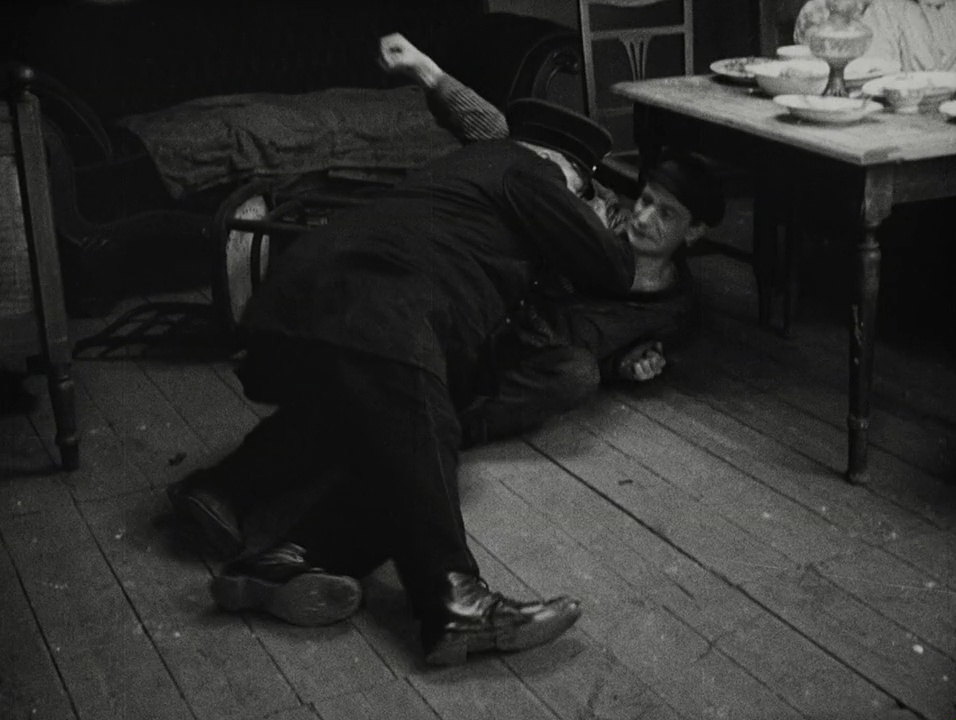
Would better music help? And what of the original score from 1920? The DVD/Blu-ray features the 2006 piano accompaniment by Javier Pérez de Azpeitia, which (at least when experienced at home) lacks the presence and scale of the film. In 1920, there was an orchestral score by Hans Landsberger. Landsberger had written the music for Der Golem (1920) earlier that year, which had been greatly praised in the press. It was not an assemblage of existing music, but an original score. “If you have heard Der Golem with this music by Landsberger”, a contemporary said, “you can no longer imagine it with any other.” Landsberger created “striking and memorable” themes for the main characters, using them individually or in counterpoint like contrasting leitmotivs. The reviewer praises Landsberger’s “original” orchestration, his “melodic richness and unerring way of building up dramaturgical tensions” (“Der Golem”, 1-2). This score was reconstructed and performed (and possibly recorded) in 2021, which sadly postdates the (re)issue of the film on Blu-ray in both Germany and the UK. Maddening! Why can’t companies wait a few months for better elements to become available?
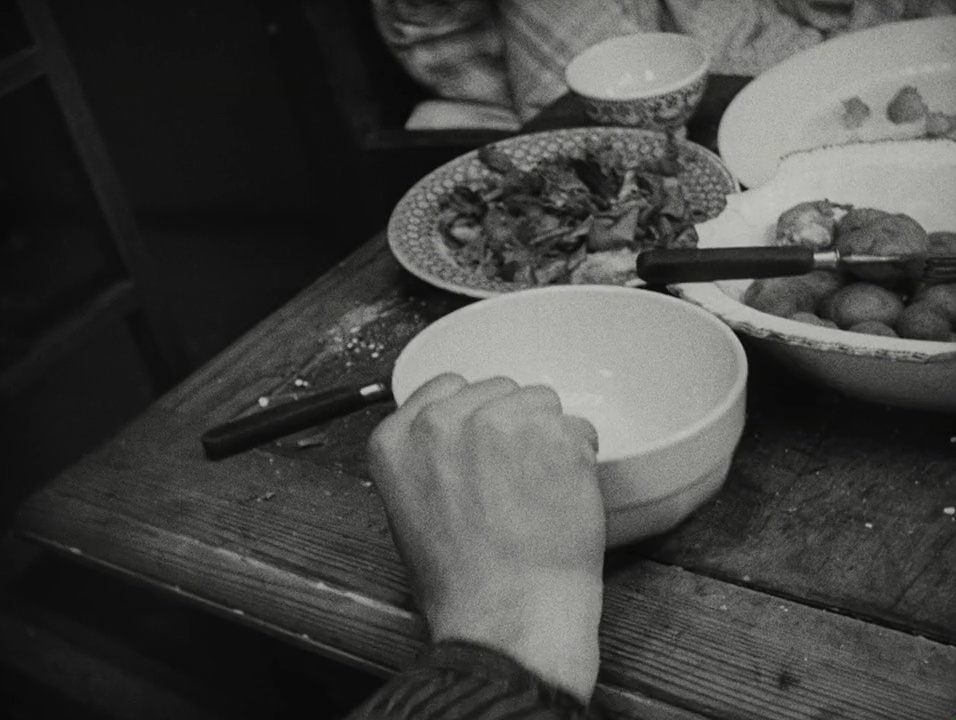
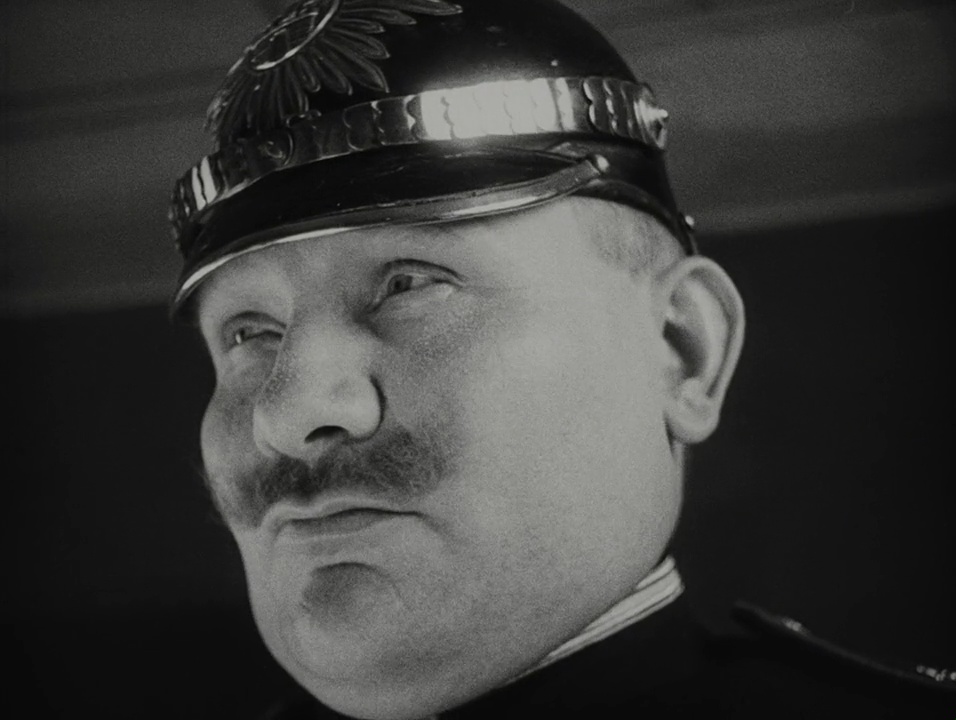
Given the success of Landsberger’s music for Der Golem, it’s surprising that I cannot find any contemporary press review that discusses his work for Anna Boleyn. Neither the short reviews in Vorwärts (“Filmschau Anna Boleyn”, 4) or Vossische Zeitung (My., “Anna Boleyn”, 4), nor the much longer pieces in Film-Kurier (L.K.F. “Anna Boleyn”, 1-2) and Das Tage-Buch (Pinthus, “Aus dem Tage-Buch”, 1634-36) so much as mention the composer’s name. The Film-Kurier piece even lists members of the audience—politicians, figures from the arts and film (including Pola Negri)—to emphasize the scale of the gala premiere, but still doesn’t mention the presence of the orchestra or music. Curious, and disappointing. Such is the lack of information on the music, I have no idea if it survives in any form whatsoever. I’d love to hear it and see if it makes a difference to the film.

For its release as “Deception”, Hugo Riesenfeld assembled another score, most likely a compilation rather than an original work. (I note, in passing, the existence of another opera, Saint-Saëns’ Henry VIII (1883), that shares much the same plot as Lubitsch’s film. I have listened to three different versions of this, including a recent reconstruction of the original, longer version of the score—but I still find it a little dull. Nevertheless, it would be a possible source of musical borrowing for a contemporary film composer.) Whatever its nature, the score for “Deception” goes without detailed mention in the press. In Variety, adverts for the first run of screenings in New York say that Riesenfeld “is to stage a special show to precede the film” (29 April 1921, p. 44), which suggests one of the many theatrical embellishments meted out to films for their prestigious first run. (For its US premiere, Das Cabinet der Doctor Caligari (1920) had its narrative reframed by scenes with dialogue performed before/after the film.)

How far could a good orchestral score save Anna Boleyn from its own dramatic limitations? The beauties of Eduard Künneke’s music for Das Weib des Pharao didn’t make me like that film any more—indeed, it tended to exacerbate the deficiencies of the drama. Perhaps no-one mentioned the Landsberger score for Anna Boleyn because it was a dud? Maybe one day it will be unearthed, and we will have the chance to judge for ourselves. It will be some years before I have an urge to watch Anna Boleyn again, but a new score would make me revisit it sooner…

Paul Cuff

References

Der Golem, wie er in die Welt kam: Ufa-Palast am Zoo”, Film-Kurier (30 October 1920), pp. 1-2

“Filmschau Anna Boleyn”, Vorwärts 64 (16 December 1920), p. 4.

Andrew Britton, “A New Servitude: Bette Davis, Now, Voyager, and the Radicalism of the Woman’s Film” (1992), in Britton on Film: The Complete Film Criticism of Andrew Britton, ed. Barry Keith Grant (Detroit: Wayne States UP, 2009), 24-63.

Scott Eyman, Ernst Lubitsch: Laughter in Paradise (New York: Simon & Schuster, 1993).

L.K.F. “Anna Boleyn: Die Festvorstellung im Ufa-Palast am Zoo”, Film-Kurier (15 December 1920), pp. 1-2.

Sabine Hake, Passions and Deceptions: The Early Films of Ernst Lubitsch (Princeton UP, 1992).

Herbert Howe, “Mary Pickford’s Favorite Stars and Films”, Photoplay 25.2(January 1924), pp. 28-29, 105.

Klaus Kreimeier, The Ufa Story: A History of Germany’s Greatest Film Company, 1918-1945, trans. Robert & Rita Kimber (California UP, 1999).

Leed., “Deception”, Variety (21 April 1921), p. 40.

My., “Anna Boleyn”, Vossische Zeitung 610 (15 December 1920), p. 4. NOT ISSUE 612, 16 DEC

Pinthus, “Aus dem Tage-Buch, Anna Boleyn”, Das Tage-Buch 51 (31 December 1920), pp. 1634-36.

The Three Musketeers (1921; US; Fred Niblo)

Don’t make this film! That was the advice of exhibitors, producers, and advertisers to Douglas Fairbanks when he mooted the idea of making a costume picture. He asked around his friends and peers, figures in the studios, and even commissioned a survey to get a wider sense of popular opinion. Everyone said no. “Having made sure I was wrong,” Fairbanks later wrote, “I went ahead” (qtd in Goessel, The First King of Hollywood, 257). The film was an adaptation of Alexandre Dumas’s Les Trois Mousquetaires (1844), and Fairbanks pulled out all the stops to ensure his production matched the scale and sweep of the original tale. Lavish sets, big crowds, gorgeous costumes, plentiful stunts… The total production costs were almost $750,000—a staggering sum for 1921. But the film was a huge success and reeled in $1,300,000 to Fairbanks’s company, as well as large profits to United Artists and any number of exhibitors who had booked the film. The success of the film encouraged Fairbanks to make even bigger costume films. The decade saw him embark on the huge productions like Robin Hood (1922) and The Thief of Bagdad (1924), films which dwarf even the scale of The Three Musketeers. So how does the latter rank alongside Fairbanks’s other swashbuckling films of these years?

Rather well, I think—but with some reservations. The film was directed by Fred Niblo, and in visual terms it feels rather safe and stolid. Fairbanks spends the film leaping, dancing, skipping, and hurling himself about the sets. But the camera barely moves, barely even dares offer anything in the way of dynamic editing. It’s as though Niblo is afraid of losing sight of the bigness of the sets, or of any kind of visual movement detracting from the movement of the performers.

Niblo wasn’t known for his imagination, even in his earlier films. Kevin Brownlow writes that “Niblo’s style was usually lifeless”, producing “his usual series of cardboard pictures”—as evidenced in the Fairbanks vehicle The Mark of Zorro (1920) (The Parade’s Gone By…, 414). Only in the interior scenes with the various courtly intriguers—Richelieu, Queen Anne, King Louis—does Niblo offer closer shots, details that develop character or situation. (For example, Richelieu is seen petting cats, and we later get close-ups of his hand pawing/clawing at the arm of his chair, much like a cat plucks at a piece of carpet.) But the photography is strong, and there are some lovely exterior scenes in the countryside. Niblo gives us a good number of vistas down tree-lined roads, and you sense the scale of the journeys—the distances—between D’Artagnan’s home in Gascony, the city of Paris, and the remote ports of France and England.

And even if I have reservations about the direction, that’s not why we’re watching The Three Musketeers. It’s Fairbanks who is the life and soul and purpose of this film. I couldn’t wait for him to appear (the opening scenes setting up the intrigue are very stilted and slow). And as soon as he does—sat legs akimbo on the floor, listening to his father’s tales of Paris—I’m grinning as he grins, and marvelling at everything he does. He makes even the simplest actions look balletic, and the most complex feats of strength look simple. He leaps onto and off horses, backwards and forwards; he jumps up walls, climbs over rooftops, jumps from battlements, swings from windows, slides down bannisters—and all with elegance, with style, with joy.

We are told early on that he’s been taught to do everything with pride, to accept no defeat, to fight back at every opportunity. And so he does, crossing swords first with the Cardinal’s guard Rochefort, then with the Musketeers, then (alongside the Musketeers) with the rest of the Cardinal’s men. Look at the way he evades the latter, first by hurling himself around with sword in hand, then by sheer pace. When he runs from a mob of them in once scene, he skips in glee when he knows they can’t catch him. It’s such a lovely detail, and makes us marvel not merely at his physical prowess but the lightness with which he uses it.

I must also mention Fairbanks’s moustache. This was the film that inspired him to grow it, and he kept it for the rest of his life. It gives him a more continental look, but it also makes his face more complex, more interesting. It’s like a punctuation mark or accent for his smile. The film doesn’t offer that many close-ups of him, but there is one gesture that he makes several times in the film. It’s when D’Artagnan senses something is awry, or that he’s scented a clue to the intrigue. He rubs his nose on one side, as if to suggest he’s got a sniff of something interesting. I don’t think it quite works, and it’s an awkward equivalent of something that could be done by or with a close-up. It’s not as subtle a trait as used in The Thief of Bagdad. There, Ahmed (Fairbanks’s character) makes a clasping gesture with his hand to signal desire. The gesture is used to signal his urge to steal purses etc, but then—in a brilliant touch—to signal his desire for the Princess. But Raoul Walsh frames the gesture much more convincingly than Niblo does its equivalent in The Three Musketeers. There’s also a striking visual equivalent for the olfactory sense suggested by the gesture in the earlier film. In The Thief of Bagdad, when Ahmed smells freshly-baked bread, Walsh cuts via a focus pull from Fairbanks to the loaf of bread. It’s like a different sense takes over from the visual until the visual can reassert the reality of the scene to reveal the source of the smell. It’s such a lovely moment, and there isn’t anything as sophisticated or visually inventive in The Three Musketeers.

Beyond the more daring tone of The Gaucho (1927), Fairbanks’s on-screen involvement with women tends to be more comic, innocent, and flirtatious than sexual. His romantic gestures—kneeling, spreading wide his arms, pressing hands to heart—are earnest, old-fashioned; even a kiss is a rarity. In The Three Musketeers, D’Artagnan falls for Constance Bonacieux (Marguerite De La Motte). The way it’s done is charming: she drops her ball of thread, and he picks it up. From two different directions across town, they wend their way toward each other, following the thread. But she snips it off, and he loses track of her. Then, when he finds her again, he is looking for lodging. Two neighbouring houses have signs offering accommodation. Constance goes first in to one house, so D’Artagnan bounds up to the door; but then Constance goes into the next one, then back again. What to do? Bold and direct, D’Artagnan simply asks her which house she lives in—and goes in. It’s a lovely sequence, and its tone is comic, the romance having a rather childlike element. Later on, when D’Artagnan chases after Constance in the palace, Captain de Tréville leads him by the ear back to the King: Fairbanks is a naughty child, whose knees we then see tremble as he is presented to King Louis.

Elsewhere in the film, the sexual politics of the novel are elided or softened. (Care was certainly required to make the source material acceptable to the censors, but you sense that Fairbanks wasn’t interested in romantic melodrama so much as adventure.) Milady de Winter (Barbara La Marr) and D’Artagnan exchange flirtatious glances early in the film, and D’Artagnan will eventually surprise her in bed in order to retrieve the diamond broach she has stolen from the Queen—but (unlike in the novel) they never get involved. Even the affair between the Duke of Buckingham (Thomas Holding) and Queen Anne (Mary MacLaren) is remarkably chaste. King Louis himself (Adolphe Menjou) is jealous of the Queen’s private affair, but his jealousy is not emotionally complex (and hardly inflected with sexual interest).

Indeed, the King’s emotional moods—his jealousy, anger, suspicion—are mainly focused on the figure of Cardinal Richelieu (Nigel De Brulier). De Brulier is the most perfect imaginable casting: his gaunt cheeks, long face, distinctive nose, and narrowed eyes. He would reprise this same role alongside Fairbanks’s older D’Artagnan in The Iron Mask (1929), as well as in two sound adaptations of Dumas’s novel. As mentioned before, he is a feline presence on screen. His thin profile, his shoulder-length hair, and his floor-length robes give him a feminine air. Indeed, he spends more time on screen with the King than the King spends with his wife—and he is surely a kind of devilish substitute. There is something almost flirtatious in the way Richelieu needles the King about his Queen. Later in the film, when D’Artagnan flatters Richelieu to delay his scheme to murder him, De Brulier’s performance grows subtly camp. Richelieu suddenly comes over all coy and flirtatious. The handkerchief he has been holding is a signal to his guard to shoot D’Artagnan; but once D’Artagnan begins flattering him, he swiftly withdraws it, and it becomes a kind of girlish accessory. Richelieu is always a magnetic presence on screen. And I can imagine a different director, in a different kind of adaptation, making more of De Brulier than in this film.

D’Artagnan himself enjoys the boys’ club atmosphere of the barracks and the all-male rooms of his friends. Much of the middle of the film is light on plot, instead setting up the relationship between the musketeers. We see how they get by with no money, gambling, borrowing, bluffing. (There’s a nice scene where they successively blag their way into the kitchen of two monks and cadge a free dinner.) It sets up a pattern that would be repeated in Robin Hood, Fairbanks’s next film, where Robin embraces the all-male company of his “merry men”. In that film, Sherwood Forest becomes a giant playground for the antics of Fairbanks and co., who leap gleefully around their idyllic world like ballet dancers. In The Three Musketeers, there isn’t quite the same sense of scale—but the central group of four male friends is the focus of much of the film’s jollity and camaraderie. It’s all very charming, but it lacks emotional depth. Only in The Iron Mask does the friendship of these characters come to mean and feel more: that whole film attains greater weight by being about ageing, and by the sense that there can be no sequel.

The new Blu-ray of The Three Musketeers is by the Film Preservation Society, who also produced the 2021 restoration of the film. Visually, it’s a great treat to look at. The lavishness of the costumes and scale of the sets really comes across. As well as looking sharp and rich and textured, the image benefits from the warm amber tints for the daytime scenes—and subtle blues for the nighttime scenes. Noteworthy in particular is the recreation of the original Handschiegl colour process. When D’Artagnan leaves Gascony, his horse is described as “buttercup yellow”. All the villagers en route and in Paris point and laugh at this extraordinary animal, so much so that when D’Artagnan arrives in Paris he immediately sells the animal to buy a hat. It’s a running gag for several scenes, and one which was visually inexplicable in monochrome restorations of the film. Thankfully, a fragment of a first-generation 35mm print was discovered in 2019 that revealed how the gag was supposed to work: via the Handschiegl process, the horse was quite literally coloured buttercup yellow. The 2021 restoration had digitally recreated the effect, based on the surviving 35mm fragment, and suddenly all these scenes make sense: the film was always designed to have this additional colour element, and all the on-set performances are geared towards this post-production effect.

Finally, I must mention the film’s musical score. It’s a habit among many labels—especially, it seems to me, North American ones like Image and Kino—to describe the soundtracks of their releases in unhelpful terms. As I have written elsewhere, reading in the DVD blurb that the release contains the “original orchestral score” is no guarantee that the soundtrack actually features an orchestra (Cuff, “Silent Cinema”, 287-93). Too often you have to read the small print to discover the truth, e.g. “original orchestral score, arranged for solo piano”. The back of the Blu-ray for The Three Musketeers states that the 2021 restoration is “graced by an orchestral score performed by the Mont Alto Orchestra”. Pause for a moment to consider the word “graced”. Yes, we are indeed more than fortunate to have the “orchestral score”, and it must be an orchestral score because it’s performed by an “orchestra”. Surely! Right? But the small print, in this case the liner notes by Tracey Goessel, make it clear what this actually means:

The Louis F. Gottschalk score, orchestrated for a large ensemble, would have been heard with the road show release, and is available on earlier DVD releases. Rodney Sauer of the Mont Alto Motion Picture Orchestra has created a score consistent with what would have been available to a smaller (in this instance, six-piece) group of musicians for the film’s general release.

Ah. Oh dear. So the “orchestral score” with which this restoration is “graced” is not actually written for or performed by an orchestra. It’s a score compiled from existing material, arranged for a six-piece ensemble. Fine. Disappointing, but fine. You clearly have a budget, and you have to stick to it. But what about the claim that the Louis F. Gottschalk score is available on earlier DVD releases? (I note that it doesn’t “grace” those earlier DVD releases.) Well, the back of the 2004 Kino DVD of The Three Musketeers states the following: “Original 1921 score by Louis F. Gottschalk, arranged and performed by Brian Benison and the ‘Elton Thomas Salon Orchestra’.” Don’t you just love the inverted commas around the name of the “Orchestra”? Because of course this “orchestra” is not an orchestra. The “Elton Thomas Salon Orchestra” is a euphemism for one man and his synthesized MIDI files. So, no, “the Louis F. Gottschalk score, orchestrated for a large ensemble”, is not available on earlier DVD releases. It’s never been available because no-one has ever used an orchestra to record it. I’ve listened to the synthetic version on the Kino DVD and I in no way consider myself to have heard “the Louis F. Gottschalk score, orchestrated for a large ensemble”. I wish I had heard it, but until I’ve heard it performed by “a large ensemble” (does this mean an orchestra, even a small one?) I reserve judgement.

Back to the 2021 restoration of The Three Musketeers, it doesn’t help clarify matters that the Mont Alto Orchestra calls itself an orchestra in the first place. The orchestra’s homepage—their equivalent, I suppose, of the DVD small print—describes them as “a small chamber group”; the roster of musicians’ biographies numbers just five. Even in the 1620s (the time Fairbanks’s film is set), a group of five or six people would blush at calling themselves an “orchestra”. The musicians we see on screen playing for the royal ball at the end of the film (there are about ten of them) form a larger group than we hear performing on the soundtrack. A century later, a small court orchestra might expect to field twenty players, while the larger ones double or treble that number. By the 1820s, a symphony orchestra was beginning to be standardized and you would hope to have forty or fifty players. By the 1920s, you might have a hundred or more players for larger orchestral or operatic works. Film orchestras of the era varied in size according to their venue, but the premieres of big films like the Fairbanks super-productions of the 1920s would have been big events with musical accompaniments to match.

As Jeffrey Vance documents, the premiere of The Three Musketeers was a lavish event, featuring a spoken prologue and “a full orchestra” performing the score (Douglas Fairbanks, 120). Though Vance judge’s Gottschalk’s score “particularly weak in the action sequences, and utterly unable to capture the comic aspects of the action”, he also reminds us that “Fairbanks’s increased involvement with the music and exhibition of his productions began with The Three Musketeers” (ibid.). For Robin Hood, Victor Schertzinger arranged a score “for eighteen players” (ibid., 145). The cover of the 1999 Kino DVD (the soundtrack of which was replicated for the 2004 reissue) says its restoration features “the Original 1922 Musical Score in Digital Stereo”. Of course, you must read the small print on the back to see that Schertzinger’s multi-part score is performed not by an orchestra but by Eric Beheim on “a MIDI-based synthesizer system”. Schertzinger’s score (as Vance says) certainly sounds repetitive, but how can I properly judge it as synthetic pulp rather than orchestral fibre? The way to make these scores more musically viable is not to reduce them, but to expand them—reorchestrate them to make the best use of the original material. Finding a compromise too often means doing something cheaper and less complex. (As a sidenote to this, the 2019 restoration of The Thief of Bagdad uses Mortimer Wilson’s original orchestral score. This version was broadcast on ARTE a couple of years ago but has not yet received any home media release. Wouldn’t it be nice to have all Fairbanks’s silent epics restored complete with the music that their creators intended to hear?)

The Sauer score for The Three Musketeers is perfectly good, although it often lags behind the pace of the action and can never capture the scale of the film. Six musicians can’t conjure a sound world as rich and detailed as the visual sets and crowds of extras. You need an orchestra. You need something that will sweep you up in the adventure of the film. This six-piece band can only gently suggest that you might like to come along. And although the more intimate scenes in the film don’t obviously cry out for a full orchestra, I do confess that my heart sank to hear Sibelius’s heartrending Valse triste (op. 44: no. 1, 1903-04) in the reduced circumstances of a six-piece band. Only a small portion is used in the scene where Buckingham and the Queen meet for the first time, but I wasn’t moved by the scene or even by the music—I was moved by the plight of what should be a full string section of forty or more players reduced to a single violin and cello.

But much of this is, I’m sure, down to my individual taste/snobbery. I know orchestras are expensive beasts, and that hiring them and recording them is beyond the budget of most labels. I don’t mind a score for a small chamber group, but please call it a score for a small chamber group. If it isn’t being performed by an orchestra, you’re not offering us an orchestral score.

I’m sorry to have gone on so much about the score, but I do get fed up with labels overpromising and underdelivering. The Three Musketeers is still a lot of fun, and looks as good as we can hope on this new release. Here’s hoping a new restoration of Robin Hood will follow…

Paul Cuff

References

Kevin Brownlow, The Parade’s Gone By… (New York: Alfred A. Knopf, 1968).

Paul Cuff, “Silent cinema: Material histories and the digital present”, Screen 57.3 (2016): 277-301.

Tracey Goessel, The First King of Hollywood: The Life of Douglas Fairbanks (Chicago: Chicago Review Press, 2015).

Jeffrey Vance, Douglas Fairbanks (Berkeley: California UP, 2008).

Das Blumenwunder (1926; Ger.; Max Reichmann)

In 1921, the chemical corporation Badische Anilin und Sodafabrik (BASF) sponsored the production of a new film. BASF had bankrolled several short films with heart-poundingly exciting titles like Die Anwendung und Wirkung neuzeitlicher Luftstickstoffdüngemittel (“The application and effect of modern atmospheric nitrogen fertilizers”, 1921) and Mais-Düngungsversuch mit und ohne Stickstoff (“Maize fertilization trial with and without nitrogen”, 1923). But the film they undertook in 1921 was of a more elaborate scale and length than these earlier experimental/documentary works. At BASF’s studio-cum-laboratory in Ludwigshafen (south-west Germany), various varieties of seed were planted and painstakingly photographed, exposing one frame of celluloid at a time over a series of days, weeks, and months. It would take five years to complete this process. BASF joined forces with the Unterrichts-Film-Gesellschaft (“Film Teaching Society”) and hired an up-and-coming director to shoot additional footage and assemble the resulting material. (BASF were clearly the lead partner in all this: the chemical corporation had produced more films than the film company they engaged.) The director was Max Reichmann, who had worked as a production assistant on four of E.A. Dupont’s films: Der Mann aus Neapel (1921), Kämpfende Welten (1922), Sie und die Drei (1922), and Varieté (1925). At this end of this apprentice period, he directed two feature films—Verkettungen (1924) and Der Kampf gegen Berlin (1925)—before finishing BASF’s plant film. To BASF’s laboratory footage was added a framing narrative and ballet sequences, including some complex dissolves from plant to human movement. More than a film made for publicity or instruction (hardly counting as “cinematic” at all), this creation would be a feature-length spectacle. The stop-motion photography was the main attraction, but the film could now boast the dancers of the Berlin Staatsoper and a specially-composed score by the successful operetta composer Eduard Künneke. The film was premiered at the Piccadilly theatre in February 1926 and created quite a sensation. And what’s more, it still does…

Das Blumenwunder (1926; Ger.; Max Reichmann)

Part One. The orchestra puts its best foot forward, and we leap into the spectacle. A garden, young girls running. They dance, then pick and fight over blossom. The music is rhythmic, boisterous, stylish, skittish, jazzy. But the severing of the flowers marks a chance in tempo, mood.

A ghostly figure appears, dissolving through the wall of foliage at the rear of the scene. She is Flora “protector of the flowers” (Maria Solveg). She explains that the flowers have life, just like the girls: “in blooming and withering they have the same feelings as you”. “Man’s rhythm of life is the pulse, the chasing of blood cells.” Flora takes the arm of a child and places her fingers on the wrist. The orchestra slows, and a trumpet gently marks out the pulse of blood. Then the timpani take over: the pulse moves deeper into the body of the orchestra. The child’s wrist moves slowly towards the camera, until the flesh begins to blur.

The film cuts to a microscopic view of veins, then—as the strings in the orchestra slide and glisten—a shot of blood plasma slipping through tissue. It’s an extraordinary interruption of the infinitesimal, the scientific, the biological, into the wider world of the film. It’s at once disturbing, extraordinary, and magical. The whole screen is filled with the intimate pulsing of life, the cinema with the warm pulse of the orchestra.

We draw back into the human scene. Flora looks up, bids the children watch the clock. We see the hands speed up, race around the dial: hours, then days glide past. “One day in the life of man is a second in the life of a flower”, she says. “The miracle of flowers will bloom before you.” And so they do. As the orchestra swells, flowers grow from the base of the screen to its summit. The buds dip and rise, like fanfaring trumpets. And just as the spectacle seems set to take off, it’s the End of Part One.

Part Two. Tobacco plants lower and raise their leaves, each lowering and raising (we are told) taking place over a 24-hour period. But each 24 hours are seconds on screen. The three plants lift, strain, grow, burgeon before our eyes. It’s a gorgeously surreal chorus line, the orchestra rising in crescendo, pulsing and growing in time to the plants.

Then we see bean sprouts, the downward progress of their roots as the stem wriggles aboveground, turning 90 degrees when the box is turned. Künneke’s music shifts gear, becomes a kind of slow dance. The bean’s shoot coils around a pole, crawling its way clockwise, up and up. Even when a pair of hands tries to rewind it in the other direction, it breaks free of this imposed rhythm and winds clockwise once more. It reaches the top. The orchestra rings out. The beanstalk wiggles. It’s like the plant is taking a bow.

The banana leaf; ferns. The orchestra is also in a kind of slow-motion, reaching for a rhythm as the plants unfurl. But the vine grows quickly, reaching out to each new support: so the strings skittishly feel out a new rhythm. Another shift. The vine starts growing, lifting its heavy burden of spreading leaves. The orchestra slows, introduces a wrenching little melody for the lead violin. Suddenly the plant seems anthropomorphic: look at it stretching out, clasping at the new support, straining its sinews to reach a higher position. “It grows beyond the last support, with nothing more to cling to.” So tells us an intertitle, as if introducing us to its death. And so the next title finishes the thought: “The vines desperately circle alone, vainly seeking support, they languish and die.” But then we realize that the plant is cleverer than that, for it starts to curl and reach back to an earlier support, “where life is still possible”. We’ve seen a kind of thought process, a vegetal exercise in logic and self-preservation. So too in the next shot, where we see a vine drawing the lengths of string supports closer together to make its journey easier. Now vines clasp one another, dancing around the rival spaces: the camera cuts back to a wider shot so we can follow the upward battle for each vine. End of Part Two.

“Musical Interlude”. The music repeats that wrenching little melody, led by the solo violin. It’s slow, sweet, sad. The score is creating a mood, a feeling. With only the dark screen to see, we are now simply listening to the secret life of plants; is the film asking us to imagine our own images with the music, to reflect on what we’ve seen so far? The slow, sad dance winds to a halt.

Part Three. No titles, just the glittering sound of music—glissando strings, harp, gentle woodwind—to set up the next scenes. Flowers unfold, bloom white and green against the black background. Purplish stems sprout tiny blossoms. The music reaches for high, unsettling extremes; now the leaves are dancing, and the music turns rustic, a countrified dance. Here are bluish buds, curtseying, doffing their leaves. New growths wiggle, circle, shimmer, tremble. They seem to grow faster. Fade to black. The music dies.

Greenish shoots from the soil. The pulse of low strings. Solo woodwinds seek out a melody, test out a rhythm. The flowers look sleepy, dopey. It takes them an age to raise their buds. Fade to black, before they quite bloom in full. A strange, solo shoot—and a dissolve to a dancer, flowing white dress, mimicking the growth of the flower. A succession of close-ups, flowers trumpeting toward the lens.

Shoots fall over the side, bud slowly, change shape a dozen times. Flowers nod together, perform collective awakenings. Another solo dance, flower dissolving to dancer, dancer to flower. It’s hypnotically beautiful. A mass of buds, flowers that slowly fill the screen, that grow stranger and more extraordinary as the shot continues. End of Part Three.

Part Four. Flowers that open and shut, that wither, that die. The life of plants, their struggle, their disintegration. Flowers with skirts, which become a troupe of dancers. The dancers are now in slow-motion, performing impossible manoeuvres on their toes, leaping as if weightless. So entranced am I that I don’t question the continuity between flowers and dancers, between stop-motion and slow-motion, between days-between-frames and microseconds-between-frames.

The music slows. There’s that pulse in the timpani. It’s almost funereal, that beat below the strings. The progress of leaves, of petals, of stamen. It’s agonizingly slow, this sped-up motion of the flowers. It’s a ballet created by removing days, weeks, years’ worth of time—and yet time seems to be suspended. The camera manages to track around some flowers, to capture their slowness with an even slower repositioning. Another dancer; combined with the tinting and toning (dark brown tone, turquoise tint), the sheen of his robes becomes surreally bright, surreally three-dimensional. Flowers seem to gesture, and the film cuts to a man gesturing—his movements as rapid as those of the flowers. A sunflower grows, lifts its shoulders, reveals its mane of petals. The orchestra responds. We watch the tiny ripples of its seeds. Poppies grow; a dancer wakes from sleep, reaches out her arms, shows off the veils of her sleeves; so too do the poppies, before their petals unfurl, fall, disappear. End of Part Four.

Prelude to Act Five. The music is more forceful, louder, the beat of timpani and brass spelling out some impending drama. “The song of coming-to-be and passing away.” A dancer appears, that same sheen of turquoise over the rich black-brown of the space behind them. The coming drama is spelt out in his mime: he rises, struggles, dies. The plants’ lives are spelt out in a few seconds each: they wrench themselves up from parental branches, expand to their fullest; they flinch, tremble, curl up, diminish, die. The music offers a fanfare, then a melancholy waltz, then a tender farewell. Each new plant comes before the lens, lives and fades. A multi-headed cactus performs life and death five times, each stem collapsing one after the other, each flower dying one after the other. ENDE

What a treat to discover a film by chance, and to discover it’s a little gem. I first saw mention of this film thanks to the German Wikipedia page on Eduard Künneke, which listed among his film scores Das Blumenwunder (the music for which was later rearranged into orchestral suites). I was delighted to find that a DVD was available, issued by ARTE in the wake of their restoration and broadcast of the film in the 2010s. The music was originally arranged for a smaller ensemble, but the restoration uses Künneke’s later, expanded, version for larger orchestra as its basis. It sounds lovely, full of energy, melody, and deft orchestral touches. It’s light music, but in its best sense: its transparent, generous, captivating. It works wonderfully well with the images, and by the last sections of the film—which function mostly without intertitles—the music takes up all the sense of narrative and emotive expression. As I wrote on my earlier piece on Das Weib des Pharao (1922), the music of Künneke is well worth investigating: he offers a glimpse into the soundworld of the 1920s: light, popular music, infused with elements of jazz and dance. It’s remarkable in itself that two of his scores should have survived and been recorded for issue on home media. Confusingly, both filmportal.de and the German Wikipedia page also list among Künneke’s work a film score for the German-British co-production A Knight in London / Eine Nacht in London (1928), directed by Lupu Pick. However, the two sites differ on their info for the latter film: filmportal.de claims the music was by Künneke, Wikipedia claims the composer was Giuseppe Becce. In either case, the film is unavailable to view and the score—whoever wrote it—is among the many that of the silent era that languishes in obscurity.

Das Blumenwunder was released as a kind of “culture film”, designed to attract critical attention. It certainly did, and not just from film critics. The many reviews (cited in Blankenship, 2010) focused on the revelatory way the film showed the (normally unnoticed or invisible) movement of plants. If some claimed the film belonged in the classroom and not the cinema, others were more generous. Rudolf Arnheim called the film “an uncanny discovery of a new living world in a sphere in which one had of course always admitted life existed but had never been able to see it in action.” The plants, he said, “were suddenly and visibly enrolled in the ranks of living beings. One saw that the same principles applied to everything, the same code of behaviour, the same difficulties, the same desires” (Film as Art, 136). The expressionist writer Oskar Loerke noted in his diary:

Das Blumenwunder […] was a first-class experience. Unbelievable. The film nearly proves the existence of everything supernatural. When one sees the growth and life of plants that have another tempo from that of people, every order becomes imaginable—even slower tempos or faster ones, which are not perceptible to us because of this difference. (qtd in Blankenship)

As Janelle Blankenship explains, the film did well enough to be shown on numerous other occasions by various interested organizations:

[Das] Blumenwunder was promoted by the League of Nations, screened in England at a social meeting of the Anglo-German Academic Bureau at the University of London, University College, and praised by Welsh writer and novelist Berta Ruck, among others. The film was also a ‘special sightseeing attraction’ at an ‘expo-cinema’ during the 1927 horticulture congress in Leipzig, and was screened as a horticultural film at a monthly meeting of the garden club ‘Verein zur Beförderung des Gartenbaues in den königlich preussischen Staaten, Deutsche Gartenbau-Gesellschaft’ in 1926.

Thankfully, the film was also preserved in the archives and the DVD edition presents it in excellent visual and audio quality. (Though I should add that—at least on my machine—a few of the intertitles lack the English subtitles otherwise presented throughout.) The DVD also prefaces the film with some explanatory text: we learn that Das Blumenwunder was originally 1755m (c.65 minutes) but the only copy that was preserved runs to 1664m (60 minutes). What is missing is unclear, but given it’s only a small percentage of the overall runtime we must be grateful that more wasn’t lost. The DVD includes a pdf of the original booklet issued at the premiere. Rather delightfully, the edge of each page is formed of individual frames from the film, showing you a frame-by-frame account of the growth of the flowers.

Das Blumenwunder is a visual delight, as well as a musical delight—and I’ve found myself relistening to the score three times already since watching the film for the first time at the weekend. For me, Das Blumenwunder was a real treat to discover.

Paul Cuff

References

Rudolf Arnheim, Film as Art (Berkeley: California UP, 2006).

Janelle Blankenship, “Film-Symphonie vom Leben und Sterben der Blumen”: Plant Rhythm and Time-Lapse Vision in Das Blumenwunder”, Intermédialités 16 (2010): 83–103. Available at: https://doi.org/10.7202/1001957ar