Some years ago, in my teaching days, I grew conscious that screening material in the classroom was exclusively digital. We watched DVDs, Blu-rays, or even bits and bobs via youtube. I wondered if any of my student had experienced – or would ever in their lives experience – film on film. At that time (10+ years ago), a few prints from the BFI still circulated in the classroom, some of them the very same prints I had seen when I was a student several years before this. But the days of 16mm or 35mm were numbered, and these formats had never been (in my adult life) a feature of studying silent cinema in the classroom. Though I might incorporate discussion of the physical history of film in the module, I wanted students to sense something of the material itself. So I headed to eBay.
Here, I bought a chunk of inexpensive filmic and proto-filmic paraphernalia from the late nineteenth and early twentieth centuries. Sets of stereoscopic cards and matching “viewer” from the 1880s; a weird, cardboard-mounted strip of tinted frames from an unknown German film of the 1910s; and several boxes of Pathéorama films. Before purchasing the latter, I don’t think I had ever heard about this format. It was launched by Pathé in 1922 as another way of extending its market into home viewing. Cheaper and less cumbersome than narrow-gauge celluloid designed for home projection (17.5mm, 9.5mm etc.), the Pathéorama format is simple and easy to handle. Put simply, it consists of a small reel of 35mm containing single-frame “scenes” that are interspersed with intertitles. This strip of film is loaded into a Pathéorama viewer, a small handheld box which you hold up to the light: you then wind the film past the little peephole window and see the images. (I have included some photos of this process below.)
Thanks to a Pathéorama catalogue that came with the set I bought, I could browse the various categories of film the format offered. I say “categories”, but “genre” might be more applicable. Most of these genres are travel-oriented, providing touristic sequences of various kinds of location. Like the cinematic genre of the travel film, the Pathéorama format allowed the viewer to glimpse the wider world. Thus we can see the numerous catalogue entries (and the item codes for convenient ordering): “Paris et ses environs”, “Les beaux paysages”, “Les grandes villes”, “Les montagnes”, “Les plages et les ports”, “Colonies françaises”. Others were more focused on the art culture in these various locations, such as “Les series artistiques” (visits to museums, galleries, historical ruins like Pompeii), or specifically on sites of spiritual significance (“Les films religieux”). Many of these various genres of travel film were also tinted, allowing their little worlds to glow with colour.
If these genres were implicitly narrative, others were explicitly so. For example, Pathéorama offered “Documentaires” (exhibition walk-throughs; guides to manufacturing, industry, and sport) and “Les Voyages” (guides around regions or nations). But it also made series devoted to children’s stories: “Les contes de Perrault”, “Imageries enfantines”. A genre that combined both touristic travel and child-centred narrative was “Les film d’aventures”. Here, “Le Tour du monde d’un gamin de Paris” was a multi-reel series in which the Pathéorama viewer followed a waif through the streets of Paris – and beyond. (The follow-up series was called “Les Bandits de la Mer (Suite du Tour du monde d’un gamin de Paris).”)
But what really caught my eye among the Pathéorama catalogue were the titles classed under “Les grands succès de l’écran”. This has its own sub-genres: “Ciné-Romans Historiques”, “Ciné-Romans”, and “Ciné-Romans pour la Jeunesse”. All the titles in these various categories were derived from films released in the cinema. It is striking that Pathé deemed the films in the Pathéorama format “ciné-romans”, i.e. film-novels. The film novel was its own literary genre, one which I’ve written about here before. Tying the Pathéorama films to this genre denotes a kinship of form. Whereas a ciné-roman might be a well-illustrated book, a Pathéorama ciné-roman was a heavily-titled film.
Among the many titles in this genre, my interest was immediately roused by the reels labelled “Napoléon”. Yes, indeed, Pathéorama released Abel Gance’s vast, multi-hour drama as a “ciné-roman” slideshow in several tiny reels. As you will see below, the 35mm frames used by Pathéorama are extracted from rather worn-looking prints from Gance’s film. There are scratches and dirt, as though these were copied from off-cuts – or simply printed with very economic means. Still, they are 35mm frames from Napoléon, and I rejoiced in my miniaturized exploration of yet another version of this endlessly morphing text. I was also especially intrigued by at least one frame from a scene (or at least a single shot) that was not in the cinematic film itself – or at least not in any version that I knew. Here, some cadets and priests stand before a gate behind which mingle a group of adults. Who are these people, and where in Brienne college are they gathered?
These are not the only questions this Pathéorama version raises. What kind of licensing deal did Pathé have in producing Napoléon in this format? Who decided to include Gance’s film in this series? Who decided on its contents, and how were the images harvested from the original film? Who edited the text of the titles? And how many copies were made of this little Napoleonic series? How many of them were sold? Who bought them, and what experience – if any – had they had of this film in the cinema? If nothing else, these reels demonstrate that Pathé did have commercial hopes and ambitions for Gance’s troublesome film. Pathé also released Napoléon on 9.5mm, another format for home cinematic viewing – though more closely related to the public exhibition format.
If viewing Napoléon on a tiny screen, squinting into the light, might seem a strange, even detrimental way of watching this film, fear not – Pathéorama reels could be projected! Thanks to the “Cocorico” lantern produced specifically for this format, viewers could project their Pathéorama films at home. A successor to the much older magic lantern format, the Cocorico offered the user a proto-cinematic experience – or perhaps a way of reliving a memory of a film experienced in the cinema. Given the difficulty of seeing Napoléon adequately even in 1927, it’s rather touching that Gance’s film had this kind of domestic afterlife. Indeed, the appeal of this format was still relevant in my own life, nearly a century later. When I bought my little Pathéorama reels, Napoléon was not available on home media. If I wanted to see any version of this film, I had to go to an archive – or wait for one of the infrequent public screenings with orchestra. (In my adulthood, the latter was not exactly a regular possibility.) So I was delighted by these reels, which allowed me a kind of vicarious ownership of a print – actual 35mm film, no less – of Napoléon. Though I could never get my Cocorico projector to function, I took pleasure in winding the reels through my “viewer”. And I could share this pleasure with my students at university, allowing them to glimpse the only fragments of Napoléon available in the classroom.
There is a tragi-comic coda to this little history. As I said at the outset, much of my collection had been bought for the sake of the classroom, where I let students have a play with the materials of film history that my otherwise entirely digital course lacked. Outside this context, I rarely used my collection at home. Time passed, and I eventually drifted away from academia (or vice versa). So I packed away my film history ephemera in a box and slid it under the bed. One night I knocked over my glass of water and this box was spattered. In what remained of the night, I went without sleep fretting over the fate of my collection – and wondering what the point of keeping it was without anyone who might share it or have an educational play with it. The idea snowballed until I considered getting rid of just about everything that I had accumulated for a now defunct career: not just the Pathéorama and other curiosities, but all my Gance collection, all my cinematic paraphernalia, all my DVDs, all my everything. In the end, the sheer volume of this material put me off selling it. But I sold a huge chunk of my DVD library, and I sold all the material I used for my teaching: the Pathéorama material, the stereoscope material, and sundry other bits and bobs. The Cocorico projector went to the United States, while the films went to Italy. The projector at least made it to its destination, whereas the films got stuck in customs. As far as I know, five years later, they’re still there.
I suppose this is what happens to the material media of film history. Someone builds a collection, grows weary, grows old, disappears, and the collection is sold piecemeal; some of the material becomes the basis of other collections, while other material gets lost, mislaid, destroyed. How many collections have been dispersed for reasons as trivial as the spilling of a glass of water? And how much of film history sits in customs warehouses, basement boxes, storage facilities, bank vaults, awaiting due process – or simply the end of the world?
I often find myself searching on the FIAF database for the location of archive film prints. The database isn’t definitive, but it is often a helpful indicator. Anyone searching for archive copies of Abel Gance films would likely have spotted an entry for Le nègre blanc (1912). Click further and you would have seen that the Filmmuseum Düsseldorf was listed as holding a 16mm print of this film. I think I’ve known, vaguely, of this FIAF listing for many years. It had never occurred to me to investigate it further. Why? Well, I supposed that something so rare would have long since been checked and confirmed by another researcher. I also suspected that the copy might be so fragile that it was unavailable for viewing. The fact that the recent Gance retrospective at the Cinémathèque française did not include this film in its “complete” screening schedule seemed to confirm this (see my four posts from September 2024). But the question remained, lodged in my brain.
In the last few years, I have felt more willing and able to venture onto the continent in order to pursue various strands of my research. With a prospective trip to Germany planned for December 2025, I decided in advance that I should investigate this mysterious print in Düsseldorf. Over the autumn, there followed a long exchange of emails with various archivists, and the team at Düsseldorf kindly agreed to check their print in advance of my visit. I received the startling information that they had two prints of this title: one on 16mm and another, shorter, copy on 9.5mm. The former was approximately the length one would expect for an early two-reel film; the latter was clearly an abbreviated version of a single reel. My curiosity grew (as did my doubts), but I knew I must hold my excitement until someone had checked the prints to confirm their identity. Before I reach the inevitable (and I’m sure not surprising) conclusion of this search, I should say why the very idea of this film’s existence is so interesting. Interesting to me, anyway…
For a start, this print of Le nègre blanc would be the earliest surviving film directed by Gance. Some of his earlier appearances as an actor are preserved in films by others, but La Folie de Docteur Tube (1915) is his earliest known work as a director to exist. That this is so is something of a miracle, as the film was never commercially released. It is also frustrating, since all of Gance’s two- or three-reel films that did get released in 1912-15 are considered lost. These are the films that earned him enough success to make the more substantial features of 1916-18, films which anticipate so much of the dramatic and aesthetic qualities of his masterpieces of the next decade. What was Gance like as a filmmaker before 1916? We simply don’t know. So to find a print of any Gance film from 1912 would be of enormous interest.
Secondly, Le nègre blanc is of interest for its subject and stars. The earliest synopsis I have to hand is in Sophie Daria’s Abel Gance, hier et demain (1959), which was based on a number of conversations with Gance. As a result, it is often inaccurate and evasive – but certain details are found nowhere else. The book offers a brief sketch of Le nègre blanc, adding that “it was never projected” (44). Having searched the major film journals and major newspapers of the period, I can indeed find no evidence of a public screening. But that the film was actually made is indicated by the survival of a document from 16 April 1912, citing payment for Gance’s performance from Le Film français, the company which produced Le nègre blanc. (They paid him 500F. You can see below an image of this document, taken from the auction catalogue of 1993, at which Nelly Kaplan sold her huge collection of Gance’s personal papers. Happily, the highest bidders were two French state archives.) And before you ask, yes, Gance did play the lead role of the titular black character, so presumably would appear on screen in blackface. To what end? Well, a little more information on Le nègre blanc is given in Roger Icart’s biography of Gance from 1983:
A black boy goes to school with white children. Cold-shouldered and ridiculed by his classmates, he decides to make himself look like them by painting his face and body white. His appearance thus disguised provokes a redoubled dose of mockery, while he dies, his body slowly poisoned by his naive stratagem. (49)
As I discovered when I searched for the phrase, “le nègre blanc” (which I hope you don’t need me to translate) had a remarkably wide circulation in the early twentieth century. It appeared in any number of cultural and political contexts, as a derogatory term, a term of entreaty, of warning, of classification. In using it for the title of his film, Gance was clearly tapping into a phrase that was common enough on people’s lips. Sophie Daria cites the film as “anti-racist”, while Roger Icart cites it as “anti-racist(?)”. I like the hesitancy of Icart’s parenthetical question mark. Clearly, the film can be read both as a parable about the poison of racism – but might also hint at something less palatable about the insurmountable nature of race. Added to these murky cultural waters is the fact that, in the 1930s, Gance was identified by some as Jewish and vilified as such. (The right-wing press in France mounted numerous vile attacks on his films and him. The label “Jew”, for them, could be applied to anyone they didn’t like. Chaplin, too, was called a “Jew” by like-minded fascists in this period.) That Gance was adopted seemed to hint at family secrets, and the figure of a fatherless male seeking to rebuild (or adopt) a family is a recurrent theme throughout his films. However crude, Le nègre blanc is surely an important marker of this interest in lone men seeking identity and belonging – a kind of destiny – and being destroyed by it.
But Gance was not the first to use this title for a film. Le nègre blanc was the title of one of the numerous “Rigadin” comedies starring Charles Prince, this one being produced by Pathé in 1910 (some sources say 1912). This film (viewable online) follows much the same plot as Gance’s, though its comedy is less touched by tragedy. In the Pathé version, a black man is mocked at a high society party when he proposes to a white woman. Rejected because of his colour, he finds a potion to turn himself white. In this form, he returns to the woman – but she is now engaged to another man. In revenge, he slips her some of his potion and she turns black. Rejected by her fiancé because of her colour, she tries to seek solace with Rigadin. But now he has the last laugh and rejects her because she is “black” and he is “white”. Like Gance’s synopsis, the Pathé film is an awkward satire on the idea of race – and (in its casting and use of blackface) a perpetuation of racial stereotypes. Perhaps the very existence of this contemporary film discouraged Gance’s producers from releasing his version.
Whatever the reason, the theme of Le nègre blanc reappeared in one of the few Gance films of this period about which we have a fuller description: Le masque d’horreur (1912), starring Édouard de Max. In this film, an artist has spent years trying to create a lifelike mask expressing the greatest fear imaginable. Driven almost to the point of madness, he decides at last to become his own model. He sits before a mirror, takes poison and cuts his wrist. (As the artist smears his blood over the lamp that lights his face, so Gance tinted his film red to mimic the gruesome aesthetic.) As the artist dies, so the mask becomes more and more lifelike. He embraces his creation, and dies. Like Le nègre blanc, therefore, Le masque d’horreur portrayed a figure seeking self-transformation through the creation of a mask – and the adoption of this mask caused his death. Unlike Le nègre blanc, however, Le masque d’horreur was actually shown. After a processing error botched the first print struck of the film, it was seemingly reprinted and projected in May 1912. This brief foray into the public realm did not stop the film’s disappearance. Like everything else from this period of Gance’s directorial work, it remains lost.
Returning to Le nègre blanc, another major interest is the fact that it was made in the year Gance married his co-star in this film, Mathilde Thizeau. About Thizeau, I know frustratingly little. Though she was his first wife and starred in at least two of Gance’s films in 1912, she is a virtual non-entity in most accounts of the filmmaker. Sophie Daria cites the existence of this woman in a carelessly off-hand way: “the young cineaste had married a journalist older than himself: Mathilde, a good and simple girl with whom he lived in harmony for a few years” (65). Ouch. Given that Daria certainly got her information from Gance himself, this is quite an insult. (Of course, by 1959 he was married to Sylvie (née Marie Odette Vérité), his third wife.) The truth is that Mathilde Thizeau was only five months older than “the young cineaste”: they were both 23 when they married in 1912. Furthermore, Gance’s biographer Roger Icart offers a far fairer (though no less brief) account of Mathilde as “a young journalist of great spirituality, like [Gance] enamoured by art and philosophy, who would participate in all his endeavours and inspire him to write numerous poems, dedicated ‘to my Thilde’. Above all, she would reinforce his ambitions as an author” (23).
But who was Mathilde Thizeau? Where did she come from? What was her background? Who were her family? All I know is drawn from the scant evidence of her name in some contemporary journals. Thus on 28 October 1912, the Journal des débats announces the marriage of Abel Gance, “dramatist”, to Mathilde Thizeau, “journalist”. I am re-reading Proust at the moment, and today reached the last part of Swann’s Way (1913), in which the narrator recalls his childhood love for Gilberte. They often play together on the Champs-Élysées, and while the narrator waits in hope of Gilberte’s arrival, he makes friends with an old woman who comes loyally to sit on a bench. Here, she passes the time – come rain or shine – by reading what she calls “my old débats”. To this scene, set one imagines sometime in the early 1880s, an old woman expresses her fondness for her old journal. Proust’s novel was first published the year after the announcement of Gance’s marriage. What a strange world this is, and how charmingly old-fashioned, even then, to announce one’s marriage in the Journal des débats.
Searching for anything written by Thizeau, I eventually found my way to the issue of Le Gaulois du Dimanche published on 31 August 1912, two months before her marriage. There – among the pretty pictures, the silly adverts, the coverage of Massenet’s death and the latest crisis in the Balkans, the photos of cats and dogs, the latest women’s fashions, and a sentimental song – is Mathilde Thizeau’s piece: “La Rose qui a vu jouer ‘Héliogabale’”. A curious title, and it took me a little while to identity the “Héliogabale” it cites. It seems that Héliogabale (the Roman emperor Elagabalus) was the subject of a small number of artistic works in France around the turn of the century – there were a few plays, plus Louis Feuillade’s film Héliogabale (1911). Thizeau quotes a line from act I, scene ix of her particular source: “…et les plafonds ouverts / Sur eux laissent tomber les roses une à une…” (“…and over them the open ceilings / Let fall the roses one by one…”). I eventually found these enigmatic lines in the libretto of Déodat de Séverac’s eponymous opera of 1910. I knew Séverac by his lovely piano music, as well as by his charming opera Le Cœur du moulin (1908). He was from Languedoc in southern France and portrayed the landscapes and people of this region in his music, so it’s no surprise to learn that Héliogabale was first performed in Béziers. This took place in August 1910 in a huge arena populated by 15,000 spectators. Despite its place in a festival in high summer, the opera was a financial disaster and swiftly disappeared. But it was revived for a small number of performances at the Salle Gaveau in Paris in February and April 1911. It was here, one presumes, that Mathilde Thizeau experienced it.
Thizeau’s short prose poem takes inspiration from the scene in which Héliogabale arranges that his enemies, whom he has invited to dine, be smothered by thousands of rosebuds and petals emptied from the rafters. In Thizeau’s text, a rose watches the performance of this scene in the opera as the blossoms smother the banqueters below. She marvels at what she imagines to be the revenge of the roses against the men who have cut them from their stalks. At night, she decides to take her own revenge on the beetle which seeks to steal the nectar from her heart. When the beetle finally crawls into the flower, she “bleeds” herself to death: emptying her nectar into a delicious pool that the beetle drinks until it is insensible. Then the rose lets herself die, her petals falling over the beetle and entombing it in blossom. Thus ends the only piece of writing I have ever read by Mathilde Thizeau. What to make of it? Well, it’s very fin-de-siècle, and the imagery of male predator entombed inside a female flower is very… well, familiar. But it’s charming for how particular it is, and the fact that the story is taken from the perspective of a flower is curious. It’s a sidelong glance at a tiny corner of the world of 1912, and it’s an animistic close-up of nature.
I suppose it interests and charms me because it makes me want to know more. Did Thizeau see this opera with Gance? What was his reaction? And did they write together? Gance was performing in the theatre as well as being involved in the cinema. In the 1910s, he appeared in some important productions of D’Annunzio’s exotic, multimedia French plays – including Le Martyre de saint Sébastien (1911) and La Pisanelle ou La Mort Parfumée (1913). The latter ends with the protagonist being suffocated while inhaling the heady scent of roses, so not so far away from the world of Héliogabale. (And I have written about the links between D’Annunzio and Gance elsewhere.) So here we have this newly married couple, thinking and living theatre and music, within touching distance of the heady world of late romantic art. Such a world must have seemed far in advance of some of the films they were able to make in 1912-13, and Gance abandoned cinema for a year or more in 1913-14 in order to complete his own epic, multimedia stage drama La Victoire de Samothrace. How much of Mathilde lies in this piece, and what kind of life did they lead in these years? Sometime in 1914, Gance met Ida Danis, a secretary working for his new production company, Le Film d’Art. He fell in love with her and divorced Mathilde in 1919. Of course, Ida died in 1921 during the production of La Roue, leaving the filmmaker with a lifelong sense of loss. (Never having married Ida, he married her sister Marguerite in 1922. The marriage ended in turmoil in 1930, by which point Gance had met Sylvie…)
All of which is to say that Gance’s choice of film over theatre was echoed in his choice of Ida over Mathilde. Film history knows all about Ida as Gance’s “great love”, which only makes Mathilde’s fate the more poignant to me. Here are the limits of history. I know when Mathilde was born and died, and when she married and divorced Gance. But I don’t know her: her interests, her ambitions, what animated her soul, what drew her to Gance, or how they fell in love. I don’t even know what Mathilde looked like. Perhaps there is a photo somewhere in the archives, but when I did my research in Paris many years ago, I didn’t think to inquire. She died in 1966, but of her life after her divorce from Gance I know nothing. Did she know or care what happened to him – or see his films? Did he know or care what happened to her? And what did she do with her life?
For all these reasons, therefore, I was keen to know if the Filmmuseum Düsseldorf did indeed hold one or even two prints of Le nègre blanc. Eventually, the prints were located and examined. I received my answer… As I’m sure you’ve guessed, neither print was of Gance’s 1912 film. Instead, they were reduced versions of a film by the same name from 1925. This was made by Serge Nadejdine, Nicolas Rimsky, and Henry Wulschleger for Films Albatros. (I told you that title had surprising circulation in the early twentieth century.) At some point in the past, decades ago perhaps, the wrong iteration of this particular title was selected and recorded on a database. So no lost oddity for me, and no lost oddity for you.
But this wild goose chase offers another valuable lesson in the problems of film history. Evidently, we rely on a lot of unverifiable data. Scholars (including myself) copy and paste much of our information on a film’s cast, crew, length, date etc. without being able to check it against primary sources. (I discussed this same issue in my frustrated search for Der Evangelimann (1923).) And many films like Le nègre blanc do not survive for us to test our information or assumptions. But my experience chasing after a false entry on the FIAF database demonstrates that it’s always worth asking archives directly about what they possess. Material from this period is often sketchily catalogued on archival databases, let alone centralized platforms like FIAF. And the archivists themselves are a necessary and inspiring set of guides through the unique material they hold. If I did not get to see Le nègre blanc, I’m sure there are plenty of other surprises out there, waiting to be discovered.
Paul Cuff
My thanks to Andreas Thein and Thomas Ochs of the Filmmuseum Düsseldorf, and to Oliver Hanley for oiling the wheels of communication.
References
Sophie Daria, Abel Gance, hier et demain (Paris: La Palatine, 1959).
Roger Icart, Abel Gance, ou Le Prométhée foudroyé (Lausanne: l’Age d’homme, 1983).
This week’s post has been written by Devan Scott, host of the superb “How Would Lubitsch Do it?” podcast. As anyone familiar with this series will know, Devan is not only an exceedingly knowledgeable devotee of Lubitsch but an active participant in researching and promoting the director’s work. Here, he writes about the discovery of an alternate version of The Student Prince in Old Heidelberg and the light this copy sheds on the film’s production and exhibition across 1927-28. So, without further ado, I now hand over the reins to Devan…
The Student Prince in Old Heidelberg – also known under the title Old Heidelberg – has been an obsession of mine ever since I first watched it a half-decade ago, and I attribute this to the fact that it exists at a unique intersection between three interests of mine.
First: it is not only a film by Ernst Lubitsch, greatest of all directors of romantic comedies, but a great film. It is, as far as his American canon is concerned, an unusually simplistic bit of melodrama: a young, cloistered prince experiences the world for the first time and winds up in a doomed romance with someone below his station. There’s very little of Lubitsch’s trademark high-society gamesmanship, but it’s brilliant anyways because of his singular ability to shade every single gesture with the lightest of brushstrokes. It’s a swooning film of large gestures, but it’s never only that.
Second: the version of the film I first encountered features an orchestral score composed by Carl Davis, greatest of all retrospective silent film composers. In typical Davis fashion, it is a brash, boisterous marvel of a thing, with an uncommon sensitivity towards the film for which it has been composed. It interfaces with the film as readily as any of Lubitsch’s own gestures, and this collaboration across time has resulted in a masterpiece.
Third, and the focus of this blog piece: outside of the odd 35mm screening here or there, the film has solely been available in the form of a telecine of the 1984 restoration by Kevin Brownlow and David Gill, for which Davis wrote his score. Released on laserdisc by MGM/UA Home Video in 1993, and occasionally broadcast since then, this telecine is a wholly inadequate representation of a work of such magnitude. (Retroformat recently posted a different version of Old Heidelberg. Though this version matches the cut restored by Brownlow/Gill, it derives from a heavily cropped 16mm print that is unfortunately inferior to the laserdisc.)
And so it came as a pleasant surprise that one day, out of the blue, a high-definition version of the film suddenly appeared on the Bundesarchiv’s digital platform. (Credit to Anthony on my Discord server for spotting this.) Per the opening title card, this version derives from the archives of the Museum of Modern Art (MoMA) – and features a distinct title. Whereas the widely circulating Brownlow/Gill version credited itself simply “Old Heidelberg”, this version was titled “The Student Prince in Old Heidelberg.” Though a problematic transfer of an unrestored print, the improvement it offers on the laserdisc is obvious:
Clearly, the logical next step for me was to line it up with the laserdisc version so as to create an ideal hybrid video synchronized to the Carl Davis soundtrack. This is the point at which certain kinks made themselves known: it quickly became apparent that these two versions of the film featured often wildly divergent shot lengths and, in the case of the MoMA version, greatly extended sequences with distinct footage.
My initial suspicion was that this was an alternative negative, possibly struck for overseas territories; this suspicion was echoed by the many extremely helpful folks who generously responded to my various self-indulgent emails on the subject. (In addition to this blog’s proprietor, Dave Kehr, Peter Williamson, Scott Eyman, David Neary, Stefan Drossler, Jose Arroyo, and Matt Severson all contributed information and guidance to this piece.)
Further analysis of the film made it clear that – with a few exceptions involving alternate takes and a few extended or truncated scenes – the bulk of the changes were related to two elements:
New location footage of the real Heidelberg, Germany, totally absent from the earlier version which featured footage exclusively shot in the Los Angeles County area.
Norma Shearer’s performance, which has (compromised logistics of quick-and-dirty reshoots permitting) been largely reshot to the tune of at least fifty new distinct replacement shots. Only a few of these feature any other performers: the vast majority feature her and only her. (Note the production design inconsistencies in the example below (see images), which indicate pick-up photography done after principal had wrapped.)
The aesthetic implications of the first additions are limited: there’s a greater sense of verisimilitude around Heidelberg, the entrance to which is rendered with significantly more grandeur. A fine set of additions, but the fabric of the film is not fundamentally altered.
Shearer’s reshoots, on the other hand, have fascinating knock-on effects on the film’s form. She hits her emotional beats with far more emphasis in the new footage, and the rhythms of the performative edits are far more generous – geared to give her time in which to land those beats. The results are a mixed bag: certain beats cut through with more clarity, but (though this could be my own familiarity bias towards Old Heidelberg) at other points Shearer risks embodying Rawitch a little too closely.
The most interesting by-product of this new coverage is the way that scenes otherwise covered in long master shots have been broken up with somewhat more conventional coverage in the form of close-ups. Whether the motivation for doing so was to better highlight Shearer’s performance or to better suit the limited nature of pick-ups (it’s easier to recreate a set if the background is cropped and out-of-focus), the impact in the newer version is that the camera direction subtly changes whenever Shearer is on screen. There’s a slightly out-of-character (for Lubitsch) cuttiness, and Lubitsch was rarely one to lean on close-ups to make subtle emotional beats emphatic anyways. For example, in the below scene (see images) there is a common occurrence: a cut breaks up the final wide shot with a close-up, extending the scene and more forcefully punctuating the emotional beat.
As is probably clear at this point, this is no A-negative/B-negative situation but an updated version of the film assembled at a later date. What we know about the circumstances of the film’s development, production, and post-production cycle is in some ways illuminating and in others a contradictory fog-of-war situation…
The film’s origin lies with MGM’s purchase of the rights to the operetta The Student Prince (1924), itself based on Wilhelm Meyer-Förster’s play In Old Heidelberg (1901), itself adapted from his novel Karl Heinrich (1898). William Wellman and Erich von Stroheim were at various points either attached or courted before Lubitsch – on loan in the midst of his move from Warner Brothers to Paramount – landed the project. Both Shearer and Navarro were reportedly insisted upon by the studio.
Principal photography wrapped up by early May 1927. Lubitsch’s desire to include footage of the real Heidelberg led him to decamp to Germany to record b-roll material there in mid-May. This is where things become hopelessly convoluted. Various sources, including The Exhibitor’s Herald and Picture Play, all seem to agree that John Stahl undertook reshoots in Lubitsch’s absence, but the details of these reshoots are contested: the Herald (August 1927) claims that these involved retakes of Shearer, and that additionally Paul Bern and Fred Niblo also took turns at the helm before Lubitsch resumed control when he returned from Germany. Picture Play (October & November 1927) claims that certain “love episodes” were “tempered”.
A frequently-made claim involves Stahl reshooting the film’s major “love scene” in particular. An odd claim, considering that this scene – the one in the moonlit field – is one of the few featuring Shearer that is virtually identical between the two cuts. Could this claim be referring to a later, far more subdued (and heavily reshot) scene in which Karl and Kathi kiss on a sofa before a fade-out (the sole time in the film that we’re invited to infer that the two have consummated their romance)?
Confusing matters further, Meyer-Förster and MGM were embroiled in various legal battles throughout 1927 over naming rights: various trade publications refer to the film in early 1927 as “Old Heidelberg” before transitioning to “The Student Prince” thereafter. Meyer-Förster’s lawsuit and appeal – though both rejected – would seem to have something to do with this name change, as reported in Picture Play:
[T]he author of “Old Heidelberg” took occasion to make some unpleasant remarks about the filming of his play. His contention was that the picture had been made without his permission. It seems that this had necessitated a change in title, and so “Old Heidelberg” will come to the screen as “The Student Prince”, thus linking it up with the recent musical version of the famous German play.
Whatever the provenance of the various shoots, the film premiered in September 1927 in New York and entered general release in January 1928. MGM’s continuity cutting report, filed in June 1928, would appear to indicate that the later “The Student Prince in Old Heidelberg” cut – complete with reshoots – was what entered general release that year. By 1936, MoMA had acquired the nitrate print of “The Student Prince in Old Heidelberg”, with a copy landing at the Bundesarchiv in 1970.
This version, however, seems to have been lost to film history at some point between MoMA’s acquisition and its resurfacing this year. Virtually everything written about the film – at least, what’s publicly available – is based on the “Old Heidelberg” version. To take one example, in a text from 2017 that continues to accompany screenings, Kevin Brownlow states that Lubitsch’s on-location footage taken in Heidelberg never made it into the final cut of the film. (This text has been reprinted at recent screenings of the film.) Yet the existence of “The Student Prince in Old Heidelberg” cut – and its apparent status as the definitive released version – clearly indicates that this is not the case. Additionally, prior to my inquiries it seems that neither the Bundesarchiv nor MoMA had any information regarding this version and its distinctiveness: it appears to have fallen through the historical cracks until now. I look forward to a more detailed account of the two versions and their provenance, once more investigation has taken place.
Just as interesting are the numerous unanswered questions: did the Old Heidelberg cut ever see significant screenings in 1927? Perhaps this was what premiered in New York in 1927, or maybe it was relegated to overseas showings? Why did this version, almost certainly lesser-seen, eventually become the only widely-available one? Who or what instigated the Shearer-centric reshoots? It’s tantalizing to imagine that they were an Irving Thalberg initiative, given his relationship with Shearer. How much of the new footage was directed by Lubitsch? These questions vary in terms of knowability, but they’re fascinating to contemplate.
Happily, the resurfacing of “The Student Prince in Old Heidelberg” cut has set gears in motion that might lead to a full restoration (and release) of the film. This should include the tinting scheme detailed by MGM’s continuity report of 1928. While most of the film remains monochrome, blue is indicated for nighttime scenes and lavender for the death of the king and its aftermath.
There remains the question of whether Carl Davis’s score can be made to synchronize with a different cut of the film. My own (amateur) synchronizing of the two versions indicates that Davis’s work could be adapted for the new cut without many compromises. (Some looping and grafting fixed most of the holes, but the different pacing of various scenes meant an increase of speed by as much as 10%.) I can only hope that such minor changes to the score/recording might be possible for any future (official) restoration.
Whatever happens, this is an exciting time to be one of this film’s fans. When unencumbered by the ravages of a decades-old laserdisc transfer, The Student Prince in Old Heidelberg is a film of immense emotional power, and one of Lubitsch’s great silent works.
This week, I’m writing about not being able to write. I’d love to be telling you all about the beauties of Holger-Madsen’s film Der Evangelimann (1923), but all I can do is write about my entirely unsuccessful efforts to find a copy. While I am therefore unable to offer much insight into the film itself, I hope to offer some reflection on the intractable difficulties of writing about film history – and finding it.
Why am I interested in Der Evangelimann? Well, as previous posts indicated, I have a growing curiosity about the work of Paul Czinner and Elisabeth Bergner. I have a longstanding project on their Weimar films, but I am also interested in their work before their first collaboration in 1924. Der Evangelimann was Bergner’s first film role, and her only pre-Czinner work for the cinema. This Ufa production was made in Germany but was directed by the Danish filmmaker Holger-Madsen and premiered in Austria in December 1923. Contemporary reviews were mostly favourable, but since its general release in 1924 it has virtually disappeared from the record.
I am also interested in the cultural background to Der Evangelimann. The film was based on an opera of the same name, composed by Wilhelm Kienzl (1857-1941). As even semi-regular readers of this blog may be aware, I am a devotee of late romantic music – and obscure operas by lesser-known composers have their own attraction for me. Since it swiftly became apparent to me that Der Evangelimann was going to be a difficult film to see, I turned my attention to finding a recording of the opera. As it turned out, Kienzl’s music was an absolute delight. A pupil of Liszt and a devotee of Wagner, by the 1890s Kienzl had become a successful composer and music director in various central European cities. Der Evangelimann (1895) was his greatest hit and became a regular production for opera houses into the first decades of the twentieth century. However, Kienzl never produced another opera that established itself in the repertoire to this extent, nor did he write much in the way of substantial music in other genres. By the 1930s, he had withdrawn from active work and by the time Europe emerged from the Second World War he was dead, and his work largely neglected. (His support for the Nazi takeover of Austria in 1938 cannot have helped his posthumous reputation.)
The opera Der Evangelimann is a pleasing blend of late romanticism with a touch of verismo (i.e. something rather more realistic than romantic drama). The libretto, adapted by Kienzl from a play by L.F. Meissner, is also a kind of ethical drama. Act 1 is set in 1820 around the Benedictine monastery of St Othmar in Lower Austria. The monastery’s clerk Matthias is in love with Martha, the niece of the local magistrate Friedrich Engel. Matthias’s brother Johannes is jealous of this romance, since he covets Martha for himself. Johannes betrays the lovers’ secret relationship to Friedrich, who furiously dismisses Matthias from his job. Seizing his chance, Johannes proposes to Martha, but he is angrily rejected. Matthias arranges with Martha’s friend Magdalena that he will meet his beloved late one evening, before he leaves town to seek work elsewhere. Their nocturnal meeting is witnessed by Johannes, who storms away in a fury of jealousy. As the lovers say a sad farewell, a fire starts in the monastery. Matthias tries to help but is swiftly blamed and arrested for the crime. Act 2 is set thirty years later, when Matthias returns to St. Othmar. He has spent twenty-five years in prison, after which he became a travelling evangelist, preaching righteousness and justice. He encounters Martha’s old friend Magdalena, who now looks after the ailing Johannes. We learn that Martha drowned herself rather than submit to Johannes’s proposal, and that Johannes has since attained great wealth but is haunted by enormous guilt. Magdalena ushers Matthias to see Johannes, who receives Johannes’s dying confession of guilt for the fire. Matthias forgives his brother, who dies in peace.
Kienzl’s opera is gorgeously orchestrated and contains at least two rather wonderful melodies. The most famous, “Selig sind, die Verfolgung leiden um der Gerechtigkeit willen”, is Matthias’s evangelist hymn. Kienzl, knowing he had written a good tune, cunningly makes Matthias teach a troupe of children this melody on stage. We thus get to hear the melody several times in a row, and it becomes the leitmotiv of reconciliation and forgiveness between the brothers. But my favourite scene of the opera is in Act 1. Rather than a set-piece number, it is a scene of anxious, hushed dialogue between Mathias and Magdalena. They are arranging Matthias’s final meeting with Martha before he leaves, and as they talk the bells are ringing across town for vespers. Kienzl creates a spine-tingling atmosphere that has remarkable depth of sound: from the slow, deep ringing of the cathedral bell to the warm halo of strings, then to the bright chiming of a triangle. A simple downward motif is thus given greater emotional resonance: you can sense the space and warmth of the evening, but also the sadness of departure, the steady pressing of time upon Matthias. In Act 2, when Matthias meets Magdelena again, the midday bells sound: suddenly, the scene evokes the past through an echo of its warm, chiming orchestration. It’s a beautiful scene, perfectly realized. (At this point, I pause to recommend the 1980 recording of Der Evangelimann conducted by Lothar Zagrosek. It has a great cast, too: Kurt Moll, Helen Donath, Siegfried Jerusalem. Though the EMI set is out of print, it is readily available second-hand. A must for anyone interested in out-of-the-way late romantic opera.)
The 1924 film maintains the same basic plot and setting as the opera, though it has one or two curious departures. Per the opera, the first part of the film replicates Mathias (Paul Hartmann) and Martha (Hanni Weisse) being betrayed by Johannes (Jakob Feldhammer) to Friedrich Engel (Heinrich Peer), followed by the fire in the monastery and Mathias’s arrest. Years pass, Martha has married Johannes and together they have a young daughter, Florida. Martha then discovers that Johannes was the real arsonist (when he talks in his sleep) and ends her life rather than continue in their doomed marriage. After her death, Johannes moves to America – leaving Florida in the care of Magdalena (Elisabeth Bergner). Twenty years after the fire, the dying Johannes returns to St Othmar – as does the newly-released Mathias, now known as “the Evangelist” due to his preaching of holy justice. After Magdalena and the teenage Florida (now played by Hanni Weisse) go in search of him, Mathias eventually meets the dying Johannes – who then confesses to his brother and receives forgiveness.
I initially pieced together a synopsis from those available via various online sources, plus evidence from contemporary reviews. However, online sources do not provide the sources of their information, and I was left uncertain of numerous details. After a more thorough searching of the documentation catalogue of the Bundesarchiv (Germany’s state archive), I located the German censorship report of July 1923. Thankfully, this had been digitized and made available for public access. (As have many such censorship documents from the period.) The censorship report includes a complete list of all the original intertitles for the film, together with an exact length (in metres) for each of the six “acts” (“act” usually being a synonym for reel). Though there is no accompanying description of the action (i.e. what’s happening on screen), the titles provide a much clearer picture of the film’s structure and action. The document demonstrates how significantly Holger-Madsen expanded the ellipsis between the opera’s original two acts. The film’s second and third acts are set after the trial and the first years of Mathias’s imprisonment, allowing a glimpse into the minds of both brothers and of Martha – and showing us Martha’s discovery of Johannes’s guilt, and then her suicide.
Yet even the list of titles leaves some aspects of the narrative unclear. The film’s invention of a daughter for Martha/Johannes allows Hanni Weisse a double role as both mother and daughter. But I am unclear as to what (if any) dramatic function Florida has to the plot (she is evidently not a suicide deterrent!), or how exactly Mathias’s return is handled. Does Magdalena have a crucial role in this, or does he find his way back by chance – or by his own volition? Does Mathias encounter Florida, and what is his reaction to seeing the spitting image of his lost love? The titles do not make this clear.
Would other documents help? I know that if I visit the Bundesarchiv collection in person, I can inspect a copy of the programme for Der Evangelimann which may (or may not) clarify the issue. But where else to turn? I cannot find evidence of the film being released in France, in the US, or in the UK, and thus cannot find any other easy source of a more elaborate synopsis or of additional still photographs.
What of sources on Bergner? In Germany, there are many books devoted to her life and career on stage and screen – as well as her own memoirs. Ten years after the film was released, Bergner recalled being so disappointed with her experience on Der Evangelimann that it inspired her “contempt” for the entire medium of cinema (Picturegoer, 18 August 1934). In her later memoirs, Bergner claims that Nju (1924) was “my first film” (69) – erasing altogether the memory of Der Evangelimann. Those subsequent biographers or scholars to mention the film do so only in passing, but most accounts simply ignore its existence. The only account that even suggests familiarity with the film is that of Klaus Völker, which provides a meagre synopsis in its filmography and describes Bergner’s “slightly hunchbacked” appearance (398). Had Völker seen Der Evangelimann, or was this description based purely on publicity photos of the production? (The book contains only one other reference to the film, which repeats Bergner’s own grave disappointment in the role and the medium as a whole.)
Elsewhere, Kerry Wallach’s very interesting discussion of suicide in Bergner’s films (and contemporary Weimar/Jewish culture) makes passing reference to Der Evangelimann (19), but nothing that suggests familiarity with its content. Given Wallach’s interest in suicide and love triangles across Bergner’s films, it is odd that nothing is made of this first screen role being in a film that has both. I am curious, too, that Holger-Madsen chose to cast Bergner in the secondary role of Magdalena, since Martha is a much more interesting character – and her off-screen suicide (“in the waters of the Danube”, according to Matthias in the opera) would have directly foreshadowed the deaths of Bergner’s later characters.
All of which brings me to the nub of the issue: does any copy of Der Evangelimann survive? Has anyone seen it? Of course, the first source interested parties are usually advised to consult is the Fédération internationale des archives du film (FIAF) database. This is designed to be a collaborative database for information on archival holdings from across the world. Search here, and you can find the details of a film and a list of archives that hold material relating to it. That, at least, is the theory. In practice, it relies on data from its member archives that is not always available, complete, accurate, up-to-date, or forthcoming. I have long since accepted that the absence of a film on the FIAF database does not mean it is absent from the archives. This acceptance brings hope but creates other problems.
The next step, at least for a German production, is the usually (but not always) reliable filmportal.de. It is usually a decent indicator of the film’s survival in German archives and will also list the rights holders to the film and/or any restored copies. In the case of their page on Der Evangelimann, it lists the rights holders as the Friedrich-Wilhelm-Murnau-Stiftung – the inheritors of much German cinema of the pre-1945 era. The FWMS lists details of the film on their website but (having asked them) they do not themselves possess any copy. Such is often the case, where the legal possession of a film does not coincide with the physical possession of a copy – or even the guarantee that a copy exists.
Where next? Well, the Bundesarchiv helpfully provides an accurate database of its film holdings – but this too yields no copy of Der Evangelimann. Various catalogue searches and archival contacts in Germany, Austria, the UK, and Russia have likewise yielded no result. Given that Holger-Madsen was Danish, I did also consult the Danish Film Institute about the film – but Der Evangelimann is not even listed on the DFI filmography of Holger-Madsen’s work, and they profess to have no copy. (Or at least, did not profess so to me.)
If Der Evangelimann had been restored, it would likely appear on more archival or institutional catalogues available online. But it seems scarcely to have made any mark on film history before proceeding swiftly to oblivion. Indeed, the only record I can find of any screening since 1924 was at the Internationales Filmfestival Mannheim-Heidelberg in 1963, where Der Evangelimann was part of a retrospective of Bergner’s work. Was this a complete print? Was it even shown, or just listed as part of the line-up? (Needless to say, I have contacted the IFFMH to see if they have any record of which archive loaned them the print, but I have not yet heard back.)
My only remaining option is to contact every film archive in the world, but there is no guarantee (as I have already discovered) that any of them will reply to a private researcher undertaking a wild goose chase. If an institution, restoration team, or legal rights holder were to make this inquiry, I imagine the process would be much more likely to yield results. As an individual, I have only a handful of contacts in the archival world, and limited resources of time, money, and patience to feed into this search. I cannot issue a convenient “call for help” that summons responses from across the world.
All of which makes an illustrative example of the problems of film history. What I have experienced scouring public resources for traces of Der Evangelimann is a frequent and frustrating instance of a common issue. The film may well exist in an archive, but without any publicly available acknowledgement of its status it might as well (for the purposes of film history and film historians) not exist. That which cannot be seen cannot be studied. It is also frustrating that no scholar on Bergner has ever taken care to admit either that they have not seen the film, or that the film does not exist – and that therefore future scholars should not waste time trying to locate it. Filmographies are infinitely more useful if they include information on a film’s original length (in metres, not duration), together with its current restorative status in relation to its original form of exhibition. These are quite basic facets of film history, but it is amazing how rarely scholars ever cite them – or are required to do so. (I am myself guilty of this.) As regular readers will know, it is a bugbear of mine that many restorations and home media editions likewise provide viewers with so little information on the history of what we are actually watching. It perpetuates a cycle of missing information: the material history of a silent film – the most literal evidence of the medium itself – is too often taken for granted and simply left out of its presentation, either on video or in written texts.
In the case of Der Evangelimann, a century of critical and cultural disinterest has left me with very little evidence to go on. Does the film survive? I do hope so. Even if it is a failure, and even if Bergner’s performance awful, I just want to see it and find out. A film doesn’t have to be a masterpiece to deserve recognition and restoration. I just want to see it! I will continue to pester archives, but in the meantime I suppose I can also pester you, dear reader. Do you know anything about where a copy of Der Evangelimann might be held? Any information would be most gratefully received.
Paul Cuff
References
Elisabeth Bergner, Bewundert viel und viel gescholten: Elisabeth Bergners unordentliche Erinnerungen (Munich: Bertelsmann, 1978).
Klaus Völker (ed.), Elisabeth Bergner: das Leben einer Schauspielerin (Berlin: Hentrich, 1990).
Kerry Wallach, ‘Escape Artistry: Elisabeth Bergner and Jewish Disappearance in Der träumende Mund (Czinner, 1932)’, German Studies Review 38/1 (2015), 17-34.
One of the pleasures of writing about film history is how often you are proved wrong. When in 2016 my book about Abel Gance’s career during the transition to sound was published, I stated that there were no known copies of Das Ende der Welt, the German version of his first sound film. As I wrote here two years ago, this was not the case: a significant fragment of this version does survive in the collection of the Eye Filmmusem. In 2016, I also wrote that no known copy survived of the “international” (i.e. silent) version of La Fin du monde. Thanks to some propitious searching and corresponding, I have now discovered that this too is not the case. An excellent copy is held by Gosfilmofond in Moscow. As you may appreciate, a visit to this archive is currently impossible. However, thanks to Alexandra Ustyuzhanina and Tamara Shvediuk and their colleagues in Gosiflmofond, I have been able to see a digitized copy of this print.
First, a little context for this film. Gance’s first sound began production in 1929. Intended as an epic moral fable about the need for universal brotherhood, and starring the director himself as a prophet, it soon became clear that Gance’s ambitions far outstripped his material resources. By the summer of 1930, Gance’s personal and professional life had virtually collapsed. In debt, reliant on cocaine, his marriage ruined, and his film in chaos, Gance surrendered control of La Fin du monde to his producers. Gance had allegedly assembled a print of 5250m (over three hours) in late 1930, but the version released in early 1931 was 2800m and bears only a distant relationship with his intentions. The director refused to attend the premiere and publicly decried the versions shown in cinemas. (For the full story of this poisonous production, I refer interested readers to my book on the subject.)
La Fin du monde was intended as a multiple-language production. Initially planned to be shot and/or dubbed in French, German, English, and (so some sources state) Spanish, Gance eventually produced just two sound versions: one in French (La Fin du monde) and one in German (Das Ende der Welt). For the latter, only one member of the cast was changed, the rest either reshooting scenes in German with direct-recorded sound or else being dubbed via post-synchronized sound. La Fin du monde was premiered in Brussels in December 1930 and was released generally in France in January 1931. Das Ende der Welt premiered in Zurich in January 1931 and the film was released generally in Germany from April. (It says something of the oddity of this film that its two major sound versions premiered not in France and Germany but in Belgium and Switzerland.) An English-language version was released in the US in 1934, but The End of the World uses the French version as its basis – using subtitles and intertitles to present a version comprehensible to anglophone audiences. Given a new prologue and additional newsreel footage throughout, this is the most severely bastardized of all the versions released in cinemas in the 1930s.
However, one other version of the film was prepared for release in Europe. This was advertised as an “international” version, i.e. a silent version (often with a “music and effects” soundtrack, but no dialogue) prepared for the numerous cinemas still unequipped for sound exhiubition. It was purportedly prepared by Eugene Deslaw (Le Figaro, 2 August 1931). Deslaw had evidently worked as one of a great many official and unofficial assistants for Gance during the production. During this time he assembled Autor de la fin du monde (1931), a curious short film that contains both behind-the-scenes footage and scenes cut from the version released in 1931. (Including one shot, of Antonin Artaud, that is one of the most astonishing close-ups Gance ever filmed.) However, the history of his editing of this film and of the “international” version of La Fin du monde is unclear. As far as I can ascertain, the premiere of Autour de la fin du monde was February 1931, in a gala evening hosted by Gance. But I can offer no such detail for the distribution of the “international” edition of the feature film. Adverts do not usually state any details of length or soundtrack, so it is very difficult to trace what – if anything – became of this version. Back in 2016, I could find no evidence that any copy of the film survived. But, as ever, I was to be proved wrong. Gosfilmofond’s print runs to approximately 2484m, just under ninety minutes, and features a synchronized music-and-effects soundtrack without dialogue. Whether this represents a “complete” copy of this version is difficult to know, but it is certainly shorter than the 2800m version that was released in 1931 – and shorter than the c.2600m restoration of the French sound version that was released by Gaumont on DVD/Blu-ray in 2021. So, what does the international version look like? And sound like?
While the (surviving) French sound version opens with text superimposed over some jerkily assembled aerial shots, the credits of the silent version unfold over a blank screen and are clearly complete. The opening music cue (Tchaikovsky’s Francesca da Rimini [1877]), curtailed and abrupt in the sound version, is here complete and ends just as the opening images begin. These first shots, too, are entirely missing from the French version. Rather than open on the interior of the church hosting the performance of the Passion, we see the exterior and the poster for the play. Geneviève’s name is on the poster, which rather neatly serves as her introductory title – for the film now cuts straight to her in close-up in the play, as Mary Magdelene. There are several extra shots of the Passion group before we reach the point at which the French version begins (at least in the Gaumont restoration). The music and sound effects for this whole opening sequence are the same as in the sound version, though the montage is briefer and there is no dialogue between the various characters we meet in the audience.
In the following scene between the brothers Jean and Martial Novalic, there is the first (of many) music cues that are not in the sound version. Here, we hear the ‘Largo’ from Handel’s Serse (1738), as arranged for piano and cello. This scene plays very differently than in the sound version. This scene plays very differently than in the sound version, with the dialogue is conveyed through intertitles. I confess that I found this scene weirdly moving. Perhaps it was the music, which gave a wonderful sense of intimacy and solemnity to the scene; certainly, it was in part due to the sheer novelty of seeing this scene for the first time in silence, which saved me from hearing the very thin sound design of the dialogued version – and Gance’s peculiarly bathetic vocal performance.
Another factor is that the montage is totally different from the sound version. Not only is the editing different (regardless of the inserted titles), but so too the camera angles and the performances. Deslaw is clearly using not just material from a different camera but from different takes. (This material was clearly shot at 24fps, the speed for synchronized sound, unlike the material visible elsewhere in the film that was shot silently at a noticeably slower framerate. Presumably, therefore, this material was taken from takes that originally had a soundtrack – not from takes shot silently.) Even the inserted close-up of the book that Jean shows Martial is different. The text is slightly shorter in the sound version, while the silent version shows the wider page and the page number. The silent version of the scene is longer, more smoothly edited, and ends differently – with the two brothers walking arm-in-arm from the scene. The sound version has an awkward insertion of a close-up of Jean and ends with a sudden fade to black before their discussion ends. The montage in the sound version is awkward, the composition tighter – next to the silent version, it looks almost cropped.
The same pattern is evident in the next scene. These are different takes of the same scene, shot from a different camera position. Again, the silent version has the camera placed slightly further away. I think the composition of the scene is improved, with the blocking of Geneviève, De Murcie (her father), and Schomburg clearer and more effective.
In scene after scene, this continues to be the case. Everything is subtly different in the silent version. It follows the same narrative line but uses different takes and different editing. Sometimes, the sound version has an extra scene, sometimes the silent version has an extra scene. But the overall shape is the same. (You could easily use the scenes in one version to plug gaps in the other.) But again and again I am struck by how awkwardly framed and edited the sound version looks in comparison with the silent version. Even when the content of sequences is shot-for-shot the same, the choices in the silent version look more balanced, more carefully chosen, and better put together. The sound version consistently looks far too tightly framed, with the tops of characters heads just out of shot, or characters standing just off-centre, or floating oddly at the edge of the composition.
The more bravura scenes of editing are also significantly different. The rapid montage of Jean’s madness is more neatly handled in the silent than the sound version, and it reaffirms my longstanding impression that the montage in the sound version is clunkily curtailed at the end. Likewise, the rapid montage in which Schomburg plummets to his death in the lift of the Eiffel Tower is longer, more dramatic, and more coherent in the silent version.
More broadly, there are significant gaps are that either version fills in for the other. While Schomburg’s rape of Geneviève is missing from the silent version, the scenes of journalists spying on the scientists as they confer on Martial’s discovery are missing from the sound version. Later, there is a more significant scene where Martial and his team return to the control centre where they had formerly had their headquarters. The centre was raided and damaged (a sequence we see in both version of the film) but now, after Schomburg’s death, the team reassembles. Martial is despondent, but Geneviève arrives and encourages him (in Jean’s name) to resume the struggle for humanity’s salvation. The pair embrace and Martial then gives a speech to his team that reinspires them to begin broadcasting their universalist message. (I had spotted one shot from this sequence in the Eye Filmmuseum print of the German version, and had assumed it came from a later (also lost) sequence, but here I saw it again – and now I understand its proper place.) This whole sequence is only in the silent version, and makes the finale make more sense. Seen with titles and no dialogue, accompanied on the soundtrack by the opening movement of Franck’s Symphony in D minor (1889), I found Martial’s stirring address (“Victory lies in your work, in your enthusiasm…”) oddly moving. (And this is a film that has never moved me!)
Curiously, there are also other scenes that appear in different places in either version. In the silent version, we see Martial’s attempt to warn the press of the impending collision of the comet, and then Werster’s agreement to support Martial, much earlier in the narrative than in the sound version. I think this actually makes the narrative clearer, even if the surrounding subplot of the press war is not well developed in either version of the film. (In Gance’s screenplay, as ever, everything is given much more time to unfold coherently.)
The final minutes, including Martial’s declaration of the “Universal Republic” and the surrounding impact of the comet, is the one section of the silent version that is less convincing. The montage leaves out much that is crucial to understanding Martial’s gathering of world leaders. And while there is certainly different footage of the worldwide panic, it is no more convincingly put together than in the sound version. In both silent and sound films, the film falls apart in an orgy of incoherence. The finale ends on the same imagery, with minor differences in editing, and is equally unconvincing – and not what Gance intended. FIN.
What to make of the Gosfilmofond copy, and of this silent version of Gance’s first sound film? Firstly, I think it’s a better viewing experience than the sound version. When the narrative is the same between versions, the framing and editing in the silent version is usually superior. That said, the silent version is not as coherently edited as a true silent production. The use of intertitles is not consistent. No character is given an introduction through titles, and there are few narrational titles to explain what is happening. Sometimes, indeed, the fragments of recorded sound on the soundtrack take the place of intertitles. This “international” version is not a sound film, but nor is it a true silent film. Though it is unfortunately missing many important scenes from the sound version, it adds other important scenes of its own. Put together, you might have a more coherent narrative. It reaffirms just how shoddy is the assemblage of even the more coherent scenes in the sound version.
But these very qualities also raise more questions than they answer. What kind of control did Eugene Deslaw have over this silent version? What material was he allowed to use, and why? When was this version assembled, and on whose instruction? Per my comments above, Deslaw clearly had access to footage from different cameras and different takes. He also must have had access to parts of the soundtrack before they had been mixed with the direct-recorded dialogue elements. (In the scene of Jean’s madness, for example, he uses the same section of music per the sound version but without the latter’s added dialogue.) Yet despite the presence of some extra scenes, Deslaw doesn’t include any of the dozens of more significant scenes that Gance shot in 1929-30 which were cut by his producers prior to the film’s release in 1931. Fragments of this mountain of extra material may appear in Autour de la fin du monde, but it is nowhere to be seen in the “international” version of La Fin du monde.
In summary, the Gosfilmofond print is a document of major importance in our understanding of La Fin du monde. I long to know more about the history of this particular print, and about the “international” version it represents. While I think many aspects of it are superior to the sound version (at least to the French version that survives), it remains very far from the version that Gance assembled in 1930. But its survival is itself a small miracle, and raises hope that other miracles are out there in archives, waiting to be discovered…
Finally, I offer my deepest thanks to Alexandra Ustyuzhanina and Tamara Shvediuk, and to their colleagues, for their help with accessing material in the Gosiflmofond collection.
This piece is inspired by a recent trip to Amsterdam to visit the archive of the Eye Filmmuseum. Here, their collection specialist Leenke Ripmeester was an exceedingly helpful host. She not only showed me a unique print of Gance’s first sound film but also introduced me to some fantastic online resources where I could research historical film distribution in the Netherlands. The most remarkable for me was “Cinema Context”, an amazing database containing information from the Dutch film censors and contemporary press reports. (Leenke told me that she herself, in her student days, was part of the team who collated the data from contemporary documents.) It strikes me as a fabulous project, one that I wish every country would pursue. This, together with the newspaper archive, proved tremendously useful in revealing how, when, and in what form Gance’s films were shown in the Netherlands during the 1920s-30s. What follows is a brief account of my visit to the archive that afternoon, and what I have discovered about Gance’s silent and early sound films in the meantime…
Films produced by Le Film d’art (1915-1917)
The earliest reference to Gance’s name in the Netherlands press is in 1915, when he had started working for Louis Nalpas’ production company Le Film d’art. His first assignment—as scenarist—was Henri Pouctal’s L’infirmière (1915). The film was released in the Netherlands and the adverts even featured Gance’s name alongside that of Pouctal (see below, from the Arnhemsche courant (17 June 1915)). Thereafter, Gance assumed the direction of his own scripts, and Le Film d’art productions seem to have been distributed in the Netherlands throughout the war years.
L’Énigme de dix heures (1915). First released in France in August 1915 in a version of 1200m. First shown in the Netherlands in December 1915 under the title “Het Raadsel van klokslag tien”.
La Fleur des ruines (1915). First released in France in late 1915 in a version of three parts (sometimes listed as four parts). First shown in the Netherlands in November 1915 under the title “De Lelie der puinen” or “Een lelie tusschen de puinhoopen”. There is no known length listed for the French version, but the Dutch censors record the length as 900m. (This is the first time Gance is mentioned by name in the reports.)
L’Héroïsme de Paddy (1915). First released in France in October 1915 in a version of three parts. First shown in the Netherlands in January 1916 under the title “Paddy’s heldenmoed”. There is no known length listed for the French version, but the Dutch censors record the length as 1200m. An advert in the Arnhemsche courant (26 January 1916) describes the film as being in “four acts”.
Le Fou de la Falaise (1916). First released in France in January 1916 in a version of 1180m in three parts. First shown in the Netherlands in May 1916 under the title “De Gek van de klippen” or “De Dwaas van de rotsen”. Dutch censor also gives length as 1180m.
La Droit à la vie (1917). First released in France in January 1917 in a version of 1355m (some filmographies say 1600m). First shown in the Netherlands in March 1917 under the title “Een Kind uit het volk” or “Het Recht om te leven”. Described by the censor as a “social drama in four acts” with the original act titles: “1. De brand, 2. Oproer, 3. Haar offer, 4. Uitgestoten”.
La Zone de la mort (1917). First released in France in October 1917 in a version of 1535m. First shown in the Netherlands in July-August 1918 under the title “Het Vuur” or “Het Gebied des doods”.
Barberousse (1917). First released in France in April 1917 in a version of 1600m. First shown in the Netherlands in December 1921 under the title “De Bende van Barbarossa”. Dutch censor gives length as 1700m (100m longer than Gance filmographies state). After a much-delayed release in Leiden in December 1921, the film was then rereleased in Rotterdam in April-May 1922.
Mater Dolorosa (1917). First released in France in March 1917 in a version of 1510m. First shown in the Netherlands in April 1917 under the titles “Vrouwennoodlot”, “Een Moederhart verloochent zich niet”, or “Moedersmart”. Dutch censor gives length of 1344m and an age certificate of 18+. (This is the first Gance film I have found in the Dutch records to be given an age rating.) The film was rereleased in the Netherlands in June 1920 and again in February 1924.
La Dixième symphonie (1918). First released in France in November 1918 in a version of 1510m. First shown in the Netherlands in October 1919 under the title “De Tiende symphonie”. The release date suggests the film was shown in the wake of J’accuse, presumably to capitalize on the latter’s commercial success (see below).
Films produced by Pathé (1919-23)
J’accuse! (1919). First shown in France in March-April 1919 in a four-part version of 5250m, released generally in a three-part version of 4350m, rereleased in a version of 3200m in 1922. First shown in the Netherlands in September 1919 under the title “Ik beschuldig”. Censorship records record the length as 4500m (150m longer than Gance filmographies state), divided into three parts. The film evidently had a wide release across the Netherlands, as there are records of screenings in various locations from late 1919 through to September 1920.
La Roue (1922). First shown in France in December 1922 in a six-part version of 11,000m, released generally in a four-part version of 10,495m, then rereleased in 1924 in a two-part version of 4500m. First shown in the Netherlands in a two-part version of 4632m in March 1924 (The Hague). Gance filmographies state the length of the two-part version (which Pathé intended to be the standard export version of La Roue) as 4200m or 4500m, but the Dutch records give a precise length. The records note the title of part two as “De Witte symphonie”, which matches the evidence that the 1924 version was divided into “La Symphonie noire” (part one) and “La Symphonie blanche” (part two). The Dutch censor gives an age certificate of 18+ for La Roue for “ongezonde, krankzinnige vertoning” (i.e. “unhealthy” displays of “mad” behaviour). The film was successful enough to be rereleased in the Netherlands in March 1925 (Amsterdam and Rotterdam) and again in February 1927 (Leiden).
Au secours! (1924). First released in France in October 1924 in a version of 900m. A 752m version of the film was passed for censorship in the Netherlands in October 1928 under the title “Max Linder en het spookslot” but there is no indication that the film was exhibited. The Dutch censor gives this film an age certificate of 18+ for “griezeligheden” (“creepiness”!).
Napoléon, vu par Abel Gance (1927)
Well, such are the complexities of this film that it needs its own section. Napoléon was first shown in France in April 1927 in a version of 5200m with triptych sequences (the “Opéra” version), then released in May 1927 in a version of 12,961m without triptychs (the “Apollo” version); subsequently prepared for international distribution in a version of 9600m with triptychs (the “definitive” version). First shown in the Netherlands in August 1927, then rereleased in March 1929 and September 1931.
Given the innumerable different versions of the film released in 1927-28, many without supervision by Gance, it is difficult to tell in what form Napoléon was exhibited in the Netherlands. It is possible that the version shown in August 1927 was the same version seen in Berlin in October 1927 and subsequently released in central Europe through UFA. This version was around three hours, which would accord with the Dutch records providing a length of 3946m (170 minutes at 20fps) for Napoléon. However, the film’s Dutch premiere in The Hague predates the first censorship records from March 1929. Though the length of the film is given as 3946m, there are also separate records for two “episodes” of this version: part one is 973m, part two is 1033m (i.e. a total length of only 2006m). The censor records six cuts were made to the version shown in 1929, due to “schijn van ongeklede dames” (i.e. scantily-clad women). The 1931 file states the film has two “episodes” that pass without cuts. For its screenings in 1929, the exhibition records reveal that Napoléon was shown in a programme that also included several films by Walter Ruttmann: the avant-garde shorts Opus II (1922), Opus III (1924), and Opus IV (1925), together with his feature documentary Berlin: die Sinfonie der Grossstadt (1927). Given the potential length of this programme, it would indicate that only a severely reduced version of Napoléon was shown in 1929—perhaps even a version amounting to extracts of the major sequences.
But it is the film’s first exhibition in the Netherlands that intrigues me most. Contemporary reviews indicate that the version of Napoléon shown there in 1927 measured 4000m (De locomotief, 1 October 1927; De Telegraf, 27 August 1927), which accords with the 3946m length given in the censorship records. This version had its gala premiere in the Kurhaus, The Hague, on 26 August 1927. It was clearly a major screening in a grand location (see an image of the venue below).
Musical accompaniment was provided by the 82-man resident orchestra and the 40-strong chorus of the Haagsche Toonkunst, together with the baritone Tilkin Servaes (Het Vaderkabd, 13 August 1927). The conductor was due to be Francis Betbèze, but he was ill the day of the premiere so was replaced by a Mr. Schuyer. The score itself was that written and arranged by Arthur Honegger for the film’s premiere at the Paris Opéra in April 1927. Before reading the Dutch press reports, I had no idea that Honegger’s score was ever performed outside of France in 1927. It must have been specially arranged by Betbèze or Schuyer, because Honegger’s score was designed to accompany a longer version of the film (the Opéra print ran to 5200m, 1200m longer than the Netherlands version). There was also the inherent issue of the score being a rushed and unsatisfactory project. Reviews of the premiere performance in Paris describe Honegger’s music as being badly performed (as well as poorly arranged) and often clashing with the film. This isn’t surprising, given that Honegger walked out on Gance before he had finished work on the score—there were doubtless last-minute changes in editing that meant the music had little chance of synchronizing throughout. So how did the music fare in The Hague performance?
The review of the premiere in De Telegraf (27 August 1927) indicates that the music was as much a failure here as it had been in Paris. Due to bad timing (whether due to projection speed or musical error), the solo baritone had to sing the Marseillaise “at a gallop”. The choir was likewise “forced to sing at a tempo apparently much faster than it had rehearsed”. But this was only one instance of a general problem:
Honegger’s accompanying music has not taken any further steps in solving the problem of film music. One does not get the impression that this music was composed especially for the film. On the contrary. Scenes in which the obsessive violence of revolution can be seen on screen are sometimes accompanied by an idyllic duet of two flutes. Modern and modernist sounds are unleashed on the film when a piano is seen on screen: the piano is represented by a celesta while the orchestra plays Mozart’s B-flat aria from The Marriage of Figaro. No trace of style. Indeed, in many places the music destroyed the mood evoked by the film images. The last act of the film is apparently not accompanied by Honegger’s arrangement. The potpourri then performed has a cheap allure. Thus, the performance ended in a vocal and instrumental debacle. Music synchronized with images: this ideal was a long way off from the premiere of Napoleon!
These are much the same issue cited in the performance of Honegger’s music in Paris. Doubtless, the textual changes to the 4000m version shown in The Hague exacerbated the existing issues with synchronization in the score. But the mere fact that Honegger’s original score accompanied the film is itself an indicator of the effort put into the exhibition of Napoléon in the Netherlands. The press reports feature photos of Gance, and the reviews repeatedly use the word “masterpiece” in their advertisements. However flawed its musical presentation, the film itself made a critical impact.
One last note to add to this section is the fact that Jean Arroy’s documentary Autour de Napoléon (1928) was also shown in the Netherlands. It was first released in France in February 1928 in a version of 1200m. It was released in the Netherlands in May 1928 (at the Centraal Theater, Amsterdam and the Corso cinema, Rotterdam). That it was exhibited at all in the Netherlands indicates that Napoléon generated public interest. After all, various versions of Napoléon continued to circulate there throughout 1927-31.
La Fin du Monde / Das Ende der Welt (1931)
The history of La Fin du monde is exceedingly complex. (For a full account of the production and its context, I refer readers to my book on the subject.) In brief, before surrendering control of the editing to his producer, Gance assembled a version of 5250m (over three hours). The version that was ultimately released was only 2800m (c.100 minutes). It was first shown in Brussels in December 1930, then began its general release in France in January 1931. The German-language version, Das Ende der Welt, was first shown in Zurich in January 1931, then began its general release in Germany in April.
When La Fin du monde is first discussed in the Dutch press, it is under the title “Het Einde der wereld”, the literal Dutch translation of “La Fin du monde”. The Paris correspondents of various Dutch newspapers reported on La Fin du monde and highlighted all the faults that other critics noted (exaggerated performances, poor sound, inept editing). Given that both the film’s production company (L’Écran d’art) and its main distributor (Les Établissements Jacques Haïk) went bankrupt by the end of 1931, it’s not surprising that La Fin du monde was not taken up by distributors in the Netherlands at this stage. A comment in Het Vaderland at the end of the year summed it up well: La Fin du monde “has not yet been shown in our country, but in Berlin it has already sunk like a brick” (19 September 1931).
Although the film was not yet released in the Netherlands, the French-language version had been submitted to the censor in March 1931. I was very intrigued to discover that these records give a precise length for La Fin du monde of 2906m, longer than the 2800m usually cited in filmographies. The files show that the film was given an 18+ rating, describing the film as “sensational, exciting, confused” and included a “banal image of suffering Christ”. Six cuts were made, all of them to the “orgy” sequence near the climax of the film. (One gets the impression of a protestant sensibility in the Dutch censors’ office.) But despite being passed for release, La Fin du monde was not shown in the Netherlands in 1931.
There is a second file from May 1935. The film is now referred to as “Het einde der wereld”, the literal Dutch translation of the French original. But the film is still not released. In December 1935, the film once again comes before the censor—this time under the new title “De Verwoesting van de wereld”, i.e. “The Destruction of the World”. However, the print being submitted is not the French-language version of the film, but the German-language version: Das Ende der Welt. The censor again gives the film an 18+ rating for the film’s “sensational tenor and frivolity”. Two cuts are recorded, totalling 76m of footage. (No content description is given, but one presumes it was the same orgy sequence that again brought out the scissors.)
In June 1936, over five years since it was first shown in Switzerland and Germany, Das Ende der Welt was finally released in the Netherlands under the title “De Verwoesting van de wereld”. It was shown at the Roxy cinema in Leiden, then in various other cities across 1936-37. Why did it take so long for the film to reach the Netherlands? One reason is that the film was such a flop in 1931 that it was perhaps wise to wait until the memory of its failure had faded. For by 1936-37, newspapers were announcing “De Verwoesting van de wereld” as if it were a new production. (Perhaps the title was changed precisely to dissociate the film with its original release.)
The Arnhemsche courant, for example, carried a hyperbolic advert announcing the “gigantic film masterpiece by the genius director Abel Gance” (26 August 1937). The tone of the Dutch press pieces strongly echoes the advertisements in the German press in 1930-31, which also emphasized the scale of the spectacle and the numbers of extras. It is worth noting that it was Viatcheslav Tourjansky who had supervised the editing of the German-language version of Gance’s film. Very little is known about how either the French or German prints were assembled for their release, so the existence of “De Verwoesting van de wereld” is a significant piece of evidence. The adverts for its release in 1936 say the film lasts two hours, though the censor record of 2906m suggests an actual time of 105 minutes. However, with a fifteen-minute interval, you can easily imagine the film becoming a two-hour showing.
There are surprisingly few reviews that I can find from 1936-37, and none of anything like the length of the reviews sent from Paris correspondents to the Dutch press in 1931. The Nieuw weekblad voor de cinematografie calls it an “exciting film” and reassures its readers that the epic story is in the “safe hands” of Abel Gance (17 April 1936). (I think this is the only time I’ve ever seen Gance referred to as a pair of safe hands!) The Dagblad van Noord-Brabant mentions the film’s scale and number of extras but offers scant comment on its quality (20 February 1937).
But thanks to the Eye Filmmuseum, I can at least offer some comment on “De Verwoesting van de wereld”: for a print of 830m (thirty minutes) is preserved in their collection in Amsterdam. I had long thought that no copy of the German version of Gance’s film survived. (I had even said so in print!) So I was incredibly excited to see even this fragment of Das Ende der Welt. The print had Dutch introductory credits and Dutch subtitles, but the soundtrack was most definitely in German. For this, I knew from my earlier research that the main performers (Abel Gance, Victor Francen, Samson Fainsilber etc) had been dubbed by German actors. Only one actor was recast for the German version: Wanda Gréville (credited as Vanda Vengen) replaced Colette Darfeuil from the French version. (Gréville was English but spoke German fluently. She was also intended to shoot scenes for an English-language version of the film, but this version was never assembled in 1931. The version of the film released in the US in 1934 was the French version with English title cards and subtitles.)
Sadly, the first third of the film is entirely missing from the Dutch copy, so there is no sight of Gance as Jean Novalic at all—I had so hoped to hear what he sounded like in the German dub. But Victor Francen as Martial Novalic is there, dubbed in authoritative German. I also spotted at least two scenes featuring German dialogue recorded live on set (i.e. not dubbed), but only with minor characters. Most of the Dutch print consists of the climactic scenes of the comet approaching: we see crowds fleeing in panic, nature running amok, extreme weather etc. Amongst this material are several shots that do not survive in the French version, but nothing significant. Sadly, there is no sign of Wanda Gréville. I had also wondered if there were any extra scenes missing from the surviving French-language copies of the film. The recent Gaumont restoration of La Fin du monde runs to 94 minutes, several minutes short of the prints shown in 1931. But aside from a few very brief shots, there are no major discoveries in the Dutch print. (The only shot that was suggestive of a missing sequence was one shot of Martial Novalic behind-the-scenes at the “Universal Convention” in the last minutes. Assuming this is him after he makes his grand speech, it would belong to the scenes in which he is—according to the script—finally reunited with Geneviève.)
Though it is only a fragment of “De Verwoesting van de wereld” as it was shown in 1936-37, the surviving Dutch print survives in very good visual quality. The viewing copy I saw was an acetate dupe of the 35mm nitrate print held in the archive, so the original should look even better. The 35mm print was part of a private collection of reels purchased by the Eye Filmmuseum in the 1960s. No further information is known about the history of this particular print, or how it ended up being reduced from c.105 minutes to just thirty.
Summary
This was only my second trip to Amsterdam. The first was in 2014 for a screening of Napoléon at the Ziggodome. Here, the film was projected on 35mm and accompanied by Carl Davis conducting the Het Gelders Orkest. This was the most extraordinary performance of the film I have ever seen. For the final triptych, the three screens measured a total of forty metres wide and ten metres tall.
My trip to the Eye Filmmuseum to see the fragment of Das Ende der Welt on a small screen was less spectacular, but nevertheless rewarding. I knew nothing about the print until revisiting the FIAF database in 2021. The mere existence of the print is a miracle, especially as it led me to explore the wonderful Dutch archive sites and discover all kinds of new information on the distribution of Gance’s films. It just proves to show how much more can be gleaned if only you know where to look. And I do hope more of any version of La Fin du monde turns up. (Of course, the mythical three hour cut that Gance assembled would be a dream, but the chances of it existing at all are infinitesimally small.) I have just seen that Kino is to release the recent Gaumont restoration of La Fin du Monde on Blu-ray in North America. Sadly, there are no new extras. Will someone be keen enough to offer a UK release? If so, I can certainly recommend at least one extra: the Dutch print of Das Ende der Welt. (And I know at least one person who’d be keen to do another commentary track. Ahem…)
My thanks once again to Leenke Ripmeester for her time and help within and beyond the archive.
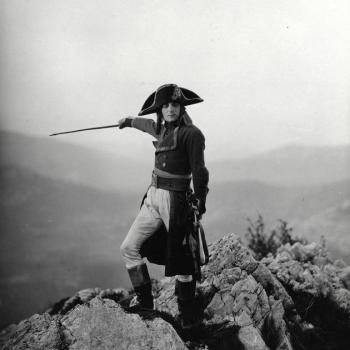
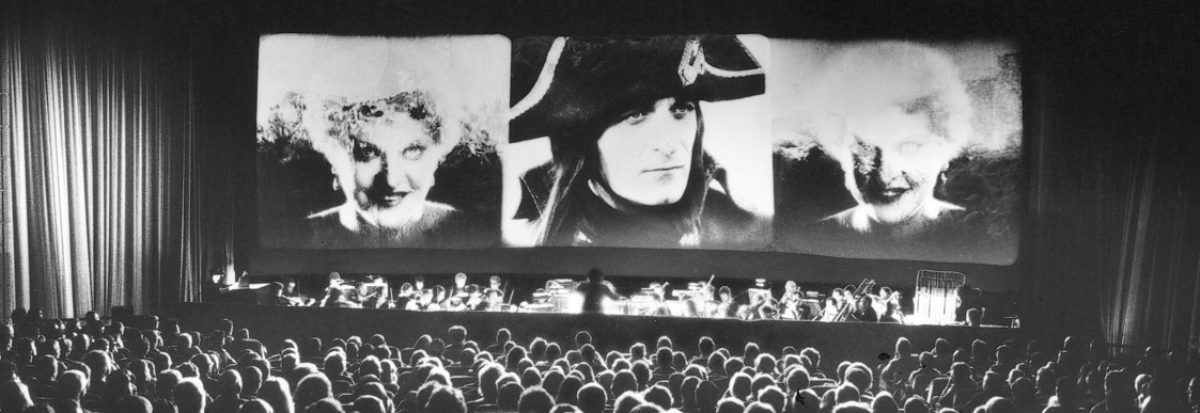
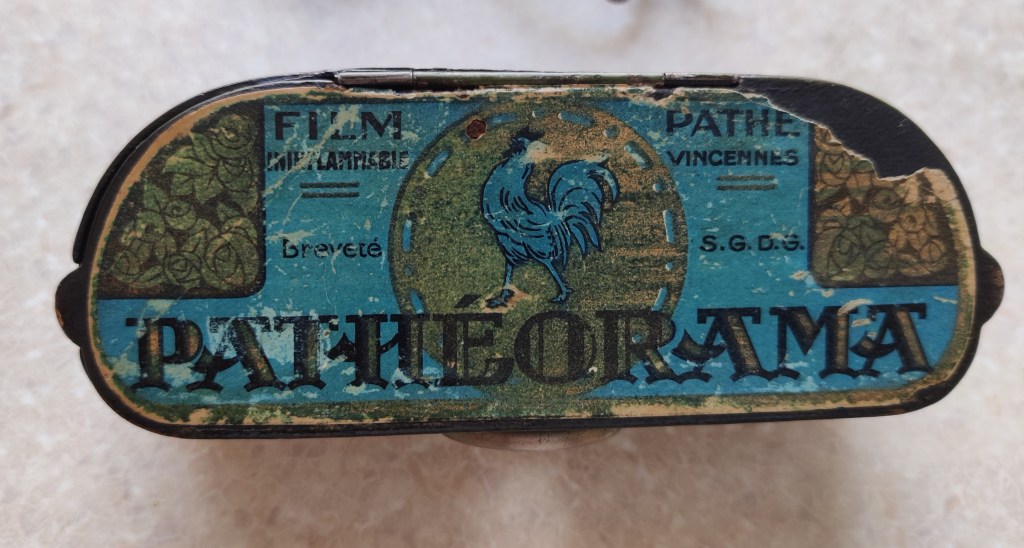
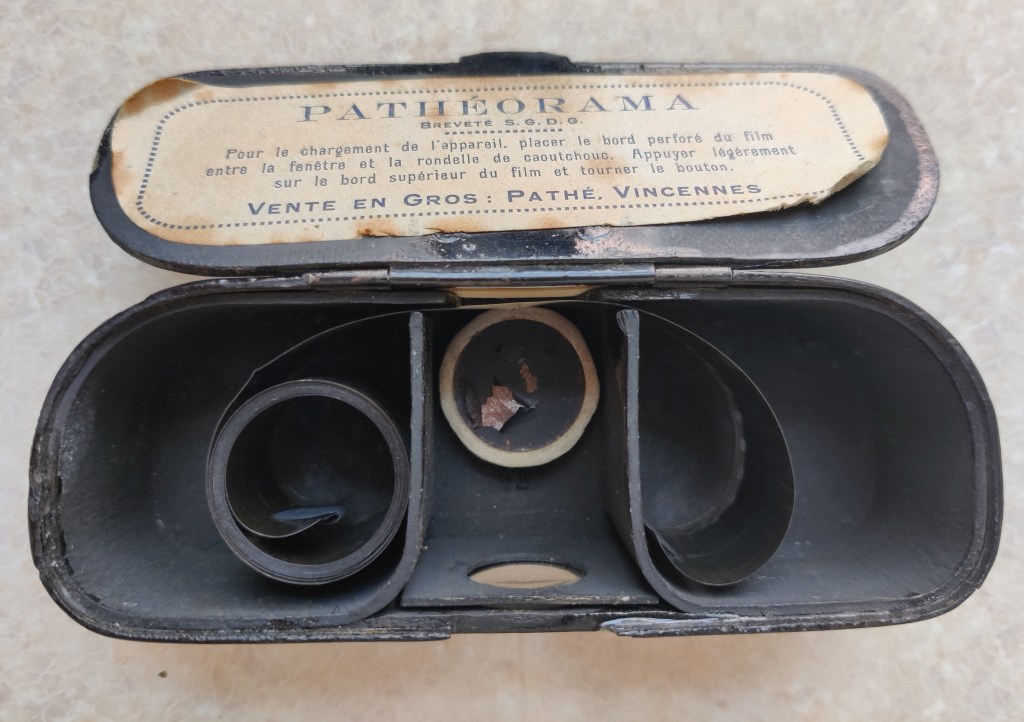
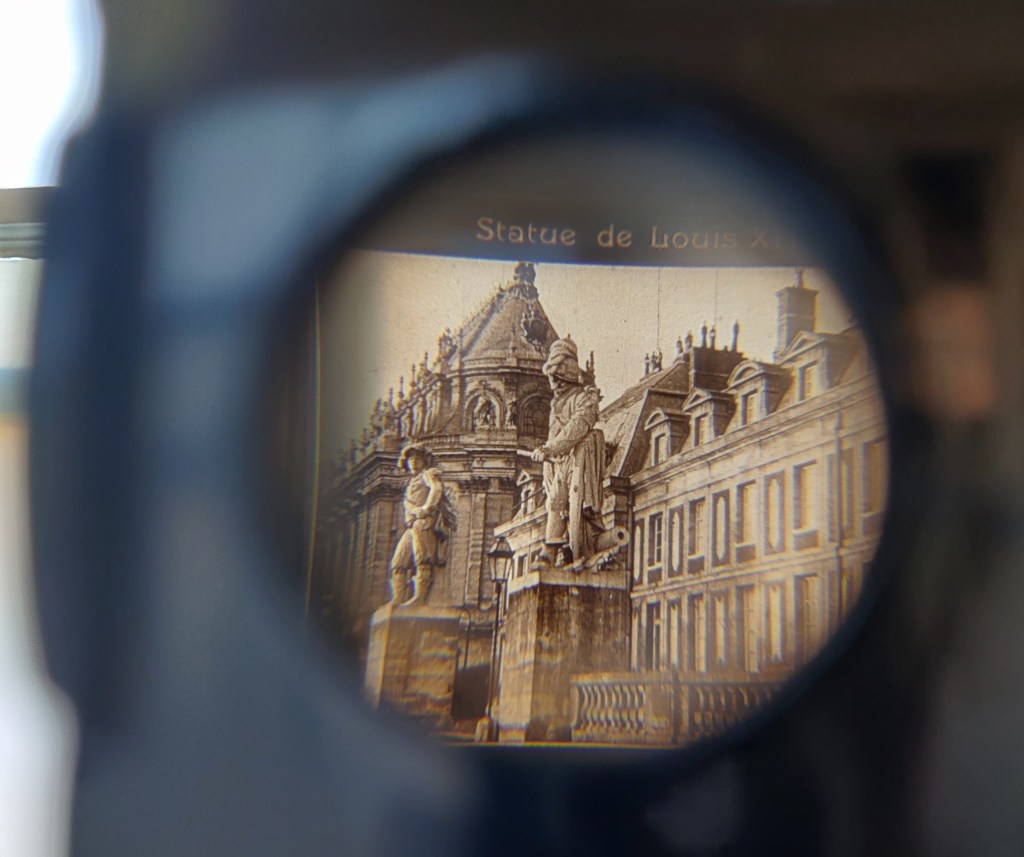
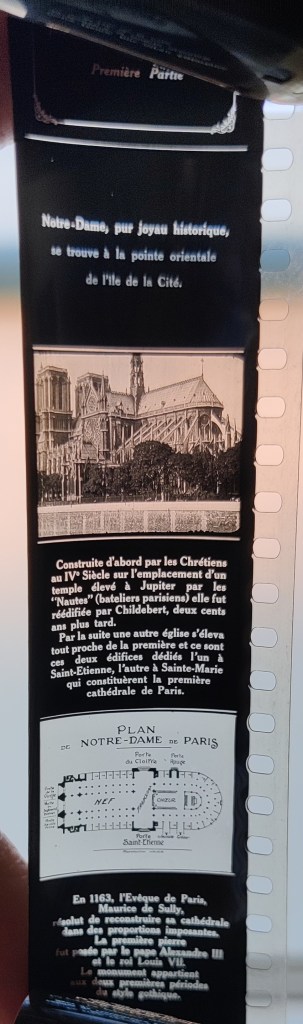
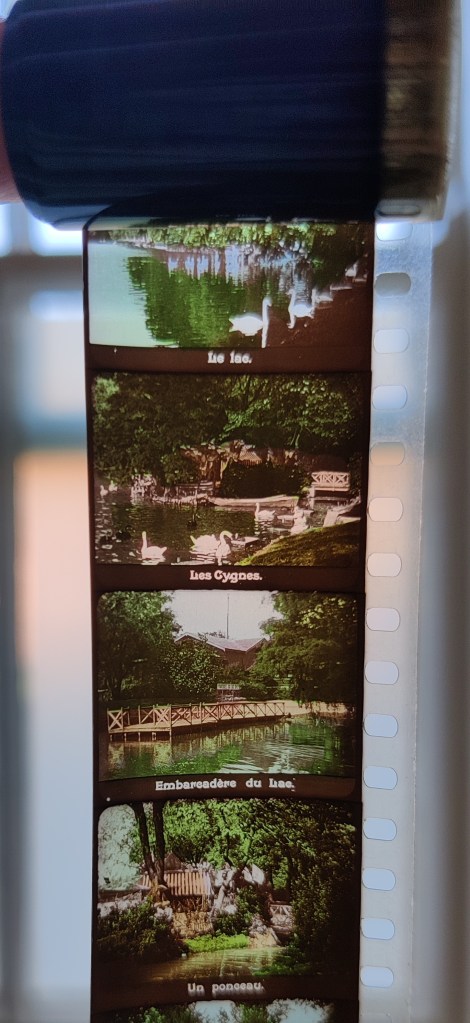
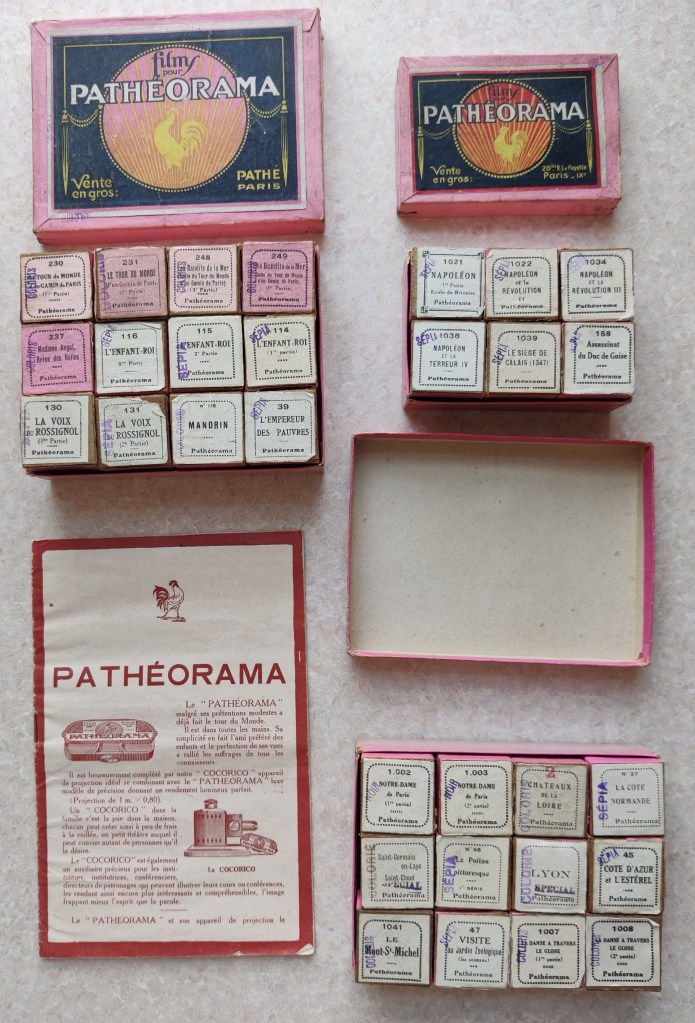
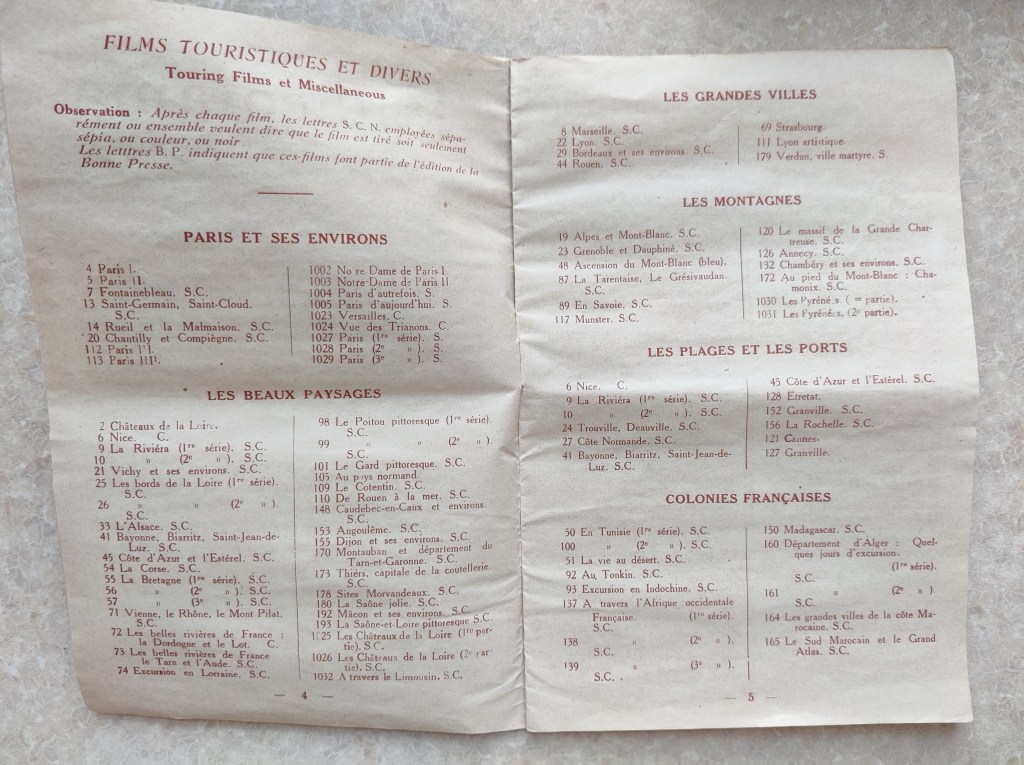
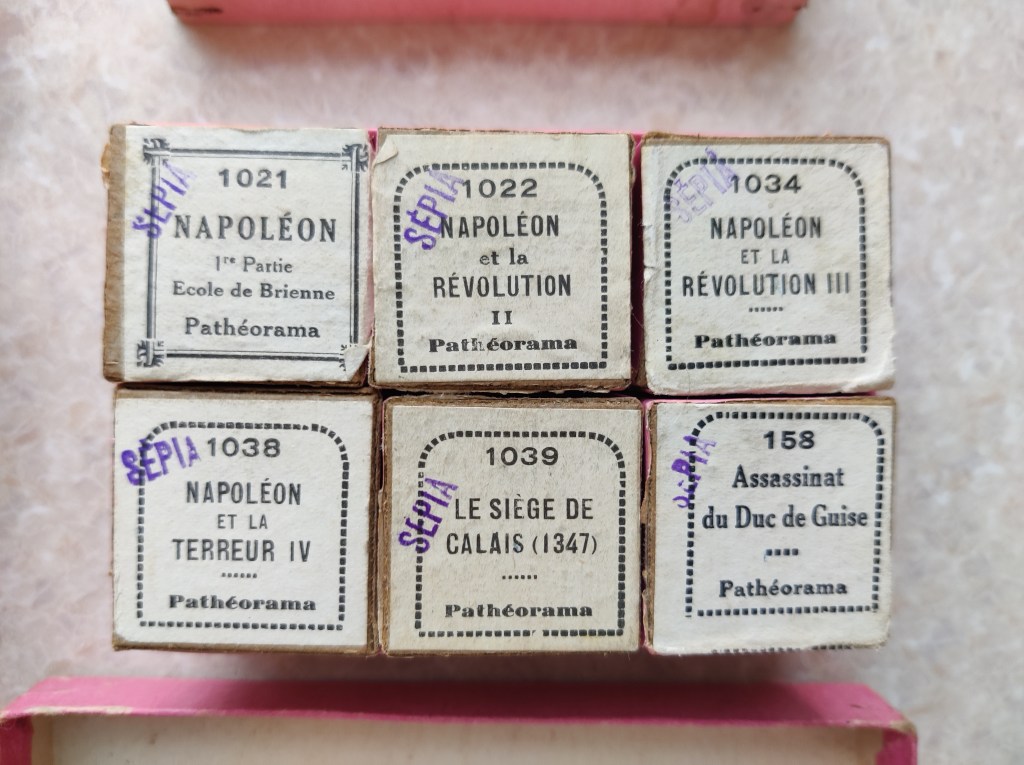
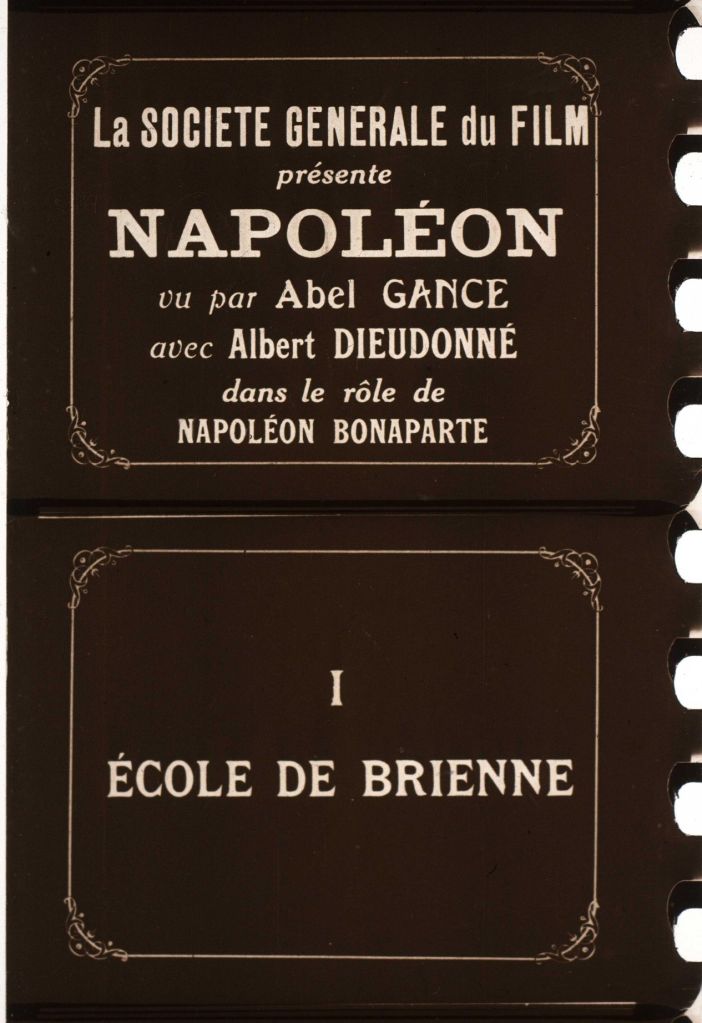
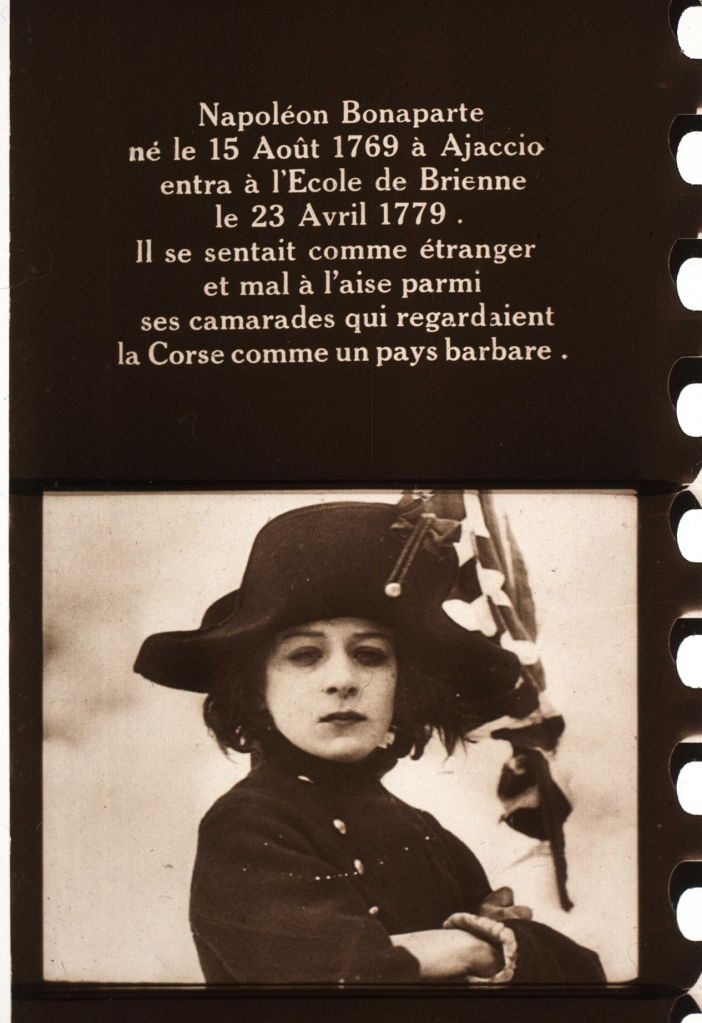
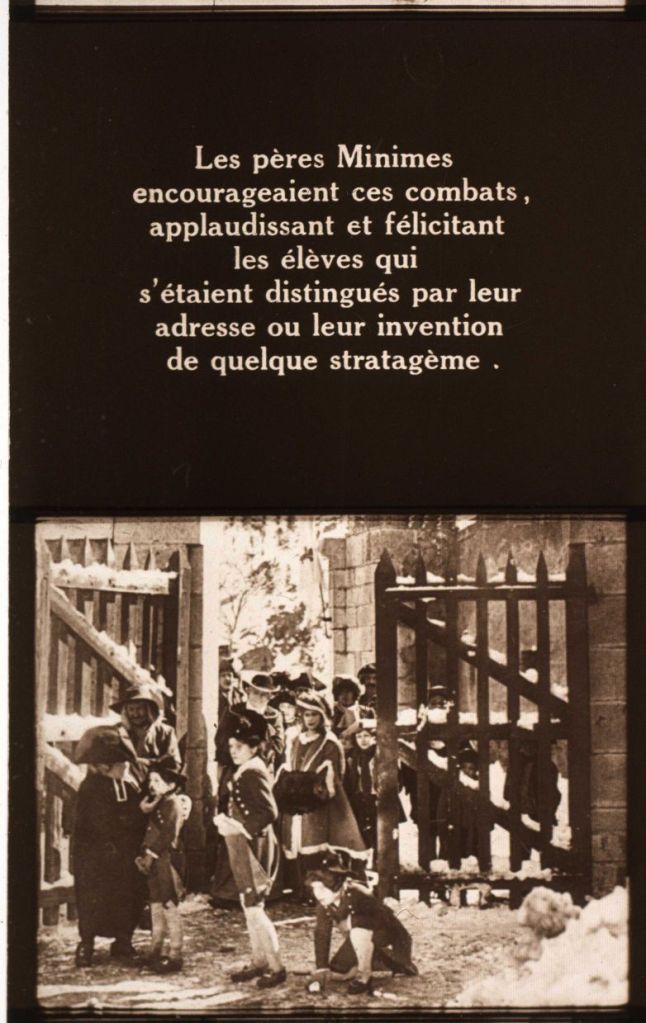
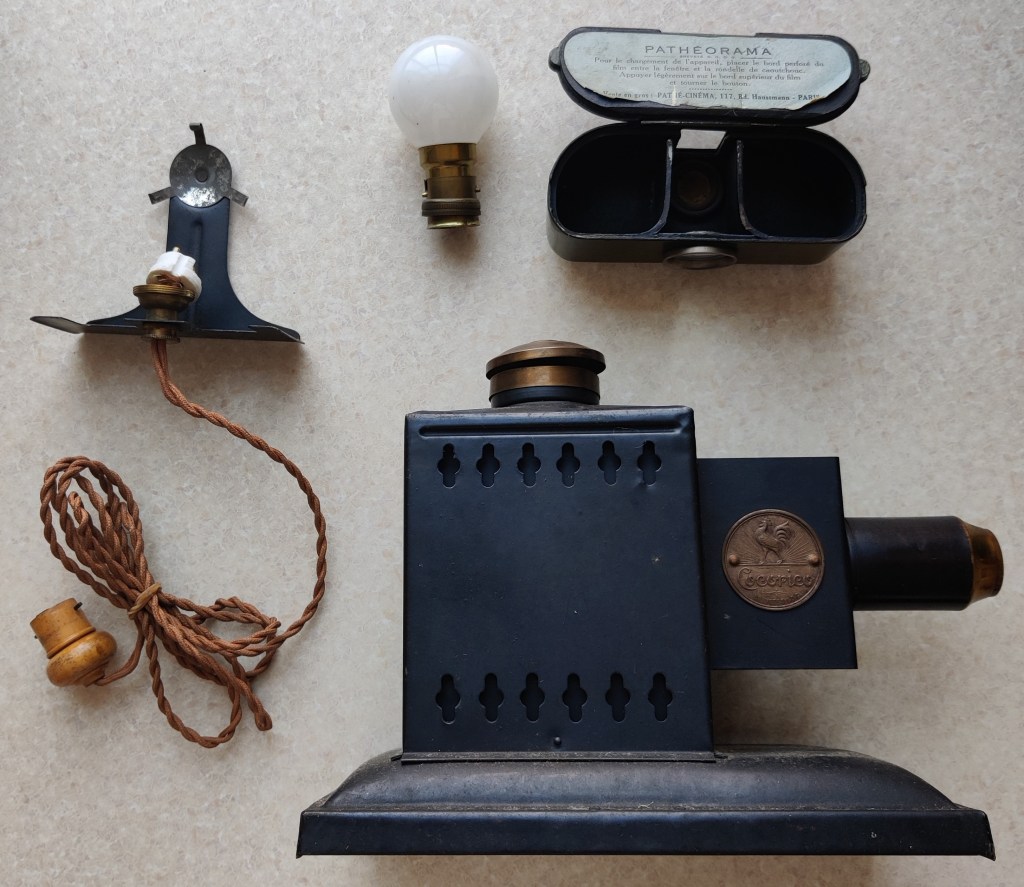
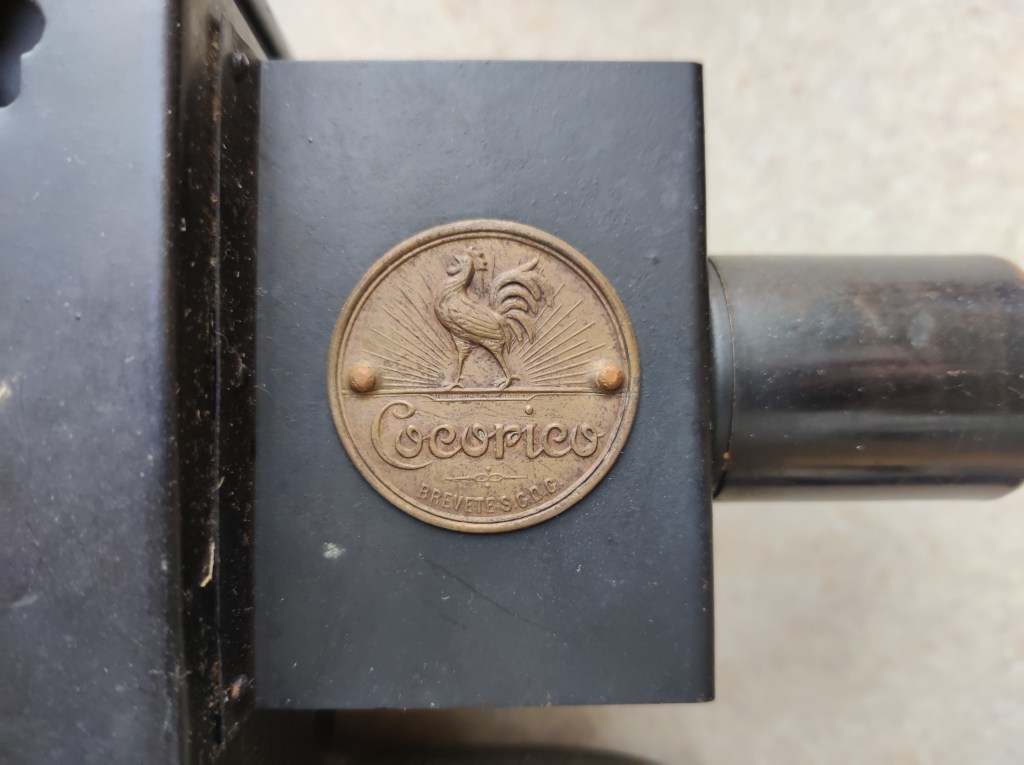
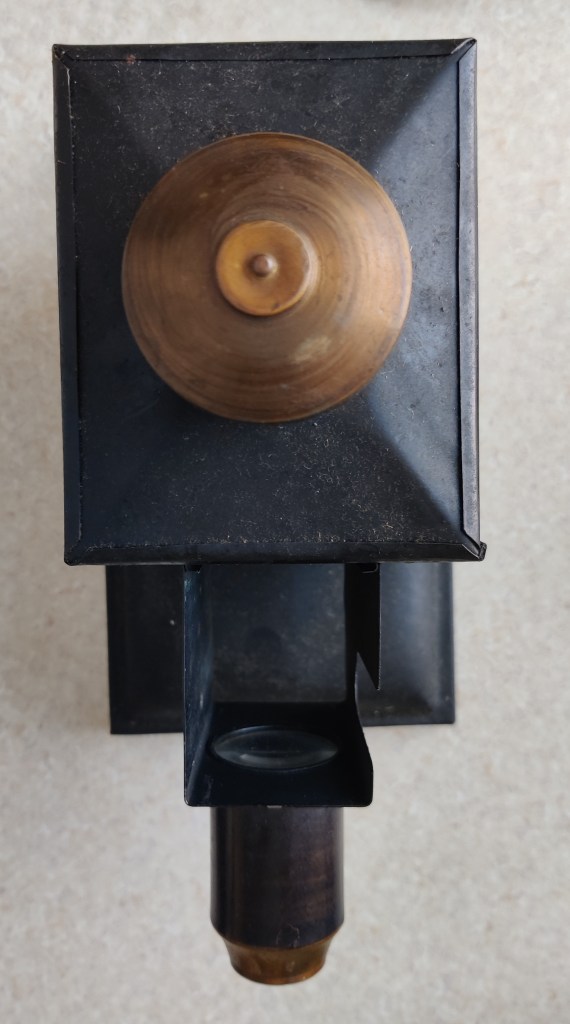
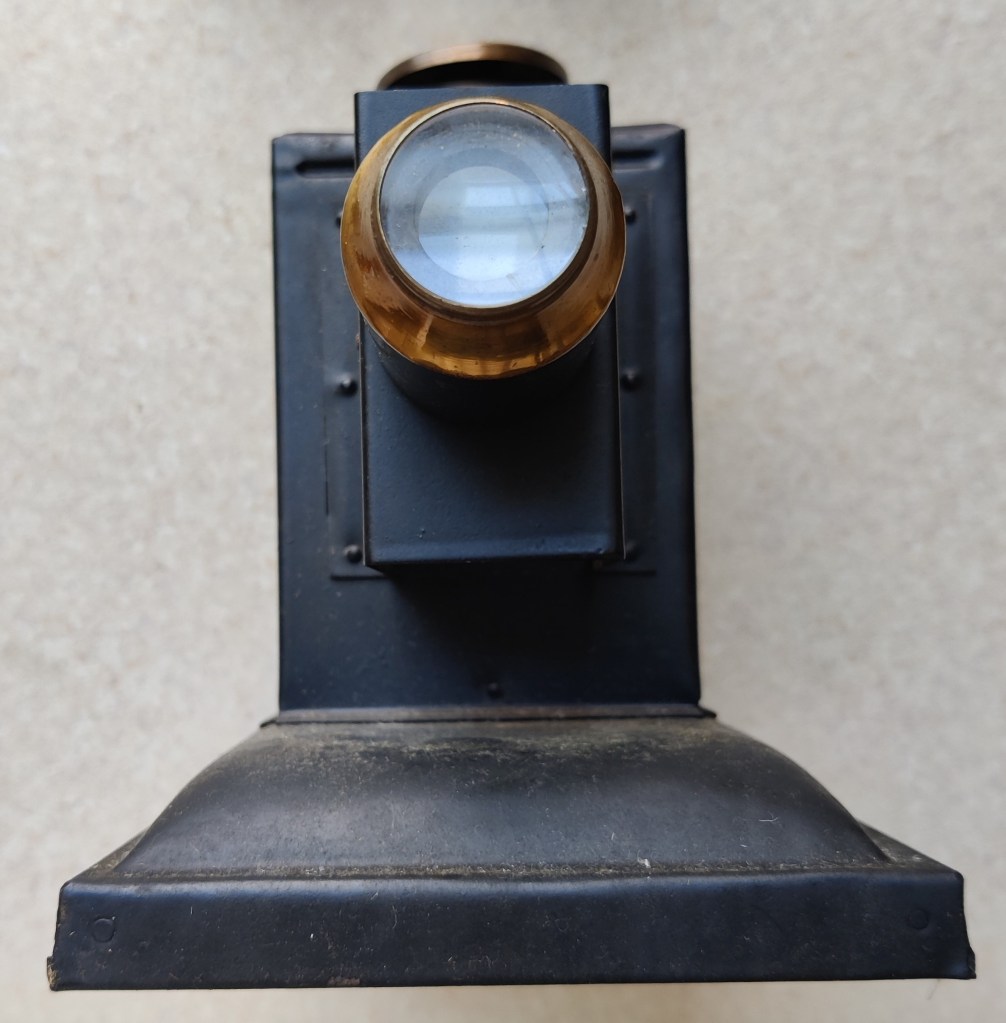
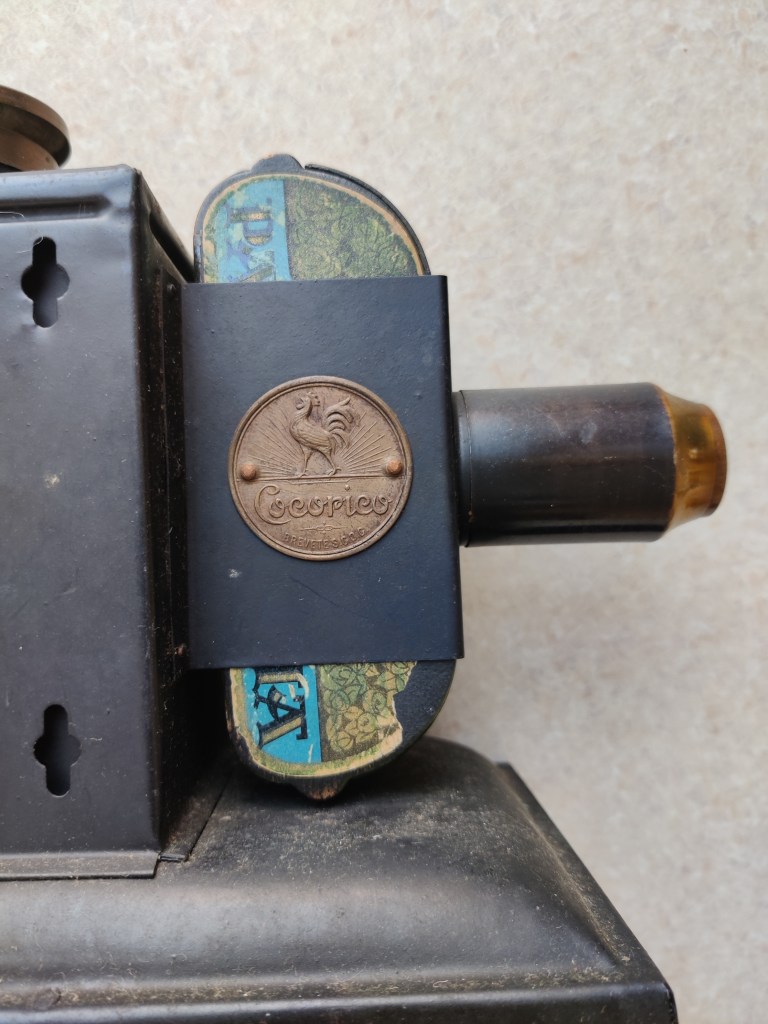
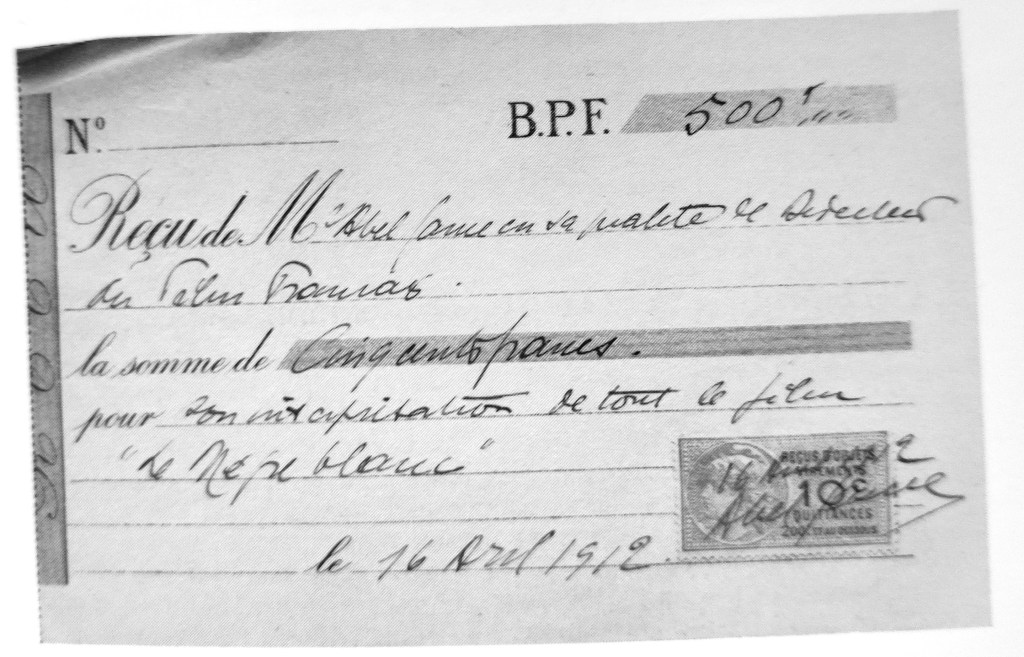
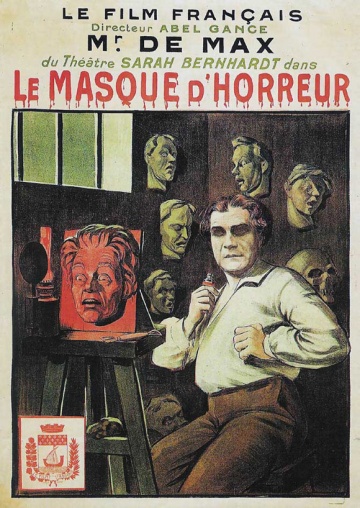
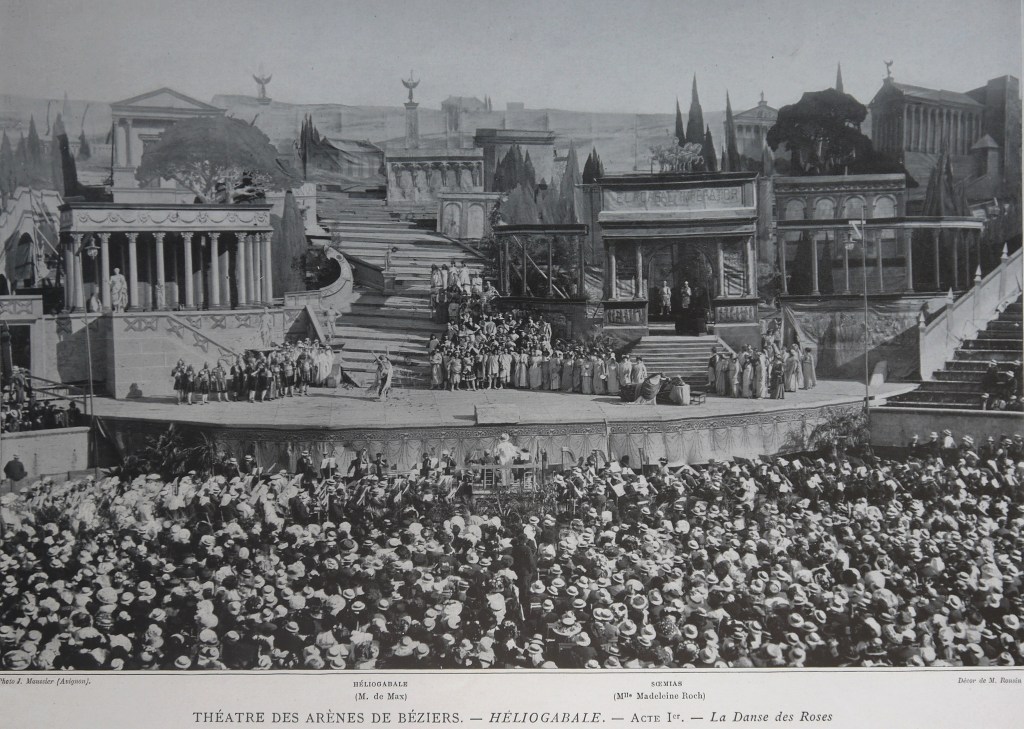


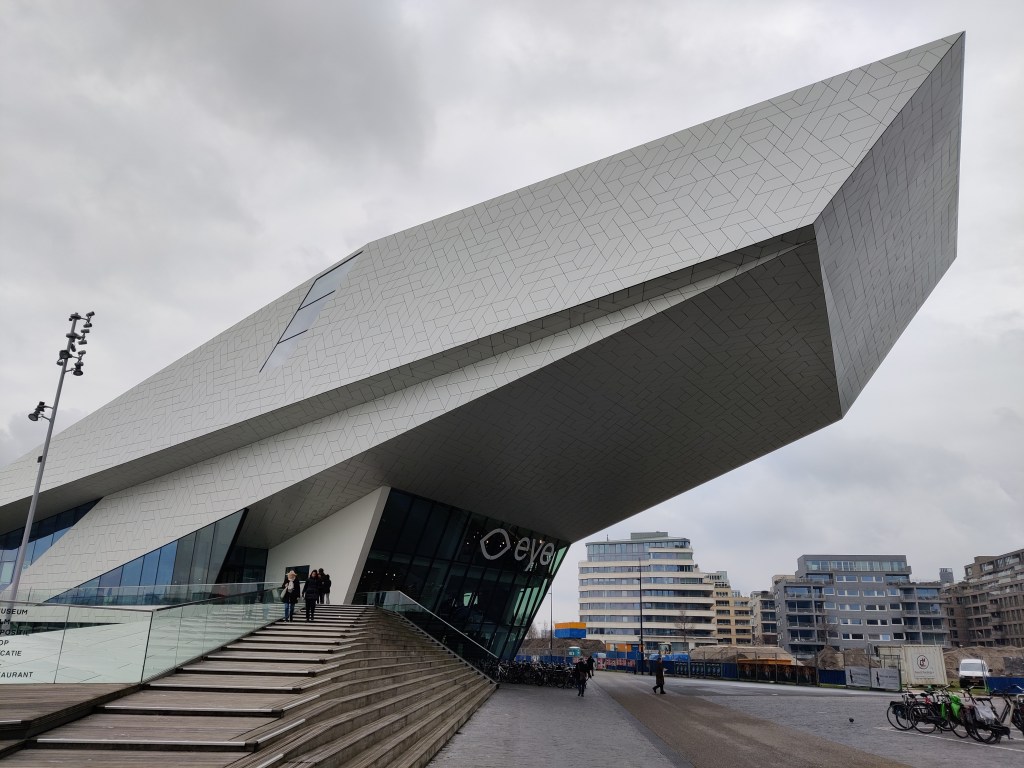
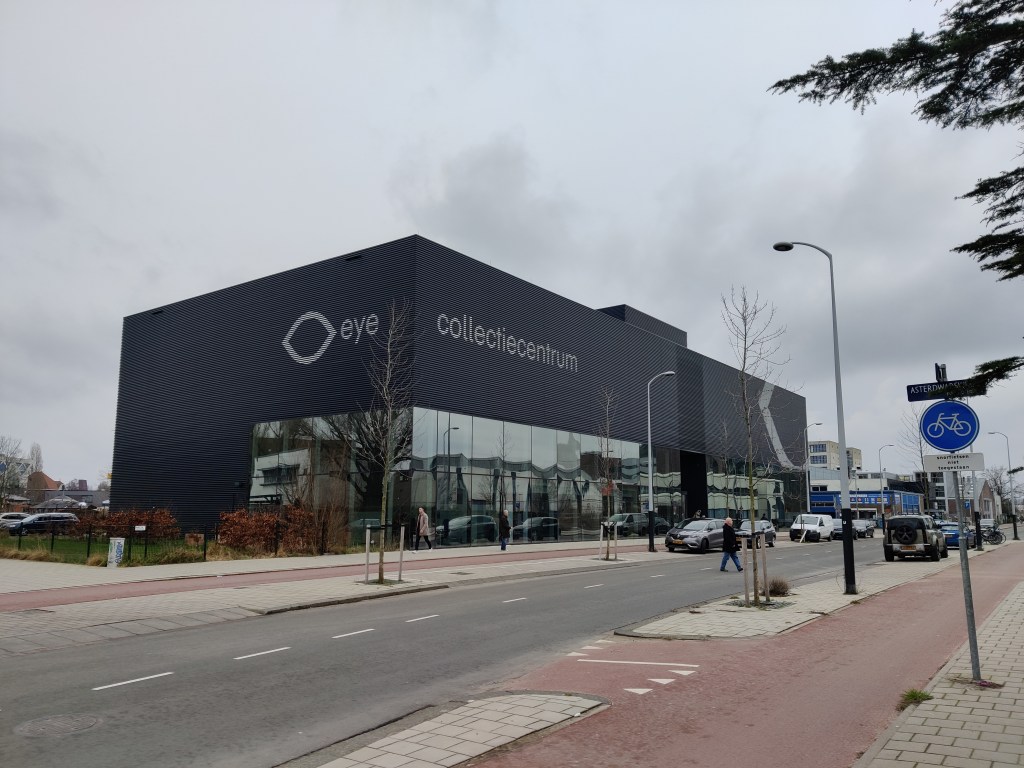
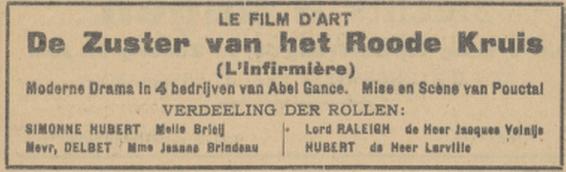
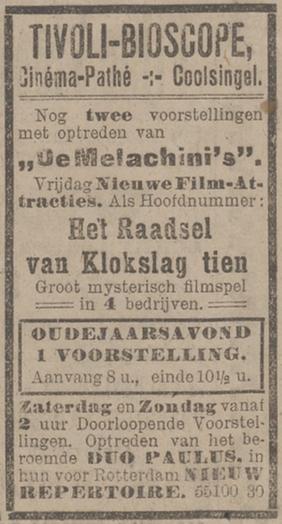
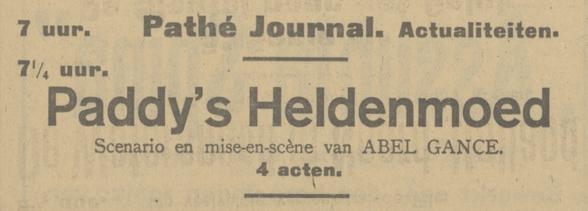
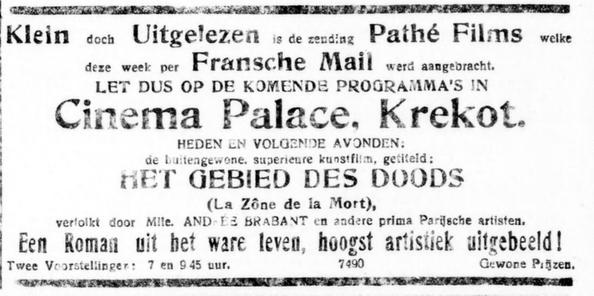
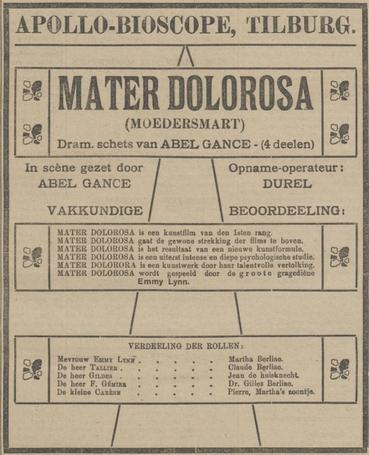
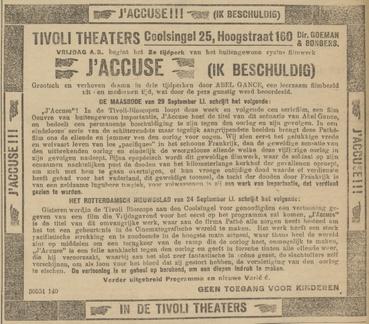
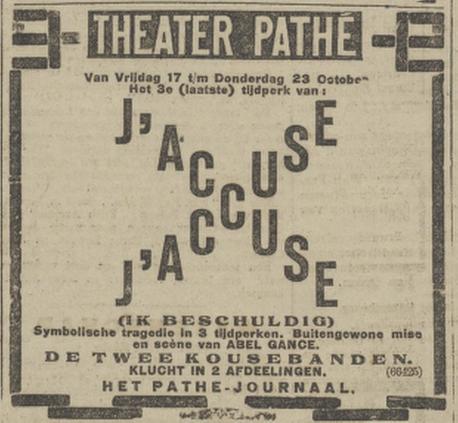
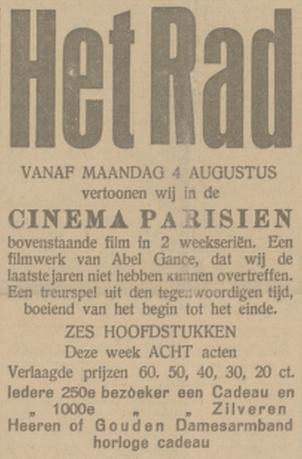
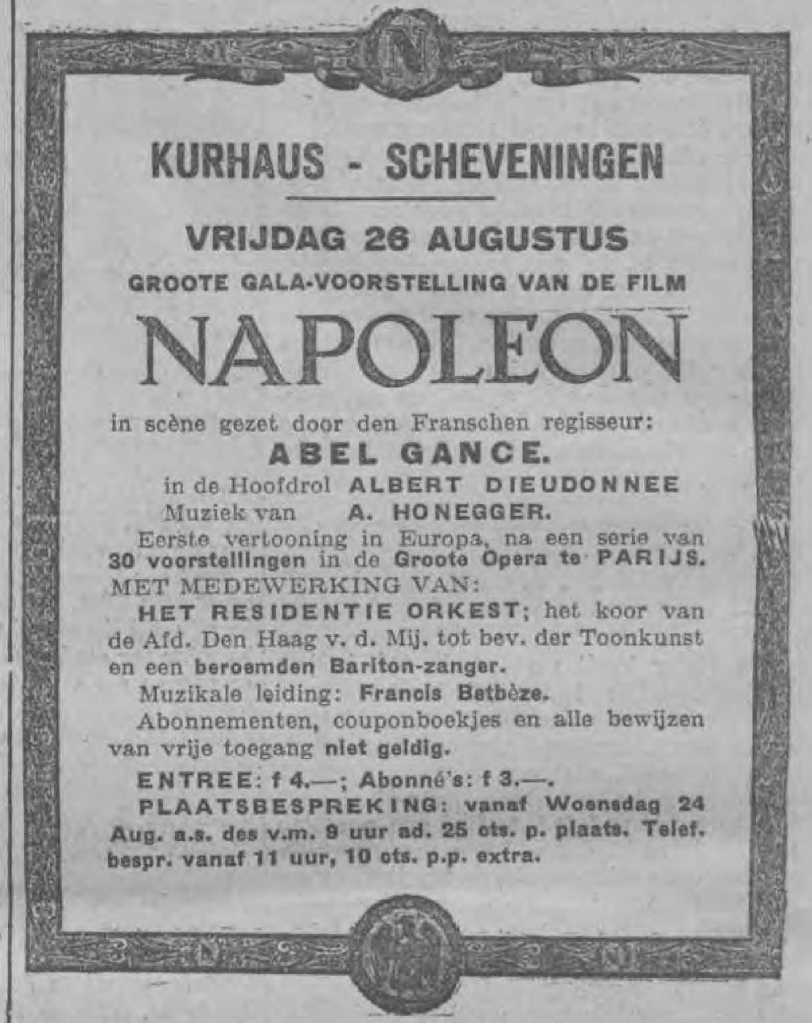
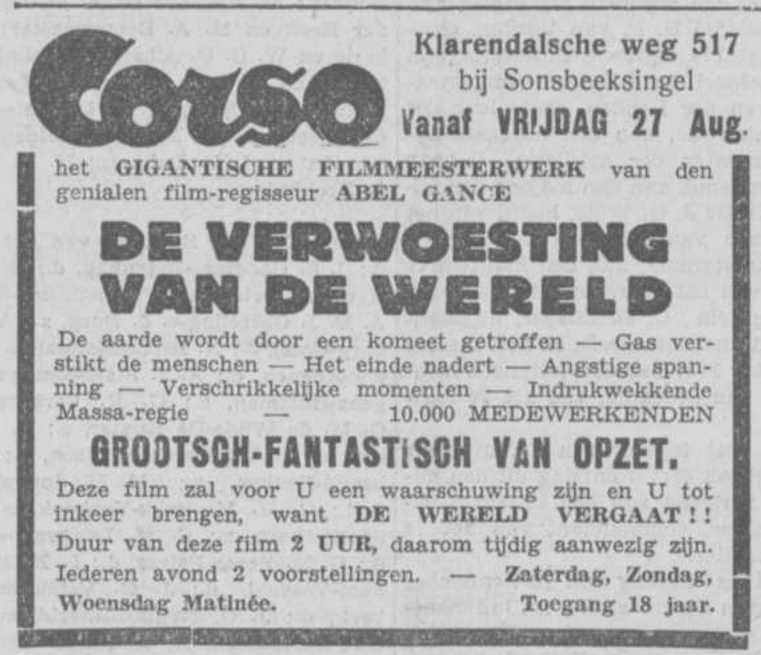
 The Realm of Silence