Ilya Ehrenburg: history, memory, cinema (2/2)

This week, the second part of my exploration of the life and work of Ilya Ehrenburg. Though my excuse for writing this is Ehrenburg’s connections with the films and filmmakers of the 1920s-30s, I am also interested in the memoirs as a work of reflection on this period. As I recorded in my last piece, they offer an amazing glimpse of the interwar world – and of what that world meant in retrospect.
Part 2: Later years

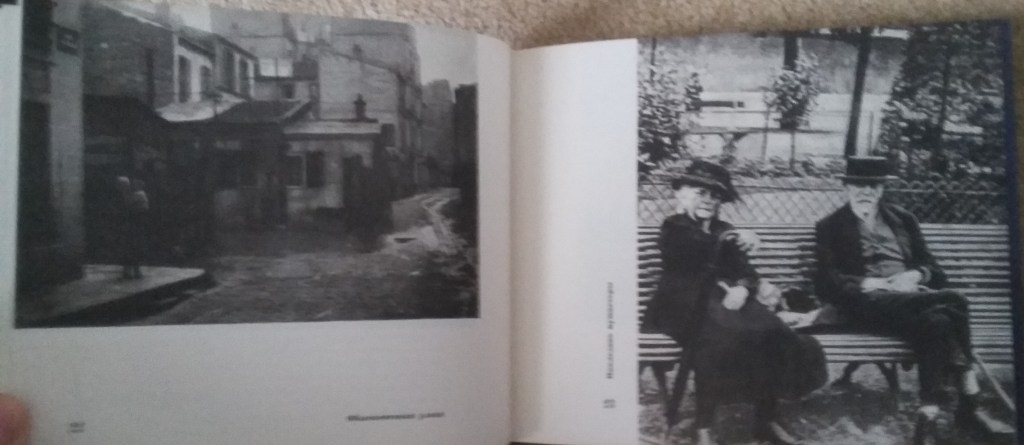
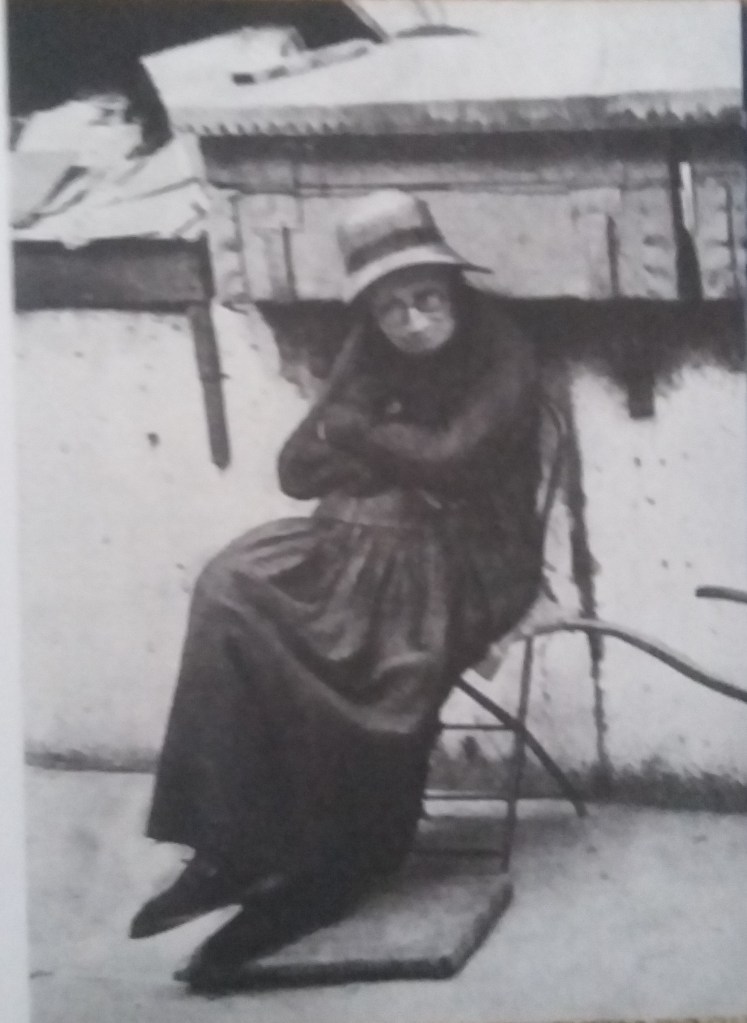
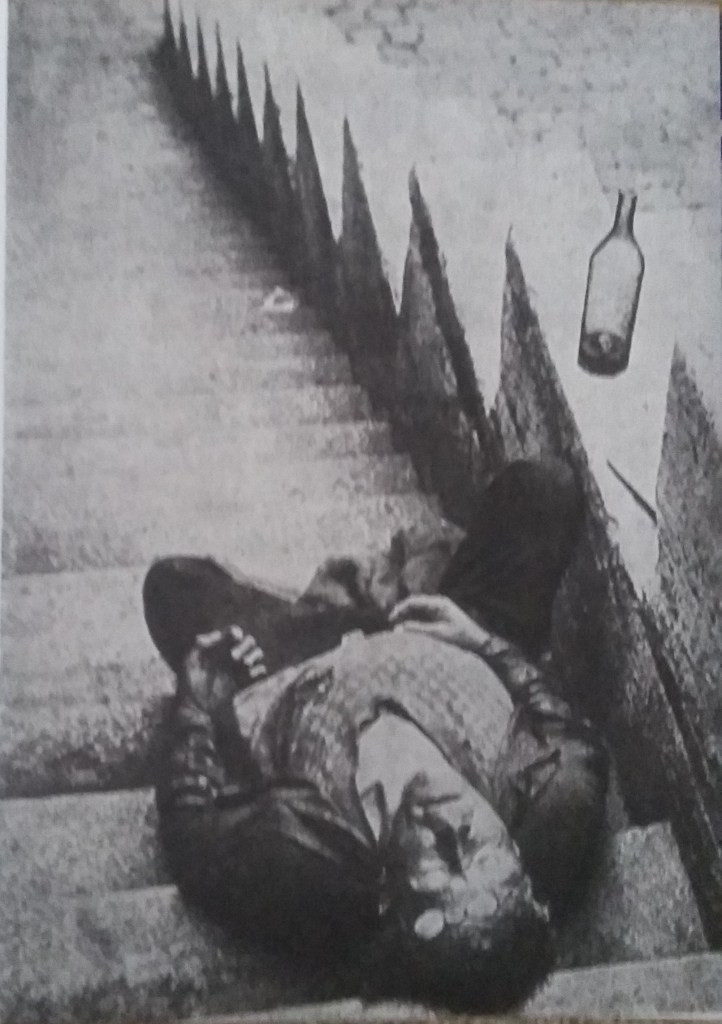
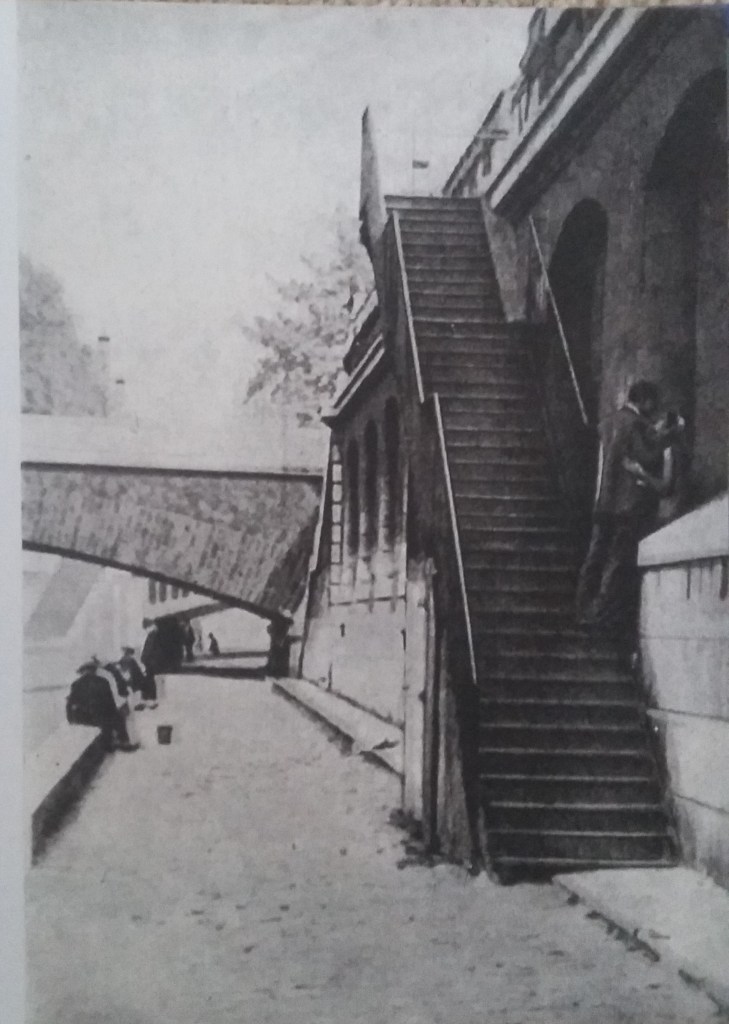
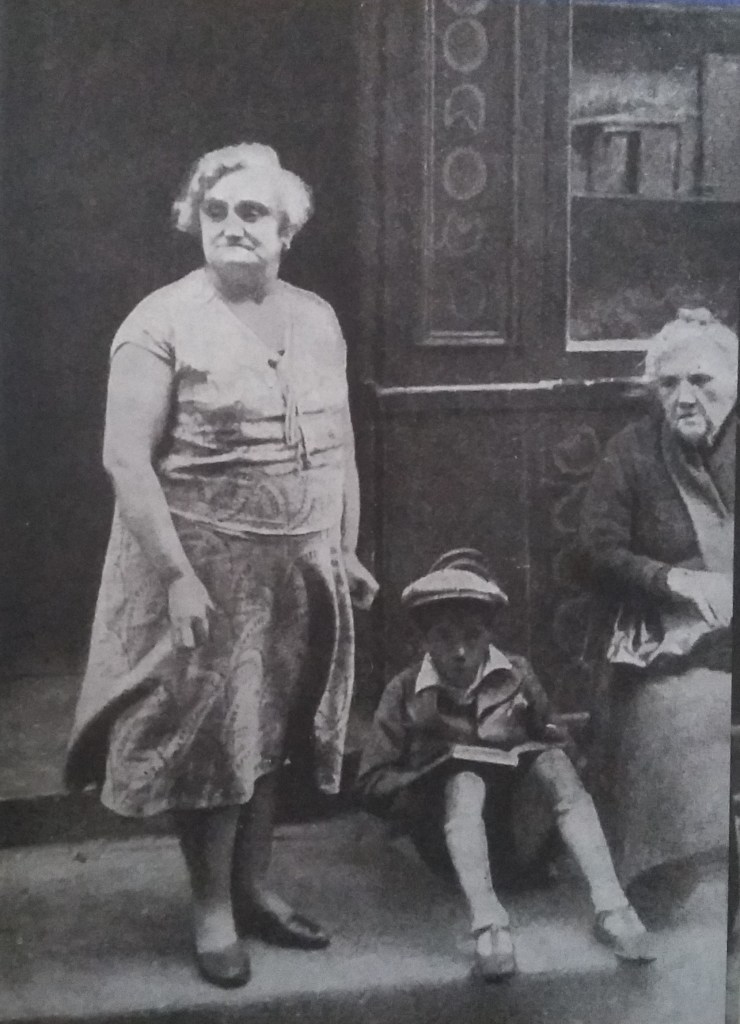
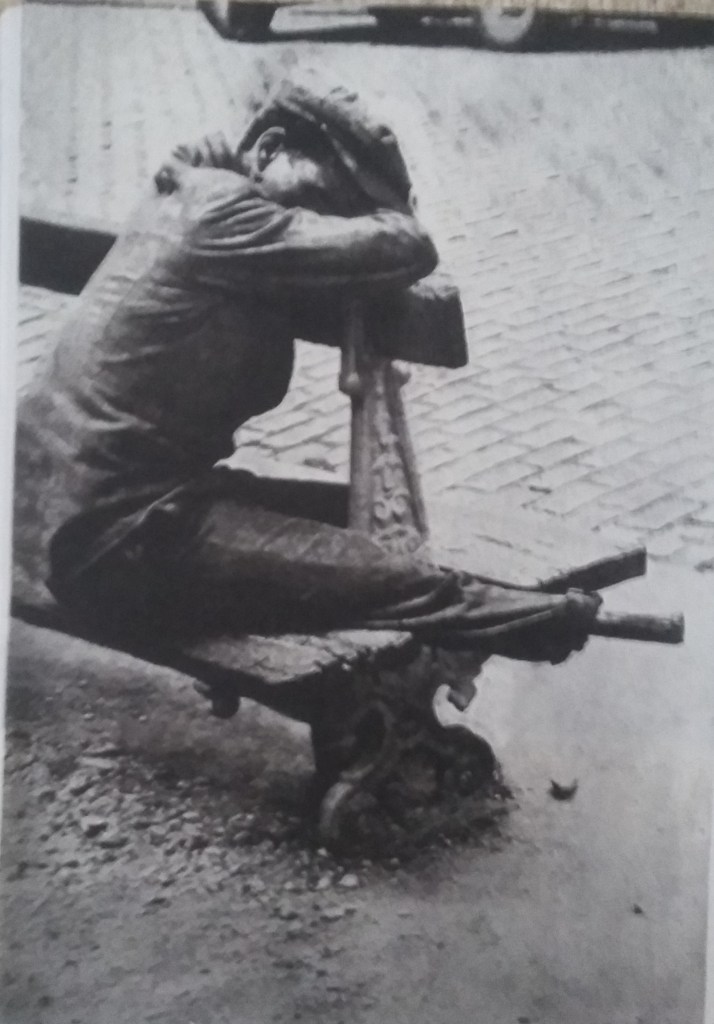
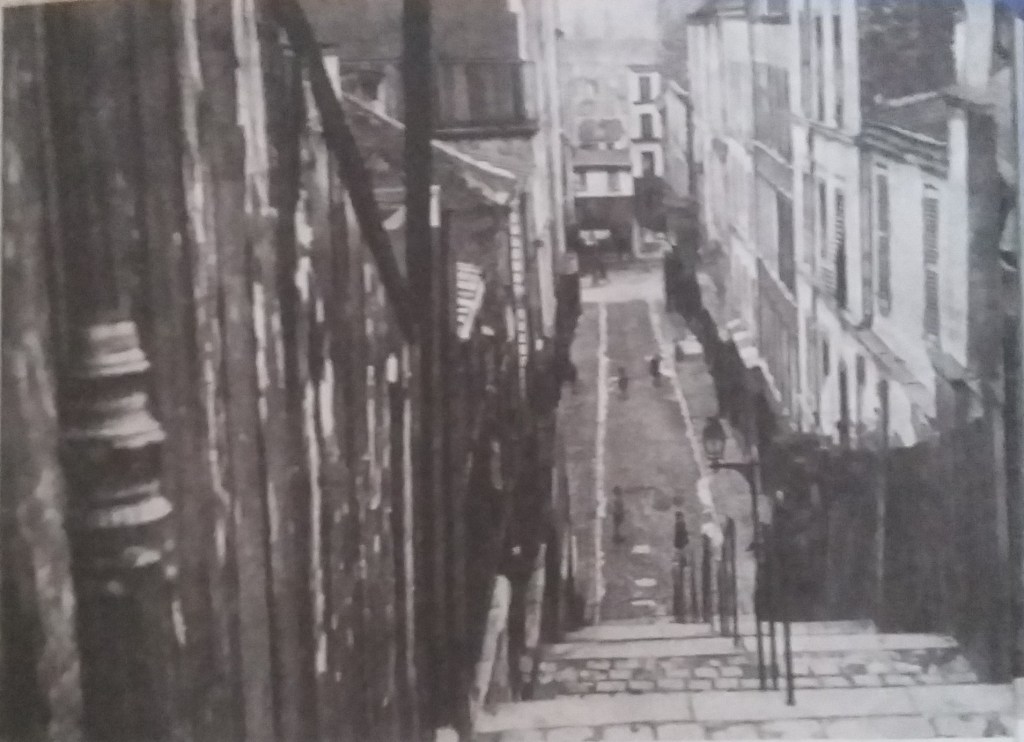
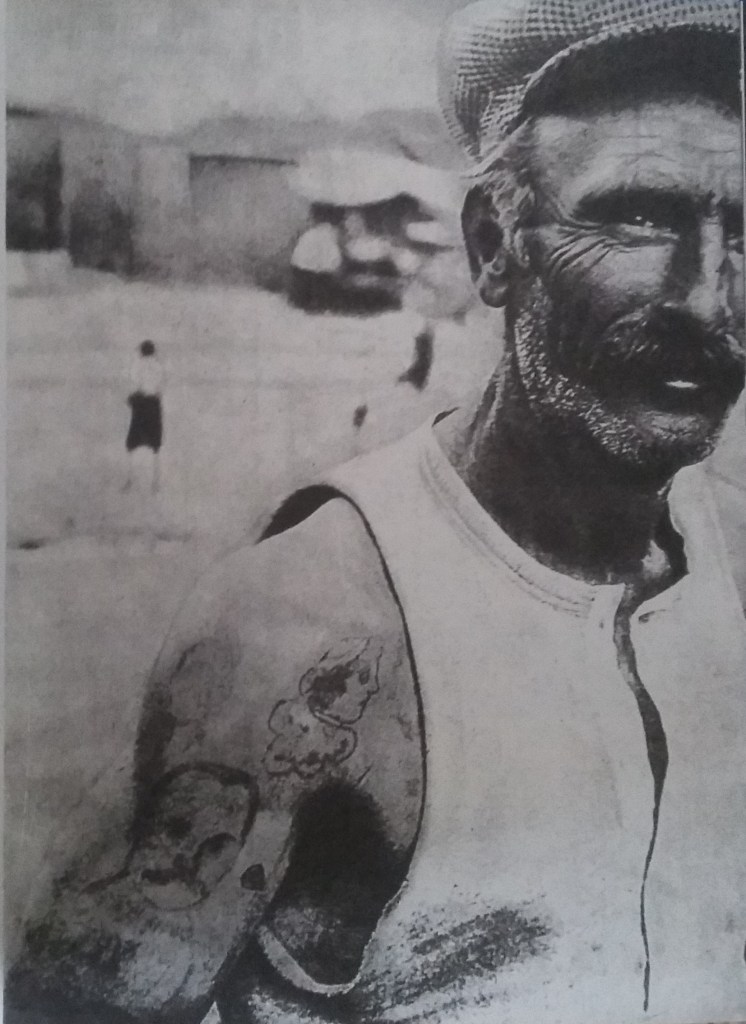
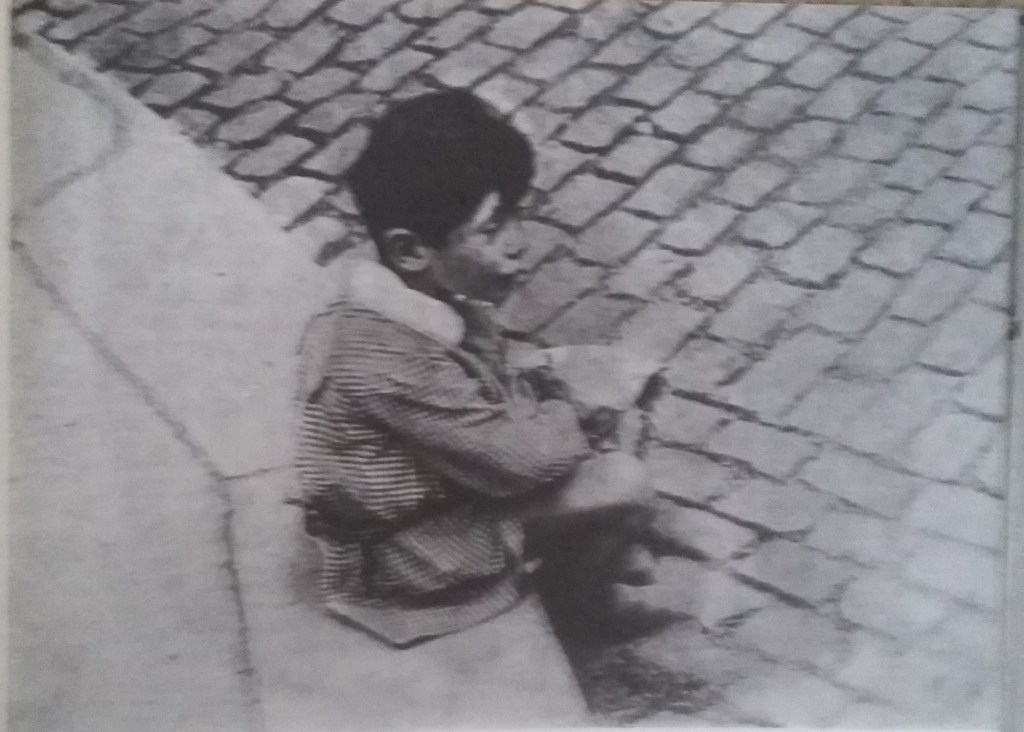
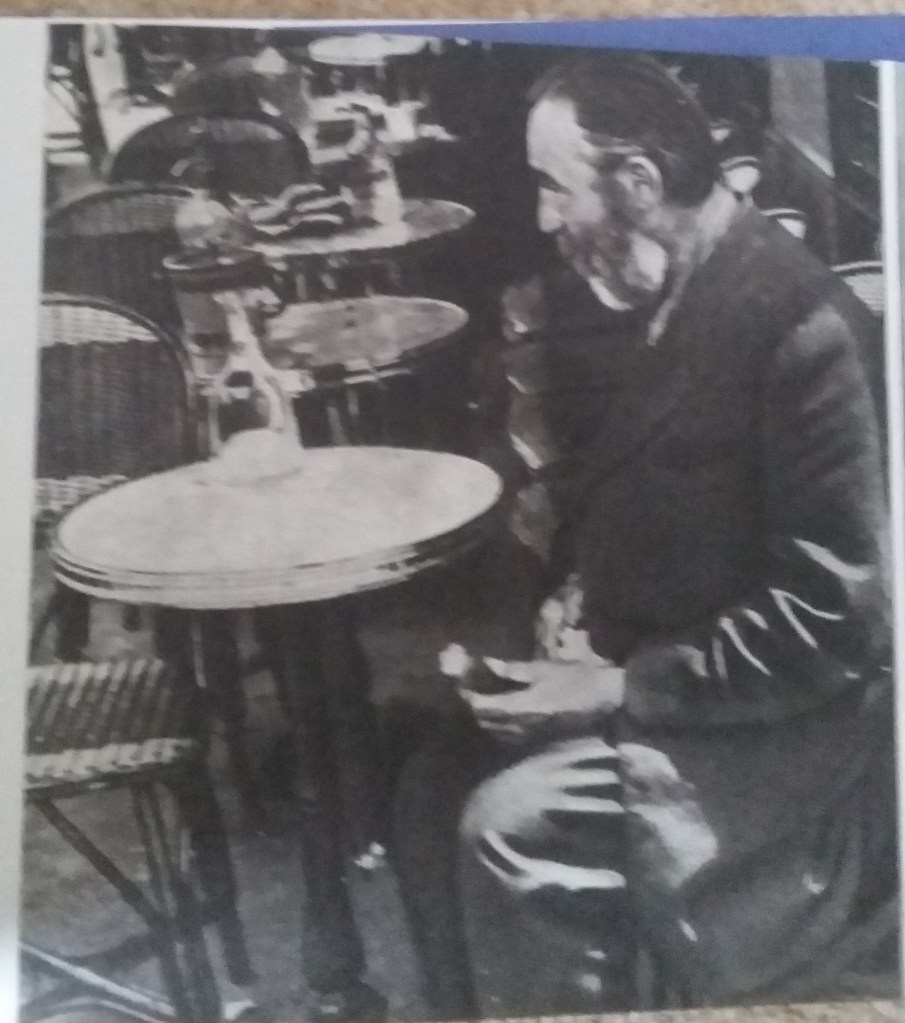
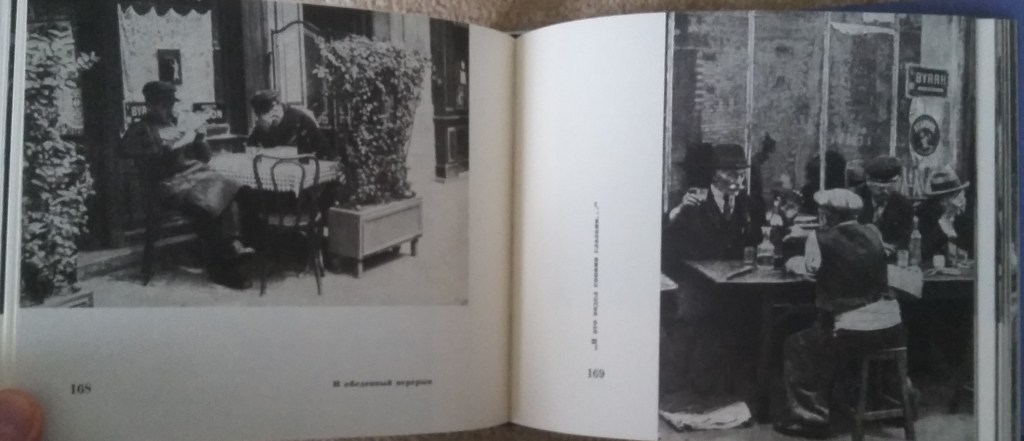
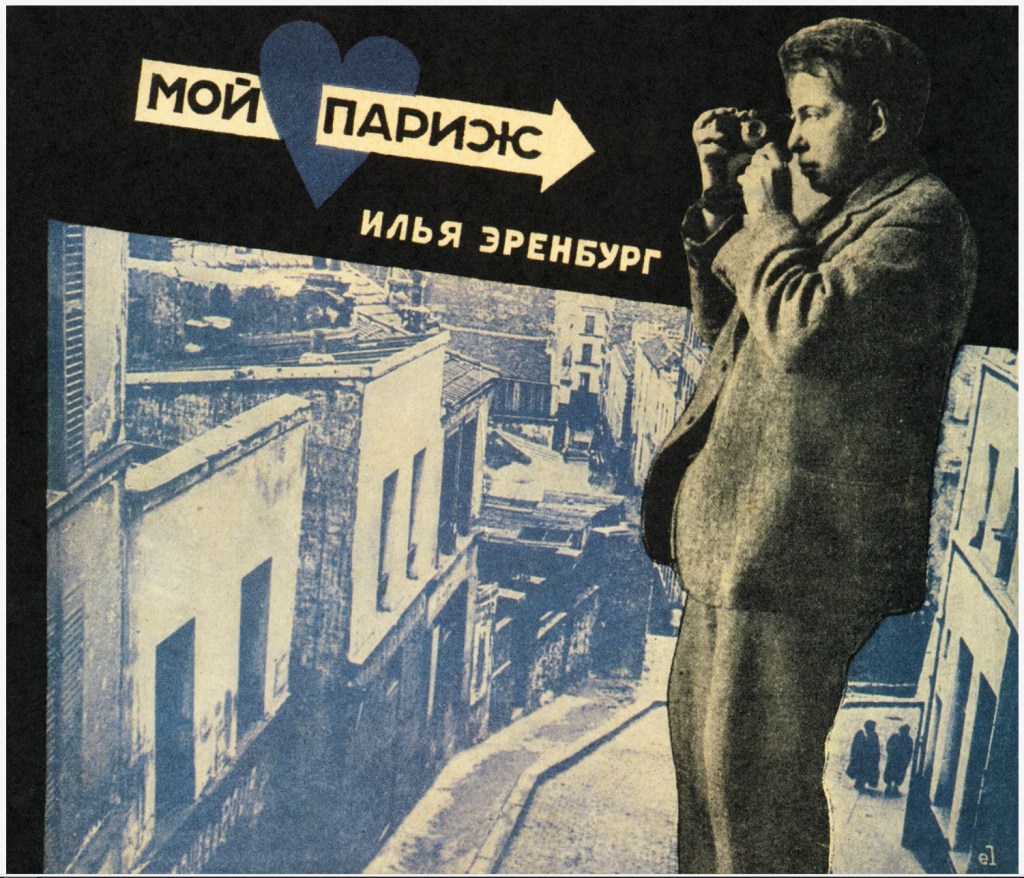
As a kind of coda to the Paris of the 1920s, I want to start by mentioning Moi Parizh (My Paris), a book that Ehrenburg published in 1933. It is a photo album-cum-essay, a visual and literary walk through Paris, the city that Ehrenburg loved so much. But this visual and textual exploration is far from touristic. Ehrenburg is interested not in the facades of great buildings, or even in the great and the good who inhabit them. He is interested in those who sleep rough, in those who survive in the poorest neighbourhoods, in those who live lives that go otherwise unrecorded in history. Ehrenburg knew poverty firsthand, and his snapshot (sometimes covert) images of Paris reveal not just the subjects of his camera but the knack of the observer who knows where to look. These images are often uncomfortably intimate in their portrayal of homelessness and destitution. But they are not exploitative, and there is a kind of tenderness in the way Ehrenburg seeks out the corners of the city to find life – young and old, active and inactive, abled and disabled – going about its business, or doing nothing at all. My Paris is as beautiful as Dmitri Kirsanoff’s Ménilmontant (1926), one of my favourite films, where the street scenes attain a poetry founded in reality. Whereas Kirsanoff tells his story purely through images (with no intertitles), Ehrenburg offers a parallel text commentary on his photographs. Here is a representative passage on the Seine:

It all begins on the steps, where the unfortunate ones sleep. They sleep on stone as on a bed of feathers. They also sleep on the riverbank. They’re particularly keen on wandering under the bridges. It’s cool there in the summer and there’s shelter from the rain. Shadows mill in the gloom. Some like the Pont d’Auteil, others – Pont Alexandre III. Neither eyes nor rags can be clearly distinguished. Life is defined by sounds: a loud dog-like yawn, curses, groans, grunts and the sinister hoarseness that suggests the nearing of the end. The bridges of Paris – old bridges and new bridges, with the thundering metro, with moustachioed Zouaves – join the two banks: the Bourse and the Académie, the markets and the Sorbonne. They have different names. Trains clatter over some, dreamers stroll on others. From below they are all alike; they are shelter and quiet. Beneath them live those who no longer have the strength to cross from one bank to another. […]

The stairways to the Seine are not just a certain number of steps: they are light-headedness and fate. Down leads poverty, and down leads love. Anyone who has loved in Paris knows the damp fog that rises over the Seine, the sorrowful cries of a little steamer and the quivering of the shadows. Lovers kiss, pressing each other against the handrails or sliding down; they, too, wander beneath the arches of the bridges. No one is surprised – love, everyone knows, is homeless.

The Seine also has other admirers. These don’t try out the steps. They pause on the bridge, then plummet like stones. Who’s to say why they preferred the cold of the water to gas or the rope? Some are hurled down by hunger, others by grievances, others by love. […] As for the Seine, it’s not to blame for anything: a river like any other. It’s a gate as well. A gate left open. People sometimes leave through it. Then hooks crawl along the sandy bed. The dreamers, meanwhile, keep strolling up and down the embankments. (My Paris, 7-8)

Reading My Paris, you can understand why Pabst’s production of Die Liebe der Jeanne Ney did not satisfy Ehrenburg. The contemporary reality from which he wanted art to emerge is more potent in his text and images than in Pabst’s drama. It is not just that Die Liebe der Jeanne Ney did not contain the reality of Ehrenburg’s fiction, it is that the film did not contain his experience of contemporary life. The author does not record if he knew or saw Ménilmontant (perhaps it was among the films he brought to Russia in 1926, cited last week), but one senses that aspects of it would surely have appealed.
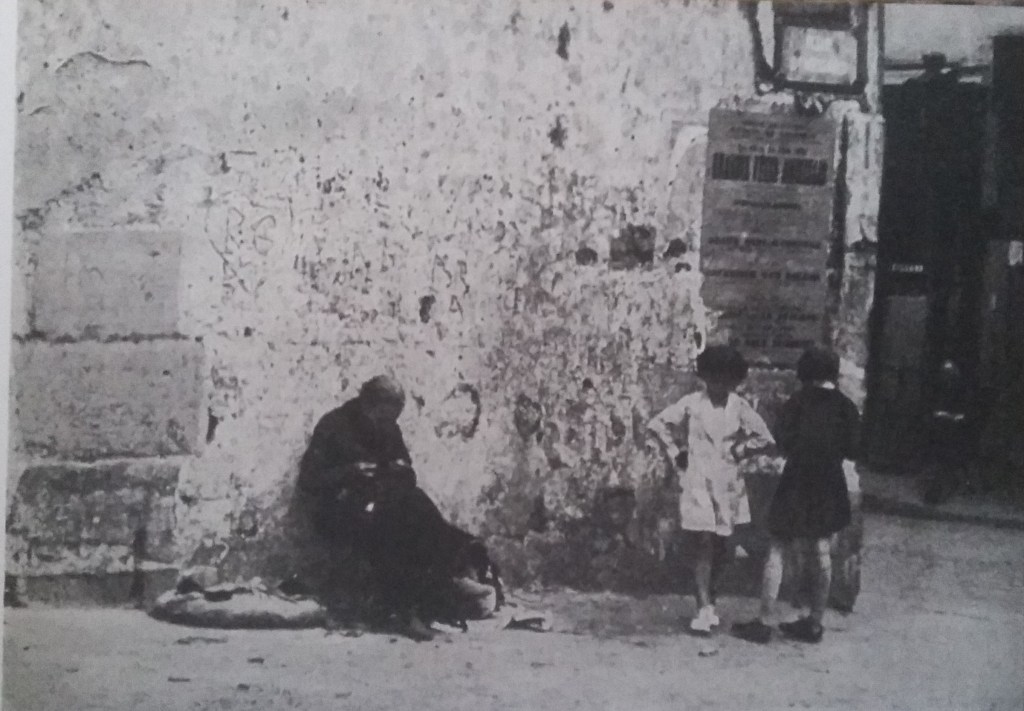
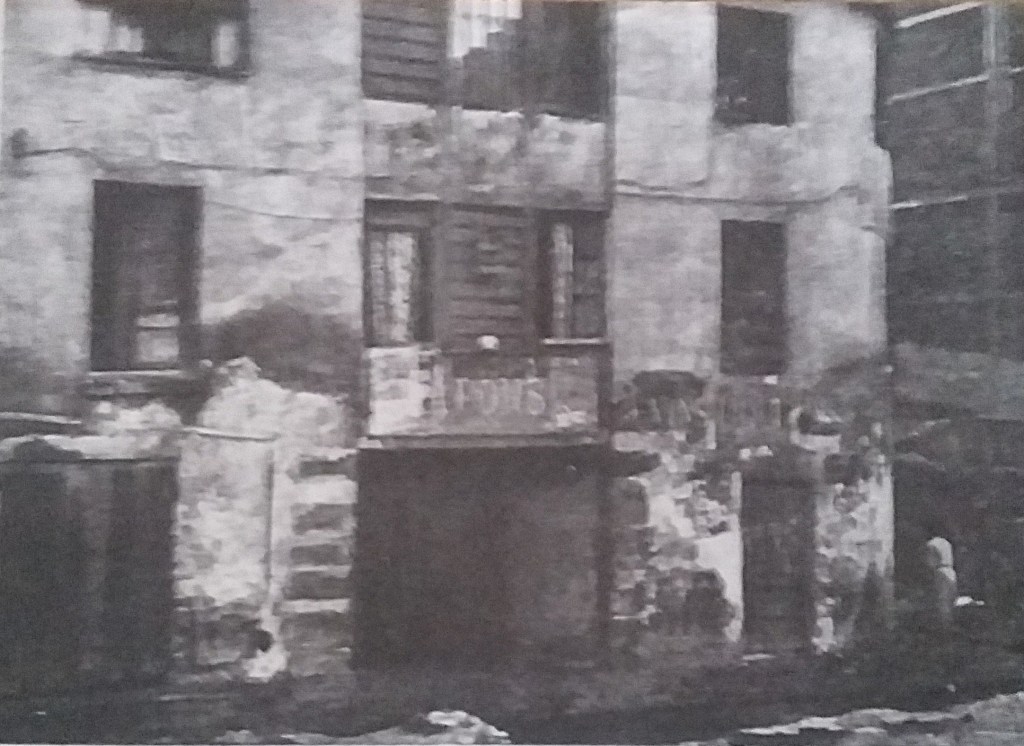
In Ehrenburg’s memoirs, the streets of Paris take on a more personal meaning in retrospect. In the late 1950s/early 1960s, the act of recalling scenes from these spaces is clearly as moving for Ehrenburg as it might be for us to see his images of My Paris another half-century later. “When I come to Paris now I feel inexpressibly sad – the city is the same, it is I who have changed; it is painful for me to walk along the familiar streets: they are the streets of my youth” (I, 66). The retrospect of the memoirs – and the way this perspective inflects its record of the past – noticeably sharpens later volumes. Like other great works of recollection, this book is as much about the act of memory as memory itself. As I have written on this blog many times, the distance between ourselves and the past is one of the major reasons that the world of silent cinema is so potent. One senses from the silent images of My Paris a world that is both incredibly tangible and irrevocably absent.

This sense of distance opens out in the later volumes of Ehrenburg’s memoirs. After 1930, the idealism that motivates so much of the art and artists he recalls is whelmed in political realities. This shift can be felt in his references to cinema. Increasingly, politics redefines – and prescribes – the boundaries of art. Ehrenburg talks about meeting Lewis Milestone, another Russian Jewish exile, who regales him with anecdotes about filming All Quiet on the Western Front (1930): “[Milestone] told me that during the shooting the producer Carl Laemmle came to him and said: ‘I want the film to have a happy ending’. ‘All right,’ Milestone replied, ‘I’ll give it a happy ending: Germany shall win the war’” (III, 127). This rather pointed comic story is followed by a grimmer conclusion. Ehrenburg recounts being present for the exhibition of All Quiet in Berlin in 1931, when Nazi agitators release a hundred mice into the cinema in protest at the film’s anti-militarism (III, 201). Political pressure within Hollywood likewise forestalls Milestone from adapting one of Ehrenburg’s novels in 1933 (IV, 9-10). The times are changing.

Ehrenburg travels through Austria, Czechoslovakia, and Romania. By the time he returns to Moscow in 1935, his homeland is in the grip of an increasingly paranoid and controlling Stalin. Creative freedom in the arts is being squeezed. Ehrenburg has a fleeting encounter with filmmaker Alexander Dovzhenko, who has just been summoned by Stalin. This ominous summons is now the norm. Stalin’s “suggestions” to artists are euphemistic instructions, to be obeyed on pain of disfavour, arrest, or death. Under these conditions, expression and innovation are stifled. As Ehrenburg puts it: “If a writer or an artist does not see more than the numerical ‘mass’, does not try to tell people something new, as yet unknown to them, then he is hardly any use to anyone” (IV, 98).

The Spanish Civil War begins. Ehrenburg leaves Russia for Spain. Art is a solace, a comfort, sometimes a distraction. Besieged in Madrid, he watches Chaplin films (IV, 145). But the knowledge of the future haunts Ehrenburg’s pages. He knows their cause is doomed, just as he knows the fate of his friends and comrades. These are volunteers from Russia and the east, men like him who have led extraordinary lives in pursuit of their beliefs. “Of all these men, I was the only one to survive. [One] was killed by an enemy shell. As for the others, they were destroyed for no reason at all by their own people” (IV, 176). It’s a devastating line, the fulfilment of the threats already being made to artists like Dovzhenko.

When Ehrenburg returns once more to Moscow in December 1937, the “great purge” is underway. His daughter tells him about countless arrests, disappearances, executions. Conversations between them must be conducted in whispers for fear of reprisal. Ehrenburg’s homeland is now an alien, threatening place. “I was totally bewildered; I felt lost, no, that is not the word – crushed” (IV, 190). It is with a strange sense of relief that he returns to war-torn Spain. But the Republican cause is near its end. In January 1939, Ehrenburg is one of the thousands of refugees fleeing across the Pyrenees into France. During the retreat, his party must abandon or destroy their baggage. Ehrenburg finds himself forced to burn his own books (IV, 231). It is an image with chilling resonance.

He returns to Paris, where he remains when the Second World War begins. During this period of the Nazi-Soviet pact, Ehrenburg finds himself a neutral, if anxious witness. He is in Paris when the Germans enter. He recalls more voluntary destruction of equipment, of documents. So much polluted smoke enters the sky that the rain turns black. “This, too, had to be lived through”, he observes (IV, 260-1) – and the brevity of his words make the depth of his recollected emotion stronger. Ehrenburg leaves the city he loves above all others. His nation not yet at war, he finds himself travelling back to Russia via Berlin. A Jewish Communist, Ehrenburg negotiates his way through Hitler’s capital city feeling “like a live fox in a fur shop” (IV, 266-7).

The fifth volume of his memoirs, called simply “The War”, is also the shortest. This is despite Ehrenburg being in a state of ceaseless activity, travelling among the Russian forces and writing accounts of all aspects of the war in the east. As I wrote in the preamble to my previous post, Ehrenburg also collected eyewitness accounts of atrocities committed by the Germans and their allies. In his memoirs, one senses the exhaustion of these years, and that much of what he saw or heard was beyond description. Often, he records details in passing that resonate more than a longer description could. He recalls once holding in his hand a bar of soap made from the rendered flesh of murdered Jews (V, 30). It’s an image, an idea, so grotesque that Ehrenburg need not say more. He admits later: “I find that to explain all I have seen and lived through is beyond my powers” (VI, 107). If Ehrenburg is sometimes reticent to speak of himself directly, or at great length, he offers a glimpse into his mindset of these war years. Again, he describes himself as a kind of romantic who is forced to reorient himself by the world around him:

By nature as well as upbringing I was a man of the nineteenth century, more given to discussion than to arms. Hatred did not come to me easily. Hatred is not a particularly creditable emotion and is nothing to be proud of. But we were living in an epoch when ordinary young men, often with agreeable faces, with sentimental feelings and photographs of the girls they loved, had, in the belief that they were the elect, begun to destroy the non-elect, and only genuine and profound hatred could put an end to the triumph of Fascism. I repeat, this was not easy. I often felt pity, and perhaps I hate Fascism most bitterly because it taught me to hate not only the vile inhuman idea but also its adherents. (IV, 267)

I have read only fragments of Ehrenburg’s wartime journalism, and his memoirs are reluctant to quote much of his own work save occasional poems. This wartime material, written to appeal and inspire the Red Army in its fight, has a quasi-infamous reputation for its propagandistic rhetoric and invocations of violence. On this, I simply haven’t read enough to comment – and it’s rather beyond the scope of this piece to do so. All I can say is that the memoirs offer a painful and moving retrospective of the man he was. One senses that the older Ehrenburg resents not what his younger self did or wrote but why he had to act as he did and write what he did. As in the passage cited above, hatred did not come naturally to him – but come to him it did.

Having written about this enforced hatred of the war years, Ehrenburg’s post-war work – as witness, as journalist, as cultural ambassador, as promoter of peace – is even more striking for its empathy. His encounters of those who survived the war and its genocides are among the most affecting in the memoirs. In one extraordinary passage, Ehrenburg meets a Russian girl from Kursk who loved a German soldier during the war. Knowing Ehrenburg’s propagandistic vilification of German manhood, the girl tries to explain how she could fall in love with the “enemy”. To do so, she tells him that her feelings were like those of Jeanne Ney. Ehrenburg in turn reaches for film to try to explain his own feelings. Unable to pity this girl in the immediate context of the war, years later he recalls seeing Hiroshima mon amour (1959). Seeing the heroine’s affair with a German solider, and her subsequent mistreatment by her vengeful community, Ehrenburg finally comes to understand the life of the woman from Kursk (V, 98). Even as an artist, one might understand the world better only through the art of another.

Again and again, Ehrenburg returns to the idea of art as a universal requirement for human communication. Having been absent from much of his daughter’s life, it is only decades later when he reads her novel that he understands her childhood (IV, 59). As ever, this desperately moving personal admission is swiftly passed over in favour of encounters with others outside his family. In one such, Ehrenburg is approached after the war by a young woman who had survived the siege of Leningrad. She gives him her diary to read, and Ehrenburg is astonished at how often the woman wrote about what she was reading:

When the girl came to fetch her diary, I asked her: “How did you manage to read at night? After all, there was no light”. “Of course there wasn’t. You see, at night I remembered the books I’d read before the war. This helped me to fight against death”. I know few words that have affected me more deeply; many a time I have quoted them abroad when trying to explain what enabled us to hold out. Those words bear witness not only to the power of art, they are also a pointer to the character of our society. (VI, 13)

Ehrenburg continues to travel, viewing the material destruction of the places he knew – and the first efforts of reconstruction. Revisiting Kiev, he sees the house where he was born in rubble. Then he visits the ruins of the enemy. In Nuremburg, he attends the trial of Nazi war criminals. In one of the most extraordinary passages in the memoirs, Ehrenburg is sitting in the gallery when suddenly he sees Hermann Goering looking up at him. He realizes that Goering recognizes him as the infamous Jewish Bolshevik that Goebbels attacked personally in the Nazi press. Suddenly all the other men in the dock are looking at him. Cinema makes an uncanny appearance in this scene, too. The Nazis in the dock are shown footage from the concentration camps. Ehrenburg watches their faces, and records seeing Hans Frank, the Governor-General of occupied Poland, weeping (VI, 34-5).

But there is little catharsis. As Ehrenburg writes, the events of the war years were not a singular instance of barbarity but a symptom of broader attitudes that did not die out in 1945: “The attempt has been made to present fascism as a stranger who accidentally intruded on decent civilized countries; but fascism had generous uncles, loving aunts, who to this day enjoy good health” (III, 207). After 1945, he continues travelling, writing, organizing. He visits the USA for the first time. Here, he observes the segregation of black Americans. At one function, Ehrenburg grows thirsty and invites an architect to whom he is talking to a bar to get a drink of water. The architect makes excuses and leaves. Someone explains that the architect would not be allowed into the bar, which is for whites only. “I found myself lacerated by someone else’s humiliation”, Ehrenburg writes. “I no longer wanted to drink nor, to be quite candid, did I want to live” (VI, 63-7). On another occasion, a woman tells him how a white man demanded that she – a “half-caste” woman – be thrown off a whites-only bus. The conductor placated the angry white by pretending that the woman had dark hair because she was “a Jewess”. The woman relaying this story to Ehrenburg explains how terrifying she found the experience. “It was then for the first time that I felt ashamed of being a Jew”, writes Ehrenburg; “I wished I were a black Jew” (VI, 69).

Proselytizing for peace as he travels across the new and old worlds, Ehrenburg returns to Russia to find another wave of purges underway. Among countless others, figures from the Jewish resistance to Nazi occupation now find themselves on Stalin’s blacklist. Ehrenburg’s friends sleep with a revolver on their bedside table in case there is knock at the door in the night. The gun is not for the intruders, but for themselves (VI, 277). Everyone, including Ehrenburg, called Stalin “The Boss”. This term was not used from familiarity but from fear. “In the same way Jews in the past never pronounced the name of God”, Ehrenburg writes. “They could not really have loved Jehovah: he was not only omnipotent but pitiless and unjust” (VI, 302). Ehrenburg was glad to have lived long enough “to know the cruel truth” about Stalin and that “millions of innocent people had perished” on his orders (V, 45-6).

But this did not lessen his faith in socialism, nor his desire to name and confront social injustices. And I must conclude this (already rather long) piece on a more positive note. Put simply, Men, Years – Life is an astonishingly rich and rewarding account of the first half of the twentieth century. But more than the events or people it covers, I was moved by Ehrenburg’s generosity of spirit – and moved by his optimism, in spite of the events he experienced, for new ways of human co-operation. As his post-war reflections (in particular) acknowledge, it is through experiencing other cultures that we understand one another and realize our commonality. For this reason, the imposition of borders and boundaries is both counterfactual and counterproductive:

Culture cannot be divided into zones, like cutting a cake into slices. To speak of western European culture as separate from the Russian, or of Russian culture as separate from the western European is, to put it plainly, a sign of ignorance. […] Only dwarfs use stilts, and the people who shout about their national superiority are those who are not quite sure of themselves. (VI, 109)

As with culture, so with wider relations between peoples. “Solidarity with the persecuted is the first principle of humanitarianism”, he writes (VI, 127). Here, too, cinema becomes part of Ehrenburg’s hope for younger generations. He cites his love for Vittorio De Sica’s Ladri di biciclette (1948) and meets many of the new Italian directors who would define the coming decades (VI, 175-7). New ways of seeing, and new ways of exploring human experience, offer new avenues for mutual comprehension.

For all the horror and misery Ehrenburg witnessed across his life, his memoirs conclude with a message of hope for the future. It is also, one senses, a hope that he feels is necessary to maintain, regardless of circumstances. As he himself admits, there is a strain of romanticism in Ehrenburg that I find deeply sympathetic. He has faith in art and in the people who strive to produce it, to engage with it, to learn from it. It is faith not only in the value of art as aesthetic creativity, but as a way for societies to understand the spiritual needs of human beings. “I believe that without beauty to satisfy the spirit no social changes, no scientific discoveries will give mankind true happiness. The argument that in art both form and content are dictated by society, however true, seems to me too formal” (VI, 338). Having lived through dictatorships, censorships, genocides, Ehrenburg recognizes that art represents a kind of freedom that is beyond classification – or control. The very act of writing his memoirs is itself, surely, a mode of release, of escape. It is also an act of hope. “Who knows, perhaps something remains of every one of us? Perhaps that is what art is”, he writes (IV, 151). Art might only be a “something” of ourselves, but through it we can reach out to one another – across culture, and across time. By the end of the sixth and final volume, this is exactly how I felt about Ehrenburg – a voice, and a person, reaching out to me.

Paul Cuff

References

Ilya Ehrenburg, Men, Years – Life, trans. Tatania Shebunina and Yvonne Kapp, 6 vols (London: MacGibbon & Kee, 1961-66).

Ilya Ehrenburg, My Paris, trans. Oliver Ready (Göttingen: Steidl, 2005).

Ilya Ehrenburg: history, memory, cinema (1/2)

This week, I talk about Ilya Ehrenburg (1891-1967), a writer whose work I discovered through silent cinema. I’m a huge fan of G.W. Pabst’s Die Liebe der Jeanne Ney (1927) and was curious to read the novel on which it was based. After a long search, I tracked down an English edition of The Love of Jeanne Ney from 1929. Given the price tag of my copy, I was worried I would regret my purchase of this utterly obscure novel. But within a few pages, I was totally won over by the style and tone of the author. By turns humorous and brutal, charming and satirical, cruel and romantic, the novel is a superb read. Ehrenburg’s voice so appealed to me that I looked up what else he had written. It became apparent that the man was prolific, publishing numerous novels, reams of poetry, volumes of travel journalism, war reports, speeches, reviews – all in different languages: Russian, French, German, Yiddish… Of this ungraspably extensive bibliography, I found that none of his non-journalistic work was in print in English. Some of his wartime work remains available, in particular his report on the Holocaust in eastern Europe: The Complete Black Book of Russian Jewry, a collection of eyewitness accounts compiled with Vassily Grossman.

This situation was very different in the 1960s, in the post-Stalin cultural “thaw” (a term Ehrenburg popularized), when the author’s work was widely discussed in the anglophone world. It was in this period that he wrote his memoirs. Finding decent copies of all six volumes of this work was difficult, but I love a challenge. From bookshops across the globe, I amassed them all and read them across the course of last summer. Quite simply, Men, Years – Life (1961-66) is one of the most extraordinary memoirs I’ve ever read. It is almost unbelievable what this man experienced: from imperial to post-Stalinist Russia, from trenches in Spain to the skyscrapers of New York, from the cafes of Paris to the battlefields of the east, from writing poetry in garrets to making speeches at peace rallies, Ehrenburg experienced almost every conceivable facet of the early twentieth century. That he did not perish in the revolutions, civil wars, world wars, genocides, and multiple purges that he experienced is miraculous. “I have survived”, he writes in his opening pages, “not because I was stronger or more far-seeing but because there are times when the fate of a man is not like a game of chess played according to rule but like a lottery” (I, 7). As the title of his memoirs indicates, Men, Years – Life is a personal record of his era through the people he encountered. Amid his generosity to innumerable writers, artists, and fighters he met, the major events of Ehrenburg’s personal life sometimes slip in through devastatingly brief asides. (Thus, in passing, do we learn that his first wife leaves him for another man, with whom she raises their daughter Irma (I, 186).) If nothing else, it is an amazing record of the first half of the twentieth century, a time when “history unceremoniously broke into our lives by day and by night” (III, 89).

This week’s post, and my subsequent post, is a selected tour through some of Ehrenburg’s life and his relationship with cinema: cinema as culture, cinema as literary adaptation, cinema as a way of seeing the world.

Part 1: Early years

Ehrenburg was born in Kiev, a subject of the Russian Empire, to a Lithuanian-Jewish family. His first memories are of an era that would bring an unceasing flood of cultural shocks and revelations. “The twentieth century was under way”, he writes: “I remember one of our visitors telling us that soon a ‘bioscope’ would be opened and that they would show living photographs” (I, 30). For the adolescent Ehrenburg, the new century means other forms of revolution, too. He becomes involved in political activity associated with Bolshevism. Aged seventeen, he is arrested and exiled.

He arrives in Paris in December 1908, knowing barely any French – just an outré vocabulary drawn from the plays of Racine. With his unerring knack of finding extraordinary people wherever he went, he soon meets a raft of other local or exiled figures – from Lenin (“his head made me think not of anatomy but of architecture” (I, 69)) to Blaise Cendrars (“he was the yeast of his generation” (I, 170)), not to mention fellow avant-gardists Picasso, Modigliani, Rivera, and others. The writers and artists among them would meet at the Café de la Rotonde, a restaurant in Montparnasse where “we would gather […] in the evenings to drink, read poetry, make prophecies or simply to shout” (I, 171). Living in what amounted to almost debilitating poverty, Ehrenburg became a poet “because I had to” and a journalist “because I lost my temper” (I, 178). When he could afford it, he went out. In 1911 he attended the (in)famous premiere of Le Martyre de saint Sébastien, D’Annunzio’s stage collaboration with Debussy. He records being “infuriated by its mixture of decadent aestheticism and a kind of scent shop voluptuousness” (II, 128). (He didn’t realize it, but Abel Gance was there on stage, playing one of the extras.) Later, in the company of the painter Diego Rivera, Ehrenburg encountered a new kind of artist for the age:

Once at a small cinema Rivera and I saw a film actor I had never seen before. He smashed crockery and daubed elegant ladies with paint. We guffawed like everyone else, but when we had left the cinema I said to Diego that I felt afraid: the funny little man in the bowler hat exposed the whole absurdity of life. Diego replied: “Yes, he’s a tragedian.” We told Picasso to be sure to see the film with Chariot: that was the name the French gave Charlie Chaplin, as yet entirely unknown. (I, 199)

Then came the Great War, “a grandiose machine for the planned extermination of human beings” (I, 184). Ehrenburg volunteers to fight Germany but is rejected by the army doctor as unfit (“One cannot with impunity prefer poetry to beef for a period of three or four years” (I, 161)). So he becomes a witness, watching the old order disintegrate – and the violent forces this process unleashes. Europe’s civilization is merely a set of clothing now shed, its philosophy abandoned for bloodlust. For Ehrenburg, it is a swift and uncomfortable revelation. “I realised that I had not only been born in the nineteenth century: in 1916 I lived, thought and felt like a man from the distant past. I also realized that a new century was on its way and that it meant business” (I, 185). Europe was stepping “into the dark ante-room of a new age” (II, 101). And from the west, American culture floods in. When the US enters the war in 1917, the newspapers gush over the prospect not merely of American soldiers but American culture: “They extolled everything – President Wilson and Lilian Gish, American tinned food and the dollar” (I, 219).

After the war, Ehrenburg returns to the east. This part of his memoirs is among the most personal, since there was not enough political or cultural stability to sustain his creative life. Having always considered Kiev as his “home town”, in 1919-20 Ehrenburg realized how contingent the idea of “home” might be. “[The] Romans […] used to say Ubi bene, ibi patria: where it is good, there is your motherland. In reality, your motherland is even where it is very, very bad” (II, 75). Russia and much of eastern Europe was in turmoil. Kiev was at the centre of a civil war and changed hands several times. “Sometimes I felt as if I were watching a film and could not understand who was chasing whom”, Ehrenburg writes: “the pictures flashed by so quickly that it was impossible to see them properly, let alone think about them” (II, 80). Cinema here becomes a metaphor both for vision and for bewilderment – a kind of impediment to vision. Like silent films that were projected at faster-than-life velocities, lived history did not behave according to clock time.

The chapters that follow read like the flickering images Ehrenburg describes, passages of events so bewildering and terrifying that it is staggering that the narrator survived to narrate. Only when, for six months, the Red Army occupies Kiev is there a window of stability – at least for Ehrenburg. But even this interval is surreal, since he is charged with supervising “mofective children” (i.e. “morally defective” children). It was a form of re-education for the socialist utopia that beckoned. “The discrepancy between our discussions and reality was staggering”, Ehrenburg observes (II, 83-90). Utopia is postponed. The Reds are swept away. The Cossacks arrive. There is a pogrom. A disorganized medley of murder, mutilation, rape. As a Jew, Ehrenburg moves from hiding place to hiding place. Captured, he narrowly avoids being “baptized” (i.e. thrown into the ice-covered sea of Azov) (II, 95). He is among a flood of refugee in the Crimea, where he is starved and abused for being both a Jew and a Red. Then typhus strikes. His wife is a victim. She survives, but in what state?

After Lyuba’s temperature had gone down, a complication arose: she was convinced that she had died and that we were for some reason forcing a life after death upon her. With the greatest difficulty I got food for her and cooked it, my mouth watering, while she repeated: “Why should I eat? I’m dead, aren’t I?” One can easily imagine the effect this had on me; yet I had to go to the playground and play ring-a-ring-o’-roses with the children. (II, 101)

There follows a series of interventions random, comic, and horrifying. Ehrenburg escapes from the Crimea on a salt barge that he realizes is slowly sinking. He finds refuge in Georgia, then goes to Moscow. Having been nearly murdered by the Whites (for being a Red), Ehrenburg is now arrested by the Reds (for being a White). He is imprisoned, than released. Vsevolod Meyerhold invites him to head the organization of children’s theatre in Russia. But in 1921 Ehrenburg leaves Russia. He goes via Riga, Danzig, Copenhagen, and London to Paris – only for the French authorities to expel him to Brussels for being a suspected Bolshevik agent (II, 186-8). He travels to Berlin and witnesses the febrile uncertainty of the Weimar Republic: “The Germans were living as though they were at a railway station, no one knowing what would happen the next day. […] Everything was colossal: prices, abuse, despair” (III, 14). In a beerhall in Alexanderplatz, Ehrenburg hears the name of Adolf Hitler for the first time. Visiting Italy soon afterwards, he sees uniformed fascists.

These surreal shifts of fortune make even the most bizarre filmic narrative of the 1920s seem realistic. Ehrenburg records that the White general who instigated the pogrom in Kiev later became a circus performer, in which role he encountered him in Paris in 1925 (II, 92-3). This reads like a detail from a film by Stroheim or Sternberg, or a scene from a Joseph Roth novel. The people and events that swirl around Ehrenburg here are those whose shadows are caught in the films of the period. I’m thinking of the newsreels, those glimpses of real people and places, but also of the fictions whose strangeness is hardly less compelling. One is tempted to describe this section of the memoirs as a record of modernity at its most frenzied and fragmented, but Ehrenburg defies such labels – either as a (contemporary) protagonist or as a (retrospective) narrator. He describes himself as a “rank-and-file representative of pre-Revolutionary Russian intelligentsia” (II, 150) who understood the turmoil of 1920-21 in apparently old-fashioned terms:

We ridiculed romanticism but in reality we were romantics. We complained that events were developing too swiftly, that we could not meditate, concentrate, realize what was going on; but no sooner had history put on the brakes than we fell into despondency – we could not adapt ourselves to the new rhythm. I wrote satirical novels, had the reputation of being a pessimist, but privately nursed the hope that, before ten years had passed, the whole face of Europe would have changed. In my thoughts I had already buried the old world, yet suddenly it had sprung to life again, had even put on weight and was grinning. (III, 58)

This conflict between imagined and lived worlds, between ideals and realities, defines much of Ehrenburg’s experience of the post-1918 years. He finds himself in a world of film, radio, automation, mechanization: “I felt that the rhythm of life and its pitch were changing” (III, 93). In Paris, the artists of the 1920s “wanted to turn the world upside down, but the world stood firmly on its feet as ever” (III, 91). He meets a new generation of filmmakers: René Clair, Abel Gance, Jean Renoir, Jacques Feyder, Jean Epstein. In the cinema, he sees The Pilgrim (1923) and The Gold Rush (1925) (III, 92-3). Cultures mix and mingle. In a Paris bar, Ehrenburg overhears someone asking their friend: “Is it true that Potemkin is a better actor than Mosjoukhine?” It turns out that the man “had heard something or other about the success of Eisenstein’s film and thought Potemkin was the name of an actor” (III, 96). Similarly, finding himself in a disreputable beerhouse in Moscow in the summer of 1926, Ehrenburg overhears an argument. It ends with a girl shouting to another youth (who is covered in blood): “You needn’t try so hard. Harry Piel – he’s the one I like!” (III, 108). Later, in the UK at a PEN Club meeting, Ehrenburg is mistakenly introduced to his audience as Pabst, “the outstanding Austrian film director who had made that excellent film, The Love of Jeanne Ney” (I, 117).

These eclectic encounters should remind us that film was very different before it became “film history”. Ehrenburg meets it out of context, in translation, in argument, in slang, in misattribution, and in simple error. The modern reader may feel out of kilter, recognizing names, dates, and titles only with difficulty. But it is also curious (and curiously touching) evidence of how cinema muddled along within popular culture. The neatness of filmographies or encyclopaedias of this period do not do justice to the pell-mell realities of lived history. For the inhabitants of the past, silent cinema was a moving feast – part of a complex, multicultural diet.

Ehrenburg also does more than witness cinema. In 1927, he revisits Penmarch (in Brittany) with the artist László Moholy-Nagy to make film about Breton fishermen – but the project remains unrealized (III, 122). The always on-the-move Ehrenburg is also a go-between for other filmmakers. In 1926 (the same summer, presumably, that he overhears the drunken argument about Harry Piel) he is asked to export extracts from French films “given to me by Abel Gance, René Clair, Feyder, Epstein, Renoir, Kirsanoff.” He shows them in Moscow, where many Soviet filmmakers see the experiments of the French avant-garde for the first time. So “enthusiastic about the cinema” is he that Ehrenburg writes a pamphlet: Realization of the Fantastic. But he also states that “in point of fact, I did not like German films of the Caligari type and the people I really admired were Chaplin, Griffith, Eisenstein, René Clair” (III, 124). Ehrenburg befriends Eisenstein and later hears him speak on film and art at the Sorbonne in Paris (III, 136). But it is Clair’s Paris qui dort (1925) that he says characterizes his experience of Paris in the 1920s (III, 131).

I close this week’s piece with the work that inspired it: Die Liebe der Jeanne Ney, based on Ehrenburg’s eponymous novel of 1924. One can sense in its pages the wild emotional extremes of the post-war years, as well as the streak of romanticism that the author admitted filled his mindset. He calls it “my sentimental novel”: “a tribute to the romanticism of the revolutionary years, to Dickens, to enthusiasm for the plots of novels, and to my (this time non-literary) desire to write not only about a Trust concerned with the destruction of Europe, but also about love” (III, 57). Ehrenburg’s brush with a suspicious, reactionary French bureaucracy in 1921 surely colours his novel. The authorities in Paris (and just about every authority figure in the novel) are depicted as cruel, rapacious, sadistic. These characteristics might seem exaggerated, but given what Ehrenburg had gone through they are hardly surprising – or (one feels) inaccurate. The novel is startingly brutal but also incredibly tender. It is a story where love can (and must) survive violation and death.

The German film adaptation of 1927 retains the essentials but makes notable changes. The ending is markedly different. In the novel, Jeanne is repeatedly raped by Chalybjew – a sacrifice that does not save Andrej from being executed. In the film, Jeanne fends off Chalybjew, who is captured – thus allowing the release of Andrej from prison. The novel ends with Jeanne carrying on Andrej’s revolutionary activities, her memory of their love sustaining her life and work. The film ends with Jeanne imagining Andrej’s release (and, presumably, their future together).

Pabst’s production could never depict, let alone imply, some of the events in the novel – but its changes to the story became the subject of controversy about the conservative/nationalist politics at Ufa. Indeed, the film’s greatest political attack came from Ehrenburg himself in 1927. Through the German communist Wieland Herzfelde, he had been brought into contact with Pabst and invited to watch the filming. He accompanied the production to Berlin and Paris, where he encountered exiled White Russian soldiers among the extras, observed Pabst bullying tears from the star Édith Jéhanne, and marvelled at the crew’s futile efforts to film bedbugs in close-up. When shown the finished film, Ehrenburg couldn’t contain his mirth: “it all looked different, in details and in essentials”; “one moment I laughed angrily, at another abused everybody” (III, 128). He wrote a newspaper article claiming that his novel had been butchered. When Ufa failed to respond, Ehrenburg’s comments were expanded into a seven-page pamphlet that attacked the company for being reactionary and the film for being a betrayal of real life.

In retrospect, Ehrenburg writes with much more tolerance of Pabst’s film. Indeed, in his memoirs he spends more time talking about the in-between moments of the production than the film itself. On set, his favourite actor was Fritz Rasp, who plays the villain Chalybjew:

Rain set in, the shooting was constantly put off, and Rasp strolled with me about Paris, whirled in roundabouts at fairs, danced himself to a standstill with gay shop-girls, daydreamed on the quays of the Seine. We quickly became friends. He played villains but his heart was tender, even sentimental; I called him “Jeanne”.

We met again in later years, in Berlin, in Paris. When Hitler came to power in Germany things grew difficult for Rasp. He told me that during the war years he had lived in an eastern suburb of Berlin. SS men had entrenched themselves there and were shooting at Soviet soldiers from the windows. I have already said that Rasp looked like a classical murderer. What saved him was my books with inscriptions and photographs where we figured together. The Soviet major shook him by the hand and brought sweets for his children. (III, 127)

I love Rasp on screen, and I love this anecdote. It’s rare to hear any details about such relatively minor figures of the silent era – character actors who never play the lead, but whose faces one always encounters and delights in recognizing. Here, then, is Fritz Rasp, cavorting about Paris in 1927 with a Bolshevik, being sentimental and silly. Ehrenburg’s account of Rasp in 1945 also makes a nice counterpoint to the famous story (also set in 1945) about Emil Jannings waving his Oscar at American soldiers to convince them he was on their side.

But already the spectre of the 1930s is upon us! This means the coming of sound, and it means upheavals of a more urgent nature. Though this blog is (after all) devoted to the era of silent cinema, Ehrenburg’s life and memoirs are too fascinating to leave off at this point. And his engagement with art and artists, including film and filmmakers, continued sporadically through the rest of his life. I am interested not only in the events of the interwar years, but also how these events were seen in retrospect. This will be the subject of my next post.

Paul Cuff

References

Ilya Ehrenburg, The Love of Jeanne Ney, trans. Helen Chrouschoff Matheson (London: Peter Davies, 1929).

Ilya Ehrenburg, Men, Years – Life, trans. Tatania Shebunina and Yvonne Kapp, 6 vols (London: MacGibbon & Kee, 1961-66).

Nina Petrowna: From screen to page (1929-30)

This week, we return to Hanns Schwarz’s Die wunderbare Lüge der Nina Petrowna (1929). As indicated in an earlier post, this film has become something of an obsession. (For interested parties, I have since published a rather more sober analysis of the film elsewhere.) Having spent much time digging around in contemporary press reviews and publicity material, I thought I might write a couple of follow-up pieces on the film’s release and cultural impact within and beyond Germany. A future instalment will discuss the various scores written for performances of the film in Germany, France, and the UK in 1929-30. But this week, my first instalment is devoted to Raoul Ploquin’s novelization of the film: Le Mensonge de Nina Pétrowna (Paris: Tallendier, 1930).

Ploquin’s adaptation was part of a long-running series of ciné-romans published by Tallendier from the late 1920s into the 1930s. I own several volumes in this series, as they are an interesting record of how writers (re)imagined recent films for a popular market. They are also important as records of films that might be partially or entirely lost. Illustrated with stills from the productions they “translate” into text, the books served as promotional material for the films – but also as a way of giving them some kind of cultural afterlife. Once films had left the theatre, the only way audiences might keep a part of their cinematic experience was through such mementos.

In the case of Le Mensonge de Nina Pétrowna, there was a close relationship between the author of the text and the film itself. Raoul Ploquin was the man in charge of adapting Die wunderbare Lüge der Nina Petrowna for its French release. In other words, he was the person who translated/adapted the film’s intertitles into French. Such prints were often subtly (or not to subtly) changed to suit the requirements of national taste or censors. If contemporary synopses and reviews don’t suggest any significant alterations to the film in France, they do prove that Ploquin made changes to the names of the characters. Colonel Beranoff became Colonel Teroff; Michael Andrejewitsch became Michel Silieff. Nina herself remains the same, though her surname is spelled variously as Pétrowna, Petrovna, Pétrovna, or Petrowna.

Ploquin’s novelization is intriguing for how it stays loyal to the plot of the film, yet constantly alters details – cutting, adding, and refitting the original to shape the narrative for its new format. For a start, the novel sets the opening scenes at “the start of April” (rather than the late autumn/early winter of the film). It also offers a more specific temporal setting than the film. Ploquin tells us that Nina is interested in all the latest news and culture from Europe, especially Paris. We are told that the Ballet Russes have created a sensation and that the Chinese Revolution is in full swing. Still more precisely, Nina wonders who will succeed Armand Fallières as President of France. Since Fallières retired in February 1913, this gives the novel a start-point of April that year.

Whereas the film presents the opening scene as their first encounter, the novel begins with Nina recalling a previous sighting of Michel from her balcony. (She remembers him “blushing like a schoolboy” at her gaze (8).) Rather than a chance encounter, Ploquin makes Nina’s presence on the balcony a deliberate attempt to catch Michel’s eye. Indeed, while Nina’s past might be implied in the film it is more detailed in the novel. She considers her own reputation as “the proud Nina Petrovna, the famous Nina Petrovna, the disdainful Nina Petrovna”. (More akin to how Ploquin may have seen Helm’s screen persona.) Nina also ponders why Michel has yet to write to her or make any other kind of move to make contact.

Ploquin’s text also gives us more backstory to Nina’s relations with Teroff. She has been his mistress for five years (44) and living in his villa for three years (5). Ploquin describes Teroff thus:

regular sports had preserved a youthful silhouette; his face was hairless, apart from his upper lip, which was decorated with a small moustache, neatly dyed black. […] His face, with its fine and regular features, had earned him so many successes with women that he still retained, at the corners of his lips, a certain conceited smile that enabled the most innocuous remark to become impertinent. (9)

Nina herself is given a background: she is “an orphaned dancer” who has become “the most seen woman in the Russian capital” (9). Ploquin states that Nina is more intelligent than Teroff, and then segues to a chapter that gives us the backstory to Michel – demonstrating his intelligence.

Michel, we are told, wanted to train for the Russian general staff and become “a brilliant tactician” (13). But he also wants to study psychology at university, and is busy learning German and French (he reads Schopenhauer and Napoleon’s memoirs in his spare time). Ploquin then gives a lengthy section to Michel’s inner thoughts. He recalls seeing the “pale shadow” of Nina on her balcony, but he had not learnt her name. He thinks of her simply as “Madame l’Amour”(!). His thoughts recall the imagery from the film: Nina appearing between “the two symbolic cupids” of the building’s masonry. Was she “a sort of sylphid enigma, perhaps a creates purely of his imagination”? (16) But when (in the equivalent of the film’s first scene) Nina throws him a “blood-red rose”, he realizes her true interest in him (17-18).

The scene at the “Aquarium Club” is fairly close to the equivalent sequence in the film, though throughout the novel there is much more dialogue between Michel and his fellow young officers. He feels a “magnetic” gaze upon him from the loggia in the club. Seeing Nina, his friends warn him that she is “none other than the beautiful Nina Petrovna, whom everyone in St Petersburg knows is the mistress of Colonel Alexandre Teroff” (22). Meanwhile, Nina lies to Teroff about how she knows Michel. While the film merely shows us Nina’s pantomime storytelling, the novel spells it all out: she claims that Michel was a childhood friend “who always had flowers” for her, and who once rescued her from drowning when she fell from a pony into a stream (24).

When Michel is brought up to Nina, we learn that Nina paints and plays the piano, and is friends with a famous Russian dancer, Zenaïda Fedorovna (29). (Having tried to find out whether Fedorovna was a real person, I have discovered that this is the name of a character – a mistreated lover – in Chekhov’s The Story of an Unknown Man (1893). A deliberate choice by Ploquin?) Nina and Michel dance not, as in the film, in front of Teroff and his friends, but only once they have left the room. (There is still a moment when the light is turned back on, but in the novel it is simply when Teroff et al. re-enter the room – not a deliberate ploy to end their dance.)

When Nina slips Michel the key to her door, he almost laughs: “He stifled a burst of joyful laughter, a burst of laughter from a child whose maddest desires have just been unexpectedly fulfilled. In a second, life appeared to him as a long series of victories, of which he had just won the most decisive” (31). (At this point, the novel cuts out the delightful little moment in the film when Michael leaves the Club without his coat, which is being held out to him by a teenage servant. The boy is so short that he disappears behind the coat that he holds out – only to poke his head out when nothing happens. It’s a lovely comic touch that eases the portentousness of Michael’s reaction. The novel has no such comic moments.)

When Michel arrives chez Nina, Ploquin adapts some of the text of intertitles into his dialogue – but, crucially, elaborates them with his own interpolations. Thus, after Nina says: “You must think me very audacious”, Michel replies: “Audacious! No, I assure you… I just think you’re good and clever” (33). Ploquin also makes more of Michael’s intimidation by the luxury of his surroundings. It’s there in the film, but the novel lays it on thick: Michel immediately sees it as a barrier to his chances with Nina (and thinks that she would never want to give it up). It presages the eventual rupture between Nina and Michel, giving an (I think, unnecessary) extra motivation for Michel to accept Nina’s lie. During their (platonic) night together, Michel tells Nina about his childhood. As with Nina, Ploquin gives Michel a tough upbringing: Michel’s mother was a widow of a minor functionary and his homelife was deprived (34).

Unlike the film, where it is Nina who (after reacting to Michel’s assumptions about the kind of woman she is) says that Michel should leave, in the novel it is Michel who says that he should leave (35). There is no dance to the chiming of the clock, per the film, and instead of that perfect blend of gaucheness and childishness, the novel provides Michel with some rather silly inner monologue about realizing that Schopenhauer was right regarding the folly of romantic dalliances! (37) Once it is agreed that he will stay, it is his thoughts of Schopenhauer that stop Michel opening the door to Nina’s room that night.

In the morning, Nina is compared to “a playful cat” in her swift movements (a comparison made endlessly by French critics of Helm herself) (38). Their breakfast – which is itemized to emphasize its luxury (caviar, sandwiches, eggs and bacon with Worcestershire sauce!) (39) – is then interrupted, per the film, by Teroff. After Michel leaves, Nina taunts Teroff – slandering herself as “a whore! a bitch in heat!” (42). He retorts that he has “risked his career for her” (not something that is said in the film, where the power relations between Nina/Teroff are much clearer: she risks everything by leaving him, he risks nothing). Indeed, Teroff is much angrier and less coldly detached in this scene in the novel than the film. (Some of its prose captures Warwick Ward’s performance well, other aspects seem very different.) Meanwhile, Michel is once again left to his own thoughts. “Oh Nina! – instrument of the devil!… Perverted woman! I curse you… You’ve trapped me in this evil mire!” (46) This is part of a disturbed, often violent, inner monologue. Michel is much more troubled, and prone to outbursts (even if only in his own mind), than in the film.

In the film, Nina reappears the next morning. But in the novel, a fortnight passes until Michel hears from Nina again (52). First, she phones him, then (per the film) arrives at his barracks. I can only suppose that the novel drags out the time between their nighttime meeting and their encounter at the barracks solely to make the narrative occupy more time. (As we shall see, whole months pass over its course.) When Michel gets into her carriage, Nina tells him her life story, how she hates the “odious objects” with which she was surrounded in Teroff’s villa (57-8). When they arrive at Nina’s apartment, she introduces Michel to her neighbour as “my husband” (59) – rather giving away what will happen next! The novel then proceeds to gives us a (rather too detailed) description of how she lives on her own. She puts on a kimono(!) and guides Michel round her small rooms, filled with (bad) paintings. She shows him the piano, which she promises she will teach him how to play – beginning with the “Hungarian waltz” to which they danced in the Aquarium Club (62). Nina plays the waltz, and Ploquin provides us with the (unsung) words: “The hours that never return, / Those we guard secretly in our hearts, / It is these that I would rekindle / In the calm of a summer night.” (62) Ploquin’s text here (at least the first line) is taken from the theme song produced to accompany the film for its German release. (I promise to return to this aspect of the film in a future post!) It is now that they dance (in silence, one presumes), whereupon “they spend their first night of love together” (63). Delicate though the line might sound in French, it’s still a rather blunt summary of the equivalent scene in the film – or rather, it describes the ellipsis after the film fades to black following the lovers’ embrace. The text quite literally spells out what’s going on, which is a shame.

Nina and Michel then spend several months together. Only now does the book catch up with the seasonal milieu of the film, which is set entirely during the winter. The fact that the novel begins in April 1913 now allows its last chapters to be set in the winter of 1913-14, hence on the verge of the Great War. (Schwarz’s film gives no exact year, but the imperial Russian setting is very clearly c.1900.) Ploquin exploits the approach of war through Nina’s fear of Michel’s career in the army. “What if there is a war?”, she asks him. “What if you were killed?” (64) While the film implicitly carries the knowledge that the entire world of its characters will be destroyed by the forthcoming war and revolution, the novel is thus more explicit. Ploquin also makes more of Nina’s worry in respect of the two lovers’ relative mindset. Michel’s inexperience is emphasized by the fact that Nina calls him “enfant”, putting “all her pity, all her love” into her utterance of this word (71).

Ploquin’s treatment of Michel renders the character less coherent, I think, than in the film. Franz Lederer’s performance on screen is so finely gauged that it’s much easier to believe in his childishness and his gaucheness. As I wrote in the piece(s) cited in my preamble, Michael in the film may be inexperienced but he is also too quick to leap to conclusions. Articulated through the combination of performance and mise-en-scène, I am far more willing to accept the film’s characterization of Michael than I am the novel’s. Ploquin’s provision of inner monologues seeks to contextualize his final outburst toward Nina, but the quality and quantity of these sections (to my mind) render the character less coherent. If anything, this is worsened by the fact that the novel also emphasizes how much pity everyone else feels towards him. (As if Nina were not really the central protagonist of the story.) Even when Teroff threatens him over his cheating at cards, the colonel mutters “poor kid” when he sends him off to Nina and certain heartbreak (89).

These tonal issues aside, the novel sticks much more closely to the film for its last chapters. And though I have complained about its rendering of character, there are also some pleasing moments when it tries to capture specific moments from the film. One of these is that astonishing, sustained close-up of Nina before she lies to Michael and breaks his heart. Of this, Ploquin writes: “A long moment passed, during which the young woman’s face expressed only a dreadful, enduring agony” (92). It is indeed “a long moment” on screen (some 45 seconds), though Ploquin cannot do justice in his prose to the cadence of emotion we see in Helm’s performance. Ploquin also knows when not to change the text of the original titles: Nina’s words to Michel are essentially the same as rendered in the film’s German titles. (Ploquin’s text is presumably a close match to his translated titles for French prints of the film.) Likewise, the final scene plays the same. The text does not attempt to echo the film’s complex editing and camera movement here. The film’s last image – of Nina’s shoes – is not that of the novel. Rather, it closes on a last vision of Nina: “She sleeps, Nina Pétrovna, motionless and proud, serene and mysterious. / A sleep so calm! A faithful sleep!…” (96) I don’t suppose there would be a way to adequately render in prose the sadness of the film’s ending (and the skill of its visual language). Ploquin’s attempt is a little too fond of its own idea of Nina, and the idea of her suicide as an expression of her “faithfulness” simplifies a much more complex emotional tone.

In sum, Ploquin’s text is a curious blend of adaptation and invention. It says as much about the (imagined) tastes of French cinemagoers as it does about the film itself. Nina is much more of a celebrity in the novel, drawing on contemporary fascination with Brigitte Helm. By 1930, Helm was established as a star across Europe (and beyond). She had already starred in one major French production – L’Argent (1929) – and the coming of sound would lead to many more French-language productions. (Several of which also spawned ciné-romans.) But the very fascination with Helm’s presence on screen results in some rather awkward transliteration in Ploquin’s text. His emphasis on the inner life of characters renders the text far more novelistic than cinematic. The beauty of Nina Petrowna, it seems to me, is how much meaning is shaped through the combination of performance and the impeccably crafted mise-en-scène. Still, I’m very glad to have found this book and to have gone through it, I hope, with curious interest. I remain curious about how the witnesses of silent cinema sought to capture their experiences in prose. (See also my earlier posts on musical imaginings of silent stars, here and here.) I also feel some sort of kinship with writers like Ploquin. After all, I spend much of my time trying to capture in writing my impressions of what I have seen and felt on the screen. With this in mind, at some point I will get around to writing about other ciné-romans published by Tallendier. There’s something charming about their rough, age-tanned paper and low-quality photographic reproductions – and about their enthusiastic reimagining of cinematic images and the experiences they engendered. Reading them is to take a little leap into the past, and to partake in a little of their faded cinephilia.

Paul Cuff

Napoléon, vu par Abel Gance, ed. Frédéric Bonnaud & Joël Daire (Paris: La Table Ronde, 2024)

After a long (writing-deadline induced) delay, I return to the blog with a book review. Though I have been busy writing this last month, I have also been reading the latest Gance-related publication. This handsome 300-page paperback is designed to accompany the forthcoming Cinémathèque française restoration of Napoléon. Having spent much of my adult life researching and writing about Gance (and Napoléon in particular), I am of course immeasurably excited about this new edition of the film. I will be attending the premiere of its presentation in Paris in July, so this book is a tremendously tasty preview of what to expect.

Firstly, the book is a lovely thing to hold and flick through. Though it is a paperback, it also comes with a dustjacket – a slightly odd combination that tends to be a little slippery to hold. That said, it’s filled with full colour reproductions of stills, portraits, posters, and – most of all – images from the film itself. The text occupies the bottom part of each page, while the top boasts a frame from the new restoration. Page by page, these frames cover the entire chronology of the film – including several fold-out spreads for the final triptych scenes. The text of the books contains nine essays that cover the film’s restoration, history, and cultural importance. Rather than go through them all in detail, I will group them into strands that discuss the film’s restoration, the new musical score, and the film’s genesis and ideology.

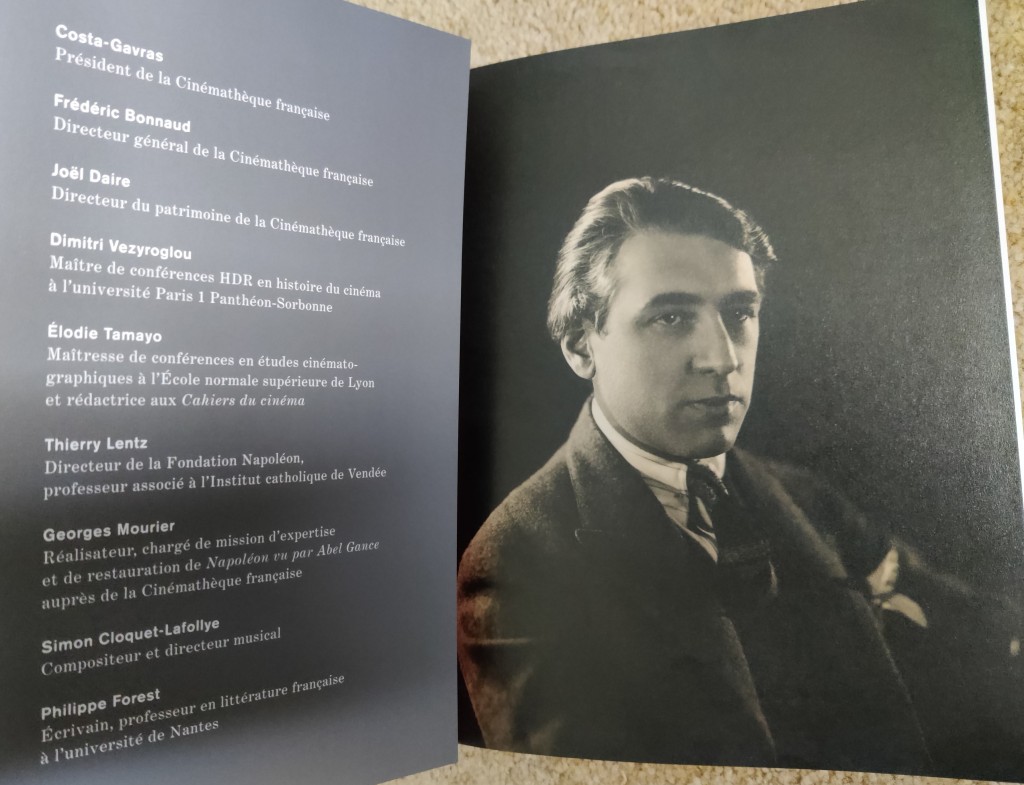
The restoration is the focus of pieces by Costa-Gavras (“La Cinémathèque française: une longue fidélité à Abel Gance et à son Napoléon”) and Georges Mourier (“L’éternel retour d’une restauration”). The former is the president of the Cinémathèque française and, as his title suggests, is both a history – and a kind of defence – of the institution’s relationship with Gance. Costa-Garvas traces the awkward history of the film’s restorations and the need for a more comprehensive attempt to reproduce the “Grande Version” envisaged by Gance at the end of 1927 (more on this later). As well as paying tribute to the previous versions assembled by Marie Epstein and Kevin Brownlow, Costa-Gavras also acknowledges the huge number of archives, funders, and cultural institutions that have collaborated for the new restoration. Of particular significance is his credit to the SACD (Société des Auteurs et Compositeurs Dramatiques) for confirming the world rights of the Cinémathèque française in relation to Napoléon (38). Anyone familiar with the film’s complex legal history will know that the rights to Napoléon outside France and the UK have always been claimed by another party. (A fact that is never mentioned in this book.)

As the head of the restoration team, Mourier has been working on Napoléon for nearly twenty years – and his passion for Gance long predates this project. His piece goes into more detail about the restoration process, though it cites (and reuses much information from) a more in-depth piece Mourier wrote some twelve years ago (“La Comète Napoléon”, Journal of Film Preservation, no. 86 (2012): 35-52). I mention this because both Costa-Gavras and Mourier summarize the principal versions of the film in a way that is not always the clearest exposition of the numerous different editions (and restorations). This relates to the way the new restoration has been advertised, both throughout this book and more generally in the press, which also merits discussion.

To do so, it’s necessary to recap the most important versions of Napoléon successively prepared by Gance in 1927. (The following figures are from Mourier’s 2012 article.) First, the “Opéra version” was shown in a single screening at the Paris Opéra in April 1927. This included two triptych sequences (the “Double Tempest” and the “Entry into Italy”) and measured 5200m. At 20fps, this would be approximately 225 minutes. Second, the “Apollo version”, which was shown over two days at the Apollo cinema in Paris in May 1927. This version did not include any triptychs and measured 13,261m (c.575 minutes), reduced to 12,961m (c.562 minutes) for release. Third, a reduced version of the Apollo edition that was prepared for release in America in November 1927 but never screened (it was subsequently butchered by MGM). It is this version that Mourier – and the entire 2024 book of essays – refers to as “la Grande Version”. It was not called “la Grande Version” in Mourier’s 2012 article, so this seems to have been rebaptized in the intervening years. Mourier has recently cited Gance himself as a source for this epithet – but provides no source as to where or when it was originally used. Furthermore, as noted by Kevin Brownlow (“Napoleon”, Abel Gance’s Classic Film (Photoplay, 2004), 146n) and Norman King (Abel Gance: A Politics of Spectacle (BFI, 1984), 148-9n), the version prepared for MGM in November 1927 included both the triptych and the single-screen versions of the Double Tempest and Entry into Italy (i.e. it could be shown with one, both, or neither of the triptychs, according to the requirements of exhibitors). Taking this additional/alternative material into account, Mourier (in 2012) gives the length of this version as 9600m (c.416 minutes, i.e. just less than seven hours). This figure is oddly absent from the 2024 book, as is the issue of how closely the new restoration relates to it.

Mourier’s contribution to the new book states that the Apollo version was 12,800m, “9 hours”, but states only that the “Grande Version” was “about 7 hours with triptychs” (225). Both these figures, and those used in Mourier’s 2012 article, assume a projection speed of 20fps. However, as detailed on the Cinémathèque française website, the new restoration runs at 18fps. (Brownlow’s restoration uses 18fps for the Brienne prologue, but 20fps for the remainder of the film.) Since the 2024 book and all the press reports use only runtimes (not length in metres), there is a pervasive confusion between the different versions of the film. The new restoration has a runtime of 425 minutes, which equates to approximately 8830m at 18fps. It is therefore somewhat shorter than the 9600m of the “Grande Version” (if we are to keep calling it that) as assembled by Gance in November 1927. (About 37 minutes shorter, at 18fps.)

The book also leaves unclear the precise method by which the contents of the Grande Version have been distinguished from the contents of the Apollo version. (Or even if this distinction was the goal of the restoration.) This is important, since the Grande Version was a reduced version of the Apollo version – and derived from the same negative. Mourier refers to a document he nicknames his “Rosetta Stone” in restoring Napoléon (236-7). It consists of a scene-by-scene breakdown of the Apollo version (divided into 36 reels), with length in metres for each sequence. Costa-Gavras writes that this document was “rediscovered in 2012” (35). But I presume it is the same document seen by Brownlow during his restoration, also discussed by Norman King (Abel Gance, 148-9). (I too went through it for my research in 2009.) Using this document to reconstruct the Apollo version is an obvious step, but was there a way of distinguishing footage that was used in the Apollo version but subsequently excised for the Grande Version?

This question is not addressed in any of the 2024 essays, nor in Mourier’s 2012 article. It is the same issue that arose with François Ede’s restoration of Gance’s La Roue. In that case, their blueprint for the restoration was the version released in February 1923. This was a shortened version of the premiere version seen in December 1922. Though Ede was unable to find all the footage from the 1923 version, he did find material from the 1922 version that he knew was subsequently excised. He therefore did not incorporate it into his restoration. (These few scenes are included in the extras on the DVD/Blu-ray release of the 2019 restoration.) Is there anything that Mourier has excluded from his reconstruction of the Grande Version, knowing that it was only used in the longer Apollo version? Or was all surviving material from the Apollo version used, regardless of whether it could be established to have been included in the Grande Version?

I also find it surprising that the 2024 book gives no runtime or physical length for the Cinémathèque française restoration, nor is the projection speed of any version given. This creates a false equivalence among previous restorations. Costa-Gavras, for example, records the temporal length of Brownlow’s restorations to compare them with that of the Cinémathèque française – but crucially does not mention the different projection speeds (32-4). Brownlow’s most recent restoration runs to 332 minutes, equating to 7542m. But while Costa-Gavras gives the impression this is 90 minutes shorter than the Cinémathèque française restoration, the divergent speeds means that the actual difference is only an hour.

Similarly, it is unclear to me why the 2024 book makes no reference to the given length (9600m) of the Grande Version. Only Dimitri Vezyroglou’s piece cites this figure, but he does not refer to it as the “Grande Version”. He states that this 9600m version was prepared in November 1927 for release in France, but for various reasons was not ultimately distributed in the form that Gance envisaged (115). Per all the other essays, Vezyroglou describes this version as “7 hours” – which (again) is only true with a projection speed of 20fps. Is there some doubt about the exact length or contents of the “Grande Version”? In which case, why insistently use this label to describe the new restoration?

I am also curious about the fate of the Double Tempest sequence. In his 2012 article, Mourier discussed elements that are known to survive from this triptych – and even provides a reconstructed triptych panel for one section (see below). However, the 2024 book makes almost no mention of it in relation to the new restoration or the decisions that led to it taking the form that it has. Joël Daire comments only that it “remains lost” (77), but Mourier never explains why or how it has been impossible to reconstruct – or the reasons why he chose not to attempt to do so. Given that it was an (optional) part of the version Gance prepared in late 1927, any decision to exclude it is also (necessarily) a creative one.

All the above relates to the main absence from the 2024 book (and, more generally, the information released by the Cinémathèque française): a discussion of the creative decision making involved in this restoration. The contributors acknowledge the sheer variety of (historical) versions and (modern) restorations of Napoléon, but the purpose of the book is ultimately to promote the singular (and presumably “definitive”) version of the film that the Cinémathèque française has prepared for worldwide release. While always paying tribute to earlier restorers (especially Epstein and Brownlow), the aura of definitiveness about the Cinémathèque française project carries a certain (unspoken) sense that the work of amateurs has now made way for the work of professionals. Brownlow’s history of his restoration of Napoléon is filled with personal anecdotes – his meetings with Gance, his obsessive hunt for material from the film, his taping together pieces of filmstock or sneaking behind Marie Epstein’s back to examine rusty tins of celluloid. In 2024, Frédéric Bonnaud writes that Brownlow’s account now “reads like a suspense novel” (58). I’m not sure if this is intended as a compliment or a criticism. It certainly contrasts with the way Mourier talks about the restoration process. In 2012, he described his work not as detection and intuition but as a scientific process of “geological drilling”: a combination of “vertical” and “horizontal” investigations to trace both the history of the film’s negatives and the multiplication of positive copies. The 2024 book expands this into a much wider discussion of the film’s history, but there is also an odd sense that the history of multiple versions has now come to an end: numerous paths have led to this single destination. But the staggering thoroughness of the Cinémathèque française project, and the wealth of primary documentation consulted, does not mean that there have been no creative choices involved – alternative paths not taken. Would (or should) a reconstruction of the “Grande Version” preclude the incorporation of any additional material from the original, longer Apollo version? Why choose 18fps rather than 20fps as the projection speed? Why not attempt to reconstruct the Double Tempest triptych?

Though these questions are specific to Napoléon, the archival and textual issues they raise are inevitable in any silent film restoration. Whatever the answers, it should be remembered that the ultimate goal of restoration is, after all, for the film to be shown to new audiences. Regardless of how the 2024 version relates to those of 1927, the Cinémathèque française can justifiably regard their restoration as the most satisfying presentation of Napoléon that can be achieved with the material they possess. Even if I remain unsure how the new restoration can claim to be “la Grande Version”, it is undoubtedly “une grande version” of Napoléon.

The music is perhaps the most significant aspect of creative choice involved for the presentation of the new restoration. In the 2024 book, the score is mentioned by several authors, but is the special subject of a piece by the composer Simon Cloquet-Lafollye, who compiled the new score to accompany Napoléon. While Cloquet-Lafollye never discusses previous scores (though the anonymous preface to his essay does (249)), other contributors cover the history of musical presentation – if not in much detail.

In his piece “Un film plutôt que sa légende”, Frédéric Bonnaud raises the fact that Napoléon was first seen in April 1927 with a musical score compiled by Arthur Honegger. For this, Honegger wrote a small amount of original music and otherwise relied on music from the existing repertory (including, in all likelihood, his own other compositions). But the difficulties of preparing both the film and the score for the premiere meant that the music was inadequate for exhibition, satisfying neither Gance nor Honegger. The performance in April 1927 (and, as I wrote elsewhere, in the Netherlands in August 1927) was something of a shambles. Thus, Bonnard rather breezily dismisses the composer’s involvement in the film: “So, no, dear friend, Arthur Honegger did not write the music for Napoléon” (44).

Since an earlier restoration of Napoléon presented by the Cinémathèque française in 1992 included a score based on the work of Honegger, compiled and expanded by Marius Constant, this attitude marks something of a shift. To highlight the inadequacies of Honegger’s music for the Opéra version is understandable, but to exclude his music entirely from the new score is a bold decision – especially considering the 2019 restoration of La Roue, where the Paul Fosse/Honegger score of 1923 plays such a pivotal role. In that restoration (which I discussed here), Honegger likewise wrote only a small percentage of the overall score – and much of this original material remains lost. Yet the musical reconstruction took Honegger’s involvement seriously enough to create new sections of music based on the material that does survive. Back in 2019, I was also told by the German music team responsible for the La Roue score that they had made some interesting archival discoveries relating to Honegger’s work for Napoléon. This was an avenue not pursued for the new Cinémathèque française restoration.

From his comments, Cloquet-Lafollye’s contract seems to have precluded any attempt to amend/expand Honegger’s surviving music for Napoléon to match the new restoration. (Until the BFI’s restoration of Napoléon in 2016, Carl Davis’s score included one of Honegger’s cues. This was Honegger’s counterpoint arrangement of “Le Chant du départ” and “La Marseillaise” in the final triptych. It worked well, and I do regret that it was replaced in 2016 with new music by Davis. Not that I don’t like Davis’s cue for this sequence, but it was a nice tribute to Honegger to at least preserve something of his music for modern presentations of the film.) Was it also impossible for Cloquet-Lafollye to include any of Honegger’s music from this period in the score? Why make room for Penderecki but not for Honegger? (Penderecki’s Third Symphony (1988-95), used by Cloquet-Lafollye, seems to me a rather undistinguished piece to choose in relation to almost anything else he could have picked from Honegger’s oeuvre, or from any other early twentieth-century modernist.)

Though such questions – no doubt involving copyright issues – go unanswered in the 2024 book, Cloquet-Lafollye at least discusses something of his methodology. He writes that there was “no question of creating a musical pastiche of the eighteenth century” (253), though he does cite work by Haydn and Mozart. He also wanted to avoid creating an unnaturally precise evocation of sounds on screen, for example gunfire: “Gance didn’t have the possibility of employing [such synchronization], so there was no question of my doing so” (252). His goal was to produce “a homogenous, coherent piece, in perfect harmonic synchronization with the rhythm imposed by the images” (256). Yet the very idea of “a homogenous, coherent piece, in perfect harmonic synchronization with the rhythm imposed by the images” would have been just as impossible for Gance to achieve in 1927 as the kind of synchronized sound effects that Cloquet-Lafollye shuns.

The 2024 book usefully lists all the pieces used by Cloquet-Lafollye in his score (303). Given comments I had read earlier by the composer, I was (happily) surprised to see so much music from the mid or early nineteenth century (some Beethoven, Schubert, Mendelssohn, and plenty of Liszt). I was also curious to see similarities between the music chosen by Cloquet-Lafollye for Napoléon and the music chosen by Fosse/Honegger for La Roue (and used in the restoration of that film in 2019). Both scores feature work by Dupont, D’Indy, Gaubert, Godard, Magnard, Massenet, Ropartz, P. Scharwenka, Schmitt, Sibelius, and de la Tombelle. Indeed, some of the same works used in La Roue – Gabriel Dupont’s Les Heures dolentes, Philipp Scharwenka’s Fantaisie dramatique, Fernand de la Tombelle’s Impressions matinales – are used by Cloquet-Lafollye for Napoléon. Though Cloquet-Lafollye’s essay makes no reference to this connection, these choices can hardly be a coincidence. Given that Honegger was involved in selecting the music for La Roue, it’s quite a backhanded compliment for Cloquet-Lafollye to use music that Honegger knew and used but not the music of Honegger himself.

I am left wondering what was the exact remit for Cloquet-Lafollye’s choices? The score is not an attempt to recreate the soundworld of Napoleon, nor the soundworld of Gance or Honegger. He has chosen to avoid too much synchronization, but conversely choses to create a “perfect” match for the rhythm of the images. Some of his other musical choices strike me as asserting a kind of retrospective cultural kinship between the film and like-minded (or like-spirited) music. Hence the inclusion of works with impeccable modernist pedigree – Mahler, Shostakovich, Webern – but which are also some of the music least likely to have been used for any screening in 1927. (Shostakovich had yet to write either his ninth or thirteenth symphony (from 1945 and 1962, respectively); the pieces by Webern and Mahler were not widely known outside Vienna.) But the like-mindedness (or like-spiritedness) is also a matter of creative interpretation. Whether Gance’s film is constitutionally “romantic” or “modernist” is a topic I have written about many times elsewhere, and it’s an issue that tends to come to the fore whenever music is discussed. Personally, I consider Napoléon a work of romantic imagination – and that this is the very source of the film’s modernity, fuelling its rich, strange, and profound inventiveness. Overlaying Gance’s astonishingly beautiful, often highly romantic imagery with layers of angst-ridden musical modernism does not always produce the best results.

But at this point, I am overstepping the bounds of this piece, which is (I remind myself) supposed to be a book review. I must see Napoléon with the new score before I judge how it works. All the extracts I have seen work very well, so I am not complaining about the use of the music – just querying the stated rationale of its compilation. I am very curious to see how Cloquet-Lafollye employs his wide-ranging musical choices.

The film’s genesis and ideology are discussed in pieces by Joël Daire (“Histoire d’une réalisation hors norme”), Dimitri Vezyoglou (“La circulation de Napoléon juqu’à la fin des années 1920”), and Elodie Tamayo (“Un cinema d’Apocalypse”). I fear I do not have the space to adequately explore these fascinating essays. What I would observe is that these are by far the most rigorous (and well-footnoted) sections of the book. Daire’s piece traces the pre-history of the film’s conception, especially the cinematic (and cultural) influences that shaped Gance’s imagination in the 1910-20s. It’s great to see the influence of American cinema – not just Griffith and DeMille but Fairbanks – being acknowledged (64-6), as well as Gance’s ambition to create a mode of world cinema (not simply a national one). In his contribution, Vezyroglou details the “tragedy” of Napoléon’s botched distribution within and beyond France. Much of this has been covered in Brownlow’s book, but Vezyroglou brings more archival sources to the story and enriches his account with more detail than many previous accounts.

Tamayo’s piece is the most interpretive (and imaginative) of the three, creating a marvellous picture of the film as “an apocalyptic poem, a work that demands cinema destroy the world in order to create anew” (135). Through its mission “to reveal an art of the future” (137), Napoléon sought to explode the spectator’s conception of spatial and temporal reality – hence the lightning-quick editing, the multiple superimpositions, the triptych expansion of the screen. But Tamayo also focuses on the “soft apocalypse” of the film’s treatment of faces in close-up, especially the use of the Wollensac soft-focus lens (149-56). Her analysis is superbly well-informed, incisive, and erudite. (Yes, I’m jealous.) Incidentally, I am aware that Tamayo’s work on Gance is more extensive than evidenced by her existing publications. I do hope that her research on Gance’s unrealized projects (i.e. the bulk of his creative career!) will one day be published. In me, there is at least one eager reader.

I have only one other observation about these pieces, which also applies to the 2024 book as a whole. This is the balance between new and old scholarship on Gance in the essays’ bibliographies, which are heavily skewed in favour of recent work. (And there is no general bibliography in the book.) It is as if nothing on Gance was written before the year 2000. Even Gance’s biographer, Roger Icart, gets only a passing mention. The balance between anglophone/francophone material is also noteworthy. Not counting one or two references to Brownlow’s work, I think that Tamayo’s citation of my 2015 monograph on Napoléon is the sole citation of any English-language scholarship in the entire book. These aspects of bibliographic balance speak, perhaps, to the fact that this new Table Ronde publication is not aimed at an academic market – the sources are mostly to primary, not secondary material. It is also, needless to say, aimed at a francophone market. Indeed, the book makes me wonder what kind of strategy is planned for the restoration’s international release. What kind of accompanying (i.e. written) material will be released outside France, and how will the film be released and marketed? I note that Vezyroglou is soon to publish a book on Napoléon – will Mourier also publish his own, more detailed, account of the restoration? These are questions that will only be answered later this year, when (I presume) Napoléon enters the commercial marketplace – cinemas, television, streaming, Blu-ray…

In summary, this is a very pleasing book to look through and an exceedingly interesting text to read. I regret that I have spent so much time highlighting unanswered questions about the Cinémathèque française project, but much of the film’s history is already known to me: it is precisely the unknown factors of the restoration process that interest me most! For readers who are less familiar with Gance and Napoléon, it is undoubtedly a great resource. It provides both a history of the film and a context for the new restoration. As I have tried to indicate, it still leaves some odd gaps in the information – but I must conclude by emphasizing that the restoration is surely one of the most important ever undertaken (certainly in the arena of silent cinema). I have nothing but admiration, and profound gratitude, for the monumental effort of Georges Mourier and his team. My only reservation is that the complexities of the Cinémathèque française project are inevitably simplified for the sake of commercial marketing, which does justice neither to their work nor to the film. Publicists and distributors like simple narratives, but the history of Napoléon is anything but simple.

In this context, I think the term “la Grande Version” is not particularly helpful, just as the reliance on runtimes rather than lengths confuses an already complex situation. As I have tried to indicate, the rather ambiguous discourse in the book (echoed in press releases) results in a false impression – something akin to the syllogism: “Gance envisaged a seven-hour film; the Cinémathèque française restoration is seven hours; therefore, the Cinémathèque française is the version Gance envisaged.” Mourier himself has indicated the staggering difficulties of the film’s physical and restorative history, and the work of his team in the face of these challenges is astonishing. But transparency is always the best policy, and it would be nice to see – if not in this 2024 book, but elsewhere in writing about the restoration – a more open account of some of the issues I have discussed.

Re-reading what I have written, I wonder if my reservations are only of real concern to obsessives like me? After all, I still very much enjoyed this book – and I hope the restoration generates more interest, more writing, and more publications on Gance and his masterpiece. And all my comments must be put into context: I have not yet experienced the new Napoléon in the cinema. This I will do in a few weeks’ time – and I look forward to writing more about it then…

Paul Cuff

Literary adaptation in Mauritz Stiller’s Sången om den eldröda blomman (1919)

This piece is a follow-up from one I wrote last year on Stiller’s Sången om den eldröda blomman (1919). Since then, I have tracked down a copy of the novel on which the film was based: Johannes Linnankoski’s Laulu tulipunaisesta kukasta (1905). I’m very glad I did, and the following are some notes on the relationship between book and film, as well as some of the shared context between them.

Firstly, the very existence of this book in English is noteworthy, since no other translation of it has been issued since 1920. (Of course, the late nineteenth and early twentieth century saw a huge number of translations from continental authors, which is still often the only way to find them in English. Always fascinated by such editions, I have read a good deal of the likes of Hugo, Heine, Hoffmann, Sand, Balzac, Maeterlinck, D’Annunzio, Anatole France etc. via lovely old hardbacks from a century ago.) Linnankoski’s book was translated as The Song of the Blood-Red Flower for the edition published in London by Gyldendal. Though there is no date in the book, worldcat.org lists the publication date as 1920. (My copy has an owner’s name inscribed with the date 16 January 1924.) The American edition (New York: Moffat, Yard & Company, 1921) is the same translation, which (unlike the British edition) credits the translator as W. Worster. Given that the British edition came out in the same year as Stiller’s production was released in the UK, I wonder if the translation (or its release) was directly inspired by the film.

On this note, a little research reveals that Sången om den eldröda blomman was titled “The Flame of Life” for its British release. The film was trade shown at the London Pavilion in August 1919, only four months after its premiere in Sweden in April 1919. This was a swift import from the continent, and the UK distributors—Western Import—clearly thought it could sell. Indeed, it was part of a series of “selected masterpieces” that were trade shown under the guise of the year’s best films. (Going by comments in the trade press, a Swedish import was something of a novelty for Western Import, who had mainly imported American products for the UK market.)

“The Flame of Life” was well received by its first audiences, and the film was released publicly in May 1920. In fact, it followed closely on from the release of another Stiller film, Herr Arnes pengar (1919), which was distributed under the title “Snows of Destiny” in the UK in February 1920. (I like how they timed the respective cinematic seasons of these films to the seasons for audiences: the wintry Herr Arnes pengar for a late winter release, the summery Sången om den eldröda blomman for a summer release.) I’ve not yet found out to what extent “The Flame of Life” was altered from the original Swedish version. It was listed as seven reels, which is the same as the original, but obviously this isn’t a precise length. A trade piece says that they recommend cutting the scene near the end in which Kyllikki strips down to her underlayer to defy her father—but this is the only snippet of information I can find. Of course, Kyllikki was not called Kyllikki, nor was Olof called Olof. The Kinematograph and Lantern Weekly plot synopsis reveals that “The Flame of Life” not only anglicized but changed entirely the names of people and places from the Swedish original. Instead of Olof Koskela, there is David Leaford. Instead of Kyllikki Moisio, there is Bessie Bourne of “Fairylight Farm”(!).

Thankfully, the book edition of 1920 offers a more faithful adaptation of names and places. Though it provides English equivalents for the nicknames of Olof’s lovers, the original Finnish proper names are kept as they are in the original. As for the book itself, I very much enjoyed it. And while the film bears a strong resemblance to the novel, there are some interesting divergences.

From the first pages, it’s clear that the book shares with the film an interest in depicting and imagining the natural world. There is a great deal of animism in Linnankoski’s novel: the forest talks, the house talks, and Olof address one monologue to the “the evening gloom” (140). All of Olof’s lovers are given the names of flowers or animals or natural spirits. I feel that this is more extensive than in the film—though given how much of the original film remains missing (see my earlier post), I can’t be sure that the film once followed the book more closely in this regard. But there is also more depth and backstory given to all of Olof’s lovers, and their connection with nature is also interrogated across the novel.

To Olof, the women appear as manifestations of a fecund natural world. But the reader is also offered more glimpses into their inner lives: unlike in the film, the women are given interior monologues as well as lengthier conversations with Olof. He and “Hawthorn” philosophize about love, for example, while “Clematis” narrates her own story-within-a-story: a dark, obsessive fairytale. The tone of the book is also more direct, which is to say explicit, than the film. Linnankoski makes clear from the outset that Olof’s love is as dangerous and destructive as it is enticing and erotic. Here he is with “Gazelle” in an early chapter—expressing his desire in violent terms:

‘If anyone had told me, I would never have believed love was like this. It’s all so strange. Do you know, I want to…’ / ‘Yes? Tell me!’ / ‘Crush you to death—like this!’ / ‘Oh, if I could die like that—now, now…’ / ‘No, no—but to crush you slowly, in a long, long kiss.’ (19)

A post-coital scene later in the book describes how these “two human creatures thrilled with sorrow and joy in the pale dawn” (54-56). Another lover tells Olof that she would die for him, while other lovers are “crushed” by his embrace (87). Even his first kiss with Kyllikki—“The girl that’s proud beyond winning!” (91)—is tinged with violence: “On her under lip showed a tiny drop of blood”, which Olof then drinks (119-26).

Linnankoski’s language connects sex and death but also familial and romantic love. Later, Olof is likewise “crushed” by the shame brought by his mother finding him with Elli. And, in a startling scene with his lover “Daisy”, there is this moment: ‘“I love you”, she whispered, “as only your mother ever could!” / Olof turned cold. It was if a stranger had surprised them in an intimate caress” (87). We also learn that Olof had a sister called Maya, who nursed him through childhood illness but then caught it herself and died. Olof imagines her as an adult: “Like mother’s eyes—only with all, all the fire of youth—almost like Kylli…” (140). His longing for Kyllikki is also a longing for a familial embrace, the longing for home also a kind of longing for the female body.

The central sequence of the film—the ride down the Kohiseva rapids—is more elaborate in the book. Olof’s strength is evident from the outset, when he hurls his father across room “as a ball is thrown” (26). But his daring with logs on the river is more elaborately built up across chapters: he actually makes an earlier attempt to ride the river at night, with only the other men watching: this is not a dare but a task to do as part of his logging work (30-36). Two girls (“Pansy” and “Rowna”), and at least one season, pass before the main event. The novel’s sequence of “shooting the rapids” is also given more context: it is a bet that Olof makes against a man called Redjacket, who likewise must perform the ride (94f.). Rejacket goes first and soon falls into the river. Olof completes the course (with more exposition than the film offers to clarify the route etc.), but in his leap to safety he ends up with a bloodied face from the impact. The chapter is an entertaining read, but it cannot compare to the sheer thrill of watching the ride unfold on screen—especially with Järnefelt’s glorious orchestral music.

From this point on, the novel is increasingly more elaborate than the film. The book has thirty-two chapters compared to the seven chapters of the film (each “chapter” marking the start of each of the seven reels). While the film has a more complex series of events leading up to Olof’s rejection by Kyllikki’s father (discussed below), the novel details how Olof is emotionally wounded by Kyllikki (113-14) before being turned away by her father. The latter scene is in fact narrated by Olof to Kyllikki in the form of a song that he sings as he passes on his way down to the river (116-18).

The differences increase in the subsequent chapters. In “Dark Furrows” (162f.), we realize that years have been passing with the progressions of chapters. Olof looks in the mirror (per the film) and sees he’s ageing—we are even told he has a moustache (not per the film!). In fury at himself and his fate, he smashes mirror (164) then sets out “To the Dregs” (165f.). This town scene is set on a warm light summer’s night, not the rainy night of the film. Per the film, Olof drinks with one girl, who then offers him her friend: it is Elli, the “Gazelle” of the opening chapter/scenes. However, in the film Elli commits suicide at the horror of being discovered by the man who “ruined” her. In the book, she merely she sends him a note the next morning saying that she’s gone away—there is no implication of death.

When, at this point, Olof returns home in the film, he learns that his parents are dead. But in the novel, the chapter “By the Roadside” (178f.) relays Olof meeting a shepherd who informs him that while Olof’s father is dead his mother is still alive—but only just. Herein lies a major difference between film and novel. In Linnankoski’s narrative, the chapter “The Cupboard” (182f.) sees Olof go home to his mother and his brother—the latter a character not even in the film at all. His mother reveals that she once caught her husband with another woman, the same way she caught Olof with Elli—and her husband hurled an axe in his fury. (She shows them the mark on the cupboard door.) This revelation deepens our sense of why she reacted with such hurt at Olof’s behaviour and makes his father’s hypocrisy more apparent. It also makes it clear that Olof is not some one-off Don Juan, but actually part of a culture in which men mistreat women. (This is a theme that the book develops further across its final third, but which the film does not.)

When Olof’s mother dies, Olof gives his share of the estate to his brother. Instead of living from his inheritance, he seeks to make his own fortune—building his own house on a hill and draining the land for use (192f.). (At this point, the novel clarifies that six years have passed since Olof left home. This timeline is not made explicit in the film, at least in the form that it survives.)

There then follows chapters of correspondence between Olof and Kyllikki (200f.) before their reunion and Kullikki’s father agreeing to her marriage. It is at this point that the film ends, but the novel has another nine chapters (80 pages) left. And this is where the strategies of Stiller’s adaptation become clearer. In the novel, the wedding fete quickly becomes a scene of conflict. A stranger tells Olof that Kyllikki is not a virgin. Olof threatens him, dances a furious polka with several girls, then smashes the fiddler’s violin. Stiller’s film transposed this scene to when Olof is first in Kyllikki’s village, and the fight is part of the reason he leaves soon after. It allows an extra element of violence to lead to the break, whereas in the novel it is a prelude to the real confrontation, which is between Olof and Kyllikki. Olof relays what the stranger told him and accuses her of having given away what was “his”. Understandably, she’s pretty pissed off at Olof:

The girl was trembling in every limb. She felt a loathing for the man before her—and for all his sex. These men, that lied about women, or cried out about what was theirs on their wedding night, raved of their happiness, demanding purity and innocence of others, but not of themselves… she felt that there could be no peace, no reconciliation between them now, only bitterness and the ruin of all they had hoped for together. (225)

This chapter really develops the cultural context for Olof’s actions. As foreshadowed by the behaviour of Olof’s father (relayed by his mother), this is a patriarchal culture of grotesque double-standards. Having lived a carefree life and treated many women exceedingly shoddily (leaving them heartbroken and even ostracized), Olof now expects sexual “purity” of his bride. Kyllikki retorts that the stranger was lying. But even if she were not in fact a virgin, the sheer hypocrisy of Olof’s anger would be enough to make her furious with him.

Reading the novel after having seen the film, I started to wonder at this point if Stiller had excised something quite radical from the original text. For the novel continues for quite some time after the couple’s marriage and the revelation that Olof is prone to jealousy, anger, and unrest. In the next chapter, Olof becomes a “somnambulist” in their marriage. Kyllikki asks him: “Are my arms not warm enough to hold you; can your soul not find rest in my soul’s embrace?” (231). They talk about his unease and the legacy of his former life. Even when they embrace, Olof is distant. As Linnankoski marvellously describes: “It was as if the soul that looked out of his eyes had suddenly vanished, leaving only a body that stiffened in a posture of embrace” (233).

In subsequent chapters, Olof’s past comes back to haunt him. Firstly, “Clematis”—the girl who narrated the sinister fairytale about loyalty and death—writes to him, informing Olof that their son is now two years old (239f.). Olof then encounters Clematis, who is now married and has had a second child with her husband. Observing her new domestic life (and reflecting on his own guilt and unhappiness), Olof asks for her forgiveness (244f.).

Secondly, in a chapter called “The Pilgrimage” (the title of the film’s final chapter), he encounters another—unnamed—former lover. She gives an amazingly angry monologue, which again links Olof’s behaviour with the broader way in which women are treated in this patriarchal society: “Oh, I could tear the eyes out of every man on this earth—and yours first of all!” (255). And in the chapter called “The Reckoning”, Olof confesses to Kyllikki everything that he has done in his former life (264f.). These chapters are absent from Stiller’s adaptation, but the remorse and despair of “The Reckoning” surely informs the scene in the film in which Olof sees himself in the mirror. That scene, and its intensity of framing and performance, condenses the tone of the novel’s final chapters in a single set-piece.

In the novel, this “reckoning” is followed by another epistolary chapter. Through his letters to Kyllikki, we learn that Olof goes back to his plot of land on the hill and builds his house. And through Kyllikki’s reply, we learn that she has given birth to their son (271-76). Finally, in the last chapter, “The Homecoming” (277f.), Kyllikki and the child arrive at the house that Olof has built and prepare for their future together.

Reflecting on book and film, I think that all the changes made to the novel by Stiller and his co-screenwriter Gustaf Molander make absolute sense. In my original post I said that the film sometimes seemed episodic (perhaps, in part, due to the missing material), but compared to the novel it seems much tighter. By eliminating extraneous characters (Olof’s siblings, some of his lovers) and events (his child with another woman), Stiller enables a more concentrated narrative. Similarly, by making Elli commit suicide the film is able to condense a far lengthier and more expositional section of the novel into a single dramatic event. In this respect, the film is certainly more taught and effective than the book. What the novel has that the film perhaps lacks is the sense of interiority to the female characters. Linnankoski gives some remarkably powerful, almost feminist, monologues to the women wronged by Olof—and the book more thoroughly outlines Olof’s hypocrisy and faults. Much of what is at best implicit in the film is made explicit in the novel. It’s true that the film lacks the female subjectivity so foregrounded in the latter part of the novel, but Stiller nevertheless manages to capture the tone of Olof’s remorse through different means. Throughout, Stiller finds superbly cinematic means to convey the content of the written text. The film is so successful and satisfying at the end that I wouldn’t wish it changed.

In summary, my reading of Linnankoski’s novel has increased my appreciation of Stiller’s film—just as seeing the film enhanced my reading of the novel. For curious anglophone readers, you don’t even need to track down (as I stubbornly did) a physical copy of the book, since the American edition is readily available for free online via archive.org. I heartily recommend both the film and the book.

Paul Cuff

Untold stories: Music for silent British cinema

This week, I’m writing about a British literary family history and its connection with music for silent cinema. One of my favourite living writers is Alan Bennett (1934-), and among all his work it is his memoirs and personal essays that I revisit again and again. This is, in part, because many of them are available as audiobooks read by the author himself. I have read his memoirs more than once but listened to the (abridged) audio versions many times over. Of particular interest are two volumes: Telling Tales (2001) and Untold Stories (2005). The former is a series of reflections on Bennett’s childhood and the people and places he knew as a boy growing up in Leeds in the 1940s. Telling Tales is a kind of sketch for Untold Stories, but the latter goes into more detail about Bennett’s parents and their history, tracing the mental illness on his mother’s side of the family through two generations. Both accounts contain details that are of interest for this blog, for Bennett writes about his early cinemagoing experiences—and the earlier experiences of his parents’ generation.

In Telling Tales, Bennett’s piece “Aunt Eveline” relates memories of Eveline Peel, his grandmother’s sister-in-law. At the end of the silent era, she had been a pianist for a cinema in a local cinema (in, I presume, Halifax, where she lived). After the arrival of sound in the 1930s, she became a “corsetière”, then in the 1940s she turned to housekeeping. But she never stopped playing the piano at home, and her music collection was founded on the repertoire she built for silent film accompaniment. Bennett records that he still has Eveline’s sheet music. Much of it is covered in brown paper, not uncommon to preserve well-thumbed scores. More interestingly, the edges of the pages are likewise bound in brown paper, “for easier turning over when, in the darkened pit of the Electric, she gazes up at the silent screen while thumping out ‘Any Time’s Kissing Time’, ‘Mahbubah’, or ‘The Careless Cuckoo Cakewalk’ by Ernest Bucalossi, in brackets ‘very animated’.” Bennett likewise records finding “The Mosquito’s Parade” by Howard Whitney, “At the Temple Gates” by Gatty Sellars, and “sheets and sheets of Ivor Novello” (Telling Tales, 119), together with works by Vivian Ellis, Gilbert & Sullivan, and copious “Edwardian favourites” like Albert Ketèlbey (“Untold Stories”, 52-55).

I was curious about these titles and decided to look them up. Some were easier to find than others. Both “Mahbubah” and “Any Time’s Kissing Time” are numbers from Chu Chin Chow (1916), a musical comedy by Oscar Asche with music by Frederic Norton (1869-1946). This was loosely based on “Ali Baba and the 40 Thieves”, and proved an immensely popular hit—running for over five years and two thousand performance. It’s no wonder the music migrated to the popular music press, to recorded media, and thence to the repertory of cinemas. Much the same can be said of the work of Vivian Ellis (1903-1996), a prolific composer for musicals in London’s West End in the 1920s and 30s. Numbers like Ellis’s “Spread a Little Happiness”, from Mister Cinders (1928) could achieve success on stage, then success on record, then success as sheet music for pianists at home or at the cinema.

As for Ernest Bucalossi (1863-1933), he was the son of Procida Bucalossi (1832-1918). Both men were British-Italian composers of light music, as well as arrangers and orchestrators of the music of others. Their work is now obscure, doubly so since they often signed their scores “Bucalossi” without distinguishing father from son. Lists of their hits include numerous dances, arrangements of Gilbert & Sullivan, the occasional operetta or musical, and countless “descriptive” pieces. The latter no doubt appealed to theatre and cinema orchestras to fit new arrangements for stage and screen. Works for ensemble and small orchestra were endlessly used and reused, and who knows how often films were shown with Eveline Peel’s favourite choices at the piano or organ. (I can find no recording of the “Careless Cuckoo Cakewalk”, but there are plenty of short pieces by Bucalossi that survive in various renditions. His delightful “Grasshopper’s Dance” seems to have been a much-favoured ditty since its publication in 1905.)

The other pieces Bennett cites are more obscure. Gatty Sellars (1875-1947) was a popular recital organist in the 1920s-30s, and all I can find out about his piece “At the Temple Gates” is the year it was published: 1930. An exquisitely clunky film by British Pathé shows Sellars performing this piece in 1931. Sellars himself peers awkwardly over his shoulder at the camera, a glimpse of one of innumerable popular entertainers from the interwar years who have disappeared into the shadows. Likewise, I’ve been able to find out very little about Howard Whitney (1869-1924), composer of “The Mosquito’s Parade” (c.1899). He seems to have been American, and several of his short pieces were recorded in the early 1900s. The earliest of these is listed as “Mosquito Parade”, recorded by Arthur Pryor’s Orchestra in 1899. Numerous other short pieces (as with Bucalossi, often given descriptive titles) received renditions for small orchestra, piano, organ, banjo etc. in the earliest years of the gramophone. He was clearly popular enough in the 1900s for his music to have made it into the British repertoire in subsequent decades.

But the most prominent name among Eveline Peel’s collection is that of Albert Ketèlbey (1875-1959), whose acute accent appears as a delightfully distinctive affectation. Ketèlbey was an extraordinarily successful composer of “light music” from the 1910s until the 1940s. He was the master of the “descriptive” piece, short (around five minutes) musical numbers that could fill out a concert programme or be used as scene-setting for a silent film score. Simple, succinct, and suggestive, Ketèlbey’s music was easy to perform and easy to arrange and rearrange for performance in theatres, cinemas, and at home. His career traversed the lucrative worlds of late Victorian and Edwardian musical theatre, silent cinema, and the coming of sound. His music was copiously published for public consumption, as well as being recorded and distributed on various formats. Either as a full score (for orchestra and chorus), or as arranged for smaller forces or soloists, his short piece “In a Persian Market” (1920) was “probably more frequently played, at home and abroad, than any other work in the history of English music, with the possible exception of the national anthem” (Ehrlich, Harmonious Alliance, 37).

Having spent much of the morning listening to Ketèlbey’s tunes on youtube, I can vouch that he represents the very definition of “light music”. He is tuneful, elegant, and very easy on the ear. Indeed, the easiness of the music—to perform and to receive—is doubtless the reason for its extraordinary success. Such pieces of light music are the distant relatives of the kinds of “programme music” or “tone poems” produced by many major composers of the nineteenth and early twentieth centuries. Though they share the same method of evocative titles and descriptive music, their depth and complexity is… well, far less deep and complex than their “serious” forebears. As I write, I’m currently listening to “In a Fairy Realm” (1927), the first movement of which is like something from Parsifal watered-down to a kind of sugary vagueness. It’s mood music for audiences that could never go to the opera, or who might not have the interest in going. Instead of four-and-a-half hours of Wagner, you can have four-and-a-half minutes of Ketèlbey. If this is not music of lasting depth (either aesthetic or emotional), it is certainly music of great utility. I’m not sure I’d sit and listen to a concert of pure Ketèlbey, but I can absolutely imagine his music working perfectly with silent films. Its lightness might easily be deepened and enhanced by cinematic images, just as the music would enhance the images.

To return to Bennett’s memoirs of his parents and aunt, it’s worth reflecting on the incredible impact of cinema on the business of light music. There was a reciprocal relationship between film and music, as well as between music publishers and cinemas. There was a huge demand for light music to perform during screenings, so music (and the rights to it) had to be made available for this purpose. Composers like Ketèlbey benefitted enormously from the growth of film with live musical performance in the 1910s and 20s. As audiences boomed, so did the quality and quantity of music. Larger audiences meant larger cinemas, larger cinemas meant larger musical forces. And more and longer films required more and longer musical accompaniments. Once embedded in a cinema orchestra’s repertoire, who knows how many times the same pieces would be rearranged and replayed for new films? (For a history of the legal situation of music publication and performance in Britain in this period, see Davison, “Workers’ Rights and Performing Rights”.)

The boom in music was also, of course, a boon for musicians. As Geoffrey Self relates, three-quarters of British instrumental musicians were employed (partially or wholly) in cinemas by the end of the 1920s (Light Music, 125). Cinema can be credited for the fact that, in that decade, “more live music was being performed by professional musicians than at any other time in the country’s history” (Ehrlich, Harmonious Alliance, 35). Eveline Peel was thus among the tens of thousands of musicians who benefitted from regular employment by cinemas, not to mention those like Walter Bennett who performed as occasional performers when the need arose. In this context, the coming of sound was an unimaginable crisis. A census in 1931 suggests that about one third of all musicians in the UK were unemployed: up to 15,000 musicians had lost their jobs as a direct result of synchronized sound films (Ehrlich, The Music Profession in Britain, 210). Eveline Peel’s move from musician to “corsetiere”, and from corsetiere to housekeeper, was just one of thousands of transitions enforced by the shift in film technology.

Bennett’s account of his aunt reopens a whole little world of film history. I wonder what other pieces, by what other composers, survives in her sheet music collection? And how often were they performed, and accompanying what films? Answering such questions would certainly make a good research project: a small window into musical performance in northern England at the end of the 1920s. But Bennett’s own account also illustrates the wider significance of Eveline and her music.

After the arrival of sound, Eveline Peel made music only within the home, with close family and friends. Bennett records that throughout his childhood in the 1940s, there were regular musical gatherings at his grandmother’s home. Eveline would play the piano, Walter would accompany her on the violin, and various others would sing. His description of this kind of communal musicmaking is another window into home entertainment in the war and post-war years. The conclusion to Bennett’s account of his aunt is likewise instructive:

[I]t isn’t death that puts paid to these musical evenings, though when Aunt Eveline dies we inherit her piano and take it home. What takes its place in the smoky sitting room is a second-hand television set and it’s this which, within a year or so, makes such musical evenings inconceivable. My other aunties don’t mind, as talking as always had to be suspended while Aunt Eveline presides at the piano, whereas with the TV no one minds if you talk. And until they get a proper table for it, the TV even squats for a while in triumph on the piano stool that Aunt Eveline has occupied for so long. (“Aunt Eveline”, 119)

I say “instructive”, and of course it is: it touches on the way home entertainment changed from music-making to music listening, from active participation to passive reception; it suggests how the fate of the music and musicians of the silent era gradually sank away into obscurity and obsolescence. But more than this, Bennett’s memoirs are an immensely engaging and moving account of family history. I recommend both Telling Tales and Untold Stories unreservedly.

Paul Cuff

References

Alan Bennett, “Auntie Eveline”, in Telling Tales (London: BBC, 2001).

Alan Bennett, “Untold Stories” and “The Ginnel”, in Untold Stories (London: Faber & Faber, 2005).

Annette Davison, “Workers’ Rights and Performing Rights: Cinema Music and Musicians Prior to Synchronized Sound”, in Julie Brown and Annette Davison (eds), The Sounds of the Silents in Britain (Oxford UP, 2013), 243-62.

Cyril Ehrlich, The Music Profession in Britain Since the Eighteenth Century: A Social History (Oxford: Clarendon Press, 1985).

Cyril Ehrlich, Harmonious Alliance: A History of the Performing Right Society (Oxford UP, 1989).

Geoffrey Self, Light Music in Britain since 1870: A Survey (London: Routledge, 2016).

Abel Gance and Charles Pathé: Correspondence, 1918-1955

Hello again, and welcome to life after Pordenone. After the hectic schedule, it has taken me a while to find my blogging feet once more. (Additional context: we are also redoing the kitchen.) As today is Abel Gance’s 133rd birthday, it seems fitting to post something on a Gancian theme. What follows is a kind of review of a recent(-ish) book. I had intended to submit a proper review of it to an academic journal last year, but for various reasons this never happened. I use the opportunity of this anniversary, and of this blog’s more informal setting, to resurrect it for your reading pleasure.

Abel Gance-Charles Pathé: Correspondance, 1918-1955, ed. Elodie Tamayo (Paris: Gallimard, 2021)

In 1918, Abel Gance was flush with the commercial success of a series of short, commercial feature films made for the Film d’Art company under the aegis of Louis Nalpas. But the war was in its fourth year, and Gance was dreaming of bigger projects. Enter the largest name in the French film industry: Charles Pathé. Pathé’s name was the leading brand of French film. By 1918, he employed thousands of staff and had offices across the world—not to mention laboratories, studios, theatres…

“On January 21 in Nice, I see Charles Pathé”, writes Gance in his journal. “Conversation of an hour and a half. Great affability. Main points: certainty of my cinematographic future. I am at the top of the list of European directors.” Pathé tells him: “My house is always open to your talent” (qtd in Ede 2020, 9-10). What follows is the correspondence detailed in Tamayo’s edited volume.

Of the 210 letters contained in the book, 132 of them are written by Gance. His letters are generally longer—sometimes hugely so—than those from Pathé. As François Ede observes, Pathé’s letters to Gance bear “the mark of paternal affection with which he surrounds his protégé” (2020, 19). Gance always signs off with the phrase “all my devotion” or “my unfailing and profound devotion”. The words are those of disciple, or earnest child; they are also trying to make a bargain, to invoke pity or aid. Tamayo breaks down the correspondence into three broad sections, and to make things simple I will follow suit:

(Dés)espoirs de la fin de guerre: 1918-1919

As Tamayo explains in her introduction, in March 1918 Gance founded Films Abel Gance, and Pathé gave him carte blanche to pursue his projects (19). That month, Gance writes that his conversations with Pathé are “for me an unheard-of attraction not of utopian dreams, but of solid anticipations. They are for me, and I insist, decisive moments where the social future of the cinema has played its first card. […] My will reaches out towards a gigantic goal” (37). It’s the kind of thing one would write in a private diary, but Gance shares it with Pathé. As he would do throughout his life and work, Gance peppers his early letters with literary and philosophic quotations as a means of sharing, imploring, showing-off. In letters to Pathé, we encounter lines from François de Malherbe and William of Orange, just as Gance would later quote Schuré and Nietzsche in the hope of persuading other financiers to give him money. But Gance doesn’t hide behind his quotations; they are an invitation to see into his inner life, to link a singular goal to wider cultural ones. Pathé is attracted by Gance’s ambition, but ever practical. Their letters proceed to discuss the nature of nitrate, the possibilities of colorization, of tinting methods, of camera speed and lighting (39-41).

March 1918. Films Abel Gance embarks on its first project: Soleil Noir, subsequently renamed Ecce Homo. Gance sends the familiar reassuring boasts to Pathé: “We will obtain immeasurable results with Soleil Noir. The era of cinema will begin” (43). Everything he says, he means in earnest; he underlines his assertions, quite literally on the page, with key phrases emphasized for Pathé. Even when the production of Ecce Homo breaks down later in the spring of 1918, he pursues the next (La Fin du Monde) with equal conviction: assuring Pathé that when he speaks of another unparalleled success, he says so “with absolute certainty” (44-45). La Fin du Monde will be in ten episodes of 1200m (a total of ten hours on screen), the first overestimation of a project that will take another dozen years to realize and that will ultimately destroy his career in 1930-31.

May 1918. Here is Gance writing to Pathé to argue for the absolute control of his film La Dixième symphonie in exhibition. It has had a special score written to accompany it, and Gance insists the film “must be seen and heard in its entirety with music of Maurice-Lévy” (46). (The score has never been performed since, though a few seconds of a piano part were played on French radio in 1955, while Gance and Maurice-Lévy reminisced about their collaboration.) Gance writes the way a youth writes to impress his peers, his teachers. He boasts that he has “something of Nietzsche’s will in my veins” (47), but he abandons Ecce Homo. Three hours of rushes survive. The pictorial quality is astonishing, printed from the original camera negative. But it’s left behind, together with a debt of 50,000F; Pathé pays it off and gives Gance the green light for yet another wild scheme: a triptych of films on the war (50n).

June 1918. Gance is shooting near Nice, near Marseille (59). He is filled with inner belief. He tells Pathé that in him “I have found the most formidable force capable of disseminating my thoughts throughout the world, [and that] you believe you have found in me a writer for the eyes” (64-65). But Gance has an eye on the practical as well as the philosophical. He sends Pathé a letter the size of a manual on technical specs that he wants from studios, from technicians; he specifies the space he needs, even the voltage of electronic circuits he wants (67-72). Mid-production on J’accuse, Gance is still monitoring the exhibition of La Dixième symphonie, once more begging that the original score be shown during screenings: the film was conceived “as a particular attempt to ally music with the screen” (70); Pathé obliges (74).

August 1918. Gance is besotted with the cinema. From the sun-soaked landscapes around Marseille, he sends Pathé his vision:

The cinema is a miraculous beacon, more powerful than the other arts that are nearing the end of their lives by extenuation. I am inexpressibly moved to think that one day I will be able to speak the same language at the same time to all my friends across the universe. […] To you I will owe this wonderful diffusion. I hope to thank you for bringing back to cinema a spiritual prestige that it still lacks and that will make it the most prodigious instrument of internationalization in the future. (71)

Pathé is pulling strings, mobilizing his contacts. He enables Gance to inspect and use footage from the Army Cinematographic Corps (75-77). By October 1918, Gance finishes the exteriors for J’accuse on the Côte d’Azur (82).

November 1918. Gance puts words into Pathé’s mouth: “You sense that I have a clear vision of the future of cinematography and the result of our collaboration can only result in excellent things for our nascent Art” (84). He spells out the need to realign the way artists and industrialists work together: “There are effectively not enough links between directors and producers in France. Often one speaks commercially, industrially, and technically—but almost never spiritually. This, I repeat, is the foundational sin in France” (84). The war ends. In December, Gance finishes shooting J’accuse (87). But the notion of the “foundational sin” of cinema’s mercantilism nags at Gance, and in later years the sense of betrayal will dominate his mindset.

When J’accuse! is released in the spring of 1919, Gance sends Pathé a long letter discussing—and complaining, and demanding—conditions for its success, for the success of European cinema in the market dominated by America (97-102). But his concerns are also turned upon France itself. In May 1919, Gance despairs how D.W. Griffith’s Intolerance (1916) is being received in France: “Intolerance has absolutely no success here. The film provokes a scandal; we laugh and whistle. Decidedly, the French do not yet understand the best cinema.” (112) This, too, is the seed of a despondency that will grip Gance by the end of the 1920s: that even the public might turn upon its cultural benefactors. What’s more, Pathé writes and explains how difficult it is to get J’accuse picked up by distributors in the USA: he predicts a long delay before the film is released there (113-18). (Later, he reports that the reaction of the board of Pathé Exchange to a preview screening of J’accuse was negative (158).) Gance wanted his film shown abroad, but worried over how J’accuse was being exhibited. In 1920, he complains about the English translator of intertitles for J’accuse, Sir Max Pemberton. “No-one must touch J’accuse except me” Gance demands (188-89). (A few of Pemberton’s lines survive in contemporary trade adverts for the UK release of J’accuse. When TCM broadcast the film in a new restoration in 2007, new English-language titles were made for the American television version. I suggested that, since the original French titles were not being used for the broadcast, they use the surviving UK titles from 1920. This was fine for the broadcast, but much to my regret, Pemberton’s purple prose still inhabits the final few minutes of the DVD subtitles under the superior French originals: Diaz’s tirade against the sun remains as distorted in English as it was in 1920.)

August 1919. Gance is convalescing in the Alps. In the winter of 1918-19, both he and his fiancée, Ida Danis, have caught bronchial illnesses, possibly tuberculosis—possibly from their time shooting J’accuse among the frontline troops. He is planning a film calling “Le Rail”, with which “we will reveal the new formula of cinematic art of which this [film] will be the starting point” (119). His thoughts turn to Griffith. He reflects on the trade strategy for the release of Broken Blossoms (1919), the first production marketed as a “super film” with a slow roll-out across the USA and beyond into Europe (120-21). Gance is concerned to protect his work from interference, from commercialism. He guides his films through production and beyond: “I always insist like a father who knows what’s best for his child” (126). How to protect the art of cinema? Gance wants to build a new cinema theatre for showing his own choice of films: opera films, avant-garde shorts, documentaries, scientific films (130-33). In September, he writes to Pathé about how cinema should advance itself. There should be programmes “to enhance and affirm the prestige of Film as an international language and instrument of scientific and social propaganda” (131). Gance is planning a version of Don Quixote with Frank Keenan in the lead; or else a project called Entre l’est et l’ouest, a film about reconciling the New World with the Old; or else a book of film theory, to be called Les Antennes de l’art muet; or else a meeting with President Wilson, to advance cinema in tandem with the League of Nations (136-39). Can Pathé oblige? Gance makes plans regardless. His projected “Grande Salle de l’Art Cinématographique” is envisioned in tremendous detail: he details the kind of frontage space he wants, mentions possible architectural candidates. Inside, he wants to create “luminous symphonies”: great, shifting kaleidoscopes of colour upon the screen, produced by a kind of light-producing keyboard, like an organ (145-52).

Pathé listens. He is a patient man, thus far. It is he who advises Gance to cast an English actor to ensure the commercial success of La Roue, as “Le Rail” is now called (142). He also arranges for Frank Keenan to agree to a gap in his working schedule to go to France and work with Gance on Don Quixote (162). But in response to the Grande Salle project, Pathé simply pleads exhaustion: his doctor has ordered him a total rest for one month. The Grande Salle idea is too ambitious, too enormous to contemplate. Pathé urges Gance to accept the new world market dominated by the USA (163-65). Writing from across the Atlantic in November 1919, he tells Gance: “To be seen with any clarity, the question of cinema must be seen from New York […] France, believe me, counts and will count for very little in the national film industry. […] The world market is here [in America] and can never be anywhere else” (164-65). Gance replied, saying he too senses the shift in the commercial landscape (166). But would he admit the consequences?

Puissances des années 1920: 1920-1926

As Tamayo highlights, the second part of the Gance-Pathé correspondence begins at a crucial historical juncture in the film industry in France. By 1918, Pathé was already aware that the Great War had fundamentally changed the film industry. In the years before the war, the French industry calculated that 90% of all films being shown in the world were French. Within a year of the outbreak of war, this figure had dropped to between 30% and 35%. By 1917, over 50% of films shown in Paris were American and by 1919 only 10-15% of films being shown in Paris were French. One study calculated that for every 5000 metres of French films being presented weekly in France, there were 25,000m of imported films, mostly American. The response of many industry moguls in France was to devour what was left of their own industry for short-term gains: buying cheap American imports in the hope of achieving profit. It cost between 0.18 to 0.35 centimes to export each metre of film to the US or the UK, whereas it cost only 0.02c to import one metre of film from America (Abel 1984: 10-13). This is the context in which Gance and Pathé begin to correspond.

When Gance embarked upon La Roue in 1919-20, Pathé had made the decision to cease producing films. In the space of a few months, Pathé’s company shifted identity: in September 1920, “Pathé” became Pathé-Cinéma, then in February 1921 Pathé-Cinéma became Pathé-Consortium-Cinéma (224n; see also Ede 2020, 21). Pathé would make profit on films being produced under his brand, but all productions would be handled by associated producers and subsidiary companies.

February 1920. Pathé meets Gance on location during the shooting of La Roue (169). Their encounter is caught on film by Blaise Cendrars (in Autour de la Roue, 1923). The footage shows Pathé at close quarters with Gance, gesturing and looking concerned. What’s being discussed? Is Pathé anxious? As François Ede, the restorer of La Roue, points out, Gance was hiding the extent to which La Roue had outgrown its contracted form: a film intended to be 1500m was to end up 10,000m long (2020, 35). For Pathé, this would be a watershed moment. Gance was the man he had supported and whose projects he had backed despite numerous delays and industrial pressures. After La Roue, things would be different: “The trust he had shown in him until then is shaken and he is tired of the filmmaker’s unpredictability” (Ede 2020, 41).

April 1920. While the film grows in length, Ida Danis is undergoing an operation on her lungs. Gance’s subsequent dedication to her in the opening credits of La Roue calls her “ma femme”, implying “wife”, but they never married. Perhaps Pathé was unaware, for he refers to Danis as “Madame Gance” in the letters of this time. Gance lists excuses for the delay in finishing La Roue: “Mme Gance’s” illness, the currency exchange paying Ivy Close (she earns £150/week), Séverin-Mars leaving to shoot L’Agonie des aigles (Dominique Bernard-Deschamp & Julien Duvivier, 1922) (196-97).

As Tamayo’s notes make clear, the production was also moving geographically. Abandoning the railyards around Nice and Marseille, they went to the slopes around Mont-Blanc, then to Cambo-des-Bains, and finally to Arcachon on the Atlantic coast, where a local casino was turned into an impromptu studio to finish filming (209n, 211n). Gance set up home in the Villa “La Bruyère” in Arcachon. Here he contemplated the meaning of his film and his art: “The action of the image is not solely upon the eyes; there is a profound reflex on the heart and soul of the crowd. It is to provoke this reflex that directors must apply themselves” (221).  Meanwhile, Pathé’s company was undergoing the changes detailed earlier. No longer could Gance assume that Pathé would grant his wishes: he now had the directors of Pathé-Consortium-Cinéma to appease, and there were the first of many tussles over his contract.

July 1922. Gance is being pressed about the delay finishing La Roue; he writes to Pathé to complain (225-27). But what can Pathé do? The film is released in a version of over eight hours. Its photography, editing, and emotive power are praised and criticized in equal measure. But it is a success. Gance boasts to Pathé that he has received over 500 letters of admiration from fans (237). (In the archives, some of these survive, including poems sent to him about the film.) Is this a relayed kind of thanks, or a gesture of defiance? The film succeeded because of Pathé’s initial backing, but despite the difficulties created by his company’s reformation.

October 1923. Gance writes a letter to Pathé that he never sends:

I want to act here for posterity. This letter will be made public in five years; posterity will give light to your name only because you added lustre to mine. […] If La Roue should die, you will take responsibility for this catastrophe, because you didn’t want to see, you didn’t want to understand, you didn’t want to feel. […] You hid behind the stupid sensibilities of a mediocre bourgeois, refusing to listen to the thunder of the waves. (245-46)

Beyond the specific troubles producing and releasing La Roue, Gance’s anger seems directed at the broader challenges of cinema in the 1920s. Pathé’s decision to cease active production was seen as a kind of betrayal by some in the industry, but it was an inevitability. In his memoirs, written in 1940, Pathé revealed the logic behind this decision:

From now on, it was painfully clear that America, with its infinite resources, had conquered the global market—probably forever. The war had simply brought forward the date of this inevitable supremacy. […] I know only too well that many of us always nourished the hope that our films would get substantial receipts abroad—above all in the huge American market. But this was an illusion. (2006: 204–5)

Léon Gaumont followed suit and ceased active production in 1924. Making a deal with Metro-Goldwyn-Mayer (MGM), Gaumont’s French company became a subsidiary called Gaumont-Metro-Goldwyn (GMG). This was the company with which Gance would negotiate during the fraught release of Napoléon, an experience that altered the course of his career. Even in 1923, Gance no longer had faith in Pathé as the guiding light of cinema. Perhaps Pathé had also run out of patience with Gance.

December 1923. Pathé’s wife dies. Gance is preparing for the future. First, another series of films called Les Grands initiés, designed to be “the definitive event of the new silent language between peoples” (248). But in the meantime, Napoléon. Will Gance succeed in this vast project? “Know only that the radioactivity grows within me: the rest is nothing”, he tells Pathé in January 1924 (249).

November 1924. The film is written, the script the length of a novel—and it is only the first of six projected films. Justifying his aims, Gance quotes the philosophers. Pathé responds with an old adage: “Grasp it all, lose it all”. “In my opinion”, he warns Gance prophetically, “Napoleon is a hero enough to occupy an entire lifetime” (252-53). Gance responds with a vast letter. He claims enthusiasm will overcome all obstacles, that he can make all six films in a single year (253-58). “This work can only succeed by being a violent thunderclap precipitated by the rapid work and combined energies of all its participants” (255). More than this, Gance wants to reshape European cinema: “The future of cinema must be put back entirely into the sacred hands of Art […] What is necessary is an autocratic artistic power—active and uncompromising—in every state” (284).

Gaps begin to appear in the chronology. Months pass without word. Then the crisis. Gance’s production company, Westi, collapses. In August 1925, he sends an urgent plea to Pathé to ensure his film survives: “Defend Napoléon to the last—I beg you—victory is in sight” (301). But is it? Months pass and the film keeps filming.

May 1926. Gance writes of perpetual exhaustion: “this perpetual struggle that I must undergo in order not to be devoured by the incomprehension, the greed, the puerility, the malice, and especially the idiocy, of those who circle around me, who prepare for posterity a pitiful martyrology of all true European cinematic artists” (317). It is the mindset of a man besieged. The effort of getting Napoléon made feels superhuman, almost incomprehensible. The letters give us glimpses, flashes of chaos and triumph. Then in November 1926, the correspondence breaks off. Gance begins the editing of Napoléon. He doesn’t write to Pathé for two-and-a-half years.

Écriture mélancholique et rétrospection (1929-55)

What happened? Was something said? Was something not said? There survives a sporadically-written production diary from 1924-27, but this history of Napoléon is desperately sparse. In his notes from 1924-25, Gance mentions Pathé as an ally, and Pathé evidently helped when the film’s original production company, Westi, collapsed in 1925. When the new production company, Société Générale des Films (SGF), was founded, Pathé was a board member (alongside Léon Gaumont, the Comte de Breteuil, and the Comte de Béarn). But what was his role? What kind of opinion did he have on Gance’s methods and aims? Did he see the mammoth ten-hour preview version of the film? Or any version? The letters do not tell us. SGF certainly rescued Napoléon after the collapse of Westi, but Gance always credited Jacques Grinieff (the founder of SGF) as the film’s saviour. Gance ceased to write the production diary in 1927, so there is no more information about Pathé’s role during the decisive months when the film was previewed and exhibited—and then butchered.

April 1929. After a gap of two years, Gance writes an astonishing letter to Pathé:

Do not be surprised when you receive this letter. First, it has no ulterior motive. I wanted to write to you only when my new project was settled; now that this is accomplished, I have no fear that that you might attribute to opportunism what is dictated only by my feelings.

And now that we are a little further from the events that separated us, it should be permitted for me, not to justify myself—since I have long understood that on earth “greatness is more than just speaking from on high”, and that fundamental truth and devotion to its cause were interpreted as flaws in a mad, hypocritical society—but to tell you that your behaviour has been one of the greatest disappointments of my life. You have always, like me, been poorly supported, poorly served, misinterpreted, misguided. Venom has wound itself around you like a frontier, and I would love to know if you truly saw a friend anywhere in film, except me.

I counted on you: you the man and you the financier. That the latter abandoned me for more or less judicious reasons, I would have understood; but that the man deliberately ignored the gigantic effort I made to try to preserve a French cinema awash with idiocy and blandness, that he listened to the chorus of imbeciles and liars, that he did not sense what incredible battles I had to fight on every front at every moment, battles which I believe no one in France could sustain: this I simply cannot conceive.

I have a very clear conscience and that is why I am speaking to you so frankly. In Napoléon, I have made the best European film of the last ten years; just ask M. Byre, Director of the Metro, if my film in 3 parts has not broken all the rental records of all existing films to date, Ben-Hur [1925] excepted. I receive enthusiastic letters from theatre directors, from Brezillon down to the most obscure provinces, expressing their satisfaction and that of the public. This for me is my revenge; a little late, but profound. There is no great French historian who hasn’t written to me enthusiastically, there is no schoolboy who doesn’t retain my film better than any history lesson. What else can be said? Only words of hatred, stupidity, or envy.

I have put aside a whole file for you, which will surprise you when you see how right I was. But for a short-sighted administration, but for interference in my work, but for foreign pressure that exceeded my expectations; I was not in control, I had no autonomy.

I tell you all this, I repeat, not to exonerate myself, since I do not feel guilty of any fault—but to know if the friend I had in you has died permanently. Modern business is dangerous because it paralyzes feelings, and I promised myself that I would never again undertake any business with friends. Life is too short and too full of pain to add such disillusionment.

This one word, dear M. Pathé, that you might believe my silence is only a deeply offended dignity, and that a word from you will soften the pain I have felt.

Believe in my constant and melancholy affection.

Pathé is moved to reply, briefly, but the correspondence swiftly breaks off as Gance begins the disastrous production of La Fin du Monde and doesn’t write again for another two years. Thereafter, Gance’s dreams of cinematic glory are sporadic, unachieved. Gance could create only what he deemed “dead letters” or “paper films” (335n). His correspondence with Pathé continued only in fits and starts during the Second World War, and a renewed exchanged in the late 1940s when Gance was again dreaming of mammoth films.

Gance was now in his 50s, Pathé in his 80s. Gance remained the dreamer, recruiting followers and financiers to his cause. Pathé was no longer able to help materially but offered moral encouragement. “You are still young”, writes Pathé to the 57-year-old Gance in 1947 (337). A year later, Gance was still chasing the same illusive project. Pathé writes to assure Gance that “You are probably the only person alive in the world able to master the huge scenarios that you describe to me” (345). How touching that it’s Pathé who now underlines his text. Gance replies:

The work you did in our profession was that of a giant architect. You created the film industry from scratch at a time when those who now make a living from cinema laughed and threw stones at us. In the ocean of affairs, our name will still stand as the first lighthouse that marked for modern humanity the unimagined coast of the most magical of kingdoms. (338)

Pathé was now 83 and hardly able to hold a pen. Nevertheless, Pathé replies to Gance: “I wish you the success you deserve, and I am convinced that future histories of Cinema will designate you as one of the principal directors to whom we owe the greatest triumphs of the screen since its foundation.” (346).

Summary

I can’t adequately stress what a superb piece of primary documentation this book represents, not to mention it being an exemplary work of archival research and scholarship. The original documents—a mix of manuscript and typescript letters, notes, drafts, and telegrams—are scattered across multiple collections in multiple locations across France. This is the kind of paper trail that drives researchers mad, as well as complicating travel itineraries and stretching budgets. To have the letters in one volume, at a sensible price, is a godsend. The book is an incredibly informing, revealing, moving read. (Of course, I have a vested interest, but I stand by my point.) It also looks nice and has a selection of lovely colour photographs to give a sense of the people and films being discussed. Elodie Tamayo’s introduction is incredibly useful, as are her annotations throughout. A tremendous publication, and a credit to all those involved in producing it.

Paul Cuff

References

Richard Abel, French Cinema: The First Wave, 1915-1929 (Princeton: Princeton University Press, 1984).

François Ede, “La Roue, Cahiers d’une restauration.” Booklet notes for La Roue, DVD/Blu-ray. Paris: Pathé, 2020.

Charles Pathé, Écrits autobiographiques, ed. Pierre Lherminier (Paris: L’Harmattan, 2006).

Elodie Tamayo (ed.), Abel Gance-Charles Pathé: Correspondance, 1918-1955 (Paris: Gallimard, 2021).