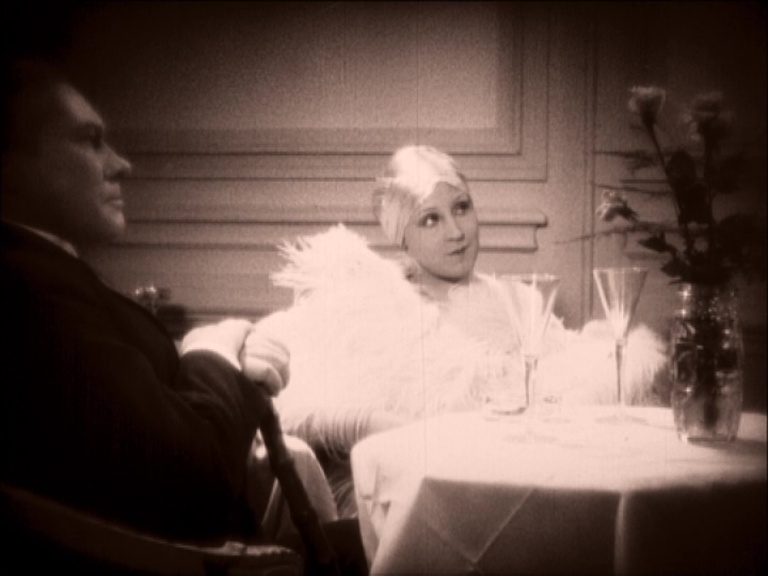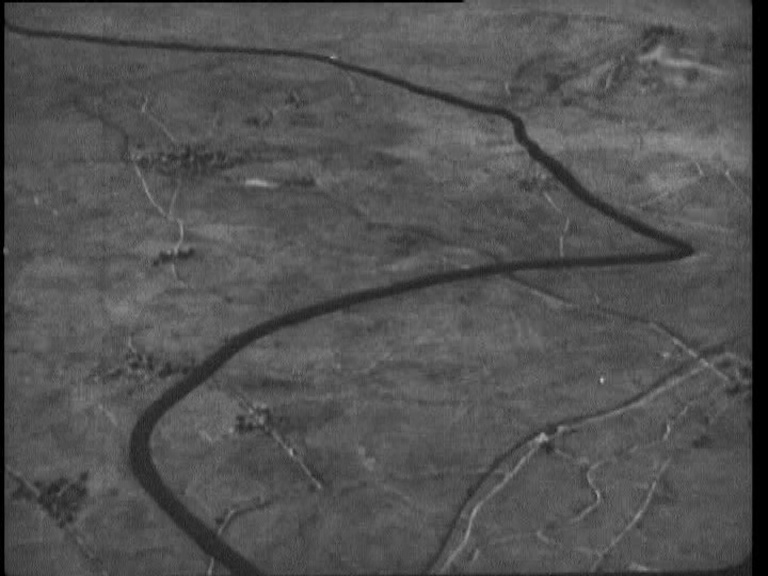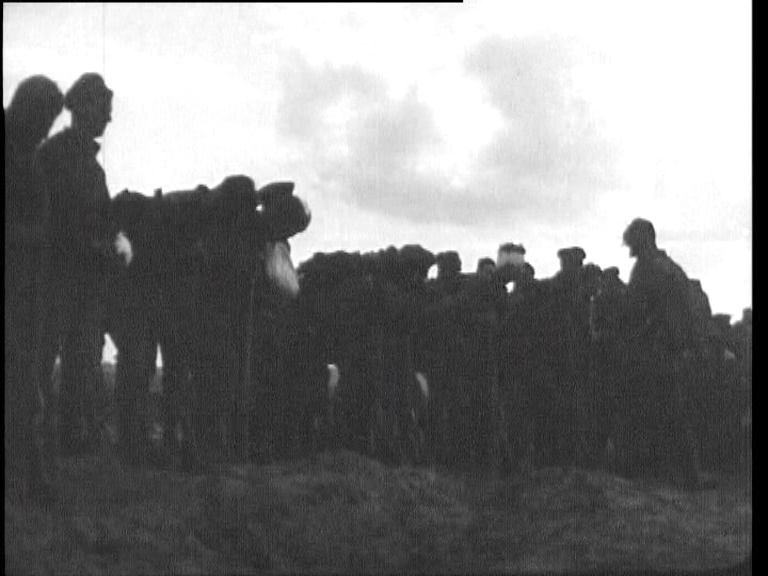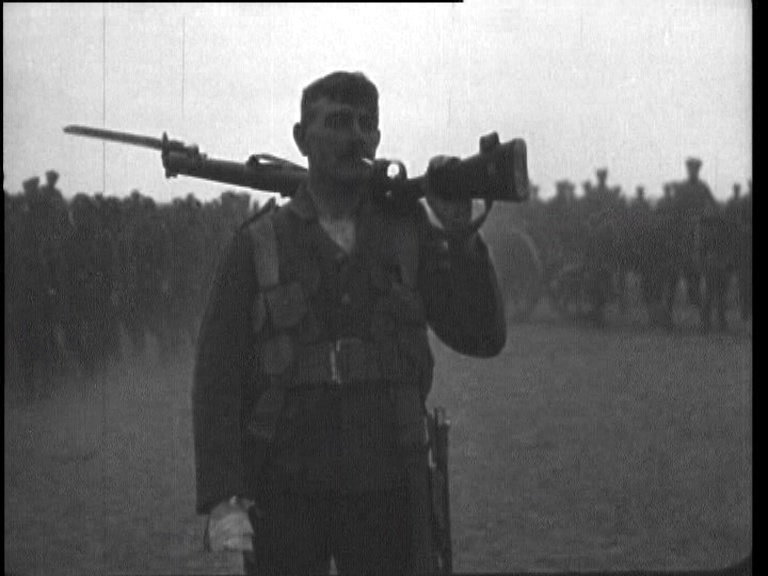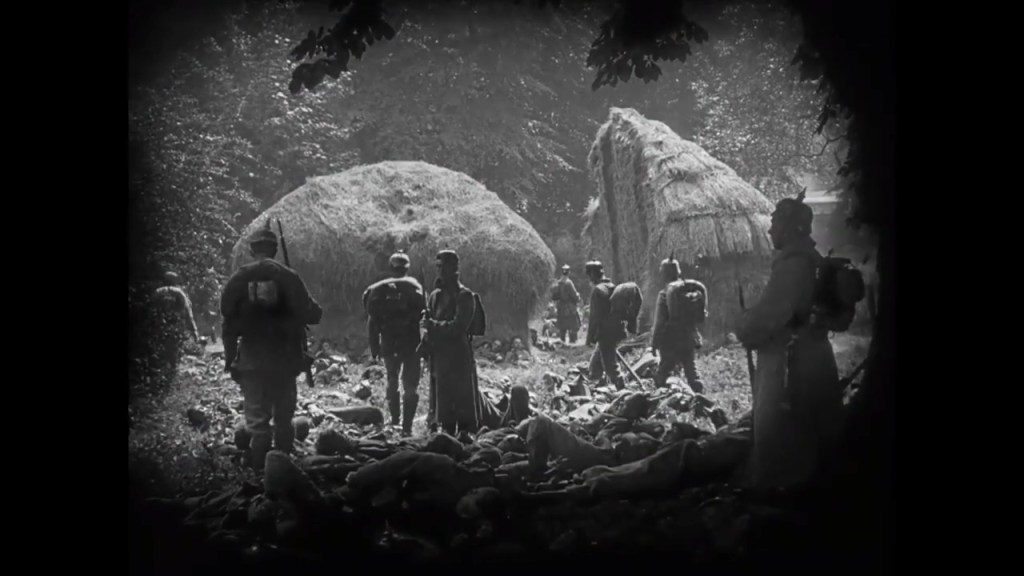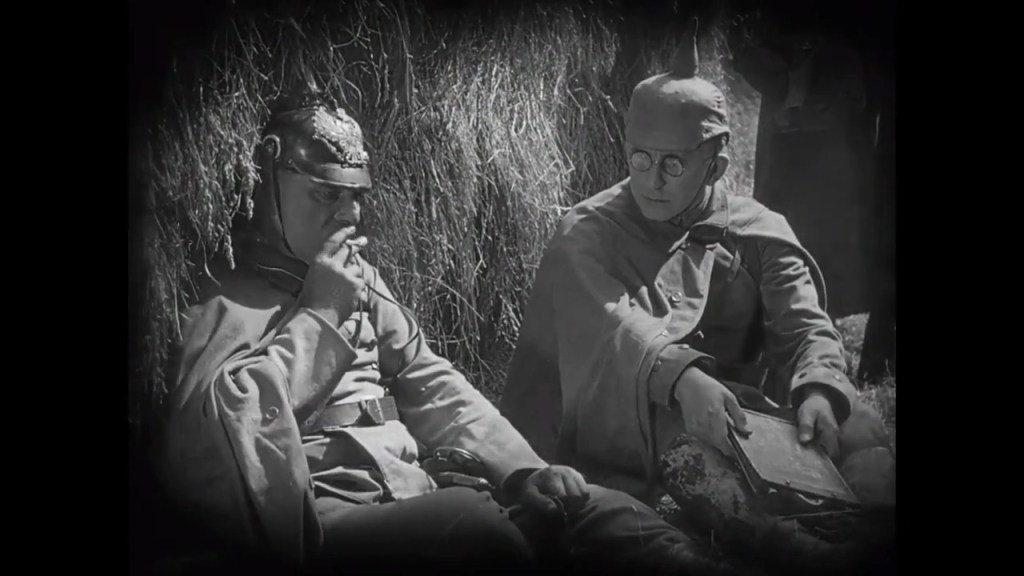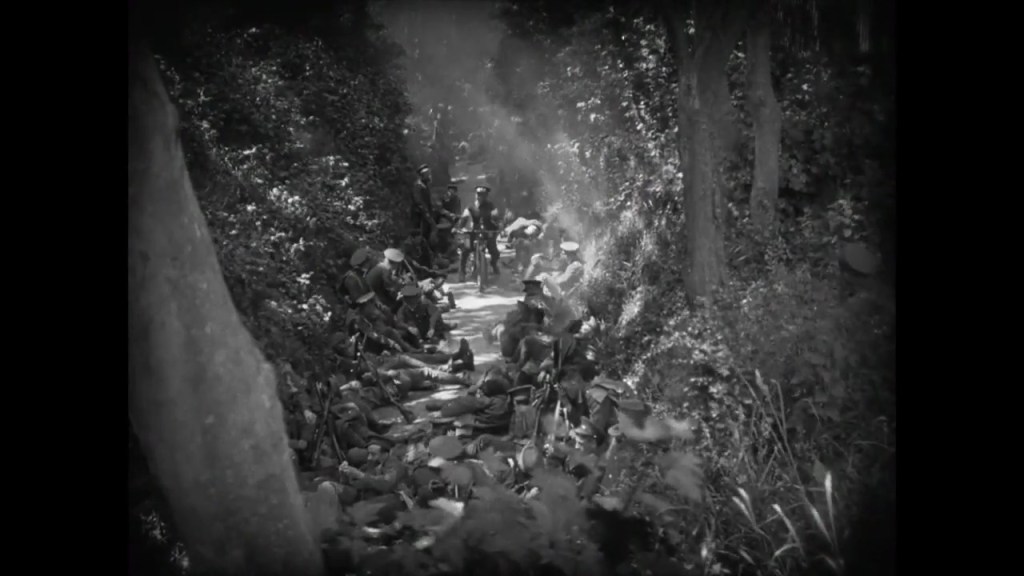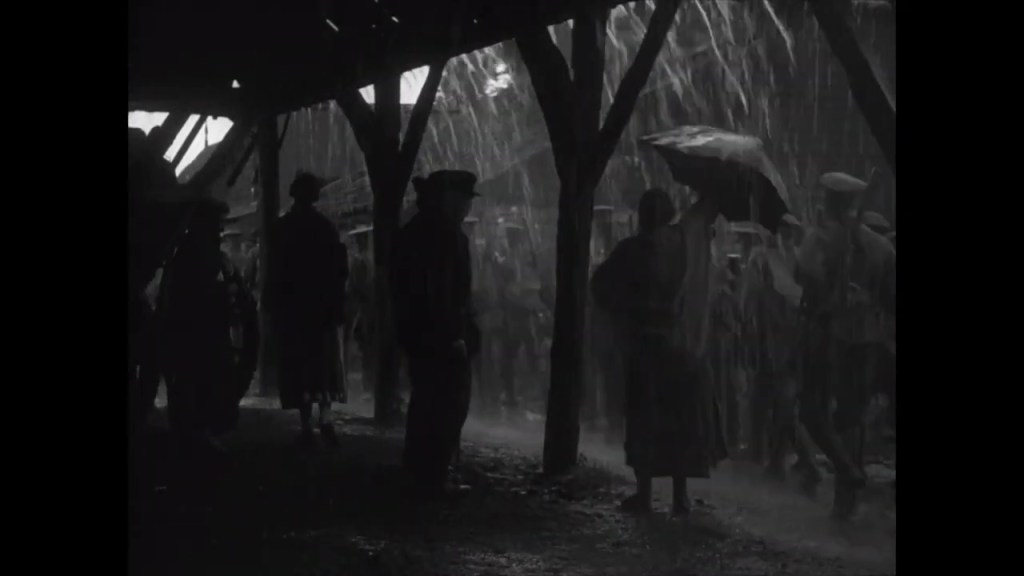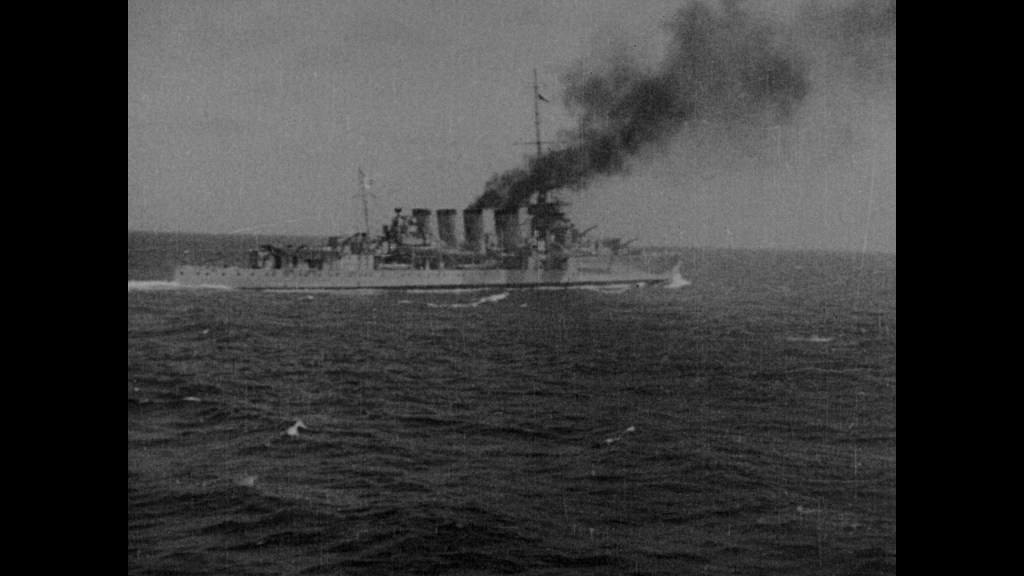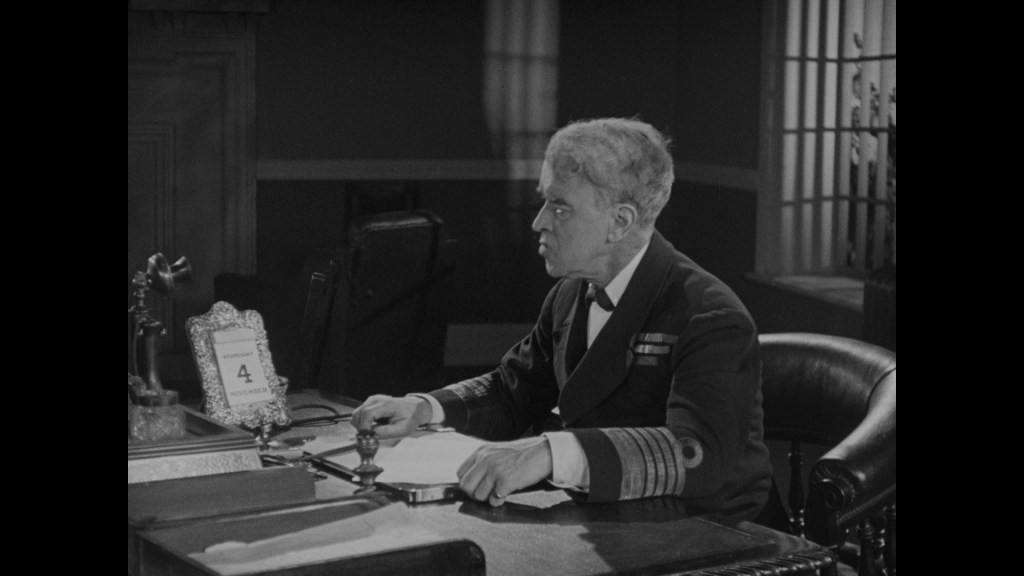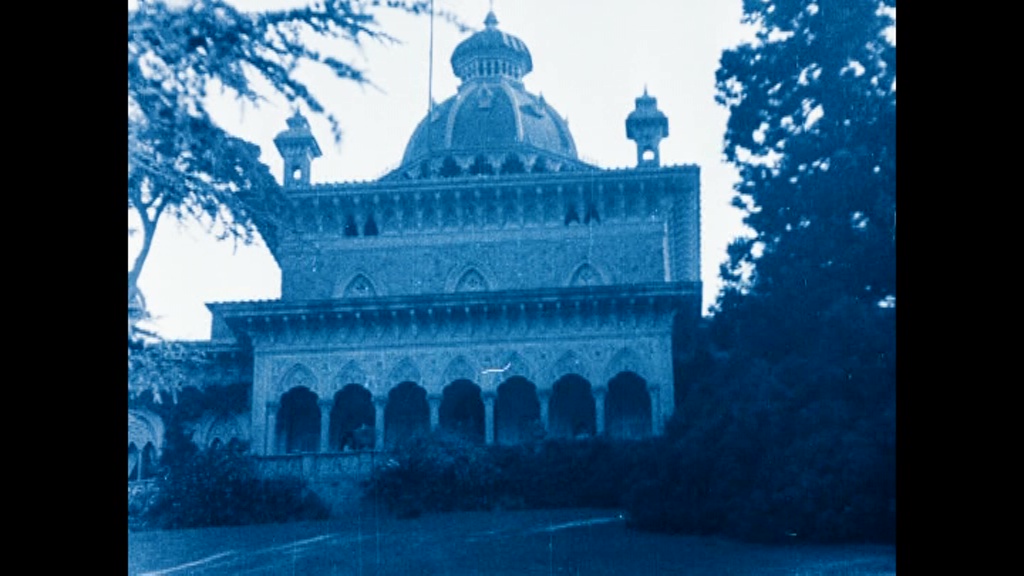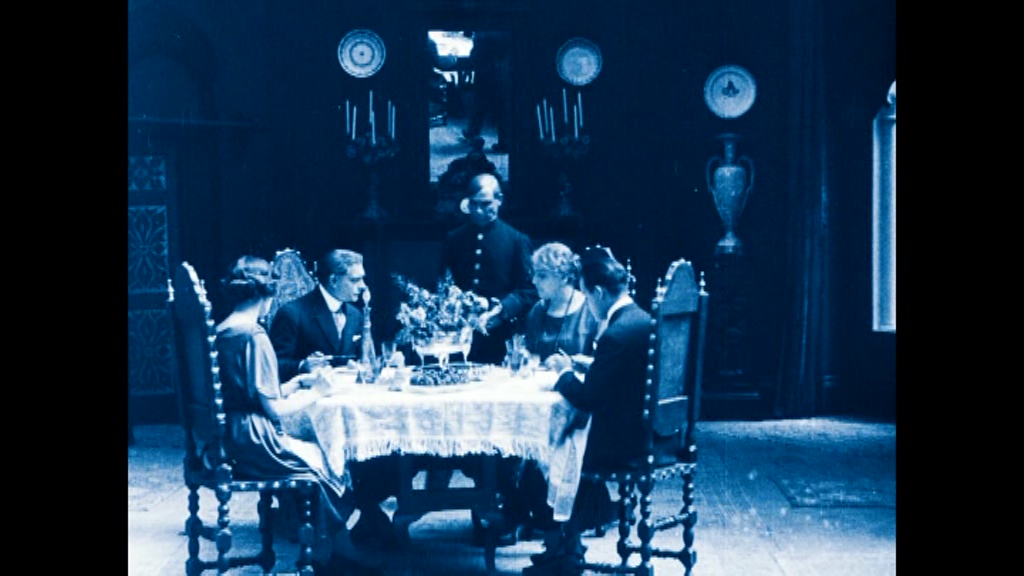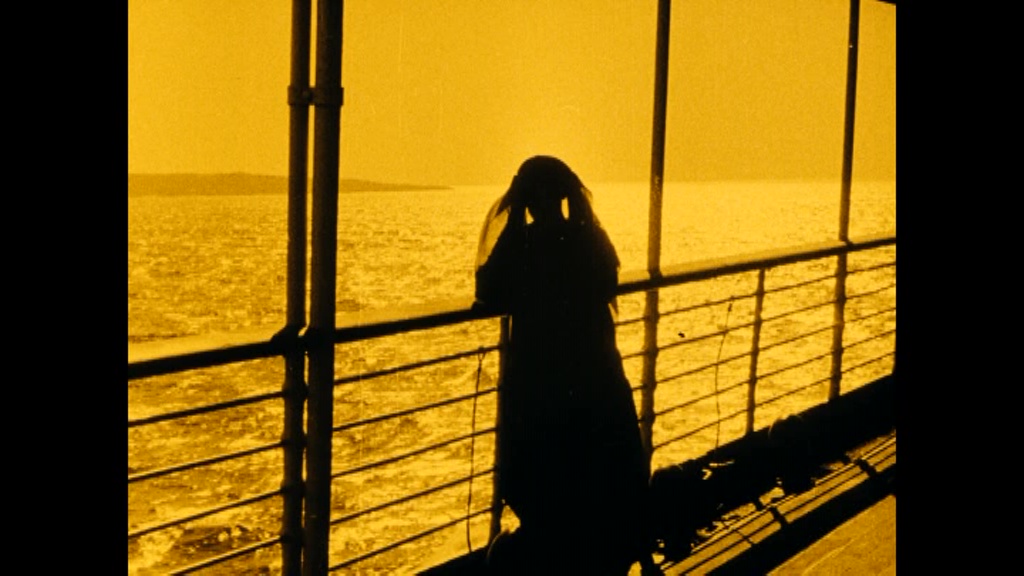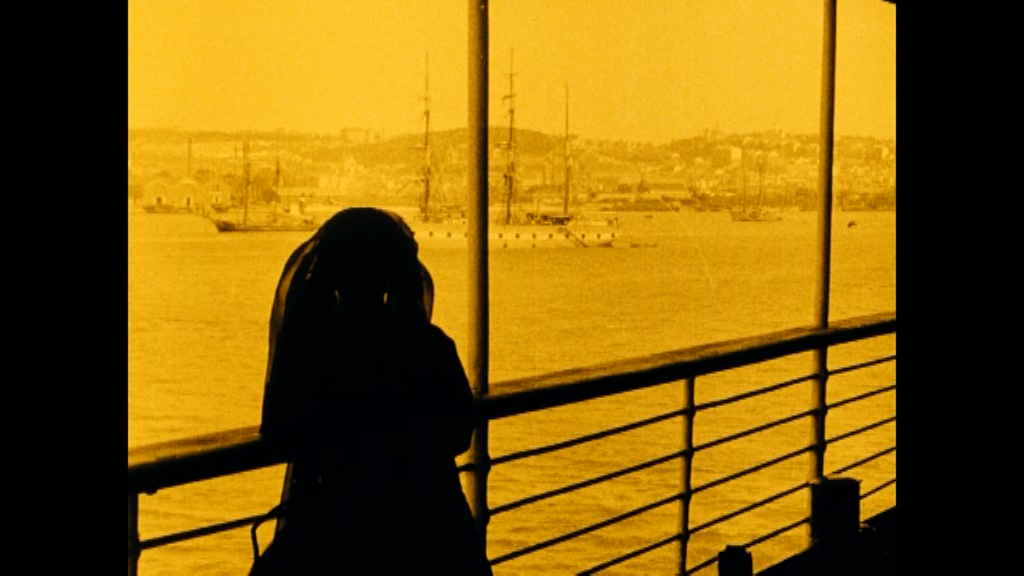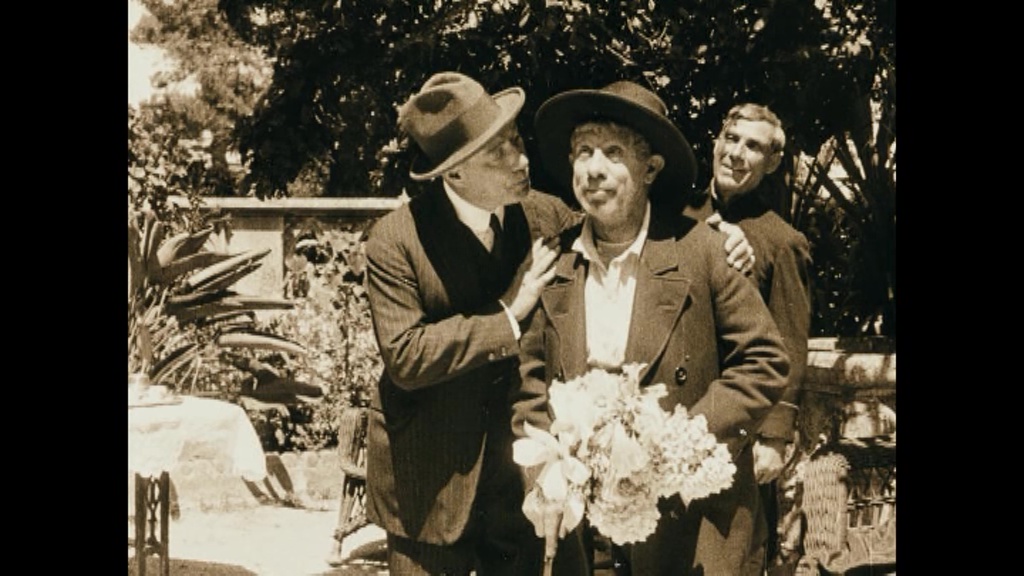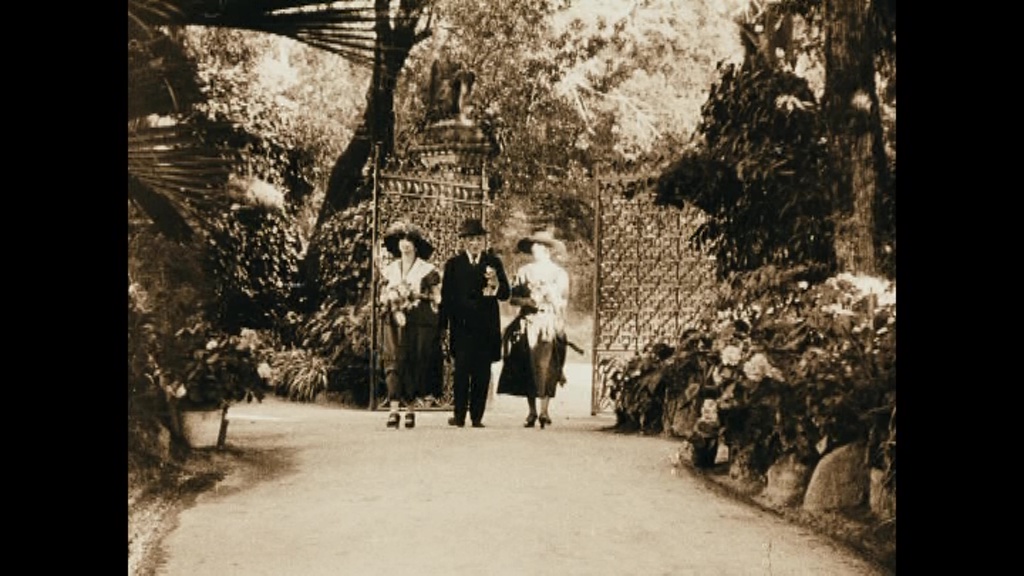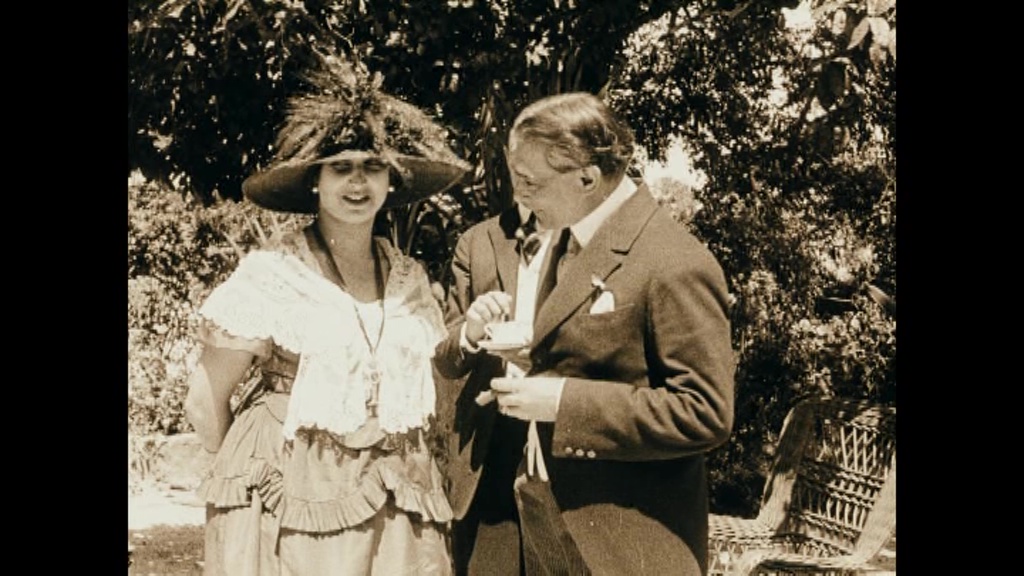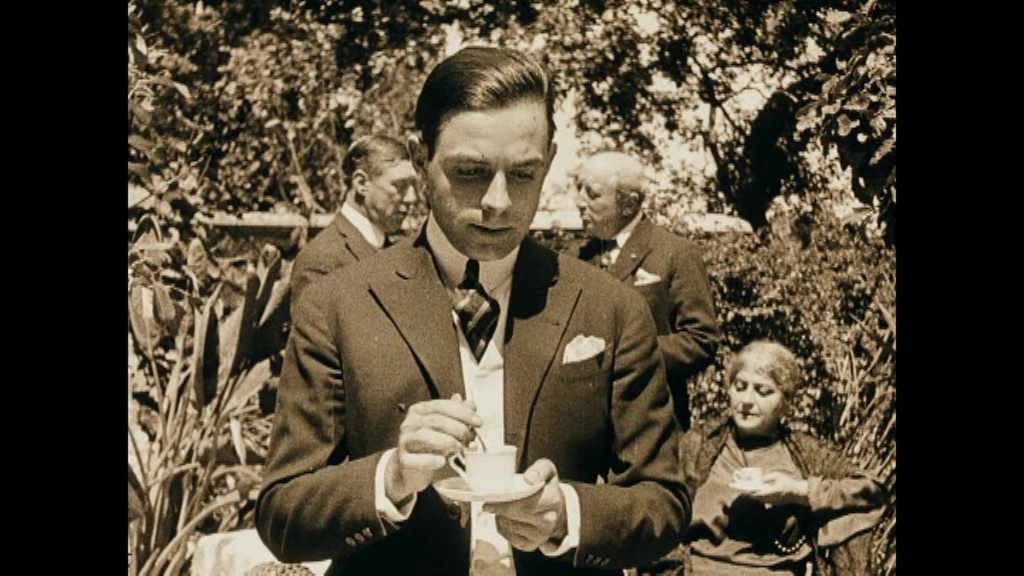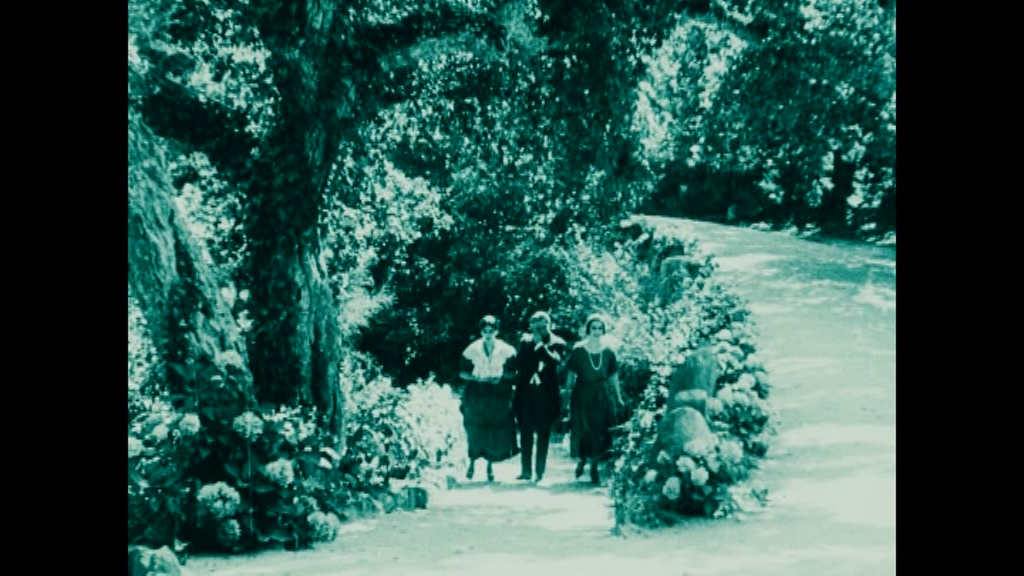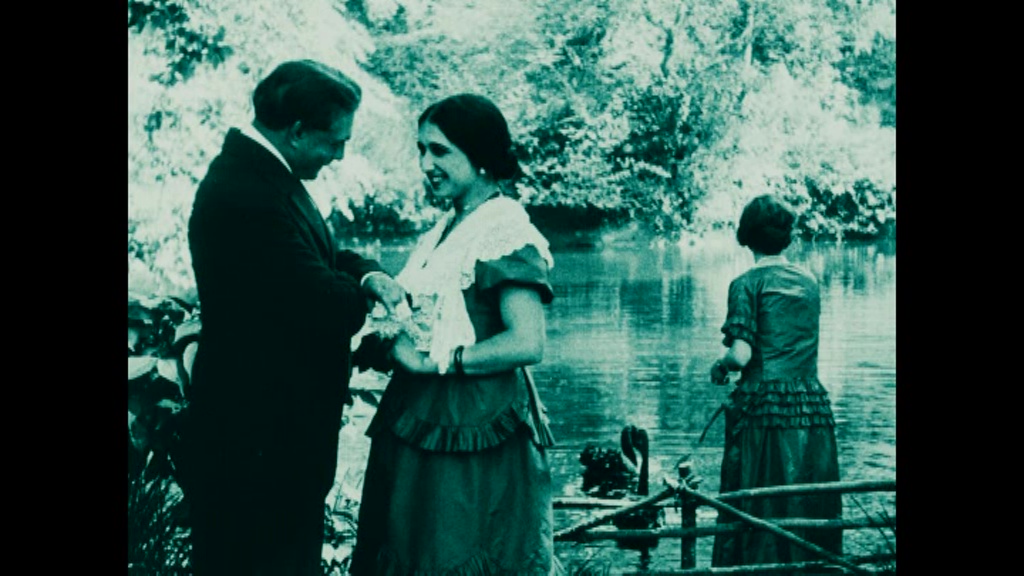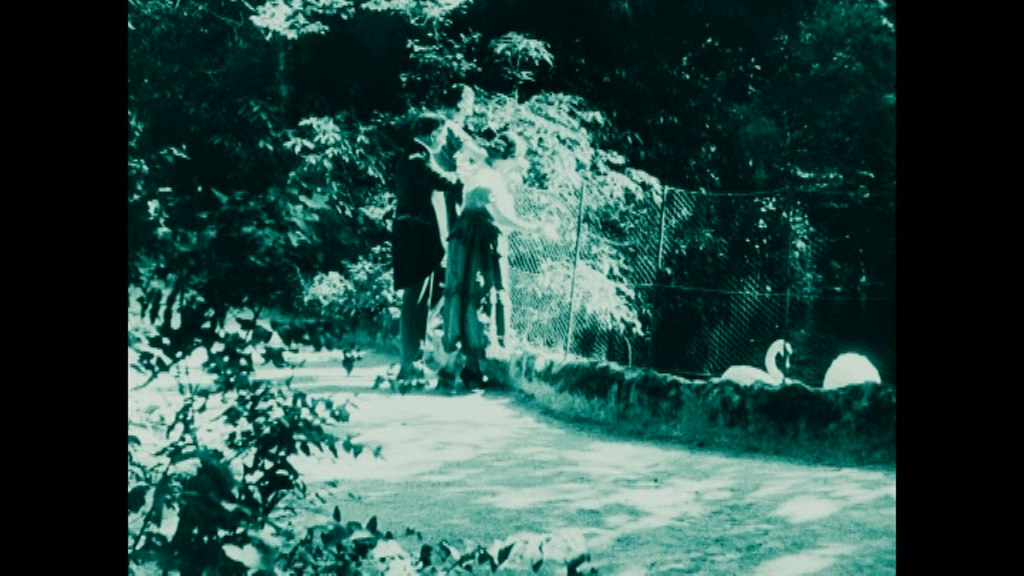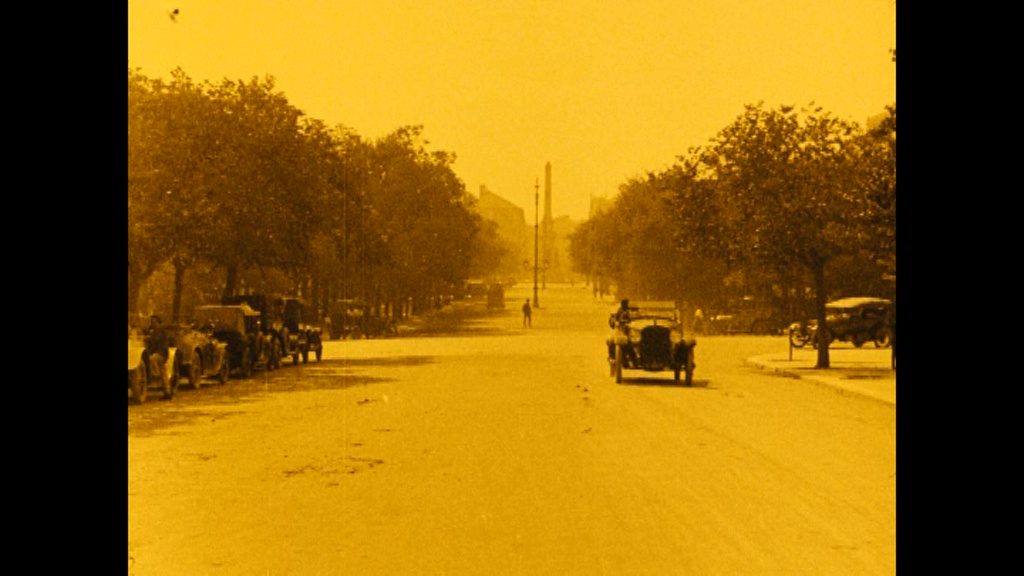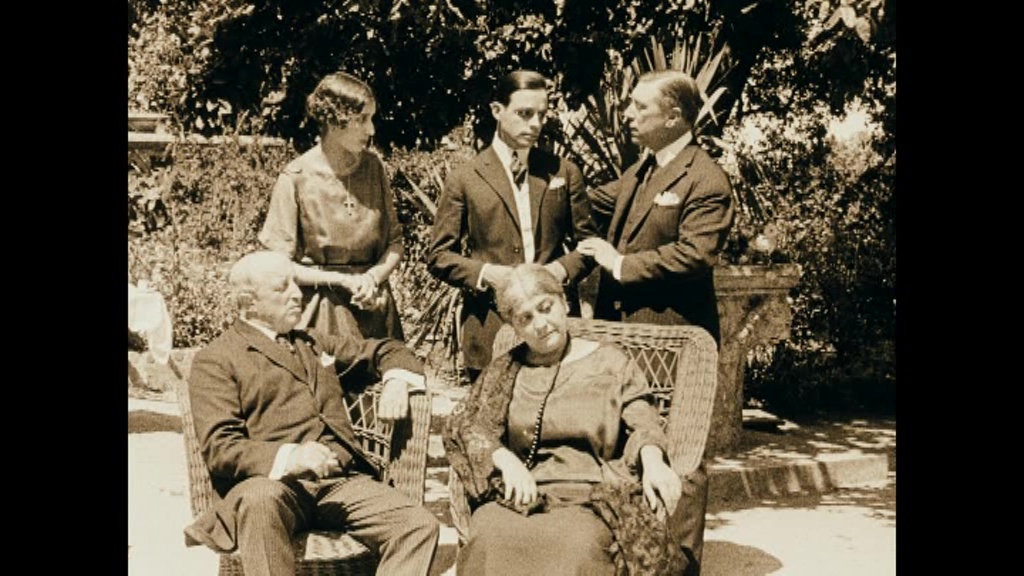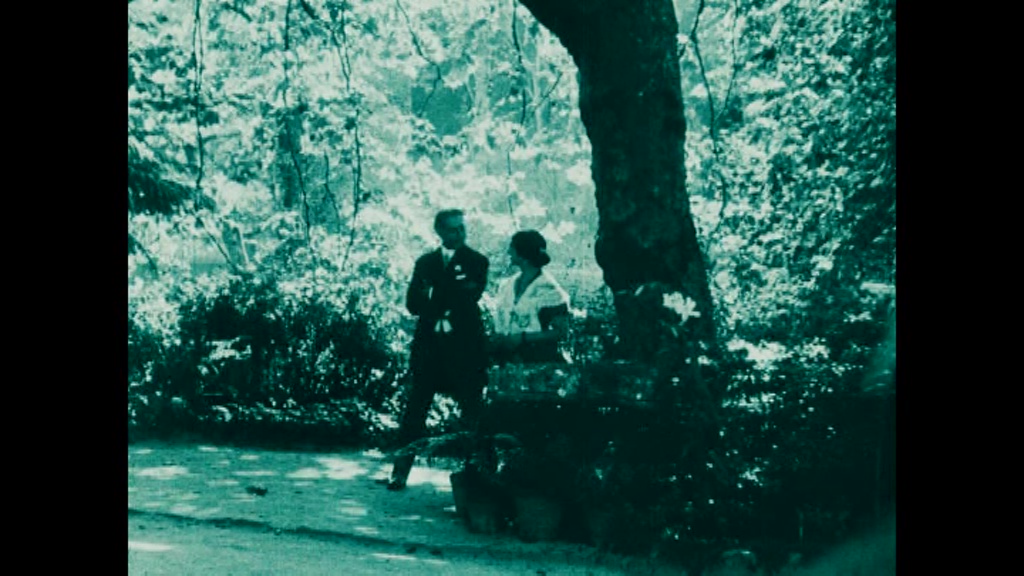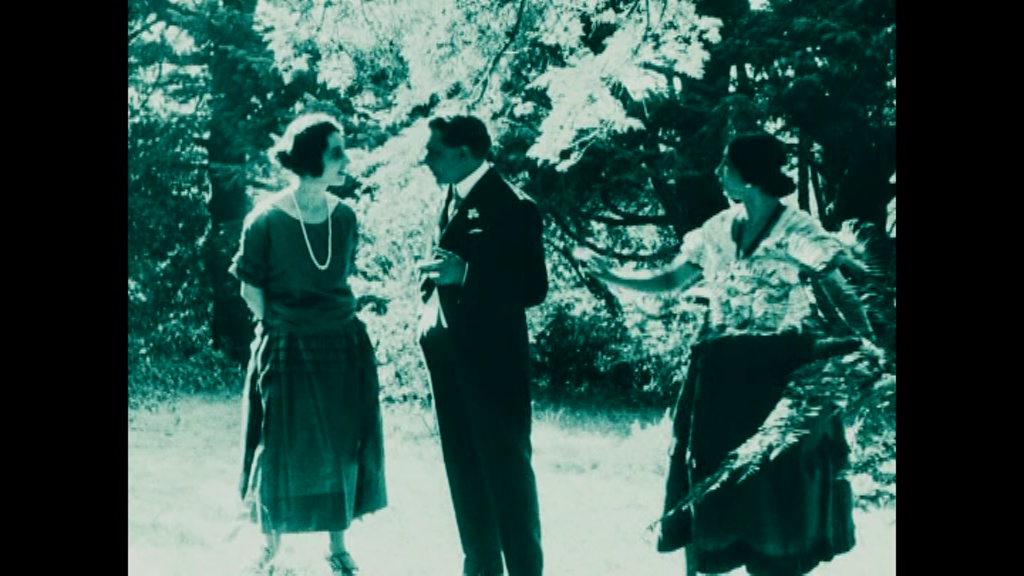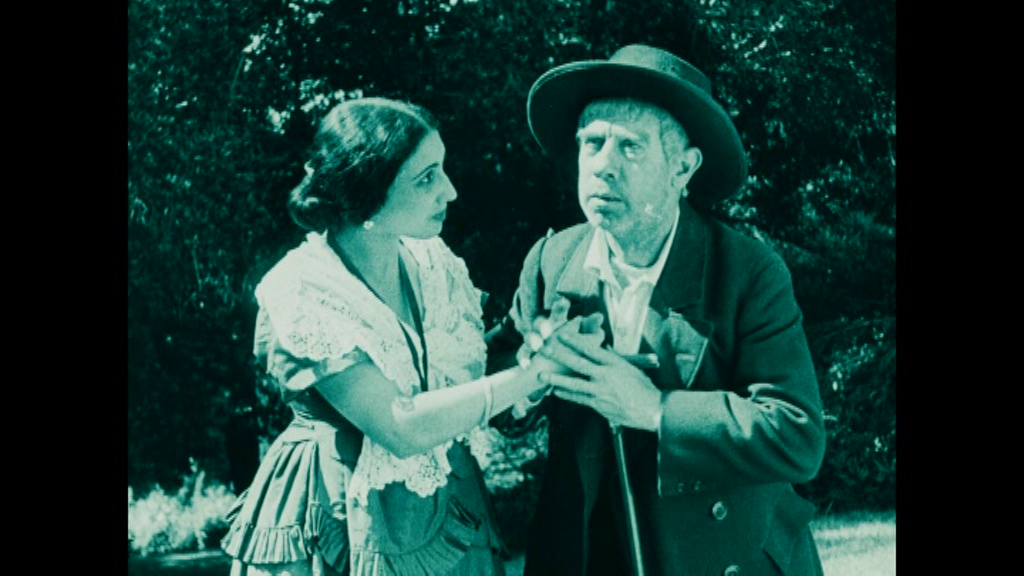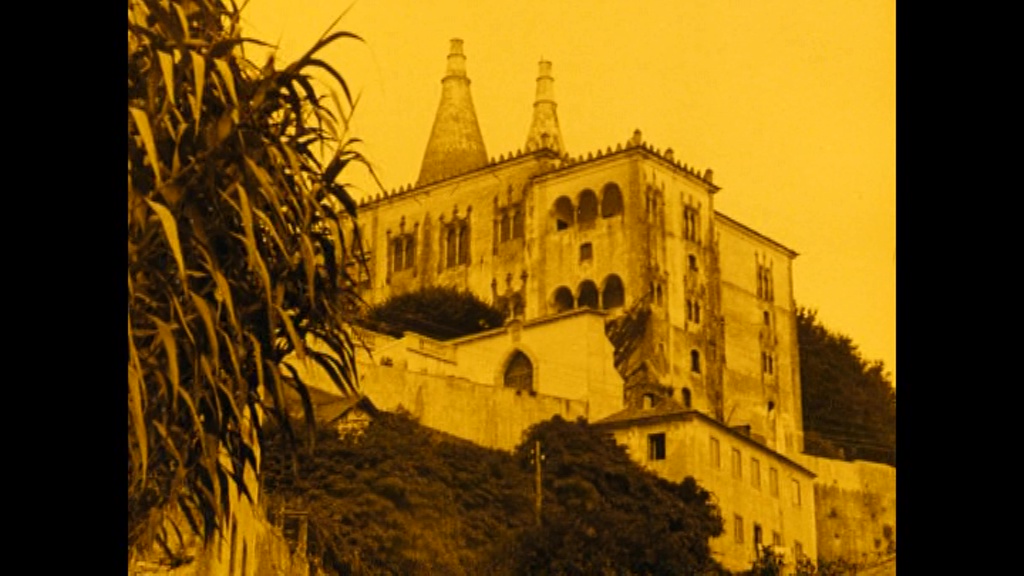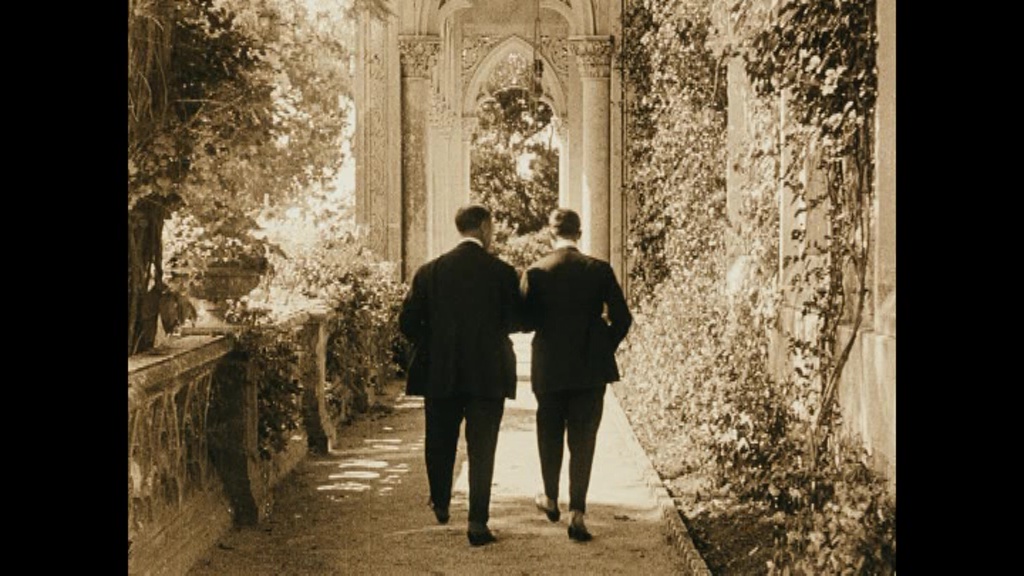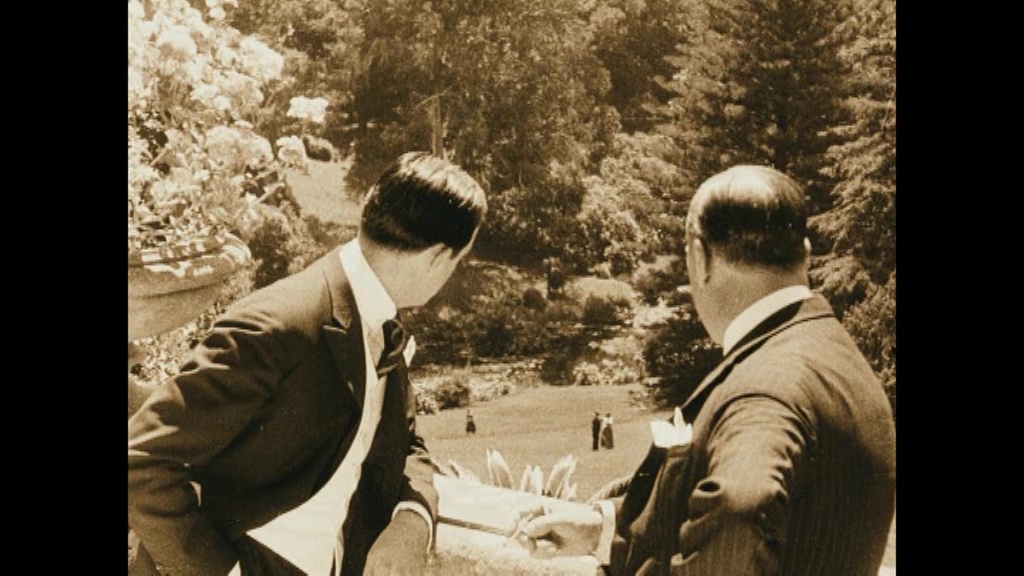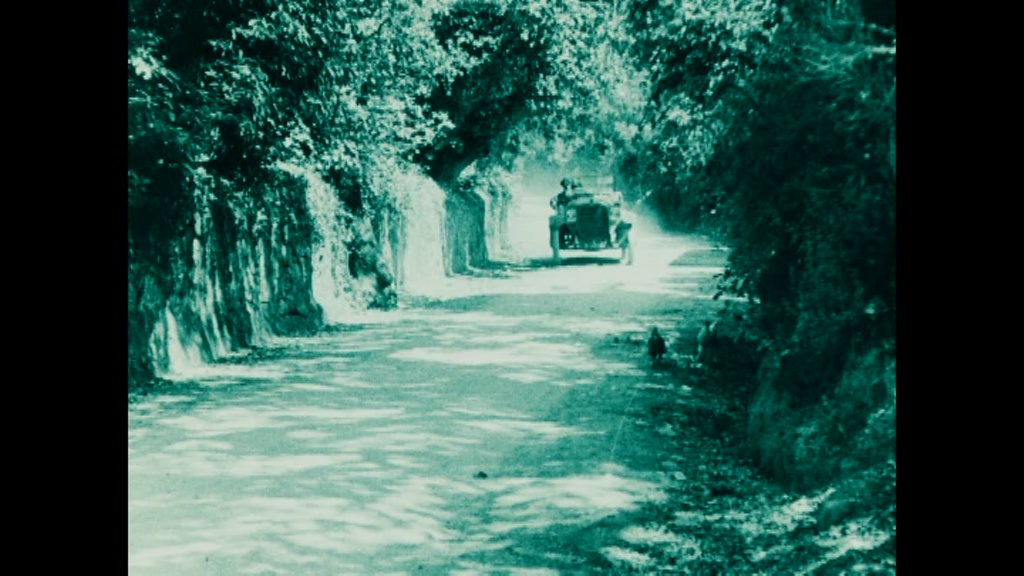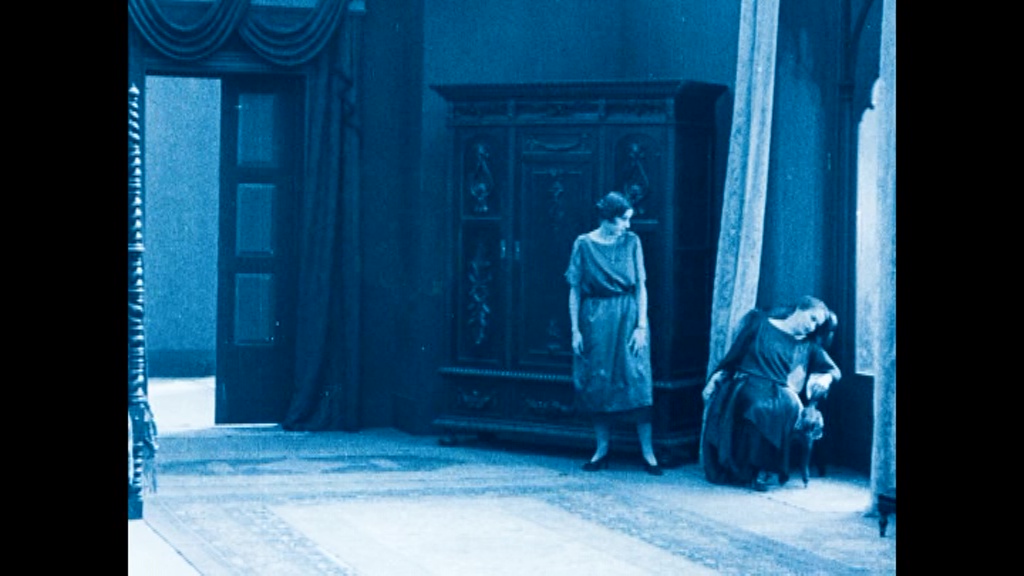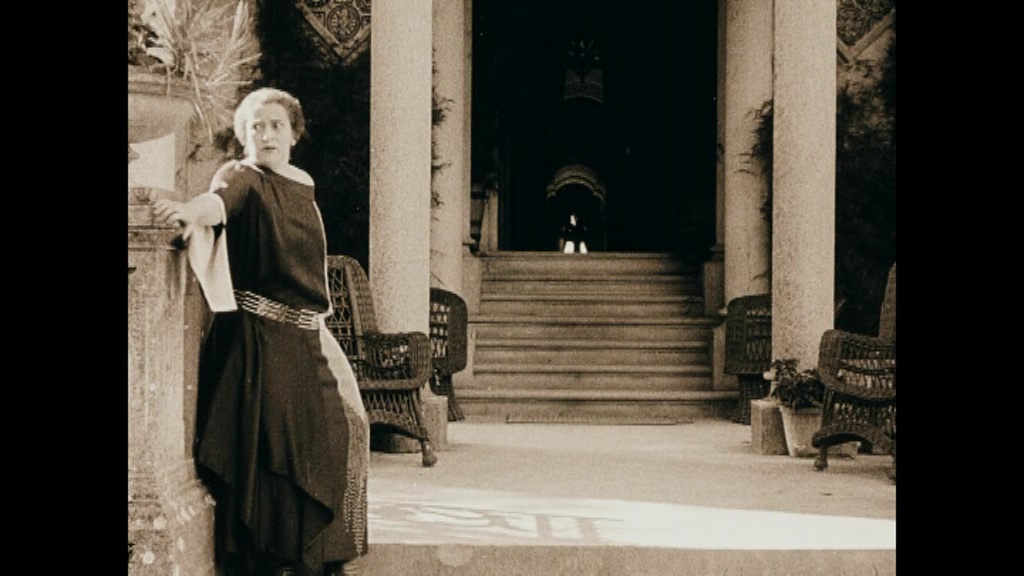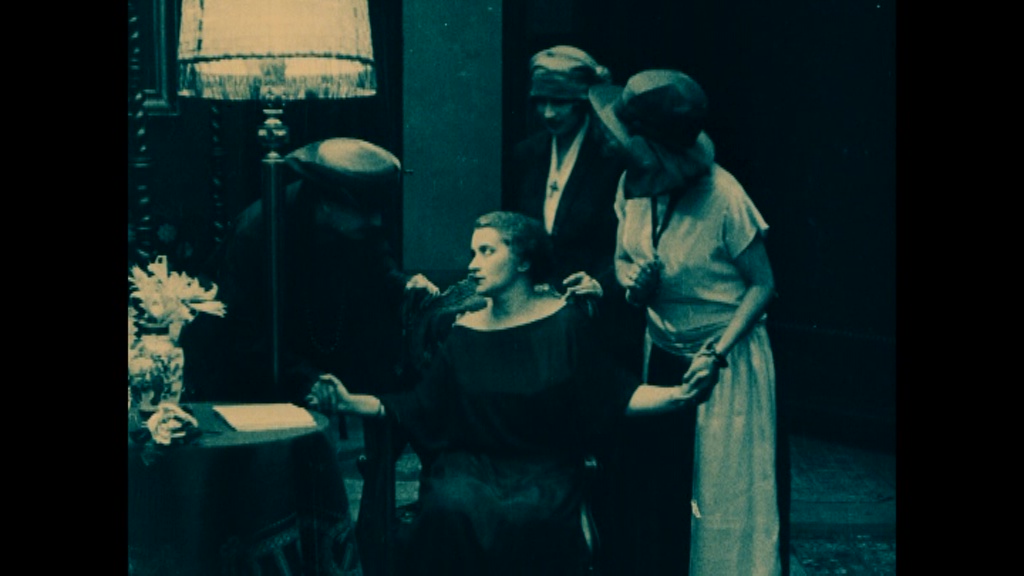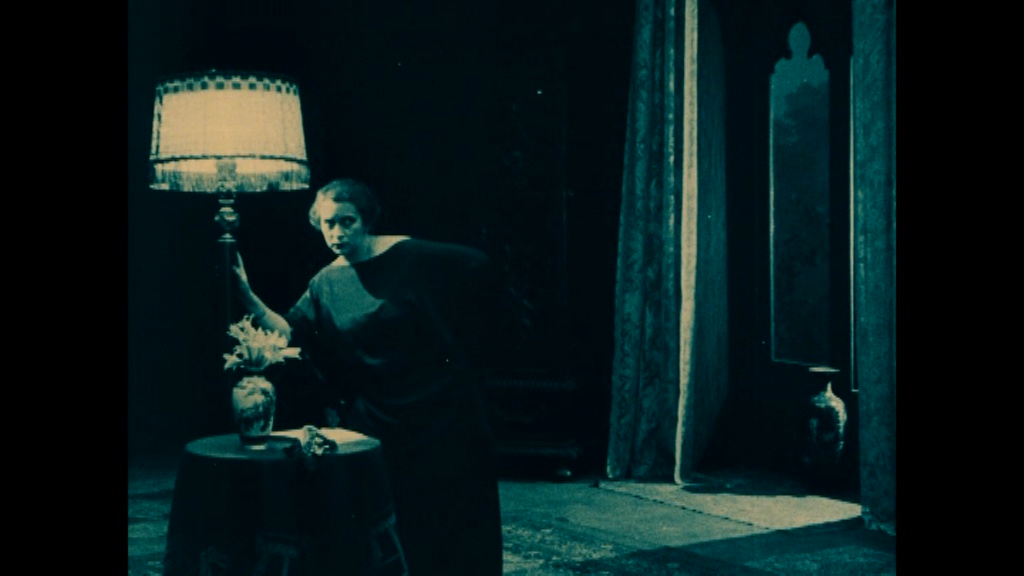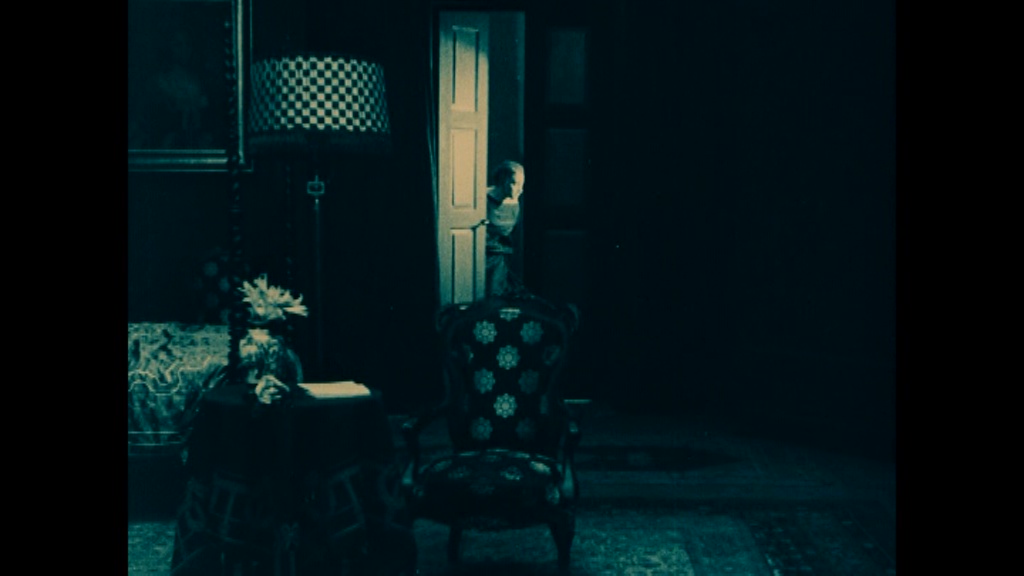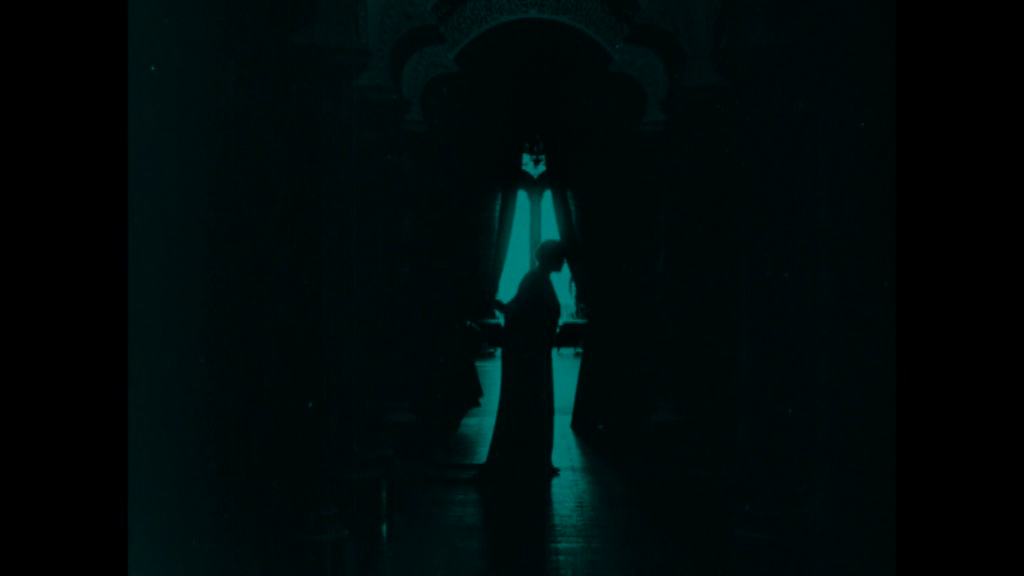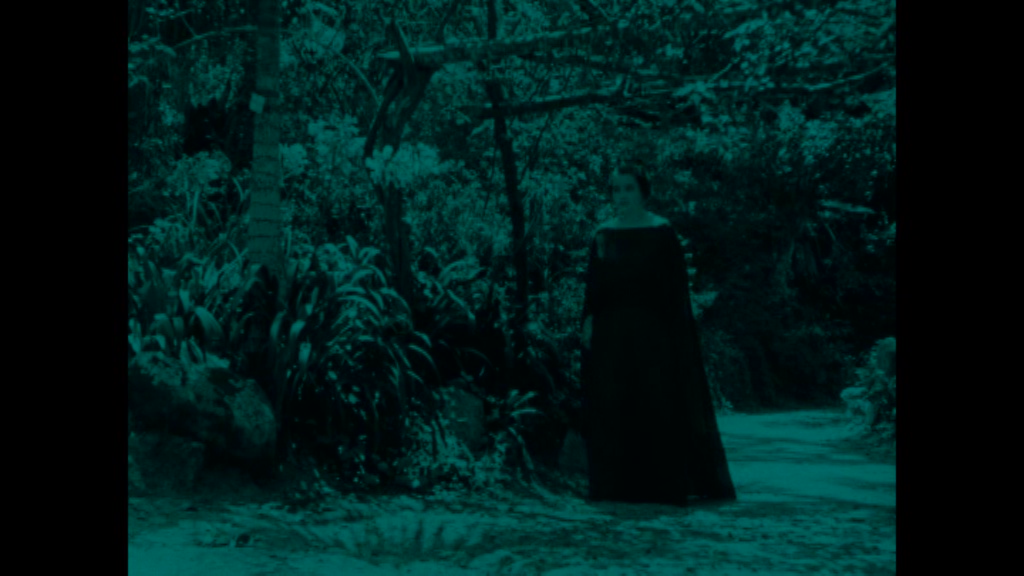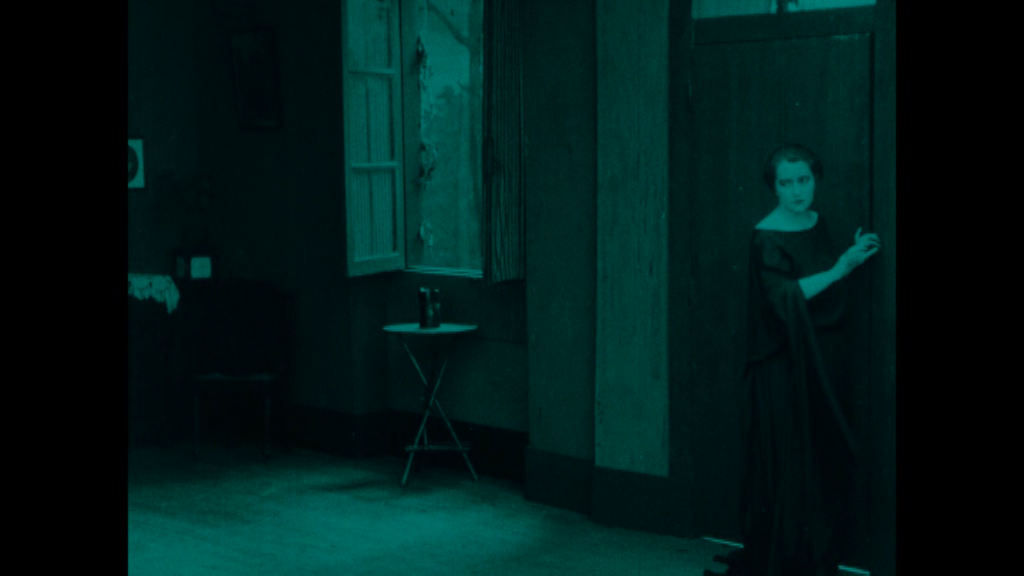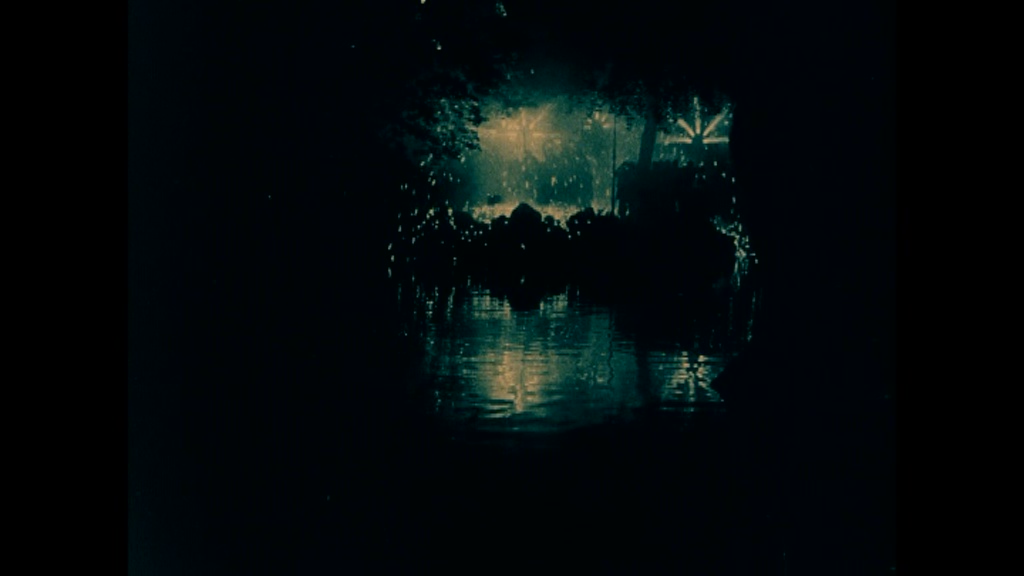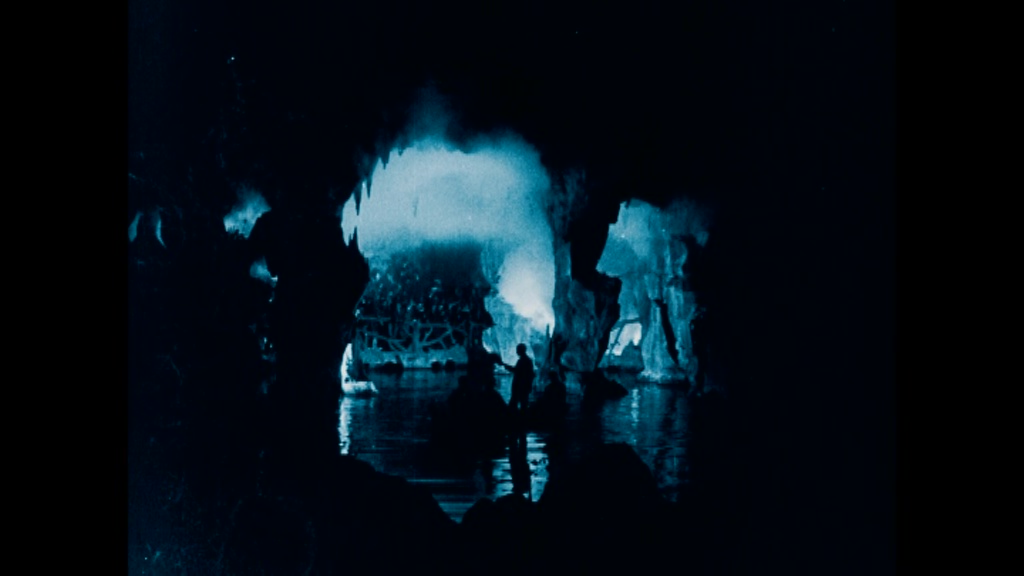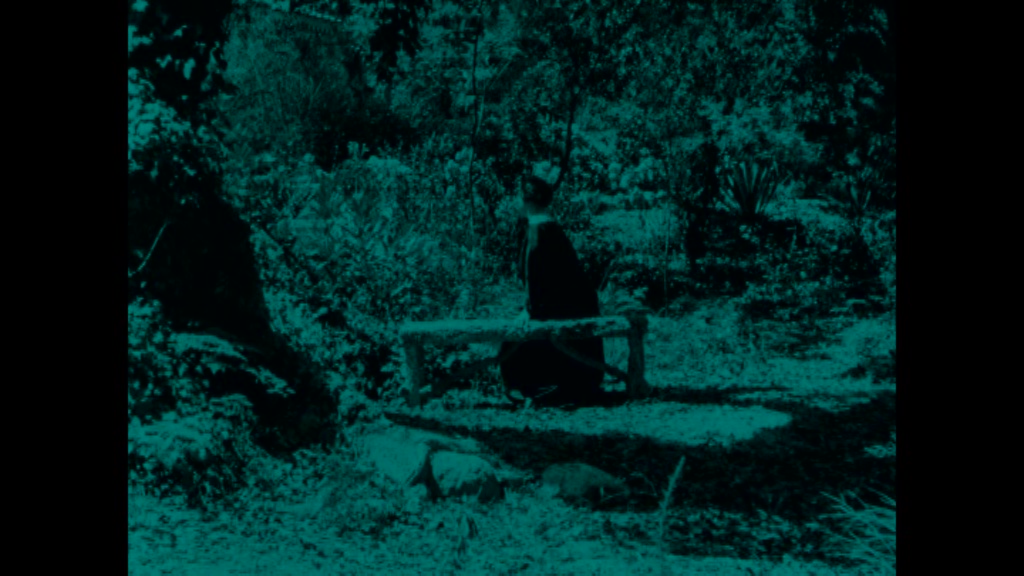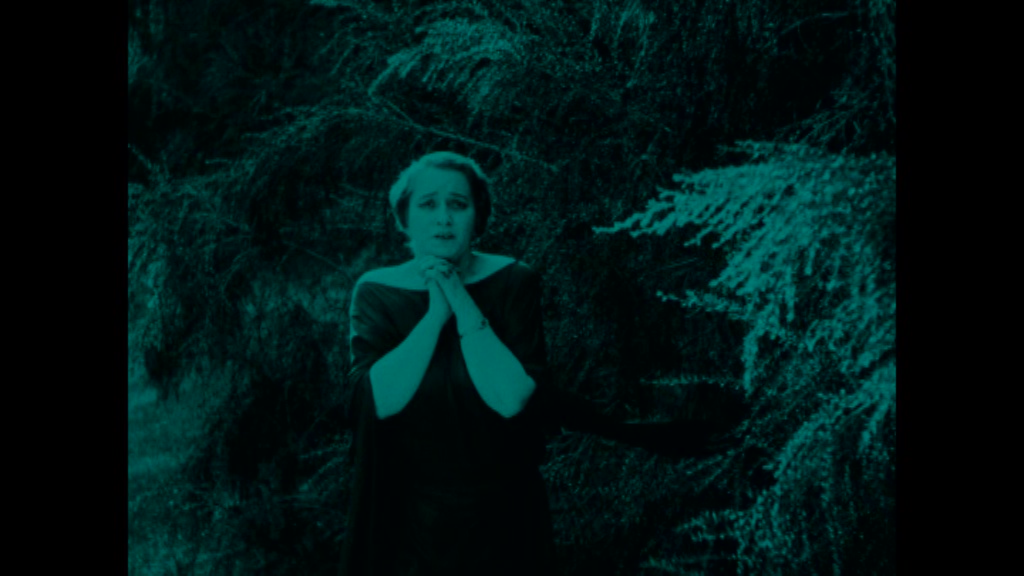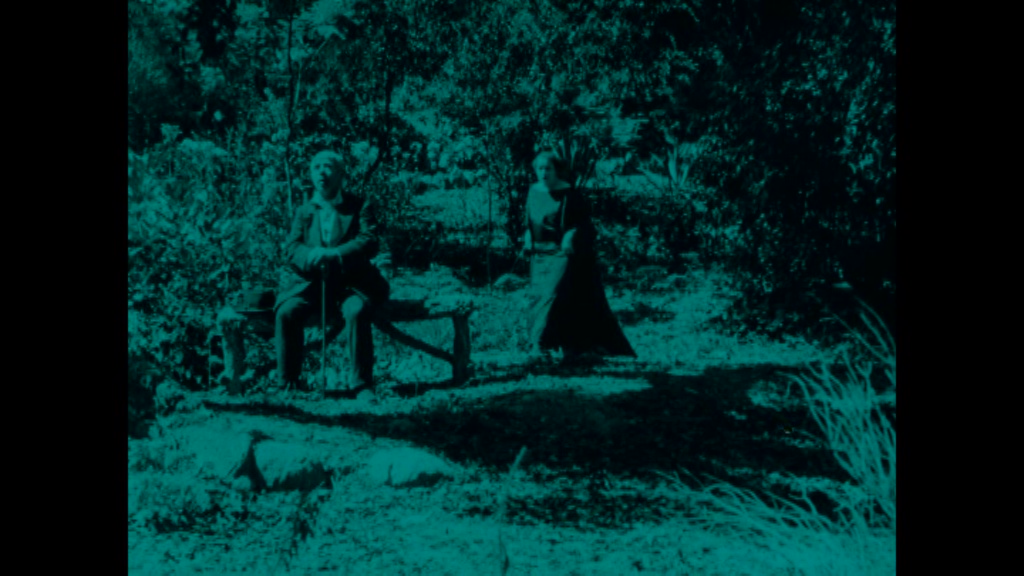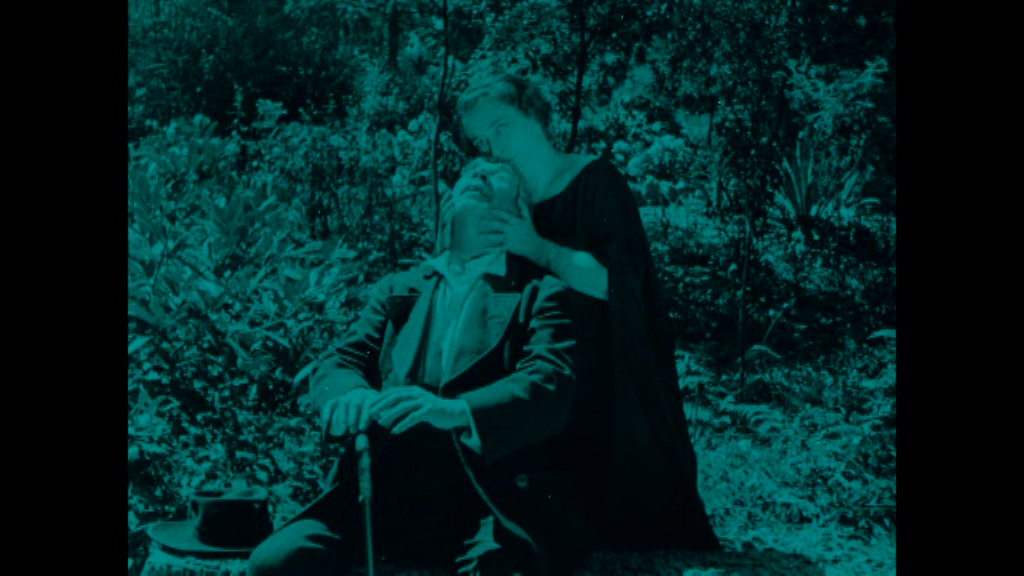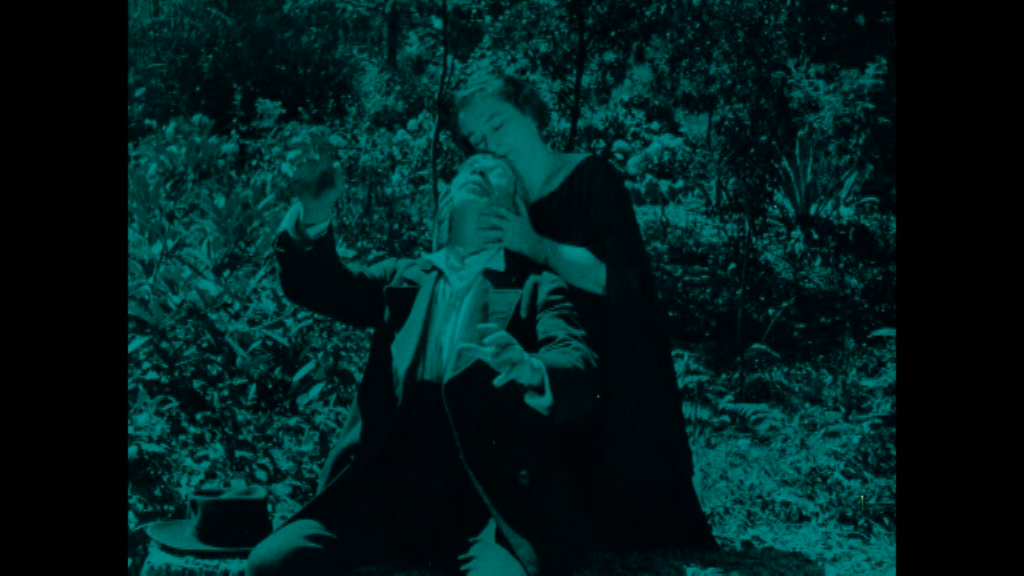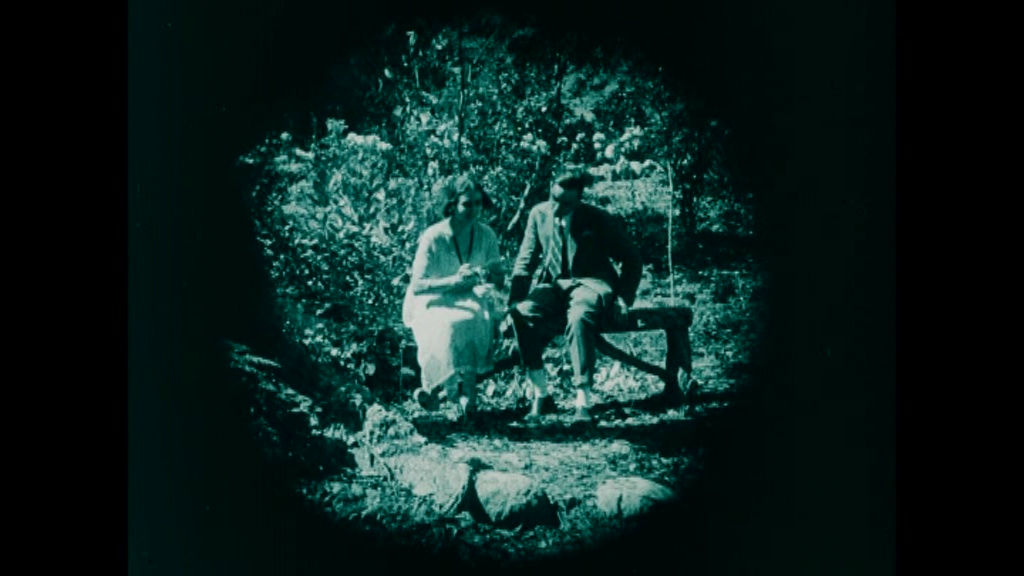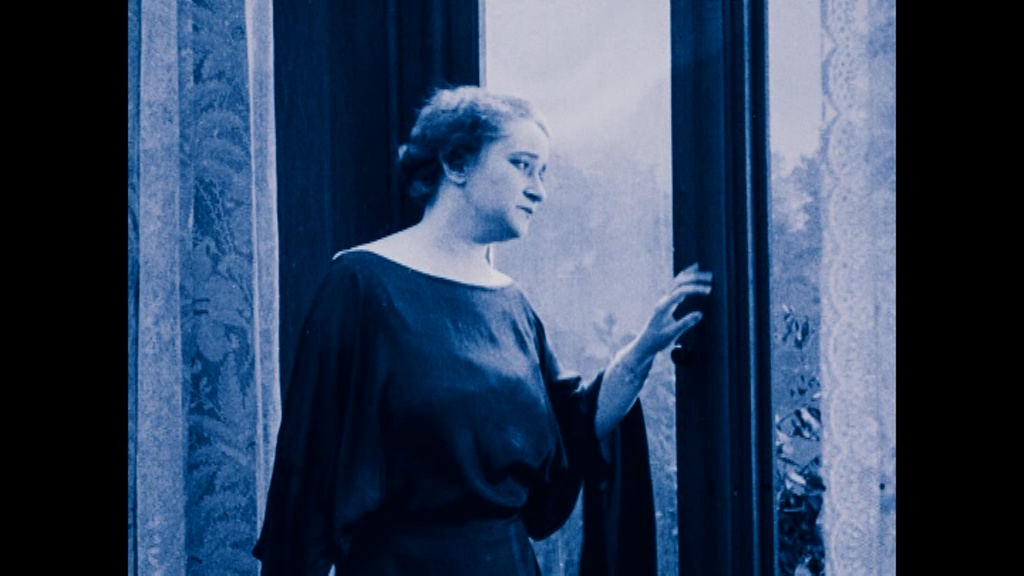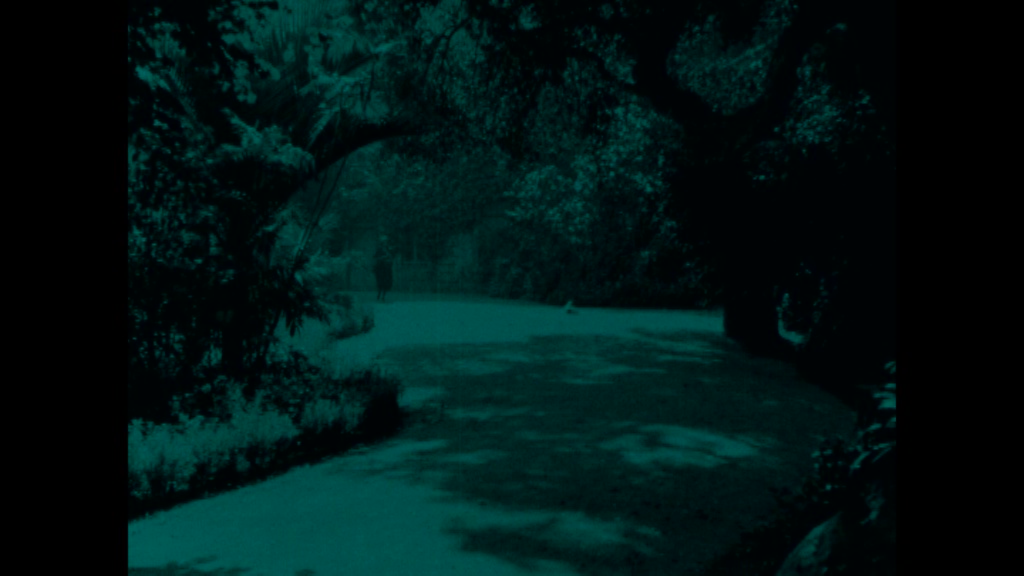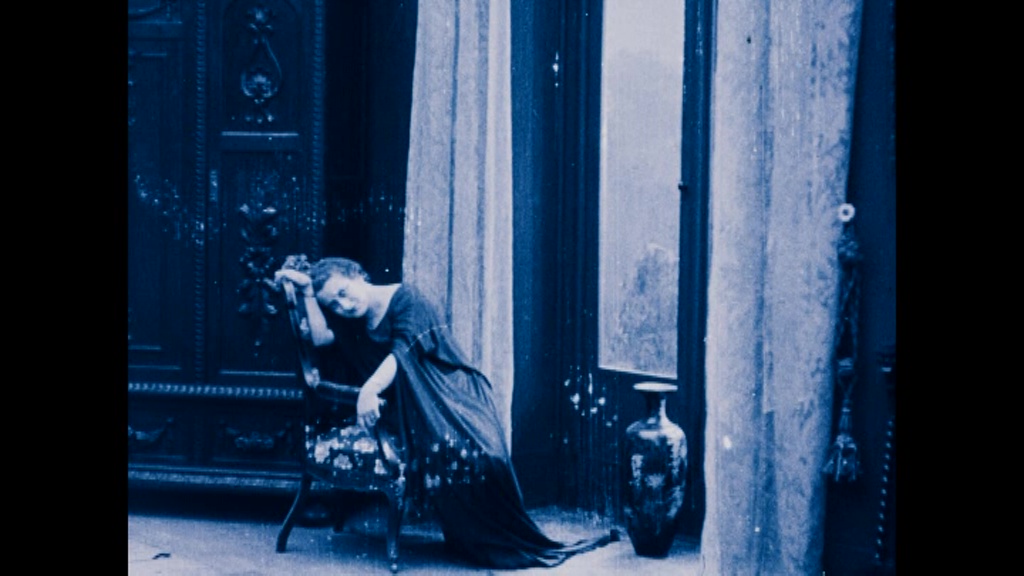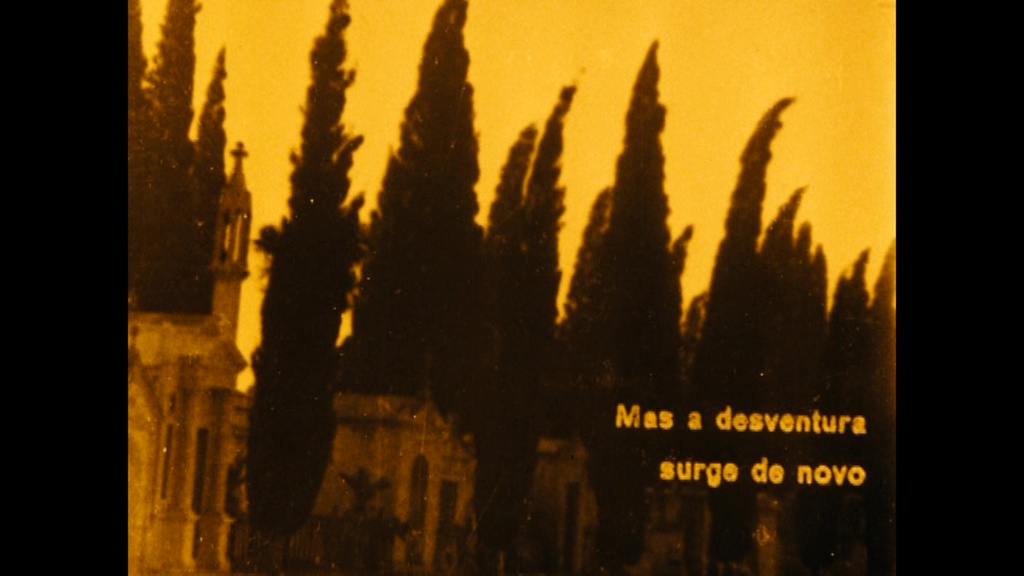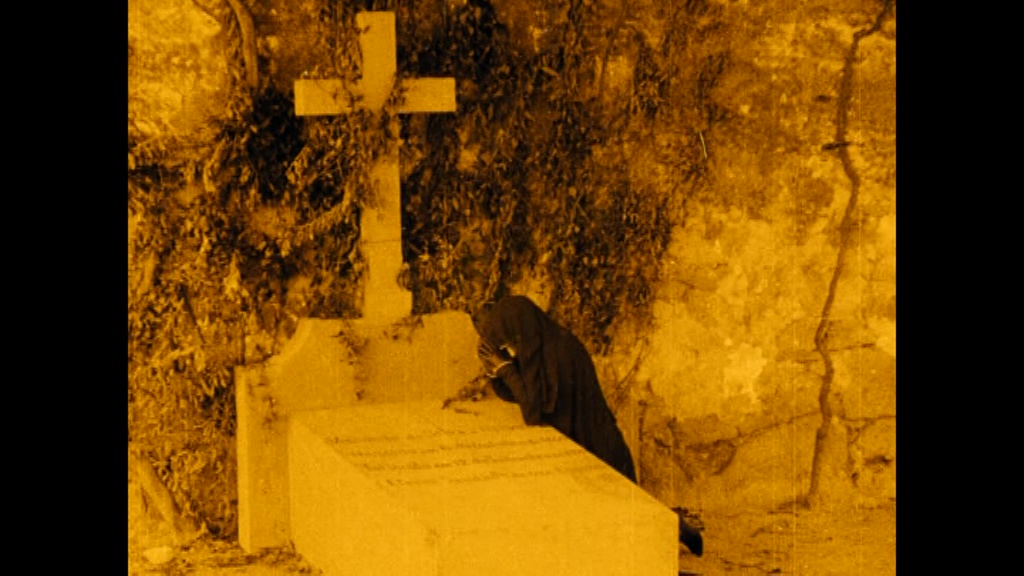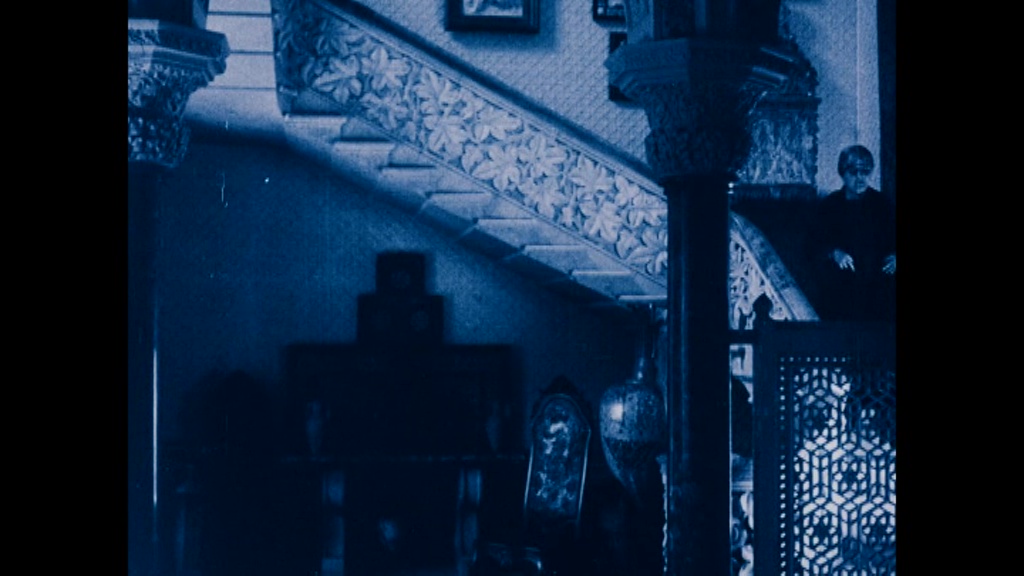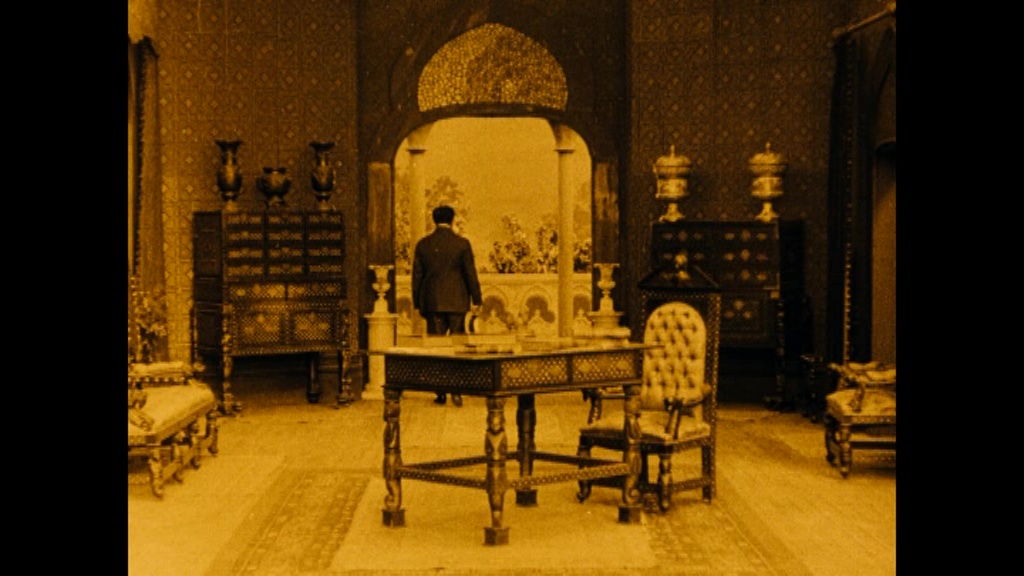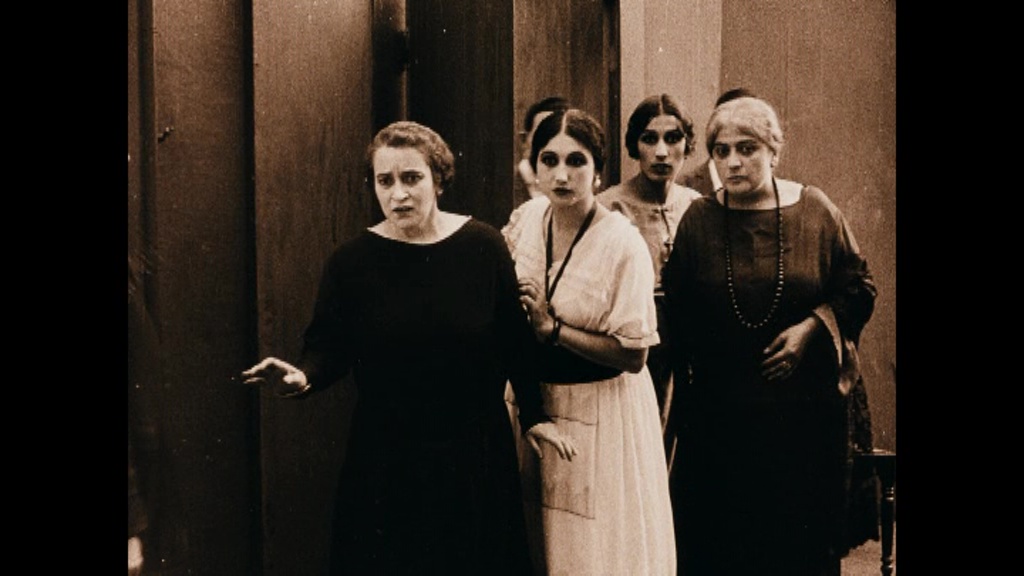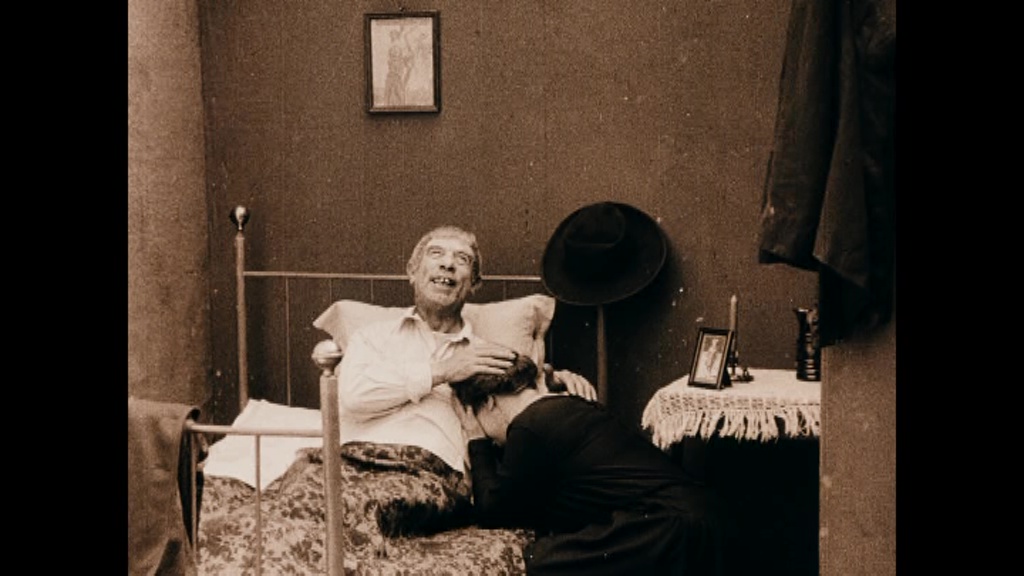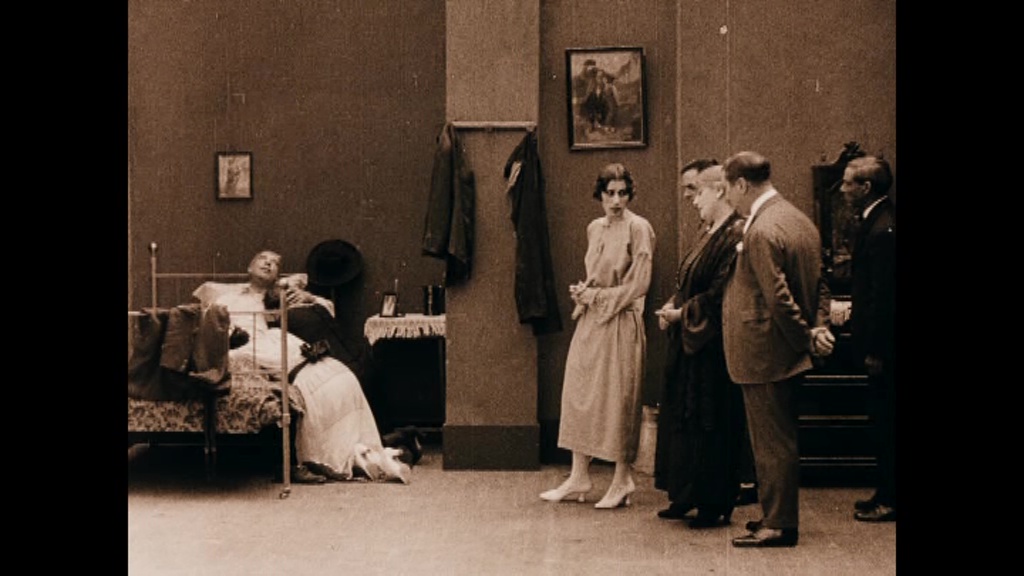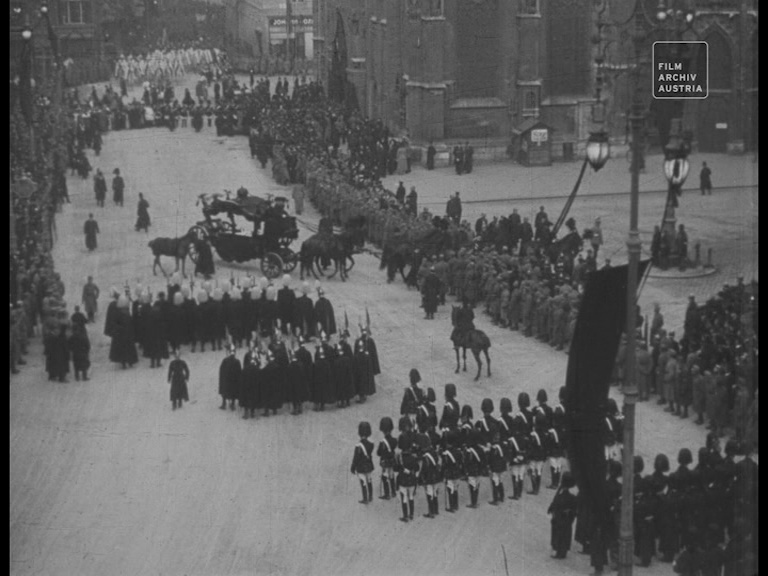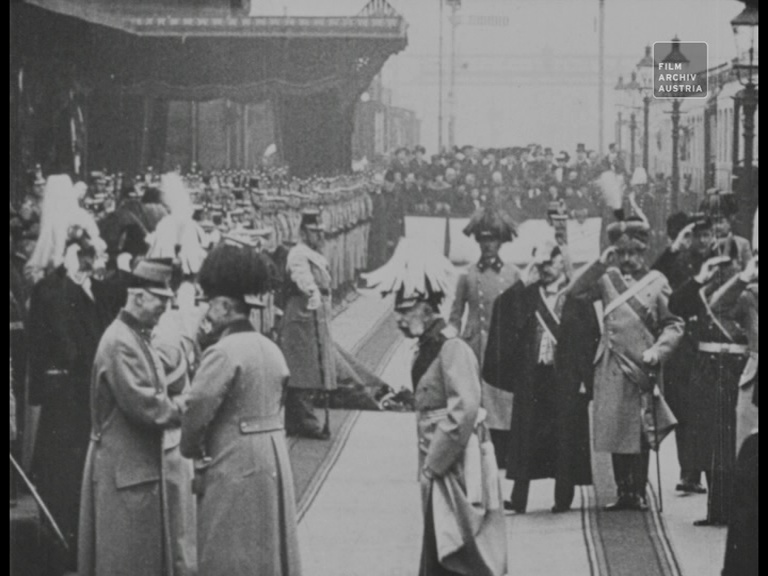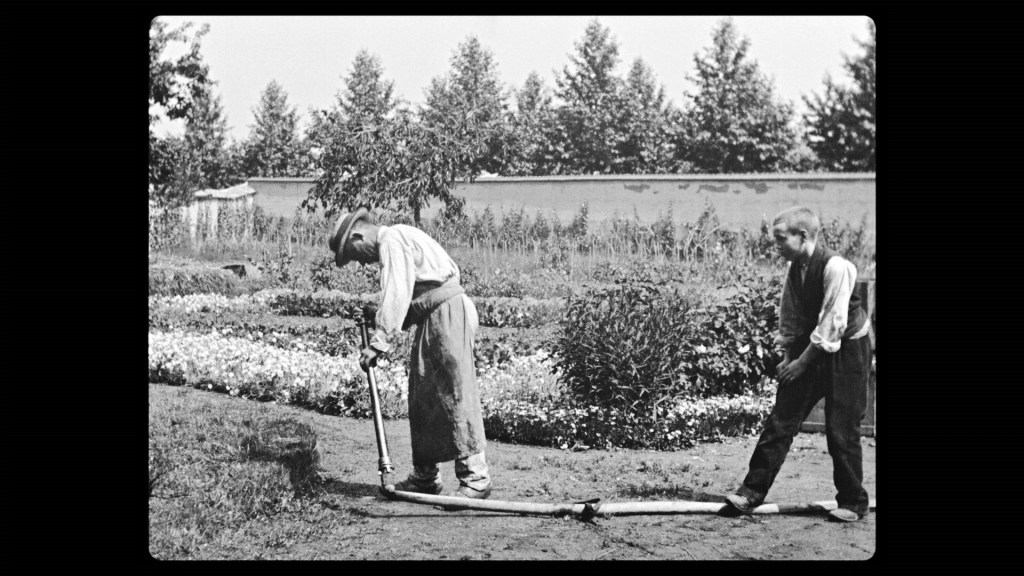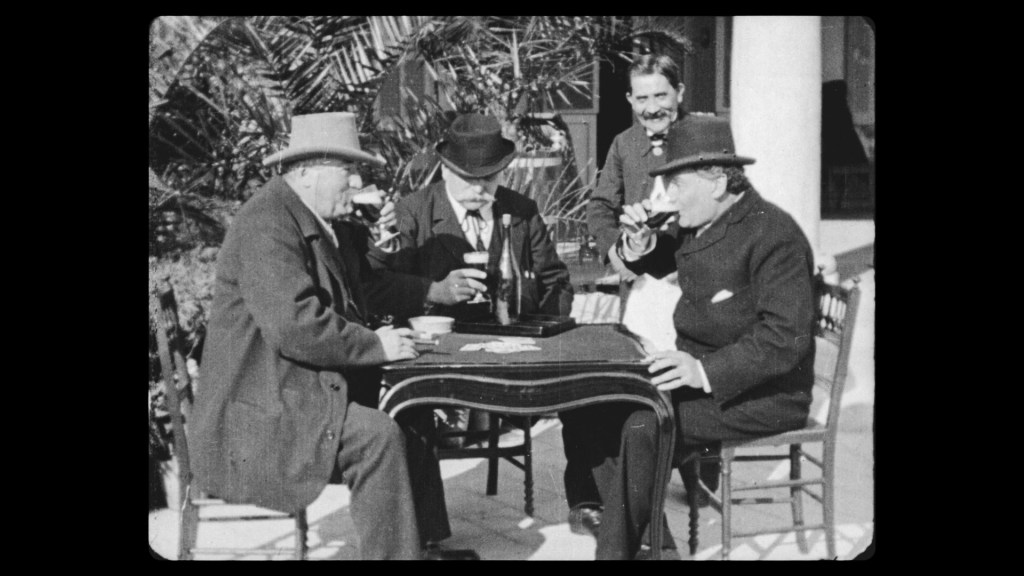
DVD/Blu-ray review: Napoléon, vu par Abel Gance (Potemkine, 2025)

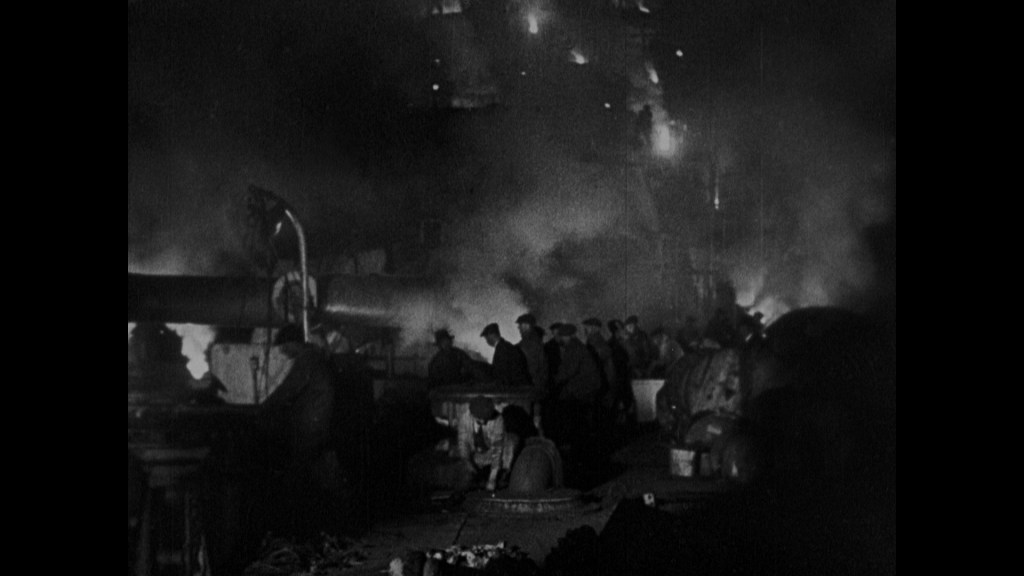
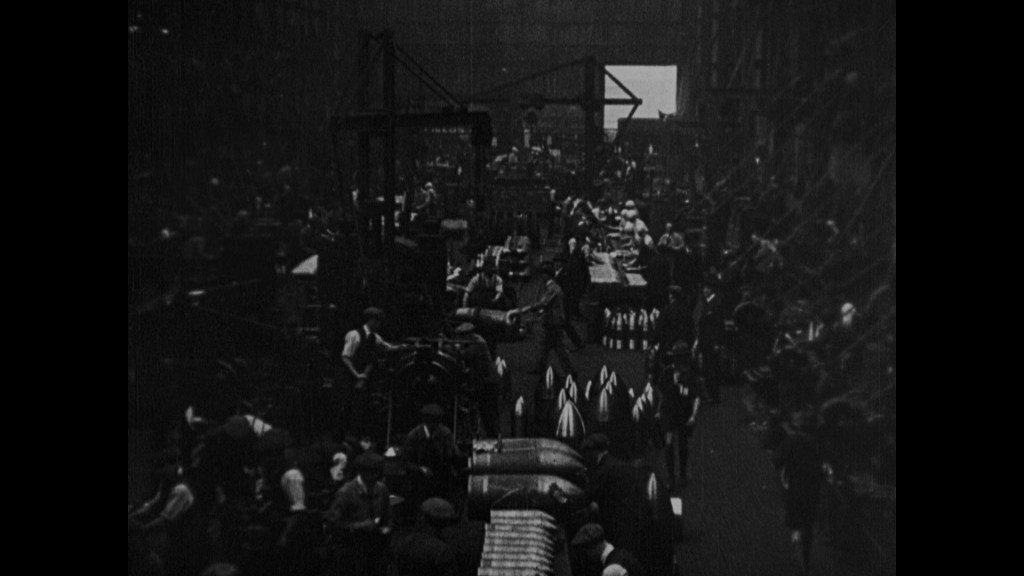
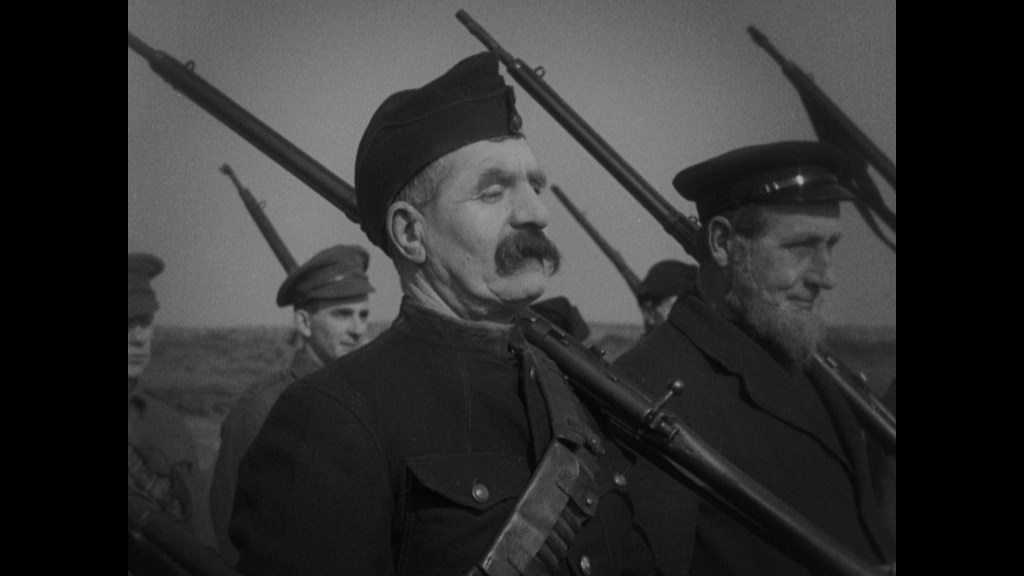
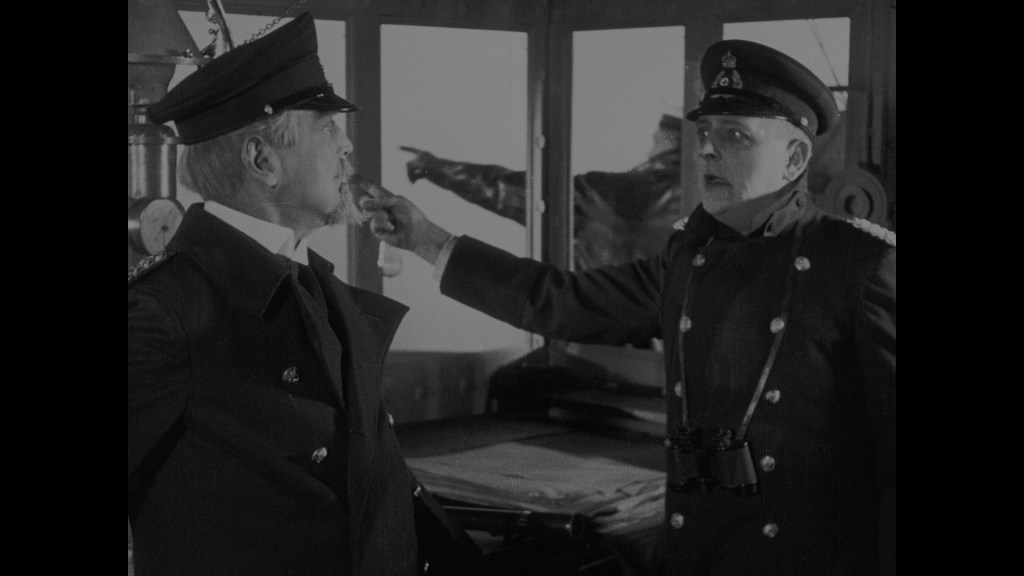
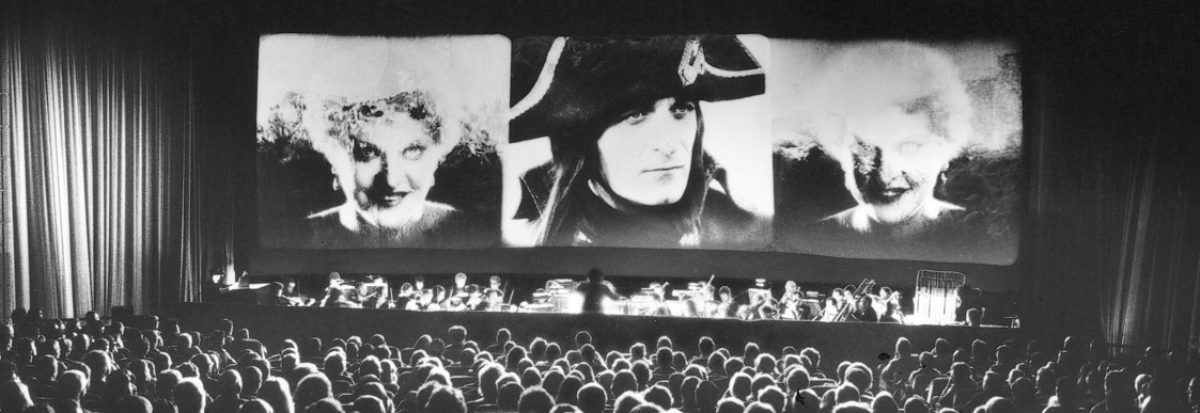
This week, I return to the new restoration of Abel Gance’s Napoléon (1927) by the Cinémathèque française. I saw the premiere of this version with live orchestra in Paris in July 2024, but now I have the opportunity to pour over it on the small screen. Yes, the restoration has finally been released on UHD, Blu-ray, and DVD formats in France by Potemkine. What follows is not so much a technical review, especially since I do not have the wherewithal to play – let alone analyse – the UHD discs of this edition. Instead, I want to comment on how the Blu-rays reveal some of the choices made during the restoration process. Though it was broadcast on French television in November last year, this is the first time I have been able to see it in detail. At home, I can pause, replay, and capture. While the sense of live drama so palpable in the Paris concert cannot be replicated at home, other aspects are perhaps more evident through analysis on the small screen…

Presentation. As befits the ballyhoo around this restoration, the box is pleasingly hefty. Indeed, it rather resembles a Kubrickian obelisk. And, like our prehistoric ancestors, it took me several minutes of examination and careful fondling to work out how to open the damn thing. But I can’t deny that it’s a lovely object to observe and to handle. Inside are 1) a fold-out box of the UHD and Blu-ray versions of the film, 2) a small booklet discussing the music and listing Gance’s cast/crew, and 3) the Table Ronde book from 2024 that contains a series of essays by various people involved in the restoration, as well as historians analysing the film. The booklet contains very little material that hasn’t been included elsewhere before, and the Table Ronde book was released in exactly the same format as a separate publication last year. (On this, see my earlier review.)

On the discs themselves, I immediately flag an issue that may concern non-French speaking readers of this blog. The Potemkine edition has no subtitles of any kind on any of its presentations. This is despite press releases promising (at the very least) English options for any/all formats of this edition (DVD, Blu-ray, UHD). Furthermore, the restoration end credits include a list of translators for six foreign subtitle tracks. None of these are listed on the packaging, and I checked on the Potemkine website and various other retail outlets in France to confirm: there is no mention of subtitles. I can only assume that this was due to copyright reasons, as it is commercial folly to reduce your potential foreign sales by not offering more language options. I’ve not yet heard about any plans for the film’s international release, either via Netflix or any other means. I can only imagine that one or more interested parties don’t like the idea of an English-language home media edition of this film preceding a future release. Though the Table Ronde publication makes the claim for the Cinémathèque française possessing worldwide copyright for Napoléon, there are clearly limits as to how and when it is being sold to international territories. Since I began writing this review, news has emerged that Potemkine (and other retailers) have begun cancelling orders to anyone outside France. Merry Christmas, everyone!

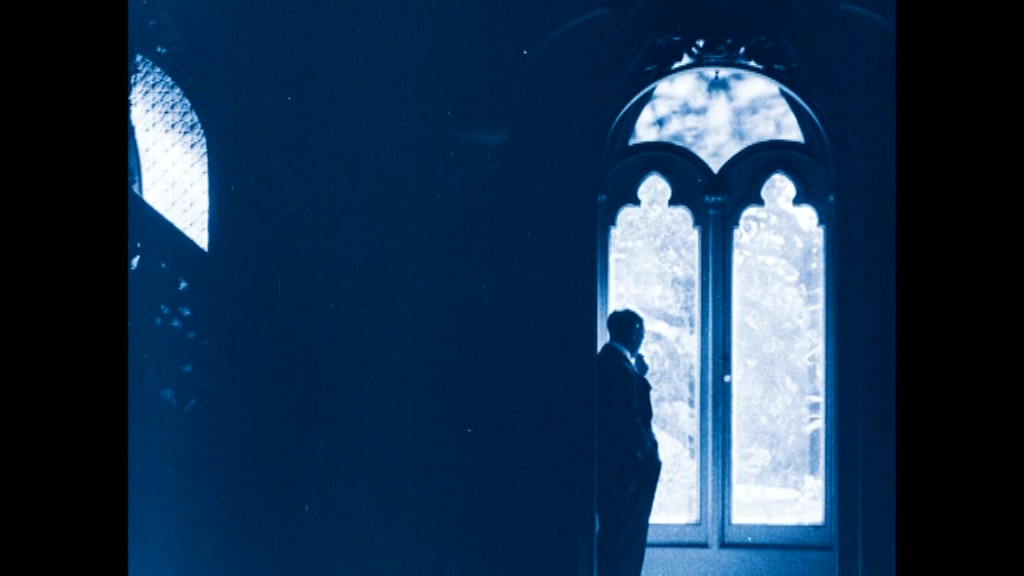
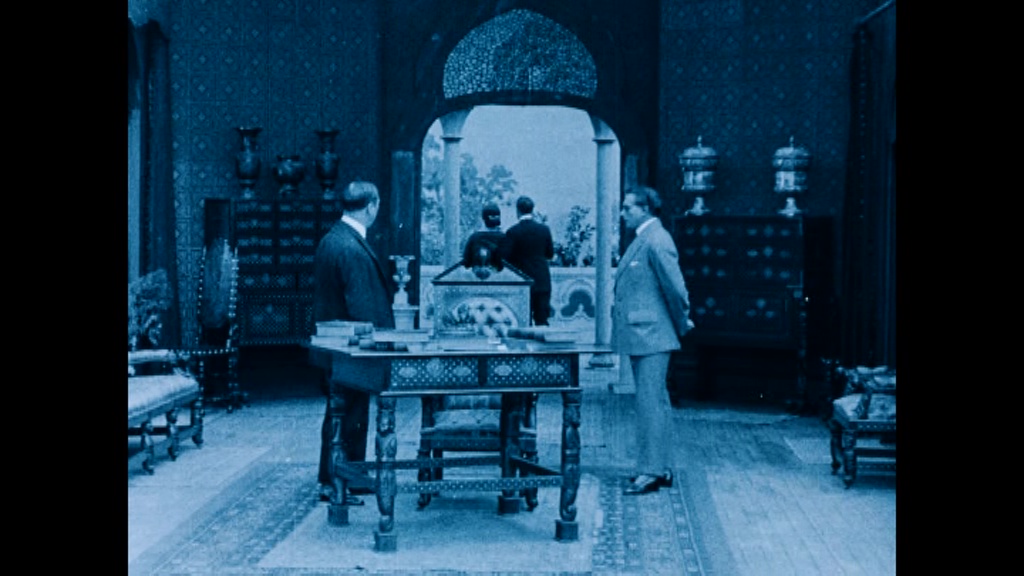
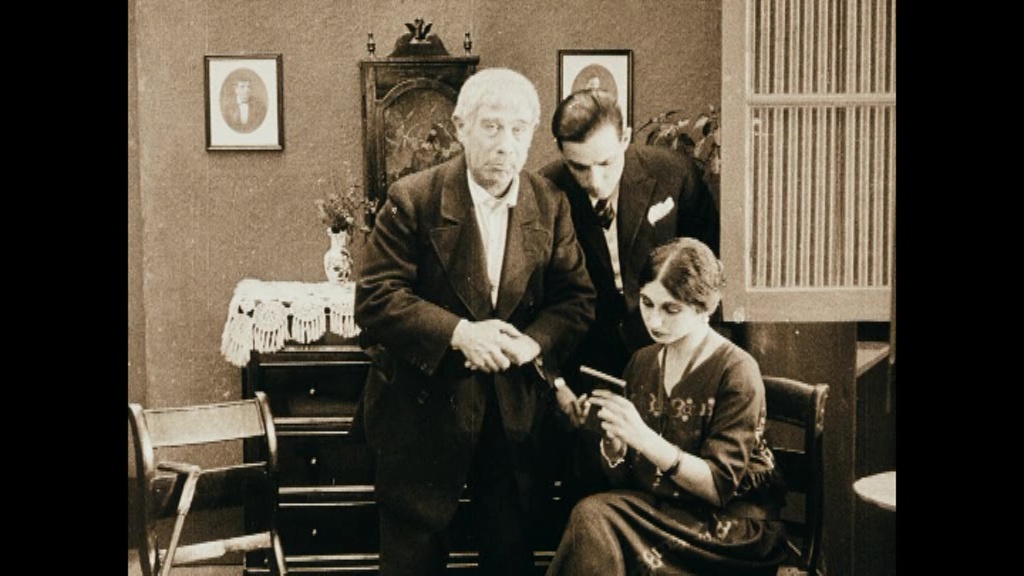
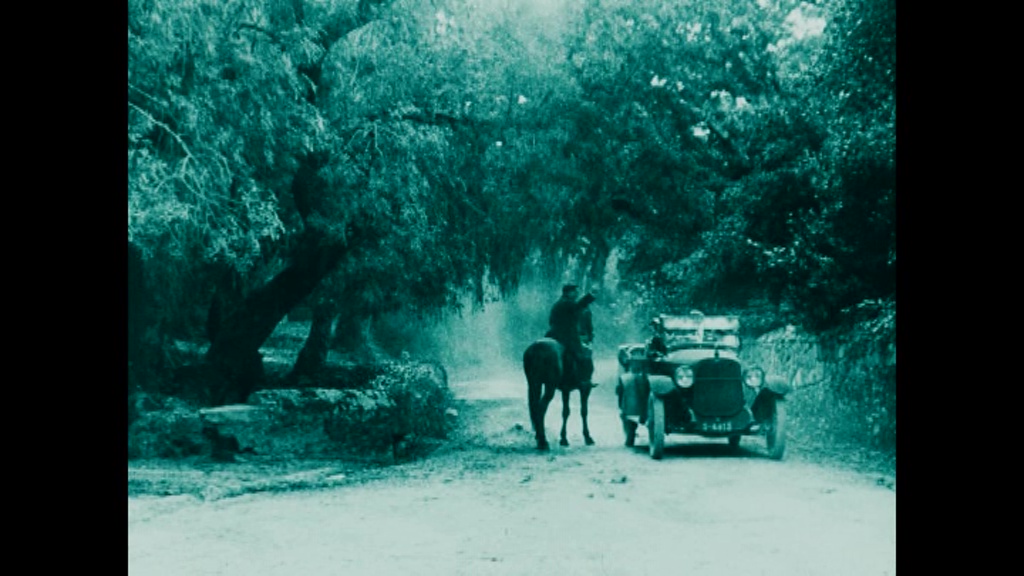
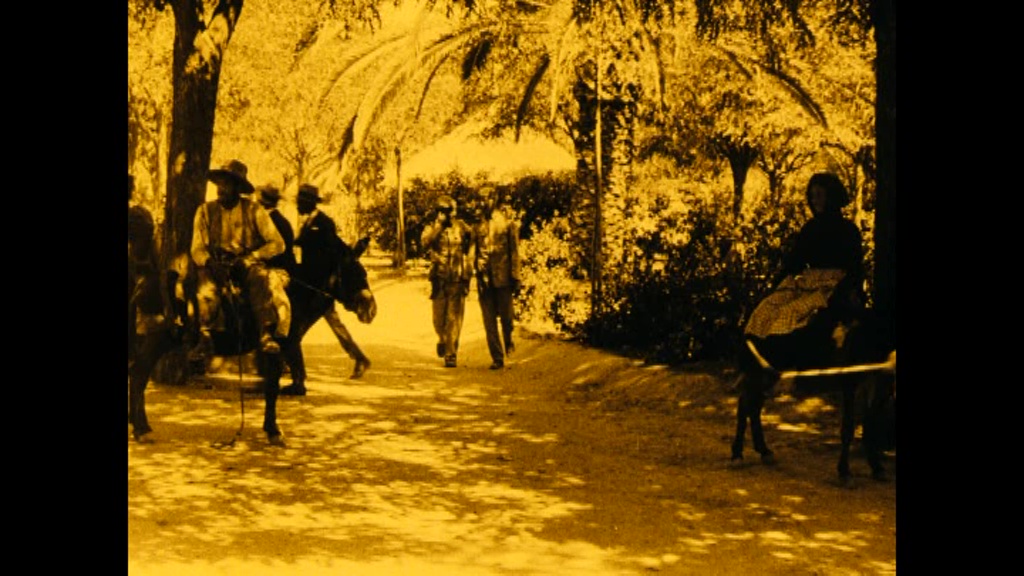
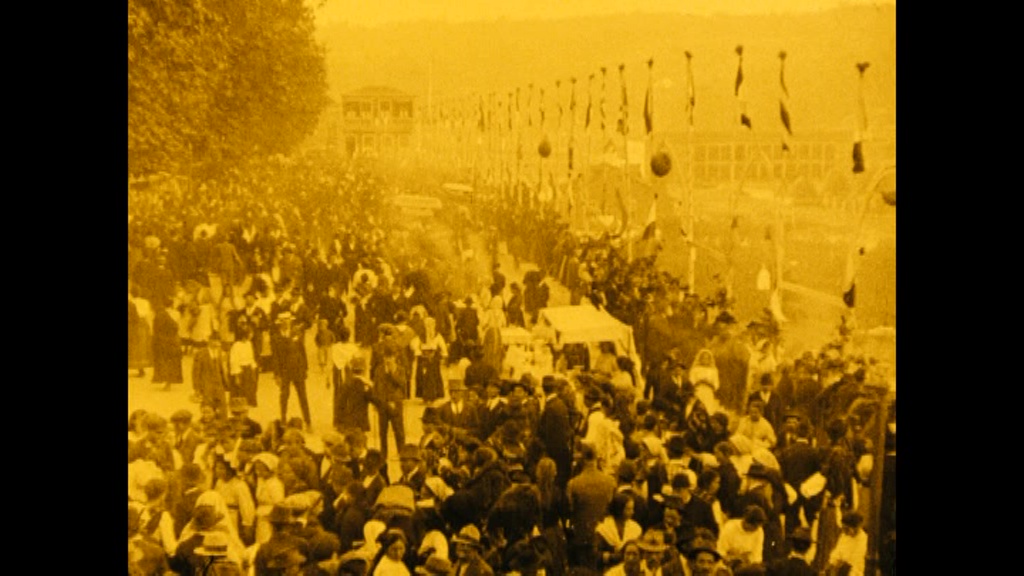
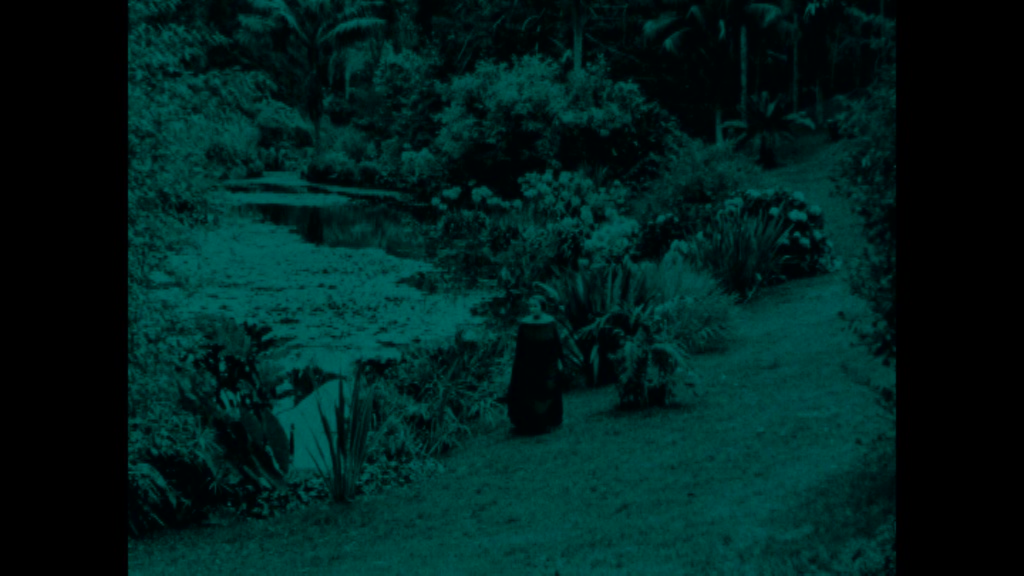
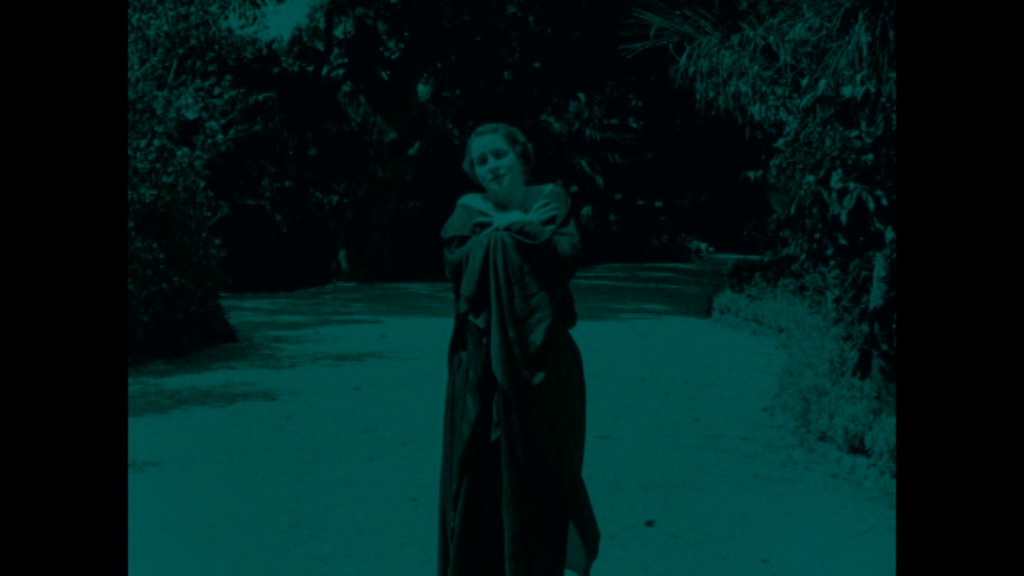
Image. Something I had not properly appreciated at the film concert in Paris was the was the Cinémathèque française sought to digitally simulate the look of Napoléon as it might have been projected on screen in 1927. This involves simulating the relative brightness of the projection lamp, as well as the framing of the image as projected on the screen itself. Watching the Blu-ray, these choices are much more striking.

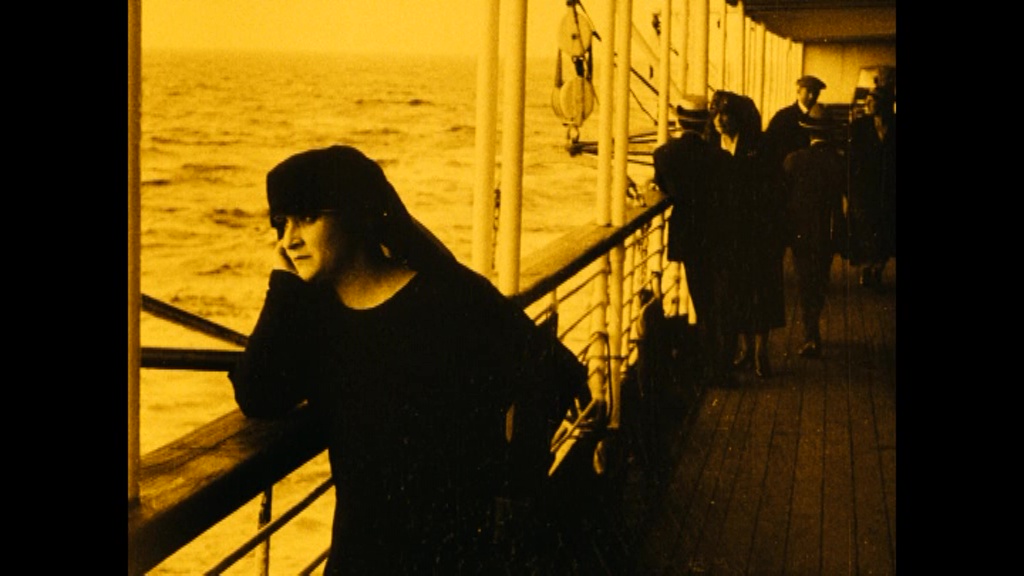
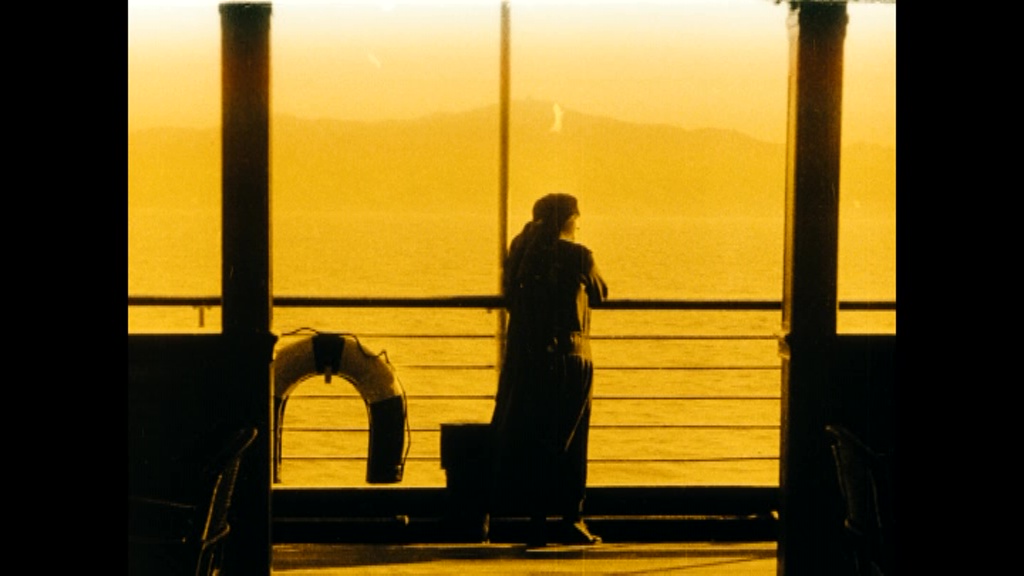
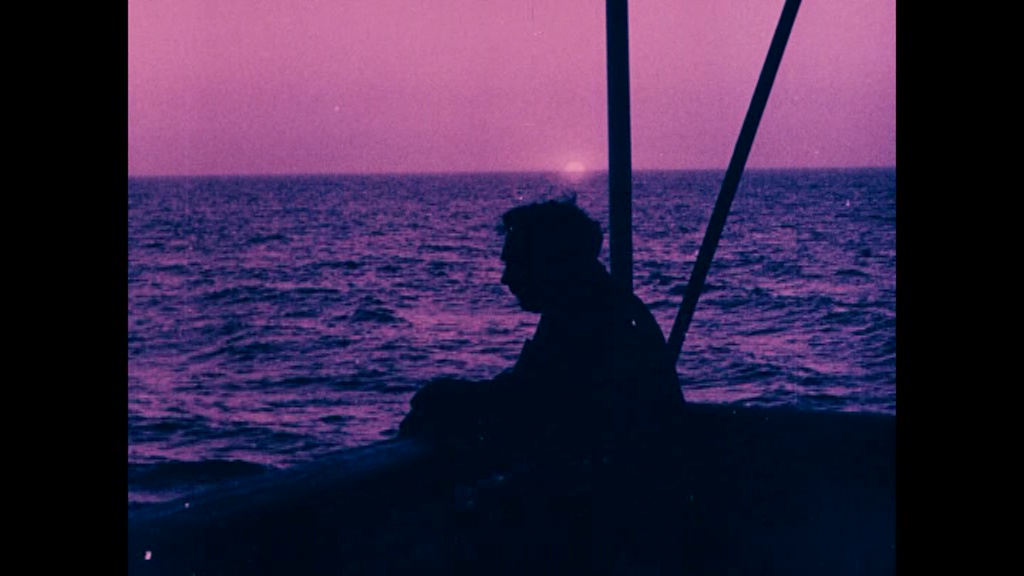
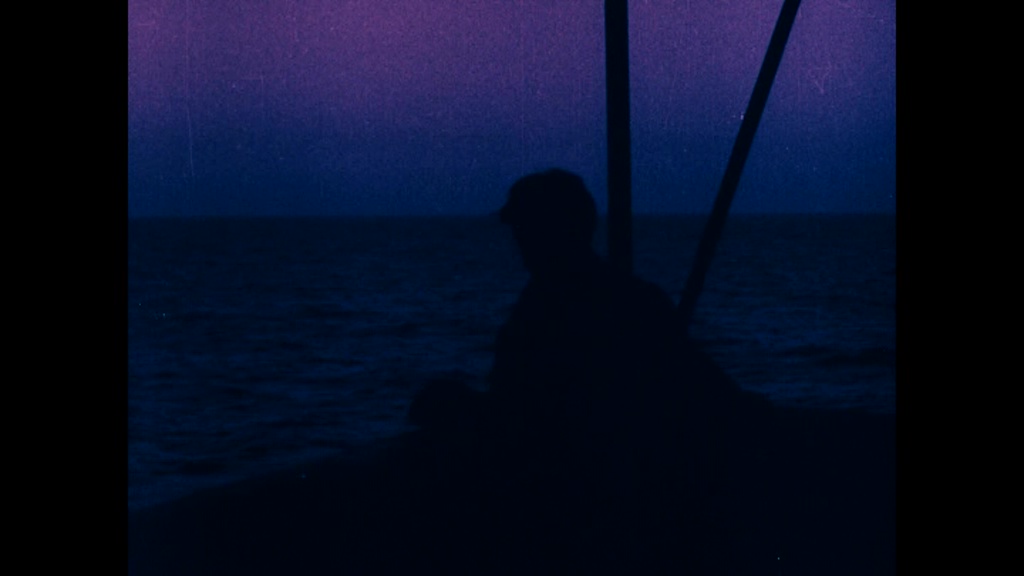
In terms of the relative brightness, projector lamps of 1927 were not only powered by different means but ultimately less luminous than a modern equivalent. A simulation of this difference involves filtering the restored video to make it look warmer than it would otherwise appear. Restorers are always conscious about digitally recreating the “look” of a silent film that was shot on celluloid, but the issue of projected brightness is less discussed. However, the effort to adjust the look of Napoléon this way has at least one recent precedent. The 2019 restoration of Gance’s La Roue (1923) by François Ede and the Cinémathèque française made a conscious effort to reproduce the look of the film as projected in 1923. (You can see images from this restoration on my post from last year.) Apparent to anyone who saw previous editions of La Roue, either projected on 35mm (on modern projectors!) or digitally reproduced on DVD, Ede’s choice gave the extensive black-and-white photography of this film a much warmer look than before. This results in black-and-white no longer being… well, black-and-white. For monochrome scenes (the majority of the film), it’s like an ochre wash has permeated the frame. It will also influence tinted/toned sequences, though the interaction of this filtered brightness with colour elements is more difficult to unpick.

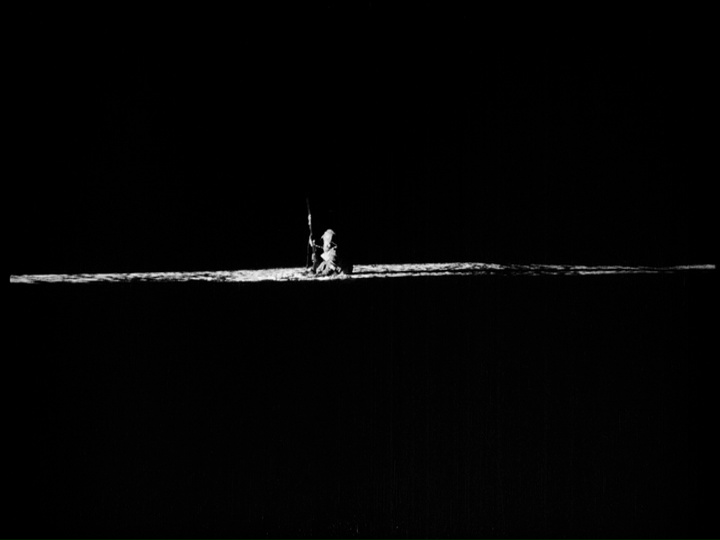
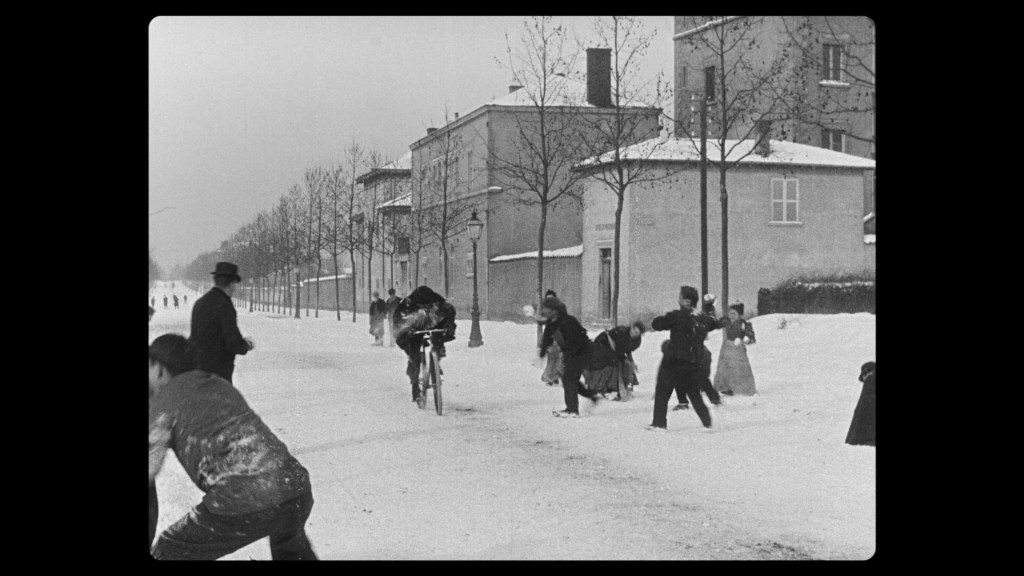
All of which is to say that the black-and-white sequences of Napoléon also look less black-and-white than in previous editions. This is most obvious (and, to my eyes, most aesthetically counter-intuitive) in the prologue, where the snow in the snow-covered landscape now looks decidedly less clean. On the big screen in 2024, I think my eyes adjusted to this – though there was so much light spill from the orchestra that the contrast was hardly the best anyway. On the small screen, I notice the aesthetics of this simulated warmth (I can’t quite call it “dimness”, but that it surely part of it) on the Blu-ray much more. Ede explained his reasoning for this choice about brightness in the liner notes for the Blu-ray of La Roue in 2019, by far the best and most transparent set of notes for a restoration I have ever read in this format. There are no such explanatory notes on the Cinémathèque française release of Napoléon, so it’s worth saying again: these scenes are not tinted or toned; they are monochrome black-and-white, purposefully rendered less so.

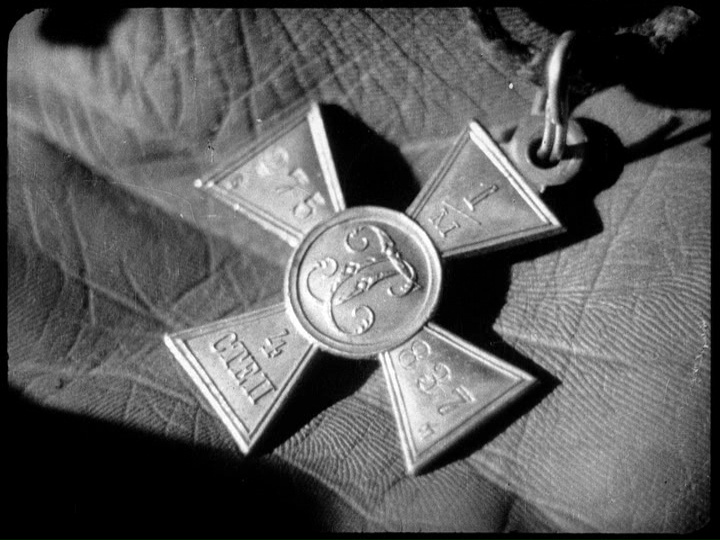
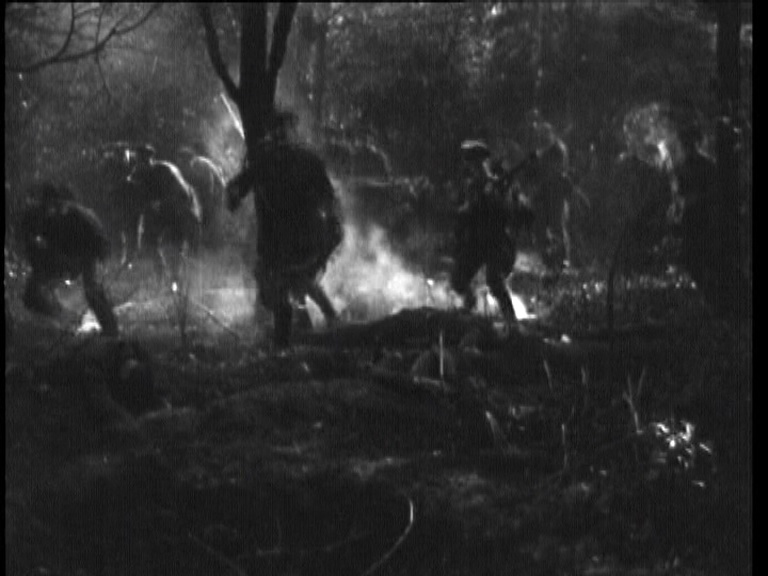
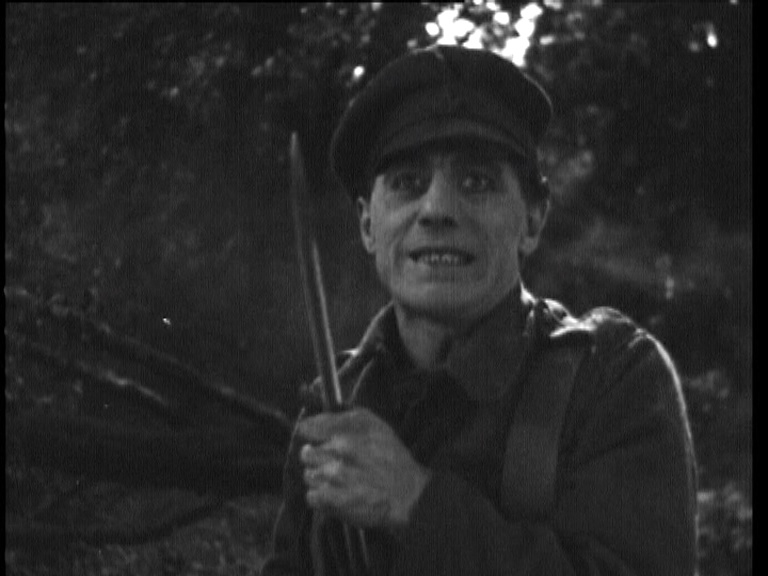
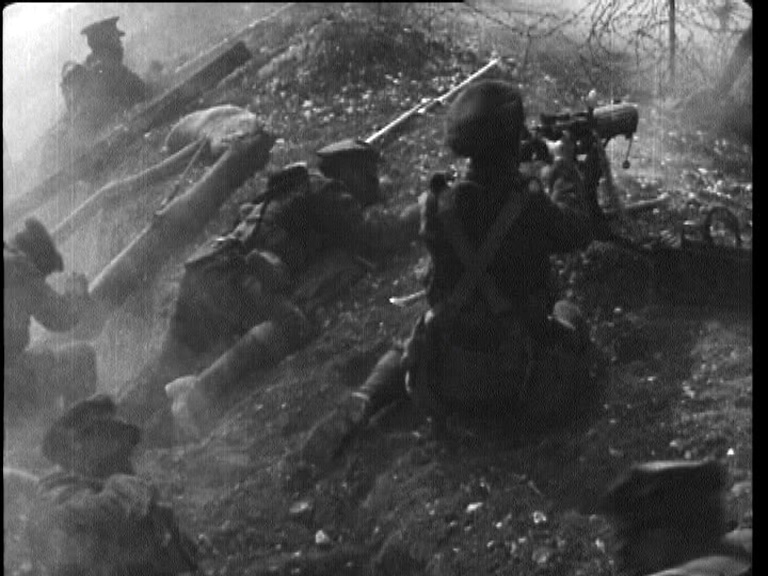
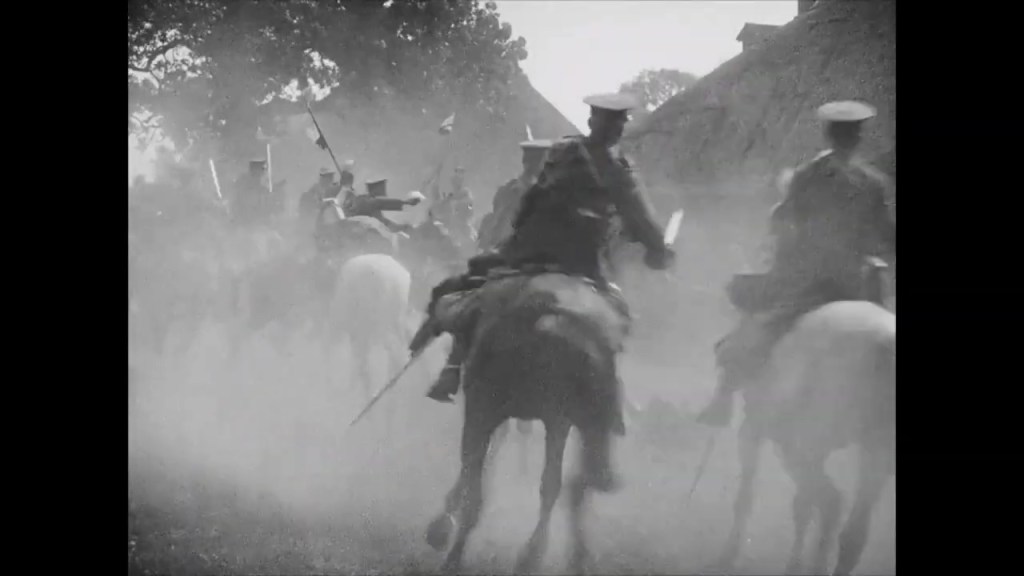
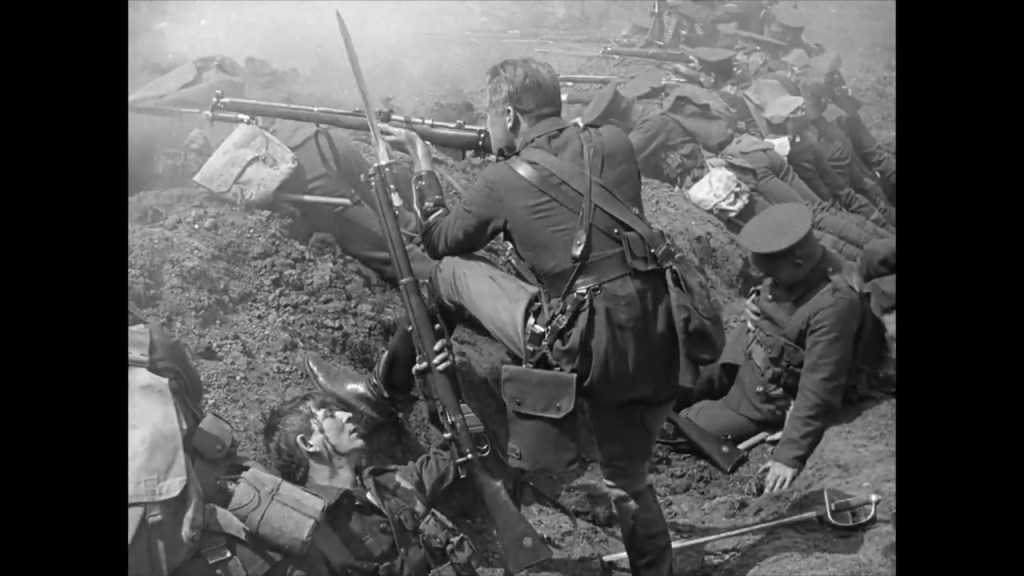
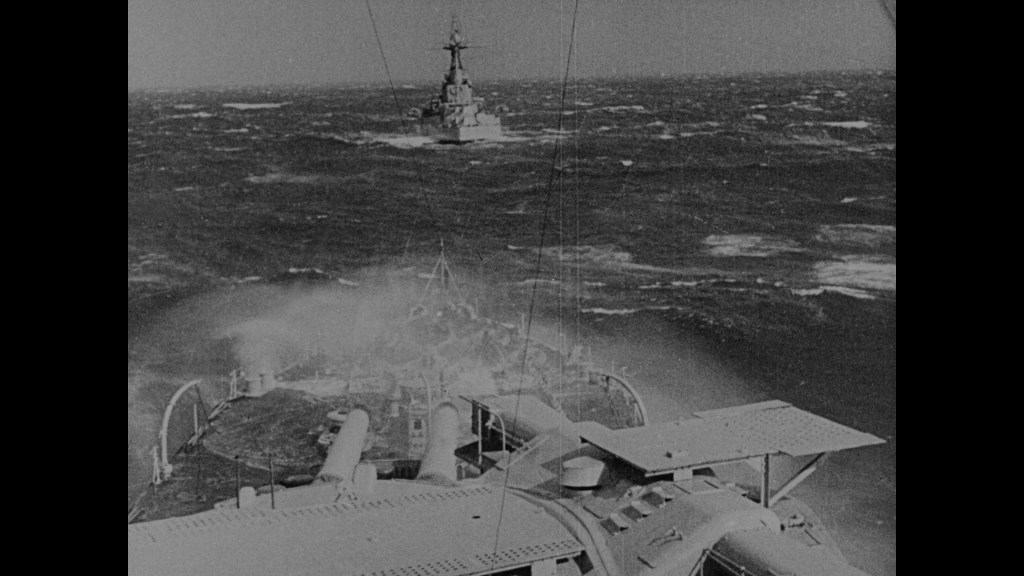
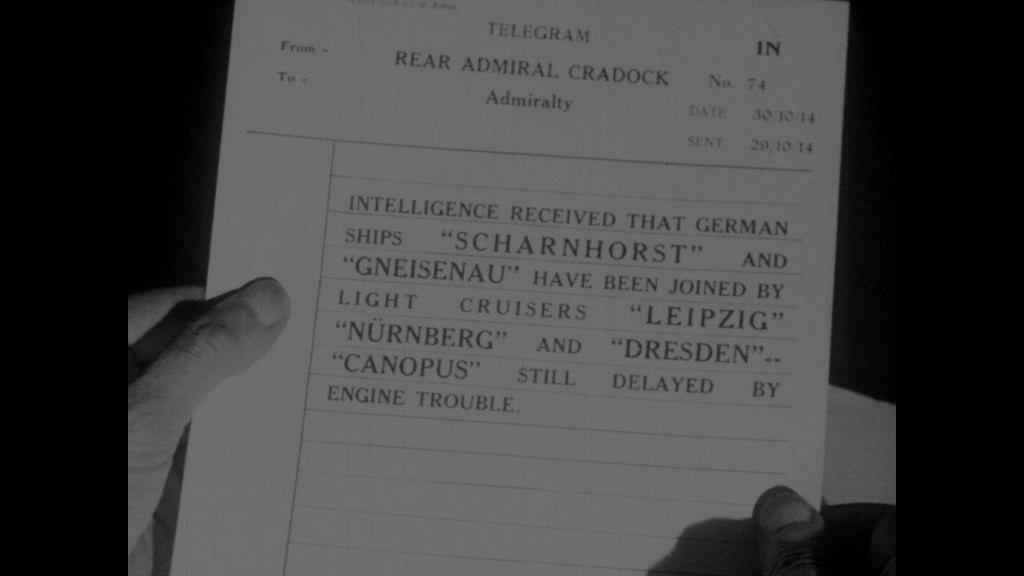
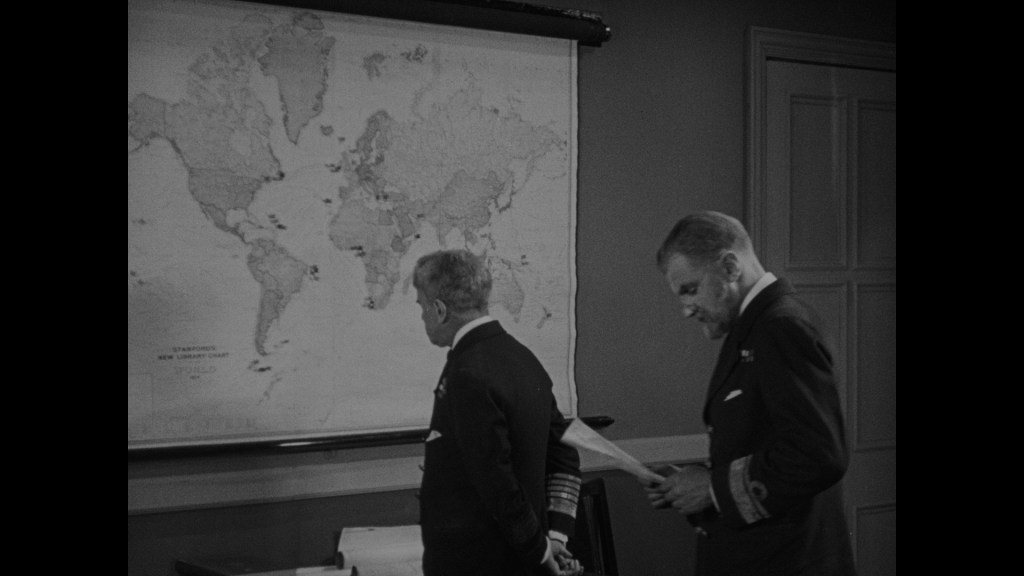
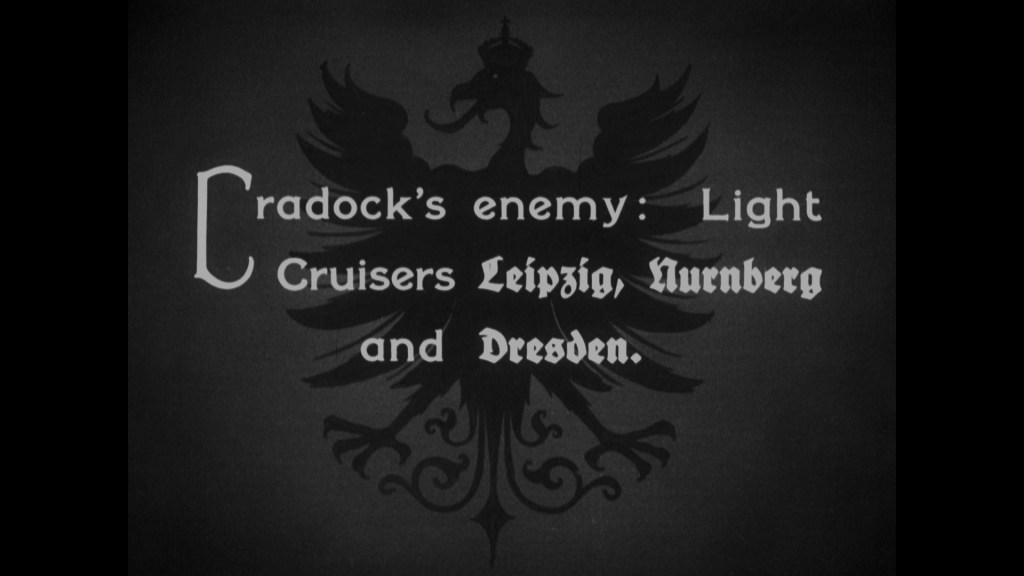
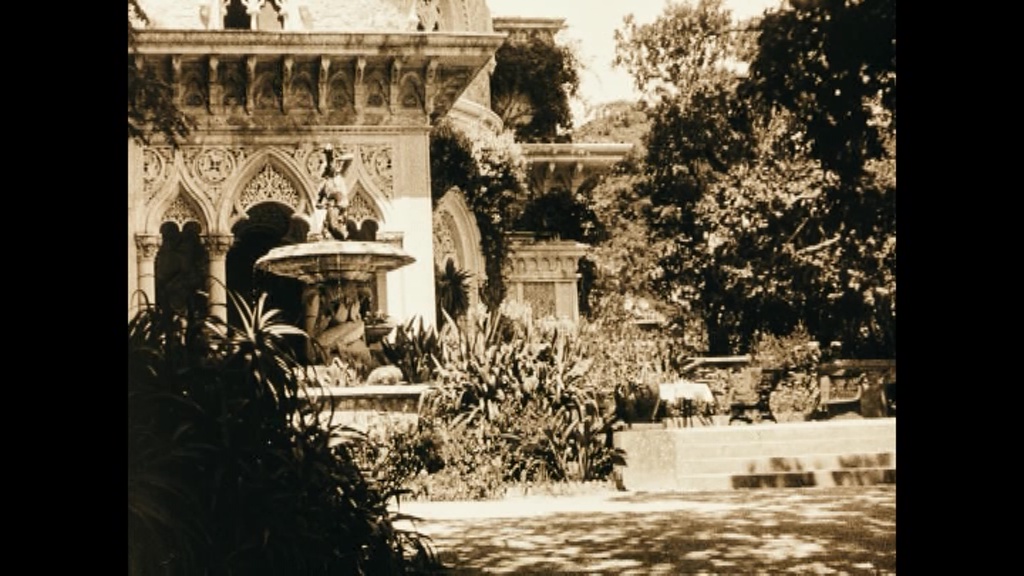
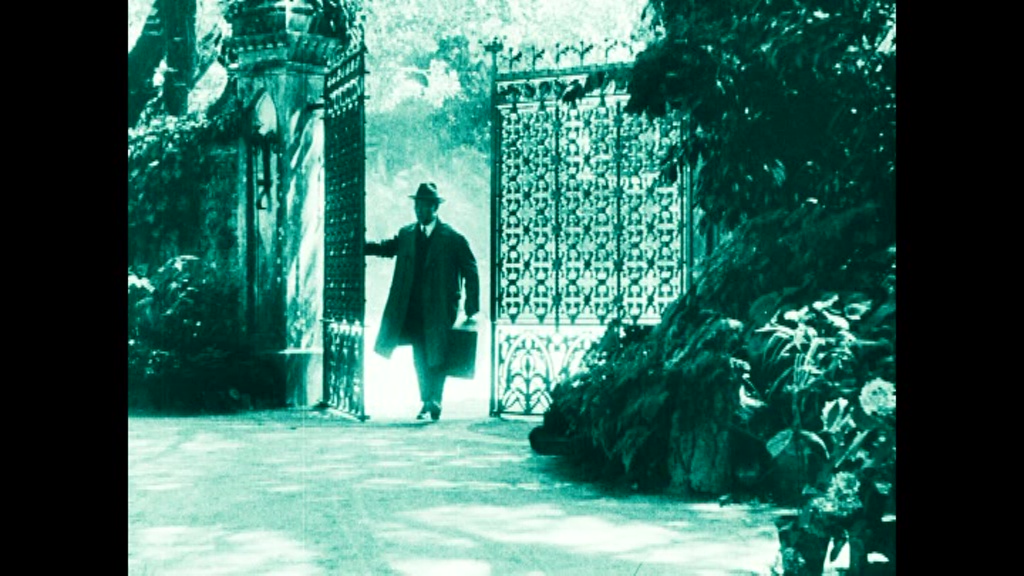
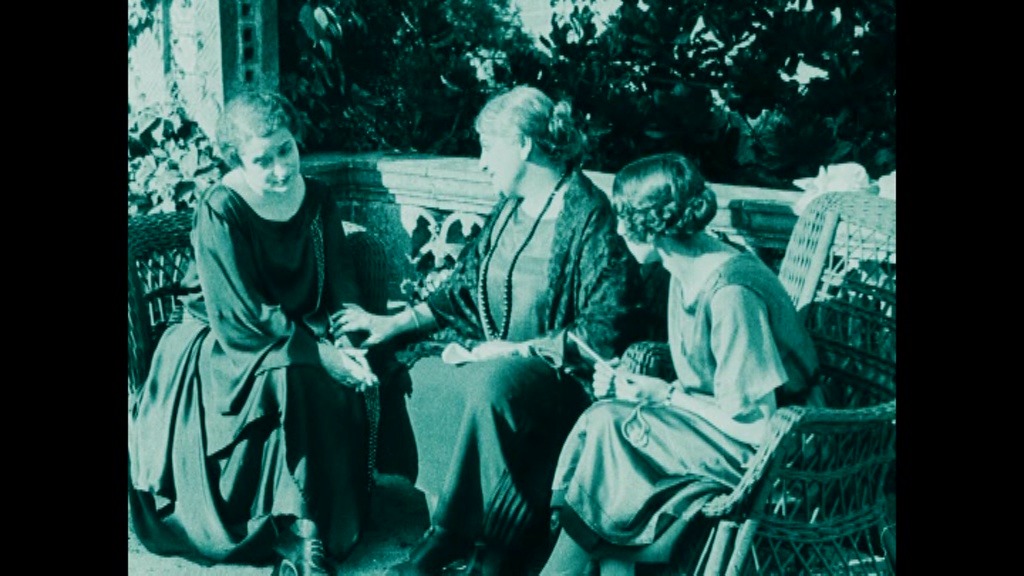
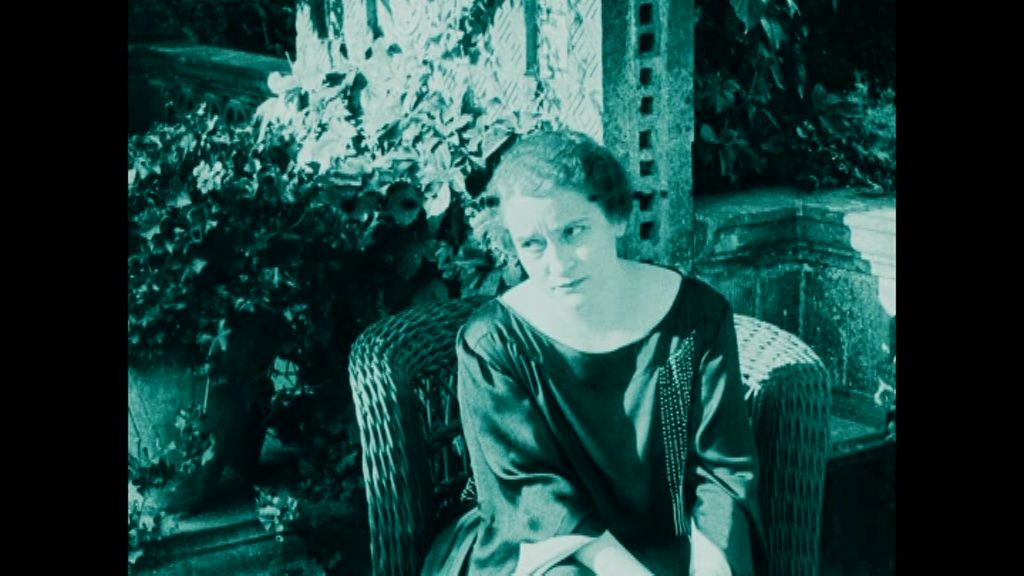
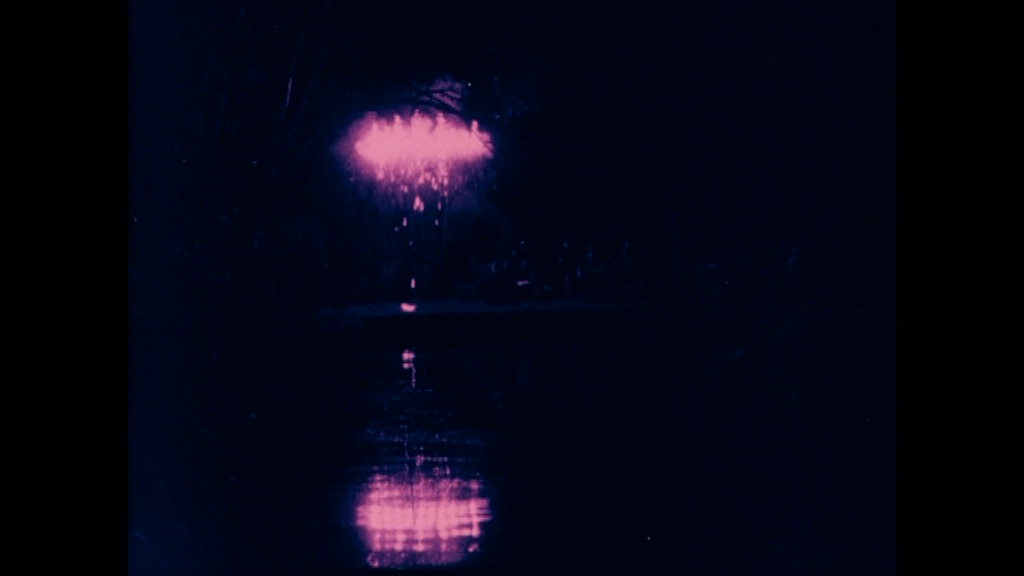
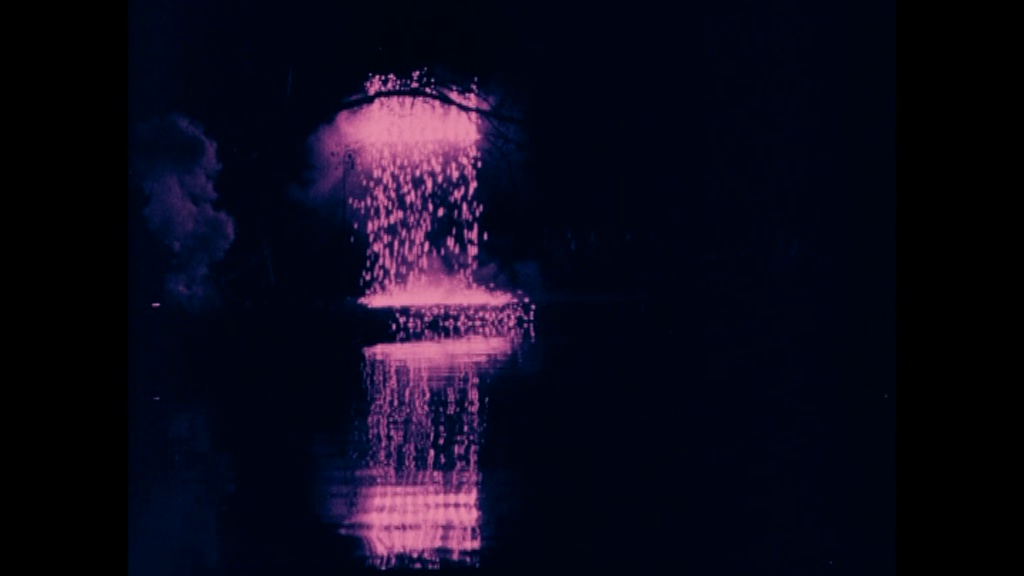
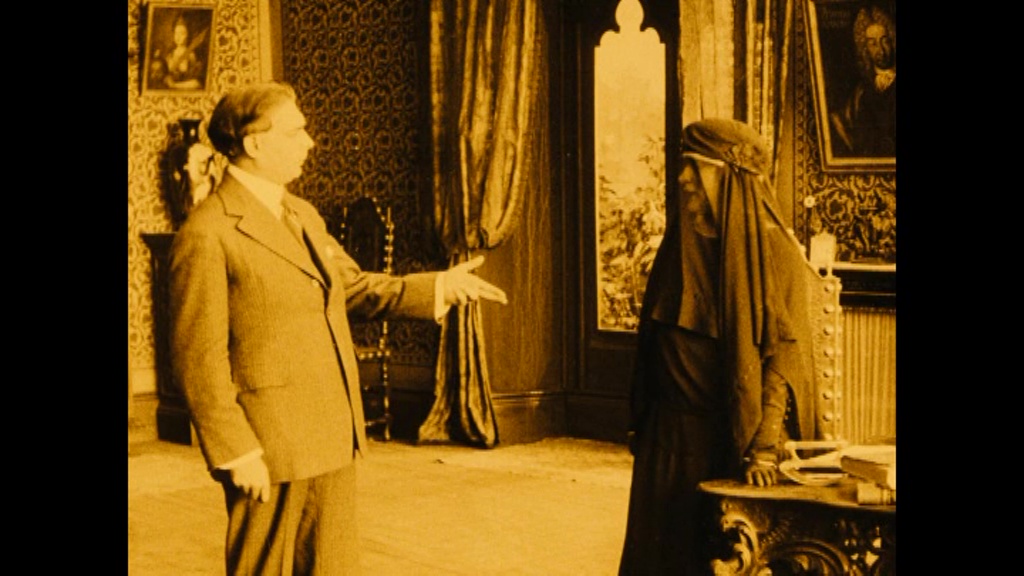
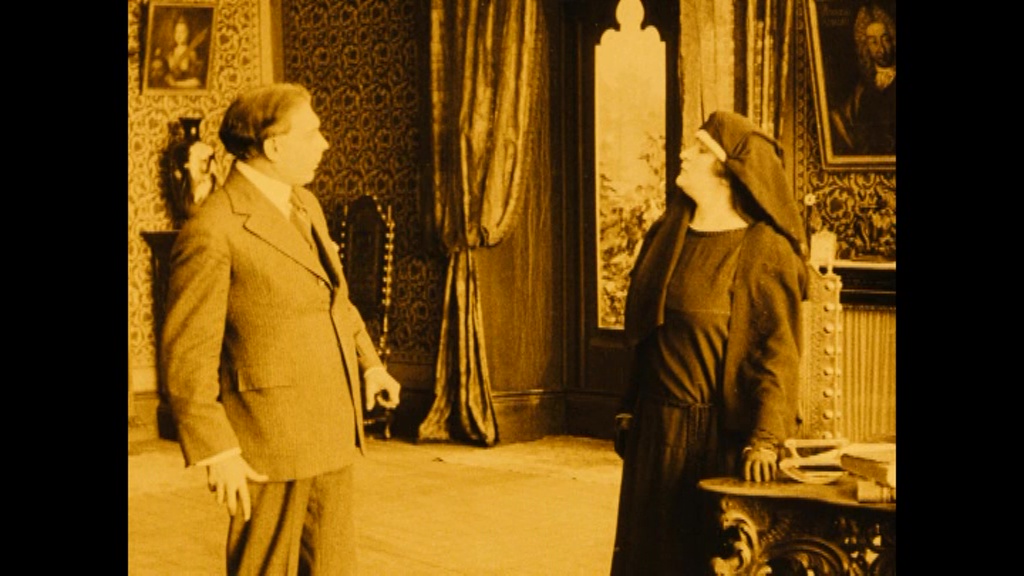
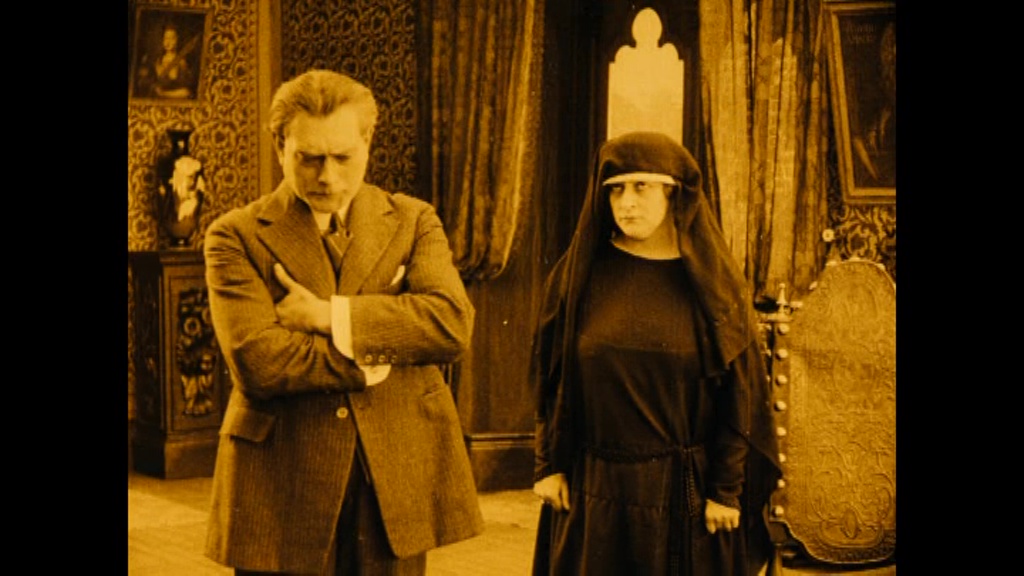
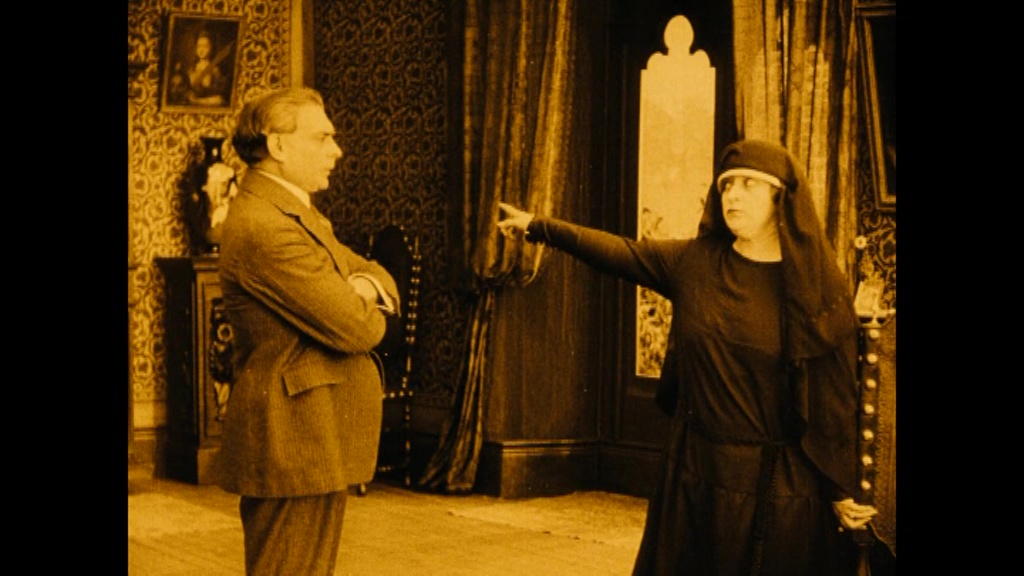
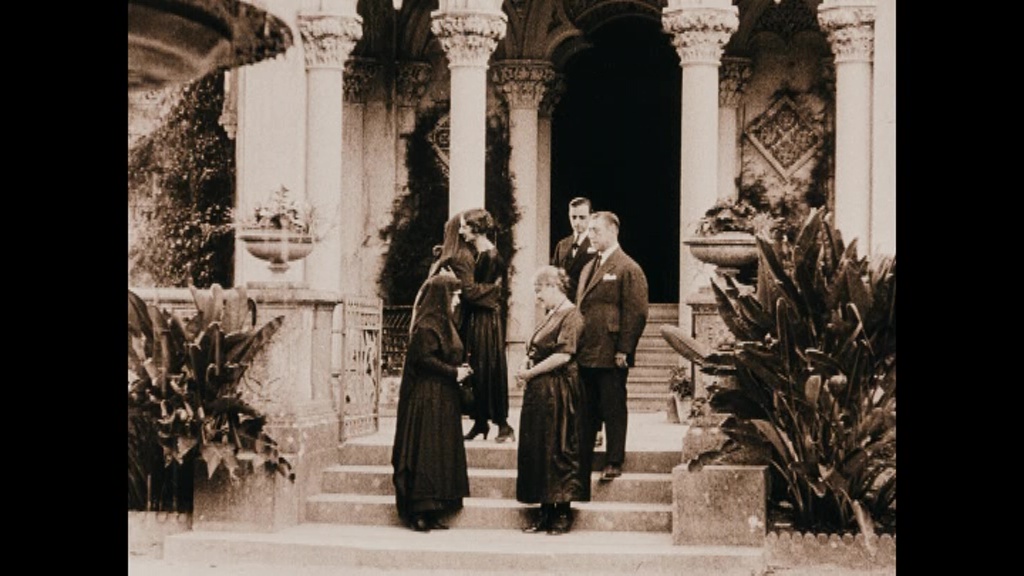
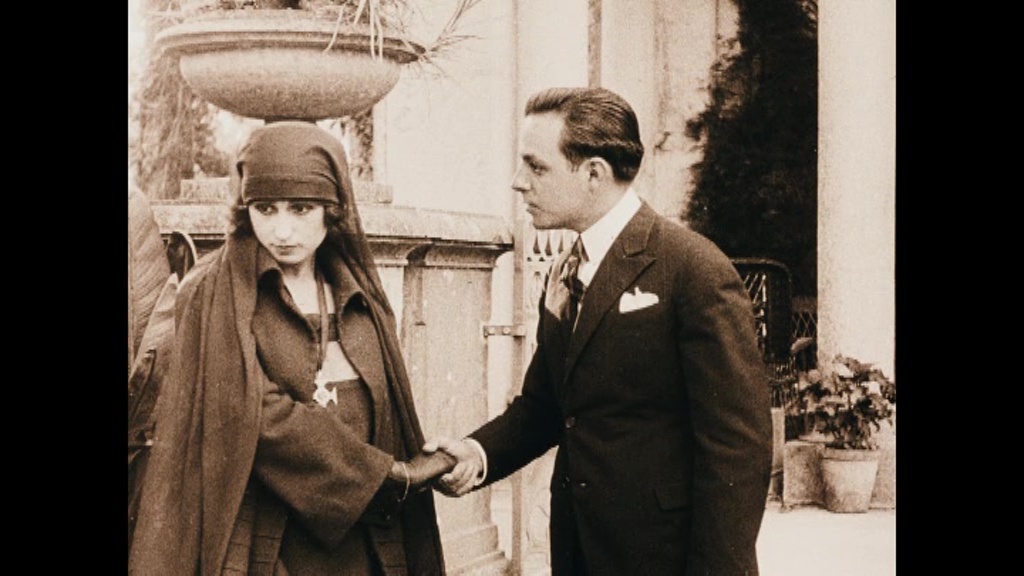
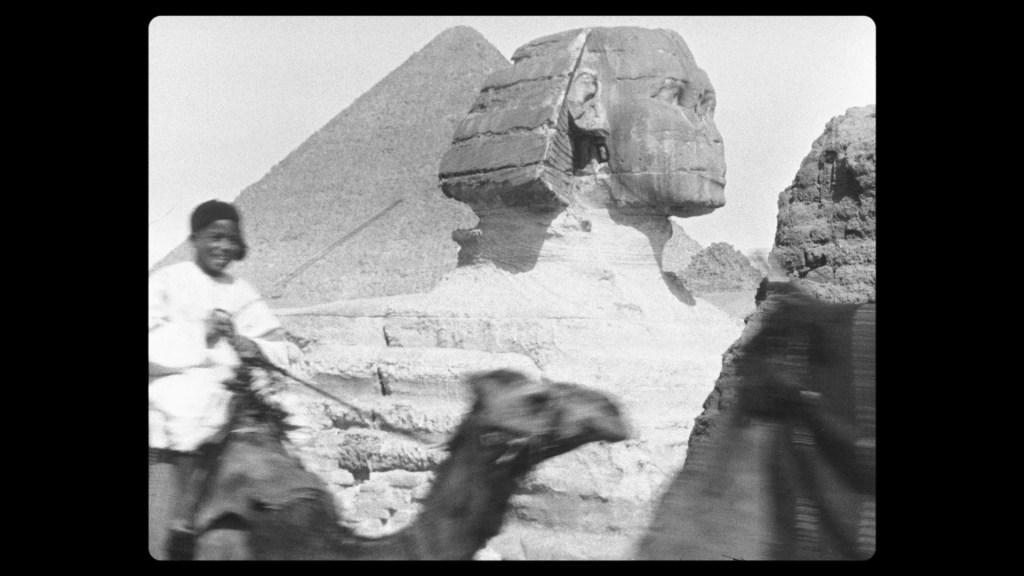
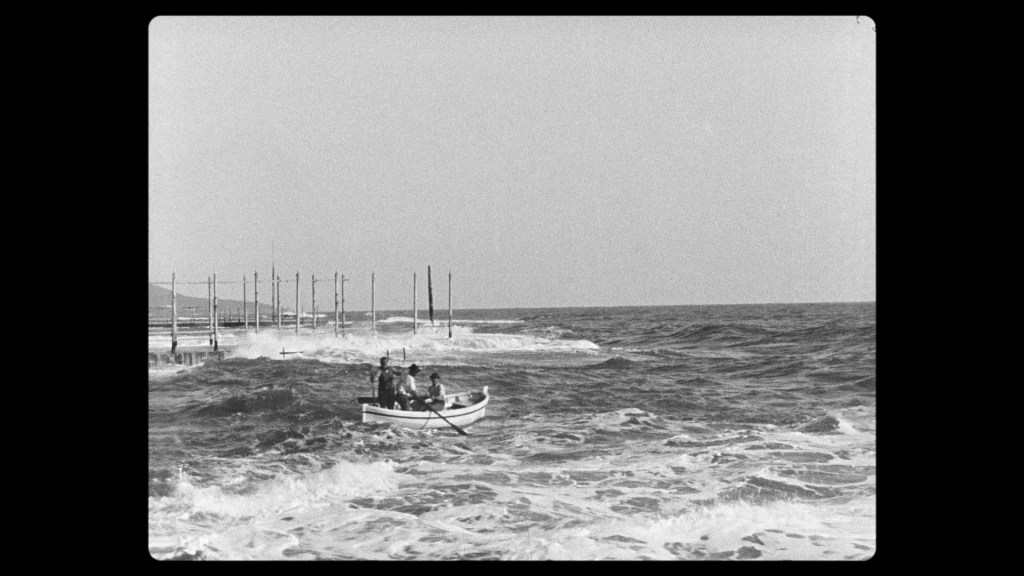
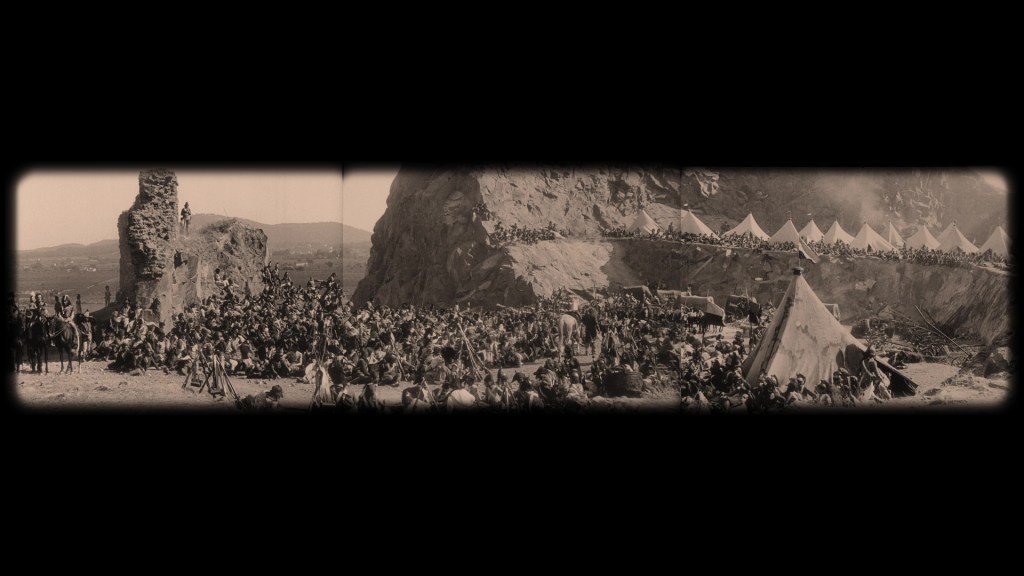
In terms of framing, the Cinémathèque française went one step further with Napoléon than with La Roue. According to their analysis, the aperture of contemporary projectors would slightly crop the film image on all four sides of the frame. As the below captures illustrate, there is less information within the frame in the 2024 restoration than in the BFI’s 2016 restoration. This is very noticeable as soon as you compare identical frames from identical shots between versions. I don’t have the time or energy to offer dozens of examples. (It is complicated by the fact that different restorations have utilized material from different versions of the film, so finding identical shots is rather time consuming!) But the final triptych is a clear example of how images deriving from the same negative (originally included in the Opéra version and subsequently added to some presentations of the (shortened) Apollo version) look different due to choices of the restorers. First is an image from the BFI’s 2016 restoration, second one from the new Cinémathèque française restoration:

I simply don’t know what to think about either of these choices. I understand and respect absolutely the desire to be historically informed, though it is ultimately impossible to ensure absolute fidelity to lost practices. Accuracy is also difficult to guarantee in a realm where there was enormous diversity across cinemas and equipment. Even this “fixed” digital image will look different on every screen that it is seen – projected or otherwise – in 2025. This is not to say that any desire to emulate the aesthetic of projection in 1927 is wrongheaded; it isn’t. But it is an irony that this restoration, which seeks to reveal Gance’s masterpiece in its ideal form, also takes steps to restrict the boundaries of its images.

It is also curious that Napoléon has been chosen to be presented in this way, but not other contemporary films produced by the same company, the Société Générale de Films (SGF). Gaumont’s recent restorations of La Passion de Jeanne d’Arc (1928) and Finis terrae (1929) do not feature the cropping or dimming undertaken on Napoléon. You can see the edges of the frames in these other films, and the black-and-white is… well, black-and-white. Does Napoléon particularly benefit from extra treatment? If so, why? Or are we to take it that Gaumont’s restorations are somehow inaccurate, or at least ahistoric? I would perhaps have fewer qualms if the choices made during this restoration of Napoléon were in any way detailed, clarified, or explained in the accompanying booklet. But they are not.

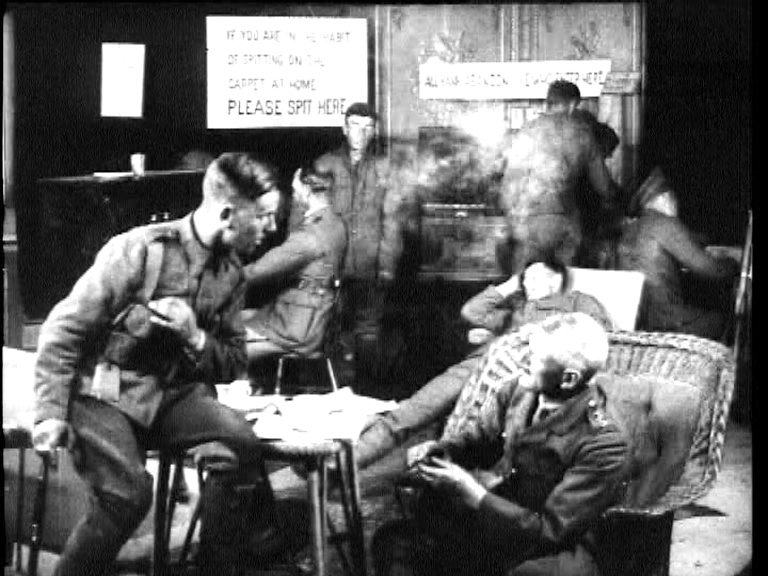
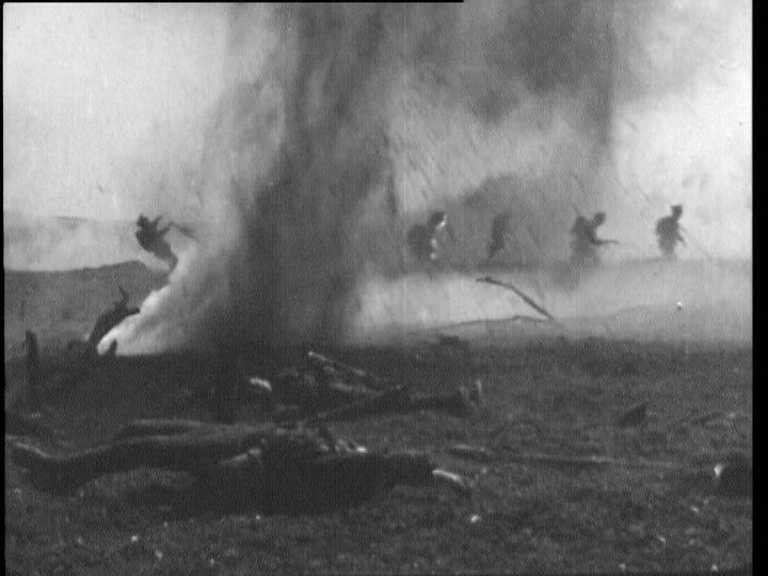
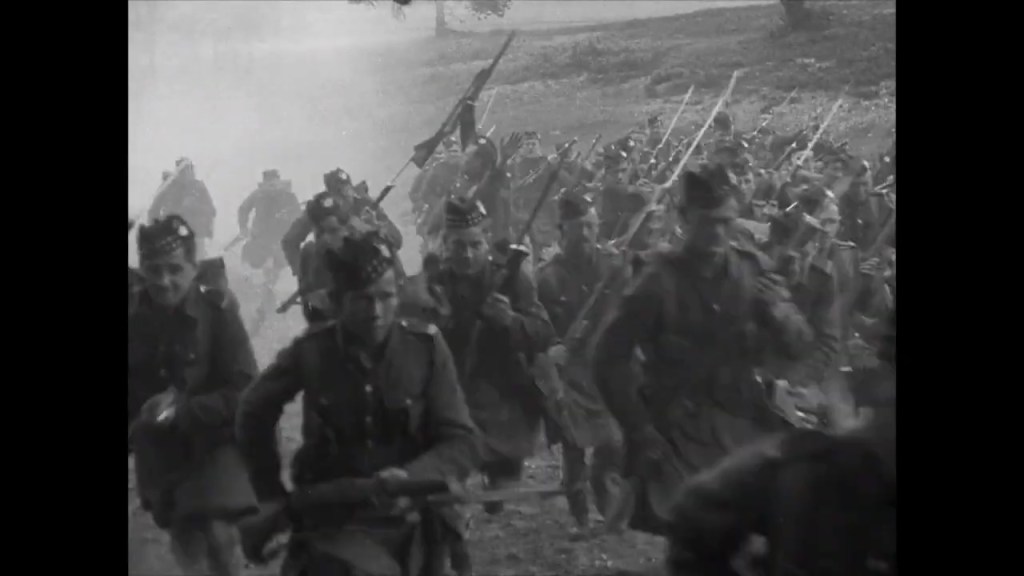
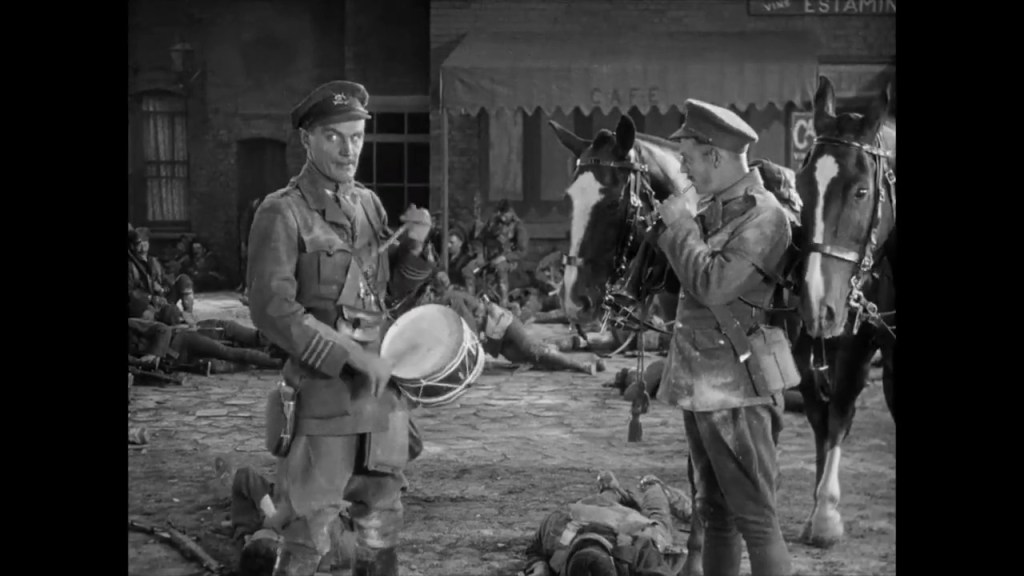
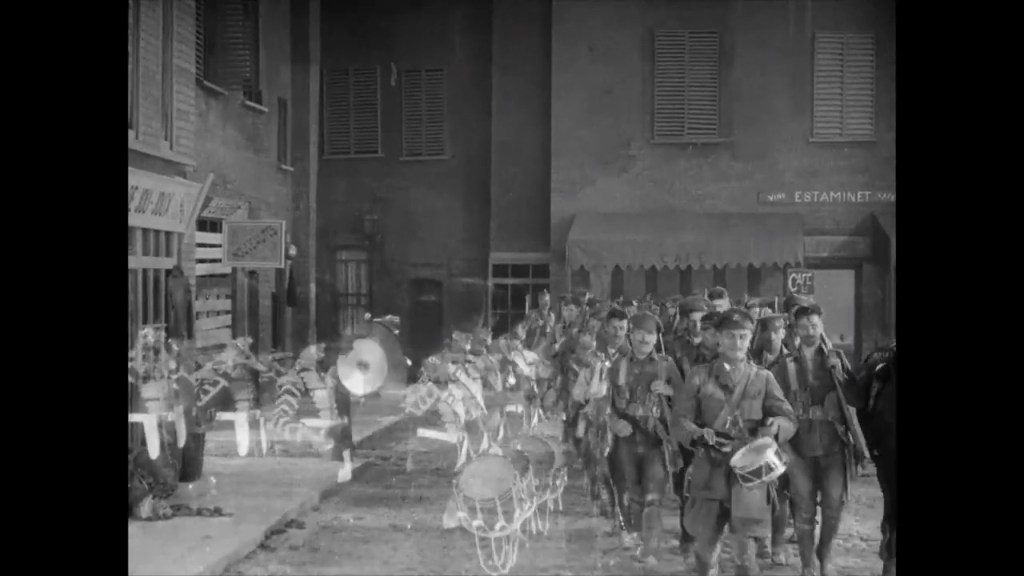
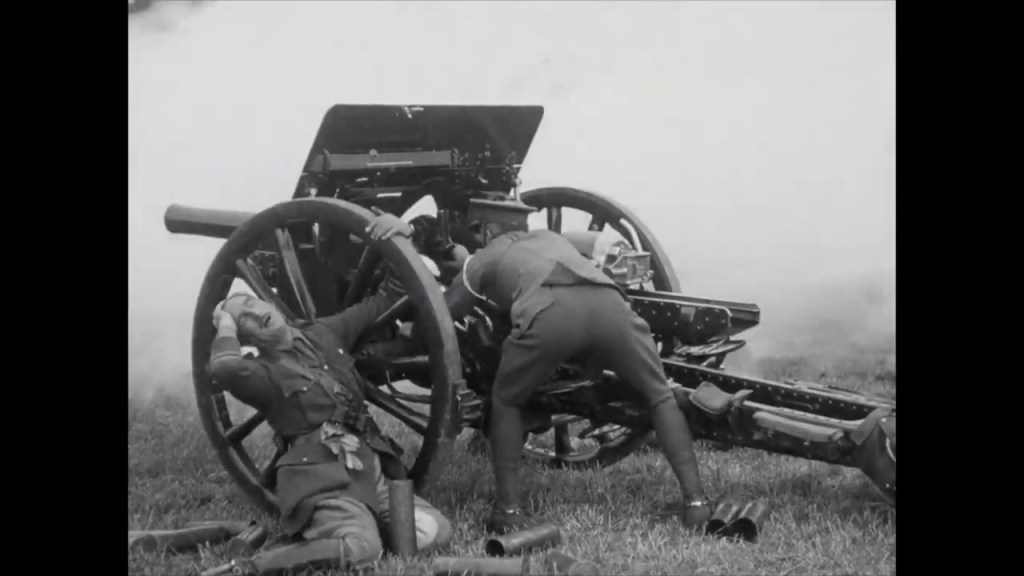
The extras. To better illustrate the above issues, I can do no better than turn to one of the extras on the Blu-ray edition. Autour de Napoléon (1928) is a documentary made by Jean Arroy during the filming of Napoléon in 1925-26. It boasts some extraordinary behind-the-scenes footage of the production, both during and in-between shooting, as well as extracts of Napoléon itself. Extracts from Arroy’s remarkable film have previously featured in various modern documentaries on Gance and/or Napoléon, but this is the first time the surviving material has been assembled into a coherent whole. Alas, this restoration of Autour de Napoléon does not state how long it is, nor how this compares to the film’s original length in 1928. (Nor does it state what framerate(s) it uses.) However, information from 1928 does survive in the archives, so I can report that the film was originally shown in a version of 1605m, which would be approximately 70 minutes at 20fps (or 78 minutes at 18fps). At just less than one hour, this 2025 reconstruction at least presents most of the film. And, unlike the opening credits of Napoléon, it admits that the original montage is lost and cannot be definitively recreated with existing material.

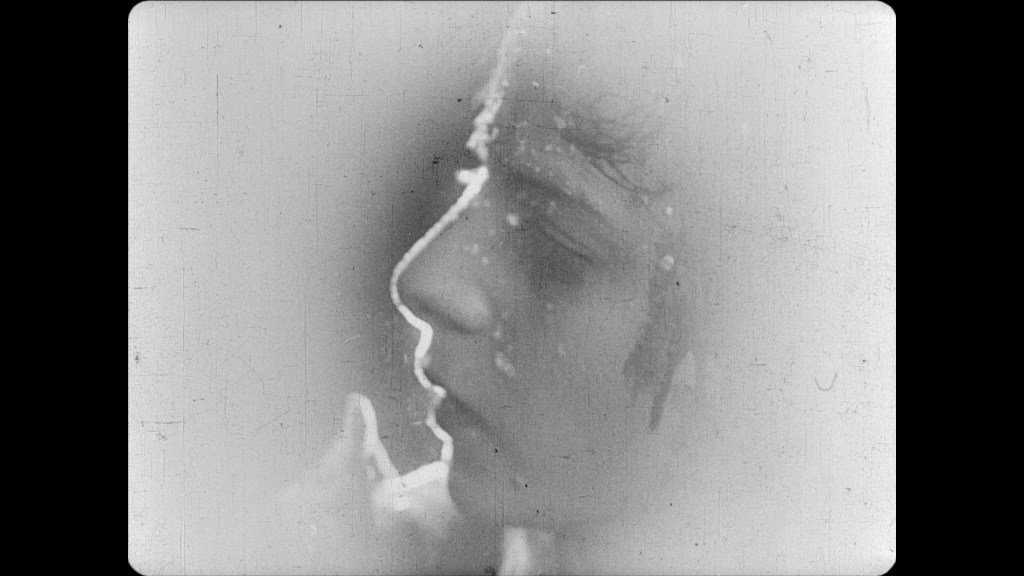
Autour de Napoléon was restored by Eric Lange, with the assistance of Joël Daire, Serge Bromberg, and Kevin Brownlow. The restoration was produced by FPA France (the successor company to Lobster), though in association with the Cinémathèque française. What is immediately striking about this presentation of Autour de Napoléon is that it does not feature either the re-adjusted monochrome or frame cropping of Napoléon. This is most obvious when Autour de Napoléon includes extracts from Gance’s film. Though the footage used by Arroy seemingly derives from both the Opéra and Apollo versions of the film, certain shots are identical to those found in the Cinémathèque française restoration of Napoléon. In these examples, the full frame is visible, and the monochrome is more obviously black-and-white. (The tinted scenes are also far less saturated.) Though the original material (derived from several sources) for Autour de Napoléon is clearly less well preserved than for Napoléon, the difference in what is seen on screen is significant. In the below image captures, those from (the FPA France) Autour de Napoléon are on the left and those from (the Cinémathèque française) Napoléon on the right:
But these aesthetic issues are secondary to the sheer joy of watching Autour de Napoléon. The footage of Gance and his crew filming Napoléon is astonishing. You can see the unbelievable lengths they went to in order to achieve visual mobility: we see the camera mounted on a sledge-propelled guillotine, strapped to an operator’s chest, run on cables from the ceiling, mounted on the back of trucks and of horses. What’s more, the camera so often had to be specially mechanized to turn without being cranked by hand. Witness the amazing sight of Gance and his crew standing to admire the camera turning 360 degrees on its tripod, as if it were a living thing.

None of this would be so impressive if it weren’t for the evident energy of the entire cast and crew at work. Quite simply, Autour de Napoléon is one of the most joyful records of filmmaking you’ll ever see. Immediately striking is the sheer fun these people are having making this film. Gance – as Bonaparte is described in the prologue of Napoléon – is everywhere. Here he is in the snow, urging on the children in their snowball fight, and urging on his cameraman Jules Kruger to capture the action. Here he is demonstrating a gesture to his young Bonaparte, a gesture we will see exactly reproduced by the actor in the film itself. Here he is with an enormous megaphone, poised to direct the huge crowd that fills the set of the Convention. Here he is with a revolver, firing in the air to create the shock and fear he wants from his performers…

What’s so striking is how playful Gance is on camera. At a distance, we see him intensely concentrating on the activity on set. But when he’s close by, he’s always got an eye for the camera – for us – and he plays up to it wonderfully. Here he is in a huddle with Annabella and Gina Manès, playing with Josephine’s dog, making everyone laugh. I love these in-between moments of silliness. You get such a sense of the mood on set, such wonderful glimpses of these long-dead artists caught in the midst of life. By contrast, I think of the forbidding Marcel L’Herbier on set in Jean Dréville’s later making-of documentary Autour de l’Argent (1929). Here, L’Herbier never takes off his impenetrable sunglasses that shield him from the studio lights – and from our gaze. He’s a faintly sinister presence, always at work and never at play. (Kevin Brownlow once told me that meeting L’Herbier was like encountering an aristocrat from before the Revolution.) Dréville’s film is far more polished than Arroy’s, but it entirely lacks the fascinating odds and ends of Autour de Napoléon. See how much in-between time there is on screen. We see cast and crew relaxing on Corsica, meeting the locals; we see them waiting for the action to resume, or killing time when things ground to a halt. Arroy has an eye for the comic and incongruous. Here is a troupe of cavalry led by Bonaparte, who happens to be driving a car down the street. Here is Bonaparte, pistol in hand, sat on the back of another car. Simon Feldman, Gance’s Russian technical director, leans over the side, smoking a small cigar. They are waiting for a train to pass before they can resume filming. In the background stands a group of Pozzo’s frustrated cavalry. Gance is there too with Jules Kruger, who holds his huge handheld camera on his shoulder. The train slowly trundles past. As it does so, Gance sees that Arroy is filming and stalks towards the camera. He comes up to the back of the car and goes “Boo!”, throwing forward his arm. Arroy cuts to the next scene. It’s such a lovely moment, one of many rendered incredibly human by their incidental nature. That this film exists is miraculous, and I’m incredibly pleased and moved to finally be able to see so much of it. On this edition, Neil Brand provides a lively and fitting accompaniment on the piano. A superb extra.

Next up is Abel Gance et son Napoléon (1984), an hour-long documentary by Nelly Kaplan. This includes fragments of Autour de Napoléon, together with narration by Michel Drucker, who also appears at intervals in the former Billancourt studios where Gance filmed in 1925-26. Kaplan was Gance’s artistic (and personal) collaborator in the 1950s and early 1960s, as well as a much respected filmmaker in her own right in later years. It’s a shame, therefore, that she herself does not feature as a subject in this film. I recall seeing Kaplan for the last time in 2015, when she made an appearance at the Cinémathèque française during a presentation by Mourier about Napoléon. This included an extract from Abel Gance et son Napoléon, and when Michel Drucker appeared on screen much of the auditorium started laughing. Such is Drucker’s reputation as a cheesy host from French television in the 1980s. I felt very sorry for Kaplan, who was otherwise largely ignored at this event. One suspects that the inclusion of her Abel Gance et son Napoléon on this new Blu-ray is a mark of respect more than a measure of the documentary’s importance. Next to Autour de Napoléon, it is unfortunately rather thin.

Elsewhere, we get La Saga du Napoléon d’Abel Gance (2025) an hour-long documentary by Georges Mourier. It covers the story of the restoration, as well as the memories of some of Gance’s surviving friends and relatives. It’s lovely how Mourier plays with the age of his interviewees, showing them juxtaposed, young and old in a variety of archive (and new) footage – demonstrating the years that have passed, the time taken for this project to be envisioned and realized. I also found it very endearing to see Mourier and his colleague Laure Marchaut at work, and to see them age across the film. It’s a testament to their decades-long devotion that this documentary captures the effects of time on its human subjects as well as the film itself.

Of course, I was also longing to hear more information on the choices of the restoration, but that is not provided here. It’s very much geared to the story of the search across the globe for every last copy of Napoléon, and of the discovery of the “Rosetta Stone” in the archives: the document that details the scene-by-scene breakdown of the original Apollo version of 12,961m. But the history of how and when the Cinémathèque française decided to reconstruct the later, shorter edition of the Apollo version – “la Grande Version” – is not discussed. Nor is when and why this version was deemed “la Grande Version”, nor how its contents were determined, nor if other material survives that was excluded from the restoration, nor how closely the restoration resembles the original “Grande Version” in length or structure. As I outlined in detail in my previous posts on the new restoration, these questions remain unanswered. And since neither the credits, book, nor indeed any source mentions it, I did a quick time check. Excluding the lengthy restoration credits, this version of Napoléon runs to 6hrs, 59min, 37sec. At 18fps, this indicates a projected length of approx. 8633m – another figure not mentioned anywhere in the literature.

(I must also record my amusement at some of Mourier’s musical choices on the soundtrack of his documentary. He uses Beethoven’s Symphony No. 6 to accompany a clip of the “Double Tempest”, just as he uses sections of the same composer’s Symphony No. 7 and Coriolan Overture to show other scenes of the Revolution being reassembled. These are the exact pieces used by Carl Davis in his score for the film, per the BFI edition. It’s interesting that Mourier seems to prefer Davis’s choices than Cloquet-Lafollye’s choices, which form the soundtrack of the Cinémathèque française restoration but do not feature in this documentary. Hmm.)

There are also three videos from film historians. In “Napoléon au cinema”, David Chanteranne talks about Gance’s film in relation to other cinematic Bonapartes, and to Napoleonic iconography more generally. The other two videos are by Elodie Tamayo. I have sung her praises in earlier posts, as her work editing Gance’s correspondence and resurrecting the fragments of his Ecce Homo (1918) is of enormous value. For this release of Napoléon, there is an interview with her and a video essay featuring clips from Gance’s film itself. Both are extremely engaging, interesting, and – especially the video essay (“Napoléon à contre-jour”)  – beautifully thought-through presentations. She discusses the film’s relationship with history, with Gance’s ideology, and with the medium of cinema itself. Her analysis manages to get to the heart of this enormously long film in an impressively brief space of time. (And I speak as someone who spent 332 minutes commentating on the BFI Blu-ray and still worries I didn’t do enough!) I earnestly hope that we hear more from Tamayo on Gance in the future…

Those are the sum of the extras, but I can’t help feeling that there are many more than might have been included. Most obviously, the Opéra version of Napoléon would have made a fascinating comparison piece. For all Mourier has emphasized that this was inferior to the Apollo version, it would be nice to see the difference for ourselves. If nothing else, it is of tremendous historical significance as the first version of the film shown in public. But I can also understand why this version might not have been included, aside from its four-hour length – and the expense of producing it. Its inclusion would inevitably signal that other versions of Napoléon might be interesting, valid, and valuable iterations of Gance’s project. This would rather jar against the label “definitive” that has been appended to the marketing for the restoration. Releasing the Opéra version would also demonstrate the fact that the triptych version of the “Double Tempest” it once boasted remains missing, and this fact might also raise awkward questions about the restoration process, its decisions, motives, and outcomes.

Another absence is the single-screen ending of Napoléon, as included in the original Apollo version – and in subsequent screenings at cinemas that lacked the capacity to project the triptychs (i.e. most cinemas). (Thankfully, this alternate ending is included on the BFI release as an extra.) Also absent are the triptych “studies” that Gance produced in 1927 using footage from Napoléon, short films which were subsequently projected at Studio 28. Two of these, Danses and Galops, have been restored and were shown at the Gance retrospective at the Cinémathèque française last year. (Sadly, this was a screening I couldn’t attend.) The third of Gance’s studies, Marine, is seemingly lost – a great shame, as it was purportedly the most visually beautiful of the three. Any material from or relating to these short films would have been a great bonus. Will they ever get a home media release?

Finally, I must admit my chagrin at the only book included in this set being the Table Ronde publication. I had thought that Mourier might have contributed a more substantial written account of the restoration. He announced some time ago that he would be publishing a book on his work on Napoléon, and I hoped that it would be included with the Blu-ray edition. Sadly, I must wait to give the Cinémathèque française yet more of my money. I do hope the book includes more evidence of the choices made during the restoration. (Rest assured, if/when it’s published, I will write a review.)

Conclusion. Nothing I’ve said should prevent you from buying the new edition of Napoléon. Indeed, purely on the basis of supporting this film, its makers, its legacy, its restoration, and its overall cultural importance, I strongly urge you to buy it. Several years overdue, and goodness known how much overbudget, this is the longest version of the film we’re likely to see. The Cinémathèque française is not going to be funding any further work on Napoléon. Aside from anything else, the word “definitive” in all their marketing signals that they’re done with this film. The only question is whether you will be able to buy the Potemkine edition, and whether any alternate edition will be released on Blu-ray outside France. It would be a sad fate for this most cinematic of films to be limited to streaming via Netflix.

Paul Cuff

Oblomok imperii [Fragment of an Empire] (1929; USSR; Fridrikh Ermler)

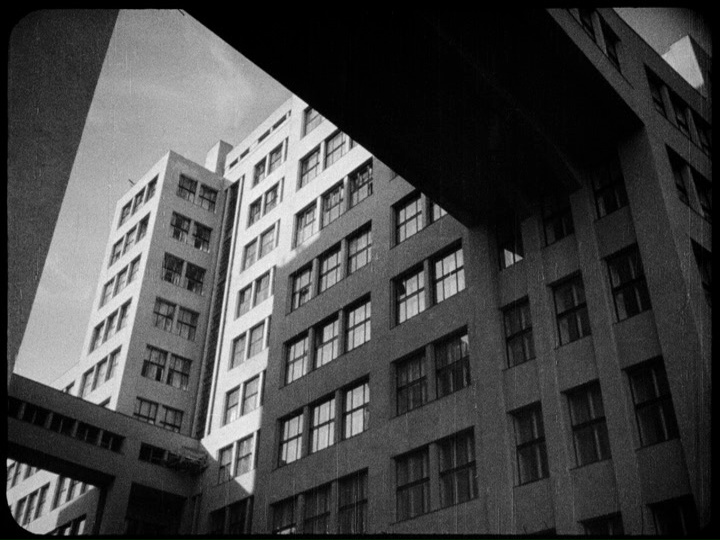
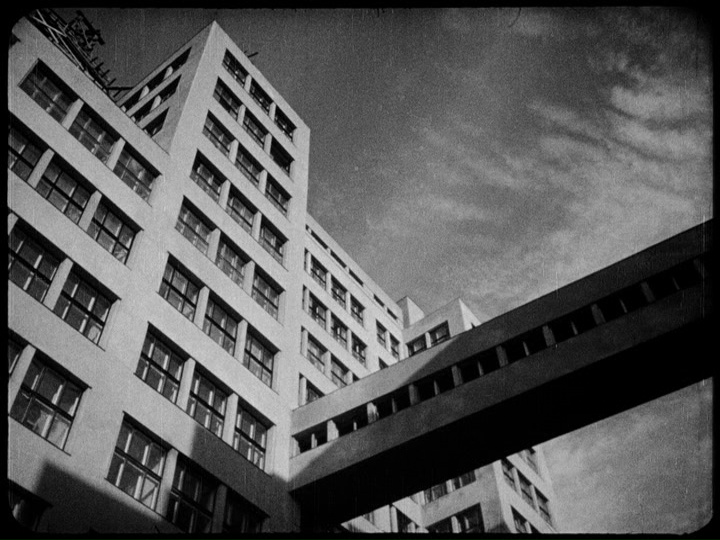
This week’s film has been sat on my shelf for a few years, and I decided to watch it because of a passing reference in a book I was reading. This was the final volume of Sergei Prokofiev’s diaries, which cover the years 1907-1933. I will certainly be writing a post about these amazing books, since they contain many fascinating references to films and filmgoing in this period. Prokofiev was a keen filmgoer, but very rarely notes the exact titles of what he has seen. An exception is Oblomok imperii [Fragment of an Empire], which the composer worried was too provincial a film to be shown outside Russia. Though this comment is hardly an endorsement, it reminded me that the Flicker Alley DVD/Blu-ray edition of the film remained in its wrapper. A few days later, I unleashed it from its cellophane and put it to work…

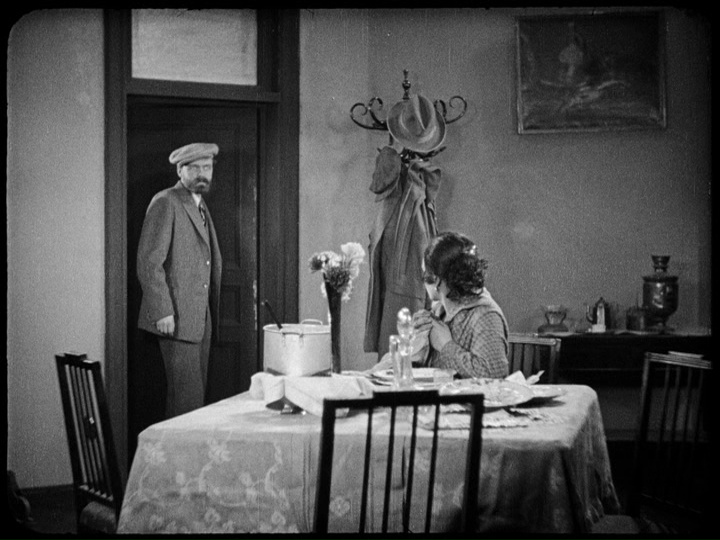
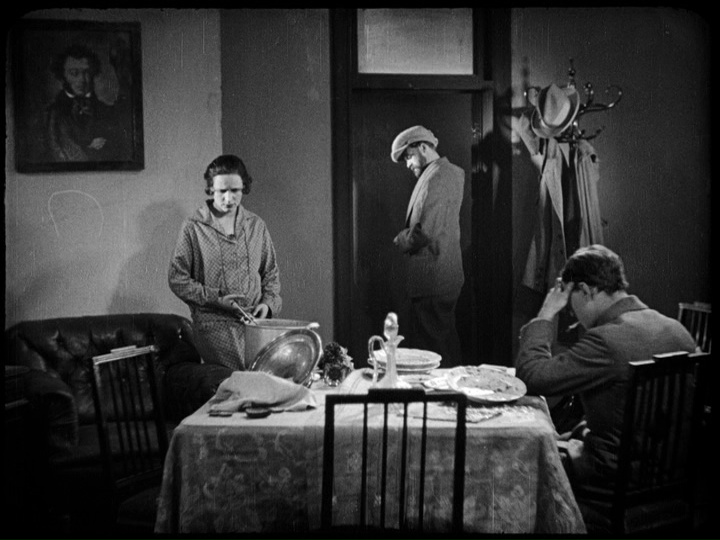
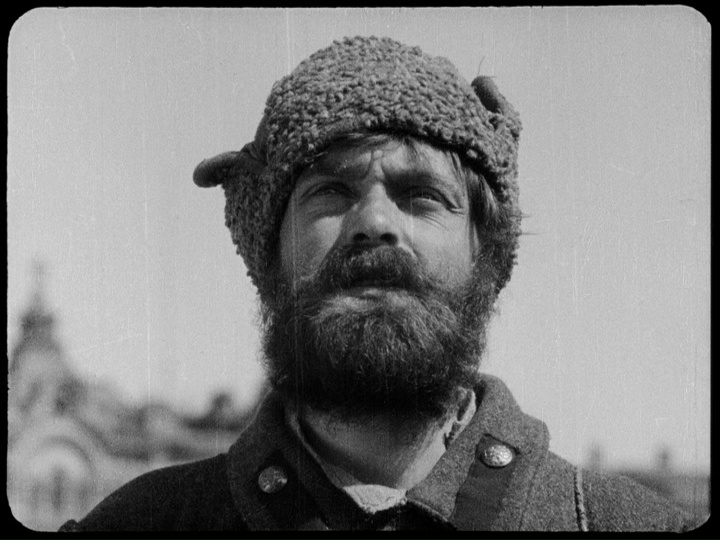
During the Great War, non-commissioned officer Filimonov (Fyodor Nikitin) suffered severe shellshock and lost his memory. A decade later, he lives in isolation in the countryside near the old front line, knowing neither his own name nor what has happened to his country since 1917. One day he catches a glimpse of his wife (Liudmila Semionova) on a passing train. This triggers a partial return of his memory, which is further restored by other reminders of his wartime trauma. At last remembering his name, he decides to leave the country for the city and find his home. Journeying back to (what was St Petersburg but is now) Leningrad, Filimonov is overwhelmed by the material and (especially) socio-political changes of the world he knew. Bewildered and alone, he finds help from a former Red Army soldier (Yakov Gudkin) whose life he had saved during the war. At a new factory, Filimonov slowly embraces the Soviet way of life – and re-encounters his wife, who had long thought him dead. Though she has remarried a pompous cultural worker (Valerii Solovtsov), she is clearly unhappy – and Filimonov looks forward optimistically to the future.

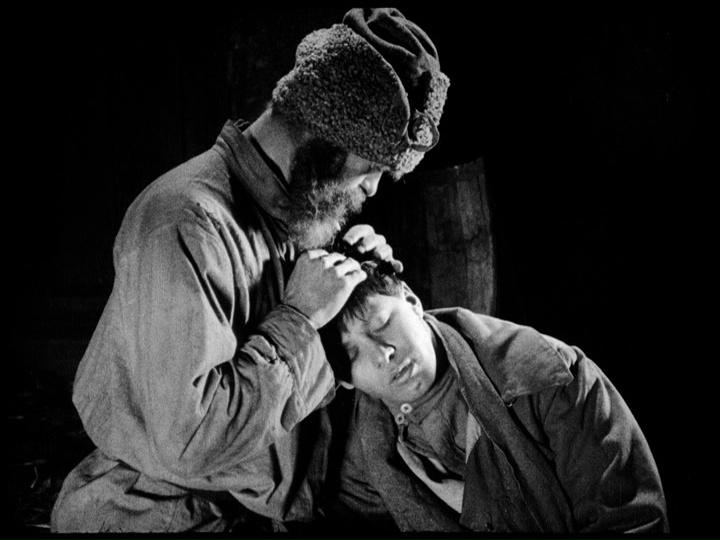
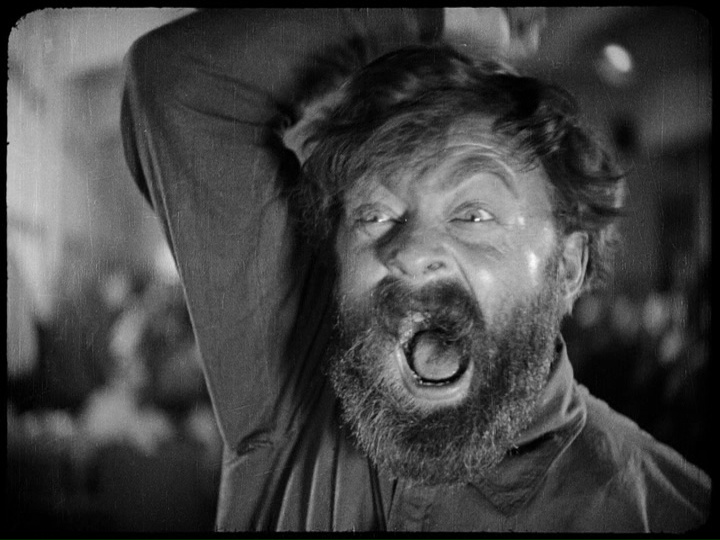
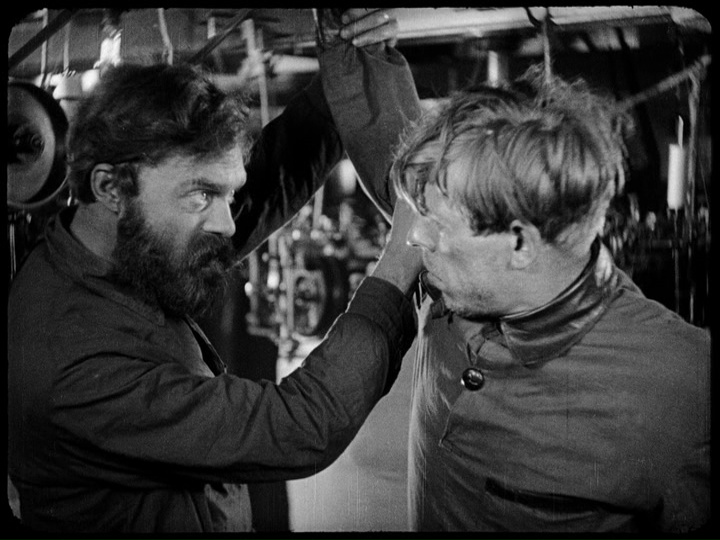
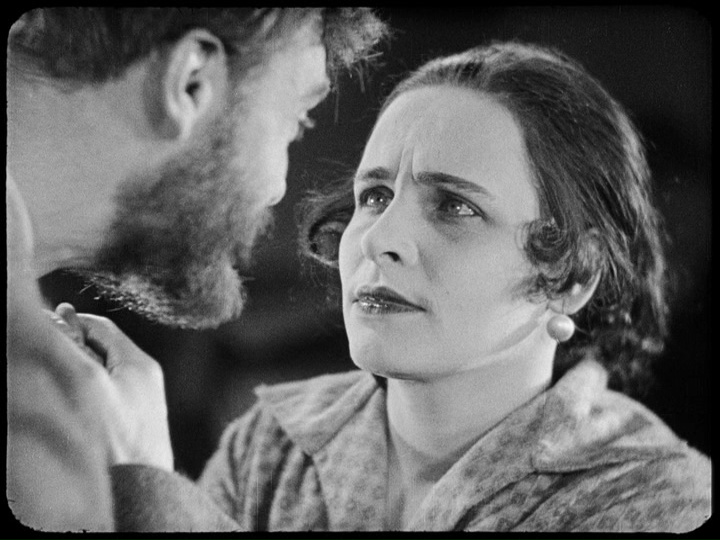
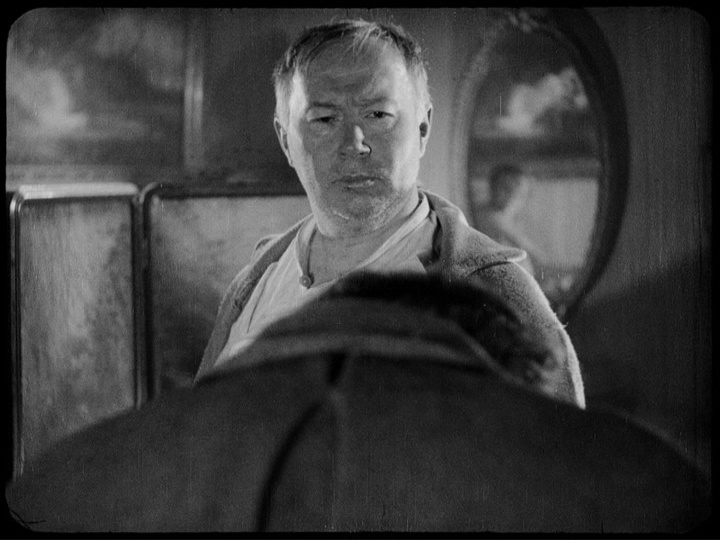
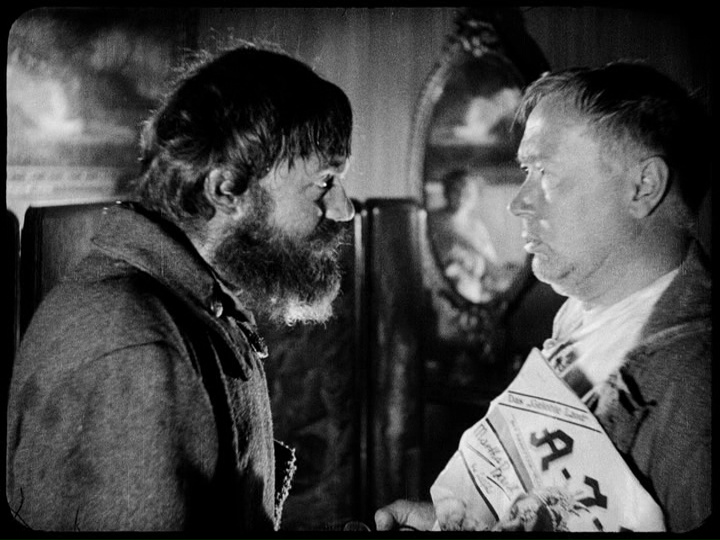
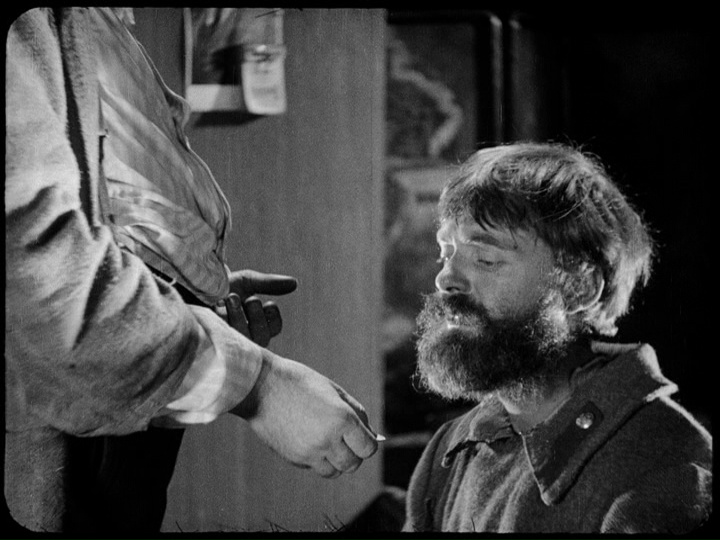
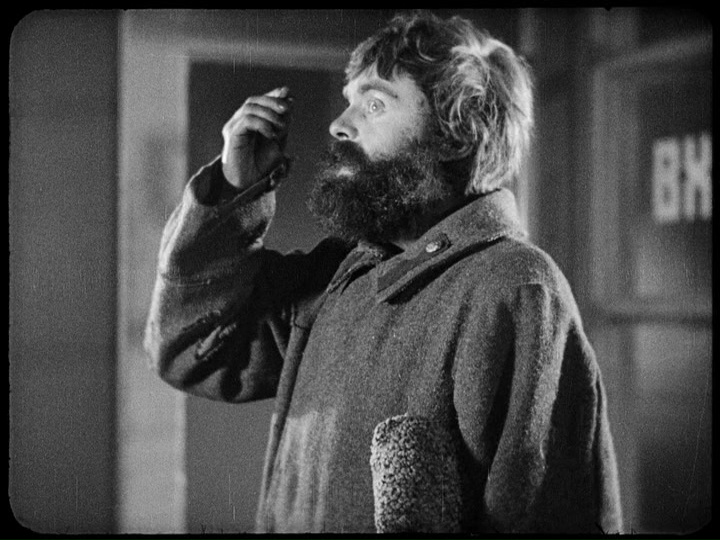
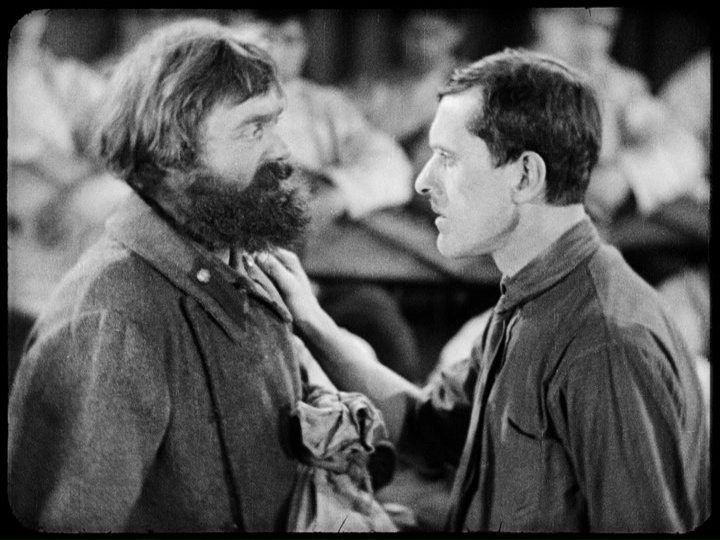
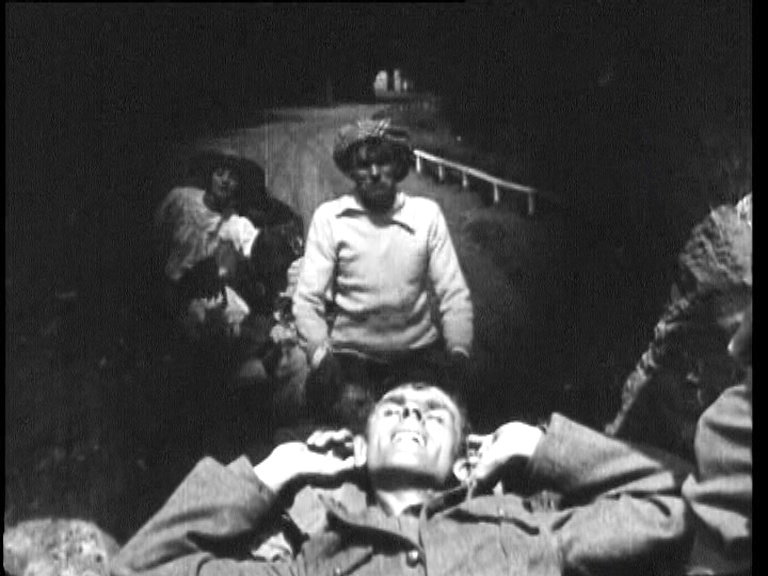
Though Fragment of an Empire is a work of propaganda for the state, it focuses its themes through a remarkable portrait of one man’s subjective trauma. Fyodor Nikitin is the heart of the film, and his performance is one of the most astonishing in Soviet cinema of this era. I found his vulnerability and tenderness (especially in the early portions of the film) absolutely heartbreaking, just as his bouts of violent hysteria are genuinely frightening to watch. When he is in the factory, more and more confounded by the attitude and organization of the workers, he repeatedly screams: “Who is the master?!” Caught in a medium close-up, his arm raised above and behind his head, his face contorted with insane confusion, Nikitin is simply terrifying: at once contained by the frame and threatening to smash it to pieces. (God how I want to see this on a big screen!) I’m not surprised to read that Nikitin seemed to become genuinely unhinged on set, with Ermler supposedly having to threaten him with a pistol to coerce him back under direction. I can hardly remember so vivid a performance of emotional trauma, nor one that – even at its most furious – is always somehow sympathetic. Even when he is screaming and raging, this man is pitiable, vulnerable. He is surely one of the most human, and humane, figures in early Soviet cinema.

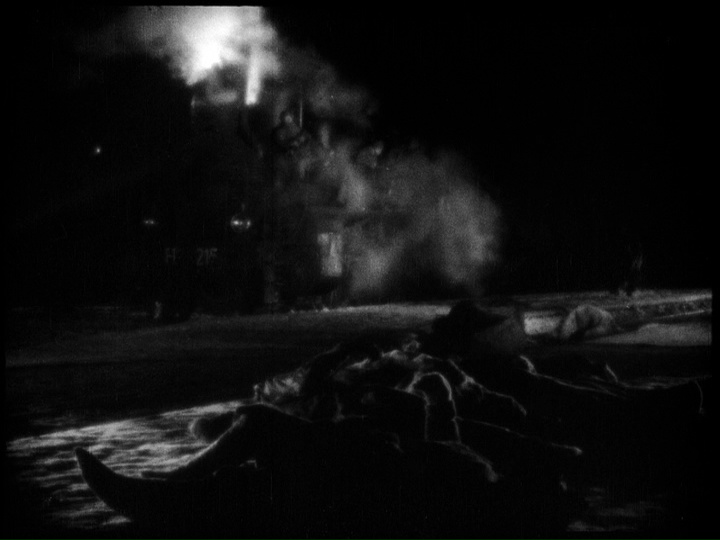
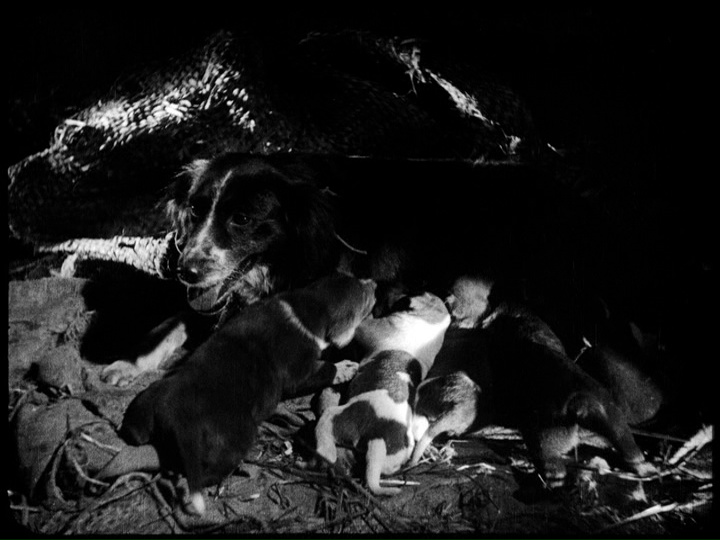
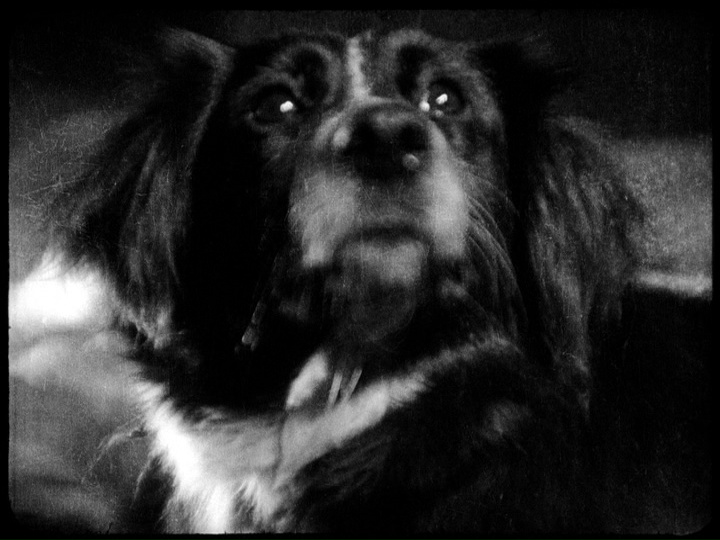
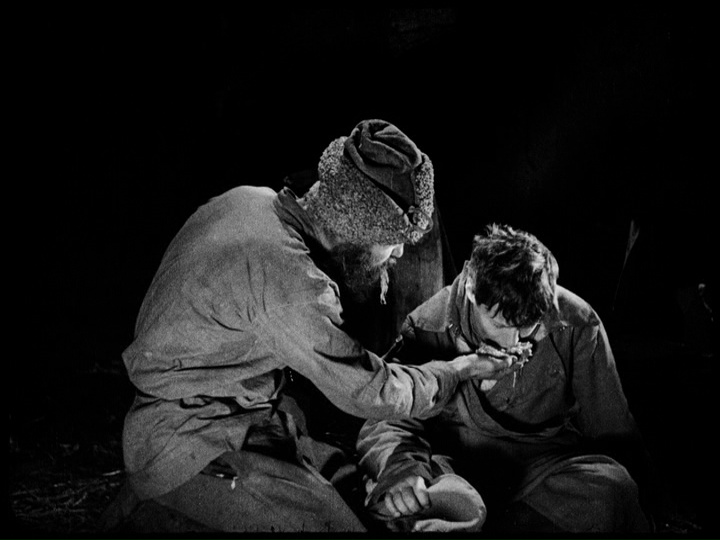
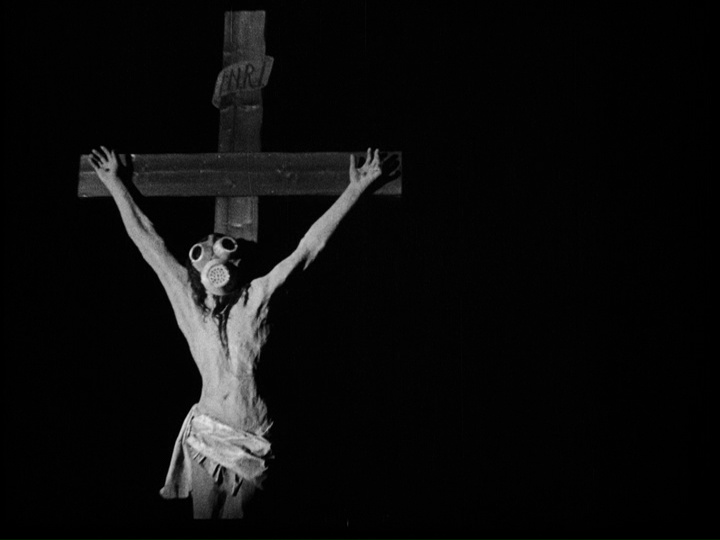
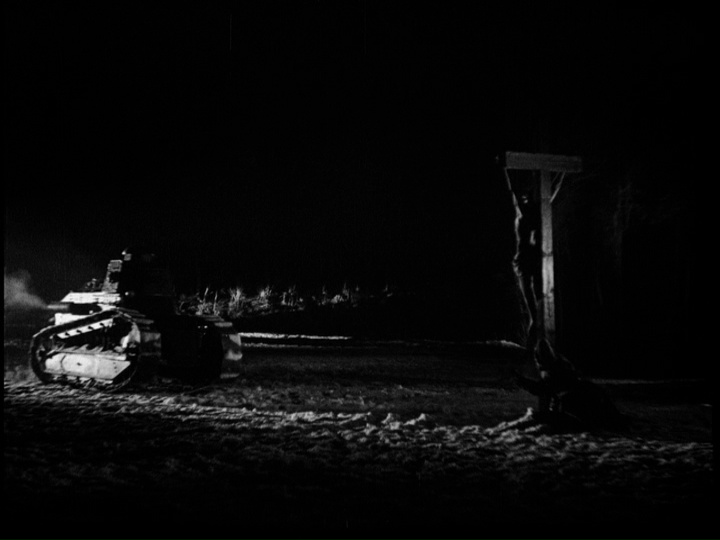
Of course, Nikitin is placed in the middle of an absolutely extraordinary series of scenes and images. The early scenes in which we glimpse Filimonov’s returning memories contain some amazing moments. I love the images of the frontline at night. Spotlight beams crisscross the black expanse of no-man’s-land, and two soldiers from opposing sides slowly approach one another. It’s an image of startling, surreal intensity. The richness of the film’s restored image – those impenetrable blacks, those searing highlights – makes such moments all the more effective. Of course, the famous (and famously censored) sequence of the gasmask-adorned crucifix is just as strange and unsettling, but it is part of a rich, dreamlike landscape of monstrous images. The way the enemy later appears with the train, likewise silhouetted in the harsh beams of spotlights, is just as nightmarish. And the scene in which the wounded soldier suckles from the dog, and the desperately poignant close-ups of man and beast, are simply astonishing. The war appears as a series of terrifying vignettes cut into the darkness, a darkness both real and metaphorical. These scenes are flashes of memory, of trauma, from a history that is too vast and too overwhelming to remember – or to see – in its totality.

Elsewhere in the opening half hour of the film, Filimonov’s involuntary flashbacks are dazzling – quite literally dazzling, since the rapid cutting between evocative images is a shock for our senses, too. I love the sewing machine than turns into a machinegun, and the way Filimonov seems to generate the very montage of the film with his manic turning of the wheel. But I think that when this sequence eventually morphs from a subjective memory to an outright lesson in propaganda (cutting between the two officers from either side demanding their men fire on the two figures), the sequence loses its edge. Setting out to emphasize the inhumanity of the officers on both sides, it loses rather than gains emotional depth. And while the cutting between spaces and people is complex, it doesn’t have the same poetic motivation as the earlier memory flashes: it has become an exercise in intellectual montage. Compared to the similar sequence of the laughing gas in Dovzhenko’s Arsenal (1929), in which there is likewise a scene of officers threatening their own men, Ermler is less hallucinatory, less strange. By the end of Dovzhenko’s sequence, we seem to have lost touch with a continuous reality altogether. Unlike the growing nightmarishness of the gas sequence in Arsenal, Ermler’s combat sequence becomes all too comprehensible.

Likewise, the scene in which Filimonov demands, screaming, to know who the “master” is ends with a long montage sequence that tries to answer his question. We see a kind of cross-section of Soviet Russia, its workers and fighters and factories etc. It is impressive for its leaps between similar images (wheels, cogs, hands etc) but it really doesn’t have an argument. It’s a kind of statement of might that just gets more insistent, not more complex or convincing. When it ends and the worker asks Filimonov (and, by extension, us) “Understand?”, we cannot answer: there is nothing to understand. The rapid montage hasn’t made an argument or an effort to answer our question, it’s simply given us a slap. Filimonov – the focus slowly pulling from the background of the factory to his face in the foreground – is breathing heavily and dishevelled, but he starts to grin. Though the film would have us believe he has now finally woken up to the marvels of his new life in this new reality, he resembles a man who has not so much found his sanity as fully embraced his insanity. His grin turns into a laugh, and he hurls himself at his comrades, kissing and hugging them like… well, like a madman. Everyone is so nice to him, and he looks so ecstatically happy, that the scene works – but the pleasure it gives in showing Filimonov released from his torment is (for us, a century later) tinged with a different kind of emotion.

This sense of ambiguity is part of the film’s fascination. While Ermler offers some superb sequences and images, the film is often so convinced of its own effectiveness as propaganda that it simply overlooks the possibility that we might think differently. Our sympathies – especially as viewers nearly a century later – are liable to wander from the official line. Filimonov’s questioning of the Soviet world might encourage us to question it too. And the more he becomes convinced by this new world, the more he becomes a different person. His final line, which is also the final line of the film, is delivered straight to camera: “We still have a lot of work to do, comrades”. Immediately following the violent altercation between Filimonov’s ex-wife and her husband, there is an implication that personal change must accompany social change. But with Filimonov himself, this change is also a loss. The way he now appears before us – his beard neatly trimmed, his clothes neatly worn, his hat neatly fashionable – makes him a different man than the one who initially went in search of his wife. He resembles the other workers, the men and women he had found so alien and threatening, and he now echoes the way they speak. Yes, he has grown up, he has awakened, he is no longer hysterical. But there is a nagging sense that something else has happened. It is as if Filimonov has been uncannily replaced. This new Filimonov is a sinister doppelganger of the man we used to know. His last line is both an encouragement and a threat.

Part of this weird emotional effect is due to the original music by Vladimir Deshevov, as transcribed for piano in this recording by Daan van den Hurk. There are some superb sequences of sound and image interacting, often in ways you don’t expect. Take the early flashback sequence in which we see the Russian soldier praying before the crucifix. Visually, the image of Christ wearing a gasmask is jarring and surreal. Illuminated against the dark night sky, this figure of compassion becomes one of threat. But the soldier prays anyway, and Deshevov’s gorgeous, slow chorale throughout the start of the sequence gives a powerful sense of pathos and pity. If the image of the tank crushing both crucifix and soldier ends the scene with a grim punchline (demonstrating both the lack of mercy in war and a lack of religious authority to protect), the preceding music deepens the empathy we feel. As throughout, the score provides a degree of humanity that the images either cannot quite achieve or deliberately do not wish to achieve.

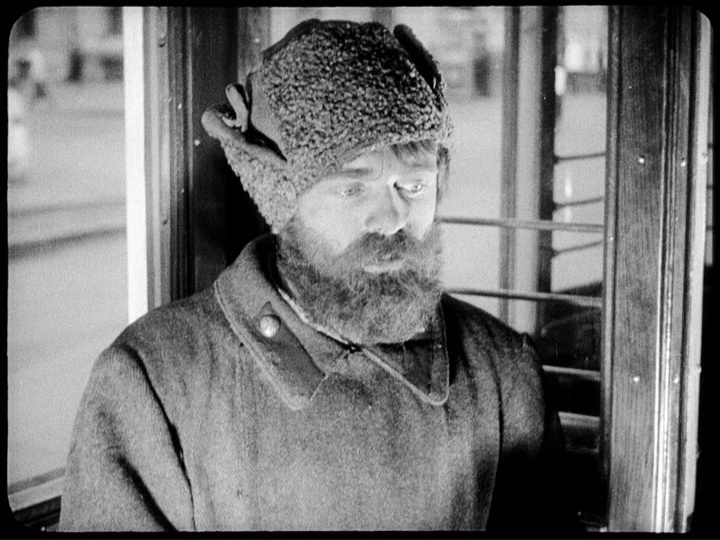
When Filimonov emerges from the tram onto the streets of Leningrad, his absolute disorientation is made the subject of bursts of rapid montage, mobile camerawork, and a delirious repetition of images. Deshevov’s music is like a kind of panic attack in sound, with its repeated, threatening, bustling, grandiose, rising progressions. The sequence is the first of many times that the film seeks to show off what has been achieved by the Bolsheviks while Filimonov has been away. But what the music does is make this very act of showing off almost terrifying. It is too upbeat, its tempo too rapid, to offer anything in the way of comfort or consolation. It is alienating rather than accommodating. This music makes you feel pity for Filimonov’s confusion, the confusion of a man as yet unconverted (and unconvinced) by Soviet Russia. The effect of alienation becomes ours as much as his.

There are later iterations of this kind of “look what we have achieved!” montage. They culminate in the above-mentioned sequence in which the worker demonstrates (via the grand montage) where the “master” is. The dense chromaticism of the music becomes almost unbearably tense, and resolves not in a complex transformation but in a sudden full stop (accompanied by the cut to black that ends the montage). There then follows a passage of scampering, major-key jollity, interjected with an almost religiose chorale motif, that is as weirdly unsettling as the preceding chromatic tension. It’s a brilliantly odd, unexpected way of ending this scene of conversion.

The fact Deshevov’s score seems subtler, wilier, than the film made me curious about the origins of the music and the man. Deshevov (1889-1955) was the same generation as his more famous compatriot Prokofiev, but unlike the latter he remained in Russia throughout the Revolution. Like Myaskovsky and Prokofiev (and their younger compatriots Popov and Shostakovich), Deshevov became part of the mainstay of Soviet composers who worked under the increasingly strict guidelines meted out by Stalin. He would compose much orchestral music (including several ballets), as well as chamber work and piano music. Ermler’s commission to write an original orchestral score for Fragment of an Empire was a rare instance of collaboration between a major director and composer in this period of Soviet cinema. Ermler was hugely impressed by the result. “I am afraid that people will go to listen to the music, not to watch the film”, the director told Deshevov in 1929. “So be it! I am delighted.” Yet the music was barely discussed at the time and remained seldom heard since, especially because copies of the film itself were dispersed, dismantled, and/or destroyed.

The present restoration of Fragment of an Empire was completed in 2018 after a collaborative project by the EYE Filmmuseum, Gosfilmofond of Russia, the Cinémathèque Suisse, and the San Francisco Silent Film Festival. From what I can glean, the new restoration was presented with Deshevov’s orchestral score for the first time in October 2018 at the Mariinsky Theatre in St Petersburg. Per the programme notes for this performance, the score was restored using “the set of orchestral parts retained in the theatre’s library” by composer Matvei Sobolev. Deshevov’s score was performed again at Pordenone in October 2019 with Günter A. Buchwald conducting the Orchestra San Marco, Pordenone. The essay for this festival screening details the history of how Ermler commissioned Deshevov and the subsequent neglect of the music. (Sadly, this essay does not clarify if the 2019 performance used the same musical edition prepared by Sobolev in 2018 – but my assumption is that it did.)

Yet the Flicker Alley release from 2019 confuses this picture. The blurb on the back of the DVD/Blu-ray box states: “The film is accompanied by a choice of two musical scores: a brilliant new score composed and performed by Stephen Horne and Frank Bockius, and an adaptation of Vladimir Deshevov’s original piano score performed by Daan van den Hurk.” It’s curious, but I suppose understandable, that the modern score takes precedence over the original. But why refer to the latter as the “original piano score”? Isn’t this a piano transcription of the original orchestral score? Flicker Alley make it no clearer within the booklet for their release, since the credit section therein refers to “Vladimir Deshevov’s original score” being “adapted and performed by” van den Hurk. Van den Hurk’s own statement in the booklet refers to Deshevov’s other compositions for solo piano and the film score being “a worthy piano concert piece”. But on the very next page, Stephen Horne and Frank Bockius refer to van den Hurk’s work as “a piano transcription of the original score”. This, surely, is closer to the mark. But neither here nor anywhere in the Flicker Alley release is it mentioned that Deshevov’s music was written for and performed by an orchestra in 1929. Nor is there any acknowledgement that this orchestral score had already been restored and performed with the 2018 restoration of the film. (Even the audio commentary soundtrack on the Flicker Alley release, I note, uses the modern score as its background music, not Deshevov’s – further evidence of how his score is subtly deprioritized on this release.)

So what are we listening to on the Flicker Alley soundtrack? Since the wording is so vague – deliberately so, it seems to me – throughout the release, I’m not even sure if van den Hurk’s work was a transcription of Deshevov’s orchestral score or based on a piano reduction prepared by the composer or another contemporary musician. Even if it was based on a piano version by Deshevov, this does not entitle it to be called or understood as the “original score”. Some context is required here with these terms. For example, Deshevov’s contemporary Prokofiev began most of his compositions on the piano, even if they were to end up as orchestral works. When he was working on ballets, he would often suspend work on finishing orchestration to produce a piano transcription for the sake of his stage performers. In advance of their productions, Prokofiev’s collaborators would need a sense of the overall structure (and timespan) of the music in order to build the choreography, prepare the staging, and begin rehearsals. Several of these transcriptions exist, but even if some or all of this music for piano predates the final orchestrated version, this does not mean they should be understood or received as the “original” scores. In the case of Deshevov’s music from 1929, he may well have written some of the score for piano before orchestrating it. But to advertise this as the “original score” would be to entirely misunderstand the nature of composition and performance practice. The orchestral version is the original score, no matter if it was the end result of a complex process of drafting, redrafting, and instrumenting. But all this can only be supposition, since Flicker Alley do not offer any details about this process of “adaptation” – and never once admit that Deshevov’s score for Fragment of an Empire was written for orchestra.

Why should we care about this? Because finding out information about silent cinema, especially silent film music, is already difficult enough. Original materials and resources are difficult to find and difficult to interpret, so it is vital to be honest and transparent about all aspects of restoration. I try always to bear in mind (and be honest about) the factors that have shaped the way I see silent films, especially on home media. All too often, however, marketing muddies the waters. It directly impacts how silent films are received by new audiences and new scholars. Of all the information available online or elsewhere, it is the DVD blurb that gets endlessly repeated. When the Flicker Alley edition of Fragment of an Empire won a well-deserved prize among Il Cinema Ritrovato’s DVD Awards in 2020, for example, the release is credited as offering “the recreation of Vladimir Deshevov’s original piano music from 1929”. This text hasn’t been generated by Chat GPT, but by the human curators of a prestigious festival. What hope have the rest of us if misleading information just gets copied and pasted from the marketing? Confusion, if not outright misinformation, rapidly filters through to writing on the film, which in turn generates more confusion and/or misinformation. So please, please don’t gaslight me.

I regret spending so much time writing about the accompanying text of this release. Not only is it a grand old waste of my time having to write what the liner essays should have said straight up, but it also means I have less space to talk about the music and the film. Let me be clear: the restoration presented by Flicker Alley is visually superb, and regardless of the score I am exceedingly glad to have it. What’s more, I absolutely loved Deshevov’s music, and it makes Ermler’s film all the more complex and compelling. But however good the piano transcription, I would so much rather listen to this score in its original form: for orchestra! Here’s hoping that it will be performed live in the future and, as I never tire of hoping with such things, released on home media.

Paul Cuff

I colori ritrovati: Kinemacolor and other magic (1905-22)

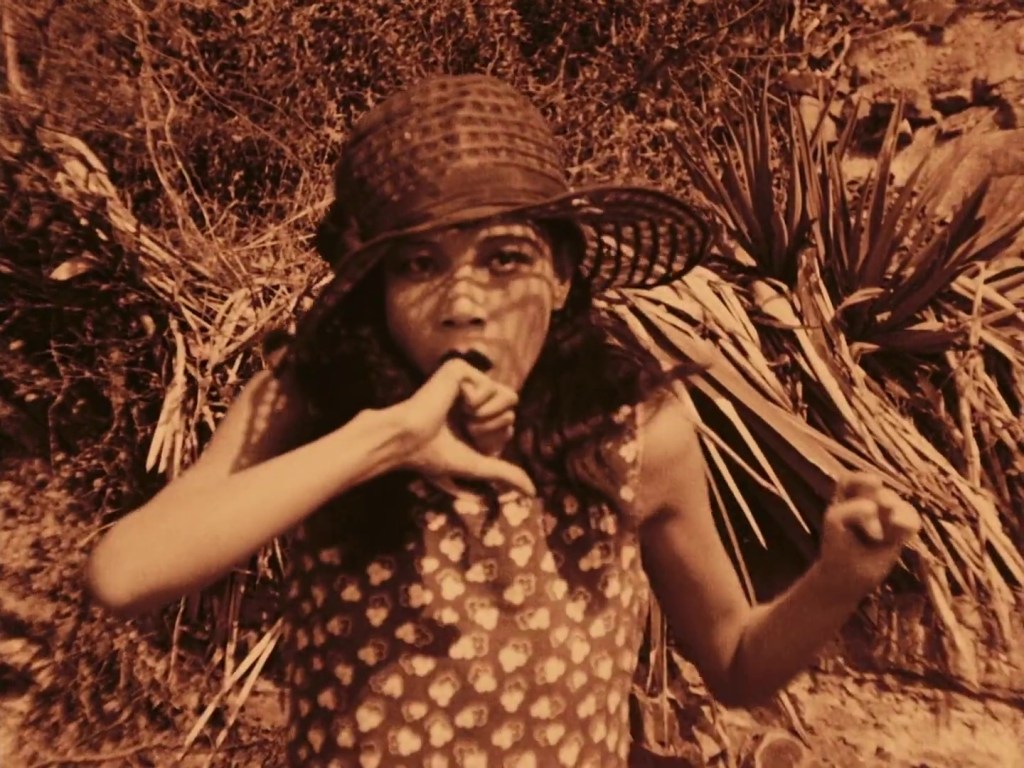
When I can’t decide on what to watch, I begin hunting my shelves for curiosities. Goodness knows, I have a lot of material to catch up with on DVD, let alone my hard drive. Faced with too much choice for a single feature, I fall back upon compilations of short films. At the weekend, my eye fell upon the spine of I colori ritrovati: Kinemacolor and other magic, a 2xDVD set released by the Cineteca di Bologna in 2017. I realized shamefacedly that I had never sat down and watched the contents from start to finish. At something of a loose end, feeling indecisive and uncommitted, I sat down and watched. For the next three hours, I was transfixed.

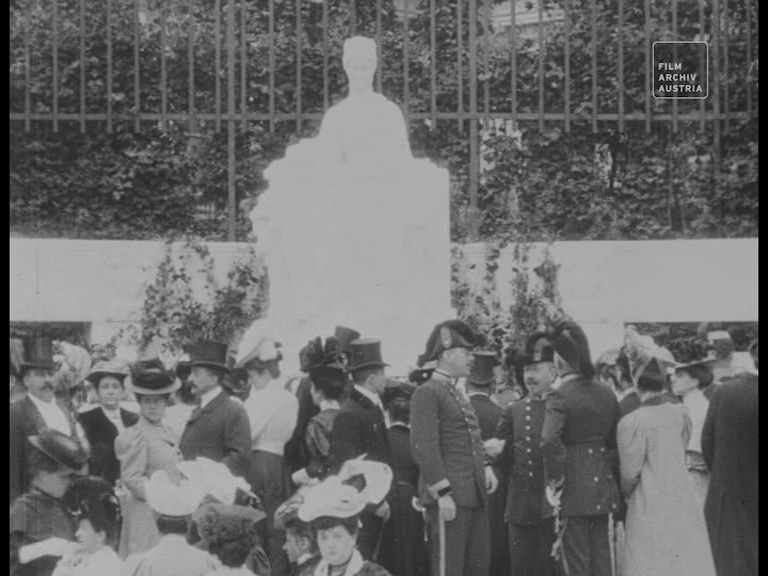
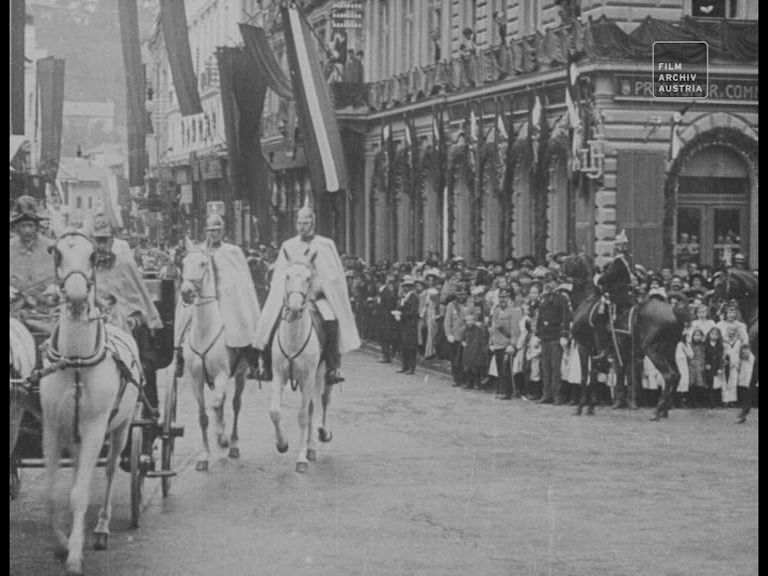
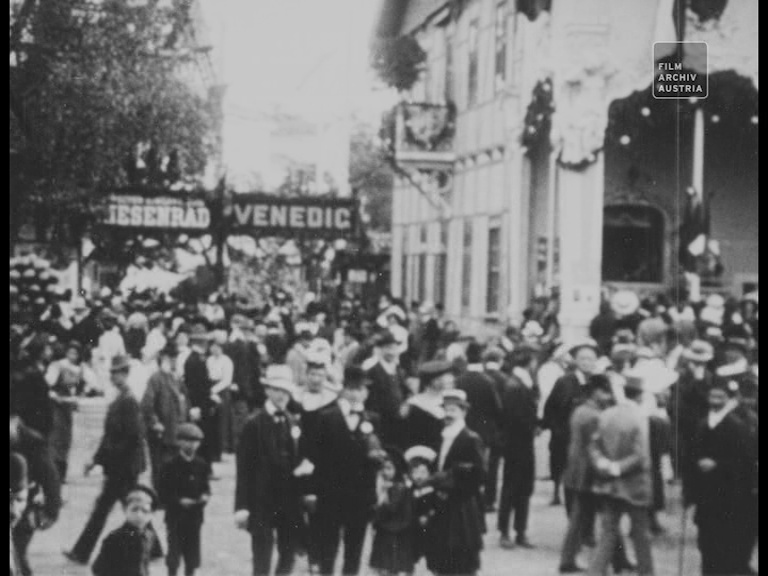
I colori ritrovati contains four curated programmes of films. Each programme contains a selection of short films made through an early colour process: Kinemacolor Urban, Kinemacolor Comerio, Chronochrome Gaumont, and Pathécolor. The films were produced between c.1907 and 1922, and range from 50-second fragments to 12-minute works of substance. Most offer “views” of touristic locations or noteworthy occasions, while the shortest films often concentrate on attractive objects which happen to make good subjects for colour. The content is what Tom Gunning et al. have described as “the cinema of attractions”. This definition usually implies either a kind of non-narrative model, or else a model in which the visual content or novelty of the film outweighs the importance or depth of narrative. The films of I colori ritrovati certainly fit this broad characterization, but there is a lot more to their pleasures than this definition of “attractions” might imply. Below, I discuss each programme in turn per their presentation on these DVDs…

“Kinemacolor Urban” (ten films, c.1907-12). This first programme of films made under the aegis of American producer Charles Urban, based on the pioneering work of British filmmaker George Albert Smith. This process involved treating black-and-white filmstock to make it sensitive to red wavelengths. Shooting at 32fps (double the standard speed of filming), the camera captured alternate frames through green and red filters on its revolving shutter. Though the print produced was still black-and-white, when projected through the same red and green filters, the film miraculously burst into colour on screen. A century later, viewers are faced with the impossibility of replicating this kind of technology to project the films as intended. Digital restoration can separate the alternate frames exposed to green/red, apply the appropriate filter (i.e. alter the colour tone) and reunite the frames in a way that mimics the effect of the original projection. But it remains a conjectural approximation, via totally different technological means, of the original Kinemacolor process. What we see on our screens at home is but a digital reimagination of the colours of a century ago.

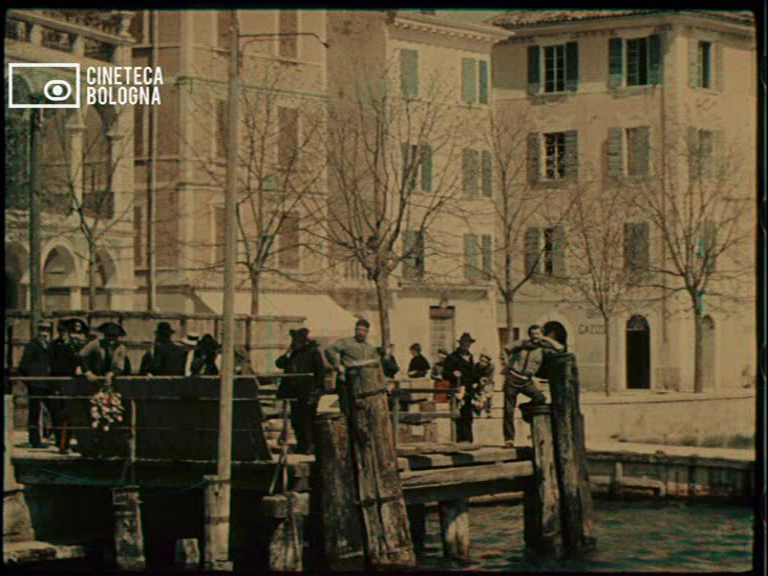
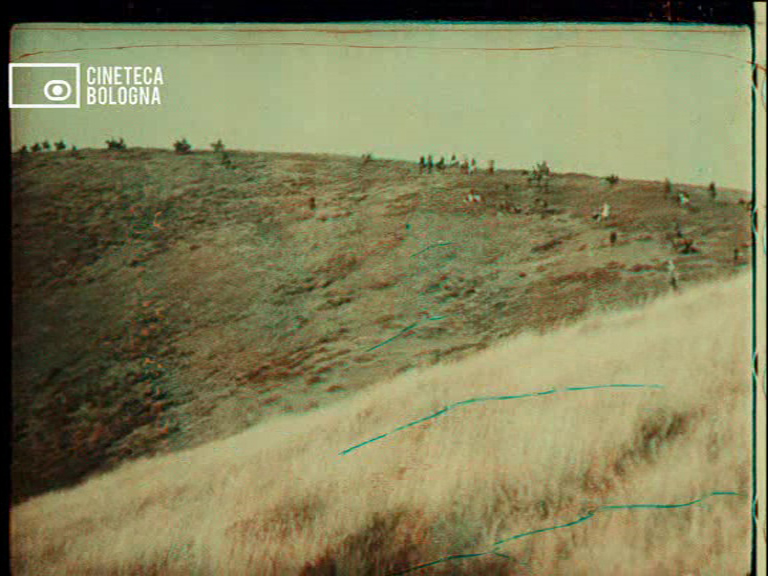
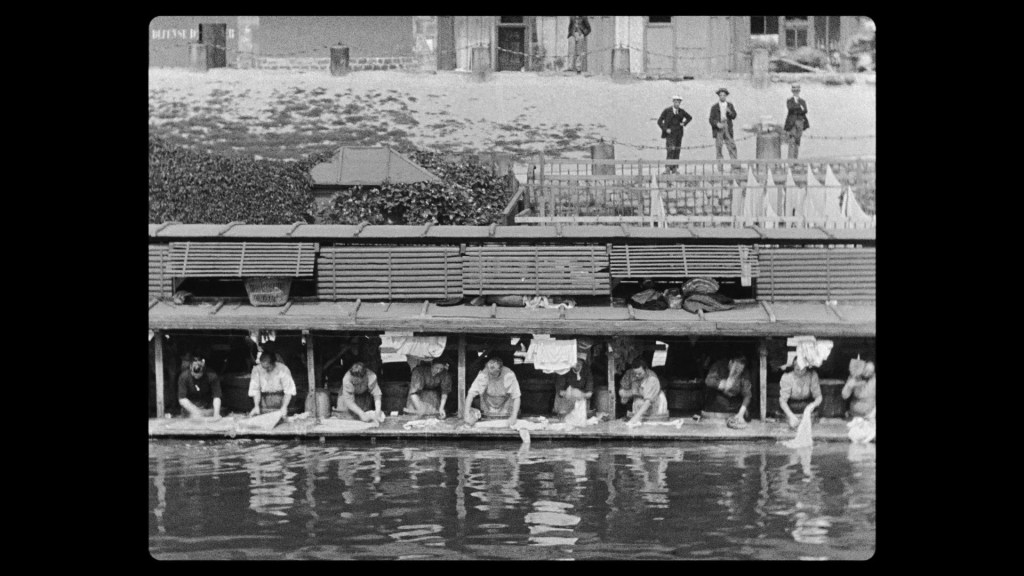
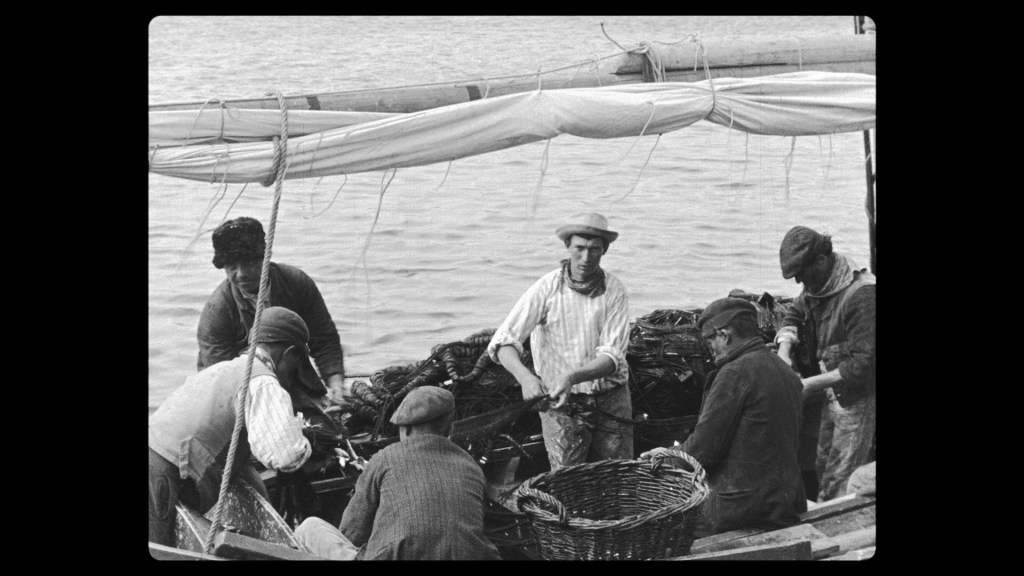
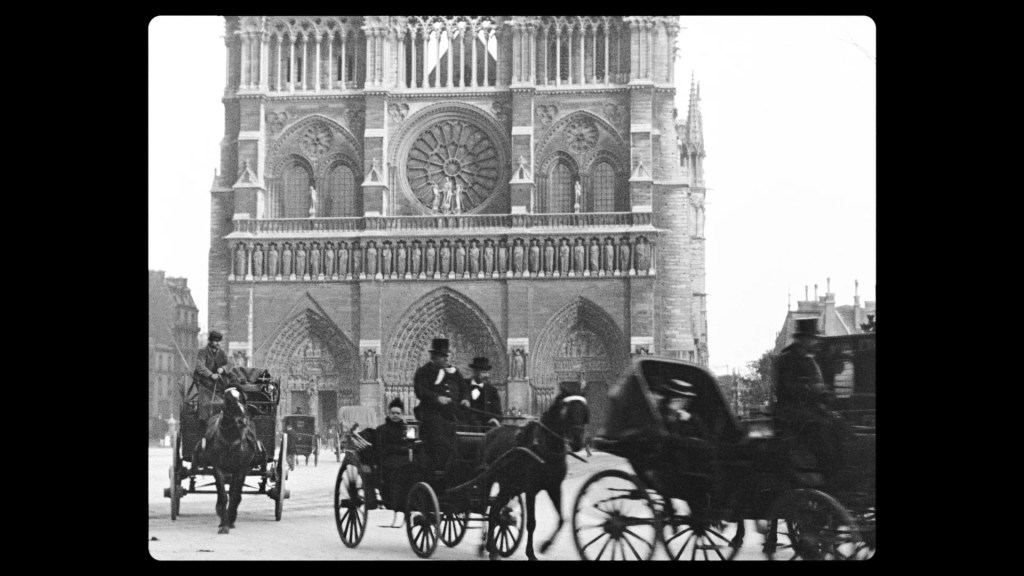
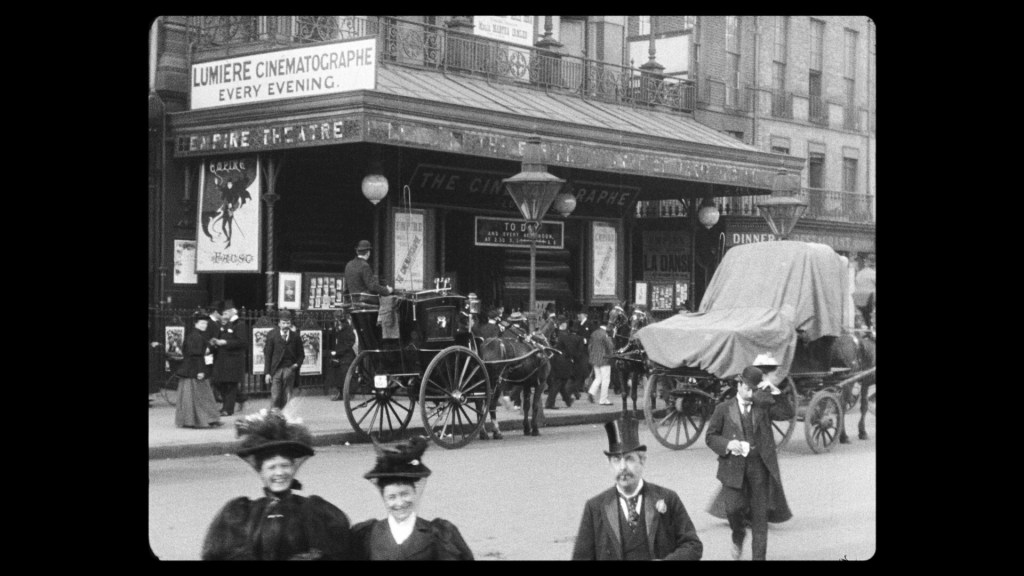
That said, the effect on this DVD is amazing. The palette has an invitingly warm, pastel tone – exacerbated by the summery, daylit scenes of so many of the films. But it’s all delightfully dreamy. The colours are not exactly faded, but lustrous according to an unfamiliar design. While the overall impression is one of hazy warmth, this allows certain objects to stand out with particular brilliance. The shores and slopes and distant mountains in Lake Garda, Italy (1910) have the tired, wintry hue of a slightly murky afternoon. The water is deep blue-green, but when its dark ripples give way to calm the surface is a wash of light. The silhouette of a sailboat floats serenely over the dazzle of the distant past. Crowds await us, staring as we glide towards the shore. A woman with a red parasol appears on deck. We see her again once she has disembarked. She turns to stare at the camera, the ship departing behind her. Perhaps she is waiting for a signal from the camera operator to move, or to stop. It’s so charmingly awkward, so eye-catchingly strange.

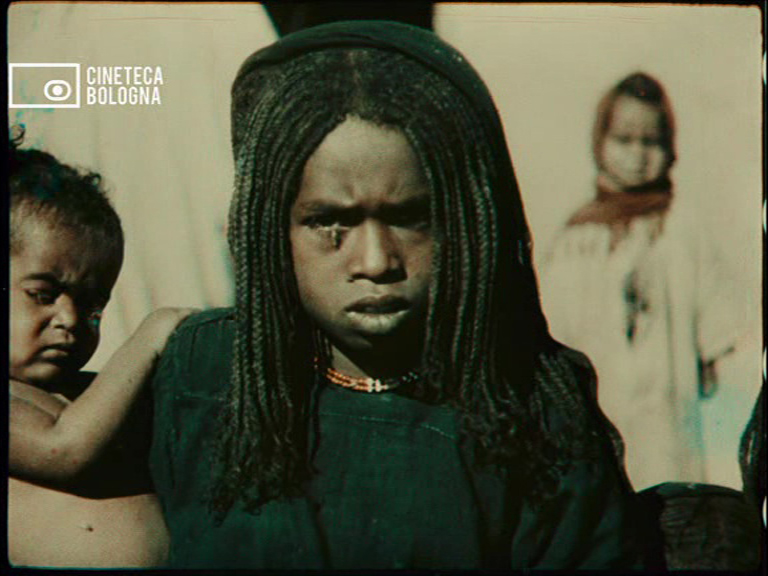
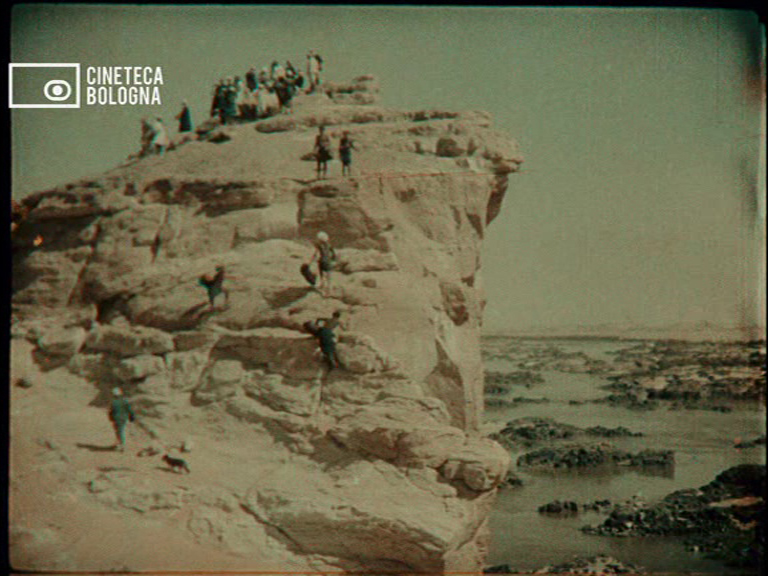
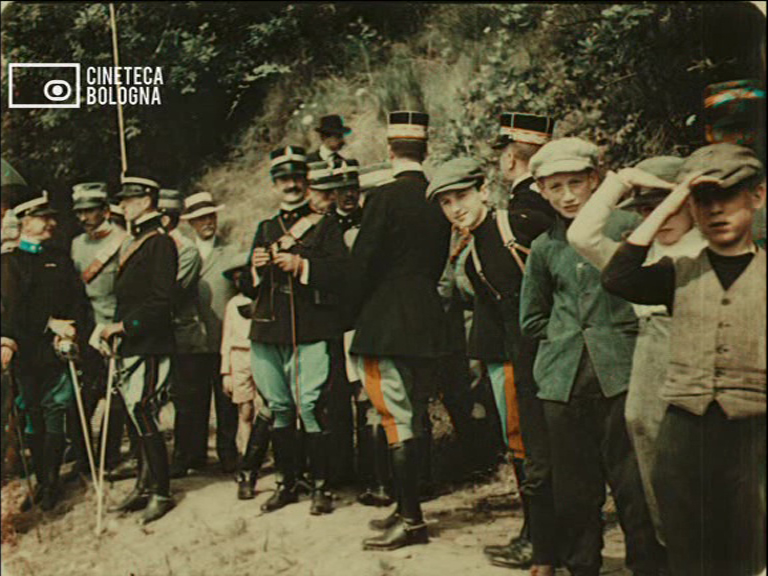
In other films, the effect of the ever-so-slight temporal disjunction between the two colours on successive frames gives the faint impression of stereoscopy. There is a kind of gap in space and time that the eye catches, or thinks it catches. When we see men on horseback, or figures silhouetted against the land or sky – suddenly their form seems to possess some magical depth. It is all illusion, of course, but that does not lessen the effect. The oddness and awkwardness of the content of films like Coronation Drill at Reedham Orphanage (1911), Nubia, Wadi Halfa and the Second Cataract (1911), With Our King and Queen Through India: The Pageant Procession (1912), and [Woman Draped in Patterned Handkerchiefs] (c.1907), and [Tartans of the Scottish Clans] (c.1907) is made touchingly potent by their form.

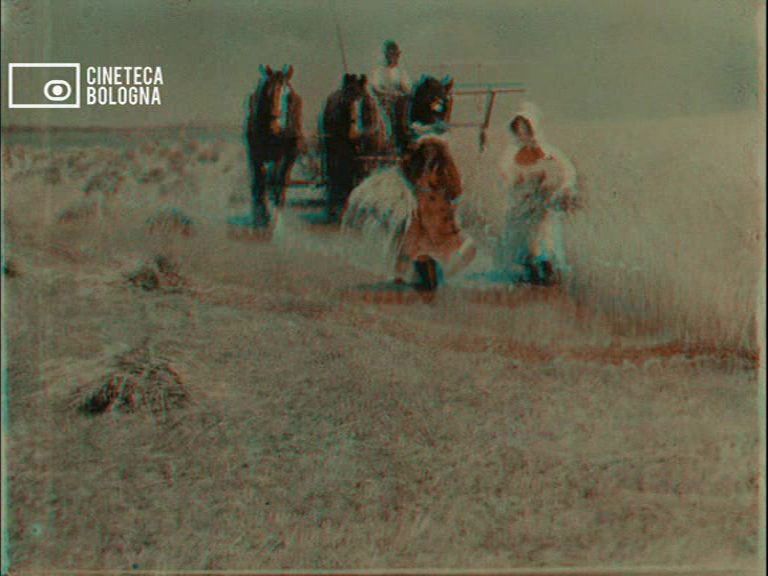
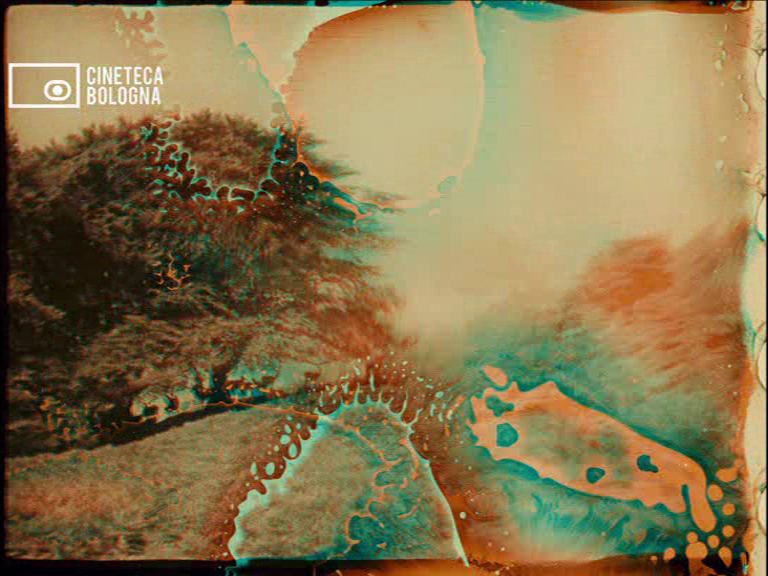
I was far more entranced by the landscapes in films like The Harvest (1908) and A Run with the Exmoor Staghounds (1911), and this entrancement was heightened by the anomalies of the Kinemacolor prints. In the Exmoor hunt, the riders and their hounds are themselves pursued by alien blotches of turquoise and scarlet. These colours are those of Verdigris and faded bloodstains, as though evidence of ageing in entirely different materials were manifest. Here were English landscapes so familiar to me made suddenly mysterious by tears, blurs, marbling. The silent trees and grass are tugged by lines of chemical decay that scurry across the frame, or else softened and blurred by the thumbprints of watery giants. The past is already so far from us in these films. Their silence is akin to death; their colours faded like memory. But the moments of disruption, when time literally seems to be gnawing at the image, make this past seem all the more fragile, potent. History unfolds before us, harried by its own disintegration. At the end of A Run with the Exmoor Staghounds, the film dares show us the dying stag; but as if to counteract this image of death, we are shown a brood of puppies suckling from their mother. It is life and death, awkwardly presented to us in a film that has itself only just survived.

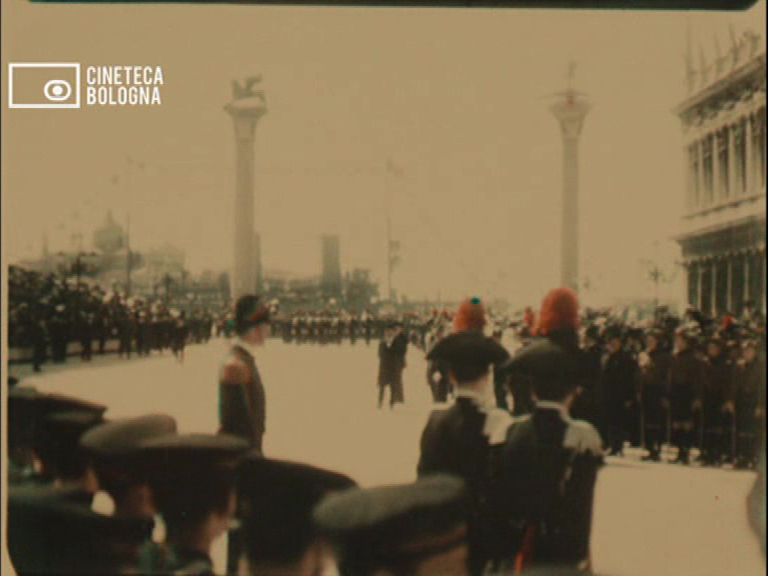
“Kinemacolor Comerio”(four films, c.1912). Italian producer Luca Comerio licensed the Kinemacolor process in 1912, so this programme is a small selection of the films made by Italian crews. There are glimpses of troops in Italy’s latest colonial enterprise in Libya, and the tragically earnest efforts of horses and riders crossing a river closer to home. But the most substantial film is L’inaugurazione del campanile di San Marco (1912), the Venice setting of which is beautiful for all the reasons I have outlined with the earlier films. There is the colour palette of the centuries-old facades, the somnolent waters, the hazy skies, and the charming pageantry of a previous century. Figures crane into the frame in awkward close-up, or rush to gather on some distant viewing point in the hope of being captured on film. A brass band stands around awkwardly waiting for their call to perform. Bishops trudge past. Plumes, flags, boaters. Archaic warships proudly anchored by the quay. Motorboats and gondolas. It is the Venice of Proust, of D’Annunzio, of Henry James, of Thomas Mann – and just about any other fin-de-siècle figure one cares to think of. The hue and haze are akin to the contemporary Autochrome still photographs produced by Lumière. The details are softening, the colours made pastel. Yet there are those familiar flashes of intense red, of deep blue-green, and the darkness of formal suits and top hats raised aloft in assurance of the coming century.

“Chronochrome Gaumont” (nine film fragments, c.1912-13). The second DVD begins with a programme of fragments from surviving Chronochrome films. As the excellent liner notes details, Chronochrome was an additive system involving three lenses on the camera to record simultaneously three images through three colour filters. During projection, three lenses were likewise used to (re)combine the three images into one. The difficulty (and constant adjustment) of filming this way necessitated a reduced frame height, giving the resulting films a widescreen effect. The results are simply stunning: these are by far the most successful, vivid, and absorbing colour worlds on these DVDs.

If I thought of Proust with the Kinemachrome film in Venice, here is another landscape from À la recherche du temps perdu. At Deauville-Trouville, children in dark bathing costumes play in the breaking waves. Adults mingle by red-and-white striped tents. (It is a vision of Proust’s Balbec. The images’ silence surely admits some dreamlike realization of an imagined time and place.) In View of Enghien-les-Bains, crowds of impeccable tourists wander under the boughs of trees whose green is like none that exists in our world, in our time. So too the mountains and sky, the curious cattle, the smocked peasants, and the bare trees of Provence: The Old Village of Annot possess a kind of echt French pastness. The landscape is once again wintry but bright. The scrubby roadside, the faded trees, the dusty road, the empty fields – aren’t these archetypes of an imagined countryside? They are prosaic and extraordinary at once. So it is with Picturesque Greece and Venice, Queen of the Adriatic, and in Chioggia, a Fishing Port Near Venice. They are hauntingly real, yet infinitely distant.

Aesthetically, one has the same impression with the tableaux of still lives: Venetian Glass-Ware, Flowers, and Fruits. These are set on a slowly rotating table, and the camera simply observes these hypnotic turns of glowing glass and fruit. These objects are incredibly real: and I emphasize equally incredible and real. They are palpably there before us, weighty lumps of glass, heavy bowls of fruit, potent buds of flowers; their colours and textures and contours are saturated by reality. Yet the saturation of colour, the way the glass glows, the way even fruit seems to assert its presence on screen – these aesthetic aspects are more than real, they are supernal, almost supernatural. I have never seen a pile of oranges so lustrously tempting. Like the shots of Venice a century ago, this fruit is here so madly, vividly, aggressively alive that it is hard to comprehend that it cannot have survived more than a few days, even hours, after being filmed at the start of the twentieth century. So too the Venetian glass bowls seem not merely to be bright and colourful, i.e. to possess brightness and colour, but to emit brightness and colour. The greens and purples look radioactive, dangerous – as though the glass were transmitting its colour, its very quiddity, across the centuries.

“Pathécolor” (fourteen films, 1905-1922). The final programme on these DVDs returns us to the most successful early producer of colour films. Pathé’s “pochoir” process involved laboriously cutting stencils for each colour for each frame of film. Once this was done, the stencils could be used to mechanically stamp dye onto the frames. Though time-consuming to cut each stencil, these stencils could then be used to colour multiple prints of the same film – a great boon to mass production. Combined with tinting and toning, the effects of this process could be extremely varied and complex. I have already discussed this process in relation to fiction films like Casanova (1927), but this programme presents a series of short films almost exclusively within the touristic/documentary mode.

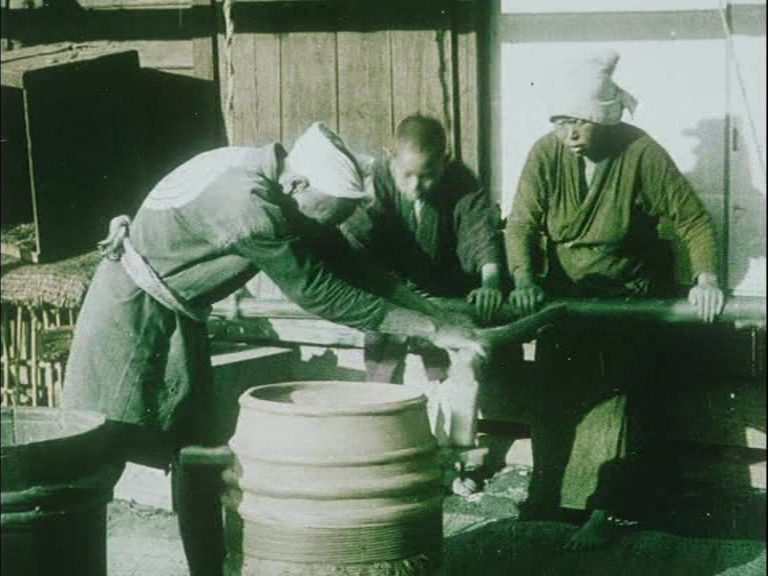
Appropriately for the machine-tooled Pathécolor, several films are devoted to various combinations of handmade and industrial processes. And just as the work of cutting Pathécolor stencils was primarily undertaken by women, so in Industrie des éventails au Japon (c.1914-1918) we see Japanese women laboriously cutting, colouring, and folding fans. In La Récolte du riz au Japon (1910) whole families and all ages are engaged in the elaborate harvesting and preparation of rice. This kind of narrative is at its most elaborate in Le Thè: culture, récolte et préparation industrielle (1909), where we watch the whole process of cultivating, harvesting, refining, and preparing tea – even to the point of watching it being served and drunk. This film even offers a kind of dissection of colonial industrialism: from the poor indigenous labourers in the fields and the white foremen overlooking the subsequent preparation, through to the middle-class white women being served tea by their Indian servants. La Chasse à la panthère (1909) offers another glimpse of class and race in the gruesome business of a hunt. (The white man carries a rifle and stands triumphantly over the trapped beast, while his native servants do all the dirty work, then the carrying and lifting.) There is an odd disjunction between the fantastical application of colour and the matter-of-factness in the way the film shows us a panther being tortured, beaten, shot, and skinned.

The drama of transformation is more surreal in La Chenille de la carotte (1911), where caterpillars in garish colours metamorphosize into butterflies. Here, the colour makes these extreme close-ups of writhing insects purely terrifying – I can imagine this film being overwhelming on a large screen. so too with the time-lapse photography of Les Floraisons (1912), where flowers writhe into organic fireworks – and writhe through the additional layers of colour laid on by Pathé.

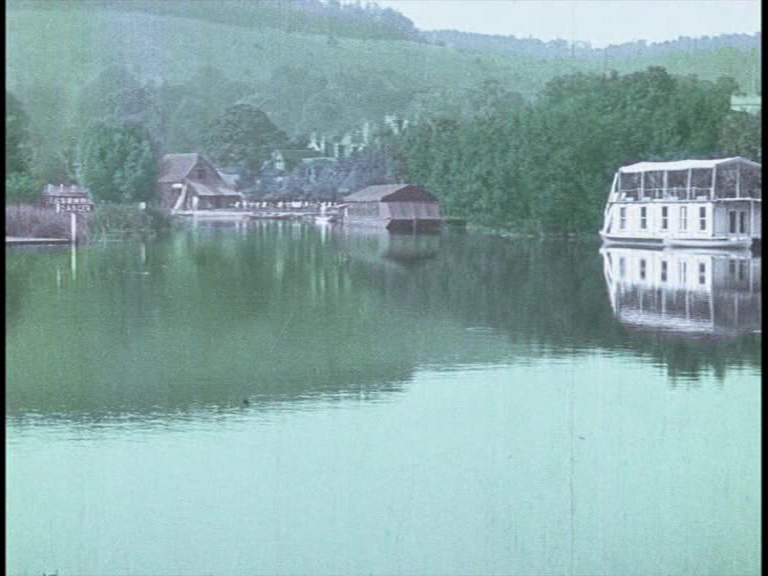
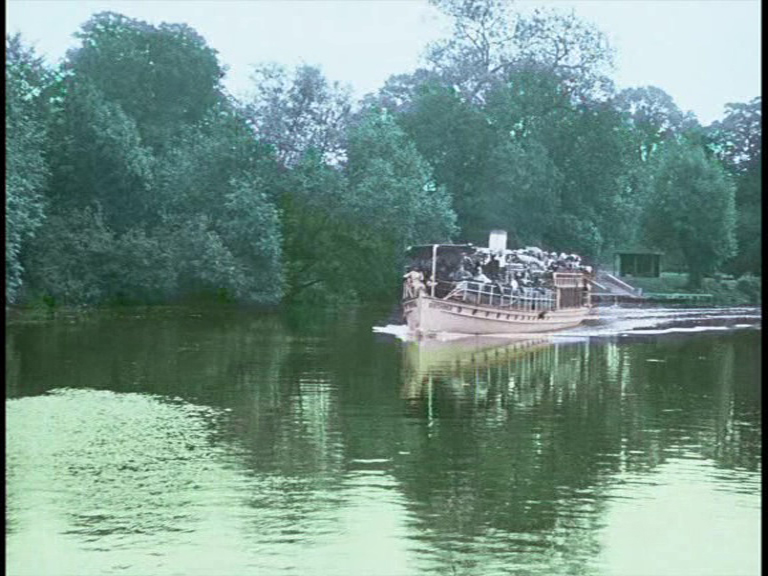
Calm is provided by the travelogue pieces, from the gentle rhythm of Barcelone, principale ville de la Catalogne (1912), seen primarily from the vantage point of a slow-moving boat, to the even more languorous rhythm of Les Bords de la Tamise d’Oxford à Windsor (1914) – a slow cruise down the river, past exemplarily English riverbanks, locks, lawns, pleasure boats… and all in 1914, when one senses that the meaning of this world and its inhabitants would undergo some irreparable change.

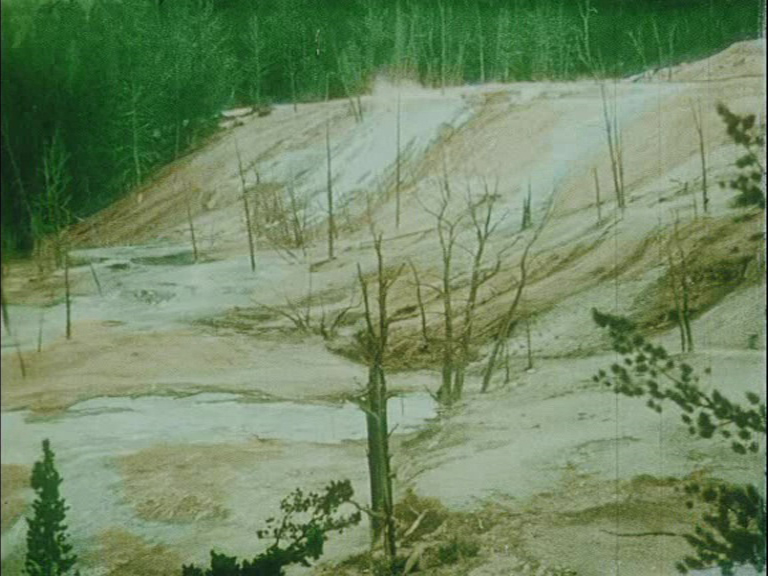
More exotic locales are found in La Grande fète hindoue du Massy-Magum (1913) and Le Parc National de Yellowstone (1917). I confess that during some of these films my mind began to wander. The application of colour over the film image often flattens rather than deepens our perception of the views being presented. For example, I would much rather have seen the journey along the Thames in monochrome. The broad application of single colours – green, green, and more green – does little to enhance such a landscape. Tinting or toning would surely be preferable for this kind of combination of open river, spacious meadow, and large sky. Other such travelogue subjects become postcard banalities. For all their delight and novelty, there is a stiltedness in the colour that dulls their power. But perhaps this is just the result of these Pathécolor films being at the end of the second disc and me growing tired?

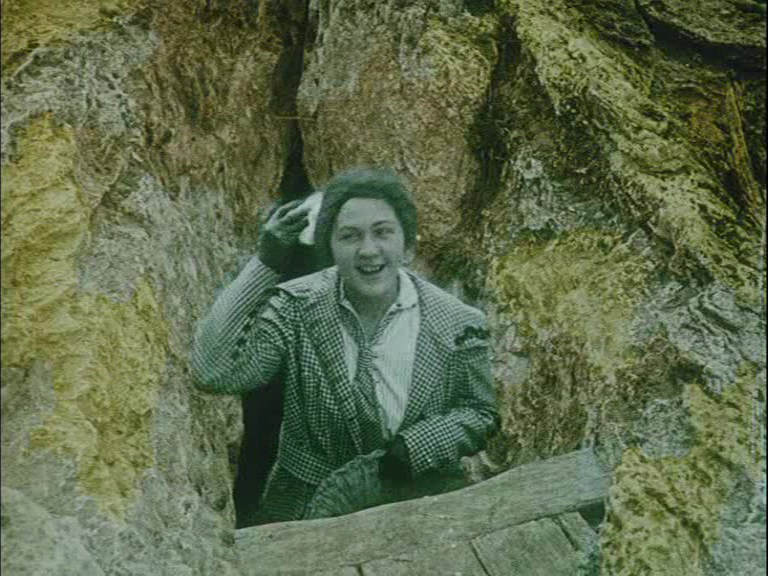
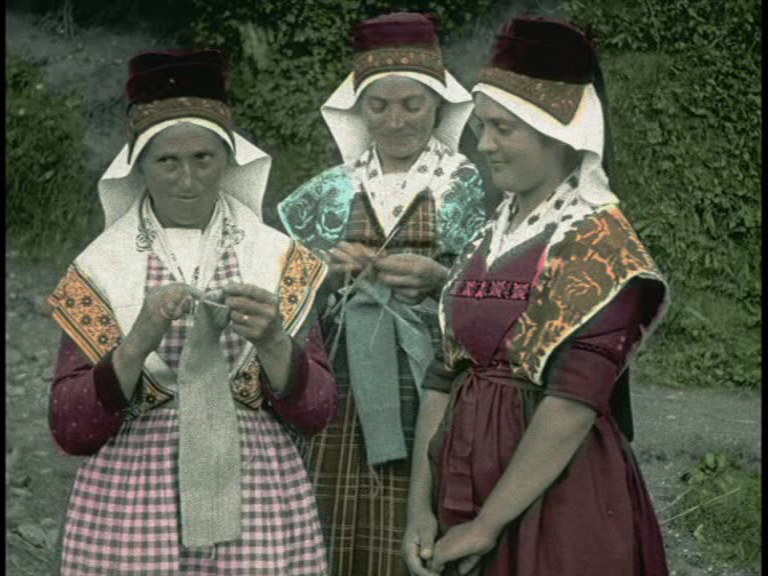
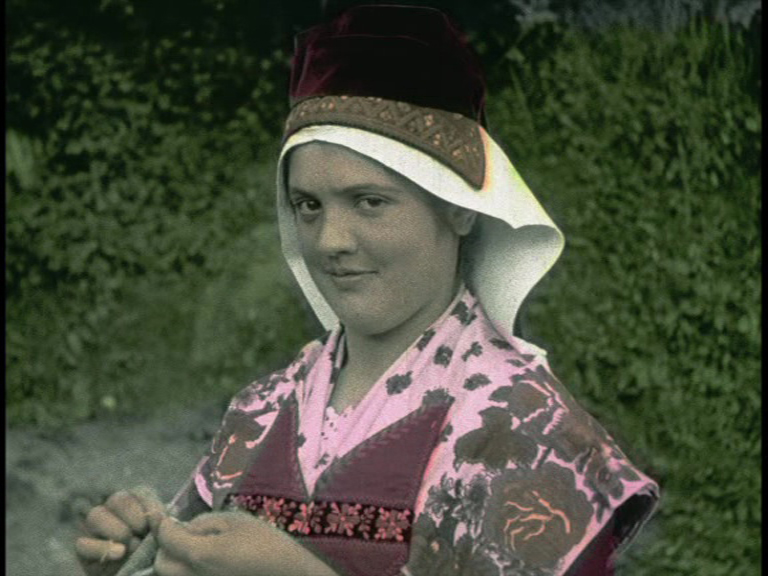
It is a relief to glimpse more human aspects in these films. In L’Ariège pittoresque (1922), views of mountains and houses are followed by awkward glimpses of locals in traditional costume, posed stiffly for the camera. Here, and in Coiffures et types de Hollande (1910), there is the delightful tension between the awkwardness of the pose of the locals and the delightful glimpses they give towards the camera operator – and to us. These long-dead faces are at their most alive when they try not to grin, when they cast a glance of annoyance or bemused patience at those who stare at them – then and now. Perhaps to reassert the neatness of fiction, the last of this programme, La Fée aux fleurs (1905), returns us to a typical kind of “attraction”: an excuse to decorate the frame with greenery and flowers, and to have a woman with a beaming smile gaze approvingly out from the image, inviting and happy to live within her magical fiction.

As must be clear by now, I was very glad to have (re)found these DVDs and watched them all the way through. Their hypnotic power – somewhere on the borders of the distant past, somewhere on the borders of photographic reality – makes I colori ritrovati an absolute treasure trove of pleasures. The four programmes offer a variety of processes and subjects, from the real to the surreal, from the everyday to the fantastic, from the placid to the cruel. It’s a good reminder about the variety of colour technologies and the results of rival processes, all operating in the same window of film history – and across a variety of genres or modes of presentation. The DVD liner notes are superb, as one would expect from an archive-based release, and provide information about the history, preservation, and restoration of the films. (There are also restoration features on the disc, too.)

If I have a reservation, or at least a regret, about the visual presentation of this material, it is the presence of copyright logos throughout the programmes of Kinemacolor and Chronochrome films. The former has a “Cineteca di Bologna” logo in the top left, the latter a “Gaumont” logo. The DVD liner notes mention that there are strict copyright restrictions on the Chronochrome films. Not only does this mean that no complete film is presented here, but also that a remarkably ugly Gaumont copyright notice is stamped in the corner. I could get used to the Bologna logo in the first programme of this set (it is a simple and relatively discreet design), but the Gaumont logo is horrific: as ugly an intrusion as you could imagine. Atop the beautiful and subtle and rich texture of the Chronochrome images, this flat digital shape in the corner looked like a lump of birdshit had landed on the screen. I understand this material is unique and protected by goodness knows what level of copyright and archival restriction, but it seems a great shame to so spoil the astonishing visual impact of these films.

To return to the positives, I must also praise the music on these DVDs, which is provided on the piano by Daniele Furlati. I am often indifferent to piano scores but listening to these performances were much more pleasurable than I usually find. Firstly, I think the (relative) lack of narrative puts less pressure on the musician to be led by specific cues. The result is a more relaxed, impressionistic approach. I find Furlati’s music for these films both more melodic and more effective over longer timespans. He’s not chasing after the action or killing time waiting for a particular cue or change of scene. I was rather reminded of some of Liszt’s musical sketches inspired by/written on his travels around Europe in the 1830s. His Album d’un voyageur (1835-38) prefigures his more polished, thematized collection Années de pèlerinage (1842). Melodies take their time to develop, and there is a pleasingly rambling, reflective nature to the structure. This is travel music, capturing the slow speed of voyaging and the pleasure of stopping to gaze at views and absorb the atmosphere. With Furlati’s music for I colori ritrovati, I had the same impression of a relaxed, melodic meandering through these slow travelogues and touristic views. And, as Liszt sometimes quotes and develops local/national melodies into his work, so does Furlati. There is a lovely moment at the end of L’inaugurazione del campanile di San Marco (discussed above) when Furlati quotes a phrase from the Italian national anthem. He does so very subtly, and the tempo is so slow it’s like a memory of travel, of a place, of a country we’ve visited. The images it accompanies are of the nighttime façade of a palace in Venice. It’s a dreamy, melancholic, touching moment – a summoning of memory at the very moment the film ends, and the past disappears. Perfect.

Paul Cuff

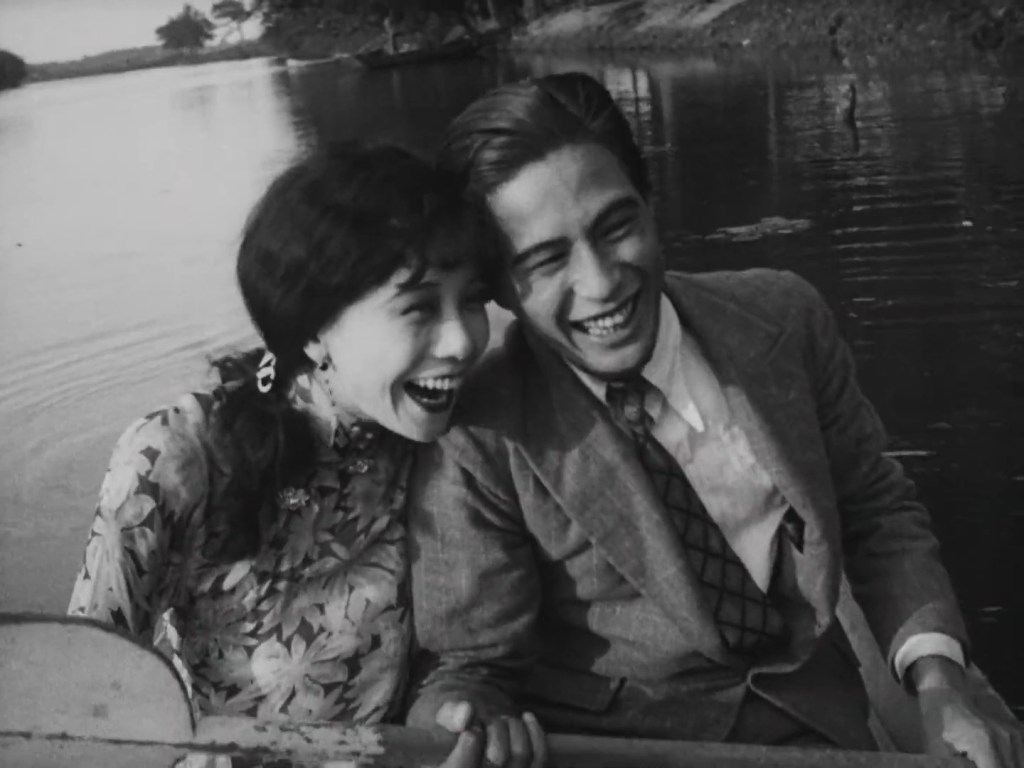
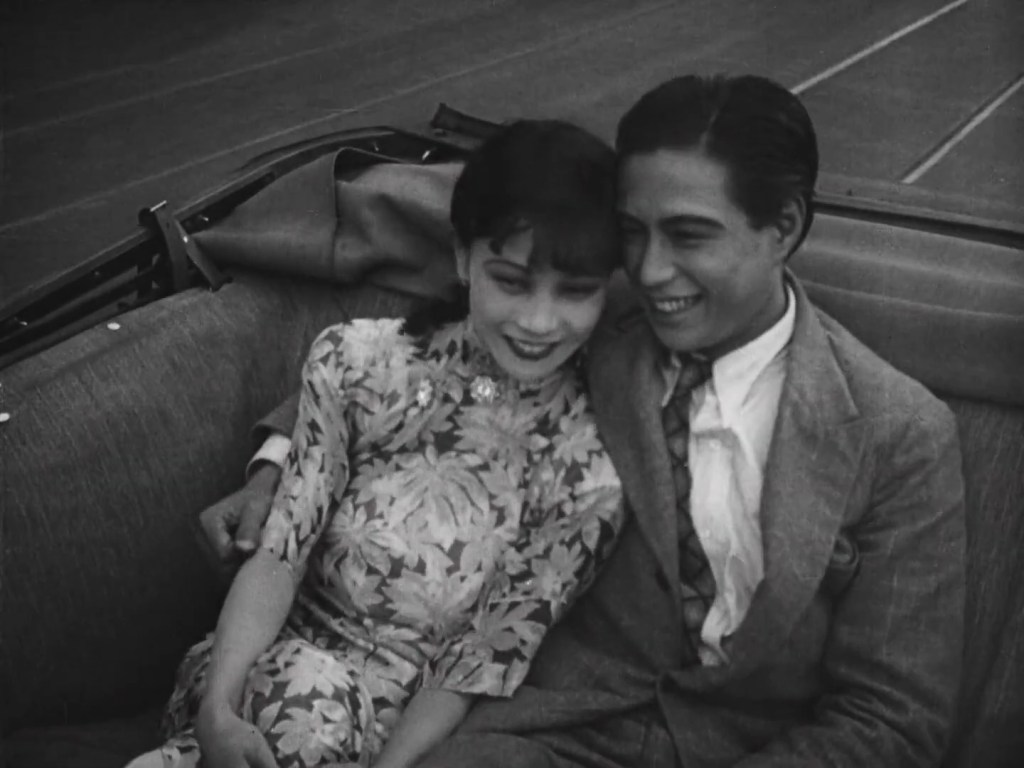
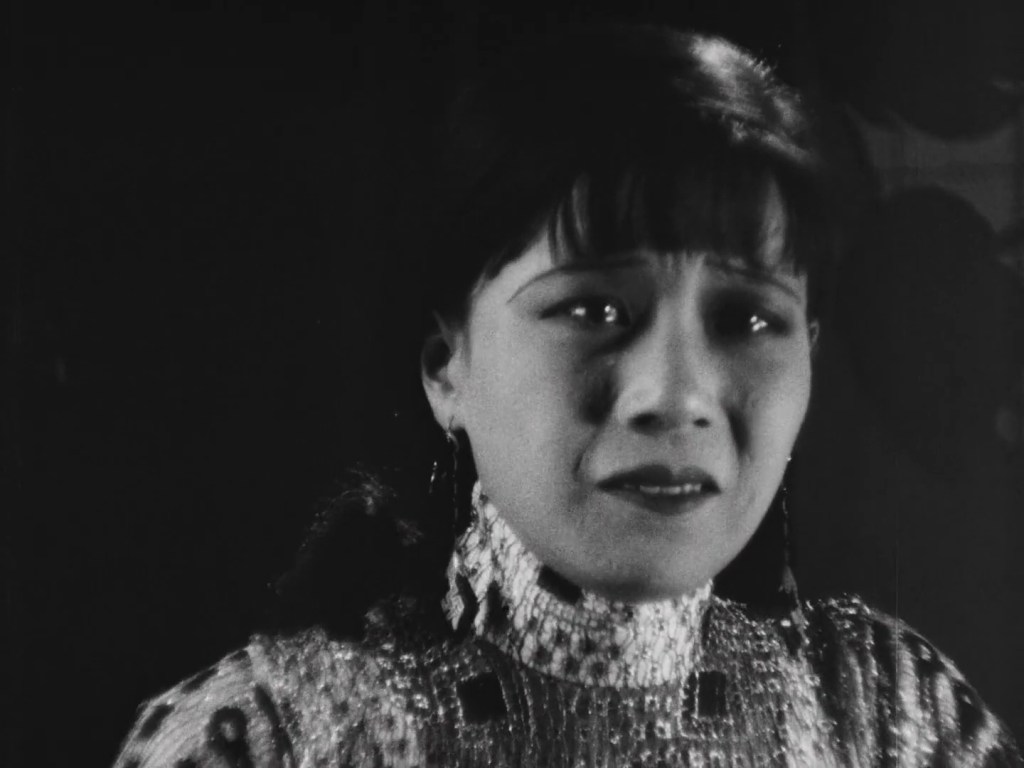
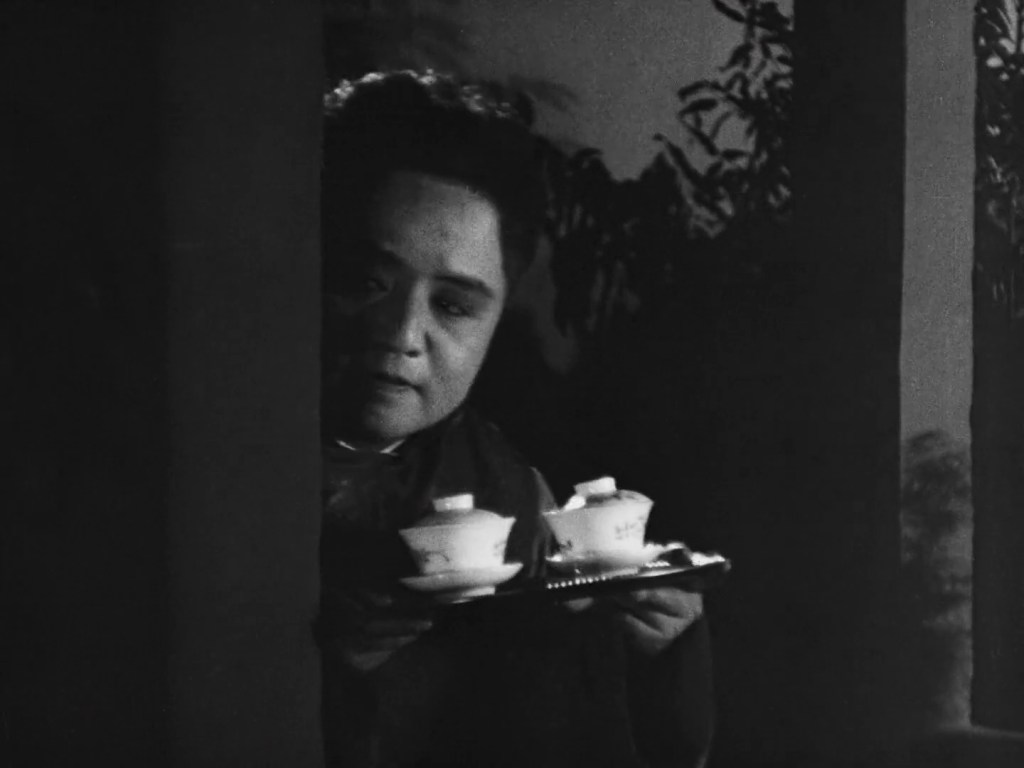
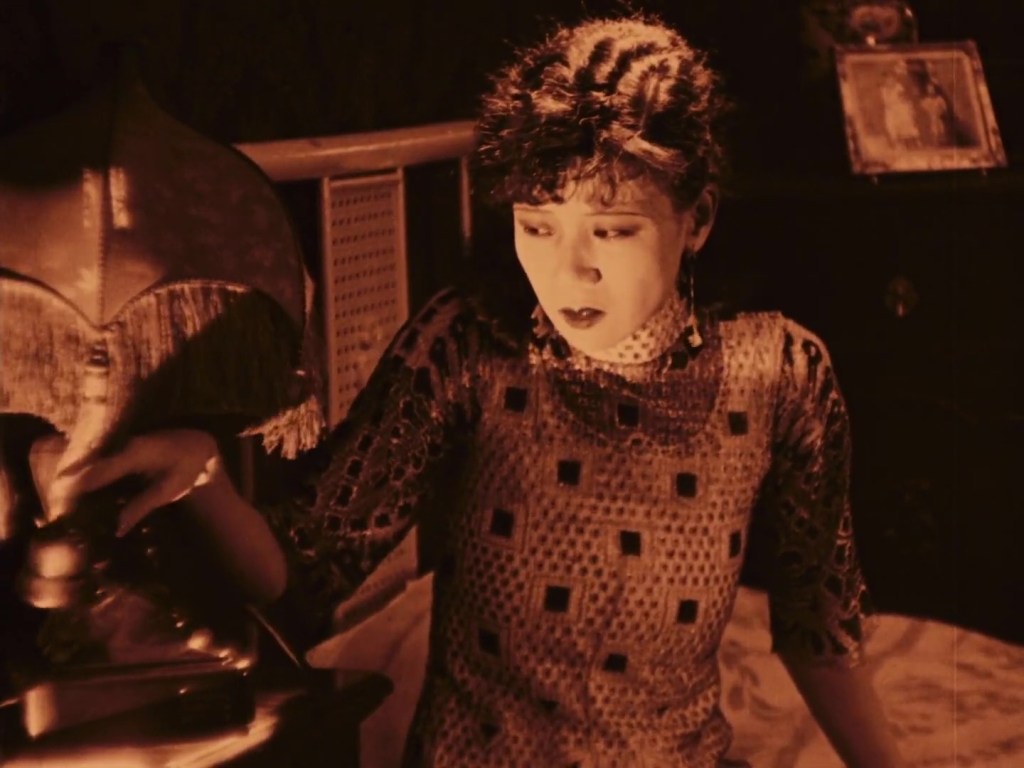
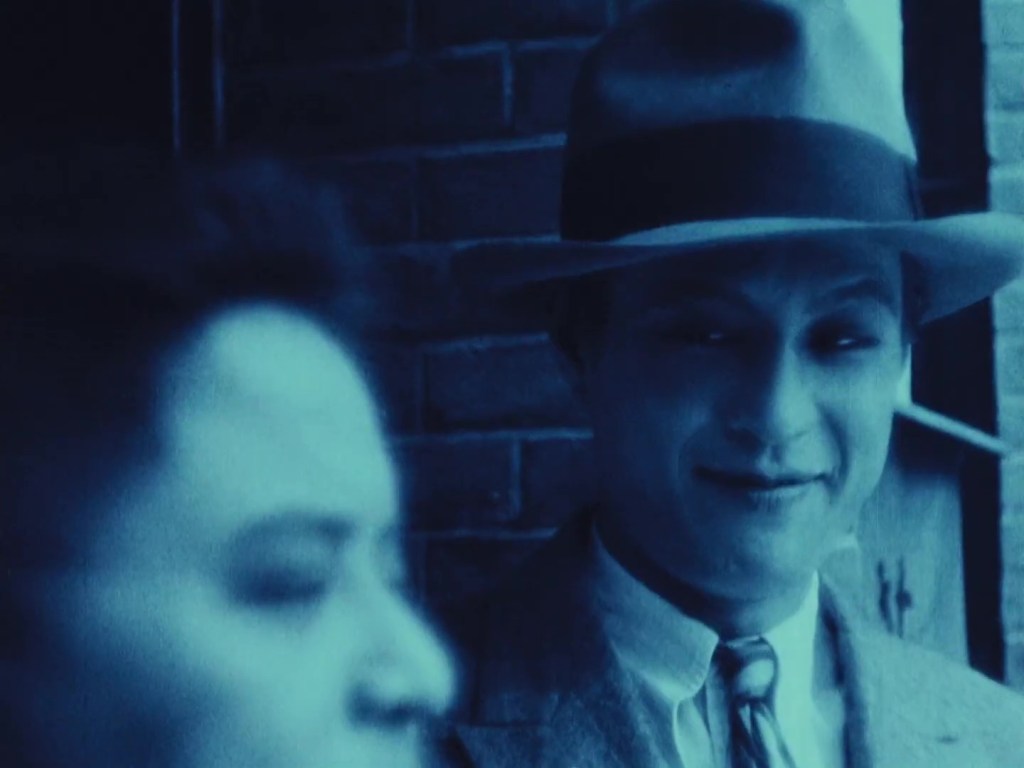
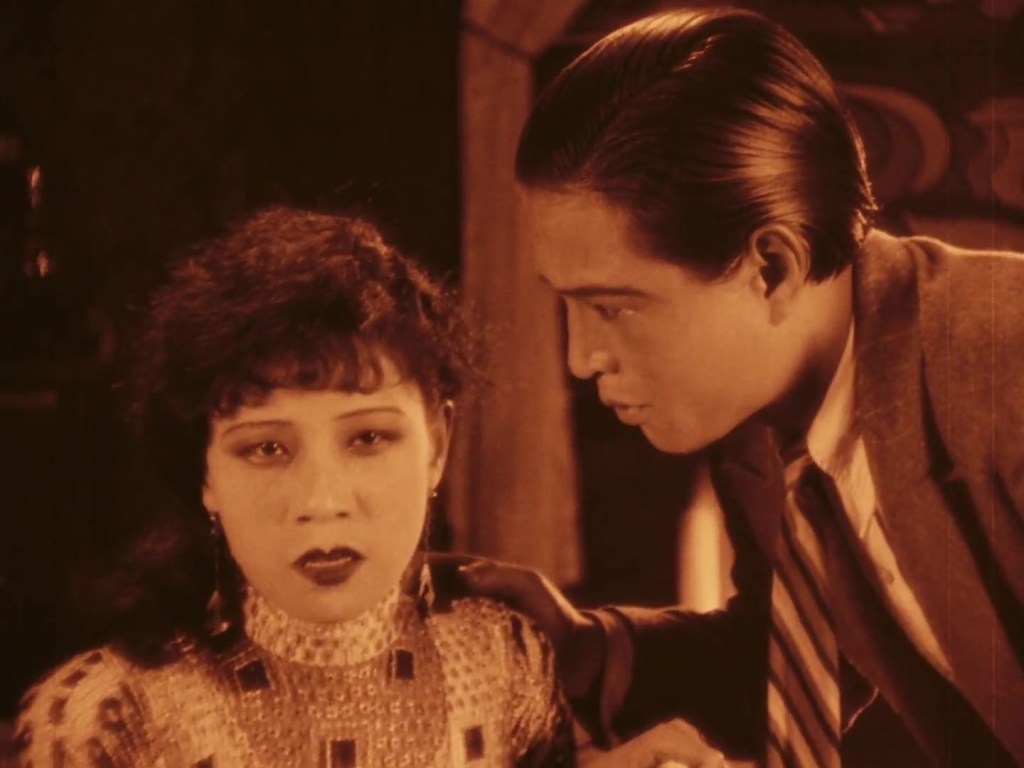
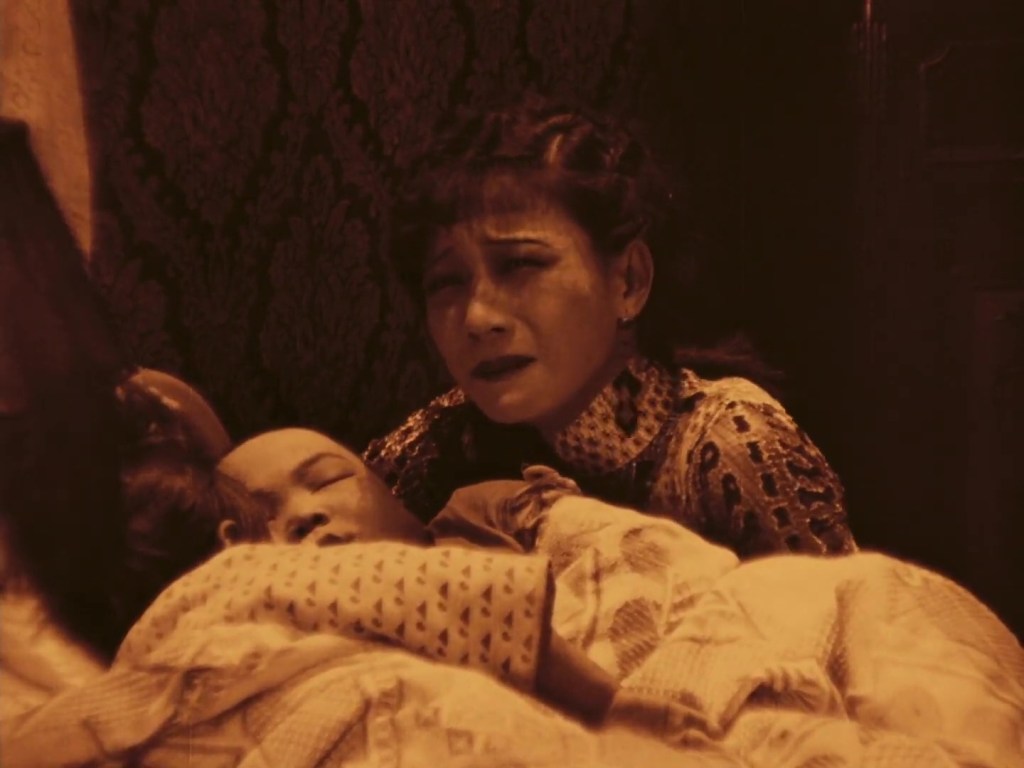
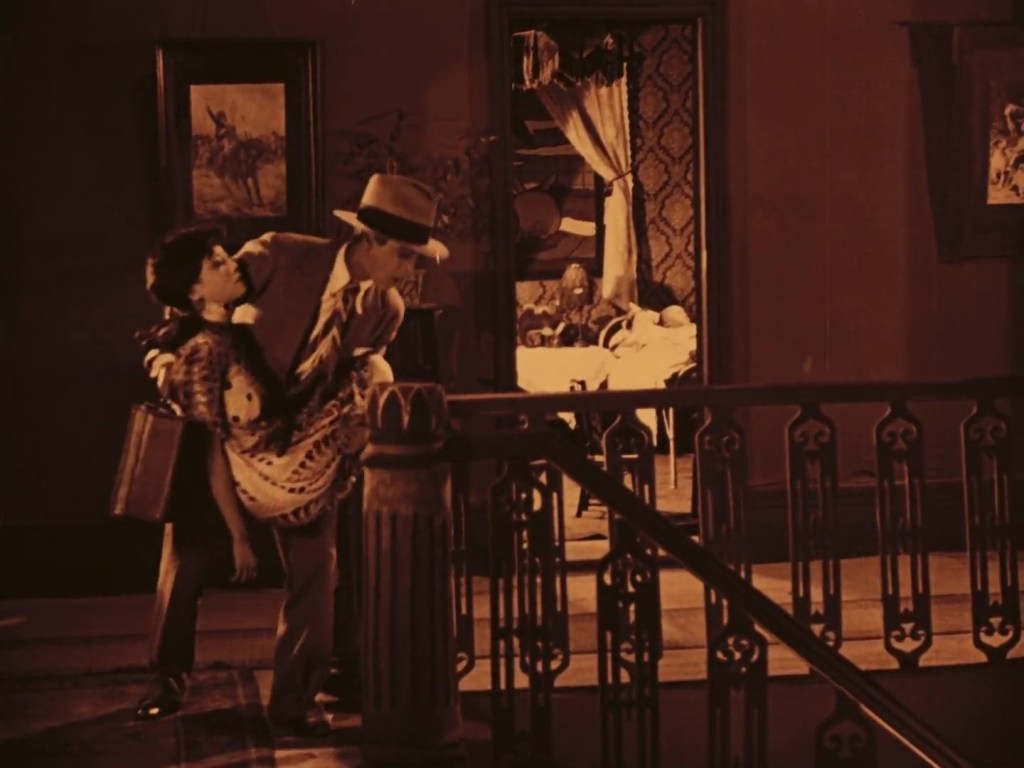
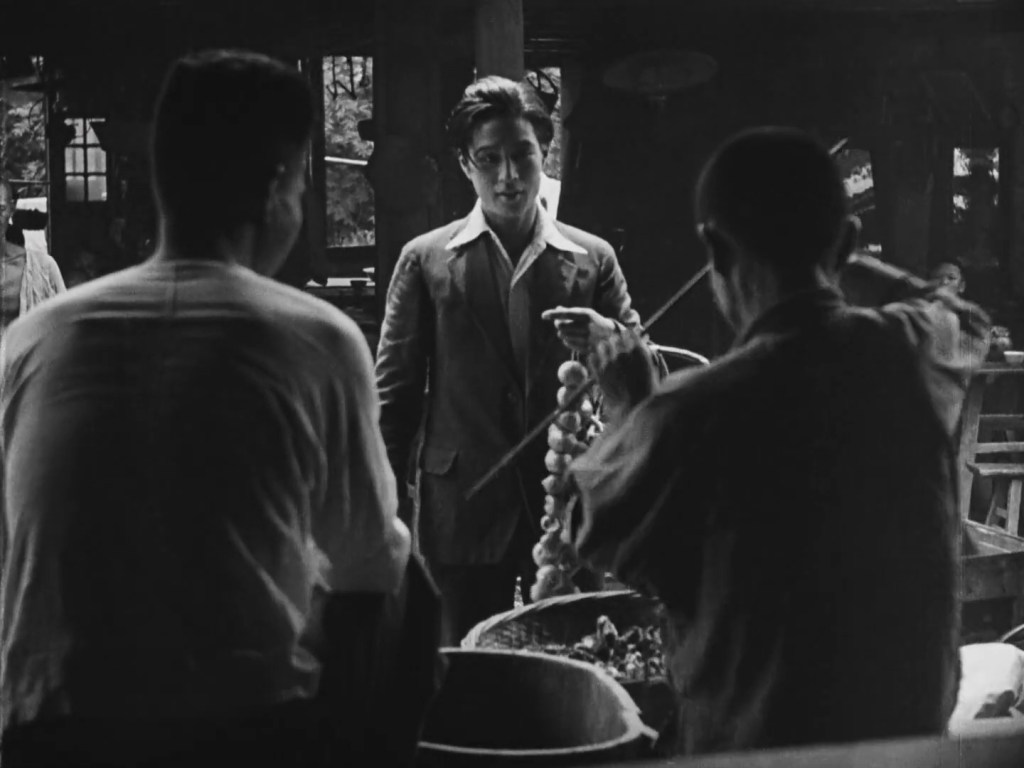
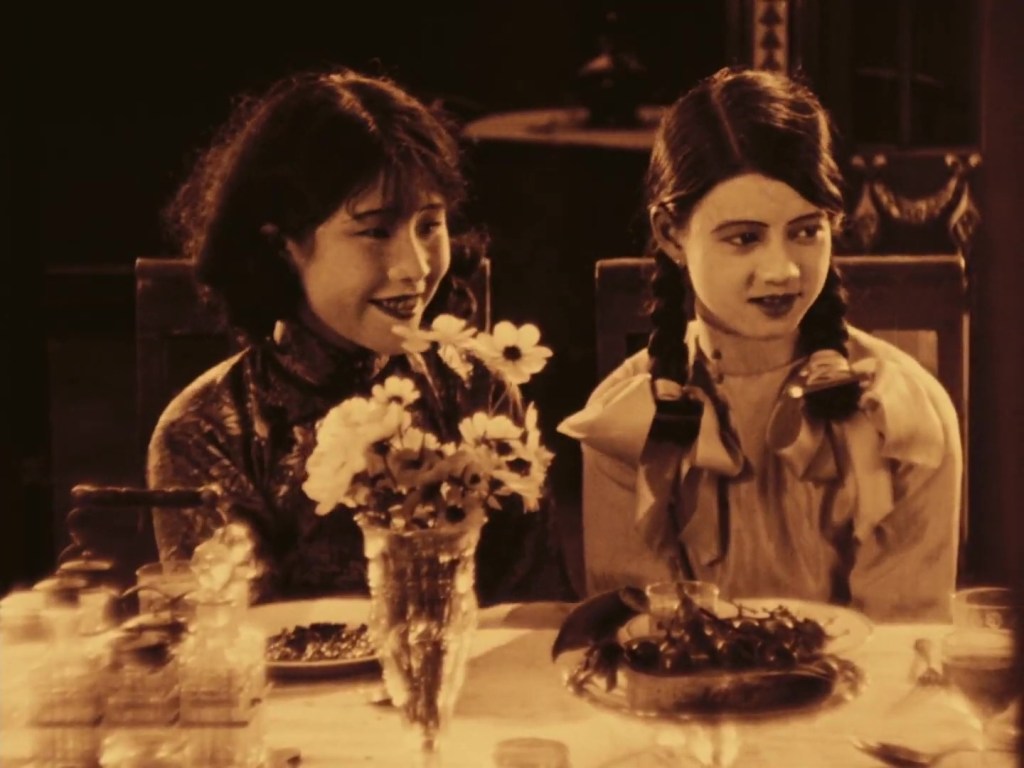
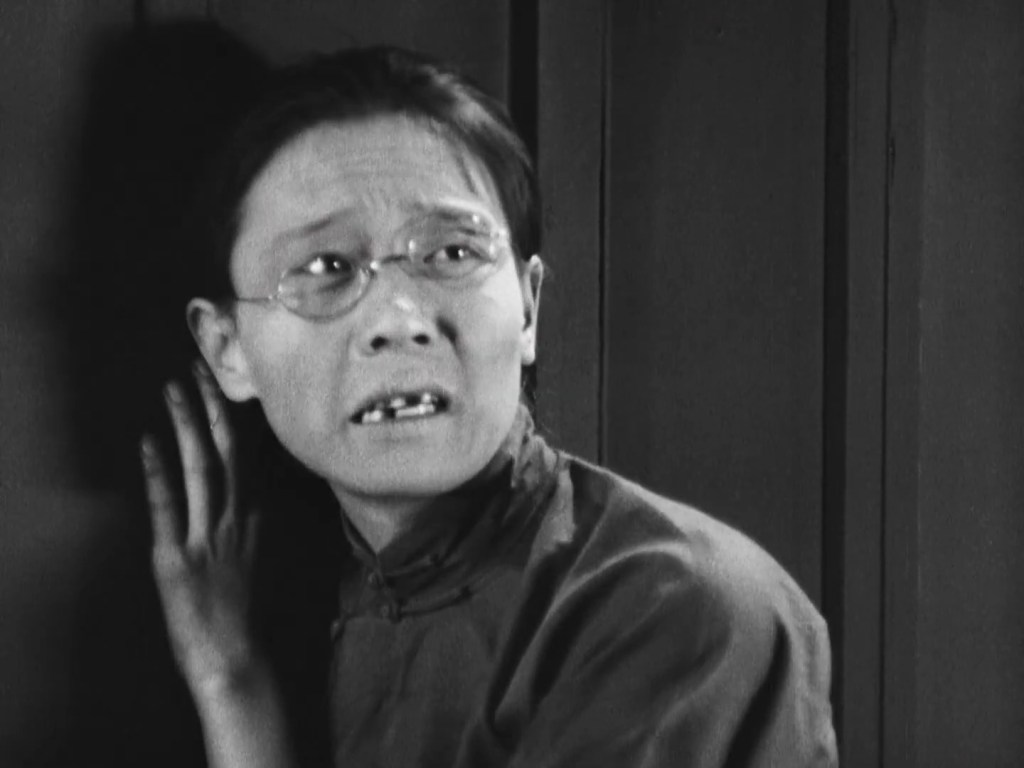
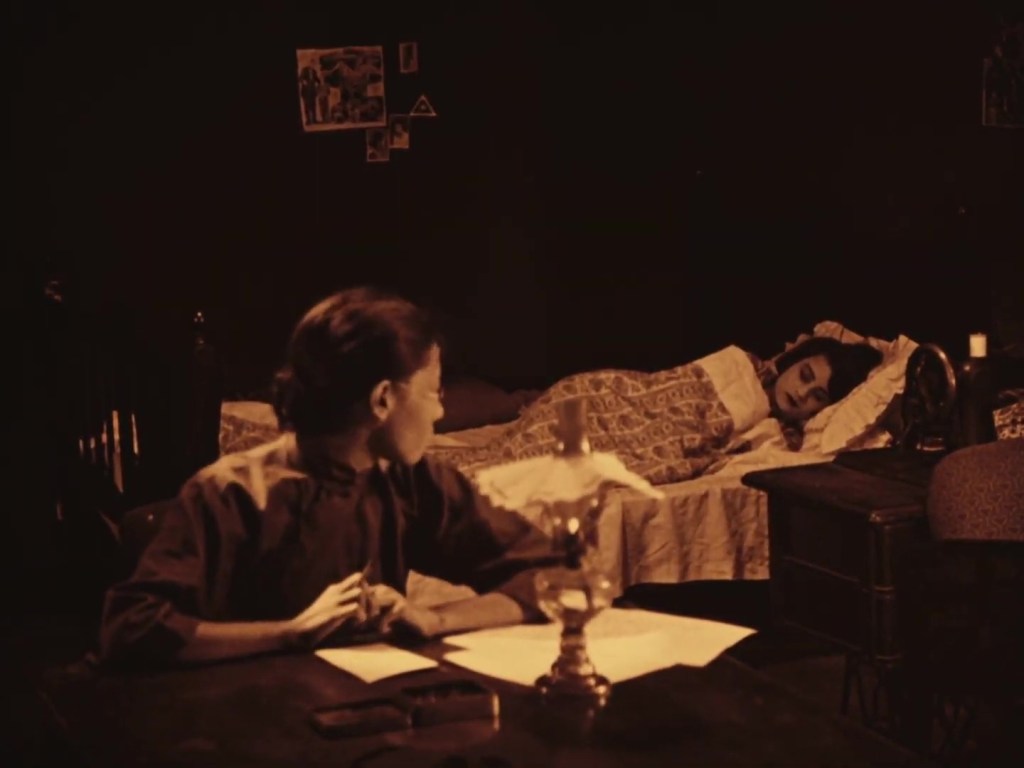
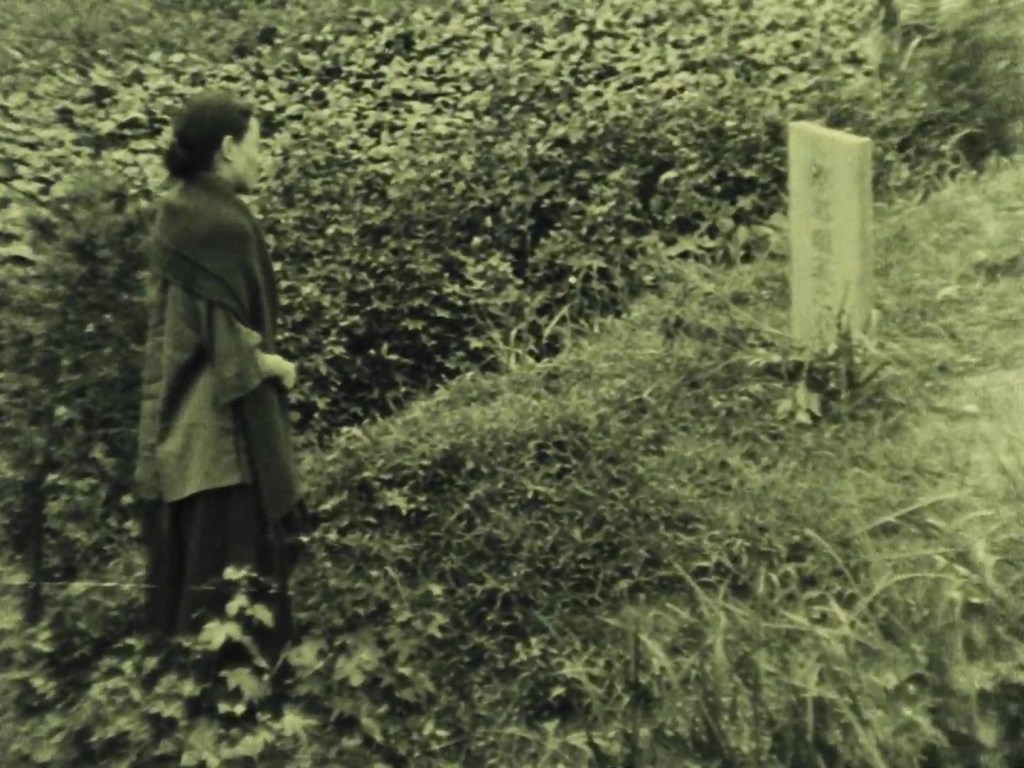
Love and Duty (1931; Cn.; Bu Wancang)

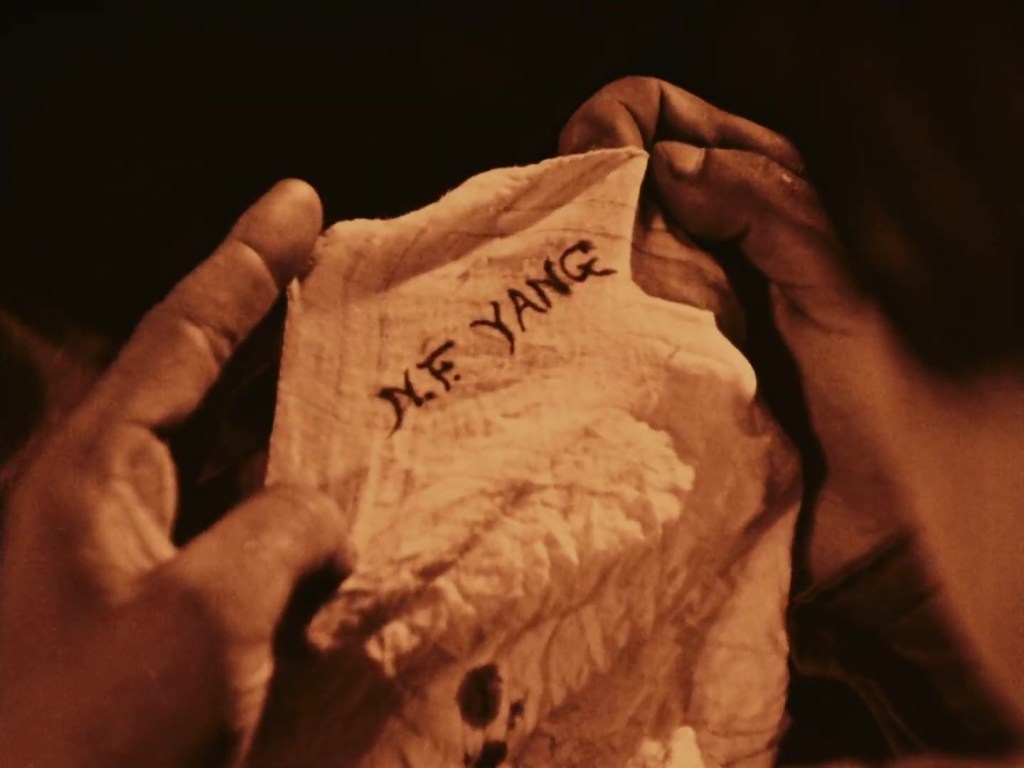
This week, we foray to China for a thick slice of melodrama. Love and Duty boasts two of Chinese cinema’s biggest stars of the period, Ruan Lingyu and Jin Yan, and a sprawling narrative of numerous twists and turns. But before I discuss the film, I must provide some little context for how I came upon it and why I have not watched it until now…

Love and Duty has sat on my shelf since September 2022. The previous month, I had applied for a job lecturing film history at a university. I had not occupied an academic position for some time and had essentially abandoned thoughts of doing so. But the modules I would be teaching at this position overlapped perfectly with my interests and past experience. Despite the overwhelming likelihood of failure, and the gruelling tedium of filling in online forms, I began the process of applying. (My god how I hate job applications.)

Conscious that I should expand my knowledge of the wider culture of silent cinema (and show evidence thereof), I set out on a spending spree. I bought a stack of books, DVDs, Blu-rays. I also downloaded a slew of articles, desperate to convince myself that I was au courant with the latest scholarship – or at least up to date with what I might have missed. I viewed, I read, I wrote. Within a month, I completed and submitted an article to a scholarly journal as well as submitting my application. It was a frenzy, but I was buoyed by the rush of it all. Was the chance of success really so remote? I guzzled at the trough of irrational optimism. I planned out modules, I compiled reading lists. After all, I might need to show at an interview that I had thought ahead about how to shape the curriculum. I genuinely enjoyed imagining course outlines and formatting reading lists.

First on my hit-list was a tranche of Chinese silent films and literature thereon. Packages arrived, digital material was carefully downloaded, labelled, filed. Since not many Chinese silents are available on DVD/Blu-ray, I was especially keen to get hold of the best edition then available. Step forward, Love and Duty. An “exclusive limited edition” of this film happened to have been released in China by the World Cinema Library label in the summer of 2022. Only 700 copies were produced, and they were very difficult to obtain if you didn’t know in advance and could preorder. I did not know and did not preorder. I therefore had to find a copy via an online store I had never used, based in Hong Kong. I also paid a good chunk more for the privilege, and waited in anxious expectation that I had been conned and would receive nothing – or perhaps that I would receive a message from my bank that I had been drained of all the money I possessed. But why worry? The salary of a lecturer would of course make up for any short-term losses. (Here I may have struck a Douglas Fairbanks-style pose, hands on hips, and thrown back my head in boisterous laughter.)

While the disc was on its way from Hong Kong, I received an update about my job application. I had fallen at the first hurdle. For many reasons, I knew (or very strongly suspected) that this would be the case. But that did not lessen the dispiriting sensation of the news. (Such emails are tactfully generic and never state the reasons for one’s rejection.) A few days later, the special edition of Love and Duty duly arrived. Everything was as promised. The cellophane gleamed around its imposing bulk. I added it to the expensive pile of hubristic purchases. Here was a hefty tome from Italy, there an overpriced edition from France, elsewhere a set of German films without adequate subtitles. And atop them all was Love and Duty, the single most expensive Blu-ray I owned. I put away my purchases. Life resumed. (Canny readers may realize that it was at this point in my life that I began this very blog.)

Perhaps the effort of the application and its inevitably disappointing punchline put me off watching Love and Duty for so long since then. Why revisit my folly? Well, nearly three years later, my decision to watch this film in 2025 was entirely spur-of-the-moment, precipitated by nothing more than the unexpected prospect of a free evening. Why not take the plunge and watch the bloody thing?

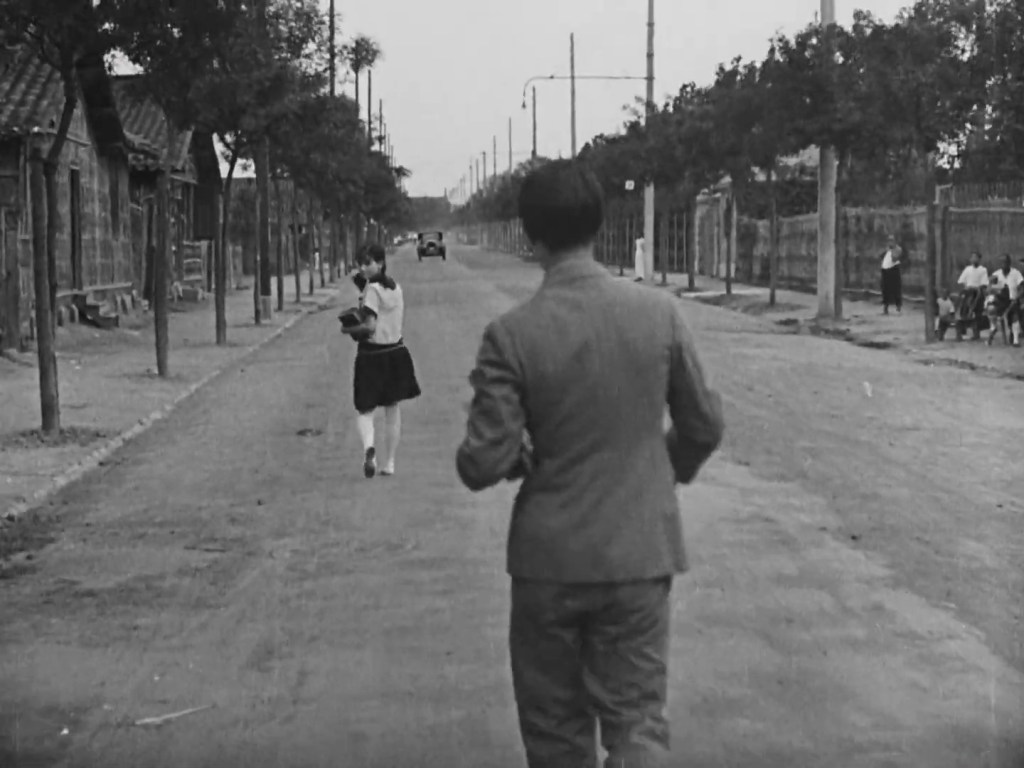
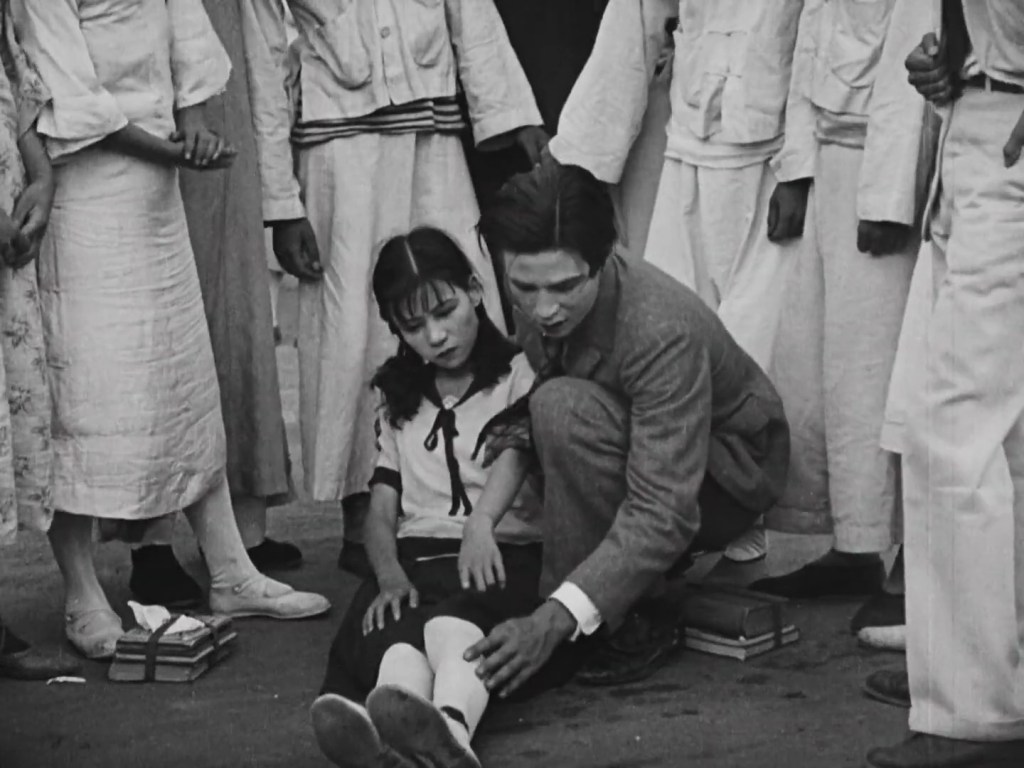
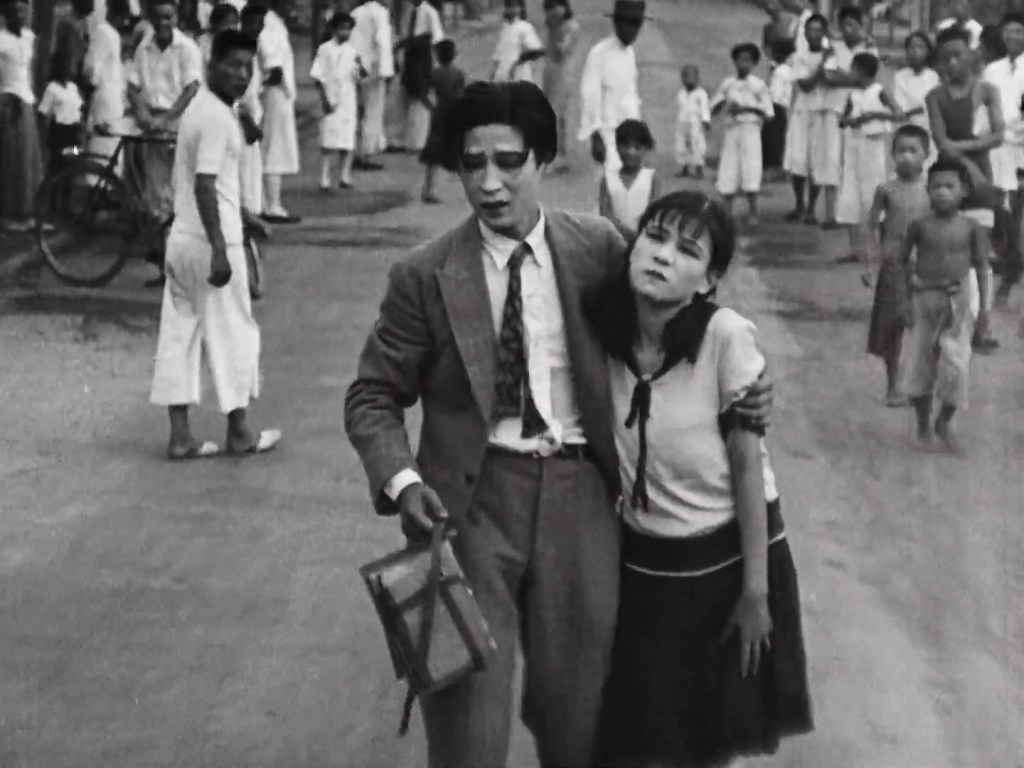
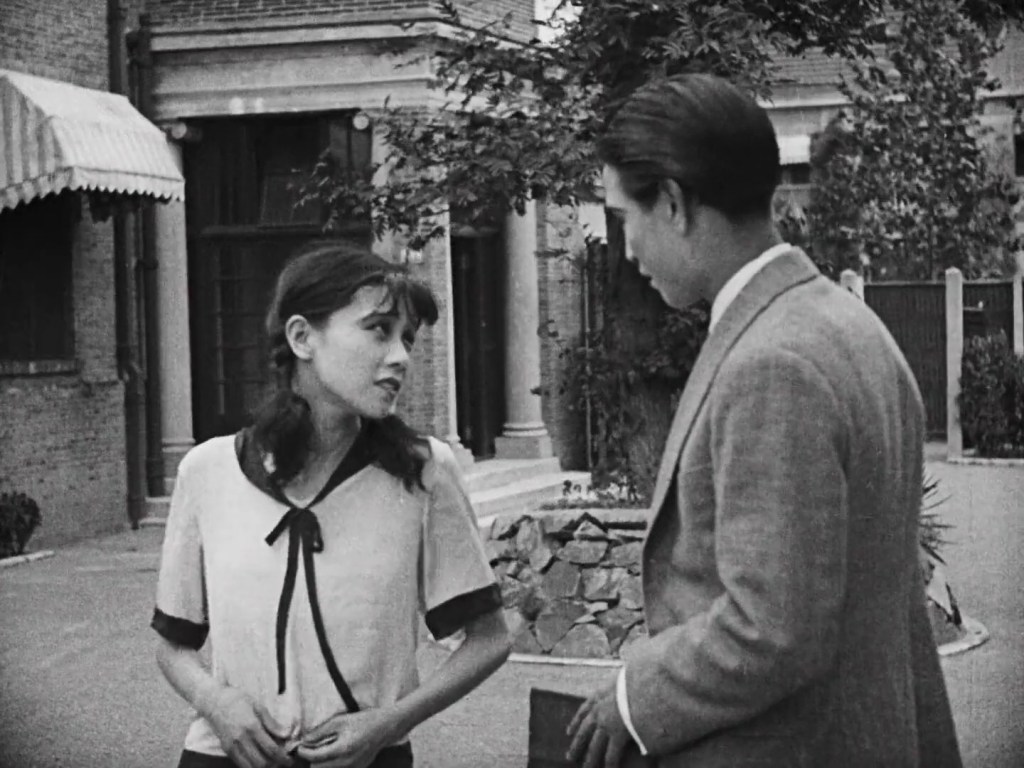
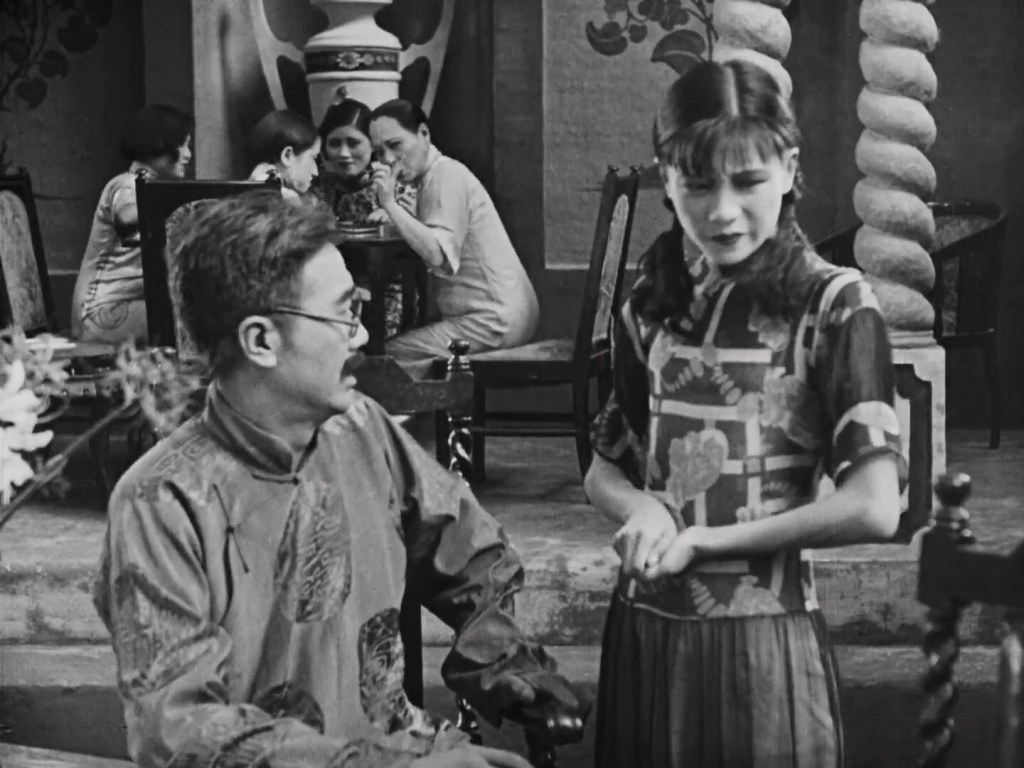
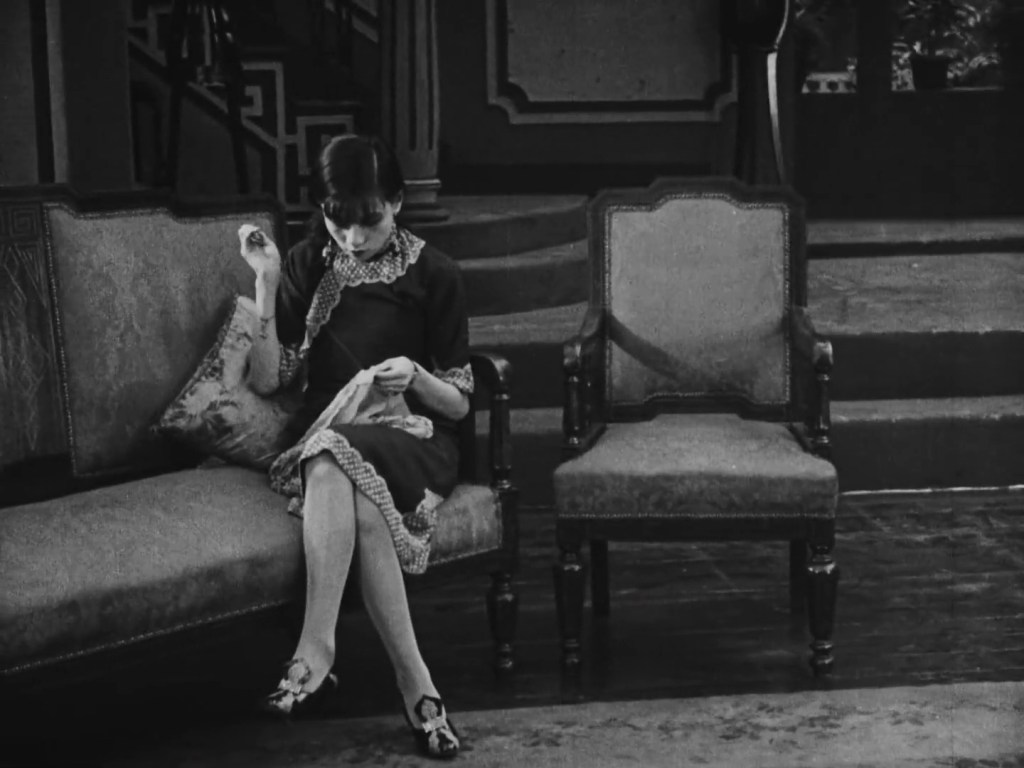
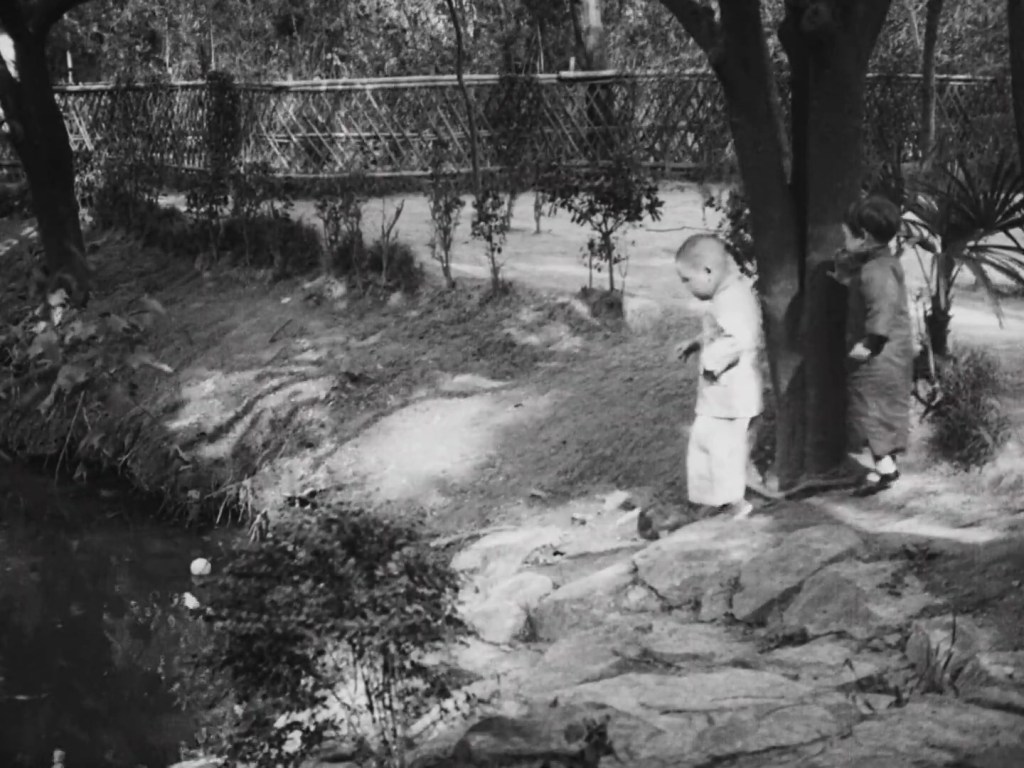
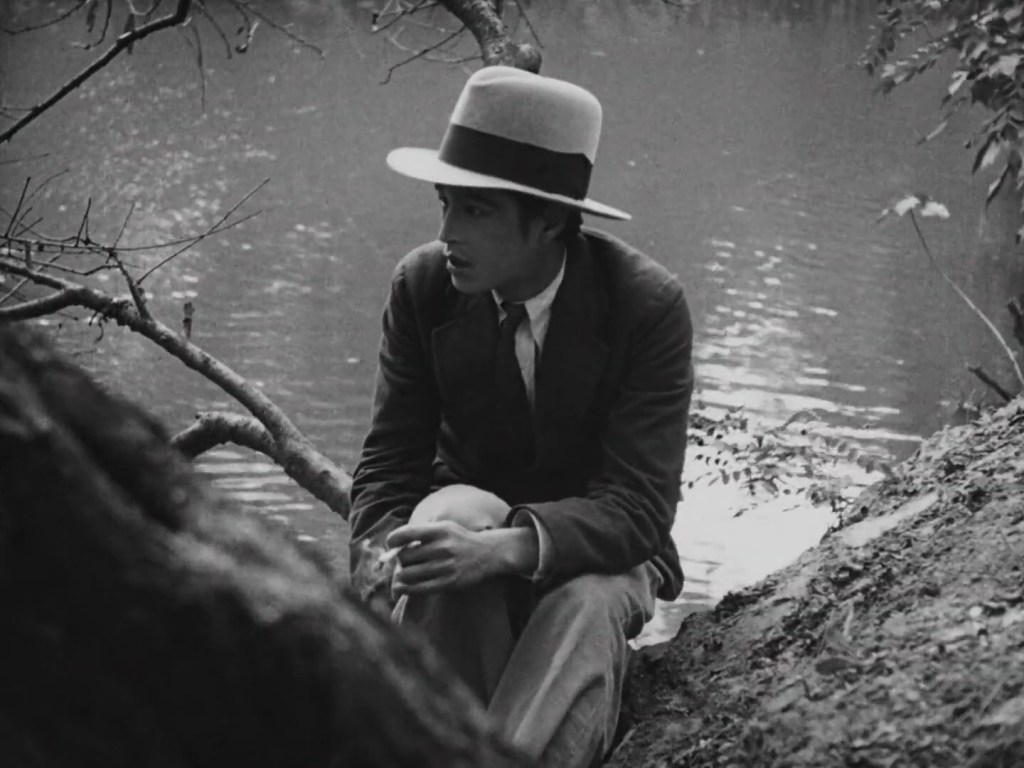
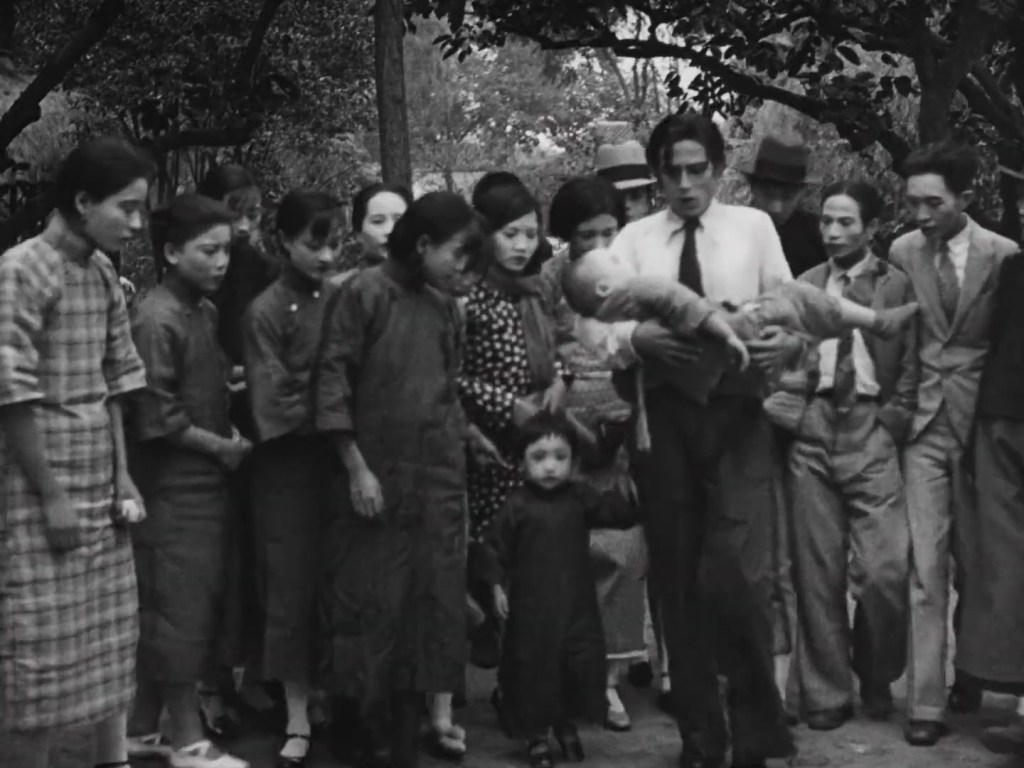
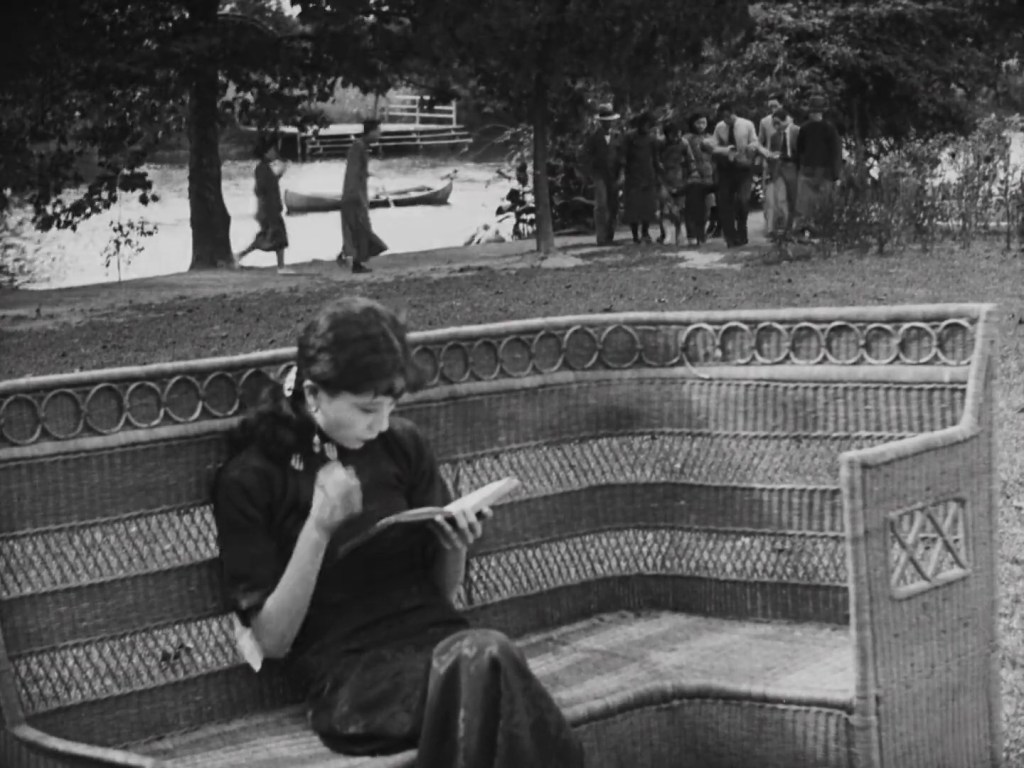
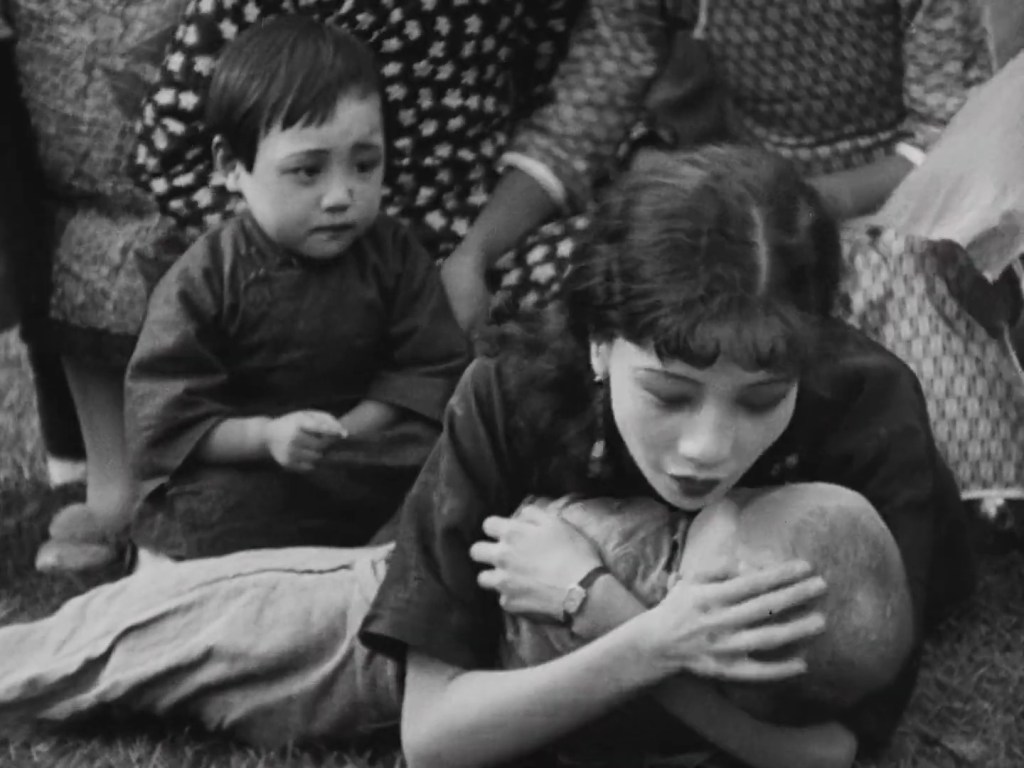
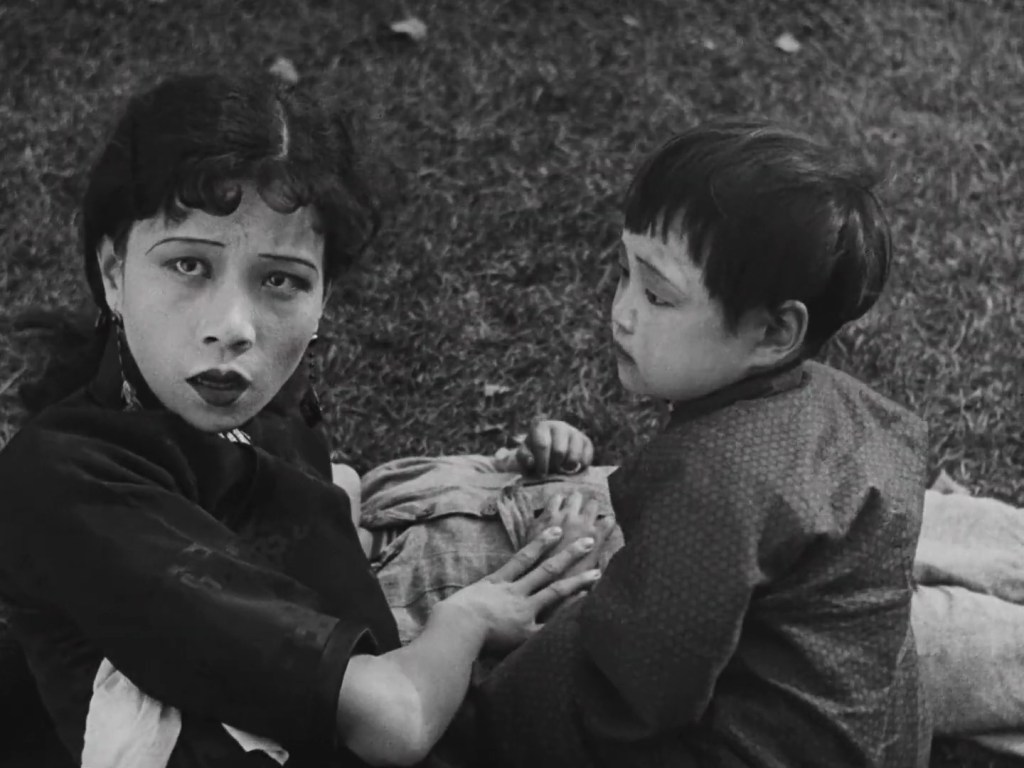
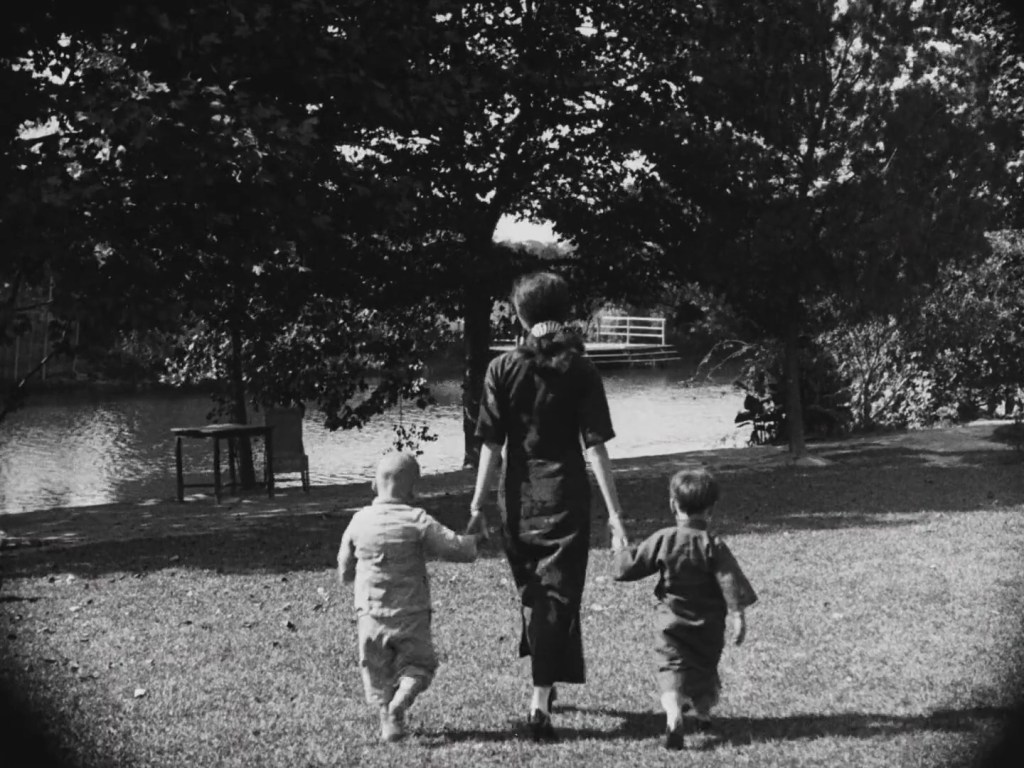
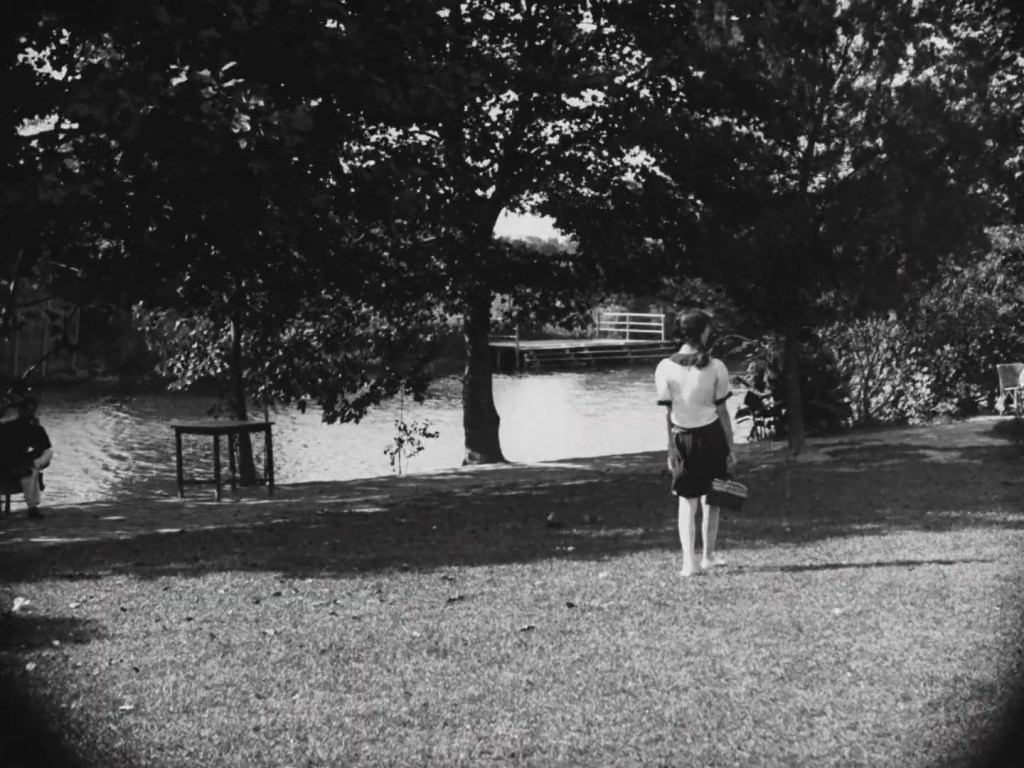
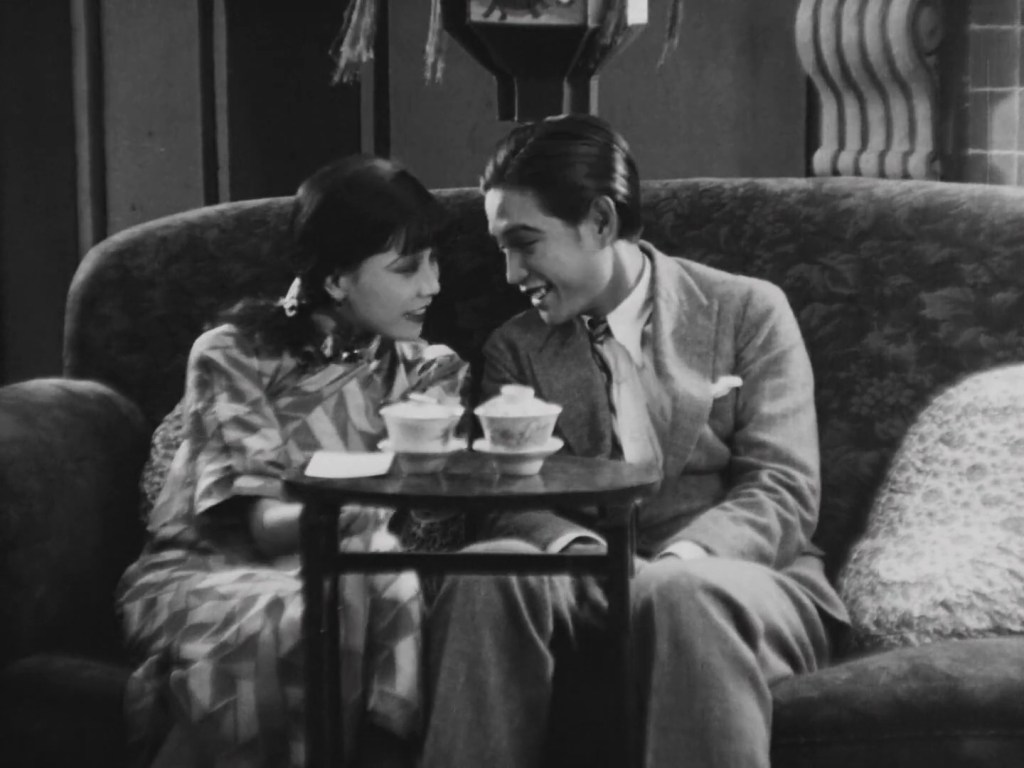
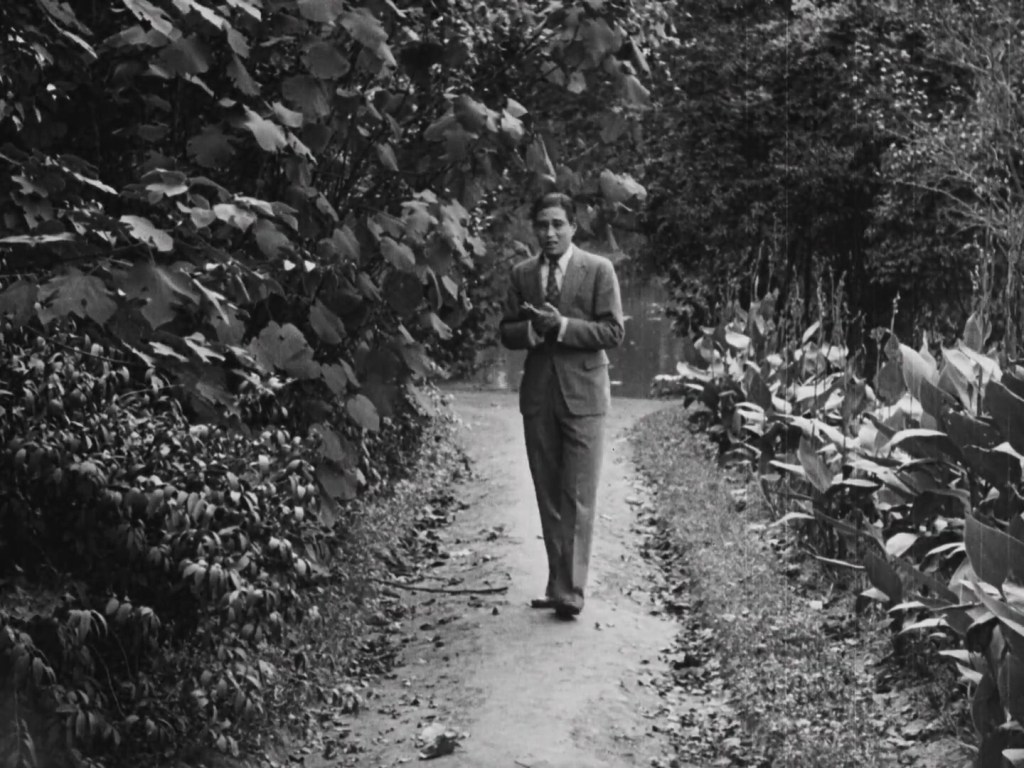
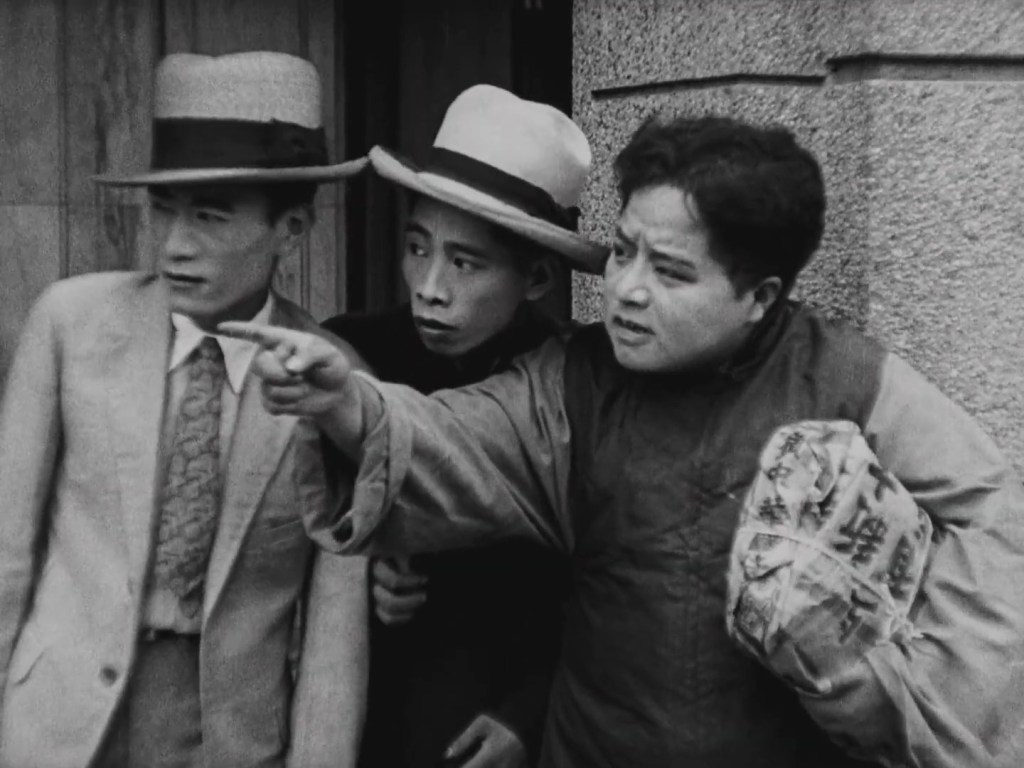
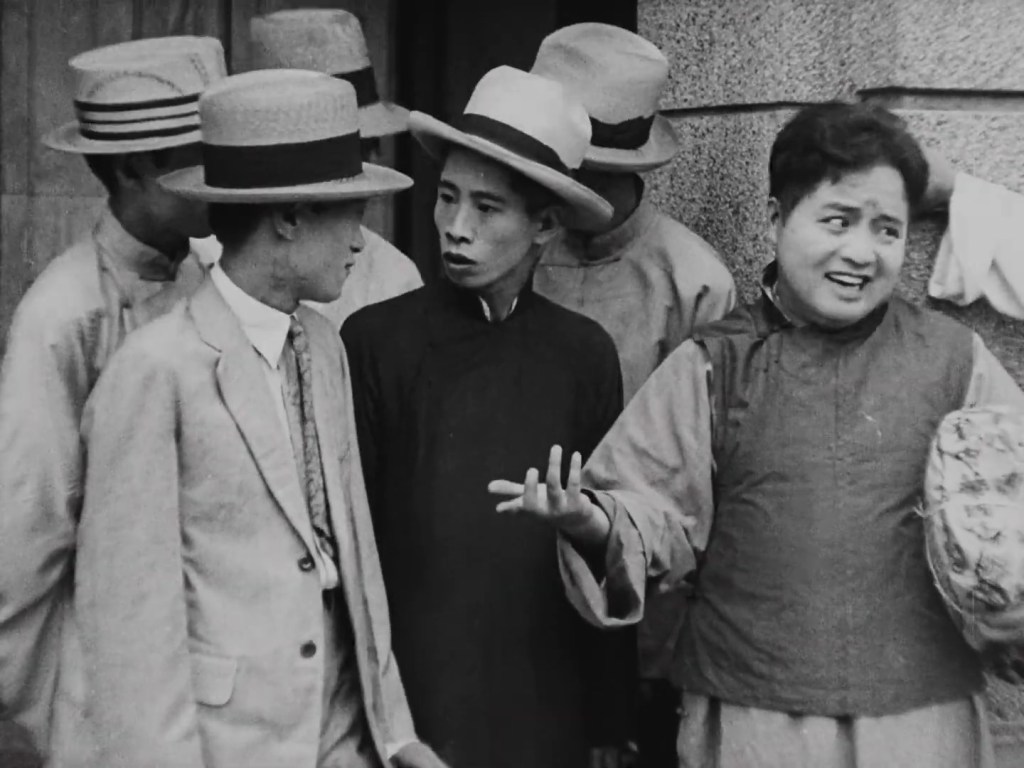
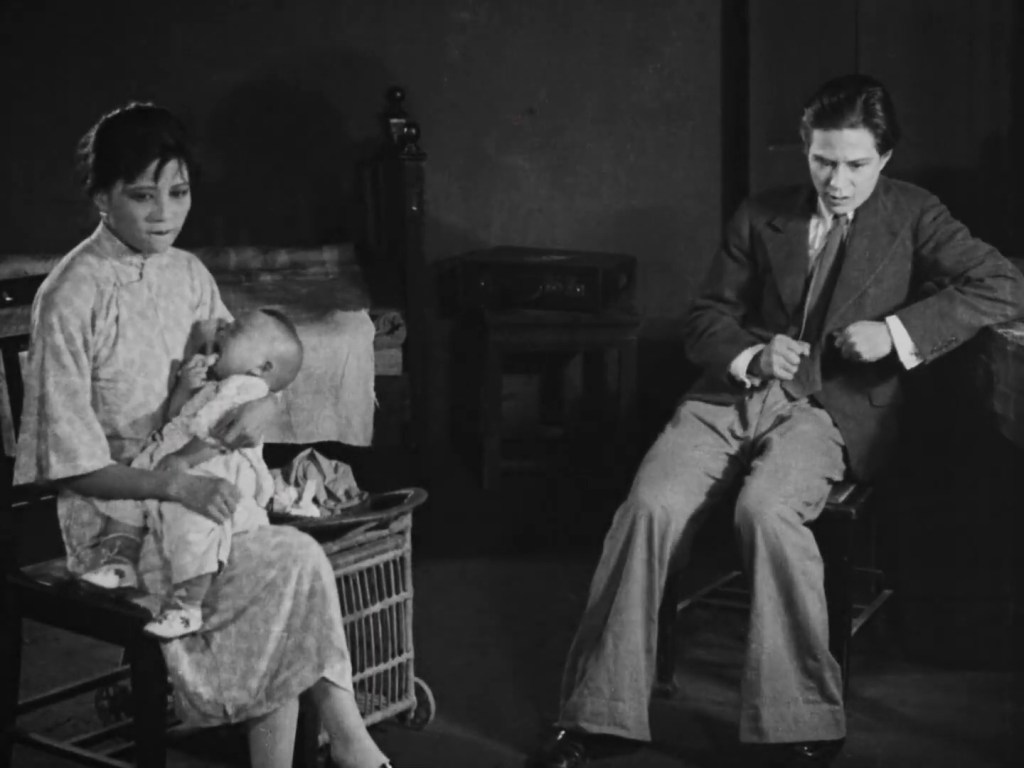
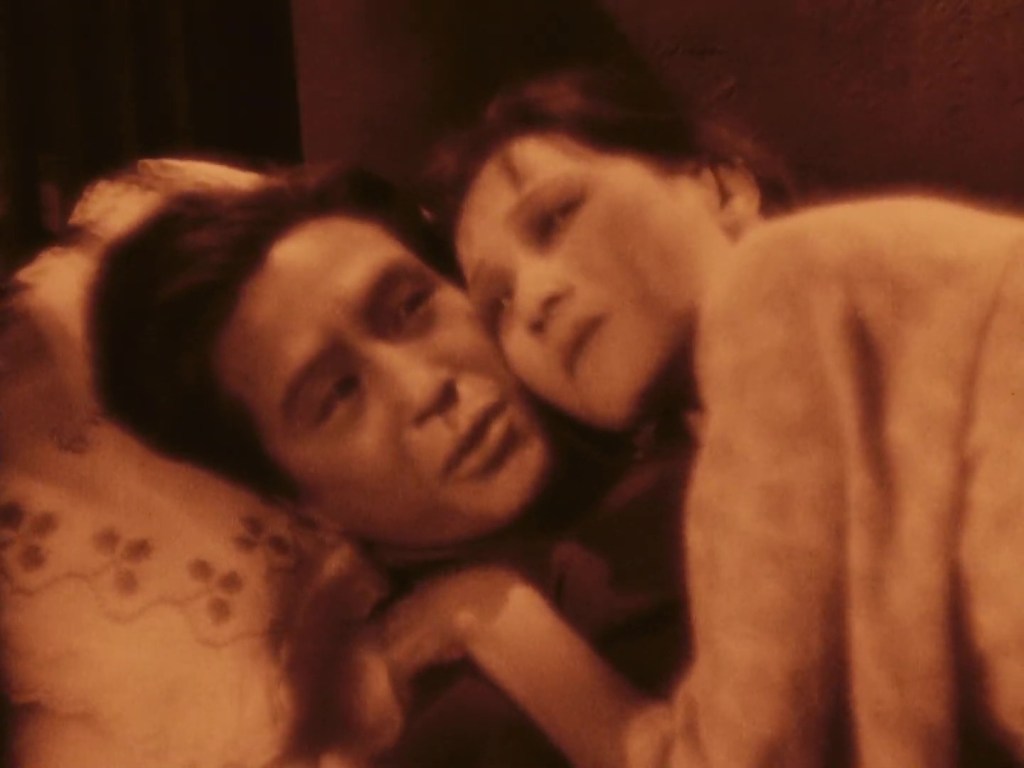
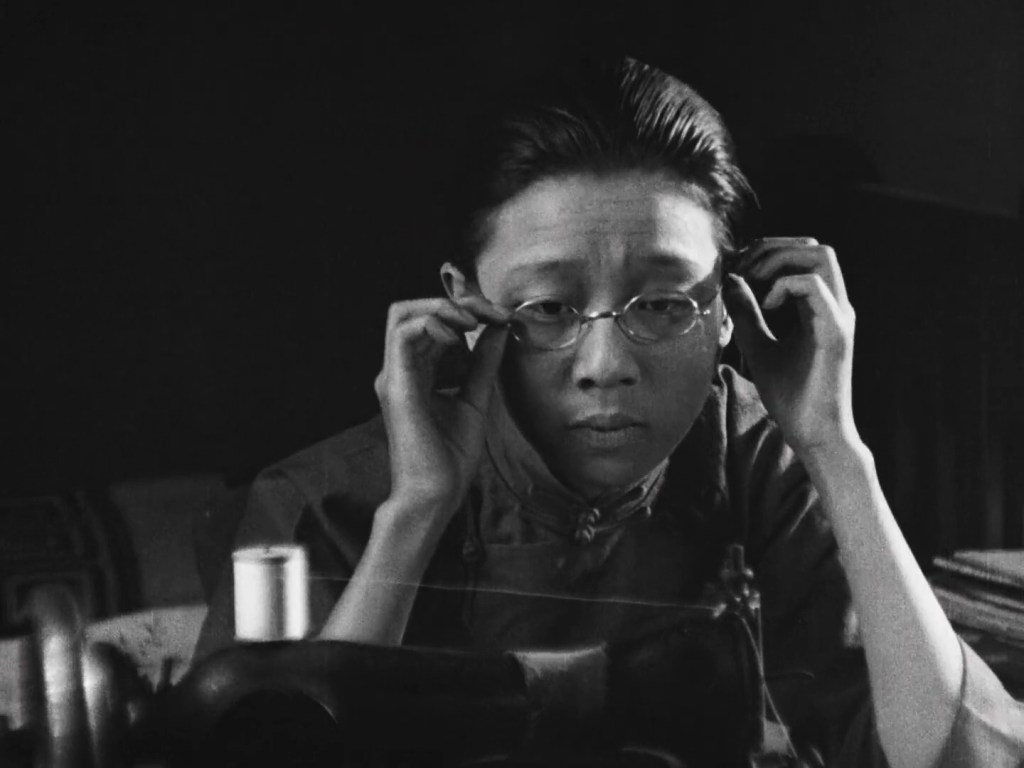
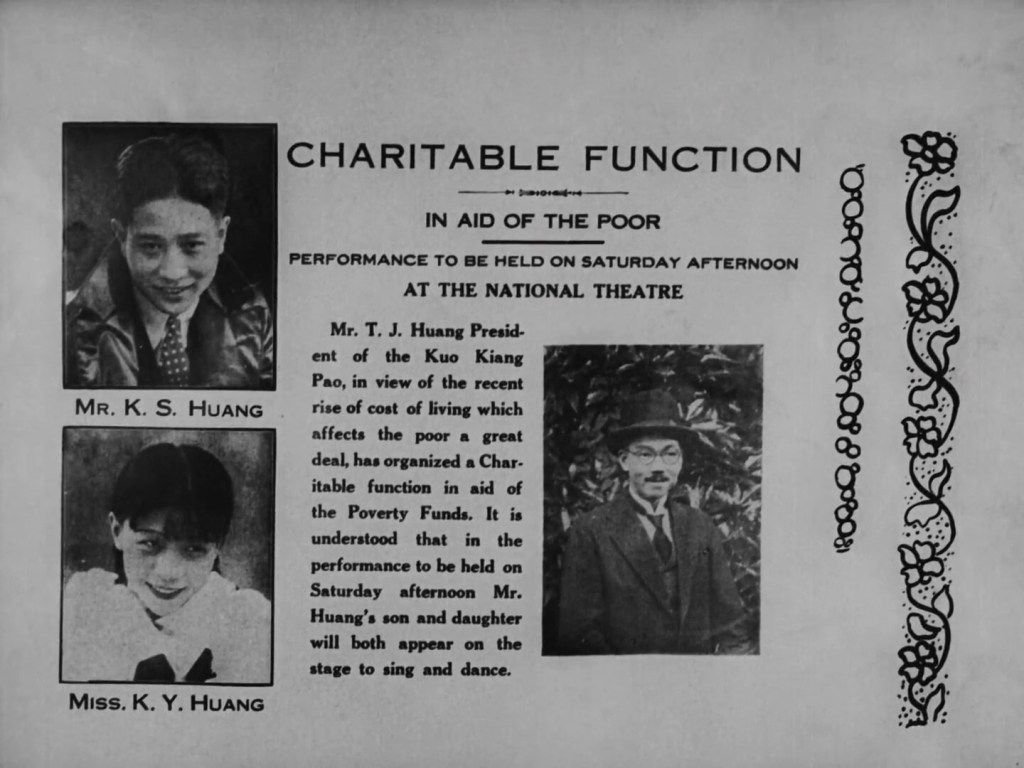
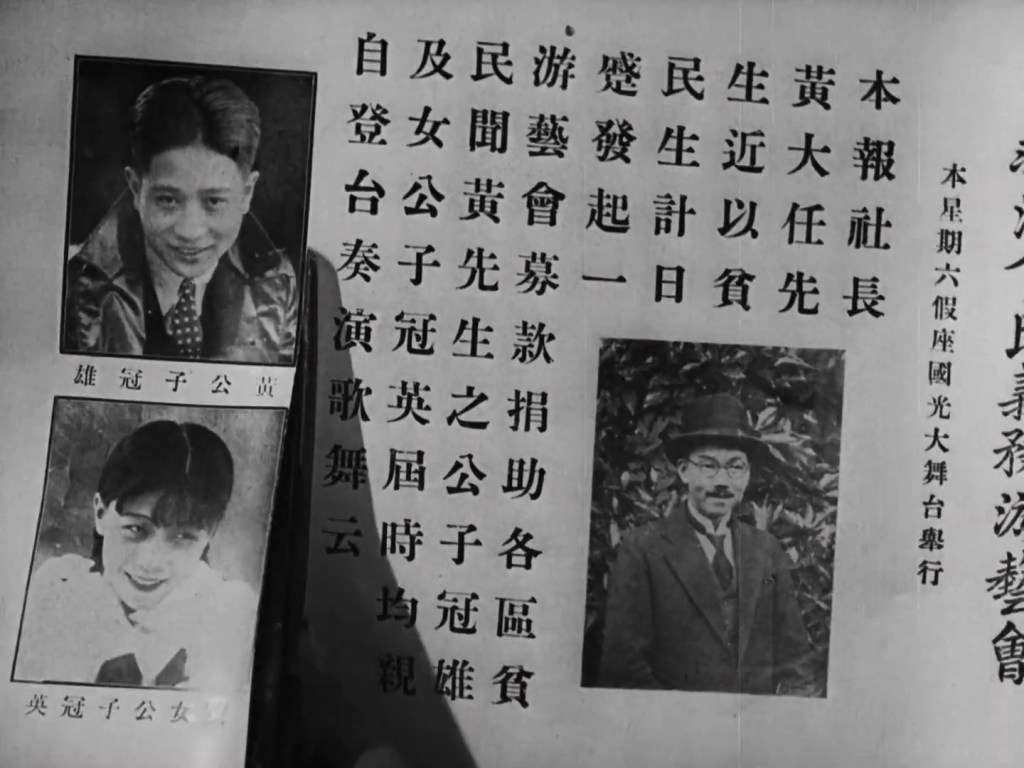
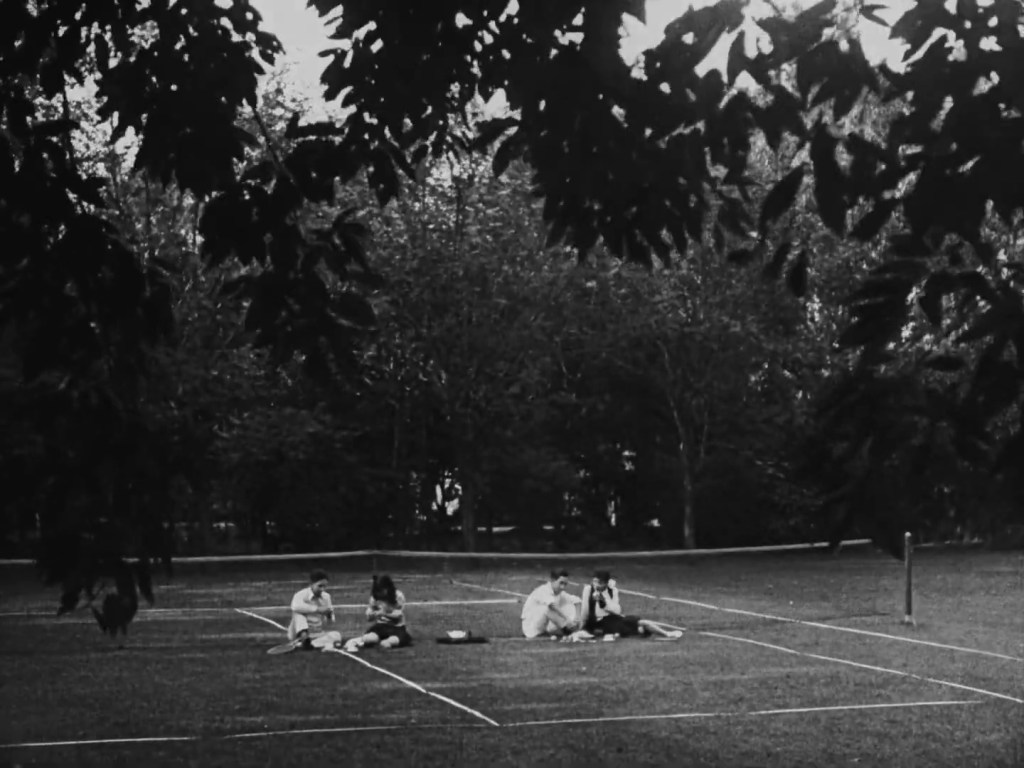
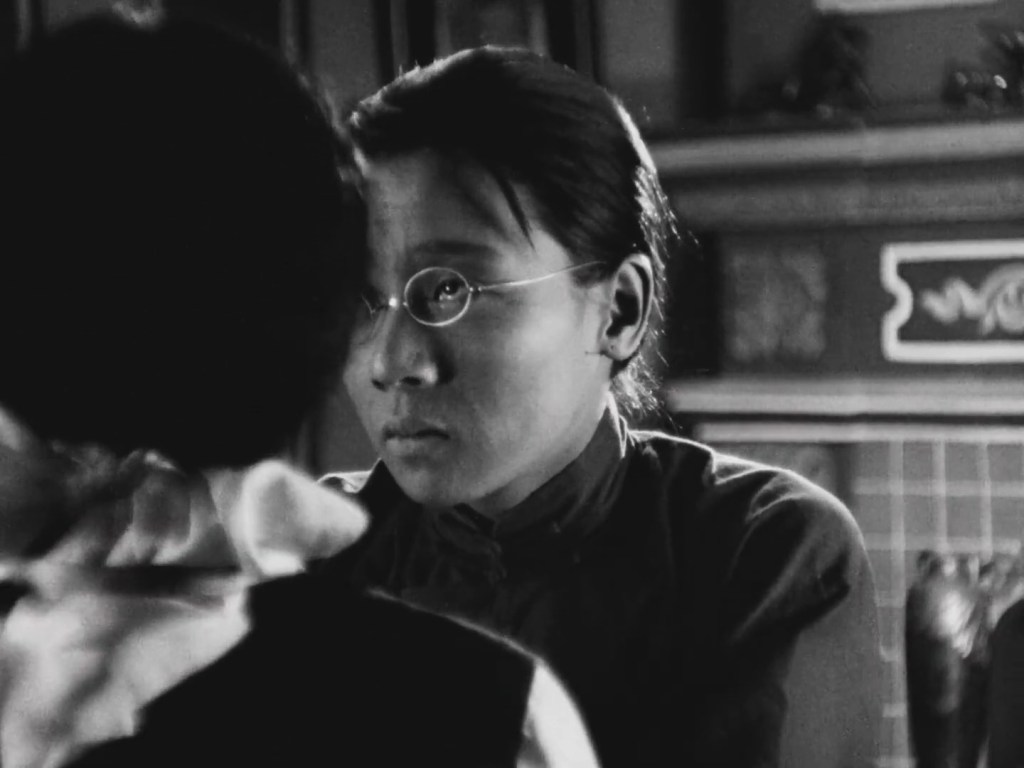
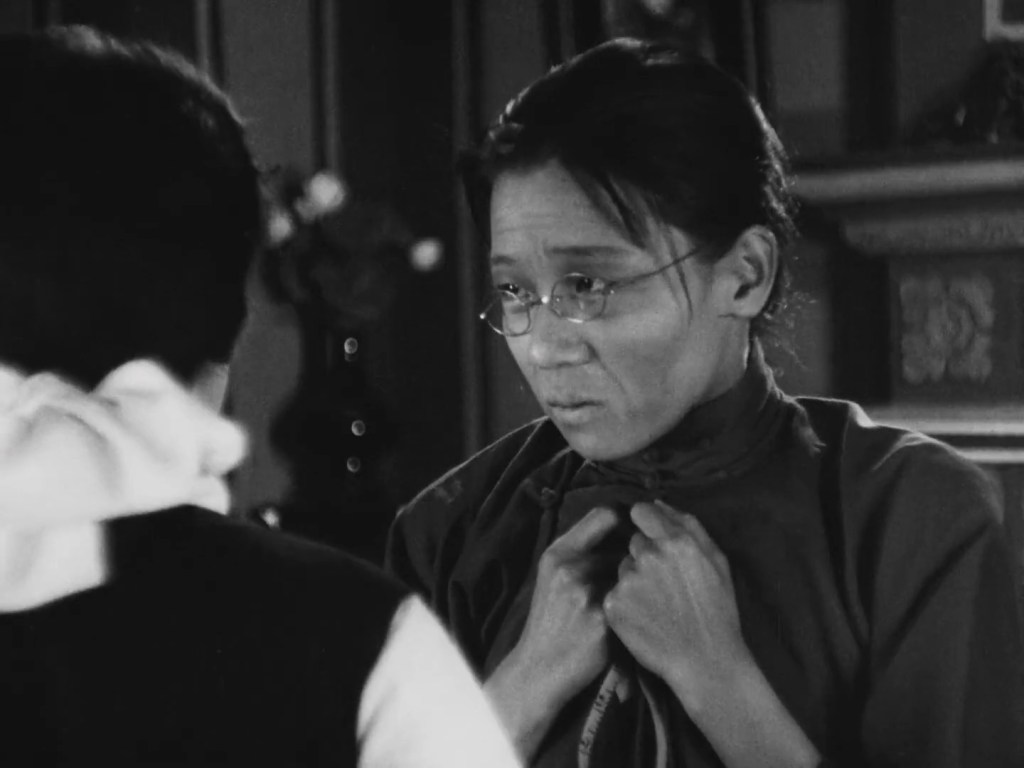
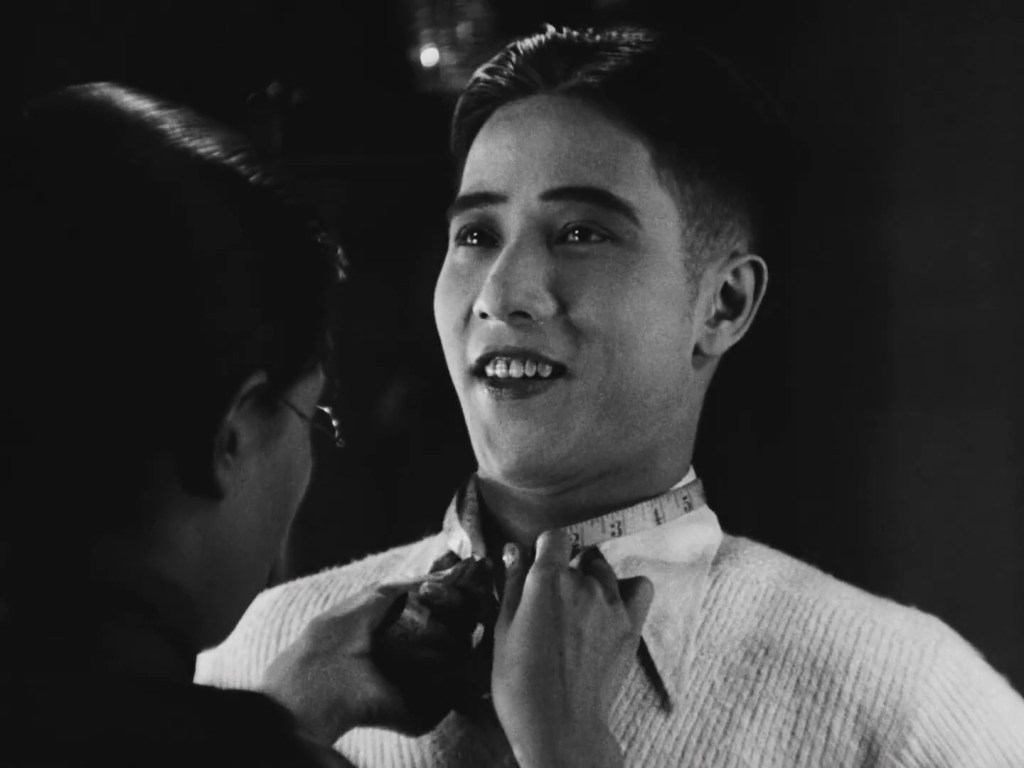
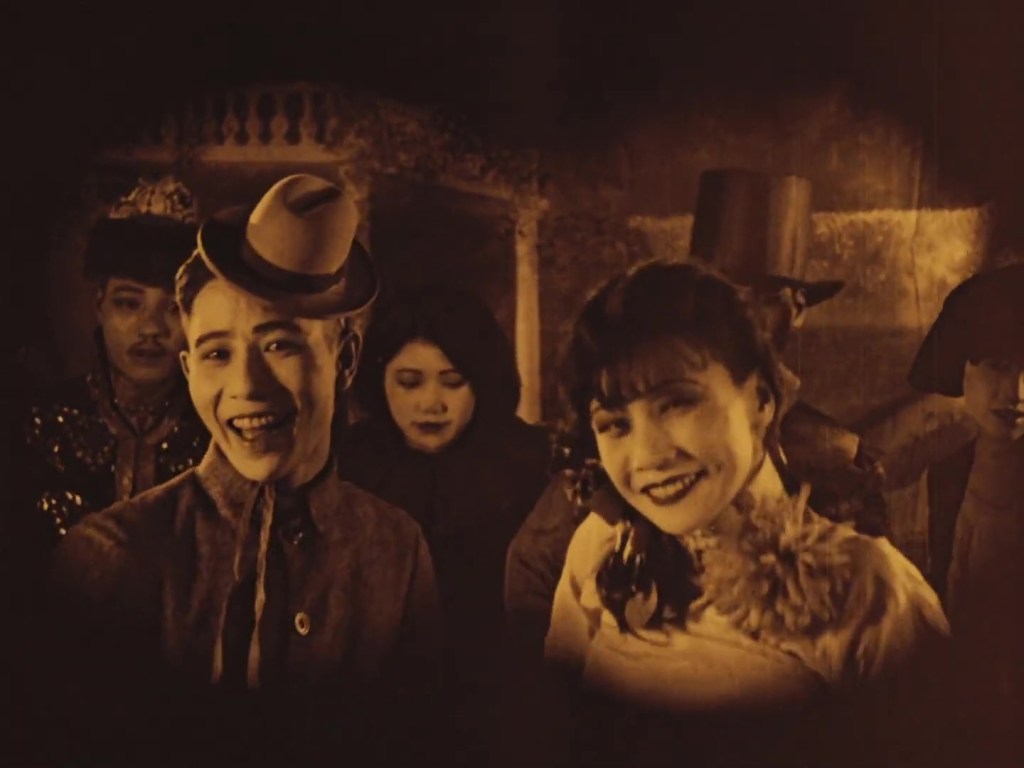
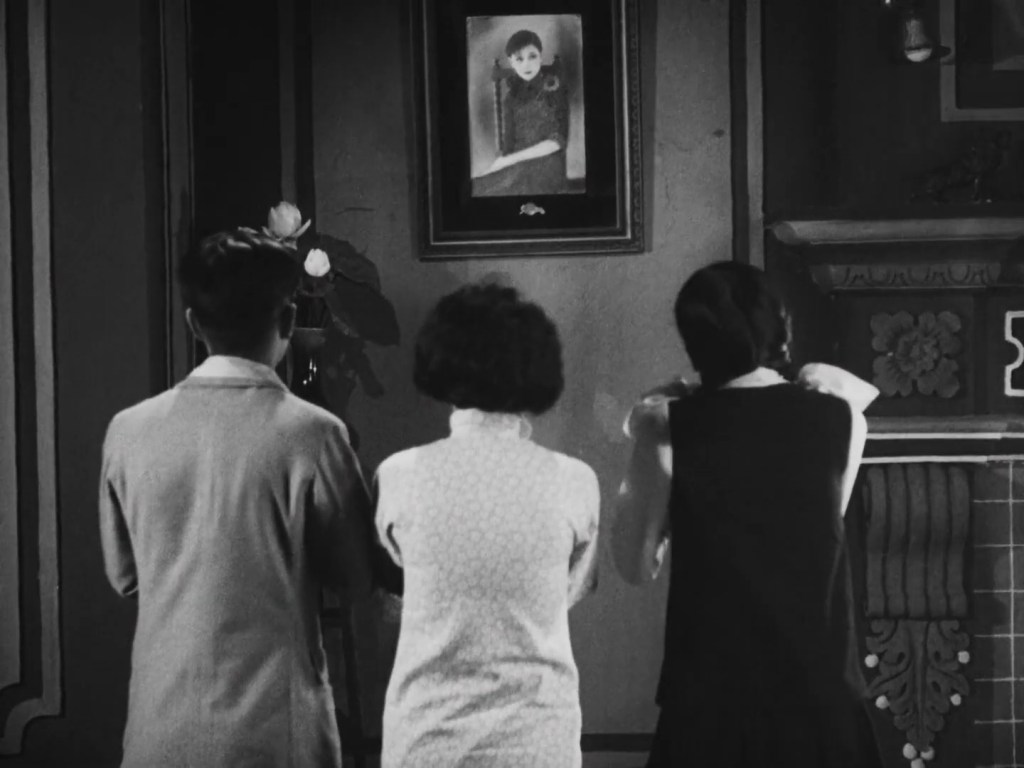
Love and Duty is set in Kiangwan, near Shanghai, where the student Li Tsu Yi encounters and falls for Yang Nei Fang. After aiding her when she is wounded in a car accident, Tsu Yi and Nei Fang exchange tokens of love. But Nei Fang’s father has already arranged his daughter’s marriage to the successful Huang Ta Jen. They duly marry, and their joyless union produces two children. Years pass, then Nei Fang and Tsu Yi meet again by chance and resume their relationship. (Ta Jen, meanwhile, is being pursued by another woman.) Eventually, Nei Fang leaves her husband for Tsu Yi – but the latter doesn’t allow her to bring her children. Despite their initial happiness, Nei Fang and Tsu Yi are soon dogged by rumour. Overwork exacerbates Tsu Yi’s (previously undisclosed) illness, and he dies – leaving Nei Fang to take care of their new daughter, Ping Erh. More years pass and Nei Fang encounters her first two children, who are now young adults. Drawn by chance into their existence, but ashamed to reveal her identity, she decides to end her life and commend Ping Erh into the care of Ta Jen. Moved by this sacrifice, Ta Jen welcomes Ping Erh into his family and instructs his children to respect the memory of Nei Fang.

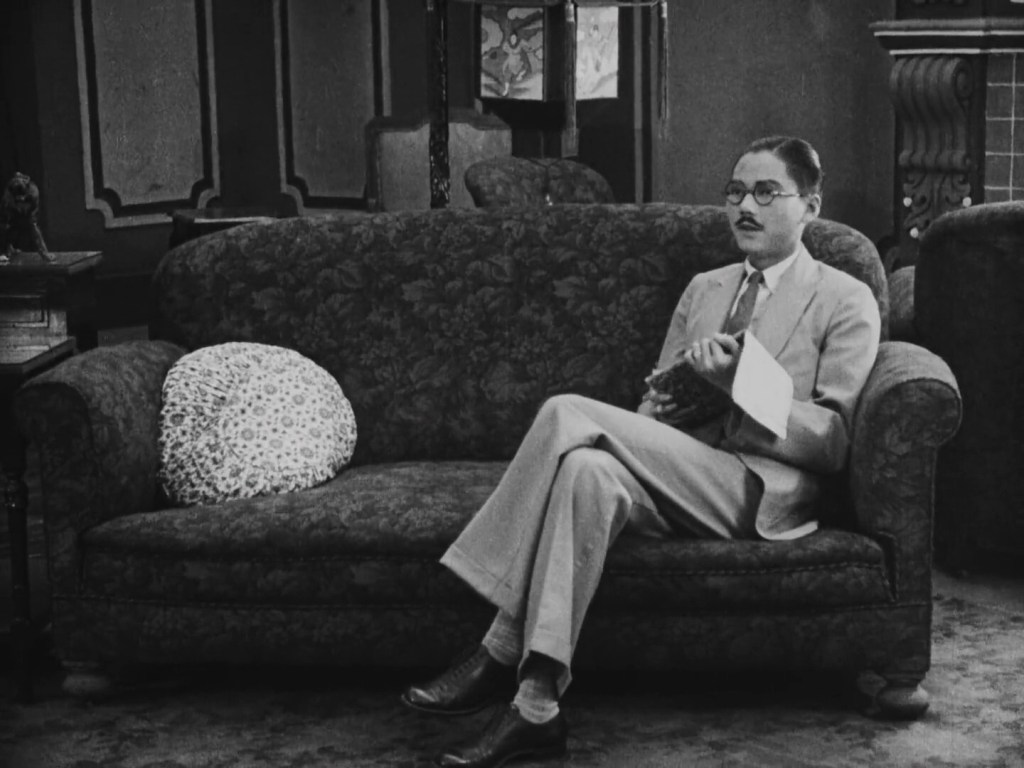
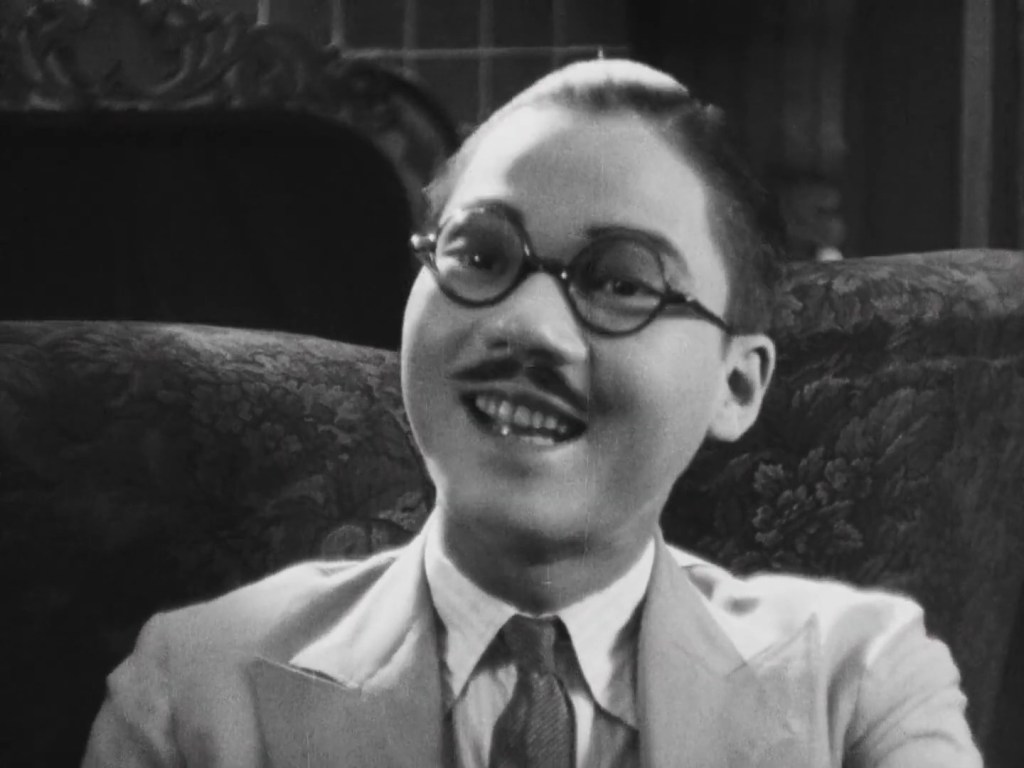
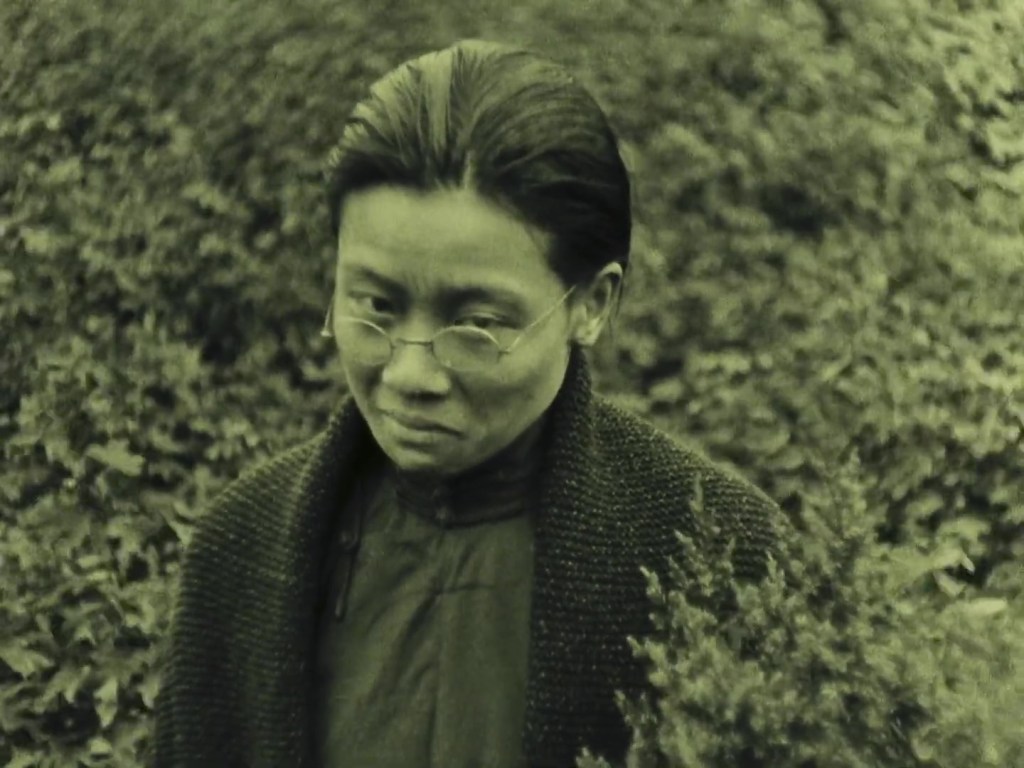
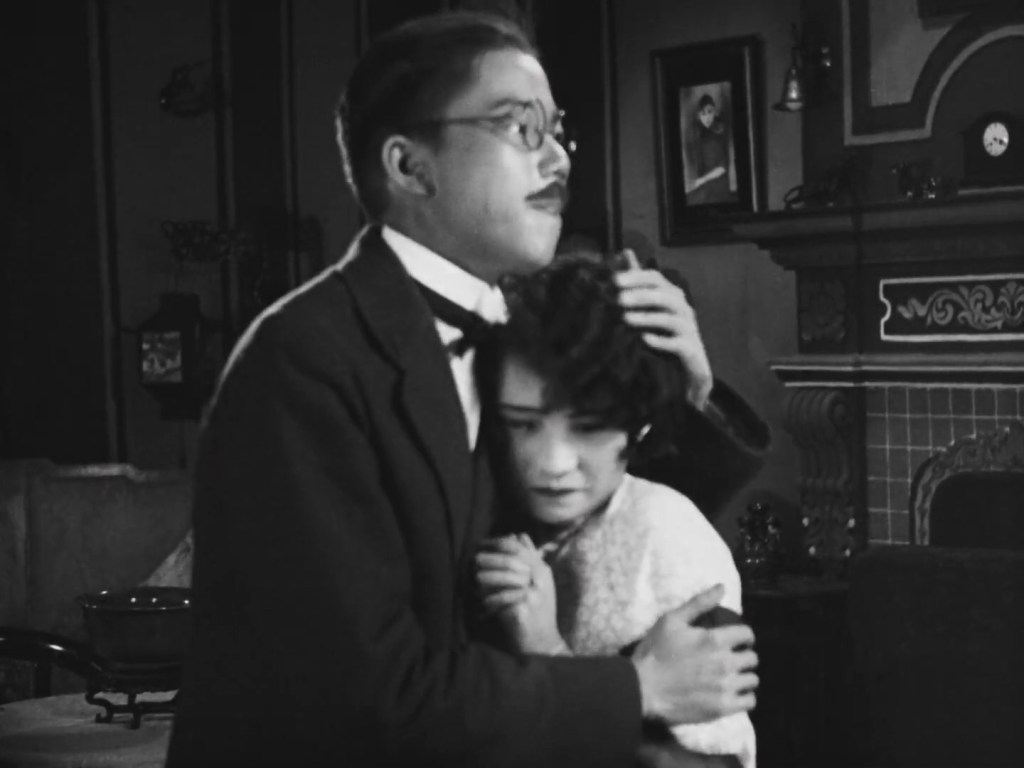
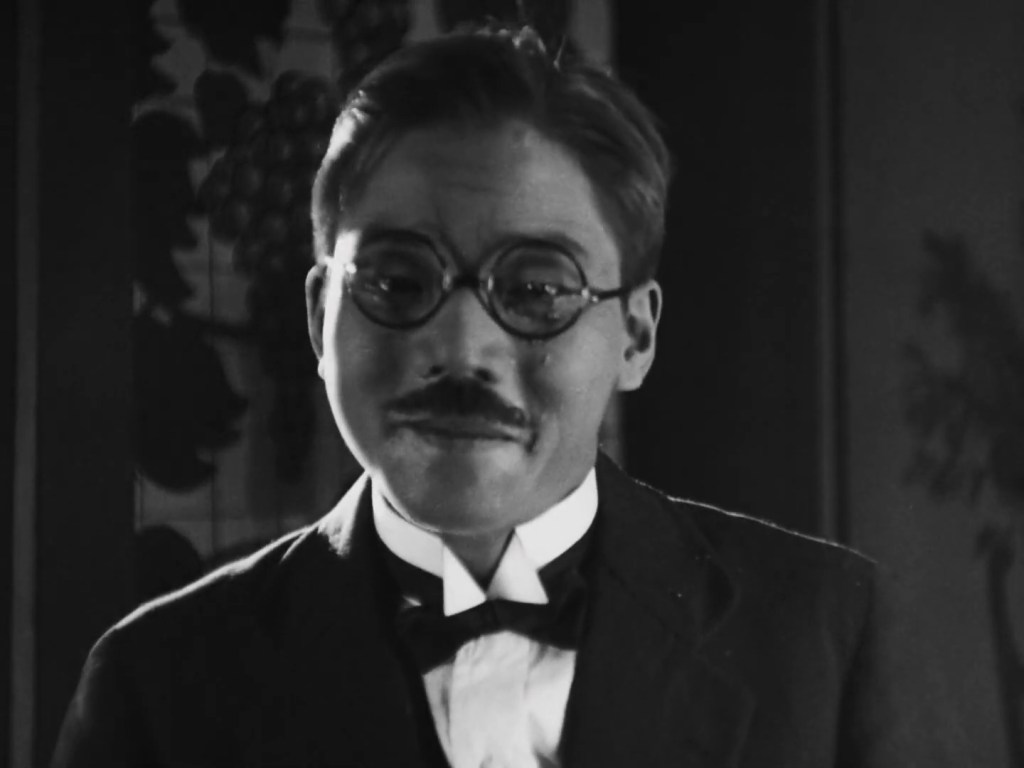
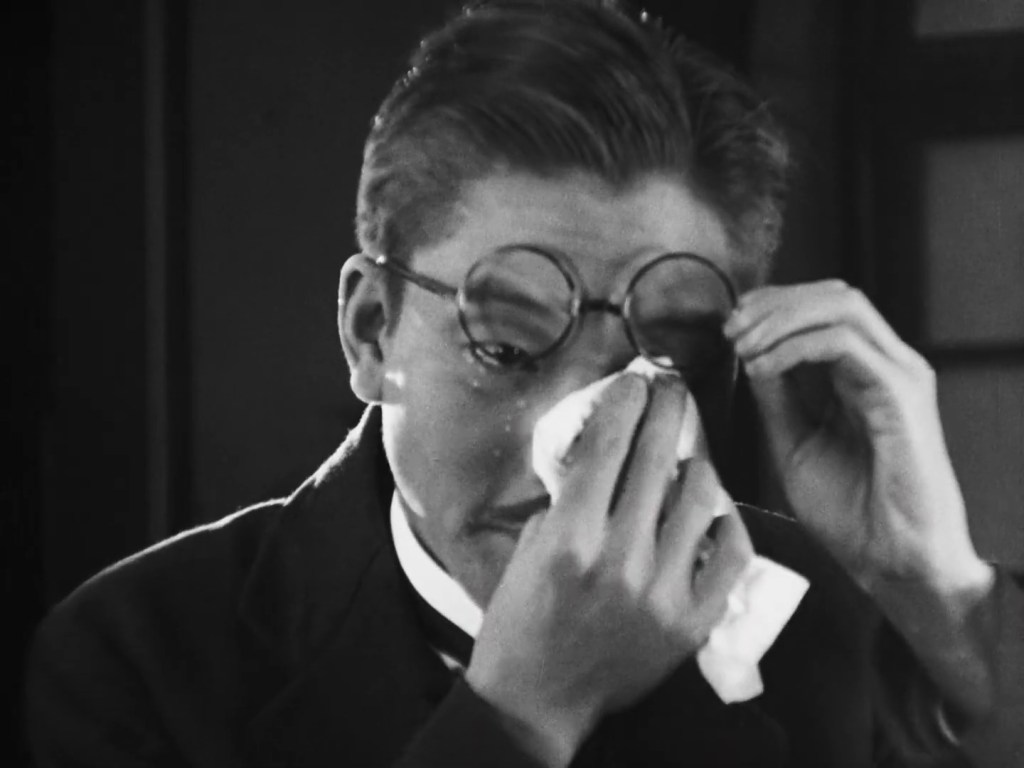
Well, I said this was a melodrama – and boy does it live up to its genre. Its contrast of familial duty and romantic longing, its intergenerational conflict, its rescues-from-the-water, its sudden illnesses, rapid ageing, premature deaths, and its concluding aura of saintly forgiveness are all familiar tropes. Love and Duty carries them all off with aplomb. There are also plenty of interesting touches that make the drama more sophisticated than simply a genre piece. The film is filled with interesting pairings, doublings, echoes: the lovers v. the married couple, the husband’s own interest in another woman; the two families of (half-)siblings, the two generations of paired sweethearts. Even the figures who remain constant between past and present (the husband, the servant) echo their past actions. Years after his first spreading of malicious rumour, the servant (called Fox) once more seizes the chance to spread gossip (thus bringing about more unhappiness), while Ta Jen repeats his vindictive behaviour – only to realize the damage his actions have done in the final scenes. (Here, the character’s somewhat weedy nature becomes a kind of moral strength: Ta Jen knows that Nei Fang has undergone great suffering, and his tears are genuine. Ta Jen’s earlier toughness seemed more the product of social pressure than genuine hatred. He is a small, almost comically unheroic figure, with his round glasses and prim moustache. At the end of the film, I readily accepted that this man could feel sorrow and acceptance.) There are also repeated gestures, like the holding of handkerchiefs as tokens of exchange, both when the lovers first touch after the accident and then again after the accident with Fei Nang’s first child. Likewise, in the latter scene, the way that Nei Fang revives the child after Tsu Yi rescues them from the water is repeated much later when she tries to revive the dying Tsu Yi. Or the writing of the note when Nei Fang leaves her husband, echoed in her sending him her suicide note at the end. Negotiating such a long film, and a long narrative within the film, is made easier and more effective by such means.

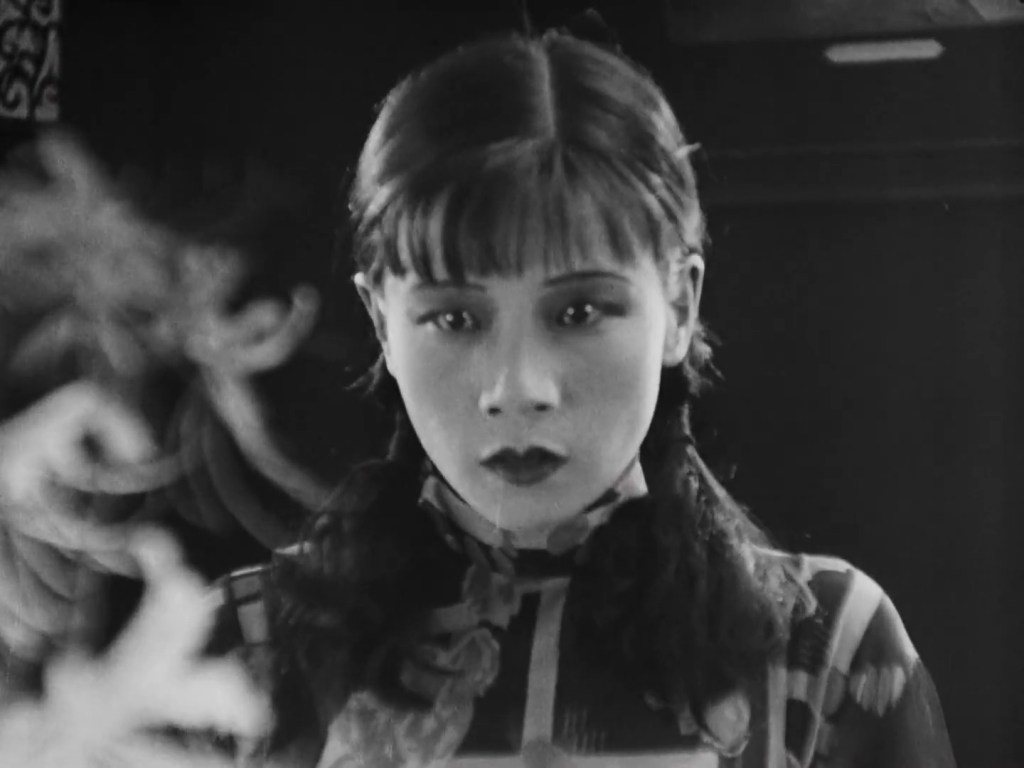
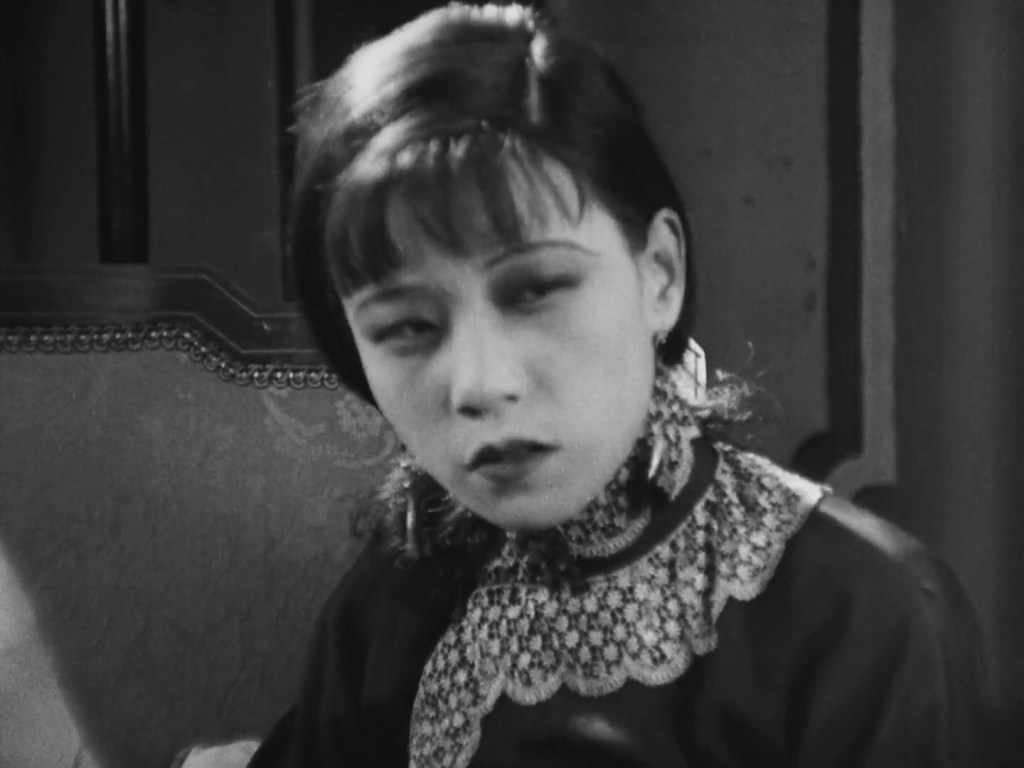
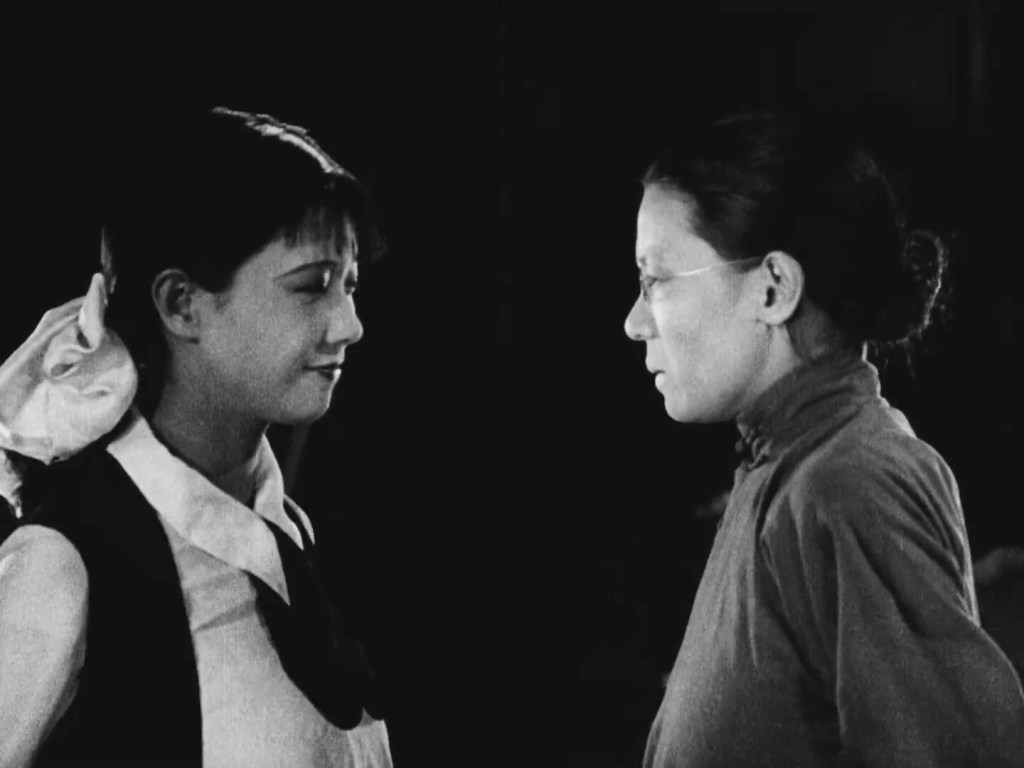
Central to the film’s success is Ruan Lingyu as Nei Fang. She carries all the emotional weight of the film. Having touched on the doublings that the film uses so often, it must be pointed out that Ruan Lingyu plays both the mother and the (grown-up) daughter from her first marriage in the later stages of the film. The in-camera trick of re-exposing one shot allows both characters (i.e. the same performer) to appear in a single frame, apparently interacting with each other. They face each other, but the effect is one of contrast as much as mirroring. The child now resembles Nei Fang at the beginning of the film, while Nei Fang herself has aged well beyond her years. Ruan Lingyu is marvellously committed, always engaging – always a presence on screen.

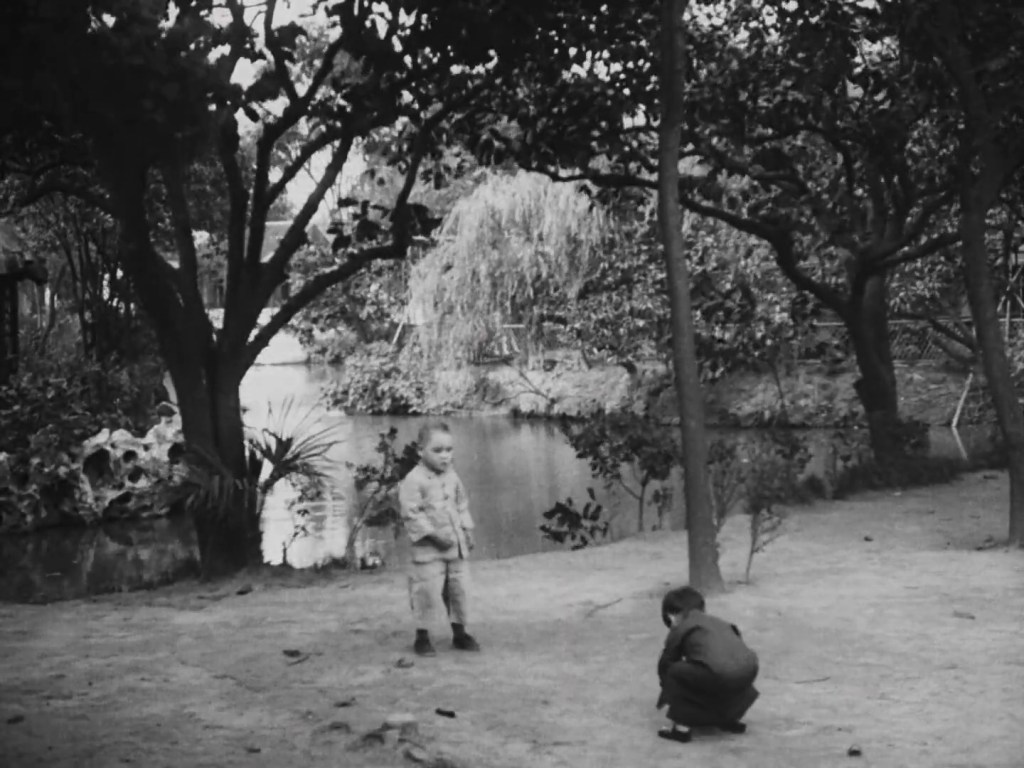
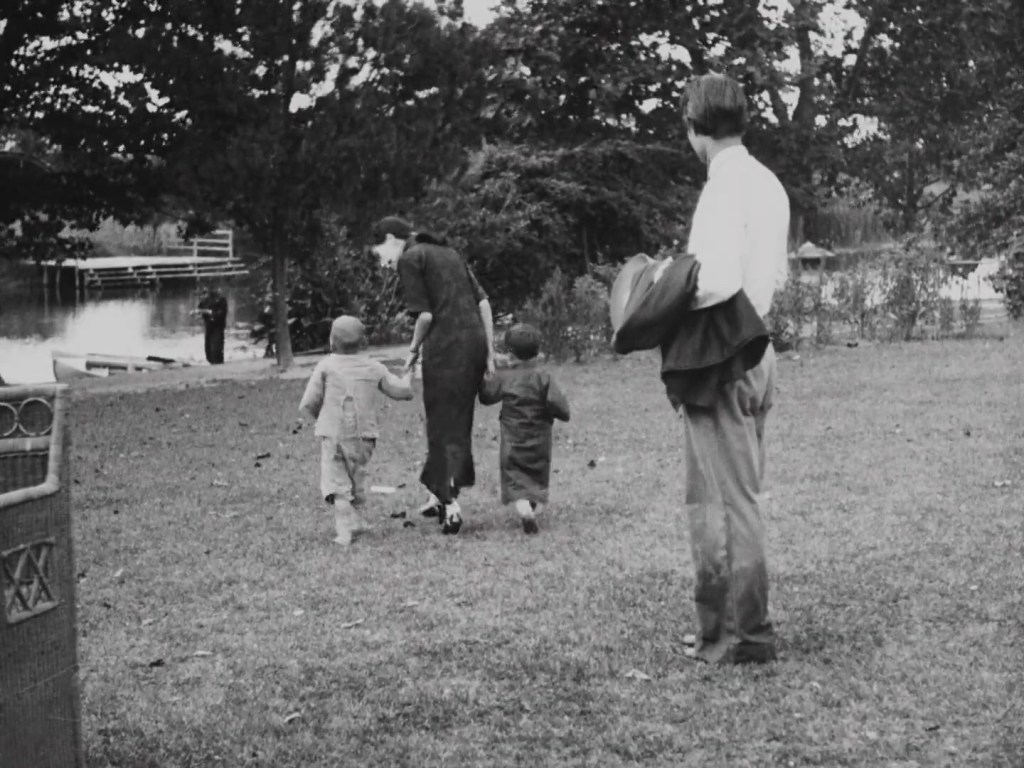
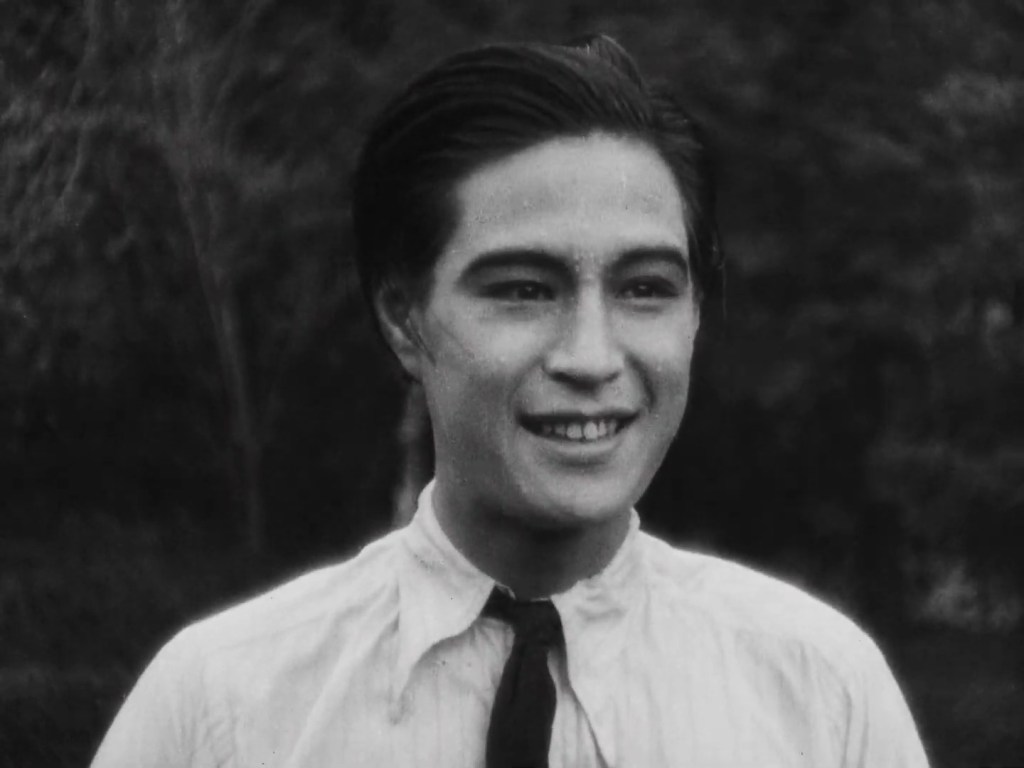
I was less enthralled by Jin Yan as Li Tsu Yi. His character is rather unsympathetic, and I wasn’t sure to what degree I was meant to feel sorry for him. His preference for Nei Fang without her children is delightfully foregrounded when, seeing mother and children walk away from their encounter by the pond, a dissolve shows us his subjective vision of her as the young girl he met – her children magically eliminated (quite literally dissolved away) from the frame. We are not invited to sympathize with him, I suspect, for this very reason. The narrative then (mis)treats him incredibly perfunctorily, killing him after one day’s copyediting ruins his health(!). The illness he has apparently carried secretly until now is never once suggested by Jin Yan’s performance, let alone by the film, earlier in the narrative. It certainly makes the moment shocking, but also (I think) less convincing. Jin Yan’s performance is animated, breezy. The character is not quite flippant but clearly gives too little thought to his actions.

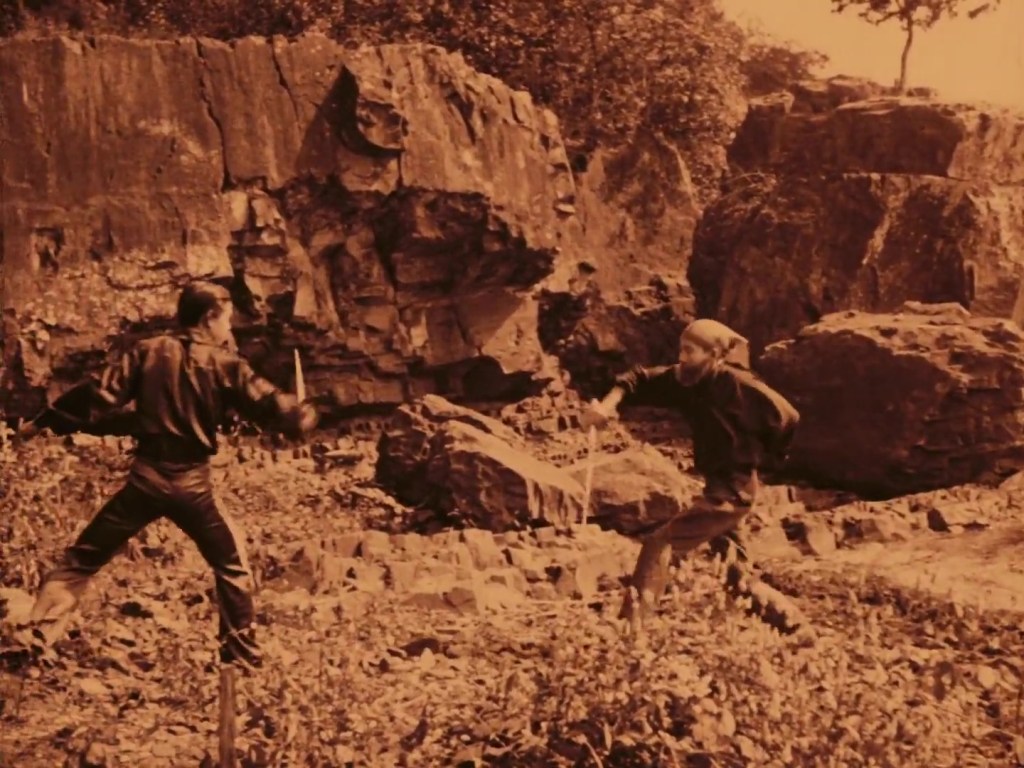
Amid all this melodrama, I should also emphasize the touches of humour that save it from being overloaded with sentiment. The servant who betrays the lovers twice over is delightfully played. The character has no moustache to twirl, but the performer (whose name I cannot find in the cast list) gives it his all – squinting, chin-stroking, and scheming with evident relish. It was one example of the film moving (consciously or not) to a mode of parody. The fantasy sequence were Tsu Yi imagines fighting and killing Nei Fang’s husband is a delightful and direct evocation of Douglas Fairbanks, and Jin Yan gives a pleasingly free-spirited performance here. While I welcomed the eruption of something so unexpected on screen, I was again unsure quite how to take the tone of the film. The text of the book Tsu Yi reads that inspires this fantasy is parodically awful. The reading of trashy literature and subsequent fantasy might come straight from a Harold Lloyd film. By contrast, in another nice moment of doubling, Nei Fang’s fantasies later in the film are ones of fear. After Tsu Yi’s death, Nei Fang imagines the reactions of her family if she returned. These imagined scenes stand as a dramatic contrast to the fantastical scene imagined by Tsu Yi earlier in the film.

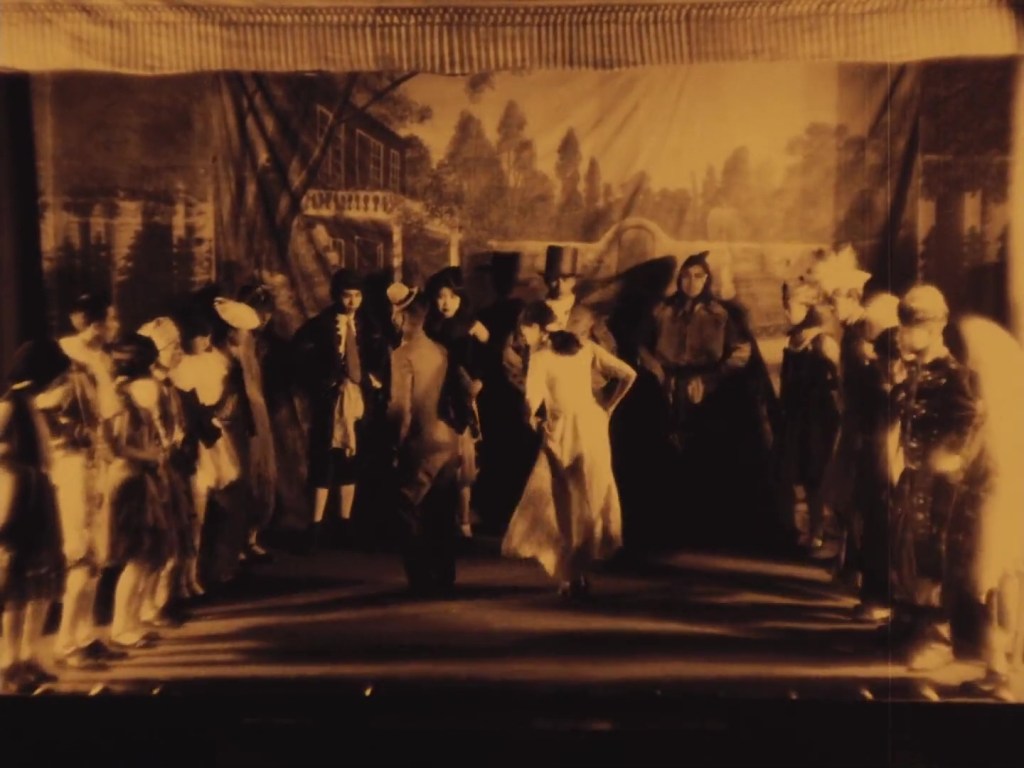
Related to this (imagined) presence of American film culture, I was also struck by the ways that Love and Duty looks out to western cultures. This is evident from the outset at the way even the film company’s logo of a flying plane suggests outward adventure, and how all the intertitles are original dual-language designs. There is also a contrast between the westernized clothing for the wealthier characters (marked out as such from their introduction) and the traditional clothing worn by the servant (and by Nei Fang herself when she is reduced to a humble trade in later life). The old Nei Fang also sees her children performing in an “international dance” on stage at a charity event – a curiously bland blend of western and music hall comedy. (Nei Fang is deeply moved, but I wasn’t sure how we are to take the contrast between her emotion and the apparent superficiality of the stage show she watches.)

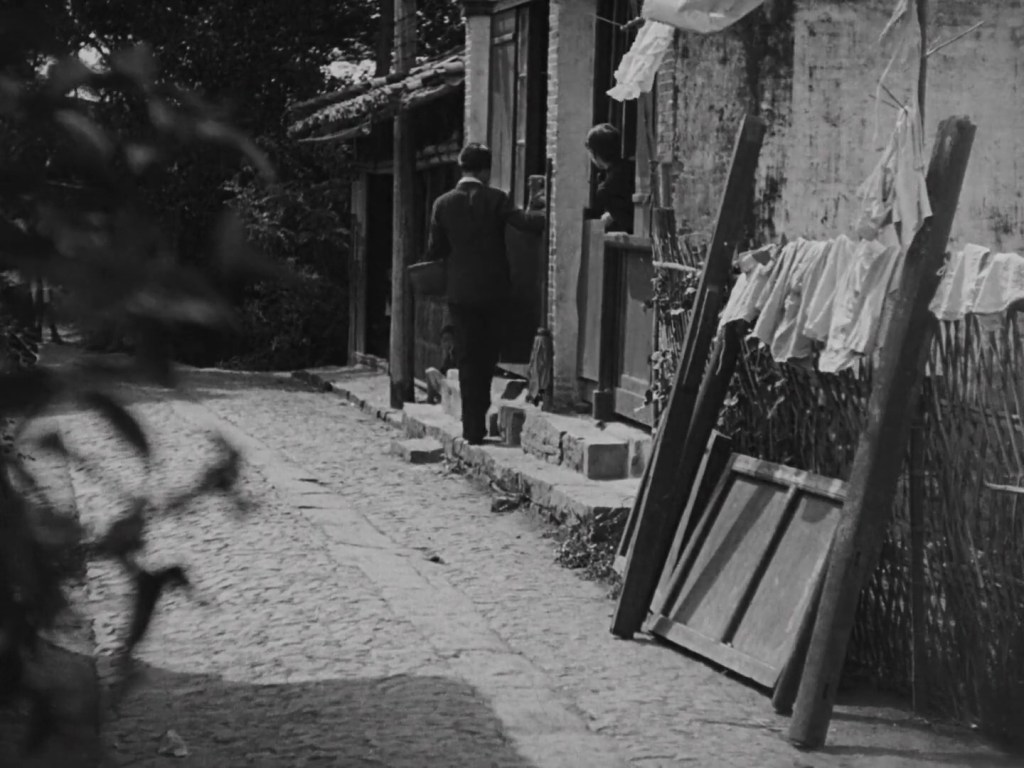
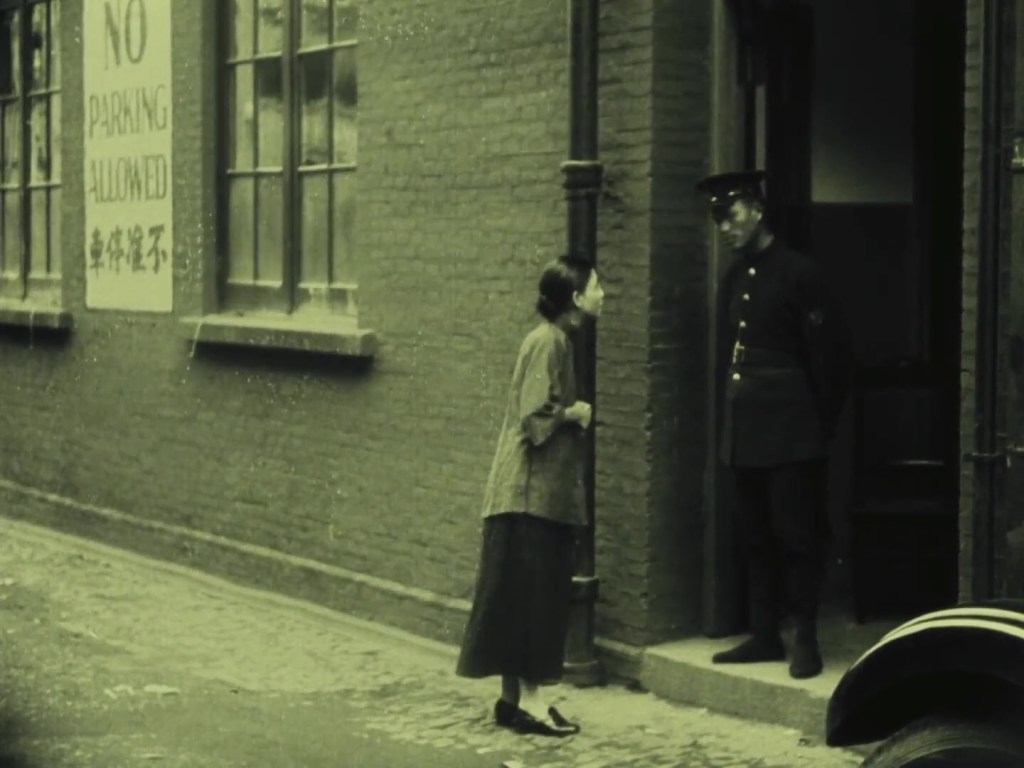
However, more striking than these elements of fantasy or performance are the glimpses of reality the film offers. I was especially intrigued by the exterior scenes of contemporary China within and beyond Shanghai. The film offers the modern viewer, especially the modern western viewer, a glimpse of a lost past and a lost culture. (To state the obvious, much happened to China in the decade after Love and Duty was made.) The camera goes onto the streets and (especially) the backstreets to capture a splendid sense of outdoor space, to ground the drama in a recognizable reality. The quality of the image on the Blu-ray is excellent, and I found myself peering into the past with fascination.

Did all this add up to a satisfying viewing experience? While I certainly enjoyed Love and Duty, I confess that I found myself glazing over a little during parts of its long timeframe. The film is two-and-a-half hours long, and while this span allows space for the years of narrative on screen, it is still a long time to sit through in one go. I strongly suspect that this is the kind of film that is much more rewardingly encountered live with an audience. The pleasure of viewing it would no doubt be enhanced by the reactions of fellow spectators chuckling, gasping, and applauding. As it was, I watched Love and Duty alone in my living room. My television is no substitute for a large cinema screen, and the gentle fizz from my carbonated drink no match for the murmur of an audience.

I must conclude by returning to the context with which I began. Was my purchase of Love and Duty in such an expensive edition worthwhile? Well, I can treat myself to any number of excellent special features: videos, essays, restoration demos etc. I can learn about Maud Nelissen’s piano score, about how the film was rediscovered in Uruguay, and about how it fits into the wider culture of early Chinese cinema. Perhaps most impressive is the extensive essay on the restoration process. (No complaints about the lack of information on source material, lengths in metres, etc. with this release.) The whole package looks lovely. But I wish I had enjoyed the film itself a little more. I am left with a faint tinge of regret. Of course, it’s good to support any company that releases a silent film on Blu-ray, and I’m glad to have seen the film. But had I waited a few months, I could simply have watched this same restoration of the film on youtube. It might not stay there, and of course the visual quality is inferior, but if it isn’t a film I want to rewatch time and again then such a version might do. Part of my motivation for buying the Blu-ray in 2022 was the potential to show it on a big screen for students. As I explained earlier, the prospect of having students (or a departmental screening room) had vanished even by the time the Blu-ray arrived in the post. So I look at this glamorous box set again, and the regret creeps up on me. I paid more for this one film than I paid for the complete works of certain filmmakers on DVD. Was it worth it? Frankly, I’ve no idea.

Paul Cuff

Two films by Henrik Galeen: Der Student von Prag (1926) and Alraune (1928)

This week, I reflect on two films by Henrik Galeen that have been released on a wonderful 2-disc DVD set by Edition Filmmuseum in Germany. I have been awaiting this set since it was announced nearly two years ago, so keenly pounced on it at the first opportunity. This pairing also makes a nice sequel to my last post on horror films inspired by German silent films – and Galeen’s script for Nosferatu (1922) in particular. So, in chronological order, let us begin…

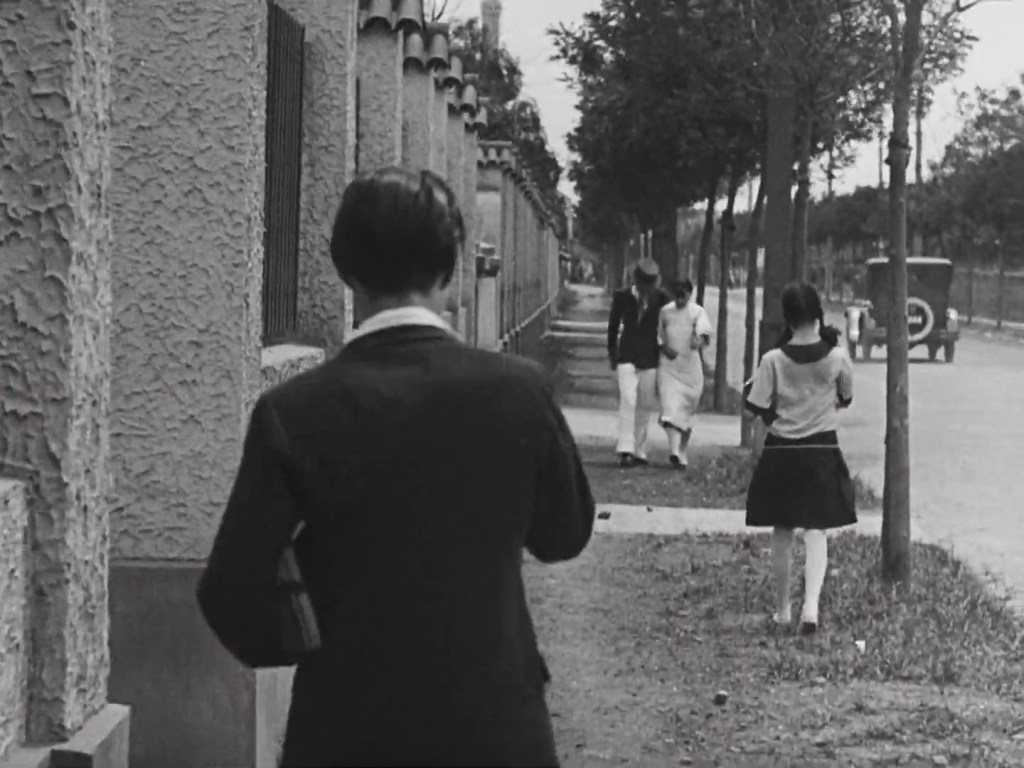
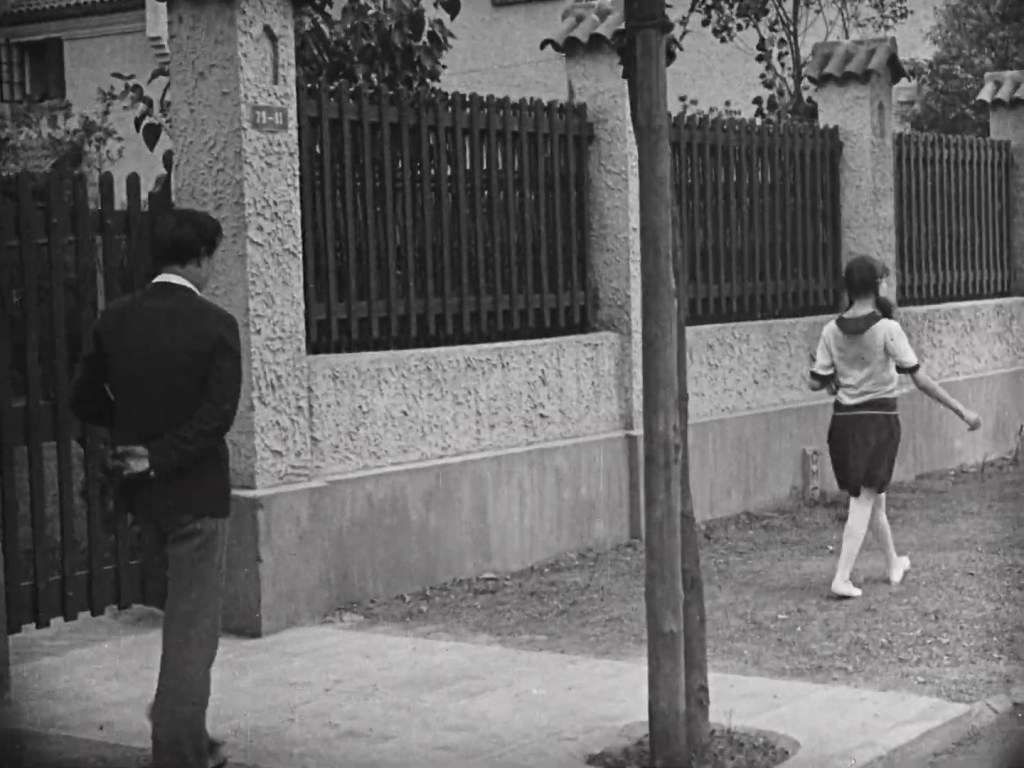
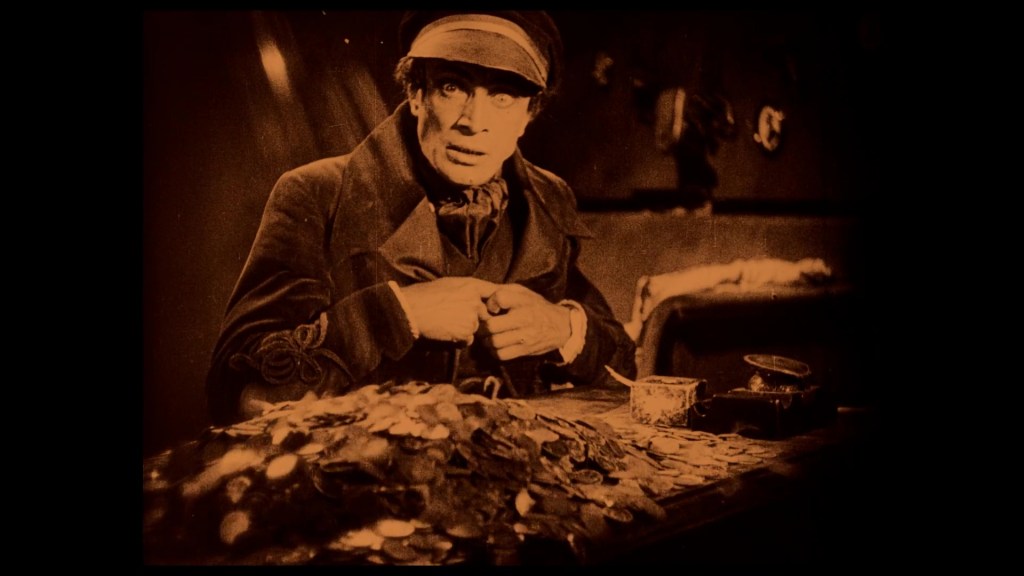
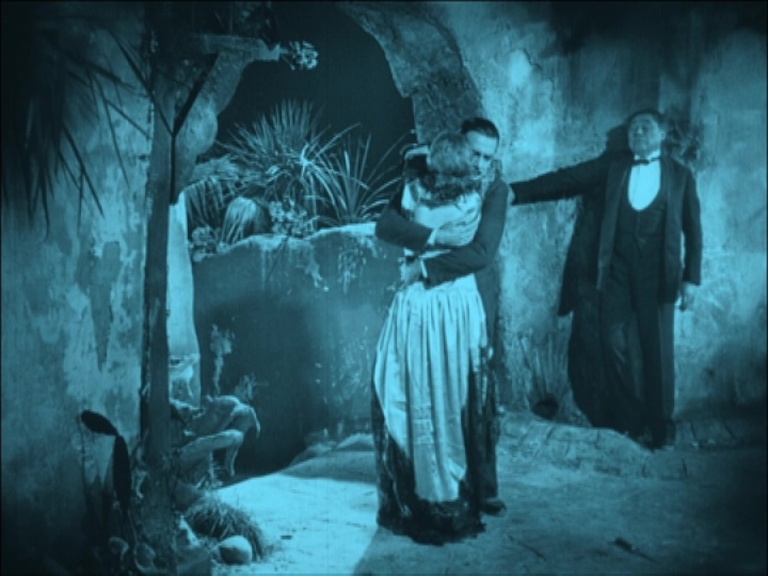
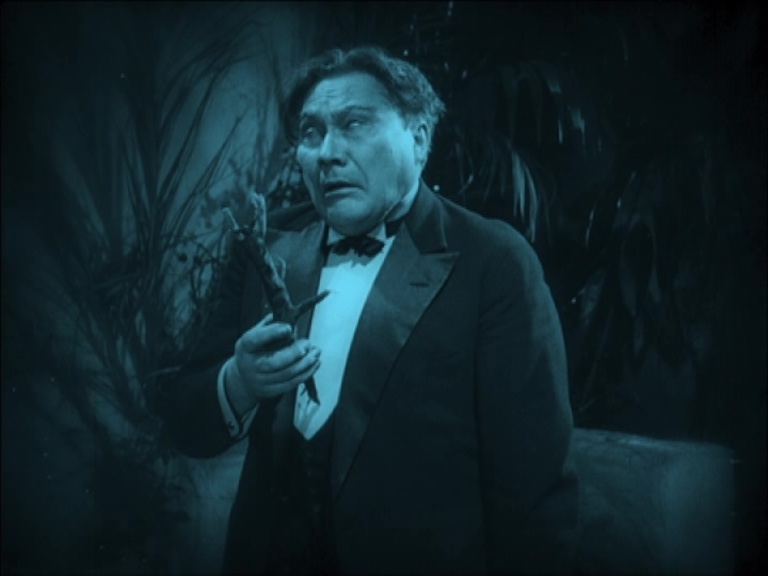
Der Student von Prag (1926; Ger.; Henrik Galeen). Galeen’s film is a remake of the 1913 film, written and co-directed by Hanns Heinz Ewers and starring Paul Wegener as the titular student. I wrote about that version some time ago, and I was very curious to see how Galeen’s version differed from the original. The plot is essentially the same. The student Balduin (Conrad Veidt) is convinced by the devilish Scapinelli (Werner Krauss) to sell his reflection for enough gold and status to seduce the aristocrat Margit von Schwarzenberg (Agnes Esterhazy). Balduin attains wealth and success, much to the jealousy of the besotted flower girl Lyduschka (Elizza La Porta) and Margit’s fiancé Baron von Waldis (Ferdinand von Alten). Balduin’s success is dogged by his doppelganger, who fights and kills von Waldis in a duel and ruins his reputation. It all goes downhill from there, as the film’s opening shot of Balduin’s gravestone promised…

I’m afraid I found the first one hundred minutes of this film a slog to sit through. While the photography is exquisite, especially the gorgeous exterior landscapes, the drama moves exceedingly slowly. The lean, concise psychological drama of 1913 has become a rather baggy melodrama. The character of Lyduschka becomes a rather more sycophantic presence (but not a more sympathetic one), while the scenes between Balduin and Margit are more lengthily (but no more convincingly) elaborated. Furthermore, Galeen restages many of the same moments of the 1913 version: the meeting of Balduin and Scapinelli at the inn; the confrontation with his mirror image; the meeting at the Jewish cemetery; the duel fought by Balduin’s double. While the in-camera double exposures are as excellent as the 1913 version, none of them are as well staged or as dramatically effective. As I wrote in my piece on the earlier film, the long takes of the 1913 version give all the trickery an extraordinarily uncanny quality: the unreal seems to emerge directly from within the real. There is nothing as effective in the 1926 version.

What bothered me especially was the tone of Werner Krauss’s performance as Scapinelli. He seemed to be almost parodying his performance in Das Cabinet des Dr Caligari (1919). In Der Student von Prag, he out-hams anything Emil Jannings ever did. His eyes bulge, he puffs out his cheeks, he gurns and grimaces. It’s faintly creepy, but it’s so outrageously different from any other performance within the film that it’s simply not frightening. Even his beard looks exceedingly artificial, almost like it’s been painted on. Indeed, Krauss’s whole demeanour is extrovertly artificial. Why? He’s either been told by Galeen to clown about like this, or else Galeen has utterly failed to rein him in. Everyone else in Der Student von Prag performs their roles with a degree of dramatic realism. It’s a fantastical story, but the performances are realistic. All except Krauss. Fine, Scapinelli is a faintly otherworldly figure, but I can’t believe that his clownish appearance and mannerisms are the best choice to signify this. (Again, the performances are far more consistent in the cast of the 1913 version.)

Exacerbating this factor is Galeen’s editing. So oddly were some scenes put together that I wondered if I was watching a print reconstructed from different negatives (i.e. a blend of “home” and “export” versions). When Scapinelli first propositions Balduin at the inn, Galeen cuts between a front-on mid shot of the two men to a shot that is captured from a side-on angle (in fact, more than 90 degrees from the front-on shot). It’s a peculiar choice, and the cutting between oddly different angles here and elsewhere in the film is very striking. (It’s also something I observed in Alraune, per my comments below.) This isn’t an issue of continuity: I don’t care how a film is put together, so long as it is effective. It’s because Galeen’s editing often lessens the tension in a scene, even the tension created within a particular shot, by cutting to a mismatched alternate angle or distance. Why, Henrik, why? The film is full of brilliant images, but I’m simply not sure Galeen can quite mobilize them into a truly convincing sequence of images.

All of that said, the last half hour of Der Student von Prag is a knockout. Balduin, having lost everything, proceeds to a drinking den where he drinks, dances, and revels. The band wears weird clown make-up and grotesque masks and blindfolds, and the double-bass is being played with a saw. Clearly, something odd has the potential to break out, and break out it does. Balduin starts to become more and more manic, and the sequence around him likewise grows more and more manic. Handheld camerawork turns the crowded, shadowy interior into a stomach-churning blur. But Balduin hasn’t had enough by far. He starts conducting the dancers with a riding whip; then he starts smashing crockery, then fittings, then furniture… The sequence lasts nearly ten minutes, and it just keeps going. I’m not sure (per my above comments) that Galeen really puts the shots together in a way that builds a convincing montage, but the sheer length of the sequence has its own manic sense of energy: it just keeps going, its obsessive cheer becoming less and less amusing and more and more unsettling. Veidt’s performance, too, grows subtly more manic. His face has moved from resignation and grief to a kind of enforced, frenzied joy.

There follows a series of scenes in which Balduin races through the night, encountering Margit and then his doppelganger. What really makes the sequence work is the way the wind haunts both interior and exterior spaces: whipping the trees, the curtains, the clothing… It gives a marvellously unsettling, threatening sense to every scene. This is where everything in the film works. Scapinelli (thankfully) is simply forgotten from the narrative and Balduin is left alone to face the consequences of his actions. Galeen abandons location shooting in favour of studios, which gives all these final “exteriors” the aura of nightmarish interiors, half-empty spaces filled with shadows and shards of buildings. Everything is sinister, malevolent – and empty of everything but Balduin and his sinister double. The final scene before the mirror is fantastic, filled with striking images of the shattered glass, and Veidt’s performance is superbly convincing: mad, violent, and tender all at once.

This is a fine way to end the film, but my word the rest was a slog to sit through. Even though the 1913 version consists for the most part of long, unbroken takes for each scene, it manages to tell the entire story succinctly and swiftly in barely 80 minutes. The 1926 version (in this restoration) is over 130 minutes. That’s fifty extra minutes to tell the same story. As good as the finale is, I think that the 1913 version is a far superior film. (So too is the version directed by Arthur Robison in 1935, starring Anton Walbrook as the eponymous student.)

Alraune (1928; Ger.; Henrik Galeen). Having re-adapted Ewers’s Der Student von Prag, a year later Galeen embarked on another adaptation of this author’s work. Ewers’s novel Alraune (1911) was a huge hit and republished many times in the early twentieth century. It still retains something of a cultish reputation among certain circles. In the anglophone world, there are two English translations available. One was issued in the 1920s and presents a rather prudishly reduced/edited text. The other is a recent, self-published edition, that offers a “complete, uncensored” text – but alas sacrifices fluency in English for the sake of adherence to the original. (My references below to Ewers’s text are therefore sourced from the original German edition.)

Ewers’s novel remains an impressively nasty piece of work. The story concerns Jakob ten Brinken, a scientist who inseminates a prostitute with the seed of a hanged murderer in order to study the offspring. “Alraune” is a female mandrake, a horrific vision of modern womanhood: she drives men to their deaths with violent desire, until she discovers her true origins and kills herself.

The author of this spectacular tale was a renowned provocateur. In a career spanning literature, philosophy, propaganda, acting, filmmaking, and occultism, Ewers was also sexually and politically radical.  Homosexual, he was twice married; a supporter of Jewish enfranchisement, he embraced National Socialism. (Inevitably, his views and lifestyle led to a fall from grace under the Nazis.) Ewers’s literary avatar was Frank Braun, who appears in Alraune as a hotblooded student, arrogant and ironic, who urges his uncle to test the bounds of human power – and to challenge God. Braun had already appeared in Ewers’s novel Der Zauberlehrling (1909), in which he infiltrates and subverts a religious cult, and would reappear in Vampir (1921), which explores his moral and literal transformation into a vampire.

The male narrator of Alraune is an obtrusive, prurient presence in the text, lingering over his imagined muse as he writes. This muse morphs from a “blond little sister” into a “wild, sinful sister of my hot nights”, her “wild soul stretches forth, glad of all shame, full of all poison” (7). (And so on, and so on.) Returning perpetually to this fantasy, the narrator himself becomes vampiric, metaphorically drinking “the blood that flowed from your wounds at night, which I mixed with my red blood, this blood that was infected by the sinful poisons of the hot desert” (174). The violence of this fantasy grows across the book, fixating with gruesome glee upon the imagined sister’s body – “eternal sin” bidding him tear into “the sweet little child’s breasts, which had become the gigantic breasts of a murderous whore” (333). This imagery characterizes the book’s peculiarly salacious tone. (There are, by my count, no less than thirty references to women’s breasts – not to mention numerous depictions of physical and mental torture to animals and humans.) Just as the narrator desires the sister he imagines, so the scientist within the narrative succumbs to his desire for the mandrake he creates – and, as ten Brinken’s nephew, Braun’s desire for Alraune crosses from the familial to the sexual. But Alraune is also a satirical novel, the first half of which is a profoundly critical overview of bourgeois conservatism at the turn of the century. In a world of institutionalized hypocrisy, corruption, and vice, both Frank Braun and the narrator are perverse Nietzscheans, willing to overturn every norm.

For the film version of Alraune, Galeen wrote his own screenplay, retaining only the barebones of Ewers’s novel (the first half of which does not even feature the figure of Alraune). Professor ten Brinken (Paul Wegener) has created animal life artificially and plans to do the same with a human subject. Harvesting the seed of a hanged criminal (Georg John) to inseminate a prostitute (Mia Pankau), he raises the offspring as his daughter Alraune. Seventeen years later, Alraune (Brigitte Helm) runs away from her boarding school with Wölfchen (Wolfgang Zilzer). En route, she meets the magician Torelli (Louis Ralph) and joins his circus. Ten Brinken tracks her down and forces her to accompany him to southern Europe. Here, Alraune’s flirtation with a viscount (John Loder) makes ten Brinken jealous. Discovering her origins, Alraune sets out to destroy her “father” by feigning a seduction and then ruining him at a casino. She also enlists the help of ten Brinken’s nephew Frank Braun (Iván Petrovich), with whom she eventually elopes. Financially and morally exhausted, ten Briken collapses and dies.

Alraune was premiered in Berlin in February 1928 in a version that measured some 3340m; projected at 20fps, this amounted to over 145 minutes of screen time. When the film was distributed outside Germany, numerous changes began to reshape the film. In the UK, the film was released as A Daughter of Destiny and cut from 3340m to 2468m. Critics blamed the cuts and retitling for the disruptive sense of continuity of this version. (This did not stop it being a big hit.) In France, where the film was released as Mandragore in February 1929, censorship was likewise blamed for producing narrative unevenness. In Russia, Alraune was released only after Soviet censors removed all supernatural aspects of the storyline. (The copy of this version preserved in Gosfilmofond is 2560m.) Most severe of all was the board of censors in the Netherlands, where the film was banned outright from exhibition in January 1930.

This history is important to remember when examining the film on this new DVD edition. No copy of the original German version of Alraune survives. The restoration completed in 2021 by the Filmmuseum München relies on two foreign copies (from Denmark and Russia), using archival documents to restore the correct scene order and (where possible) the original intertitles. What it cannot restore is the original montage, from which 300m of material remains missing. Until 2021, the only copy readily available was an abridged version derived from a Danish print, to which a previous restoration inserted new titles translated into German. As well as missing and reordered scenes, the titles of this Danish version are both more numerous and more moralistic in tone than the German original (as restored in 2021). While the 2021 restoration offers a version of the film that is closer to the original, I am left wondering about how coherent the original actually was. As I wrote with the case of Gösta Berlings saga (1924), new restorations cannot help films with inherently confusing or incoherent narratives. You can make them resemble original texts as much as you like, but that won’t help if the original is itself uneven.

Seen in the beautifully tinted copy presented on the new DVD, Alraune is a splendidly mounted and photographed film. Galeen creates a pleasingly rich, louche world, complete with telling expressionist touches (especially ten Brinken’s home/laboratory). But some of the issues I had with the tone and editing of Galeen’s Der Student von Prag are also evident in Alraune. The cutting is sometimes rather odd, as though the montage has been reassembled from fragments. I am uncertain whether this is the fault of Galeen or of the pitfalls of lost/jumbled material inherent to the prints used for the new restoration.

For example, late in the film, when ten Brinken is alone in the hotel room (Alraune is meanwhile meeting Frank Braun) the film keeps cutting back and forth between close-up and medium-close-up shots of ten Brinken. At this point, the Danish print inserts the vision of Alraune transforming into the mandrake root seen at the start of the film. In the German version (as restored in 2021), the vision of the mandrake is moved to an entirely different scene at the end of the film – but the editing of the shots of ten Brinken becomes no more coherent. What kind of effect is being sought by the back-and-forth shots of ten Brinken? Is the slight change in shot scale meant to convey doubt, hesitancy? What kind of reaction are we meant to have? What is the significance of this choice (if, indeed, it is a choice, rather than a textual anomaly)? Why break up Wegener’s performance into oddly mismatched chunks? I can perfectly well understand why the Danish editors of 1928 choose to interpolate the vision of the mandrake here: they wished to make sense of this otherwise inexplicable sequence of cuts, to suggest what it is that ten Brinken is thinking. As restored in 2021, Galeen’s montage is such an odd, indecisive, unconvincing way of putting together the scene. Again I ask: why, Henrik, why?

If the editing is sometimes odd and might be blamed on the complex textual history of the film, other aspects are surely to do with narrative and narrational problems. Some of the most basic elements of the narrative are left weirdly open. Though the film abandons the fatalistic conclusion of Ewers’s novel, the happy ending of Alraune running away with Frank Braun is entirely unsatisfactory. I understand how and why Alraune wishes to leave ten Brinken – the film makes it clear that she finds his lies and manipulation abhorrent. But why does she elope with Frank? The film sidesteps Frank Braun’s complicitly in inspiring and realizing ten Brinken’s experiment to create Alraune in the opening scenes, just as it offers no clarity on how or why Alraune decides to contact him – nor on how and when she develops feelings for him.

Again, a comparison between the 2021 restoration and the earlier Danish copy is instructive. In the only scene of Alraune/Frank together, the Danish version inserts additional intertitles to try and clarify the narrative. In this version of the scene, Frank begins (in good expositional fashion) by saying that Alraune has summoned him via letter. Alraune then replies at length: “In read in my ‘father’s’ diary all that happened before my birth. Have pity on me… I am eager to know everything.” In the German version, Frank says nothing at all, while Alraune merely says “Thank you for coming.” The inserted text in the Danish version is a clunky attempt to clarify the narrative, which in the German original is almost inexplicable. How did Alraune even come to know of Frank’s life (or even existence), given that Frank has been travelling for the past seventeen(?) years? And why does she suddenly send him a letter to come to meet her in southern Europe? And where/when exactly did she write to him, or know where to write? Given the supposed romantic relationship that develops between the characters (again, hardly seen in the film), these are perfectly reasonable questions to ask.

The film also remains ambiguous about the reality of (and thus our potential attitude towards) ten Brinken’s tenebrous theory of heredity. In the final scene (as restored in 2021), ten Brinken suffers delusions in his last stages of mental and physical collapse. He finds and rips from the ground a piece of vegetation he thinks is another mandrake root. As he gazes at it this perfectly ordinary root, we see a vision of the mandrake from his old collection transforming into the person of Alraune. This is clearly a fantasy, totally at odds with what we have just seen on screen. Yet the final shot of Alraune shows the ordinary root clutched by the dead ten Brinken transforming into the mythical mandrake. After showing us the scientist’s deluded folly, the film suddenly tempts us with a final trick. Do we believe? Was Alraune really a spirit of malign femininity, or just an ordinary young woman? What does the film think, or ask us to think?

I seems to me that the film invites us to ask these narrative or cultural questions not by choice (I don’t think it makes an effort even to frame such questions) but by the nature of its loose coherence and narrative gaps. (The Danish version simply cuts this entire final sequence, as if the editors had no hope of making it coherent.) As I hope I have articulated here and in my comments on Der Student von Prag, I am unconvinced that Galeen quite has a coherent thesis to suggest, proffer, or invite examination thereof.

None of these issues should detract from the greatest feature of Alraune: Brigitte Helm. I never cease to be amazed, delighted, and enthralled by this astonishing performer. And despite the emphasis in popular and scholarly writing on Alraune being a horror film, I cannot help but feel that Helm plays this film as a sinister comedy of manners. Though her character grows enraged at her “father” and in one sequence approaches him with half a mind to attack him (her attempt ultimately stalls before being enacted), for the most part she is a half-detached, half-curious figure who outwits and (in all senses) outperforms her male peers. As Alraune encounters (and seduces) a series of men, we see amusement spread over her face as the men grow jealous and fight or become sullen and despair. Only with ten Brinken does she deliberately set out to destroy a man (and for good reason), but always she recognizes masculine weaknesses. Alraune has an uncanny ability to adapt and survive, to make intelligent decisions that triumph over male desires and instincts.

In one of the climactic scenes, Alraune pretends to seduce ten Brinken. She does so to unnerve him, to prove her superiority and his weakness, and thus (in the film’s slightly hazy dramatic logic) to make him liable to ruin himself on the gambling table. In the scene in their hotel suite, Alraune walks from ten Brinken to a chaise longue, where she bends provocatively over the cushioned expanse of silk. While Alraune’s forward posture emphasizes her cleavage, her face is all innocence: eyes wide, brows raised, then a flutter of her lashes. Here, as in her every interaction with men on screen, Helm’s performance is defined by playfulness. One marvels not only at the transparency of her every gesture, but also at the way such readability invites collusion with the viewer. This is a performance designed to make us enjoy the pleasure of her seduction, to enjoy watching feminine cunning triumph over masculine vanity. The controlling, stern, selfish ten Brinken – with his enormous physical bulk – is here slow, stumbling, hesitant. Laid resplendently on the chaise longue, Alraune motions him over to offer her a cigarette, then gently nudges his leg when he hesitates at her side. Languorously taking the cigarette, she raises herself to receive the light – only to lower herself slowly as it is offered. Drawing him down towards her, she smokes, pouts, and spreads her body invitingly. As ten Brinken struggles to control his desire and confusion, Alraune finally bursts into laughter. Through Helm’s extraordinary control of movement, gesture, and expression, this whole sequence teeters deliciously on the border of self-parody. Her climactic laugh is both a release of tension and an acknowledgement that such performative vamping – femininity itself – is always a game. If Alraune is dramatically uneven, it is given emotional direction by Helm; whatever the plot, we can follow her performance.

In summary, after watching these two new restorations of his work, I remained unconvinced that Galeen was a great director. I love many qualities in these films, and each is (in its own way) very memorable. But they are also overlong and dramatically/tonally inconsistent. I am open to the possibility that some of their problems (editing/montage) derive from textual confusion and restorative lacunae, but others (performance style, narrational clarity) seem to me the result of artistic choices. Veidt and Helm (and Wegener) are superb in their respective roles, and Helm in particular is reason enough to treasure much of Alraune. But I admit that I prefer other adaptations of these same stories. I have already stressed my preference for the 1913 version of Der Student von Prag, and I here add that I prefer Richard Oswald’s version of Alraune from 1930 – also starring Helm. The latter version is also somewhat ragged, but its raggedness lets in a degree of dreamlike atmosphere that Galeen’s lacks. Oswald’s film is weirder, nastier, more extreme. Ten Brinken is more monstrous, Alraune more frenzied – and more vulnerable. (For those wishing to hear more on both films, I advise eager readers to consult my own forthcoming book on Brigitte Helm. It may be a while before it reaches print, but I hope it will be worth the wait…)

Finally, I must praise the Edition Filmmuseum DVDs of the two Galeen films. As ever from this label, the films are impeccably presented and the accompanying liner notes (and bonus pdf book) are highly valuable. But could we please have the 1930 version of Alraune released on disc? And the 1935 version of Der Student von Prag too?

Yours optimistically,

Paul Cuff
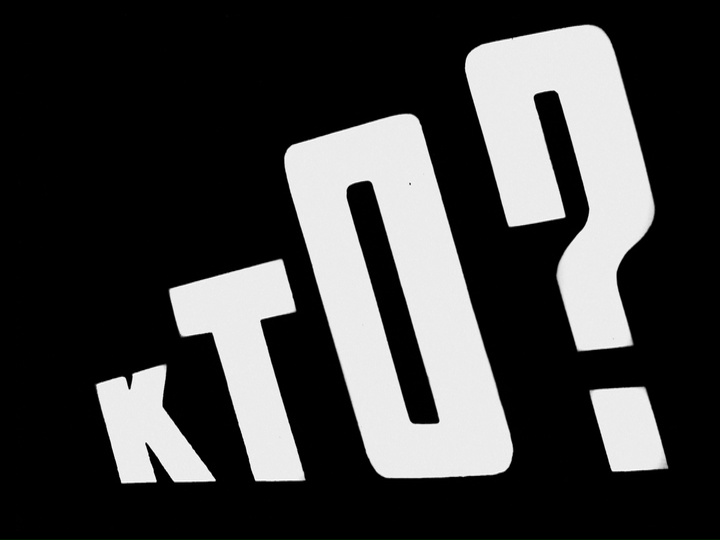
References

Hanns Heinz Ewers, Alraune, die Geschichte eines lebenden Wesens (Munich: G. Müller, 1911).

British Instructional Films: Three documentary dramas, 1925-27

As promised last time, I have been watching more recreations of Great War battles produced by British Instructional Films. Unlike The Battles of Coronel and Falkland Islands, these films focus on the land battles of the Western Front. Like Walter Summers’s naval production of 1927, they offer “reconstructions” of real events using as much military personnel and equipment as possible. The exact genre of the productions is difficult to state. The BFI liner notes for their DVD/Blu-ray edition of The Battles of Coronel and Falkland Islands calls them “docudramas”, while the DVD edition of Ypres (discussed below) refers to them as “documentaries”. I’m sure a worthwhile but ultimately tedious (or tedious but ultimately worthwhile) debate exists in critical literature about what exact term refers to what exact kind of film. Shall I employ “docudrama” here? I’m not sure. I think simply “film” is best, since they appeared in cinemas per any other form of feature-length presentation, and I’m interested primarily in what kind of experience they offer rather than what label to pin to them.

Two of these films I have watched via the BFI Player. The third, Ypres, I watched via a DVD edition released by Strike Force Entertainment (now there’s a name). This is the only film that has received a physical media release. Since I’m a sucker for physical media, and did not wish to pay the BFI £3.50 to “rent” a video file, I cheerfully spent £3.48 for the DVD on eBay. As much as I wish to support the BFI, I’m also an immensely stubborn and immensely cheap human being. Thus, I price-watched the DVD for nearly a month until it fell below the BFI rental price. All to save two pence, and to make sure I had a copy of the film to keep for as long as I wish. That said, I am still relying on the few sentences of the video description available (without paying £3.50) via the BFI Player to contextualize the films. Thus, I learn that the BIF films of the 1920s were “released annually around Remembrance Day” (11 November) and were hugely popular records of wartime events. So, what kind of films are they? And how comparable are they to the one BIF film that the BFI has given a physical media release?

Ypres (1925; UK; Walter Summers). I suppose I must begin with a few facts, for anyone not familiar with this particularly resonant piece of British history. Ypres is a town in Belgium that the British army and its allies defended for almost the entirety of the war. There were three major battles (in 1914, 1915, and 1917), the first being a German effort to capture Ypres and the second and third being Allied attempts to throw the Germans back. The Allied frontline bulged around the town in what became known as the “Ypres salient”, and the Germans occupied the scant higher ground to the east, from which they could observe and bombard the British lines and the town itself. Ypres was reduced to rubble, and the salient around it to a nightmarish wasteland of rotting flesh and filth. The first battle cost around 220,000 casualties, the second 100,000, the third somewhere over 500,000. Between late 1914 and late 1917 the frontline, it need hardly be added, moved barely more than four miles. Since the British and Commonwealth armies spent most of the war occupying and fighting for the salient, the name “Ypres” has a particular resonance in their collective culture. This is also my culture. Certainly, I have been fascinated by the war and by the horrors of this place in particular since I was a child.

The figures I have cited above are not mentioned in Summers’s film of 1925. Made to commemorate the tenth anniversary of (at least) the first two battles, it announces its emotional (and cultural/political) tone in the opening credits: “Dedicated to all those who fought and suffered in the Salient and to the memory of our comrades who sleep beneath that ‘foreign field that is for ever England.’” The citation of Rupert Brooke, famous both for his enthusiasm for the war and for his early death (en route for Gallipoli) in 1915, indicates the tenor of what follows. How immortal is this film’s story? Well, very immortal, according to the first narrational title: “The immortal story of the Ypres Salient begins in October 1914. Indomitable Belgium, wrested of all save her immortal soul, resounds to the heavy tread of the invader’s heel.” Yes, we’ve got a double helping of immortality, plus a side portion of indomitability. Let’s just hope the invader’s heel doesn’t step on our metaphor! Come on, chums, let’s up and at ’em!

The tone of intertitles suggests how the film seeks to humanize the Allied soldiers (and nurses) and demonize the Germans. The Germans are “field-grey hordes” while the Belgian civilians are “the innocent and helpless victims of War’s ruthlessness” (see also “Sister Marguerite and her band of heroic nuns”). The British Expeditionary Force (BEF) arrives “laughing and singing” in Ypres, while the Germans are reduced to often distant ranks of fodder for their guns and cold steel. The first time we see much of the Germans at close quarters, they are in their dugout boozing and raucously playing the accordion – while outside brave Tommies with blackened faces launch a deadly raid on their position. “Is anybody in there?” a British soldier yells down the staircase to the dugout. “Nein – nein!” the accordionist shouts back. “NINE did yer say, well share this amongst yer!” Tommy throws a grenade into the dugout. It explodes inches from the group of Germans. It neither kills nor wounds any of them, but up they come to the trench, trembling like lambs.

The film is bloodthirsty while being curiously reticent to show us any actual blood. In this way, the film recreates many heroic deeds, often those that earned the Victoria Cross (the highest military award) for bravery. For example, we see a Canadian officer lead his men forward with sword in hand. He is shot down (without spilling a drop of blood), whereupon a title announces: “His is no wasted death. Spurred to vengeance by their leader’s fall, the Canadians surge forward in one headlong rush, capturing their objective and bayoneting every defender.” Lovely, though we don’t see the orgy of bayoneting the title promises. Likewise, we see heroically outnumbered British machine-guns blaze away at point blank range but nobody German falls down dead in front of it. (Later, another heroic machine-gunner’s frightful toll is unseen apart from three or four hapless Huns.)

The film also has a curious interest in immortalizing “unknown” deeds. Thus we see a chaplain making a brave crossing of a shelled road, after which a title says: “The Padre received no reward for his action, but like countless others he had the satisfaction of knowing that he had done his duty.” Elsewhere, there is a similar incident of a cook bringing rations to a company through shot and hell: “You won’t read of their deeds in the History books, / But they’re deuced fine chaps are the Company cooks.” Of course, we are privileged to see these unseen events. The film is allowing us both a public history (of celebrated heroes) and an obscure one (of uncelebrated heroes).

Other methods to humanize the nameless Tommies come in the form of comic scenes. There is a bustling bathing scene, complete with comic asides from plucky lads keeping their spirits up in hard times, as well as scenes of behind-the-lines entertainments. There is also one scene of a soldier going home to his little house, his little wife, and his little blonde child. It’s all weirdly uninvolving. That is, except for the lovely image of the soldier’s house: here are the flowers and trees of a century ago, blowing in the wind. It’s beautiful, captivating – and the film takes no time to emphasize it.

The third battle of Ypres was (in)famously fought over waterlogged terrain in which men frequently drowned. How does the film handle this most famous of features? “With the night the weather changes and the fighting is continued in heavy rain”, we are warned. But there is no rain on screen. The opening phase of the battle skips over such details thus: “In spite of all handicaps, a considerable advance is made, and over 6000 prisoners taken.” No maps show us just how “considerable” this advance was, nor are the “handicaps” shown. Immediately, though “the weather grows steadily worse, and despite superhuman efforts the advance is laboriously slow.” What do we see of this? Well, there is some inane and unconvincing hand-to-hand combat by a small stream. (A self-contained stream that has not burst its banks.) We see tanks easily crossing the battlefield, the only water a couple of puddles. To skip to the end, the last title sums it all up thus: “In a war of heroic deeds, Passchendaele will rank among the most heroic struggles. On 7th December, after five months of gruelling fighting, the crest of that tragically famous ridge is gained.” (The film does not over the fighting of 1918, in which the right was lost again – then rewon, all at the price of many tens of thousands more casualties.)

If all I’ve done is point out the crudeness of the film’s tone and dramatic method, I must conclude by saying that cinematically it is well put together. The photography is strong with frequent and effective use of soldiers silhouetted against large northern skies. There are few close-ups, which makes the use of anything closer than medium or long shots striking. More often than not this is used for the comic scenes, which are less interesting. But there are some effective uses of single soldiers positioned away from the massed ranks/groups that work well. (The image of an exhausted soldier with cigarette in mouth, standing in the foreground while ranks march past behind him, is very striking – it’s not surprisingly that the image is used by the BFI to advertise the streamed version of the film.)

There are also various models and matte painting used to good effect, though nothing very complex. The first glimpse of Ypres is a matte painting, nicely framed, while there are some models to use for the destruction of a zeppelin. For the latter, Summers wisely chooses to stage his aerial fight at night, the dark lending a hand to make the lack of real footage or locations less obvious. Summers also uses plenty of men and materiel to good effect, always filling his frame with people – or else masking portions off with the scenery or smoke and explosions. He also uses some limited amount of newsreel footage shot during the war. But he’s also canny enough not to use any of the real battlefield: it would entirely upstage and undermine the simple heroics of his own “docudrama”. You can’t show the horrors and destruction of the real battlefield if what you’re selling your audience is a boy’s own adventure version of history – albeit a well-equipped one. It’s a very clear and logical film, well put together. But it isn’t reality.

Finally, a note on the DVD edition by Strike Force Entertainment. Unlike the version on BFI Player, this presentation has a soundtrack. The back of the box announces: “The original silent documentary has had an all new soundtrack created from digitally enhanced recordings of the period as well as the addition of evocative sound effects.” Without digital enhancement, anyone nearby would have been able to hear my heart sinking as I read these words. However, the end result is not so bad. It’s a mishmash of musical fragments, united only (I assume) by the fact that they are free of copyright and can thus be chopped and changed per the arranger’s wish. There are also plenty of sound effects, which are far too “new” to my ear, so they stand out a mile from the aesthetic (and historicity) of the film and the acoustics of the musical samples. But I can’t deny that it’s better than I feared. It’s serviceable.

Mons (1926; UK; Walter Summers). On to Mons, which was one of the pivotal early battles of 1914. The BEF was retreating across Belgium, pursued by the much larger German forces. Mons was a “fighting retreat” in the last glimmers of “open warfare” that would soon be replaced by the static trench warfare. It was seen as a test of the strengths of Britain old, professional army – the army that was soon to be worn out and replaced by the waves of volunteers and conscriptions. The original BEF became known as the “Old Contemptibles”.

“Dedicated to the memory of the Old Army which came triumphant through a great ordeal and gave a new and noble meaning to the word ‘Contemptible’.” Thus the opening title. There follows a confusing and ill-explained (actually, entirely unexplained) scene between (unnamed) old politicians arguing about the validity of war. Cut to a mix of newsreel and fictional footage of British troops embarking for the continent. From this point, the action is better narrated. The progress of the armies is described in enough detail to follow, though (unlike Ypres) there are no detailed maps to put everything in place. In a way, it suits the hectic nature of the mobile front to be unbalanced in this way.

And the representation of the fighting? Well, there are cavalry charges and unconvincing firefights and scores of German prisoners, helpless at the sight of cold steel. There are heroic deeds and selfless sacrifices. There are cutaways to Germans admitting how they’ve underestimated their enemy. (“Why not admit it? Our first battle is a heavy – a very heavy – defeat. And that defeat inflicted by the English, the English whom we laughed at.”) There are endless contrasts between the smallness of the British and the masses of the Germans. (“Shatter their ranks, they are filled again. Mow them down in thousands, from the dragon’s teeth spring more.”) There are fewer overtly “comic” scenes than in Ypres, but there are several vignettes to concentrate on individuals. There is “the straggler” who gets marooned with a wounded comrade in a windmill and fights of German uhlans. There is an officer who buys a child’s drum and fife from a local shop in order to rouse his men with any kind of martial music. (The scene ends with a vision of a Victorian band in full regalia playing them on.) Then there’s the scene where a lone British soldier encounters a lone uhlan at rest. The soldier is armed but is too chivalrous to take the German’s possessions without a fight. So they take off their tunics and box, until the German is (of course) knocked out cold.

By dint of its setting in open warfare, and in summer, Mons has more chance for wide, expansive images of the landscape than in Ypres. Summers again makes great use of horizons and silhouettes, of great masses of troops, of racing horses, of mobile batteries, of bridges and brooks, of explosions filling the screen. There are one or two tracking shots, and even a rapid panning shot, which help variate the rhythm of the scenes (many of which are much of a muchness).

And the meaning of it all? According to the last title: “The Great Retreat is ended – the Great Advance, which is to end in ultimate victory, begins.” Describing the onset of static warfare and years of unimaginable suffering and appalling losses as “the Great Advance” is… well, what is it? I genuinely can’t think to express my feelings at this point. They grow more complex, and I will reserve judgement until after the next film…

The Somme (1927; UK; M.A. Wetherall). Right, the final film, and the one that covers one of the bloodiest battles in human history. Between July and November 1916, the British & Commonwealth and French armies launched an offensive on either side of the river Somme. In five months of attritional fighting, the Allies advanced barely six miles and lost over 600,000 casualties. The Germans lost somewhere over 500,000 casualties. The BFI Player notes for this film begin: “This sophisticated retelling of the Battle of the Somme includes an outstanding montage ‘over the top’ sequence.” Fine. What else? This production was “principally the brainchild of Geoffrey Barkas and writer Boyd Cable (Ernest Ewart), both of whom were at the Somme”. Barkas was the original director, but he fell ill and was replaced by M.A. Wetherall. So then, a film produced by veterans with an outstanding over the top sequence. Bring it on…

Hmm. Well, the quality of this print is by far the worst of the BIF films that are offered by the BFI.  (The clips from The Somme included in Brownlow’s documentary series Cinema Europe are clearly from a better source print (and tinted, too), and the episode that covers the film also include an interview with one of its cameramen, Freddie Young.)

What enthusiasm I can still muster for such a grotty copy of the film is steadily quashed by its treatment of war. Here are the Germans in their dugouts, laughing at the image of the Britishers. Here are comic asides by the British tunnellers, planting tons of explosives beneath the laughing Huns (“He’ll want an aeroplane for a hearse when this lot goes up!”) The Somme is filled with deeds without drama, with soldiers without subjectivity, with action without aftermath. This is not to downplay the film’s technical sophistication. Some striking images are achieved through double-exposure/matte painting combinations that mimic the explosions on the horizon as troops march towards the front. (Tinted, the effect would be much better.) But my interest in all this bustle on screen is without heart.

The “over the top” sequence is perhaps the only real effort to create dramatic tension through a complex use of imagery. We see the final minute of time before the whistle blow unfold in real time. Superimposed over the image of a clockface, we see images of the waiting men: biting nails, tapping feet, poised at the ready. It’s an oddly protracted scene of tension. What it undoubtedly possesses in cinematic flair it lacks in dramatic design. This period of waiting is not associated with any particular character or characters. We do not know any of the people we see waiting: they are unnamed figures that we have not met before don’t meet again. We can’t feel anything more than a rather abstract or generalized feeling of tension. Despite the realities the film attempts to show, and despite the reality of the seconds ticking by to Zero-hour, these aren’t real human beings on screen – and I simply didn’t feel properly involved.

Finally, the text “ZERO” grows in size to occupy the screen. Over the top! But what happens next is a quite shamelessly whitewashed depiction of the first day of the battle. To remind you all, the British & Commonwealth forces lost nearly 60,000 men for almost no ground gained. Instead, The Somme provides us with reassuring text about territorial gains and advancing guns – and no mention of objectives, casualties, expectations, consequences. The battle goes on. There are scenes of senior officers discussing plans, scenes that are stiff and awkward in the extreme. They are there for illustrative purposes, but what – really – are they illustrating? The figures aren’t named, they don’t have identities, motives; they have no function other than to gesture towards a chain of command and a strategic process that the film has no ability or interest to explore.

The film is more interested in the lower ranks, but what kind of justice does it do to their struggles? We see heroic deeds, lone pipers playing under gunfire, the wounded being rescued. But where are the bodies? We’re told in one title that two waves of an attack were mown down by machine gun and rifle fire. Instead of showing us this, the title immediately dissolves onto a second title, reassuring us that the third wave – inspired by an officer’s hunting horn – went over the top and succeeded.

The film knows it cannot deny the sacrifices made, but it also cannot bear to show them or name them. We are shown maps of the battle, but they do not show the objectives in relation to the initial timetable (positions that were meant to be taken on day one were still out of reach months into the battle). A later title implies the difficulties the Allies faced without making them explicit. Here, the text mentions Beaumont Hamel, “where our attacks had broken down with such appalling losses on 1st July” but where “the enemy still remained secure”. Where were these “appalling losses” in the relevant part of the film? Where even was anything shown to “break down”?

The film then blames the weather for stalling an inevitable victory. Here, we see some of the few instances of the troops occupied not with heroic deeds or plucky comedy but with forbearance – and even, in one scene, expressing something like fury. This comes in the form of a remarkable shot of a soldier lying in mud, delivering an untitled monologue; but anyone who can lipread even slightly will pick up phrase like “fucking war” and “fucking mud”. What to make of this? It is the only voice (but “voice” is somehow an inappropriate term in this silent scene) in the entire film raised against the tone of patriotic success. But the film cannot, dare not, follow it up or elaborate on it. Another soldier witnesses this outburst, but he carries on without comment. So does the film. A title later states: “the weather closed down like a curtain upon a glorious tragedy”. Glorious tragedy is it, now? Well, the film manages to win a victory nevertheless by skipping forward to the German tactical retreat to the Hindenburg Line in early 1917. “The sacrifice had not been in vain.” These words are spelled out over a vision of a scarred swathe of land, the remains of an advance scattered over the torn ground. But there are no bodies, no victims, in the frame. It is as if the “sacrifice” is too great to show and has already been tidied away.

I suppose by this point I had grown weary of these BIF films. But there was something in the evasiveness and hypocrisy of The Somme that especially irritated and upset me. The film retrospectively mentions horrific casualties and abject failures yet never once depicts them. It depicts heroism without placing it in the context that makes it heroic. We see just one blinded soldier, fumbling in a crater. We see just one voice raised against the appalling conditions, but his voice is un-transliterated. Nothing is questioned; everything is justified. The Somme is a film that has neither the interest nor capacity to think about what it shows us, let alone to feel something. It is a spiritual and moral vacuum.

To conclude this overlong piece, I do not regret going through these BIF films. They form an important genre of popular commercial filmmaking in the UK in the 1920s. But in all honesty, I cannot wait to watch something else, something more honest – in whatever genre. To repeat what I said in my earlier piece, these BIF films offer exciting visions of the Great War that may impress by their scale and vigour but frustrate by their utter disinterest in real human beings or real human emotions. For films dealing with industrialized slaughter, it is quite staggering how little there is on screen of genuine consequence. It is also worth repeating the citation I offered last time from Bryher, writing in in Close Up in October 1927. Illustrating that even people at the time might feel queasy watching these films, Bryher attacked these BIF productions for their dishonest treatment of war:

There are plenty of guns and even corpses in the British pictures but the psychological effect of warfare is blotted away; men shoot and walk and make jokes in the best boy’s annual tradition and that some drop in a heap doesn’t seem to matter because one feels that in a moment the whistle will sound and they will all jump up again…

I am likewise left deeply uneasy about these films. Indeed, I also take it that the way the BIF productions have been treated by the BFI suggests some similar qualms about the rationale for their restoration and exhibition. Of course, The Battle of the Somme (1916) – made while the battle was still raging in the summer of 1916 – is a famous example of wartime reporting that has been restored more than once and has long been available. It may not show the full horrors of the battle, but it has enough glimpses of real injury and real death to make it shocking – then and now. The Battle of the Somme is an extraordinary document of its time, but the reality of those faces still reaches out to us in the present; the film is naturally much seen and studied. Conversely, the BIF films – despite being more numerous and just as popular – are relatively obscure. Asthe only such production to have been fully restored and released in the modern era by the BFI, I wonder how many university courses include The Battles of Coronel and Falkland Islands? Of all the BIF films, it strikes me it is the one most palatable to modern audiences. In treating a sea battle in which the total losses were less than 4000 lives, it is less likely to seem an inappropriate mode of representation. With Mons, there is an appealing vigour in its treatment of a series of dramatic encounters in the open warfare of 1914. But with Ypres and The Somme, I cannot imagine the propagandist treatment of the bloodiest battles in British & Commonwealth history going down so well.

Of course these films are “of their time”. But is that also an excuse to avoid looking at what they represent, or at what uncomfortable resonances they might still have? As Bryher’s review makes clear, some critics could and did feel differently even in the 1920s. She herself made the link to the rise of nationalism and fascism across Europe, forces that relied on images of a glorious military past and of war as a heroic pursuit. One might also look to France and to Léon Poirier’s Verdun, visions d’histoire (1928), which is a far more melancholy look at another critical battle of the Great War. As it happens, for all its cast and resources, Verdun is an absolute bore of a film – like an illustrated lecture, only weirdly portentous. Yet it still transcends the jingoist tone of the contemporary BIF productions. Poirier’s film even tries to address the spiritual aftereffects of war, to acknowledge that the millions of men who fought and died had value beyond their actions on the battlefield – that they were all, equally, human beings. There is more to be said about films like the BIF production in comparison to Soviet “history” films of the 1920s, as well as with more straightlaced films like Verdun, but frankly I’ve had enough of this genre for a while.

Paul Cuff

The Battles of Coronel and Falkland Islands (1927; UK; Walter Summers)

To begin, a confession: the Blu-ray of The Battles of Coronel and Falkland Islands has been sat on my shelf for ten years. Yes, ten years of being shuffled from house to house, from shelving unit to shelving unit. Ten years of being saved for tomorrow. Well, tomorrow has arrived – today! I’m not sure why the existence of the film and its convenient BFI home media edition slipped my mind for so long, nor why the notion of watching it suddenly popped back into my brain. But regardless of why, I have now watched it.

The Battles of Coronel and Falkland Islands was directed by Walter Summers for British Instructional Films (BIF), a company that made documentaries and features through the 1920s. Among their larger productions were a series of historical recreations of battles from the Great War. Alongside naval dramas like Zeebrugge (1924) and The Battles of Coronel and Falkland Islands were others about the western front like Ypres (1925), Mons (1926), and The Somme (1927). The Battles of Coronel and Falkland Islands is the only one of these films to be fully restored, though others are available via the BFI streaming service. Summers’s film is the flagship production (forgive the pun) among this series because of the scale of its recreation and because it has been seen as a companion piece to Sergei Eisenstein’s Battleship Potemkin (1925). I will discuss this more later, as the discourse around this comparison is almost more interesting than the act of comparing the films itself.

The Battles of Coronel and Falkland Islands is set in 1914 and recreates two successive battles in the Pacific and Atlantic, fought by British forces against the German fleet under Admiral Graf Maximilian von Spee. The Battle of Coronel, in November 1914, was a defeat for the outclassed British ships, during which the Germans lost three wounded against British losses of 1600 killed (and two ships sunk). The Battle of the Falklands, in December 1914, was a total reverse of fortunes: for only a handful of casualties, the British sunk four German ships – killing over 1800 men and capturing another 200. The opening narrational title of Summers’s film puts it this way: “This is the story of the Sea fights of Coronel and the Falkland Islands – of a victory, and a defeat as glorious as victory – a story of our Royal navy, which through storm and calm maintained for us the Freedom of the Seas.”

The tone of this summary is revealing. Yes, the credits thank the Royal Navy for their cooperation, and boast of the many resources put at the production’s disposal; but it is not just historical recreation, it is a depiction of “glory” and empire. Rather sweetly, the credits list which (historical) ships are played by which (real) ships of the Royal Navy. None of the human cast get mentioned, which epitomizes the balance between the recreational/historic aspects of the film and its dramatic/human aspect. For while Summers takes care to humanize the leading protagonists, especially the various commanders, it is in the naval operations themselves that the film is principally concerned – and best at handling.

Here, he has an impressive array of ships and materiel to play with. Most obviously, he has several Royal Navy ships to film – from sea, from land, from high on deck, from the depths of the hold. He finds lots of interesting angles, though the commanders at their respective helms are always framed in the same way. In part this helps anchor the spaces, as well as draw parallels between the opposing commanders – all of whom are treated sympathetically.

Most impressive, however, is the sequence (called “The Effort”) in which the British prepare their ships to sail out to the Falklands to intercept the German fleet. There is a long montage (about seven minutes) of preparations. We see a dock’s worth of activity: moving equipment, welding iron, stockpiling ammunition, loading supplies. Since the crew is working day and night, there are some striking scenes in the dark of the activity illuminated by flashes of light. There is also a marvellous tracking crane shot, filmed (I presume) from one of the dock’s mobile platforms suspended over the loading bay. It’s a great shot and I wish there had been more moments of such camera movement. But Summers reserves one of his very few other mobile shots for a similar tracking shot that moves up the food-loaded expanse of von Spee’s victory banquet table in Valparaiso. This is one of the only moments in the entire film that struck me as a truly incisive, analytical use of camerawork, for it is not used simply to show-off space but to comment on the action. A contrast is being drawn between the parallel preparation of both sides: while the British are working night and day to rebuild their fleet, the Germans are feasting and drinking. It’s a nice touch, but noteworthy for the rarity of its… well, stylishness. It’s the move of a dramatic director rather than a documentary reconstructionist.

Indeed, I am tempted to say that Summers is better at directing objects, and cutting between spaces, than he is at directing people. His choreography of the various crowd scenes is quite repetitive: too often, everyone on screen is doing exactly the same thing. Thus when the militia at Port Stanley spot the German navy approaching, they all go to the cliff edge and they all point at it. When the Royal Navy closes in on the disabled German vessels at the end of the film, the curious crew all go to the railing, and they all point at the vessels. Summers is a bit better in the action scenes, with crews rushing around or dying. But even here, at the end of the battle, when the Gneisenau is scuttled, there is a shot of the German crew all gathered in various degrees of stiff, unnatural poses. (Really, what are those gestures supposed to be? Are they mimicking Mr Muscle?)

Beyond the crowds of sailors, Summers also tries to humanize his set pieces by having little vignettes of individuals or pairs among the crew. Thus, we see HMS Canopus being painted by a comic sailor who gets paint on his comrade; or we overhear conversations of sailors in-between or just after bits of action, making comic asides. I say, “comic”, but what I really mean is “tedious”. The performances are stiff, the rhythm is slow, the supposedly colloquial dialogue clunky and contrived. I suspect the humour may have gone down better in Britain in 1927 but suffice it to say that a century later these scenes do not work. (Thinking back, I recall similar scenes in Powell and Pressburger’s naval war drama The Battle of the River Plate (1956), which are likewise cringeworthy efforts to show jolly working-class sailor folk maintaining their plucky British spirits.)

All of which brings me back to the comparison with Battleship Potemkin. There are striking parallels and striking contrasts. Both films alternate between drama on land and sea, depicting history as a kind of spectacle. But while both films don’t have characters so much as collective groups, there is a vast difference in its attitude toward hierarchy. Summers has a great respect for officers of both sides – they are all represented in strikingly similar ways, with an emphasis on calmness, stoicism, and honour. This is a striking contrast to the sadistic, violent officers and priests of Battleship Potemkin. Summers is very much invested in the class system as embodied in military ranks. Eisenstein is interested in revolution, Summers in the maintenance of class and Empire.

In this sense, Summers’s film is as implicitly propagandistic as Eisenstein’s is explicitly so. The Battles of Coronel and Falkland Islands is a defence of British imperialism: the film begins and ends with references to the defence and glory of Empire, with Britain as the guardian (if not the owner) of the “seven seas”. But Summers is also careful not to dehumanize, let alone demonize, his enemy. Though there are plenty of sneering, triumphalist looks among the German officers, Spee himself is a very sympathetic (one might also say tragic) figure. He refuses to gloat or condemn the British at the victory feast, and his acceptance of the bouquet is tinged with a self-conscious defeatism: Spee says the flowers must be kept in case they should prove useful at his own funeral. (Summers makes sure to show Spee brooding on them later in the film, as defeat looms.) The film clearly admires stoicism and bravery on both sides: the suicidal courage and flag-waving defiance of the British ships in the opening battle are echoed in the actions of the doomed German crews in the second battle. There is nothing like this in Eisenstein’s depiction of the tsarist military of any rank in Battleship Potemkin.

In terms of naval spectacle, Summers’s film boasts greater resources. While Eisenstein makes do with what is clearly a single docked ship, Summers has a small fleet that is clearly filmed at sea. The scenes in which the refitted ships set sail to the Falklands are excellent and I wish there had been more scenes like this. Summers seems very concise, which is to say limited, in his use of this footage. He does not explore the interior of the ships in much detail (a cabin, a canteen, a galley), and the upper deck is likewise limited to a small number of set-ups (a couple of gun positions, the bridge). What is missing is the sense of a ship as a lived-in space, occupied by a real crew. I wonder if it was either difficult or even prohibited to show too much detail onboard the Royal Navy vessels. (I wish he had used more mobile camerawork to explore these spaces. Apart from one very brief tracking shot in the canteen when action stations are called, the camera remains static.) Nor does his montage, or his image-making, ever quite produce a true sense of drama. (The best sequence is one of preparation, not of action.) Not only does Summers explain what’s about to happen in his narrational titles, but I always feel that he is at one remove from the reality being depicted. For all its recreational efforts, you feel that The Battles of Coronel and Falkland Islands is ultimately history in the past tense. Battleship Potemkin has a far greater sense of events happening before your eyes, disorienting you, sometimes terrifying you. And, it should go without saying, Summers does not have Eisenstein’s extraordinary eye for composition, for sudden bursts of impactful imagery – nor for his playful subversiveness. The Battles of Coronel and Falkland Islands is very effectively composed and edited, but I suspect that I will struggle to remember its imagery. But with each shot of Battleship Potemkin, Eisenstein seems to smack you round the head – every image is gripping, dramatic, dynamic. (Even the slogan-like text of the titles is punchily effective.) For all Summers’s resources and skill, and for all the similarities between these films, Battleship Potemkin is in a different league than The Battles of Coronel and Falkland Islands.

On this theme, I find myself thinking about the first time I heard of The Battles of Coronel and Falkland Islands. This was a reference and clip in Mathew Sweet’s feature documentary Silent Britain (BBC Four, 2007). I have very mixed feelings about this documentary. On the plus side, it offers a valuable trove of clips from a host of interesting films, many of which are still not publicly available. On the downside, the tone of Sweet’s narration is sneeringly dismissive of anyone who has ever dared to doubt the glory of British cinema in this period.

When I first saw Silent Britain in 2007, I felt that the countless digs at “some historians” was aimed (at least in part) at Kevin Brownlow, whose episode on British cinema in Cinema Europe (1995) (“Lost Opportunity”) offered a very sober account of this same period and subject. Comparing the two documentaries, it’s striking how many of the films and historic interviews used by Brownlow are also used by Sweeney. But Sweeney doesn’t discuss the struggles of the British film industry, nor reflect on the fact that many of the films he cites from the late 1920s were not only influenced by continental filmmakers but directed by them. Brownlow’s focus, as the title of Cinema Europe indicates, is to offer a wider perspective on the relationship between national cinemas across Europe – and to highlight their successes and struggles to compete with Hollywood. As such, Brownlow’s is a more complex project than simply rediscovery – although it is also one of the great documentaries on (re)discovering silent cinema. This is not to say that Sweet is wrong to champion the films he chooses (they are too little seen), but that he offers an incredibly one-sided interpretation of the period. Watching it again, nearly twenty years later, I find Sweet’s endless sniping about critics and historians incredibly irritating. (I sincerely hope that I never strike my readers this way.) The content of the documentary is superb, but the tone of the narration is too much like tabloid journalism.

In addressing (and criticizing) the Film Society (1925-39), where otherwise rare or censored films were shown to paid subscribers, Sweet mentions Battleship Potemkin and The Battles of Coronel and Falkland Islands together:

Everyone at the Film Society was astounded by the technique of Eisenstein’s film, but it wasn’t really so far removed from what a director called Walter Summers was doing closer to home. […] For all Summers’s ambition in a field we would now call “drama documentary”, this film would have been passed over by the Film Society. It was certainly given a rough ride by the cinema intellectuals writing in the influential magazine Close Up. Close Up’s critics wrote gushy fan letters to foreign directors while dismissing the work of British filmmakers as third-rate and uninspired.

Well, excuse me! I’d forgotten how snide Sweet was in addressing one of the most important English-language film publications of the period, and their wide-ranging efforts to engage with and analyse foreign cinema. I’m well aware of the reputation of Close Up as a hotbed of snobbishness, not to mention sexual experimentation, and I know some people who have little time for their writers and editors as a whole. But I can only roll my eyes at Sweet’s setting up of these straw figures to knock down with such contemptuous ease. The point of the Film Society was not to show big commercial hits like The Battles of Coronel and Falkland Islands, a film that was readily accessible in cinemas across the land, but films that were otherwise censored, cut, or prohibited. This inevitably meant an emphasis on foreign films and those of the avant-garde. And as for the way Sweet sneers at the notion of “cinema intellectuals” and their continental tastes…

Anyway, noting that Sweet didn’t bother quoting what Close Up actually wrote about Summers’s film, I bothered to look it up. The review (“The War from more angles”, from October 1927) is written by Bryher, one of the most interesting figures in British modernism of the interwar years. (I could write much on Bryher, but this is not the space…) Bryher states at the outset that she doesn’t think The Battles of Coronel and Falkland Islands is a bad film, but she does take issue with its tone – and that of similar recreations of the Great War. “The trouble is not so much what they represent as the way they represent it”, she says. “What I and many others (according to reviews) object to in the Somme [the BIF film of 1927] and the Battle of The Falklands is that war is presented entirely from a romantic boy-adventure book angle, divorced from everyday emotions”. Sensitive to the growth of fascism across Europe in the late 1920s, Bryher worries that “the ‘We Want War’ crowd psychology may destroy a nation” – and that films ought not to encourage it:

By all means let us have war films. Only let us have war straight and as it is; mainly disease and discomfort, almost always destructive […] in its effects. Let us get away from this nursery formula that to be in uniform is to be a hero; that brutality and waste are not to be condemned, provided they are disguised in flags, medals and cheering.

For Bryher, The Battles of Coronel and Falkland Islands repeated a trend common to other BIF films: “there was not a single suggestion that war was anything other than an elaborate and permissible adventure; or that there were thousands of men and women whose lives were broken and whose homes were destroyed.” She then offers her own vision of what a more sensitive film might convey, conjuring a kind of impressionistic montage in prose. In Summers’s film, the Scilly Isles stand in for the Falklands, and Bryher uses this as a springboard for her own memories of the war there:

[N]o gigantic spectacle is needed but a central theme worked out perhaps in a little outpost and related to the actual experience of people during those awful, hungry years. Scilly for instance (as I saw it in 1917) with the long black lines of the food convoy in the distance. A liner beached in the Sound with a hole as large as a room where a torpedo had hit it; the gun on its deck trained seawards in case a submarine dodged the patrol. Old men watching on the cliffs. An old fisherman rowing in slowly with a cask of brandy—wreckage—towing behind his boat and a smuggler’s smile on his lips. (How he must have enjoyed bringing it in legitimately in broad daylight.) Shipwrecked sailors from a torpedoed boat stumbling up the beach. Letters: —“If the petrol shortage continues it is doubtful how long the country can hold out” and down at the wharf the motor launches letting the petrol hose drip into the water because, between filling tanks, they were too bored to turn it off. The war as it affected just one family. Rations, rumours, remoteness.  A film could be made of trifling impressions seen through the eyes of any average person. It would be valuable alike as picture and as document. But this glorification of terrible disaster is frankly a retrogression into the infantile idea of warfare, as a kind of sand castle on a beach where toy soldiers are set up, knocked down, and packed up in a pail in readiness for the next morning.

Bryher also contrasts BIF productions with The Big Parade (1925), which she sees as a far more honest depiction of war – and the dangerous lure of false notions of what war is. In the BIF films, war is “[h]eroic and nicely tidied up”, “[p]leasant to watch but completely unreal”:

There are plenty of guns and even corpses in the British pictures but the psychological effect of warfare is blotted away; men shoot and walk and make jokes in the best boy’s annual tradition and that some drop in a heap doesn’t seem to matter because one feels that in a moment the whistle will sound and they will all jump up again; a sensation one never had for a minute in The Big Parade.

Bryher praises the extensive dock montage sequence in The Battles of Coronel and Falkland Islands precisely because it was more honest:

Here the director touched reality, and the different machines, the darkness, the hurrying feet, and the long yard gave a feeling of preparation and activity that marked a great advance on anything previously seen in an English film. That was authentic England. Dirty and full of noise and right. The men were working the right way. Directly the atmosphere of the picture changed and the attention held.

To return to the comparison with Battleship Potemkin, it’s worth noting that Bryher never mentions Eisenstein in her review of Summers’s film: the British censors had banned it from being exhibited in the UK and it was only shown by the Film Society in November 1929. She places The Battles of Coronel and Falkland Islands in the context of other contemporary war films, especially those by BIF. Bryher sees it as part of a genre, and criticizes it as such. For all Sweet’s outlandishness, I can’t help but take his comment (I can’t call it an argument) that Battleship Potemkin “wasn’t really so far removed” from The Battles of Coronel and Falkland Islands as quite a cautious statement. Even he knows it’s absurd to claim it as a work equal cinematic, let alone cultural or historic, significance. Claiming it as “not really so far removed” is about as far as one might reasonably push it, though even here I would say that this is a gross simplification. As Bryher suggests, it’s not a matter of setting but of tone and style that distinguishes the BIF films from films like The Big Parade or Battleship Potemkin. The essays in the BFI booklet that accompanies the Blu-ray of The Battles of Coronel and Falkland Islands are rather more balanced than Sweet, arguing that it is a great film within its particular context. Bryony Dixon says that the dockyard montage is surely “one of the best pieces of filmmaking in British cinema” (Bryher says something similar), though she is also careful to shield the film from the kind of outlandish comparison that Sweet is keen to make.

Finally, a word on the score for the 2014 restoration of The Battles of Coronel and Falkland Islands. This was written by Simon Dobson and performed by the Band of the Royal Marines, together with the strings of the Elysian Quartet. Dobson uses the brass, winds, and percussion of the Band to create a marvellous sonic world – it has a great variety of rhythm, texture, and tone. I was curious to hear the way the strings are used to underscore certain parts of the film. They sounded to my ears more like the way a synthesizer is sometimes used to create a kind of acoustic wash beneath a dominant rhythm. The liner notes to the Blu-ray reveal that these strings were recorded separately from the Band and later mixed in to the soundtrack. This perhaps helps explain my sense of their slightly artificial placement. This is not a complaint, however, as the effect is certainly novel on my ear – and the whole score must rank as one of the more interesting and imaginative uses of orchestration that I’ve heard for a silent film. It sounds both akin to its period and genre, as well as sounding original. A perfect balance, and an enjoyable soundscape.

After going through the above, I feel some nagging sense of guilt that I should do more homework. Sweet’s complaint about most historians not being as familiar with British silent cinema as with foreign productions is surely true of me, if not others. In terms of availability, the situation Sweet observed in 2007 is rather better in 2025, but many important British silents are still maddeningly difficult to see. Half of the BFI’s “10 Great British Silent Films” (compiled in 2021) are not available either on DVD/Blu-ray or on the institute’s streaming service (and the DVD for Hindle Wakes (1927) is long out of print). And this list, of course, is but a tiny selection. Nevertheless, can we start by getting releases of The Lure of Crooning Water (1920) and The First Born (1928)? In the meantime, I promise to do my patriotic duty and watch not one, not two, but all three available British Instructional Films on the BFI Player service. None of this continental muck for me, just good ol’ British fare. (But after that, can I please resume writing “gushy fan letters to foreign directors”?)

Paul Cuff
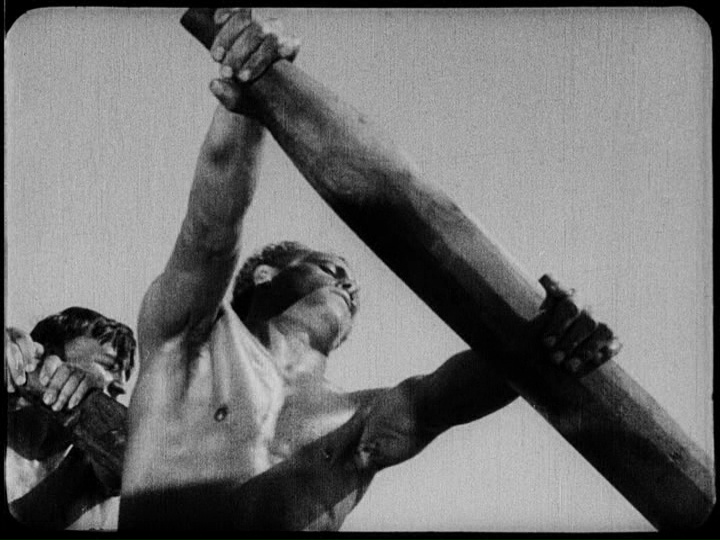
O Destino (1922; Pt.; Georges Pallu)

This week, I return to Portugal. Having been exceedingly impressed by Maria do mar (1930) at the Stummfilmtage Bonn in August, I tracked down the DVD of the film from the Cinemateca Portuguesa. Finding that the Cinemateca has produced a whole series of DVDs of recent silent restorations, many with the original scores, and all with English subtitles, I took the plunge and placed a large order… Within a few days, I had a mouthwatering pile of films in beautiful presentations. Where to start? Why not with the film that the notes describe as “the most beautiful use of colour tinting and toning in Portuguese silent cinema”? A bold claim. But having watched O Destino, I can well believe it…

Let’s begin with the plot. (Yes, obviously, there will be spoilers.) The bereaved Maria da Silva de Oliveira returns from Brazil to her native home of Sintra to visit her daughter, who is also called Maria. After a road accident knocks her unconscious, she wakes in the palace of the Marquesa de Souzel. Here, the scheming Luís de Noronha has recently become the Conde de Grazil and thus has taken charge of the family estate. He has his eyes on Maria’s daughter, but so does his young nephew André. Meanwhile, the old housekeeper, who went blind with grief after his daughter was “disgraced” and left home twenty years earlier, wanders the estate mourning his past. These two stories are brought together when it becomes clear that Maria is the lost daughter, and that the man who disgraced her was none other than Luís. Maria decides to confront Luís, whom she – with the aid of the supportive de Souzel family – finally exile, enabling the engagement of her daughter Maria with André. FIM.

O Destino is directed by Georges Pallu, a French director whose five years in Portugal makes him one of the major figures of Portuguese cinema of this era. This film marks the only cinematic appearance of Palmira Bastos, a celebrated theatre actor. I had only the sketchiest knowledge of Pallu as a name, and none of Bastos as a performer. I therefore went into O Destino blind and was intrigued by the dramatic set up of the opening half hour or so. Pallu lets most scenes play out in long takes, with sparing use of medium and medium-close shots – and no true close-ups. I wondered if there were some missing titles in the opening, since only a couple of the characters were properly introduced – so it took a while for their relationship to sink in. What intrigued me was the fact that, despite minimal editing during scenes, Pallu kept longer sequences interesting by parallel cutting. In the opening reel, the family tensions of the de Souzels take place parallel to Maria’s arrival by steamer from Brazil. Pallu cuts between the estate and the approach of Maria (by boat, by car, and ultimately by foot) – building a kind of slow-burning tension as to when the two stories will finally meet. They do in marvellous fashion – quite literally colliding on screen when Maria’s taxi smashes into a truck, hurling her into the road. She is then carried into the palace, and she wakes up in the very site of her childhood. It’s a terrific way of introducing Maria into the drama.

That said, I found the first half of the film dramatically slow going. The relationships are carefully established, but I was never gripped by the emotional tenor of the drama. Maria spends too much of the film inert in bed, carefully avoiding contact with the man who impregnated and then abandoned her twenty years ago – and with her father. This means that the only on-screen conflict is between uncle and nephew over Maria’s daughter, which is a little uninteresting.

What saves this half of the film, lifts it indeed into the realm of the extraordinary, is the photography. Seen on my television screen, I thought the exterior scenes in O Destino among the most beautiful I have seen in years. Every new shot brings some astoundingly lovely vista of backlit trees, sparkling water, sun-dappled road, or rich parkland. The lighting is equally impressive in the large interior of the house, where Pallu allows natural light to create superb, rich, shadowy spaces inside the architecture. The lush pictorial beauty is enhanced by the tinting and toning, which creates a new mood for every scene. It’s stunning, just stunning. The cameraman was Maurice Laumann, whom I had not heard of – whoever he was, he did grand work here. I longed to see this film on a big screen. It’s simply wonderful to look at.

(A small footnote to this enthusiasm is that the lighting looks less effective when I went through the film and took captures from the DVD. The settings on my monitor are surely different from that on the television. I have the latter on “cinema” mode, so the contrast is not too exaggerated – but it has clearly made a difference. This clearly raises all sorts of questions about home viewing, but I must be loyal to my initial reaction: I was incredibly impressed by the way the landscapes looked on screen.)

As I said, I confess that I wasn’t much gripped by the drama of O Destino until about halfway through. At this point, Maria is alone in the palace and, instead of joining the household at the fireworks in the park, she decides to walk round the gardens of the estate. It is here, in the still, dim light – tinted a kind of dusky green – that we see her truly express herself, and where the film really taps into the emotional depths of her character and past. As she wonders alone through the gardens, Pallu once again uses parallel cutting to heighten the effect of Maria’s loneliness. We see her slow, quiet walk intercut with the sudden bursts of colour (pink, gold, green) of the fireworks, together with the boisterous crowds. These scenes are magnificently tinted and toned, enhancing the amazing chiaroscuro lighting of the dark park. But they also function to make Maria’s scenes seem quieter, more isolated. The film has much in common with the kind of “diva” films produced in Italy in the 1910s, and these scenes of a female protagonist walking in black veils through gorgeous surroundings had very much the same aesthetic feel. Bastos’s performance grows in stature across the film. I didn’t quite get the fuss over her status to start with, but by now her control and dignity on screen attained its full emotional weight. I found this sequence, and the climactic encounter between father and long-lost daughter, very moving. It also helps that the motif in Nicholas McNair’s piano score is a slow, gorgeous, memorable sequence of romantic chords. The whole sequence has a magical, dreamlike effect, which the music captures and enhances perfectly. What a gorgeous piece of cinema this is. Even the sudden way it ends – with Maria planting a kiss on her father’s head, his gesture of astonishment, and the end of the reel – is perfect. It’s a great, great sequence – and from this point to the end, the film really works.

One of the reasons it works is that Maria assumes greater agency. She finally deals with the legacy of the past, confronts Luís, and speaks to her father. The way she lifts her veil to reveal herself to Luís is a fabulous moment. It’s one of the many scenes that belongs in an opera by Verdi. I could easily picture scenes and sequences being transposed into arias and duets. The fact that it gives this sense of big emotion through such economic, silent pictorial means, is a marker of the film’s success. I love the way the film ends, too, with Luís being cast into exile. The film begins and ends with lone figures, silhouetted against the dazzling waves. That Maria is now at the heart of her family, and Luís is banished from Portugal, is deeply satisfying.

If O Destino is slow to get going, by the end I was totally absorbed by it. I can see why this was “the biggest commercial success” in the silent era in Portugal. It looks preposterously good. I can’t emphasize enough how hypnotically beautiful these exteriors look. The depth of shadow, the lustre of the light. I think I would be overwhelmed by this on a big screen. Nicholas McNair’s piano score was very good, and he brought out some lovely themes for Maria’s scenes. As I say, by the halfway point I was won over. Bravo to all involved in restoring this film. I can’t wait to dig into the rest of the Cinemateca Portuguesa DVDs – including more films by Pallu…

Paul Cuff

Kaiser im Kino: Franz Joseph I. in historic film documents (1903-16)

It’s been a few weeks since my last post, for which I apologize. I have been busy writing, but for a book project that is wresting control of my schedule. Having just finished a chunky chapter, I take a thematic break by revisiting a DVD released by Film Archiv Austria in 2016 to coincide with the centenary of the death of Emperor Franz Joseph I. This edition, called Kaiser im Kino: Franz Joseph I. in Historischen Filmdokumenten, is a nicely produced DVD with English subtitles and plenty of details about the sources for its selection of films. (There is also a musical soundtrack, of which more later.) There are twenty-four films, mostly produced during the Emperor’s lifetime, together with some that postdate his death. The programme is 75 minutes long, enough time to glimpse a vanished world…

The first film in this collection does not feature the Emperor. Entrée du cinématographe (1896) is a Lumière film shot to advertise the presence of their films in Vienna. It was at the cinema on Krugerstrasse on 18 April 1896 that the Emperor first encountered moving images. “Ah, c’est magnifique!” he marvelled. He was already advanced in years. Born in August 1830, he ascended to the throne in the tumultuous year of 1848. He was thus nearly 66 when he saw his first film. As an icon of the old world, and heir to the Habsburg monarchy that dated to the thirteenth century, there is something poignant about this encounter. What films did he see that day? How did eyes that had seen most of the nineteenth century react to the medium that would define the twentieth? The month Franz Joseph was born, the last Bourbon monarch of France was entering exile; when he died in November 1916, Russia was on the brink of revolution.

But here he is in 1903, a flickering patch of white, beyond ranks of dignitaries. Head down, he is annunciating a speech. In silence we watch. But the film skips this speech, untranslatable, in favour of the reaction. Umbrellas are thrust into the air. Top hats are hoisted in salute. Children curtsy. The old world goes about its awkward choreography. The Emperor shuffles off. Though he had been filmed first in 1899, Der Besuch Kaiser Franz Josephs in Braunau am Inn (1903) is the earliest surviving footage of him. As the short essay in the DVD’s liner notes highlights, the Emperor rarely gets close to the camera. For the most part, he is seen from afar. Per the liner essay, is this is a “respectful distance maintained between rulers and the ruled” – even a “quasi-religious distance”? Perhaps, yes. It is also the awkwardness of early technology, the awkwardness of etiquette. How close could a camera operator – often a foreign employee of the Lumières or Gaumont – hope to stand in public events? There are no other photographers on screen, no suggestion in these few metres of gathered reporters. Just the crowds, the dignitaries, the dusty past. We are awkward eavesdroppers, stood on tiptoe, craning to catch a glimpse. For all the talk of “quasi-religious distance”, the camera setups often speak of an ordinariness that is quite charming. These events are partially staged, but not rigorously so – not quite, it seems, for the camera. Too often we are jostled or struggle to keep the Emperor in view. He’s not a god, just an old man liable to get swallowed by the crowd. At the end of Der Besuch Kaiser Franz Josephs in Braunau am Inn, the Emperor and his little retinue come closer to the camera. It seems for a moment that he might confront the lens directly, but this impression is swiftly quashed. Instead, he ignores us entirely and marches off to our right. Saluting arms get in the way of the frame and the camera hastily pans to the right to try and keep the Emperor in view. But the old man is too fast: he disappears entirely, leaving the camera with a view blocked by the leaves of a small tree. A final shot pans around the faces of the crowd and the uniformed police presence. A man strokes his beard. Dignitaries clutch limp speeches. People mill around. The film ends.

Years pass. Enthüllungsfeierlichkeiten des Kaiserin Elisabeth Denkmals (1907) – the “unveiling of the Empress Elisabeth monument” – alerts us to the recent past. In 1898, Franz Joseph’s wife Elisabeth was assassinated in Geneva by an Italian anarchist. Informed of her death, he initially assumed it was suicide, since Elisabeth (“Sisi”) had long since been mentally and physically unwell. She herself had never recovered from the death of their only son, Rudolf, who perished in a murder-suicide pact with his mistress in 1889. (In the space of ten years, she had lost both parents, two sisters, and her son.) So Franz Joseph and Elisabeth were never to appear on film together, just the image of her as the statue in the Vienna Volksgarten. In Enthüllungsfeierlichkeiten des Kaiserin, the trees flutter in the breeze. The Emperor does his rounds, saluting almost constantly. Dozens of uniformed men and hatted women follow in his trail. The statue of Elisabeth is too pale for the celluloid. Over-exposed, she is doubly absent in this film. In the sunlight of a previous century, she is rendered almost blank.

In Unser Kaiser eröffnet das neue Kinderheim in Gersthof (1910), the weather has turned. Umbrellas gleam with ancient rain. The greatcoated Emperor walks unperturbed as dignitaries with sodden shoulders introduced him to a series of tailcoated officials. Gowned priests bob around in the background. A throng stands and waits in the storm.

Here is Kaiser Franz Joseph in Sarajevo (1910), and the Emperor walks the streets where four years later his nephew Franz Ferdinand would be assassinated, triggering the Great War. Carriages pass. The Emperor walks up some steps. The camera is not privy to the interior, nor the passage of time therein. Immediately, therefore, the Emperor is outside. The carriage return. He mounts. A man walks in front of the camera and is ushered out the way. Parades of children in fezzes. The Emperor stands. The film skips past another speech, then realizes there is no more to be seen, so stops.

In Der Kaisertag in St. Pölten am 21.6.1910 (1910), the Emperor receives raised hats and salutes. Plumed gentlemen bob around him. The camera struggles to focus on its moving target. A woman anxiously looks over her shoulder, waiting for her cue to curtsy. Crowds of young girls wave their arms under instruction from their guardian. Older girls perform a floral dance. The camera glimpses faces, backs, gestures, odd looks. The operator stops turning now and then, anxious not to waste celluloid. The past skips along, slips away between frames.

The Emperor is absent from Kundgebung für den kaiser vor dem Brigittenauer-Kino (c.1910), but we see a poster bearing his image on the cinema wall. Two children in the corner of the frame, keenly peering towards us. Someone has issued instructions, for now a crowd of children cheers the image of the Emperor. But they would clearly rather look at the camera. Facing the wall, they demonstrate their fealty. Turning sneakily to us, they grin more gleefully. And how do we feel when we see these smiles of long-dead children?

Enthüllung des Denkmals “Franz Joseph als Weidmann” am Laufener Wald bei Ischl am 24 August 1910 (1910) is the first of two films recording the Emperor as huntsman. This film shows him milling as part of a crowd before his own image. He is only slightly more animated than his metalled self. In the background, a train passes – and I wonder about the travellers, and their view of us through the frames of their windows. Se. Majestät Kaiser Josef I. auf der Gemsjagd bei Ischl (1910) is the main event, though, and among the most substantial of the shorter films. The imperial villa at Bad Ischl. The Emperor emerges, smoking a cigarette. He takes a last puff, flicks the butt onto the driveway. He turns, sees the camera, pauses for a moment, then turns away. Is this the first time he has looked directly at us? It is from a distance. The connection is fleeting, for the carriages arrive. The Emperor is off into the hills, the woods. We see him striding slowly through the trees. There is something touching about his ensemble: pale knees showing between lederhosen and thick woollen socks. The Alpine hat and plume, the grand white whiskers. A horse’s tail, in perfect focus, flicks behind the blurred image of the Emperor gesturing to an assistant. Now they are higher up. A beautiful image of the throng of hunters at the bases of a slope. Sunlight streaks through the pines, highlights the white rocks. It’s a superbly composed image, perhaps the first moment of something with real vision in these films. The Emperor hunts, shoots. Dark chamois hurtle across the pale scree. Bodies are lugged uphill.

The sight of death prepares us for Unser Kaiser am Flugfelde in Wr. Neustadt (1910). Spectacularly elaborate and flimsy-looking planes await the Emperor’s inspection. Even the roller-coaster ride shown in Kaiserhuldigung im Wiener k.k. Prater (1911) feels more secure than the sight of those planes.

Vermählung des künftigen Thronfolgers (1911) shows the celebration of the marriage of the Emperor’s heir apparent Archduke Charles Franz Joseph and Princess Zita of Parma at Schwarzau castle. And of all the films in this collection, this is the most intimate. We see the various titled guests arrive, and I find it enormously endearing to see men decked out in extraordinarily elaborate military costumes puffing away at cigarettes and chuckling at private jokes. When the guests gather on the terrace, there is an amazing jostling of nobles. There is the groom, grinning and flashing a glance at the camera. There is Franz Ferdinand, lurking behind the Emperor, pulling at his collar. Children peep from behind adults, old women drift curiously past the lens. Is that the Emperor smiling?

Vue de Vienne et ces principaux monuments (1912) and Bilder aus Bad Ischl (1913) are interludes of postcard views of pre-war Vienna and Bad Ischl, and there is something touching (as always) about the past going about its business, the everyday fabric of life. And the eerie sense of emptiness in the shots of parks, the views of landscapes, the slow turn of the camera’s head to take in a present that is now long gone.

Then there is the public life of the Emperor on the brink of war. A slow parade of waiting: waiting for carriages, waiting for footmen, waiting for doors, waiting, waiting, waiting. Films like Kaiser Franz Joseph I. eröffnet die Adria-Ausstellung in Wien (1913), Geburtstagsfeierlichkeiten S.M. Kaiser Franz-Josef I. (1913), Kaiser Franz Fosef I. kehrte aus Bad Ischl zurück (1913), Kaiser Franz Joseph Denkmal-enthüllung in Mürzzuschlag (1913), and Einweihung der neuen Kaiser Franz Josef-Gedächtniskirche (1913) bear titles that take as long to pronounce are they do to watch. The Emperor is glimpsed for real and in bust form, taking salutes, stepping into or off of various forms of transport. In Wien. Platzweihe der Eucharistischen Gedächtniskirche (1913) he mounts a carriage and is handed a greatcoat to place over his legs. A reminder of the cold that we cannot feel, and of the age of his bones. In Jahrhundertfeier am Schwarzenbergplatz in Wien (1913) a crowd in greatcoats occupies a square. The wintry gloom, the cobbled streets, the silent façade of the buildings all carry an aura of premonition. How many such cities of the early twentieth-century will we see crowded, for good and ill? The Emperor walks slowly. He is old. He takes a salute. Horseshit peppers the cobbles.

Already history has caught up with him. The very title of Aus den letzten Lebensjahren wieland Sr. Majestät (1916) evokes the inevitability of Franz Joseph’s death. By far the most evocative glimpse of the past in this film is the procession of Corpus Christi. The image, the uniforms, the ranked crowds – it is the very sight that Erich von Stroheim recreates in the centrepiece sequence of The Wedding March (1928). The film of 1916 is already looking back to the past, just as Stroheim did in 1928, and we do now in 2024. The slow march of the past. Die Trauerfeierlichkeiten für Kaiser Franz Josef I. (1916) shows us the Emperor’s funeral. Photographers await the pall. Children carrying immense candles. A world dressed in black, the dim winter light, the grey streets. Already Austro-Hungarian forces had lost two million men in the fighting.

In Kaiser Franz Joseph I. als Regent und als Mensch (1930), the empire – the very idea of Austria-Hungary – is already a distant memory. A grandfather tells his two grandsons about the Emperor. Here is his image again, this time as a small figurine. Flashbacks take the form of newsreels, newsreels that are not included in the preceding selection on this DVD. So we see more parades – soldiers and civilians wearing the uniforms of past centuries – and more formal greetings at railway stations. And army manoeuvres, wherein the soldiers that would be so appallingly led during the war are seen – still alive – forming up in line, advancing, reconnoitring, charging on horseback. It’s a messy, incoherent picture of the past. The poor quality of the newsreel, as preserved for its inclusion in the 1930 assembly, makes it all the more dim and distant. A final image of the Emperor, once more cheered by a crowd. His carriages moves off, into the past. The Emperor, the people, the world around them. All gone, all gone, all gone.

This DVD has more than general interest for me. Late-nineteenth and early twentieth-century Austria-Hungary is a subject of deep fascination. So many of my favourite writers, artists, and composers occupy the culture of this period. Even the disasters that befell the empire and its eastern neighbours after 1914 are compellingly interesting. And the later worlds of Stroheim and Lubitsch owe much to the very idea of the shambolic, charming, precarious state of middle-European history.

One of my most cherished writers is Joseph Roth (1894-1939), whose fiction obsessively revisits the end of the Austro-Hungarian empire. Sensing, then experiencing firsthand, the horrific modes of nationalism that erupted after the Great War, Roth looked back on the pre-war world with a sense of deep regret and longing. While Roth’s prose is as evocative as any of the twentieth century, I was intrigued by the idea of watching images from the era of Franz Joseph. There is something silly and sad and mournful about the entire collection of films on this DVD. (I pause to note that the soundtrack for the disc is a rather weird mishmash of electronic sounds and snatches of Schubert and Beethoven, played too fast. At the moment we see the bride and groom on the terrace at Schwarzau, the soundtrack delivers an amazingly rapid blast of synthesized fanfare that was so surreal that I burst out laughing.)

If looking back at these films in 2024 is strange, a century ago it was stranger still. In late 1925, Roth went to the cinema and saw a short film juxtaposing an old newsreel of Tsar Nicholas II with the new Bolshevik leaders. Watching the Tsar, murdered seven years earlier, was an uncanny experience for Roth. He wrote a piece called “The Opened Tomb”, where he reflects on a past that is both incredibly recent and indelibly lost. The fashions are gone, the people are gone, the world is gone. There is something in the quality of the newsreel, even its brevity, that makes it so potent for him. I cannot possibly match Roth’s prose, so I end this piece with his final paragraph, written almost exactly 99 years ago:

It’s all over in three minutes. It’s no more than one of the numerous terrible moments of world history that show crowned heads at play. This one happened to have been caught by a camera and handed down to posterity. The film is a little worn, the pictures flicker, but one can’t say whether it is punctures made in it by the tooth of time, or molecules of natural dust that have shrouded these seemingly living subjects. It is the most terrible irreality that film has ever shown; a historical dance of death, an opened tomb that once looked like a throne…

Paul Cuff

Lumière! Le cinématographe, 1895-1905: 114 films on Blu-ray (2015)

This week, I offer some very belated thoughts on a very significant Blu-ray. Lumière! Le cinématographe, 1895-1905 was released in 2015 to coincide with the 120th anniversary of the first cinema screening in 1895. Its original release having passed me by, my first effort to see it came only in 2022. By this point, the Blu-ray was long out-of-print, and I thought I had lost my chance. Even finding listings for it on retail sites is difficult. I had to search via a UPC/ISBN, which was itself tricky to find. It then took many weeks of waiting for an availability alert before I could even find a copy for sale and get hold of it. But I did, and it was worth it.

Lumière! Le cinématographe, 1895-1905 is an assemblage of 114 films made under the auspices of the Lumière brothers. I can hardly proceed without commenting on the difficulty of classifying this as an “assembly/assemblage”, a word that may or may not be any clearer than “film”, “video”, or “montage”. I choose “assemblage” because it seems the most pertinent (and works in French, too), though any of the above terms raise curious historical questions about presentation. Whatever we call it, the selection and editing (i.e. the montaging) of this collection was undertaken by Thierry Frémaux, director of the Lumière institute in Lyon, and Thomas Valette, a director of the Festival Lumière in Lyon. The original films are presented without any (recreated) text or titles, though an option on the disc allows you to turn on subtitles that identify the film, date, and camera operator (when known). There is also a commentary track by Frémaux, which contextualizes these films and offers insights into the history of their making and restoration. For my first viewing, I chose to do without any of these additional curatorial options, preferring simply to watch all the way through in purely imagistic terms.

The assemblage is divided into eleven chapters. These are thematic, grouping the films into miniature programmes that take us through various modes and subjects: “Au commencement”, “Lyon, ville des Lumière”, “Enfances”, “La France qui travaille”, “La France qui s’amuse”, “Paris 1900”, “Le monde tout proche”, “De la comédie!”, “Une siècle nouveau”, “Déjà le cinéma”, “A bientôt Lumière”. None of these chapters attempts to recreate an original film programme from the period. That said, the first chapter contains several films shown in that first projection on 28 December 1895: La Sortie de l’usine Lumière à Lyon (I), Arroseur et arrosé, Le Débarquement du congrès de photographie à Lyon, Repas de bébé.

The 2015 assemblage also recreates visually the effect of the original hand-turned projection. Thus the first film, La Sortie de l’usine Lumière (III), begins as a still image before flickering and juddering into motion. It is unexpected, and startling. It’s a great way to try and mimic the sense of shock and surprise of that first screening, of the instant that the still photograph literally seemed to come alive. From my distant days of teaching silent cinema, I know how difficult it is to get students to grasp the significance of these Lumière films as miraculous objects. This miraculousness seems to me an essential feature of their history, and therefore an essential quality to try and recreate in a classroom or any modern setting for their projection. If simply presenting the films as it appears on disc, without any curatorship (i.e. technological or performative intervention), the opening Lumière! is as good a way as any to reanimate La Sortie de l’usine Lumière à Lyon. (Though I find it curious that the 2015 assembly opens with the third version of this film, shot in August 1896, rather than the first, shot in May 1895. The third version is, as many have noted, a more carefully directed “view” than the first. The first version begins in medias res, with the workers already pouring out of the gates. The third version begins with the factory gates being opened.) I found it very moving to think about this sequence of images being watched by that small audience in Paris for the first time.

Part of the emotive effect was perhaps also due to the music chosen. This is the first time I can think I have ever seen these early films accompanied by an orchestra. The 2015 assembly uses various compositions by Camille Saint-Saëns, taken from his ballet Javotte (1896), together with his Rapsodie bretonne (1861, orch. 1891), Suite Algérienne (1880) (misidentified in the liner notes as the Suite in D major (1863)), and incidental music to Andromaque (1902). Though Saint-Saëns remains a very popular composer, much of the music used here is seldom heard. (As I write, I am listening to the only complete recording of Javotte, from 1996, a CD which has been out of print for some years. The 1993 recording used for Lumière! is a performance of the suite derived from the ballet.) The choice of Saint-Saëns is interesting. In many ways, Saint-Saëns is a perfect fit for the Lumière films. The composer’s reputation (for good or for worse) is for elegant, polished, well-crafted, well-mannered music. (“The only thing he lacks”, quipped Berlioz, “is inexperience.”) In photographs, Saint-Saëns even looks like he might have stepped out of a Lumière film. His build, his dress, his bearing – they all have the same air of bourgeois contentment as many of the films. (Even his fondness for holidays in French-controlled North Africa echo the touristic-colonial views in the Lumière catalogue.)

Differences in subject-matter and representations of class are a mainstay of scholarly comparisons between the Lumière films and those of Edison’s producers at the same period in the US. The latter tend to present (and perhaps be a part of) a scruffier, often more masculine, often more working-class world. Their glimpses into late nineteenth-century America present a very different social and physical world from the fin-de-siècle France of their counterparts. It’s somehow fitting, therefore, that Lumière! presents this latter world in the musical idiom of a composer who embodies the urbane, bourgeois sensibilities of the films.

If all this sounds like criticism, it isn’t meant to be. Put simply, a soundtrack of orchestral Saint-Saëns is a nice change to hear from the perennial solo piano accompaniment, which (in previous releases of this kind of material) tends to noodle along anonymously, hardly having anything to interact with on screen – and hardly any time to establish a musical narrative or melodic character. Yet the Saint-Saëns is not quite able to form longer narratives across a sequence of films in Lumière!. Very often, the directors feel obliged to match the sense of narrative excitement or visual climax on screen. This means some awkward editing of the music, together with a good deal of repetition of the same passages. As editors of the soundtrack, they react like the cameramen of the 1890s, who might pause their cranking if there was a hiatus in the action before them (like sporting events) and then turn once more when the action resumed. And, of course, there are instances of cutting and splicing in some of the earliest films, demonstrating a sensitivity to the need to shape narratives even within the singular viewpoint of these one-minute films. So poor old Saint-Saëns has his music interrupted, spliced, and resumed to fit some (but not all) the notable events on screen. The awkwardness of this is interesting, since it demonstrates the problem of presenting such short, sometimes disparate cinematic material. I would have been curious to see a more careful arrangement of film and music, or even a total disregard for precise synchronization. As it is, the effort made to match the music to some of the action feels somewhat crude. This is not musical editing, as such, since reworking a score would be more effective than manipulating a pre-existing recording. A reworked score could be played through with conviction. A reworked soundtrack plays itself into a muddle.

Regardless of these minor reservations, Lumière! is still a unique opportunity to watch these pioneering films. Unique because this Blu-ray remains, as far as I am aware, the only home media release of so many Lumière films in high definition. As the liner notes explain, Louis Lumière was an exceedingly careful preserver of his family’s photographic legacy. While 80% of the entire output of the silent era has been lost, the Lumière catalogue survives in remarkably complete and remarkably well-preserved condition. The films in this assembly were scanned in 4K from the original sources and they look stunning.

What I love about the Lumière films, and indeed about early cinema in general, is the chance to watch lost worlds go about their business on screen. There is something deeply fascinating, and deeply moving, about seeing into the past this way. It’s not just the tangible reality of the world on screen, it’s the fact that even the more performative elements themselves have an aura of reality about them. What I mean is that even the act of putting on a show for the camera is an act of history – a chance to see how the past played and cavorted and made itself silly for the amusement of its spectators. They’re not putting on a show for us, they’re putting on a show for their contemporaries – fellow, long-vanished ghosts. The audiences for these films are as lost to oblivion as those individuals captured on celluloid. That’s part of the reason why the sight of people eyeing up the camera, either by chance or by design, is so captivating. Their momentary involvement with the lens, with the operator, with the audience, has somehow escaped its time and survived into ours. Ephemeral views, ephemeral acts, ephemeral lives – all, miraculously, survive.

To talk about just one instance of this sensibility, I must single out La Petite fille et son chat (1900) – in which (as the title implies) a young girl is shown feeding (or attempting to feed) a cat. The girl is Madeleine Koehler (1895-1970), the niece of August and Louis Lumière, and Louis Lumière filmed the scene at the girl’s family home in Lyon. But to treat this film as historical evidence, or a kind of narrative content, is to miss something essential about its beauty. For although it demonstrates the ways in which a “view” might be constructed (the careful composition, the framing against the leafy background), and its narrative manipulated (the cat is encouraged/thrown back onto the table more than once, and the moments in-between later cut out), the film is dazzling in a more immediate sense. Though I have seen La Petite fille et son chat on a big screen before, I have never seen it in such high visual quality. The texture of the background grass and trees is deliciously poised between sharpness and distortion: you can almost reach out and touch the grass to the right of the girl, but even by the midground it becomes an impressionist mesh. In the centre of the image, the girl’s summer dress is so sharp you can virtually feel the creases. Light falls on her arm and legs, and when she looks up, she almost needs to squint against the bright sky somewhere behind us. Sometimes the girl catches our eye. She knows she is performing for the camera, for her uncle, perhaps for us – but she doesn’t quite know how. Poised between engagement with her world, with her cat, and with us, she is also poised between reality and fiction.

But, for me, the real object of beauty on screen is the cat. Just look at the texture of the cat’s long hair – the depth of its darks and the sheen of its highlights. See how the light catches its white whiskers, the shading and stripes about its face and eyes. There is a moment when the cat turns its back on the child to face someone, or something, behind the camera. For this fleeting second, the sun catches its eyes – illuminating one and shading the other. I’ve spent many hours of my life in the company of cats, and looking into their eyes up close is a peculiarly pleasing and intimate sensation. There is always the sense of otherness in those eyes, a tension between great intelligence and great unknowability. Even at their most proximate to us, the inner life of cats runs but parallel to ours. All of this is to try and make sense of just how moving I found watching La Petite fille et son chat in such high quality. The aliveness of this beautiful animal – the way it leaps, and turns, and reaches out with its paw – is extraordinary. This creature is long, long dead – yet it appears to us so animate.

One might say this about anything and everything we see in the canon of silent cinema. La Petite fille et son chat is just one short, evocative fragment of an immense photographic record. But the fact of its brevity enhances its potency. It is a worthwhile reminder that it is not just the people who populate the Lumière films that are lost to oblivion: animals are equally subject to erasure, and their lives are more fleeting and more unknowable than ours. Here, then, is an exceptional animal – these few seconds of its life, its body in movement, its intelligence in action, singled out and projected into the present. The miracle of the past, the miracle of cinema.

Paul Cuff