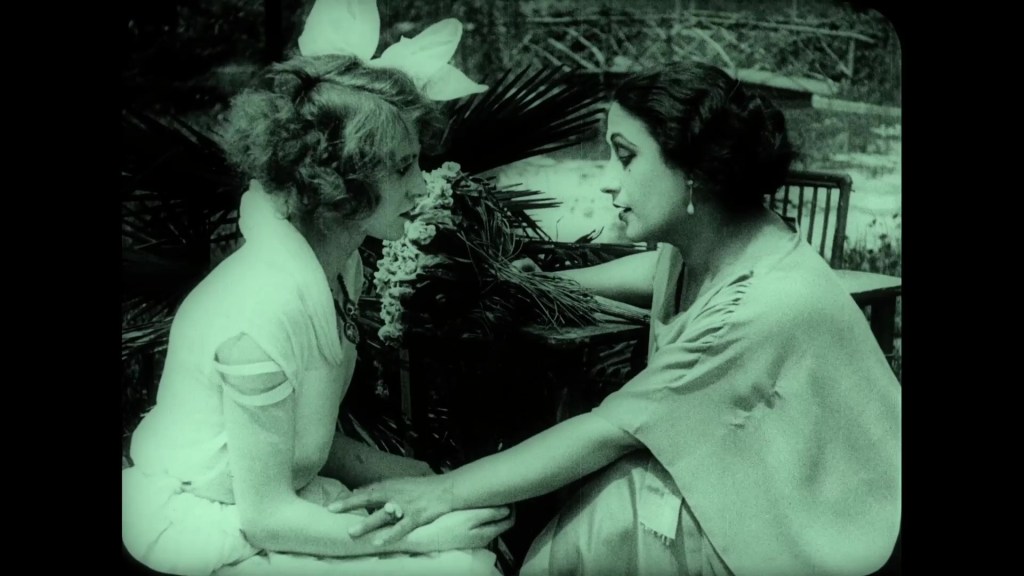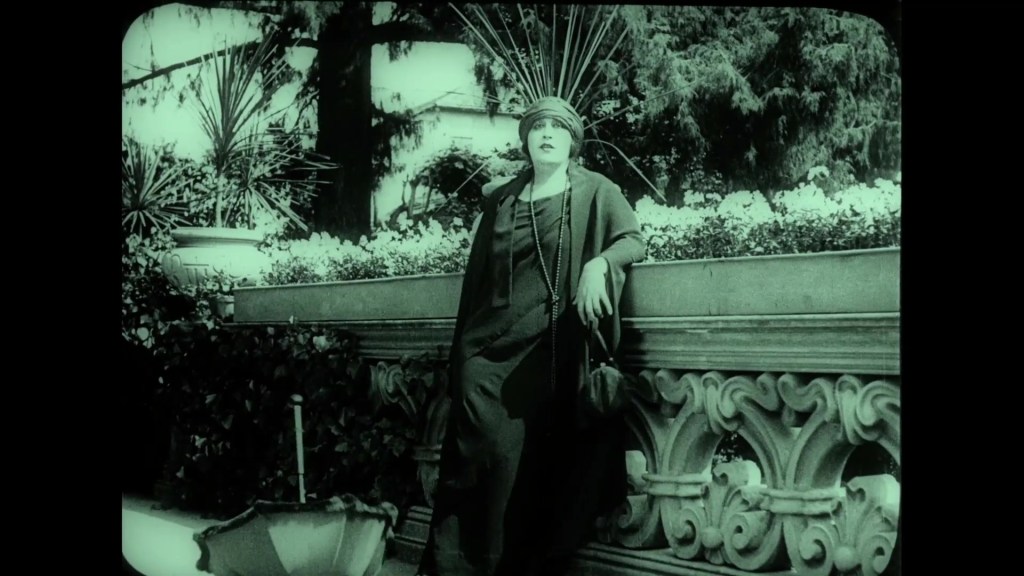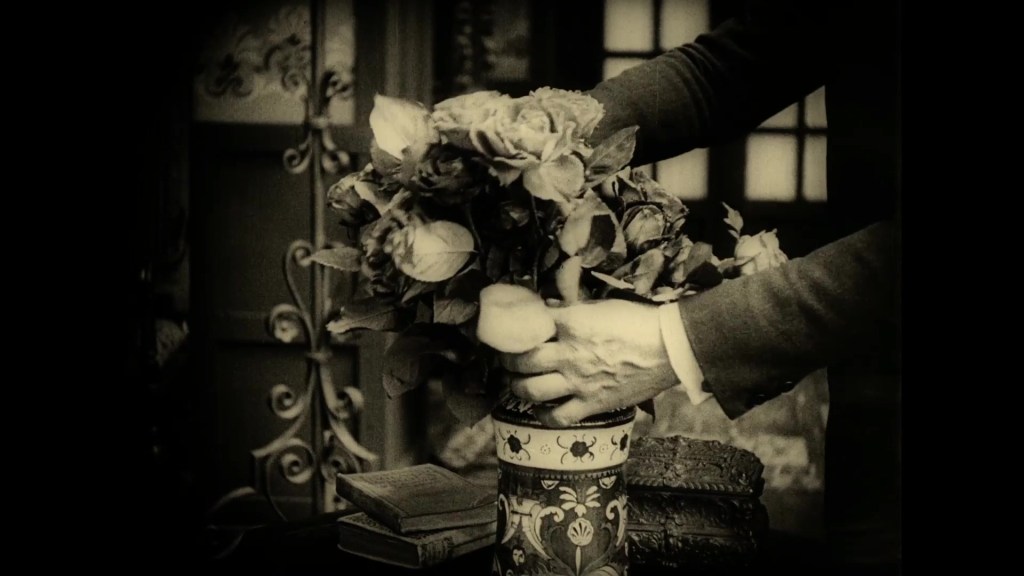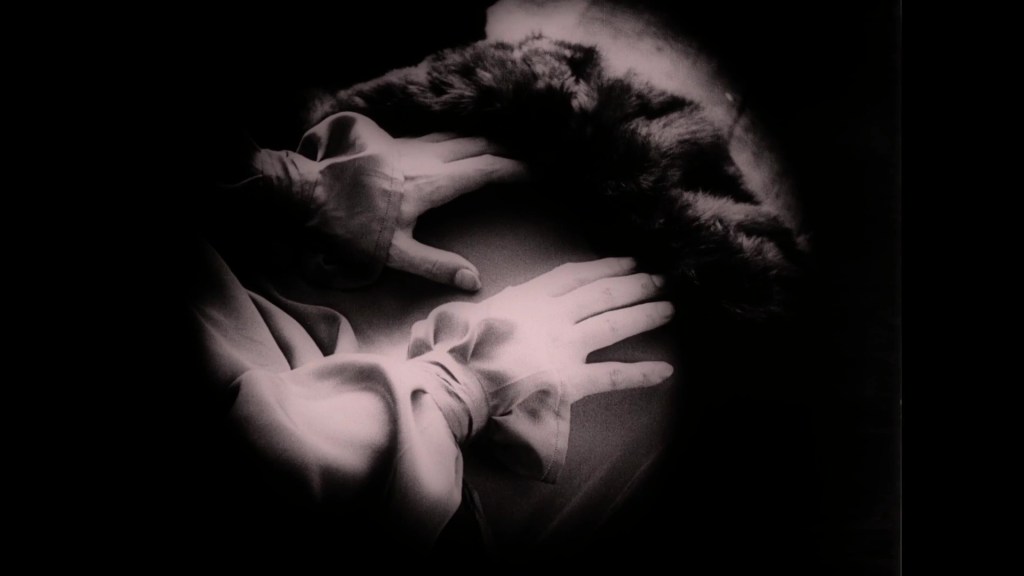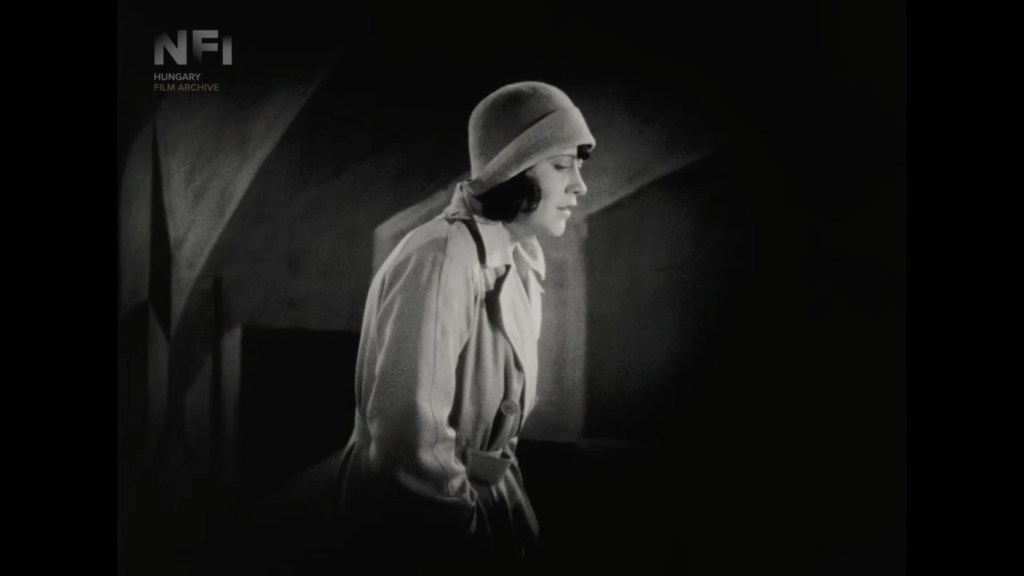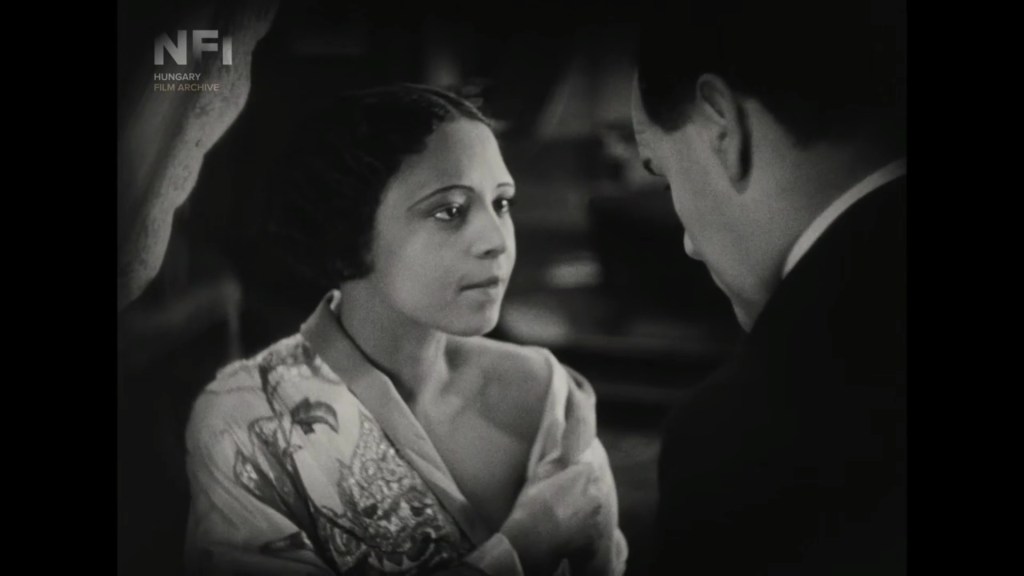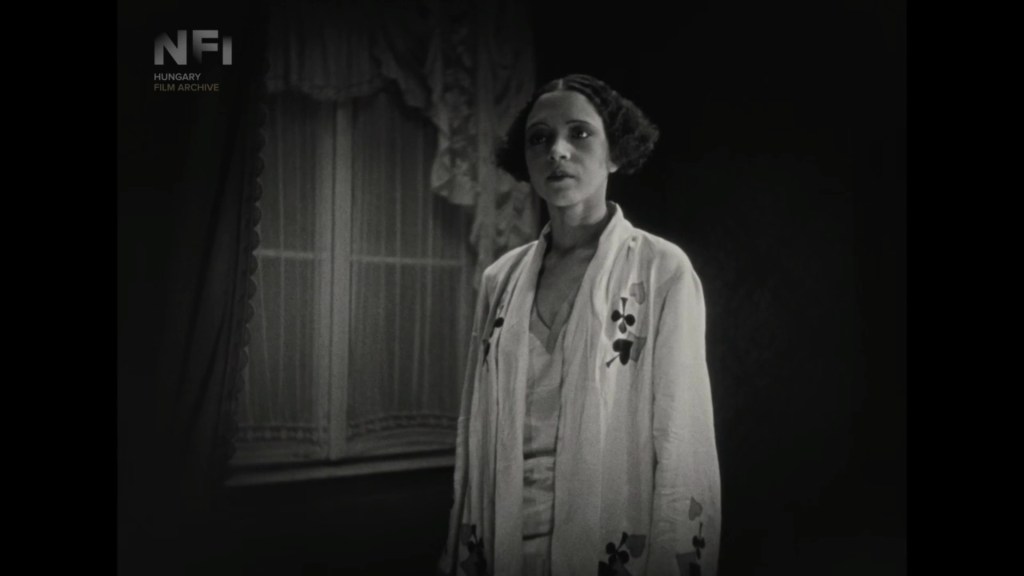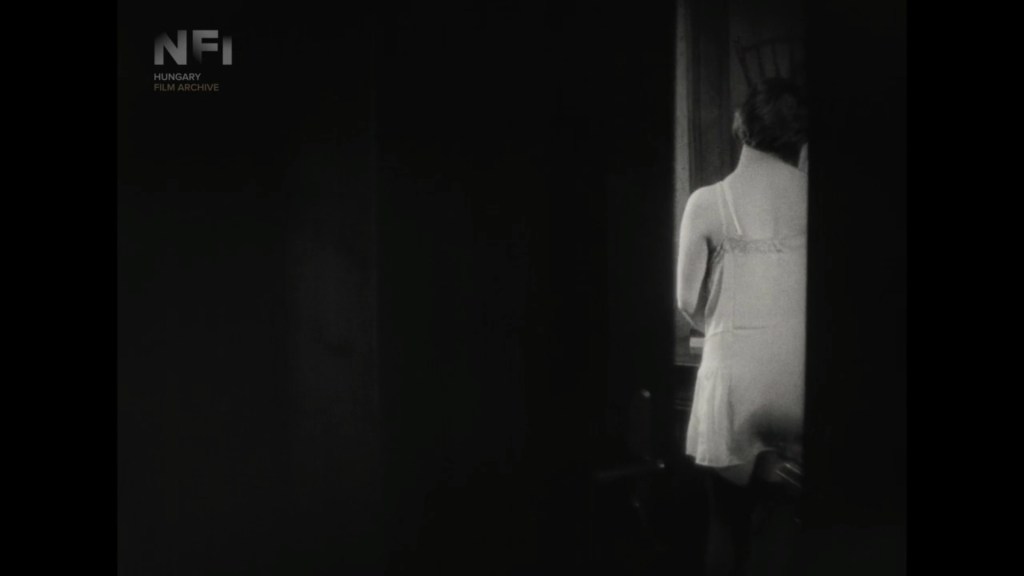
Pordenone from afar (2025, Day 8)

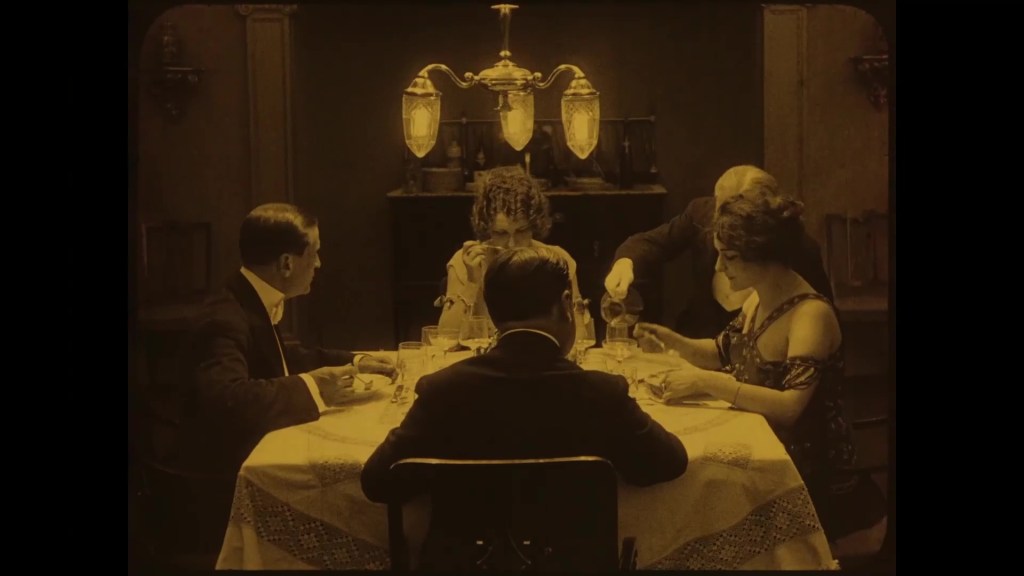
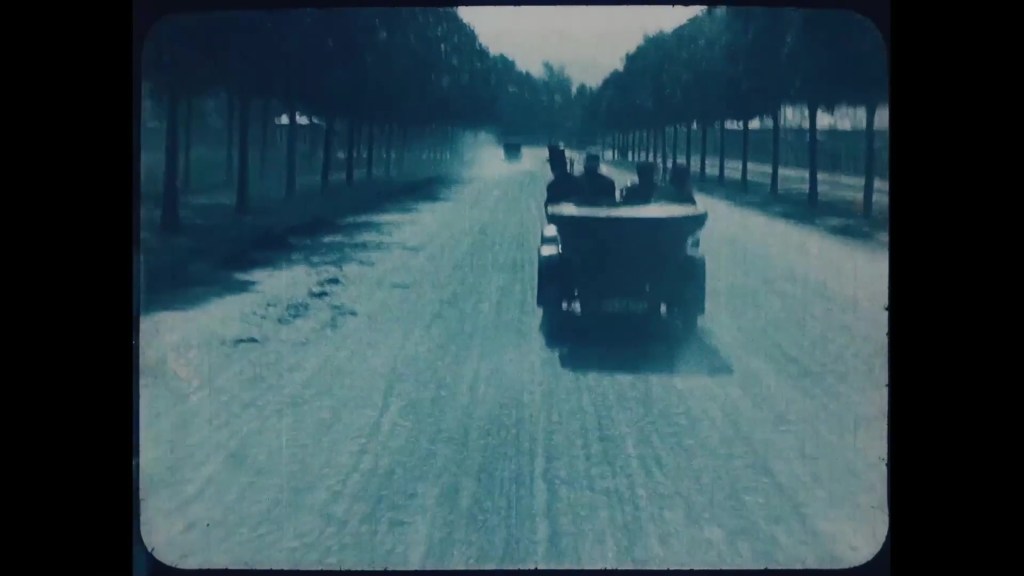
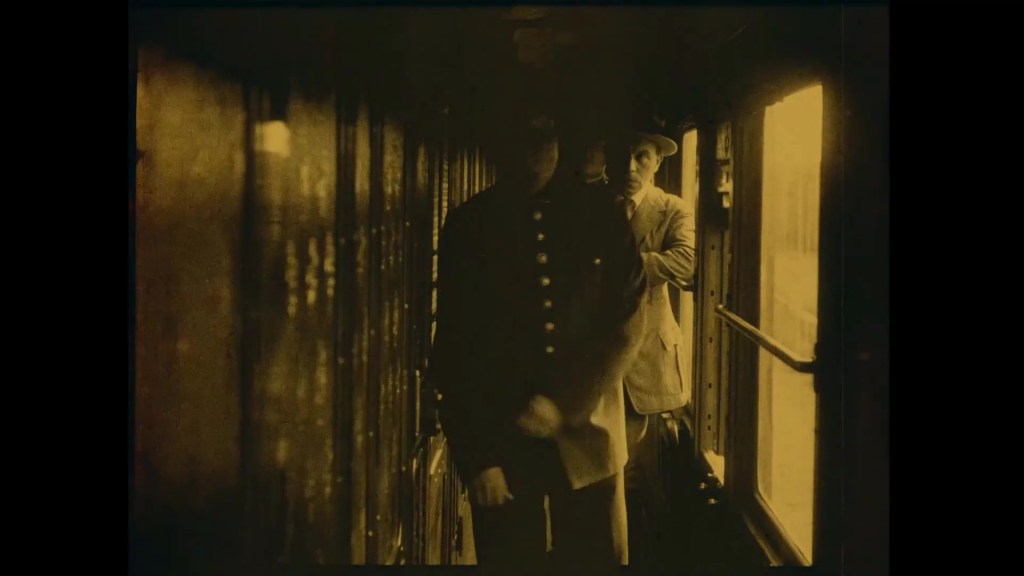
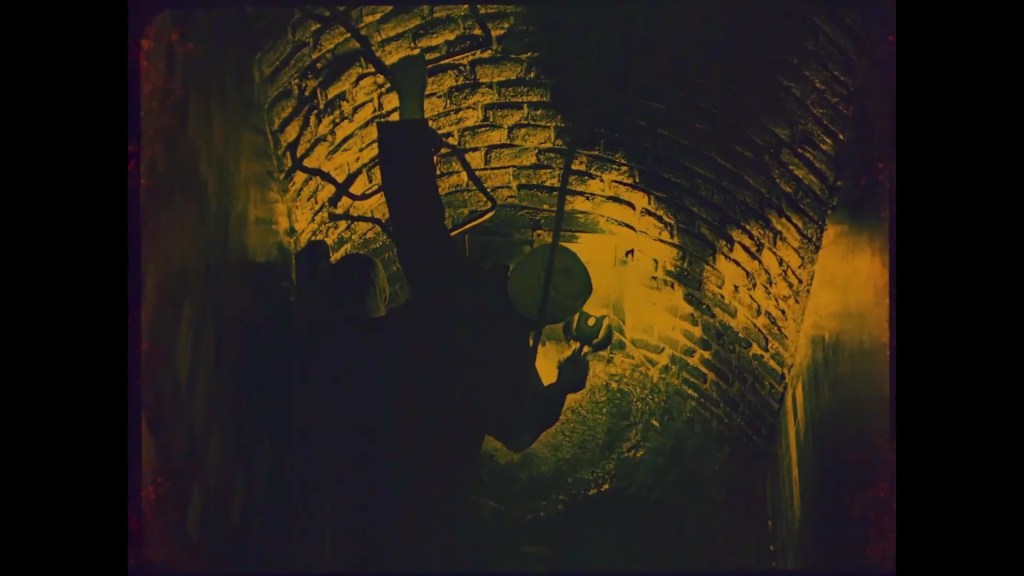
Day 8 is our final day of films from Pordenone, and it’s another busy schedule. Our first programme takes us on a journey from the Middle East to South America and eastern Europe, from haphazard observations to machine-tooled propaganda. Our second programme gives us a comic fantasy and a comic reality, taking us from wartime Ruritania to postwar America. It’s a great range of films, and they appealed to me in unexpected ways…

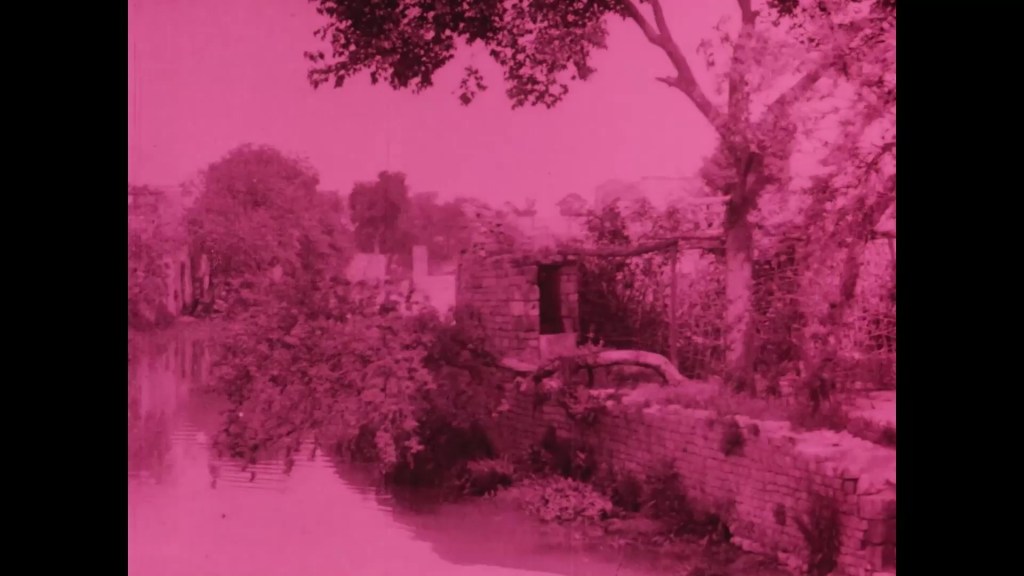
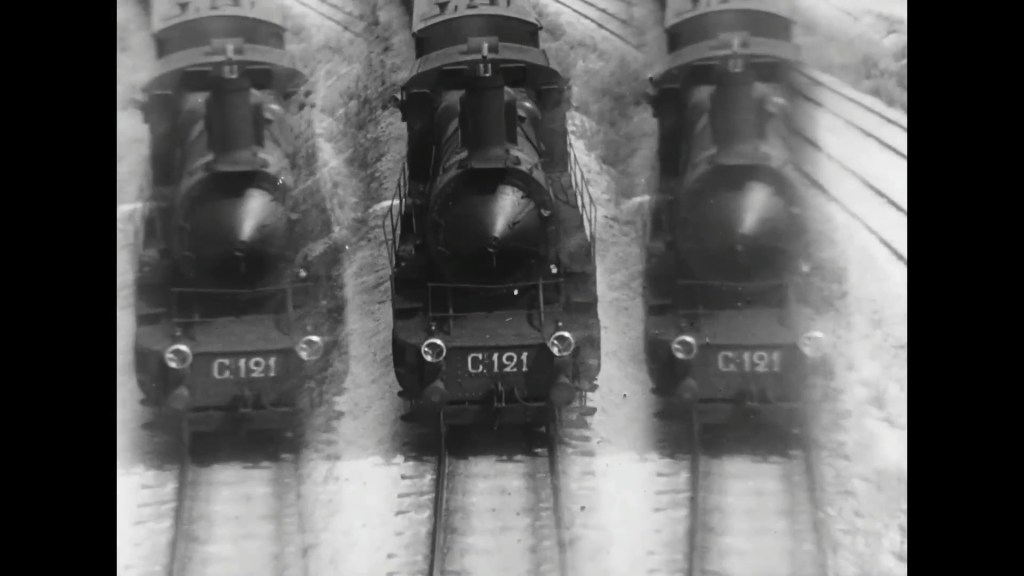
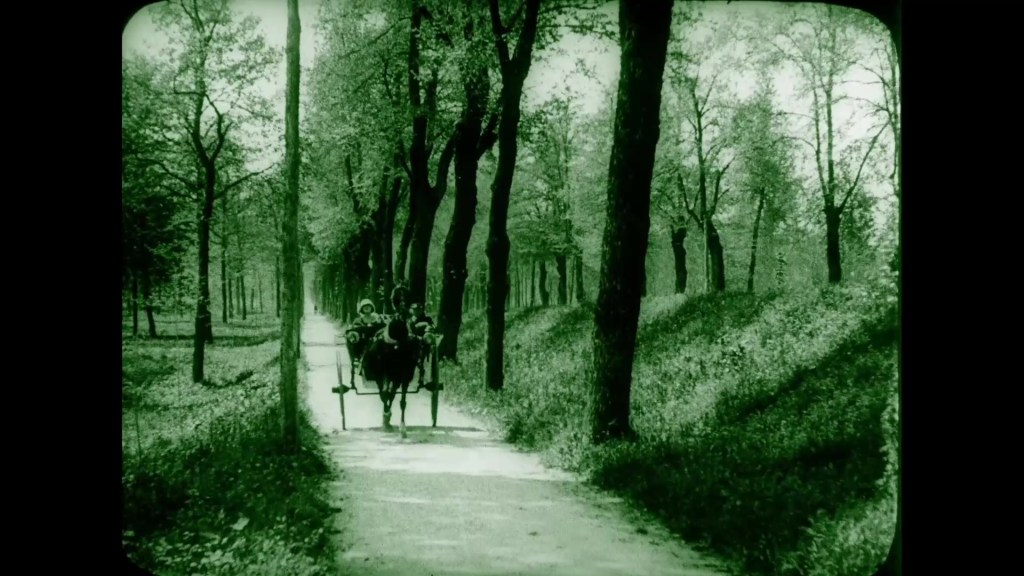
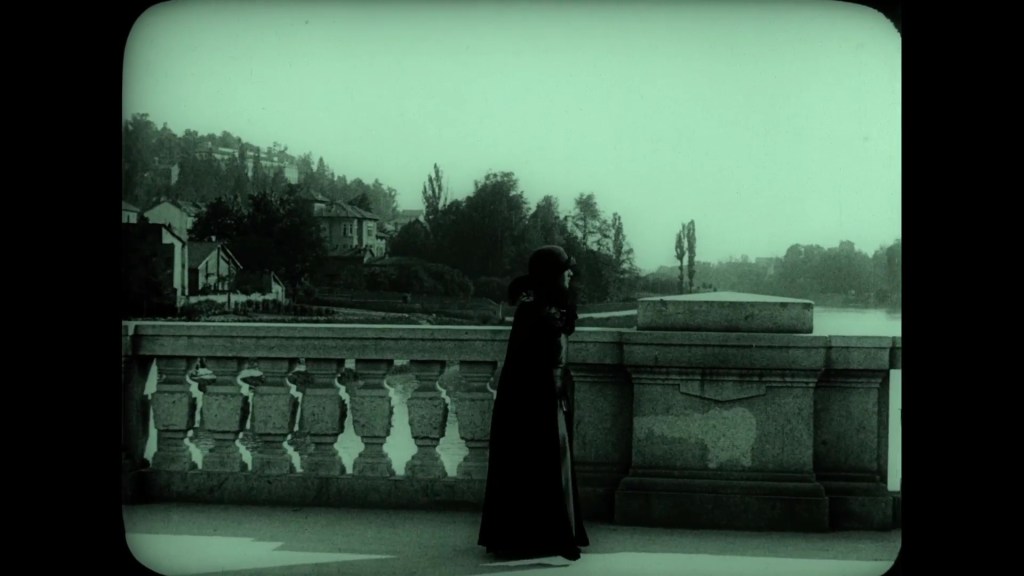
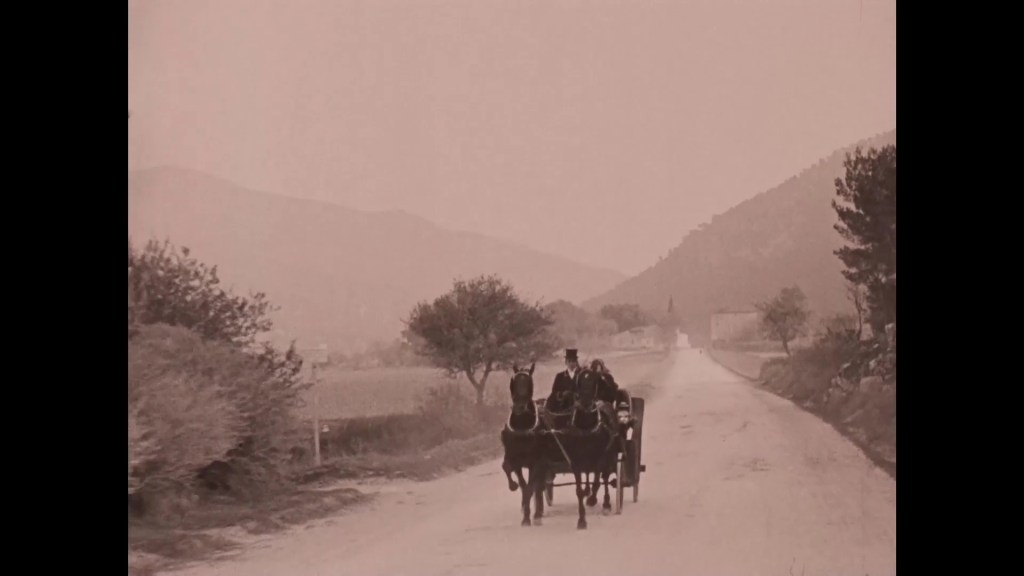
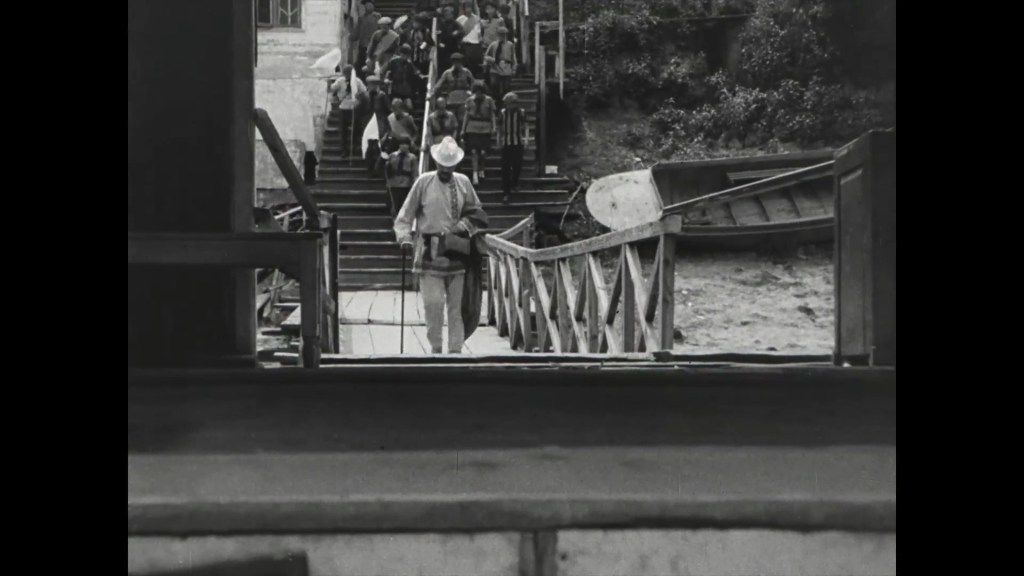
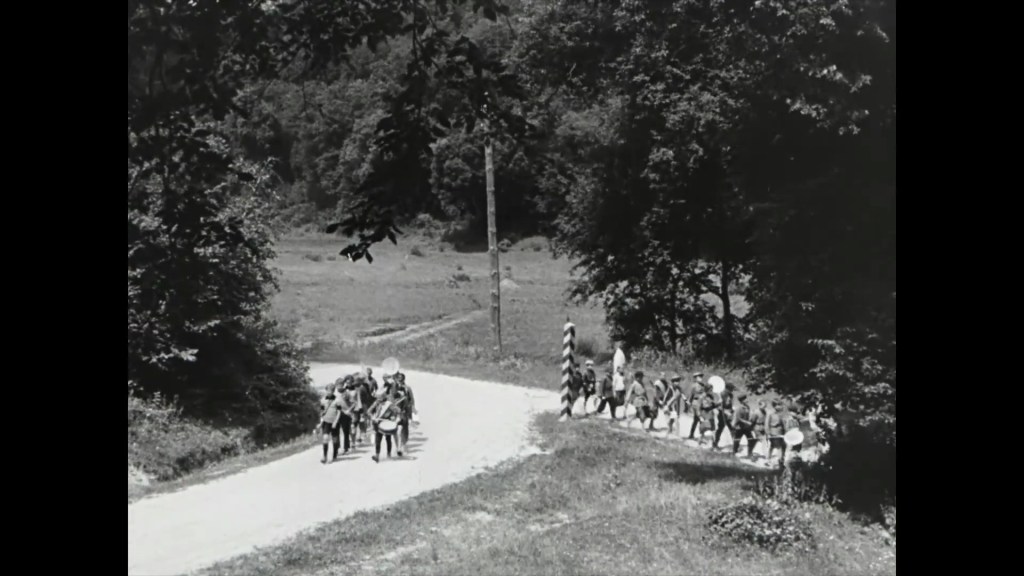
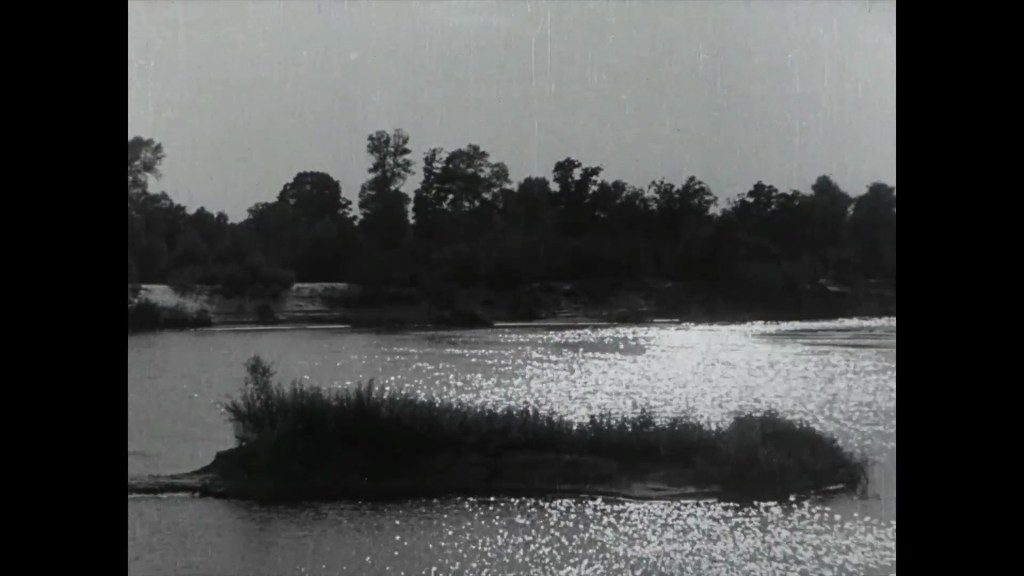
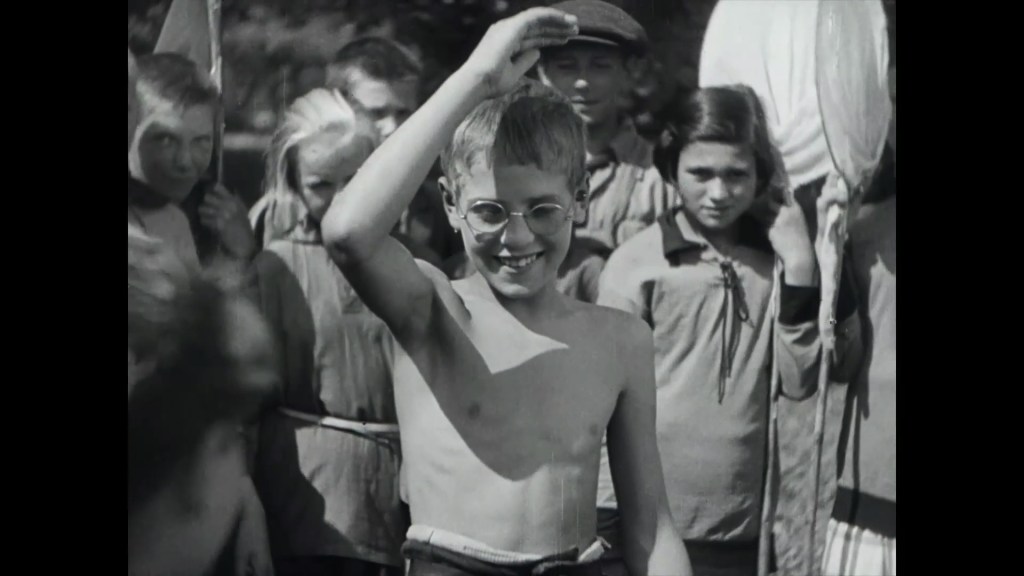
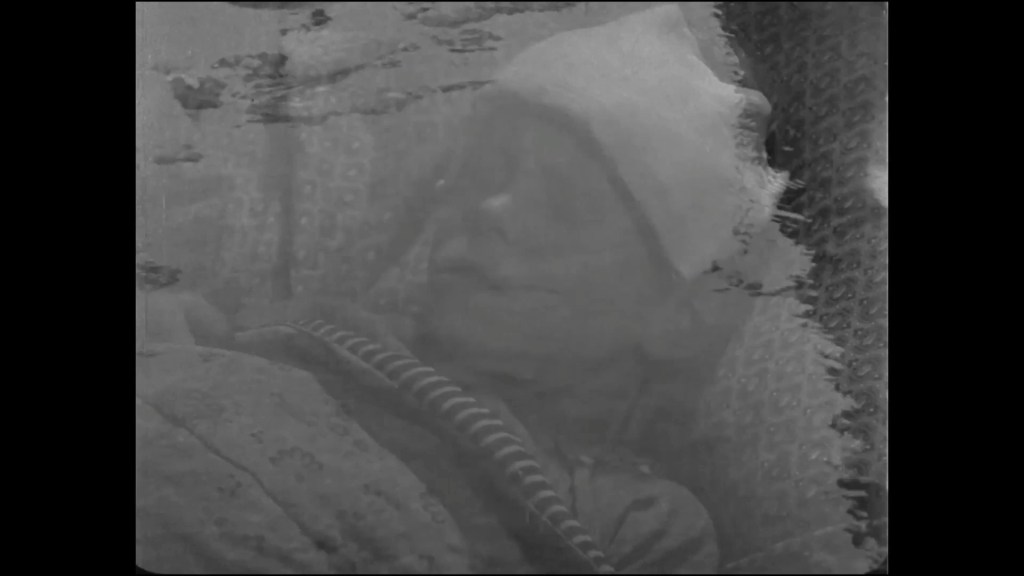
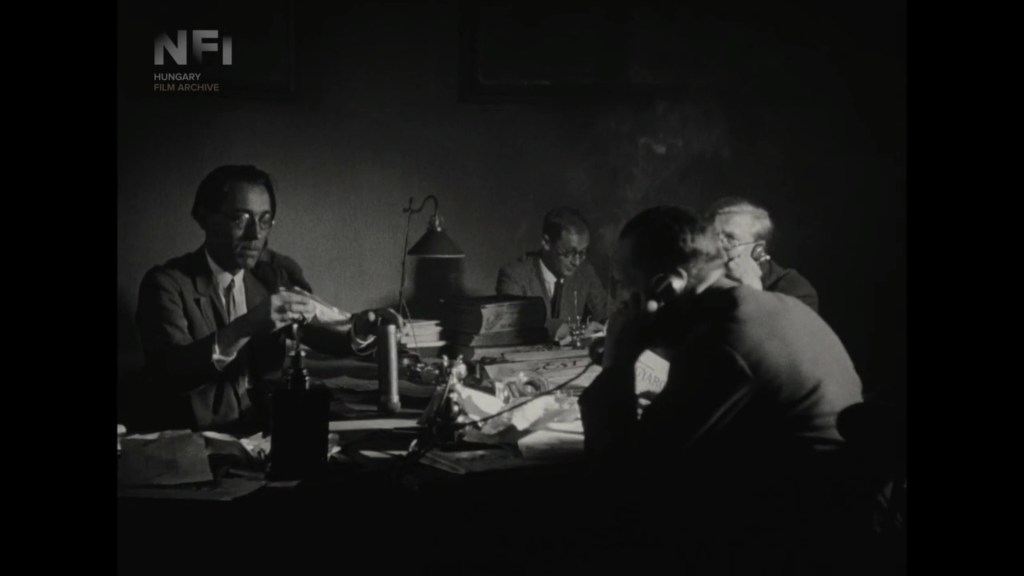
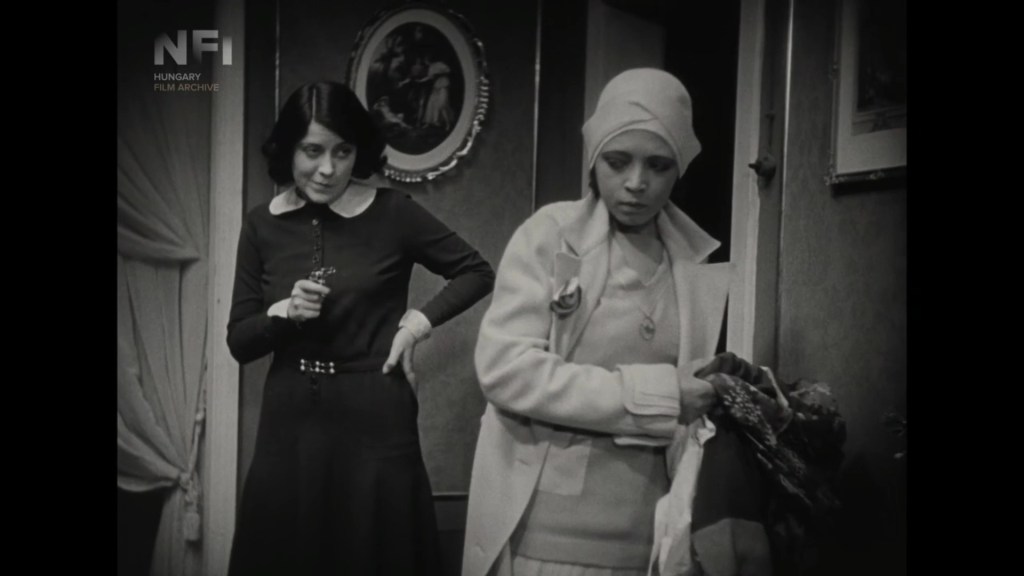
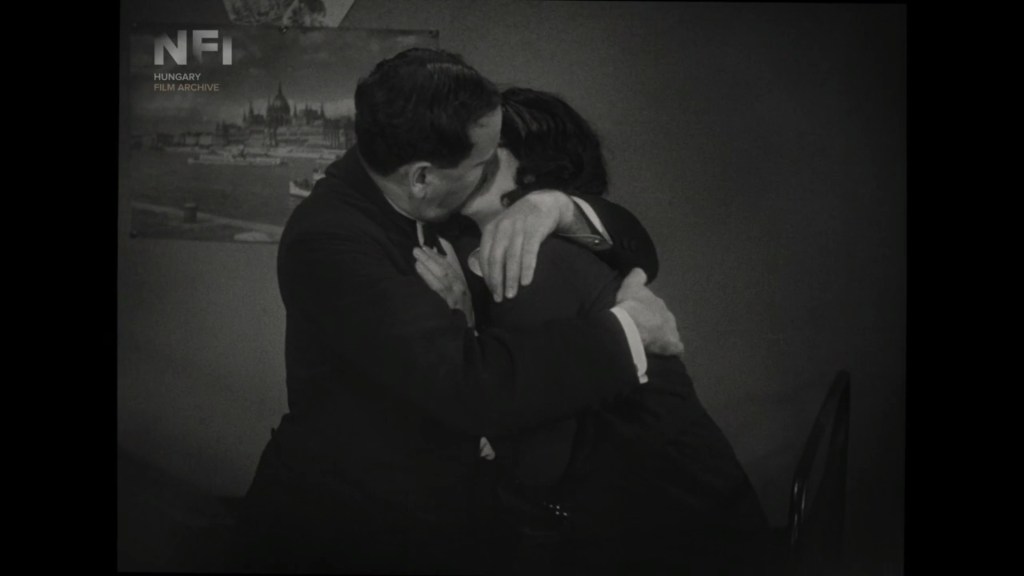
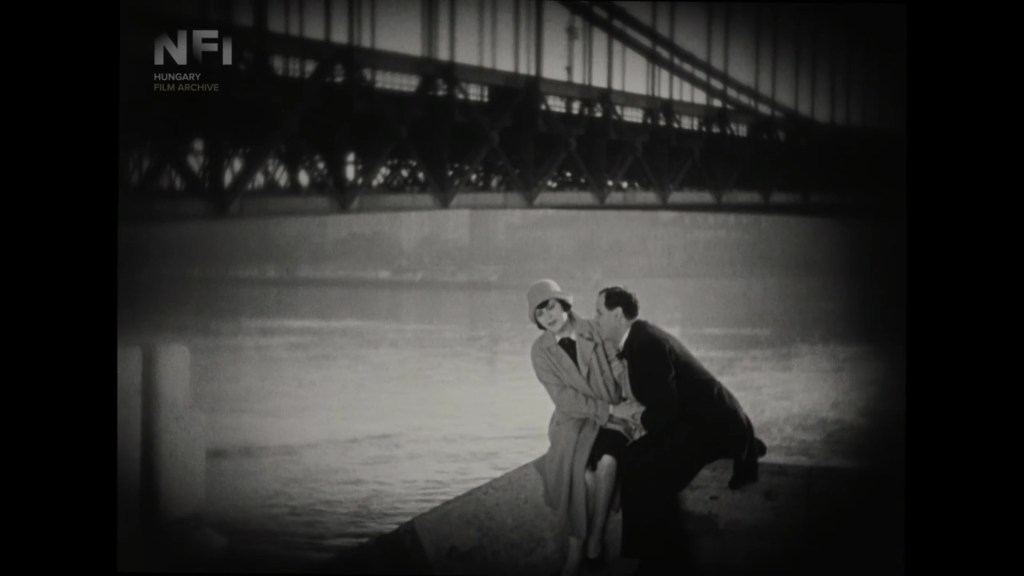
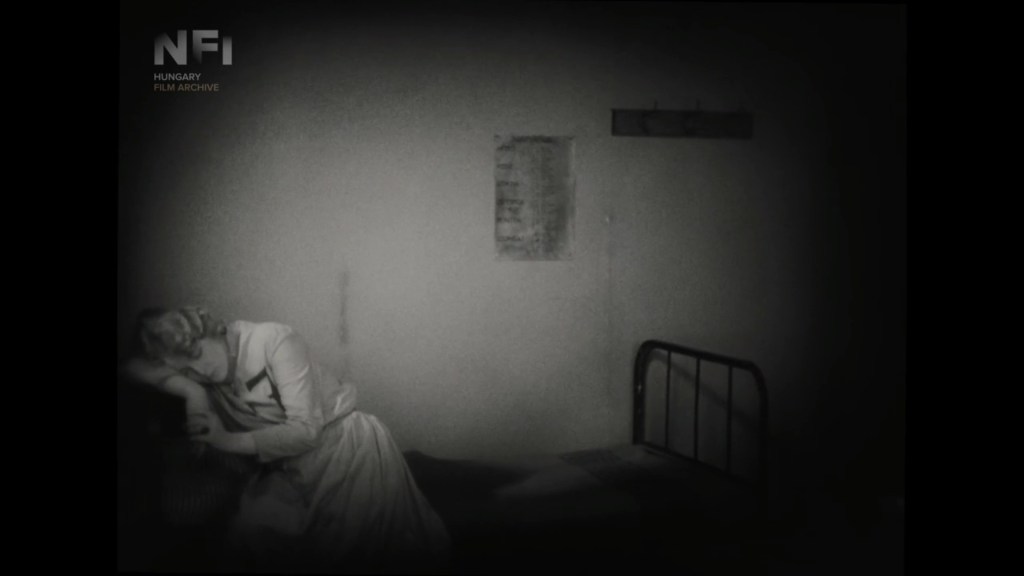
Aleppo (c.1916; Ger.; unknown). Camels kneel and rise. Soldiers and civilians mill around. Awkward looks at the camera. Views of the city, of a cemetery, of ruins, of waterways, of Arab children. It’s very beautiful to see this faraway land, and this faraway time, so calmly recorded. But of course this is 1916, and the world is at war. This is a Syria under Ottoman rule, and the European men in tunics and caps are the Turks’ erstwhile German allies, still confident in victory. These uniforms and trucks, these crowds of Turkish soldiers – they are all part of some other continuity, some other subject. The film cannot but admit that something is going on elsewhere, something unnamed, something momentous. In this other place, everything is decidedly not calm. But here are the boys and their donkeys, and the old men and their pipes, and the ruins of epochs long gone. This is a world in waiting, then, getting on with life somewhere between ancient history and the crucible of the twentieth century. The film ends, and in the fade to black, history surely intervenes.

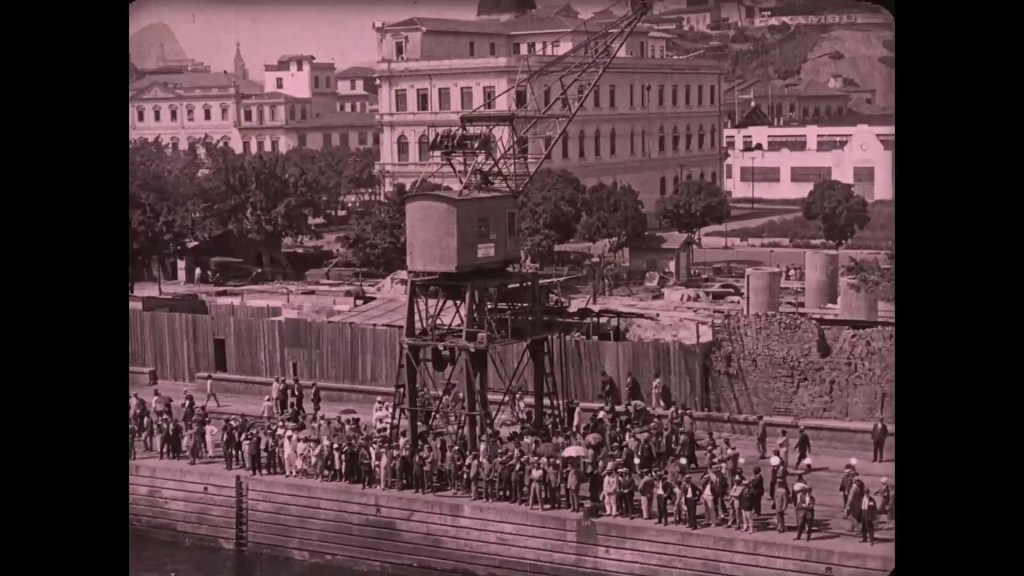
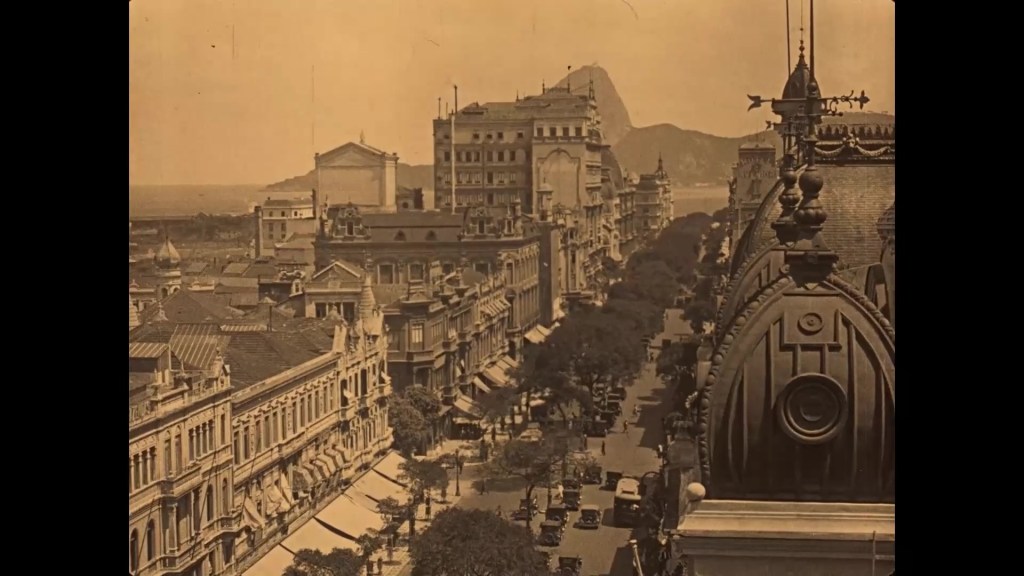
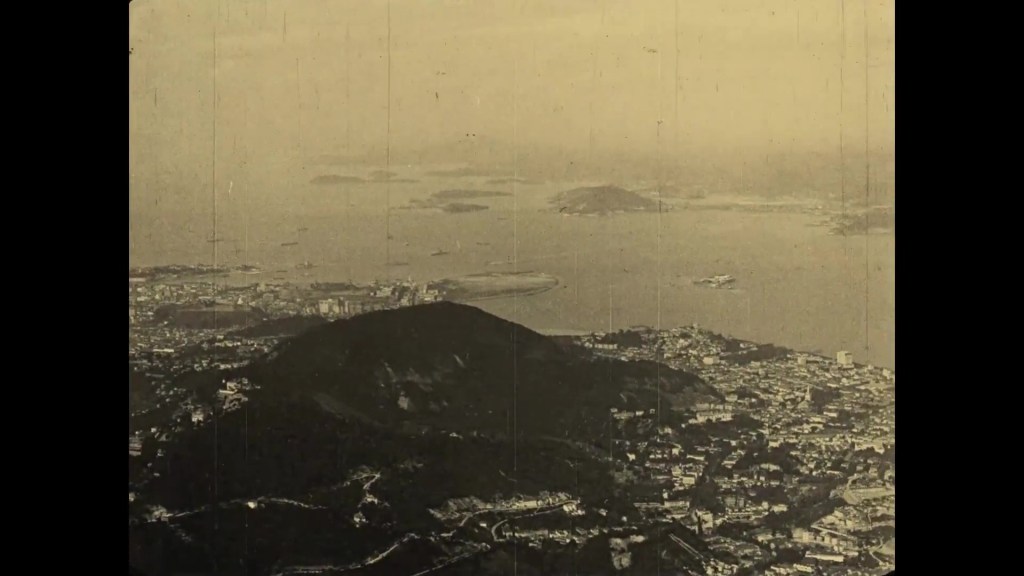
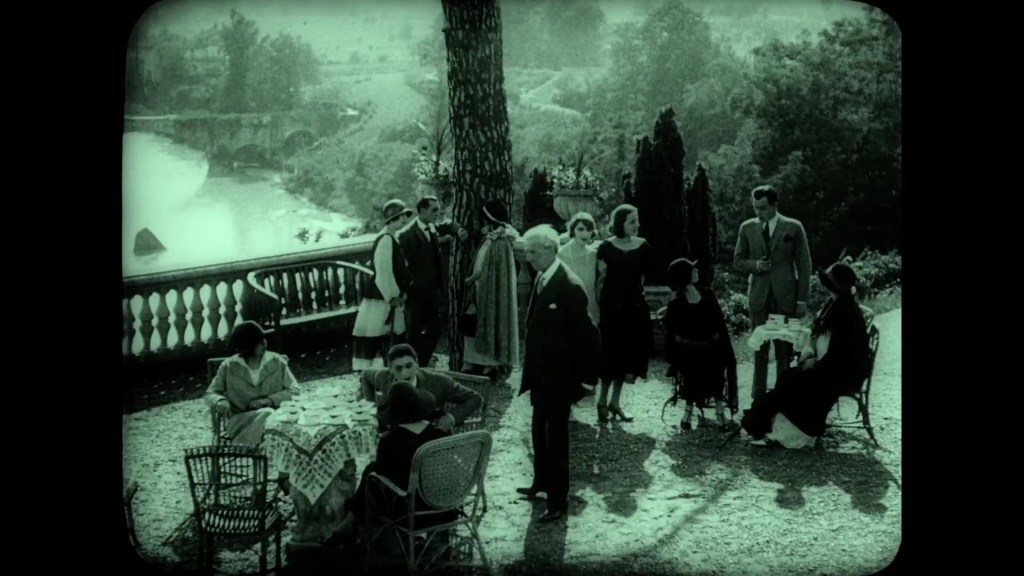
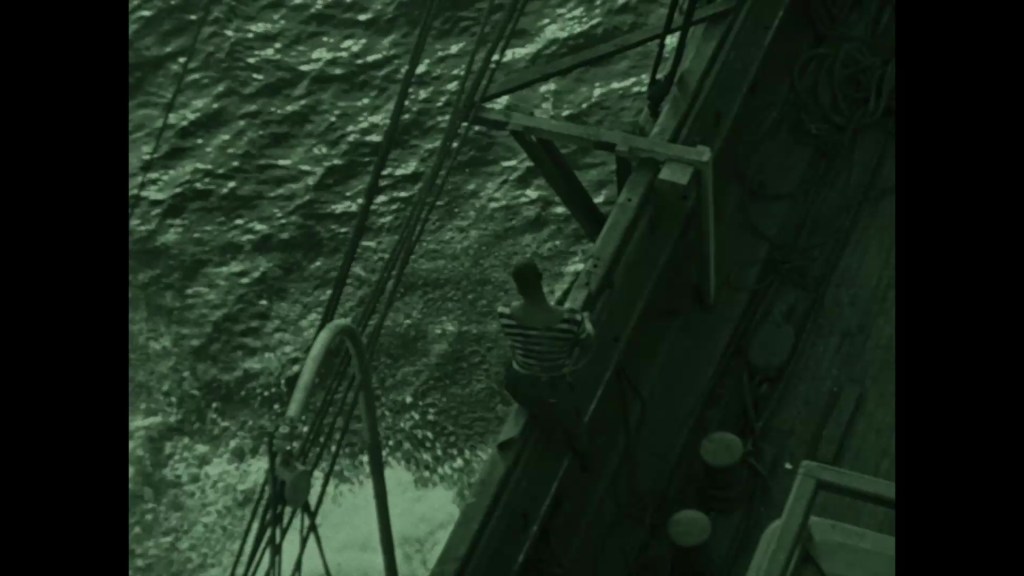
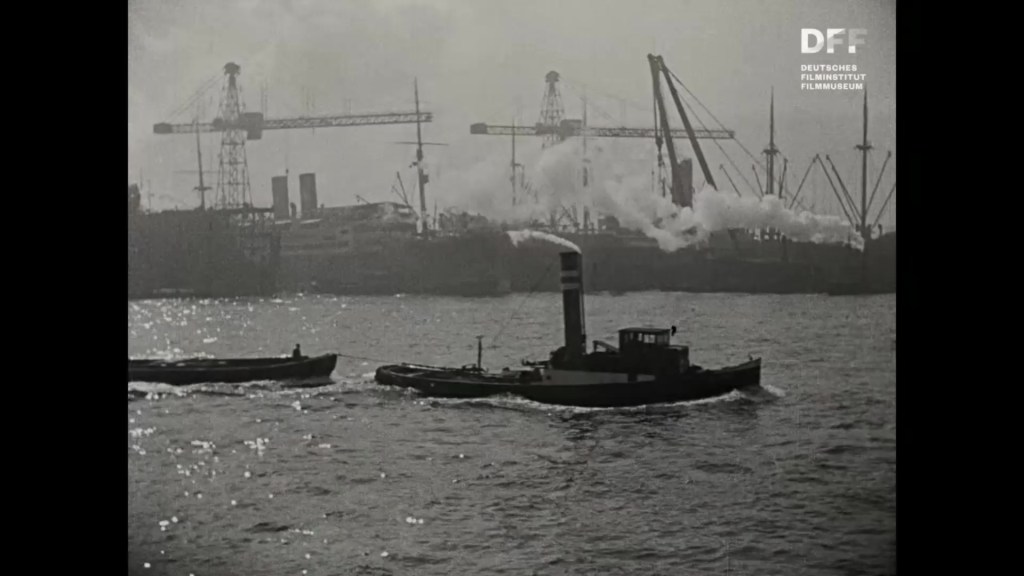
La Capitale du Brésil (1931-32; Br.; unknown). Fed information by title cards, we arrive by sea. The camera slowly bobs with the ship’s passage through the waves. Crowds await us. The camera is on the shore and onboard. Our view changes with the ease of a page turned in a travel brochure. From the rooftops, we see sunlight fall over the streets of Rio de Janeiro. The camera pans over the coast, the mountains, the distant houses. The world goes about its business. The beaches are crowded, the waves lap over the shore. Cable cars and light railways take us up the mountain of Corcovado, and – after so easy an arrival – we glance down towards the distant city, the huge arcs of hills, the bay. At sea again, we take the ferry and glide past beautiful islands. Then to the institutes, museums, gardens – the taming of this wildness. Then to views of sport, from rowing to football and tennis, and the Jockey Club. Crowds of men and women beam at the camera. A sea of hats and smiles. We visit the gold club, the polo club. A smiling, hatted, patient, affluent crowd. Life stretches out amiably before them. We are tourists, and they are showing us the life to which we might aspire. It’s very bourgeois, very decorous, very charming. (There is little life.) The last we see of this world is the patient spectators of a peaceable game, watching their world play out. The film stops, and they are swept away into the past.

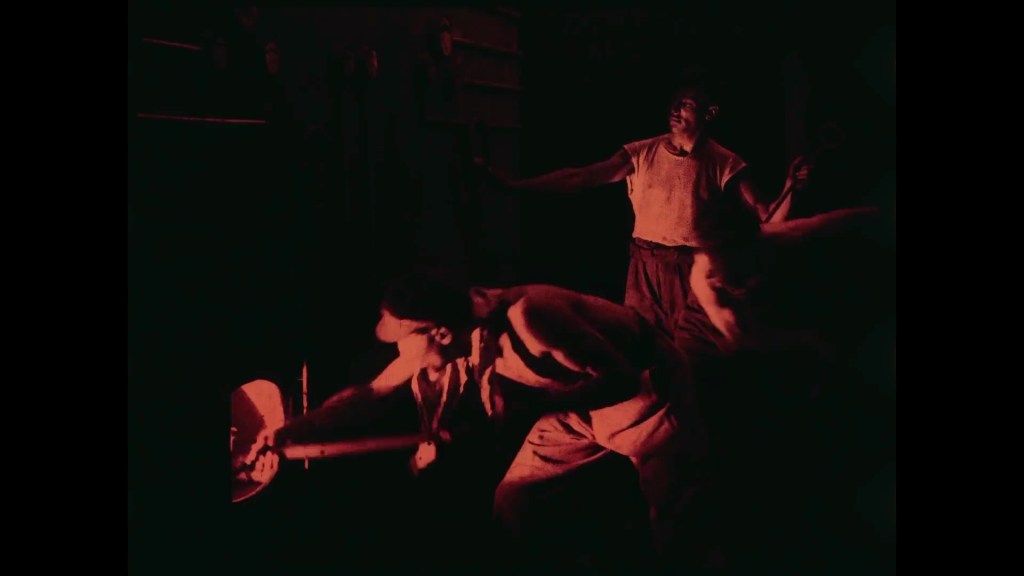
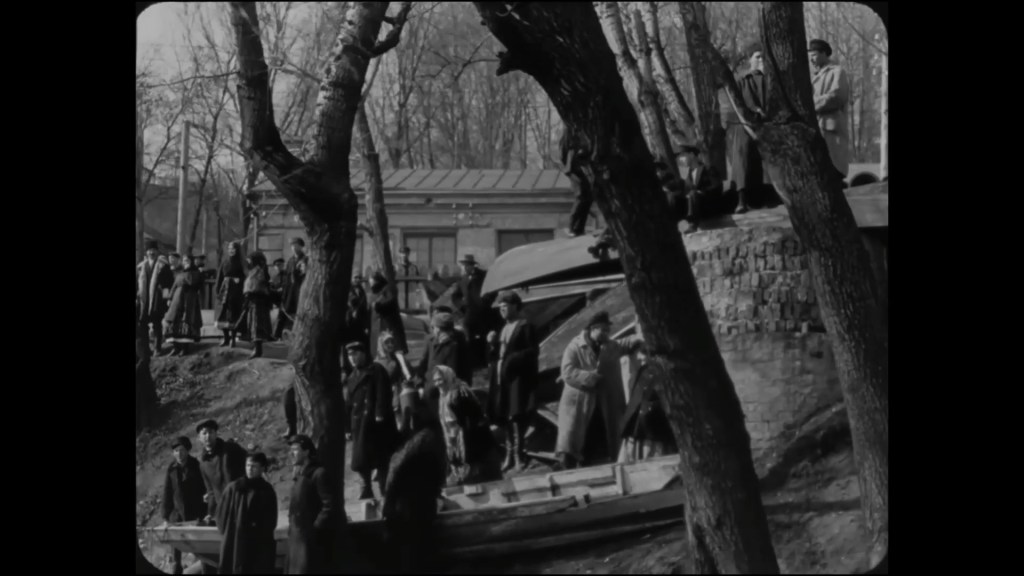
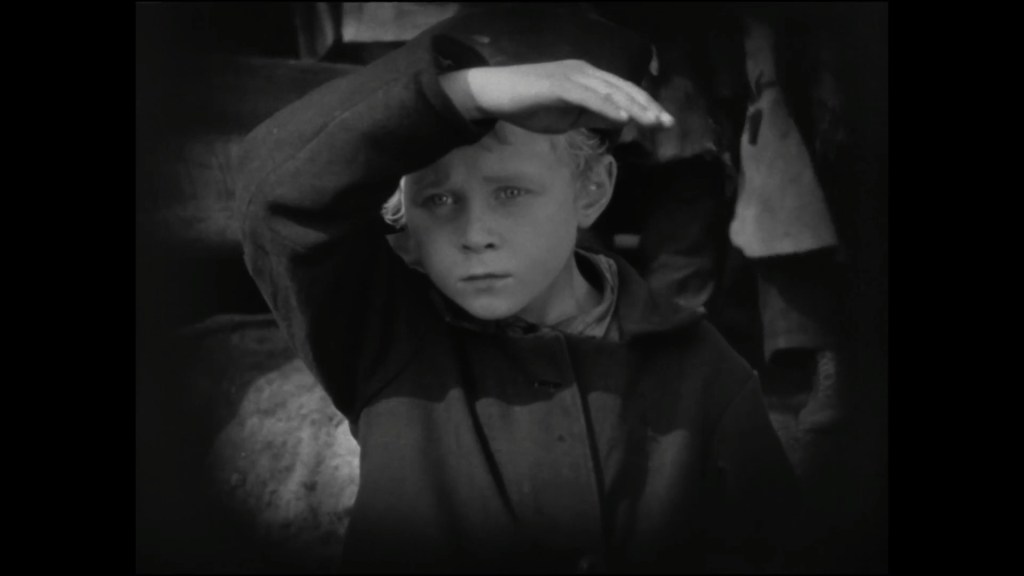
Narysy Radanskoho Mista [Sketches of a Soviet City] (1929; UkrSSR; Dmytro Dalskyi). A swirl of images, an advancing tractor, swaying fields of wheat, piles of vegetables. Here are forests, and the trees being felled. Here is produce and fuel, and here are the men and women, and the trains and ships, and the factories. “From all sides of Ukraine…”. Trains arrive at Kharkiv, and Kharkiv is at work. The streets, viewed from new buildings. This is a past that is very busy. They like to think they are building the future, and perhaps they are. “The future belongs to us!”, and the film cuts to a dinosaur skeleton, to museums of ancient artefacts, to statues and books. “This all belongs to the workers”, and the workers study and read. But such a film leaves its viewers little time to think. All the thinking has been done for us. The film is merely the precis of a conclusion already written and approved. It is all madly exciting, madly busy, madly optimistic. The past here surges with energy. There is no time to dwell or to reflect. Everything is happening now. “Not a step back from the current pace of industrialization!” Slogans fill the screen, and the workers work at insane pace, in insane numbers, across every conceivable facet of production. With a last surge of statistical overachievement, the film ends. But it might just as well have gone on forever.

The whole thing reminded me of the montage in Fragment of an Empire (1929), wherein the factory workers convince the newcomer of the benefits of the Soviet system. But as I wrote about that film, the unending montage of Sketches of a Soviet City is unconvincing as any kind of argument. Indeed, it isn’t an argument so much as an unceasing statement: a statement of achievement, a statement of intent. The film is organized into a series of visual slogans, interspersed with written slogans. Though it has momentary glimpses of real life, the film bundles everything together into a package of remorseless optimism that loses sight of the human beings it claims to represent. The pleasure one takes in this film a century later is not the message so much as the glimpses of people and places it contains. These pleasures are fleeting, since the film is in such a mad rush to boast about how these people are being mobilized toward ever greater productivity. Everything is a resource to be moved, pushed, pulled, dug up, processed, transported, melded, welded, stacked, cemented, launched, turned, electrified. It’s impressive, but it quickly becomes exhausting. Unlike Aleppo, this film is at least up front and explicit about its political context. But there is more real life, both in its spatial randomness and temporal slowness, in Aleppo than in Sketches of a Soviet City. For all its avant-garde technique, the Soviet Ukrainian film is less enticing as a vision of progress, and an enticement to visit (or at least admire) than the bourgeois world presented in La Capitale du Brésil.

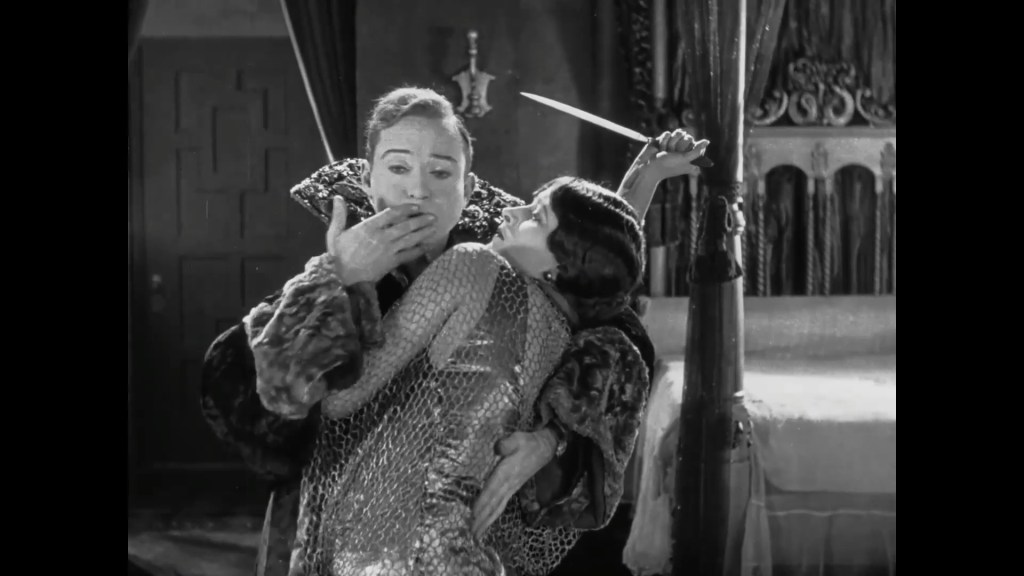
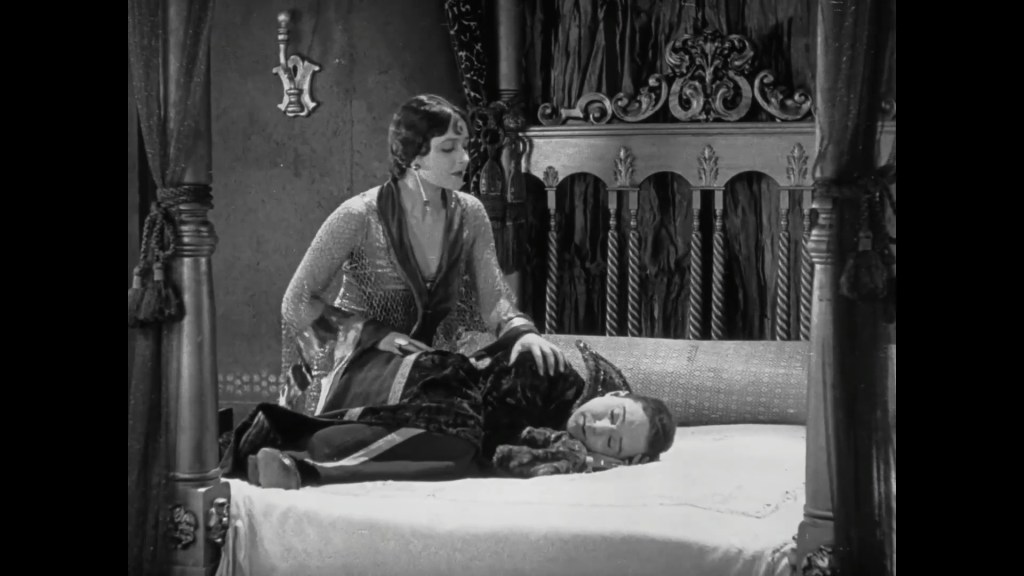
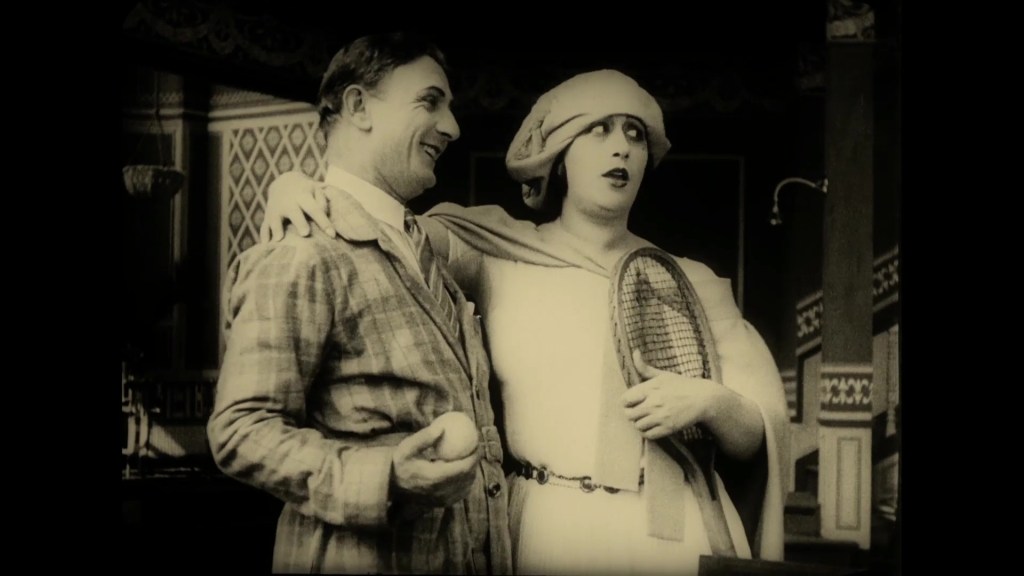
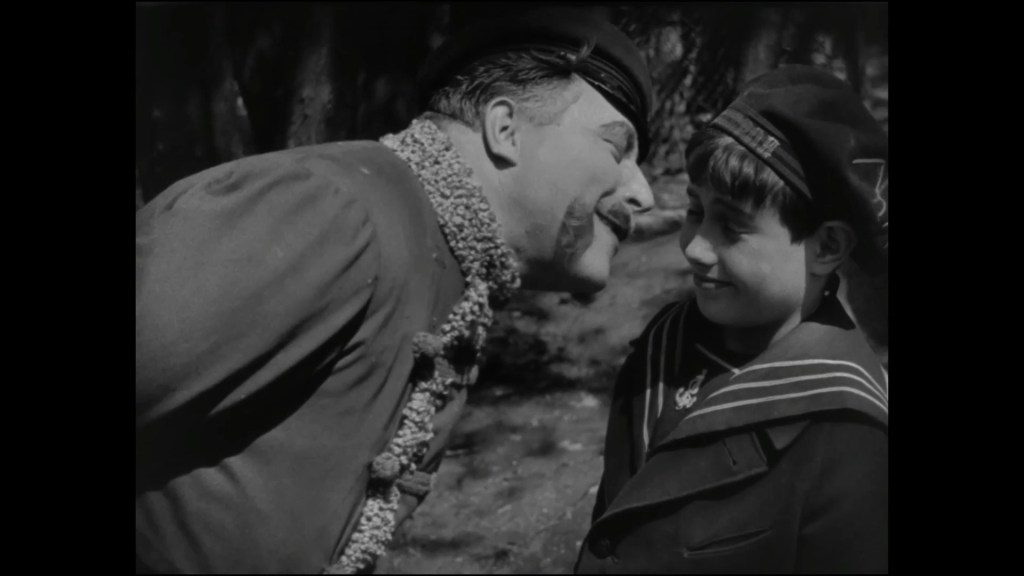
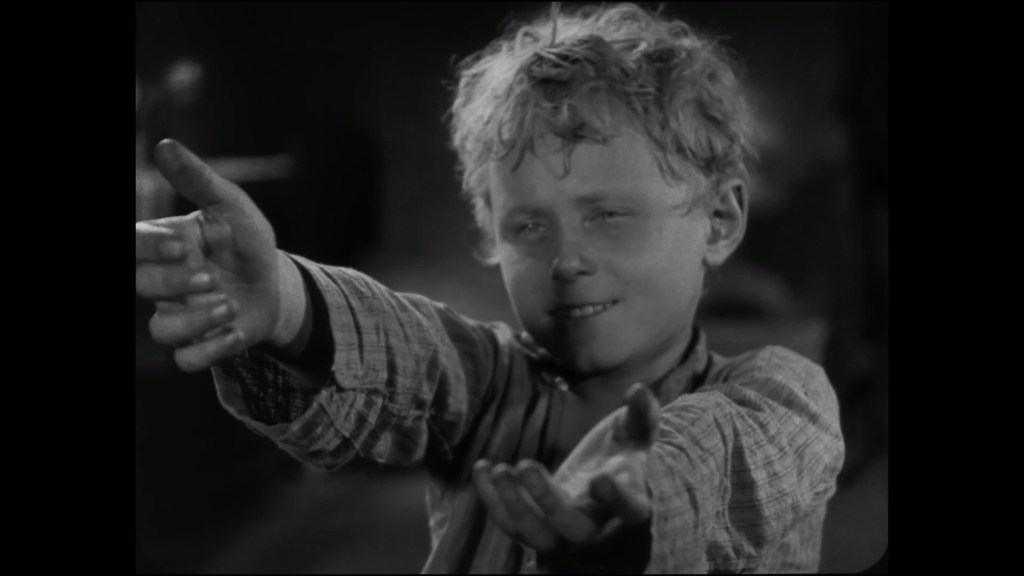
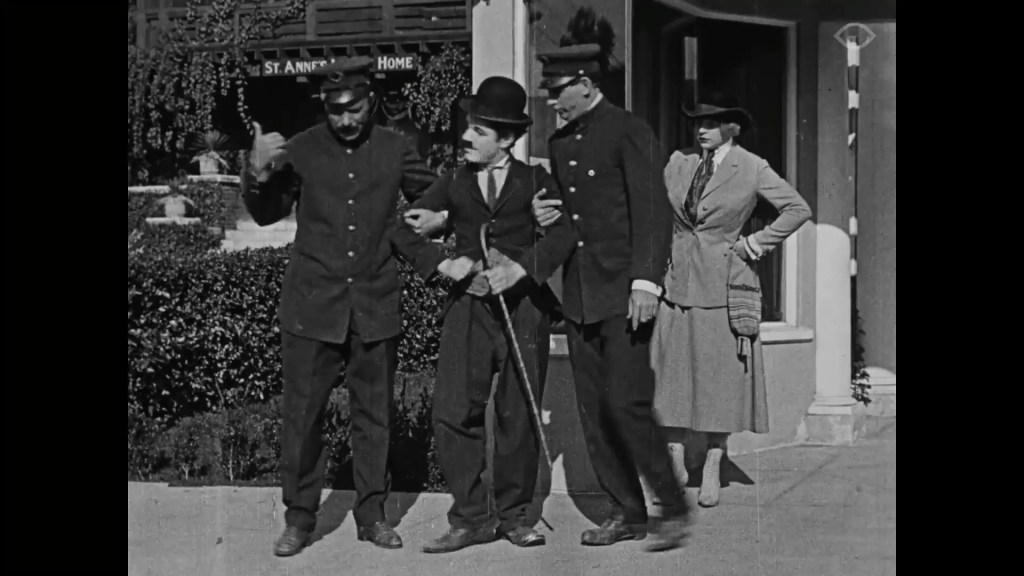
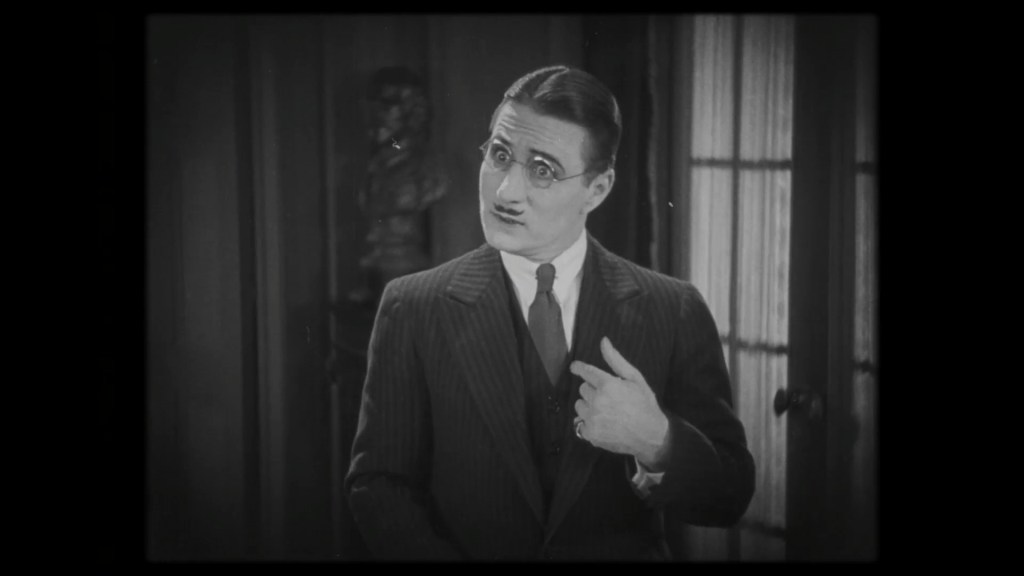
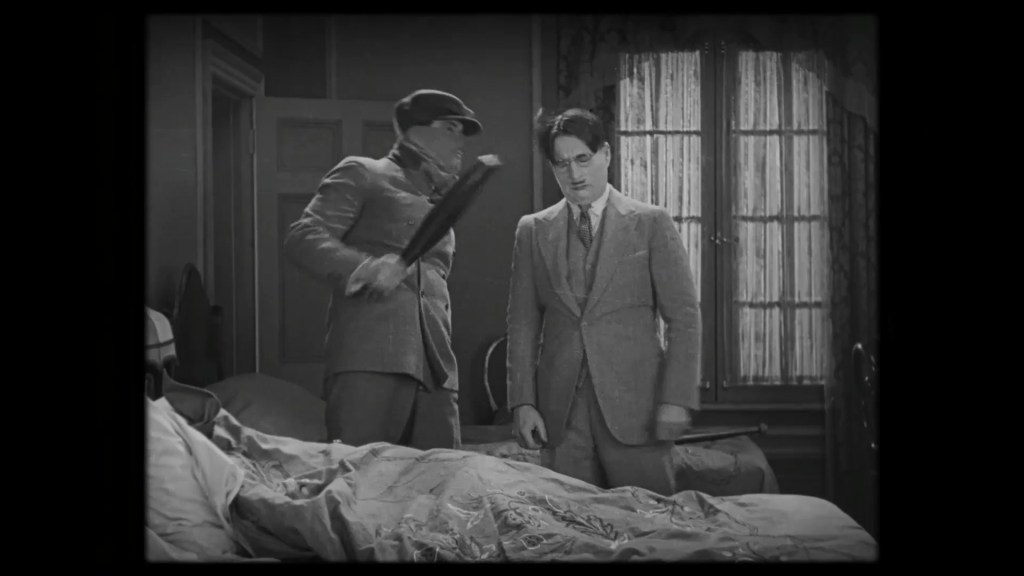
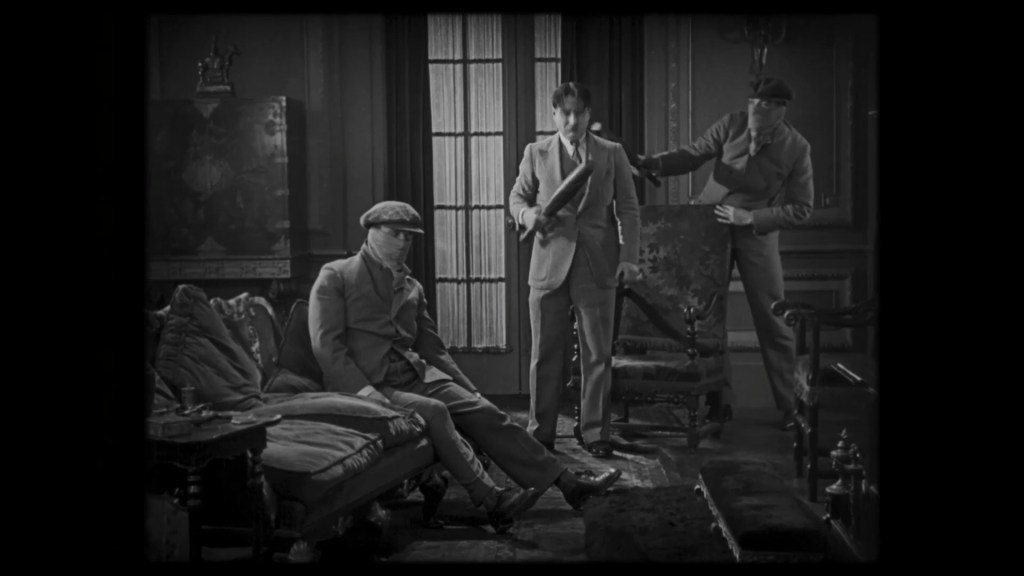
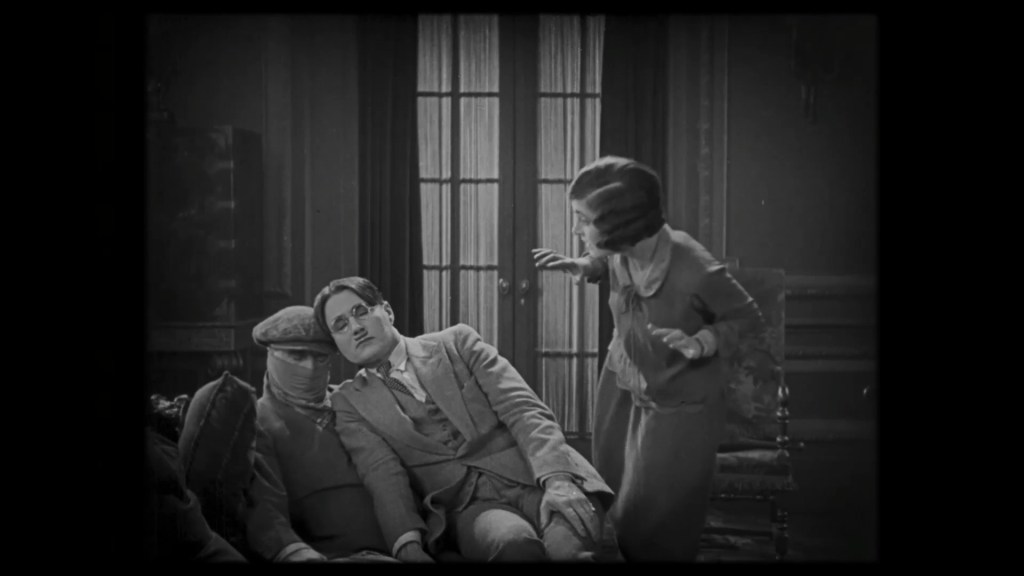
So to the day’s second half. We begin with the half-hour short, Soldier Man (1928; US; Harry Edwards). Harry Langdon is the soldier the army forgot. He has been left behind in “Bomania” after 11 November, not realizing the war is over. He stumbles around, fleeing phantom enemies, confounding local peasants. Meanwhile, King Strudel the 13th of Bomania (also played by Langdon) is fighting revolution, secretly being fermented by General von Snootzer. The Queen of Bomania hates the King for his drunken loutishness. The King is duly kidnapped and hidden in a remote barn, to be killed in due course. But the King’s loyal courtiers encounter Harry and recruit him to impersonate the missing monarch. He does so but is immediately the target of an assassination attempt by the Queen. However, it turns out that he’s a better kisser than the real King, so the Queen is disarmed. Things turn suddenly romantic, but Harry is tired. He goes to sleep on the King’s bed and wakes up in his real home with his real wife. He is a common soldier, after all, and the war is over. THE END.

I confess that I’ve seen very little of Harry Langdon in my life. The handful of features and shorts I have seen left me curious, but clearly not curious enough. So I was very glad to see him here, exhibiting all the curiosity I remember. He’s not quite a child and not quite an adult. He seemingly has sex appeal, but of an innocent kind. His appetites are easily assuaged: all he really wants is a bite to eat and a place to kip. In Soldier Man, I love the way he traverses the world so harmlessly. His gun is broken, but when he fixes it it’s only to shoot a scarecrow. When he takes cover behind a cow, he pauses to marvel with curious pleasure at its udders. He is about to paw at the suspended teats but withdraws his hands before any kind of groping might take place. The cow bends its neck to look at him, so he smiles – so innocently and friendlily – back at the animal. It’s a curious, charming, silly, almost sad little moment. It’s all incidental, puncturing the chance of threat, denying the danger of physical contact. It’s making nothing out of something.

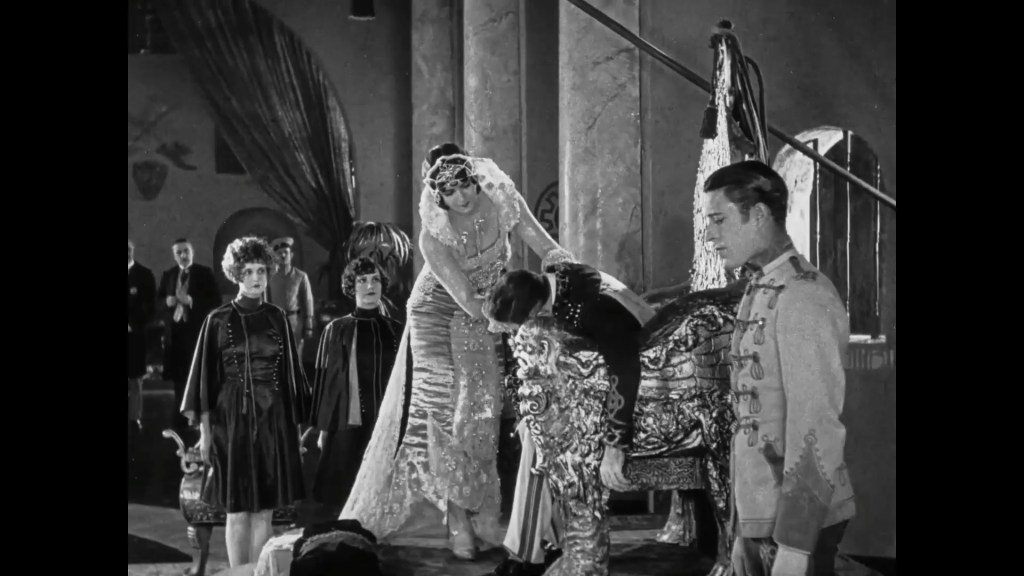
Though Langdon also plays the King, his double, this character is swiftly bundled off screen before Harry arrives. There is no attempt made for Harry to meet his doppelganger, to see the kind of man he might otherwise have been (aggressive, selfish, sexual, powerful). It is the innocent Harry who wears the outsize royal robes, and we might wonder how they can be outsized when they were made for his other self – for him. It is as though he is figuratively smaller than his own doppelganger, so that even identical clothes do not fit. His royal regalia are superfluous to his needs. He offers his crown to a courtier, as a vessel for him to vomit in – since Harry is so innocent he cannot think of another reason why the man should bow forward. Somehow, perhaps by sheer lack of arrogance, the Queen is seduced by him. Harry is hardly interested in her at all. She tries to kiss him, to distract him from her dagger, but he’s too busy eating a biscuit to have his mouth and lips ready. He doesn’t flinch away (he’s too obliging, too unquestioning, too accepting), but apologetically motions that he has his mouth full, insists upon chewing his food properly before swallowing. His kiss is successful despite himself, and when he retreats to the royal bed it isn’t for an act of consummation with his Queen but to curl up into a ball and go to sleep.

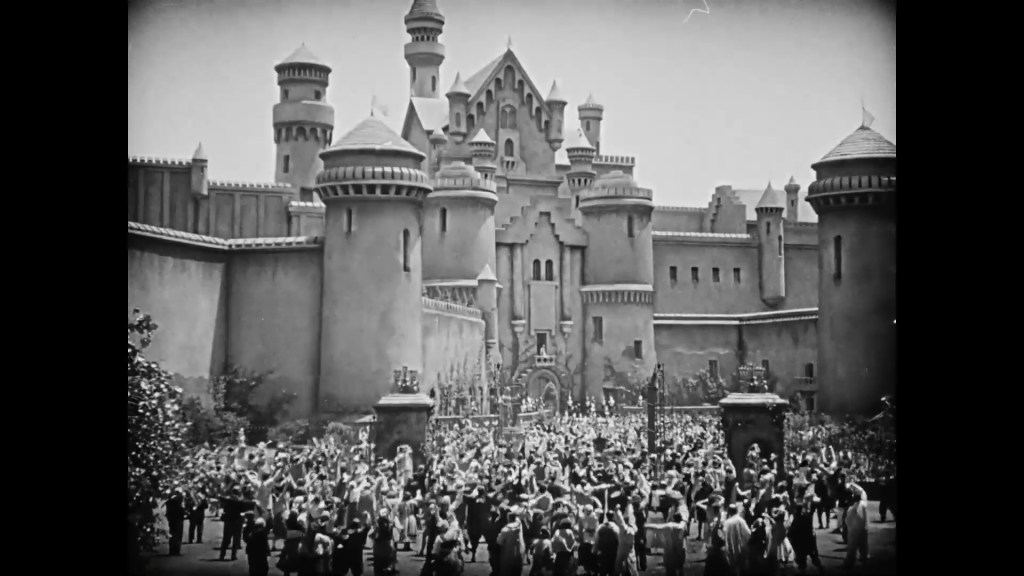
The very title of Soldier Man is a curious conjunction of roles and titles, and a syntactic separation of those two ideas of “soldier” and “man”. It’s a very charming film, and its lightness belies the oddness of Langdon’s persona. It’s not sentimental, which is a bonus, and allows Langdon the chance to wander innocently through at least two different genres of film. There is the war drama, which the film immediately removes all possibility of pomp or danger; and there is the Ruritanian drama, with its crowd and court and mistaken identities, which the film makes immediately absurd and parodic. It’s quietly radical, gently ironic. When Harry awakes, we wonder what the meaning of his dream might be. Does it have a meaning? It’s a fantasy in which the dreamer does nothing more than wander aimlessly, ignoring all possibility of heroism (in the war drama) or romance and power (in the Ruritanian drama). The dreamer wants nothing more than to continue sleeping. When he wakes, he seems as innocent of the real world as of his fantasy. Yes, indeed, this is a curious film. It makes me want to see more Harry Langdon…

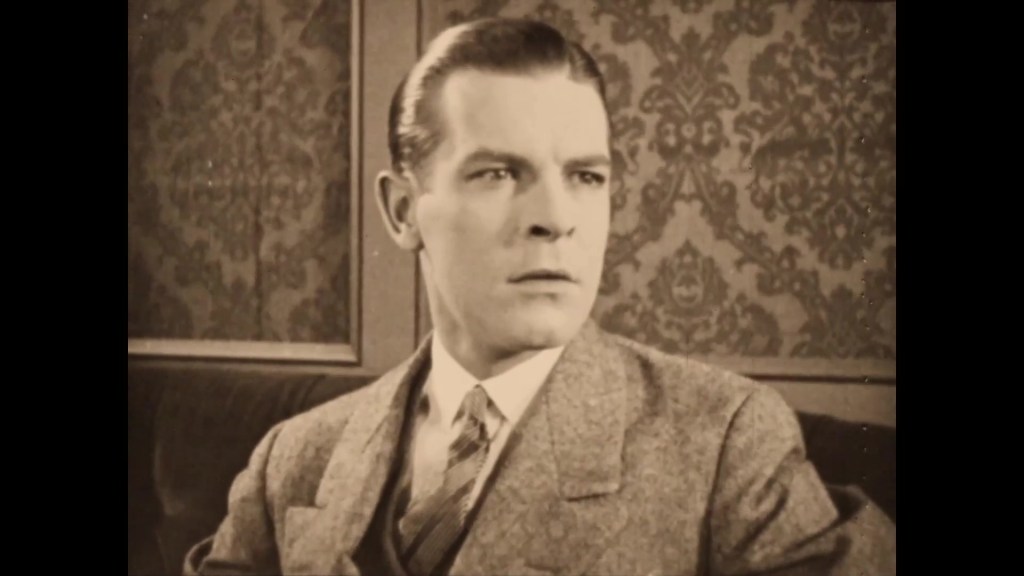
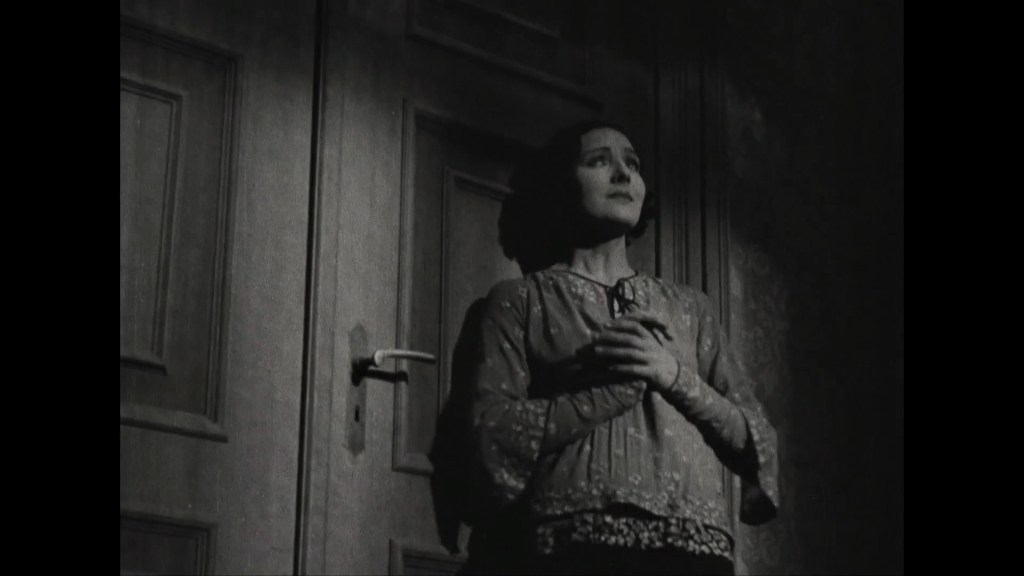
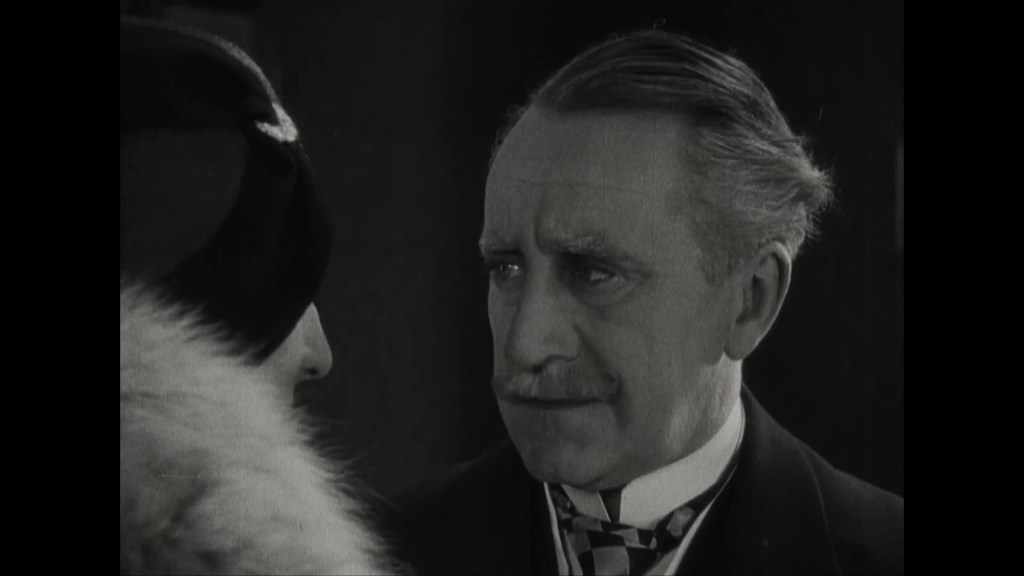
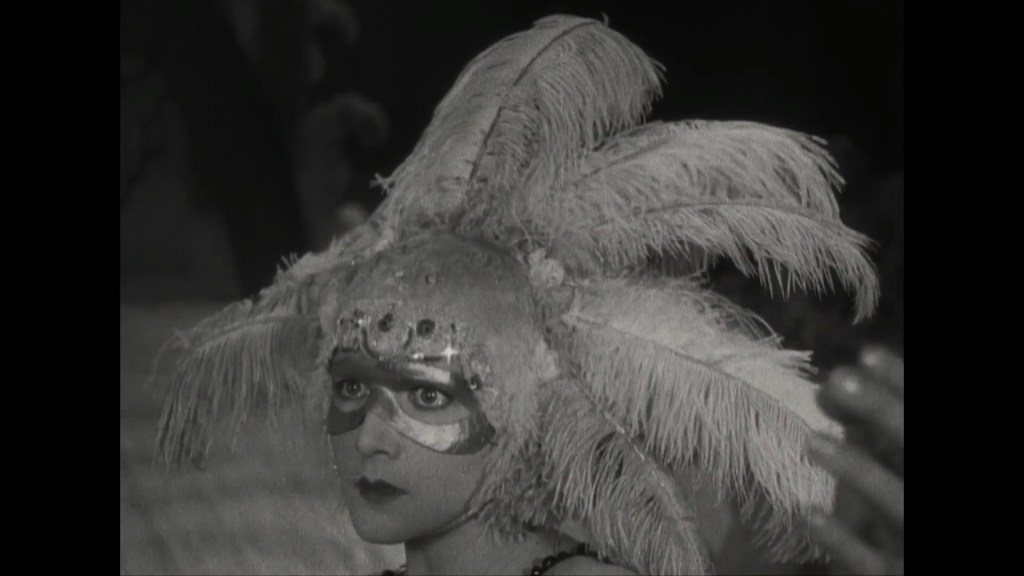
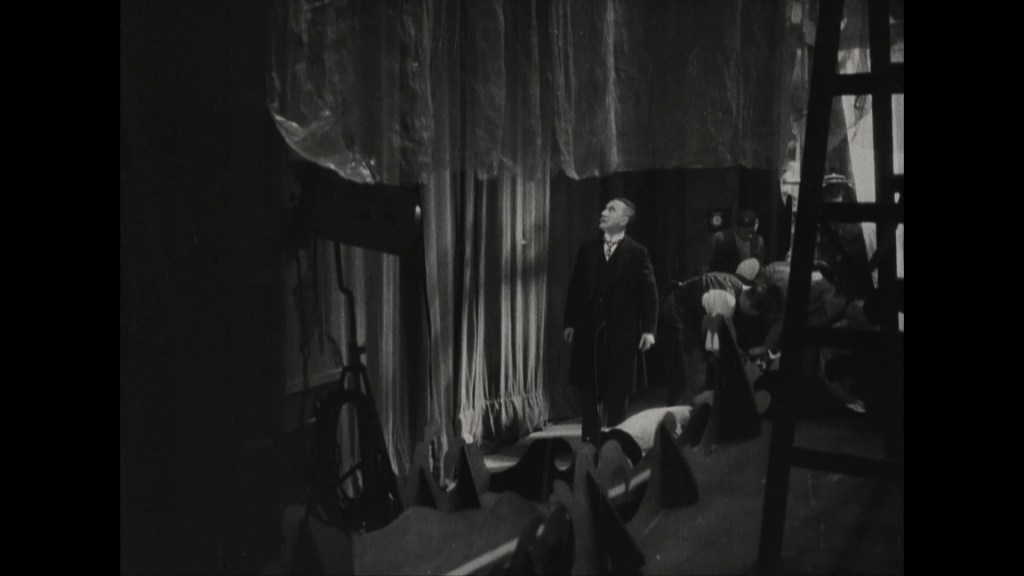
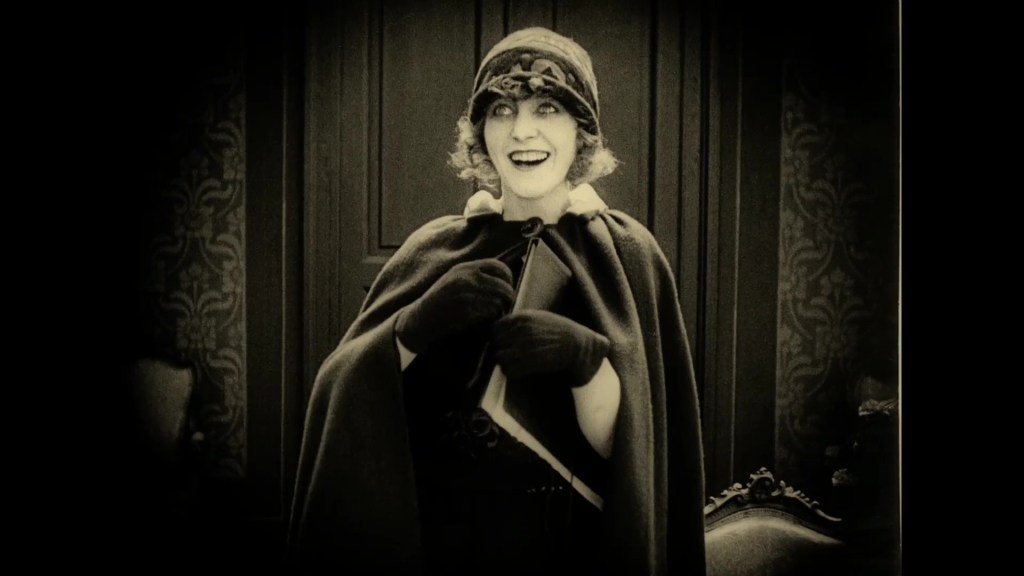
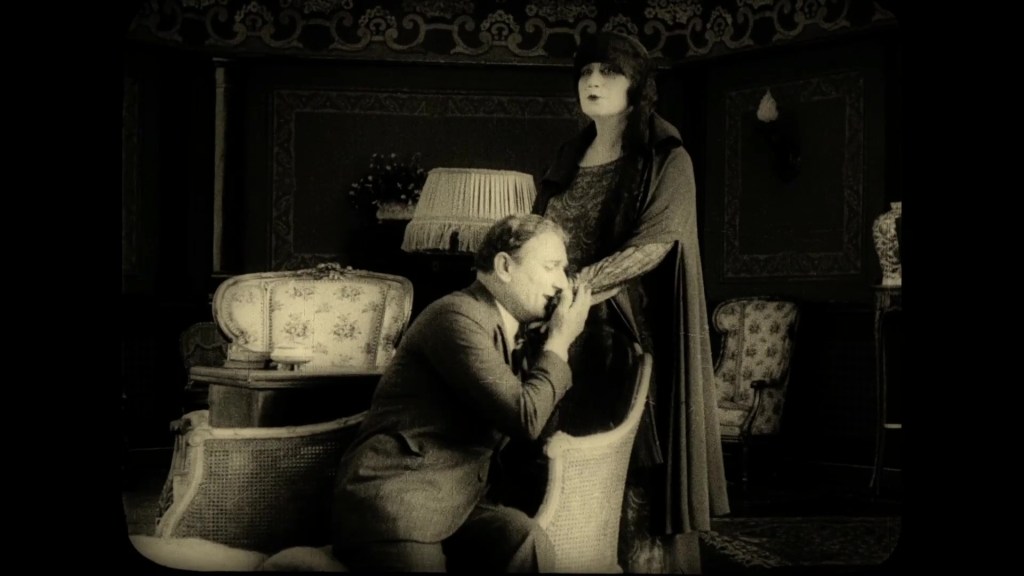
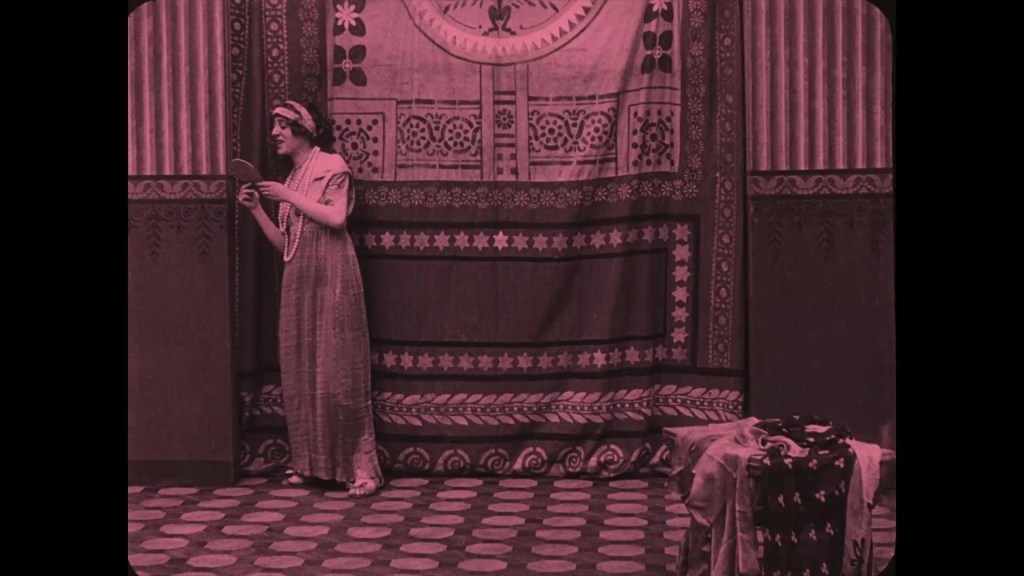
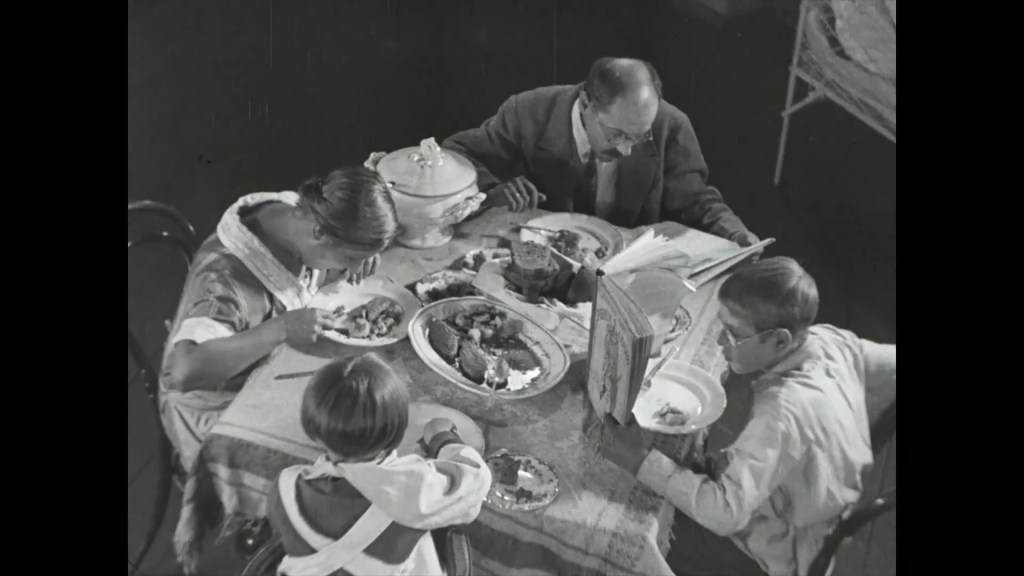
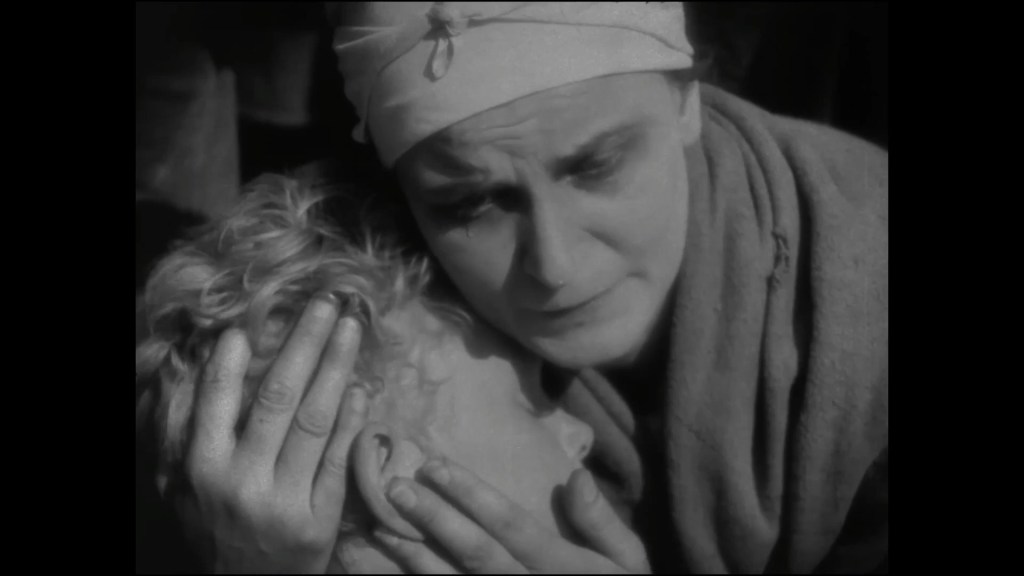
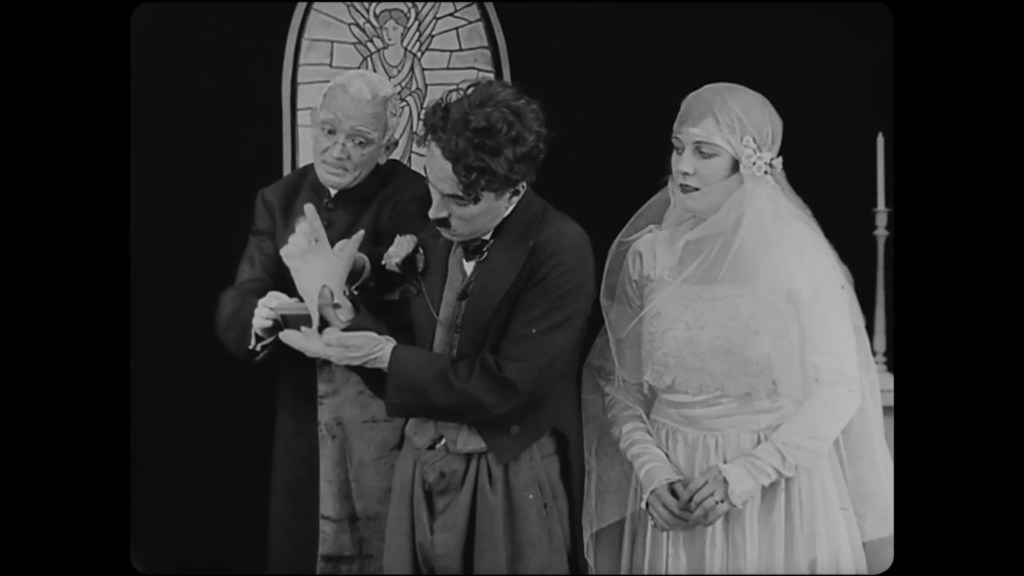
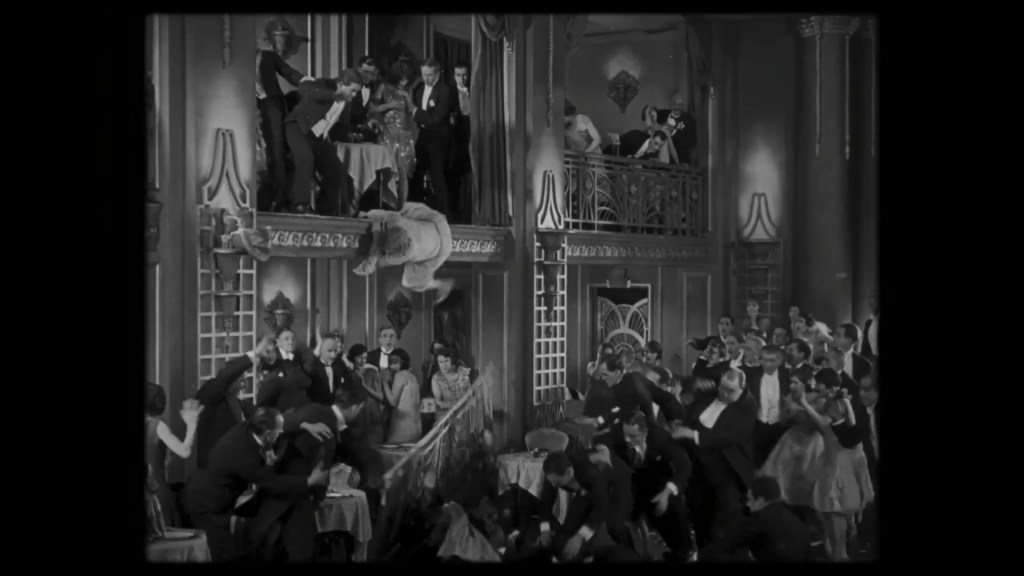
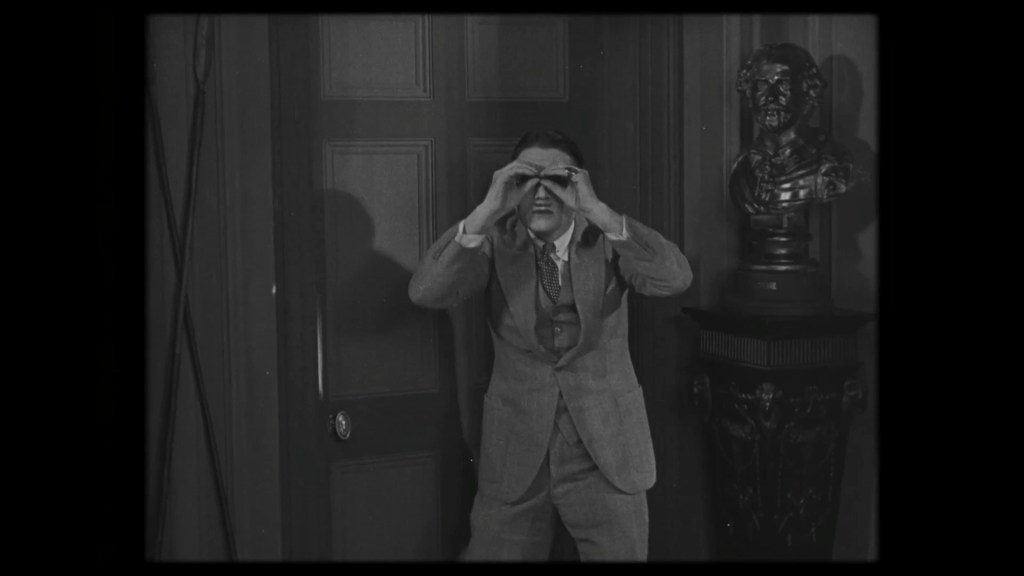
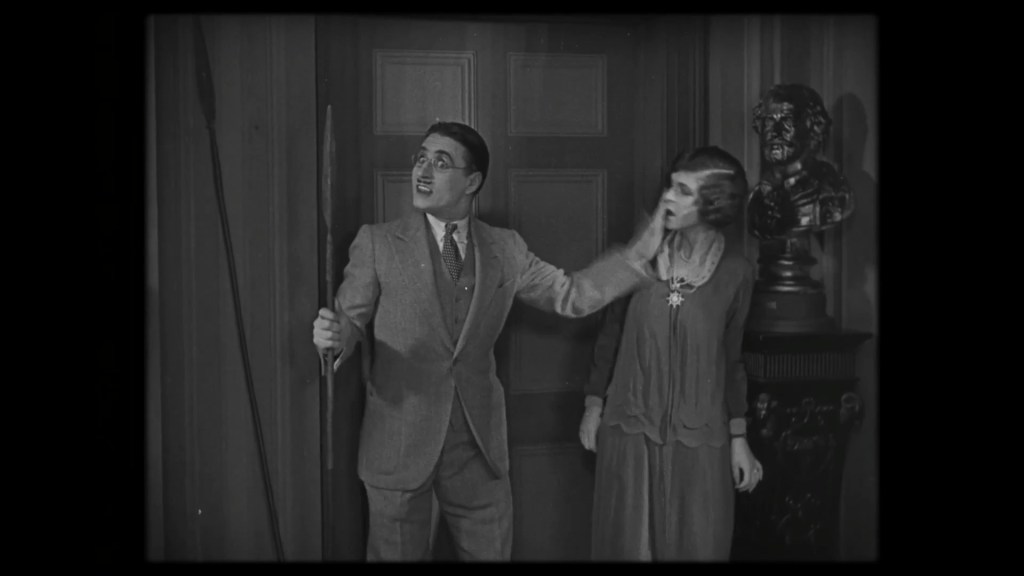
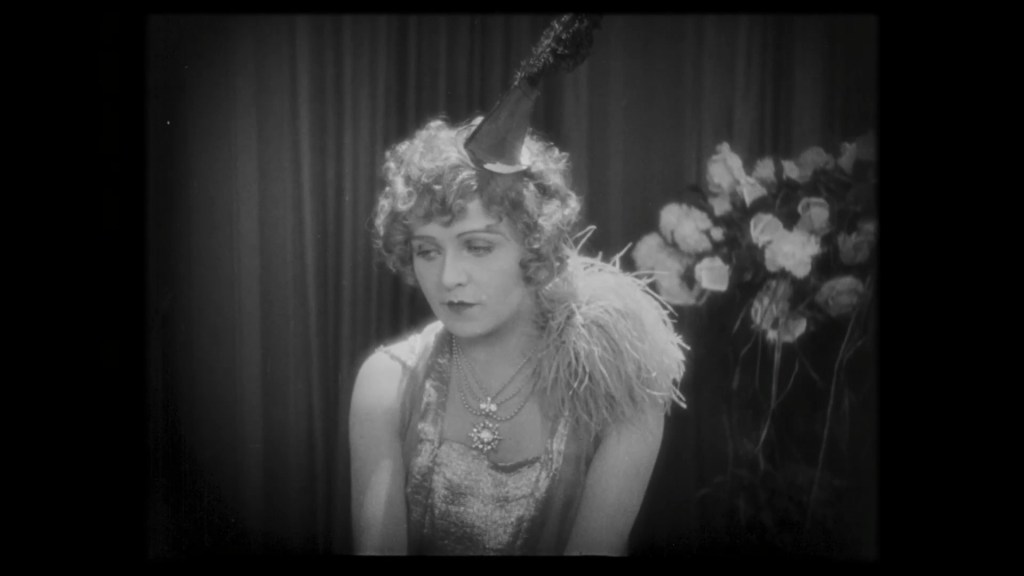
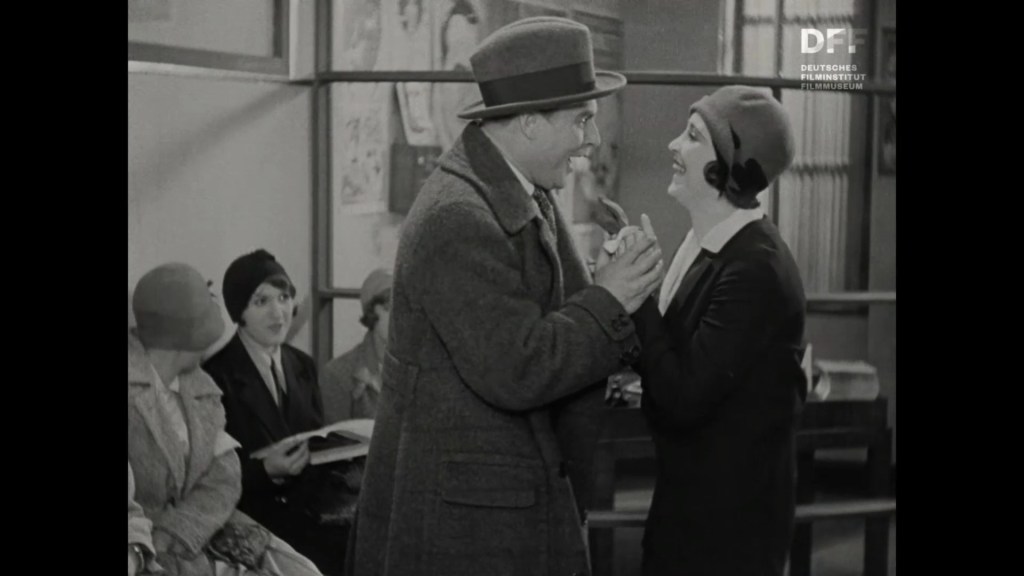
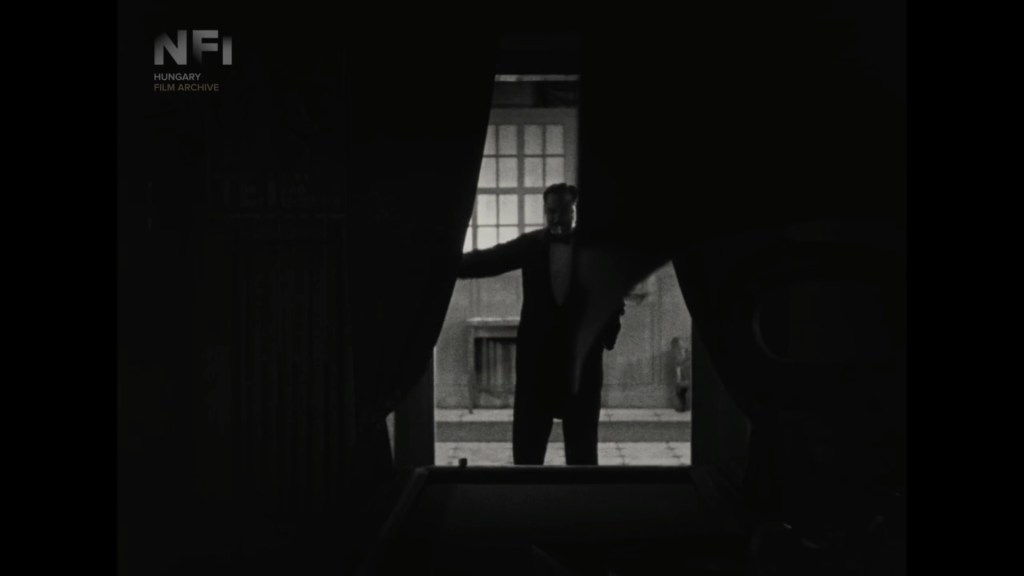
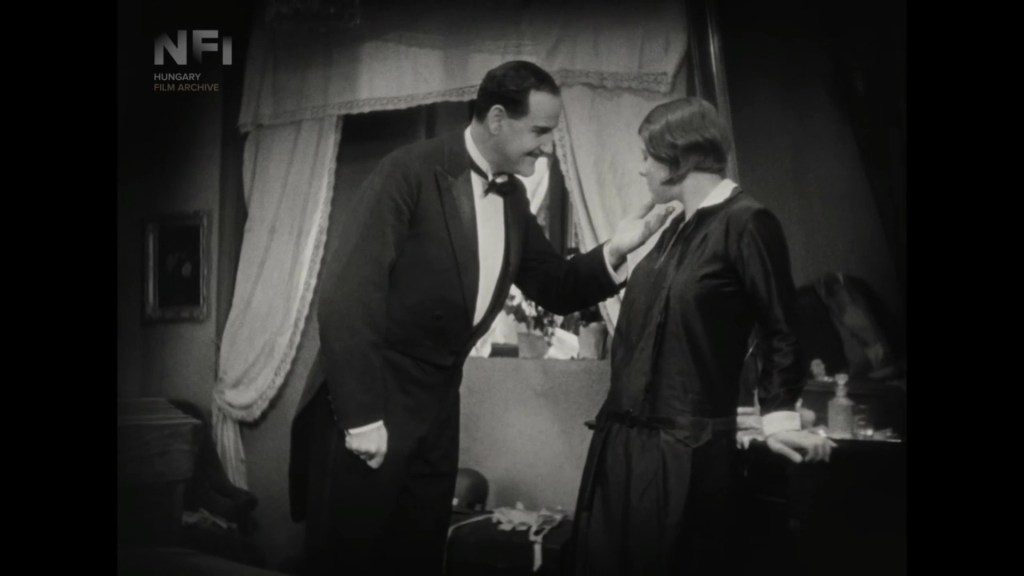
After Langon’s short, we begin our main feature – and our last: Are Parents People? (1925; US; Malcom St. Clair). James Hazlitt (Adolphe Menjou) and Alita Hazlitt (Florence Vidor) are a married couple on the verge of divorce. Their daughter Lita has been called back from school to hear the news of the separation. Lita plots to find a way to “cure” her parents’ symptoms. At school, Lita’s roommate Aurella (Mary Beth Milford) has a crush on both the film star Maurice Mansfield (George Beranger) and on the local Dr Dacer, who is also the object of Lita’s affection. When Lita’s parents visit the school, each offers her a different vacation option – but she prefers to stay at home. When a teacher finds photos and letters to Maurice Mansfield, she accuses Lita of being the culprit – and plans to expel her. Mansfield is shooting a film nearby, and takes an interest in Lita – but she arrives home to discover she has been expelled. Lita pretends she is the culprit in order to ensure her parents have to meet and discuss her future. Mansfield is summoned to Alita, and he assures her he has never met Lita – and proceeds to flirt with Alita. Lita seeks refuge with Dacer, who doesn’t realize she is in his home until the early hours of the morning. When Lita returns to her parents the next day, arguments and accusations ensue. Lita seeks solace with Dacer, who is wooed by her charm, and the Hazlitts manage to reconcile their differences (at least for now). THE END.

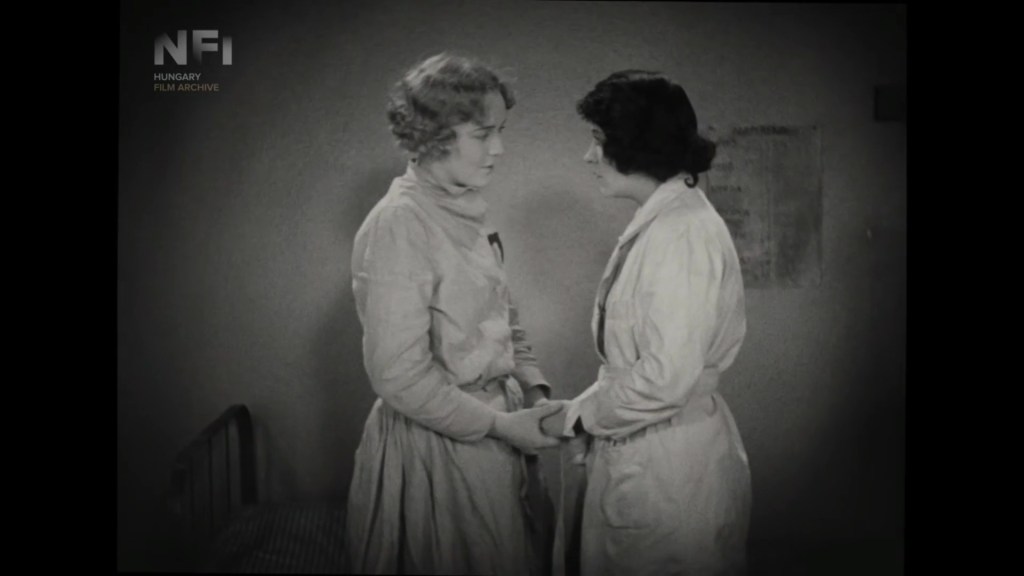
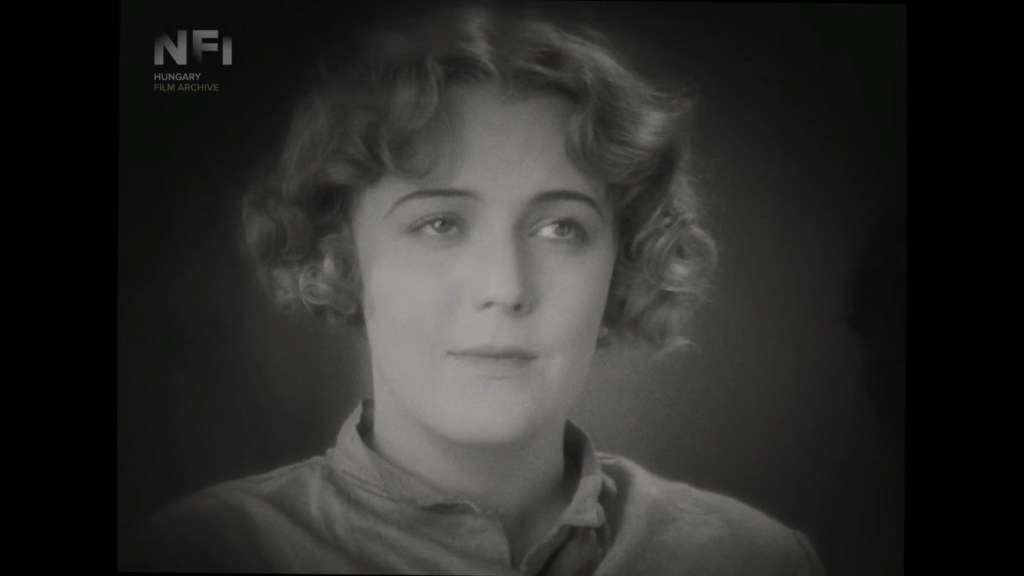
Well, this was a diverting film. It has a simple setup, and it delivers a well-directed and well-played result. I always enjoy watching Adolphe Menjou, and his interactions with Florence Vidor – as the pair bicker, argue, flirt, joke, and reconcile – are both amusing and poignant. (Florence Vidor, by the way, was the wife of director King Vidor. Curiously enough, the pair had divorced shortly before the production of Are Parents People? One wonders quite how she felt filming such scenes.) As Lita, I found Betty Bronson very charming and engaging. But there is little depth in her character, just as Dacer – and Lawrence Gray’s performance – is a bit flat. Though George Beranger has fun parodying a pretentious film star, acting out a whole film and trying to seduce Alita, his character is likewise paper thin. And this rather sums up my reaction to Are Parents People?, which was restricted to being charmed. I cannot say that I was moved, nor that I laughed a great deal. It was all very… pleasant. In comparison with the only other Malcolm St Clair I’ve seen, A Woman of the World (1925), Are Parents People? seems rather tame and unremarkable.

That said, it is certainly fluently and sensitively directed. Though there are no really striking images, the drama plays out nicely through small details, especially some very good cross-cutting between the two parents. Their actions and reactions mirror each other, creating all kinds of subtle little parallels and contrasts. And much of this takes place without dialogue. The opening sequence is ten minutes of wordless action, through which we grasp the whole drama through glances and editing. When there is dialogue, it is often short and snappy – echoing the back-and-forth repartee of the editing. But St Clair isn’t Lubitsch, nor is this script one of any depth or lasting resonance. Its charm is only so charming, its amusements only so amusing. I’m glad I’ve seen it, but I suspect my memory of this film will quickly pale.

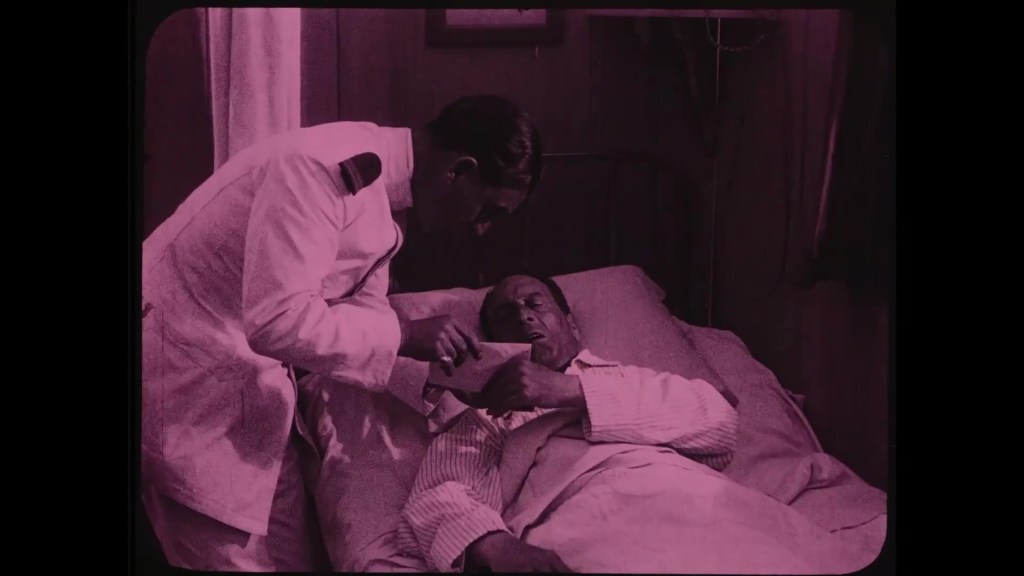
In terms of the presentation, it’s a shame that Are Parents People? survives only in a 16mm copy, which is very soft to look at. Though it is nicely tinted, the amazing pictorial quality of many of the films shown earlier at Pordenone (and even the other films in Day 8) show the gap in preservation status. If this is a visually downbeat way to end the online Pordenone, it is at least a reminder that so much of film history is lost to us, and what remains is precious. Music for the first three films of Day 8 was by Mauro Colombis, and for Are Parents People? by Neil Brand. The all-piano soundtrack here was very good, though I cannot but note that past editions of Pordenone online have ended with orchestral (or at least ensemble) scores. Combined with the lesser visual quality of the film, and my reservations about the film itself, it felt like a slightly limp way end to the festival. But hey, we can’t always end with a bang, and I’ve enjoyed so much already – so I shouldn’t complain.

My experience of Pordenone from afar in 2025 has, as ever, been absorbing and exhausting. There is no other festival that offers so much, and of such diversity. We’ve traversed the globe, and we’ve traversed the era. The emphasis is not on presenting masterpiece after masterpiece but about widening our appreciation of the silent era as a whole. In this, Pordenone is unique. Even the online material, which is but a tiny fraction of the festival offered on site in Italy, is a tremendous cross-section of people, places, themes, genres, and contexts. One can only be exceedingly grateful for so much marvellous, and so much entirely new, material. For a single ticket, the quality and variety of films Pordenone offers online is exceptionally good value. Bravo to all involved in this amazing festival.

Paul Cuff

Pordenone from afar (2025, Day 7)

Day 7 of Pordenone delivers us into the safe hands of Ufa for a film about the unsafe world of hyperinflation and theatrical exploitation…

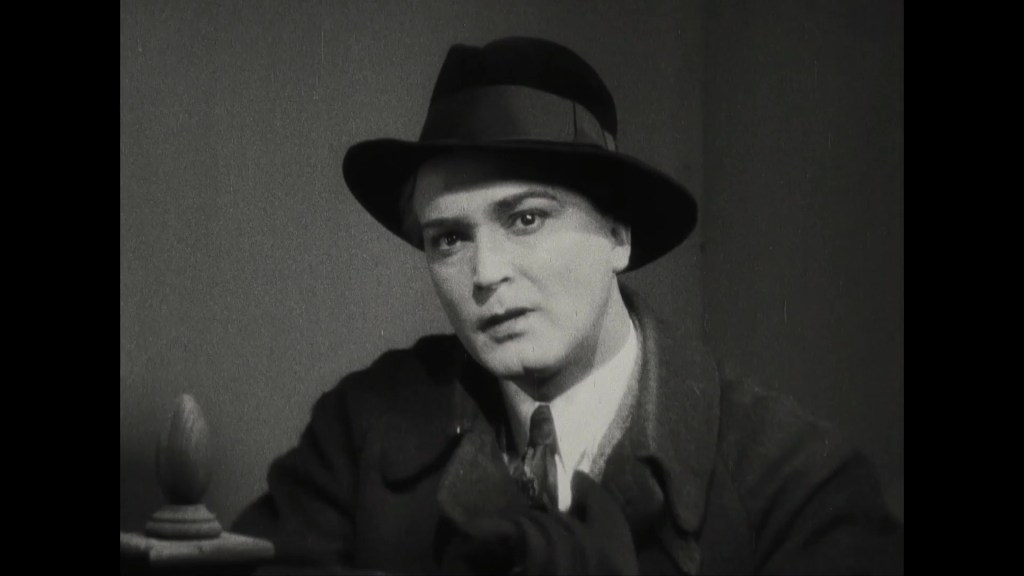
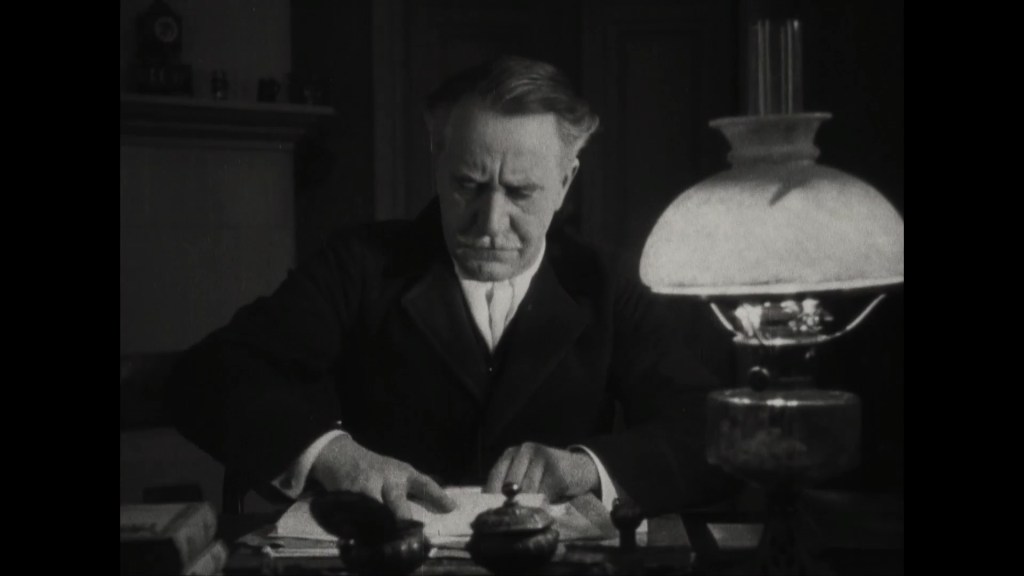
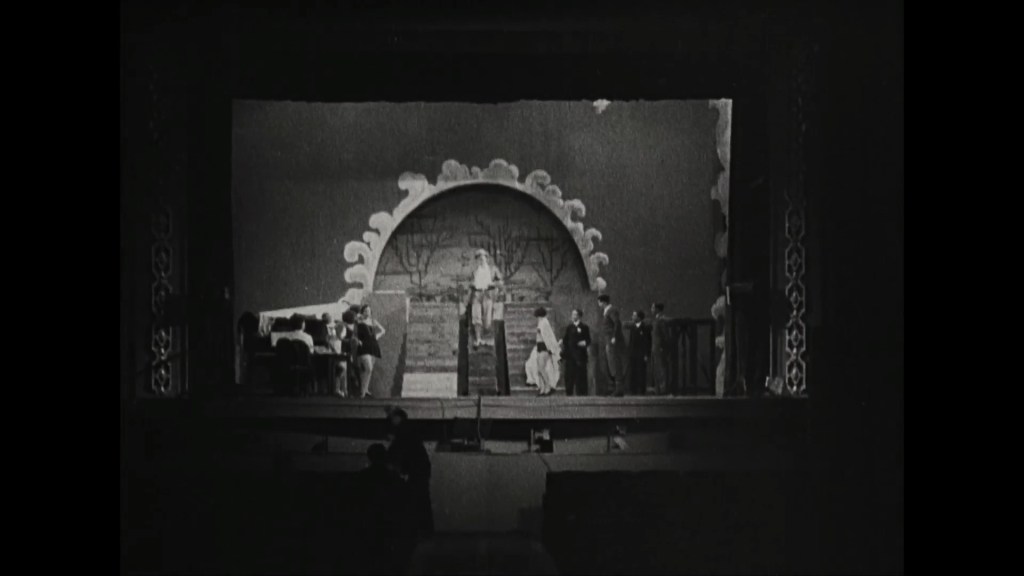
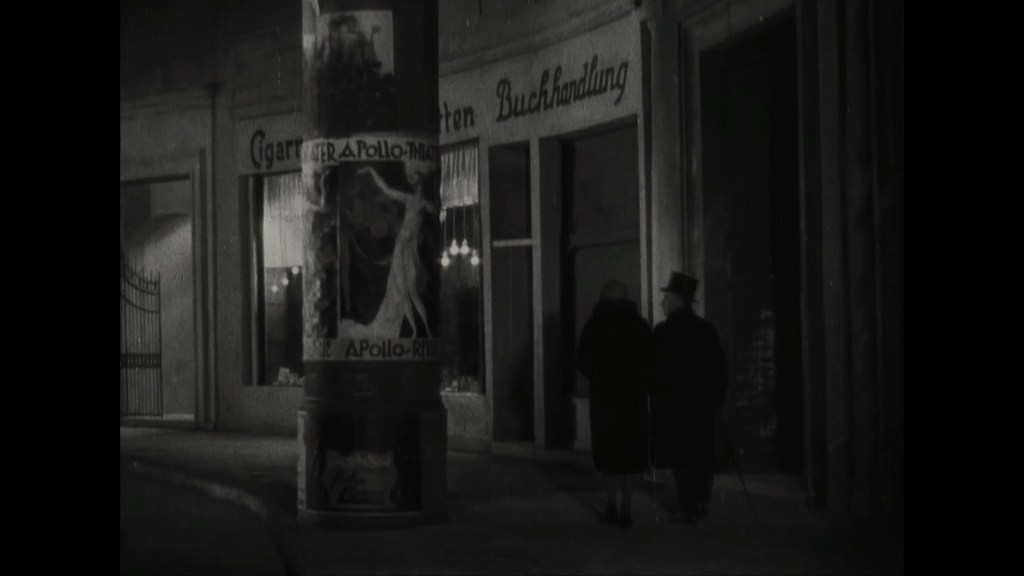
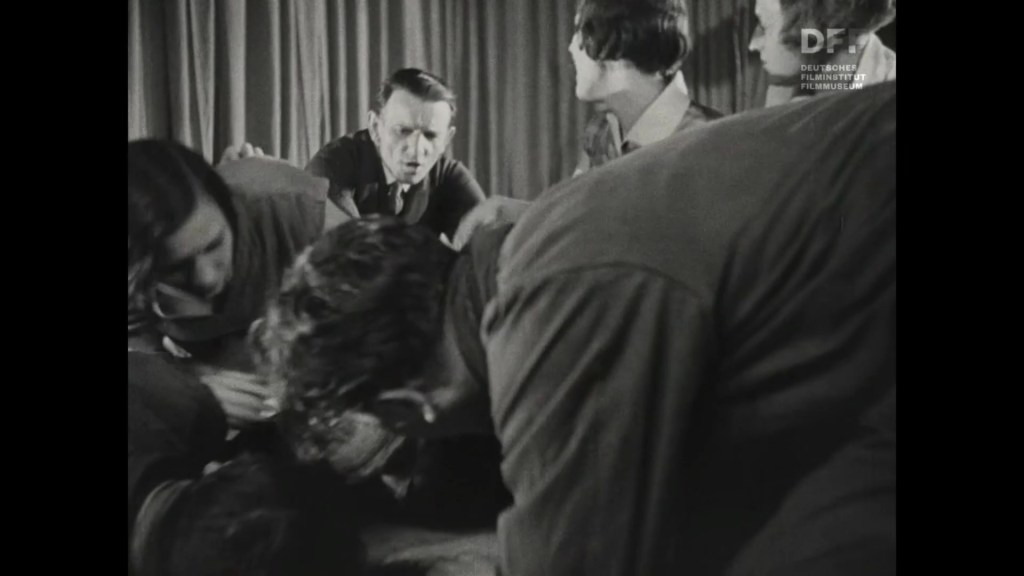
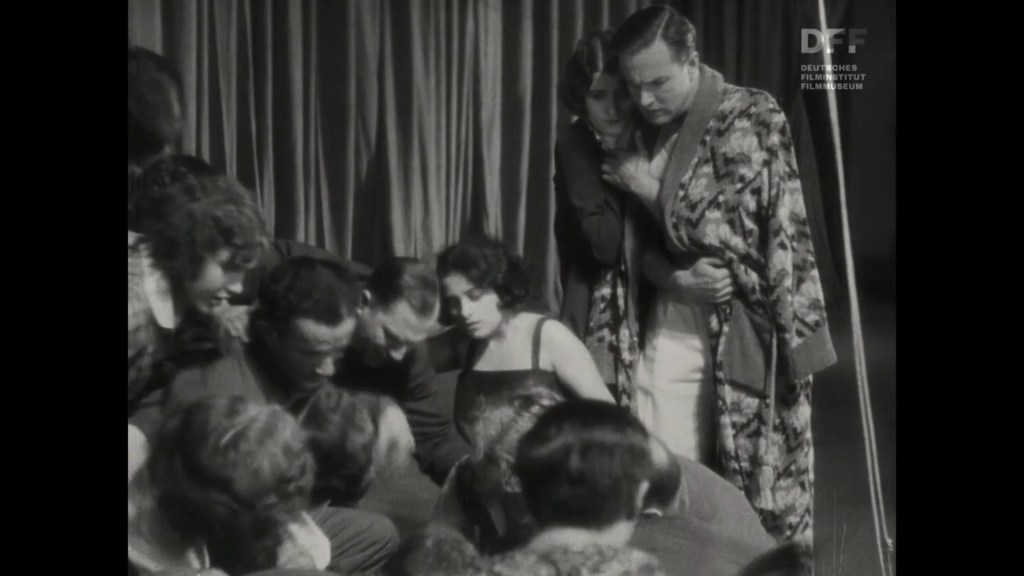
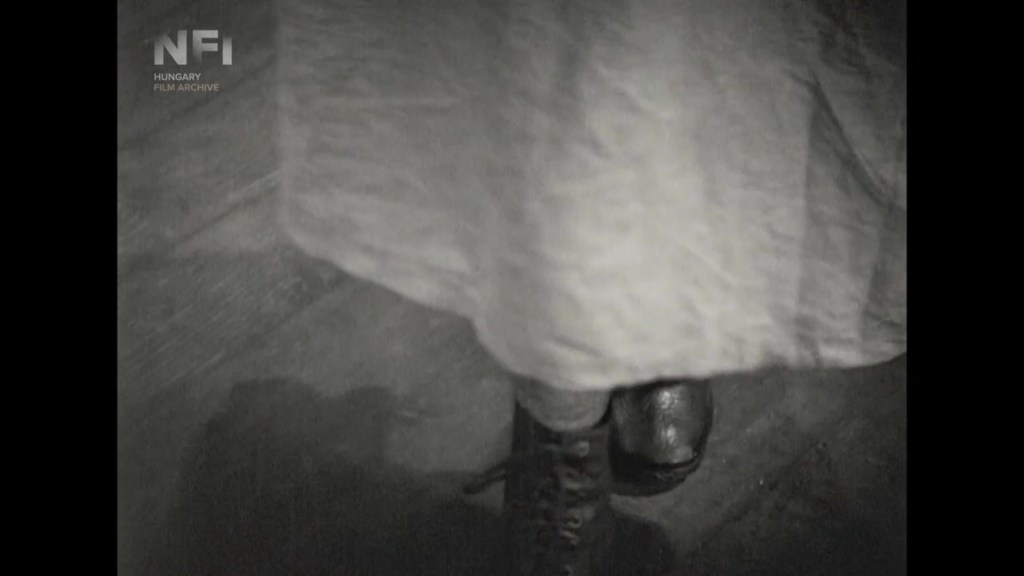
Die Dame mit der Maske (1928; Ger.; Wilhelm Thiele). Alexander von Illagin is from a wealthy émigré family but now scrapes a living working for the Apollo theatre in Berlin – just as his friend, the Russian émigré Michail, works as a cab driver. Alexander meets Doris von Seefeld, the daughter of impoverished Baron von Seefeld, and advises her to try the theatre. Her father, meanwhile, owes money to the parvenu millionaire Otto Hanke, a timber merchant. Otto boasts to his girlfriend Kitty that Seefeld’s money will help him take over the Apollo, where Kitty works. Kitty’s lacklustre performance frustrates the theatre director, who immediately casts Doris in her place. Doris objects to the risqué costume she must wear. As a compromise, she becomes the anonymous “Lady with the Mask”. Doris pretends to her father than she has sold the rights to his memoirs and lies about the nature of her new employment. But “The Lady with the Mask” is an instant sensation, and Otto is enraptured. Meanwhile, Alexander discovers that his family had hidden jewels in his boot before they fled to Germany. However, he gave his boots to Michail, who in turn exchanged them at a broker… Doris and Alexander admit their feelings for one another, but Otto prepares to reveal Doris’s identity if she doesn’t submit to him. The baron discovers that Doris has been deceiving him, and follows her to the Apollo, where he realizes his daughter’s sacrifice. After escaping the clutches of Otto, Doris finds her father with Alexander, who has recovered the boot and his fortune – and the couple are reunited. ENDE. [As revealed in the post-film restoration notes, the original German version had a much more complex ending. There, Otto is reconciled with Kitty, and Doris and Alexander reunite via a more complex series of events – just as the recovery of the boot is woven more thoroughly into the denouement. The export version that survives clearly contains not just different editing and/or titles, but different footage shot expressly for it.]

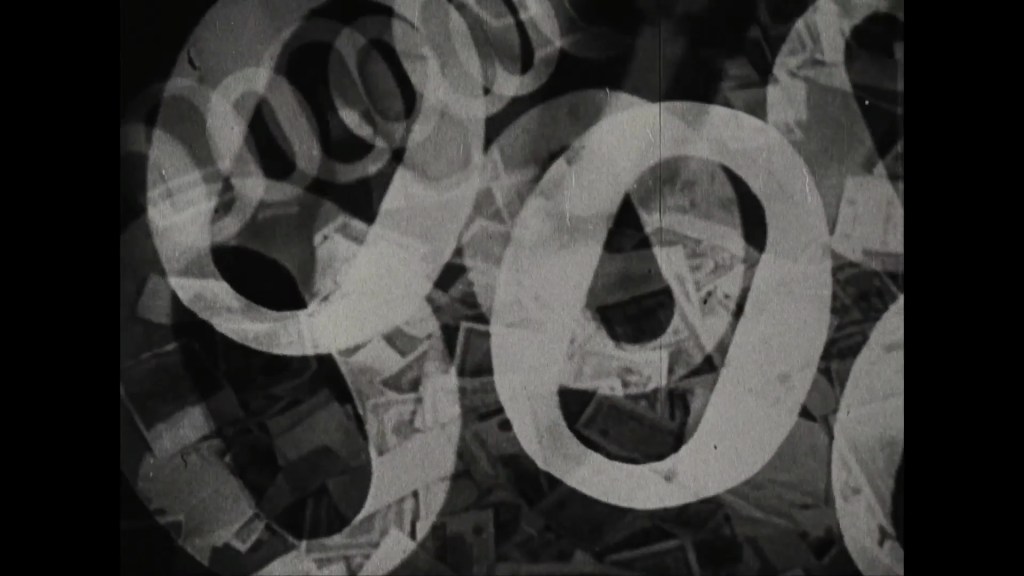
What a wonderful treat! This is a visually rich and dramatically engaging production. The lighting and camerawork are superb, evident from the fabulous “inflation” montage that opens the film. Here, multiple superimpositions, overlaid text, slow motion, rapid cutting, and complex movements and dissolves take us dizzily through time and space. Though it is setting the context for the film, and providing us with information about time/place, it is more than anything a way of plunging us into the unstable world of contemporary Germany. The mad flurry of images is confusing, disturbing, bewildering. We cannot find our feet, just as the characters have had their world pulled from under them. These are characters who grew up in the pre-war world of stable, not to say repressive, imperial orders. Alexander is from an unnamed eastern land, perhaps Russia – as his name and friendship with Michail suggests – or perhaps just a former part of Austria-Hungary. Doris’s family likewise sports an aristocratic ”von”, and father writes memoirs of hunting in Africa, suggesting an old Prussian family with colonial connections.

Though the film signals these various intriguing contexts, Die Dame mit der Maske is ultimately quite a light treatment of poverty and hardship. The opening titles announces the story as one of the “silent tragedies” of hyperinflation, but even if it is more a drama than a comedy, I certainly wouldn’t call it a “tragedy”. Nothing tragic happens, and the characters might be struggling but they all end the film with money – and some kind of restoration of the meaning of their various aristocratic titles. Michail is the only really lower-class character, and he cheerfully acts as a kind of servant to Alexander. He is the comic sidekick whose adventures with his newly-bought taxi and his efforts to find the fortune-bearing boot serve as light relief to the drama. In general, though, the upper-class characters (Doris, Alexander, Seefeld) are well-mannered and sympathetic, while the lower-class ones (Otto, Kitty) are brash and occasionally violent. Otto’s pursuit of Doris attempt to bridge the class barrier, but the film concludes by each couple (Alexander/Doris, Otto/Kitty) re-established within their own class. In the end (at least, as far as the original German version is concerned), all the characters end up affluent and emotionally reconciled. No-one dies, and I’m not sure anyone has learned any lessons, either.

The cast perhaps reflects the overall tone and thrust of the film. French actress Arlette Marchal is believable and sympathetic as Doris, though one never has a real feeling of emotional depth to the character. Marchal ably signals the self-sacrifice and wounded pride of Doris as she performs in her scanty costume, but the film doesn’t ask her to do more than this. A more complex drama (or a different performer) might suggest a sense of liberation or exploration through her stage performance, i.e. the allure of stardom. But Doris wants nothing more than to support her father and (presumably) live an old-fashioned domestic life. The film might exploit her body and show off her allure, but it is neither so cruel as to expose her (literally and figuratively) to true degradation – nor to use her stage persona to explore her sexuality. Indeed, the relationship between Doris and Alexander doesn’t have a strong sexual dimension.

As Alexander, the Ukraine-born Wladimir Gaidarow is very charming, but the drama goes not provide his character with real complexity to explore or express more emotional depth. Though we get fleeting references to his former life, the film (at least in this surviving export version) does not give any glimpse of what he might have done to survive, or what kind of person he or his family were before they came to Germany. Did he fight in the war, or in the Russian civil war? There is absolutely no sense of trauma here, nor any emotional baggage from his past. The only thing tangible from his former life is his title and the jewels cached in his boot. Again, a more interesting or daring film would have at least suggested some complexity of Alexander’s past.

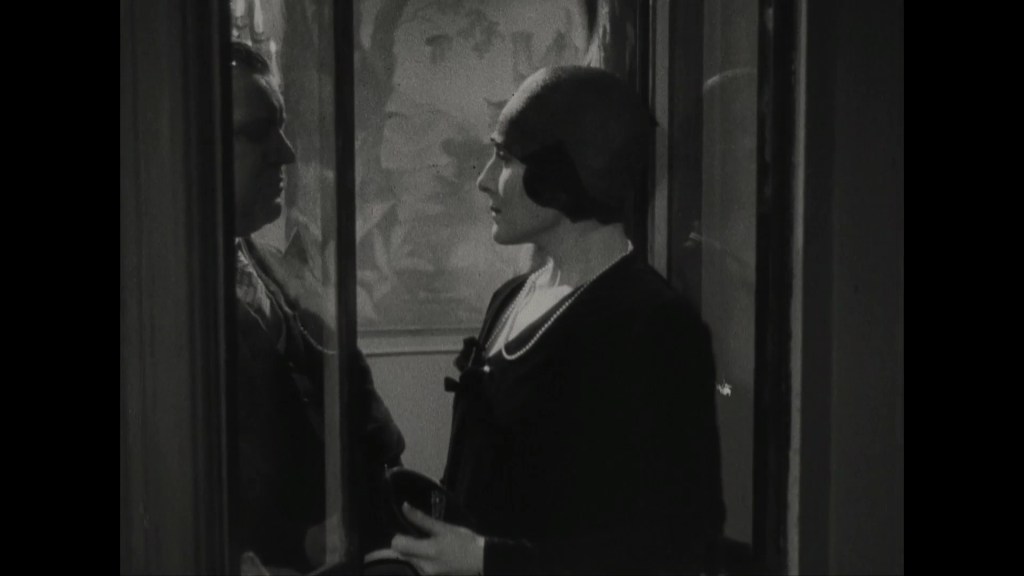
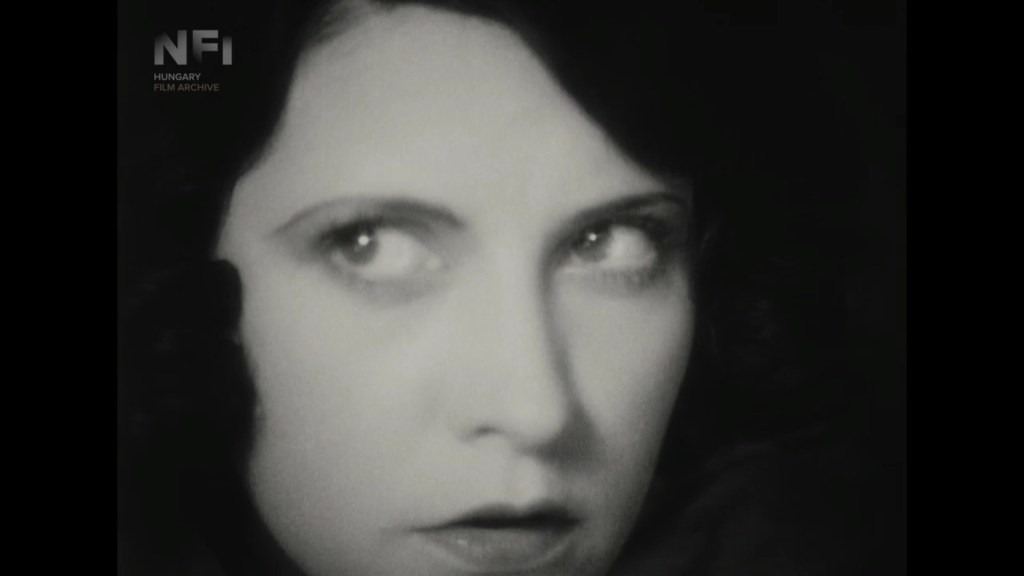
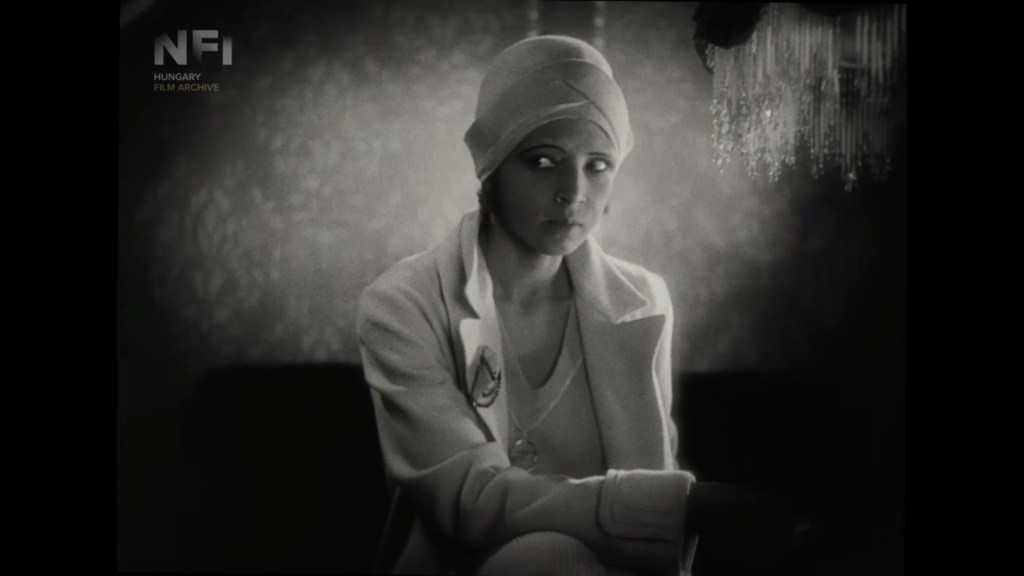
The most interesting female character in Die Dame mit der Maske is surely Kitty. But though I love seeing Dita Parlo march around being spiky and pouty and self-confident (all while wearing an extraordinary set of Weimar hotpants and bra), I couldn’t say she embodies a particularly complex character. She makes Kitty into an entirely believable figure – ambitious but unskilled, jealous and proud. But the film doesn’t give her the chance for any more than this. Though we might guess that her past was tough, even tragic, to have attached herself to the loutish Otto (and saved herself from far worse), the film gives not the slightest hint of backstory.

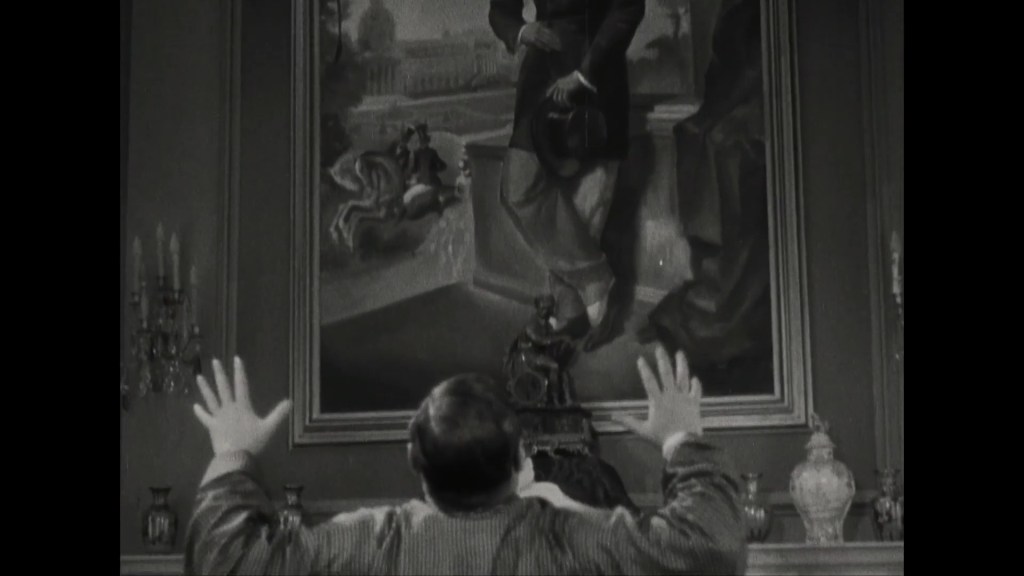
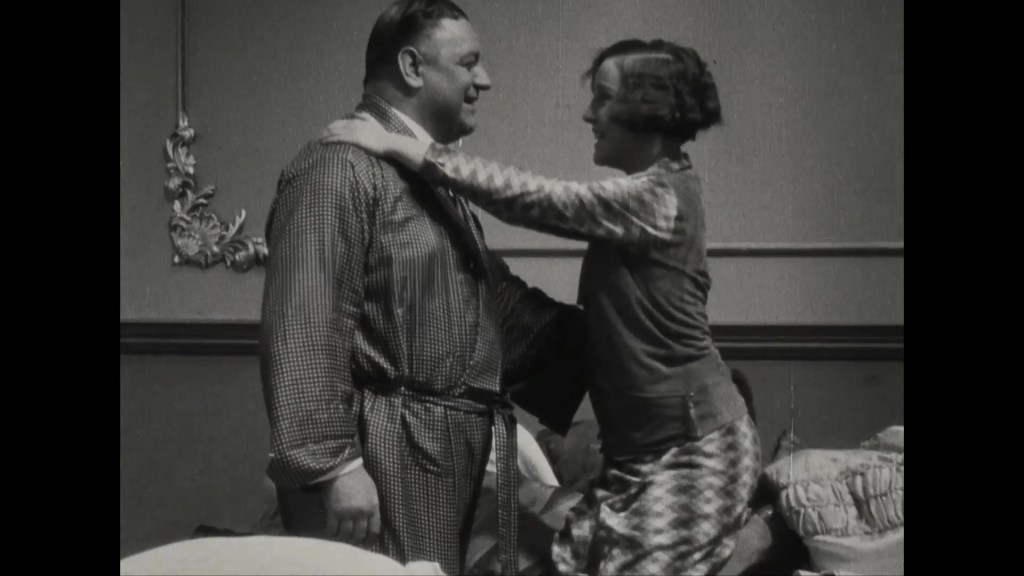
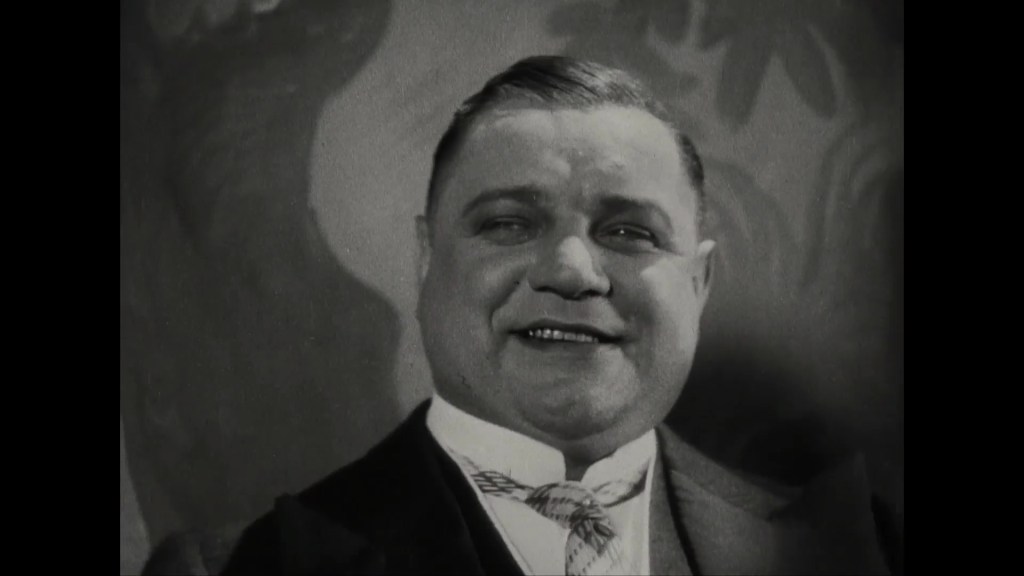
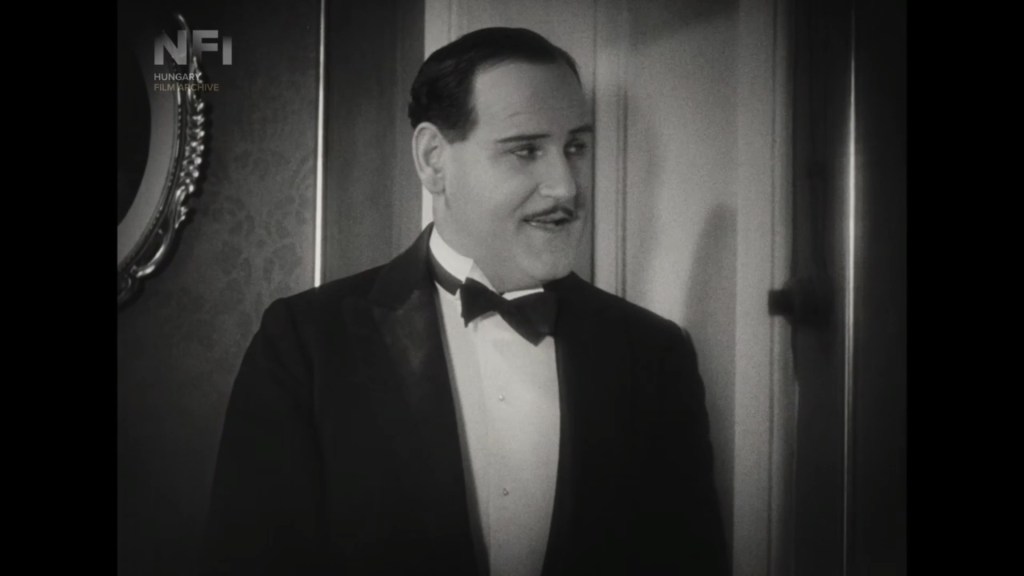
For me, Heinrich George is the best thing in this film. Every time I see his name on the credits, I perk up. He never disappoints. In Die Dame mit der Maske, he’s that wonderful combination of the spoiled child and the violent adult. He’s both pathetic and dangerous, pitiable and contemptible. The way he lurches from self-pity to fury, from depression to aggression, is brilliant. Every time he appears on screen, you know the scene might change at any second. He might deliver a laugh, or make you gasp in fear. He is brilliant as the parvenu millionaire, smarmily puffing his cigar or smothered in foam in his bath, raging and thrashing in petulant fury. His round, shining cheeks are babyish – but his sheer bulk has real menace. When he seems about to force himself on Doris in the penultimate sequence, you really believe he has the will and the callousness to assault her. But when he relents and lets her go, you realize that he’s more complex than this – that there is some kind of conscience at work. Otto is not, quite, a monster. It’s a really great performance by George.

I must conclude by saying, once again, how enjoyable Die Dame mit der Maske was to watch. It isn’t a masterpiece of any depth, but it is a fascinating – if somewhat superficial – portrayal of this period of German history. I wish that it had more to say about the context and characters it mobilizes, and I wish it mobilized them to more interesting ends – but I was never frustrated while watching the film. For this presentation, the piano music by Günter Buchwald was first rate, though I’d be curious (as ever) to know what the original orchestral score was like in 1928. (Unlike many such productions of this period, I cannot find the name of the arranger/composer responsible for the music at the premiere.) It’s a great shame that only the export version of Die Dame mit der Maske survives, but it’s great that the restoration credits so openly explain this, and suggest how the original German version was different. Far too many digital versions of silent films gloss over or deliberately obscure this complex issue. So my compliments to the FWMS for being so transparent and informative. A highly enjoyable and interesting film to watch.

Paul Cuff

Pordenone from afar (2025, Day 6)

Today we head back to Italy, this time for a contemporary drama. Brace yourselves – this one is a stunner…

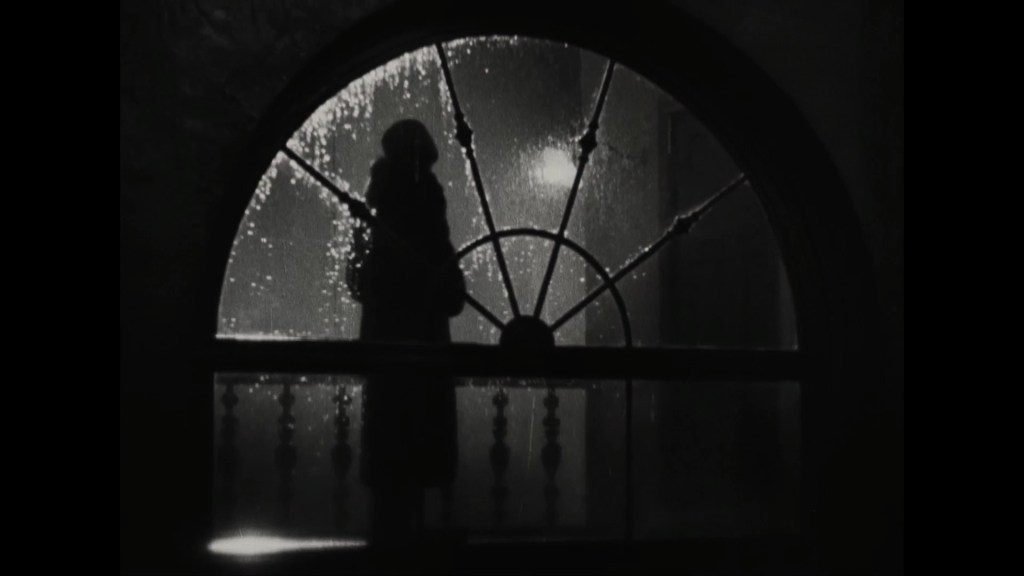
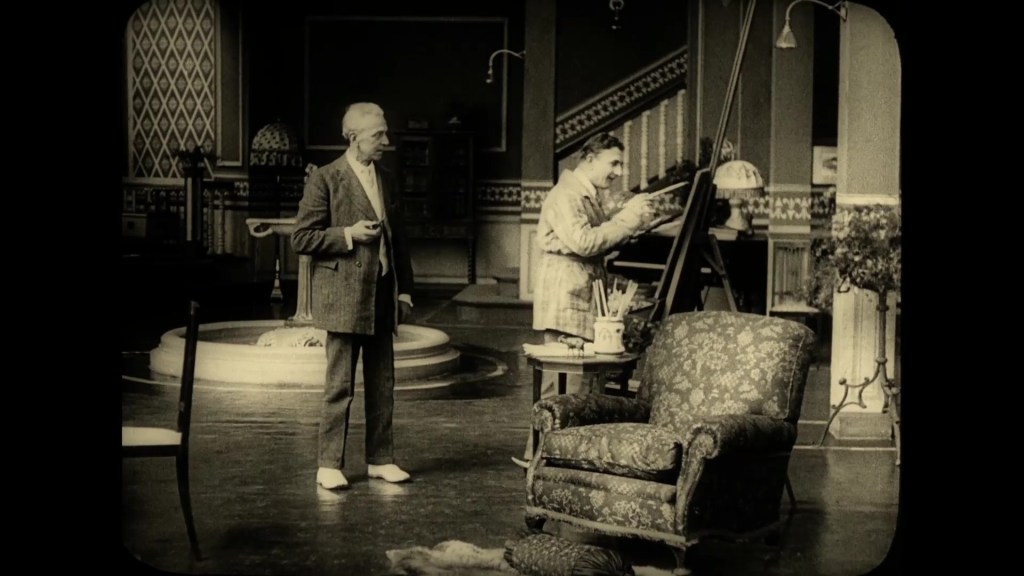
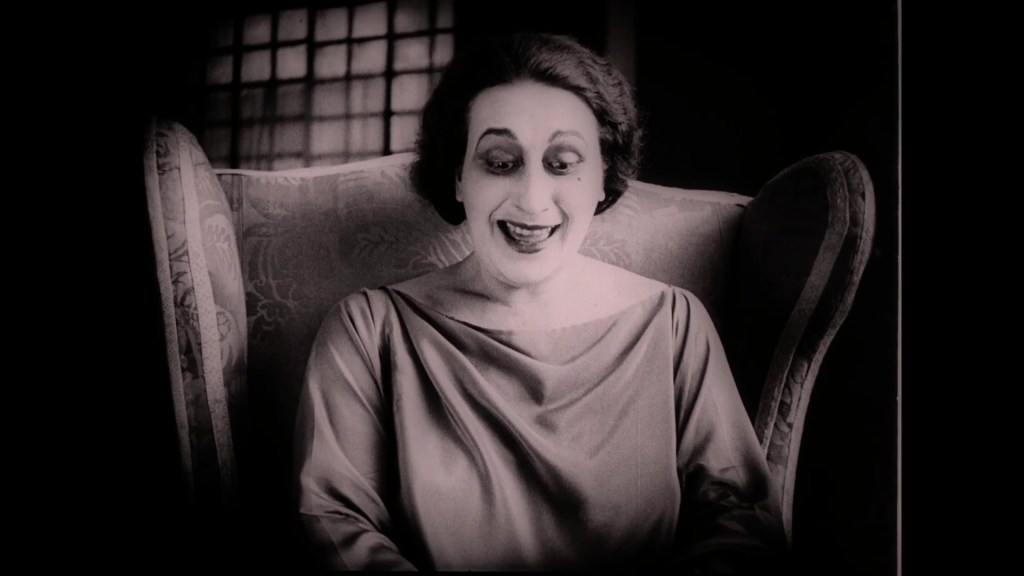
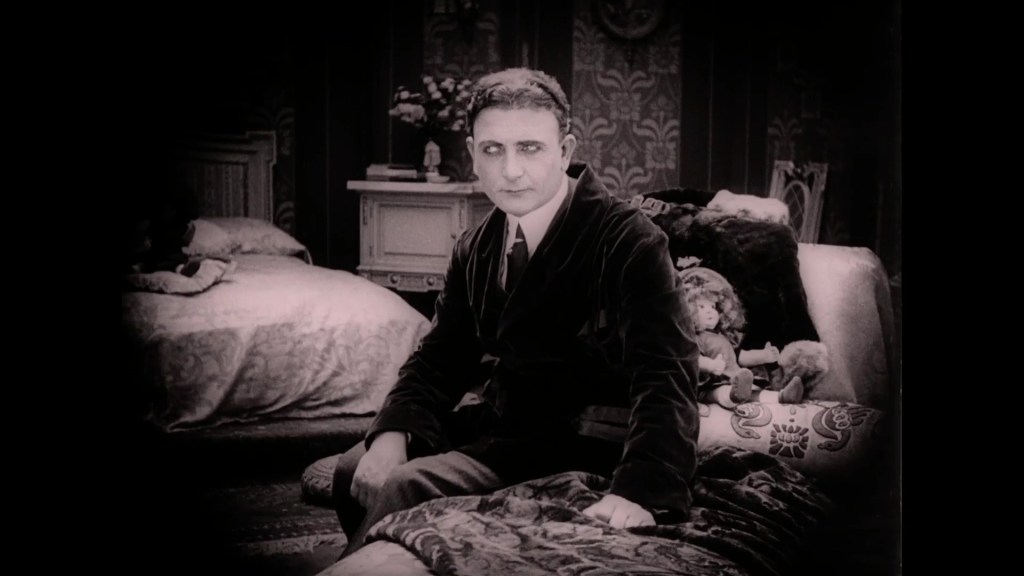
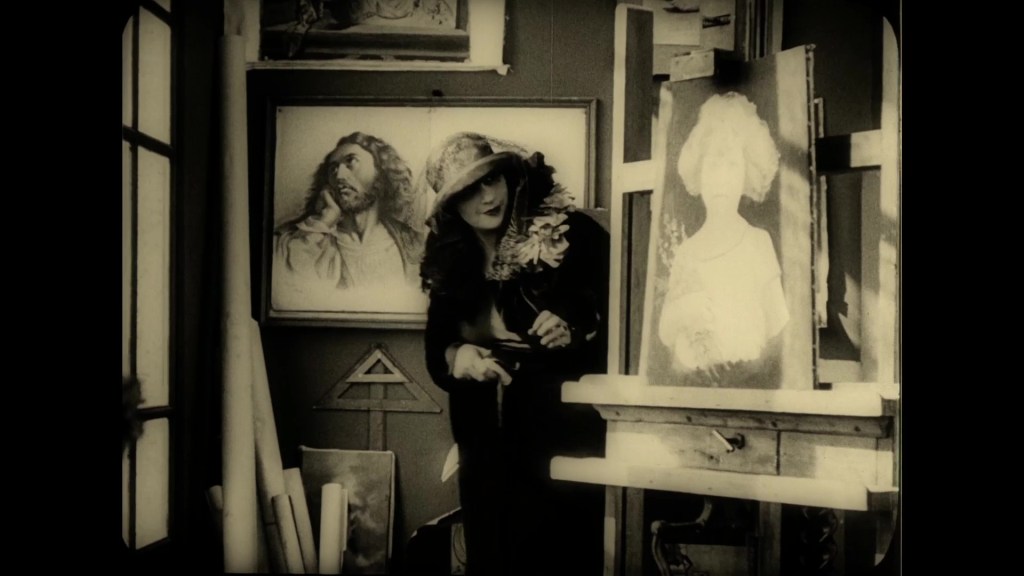
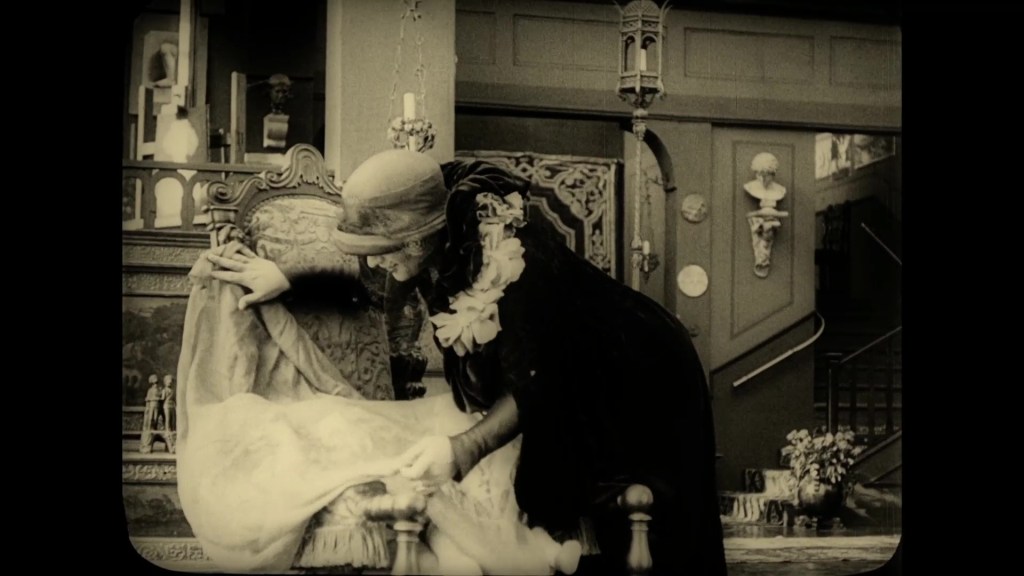
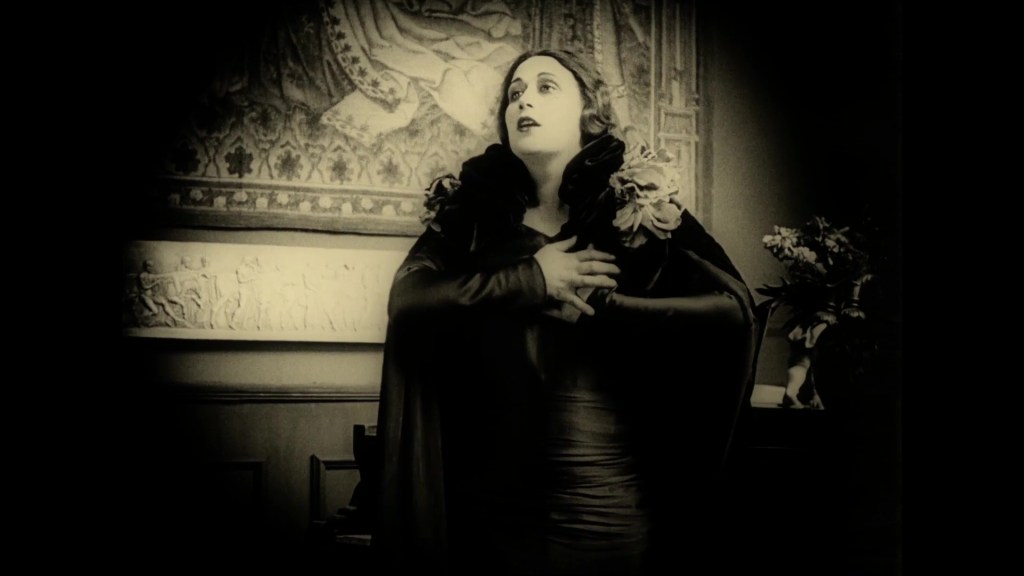
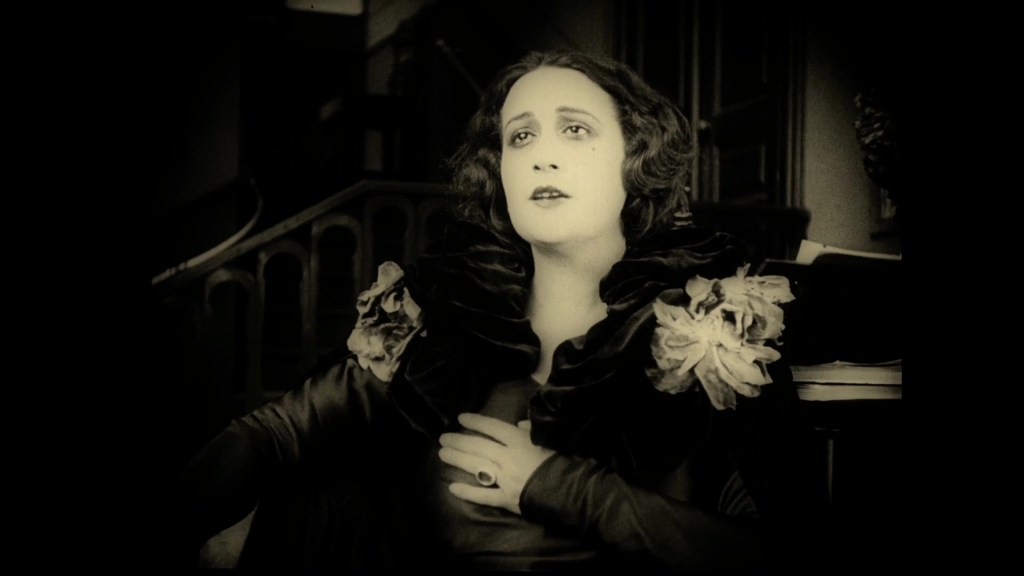
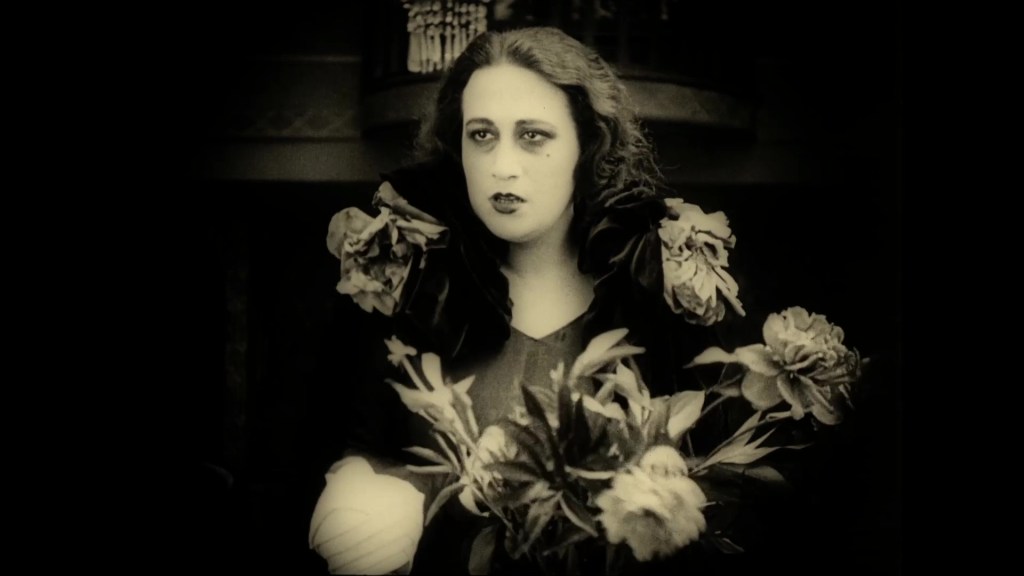
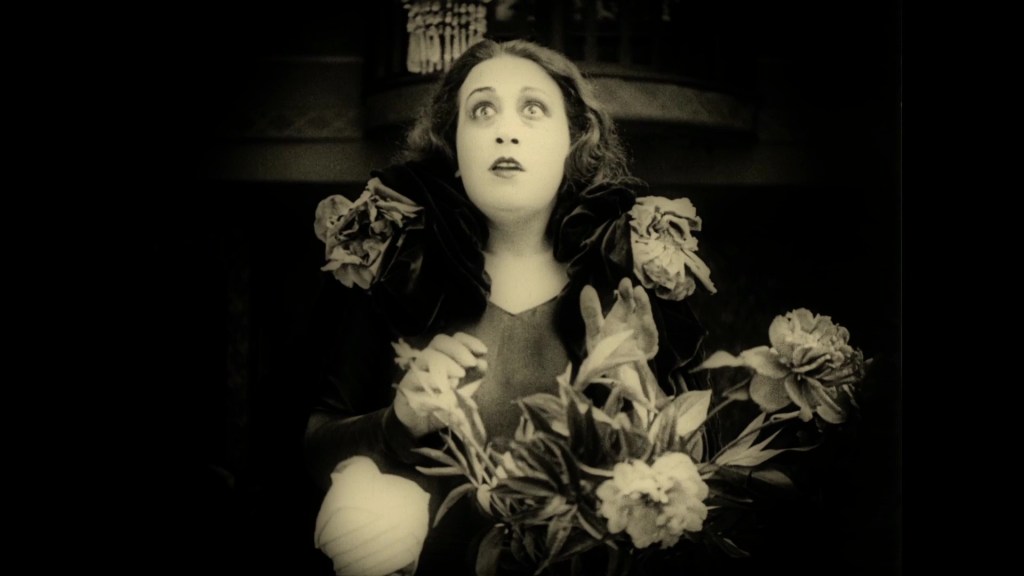
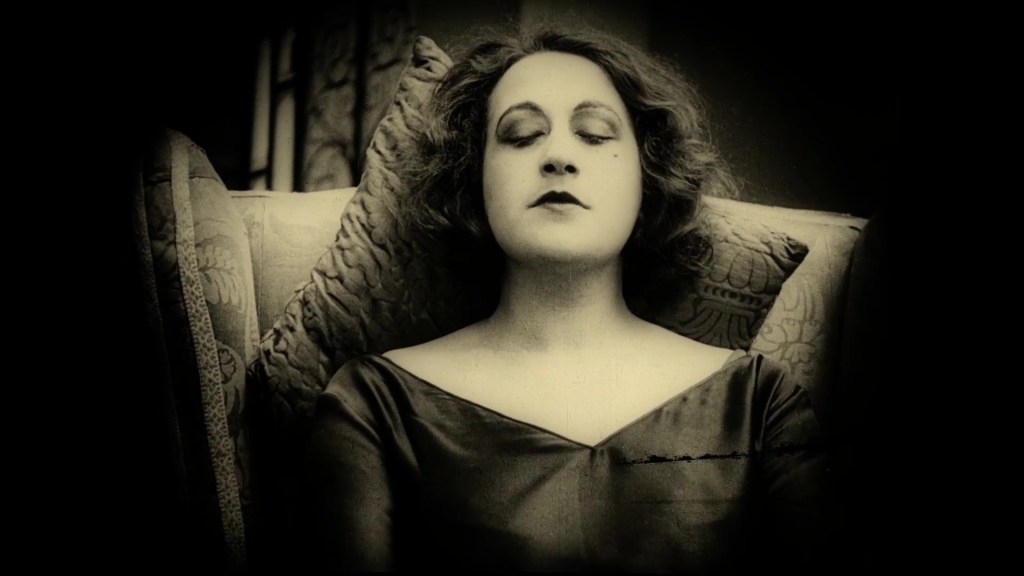
L’Ombra (1923; It.; Mario Almirante). The painter Gerardo Trégner is married to the passionate, sporty Berta. Elena Préville, Berta’s friend and distant relative, comes to visit. The naïve “little doll” who arrives is soon transformed into a fashionable belle. She also takes painting lessons with Gerardo. Alberto Davis is in love with Elena and seeks Berta’s blessing and help. Elena likes Alberto, but it is not a love match. Nevertheless, her guardian assents and the pair marry. After the wedding, Berta collapses – and, barring a miracle, is feted to remain paralyzed. Berta sinks into despair, refusing even to look at herself in the mirror. Elena returns to offer her support, and Berta grows suspicious when Gerardo spends nights away from home – preparing paintings for a major expedition. Years pass. Gerardo has become famous, but Berta remains at home – living solely for her love of her husband. One day, Elena visits and announces that she is getting divorced. Both women harbour secrets: Berta has regained the use of her limbs, while Elena has had a child with Gerardo. Gerardo completes a portrait of his son, but Berta – now recovered enough to walk – visits his studio and wonders who the portrait depicts. Gerardo returns and finds Berta recovered from her paralysis. But she finds piano music and flowers, and realizes that both belong to another woman. The pair argue, and Berta discovers that the child is Gerardo’s son – and that Elena is the mother. Berta flees to a church, where she begs God to give her back her paralysis, which would be easier to bear than the knowledge of Gerardo’s infidelity. She prepares to leave for a long treatment in Vichy. Gerardo attempts a reconciliation, but Berta keeps imagining his child. In the meantime, Berta’s godfather Michele suspects that Elena is secretly seeing Alberto again. Berta confronts Elena, accusing her of cowardice and treachery. She orders her to leave, and takes possession of the child – and Gerardo. FINE.

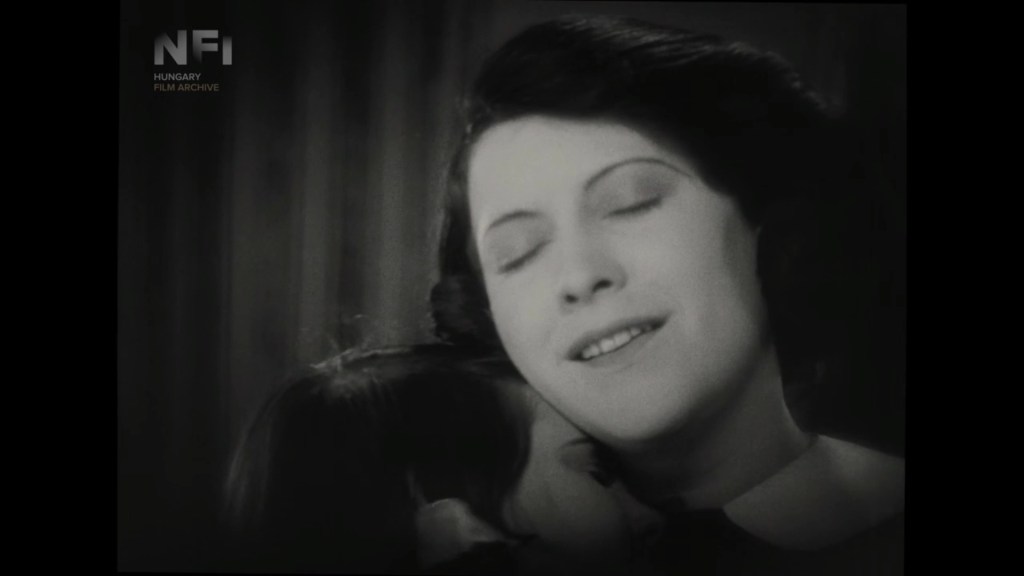
What a superb film this is: a stirring, grand melodrama, wonderfully realized. It unfolds through a pleasing blend of long, slow scenes and sudden, startling transitions. Secrets are well hidden in this structure, allowing full space and time for the grand scenes of drama to unfold. Berta’s paralysis, her miraculous recovery, her discovery of Gerardo’s secret, her confrontation with Elena – these are given an often surprising amount of screen time, and are remarkably effective and affecting. The whole thing moves like an opera, complete with visual leitmotivs and repeated metaphors. I love how up-front L’Ombra is about its central image. When she is paralyzed, Berta tells Gerardo that she is “but a SHADOW in your life… a SHADOW full of sadness under the sun of your glorious future… / But in your heart, you see, my place must remain untouched, waiting for me to take it back when this SHADOW lights up again…”. I do love it when a character cites the name of the film, especially when that title draws our attention to it with upper case text! But the dialogue is also as grand and slow as the film. Its long scenes allow conversations – especially the confrontations – to play out in full without either occupying too much of a scene. Time and again, I was impressed by how well everything plays.

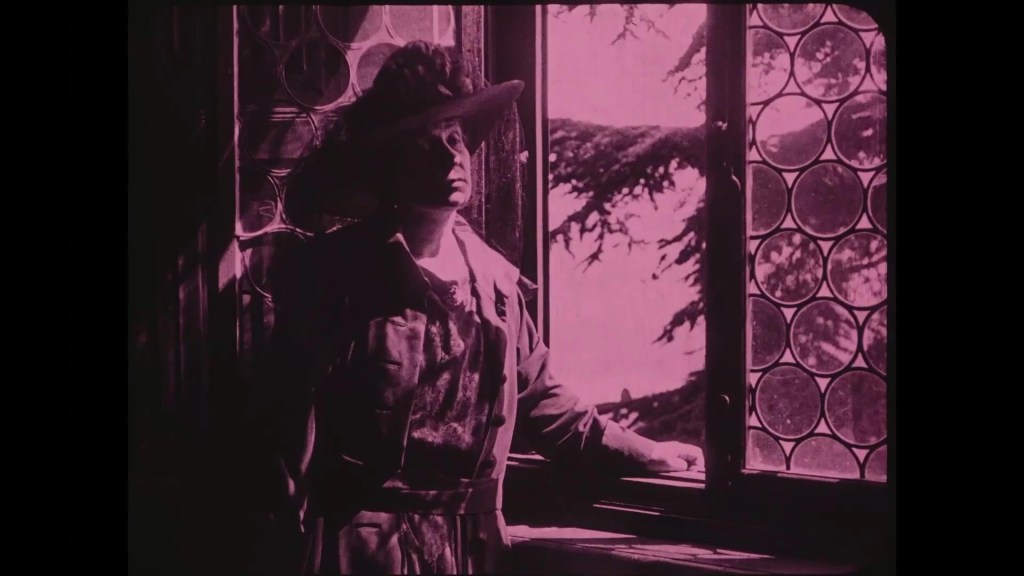
I was also utterly spellbound by how good this film looks. The photography is sumptuous, showing off the wonderfully detailed interior sets and the stunning exterior locations. The combination of tinting and toning makes the film feel almost stereoscopic. Those exteriors that show off walls of foliage, or the great vistas across the valley, are eye-poppingly beautiful to look at.

L’Ombra was restored in 2006 by the Museo Nazionale del Cinema di Torino and the Cinémathèque Royale de Belgique. (I note in passing how informative the restoration credits are at the start. As they state, this film was originally 1955m long, and this restoration is 1844m.) The copy used from the collection of the Cinémathèque Royale de Belgique reminded me, in its colours and richness, of this same institution’s restoration of Abel Gance’s Mater Dolorosa (1917). I have praised that film elsewhere for its photography and lighting, and L’Ombra feels very similar both in content and style. There is the same focus on infidelity and parenthood, the martyring of the central female protagonist, and the superbly rich, dark, carefully tinted/tone aesthetic of the film. L’Ombra gave me the same thrill, only there was something pleasingly operatic about it – a sense of grandeur that went further than Mater Dolorosa.

And it’s not just the overall feel and tone of L’Ombra that pleases. There are so many great details that tie it all together. Look how the film observes the flowers that Gerardo gives to Berta when she is first paralyzed, then the later moment when we see the empty vase – and then the moment when Berta finds a vase full of flowers in Gerardo’s studio. Or the use of the veil over the sleeping child, the way Gerardo places it gently over him, which serves as a wonderful surprise reveal for Berta. Just by itself, it’s an astonishing image. (Talking of Gance again, it reminded me of the sublime reveal of Angèle in J’accuse! (1919), when his mother suddenly draws back her cloak to reveal her unknown burden.) But the unveiling – literal and figurative – becomes a moment both delicate and devastating. Finally, there is the moment when Berta goes to the window after seeing off Elena. There is a shot of the sky, clouds unfurling with hallucinatory speed before the sun. Then we see the sunlight pour into the studio, over the reunited couple and their adopted child. The titular “shadow” is passed. It’s a gloriously literal moment of symbolic enlightenment, flooding the scene with warmth.

Of course, as I observed earlier this week, a film can have a meaty melodramatic plot and look sumptuous without having any emotional impact. L’Ombra does have emotional impact, and it’s the result of a great combination of its rich mise-en-scène and its central performances. Italia Almirante-Manzini is superb as Berta, carrying every moment with great conviction – and maintaining great intensity across those long, grand scenes of emotional turmoil. She makes every nuance of feeling clear without lapsing into eye-bulging hysteria. There is a grand sense of pace and rhythm that makes each scene like an operatic set piece, arias turning into duos or trios.

As Gerardo, Alberto Collo is less obviously impressive – but his character is quite deliberately the least interesting in the film. He is weak-willed, unable to act or speak honestly. The drama is absolutely centred on Berta, so Gerardo’s lesser presence on screen works. Indeed, he is also overshadowed by the wonderful performance of Liliana Ardea as Elena. The naïve girl at the start of the film exists in the shadow of Berta. Her naivety is seen in her wide-eyed embarrassment, and in her girlish delight in letting Berta guide her into society (and into marriage), and clothe her in fashionable attire. But Elena’s mannerisms soon become self-conscious. She realizes that she can charm, and this extends to deception: she casts a charm over Berta, lying to her face. (That turn of the head and glance away is meant for us to see: it’s a hint of girlishness that has assumed adult cunning.) By the end of the film, we see both her pride and her lack of maturity. Her anxious tilts of the head and darting glances remind us of the naïve figure at the start of the film, but here she’s being found out: there is nowhere to hide from Berta.

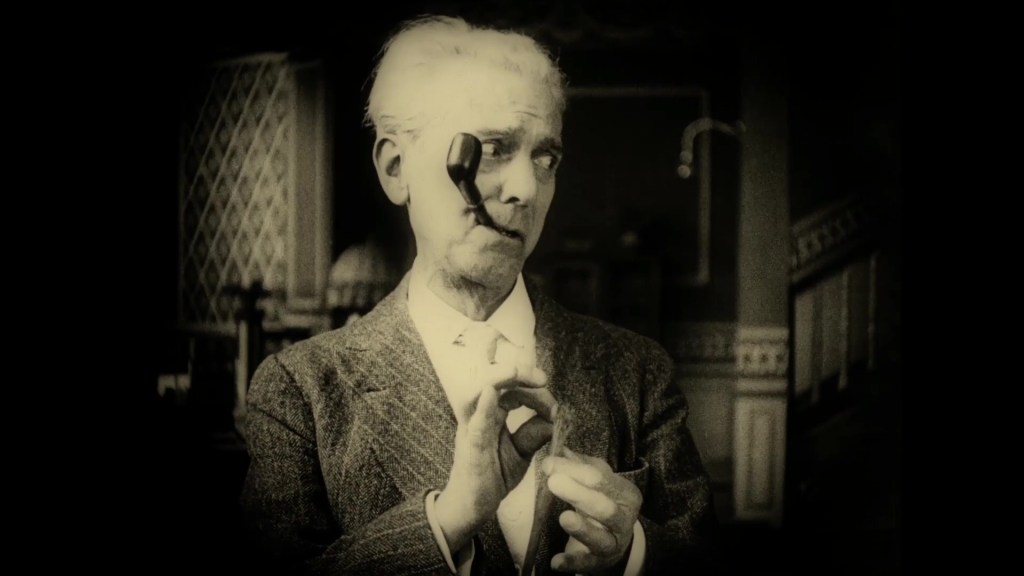
Within this gloriously melodramatic world, there is a much-needed touch of humour provided by the ironic elder figure, Michele. He’s a superb character, played with great charm and wit by Vittorio Pieri. His little nods and winks, his expressive gestures with his pipe, and – most of all – his ironic comments are wonderful. But he also gets one of the most touching moments in the film, when he realizes how Berta has been betrayed. His reaction appears to be comic, but he suddenly realizes that he is crying. He scoops a tear on his fingertip to examine it. It’s such a brilliant little moment. When the source of ironic detachment in the film starts to cry, you realize the depth of feeling in this world, and you sense the history between these old friends.

For this presentation of L’Ombra, piano music was provided by Michele Catania. His score is sumptuous, full-blooded, swoonily romantic. It captured the mood and pace of the film, following each emotional beat with great skill – spanning and typing together even the longest of melodramatic scenes. Of many moments that pleased me, I single out the scene when Berta recounts her miraculous recovery to the doctor, and the moment when she raises her arm for the first time – high enough for it to slowly and surreally appear within the frame of the mirror. The score makes this scene rapturously pleasing. So too for Berta’s first attempt to raise herself on her legs. Musical exertion matches Berta’s physical and moral exertion. After the thunderous passage of music when she stands, the music slows and quietens when she sits. It’s not just capturing the tempo of the action or its sense of movement, but the emotional sense of the scene: it’s filled with tenderness, a kind of warm glow in the satisfaction of the miracle taking place. What might easily fall headlong into bathetic parody becomes supremely pleasing and moving.

In sum, this was the best film I’ve seen so far at this year’s online Pordenone: a great melodrama, beautifully shot, superbly restored and presented. Bravo.

Paul Cuff

Pordenone from afar (2025, Day 5)

It’s another packed day of material from Pordenone: we get a short and no less than two features. While not quite as lengthy a programme as Day 2, it’s another full schedule for the eyes. We begin in Italy before heading to Hollywood’s high seas…

Colonia Alpina (1924-29; It.; Emilio Gallo). Our short film is a series of views of a school trip to the mountains. The opening title contains an excusatory note from the filmmaker, Emilio Gallo, apologizing for the poor quality of the material. But despite the claim of being an “amateur” production, there is much here to admire. As ever, I love this kind of fleeting glimpse into the world of the past…

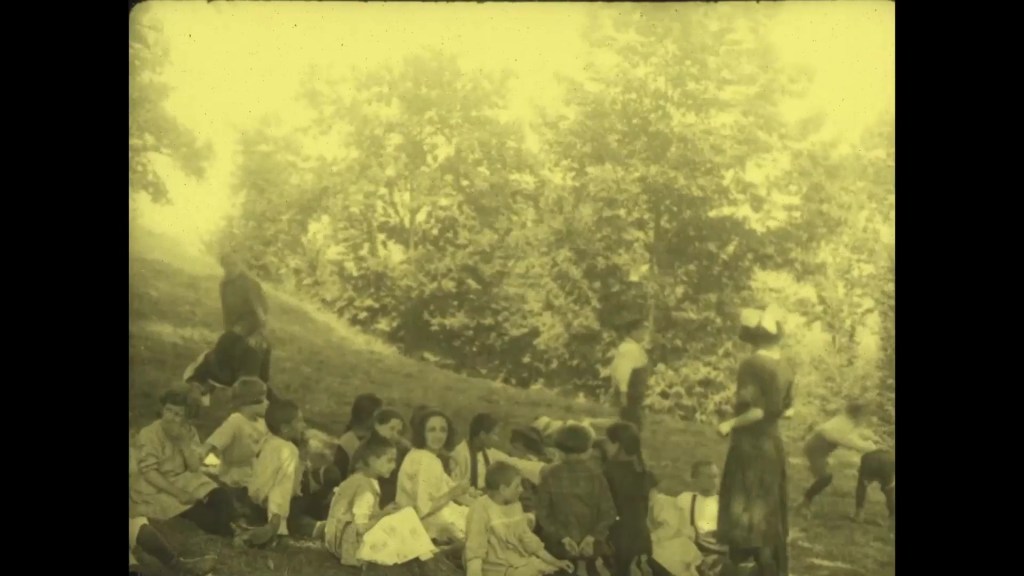
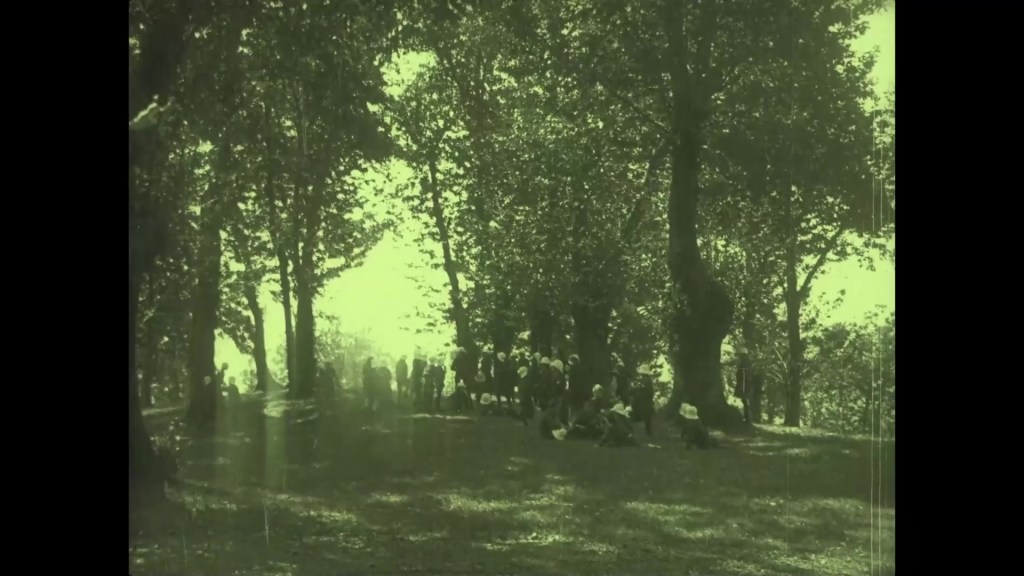
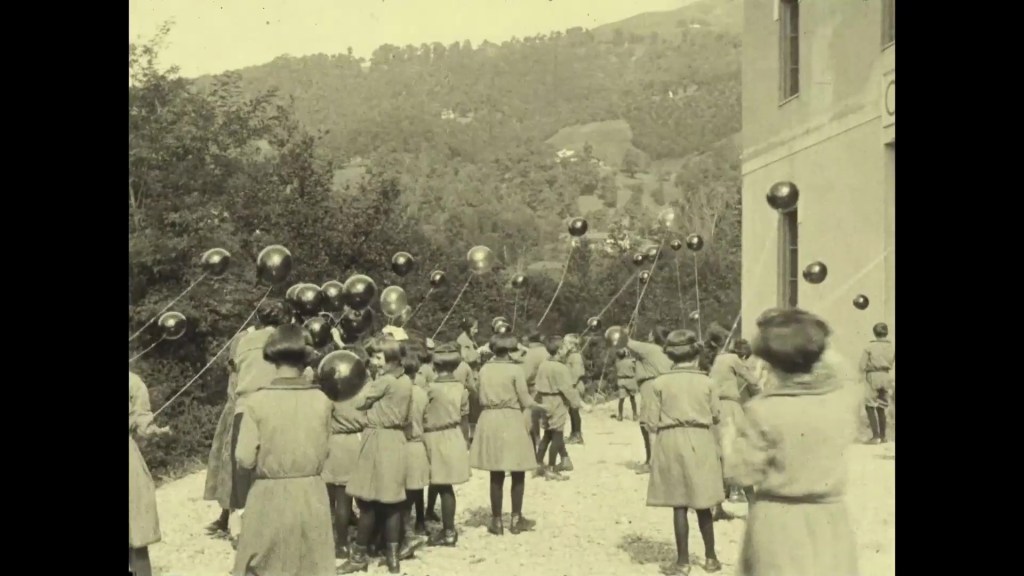
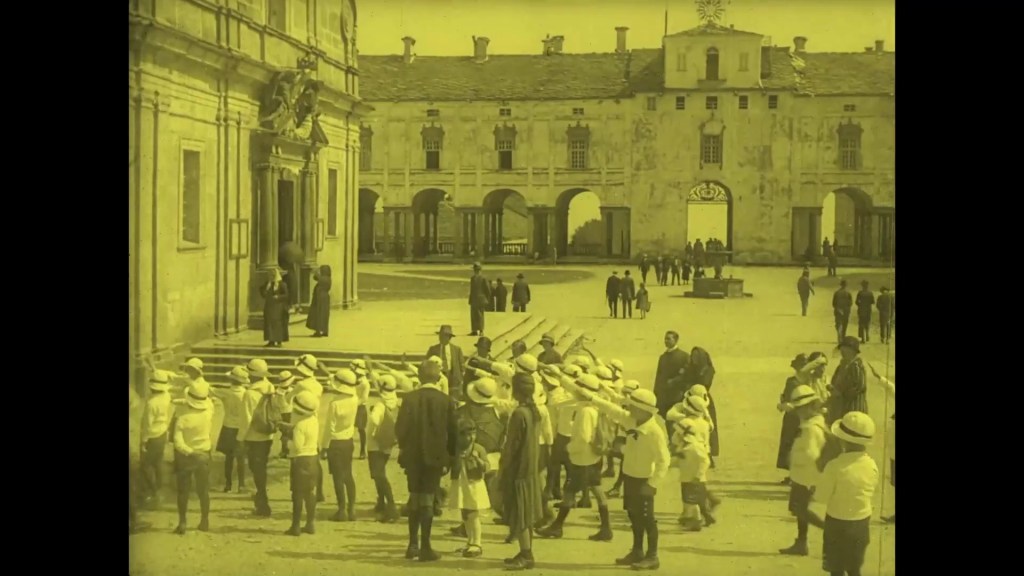
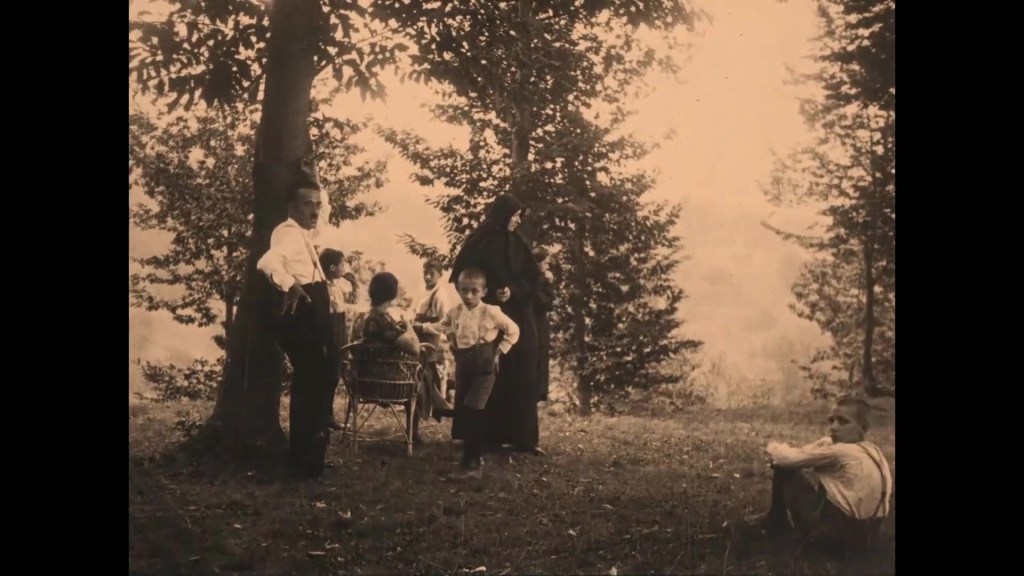
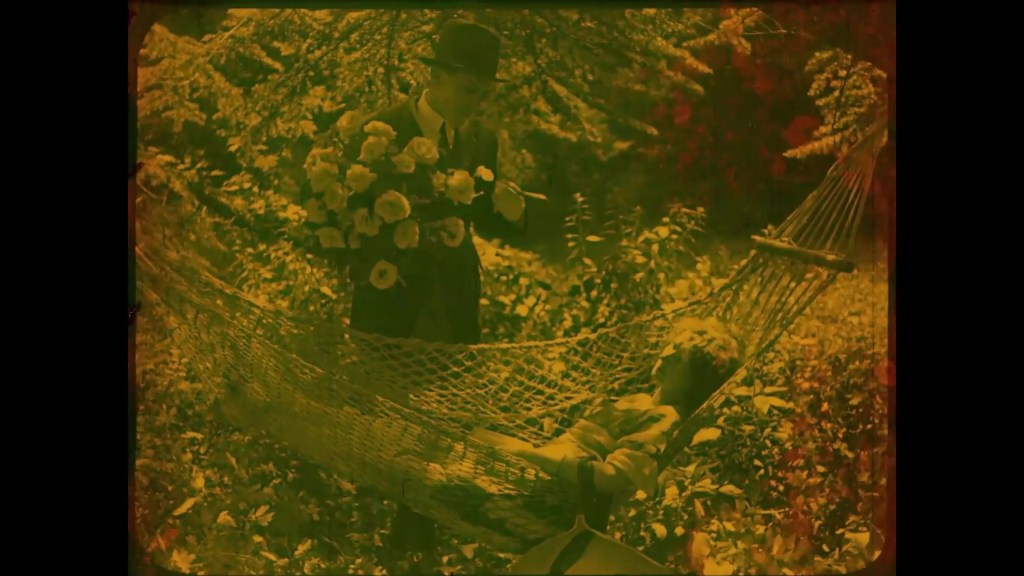
A troupe of schoolchildren march along mountain pathways. Their eyes stray towards the camera as they ascend the steps to their lodge. They are served food, still glancing over their shoulders at us. They half-march, half-tumble down a slope. Their eyes catch ours. A boy salutes, and vanishes. Exercises beneath the trees and a burnished sky. The tinting – pale amber, pale green, pale pink – makes each scene glow with warmth, with the ghost of sunlight and foliage. The children scamper and laugh, innocent of their ancientness. They raise their arms in fascist salute. They are long dead, now, and they cannot imagine why we are troubled.

Il siluramento dell’Oceania (1917; It.; Augusto Genina). The Pacific. Warships at sea. Onboard the “Titan”, the Count and Countess de Martinval, and Baron Cocasson, who tries to flirt with the countess – little suspecting that both she and the count are criminals. Meanwhile, onboard the nearby “Oceania”, Captain Soranzi is asked to the bedside of the dying Marquis de Roccalta. Roccalta entrusts him with a letter to his daughter, Jacqueline, saying that the family fortune is hidden – and the instructions to find it lie in the hilt of the sword of the “Terrible Knight”. But the “Oceania” is torpedoed. Before the ship sinks, Soranzi messages the “Titan” with the news of the disaster – and the clue to Roccalta’s treasure. The signaller onboard the “Titan” takes the news of the treasure to the Martinvals, who decide to pursue the fortune. At Castle Roccalta, the widowed Marquise (who does not yet know that she is widowed) is heavily in debt. Her daughter Jacqueline is engaged to Henri de Ferval, and lives in ignorance of her impending destitution. The creditor Isaac is already taking inventories of the family jewels to take in lieu of payment. When the loss of the castle occurs, de Ferval abandons Jacqueline and the family must move out. Baron Cocasson exploits the situation, paying Isaac for ownership of the castle. While the Cocassons search for the treasure in the chateau, the impoverished Marquise dies – entrusting Jacqueline to the care of their loyal butler, Fidèle, with the desire that they should go to America. Meanwhile, news reaches Cocasson that Soranzi has miraculously survived the sinking and is now on his way to contact Jacqueline. When Soranzi arrives, the countess pretends to be Jacquline and receives the letter from her late father. While the villains search for the treasure, Soranzi travels to America and is feted at a soiree at which “Miss Dolly” performs. “Dolly” is none other than Jacqueline, who has come to America in search of her father – not knowing his fate aboard the “Oceania”. But the Martinvals are also now in America, searching for Jacqueline, who unknowingly holds the final clue to the treasure in her necklace pendant. When Soranzi realizes their deception, a chase ensues. The various parties head back to Castle Roccalta. The villains find the treasure, so another chase ensues. Eventually, Fidèle captures the villains in the mountains, allowing Soranzi to marry Jacqueline – and secure the treasure for their future. FINE.

As you can tell from the above synopsis, this is a madly diverting film, packed with madly zigzagging twists and turns. The restoration credits do not make clear the original length of this production, and the copy presented here is a French edition with some missing scenes explained by text. It feels like a much longer serial film has been condensed into 70 minutes. That said, the whole thing is extraordinarily entertaining – full of absurd twists and turns, sudden relocations, inexplicable plot devices, and characters that appear and disappear. Though I was never once moved, I was always engaged. Il siluramento dell’Oceania has all the pleasures of a serial – dastardly villains, killings, death by grief, hidden treasure, kidnapping, false identities, umpteen chases on planes/trains/automobiles – all delivered with great aplomb. It’s incredibly silly, but huge fun.

Plus, it looks absolutely gorgeous. The tinted and toned print preserved by the CNC is superb quality. The location shooting around Italy is superb. I love the sharpness of the highlights, the glow of the colours, the richness of the blacks. We get to see a wide variety of locations, from the high seas to the snowcapped mountains, and there are glimpses of gorgeous castles and dusty roads, as well as all forms of transport: ocean liners, trains, cars, planes, and bicycles. The characters might be cardboard, but they chase around these fabulous landscapes with marvellous commitment. When everything looks this good, and moves along with such gusto, it simply doesn’t matter how pulpy the story or situations. What a wonderful, mad rush through 1917. (Though I hate to keep picking on it, Day 3’s The White Heather lacks precisely the energy, fun, variety, and silliness that makes Il siluramento dell’Oceania so enjoyable and so rewarding.)

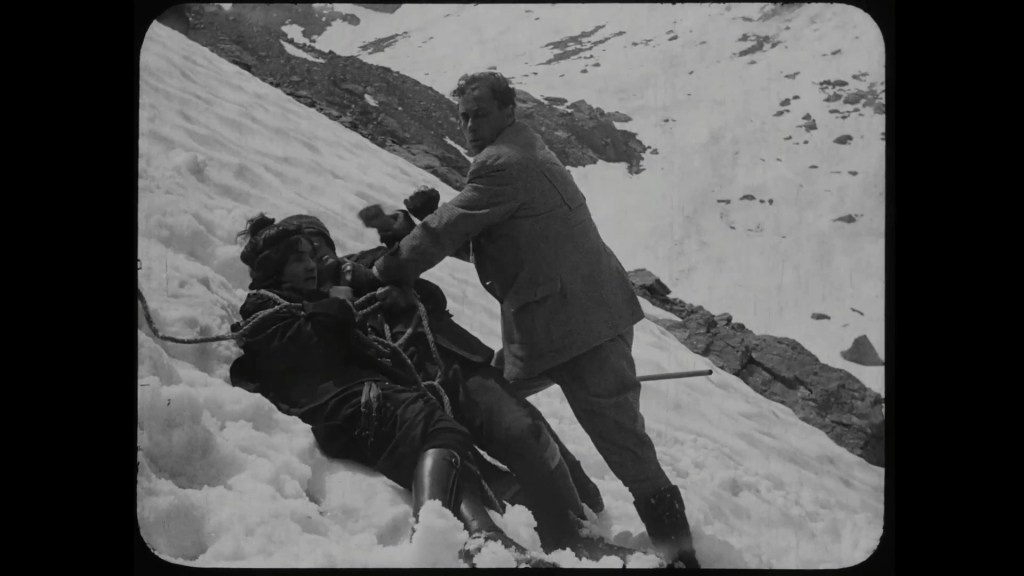
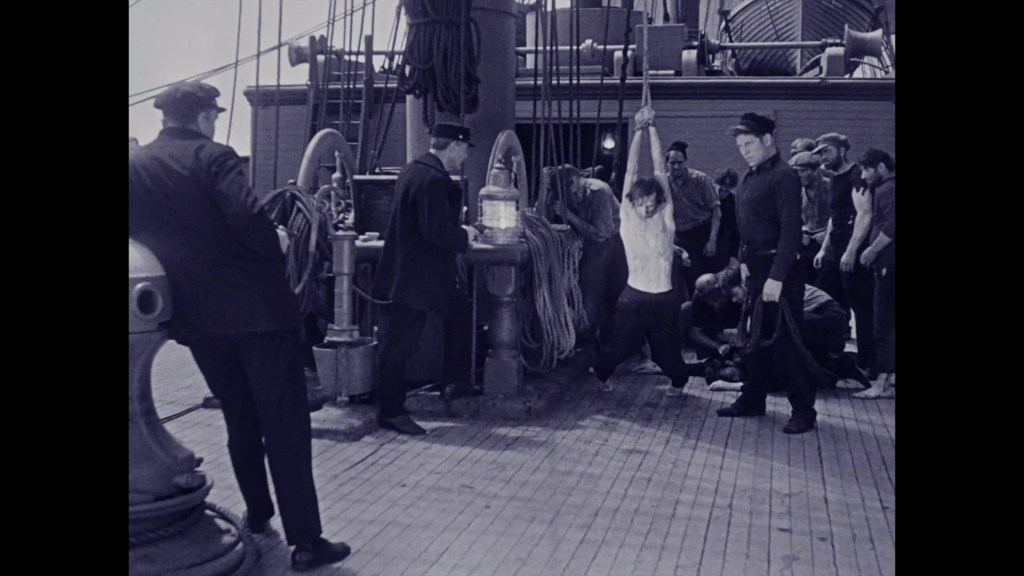
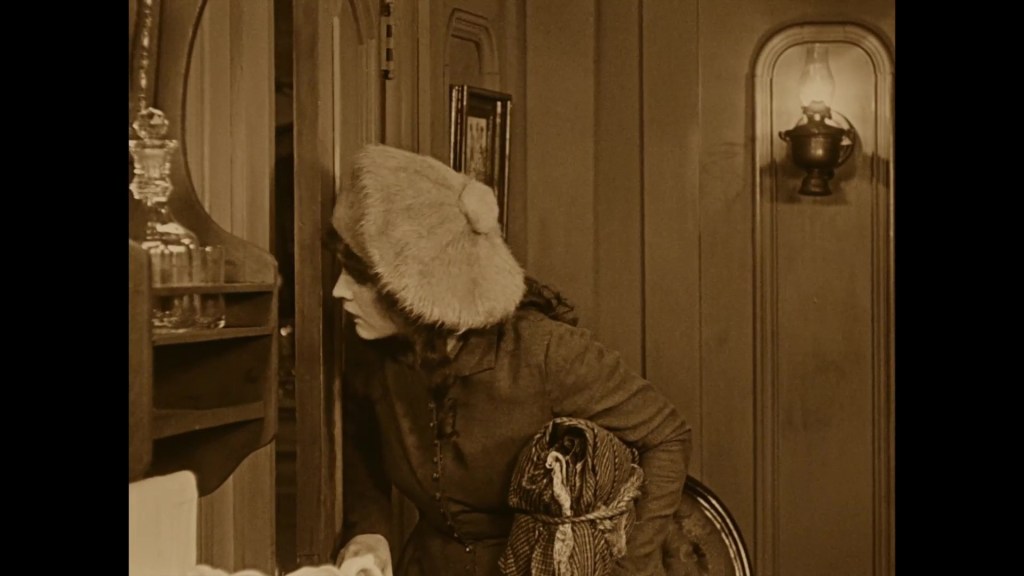
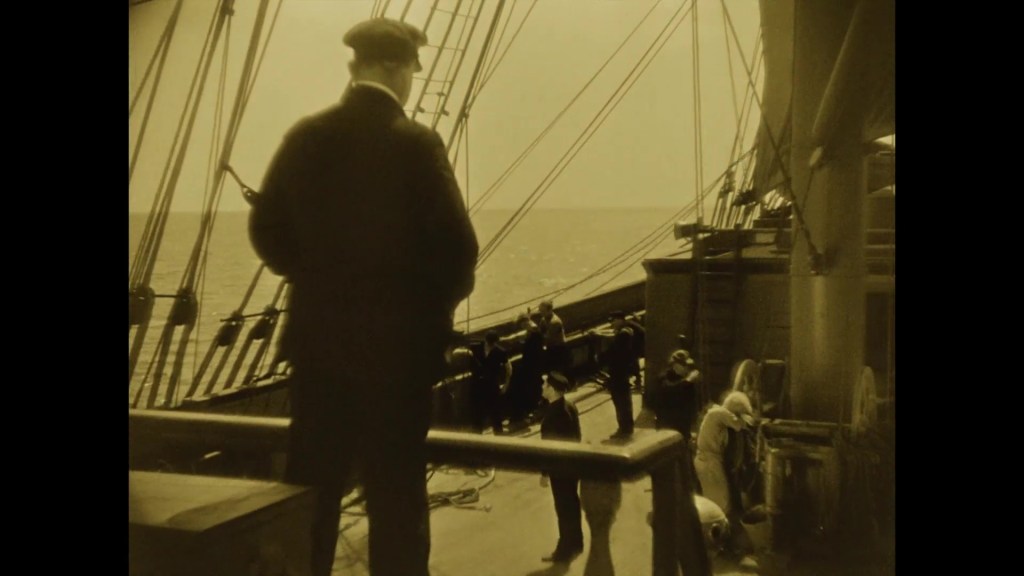
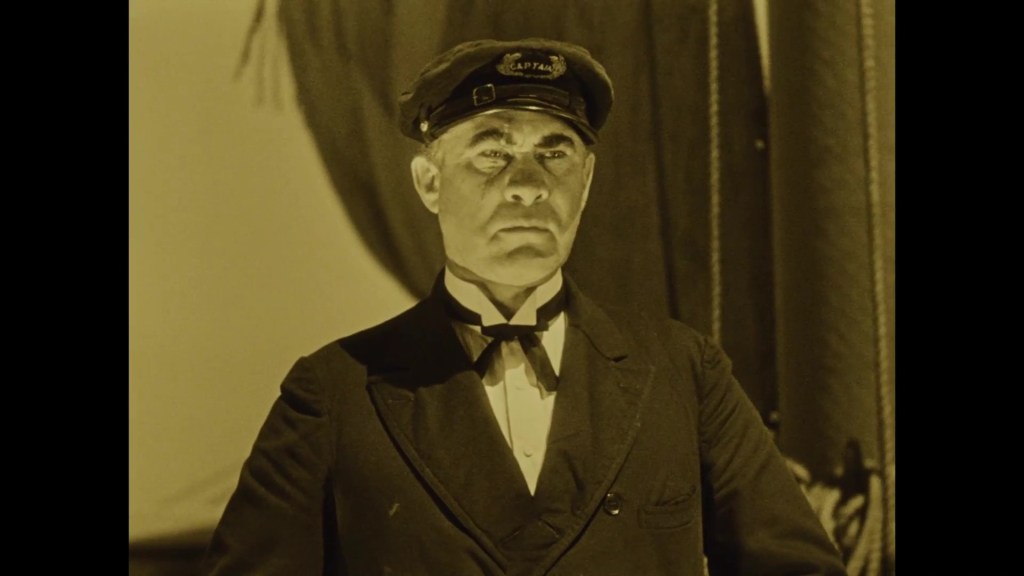
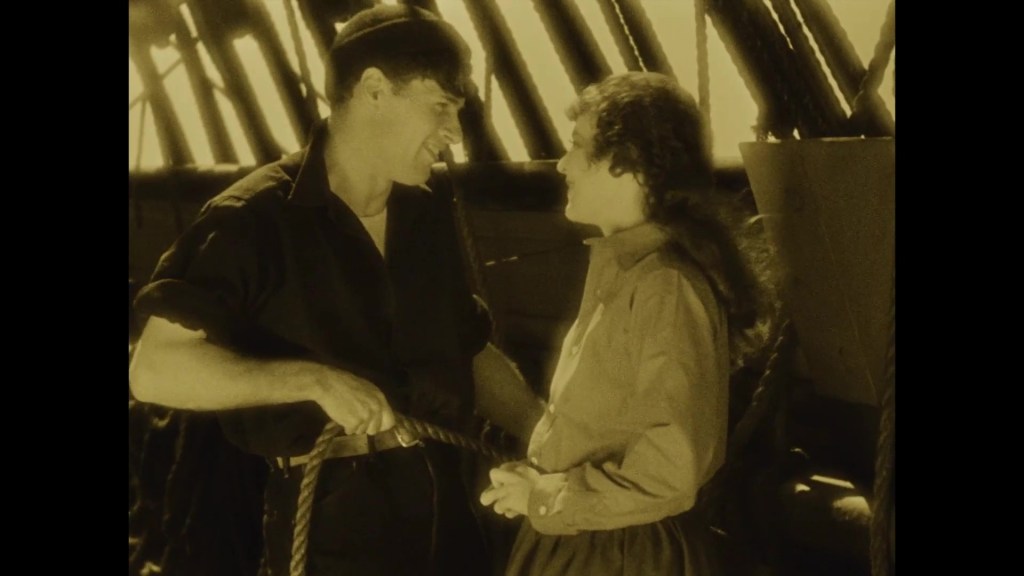
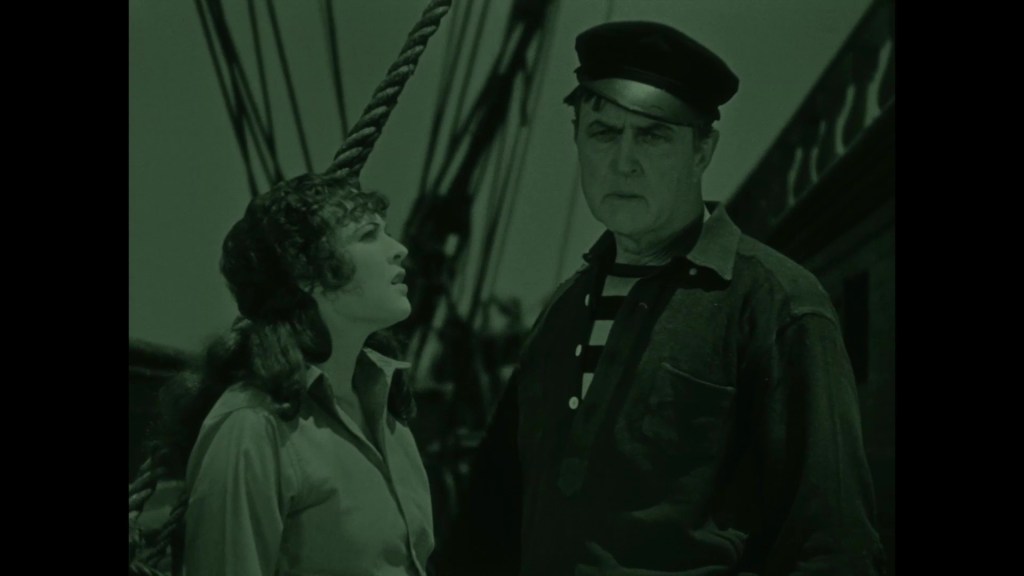
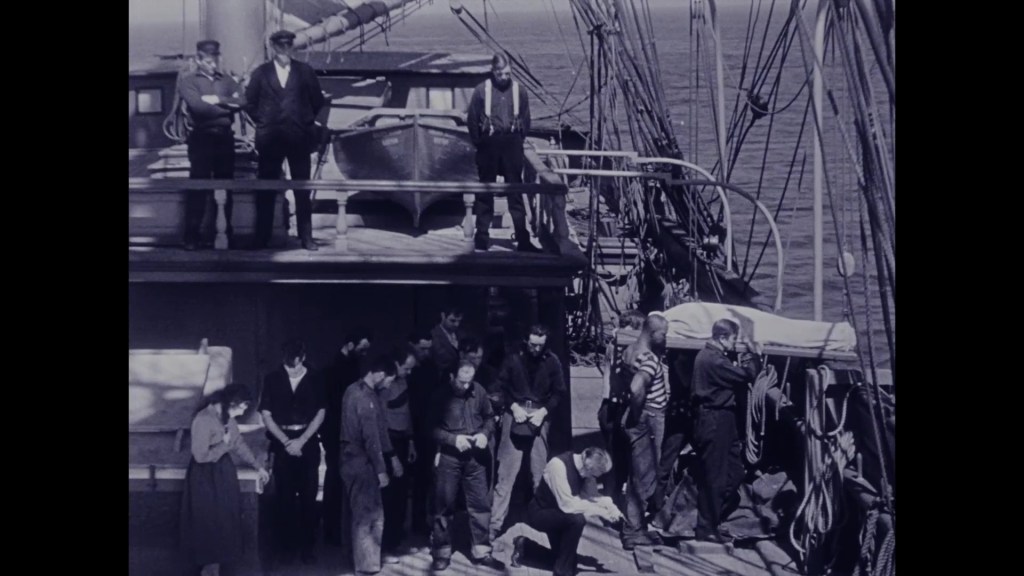
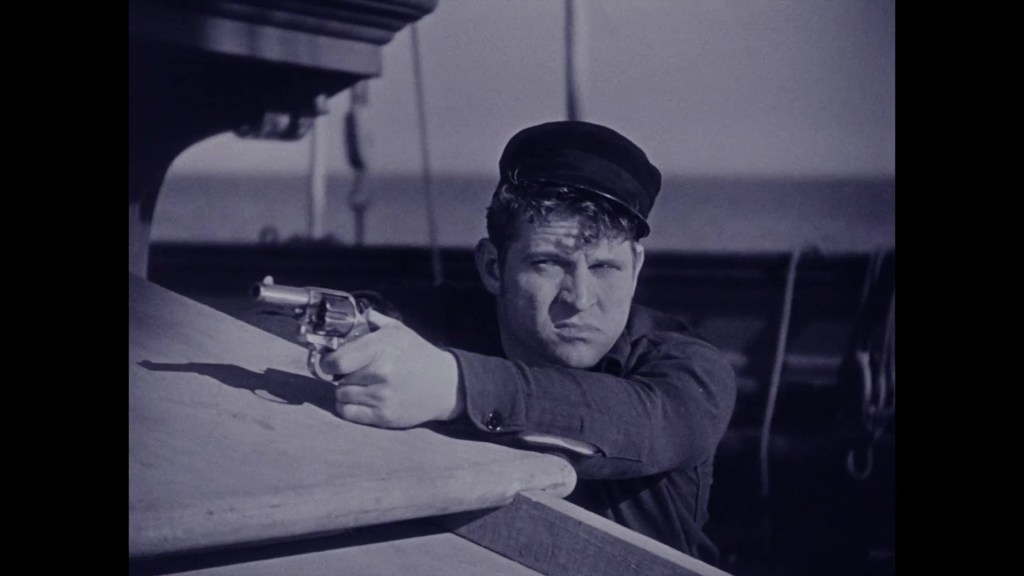
The Blood Ship (1927; US; George B. Seitz). Our second feature takes us aboard “The Golden Bough” in the 1880s, with its cruel captain “Black Yankee” Swope and his daughter Mary, who hates her father’s treatment of his crew. In San Francisco, Swope recruits a fresh crew from the harbour inn, run by “the Swede”. Mary takes the chance to run ashore but bumps straight into the sailor John Shreve. Swope forces his daughter back on board, so John decides to volunteer for the crew – as does the veteran James Newman. Most of the crew have effectively been kidnapped by the Swede, including a reverend and a diverse group of roughs from the inn. Newman confronts Swope, who kidnapped his wife and daughter (Mary) many years ago. Newman has served time for a murder Swope committed, leaving Swope free to raise Mary as his own child. The brutality of Swope and his second, Fritz, leads to the death of a young crewman. Newman is tied up and taunted by Swope, who reveals that he killed Newman’s wife. Mary overhears the truth, just as the crew mutiny. Fritz and Swope are killed and dumped overboard, and the ship sails back to San Francisco – where John and Mary can marry. FINIS.

Hmm. Well, as a drama this at least has the merit of brevity. At about 65 minutes, the film has enough plot to keep it going, but no more than that. The characters have little depth or complexity, nor are there any surprises. That said, the entire cast provide very committed performances. As James Newman, Hobart Bosworth has an especially arresting face and piercing eyes. He has tremendous presence as the wronged father and widow, and you absolutely believe in his implacable hatred and sense of mission. When he whips Swope to death, hurls his body overboard, then stretches out his arms in a gesture both of relief and triumph, it’s genuinely thrilling and disturbing. Jacqueline Logan and Richard Arlen (as Mary and John) are a very handsome couple. Both players do their best with these roles, which is enough – but no more than enough.

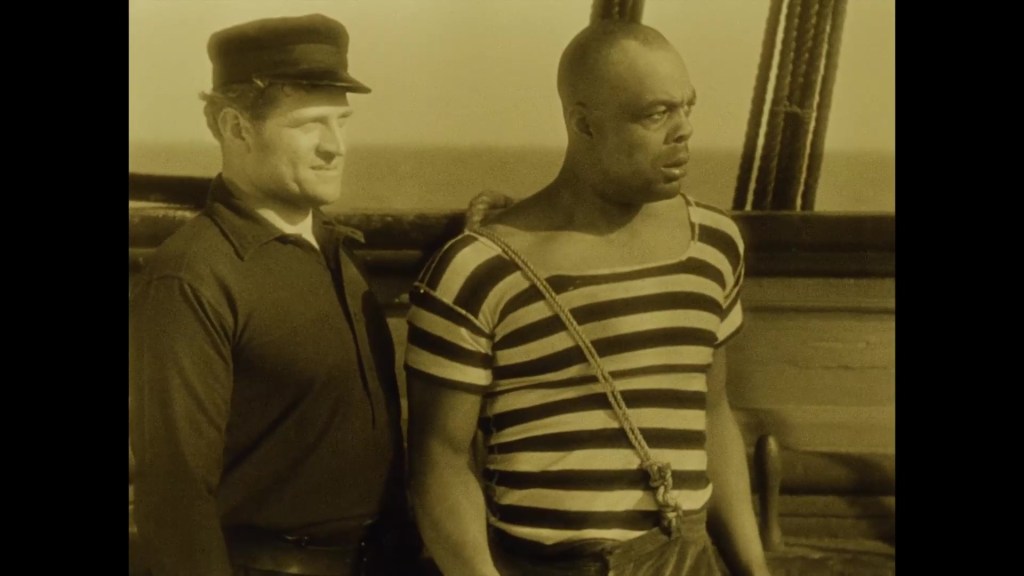
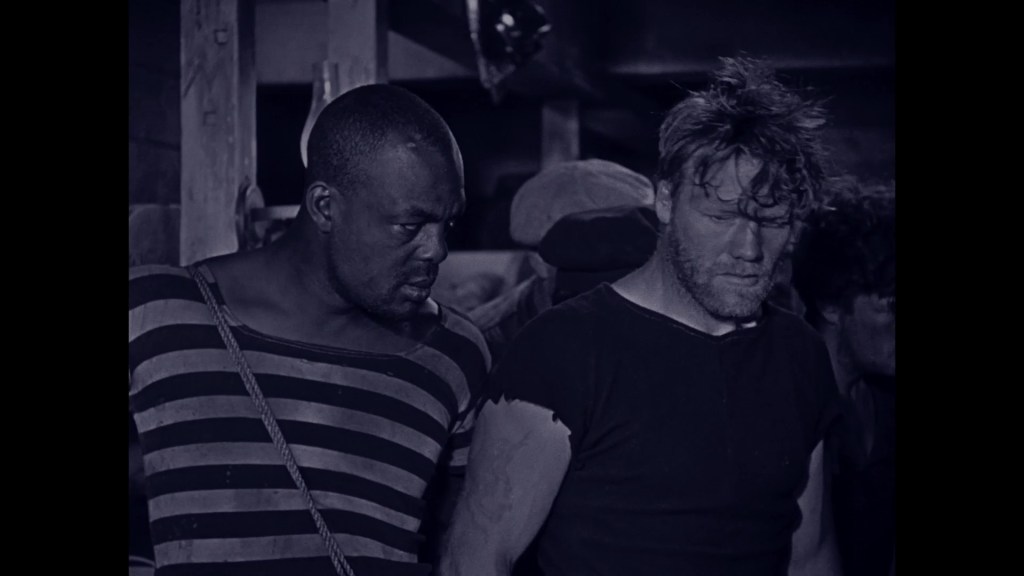
The cast as a whole are a series of stock, if not stereotype, characters. What’s interesting is how many “types” there are. Swope’s sidekick is called Fritz, the innkeeper is the Swede, and among the cast are Nils (Scandinavian) and the black sailor. Accents are made evident in the dialogue titles, with the latter two characters in particular having distinctive speech patterns. While the black sailor is the centre of various comic moments, he is (mostly) the originator of the laughs rather than the object of them. When another crew member ends up falling into some tar, there is an awkward moment of blackface humour – but thankfully it is the white sailor who is the subject of the black sailor’s joke. The black sailor is played by Blue Washington (who was also a baseball player), who appears last on the credits – and his character is unfortunately named simply as “The Negro”. Which is, I suppose, the kind of depth and detail one might expect from a story like this.

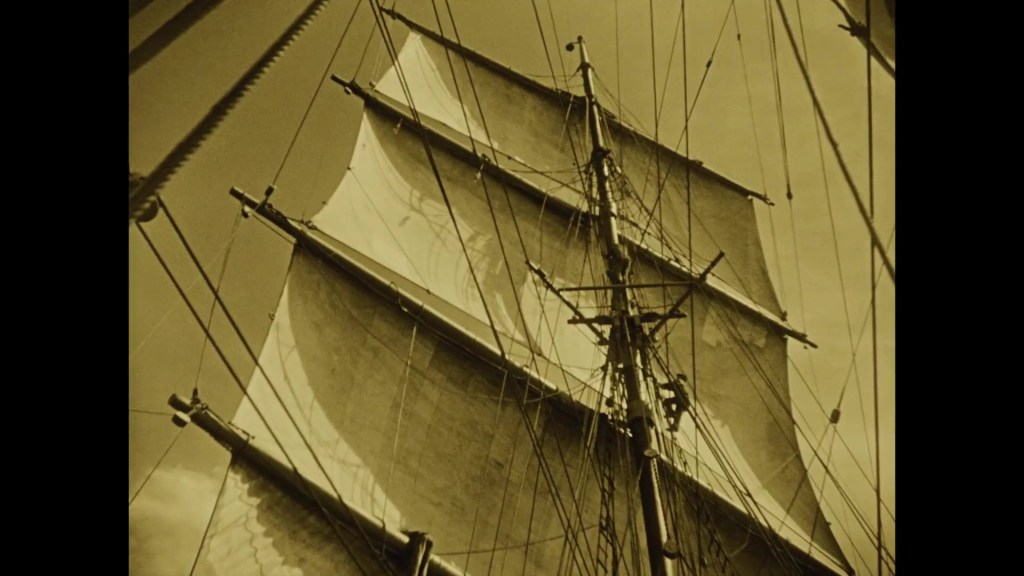
Despite these limitations of character and plot, the film does work. Indeed, it’s impressive that it is so successful at sustaining the drama across even 65 minutes without falling into piratical parody. The Blood Ship is very well lit and photographed and has a marvellous set and setting. The titular ship is a real and believable space, the perfect self-contained setting for the drama. The quality of the print used for this restoration is excellent, and it’s beautifully sharp and detailed. Faces have amazing texture, eyes gleam with superb clarity, and the ropes and wood of the ship have palpable weft and grain.

What more can I say? I enjoyed the film, but my brain was once more feeding on scraps. What sustained me throughout was Donald Sosin’s superb piano score. Absolutely committed to the drama, it was alternately swashbuckling, violent, tender, and tuneful. A real delight. Piano music for the two Italians films was provided by Jose Maria Serralde Ruiz, which was likewise excellent: playful, wistful, curious for the short, and energetic and expansive for the feature. So yes, a diverse range of entertainment: films that I would never otherwise have seen, presented to their best advantage.

Paul Cuff

Pordenone from afar (2025, Day 4)

Being hosted by an Italian festival, it makes sense for us to visit Italy’s cinematic past. Day 4 takes us to the early days of Italian feature films, and therein to the distant Italian past…

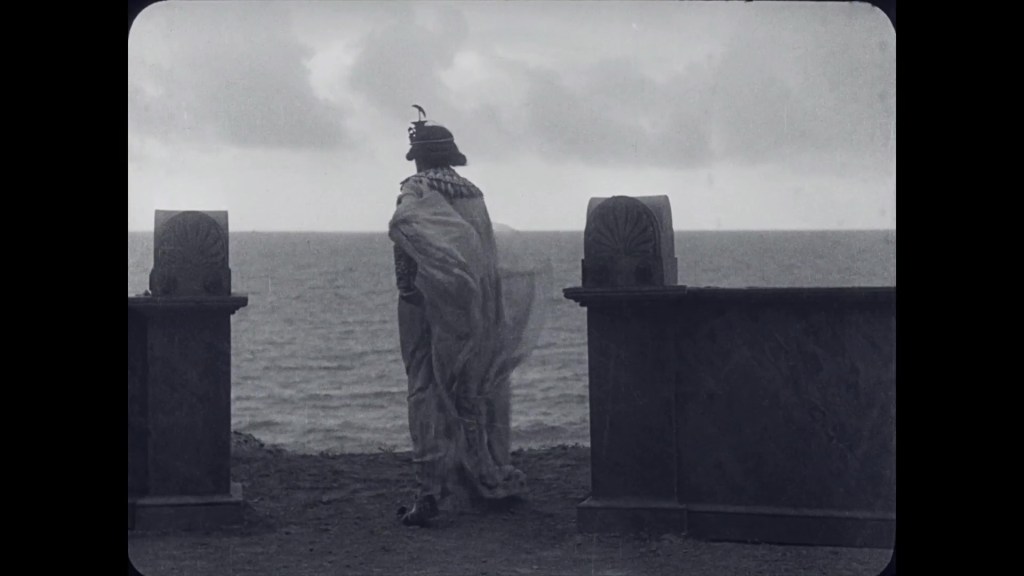
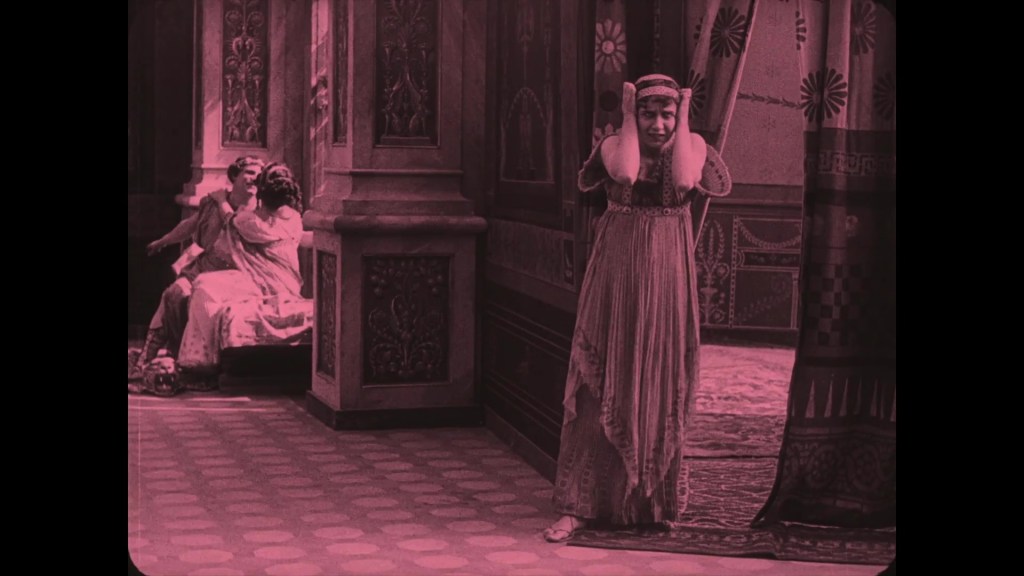
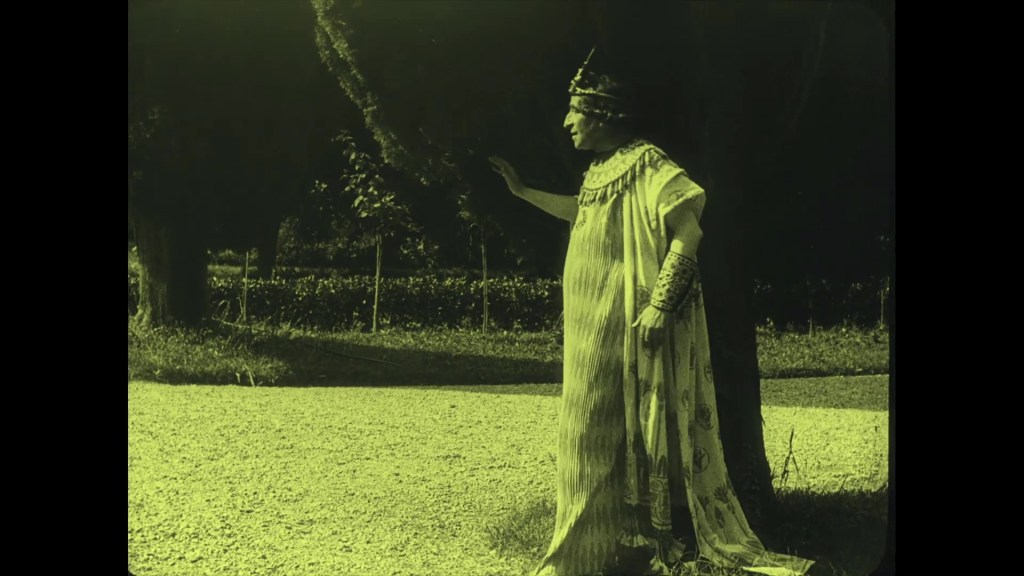
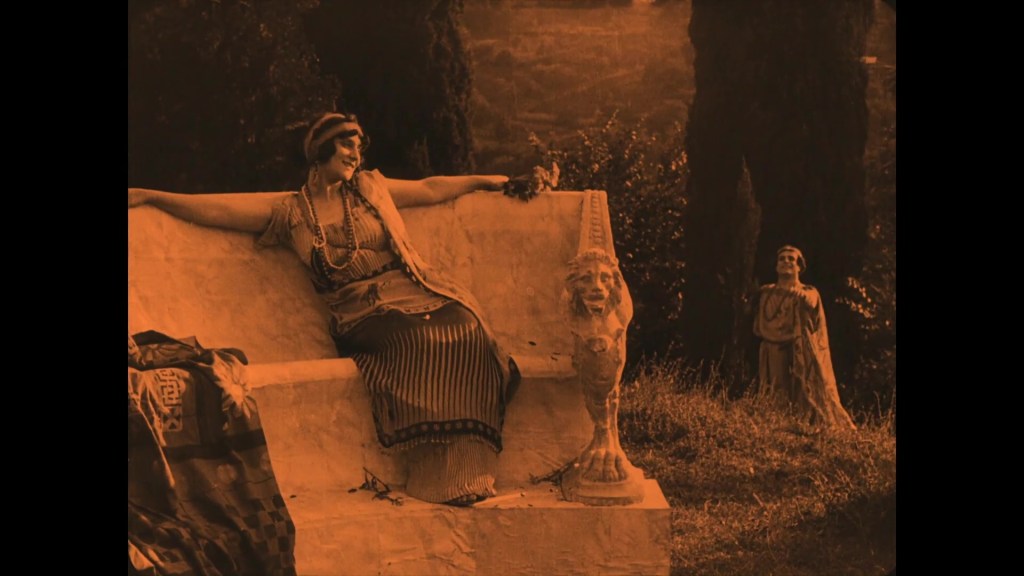
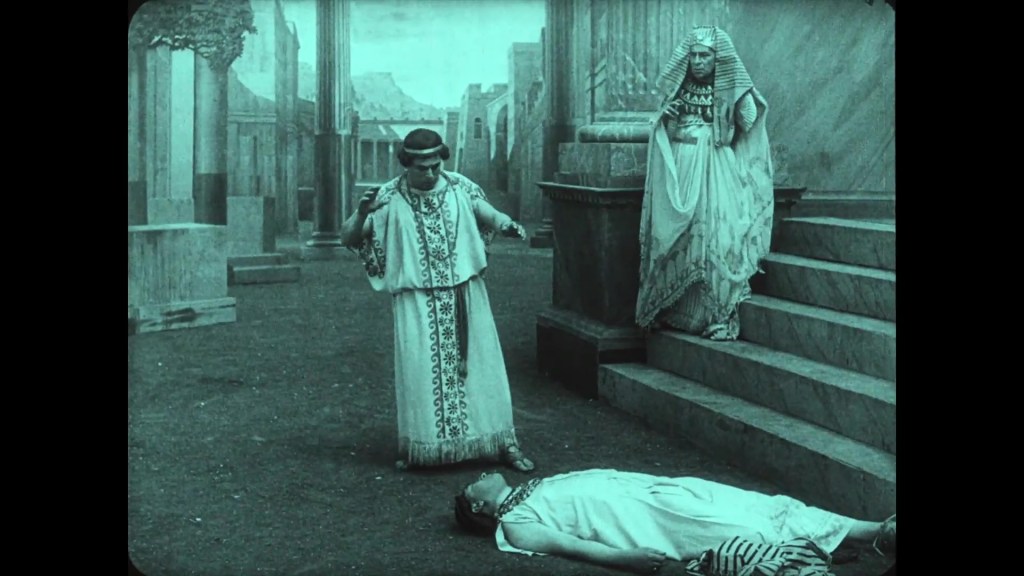
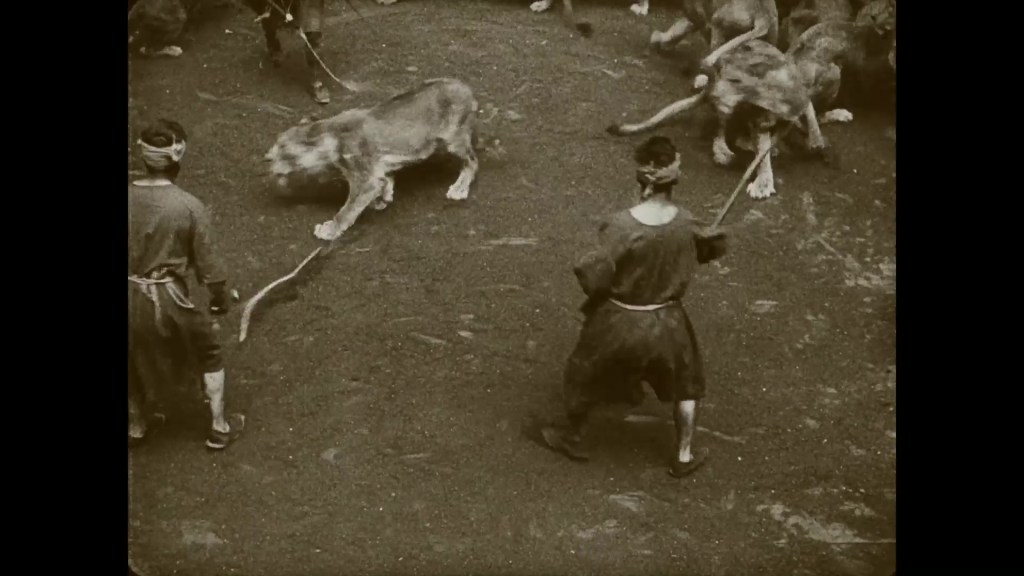
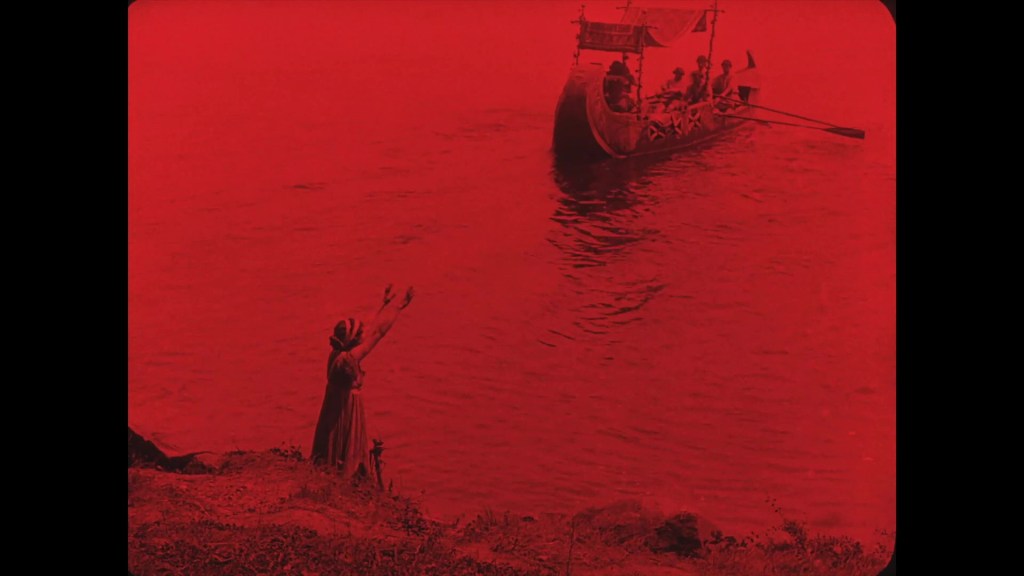
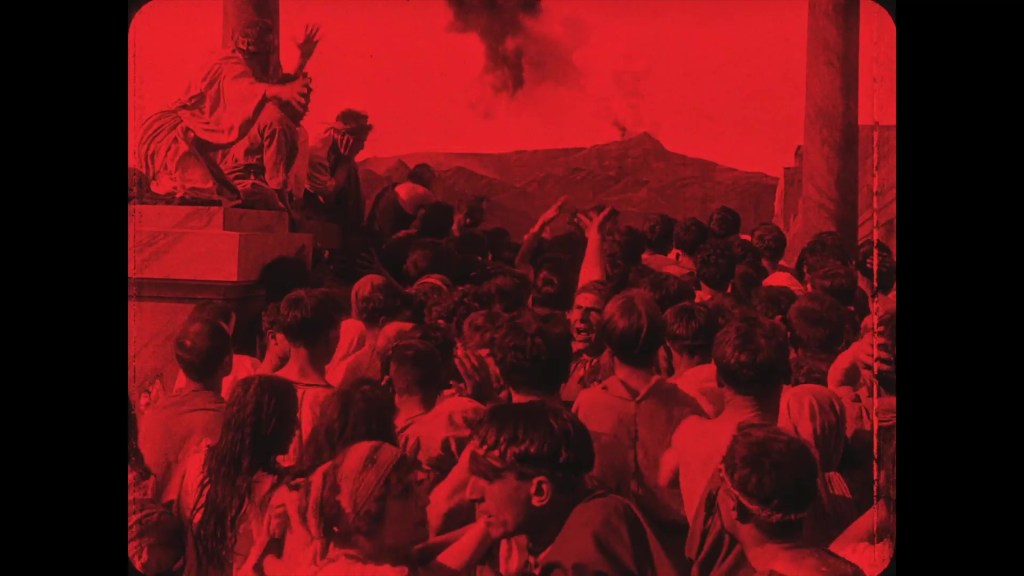
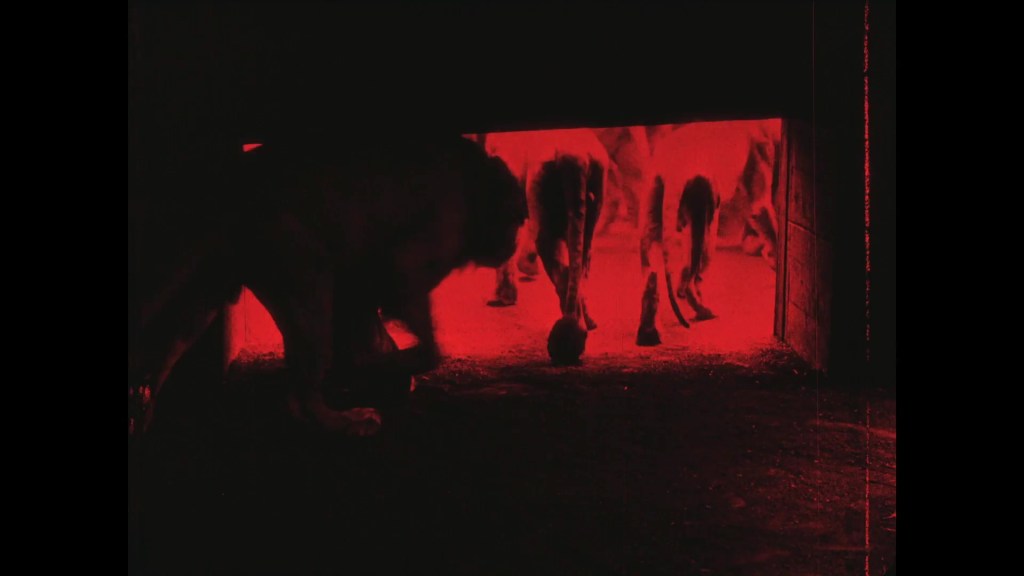
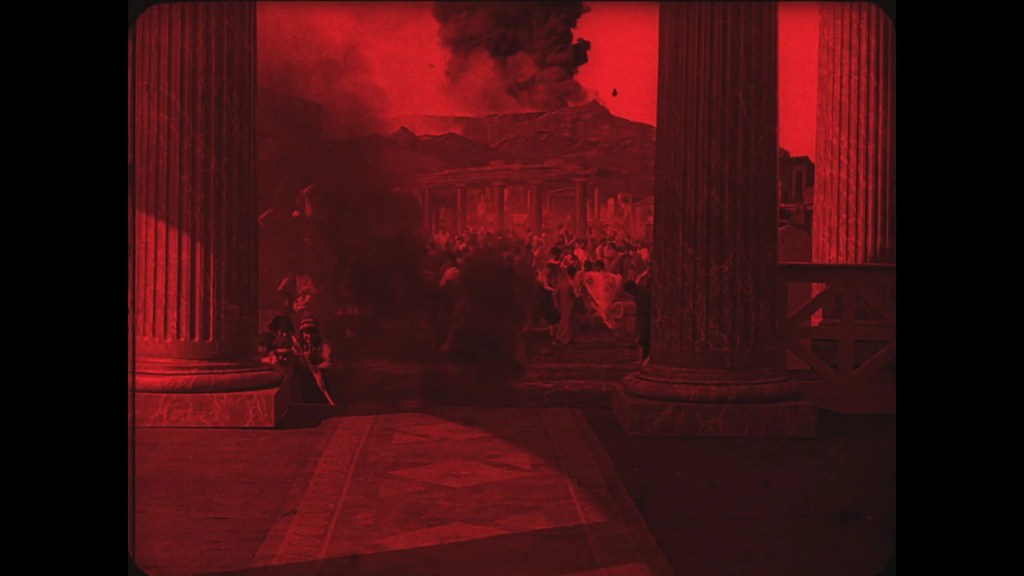
Gli Ultimi giorni di Pompei (1913; It.; Eleuterio Rodolfi). AD79, Pompei. Nidia, the blind flower seller, attracts the attentions of Claudio and Glauco. Seeing Nidia is a slave being cruelly treated by her owners, Glauco buys her – and the girl falls for her new master. But he is in love with Jone, who is also desired by the powerful Arbace, who is enmeshed in corruption with the High Priest of Pompei. Arbace tries to seduce Jone but is prevented by his political rival Apoecide. Jone seeks sanctuary with Glauco, but this drives Nidia to despair with jealousy. She goes to the temple of Isis to pray, where she encounters Arbace and reveals her secret. He promises to give her a love potion, and goes to the sorceress on the slopes of Vesuvius. The sorceress, whom Glauco has previously angered, gives him a potion that will unhinge Glauco’s mind. Arbace gives this to Glauco, believing it is a love potion. Meanwhile, Arbace argues with Apoecide, who threatens to expose Arbace’s corruption with the High Priest. Arbace kills him and blames Glauco, who is suffering the effects of the potion. Nidia wants to expose the High Priest, so Arbace kidnaps her. Glauco is condemned to be thrown to the lions, but Nidia escapes and tells Claudio the truth of Arbace’s crimes. Claudio rushes to the arena, where he publicly confronts Arbace. Just as the crowd turns on Arbace, Vesuvius erupts – and Arbace escapes. Nidia and Glauco rush to Jone’s villa, then rush to the sea. Jone and Glauco escape, but Nidia is left on the shore. In despair, she drowns herself. FINE.

Gli Ultimi giorni di Pompei is a familiar beast. A classic example of the early feature film in Europe, a classic example of the ancient epic, a classic example of Italian cinema of the 1910s. In sum, its form and content are staples of books on film history, film style, and national cinema. But such scholarly familiarity can often do a disservice to the qualities of films as objects of pleasure. Gli Ultimi giorni di Pompei remains an engaging watch, and seen in such a lovely restoration (from 2006) really shows off why it deserves to be remembered.

Rodolfi’s camera is always static, but it observes in a way that draws in the eye. The combination of long takes, compositions in depth, and careful choreography of the cast makes every step of the drama clear and engaging. I was talking about Feuillade’s skill with this on Day 2, and here again is proof how much you can do with economic means. Rodolfi has grander perspectives, made grander still by the use of painted backdrops at the rear of his sets: the perspectives created within the fore- and mid-ground keep going! Whole scenes unfold with careful movement from the rear to the fore, from the sides – with additional spaces sometimes even masked and unmasked and masked again by curtains or drapes. The past here is solid and expansive. The impeccable sets and their lovely details (the leopard skin rug, the wall carvings, the ornaments, the statues) make this seem like a huge space that has been and continues to be inhabited.

Though there are no close-ups of the humans in this space, we do get some striking cut-aways to cooing doves (symbol of the lovers) and then to a savage looking owl (symbol of Arbace). The unique example of such close shots in the film, they have all the more impact: they are strange, striking images. They suggest something more than just the human drama we are watching. They feel properly odd and archaic, like a classical textual reference come to life.

The performances do not make the lack of close-ups feel important. One can read their gestures and facial expressions clearly enough. There is little nuance of feeling, but feeling is enough. (Take note, Maurice Tourneur; see my last post.) These may be melodramatic figures, waving their arms or bulging their eyes, but they live their parts: the emotions are direct enough to be convincing.

The cast of characters may be pretty simple, but at the centre of the film is Nidia, who makes a compelling figure on screen. If Fernanda Negri Pouget’s performance borders on the grotesque, this makes it all the more interesting that we feel such sympathy for her by the end of the film. She is the only character with a complex range of emotions to portray. The others are fairly straightforward heroes or villains, but Nidia is more complex. Treated cruelly, then rescued, then heartbroken, then furious, then guilty, then desperate, then self-sacrificing, her character carries more than any other. In a nice echo of Feuillade’s Le Cœur et l’argent (1912), seen on Day 2, our Italian heroine here ends up floating in the water like Ophelia. But I don’t think Rodolfi’s staging is as careful or detailed as Feuillade’s, nor is it dramatically as well constructed. As I wrote the other day, Feuillade’s drama carefully foreshadows the fate of its heroine and ends with some very beautiful images of her body in the river. In Gli Ultimi giorni di Pompei, I’ve never been quite sure – dramatically – why Nidia is not carried into the boat at all, other than for the convenience of having her being a tragic figure. The film never invites us to ask about her reasoning, nor the reasoning of those on the boat. (There are no closer views of the group boarding the boat, no closer shot of Nidia to share her emotions. We simply do not know why she stays behind.) And the image of Nidia in the water is, well, not exactly perfunctory, but certainly not elaborate either. I suppose it’s brutal and abrupt, and that’s a punchy way to end the film. But still, I feel Nidia might have been treated a little better: if not allowed to live, at least allowed to die with more fuss.

Gli Ultimi giorni di Pompei is one of several treatments of Pompei in silent cinema, and in one aspect at least it I have always felt is falls slightly short: the eruption of Vesuvius. I remembered being disappointed by the documentary footage of molten rock used in the climactic sequence of this film, and I wasn’t disappointed in being disappointed again when seeing it today. The shots are fairly undramatic, containing little more than smoking mud, and are much less impressive than even the most distant long shots of the artificial volcano. (These are created with painted backdrops and superimposed smoke clouds etc.) However, the vivid red tinting and the general movement of the panicking crowd make the sequence effective. I couldn’t help but imagine what an orchestral score would do for this film, and these scenes in particular. I have written elsewhere of the physical impact of large-scale scores making the sheer weight of what’s happening on the silent screen tangible. Music makes present both the emotional and physical aspects of what we see. In Gli Ultimi giorni di Pompei, the exploding volcano, triggering the switch to a red tint, and the resultant collapse of buildings and surge of crowds, would be much more effective in the theatre if given the sonic bulk of orchestral volume.

This is not to do down the piano music provided for this presentation by Gabriel Thibaudeau. His music is excellent, capturing the mood and slowly unfolding drama perfectly. But it isn’t on a scale matching that of the film. The screen teems with detail and with people, with huge expanses of land and sea, and (ultimately) with vast natural catastrophe. Sometimes, a piano doesn’t feel enough. Of course, I am not watching this film on a large screen, nor am I watching it with a crowd, nor am I experiencing the music performed live. In these circumstances, I imagine even the forces used on this presentation would have more impact. But I cannot but dream of a grander musical dimension. (One of my most longed-for hopes is that the 2006 restoration of Cabiria (1914), complete with its original orchestral score by Ildebrando Pizzetti, will finally get released – it has been shown live but never issued on home media. Why on earth it has lain in limbo for so long remains a mystery. That combination of music and image will surely demonstrate the power of a properly restored image and score together for exactly this kind of early feature.)

Anyway, I must conclude by saying how much I enjoyed revisiting this film. The image quality was superb, and I noticed so much more than when I first saw it. It’s always good to reacquaint oneself with canonical films, as they can often be taken for granted – or released on so many duff DVD editions that you lose track of how good they should look. And Gli Ultimi giorni di Pompei looks very good indeed.

Paul Cuff

Pordenone from afar (2025, Day 3)

Day 3 of Pordenone takes us to California Scotland, where we lurch into a melodrama of dastardly speculators and wronged women. (Brace yourselves, this makes for a chunky synopsis…)

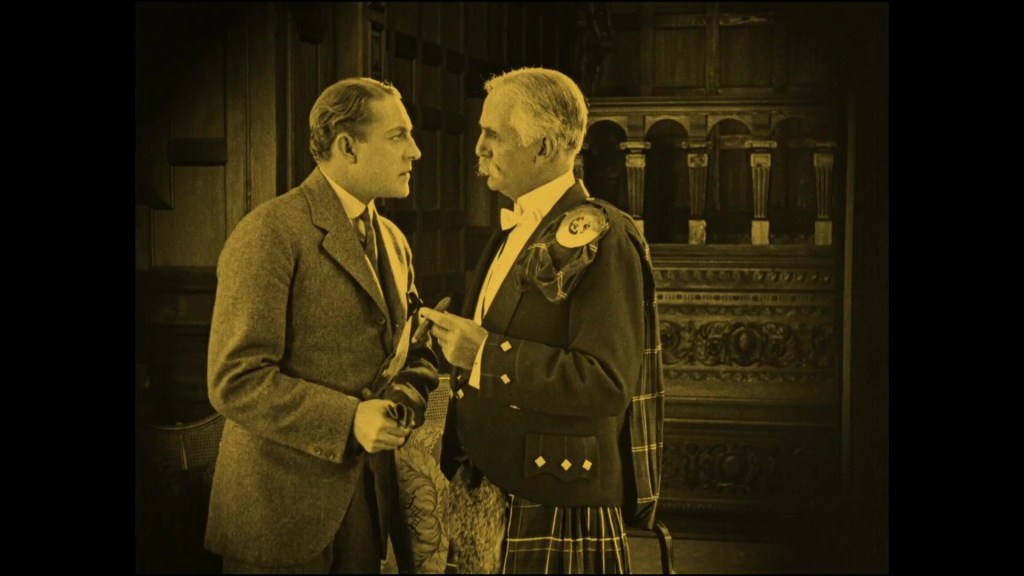
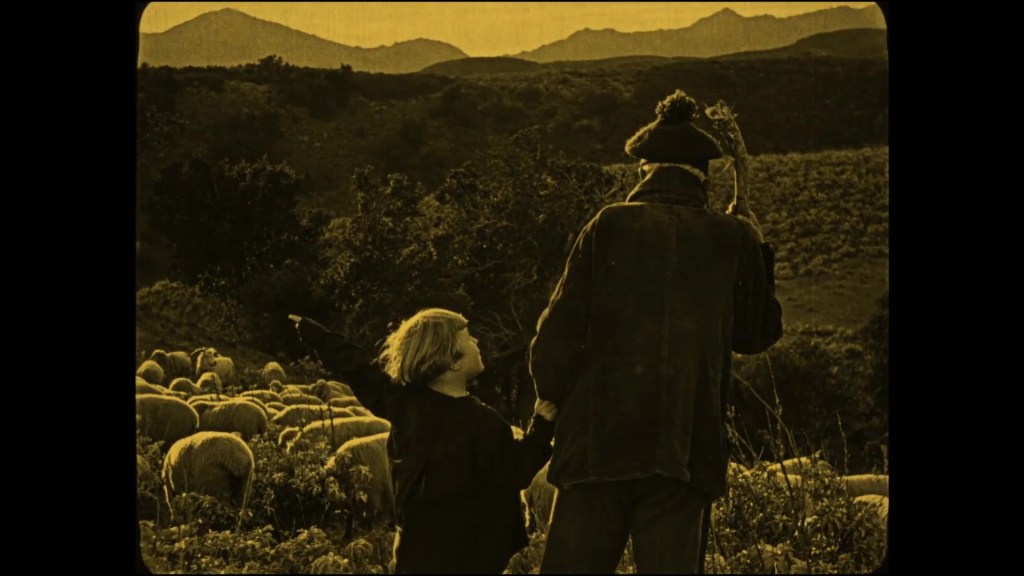
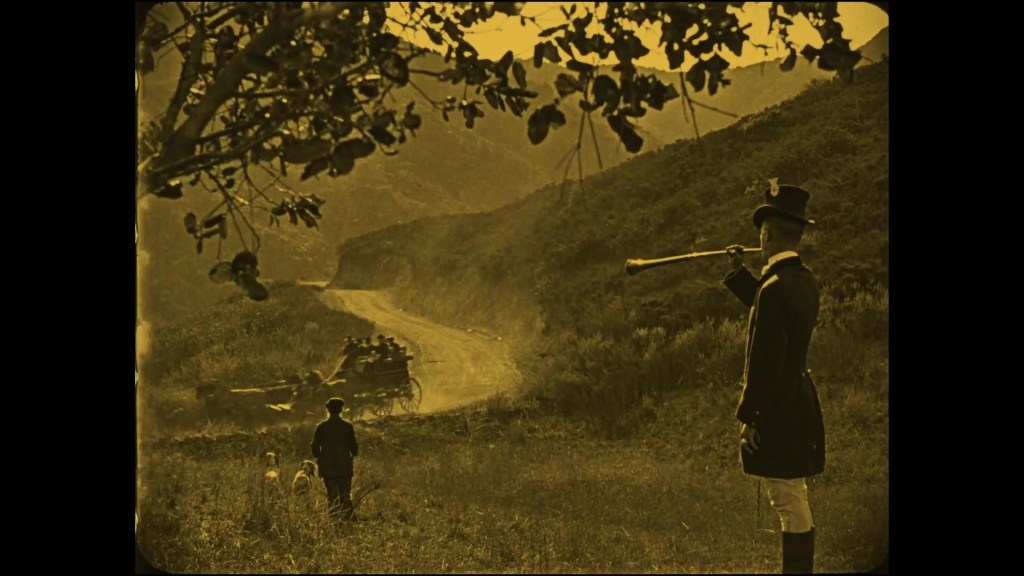
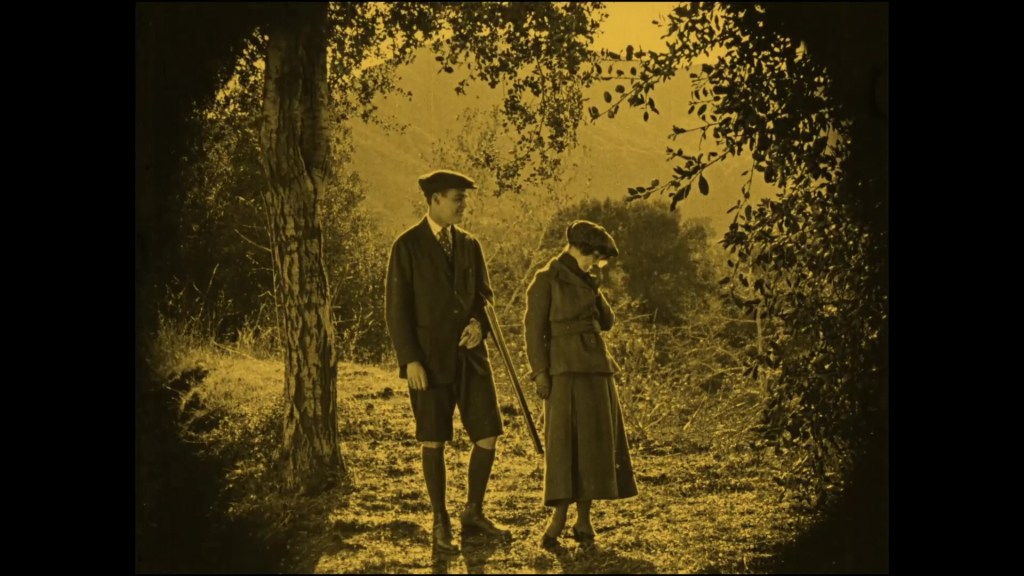
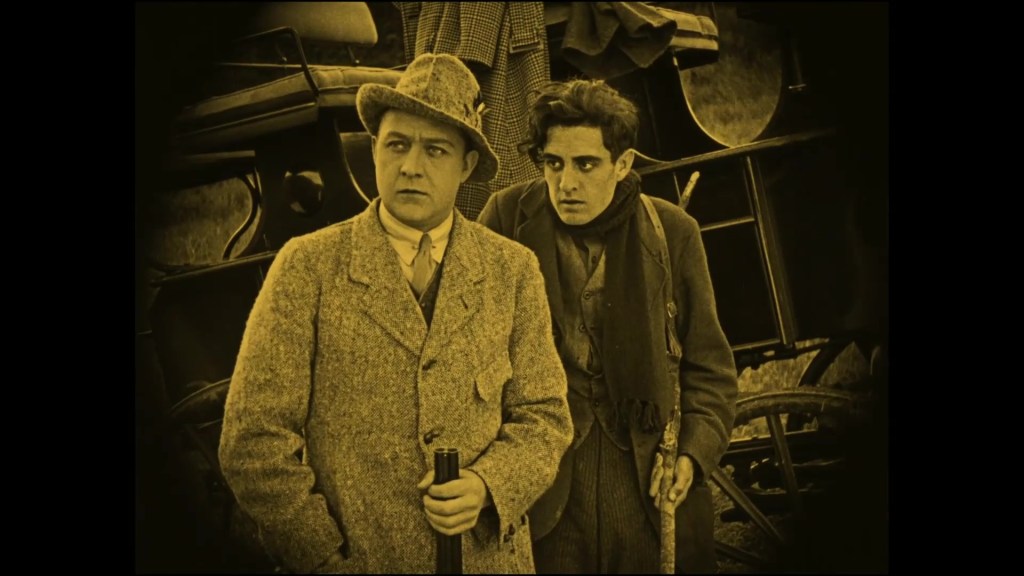
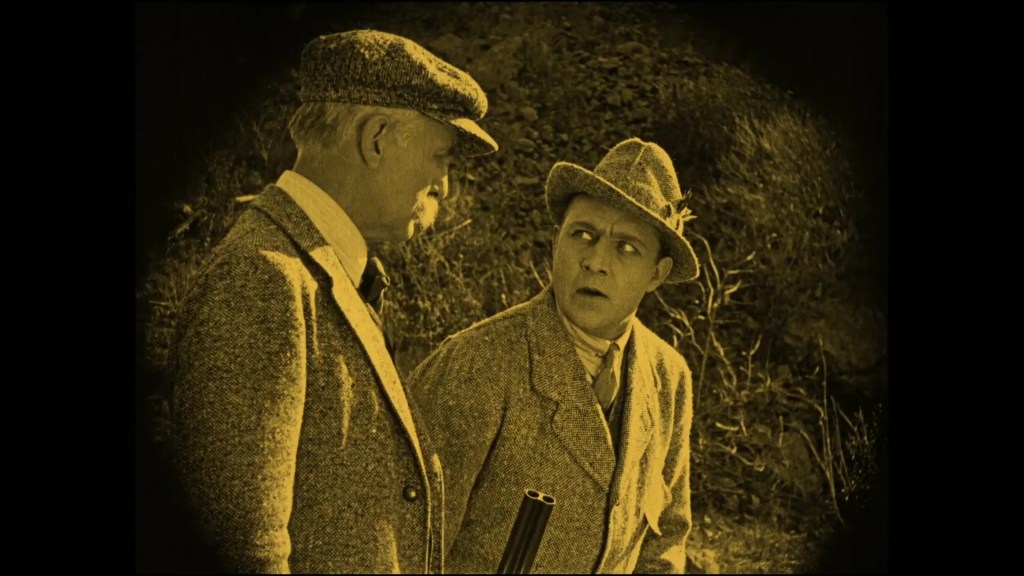
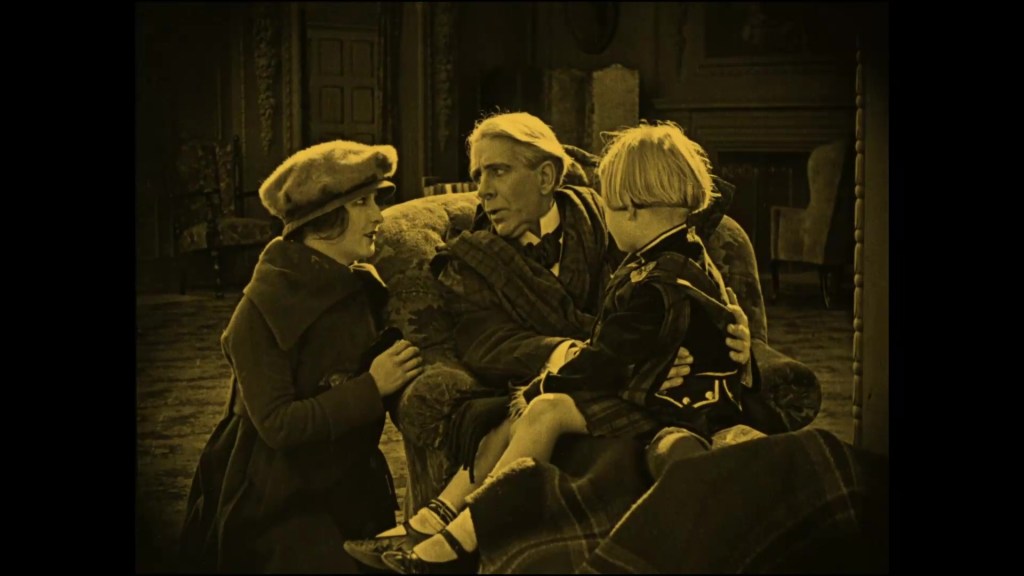
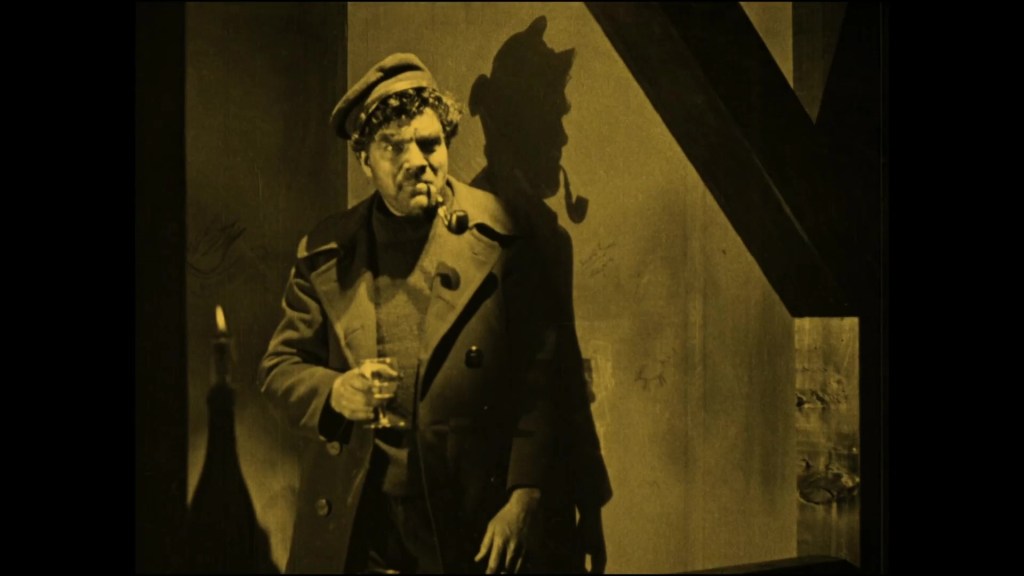
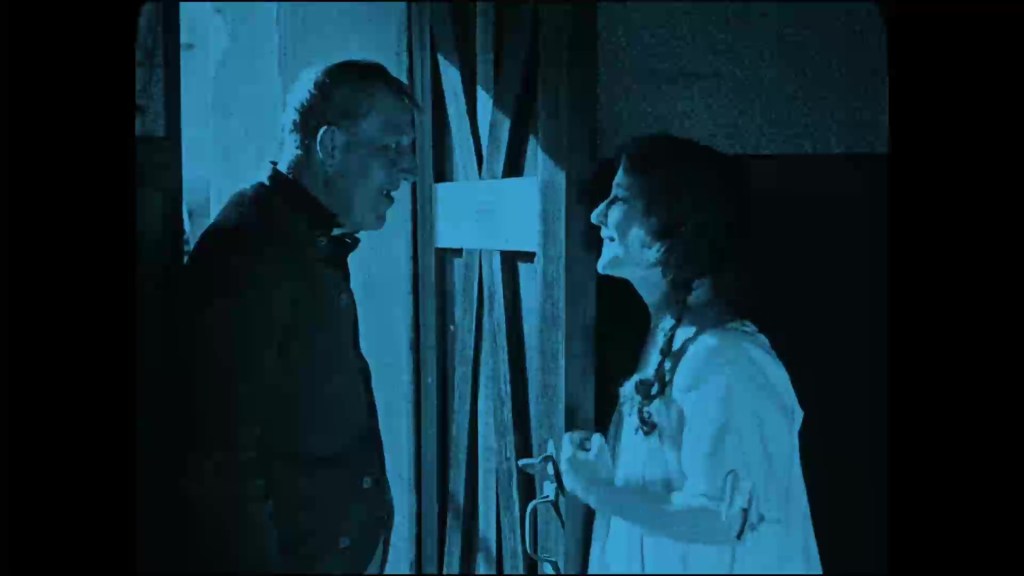
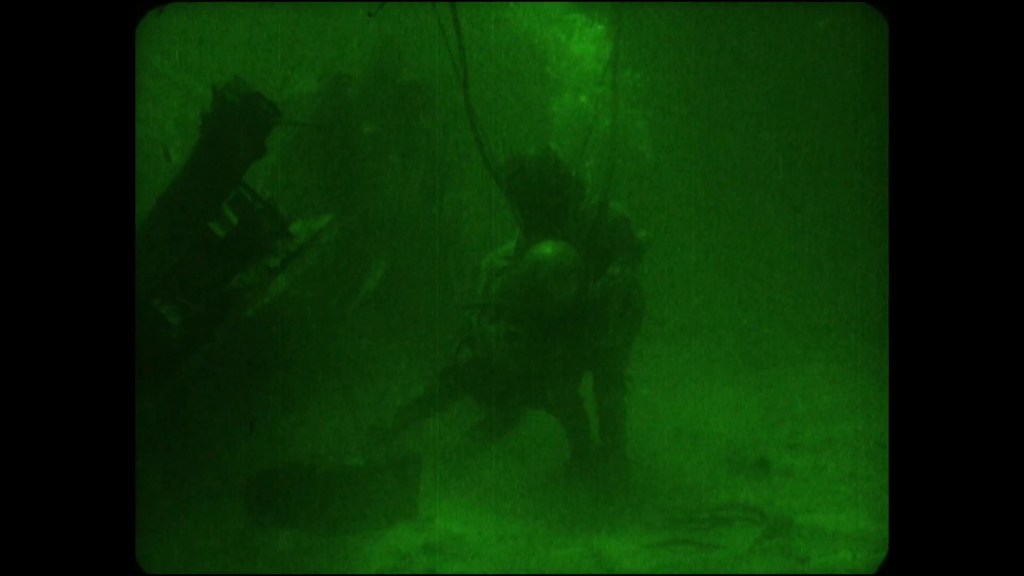
The White Heather (1919; US; Maurice Tourneur). The speculator Lord Angus Cameron has lost his money and that of his friends in a stock exchange crisis. He journeys to Shetland Castle to visit his brother, the Duke of Shetland. The Duke lives with his sister Lady Janet and her son Alec McClintock, together with their housekeeper Marion Hume – whom Cameron has secretly married and with whom he has a son, Donald. When Cameron arrives and asks the Duke for £20,000, he is refused. The Duke doesn’t want the debt to pass to his family if Cameron dies without heirs. He recommends Cameron marry a rich woman of the right class, someone like their guest Hermione de Vaux. Meanwhile, both the gamekeeper Dick Beach and Alex are secretly in love with Marion. On a hunt, Alec gives Marion a spring of white heather for luck, while Cameron is warned about the legend of the “Devil’s Chimney”. During the hunt, Donald duly walks in its shadow and is wounded by a gunshot. In the aftermath, his identity revealed – and that of his parents. Denying he is the father, or that he is married, Cameron publicly refutes Marion. Marion writes to her father, James Hume, another speculator, who has fallen seriously ill. She reveals that the only record of her marriage was lost onboard the White Heather, the ship on which they married, and which sank soon after. The case goes to court, where Hume is threatened by Cameron. The only surviving witness, Captain Hudson, cannot be located. Dick promises to find Hudson, while Hume goes bankrupt – and collapses – searching for new resources to fund his lawsuit. While Marion endures hardship to support herself and the child, Dick finally locates Hudson, who reveals that the marriage records were sealed in a waterproof case when his ship sank. [Are you still with me, reader??!] But Hudson is in the pay of Cameron, who fears that divers will retrieve the records from the wreck before they have a chance to destroy it. He sets a gang of roughs on Dick, while heading to the wreck at Buckminster Reef, where divers are working on the foundations of a new lighthouse. Dick is wounded but survives to tell Marion and Alec of Cameron’s scheme. Both Cameron and Alec find descend to the wreck. In the fight on the seabed, Cameron accidentally cuts his own air supply and dies, leaving Alec free to find the case. On the surface, Dick dies of his wounds – but only after giving his blessing to Alec and Marion, who are now free to marry etc, etc, etc. FINIS.

Lordy, lordy, lordy. Well, The White Heather is less than 70 minutes long, but it is crammed full of melodramatic incident. Indeed, that’s the trouble with it. So much time is spent advancing the plot that there is no time for a single character to develop anything resembling a personality. Much of the dialogue, indeed, consists of recapitulation and exposition. “Given that you have done this, Lord Shortbread, you shall inevitably encounter that!” “You swine, McCleft! Don’t you remember that you yourself did that, and in revenge I shall do this!” The characters are lifeless clichés, lifelessly mobilized. Doubtless some of the problem lies with the original play on which the film was based. The original Drury Lane production of 1897 was a bloated melodrama of four hours, designed expressly to show off impressive scenery – stock exchange, ballroom, castle, underwater wreck – and dramatic set pieces. In this, it shares something of the same pedigree as William Gillette’s Sherlock Holmes (1916). But whereas the Gillette film is lumbered with a great deal of unnecessary baggage from the stage version, Tourneur’s adaptation of The White Heather turns a bloated play into a very lean film. The production retains the central set pieces, using these to showcase its locations, set design, and photography. But despite its leanness, I found The White Heather almost unendurably banal.

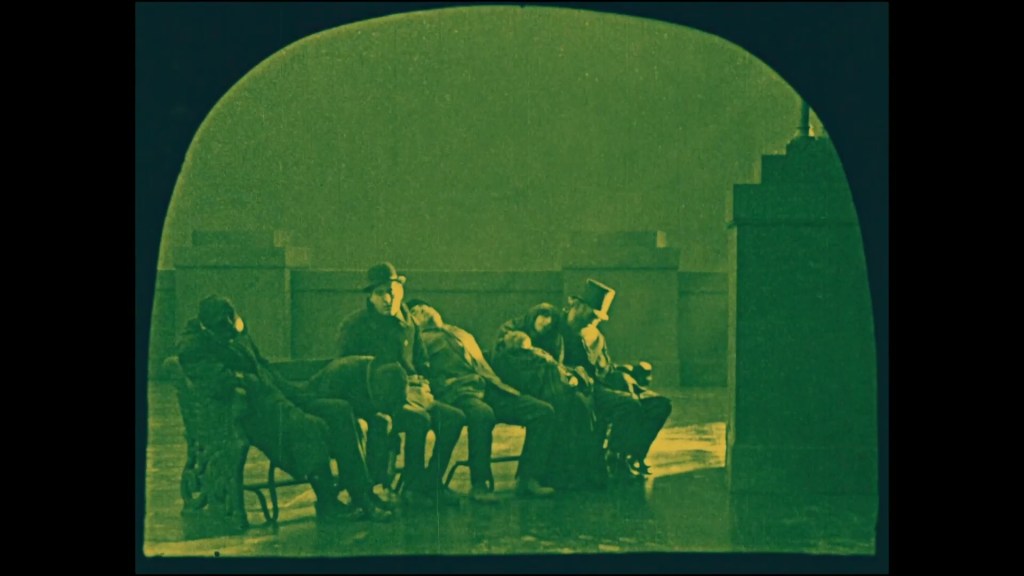
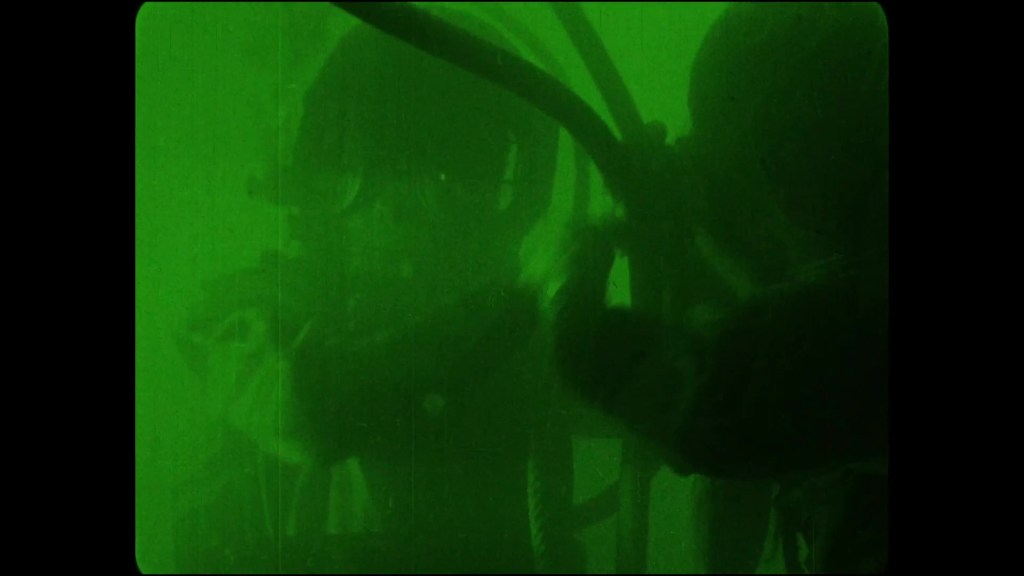
Though my brain went hungry, my eyes were given a feast. This is, after all, a film by Maurice Tourneur, photographed by René Guissart. As such, it is quite simply stunning to look at. Every frame of this film is almost unbelievably well composed, well lit, and well photographed. The interiors boast exquisite low-key lighting, wherein every detail is subtly and perfectly outlined with light in the midst of the gloom. The exteriors seem always to be shot at some magic hour, whereat the light saturates everything on screen. Whole sequences seem to exist just to show us how beautifully they can be lit and photographed. Take the sequence of shots – each its own perfect tableau – in which Dick searches for Hudson. The gloomy streets and interiors look amazing, simply amazing. There is one shot of people huddled in a doorway, the rain lashing down in a pool of light, which is one of the most individually striking shots I have seen in all the films shown via Pordenone so far. The exquisite green tone/yellow tint combination makes the shot even more perfect: just see how the textures of the wall, the sheen of the highlights, are all the more vivid. And the underwater climax, shot via a huge tank placed below the surface, is startlingly effective. This scene was the original play’s theatrical showstopper, so the film really needs to get its adapted equivalent right. And boy does it deliver. What could be (and surely is to a degree) an absurd dramatic situation needs to be saved by its realization, one that gives it some kind of reality, some kind of visible and tangible danger. Tourneur and Guissart manage to do just that, and however unbelievable the drama, one cannot but be sucked in by the photography. My god, this is a beautiful film.

And yet, and yet, and yet… Somehow the sheer prettiness of it all only served to underline just how empty this film is as an emotional drama. It reminded me very much of Tourneur’s The Pride of the Clan (1917), which I saw in a beautiful restoration via HippFest at Home earlier this year. That, too, had a faux Scottish setting, beautifully lit and photographed – and was utterly inconsequential as a drama. But The Pride of the Clan at least had a sense of humour – and Mary Pickford. The White Heather has neither. The cast – H.E. Herbert as Cameron, Ben Alexander as Shetland, Ralph Graves as Alec, Mabel Ballin as Marion, John Gilbert as Dick, Gibson Gowland as Hudson – is uniformly fine. But they have literally nothing to work with or develop by way of character or personality. Of all the cast, Mabel Ballin is the most obviously sympathetic, and Gibson Gowland the most striking – if only for the instant visual reminder of his frightening physical presence in Greed (1924) a few years later. But these pleasures are fleeting and superficial. If my interest was piqued, it was by association with other films – not by the drama of The White Heather. So yes, a beautiful film, one of the most technically accomplished pieces of photographic work you could hope to find in 1919. But its pleasures are pictorial, not dramatic, psychological, or emotional.

I should also add that this restoration is based on the only surviving print, a Dutch copy with translated titles. The English titles have been restored on the basis of censor records, contemporary descriptions, and the text of the play on which the film was based. I must say that some of the titles look a little odd in relation to the surviving montage. (Early on, for example, a title relaying the Duke’s words to Cameron is inserted in the middle of an exchange on screen in which the Duke is looking and talking to his wife. Later in the film, words spoken by Cameron are inserted into a shot in which Hume is speaking. Are these really the correct moments for these titles? Each example might be where a Dutch title was inserted, but that doesn’t mean it’s the place where the original English text belongs.)

Finally, the music for this presentation was by Stephen Horne. This was chiefly for piano with occasional interventions by other instruments. It had more moments of interest than the film, though its obligations to match moments of “Scottishness” on screen (i.e. various pipers a-pipin’) sometimes exacerbated the silliness rather than mitigated it. But it was a sterling effort, capable of heightening the aesthetic pleasure of the images if not deepening their emotional power.

Paul Cuff

Pordenone from afar (2025, Day 2)

Day 2 is overfull with content! We begin in France in the early 1910s and finish in Ukraine in the late 1920s. It’s a day of contrasts, from stillness to restlessness, from adulthood to childhood, from the bourgeois world to the world of poverty, from canonical figures within film history to those residing in the margins…

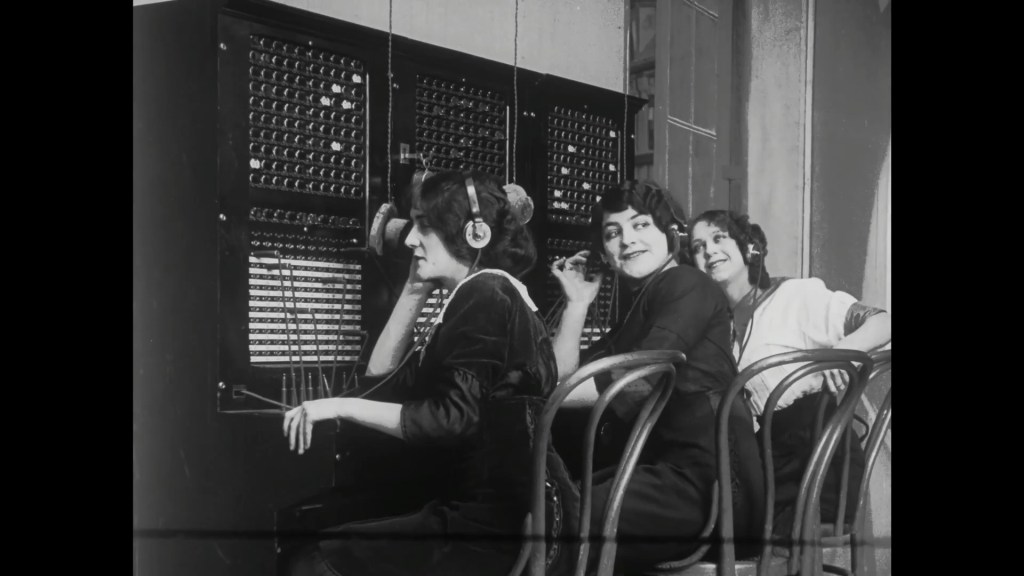
The first four films on our schedule are by Louis Feuillade, and the first of these is Le Nain (1912; Fr.; Louis Feuillade). An unknown masterpiece is presented at the theatre. Its anonymous author is Paul Darcourt, the film’s titular “dwarf”, who lives at home with his mother. He is besotted by the image of Lina Béryl, the lead actress in his play. Their relationship is conducted over the telephone, and admired by the switchboard operators. But when the actress tracks down the author and his secret is revealed, she laughs in his face. FIN.

A comedy? A tragedy? It is both. As with Cyrano de Bergerac, one can smile at the elaborateness of the romantic subterfuge over the phone – played out in a brilliant split-screen effect – and at the naïve love of Paul for Lina. But unlike Rostand’s drama, there is no redemption or acceptance or transcendence in Le Nain. The brevity of the drama, and the suddenness of Paul’s rejection by Lina, makes it impactful. What might easily have been a comedy turns into a tragedy, and it does so through laughter: Lina’s almost hysterical reaction to the sight of Paul is a sharp, shocking way to resolve the drama. There is no death or suicide to end the film. Lina’s laugh is brutal enough.

Les Vipères (1911; Fr.; Louis Feuillade). The village guard and his sick wife. Taking pity on a woman he has been ordered to evict, the guard brings her home, where she works hard to earn the respect of her new guardians. But she has a bad reputation and the locals (the titular “vipers”) gossip, turning even the guard’s wife against her. Realizing she must save her guardian’s reputation, she leaves the village. FIN.

Les Vipères is a subtly devastating film, and I was amazed how effective it was. The slow, remorseless crescendo of gossip – and the way you see it unfold through endless little gestures, snide little laughs, judgy little glances – really makes you feel the way the community turns on, and destroys, the outsider in their midst. There are no dialogue titles, only brief summaries of what transpires in a scene or what has transpired since the previous scene. Every aspect of the drama is perfectly laid out for the eye: the mise-en-scène is impeccably legible, realistic, clear. Feuillade’s unbroken, remarkably articulate tableaux make every beat of the unfolding drama understood – a clarity that enhances its emotional tenor. The final shots of the “outcast” moving through the empty house, kissing the guard’s child as she sleeps, then taking one last look at the empty main room before she leaves, her shadow passing over the floor as she moves through the door, is perfect. What a great little film!

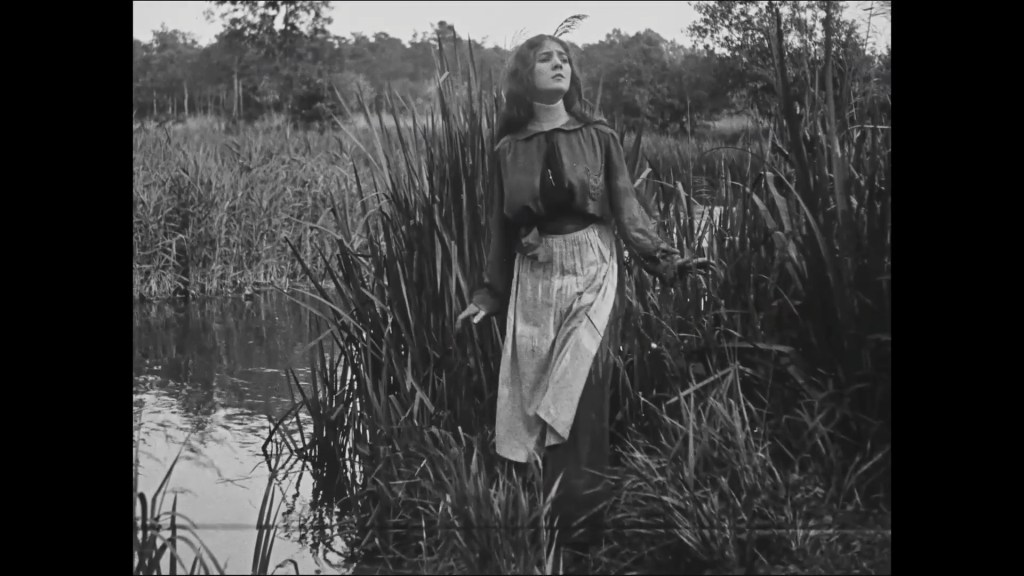
Le Cœur et l’argent (1912; Fr.; Louis Feuillade). Suzanne and Raymond are young lovers. Her mother, an innkeeper, disapproves. M. Vernier, a wealthy landowner, takes an interest in Suzanne. Her mother tries to persuade Suzanne of the advantages of accepting the man’s interest. They marry, but Vernier soon dies. Suzanne inherits his fortune, provided she does not remarry. But she chooses to flee, and finds Raymond in their old haunt on the river. But the memory of her being with Vernier soils their idyll. Suzanne drowns herself, her body “like a cut iris, drifting on the river”. FIN.

Most of the drama takes place in exteriors, which are absolutely beautiful to look at. Sharp, rich images of a century ago. The river, the inn on the bank, the roadside, and finally the tangle of reeds and the water itself. As before, everything plays out in beautiful, lucid tableaux. There is just one medium close-up, in which we see Suzanne looking at the irises that remind her of Raymond. It’s a unique instance of proximity, powerful precisely because it evokes the closeness Suzanne imagines – and the distance we know lies between her and her true love. This moment follows a previous shot of Raymond on his boat, drifting slowly and aimlessly down the river. It’s both a contrasting image and one that rhymes perfectly: the two lovers, worlds apart, each aimless without the other. And the shot of Raymond drifting down the river foreshadows Suzanne’s fate, a fate that he himself provokes. The final images of Suzanne in the water, face up, echo Millais’s Ophelia. But the beautiful monochrome image, and the reality of the moving trees and the shifting surface of the water, make this a superbly cinematic moment. Another beautiful, concise drama, concisely and beautifully realized.

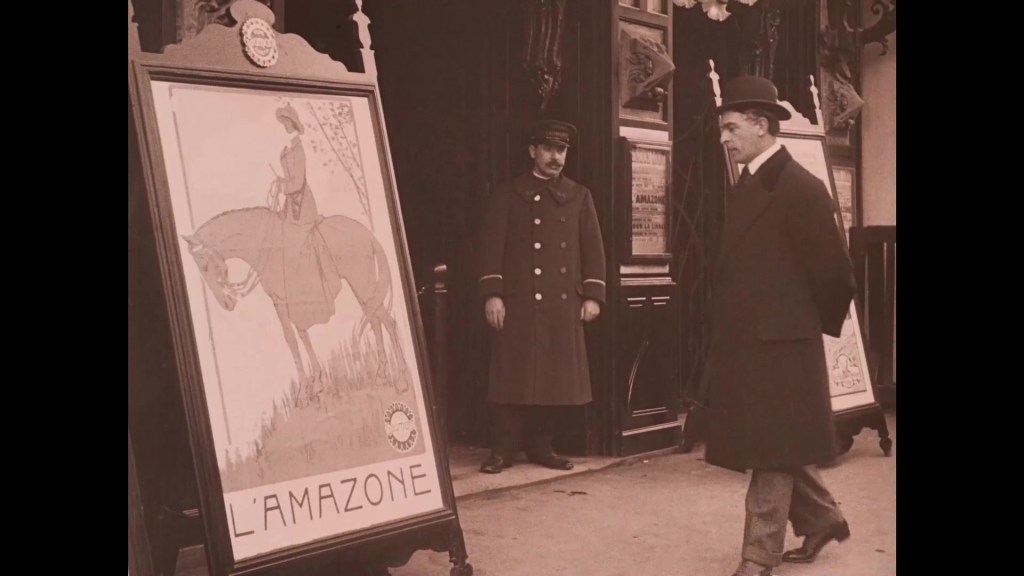
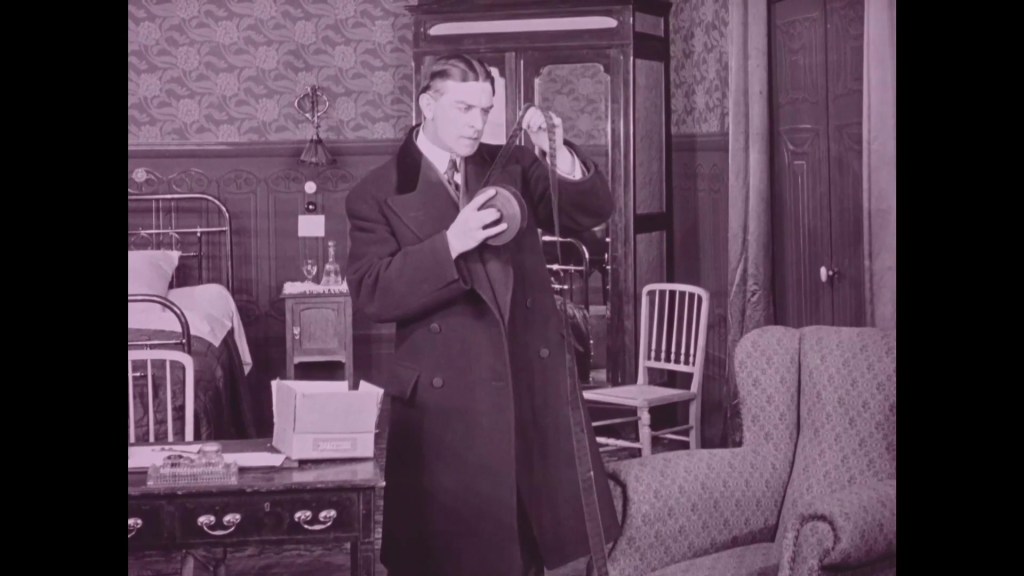
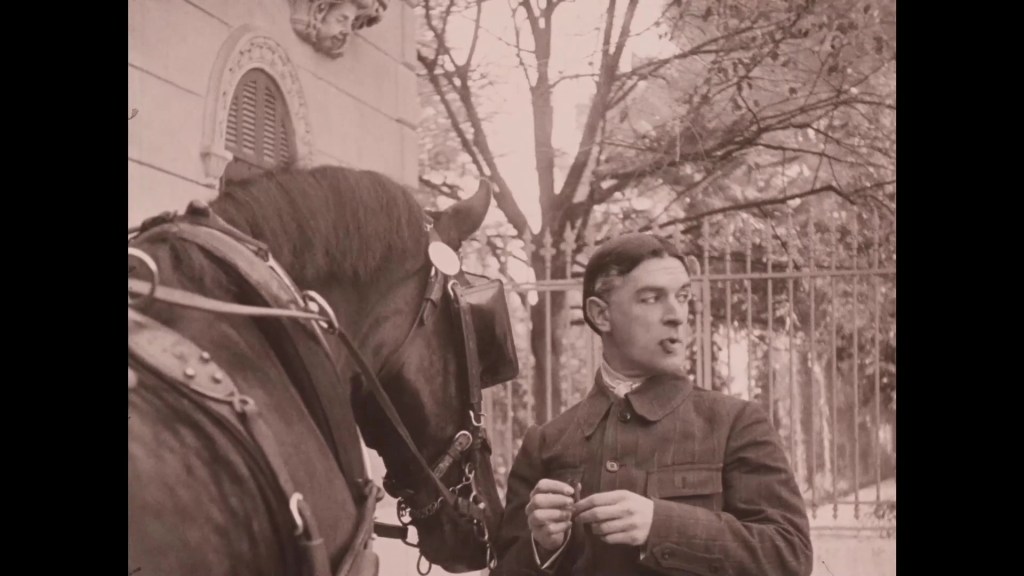
L’Erreur tragique (1912; Fr.; Louis Feuillade). Called from his estates to the town, the marquis stops at a cinema, where he sees the latest Onésime film – and glimpses his wife with a stranger in the background of the scene. He returns to the chateau, determined to find proof of his wife’s infidelity. She receives a letter from a man who begs to meet her. She goes, but the marquis has sabotaged her carriage. While the marquise is en route to her meeting, the marquis discovers that the mystery man in the film and the author of the letter are the same man: it is the marquise’s brother, returning from years of exile. Realizing his tragic error, the marquis goes in search of his wife. She has been wounded, but is safely reunited with her remorseful husband and grateful brother. FIN.

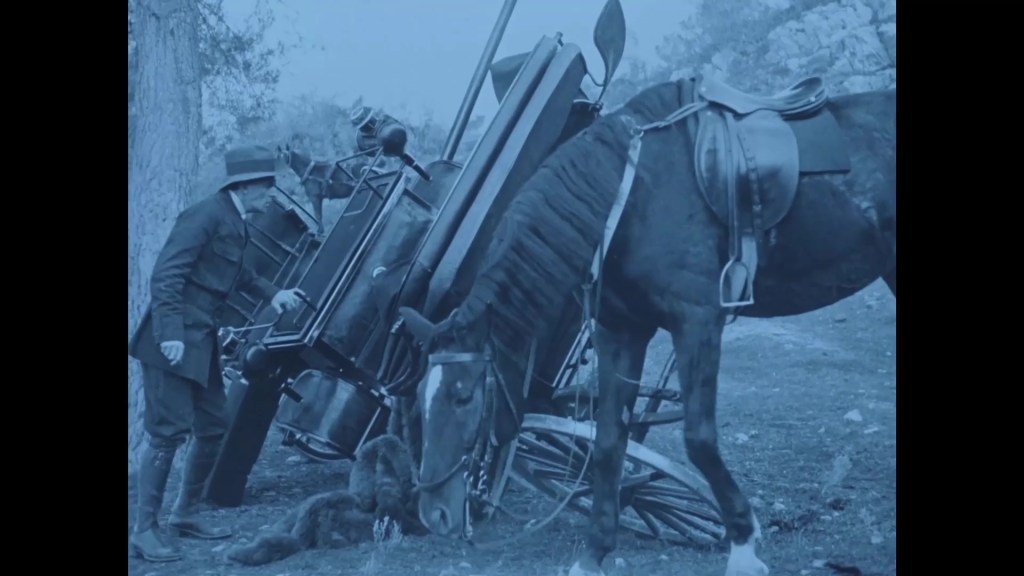
The main interest in this film is René Navarre as the marquis. There is such fantastic menace about this man. His sharp profile, those glaring eyes – he makes a perfect jealous husband, and a potentially murderous one, too. When he moves stealthily through the house at night, each room set in eerie low-key lighting, you can see immediately why he would be cast as Fantômas. This man has a marvellous, malevolent presence on screen. There is something deeply curious, too, in the way L’Erreur tragique mobilizes film as both a source of captured reality and as a misleading fantasy. The cinematic experience – offering a glimpse of something unexpected in a dark room – is one thing, but the strip of 35mm that the marquis examines is another. The first is an enigmatic, frightening, shocking encounter. The second is a forensic examination. Yet it is the latter that ultimately misleads the marquis into thinking that what he sees – and can hold in his hand – is convincing evidence of his wife’s infidelity, and the ultimately proof enough to kill her. One can pour over a strip of celluloid, arresting each frame as a photographic still, but it is only a fragment of reality – a (mis)framing of a wider picture. It’s a wonderful dramatic device, and it makes this film more potent than it would otherwise be. Nothing in L’Erreur tragique is as moving as in the other Feuillade films in this programme, but there is something disturbing and curious about the drama that will linger in the memory.

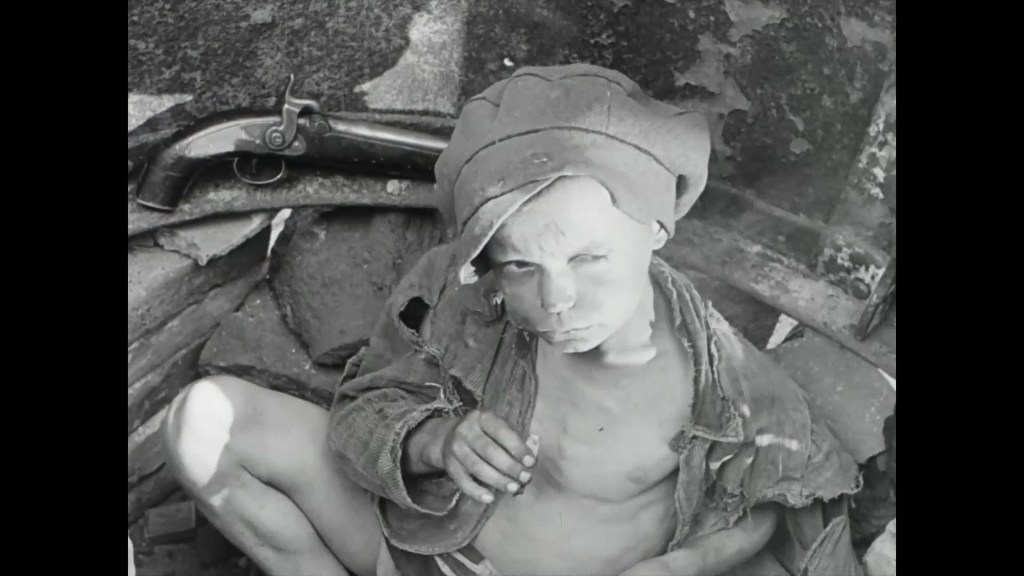
Sam sobi Robinzon [Robinson on His Own] (1929; UkrSSR; Lazar Frenkel). So to our next item on the agenda, this time from the Soviet Ukraine… Vasja is a child emersed in books and imagines himself as a Robinson Crusoe figure exploring wild lands. Mocked by his fellow pupils and his teacher, he tries to “toughen” himself. Runing off during a school away day, he tries to prove his ability to survive in the “wild” with an old pistol. His school party go in search of him and, after a night alone in a storm, Vasja is finally brought back into the fold. END.

What an absolutely delightful film. Funny, silly, sad, and poetic. The film is an hour long, which seems the right kind of in-between length for such a production. It’s ramshackle but doesn’t outstay its welcome. It’s daring and inventive but allows time enough to produce a convincing narrative. The rhythm of the film feels like a real slice of childhood. Time moves very slowly, then very fast. There are long stretches when nothing much happens, interspersed with moments of wild fantasy and drama. Like Vasja, we meander without a plan through this film, delighting in the landscapes, the skies, the glimpses of rural life, the animals, the sense of freedom. We also meander through different genres. Vasja fantasizes about being a colonial hero and a cowboy, so we see him fighting tigers, escaping gangs of natives. If these scenes are unsettling, the film also offers a non-judgemental perspective on them. They are the fantasies of a child, deliberately and wholly unbelievable. Who but a child, we are asked, might imagine life as a white colonialist in this day and age? The western fantasies are comic, using stereotypes to illustrate the childishness of such make-belief. The film ends by returning us to more down-to-earth pleasures, to a community of peers who are ultimately welcoming to Vasja. There is no need for violent fantasies of conquest: real life, and real satisfaction, exists in the community around us. Vasja is not to be condemned. He’s just a child, trying to find a role for himself.

For all I’ve said about the dramatic and thematic pleasures of Robinson on His Own, perhaps the chief pleasures are visual. This is a gorgeous film, which takes place primarily in the outdoor spaces of Ukraine. Director Lazar Frenkel has a superb eye for composition, for how and when to move the camera, for when to use sudden bursts of rapid montage. Purely as a vehicle for viewing the past, in a particular time and place, this film is an absolute gem. And we see it not through some didactic lens, or the careful choreography of propaganda, but through a kind of child-like delight in meeting new people and seeing new places. The sun-soaked landscapes are fabulous, just as the bustle of the streets are tangibly, dustily vivid. (I must add that, though the film is overwhelmingly told through images, there are some great moments of dialogue. When Vasja is helped by a local child, he happily tells him: “You’ll be my Friday.” “But today’s Thursday”, the baffled child replies.) A fine contrast with the opening shorts of today’s two-part programme, Robinson on His Own is a deeply refreshing and rewarding film.

Pryhody poltynnyka [The Adventures of a Penny] (1929; UkrSSR; Aksel Lundin). In tsarist times, the rebellious Fedka is mistreated by the authority figures around him. From a poor family, he delights in mocking the officer class and distrusts children like Tolia, who are smart and pampered. Given a penny by his father, Fedka tries to impress his friends by throwing the coin across a ravine – and then retrieving it. Meanwhile, Posmitiukha, Fedka’s best friend, has his cap confiscated – and Fedka agrees to use the penny to buy it back. Winter begins to recede, so the children head to the river the Dnieper and play on the breaking ice floes. When Tolia gets into trouble, Fedka goes to rescue him. Tolia blames Fedka, whose heroism lands him in the water and results in a fever. His parents don’t have the money for a doctor, so the mother goes to Tolia’s father for help. He gives her a miserly penny, which the angry father throws into the water. But the crisis is over. Fedka returns to health, and is reunited with Posmitiukha. END.

The Adventures of a Penny is an interesting contrast to Robinson on His Own. Both films centre their dramas around the ordinary, day-to-day experience of children, and focus on a particular child to shape the narrative. But unlike Robinson on His Own, The Adventures of a Penny has a distinct propagandistic edge. The enemies are most certainly the tsarist authorities: the local employer and his spoilt son Tolia, as well as sundry uniformed figures earlier in the film. Fedka’s father openly discusses the class and economic differences as the reason for the family’s struggle, and the film makes these issues central to its drama. The status of the adults is replicated in the children, so the drama involving the latter maps clearly onto relations between the former. Because of this clear socio-political agenda, the film is sometimes in danger of being a simplistic polemic: a rather predictable tale of trodden-upon poor struggling against the tsarist powers. In some ways, the film is just this. There is no attempt to humanize or otherwise complicate Tolia or his father: they are both mean-spirited and violent, while Tolia is also a liar and exploiter of his fellow children. But because the film spends so much time with Fedka and his friends, we are spared too much of the finger-wagging aspect of its message. We are invited to sympathize with the poor, so when the tsarist authorities intervene, we immediately take against them.

But the propagandistic element is also felt, I think, in the overall design and tone of the drama. Put simply, The Adventures of a Penny is a better organized, more carefully lit, more elaborately choreographed film by far than Robinson on His Own. While the child performers in both films are equally excellent, The Adventures of a Penny is much more careful in how these performers relate to one another and to the central theme of the film. Fedka and Posmitiukha are more overtly characterized through their shabby clothing, just as Tolia is made to perform in a more mannered way than the other children. One feels that much less is left to chance in The Adventures of a Penny than in Robinson on His Own. For a film about the lived experience of children, this seems to me a problem. At least, I felt that Robinson on His Own offered a much looser, more child-like path through the world, and through its drama, than anything in The Adventures of a Penny. Even the fantastical dream sequence in the latter is more carefully edited, and more overtly political, than the rapid montage sequence in Robinson on His Own. The child’s dream in The Adventures of a Penny is also a kind of lesson; what we learn from the storm montage in Robinson on His Own is a sense of subjective fear and isolation. Even if Robinson on His Own is clearly conscious of wider social contexts, its children are not simple ciphers for adult politics. They are first and foremost children.

So, that was Day 2, that was. I must admit that I struggled to fit all Day 2’s material into Day 2. (Full disclosure: preparing this piece has taken two days.) Of course, this is my fault, not the programmers’. And I welcome the chance to see more otherwise utterly unavailable films. But, still, nearly three-and-a-half hours of material is a lot to deal with in a single day. But I mustn’t complain. (I don’t have time.) Suffice it to say that these presentations are superb. The films look excellent, and it’s a particular joy to see films of the 1910s look so good. Music for the shorter films was provided by John Sweeney (the Feuillade programme) and Daan Van den Hurk (for Robinson on His Own). (With the latter, the online listing promised piano only, but it was actually a small ensemble. I am only presuming Van den Hurk is indeed correctly attributed. Either way, I enjoyed it!) Music for The Adventures of a Penny was provided by Olga Podgaiskaya and the Five-storey Ensemble. This was a rather elaborate affair for recorded voices and various instruments, synthetic and real. It was perhaps a little busy at times for my taste, but it was by turns inventive and boisterous and lyrical and energetic – it matched the playful mood of the film, and the sense of bustle that the children on screen embodied.

Perhaps it is the distillation of drama into such economic means, or perhaps it is the weariness at the end of viewing and writing about Day 2’s multiple films, but I feel that I may retain only the broad outline of the two children’s films. The images that I suspect will linger longest in my memory are those lucid tableaux of Feuillade’s short films. They also have the advantage of a kind of familiarity. I enjoyed (re)encountering René Navarre, and Renée Carl, who appears in the three other films (respectively, as the poet’s mother, as the outcast, and as Suzanne’s mother). Both performers are familiar from Feuillade’s famous serials of the mid-1910s, so it was nice to see them in these short, one-off dramas. (Their wider identity within film history no doubt helps make their faces stand out, too.) But I very much enjoyed the two Ukrainian films, and I’m sure something of their energy – and their child casts – will collectively reside in my brain. I do hope so. Like the children who dream in the films, perhaps I will dream of their worlds: those skies and rivers and streets of far-off, far-gone lands. But now I must sleep and prepare for tomorrow…

Paul Cuff

Pordenone from afar (2025, Day 1)

I’ve just returned from a rather intense and wonderful few days in Berlin, gorging on culture of all kinds. (And on some seasonal German dishes, too.) I would be settling down to write about the filmic aspects of this trip, were it not for the fact that by the time I landed the Pordenone festival had already begun. Pausing only to shower, receive a flu vaccination, make some rice, upload a thousand photographs, and take the car for its MOT, I logged in to my streaming account and fell headlong into Day 1…

The Bond (1918; US; Charlie Chaplin). Famous for its final scene of the Tramp biffing Kaiser Wilhelm over the head with a large mallet, this short film begins with a rather more subtle and sophisticated series of sketches exploring other “bonds”. “The bond of friendship”, “The bond of love”, and “The marriage bond” are delightful vignettes, set against beautifully simple, picture-book style backgrounds (entirely black, with two-dimensional details that sometimes take on unexpected depth). Chaplin undercuts the premise of the first (getting increasingly fed-up by his friend’s friendliness), makes the second surreally literal (he is shot by Cupid’s arrow, then gets tied up with the object of his love), and undercuts the third (he resents paying the priest and gets hit with the lucky shoe). The final sketch, “The liberty bond”, is a rather brilliant series of diagrammatic tableaux in which Chaplin illustrates the motive, method, and outcome of wartime liberty bonds. He manages to be both sincere, charming, and funny – a very difficult combination to bring off in what is essentially state propaganda (albeit for a good cause). Chaplin makes human what could easily be stilted or polemic.

His Day Out (1918; US; Arvid E. Gillstrom). Our second short from 1918, this time not with Chaplin but with Chaplin’s most persistent and successful impersonator: Billy West. The film is a rather disjointed series of skits, the best of which is the prolonged scene in the barbershop in which Chaplin West variously shaves/assaults/preens/insults/scams his customers – including Oliver Hardy. (Inevitably, they all reappear in the slapstick finale.) It’s all very silly, but there is something inherently strange about watching this uncanny Chaplin. And as funny as some moments are, the film inevitably suffers from evidently not being by Chaplin. West is less sharp in every facet: less elegant, less quick, less touching than Chaplin. The very fact of his trying to be someone else (and not even this: he is being someone else’s persona, performing someone else’s performance) robs something of the pleasure in watching the film. Nevertheless, an interesting curiosity.

A Little Bit of Fluff (1928; UK; Jess Robbins/Wheeler Dryden). Our main feature presentation follows newlyweds Bertram Tully (Syd Chaplin) and Violet (Nancy Rigg), who live under the thumb of Violet’s imposing mother. While she and Violet are away visiting an aunt, Betram encounters the woman next door: the dancer Mamie Scott (Betty Balfour). Mamie and mutual friend John invite Bertram to the Five Hundred Club, where Betram accidentally gets hold of Mamie’s valuable necklace. There ensues a series of farcical encounters, mistaken identities, and run-ins with jealous boyfriends, the police, and criminals in disguise…

This film was an absolute unknown for me, so I was very pleased at how charming and funny it was. Sydney Chaplin is known to me (as I imagine to most) for his later role as his half-brother Charlie’s off-screen assistant, so seeing him take centre stage was fascinating to watch. He is delightful as the fey, trod-upon, Betram – a character whose name evokes Bertie Wooster, just as his actions undergo a very Woodhousian series of mistakes and minor disasters. (Troublesome matriarchs, nightclub misdemeanours, adventurous dancers, valuable necklaces, fake burglaries, and jealous boyfriends are all Woodhouse tropes, as they must have been for any number of stage comedies of the 1920s.) Syd Chaplin makes the most of his character’s small world and narrowed expectations. I love that his only visible pleasure is to play the flute, and even this is somehow a struggle and an imposition. (When he plays, he keeps blowing out his candle.)

Indeed, everything Bertram does goes wrong. The meekness of his character means that the increasing difficulty of his situation brings out wonderful and unexpected bursts of face-saving improvisation and expressive energy. I found myself laughing a great deal when Betram is cornered and has to find a desperate way out. The scene in which he his trapped between police, Mamie’s thuggish ex, and the police outside, is a delight. Ultimately forced into Mamie’s bathroom while she is bathing, and having first to impersonate her maid and then to impersonate Mamie herself, Bertram finds – just – a way out of his predicament, while also finding delight in his own ingenuity. The way he dons Mamie’s gown and bonnet, then sets out polishing his nails and smothering himself in powder, he seems to get lost in the pleasure of being someone else: having so often fallen short in fulfilling his masculine role, here is finds refuge in an exaggerated femininity.

I also loved the scene in which, trying to get his friend to back-up his alibi, he desperately mimes the title of the play and author they have supposedly seen. His mime, first “Love’s Labour Lost”, then of “Shakespeare”, is brilliant: it’s funny because it’s both an accurate mime, inaccurately identified (John announces that they saw “Gold Diggers” by Bernard Shaw), but because it once again gets this meek character to perform outlandish gestures. Having been discovered in women’s clothing by his mother-in-law, he is now discovered waving a speer by his wife. The shock of these disruptions to his usual character, and his own evident delight at his ability to perform as (respectively) highly feminine and masculine personae, make for wonderful sequences. They are also a marker of Chaplin’s ability to win us over to his character, making us believe both his meekness and his untapped performance abilities. The way each scene seems to snowball through a series of small incidents into absurd situations is both a dramatic success, but also a way for Chaplin to demonstrate a range of performance style – from small details to broad slapstick. But the film doesn’t offer any great transformation of Bertram’s character, and I rather liked how there is no effort to make us believe he has quite learned anything about himself, or that he has – ultimately – improved his lot. Early in the film, he sees the newspaper headline: “Man chokes mother-in-law”, and it’s clearly an unconscious fantasy. Even if the film has shown that he has untapped energies, he never (in the manner of a Keaton or Lloyd feature film) proves himself. There is no defeat or exile of the mother-in-law, just as Bertram himself never foils the real burglar to save the day. His successes are accidents, and at the end of the film he sinks into unconsciousness, oblivious as to what he may – or may not – have done.

I must also mention Betty Balfour. Balfour was a major star of British cinema, maintaining her popularity with audiences throughout the 1920s. She starred in a number of foreign films as well, but I’m not sure her fame ever really had much impact beyond the UK. Even if her eponymous character is as superficial as the titular A Bit of Fluff suggests, Balfour holds her own on screen here: she’s happy to sing and dance and get involved in slapstick and farce. Balfour’s character is introduced as “celebrating the tenth anniversary of her 25th birthday”, but the film never makes her a villainous figure. (It’s worth noting that Balfour was only just older than 25 when she made this film.) She’s strong-willed and independent, traits which are never condemned. She also gets some nice lines of dialogue, as when Henry asks to borrow her necklace, to which she replies: “You showed my ring to a friend and she’s still looking at it.” Here, as often in the film, a single line of dialogue tells you much about the character and her relationship and past with others.

So that was Day 1 of Pordenone from afar. Having barely had a chance to stand still for a few minutes since I returned to the UK, I ignored all context for this Day 1 programme and ploughed straight through the content. Emerging from this rather mad dash and finding time to pause of think, I realize what a delightful programme this was, themed around various Chaplins: Charlie Chaplin, fake Charlie Chaplin, and Sydney Chaplin. It makes for a wonderful journey through the silent era, from the short slapstick of the late 1910s to the more elaborate narrative feature comedy of the late 1920s, from the most famous Chaplin who ever lived to the Chaplin who is more famous as an off-screen assistant than an on-screen lead. Starting with the familiar, moving to the familiar-yet-unfamiliar, and concluding with the hardly known is a superb way of guiding us through these three films and their stars. I hadn’t seen The Bond for many years, and it was a huge pleasure to be reminded of the context for that famous image of Chaplin with his foot on the vanquished Kaiser. (Having just returned from Berlin, I have been seeing much imagery from Wilhelmine Germany.) I had never seen either of the other films, and these are just the kind of thing I hope to encounter at a festival. If Billy West offered a rather uncanny experience, profoundly overshadowed by the real Charlie Chaplin, then Syd Chaplin was absolutely his own man. I had a great time watching A Little Bit of Fluff and was charmed by Syd’s genteelly hapless character. It was also a pleasure to see Betty Balfour, a star whose historical popularity stands in marked contrast to the difficulty of seeing her films nowadays. There are also nice echoes to Charlie Chaplin’s work in the other films: from the extendable barber chair in His Day Out (reminiscent of The Great Dictator (1940)) to the gag when Bertram uses his hands to make some dolls dance (reminiscent of the famous dance of the rolls/forks gag in The Gold Rush (1925)). It really is a superb trio of films that rhyme and contrast in pleasing ways. All in all, a highly engaging evening at the pictures. (Well… a highly engaging couple of hours in front of my television screen, anyway.) The piano music for the comic shorts (by Meg Morley) and for the main feature (by Donald Sosin) was, of course, exemplary. A marvellous start to this year’s festival.

Paul Cuff

Bonn from afar (2025, days 9 and 10)

The final two days of streaming from Bonn provide us with two variety-themed melodramas. The first is more familiar, at least in terms of its cast; the second was a complete surprise, and yet another welcome discovery…

Day 9: Song. Die Liebe eines armen Menschenkindes (1928; Ger./UK; Richard Eichberg). As with Saxophon-Susi on Day 2 of Bonn this year, I found myself in the curious position of having already seen Song – likewise at the (online) Pordenone festival of 2024. As I did last week, I will refer readers interested in Eichberg’s film to my post from that earlier occasion.

In lieu of commentary on the film, I observe in passing that there is a musical connection between Saxophon-Susi and Song: both were originally scored by Paul Dessau in 1928. Though Dessau’s later work (including sound films, orchestral and chamber works, and several operas) is well represented in terms of DVDs and CDs, these two feature film scores do not seem to be extant. As with so much absent silent film music, one wonders if this is a case of genuine loss or simply a case of no-one having been willing or able to look. (The most typical case would be that both films are released on DVD/Blu-ray with a modern substitute, only for Dessau’s scores to be rediscovered and lovingly reconstructed. More typically still, these scores would then be performed just once at a festival I cannot attend and hear about only retrospectively, and forever after remain unavailable due to lack of interest and/or finance for appropriate recordings to be issued with a new home edition. I would then be left with years of regret and frustration, with occasional outbreaks of false hope when a rumoured broadcast recording failed to appear – or one that remained unavailable outside a restricted copyright region of central Europe. Such is often the fate of original orchestral scores, and of those who long most fervently to hear them.)

For the presentation of Song from Bonn this week, Stephen Horne performed on piano (and various other instrumental interpolations) – just as he did for this film at Pordenone. Both iterations were excellent. However, given that the restoration and musical score were from the same sources, I merely dipped in to this presentation from Bonn, finding myself (as before) marvelling at how nice the film looked – but remaining just as ungrabbed by the characters or drama. Not without some guilt, nor without regret at once more not seeing this with an audience, I skipped the rest for the sake of time.

Day 10: Sensation im Wintergarten (1929; Ger.; Gennaro Righelli). The circus acrobat “Frattani” (Paul Richter) returns to Germany after many years abroad. His real identity is Count Paul Mensdorf, and as a child he ran away from home to avoid his new father, the Baron von Mallock (Gaston Jacquet). Presumed dead by his mother, the Countess Mensdorf (Erna Morena), he joined the circus and rose to become “Frattani, King of the Air”. Arriving in Berlin as an adult, Paul re-encounters his childhood sweetheart Madeleine, who earlier left the circus – and now hopes to rejoin. Meanwhile, Mallock has been cheating on his wife and gambling away his fraudulently-earned money. At the Wintergarten, Mallock’s roving eye is caught by Madeleine, whose debut is a triumph. But Madeleine worries about Paul’s dangerous stunts, just as Paul comes to worry that he is endangering their budding romance. (A worry enhanced by the sight of the former “King of the Air”, who is now one-legged and unemployed.) Paul recognizes Mallock and strikes him down when he tries to grope Madeleine. Revealing his true identity, Paul’s reappearance is a joy to his mother but to Mallock a threat to his estate. Threatened by his creditors, Mallock grows desperate and tries to sabotage the trapeze ropes – only to plunge to his death. ENDE.

A very enjoyable film, if a tad generic. Its story might be from any variety- or circus-themed film of the silent era, from the earliest features onwards. Danish producers, for example, made a speciality of them in the early 1910s (Den flyvende circus, 1912; Dødsspring til hest fra cirkuskuplen, 1912), remade some of them in the 1920s (Klovnen, 1917 and 1926), and even directed them in Hollywood (The Devil’s Circus, 1926). Romantic rivalry playing out against a backdrop of circus stunts was clearly an appealing setting. And despite the satisfaction of the narrative in Sensation im Wintergarten, the ending is a bit of a dud. The machinations of Wallock amount to very little and his threat goes instantly awry, killing him before anything has happened.

But narrative ingenuity or dramatic depth is probably not the point here. Sensation im Wintergarten is distinguished by its superb staging and camerawork. Even if this could be a story from 1910, its cinematic realization truly belongs to 1929. The film is impeccably lit, impeccably staged, impeccably edited. From the outset, it is filled with fine sequences. The opening flashback to Paul’s childhood, for example, stages his first sight of the circus performers through the windows the school gymnasium. There is a very nice dissolve at the end of the scene to the same space, now deserted and lit only by the streetlamp. It’s evocative and moody, just as when Paul first enters the circus. Here, we see the clown Barry (Wladimir Sokoloff) is introduced in the centre of the rink, pulling an animal from the wings via a lead. The beast that emerges is in fact a tiny dog, who slides reluctantly across the sand. The camera slides before the dog, making the sight both novel and comic. It is a shot of pure delight, allowing us to share the kind of delight that the child Paul feels as he looks on from the wings.

I single out this moment to emphasize that the mobile camerawork is interesting not just in the obvious examples of trapeze-mounted shots for drama, but the less expected ones. Then there are the beautiful travelling shots through 1929 Berlin, the camera gliding marvellously along the streets towards the theatre. But the interior sequences filmed inside the real Wintergarten are simply dazzling. It’s a glorious space, gloriously filmed – you can really feel the size of it, the buzz of the crowd, the drama of the performers on the real stage.

I love the tracking shot in which the side doors of the theatre open and we glide slowly toward the huge space within. It’s like a more realistic version of the shot in Ben-Hur (1925) in which the camera similarly tracks forward into the huge space of the Roman arena. Indeed, in some ways the shot in Sensation im Wintergarten is more enticing. Unlike half real, half matte-painted space of the Circus of Antioch, the Berlin theatre is tangibly real – and the sense of being inside this real space, with its real stage, real seating, real walls, real ceiling, is itself exciting. The unchained camera – swinging from the trapeze, leaping through the air – is a continuation of this sense of a real space being physically explored on screen.

Director Gennaro Righelli takes advantage of this amazing pre-built set by placing his camera everywhere he can: in the audience, behind the audience, in the wings, behind the stage, in front of the stage, in the orchestra pit, behind the orchestra pit, in the corridors, in the dressing rooms… You really get a sense of this location as a complete world in itself, a life that a performer might long for and not want to leave. The real sets are likewise full and rich and complete. There are fine interiors of the Countess’s home, but I was more interested in the smoky restaurants where the show people meet. The sense of a full reality created by the shots that introduce the real streets of Berlin continue into these interior spaces.

For all this, some may feel that it lacks the aesthetic or dramatic punch of Germany’s most famous vaudeville film of the era: Varieté (1925). I dare say I would agree. But this comparison to the most conspicuously well-known film of its genre does Sensation im Wintergarten an injustice. If Gennaro Righelli is not E.A. Dupont (I admit I had never knowingly heard of Righelli), this is no reason to snub his work. Nor should one snub his cast, even though it does not boast anyone as famous as Lya di Putti or Emil Jannings. But Sensation im Wintergarten does feature a reliable ensemble of familiar(ish) names. As Paul, Paul Richter offers no great emotional depth, but he is believable and likeable. (My familiarity with his face is as Fritz Lang’s Siegfried from 1924: another role of presence without depth.) Believable and likeable are also qualities I might say of Claire Rommer as his love interest. They are a charming couple, if one whose inner lives are only sketches rather than detailed portraits. As Mallock, Gaston Jacquet is perfectly suave, perfectly calculating, perfectly callous – a character designed not to possess any depth whatsoever. As Paul’s circus friend, Wladimir Sokoloff is a familiar face from various small roles in this period (including several Pabst productions), and his distinctive features – warm, kind, expressive, comic – make for an engaging sidekick to the lead. If I find I have little else to add to these sketches, it is because the film makes of its characters little more than sketches. They are entirely effective, but nothing more.

Again, I do not mean to talk down this film. Sensation im Wintergarten is a worthy production, and very entertaining. And it’s always good to widen one’s perspective on lesser-known films and directors. As much as I like Varieté, I’d really rather see something new and unknown. Sensation im Wintergarten is most certainly new and unknown. This presentation from Bonn is in fact the world premiere of the new digital restoration, which also provides detailed credits at the start. Per these very useful notes, the original German version of Sensation im Wintergarten remains lost, so this restoration is based on the version released in Sweden. Various missing scenes and shots have been indicated with inserted text, which is much preferable than leaving out important details for the sake of visual continuity. (I wish restorations would do this more often, as it is otherwise impossible to know the differences between original and restored copies.) Despite some missing material, the film looks great – filled with crisp, rich, detailed images. The music here was provided for piano and various other solo instruments by Günter A. Buchwald and Frank Bockius. Catching the rhythms and sounds of the circus, in particular, makes for a very engaging experience. They caught the drama and its tone very well, and I was entertained throughout.

Stummfilmtage Bonn 2025: Summary. As ever, by the time I have finished writing these festival pieces, the festival itself seems long over. And, as ever, I have mixed feelings about my online attendance. I have not engaged at all with online discussion (let alone in-person conversation) about what I have seen, nor have I explored any related festival material other than the brief descriptions of each film on the “details” sidebar for each video. My body and brain have certainly been having to work hard, though in a very different way from those present in Bonn. My early mornings have been a pell-mell flurry of simultaneous viewing and notetaking, followed by late mornings with an equally pell-mell flurry of rewriting and image-capturing. My wrist aches, something odd happened to my lower back, and I feel like I’ve had to cram more quickfire viewing and thinking into this last ten days than I have in many weeks. But ultimately I do enjoy the feeling that I have been forced to live according to the rhythm set by the festival, even if only via online portals with preset time restrictions. While a solitary pleasure, writing gives me a sense of something that will last beyond the ten days – and will hopefully stick in my memory, if not anyone else’s.

It goes without saying that the Stummfilmtage Bonn is an absolutely superb festival. The programme is always filled with some real discoveries, as well as the chance to review some familiar and very worthwhile films. Impeccably presented and prepared for online streaming, I cannot possibly bestow enough praise on everyone involved. (My conversation with the co-curator, Oliver Hanley, last year only led to a greater appreciation of the mad amount of effort involved in putting this on – especially for both live and online audiences.) I hope I will be able to attend in person one year, and indeed to have the kind of lifestyle that would enable me to do so. Until then, I will happily let my life be taken over by the Stummfilmtage Bonn for ten days each year. Long may this opportunity last.

Paul Cuff

Bonn from afar (2025, day 8)

Day 8 of this year’s line-up from Bonn takes us to Hungary, where we plunge into a crime melodrama…

Rabmadár (1929; Hu./Ger.; Pál Sugár/Lajos Lázár). In the women’s prison in Budapest, the resident doctor (Charlotte Susa) takes pity on Prisoner No. 7 (Lissi Arna), who begs to be let loose just for one night. She explains that she let herself be arrested for the sake of a man. The doctor believes her intentions are noble, so swaps clothes with the prisoner and allows her to escape. Meanwhile, at a hotel in the city, the head waiter Jenő (Hans Adalbert Schlettow) dotes over his pregnant girlfriend Birdi (Ida Turay), while also eyeing up the new maid (Olga Kerékgyártó) – and then the new arrival, the artiste (El Dura). As Jenő forces himself on the artiste, Prisoner No. 7 rushes into the hotel. Spying on the pair from the next room, she sees the artiste turn the tables on Jenő – praying on his vulnerability (his lowly status), she lures him into making more of himself for her sake. The artiste thus inveigles Jenő to distract the hotel manageress (Mariska H. Balla), while she herself empties the manageress’s safe. This she does, but Prisoner No. 7, now armed, confronts the artiste just as she’s about to make off with the money – and without Jenő. Jenő re-enters and now the Prisoner confronts him, too. She phones for the police. The artiste makes a run for it, plummeting to her death in a faulty lift. The prisoner tells Jenő he mustn’t escape this time. Jenő claims he loves her and somehow lures the Prisoner into his arms. The police enter and find the body in the lift shaft. Jenő goes downstairs to becalm the police. Meanwhile, Birdie encounters the Prisoner – and we learn that her name is Annuska. Birdie reveals that she will be married to Jenő, and that she is pregnant. The shocked Annuska leaves, pursued by Jenő. On the riverbank, Annushka asks him to be decent and marry Birdie. He swears he will, and Annushka heads back to prison. ENDE

My word, what a film this is. My experience of late 1920s/early 1930s Hungarian-directed films has, perhaps by accident, tended towards the dramatically and expressively extravagant. If Rabmadár doesn’t quite have Pál Fejős (aka Paul Fejos) levels of emotional and aesthetic intensity, passages nevertheless have an amazing and unexpected potency. The film revels in dark, often sinister or oppressive interior spaces – from the jail cell to the hotel rooms and shadowy niches, and the dark or dawning streets outside. In particular, the prison setting boasts some wonderful imaginative camerawork and editing. As well as finding great angles to frame the prisoners, especially No. 7 – from up above, through grates – there is a superb sequence of Annushka’s claustrophobia. In tight close-ups, we see her eying the walls, the door, the ceiling, and the camera tracks in towards each surface, pressing them slowly into the lens. Multiple superimpositions and ever-closer shots of her face and mouth and eyes make us share the madness of confinement, as the film shoves us closer into its imprisoning world. Later, there are any number of superb close-ups. Even when the artiste is fleeing with the money, the film shows us the chasing figures in facial close-ups as they hurtle through the hotel, shouting and screaming. The set-up and story might be entirely generic, but my word this film makes the most out of the material. A simple story of crime and betrayal becomes a weird chamber piece, draped in a febrile mise-en-scène. This is what impressed me most: the fact that every aspect of design and camerawork gets used to heighten and intensify the emotional tone. Everything in this film seems intense.

But this isn’t merely an aesthetic exercise. The characters are the reason for the intensity, and the cast form a superb ensemble. Lissi Arna’s face carries such amazing fierceness of feeling, from the despair of jail, of shock, of fear, of betrayal, to the heights of gratitude, of longing, of love, of vicious triumphalism. It’s quite a performance, matched by the sultry, moody, dangerous presence of the others in the cast. El Dura is a remarkable presence. She’s such a slight figure, but she moves with amazing purpose – turning what seems to begin as a rape scene into something weirder and unexpected, turning on her would-be attacker and bending him to her will. It’s a mad, uncomfortable twist of narrative logic, but somehow El Dura pulls it off. And Hans Adalbert Schlettow as the superficial Jenő – always seen glancing at himself in mirrors, in glass, in any reflective surface – has just enough fun to make his character a believably engaging narcissism and charm over the women.

But it’s the women in the cast that have the most enjoyable, intense performances to offer. As the manageress, Mariska H. Balla has enormous fun falling for Jenő – proffering him with drink, with frilly sweets, with kisses. Their seduction/distraction scene together is delightful, almost absurdly so. When Jenő gets out his guitar and starts singing, you realize the almost autonomous strength of the scene and its performers – it’s like another, equally good, film is breaking out of the one we’re watching. Then there are the intensely believable performances of Ida Turay as the madly besotted, innocent Birdi, and Olga Kerékgyártó as the maid who, even in a handful of appearances, is somehow realistic, intense, emotional, and wholly believable as a person. Finally, the ostensibly minor role of the doctor is turned, by Charlotte Susa and by the intensity of the mise-en-scène, into a tangible, almost too powerful, emotional presence.

Speaking of the latter, I wondered quite what the connection between the doctor and her prisoner was to be, so febrile and physically intense were their jail scenes together. Even before they are seen together, the cigarettes that the doctor sends to Annushka trigger a dreamy, smoky vision of the doctor on the wall of Annushka’s cell. “Isn’t there someone you can’t live without?” the prisoner asks the doctor, on her knees before her, kissing her hands, pressing her year-stained face into her lap. (There is an implicit scene of mutual undressing, which the film avoids via a swift fade to black.)

Later, when Birdi encounters Annushka in the hotel, it is Birdi who utters Annushka’s name for the first time in the film. It’s the first moment of identification, a form of intimacy. And Annushka embraces Birdi and kisses her several times on the mouth. This, too, is the first sincere kiss of the film. (We have seen Jenő kiss many women, always insincerely.) It is as if only without the central man in the story can any of the women find comradeship, tenderness – even physical tenderness. And at the end of the film, Annushka returns to the doctor – an odd and touching reunion of this couple. But the last image is of Annushka, alone, closing the shutters of her cell. It’s like the whole film has been some kind of nightmare of confinement, release, fear, and anger. No resolution is possible but a kind of sinking back into sultry longing.

A word must also be said about the history of the film and its restoration. A Hungarian-German co-production, boasting cast and crew from both countries, this film made a splash in 1929 but was long unavailable thereafter. The original Hungarian title was Rabmadár (“Slave Bird”), but only the German iteration – Achtung! Kriminalpolizei! (Gefangene Nr. 7) – survived in a print saved in the Netherlands, which was passed to Filmarchiv Austria, thence to the Budapest Film Archive. More cent discoveries enabled a longer restoration to be completed by the National Film Institute Hungary. Given the complex print history, outlined in the excellent restoration credits at the start of the presentation, the film looks sumptuous. Rich blacks, glowing highlights, detailed textures, glorious close-ups… quite simply, a delight to watch. My one reservation about the restoration would be the framerate. To my eyes, it looked like the film was transferred at a slower-than-natural framerate. For a print of 2171m, per the credits, the near two-hour runtime would indicate a framerate of 16fps, which seems unusually slow for a film shot in 1929. I can easily imagine 20fps working better.

Finally, the piano accompaniment for this Bonn screening/streaming was by Elaine Brennan. A rich, attentive score, engaging and sympathetic, perfect for the film. As ever, an excellent presentation from Bonn of a film that deserves to be better known.

Paul Cuff