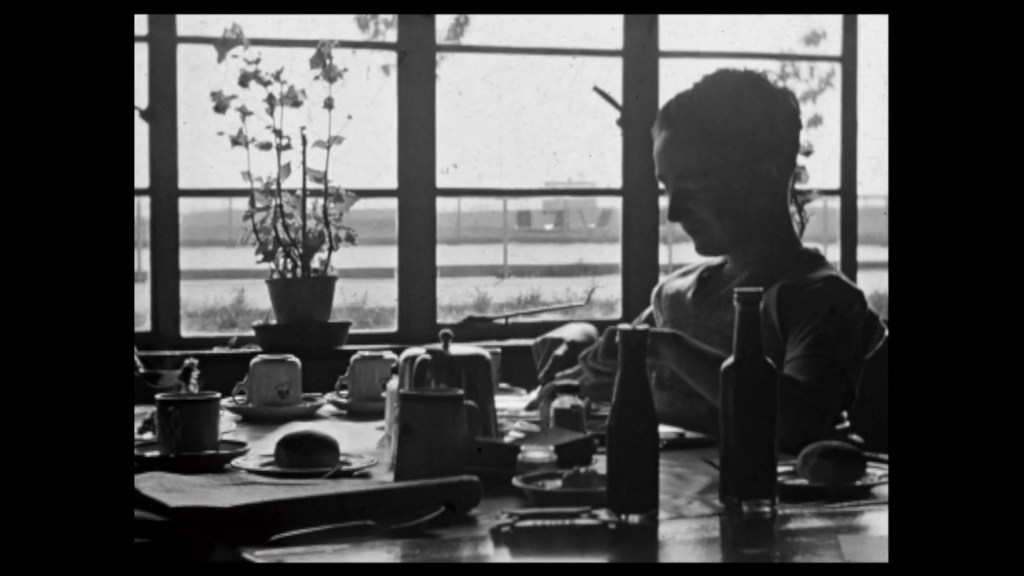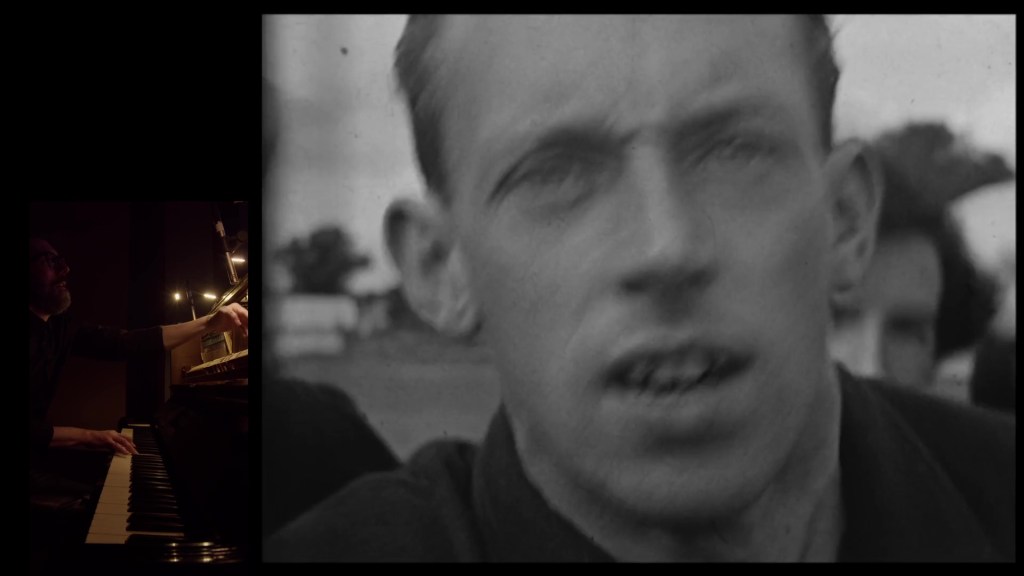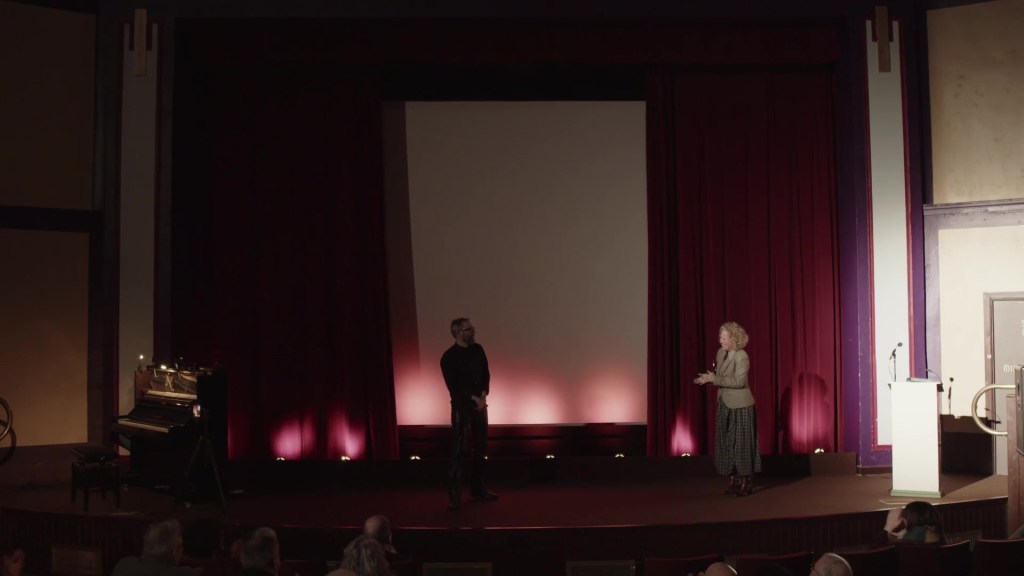
Bonn from afar (2025, day 7)

On Day 7 of Bonn, we are once more treated to a full feature film presentation. For today, we are off to Denmark with that nation’s most popular comic duo of the silent era…

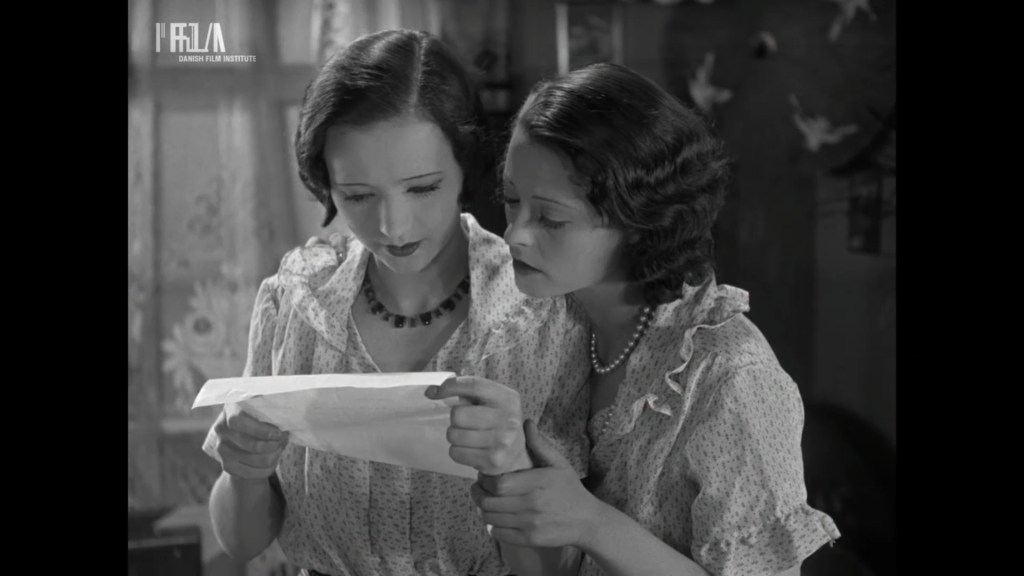
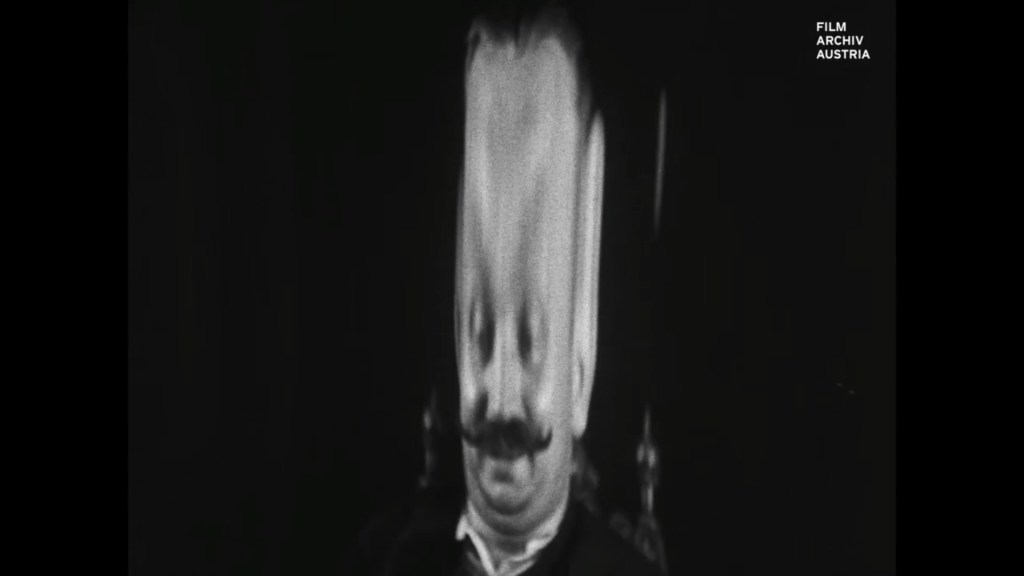
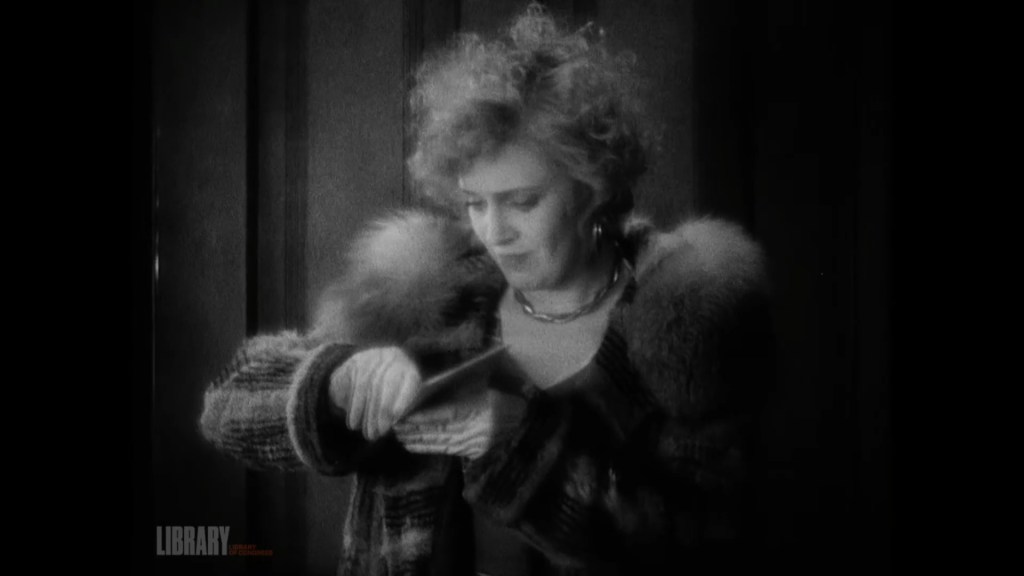
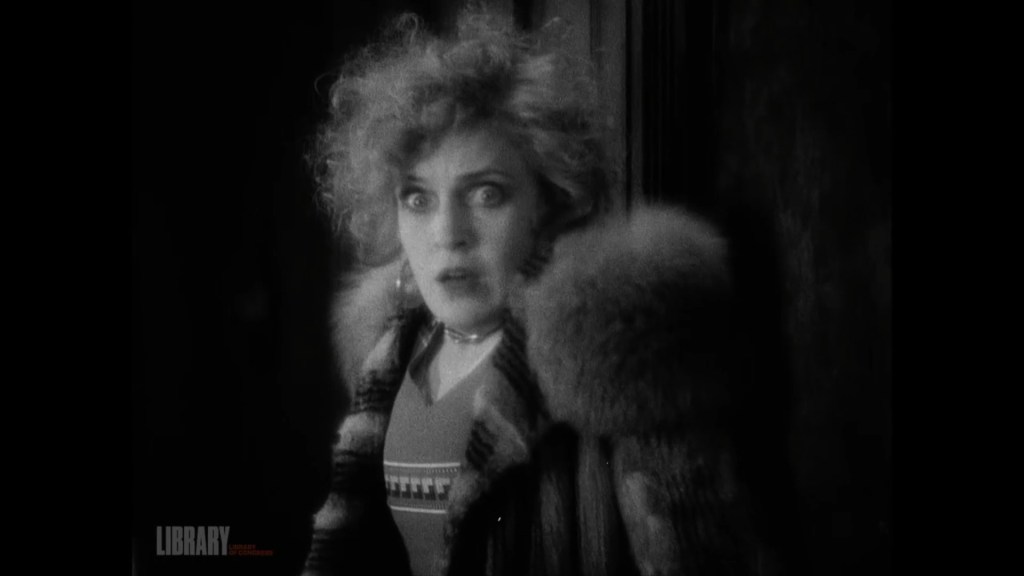
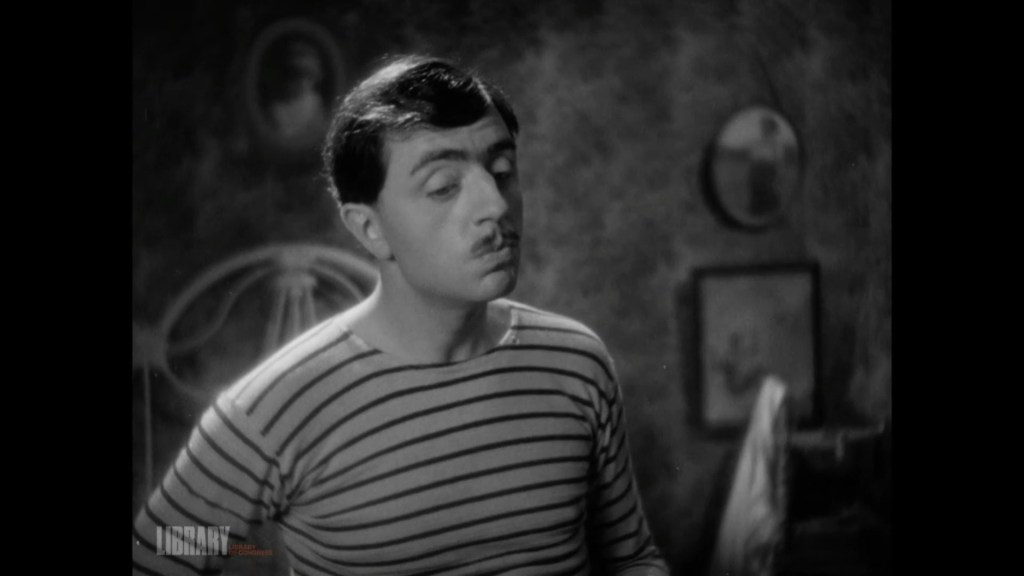
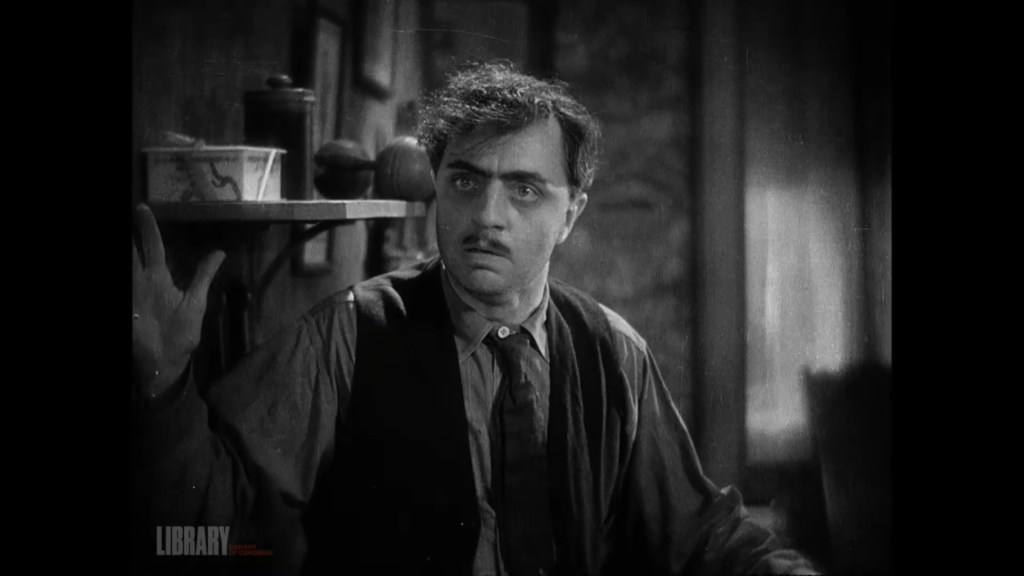
Krudt med Knald (1931; Den.; Lau Lauritzen Sr). Long and Short (Carl Schenstrøm and Harald Madsen) live in a boarding house, flirting with their young neighbours – a nimble duo of roller-skating dancers (Marguerite Viby, Nina Kalckar) – and making friends with their older neighbour, the Inventor (Jørgen Lund). The latter has invented a proto-televisual system, which is highly prized by a sinister trio of men representing “United Electric”. The trio move into the pension, aiming to steal the Inventor’s drawings and also the girls upstairs. After inadvertently foiling one attempt to steal the drawings, Long and Short are hired as drivers by the trio. Thinking this will get them out the way, the trio take the girls for a drive – but are once more stopped in their plans of seduction by Long and Short. Meanwhile, the Inventor signs a deal to gain half the profits from his invention from United Electric. But the trio from the company want to steal them from their boss to gain all the profits themselves. The trio enlist Long and Short to help them break into the office and the safe where the plans are, and arrange that the duo get arrested in their place. But the duo escape and save the day, catching the trio and saving the Inventor. ENDE

I’ll be honest: I feared that I wouldn’t get on with this film. I have been aware of the Danish comic duo Fyrtårnet and Bivognen for some years. Many of their films, including today’s, have been long available for free via the DFI silent film portal. But without subtitles or music, this little thread of silent film history has never enticed me to battle through. (On this same theme, I have had a deluxe Film Archiv Austria DVD edition of the films of early Austrian slapstick duo Cocl and Seff on my shelf for years. Somehow, I’ve never quite been in the mood to unwrap and investigate.) Yet this is precisely the kind of hesitancy I should overcome. After all, Danish silent cinema is a much more complex and multifaceted body of work than as represented by the canonical films of Benjamin Christiansen and Carl-Th. Dreyer, or the stardom of Asta Nielsen and Valdemar Psilander. The comic duo Fyrtårnet (Carl Schenstrøm) and Bivognen (Harald Madsen) were wildly popular in the 1920s and 1930s, and not just in Denmark. As the DFI page dedicated to their work reveals, under the names “Pat and Patachon” they were also big stars in Germany. Indeed, even the English version of the DFI pages on the duo stick with the Germanified “Pat and Patachon” as their non-Danish character names. “Long and Short” seem to be the English equivalent, and I only know this thanks to the English subtitles available on this presentation from Bonn.

All of which is to say that I was utterly unprepared for how much I enjoyed Krudt med Knald. I was also unprepared for the rhythm of the film, and how this heightened the pleasure of watching it. Though Long and Short (to reinstate their English aliases) are slapstick performers, the timing and execution of their gags do not attempt the speed or sheer breathtaking cleverness of Keaton, Lloyd, or Chaplin. They are a shambling, mostly slow-moving pair. One can follow their thought patterns more readily, watch their logic slowly unfold with everyday velocity. The opening scene is about neither character wanting to get up before the other: the Keaton-esque pulley system to tip one another out of bed is not especially sophisticated. (As compared to Keaton’s house in The Scarecrow (1920), for example.) But it’s character that seems to drive the gags, not the gags that define the character. It’s the mutual stubbornness, and the ultimately comradely and good-natured conclusion of the scene, that comes across – and brings the laughs.

The world they inhabit is also exceedingly well observed. The lengthy meal scene at their boarding house, overseen by the large landlady, is filled with brilliant touches. While the gags about increasingly large/tall/long-limbed neighbours at the table is good, if not necessarily sophisticated, the real laughs come from the manners and mores of the setting. The film cuts from the duo’s resigned efforts to make the most of their miserly portions to wall-mounted slogans about the health benefits of privation: “Keep sound: Don’t eat too much.” “To eat one’s fill is to eat too much.” “The less you eat, the better you feel.” The efforts of Long and Short to fit in (literally and metaphorically) to the pretensions of their petit-bourgeois hostess is marvellous.

Later, there is another rather shambling sequence involving a sleepwalking Short, who walks along the rooftop of the boarding house and frightens the inhabitants. A rooftop sleepwalking sequence is hardly novel (especially for 1931), and it doesn’t pretend to offer the suspense or drama of the stunt work of a Keaton or Lloyd. But what it does instead is take the opportunity to poke fun at the landlady and her friends, who are busy having a séance. When the landlady sees the silhouette of Short, wrapped in his bedsheet, she screams: “It was Napoleon!” It’s a brilliant gag, in which the landlady’s fear also boasts of her pretension at having summoned a mighty name of history to her boarding house séance. The payoff, too, is surprising. For Short’s friends all rally round him and they form a little community, gathered round the Inventor in mutual support.

Time and again, I was surprised by how plot lines or details of character developed in unexpected directions. For example, the Inventor is portrayed initially as a comic figure, inspired by drink. “At the bottom: that’s where the good ideas are!”, the Inventor explains to Long and Short, motioning to his bottle of liqueur. “I’ve never found anything up there”, he adds, pointing to the top of the bottle. It’s a marvellous line. (And the kind of joke about drink and human foibles that still inflects Danish cinema today.) But it also marks the old man as vulnerable and human, facets which foster his friendship with Long and Short, and with the two performing girls.

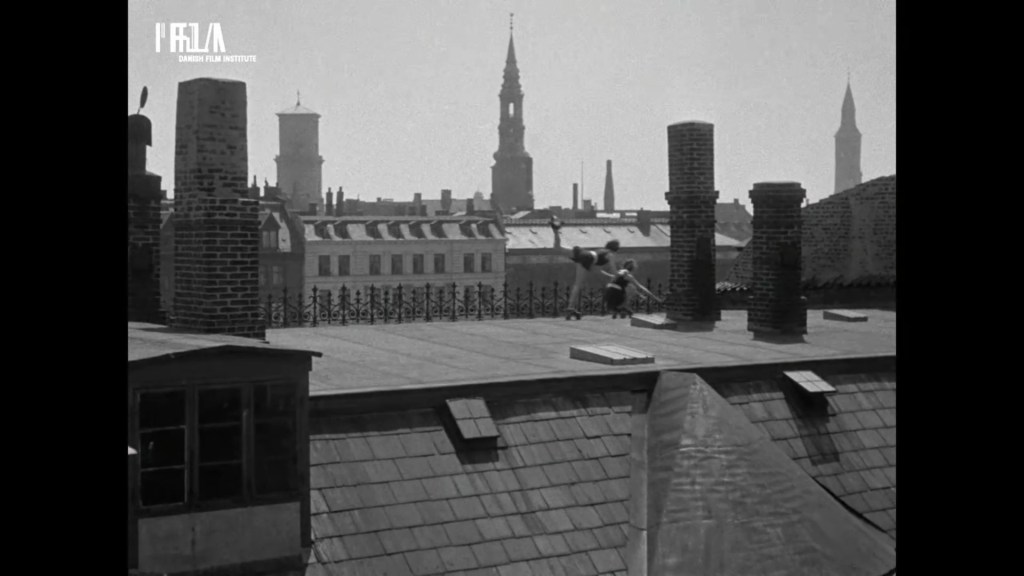
Regarding the latter, I was also very touched at how Long and Short treat them with almost chaste respect. There is no romance as such, just a kind of comradely innocence and mutual respect. The pleasure of their relationship is not so much the prospect of romantic love as of protective friendship. We first meet the girls on the rooftop of the boarding house, where they are trying out their new “number” on roller-skates. It’s an entirely unnecessary sequence, as far as narrative is concerned, but it’s utterly, utterly delightful. Filmed on an actual rooftop overlooking the city (Copenhagen, one assumes – but I’ll gladly be corrected), there is a real sense of freedom and space – but a freedom and space that are also limited. It’s a moment of joy, demarcated in this small, somewhat precarious space, but set against the bright, open sky and the huge sweep of the cityscape. It’s more than charming or silly, it’s really rather beautiful.

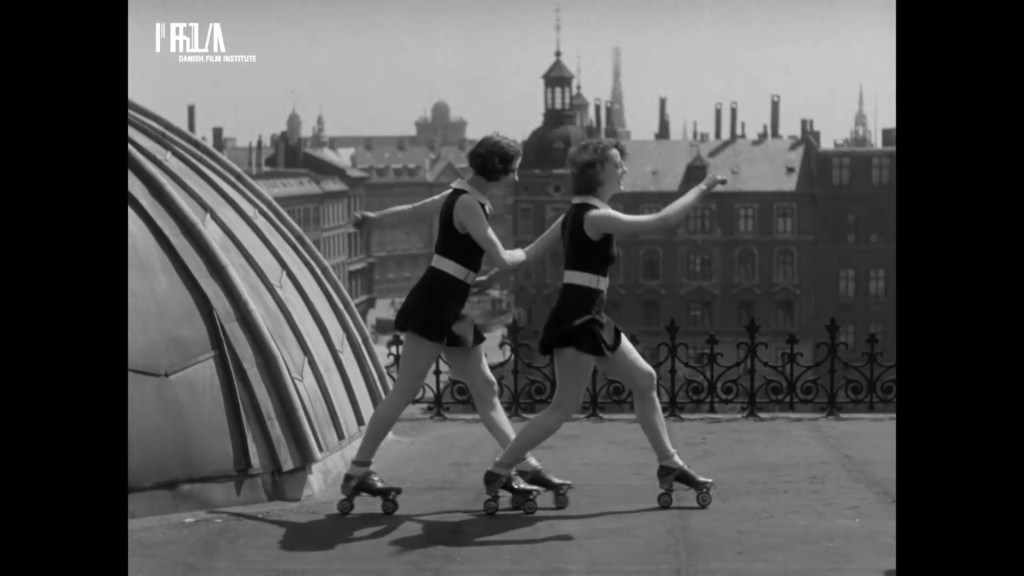
Indeed, there are many moments like this, when the use of location is more than merely incidental but striking and beautiful. The yard where Long and Short are employed to move barrels has some amazing piles of materiel, used to striking effect in some compositions (as when the dup appear right on top of a mountain of barrels) – and for an extended and wonderful sequence involving hiding from the police among the barrels. Here again, it’s not so much the speed of the chase as the sheer extension of the gag: Long and Short popping up and down at random places amid the barrels, while an ever-increasing number of policemen crawl into the maze.

Later, there are also some gorgeous glimpses of the summer landscape. There is a shot of the duo driving through a wheat field in which we see only their heads and shoulders moving through the crop. The sky is bright, the wheat is swaying in the breeze. It’s a surreal sight, wonderfully shot and composed. But there is also great beauty in the way the scene shows us the sweep of countryside. The scene lingers just long enough for the sway of the crop and the treetops to become a subject of contemplation. Even in the middle of a chase sequence, the film is paced and short such as to have an interest that is more than merely narrative.

Krudt med Knald is also weirdly moving. I’ve tried to explain above how the rhythm of the film allows for an accrued sense of emotional engagement – at least with this viewer. So when we see the Inventor, the duo, and the girls join forces and make friends in the boarding house – not just sticking together but living together in one toom – I was genuinely glad that these people – poor, struggling, disappointed, but hopeful – came together. Whenever there is misfortune to any of them, they come together to commiserate or reassure. When Long and Short finally earn some money, the first thing they do is buy food and drink to share with their friends.

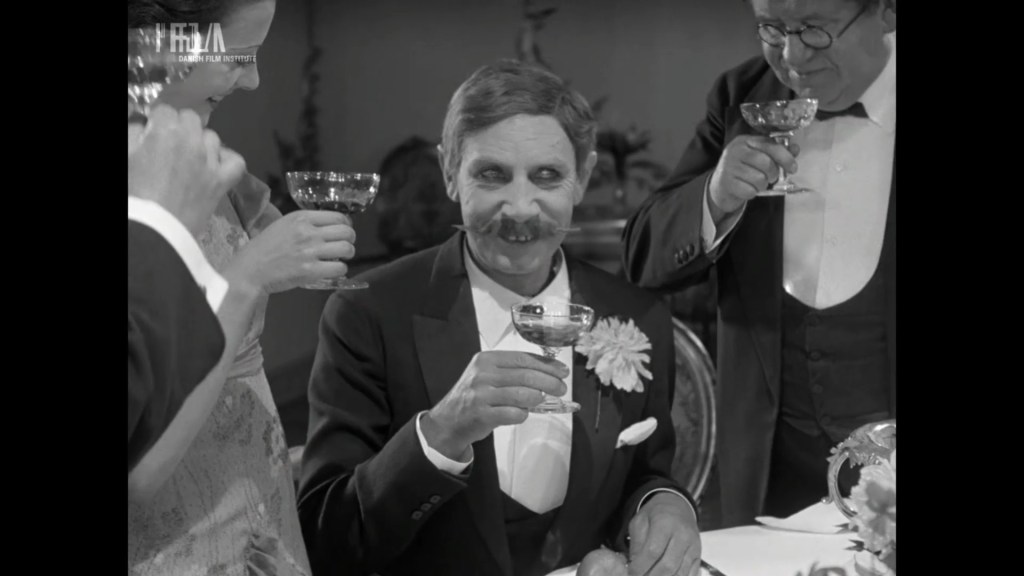
That the film successfully mobilizes a sense of emotional connection is really felt near the end. When, near the end, Long and Short have been supposedly caught in the act of stealing the Inventor’s plans to give to the criminal trio, all their friends are present to witness their arrest by the police. The moment when the girls and the Inventor believe that the duo have betrayed them packs far more emotional punch than I expected. It’s not the outrage at false accusation that stings so much as the hurt of betrayal by those they believed were their friends. It’s very subtly played. (One can imagine a Hollywood production laying it on more thickly.) And it’s the subtleness that gives it an emotional reality, an emotional edge. So it’s all the more effective when we see the group all together in the final scene, where a dinner has been arranged to celebrate the Inventor’s success with United Electric. “This is one of the happiest days of my life!”, the Inventor says. “And I am fill of the deepest gratitude… especially towards my two friends…” – and here his hand falls for a moment on Long’s shoulder. His words, and the performances here, make this moment surprisingly touching. Isn’t it nice to feel happy for such characters? It isn’t the neatness of the narrative resolution, it’s the cumulative sense of comradery build up between character, and between them and us, that makes the end effective.

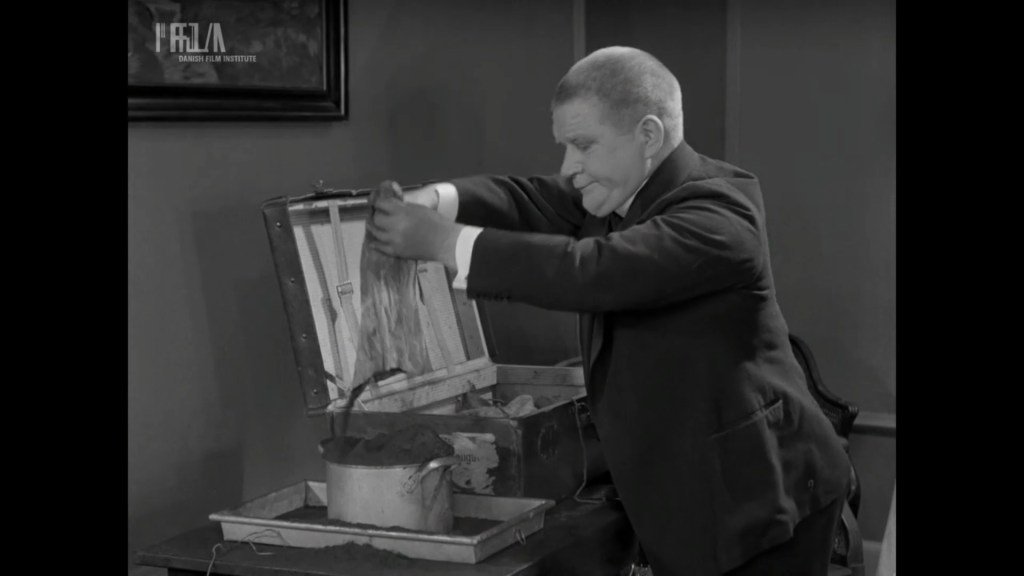
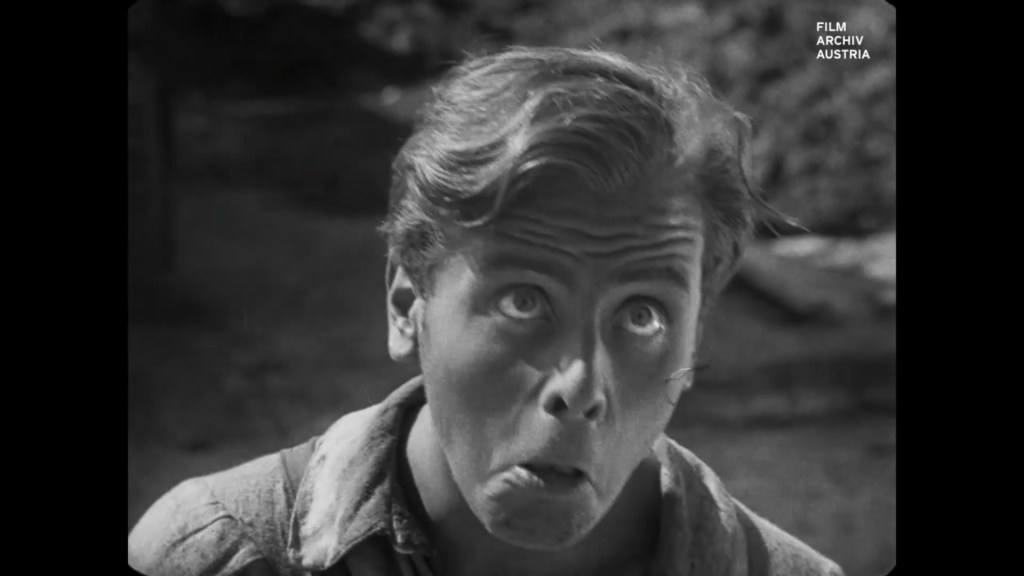
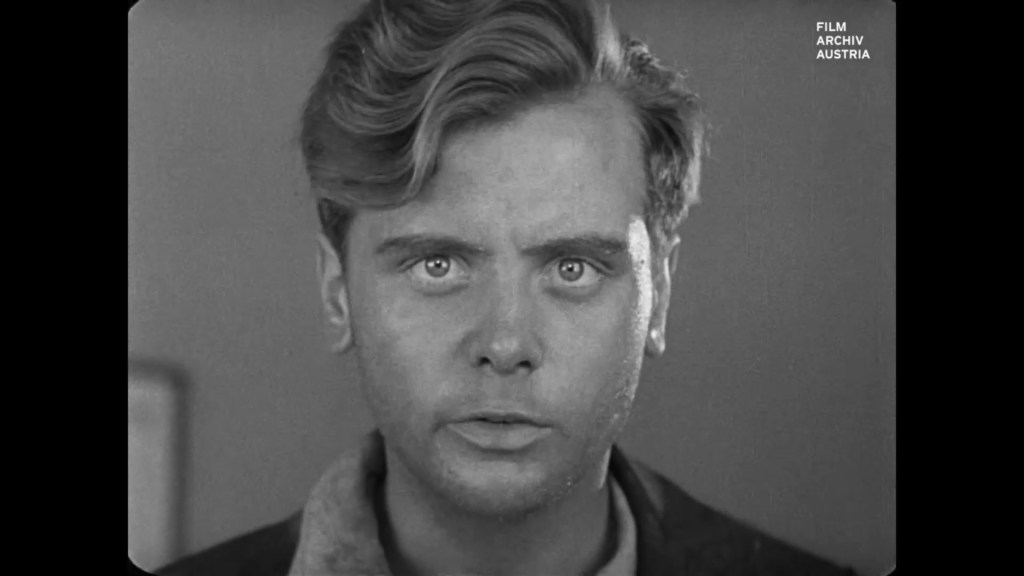
I should also mention that the film’s title Krudt med Knald seems literally to translate as “Gunpowder with a bang”, but is translated in this presentation as “Long and Short invent Gunpowder”. Original and given titles are both somewhat misleading, but this seems to me rather typical of the film’s approach. One subplot is indeed about Short trying to concoct his own brand of gunpowder. He is inspired by the Inventor’s reliance on alcohol to fuel his inventiveness, so starts guzzling bottles to receive inspiration. It’s a silly plotline, one that interacts only tangentially with the main storyline of the Inventor and his drawings. But it is the source of some good gags, especially the postscript to the final dinner scene. Here, Short is ready to show off his own invention to the assembled cast. As he prepares his experiment, the film cuts back and forth from Short’s preparations (the danger of which looks increasingly alarming) to the guests leaving, one-by-one. The time this gag takes to unfold is typical of the film’s rhythm: it’s quite slow, but the sheer elaboration of the single gag attains its own humour. The pay-off is exactly as one would expect: there is a huge explosion, with Long and Short emerging, smoke-blackened and in tatters, from the wreckage of the room. But the pleasure is not in being surprised, so much as in seeing the inevitable conclusion of this plotline, so long prepared and so inevitable that the sheer pointlessness of it – and its stubborn and unnecessary pursuit – is itself the source of humour. By this point, I had already been totally won over by the film. The cumulative silliness had me chuckling throughout Short’s demonstration. And the final shot, of both characters looking directly at the camera, is both funny and touching. Their look is not one of pleading or bafflement or attention-seeking, but a pleasing moment of engagement from character to spectator. And the way Long strokes away the ash from Short’s head – an act of cleanliness, yes, but more a gesture of care and affection – sums up the curious emotional tenor of the film. It’s deadline and funny and moving all at once. A lovely way to end.

The presentation of Krudt med Knald via the DFI portal is with replacement (i.e. modern, digital) intertitles in Danish. There is neither music for subtitle options, so while looking great the video is useful only to the more devotedly interested. As presented here at Bonn, the film has new digital German titles (a sensible option, given that no original aesthetic is being lost) and optional English subtitles. There is also a pleasing musical accompaniment for electric guitar and piano by Tobias Stutz and Felix Ohlert. Like the film, the music has an amiable, rambling quality that suits what I might call the gentleness of the film. While I am curious about the kind of musical accompaniment available in 1931, it was nice to see the film with music that didn’t overstate itself. It’s a curiously subtle film, one that might easily be overpowered by too strident a score.

So, overall, a very pleasant experience. I’m so glad that I’ve finally seen something with Fyrtårnet and Bivognen, as they have been on my horizon for years. While their films have been available via the DFI, this is the first time I’ve had the chance to see one presented in such a way that I gladly seized the chance to sit down and watch it. (As a foot note to the pertinence of programming this film, it was a pleasure to see the Danish director Holger-Madsen playing the small role of the detective. Given that we saw one of his films on Day 4 of Bonn this year, and that I have recently been trying to track down a copy of one of his German films of late, it was rather nice to see the man himself, alive and well and very much not lost from history.)

In sum, Krudt med Knald was a delightful surprise. But that’s rather what I’ve come to expect from the programme at Bonn.

Paul Cuff

Bonn from afar (2025, days 5 and 6)

Day 5: Buddenbrooks (1923; Ger.; Gerhard Lamprecht). I was very excited when I saw this on Bonn’s line-up. A new restoration of an unknown Gerhard Lamprecht film? Yes please! A silent adaptation of a Thomas Mann novel? Yes please! Lavish sets and settings? Yes please! Are you a resident of Germany, Austria, or Switzerland? Y—! Oh… no. Well, no film for me today. No Lamprecht, no Mann, no lavish sets, nor even the comfort of living in an appropriately central European country.

To be fair, I knew this was coming, having seen the dreaded asterisk on the programme that denoted access to the online version was limited by copyright according to region. As the festival’s co-curator Oliver Hanley said to me after the festival last year, there are sometimes occasions when compromises must be made. This is an exciting new restoration of an important work by a major director, so it’s clearly worthwhile being programmed, whatever limitations there are for streaming it. I don’t resent the good folk of Bonn being able to see this film in situ at the price of we folk from afar not being about to see this film online. One really can’t complain: this online version of the festival is still, miraculously, free, and there are plenty of other films on offer. At least I am now aware of the existence of the restoration of Buddenbrooks. Hopefully it will do the rounds, so to speak, and appear somewhere where I can attend or view online. So, on the fifth day I rested.

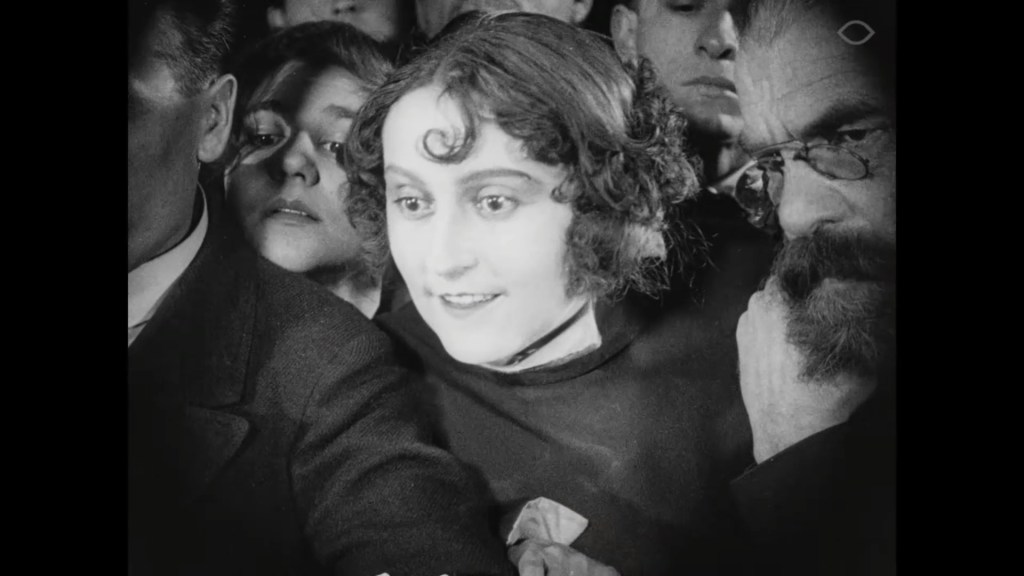
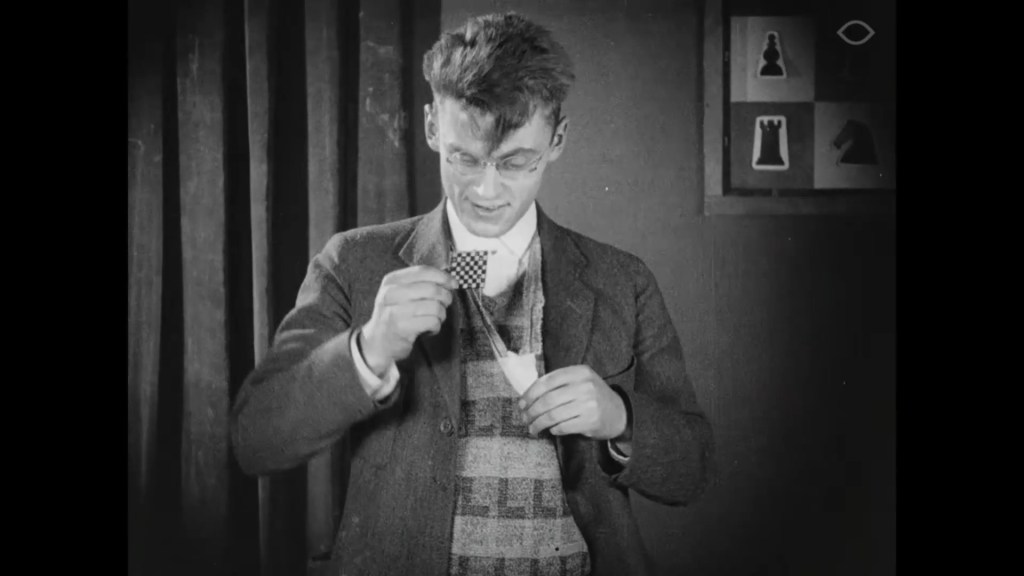
Day 6: Shakhmatnaya goryachka (1925; USSR; Vsevolod Pudovkin/Nikolai Shpikovsky). Today’s short film takes us to Russia, and to a delightful directorial debut. Pudovkin’s first film is a comic skit about the titular “chess fever” that grips the Hero and distracts him from his impending marriage with the Heroine, only for her to end up in the arms of chess champion Capablanca and be won over to the game – and back to the Hero.

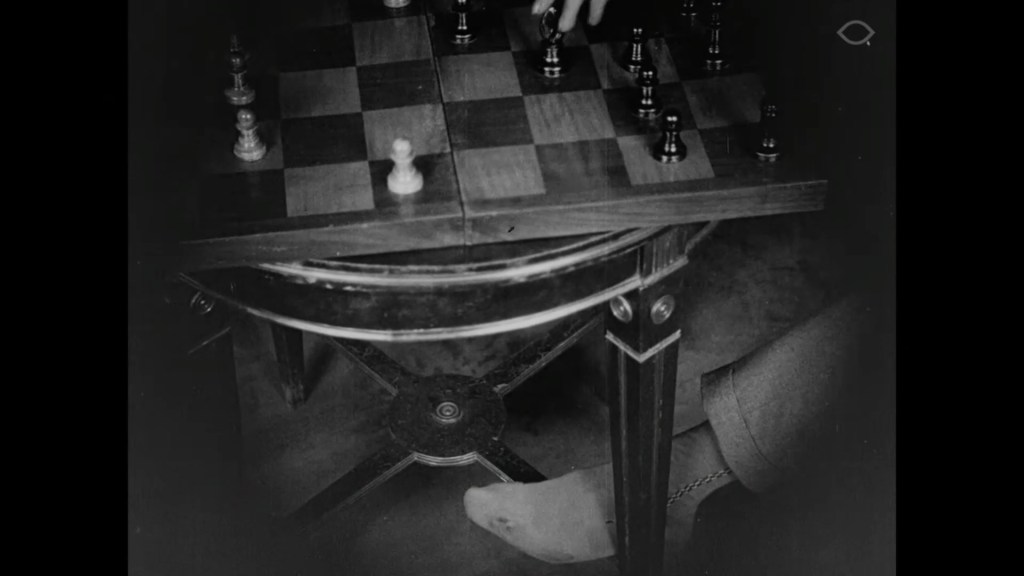
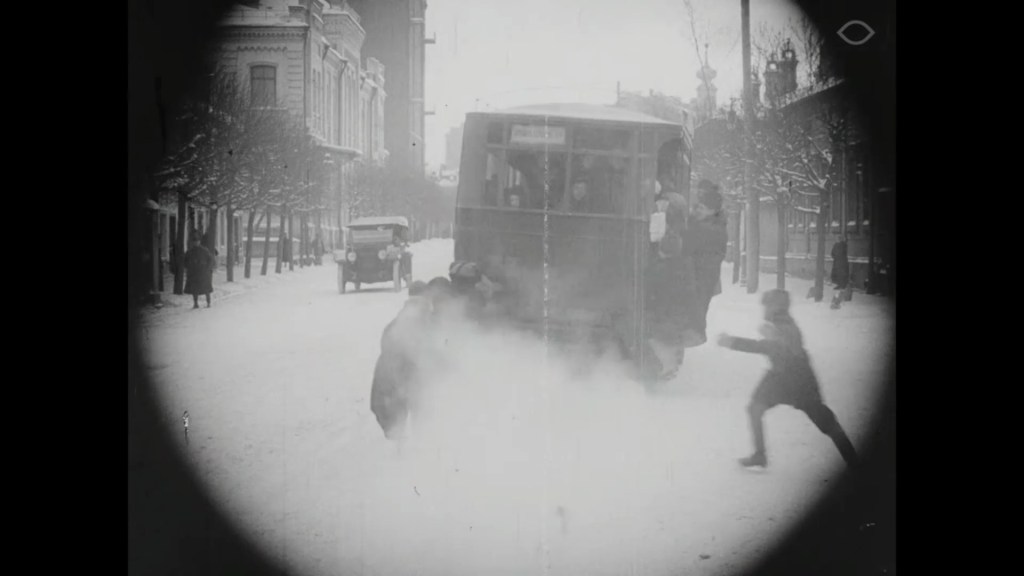
I’ve seen this film before, but so long ago that I felt like I was discovering it for the first time today. I’d forgotten how packed with marvellous gags it is, taking advantage of every kind of space and movement. Though Pudovkin is famous for his later propaganda films, and especially for his dramatic use of montage, Chess Fever shows his playfulness and skill exercising numerous cinematic techniques for comedy. See how the shot/reverse-shot of the feet underneath the chess table creates the impression of two players, only for a wider shot to reveal a single player with mismatched socks swapping sides to play against himself. Or the brilliant use of reverse-motion when the Hero is irresistibly drawn backwards down the pavement into the chess shop. Then there is a deliciously Keaton-esque snowballing of gags when the Hero has his books of chess problems thrown out of the window. An officer arrests a man for stealing a ride on a bus, but is distracted by the unexpected arrival of the chess problem from above. We have already seen other people being pleased to find these papers rain down on them, but here the gag is developed. The film cuts from the distracted officer and the man he’s supposed to be arresting to a shot of another bus. We see another bus passing by, and one, two, three, four, five men clung to the side. This looks like the climax to the gag, but the film delivers one final, knock-out gag: behind the bus is an entire line of punters who have affixed a rope to the bus and are sliding along behind it.

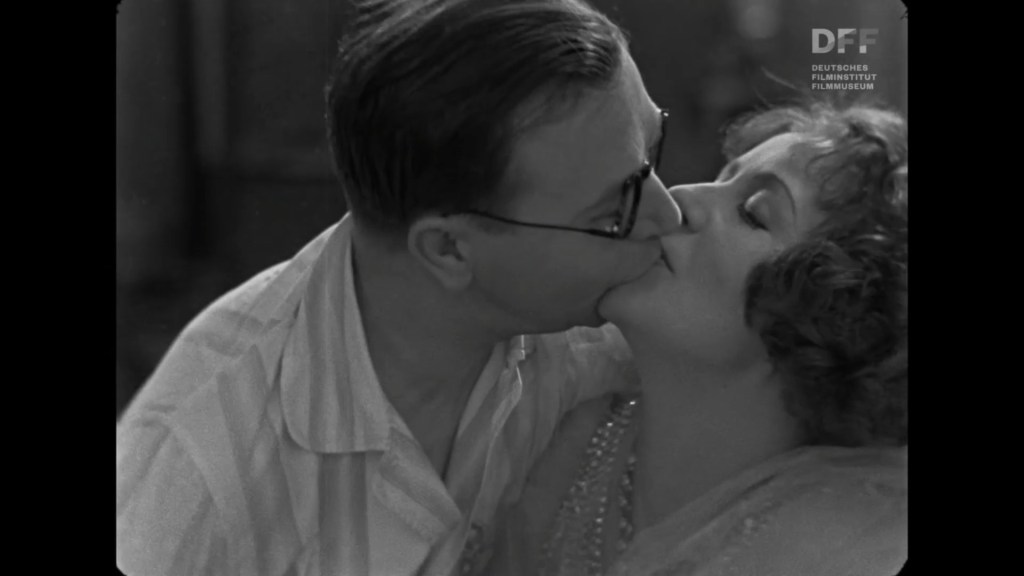
The titular “chess fever” of the film is everywhere. Not only does everyone reveal themselves to be a fanatic, but the feverishness becomes embedded in the patterns on screen. The chess board’s chequer pattern is everywhere about the Hero’s person: his sock, hat, scarf, handkerchief. And this pattern is everywhere around him, too, from the floor tiles that the Hero finds himself moving across like a chess piece, to the series of ever-tinier chequered items of merchandise and apparel that the Hero jettisons in the river. The tiniest board is kept for last, however, when – having thought he had lost all his chess sets and now cannot play with his converted bride – he remembers his emergency set kept in a pouch around his neck. He withdraws this absurdly small board, and the lovers play micro-chess before passionately embracing.

As a side note, I also enjoyed the cameo from the real chess champion José Raúl Capablanca. As it happens, I’m reading Sergei Prokofiev’s diaries at the moment. Prokofiev was a chess fanatic and befriended Capablanca in his teens in St Peterburg, before the Revolution. In fact, Prokofiev actually played and beat this future world champion in 1914 during a chess championship. For this reason, it was delightful to see the opening close-up of Capablanca, looking a little playful, a little awkward, a little amused. (Rather appropriately, my writing of this paragraph was interrupted by the postman, who has just delivered my latest Prokofiev purchase: the sadly out-of-print 1960 recording of Semyon Kotko, which is, I’ll have you know, ladies and gentlemen, the only uncut recording of this opera currently on the market.)

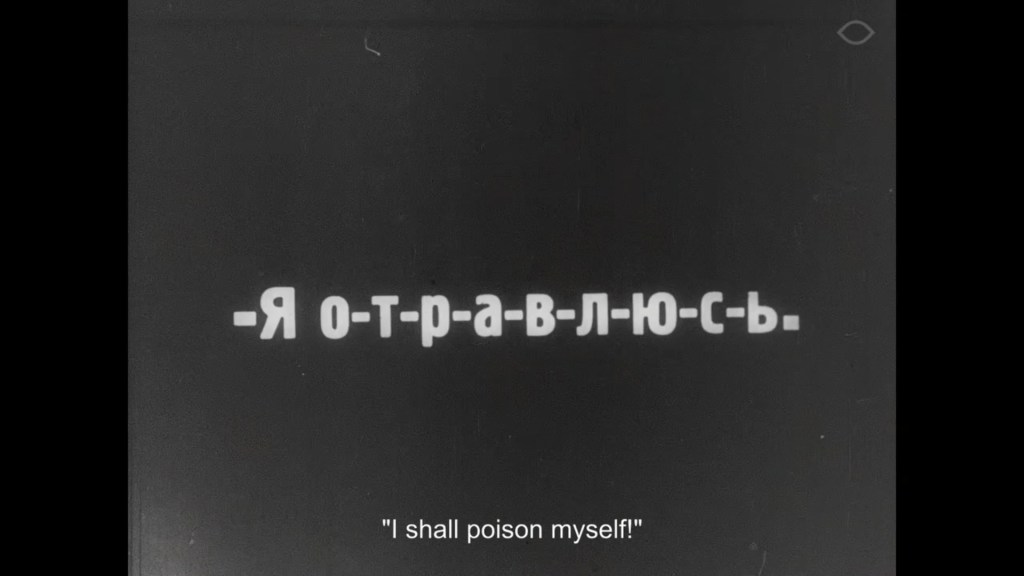
The music for this presentation was by Sabrina Zimmermann and Mark Pogolski on piano and violin. This was tremendous fun. Full of life, wit, melody, irony, and energy. I loved the citations of La Forza del destino when the Hero finally arrives, late, to his fiancée’s side – and later when the Heroine goes to buy poison to end her own life. The operatic behaviour of the characters is itself a kind of parody of the fatalistic Russianness of pre-Soviet cinema à la Evgenii Bauer et al., and the music lives up to the bathos. Throughout, the score kept pace with the film’s sudden shifts in gear, changes of tone, and slights of hand. Though only 25 minutes long, the film demands dozens of swift manoeuvres from any accompanist. Zimmermann and Pogolski produced a little gem of a performance, fully worthy of the film. This soundtrack was recorded live, and I enjoyed hearing the murmur of distant laughter. It wasn’t so loud as to be distracting, but just enough to make me feel I was sharing part of the performance.

What else to say? This is a brilliant film, presented here with a perfect musical accompaniment. Whatever disappointment I had over missing Buddenbrooks was swiftly forgotten in the pleasure of seeing Shakhmatnaya goryachka in such a great performance. Bravo!

Paul Cuff

Bonn from afar (2025, day 4)

After yesterday’s exploration of vagrancy and destitution, today we return to the world of the bourgeoisie and to the genre of light comedy. This film was just as much an unknown to me as yesterday’s, and just as welcome a treat…

Was ist los mit Nanette? (1929; Ger.; Holger-Madsen). Otti (Ruth Weyher) is married to the night editor of a newspaper, Richard Curtius (Georg Alexander). Unbeknownst to Richard, Otti has saved him from bankruptcy by living a double life. By day she is a dutiful housewife, but at night she works as “Nanette”, a successful vaudeville dancer. Richard still believes the money came from the will of Otti’s late aunt Finchen, from Batavia. However, things get complex when Aunt Finchen (Margarete Kupfer) turns up on their doorstep. Otti pretends Richard is deeply unwell, so hides her aunt in the attic, along with her pet monkey and a huge amount of luggage. Richard’s rich friend Toto (Harri Hardt), who has a crush on “Nanette”, also comes to stay. Inevitably, events soon spiral out of control. After various farcical chases and confusions, Richard realizes that his wife has been lying to him. Accusing Otti of disloyalty, he decides to pursue other women. First among them is “Nanette”, whom he invites to a night out at the Trocadero club. There, the truth emerges. Richard learns of Otti’s double life and her sacrifice for the sake of their marriage. After recognizing that they still love each other, the couple reconcile. ENDE.

This was the only film produced by Ruth Weyher-Film, the company founded by the star. (She would quit acting at the start of the sound era.) I have seen and liked Weyher in a few productions from earlier in her career, but she is more striking here in this lead role, which drives the whole film. It is very interesting to think of Was ist los mit Nanette? as the work of a female producer and star, since its central concern is with a woman’s agency in the face of male expectations. Otti is introduced very deliberately as “Frau Dr. Curtius”, which is formally correct, but markedly eliminates her given name altogether. By contrast, her friend is introduced as “Anita Morell” (Maria Mindszenty), a woman “widowed young” and “halfway to being remarried”. It is as if the shedding of the dead husband has already given her back her name, and the possibility of agency. We might wonder if being “halfway” to marriage is rather more satisfying than being married. Weyher herself gives a delightful performance. Yes, it’s a chance for her to show off before the camera. She gets to dance on stage, run around, and don disguise. But she always bristles with intelligence and wit, her eyes flashing with playful cunning. The film also gives her plenty of close-ups in which something deeper is revealed, glimpses of emotion (doubt, frustration, longing) that lie beneath the play.

As her husband Richard, Georg Alexander is perfect. I think I’ve seen him in more sound films of the 1930s, so I am rather familiar with his distinctive voice, but here on the silent screen he makes the perfect foil for Otti. Everything about him is fussy, particular – a little vulnerable, a little defensive, a little rigid. His married life quickly unravels, and we realize how limited is his conception of a romantic union. From being a loving husband, he reveals the smallness of his mindset. He soon draws on cliched images of a “painted and deceitful” woman to describe Otti. “They used to burn people like you!” he cries at one point. Otti replies that she won’t forget that insult, and neither will we. It’s an absurd thing to say, but it is said in earnest and in spite. But since this film is, ultimately, a comedy, Richard gets his chance to learn. When he hears Otti’s true history of sacrifice – and a sacrifice for love of him – we see him realize his mistake. Alexander’s performance has enough reality to it (enough seriousness) that we might just have hope for his future with Otti.

Around these two leads are a number of interesting supporting performance. The most significant is Margarete Kupfer as Aunt Finchen. I thought this was a marvellous creation. Her hypochondria makes for some delightful use of costumes and props. Obsessed with her own glands, she travels with a monkey and an enormous spray-pump to ward off germs. The latter she uses as a splendidly phallic weapon to chase Richard around his own home. The former animal is the source of slapstick, but also of some great lines of dialogue. (“My glandular baboon! Preserver of my youth!” Finchen blubs at one point.) But this comedy also enables something more interesting. It is noteworthy how much of the physical slapstick in the film is driven by the women (the wife, the best friend, the aunt, the maid), who give out as much as they take. Echoing Otti’s use of disguise, the aunt also finds the liberation of being in costume. With the aid of Otti’s theatrical manager, Finchen undergoes a beauty treatment, emerging from her frumpy outfit and curled hair into glamorous eveningwear and tastefully modern bob cut. We have come to think of her as a purely comedic, almost buffoonish, character – but in the last act she reveals her worldly wisdom. It is she who advises Richard to feign illness, take to his bed, and earn Otti’s sympathy. He duly does, and the trick reunites husband and wife. Not so daft and dowdy, after all, these aunts.

I have so far talked about the film’s performers and themes, but more broadly I must praise how nice Was ist los mit Nanette? looks, and how well the action is directed. The sets – the house, the office, the theatre, the nightclub – are great, richly detailed and beautifully dressed. Amid all this, Holger-Madsen provides lots of nice touches, such as the striking high-angle shot of the characters looking up through the ceiling light when they hear the noise from upstairs. The shot emphasizes the shock, momentarily turning this into a moment of suspense. The characters are taken by surprise with a sound, and the film transforms this into a moment of surprise for us through visual means. More imaginative camerawork is involved in a rather brilliant dream sequence in which the drunk and depressed Otti dreams of being judged and condemned by Richard in a court of law. Superimposed over Otti writhing in her sleep, this courtroom scene is a little comic gem of editing and choreography. (Compared to yesterday’s dream sequence in Der Vagabund, also involving a character dreaming of being tried and condemned, the equivalent in Was ist los mit Nanette? is much more technically sophisticated and rhythmically polished.) It also links nicely to the opening scene of Richard waking up, when he drowsily reaches for the alarm clock and we see it spinning in a kaleidoscopic multiplication of itself. Both scenes are about the vulnerability of the two characters, each experienced in scenes by themselves. It’s one of many fine touches in Was ist los mit Nanette?, which is filled with pleasing details to reveal character and emotion. The whole film is well staged, well photographed, and well edited. Though one reel of the film suffers from some bad decomposition, it is a great example of how good a film of this era can look.

Music for this presentation from Bonn was by Maud Nelissen and Mykyta Sierov. Their combination of piano and oboe is playful, sympathetic, rhythmic, and melodic – a great accompaniment to the film. Though the live presentation of the film in Bonn (so the online notes tell me) was prefaced by an introduction and rare footage from the Weyher estate, which I would have loved to have seen, Was ist los mit Nanette? by itself is a great feature with an enjoyable score.

I said at the outset that Was ist los mit Nanette? is a very different world to yesterday’s film, Der Vagabund. But Weyher’s comedy also has an edge and offers, in its own way, a subtle critique of the bourgeois world in which it is set. Socialist drama it ain’t, but it also finds a sophisticated way for us to think about what we’ve seen, and question the assumptions we might have: about gender roles, about performance and disguise, and about our expectations and assumptions of what an equal relationship might be. I very much enjoyed this film, which was a total unknown to me. A delightful surprise, beautifully presented.

Paul Cuff

Bonn from afar (2025, day 3)

After a day of urbane, light-hearted musical comedy, Day 3 of Bonn takes us to the streets for poverty and vagabondage…

Der Vagabund (1930; Aut.; Fritz Weiß). The opening titles tell us that this is a story “taken from everyday lives”, as recounted to a journalist. The prologue begins with the sight of a vagrant’s body being found in a country ditch between Werder and Potsdam. All that’s found with him is a self-penned poem, an enigma that sets the journalist on a journey to the homeless shelter and the underworld of the unemployed and destitute. What follows is both an account of the journalist’s investigation and the stories he hears from the “vagabonds” themselves. What account of the “plot” I can give is necessarily brief: the film frames its narrative with the journalist visiting shelters and listening to personal accounts of vagrancy and homelessness. The main story becomes that of a man’s journey through Austria, where he encounters the uncaring attitude of many in society. Put like this, Der Vagabund sounds prosaic. But the structure and its cinematic realization are very striking, and the film is filled with amazing images of people and places.

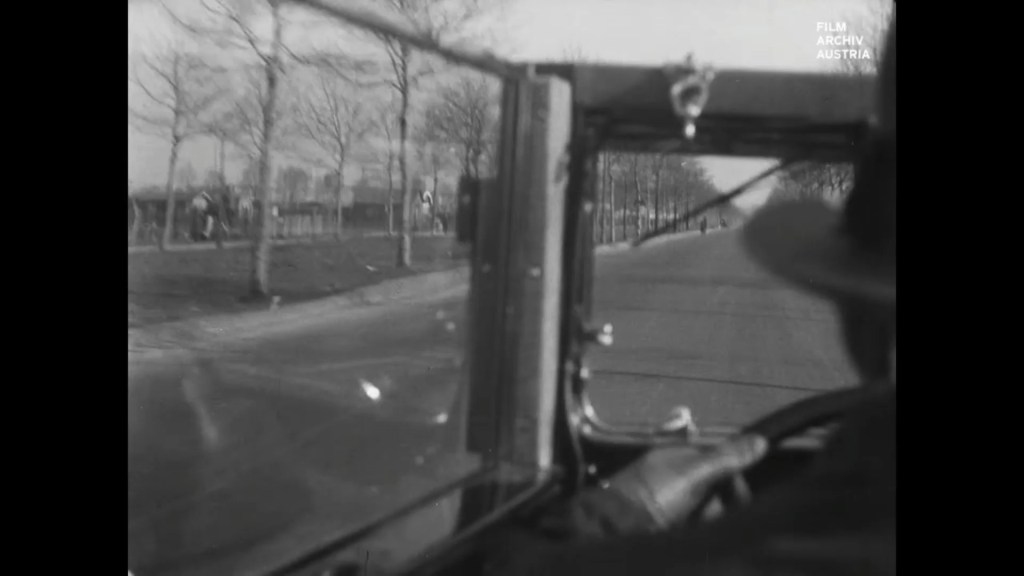
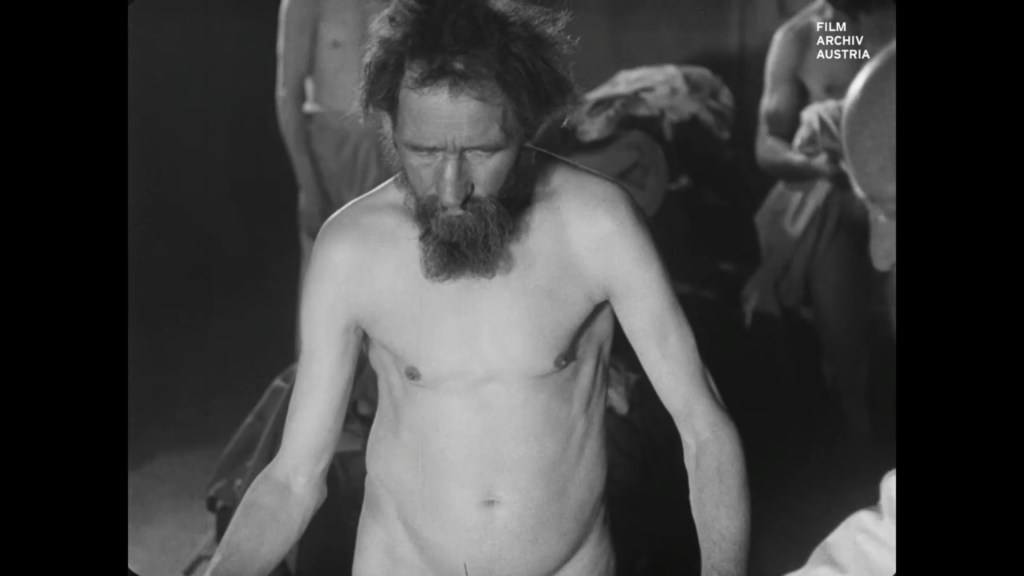
From the outset, director Fritz Weiß provides some beautifully composed images of the landscape, the stillness of which is then offset by the handheld camerawork that brings us up-close to look at lived reality. Soon the camera is perched behind the journalist as he speeds into the city, where there are some amazing shots of the bustling streets that whiz past the car. Alongside the journalist, we visit the shelters and inspect the occupants. We see the vagrants strip and get inspected for lice, then shower. The faces and bodies are palpably real. (When the camera tracks past the vagrants as they eat, one of them shelters his face from the camera, as if ashamed or fearful of being seen.) There are powerful, often quick montages of details: the faces, the bodies, the clothes of the vagrants; or the watches, the coats, the hats left hanging in the shelter.  

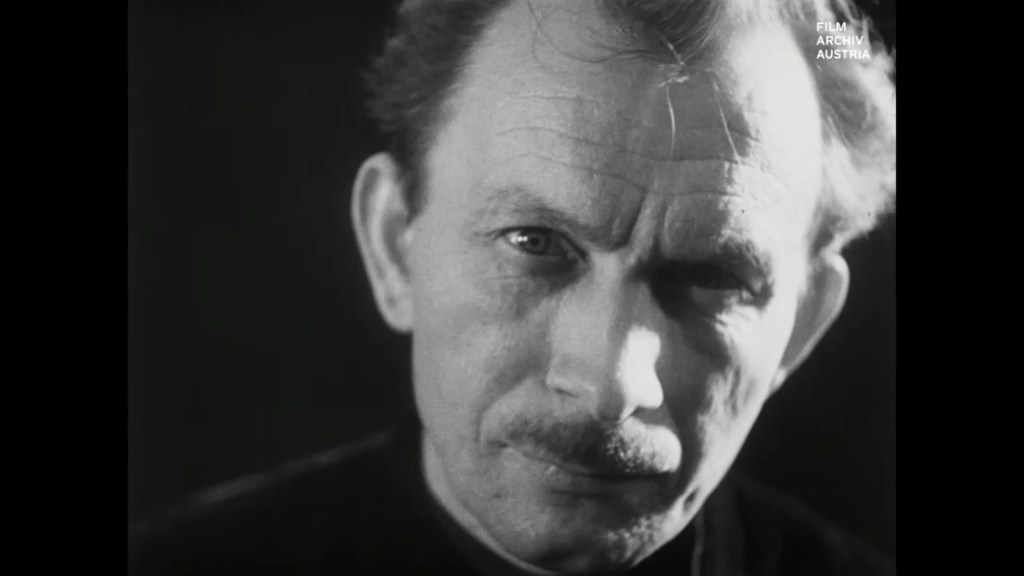
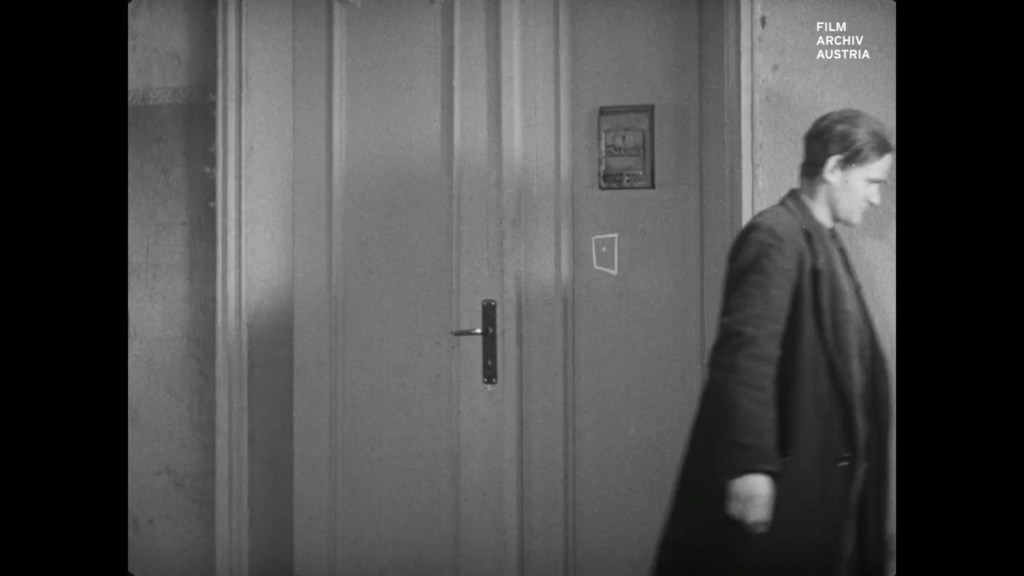
The film begins to give us some context for these people. We meet Gregor Gog, “the vagrants’ leader”, who gets an amazing introductory close-up in which he stares at – almost through – the camera. It’s a challenging look, one that demands we pay attention; it’s also a kind of question: what are we thinking when we see the vagrants on screen? There is a series of cutaways to the unemployed, drunks, petty thieves. We see their faces, are given little vignettes of their actions and habits. There are scenes in which we see the sign language by which their “brotherhood” communicates – chalked symbols on the walls if houses where they have found, or not found, help or food. The film thus gives us a sense of community, of commonality, between these otherwise isolated, down-and-out individuals.

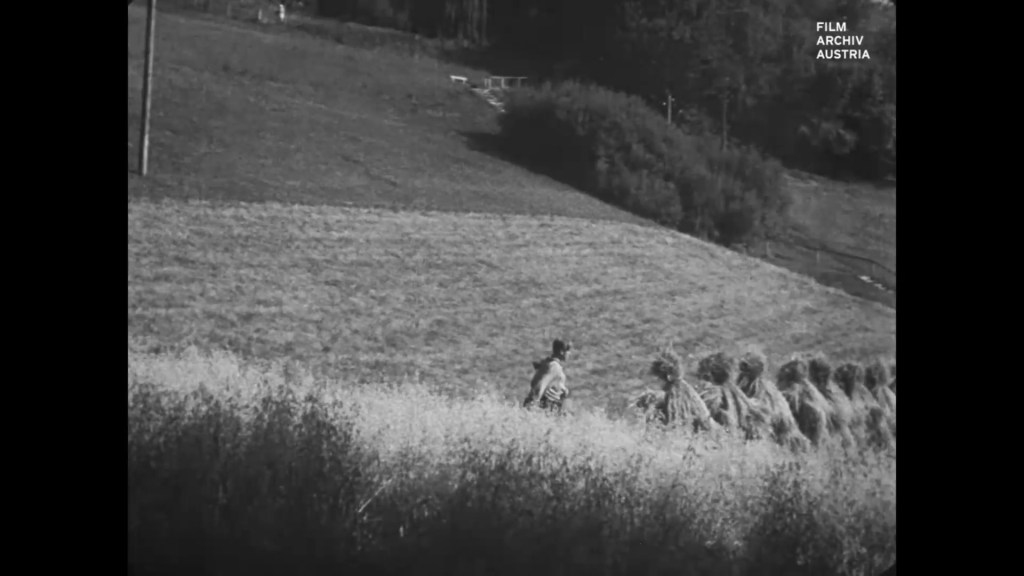
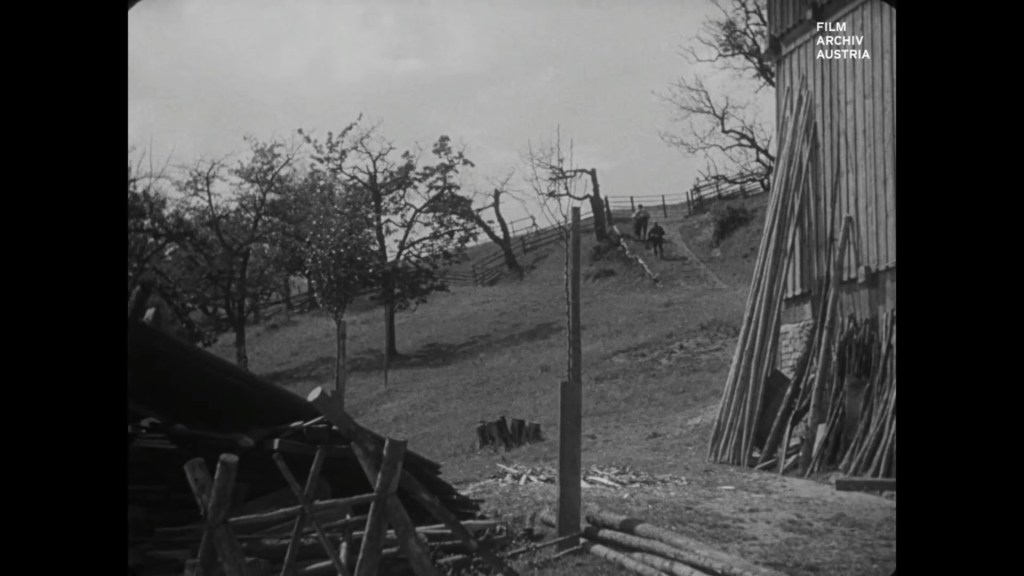
This leads me to think about the film’s structure, which I found very curious. The first section of Der Vagabund, discussed in my previous paragraphs, is based on articles which (within the film) is deemed “too theoretical” by the newspaper editor. Is this a kind of judgement on the style of the film we have just seen? As if in reaction, the film shifts register. The editor wants “life stories”, and that then is what we are given by the film. Though it is carefully framed via the journalist’s interview, what follows is the story of one man who wandered through Austria. We see his temporary work, his moving from place to place, his interactions with locals in a smith, a farm, and on the road. We also see a glimpse of his time with a woman, of a shelter in Austria for other vagrants. Throughout, the film intercuts between this inner narrative and the framing narrative of the journalist interviewing the vagrants. There is a pleasing tension between the real and the fictional, especially given how real even the fictionalized sequences look. This is also felt in the rhythm of the editing. While earlier sequences have some swift montage of faces and illustrative scenes, when we are on the road with the vagrant in Austria there are more long shots/takes of his travels. It’s always a pleasure to roam about in the past like this, and this film’s rambling itinerary is the perfect way to see little pockets of history that you would other never see. There are beautifully composed images that show us the sweep of mountains and valleys. Though the film always gives us a contrast between the richness of the summer meadows and the rags and dirt of the traveller.

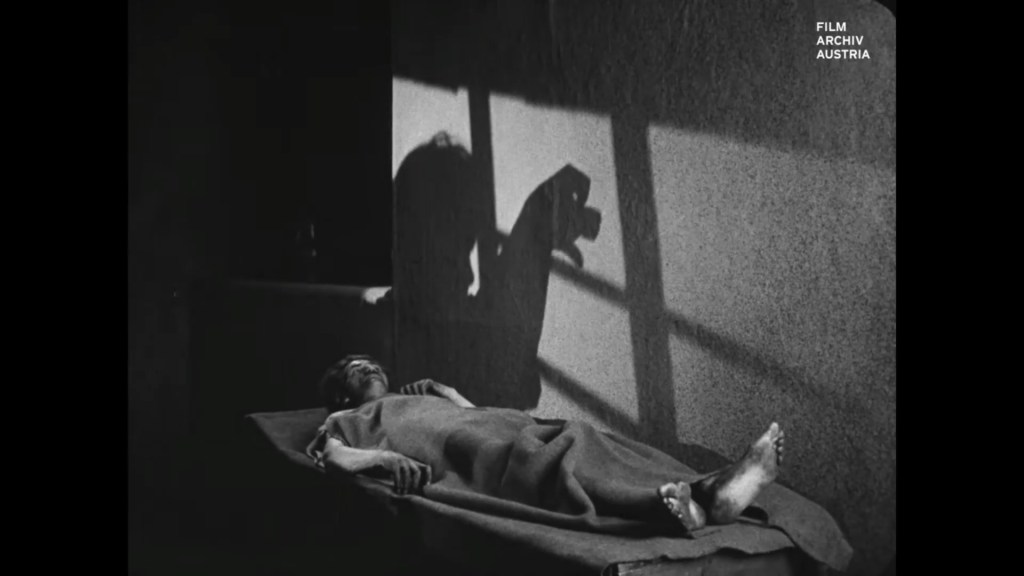
The film’s mode is not solely naturalistic, as there is a trippy dream sequence in which the vagrant character imagines himself tried and executed by the bourgeois bullies he has encountered on the road in Austria. It’s a wonderfully strange interlude, with a bleak edge: he imagines himself being hanged in a kind of forbidding, expressionist landscape. And “naturalist” doesn’t mean this film is so austere that it lacks lyricism or poetry. As I’ve said, there are some beautiful shots – beautifully composed and photographed – throughout the film, especially in the Austrian countryside. There is also a delightful sequence of shadow puppetry, improvised by the main character on the wall of the prison cell he shares with another vagrant, who is ill and lying in bed. The setting is realistic, but it finds a way of expressing something more personal than the set-up might suggest. The scene is silly and sad and touching all at once.

Der Vagabund ends with a montage of people from all classes pouring over the journalist’s articles in the newspaper Tempo. The motage then begins to intercut these scenes of reading with the “march” of the vagrants. To these shots are superimposed a vision of Gregor Gog giving a passionate speech. It was curious to see Gog emerge as a kind of heroic leader in this final montage. Though he is a real figure, playing himself on screen, his appearance at the end of the film is much more like that of a work of Soviet propaganda. Are we to read this as a promise of reform? A threat of revenge? A call to arms? It might be all three, and it is a surprisingly punchy end to Der Vagabund. Like the bourgeois readers of Tempo on screen, the media we consume is coming to life and confronting us with reality – demanding we think, reflect, react. Though the images stand comparison with numerous scenes in Soviet fiction films of this period, it also reminded me – with its confrontational crowd marching towards the camera – of Abel Gance’s J’accuse! (1919). The realization of the imagery is not as developed and sustained in Der Vagabund as in either these French or Soviet counterparts, but perhaps that is to its advantage. In such a film, I’d rather be won over by naturalism or lyricism than lectured or beaten over the head with crude slogans or overly tooled editing.

I should add that since watching the film I looked up Gregor Gog (what a name!), and I see that he led quite the life. From a working-class background, he ended up being drafted into the German army, where he was court-martialled during the Great War for his political activities. Mixing in an anarchist-communist milieu in the 1920s, he came to lead the “Vagabond Movement” (Vagabundenbewegung) and edit their mouthpiece publication, Der Kunde, which we see in the film. After 1933, he was arrested by the Nazis, escaped, fled to Switzerland, was expelled to Russia, spent time there in a labour camp, tried to become a novelist, and ended up dying in a sanatorium in Uzbekistan. Der Vagabund thus gives us a vivid glimpse into this corner of interwar Europe and its political movements. That said, Der Vagabund is not a work of crude propaganda. It certainly has an anti-bourgeois attitude (per the film’s many negative portrayals of monocled officials, hypocritical housewives, and brutish burghers). But it is also poetic and rambling. Its very structure of a narrative within a narrative lends it a picaresque quality, a slightly ramshackle form that loosens any sense of the viewer being lectured. A couple of years ago, I watched another low-budget socialist film, Brüder (1929), which was far cruder in its messaging – and (despite much beautiful location photography) less skilled in mobilizing either its lyrical, naturalist elements or its fictional, narrative elements. Der Vagabund is altogether a more interesting and more successful film.

The music for this presentation was by Filmsirup (Matthias André and Michi Hendricks) on piano and electric guitar. I found this extremely sensitive and sympathetic to the film. The rhythm was perfectly in match with the action, though “action” is often not the right word. Much of the time, the film follows characters who are killing time, mooching or loitering with or without intent. The music finds way of matching these sections very well. The dotted rhythms follow the vagrants as they walk along, slow down, dawdle, come to a halt, and resume again. The plash of water in the shower and the shattering of glass get their own moments in the music, just as the flashes of anger or dips into resignation of the characters are felt. I imagine this might be a difficult film to accompany, but Filmsirup do a very admirable job.

In sum, I found Der Vagabund an extremely interesting and engaging experience. Realistic and poetic, inventive and provocative, it’s a fascinating film. The restoration by Film Archiv Austria, based on a Dutch copy of the film, is beautiful to look at. A rich a rewarding film, with a pleasing musical accompaniment. A rich and rewarding film, with a pleasing musical accompaniment. Just the kind of thing you hope to discover at a festival. Bravo.

Paul Cuff

Bonn from afar (2025, day 2)

Day 2 of Bonn and already I must take a kind of detour from the programme. Today’s streamed film is Saxophon-Susi (1928; Ger.; Karel Lamač), the same restoration of which I saw via the online Pordenone festival last year. I refer readers interested in the film to that earlier post, while today my comments will primarily address the differences in presentation between the two festivals.

The first thing to note was that Bonn offered two versions of Saxophon-Susi. Aside from the version with musical accompaniment (discussed below), there was a version with Germany an audio-description version for the visually impaired. (Though another audio-description video has text and narrator credits, I couldn’t find any for this specific film.) I was curious to know if this was presented with the soundtrack beneath the descriptive text. It was not, so offers a very curious experience – at least for this non-impaired spectator. I would be very curious to know more about the audience for silent films with audio description. When I attended the online HippFest festival earlier this year, I wrote about the audio-description texts offered there. These were very elaborate, intended for live audiences as much as online spectators, and the texts described the music as well as the action. HippFest also offered brail text for the deaf to accompany screenings, though I cannot comment on the content of these. The Bonn audio description is simpler, offering a straightforward description of the action and a rendition of all the intertitles. Obviously, I am not the intended audience for these alternate presentations – but I would be very curious to know more about (or hear from) anyone who has experienced these presentations as intended.

The second thing to note was the version with musical accompaniment. My comments here require some context… Though this 2023 restoration of Saxophon-Susi has not yet been released on DVD/Blu-ray, it has already accrued at least three new scores. The first was presented in August 2024 at the “Ufa filmnächte” festival in Berlin, where it was accompanied by Frido ter Beek and The Sprockets film orchestra. (Alas, the “Ufa filmnächte” is no longer a streamed festival, so I cannot report on how this score sounded.) For the version streamed from Pordenone in October 2024, there was a piano score by Donald Sosin. As I wrote at the time, this was delightful: catchy, rhythmic, playful, and fun. That said, I regretted the fact that the titular saxophone-playing sequences in the club and on stage had no saxophone on the soundtrack. At Bonn, the musical score offered was for piano and saxophone, and was composed/performed by M-cine (Dorothee Haddenbruch and Katharina Stashik, as they are identified on the video details page). It was great to hear a saxophone as part of the musical accompaniment, since this is a film whose very plot demands this instrument by featured. But the score itself was curiously chaste, which is to say that I found it less overtly fun than Sosin’s piano score from Pordenone.

At the premiere in 1928, Saxophon-Susi was accompanied by a jazz orchestra – and the poster for the film’s release in France also includes the promise of a jazz orchestra in the cinema. The film also had a tie-in song, “Die Susi bläst das Saxophon”, composed by Rudolf Nelson. (Both Sosin and M-cine cited this song in their scores, and as I presume did that of Frido ter Deebk in August 2024.) This morning, I dug a little into some contemporary reviews to get more of a sense of the original music. It certainly seems to have been a major part of the value of the live performances. For example, Der Kinematograph (4 November 1928) cites the arranger/conductor Paul Dessau’s “musical wit” and “truly comedic touch” in his score – and live performance at the premiere. The reviewer reports “enthusiastic applause from the laughing, amused audience” at the dance sequences etc. Oh, to see the film with live music and audience…

Lacking an orchestral score in 2025, I spent the rest of this morning listening to the many recordings of “Die Susi bläst das Saxophon” made in 1928 in the wake of the film’s original release. There were various instrumental versions made, such as the peppy version by Efim Schachmeister and his orchestra. The melody was clearly an international hit, as it was exported to the British/US market via The Charleston Serenaders, who recorded a charmingly upbeat rendition outside Germany in 1928. One can also sample a version with lyrics, as sung back in Berlin by Paul O’Montis in the company of the Odeon Tanzorchester. But by far the most pleasing version is the deliciously slow, relaxed instrumental account provided by Marek Weber’s band. I absolutely adore the slow tempo, the way this gives extra space and time for the various soloists to take their turn with the melody. You get the feeling that you’re eavesdropping on a Berlin dance night in 1928. It’s a simply joyous little number in their hands.

Looking up the identities of these various musicians is itself an interesting exercise. The composer of the song, Rudolf Nelson, was a popular cabaret and theatre musician. He was also Jewish, and in 1933 was forced to flee Germany, settling in the Netherlands – where he had to live in hiding during the German occupation. This grim period of history interrupts the biographies of the recording artists of Nelson’s song, too. The Austro-Hungarian Marek Weber was a musician of the old school and purportedly disliked jazz (perhaps this explains his slow tempo in “Die Susie bläst das Saxophon”?), but nevertheless ended up recruiting some of the best jazz musicians in Germany and recording plenty of popular tunes. As a Jew, he saw which way the political tide was turning and left Germany in 1932, ultimately settling in the US. Efim Schachmeister was born in Kiev to Jewish-Romanian parents but made his name in Berlin in the 1920s. He fled the Nazis and eventually ended up in Argentina. Paul O’Montis was Hungarian by birth and made his name on the Berlin cabaret scene. Openly gay, he was forced to leave Germany when the Nazis came to power. Sadly, he was one of many who didn’t flee far enough. After finding refuge in Vienna, after the Anschluss of 1938 he relocated to Prague – but was arrested there in 1939 and, after various relocations, ended up being killed in Sachsenhausen concentration camp in 1940. Such stories are common when researching artists of this period, but somehow the combination of such light-hearted numbers as “Die Susie bläst das Saxophon” in the context of their makers’ lives is especially sobering.

One upshot of this rather divergent morning is my desire to hear a jazz band score for Saxophon-Susi, something in the vein of Marek Weber’s recording of the theme song. If the film gets released on home media, it rather depends on how much effort (i.e. money) someone wants to put into it. What so often happens is that special scores are composed for live show(s), then no money is made available for that score to appear on home media with the film. There are many examples of expensive film restorations released with the cheapest musical option on DVD/Blu-ray. I do hope that Saxophon-Susi gets the score it deserves.

Paul Cuff

Bonn from afar (2025, day 1)

This week, I’m off to Bonn! Well, that’s not quite true. This week, I’m staying home in order to watch the streamed content from this year’s Stummfilmtage Bonn. Last year was the first time I saw the entire online programme, and this year promises another excellent line-up. Day 1 takes us to America for a potent blend of crime, subterfuge, and revenge…

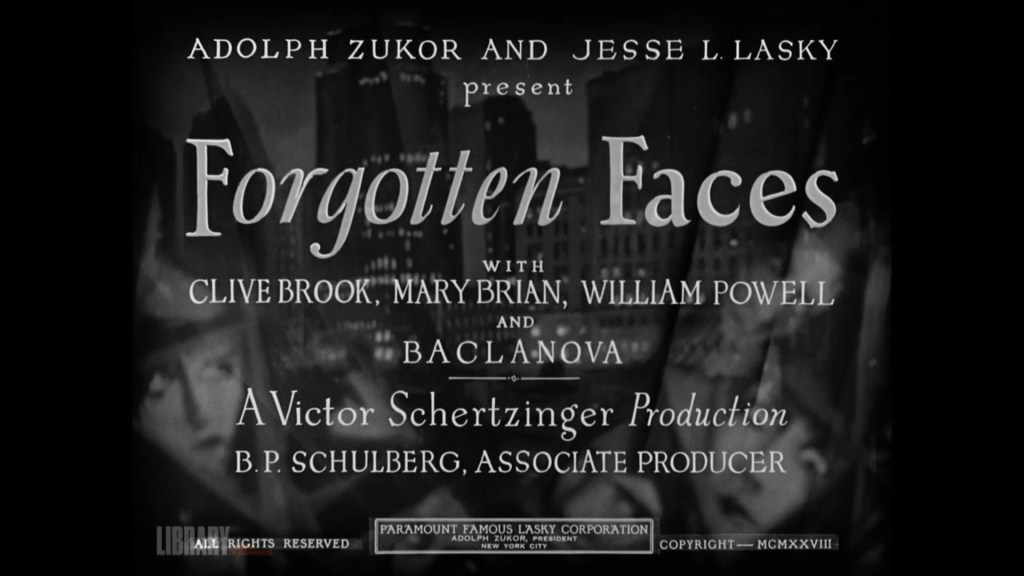
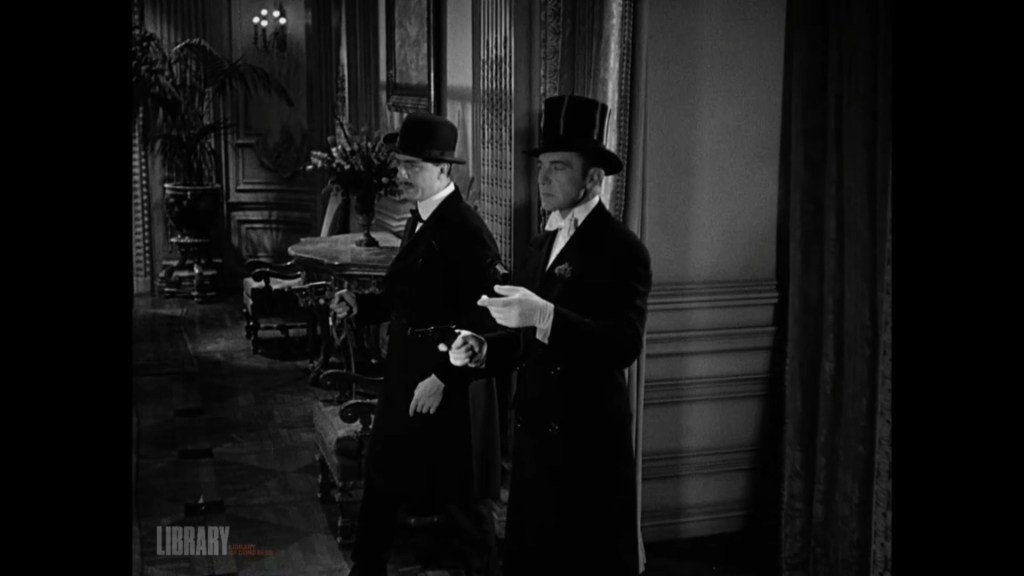
Forgotten Faces (1928; US; Victor Schertzinger). Harry “Heliotrope” Adames (Clive Brook), so-called for his signature fondness for the flower, is by day a loyal husband and caring father – and by night a gentleman thief. His wife Lilly (Olga Baclanova), meanwhile, is busy being a neglectful mother to their infant child Alice and having an affair. Discovering the pair together, and realizing that Lilly has also betrayed him to the police, Harry shoots dead the lover and takes the child away. He leaves the infant Alice (complete with sprig of heliotrope) on the doorstep of a rich married couple, the Deanes, who had lost their previous child. Making his sidekick Froggy (William Powell) promise to remember the name and address of the Deanes, Harry hands himself in to the police. Seventeen years pass. Froggy keeps the imprisoned Heliotrope up to date on his daughter, now raised as Alice Deane (Mary Brian), and on the movements of Lilly, who still hopes to find her daughter. Meanwhile, Froggy is tricked by Lilly into giving her information about Alice. Lilly then visits Harry, and taunts him with her plan to take custody of their daughter. Later, when another convict engineers an escape, Harry assists – but the pair are thwarted. Harry having saved the life of the warden during the ensuing fight, he is given parole – promising not to lay a hand on his wife in the pursuit of his daughter. Outside, Harry and Froggy find Alice in the company of her fiancé Norman van Buren Jr., a rich heir. Hoodwinking his way into Alice’s household by pretending to be a new butler, Harry acts as her guardian. He also threatens Lilly and, in the climax, lures her to the house of Alice in order to get her to commit a crime and die in the escape. Sacrificing his own life for this purpose, he lives just long enough to say goodbye to his daughter. THE END.

Well, well, well, what an excellent slice of crime drama this is. I wondered what kind of genre this might be, since the tone subtly shifts gear in the opening act. It begins as a Raffles-like case of Harry as a gentleman thief. Added by some charming and witty dialogue, I assumed the light touch would continue. However, this film soon starts pulling its punches. The sudden, unapologetic way Harry kills his wife’s lover (off-screen) is startling, as is the way Harry later engineers Lilly’s death. I found the tone a little disconcerting later on, when the film milks sentiment from the father hiding his identity from Alice. Though there are some gorgeous touches – as when Alice calls out to her father, and both Harry and Deane turn to respond – I found myself increasingly unsympathetic to Harry.

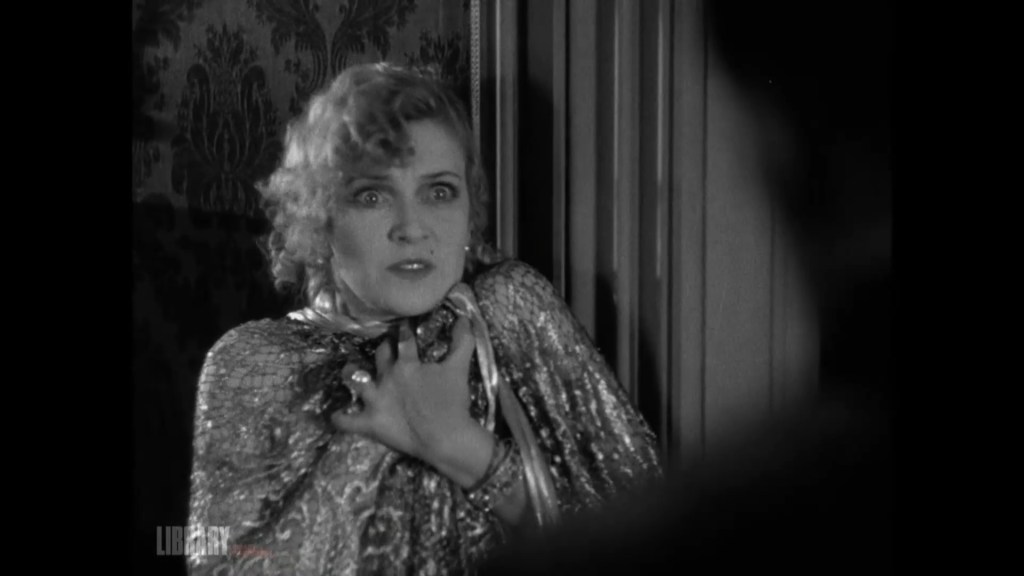
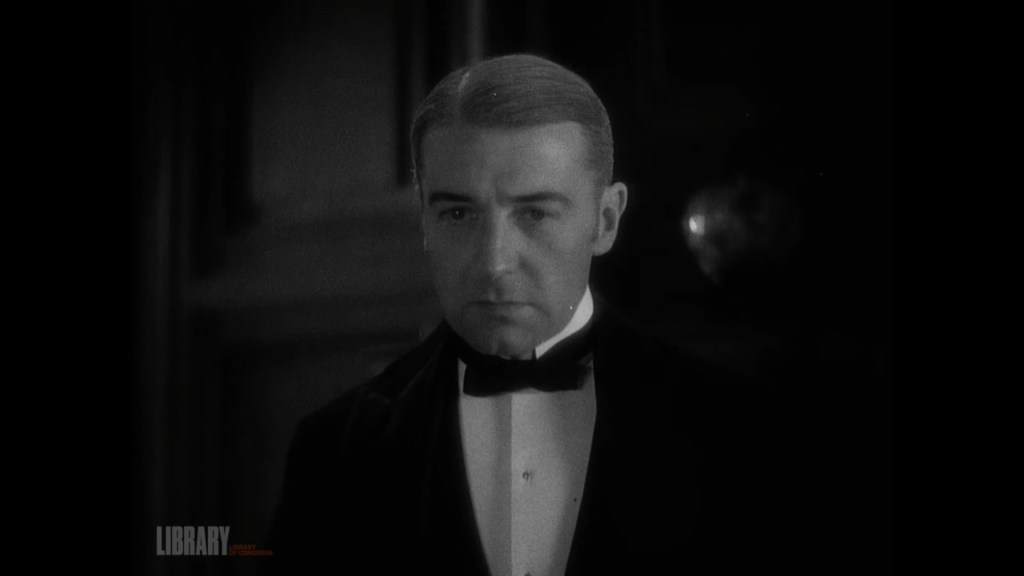
This was in part due to the performances of Clive Brook and Olga Baclanova as the estranged couple. For me, Baclanova was by far the most engaging presence on screen. She is wonderful as Lilly, always on the verge of wildness – like her hair, which when uncontained by her hat springs out in a kind of pale mane. By contrast, as the older Harry, Clive Brook’s hair is pasted and greyed into a kind of docile wig – so orderly and so meek that it almost hurts to look at. If Brook maintains a kind of sad father nobility, Baclanova gets to play an increasingly desperate emotional state. Harry plays weird mind games with her (stalking her, sending her threats, luring her from her safehouse), a kind of escalating cruelty that the film never questions – but that Baclanova makes you really feel. Lilly is mentally teased and tortured to the point where she is so desperate to be free that she confronts Harry. When he dies, saying he has kept his word to the warden, I felt much sorrier for Lilly than for Harry. After all, Harry has kept his promise not to touch Lilly but has carefully directed (in every sense) her death – albeit at the price of his own. And even the murder she commits – his – is the result of Harry’s own bluff and entrapment. He has made her commit murder, forcing her to play the part that he has cast. It’s a nasty ruse, one which the film seems to think we accept on the basis that Lilly is a bad mother, a kind of failed vamp, who surely doesn’t deserve to have her child – or even to survive the film. What exactly is the fate that Harry assumes Alice will have under Lilly’s influence? Whatever it is, it’s a fate so bad that he’s prepared to kill Alice’s mother to waylay it before it even happens. Lilly doesn’t have to commit a crime to be deemed a criminal; Harry can commit several but dies believing himself a hero. Though Brook’s performance is good, there is a kind of smugness in Harry’s victimhood (and apportioning of pre-emptive blame on Lilly) that rubbed me the wrong way. Does being a well-intentioned father excuse two murders? Does Harry’s oft-stated belief in the sanctity of marriage justify him being judge, juror, and executioner-by-proxy of his wife? Is Lilly so inherently wicked that she deserves to die? Certainly Harry seems to think so, and the film seems to think so.

I should also mention William Powell, who as Froggy gets to sport a delightful monobrow that is at once comic and sympathetic, marking his character as a sidekick. He doesn’t get much screen time, but Powell nevertheless gets to shape this little character into someone with a past, and with some humanity. (Froggy, it seems to me, is a far more sympathetic character than Harry. I’d rather like Froggy to have been given a gag or a send-off at the end of the film to indicate that things turn out alright for him!)

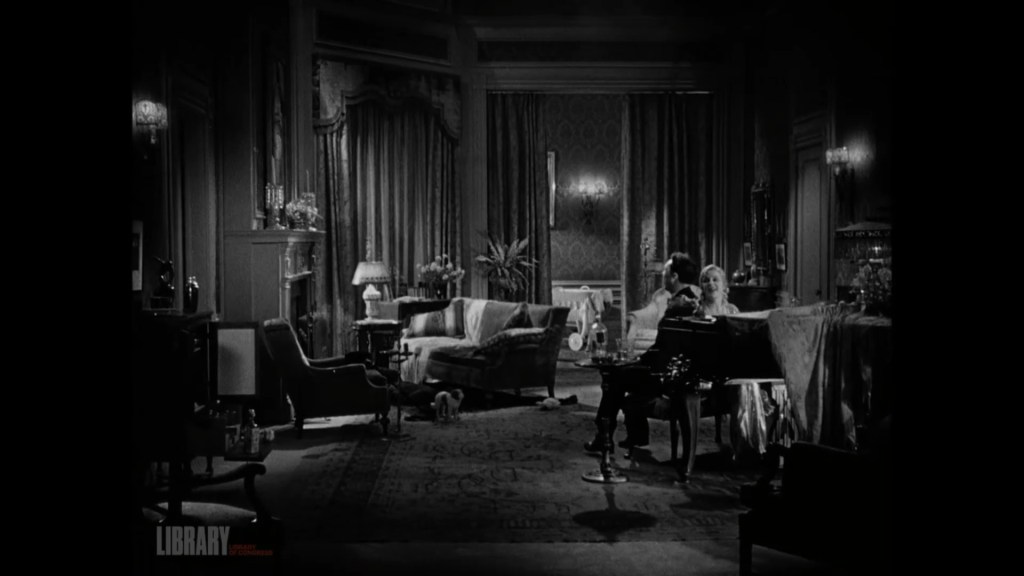
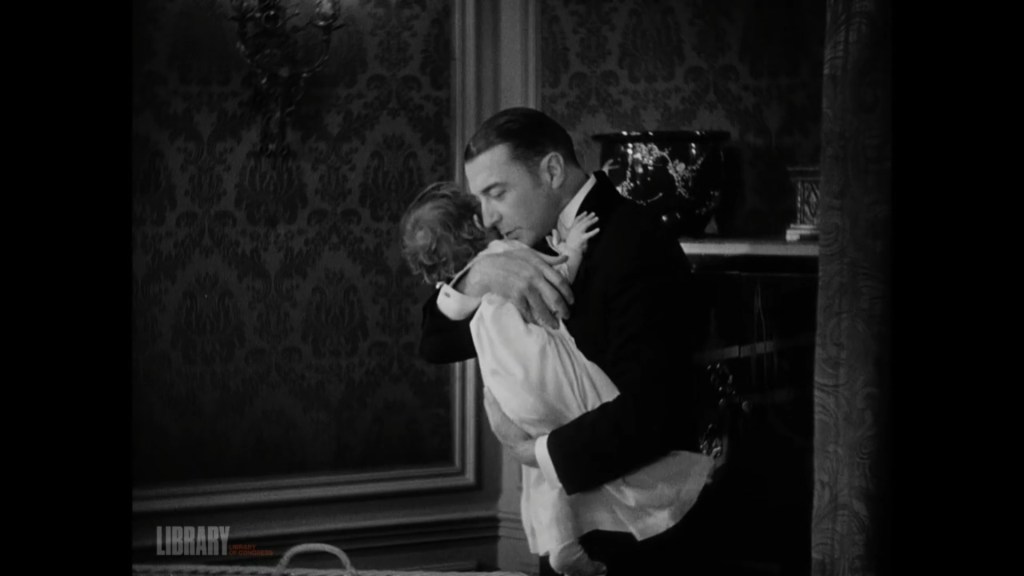
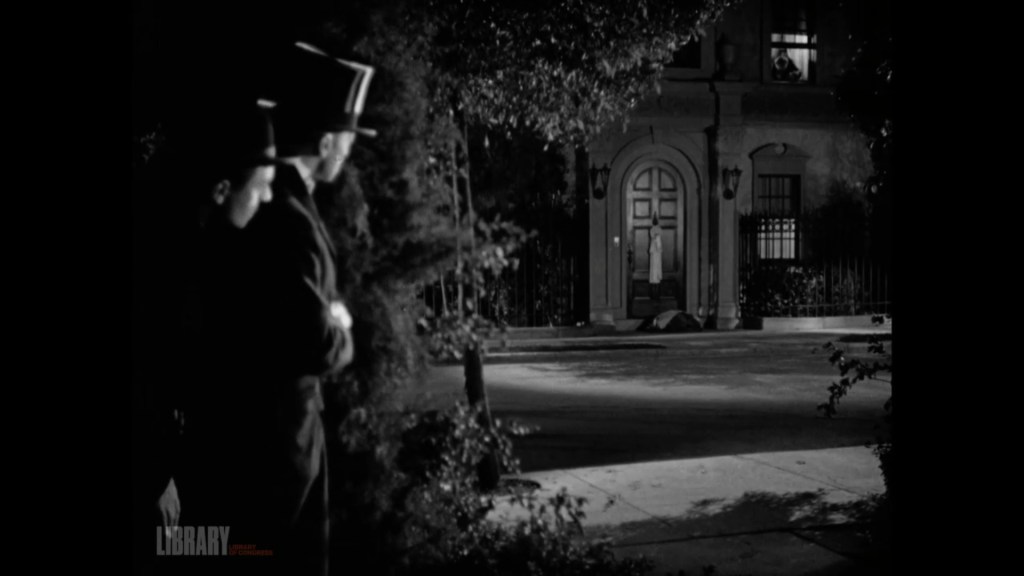
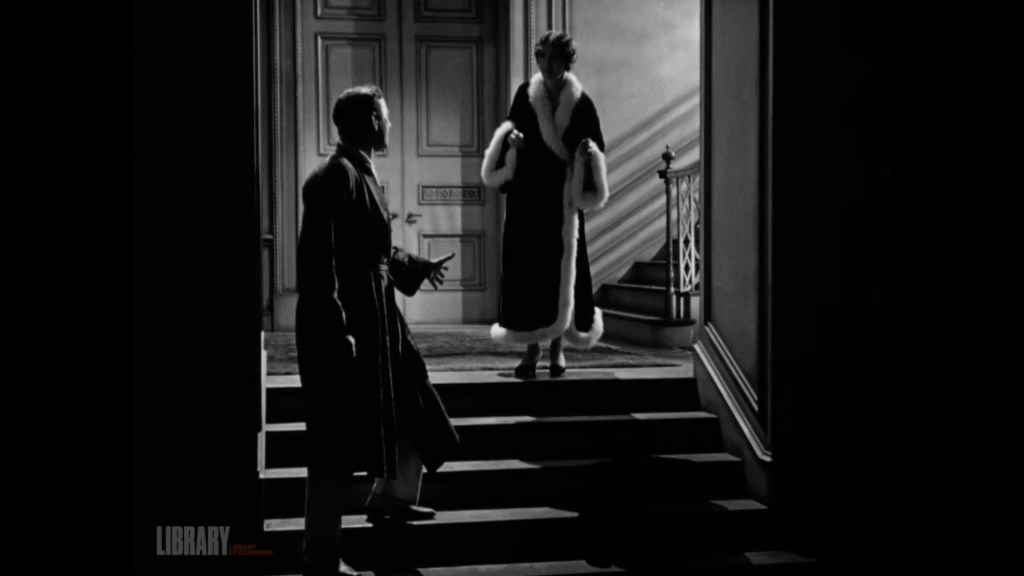
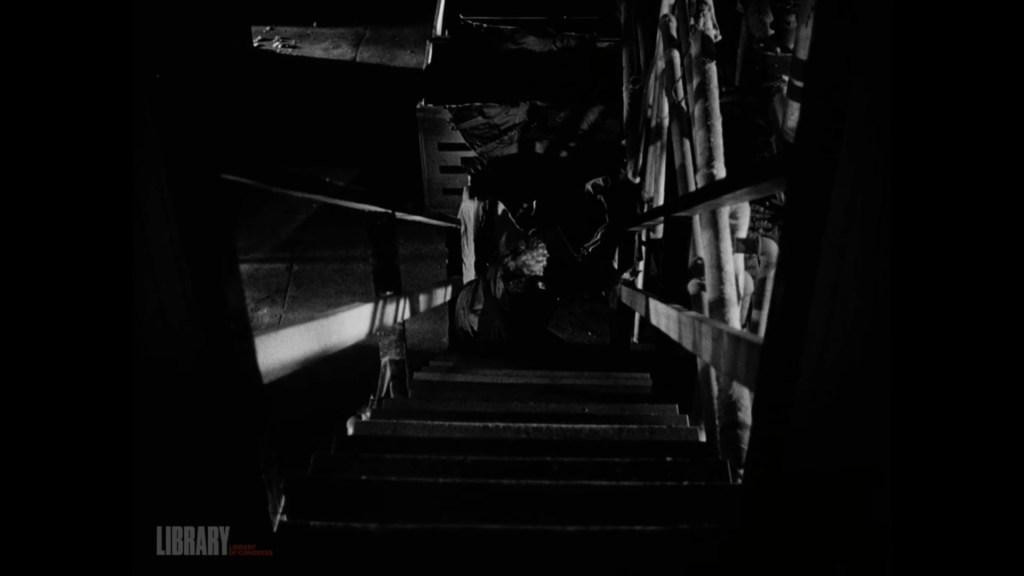
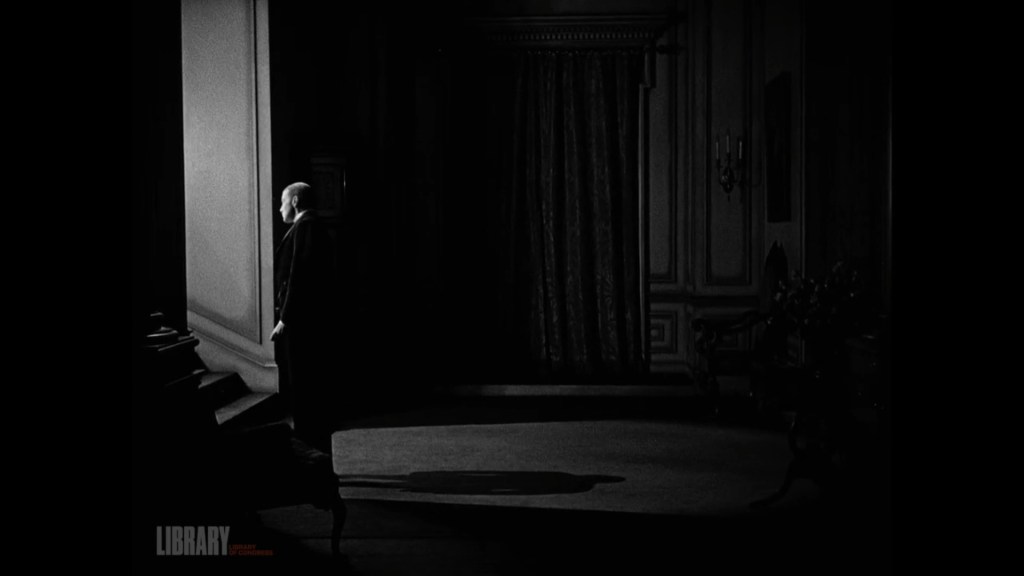
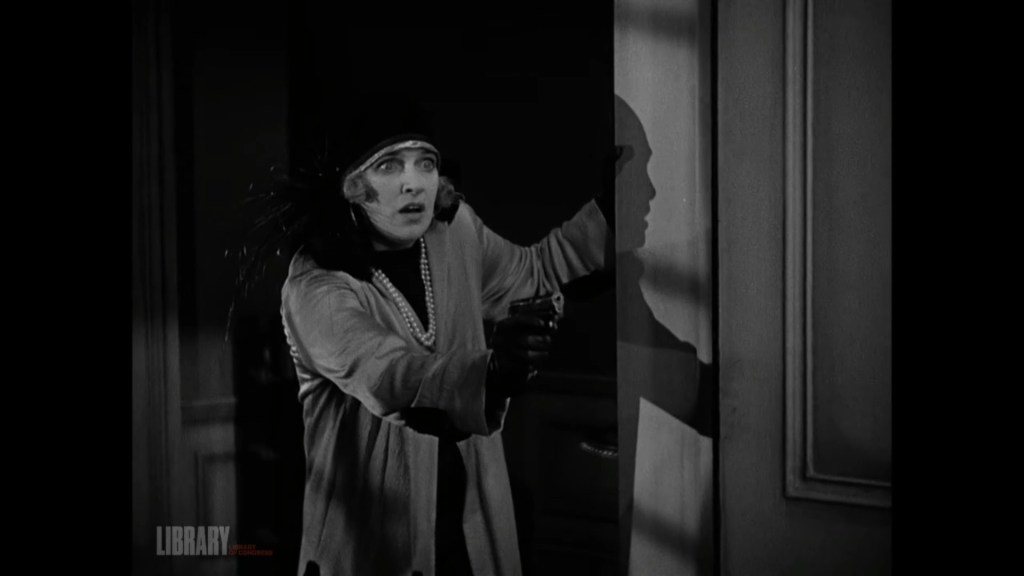
Whatever I thought of the characters, I was absolutely captivated by the look of Forgotten Faces. The cameraman was J. Roy Hunt, who does some remarkable work. There are some fabulous images of the gambling house at the start of the film. I love the shot from within the roulette wheel, looking up through the dial to the eager circle of faces of the gamblers, and then the roving camera – tracking and panning – that penetrates into the midst of the eager throng. Here and throughout, there are scenes with superb low-key lighting. The nighttime exteriors and interiors (the street, the prison, the Deane house) have some exquisite lighting, moody and atmospheric: this is film noir avant la lettre. (So too, I suggest, is its punishment of the wayward female character.)

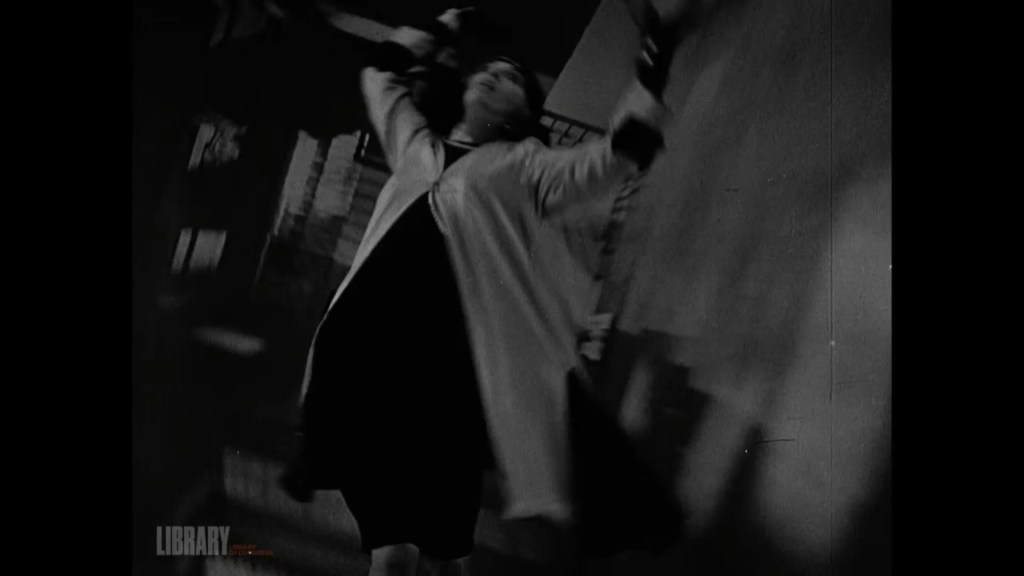
This reaches its zenith in the climax to the film, which boasts an astonishing moving camera that seems to glide through the entire house – round corners, up flights of stairs, through corridors, through doors. It’s an outrageously well-orchestrated use of movement, combined with incredibly complex lightning. (Rewatching it again, there is a subtle cut that slightly breaks the spell – but nevertheless, it is wonderful as a whole.) It’s the perfect device for the sequence, which is Harry luring Lilly to her doom. He has him himself acted as metteur-en-scène, using shadows, props, and hired actors to trick Lilly into shooting him then falling to her death on a sabotaged ladder. As a viewer, you absolutely feel as entranced, almost as will-less, as Lilly as she follows Harry to her doom – and his. An amazing sequence.

Finally, a word on the presentation. The film featured piano accompaniment by Meg Morley, which was excellent: melodic, atmospheric, always appropriate. The restored print from the Library of Congress was superb to look at. There was a copyright logo in the bottom left of the screen (as you can see from my images), but its placement and design rendered it unobtrusive. This film is so rich to look at that you quickly forget the logo is there. (Unlike some copyright logos, as I mentioned last week.) All in all, a fabulous way to start the festival.

Paul Cuff

HippFest at Home (2025, Day 3)

Day 3 of HippFest at Home sees us journey to the (faux) Scottish coast for a (faux) Scottish drama starring Mary Pickford. This programme of a short and feature was given introductions by Alison Strauss (once more) and Pamela Hutchinson (who of course runs the marvellous Silent London). Strauss explained the choice of films, focusing in particular on the short extract from an amateur film shot on location in Harris in the Outer Hebrides. She also highlighted HippFest’s pioneering efforts to provide audio-description via headphones and brail for these films. It’s a superb project, and another reason to admire the festival. Hutchinson gave a detailed introduction to The Pride of the Clan, highlighting its history in the context of Pickford’s career. (I will say a little more about the film’s critical reputation, which Hutchinson also covered, later.) As ever, these introductions were exceedingly engaging (and often very funny). As an online viewer (and viewing the film over a day later), I felt part of the crowd in situ. On this theme, there was a lovely moment when the Bo’ness audience cheered the restoration team of The Pride of the Clan, who were (like me) watching remotely from their respective homes. Polly Goodwin, who provided the audio descriptions, was also warmly cheered. You really get the feeling of the enthusiasm for everyone involved. I’m sure it’s the same at any such specialized festival, but HippFest is the only one I have experienced where the online version gives you such access to the people and atmosphere responsible for making it work. And so, to the films…

Holidaying in Harris (1938; UK; Nat and Nettie McGavin). A fragment of a longer document, this is (like yesterday’s shorts from Ireland) another amateur glimpse of real life. Here are the docks, the fishing boats, the baskets of herring, the men on deck, the women at work on the shore. The camera observes, unobtrusively. The past goes about its business – messy, sweaty, industrious. The film ends. While this little extract doesn’t have the chance to sustain its mood, it’s a potent window into a way of life long gone – and the faces (and, especially, the hands) of those who often go unrecorded in history. A lovely little treat to start things off.

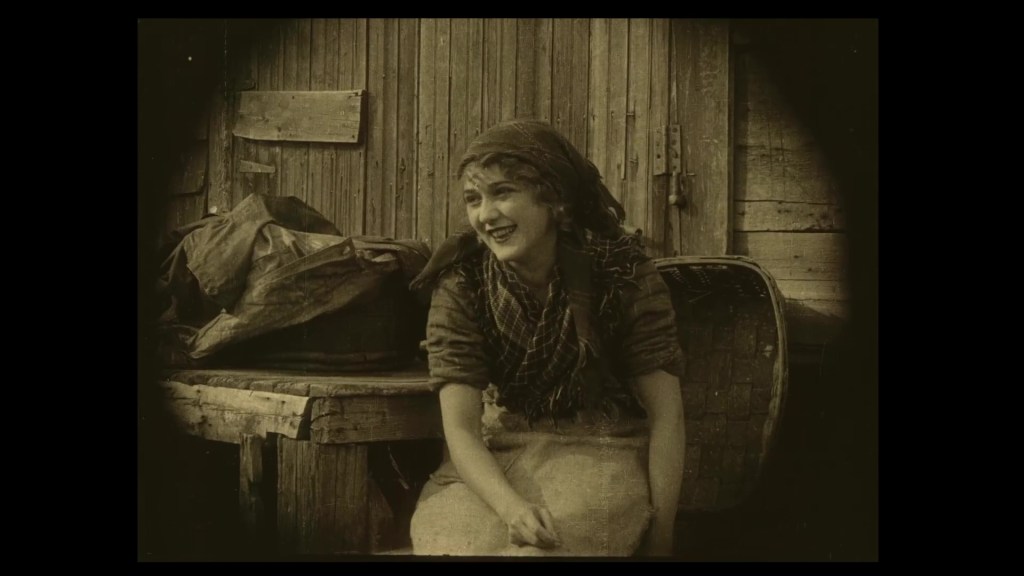
The Pride of the Clan (1917; US; Maurice Tourneur), our main feature. Set on the remote Scottish island of Killean, the film follows Marget (Mary Pickford) who must lead the MacTavish clan after the death of her father at sea. She wishes to marry Jamie Campbell (Matt Moore), but Jamie’s real parents – a wealthy countess and earl – arrive and convince her that it’s best for his future to let him join leave the clan. She accedes to their wishes but decides to sail away herself. However, her old boat soon begins to take on water. Will the hero rescue her in time? (I’ll let you guess.)

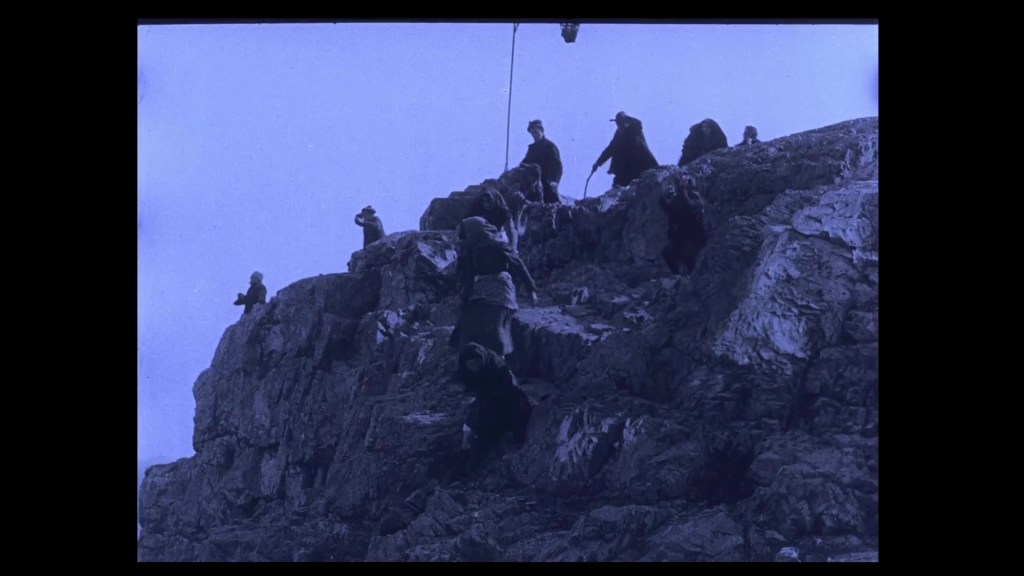
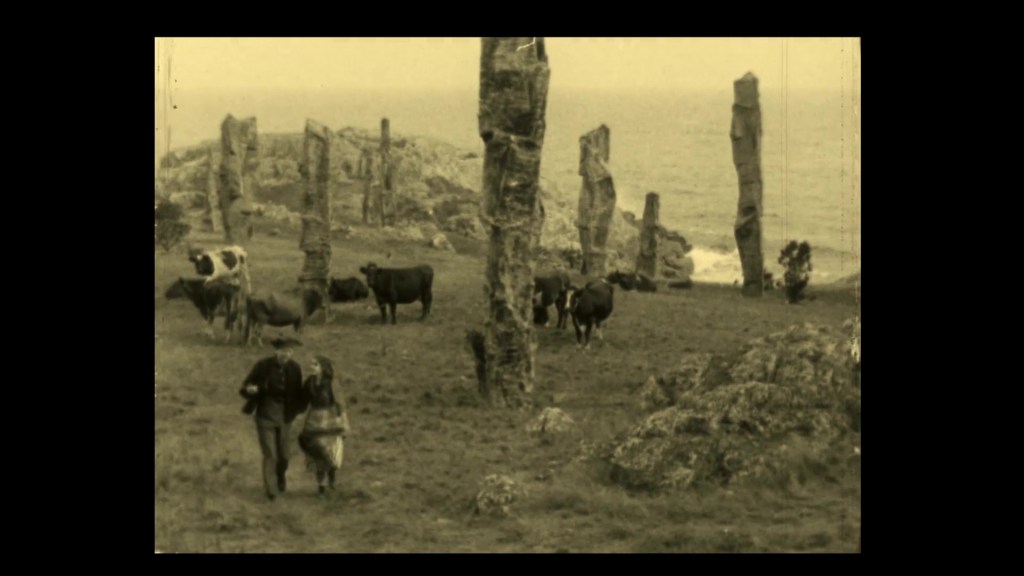
Let’s start with the good. Though it was shot in Massachusetts and thus has no visible connection with the reality of the Scottish landscape, the film at least boasts a wealth of exterior photography. There are some marvellous scenes of the locals silhouetted on the cliffs or gathered on the coast. The director Maurice Tourneur shows a keen eye for composition, making the most of the (actually quite limited) location spaces. There are some efforts to make this landscape bear some sense of history, though I must say that the church, neolithic tomb, and standing stones look hopelessly unconvincing next to some of the (clearly real) houses in the village.

Pickford is the heart of the film, and its chief asset. She’s feisty, independent and gets to be both playful and boisterous – telling stories, commanding children and adults, quite literally wielding a whip. I just wish the film did more with this tomboyishness. She might well wield a whip, but she ends the film clutching her pets as the water rises and the hero races to the rescue. Turning her from heroine to helpless waif is something of a letdown, as is the dramatic implication that by seeking an independent identity elsewhere she must inevitably come a cropper. (I rolled my eyes, too, at the intercutting of the villagers’ prayers – especially the unbelieving Gavin – with the rescue.)

Marget’s romance with Jamie is a little awkward, with the couple having little discernible chemistry (at least, nothing that I would call “romantic”; the very idea of sex, of course, is utterly absent). The humour plays well enough, but the film is far too chaste to express or even suggest anything deeper. (An early embrace ends with the pair awkwardly leaning into each other, cheek to cheek, that is surely as uncomfortable for the lovers as it is unconvincing for us as viewers.) Much of the film allows Pickford to be playful with the clan children and animals, making faces, pulling japes, or bothering kittens and donkeys, which certainly helps raise a smile but also risks infantilizing her character to the extent that the whole point of her being the head of the clan seems nothing more than a game. Besides, the whole effort of the film to present us with anything resembling real life in a real location seems to me a failure. The film might have nice images of the sea and coast, but the life of the clan seems to involve being either pious, playful, or bashful. There is little work here, and if there is a risk of death at sea, there is little dirt and no disease on land. While I appreciate that the colloquial dialogue is being used to ground the film in a sense of location, it swiftly grated on me – grated because the effort to capture the local dialect stood in stark contrast to the absence of any reality elsewhere.

Ultimately, The Pride of the Clan is all a fantasy – which is fine, but it never grabbed me. It is no more convincing or moving than the story Marget tells Jamie, visualized in absurd cutaways to a life on an exotic island complete with native cannibals. What works best are the moments of calm in-between the wearying playfulness. There is a scene of Marget alone, tying a bouquet which she drops into the sea – a gesture one might find in a D.W. Griffith film, only here carrying less emotional weight. It’s a glimpse of what might have been. For much of the film, I felt rather like Gavin, the outsider who scowls on the rocks while the loyal clansmen attend church and have faith in the narratives told therein.

This brings us back to the film’s reputation. As I mentioned, Hutchinson spoke about this film’s supposedly poor critical reception in the US in 1917 – and Pickford’s own subsequent dismissal of The Pride of the Clan as a failure. Hutchinson spoke extremely engagingly about the film’s qualities, and in the programme notes available online by Thomas A. Walsh and Catherine A. Surowiec there are other voices of praise. But these positive notes come chiefly from material that these respective authors quote. (Perhaps they are, wisely, a little cautious about making too great a claim for this film.)

Of particular note in the Walsh/Surowiec piece is a citation from Richard Koszarski, writing in 1969, who said: “Tourneur’s eye for composition is flawless, equalling or surpassing Griffith’s work of the same period, and the performances are more restrained than in much of Intolerance. Clearly this film was ten years ahead of its time.” Hmm. Ten years ahead of its time? I can imagine such a slender narrative being handled by Griffith in, say, 1911 in about twenty shots with twenty times the emotional power. (Equally, I can imagine him padding out such a narrative in, say, 1923 in about two thousand shots and achieving less.) Think of Mary Pickford in Ramona, from 1911, a Biograph production that boasts subtle performances and a masterful use of composition and choreography. (I have written about the film and its (to my mind) inferior re-adaptation as a feature film in 1928.)

Something I kept noticing with Tourneur’s film is the gulf between interiors and exteriors, which is only rarely bridged. One thinks of Victor Sjöström’s Terje Vigen (also released in 1917) as another coastal film featuring grief, wrecks, and the life of fishermen. Despite sharing tropes, the two films are worlds apart. The Swedish film builds partial sets on the coast so that we can look through windows and doors from interior to exterior, from comfy interior to raging sea. The result is an astonishing sense of place and of emotional tone: Sjöström’s film is anchored in reality, a fact which the naturalistic performances redouble. The only image in which this is regularly achieved in The Pride of the Clan is of Marget silhouetted in the doorway of her boat (an image that features in a repeated intertitle design). While The Pride of the Clan shows many characters looking in/out of windows, there is no attempt to link the spaces – aside from Marget’s boat, I cannot recall any shots where we look from interior spaces to the sea. And while many images are very nicely composed, only one image really sticks with me: the stunning silhouette of Marget and Jamie against the moonlit sea. It’s beautiful in and of itself, but also as a distillation of feeling. There weren’t enough moments like this. I wish that there the drama had been less fleetingly embedded in the setting and photography.

The issue is not helped by the variable image quality. From the restoration credits, it is clear that The Pride of the Clan was restored from a mix of 16mm and 35mm copies. While the 35mm sections are superb, these unfortunately make the 16mm sections seem all the more dulled. But would sharper images help this film? For me, I fear not. I found the whole thing cumulatively underwhelming.

Well, that was Day 3. Goodness me, I wish that I enjoyed The Pride of the Clan more than I did. But I certainly enjoyed the music for this screening, provided by Stephen Horne (piano, flute, accordion) and Elizabeth-Jane Baudry (harp). This pair always produce gorgeous sounds, and in this case I found the music often more evocative than the film itself. Since the sound is recorded live for the videos available through HippFest at Home, you can also hear the Bo’ness audience reacting to the film – which (in this context) I very much enjoyed. If the film failed to charm me, the event itself was certainly charming.

So that was my last day of HippFest at Home. I should explain that there is a fourth online programme on offer: “Neil Brand: Key Notes”, a talk with music and film extracts. As much as I admire Brand’s work, I feel that this kind of event is not aimed at me. Aside from reasons of my own schedule, another reason that I feel able to skip this presentation is that HippFest at Home offers single tickets for individual screenings, rather than an all-in price for any/all events online (like Pordenone). I can see the benefit in this, as I have sometimes found that festivals replicate each other’s material (even online), or else include something that for whatever reason I don’t wish to see, and I regret not experiencing everything on offer.

Finally, I must repeat what I have said on all three days: HippFest at Home is simply the best presentation of an online festival that I have experienced. Everything about it, from the website, the programme notes, the video options, the introductions, the music, and the sheer enthusiasm of everyone involved, made me feel incredibly welcome. I have often written about the inevitable feeling of dislocation when “attending” online festivals. While HippFest at Home does not offer its online audience the same number of films as Bonn (ten features in 2024) or Pordenone (eight features plus several shorts in 2024), their presentation impressed me more. More of the live element was included in the online videos, and I loved being able to see the speakers and musicians – and the audience. I’m incredibly impressed by the effort of all those involved, and if any of them are reading this then I offer them my warmest congratulations. I’m sad that it’s taken me this long to attend HippFest in any guise, and I will certainly be revisiting – in one form or another – next year.

Paul Cuff

HippFest at Home (2025, Day 2)

Day 2 sees us go to Ireland for a programme called “The Near Shore: A Scottish and Irish Cinema-Concert”. Introductions to this set of films were given by Alison Strauss (the director of HippFest) and Sunniva O’Flynn (Head of Irish Film Programming, Irish Film Institute). Given the cross-seas nature of the films shown, and the collaborative aspect of archival exchange between Scotland and Ireland, it was appropriate to hear voices from both sides of the Irish Sea. As O’Flynn also explained, the Irish Film Institute often has a very inclusive remit when it comes to preserving and restoring films that might be considered “Irish”. Films can be made by Irish filmmakers outside Ireland, or films made within Ireland by non-Irish filmmakers. In the case of today’s programme, there is a blend of both – and even a kind of Scottish-Irish collaboration via a married couple’s home movie. O’Flynn introduced the programme, together with the first films – and then reappeared on stage to introduce the next films. (As she said, this was certainly preferrable to having one long introduction with too much information.) As I wrote on Day 1, these are superb introductions – informative, engaging, welcoming, and offering both personal, historical, and cultural context for the films. Perfect. So, to the films themselves…

Royal Clyde Yacht Club Regatta (1899; Ire.; Dr Robert A. Mitchell). This view of a former century has immediate charm, immediate power. The image crackles with history. Its surface is all smoke and charcoal: a distant ship peopled by shadows, a sunless sky, dark ripples on a grey sea. The image evokes the haphazard nature of film preservation, of the way time nibbles and scuffs at the celluloid. It is a muted world, in every sense; therein lies its mystery. But if the image suggests a kind of fragility, even of happenstance, the film itself is beautifully (and carefully) realized. There is intelligence at work from the outset, when the first thing that catches the eye is a massive flag saying “START”. But after a few seconds, the eye takes in the subtlety of the composition. The sense of scale and drama, managed within a single shot, is brilliant. Just look at the distant boats, faint sketches of line and tone, thrown into relief by the appearance of a tiny rowing boat in the foreground. The whole scene subtly shifts to the right, but it’s so smooth and dreamlike it’s unclear if we are moving or the boats are moving. Then the empty space in the middle-ground is suddenly occupied by the yachts themselves – beautiful great two-dimensional planes that plough through the frame. It’s startling, but dreamlike too – no sound prepares us for this apparition or adjusts for its exit. In silence, objects have neither mass nor wake. They glide fatefully across the surface of the past. These great seaborne wings brush us by and are lost. This is a startlingly beautiful film.

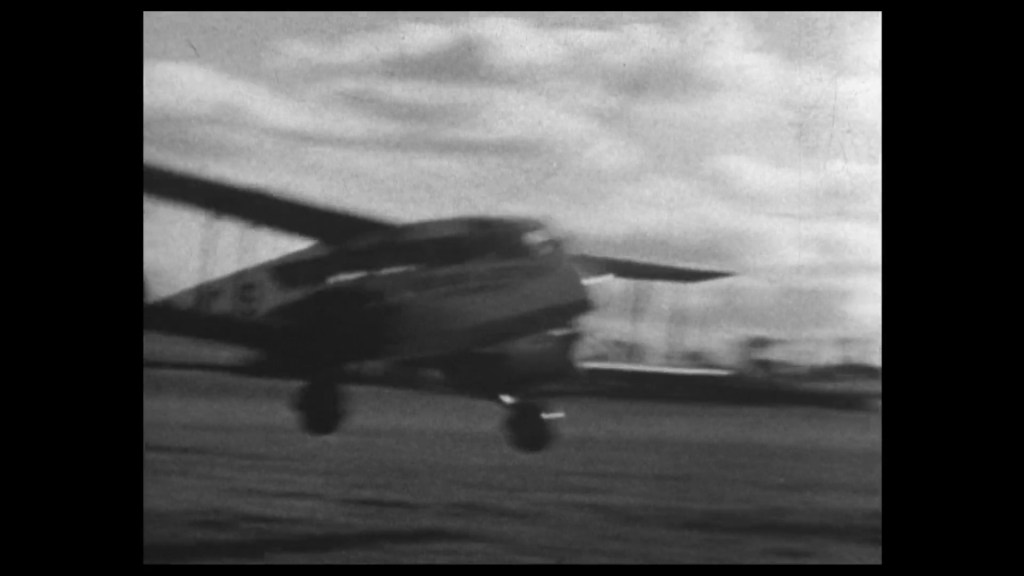
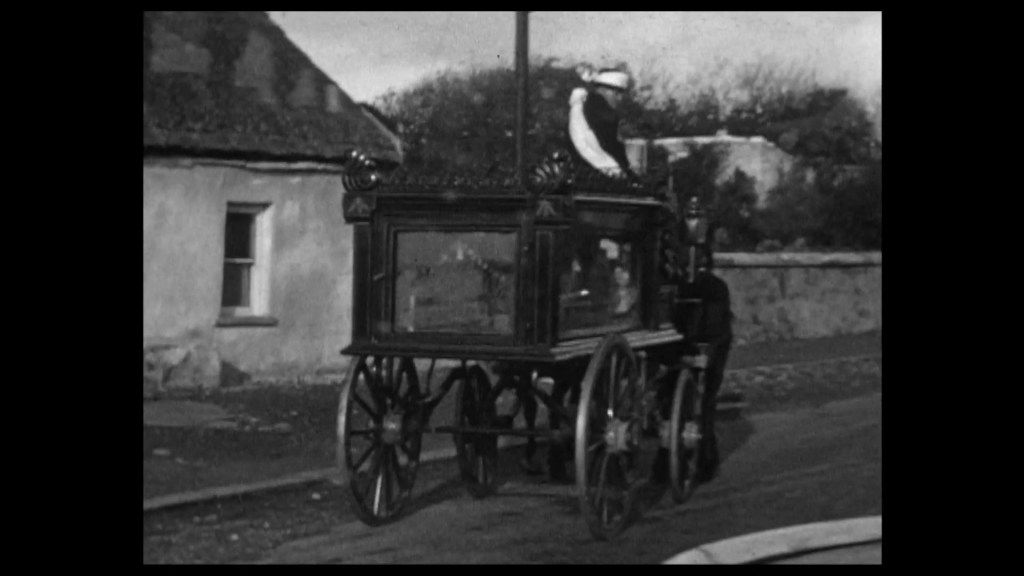
To Ireland by Air (1933; Ire.; Mr Dick). People grin at us, smoke, walk past. A plane moves forward, its propeller cranked. It gets up speed, it ascends. From the air, the world is unsteady. What can be seen? The land a distant patchwork of fields, houses. The shadow of clouds, already breaking apart. The world as it was, one day, nearly a century ago. There it is, fleeting through the vapour, the coast appearing and disappearing, a boat and its wake. “Passing Arran”; and pass it we go. It is lost in mounds of cloud. Here are ports, peopled by unseen inhabitants, long dead. Sheep and birds, the ground coming closer. The camera shakes. The world is plunged into darkness. But we are on the wing once more, high above a white sliver of surf. We seem to blink, and each time we open our eyes the world has changed. There is the shadow of the plane, the shadow of ourselves. Silence offers no preparation for the transitions of this montage. Here is Belfast, from the ground. The past and its people; silent, slow. A peacock mills around, geese stalk along. It’s a world (still) of horse and carts, of occasional cars and bicycles. (And, everywhere, horseshit on the roads.) The towns pass – Galway, Westport, Ballina, Sligo, Londonderry – and there are odd snapshots from each, from massive stone edifices to tiny homes with turf for their roof. Faces, a river, a fish in its depths. A site of ancient dread, an execution of a son by his father. (Beyond this past, another past, deeper and more obscure.) Landscapes and faces, extraordinary faces – most extraordinary when they are anonymous, when they don’t trust us, when they’re on their way to somewhere else. A hearse, a tower, a vista of coastline and hills. A sloping street, a dog rolling to scratch its back. Sudden transitions, odd glimpses. The camera is a curious stranger, glimpsing everything for the first time. It is as though we have been allowed some illicit access into the past. And still its inhabitants look back at us, wary of our intentions.

Rush Hour (1949; Ire.; John Tomkins). A bearded man waits and waits and snoozes on a bench by the sea. But then he’s too late. Dublin’s rush hour, a pell-mell mix of trams and buses and bicycles and cars. We glimpse the pedestrians hurrying here and there, and the bustle of life as it was – once. It is a glimpse of the real world, shaped by a keen eye and intelligent humour. But is it as mysterious as the last films? I think not. The past is no longer as wary of us as before. The distance is being closed, and without the fear and thrill of trespass – of crossing some historical threshold – there is less magic.

Butlins Holiday Camp Movienews (1950s; Ire.; John Tomkins). Mosney, County Heath. A delightful film, a glimpse of a holiday camp fully peoples, and in the sun. Laughter and exercises and silliness all around. It’s a charming film, but as with Rush Hour I no longer feel moved. This is a past that is more recent. It is not my past, but it is that of my parents or grandparents. The silence marks here it off from the present, but the gap is bridged by my knowing this world with sound. I am not quite a stranger here. Might I not “pass” in this past?

The Farm Below the Mountain (1958; Ire.; Ernest Tiernan). A honeymoon visit to family in County Leitrim. Another plane journey, more glimpses of the coast, of fields and rivers. The film is in colour, a dreamy filmic palette of rich hues and grainy textures. It’s a delight to watch, but again (for me) it is too recent, too much of a world that I might know second-hand. This is the recent past, dressed in the silence of its forebears.

Well, this was a rich trove of views. I regret that my interest lessened with each film, with each step toward the present. Perhaps one day these films from the 1940s and 50s will be as alien and uncanny as the films of the 1890s are to us now, in 2025. But I’d like to think that the earliest films will retain a unique aura, a unique aesthetic, that will mark them out forever. Among the films in this programme, by far the best is the first and earliest: Royal Clyde Yacht Club Regatta (1899). A film that more vividly bears the markers of its age, that more clearly sets itself apart from our epoch, from the living world. A film that possesses a kind of grandeur and mystery. Though I might intellectually imagine moving about the streets in 1899, the form of a film from this era disallows any possibility of such transgression. Silence demarcates this world from mine. It is not merely that these shadows happen to have no voice: it is that they cannot possess a voice. They are cut off illimitably and eternally from the present day. There is no calling out to us, no calling back to them. It is this quality (both historical and aesthetic) that makes the film documents of early cinema so potent.

I must also mention the music for this HippFest programme, which was improvised at the piano by Paul G. Smyth. I imagine that creating music for such odd films is exceedingly challenging, but this accompaniment was superb. He absolutely captured the odd, almost brittle rhythm of the earliest films. He understood and expressed the weirdness not just of the films but of our relation to them. There was a kind of hesitant exploration of emotional mood that surely matches our own attempts to engage with the films, to work out what’s going on and how we feel. Smyth conjured a marvellous range of textures and tones, at once varied and recognisably coherent. An excellent performance.

Well, that was Day 2. Any reservations about some of the films must not count against the value of a programme like this. Early films nestle productively alongside more recent amateur productions. All provide beautiful glimpses into the past, and evoke the lives of those who made them and those who we glimpse within them. O’Flynn’s introductions were the ideal accompaniment, framing their cultural and archival status – and why they are valuable and fascinating objects. While praising these introductions, I should add that HippFest very helpfully provides links to pdfs of all curational text online via their website. It’s another aspect of this festival that impresses. More please.

Paul Cuff

HippFest at Home (2025, Day 1)

This week, I’m off to another film festival, this time hosted by the Bo’ness Hippodrome in Scotland. Did I say “off”? I mean… well, what do I mean? What adverb suggests staying in my study? I suppose I’m “in” to another film festival. This is my first experience of HippFest, which has been on my radar for some years. I’m also pleased that the online version of this festival has its own name. “HippFest at Home” sounds delightful, a union of being away and being where I am.

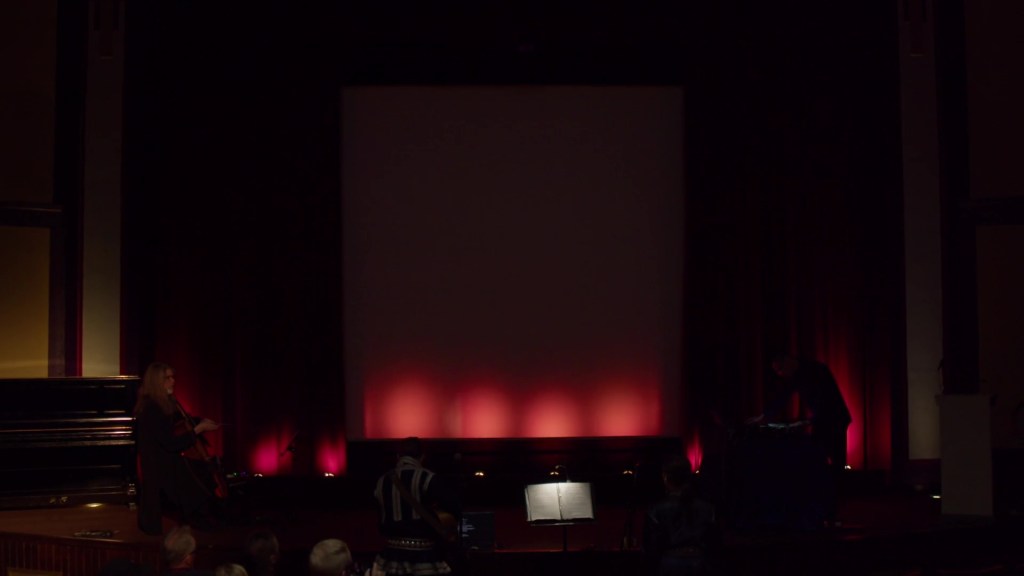
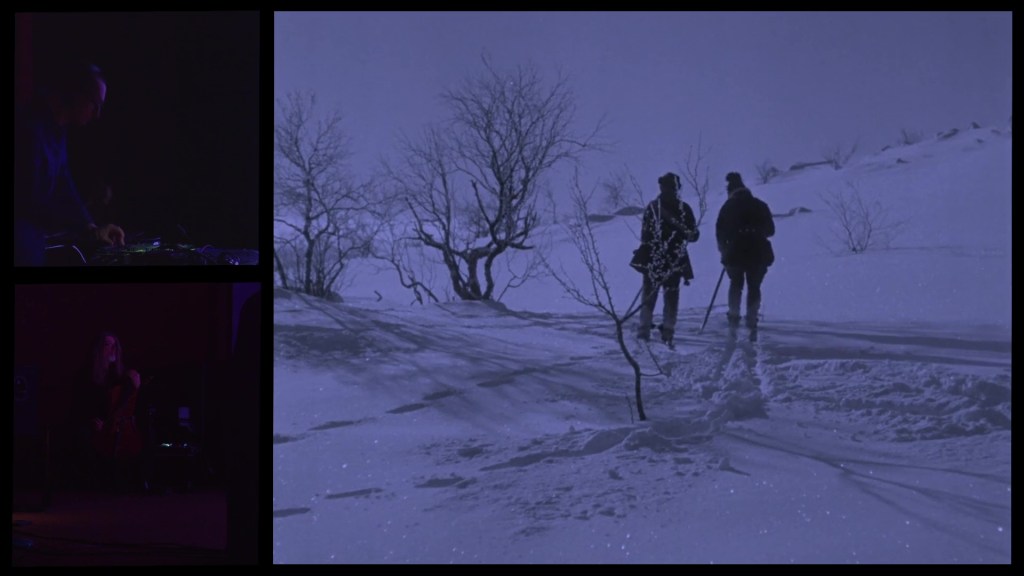
The pre-film introductions – from Alison Strauss (Arts Development Officer and HippFest Director for Falkirk Council), Magnus Rosborn (Film archivist from the Swedish Film Institute), and Lisa Hoen (Director of the Tromsø International Film Festival) – were also exceedingly welcoming. My only experience of pre-film introductions at online festivals comes from Pordenone, where the videos are pre-recorded and loaded as separate (and optional) prefaces to the films themselves. At HippFest, the introductions are those given live in situ – filmed and included as part of the single video that encompasses the evening’s programme. It does not force you to watch them (one can always fast-forward), but it encourages you to do so by having them as part of the same video timeline. Unlike Pordenone, where I almost always end up skipping the introductions (purely for the sake of time), I watched all three speakers for this HippFest programme. The video stream is perfect: we get explanatory text to see the names of everyone on screen, and the camera is placed so that we feel like we are part of the audience they are addressing. Indeed, Strauss’s introduction to the festival explicitly welcomed online viewers. The speakers themselves covered issues curatorial and practical (Strauss spoke about HippFest and her interest in tonight’s film), restorative (Rosborn spoke about the film’s rediscovery and reconstruction), and cultural (Hoen spoke about the context of the Sámi people who are the film’s subject). Hoen also explained something about the motives and context of the musicians who accompanied the film, as well as introducing the musicians themselves. I can only say that I found all three introductions engaging and informative. This really was the ideal way to start the programme.

Med ackja och ren i Inka Läntas vinterland (1926; Sw.; Erik Bergström)

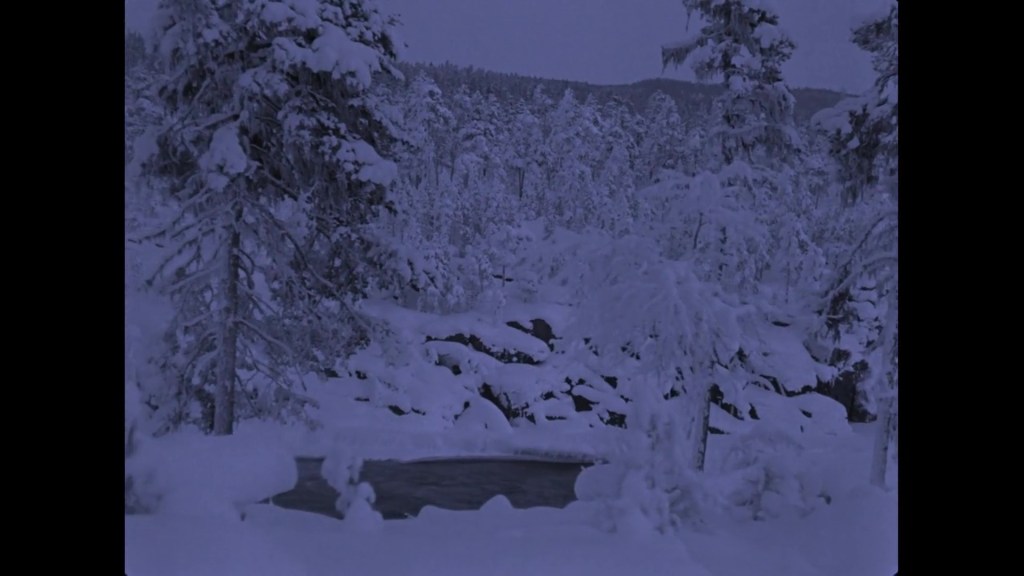
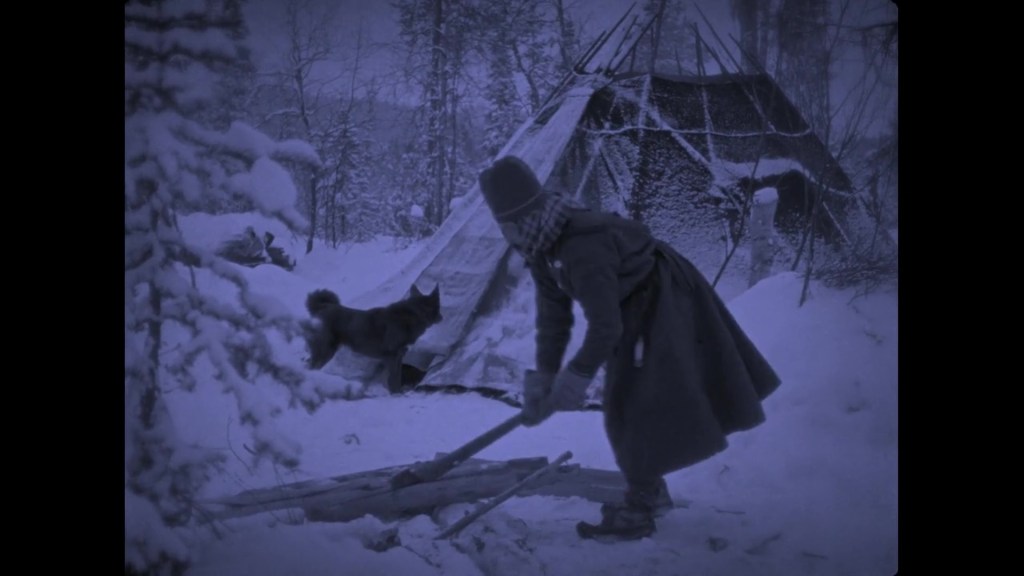
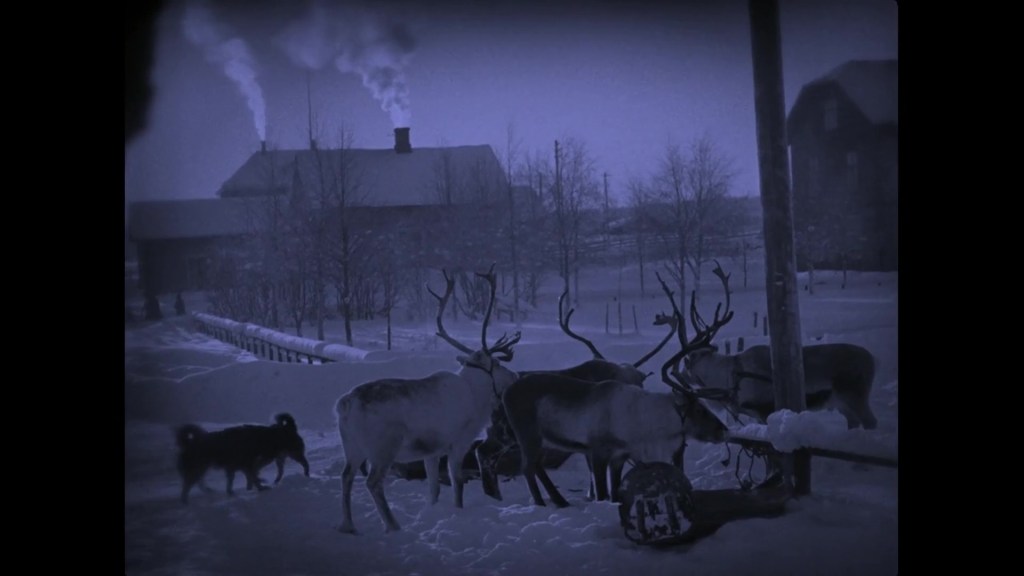
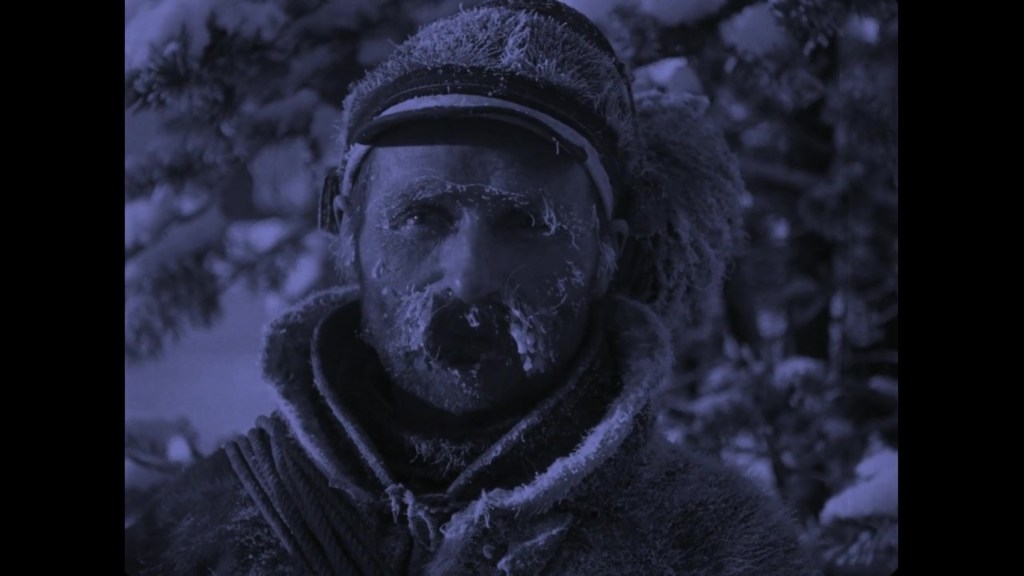
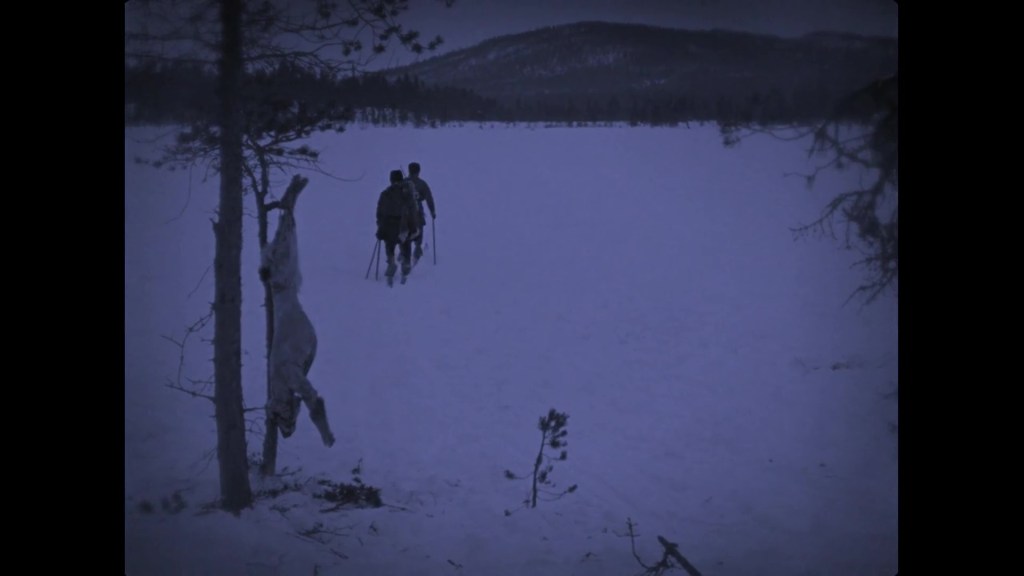
So, here is our feature film, “With Reindeer and Sled in Inka Länta’s Winterland”. The film is a portrait of life in the snowbound landscape of northern Sweden. We follow Inka Länta, who lives with her brother and maternal aunt, and next door to her maternal uncle Petter Rassa and his children. We also meet Guttorm, from a nearby (20km away) camp. We follow them as feed their family and animals, as they go to market at Jokkmokk, as they track reindeer, as they make and unmake their tents and camp, as they hunt wolves, as they slaughter deer.

From its first images, a hypnotically beautiful panning shot around snow-covered trees, this film is a visual treat. Indeed, these first shots are among the most beautiful in the film. Complete with a delicate toning that turns the shadows a delicious deep blue-green, these are the most ravishing snowbound trees you’ve ever seen. When the camera gently tracks through the landscape, and this astonishing world begins to open out, I was incredibly moved – just by the sight of it, by the sensation of moving through stillness. My god, my god, my god, what a beautiful sequence. Cameraman Gustaf Boge captures the cold winter light with extraordinary skill. When (after several unpeopled shots) we see Guttorm wading through knee-deep snow, the light throwing his shadow before him, with the forest behind him, this is more than a mere “documentary” scene – it’s a kind of journey in space and time, a distillation of some unreachable moment in the past. The stillness of this wintry light and powdery shadow, the way that the snow itself exists in a kind of arrested physical state… goodness, it’s as perfect a glimpse of some archetypical winter as you could imagine. And yes, the silence of it is part of (essential to) the hypnotic perfection of these scenes.

But the film is as much about the difficulties of life in this landscape as it is about its beauty. For all the beauty of the snow, the trees, the vistas over endless ice, you also see what it takes to live here. The scene inside the tent when the family eats is amazing for the way the whole frame fills with the smoke from the fire, the steam from the pots, and the breath of the inhabitants. The film shows us the effort in doing everything here: from moving through snowdrifts (by foot, by ski, by sleigh) to herding livestock.

In particular, there is an extraordinary sequence in which Petter hunts, chases, shoots, kills, and skins a wolf. We watch the wolf bounding over the snow, while Petter slogs (even on skis) at high speed in pursuit. Only after several shots cutting between wolf and hunter do the two appear in the same frame. The first thing we see after the wolf has been shot is Petter mopping the sweat from his face. It’s an exhausting scene to watch, and the filmmakers make sure you realize how exhausting it was to perform. I say “perform”, because everything here may have the manner of documentary but it is all too well organized, too well filmed, and (in detail) too narratively dramatic to be truly “non-fiction”. Petter’s pursuit of the wolf is remarkable, and clearly real in the sense that he does indeed pursue and kill the wolf, but the skill of the filmmaking is just as impressive. Petter skins the wolf and leaves its body hanging from a wooden frame (I was about to say gibbet), and then he and his comrade move away into the distance. Every action is realistic, but the neatness of the framing and composition, the clarity of the montage of the sequence, bears all the hallmarks of a different kind of narrative filmmaking. This is a very beautifully organized version of reality.

As the evening’s introductions made clear, this is part documentary and part fiction. (And, as Huen highlighted, there is a whole cultural and ethical side to the treatment of the Sámi people that the film deliberately erases.) Though there are clearly scenes of documentary reality, capturing real people and places (especially the market sequence) others (like the climactic sleigh accident) are staged events. This balance caught me a little off-guard, and I wasn’t sure whether I was being moved by the reality of the events or their fiction. At the end of the film, we see an accident in which Länta’s brother dies. Intertitles tell us that Länta must now leave her family and her homeland. She begins a trek across the open ice, and the film gives us flashbacks to earlier scenes with her family. But then Guttorm reappears and “hearts speak” and Länta returns to the hills, and to “happiness”. The sequence works, I think, because of the balance between the reality of the world we have seen (and, yes, its sheer beauty on screen) and the fictional framing of characters and events. Länta is a real enough presence on screen that, however contrived the events around her, I was sad at the thought of her life falling apart. And her world is real, too. I had spent the last hour in a kind of trance-like state of wonder at this world, so the thought of Länta leaving it (and my leaving it with her at the end of the film) carried its own sadness. So I gave a free pass to the abruptness of the ending, and the contrived nature of the narrative, and found myself moved. Why not?

I must also mention the music, by Lávre Johan Eira, Hildá Länsman, Tuomas Norvio, and Svante Henryson. Many of these musicians come from or have roots in the Sámi culture, and their score for this film is a blend of traditional and contemporary sounds. It’s a compelling combination of dreamy synth washes, rumbling electric guitar chords, and chant. While some of it worked very well (especially the opening scenes), other sections of it were too busy for my liking, falling out of rhythm with the images. But I appreciate that this kind of film (light on narrative incident and character psychology) is exceedingly difficult to write music for, and perhaps necessitates a more experimental approach. (To give you an impression of what the score is like, I cannot do better than quote the sound-description text that is an optional accompaniment to the film: “Dog noises, ruff, woof. Low vocal continue to talk like a wise old man. [….] Light dinging like a railway crossing in the distance. […] Babbling vocals continue. […] Frenzied scene of muttering vocal layers interweaving with busy backdrop of activity, metallic sweeps and glassy punctuations.” And, later: “Sweet melodies and dreamscape backdrop of echoing synths and waves of sound continue to ring out.” Kudos to whoever assembled this text, it’s really rather wonderful.) By the end of the film, I was absorbed in the soundscape as in the images.

Finally, a word on the online options for this HippFest at Home presentation. There are two ways provided to watch the film. In the first, we get to see the film and the musicians: a split screen arrangement allows us to watch both at the same time. I’ve seen this approach in some youtube videos in the past, but this was better composed and lit. I’ve often thought that this would be an ideal option on any/all home media releases of silent films: seeing musicians live with the film was always (and remains always) a key part of the experience. The other option provided by HippFest at Home is to watch the film without seeing the musicians. But even in this version, we get to see the musicians at the end of the film and see and hear the audience applaud. In each case, it’s wonderful to be able to see the musicians, and glimpse the audience as well. As with the introductions at the start, this presentation made me feel a participant in the event. It’s a superb presentation.

What else can I say? This was a superb programme, superbly presented. Bravo to everyone involved. Already, I feel that HippFest at Home is the most enjoyable format for an online festival that I have experienced. While I know that I’m not really there, and that I’m watching everything over a day after the event has happened, the presentation bridges this geographical and temporal gap. I’ve never before truly felt like I was at a festival before, but here I do. I absolutely cannot wait to join in with tomorrow’s show.

Paul Cuff

Programming silent cinema: An interview with Oliver Hanley (3/3)

This final part of my conversation with Oliver Hanley covers the role of music in silent film festivals, both onsite and online.

Paul Cuff: We’ve talked so far about the processes of researching, locating, and scheduling material from archives, i.e. the work involved in curating the films themselves. But organizing a festival for silent cinema involves a whole other aspect of presentation: live music. How does the relationship between curators and musicians work?

Oliver Hanley: I’m curating for two festivals that have a long tradition. This year we had the fortieth edition of the Bonn festival, and Bologna is also approaching forty. Both festivals have been screening silent films for several decades, so I, as a curator, have “inherited” a roster of musicians, as it were. In Bonn, it’s usually a given that we will include most if not all of the “regulars” – not just for the sake of their past involvement and long relationship with the festival, but because they’re all great musicians. Neil Brand and Stephen Horne from Britain, for example, or the Aljoscha Zimmermann Ensemble or Richard Siedhoff from Germany. Richard is from a younger generation, but he’d already been playing for the Bonn festival for a good ten years when Eva and I took over curatorial duties.

PC: You’ve talked about wanting to expand the range of films shown at Bonn. Does this hold true about the musical aspect?

OH: Since Eva and I became involved with the Bonn festival in 2021, we’ve been working with the team to expand the range of musicians, particularly with an eye to increasing the number of female musicians. We also wanted to give younger musicians a chance and to involve more musicians who are based locally. In 2024, I think we had the highest turnover since I’ve done this festival.

PC: How do you organize who does what?

OH: When we divvy up the films, we make sure to have every musician or group play no less than twice as a rule, unless there are reasons why they can’t. For example, the Cologne-based group M-cine (comprising pianist Dorothee Haddenbruch and saxophonist Katharina Stashik) performed an original score for Thora van Deken [1920] for our 2024 edition. Since this was an 85-minute feature, and the score was meticulously composed note-for-note in advance, this was a lot of work for them, and it was understandable that they didn’t accompany another film in that year’s programme. The same with Filmsirup, the local group who accompanied The Black Pirate [1926] at the end of the festival. They have quite a complicated set-up because they use electronic instruments as well, so we usually have them play just once. Everyone else played twice, usually a feature and a short. We already found that we were pushing our limits in terms of how many individual musicians and groups we could incorporate with only twenty-one films to go around. We couldn’t include everyone who had previously played at the festival in recent years, and we had no possibility to bring “new” people in.

PC: How do you think you will approach this in future?

OH: I don’t know the answer. I’m sure it will be a discussion point for next year’s festival. In terms of gender balance, I’m quite happy with what we’ve achieved in Bonn so far. We had twenty-one film screenings in our main programme this year. Nine of these (so almost half) had at least one woman playing, which is not bad – though obviously, there’s still room for improvement. I don’t think you should do things purely by numbers, but you should at least have an awareness and try to do better.

PC: Is it difficult having to reject musicians?

OH: It’s very tricky. It’s always unpleasant having to turn down new people, but it’s just as unpleasant, if not more so, when we have to break the news to veterans that they can’t play in a particular year. It’s not the same as having to tell an archive that we can’t screen one of their new restorations in this year’s programme. With musicians it’s much tougher – they’re living people, and this is their livelihood.

PC: Do you choose the films first, or the musicians?

OH: In Bonn, the film selection is usually decided upon first, then we work out who should play for what film in a dialogue between the curators and the management team.

PC: And how do you decide which musician gets which film?

OH: Assigning musicians to films is as much a logistical issue as it is an artistic decision. Of course, we look at who would be suited to what film, and sometimes it’s just super obvious. This year, for example, we knew from the start that Maria do Mar [1930] would be perfectly suited to Stephen Horne and Elizabeth-Jane Baldry. So, to schedule the screening, you need to know when Stephen and Elizabeth-Jane are available. Since we’re bringing them in from abroad, their two performances should ideally be on consecutive nights. This means we can then economize on hotel costs etc. Socially, of course, this is less fun for the musicians. It’s always nice to stay longer and hang out with people and so on, but we always have to compromise. This year I think it all worked out pretty well, and I was very happy with the combinations. There were a couple of films where maybe we should have swapped the order or something, but generally I was very pleased.

PC: Does your timetable allow much flexibility for the sake of live performance?

OH: To a certain degree, we can adjust the screening schedule of our festival in Bonn to fit the musicians’ schedules, but there are limitations. For example, we only have “double features” on Fridays and Saturdays, so there are certain films that can only be screened on those days. Likewise, the films for the opening and closing night screenings tend to be set in stone. For other films in the programme, we’re usually not tied down to a specific date, just as long as the two films are screened the same evening. So, there’s a certain degree of flexibility. For mid-week screenings, we try to remain roughly within a two-hour total runtime, because we’re an open-air festival taking place in summer, so we start very late. When we have introductions to the films beforehand, that automatically extends the duration of the event. Midweek, it’s nice if we can aim to be done before midnight, because then we always have to run tests for the next day and so on. On the weekends, we feel we can afford to go on a bit longer.

PC: Do you try to think of the shape of the week as a whole?

OH: It’s nice if there’s a kind of progression that you can somehow sense, but it isn’t essential. Sometimes, for example, we might pose ourselves the question, what could liven up a quiet Tuesday during the week at Bonn? Then we say, well, maybe let’s put a film by a well-known director that might bring a few people in. With a festival like Bologna, however, programming and scheduling are a bit trickier because there’s much more to consider. You are one piece of a giant jigsaw puzzle. The difference there is that we essentially have all the musicians available more or less all the time. So, then it’s more a case of making sure that the performances are evenly and broadly distributed, making sure that as many different musicians play each day, that no one musician has too much and others in turn too little, and that everyone has a day off at some point.

PC: Do you need to negotiate with other curators at Bologna?

OH: Yes, of course. All the silent film screenings are held in the same venues. But there are several different strands. There’s my “One Hundred Years Ago” strand, and there’s the early cinema strand “A Century of Cinema”, and then there are the new restorations and the rediscoveries, and so on. Many of the issues involved are the same as the ones we have to deal with in Bonn, but on a completely different scale and level of complexity.

PC: At Bologna, there are also larger shows, where silent films are performed with a full orchestra. Are these kinds of events divorced from the rest of kind of programming? I imagine that planning for these performances is very different from what you do when recruiting smaller groups or individual musicians.

OH: Exactly. Those orchestral shows are usually defined way in advance. This is because they involve far more logistics, preparation, and so on.

PC: Beyond these larger aspects of timetabling, do you have a relatively free hand, as far as music goes?

OH: What I personally like about the musical aspect of silent film programming is that it can be seen as a bit of a playground. We can try stuff out and if it doesn’t work, then we know for next time. So-and-so might not be so good with experimental films, so-and-so isn’t very good with challenging psychological dramas, so-and-so isn’t so good with comedy. You learn this kind of thing through experience. Often, it’s just a case of the instrumentation, when you think that a particular kind of sound would be decisive for a particular film. To an extent that predefines who you need – but it doesn’t always mean you get it right. I’m always the first to admit when I was wrong about something, especially when it comes to either the accompaniment or the film itself not working as well as I thought.
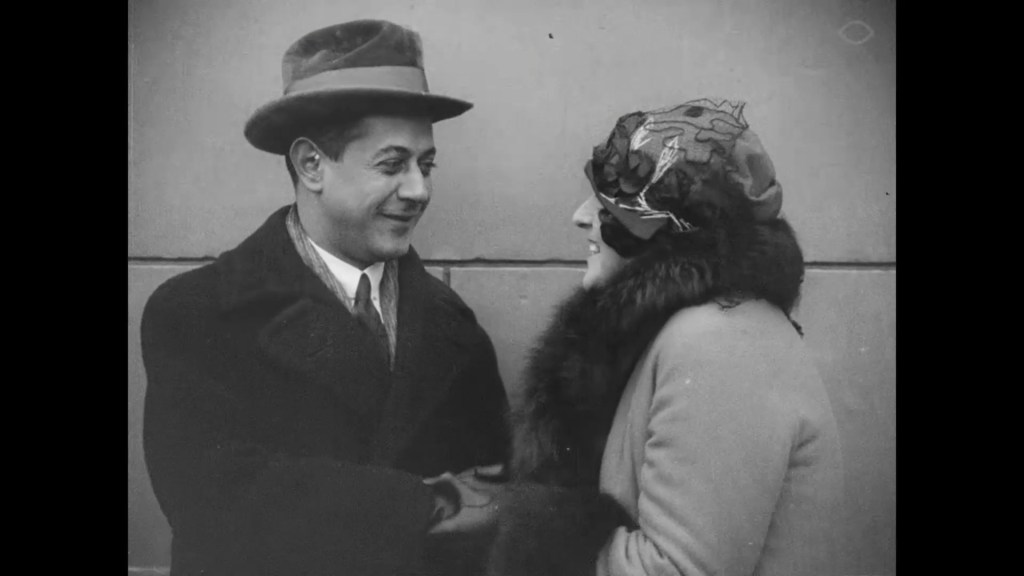
PC: Do musicians ever pitch themselves?

OH: Yes, they do. We don’t always bite, sometimes because we know from the outset that it wouldn’t work out logistically (i.e. if the musician or musicians lives too far away for us to be able to cover the necessary travel expenses). What I often find is that people pitch themselves as a package deal, i.e. “here is a film for which I have recently composed a score”. Then we usually have to write back and say that that’s great, but the film was screened too recently at the festival to justify screening it again – or that we’re not interested in screening that film, but would they be interested in doing something else? A notable exception was the screening of Navesni [In Spring, 1929] in Bonn in 2023. We brought over these two Ukrainian musicians, Roksana Smirnova and Misha Kalinin, who had written to us the previous year and had performed their soundtrack to the film at several festivals and venues (they’ve since composed soundtracks for some other Ukrainian silent films). It was a great screening, and they’re great musicians and wonderful people, but like I said it’s the exception rather than the rule.

PC: Do the regular musicians also pitch specific films?

OH: Yes, this can happen from time to time. For example, Maud Nelissen was the one who pitched us Varhaník u sv. Víta [1929] because she had already played for it on several occasions, including HippFest and the San Francisco Silent Film Festival. She contacted us really late on, just as the 2024 programme was nearing completion, but we happened to be one feature short, so it was almost serendipitous. In such cases, it’s clear it would be a massive faux pas to take the film but offer the musical accompaniment to someone else! As a curator, you always want to have good relations with the musicians. Not that we had any cause to even begin to consider the possibility of having anyone else play for this film: Maud’s accompaniment was great, and she (and the film) got a huge ovation at the live screening. was really pleased for her, because silent film audiences can be quite particular, and you can never really be certain in advance how they’re going to react to a specific film or performance, particularly if the film is not well known.

PC: Is that an added pressure?

OH: Oh, yes, and not just for the musicians, also for the curators. The audience always knows best, of course! So when people come up to you after the screenings, it’s always interesting to learn who liked – or, more importantly, didn’t like – what. I always say that if just one person comes up to me after the screening and says something positive, then that’s enough to make me happy. This year, Jûjiro [1928] didn’t go down so well at the live screening in Bonn, I felt, but someone later came and told me it was the best film at the festival. Thank god, I thought! We do it for you, you know.

That was the last of the three parts of my interview with Oliver Hanley. My great thanks to Oliver for taking the time to talk to me, and for correcting the drafts of the transcript of our conversation.

Paul Cuff