After a day of urbane, light-hearted musical comedy, Day 3 of Bonn takes us to the streets for poverty and vagabondage…
Der Vagabund (1930; Aut.; Fritz Weiß). The opening titles tell us that this is a story “taken from everyday lives”, as recounted to a journalist. The prologue begins with the sight of a vagrant’s body being found in a country ditch between Werder and Potsdam. All that’s found with him is a self-penned poem, an enigma that sets the journalist on a journey to the homeless shelter and the underworld of the unemployed and destitute. What follows is both an account of the journalist’s investigation and the stories he hears from the “vagabonds” themselves. What account of the “plot” I can give is necessarily brief: the film frames its narrative with the journalist visiting shelters and listening to personal accounts of vagrancy and homelessness. The main story becomes that of a man’s journey through Austria, where he encounters the uncaring attitude of many in society. Put like this, Der Vagabund sounds prosaic. But the structure and its cinematic realization are very striking, and the film is filled with amazing images of people and places.
From the outset, director Fritz Weiß provides some beautifully composed images of the landscape, the stillness of which is then offset by the handheld camerawork that brings us up-close to look at lived reality. Soon the camera is perched behind the journalist as he speeds into the city, where there are some amazing shots of the bustling streets that whiz past the car. Alongside the journalist, we visit the shelters and inspect the occupants. We see the vagrants strip and get inspected for lice, then shower. The faces and bodies are palpably real. (When the camera tracks past the vagrants as they eat, one of them shelters his face from the camera, as if ashamed or fearful of being seen.) There are powerful, often quick montages of details: the faces, the bodies, the clothes of the vagrants; or the watches, the coats, the hats left hanging in the shelter.
The film begins to give us some context for these people. We meet Gregor Gog, “the vagrants’ leader”, who gets an amazing introductory close-up in which he stares at – almost through – the camera. It’s a challenging look, one that demands we pay attention; it’s also a kind of question: what are we thinking when we see the vagrants on screen? There is a series of cutaways to the unemployed, drunks, petty thieves. We see their faces, are given little vignettes of their actions and habits. There are scenes in which we see the sign language by which their “brotherhood” communicates – chalked symbols on the walls if houses where they have found, or not found, help or food. The film thus gives us a sense of community, of commonality, between these otherwise isolated, down-and-out individuals.
This leads me to think about the film’s structure, which I found very curious. The first section of Der Vagabund, discussed in my previous paragraphs, is based on articles which (within the film) is deemed “too theoretical” by the newspaper editor. Is this a kind of judgement on the style of the film we have just seen? As if in reaction, the film shifts register. The editor wants “life stories”, and that then is what we are given by the film. Though it is carefully framed via the journalist’s interview, what follows is the story of one man who wandered through Austria. We see his temporary work, his moving from place to place, his interactions with locals in a smith, a farm, and on the road. We also see a glimpse of his time with a woman, of a shelter in Austria for other vagrants. Throughout, the film intercuts between this inner narrative and the framing narrative of the journalist interviewing the vagrants. There is a pleasing tension between the real and the fictional, especially given how real even the fictionalized sequences look. This is also felt in the rhythm of the editing. While earlier sequences have some swift montage of faces and illustrative scenes, when we are on the road with the vagrant in Austria there are more long shots/takes of his travels. It’s always a pleasure to roam about in the past like this, and this film’s rambling itinerary is the perfect way to see little pockets of history that you would other never see. There are beautifully composed images that show us the sweep of mountains and valleys. Though the film always gives us a contrast between the richness of the summer meadows and the rags and dirt of the traveller.
The film’s mode is not solely naturalistic, as there is a trippy dream sequence in which the vagrant character imagines himself tried and executed by the bourgeois bullies he has encountered on the road in Austria. It’s a wonderfully strange interlude, with a bleak edge: he imagines himself being hanged in a kind of forbidding, expressionist landscape. And “naturalist” doesn’t mean this film is so austere that it lacks lyricism or poetry. As I’ve said, there are some beautiful shots – beautifully composed and photographed – throughout the film, especially in the Austrian countryside. There is also a delightful sequence of shadow puppetry, improvised by the main character on the wall of the prison cell he shares with another vagrant, who is ill and lying in bed. The setting is realistic, but it finds a way of expressing something more personal than the set-up might suggest. The scene is silly and sad and touching all at once.
Der Vagabund ends with a montage of people from all classes pouring over the journalist’s articles in the newspaper Tempo. The motage then begins to intercut these scenes of reading with the “march” of the vagrants. To these shots are superimposed a vision of Gregor Gog giving a passionate speech. It was curious to see Gog emerge as a kind of heroic leader in this final montage. Though he is a real figure, playing himself on screen, his appearance at the end of the film is much more like that of a work of Soviet propaganda. Are we to read this as a promise of reform? A threat of revenge? A call to arms? It might be all three, and it is a surprisingly punchy end to Der Vagabund. Like the bourgeois readers of Tempo on screen, the media we consume is coming to life and confronting us with reality – demanding we think, reflect, react. Though the images stand comparison with numerous scenes in Soviet fiction films of this period, it also reminded me – with its confrontational crowd marching towards the camera – of Abel Gance’s J’accuse! (1919). The realization of the imagery is not as developed and sustained in Der Vagabund as in either these French or Soviet counterparts, but perhaps that is to its advantage. In such a film, I’d rather be won over by naturalism or lyricism than lectured or beaten over the head with crude slogans or overly tooled editing.
I should add that since watching the film I looked up Gregor Gog (what a name!), and I see that he led quite the life. From a working-class background, he ended up being drafted into the German army, where he was court-martialled during the Great War for his political activities. Mixing in an anarchist-communist milieu in the 1920s, he came to lead the “Vagabond Movement” (Vagabundenbewegung) and edit their mouthpiece publication, Der Kunde, which we see in the film. After 1933, he was arrested by the Nazis, escaped, fled to Switzerland, was expelled to Russia, spent time there in a labour camp, tried to become a novelist, and ended up dying in a sanatorium in Uzbekistan. Der Vagabund thus gives us a vivid glimpse into this corner of interwar Europe and its political movements. That said, Der Vagabund is not a work of crude propaganda. It certainly has an anti-bourgeois attitude (per the film’s many negative portrayals of monocled officials, hypocritical housewives, and brutish burghers). But it is also poetic and rambling. Its very structure of a narrative within a narrative lends it a picaresque quality, a slightly ramshackle form that loosens any sense of the viewer being lectured. A couple of years ago, I watched another low-budget socialist film, Brüder (1929), which was far cruder in its messaging – and (despite much beautiful location photography) less skilled in mobilizing either its lyrical, naturalist elements or its fictional, narrative elements. Der Vagabund is altogether a more interesting and more successful film.
The music for this presentation was by Filmsirup (Matthias André and Michi Hendricks) on piano and electric guitar. I found this extremely sensitive and sympathetic to the film. The rhythm was perfectly in match with the action, though “action” is often not the right word. Much of the time, the film follows characters who are killing time, mooching or loitering with or without intent. The music finds way of matching these sections very well. The dotted rhythms follow the vagrants as they walk along, slow down, dawdle, come to a halt, and resume again. The plash of water in the shower and the shattering of glass get their own moments in the music, just as the flashes of anger or dips into resignation of the characters are felt. I imagine this might be a difficult film to accompany, but Filmsirup do a very admirable job.
In sum, I found Der Vagabund an extremely interesting and engaging experience. Realistic and poetic, inventive and provocative, it’s a fascinating film. The restoration by Film Archiv Austria, based on a Dutch copy of the film, is beautiful to look at. A rich a rewarding film, with a pleasing musical accompaniment. A rich and rewarding film, with a pleasing musical accompaniment. Just the kind of thing you hope to discover at a festival. Bravo.
Day 2 of Bonn and already I must take a kind of detour from the programme. Today’s streamed film is Saxophon-Susi (1928; Ger.; Karel Lamač), the same restoration of which I saw via the online Pordenone festival last year. I refer readers interested in the film to that earlier post, while today my comments will primarily address the differences in presentation between the two festivals.
The first thing to note was that Bonn offered two versions of Saxophon-Susi. Aside from the version with musical accompaniment (discussed below), there was a version with Germany an audio-description version for the visually impaired. (Though another audio-description video has text and narrator credits, I couldn’t find any for this specific film.) I was curious to know if this was presented with the soundtrack beneath the descriptive text. It was not, so offers a very curious experience – at least for this non-impaired spectator. I would be very curious to know more about the audience for silent films with audio description. When I attended the online HippFest festival earlier this year, I wrote about the audio-description texts offered there. These were very elaborate, intended for live audiences as much as online spectators, and the texts described the music as well as the action. HippFest also offered brail text for the deaf to accompany screenings, though I cannot comment on the content of these. The Bonn audio description is simpler, offering a straightforward description of the action and a rendition of all the intertitles. Obviously, I am not the intended audience for these alternate presentations – but I would be very curious to know more about (or hear from) anyone who has experienced these presentations as intended.
The second thing to note was the version with musical accompaniment. My comments here require some context… Though this 2023 restoration of Saxophon-Susi has not yet been released on DVD/Blu-ray, it has already accrued at least three new scores. The first was presented in August 2024 at the “Ufa filmnächte” festival in Berlin, where it was accompanied by Frido ter Beek and The Sprockets film orchestra. (Alas, the “Ufa filmnächte” is no longer a streamed festival, so I cannot report on how this score sounded.) For the version streamed from Pordenone in October 2024, there was a piano score by Donald Sosin. As I wrote at the time, this was delightful: catchy, rhythmic, playful, and fun. That said, I regretted the fact that the titular saxophone-playing sequences in the club and on stage had no saxophone on the soundtrack. At Bonn, the musical score offered was for piano and saxophone, and was composed/performed by M-cine (Dorothee Haddenbruch and Katharina Stashik, as they are identified on the video details page). It was great to hear a saxophone as part of the musical accompaniment, since this is a film whose very plot demands this instrument by featured. But the score itself was curiously chaste, which is to say that I found it less overtly fun than Sosin’s piano score from Pordenone.
At the premiere in 1928, Saxophon-Susi was accompanied by a jazz orchestra – and the poster for the film’s release in France also includes the promise of a jazz orchestra in the cinema. The film also had a tie-in song, “Die Susi bläst das Saxophon”, composed by Rudolf Nelson. (Both Sosin and M-cine cited this song in their scores, and as I presume did that of Frido ter Deebk in August 2024.) This morning, I dug a little into some contemporary reviews to get more of a sense of the original music. It certainly seems to have been a major part of the value of the live performances. For example, Der Kinematograph (4 November 1928) cites the arranger/conductor Paul Dessau’s “musical wit” and “truly comedic touch” in his score – and live performance at the premiere. The reviewer reports “enthusiastic applause from the laughing, amused audience” at the dance sequences etc. Oh, to see the film with live music and audience…
Lacking an orchestral score in 2025, I spent the rest of this morning listening to the many recordings of “Die Susi bläst das Saxophon” made in 1928 in the wake of the film’s original release. There were various instrumental versions made, such as the peppy version by Efim Schachmeister and his orchestra. The melody was clearly an international hit, as it was exported to the British/US market via The Charleston Serenaders, who recorded a charmingly upbeat rendition outside Germany in 1928. One can also sample a version with lyrics, as sung back in Berlin by Paul O’Montis in the company of the Odeon Tanzorchester. But by far the most pleasing version is the deliciously slow, relaxed instrumental account provided by Marek Weber’s band. I absolutely adore the slow tempo, the way this gives extra space and time for the various soloists to take their turn with the melody. You get the feeling that you’re eavesdropping on a Berlin dance night in 1928. It’s a simply joyous little number in their hands.
Looking up the identities of these various musicians is itself an interesting exercise. The composer of the song, Rudolf Nelson, was a popular cabaret and theatre musician. He was also Jewish, and in 1933 was forced to flee Germany, settling in the Netherlands – where he had to live in hiding during the German occupation. This grim period of history interrupts the biographies of the recording artists of Nelson’s song, too. The Austro-Hungarian Marek Weber was a musician of the old school and purportedly disliked jazz (perhaps this explains his slow tempo in “Die Susie bläst das Saxophon”?), but nevertheless ended up recruiting some of the best jazz musicians in Germany and recording plenty of popular tunes. As a Jew, he saw which way the political tide was turning and left Germany in 1932, ultimately settling in the US. Efim Schachmeister was born in Kiev to Jewish-Romanian parents but made his name in Berlin in the 1920s. He fled the Nazis and eventually ended up in Argentina. Paul O’Montis was Hungarian by birth and made his name on the Berlin cabaret scene. Openly gay, he was forced to leave Germany when the Nazis came to power. Sadly, he was one of many who didn’t flee far enough. After finding refuge in Vienna, after the Anschluss of 1938 he relocated to Prague – but was arrested there in 1939 and, after various relocations, ended up being killed in Sachsenhausen concentration camp in 1940. Such stories are common when researching artists of this period, but somehow the combination of such light-hearted numbers as “Die Susie bläst das Saxophon” in the context of their makers’ lives is especially sobering.
One upshot of this rather divergent morning is my desire to hear a jazz band score for Saxophon-Susi, something in the vein of Marek Weber’s recording of the theme song. If the film gets released on home media, it rather depends on how much effort (i.e. money) someone wants to put into it. What so often happens is that special scores are composed for live show(s), then no money is made available for that score to appear on home media with the film. There are many examples of expensive film restorations released with the cheapest musical option on DVD/Blu-ray. I do hope that Saxophon-Susi gets the score it deserves.
This week, I’m off to Bonn! Well, that’s not quite true. This week, I’m staying home in order to watch the streamed content from this year’s Stummfilmtage Bonn. Last year was the first time I saw the entire online programme, and this year promises another excellent line-up. Day 1 takes us to America for a potent blend of crime, subterfuge, and revenge…
Forgotten Faces (1928; US; Victor Schertzinger). Harry “Heliotrope” Adames (Clive Brook), so-called for his signature fondness for the flower, is by day a loyal husband and caring father – and by night a gentleman thief. His wife Lilly (Olga Baclanova), meanwhile, is busy being a neglectful mother to their infant child Alice and having an affair. Discovering the pair together, and realizing that Lilly has also betrayed him to the police, Harry shoots dead the lover and takes the child away. He leaves the infant Alice (complete with sprig of heliotrope) on the doorstep of a rich married couple, the Deanes, who had lost their previous child. Making his sidekick Froggy (William Powell) promise to remember the name and address of the Deanes, Harry hands himself in to the police. Seventeen years pass. Froggy keeps the imprisoned Heliotrope up to date on his daughter, now raised as Alice Deane (Mary Brian), and on the movements of Lilly, who still hopes to find her daughter. Meanwhile, Froggy is tricked by Lilly into giving her information about Alice. Lilly then visits Harry, and taunts him with her plan to take custody of their daughter. Later, when another convict engineers an escape, Harry assists – but the pair are thwarted. Harry having saved the life of the warden during the ensuing fight, he is given parole – promising not to lay a hand on his wife in the pursuit of his daughter. Outside, Harry and Froggy find Alice in the company of her fiancé Norman van Buren Jr., a rich heir. Hoodwinking his way into Alice’s household by pretending to be a new butler, Harry acts as her guardian. He also threatens Lilly and, in the climax, lures her to the house of Alice in order to get her to commit a crime and die in the escape. Sacrificing his own life for this purpose, he lives just long enough to say goodbye to his daughter. THE END.
Well, well, well, what an excellent slice of crime drama this is. I wondered what kind of genre this might be, since the tone subtly shifts gear in the opening act. It begins as a Raffles-like case of Harry as a gentleman thief. Added by some charming and witty dialogue, I assumed the light touch would continue. However, this film soon starts pulling its punches. The sudden, unapologetic way Harry kills his wife’s lover (off-screen) is startling, as is the way Harry later engineers Lilly’s death. I found the tone a little disconcerting later on, when the film milks sentiment from the father hiding his identity from Alice. Though there are some gorgeous touches – as when Alice calls out to her father, and both Harry and Deane turn to respond – I found myself increasingly unsympathetic to Harry.
This was in part due to the performances of Clive Brook and Olga Baclanova as the estranged couple. For me, Baclanova was by far the most engaging presence on screen. She is wonderful as Lilly, always on the verge of wildness – like her hair, which when uncontained by her hat springs out in a kind of pale mane. By contrast, as the older Harry, Clive Brook’s hair is pasted and greyed into a kind of docile wig – so orderly and so meek that it almost hurts to look at. If Brook maintains a kind of sad father nobility, Baclanova gets to play an increasingly desperate emotional state. Harry plays weird mind games with her (stalking her, sending her threats, luring her from her safehouse), a kind of escalating cruelty that the film never questions – but that Baclanova makes you really feel. Lilly is mentally teased and tortured to the point where she is so desperate to be free that she confronts Harry. When he dies, saying he has kept his word to the warden, I felt much sorrier for Lilly than for Harry. After all, Harry has kept his promise not to touch Lilly but has carefully directed (in every sense) her death – albeit at the price of his own. And even the murder she commits – his – is the result of Harry’s own bluff and entrapment. He has made her commit murder, forcing her to play the part that he has cast. It’s a nasty ruse, one which the film seems to think we accept on the basis that Lilly is a bad mother, a kind of failed vamp, who surely doesn’t deserve to have her child – or even to survive the film. What exactly is the fate that Harry assumes Alice will have under Lilly’s influence? Whatever it is, it’s a fate so bad that he’s prepared to kill Alice’s mother to waylay it before it even happens. Lilly doesn’t have to commit a crime to be deemed a criminal; Harry can commit several but dies believing himself a hero. Though Brook’s performance is good, there is a kind of smugness in Harry’s victimhood (and apportioning of pre-emptive blame on Lilly) that rubbed me the wrong way. Does being a well-intentioned father excuse two murders? Does Harry’s oft-stated belief in the sanctity of marriage justify him being judge, juror, and executioner-by-proxy of his wife? Is Lilly so inherently wicked that she deserves to die? Certainly Harry seems to think so, and the film seems to think so.
I should also mention William Powell, who as Froggy gets to sport a delightful monobrow that is at once comic and sympathetic, marking his character as a sidekick. He doesn’t get much screen time, but Powell nevertheless gets to shape this little character into someone with a past, and with some humanity. (Froggy, it seems to me, is a far more sympathetic character than Harry. I’d rather like Froggy to have been given a gag or a send-off at the end of the film to indicate that things turn out alright for him!)
Whatever I thought of the characters, I was absolutely captivated by the look of Forgotten Faces. The cameraman was J. Roy Hunt, who does some remarkable work. There are some fabulous images of the gambling house at the start of the film. I love the shot from within the roulette wheel, looking up through the dial to the eager circle of faces of the gamblers, and then the roving camera – tracking and panning – that penetrates into the midst of the eager throng. Here and throughout, there are scenes with superb low-key lighting. The nighttime exteriors and interiors (the street, the prison, the Deane house) have some exquisite lighting, moody and atmospheric: this is film noir avant la lettre. (So too, I suggest, is its punishment of the wayward female character.)
This reaches its zenith in the climax to the film, which boasts an astonishing moving camera that seems to glide through the entire house – round corners, up flights of stairs, through corridors, through doors. It’s an outrageously well-orchestrated use of movement, combined with incredibly complex lightning. (Rewatching it again, there is a subtle cut that slightly breaks the spell – but nevertheless, it is wonderful as a whole.) It’s the perfect device for the sequence, which is Harry luring Lilly to her doom. He has him himself acted as metteur-en-scène, using shadows, props, and hired actors to trick Lilly into shooting him then falling to her death on a sabotaged ladder. As a viewer, you absolutely feel as entranced, almost as will-less, as Lilly as she follows Harry to her doom – and his. An amazing sequence.
Finally, a word on the presentation. The film featured piano accompaniment by Meg Morley, which was excellent: melodic, atmospheric, always appropriate. The restored print from the Library of Congress was superb to look at. There was a copyright logo in the bottom left of the screen (as you can see from my images), but its placement and design rendered it unobtrusive. This film is so rich to look at that you quickly forget the logo is there. (Unlike some copyright logos, as I mentioned last week.) All in all, a fabulous way to start the festival.
When I can’t decide on what to watch, I begin hunting my shelves for curiosities. Goodness knows, I have a lot of material to catch up with on DVD, let alone my hard drive. Faced with too much choice for a single feature, I fall back upon compilations of short films. At the weekend, my eye fell upon the spine of I colori ritrovati: Kinemacolor and other magic, a 2xDVD set released by the Cineteca di Bologna in 2017. I realized shamefacedly that I had never sat down and watched the contents from start to finish. At something of a loose end, feeling indecisive and uncommitted, I sat down and watched. For the next three hours, I was transfixed.
I colori ritrovati contains four curated programmes of films. Each programme contains a selection of short films made through an early colour process: Kinemacolor Urban, Kinemacolor Comerio, Chronochrome Gaumont, and Pathécolor. The films were produced between c.1907 and 1922, and range from 50-second fragments to 12-minute works of substance. Most offer “views” of touristic locations or noteworthy occasions, while the shortest films often concentrate on attractive objects which happen to make good subjects for colour. The content is what Tom Gunning et al. have described as “the cinema of attractions”. This definition usually implies either a kind of non-narrative model, or else a model in which the visual content or novelty of the film outweighs the importance or depth of narrative. The films of I colori ritrovati certainly fit this broad characterization, but there is a lot more to their pleasures than this definition of “attractions” might imply. Below, I discuss each programme in turn per their presentation on these DVDs…
“Kinemacolor Urban” (ten films, c.1907-12). This first programme of films made under the aegis of American producer Charles Urban, based on the pioneering work of British filmmaker George Albert Smith. This process involved treating black-and-white filmstock to make it sensitive to red wavelengths. Shooting at 32fps (double the standard speed of filming), the camera captured alternate frames through green and red filters on its revolving shutter. Though the print produced was still black-and-white, when projected through the same red and green filters, the film miraculously burst into colour on screen. A century later, viewers are faced with the impossibility of replicating this kind of technology to project the films as intended. Digital restoration can separate the alternate frames exposed to green/red, apply the appropriate filter (i.e. alter the colour tone) and reunite the frames in a way that mimics the effect of the original projection. But it remains a conjectural approximation, via totally different technological means, of the original Kinemacolor process. What we see on our screens at home is but a digital reimagination of the colours of a century ago.
That said, the effect on this DVD is amazing. The palette has an invitingly warm, pastel tone – exacerbated by the summery, daylit scenes of so many of the films. But it’s all delightfully dreamy. The colours are not exactly faded, but lustrous according to an unfamiliar design. While the overall impression is one of hazy warmth, this allows certain objects to stand out with particular brilliance. The shores and slopes and distant mountains in Lake Garda, Italy (1910) have the tired, wintry hue of a slightly murky afternoon. The water is deep blue-green, but when its dark ripples give way to calm the surface is a wash of light. The silhouette of a sailboat floats serenely over the dazzle of the distant past. Crowds await us, staring as we glide towards the shore. A woman with a red parasol appears on deck. We see her again once she has disembarked. She turns to stare at the camera, the ship departing behind her. Perhaps she is waiting for a signal from the camera operator to move, or to stop. It’s so charmingly awkward, so eye-catchingly strange.
In other films, the effect of the ever-so-slight temporal disjunction between the two colours on successive frames gives the faint impression of stereoscopy. There is a kind of gap in space and time that the eye catches, or thinks it catches. When we see men on horseback, or figures silhouetted against the land or sky – suddenly their form seems to possess some magical depth. It is all illusion, of course, but that does not lessen the effect. The oddness and awkwardness of the content of films like Coronation Drill at Reedham Orphanage (1911), Nubia, Wadi Halfa and the Second Cataract (1911), With Our King and Queen Through India: The Pageant Procession (1912), and [Woman Draped in Patterned Handkerchiefs] (c.1907), and [Tartans of the Scottish Clans] (c.1907) is made touchingly potent by their form.
I was far more entranced by the landscapes in films like The Harvest (1908) and A Run with the Exmoor Staghounds (1911), and this entrancement was heightened by the anomalies of the Kinemacolor prints. In the Exmoor hunt, the riders and their hounds are themselves pursued by alien blotches of turquoise and scarlet. These colours are those of Verdigris and faded bloodstains, as though evidence of ageing in entirely different materials were manifest. Here were English landscapes so familiar to me made suddenly mysterious by tears, blurs, marbling. The silent trees and grass are tugged by lines of chemical decay that scurry across the frame, or else softened and blurred by the thumbprints of watery giants. The past is already so far from us in these films. Their silence is akin to death; their colours faded like memory. But the moments of disruption, when time literally seems to be gnawing at the image, make this past seem all the more fragile, potent. History unfolds before us, harried by its own disintegration. At the end of A Run with the Exmoor Staghounds, the film dares show us the dying stag; but as if to counteract this image of death, we are shown a brood of puppies suckling from their mother. It is life and death, awkwardly presented to us in a film that has itself only just survived.
“Kinemacolor Comerio”(four films, c.1912). Italian producer Luca Comerio licensed the Kinemacolor process in 1912, so this programme is a small selection of the films made by Italian crews. There are glimpses of troops in Italy’s latest colonial enterprise in Libya, and the tragically earnest efforts of horses and riders crossing a river closer to home. But the most substantial film is L’inaugurazione del campanile di San Marco (1912), the Venice setting of which is beautiful for all the reasons I have outlined with the earlier films. There is the colour palette of the centuries-old facades, the somnolent waters, the hazy skies, and the charming pageantry of a previous century. Figures crane into the frame in awkward close-up, or rush to gather on some distant viewing point in the hope of being captured on film. A brass band stands around awkwardly waiting for their call to perform. Bishops trudge past. Plumes, flags, boaters. Archaic warships proudly anchored by the quay. Motorboats and gondolas. It is the Venice of Proust, of D’Annunzio, of Henry James, of Thomas Mann – and just about any other fin-de-siècle figure one cares to think of. The hue and haze are akin to the contemporary Autochrome still photographs produced by Lumière. The details are softening, the colours made pastel. Yet there are those familiar flashes of intense red, of deep blue-green, and the darkness of formal suits and top hats raised aloft in assurance of the coming century.
“Chronochrome Gaumont” (nine film fragments, c.1912-13). The second DVD begins with a programme of fragments from surviving Chronochrome films. As the excellent liner notes details, Chronochrome was an additive system involving three lenses on the camera to record simultaneously three images through three colour filters. During projection, three lenses were likewise used to (re)combine the three images into one. The difficulty (and constant adjustment) of filming this way necessitated a reduced frame height, giving the resulting films a widescreen effect. The results are simply stunning: these are by far the most successful, vivid, and absorbing colour worlds on these DVDs.
If I thought of Proust with the Kinemachrome film in Venice, here is another landscape from À la recherche du temps perdu. At Deauville-Trouville, children in dark bathing costumes play in the breaking waves. Adults mingle by red-and-white striped tents. (It is a vision of Proust’s Balbec. The images’ silence surely admits some dreamlike realization of an imagined time and place.) In View of Enghien-les-Bains, crowds of impeccable tourists wander under the boughs of trees whose green is like none that exists in our world, in our time. So too the mountains and sky, the curious cattle, the smocked peasants, and the bare trees of Provence: The Old Village of Annot possess a kind of echt French pastness. The landscape is once again wintry but bright. The scrubby roadside, the faded trees, the dusty road, the empty fields – aren’t these archetypes of an imagined countryside? They are prosaic and extraordinary at once. So it is with Picturesque Greece and Venice, Queen of the Adriatic, and in Chioggia, a Fishing Port Near Venice. They are hauntingly real, yet infinitely distant.
Aesthetically, one has the same impression with the tableaux of still lives: Venetian Glass-Ware, Flowers, and Fruits. These are set on a slowly rotating table, and the camera simply observes these hypnotic turns of glowing glass and fruit. These objects are incredibly real: and I emphasize equally incredible and real. They are palpably there before us, weighty lumps of glass, heavy bowls of fruit, potent buds of flowers; their colours and textures and contours are saturated by reality. Yet the saturation of colour, the way the glass glows, the way even fruit seems to assert its presence on screen – these aesthetic aspects are more than real, they are supernal, almost supernatural. I have never seen a pile of oranges so lustrously tempting. Like the shots of Venice a century ago, this fruit is here so madly, vividly, aggressively alive that it is hard to comprehend that it cannot have survived more than a few days, even hours, after being filmed at the start of the twentieth century. So too the Venetian glass bowls seem not merely to be bright and colourful, i.e. to possess brightness and colour, but to emit brightness and colour. The greens and purples look radioactive, dangerous – as though the glass were transmitting its colour, its very quiddity, across the centuries.
“Pathécolor” (fourteen films, 1905-1922). The final programme on these DVDs returns us to the most successful early producer of colour films. Pathé’s “pochoir” process involved laboriously cutting stencils for each colour for each frame of film. Once this was done, the stencils could be used to mechanically stamp dye onto the frames. Though time-consuming to cut each stencil, these stencils could then be used to colour multiple prints of the same film – a great boon to mass production. Combined with tinting and toning, the effects of this process could be extremely varied and complex. I have already discussed this process in relation to fiction films like Casanova (1927), but this programme presents a series of short films almost exclusively within the touristic/documentary mode.
Appropriately for the machine-tooled Pathécolor, several films are devoted to various combinations of handmade and industrial processes. And just as the work of cutting Pathécolor stencils was primarily undertaken by women, so in Industrie des éventails au Japon (c.1914-1918) we see Japanese women laboriously cutting, colouring, and folding fans. In La Récolte du riz au Japon (1910) whole families and all ages are engaged in the elaborate harvesting and preparation of rice. This kind of narrative is at its most elaborate in Le Thè: culture, récolte et préparation industrielle (1909), where we watch the whole process of cultivating, harvesting, refining, and preparing tea – even to the point of watching it being served and drunk. This film even offers a kind of dissection of colonial industrialism: from the poor indigenous labourers in the fields and the white foremen overlooking the subsequent preparation, through to the middle-class white women being served tea by their Indian servants. La Chasse à la panthère (1909) offers another glimpse of class and race in the gruesome business of a hunt. (The white man carries a rifle and stands triumphantly over the trapped beast, while his native servants do all the dirty work, then the carrying and lifting.) There is an odd disjunction between the fantastical application of colour and the matter-of-factness in the way the film shows us a panther being tortured, beaten, shot, and skinned.
The drama of transformation is more surreal in La Chenille de la carotte (1911), where caterpillars in garish colours metamorphosize into butterflies. Here, the colour makes these extreme close-ups of writhing insects purely terrifying – I can imagine this film being overwhelming on a large screen. so too with the time-lapse photography of Les Floraisons (1912), where flowers writhe into organic fireworks – and writhe through the additional layers of colour laid on by Pathé.
Calm is provided by the travelogue pieces, from the gentle rhythm of Barcelone, principale ville de la Catalogne (1912), seen primarily from the vantage point of a slow-moving boat, to the even more languorous rhythm of Les Bords de la Tamise d’Oxford à Windsor (1914) – a slow cruise down the river, past exemplarily English riverbanks, locks, lawns, pleasure boats… and all in 1914, when one senses that the meaning of this world and its inhabitants would undergo some irreparable change.
More exotic locales are found in La Grande fète hindoue du Massy-Magum (1913) and Le Parc National de Yellowstone (1917). I confess that during some of these films my mind began to wander. The application of colour over the film image often flattens rather than deepens our perception of the views being presented. For example, I would much rather have seen the journey along the Thames in monochrome. The broad application of single colours – green, green, and more green – does little to enhance such a landscape. Tinting or toning would surely be preferable for this kind of combination of open river, spacious meadow, and large sky. Other such travelogue subjects become postcard banalities. For all their delight and novelty, there is a stiltedness in the colour that dulls their power. But perhaps this is just the result of these Pathécolor films being at the end of the second disc and me growing tired?
It is a relief to glimpse more human aspects in these films. In L’Ariège pittoresque (1922), views of mountains and houses are followed by awkward glimpses of locals in traditional costume, posed stiffly for the camera. Here, and in Coiffures et types de Hollande (1910), there is the delightful tension between the awkwardness of the pose of the locals and the delightful glimpses they give towards the camera operator – and to us. These long-dead faces are at their most alive when they try not to grin, when they cast a glance of annoyance or bemused patience at those who stare at them – then and now. Perhaps to reassert the neatness of fiction, the last of this programme, La Fée aux fleurs (1905), returns us to a typical kind of “attraction”: an excuse to decorate the frame with greenery and flowers, and to have a woman with a beaming smile gaze approvingly out from the image, inviting and happy to live within her magical fiction.
As must be clear by now, I was very glad to have (re)found these DVDs and watched them all the way through. Their hypnotic power – somewhere on the borders of the distant past, somewhere on the borders of photographic reality – makes I colori ritrovati an absolute treasure trove of pleasures. The four programmes offer a variety of processes and subjects, from the real to the surreal, from the everyday to the fantastic, from the placid to the cruel. It’s a good reminder about the variety of colour technologies and the results of rival processes, all operating in the same window of film history – and across a variety of genres or modes of presentation. The DVD liner notes are superb, as one would expect from an archive-based release, and provide information about the history, preservation, and restoration of the films. (There are also restoration features on the disc, too.)
If I have a reservation, or at least a regret, about the visual presentation of this material, it is the presence of copyright logos throughout the programmes of Kinemacolor and Chronochrome films. The former has a “Cineteca di Bologna” logo in the top left, the latter a “Gaumont” logo. The DVD liner notes mention that there are strict copyright restrictions on the Chronochrome films. Not only does this mean that no complete film is presented here, but also that a remarkably ugly Gaumont copyright notice is stamped in the corner. I could get used to the Bologna logo in the first programme of this set (it is a simple and relatively discreet design), but the Gaumont logo is horrific: as ugly an intrusion as you could imagine. Atop the beautiful and subtle and rich texture of the Chronochrome images, this flat digital shape in the corner looked like a lump of birdshit had landed on the screen. I understand this material is unique and protected by goodness knows what level of copyright and archival restriction, but it seems a great shame to so spoil the astonishing visual impact of these films.
To return to the positives, I must also praise the music on these DVDs, which is provided on the piano by Daniele Furlati. I am often indifferent to piano scores but listening to these performances were much more pleasurable than I usually find. Firstly, I think the (relative) lack of narrative puts less pressure on the musician to be led by specific cues. The result is a more relaxed, impressionistic approach. I find Furlati’s music for these films both more melodic and more effective over longer timespans. He’s not chasing after the action or killing time waiting for a particular cue or change of scene. I was rather reminded of some of Liszt’s musical sketches inspired by/written on his travels around Europe in the 1830s. His Album d’un voyageur (1835-38) prefigures his more polished, thematized collection Années de pèlerinage (1842). Melodies take their time to develop, and there is a pleasingly rambling, reflective nature to the structure. This is travel music, capturing the slow speed of voyaging and the pleasure of stopping to gaze at views and absorb the atmosphere. With Furlati’s music for I colori ritrovati, I had the same impression of a relaxed, melodic meandering through these slow travelogues and touristic views. And, as Liszt sometimes quotes and develops local/national melodies into his work, so does Furlati. There is a lovely moment at the end of L’inaugurazione del campanile di San Marco (discussed above) when Furlati quotes a phrase from the Italian national anthem. He does so very subtly, and the tempo is so slow it’s like a memory of travel, of a place, of a country we’ve visited. The images it accompanies are of the nighttime façade of a palace in Venice. It’s a dreamy, melancholic, touching moment – a summoning of memory at the very moment the film ends, and the past disappears. Perfect.
This week, I’m writing about not being able to write. I’d love to be telling you all about the beauties of Holger-Madsen’s film Der Evangelimann (1923), but all I can do is write about my entirely unsuccessful efforts to find a copy. While I am therefore unable to offer much insight into the film itself, I hope to offer some reflection on the intractable difficulties of writing about film history – and finding it.
Why am I interested in Der Evangelimann? Well, as previous posts indicated, I have a growing curiosity about the work of Paul Czinner and Elisabeth Bergner. I have a longstanding project on their Weimar films, but I am also interested in their work before their first collaboration in 1924. Der Evangelimann was Bergner’s first film role, and her only pre-Czinner work for the cinema. This Ufa production was made in Germany but was directed by the Danish filmmaker Holger-Madsen and premiered in Austria in December 1923. Contemporary reviews were mostly favourable, but since its general release in 1924 it has virtually disappeared from the record.
I am also interested in the cultural background to Der Evangelimann. The film was based on an opera of the same name, composed by Wilhelm Kienzl (1857-1941). As even semi-regular readers of this blog may be aware, I am a devotee of late romantic music – and obscure operas by lesser-known composers have their own attraction for me. Since it swiftly became apparent to me that Der Evangelimann was going to be a difficult film to see, I turned my attention to finding a recording of the opera. As it turned out, Kienzl’s music was an absolute delight. A pupil of Liszt and a devotee of Wagner, by the 1890s Kienzl had become a successful composer and music director in various central European cities. Der Evangelimann (1895) was his greatest hit and became a regular production for opera houses into the first decades of the twentieth century. However, Kienzl never produced another opera that established itself in the repertoire to this extent, nor did he write much in the way of substantial music in other genres. By the 1930s, he had withdrawn from active work and by the time Europe emerged from the Second World War he was dead, and his work largely neglected. (His support for the Nazi takeover of Austria in 1938 cannot have helped his posthumous reputation.)
The opera Der Evangelimann is a pleasing blend of late romanticism with a touch of verismo (i.e. something rather more realistic than romantic drama). The libretto, adapted by Kienzl from a play by L.F. Meissner, is also a kind of ethical drama. Act 1 is set in 1820 around the Benedictine monastery of St Othmar in Lower Austria. The monastery’s clerk Matthias is in love with Martha, the niece of the local magistrate Friedrich Engel. Matthias’s brother Johannes is jealous of this romance, since he covets Martha for himself. Johannes betrays the lovers’ secret relationship to Friedrich, who furiously dismisses Matthias from his job. Seizing his chance, Johannes proposes to Martha, but he is angrily rejected. Matthias arranges with Martha’s friend Magdalena that he will meet his beloved late one evening, before he leaves town to seek work elsewhere. Their nocturnal meeting is witnessed by Johannes, who storms away in a fury of jealousy. As the lovers say a sad farewell, a fire starts in the monastery. Matthias tries to help but is swiftly blamed and arrested for the crime. Act 2 is set thirty years later, when Matthias returns to St. Othmar. He has spent twenty-five years in prison, after which he became a travelling evangelist, preaching righteousness and justice. He encounters Martha’s old friend Magdalena, who now looks after the ailing Johannes. We learn that Martha drowned herself rather than submit to Johannes’s proposal, and that Johannes has since attained great wealth but is haunted by enormous guilt. Magdalena ushers Matthias to see Johannes, who receives Johannes’s dying confession of guilt for the fire. Matthias forgives his brother, who dies in peace.
Kienzl’s opera is gorgeously orchestrated and contains at least two rather wonderful melodies. The most famous, “Selig sind, die Verfolgung leiden um der Gerechtigkeit willen”, is Matthias’s evangelist hymn. Kienzl, knowing he had written a good tune, cunningly makes Matthias teach a troupe of children this melody on stage. We thus get to hear the melody several times in a row, and it becomes the leitmotiv of reconciliation and forgiveness between the brothers. But my favourite scene of the opera is in Act 1. Rather than a set-piece number, it is a scene of anxious, hushed dialogue between Mathias and Magdalena. They are arranging Matthias’s final meeting with Martha before he leaves, and as they talk the bells are ringing across town for vespers. Kienzl creates a spine-tingling atmosphere that has remarkable depth of sound: from the slow, deep ringing of the cathedral bell to the warm halo of strings, then to the bright chiming of a triangle. A simple downward motif is thus given greater emotional resonance: you can sense the space and warmth of the evening, but also the sadness of departure, the steady pressing of time upon Matthias. In Act 2, when Matthias meets Magdelena again, the midday bells sound: suddenly, the scene evokes the past through an echo of its warm, chiming orchestration. It’s a beautiful scene, perfectly realized. (At this point, I pause to recommend the 1980 recording of Der Evangelimann conducted by Lothar Zagrosek. It has a great cast, too: Kurt Moll, Helen Donath, Siegfried Jerusalem. Though the EMI set is out of print, it is readily available second-hand. A must for anyone interested in out-of-the-way late romantic opera.)
The 1924 film maintains the same basic plot and setting as the opera, though it has one or two curious departures. Per the opera, the first part of the film replicates Mathias (Paul Hartmann) and Martha (Hanni Weisse) being betrayed by Johannes (Jakob Feldhammer) to Friedrich Engel (Heinrich Peer), followed by the fire in the monastery and Mathias’s arrest. Years pass, Martha has married Johannes and together they have a young daughter, Florida. Martha then discovers that Johannes was the real arsonist (when he talks in his sleep) and ends her life rather than continue in their doomed marriage. After her death, Johannes moves to America – leaving Florida in the care of Magdalena (Elisabeth Bergner). Twenty years after the fire, the dying Johannes returns to St Othmar – as does the newly-released Mathias, now known as “the Evangelist” due to his preaching of holy justice. After Magdalena and the teenage Florida (now played by Hanni Weisse) go in search of him, Mathias eventually meets the dying Johannes – who then confesses to his brother and receives forgiveness.
I initially pieced together a synopsis from those available via various online sources, plus evidence from contemporary reviews. However, online sources do not provide the sources of their information, and I was left uncertain of numerous details. After a more thorough searching of the documentation catalogue of the Bundesarchiv (Germany’s state archive), I located the German censorship report of July 1923. Thankfully, this had been digitized and made available for public access. (As have many such censorship documents from the period.) The censorship report includes a complete list of all the original intertitles for the film, together with an exact length (in metres) for each of the six “acts” (“act” usually being a synonym for reel). Though there is no accompanying description of the action (i.e. what’s happening on screen), the titles provide a much clearer picture of the film’s structure and action. The document demonstrates how significantly Holger-Madsen expanded the ellipsis between the opera’s original two acts. The film’s second and third acts are set after the trial and the first years of Mathias’s imprisonment, allowing a glimpse into the minds of both brothers and of Martha – and showing us Martha’s discovery of Johannes’s guilt, and then her suicide.
Yet even the list of titles leaves some aspects of the narrative unclear. The film’s invention of a daughter for Martha/Johannes allows Hanni Weisse a double role as both mother and daughter. But I am unclear as to what (if any) dramatic function Florida has to the plot (she is evidently not a suicide deterrent!), or how exactly Mathias’s return is handled. Does Magdalena have a crucial role in this, or does he find his way back by chance – or by his own volition? Does Mathias encounter Florida, and what is his reaction to seeing the spitting image of his lost love? The titles do not make this clear.
Would other documents help? I know that if I visit the Bundesarchiv collection in person, I can inspect a copy of the programme for Der Evangelimann which may (or may not) clarify the issue. But where else to turn? I cannot find evidence of the film being released in France, in the US, or in the UK, and thus cannot find any other easy source of a more elaborate synopsis or of additional still photographs.
What of sources on Bergner? In Germany, there are many books devoted to her life and career on stage and screen – as well as her own memoirs. Ten years after the film was released, Bergner recalled being so disappointed with her experience on Der Evangelimann that it inspired her “contempt” for the entire medium of cinema (Picturegoer, 18 August 1934). In her later memoirs, Bergner claims that Nju (1924) was “my first film” (69) – erasing altogether the memory of Der Evangelimann. Those subsequent biographers or scholars to mention the film do so only in passing, but most accounts simply ignore its existence. The only account that even suggests familiarity with the film is that of Klaus Völker, which provides a meagre synopsis in its filmography and describes Bergner’s “slightly hunchbacked” appearance (398). Had Völker seen Der Evangelimann, or was this description based purely on publicity photos of the production? (The book contains only one other reference to the film, which repeats Bergner’s own grave disappointment in the role and the medium as a whole.)
Elsewhere, Kerry Wallach’s very interesting discussion of suicide in Bergner’s films (and contemporary Weimar/Jewish culture) makes passing reference to Der Evangelimann (19), but nothing that suggests familiarity with its content. Given Wallach’s interest in suicide and love triangles across Bergner’s films, it is odd that nothing is made of this first screen role being in a film that has both. I am curious, too, that Holger-Madsen chose to cast Bergner in the secondary role of Magdalena, since Martha is a much more interesting character – and her off-screen suicide (“in the waters of the Danube”, according to Matthias in the opera) would have directly foreshadowed the deaths of Bergner’s later characters.
All of which brings me to the nub of the issue: does any copy of Der Evangelimann survive? Has anyone seen it? Of course, the first source interested parties are usually advised to consult is the Fédération internationale des archives du film (FIAF) database. This is designed to be a collaborative database for information on archival holdings from across the world. Search here, and you can find the details of a film and a list of archives that hold material relating to it. That, at least, is the theory. In practice, it relies on data from its member archives that is not always available, complete, accurate, up-to-date, or forthcoming. I have long since accepted that the absence of a film on the FIAF database does not mean it is absent from the archives. This acceptance brings hope but creates other problems.
The next step, at least for a German production, is the usually (but not always) reliable filmportal.de. It is usually a decent indicator of the film’s survival in German archives and will also list the rights holders to the film and/or any restored copies. In the case of their page on Der Evangelimann, it lists the rights holders as the Friedrich-Wilhelm-Murnau-Stiftung – the inheritors of much German cinema of the pre-1945 era. The FWMS lists details of the film on their website but (having asked them) they do not themselves possess any copy. Such is often the case, where the legal possession of a film does not coincide with the physical possession of a copy – or even the guarantee that a copy exists.
Where next? Well, the Bundesarchiv helpfully provides an accurate database of its film holdings – but this too yields no copy of Der Evangelimann. Various catalogue searches and archival contacts in Germany, Austria, the UK, and Russia have likewise yielded no result. Given that Holger-Madsen was Danish, I did also consult the Danish Film Institute about the film – but Der Evangelimann is not even listed on the DFI filmography of Holger-Madsen’s work, and they profess to have no copy. (Or at least, did not profess so to me.)
If Der Evangelimann had been restored, it would likely appear on more archival or institutional catalogues available online. But it seems scarcely to have made any mark on film history before proceeding swiftly to oblivion. Indeed, the only record I can find of any screening since 1924 was at the Internationales Filmfestival Mannheim-Heidelberg in 1963, where Der Evangelimann was part of a retrospective of Bergner’s work. Was this a complete print? Was it even shown, or just listed as part of the line-up? (Needless to say, I have contacted the IFFMH to see if they have any record of which archive loaned them the print, but I have not yet heard back.)
My only remaining option is to contact every film archive in the world, but there is no guarantee (as I have already discovered) that any of them will reply to a private researcher undertaking a wild goose chase. If an institution, restoration team, or legal rights holder were to make this inquiry, I imagine the process would be much more likely to yield results. As an individual, I have only a handful of contacts in the archival world, and limited resources of time, money, and patience to feed into this search. I cannot issue a convenient “call for help” that summons responses from across the world.
All of which makes an illustrative example of the problems of film history. What I have experienced scouring public resources for traces of Der Evangelimann is a frequent and frustrating instance of a common issue. The film may well exist in an archive, but without any publicly available acknowledgement of its status it might as well (for the purposes of film history and film historians) not exist. That which cannot be seen cannot be studied. It is also frustrating that no scholar on Bergner has ever taken care to admit either that they have not seen the film, or that the film does not exist – and that therefore future scholars should not waste time trying to locate it. Filmographies are infinitely more useful if they include information on a film’s original length (in metres, not duration), together with its current restorative status in relation to its original form of exhibition. These are quite basic facets of film history, but it is amazing how rarely scholars ever cite them – or are required to do so. (I am myself guilty of this.) As regular readers will know, it is a bugbear of mine that many restorations and home media editions likewise provide viewers with so little information on the history of what we are actually watching. It perpetuates a cycle of missing information: the material history of a silent film – the most literal evidence of the medium itself – is too often taken for granted and simply left out of its presentation, either on video or in written texts.
In the case of Der Evangelimann, a century of critical and cultural disinterest has left me with very little evidence to go on. Does the film survive? I do hope so. Even if it is a failure, and even if Bergner’s performance awful, I just want to see it and find out. A film doesn’t have to be a masterpiece to deserve recognition and restoration. I just want to see it! I will continue to pester archives, but in the meantime I suppose I can also pester you, dear reader. Do you know anything about where a copy of Der Evangelimann might be held? Any information would be most gratefully received.
Paul Cuff
References
Elisabeth Bergner, Bewundert viel und viel gescholten: Elisabeth Bergners unordentliche Erinnerungen (Munich: Bertelsmann, 1978).
Klaus Völker (ed.), Elisabeth Bergner: das Leben einer Schauspielerin (Berlin: Hentrich, 1990).
Kerry Wallach, ‘Escape Artistry: Elisabeth Bergner and Jewish Disappearance in Der träumende Mund (Czinner, 1932)’, German Studies Review 38/1 (2015), 17-34.
This week, we foray to China for a thick slice of melodrama. Love and Duty boasts two of Chinese cinema’s biggest stars of the period, Ruan Lingyu and Jin Yan, and a sprawling narrative of numerous twists and turns. But before I discuss the film, I must provide some little context for how I came upon it and why I have not watched it until now…
Love and Duty has sat on my shelf since September 2022. The previous month, I had applied for a job lecturing film history at a university. I had not occupied an academic position for some time and had essentially abandoned thoughts of doing so. But the modules I would be teaching at this position overlapped perfectly with my interests and past experience. Despite the overwhelming likelihood of failure, and the gruelling tedium of filling in online forms, I began the process of applying. (My god how I hate job applications.)
Conscious that I should expand my knowledge of the wider culture of silent cinema (and show evidence thereof), I set out on a spending spree. I bought a stack of books, DVDs, Blu-rays. I also downloaded a slew of articles, desperate to convince myself that I was au courant with the latest scholarship – or at least up to date with what I might have missed. I viewed, I read, I wrote. Within a month, I completed and submitted an article to a scholarly journal as well as submitting my application. It was a frenzy, but I was buoyed by the rush of it all. Was the chance of success really so remote? I guzzled at the trough of irrational optimism. I planned out modules, I compiled reading lists. After all, I might need to show at an interview that I had thought ahead about how to shape the curriculum. I genuinely enjoyed imagining course outlines and formatting reading lists.
First on my hit-list was a tranche of Chinese silent films and literature thereon. Packages arrived, digital material was carefully downloaded, labelled, filed. Since not many Chinese silents are available on DVD/Blu-ray, I was especially keen to get hold of the best edition then available. Step forward, Love and Duty. An “exclusive limited edition” of this film happened to have been released in China by the World Cinema Library label in the summer of 2022. Only 700 copies were produced, and they were very difficult to obtain if you didn’t know in advance and could preorder. I did not know and did not preorder. I therefore had to find a copy via an online store I had never used, based in Hong Kong. I also paid a good chunk more for the privilege, and waited in anxious expectation that I had been conned and would receive nothing – or perhaps that I would receive a message from my bank that I had been drained of all the money I possessed. But why worry? The salary of a lecturer would of course make up for any short-term losses. (Here I may have struck a Douglas Fairbanks-style pose, hands on hips, and thrown back my head in boisterous laughter.)
While the disc was on its way from Hong Kong, I received an update about my job application. I had fallen at the first hurdle. For many reasons, I knew (or very strongly suspected) that this would be the case. But that did not lessen the dispiriting sensation of the news. (Such emails are tactfully generic and never state the reasons for one’s rejection.) A few days later, the special edition of Love and Duty duly arrived. Everything was as promised. The cellophane gleamed around its imposing bulk. I added it to the expensive pile of hubristic purchases. Here was a hefty tome from Italy, there an overpriced edition from France, elsewhere a set of German films without adequate subtitles. And atop them all was Love and Duty, the single most expensive Blu-ray I owned. I put away my purchases. Life resumed. (Canny readers may realize that it was at this point in my life that I began this very blog.)
Perhaps the effort of the application and its inevitably disappointing punchline put me off watching Love and Duty for so long since then. Why revisit my folly? Well, nearly three years later, my decision to watch this film in 2025 was entirely spur-of-the-moment, precipitated by nothing more than the unexpected prospect of a free evening. Why not take the plunge and watch the bloody thing?
Love and Duty is set in Kiangwan, near Shanghai, where the student Li Tsu Yi encounters and falls for Yang Nei Fang. After aiding her when she is wounded in a car accident, Tsu Yi and Nei Fang exchange tokens of love. But Nei Fang’s father has already arranged his daughter’s marriage to the successful Huang Ta Jen. They duly marry, and their joyless union produces two children. Years pass, then Nei Fang and Tsu Yi meet again by chance and resume their relationship. (Ta Jen, meanwhile, is being pursued by another woman.) Eventually, Nei Fang leaves her husband for Tsu Yi – but the latter doesn’t allow her to bring her children. Despite their initial happiness, Nei Fang and Tsu Yi are soon dogged by rumour. Overwork exacerbates Tsu Yi’s (previously undisclosed) illness, and he dies – leaving Nei Fang to take care of their new daughter, Ping Erh. More years pass and Nei Fang encounters her first two children, who are now young adults. Drawn by chance into their existence, but ashamed to reveal her identity, she decides to end her life and commend Ping Erh into the care of Ta Jen. Moved by this sacrifice, Ta Jen welcomes Ping Erh into his family and instructs his children to respect the memory of Nei Fang.
Well, I said this was a melodrama – and boy does it live up to its genre. Its contrast of familial duty and romantic longing, its intergenerational conflict, its rescues-from-the-water, its sudden illnesses, rapid ageing, premature deaths, and its concluding aura of saintly forgiveness are all familiar tropes. Love and Duty carries them all off with aplomb. There are also plenty of interesting touches that make the drama more sophisticated than simply a genre piece. The film is filled with interesting pairings, doublings, echoes: the lovers v. the married couple, the husband’s own interest in another woman; the two families of (half-)siblings, the two generations of paired sweethearts. Even the figures who remain constant between past and present (the husband, the servant) echo their past actions. Years after his first spreading of malicious rumour, the servant (called Fox) once more seizes the chance to spread gossip (thus bringing about more unhappiness), while Ta Jen repeats his vindictive behaviour – only to realize the damage his actions have done in the final scenes. (Here, the character’s somewhat weedy nature becomes a kind of moral strength: Ta Jen knows that Nei Fang has undergone great suffering, and his tears are genuine. Ta Jen’s earlier toughness seemed more the product of social pressure than genuine hatred. He is a small, almost comically unheroic figure, with his round glasses and prim moustache. At the end of the film, I readily accepted that this man could feel sorrow and acceptance.) There are also repeated gestures, like the holding of handkerchiefs as tokens of exchange, both when the lovers first touch after the accident and then again after the accident with Fei Nang’s first child. Likewise, in the latter scene, the way that Nei Fang revives the child after Tsu Yi rescues them from the water is repeated much later when she tries to revive the dying Tsu Yi. Or the writing of the note when Nei Fang leaves her husband, echoed in her sending him her suicide note at the end. Negotiating such a long film, and a long narrative within the film, is made easier and more effective by such means.
Central to the film’s success is Ruan Lingyu as Nei Fang. She carries all the emotional weight of the film. Having touched on the doublings that the film uses so often, it must be pointed out that Ruan Lingyu plays both the mother and the (grown-up) daughter from her first marriage in the later stages of the film. The in-camera trick of re-exposing one shot allows both characters (i.e. the same performer) to appear in a single frame, apparently interacting with each other. They face each other, but the effect is one of contrast as much as mirroring. The child now resembles Nei Fang at the beginning of the film, while Nei Fang herself has aged well beyond her years. Ruan Lingyu is marvellously committed, always engaging – always a presence on screen.
I was less enthralled by Jin Yan as Li Tsu Yi. His character is rather unsympathetic, and I wasn’t sure to what degree I was meant to feel sorry for him. His preference for Nei Fang without her children is delightfully foregrounded when, seeing mother and children walk away from their encounter by the pond, a dissolve shows us his subjective vision of her as the young girl he met – her children magically eliminated (quite literally dissolved away) from the frame. We are not invited to sympathize with him, I suspect, for this very reason. The narrative then (mis)treats him incredibly perfunctorily, killing him after one day’s copyediting ruins his health(!). The illness he has apparently carried secretly until now is never once suggested by Jin Yan’s performance, let alone by the film, earlier in the narrative. It certainly makes the moment shocking, but also (I think) less convincing. Jin Yan’s performance is animated, breezy. The character is not quite flippant but clearly gives too little thought to his actions.
Amid all this melodrama, I should also emphasize the touches of humour that save it from being overloaded with sentiment. The servant who betrays the lovers twice over is delightfully played. The character has no moustache to twirl, but the performer (whose name I cannot find in the cast list) gives it his all – squinting, chin-stroking, and scheming with evident relish. It was one example of the film moving (consciously or not) to a mode of parody. The fantasy sequence were Tsu Yi imagines fighting and killing Nei Fang’s husband is a delightful and direct evocation of Douglas Fairbanks, and Jin Yan gives a pleasingly free-spirited performance here. While I welcomed the eruption of something so unexpected on screen, I was again unsure quite how to take the tone of the film. The text of the book Tsu Yi reads that inspires this fantasy is parodically awful. The reading of trashy literature and subsequent fantasy might come straight from a Harold Lloyd film. By contrast, in another nice moment of doubling, Nei Fang’s fantasies later in the film are ones of fear. After Tsu Yi’s death, Nei Fang imagines the reactions of her family if she returned. These imagined scenes stand as a dramatic contrast to the fantastical scene imagined by Tsu Yi earlier in the film.
Related to this (imagined) presence of American film culture, I was also struck by the ways that Love and Duty looks out to western cultures. This is evident from the outset at the way even the film company’s logo of a flying plane suggests outward adventure, and how all the intertitles are original dual-language designs. There is also a contrast between the westernized clothing for the wealthier characters (marked out as such from their introduction) and the traditional clothing worn by the servant (and by Nei Fang herself when she is reduced to a humble trade in later life). The old Nei Fang also sees her children performing in an “international dance” on stage at a charity event – a curiously bland blend of western and music hall comedy. (Nei Fang is deeply moved, but I wasn’t sure how we are to take the contrast between her emotion and the apparent superficiality of the stage show she watches.)
However, more striking than these elements of fantasy or performance are the glimpses of reality the film offers. I was especially intrigued by the exterior scenes of contemporary China within and beyond Shanghai. The film offers the modern viewer, especially the modern western viewer, a glimpse of a lost past and a lost culture. (To state the obvious, much happened to China in the decade after Love and Duty was made.) The camera goes onto the streets and (especially) the backstreets to capture a splendid sense of outdoor space, to ground the drama in a recognizable reality. The quality of the image on the Blu-ray is excellent, and I found myself peering into the past with fascination.
Did all this add up to a satisfying viewing experience? While I certainly enjoyed Love and Duty, I confess that I found myself glazing over a little during parts of its long timeframe. The film is two-and-a-half hours long, and while this span allows space for the years of narrative on screen, it is still a long time to sit through in one go. I strongly suspect that this is the kind of film that is much more rewardingly encountered live with an audience. The pleasure of viewing it would no doubt be enhanced by the reactions of fellow spectators chuckling, gasping, and applauding. As it was, I watched Love and Duty alone in my living room. My television is no substitute for a large cinema screen, and the gentle fizz from my carbonated drink no match for the murmur of an audience.
I must conclude by returning to the context with which I began. Was my purchase of Love and Duty in such an expensive edition worthwhile? Well, I can treat myself to any number of excellent special features: videos, essays, restoration demos etc. I can learn about Maud Nelissen’s piano score, about how the film was rediscovered in Uruguay, and about how it fits into the wider culture of early Chinese cinema. Perhaps most impressive is the extensive essay on the restoration process. (No complaints about the lack of information on source material, lengths in metres, etc. with this release.) The whole package looks lovely. But I wish I had enjoyed the film itself a little more. I am left with a faint tinge of regret. Of course, it’s good to support any company that releases a silent film on Blu-ray, and I’m glad to have seen the film. But had I waited a few months, I could simply have watched this same restoration of the film on youtube. It might not stay there, and of course the visual quality is inferior, but if it isn’t a film I want to rewatch time and again then such a version might do. Part of my motivation for buying the Blu-ray in 2022 was the potential to show it on a big screen for students. As I explained earlier, the prospect of having students (or a departmental screening room) had vanished even by the time the Blu-ray arrived in the post. So I look at this glamorous box set again, and the regret creeps up on me. I paid more for this one film than I paid for the complete works of certain filmmakers on DVD. Was it worth it? Frankly, I’ve no idea.
This week, I reflect on two films by Henrik Galeen that have been released on a wonderful 2-disc DVD set by Edition Filmmuseum in Germany. I have been awaiting this set since it was announced nearly two years ago, so keenly pounced on it at the first opportunity. This pairing also makes a nice sequel to my last post on horror films inspired by German silent films – and Galeen’s script for Nosferatu (1922) in particular. So, in chronological order, let us begin…
Der Student von Prag (1926; Ger.; Henrik Galeen). Galeen’s film is a remake of the 1913 film, written and co-directed by Hanns Heinz Ewers and starring Paul Wegener as the titular student. I wrote about that version some time ago, and I was very curious to see how Galeen’s version differed from the original. The plot is essentially the same. The student Balduin (Conrad Veidt) is convinced by the devilish Scapinelli (Werner Krauss) to sell his reflection for enough gold and status to seduce the aristocrat Margit von Schwarzenberg (Agnes Esterhazy). Balduin attains wealth and success, much to the jealousy of the besotted flower girl Lyduschka (Elizza La Porta) and Margit’s fiancé Baron von Waldis (Ferdinand von Alten). Balduin’s success is dogged by his doppelganger, who fights and kills von Waldis in a duel and ruins his reputation. It all goes downhill from there, as the film’s opening shot of Balduin’s gravestone promised…
I’m afraid I found the first one hundred minutes of this film a slog to sit through. While the photography is exquisite, especially the gorgeous exterior landscapes, the drama moves exceedingly slowly. The lean, concise psychological drama of 1913 has become a rather baggy melodrama. The character of Lyduschka becomes a rather more sycophantic presence (but not a more sympathetic one), while the scenes between Balduin and Margit are more lengthily (but no more convincingly) elaborated. Furthermore, Galeen restages many of the same moments of the 1913 version: the meeting of Balduin and Scapinelli at the inn; the confrontation with his mirror image; the meeting at the Jewish cemetery; the duel fought by Balduin’s double. While the in-camera double exposures are as excellent as the 1913 version, none of them are as well staged or as dramatically effective. As I wrote in my piece on the earlier film, the long takes of the 1913 version give all the trickery an extraordinarily uncanny quality: the unreal seems to emerge directly from within the real. There is nothing as effective in the 1926 version.
What bothered me especially was the tone of Werner Krauss’s performance as Scapinelli. He seemed to be almost parodying his performance in Das Cabinet des Dr Caligari (1919). In Der Student von Prag, he out-hams anything Emil Jannings ever did. His eyes bulge, he puffs out his cheeks, he gurns and grimaces. It’s faintly creepy, but it’s so outrageously different from any other performance within the film that it’s simply not frightening. Even his beard looks exceedingly artificial, almost like it’s been painted on. Indeed, Krauss’s whole demeanour is extrovertly artificial. Why? He’s either been told by Galeen to clown about like this, or else Galeen has utterly failed to rein him in. Everyone else in Der Student von Prag performs their roles with a degree of dramatic realism. It’s a fantastical story, but the performances are realistic. All except Krauss. Fine, Scapinelli is a faintly otherworldly figure, but I can’t believe that his clownish appearance and mannerisms are the best choice to signify this. (Again, the performances are far more consistent in the cast of the 1913 version.)
Exacerbating this factor is Galeen’s editing. So oddly were some scenes put together that I wondered if I was watching a print reconstructed from different negatives (i.e. a blend of “home” and “export” versions). When Scapinelli first propositions Balduin at the inn, Galeen cuts between a front-on mid shot of the two men to a shot that is captured from a side-on angle (in fact, more than 90 degrees from the front-on shot). It’s a peculiar choice, and the cutting between oddly different angles here and elsewhere in the film is very striking. (It’s also something I observed in Alraune, per my comments below.) This isn’t an issue of continuity: I don’t care how a film is put together, so long as it is effective. It’s because Galeen’s editing often lessens the tension in a scene, even the tension created within a particular shot, by cutting to a mismatched alternate angle or distance. Why, Henrik, why? The film is full of brilliant images, but I’m simply not sure Galeen can quite mobilize them into a truly convincing sequence of images.
All of that said, the last half hour of Der Student von Prag is a knockout. Balduin, having lost everything, proceeds to a drinking den where he drinks, dances, and revels. The band wears weird clown make-up and grotesque masks and blindfolds, and the double-bass is being played with a saw. Clearly, something odd has the potential to break out, and break out it does. Balduin starts to become more and more manic, and the sequence around him likewise grows more and more manic. Handheld camerawork turns the crowded, shadowy interior into a stomach-churning blur. But Balduin hasn’t had enough by far. He starts conducting the dancers with a riding whip; then he starts smashing crockery, then fittings, then furniture… The sequence lasts nearly ten minutes, and it just keeps going. I’m not sure (per my above comments) that Galeen really puts the shots together in a way that builds a convincing montage, but the sheer length of the sequence has its own manic sense of energy: it just keeps going, its obsessive cheer becoming less and less amusing and more and more unsettling. Veidt’s performance, too, grows subtly more manic. His face has moved from resignation and grief to a kind of enforced, frenzied joy.
There follows a series of scenes in which Balduin races through the night, encountering Margit and then his doppelganger. What really makes the sequence work is the way the wind haunts both interior and exterior spaces: whipping the trees, the curtains, the clothing… It gives a marvellously unsettling, threatening sense to every scene. This is where everything in the film works. Scapinelli (thankfully) is simply forgotten from the narrative and Balduin is left alone to face the consequences of his actions. Galeen abandons location shooting in favour of studios, which gives all these final “exteriors” the aura of nightmarish interiors, half-empty spaces filled with shadows and shards of buildings. Everything is sinister, malevolent – and empty of everything but Balduin and his sinister double. The final scene before the mirror is fantastic, filled with striking images of the shattered glass, and Veidt’s performance is superbly convincing: mad, violent, and tender all at once.
This is a fine way to end the film, but my word the rest was a slog to sit through. Even though the 1913 version consists for the most part of long, unbroken takes for each scene, it manages to tell the entire story succinctly and swiftly in barely 80 minutes. The 1926 version (in this restoration) is over 130 minutes. That’s fifty extra minutes to tell the same story. As good as the finale is, I think that the 1913 version is a far superior film. (So too is the version directed by Arthur Robison in 1935, starring Anton Walbrook as the eponymous student.)
Alraune (1928; Ger.; Henrik Galeen). Having re-adapted Ewers’s Der Student von Prag, a year later Galeen embarked on another adaptation of this author’s work. Ewers’s novel Alraune (1911) was a huge hit and republished many times in the early twentieth century. It still retains something of a cultish reputation among certain circles. In the anglophone world, there are two English translations available. One was issued in the 1920s and presents a rather prudishly reduced/edited text. The other is a recent, self-published edition, that offers a “complete, uncensored” text – but alas sacrifices fluency in English for the sake of adherence to the original. (My references below to Ewers’s text are therefore sourced from the original German edition.)
Ewers’s novel remains an impressively nasty piece of work. The story concerns Jakob ten Brinken, a scientist who inseminates a prostitute with the seed of a hanged murderer in order to study the offspring. “Alraune” is a female mandrake, a horrific vision of modern womanhood: she drives men to their deaths with violent desire, until she discovers her true origins and kills herself.
The author of this spectacular tale was a renowned provocateur. In a career spanning literature, philosophy, propaganda, acting, filmmaking, and occultism, Ewers was also sexually and politically radical. Homosexual, he was twice married; a supporter of Jewish enfranchisement, he embraced National Socialism. (Inevitably, his views and lifestyle led to a fall from grace under the Nazis.) Ewers’s literary avatar was Frank Braun, who appears in Alraune as a hotblooded student, arrogant and ironic, who urges his uncle to test the bounds of human power – and to challenge God. Braun had already appeared in Ewers’s novel Der Zauberlehrling (1909), in which he infiltrates and subverts a religious cult, and would reappear in Vampir (1921), which explores his moral and literal transformation into a vampire.
The male narrator of Alraune is an obtrusive, prurient presence in the text, lingering over his imagined muse as he writes. This muse morphs from a “blond little sister” into a “wild, sinful sister of my hot nights”, her “wild soul stretches forth, glad of all shame, full of all poison” (7). (And so on, and so on.) Returning perpetually to this fantasy, the narrator himself becomes vampiric, metaphorically drinking “the blood that flowed from your wounds at night, which I mixed with my red blood, this blood that was infected by the sinful poisons of the hot desert” (174). The violence of this fantasy grows across the book, fixating with gruesome glee upon the imagined sister’s body – “eternal sin” bidding him tear into “the sweet little child’s breasts, which had become the gigantic breasts of a murderous whore” (333). This imagery characterizes the book’s peculiarly salacious tone. (There are, by my count, no less than thirty references to women’s breasts – not to mention numerous depictions of physical and mental torture to animals and humans.) Just as the narrator desires the sister he imagines, so the scientist within the narrative succumbs to his desire for the mandrake he creates – and, as ten Brinken’s nephew, Braun’s desire for Alraune crosses from the familial to the sexual. But Alraune is also a satirical novel, the first half of which is a profoundly critical overview of bourgeois conservatism at the turn of the century. In a world of institutionalized hypocrisy, corruption, and vice, both Frank Braun and the narrator are perverse Nietzscheans, willing to overturn every norm.
For the film version of Alraune, Galeen wrote his own screenplay, retaining only the barebones of Ewers’s novel (the first half of which does not even feature the figure of Alraune). Professor ten Brinken (Paul Wegener) has created animal life artificially and plans to do the same with a human subject. Harvesting the seed of a hanged criminal (Georg John) to inseminate a prostitute (Mia Pankau), he raises the offspring as his daughter Alraune. Seventeen years later, Alraune (Brigitte Helm) runs away from her boarding school with Wölfchen (Wolfgang Zilzer). En route, she meets the magician Torelli (Louis Ralph) and joins his circus. Ten Brinken tracks her down and forces her to accompany him to southern Europe. Here, Alraune’s flirtation with a viscount (John Loder) makes ten Brinken jealous. Discovering her origins, Alraune sets out to destroy her “father” by feigning a seduction and then ruining him at a casino. She also enlists the help of ten Brinken’s nephew Frank Braun (Iván Petrovich), with whom she eventually elopes. Financially and morally exhausted, ten Briken collapses and dies.
Alraune was premiered in Berlin in February 1928 in a version that measured some 3340m; projected at 20fps, this amounted to over 145 minutes of screen time. When the film was distributed outside Germany, numerous changes began to reshape the film. In the UK, the film was released as A Daughter of Destiny and cut from 3340m to 2468m. Critics blamed the cuts and retitling for the disruptive sense of continuity of this version. (This did not stop it being a big hit.) In France, where the film was released as Mandragore in February 1929, censorship was likewise blamed for producing narrative unevenness. In Russia, Alraune was released only after Soviet censors removed all supernatural aspects of the storyline. (The copy of this version preserved in Gosfilmofond is 2560m.) Most severe of all was the board of censors in the Netherlands, where the film was banned outright from exhibition in January 1930.
This history is important to remember when examining the film on this new DVD edition. No copy of the original German version of Alraune survives. The restoration completed in 2021 by the Filmmuseum München relies on two foreign copies (from Denmark and Russia), using archival documents to restore the correct scene order and (where possible) the original intertitles. What it cannot restore is the original montage, from which 300m of material remains missing. Until 2021, the only copy readily available was an abridged version derived from a Danish print, to which a previous restoration inserted new titles translated into German. As well as missing and reordered scenes, the titles of this Danish version are both more numerous and more moralistic in tone than the German original (as restored in 2021). While the 2021 restoration offers a version of the film that is closer to the original, I am left wondering about how coherent the original actually was. As I wrote with the case of Gösta Berlings saga (1924), new restorations cannot help films with inherently confusing or incoherent narratives. You can make them resemble original texts as much as you like, but that won’t help if the original is itself uneven.
Seen in the beautifully tinted copy presented on the new DVD, Alraune is a splendidly mounted and photographed film. Galeen creates a pleasingly rich, louche world, complete with telling expressionist touches (especially ten Brinken’s home/laboratory). But some of the issues I had with the tone and editing of Galeen’s Der Student von Prag are also evident in Alraune. The cutting is sometimes rather odd, as though the montage has been reassembled from fragments. I am uncertain whether this is the fault of Galeen or of the pitfalls of lost/jumbled material inherent to the prints used for the new restoration.
For example, late in the film, when ten Brinken is alone in the hotel room (Alraune is meanwhile meeting Frank Braun) the film keeps cutting back and forth between close-up and medium-close-up shots of ten Brinken. At this point, the Danish print inserts the vision of Alraune transforming into the mandrake root seen at the start of the film. In the German version (as restored in 2021), the vision of the mandrake is moved to an entirely different scene at the end of the film – but the editing of the shots of ten Brinken becomes no more coherent. What kind of effect is being sought by the back-and-forth shots of ten Brinken? Is the slight change in shot scale meant to convey doubt, hesitancy? What kind of reaction are we meant to have? What is the significance of this choice (if, indeed, it is a choice, rather than a textual anomaly)? Why break up Wegener’s performance into oddly mismatched chunks? I can perfectly well understand why the Danish editors of 1928 choose to interpolate the vision of the mandrake here: they wished to make sense of this otherwise inexplicable sequence of cuts, to suggest what it is that ten Brinken is thinking. As restored in 2021, Galeen’s montage is such an odd, indecisive, unconvincing way of putting together the scene. Again I ask: why, Henrik, why?
If the editing is sometimes odd and might be blamed on the complex textual history of the film, other aspects are surely to do with narrative and narrational problems. Some of the most basic elements of the narrative are left weirdly open. Though the film abandons the fatalistic conclusion of Ewers’s novel, the happy ending of Alraune running away with Frank Braun is entirely unsatisfactory. I understand how and why Alraune wishes to leave ten Brinken – the film makes it clear that she finds his lies and manipulation abhorrent. But why does she elope with Frank? The film sidesteps Frank Braun’s complicitly in inspiring and realizing ten Brinken’s experiment to create Alraune in the opening scenes, just as it offers no clarity on how or why Alraune decides to contact him – nor on how and when she develops feelings for him.
Again, a comparison between the 2021 restoration and the earlier Danish copy is instructive. In the only scene of Alraune/Frank together, the Danish version inserts additional intertitles to try and clarify the narrative. In this version of the scene, Frank begins (in good expositional fashion) by saying that Alraune has summoned him via letter. Alraune then replies at length: “In read in my ‘father’s’ diary all that happened before my birth. Have pity on me… I am eager to know everything.” In the German version, Frank says nothing at all, while Alraune merely says “Thank you for coming.” The inserted text in the Danish version is a clunky attempt to clarify the narrative, which in the German original is almost inexplicable. How did Alraune even come to know of Frank’s life (or even existence), given that Frank has been travelling for the past seventeen(?) years? And why does she suddenly send him a letter to come to meet her in southern Europe? And where/when exactly did she write to him, or know where to write? Given the supposed romantic relationship that develops between the characters (again, hardly seen in the film), these are perfectly reasonable questions to ask.
The film also remains ambiguous about the reality of (and thus our potential attitude towards) ten Brinken’s tenebrous theory of heredity. In the final scene (as restored in 2021), ten Brinken suffers delusions in his last stages of mental and physical collapse. He finds and rips from the ground a piece of vegetation he thinks is another mandrake root. As he gazes at it this perfectly ordinary root, we see a vision of the mandrake from his old collection transforming into the person of Alraune. This is clearly a fantasy, totally at odds with what we have just seen on screen. Yet the final shot of Alraune shows the ordinary root clutched by the dead ten Brinken transforming into the mythical mandrake. After showing us the scientist’s deluded folly, the film suddenly tempts us with a final trick. Do we believe? Was Alraune really a spirit of malign femininity, or just an ordinary young woman? What does the film think, or ask us to think?
I seems to me that the film invites us to ask these narrative or cultural questions not by choice (I don’t think it makes an effort even to frame such questions) but by the nature of its loose coherence and narrative gaps. (The Danish version simply cuts this entire final sequence, as if the editors had no hope of making it coherent.) As I hope I have articulated here and in my comments on Der Student von Prag, I am unconvinced that Galeen quite has a coherent thesis to suggest, proffer, or invite examination thereof.
None of these issues should detract from the greatest feature of Alraune: Brigitte Helm. I never cease to be amazed, delighted, and enthralled by this astonishing performer. And despite the emphasis in popular and scholarly writing on Alraune being a horror film, I cannot help but feel that Helm plays this film as a sinister comedy of manners. Though her character grows enraged at her “father” and in one sequence approaches him with half a mind to attack him (her attempt ultimately stalls before being enacted), for the most part she is a half-detached, half-curious figure who outwits and (in all senses) outperforms her male peers. As Alraune encounters (and seduces) a series of men, we see amusement spread over her face as the men grow jealous and fight or become sullen and despair. Only with ten Brinken does she deliberately set out to destroy a man (and for good reason), but always she recognizes masculine weaknesses. Alraune has an uncanny ability to adapt and survive, to make intelligent decisions that triumph over male desires and instincts.
In one of the climactic scenes, Alraune pretends to seduce ten Brinken. She does so to unnerve him, to prove her superiority and his weakness, and thus (in the film’s slightly hazy dramatic logic) to make him liable to ruin himself on the gambling table. In the scene in their hotel suite, Alraune walks from ten Brinken to a chaise longue, where she bends provocatively over the cushioned expanse of silk. While Alraune’s forward posture emphasizes her cleavage, her face is all innocence: eyes wide, brows raised, then a flutter of her lashes. Here, as in her every interaction with men on screen, Helm’s performance is defined by playfulness. One marvels not only at the transparency of her every gesture, but also at the way such readability invites collusion with the viewer. This is a performance designed to make us enjoy the pleasure of her seduction, to enjoy watching feminine cunning triumph over masculine vanity. The controlling, stern, selfish ten Brinken – with his enormous physical bulk – is here slow, stumbling, hesitant. Laid resplendently on the chaise longue, Alraune motions him over to offer her a cigarette, then gently nudges his leg when he hesitates at her side. Languorously taking the cigarette, she raises herself to receive the light – only to lower herself slowly as it is offered. Drawing him down towards her, she smokes, pouts, and spreads her body invitingly. As ten Brinken struggles to control his desire and confusion, Alraune finally bursts into laughter. Through Helm’s extraordinary control of movement, gesture, and expression, this whole sequence teeters deliciously on the border of self-parody. Her climactic laugh is both a release of tension and an acknowledgement that such performative vamping – femininity itself – is always a game. If Alraune is dramatically uneven, it is given emotional direction by Helm; whatever the plot, we can follow her performance.
In summary, after watching these two new restorations of his work, I remained unconvinced that Galeen was a great director. I love many qualities in these films, and each is (in its own way) very memorable. But they are also overlong and dramatically/tonally inconsistent. I am open to the possibility that some of their problems (editing/montage) derive from textual confusion and restorative lacunae, but others (performance style, narrational clarity) seem to me the result of artistic choices. Veidt and Helm (and Wegener) are superb in their respective roles, and Helm in particular is reason enough to treasure much of Alraune. But I admit that I prefer other adaptations of these same stories. I have already stressed my preference for the 1913 version of Der Student von Prag, and I here add that I prefer Richard Oswald’s version of Alraune from 1930 – also starring Helm. The latter version is also somewhat ragged, but its raggedness lets in a degree of dreamlike atmosphere that Galeen’s lacks. Oswald’s film is weirder, nastier, more extreme. Ten Brinken is more monstrous, Alraune more frenzied – and more vulnerable. (For those wishing to hear more on both films, I advise eager readers to consult my own forthcoming book on Brigitte Helm. It may be a while before it reaches print, but I hope it will be worth the wait…)
Finally, I must praise the Edition Filmmuseum DVDs of the two Galeen films. As ever from this label, the films are impeccably presented and the accompanying liner notes (and bonus pdf book) are highly valuable. But could we please have the 1930 version of Alraune released on disc? And the 1935 version of Der Student von Prag too?
Yours optimistically,
Paul Cuff
References
Hanns Heinz Ewers, Alraune, die Geschichte eines lebenden Wesens (Munich: G. Müller, 1911).
This week, I revisit some of the cinematic afterlives of Nosferatu– Eine Symphonie des Grauens (1922; Ger.; F.W. Murnau). After catching Robert Eggers’s remake of the film earlier this year, I discussed my thoughts on its relation to the silent original in a podcast with Jose Arroyo (freely available here). To prepare for this, I rewatched (and watched for the first time) several modern films that cite or rework Murnau’s original – and made notes on my thoughts as I went. As a kind of written addendum to the podcast, I have collated and attempted to polish these thoughts into what follows…
Nosferatu – Eine Symphonie des Grauens (1922; Ger.; F.W. Murnau). What can I say about this wonderfully strange and compelling film? Every image is perfectly composed, marvellously controlled. The world on screen, enriched by tinting, has marvellous texture and resonance. Nosferatu is a fantasy and a period piece, but both the fantasy and the period are rooted in real places – and, for me, its exteriors truly make the film. The town, the forest, the mountains, the castle, and the coast – these locations have such a sense of pastness, and such pictorial power, that they sink into your memory. No amount of parody or pastiche can lessen their value. So too with the performers. They are cinematic archetypes, enacting some kind ritual drama that future generations feel obliged to mimic. But the performances are also playful and delightful, even their most naïve gestures somehow innocent of cliché. There is more than a touch of camp about Max Schreck’s Nosferatu, but a camp that is always sinister. His sexual predation is not quite human; interpreting his desires and motives is like trying to understand the consciousness of an animal or an insect; those piercing eyes are bright with a life than cannot be fathomed. Murnau shapes Nosferatu’s otherworldliness through the darkness from which he emerges, the shadows he casts, the untenanted spaces he inhabits. The film plays with his ability to move across space and time: he walks with the ancient deliberation of an old aristocrat in one scene then scuttles at terrifying speed in another. The figure is allied with cinema’s own uncanniness, the medium enabling the monster: his carriage hurtling through a forest like a berserk toy, his erect body rising in magical defiance of gravity from his coffin. All this richness of image and gesture is enhanced by Hans Erdmann’s original score, best heard (I’ll have you know) via Gillian B. Anderson’s edition rather than the version released on various DVD/Blu-rays. (Anderson’s edition more closely replicates Erdmann’s original orchestration but remains, sadly, available only on a long out-of-print CD.) As it shifts from sequence to sequence, Erdmann’s music moves from the lyrical to the rustic and the elemental; it is charming, brooding, devastatingly simple. As its title states boldly at the outset, Nosferatu is a symphony of horror – a truly complete work of cinematic and musical art. As much as its images and ideas have been treated as a grab bag for future generations to ransack, it still holds an un-replicable splendour.
Nosferatu: Phantom der Nacht (1979; W. Ger./Fr.; Werner Herzog). The first full remake of Murnau’s film, and by far the best. Shot on location in the Netherlands and Czechoslovakia, Herzog has an unerring knack for the right places, filmed at the right time of day, captured in the right conditions. Always in his films, you can see that this is a director who has spent time walking. These aren’t pretty landscapes, touristic ones, places chosen second- or third-hand – they are fresh, harsh, rugged, sublime. There is also the sense that Herzog’s minimal budget and no-frills filmmaking benefits the atmosphere: it always feels like he has snuck into these spaces without asking permission. These are stolen images, not forged ones. The town, the coast, the mountains, the castle – all become otherworldly, other-timely. The camera seems to have found out odd corners of Europe where the past lives on, like finding patches of frost on a bright spring morning. The supernatural seems almost an extension of this natural world, the hypnotic slow-motion images of bats, the time-lapse photography of moving clouds, or the opening footage of mummified corpses fit perfectly into this world, this mood – all are implacably real and ungraspably strange. The cast, too, fits in with this mood – through costumes and setting and lighting, yes, but through performance. All is mood. This Nosferatu is ridden by angst, pain. Herzog often said that Klaus Kinski’s best performances came when he was exhausted to the point of collapse. The actor would rant and rage and scream and shout and threaten murder, and Herzog would wait until the storm ebbed – then he would roll the camera and shoot the scene. The result is an air of timeless exhaustion, of a pitiable figure advancing through centuries of fatigue. The slowness of Kinski’s gestures across the film are dreamlike, but then he moves with terrifying speed when his instincts are riled – as when he sees blood on Harker’s hand, or in his writhing death-throes, curling up like he’s a sheet of parchment caught in a flame. It’s a performance of amazing power that draws you in every time you watch it. Just as fine, perhaps finer still, is Isabelle Adjani. She is as otherworldly and magnetic as any of Herzog’s images, who indeed seems to have imbibed and embodied them. Her glance, her movement, her posture – what a sublime presence she is on screen. (Yes, I really do prefer Adjani to Greta Schröder in Murnau’s film.) Elsewhere, Herzog brings surprising depth and pathos to his characters. As Renfield, Roland Topor is oddly and touchingly gentle – a sad figure, a lonely man chasing someone to love him, or a child chasing a father. He is a world away from the comically sinister Alexander Granach as Knock in Murnau’s film (or the later scenery-chewing performances of subsequent versions). And I do love Bruno Ganz’s honest, harried Harker. He does not have the boyish innocence of Gustav von Wangenheim for Murnau, but I can believe him as a man who lives in this particular world, who loves his wife, who finds himself in thrall to the uncanny. His slow transformation into a vampire across the film is marvellous, and I have always loved his final scene. He has a marvellously comic flourish (getting the maid to sweep away the salt that keeps him magically penned in a corner of the living room), as though he were touched not merely by the spirit of Kinski but by the spirit of Max Schreck. Then Ganz takes on the faraway look of someone being drawn into another kind of life, or afterlife. The last image of him on horseback, riding across the wind-whipped sands, accompanied by the “Sanctus” from Gounod’s mass, is beautiful. This is a film of which I remain inordinately fond.
Vampires in Venice [aka Nosferatu in Venice] (1988; It.; Augusto Caminito/Klaus Kinski). Yes, dear reader, I even watched this – just for you. Frankly, it was hardly worth it for the few sentences I write here. Kinski has grown his hair, a caged lion with a rockstar mane. He wanders with glazed, angry boredom around Venice – in a Venice pretending vainly to be the past. Christopher Plummer tries to track him down in the present, encountering the vapid stock characters of post-synchronized Euro-horror. It’s a slovenly, sloppy film – salacious yet soporific. I drifted in and out of its louche, morbid pall of atmosphere. I remember the final images, which touch on the poetic – yet somehow remain earthbound. Kinski, a naked woman in his arms, walking across a deserted square in the fog. Where was the film that justified such an image? Murnau is dead, and director Caminito (and Kinski, his eminence grise) did not wander into the past to find him, or to resurrect anything of his world.
Shadow of the Vampire (2000; US/UK/Lu.; E. Elias Merhige). A film about the shooting of Murnau’s film, the concept of which is that the director hired a real vampire for the role of Nosferatu. What a curious thing this is. The concept is neat enough, but it is framed in such odd terms – at least, from a film historian’s perspective. We are told (via an intertitle, no less) that Murnau creates “the most realistic vampire film ever made” – and the character later explains that realism is the essence of cinema. For the film, this is fine, but I wonder if this is how the writer and director of Shadow of the Vampire really felt about Murnau. Does anyone associate Murnau with “realism”, let alone define him by this term? I ask, because in all other senses Shadow of the Vampire is oddly loyal to Murnau – recreating with rather charming precision many of his original shots. We see the camera’s eye view of scenes, though these shots mimic the worn monochrome quality of old celluloid. Yet the film also shows us Schreck watching some of the landscapes from Nosferatu projected on a screen – but instead of pristine rushes, we get the battered and blasted tones of a grotty 16mm print. Amid the attention to period detail, this one glimpse of Murnau’s original footage is distinctly unflattering. John Malkovich is (inevitably) a weirdly compelling Murnau, obsessive and cunning but often charming. Willem Dafoe has a twinkle in his eye as Max Schreck, knowing that it’s all a game – even if the film takes itself a little too seriously. Indeed, my reservations about Shadow of the Vampire all stem from the way it addresses its own premise. The film gestures towards an ideology or aesthetic of realism but never develops it, nor does it allow the horror to grow frightening enough to compensate. Shadow of the Vampire is not a comedy, but the comedic shadows its every move. Dafoe, I think, knows always the dramatic limitations of these projects. He is never parodic in drama, but he can tread the line wonderfully well, as he does in Eggers’s Nosferatu. Shadow of the Vampire is interesting enough as an idea, and as a curious period drama, but I’m not sure it is anything more than a superficial engagement with the cinematic past.
Dracula: Pages from a Virgin’s Diary (2002; Can.; Guy Maddin). I sometimes get asked what I think of Guy Maddin, or else people assume that I am interested in his “new” silent films. I confess that I have never taken much interest in them at all, nor have I ever felt strong kinship or interest in any “new” silent productions. I was once in Paris at the time of a retrospective and caught Maddin in person, introducing Tales from the Gimli Hospital (1988). It remains the only film of his I have seen in the cinema, and I confess I found it interminable. Maddin certainly captures the stultifying awkwardness of certain early sound productions, but it felt like a short film blown out to feature proportions and even at 70 minutes it was a slog to sit through. His Dracula: Pages from a Virgin’s Diary is a much more lavish affair, taking its cue from innumerable previous iterations of the vampire myth – but shot silently and synchronized to a music soundtrack. In many ways, it’s a superb production. Maddin lights and shoots his scenes with stylish brilliance. His staging and choreography are striking, just as his mobile camera and his editing are dashing and spirited. But I regret how the many parodic performances and gestures it makes (not to mention the garish yellow text for the intertitles that sits superimposed over monochrome imagery) keep me at a distance. Campness need not be so superficial nor so silly as it is here, and these qualities make its aesthetic sumptuousness seem no more than surface and gesture. It has the trappings of silence but not of its depth or uncanniness. It’s a filmed ballet, but one without any frisson of liveness or great physicality. Rather, it’s a danced film – and I swiftly bored of its pretty artifices. Maddin’s film is only a very distant relation to Murnau, and despite its beautiful (sometimes ravishing) moments it has no resonance.
Nosferatu: A Symphony of Horror (2023; US; David Lee Fisher). You may not have noticed the release of this film, but I did – and its very existence requires some contextual explanation. Fisher’s only other film is The Cabinet of Dr Caligari (2005), a remake of Robert Wiene’s silent original. Using digital scans of the original film, Fisher recreates (not quite shot-for-shot) the aesthetic with a new cast – and dialogue. I had the peculiar privilege of encountering this film for the first time on a big screen with a class of film history students, after having watched Wiene’s original the previous week. I am always very sensitive to the mood of a room, especially of students – I do so want them to engage with (if not love) the films they are shown. There was nothing worse as a lecturer to feel that you were showing students something they actively hated (and I could always feel it in the room). But Fisher’s Caligari was the first time I felt glad to sense that the room had turned against a film. As bad a habit as it is for a critic to feel superior to a film, it is a worse habit for the director of a remake to feel equal to the original. The digital process of copy-and-pasting sets is neat enough, but the film has no idea how to replicate the sense of presence: Fisher’s cast are walking about mostly in green screen spaces, utterly divorced from their surroundings. It has the trappings of a period piece, but neither costumes nor faces nor performances can convince they have anything to do with the period. The dialogue is absurd, banal to the point of existential embarrassment. (How can such a script be thought adequate?) And when Fisher recreates the famous close-up of Conrad Veidt’s Caligari opening his eyes, the void between past and present is at its most unbridgeable, the gulf in intensity of drama and performance most apparent. (It is the same problem that Scorsese had in including this same shot of Veidt in Hugo (2011): it has infinitely more power and presence than anything in the surrounding film.)
So to Fisher’s second film… Nosferatu: A Symphony of Horror was, so the internet tells me, funded via a Kickstarter campaign way back in the 2010s. The film was purportedly shot in 2015-16, which seems remarkable given that it took another seven years to get released. Of course, it has been released only for streaming via Amazon Prime, which I suppose is the equivalent nowadays of what was once called “straight to video”. As with Fisher’s Caligari, original images from Murnau’s film have been digitally transplanted around a new cast. The effect is both more detailed and somehow more disappointing. In Fisher’s Caligari, the sets are at least flat in the original. In Nosferatu, an entire world is reprocessed in a manner that I found positively sickly. I earlier described the richness of the locations being one of the chief pleasures of Murnau’s film, and their systematic eradication was one of the chief disappointments of Fisher’s film. The landscapes are CGI creations, imaginatively stunted – as is every interior space, every shot in fact. The backdrop to every scene resembles a generic screensaver, without a trace of weight or reality or mystery. (The costumes are no less convincing, nor even the occasional moustache.) Among the cast, I single out Sarah Carter as the only figure to have genuine emotional depth – or any kind of convincing presence. She stands in a different league to anyone else on screen, even Doug Jones, whose Orlok is at least a committed performance. But it, like everything else in the film, is an exhausted stereotype of something we’ve seen dozens of times before. Fisher’s technology has improved, but he still cannot write dialogue or assemble convincing faces or performances. In comparison, Maddin’s Dracula (for all my reservations) is an infinitely more convincing use of a silent milieu.
Nosferatu (2024; US; Robert Eggers). All of which brings us to Eggers. Oh, Eggers… I have only seen one of his other films, and I thought The Lighthouse (2019) was as dramatically hollow as it was stylistically skilled. The tone of the script and performances rubbed me the wrong way. Was this a parody that took itself far too seriously, or a serious drama that was incredibly flippant? Much as I admired the way it looked, I squirmed with embarrassment and irritation at the dramatic tone. Some of my reservations about The Lighthouse I also have about Nosferatu, but I enjoyed the latter much more.
For a start, it looks lavish, and Eggers knows how to dress a set and provide a beautiful background. There are images that evoke Caspar David Friedrich (almost more so than evocations of Murnau), and there are glimpses of some fabulous locations (in the Czech Republic). The whole section in which Hutter travels to the east is the best in the film, and I wish I had seen more of the amazing churches and villages glimpsed all-too-briefly here.
But the richness of this part of the film’s world, so breezily skipped through, makes the inadequacies of the Wisburg setting more apparent. The exterior spaces of Wisburg consist of little more than two streets and a very small crowd of inhabitants. There is no sense of place and time here, nor of the scale of the invasion of the rats and the accompanying plague. (Compare this to Herzog’s film to see how much difference this space makes in dramatic tone and mood.) And while I loved some of the scenes set on the coast, you never get the sense that Eggers quite knows how to let these images sink in or resonate. They are very pretty, but they have no greater purpose. Eggers can dress a world impeccably, but a world is also people and ideas – these take work of a subtler and more difficult kind. As with The Lighthouse, to me Nosferatu was a very modern set of people dressing up and playing the past. The very impeccability of the images made the dialogue and the tone of many performances incongruous. While the film is happy to employ religion and supernaturalism, no-one seems to believe in any kind of corresponding or supporting ideology. And while the film offers a token critique of (male) medical authority, it is also entirely predicated on the idea of female desire as hysterical and “other”. (Nosferatu is explicitly summoned, if not created, by Ellen.) What, if anything, does this film believe, or want us to believe, about the drama it shows?
The performances are a curious mix. I must begin by praising Nicholas Hoult, who as Thomas Hutter is the emotional heart of Nosferatu. I was moved by him as by nothing else in the film. When he says he loves Ellen, you truly believe it – a conviction without which the film would fall down. Hoult was absolutely the best thing in Nosferatu, the least histrionic and the most believable. Bill Skarsgård’s Nosferatu is very… well, loud. His abstract presence is first signalled by a vast roar of sound in the film’s prologue that had me covering my ears. And when we meet him and he speaks, his voice (featuring rrrs that roll like no other), even in a whisper, reverberates throughout the speakers and floor of the cinema. Utterly unlike the silent and unknowable figure of Murnau’s film, this Nosferatu is a physical, corporeal, rotting being, defined as much by sound as image.
As Ellen, I found Lily-Rose Depp oddly unsatisfying. She gets to romp and roar and moan and writhe, and does so with aplomb. (Many of her poses are supposedly based on historical accounts of madness/hysteria, but I felt I had seen young women writhe and vomit blood this way a thousand times before in horror films.) But when she must deliver the (vaguely) period dialogue, it carries the whiff of parody. In part, it is the script’s fault for attempting (and, I think, failing) to mimic nineteenth-century turns of phrase, but mainly it is an issue of tone. I remain unconvinced that Eggers knows how to handle (or to decide upon) a consistent or convincing tone. Depp was one of the main reasons I felt this Nosferatu was playing dress-up. Again, I do not blame the performer so much as the director. This too is the case with Aaron Taylor-Johnson’s performance as Harding, which I found inexplicably bad. How can an English actor speak English so unconvincingly? I do not blame Taylor-Johnson, for he’s clearly been asked to perform like this by the director. But why? Why is he so artificial, so mannered, so parodically out of place? I am at a loss as to how I am supposed to feel towards Harding or his family. His children are ghastly screaming creatures, mobilized by the film (so I thought while watching the first half) to make us glad of their eventual demise – but when the demise came, suddenly the tone suggested they had earned our sympathy, as had Harding. Why? How? When? As for Simon McBurney’s Knock, he is as scenery-chewing as they come, gnawing on live animals and shouting – always shouting. While the characterization might echo Murnau’s version, it brings nothing new (other than fatuous gore). Just think how tender Herzog’s Renfield is by comparison, a character who is more than one-dimensional – and whose madness is a blissfully quiet delight.
What of Eggers’s relationship to Murnau? I noticed how the new film’s credits never mention Murnau, only Henrik Galeen, the screenwriter of the 1922 film. How odd, and how ungenerous, given the direct citation of the film’s (i.e. Murnau’s) imagery as well as its characters. Yet I never quite got the sense that film history truly informed this film. Eggers has surely seen Carl-Th. Dryer’s Vampyr (1932) – the floating shadows, the uncertainty of space, the dislocation of sound and image – but his Nosferatu has nothing uncanny about it. Dryer makes his sounds teeter on silence, slip back into it, emerge unsettlingly from it; Eggers makes his film quite unbelievably loud, roaring, throbbing – even his vampire’s whispers are rendered at the volume of earthquakes. Nor did I get a sense of other Galeen films lurking in the background of Eggers’s. Perhaps this new Nosferatu has some faint echo of Galeen’s Alraune (1928), but only in the sense that both films have an interest in female sexuality and the uncanny. (And let me be absolutely clear: Lily-Rose Depp is no Brigitte Helm.) But I found no echo of the world of Galeen’s Der Student von Prag (1926), which has its own rich cultural history, being itself a remake of the (to my mind) superior version of 1913 (a film I discussed here). This is a whole strain of German cinema that I feel very little evidence of in Eggers’s film. On its own terms, this new Nosferatu is a perfectly enjoyable film – but it is a bold move to identify itself with the silent past. If nothing else, it invites comparison where otherwise it might not. Having summoned the comparison, I cannot but think that Murnau’s film is an eternally peculiar and resonant work whose secrets elude Eggers.
In summary… well, what is my summation? I set out on this little crash course through the afterlives of Nosferatu with the aim of suggesting how and where Murnau’s film inspired future generations. In the end, I fear that all I’ve done is complain. If this does not make for a neutral survey, at least it’s an honest assessment of what I felt. The more remakes, revisits, or (god help us) “reimaginings” of a film, the wearier I grow. There is something in the metaphor of the vampire, in its unkillable afterlife, that fits the ceaseless round of resurrections cinema has performed on Nosferatu. But having rewatched all these films, I feel I am become Kinski’s incarnation – eternally weary, wishing for the end of this eternal round. Let me return to my silent realm.
Day 3 of HippFest at Home sees us journey to the (faux) Scottish coast for a (faux) Scottish drama starring Mary Pickford. This programme of a short and feature was given introductions by Alison Strauss (once more) and Pamela Hutchinson (who of course runs the marvellous Silent London). Strauss explained the choice of films, focusing in particular on the short extract from an amateur film shot on location in Harris in the Outer Hebrides. She also highlighted HippFest’s pioneering efforts to provide audio-description via headphones and brail for these films. It’s a superb project, and another reason to admire the festival. Hutchinson gave a detailed introduction to The Pride of the Clan, highlighting its history in the context of Pickford’s career. (I will say a little more about the film’s critical reputation, which Hutchinson also covered, later.) As ever, these introductions were exceedingly engaging (and often very funny). As an online viewer (and viewing the film over a day later), I felt part of the crowd in situ. On this theme, there was a lovely moment when the Bo’ness audience cheered the restoration team of The Pride of the Clan, who were (like me) watching remotely from their respective homes. Polly Goodwin, who provided the audio descriptions, was also warmly cheered. You really get the feeling of the enthusiasm for everyone involved. I’m sure it’s the same at any such specialized festival, but HippFest is the only one I have experienced where the online version gives you such access to the people and atmosphere responsible for making it work. And so, to the films…
Holidaying in Harris (1938; UK; Nat and Nettie McGavin). A fragment of a longer document, this is (like yesterday’s shorts from Ireland) another amateur glimpse of real life. Here are the docks, the fishing boats, the baskets of herring, the men on deck, the women at work on the shore. The camera observes, unobtrusively. The past goes about its business – messy, sweaty, industrious. The film ends. While this little extract doesn’t have the chance to sustain its mood, it’s a potent window into a way of life long gone – and the faces (and, especially, the hands) of those who often go unrecorded in history. A lovely little treat to start things off.
The Pride of the Clan (1917; US; Maurice Tourneur), our main feature. Set on the remote Scottish island of Killean, the film follows Marget (Mary Pickford) who must lead the MacTavish clan after the death of her father at sea. She wishes to marry Jamie Campbell (Matt Moore), but Jamie’s real parents – a wealthy countess and earl – arrive and convince her that it’s best for his future to let him join leave the clan. She accedes to their wishes but decides to sail away herself. However, her old boat soon begins to take on water. Will the hero rescue her in time? (I’ll let you guess.)
Let’s start with the good. Though it was shot in Massachusetts and thus has no visible connection with the reality of the Scottish landscape, the film at least boasts a wealth of exterior photography. There are some marvellous scenes of the locals silhouetted on the cliffs or gathered on the coast. The director Maurice Tourneur shows a keen eye for composition, making the most of the (actually quite limited) location spaces. There are some efforts to make this landscape bear some sense of history, though I must say that the church, neolithic tomb, and standing stones look hopelessly unconvincing next to some of the (clearly real) houses in the village.
Pickford is the heart of the film, and its chief asset. She’s feisty, independent and gets to be both playful and boisterous – telling stories, commanding children and adults, quite literally wielding a whip. I just wish the film did more with this tomboyishness. She might well wield a whip, but she ends the film clutching her pets as the water rises and the hero races to the rescue. Turning her from heroine to helpless waif is something of a letdown, as is the dramatic implication that by seeking an independent identity elsewhere she must inevitably come a cropper. (I rolled my eyes, too, at the intercutting of the villagers’ prayers – especially the unbelieving Gavin – with the rescue.)
Marget’s romance with Jamie is a little awkward, with the couple having little discernible chemistry (at least, nothing that I would call “romantic”; the very idea of sex, of course, is utterly absent). The humour plays well enough, but the film is far too chaste to express or even suggest anything deeper. (An early embrace ends with the pair awkwardly leaning into each other, cheek to cheek, that is surely as uncomfortable for the lovers as it is unconvincing for us as viewers.) Much of the film allows Pickford to be playful with the clan children and animals, making faces, pulling japes, or bothering kittens and donkeys, which certainly helps raise a smile but also risks infantilizing her character to the extent that the whole point of her being the head of the clan seems nothing more than a game. Besides, the whole effort of the film to present us with anything resembling real life in a real location seems to me a failure. The film might have nice images of the sea and coast, but the life of the clan seems to involve being either pious, playful, or bashful. There is little work here, and if there is a risk of death at sea, there is little dirt and no disease on land. While I appreciate that the colloquial dialogue is being used to ground the film in a sense of location, it swiftly grated on me – grated because the effort to capture the local dialect stood in stark contrast to the absence of any reality elsewhere.
Ultimately, The Pride of the Clan is all a fantasy – which is fine, but it never grabbed me. It is no more convincing or moving than the story Marget tells Jamie, visualized in absurd cutaways to a life on an exotic island complete with native cannibals. What works best are the moments of calm in-between the wearying playfulness. There is a scene of Marget alone, tying a bouquet which she drops into the sea – a gesture one might find in a D.W. Griffith film, only here carrying less emotional weight. It’s a glimpse of what might have been. For much of the film, I felt rather like Gavin, the outsider who scowls on the rocks while the loyal clansmen attend church and have faith in the narratives told therein.
This brings us back to the film’s reputation. As I mentioned, Hutchinson spoke about this film’s supposedly poor critical reception in the US in 1917 – and Pickford’s own subsequent dismissal of The Pride of the Clan as a failure. Hutchinson spoke extremely engagingly about the film’s qualities, and in the programme notes available online by Thomas A. Walsh and Catherine A. Surowiec there are other voices of praise. But these positive notes come chiefly from material that these respective authors quote. (Perhaps they are, wisely, a little cautious about making too great a claim for this film.)
Of particular note in the Walsh/Surowiec piece is a citation from Richard Koszarski, writing in 1969, who said: “Tourneur’s eye for composition is flawless, equalling or surpassing Griffith’s work of the same period, and the performances are more restrained than in much of Intolerance. Clearly this film was ten years ahead of its time.” Hmm. Ten years ahead of its time? I can imagine such a slender narrative being handled by Griffith in, say, 1911 in about twenty shots with twenty times the emotional power. (Equally, I can imagine him padding out such a narrative in, say, 1923 in about two thousand shots and achieving less.) Think of Mary Pickford in Ramona, from 1911, a Biograph production that boasts subtle performances and a masterful use of composition and choreography. (I have written about the film and its (to my mind) inferior re-adaptation as a feature film in 1928.)
Something I kept noticing with Tourneur’s film is the gulf between interiors and exteriors, which is only rarely bridged. One thinks of Victor Sjöström’s Terje Vigen (also released in 1917) as another coastal film featuring grief, wrecks, and the life of fishermen. Despite sharing tropes, the two films are worlds apart. The Swedish film builds partial sets on the coast so that we can look through windows and doors from interior to exterior, from comfy interior to raging sea. The result is an astonishing sense of place and of emotional tone: Sjöström’s film is anchored in reality, a fact which the naturalistic performances redouble. The only image in which this is regularly achieved in The Pride of the Clan is of Marget silhouetted in the doorway of her boat (an image that features in a repeated intertitle design). While The Pride of the Clan shows many characters looking in/out of windows, there is no attempt to link the spaces – aside from Marget’s boat, I cannot recall any shots where we look from interior spaces to the sea. And while many images are very nicely composed, only one image really sticks with me: the stunning silhouette of Marget and Jamie against the moonlit sea. It’s beautiful in and of itself, but also as a distillation of feeling. There weren’t enough moments like this. I wish that there the drama had been less fleetingly embedded in the setting and photography.
The issue is not helped by the variable image quality. From the restoration credits, it is clear that The Pride of the Clan was restored from a mix of 16mm and 35mm copies. While the 35mm sections are superb, these unfortunately make the 16mm sections seem all the more dulled. But would sharper images help this film? For me, I fear not. I found the whole thing cumulatively underwhelming.
Well, that was Day 3. Goodness me, I wish that I enjoyed The Pride of the Clan more than I did. But I certainly enjoyed the music for this screening, provided by Stephen Horne (piano, flute, accordion) and Elizabeth-Jane Baudry (harp). This pair always produce gorgeous sounds, and in this case I found the music often more evocative than the film itself. Since the sound is recorded live for the videos available through HippFest at Home, you can also hear the Bo’ness audience reacting to the film – which (in this context) I very much enjoyed. If the film failed to charm me, the event itself was certainly charming.
So that was my last day of HippFest at Home. I should explain that there is a fourth online programme on offer: “Neil Brand: Key Notes”, a talk with music and film extracts. As much as I admire Brand’s work, I feel that this kind of event is not aimed at me. Aside from reasons of my own schedule, another reason that I feel able to skip this presentation is that HippFest at Home offers single tickets for individual screenings, rather than an all-in price for any/all events online (like Pordenone). I can see the benefit in this, as I have sometimes found that festivals replicate each other’s material (even online), or else include something that for whatever reason I don’t wish to see, and I regret not experiencing everything on offer.
Finally, I must repeat what I have said on all three days: HippFest at Home is simply the best presentation of an online festival that I have experienced. Everything about it, from the website, the programme notes, the video options, the introductions, the music, and the sheer enthusiasm of everyone involved, made me feel incredibly welcome. I have often written about the inevitable feeling of dislocation when “attending” online festivals. While HippFest at Home does not offer its online audience the same number of films as Bonn (ten features in 2024) or Pordenone (eight features plus several shorts in 2024), their presentation impressed me more. More of the live element was included in the online videos, and I loved being able to see the speakers and musicians – and the audience. I’m incredibly impressed by the effort of all those involved, and if any of them are reading this then I offer them my warmest congratulations. I’m sad that it’s taken me this long to attend HippFest in any guise, and I will certainly be revisiting – in one form or another – next year.
Day 2 sees us go to Ireland for a programme called “The Near Shore: A Scottish and Irish Cinema-Concert”. Introductions to this set of films were given by Alison Strauss (the director of HippFest) and Sunniva O’Flynn (Head of Irish Film Programming, Irish Film Institute). Given the cross-seas nature of the films shown, and the collaborative aspect of archival exchange between Scotland and Ireland, it was appropriate to hear voices from both sides of the Irish Sea. As O’Flynn also explained, the Irish Film Institute often has a very inclusive remit when it comes to preserving and restoring films that might be considered “Irish”. Films can be made by Irish filmmakers outside Ireland, or films made within Ireland by non-Irish filmmakers. In the case of today’s programme, there is a blend of both – and even a kind of Scottish-Irish collaboration via a married couple’s home movie. O’Flynn introduced the programme, together with the first films – and then reappeared on stage to introduce the next films. (As she said, this was certainly preferrable to having one long introduction with too much information.) As I wrote on Day 1, these are superb introductions – informative, engaging, welcoming, and offering both personal, historical, and cultural context for the films. Perfect. So, to the films themselves…
Royal Clyde Yacht Club Regatta (1899; Ire.; Dr Robert A. Mitchell). This view of a former century has immediate charm, immediate power. The image crackles with history. Its surface is all smoke and charcoal: a distant ship peopled by shadows, a sunless sky, dark ripples on a grey sea. The image evokes the haphazard nature of film preservation, of the way time nibbles and scuffs at the celluloid. It is a muted world, in every sense; therein lies its mystery. But if the image suggests a kind of fragility, even of happenstance, the film itself is beautifully (and carefully) realized. There is intelligence at work from the outset, when the first thing that catches the eye is a massive flag saying “START”. But after a few seconds, the eye takes in the subtlety of the composition. The sense of scale and drama, managed within a single shot, is brilliant. Just look at the distant boats, faint sketches of line and tone, thrown into relief by the appearance of a tiny rowing boat in the foreground. The whole scene subtly shifts to the right, but it’s so smooth and dreamlike it’s unclear if we are moving or the boats are moving. Then the empty space in the middle-ground is suddenly occupied by the yachts themselves – beautiful great two-dimensional planes that plough through the frame. It’s startling, but dreamlike too – no sound prepares us for this apparition or adjusts for its exit. In silence, objects have neither mass nor wake. They glide fatefully across the surface of the past. These great seaborne wings brush us by and are lost. This is a startlingly beautiful film.
To Ireland by Air (1933; Ire.; Mr Dick). People grin at us, smoke, walk past. A plane moves forward, its propeller cranked. It gets up speed, it ascends. From the air, the world is unsteady. What can be seen? The land a distant patchwork of fields, houses. The shadow of clouds, already breaking apart. The world as it was, one day, nearly a century ago. There it is, fleeting through the vapour, the coast appearing and disappearing, a boat and its wake. “Passing Arran”; and pass it we go. It is lost in mounds of cloud. Here are ports, peopled by unseen inhabitants, long dead. Sheep and birds, the ground coming closer. The camera shakes. The world is plunged into darkness. But we are on the wing once more, high above a white sliver of surf. We seem to blink, and each time we open our eyes the world has changed. There is the shadow of the plane, the shadow of ourselves. Silence offers no preparation for the transitions of this montage. Here is Belfast, from the ground. The past and its people; silent, slow. A peacock mills around, geese stalk along. It’s a world (still) of horse and carts, of occasional cars and bicycles. (And, everywhere, horseshit on the roads.) The towns pass – Galway, Westport, Ballina, Sligo, Londonderry – and there are odd snapshots from each, from massive stone edifices to tiny homes with turf for their roof. Faces, a river, a fish in its depths. A site of ancient dread, an execution of a son by his father. (Beyond this past, another past, deeper and more obscure.) Landscapes and faces, extraordinary faces – most extraordinary when they are anonymous, when they don’t trust us, when they’re on their way to somewhere else. A hearse, a tower, a vista of coastline and hills. A sloping street, a dog rolling to scratch its back. Sudden transitions, odd glimpses. The camera is a curious stranger, glimpsing everything for the first time. It is as though we have been allowed some illicit access into the past. And still its inhabitants look back at us, wary of our intentions.
Rush Hour (1949; Ire.; John Tomkins). A bearded man waits and waits and snoozes on a bench by the sea. But then he’s too late. Dublin’s rush hour, a pell-mell mix of trams and buses and bicycles and cars. We glimpse the pedestrians hurrying here and there, and the bustle of life as it was – once. It is a glimpse of the real world, shaped by a keen eye and intelligent humour. But is it as mysterious as the last films? I think not. The past is no longer as wary of us as before. The distance is being closed, and without the fear and thrill of trespass – of crossing some historical threshold – there is less magic.
Butlins Holiday Camp Movienews (1950s; Ire.; John Tomkins). Mosney, County Heath. A delightful film, a glimpse of a holiday camp fully peoples, and in the sun. Laughter and exercises and silliness all around. It’s a charming film, but as with Rush Hour I no longer feel moved. This is a past that is more recent. It is not my past, but it is that of my parents or grandparents. The silence marks here it off from the present, but the gap is bridged by my knowing this world with sound. I am not quite a stranger here. Might I not “pass” in this past?
The Farm Below the Mountain (1958; Ire.; Ernest Tiernan). A honeymoon visit to family in County Leitrim. Another plane journey, more glimpses of the coast, of fields and rivers. The film is in colour, a dreamy filmic palette of rich hues and grainy textures. It’s a delight to watch, but again (for me) it is too recent, too much of a world that I might know second-hand. This is the recent past, dressed in the silence of its forebears.
Well, this was a rich trove of views. I regret that my interest lessened with each film, with each step toward the present. Perhaps one day these films from the 1940s and 50s will be as alien and uncanny as the films of the 1890s are to us now, in 2025. But I’d like to think that the earliest films will retain a unique aura, a unique aesthetic, that will mark them out forever. Among the films in this programme, by far the best is the first and earliest: Royal Clyde Yacht Club Regatta (1899). A film that more vividly bears the markers of its age, that more clearly sets itself apart from our epoch, from the living world. A film that possesses a kind of grandeur and mystery. Though I might intellectually imagine moving about the streets in 1899, the form of a film from this era disallows any possibility of such transgression. Silence demarcates this world from mine. It is not merely that these shadows happen to have no voice: it is that they cannot possess a voice. They are cut off illimitably and eternally from the present day. There is no calling out to us, no calling back to them. It is this quality (both historical and aesthetic) that makes the film documents of early cinema so potent.
I must also mention the music for this HippFest programme, which was improvised at the piano by Paul G. Smyth. I imagine that creating music for such odd films is exceedingly challenging, but this accompaniment was superb. He absolutely captured the odd, almost brittle rhythm of the earliest films. He understood and expressed the weirdness not just of the films but of our relation to them. There was a kind of hesitant exploration of emotional mood that surely matches our own attempts to engage with the films, to work out what’s going on and how we feel. Smyth conjured a marvellous range of textures and tones, at once varied and recognisably coherent. An excellent performance.
Well, that was Day 2. Any reservations about some of the films must not count against the value of a programme like this. Early films nestle productively alongside more recent amateur productions. All provide beautiful glimpses into the past, and evoke the lives of those who made them and those who we glimpse within them. O’Flynn’s introductions were the ideal accompaniment, framing their cultural and archival status – and why they are valuable and fascinating objects. While praising these introductions, I should add that HippFest very helpfully provides links to pdfs of all curational text online via their website. It’s another aspect of this festival that impresses. More please.
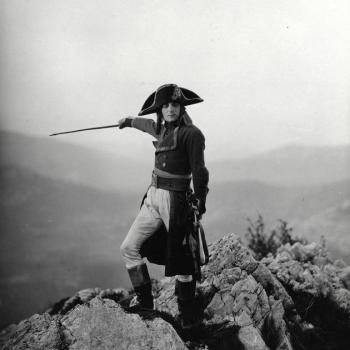
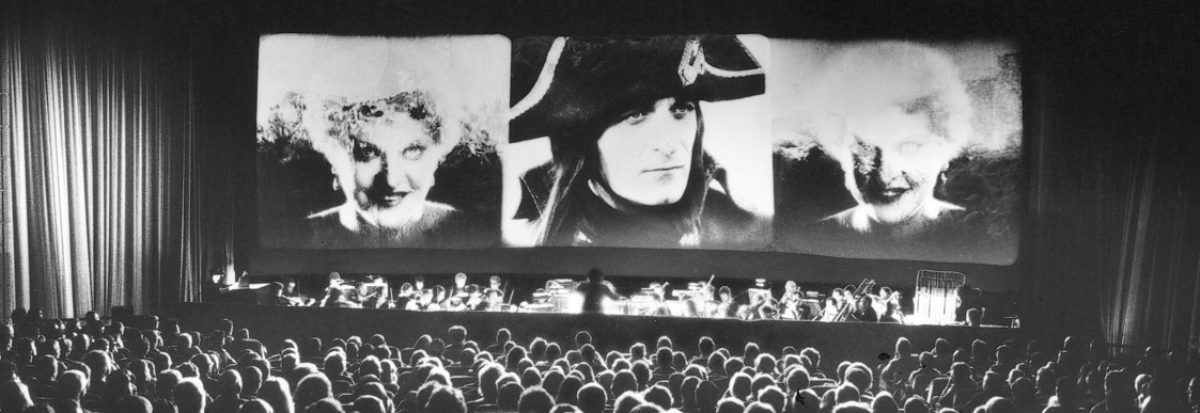
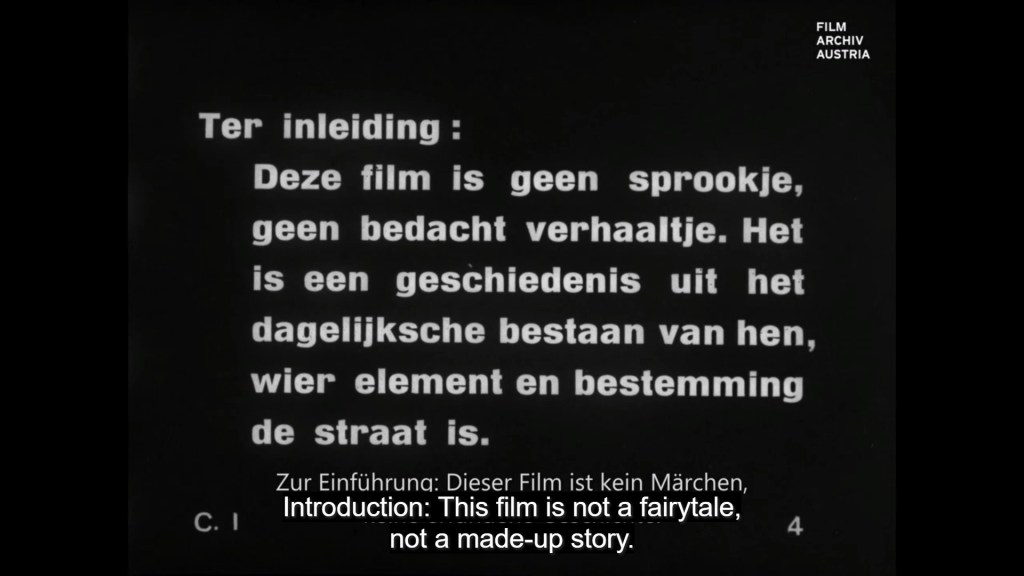


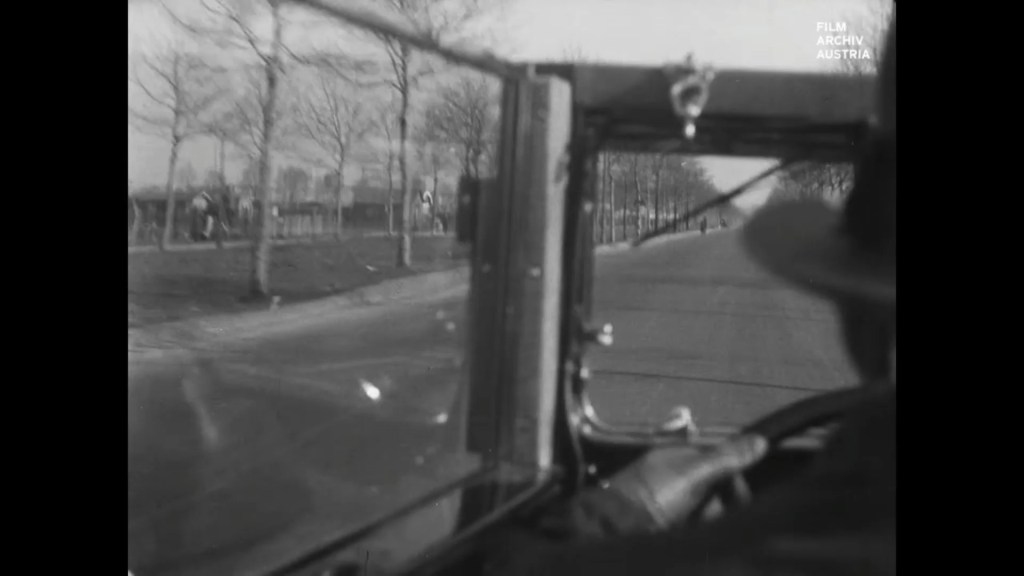


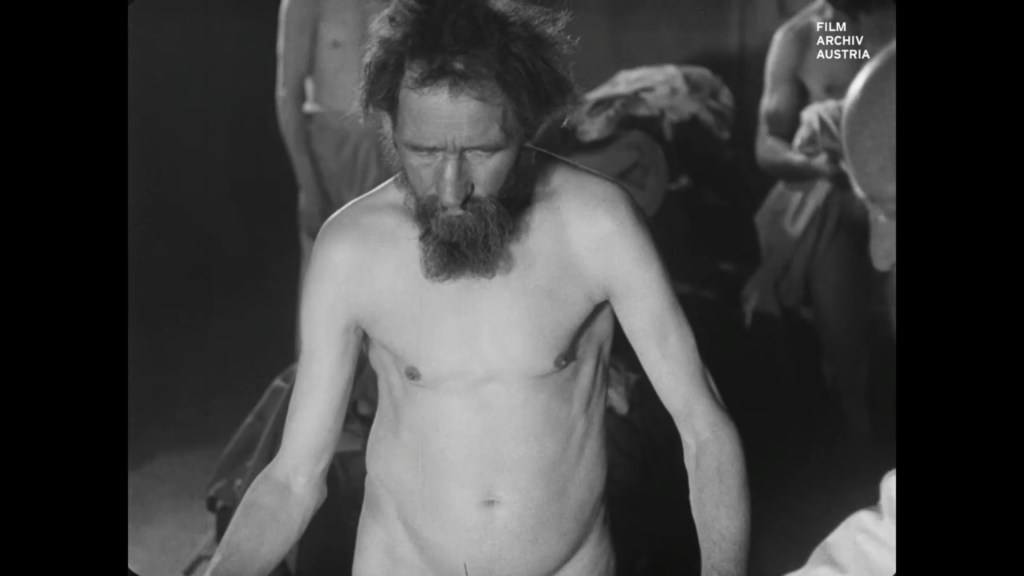


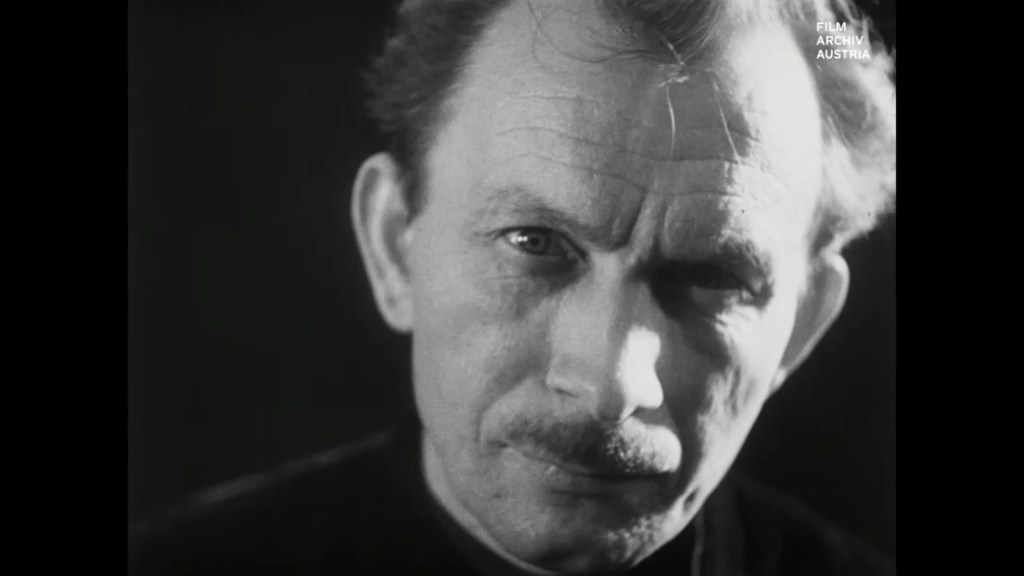


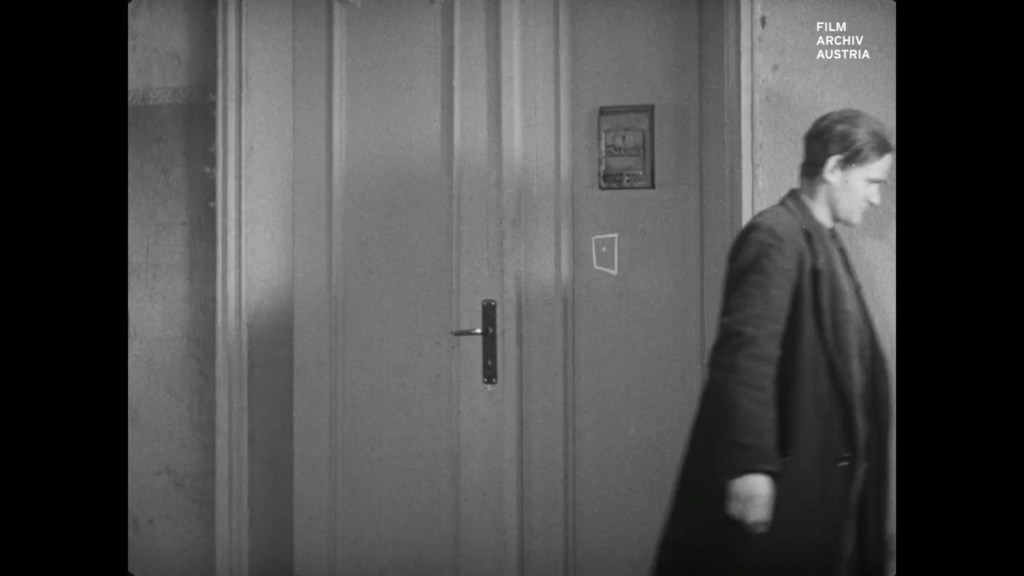


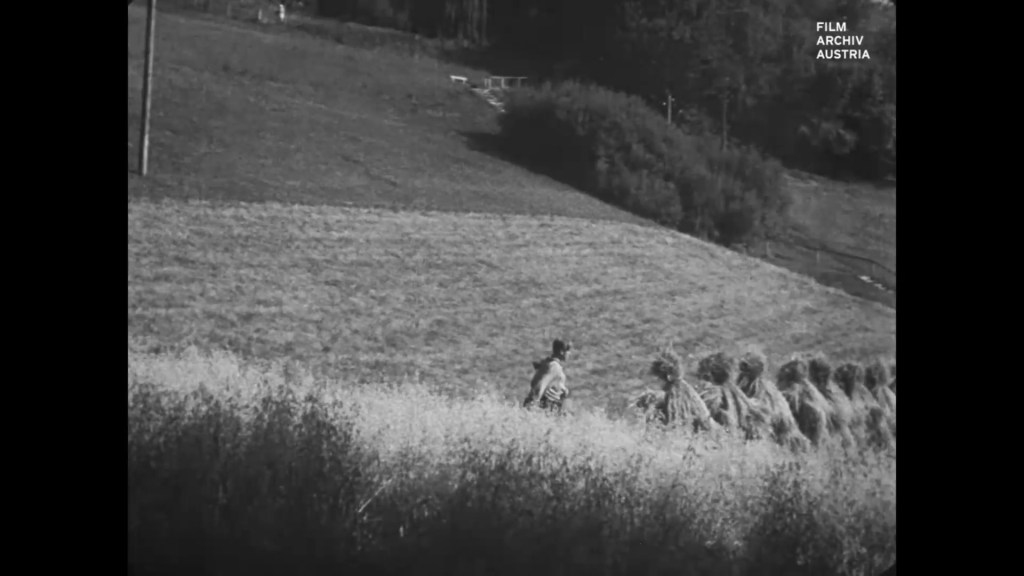


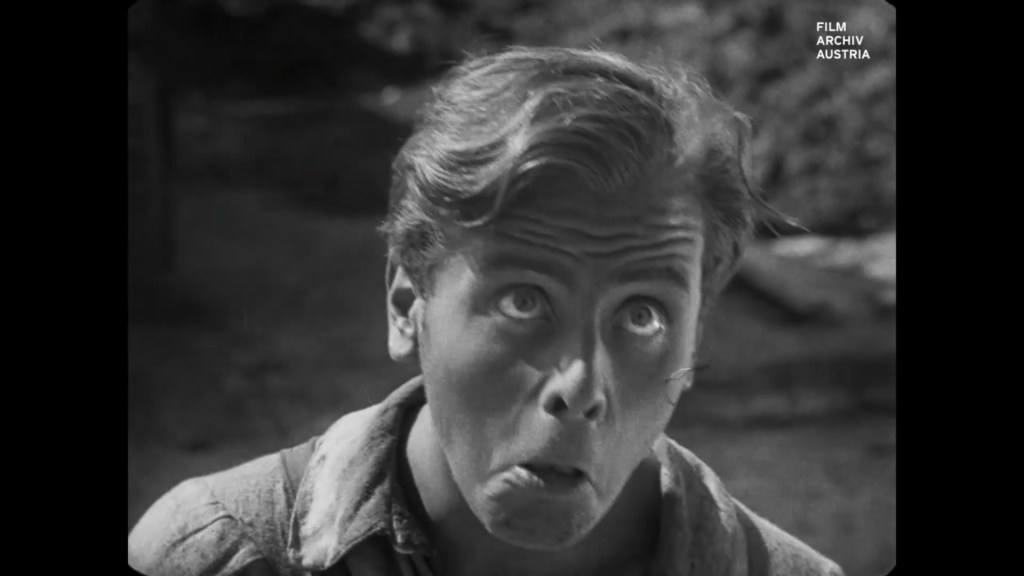

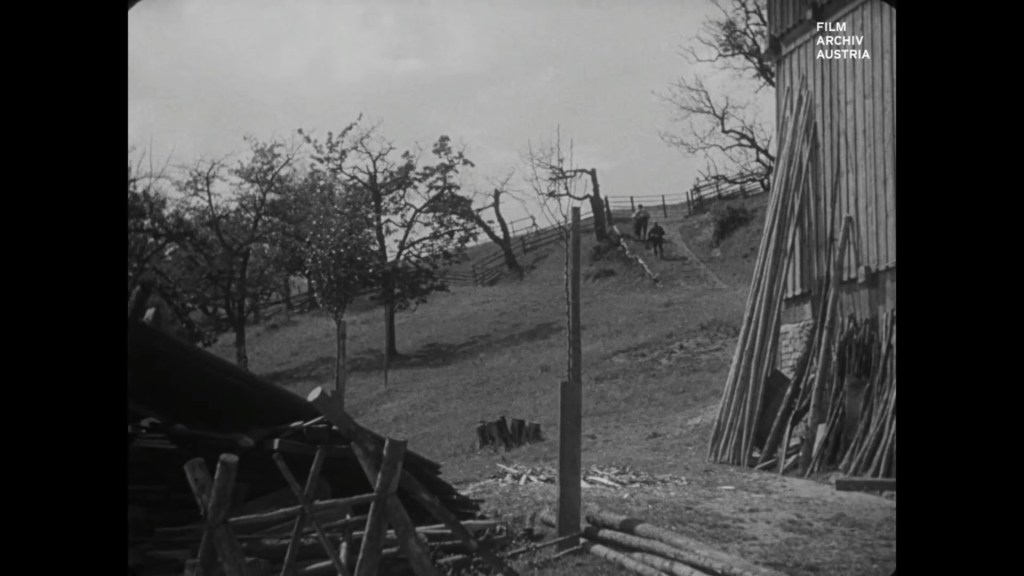


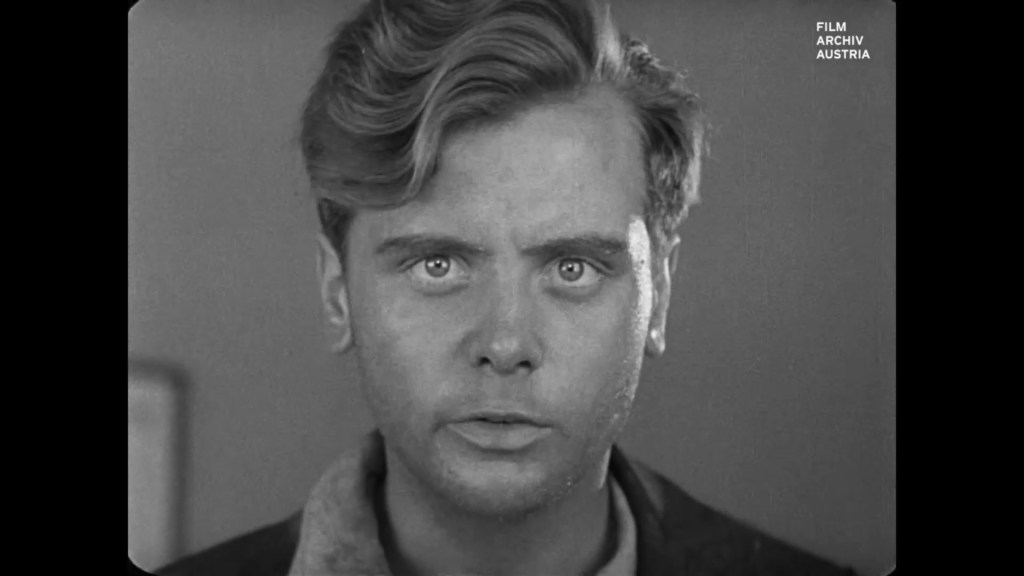


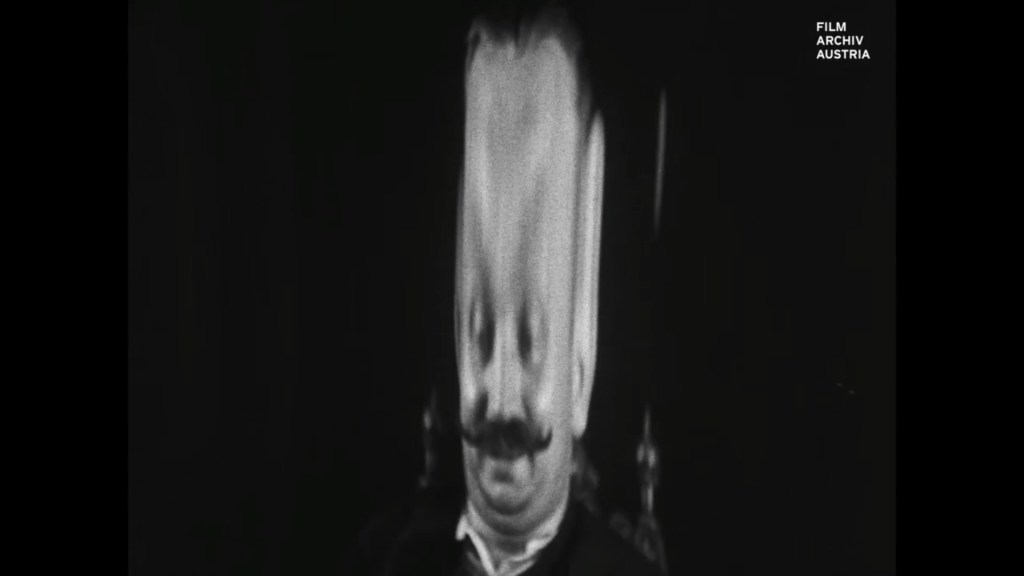


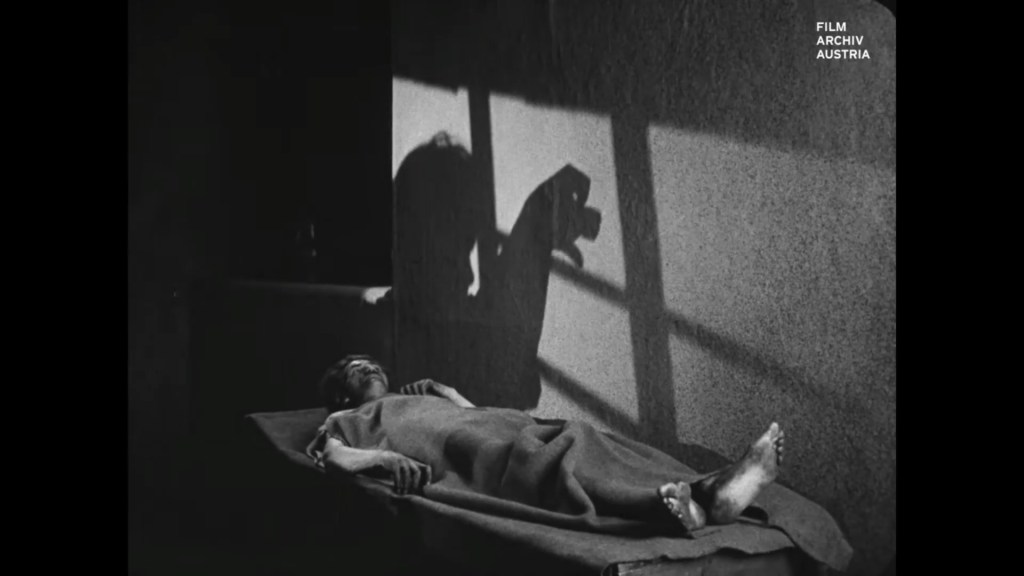


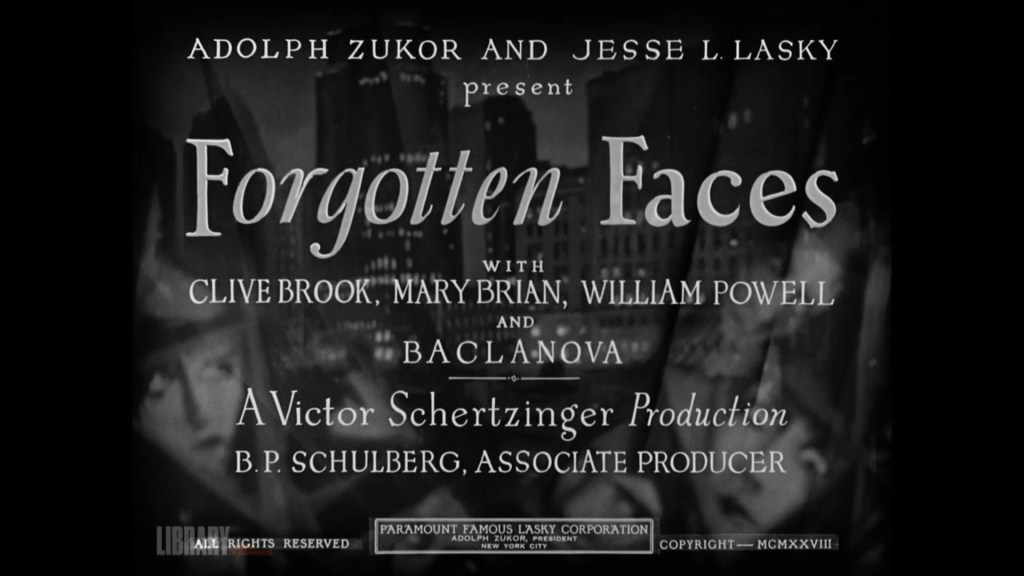


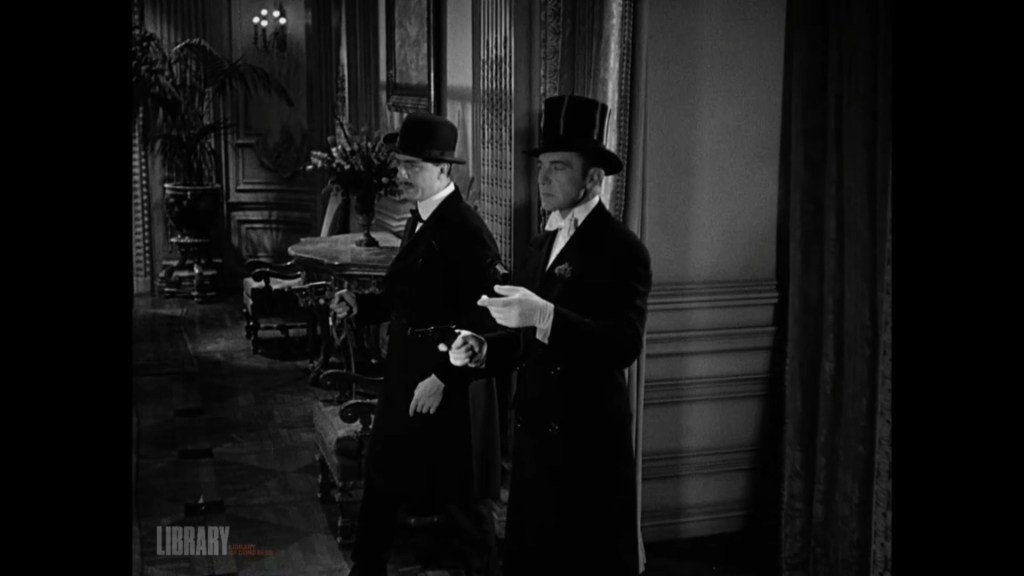


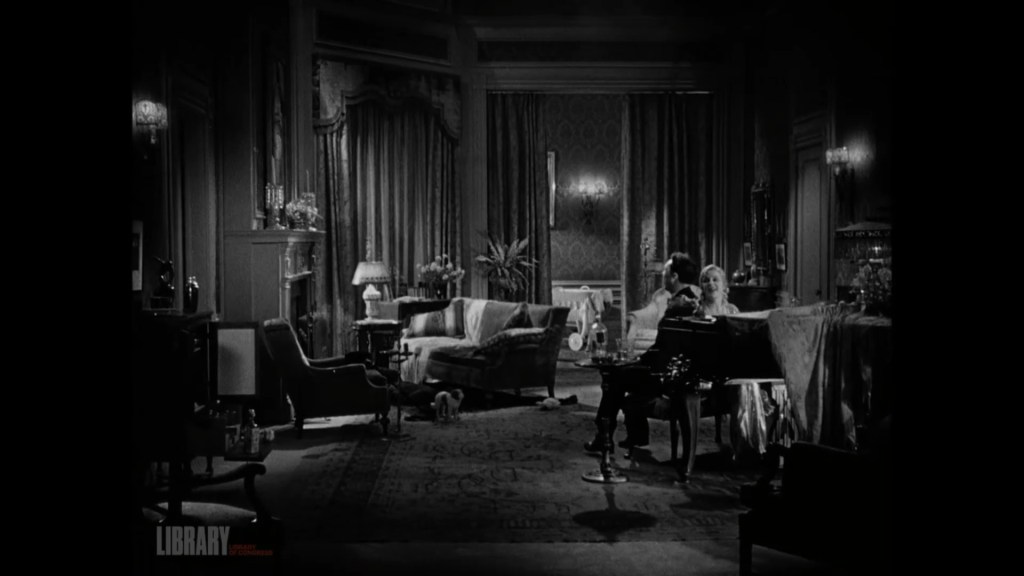


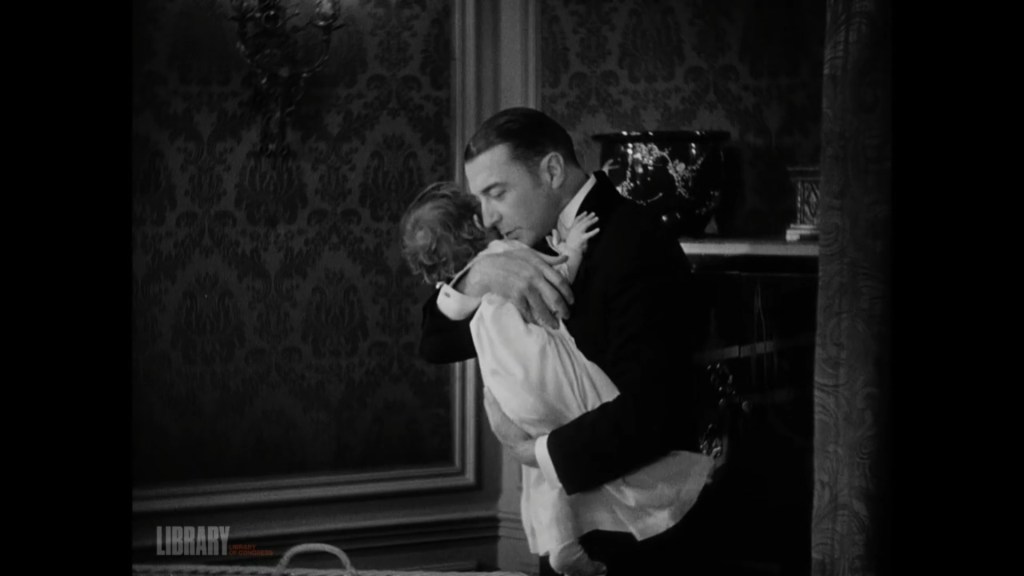

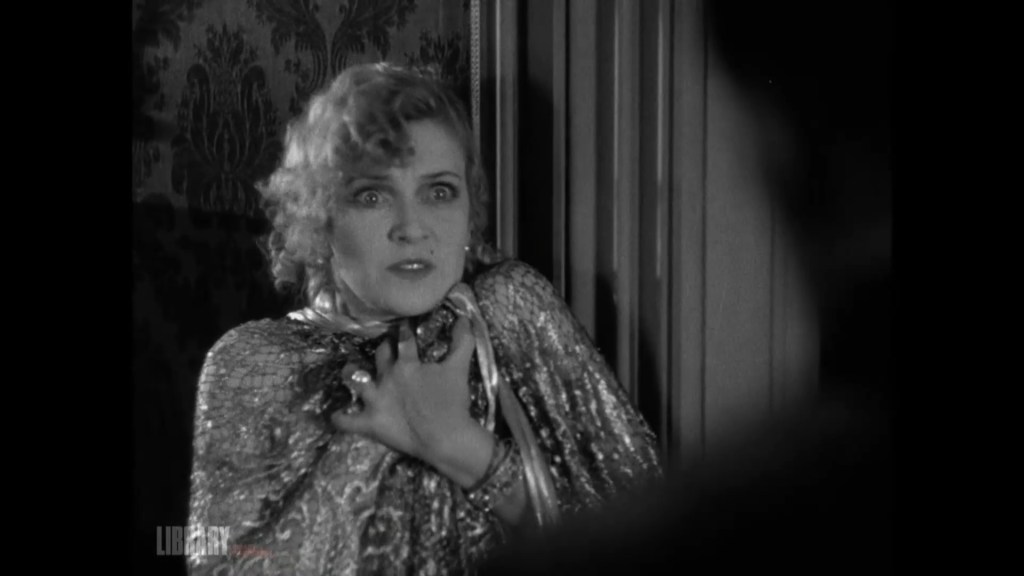


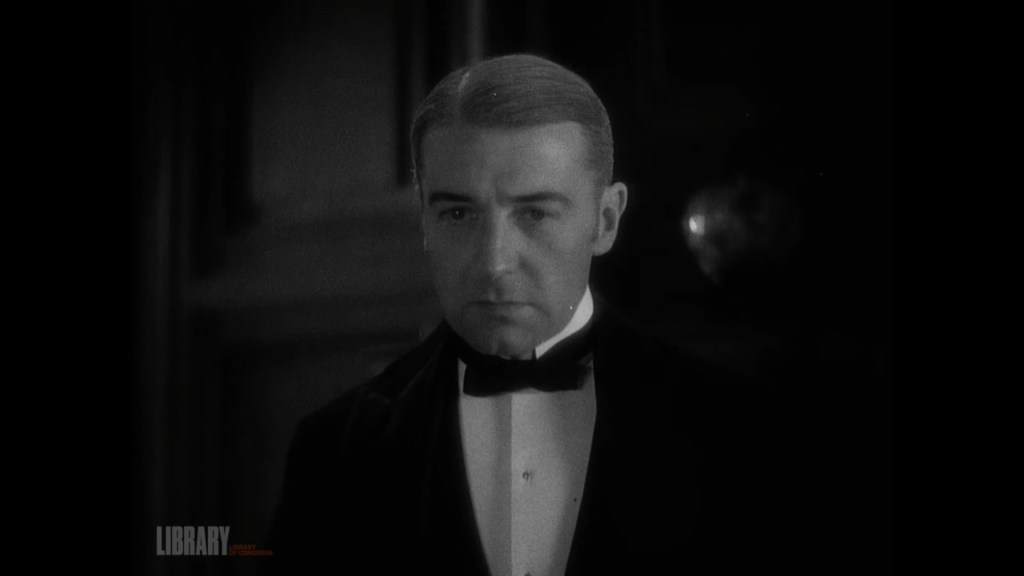

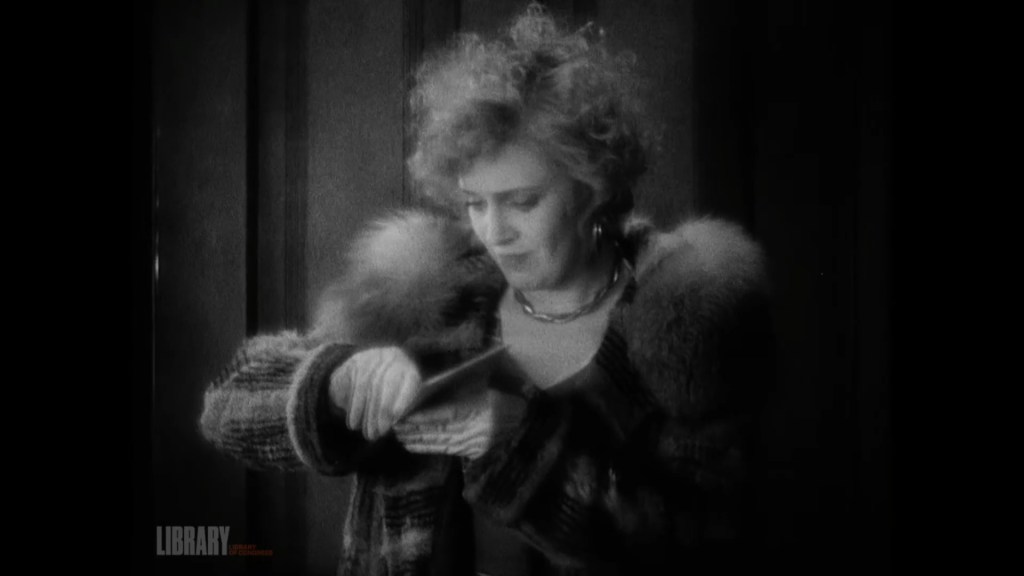
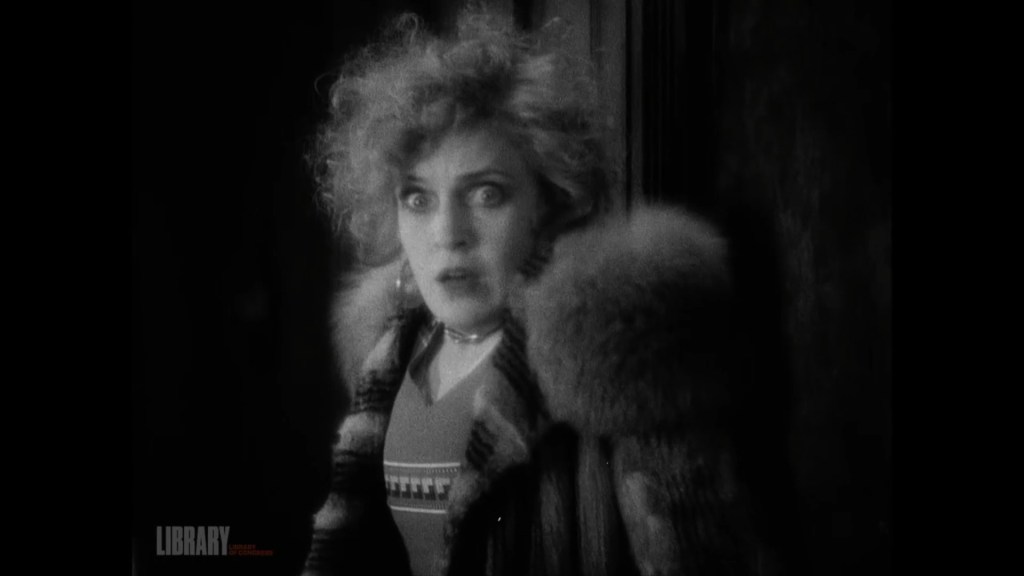


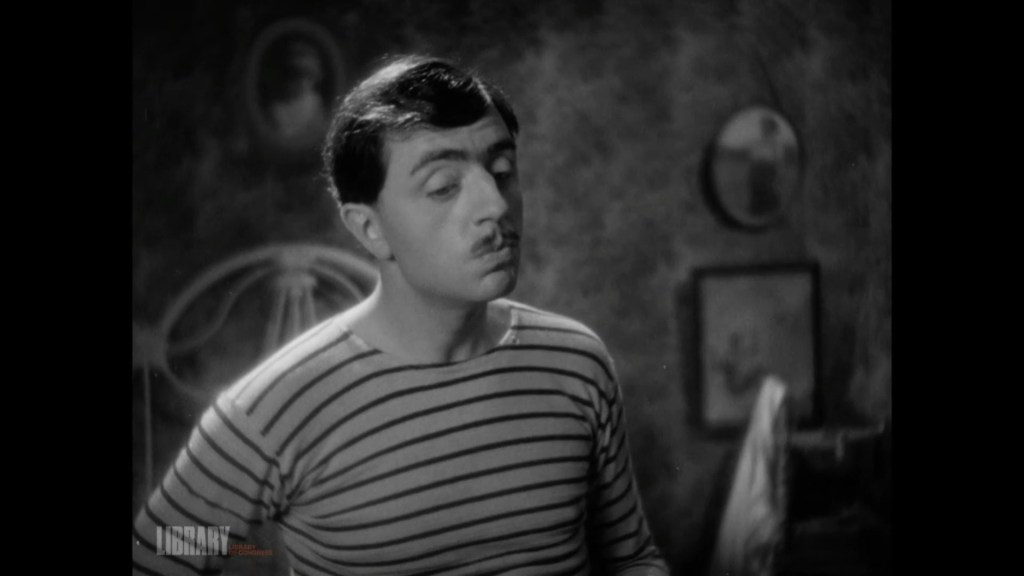
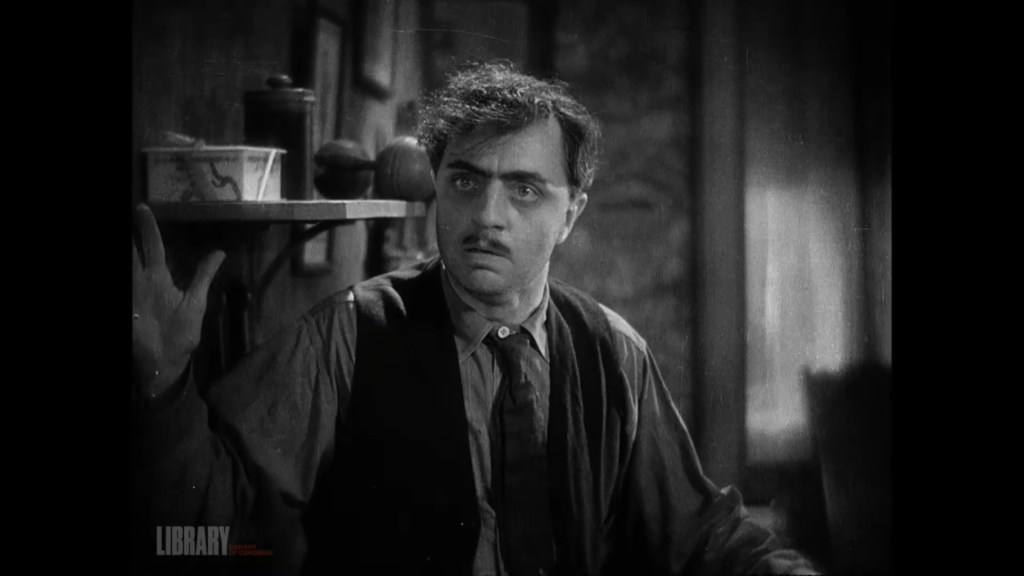


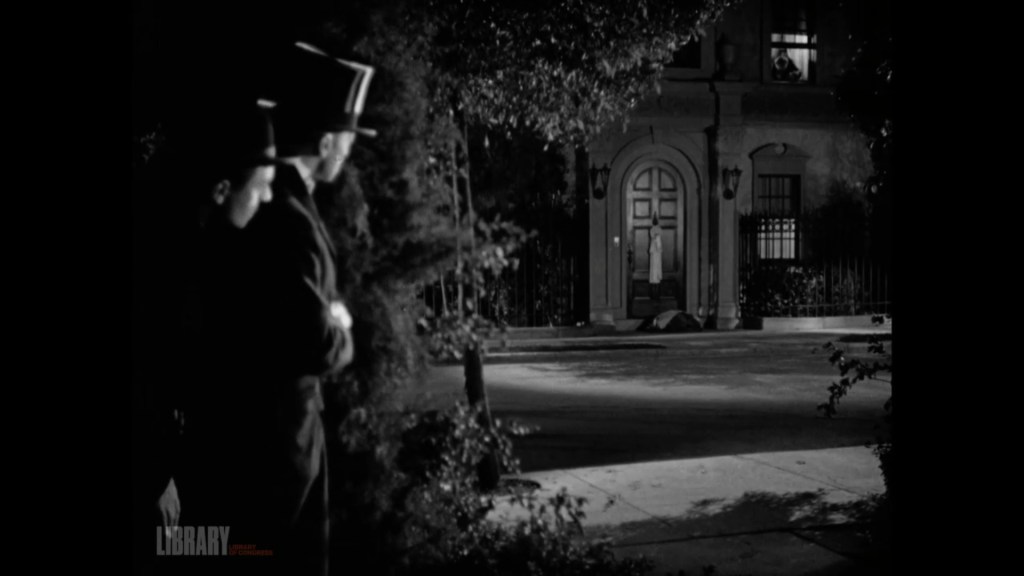
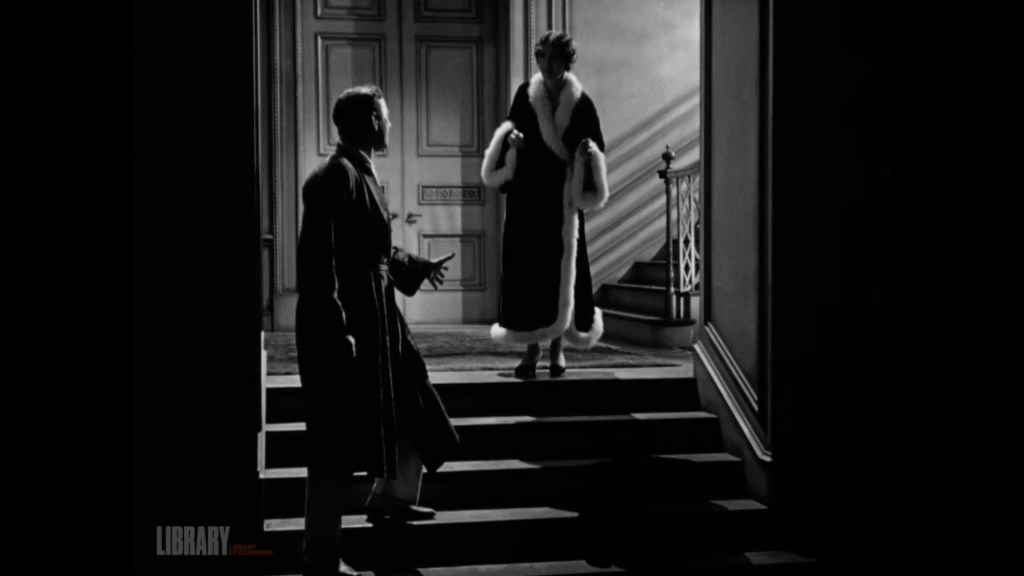


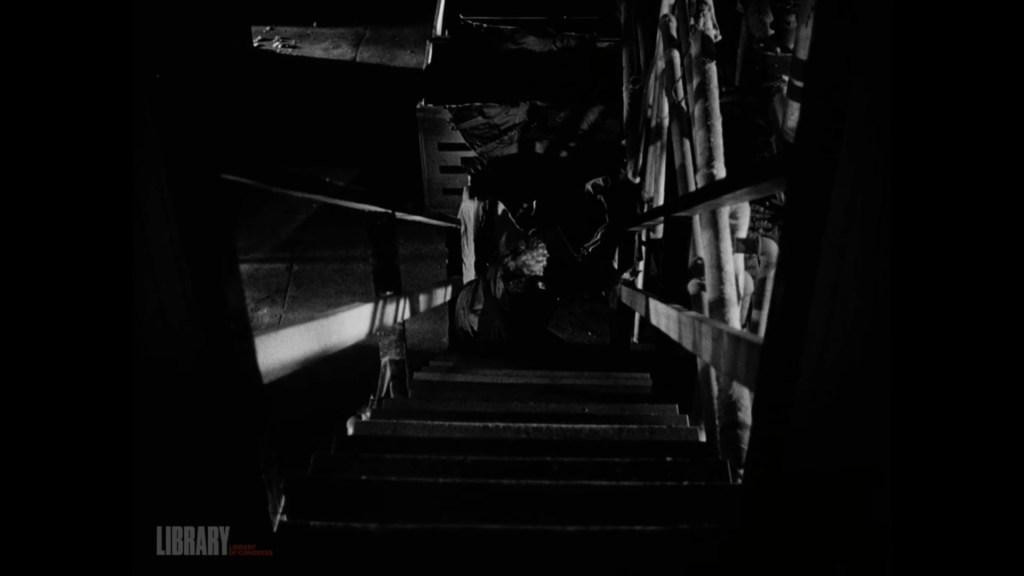


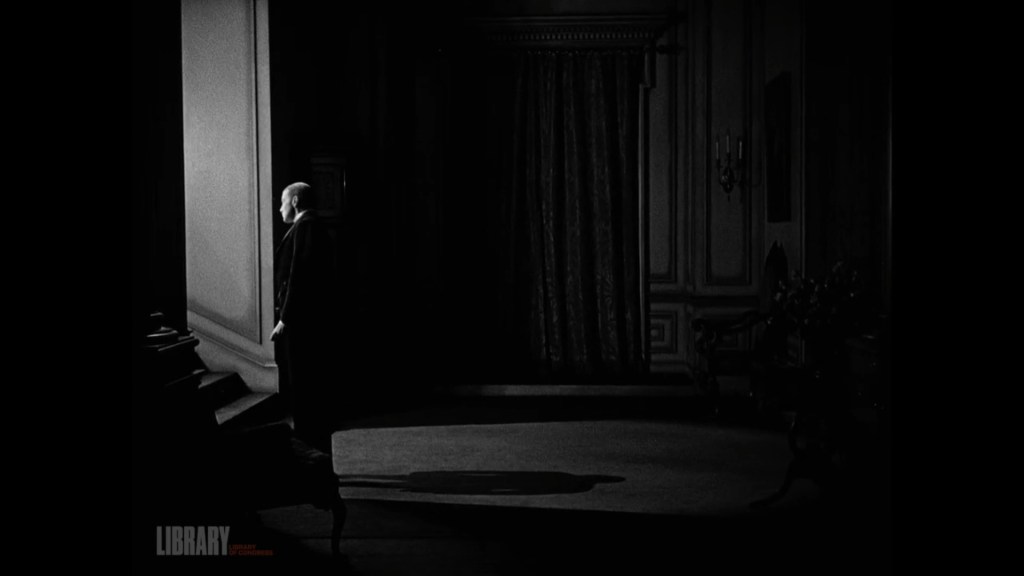


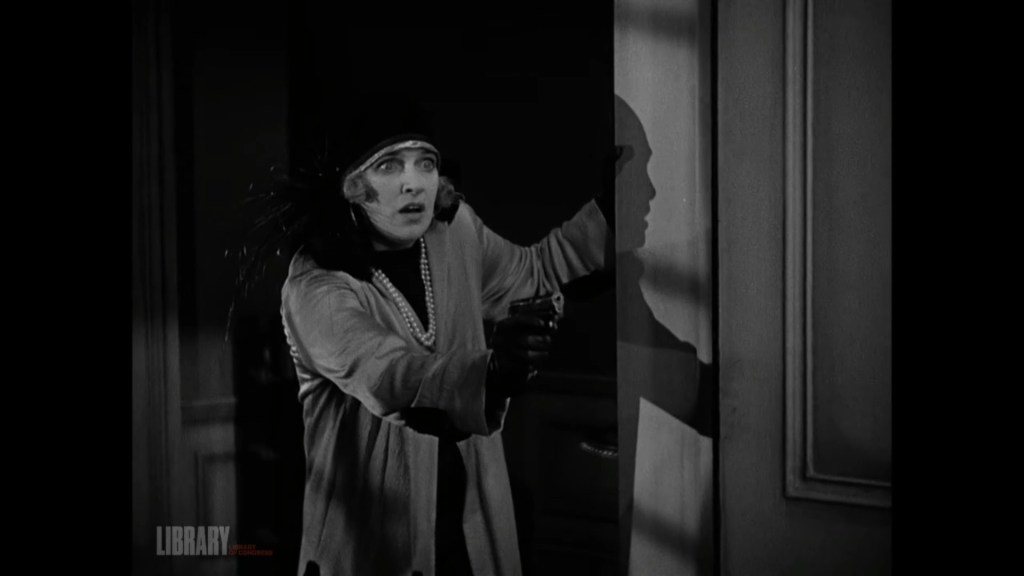


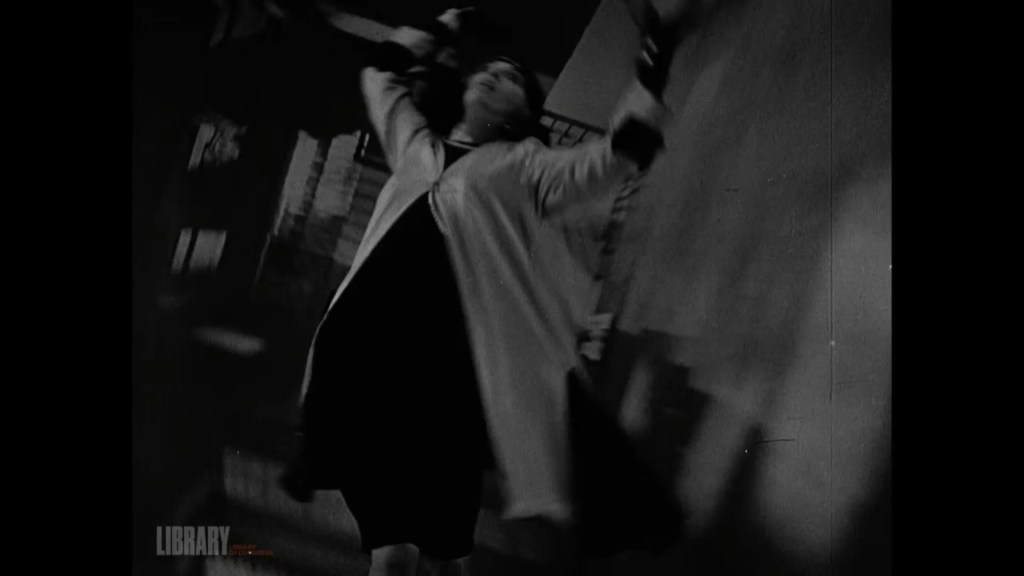


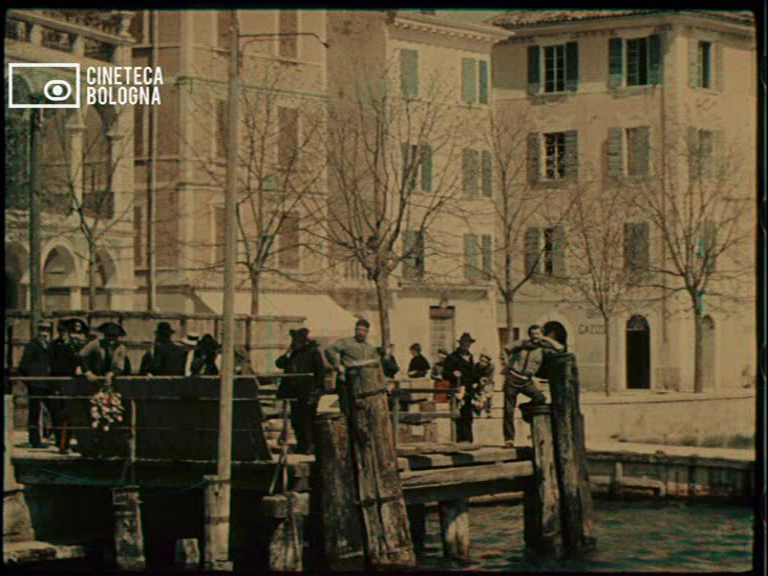


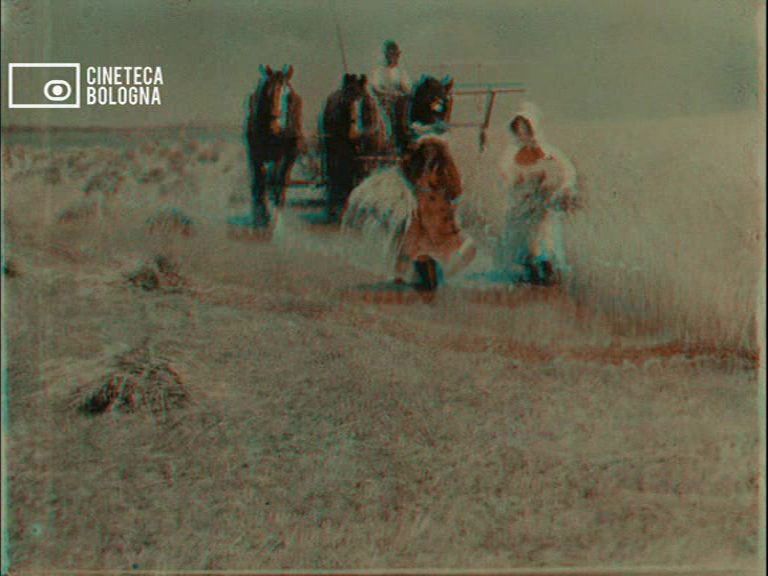


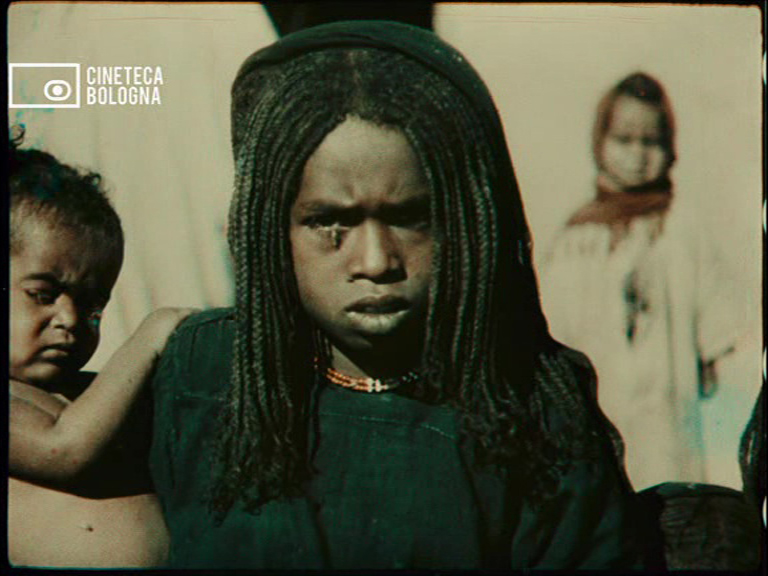


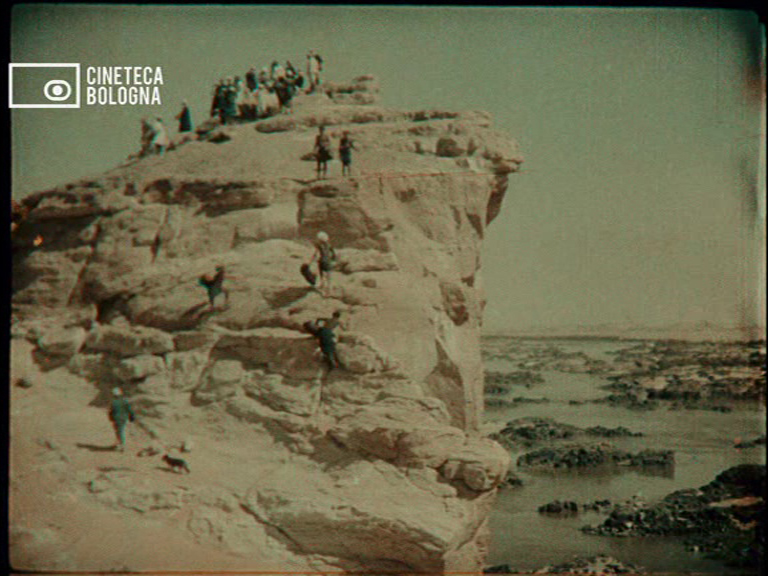


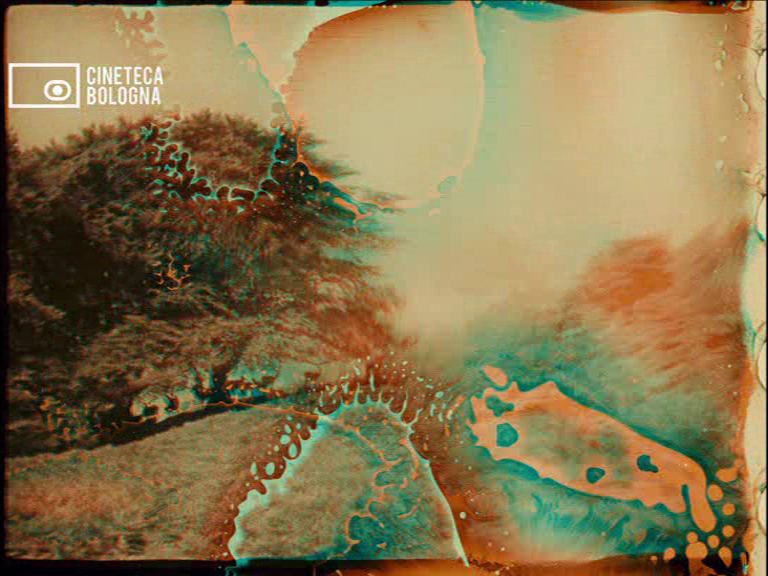


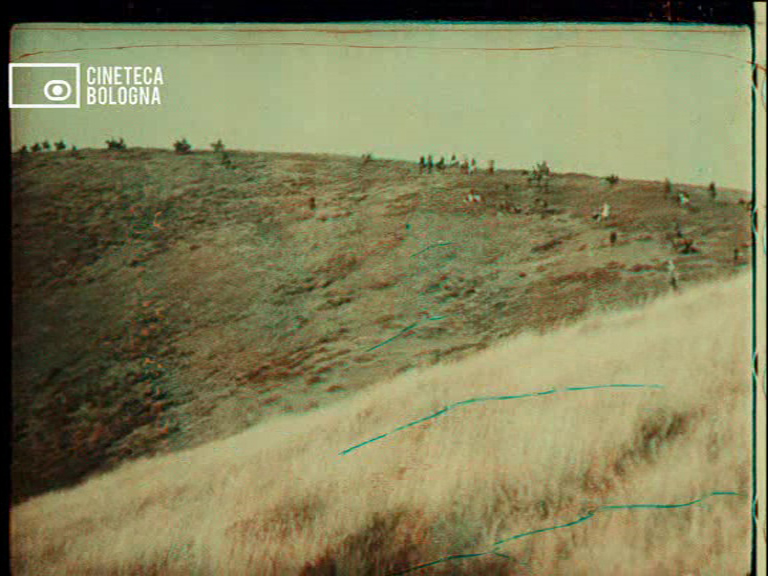


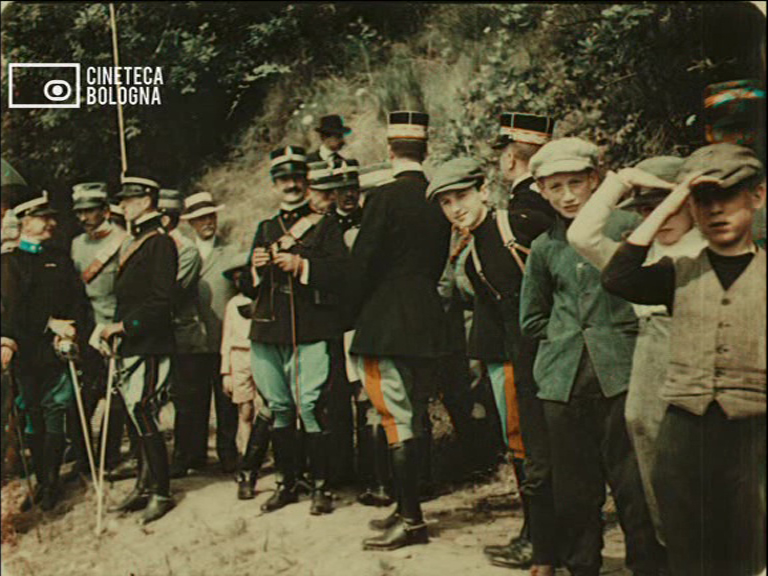


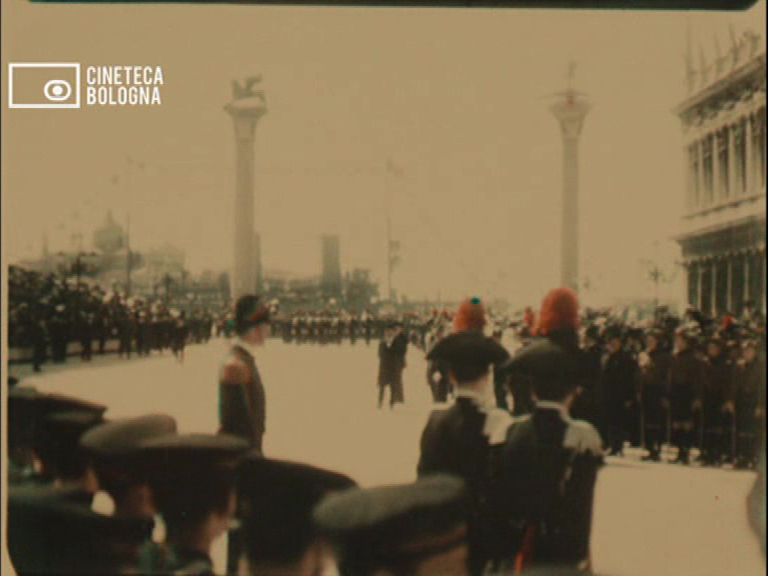


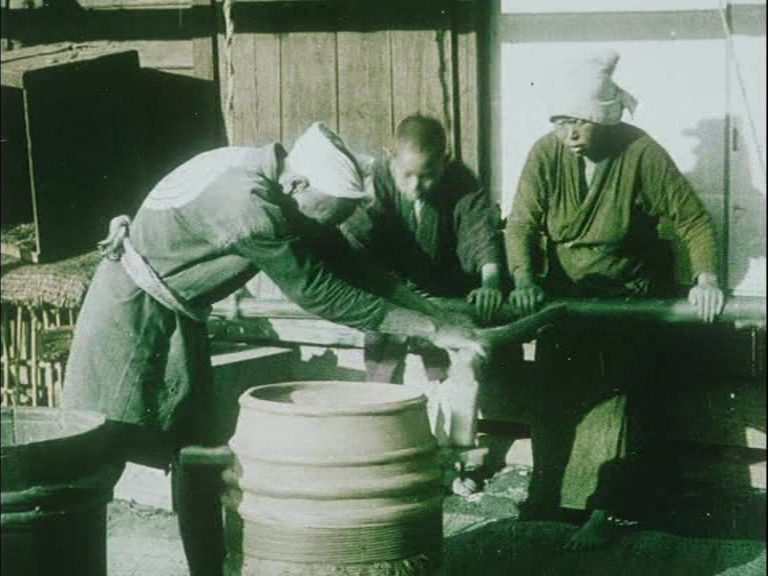


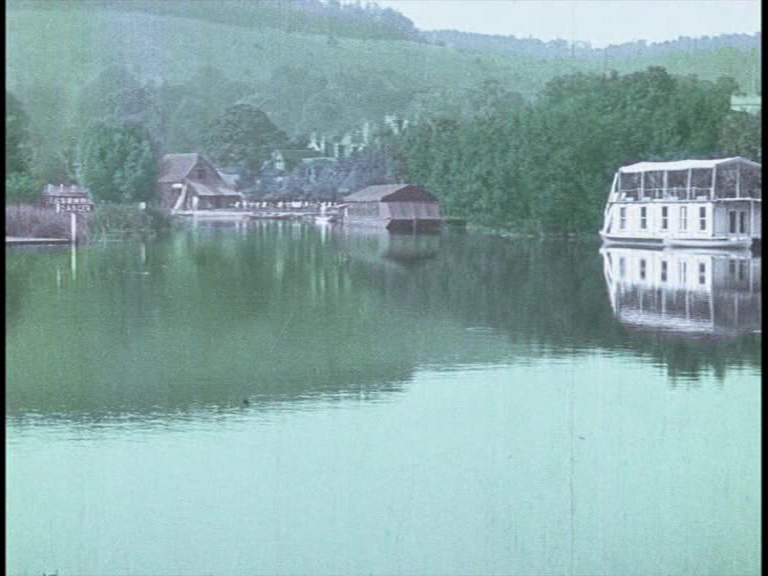
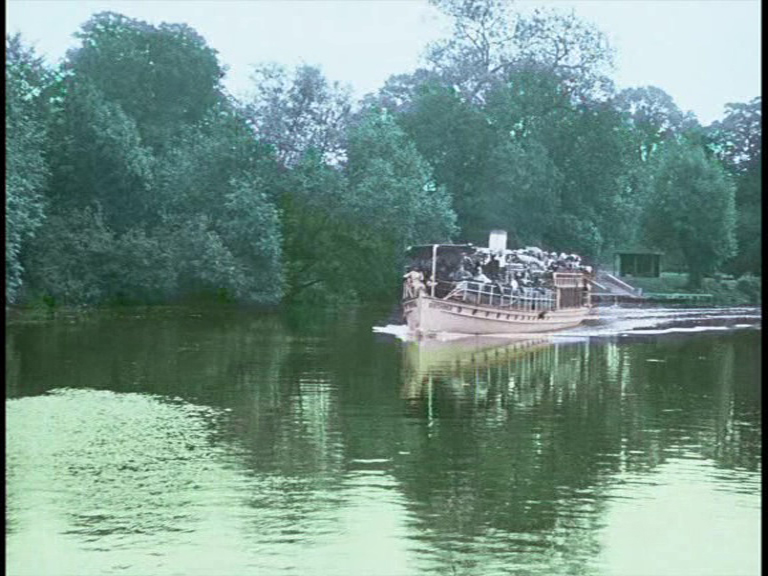


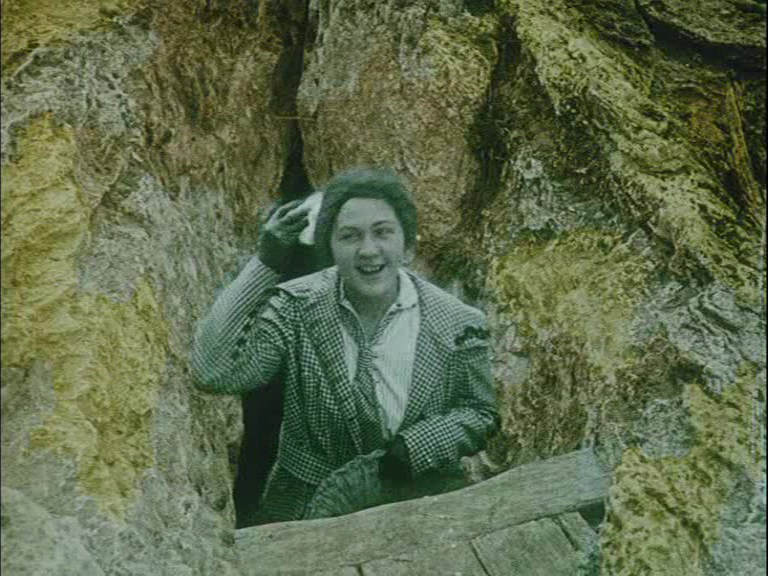
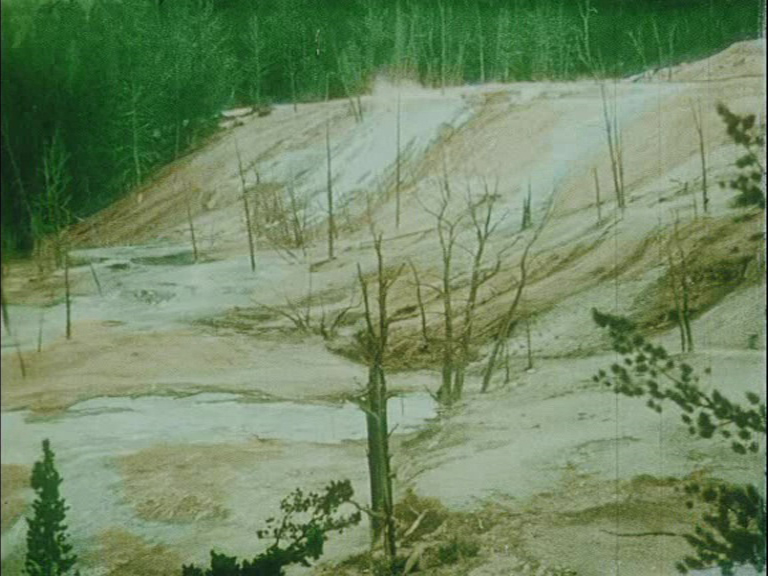


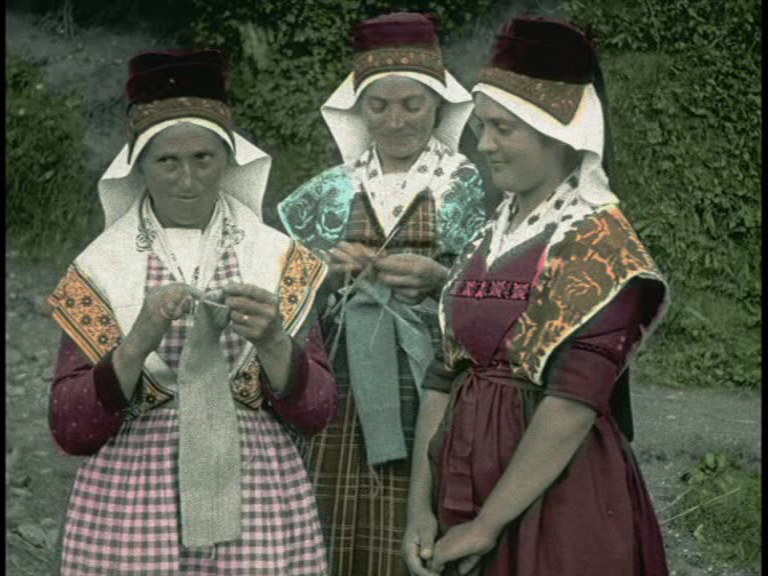
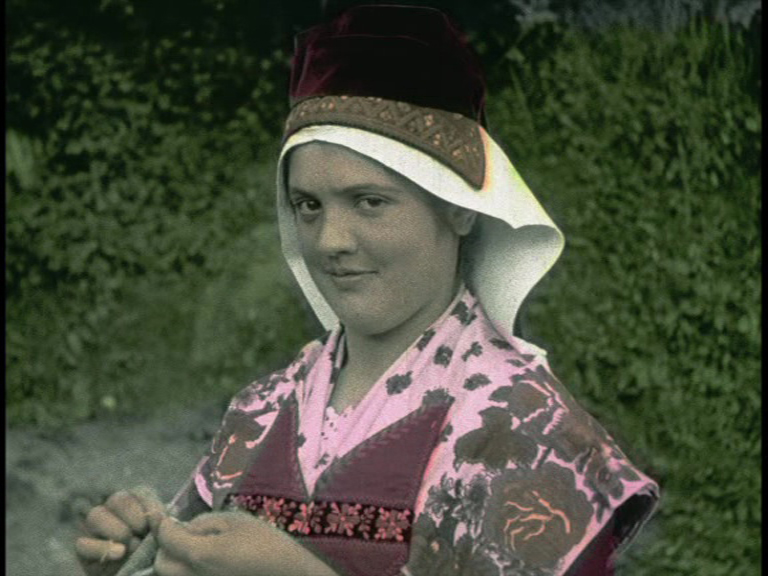



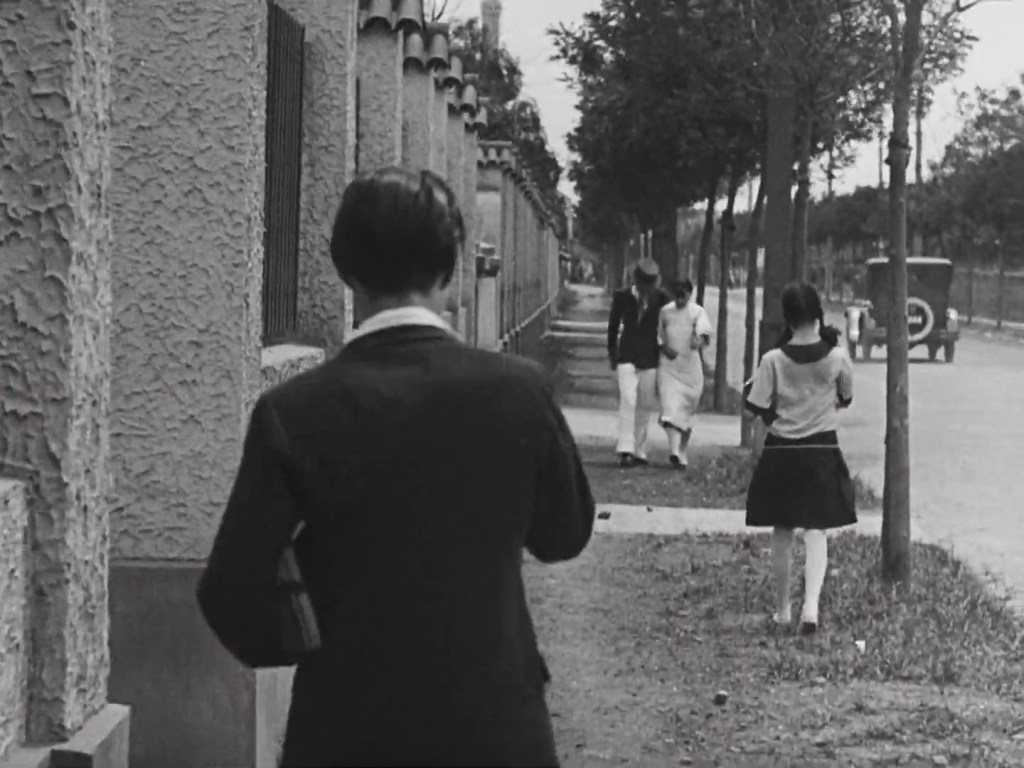
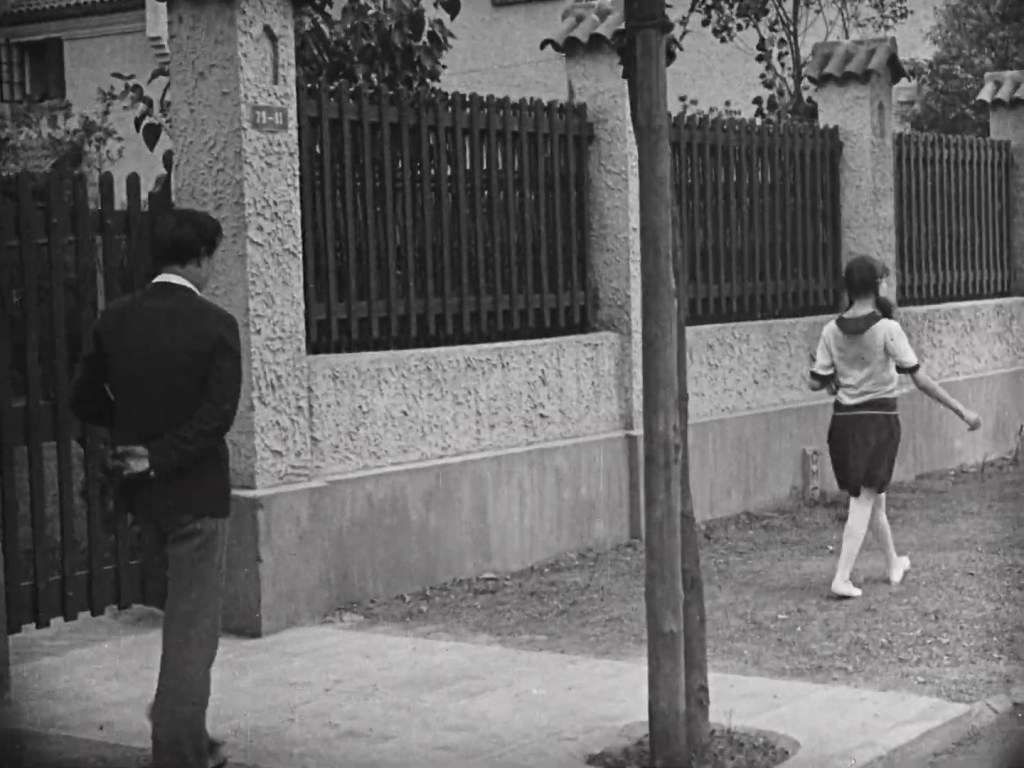


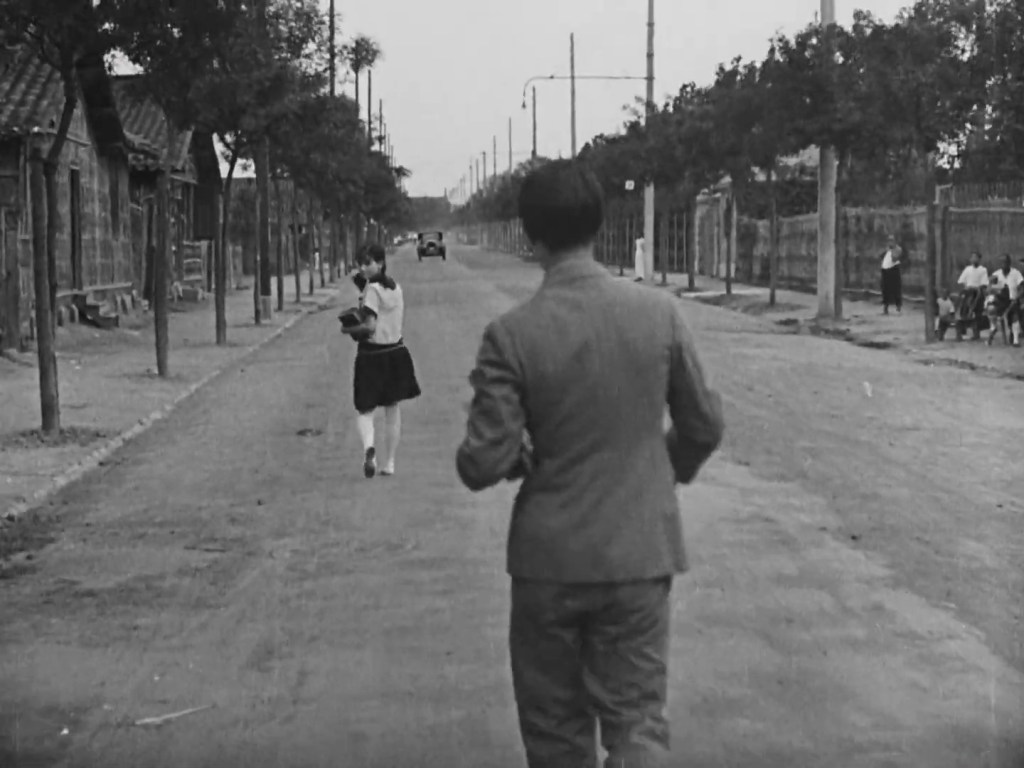
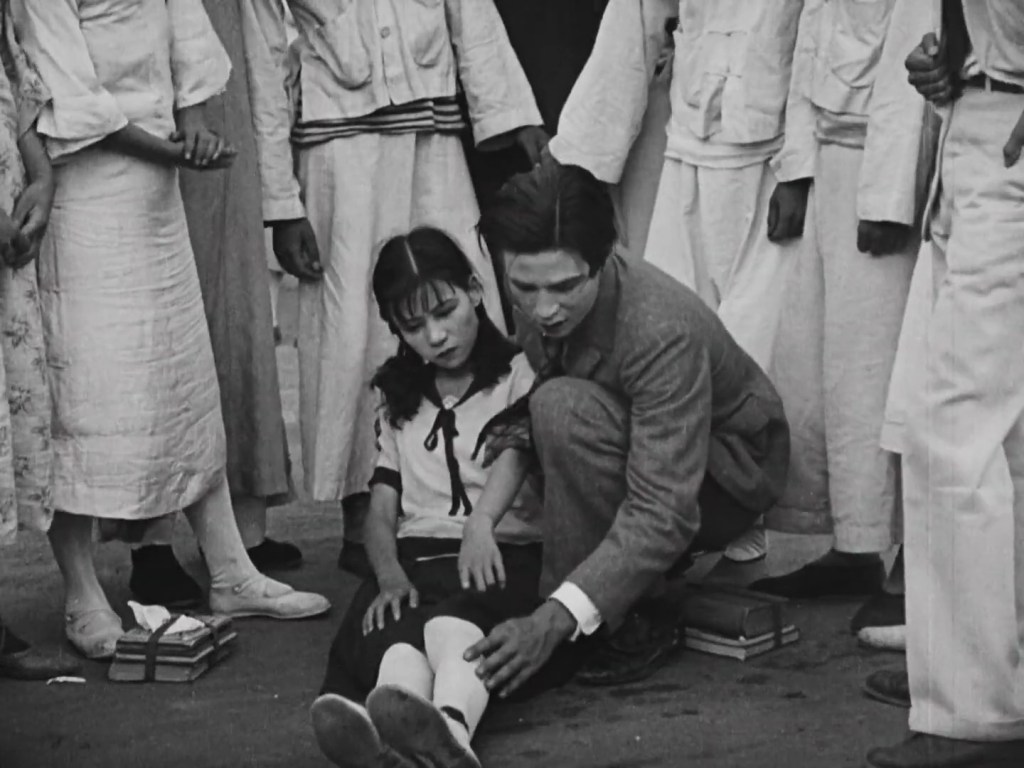
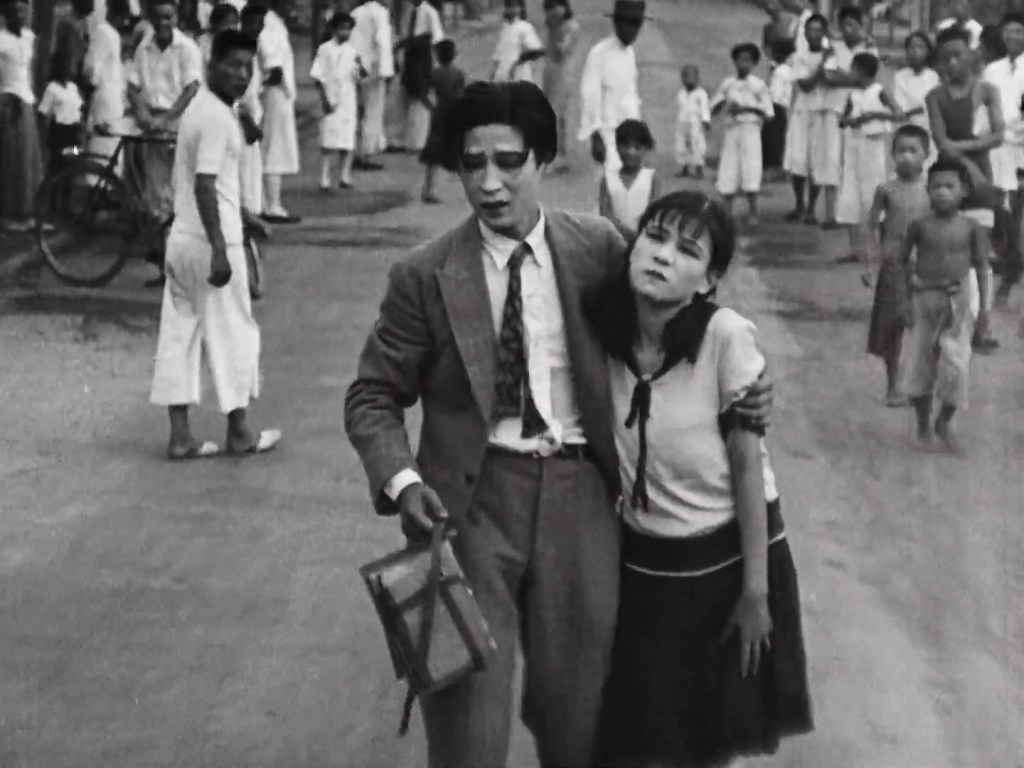
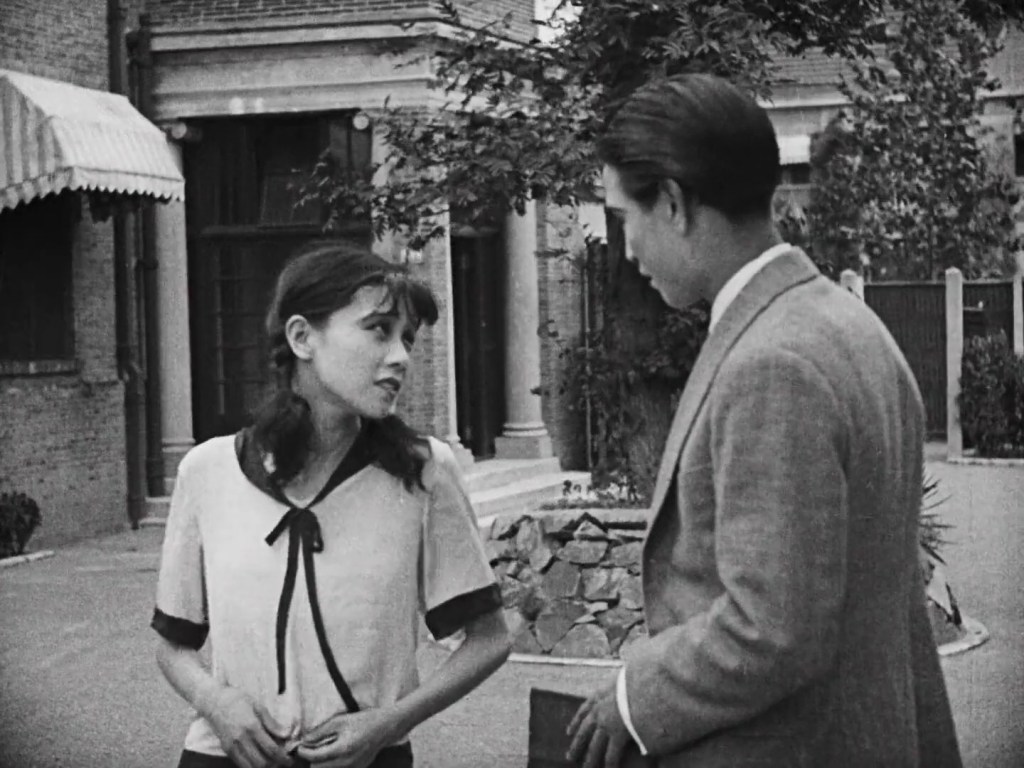

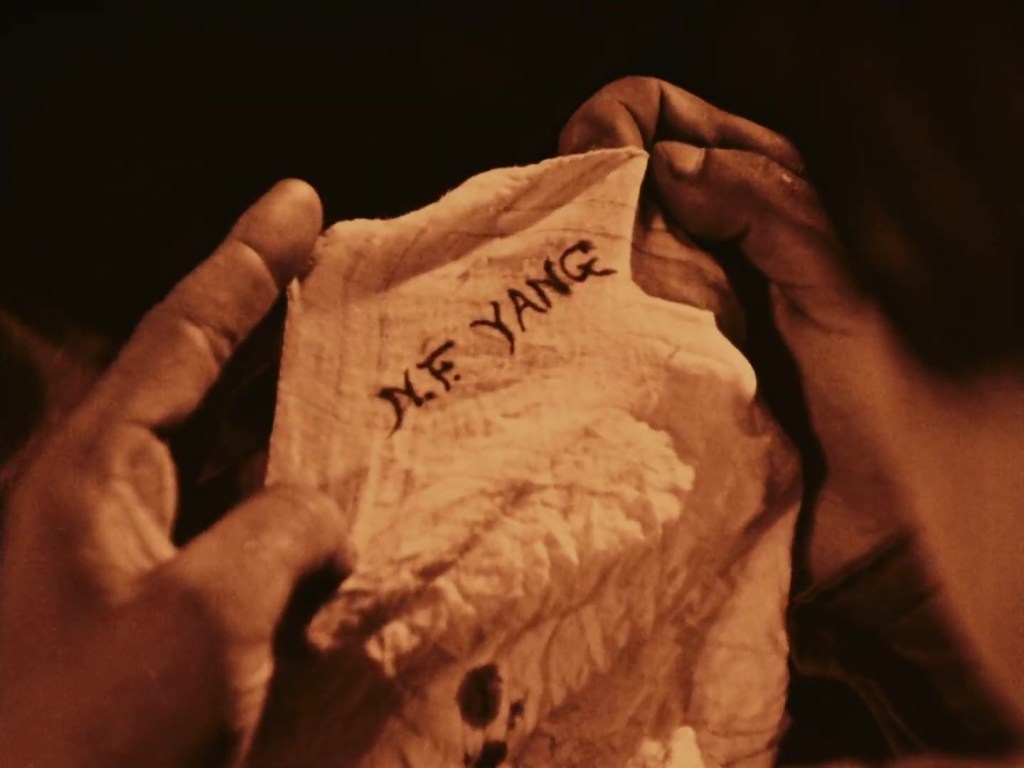

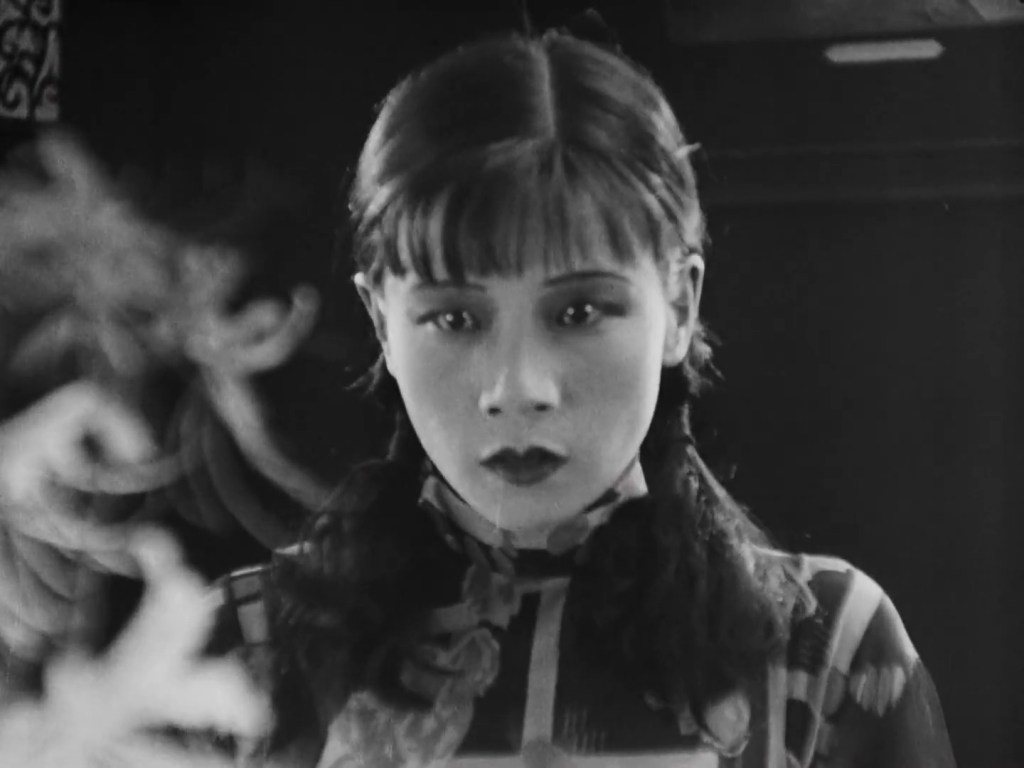

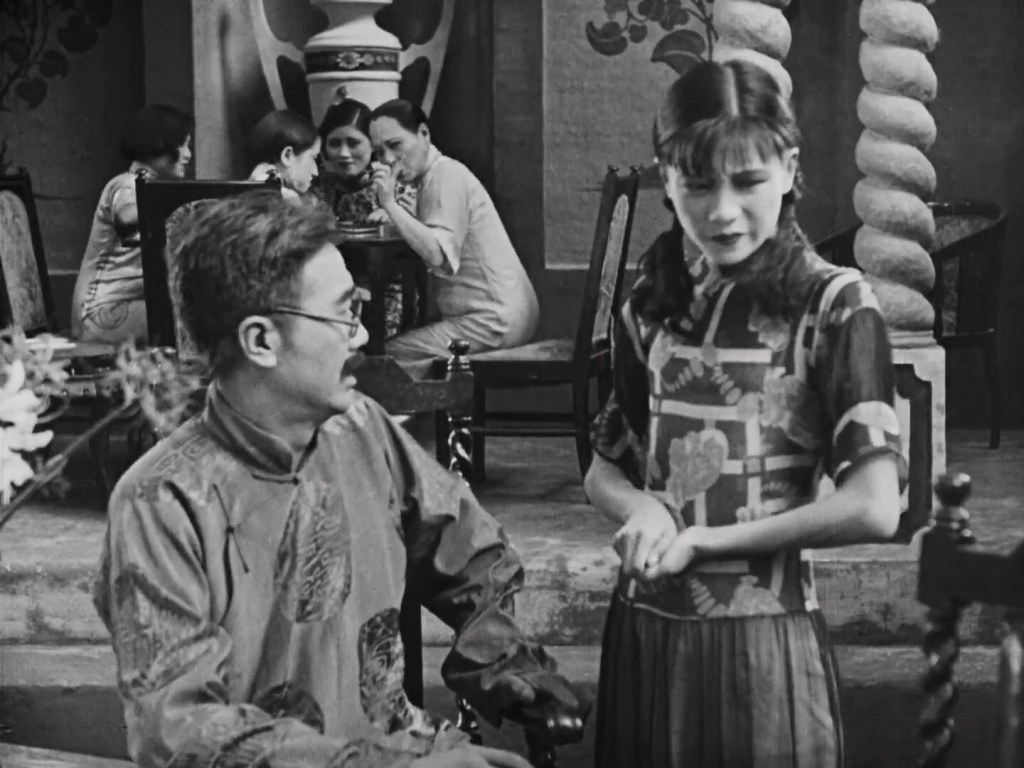
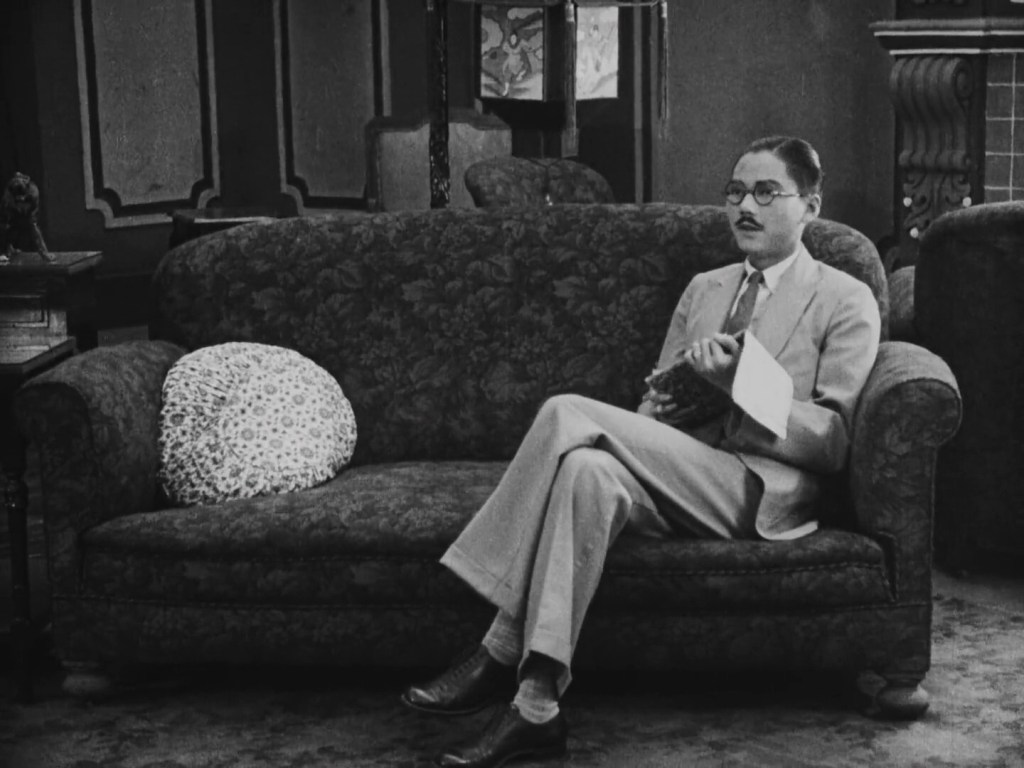
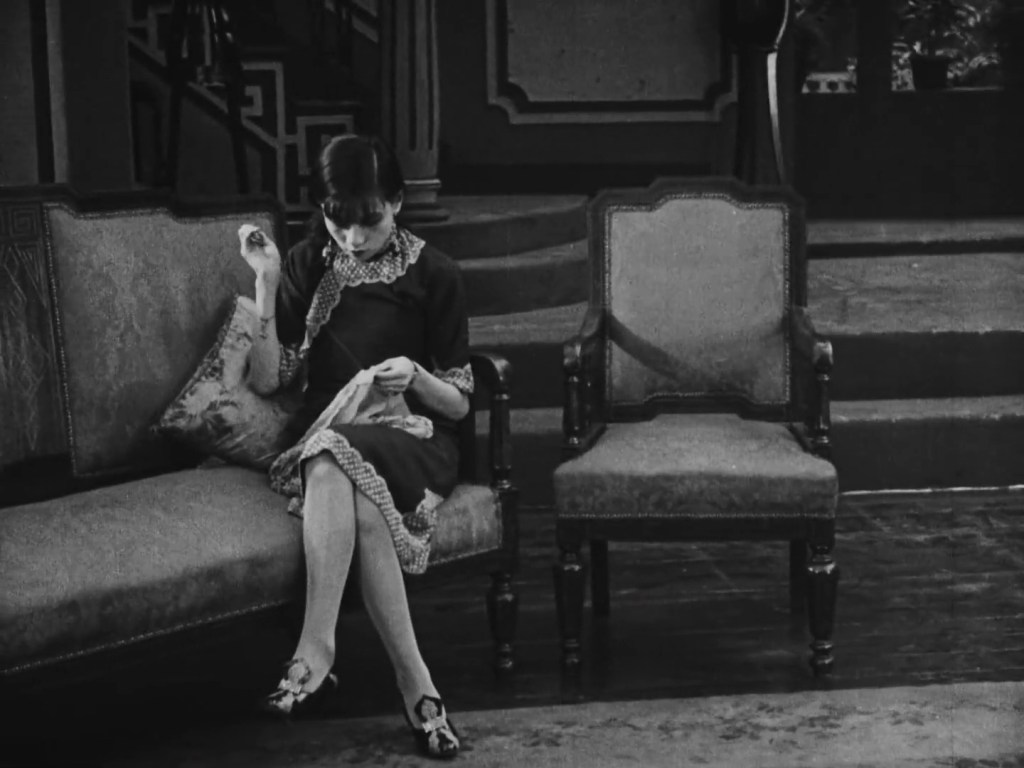
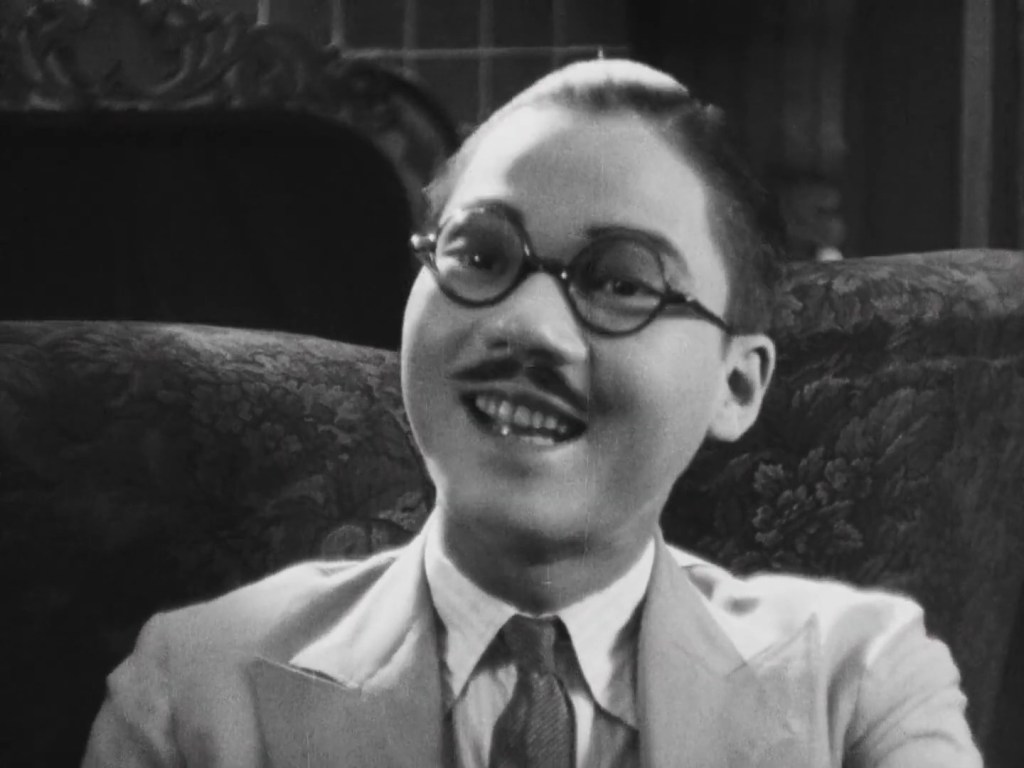
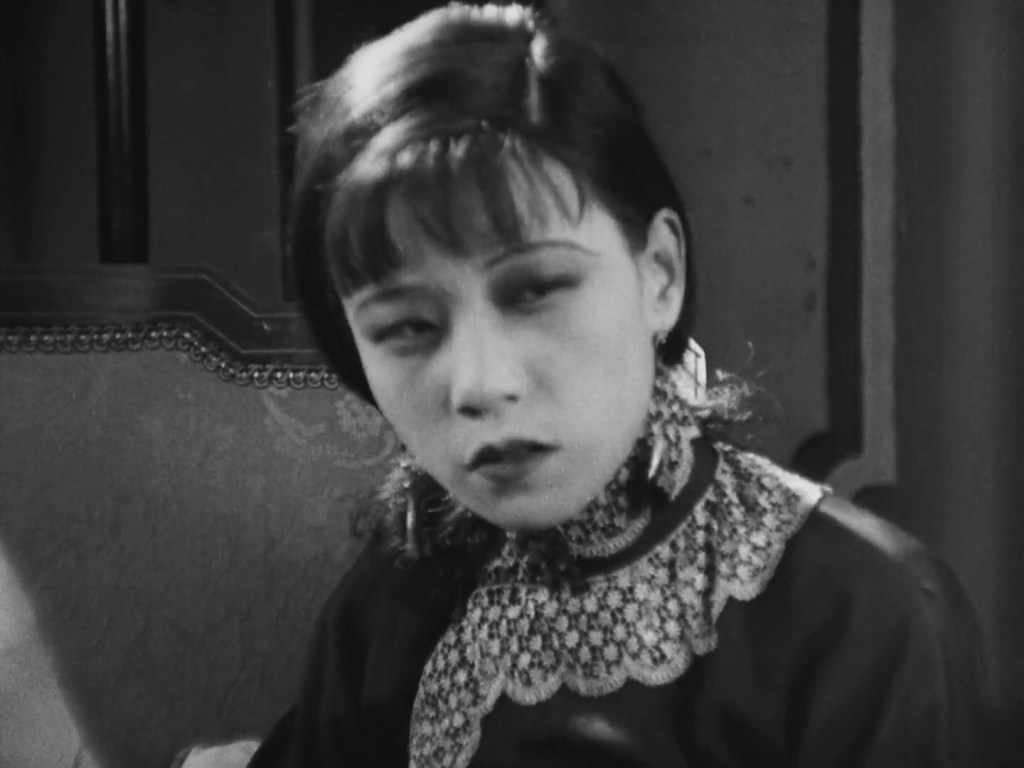


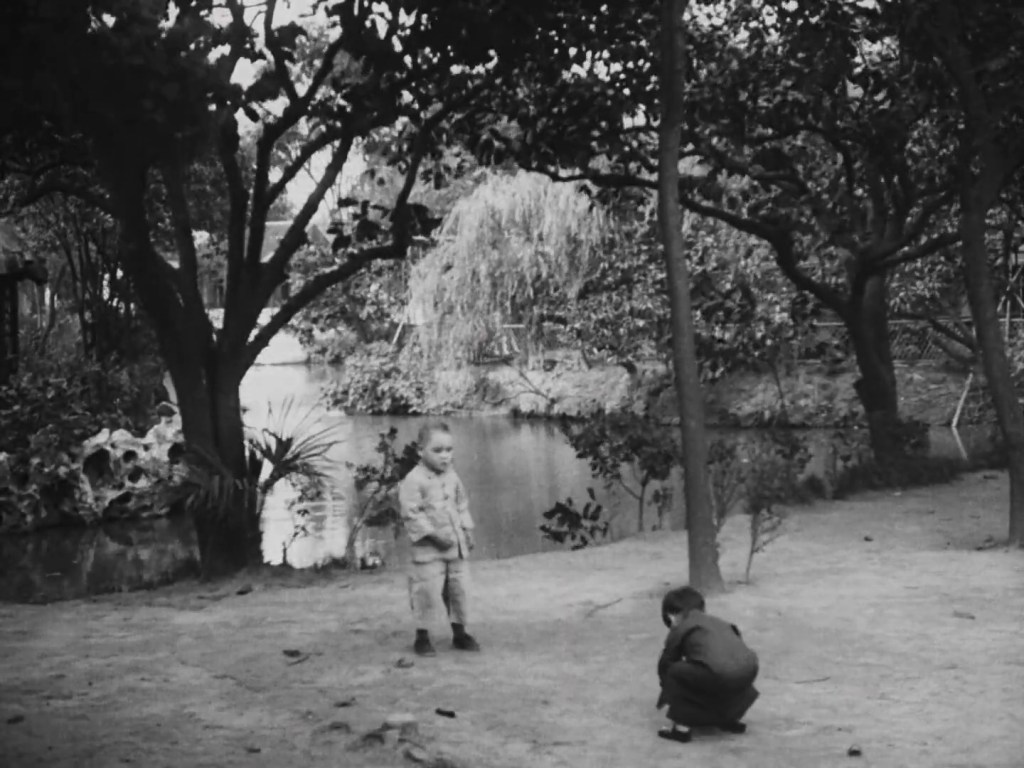
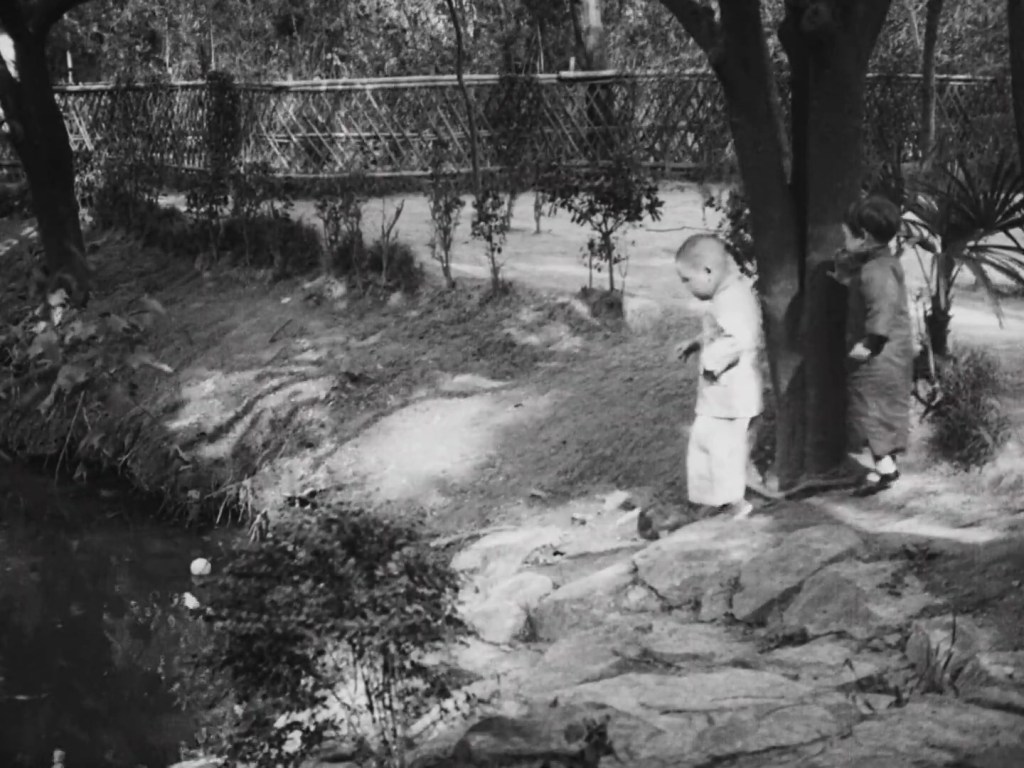
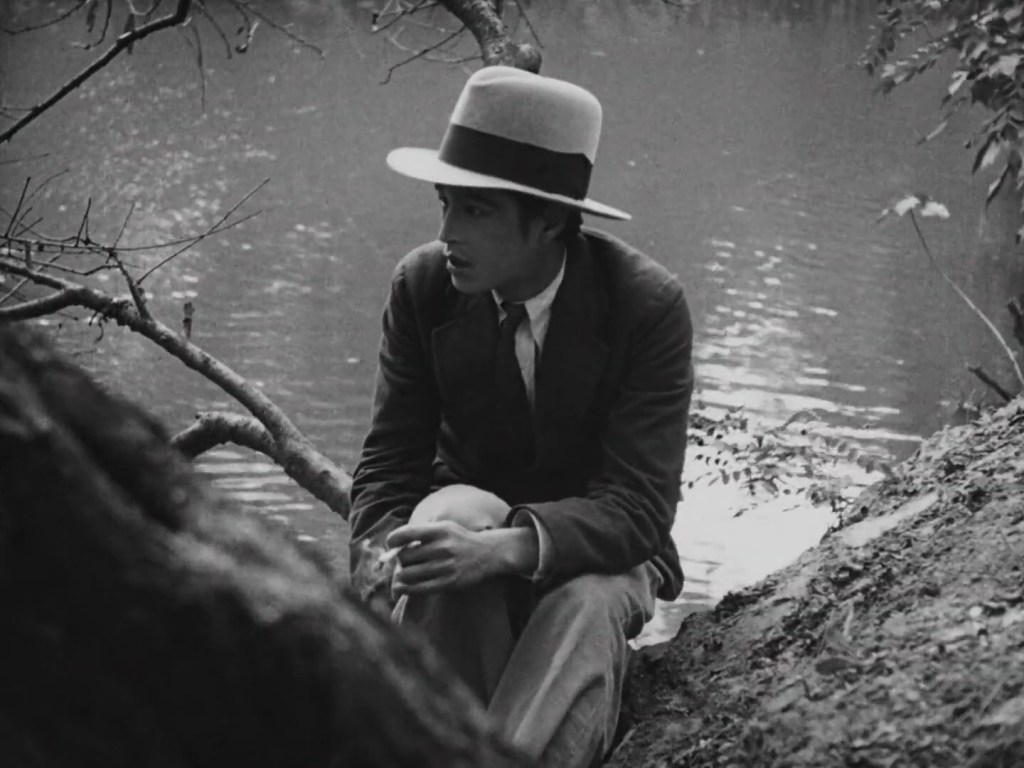
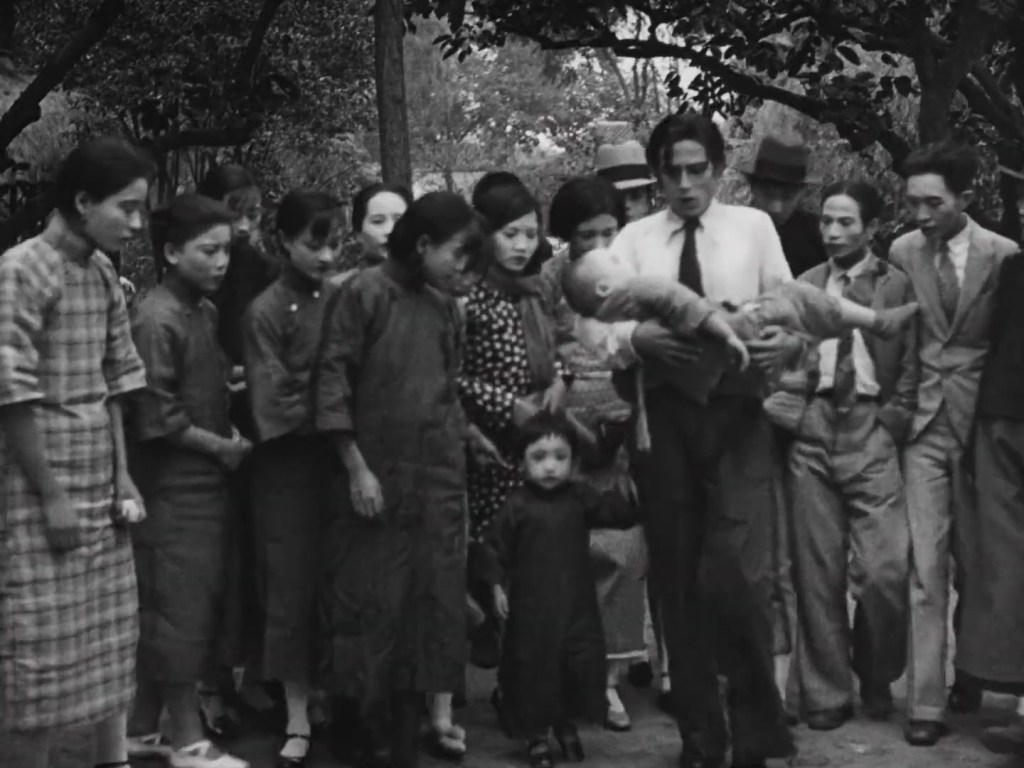
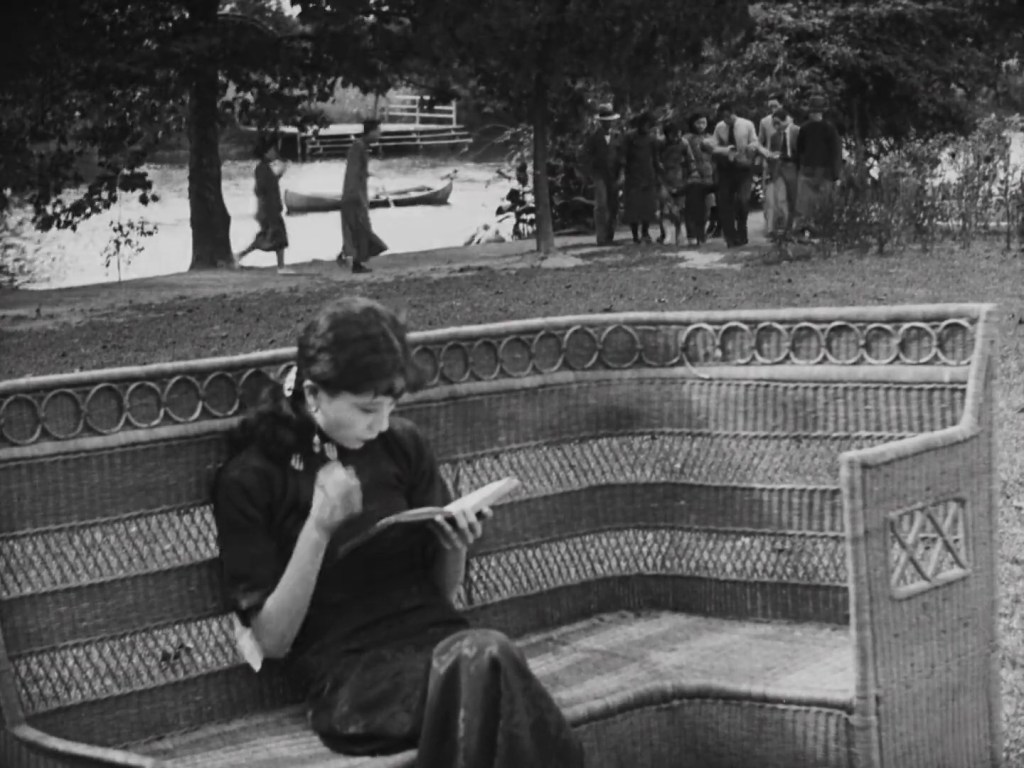

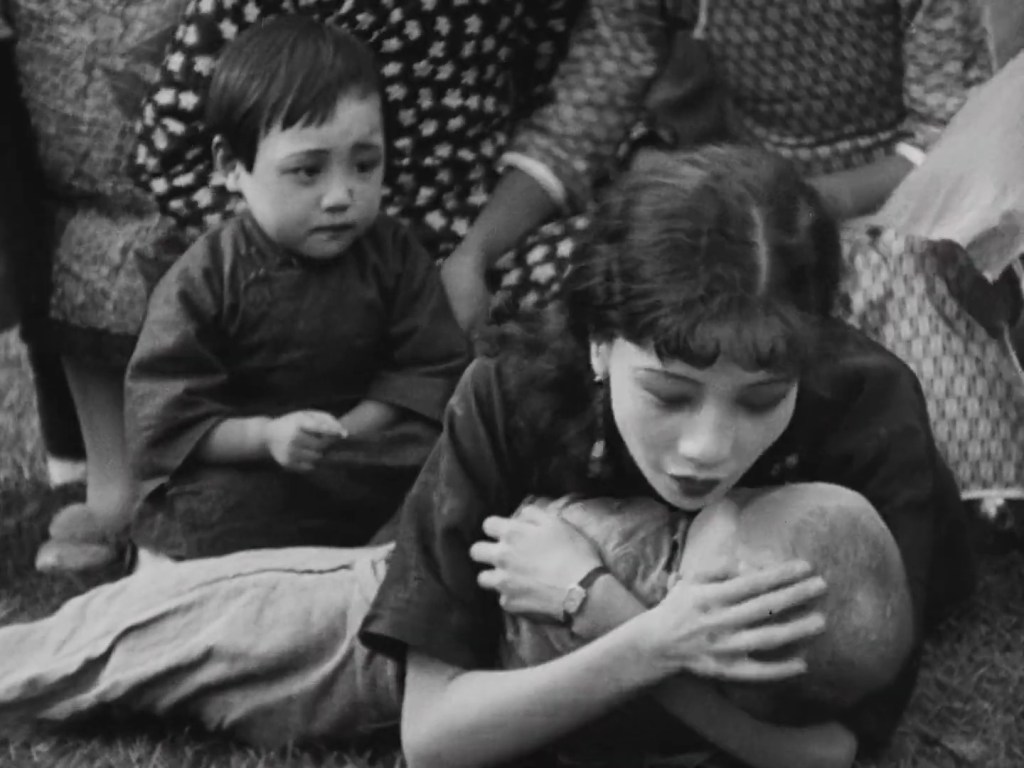
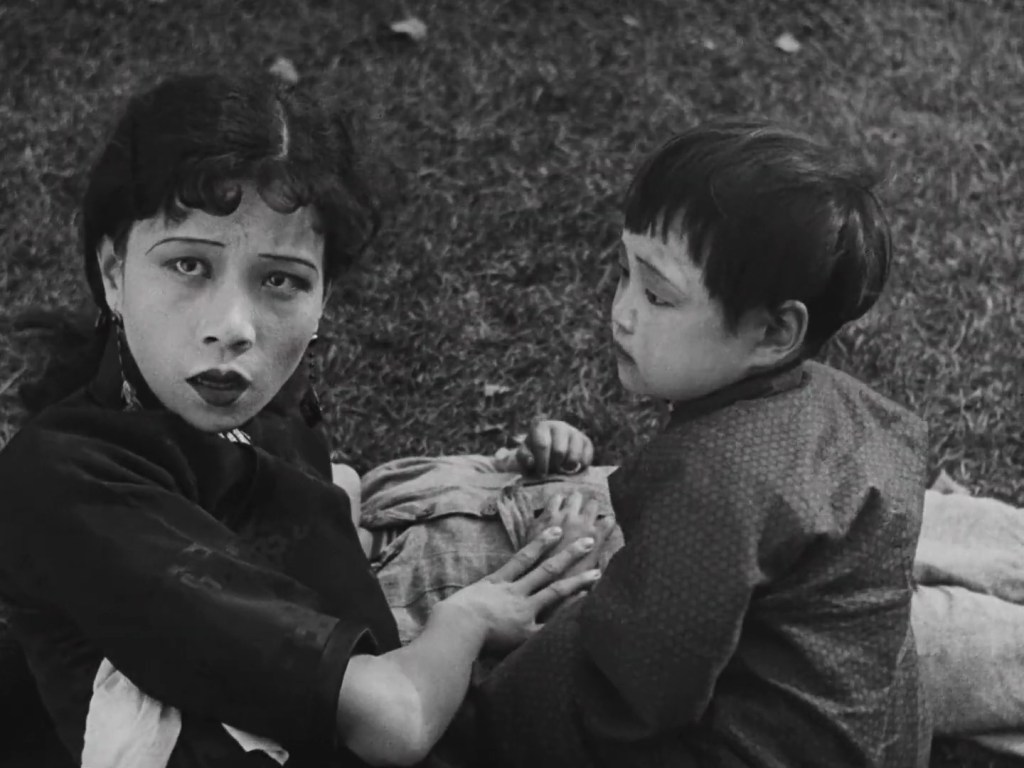


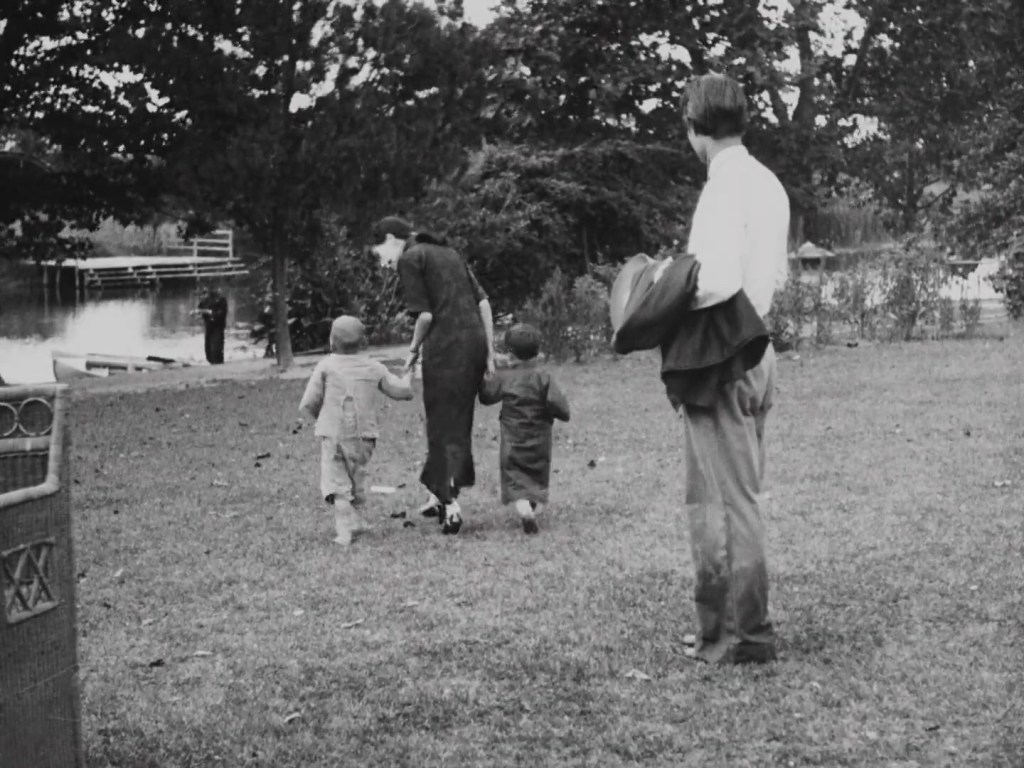
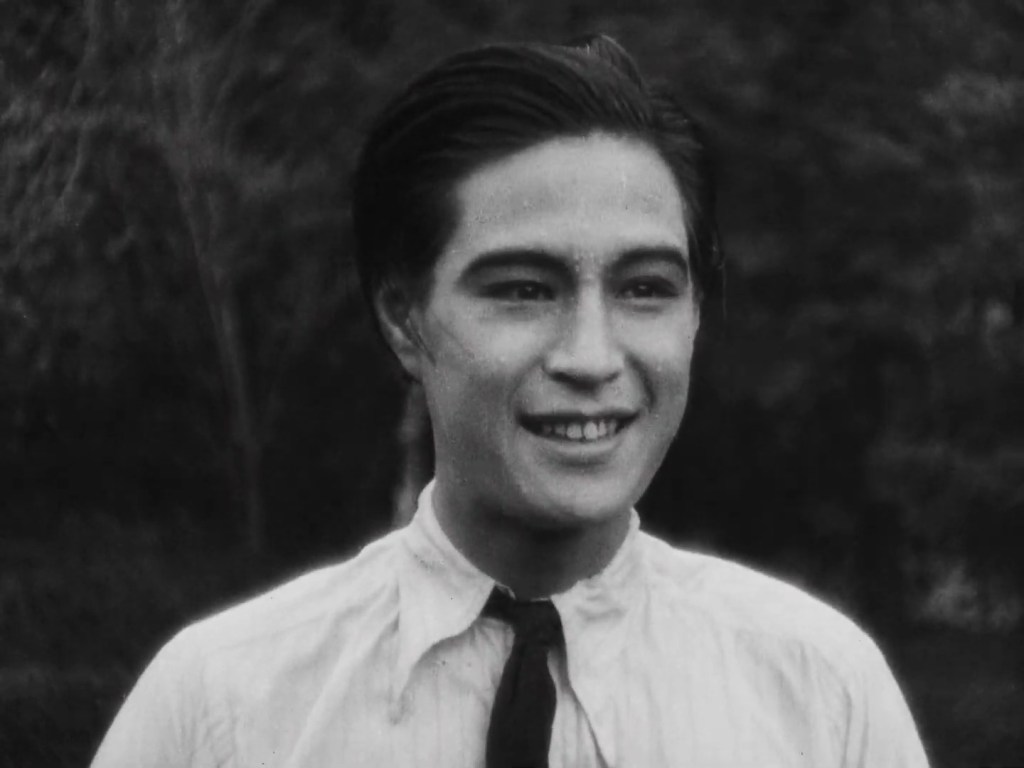
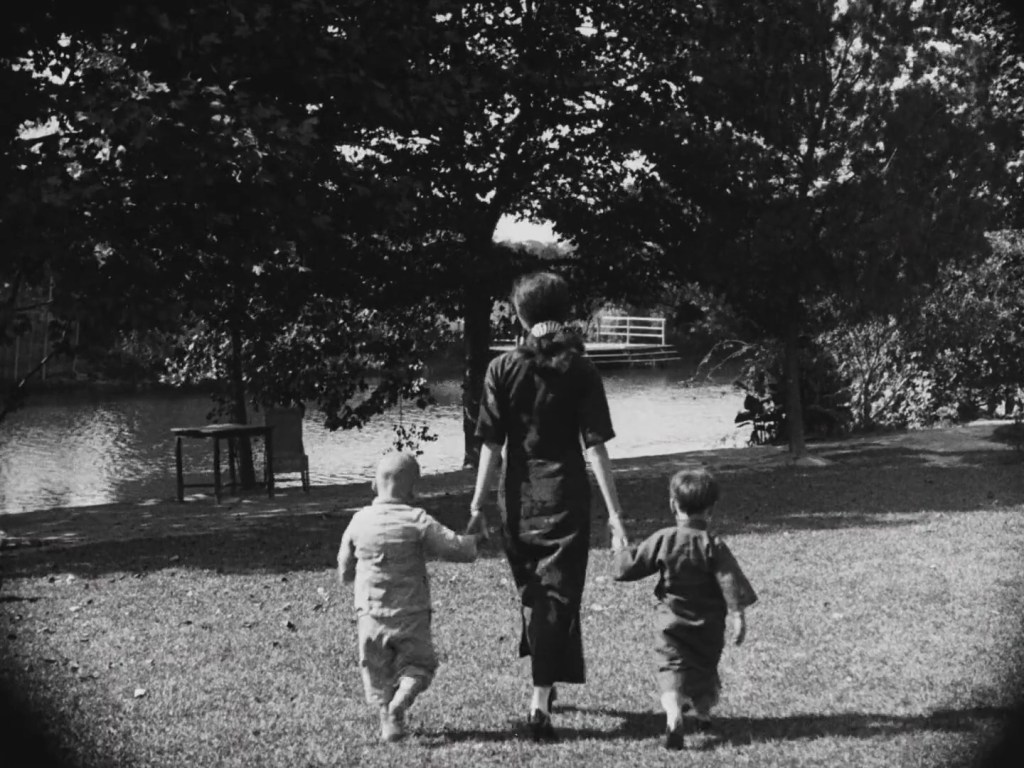

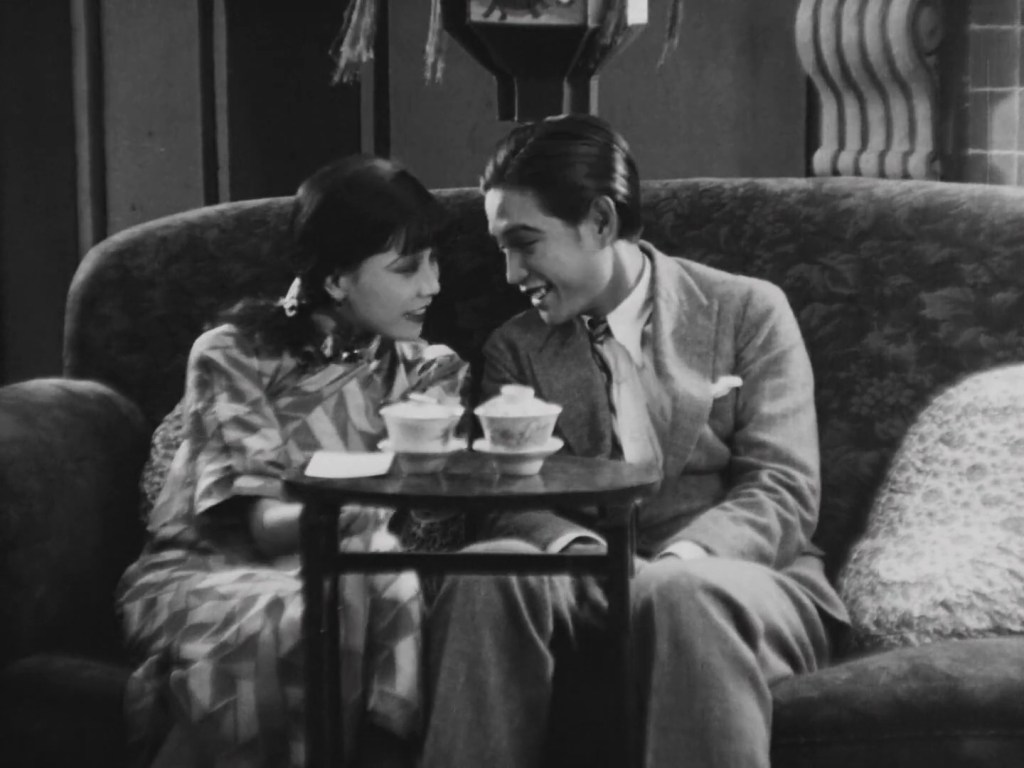


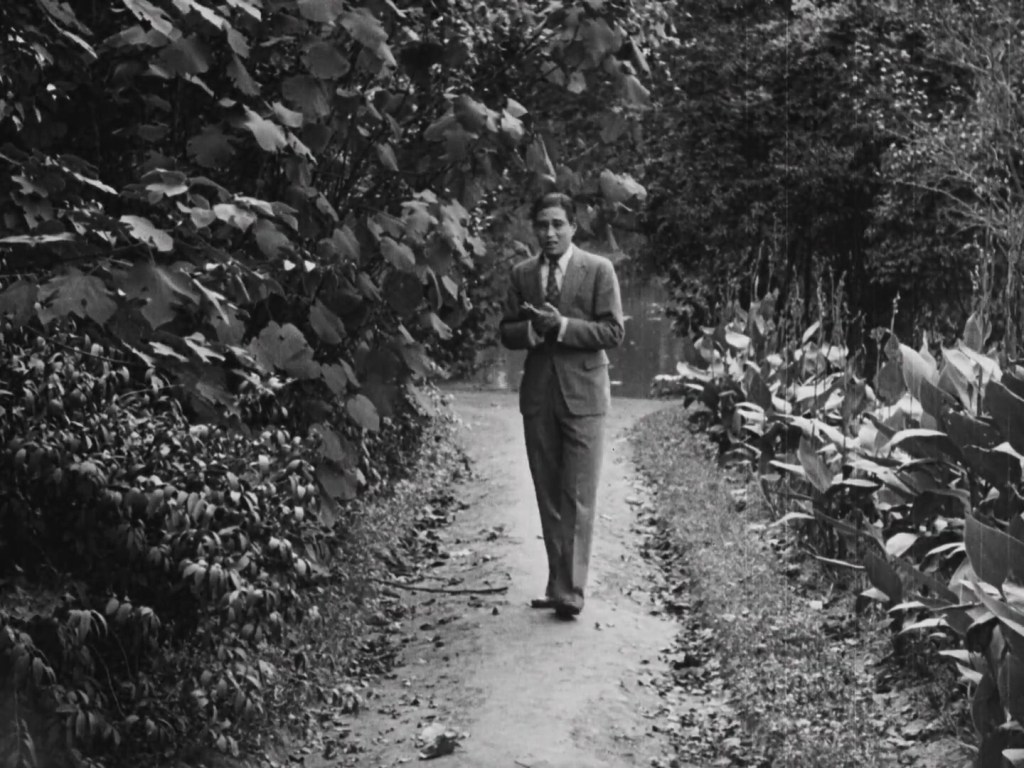


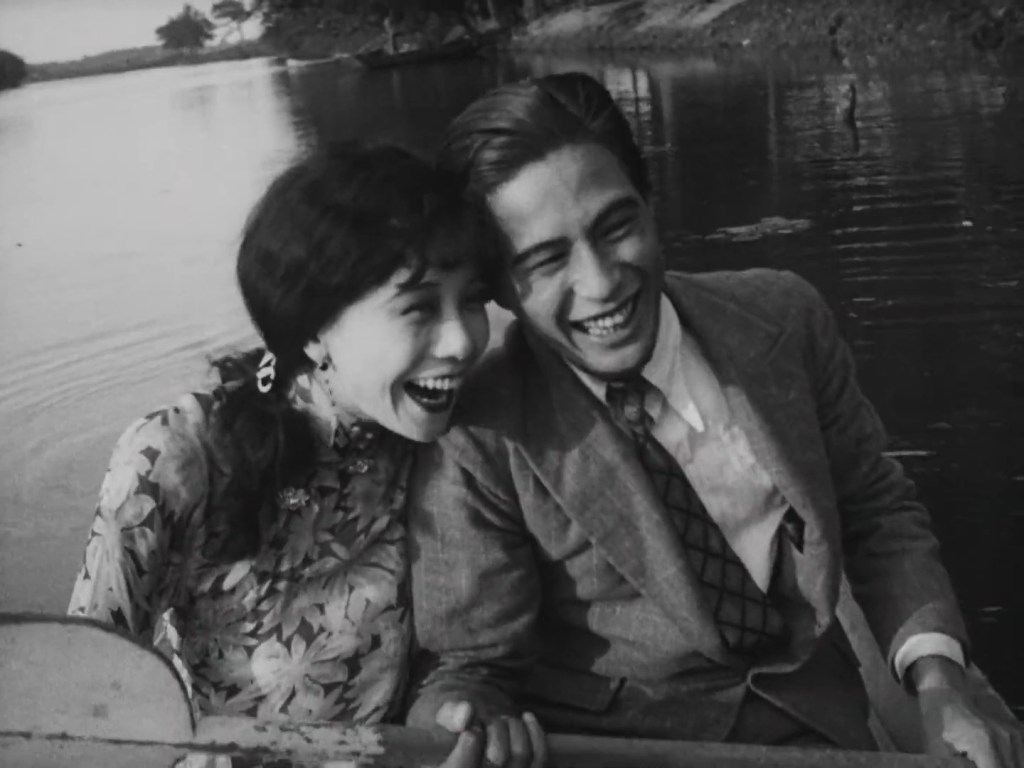
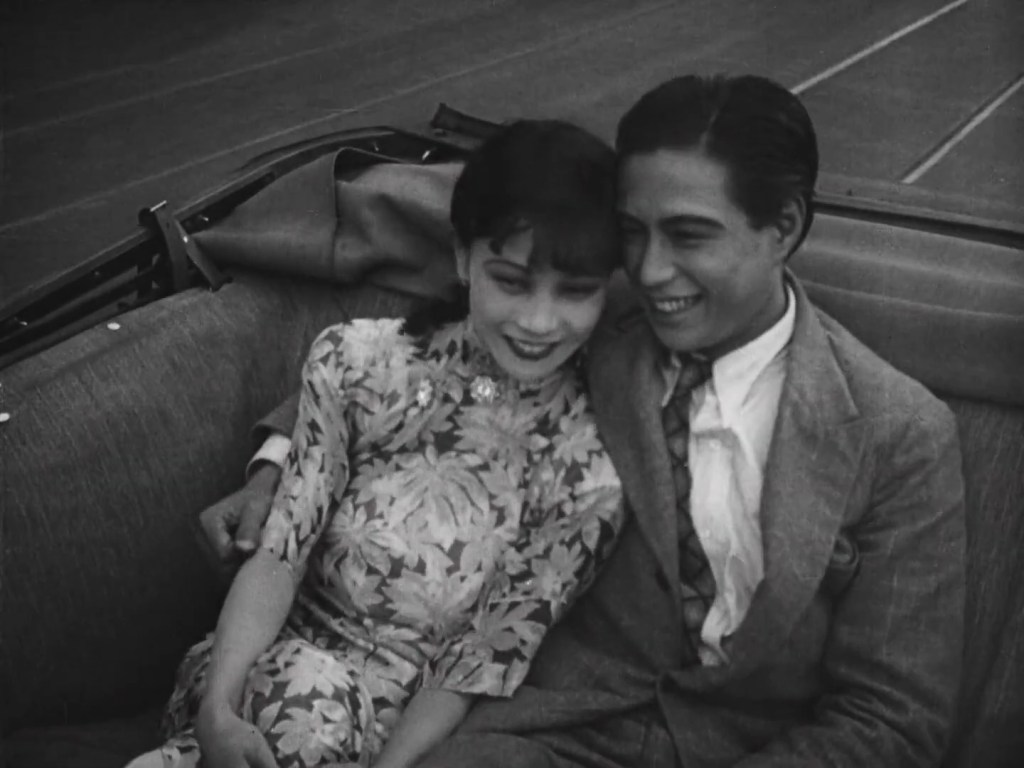


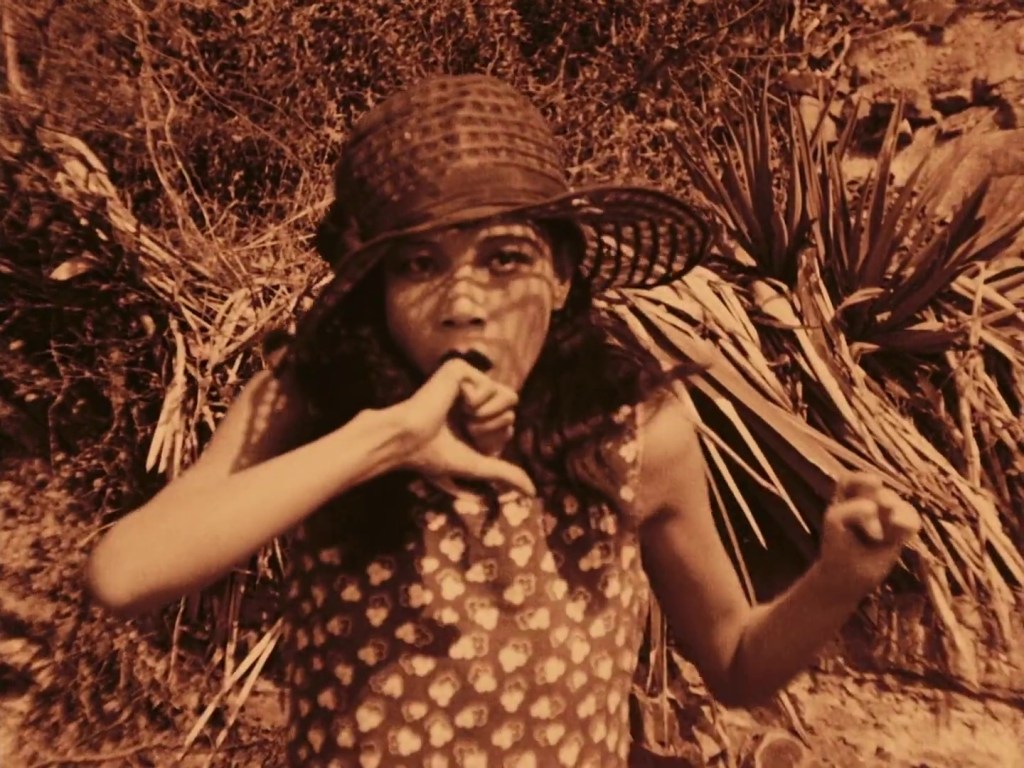
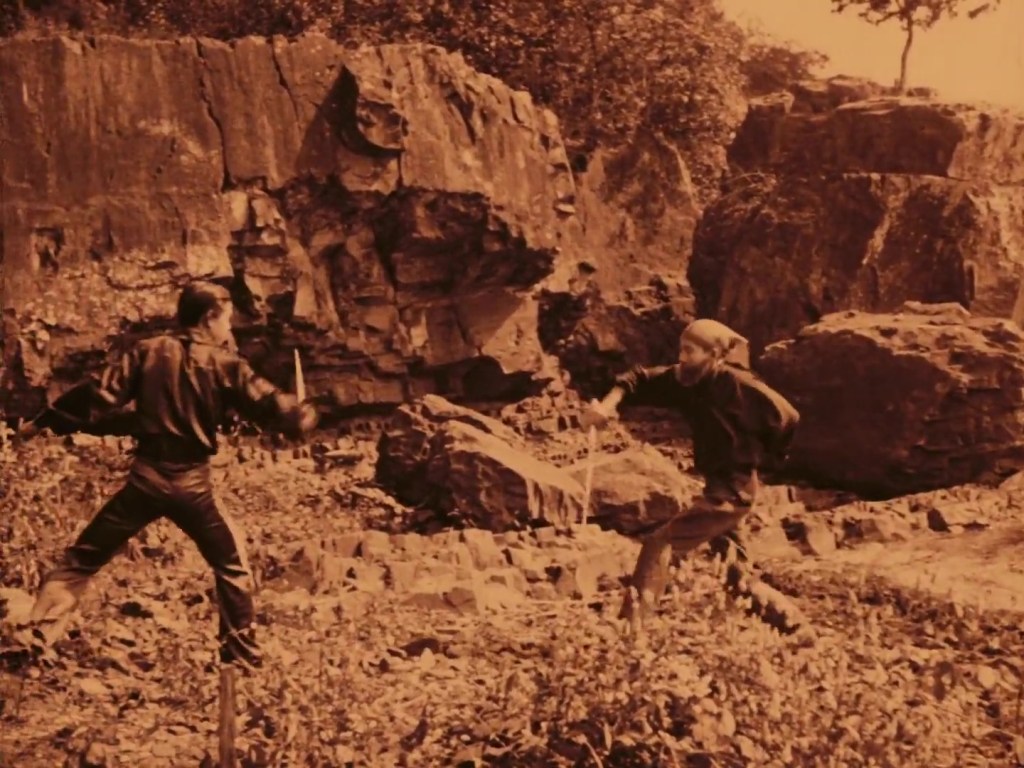

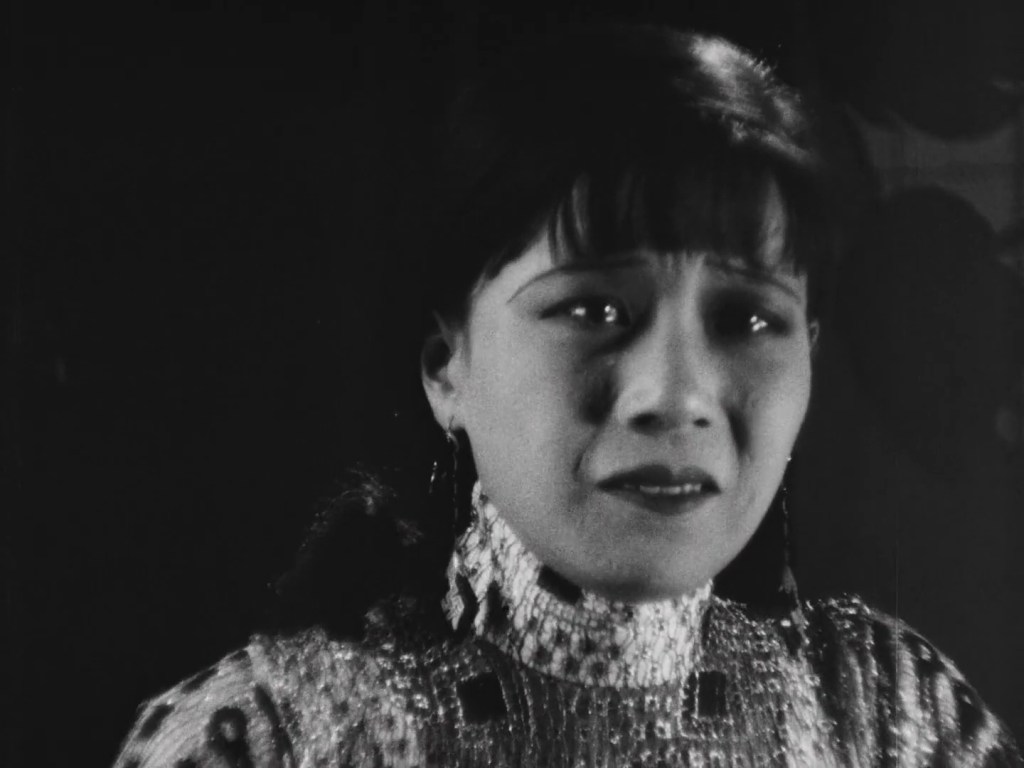

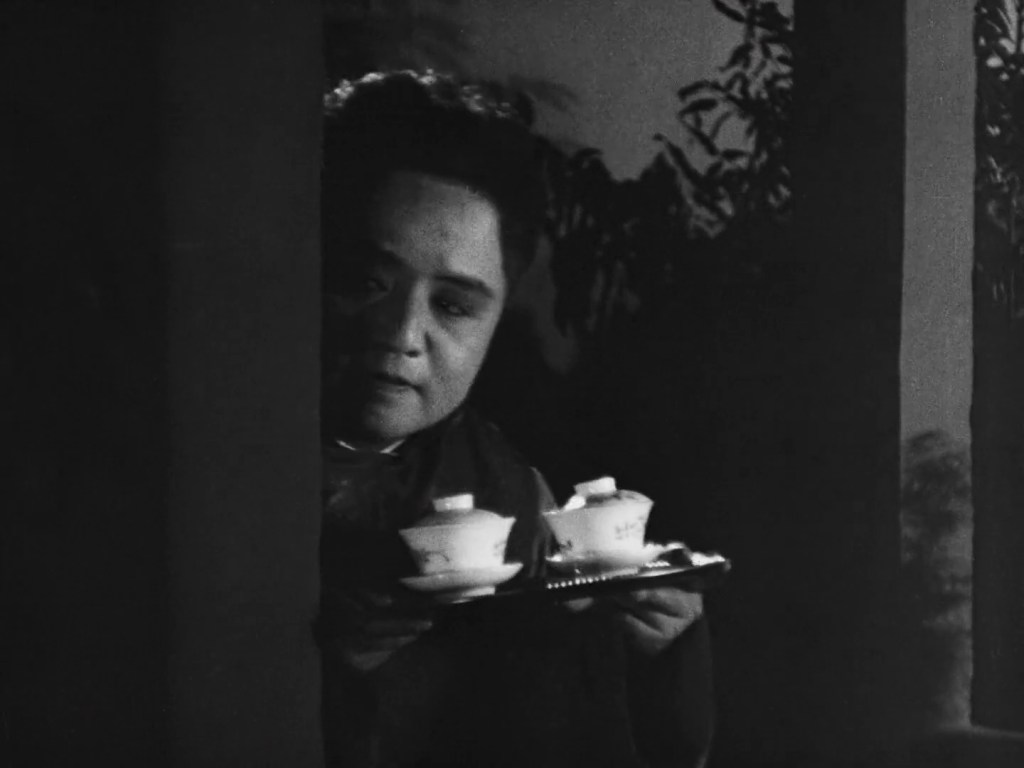
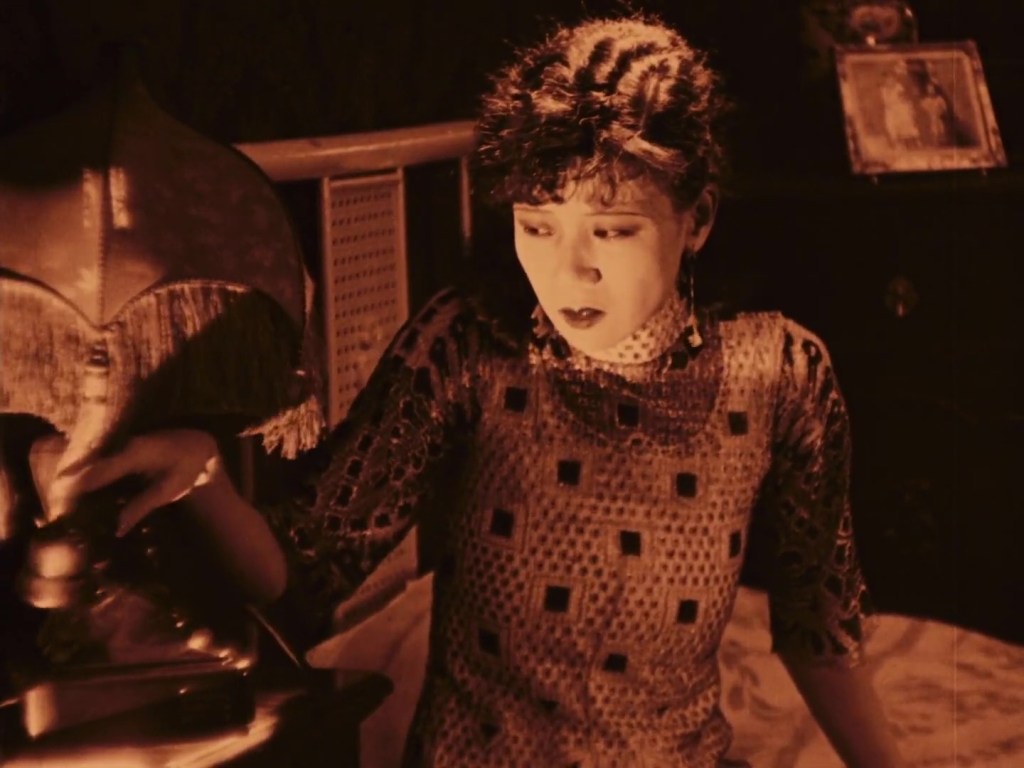

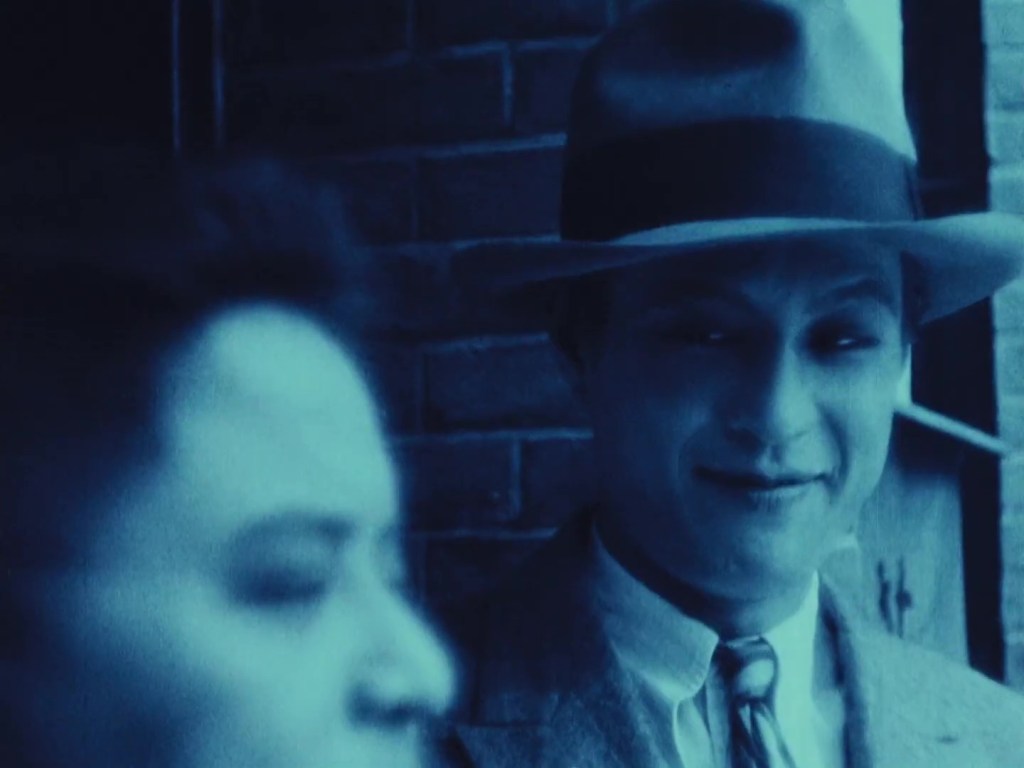


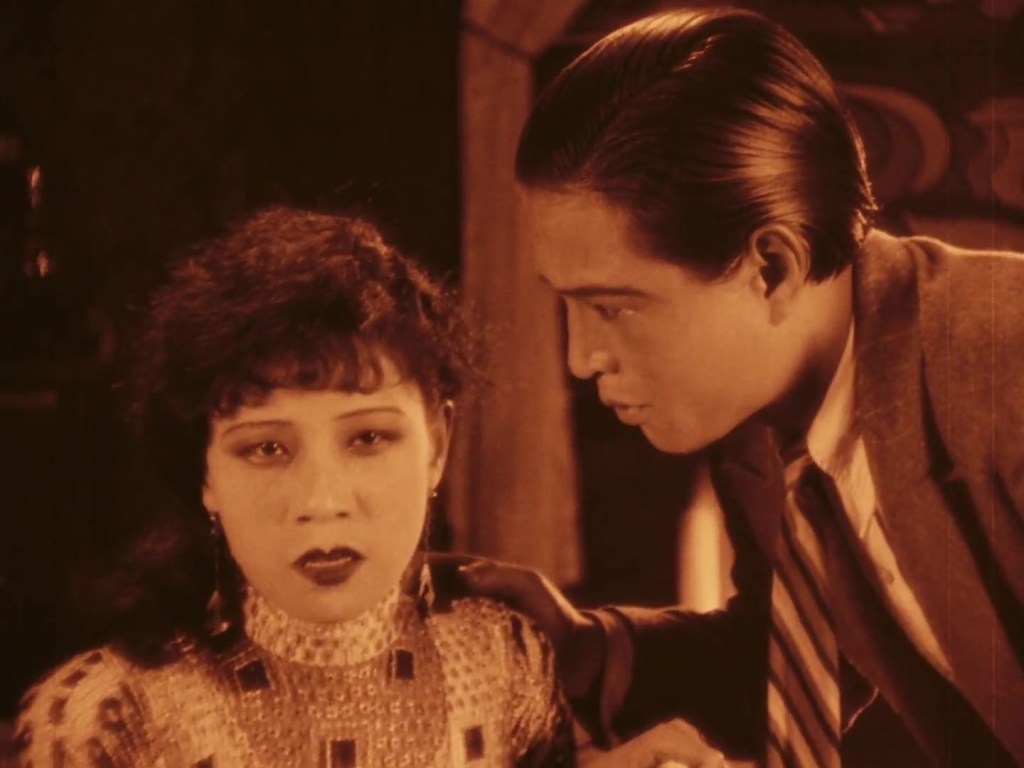

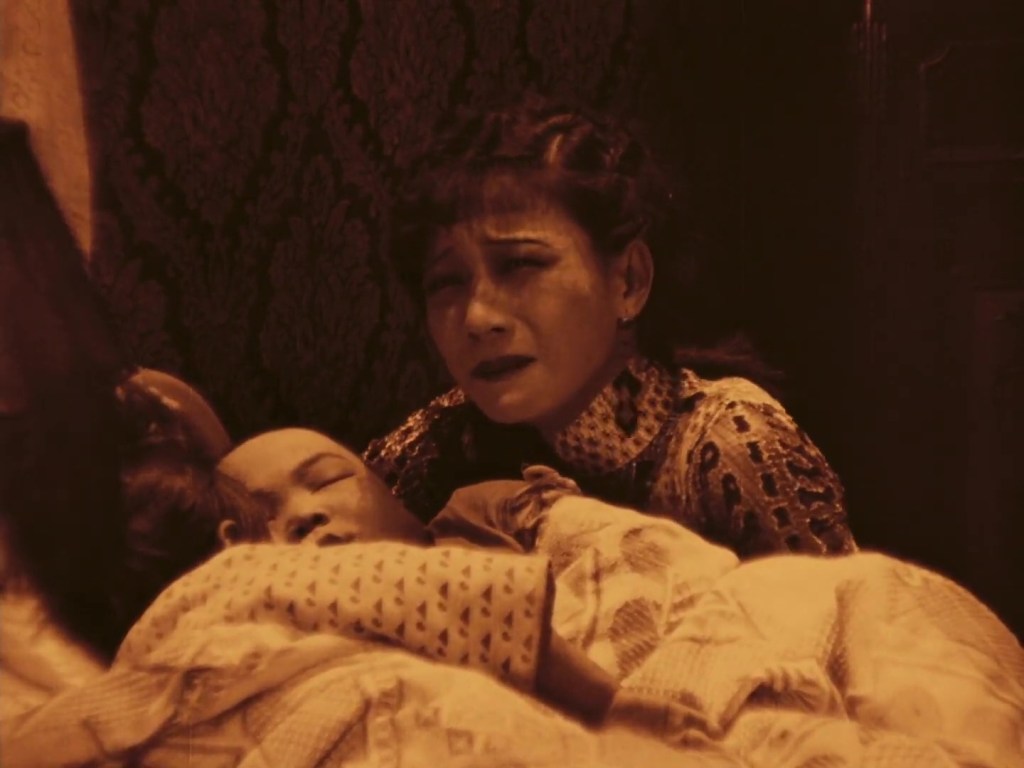
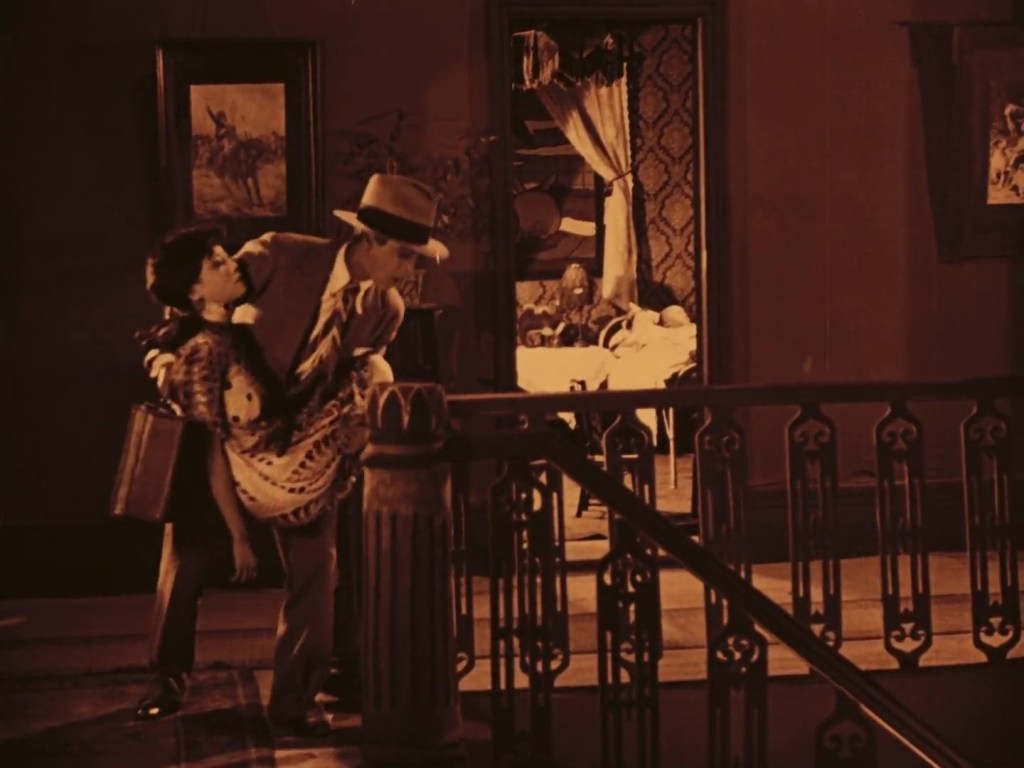


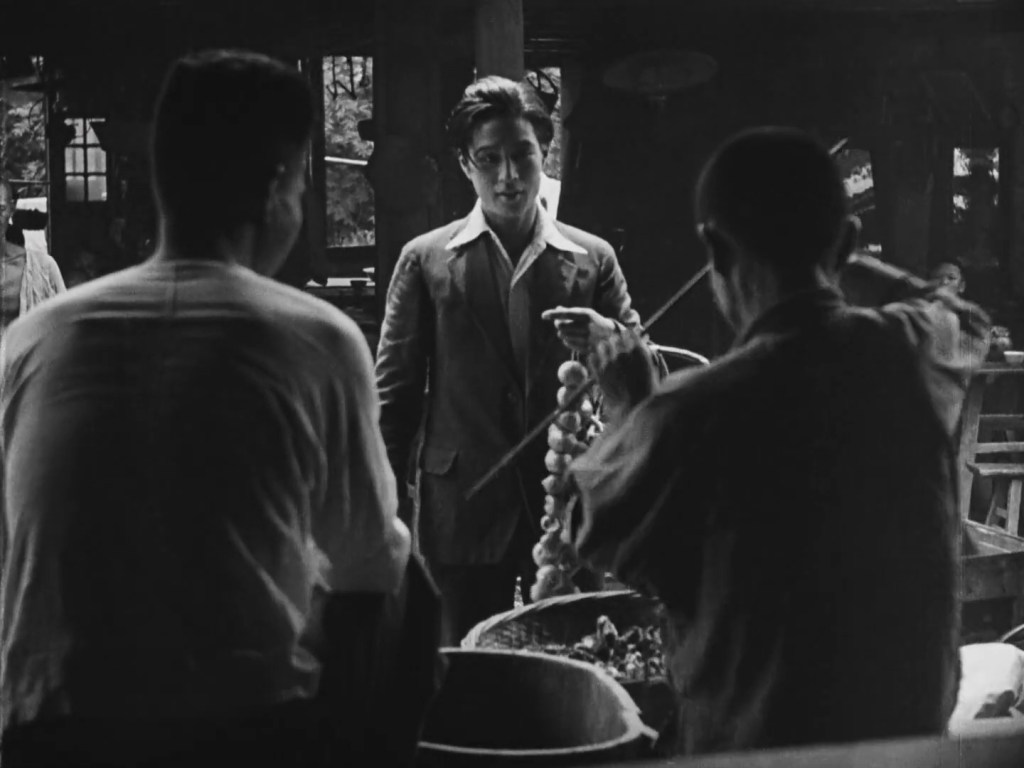

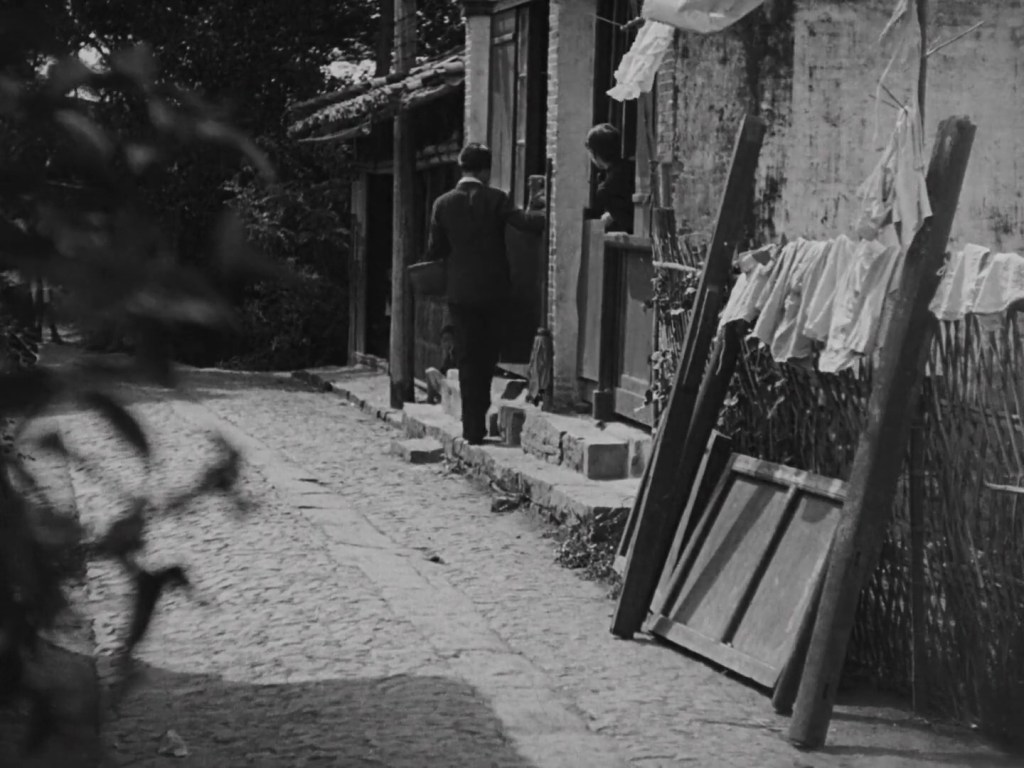
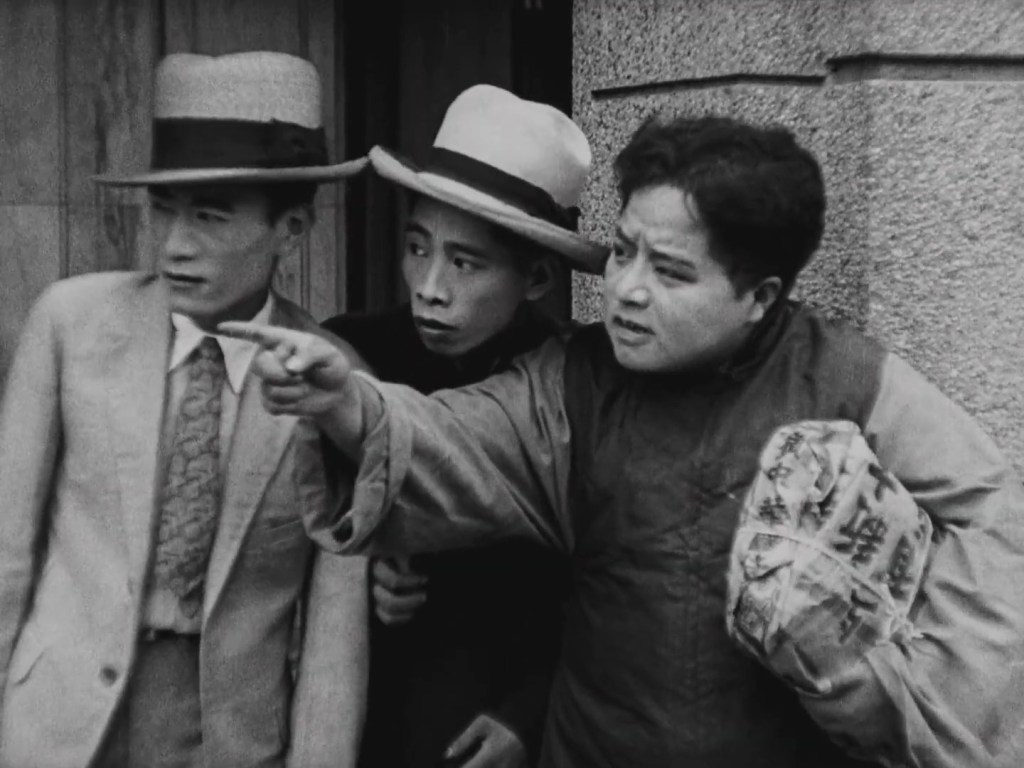
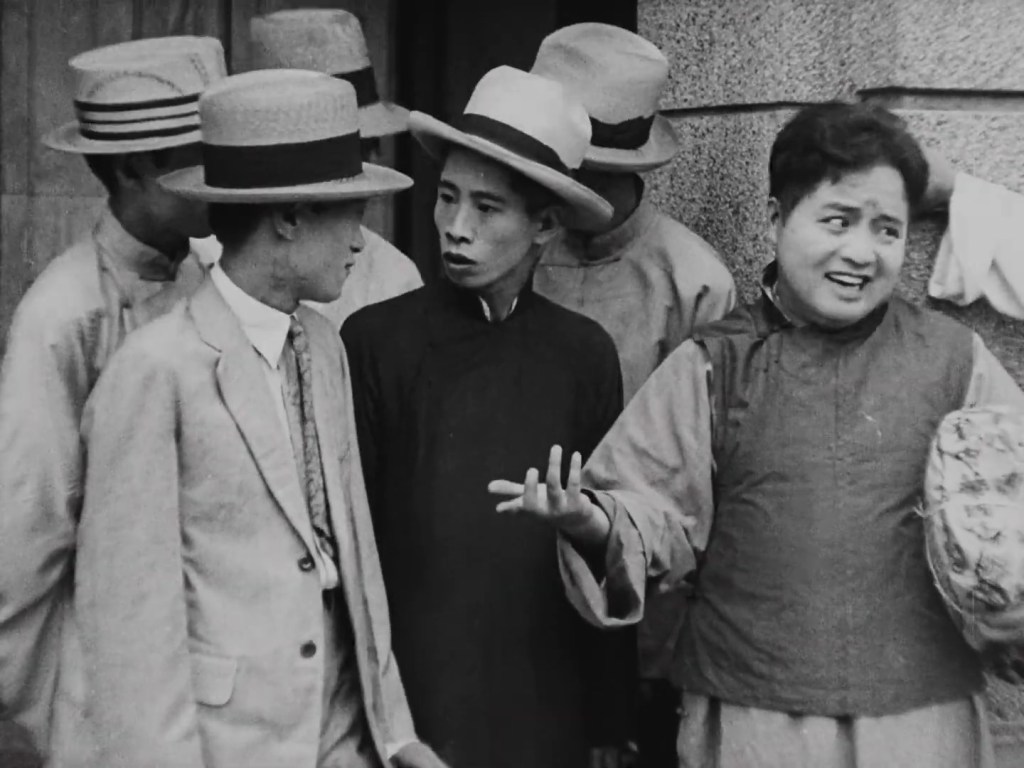
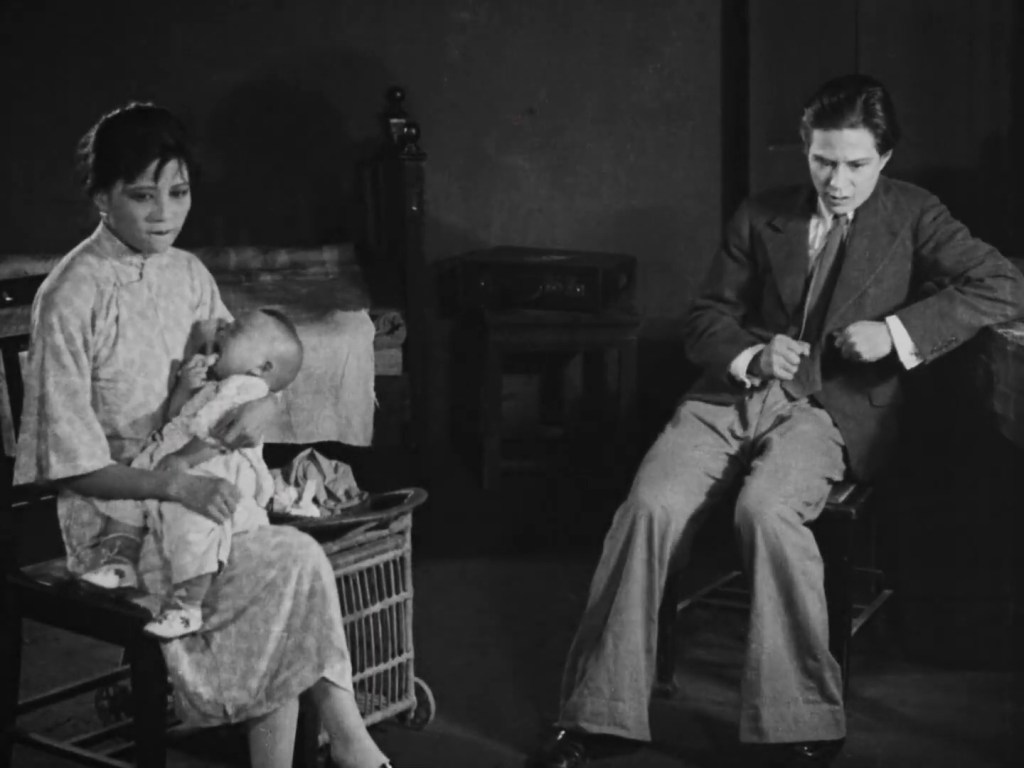


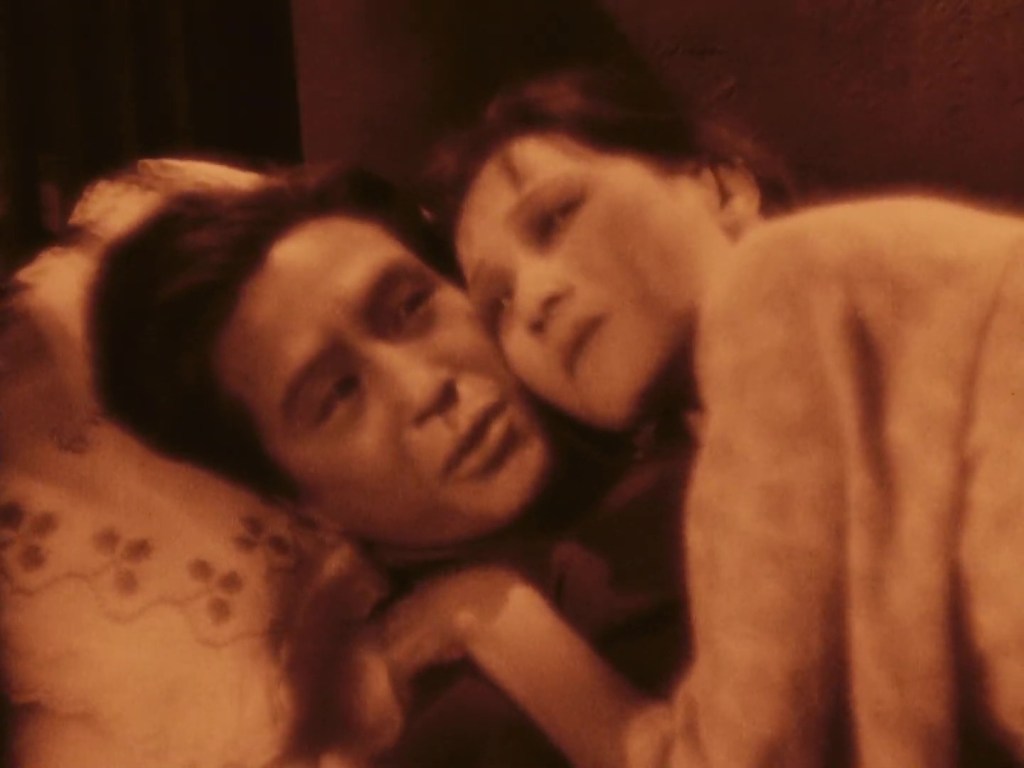


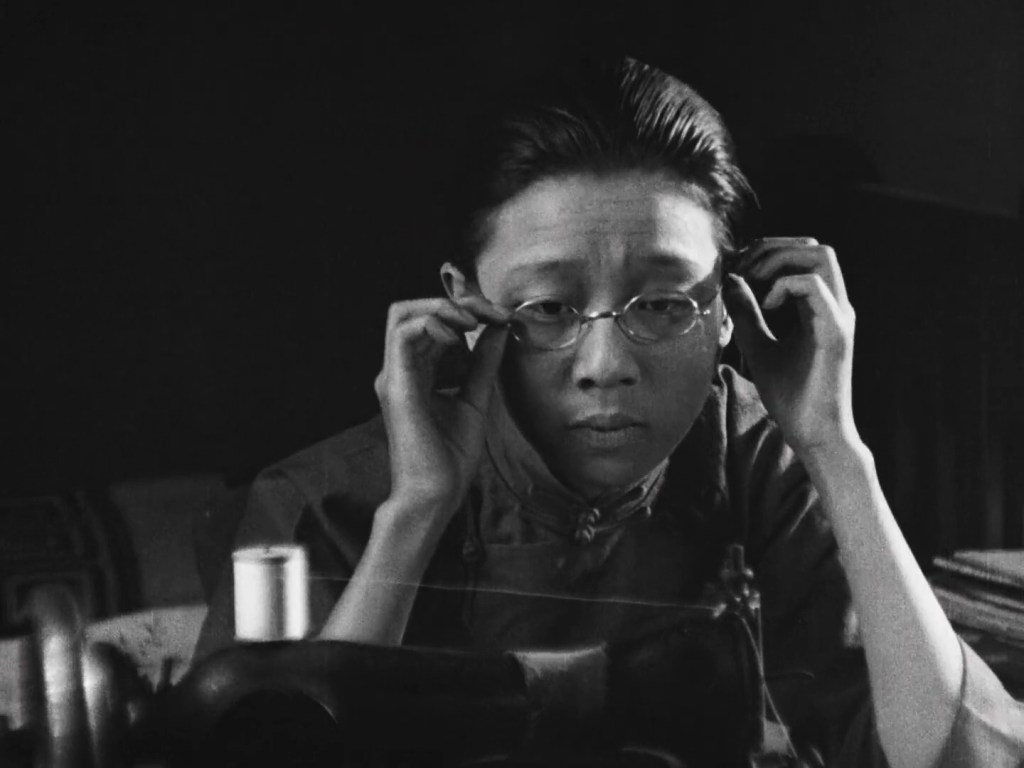
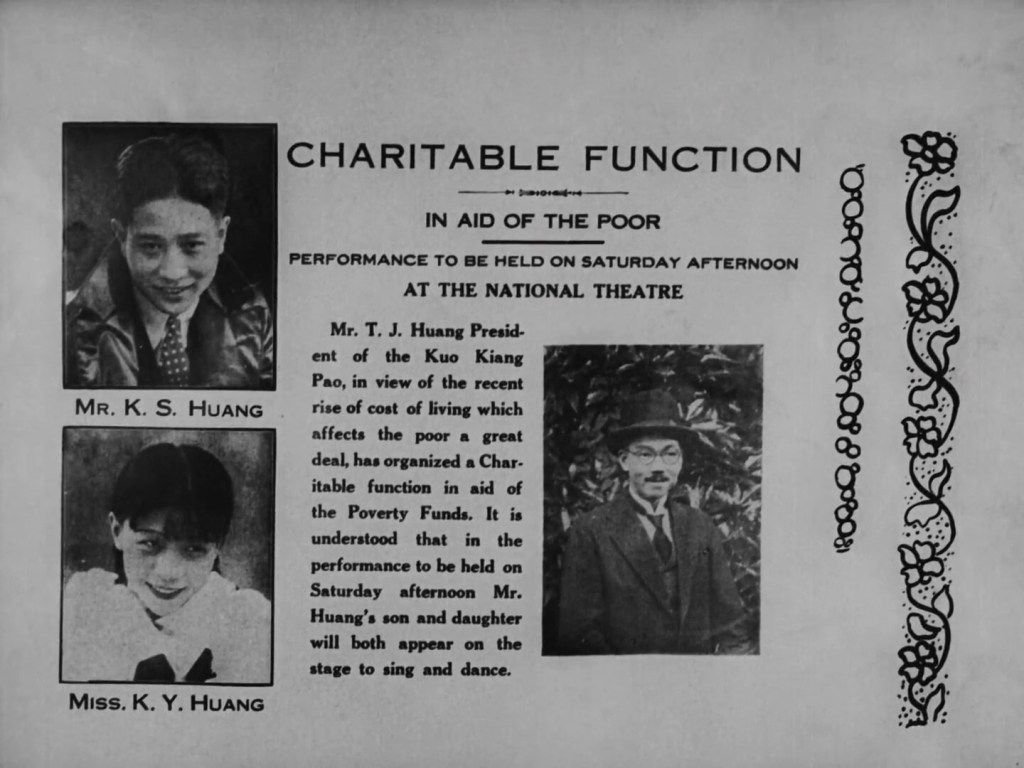
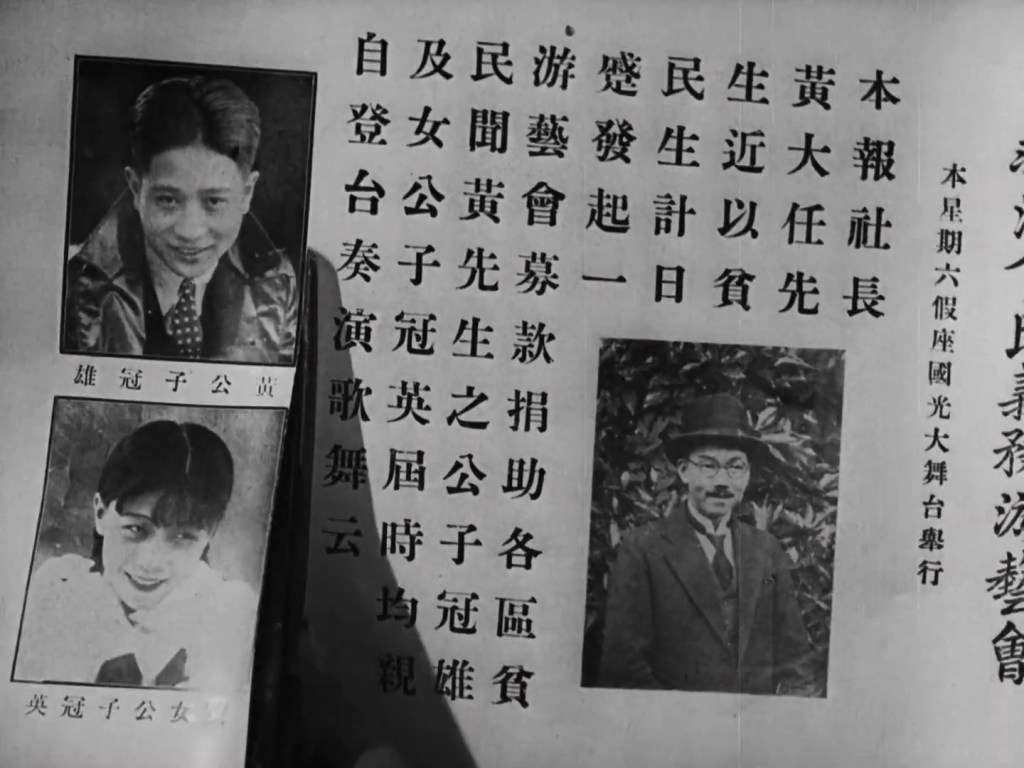


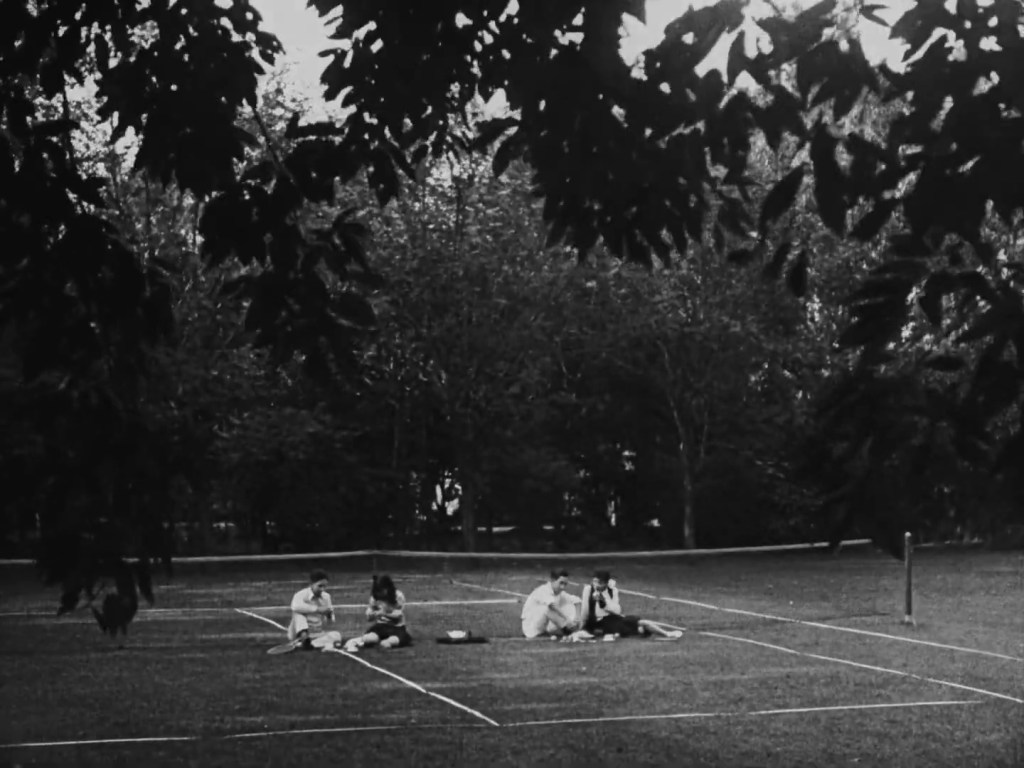
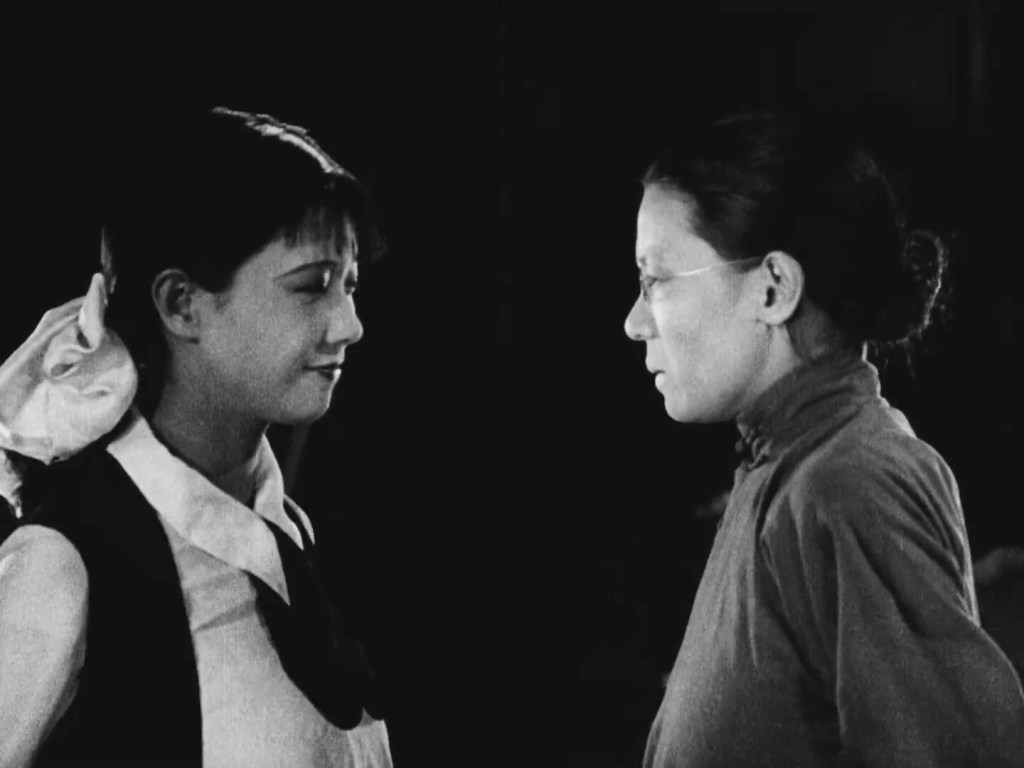
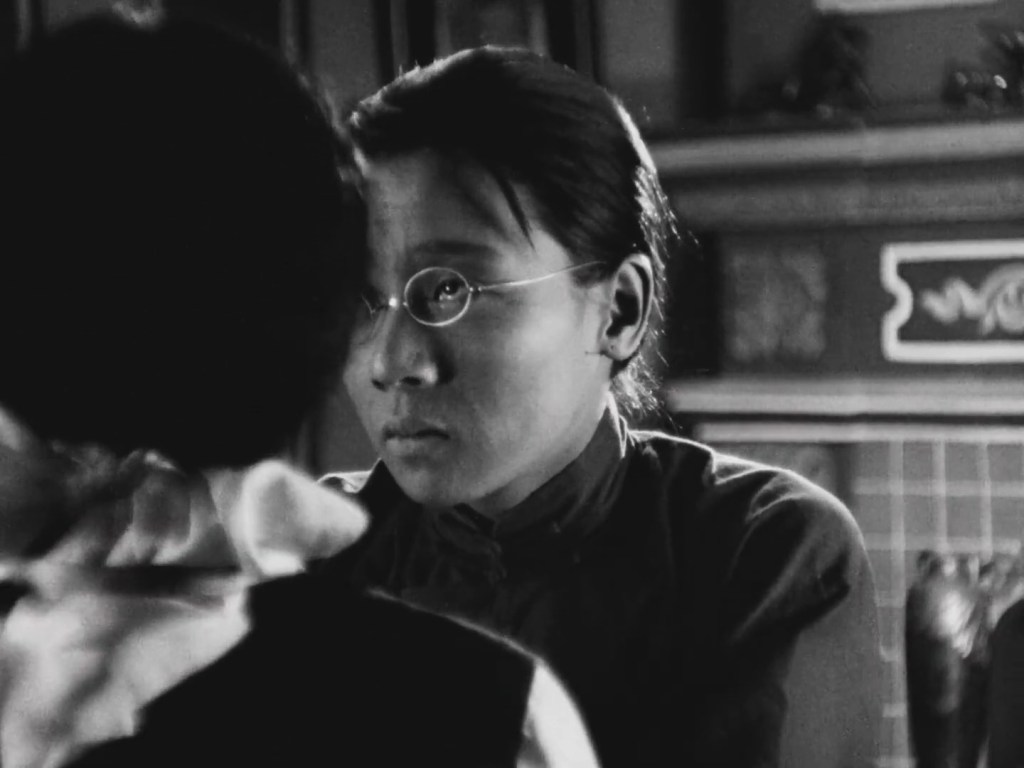
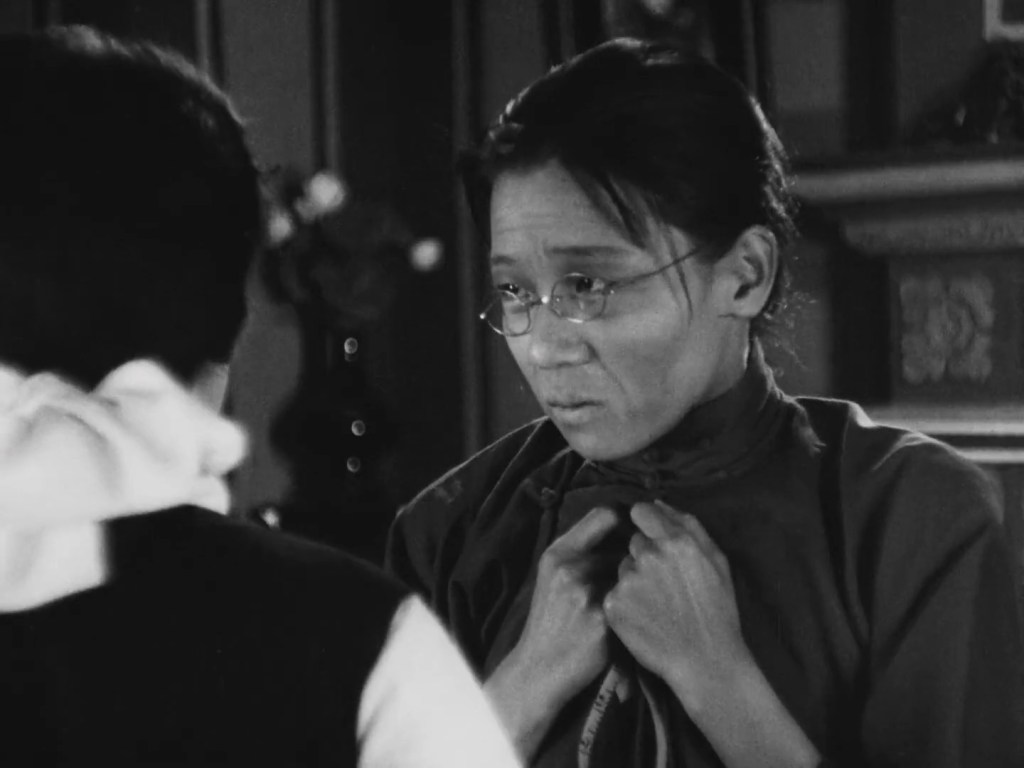
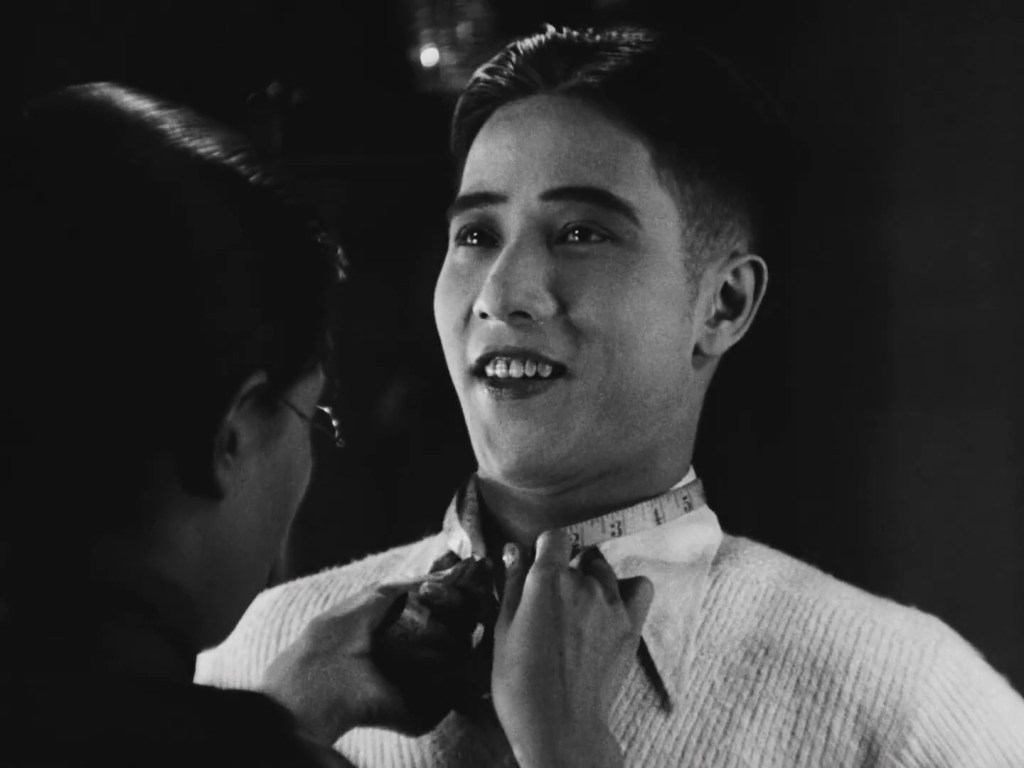
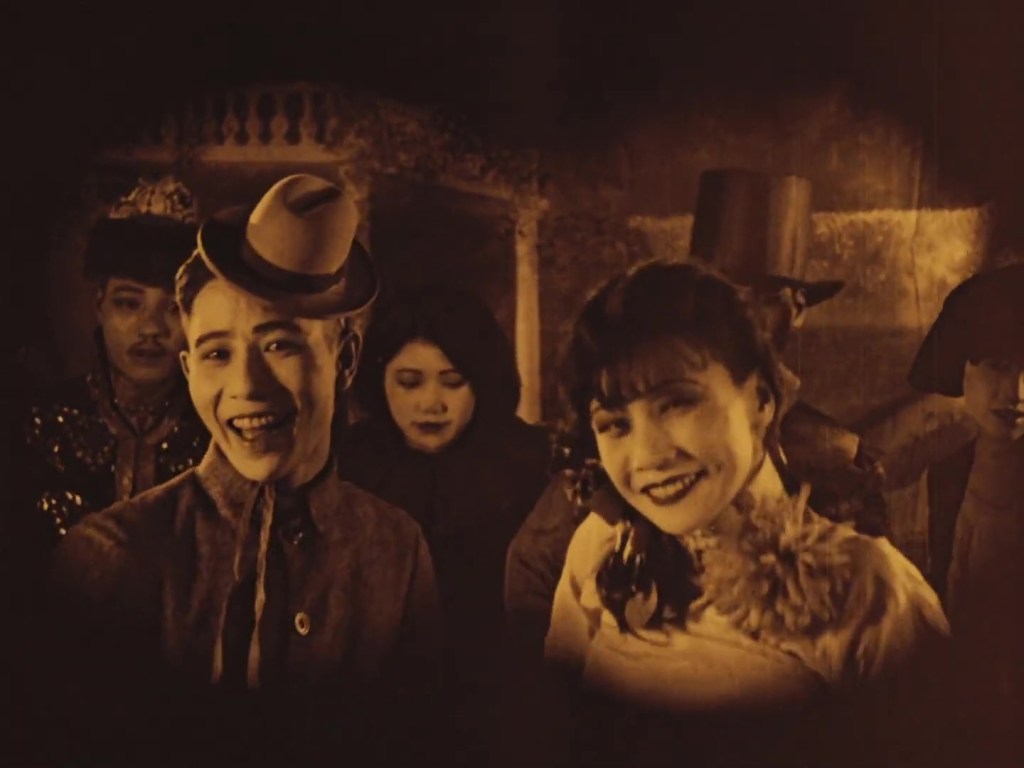
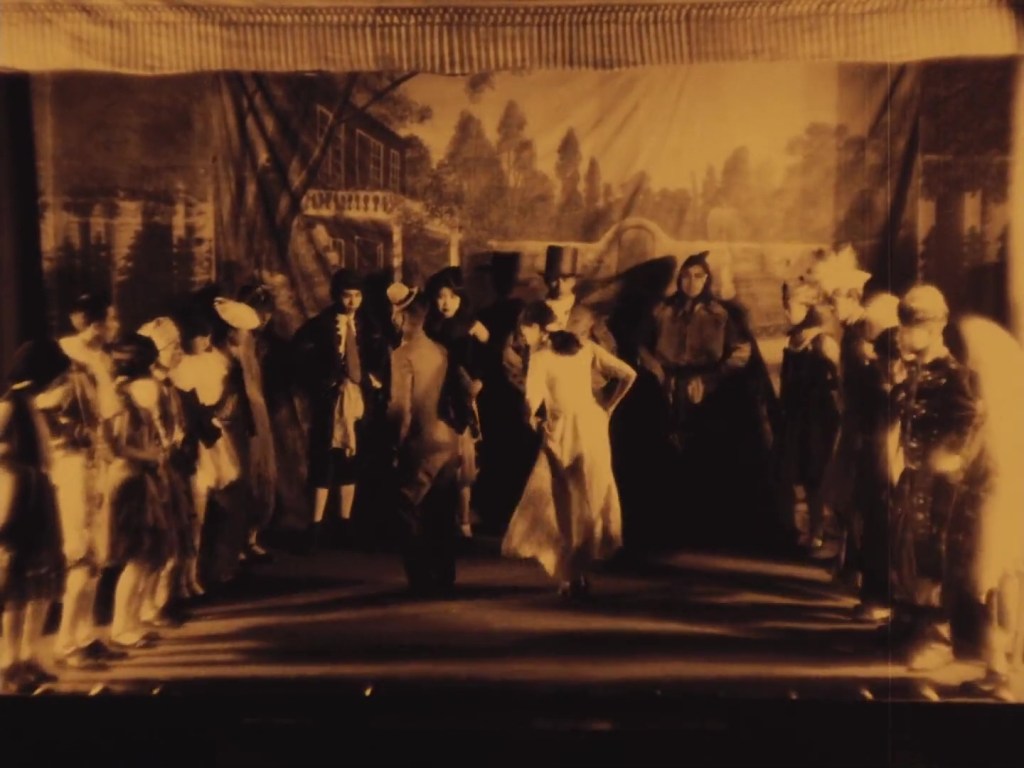

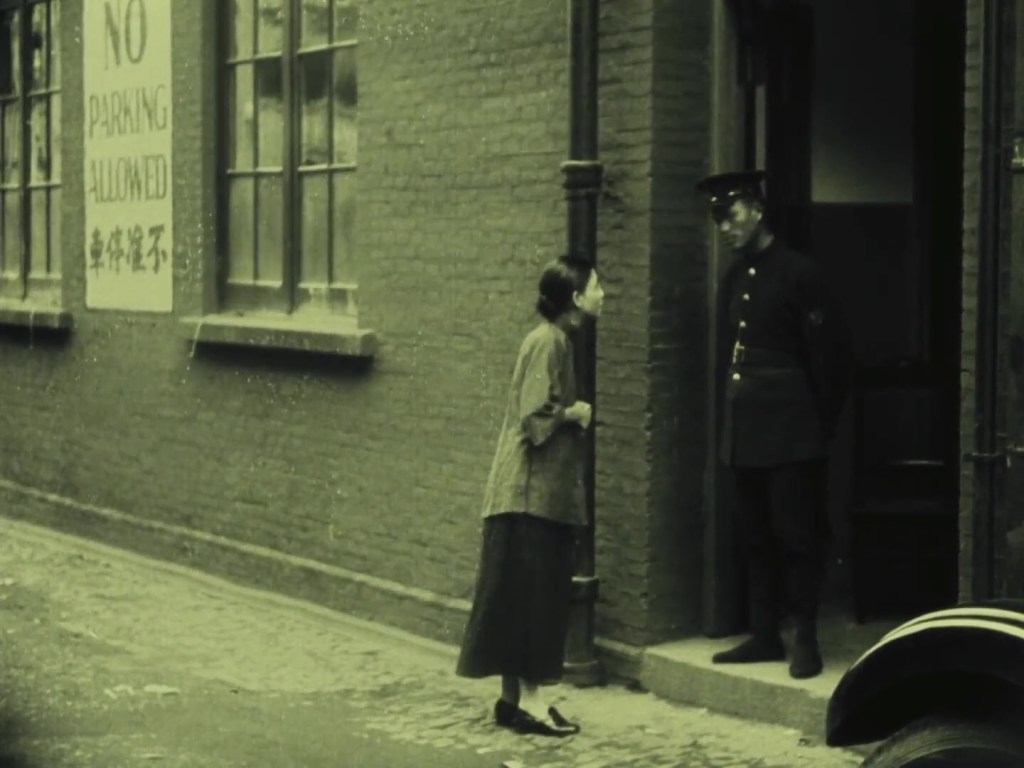

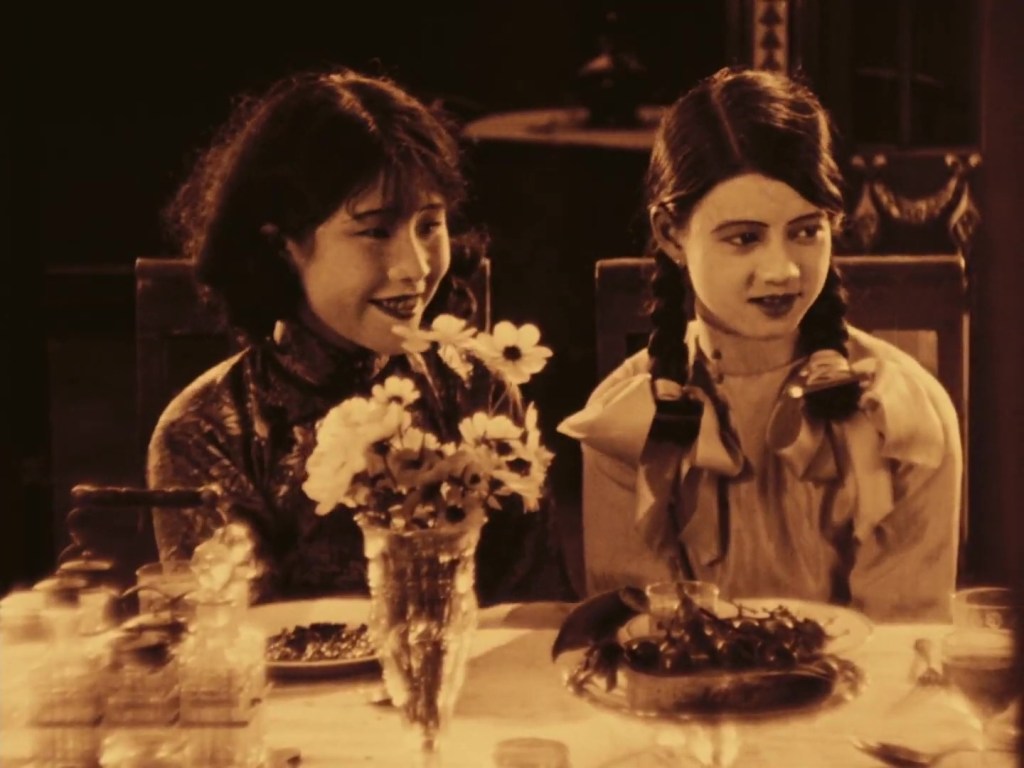


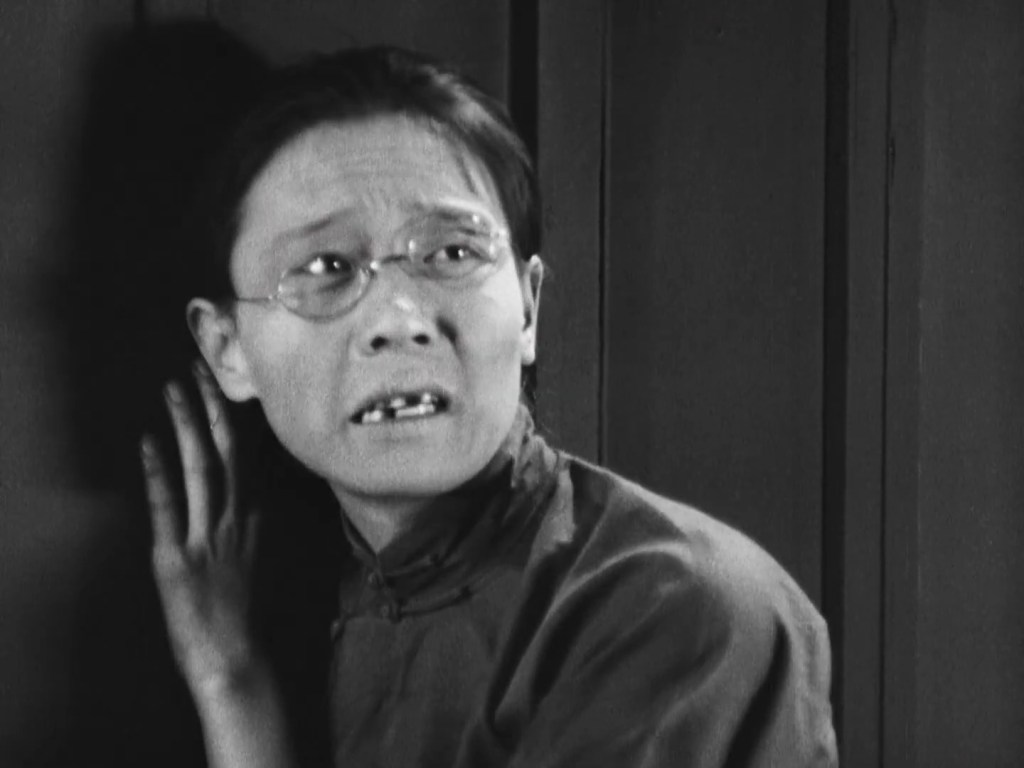

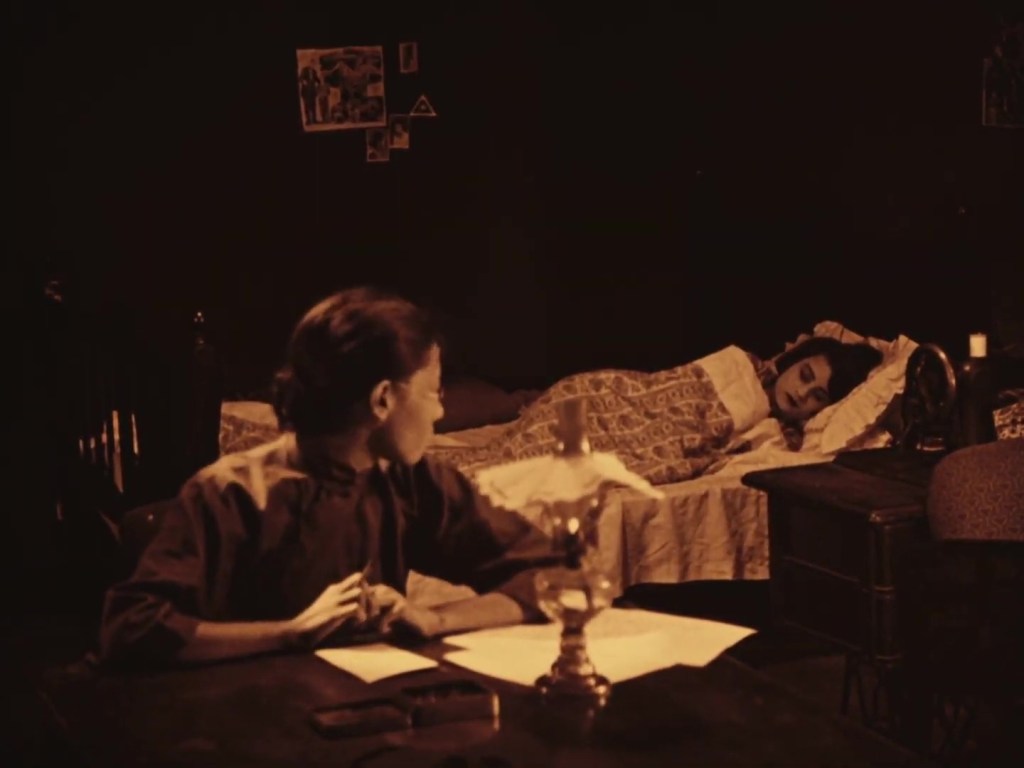
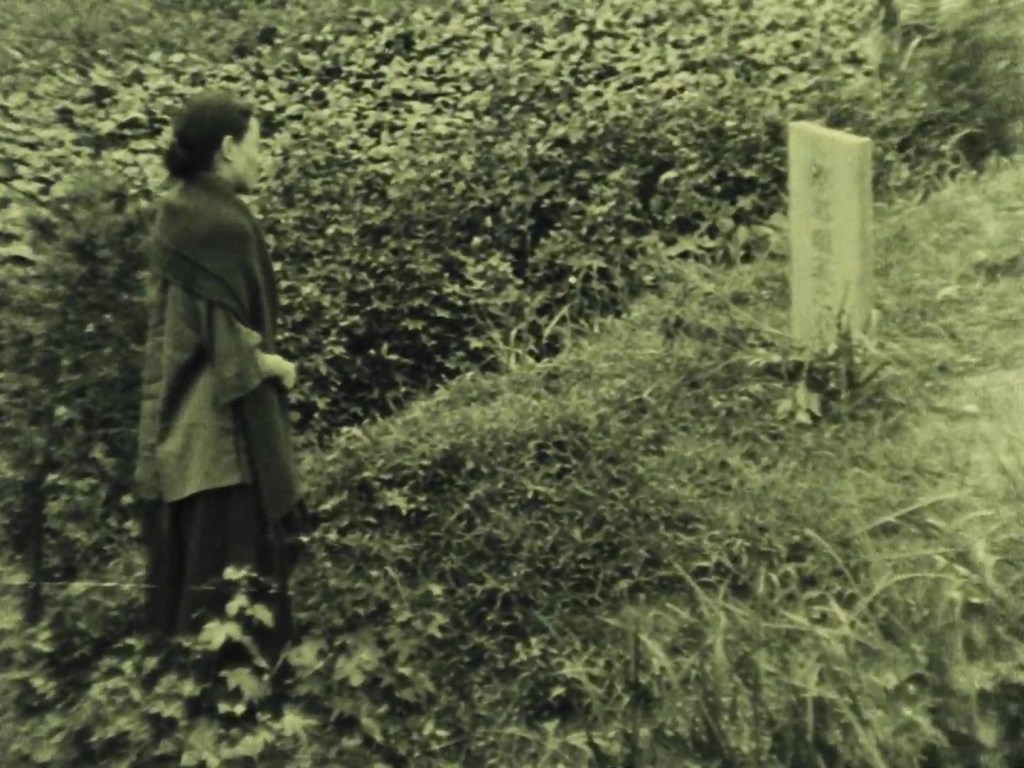
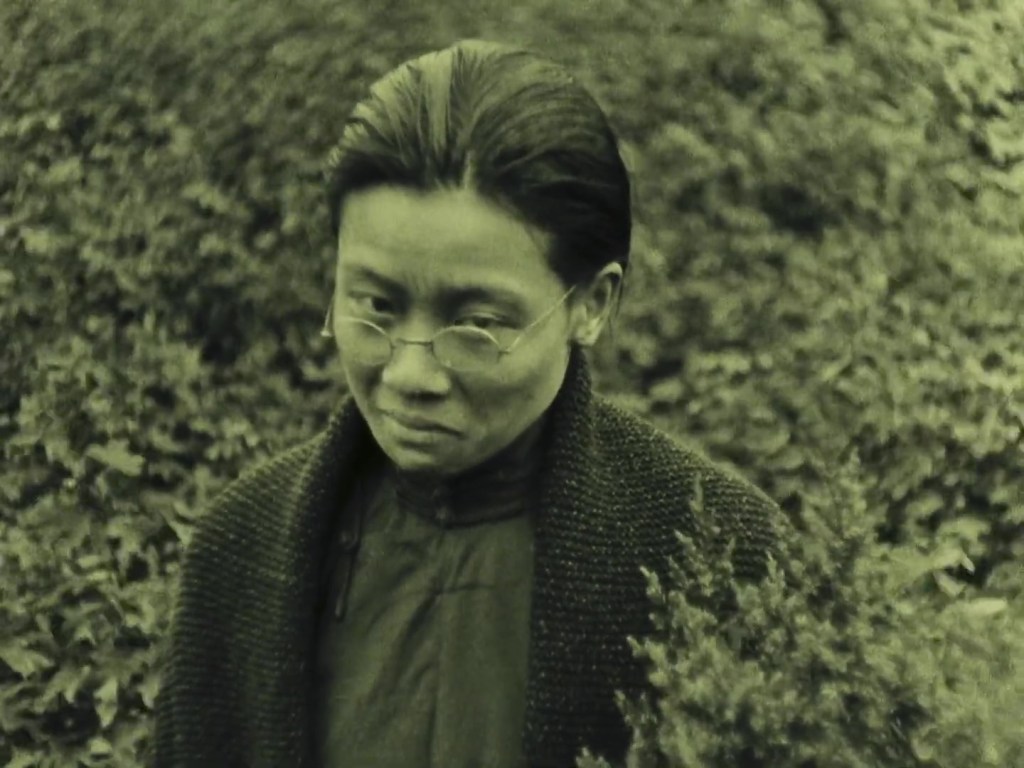
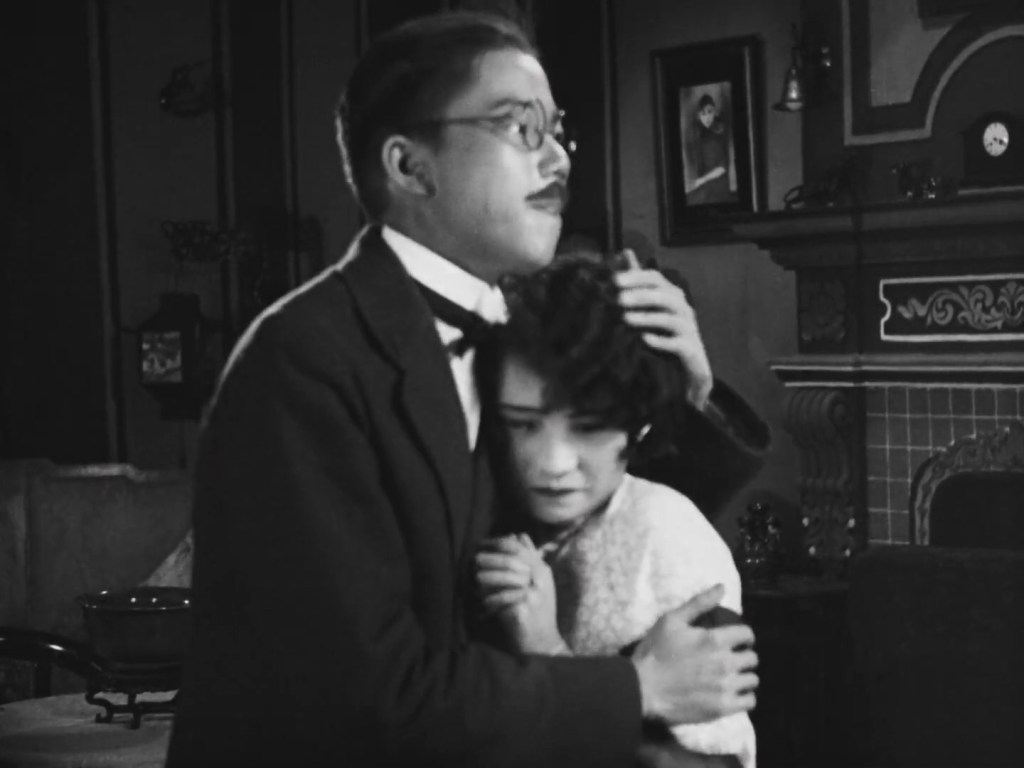
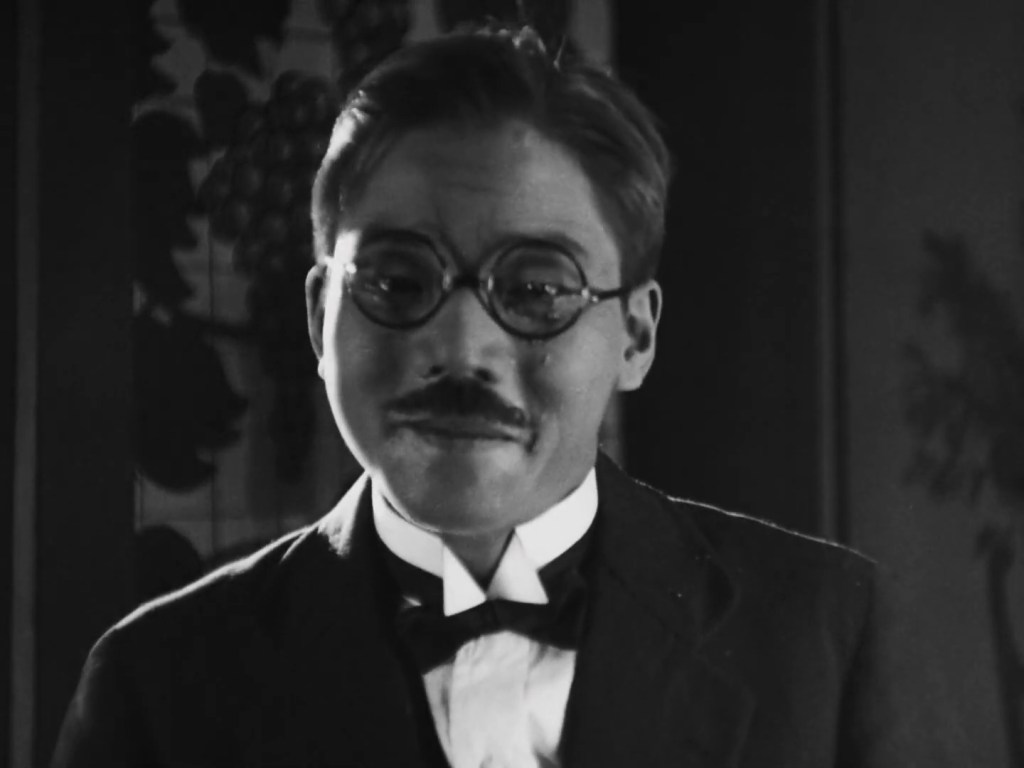

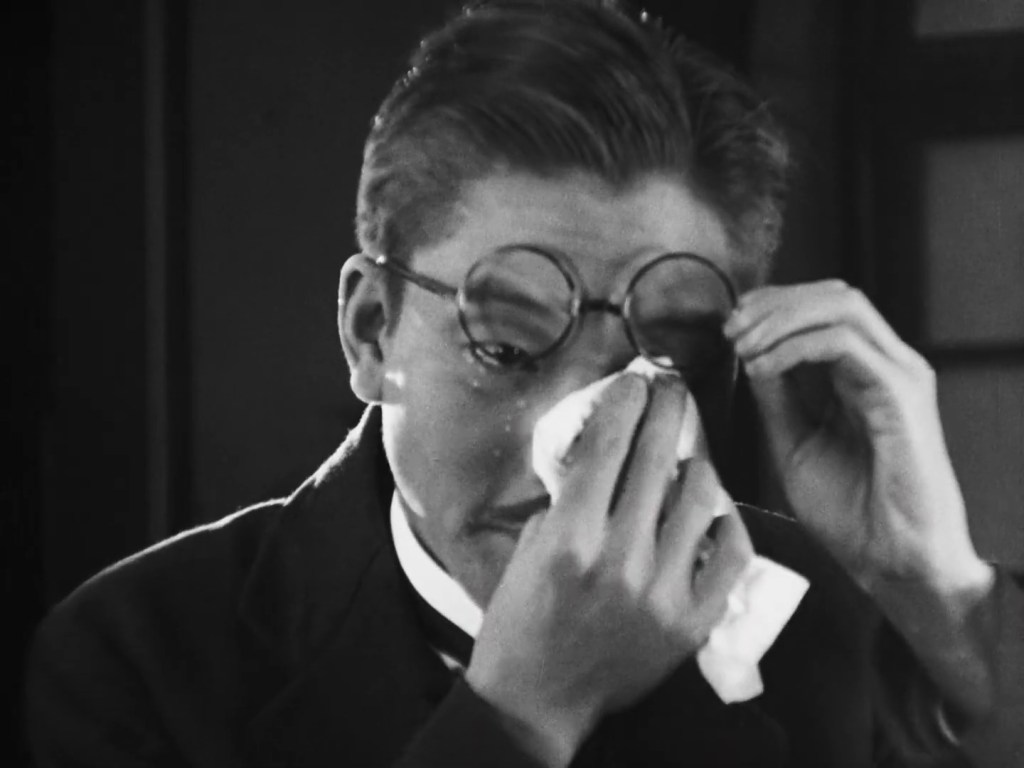


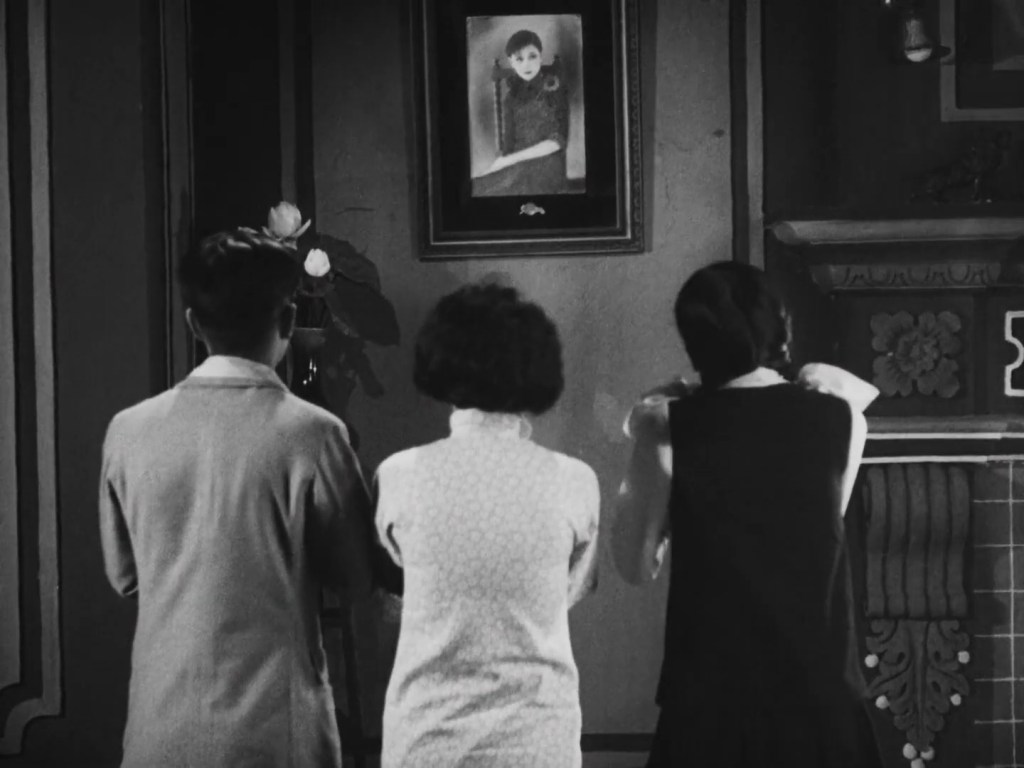



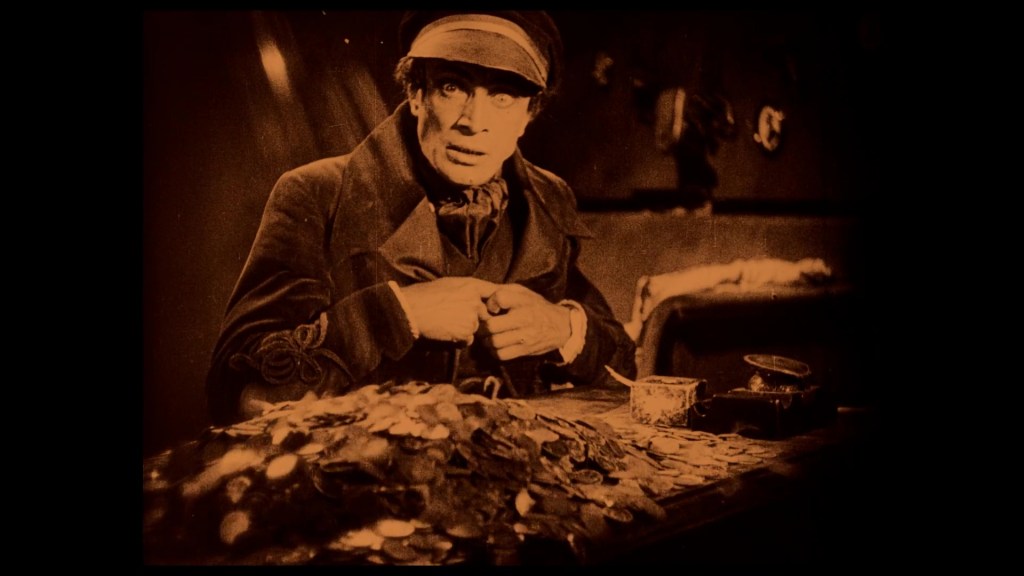


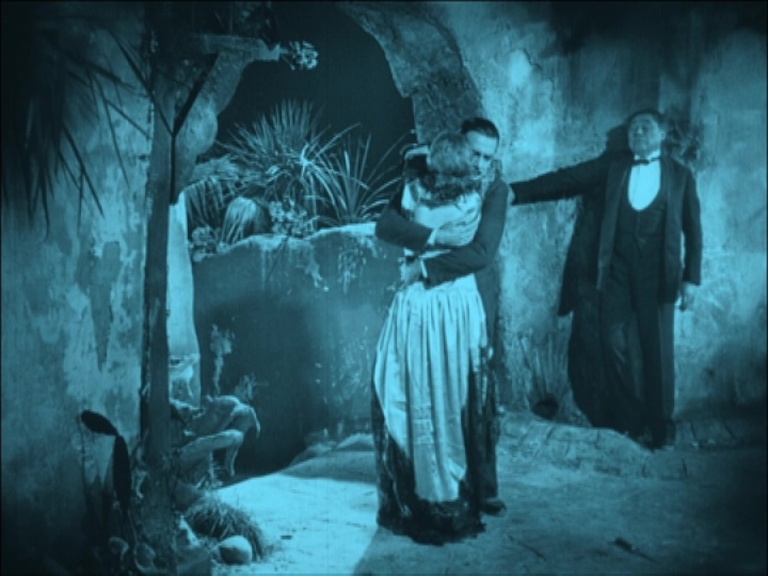


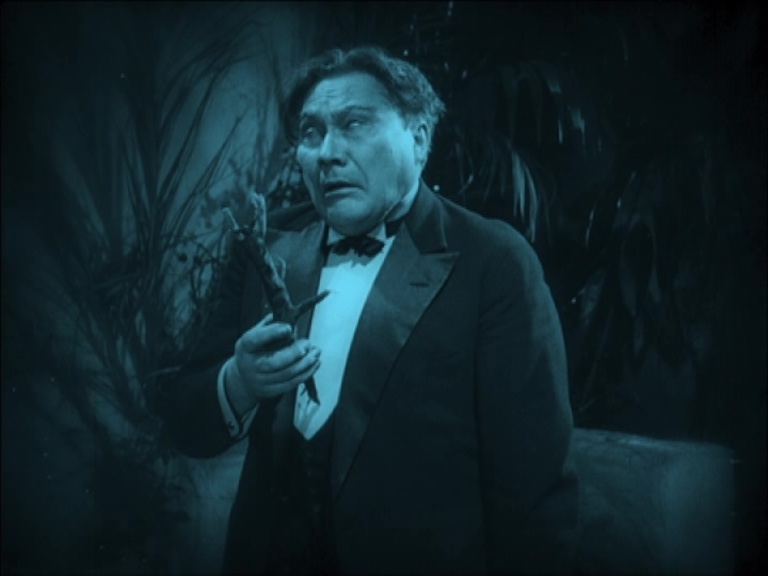


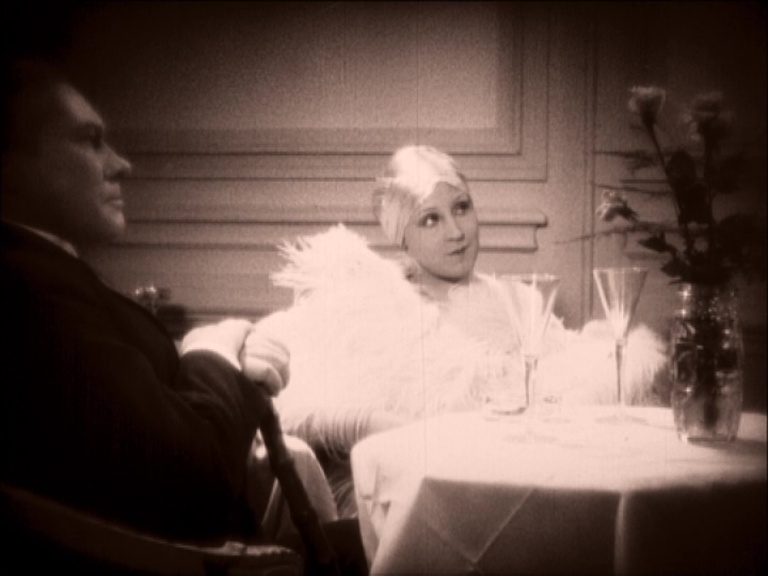


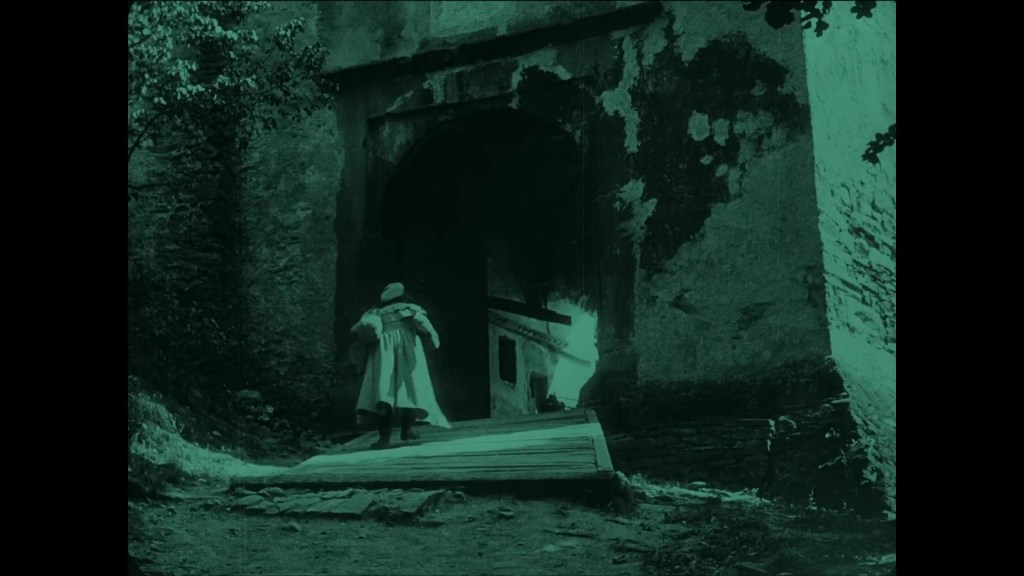


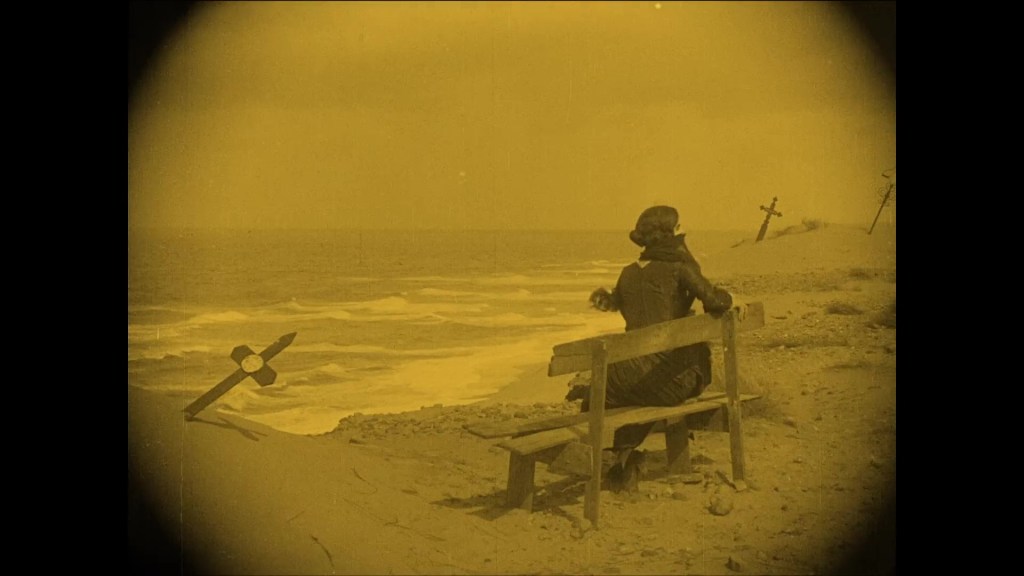


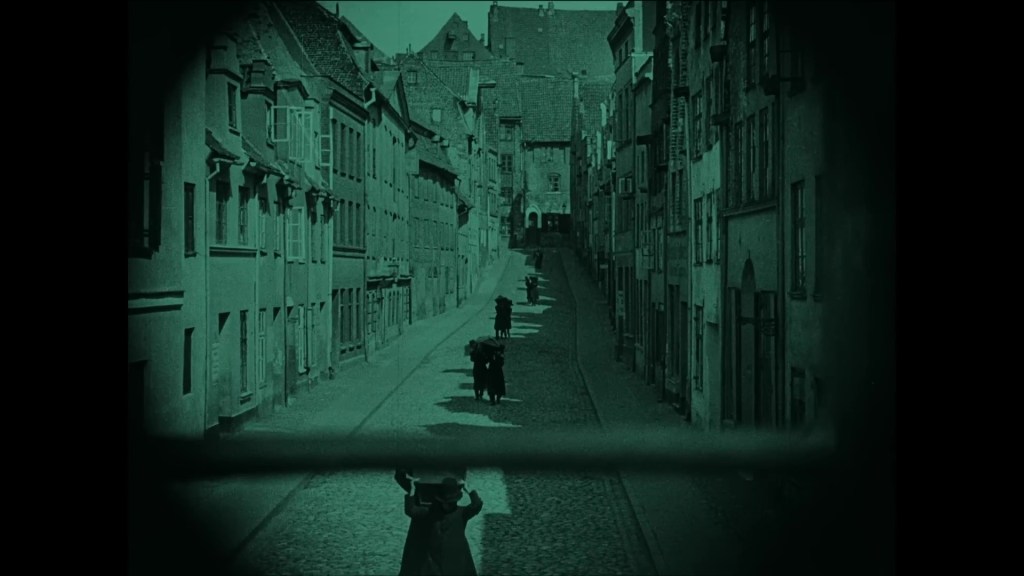
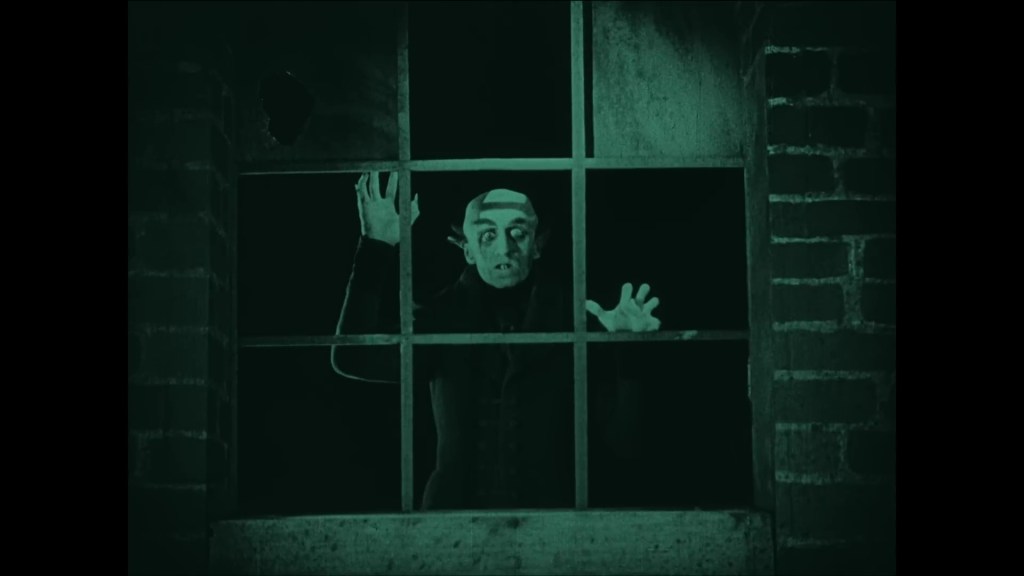
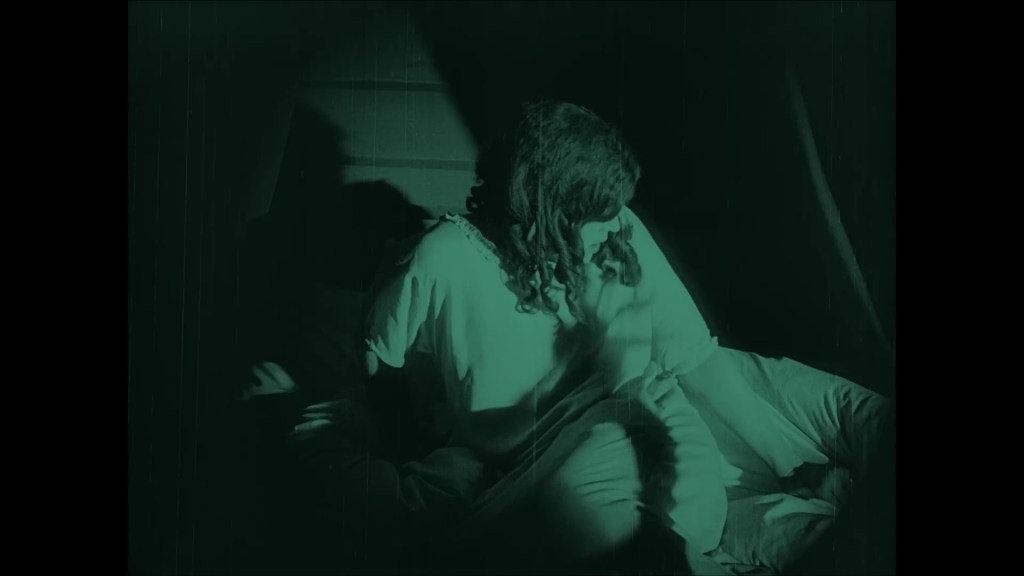








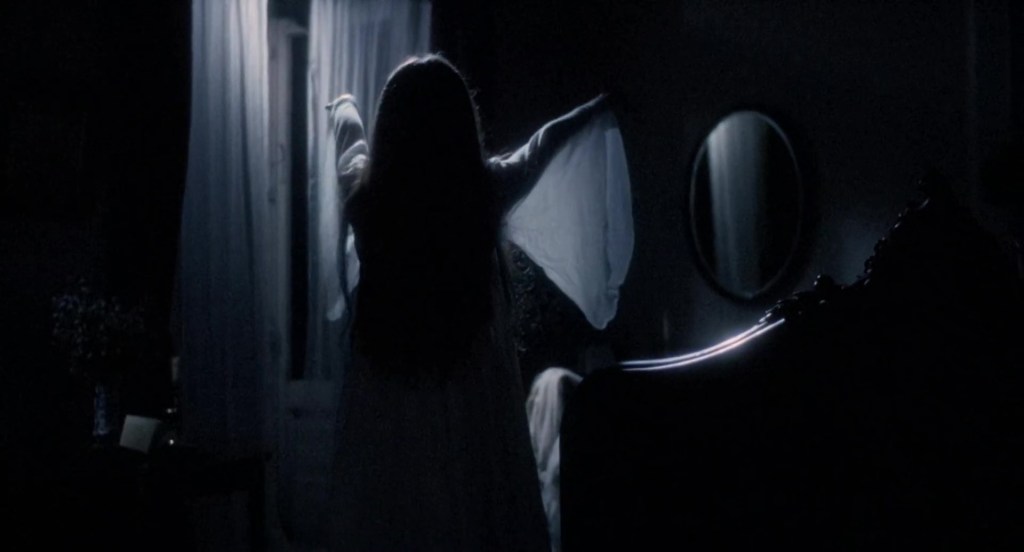


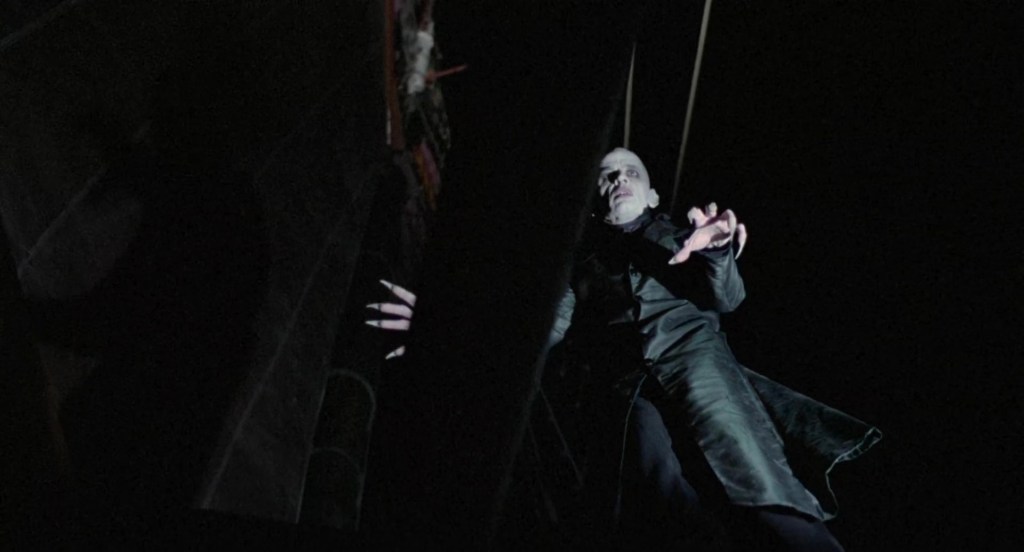


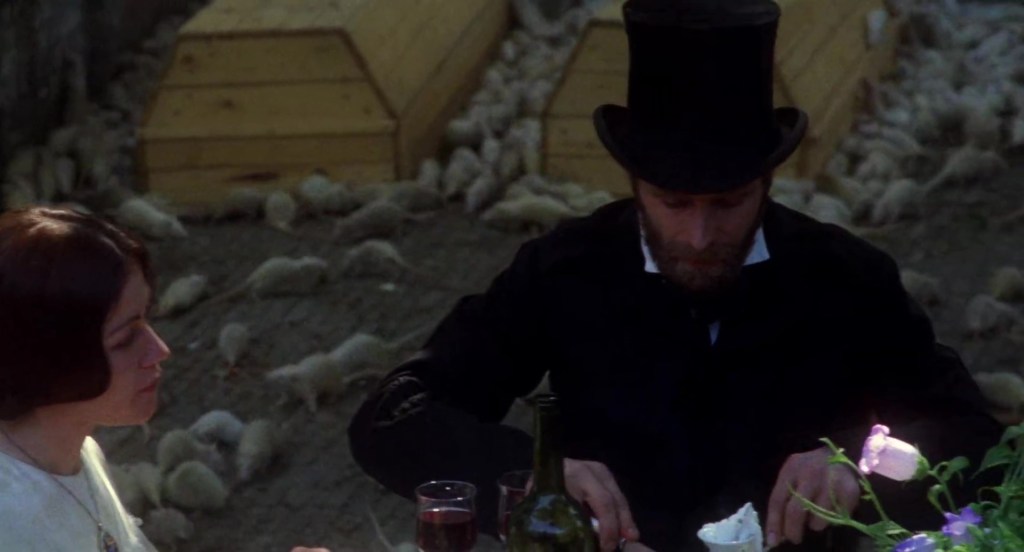









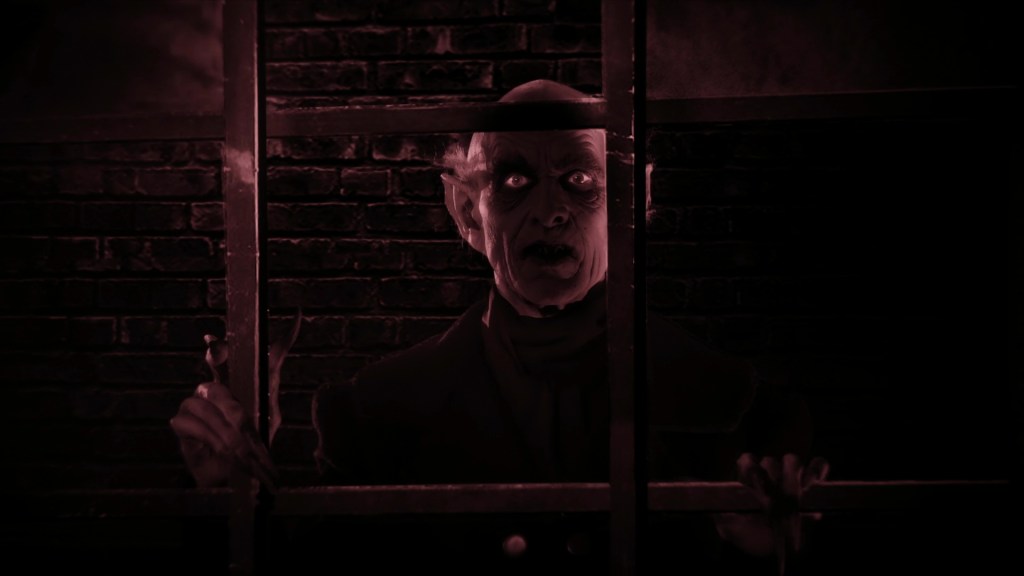







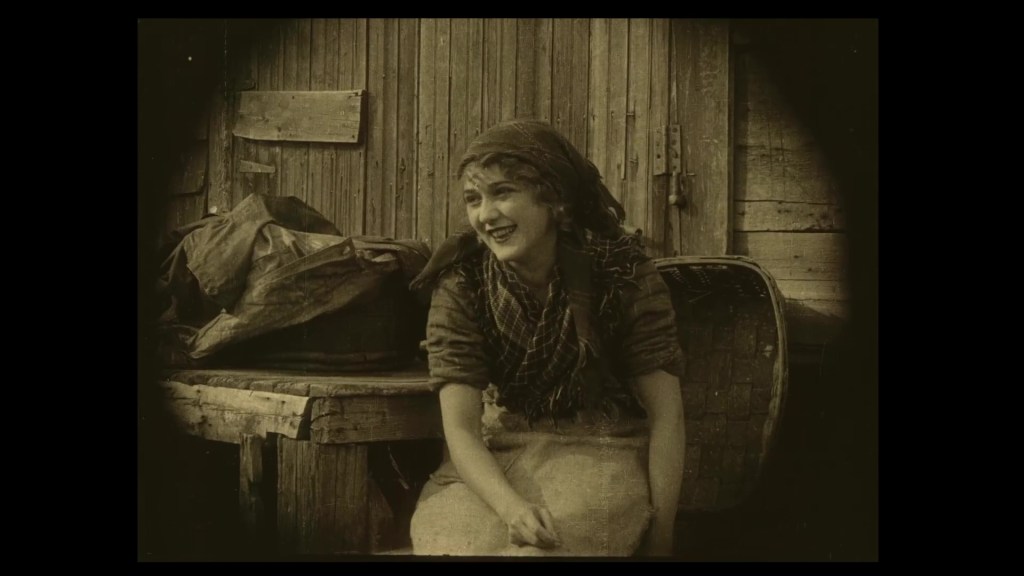


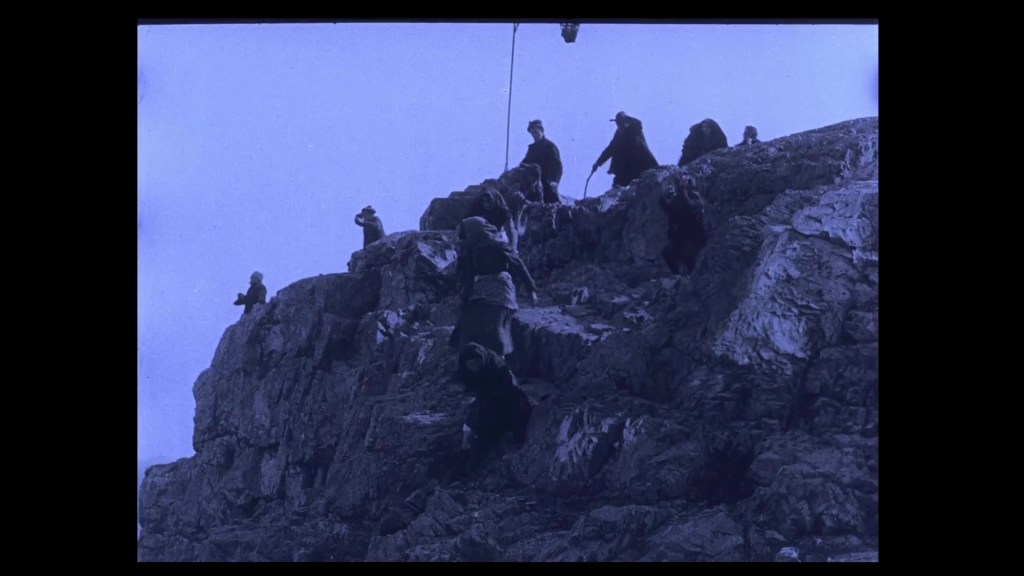


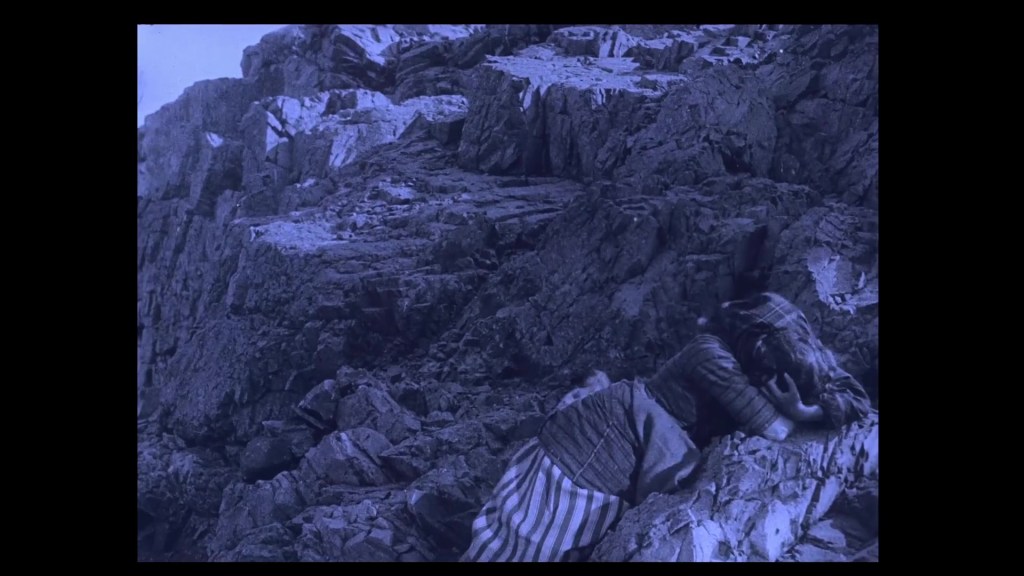


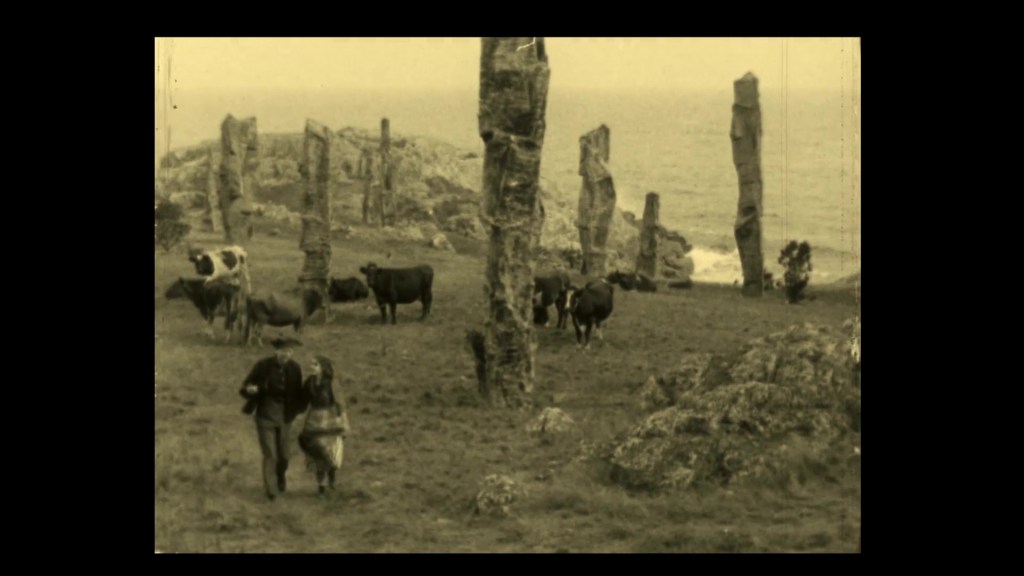


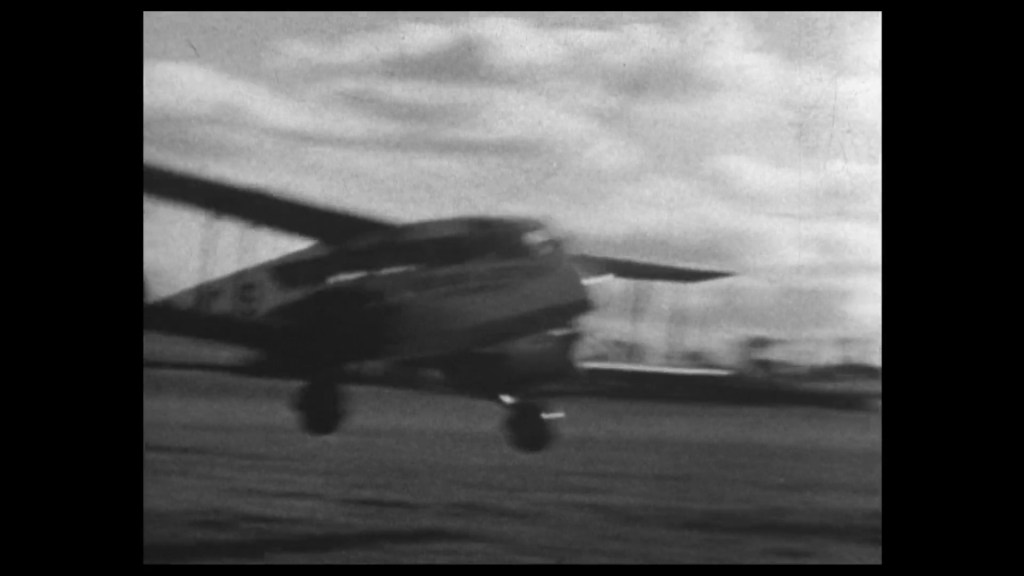




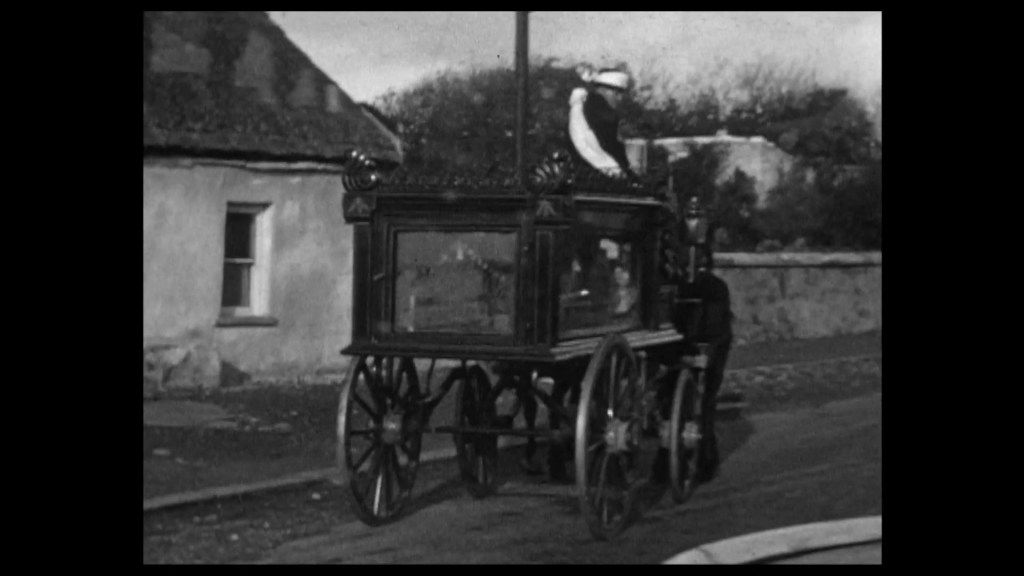
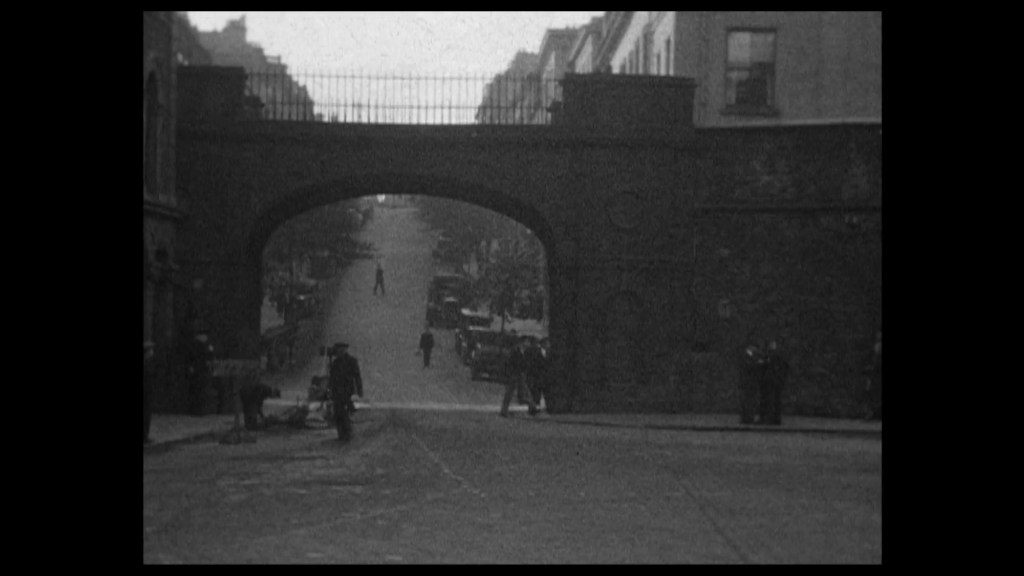

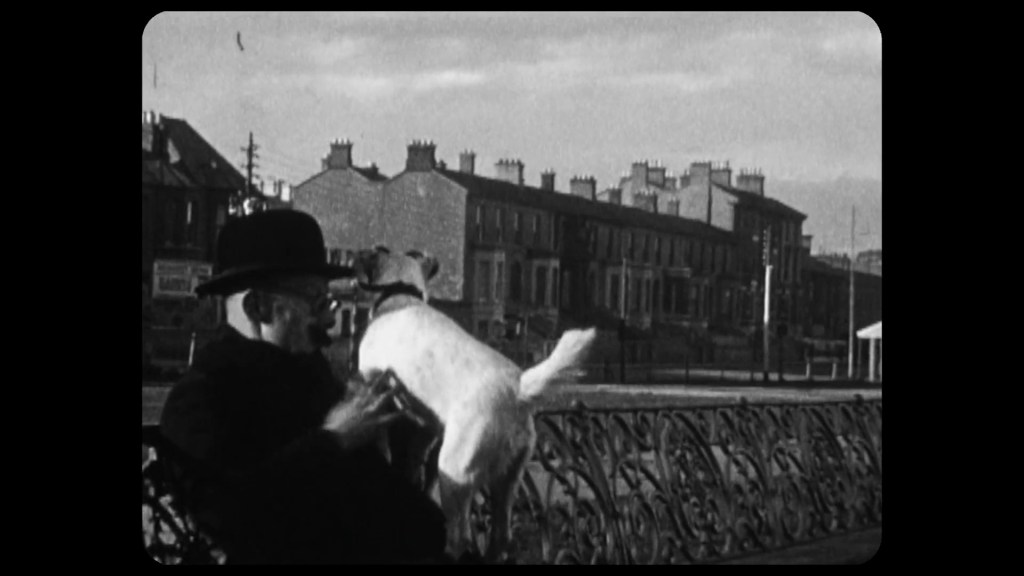


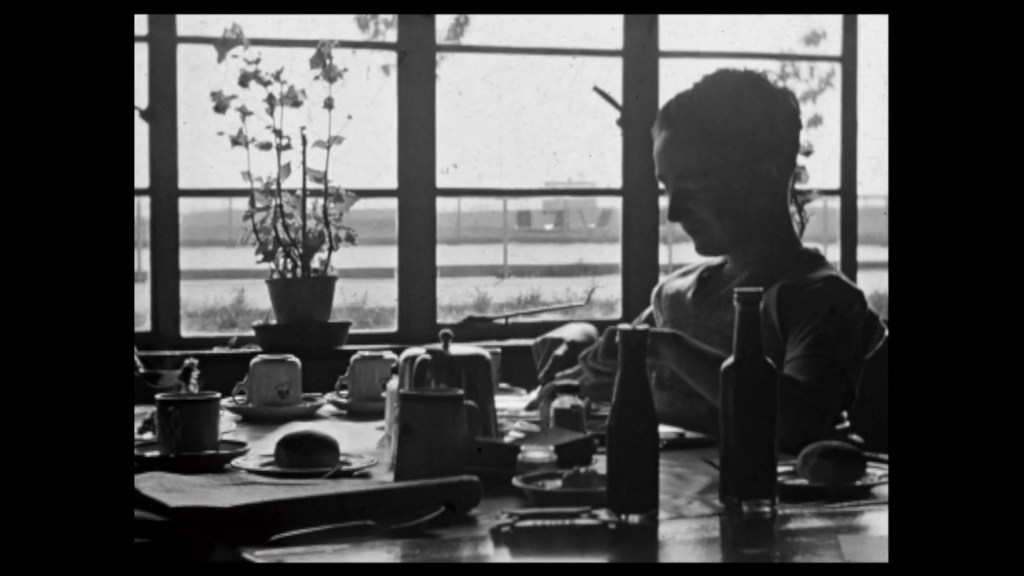


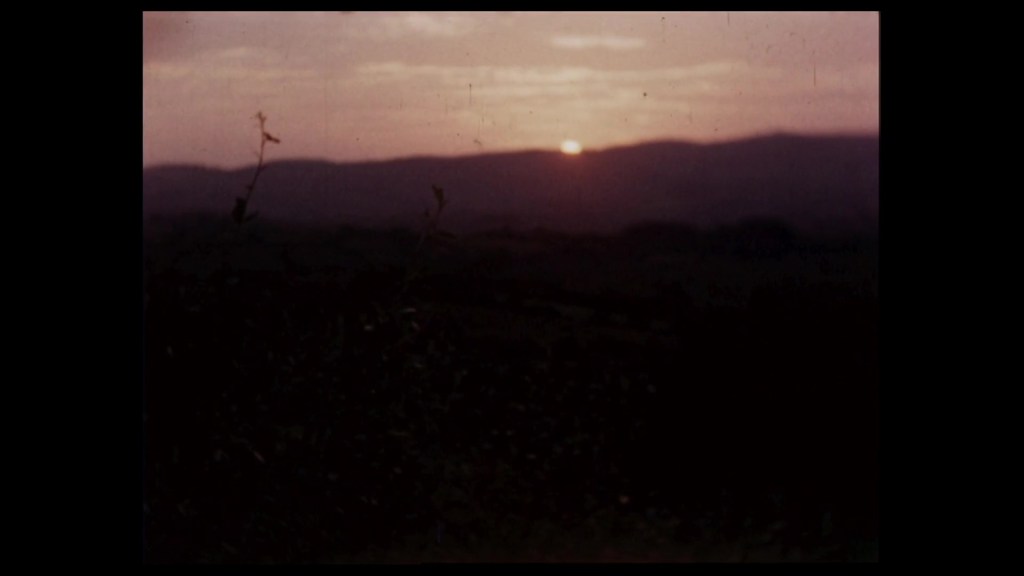
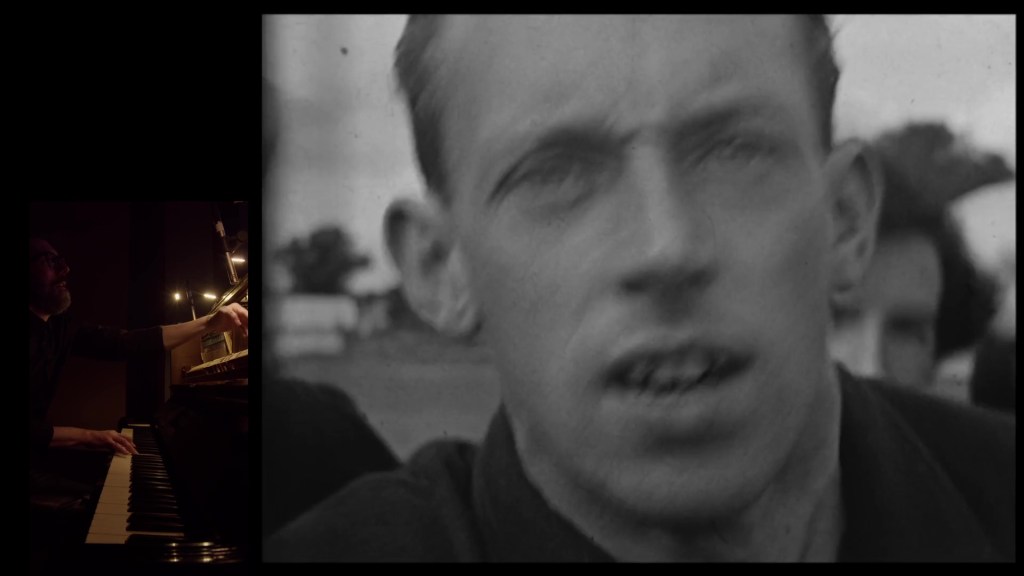
 The Realm of Silence