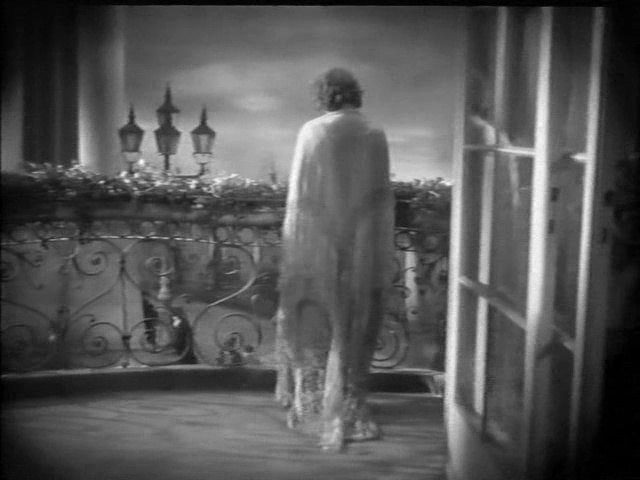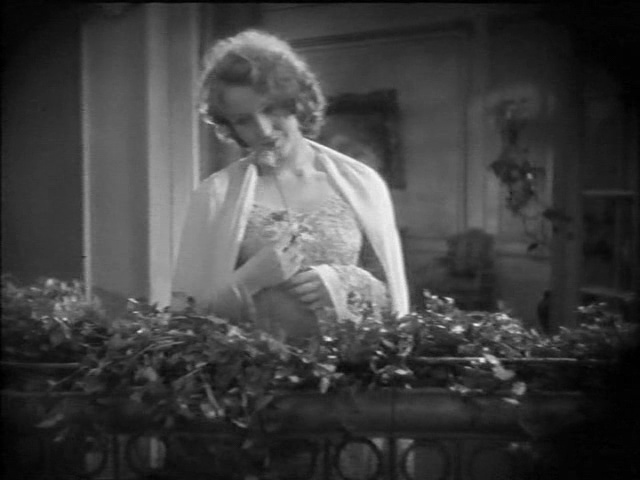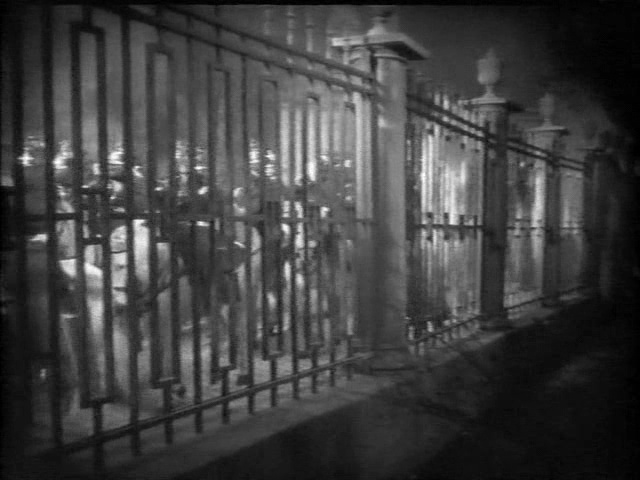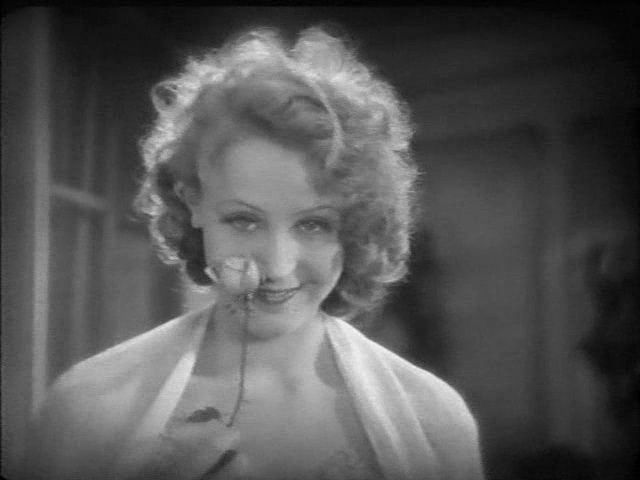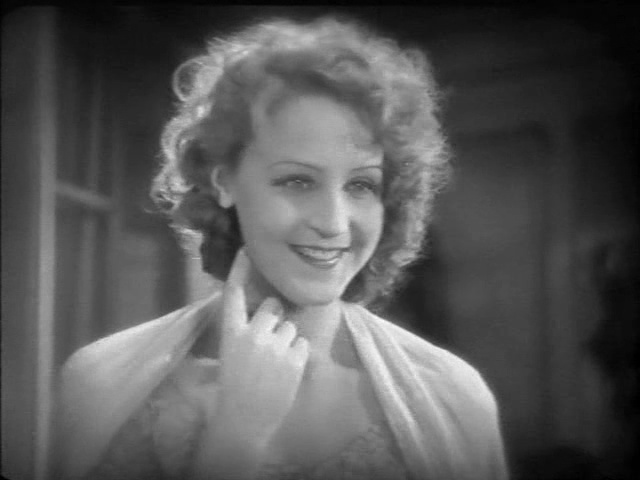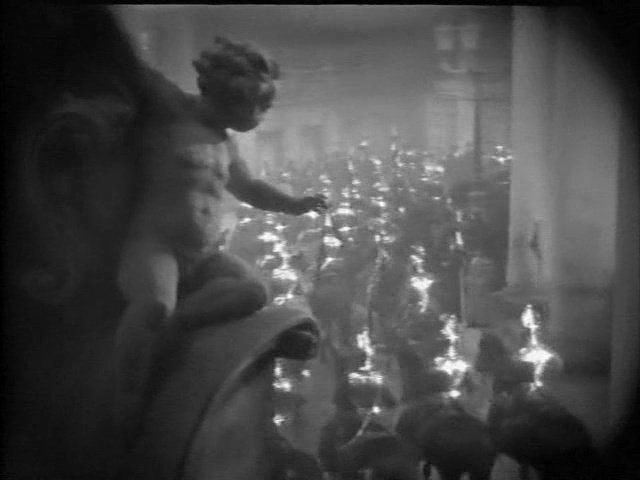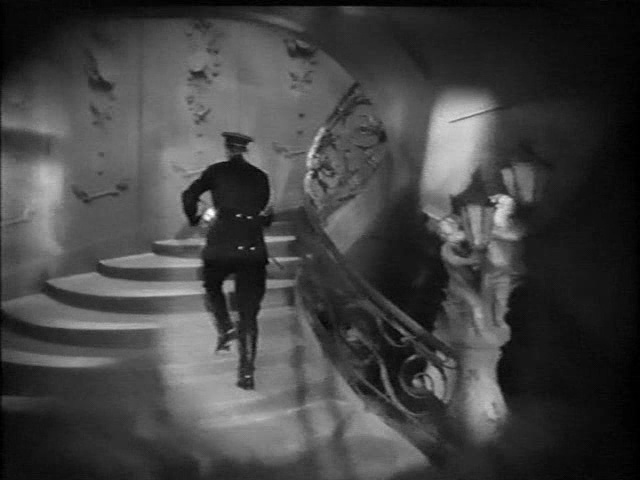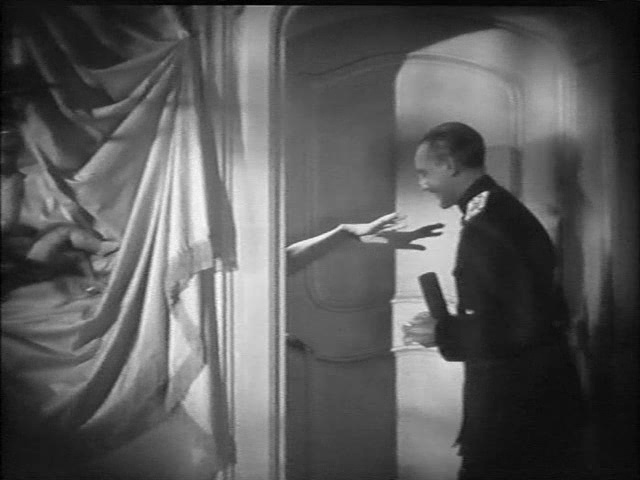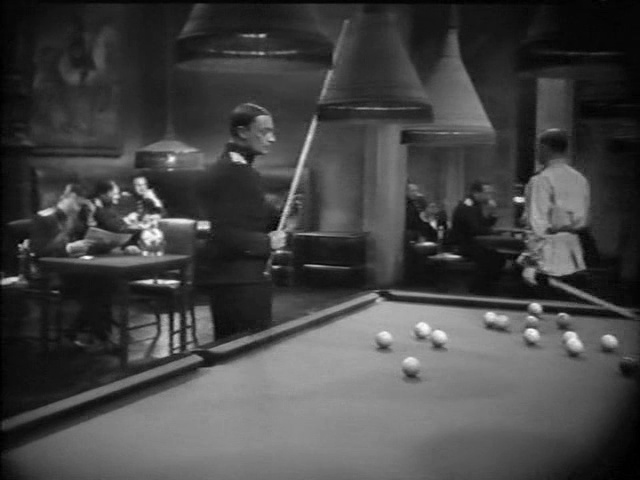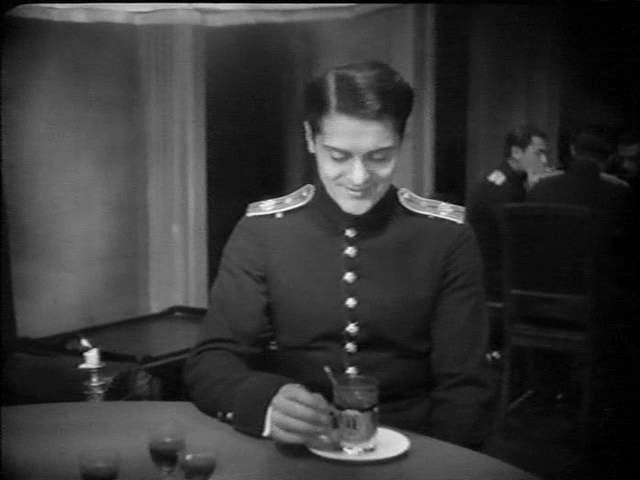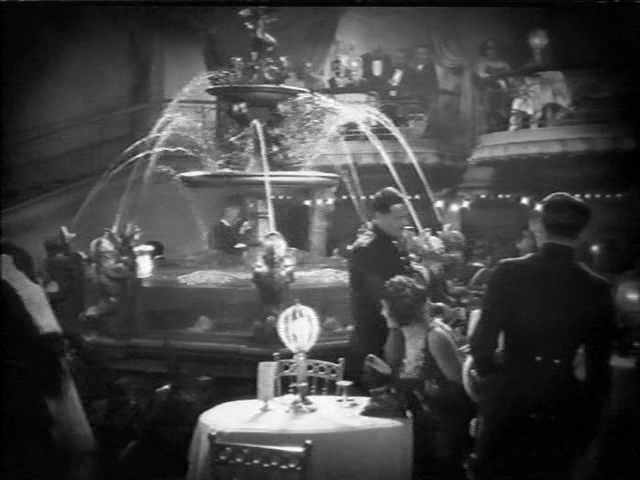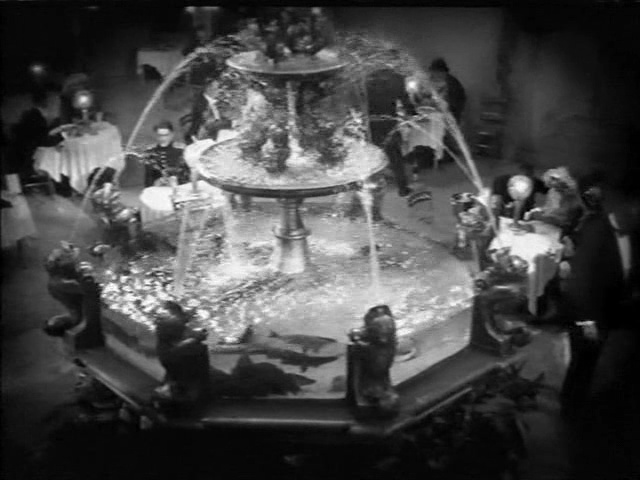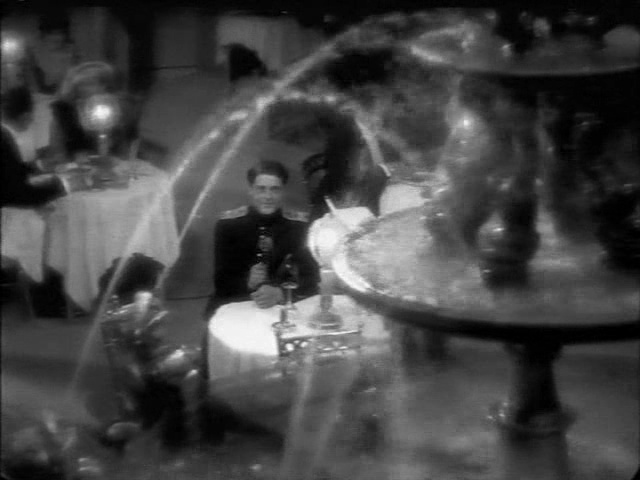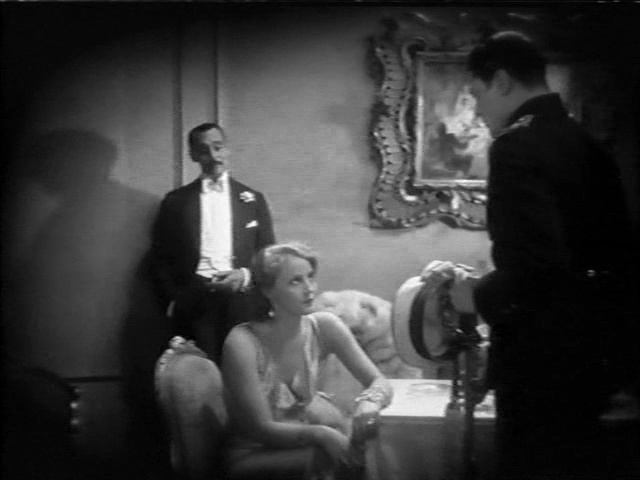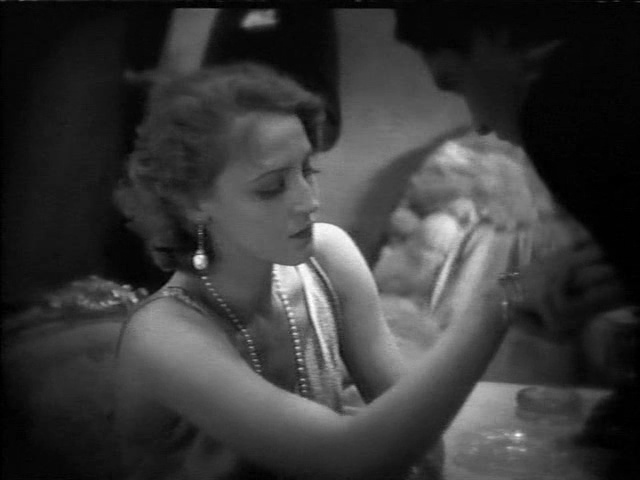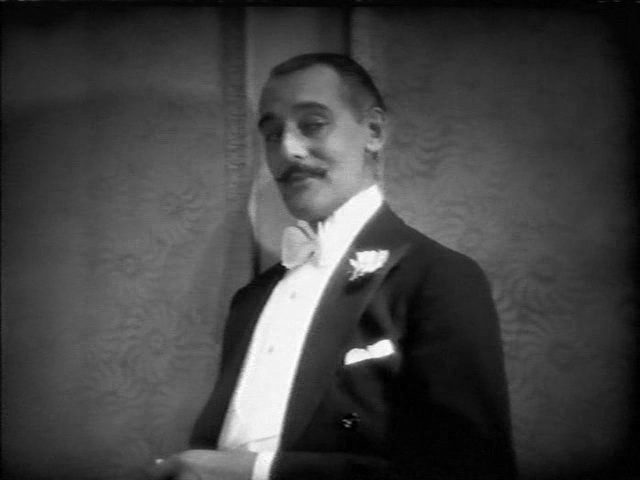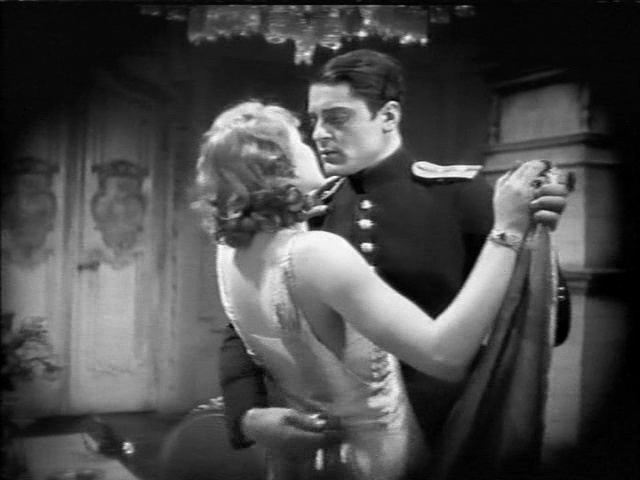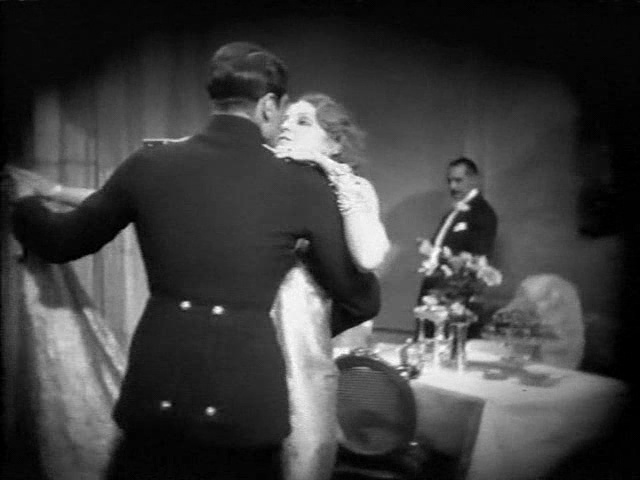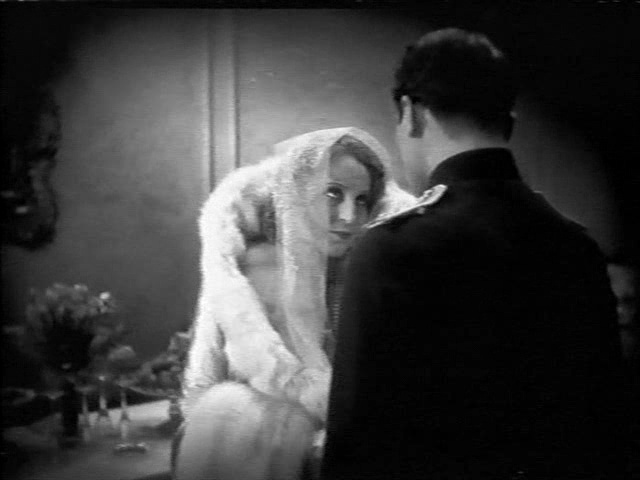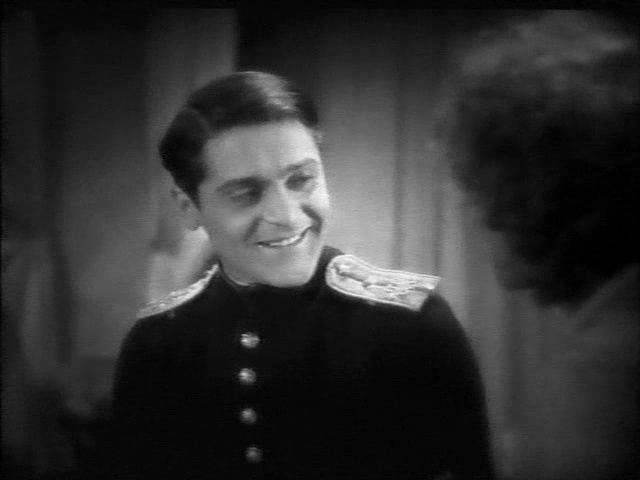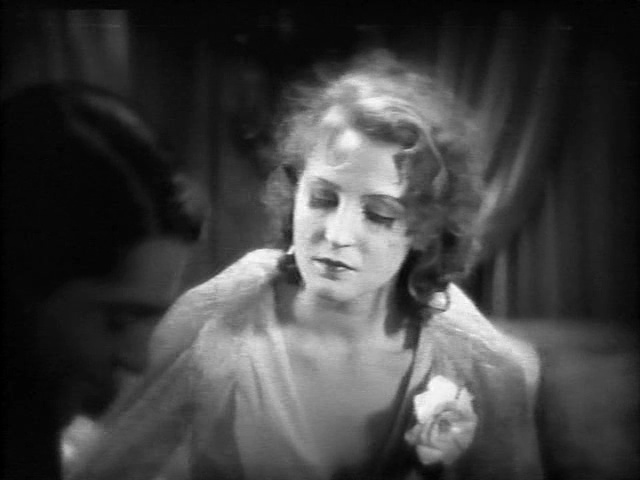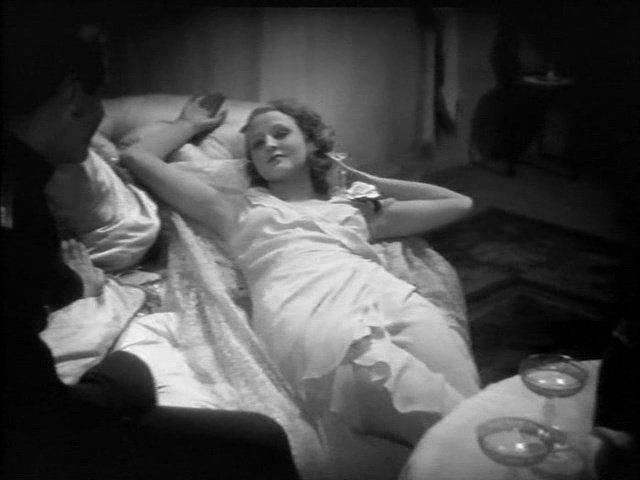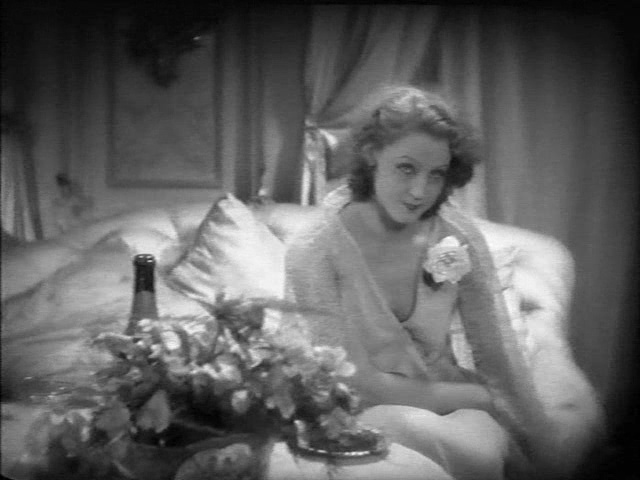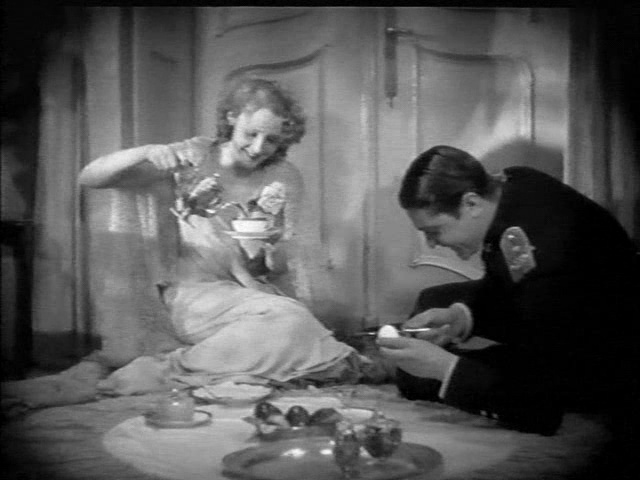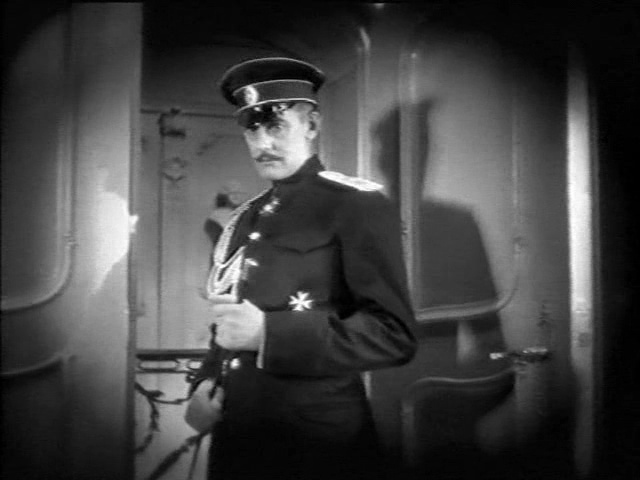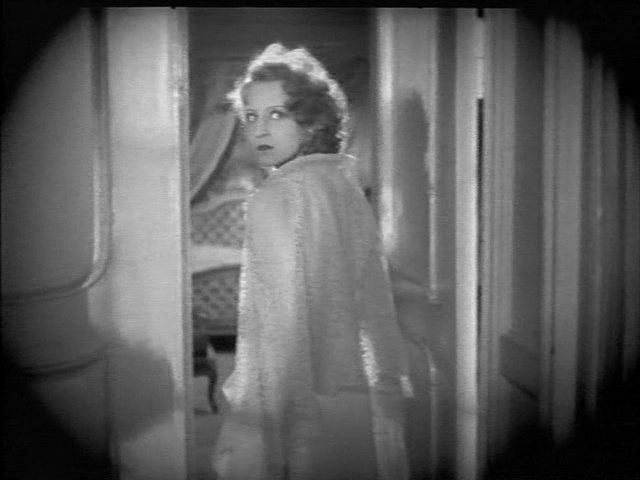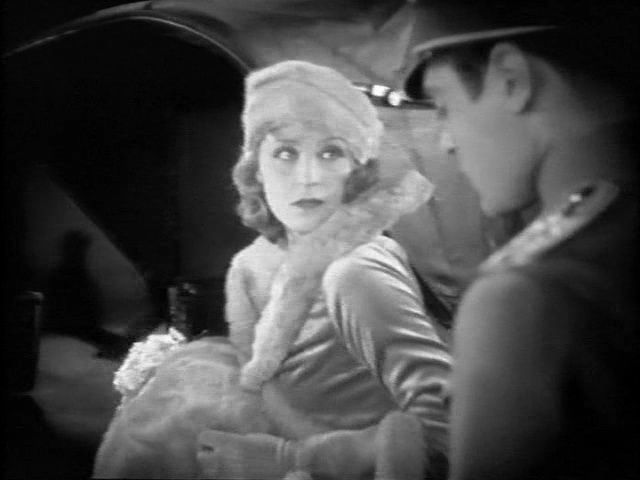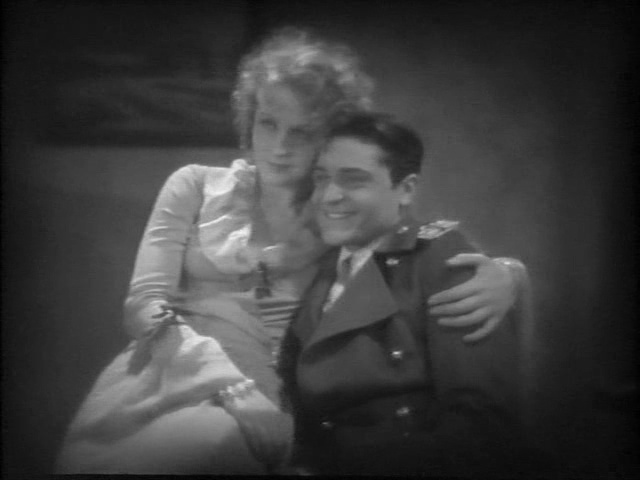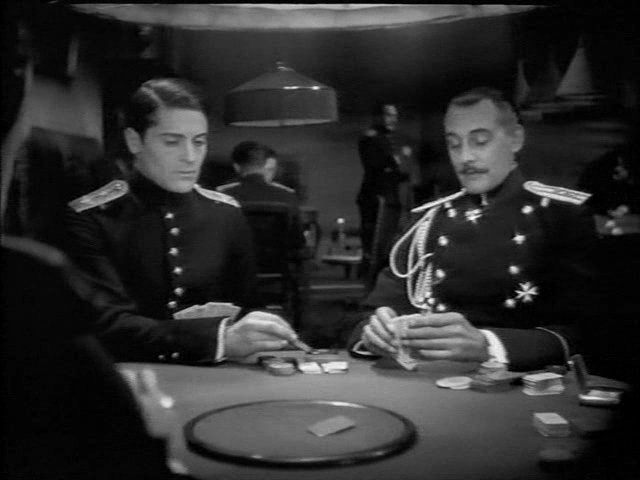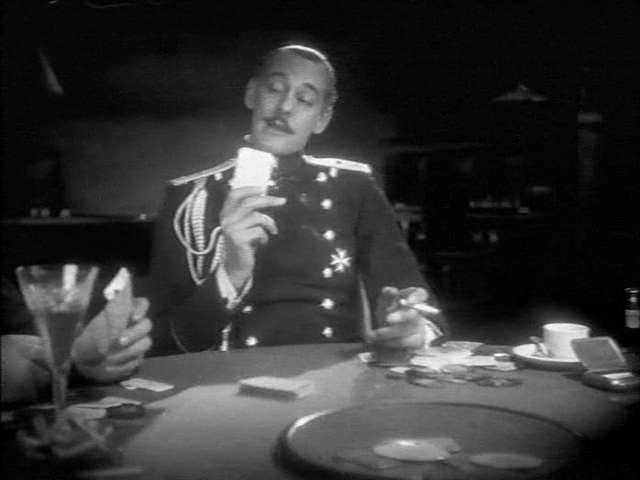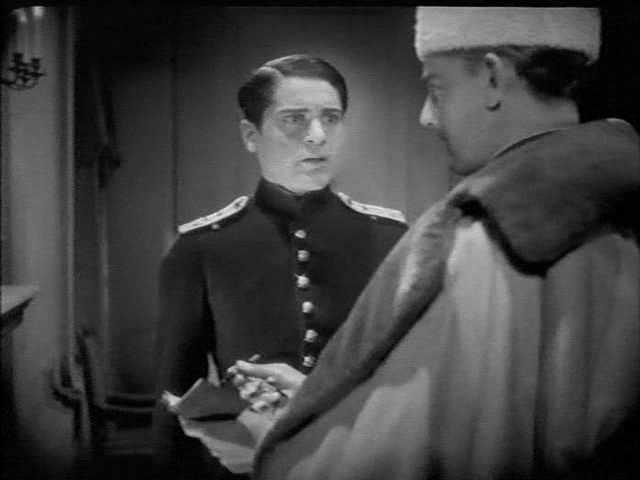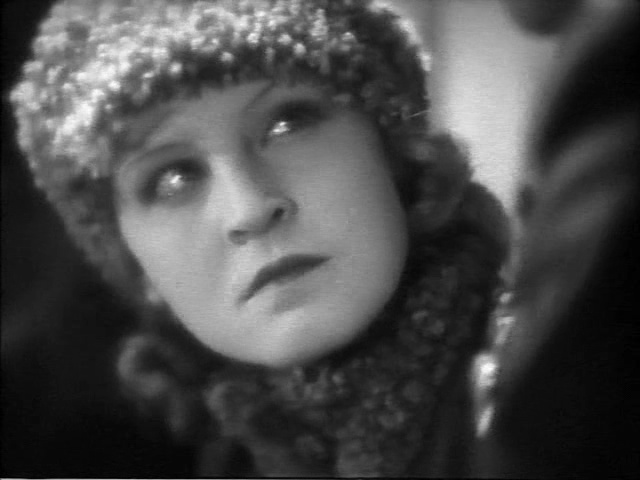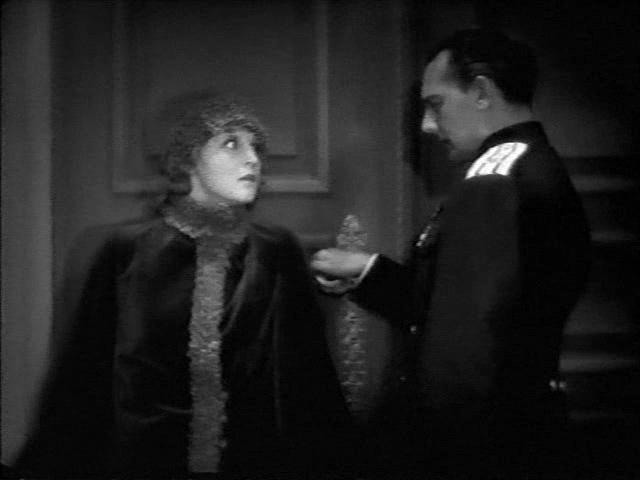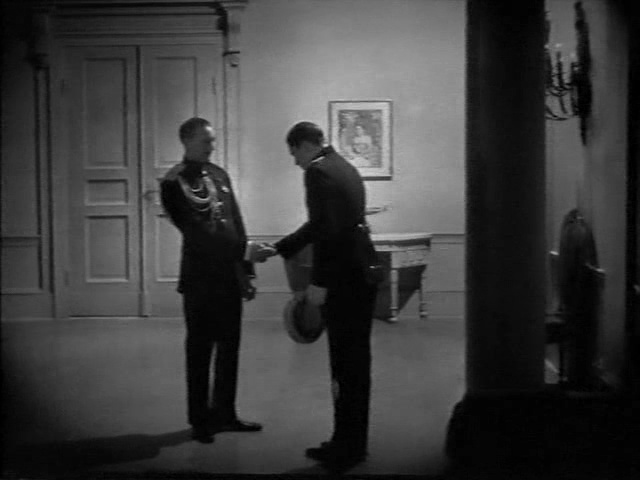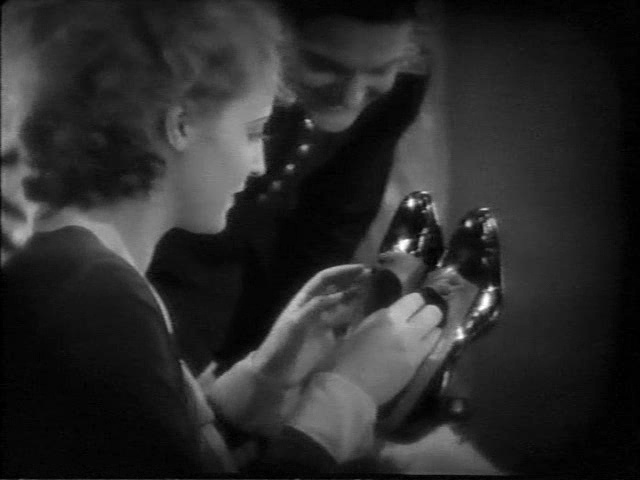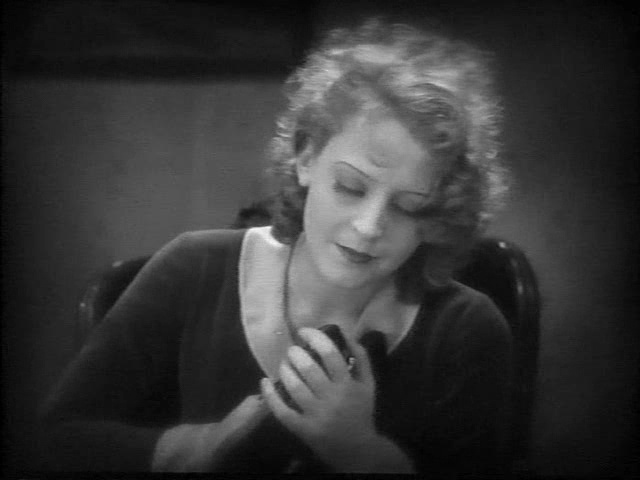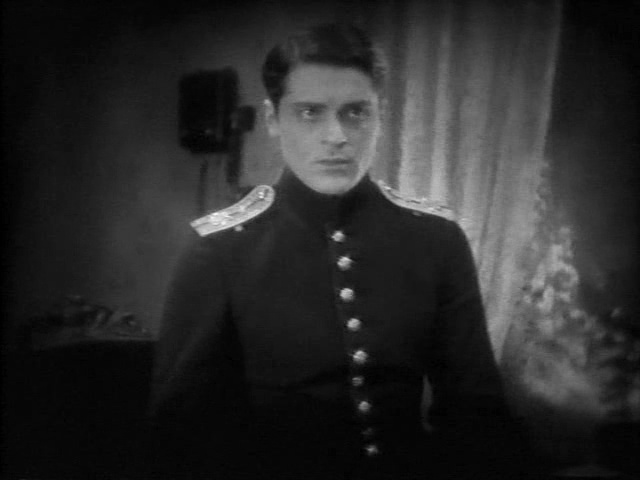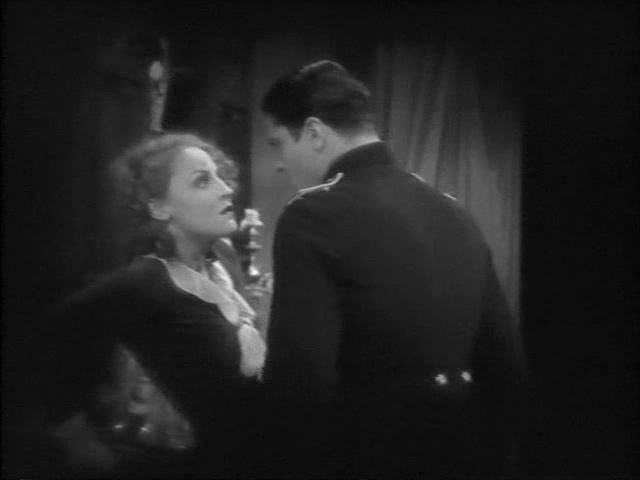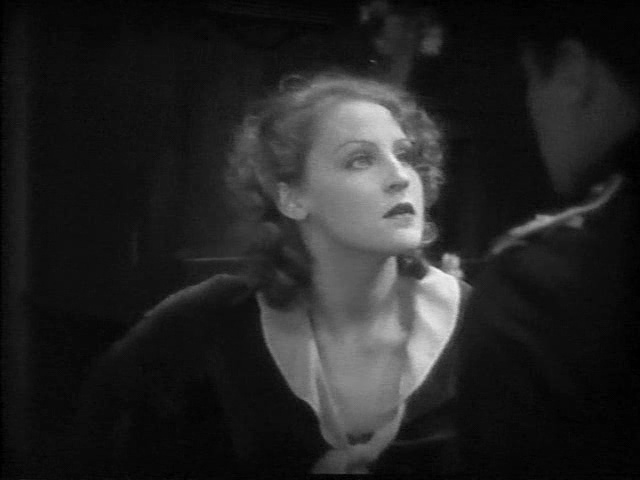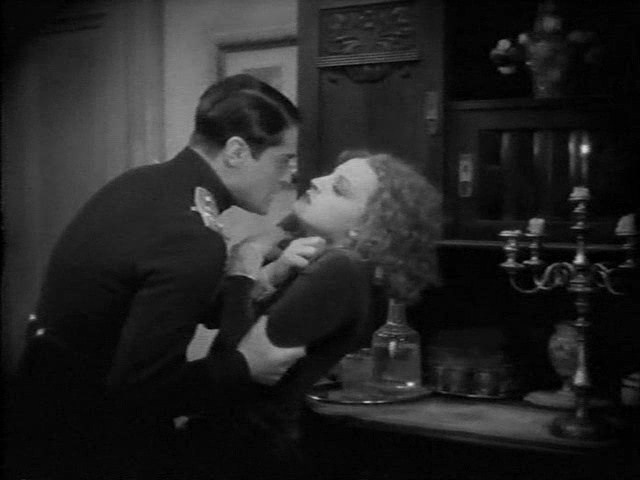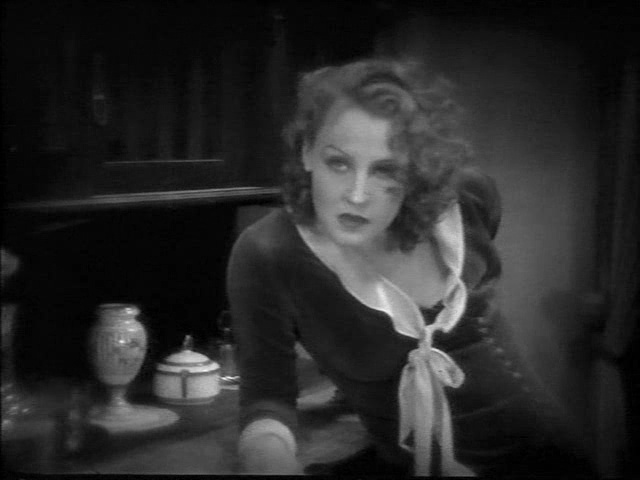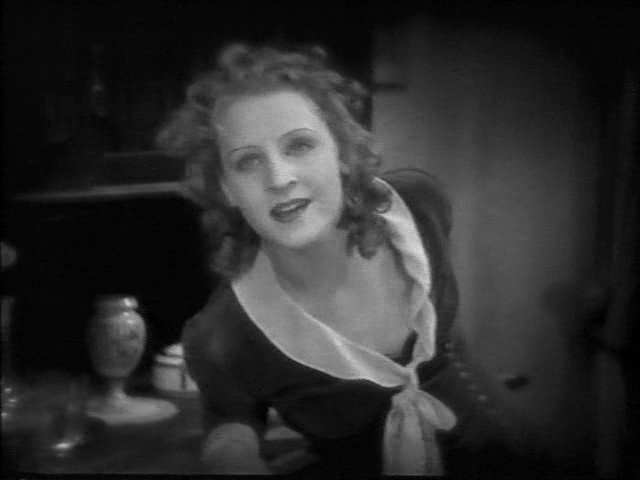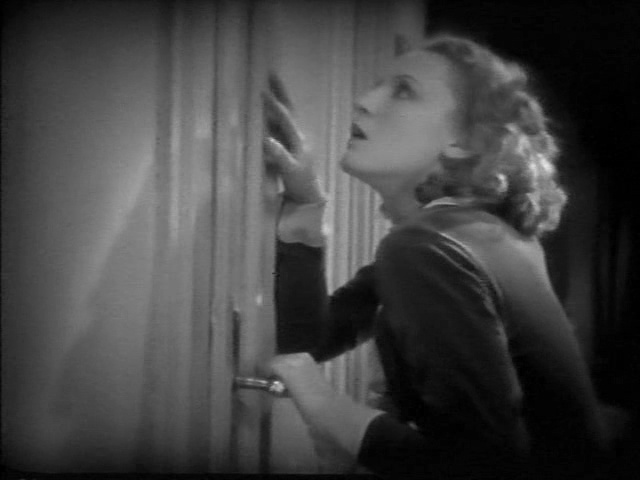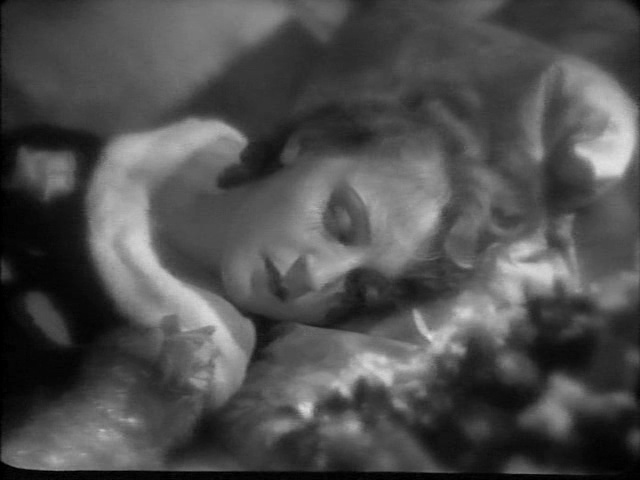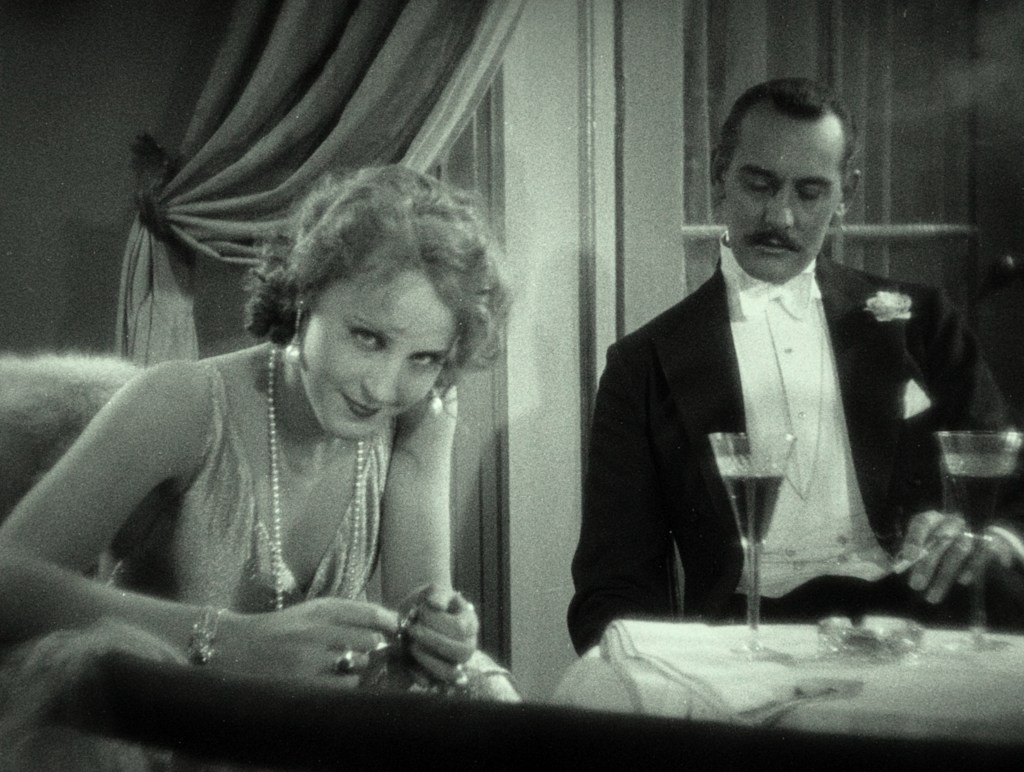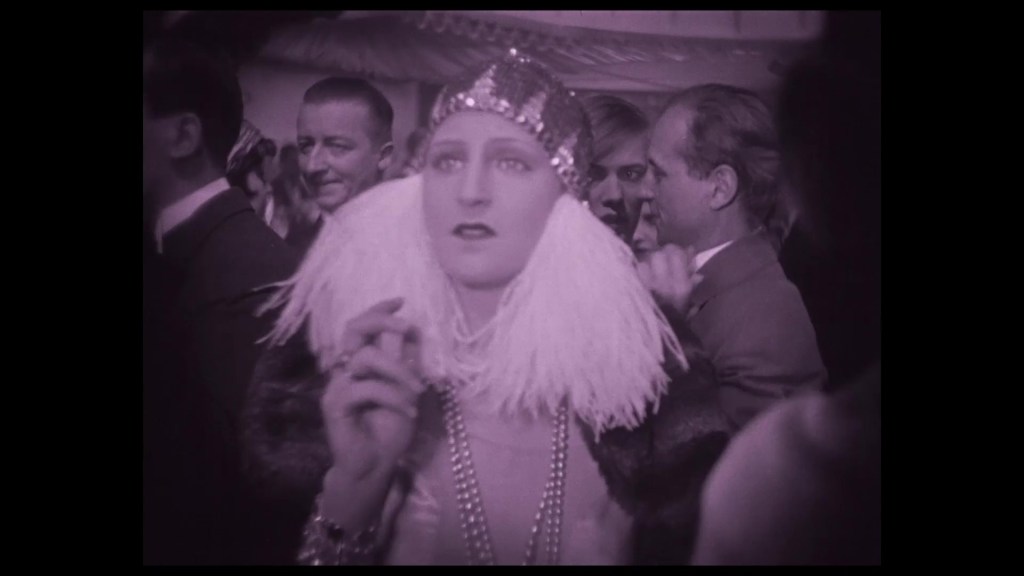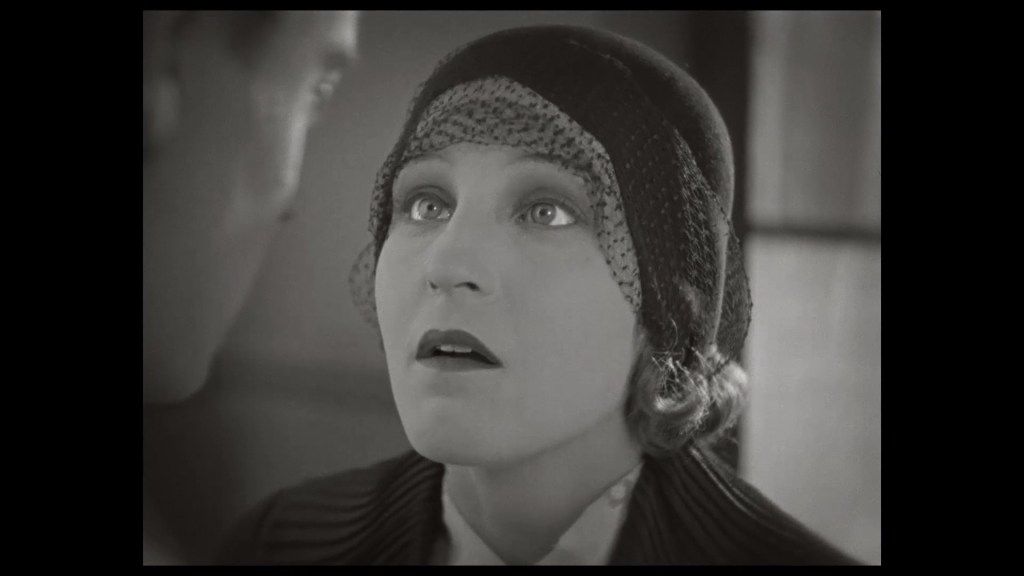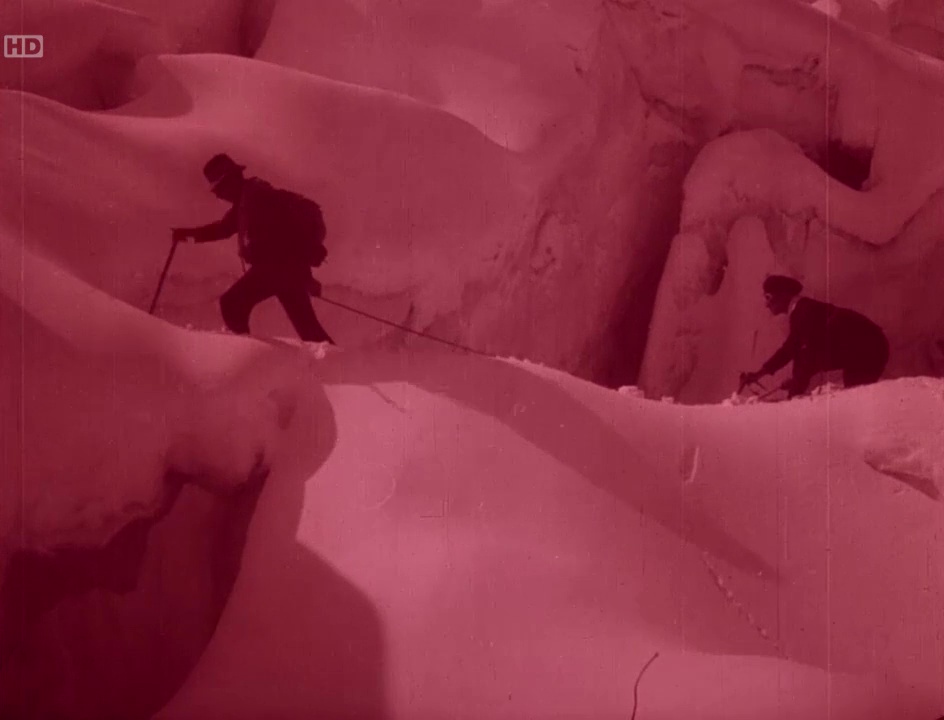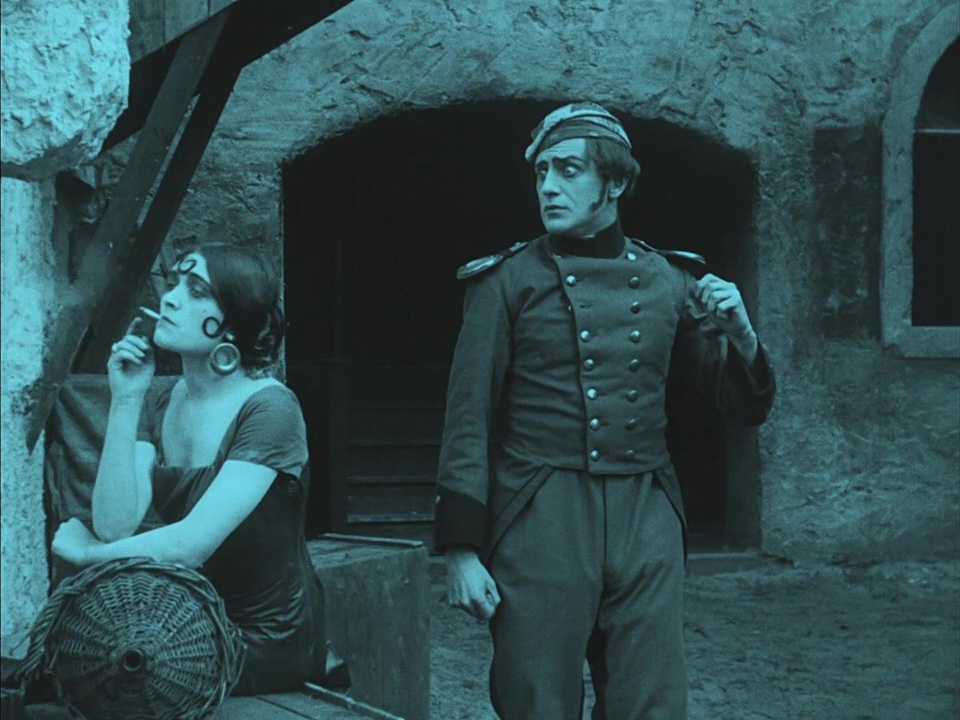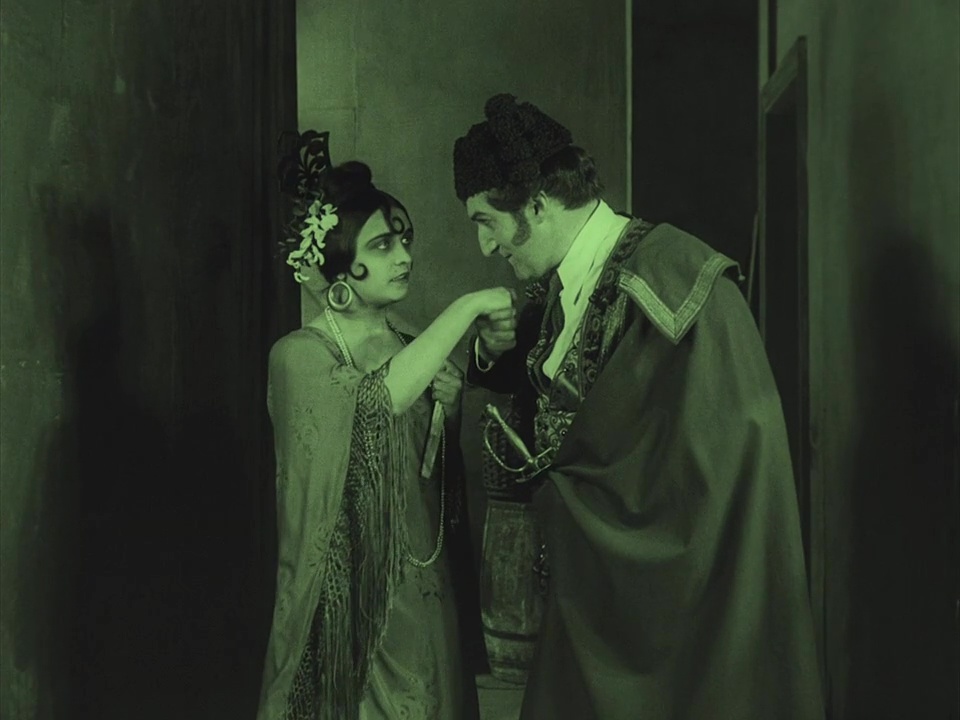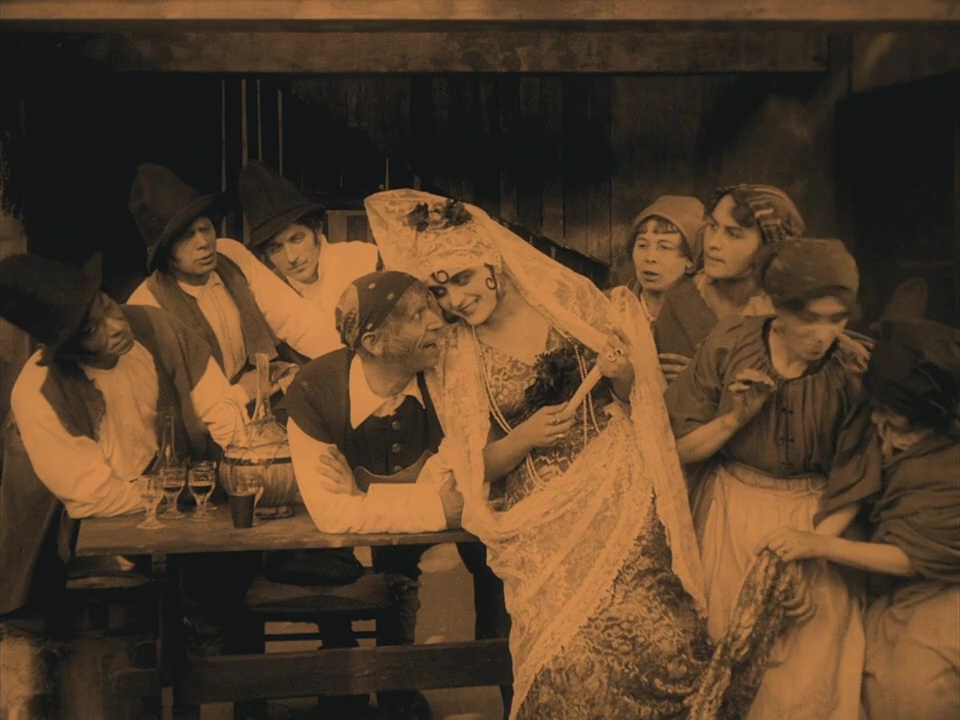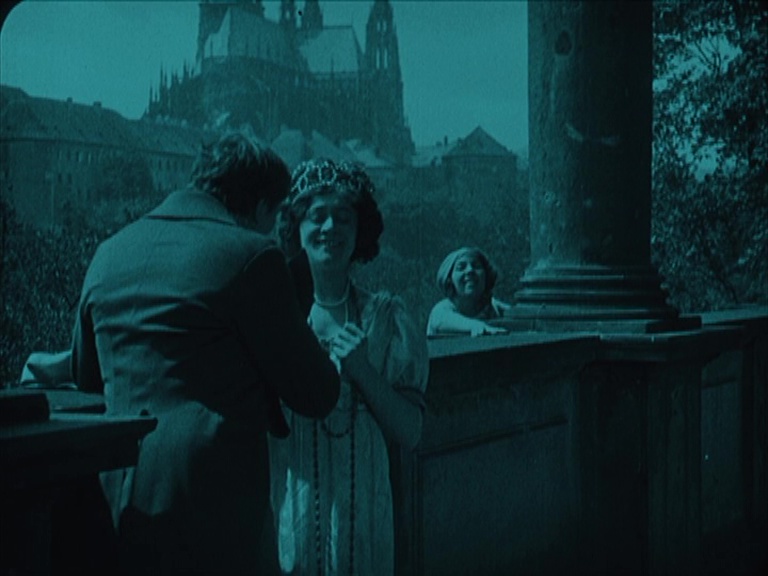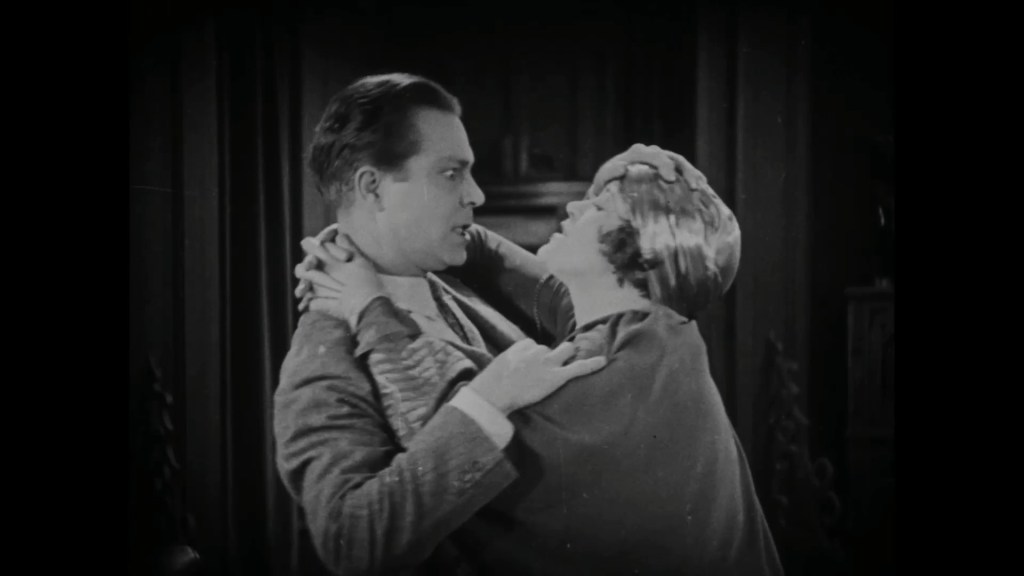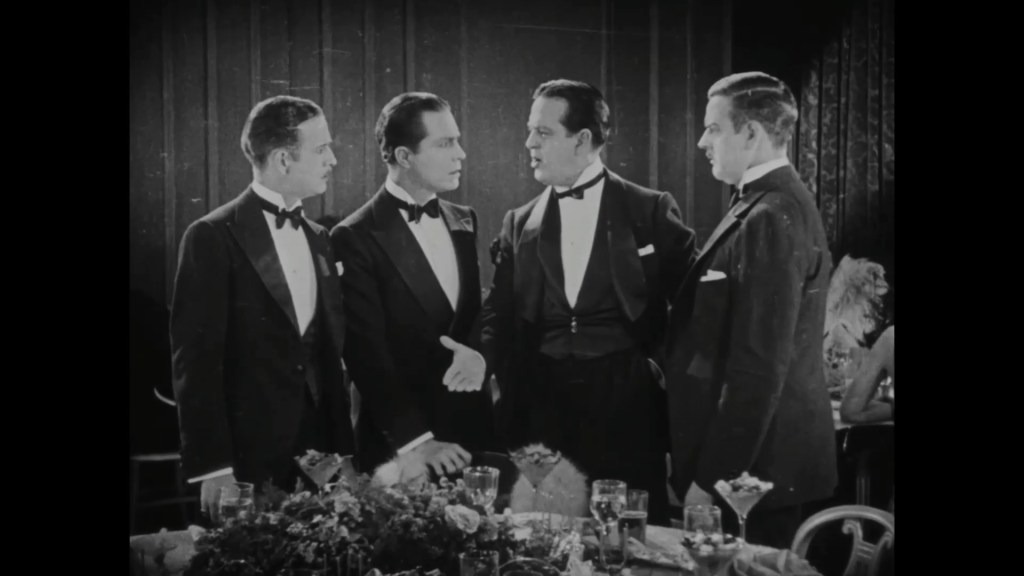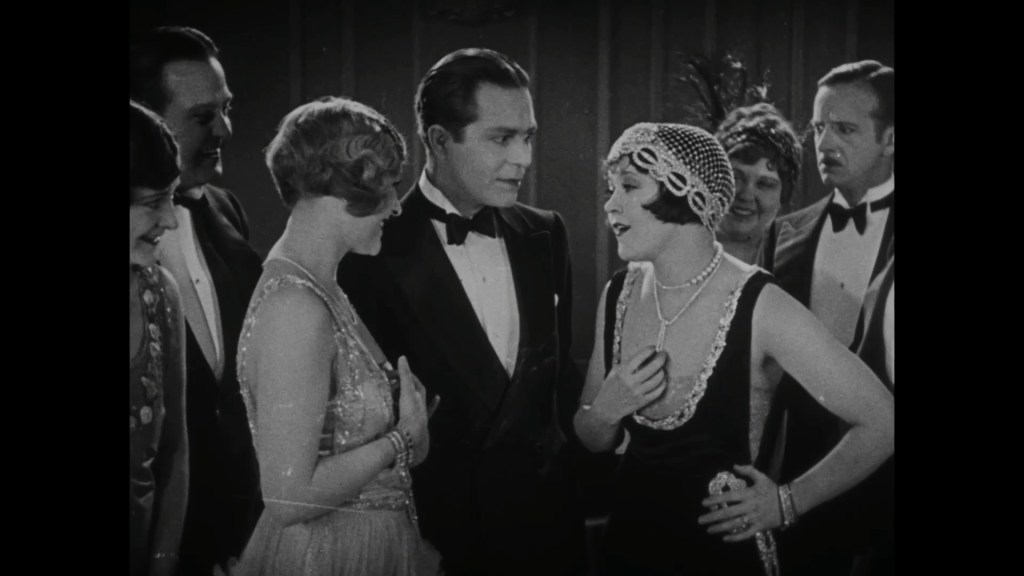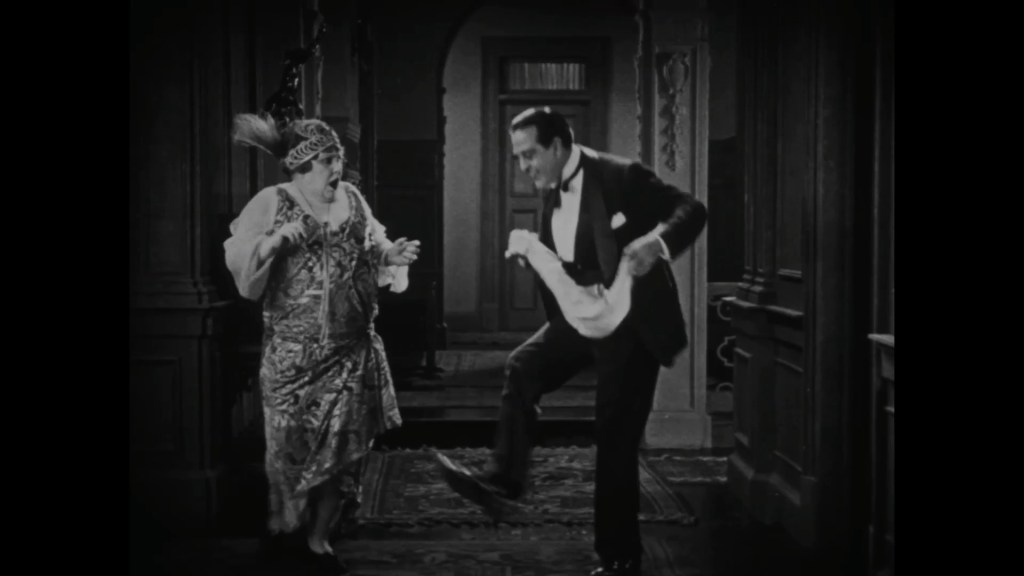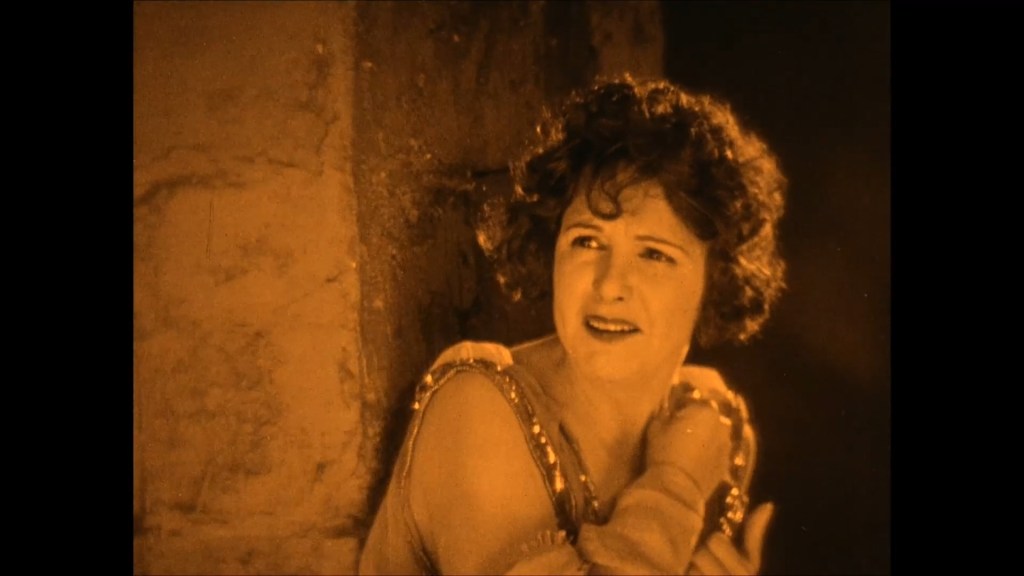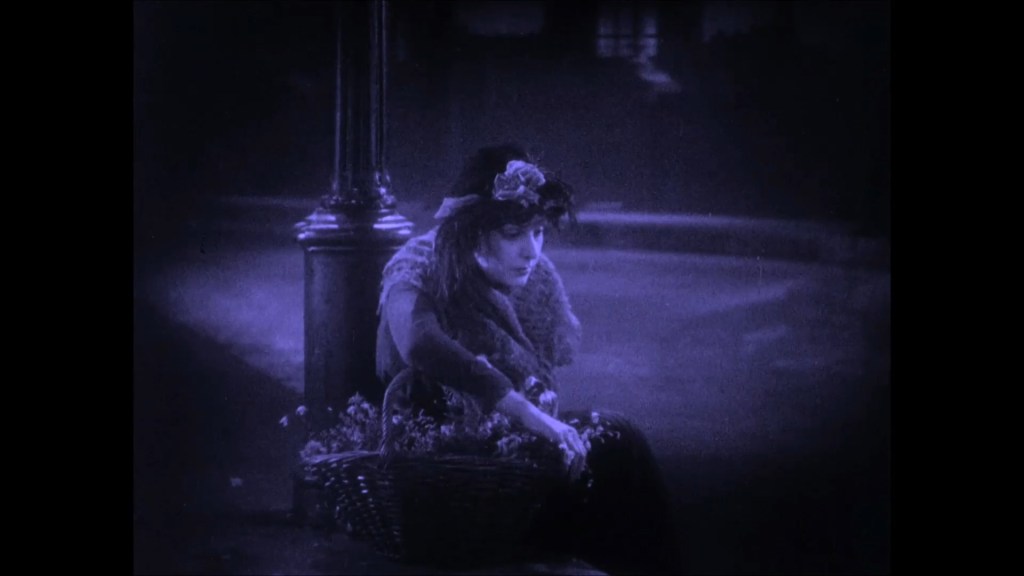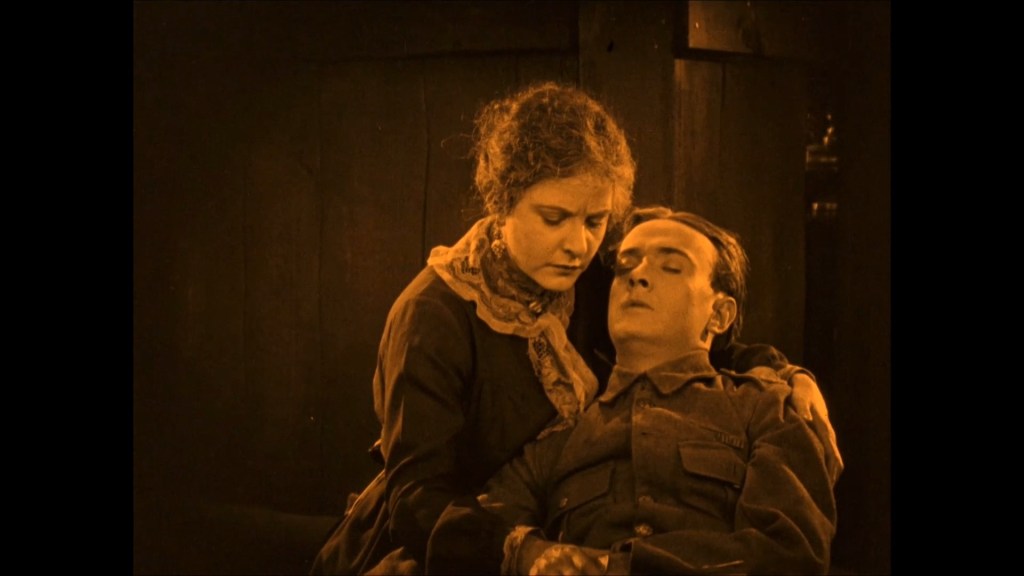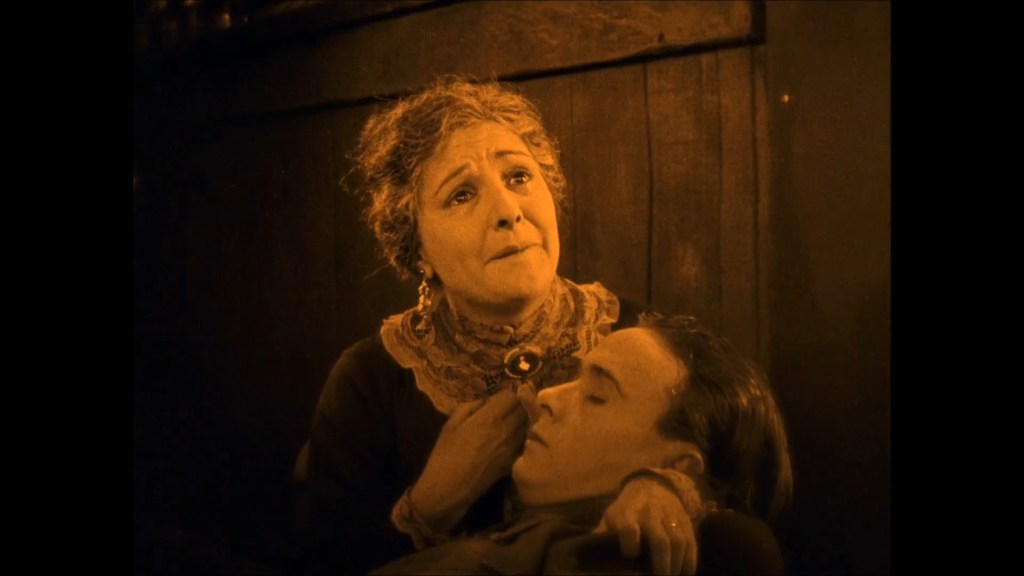
Der Student von Prag (1913; Ger.; Hanns Heinz Ewers)

Once more I find myself literarily immersed in E.T.A. Hoffmann, and when it came to a select a silent film for this week the most thematically relevant seemed to be…

Der Student von Prag (1913; Ger.; Hanns Heinz Ewers)

Hard-up student and swordsman Balduin agrees to receive a fortune from the sinister Scapinelli, who takes as his price the reflection of Balduin. Enriched, Balduin pursues the Countess Margit, but he is shadowed both by the besotted Lyduschka, and by his own doppelganger…

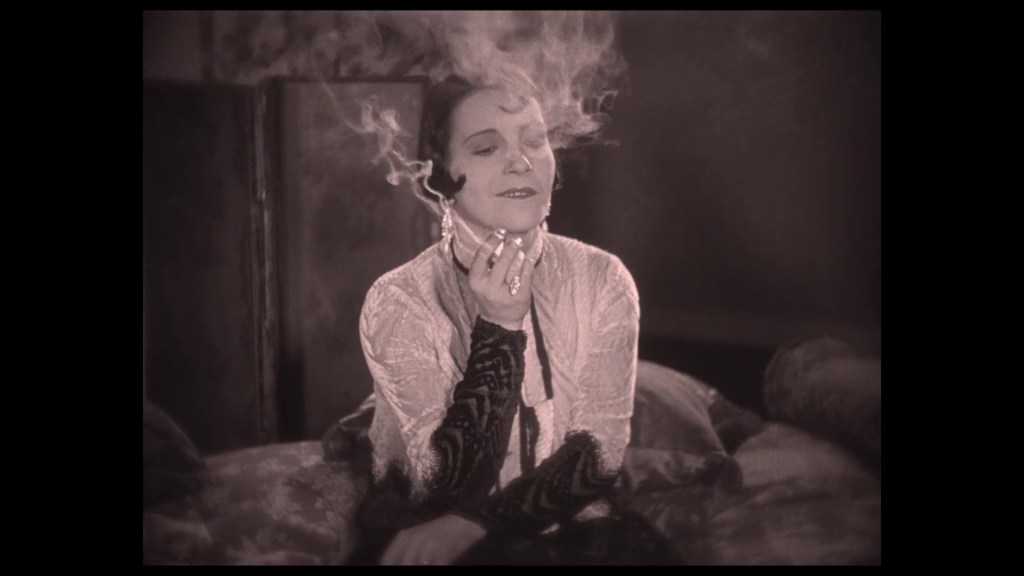
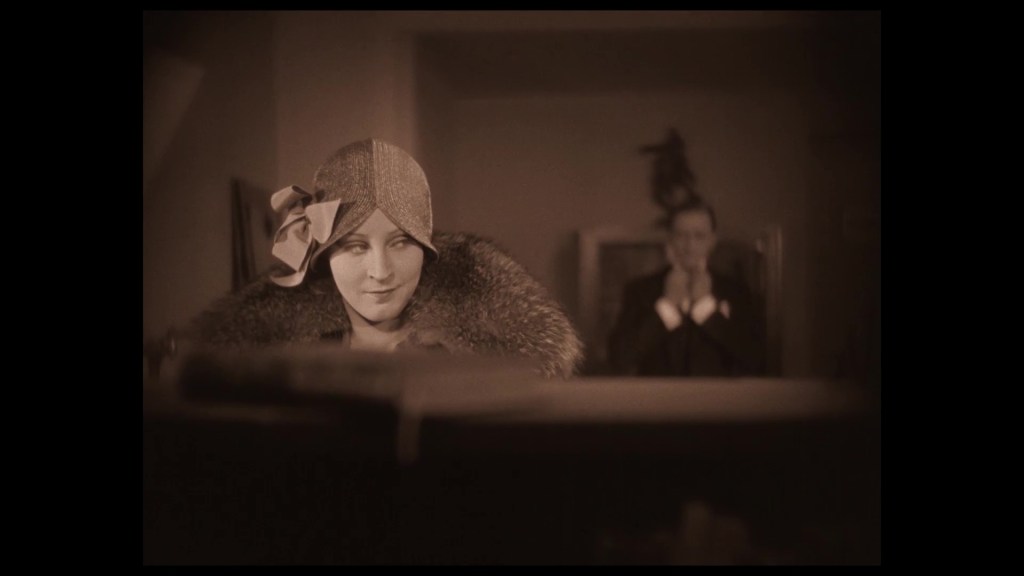
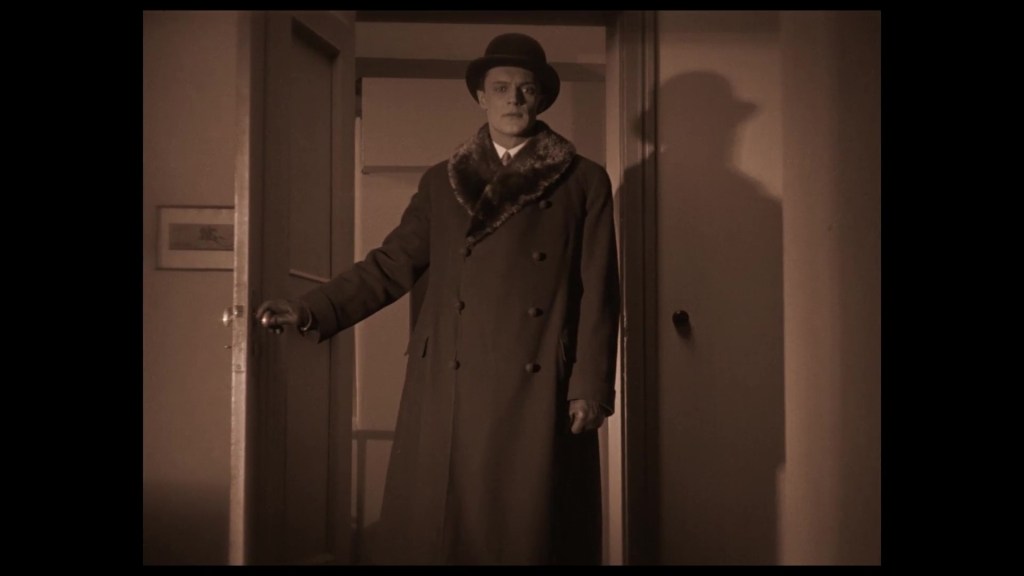
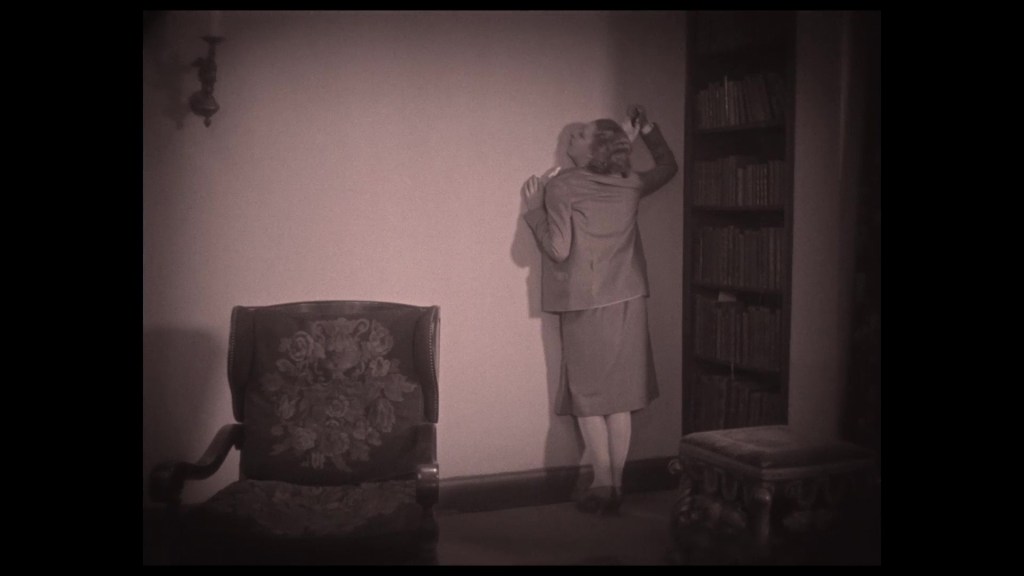
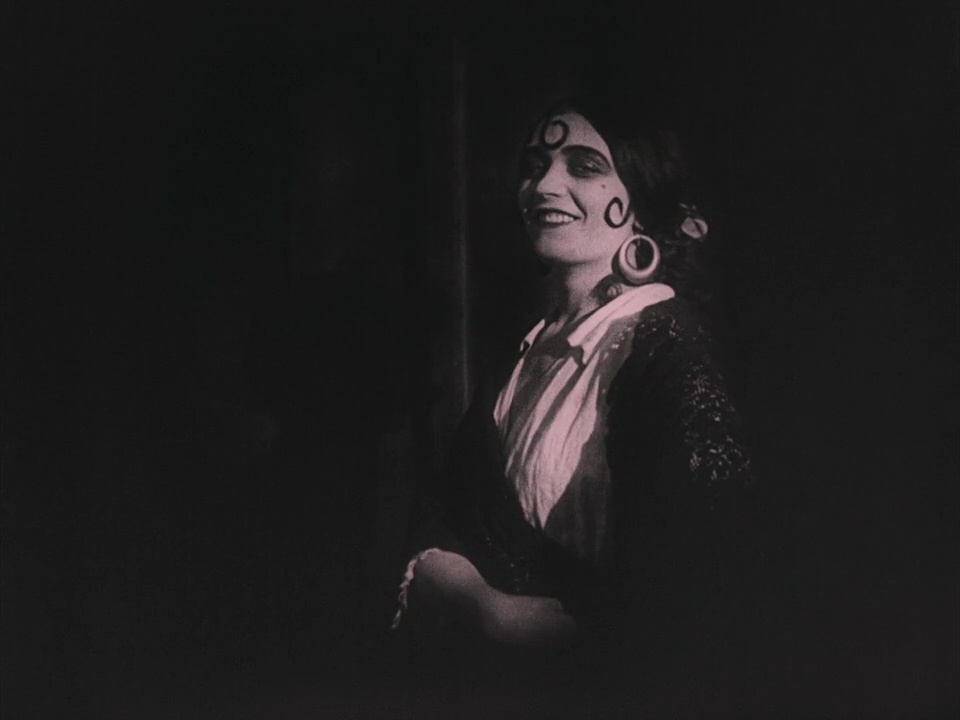
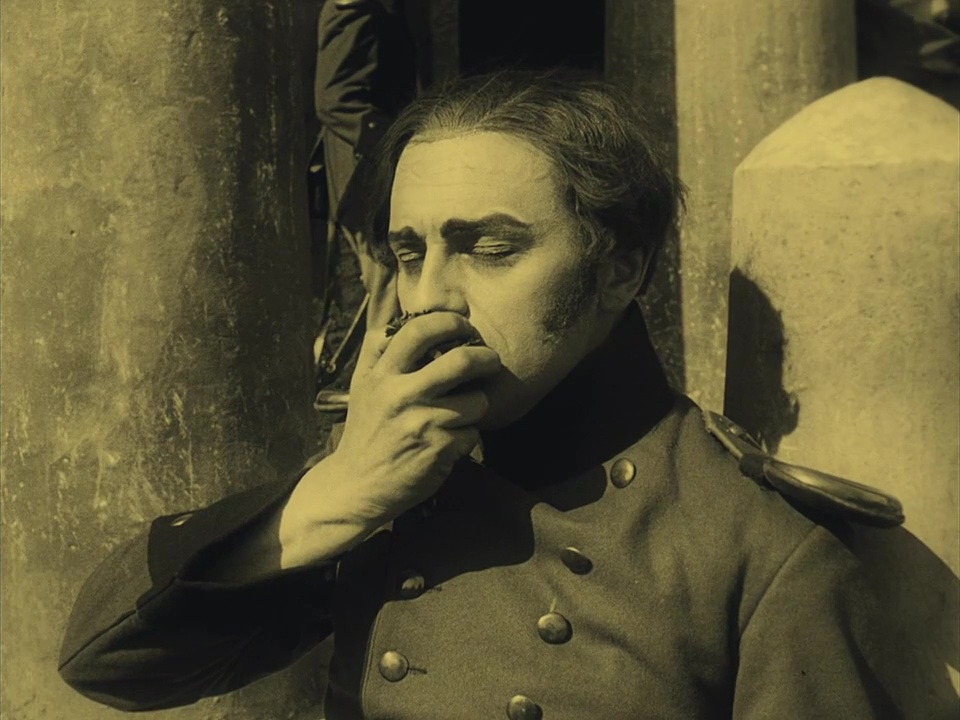
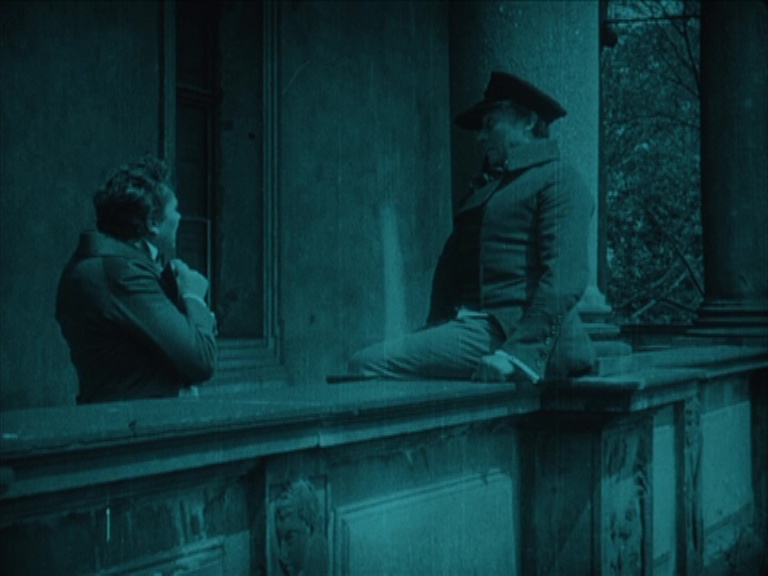
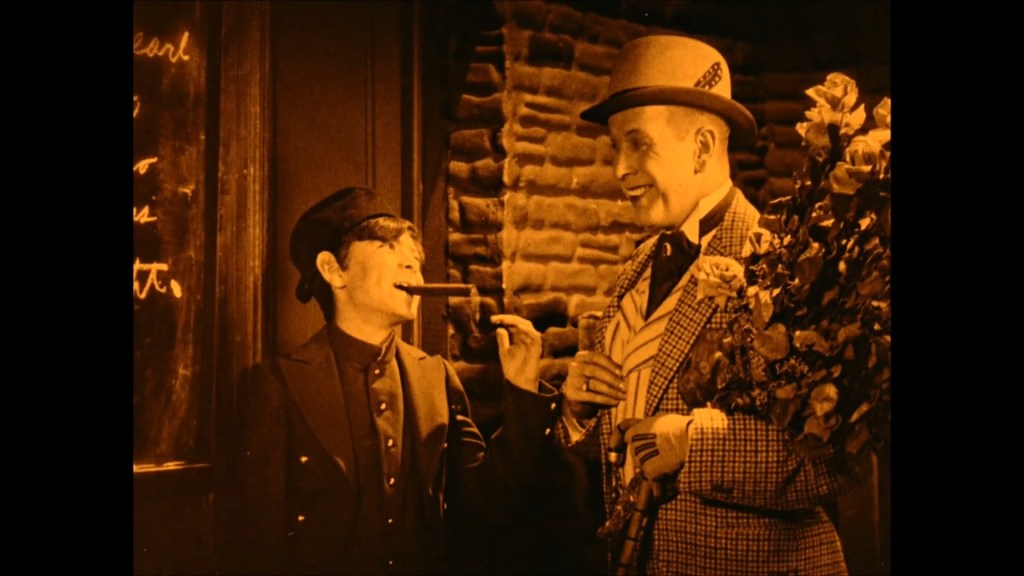
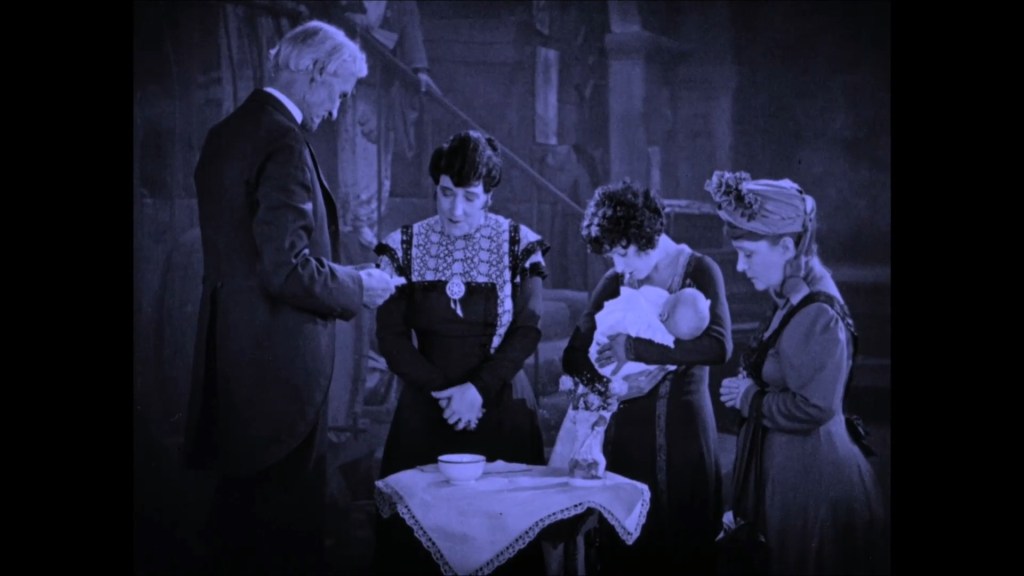
The film has a theatrical set of introductions to the main players: they appear in front of sets of curtains, their names displayed on large painted panels that bar us from them. This is not unusual for a feature film of 1913, when the cinema was foregrounding its cultural respectability and boasting of its artistic abilities. After all, the author, Ewers, was a well-known author and Wegener a well-known stage star. But the film immediately takes us by surprise with the final credit: here are the lead actor, Paul Wegener, and the film’s writer-director, Hanns Heinz Ewers, discussing the film on location in Prague. Wegener is smoking a cigarette, pointing with his stick. But it is the author who looks most showy: wearing a huge broadbrimmed hat and smoking a pipe, he seems to flirt both with Wegener and with us. And in the background, resting in a tinted haze, is the city of Prague. If the theatrical trappings of the first credits promised a studio-bound literary adaptation, the film immediately corrects our expectations with this real exterior space.

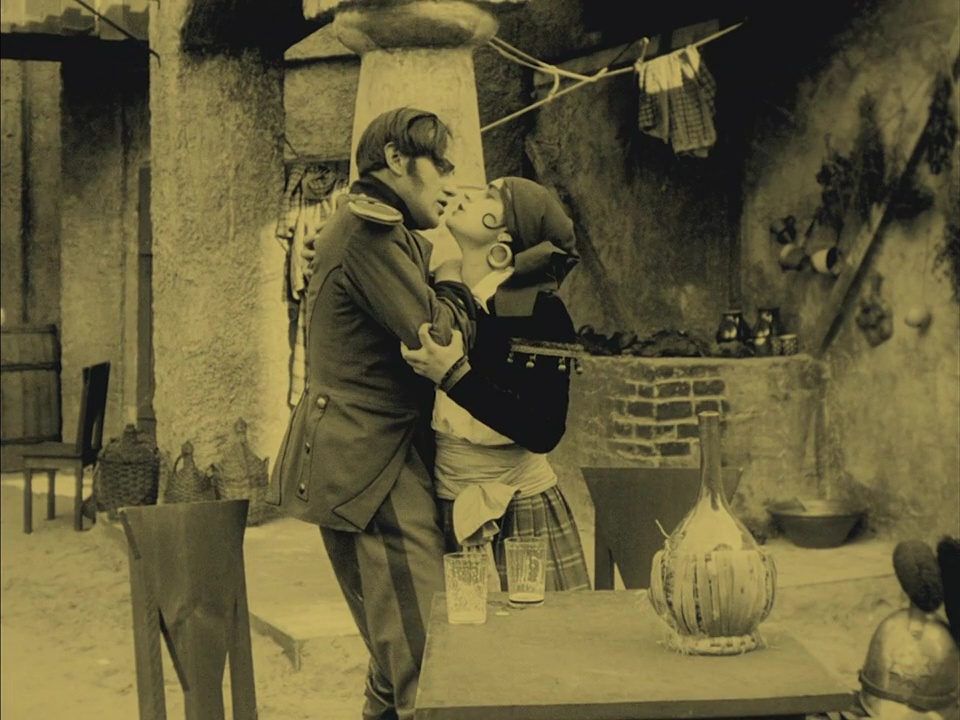
Akt 1. Get used to this: a single shot, carefully arranged and composed in depth, that only occasionally pans right or left to follow a particular action. Otherwise, everything that happens does so within this restricted circumstance. The only cuts to will be to intertitles or information in the form of documents. (Thus far, so Bordwell.) But what is the effect of this style on this particular story, this particular setting? For a start, the uncanny enters in plain sight. The opening scene/shot shows the students gathered in the background among the tables and chairs of a café. In the foreground, a single table and two chairs. Balduin refuses to join in the revelry or admire the dancing of Lyduschka. He sits on one chair. Who will occupy the other? The dancing reaches a crescendo. Then in the midground horses and black carriage appear: they divide Balduin from the background, driving (quite literally) through the middle of the scene. Scapinelli—old, grey-bearded, slightly stooped, wearing clothes that may once have been smart—descends and sits next to Balduin. The carriage departs. In the background, the students drift away. They are uninterested in the action in the foreground, but Lyduschka lingers. In the rear of the shot, she lurks—curious, concerned, observant,—visually placed between the two figures in the foreground. She sees—as we do—Scapinelli tap Balduin on the arm. Balduin says he is ruined: he wants a lottery ticket or a rich wife. Scapinelli says something: we do not know what. (How perfect is the fact of silence here: the words of a stranger are all the more sinister for being unheard. Despite our proximity, we are in the same position as Lyduschka in that we cannot hear what is being said.) This single shot encapsulates the whole film: the distanced student, the devilish stranger, the ignored lover. And listen to the music. The music does a lot of the work here, building tension as well as atmosphere across the length of this otherwise static scene. It is boisterous for the students and Lyduschka’s dance; it is sinister for Scapinelli; it leaves the consequences of the scene hanging in the air, a few little leaps on the piano and woodwind…

Now to Countess Margit and her fiancé, the Baron von Waldis-Schwarzenberg. It’s another static shot, a studio set this time—or so it appears. But when the servant opens a door in the background we are in the midst of a wood. Pale birch trees occupy the frame of the door. It’s fabulously unexpected, almost dreamlike in its apparition. It’s like one of Klimt’s woodscapes: nothing but pale-limbed birches, surrounded by leafmeal (here, the tinting makes the dim forest floor a shadowy, rich sepia). Figures exit into the woods. We glimpse them through the doorway: they are walking into the dim trees. It’s a beautiful image, made mysterious by the distance the camera keeps between us and them, by the stillness of the frame-within-the-frame. It’s like they’ve wondered off into a painting. (And yes, frames within frames become an important feature in this film…)

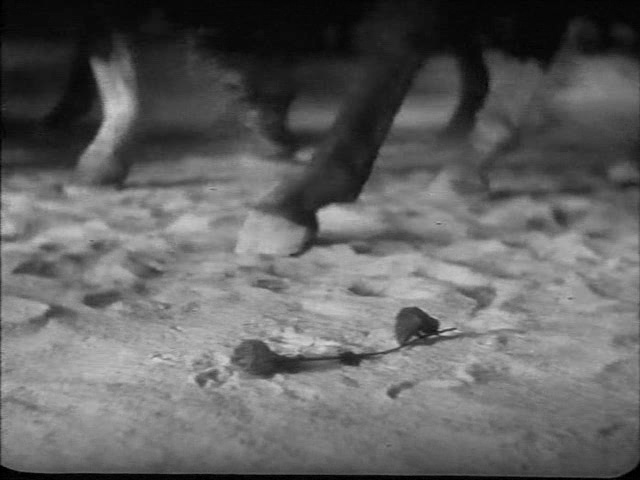
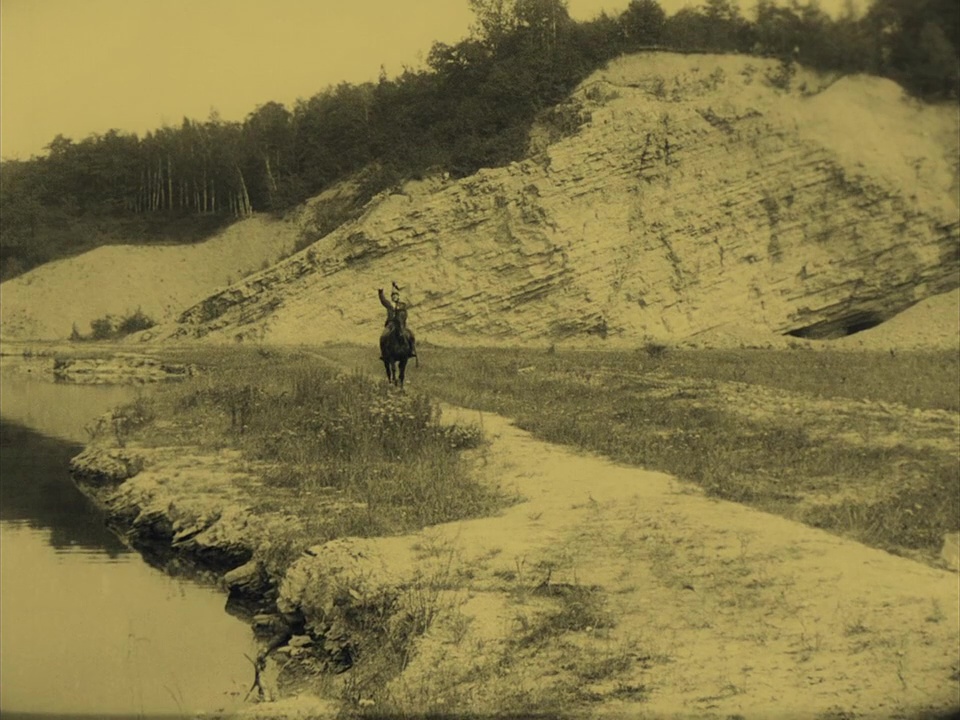
Now to the hunt. What gripped me about this sequence? The way it has no stated goal or narrative shape. There are no titles to give it (to give us) a clear sense of direction. Shot: the estate’s gates, the gleaming track, the great pack of dogs at the horses’ feet, dust rises (the piano rumbles and scales up and down). Shot: the lake’s edge, dogs and horses running rear-left to mid-right (the piano is having a field day). Shot: the woods, a path, the horses and pack moving from rear to front, now just at walking pace, but huge clouds of dust rising to engulf the camera (the tempo of the piano line increasing, growing almost wild). Shot: hounds, scampering from rear-right to front-left, pursued by horses. Shot: the same scene, moments later, a kind of jump cut (familiar from the very earliest films, where the “view” is subtly edited to remove some anomaly or section of inaction), the horses riding past. Where are we going? What is the object of the hunt? The music is bustling, bristling: does it know what is about to happen? There is a line in a Hoffmann tale (“The Stranger Child”) where two children are being pursued by sinister spirits in the woods; they follow a path leading home: “but somehow—they didn’t know why—instead of getting out of the wood, they seemed to keep getting farther and farther into it”. That is how I felt about this sequence. Anything might be about to happen. The hunt might go on forever, or end in sudden triumph or catastrophe.

Finally, a clear narrative emerges. Shot: the countess and cousin, on their own. (The piano burnishes the scene with romance, with threat.) The countess will obey familial wishes to marry but does not love her cousin. She rides away. She passes Balduin and Scapinelli. The student runs in her wake, Scapinelli lopes with sinister, comic steps in his wake. We are back at the lake: the countess falls into the water. (The pianist is rushing up and down the keys.) Balduin leaps to the rescue, and the countess slips him an amulet in thanks. (Still the film gives no close-ups, so the title must pre-explain the action for us to comprehend: it adds to the sense of foreshadowing, foretelling.)

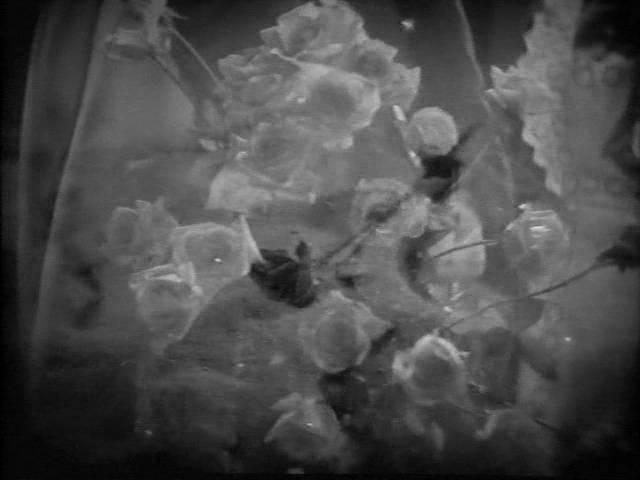
Balduin in his study. On the right of frame, a great mirror, against which he practices fencing. Outside we see Lyduschka. (The accordion joins the piano and strings.) She gives Balduin a bouquet of flowers. But Balduin is visiting the countess. The same set with the woods in the background: Balduin is ignored by the Baron and Margit’s father, shoved to the right of the frame. He is made to look and feel out of place. He lingers in the doorway. We see the countess’s interest, the count’s jealousy.

We return to Balduin’s study. The mirror is placed at such an angle that the reflection appears a moment sooner than we might expect: the reflection is further inside the room than Balduin. Just as, now that Scapinelli enters, his reflection lopes further into the room than the man himself. Scapinelli is smiling (the piano issues sinister chords). He spreads endless streams of money across the table. There is cinematic trickery here: hidden joins that supply the miraculous riches. But the best trick of all is yet to come, and it is better hidden. Scapinelli produces a contract: 100,000 gulden in exchange for whatever Scapinelli can take from Balduin’s meagre study. Balduin signs eagerly, not thinking what Scapinelli could take. Scapinelli lingers. They watch each other in the mirror. Scapinelli gestures, looks at the contract. We see the document again. Scapinelli gestures about the mirror, much like Méliès gestured to audiences in his earliest films—emphasizing the impossibility of what he was about to do. After the shot of the text, we return to the scene: Balduin drops the contract, as does his reflection. But then the reflection steps slowly of the frame and into the room. Technically, the shot is absurdly brilliant. First, the left of the lens was masked and the right half of the scene filmed; then, the film strip was rewound and the left half of the scene filmed with the right of the lens masked. (This way round, so that the camera could be unmasked halfway through the scene to record the rest of the scene, when Balduin must cross the frame from left to right to again gesture with bewilderment at the now empty frame of the mirror.) So the same strip of celluloid bears two strips of time, seamlessly joined by the camera operator’s skill—and by the immaculate timing of Wegener’s performance (just imagine the difficulty of getting a piece of paper to drop to the floor twice in the same way). This is where the static camera has such a rewarding role: to provide an apparently stable reality, then to break it. Per Freud’s reading of the uncanny (“unheimlich” in German, literally the “unhomely”), the “unhomely” rests against and may coexist with the “homely”: here, the stable “reality” on screen (static camera, long takes, deep staging) may itself hide a sinister “unreality”. As if in acknowledgement of the trick and its magnificent execution, Scapinelli doffs his hat and bows before leaving the room in the wake of Balduin’s reflection. End of Akt 1.

Akt 2. A ball at the palace of the count. Lyduschka follows. We see her clambering up precipitous exteriors of the palace walls and gardens, up seemingly endless staircases. The interior of the ball is a stage set, but these exteriors are gloriously real: Balduin and the princess walk along moonlit colonnades, beset with shadows (and with a waltz theme that becomes a kind of sinister march). Then the colonnade is shown to overlook the old city, and the lovers’ conversation is observed by Lyduschka. (Her climbing of the exterior walls is almost vampiric: what kind of a person is she? Are her intentions “homely” or “unhomely”?) She sees Balduin write a note to the countess, who has been taken away by the baron. But who is this? Leaning against a column is Balduin’s double, his reflection come to life, his doppelganger. There is a sinister quotation that names the double as a kind of “brother”. (The very appearance of the note is as inexplicable as the double himself: where is this “voice” of the film?)

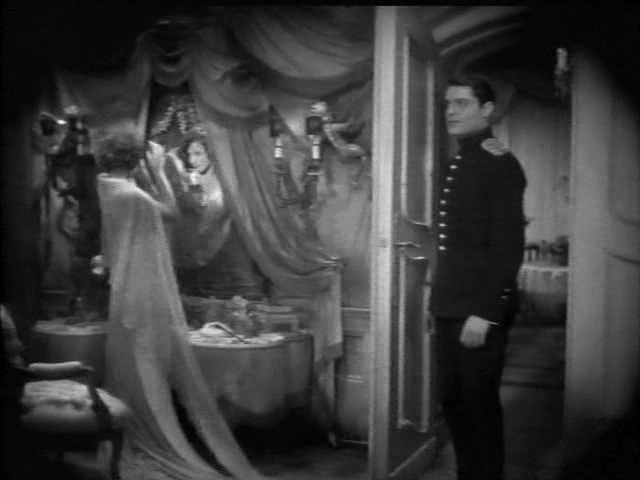
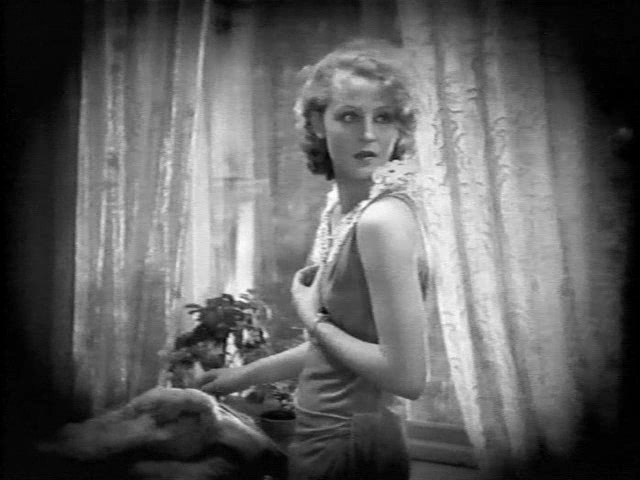
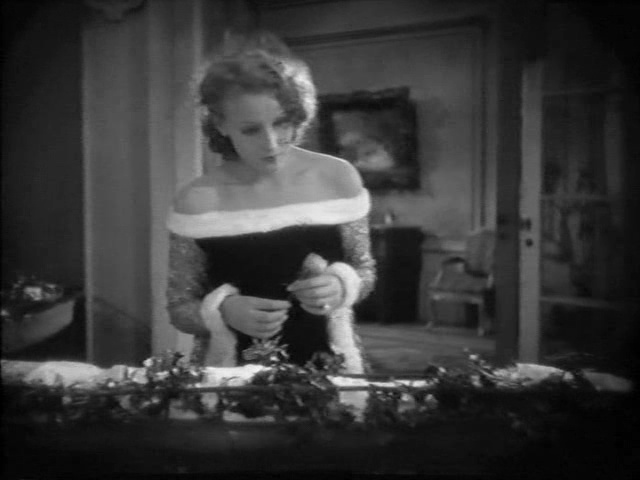
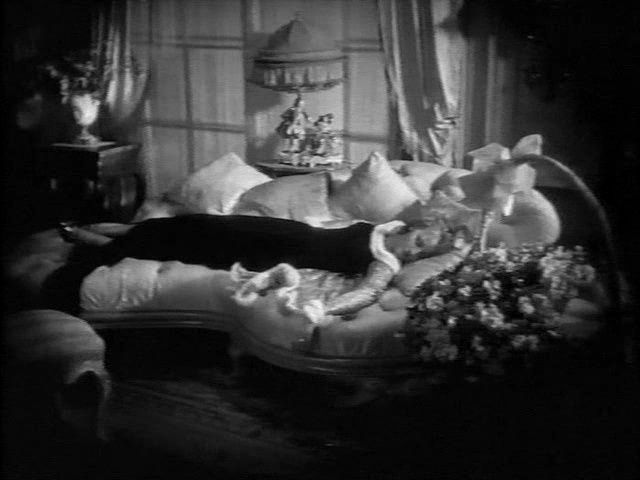
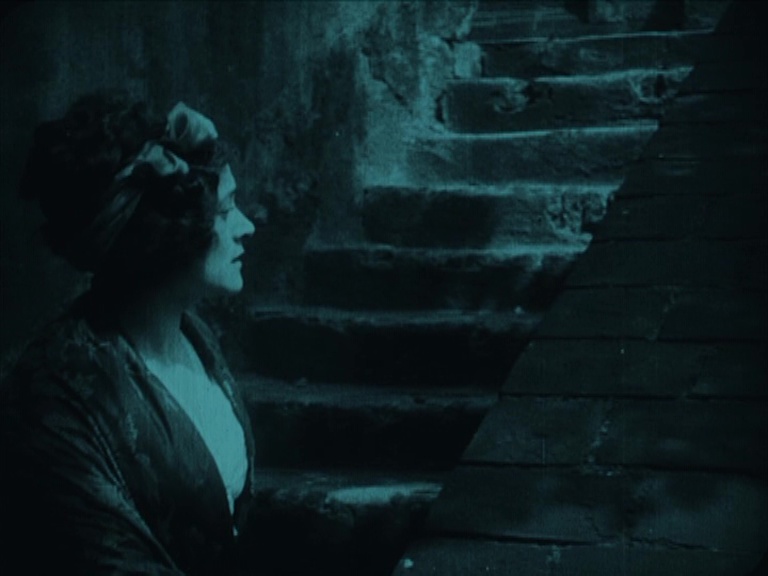
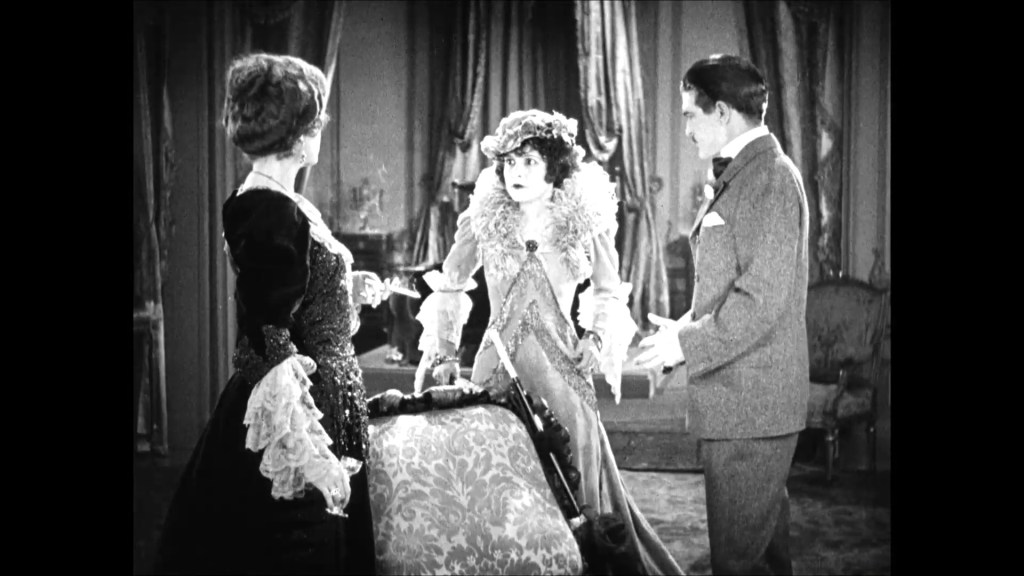
After the ball, the countess in her salon, before a mirror: another mirror that offers an odd angle for the reflection. It is while inspecting herself in the mirror that she finds Balduin’s note, asking her to meet him in the Jewish cemetery the next night. She then reclines on her chaise longue and seems to happily imagine their meeting. But the scene lingers. Why? Well, look at the framing, which changes subtly over the length of the shot: the camera gently pans to the right, re-emphasizing the mirror in its composition, as well as (beyond it, to the right) the dark space of the balcony door and the night beyond it. Recall also that we’ve seen the countess on that chair before: in the credit sequence, where we were introduced to the character. Visually, her role was foretold and is now fulfilled. Also, the mirror (obviously) refers back to Balduin and his reflection, who will keep disturbing their romance. Finally, the dark space of the night outside foreshadows the two invasions of her salon later in the film: very soon, Lyduschka will climb the walls and steal Balduin’s note; later, Balduin himself will inveigle his way in to plea with the countess in person. Again, much is being suggested by comparatively simple devices. So Lyduschka enters and steals the note, leaving through one frame (the balcony door) while the mirror stands empty in the centre of the frame. End of Akt 2.

At this point there is a “Musical interlude”, the very presence of which is interesting: the film itself acknowledges its score, and the role music plays in shaping the film for its audience. It’s only a brief interlude, but it gives you a moment to reflect and ponder what might happen next…

What happens next is Akt 3. The countess is outside, descending the steps. She passes very close to the camera, which gently tilts and pans to the right to keep her in the frame: it’s the closest we get to a close-up, making her movement seem all the more furtive. In the next shot, she is ambushed by Lyduschka, who then creeps along after her.

In the cemetery, bathed in delicious blue tinting, the countess wanders slowly past the grand monuments to the dead. Lyduschka still lurks. She is like a pale wraith, preying upon the lovers. She hugs the walls, hides in doorways. And here is Scapinelli, who bows to the countess and makes as if to follow her. But we don’t see him again in the scene. Rather, we see Balduin among the Jewish tombstones. He is nervous of who—or what—might appear from the rear of frame, and so are we. That it is the countess who appears is not reassuring: for we are already anticipating another. (The music is romantic, dreamy, but hesitant—something is hovering in the wings.) And then we see it: the other. Balduin’s doppelganger appears from behind a giant tombstone. The lovers are afraid. Though the apparition doesn’t follow them, they run from it. (Again, the technical quality of the shot is superb: the apparition appears in the midst of dimly glowing wild grass and weeds, gently swaying in the breeze. That the masking and matching technique doesn’t show in the more uncontrolled environment of this exterior space is amazing.)

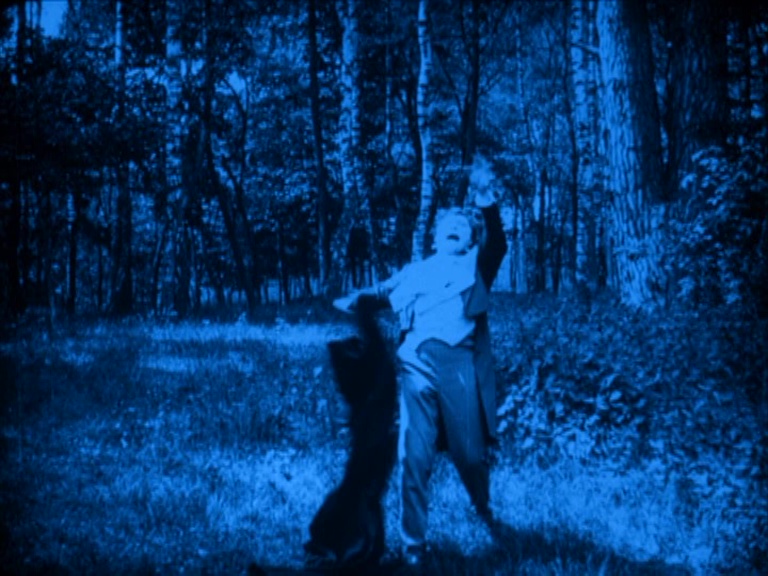
Meanwhile, Lyduschka shows Balduin’s note to the baron—who soon plans to fight a duel with his rival. Just look at Balduin’s newly-furnished apartment. We see the former student surrounded by a mise-en-scène full of telling details: look at the two sets of candelabra, the two silhouette portraits on the wall, the two chairs laid out. While he cannot see his reflection in a hand mirror, we can see the doubling all around him: we can see what he cannot. The duel, too, is a kind of mirrored combat. The count brings news of the baron’s decision to duel and begs Balduin to refuse the fight. The next day Balduin goes to the duel (we assume to turn it down), but en route we are given a title: “His act, which he would not commit, committed by another.” In another beautiful exterior woodland scene, we see the two Balduins pass one another. The real Balduin stumbles away in fright. In the next shot, he sees from a distance what has happened: people are gathered in a meadow, someone is bending over a fallen figure. The timespan of these few shots confused me on first viewing, and on second it does so again. How much time has passed? Didn’t the doppelganger pass by only a moment ago? The tense of the titles suggest that the duel has yet to happen, but Balduin discovers it is already too late: time is weirdly displaced, in this film where the uncanny keeps sneaking up on you. End of Akt 3.

Akt 4 begins with more text, which this time reveals itself to be a quotation from Alfred de Musset. The mysterious “brother”, dressed in black, sits beside the poem’s narrator. Even when footnoted, the content of the text is still unsettling. Who is doing the quoting? Who is reading the text? It’s the filmmakers speaking to us, of course, but because this is a text and because there is no obvious authorial “voice” elsewhere in the film, the quotation is strangely detached from its source. Its deployment makes sense (it comments upon the film’s theme) but the way it is deployed leaves the viewer faintly uneasy. (This needs more thought… for another day.)

Balduin wishes to visit the countess but is refused. In the next scene, he has “surrendered” to drink and frivolity. A dance scene that mirrors the opening scene: Balduin in the foreground at a table with two chairs, while in the background the dancers revel. And here is Lyduschka. But this time she comes over to him, tries to get him to dance, and when he refuses she dances anyway.

Next, an incredible scene: a gambling table. Chiaroscuro lighting. Balduin with endless luck. The faces retreat into the darkness. Only Balduin is left. But the doppelganger appears and sits opposite him. It’s the first time they exchange words: “Dare you also play against me?” They sit, Balduin transfixed, until he finally retreats into the shadows like the others before him.

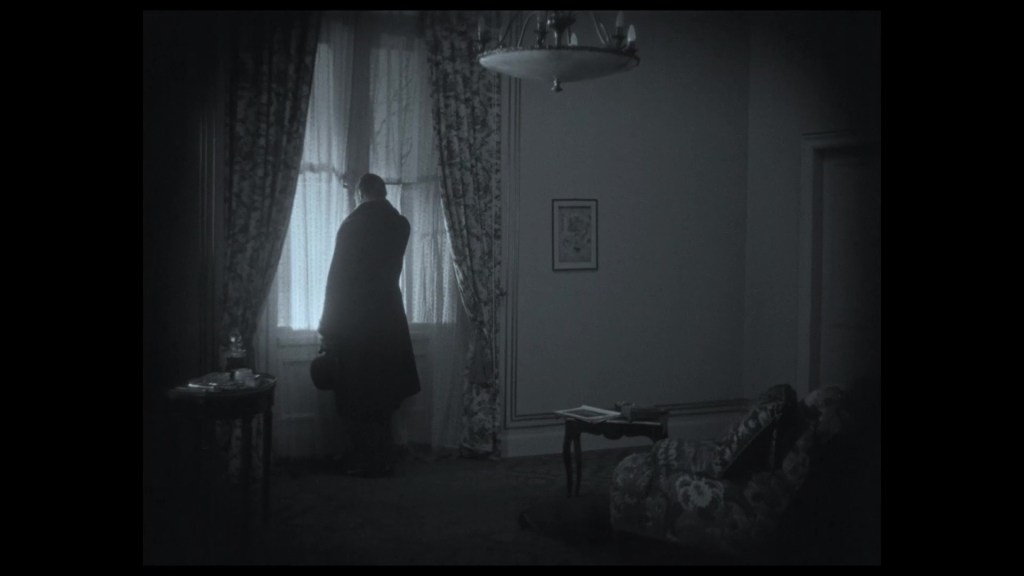
Balduin sneaks back to the countess’s estate. It is now that he climbs up to her salon. His journey is through real locations: fabulously sinister gateways, overgrown, swathed in blue moonlight; glowing night-time gardens; shadowy paths along dappled walls. The way Balduin carries his cloak makes it look like a second skin, a black shadow, thrown over his arm. In the salon, there is that mirror again: placed at such an angle that it is prominent throughout the scene while revealing no reflection. At the rear of the shot, the open balcony doorway—like the unoccupied mirror frame—suggests an imminent arrival, another “guest” waiting in the shadows. Finally, the countess steps into the mirror—and realizes Balduin casts no reflection. (There is no trick here: the mirror is angled precisely to achieve this effect.) Now the doppelganger appears, not through the doorway but inexplicably next to it: it is Balduin who now flees through the doorway.

Similarly, as he flees the estate it is the doppelganger who can slide through a side gate while Balduin laboriously climbs over the main gates. There follows a brilliant series of shadowy exteriors around an abandoned Prague: Balduin racing along empty lanes, down empty steps, beneath dark arches. The cloak over his arm looks like his shadow, his double. A view across the city, and Balduin still flees—and now back into the birch-lined road through the woods. As with the changing views of the hunt sequence, any clear sense of geography or direction is lost in this section of the film. (Remember Hoffmann: “but somehow—they didn’t know why—instead of getting out of the wood, they seemed to keep getting farther and farther into it”.) We might be blundering about in these mysterious landscapes forever. Frantic, Balduin hails a passing carriage; it is driven by his double. The way the doppelganger turns to greet his passenger is wonderful: as unsettlingly comic and frightening as the similar scene (when Hutter is greeted by his coachman in Transylvania) in Murnau’s Nosferatu (1922) that it may have inspired. And when Balduin reaches his home, his double is already there, stepping out of the shadows: as in the duel sequence, the doppelganger seemingly precedes his actions. Think back to the way the reflection in Balduin’s study seemed to precede the real Balduin stepping across the room: it’s the same thing, taken to its uncanny conclusion.

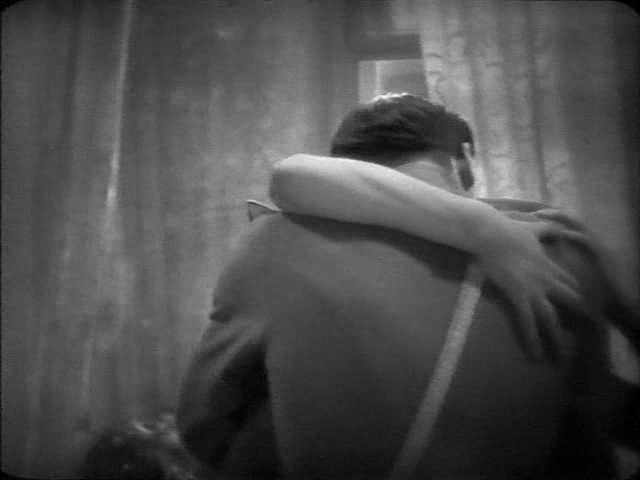
Finally, Balduin is in his rich apartment. He takes out a box from a cupboard, and from this a pistol. He is poised—perhaps—to kill himself, but the doppelganger appears again—stepping slyly into frame from the left. (From whence has he stepped? There is no answer.) Balduin takes aim, fires. The apparition is gone. But after a moment of triumph, racing around the empty room, Balduin realizes his reflection is still absent from a mirror. And when he reaches into his pocket, we realize he himself seems to have a bloodstained wound upon his chest. He falls to the floor, dead. And in comes Scapinelli. That loping gait of his, it’s marvellous. He sees the body, gets out the contract and rips it up. He bows to the corpse and stalks merrily out.

There is another quote from Musset. The text takes up the voice of the double, who promises to sit upon his brother’s tomb. And that’s just what we see next. There is the doppelganger, sat upon Balduin’s tomb. The branches of a weeping willow wave in the breeze. There is the raven, and you realize you’ve seen it somewhere before: it was sat on Scapinelli’s shoulder in the credit sequence. That it reappears here now is a brilliant touch, bringing the film to its inevitable conclusion. The visual design of the credits, like the Musset poem, pre-ordain (pre-write) the protagonists. The first image of the film was Wegener as Balduin, his name spelled out on a board; so too, the last image is of Wegener as “Balduin”, accompanied by his name written on a sign.

What a superb film. Atmospheric, mysterious, technically brilliant. I was looking for something Hoffmannesque and I got it: a Hoffmannesque world of Old Europe in the 1820s, complete with Hoffmannesque students pursuing Hoffmannesque romances, shadowed by Hoffmannesque doppelgangers. (Yes yes yes, I know the film is inspired by the work of Poe, Musset, and Goethe, but Hoffmann remains my go-to German Romantic for all things sinister and beguiling.) Whilst I’m talking about authors, I should add that the director of Der Student von Prag is variously credited as being Hanns Heinz Ewers and/or Stellan Rye and/or Paul Wegener. This rather suggests a collaborative effort, principally shaped by Ewes. I must also say that the Edition Filmmuseum DVDs (released by the Filmmuseum München) are exemplary: the set contains two complete versions of the film, one with Josef Weiss’s music in the surviving piano score (with optional audio description) and another with an orchestrated version of Weiss’s music by Bernd Thewes. (I will undoubtedly devote a future post to praising the silent film scores of Bernd Thewes.) It also boasts the shortened English export version of the film, together with a short film made by Ewers in 1913. I hope to watch the 1926 version of Der Student von Prag (with Conrad Veidt) to see how it compares—and (though it falls beyond the remit of this blog) the 1935 version with Anton Walbrook. But the memory of this 1913 version is already lingering in my imagination, and I’m exceedingly glad to have seen it in such a wonderful edition.

Paul Cuff

Alsace (1916; Fr.; Henri Pouctal)

I watched Henri Pouctal’s Alsace because I had about an hour to spare, and the film is about an hour long. This copy, from the EYE Filmmuseum is preserved with English language text, which suggests it was an easy sell to wartime allies across the Channel. Aside from its convenient timespan, it also appealed to me because it stars Albert Dieudonné, an actor with whom I’ve spent an inordinate amount of time by simple virtue of having seen Napoléon so very, very many times. In fact, such was his peculiar CV, it’s a little uncommon to happen upon him outside the confines of a film by Abel Gance. In terms of screen time (Napoléon alone being the length of several normal feature films), Dieudonné spent a high proportion of his life on celluloid within the confines of Gance’s oeuvre. All of which leads us to…

Alsace (1916; Fr.; Henri Pouctal)

In pre-war Alsace, the Orbey family are loyal to France while living under threat of expulsion by the German occupiers. Jacques, the son of militant Francophile Jeanne Orbey, falls for Marguerite, the daughter of a German family. A fight ensues over the identity of Jacques. Whom will he choose: his mother or his wife?—France or Germany?

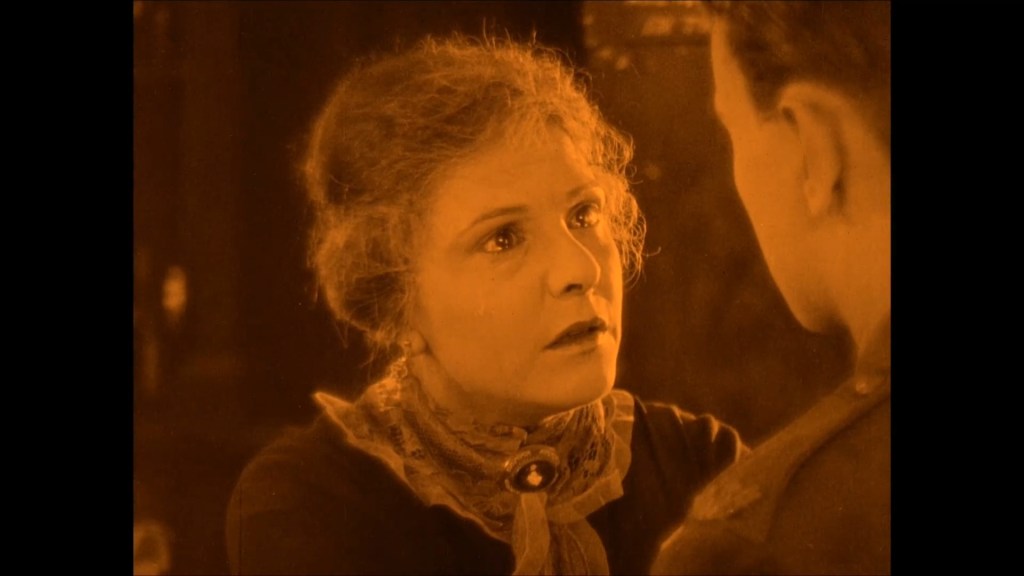
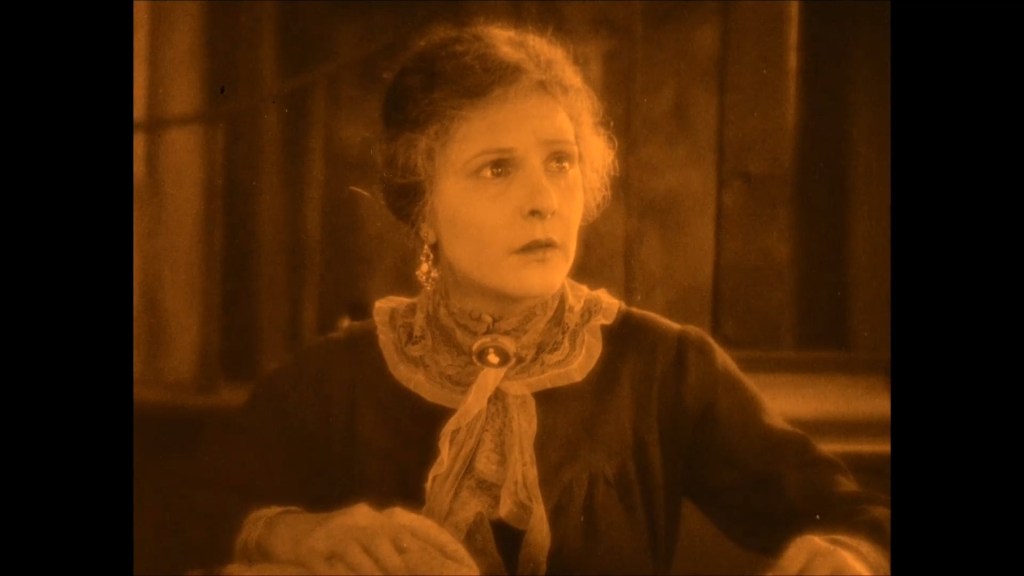
A vibrant green spells out the film’s title: Alsace. But what is this title introducing? In this print, at least, there are no other titles before the film’s first image: An exterior. Trees tinted green. The Mother: Jeanne Orbey. Dressed in black, she slowly raises a hand to her brow, in grief. The film’s title is her own introduction: she is Alsace.

Jeanne wears traditional Alsatian costume, which for women involves a huge bow-like headpiece. When we see her home, we realize that all the local women wear traditional local costume. It’s like wandering around inside a patriotic postcard produced in the years after Alsace’s annexation by the newly-invented Germany in 1871.

Only it’s not. For the world on screen is incredibly rich. Look at those thick, heavy crinolines, that child’s tunic, the dark-suited elders. The ceiling and walls are dark with age and varnish. The curtains are visibly heavy, patterned, luxurious. Look at the ceiling lamp with its material shade, glowing gold in the tinting. It’s a gorgeously-mounted set. It’s not a rich environment—these people are middle-class, not aristocracy—but the texture of the image makes you sense it’s a lived-in space. I can believe these people have roots here: just look how heavy the furniture is.

“Their German neighbour, Herr Schwartz and his friends junket on sauerkraut and beer.”

When was the last time you saw the word “junket”? It strikes me as the kind of word tabloid headlines reach for when they want to make a perfectly ordinary event seem outrageous. If you didn’t know this film’s stance on the occupation, you know now. For the Germans don’t “eat” their dinner like decent French Alsatian folk, they “junket” on their foreign sausages, despicable German sausages, not like salt-of-the-earth French saucisson. And just look at their ceiling lamp: a monstrous metal contraption that hovers sinisterly over their table. As the local French population dresses in patriotic postcard chic, so the Germans dress to eat like they’re heading for the parade ground. They are epaulette-heavy, cavalry frockcoated, broad-chested, shiny-buttoned. They have no manners. Just look how that pudgy woman gobbles that sausage. “To—Greater Germany!” is their toast. Boo! Germans! Boo! They drink with heavy tankards. Boo! Nasty German tankards! Boo!

It’s a relief to go outside for some air. But no! Even here the pantomime villainy continues. A lovely scene—toned brown, tinted light blue. The trees have the look of winter. It’s fabulous to watch the branches. It makes me think of a Gance film from the same period—Mater Dolorosa (1917)—that features a similar tinting scheme, and revels in the chilly poetry of winter exteriors. (Looking up more info on Alsace, I am very pleased to see that the two films share the same great cinematographer: L.-H. Burel. I clearly have a good eye for wintry French cinematography.) Moustachioed Krauts with swords and big hats barrel around in oafish aggression. They try and feel up the local women wearing (yes, you’ve guessed it) traditional Alsatian dress. “Provoked beyond endurance”, the locals revolt and a punch-up starts.

Jeanne Orbey has gathered loyal Alsatians. They sing the forbidden anthem: “La Marseillaise”. Jeanne is on the right of frame. Her friends are to her left, but she looks to her right: at us. The crowd waves little flags at the top of the frame. In the foreground, they crouch low, they clench their fists. An old man at the fore mouths the words with clarity. Not just Jeanne, but the whole cast seem to be urging us to join in, to clench our fists, to shout, to sing. It’s an amazing scene. But it’s sinister, too. The old men seem to be stalking the camera, ready to launch out at us.

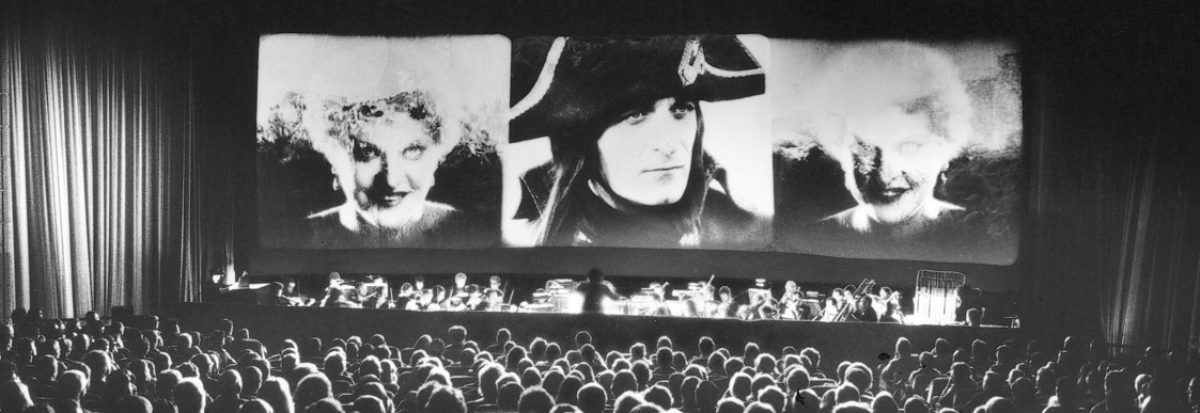
(Compare this mentality to the “Marseillaise” sequence in Napoléon. Though Gance’s film has often been accused of nationalism, the crowd of 1792 sings this anthem in an expression of communal joy. You see faces weeping in real emotion; it’s not angry at all; there is no visible enemy to threaten; it’s a sequence of inclusivity. In Alsace, “La Marseillaise” is a hymn of angry defiance, of exclusive identity. The old men practically wave their fists at the camera as they sing it. They’re terrifying. This is a mob looking for a victim. This is nationalism.)

Outside, a platoon of Germans (boo! look at their pointy hats! boo!) hears the anthem and approaches the house. There is a confrontation. M. Orbey is sentenced to three months’ imprisonment. So, “Recalled by his mother, Jacques Orbey returns home from his college at Nancy.”

Here is Albert Dieudonné. It’s a nice change to see him in a suit, to see him hesitant, weak-looking. He is called for military service by the (German) authorities. He stands. His hand rises slowly to his head. Even his sadness is hesitant, weakly. M. Orbey is expelled from Alsace, so Jeanne goes with him. Jacques stays to prevent the family business “falling into German hands.” A crowd gathers to cheer the departing resisters. Many an Alsatian bow bobs in the crowd.

A year later. A letter from Jacques. He claims he loves France as much as his parents, but he says he enjoys his work and befriends his workers. And in the mill, Jacques is left by his uncle (a veteran of the war of 1870) to deal with Herr Schwartz, whom he cannot stand. But Jacques gets on well with the affable Herr Schwartz.

Family friends observe the two young Schwartz girls. Then the two families encounter one another. “A German Invasion” is how the title describes the scene: it’s another tabloid headline. Jacques is unaware how uncomfortable he makes his uncle by being polite to his German neighbours, by falling for one of the daughters. A lovely tableau: the lovers in the window of the house, kissing; in the foreground, the uncle and aunt, scowling. It would be charming or comic if the film didn’t want us to be outraged at love that crosses national boundaries.

“It’s enough to make your murdered grandfather turn in his grave” shouts the uncle in the next scene, confronting Jacques, who (again) feebly holds his head in his hands. (Will this man really be Bonaparte in ten years’ time?) The uncle writes to Jeanne about Jacques’ engagement to Marguerite. (She is both Marguerite and Gretchen in various titles, depending—I imagine—on whether the characters are meant to be talking in French or German. The same switch happens in French translations of Goethe’s Faust. French operas have their Marguerites, German operas have their Gretchens. Then again, this film’s English titles are inconsistent in spelling the names of all the main protagonists: are they the Schwarz or Schwartz family? Is the cousin Susie or Suzie? Is he Jacques or Jacque?)

But how will Jacques deal with the Schwartz family? They have their own singing scene, celebrating the military promotion of one of their kin. Instead of facing the camera, they face to the right. The comic exaggeration of the performances signal that this anthem is pompous nonsense (not like our anthem!). Poor Jacques looks miserable, stuffed into the corner of the frame. Then he is told that his mother has been given a permit to return. Jacques looks sad, Marguerite concerned. “Your uncle wanted to surprise you”, she says. “He is bringing up reinforcements to defeat the German girl.” It’s meant to be a catty comment (her expression, direct to camera, shows as much) but it’s perfectly true.

Jeanne returns. She makes an entrance. A slow entrance. She walks across the room, decked out in little tricolours and bows. She fondles a cabinet. She strokes a chair. A woman in (all together now…) traditional Alsatian dress is in the background, looking admiringly at Jeanne’s restrained emotion at returning home. She is handed a large bouquet. “Oh, the lovely flowers of Alsace!” (Yes, gathered in the woods by loyalist women.) Jacques havers awkwardly in the background. The women take centre stage, his mother occupying front centre.

Now to the crux of things. Jeanne puts her hand on Jacques’ shoulder. Behind them, the uncle’s family look on: it completes the triangular composition, but it makes it look like an additional weight on Jacques’ shoulder. He is overlooked, burdened. “Tell me it’s not true?” his mother asks of his engagement to a German girl. “Yes, it’s true. I love Marguerite… and why not?… Love knows no frontier.” It’s a good answer, and the first thing Jacques says with real conviction. He stands and shouts and clasps his hands (Bonaparte at last!), but then immediately covers his head with his hands, as though he’s said something appalling. And just look at his mother, who looks at him with contempt (at least she looks at him, the family avert their eyes with horror and shame.) “You dare say that? Think of your banished father and your grandfather whom they murdered!” She demands he promise never to marry her: “don’t let the Germans take you… remain one of us”. She coddles him in her arms. The family flank them. He is imprisoned in Pouctal’s framing of the family.

The Schwartz family arrives with kind gestures and delicious cake. (But Gretchen pleads a headache and stays at home.) “May I congratulate you on your son? He’s a nice boy and a fine soldier.” So says the elder Schwarz; it’s a compliment, but Jeanne’s face scowls like it was an insult.

The neighbours visit Jeanne, all wearing (surprise, surprise) traditional Alsatian dress. It’s propaganda postcard territory again. These aren’t people, they’re symbols trotted in to make a point. And the point is reinforced as everyone gathers around the piano. Jeanne wants to lead them in “La Marseillaise” again. Jacques warns her of the danger. “Who dares say ‘hush’?” she demands, addressing the room as if her son didn’t exist. He runs out.

Jeanne is now a widow. She moves in with her family. We see a night at home: Susie (Jacques’ cousin) boasting that her fiancé is serving in the French army. Jacques is in the background. At Susie’s words, he strikes the cabinet in frustration. I have every sympathy with him. His mother, in the foreground as ever, looks appalled at his behaviour. Jacques puts his head in his hands again. (Poor Bonaparte.)

Jacques is seriously ill, the doctor unable to cure him. “In my opinion, only you can save your son”, he tells Jeanne. Look at Jacques. At last he is in the foreground of the frame, but only by virtue of being bedridden with suicidal depression. It’s a marvel to see him so emasculated. When his mother swoops, her black dress presses down on his pale face and the white sheets. It is Jeanne who dominates the frame when she rises. The camera gives her a moment—more than a moment—to show her emotional struggle. Will she admit Marguerite/Gretchen into the family? She briefly consults her brother, then goes to the Schwarz household.

She turns up in an extraordinarily forbidding costume: something between funerary majesty and celebratory pomp. Marguerite/Gretchen rises, approaches. She submits to Jeanne’s kiss upon her brow. Her family are ecstatic. (And yes, they are always so friendly, so comically expressive. It’s not a victory over France that they celebrate, but the thought of peace and love.)

“Some months later… Jacques and Marguerite are married… but deep-rooted racial differences soon sow discord between them.”

What are these deep-rooted racial differences? All the film can offer us by way of evidence is a scene in which the German girls admire a parade outside. “Our soldiers are splendid”, says their mother, “I have never before seen so many troops in the Vosges.” Jacques reads the paper disconsolately. There is a passing comment about Jacques preferring French cooking to German. Deep-rooted racial differences? Then the family rejoices in one of their own, fresh in his parade ground uniform, showing off his rank. Jacques keeps reading his paper.

News of Russia’s mobilization. “When the ‘Day’ arrives, everyone must know his duty”, says Jeanne. While the French family discuss the news, the Schwarz family argue about Jacques. Marguerite/Gretchen blames Jeanne and says she wants to drive the Germans out of Alsace. The elder man in uniform responds. The text of the title is huge: “They’ll never drive us out of Alsace! Impossible!” (The size of the font seems specifically geared to audiences of 1916 cheering and mocking this statement in the cinema.) Jeanne turns up and starts rabblerousing and insulting. Herr Schwartz arrives and acts with good grace, as ever. An apology is attempted. But Marguerite/Gretchen cannot bear her presence.

Now Suzie’s fiancé returns by stealth, hoping to say farewell before the onset of war. Martial law has been declared, so his presence sparks the police to intervene. The French family helps him escape, while the Schwarz family watches on in worry.

War arrives. The French loyalists must leave. Jacques must say goodbye. Will he join her? Finally he seems decided. “Marguerite! Can’t you understand my own flesh and blood are calling me… my own race… my country.” But once more his Napoleonic outburst ends with him sinking down onto a chair, his head in his hands. Her wife tells him: “you must make up your mind… your mother or me.”

News comes to Jeanne that Jacques is to leave for Stuttgart. He has chosen his wife. So Jeanne goes to confront Marguerite/Gretchen. The latter says, “Jacques belongs to me and me only”, that he has gone to do his duty for “his country”. “His country!” Jeanne shouts: “His country is Alsace. She has bequeathed to all her sons the sacred duty to be French for ever, in peace and in war.”

Outside, Jacques is passing a crowd celebrating the mobilization. He hears a cry of “Death to the French!” and responds with “Vive la France!” It’s his most Napoleonic moment, and immediately he is swamped by the furious German crowd.

He bursts into the room where his mother and Marguerite/Gretchen are arguing. He tells his mother that he was wounded because he defended France. His mother rejoices, his wife despairs. Jeanne now drags her son from the room, shouting triumphantly at Marguerite/Gretchen: “No, he is not yours… he is mine… he is mine now.”

Cut to shot of soldiers running past. The tinting is the colour of fire. Jeanne is at the entrance to a cemetery. She is magnificent in mourning: her huge black Alsatian headpiece, the massive necklace, her rich black dress spreading like the wings of death. She turns and goes inside. She crouches joyfully at her son’s grave. Years have passed. He has been killed in 1915. Now the French army marches past the side of the tombs and Jeanne rises. She shouts over the tomb that Jacques should rejoice. She is ecstatic. She raises her arm in a gesture of triumph. The End.

A strange, uncomfortable, compelling film. Impeccably photographed, coolly directed, yet there is a kind of madness that finally breaks out at the end. It’s as if the careful formal design keeps in check the febrile, fanatic attitudes that lurk beneath. The film is waiting for war to be declared for it to show its true hand. And then it does so: all the pent-up fury and revanchist nationalism bursts out; finally we get real mobs, real blood. That last, elliptical transition from interior to exterior makes it seem as though Jeanne has quite literally dragged her son from the arms of his wife into the tomb. The son is repatriated within the body of France, the soil itself. The last image of Jeanne cooing in triumph over her son’s grave is astonishing, chilling. Does Pouctal play-up the struggle between wife and mother, and Jacques’ weakness, to emphasize the nastiness of nationalism? Certainly, the weirdness of the relationships is made amply apparent in their performances: Gabrielle Réjane as Jeanne is the star (she was a very famous theatre actress), Dieudonné as Jacques a meagre up-and-comer waiting for a proper role. But the film clearly knows its role as blood-and-soil propaganda, mobilizing populist images and populist slogans. I can’t deny it has a certain, grim power—as morbid, elegant, and frightening as Jeanne’s final gesture.

Paul Cuff

Abel Gance and Charles Pathé: Correspondence, 1918-1955

Hello again, and welcome to life after Pordenone. After the hectic schedule, it has taken me a while to find my blogging feet once more. (Additional context: we are also redoing the kitchen.) As today is Abel Gance’s 133rd birthday, it seems fitting to post something on a Gancian theme. What follows is a kind of review of a recent(-ish) book. I had intended to submit a proper review of it to an academic journal last year, but for various reasons this never happened. I use the opportunity of this anniversary, and of this blog’s more informal setting, to resurrect it for your reading pleasure.

Abel Gance-Charles Pathé: Correspondance, 1918-1955, ed. Elodie Tamayo (Paris: Gallimard, 2021)

In 1918, Abel Gance was flush with the commercial success of a series of short, commercial feature films made for the Film d’Art company under the aegis of Louis Nalpas. But the war was in its fourth year, and Gance was dreaming of bigger projects. Enter the largest name in the French film industry: Charles Pathé. Pathé’s name was the leading brand of French film. By 1918, he employed thousands of staff and had offices across the world—not to mention laboratories, studios, theatres…

“On January 21 in Nice, I see Charles Pathé”, writes Gance in his journal. “Conversation of an hour and a half. Great affability. Main points: certainty of my cinematographic future. I am at the top of the list of European directors.” Pathé tells him: “My house is always open to your talent” (qtd in Ede 2020, 9-10). What follows is the correspondence detailed in Tamayo’s edited volume.

Of the 210 letters contained in the book, 132 of them are written by Gance. His letters are generally longer—sometimes hugely so—than those from Pathé. As François Ede observes, Pathé’s letters to Gance bear “the mark of paternal affection with which he surrounds his protégé” (2020, 19). Gance always signs off with the phrase “all my devotion” or “my unfailing and profound devotion”. The words are those of disciple, or earnest child; they are also trying to make a bargain, to invoke pity or aid. Tamayo breaks down the correspondence into three broad sections, and to make things simple I will follow suit:

(Dés)espoirs de la fin de guerre: 1918-1919

As Tamayo explains in her introduction, in March 1918 Gance founded Films Abel Gance, and Pathé gave him carte blanche to pursue his projects (19). That month, Gance writes that his conversations with Pathé are “for me an unheard-of attraction not of utopian dreams, but of solid anticipations. They are for me, and I insist, decisive moments where the social future of the cinema has played its first card. […] My will reaches out towards a gigantic goal” (37). It’s the kind of thing one would write in a private diary, but Gance shares it with Pathé. As he would do throughout his life and work, Gance peppers his early letters with literary and philosophic quotations as a means of sharing, imploring, showing-off. In letters to Pathé, we encounter lines from François de Malherbe and William of Orange, just as Gance would later quote Schuré and Nietzsche in the hope of persuading other financiers to give him money. But Gance doesn’t hide behind his quotations; they are an invitation to see into his inner life, to link a singular goal to wider cultural ones. Pathé is attracted by Gance’s ambition, but ever practical. Their letters proceed to discuss the nature of nitrate, the possibilities of colorization, of tinting methods, of camera speed and lighting (39-41).

March 1918. Films Abel Gance embarks on its first project: Soleil Noir, subsequently renamed Ecce Homo. Gance sends the familiar reassuring boasts to Pathé: “We will obtain immeasurable results with Soleil Noir. The era of cinema will begin” (43). Everything he says, he means in earnest; he underlines his assertions, quite literally on the page, with key phrases emphasized for Pathé. Even when the production of Ecce Homo breaks down later in the spring of 1918, he pursues the next (La Fin du Monde) with equal conviction: assuring Pathé that when he speaks of another unparalleled success, he says so “with absolute certainty” (44-45). La Fin du Monde will be in ten episodes of 1200m (a total of ten hours on screen), the first overestimation of a project that will take another dozen years to realize and that will ultimately destroy his career in 1930-31.

May 1918. Here is Gance writing to Pathé to argue for the absolute control of his film La Dixième symphonie in exhibition. It has had a special score written to accompany it, and Gance insists the film “must be seen and heard in its entirety with music of Maurice-Lévy” (46). (The score has never been performed since, though a few seconds of a piano part were played on French radio in 1955, while Gance and Maurice-Lévy reminisced about their collaboration.) Gance writes the way a youth writes to impress his peers, his teachers. He boasts that he has “something of Nietzsche’s will in my veins” (47), but he abandons Ecce Homo. Three hours of rushes survive. The pictorial quality is astonishing, printed from the original camera negative. But it’s left behind, together with a debt of 50,000F; Pathé pays it off and gives Gance the green light for yet another wild scheme: a triptych of films on the war (50n).

June 1918. Gance is shooting near Nice, near Marseille (59). He is filled with inner belief. He tells Pathé that in him “I have found the most formidable force capable of disseminating my thoughts throughout the world, [and that] you believe you have found in me a writer for the eyes” (64-65). But Gance has an eye on the practical as well as the philosophical. He sends Pathé a letter the size of a manual on technical specs that he wants from studios, from technicians; he specifies the space he needs, even the voltage of electronic circuits he wants (67-72). Mid-production on J’accuse, Gance is still monitoring the exhibition of La Dixième symphonie, once more begging that the original score be shown during screenings: the film was conceived “as a particular attempt to ally music with the screen” (70); Pathé obliges (74).

August 1918. Gance is besotted with the cinema. From the sun-soaked landscapes around Marseille, he sends Pathé his vision:

The cinema is a miraculous beacon, more powerful than the other arts that are nearing the end of their lives by extenuation. I am inexpressibly moved to think that one day I will be able to speak the same language at the same time to all my friends across the universe. […] To you I will owe this wonderful diffusion. I hope to thank you for bringing back to cinema a spiritual prestige that it still lacks and that will make it the most prodigious instrument of internationalization in the future. (71)

Pathé is pulling strings, mobilizing his contacts. He enables Gance to inspect and use footage from the Army Cinematographic Corps (75-77). By October 1918, Gance finishes the exteriors for J’accuse on the Côte d’Azur (82).

November 1918. Gance puts words into Pathé’s mouth: “You sense that I have a clear vision of the future of cinematography and the result of our collaboration can only result in excellent things for our nascent Art” (84). He spells out the need to realign the way artists and industrialists work together: “There are effectively not enough links between directors and producers in France. Often one speaks commercially, industrially, and technically—but almost never spiritually. This, I repeat, is the foundational sin in France” (84). The war ends. In December, Gance finishes shooting J’accuse (87). But the notion of the “foundational sin” of cinema’s mercantilism nags at Gance, and in later years the sense of betrayal will dominate his mindset.

When J’accuse! is released in the spring of 1919, Gance sends Pathé a long letter discussing—and complaining, and demanding—conditions for its success, for the success of European cinema in the market dominated by America (97-102). But his concerns are also turned upon France itself. In May 1919, Gance despairs how D.W. Griffith’s Intolerance (1916) is being received in France: “Intolerance has absolutely no success here. The film provokes a scandal; we laugh and whistle. Decidedly, the French do not yet understand the best cinema.” (112) This, too, is the seed of a despondency that will grip Gance by the end of the 1920s: that even the public might turn upon its cultural benefactors. What’s more, Pathé writes and explains how difficult it is to get J’accuse picked up by distributors in the USA: he predicts a long delay before the film is released there (113-18). (Later, he reports that the reaction of the board of Pathé Exchange to a preview screening of J’accuse was negative (158).) Gance wanted his film shown abroad, but worried over how J’accuse was being exhibited. In 1920, he complains about the English translator of intertitles for J’accuse, Sir Max Pemberton. “No-one must touch J’accuse except me” Gance demands (188-89). (A few of Pemberton’s lines survive in contemporary trade adverts for the UK release of J’accuse. When TCM broadcast the film in a new restoration in 2007, new English-language titles were made for the American television version. I suggested that, since the original French titles were not being used for the broadcast, they use the surviving UK titles from 1920. This was fine for the broadcast, but much to my regret, Pemberton’s purple prose still inhabits the final few minutes of the DVD subtitles under the superior French originals: Diaz’s tirade against the sun remains as distorted in English as it was in 1920.)

August 1919. Gance is convalescing in the Alps. In the winter of 1918-19, both he and his fiancée, Ida Danis, have caught bronchial illnesses, possibly tuberculosis—possibly from their time shooting J’accuse among the frontline troops. He is planning a film calling “Le Rail”, with which “we will reveal the new formula of cinematic art of which this [film] will be the starting point” (119). His thoughts turn to Griffith. He reflects on the trade strategy for the release of Broken Blossoms (1919), the first production marketed as a “super film” with a slow roll-out across the USA and beyond into Europe (120-21). Gance is concerned to protect his work from interference, from commercialism. He guides his films through production and beyond: “I always insist like a father who knows what’s best for his child” (126). How to protect the art of cinema? Gance wants to build a new cinema theatre for showing his own choice of films: opera films, avant-garde shorts, documentaries, scientific films (130-33). In September, he writes to Pathé about how cinema should advance itself. There should be programmes “to enhance and affirm the prestige of Film as an international language and instrument of scientific and social propaganda” (131). Gance is planning a version of Don Quixote with Frank Keenan in the lead; or else a project called Entre l’est et l’ouest, a film about reconciling the New World with the Old; or else a book of film theory, to be called Les Antennes de l’art muet; or else a meeting with President Wilson, to advance cinema in tandem with the League of Nations (136-39). Can Pathé oblige? Gance makes plans regardless. His projected “Grande Salle de l’Art Cinématographique” is envisioned in tremendous detail: he details the kind of frontage space he wants, mentions possible architectural candidates. Inside, he wants to create “luminous symphonies”: great, shifting kaleidoscopes of colour upon the screen, produced by a kind of light-producing keyboard, like an organ (145-52).

Pathé listens. He is a patient man, thus far. It is he who advises Gance to cast an English actor to ensure the commercial success of La Roue, as “Le Rail” is now called (142). He also arranges for Frank Keenan to agree to a gap in his working schedule to go to France and work with Gance on Don Quixote (162). But in response to the Grande Salle project, Pathé simply pleads exhaustion: his doctor has ordered him a total rest for one month. The Grande Salle idea is too ambitious, too enormous to contemplate. Pathé urges Gance to accept the new world market dominated by the USA (163-65). Writing from across the Atlantic in November 1919, he tells Gance: “To be seen with any clarity, the question of cinema must be seen from New York […] France, believe me, counts and will count for very little in the national film industry. […] The world market is here [in America] and can never be anywhere else” (164-65). Gance replied, saying he too senses the shift in the commercial landscape (166). But would he admit the consequences?

Puissances des années 1920: 1920-1926

As Tamayo highlights, the second part of the Gance-Pathé correspondence begins at a crucial historical juncture in the film industry in France. By 1918, Pathé was already aware that the Great War had fundamentally changed the film industry. In the years before the war, the French industry calculated that 90% of all films being shown in the world were French. Within a year of the outbreak of war, this figure had dropped to between 30% and 35%. By 1917, over 50% of films shown in Paris were American and by 1919 only 10-15% of films being shown in Paris were French. One study calculated that for every 5000 metres of French films being presented weekly in France, there were 25,000m of imported films, mostly American. The response of many industry moguls in France was to devour what was left of their own industry for short-term gains: buying cheap American imports in the hope of achieving profit. It cost between 0.18 to 0.35 centimes to export each metre of film to the US or the UK, whereas it cost only 0.02c to import one metre of film from America (Abel 1984: 10-13). This is the context in which Gance and Pathé begin to correspond.

When Gance embarked upon La Roue in 1919-20, Pathé had made the decision to cease producing films. In the space of a few months, Pathé’s company shifted identity: in September 1920, “Pathé” became Pathé-Cinéma, then in February 1921 Pathé-Cinéma became Pathé-Consortium-Cinéma (224n; see also Ede 2020, 21). Pathé would make profit on films being produced under his brand, but all productions would be handled by associated producers and subsidiary companies.

February 1920. Pathé meets Gance on location during the shooting of La Roue (169). Their encounter is caught on film by Blaise Cendrars (in Autour de la Roue, 1923). The footage shows Pathé at close quarters with Gance, gesturing and looking concerned. What’s being discussed? Is Pathé anxious? As François Ede, the restorer of La Roue, points out, Gance was hiding the extent to which La Roue had outgrown its contracted form: a film intended to be 1500m was to end up 10,000m long (2020, 35). For Pathé, this would be a watershed moment. Gance was the man he had supported and whose projects he had backed despite numerous delays and industrial pressures. After La Roue, things would be different: “The trust he had shown in him until then is shaken and he is tired of the filmmaker’s unpredictability” (Ede 2020, 41).

April 1920. While the film grows in length, Ida Danis is undergoing an operation on her lungs. Gance’s subsequent dedication to her in the opening credits of La Roue calls her “ma femme”, implying “wife”, but they never married. Perhaps Pathé was unaware, for he refers to Danis as “Madame Gance” in the letters of this time. Gance lists excuses for the delay in finishing La Roue: “Mme Gance’s” illness, the currency exchange paying Ivy Close (she earns £150/week), Séverin-Mars leaving to shoot L’Agonie des aigles (Dominique Bernard-Deschamp & Julien Duvivier, 1922) (196-97).

As Tamayo’s notes make clear, the production was also moving geographically. Abandoning the railyards around Nice and Marseille, they went to the slopes around Mont-Blanc, then to Cambo-des-Bains, and finally to Arcachon on the Atlantic coast, where a local casino was turned into an impromptu studio to finish filming (209n, 211n). Gance set up home in the Villa “La Bruyère” in Arcachon. Here he contemplated the meaning of his film and his art: “The action of the image is not solely upon the eyes; there is a profound reflex on the heart and soul of the crowd. It is to provoke this reflex that directors must apply themselves” (221).  Meanwhile, Pathé’s company was undergoing the changes detailed earlier. No longer could Gance assume that Pathé would grant his wishes: he now had the directors of Pathé-Consortium-Cinéma to appease, and there were the first of many tussles over his contract.

July 1922. Gance is being pressed about the delay finishing La Roue; he writes to Pathé to complain (225-27). But what can Pathé do? The film is released in a version of over eight hours. Its photography, editing, and emotive power are praised and criticized in equal measure. But it is a success. Gance boasts to Pathé that he has received over 500 letters of admiration from fans (237). (In the archives, some of these survive, including poems sent to him about the film.) Is this a relayed kind of thanks, or a gesture of defiance? The film succeeded because of Pathé’s initial backing, but despite the difficulties created by his company’s reformation.

October 1923. Gance writes a letter to Pathé that he never sends:

I want to act here for posterity. This letter will be made public in five years; posterity will give light to your name only because you added lustre to mine. […] If La Roue should die, you will take responsibility for this catastrophe, because you didn’t want to see, you didn’t want to understand, you didn’t want to feel. […] You hid behind the stupid sensibilities of a mediocre bourgeois, refusing to listen to the thunder of the waves. (245-46)

Beyond the specific troubles producing and releasing La Roue, Gance’s anger seems directed at the broader challenges of cinema in the 1920s. Pathé’s decision to cease active production was seen as a kind of betrayal by some in the industry, but it was an inevitability. In his memoirs, written in 1940, Pathé revealed the logic behind this decision:

From now on, it was painfully clear that America, with its infinite resources, had conquered the global market—probably forever. The war had simply brought forward the date of this inevitable supremacy. […] I know only too well that many of us always nourished the hope that our films would get substantial receipts abroad—above all in the huge American market. But this was an illusion. (2006: 204–5)

Léon Gaumont followed suit and ceased active production in 1924. Making a deal with Metro-Goldwyn-Mayer (MGM), Gaumont’s French company became a subsidiary called Gaumont-Metro-Goldwyn (GMG). This was the company with which Gance would negotiate during the fraught release of Napoléon, an experience that altered the course of his career. Even in 1923, Gance no longer had faith in Pathé as the guiding light of cinema. Perhaps Pathé had also run out of patience with Gance.

December 1923. Pathé’s wife dies. Gance is preparing for the future. First, another series of films called Les Grands initiés, designed to be “the definitive event of the new silent language between peoples” (248). But in the meantime, Napoléon. Will Gance succeed in this vast project? “Know only that the radioactivity grows within me: the rest is nothing”, he tells Pathé in January 1924 (249).

November 1924. The film is written, the script the length of a novel—and it is only the first of six projected films. Justifying his aims, Gance quotes the philosophers. Pathé responds with an old adage: “Grasp it all, lose it all”. “In my opinion”, he warns Gance prophetically, “Napoleon is a hero enough to occupy an entire lifetime” (252-53). Gance responds with a vast letter. He claims enthusiasm will overcome all obstacles, that he can make all six films in a single year (253-58). “This work can only succeed by being a violent thunderclap precipitated by the rapid work and combined energies of all its participants” (255). More than this, Gance wants to reshape European cinema: “The future of cinema must be put back entirely into the sacred hands of Art […] What is necessary is an autocratic artistic power—active and uncompromising—in every state” (284).

Gaps begin to appear in the chronology. Months pass without word. Then the crisis. Gance’s production company, Westi, collapses. In August 1925, he sends an urgent plea to Pathé to ensure his film survives: “Defend Napoléon to the last—I beg you—victory is in sight” (301). But is it? Months pass and the film keeps filming.

May 1926. Gance writes of perpetual exhaustion: “this perpetual struggle that I must undergo in order not to be devoured by the incomprehension, the greed, the puerility, the malice, and especially the idiocy, of those who circle around me, who prepare for posterity a pitiful martyrology of all true European cinematic artists” (317). It is the mindset of a man besieged. The effort of getting Napoléon made feels superhuman, almost incomprehensible. The letters give us glimpses, flashes of chaos and triumph. Then in November 1926, the correspondence breaks off. Gance begins the editing of Napoléon. He doesn’t write to Pathé for two-and-a-half years.

Écriture mélancholique et rétrospection (1929-55)

What happened? Was something said? Was something not said? There survives a sporadically-written production diary from 1924-27, but this history of Napoléon is desperately sparse. In his notes from 1924-25, Gance mentions Pathé as an ally, and Pathé evidently helped when the film’s original production company, Westi, collapsed in 1925. When the new production company, Société Générale des Films (SGF), was founded, Pathé was a board member (alongside Léon Gaumont, the Comte de Breteuil, and the Comte de Béarn). But what was his role? What kind of opinion did he have on Gance’s methods and aims? Did he see the mammoth ten-hour preview version of the film? Or any version? The letters do not tell us. SGF certainly rescued Napoléon after the collapse of Westi, but Gance always credited Jacques Grinieff (the founder of SGF) as the film’s saviour. Gance ceased to write the production diary in 1927, so there is no more information about Pathé’s role during the decisive months when the film was previewed and exhibited—and then butchered.

April 1929. After a gap of two years, Gance writes an astonishing letter to Pathé:

Do not be surprised when you receive this letter. First, it has no ulterior motive. I wanted to write to you only when my new project was settled; now that this is accomplished, I have no fear that that you might attribute to opportunism what is dictated only by my feelings.

And now that we are a little further from the events that separated us, it should be permitted for me, not to justify myself—since I have long understood that on earth “greatness is more than just speaking from on high”, and that fundamental truth and devotion to its cause were interpreted as flaws in a mad, hypocritical society—but to tell you that your behaviour has been one of the greatest disappointments of my life. You have always, like me, been poorly supported, poorly served, misinterpreted, misguided. Venom has wound itself around you like a frontier, and I would love to know if you truly saw a friend anywhere in film, except me.

I counted on you: you the man and you the financier. That the latter abandoned me for more or less judicious reasons, I would have understood; but that the man deliberately ignored the gigantic effort I made to try to preserve a French cinema awash with idiocy and blandness, that he listened to the chorus of imbeciles and liars, that he did not sense what incredible battles I had to fight on every front at every moment, battles which I believe no one in France could sustain: this I simply cannot conceive.

I have a very clear conscience and that is why I am speaking to you so frankly. In Napoléon, I have made the best European film of the last ten years; just ask M. Byre, Director of the Metro, if my film in 3 parts has not broken all the rental records of all existing films to date, Ben-Hur [1925] excepted. I receive enthusiastic letters from theatre directors, from Brezillon down to the most obscure provinces, expressing their satisfaction and that of the public. This for me is my revenge; a little late, but profound. There is no great French historian who hasn’t written to me enthusiastically, there is no schoolboy who doesn’t retain my film better than any history lesson. What else can be said? Only words of hatred, stupidity, or envy.

I have put aside a whole file for you, which will surprise you when you see how right I was. But for a short-sighted administration, but for interference in my work, but for foreign pressure that exceeded my expectations; I was not in control, I had no autonomy.

I tell you all this, I repeat, not to exonerate myself, since I do not feel guilty of any fault—but to know if the friend I had in you has died permanently. Modern business is dangerous because it paralyzes feelings, and I promised myself that I would never again undertake any business with friends. Life is too short and too full of pain to add such disillusionment.

This one word, dear M. Pathé, that you might believe my silence is only a deeply offended dignity, and that a word from you will soften the pain I have felt.

Believe in my constant and melancholy affection.

Pathé is moved to reply, briefly, but the correspondence swiftly breaks off as Gance begins the disastrous production of La Fin du Monde and doesn’t write again for another two years. Thereafter, Gance’s dreams of cinematic glory are sporadic, unachieved. Gance could create only what he deemed “dead letters” or “paper films” (335n). His correspondence with Pathé continued only in fits and starts during the Second World War, and a renewed exchanged in the late 1940s when Gance was again dreaming of mammoth films.

Gance was now in his 50s, Pathé in his 80s. Gance remained the dreamer, recruiting followers and financiers to his cause. Pathé was no longer able to help materially but offered moral encouragement. “You are still young”, writes Pathé to the 57-year-old Gance in 1947 (337). A year later, Gance was still chasing the same illusive project. Pathé writes to assure Gance that “You are probably the only person alive in the world able to master the huge scenarios that you describe to me” (345). How touching that it’s Pathé who now underlines his text. Gance replies:

The work you did in our profession was that of a giant architect. You created the film industry from scratch at a time when those who now make a living from cinema laughed and threw stones at us. In the ocean of affairs, our name will still stand as the first lighthouse that marked for modern humanity the unimagined coast of the most magical of kingdoms. (338)

Pathé was now 83 and hardly able to hold a pen. Nevertheless, Pathé replies to Gance: “I wish you the success you deserve, and I am convinced that future histories of Cinema will designate you as one of the principal directors to whom we owe the greatest triumphs of the screen since its foundation.” (346).

Summary

I can’t adequately stress what a superb piece of primary documentation this book represents, not to mention it being an exemplary work of archival research and scholarship. The original documents—a mix of manuscript and typescript letters, notes, drafts, and telegrams—are scattered across multiple collections in multiple locations across France. This is the kind of paper trail that drives researchers mad, as well as complicating travel itineraries and stretching budgets. To have the letters in one volume, at a sensible price, is a godsend. The book is an incredibly informing, revealing, moving read. (Of course, I have a vested interest, but I stand by my point.) It also looks nice and has a selection of lovely colour photographs to give a sense of the people and films being discussed. Elodie Tamayo’s introduction is incredibly useful, as are her annotations throughout. A tremendous publication, and a credit to all those involved in producing it.

Paul Cuff

References

Richard Abel, French Cinema: The First Wave, 1915-1929 (Princeton: Princeton University Press, 1984).

François Ede, “La Roue, Cahiers d’une restauration.” Booklet notes for La Roue, DVD/Blu-ray. Paris: Pathé, 2020.

Charles Pathé, Écrits autobiographiques, ed. Pierre Lherminier (Paris: L’Harmattan, 2006).

Elodie Tamayo (ed.), Abel Gance-Charles Pathé: Correspondance, 1918-1955 (Paris: Gallimard, 2021).

Pordenone from afar (2022, Day 8: part 2)

It’s the final film of the (streamed) festival, and also a chance to reflect on the experience of going to Pordenone without going to Pordenone. We end on a silly, giggly, frothy, funny note with what the programme described as “a saucy bedroom farce”…

Up in Mabel’s Room (1926; US; E. Mason Hopper)

The tone is set straight away, with Mabel on a cruise ship with a crowd of five gentleman callers. The wind is blowing on deck and she manages to flash them all before falling headfirst into her room. Yes, she has men at her beck and call, but it’s her ex-husband Garry she wants back. (“You mean to say you’re going to scramble the same egg again?” her maid asks.) Mabel caught Garry in a ladies’ lingerie store buying something he wouldn’t explain. “Sounds like a movie”, quips the maid. Indeed. (Or a P.G. Wodehouse novel, which this film increasingly resembles; or, I suppose, vice versa.) But Mabel reveals that Garry was merely buying her a gift—a black lace negligee with his embroidered dedication to her—and has kept it ever since the divorce. (“And to think he never got to see me wear it”, she sighs sadly.)

Enter older siblings Leonard and Henrietta. She is the subject of a series of fat jokes about her penchant for chocolate; he is subject to the jealousies of other men for his existing friendship with Mabel. He reveals that Garry is now posing as a bachelor and his “marriage” is a hidden secret. Mabel’s face pouts in thought. Already she sees opportunities to win back Garry.

Cut to land, and to the offices where Garry works as an architect. Next door, his friend Jimmy is overwhelmed by telephone calls; he grabs all the receivers and shouts into them at once. And here are our other set of characters: Alicia, Jimmy’s wife (always suspicious); Phyllis, “unmarried but not unwilling”; Arthur, besotted by Phyllis but too shy to pop the question. Everyone is sleek and neat, the women bedecked in fluffy furs around shoulders and necks. The early scenes also introduce us to the farcical mode of much of the film: office corridors serve as conduits for mistaken identities and quick escapes, for flirtations and flights. Phyllis is all over Garry; Arthur is jealous of Garry. Garry is invited to Jimmie and Alicia’s wedding anniversary (of course, they’ve only been married six months, but their celebration is a “precaution” against divorce, which is as easy to catch as the common cold).

Into this mix comes Mabel. She immediately sets about seducing Garry. She forces herself into his arms, trying to get a kiss—her hands tighten around the back of his neck. “Well if you won’t kiss me, I’ll kiss you!” But Garry resists: “You’re not my wife any more! You’re my widow!” She climbs all over him, steps on his feet and they walk awkwardly a few steps then fall over. In front of his secretary, Mabel stuffs Garry’s face into her bosom and makes him drunk on her perfume. Garry is thought “pure” by his new friends, and he worries Mabel will make everyone think him “a swivel chair sheik”.

The El Rey Night Club. A party. Scanty chorus of girls. Leonard is Jimmy’s uncle and he tells Garry he’s brought a “snappy number” with him: and, yes, it’s Mabel. She grabs Garry and dances with him. Her embrace is a strangle hold. (“We’re supposed to be dancing… not wrestling”, Garry complains.) The only thing that would stop her marrying him again, she says, is if another girl beat her to it…

Garry can see the plot approaching fast. He also finds out that Leonard thinks Mabel’s ex was a wife-beater and a thief, that he would force the ex to remarry her—unless it turned out he was married to someone else. Phyllis having broken up with Arthur, Garry takes Arthur’s engagement ring and pursues the first woman he sees: this turns out to be Phyllis, who is already keen on Garry. Mabel is surprised but immediately resourceful: she tells Garry she’ll send Phyllis the signed lingerie Garry gave her. She publicly badmouths her ex in front of everyone. Garry fumes. Leonard and Henrietta want to give Garry and Phyllis an engagement party. Close-up of Mabel, pouting and squinting: she has a plan…

Mabel first visits Garry at his apartment, makes instant friends with Garry’s butler Hawkins, then steps out of her coat into a very revealing little dress and makes herself at home. Phyllis turns up, also in something frilly, fluffy, and revealing; Garry hurls Mabel behind a screen and tries himself to flee upstairs, but Phyllis catches him to say goodnight (“I adore you Garry. You’re so innocent and pure…”). Mabel listens in and starts hurling her clothes over the screen to be discovered by Phyllis. First it’s her coat (Phyllis is concerned); then her shoes appear beside the screen (Garry pretends they’re novelty ashtrays); then more and more clothing appears, down to transparent underlayers. Phyllis storms out, then Mabel calls to Garry. She pretends to appear in all her glory and hurls down the screen—but after reducing him to a pulp of nerves, she reveals she has kept on her top layer and walks triumphantly from the door.

It’s the house party hosted by Leonard and Henriette.

Garry and Hawkins have their plan. There’s a fantastic little scene in which they both try to visually describe the “intimate” garment they must steal. Garry tries first and is immediately caught by Mabel, then by Phyllis—who takes solace back with Arthur.

Mabel now starts flirting with Jimmy to make Garry (and Alicia) jealous.

Hawkins turns up with a stolen garment to give to Garry, but it’s the wrong garment; Garry is now caught by Phyllis, who faints and is taken up to Mabel’s room, where Garry is now hidden under jer bed trying to catch the right piece of clothing.

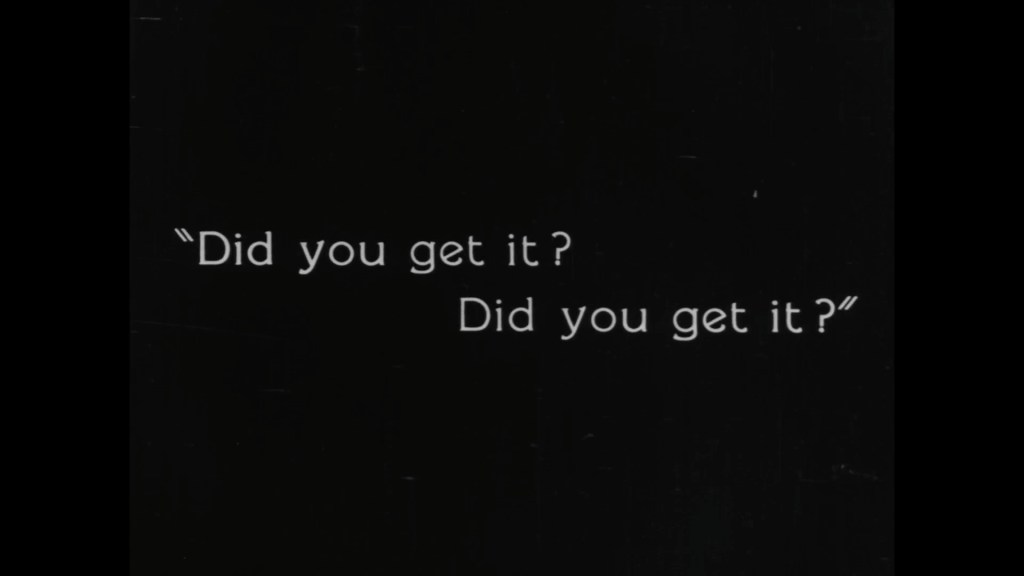
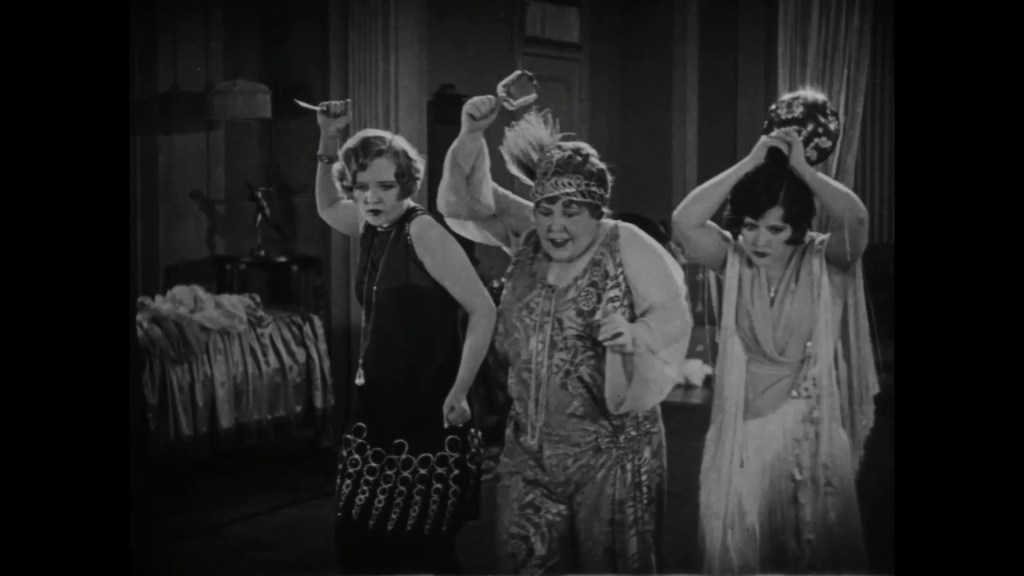
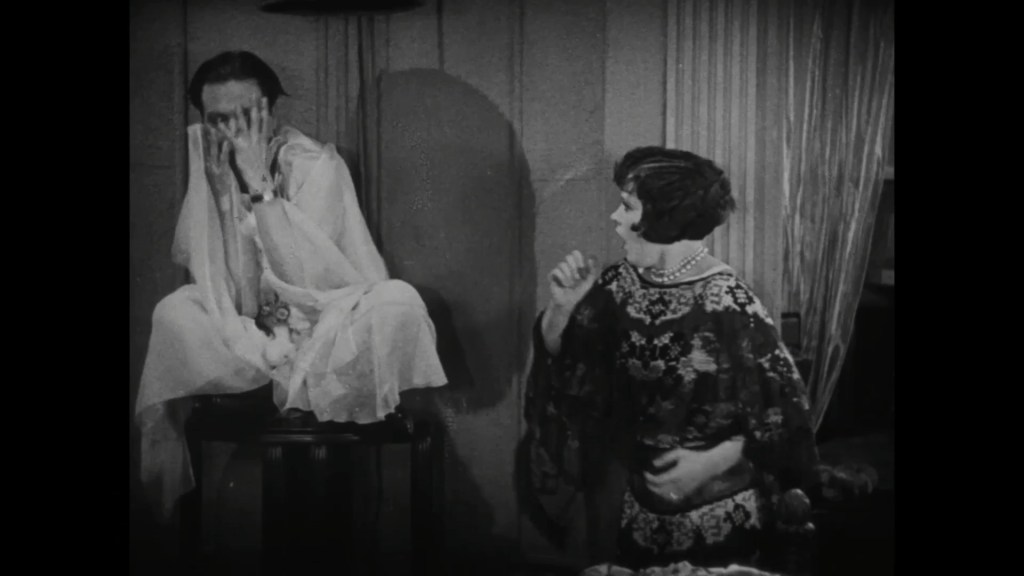
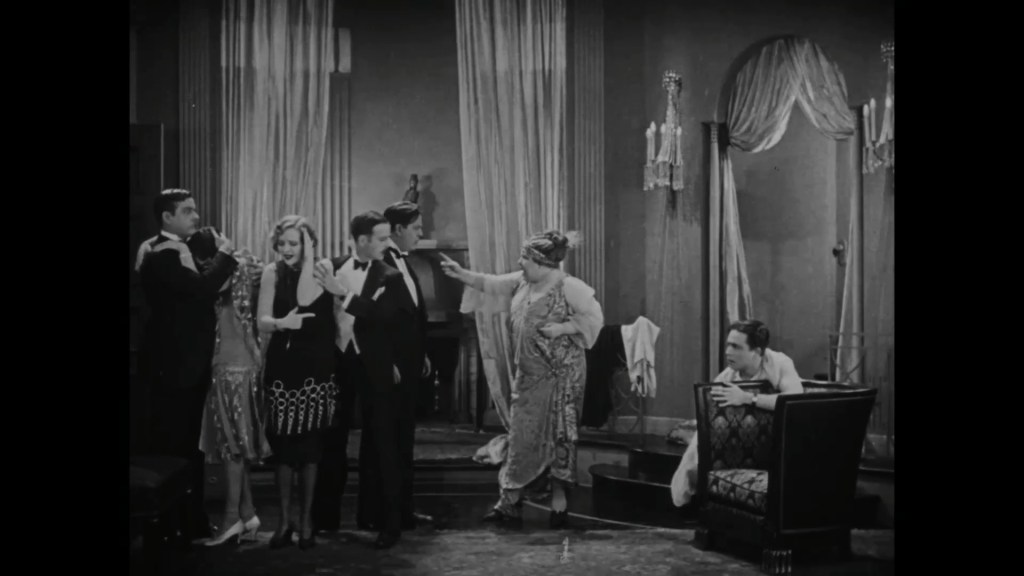
The farce gathers pace: all the men are sequentially caught in possession of the nightie, and the house butler keeps directing jealous woman to their other-halves who are all “up in Mabel’s room”. There, Hawkins and Garry bump into each other from respective hiding places: questioning titles cross the screen to meet each other: “Did you get it?” But the real negligee remains hidden. Trying to escape out of Mabel’s window, they are spotted and the cry goes out that there are burglars. At last the negligee is found but Leonard and Arthur shoot at the supposed burglars, forcing them back into Mabel’s room.

Everyone is now convinced the burglar is in Mabel’s room: Mabel, Phyllis, and Henrietta climb the stairs from inside, while Leonard climbs in from outside—the garment having by now been dropped outside at Arthur’s feet. All three men now hide inside under the bed and the three women sneak in through the door; there’s a great scene as the groups go back and force from hiding place to hiding place. Leonard is caught, but Garry and Hawkins escape through the window to try and recapture the negligee—bumping into a hose on the way down and soaking Garry’s clothes.

More farce in the other rooms: Jimmy goes into Garry’s room, where he is mistaken for Garry by Mabel who flirts with him; Alicia sees this and storms off. But as Arthur now has the negligee, Mabel has to sneak into his room—and a suspicious Phyllis finds her there under Arthur’s bed. Mabel has captured the negligee and put it on under her dress.

Meanwhile Garry is down to underclothes after his watery escape. To avoid detection, he climbs back up to Mabel’s room to get back to his own; but Mabel catches him in her room wearing her night dress and pretending to be a lamp. Hawkins is then caught going upstairs by the whole household; he says that Garry is yet again “up in Mabel’s room”, where everyone now goes. The butler interrupts the siege: a telegram for Mabel saying that her divorce is void due to a technical reason. Garry and Mabel are still married! Everyone bursts in. Mabel’s negligee and the telegram explain the whole story. The married couple embrace, but a shower of shoes from their well-wishing friends knocks out Garry; he falls into Mabel’s arms; she looks to camera and winks, then is herself struck by a shoe. She kisses the prostrate Garry, and the film fades to black. The End

I was worried after the first half hour of this film that the flippant, knowing tone (and the endless quips of narrational titles) would grate after a while. But when the action and dialogue took over, I shed my reservations and thoroughly enjoyed myself. It’s a Wodehouse novel come alive. And even the titles became more visually inventive. There are small fonts to indicate a whisper, large ones for shouting—and wiggly, trembling text to indicate a scream. Though the camera is static throughout, the editing is snappy and the film mobilizes everything it can to quicken the pace while providing clear continuity across multiple spaces. Marie Prevost steals every scene, every shot she’s in: winking, pouting, flaunting, seething, rolling her eyes. It’s one of the most outrageously enjoyable (and clearly, self-enjoying) performances you can imagine. Up in Mabel’s Room is also the first film streamed to feature an orchestral score. (Though there is a brief appearance of other instruments in the soundtrack for The Lady, they disappear after a single scene: why bother providing them if you’re going to take them away so soon?) Günter A. Buchwald’s jazzy score is excellent. The restless, peppy theme for Mabel breaks out each time she outthinks and outacts her competitors and husband. I imagine it would be great fun to see and hear performed live. Which brings me neatly to…

Pordenone 2022: Online festival round-up

So, what are my impressions of the festival in its streamed format? It’s my first experience of Pordenone and I’m very glad to have participated. For accessibility, it’s a tremendous new feature of the festival (and others like it). Technically, I had no issue with any of the streams. It took a minute to learn how to amend the format of the subtitles to make them unobtrusive (the default mode gives them an opaque background that blots out part of the screen), but apart from that I have no complaints. The 24-hour period to watch the films is much appreciated, as watching them “live” would be virtually impossible for me given that I’m fitting a festival into a normal working week. As it was, even seeing all the films on offer was a hectic fit. I skipped all the filmed introductions to the films, which I regret—but I really couldn’t spare the time. The variety of the films themselves—from 1912 to 1930, from Hollywood to Slovakia—was good, with enough of a sense of the running themes (Ruritania, Norma Talmadge) to get a sense of the festival. The music was very good, though I greatly miss seeing it performed live. I never feel the need to comment much on piano scores: put simply, much less can go wrong with them than with orchestral scores. They are adequate, often more than that. But I do miss seeing and hearing performers and orchestra, and I’m aware the live festival had many more large-scale performances than the streamed selection. I’m also aware of the films I missed. Among the many not streamed was Abel Gance’s La Dixième symphonie (1918). As anyone who glimpses at my publications page will realize, Gance is my specialist subject. I’ve never seen La Dixième symphonie with an audience and I would love to know how the screening went at its live projection.

More generally, I feel that both “experience” and “participate” are odd verbs to use (as I did at the outset) to describe me alone, sat or stood by my monitor, hundreds of miles from the festival. The option to add comments or stars to review or rank the films was there, but I didn’t “participate” in this either. Yet how strangely moving it was to see among these signed reviews the name of a university friend whom I’ve not seen since, and to know that they were somewhere in the world—also, I presume, sat at their monitor in the gloom. How different it is to peer at a monitor and glimpse another’s existence, than to encounter them at a festival and talk. I’ve attended a festival, yet I’ve gone nowhere and seen no-one. Much of my writing in recent years has reflected on the experience of live cinema, and I feel guilty having proselytized on behalf of liveness while never having been to a festival. But it’s a matter of time and—more so now than ever—money.

What does appeal to me is writing, and I don’t suppose I’d be able to (or want to) take notes during a live performance as I have when viewing these films at home. Writing these entries has been time-consuming. But the writing has also given me more of a sense of purpose and meaning in “participating” in a festival. I may not have been to Pordenone, but at least it’s given me the final push to start this blog and write a regular piece on silent cinema. I hope to keep it up, with a fresh film or related subject each week or so.

So, thank you Pordenone. Perhaps one day we’ll meet in person.

Paul Cuff

Pordenone from afar (2022, Day 8: part 1)

It’s the final day of streaming, and with two feature films to cover I’ve decided to dedicate a post to each one. First up is a film which bowled me over completely, and about which I will gush unapologetically…

The Lady (1925; US; Frank Borzage)

Working-class music hall singer Polly Pearl marries a wastrel aristocrat who abandons her on their honeymoon in Monte Carlo, leaving her alone and pregnant. When the husband dies, Polly’s former father-in-law arrives to claim custody of the child, but she sends the boy away with a foster family, knowing that she may never see him again…

We’re back in the company of Norma Talmadge, in a film directed by the great Frank Borzage and a script by Frances Marion. “The Lady” is an aspirational title that bar manager Polly had always hoped to attain. The title introducing “the Lady” makes way for a close-up of a woman’s hands wiping beer and froth from a bar. The transition lays bare the conflict between hopes and reality at the heart of Polly’s life.

British soldiers stumble into Polly’s “English bar”. The sergeant is drunk, his comrade sober. The drunk petulantly squirts Polly with a soda siphon. “That’s a ‘ell of a way to treat a lady!” she says. There’s laughter from the clientele: “Can you imagine Polly Pearl callin’ herself a lady!” It’s a cheery introduction, but a hurtful one. The laughter is friendly, but we know what kind of life she must have led. It’s a nice detail in the film’s titles that the word “lady” is often on the last line, or is even the last word, of the text: the tail of the “y” is elongated in the same way as the first “y” of the first “lady” in the introduction.

A kindly face on another table. Mr Wendover was born in the same town. Polly hasn’t been home for fifteen years. The close-ups of Talmadge are beautiful. Her grey hair forms part of her gentle back-lit halo. Wendover calls her “Madame Polly”. He shows her photos of their lost far-off hometown. A montage of preserved glimpses of home. There is a lengthy close-up of Talmadge with tears in her eyes. It’s an extraordinary intimacy between the camera and her face. She once “dreamed of being a lady”. Wendover sees her emotion. “You must have had an interesting life. Tell me about it, won’t you, Madame Polly?” he asks. It’s a mark of his respect that the “y” of the “you” and “Polly” have the elongated tails of “lady”.

Twenty-four years earlier, in London. Here is Polly frolicking on stage, a different person entirely—her body, her face transformed, filled with energy and life. From a box at the side of the stage, Leonard St Aubyns gazes at her in rapture.

Music hall life is brought to the screen with a dozen lovely comic touches. Look at the boy who stands on guard at the stage door, letting in no-one—until he’s bribed with a cigar by a flash dresser. The man even lights it for the boy, who stands there puffing contentedly.

Polly’s friend Fanny makes insinuations about her relationship with St Aubyns. She makes a fuss over the roses he gave her. “Can’t you see diamond lizards in his eyes?” Fanny asks, gesturing to her own spangle on her dress. Polly says she can’t pay, Fanny says she’s “too afraid to pay for it”—and she means paying with her body. “Some day I hopes to be nice”, Polly replies, and Fanny laughs at her desire to be “a lady”.

The flash dresser is Tom Robinson, a bookmaker who comes with flowers for Polly but makes do with Fanny. He looks the latter over. “Oh well”, he says “—seein’ as how the outfit’s paid for—” and off they go. It’s a funny, sad series of exchanges, and it’s strangely moving when all the other characters have gone and it’s just Polly and St Aubyns alone backstage. There’s no title here, but you can read her lips—“I love you”—and see that he does not return her words before they kiss.

(Outside, Fanny asks Tom: “Sorry it’s me not Polly?” He pauses, then says: “I’ll tell you after the ride.” It’s a great line, but it also undercuts the sentiment of the surrounding scene—and we’ll see that this couple’s kind of honesty is perhaps more long-lasting than other relationships in the film.)

The stern father of St Aubyns arrives and offers to pay Polly to send his son away. Immediately he tries to put a price on her, the most devaluing thing of all. For he’s convinced his son is wasting all his money on her, something she fiercely denies. Polly shows him the marriage ring, which she keeps hidden in her blouse. “Not another penny until you return home—alone”, the father says to his son. What is Leonard’s reaction? He sits sulking on a chair. It’s hurtful that his first thought is for money, not for Polly. And it’s moving how optimistic Polly is, saying she’d love him all the same if he were poor. And Leonard rashly announces a honeymoon to Monte Carlo, which makes her cry for happiness.

The last sight of the London world: the theatre boy stumbles in, sucking on the remains of the cigar. We see the world through his befogged eyes: everyone is distorted and squished. It’s a comic touch, but it’s also strangely sinister.

For now we’re in Monte Carlo and already Polly’s life is unravelling. Leonard is gambling and losing, and flirting with a well-dressed woman called Adrienne. Polly laughs at the woman’s pretensions, but Fanny and Tom (still together) warn her she’s after her husband. Leonard is kissing Adrienne’s hand and gets irritated when Polly approaches. She tries to be friendly with Adrienne but the latter snubs her.

It’s at this point that the print begins to disintegrate before our eyes, just as Polly’s relationship disintegrates. We see fragments, glimpses of Polly’s heartbreak. Leonard “can’t stand the riffraff you associate with”. But Tom and Fanny prove their worth, comforting Polly who now has the courage to confront Leonard in the hotel. Polly finds him locked in an embrace with Adrienne. The latter remains cool and smokes instead of replying to Polly’s questions. Infuriated, Polly hurls herself at Adrienne. Her violence is less damaging than what Leonard says next: “You common little trollop! … My father was right! I was a fool to marry a guttersnipe like you!” And there is that elongated “y” in the last word of the text, its long tail grimly echoing the “y” of “lady”. (It’s such a clever little visual trope to use, this simple “y”—and every time it calls us back to the main title and the idea it summons.) Polly stands there, hope draining from her body—as the film warps and bleaches around her.

Marseille, months later. Polly stumbles through dark streets into a tavern. She sits and asks for tea, to the shock of the waiter and owner. Madame Blanche sees Polly’s vulnerable state and pounces, black arms gleaming with sequins, holding her neck and pouring alcohol into her. Polly realizes what kind of place it is: drunks, sailors and women intermingle. She flees in fear but collapses outside and is carried back in.

There is a cut to an astonishing reveal: Polly is in bed, playing with an infant’s foot, the rest of the baby concealed under the sheet. Its tiny fingers wrapped around her thumb. But in comes Mme Blanche. “You pauper, lyin’ in bed like a lady!” Mme demands Polly dance and sing for her customers to earn a living. (The censor would clearly not allow Polly to become a prostitute, but it’s the closest the film can get.)

So Polly is on stage, melting hearts. She refuses money from a customer of another kind. Mme is angry that Polly only smiles for her “brat” and not for her customers. But the baby clutches at Mme’s fingers and her heart softens a little.

Just as Polly is settling into some kind of safe existence, an agent sent by the elder St Aubyns arrives and writes to London that he has found “the grandson”.

Rev. Cairns, an English man of the cloth, baptizes the child: the boy is called Leonard. Is it her way of recapturing the past? Or reclaiming the future? A boy that might grow up to be better than his father. A moment of solemnity in the tavern/brothel when Cairns quotes the line “and lead us not into temptation but deliver us from evil”. One of the girls laughs, another has tears in her eyes.

St Aubyns arrives. Polly sees him and realizes why he’s come: we see all her thoughts in her face. St Aubyns announces that Leonard is dead and that he has come with a court order of custody “on the grounds that you are unfit”. (Again, the “y” of “you” is the elongated “y” of “lady”.) We can read her lips: “You hypocrite”, she cries, as he gestures with contempt at the world he sees around him. She must fetch the child. She paces the room, going back and forth from cot to door, turning in indecision. “He’ll ruin him like he did Leonard”, she says, and begs Mrs Cairns to take the child away with her—to somewhere where even Polly can’t trace them.

(Cut back to a woman trawling for clients in the tavern. She tries St Aubyns and his agent, but is treated with stuffy contempt: so she sticks her tongue out at them and knocks the old man’s hat over his nose. It’s the kind of reaction we all want to give St Aubyns.)

Polly issues her last hopes to Mrs Cairns: “give him your name and bring him up like your own—a gentleman.” She kisses her son goodbye. “Promise me you’ll be to him all that I hoped to be.” Finally: “Don’t let him know that his mother—wasn’t a lady.” It’s a devastating little moment. And when Polly runs back to the tavern, we see everything on her face: grief, shaken into triumphant defiance as she thinks of outwitting St Aubyns. She says she’ll sing whilst they’re waiting. As Mme Blanche and Mrs Cairns prepare for the child’s departure, we see Polly sing: the desperation of her performance, as she tries to hold back her fear while singing. When she knows the child is safe, she is laughing and crying and almost insensible as confronts St Aubyns: “damn you” she says, and strikes him just as she struck at Leonard’s lover. She collapses.

And when we see her again, five years later, it’s as if she has hardly been able to pick herself up from the ground. Here she is, searching the streets of London for her child. Talmadge breaks my heart as this older character. Her face has become older; it’s not disguised, it’s all in the performance. Her face has become less mobile, slower to reveal its expressions. The emotion is held in the eyes. Her restraint is so touching. And the lighting, the dark streets, the faint wash of violent tinting—it’s a perfectly, perfectly sad scene. Polly is selling flowers. A child stops and talks to her. She asks him his name. An angry father moves him on. Polly and her soggy little garlands are moved on by the police.

Tom and Fanny appear, in a car. They are still together, all these years later. Polly tries to sell them a flower. She flees in shame, then changes her mind and calls out after they are gone. Truly, Talmadge is glorious. Look at her face in the long close-up after the car has gone; a whole series of emotions and exhaustion, and Borzage lets it all play out before he cuts to a wider shot. Another child and mother appear. “What might your name be, me lad?” Before he can answer, the film deteriorates again. She still waits to find Leonard. A passing policeman says: “If I was you, I’d give up waiting for that young man” and pats her on the shoulder. He leaves, and there is another extended moment at the end of a scene when it’s just Talmadge on screen. These in-between moments, when action is left behind, are made to tell.

We are back to the present, in Polly’s English bar in Marseille. “Life’s done for me, but some’ow I go on—and on—” she says. Acts of kindness have kept her going. Mme Blanche died and left her money, which enabled her to buy this bar.

But here is an act of selfishness. A brawl erupts, the British sergeant drawing a pistol. His comrade grabs it but is punched away, accidentally firing as he falls back into Polly’s arms. The sergeant is dead. The police arrive.

And, yes, the young man in Polly’s arms is her son. You realize it instinctively, even before she sees his soldier’s identification tag: “Leonard Cairns”. He’s unconscious, asleep like a child in her arms. Talmadge has another extraordinary solo performance in medium close-up. She looks again at the name tag. She can hardly believe it, as we might not. The film plants this miracle at her feet, at our feet—and all at once she realizes what has happened, that he has killed a man, that she might lose him again. “He’s my boy!” she cries to Mr Wendover, and somehow not hearing her words at this point is enormously moving. (Why is that so? There’s always a distance between us and these silent figures. The best silent films invite us to cross this threshold, and when this happens there’s a kind of connection made all the deeper for the time and space it traverses. So yes, we can read Norma Talmadge’s lips—mouthing the rediscovery of her lost son, nearly a hundred years ago—and discover her words again, spoken inside our own heads.)

Already the police are here. Leonard is alive, struggling to open his eyes. When he recalls the fight, he grieves the death of his friend: “we were buddies”, he carried him across No Man’s land. Another region of grief and loss opens up. Polly tries to convince Leonard that she fired the lethal shot: “You know, my lad, that I shot him. It means nothing to me—you’re so young—and need your chance.” (Yes, an elongated “y”, linking his chance with her longing for a different life.) Leonard looks at her with wonder, and they are eye to eye. Polly asks Mr Wendover to back-up her claim—she is staring at him, desperate to give her boy a chance. But Leonard refuses to let her take the blame: “There are some things a gentlemen cannot do.” And Mrs Cairns’s promise to her is fulfilled—another emotional payoff in this astonishing scene.

“But it’s the most wonderful thing I ever heard of—”, Leonard says, that Polly should try to save him, a stranger. “But you’re not a stranger—why—I—” (she pauses, and it’s agony!) “—I have a wonderful memory of a son like you”, she goes on, and a tear falls from her cheek—the most perfect moment, in this most perfect scene. Even the “y” of “you” links him to her, which is matched in his response: “And I have a memory of a wonderful mother like you”. She puts her hand upon his cheek. It’s not quite a caress, it doesn’t dare to be. But when he turns to leave, she asks him: “Do you mind if I kiss you—in memory of my boy?” They embrace, and it’s a kind of fulfilment of the miracle.

He marches out of her life, escorted by the police. Her hand wipes the bar, as in the opening shot. And I didn’t think the film could pull any more emotional punches, but somehow it does. Mr Wendover says he won’t leave France until Leonard is freed. Polly is thankful her son is a gentleman. “And do you know why he is a gentleman?” Mr Wendover asks. “Because his mother happens to be—” (her hand stops wiping the bar) “—a Lady.” She looks up at him. And there is her face, her face that has carried the whole film, smiling at the realization that she may be loved. It’s another perfect moment, in a film full of perfect moments. Dissolve. The End.

The Lady will be one of those films that I won’t be able to describe to someone else without welling up. (This happens with a few other silents. I remember giving a lecture at the London Film School and almost breaking down mid-sentence when I tried to describe the ending of Sjöström’s Ingeborg Holm [1913]. I wasn’t expecting it, but there it came, the wave of emotion, and my voice cut out in front of a roomful of strangers.) Talmadge is of course the star and holds the film’s huge emotional weight, but the whole thing is wonderful. The cast are uniformly excellent, the script has a wonderful balance of the tragic, the comic, and the miraculous. It sets things up that you don’t immediately spot, then knocks you over with them at the end. And despite the damage at various points, the print is absolutely beautiful to look at. The lighting is superb, the sets are atmospheric, and all united with the gorgeous tinting that brings warmth and texture to the world on screen. I’ll be thinking about this film for years to come, and no doubt still blubbing when trying to describe it to strangers. Many thanks for this, Pordenone.

Paul Cuff

Pordenone from afar (2022, Day 7)

Day 7 brings us the film I was most looking forward to seeing among this year’s streamed content. (Pause to consider what a foul phrase is “streamed content”.) It’s also the film that most conflicted, confounded, and confused me.

Manolescu (1929; Ger.; V. Tourjansky)

Manolescu and Cleo con their way through European cities, stealing and defrauding as they go, on the run from the law and her ex. Will she escape him? Will he escape his own lifestyle?

I have great difficulty in writing about my feelings for this film. For a start, I made no notes when watching it: Manolescu was the one film I wanted to concentrate on entirely, without pen or paper to distract my eyes even for a moment. To write this review, I’ve had to go through the film again and my thoughts are even more complex now that I see again how rich is the look and feel and design of the film. But my reservations are still there. So here we go—with due warning of sexual violence in the content…

Paris. Smouldering nightscape. A descending camera over the rooftops. A homeless man on a bench. Nightclubs ejecting revellers in the early hours. Mosjoukine as Manolescu in his finest night attire.

But Manolescu is back home and exercising by 7 a.m. The curtain is drawn. Outside, a studio Paris so fabulous the camera can drive elaborate routes through its impeccable geography. Here are cars and people, dark streets, neon signs.

A letter from the Club: Manolescu owes them 82,000F. Paris rejects him, so he obeys the neon suggestion outside: “Adieu Paris / Visitez Monte Carlo!”

The station. Steam and smoke. And Brigette Helm, smoking and sultry. She is Cleo and Manolescu stares at her and takes the neighbouring compartment.

Jack arrives to say farewell to Cleo but is being observed. His agent warns him off. He leaps onto the train, but then leaps onto another train in the other direction. The police board the train to Monte Carlo and inspect passports.

Manolescu tries to get into Cleo’s room, first by stealth then by force. The police arrive and Cleo realizes she needs protection, so she pretends to be asleep in Manolescu’s room. The police go. He locks the door, then the door to Cleo’s apartment. He paws her, forces her back onto the bed. She pushes her back against the compartment wall, closes her eyes, waits to submit. It’s a horrifying scene.

Now there are astonishing landscapes. Glorious sun and shade. Gleaming cliffs. Gleaming hotel facades.

Cleo has given Manolescu the slip and gone to her hotel. Manolescu follows. At reception, he pretends to be “Count Lahovary” to get better service. He cons his way into Cleo’s room. She’s in the bath. She demands he leave, again and again. He waits outside. She dresses. She confronts him. Eye to eye. The most astonishing shot, held for a long time: her eye the focus of the whole world, staring at him in a kind of wilful fury. His face. Gleaming eyes. A smile fades. “What do you want from me?” His answer: he grabs her, kisses her breast. They writhe together. She reacts with hatred. The camera tracks closer. They stare at each other like animals. They kiss, his hands around her throat.

They are together, laughing, running, exercising in the sun, riding, boating. Their embrace amid the sheets. The camera begins to spin. Their whirling faces dissolve onto the gleaming whirl of a roulette wheel. Casino life.

At the hotel, Jack arrives with a huge bunch of flowers. He’s like a bear. His hair in grizzly flight from his enormous head. His moustache a black lightning bolt under his nose. He enters. Manolescu hides on the balcony at Cleo’s instruction. Jack and Cleo. Their embrace turns into a kind of fight. She wrests herself away, giddy. Hatred disguised as decorum. Fear and panic. Pretence. (On the balcony, Manolescu peers into the neighbouring room: a rich old woman storing her jewels. An idea.) Jack leaves to dress. Cleo and Manolescu. What is she thinking? (Really, what is she thinking?) They kiss. There’s something animal in them. Jack walks in. There is a fight of amazing savagery: punches hurled in close-up, fury in the eyes, fury in the bodies. More animalism. Cleo flees, but only into the corridor to get help. The police arrive and drag Jack away.

Manolescu promises they’ll stay together. “We stay together?” she replies. “Could you then offer me the life I am used to living?” Taken out of context, it’s an extraordinarily revealing question. The life she’s been living has been one of enforced companionship and criminality. (And sure, he’ll give her that.) But what the question is taken to mean in the scene is one of finances: could Manolescu provide her with enough money to live the way she wants. So he steals the rich woman’s jewels in the neighbouring room.

Title: “That’s how George Manolescu’s life as a swindler began.” (Really? Wasn’t he already fleeing debts in Paris? Isn’t he already a rapist?)

Their life of crime and money fraud. Manolescu cheats his contacts and wins out.

Jack in his cell, his agent promising him to help with Cleo.

London. Neon signs. Pearl theft. Shots of faraway places. Newspaper headlines across the world: Manolescu’s thousand disguises, thousand crimes.

A nightclub. Cleo staring at another man. (No-one can stare like Brigitte Helm, no-one raise her pencil-thin brows so intently, no one narrow her eyes with such intensity of willpower.) A rift is opening.

Jack is released. Back at the hotel, a fight between Manolescu and Cleo. He taunts her with the prospect of living a life of poverty. (Has the film lost all sense of orientation? Isn’t he the one supposed to be afraid of losing her?) He grabs her arm. Let me go, read her lips, and again and again. But he just wrenches hold of her, and they swirl. A grotesque parody of a lovers’ dance.  He leaves. She weeps on a bed. (Again, what is she thinking?)

Jack arrives. She manages to half raise herself. He approaches, furiously. She has her back against the wall. It’s the same framing and pose exactly as the rape scene in the train. (How can the film be this intelligent in knowing how men treat Cleo, and yet proceed to treat Cleo as though she is the problem, the cause of men’s violence?) She somehow wrestles him into an embrace. She is squirming, desperate. She is on the bed, half-weeping, half-writhing into a new shape to enable her to survive. (God, Helm is magnificent: look at that face between her arms, raised to hide the shifting of her face, her train of thought, her pulse of cunning.) Jack looks bewildered. His eyes flashing under the breaking tide of black hair. She raises herself. He tries again to summon the will to strangle her. Their arms. Hers, bare and pale; his, thick and dark in his coat. Look at her shoulder blades, tensing, shifting. His face, gleaming with sweat. And now its her turn to strangle him into a kiss. His fury ebbs. His enormous face turns into that of a child, beaming at last with mad happiness. They have wrestled and a weird, mad pact resolved. She falls away from him, exhausted. “I’m so happy you’re back with me!” he says: the strangest line of dialogue after the preceding scene, one of the weirdest, most uncomfortable survival/attempted murder/seduction scenes I can recall.

Then Manolescu returns. Cleo between two brutes. Jack hurls a sculpture and hits Manolescu in the head. He falls. Cleo over his body. “Murderer!” she rasps, and Jack turns to leave—a giant lumbering from an inexplicable scene of defeat.

Cleo phones for the police. But look at Manolescu, on the floor. From the back of his head, in the shadows: that isn’t blood seeping from him, it’s electricity. Sparks are bubbling from his brain onto the carpet. The camera falls into them. The screen is the pulse of an electric sea. A vision of a courtroom. Faces and benches in the negative: black and white reversed. It is terrifying. The whole screen flickers uneasily. The electricity is still seeping, pulsing through his brain. Only Manolescu is in the positive: his face in profile in a scene of (literal) negativity. The crowd turns as one to stare at him. The judge rises: “Robbery… swindling… forgery…”. Manolescu stands: “Cleo… all… because of… you…”. The camera turns Manolescu on his side. He is no longer standing; he is in bed. A world of white. And Dita Parlo. She is Jeannette, a nurse with the warmest smile in the world. The film will take her side, the side that says “Cleo: all because of you” and blame Cleo for Manolescu’s own decisions.

Nurse and patient are falling for one another, but here is Cleo: “I am not to be blamed for what has happened… please, forgive me.” (The contradiction is clear, but what does the film want us to make of it?) “This is your doing!” shouts Manolescu as he sees another headline revealing his criminal work.

So Cleo departs and Manolescu and Jeannette go to the Alps to recuperate from his head injury. But Cleo visits: “We belong to each other”, she says, “I would never let anyone else have you!” “I hate you!” he hisses, and again hands and eyes are wrestling with fury. He rejects her. She catches sight of Jeannette. The two women look at one another. Cleo is contemptuous. (That raised brow, that narrowed eye.)

New Year’s Eve and Jack is drinking alone when Cleo turns up. Yet as soon as they embrace, Cleo is reluctant: “What abut Manolescu?… I have betrayed him.” Literally, this might be true—the police are on Manolescu’s trail, but how on earth are we expected to take Cleo’s logic? For now she is turned away. She is alone in the corridor, her black silhouette cast behind her on the wall. She walks away. The shadow lingers, then slips down and down the wall until it’s gone.

New Year’s Eve in the Alpine cabin. Manolescu and Jeannette and their host are having a party when two police agents arrive. Manolescu begs them to wait ten minutes so he can toast the New year with his lover. They acquiesce. Happy New Year drinks and deluded happiness. Then Manolescu must reveal the truth: they are here to take him away. Jeannette collapses beneath the Christmas tree. As he departs into the night snow, she runs outside and stands crying out that she will wait for him. This is the last image: a screaming woman, attacked by the howling night storm, pledging her love to a monster.

So that’s the film. And I’m very conflicted about it. I love Ivan Mosjoukine, I think Brigitte Helm is astonishing, and I’m a fan of Tourjansky. It’s a film made by UFA in 1928-29. This was the summit of silent filmmaking in Europe. This film has everything going for it. And it is indeed technically brilliant, sumptuous to look at, amazingly well preserved and presented, filled with spellbinding scenes and moments. But there is something at the heart of the scenario—and in turn, of the characters—that simply does not work, that is in fact exceedingly nasty. Even giving the brief synopsis at the start of this review was a struggle for me, for I gave the kind of synopsis you might see online for this film. Here is a different synopsis: Cleo is enslaved by her rapist, only to be blamed for his life of crime and rejected in order for Manolescu to “redeem” himself with a better woman.

After that early scene on the train, in which Manolescu decides he has a right to have sex with Cleo for “protecting” her, everything else is sullied. No matter how much I could talk about how fabulous it looks, about how great the performances are, I cannot get over the way the characters are conceived and conceive of each other and of themselves. The only way of making it make sense is to accept that Cleo falls for Manolescu despite the fact that in their very first scene together he imprisons her and then rapes her, then recaptures her again once she tries to escape. The unspoken condition that the film thinks it establishes—and which the film assumes somehow justifies Manolescu’s actions—is that Cleo sells herself. But she doesn’t sell herself in that first scene. There is no bargain, no conversation. We know nothing about her before she enters the train, other than that she is afraid and is hiding something. Over the course of the film, it’s clear what kind of life she’s led: but being subjected to the whims of male violence in order to live in relative luxury invites our (or at least, my) deepest sympathy, and deepest anger towards her exploiters. But for Manolescu and for the film, her associations make her the criminal. In the astonishing fantasy trial scene, among all the words used to describe him (“Robbery… swindling… forgery”), the word “rapist” is not mentioned. When the electricity starts seeping out of his head, I half wondered if the film was about to flip a switch and condemn Manolescu: were we about to watch him being dragged into hell? But no, his own self justification begins—and the film is complicit in constructing a redemption for this awful man.

The final section of the film is him finding a better woman than Cleo to love. All the film’s judgement falls upon Cleo, who is expelled from Manolescu’s life and then from Jack’s. Manolescu’s fate is to go to jail, but Jeannette awaits him. Are we really meant to sympathize with Manolescu? I find this utterly incomprehensible. If the film was about how awful Manolescu is, and how Cleo manages to find redemption and escape her life, then this review would be nothing but praise. As the film stands, I am alienated by the scenario. Is it the screenwriters’ fault? Is it a fault of the original novel, on which it is based? Or do we make some giant leap of faith and assume the film is somehow suggesting we do in fact take against Manolescu from the start, and that we should ignore the whole of the rest of the film’s story of a man pushed into criminality and then finding redemption?

I wish I could write a more coherent review, but the film compels and appals me in equal measure. I so wanted to love this film. It’s an extraordinary piece of work and a deeply uncomfortable watch.

Paul Cuff

Pordenone from afar (2022, Day 6)

Day 6 takes us back to the fictional worlds of Ruritanian kingdoms, and to the streets of 1920s London thanks to this British-German co-production from Anthony Asquith…

The Runaway Princess (1929; UK/Ger.; Anthony Asquith)

On her 21st birthday, the Princess of Lothen Kunitz runs away from her palace to avoid enforced marriage to a stranger. She goes to London with her old tutor, where she tries to earn a living—but is caught up in a fraud scheme…

The camera tilts down to reveal a grand castle, somewhere in central Europe. Tops hats are raised to a banner bearing the image of the Princess. It is Priscilla, who is thus preceded by her symbolic trappings. When we finally see her, she is surrounded by courtiers and hussars. (Hussars always look the most gawdy, hence their appearance in all the Ruritanian films streamed thus far from Pordenone; though here I note that they are wearing British-style lacing on their tunics rather than the more continental style frogging. (I have a longstanding interest in nineteenth- and early twentieth-century uniforms, but I’ll try and spare you further observations on this topic.)

Priscilla is presented with a goblet. She tries to take a good swig of the contents, but her chaperone intervenes. There is a nice gag with the courtiers dealing with the birthday gifts being offered to the Princess. She hands one large item to her aide, who passes it to their right to an usher, who passes it to their right to another usher. The usher looks hopefully to his right, but there’s no-one there, so he tries to hand it back to someone on his left. The aide eventually takes it back, disappears for a moment, and looks furtively behind him once he’s dumped it behind the dais.

A girls’ choir step forward and a singer fluffs her line. The princess tries not to laugh. Sympathy and embarrassment. We feel the awkwardness and absurdity of the occasion.

Fritzing is a faithful old tutor to the unhappy princess. Fritzing commiserates with Priscilla in the confines of a large library-cum-study, where she would clearly rather spend her time. They discuss her future, and she says “I wouldn’t marry a prince for anybody.”

Cue the Grand Duke, her father, giving her a necklace: and an ultimatum. The necklace has been given to all princesses when they come of age: it’s an engagement gift. She must marry the Crown Prince of Savona. The necklace is tight around her throat. Outside, she tries to tear it off: but the courtiers are all around and she must feign contentment.

She plans an escape, sending luggage to Amsterdam. Her packing is interrupted for a bicycle lesson, to take place under the eyes of a stern chaperone.

But Priscilla tears off into the woods, where she (quite literally) bumps into a stranger. Under boughs of crushed-focus light and shade, they share a few moments of tranquillity. Then the chaperone intervenes and they are parted.

When the Prince is announced the next day, the camera tracks in grandly and we see only the back of the man’s head. (And yes, I think the eventual pay-off is spelled clearly enough at this point.) Where is the princess? The Grand Duke must improvise: “the joy of her betrothal has caused the Princess to have a breakdown”: cut to the bicycle tyre being repumped as Priscilla and Fritzing ride away to the train station.

But on the train things start to go awry. They are the victim of money forgers, who substitute a duff £5 note for their own currency. And the stranger from the woods is following them, too—and recognizes her face from the newspaper. Also on board is a detective, investigating a gang of fraudsters—who assumes the stranger is likewise on their trail.

Then we are in London. And it’s a London of wonderful business and bustle and crowds. The budgetary constraints creating the kingdom of Lothen Kunitz confine that world to two or three spaces. But in London the streets are the camera’s to roam. The excitement of London excites the camera, which can now track and cut and look at the life of the city.

The stranger is still following Priscilla: half-mocking her efforts to get a job. Frankly, his persistence is creepy and I’m not surprised Priscilla is keen to prove him wrong. (If she called the police, the rest of the plot wouldn’t work, which is a shame.)

The race to get a job with another applicant is intercut with a dog race: it’s a neat joke but appears out of nowhere and there’s nothing else like it in the film. (Only when you look at other Asquith films can you see a context: the same kind of intercutting trick is more startlingly used in A Cottage on Dartmoor [1929] when cannons roar into life in a rapid montage of anger and violence in a barbershop.)

Priscilla ends up inserting herself into a modelling role, putting on skates and a dress as the “sportif” model—ending up plunging straight through and past the catwalk into the lobby. It’s a parody of her desire to be in control, trying as she did in Lothen Kunitz to have control over what she does and what she wears.

When she gets another job, she ends up being employed by the crooks. When her first failure ends in two of them shouting at her, there is a brilliant montage of faces—framed closer and closer—bearing down on her. It’s a more successful sequence of stylishness than the dog track scene, having more direct purpose and effect within the scene.

Then the smartest of the fraudsters works out that Priscilla is so blithely trusting that they can pay her with fake notes and get her to distribute their currency for them. The detective and the stranger are nosing around, observing notes and getting closer to their goal. At least, the detective thinks so—having earmarked Fritzing and Priscilla as the masterminds.

At every turn, Priscilla bumps into the stranger—who I wished she’d slap. Instead, she tries to show off her job success ordering everything expensive on the menu at a restaurant. (“Princess?” one waiter asks another. “Film star!” the other asserts. It’s much like the link made explicitly at the end of Hans Kungl. Höghet Shinglar: the Ruritanian figure as glamorous star, for whom different rules might apply.)

The film comes to a climax as the criminals are grabbed and the princess has to reveal her real name—as does the stranger. And yes, the stranger turns out to be the Crown Prince of Savona.

The royal couple appear at the end, endlessly nodding to an invisible throng of well-wishers. They look happy, but are they? The last shots of the film exactly mirror those at the start: but now the banner being saluted contains an image of the couple, and the camera tilts up from the castle to the sky.

It’s meagre fare, this film. With similar aspects to Hans Kungl. Höghet Shinglar, The Runaway Princess falls short in every point of comparison. It’s not as stylish, not as charming, not as inventive, not as clever. The finale of Hans Kungl. Höghet Shinglar questions the very material of Ruritanian fantasy, whereas The Runaway Princess returns to where it starts. If there is any question of ambiguity at whether the couple are now merely trapped with each other rather than on their own, it is only a hint: the film wraps up so quickly there is no time to think. The relationship between Nickolo and Astrid is much warmer, more developed, and more convincing in Hans Kungl. Höghet Shinglar. In The Runaway Princess, the “stranger” is given no substance at all, and his presence is only bearable given that we know Priscilla seems to like him. And even though she does like him, his stalking her from country to country is still difficult to accept without any scene of real warmth of engagement between them across the entire film. The Austrian actress Mady Christians is very good as Priscilla, but Paul Cavanagh is given so little to work with he can hardly do anything for his character. The Fritzing character is likewise very thin: not the complex character of André in Hans Kungl. Höghet Shinglar (or, in anther Ruritanian example of the period, the tutor figure Dr Jüttner in Lubitsch’s The Student Prince of Old Heidelberg [1927]). In terms of style, there are moments when Asquith has fun (the dog race gag, the quick cutting of close-ups in the argument) but even these stand out awkwardly against the pedestrian pace of much of the film. It’s worth noting too that the print used of The Runaway Princess was not in the best shape. There were sections of what looked like 16mm subbing for 35mm elements, and the film clearly hasn’t been restored recently. I’m still glad to have been shown it, but it’s one of the weaker films to be streamed this year.

Paul Cuff
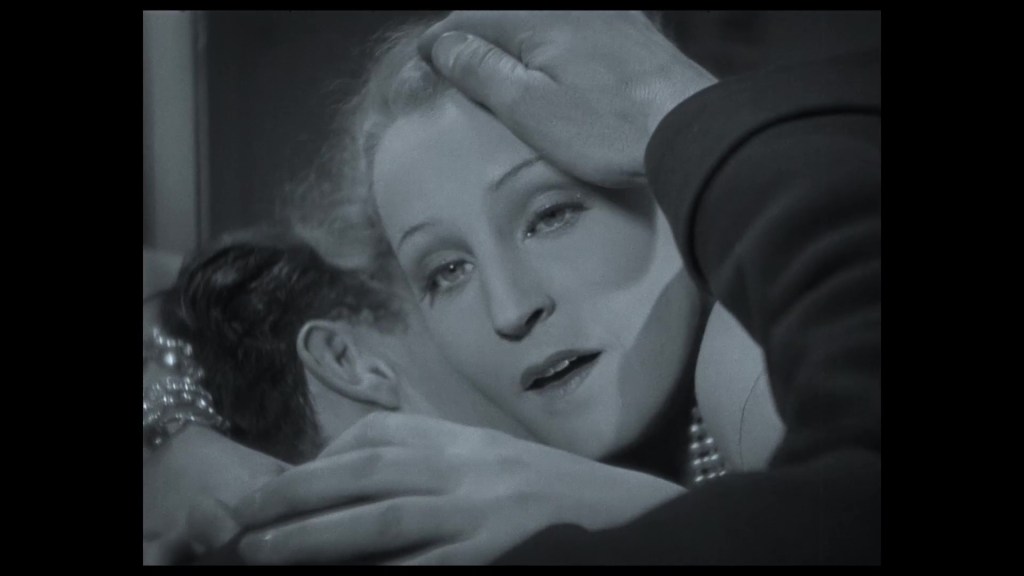
Pordenone from afar (2022, Day 5)

Some real central European kingdoms today, as we visit Slovenia and Slovakia with a short travelog and a long ethnographic documentary…

Kralj Aleksander na Bledu (1922; Yug.; Veličan Bešter)

The title gives it away: here is King Alexander I of Yugoslavia visiting Bled. In fact, the land precedes the monarch and is far more interesting.

Here are turquoise mountains and skies and lake. Trees in the heat of celluloid haze. Cliffs, spires, sails. The camera wobbles, turns its neck with difficulty. It feels the motions of the waves. It is being operated unsteadily. It cuts. Pans. Repeats. Now we have our feet on land. Green gliffs and peaks viewed through trees. Higher still. The turquoise lake. Then the chateau, orange; closer, further away; then green.

Suddenly, dismounted hussars march towards us in a vivid orange tint. The film sheds its colours and indiscipline (and yes, much of its inexplicable charm). A train approaches and the men, now neatly arranged in monochrome, await the King. An anonymous little man in officer’s uniform marches one way, then another. It’s the King, apparently. A dog ignores him and scurries, nose-down, over the tracks. The King inspects the troops, their eyes straining right. The film ceases.

Po horách, po dalách (1930; Cs.; Karel Plicka)

The title is from an old folk song, “Over Mountains, Over Valleys…”—and this is where the film goes. It is the past, caught before it disappeared. It is the people, caught before between two world wars.

Trees tremble in the wind. Sheep appear, guided by men—their trousers the colour of the grass, their shirts the colour of the clouds. Children’s faces against the sky. Children whistling, playing the pipes. A dog nestling against his knees.

The film moves at the pace of life in the mountain pastures. The sheep pen closes. The sheep press close. Clouds move in the distance. The shepherds eat. Look at the texture of their clothes, faces, hats. Sun and wind and cold have given them their complexions, complexions whose grain settles into the texture of nitrate.

The men make mugs, vessels, belts. They put on their shoes, they wind the straps. This is the way feet have been bound for centuries, millennia even. They mould sheep cheese in wooden presses, grinning as they reveal dairy reimagined into ducks.

A village. Women dressed for church. Children as miniature adults, the same clothing, following the same steps.

Musicians play extraordinary tubas on rocks. They dance. Violins play. (And surely we’re missing a great deal by having just a piano accompany the film. Imagine the effect of the instruments on screen being played in the theatre.)

Strange rituals, games, all under the vast sky, against the hazy mountains. Girls play horses. Boys play carts.

A bagpiper at the centre of a moving throng of children dancing, waving, clapping. Extraordinary athleticism of diving, tumbling, wheeling, climbing. Bodies writhe and wriggle and flex. And all against the vast landscape. Children become frogs, animals, insects with multiple limbs. Boys become barrels. They are watched by little sheep, who must wonder at the strangeness of human beings.

Corpus Christi. Swathes of people pressed together. Banners. Poles.

A cradle in the fields. A mother and daughter sing a lullaby to the infant.

But now the men and women are marching with rakes and symbols. Women dance around their landlord.

By the Váh River. Geese wander. A woman washes. Bride and bridesmaids. The bride in close-up, but the camera sees her enormous costume—a peasant girl dressed like a cross between Queen Elisabeth I and an Aztec deity; she stands facing the camera, then in profile. She is grinning, embarrassed. Carts pile high with guests, cushions. There is a manpowered merry-go-round at the centre of celebrations. The operators must get as dizzy as the occupants.

An Orthodox pilgrimage of Slovenes into Russia. Banners, endless genuflecting and crossing. Beggars, old men, priests, women sat on the grass. The past and its people mill about. Ancient old men, tiny boys. Men with hair and pipes. Men who are all hair, creases in their face. A crucifix is wreathed in flowers. Boys climb a wooden frame and ring a bell several times their size.

A farm. It is Sunday. Families walk. A bride is dressed. We watch her headdress assembled. Peasant faces, too sincere to smile. Sandalled feet over ancient cobbles. Past the churchyard, overgrown with tall grass. Figures in white sit among the crosses. Prayers are said above the graves. The land looms over the tombs, over the kneeling mourners.

An ancient piper. Tiny children with blonde hair, straw hair, hair like fresh grass. A group sits on a knoll, their feet higher than the rooftops below. Mothers and children sway. Boys prance and dance, leaping with unbelievable athleticism. The boys become men, who dance in the smoke of a fire. A sword dance of lethal precision and timing. The musicians bite on huge pipes as they play their violins. The band marches forward, the dancers recoil.

Hemp is being made, under the eyes of a matriarch with rake, pitchfork, and sickle. (The flies crawl on her warm arm.) There is embroidery. The striking patterns of the women’s dresses being made by their hands. A child watches her mother sow. Cloth is washed, beaten, hung to dry.

“Studies of folk clothing and types”. Bodies and faces and smiles under that great sky. Grinning and shyness.

Children’s games. Inexplicable routines.

The Belan Alps. The shadows of clouds rush over mountain pastures. Rivers sparkle. Rock gleams. Clouds pass over dark peaks. Stunning views, grass banks follow the immense folds of rock and earth.

And there before it all are the farmers, cutting and harvesting the grass, sharpening blades, spinning wool, processing flax. Wooden tools, wooden looms. Dexterity passed down over centuries. Highlanders’ music, costumes. A horse and rider against the astonishing backdrop. Sheepskin jerkins, men dancing. Beechwood chopping: boys are woodsmen, axe, and tree at once. Men are lifting one another, twirling around, fighting on benches, barrelling down the hill in ones and twos, and threes, and fours. Children lifting other children with just their legs. These are bodies with years of labour already in them. Cows wander past the twirling acrobatics of the shepherds. A game called “train engine” in which bodies are the carriages and engine. But how many of them have ever seen a train? “Strength in the legs”, “Strength in the hands”, “Pulling tomcat”. “Flipping the boys over on a stick”, “Doing the horses”, children riding atop children riding atop children. “Tying to the stick”, children turned into knots. Adults carrying bundles of children across a grassy ridge, behind them the mountains. The film stops, but it could go on forever—if history were not inevitably to intervene.

What am I to make of all this? The film has a hypnotic rhythm to it. Everything is presented with very little comment. Filmic interventions are chiefly noticeable in the details: when the people step forward for the camera. But in these instances, you can sense the real emotions: embarrassment, amusement, awkwardness, reticence. Yes, the people are performing for the camera, but they’re clearly performing for each other as well. There is a rough-and-ready feel to even the most elaborate scenes. And everything takes place before the immense landscape, on natural stages that both ground the inhabitants and stretch beyond them. These are lives led on unending swathes of grass, under enormous skies. This is not the managed poetry of a Dovzhenko, but a looser assemblage of faces and landscapes. People and places determine the film’s shape, its rhythm. And I love watching these silent folk in these silent spaces. The majesty of a tangible reality, removed from our grasp and set apart from our time.

Paul Cuff
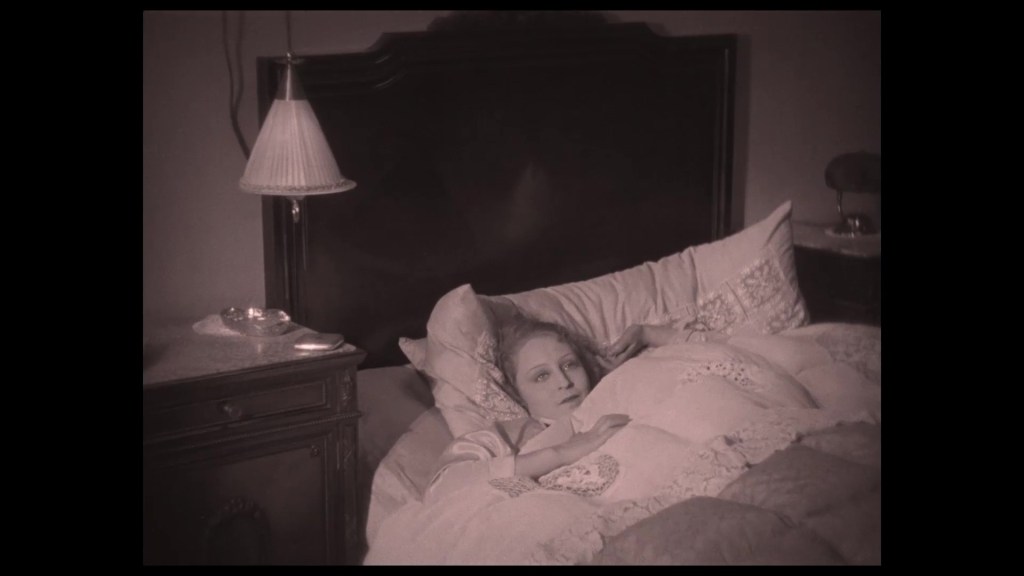
Pordenone from afar (2022, Day 4)

It’s back to Ruritania for Day 4: a slice of slapstick with Stan Laurel for starters, then a main course of Germano-Swedish romantic comedy…

Rupert of Hee Haw (1924; US; Percy Pembroke)

“The Plot”, explains the opening title: “A Princess is engaged to marry a king—but she loves another—This makes it an original story.” Stan Laurel plays a sozzled King, together with the lookalike who brings chaos to the court…

All the Ruritanian trappings are here: the uniforms, the palace sets, the tapestries, suits of armour etc. In fact, the settings have the best recurring jokes. When the King is drunk, the set itself behaves as if drunk: a wall moves back and forth to confound him, then acts as if it was innocent. When the King shoots the cuckoo clock, the suit of armour raises its arms in shock. When the King reappears later in the film, another suit of armour thumps him unconscious. And all for no apparent reason. The King’s fiancée, the Princess, gets her own recurring gag: whenever she is slapped on the back or knocked over, huge clouds of powder (or dust) billow from her clothing. It’s as if she’s fossilized, or she’s wearing a museum costume.

The chaos spreads through the court. A general’s hat reacts every time the King sneezes. First the hat leaps into the air. So the General takes off the hat. The King sneezes and the hat’s plume leaps into the air. The General re-affixes the plume. The King sneezes and the General’s hair leaps into the air. What’s wonderful is that the General looks so nonplussed at each turn, turning around as if to spot how the gag’s being done.

The film takes apart every social formality it can get its hands on. Displays of etiquette become slapstick routines: lines of saluting courtiers turn into front-facing, sideways-kicking brawls. Signs of rank are treated with contempt, articles of uniform defaced and used against their owners.

I quickly lost sense of what the plot was, and so did the film. It swiftly becomes a chaos of banana skins, pratfalls, abrupt changes of fortune, arse-kicks, bits-with-a-dog, incompetent duelling, and callous announcements of deaths and misfortunes. There’s a subplot involving a letter but frankly I had no idea what was supposed to be happening. For Rupert of Hee Haw, the Ruritanian genre is merely a fancy-dress box into which the performers dive and emerge in a chaos of tropes. For only 23 minutes, it feels rather baggy—like the costume doesn’t quite fit the film.

Hans Kungl. Höghet Shinglar / Majestät Schneidet Bubiköpfe (1928; Swe./Ger.; Ragnar Hyltén-Cavallius)

Nickolo Grégory is an aspiring young barber, raised in the trade by his grandfather André. He falls for Astrid, the granddaughter of hair tonic millionairess Sophie Svensson. The millionairess thinks her granddaughter should marry Count Edelstjerna, the closest thing to royalty she can find. But André has a secret, which is that Nickolo is the long-lost Crown Prince of the kingdom of Tirania—and a king worthy of Astrid (and her grandmother). But how will they reclaim the crown, and can they trust the agents sent to help them?

This is an absolutely charming film. It has a charming script, a charming cast, charming performances, charming photography. Its lightness of touch was a very pleasing change from yesterday’s feature, Profonazione, as was its sophisticated staging and camerawork: nothing showy, but imaginative when needed and making the most of its resources.

I’ve commented on title designs more than once in the features from Pordenone this year, and do so again now. Here, the title designs gesture at the secret “royalty” of Nickolo’s family, and the aristocratic pretensions of Sophie’s family.

But everything in this film is well designed. When André sees the hair tonic bottle produced by Sophie Svensson, the shape of the bottle dissolves onto the shape of the castle she has bought with its proceeds of its fabulous success.

Design matches aspiration throughout. André keeps the “thousand-year-old iron crown Tirania” in a secret case behind a mirrored cabinet door. The door is decorated with filigree that matches that used on the film’s intertitles: his secret is hinted at in the very design of the film’s narration. Likewise, when Sophie and Count Edelstjerna are discussing his plans to marry Astrid, Sophie has eyes only for the Count’s signet ring. The Count, too, has eyes only for the portrait of Astrid. Everyone’s aspiration is expressed through knowing gestures, comic transferences. Even Astrid’s rival for Nickolo’s heart, Karin, flirts with Nickolo by a kind of proxy: letting him continually fashion and refashion her hair. Hair itself becomes the means of access to various spaces: Astrid herself eventually invites Nickolo to the Svensson castle to cut her hair.

The rivals in romance play out in a lovely dance sequence in a wood beside the sea. It’s a cliché to expect beautiful coastal landscapes in Swedish films, but here is another. The camera views the circling lines of dancers from the festive Midsummer tree. It swirls and tracks, at one moment keeping pace with the dance, at others stepping aside to let others swirl around it. Couples swap, interact, tease, and reunite.

Nickolo and Astrid slip away on a rowing boat to an island. The film gives us gorgeous close-ups of the two leads—Brita Appelgren and Enrique Rivero—and we see them stood against sea and sky. The characters are falling for one another, so we must fall a little for them too.

The plot literally sails into view at this point: a large ship from Tirania, bearing the nation’s flag. Nickolo reveals he never knew his parents, since he was rescued from revolution in Tirania by André when he was an infant. Meanwhile, from shore, André secretly signals to the boat, crewed (we now learn) by people intent on conning money out of the old man. It signals that the plot will become more convoluted before the truth is revealed…

First, Sophie must be convinced of Nickolo’s worth. When she sees him shingling Astrid’s hair at the castle, he throws him out: a beautiful gag involving deep staging that shows off the scale of the castle and the scale of Sophie’s ambition. Nickolo is pushed through a never-ending series of doorways, all in the same shot, by the endlessly aggressive Sophie. Shingling is all the rage, but her hair-growth fortune takes it as an insult. (The film’s Swedish title makes the issue clearer: literally, “His Royal Highness the Shingler”, as does the German title “His Royal Highness the Bob-cutter”, something missed in the given English title. Nickolo specializes in a speciality of 1920s women’s fashion: the bob cut, a style inimical to the older generation of Sophie and her long hair-growth tonic industry.)

The agents extort money from André to help stage a coup and restore the dynasty, but he must get more funds from Sophie. He brings the ancient crown and unboxes it before Sophie’s goggling eyes. The pomp of ceremony is delightfully undercut as Sophie reaches out to touch the crown and André slaps away her hand and snaps shut the box.

The flashback to the story of revolution in Tirania is a lesson in how to maximize minimal budget of space and time in a montage. Guards in fezzes and Greek-style fustanella skirts swarm through palace corridors. Huge curtains billow. Gun barrels recoil. Flashes through windows. Soldiers pile on each other. An infant is handed to the young André, the King’s barber. The film uses only a handful of single-scene sets, but clever lighting, staging, and a wind-machine transform them into a microcosm kingdom, a time and place of drama and mystery. Drama and comedy blend in the story’s telling and reception: André having too much fun relaying past events, Sophie being too moved (and too ravenous) at the prospects of a royal future for her granddaughter and herself. Sophie has a fabulous vision of Nickolo and Astrid on the throne, dressed like dolls, crowning her as Queen Mother. (Karin Swanström, as Sophie, is superb and steals every scene she’s in.) André shows her the deeds to the dynasty, another written/visual symbol of aspiration to match its comic brethren: the ornate titles, the hair tonic bottle, the signet ring—even the modes of hair.

There follows a further complication of plot: not knowing her immanent fortune, Astrid wants to be abducted and escape with Nickolo onto the Tiranian ship, which falls into the plans of André and Sophie—and the Tiranian agents.

The machinations of the finale are set up in a complex series of intercutting spaces. In the barbershop: Nickolo, his female client Karin (jealous of Astrid), Astrid (jealous of Karin); elsewhere: two strangers that Astrid phones, pretending to be speaking to the Count, to make Nickolo jealous; finally, the Count himself, who is actually in the barbershop, snoozing in a booth.

I simply don’t have the time to describe the complexities of what happens in the next scene that night. There are ladders, lies, false abductions, real abductions, subterfuge, disguises, piles of money, pistols, hidden figures, speedboats, faulty engines, races to the rescue… It’s like a scene from P.G. Wodehouse orchestrated by Franz Léhar.

The best twist is that the villains’ ship is filled with other young men who have been told they are the Crown Prince of Tirania, each with a thousand-year-old iron crown of Tirania and the deeds to the throne. The villains kidnapped five orphans when the kingdom fell, and fobbed them off on perfect strangers whom they would later extort for profit. “We easily found five idiots”, the crook explains, “sorry—five patriots”, he corrects himself. It’s a delightful way of undercutting the absurdities of Ruritanian pomp—it takes a dig at the characters’ ambitions, as well as ours for expecting a fairy-tale ending. And why (the film surely asks us) should we favour the right of an exiled king to stage a coup d’état? The country’s name suggests Tirania was a tyrannical state, not a democracy. Why be nostalgic for a world of monarchical whim and caste-bound deference? As with Rupert of Hee Haw (though in a far more sophisticated fashion), Hans Kungl. Höghet Shinglar invites us to question the precepts of the Ruritanian genre on which it is founded.

Yet we do get a kind of fairy-tale ending, albeit one that is magnificently, showily mercantile: The couple marry and create their magical kingdom, a barbershop in Paris: “Grégory & Cie., Salon de Coiffure”, complete with the mythical Tiranian crown and royal accoutrements as part of the décor. Neon signs overlay the screen, the final marker of aspiration triumphantly stamped upon reality itself. Everyone gets what they want, including Sophie, who plays her part in the fantasy of the “king’s” barbershop alongside André. Sincerity didn’t suit them: they are better here as knowing performers. Why try and reclaim a real throne when one can simply create a fake one that’s more worthwhile?

It’s an ending that acknowledges the falsity of nationalist delusion. Balkan immigrants and Swedish merchants set up their own world in central Europe. It’s also a reflection of the film’s own hybridity: a German-Swedish co-production with a French-Chilean leading man and a German-Swedish cast. Better to be a cosmopolitan in Paris than an autocrat in a tiny kingdom. How nice to leave a film grinning from ear to ear.

Paul Cuff

Pordenone from afar (2022, Day 3)

Profanazione (1924; It.; Eugenio Perego)

A ripe melodrama from Italy: after her brother Alfredo secretly steals her husband’s money, Giulia (Leda Gys) must ask help from Roberto, who obliges but then forces himself upon her; after Giulia has a second child, her husband Luciano suspects that the daughter growing up in their house is not his…

At last, a bad film! For the sake of my time and fingers, I’m relieved that I don’t have to write or think as much of Profanazione as previous films. That said, it is only an hour long and packs enough unexpected (which is to say, clumsily inserted) twists to give one enough of a reason to stick with it.

But the problems are manifest from the start. The performances are not bad, as such, but rather obvious: when drama strikes, eyes begin to bulge and hands begin to ascend towards heads and faces. The camera is almost inert, though there are enough neat compositions to ward off aesthetic hunger. What disappoints most is the way that the intertitles do too much work, substituting text for visual imagination.

When Giulia visits her rich admirer Roberto, we read: “Before she crosses the threshold of his house, she feels all the anguish of the sacrifice of her woman’s pride.” [N.B. The original word “orgoglio“ (“pride”) is mistranslated as “watch” in the available subtitles on the stream.] All that we see, with only a second or two to linger, is Giulia closing her eyes outside the gates.

Elsewhere, text invokes complex emotions that widening eyes and static poses cannot. “She seeks comfort for her pain in the love of her children, but in vain”, says a title. We see Giulia in her chair. Another explanatory title. Cut back to Giulia in the same chair. And so on, and so on, and so on…

What keeps the film failing completely is the sheer brutality and narcissism of all its male characters, who bully, ignore, abuse, and exploit Giulia and (later) her two daughters. It isn’t sophisticated fare, but it stops you falling asleep. Faced by Roberto’s brutal advances, Giulia fights with her gun and then with her teeth, then (after she has been violated off-screen) takes the flowers Roberto gives her and thrashes his face with them. It’s an extraordinary set-up, but somehow the crudeness of the surrounding film bled dry the feeling it should have invoked. This film was released in 1924. If it had been an Italian film made ten years earlier, I can’t imagine it being this lacking in atmosphere, feeling, texture. It’s a world away from the great “diva” films of the 1910s.

In Profanazione, the male violence keeps coming. A few years later (how time flies!), Roberto threatens to come to Giulia’s house and see “his” daughter. Giulia drives out of town to ward him off. She breaks down. “How fate is against her…” Yes, and the screenwriters too. For Roberto arrives from the other direction and they drive back together. At home, Giulia’s children (dressed in ridiculously frilly tea cosies) play and crash their toy car: cue the inexplicable sight of Giulia and Roberto plunging off a cliff.

The husband, Luciano, arrives at the scene. The best thing he can do to his insensate wife is grab her and shake her arms. (Weirdly, he’s gentler to Roberto, lying on the other bed.) But wait—Luciano has contracted a rare eye-bulging condition. A stroke? No, he is suspicious! As Luciano is refreshing himself on the details of the plot through various bits of incriminating paperwork wrested from the unconscious bodies, Giulia awakes—and it’s her turn for bulging eyes. (It’s contagious.) Luciano acts “like a madman” and searches documents for evidence. (Not only do his eyes bulge, but his neck apparently swells too much for his collar; perhaps he has a parchment allergy?)

Bits of the film fly by in-between cuts inflicted by time, others by design. Is anger leeching from the frame, between the frames? Is the melodrama so potent it’s causing the celluloid to buckle, break, flee? The film breaks itself into numbered parts, most of the transitions between parts occurring mid-scene. Thus: we see Giulia sitting. End of Part 3. Part 4: Giulia is still sitting! Oh dear, her eyes are closing. The next day. Luciano is pacing. A telegram.  Giulia is havering in the doorway again. Roberto is in a wheelchair, too feeble for Luciano to slap him about. “I will wait for you to answer until I die!” The nurse (a nun, by the looks of her) says: “If he has sinned, God will punish him—not you.” Roberto lies about which is his child: he says it’s Mimì to protect his real child (I must have missed her name) from wrath. So Luciano goes home to embrace “his” own child and hits the innocent Mimì. “I’ll keep my child, you keep his!” he screams at Giulia. Great stuff, Luciano.

(I’ve already written too much on the film, but I’ve come this far…)

Giulia stomachs this for a scene, then tells Luciano everything: we see again Giulia hitting Roberto with roses, but no more. (How one longs for the film to do something, anything, visually imaginative with memory, feeling, subjectivity etc.) Does Luciano believe his wife or Roberto? But news just in: Roberto is dead. Giulia’s eyes bulge and she walks slowly away. Upstairs, Mimì “falls into an uncontrollable fit of weeping”. Oh dear, oh dear, oh dear. Giulia lifts her arms and prays; her pose dissolves onto an image of the Virgin Mary. It’s one of the film’s few attempts at complex visual design, and all it can reach for is cheap Catholic tat.

The images of birds in a cage, the children superimposed over them, is so obvious that even Luciano gets the message. He finally forgives everyone. And, complete with a duff subtitle translation that somehow suits the lazy sentiment, we read: “The heart wants what its want” [sic]. Now Alfredo returns from his travels (he buggered off early on in proceedings, having caused Giulia’s predicament in the first place) and confesses his role. It’s a shame that Luciano has now recovered his cool so doesn’t vent some rage on Alfredo, who (for my money) has eased his way undeservingly through all trouble.

The film’s last title waves goodbye with a breezy note: “THE END / Good evening, thank you!” It’s as if it senses that we’ll be in a hurry to leave at the end. I certainly was.

Paul Cuff