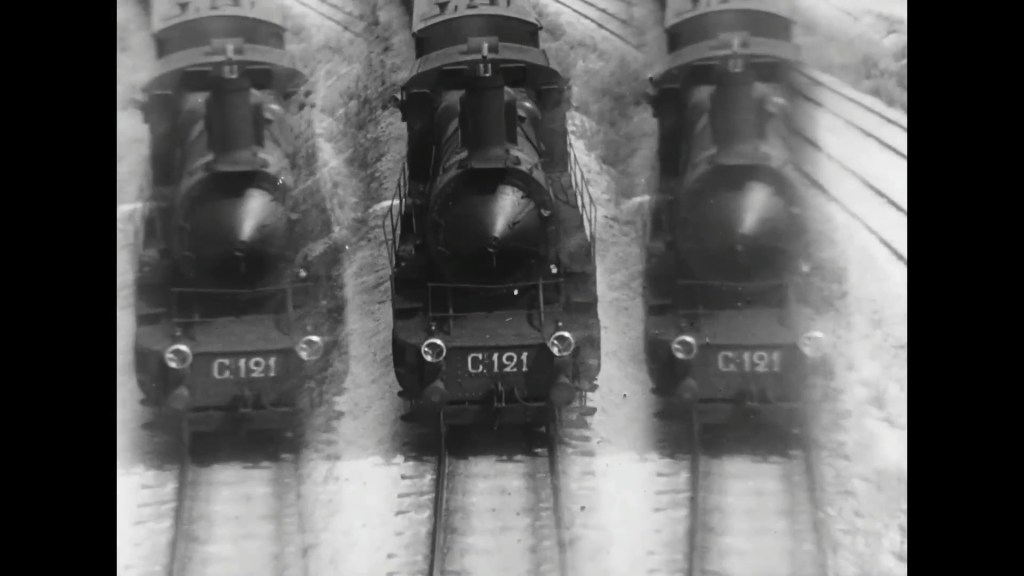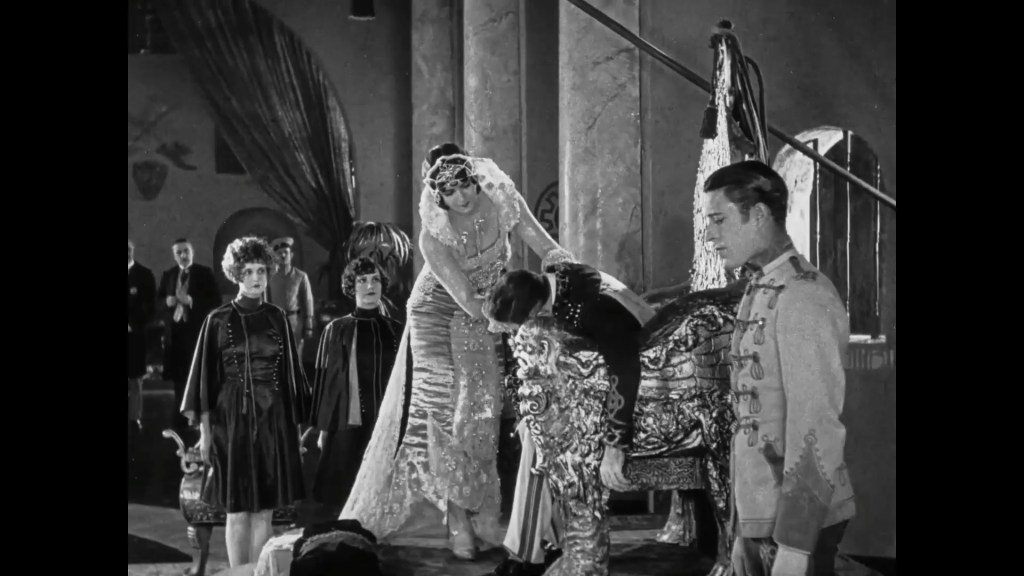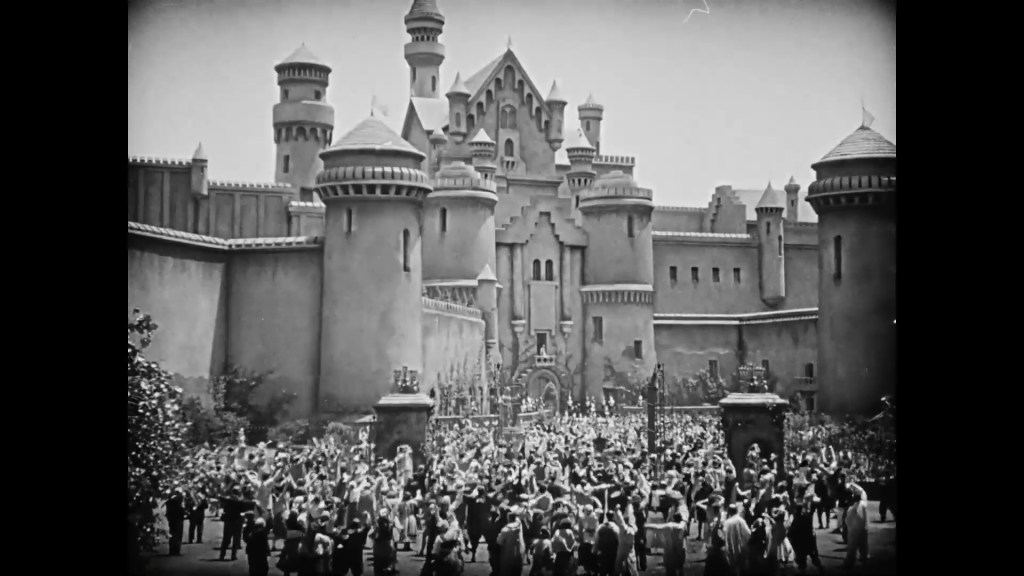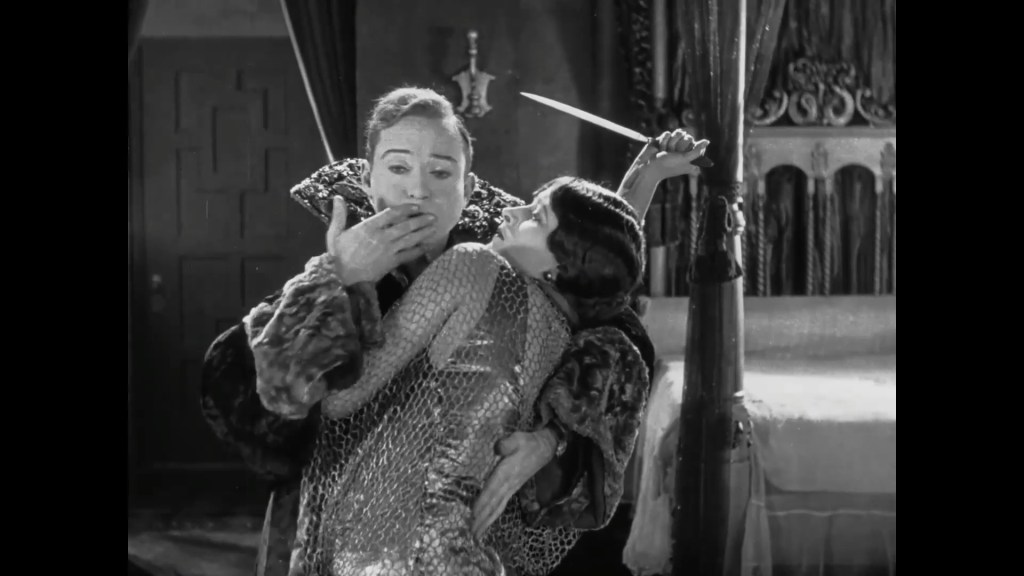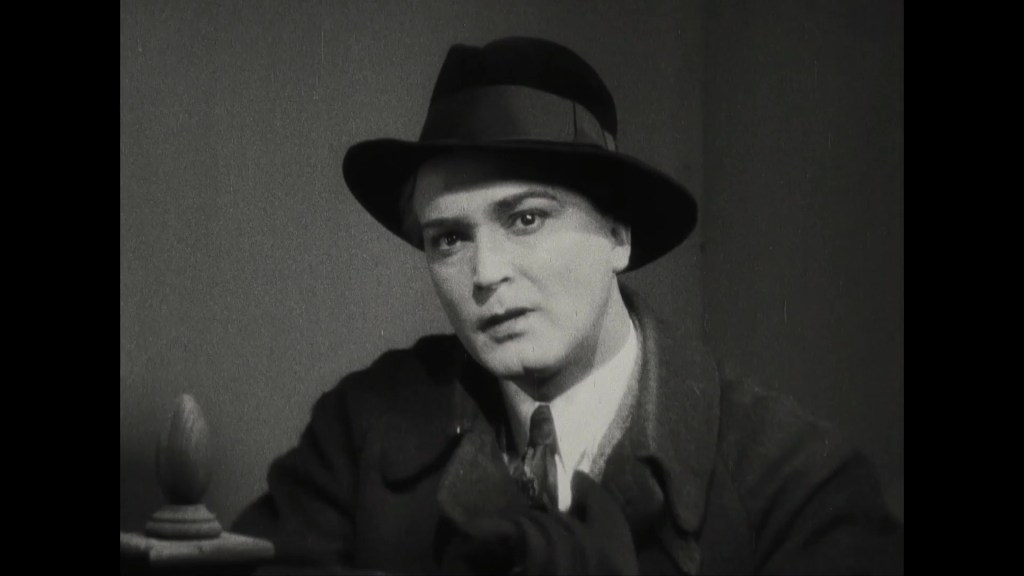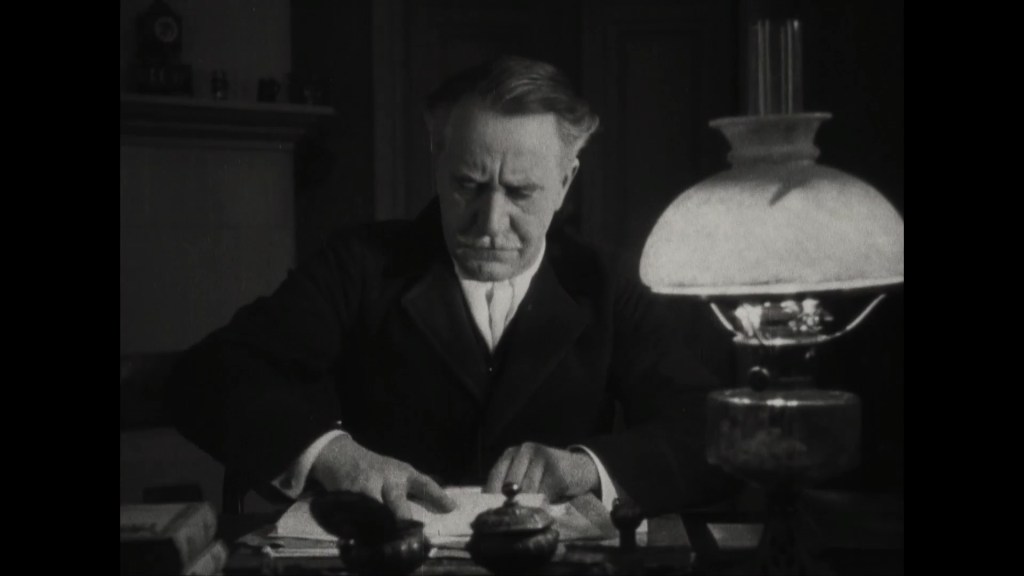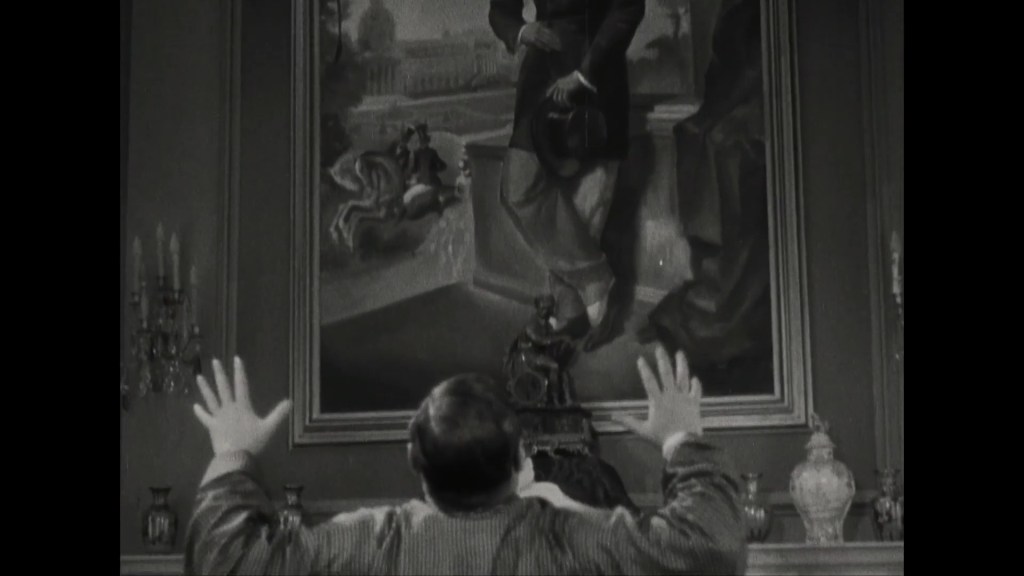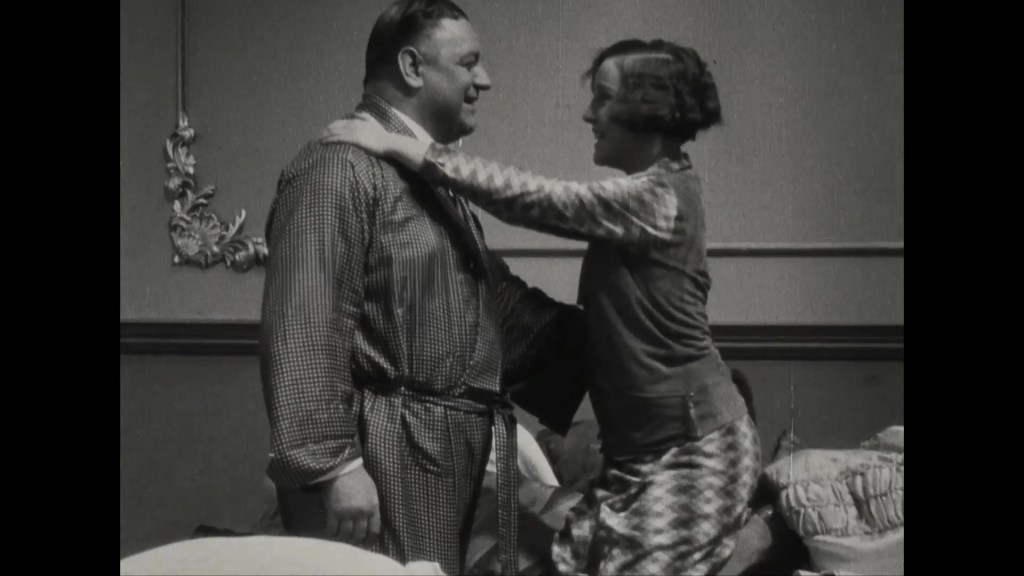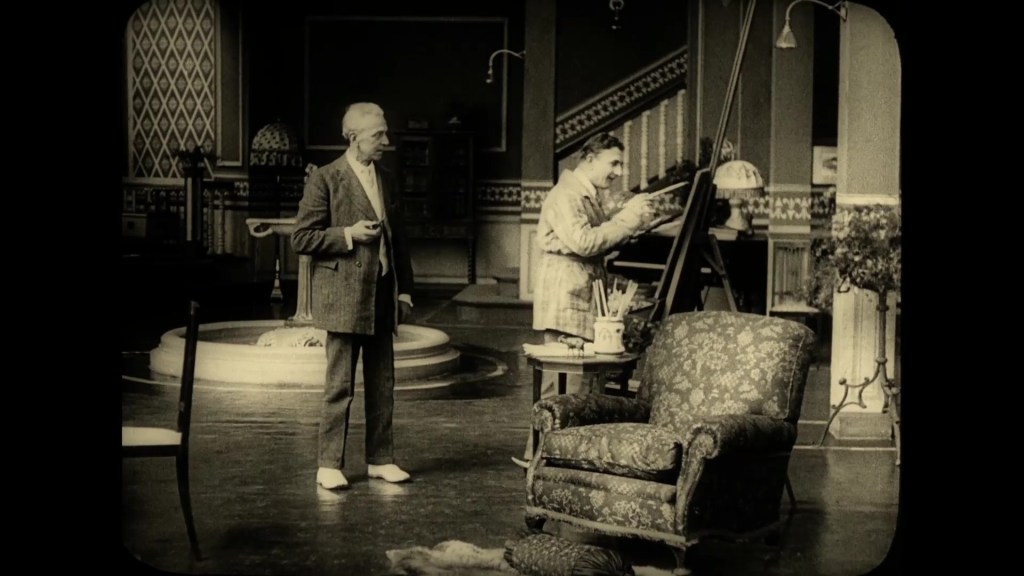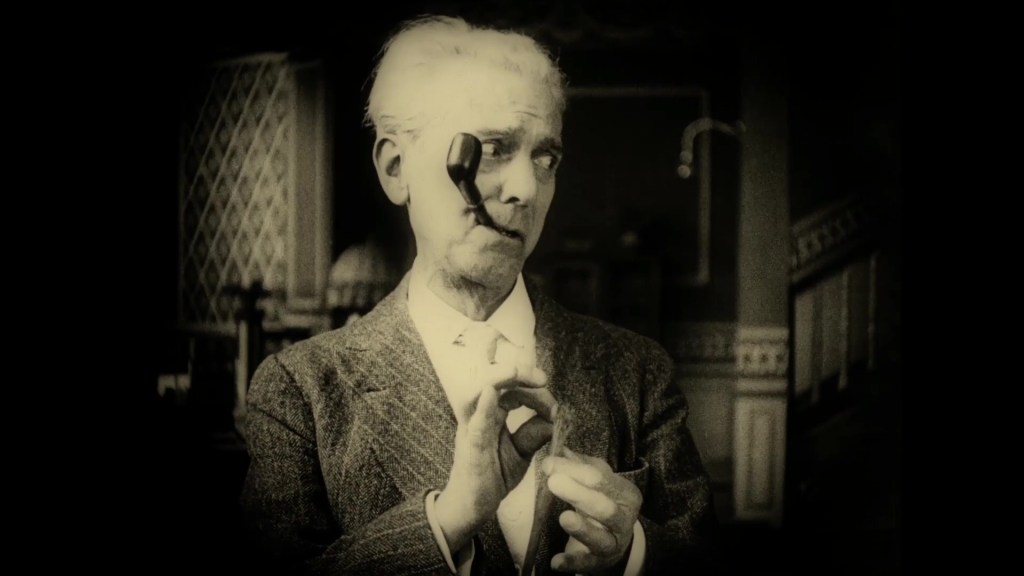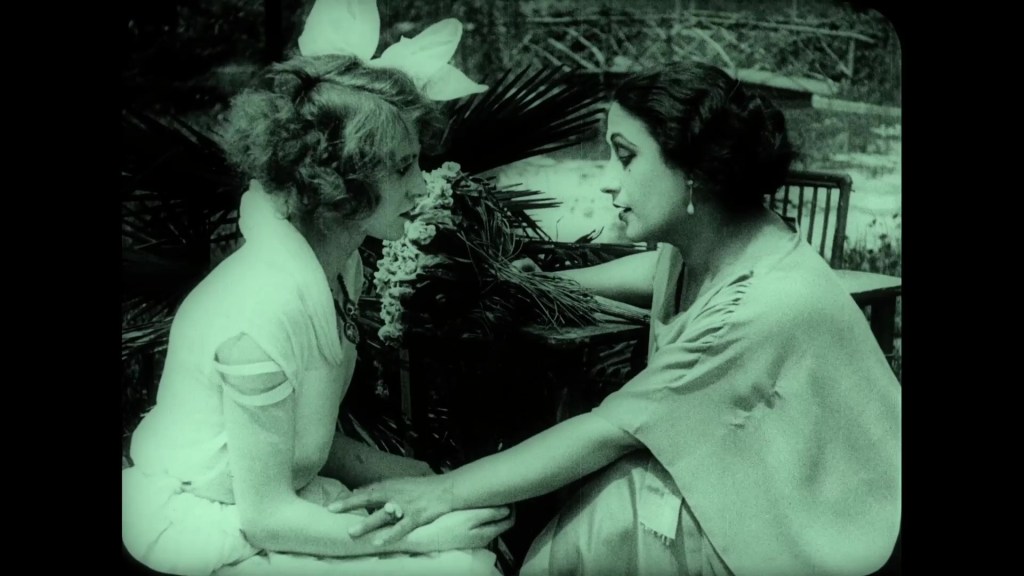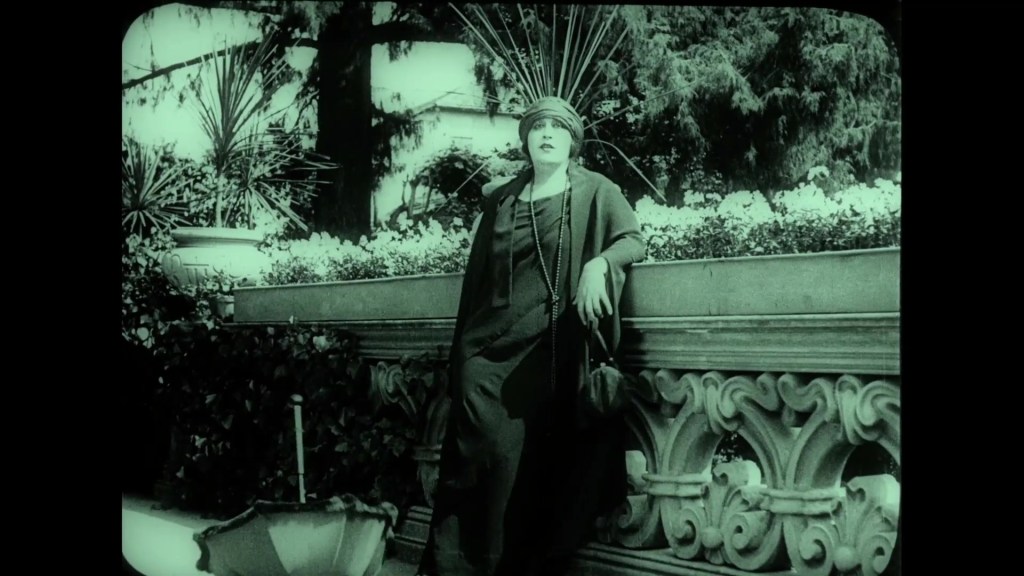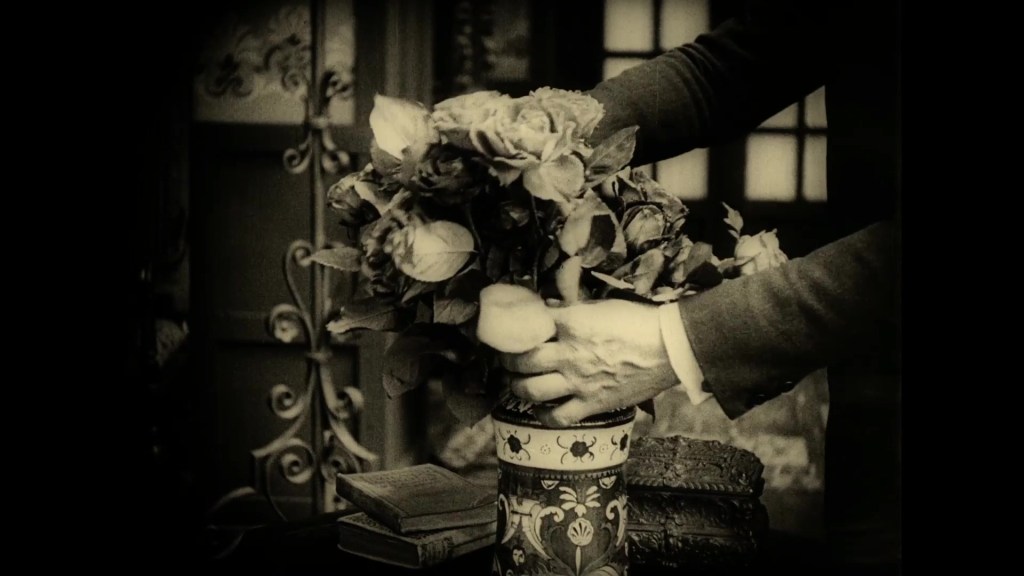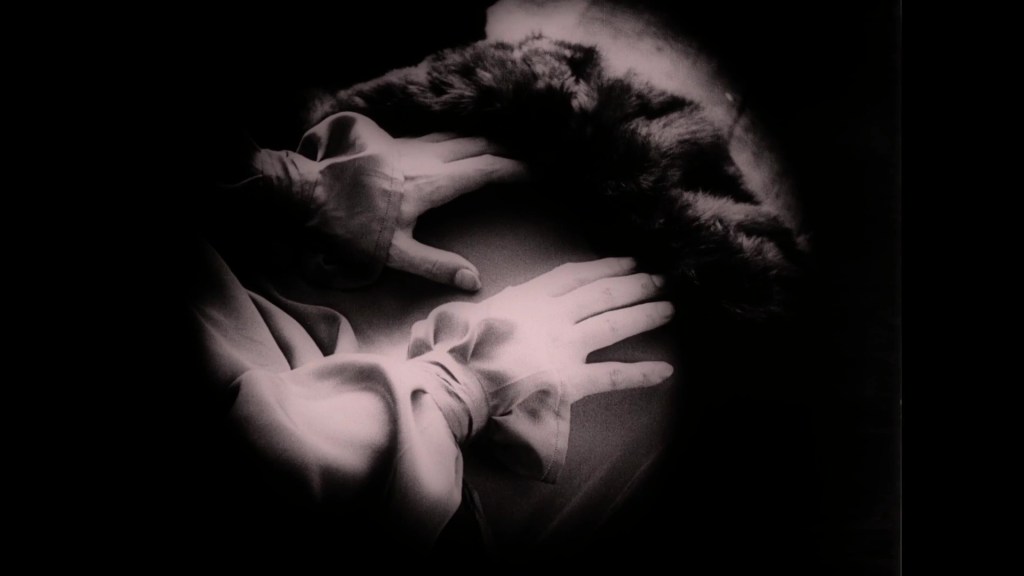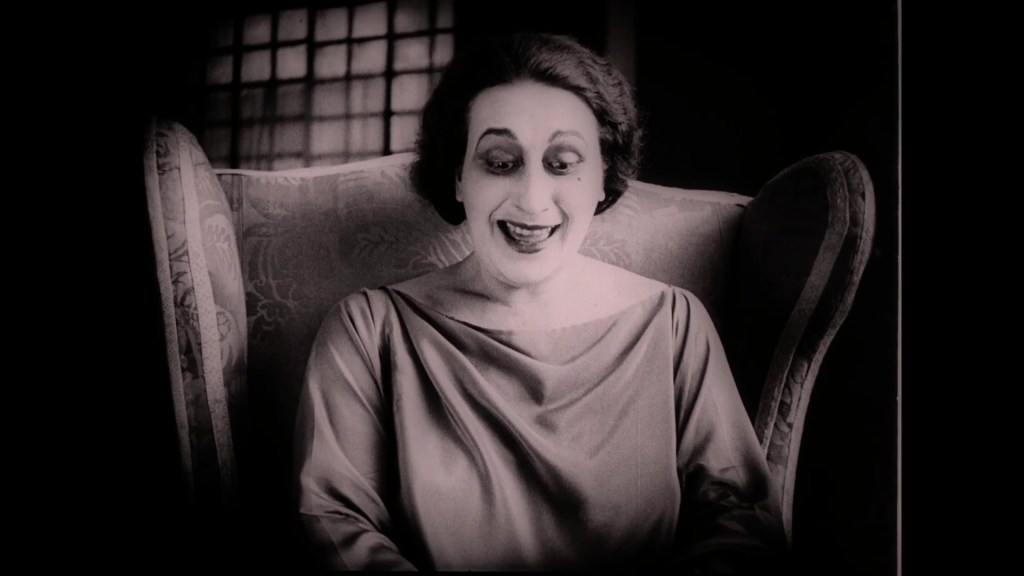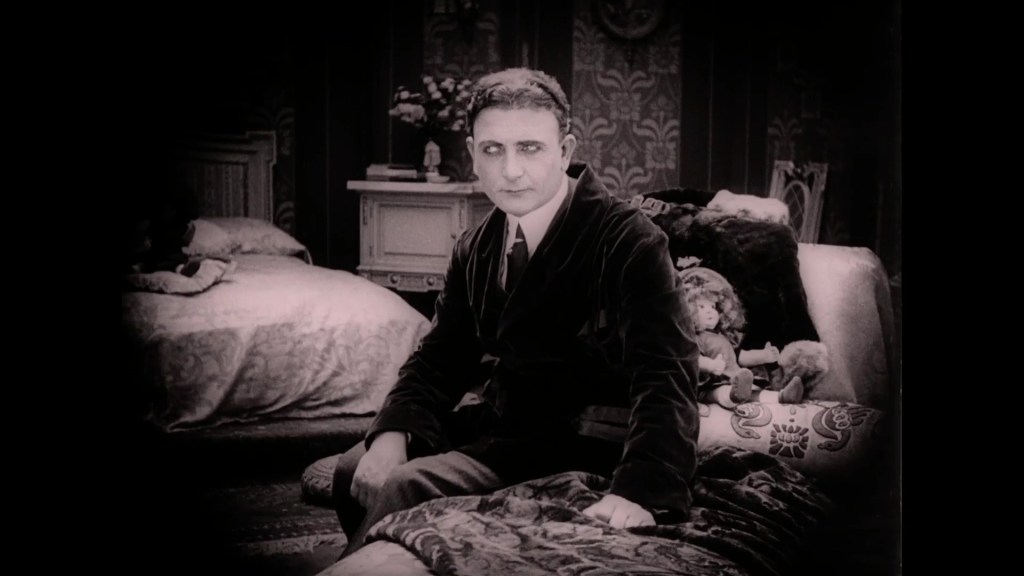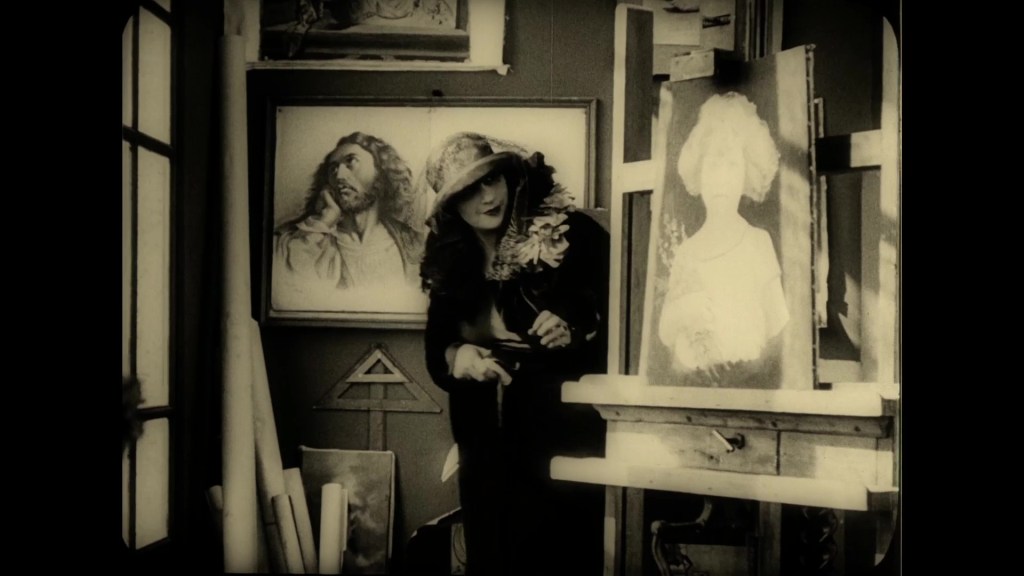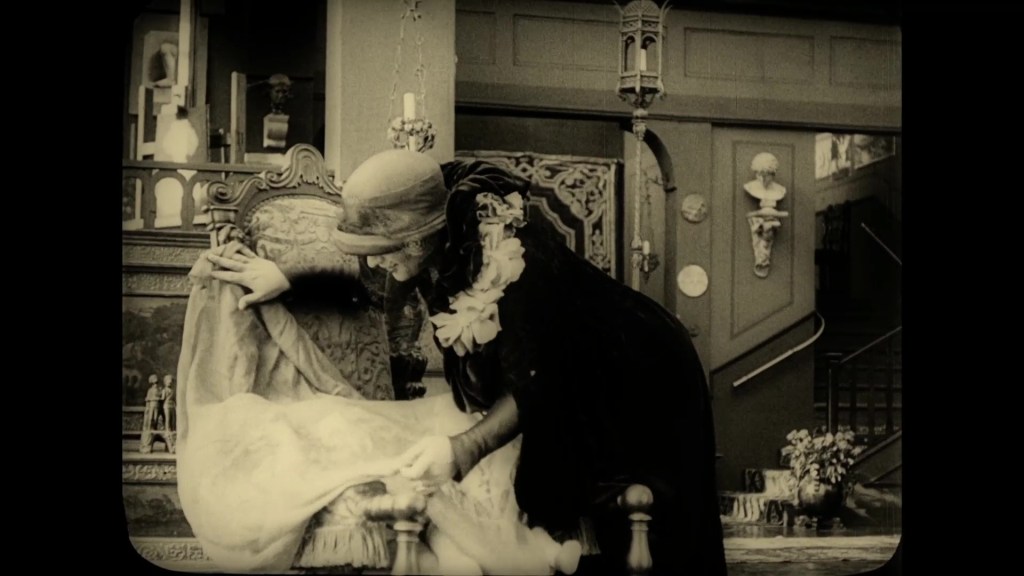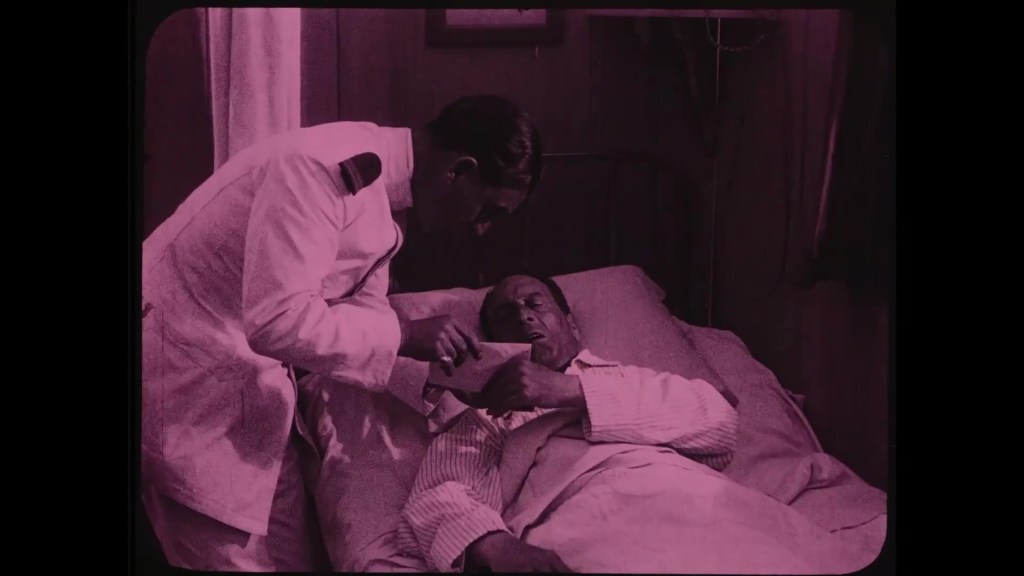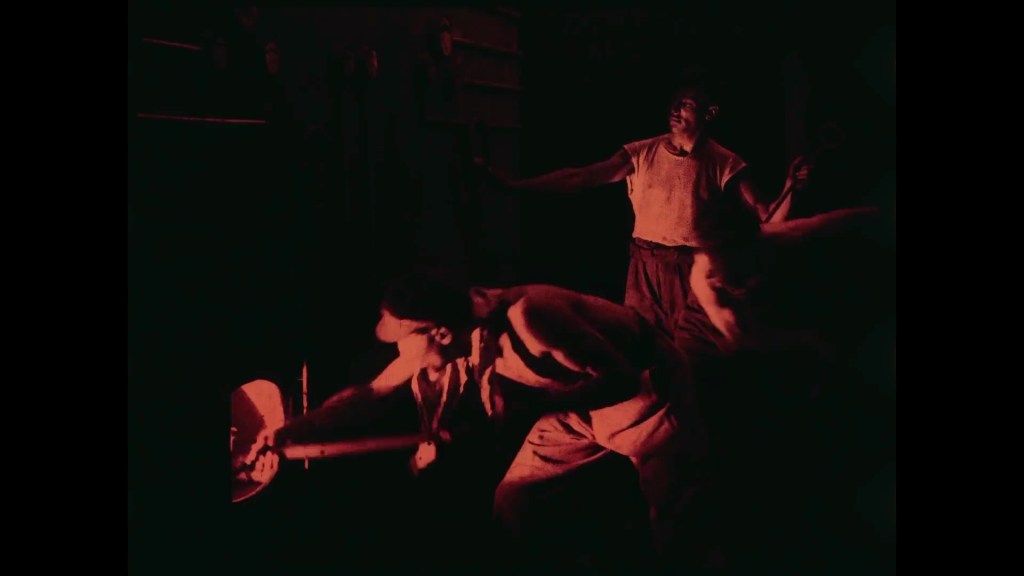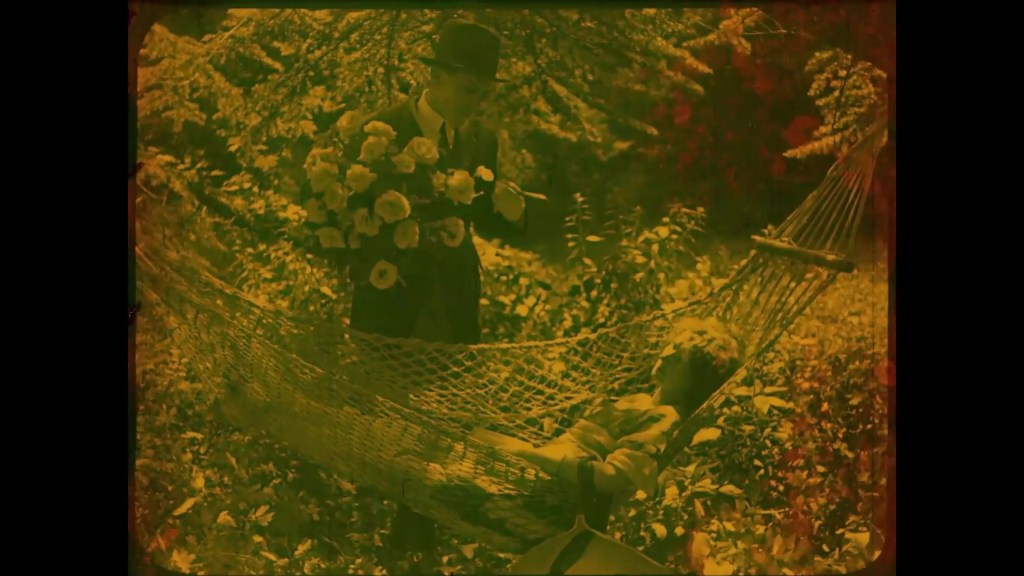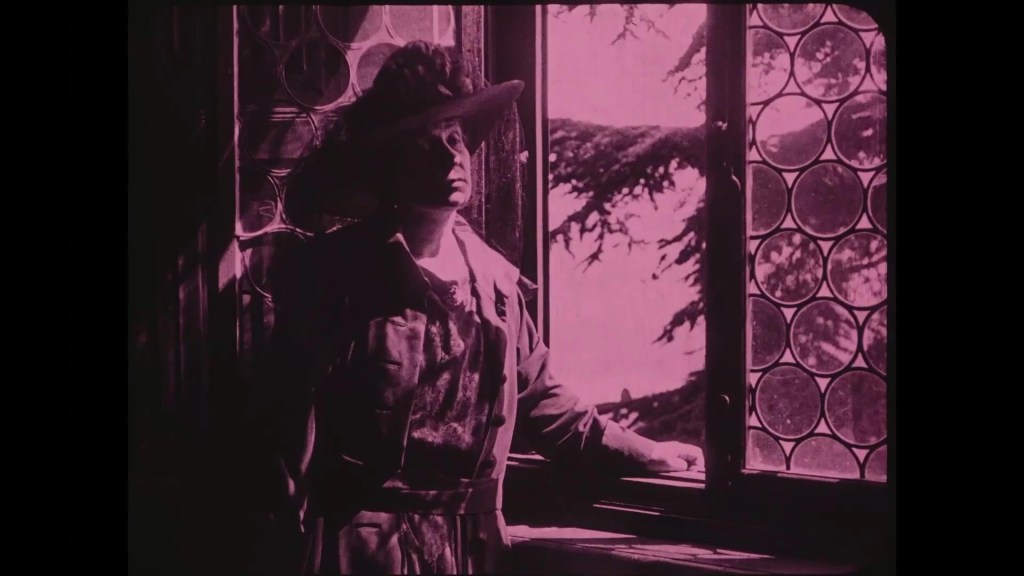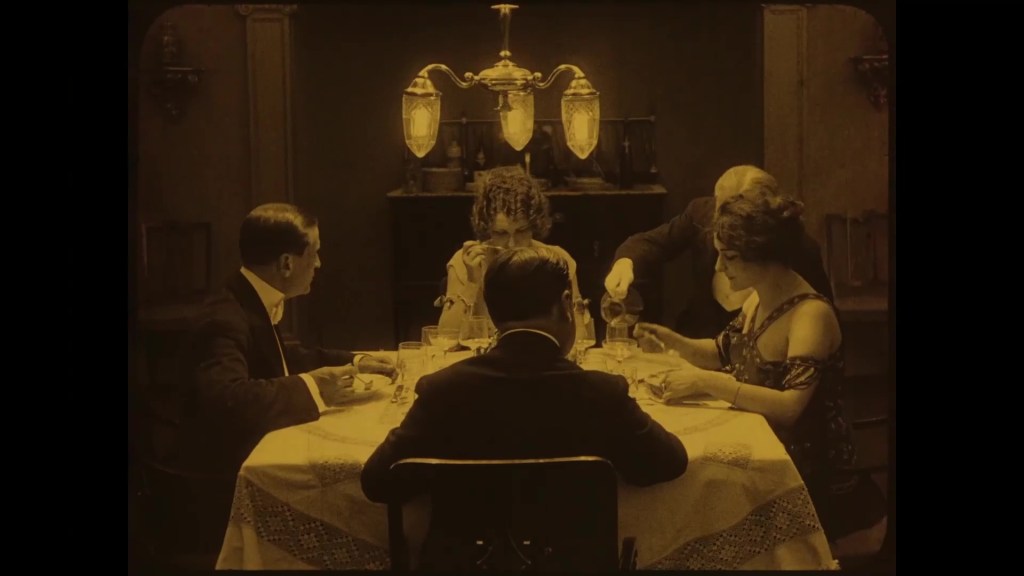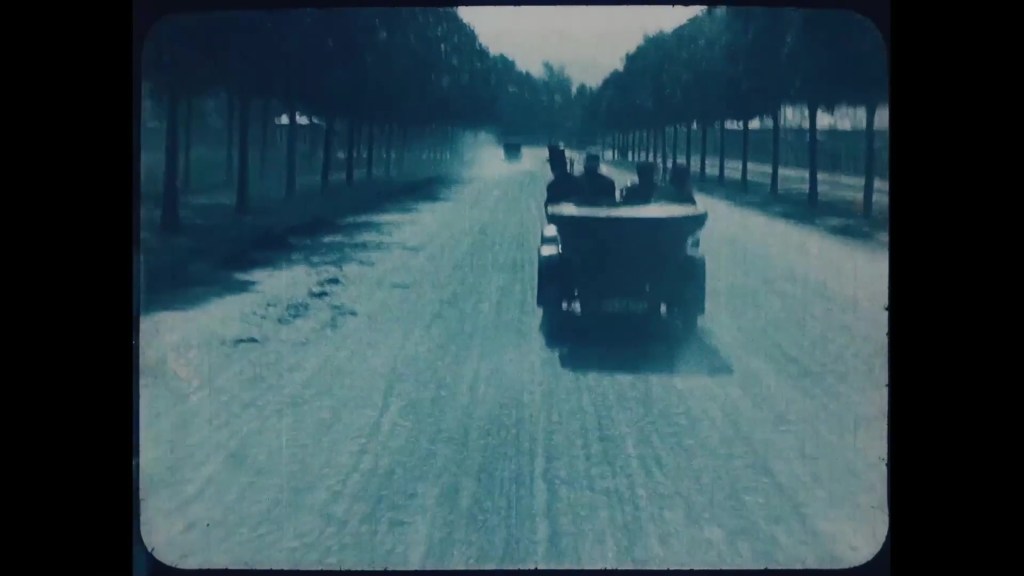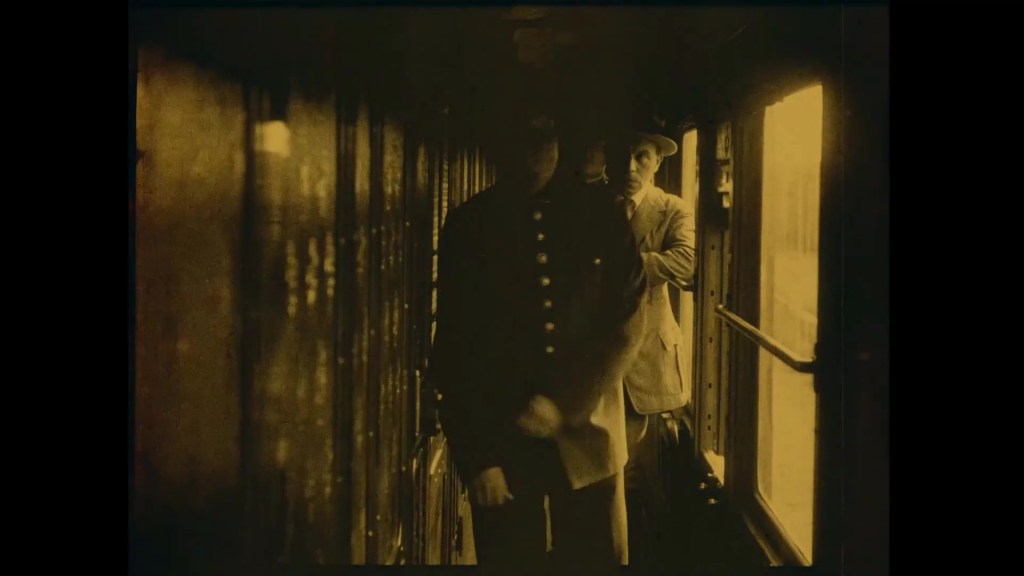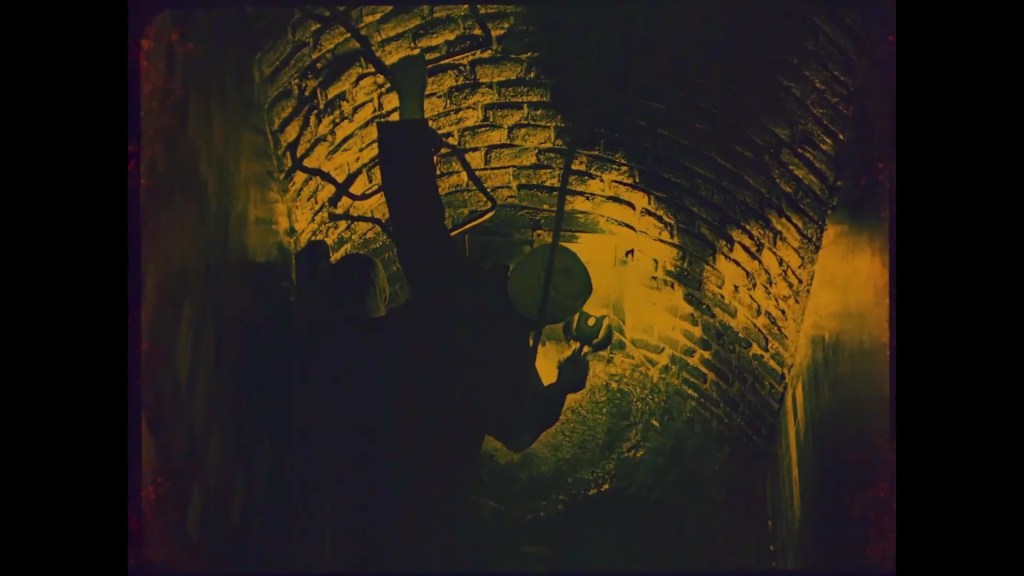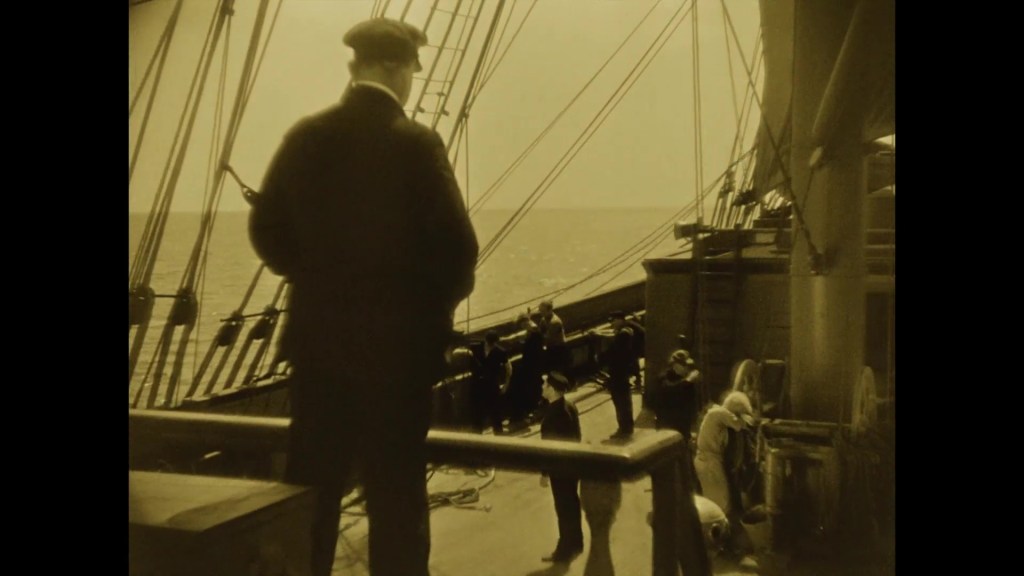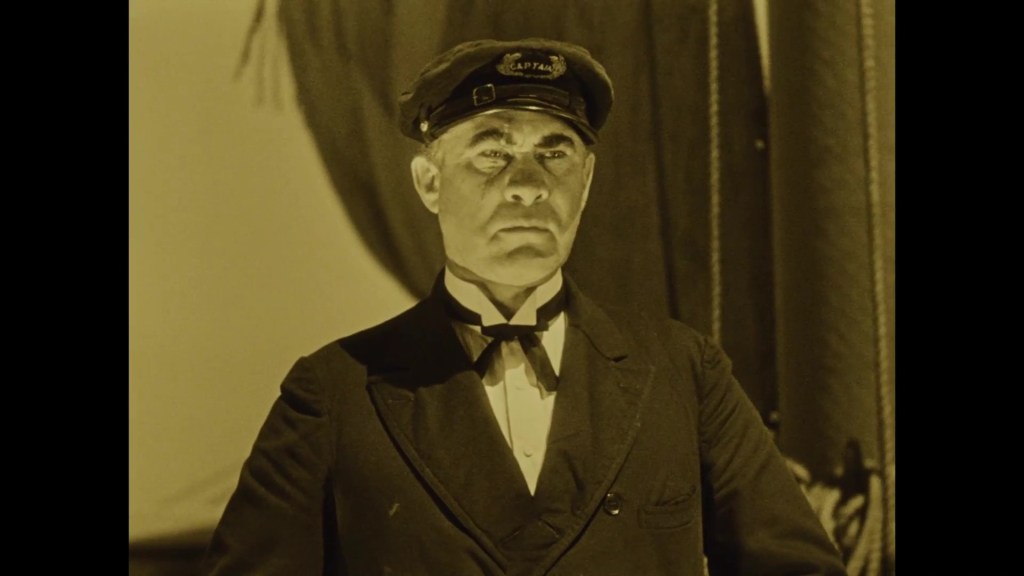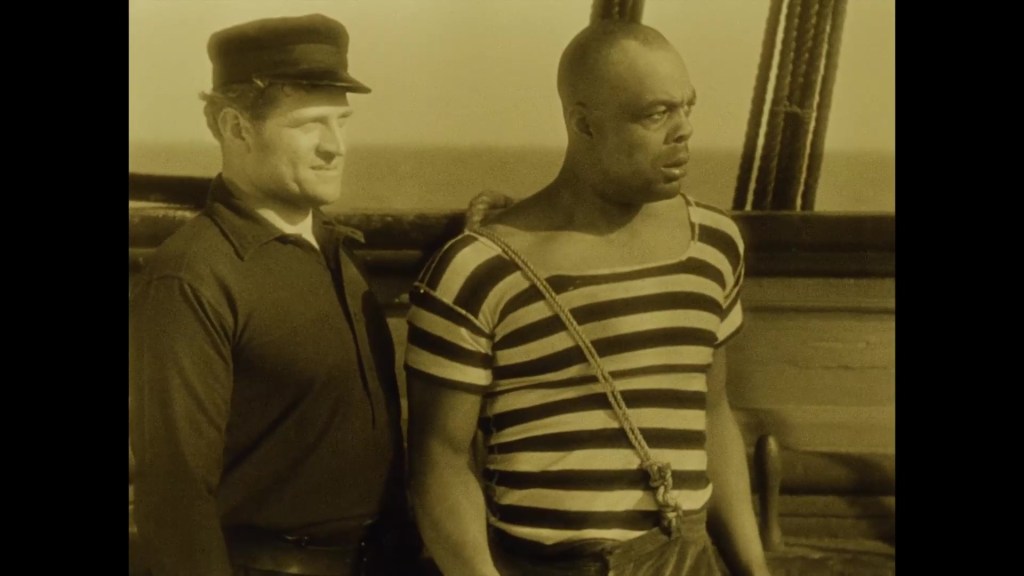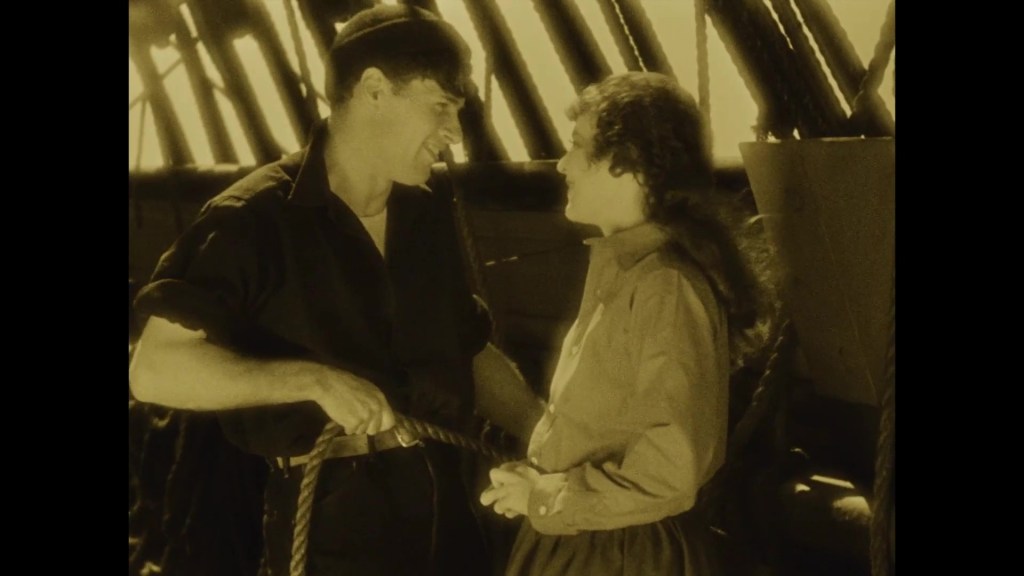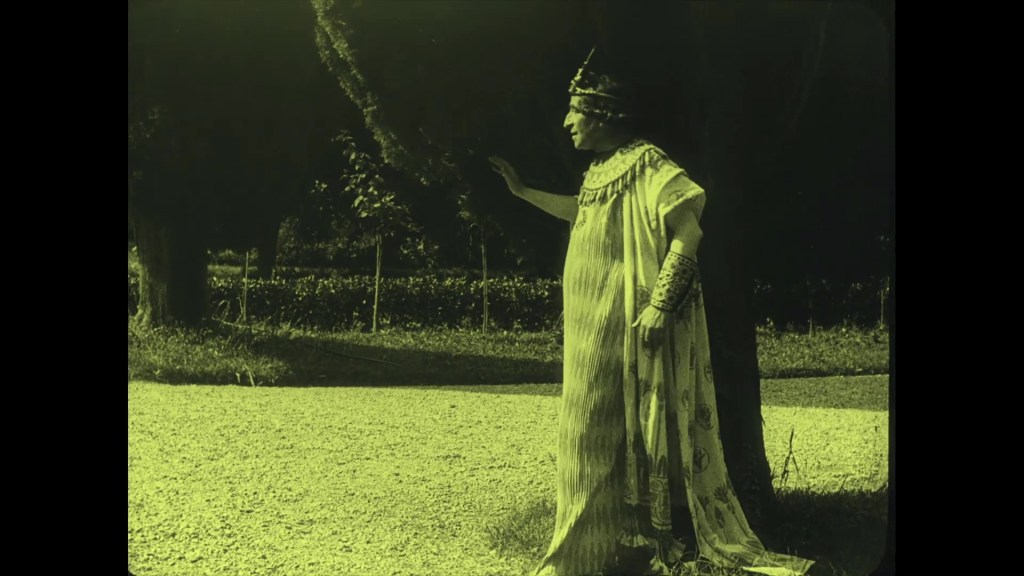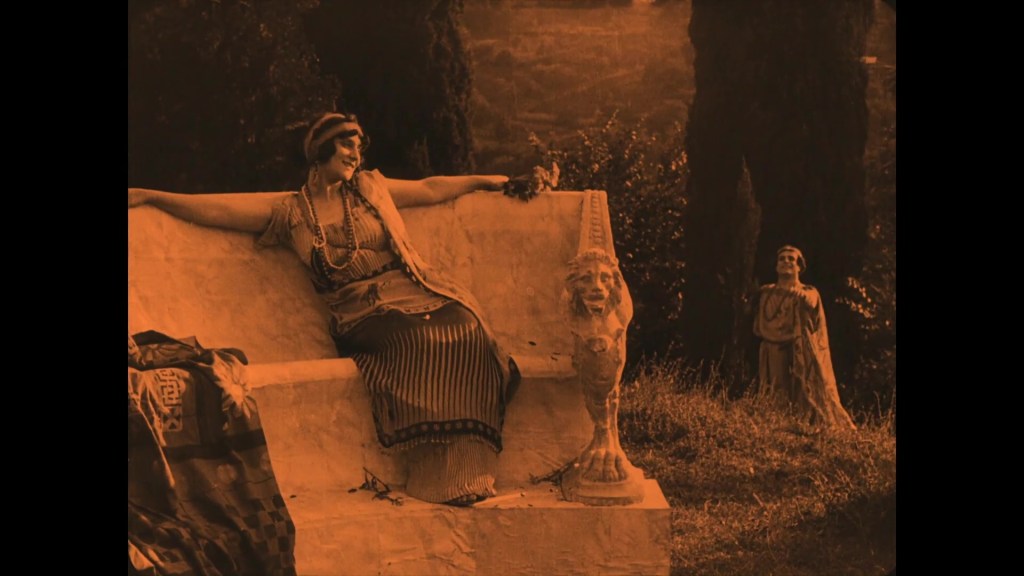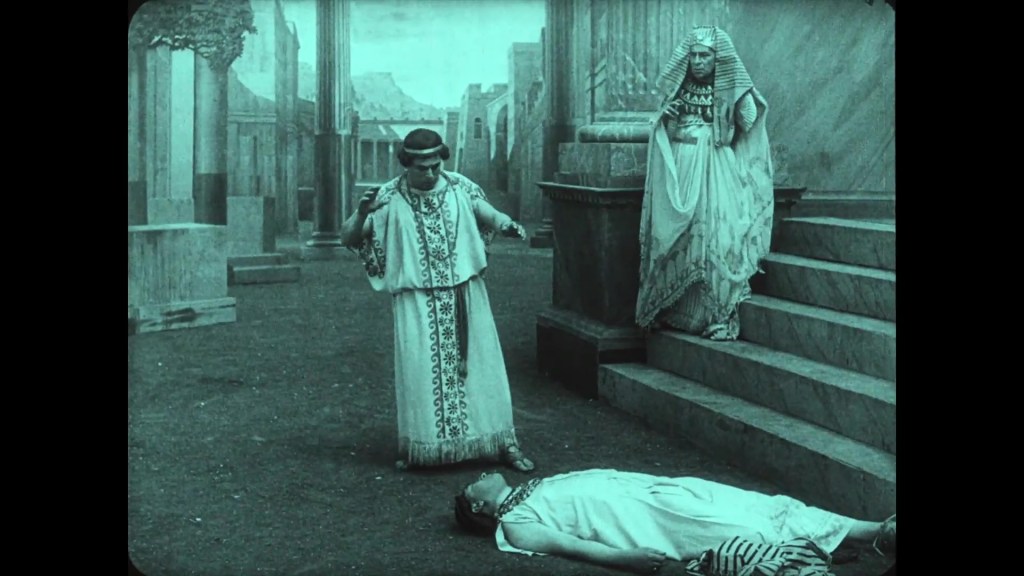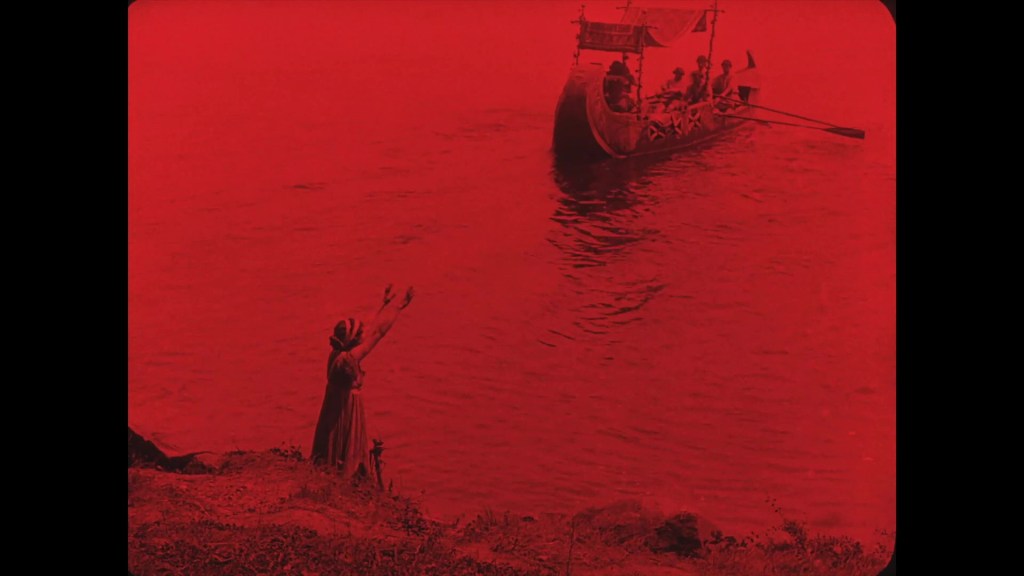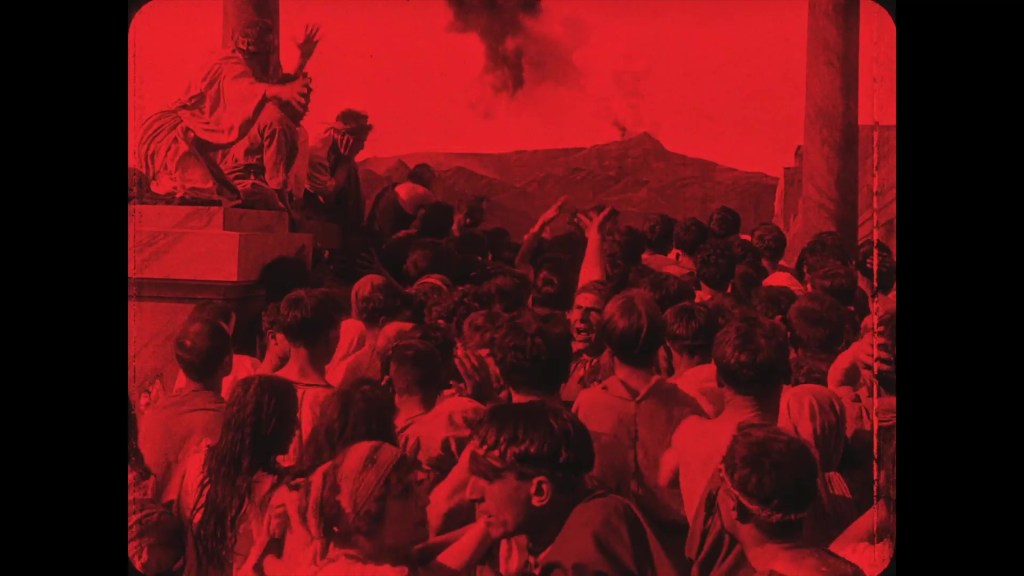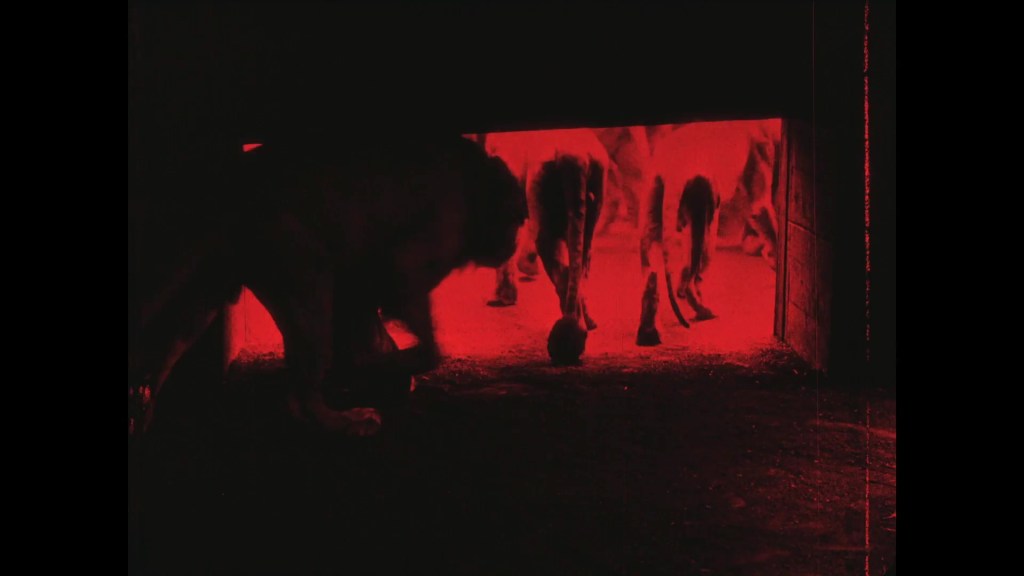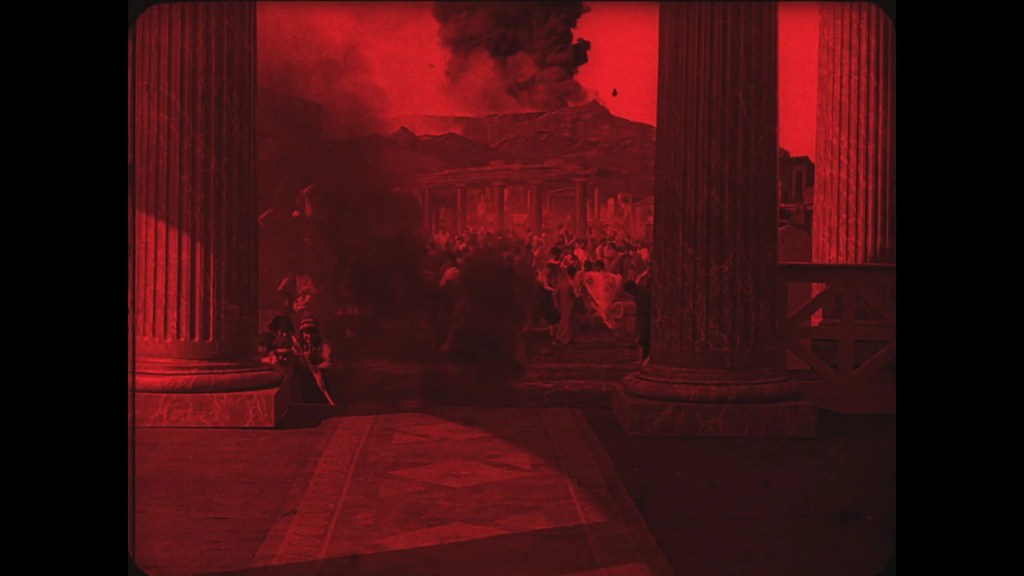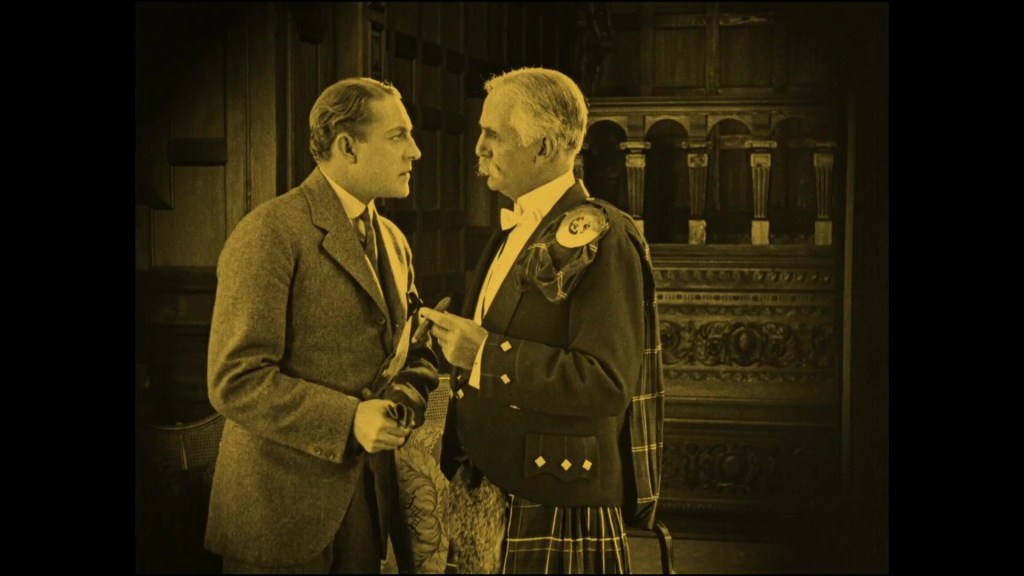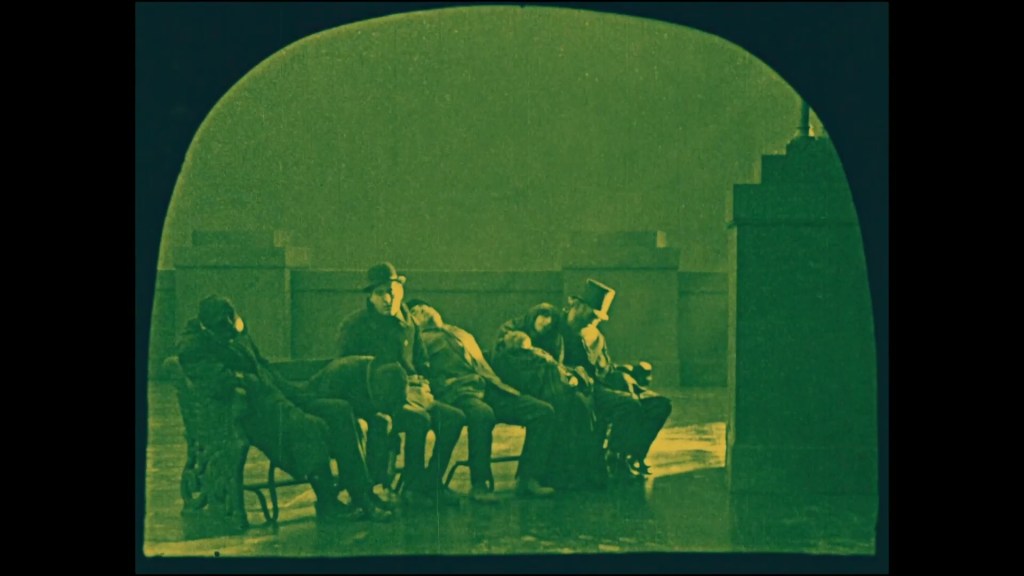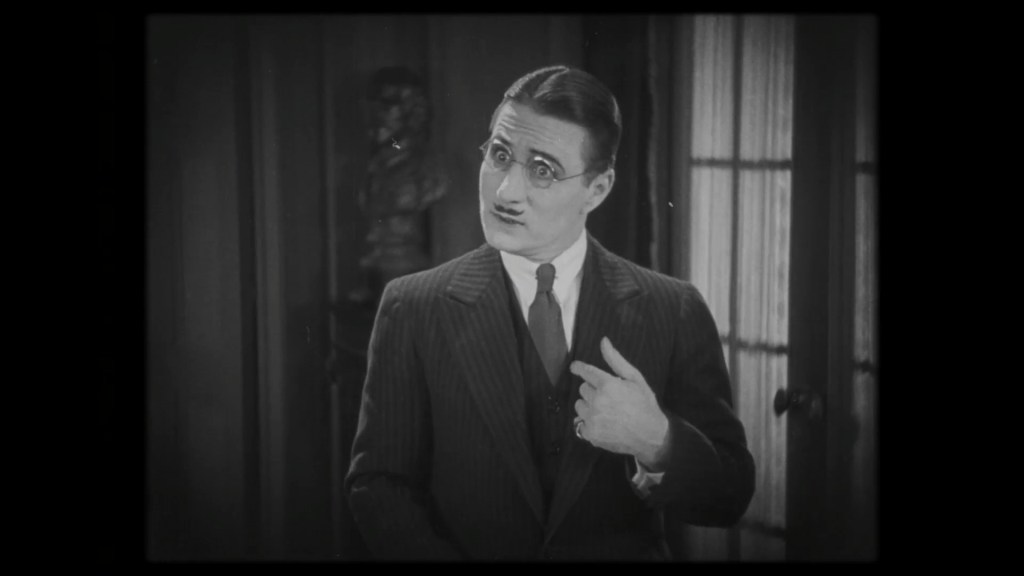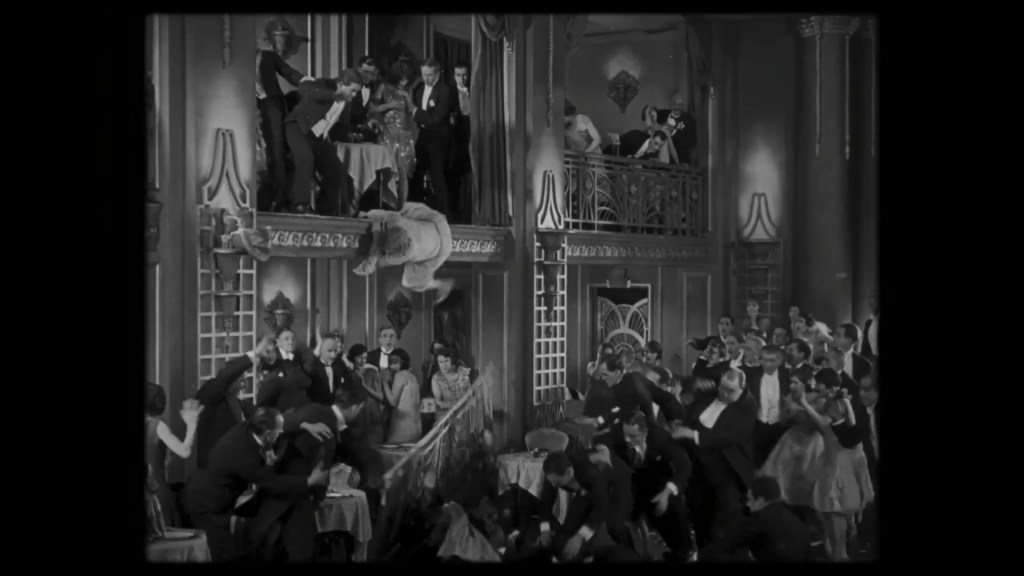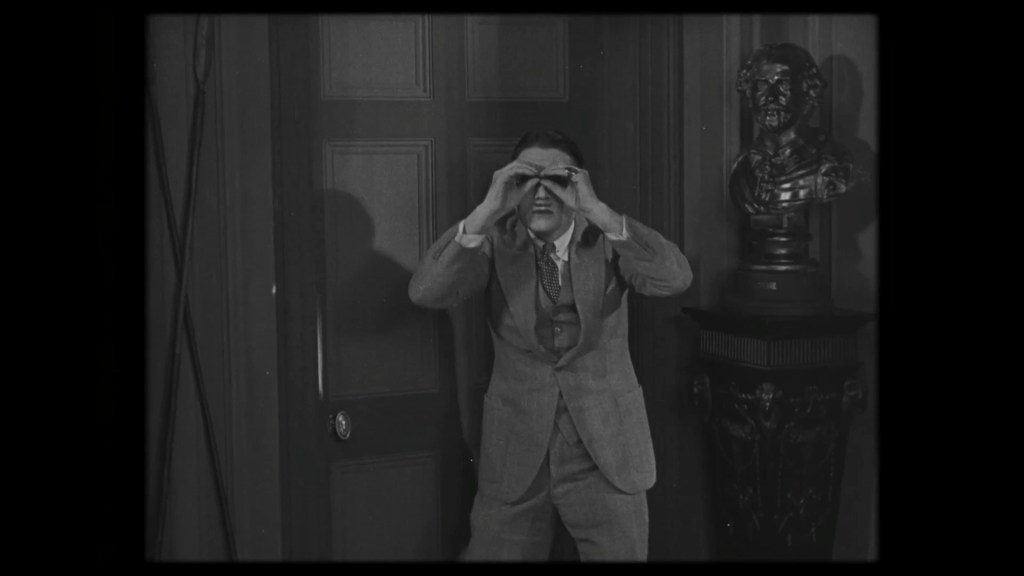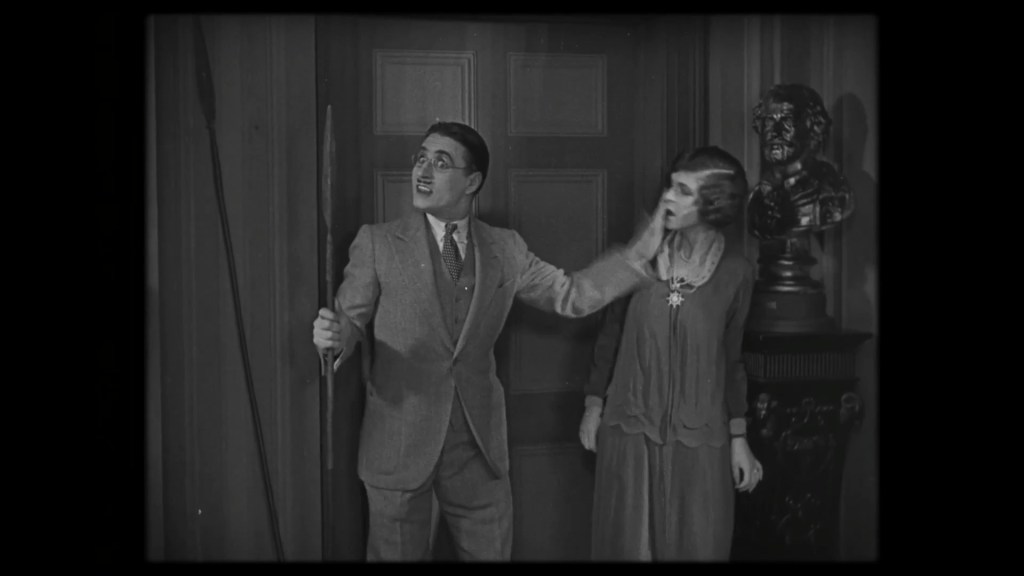
Music for The Thief of Bagdad (1924; US; Raoul Walsh)

Some time ago, I wrote about the music that accompanies different releases of Douglas Fairbanks’s The Three Musketeers (1921). I have long been meaning to do something similar for The Thief of Bagdad (1924). In the aftermath of the festival at (or via) Bonn, I felt like a return to Hollywood, so seize the chance now to turn my eyes – and especially my ears – towards Fairbanks…

First, some context. The original music for The Thief of Bagdad was written by American composer Mortimer Wilson and was commissioned by Fairbanks himself. “Make your score as artistic as you can and don’t feel that you have to jump like a bander-log from one mood to another at the expense of the development of your musical ideas”, he told Wilson (qtd in Vance 2008, 175). The result was a fully original orchestral score, which was performed at the film’s premiere on 18 March 1924 at the Liberty Theatre in New York. Wilson’s music received very good reviews from the critics, but its qualities were not appreciated by Morris Gest. Gest had already planned, in conjunction with Fairbanks, an exceedingly elaborate road show presentation for the film’s initial release. No expense was spared on ballyhoo: a veritable circus of road show variety – stage performers, an “Arabian” band, fancy-dress ushers, decorative incense, magic carpets etc – was duly assembled to exotify each venue booked for the roadshow. To support this cavalcade of orientalist claptrap, Gest wanted a score from a composer with a “big name”. For him, Wilson was not well-known enough as a composer to encourage public interest in the roadshow. Gest therefore employed James C. Bradford to compile a score from existing music – tunes more well-known than those of Wilson, and thus (Gest reasoned) more appealing to audiences. The result was not a success and quickly dropped. It was Wilson’s score that accompanied the film during its roadshow presentation at various major US cities.

However, while The Thief of Bagdad certainly made a big splash with critics, it was not the commercial success Fairbanks (and Gest) hoped. Despite being hailed as a landmark production, it proved less popular with Fairbanks’s own fans. The film was seemingly too ambitious (too long, too fanciful, too everything) for audiences in the US. But it had made its mark on history, and the film survived in enough high-quality 35mm prints to be restored in later decades, and returned to its rightful place in the canon of silent cinema.

But what of Wilson’s score? Despite Gest’s efforts to sideline it in 1924, the music has maintained a notable presence in histories of film music – and has been championed by many writers and practitioners. Composer and conductor Gillian B. Anderson, for example, has called it “one of the best film scores ever written”. Though Anderson also details its merits in more detail in her Music for Silent Films, 1894-1929: A Guide (xxxix-xlii), and the film appears on her website’s directory of original scores, I am unsure if/when she has performed it with orchestra. (Unlike many other scores on her website, it does not include performance details or guidelines for musicians.) Indeed, it is a curious fact that, despite the amount of information on the music and the survival of the music itself, Wilson’s work has remained what you might call a “paper score”.

This music certainly didn’t feature on any of the first home media releases of The Thief of Bagdad. The first DVD of the film was the 1998 edition by Film Preservation Associates. This featured the music cues assembled by Bradford in 1924, performed by Gaylord Carter on the theatre organ. (The recording itself dates from the 1970s, when presumably it accompanied a theatrical re-release of the film on 16mm/35mm. In 1978, Carter also released an extract from this score on an LP of music from silent films. Together with The Thief of Bagdad were extracts from the David Mondoza/William Axt score for Ben-Hur (1925) and the Ernst Luz score for The Temptress (1928). Rarities in themselves!) For all Carter’s personal links to the era, together with his admirable resurrection of historical scores, I often struggle with organ scores – especially for a film this long. And in any case, it’s a theatre organ not an orchestra. That it was recorded over other options evidences the relative ease of accessing and recording a theatre organ, and the preference for Bradford’s readily adaptable cue sheets rather than Wilson’s more complex orchestral score.

The first edition of The Thief of Bagdad that I owned was the 2004 release by Kino. This “deluxe edition” features an “orchestra soundtrack performed by the Mont Alto Orchestra”. The DVD credits further describe this as a score “compiled by Rodney Sauer and Susan Hall, adapted from the original 1924 cue sheet”. As I observed in my piece on The Three Musketeers, Kino’s marketing inevitably disappoints anyone expecting an “orchestra”: the credit sequence at the end of the DVD reveals that this consists of just five musicians. Kino’s use of the phrase “the original 1924 cue sheet” is also somewhat contentious. The first cue sheet used to accompany the film was the one that (briefly) replaced Wilson’s score after the first performances in 1924. Is the Sauer/Hall score based on this selection (i.e. the one by Bradford)? Even Kino’s “deluxe” edition does not provide any information on this issue. Even if it were Bradford’s selection from 1924, the word “original” seems a little misleading. After all, Bradford’s compilation of library music was a replacement for a truly original score by Wilson – the score that Fairbanks himself had commissioned. All this said, the Sauer/Hall score is perfectly fine. It is well performed and suits the film. But it feels out of scale with the images. As with the Mont Alto Orchestra’s music for The Three Musketeers, it sounds rather meagre next to the huge production values of The Thief of Bagdad. This film needs an orchestra, not an “orchestra”.

My disappointment with the Kino DVD was exacerbated by the fact that I knew that a Carl Davis score existed for this film. First performed in 1984 as part of the Kevin Brownlow/David Gill series of “Thames Silents” restorations, it was recorded for television broadcast and for home media. There was a laserdisc of the Thames Silents edition in 1989, and a VHS in 1991. Given the superior sound quality of laserdiscs, I chased down the laserdisc edition and giddily transferred it to DVD for my personal enjoyment. Davis’s score is compiled from the music of Nikolai Rimsky-Korsakov, especially from his famous orchestral suite Scheherazade (1888). The music is a perfect choice. After all, the sets, costumes, and overall conception of The Thief of Bagdad owes much to the influence of Sergei Diaghilev’s Ballets Russes, and especially to their Scheherazade, which repurposed Rimsky-Korsakov’s music. As ever, Davis rearranges the historical music with extraordinary deftness. While the music maintains its original identity, it also serves the film’s rhythm and mood. As it happens, I love Rimsky-Korsakov’s music anyway, so my first encounter with the Davis score (sat in a tiny booth, squinting at the small television screen as my laserdisc whirred away on the side) was an absolute delight. It’s a glorious compilation, perfectly suiting the dreamy, exotic, fantastic, and balletic qualities of the film. So enamoured of the music was I that I laboriously transferred the soundtrack of my laserdisc to DVD-R, then from DVD-R to my PC, then used editing software on my PC to affix the laserdisc soundtrack to the superior video image from the Kino DVD, just for my own viewing pleasure. This little experiment was the best version of The Thief of Bagdad I had until the DVD/Blu-ray release of the film, issued in the US by Cohen Media (in 2013) and in the UK by Eureka/Masters of Cinema (in 2014). This edition finally reunited the Davis score with an excellent transfer of the film.

But soon after this edition was released, it became apparent that a new restoration was in the works – one that was to revive Mortimer’s score from 1924. For this, an entirely new performing edition of the score was prepared in 2015 by Mark Fitz-Gerald. As Fitz-Gerald records in his excellent liner notes for the CD release (discussed below), the surviving music required a good deal of editing and preparation to ensure it matched the restoration of the film. Since Wilson composed the music during the production and allowed room for adjusting the length/order of scenes after the film’s premiere, there was a degree of inconsistency between surviving music and montage. Fitz-Gerald found that there was too much music for some scenes and not enough for others – as well as plenty of notational errors in various instrumental parts. These are common issues to the reconstruction of silent film scores, and there are many examples which necessitate very elaborate editing or additional composition. Nevertheless, Wilson left enough clues (and more than enough cues) for his score to be readily edited into its current working form. Fitz-Gerald’s edition of the score premiered with the film at the Pordenone festival in October 2016. Subsequently, the score was recorded in Frankfurt in April 2019 and then broadcast on ARTE later that year, with Fitz-Gerald conducting the Frankfurt Radio Symphony. Highlights from this recording were released on CD in 2022. This CD contains 75 minutes of music, which the liner notes inform us represents the “complete” score, minus the repeats of cues that make up the remaining 75 minutes of the film’s timespan.

I had to listen to Wilson’s score a couple of times before it properly sank in. I suspect this was because I was very used to Davis’s music. Though both are full, symphonic soundworlds, rich without being dense, there is a definite difference in tone. Wilson is less rapt, less intense, less filled with grand, sweeping gestures. One might say that Wilson is less inclined to being showy or flash, which Rimsky-Korsakov’s detractors would certainly argue is the case with some of his music. (Though few would argue that he isn’t one of the greatest of all orchestrators.) Davis is also working with music that is already well-known, saturated with memorable melodies – melodies that I knew incredibly well even before hearing his score for The Thief of Bagdad. Wilson’s melodies have gone virtually unheard in a century, and they are decidedly less emphatic than Rimsky-Korsakov’s – but no less worthy of being seen alongside this film. And Fitz-Gerald notes the echoes of other composers like Puccini, Reger, Tchaikovsky, and Wagner in Wilson’s score. (He even compares parts of the soundworld to that of Alban Berg, which is perhaps over-selling it. A score doesn’t need to be, or to sound, “modernist” in order to be relevant or interesting.) But there is never direct quotation, just these echoes – in the shape of melodies, or the texture of sounds.

As well as the difference in musical/historical contexts for these scores, Wilson’s original music is surely conceived with a different objective in mind. In Scheherazade Rimsky-Korsakov is conjuring an entire picture from scratch, using the orchestra to form an impression in the listener’s imagination; whereas Wilson is accompanying an already-imagined world. If Wilson is less intense, perhaps this is because he isn’t striving to do everything: half the drama is already there on screen, so he is happy to be less emphatic. Just as the city walls seem to hover over those polished black floors, or the minarets hang before those dreamy picture-book skies, so Wilson’s music floats over the images. Everything works in tandem with the action, but the music has its own tempo, its own sense of mood. While there are plenty of examples of percussive effects for particular moments (gongs, weapons, jewels, clapping hands, magical apparitions etc.), the score itself is never in a rush to match every movement on screen. Wilson maintains a very pleasing balance between fidelity and independence. His music seems to have just the right tempo, both for individual scenes and for the film as a whole. It flows with the drama, seamlessly negotiating each sequence – picking out individual moments to highlight, but always with a wider sense of forward momentum. It certainly exudes the same warmth, geniality, and feeling as the drama.

Such qualities are immediately clear in Wilson’s opening theme, spelt out over the opening title. This theme is a slow, singing melody: wistful, yearning, gentle. If it lacks the absolute immediacy of Rimsky-Korsakov’s opening theme on the solo violin, used by Davis for the film’s prologue, it possesses a kind of calm that really works. This is music that’s never in a rush to impress. Like the film, it takes its time to unfold. Wilson’s main theme is heard for the first time within the drama when Ahmed enters the mosque and we see the Holy Man speak. The immediate sense of peace that Wilson conjures, a kind of sonic balm, is perfect. From the bustle of the streets, we enter a different kind of space – physical and emotional.

Later, when Ahmed first sees the Princess, the music grows into a slow, dreamy ecstasy. Like the opening theme, subsequently associated with the Holy Man, Wilson produces a drawn-out, singing melody – this time brought out in the low strings. It’s like a romantic version of the spiritual theme. In Davis’s score, the scene is more musically ambiguous. The theme that we will hear fully developed, expanded in orchestration and in volume at the end of the film’s first part, when Ahmed sets out on his quest, is here heard for the first time in tentative form. Over quiet, tremolo strings, solo oboe and then clarinet start to spell out the theme – but are soon interrupted in the scene when the Princess’s guards return. Davis’s score recognizes (in its orchestration) the intimacy of the scene, but (in its melody) hints at the dramatic consequences of this first contact between Ahmed and the Princess.

I have spent the best part of three mornings listening to the Davis and Wilson scores side-by-side, and I love them both. For sheer richness, variety, and moments of piercing intensity, Davis’s is hard to beat. (How I wish I had heard this score performed live!) But Wilson’s score has a tremendous cumulative impact: everything about it simply works. It’s beautifully organized, orchestrated, and fits the film like a glove. The restoration of Wilson’s score is reason to celebrate.

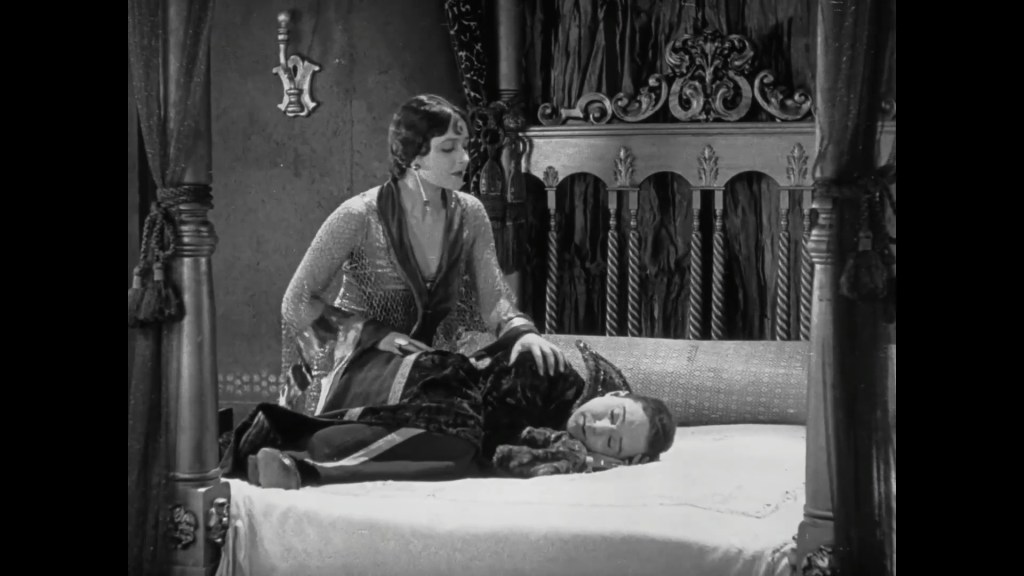
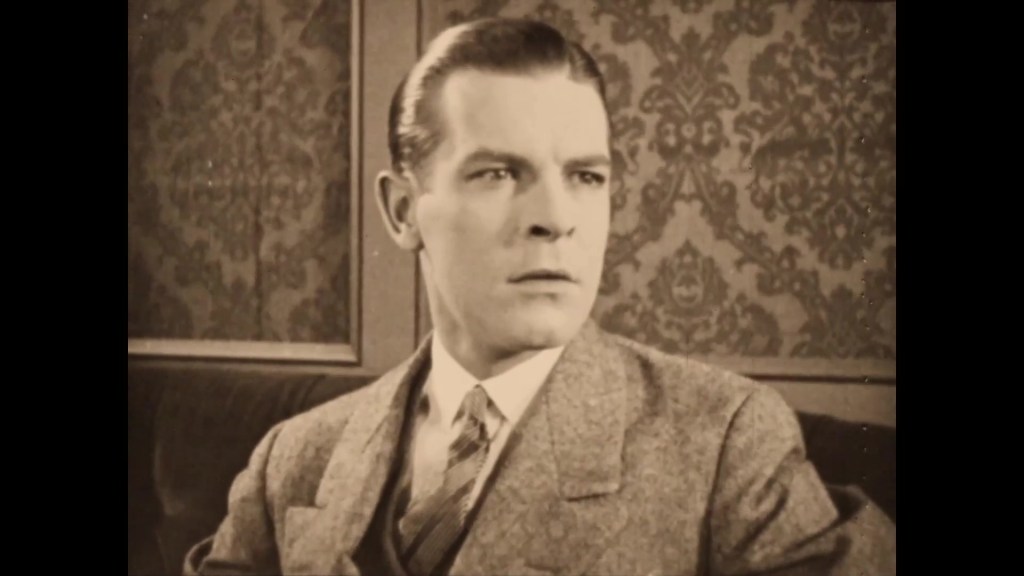
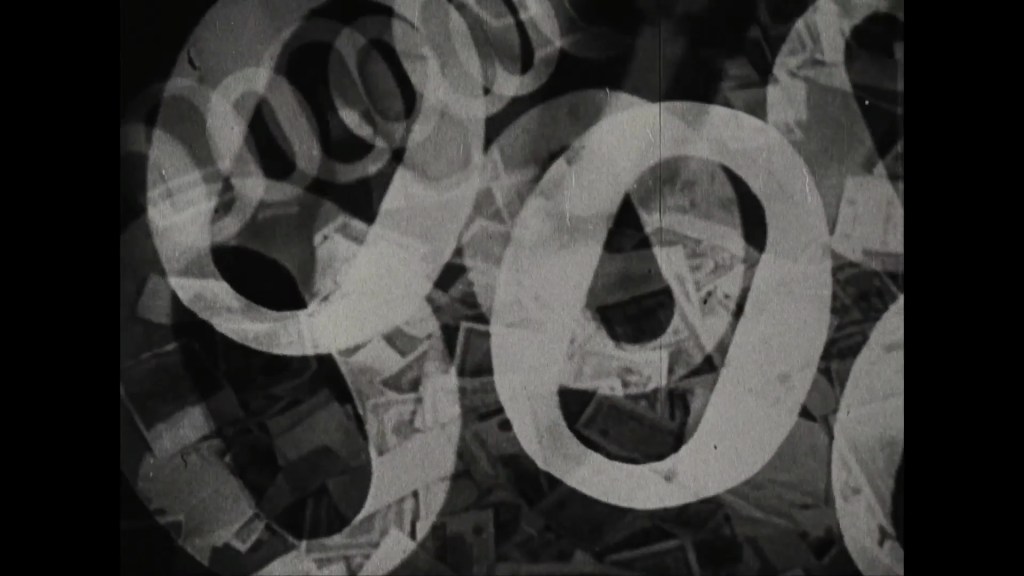
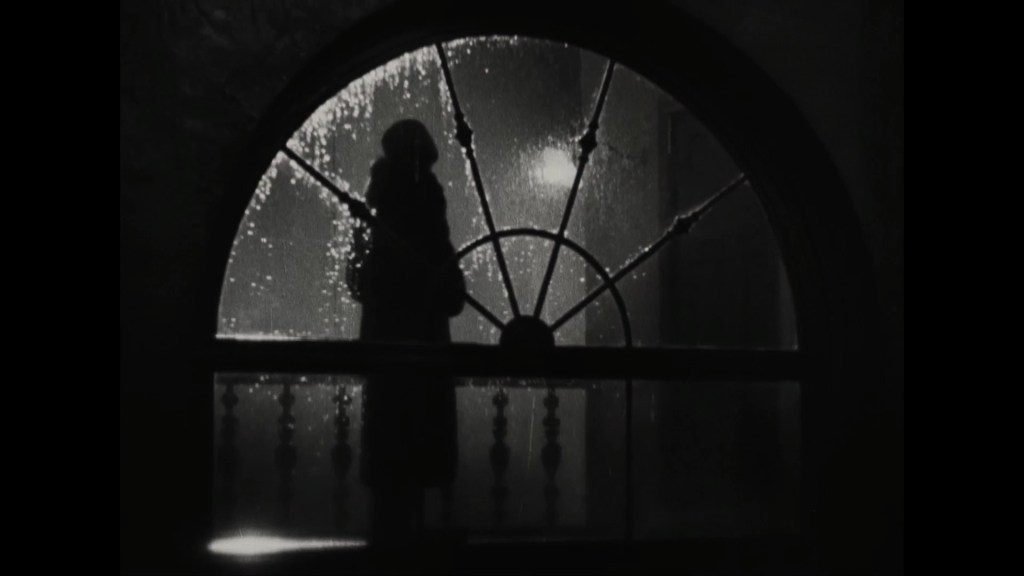
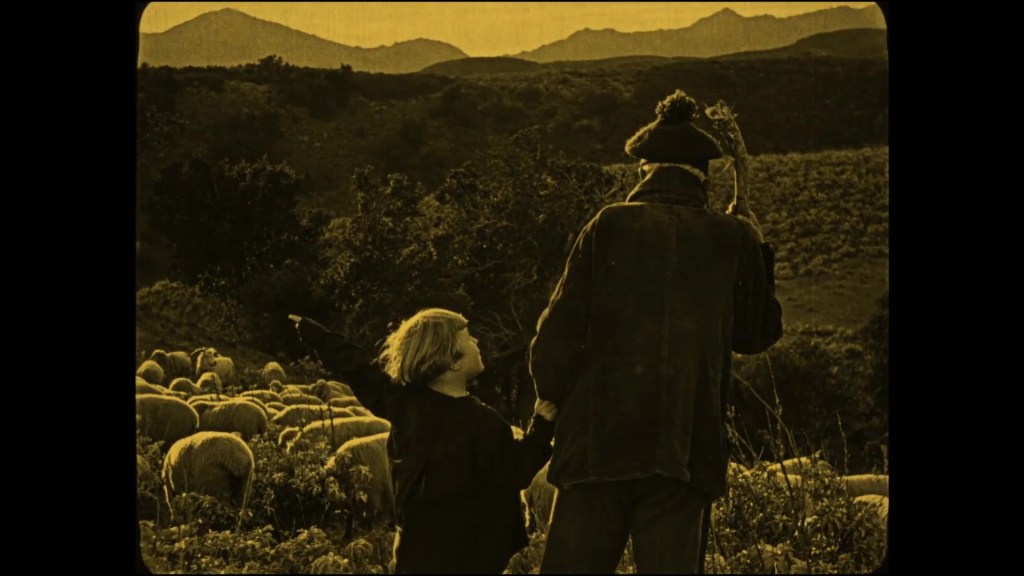
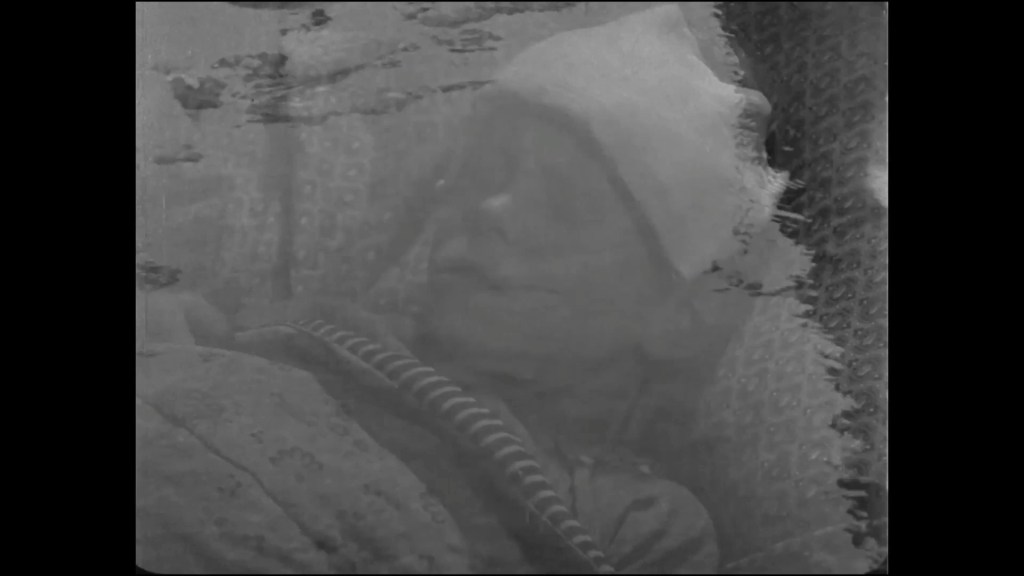
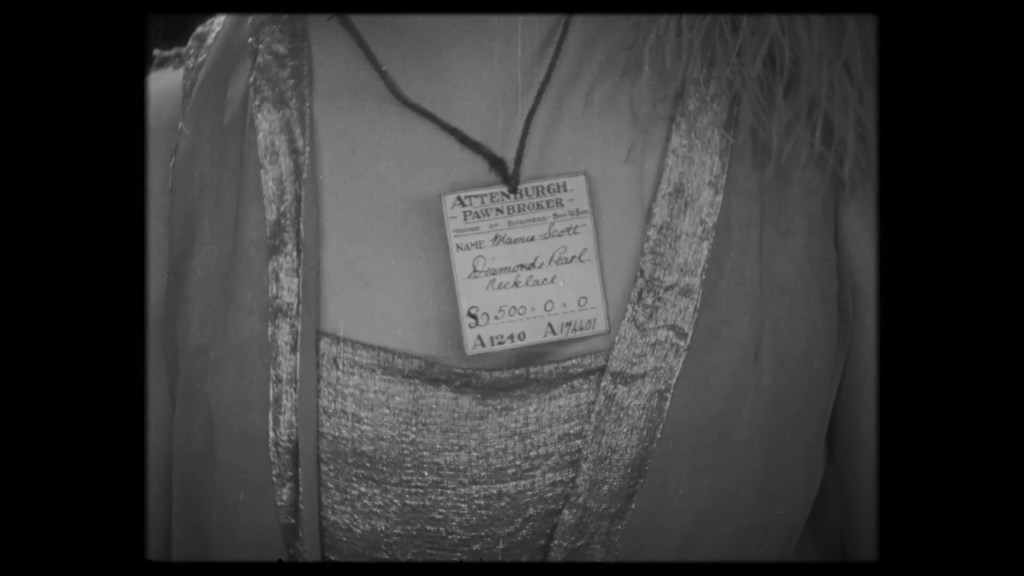
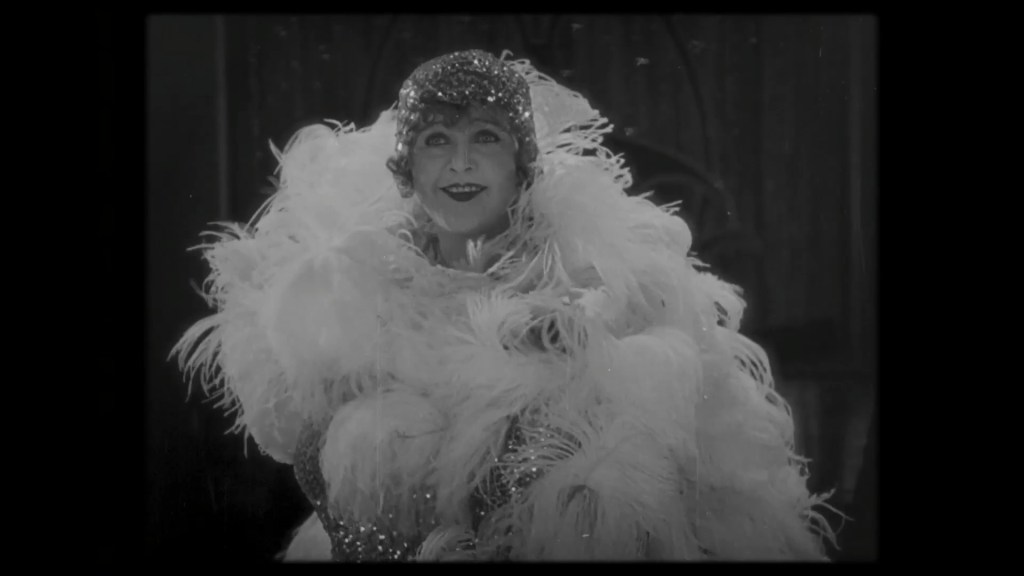
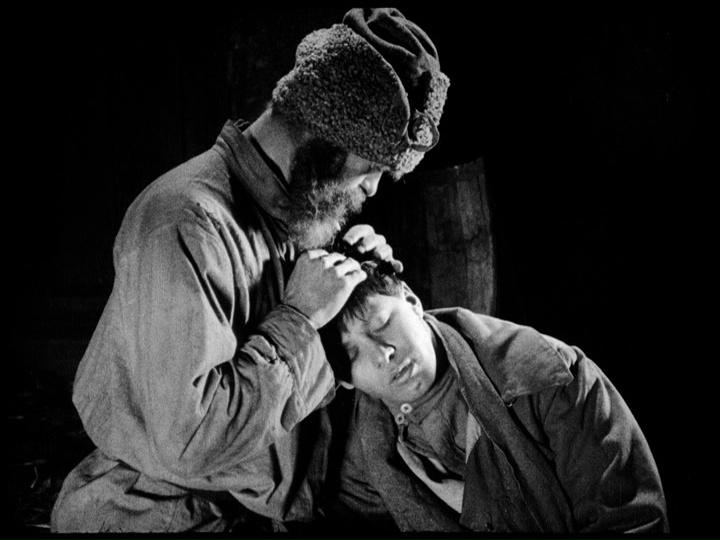
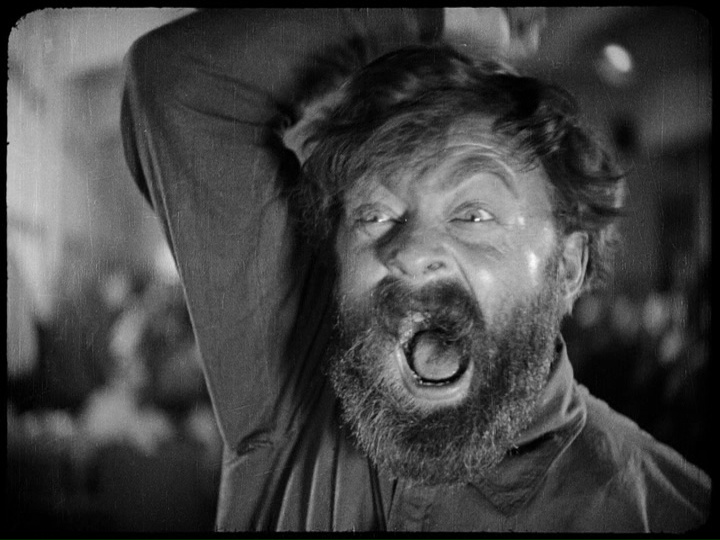
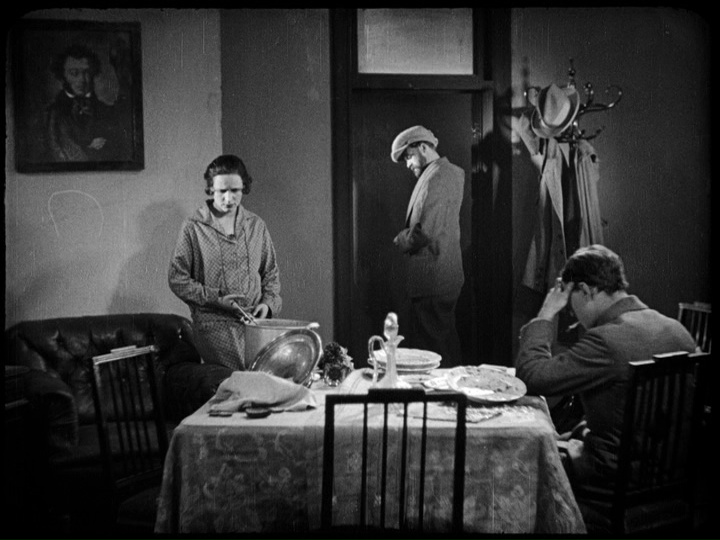
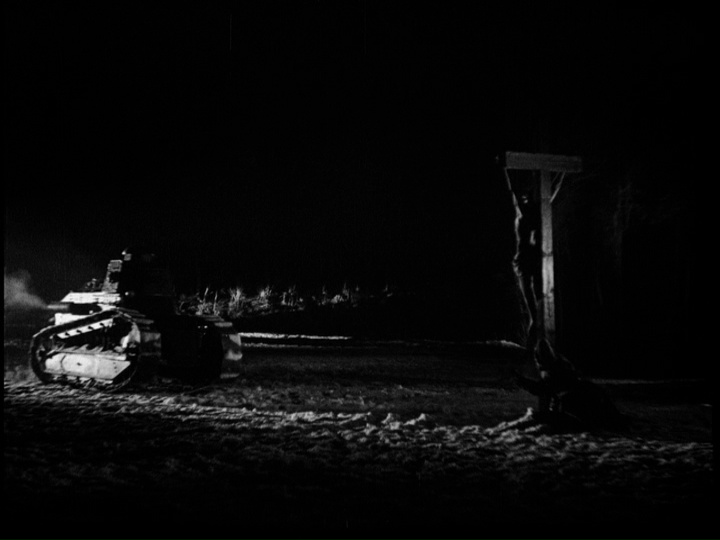
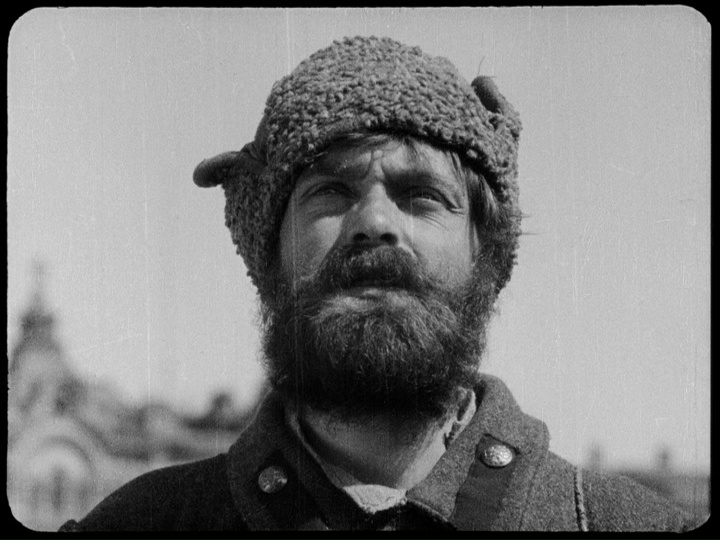
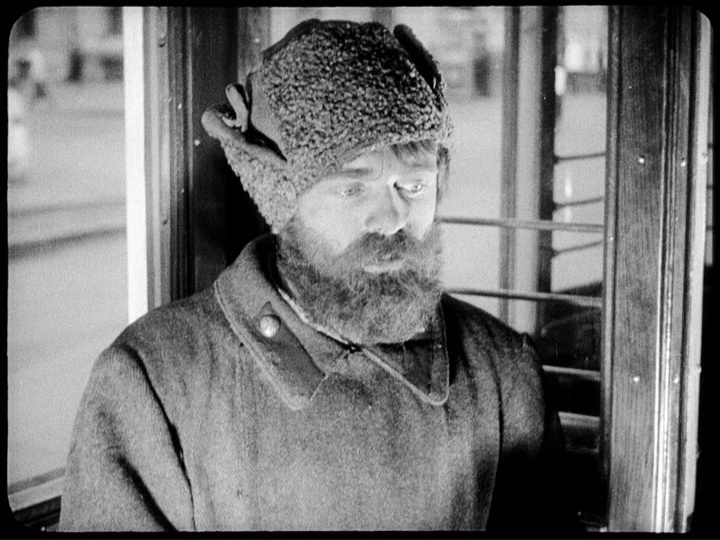
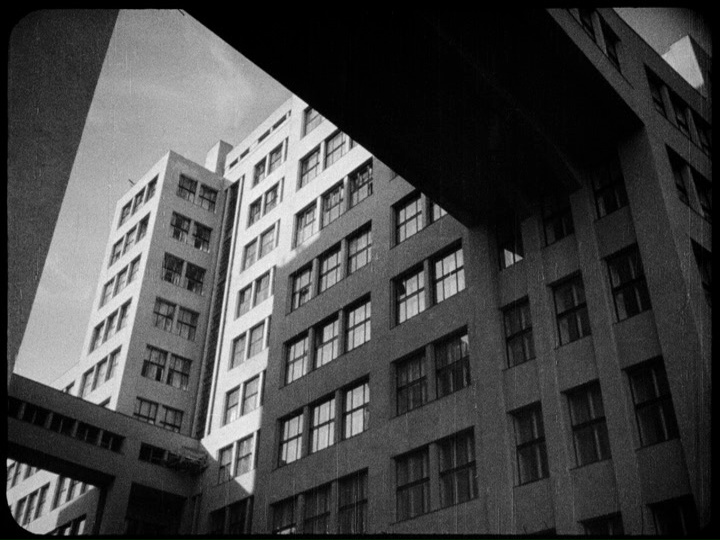
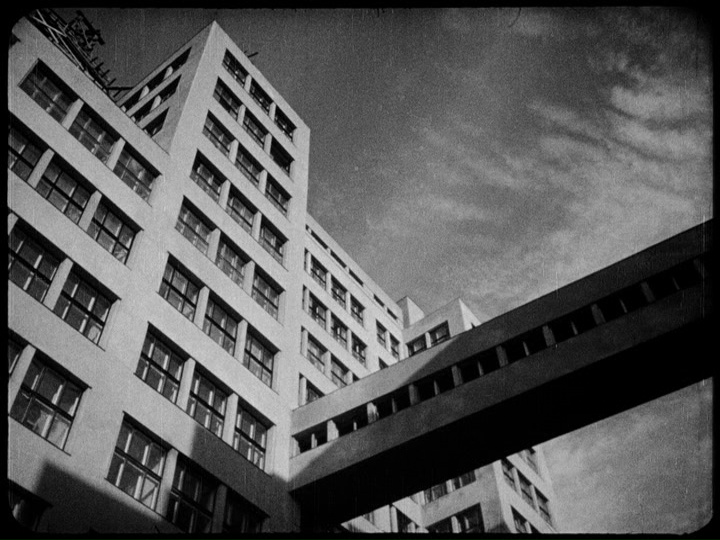
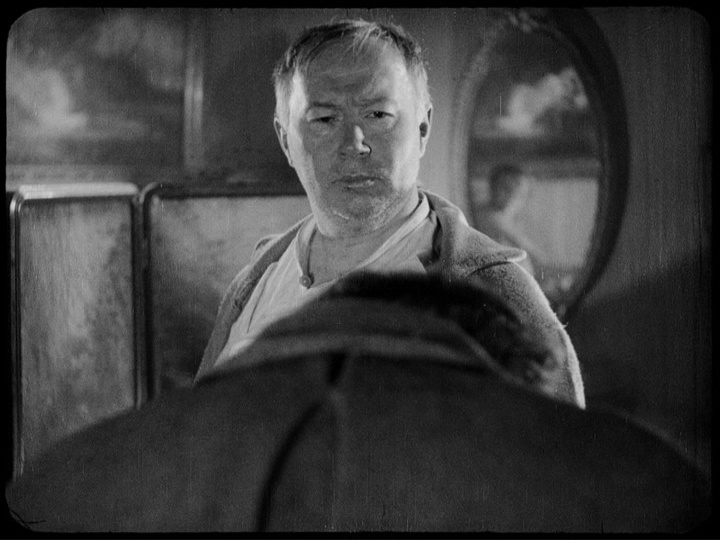
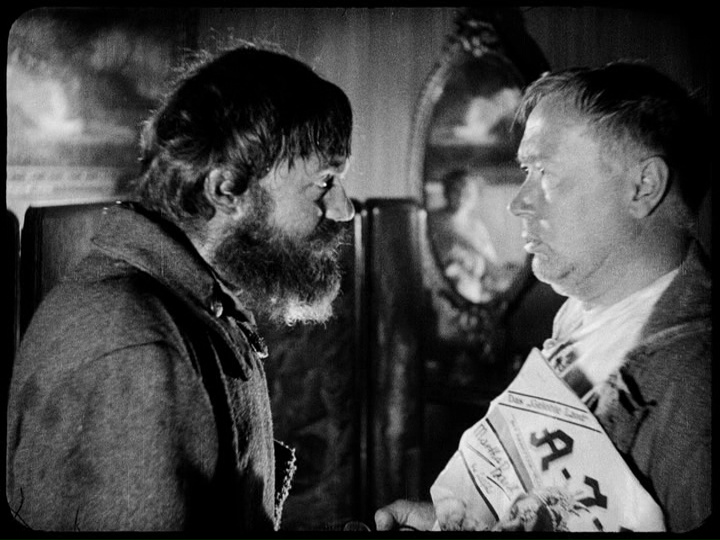
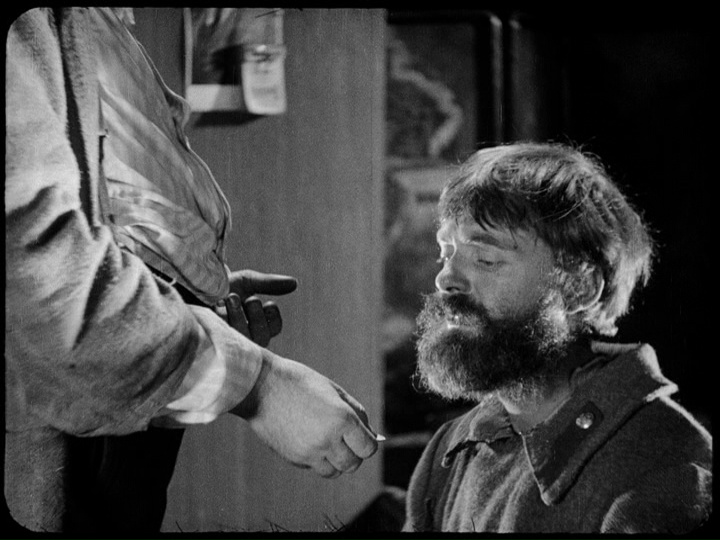
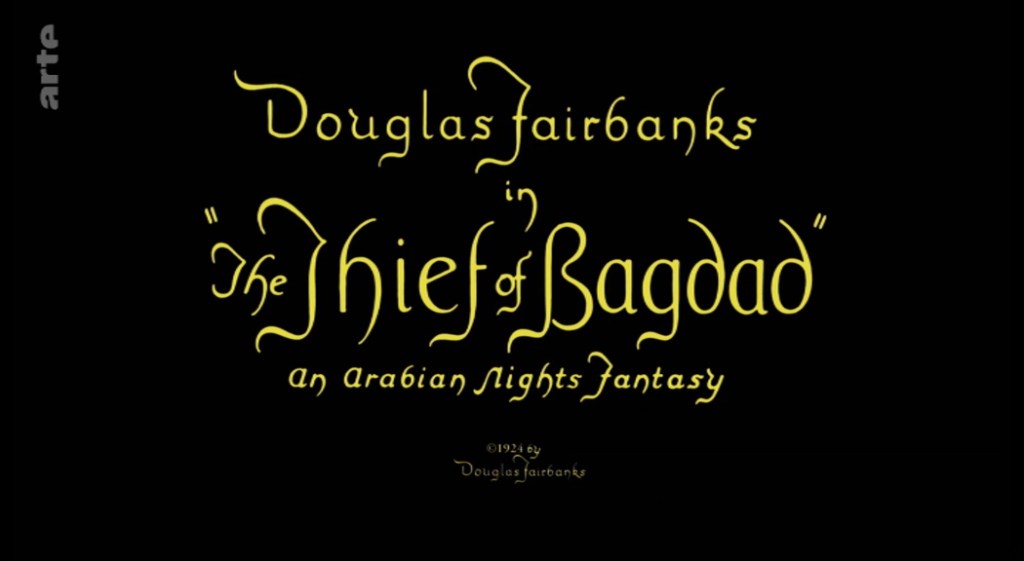
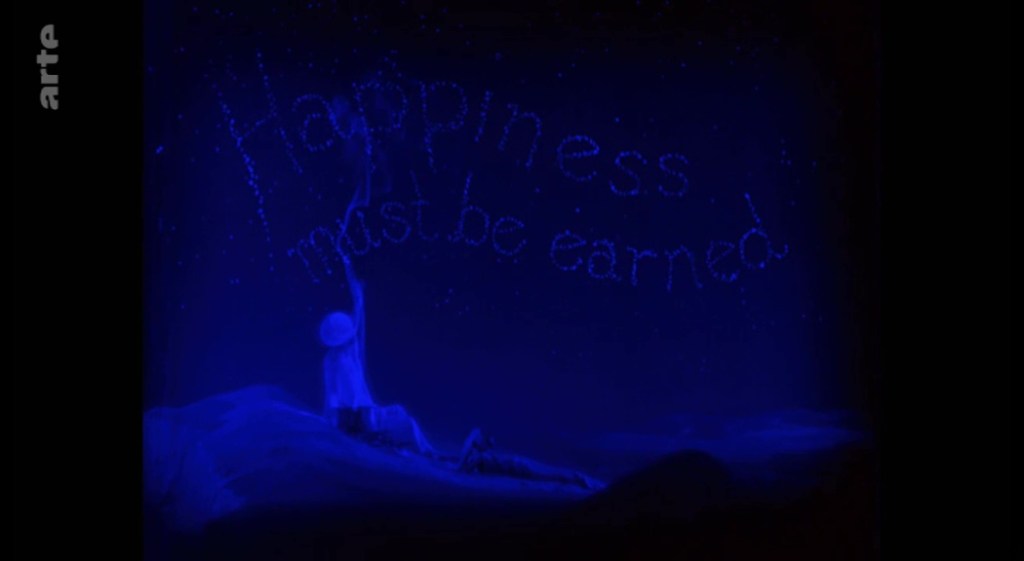
Added to this are the qualities of the Photoplay Productions restoration of The Thief of Bagdad. While the off-air copy from ARTE that I have watched does not do the astonishing imagery justice, it immediately signals its difference from earlier transfers of the film. Firstly, it contains the original credit sequence. The version presented both on the Kino DVD and the Cohen/MoC Blu-ray has a different (less elaborate) font for the main title, then dissolves straight to the image of the Holy Man and child in the desert:

In the Photoplay version, the more elaborate title is followed by full credits of cast and crew, then the desert prologue scene:

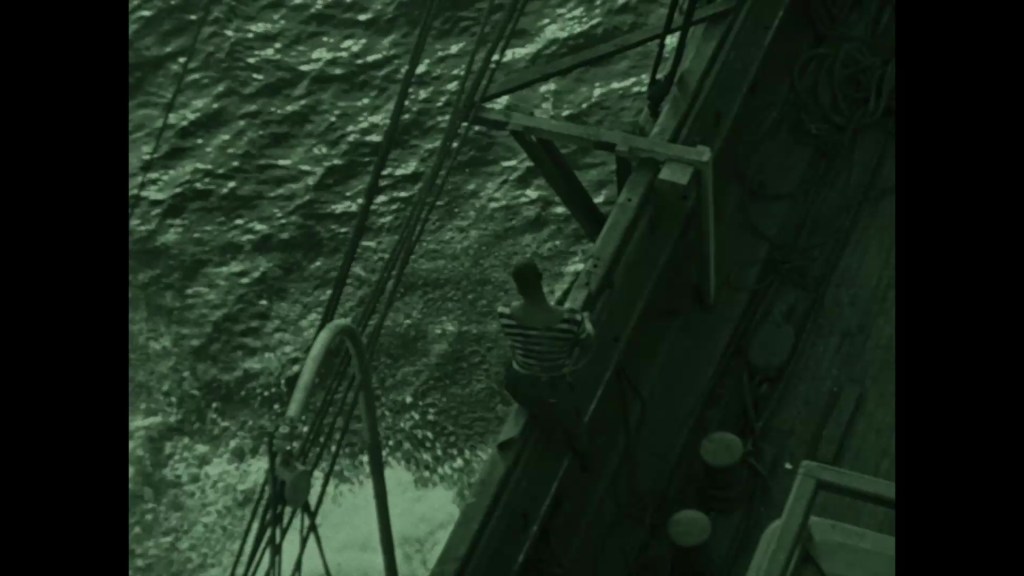
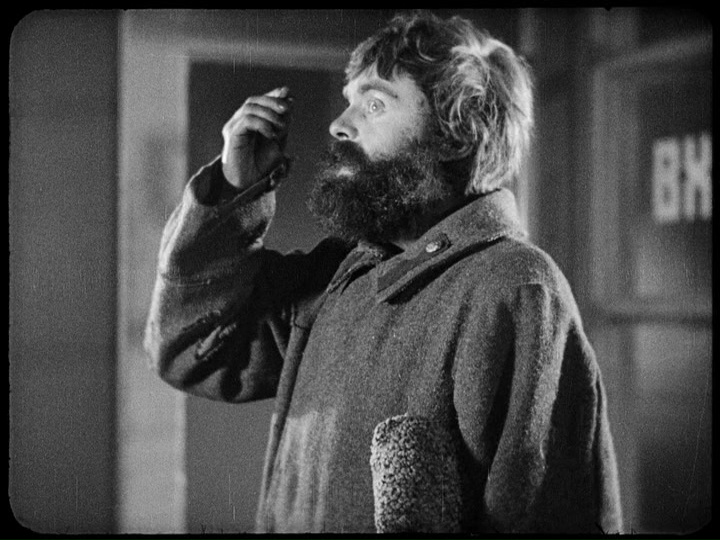
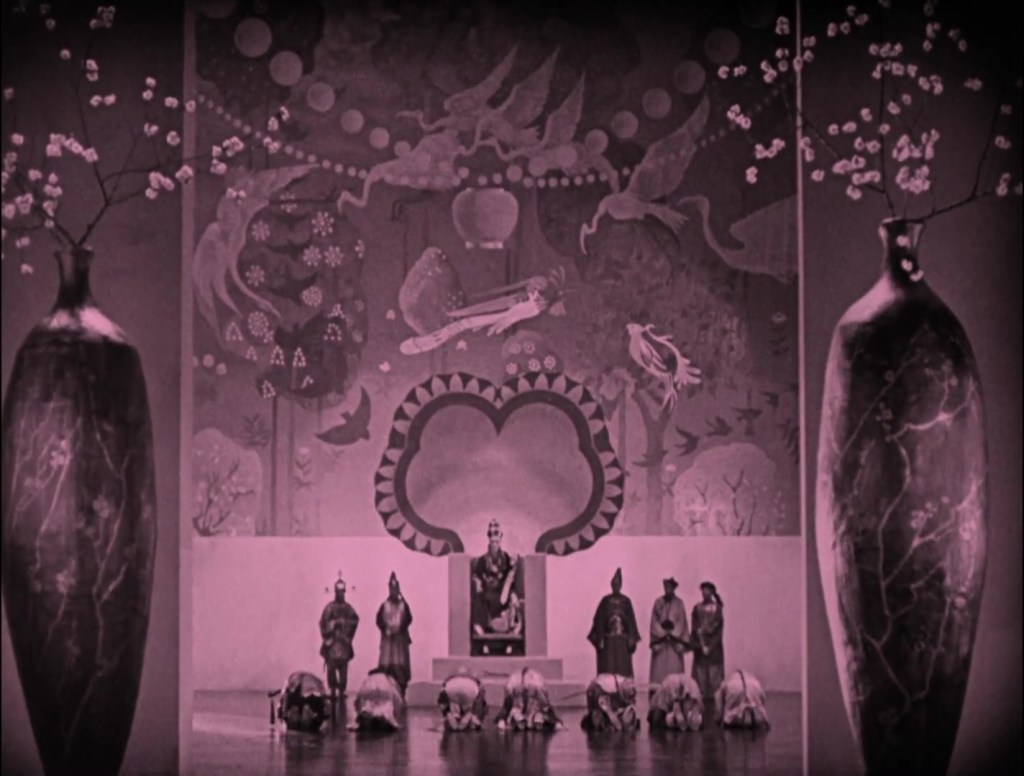
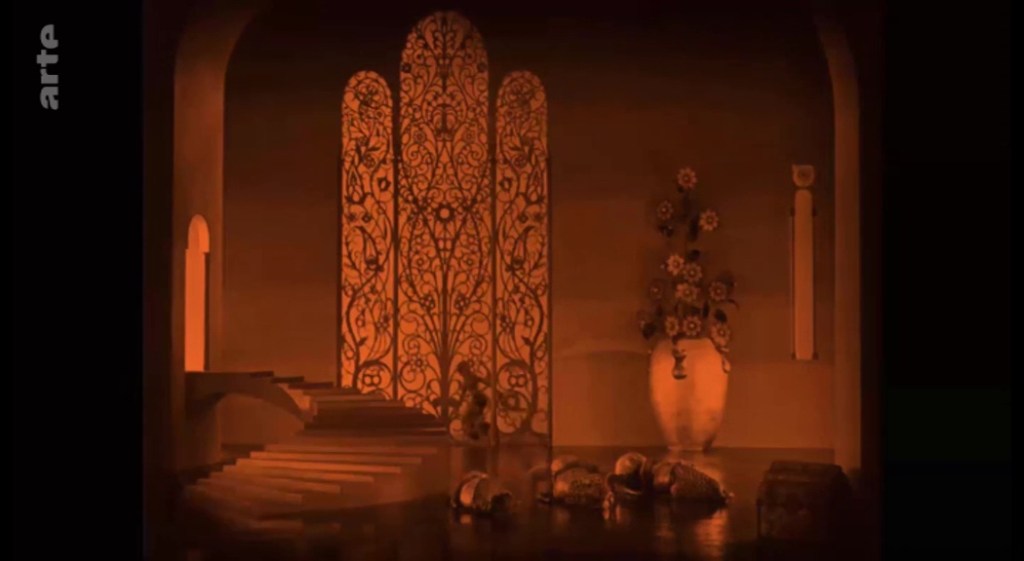
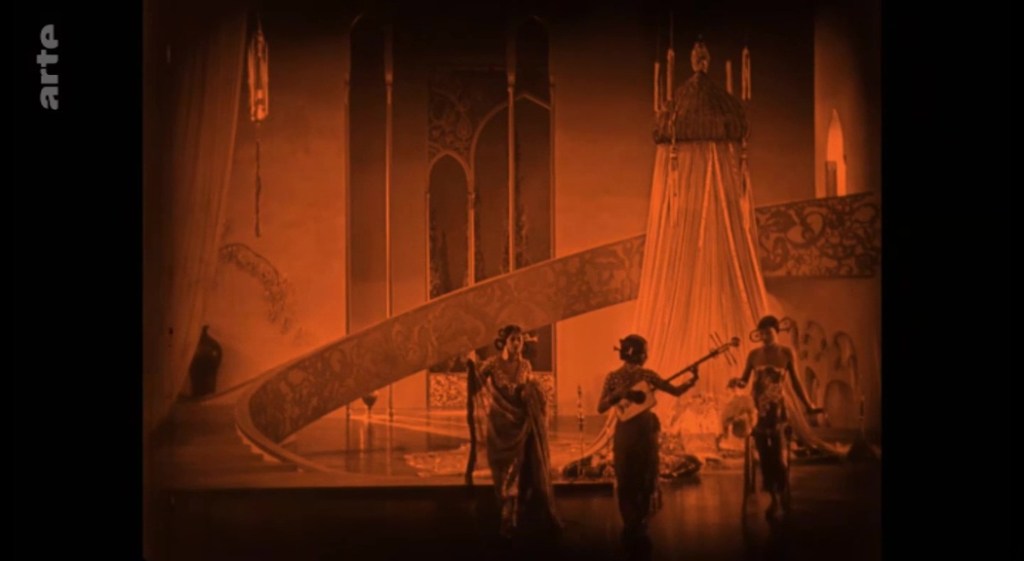
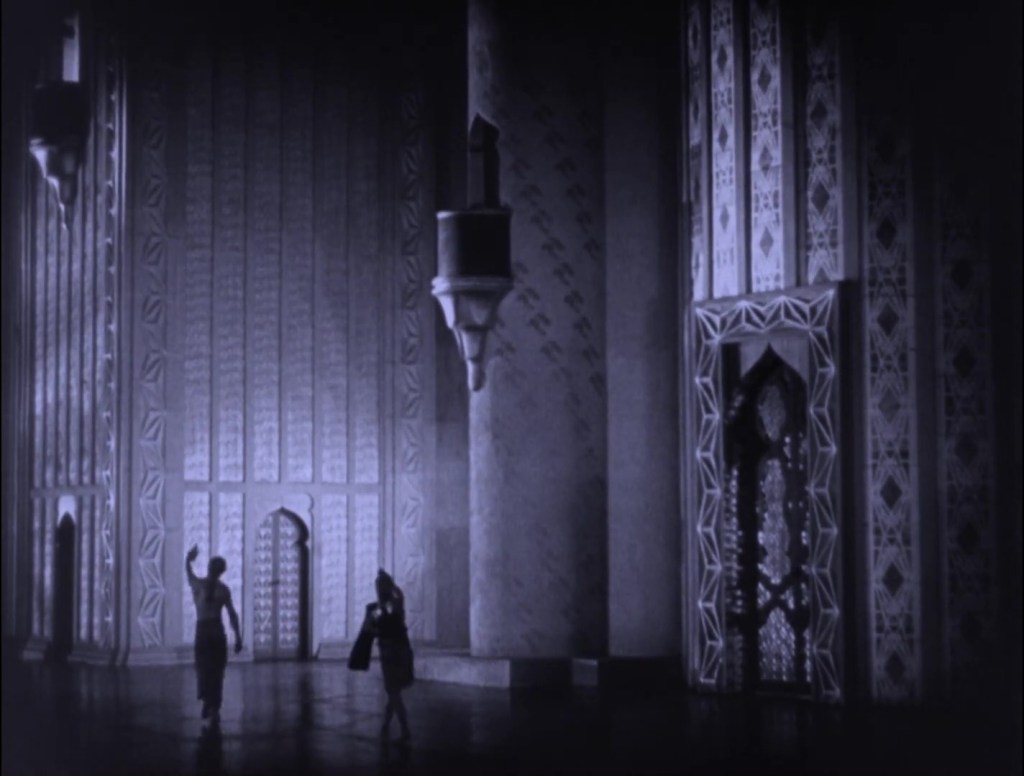
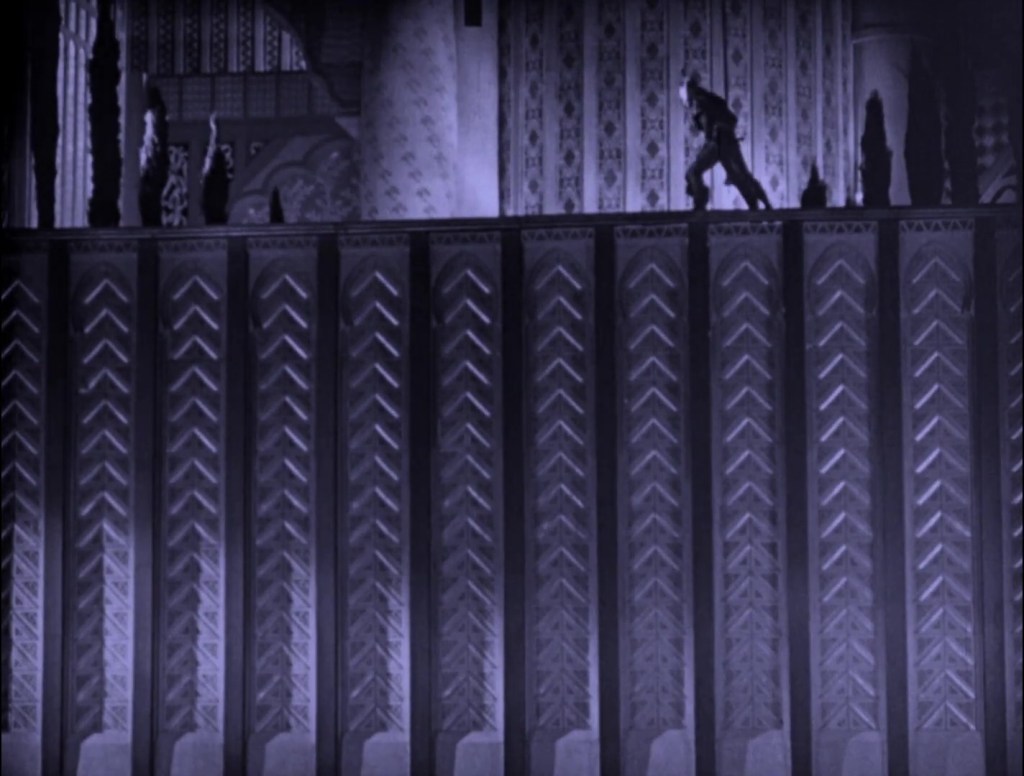
But the major difference is that the image in the Photoplay restoration is darker, the colours more saturated; it is as though the whole film has had a bath in some enriching elixir. I suspect that many viewers might worry the shadows are too dark. Having never seen an original tinted print from 1924, I cannot say how it compares with a contemporary copy – nor can I say how it compares to a contemporary projection of the film. What I can say is that it makes the previous transfers look anaemic, as though they have been over-cleaned. This is especially obvious in the beautiful transition from day to night via a dissolve. In the Cohen version, the tinting dissolves almost to monochrome for night:

In the Photoplay version, the tinting dissolves to deep blue:

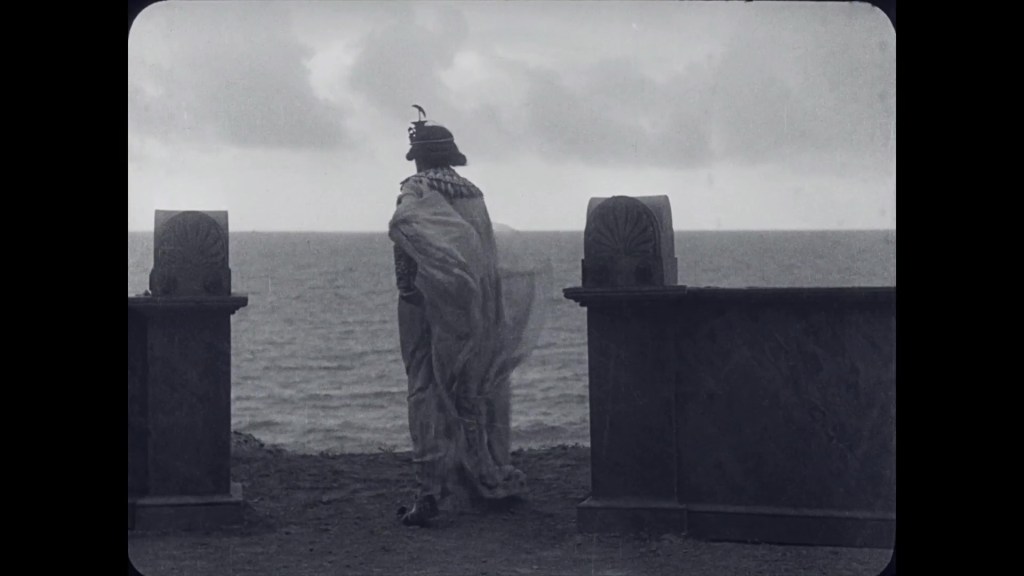
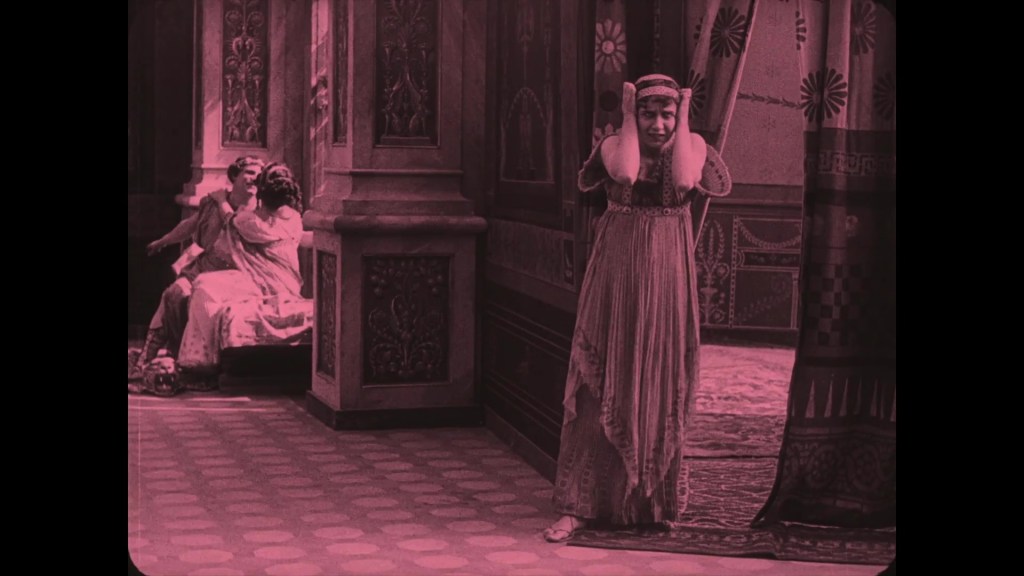
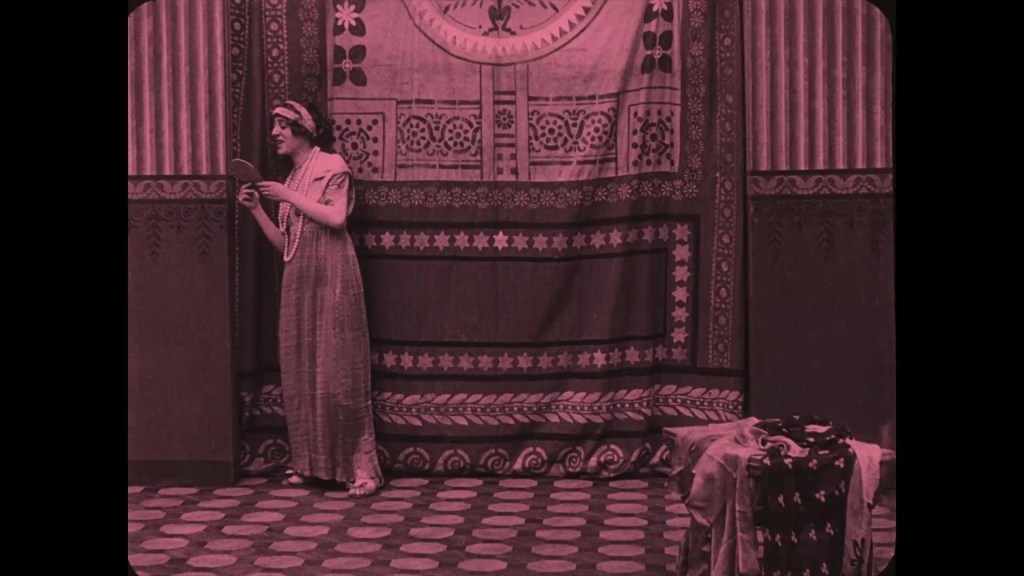
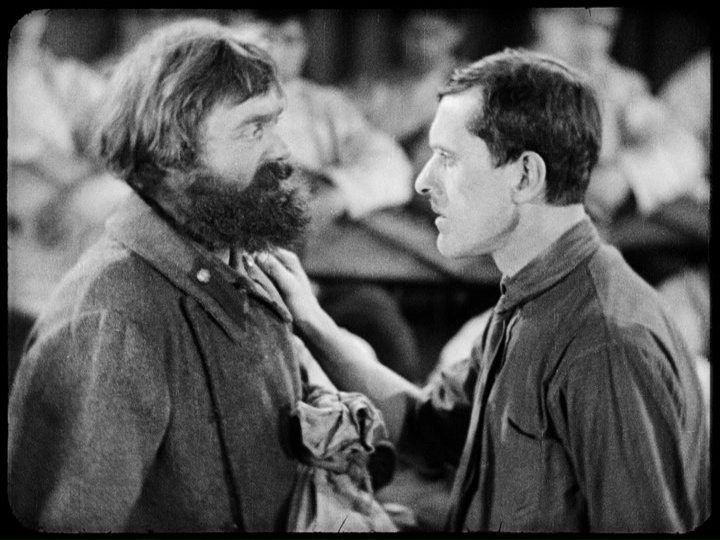
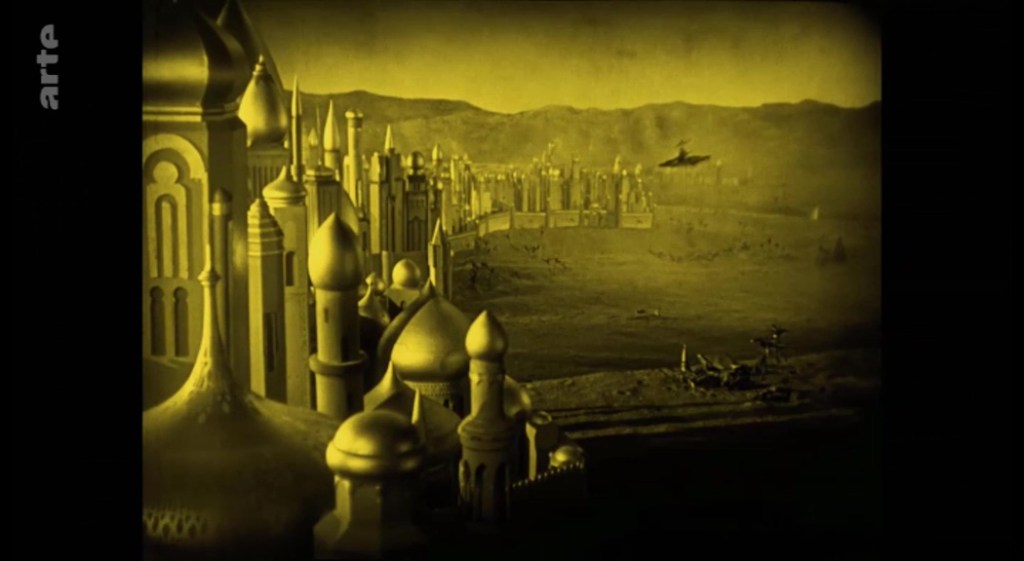
As you can see from the following captures, the overall difference in colour and contrast makes a big difference. In the images below, stills from the Cohen Blu-ray are on the left, images from the ARTE broadcast of the Photoplay version on the right:

I simply don’t know which is more “authentic”, but I must say I’m a sucker for the shadowy saturation of the Photoplay version. I also note that many compositions in the Photoplay restoration are less cropped at the top, left, and bottom of the frame. (The takes and editing appear to be exactly the same in Cohen/Photoplay versions, so I don’t think this is an instance of each copy deriving from a different negative.) This, combined with the title font and longer credit sequence, suggests a different, and dare I say superior, generation print being used by Photoplay. It really does look gorgeous.

But will we ever see it on home media? And will Wilson’s score ever get a chance to accompany it? There is certainly reason enough culturally, and surely room enough commercially, for both the Davis/Cohen release and the Wilson/Photoplay restoration to co-exist. Please, someone make it so!

Paul Cuff

References

Gillian B. Anderson, Music for Silent Films, 1894-1929: A Guide (Washington, DC: Library of Congress, 1988).

Mark Fitz-Gerald, liner notes for Mortimer Wilson: The Thief of Bagdad, First Hand Records FHR126, 2022, compact disc.

Jeffrey Vance, Douglas Fairbanks (Berkeley, CA: University of California Press, 2008).

Bonn from afar (2025, days 9 and 10)

The final two days of streaming from Bonn provide us with two variety-themed melodramas. The first is more familiar, at least in terms of its cast; the second was a complete surprise, and yet another welcome discovery…

Day 9: Song. Die Liebe eines armen Menschenkindes (1928; Ger./UK; Richard Eichberg). As with Saxophon-Susi on Day 2 of Bonn this year, I found myself in the curious position of having already seen Song – likewise at the (online) Pordenone festival of 2024. As I did last week, I will refer readers interested in Eichberg’s film to my post from that earlier occasion.

In lieu of commentary on the film, I observe in passing that there is a musical connection between Saxophon-Susi and Song: both were originally scored by Paul Dessau in 1928. Though Dessau’s later work (including sound films, orchestral and chamber works, and several operas) is well represented in terms of DVDs and CDs, these two feature film scores do not seem to be extant. As with so much absent silent film music, one wonders if this is a case of genuine loss or simply a case of no-one having been willing or able to look. (The most typical case would be that both films are released on DVD/Blu-ray with a modern substitute, only for Dessau’s scores to be rediscovered and lovingly reconstructed. More typically still, these scores would then be performed just once at a festival I cannot attend and hear about only retrospectively, and forever after remain unavailable due to lack of interest and/or finance for appropriate recordings to be issued with a new home edition. I would then be left with years of regret and frustration, with occasional outbreaks of false hope when a rumoured broadcast recording failed to appear – or one that remained unavailable outside a restricted copyright region of central Europe. Such is often the fate of original orchestral scores, and of those who long most fervently to hear them.)

For the presentation of Song from Bonn this week, Stephen Horne performed on piano (and various other instrumental interpolations) – just as he did for this film at Pordenone. Both iterations were excellent. However, given that the restoration and musical score were from the same sources, I merely dipped in to this presentation from Bonn, finding myself (as before) marvelling at how nice the film looked – but remaining just as ungrabbed by the characters or drama. Not without some guilt, nor without regret at once more not seeing this with an audience, I skipped the rest for the sake of time.

Day 10: Sensation im Wintergarten (1929; Ger.; Gennaro Righelli). The circus acrobat “Frattani” (Paul Richter) returns to Germany after many years abroad. His real identity is Count Paul Mensdorf, and as a child he ran away from home to avoid his new father, the Baron von Mallock (Gaston Jacquet). Presumed dead by his mother, the Countess Mensdorf (Erna Morena), he joined the circus and rose to become “Frattani, King of the Air”. Arriving in Berlin as an adult, Paul re-encounters his childhood sweetheart Madeleine, who earlier left the circus – and now hopes to rejoin. Meanwhile, Mallock has been cheating on his wife and gambling away his fraudulently-earned money. At the Wintergarten, Mallock’s roving eye is caught by Madeleine, whose debut is a triumph. But Madeleine worries about Paul’s dangerous stunts, just as Paul comes to worry that he is endangering their budding romance. (A worry enhanced by the sight of the former “King of the Air”, who is now one-legged and unemployed.) Paul recognizes Mallock and strikes him down when he tries to grope Madeleine. Revealing his true identity, Paul’s reappearance is a joy to his mother but to Mallock a threat to his estate. Threatened by his creditors, Mallock grows desperate and tries to sabotage the trapeze ropes – only to plunge to his death. ENDE.

A very enjoyable film, if a tad generic. Its story might be from any variety- or circus-themed film of the silent era, from the earliest features onwards. Danish producers, for example, made a speciality of them in the early 1910s (Den flyvende circus, 1912; Dødsspring til hest fra cirkuskuplen, 1912), remade some of them in the 1920s (Klovnen, 1917 and 1926), and even directed them in Hollywood (The Devil’s Circus, 1926). Romantic rivalry playing out against a backdrop of circus stunts was clearly an appealing setting. And despite the satisfaction of the narrative in Sensation im Wintergarten, the ending is a bit of a dud. The machinations of Wallock amount to very little and his threat goes instantly awry, killing him before anything has happened.

But narrative ingenuity or dramatic depth is probably not the point here. Sensation im Wintergarten is distinguished by its superb staging and camerawork. Even if this could be a story from 1910, its cinematic realization truly belongs to 1929. The film is impeccably lit, impeccably staged, impeccably edited. From the outset, it is filled with fine sequences. The opening flashback to Paul’s childhood, for example, stages his first sight of the circus performers through the windows the school gymnasium. There is a very nice dissolve at the end of the scene to the same space, now deserted and lit only by the streetlamp. It’s evocative and moody, just as when Paul first enters the circus. Here, we see the clown Barry (Wladimir Sokoloff) is introduced in the centre of the rink, pulling an animal from the wings via a lead. The beast that emerges is in fact a tiny dog, who slides reluctantly across the sand. The camera slides before the dog, making the sight both novel and comic. It is a shot of pure delight, allowing us to share the kind of delight that the child Paul feels as he looks on from the wings.

I single out this moment to emphasize that the mobile camerawork is interesting not just in the obvious examples of trapeze-mounted shots for drama, but the less expected ones. Then there are the beautiful travelling shots through 1929 Berlin, the camera gliding marvellously along the streets towards the theatre. But the interior sequences filmed inside the real Wintergarten are simply dazzling. It’s a glorious space, gloriously filmed – you can really feel the size of it, the buzz of the crowd, the drama of the performers on the real stage.

I love the tracking shot in which the side doors of the theatre open and we glide slowly toward the huge space within. It’s like a more realistic version of the shot in Ben-Hur (1925) in which the camera similarly tracks forward into the huge space of the Roman arena. Indeed, in some ways the shot in Sensation im Wintergarten is more enticing. Unlike half real, half matte-painted space of the Circus of Antioch, the Berlin theatre is tangibly real – and the sense of being inside this real space, with its real stage, real seating, real walls, real ceiling, is itself exciting. The unchained camera – swinging from the trapeze, leaping through the air – is a continuation of this sense of a real space being physically explored on screen.

Director Gennaro Righelli takes advantage of this amazing pre-built set by placing his camera everywhere he can: in the audience, behind the audience, in the wings, behind the stage, in front of the stage, in the orchestra pit, behind the orchestra pit, in the corridors, in the dressing rooms… You really get a sense of this location as a complete world in itself, a life that a performer might long for and not want to leave. The real sets are likewise full and rich and complete. There are fine interiors of the Countess’s home, but I was more interested in the smoky restaurants where the show people meet. The sense of a full reality created by the shots that introduce the real streets of Berlin continue into these interior spaces.

For all this, some may feel that it lacks the aesthetic or dramatic punch of Germany’s most famous vaudeville film of the era: Varieté (1925). I dare say I would agree. But this comparison to the most conspicuously well-known film of its genre does Sensation im Wintergarten an injustice. If Gennaro Righelli is not E.A. Dupont (I admit I had never knowingly heard of Righelli), this is no reason to snub his work. Nor should one snub his cast, even though it does not boast anyone as famous as Lya di Putti or Emil Jannings. But Sensation im Wintergarten does feature a reliable ensemble of familiar(ish) names. As Paul, Paul Richter offers no great emotional depth, but he is believable and likeable. (My familiarity with his face is as Fritz Lang’s Siegfried from 1924: another role of presence without depth.) Believable and likeable are also qualities I might say of Claire Rommer as his love interest. They are a charming couple, if one whose inner lives are only sketches rather than detailed portraits. As Mallock, Gaston Jacquet is perfectly suave, perfectly calculating, perfectly callous – a character designed not to possess any depth whatsoever. As Paul’s circus friend, Wladimir Sokoloff is a familiar face from various small roles in this period (including several Pabst productions), and his distinctive features – warm, kind, expressive, comic – make for an engaging sidekick to the lead. If I find I have little else to add to these sketches, it is because the film makes of its characters little more than sketches. They are entirely effective, but nothing more.

Again, I do not mean to talk down this film. Sensation im Wintergarten is a worthy production, and very entertaining. And it’s always good to widen one’s perspective on lesser-known films and directors. As much as I like Varieté, I’d really rather see something new and unknown. Sensation im Wintergarten is most certainly new and unknown. This presentation from Bonn is in fact the world premiere of the new digital restoration, which also provides detailed credits at the start. Per these very useful notes, the original German version of Sensation im Wintergarten remains lost, so this restoration is based on the version released in Sweden. Various missing scenes and shots have been indicated with inserted text, which is much preferable than leaving out important details for the sake of visual continuity. (I wish restorations would do this more often, as it is otherwise impossible to know the differences between original and restored copies.) Despite some missing material, the film looks great – filled with crisp, rich, detailed images. The music here was provided for piano and various other solo instruments by Günter A. Buchwald and Frank Bockius. Catching the rhythms and sounds of the circus, in particular, makes for a very engaging experience. They caught the drama and its tone very well, and I was entertained throughout.

Stummfilmtage Bonn 2025: Summary. As ever, by the time I have finished writing these festival pieces, the festival itself seems long over. And, as ever, I have mixed feelings about my online attendance. I have not engaged at all with online discussion (let alone in-person conversation) about what I have seen, nor have I explored any related festival material other than the brief descriptions of each film on the “details” sidebar for each video. My body and brain have certainly been having to work hard, though in a very different way from those present in Bonn. My early mornings have been a pell-mell flurry of simultaneous viewing and notetaking, followed by late mornings with an equally pell-mell flurry of rewriting and image-capturing. My wrist aches, something odd happened to my lower back, and I feel like I’ve had to cram more quickfire viewing and thinking into this last ten days than I have in many weeks. But ultimately I do enjoy the feeling that I have been forced to live according to the rhythm set by the festival, even if only via online portals with preset time restrictions. While a solitary pleasure, writing gives me a sense of something that will last beyond the ten days – and will hopefully stick in my memory, if not anyone else’s.

It goes without saying that the Stummfilmtage Bonn is an absolutely superb festival. The programme is always filled with some real discoveries, as well as the chance to review some familiar and very worthwhile films. Impeccably presented and prepared for online streaming, I cannot possibly bestow enough praise on everyone involved. (My conversation with the co-curator, Oliver Hanley, last year only led to a greater appreciation of the mad amount of effort involved in putting this on – especially for both live and online audiences.) I hope I will be able to attend in person one year, and indeed to have the kind of lifestyle that would enable me to do so. Until then, I will happily let my life be taken over by the Stummfilmtage Bonn for ten days each year. Long may this opportunity last.

Paul Cuff

Bonn from afar (2025, day 8)

Day 8 of this year’s line-up from Bonn takes us to Hungary, where we plunge into a crime melodrama…

Rabmadár (1929; Hu./Ger.; Pál Sugár/Lajos Lázár). In the women’s prison in Budapest, the resident doctor (Charlotte Susa) takes pity on Prisoner No. 7 (Lissi Arna), who begs to be let loose just for one night. She explains that she let herself be arrested for the sake of a man. The doctor believes her intentions are noble, so swaps clothes with the prisoner and allows her to escape. Meanwhile, at a hotel in the city, the head waiter Jenő (Hans Adalbert Schlettow) dotes over his pregnant girlfriend Birdi (Ida Turay), while also eyeing up the new maid (Olga Kerékgyártó) – and then the new arrival, the artiste (El Dura). As Jenő forces himself on the artiste, Prisoner No. 7 rushes into the hotel. Spying on the pair from the next room, she sees the artiste turn the tables on Jenő – praying on his vulnerability (his lowly status), she lures him into making more of himself for her sake. The artiste thus inveigles Jenő to distract the hotel manageress (Mariska H. Balla), while she herself empties the manageress’s safe. This she does, but Prisoner No. 7, now armed, confronts the artiste just as she’s about to make off with the money – and without Jenő. Jenő re-enters and now the Prisoner confronts him, too. She phones for the police. The artiste makes a run for it, plummeting to her death in a faulty lift. The prisoner tells Jenő he mustn’t escape this time. Jenő claims he loves her and somehow lures the Prisoner into his arms. The police enter and find the body in the lift shaft. Jenő goes downstairs to becalm the police. Meanwhile, Birdie encounters the Prisoner – and we learn that her name is Annuska. Birdie reveals that she will be married to Jenő, and that she is pregnant. The shocked Annuska leaves, pursued by Jenő. On the riverbank, Annushka asks him to be decent and marry Birdie. He swears he will, and Annushka heads back to prison. ENDE

My word, what a film this is. My experience of late 1920s/early 1930s Hungarian-directed films has, perhaps by accident, tended towards the dramatically and expressively extravagant. If Rabmadár doesn’t quite have Pál Fejős (aka Paul Fejos) levels of emotional and aesthetic intensity, passages nevertheless have an amazing and unexpected potency. The film revels in dark, often sinister or oppressive interior spaces – from the jail cell to the hotel rooms and shadowy niches, and the dark or dawning streets outside. In particular, the prison setting boasts some wonderful imaginative camerawork and editing. As well as finding great angles to frame the prisoners, especially No. 7 – from up above, through grates – there is a superb sequence of Annushka’s claustrophobia. In tight close-ups, we see her eying the walls, the door, the ceiling, and the camera tracks in towards each surface, pressing them slowly into the lens. Multiple superimpositions and ever-closer shots of her face and mouth and eyes make us share the madness of confinement, as the film shoves us closer into its imprisoning world. Later, there are any number of superb close-ups. Even when the artiste is fleeing with the money, the film shows us the chasing figures in facial close-ups as they hurtle through the hotel, shouting and screaming. The set-up and story might be entirely generic, but my word this film makes the most out of the material. A simple story of crime and betrayal becomes a weird chamber piece, draped in a febrile mise-en-scène. This is what impressed me most: the fact that every aspect of design and camerawork gets used to heighten and intensify the emotional tone. Everything in this film seems intense.

But this isn’t merely an aesthetic exercise. The characters are the reason for the intensity, and the cast form a superb ensemble. Lissi Arna’s face carries such amazing fierceness of feeling, from the despair of jail, of shock, of fear, of betrayal, to the heights of gratitude, of longing, of love, of vicious triumphalism. It’s quite a performance, matched by the sultry, moody, dangerous presence of the others in the cast. El Dura is a remarkable presence. She’s such a slight figure, but she moves with amazing purpose – turning what seems to begin as a rape scene into something weirder and unexpected, turning on her would-be attacker and bending him to her will. It’s a mad, uncomfortable twist of narrative logic, but somehow El Dura pulls it off. And Hans Adalbert Schlettow as the superficial Jenő – always seen glancing at himself in mirrors, in glass, in any reflective surface – has just enough fun to make his character a believably engaging narcissism and charm over the women.

But it’s the women in the cast that have the most enjoyable, intense performances to offer. As the manageress, Mariska H. Balla has enormous fun falling for Jenő – proffering him with drink, with frilly sweets, with kisses. Their seduction/distraction scene together is delightful, almost absurdly so. When Jenő gets out his guitar and starts singing, you realize the almost autonomous strength of the scene and its performers – it’s like another, equally good, film is breaking out of the one we’re watching. Then there are the intensely believable performances of Ida Turay as the madly besotted, innocent Birdi, and Olga Kerékgyártó as the maid who, even in a handful of appearances, is somehow realistic, intense, emotional, and wholly believable as a person. Finally, the ostensibly minor role of the doctor is turned, by Charlotte Susa and by the intensity of the mise-en-scène, into a tangible, almost too powerful, emotional presence.

Speaking of the latter, I wondered quite what the connection between the doctor and her prisoner was to be, so febrile and physically intense were their jail scenes together. Even before they are seen together, the cigarettes that the doctor sends to Annushka trigger a dreamy, smoky vision of the doctor on the wall of Annushka’s cell. “Isn’t there someone you can’t live without?” the prisoner asks the doctor, on her knees before her, kissing her hands, pressing her year-stained face into her lap. (There is an implicit scene of mutual undressing, which the film avoids via a swift fade to black.)

Later, when Birdi encounters Annushka in the hotel, it is Birdi who utters Annushka’s name for the first time in the film. It’s the first moment of identification, a form of intimacy. And Annushka embraces Birdi and kisses her several times on the mouth. This, too, is the first sincere kiss of the film. (We have seen Jenő kiss many women, always insincerely.) It is as if only without the central man in the story can any of the women find comradeship, tenderness – even physical tenderness. And at the end of the film, Annushka returns to the doctor – an odd and touching reunion of this couple. But the last image is of Annushka, alone, closing the shutters of her cell. It’s like the whole film has been some kind of nightmare of confinement, release, fear, and anger. No resolution is possible but a kind of sinking back into sultry longing.

A word must also be said about the history of the film and its restoration. A Hungarian-German co-production, boasting cast and crew from both countries, this film made a splash in 1929 but was long unavailable thereafter. The original Hungarian title was Rabmadár (“Slave Bird”), but only the German iteration – Achtung! Kriminalpolizei! (Gefangene Nr. 7) – survived in a print saved in the Netherlands, which was passed to Filmarchiv Austria, thence to the Budapest Film Archive. More cent discoveries enabled a longer restoration to be completed by the National Film Institute Hungary. Given the complex print history, outlined in the excellent restoration credits at the start of the presentation, the film looks sumptuous. Rich blacks, glowing highlights, detailed textures, glorious close-ups… quite simply, a delight to watch. My one reservation about the restoration would be the framerate. To my eyes, it looked like the film was transferred at a slower-than-natural framerate. For a print of 2171m, per the credits, the near two-hour runtime would indicate a framerate of 16fps, which seems unusually slow for a film shot in 1929. I can easily imagine 20fps working better.

Finally, the piano accompaniment for this Bonn screening/streaming was by Elaine Brennan. A rich, attentive score, engaging and sympathetic, perfect for the film. As ever, an excellent presentation from Bonn of a film that deserves to be better known.

Paul Cuff

Bonn from afar (2025, day 7)

On Day 7 of Bonn, we are once more treated to a full feature film presentation. For today, we are off to Denmark with that nation’s most popular comic duo of the silent era…

Krudt med Knald (1931; Den.; Lau Lauritzen Sr). Long and Short (Carl Schenstrøm and Harald Madsen) live in a boarding house, flirting with their young neighbours – a nimble duo of roller-skating dancers (Marguerite Viby, Nina Kalckar) – and making friends with their older neighbour, the Inventor (Jørgen Lund). The latter has invented a proto-televisual system, which is highly prized by a sinister trio of men representing “United Electric”. The trio move into the pension, aiming to steal the Inventor’s drawings and also the girls upstairs. After inadvertently foiling one attempt to steal the drawings, Long and Short are hired as drivers by the trio. Thinking this will get them out the way, the trio take the girls for a drive – but are once more stopped in their plans of seduction by Long and Short. Meanwhile, the Inventor signs a deal to gain half the profits from his invention from United Electric. But the trio from the company want to steal them from their boss to gain all the profits themselves. The trio enlist Long and Short to help them break into the office and the safe where the plans are, and arrange that the duo get arrested in their place. But the duo escape and save the day, catching the trio and saving the Inventor. ENDE

I’ll be honest: I feared that I wouldn’t get on with this film. I have been aware of the Danish comic duo Fyrtårnet and Bivognen for some years. Many of their films, including today’s, have been long available for free via the DFI silent film portal. But without subtitles or music, this little thread of silent film history has never enticed me to battle through. (On this same theme, I have had a deluxe Film Archiv Austria DVD edition of the films of early Austrian slapstick duo Cocl and Seff on my shelf for years. Somehow, I’ve never quite been in the mood to unwrap and investigate.) Yet this is precisely the kind of hesitancy I should overcome. After all, Danish silent cinema is a much more complex and multifaceted body of work than as represented by the canonical films of Benjamin Christiansen and Carl-Th. Dreyer, or the stardom of Asta Nielsen and Valdemar Psilander. The comic duo Fyrtårnet (Carl Schenstrøm) and Bivognen (Harald Madsen) were wildly popular in the 1920s and 1930s, and not just in Denmark. As the DFI page dedicated to their work reveals, under the names “Pat and Patachon” they were also big stars in Germany. Indeed, even the English version of the DFI pages on the duo stick with the Germanified “Pat and Patachon” as their non-Danish character names. “Long and Short” seem to be the English equivalent, and I only know this thanks to the English subtitles available on this presentation from Bonn.

All of which is to say that I was utterly unprepared for how much I enjoyed Krudt med Knald. I was also unprepared for the rhythm of the film, and how this heightened the pleasure of watching it. Though Long and Short (to reinstate their English aliases) are slapstick performers, the timing and execution of their gags do not attempt the speed or sheer breathtaking cleverness of Keaton, Lloyd, or Chaplin. They are a shambling, mostly slow-moving pair. One can follow their thought patterns more readily, watch their logic slowly unfold with everyday velocity. The opening scene is about neither character wanting to get up before the other: the Keaton-esque pulley system to tip one another out of bed is not especially sophisticated. (As compared to Keaton’s house in The Scarecrow (1920), for example.) But it’s character that seems to drive the gags, not the gags that define the character. It’s the mutual stubbornness, and the ultimately comradely and good-natured conclusion of the scene, that comes across – and brings the laughs.

The world they inhabit is also exceedingly well observed. The lengthy meal scene at their boarding house, overseen by the large landlady, is filled with brilliant touches. While the gags about increasingly large/tall/long-limbed neighbours at the table is good, if not necessarily sophisticated, the real laughs come from the manners and mores of the setting. The film cuts from the duo’s resigned efforts to make the most of their miserly portions to wall-mounted slogans about the health benefits of privation: “Keep sound: Don’t eat too much.” “To eat one’s fill is to eat too much.” “The less you eat, the better you feel.” The efforts of Long and Short to fit in (literally and metaphorically) to the pretensions of their petit-bourgeois hostess is marvellous.

Later, there is another rather shambling sequence involving a sleepwalking Short, who walks along the rooftop of the boarding house and frightens the inhabitants. A rooftop sleepwalking sequence is hardly novel (especially for 1931), and it doesn’t pretend to offer the suspense or drama of the stunt work of a Keaton or Lloyd. But what it does instead is take the opportunity to poke fun at the landlady and her friends, who are busy having a séance. When the landlady sees the silhouette of Short, wrapped in his bedsheet, she screams: “It was Napoleon!” It’s a brilliant gag, in which the landlady’s fear also boasts of her pretension at having summoned a mighty name of history to her boarding house séance. The payoff, too, is surprising. For Short’s friends all rally round him and they form a little community, gathered round the Inventor in mutual support.

Time and again, I was surprised by how plot lines or details of character developed in unexpected directions. For example, the Inventor is portrayed initially as a comic figure, inspired by drink. “At the bottom: that’s where the good ideas are!”, the Inventor explains to Long and Short, motioning to his bottle of liqueur. “I’ve never found anything up there”, he adds, pointing to the top of the bottle. It’s a marvellous line. (And the kind of joke about drink and human foibles that still inflects Danish cinema today.) But it also marks the old man as vulnerable and human, facets which foster his friendship with Long and Short, and with the two performing girls.

Regarding the latter, I was also very touched at how Long and Short treat them with almost chaste respect. There is no romance as such, just a kind of comradely innocence and mutual respect. The pleasure of their relationship is not so much the prospect of romantic love as of protective friendship. We first meet the girls on the rooftop of the boarding house, where they are trying out their new “number” on roller-skates. It’s an entirely unnecessary sequence, as far as narrative is concerned, but it’s utterly, utterly delightful. Filmed on an actual rooftop overlooking the city (Copenhagen, one assumes – but I’ll gladly be corrected), there is a real sense of freedom and space – but a freedom and space that are also limited. It’s a moment of joy, demarcated in this small, somewhat precarious space, but set against the bright, open sky and the huge sweep of the cityscape. It’s more than charming or silly, it’s really rather beautiful.

Indeed, there are many moments like this, when the use of location is more than merely incidental but striking and beautiful. The yard where Long and Short are employed to move barrels has some amazing piles of materiel, used to striking effect in some compositions (as when the dup appear right on top of a mountain of barrels) – and for an extended and wonderful sequence involving hiding from the police among the barrels. Here again, it’s not so much the speed of the chase as the sheer extension of the gag: Long and Short popping up and down at random places amid the barrels, while an ever-increasing number of policemen crawl into the maze.

Later, there are also some gorgeous glimpses of the summer landscape. There is a shot of the duo driving through a wheat field in which we see only their heads and shoulders moving through the crop. The sky is bright, the wheat is swaying in the breeze. It’s a surreal sight, wonderfully shot and composed. But there is also great beauty in the way the scene shows us the sweep of countryside. The scene lingers just long enough for the sway of the crop and the treetops to become a subject of contemplation. Even in the middle of a chase sequence, the film is paced and short such as to have an interest that is more than merely narrative.

Krudt med Knald is also weirdly moving. I’ve tried to explain above how the rhythm of the film allows for an accrued sense of emotional engagement – at least with this viewer. So when we see the Inventor, the duo, and the girls join forces and make friends in the boarding house – not just sticking together but living together in one toom – I was genuinely glad that these people – poor, struggling, disappointed, but hopeful – came together. Whenever there is misfortune to any of them, they come together to commiserate or reassure. When Long and Short finally earn some money, the first thing they do is buy food and drink to share with their friends.

That the film successfully mobilizes a sense of emotional connection is really felt near the end. When, near the end, Long and Short have been supposedly caught in the act of stealing the Inventor’s plans to give to the criminal trio, all their friends are present to witness their arrest by the police. The moment when the girls and the Inventor believe that the duo have betrayed them packs far more emotional punch than I expected. It’s not the outrage at false accusation that stings so much as the hurt of betrayal by those they believed were their friends. It’s very subtly played. (One can imagine a Hollywood production laying it on more thickly.) And it’s the subtleness that gives it an emotional reality, an emotional edge. So it’s all the more effective when we see the group all together in the final scene, where a dinner has been arranged to celebrate the Inventor’s success with United Electric. “This is one of the happiest days of my life!”, the Inventor says. “And I am fill of the deepest gratitude… especially towards my two friends…” – and here his hand falls for a moment on Long’s shoulder. His words, and the performances here, make this moment surprisingly touching. Isn’t it nice to feel happy for such characters? It isn’t the neatness of the narrative resolution, it’s the cumulative sense of comradery build up between character, and between them and us, that makes the end effective.

I should also mention that the film’s title Krudt med Knald seems literally to translate as “Gunpowder with a bang”, but is translated in this presentation as “Long and Short invent Gunpowder”. Original and given titles are both somewhat misleading, but this seems to me rather typical of the film’s approach. One subplot is indeed about Short trying to concoct his own brand of gunpowder. He is inspired by the Inventor’s reliance on alcohol to fuel his inventiveness, so starts guzzling bottles to receive inspiration. It’s a silly plotline, one that interacts only tangentially with the main storyline of the Inventor and his drawings. But it is the source of some good gags, especially the postscript to the final dinner scene. Here, Short is ready to show off his own invention to the assembled cast. As he prepares his experiment, the film cuts back and forth from Short’s preparations (the danger of which looks increasingly alarming) to the guests leaving, one-by-one. The time this gag takes to unfold is typical of the film’s rhythm: it’s quite slow, but the sheer elaboration of the single gag attains its own humour. The pay-off is exactly as one would expect: there is a huge explosion, with Long and Short emerging, smoke-blackened and in tatters, from the wreckage of the room. But the pleasure is not in being surprised, so much as in seeing the inevitable conclusion of this plotline, so long prepared and so inevitable that the sheer pointlessness of it – and its stubborn and unnecessary pursuit – is itself the source of humour. By this point, I had already been totally won over by the film. The cumulative silliness had me chuckling throughout Short’s demonstration. And the final shot, of both characters looking directly at the camera, is both funny and touching. Their look is not one of pleading or bafflement or attention-seeking, but a pleasing moment of engagement from character to spectator. And the way Long strokes away the ash from Short’s head – an act of cleanliness, yes, but more a gesture of care and affection – sums up the curious emotional tenor of the film. It’s deadline and funny and moving all at once. A lovely way to end.

The presentation of Krudt med Knald via the DFI portal is with replacement (i.e. modern, digital) intertitles in Danish. There is neither music for subtitle options, so while looking great the video is useful only to the more devotedly interested. As presented here at Bonn, the film has new digital German titles (a sensible option, given that no original aesthetic is being lost) and optional English subtitles. There is also a pleasing musical accompaniment for electric guitar and piano by Tobias Stutz and Felix Ohlert. Like the film, the music has an amiable, rambling quality that suits what I might call the gentleness of the film. While I am curious about the kind of musical accompaniment available in 1931, it was nice to see the film with music that didn’t overstate itself. It’s a curiously subtle film, one that might easily be overpowered by too strident a score.

So, overall, a very pleasant experience. I’m so glad that I’ve finally seen something with Fyrtårnet and Bivognen, as they have been on my horizon for years. While their films have been available via the DFI, this is the first time I’ve had the chance to see one presented in such a way that I gladly seized the chance to sit down and watch it. (As a foot note to the pertinence of programming this film, it was a pleasure to see the Danish director Holger-Madsen playing the small role of the detective. Given that we saw one of his films on Day 4 of Bonn this year, and that I have recently been trying to track down a copy of one of his German films of late, it was rather nice to see the man himself, alive and well and very much not lost from history.)

In sum, Krudt med Knald was a delightful surprise. But that’s rather what I’ve come to expect from the programme at Bonn.

Paul Cuff

Bonn from afar (2025, days 5 and 6)

Day 5: Buddenbrooks (1923; Ger.; Gerhard Lamprecht). I was very excited when I saw this on Bonn’s line-up. A new restoration of an unknown Gerhard Lamprecht film? Yes please! A silent adaptation of a Thomas Mann novel? Yes please! Lavish sets and settings? Yes please! Are you a resident of Germany, Austria, or Switzerland? Y—! Oh… no. Well, no film for me today. No Lamprecht, no Mann, no lavish sets, nor even the comfort of living in an appropriately central European country.

To be fair, I knew this was coming, having seen the dreaded asterisk on the programme that denoted access to the online version was limited by copyright according to region. As the festival’s co-curator Oliver Hanley said to me after the festival last year, there are sometimes occasions when compromises must be made. This is an exciting new restoration of an important work by a major director, so it’s clearly worthwhile being programmed, whatever limitations there are for streaming it. I don’t resent the good folk of Bonn being able to see this film in situ at the price of we folk from afar not being about to see this film online. One really can’t complain: this online version of the festival is still, miraculously, free, and there are plenty of other films on offer. At least I am now aware of the existence of the restoration of Buddenbrooks. Hopefully it will do the rounds, so to speak, and appear somewhere where I can attend or view online. So, on the fifth day I rested.

Day 6: Shakhmatnaya goryachka (1925; USSR; Vsevolod Pudovkin/Nikolai Shpikovsky). Today’s short film takes us to Russia, and to a delightful directorial debut. Pudovkin’s first film is a comic skit about the titular “chess fever” that grips the Hero and distracts him from his impending marriage with the Heroine, only for her to end up in the arms of chess champion Capablanca and be won over to the game – and back to the Hero.

I’ve seen this film before, but so long ago that I felt like I was discovering it for the first time today. I’d forgotten how packed with marvellous gags it is, taking advantage of every kind of space and movement. Though Pudovkin is famous for his later propaganda films, and especially for his dramatic use of montage, Chess Fever shows his playfulness and skill exercising numerous cinematic techniques for comedy. See how the shot/reverse-shot of the feet underneath the chess table creates the impression of two players, only for a wider shot to reveal a single player with mismatched socks swapping sides to play against himself. Or the brilliant use of reverse-motion when the Hero is irresistibly drawn backwards down the pavement into the chess shop. Then there is a deliciously Keaton-esque snowballing of gags when the Hero has his books of chess problems thrown out of the window. An officer arrests a man for stealing a ride on a bus, but is distracted by the unexpected arrival of the chess problem from above. We have already seen other people being pleased to find these papers rain down on them, but here the gag is developed. The film cuts from the distracted officer and the man he’s supposed to be arresting to a shot of another bus. We see another bus passing by, and one, two, three, four, five men clung to the side. This looks like the climax to the gag, but the film delivers one final, knock-out gag: behind the bus is an entire line of punters who have affixed a rope to the bus and are sliding along behind it.

The titular “chess fever” of the film is everywhere. Not only does everyone reveal themselves to be a fanatic, but the feverishness becomes embedded in the patterns on screen. The chess board’s chequer pattern is everywhere about the Hero’s person: his sock, hat, scarf, handkerchief. And this pattern is everywhere around him, too, from the floor tiles that the Hero finds himself moving across like a chess piece, to the series of ever-tinier chequered items of merchandise and apparel that the Hero jettisons in the river. The tiniest board is kept for last, however, when – having thought he had lost all his chess sets and now cannot play with his converted bride – he remembers his emergency set kept in a pouch around his neck. He withdraws this absurdly small board, and the lovers play micro-chess before passionately embracing.

As a side note, I also enjoyed the cameo from the real chess champion José Raúl Capablanca. As it happens, I’m reading Sergei Prokofiev’s diaries at the moment. Prokofiev was a chess fanatic and befriended Capablanca in his teens in St Peterburg, before the Revolution. In fact, Prokofiev actually played and beat this future world champion in 1914 during a chess championship. For this reason, it was delightful to see the opening close-up of Capablanca, looking a little playful, a little awkward, a little amused. (Rather appropriately, my writing of this paragraph was interrupted by the postman, who has just delivered my latest Prokofiev purchase: the sadly out-of-print 1960 recording of Semyon Kotko, which is, I’ll have you know, ladies and gentlemen, the only uncut recording of this opera currently on the market.)

The music for this presentation was by Sabrina Zimmermann and Mark Pogolski on piano and violin. This was tremendous fun. Full of life, wit, melody, irony, and energy. I loved the citations of La Forza del destino when the Hero finally arrives, late, to his fiancée’s side – and later when the Heroine goes to buy poison to end her own life. The operatic behaviour of the characters is itself a kind of parody of the fatalistic Russianness of pre-Soviet cinema à la Evgenii Bauer et al., and the music lives up to the bathos. Throughout, the score kept pace with the film’s sudden shifts in gear, changes of tone, and slights of hand. Though only 25 minutes long, the film demands dozens of swift manoeuvres from any accompanist. Zimmermann and Pogolski produced a little gem of a performance, fully worthy of the film. This soundtrack was recorded live, and I enjoyed hearing the murmur of distant laughter. It wasn’t so loud as to be distracting, but just enough to make me feel I was sharing part of the performance.

What else to say? This is a brilliant film, presented here with a perfect musical accompaniment. Whatever disappointment I had over missing Buddenbrooks was swiftly forgotten in the pleasure of seeing Shakhmatnaya goryachka in such a great performance. Bravo!

Paul Cuff

Bonn from afar (2025, day 4)

After yesterday’s exploration of vagrancy and destitution, today we return to the world of the bourgeoisie and to the genre of light comedy. This film was just as much an unknown to me as yesterday’s, and just as welcome a treat…

Was ist los mit Nanette? (1929; Ger.; Holger-Madsen). Otti (Ruth Weyher) is married to the night editor of a newspaper, Richard Curtius (Georg Alexander). Unbeknownst to Richard, Otti has saved him from bankruptcy by living a double life. By day she is a dutiful housewife, but at night she works as “Nanette”, a successful vaudeville dancer. Richard still believes the money came from the will of Otti’s late aunt Finchen, from Batavia. However, things get complex when Aunt Finchen (Margarete Kupfer) turns up on their doorstep. Otti pretends Richard is deeply unwell, so hides her aunt in the attic, along with her pet monkey and a huge amount of luggage. Richard’s rich friend Toto (Harri Hardt), who has a crush on “Nanette”, also comes to stay. Inevitably, events soon spiral out of control. After various farcical chases and confusions, Richard realizes that his wife has been lying to him. Accusing Otti of disloyalty, he decides to pursue other women. First among them is “Nanette”, whom he invites to a night out at the Trocadero club. There, the truth emerges. Richard learns of Otti’s double life and her sacrifice for the sake of their marriage. After recognizing that they still love each other, the couple reconcile. ENDE.

This was the only film produced by Ruth Weyher-Film, the company founded by the star. (She would quit acting at the start of the sound era.) I have seen and liked Weyher in a few productions from earlier in her career, but she is more striking here in this lead role, which drives the whole film. It is very interesting to think of Was ist los mit Nanette? as the work of a female producer and star, since its central concern is with a woman’s agency in the face of male expectations. Otti is introduced very deliberately as “Frau Dr. Curtius”, which is formally correct, but markedly eliminates her given name altogether. By contrast, her friend is introduced as “Anita Morell” (Maria Mindszenty), a woman “widowed young” and “halfway to being remarried”. It is as if the shedding of the dead husband has already given her back her name, and the possibility of agency. We might wonder if being “halfway” to marriage is rather more satisfying than being married. Weyher herself gives a delightful performance. Yes, it’s a chance for her to show off before the camera. She gets to dance on stage, run around, and don disguise. But she always bristles with intelligence and wit, her eyes flashing with playful cunning. The film also gives her plenty of close-ups in which something deeper is revealed, glimpses of emotion (doubt, frustration, longing) that lie beneath the play.

As her husband Richard, Georg Alexander is perfect. I think I’ve seen him in more sound films of the 1930s, so I am rather familiar with his distinctive voice, but here on the silent screen he makes the perfect foil for Otti. Everything about him is fussy, particular – a little vulnerable, a little defensive, a little rigid. His married life quickly unravels, and we realize how limited is his conception of a romantic union. From being a loving husband, he reveals the smallness of his mindset. He soon draws on cliched images of a “painted and deceitful” woman to describe Otti. “They used to burn people like you!” he cries at one point. Otti replies that she won’t forget that insult, and neither will we. It’s an absurd thing to say, but it is said in earnest and in spite. But since this film is, ultimately, a comedy, Richard gets his chance to learn. When he hears Otti’s true history of sacrifice – and a sacrifice for love of him – we see him realize his mistake. Alexander’s performance has enough reality to it (enough seriousness) that we might just have hope for his future with Otti.

Around these two leads are a number of interesting supporting performance. The most significant is Margarete Kupfer as Aunt Finchen. I thought this was a marvellous creation. Her hypochondria makes for some delightful use of costumes and props. Obsessed with her own glands, she travels with a monkey and an enormous spray-pump to ward off germs. The latter she uses as a splendidly phallic weapon to chase Richard around his own home. The former animal is the source of slapstick, but also of some great lines of dialogue. (“My glandular baboon! Preserver of my youth!” Finchen blubs at one point.) But this comedy also enables something more interesting. It is noteworthy how much of the physical slapstick in the film is driven by the women (the wife, the best friend, the aunt, the maid), who give out as much as they take. Echoing Otti’s use of disguise, the aunt also finds the liberation of being in costume. With the aid of Otti’s theatrical manager, Finchen undergoes a beauty treatment, emerging from her frumpy outfit and curled hair into glamorous eveningwear and tastefully modern bob cut. We have come to think of her as a purely comedic, almost buffoonish, character – but in the last act she reveals her worldly wisdom. It is she who advises Richard to feign illness, take to his bed, and earn Otti’s sympathy. He duly does, and the trick reunites husband and wife. Not so daft and dowdy, after all, these aunts.

I have so far talked about the film’s performers and themes, but more broadly I must praise how nice Was ist los mit Nanette? looks, and how well the action is directed. The sets – the house, the office, the theatre, the nightclub – are great, richly detailed and beautifully dressed. Amid all this, Holger-Madsen provides lots of nice touches, such as the striking high-angle shot of the characters looking up through the ceiling light when they hear the noise from upstairs. The shot emphasizes the shock, momentarily turning this into a moment of suspense. The characters are taken by surprise with a sound, and the film transforms this into a moment of surprise for us through visual means. More imaginative camerawork is involved in a rather brilliant dream sequence in which the drunk and depressed Otti dreams of being judged and condemned by Richard in a court of law. Superimposed over Otti writhing in her sleep, this courtroom scene is a little comic gem of editing and choreography. (Compared to yesterday’s dream sequence in Der Vagabund, also involving a character dreaming of being tried and condemned, the equivalent in Was ist los mit Nanette? is much more technically sophisticated and rhythmically polished.) It also links nicely to the opening scene of Richard waking up, when he drowsily reaches for the alarm clock and we see it spinning in a kaleidoscopic multiplication of itself. Both scenes are about the vulnerability of the two characters, each experienced in scenes by themselves. It’s one of many fine touches in Was ist los mit Nanette?, which is filled with pleasing details to reveal character and emotion. The whole film is well staged, well photographed, and well edited. Though one reel of the film suffers from some bad decomposition, it is a great example of how good a film of this era can look.

Music for this presentation from Bonn was by Maud Nelissen and Mykyta Sierov. Their combination of piano and oboe is playful, sympathetic, rhythmic, and melodic – a great accompaniment to the film. Though the live presentation of the film in Bonn (so the online notes tell me) was prefaced by an introduction and rare footage from the Weyher estate, which I would have loved to have seen, Was ist los mit Nanette? by itself is a great feature with an enjoyable score.

I said at the outset that Was ist los mit Nanette? is a very different world to yesterday’s film, Der Vagabund. But Weyher’s comedy also has an edge and offers, in its own way, a subtle critique of the bourgeois world in which it is set. Socialist drama it ain’t, but it also finds a sophisticated way for us to think about what we’ve seen, and question the assumptions we might have: about gender roles, about performance and disguise, and about our expectations and assumptions of what an equal relationship might be. I very much enjoyed this film, which was a total unknown to me. A delightful surprise, beautifully presented.

Paul Cuff

Bonn from afar (2025, day 3)

After a day of urbane, light-hearted musical comedy, Day 3 of Bonn takes us to the streets for poverty and vagabondage…

Der Vagabund (1930; Aut.; Fritz Weiß). The opening titles tell us that this is a story “taken from everyday lives”, as recounted to a journalist. The prologue begins with the sight of a vagrant’s body being found in a country ditch between Werder and Potsdam. All that’s found with him is a self-penned poem, an enigma that sets the journalist on a journey to the homeless shelter and the underworld of the unemployed and destitute. What follows is both an account of the journalist’s investigation and the stories he hears from the “vagabonds” themselves. What account of the “plot” I can give is necessarily brief: the film frames its narrative with the journalist visiting shelters and listening to personal accounts of vagrancy and homelessness. The main story becomes that of a man’s journey through Austria, where he encounters the uncaring attitude of many in society. Put like this, Der Vagabund sounds prosaic. But the structure and its cinematic realization are very striking, and the film is filled with amazing images of people and places.

From the outset, director Fritz Weiß provides some beautifully composed images of the landscape, the stillness of which is then offset by the handheld camerawork that brings us up-close to look at lived reality. Soon the camera is perched behind the journalist as he speeds into the city, where there are some amazing shots of the bustling streets that whiz past the car. Alongside the journalist, we visit the shelters and inspect the occupants. We see the vagrants strip and get inspected for lice, then shower. The faces and bodies are palpably real. (When the camera tracks past the vagrants as they eat, one of them shelters his face from the camera, as if ashamed or fearful of being seen.) There are powerful, often quick montages of details: the faces, the bodies, the clothes of the vagrants; or the watches, the coats, the hats left hanging in the shelter.  

The film begins to give us some context for these people. We meet Gregor Gog, “the vagrants’ leader”, who gets an amazing introductory close-up in which he stares at – almost through – the camera. It’s a challenging look, one that demands we pay attention; it’s also a kind of question: what are we thinking when we see the vagrants on screen? There is a series of cutaways to the unemployed, drunks, petty thieves. We see their faces, are given little vignettes of their actions and habits. There are scenes in which we see the sign language by which their “brotherhood” communicates – chalked symbols on the walls if houses where they have found, or not found, help or food. The film thus gives us a sense of community, of commonality, between these otherwise isolated, down-and-out individuals.

This leads me to think about the film’s structure, which I found very curious. The first section of Der Vagabund, discussed in my previous paragraphs, is based on articles which (within the film) is deemed “too theoretical” by the newspaper editor. Is this a kind of judgement on the style of the film we have just seen? As if in reaction, the film shifts register. The editor wants “life stories”, and that then is what we are given by the film. Though it is carefully framed via the journalist’s interview, what follows is the story of one man who wandered through Austria. We see his temporary work, his moving from place to place, his interactions with locals in a smith, a farm, and on the road. We also see a glimpse of his time with a woman, of a shelter in Austria for other vagrants. Throughout, the film intercuts between this inner narrative and the framing narrative of the journalist interviewing the vagrants. There is a pleasing tension between the real and the fictional, especially given how real even the fictionalized sequences look. This is also felt in the rhythm of the editing. While earlier sequences have some swift montage of faces and illustrative scenes, when we are on the road with the vagrant in Austria there are more long shots/takes of his travels. It’s always a pleasure to roam about in the past like this, and this film’s rambling itinerary is the perfect way to see little pockets of history that you would other never see. There are beautifully composed images that show us the sweep of mountains and valleys. Though the film always gives us a contrast between the richness of the summer meadows and the rags and dirt of the traveller.

The film’s mode is not solely naturalistic, as there is a trippy dream sequence in which the vagrant character imagines himself tried and executed by the bourgeois bullies he has encountered on the road in Austria. It’s a wonderfully strange interlude, with a bleak edge: he imagines himself being hanged in a kind of forbidding, expressionist landscape. And “naturalist” doesn’t mean this film is so austere that it lacks lyricism or poetry. As I’ve said, there are some beautiful shots – beautifully composed and photographed – throughout the film, especially in the Austrian countryside. There is also a delightful sequence of shadow puppetry, improvised by the main character on the wall of the prison cell he shares with another vagrant, who is ill and lying in bed. The setting is realistic, but it finds a way of expressing something more personal than the set-up might suggest. The scene is silly and sad and touching all at once.

Der Vagabund ends with a montage of people from all classes pouring over the journalist’s articles in the newspaper Tempo. The motage then begins to intercut these scenes of reading with the “march” of the vagrants. To these shots are superimposed a vision of Gregor Gog giving a passionate speech. It was curious to see Gog emerge as a kind of heroic leader in this final montage. Though he is a real figure, playing himself on screen, his appearance at the end of the film is much more like that of a work of Soviet propaganda. Are we to read this as a promise of reform? A threat of revenge? A call to arms? It might be all three, and it is a surprisingly punchy end to Der Vagabund. Like the bourgeois readers of Tempo on screen, the media we consume is coming to life and confronting us with reality – demanding we think, reflect, react. Though the images stand comparison with numerous scenes in Soviet fiction films of this period, it also reminded me – with its confrontational crowd marching towards the camera – of Abel Gance’s J’accuse! (1919). The realization of the imagery is not as developed and sustained in Der Vagabund as in either these French or Soviet counterparts, but perhaps that is to its advantage. In such a film, I’d rather be won over by naturalism or lyricism than lectured or beaten over the head with crude slogans or overly tooled editing.

I should add that since watching the film I looked up Gregor Gog (what a name!), and I see that he led quite the life. From a working-class background, he ended up being drafted into the German army, where he was court-martialled during the Great War for his political activities. Mixing in an anarchist-communist milieu in the 1920s, he came to lead the “Vagabond Movement” (Vagabundenbewegung) and edit their mouthpiece publication, Der Kunde, which we see in the film. After 1933, he was arrested by the Nazis, escaped, fled to Switzerland, was expelled to Russia, spent time there in a labour camp, tried to become a novelist, and ended up dying in a sanatorium in Uzbekistan. Der Vagabund thus gives us a vivid glimpse into this corner of interwar Europe and its political movements. That said, Der Vagabund is not a work of crude propaganda. It certainly has an anti-bourgeois attitude (per the film’s many negative portrayals of monocled officials, hypocritical housewives, and brutish burghers). But it is also poetic and rambling. Its very structure of a narrative within a narrative lends it a picaresque quality, a slightly ramshackle form that loosens any sense of the viewer being lectured. A couple of years ago, I watched another low-budget socialist film, Brüder (1929), which was far cruder in its messaging – and (despite much beautiful location photography) less skilled in mobilizing either its lyrical, naturalist elements or its fictional, narrative elements. Der Vagabund is altogether a more interesting and more successful film.

The music for this presentation was by Filmsirup (Matthias André and Michi Hendricks) on piano and electric guitar. I found this extremely sensitive and sympathetic to the film. The rhythm was perfectly in match with the action, though “action” is often not the right word. Much of the time, the film follows characters who are killing time, mooching or loitering with or without intent. The music finds way of matching these sections very well. The dotted rhythms follow the vagrants as they walk along, slow down, dawdle, come to a halt, and resume again. The plash of water in the shower and the shattering of glass get their own moments in the music, just as the flashes of anger or dips into resignation of the characters are felt. I imagine this might be a difficult film to accompany, but Filmsirup do a very admirable job.

In sum, I found Der Vagabund an extremely interesting and engaging experience. Realistic and poetic, inventive and provocative, it’s a fascinating film. The restoration by Film Archiv Austria, based on a Dutch copy of the film, is beautiful to look at. A rich a rewarding film, with a pleasing musical accompaniment. A rich and rewarding film, with a pleasing musical accompaniment. Just the kind of thing you hope to discover at a festival. Bravo.

Paul Cuff

Bonn from afar (2025, day 2)

Day 2 of Bonn and already I must take a kind of detour from the programme. Today’s streamed film is Saxophon-Susi (1928; Ger.; Karel Lamač), the same restoration of which I saw via the online Pordenone festival last year. I refer readers interested in the film to that earlier post, while today my comments will primarily address the differences in presentation between the two festivals.

The first thing to note was that Bonn offered two versions of Saxophon-Susi. Aside from the version with musical accompaniment (discussed below), there was a version with Germany an audio-description version for the visually impaired. (Though another audio-description video has text and narrator credits, I couldn’t find any for this specific film.) I was curious to know if this was presented with the soundtrack beneath the descriptive text. It was not, so offers a very curious experience – at least for this non-impaired spectator. I would be very curious to know more about the audience for silent films with audio description. When I attended the online HippFest festival earlier this year, I wrote about the audio-description texts offered there. These were very elaborate, intended for live audiences as much as online spectators, and the texts described the music as well as the action. HippFest also offered brail text for the deaf to accompany screenings, though I cannot comment on the content of these. The Bonn audio description is simpler, offering a straightforward description of the action and a rendition of all the intertitles. Obviously, I am not the intended audience for these alternate presentations – but I would be very curious to know more about (or hear from) anyone who has experienced these presentations as intended.

The second thing to note was the version with musical accompaniment. My comments here require some context… Though this 2023 restoration of Saxophon-Susi has not yet been released on DVD/Blu-ray, it has already accrued at least three new scores. The first was presented in August 2024 at the “Ufa filmnächte” festival in Berlin, where it was accompanied by Frido ter Beek and The Sprockets film orchestra. (Alas, the “Ufa filmnächte” is no longer a streamed festival, so I cannot report on how this score sounded.) For the version streamed from Pordenone in October 2024, there was a piano score by Donald Sosin. As I wrote at the time, this was delightful: catchy, rhythmic, playful, and fun. That said, I regretted the fact that the titular saxophone-playing sequences in the club and on stage had no saxophone on the soundtrack. At Bonn, the musical score offered was for piano and saxophone, and was composed/performed by M-cine (Dorothee Haddenbruch and Katharina Stashik, as they are identified on the video details page). It was great to hear a saxophone as part of the musical accompaniment, since this is a film whose very plot demands this instrument by featured. But the score itself was curiously chaste, which is to say that I found it less overtly fun than Sosin’s piano score from Pordenone.

At the premiere in 1928, Saxophon-Susi was accompanied by a jazz orchestra – and the poster for the film’s release in France also includes the promise of a jazz orchestra in the cinema. The film also had a tie-in song, “Die Susi bläst das Saxophon”, composed by Rudolf Nelson. (Both Sosin and M-cine cited this song in their scores, and as I presume did that of Frido ter Deebk in August 2024.) This morning, I dug a little into some contemporary reviews to get more of a sense of the original music. It certainly seems to have been a major part of the value of the live performances. For example, Der Kinematograph (4 November 1928) cites the arranger/conductor Paul Dessau’s “musical wit” and “truly comedic touch” in his score – and live performance at the premiere. The reviewer reports “enthusiastic applause from the laughing, amused audience” at the dance sequences etc. Oh, to see the film with live music and audience…

Lacking an orchestral score in 2025, I spent the rest of this morning listening to the many recordings of “Die Susi bläst das Saxophon” made in 1928 in the wake of the film’s original release. There were various instrumental versions made, such as the peppy version by Efim Schachmeister and his orchestra. The melody was clearly an international hit, as it was exported to the British/US market via The Charleston Serenaders, who recorded a charmingly upbeat rendition outside Germany in 1928. One can also sample a version with lyrics, as sung back in Berlin by Paul O’Montis in the company of the Odeon Tanzorchester. But by far the most pleasing version is the deliciously slow, relaxed instrumental account provided by Marek Weber’s band. I absolutely adore the slow tempo, the way this gives extra space and time for the various soloists to take their turn with the melody. You get the feeling that you’re eavesdropping on a Berlin dance night in 1928. It’s a simply joyous little number in their hands.

Looking up the identities of these various musicians is itself an interesting exercise. The composer of the song, Rudolf Nelson, was a popular cabaret and theatre musician. He was also Jewish, and in 1933 was forced to flee Germany, settling in the Netherlands – where he had to live in hiding during the German occupation. This grim period of history interrupts the biographies of the recording artists of Nelson’s song, too. The Austro-Hungarian Marek Weber was a musician of the old school and purportedly disliked jazz (perhaps this explains his slow tempo in “Die Susie bläst das Saxophon”?), but nevertheless ended up recruiting some of the best jazz musicians in Germany and recording plenty of popular tunes. As a Jew, he saw which way the political tide was turning and left Germany in 1932, ultimately settling in the US. Efim Schachmeister was born in Kiev to Jewish-Romanian parents but made his name in Berlin in the 1920s. He fled the Nazis and eventually ended up in Argentina. Paul O’Montis was Hungarian by birth and made his name on the Berlin cabaret scene. Openly gay, he was forced to leave Germany when the Nazis came to power. Sadly, he was one of many who didn’t flee far enough. After finding refuge in Vienna, after the Anschluss of 1938 he relocated to Prague – but was arrested there in 1939 and, after various relocations, ended up being killed in Sachsenhausen concentration camp in 1940. Such stories are common when researching artists of this period, but somehow the combination of such light-hearted numbers as “Die Susie bläst das Saxophon” in the context of their makers’ lives is especially sobering.

One upshot of this rather divergent morning is my desire to hear a jazz band score for Saxophon-Susi, something in the vein of Marek Weber’s recording of the theme song. If the film gets released on home media, it rather depends on how much effort (i.e. money) someone wants to put into it. What so often happens is that special scores are composed for live show(s), then no money is made available for that score to appear on home media with the film. There are many examples of expensive film restorations released with the cheapest musical option on DVD/Blu-ray. I do hope that Saxophon-Susi gets the score it deserves.

Paul Cuff

Bonn from afar (2025, day 1)

This week, I’m off to Bonn! Well, that’s not quite true. This week, I’m staying home in order to watch the streamed content from this year’s Stummfilmtage Bonn. Last year was the first time I saw the entire online programme, and this year promises another excellent line-up. Day 1 takes us to America for a potent blend of crime, subterfuge, and revenge…

Forgotten Faces (1928; US; Victor Schertzinger). Harry “Heliotrope” Adames (Clive Brook), so-called for his signature fondness for the flower, is by day a loyal husband and caring father – and by night a gentleman thief. His wife Lilly (Olga Baclanova), meanwhile, is busy being a neglectful mother to their infant child Alice and having an affair. Discovering the pair together, and realizing that Lilly has also betrayed him to the police, Harry shoots dead the lover and takes the child away. He leaves the infant Alice (complete with sprig of heliotrope) on the doorstep of a rich married couple, the Deanes, who had lost their previous child. Making his sidekick Froggy (William Powell) promise to remember the name and address of the Deanes, Harry hands himself in to the police. Seventeen years pass. Froggy keeps the imprisoned Heliotrope up to date on his daughter, now raised as Alice Deane (Mary Brian), and on the movements of Lilly, who still hopes to find her daughter. Meanwhile, Froggy is tricked by Lilly into giving her information about Alice. Lilly then visits Harry, and taunts him with her plan to take custody of their daughter. Later, when another convict engineers an escape, Harry assists – but the pair are thwarted. Harry having saved the life of the warden during the ensuing fight, he is given parole – promising not to lay a hand on his wife in the pursuit of his daughter. Outside, Harry and Froggy find Alice in the company of her fiancé Norman van Buren Jr., a rich heir. Hoodwinking his way into Alice’s household by pretending to be a new butler, Harry acts as her guardian. He also threatens Lilly and, in the climax, lures her to the house of Alice in order to get her to commit a crime and die in the escape. Sacrificing his own life for this purpose, he lives just long enough to say goodbye to his daughter. THE END.

Well, well, well, what an excellent slice of crime drama this is. I wondered what kind of genre this might be, since the tone subtly shifts gear in the opening act. It begins as a Raffles-like case of Harry as a gentleman thief. Added by some charming and witty dialogue, I assumed the light touch would continue. However, this film soon starts pulling its punches. The sudden, unapologetic way Harry kills his wife’s lover (off-screen) is startling, as is the way Harry later engineers Lilly’s death. I found the tone a little disconcerting later on, when the film milks sentiment from the father hiding his identity from Alice. Though there are some gorgeous touches – as when Alice calls out to her father, and both Harry and Deane turn to respond – I found myself increasingly unsympathetic to Harry.

This was in part due to the performances of Clive Brook and Olga Baclanova as the estranged couple. For me, Baclanova was by far the most engaging presence on screen. She is wonderful as Lilly, always on the verge of wildness – like her hair, which when uncontained by her hat springs out in a kind of pale mane. By contrast, as the older Harry, Clive Brook’s hair is pasted and greyed into a kind of docile wig – so orderly and so meek that it almost hurts to look at. If Brook maintains a kind of sad father nobility, Baclanova gets to play an increasingly desperate emotional state. Harry plays weird mind games with her (stalking her, sending her threats, luring her from her safehouse), a kind of escalating cruelty that the film never questions – but that Baclanova makes you really feel. Lilly is mentally teased and tortured to the point where she is so desperate to be free that she confronts Harry. When he dies, saying he has kept his word to the warden, I felt much sorrier for Lilly than for Harry. After all, Harry has kept his promise not to touch Lilly but has carefully directed (in every sense) her death – albeit at the price of his own. And even the murder she commits – his – is the result of Harry’s own bluff and entrapment. He has made her commit murder, forcing her to play the part that he has cast. It’s a nasty ruse, one which the film seems to think we accept on the basis that Lilly is a bad mother, a kind of failed vamp, who surely doesn’t deserve to have her child – or even to survive the film. What exactly is the fate that Harry assumes Alice will have under Lilly’s influence? Whatever it is, it’s a fate so bad that he’s prepared to kill Alice’s mother to waylay it before it even happens. Lilly doesn’t have to commit a crime to be deemed a criminal; Harry can commit several but dies believing himself a hero. Though Brook’s performance is good, there is a kind of smugness in Harry’s victimhood (and apportioning of pre-emptive blame on Lilly) that rubbed me the wrong way. Does being a well-intentioned father excuse two murders? Does Harry’s oft-stated belief in the sanctity of marriage justify him being judge, juror, and executioner-by-proxy of his wife? Is Lilly so inherently wicked that she deserves to die? Certainly Harry seems to think so, and the film seems to think so.

I should also mention William Powell, who as Froggy gets to sport a delightful monobrow that is at once comic and sympathetic, marking his character as a sidekick. He doesn’t get much screen time, but Powell nevertheless gets to shape this little character into someone with a past, and with some humanity. (Froggy, it seems to me, is a far more sympathetic character than Harry. I’d rather like Froggy to have been given a gag or a send-off at the end of the film to indicate that things turn out alright for him!)

Whatever I thought of the characters, I was absolutely captivated by the look of Forgotten Faces. The cameraman was J. Roy Hunt, who does some remarkable work. There are some fabulous images of the gambling house at the start of the film. I love the shot from within the roulette wheel, looking up through the dial to the eager circle of faces of the gamblers, and then the roving camera – tracking and panning – that penetrates into the midst of the eager throng. Here and throughout, there are scenes with superb low-key lighting. The nighttime exteriors and interiors (the street, the prison, the Deane house) have some exquisite lighting, moody and atmospheric: this is film noir avant la lettre. (So too, I suggest, is its punishment of the wayward female character.)

This reaches its zenith in the climax to the film, which boasts an astonishing moving camera that seems to glide through the entire house – round corners, up flights of stairs, through corridors, through doors. It’s an outrageously well-orchestrated use of movement, combined with incredibly complex lightning. (Rewatching it again, there is a subtle cut that slightly breaks the spell – but nevertheless, it is wonderful as a whole.) It’s the perfect device for the sequence, which is Harry luring Lilly to her doom. He has him himself acted as metteur-en-scène, using shadows, props, and hired actors to trick Lilly into shooting him then falling to her death on a sabotaged ladder. As a viewer, you absolutely feel as entranced, almost as will-less, as Lilly as she follows Harry to her doom – and his. An amazing sequence.

Finally, a word on the presentation. The film featured piano accompaniment by Meg Morley, which was excellent: melodic, atmospheric, always appropriate. The restored print from the Library of Congress was superb to look at. There was a copyright logo in the bottom left of the screen (as you can see from my images), but its placement and design rendered it unobtrusive. This film is so rich to look at that you quickly forget the logo is there. (Unlike some copyright logos, as I mentioned last week.) All in all, a fabulous way to start the festival.

Paul Cuff

I colori ritrovati: Kinemacolor and other magic (1905-22)

When I can’t decide on what to watch, I begin hunting my shelves for curiosities. Goodness knows, I have a lot of material to catch up with on DVD, let alone my hard drive. Faced with too much choice for a single feature, I fall back upon compilations of short films. At the weekend, my eye fell upon the spine of I colori ritrovati: Kinemacolor and other magic, a 2xDVD set released by the Cineteca di Bologna in 2017. I realized shamefacedly that I had never sat down and watched the contents from start to finish. At something of a loose end, feeling indecisive and uncommitted, I sat down and watched. For the next three hours, I was transfixed.

I colori ritrovati contains four curated programmes of films. Each programme contains a selection of short films made through an early colour process: Kinemacolor Urban, Kinemacolor Comerio, Chronochrome Gaumont, and Pathécolor. The films were produced between c.1907 and 1922, and range from 50-second fragments to 12-minute works of substance. Most offer “views” of touristic locations or noteworthy occasions, while the shortest films often concentrate on attractive objects which happen to make good subjects for colour. The content is what Tom Gunning et al. have described as “the cinema of attractions”. This definition usually implies either a kind of non-narrative model, or else a model in which the visual content or novelty of the film outweighs the importance or depth of narrative. The films of I colori ritrovati certainly fit this broad characterization, but there is a lot more to their pleasures than this definition of “attractions” might imply. Below, I discuss each programme in turn per their presentation on these DVDs…

“Kinemacolor Urban” (ten films, c.1907-12). This first programme of films made under the aegis of American producer Charles Urban, based on the pioneering work of British filmmaker George Albert Smith. This process involved treating black-and-white filmstock to make it sensitive to red wavelengths. Shooting at 32fps (double the standard speed of filming), the camera captured alternate frames through green and red filters on its revolving shutter. Though the print produced was still black-and-white, when projected through the same red and green filters, the film miraculously burst into colour on screen. A century later, viewers are faced with the impossibility of replicating this kind of technology to project the films as intended. Digital restoration can separate the alternate frames exposed to green/red, apply the appropriate filter (i.e. alter the colour tone) and reunite the frames in a way that mimics the effect of the original projection. But it remains a conjectural approximation, via totally different technological means, of the original Kinemacolor process. What we see on our screens at home is but a digital reimagination of the colours of a century ago.

That said, the effect on this DVD is amazing. The palette has an invitingly warm, pastel tone – exacerbated by the summery, daylit scenes of so many of the films. But it’s all delightfully dreamy. The colours are not exactly faded, but lustrous according to an unfamiliar design. While the overall impression is one of hazy warmth, this allows certain objects to stand out with particular brilliance. The shores and slopes and distant mountains in Lake Garda, Italy (1910) have the tired, wintry hue of a slightly murky afternoon. The water is deep blue-green, but when its dark ripples give way to calm the surface is a wash of light. The silhouette of a sailboat floats serenely over the dazzle of the distant past. Crowds await us, staring as we glide towards the shore. A woman with a red parasol appears on deck. We see her again once she has disembarked. She turns to stare at the camera, the ship departing behind her. Perhaps she is waiting for a signal from the camera operator to move, or to stop. It’s so charmingly awkward, so eye-catchingly strange.

In other films, the effect of the ever-so-slight temporal disjunction between the two colours on successive frames gives the faint impression of stereoscopy. There is a kind of gap in space and time that the eye catches, or thinks it catches. When we see men on horseback, or figures silhouetted against the land or sky – suddenly their form seems to possess some magical depth. It is all illusion, of course, but that does not lessen the effect. The oddness and awkwardness of the content of films like Coronation Drill at Reedham Orphanage (1911), Nubia, Wadi Halfa and the Second Cataract (1911), With Our King and Queen Through India: The Pageant Procession (1912), and [Woman Draped in Patterned Handkerchiefs] (c.1907), and [Tartans of the Scottish Clans] (c.1907) is made touchingly potent by their form.

I was far more entranced by the landscapes in films like The Harvest (1908) and A Run with the Exmoor Staghounds (1911), and this entrancement was heightened by the anomalies of the Kinemacolor prints. In the Exmoor hunt, the riders and their hounds are themselves pursued by alien blotches of turquoise and scarlet. These colours are those of Verdigris and faded bloodstains, as though evidence of ageing in entirely different materials were manifest. Here were English landscapes so familiar to me made suddenly mysterious by tears, blurs, marbling. The silent trees and grass are tugged by lines of chemical decay that scurry across the frame, or else softened and blurred by the thumbprints of watery giants. The past is already so far from us in these films. Their silence is akin to death; their colours faded like memory. But the moments of disruption, when time literally seems to be gnawing at the image, make this past seem all the more fragile, potent. History unfolds before us, harried by its own disintegration. At the end of A Run with the Exmoor Staghounds, the film dares show us the dying stag; but as if to counteract this image of death, we are shown a brood of puppies suckling from their mother. It is life and death, awkwardly presented to us in a film that has itself only just survived.

“Kinemacolor Comerio”(four films, c.1912). Italian producer Luca Comerio licensed the Kinemacolor process in 1912, so this programme is a small selection of the films made by Italian crews. There are glimpses of troops in Italy’s latest colonial enterprise in Libya, and the tragically earnest efforts of horses and riders crossing a river closer to home. But the most substantial film is L’inaugurazione del campanile di San Marco (1912), the Venice setting of which is beautiful for all the reasons I have outlined with the earlier films. There is the colour palette of the centuries-old facades, the somnolent waters, the hazy skies, and the charming pageantry of a previous century. Figures crane into the frame in awkward close-up, or rush to gather on some distant viewing point in the hope of being captured on film. A brass band stands around awkwardly waiting for their call to perform. Bishops trudge past. Plumes, flags, boaters. Archaic warships proudly anchored by the quay. Motorboats and gondolas. It is the Venice of Proust, of D’Annunzio, of Henry James, of Thomas Mann – and just about any other fin-de-siècle figure one cares to think of. The hue and haze are akin to the contemporary Autochrome still photographs produced by Lumière. The details are softening, the colours made pastel. Yet there are those familiar flashes of intense red, of deep blue-green, and the darkness of formal suits and top hats raised aloft in assurance of the coming century.

“Chronochrome Gaumont” (nine film fragments, c.1912-13). The second DVD begins with a programme of fragments from surviving Chronochrome films. As the excellent liner notes details, Chronochrome was an additive system involving three lenses on the camera to record simultaneously three images through three colour filters. During projection, three lenses were likewise used to (re)combine the three images into one. The difficulty (and constant adjustment) of filming this way necessitated a reduced frame height, giving the resulting films a widescreen effect. The results are simply stunning: these are by far the most successful, vivid, and absorbing colour worlds on these DVDs.

If I thought of Proust with the Kinemachrome film in Venice, here is another landscape from À la recherche du temps perdu. At Deauville-Trouville, children in dark bathing costumes play in the breaking waves. Adults mingle by red-and-white striped tents. (It is a vision of Proust’s Balbec. The images’ silence surely admits some dreamlike realization of an imagined time and place.) In View of Enghien-les-Bains, crowds of impeccable tourists wander under the boughs of trees whose green is like none that exists in our world, in our time. So too the mountains and sky, the curious cattle, the smocked peasants, and the bare trees of Provence: The Old Village of Annot possess a kind of echt French pastness. The landscape is once again wintry but bright. The scrubby roadside, the faded trees, the dusty road, the empty fields – aren’t these archetypes of an imagined countryside? They are prosaic and extraordinary at once. So it is with Picturesque Greece and Venice, Queen of the Adriatic, and in Chioggia, a Fishing Port Near Venice. They are hauntingly real, yet infinitely distant.

Aesthetically, one has the same impression with the tableaux of still lives: Venetian Glass-Ware, Flowers, and Fruits. These are set on a slowly rotating table, and the camera simply observes these hypnotic turns of glowing glass and fruit. These objects are incredibly real: and I emphasize equally incredible and real. They are palpably there before us, weighty lumps of glass, heavy bowls of fruit, potent buds of flowers; their colours and textures and contours are saturated by reality. Yet the saturation of colour, the way the glass glows, the way even fruit seems to assert its presence on screen – these aesthetic aspects are more than real, they are supernal, almost supernatural. I have never seen a pile of oranges so lustrously tempting. Like the shots of Venice a century ago, this fruit is here so madly, vividly, aggressively alive that it is hard to comprehend that it cannot have survived more than a few days, even hours, after being filmed at the start of the twentieth century. So too the Venetian glass bowls seem not merely to be bright and colourful, i.e. to possess brightness and colour, but to emit brightness and colour. The greens and purples look radioactive, dangerous – as though the glass were transmitting its colour, its very quiddity, across the centuries.

“Pathécolor” (fourteen films, 1905-1922). The final programme on these DVDs returns us to the most successful early producer of colour films. Pathé’s “pochoir” process involved laboriously cutting stencils for each colour for each frame of film. Once this was done, the stencils could be used to mechanically stamp dye onto the frames. Though time-consuming to cut each stencil, these stencils could then be used to colour multiple prints of the same film – a great boon to mass production. Combined with tinting and toning, the effects of this process could be extremely varied and complex. I have already discussed this process in relation to fiction films like Casanova (1927), but this programme presents a series of short films almost exclusively within the touristic/documentary mode.

Appropriately for the machine-tooled Pathécolor, several films are devoted to various combinations of handmade and industrial processes. And just as the work of cutting Pathécolor stencils was primarily undertaken by women, so in Industrie des éventails au Japon (c.1914-1918) we see Japanese women laboriously cutting, colouring, and folding fans. In La Récolte du riz au Japon (1910) whole families and all ages are engaged in the elaborate harvesting and preparation of rice. This kind of narrative is at its most elaborate in Le Thè: culture, récolte et préparation industrielle (1909), where we watch the whole process of cultivating, harvesting, refining, and preparing tea – even to the point of watching it being served and drunk. This film even offers a kind of dissection of colonial industrialism: from the poor indigenous labourers in the fields and the white foremen overlooking the subsequent preparation, through to the middle-class white women being served tea by their Indian servants. La Chasse à la panthère (1909) offers another glimpse of class and race in the gruesome business of a hunt. (The white man carries a rifle and stands triumphantly over the trapped beast, while his native servants do all the dirty work, then the carrying and lifting.) There is an odd disjunction between the fantastical application of colour and the matter-of-factness in the way the film shows us a panther being tortured, beaten, shot, and skinned.

The drama of transformation is more surreal in La Chenille de la carotte (1911), where caterpillars in garish colours metamorphosize into butterflies. Here, the colour makes these extreme close-ups of writhing insects purely terrifying – I can imagine this film being overwhelming on a large screen. so too with the time-lapse photography of Les Floraisons (1912), where flowers writhe into organic fireworks – and writhe through the additional layers of colour laid on by Pathé.

Calm is provided by the travelogue pieces, from the gentle rhythm of Barcelone, principale ville de la Catalogne (1912), seen primarily from the vantage point of a slow-moving boat, to the even more languorous rhythm of Les Bords de la Tamise d’Oxford à Windsor (1914) – a slow cruise down the river, past exemplarily English riverbanks, locks, lawns, pleasure boats… and all in 1914, when one senses that the meaning of this world and its inhabitants would undergo some irreparable change.

More exotic locales are found in La Grande fète hindoue du Massy-Magum (1913) and Le Parc National de Yellowstone (1917). I confess that during some of these films my mind began to wander. The application of colour over the film image often flattens rather than deepens our perception of the views being presented. For example, I would much rather have seen the journey along the Thames in monochrome. The broad application of single colours – green, green, and more green – does little to enhance such a landscape. Tinting or toning would surely be preferable for this kind of combination of open river, spacious meadow, and large sky. Other such travelogue subjects become postcard banalities. For all their delight and novelty, there is a stiltedness in the colour that dulls their power. But perhaps this is just the result of these Pathécolor films being at the end of the second disc and me growing tired?

It is a relief to glimpse more human aspects in these films. In L’Ariège pittoresque (1922), views of mountains and houses are followed by awkward glimpses of locals in traditional costume, posed stiffly for the camera. Here, and in Coiffures et types de Hollande (1910), there is the delightful tension between the awkwardness of the pose of the locals and the delightful glimpses they give towards the camera operator – and to us. These long-dead faces are at their most alive when they try not to grin, when they cast a glance of annoyance or bemused patience at those who stare at them – then and now. Perhaps to reassert the neatness of fiction, the last of this programme, La Fée aux fleurs (1905), returns us to a typical kind of “attraction”: an excuse to decorate the frame with greenery and flowers, and to have a woman with a beaming smile gaze approvingly out from the image, inviting and happy to live within her magical fiction.

As must be clear by now, I was very glad to have (re)found these DVDs and watched them all the way through. Their hypnotic power – somewhere on the borders of the distant past, somewhere on the borders of photographic reality – makes I colori ritrovati an absolute treasure trove of pleasures. The four programmes offer a variety of processes and subjects, from the real to the surreal, from the everyday to the fantastic, from the placid to the cruel. It’s a good reminder about the variety of colour technologies and the results of rival processes, all operating in the same window of film history – and across a variety of genres or modes of presentation. The DVD liner notes are superb, as one would expect from an archive-based release, and provide information about the history, preservation, and restoration of the films. (There are also restoration features on the disc, too.)

If I have a reservation, or at least a regret, about the visual presentation of this material, it is the presence of copyright logos throughout the programmes of Kinemacolor and Chronochrome films. The former has a “Cineteca di Bologna” logo in the top left, the latter a “Gaumont” logo. The DVD liner notes mention that there are strict copyright restrictions on the Chronochrome films. Not only does this mean that no complete film is presented here, but also that a remarkably ugly Gaumont copyright notice is stamped in the corner. I could get used to the Bologna logo in the first programme of this set (it is a simple and relatively discreet design), but the Gaumont logo is horrific: as ugly an intrusion as you could imagine. Atop the beautiful and subtle and rich texture of the Chronochrome images, this flat digital shape in the corner looked like a lump of birdshit had landed on the screen. I understand this material is unique and protected by goodness knows what level of copyright and archival restriction, but it seems a great shame to so spoil the astonishing visual impact of these films.

To return to the positives, I must also praise the music on these DVDs, which is provided on the piano by Daniele Furlati. I am often indifferent to piano scores but listening to these performances were much more pleasurable than I usually find. Firstly, I think the (relative) lack of narrative puts less pressure on the musician to be led by specific cues. The result is a more relaxed, impressionistic approach. I find Furlati’s music for these films both more melodic and more effective over longer timespans. He’s not chasing after the action or killing time waiting for a particular cue or change of scene. I was rather reminded of some of Liszt’s musical sketches inspired by/written on his travels around Europe in the 1830s. His Album d’un voyageur (1835-38) prefigures his more polished, thematized collection Années de pèlerinage (1842). Melodies take their time to develop, and there is a pleasingly rambling, reflective nature to the structure. This is travel music, capturing the slow speed of voyaging and the pleasure of stopping to gaze at views and absorb the atmosphere. With Furlati’s music for I colori ritrovati, I had the same impression of a relaxed, melodic meandering through these slow travelogues and touristic views. And, as Liszt sometimes quotes and develops local/national melodies into his work, so does Furlati. There is a lovely moment at the end of L’inaugurazione del campanile di San Marco (discussed above) when Furlati quotes a phrase from the Italian national anthem. He does so very subtly, and the tempo is so slow it’s like a memory of travel, of a place, of a country we’ve visited. The images it accompanies are of the nighttime façade of a palace in Venice. It’s a dreamy, melancholic, touching moment – a summoning of memory at the very moment the film ends, and the past disappears. Perfect.

Paul Cuff