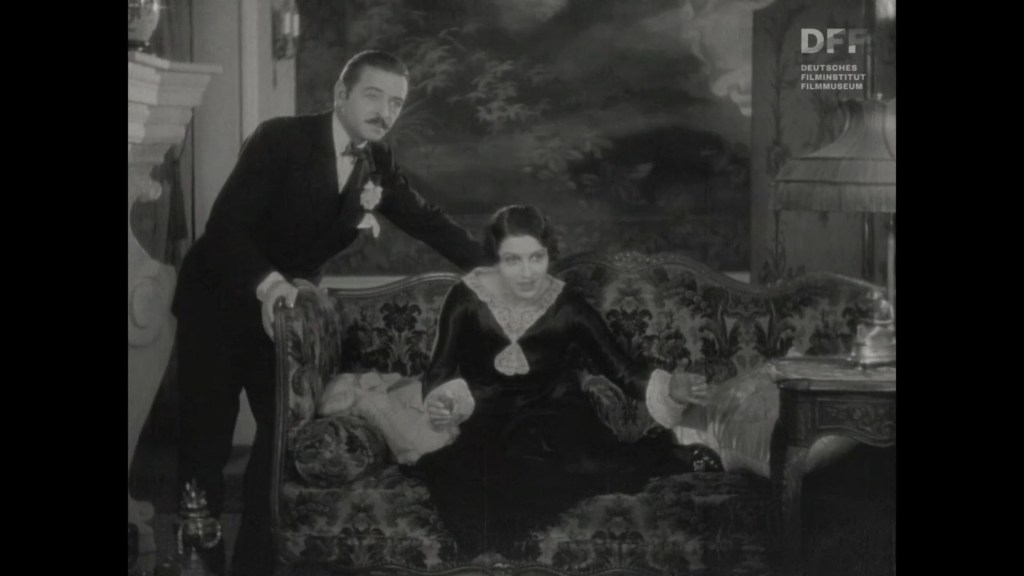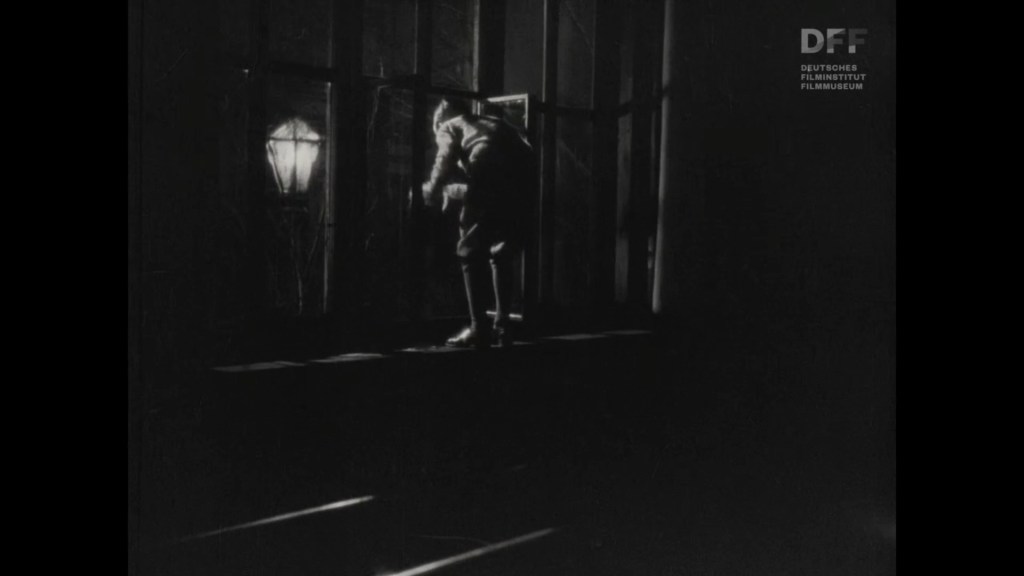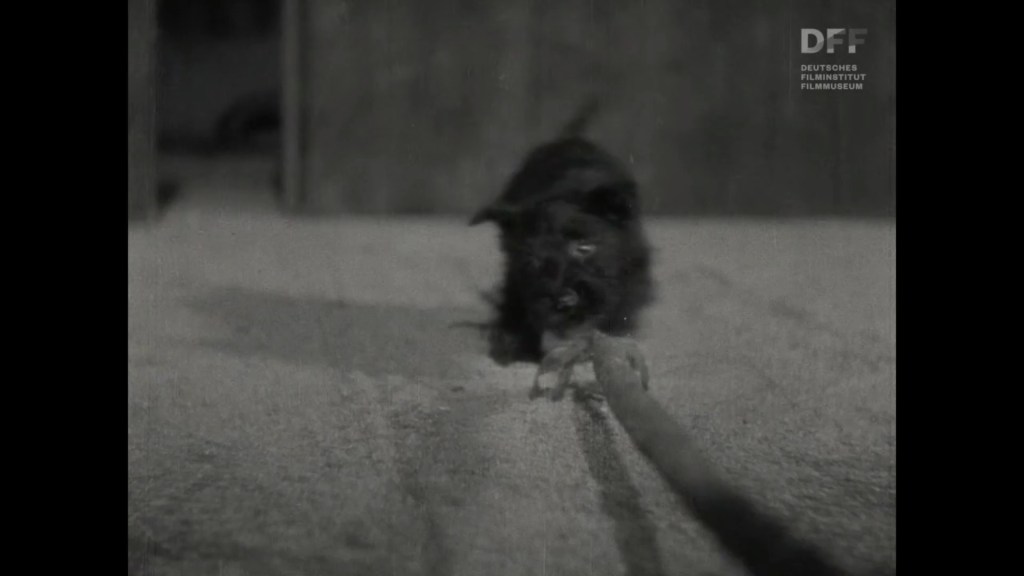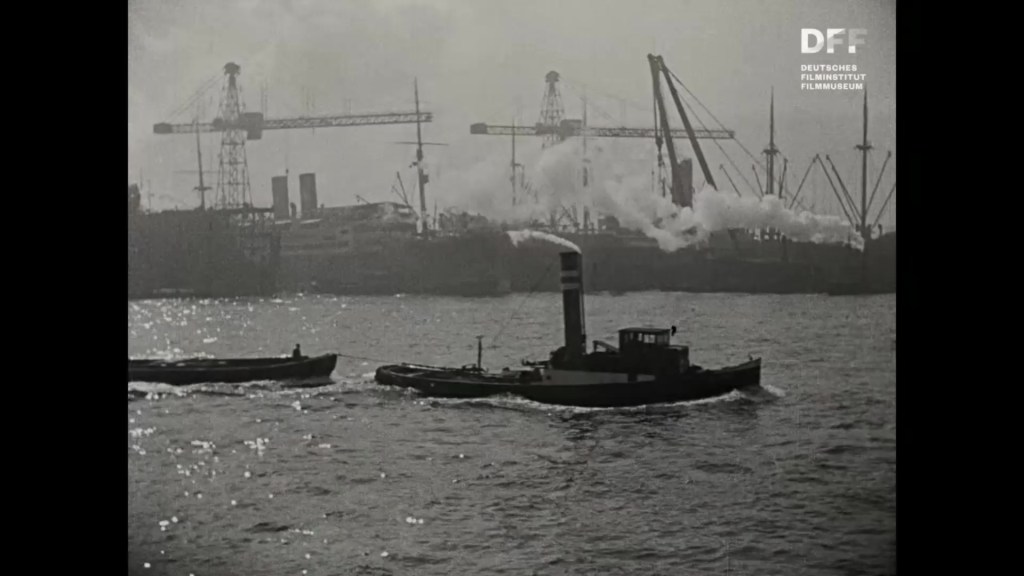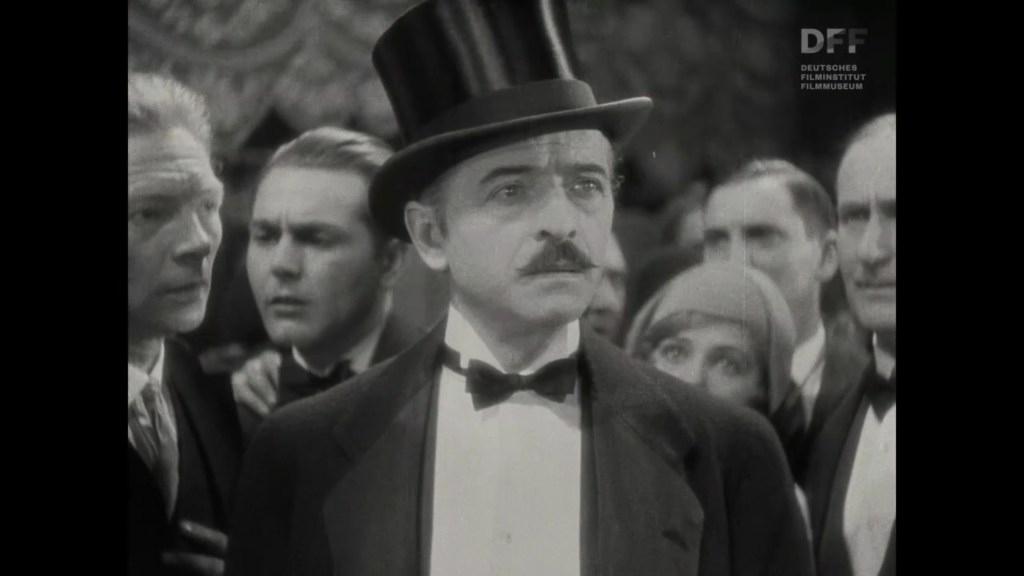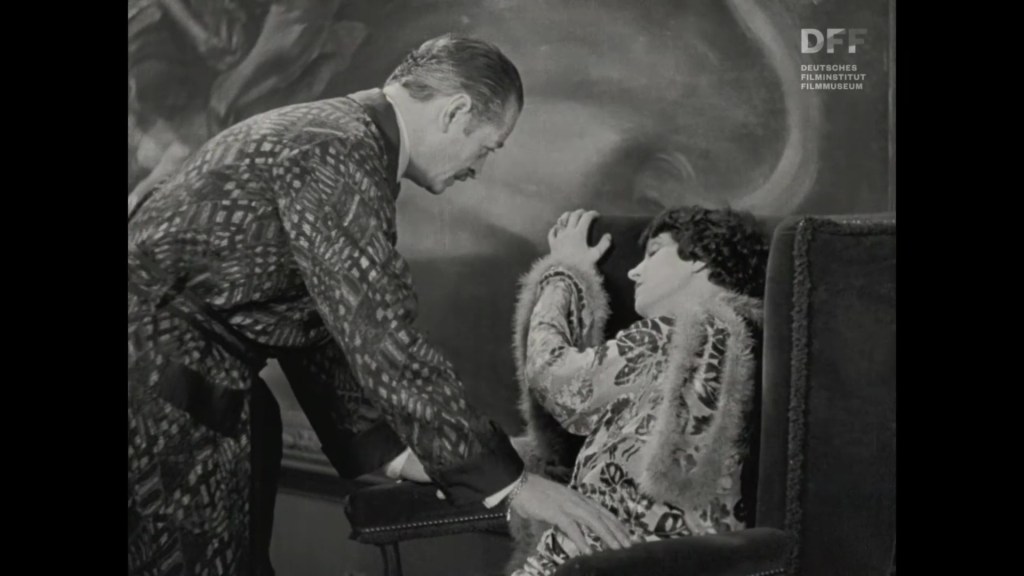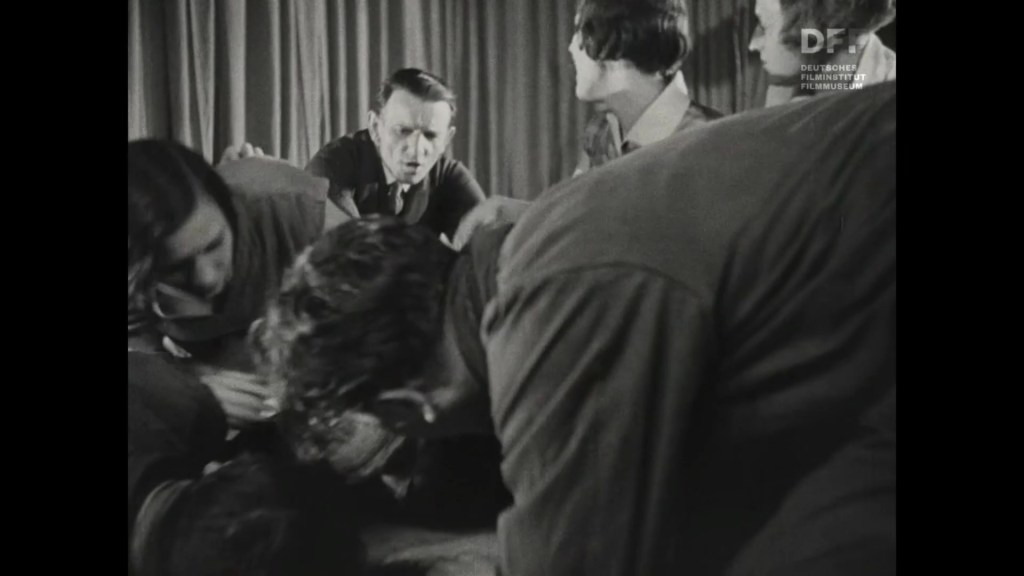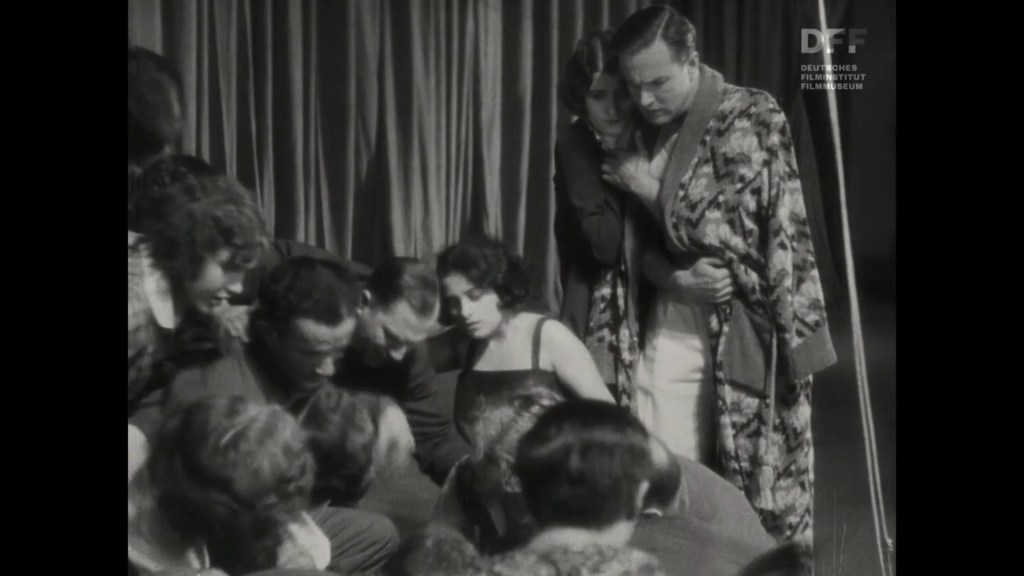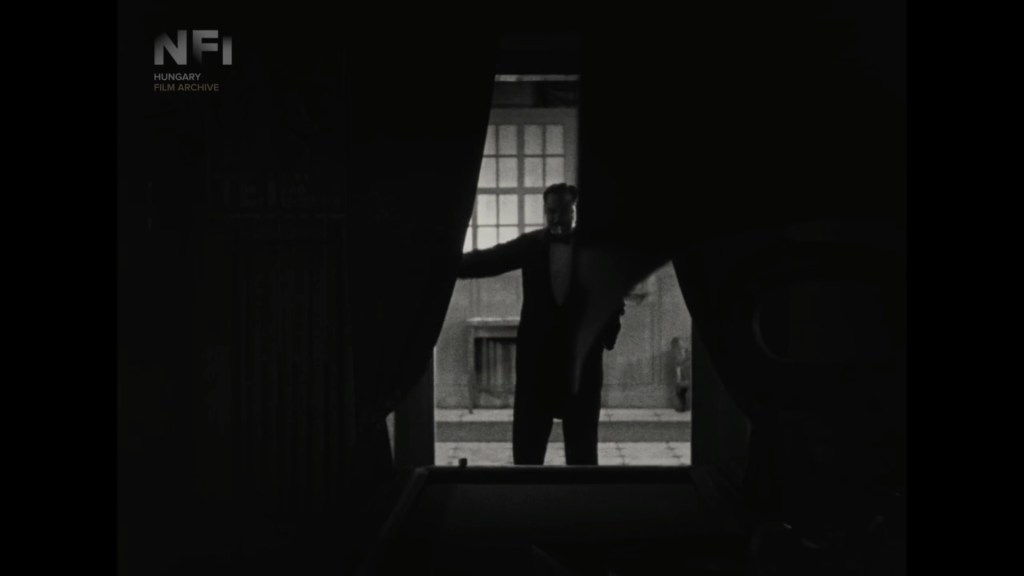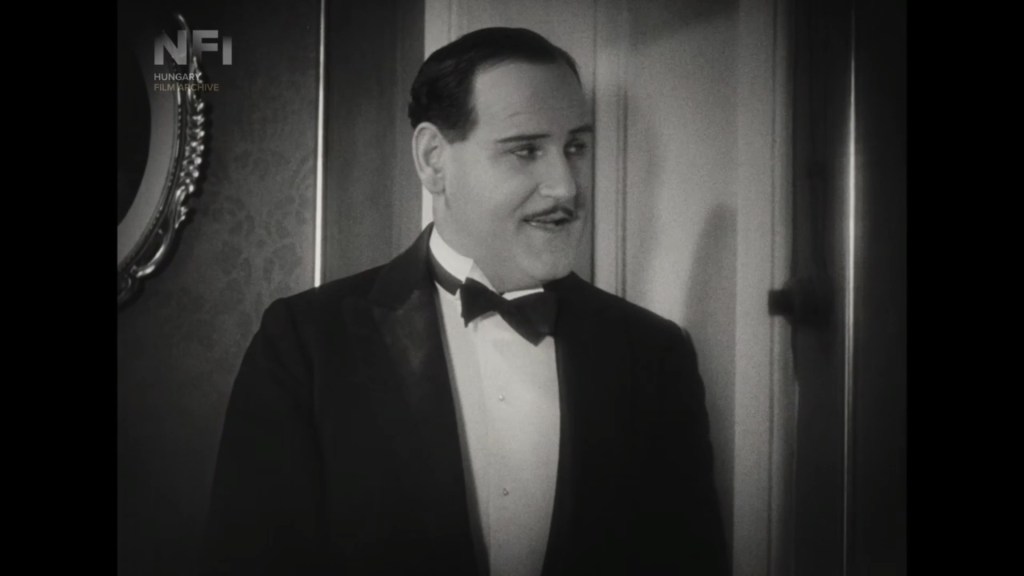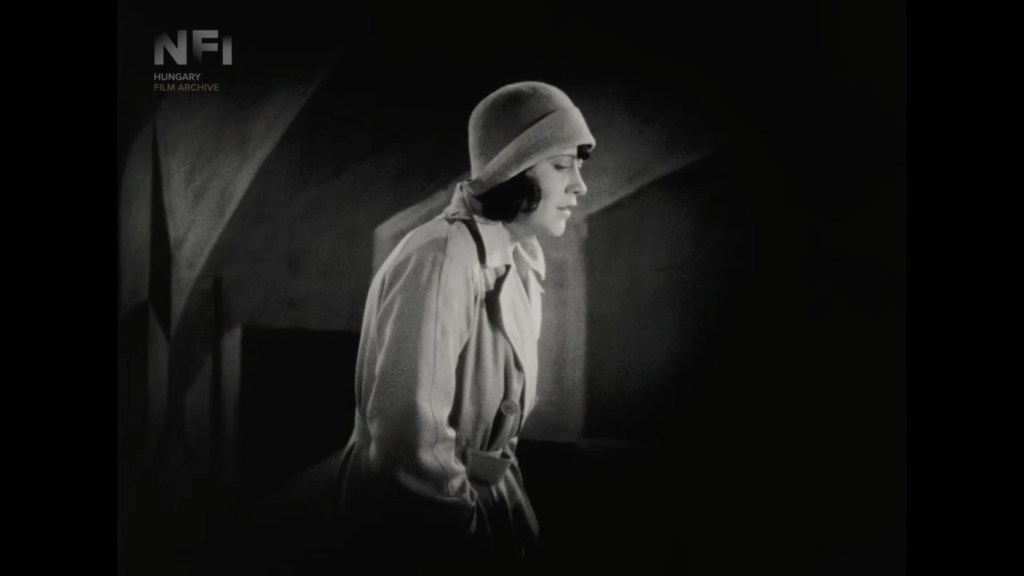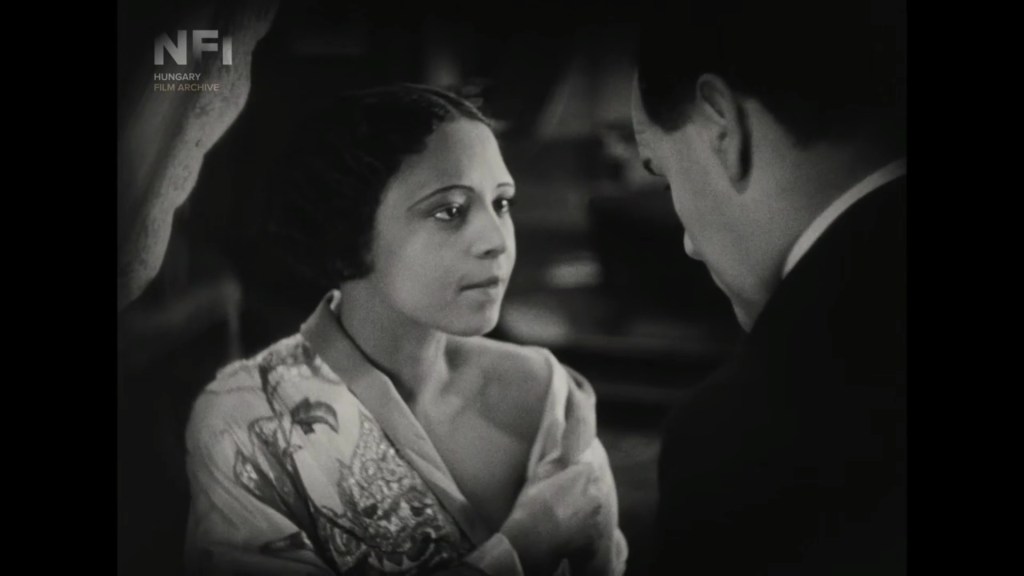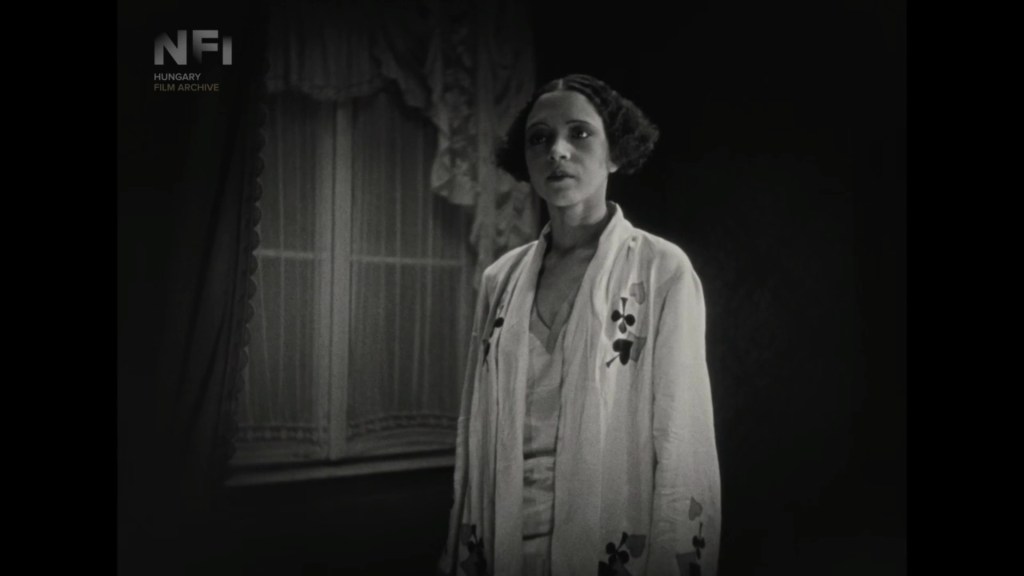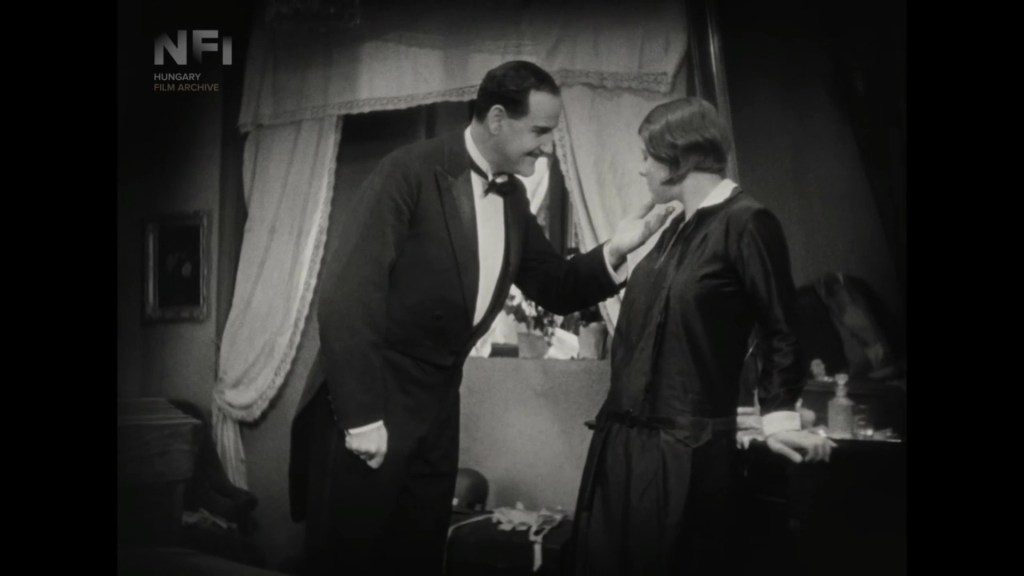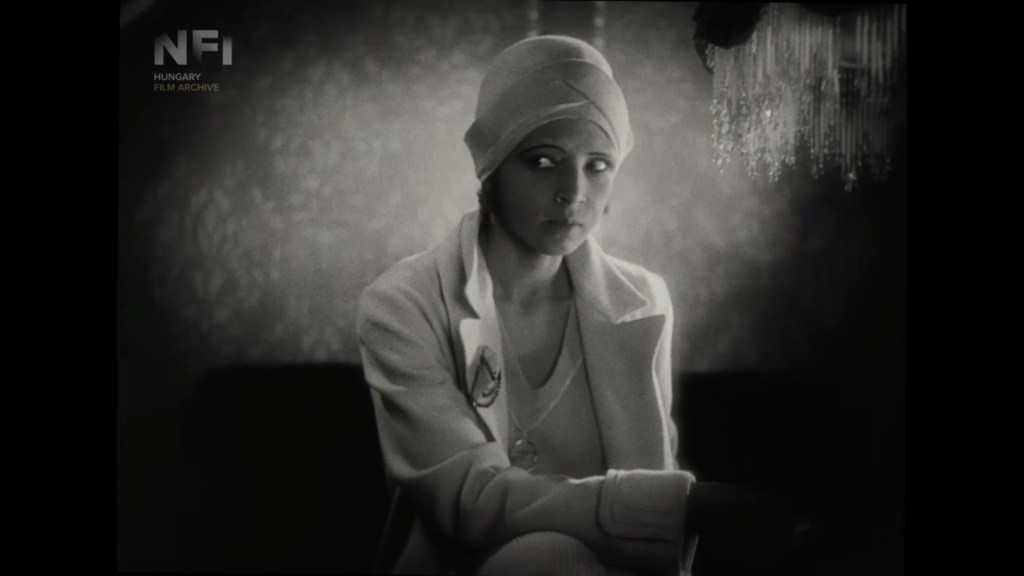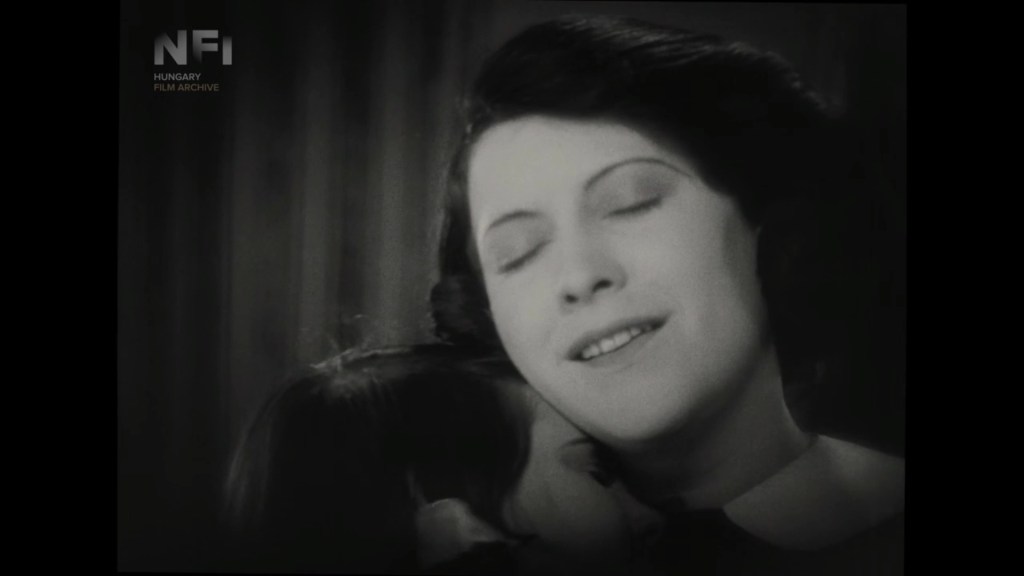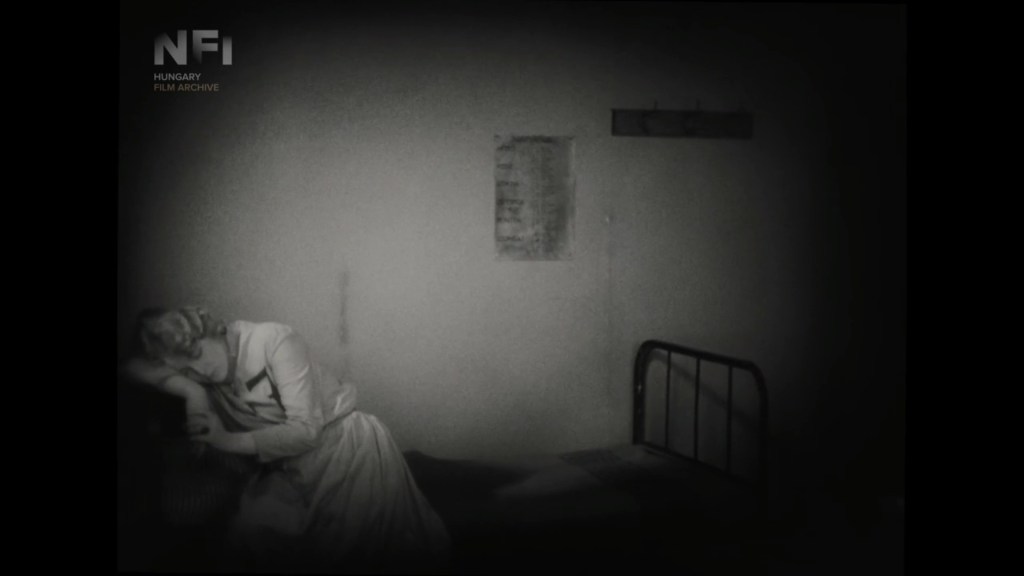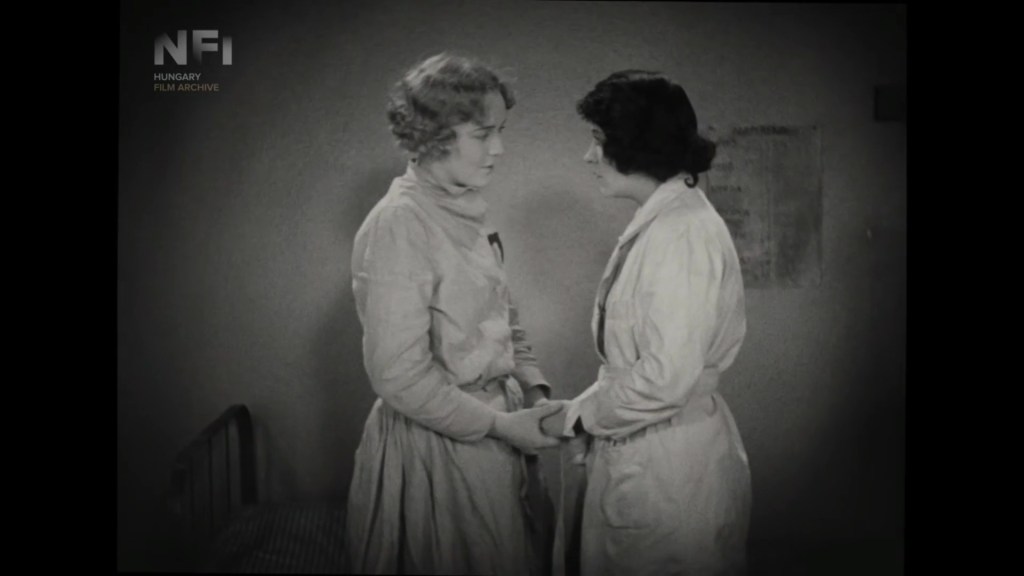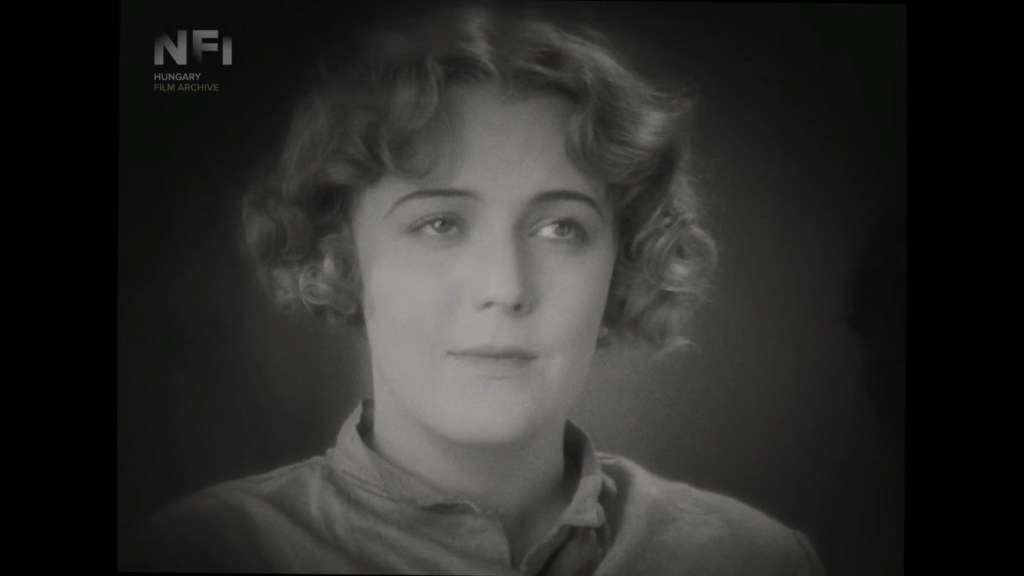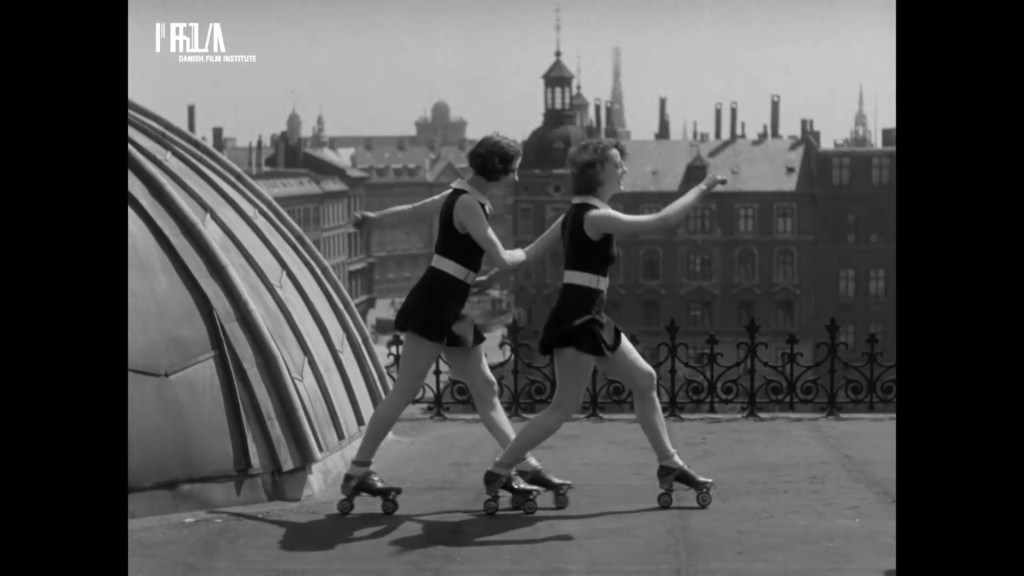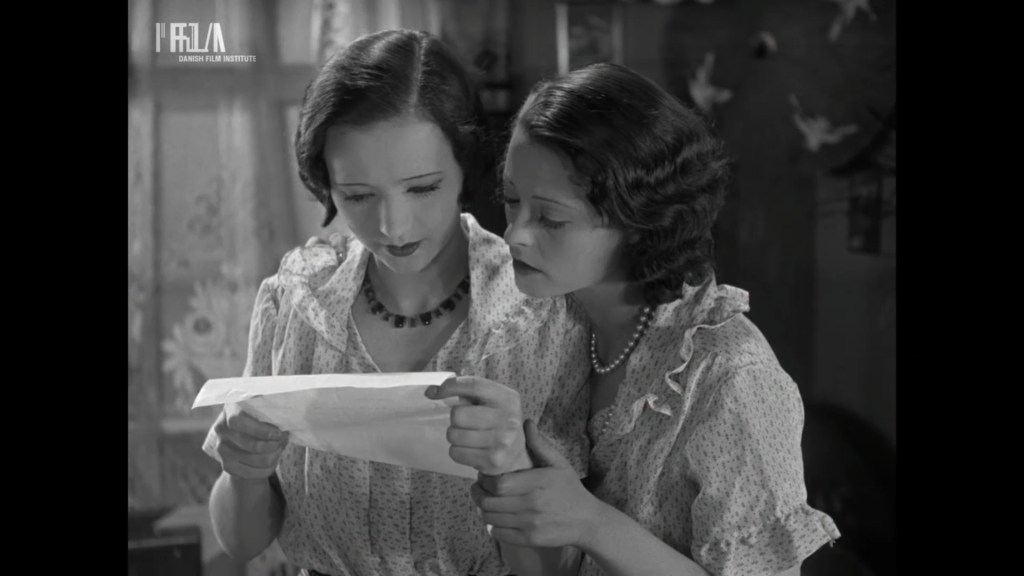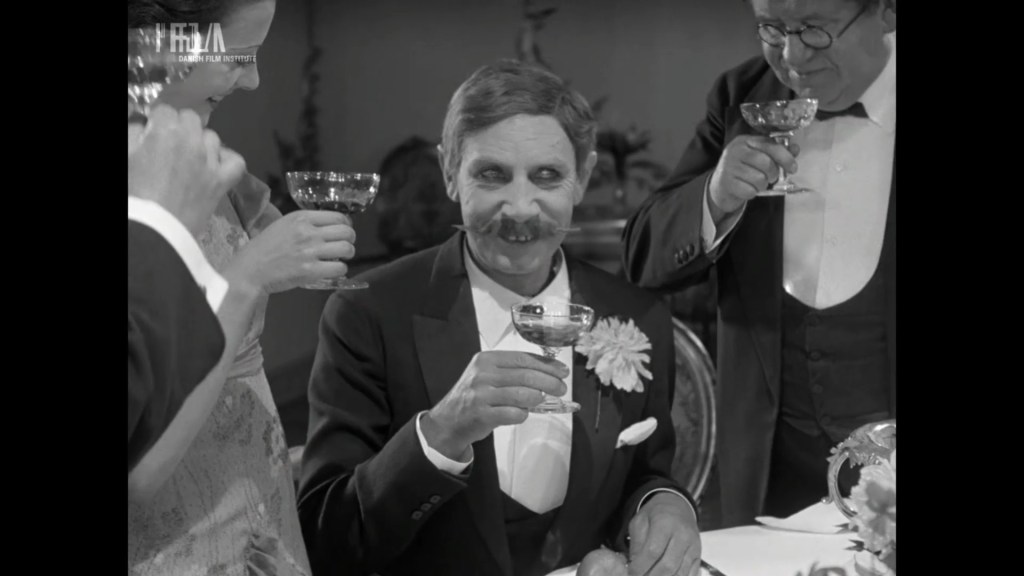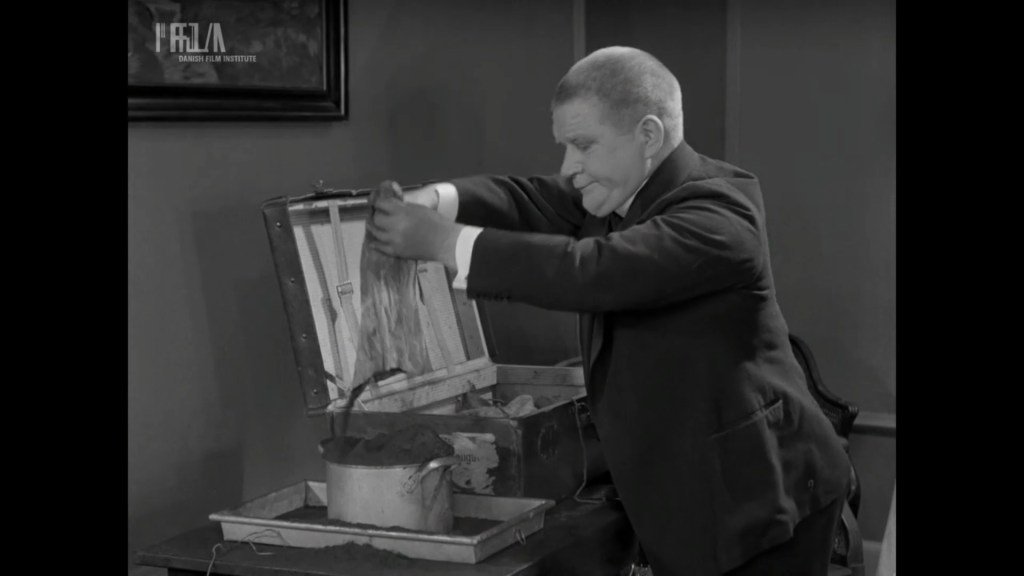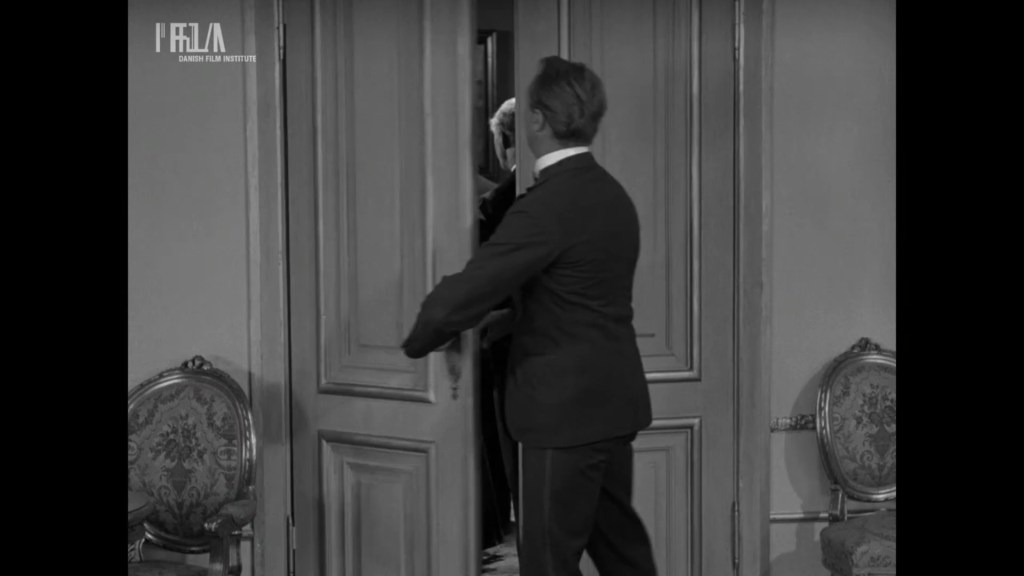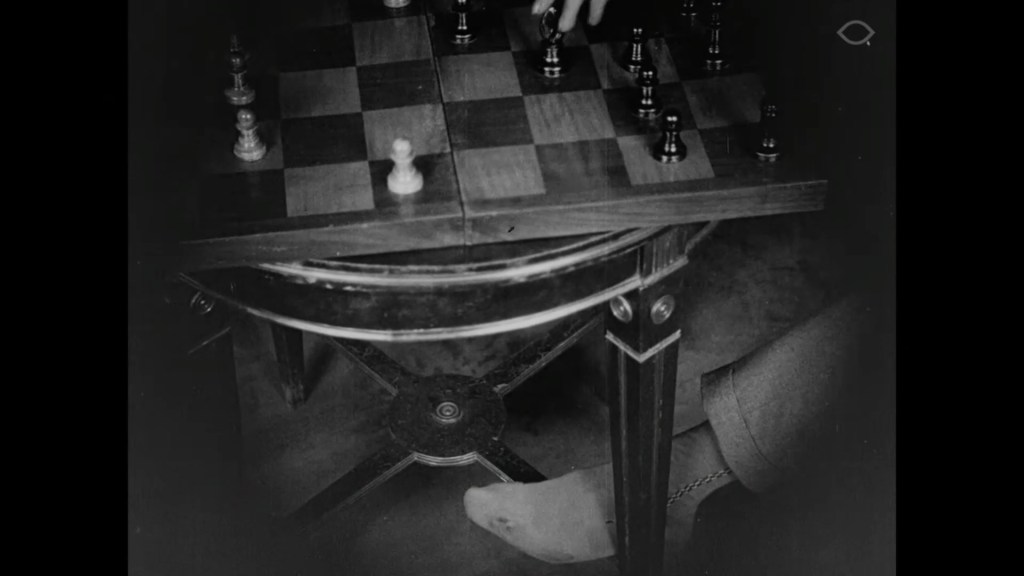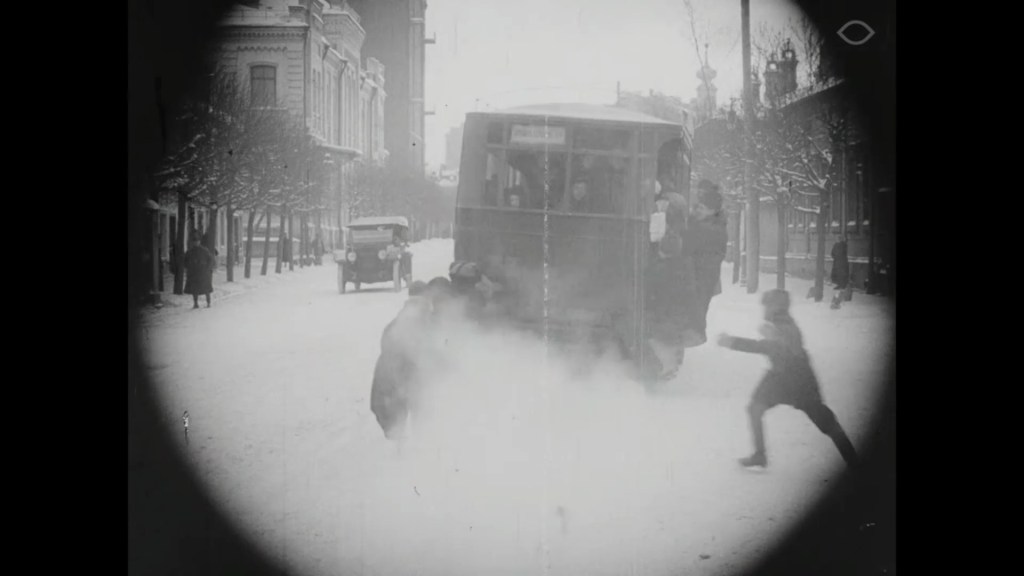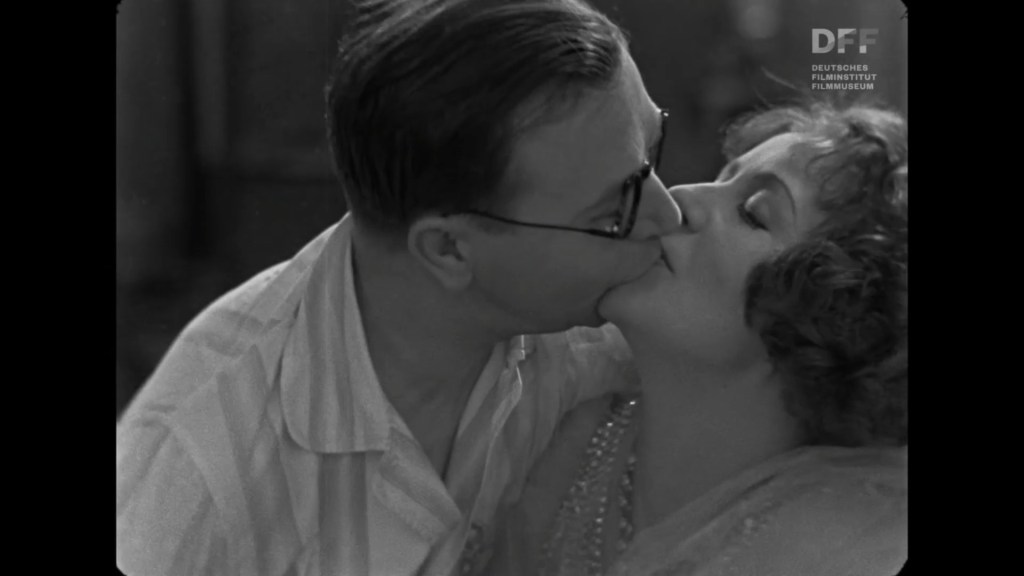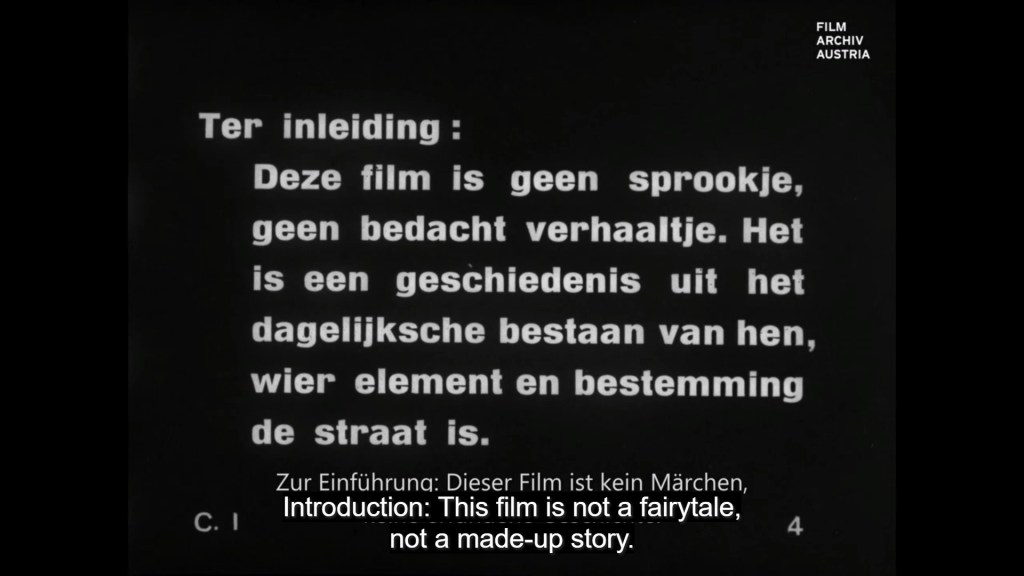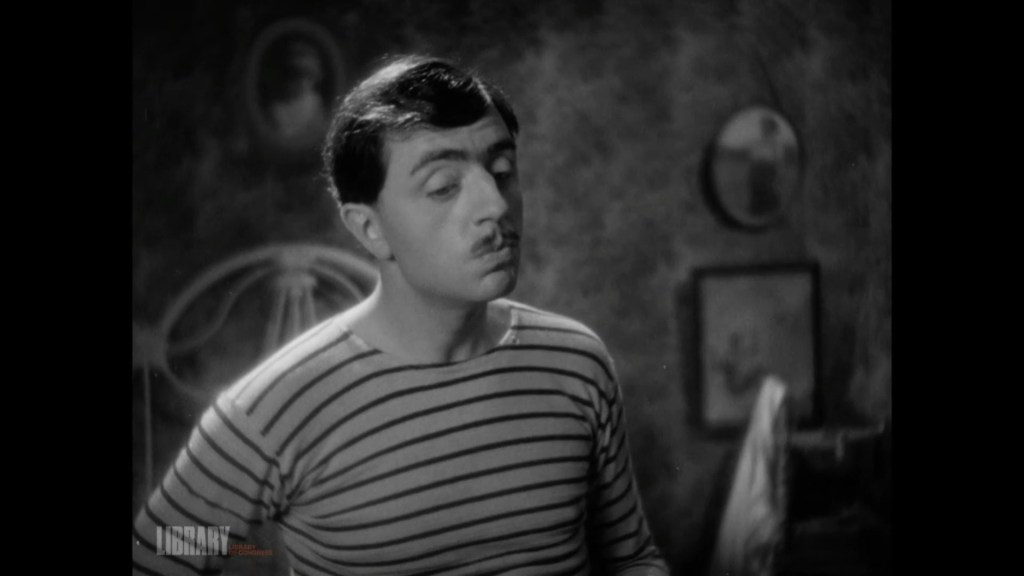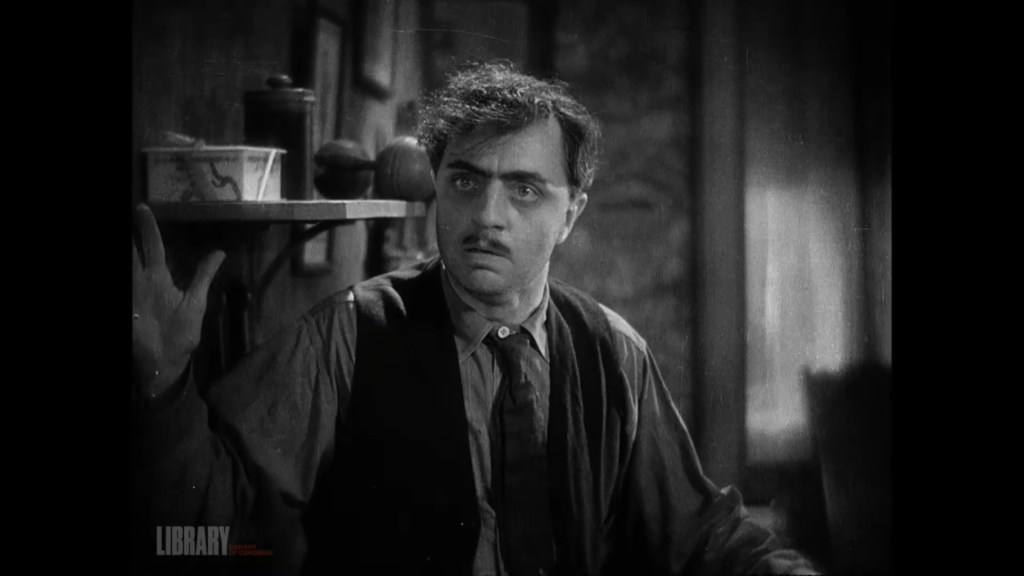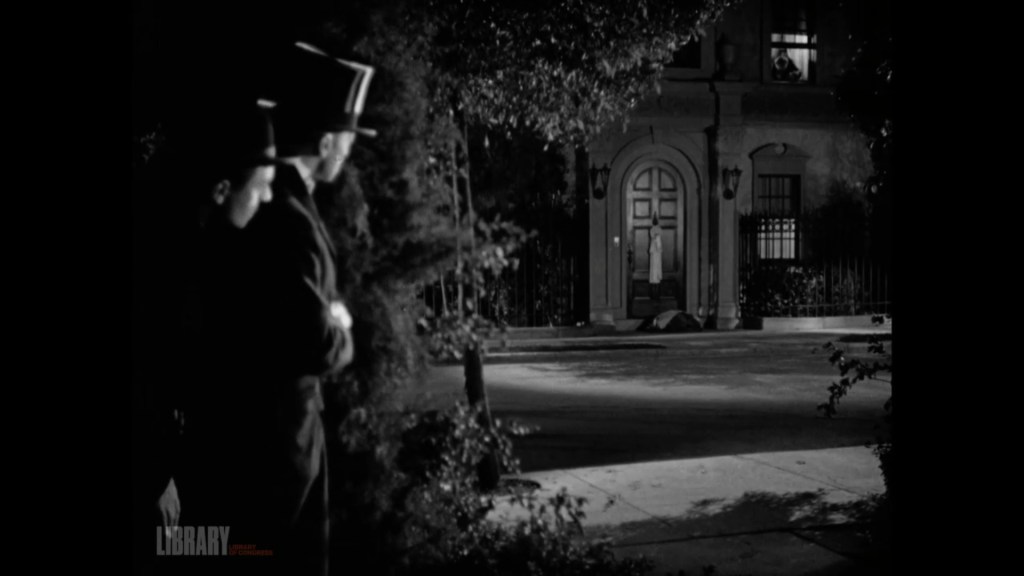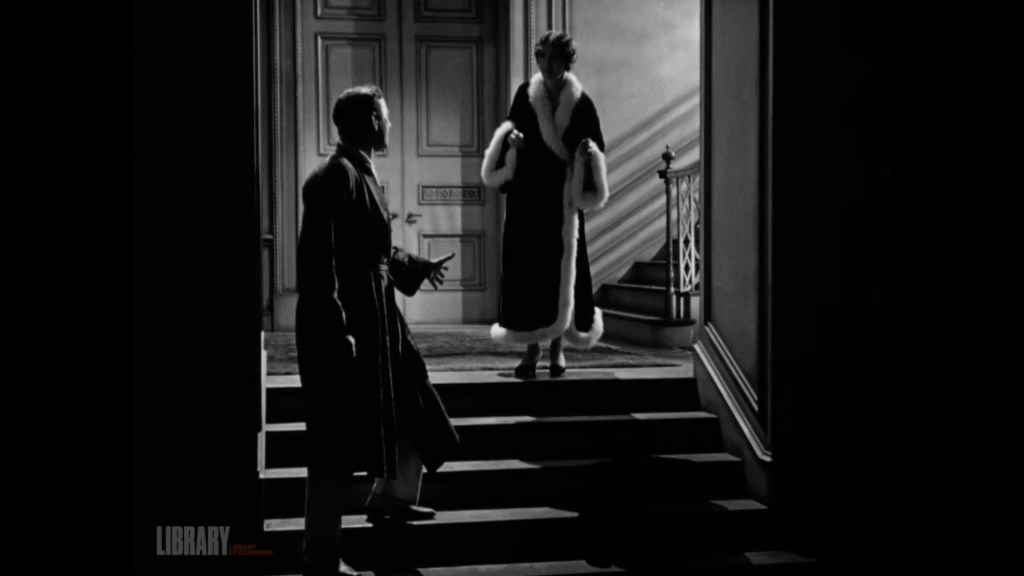
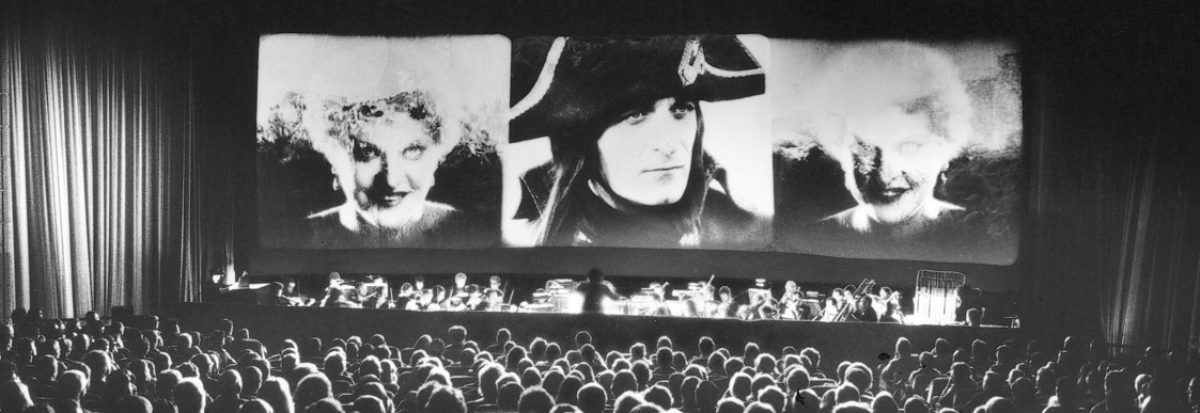
After a day of urbane, light-hearted musical comedy, Day 3 of Bonn takes us to the streets for poverty and vagabondage…
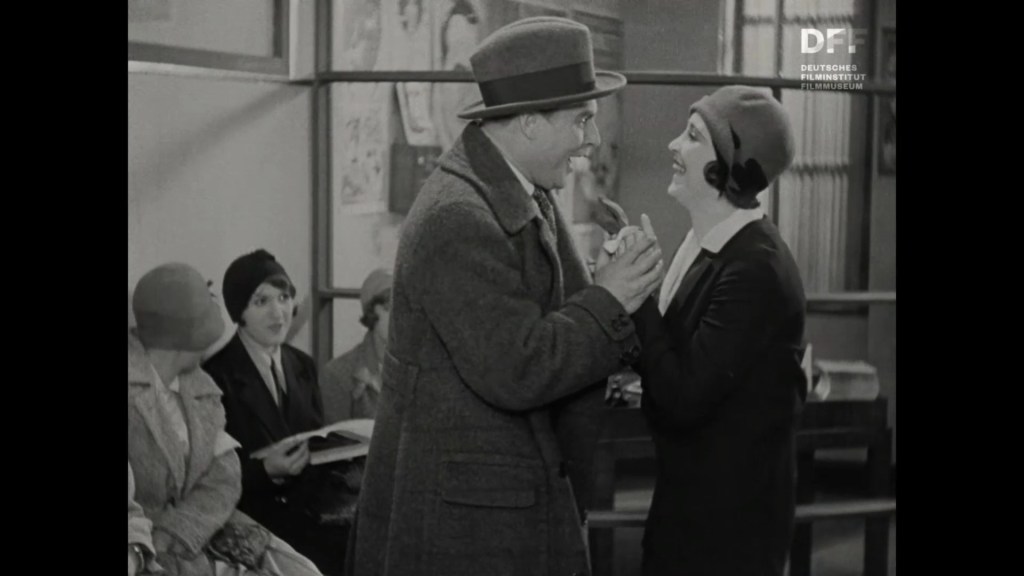
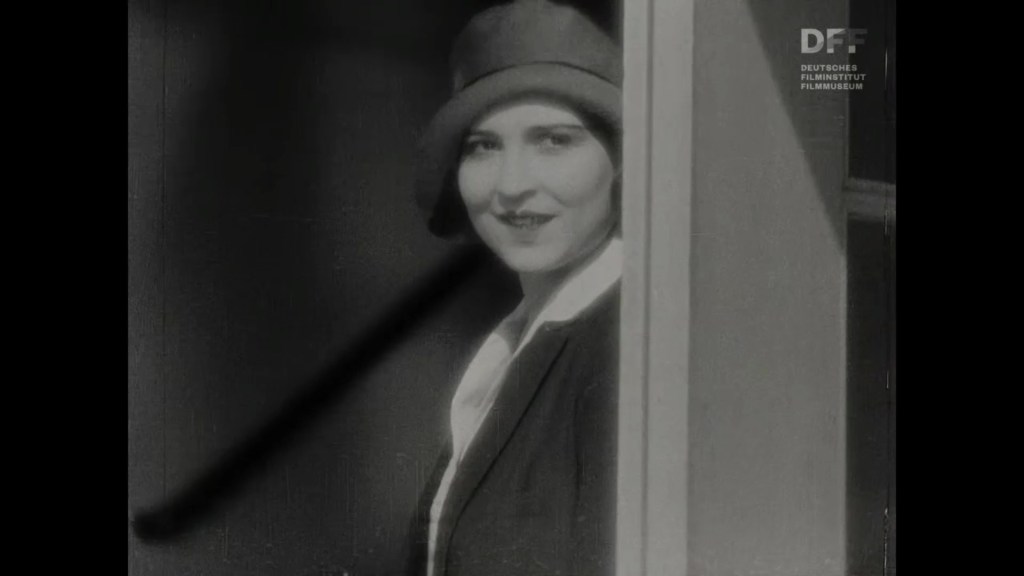
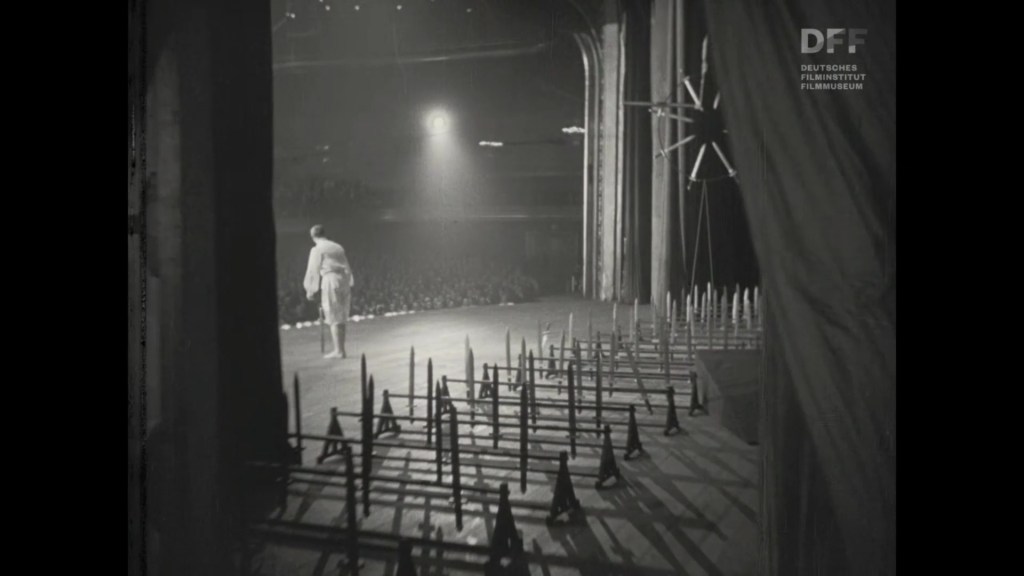
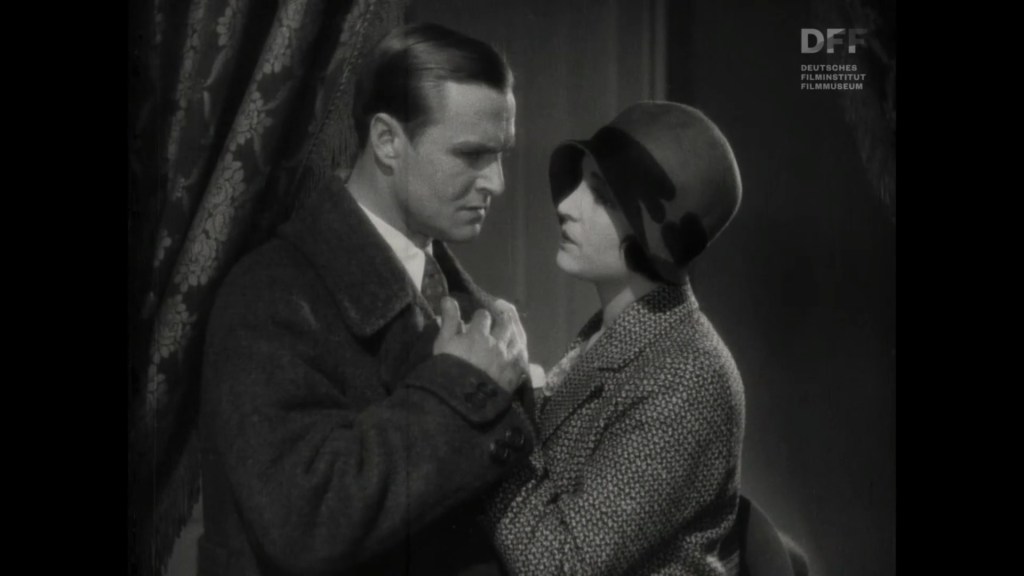
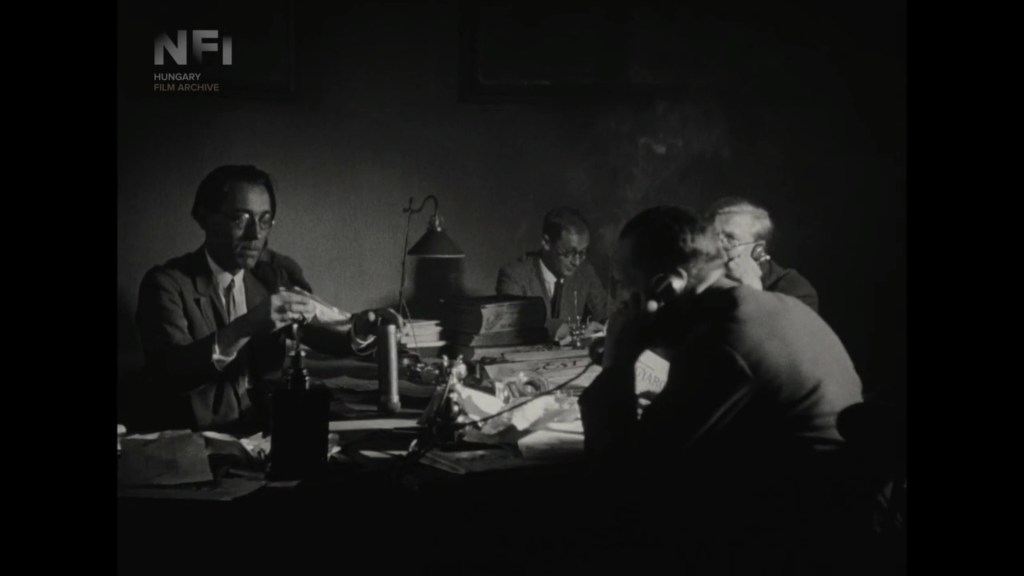
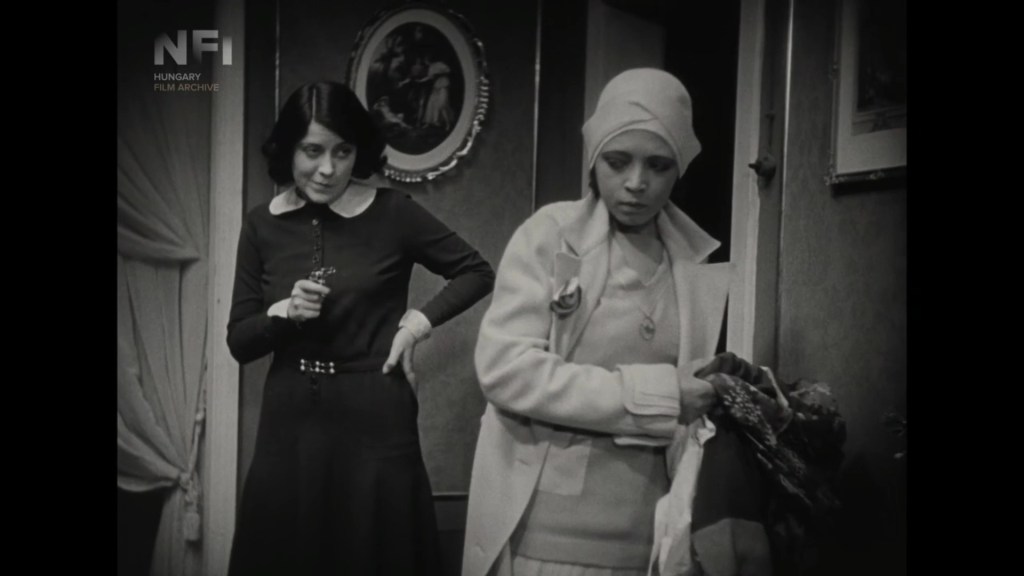
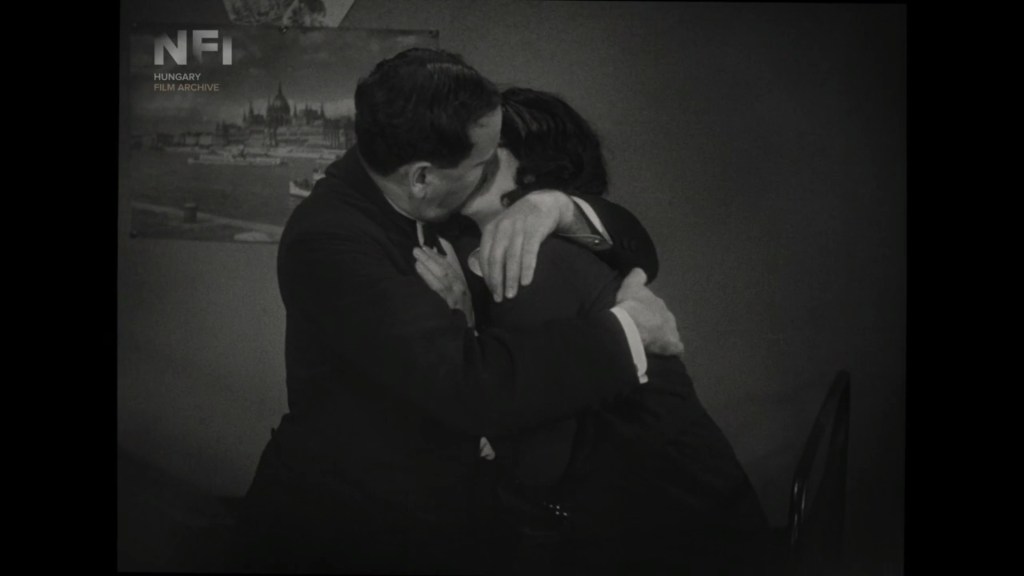
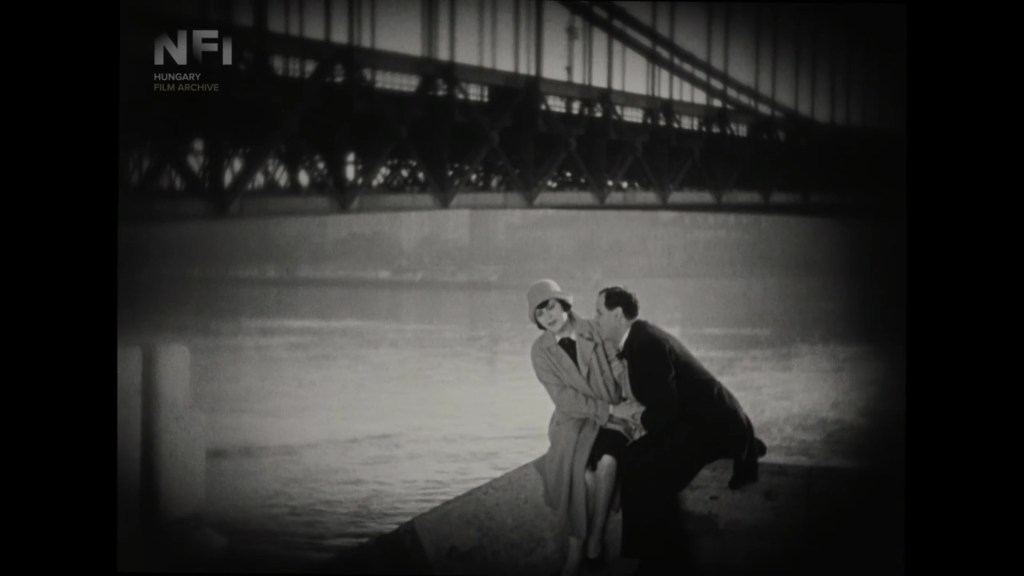
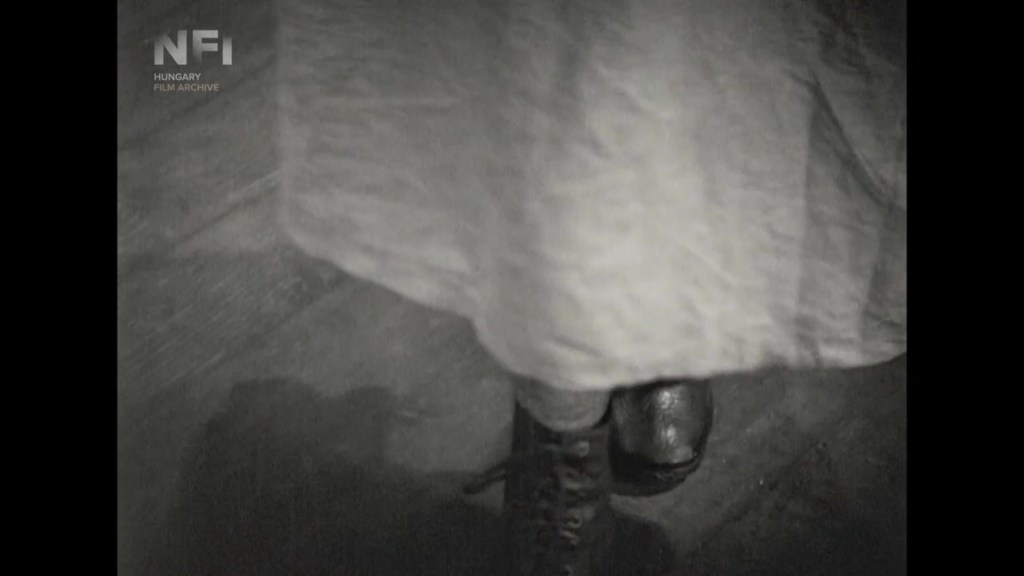
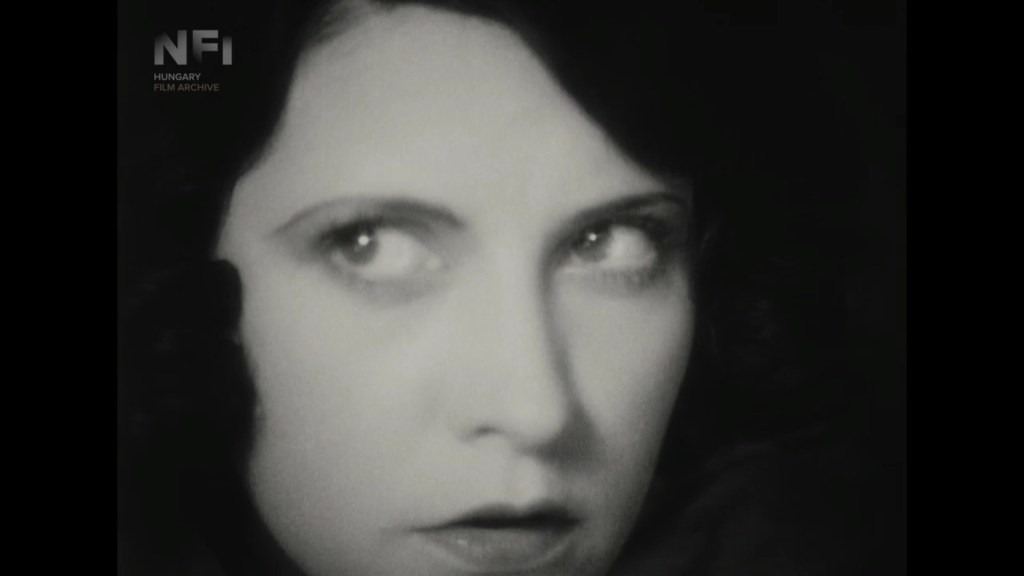
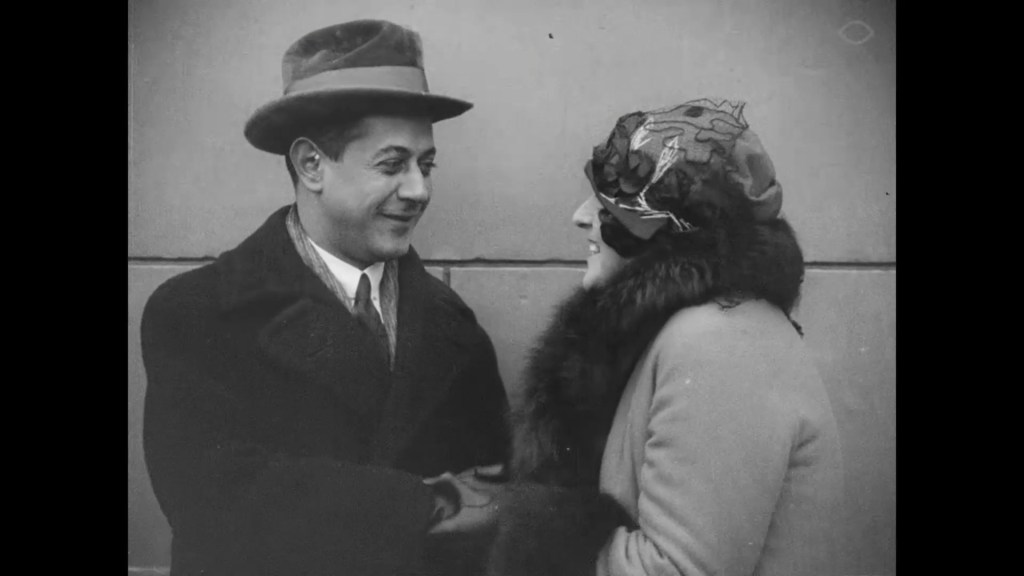
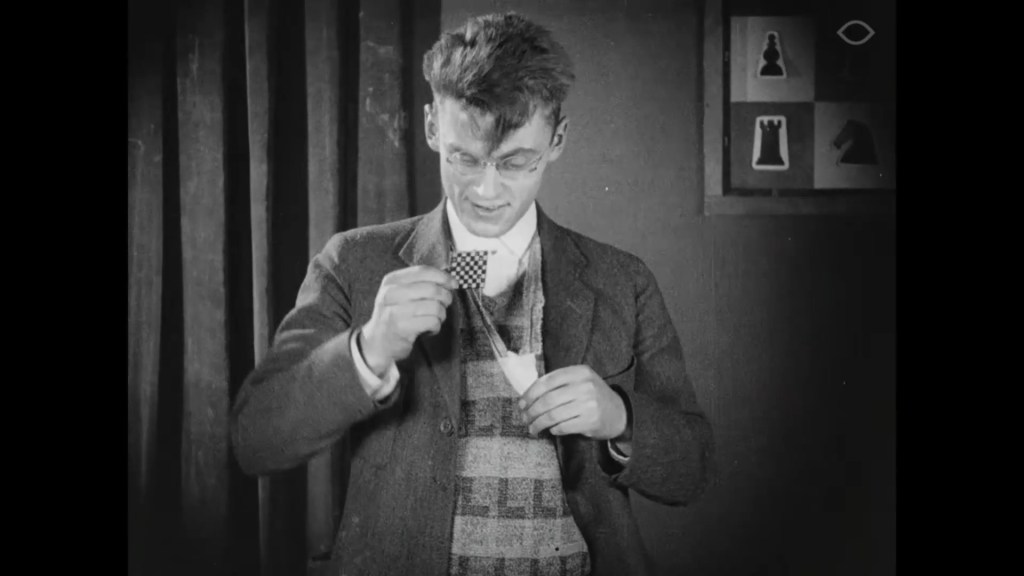
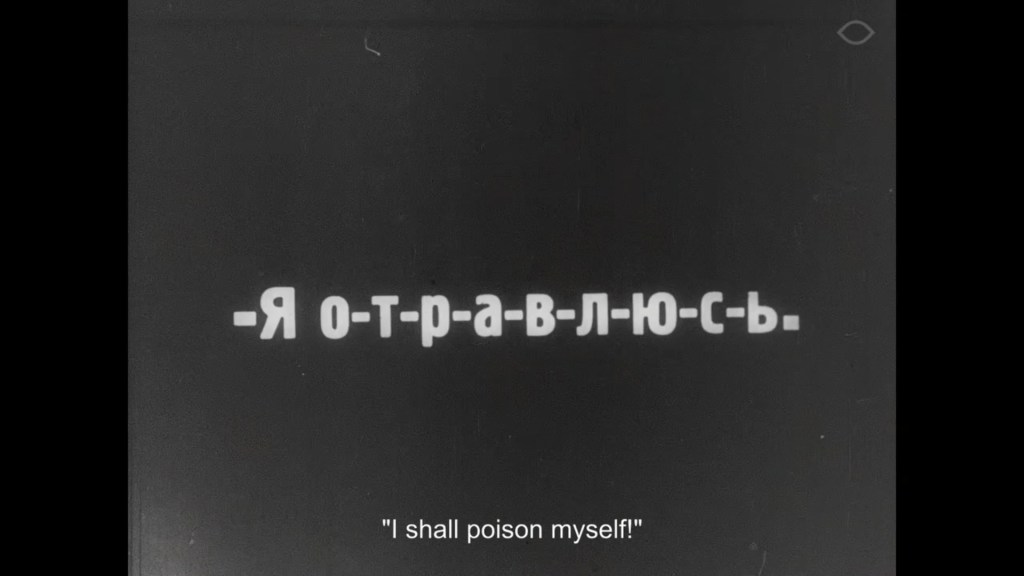
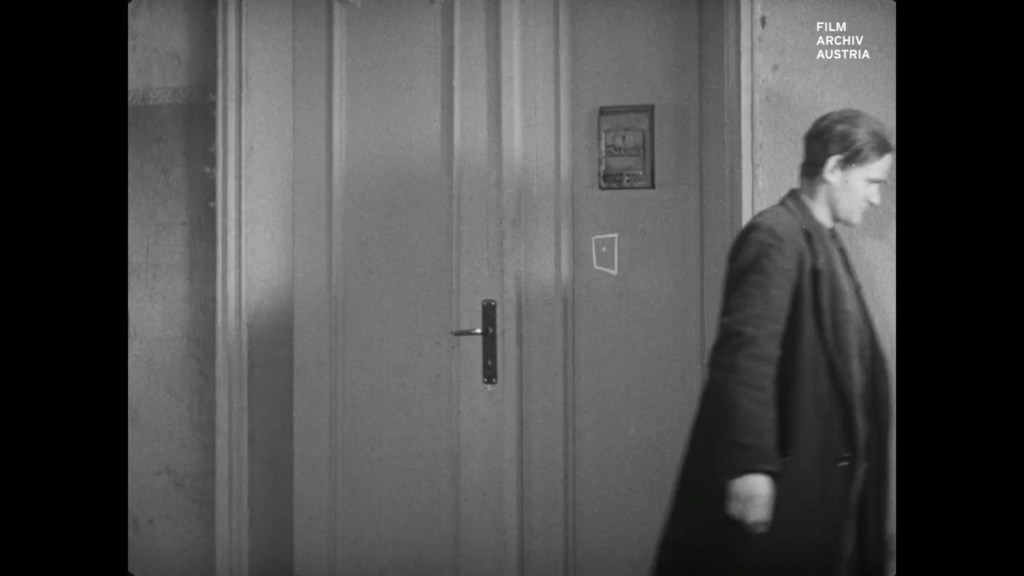
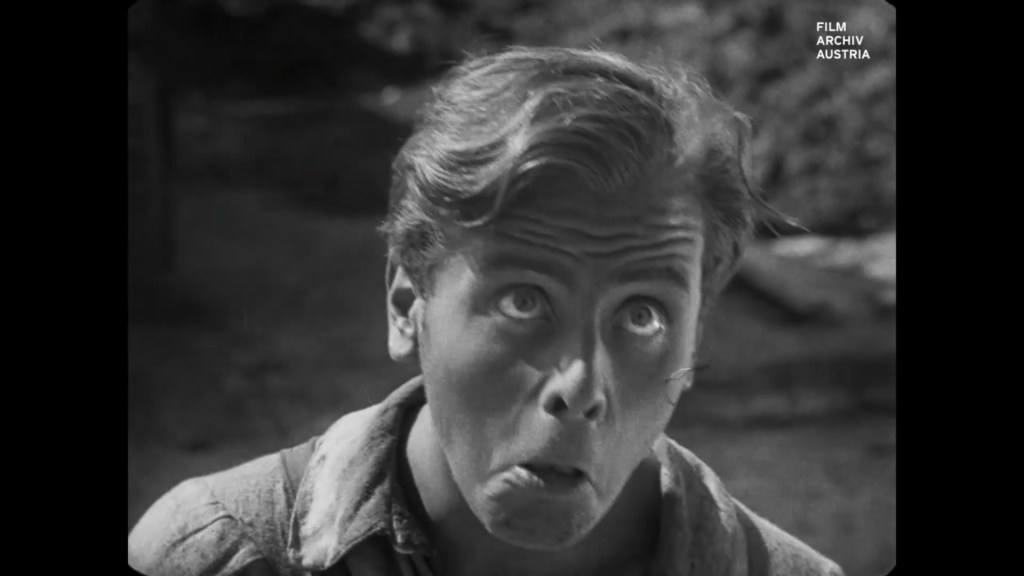
Der Vagabund (1930; Aut.; Fritz Weiß). The opening titles tell us that this is a story “taken from everyday lives”, as recounted to a journalist. The prologue begins with the sight of a vagrant’s body being found in a country ditch between Werder and Potsdam. All that’s found with him is a self-penned poem, an enigma that sets the journalist on a journey to the homeless shelter and the underworld of the unemployed and destitute. What follows is both an account of the journalist’s investigation and the stories he hears from the “vagabonds” themselves. What account of the “plot” I can give is necessarily brief: the film frames its narrative with the journalist visiting shelters and listening to personal accounts of vagrancy and homelessness. The main story becomes that of a man’s journey through Austria, where he encounters the uncaring attitude of many in society. Put like this, Der Vagabund sounds prosaic. But the structure and its cinematic realization are very striking, and the film is filled with amazing images of people and places.
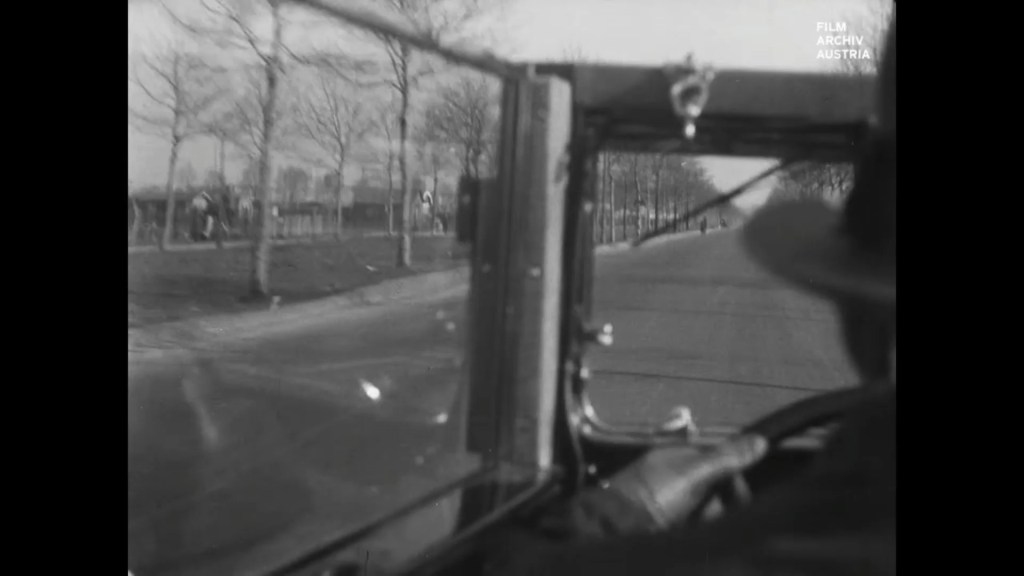
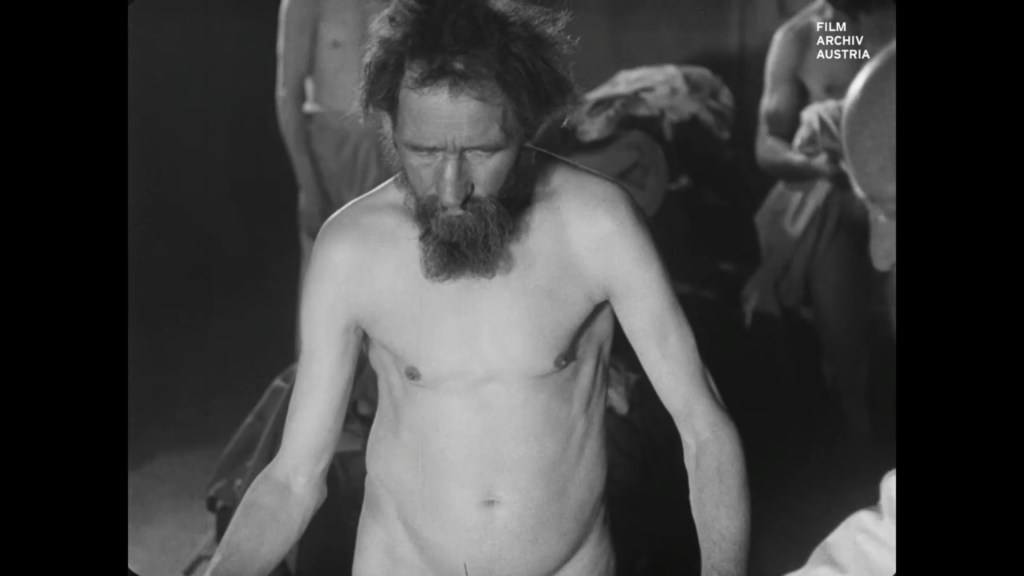
From the outset, director Fritz Weiß provides some beautifully composed images of the landscape, the stillness of which is then offset by the handheld camerawork that brings us up-close to look at lived reality. Soon the camera is perched behind the journalist as he speeds into the city, where there are some amazing shots of the bustling streets that whiz past the car. Alongside the journalist, we visit the shelters and inspect the occupants. We see the vagrants strip and get inspected for lice, then shower. The faces and bodies are palpably real. (When the camera tracks past the vagrants as they eat, one of them shelters his face from the camera, as if ashamed or fearful of being seen.) There are powerful, often quick montages of details: the faces, the bodies, the clothes of the vagrants; or the watches, the coats, the hats left hanging in the shelter.
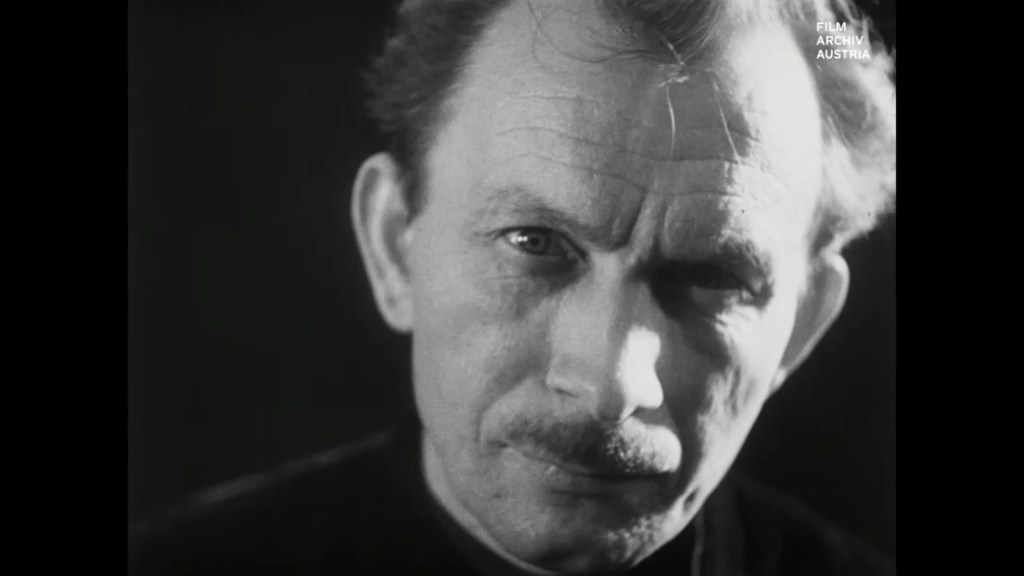
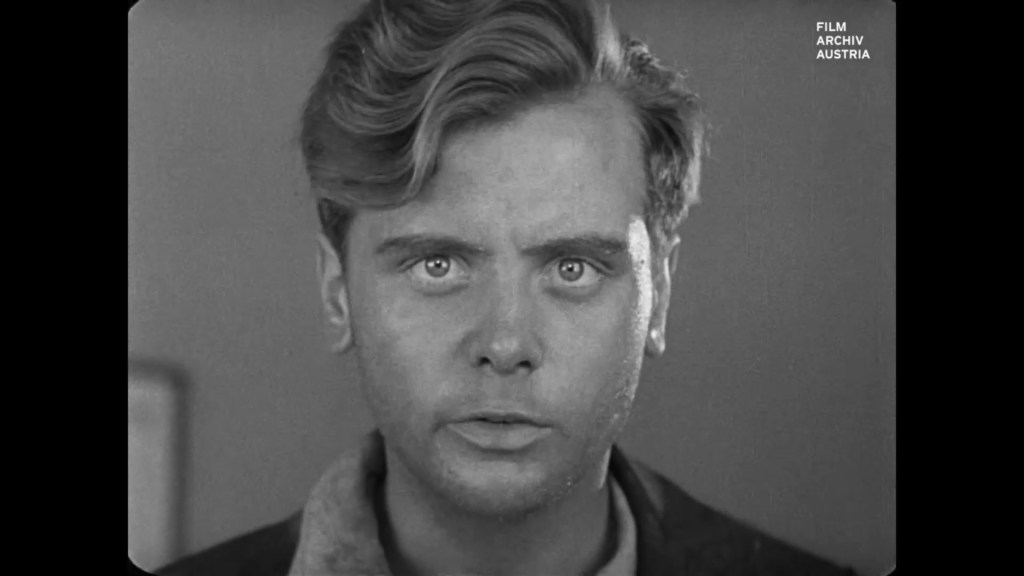
The film begins to give us some context for these people. We meet Gregor Gog, “the vagrants’ leader”, who gets an amazing introductory close-up in which he stares at – almost through – the camera. It’s a challenging look, one that demands we pay attention; it’s also a kind of question: what are we thinking when we see the vagrants on screen? There is a series of cutaways to the unemployed, drunks, petty thieves. We see their faces, are given little vignettes of their actions and habits. There are scenes in which we see the sign language by which their “brotherhood” communicates – chalked symbols on the walls if houses where they have found, or not found, help or food. The film thus gives us a sense of community, of commonality, between these otherwise isolated, down-and-out individuals.
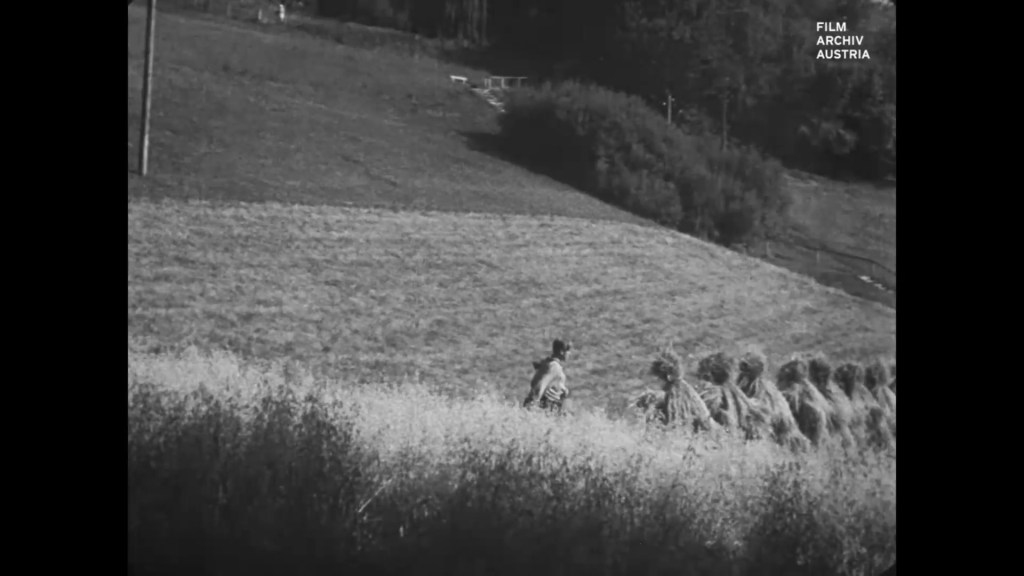
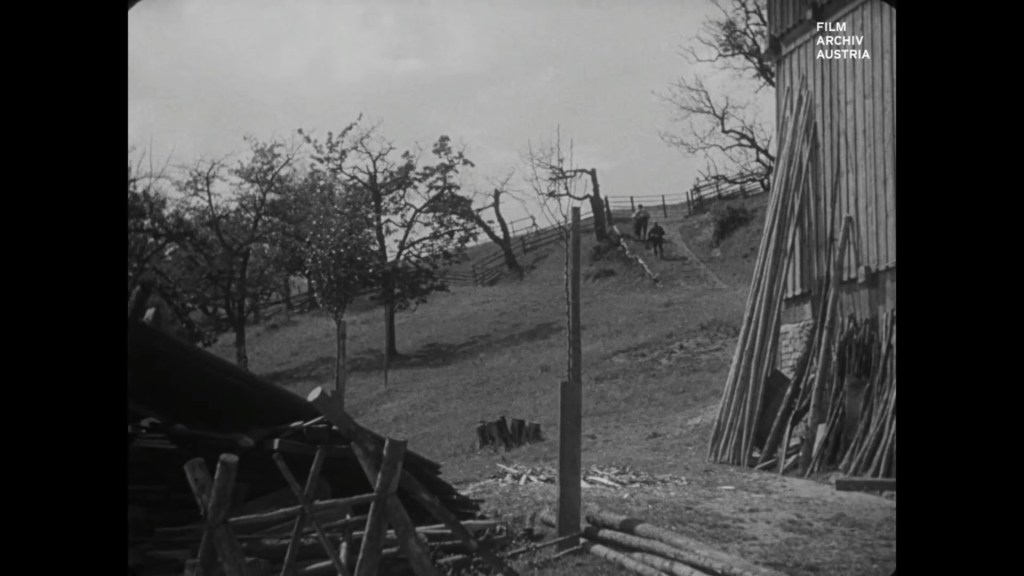
This leads me to think about the film’s structure, which I found very curious. The first section of Der Vagabund, discussed in my previous paragraphs, is based on articles which (within the film) is deemed “too theoretical” by the newspaper editor. Is this a kind of judgement on the style of the film we have just seen? As if in reaction, the film shifts register. The editor wants “life stories”, and that then is what we are given by the film. Though it is carefully framed via the journalist’s interview, what follows is the story of one man who wandered through Austria. We see his temporary work, his moving from place to place, his interactions with locals in a smith, a farm, and on the road. We also see a glimpse of his time with a woman, of a shelter in Austria for other vagrants. Throughout, the film intercuts between this inner narrative and the framing narrative of the journalist interviewing the vagrants. There is a pleasing tension between the real and the fictional, especially given how real even the fictionalized sequences look. This is also felt in the rhythm of the editing. While earlier sequences have some swift montage of faces and illustrative scenes, when we are on the road with the vagrant in Austria there are more long shots/takes of his travels. It’s always a pleasure to roam about in the past like this, and this film’s rambling itinerary is the perfect way to see little pockets of history that you would other never see. There are beautifully composed images that show us the sweep of mountains and valleys. Though the film always gives us a contrast between the richness of the summer meadows and the rags and dirt of the traveller.
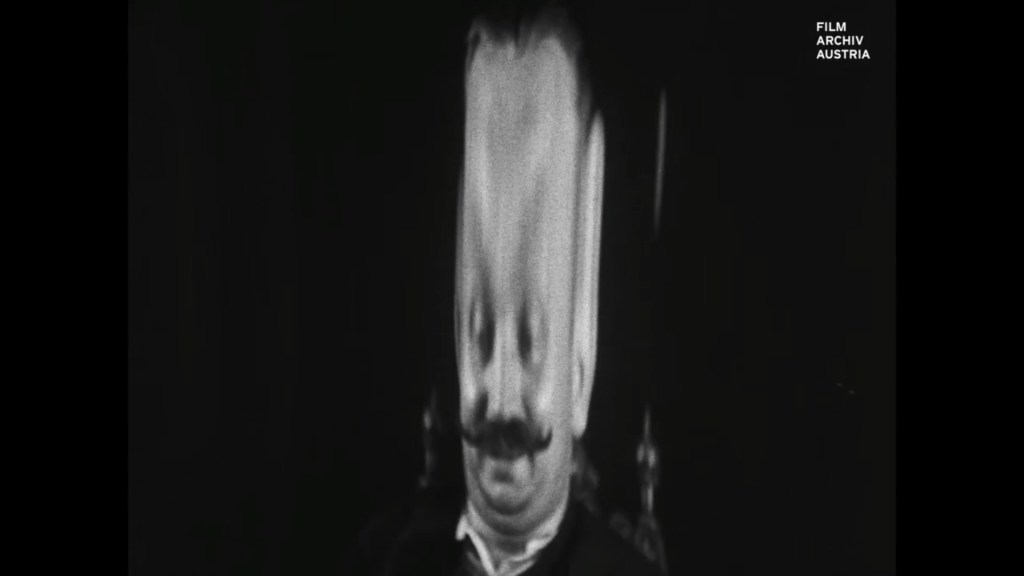
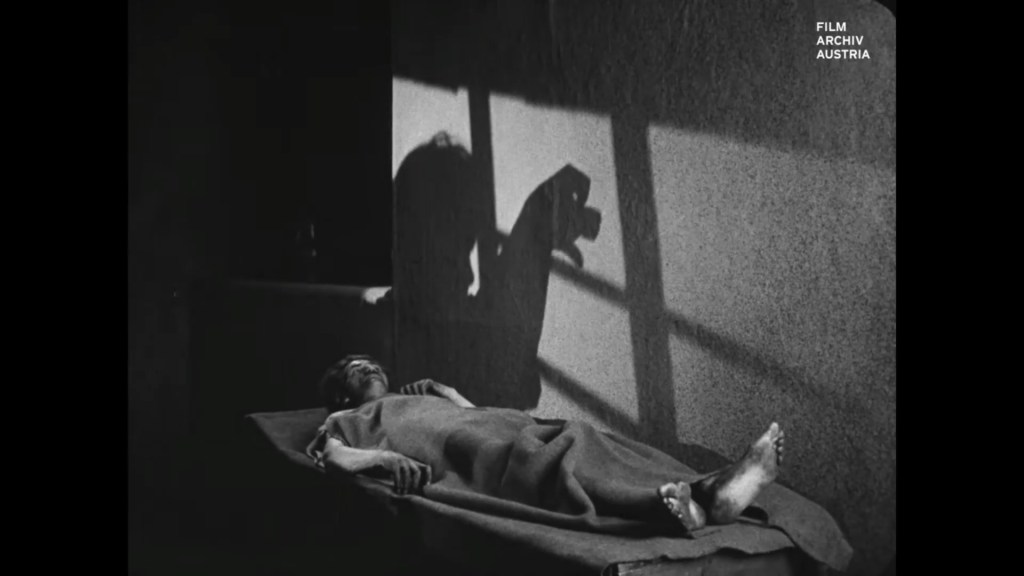
The film’s mode is not solely naturalistic, as there is a trippy dream sequence in which the vagrant character imagines himself tried and executed by the bourgeois bullies he has encountered on the road in Austria. It’s a wonderfully strange interlude, with a bleak edge: he imagines himself being hanged in a kind of forbidding, expressionist landscape. And “naturalist” doesn’t mean this film is so austere that it lacks lyricism or poetry. As I’ve said, there are some beautiful shots – beautifully composed and photographed – throughout the film, especially in the Austrian countryside. There is also a delightful sequence of shadow puppetry, improvised by the main character on the wall of the prison cell he shares with another vagrant, who is ill and lying in bed. The setting is realistic, but it finds a way of expressing something more personal than the set-up might suggest. The scene is silly and sad and touching all at once.
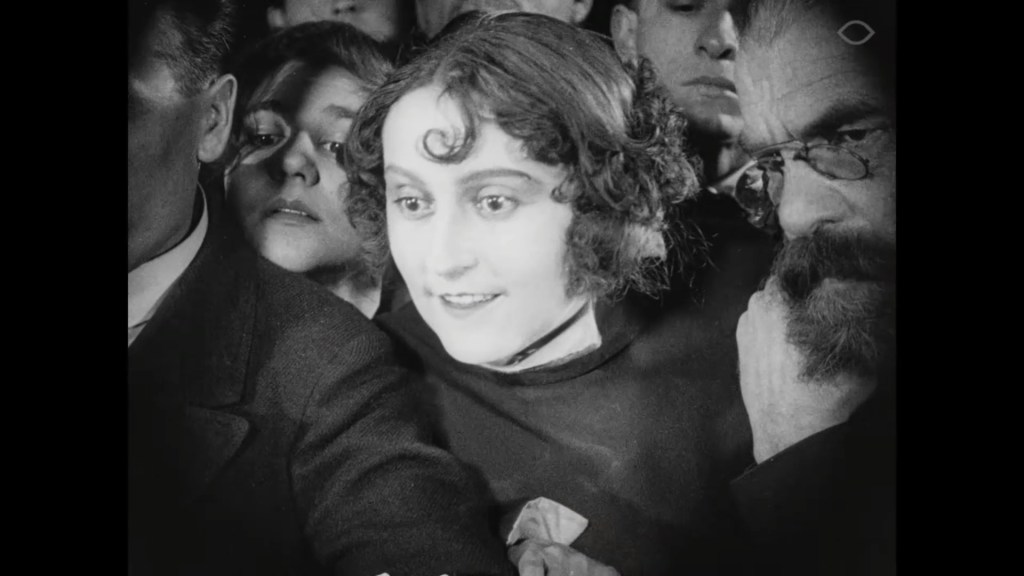
Der Vagabund ends with a montage of people from all classes pouring over the journalist’s articles in the newspaper Tempo. The motage then begins to intercut these scenes of reading with the “march” of the vagrants. To these shots are superimposed a vision of Gregor Gog giving a passionate speech. It was curious to see Gog emerge as a kind of heroic leader in this final montage. Though he is a real figure, playing himself on screen, his appearance at the end of the film is much more like that of a work of Soviet propaganda. Are we to read this as a promise of reform? A threat of revenge? A call to arms? It might be all three, and it is a surprisingly punchy end to Der Vagabund. Like the bourgeois readers of Tempo on screen, the media we consume is coming to life and confronting us with reality – demanding we think, reflect, react. Though the images stand comparison with numerous scenes in Soviet fiction films of this period, it also reminded me – with its confrontational crowd marching towards the camera – of Abel Gance’s J’accuse! (1919). The realization of the imagery is not as developed and sustained in Der Vagabund as in either these French or Soviet counterparts, but perhaps that is to its advantage. In such a film, I’d rather be won over by naturalism or lyricism than lectured or beaten over the head with crude slogans or overly tooled editing.
I should add that since watching the film I looked up Gregor Gog (what a name!), and I see that he led quite the life. From a working-class background, he ended up being drafted into the German army, where he was court-martialled during the Great War for his political activities. Mixing in an anarchist-communist milieu in the 1920s, he came to lead the “Vagabond Movement” (Vagabundenbewegung) and edit their mouthpiece publication, Der Kunde, which we see in the film. After 1933, he was arrested by the Nazis, escaped, fled to Switzerland, was expelled to Russia, spent time there in a labour camp, tried to become a novelist, and ended up dying in a sanatorium in Uzbekistan. Der Vagabund thus gives us a vivid glimpse into this corner of interwar Europe and its political movements. That said, Der Vagabund is not a work of crude propaganda. It certainly has an anti-bourgeois attitude (per the film’s many negative portrayals of monocled officials, hypocritical housewives, and brutish burghers). But it is also poetic and rambling. Its very structure of a narrative within a narrative lends it a picaresque quality, a slightly ramshackle form that loosens any sense of the viewer being lectured. A couple of years ago, I watched another low-budget socialist film, Brüder (1929), which was far cruder in its messaging – and (despite much beautiful location photography) less skilled in mobilizing either its lyrical, naturalist elements or its fictional, narrative elements. Der Vagabund is altogether a more interesting and more successful film.
The music for this presentation was by Filmsirup (Matthias André and Michi Hendricks) on piano and electric guitar. I found this extremely sensitive and sympathetic to the film. The rhythm was perfectly in match with the action, though “action” is often not the right word. Much of the time, the film follows characters who are killing time, mooching or loitering with or without intent. The music finds way of matching these sections very well. The dotted rhythms follow the vagrants as they walk along, slow down, dawdle, come to a halt, and resume again. The plash of water in the shower and the shattering of glass get their own moments in the music, just as the flashes of anger or dips into resignation of the characters are felt. I imagine this might be a difficult film to accompany, but Filmsirup do a very admirable job.
In sum, I found Der Vagabund an extremely interesting and engaging experience. Realistic and poetic, inventive and provocative, it’s a fascinating film. The restoration by Film Archiv Austria, based on a Dutch copy of the film, is beautiful to look at. A rich a rewarding film, with a pleasing musical accompaniment. A rich and rewarding film, with a pleasing musical accompaniment. Just the kind of thing you hope to discover at a festival. Bravo.
Day 2 of Bonn and already I must take a kind of detour from the programme. Today’s streamed film is Saxophon-Susi (1928; Ger.; Karel Lamač), the same restoration of which I saw via the online Pordenone festival last year. I refer readers interested in the film to that earlier post, while today my comments will primarily address the differences in presentation between the two festivals.
The first thing to note was that Bonn offered two versions of Saxophon-Susi. Aside from the version with musical accompaniment (discussed below), there was a version with Germany an audio-description version for the visually impaired. (Though another audio-description video has text and narrator credits, I couldn’t find any for this specific film.) I was curious to know if this was presented with the soundtrack beneath the descriptive text. It was not, so offers a very curious experience – at least for this non-impaired spectator. I would be very curious to know more about the audience for silent films with audio description. When I attended the online HippFest festival earlier this year, I wrote about the audio-description texts offered there. These were very elaborate, intended for live audiences as much as online spectators, and the texts described the music as well as the action. HippFest also offered brail text for the deaf to accompany screenings, though I cannot comment on the content of these. The Bonn audio description is simpler, offering a straightforward description of the action and a rendition of all the intertitles. Obviously, I am not the intended audience for these alternate presentations – but I would be very curious to know more about (or hear from) anyone who has experienced these presentations as intended.
The second thing to note was the version with musical accompaniment. My comments here require some context… Though this 2023 restoration of Saxophon-Susi has not yet been released on DVD/Blu-ray, it has already accrued at least three new scores. The first was presented in August 2024 at the “Ufa filmnächte” festival in Berlin, where it was accompanied by Frido ter Beek and The Sprockets film orchestra. (Alas, the “Ufa filmnächte” is no longer a streamed festival, so I cannot report on how this score sounded.) For the version streamed from Pordenone in October 2024, there was a piano score by Donald Sosin. As I wrote at the time, this was delightful: catchy, rhythmic, playful, and fun. That said, I regretted the fact that the titular saxophone-playing sequences in the club and on stage had no saxophone on the soundtrack. At Bonn, the musical score offered was for piano and saxophone, and was composed/performed by M-cine (Dorothee Haddenbruch and Katharina Stashik, as they are identified on the video details page). It was great to hear a saxophone as part of the musical accompaniment, since this is a film whose very plot demands this instrument by featured. But the score itself was curiously chaste, which is to say that I found it less overtly fun than Sosin’s piano score from Pordenone.
At the premiere in 1928, Saxophon-Susi was accompanied by a jazz orchestra – and the poster for the film’s release in France also includes the promise of a jazz orchestra in the cinema. The film also had a tie-in song, “Die Susi bläst das Saxophon”, composed by Rudolf Nelson. (Both Sosin and M-cine cited this song in their scores, and as I presume did that of Frido ter Deebk in August 2024.) This morning, I dug a little into some contemporary reviews to get more of a sense of the original music. It certainly seems to have been a major part of the value of the live performances. For example, Der Kinematograph (4 November 1928) cites the arranger/conductor Paul Dessau’s “musical wit” and “truly comedic touch” in his score – and live performance at the premiere. The reviewer reports “enthusiastic applause from the laughing, amused audience” at the dance sequences etc. Oh, to see the film with live music and audience…
Lacking an orchestral score in 2025, I spent the rest of this morning listening to the many recordings of “Die Susi bläst das Saxophon” made in 1928 in the wake of the film’s original release. There were various instrumental versions made, such as the peppy version by Efim Schachmeister and his orchestra. The melody was clearly an international hit, as it was exported to the British/US market via The Charleston Serenaders, who recorded a charmingly upbeat rendition outside Germany in 1928. One can also sample a version with lyrics, as sung back in Berlin by Paul O’Montis in the company of the Odeon Tanzorchester. But by far the most pleasing version is the deliciously slow, relaxed instrumental account provided by Marek Weber’s band. I absolutely adore the slow tempo, the way this gives extra space and time for the various soloists to take their turn with the melody. You get the feeling that you’re eavesdropping on a Berlin dance night in 1928. It’s a simply joyous little number in their hands.
Looking up the identities of these various musicians is itself an interesting exercise. The composer of the song, Rudolf Nelson, was a popular cabaret and theatre musician. He was also Jewish, and in 1933 was forced to flee Germany, settling in the Netherlands – where he had to live in hiding during the German occupation. This grim period of history interrupts the biographies of the recording artists of Nelson’s song, too. The Austro-Hungarian Marek Weber was a musician of the old school and purportedly disliked jazz (perhaps this explains his slow tempo in “Die Susie bläst das Saxophon”?), but nevertheless ended up recruiting some of the best jazz musicians in Germany and recording plenty of popular tunes. As a Jew, he saw which way the political tide was turning and left Germany in 1932, ultimately settling in the US. Efim Schachmeister was born in Kiev to Jewish-Romanian parents but made his name in Berlin in the 1920s. He fled the Nazis and eventually ended up in Argentina. Paul O’Montis was Hungarian by birth and made his name on the Berlin cabaret scene. Openly gay, he was forced to leave Germany when the Nazis came to power. Sadly, he was one of many who didn’t flee far enough. After finding refuge in Vienna, after the Anschluss of 1938 he relocated to Prague – but was arrested there in 1939 and, after various relocations, ended up being killed in Sachsenhausen concentration camp in 1940. Such stories are common when researching artists of this period, but somehow the combination of such light-hearted numbers as “Die Susie bläst das Saxophon” in the context of their makers’ lives is especially sobering.
One upshot of this rather divergent morning is my desire to hear a jazz band score for Saxophon-Susi, something in the vein of Marek Weber’s recording of the theme song. If the film gets released on home media, it rather depends on how much effort (i.e. money) someone wants to put into it. What so often happens is that special scores are composed for live show(s), then no money is made available for that score to appear on home media with the film. There are many examples of expensive film restorations released with the cheapest musical option on DVD/Blu-ray. I do hope that Saxophon-Susi gets the score it deserves.
This week, I’m off to Bonn! Well, that’s not quite true. This week, I’m staying home in order to watch the streamed content from this year’s Stummfilmtage Bonn. Last year was the first time I saw the entire online programme, and this year promises another excellent line-up. Day 1 takes us to America for a potent blend of crime, subterfuge, and revenge…
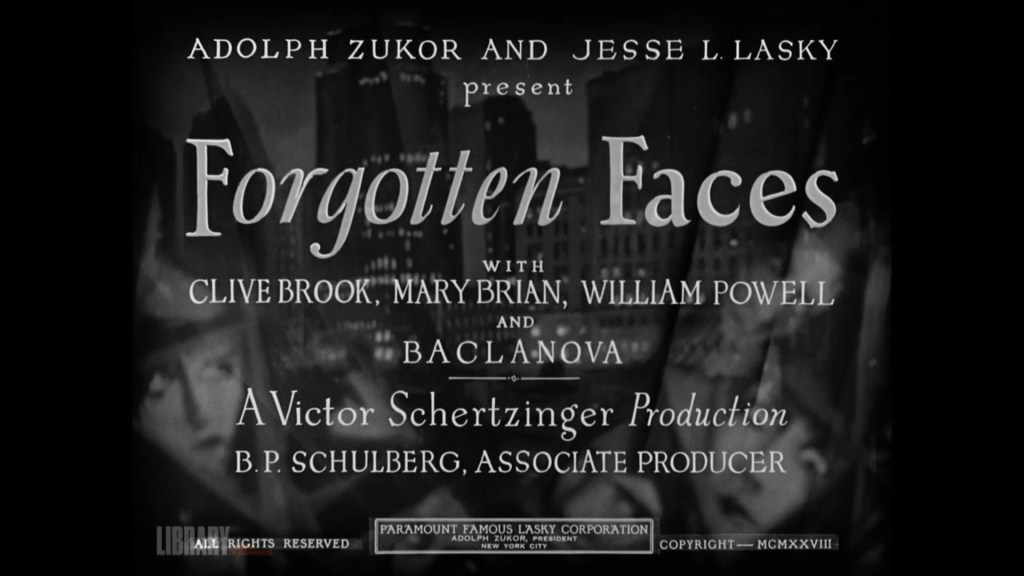
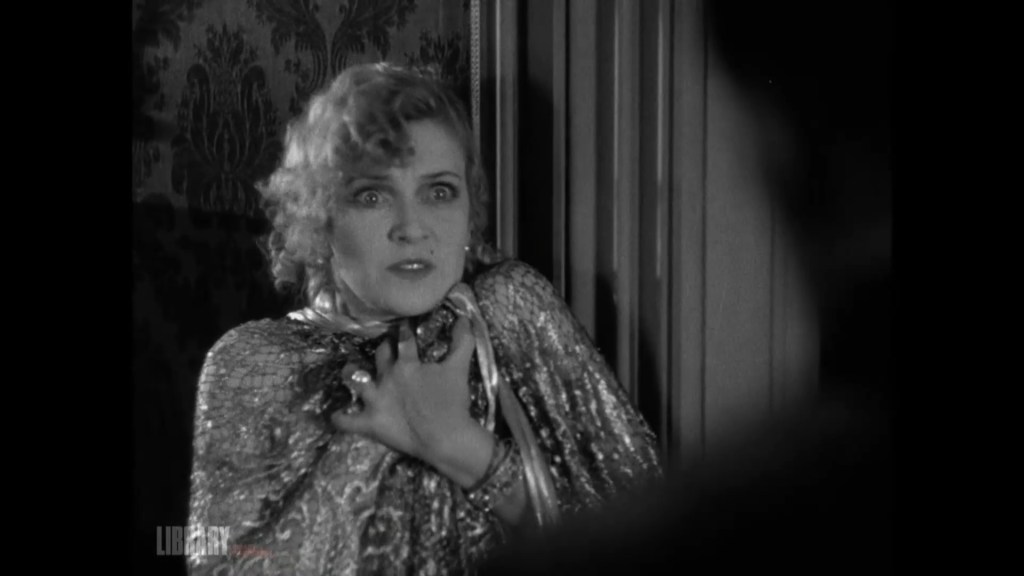
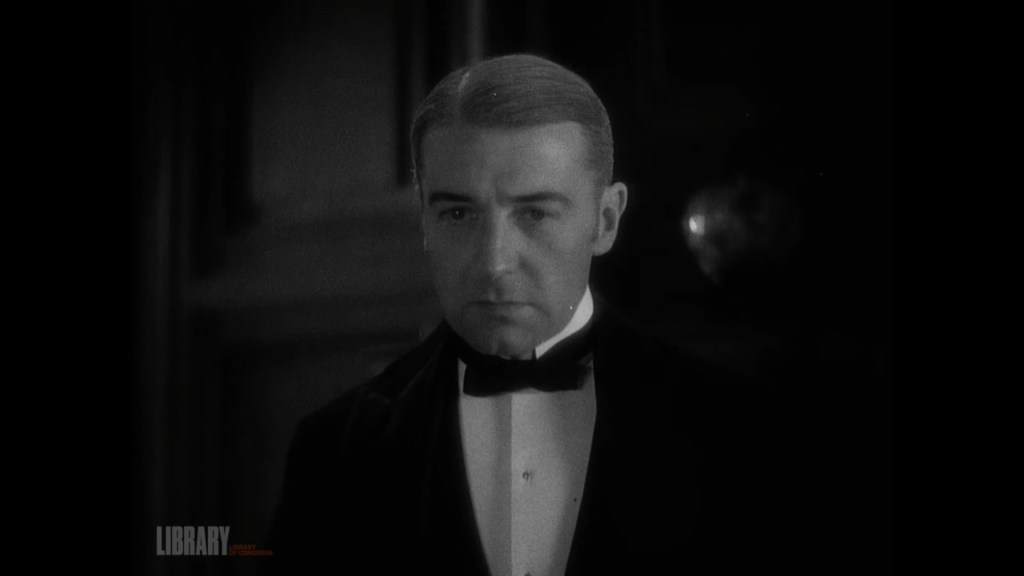
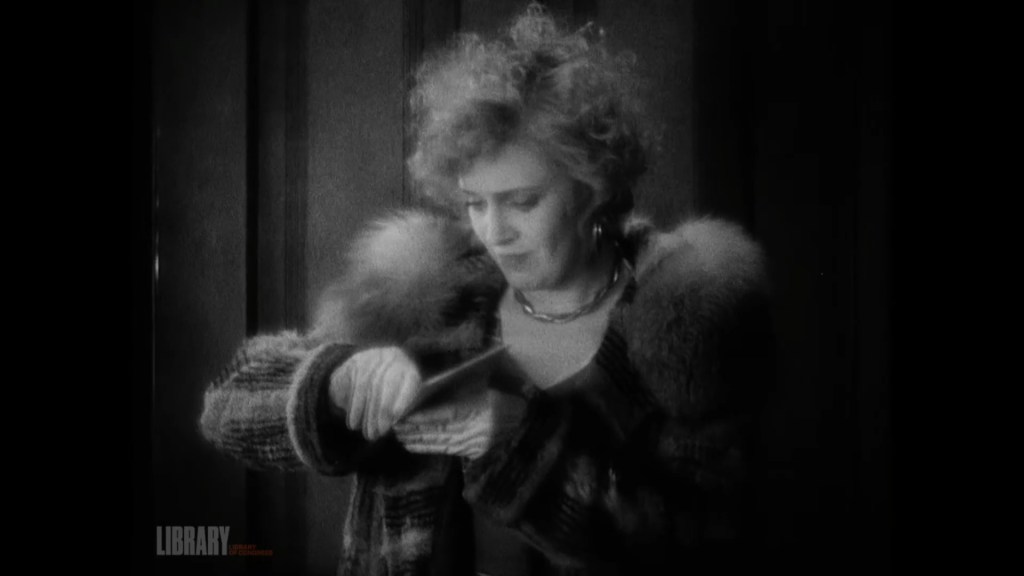
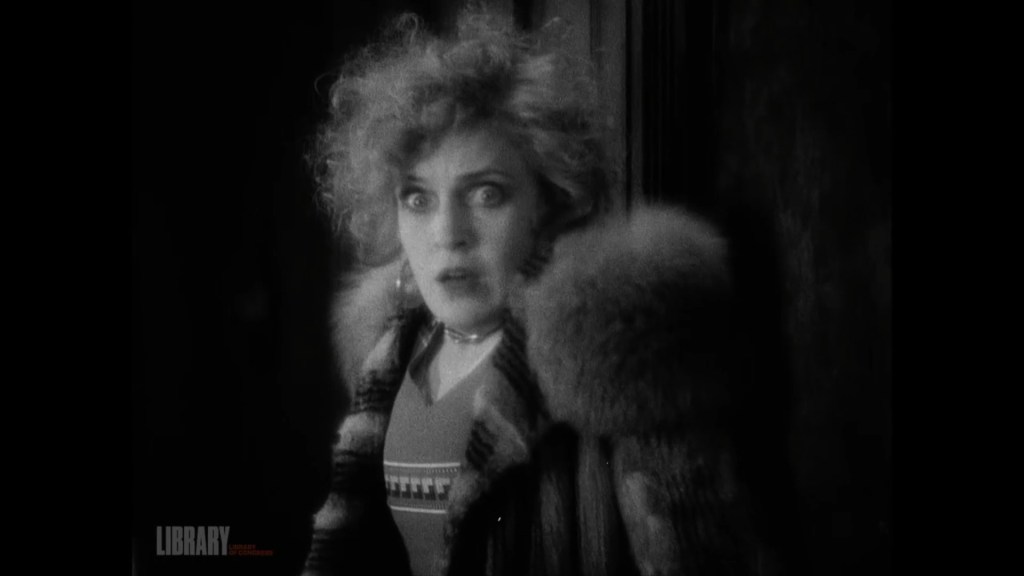
Forgotten Faces (1928; US; Victor Schertzinger). Harry “Heliotrope” Adames (Clive Brook), so-called for his signature fondness for the flower, is by day a loyal husband and caring father – and by night a gentleman thief. His wife Lilly (Olga Baclanova), meanwhile, is busy being a neglectful mother to their infant child Alice and having an affair. Discovering the pair together, and realizing that Lilly has also betrayed him to the police, Harry shoots dead the lover and takes the child away. He leaves the infant Alice (complete with sprig of heliotrope) on the doorstep of a rich married couple, the Deanes, who had lost their previous child. Making his sidekick Froggy (William Powell) promise to remember the name and address of the Deanes, Harry hands himself in to the police. Seventeen years pass. Froggy keeps the imprisoned Heliotrope up to date on his daughter, now raised as Alice Deane (Mary Brian), and on the movements of Lilly, who still hopes to find her daughter. Meanwhile, Froggy is tricked by Lilly into giving her information about Alice. Lilly then visits Harry, and taunts him with her plan to take custody of their daughter. Later, when another convict engineers an escape, Harry assists – but the pair are thwarted. Harry having saved the life of the warden during the ensuing fight, he is given parole – promising not to lay a hand on his wife in the pursuit of his daughter. Outside, Harry and Froggy find Alice in the company of her fiancé Norman van Buren Jr., a rich heir. Hoodwinking his way into Alice’s household by pretending to be a new butler, Harry acts as her guardian. He also threatens Lilly and, in the climax, lures her to the house of Alice in order to get her to commit a crime and die in the escape. Sacrificing his own life for this purpose, he lives just long enough to say goodbye to his daughter. THE END.
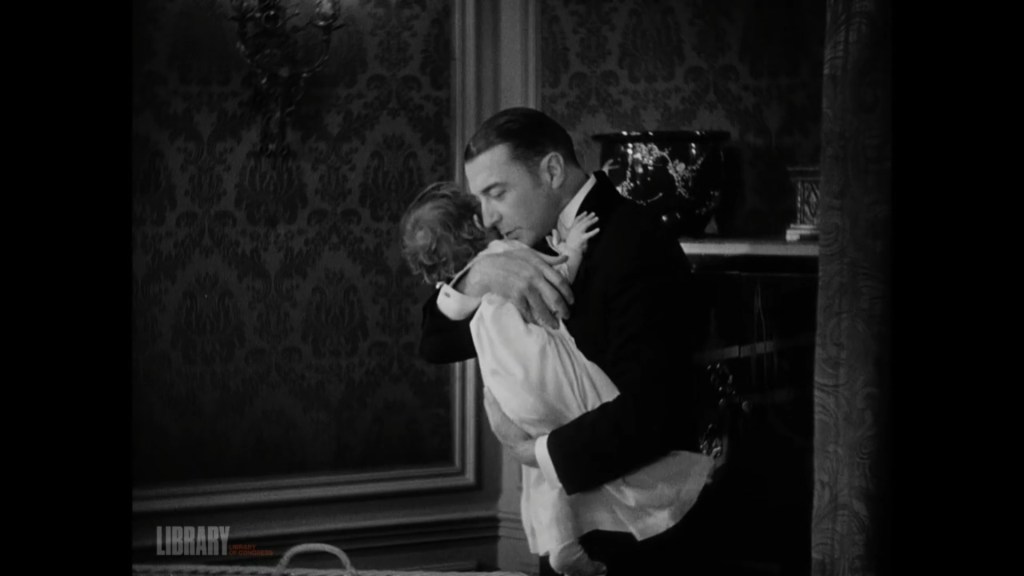
Well, well, well, what an excellent slice of crime drama this is. I wondered what kind of genre this might be, since the tone subtly shifts gear in the opening act. It begins as a Raffles-like case of Harry as a gentleman thief. Added by some charming and witty dialogue, I assumed the light touch would continue. However, this film soon starts pulling its punches. The sudden, unapologetic way Harry kills his wife’s lover (off-screen) is startling, as is the way Harry later engineers Lilly’s death. I found the tone a little disconcerting later on, when the film milks sentiment from the father hiding his identity from Alice. Though there are some gorgeous touches – as when Alice calls out to her father, and both Harry and Deane turn to respond – I found myself increasingly unsympathetic to Harry.
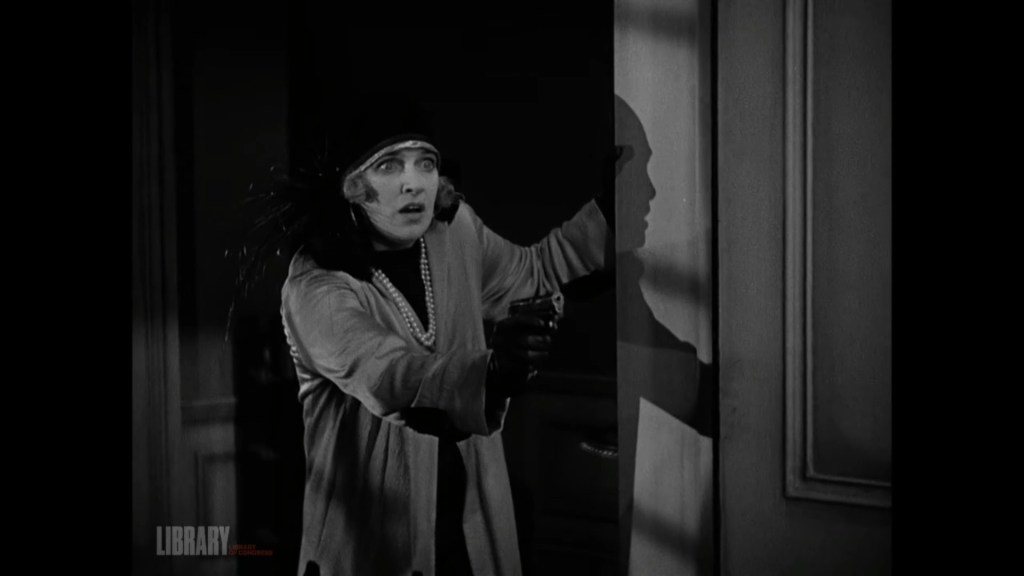
This was in part due to the performances of Clive Brook and Olga Baclanova as the estranged couple. For me, Baclanova was by far the most engaging presence on screen. She is wonderful as Lilly, always on the verge of wildness – like her hair, which when uncontained by her hat springs out in a kind of pale mane. By contrast, as the older Harry, Clive Brook’s hair is pasted and greyed into a kind of docile wig – so orderly and so meek that it almost hurts to look at. If Brook maintains a kind of sad father nobility, Baclanova gets to play an increasingly desperate emotional state. Harry plays weird mind games with her (stalking her, sending her threats, luring her from her safehouse), a kind of escalating cruelty that the film never questions – but that Baclanova makes you really feel. Lilly is mentally teased and tortured to the point where she is so desperate to be free that she confronts Harry. When he dies, saying he has kept his word to the warden, I felt much sorrier for Lilly than for Harry. After all, Harry has kept his promise not to touch Lilly but has carefully directed (in every sense) her death – albeit at the price of his own. And even the murder she commits – his – is the result of Harry’s own bluff and entrapment. He has made her commit murder, forcing her to play the part that he has cast. It’s a nasty ruse, one which the film seems to think we accept on the basis that Lilly is a bad mother, a kind of failed vamp, who surely doesn’t deserve to have her child – or even to survive the film. What exactly is the fate that Harry assumes Alice will have under Lilly’s influence? Whatever it is, it’s a fate so bad that he’s prepared to kill Alice’s mother to waylay it before it even happens. Lilly doesn’t have to commit a crime to be deemed a criminal; Harry can commit several but dies believing himself a hero. Though Brook’s performance is good, there is a kind of smugness in Harry’s victimhood (and apportioning of pre-emptive blame on Lilly) that rubbed me the wrong way. Does being a well-intentioned father excuse two murders? Does Harry’s oft-stated belief in the sanctity of marriage justify him being judge, juror, and executioner-by-proxy of his wife? Is Lilly so inherently wicked that she deserves to die? Certainly Harry seems to think so, and the film seems to think so.
I should also mention William Powell, who as Froggy gets to sport a delightful monobrow that is at once comic and sympathetic, marking his character as a sidekick. He doesn’t get much screen time, but Powell nevertheless gets to shape this little character into someone with a past, and with some humanity. (Froggy, it seems to me, is a far more sympathetic character than Harry. I’d rather like Froggy to have been given a gag or a send-off at the end of the film to indicate that things turn out alright for him!)
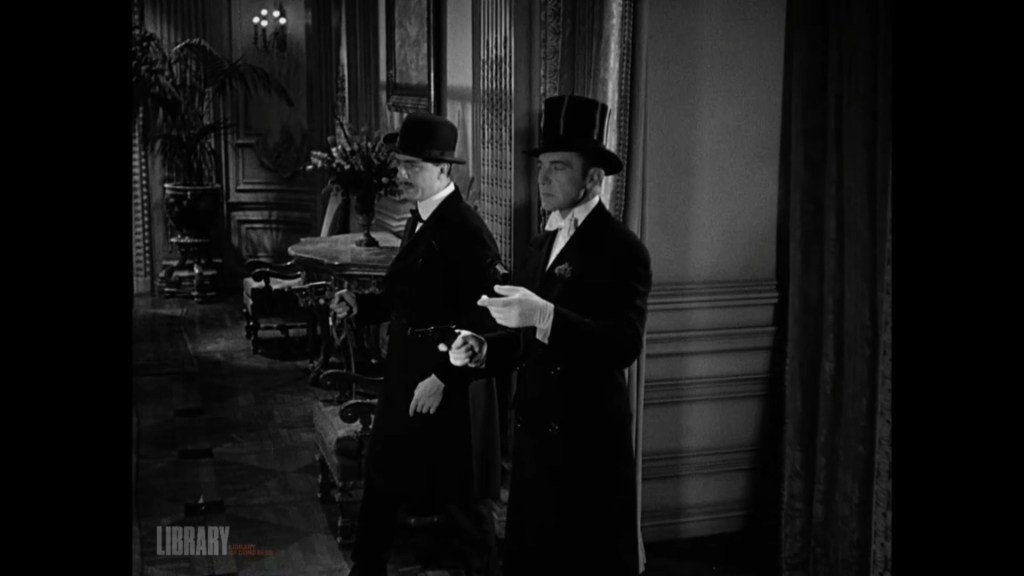
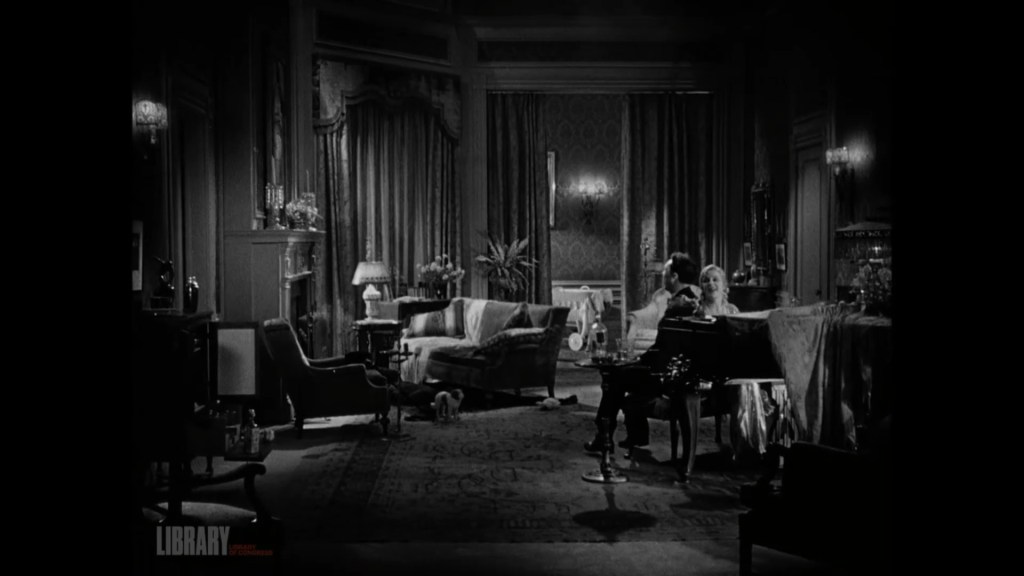
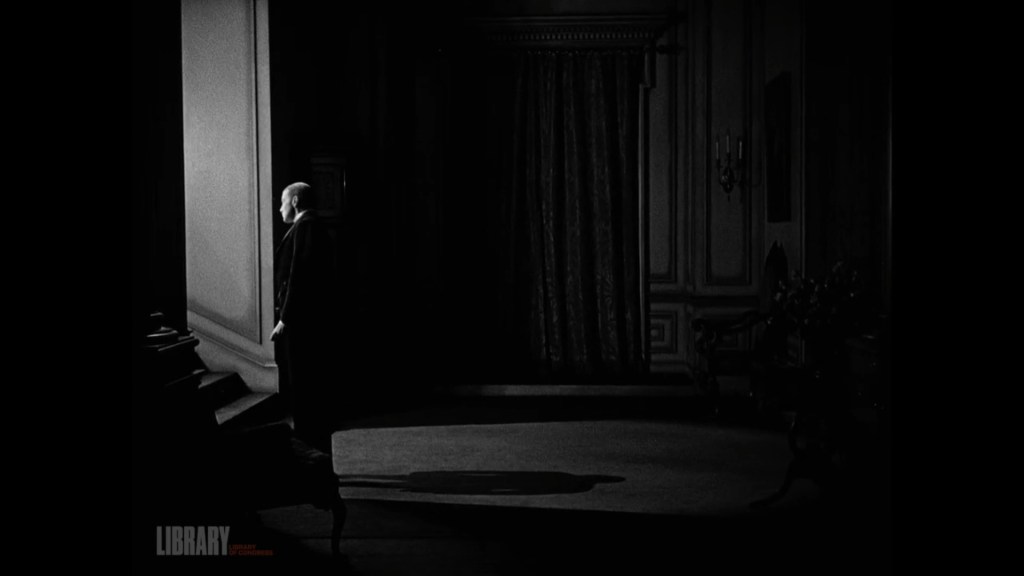
Whatever I thought of the characters, I was absolutely captivated by the look of Forgotten Faces. The cameraman was J. Roy Hunt, who does some remarkable work. There are some fabulous images of the gambling house at the start of the film. I love the shot from within the roulette wheel, looking up through the dial to the eager circle of faces of the gamblers, and then the roving camera – tracking and panning – that penetrates into the midst of the eager throng. Here and throughout, there are scenes with superb low-key lighting. The nighttime exteriors and interiors (the street, the prison, the Deane house) have some exquisite lighting, moody and atmospheric: this is film noir avant la lettre. (So too, I suggest, is its punishment of the wayward female character.)
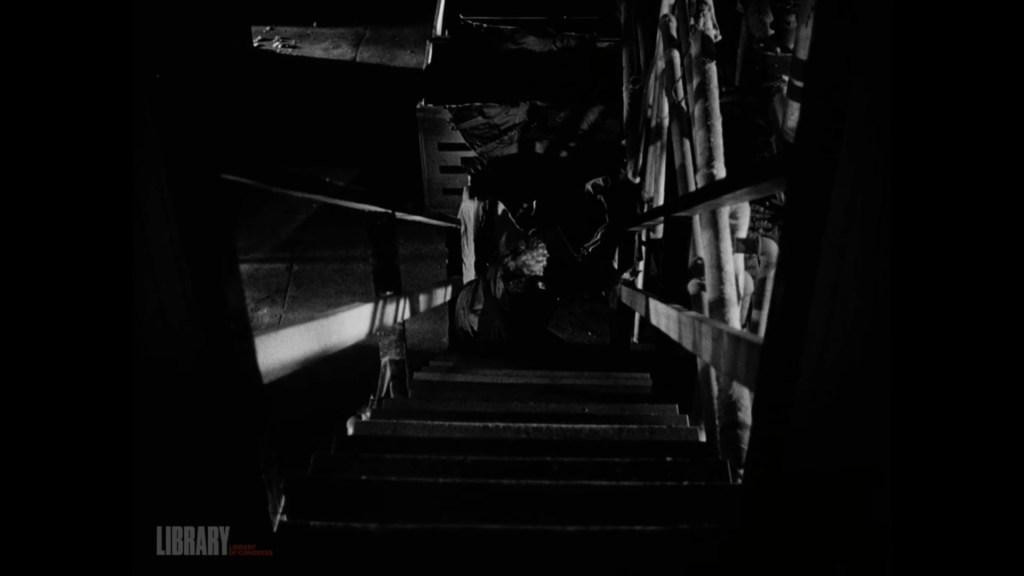
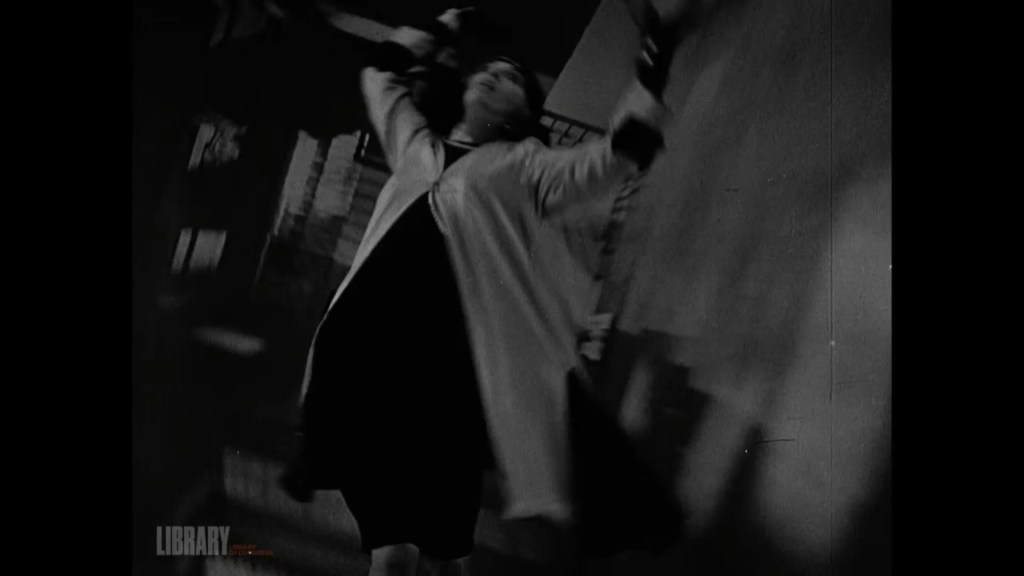
This reaches its zenith in the climax to the film, which boasts an astonishing moving camera that seems to glide through the entire house – round corners, up flights of stairs, through corridors, through doors. It’s an outrageously well-orchestrated use of movement, combined with incredibly complex lightning. (Rewatching it again, there is a subtle cut that slightly breaks the spell – but nevertheless, it is wonderful as a whole.) It’s the perfect device for the sequence, which is Harry luring Lilly to her doom. He has him himself acted as metteur-en-scène, using shadows, props, and hired actors to trick Lilly into shooting him then falling to her death on a sabotaged ladder. As a viewer, you absolutely feel as entranced, almost as will-less, as Lilly as she follows Harry to her doom – and his. An amazing sequence.
Finally, a word on the presentation. The film featured piano accompaniment by Meg Morley, which was excellent: melodic, atmospheric, always appropriate. The restored print from the Library of Congress was superb to look at. There was a copyright logo in the bottom left of the screen (as you can see from my images), but its placement and design rendered it unobtrusive. This film is so rich to look at that you quickly forget the logo is there. (Unlike some copyright logos, as I mentioned last week.) All in all, a fabulous way to start the festival.
When I can’t decide on what to watch, I begin hunting my shelves for curiosities. Goodness knows, I have a lot of material to catch up with on DVD, let alone my hard drive. Faced with too much choice for a single feature, I fall back upon compilations of short films. At the weekend, my eye fell upon the spine of I colori ritrovati: Kinemacolor and other magic, a 2xDVD set released by the Cineteca di Bologna in 2017. I realized shamefacedly that I had never sat down and watched the contents from start to finish. At something of a loose end, feeling indecisive and uncommitted, I sat down and watched. For the next three hours, I was transfixed.
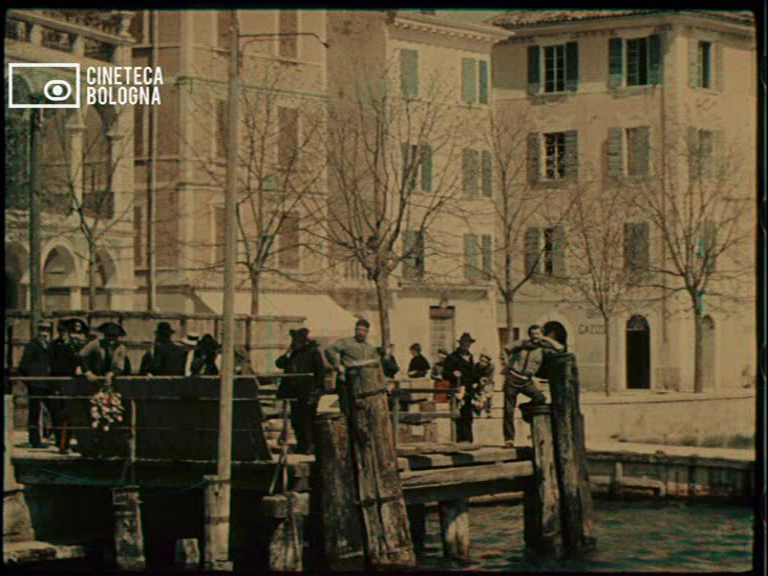
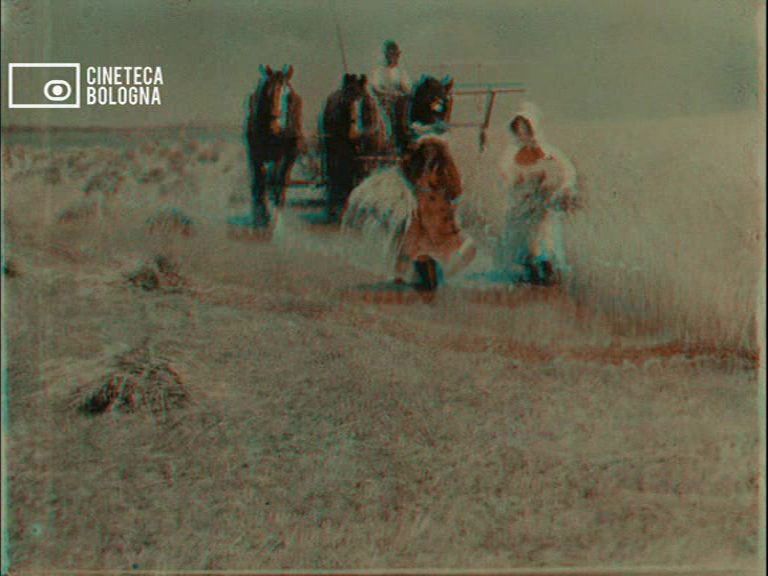
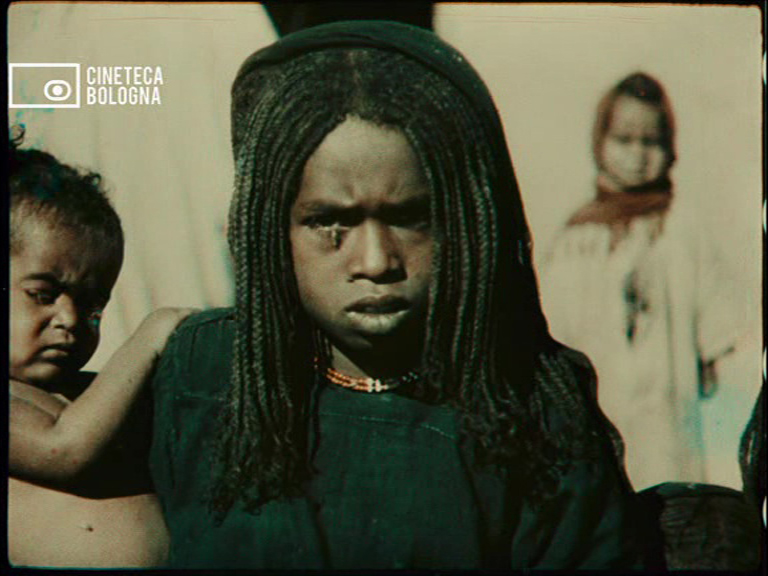
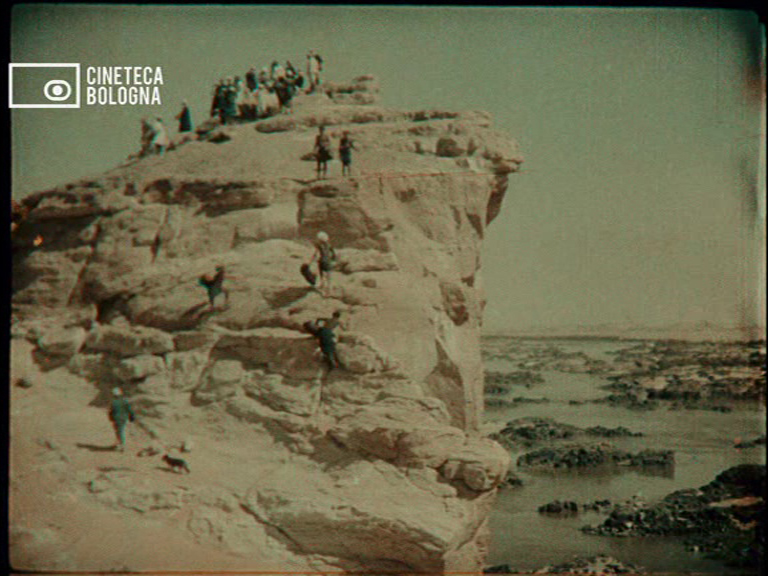
I colori ritrovati contains four curated programmes of films. Each programme contains a selection of short films made through an early colour process: Kinemacolor Urban, Kinemacolor Comerio, Chronochrome Gaumont, and Pathécolor. The films were produced between c.1907 and 1922, and range from 50-second fragments to 12-minute works of substance. Most offer “views” of touristic locations or noteworthy occasions, while the shortest films often concentrate on attractive objects which happen to make good subjects for colour. The content is what Tom Gunning et al. have described as “the cinema of attractions”. This definition usually implies either a kind of non-narrative model, or else a model in which the visual content or novelty of the film outweighs the importance or depth of narrative. The films of I colori ritrovati certainly fit this broad characterization, but there is a lot more to their pleasures than this definition of “attractions” might imply. Below, I discuss each programme in turn per their presentation on these DVDs…
“Kinemacolor Urban” (ten films, c.1907-12). This first programme of films made under the aegis of American producer Charles Urban, based on the pioneering work of British filmmaker George Albert Smith. This process involved treating black-and-white filmstock to make it sensitive to red wavelengths. Shooting at 32fps (double the standard speed of filming), the camera captured alternate frames through green and red filters on its revolving shutter. Though the print produced was still black-and-white, when projected through the same red and green filters, the film miraculously burst into colour on screen. A century later, viewers are faced with the impossibility of replicating this kind of technology to project the films as intended. Digital restoration can separate the alternate frames exposed to green/red, apply the appropriate filter (i.e. alter the colour tone) and reunite the frames in a way that mimics the effect of the original projection. But it remains a conjectural approximation, via totally different technological means, of the original Kinemacolor process. What we see on our screens at home is but a digital reimagination of the colours of a century ago.
That said, the effect on this DVD is amazing. The palette has an invitingly warm, pastel tone – exacerbated by the summery, daylit scenes of so many of the films. But it’s all delightfully dreamy. The colours are not exactly faded, but lustrous according to an unfamiliar design. While the overall impression is one of hazy warmth, this allows certain objects to stand out with particular brilliance. The shores and slopes and distant mountains in Lake Garda, Italy (1910) have the tired, wintry hue of a slightly murky afternoon. The water is deep blue-green, but when its dark ripples give way to calm the surface is a wash of light. The silhouette of a sailboat floats serenely over the dazzle of the distant past. Crowds await us, staring as we glide towards the shore. A woman with a red parasol appears on deck. We see her again once she has disembarked. She turns to stare at the camera, the ship departing behind her. Perhaps she is waiting for a signal from the camera operator to move, or to stop. It’s so charmingly awkward, so eye-catchingly strange.
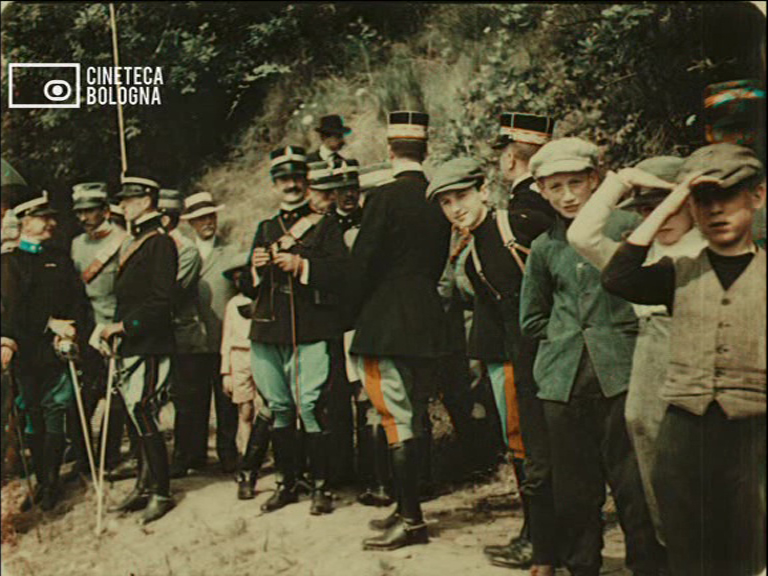
In other films, the effect of the ever-so-slight temporal disjunction between the two colours on successive frames gives the faint impression of stereoscopy. There is a kind of gap in space and time that the eye catches, or thinks it catches. When we see men on horseback, or figures silhouetted against the land or sky – suddenly their form seems to possess some magical depth. It is all illusion, of course, but that does not lessen the effect. The oddness and awkwardness of the content of films like Coronation Drill at Reedham Orphanage (1911), Nubia, Wadi Halfa and the Second Cataract (1911), With Our King and Queen Through India: The Pageant Procession (1912), and [Woman Draped in Patterned Handkerchiefs] (c.1907), and [Tartans of the Scottish Clans] (c.1907) is made touchingly potent by their form.
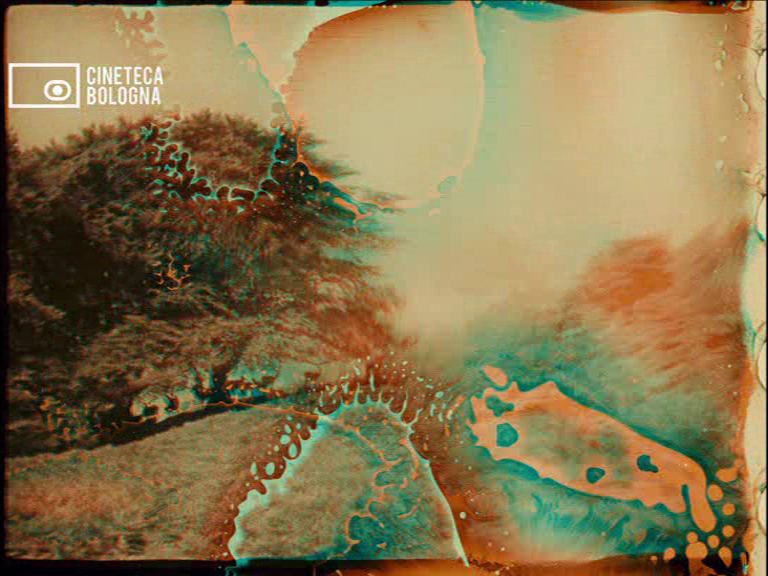
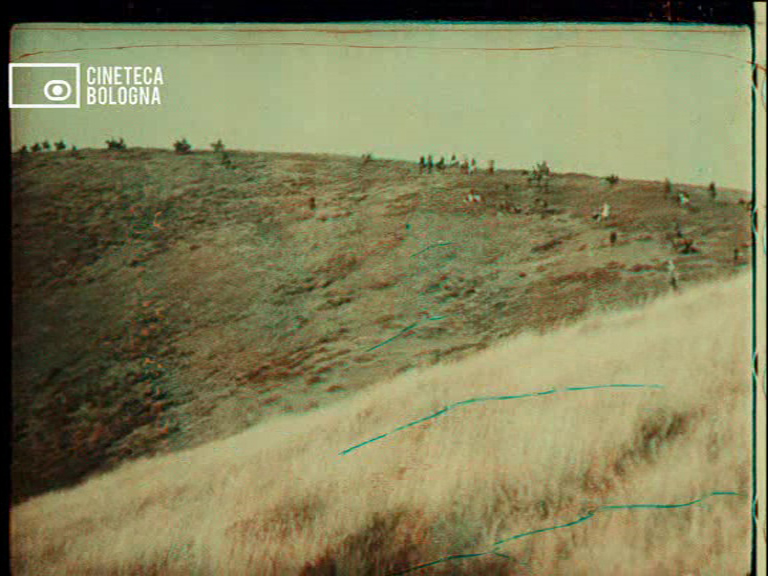
I was far more entranced by the landscapes in films like The Harvest (1908) and A Run with the Exmoor Staghounds (1911), and this entrancement was heightened by the anomalies of the Kinemacolor prints. In the Exmoor hunt, the riders and their hounds are themselves pursued by alien blotches of turquoise and scarlet. These colours are those of Verdigris and faded bloodstains, as though evidence of ageing in entirely different materials were manifest. Here were English landscapes so familiar to me made suddenly mysterious by tears, blurs, marbling. The silent trees and grass are tugged by lines of chemical decay that scurry across the frame, or else softened and blurred by the thumbprints of watery giants. The past is already so far from us in these films. Their silence is akin to death; their colours faded like memory. But the moments of disruption, when time literally seems to be gnawing at the image, make this past seem all the more fragile, potent. History unfolds before us, harried by its own disintegration. At the end of A Run with the Exmoor Staghounds, the film dares show us the dying stag; but as if to counteract this image of death, we are shown a brood of puppies suckling from their mother. It is life and death, awkwardly presented to us in a film that has itself only just survived.
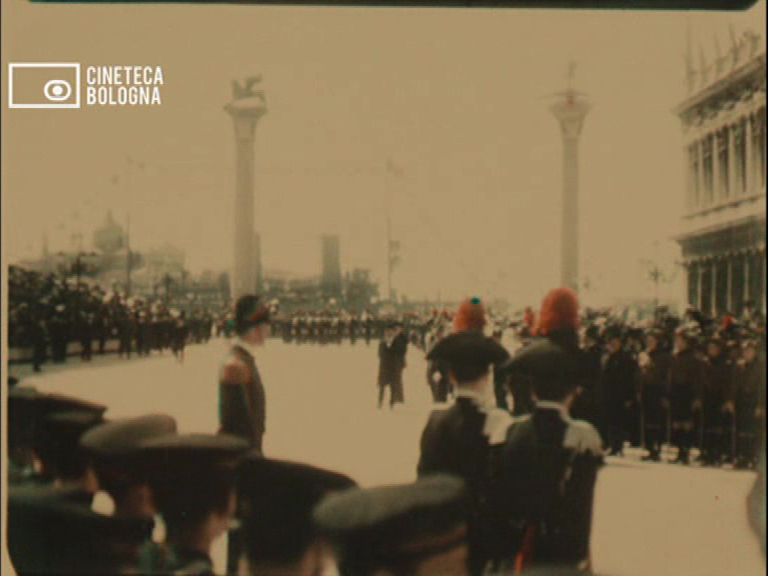
“Kinemacolor Comerio”(four films, c.1912). Italian producer Luca Comerio licensed the Kinemacolor process in 1912, so this programme is a small selection of the films made by Italian crews. There are glimpses of troops in Italy’s latest colonial enterprise in Libya, and the tragically earnest efforts of horses and riders crossing a river closer to home. But the most substantial film is L’inaugurazione del campanile di San Marco (1912), the Venice setting of which is beautiful for all the reasons I have outlined with the earlier films. There is the colour palette of the centuries-old facades, the somnolent waters, the hazy skies, and the charming pageantry of a previous century. Figures crane into the frame in awkward close-up, or rush to gather on some distant viewing point in the hope of being captured on film. A brass band stands around awkwardly waiting for their call to perform. Bishops trudge past. Plumes, flags, boaters. Archaic warships proudly anchored by the quay. Motorboats and gondolas. It is the Venice of Proust, of D’Annunzio, of Henry James, of Thomas Mann – and just about any other fin-de-siècle figure one cares to think of. The hue and haze are akin to the contemporary Autochrome still photographs produced by Lumière. The details are softening, the colours made pastel. Yet there are those familiar flashes of intense red, of deep blue-green, and the darkness of formal suits and top hats raised aloft in assurance of the coming century.
“Chronochrome Gaumont” (nine film fragments, c.1912-13). The second DVD begins with a programme of fragments from surviving Chronochrome films. As the excellent liner notes details, Chronochrome was an additive system involving three lenses on the camera to record simultaneously three images through three colour filters. During projection, three lenses were likewise used to (re)combine the three images into one. The difficulty (and constant adjustment) of filming this way necessitated a reduced frame height, giving the resulting films a widescreen effect. The results are simply stunning: these are by far the most successful, vivid, and absorbing colour worlds on these DVDs.
If I thought of Proust with the Kinemachrome film in Venice, here is another landscape from À la recherche du temps perdu. At Deauville-Trouville, children in dark bathing costumes play in the breaking waves. Adults mingle by red-and-white striped tents. (It is a vision of Proust’s Balbec. The images’ silence surely admits some dreamlike realization of an imagined time and place.) In View of Enghien-les-Bains, crowds of impeccable tourists wander under the boughs of trees whose green is like none that exists in our world, in our time. So too the mountains and sky, the curious cattle, the smocked peasants, and the bare trees of Provence: The Old Village of Annot possess a kind of echt French pastness. The landscape is once again wintry but bright. The scrubby roadside, the faded trees, the dusty road, the empty fields – aren’t these archetypes of an imagined countryside? They are prosaic and extraordinary at once. So it is with Picturesque Greece and Venice, Queen of the Adriatic, and in Chioggia, a Fishing Port Near Venice. They are hauntingly real, yet infinitely distant.
Aesthetically, one has the same impression with the tableaux of still lives: Venetian Glass-Ware, Flowers, and Fruits. These are set on a slowly rotating table, and the camera simply observes these hypnotic turns of glowing glass and fruit. These objects are incredibly real: and I emphasize equally incredible and real. They are palpably there before us, weighty lumps of glass, heavy bowls of fruit, potent buds of flowers; their colours and textures and contours are saturated by reality. Yet the saturation of colour, the way the glass glows, the way even fruit seems to assert its presence on screen – these aesthetic aspects are more than real, they are supernal, almost supernatural. I have never seen a pile of oranges so lustrously tempting. Like the shots of Venice a century ago, this fruit is here so madly, vividly, aggressively alive that it is hard to comprehend that it cannot have survived more than a few days, even hours, after being filmed at the start of the twentieth century. So too the Venetian glass bowls seem not merely to be bright and colourful, i.e. to possess brightness and colour, but to emit brightness and colour. The greens and purples look radioactive, dangerous – as though the glass were transmitting its colour, its very quiddity, across the centuries.
“Pathécolor” (fourteen films, 1905-1922). The final programme on these DVDs returns us to the most successful early producer of colour films. Pathé’s “pochoir” process involved laboriously cutting stencils for each colour for each frame of film. Once this was done, the stencils could be used to mechanically stamp dye onto the frames. Though time-consuming to cut each stencil, these stencils could then be used to colour multiple prints of the same film – a great boon to mass production. Combined with tinting and toning, the effects of this process could be extremely varied and complex. I have already discussed this process in relation to fiction films like Casanova (1927), but this programme presents a series of short films almost exclusively within the touristic/documentary mode.
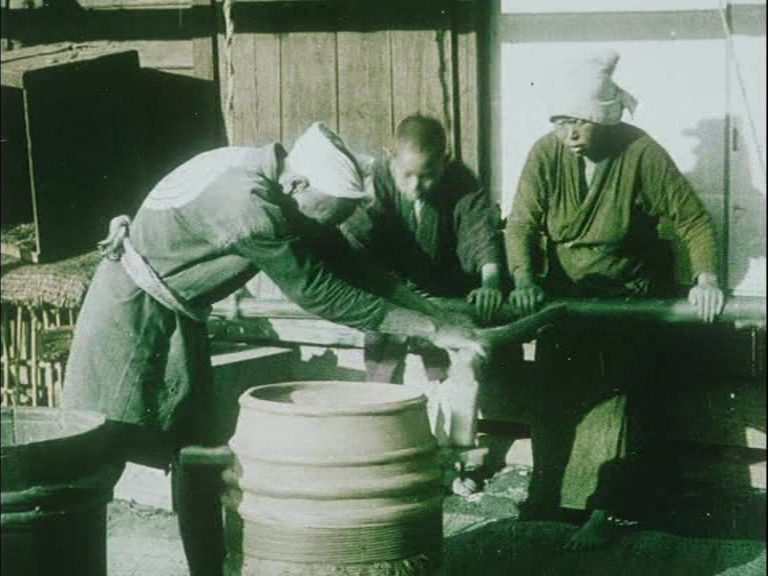
Appropriately for the machine-tooled Pathécolor, several films are devoted to various combinations of handmade and industrial processes. And just as the work of cutting Pathécolor stencils was primarily undertaken by women, so in Industrie des éventails au Japon (c.1914-1918) we see Japanese women laboriously cutting, colouring, and folding fans. In La Récolte du riz au Japon (1910) whole families and all ages are engaged in the elaborate harvesting and preparation of rice. This kind of narrative is at its most elaborate in Le Thè: culture, récolte et préparation industrielle (1909), where we watch the whole process of cultivating, harvesting, refining, and preparing tea – even to the point of watching it being served and drunk. This film even offers a kind of dissection of colonial industrialism: from the poor indigenous labourers in the fields and the white foremen overlooking the subsequent preparation, through to the middle-class white women being served tea by their Indian servants. La Chasse à la panthère (1909) offers another glimpse of class and race in the gruesome business of a hunt. (The white man carries a rifle and stands triumphantly over the trapped beast, while his native servants do all the dirty work, then the carrying and lifting.) There is an odd disjunction between the fantastical application of colour and the matter-of-factness in the way the film shows us a panther being tortured, beaten, shot, and skinned.
The drama of transformation is more surreal in La Chenille de la carotte (1911), where caterpillars in garish colours metamorphosize into butterflies. Here, the colour makes these extreme close-ups of writhing insects purely terrifying – I can imagine this film being overwhelming on a large screen. so too with the time-lapse photography of Les Floraisons (1912), where flowers writhe into organic fireworks – and writhe through the additional layers of colour laid on by Pathé.
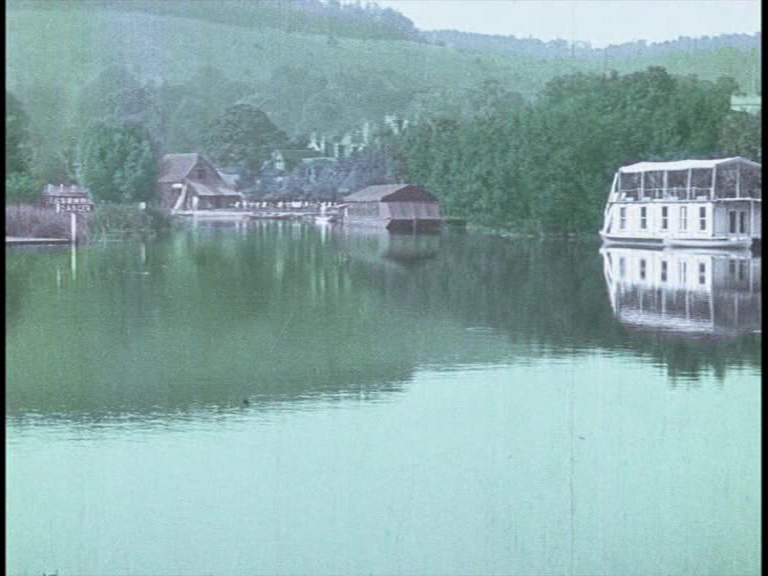
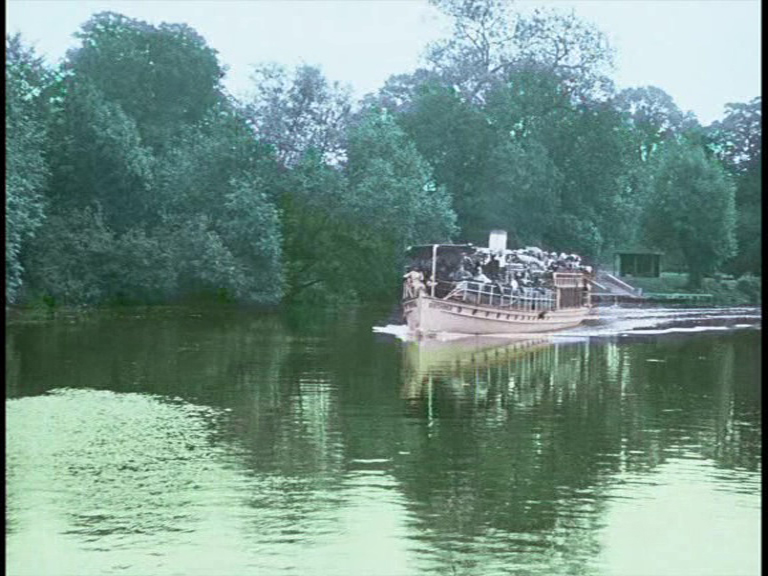
Calm is provided by the travelogue pieces, from the gentle rhythm of Barcelone, principale ville de la Catalogne (1912), seen primarily from the vantage point of a slow-moving boat, to the even more languorous rhythm of Les Bords de la Tamise d’Oxford à Windsor (1914) – a slow cruise down the river, past exemplarily English riverbanks, locks, lawns, pleasure boats… and all in 1914, when one senses that the meaning of this world and its inhabitants would undergo some irreparable change.
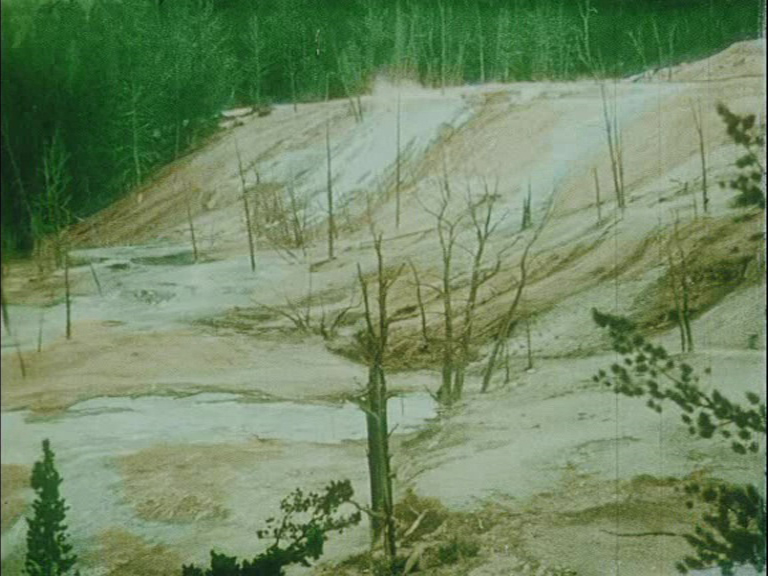
More exotic locales are found in La Grande fète hindoue du Massy-Magum (1913) and Le Parc National de Yellowstone (1917). I confess that during some of these films my mind began to wander. The application of colour over the film image often flattens rather than deepens our perception of the views being presented. For example, I would much rather have seen the journey along the Thames in monochrome. The broad application of single colours – green, green, and more green – does little to enhance such a landscape. Tinting or toning would surely be preferable for this kind of combination of open river, spacious meadow, and large sky. Other such travelogue subjects become postcard banalities. For all their delight and novelty, there is a stiltedness in the colour that dulls their power. But perhaps this is just the result of these Pathécolor films being at the end of the second disc and me growing tired?
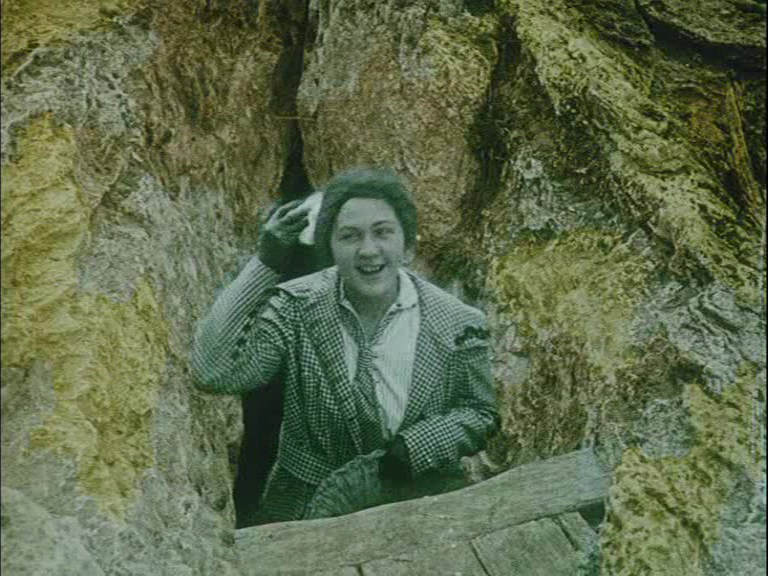
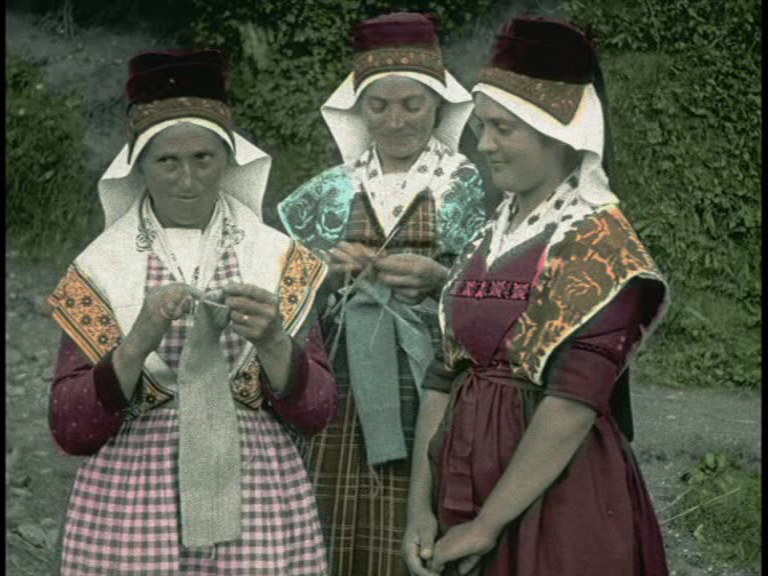
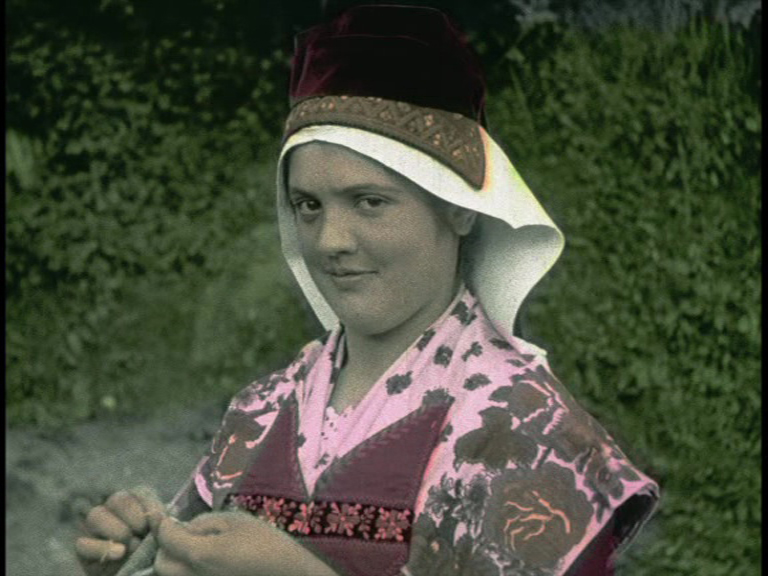
It is a relief to glimpse more human aspects in these films. In L’Ariège pittoresque (1922), views of mountains and houses are followed by awkward glimpses of locals in traditional costume, posed stiffly for the camera. Here, and in Coiffures et types de Hollande (1910), there is the delightful tension between the awkwardness of the pose of the locals and the delightful glimpses they give towards the camera operator – and to us. These long-dead faces are at their most alive when they try not to grin, when they cast a glance of annoyance or bemused patience at those who stare at them – then and now. Perhaps to reassert the neatness of fiction, the last of this programme, La Fée aux fleurs (1905), returns us to a typical kind of “attraction”: an excuse to decorate the frame with greenery and flowers, and to have a woman with a beaming smile gaze approvingly out from the image, inviting and happy to live within her magical fiction.
As must be clear by now, I was very glad to have (re)found these DVDs and watched them all the way through. Their hypnotic power – somewhere on the borders of the distant past, somewhere on the borders of photographic reality – makes I colori ritrovati an absolute treasure trove of pleasures. The four programmes offer a variety of processes and subjects, from the real to the surreal, from the everyday to the fantastic, from the placid to the cruel. It’s a good reminder about the variety of colour technologies and the results of rival processes, all operating in the same window of film history – and across a variety of genres or modes of presentation. The DVD liner notes are superb, as one would expect from an archive-based release, and provide information about the history, preservation, and restoration of the films. (There are also restoration features on the disc, too.)
If I have a reservation, or at least a regret, about the visual presentation of this material, it is the presence of copyright logos throughout the programmes of Kinemacolor and Chronochrome films. The former has a “Cineteca di Bologna” logo in the top left, the latter a “Gaumont” logo. The DVD liner notes mention that there are strict copyright restrictions on the Chronochrome films. Not only does this mean that no complete film is presented here, but also that a remarkably ugly Gaumont copyright notice is stamped in the corner. I could get used to the Bologna logo in the first programme of this set (it is a simple and relatively discreet design), but the Gaumont logo is horrific: as ugly an intrusion as you could imagine. Atop the beautiful and subtle and rich texture of the Chronochrome images, this flat digital shape in the corner looked like a lump of birdshit had landed on the screen. I understand this material is unique and protected by goodness knows what level of copyright and archival restriction, but it seems a great shame to so spoil the astonishing visual impact of these films.
To return to the positives, I must also praise the music on these DVDs, which is provided on the piano by Daniele Furlati. I am often indifferent to piano scores but listening to these performances were much more pleasurable than I usually find. Firstly, I think the (relative) lack of narrative puts less pressure on the musician to be led by specific cues. The result is a more relaxed, impressionistic approach. I find Furlati’s music for these films both more melodic and more effective over longer timespans. He’s not chasing after the action or killing time waiting for a particular cue or change of scene. I was rather reminded of some of Liszt’s musical sketches inspired by/written on his travels around Europe in the 1830s. His Album d’un voyageur (1835-38) prefigures his more polished, thematized collection Années de pèlerinage (1842). Melodies take their time to develop, and there is a pleasingly rambling, reflective nature to the structure. This is travel music, capturing the slow speed of voyaging and the pleasure of stopping to gaze at views and absorb the atmosphere. With Furlati’s music for I colori ritrovati, I had the same impression of a relaxed, melodic meandering through these slow travelogues and touristic views. And, as Liszt sometimes quotes and develops local/national melodies into his work, so does Furlati. There is a lovely moment at the end of L’inaugurazione del campanile di San Marco (discussed above) when Furlati quotes a phrase from the Italian national anthem. He does so very subtly, and the tempo is so slow it’s like a memory of travel, of a place, of a country we’ve visited. The images it accompanies are of the nighttime façade of a palace in Venice. It’s a dreamy, melancholic, touching moment – a summoning of memory at the very moment the film ends, and the past disappears. Perfect.
This week’s post has been written by Devan Scott, host of the superb “How Would Lubitsch Do it?” podcast. As anyone familiar with this series will know, Devan is not only an exceedingly knowledgeable devotee of Lubitsch but an active participant in researching and promoting the director’s work. Here, he writes about the discovery of an alternate version of The Student Prince in Old Heidelberg and the light this copy sheds on the film’s production and exhibition across 1927-28. So, without further ado, I now hand over the reins to Devan…
The Student Prince in Old Heidelberg – also known under the title Old Heidelberg – has been an obsession of mine ever since I first watched it a half-decade ago, and I attribute this to the fact that it exists at a unique intersection between three interests of mine.
First: it is not only a film by Ernst Lubitsch, greatest of all directors of romantic comedies, but a great film. It is, as far as his American canon is concerned, an unusually simplistic bit of melodrama: a young, cloistered prince experiences the world for the first time and winds up in a doomed romance with someone below his station. There’s very little of Lubitsch’s trademark high-society gamesmanship, but it’s brilliant anyways because of his singular ability to shade every single gesture with the lightest of brushstrokes. It’s a swooning film of large gestures, but it’s never only that.
Second: the version of the film I first encountered features an orchestral score composed by Carl Davis, greatest of all retrospective silent film composers. In typical Davis fashion, it is a brash, boisterous marvel of a thing, with an uncommon sensitivity towards the film for which it has been composed. It interfaces with the film as readily as any of Lubitsch’s own gestures, and this collaboration across time has resulted in a masterpiece.
Third, and the focus of this blog piece: outside of the odd 35mm screening here or there, the film has solely been available in the form of a telecine of the 1984 restoration by Kevin Brownlow and David Gill, for which Davis wrote his score. Released on laserdisc by MGM/UA Home Video in 1993, and occasionally broadcast since then, this telecine is a wholly inadequate representation of a work of such magnitude. (Retroformat recently posted a different version of Old Heidelberg. Though this version matches the cut restored by Brownlow/Gill, it derives from a heavily cropped 16mm print that is unfortunately inferior to the laserdisc.)
And so it came as a pleasant surprise that one day, out of the blue, a high-definition version of the film suddenly appeared on the Bundesarchiv’s digital platform. (Credit to Anthony on my Discord server for spotting this.) Per the opening title card, this version derives from the archives of the Museum of Modern Art (MoMA) – and features a distinct title. Whereas the widely circulating Brownlow/Gill version credited itself simply “Old Heidelberg”, this version was titled “The Student Prince in Old Heidelberg.” Though a problematic transfer of an unrestored print, the improvement it offers on the laserdisc is obvious:
Clearly, the logical next step for me was to line it up with the laserdisc version so as to create an ideal hybrid video synchronized to the Carl Davis soundtrack. This is the point at which certain kinks made themselves known: it quickly became apparent that these two versions of the film featured often wildly divergent shot lengths and, in the case of the MoMA version, greatly extended sequences with distinct footage.
My initial suspicion was that this was an alternative negative, possibly struck for overseas territories; this suspicion was echoed by the many extremely helpful folks who generously responded to my various self-indulgent emails on the subject. (In addition to this blog’s proprietor, Dave Kehr, Peter Williamson, Scott Eyman, David Neary, Stefan Drossler, Jose Arroyo, and Matt Severson all contributed information and guidance to this piece.)
Further analysis of the film made it clear that – with a few exceptions involving alternate takes and a few extended or truncated scenes – the bulk of the changes were related to two elements:
New location footage of the real Heidelberg, Germany, totally absent from the earlier version which featured footage exclusively shot in the Los Angeles County area.
Norma Shearer’s performance, which has (compromised logistics of quick-and-dirty reshoots permitting) been largely reshot to the tune of at least fifty new distinct replacement shots. Only a few of these feature any other performers: the vast majority feature her and only her. (Note the production design inconsistencies in the example below (see images), which indicate pick-up photography done after principal had wrapped.)
The aesthetic implications of the first additions are limited: there’s a greater sense of verisimilitude around Heidelberg, the entrance to which is rendered with significantly more grandeur. A fine set of additions, but the fabric of the film is not fundamentally altered.
Shearer’s reshoots, on the other hand, have fascinating knock-on effects on the film’s form. She hits her emotional beats with far more emphasis in the new footage, and the rhythms of the performative edits are far more generous – geared to give her time in which to land those beats. The results are a mixed bag: certain beats cut through with more clarity, but (though this could be my own familiarity bias towards Old Heidelberg) at other points Shearer risks embodying Rawitch a little too closely.
The most interesting by-product of this new coverage is the way that scenes otherwise covered in long master shots have been broken up with somewhat more conventional coverage in the form of close-ups. Whether the motivation for doing so was to better highlight Shearer’s performance or to better suit the limited nature of pick-ups (it’s easier to recreate a set if the background is cropped and out-of-focus), the impact in the newer version is that the camera direction subtly changes whenever Shearer is on screen. There’s a slightly out-of-character (for Lubitsch) cuttiness, and Lubitsch was rarely one to lean on close-ups to make subtle emotional beats emphatic anyways. For example, in the below scene (see images) there is a common occurrence: a cut breaks up the final wide shot with a close-up, extending the scene and more forcefully punctuating the emotional beat.
As is probably clear at this point, this is no A-negative/B-negative situation but an updated version of the film assembled at a later date. What we know about the circumstances of the film’s development, production, and post-production cycle is in some ways illuminating and in others a contradictory fog-of-war situation…
The film’s origin lies with MGM’s purchase of the rights to the operetta The Student Prince (1924), itself based on Wilhelm Meyer-Förster’s play In Old Heidelberg (1901), itself adapted from his novel Karl Heinrich (1898). William Wellman and Erich von Stroheim were at various points either attached or courted before Lubitsch – on loan in the midst of his move from Warner Brothers to Paramount – landed the project. Both Shearer and Navarro were reportedly insisted upon by the studio.
Principal photography wrapped up by early May 1927. Lubitsch’s desire to include footage of the real Heidelberg led him to decamp to Germany to record b-roll material there in mid-May. This is where things become hopelessly convoluted. Various sources, including The Exhibitor’s Herald and Picture Play, all seem to agree that John Stahl undertook reshoots in Lubitsch’s absence, but the details of these reshoots are contested: the Herald (August 1927) claims that these involved retakes of Shearer, and that additionally Paul Bern and Fred Niblo also took turns at the helm before Lubitsch resumed control when he returned from Germany. Picture Play (October & November 1927) claims that certain “love episodes” were “tempered”.
A frequently-made claim involves Stahl reshooting the film’s major “love scene” in particular. An odd claim, considering that this scene – the one in the moonlit field – is one of the few featuring Shearer that is virtually identical between the two cuts. Could this claim be referring to a later, far more subdued (and heavily reshot) scene in which Karl and Kathi kiss on a sofa before a fade-out (the sole time in the film that we’re invited to infer that the two have consummated their romance)?
Confusing matters further, Meyer-Förster and MGM were embroiled in various legal battles throughout 1927 over naming rights: various trade publications refer to the film in early 1927 as “Old Heidelberg” before transitioning to “The Student Prince” thereafter. Meyer-Förster’s lawsuit and appeal – though both rejected – would seem to have something to do with this name change, as reported in Picture Play:
[T]he author of “Old Heidelberg” took occasion to make some unpleasant remarks about the filming of his play. His contention was that the picture had been made without his permission. It seems that this had necessitated a change in title, and so “Old Heidelberg” will come to the screen as “The Student Prince”, thus linking it up with the recent musical version of the famous German play.
Whatever the provenance of the various shoots, the film premiered in September 1927 in New York and entered general release in January 1928. MGM’s continuity cutting report, filed in June 1928, would appear to indicate that the later “The Student Prince in Old Heidelberg” cut – complete with reshoots – was what entered general release that year. By 1936, MoMA had acquired the nitrate print of “The Student Prince in Old Heidelberg”, with a copy landing at the Bundesarchiv in 1970.
This version, however, seems to have been lost to film history at some point between MoMA’s acquisition and its resurfacing this year. Virtually everything written about the film – at least, what’s publicly available – is based on the “Old Heidelberg” version. To take one example, in a text from 2017 that continues to accompany screenings, Kevin Brownlow states that Lubitsch’s on-location footage taken in Heidelberg never made it into the final cut of the film. (This text has been reprinted at recent screenings of the film.) Yet the existence of “The Student Prince in Old Heidelberg” cut – and its apparent status as the definitive released version – clearly indicates that this is not the case. Additionally, prior to my inquiries it seems that neither the Bundesarchiv nor MoMA had any information regarding this version and its distinctiveness: it appears to have fallen through the historical cracks until now. I look forward to a more detailed account of the two versions and their provenance, once more investigation has taken place.
Just as interesting are the numerous unanswered questions: did the Old Heidelberg cut ever see significant screenings in 1927? Perhaps this was what premiered in New York in 1927, or maybe it was relegated to overseas showings? Why did this version, almost certainly lesser-seen, eventually become the only widely-available one? Who or what instigated the Shearer-centric reshoots? It’s tantalizing to imagine that they were an Irving Thalberg initiative, given his relationship with Shearer. How much of the new footage was directed by Lubitsch? These questions vary in terms of knowability, but they’re fascinating to contemplate.
Happily, the resurfacing of “The Student Prince in Old Heidelberg” cut has set gears in motion that might lead to a full restoration (and release) of the film. This should include the tinting scheme detailed by MGM’s continuity report of 1928. While most of the film remains monochrome, blue is indicated for nighttime scenes and lavender for the death of the king and its aftermath.
There remains the question of whether Carl Davis’s score can be made to synchronize with a different cut of the film. My own (amateur) synchronizing of the two versions indicates that Davis’s work could be adapted for the new cut without many compromises. (Some looping and grafting fixed most of the holes, but the different pacing of various scenes meant an increase of speed by as much as 10%.) I can only hope that such minor changes to the score/recording might be possible for any future (official) restoration.
Whatever happens, this is an exciting time to be one of this film’s fans. When unencumbered by the ravages of a decades-old laserdisc transfer, The Student Prince in Old Heidelberg is a film of immense emotional power, and one of Lubitsch’s great silent works.
This week, I’m writing about not being able to write. I’d love to be telling you all about the beauties of Holger-Madsen’s film Der Evangelimann (1923), but all I can do is write about my entirely unsuccessful efforts to find a copy. While I am therefore unable to offer much insight into the film itself, I hope to offer some reflection on the intractable difficulties of writing about film history – and finding it.
Why am I interested in Der Evangelimann? Well, as previous posts indicated, I have a growing curiosity about the work of Paul Czinner and Elisabeth Bergner. I have a longstanding project on their Weimar films, but I am also interested in their work before their first collaboration in 1924. Der Evangelimann was Bergner’s first film role, and her only pre-Czinner work for the cinema. This Ufa production was made in Germany but was directed by the Danish filmmaker Holger-Madsen and premiered in Austria in December 1923. Contemporary reviews were mostly favourable, but since its general release in 1924 it has virtually disappeared from the record.
I am also interested in the cultural background to Der Evangelimann. The film was based on an opera of the same name, composed by Wilhelm Kienzl (1857-1941). As even semi-regular readers of this blog may be aware, I am a devotee of late romantic music – and obscure operas by lesser-known composers have their own attraction for me. Since it swiftly became apparent to me that Der Evangelimann was going to be a difficult film to see, I turned my attention to finding a recording of the opera. As it turned out, Kienzl’s music was an absolute delight. A pupil of Liszt and a devotee of Wagner, by the 1890s Kienzl had become a successful composer and music director in various central European cities. Der Evangelimann (1895) was his greatest hit and became a regular production for opera houses into the first decades of the twentieth century. However, Kienzl never produced another opera that established itself in the repertoire to this extent, nor did he write much in the way of substantial music in other genres. By the 1930s, he had withdrawn from active work and by the time Europe emerged from the Second World War he was dead, and his work largely neglected. (His support for the Nazi takeover of Austria in 1938 cannot have helped his posthumous reputation.)
The opera Der Evangelimann is a pleasing blend of late romanticism with a touch of verismo (i.e. something rather more realistic than romantic drama). The libretto, adapted by Kienzl from a play by L.F. Meissner, is also a kind of ethical drama. Act 1 is set in 1820 around the Benedictine monastery of St Othmar in Lower Austria. The monastery’s clerk Matthias is in love with Martha, the niece of the local magistrate Friedrich Engel. Matthias’s brother Johannes is jealous of this romance, since he covets Martha for himself. Johannes betrays the lovers’ secret relationship to Friedrich, who furiously dismisses Matthias from his job. Seizing his chance, Johannes proposes to Martha, but he is angrily rejected. Matthias arranges with Martha’s friend Magdalena that he will meet his beloved late one evening, before he leaves town to seek work elsewhere. Their nocturnal meeting is witnessed by Johannes, who storms away in a fury of jealousy. As the lovers say a sad farewell, a fire starts in the monastery. Matthias tries to help but is swiftly blamed and arrested for the crime. Act 2 is set thirty years later, when Matthias returns to St. Othmar. He has spent twenty-five years in prison, after which he became a travelling evangelist, preaching righteousness and justice. He encounters Martha’s old friend Magdalena, who now looks after the ailing Johannes. We learn that Martha drowned herself rather than submit to Johannes’s proposal, and that Johannes has since attained great wealth but is haunted by enormous guilt. Magdalena ushers Matthias to see Johannes, who receives Johannes’s dying confession of guilt for the fire. Matthias forgives his brother, who dies in peace.
Kienzl’s opera is gorgeously orchestrated and contains at least two rather wonderful melodies. The most famous, “Selig sind, die Verfolgung leiden um der Gerechtigkeit willen”, is Matthias’s evangelist hymn. Kienzl, knowing he had written a good tune, cunningly makes Matthias teach a troupe of children this melody on stage. We thus get to hear the melody several times in a row, and it becomes the leitmotiv of reconciliation and forgiveness between the brothers. But my favourite scene of the opera is in Act 1. Rather than a set-piece number, it is a scene of anxious, hushed dialogue between Mathias and Magdalena. They are arranging Matthias’s final meeting with Martha before he leaves, and as they talk the bells are ringing across town for vespers. Kienzl creates a spine-tingling atmosphere that has remarkable depth of sound: from the slow, deep ringing of the cathedral bell to the warm halo of strings, then to the bright chiming of a triangle. A simple downward motif is thus given greater emotional resonance: you can sense the space and warmth of the evening, but also the sadness of departure, the steady pressing of time upon Matthias. In Act 2, when Matthias meets Magdelena again, the midday bells sound: suddenly, the scene evokes the past through an echo of its warm, chiming orchestration. It’s a beautiful scene, perfectly realized. (At this point, I pause to recommend the 1980 recording of Der Evangelimann conducted by Lothar Zagrosek. It has a great cast, too: Kurt Moll, Helen Donath, Siegfried Jerusalem. Though the EMI set is out of print, it is readily available second-hand. A must for anyone interested in out-of-the-way late romantic opera.)
The 1924 film maintains the same basic plot and setting as the opera, though it has one or two curious departures. Per the opera, the first part of the film replicates Mathias (Paul Hartmann) and Martha (Hanni Weisse) being betrayed by Johannes (Jakob Feldhammer) to Friedrich Engel (Heinrich Peer), followed by the fire in the monastery and Mathias’s arrest. Years pass, Martha has married Johannes and together they have a young daughter, Florida. Martha then discovers that Johannes was the real arsonist (when he talks in his sleep) and ends her life rather than continue in their doomed marriage. After her death, Johannes moves to America – leaving Florida in the care of Magdalena (Elisabeth Bergner). Twenty years after the fire, the dying Johannes returns to St Othmar – as does the newly-released Mathias, now known as “the Evangelist” due to his preaching of holy justice. After Magdalena and the teenage Florida (now played by Hanni Weisse) go in search of him, Mathias eventually meets the dying Johannes – who then confesses to his brother and receives forgiveness.
I initially pieced together a synopsis from those available via various online sources, plus evidence from contemporary reviews. However, online sources do not provide the sources of their information, and I was left uncertain of numerous details. After a more thorough searching of the documentation catalogue of the Bundesarchiv (Germany’s state archive), I located the German censorship report of July 1923. Thankfully, this had been digitized and made available for public access. (As have many such censorship documents from the period.) The censorship report includes a complete list of all the original intertitles for the film, together with an exact length (in metres) for each of the six “acts” (“act” usually being a synonym for reel). Though there is no accompanying description of the action (i.e. what’s happening on screen), the titles provide a much clearer picture of the film’s structure and action. The document demonstrates how significantly Holger-Madsen expanded the ellipsis between the opera’s original two acts. The film’s second and third acts are set after the trial and the first years of Mathias’s imprisonment, allowing a glimpse into the minds of both brothers and of Martha – and showing us Martha’s discovery of Johannes’s guilt, and then her suicide.
Yet even the list of titles leaves some aspects of the narrative unclear. The film’s invention of a daughter for Martha/Johannes allows Hanni Weisse a double role as both mother and daughter. But I am unclear as to what (if any) dramatic function Florida has to the plot (she is evidently not a suicide deterrent!), or how exactly Mathias’s return is handled. Does Magdalena have a crucial role in this, or does he find his way back by chance – or by his own volition? Does Mathias encounter Florida, and what is his reaction to seeing the spitting image of his lost love? The titles do not make this clear.
Would other documents help? I know that if I visit the Bundesarchiv collection in person, I can inspect a copy of the programme for Der Evangelimann which may (or may not) clarify the issue. But where else to turn? I cannot find evidence of the film being released in France, in the US, or in the UK, and thus cannot find any other easy source of a more elaborate synopsis or of additional still photographs.
What of sources on Bergner? In Germany, there are many books devoted to her life and career on stage and screen – as well as her own memoirs. Ten years after the film was released, Bergner recalled being so disappointed with her experience on Der Evangelimann that it inspired her “contempt” for the entire medium of cinema (Picturegoer, 18 August 1934). In her later memoirs, Bergner claims that Nju (1924) was “my first film” (69) – erasing altogether the memory of Der Evangelimann. Those subsequent biographers or scholars to mention the film do so only in passing, but most accounts simply ignore its existence. The only account that even suggests familiarity with the film is that of Klaus Völker, which provides a meagre synopsis in its filmography and describes Bergner’s “slightly hunchbacked” appearance (398). Had Völker seen Der Evangelimann, or was this description based purely on publicity photos of the production? (The book contains only one other reference to the film, which repeats Bergner’s own grave disappointment in the role and the medium as a whole.)
Elsewhere, Kerry Wallach’s very interesting discussion of suicide in Bergner’s films (and contemporary Weimar/Jewish culture) makes passing reference to Der Evangelimann (19), but nothing that suggests familiarity with its content. Given Wallach’s interest in suicide and love triangles across Bergner’s films, it is odd that nothing is made of this first screen role being in a film that has both. I am curious, too, that Holger-Madsen chose to cast Bergner in the secondary role of Magdalena, since Martha is a much more interesting character – and her off-screen suicide (“in the waters of the Danube”, according to Matthias in the opera) would have directly foreshadowed the deaths of Bergner’s later characters.
All of which brings me to the nub of the issue: does any copy of Der Evangelimann survive? Has anyone seen it? Of course, the first source interested parties are usually advised to consult is the Fédération internationale des archives du film (FIAF) database. This is designed to be a collaborative database for information on archival holdings from across the world. Search here, and you can find the details of a film and a list of archives that hold material relating to it. That, at least, is the theory. In practice, it relies on data from its member archives that is not always available, complete, accurate, up-to-date, or forthcoming. I have long since accepted that the absence of a film on the FIAF database does not mean it is absent from the archives. This acceptance brings hope but creates other problems.
The next step, at least for a German production, is the usually (but not always) reliable filmportal.de. It is usually a decent indicator of the film’s survival in German archives and will also list the rights holders to the film and/or any restored copies. In the case of their page on Der Evangelimann, it lists the rights holders as the Friedrich-Wilhelm-Murnau-Stiftung – the inheritors of much German cinema of the pre-1945 era. The FWMS lists details of the film on their website but (having asked them) they do not themselves possess any copy. Such is often the case, where the legal possession of a film does not coincide with the physical possession of a copy – or even the guarantee that a copy exists.
Where next? Well, the Bundesarchiv helpfully provides an accurate database of its film holdings – but this too yields no copy of Der Evangelimann. Various catalogue searches and archival contacts in Germany, Austria, the UK, and Russia have likewise yielded no result. Given that Holger-Madsen was Danish, I did also consult the Danish Film Institute about the film – but Der Evangelimann is not even listed on the DFI filmography of Holger-Madsen’s work, and they profess to have no copy. (Or at least, did not profess so to me.)
If Der Evangelimann had been restored, it would likely appear on more archival or institutional catalogues available online. But it seems scarcely to have made any mark on film history before proceeding swiftly to oblivion. Indeed, the only record I can find of any screening since 1924 was at the Internationales Filmfestival Mannheim-Heidelberg in 1963, where Der Evangelimann was part of a retrospective of Bergner’s work. Was this a complete print? Was it even shown, or just listed as part of the line-up? (Needless to say, I have contacted the IFFMH to see if they have any record of which archive loaned them the print, but I have not yet heard back.)
My only remaining option is to contact every film archive in the world, but there is no guarantee (as I have already discovered) that any of them will reply to a private researcher undertaking a wild goose chase. If an institution, restoration team, or legal rights holder were to make this inquiry, I imagine the process would be much more likely to yield results. As an individual, I have only a handful of contacts in the archival world, and limited resources of time, money, and patience to feed into this search. I cannot issue a convenient “call for help” that summons responses from across the world.
All of which makes an illustrative example of the problems of film history. What I have experienced scouring public resources for traces of Der Evangelimann is a frequent and frustrating instance of a common issue. The film may well exist in an archive, but without any publicly available acknowledgement of its status it might as well (for the purposes of film history and film historians) not exist. That which cannot be seen cannot be studied. It is also frustrating that no scholar on Bergner has ever taken care to admit either that they have not seen the film, or that the film does not exist – and that therefore future scholars should not waste time trying to locate it. Filmographies are infinitely more useful if they include information on a film’s original length (in metres, not duration), together with its current restorative status in relation to its original form of exhibition. These are quite basic facets of film history, but it is amazing how rarely scholars ever cite them – or are required to do so. (I am myself guilty of this.) As regular readers will know, it is a bugbear of mine that many restorations and home media editions likewise provide viewers with so little information on the history of what we are actually watching. It perpetuates a cycle of missing information: the material history of a silent film – the most literal evidence of the medium itself – is too often taken for granted and simply left out of its presentation, either on video or in written texts.
In the case of Der Evangelimann, a century of critical and cultural disinterest has left me with very little evidence to go on. Does the film survive? I do hope so. Even if it is a failure, and even if Bergner’s performance awful, I just want to see it and find out. A film doesn’t have to be a masterpiece to deserve recognition and restoration. I just want to see it! I will continue to pester archives, but in the meantime I suppose I can also pester you, dear reader. Do you know anything about where a copy of Der Evangelimann might be held? Any information would be most gratefully received.
Paul Cuff
References
Elisabeth Bergner, Bewundert viel und viel gescholten: Elisabeth Bergners unordentliche Erinnerungen (Munich: Bertelsmann, 1978).
Klaus Völker (ed.), Elisabeth Bergner: das Leben einer Schauspielerin (Berlin: Hentrich, 1990).
Kerry Wallach, ‘Escape Artistry: Elisabeth Bergner and Jewish Disappearance in Der träumende Mund (Czinner, 1932)’, German Studies Review 38/1 (2015), 17-34.
This week, the second part of my exploration of the life and work of Ilya Ehrenburg. Though my excuse for writing this is Ehrenburg’s connections with the films and filmmakers of the 1920s-30s, I am also interested in the memoirs as a work of reflection on this period. As I recorded in my last piece, they offer an amazing glimpse of the interwar world – and of what that world meant in retrospect.
Part 2: Later years
As a kind of coda to the Paris of the 1920s, I want to start by mentioning Moi Parizh (My Paris), a book that Ehrenburg published in 1933. It is a photo album-cum-essay, a visual and literary walk through Paris, the city that Ehrenburg loved so much. But this visual and textual exploration is far from touristic. Ehrenburg is interested not in the facades of great buildings, or even in the great and the good who inhabit them. He is interested in those who sleep rough, in those who survive in the poorest neighbourhoods, in those who live lives that go otherwise unrecorded in history. Ehrenburg knew poverty firsthand, and his snapshot (sometimes covert) images of Paris reveal not just the subjects of his camera but the knack of the observer who knows where to look. These images are often uncomfortably intimate in their portrayal of homelessness and destitution. But they are not exploitative, and there is a kind of tenderness in the way Ehrenburg seeks out the corners of the city to find life – young and old, active and inactive, abled and disabled – going about its business, or doing nothing at all. My Paris is as beautiful as Dmitri Kirsanoff’s Ménilmontant (1926), one of my favourite films, where the street scenes attain a poetry founded in reality. Whereas Kirsanoff tells his story purely through images (with no intertitles), Ehrenburg offers a parallel text commentary on his photographs. Here is a representative passage on the Seine:
It all begins on the steps, where the unfortunate ones sleep. They sleep on stone as on a bed of feathers. They also sleep on the riverbank. They’re particularly keen on wandering under the bridges. It’s cool there in the summer and there’s shelter from the rain. Shadows mill in the gloom. Some like the Pont d’Auteil, others – Pont Alexandre III. Neither eyes nor rags can be clearly distinguished. Life is defined by sounds: a loud dog-like yawn, curses, groans, grunts and the sinister hoarseness that suggests the nearing of the end. The bridges of Paris – old bridges and new bridges, with the thundering metro, with moustachioed Zouaves – join the two banks: the Bourse and the Académie, the markets and the Sorbonne. They have different names. Trains clatter over some, dreamers stroll on others. From below they are all alike; they are shelter and quiet. Beneath them live those who no longer have the strength to cross from one bank to another. […]
The stairways to the Seine are not just a certain number of steps: they are light-headedness and fate. Down leads poverty, and down leads love. Anyone who has loved in Paris knows the damp fog that rises over the Seine, the sorrowful cries of a little steamer and the quivering of the shadows. Lovers kiss, pressing each other against the handrails or sliding down; they, too, wander beneath the arches of the bridges. No one is surprised – love, everyone knows, is homeless.
The Seine also has other admirers. These don’t try out the steps. They pause on the bridge, then plummet like stones. Who’s to say why they preferred the cold of the water to gas or the rope? Some are hurled down by hunger, others by grievances, others by love. […] As for the Seine, it’s not to blame for anything: a river like any other. It’s a gate as well. A gate left open. People sometimes leave through it. Then hooks crawl along the sandy bed. The dreamers, meanwhile, keep strolling up and down the embankments. (My Paris, 7-8)
Reading My Paris, you can understand why Pabst’s production of Die Liebe der Jeanne Ney did not satisfy Ehrenburg. The contemporary reality from which he wanted art to emerge is more potent in his text and images than in Pabst’s drama. It is not just that Die Liebe der Jeanne Ney did not contain the reality of Ehrenburg’s fiction, it is that the film did not contain his experience of contemporary life. The author does not record if he knew or saw Ménilmontant (perhaps it was among the films he brought to Russia in 1926, cited last week), but one senses that aspects of it would surely have appealed.
In Ehrenburg’s memoirs, the streets of Paris take on a more personal meaning in retrospect. In the late 1950s/early 1960s, the act of recalling scenes from these spaces is clearly as moving for Ehrenburg as it might be for us to see his images of My Paris another half-century later. “When I come to Paris now I feel inexpressibly sad – the city is the same, it is I who have changed; it is painful for me to walk along the familiar streets: they are the streets of my youth” (I, 66). The retrospect of the memoirs – and the way this perspective inflects its record of the past – noticeably sharpens later volumes. Like other great works of recollection, this book is as much about the act of memory as memory itself. As I have written on this blog many times, the distance between ourselves and the past is one of the major reasons that the world of silent cinema is so potent. One senses from the silent images of My Paris a world that is both incredibly tangible and irrevocably absent.
This sense of distance opens out in the later volumes of Ehrenburg’s memoirs. After 1930, the idealism that motivates so much of the art and artists he recalls is whelmed in political realities. This shift can be felt in his references to cinema. Increasingly, politics redefines – and prescribes – the boundaries of art. Ehrenburg talks about meeting Lewis Milestone, another Russian Jewish exile, who regales him with anecdotes about filming All Quiet on the Western Front (1930): “[Milestone] told me that during the shooting the producer Carl Laemmle came to him and said: ‘I want the film to have a happy ending’. ‘All right,’ Milestone replied, ‘I’ll give it a happy ending: Germany shall win the war’” (III, 127). This rather pointed comic story is followed by a grimmer conclusion. Ehrenburg recounts being present for the exhibition of All Quiet in Berlin in 1931, when Nazi agitators release a hundred mice into the cinema in protest at the film’s anti-militarism (III, 201). Political pressure within Hollywood likewise forestalls Milestone from adapting one of Ehrenburg’s novels in 1933 (IV, 9-10). The times are changing.
Ehrenburg travels through Austria, Czechoslovakia, and Romania. By the time he returns to Moscow in 1935, his homeland is in the grip of an increasingly paranoid and controlling Stalin. Creative freedom in the arts is being squeezed. Ehrenburg has a fleeting encounter with filmmaker Alexander Dovzhenko, who has just been summoned by Stalin. This ominous summons is now the norm. Stalin’s “suggestions” to artists are euphemistic instructions, to be obeyed on pain of disfavour, arrest, or death. Under these conditions, expression and innovation are stifled. As Ehrenburg puts it: “If a writer or an artist does not see more than the numerical ‘mass’, does not try to tell people something new, as yet unknown to them, then he is hardly any use to anyone” (IV, 98).
The Spanish Civil War begins. Ehrenburg leaves Russia for Spain. Art is a solace, a comfort, sometimes a distraction. Besieged in Madrid, he watches Chaplin films (IV, 145). But the knowledge of the future haunts Ehrenburg’s pages. He knows their cause is doomed, just as he knows the fate of his friends and comrades. These are volunteers from Russia and the east, men like him who have led extraordinary lives in pursuit of their beliefs. “Of all these men, I was the only one to survive. [One] was killed by an enemy shell. As for the others, they were destroyed for no reason at all by their own people” (IV, 176). It’s a devastating line, the fulfilment of the threats already being made to artists like Dovzhenko.
When Ehrenburg returns once more to Moscow in December 1937, the “great purge” is underway. His daughter tells him about countless arrests, disappearances, executions. Conversations between them must be conducted in whispers for fear of reprisal. Ehrenburg’s homeland is now an alien, threatening place. “I was totally bewildered; I felt lost, no, that is not the word – crushed” (IV, 190). It is with a strange sense of relief that he returns to war-torn Spain. But the Republican cause is near its end. In January 1939, Ehrenburg is one of the thousands of refugees fleeing across the Pyrenees into France. During the retreat, his party must abandon or destroy their baggage. Ehrenburg finds himself forced to burn his own books (IV, 231). It is an image with chilling resonance.
He returns to Paris, where he remains when the Second World War begins. During this period of the Nazi-Soviet pact, Ehrenburg finds himself a neutral, if anxious witness. He is in Paris when the Germans enter. He recalls more voluntary destruction of equipment, of documents. So much polluted smoke enters the sky that the rain turns black. “This, too, had to be lived through”, he observes (IV, 260-1) – and the brevity of his words make the depth of his recollected emotion stronger. Ehrenburg leaves the city he loves above all others. His nation not yet at war, he finds himself travelling back to Russia via Berlin. A Jewish Communist, Ehrenburg negotiates his way through Hitler’s capital city feeling “like a live fox in a fur shop” (IV, 266-7).
The fifth volume of his memoirs, called simply “The War”, is also the shortest. This is despite Ehrenburg being in a state of ceaseless activity, travelling among the Russian forces and writing accounts of all aspects of the war in the east. As I wrote in the preamble to my previous post, Ehrenburg also collected eyewitness accounts of atrocities committed by the Germans and their allies. In his memoirs, one senses the exhaustion of these years, and that much of what he saw or heard was beyond description. Often, he records details in passing that resonate more than a longer description could. He recalls once holding in his hand a bar of soap made from the rendered flesh of murdered Jews (V, 30). It’s an image, an idea, so grotesque that Ehrenburg need not say more. He admits later: “I find that to explain all I have seen and lived through is beyond my powers” (VI, 107). If Ehrenburg is sometimes reticent to speak of himself directly, or at great length, he offers a glimpse into his mindset of these war years. Again, he describes himself as a kind of romantic who is forced to reorient himself by the world around him:
By nature as well as upbringing I was a man of the nineteenth century, more given to discussion than to arms. Hatred did not come to me easily. Hatred is not a particularly creditable emotion and is nothing to be proud of. But we were living in an epoch when ordinary young men, often with agreeable faces, with sentimental feelings and photographs of the girls they loved, had, in the belief that they were the elect, begun to destroy the non-elect, and only genuine and profound hatred could put an end to the triumph of Fascism. I repeat, this was not easy. I often felt pity, and perhaps I hate Fascism most bitterly because it taught me to hate not only the vile inhuman idea but also its adherents. (IV, 267)
I have read only fragments of Ehrenburg’s wartime journalism, and his memoirs are reluctant to quote much of his own work save occasional poems. This wartime material, written to appeal and inspire the Red Army in its fight, has a quasi-infamous reputation for its propagandistic rhetoric and invocations of violence. On this, I simply haven’t read enough to comment – and it’s rather beyond the scope of this piece to do so. All I can say is that the memoirs offer a painful and moving retrospective of the man he was. One senses that the older Ehrenburg resents not what his younger self did or wrote but why he had to act as he did and write what he did. As in the passage cited above, hatred did not come naturally to him – but come to him it did.
Having written about this enforced hatred of the war years, Ehrenburg’s post-war work – as witness, as journalist, as cultural ambassador, as promoter of peace – is even more striking for its empathy. His encounters of those who survived the war and its genocides are among the most affecting in the memoirs. In one extraordinary passage, Ehrenburg meets a Russian girl from Kursk who loved a German soldier during the war. Knowing Ehrenburg’s propagandistic vilification of German manhood, the girl tries to explain how she could fall in love with the “enemy”. To do so, she tells him that her feelings were like those of Jeanne Ney. Ehrenburg in turn reaches for film to try to explain his own feelings. Unable to pity this girl in the immediate context of the war, years later he recalls seeing Hiroshima mon amour (1959). Seeing the heroine’s affair with a German solider, and her subsequent mistreatment by her vengeful community, Ehrenburg finally comes to understand the life of the woman from Kursk (V, 98). Even as an artist, one might understand the world better only through the art of another.
Again and again, Ehrenburg returns to the idea of art as a universal requirement for human communication. Having been absent from much of his daughter’s life, it is only decades later when he reads her novel that he understands her childhood (IV, 59). As ever, this desperately moving personal admission is swiftly passed over in favour of encounters with others outside his family. In one such, Ehrenburg is approached after the war by a young woman who had survived the siege of Leningrad. She gives him her diary to read, and Ehrenburg is astonished at how often the woman wrote about what she was reading:
When the girl came to fetch her diary, I asked her: “How did you manage to read at night? After all, there was no light”. “Of course there wasn’t. You see, at night I remembered the books I’d read before the war. This helped me to fight against death”. I know few words that have affected me more deeply; many a time I have quoted them abroad when trying to explain what enabled us to hold out. Those words bear witness not only to the power of art, they are also a pointer to the character of our society. (VI, 13)
Ehrenburg continues to travel, viewing the material destruction of the places he knew – and the first efforts of reconstruction. Revisiting Kiev, he sees the house where he was born in rubble. Then he visits the ruins of the enemy. In Nuremburg, he attends the trial of Nazi war criminals. In one of the most extraordinary passages in the memoirs, Ehrenburg is sitting in the gallery when suddenly he sees Hermann Goering looking up at him. He realizes that Goering recognizes him as the infamous Jewish Bolshevik that Goebbels attacked personally in the Nazi press. Suddenly all the other men in the dock are looking at him. Cinema makes an uncanny appearance in this scene, too. The Nazis in the dock are shown footage from the concentration camps. Ehrenburg watches their faces, and records seeing Hans Frank, the Governor-General of occupied Poland, weeping (VI, 34-5).
But there is little catharsis. As Ehrenburg writes, the events of the war years were not a singular instance of barbarity but a symptom of broader attitudes that did not die out in 1945: “The attempt has been made to present fascism as a stranger who accidentally intruded on decent civilized countries; but fascism had generous uncles, loving aunts, who to this day enjoy good health” (III, 207). After 1945, he continues travelling, writing, organizing. He visits the USA for the first time. Here, he observes the segregation of black Americans. At one function, Ehrenburg grows thirsty and invites an architect to whom he is talking to a bar to get a drink of water. The architect makes excuses and leaves. Someone explains that the architect would not be allowed into the bar, which is for whites only. “I found myself lacerated by someone else’s humiliation”, Ehrenburg writes. “I no longer wanted to drink nor, to be quite candid, did I want to live” (VI, 63-7). On another occasion, a woman tells him how a white man demanded that she – a “half-caste” woman – be thrown off a whites-only bus. The conductor placated the angry white by pretending that the woman had dark hair because she was “a Jewess”. The woman relaying this story to Ehrenburg explains how terrifying she found the experience. “It was then for the first time that I felt ashamed of being a Jew”, writes Ehrenburg; “I wished I were a black Jew” (VI, 69).
Proselytizing for peace as he travels across the new and old worlds, Ehrenburg returns to Russia to find another wave of purges underway. Among countless others, figures from the Jewish resistance to Nazi occupation now find themselves on Stalin’s blacklist. Ehrenburg’s friends sleep with a revolver on their bedside table in case there is knock at the door in the night. The gun is not for the intruders, but for themselves (VI, 277). Everyone, including Ehrenburg, called Stalin “The Boss”. This term was not used from familiarity but from fear. “In the same way Jews in the past never pronounced the name of God”, Ehrenburg writes. “They could not really have loved Jehovah: he was not only omnipotent but pitiless and unjust” (VI, 302). Ehrenburg was glad to have lived long enough “to know the cruel truth” about Stalin and that “millions of innocent people had perished” on his orders (V, 45-6).
But this did not lessen his faith in socialism, nor his desire to name and confront social injustices. And I must conclude this (already rather long) piece on a more positive note. Put simply, Men, Years – Life is an astonishingly rich and rewarding account of the first half of the twentieth century. But more than the events or people it covers, I was moved by Ehrenburg’s generosity of spirit – and moved by his optimism, in spite of the events he experienced, for new ways of human co-operation. As his post-war reflections (in particular) acknowledge, it is through experiencing other cultures that we understand one another and realize our commonality. For this reason, the imposition of borders and boundaries is both counterfactual and counterproductive:
Culture cannot be divided into zones, like cutting a cake into slices. To speak of western European culture as separate from the Russian, or of Russian culture as separate from the western European is, to put it plainly, a sign of ignorance. […] Only dwarfs use stilts, and the people who shout about their national superiority are those who are not quite sure of themselves. (VI, 109)
As with culture, so with wider relations between peoples. “Solidarity with the persecuted is the first principle of humanitarianism”, he writes (VI, 127). Here, too, cinema becomes part of Ehrenburg’s hope for younger generations. He cites his love for Vittorio De Sica’s Ladri di biciclette (1948) and meets many of the new Italian directors who would define the coming decades (VI, 175-7). New ways of seeing, and new ways of exploring human experience, offer new avenues for mutual comprehension.
For all the horror and misery Ehrenburg witnessed across his life, his memoirs conclude with a message of hope for the future. It is also, one senses, a hope that he feels is necessary to maintain, regardless of circumstances. As he himself admits, there is a strain of romanticism in Ehrenburg that I find deeply sympathetic. He has faith in art and in the people who strive to produce it, to engage with it, to learn from it. It is faith not only in the value of art as aesthetic creativity, but as a way for societies to understand the spiritual needs of human beings. “I believe that without beauty to satisfy the spirit no social changes, no scientific discoveries will give mankind true happiness. The argument that in art both form and content are dictated by society, however true, seems to me too formal” (VI, 338). Having lived through dictatorships, censorships, genocides, Ehrenburg recognizes that art represents a kind of freedom that is beyond classification – or control. The very act of writing his memoirs is itself, surely, a mode of release, of escape. It is also an act of hope. “Who knows, perhaps something remains of every one of us? Perhaps that is what art is”, he writes (IV, 151). Art might only be a “something” of ourselves, but through it we can reach out to one another – across culture, and across time. By the end of the sixth and final volume, this is exactly how I felt about Ehrenburg – a voice, and a person, reaching out to me.
Paul Cuff
References
Ilya Ehrenburg, Men, Years – Life, trans. Tatania Shebunina and Yvonne Kapp, 6 vols (London: MacGibbon & Kee, 1961-66).
Ilya Ehrenburg, My Paris, trans. Oliver Ready (Göttingen: Steidl, 2005).
This week, I talk about Ilya Ehrenburg (1891-1967), a writer whose work I discovered through silent cinema. I’m a huge fan of G.W. Pabst’s Die Liebe der Jeanne Ney(1927) and was curious to read the novel on which it was based. After a long search, I tracked down an English edition of The Love of Jeanne Ney from 1929. Given the price tag of my copy, I was worried I would regret my purchase of this utterly obscure novel. But within a few pages, I was totally won over by the style and tone of the author. By turns humorous and brutal, charming and satirical, cruel and romantic, the novel is a superb read. Ehrenburg’s voice so appealed to me that I looked up what else he had written. It became apparent that the man was prolific, publishing numerous novels, reams of poetry, volumes of travel journalism, war reports, speeches, reviews – all in different languages: Russian, French, German, Yiddish… Of this ungraspably extensive bibliography, I found that none of his non-journalistic work was in print in English. Some of his wartime work remains available, in particular his report on the Holocaust in eastern Europe: The Complete Black Book of Russian Jewry, a collection of eyewitness accounts compiled with Vassily Grossman.
This situation was very different in the 1960s, in the post-Stalin cultural “thaw” (a term Ehrenburg popularized), when the author’s work was widely discussed in the anglophone world. It was in this period that he wrote his memoirs. Finding decent copies of all six volumes of this work was difficult, but I love a challenge. From bookshops across the globe, I amassed them all and read them across the course of last summer. Quite simply, Men, Years – Life (1961-66) is one of the most extraordinary memoirs I’ve ever read. It is almost unbelievable what this man experienced: from imperial to post-Stalinist Russia, from trenches in Spain to the skyscrapers of New York, from the cafes of Paris to the battlefields of the east, from writing poetry in garrets to making speeches at peace rallies, Ehrenburg experienced almost every conceivable facet of the early twentieth century. That he did not perish in the revolutions, civil wars, world wars, genocides, and multiple purges that he experienced is miraculous. “I have survived”, he writes in his opening pages, “not because I was stronger or more far-seeing but because there are times when the fate of a man is not like a game of chess played according to rule but like a lottery” (I, 7). As the title of his memoirs indicates, Men, Years – Life is a personal record of his era through the people he encountered. Amid his generosity to innumerable writers, artists, and fighters he met, the major events of Ehrenburg’s personal life sometimes slip in through devastatingly brief asides. (Thus, in passing, do we learn that his first wife leaves him for another man, with whom she raises their daughter Irma (I, 186).) If nothing else, it is an amazing record of the first half of the twentieth century, a time when “history unceremoniously broke into our lives by day and by night” (III, 89).
This week’s post, and my subsequent post, is a selected tour through some of Ehrenburg’s life and his relationship with cinema: cinema as culture, cinema as literary adaptation, cinema as a way of seeing the world.
Part 1: Early years
Ehrenburg was born in Kiev, a subject of the Russian Empire, to a Lithuanian-Jewish family. His first memories are of an era that would bring an unceasing flood of cultural shocks and revelations. “The twentieth century was under way”, he writes: “I remember one of our visitors telling us that soon a ‘bioscope’ would be opened and that they would show living photographs” (I, 30). For the adolescent Ehrenburg, the new century means other forms of revolution, too. He becomes involved in political activity associated with Bolshevism. Aged seventeen, he is arrested and exiled.
He arrives in Paris in December 1908, knowing barely any French – just an outré vocabulary drawn from the plays of Racine. With his unerring knack of finding extraordinary people wherever he went, he soon meets a raft of other local or exiled figures – from Lenin (“his head made me think not of anatomy but of architecture” (I, 69)) to Blaise Cendrars (“he was the yeast of his generation” (I, 170)), not to mention fellow avant-gardists Picasso, Modigliani, Rivera, and others. The writers and artists among them would meet at the Café de la Rotonde, a restaurant in Montparnasse where “we would gather […] in the evenings to drink, read poetry, make prophecies or simply to shout” (I, 171). Living in what amounted to almost debilitating poverty, Ehrenburg became a poet “because I had to” and a journalist “because I lost my temper” (I, 178). When he could afford it, he went out. In 1911 he attended the (in)famous premiere of Le Martyre de saint Sébastien, D’Annunzio’s stage collaboration with Debussy. He records being “infuriated by its mixture of decadent aestheticism and a kind of scent shop voluptuousness” (II, 128). (He didn’t realize it, but Abel Gance was there on stage, playing one of the extras.) Later, in the company of the painter Diego Rivera, Ehrenburg encountered a new kind of artist for the age:
Once at a small cinema Rivera and I saw a film actor I had never seen before. He smashed crockery and daubed elegant ladies with paint. We guffawed like everyone else, but when we had left the cinema I said to Diego that I felt afraid: the funny little man in the bowler hat exposed the whole absurdity of life. Diego replied: “Yes, he’s a tragedian.” We told Picasso to be sure to see the film with Chariot: that was the name the French gave Charlie Chaplin, as yet entirely unknown. (I, 199)
Then came the Great War, “a grandiose machine for the planned extermination of human beings” (I, 184). Ehrenburg volunteers to fight Germany but is rejected by the army doctor as unfit (“One cannot with impunity prefer poetry to beef for a period of three or four years” (I, 161)). So he becomes a witness, watching the old order disintegrate – and the violent forces this process unleashes. Europe’s civilization is merely a set of clothing now shed, its philosophy abandoned for bloodlust. For Ehrenburg, it is a swift and uncomfortable revelation. “I realised that I had not only been born in the nineteenth century: in 1916 I lived, thought and felt like a man from the distant past. I also realized that a new century was on its way and that it meant business” (I, 185). Europe was stepping “into the dark ante-room of a new age” (II, 101). And from the west, American culture floods in. When the US enters the war in 1917, the newspapers gush over the prospect not merely of American soldiers but American culture: “They extolled everything – President Wilson and Lilian Gish, American tinned food and the dollar” (I, 219).
After the war, Ehrenburg returns to the east. This part of his memoirs is among the most personal, since there was not enough political or cultural stability to sustain his creative life. Having always considered Kiev as his “home town”, in 1919-20 Ehrenburg realized how contingent the idea of “home” might be. “[The] Romans […] used to say Ubi bene, ibi patria: where it is good, there is your motherland. In reality, your motherland is even where it is very, very bad” (II, 75). Russia and much of eastern Europe was in turmoil. Kiev was at the centre of a civil war and changed hands several times. “Sometimes I felt as if I were watching a film and could not understand who was chasing whom”, Ehrenburg writes: “the pictures flashed by so quickly that it was impossible to see them properly, let alone think about them” (II, 80). Cinema here becomes a metaphor both for vision and for bewilderment – a kind of impediment to vision. Like silent films that were projected at faster-than-life velocities, lived history did not behave according to clock time.
The chapters that follow read like the flickering images Ehrenburg describes, passages of events so bewildering and terrifying that it is staggering that the narrator survived to narrate. Only when, for six months, the Red Army occupies Kiev is there a window of stability – at least for Ehrenburg. But even this interval is surreal, since he is charged with supervising “mofective children” (i.e. “morally defective” children). It was a form of re-education for the socialist utopia that beckoned. “The discrepancy between our discussions and reality was staggering”, Ehrenburg observes (II, 83-90). Utopia is postponed. The Reds are swept away. The Cossacks arrive. There is a pogrom. A disorganized medley of murder, mutilation, rape. As a Jew, Ehrenburg moves from hiding place to hiding place. Captured, he narrowly avoids being “baptized” (i.e. thrown into the ice-covered sea of Azov) (II, 95). He is among a flood of refugee in the Crimea, where he is starved and abused for being both a Jew and a Red. Then typhus strikes. His wife is a victim. She survives, but in what state?
After Lyuba’s temperature had gone down, a complication arose: she was convinced that she had died and that we were for some reason forcing a life after death upon her. With the greatest difficulty I got food for her and cooked it, my mouth watering, while she repeated: “Why should I eat? I’m dead, aren’t I?” One can easily imagine the effect this had on me; yet I had to go to the playground and play ring-a-ring-o’-roses with the children. (II, 101)
There follows a series of interventions random, comic, and horrifying. Ehrenburg escapes from the Crimea on a salt barge that he realizes is slowly sinking. He finds refuge in Georgia, then goes to Moscow. Having been nearly murdered by the Whites (for being a Red), Ehrenburg is now arrested by the Reds (for being a White). He is imprisoned, than released. Vsevolod Meyerhold invites him to head the organization of children’s theatre in Russia. But in 1921 Ehrenburg leaves Russia. He goes via Riga, Danzig, Copenhagen, and London to Paris – only for the French authorities to expel him to Brussels for being a suspected Bolshevik agent (II, 186-8). He travels to Berlin and witnesses the febrile uncertainty of the Weimar Republic: “The Germans were living as though they were at a railway station, no one knowing what would happen the next day. […] Everything was colossal: prices, abuse, despair” (III, 14). In a beerhall in Alexanderplatz, Ehrenburg hears the name of Adolf Hitler for the first time. Visiting Italy soon afterwards, he sees uniformed fascists.
These surreal shifts of fortune make even the most bizarre filmic narrative of the 1920s seem realistic. Ehrenburg records that the White general who instigated the pogrom in Kiev later became a circus performer, in which role he encountered him in Paris in 1925 (II, 92-3). This reads like a detail from a film by Stroheim or Sternberg, or a scene from a Joseph Roth novel. The people and events that swirl around Ehrenburg here are those whose shadows are caught in the films of the period. I’m thinking of the newsreels, those glimpses of real people and places, but also of the fictions whose strangeness is hardly less compelling. One is tempted to describe this section of the memoirs as a record of modernity at its most frenzied and fragmented, but Ehrenburg defies such labels – either as a (contemporary) protagonist or as a (retrospective) narrator. He describes himself as a “rank-and-file representative of pre-Revolutionary Russian intelligentsia” (II, 150) who understood the turmoil of 1920-21 in apparently old-fashioned terms:
We ridiculed romanticism but in reality we were romantics. We complained that events were developing too swiftly, that we could not meditate, concentrate, realize what was going on; but no sooner had history put on the brakes than we fell into despondency – we could not adapt ourselves to the new rhythm. I wrote satirical novels, had the reputation of being a pessimist, but privately nursed the hope that, before ten years had passed, the whole face of Europe would have changed. In my thoughts I had already buried the old world, yet suddenly it had sprung to life again, had even put on weight and was grinning. (III, 58)
This conflict between imagined and lived worlds, between ideals and realities, defines much of Ehrenburg’s experience of the post-1918 years. He finds himself in a world of film, radio, automation, mechanization: “I felt that the rhythm of life and its pitch were changing” (III, 93). In Paris, the artists of the 1920s “wanted to turn the world upside down, but the world stood firmly on its feet as ever” (III, 91). He meets a new generation of filmmakers: René Clair, Abel Gance, Jean Renoir, Jacques Feyder, Jean Epstein. In the cinema, he sees The Pilgrim (1923) and The Gold Rush (1925) (III, 92-3). Cultures mix and mingle. In a Paris bar, Ehrenburg overhears someone asking their friend: “Is it true that Potemkin is a better actor than Mosjoukhine?” It turns out that the man “had heard something or other about the success of Eisenstein’s film and thought Potemkin was the name of an actor” (III, 96). Similarly, finding himself in a disreputable beerhouse in Moscow in the summer of 1926, Ehrenburg overhears an argument. It ends with a girl shouting to another youth (who is covered in blood): “You needn’t try so hard. Harry Piel – he’s the one I like!” (III, 108). Later, in the UK at a PEN Club meeting, Ehrenburg is mistakenly introduced to his audience as Pabst, “the outstanding Austrian film director who had made that excellent film, The Love of Jeanne Ney” (I, 117).
These eclectic encounters should remind us that film was very different before it became “film history”. Ehrenburg meets it out of context, in translation, in argument, in slang, in misattribution, and in simple error. The modern reader may feel out of kilter, recognizing names, dates, and titles only with difficulty. But it is also curious (and curiously touching) evidence of how cinema muddled along within popular culture. The neatness of filmographies or encyclopaedias of this period do not do justice to the pell-mell realities of lived history. For the inhabitants of the past, silent cinema was a moving feast – part of a complex, multicultural diet.
Ehrenburg also does more than witness cinema. In 1927, he revisits Penmarch (in Brittany) with the artist László Moholy-Nagy to make film about Breton fishermen – but the project remains unrealized (III, 122). The always on-the-move Ehrenburg is also a go-between for other filmmakers. In 1926 (the same summer, presumably, that he overhears the drunken argument about Harry Piel) he is asked to export extracts from French films “given to me by Abel Gance, René Clair, Feyder, Epstein, Renoir, Kirsanoff.” He shows them in Moscow, where many Soviet filmmakers see the experiments of the French avant-garde for the first time. So “enthusiastic about the cinema” is he that Ehrenburg writes a pamphlet: Realization of the Fantastic. But he also states that “in point of fact, I did not like German films of the Caligari type and the people I really admired were Chaplin, Griffith, Eisenstein, René Clair” (III, 124). Ehrenburg befriends Eisenstein and later hears him speak on film and art at the Sorbonne in Paris (III, 136). But it is Clair’s Paris qui dort (1925) that he says characterizes his experience of Paris in the 1920s (III, 131).
I close this week’s piece with the work that inspired it: Die Liebe der Jeanne Ney, based on Ehrenburg’s eponymous novel of 1924. One can sense in its pages the wild emotional extremes of the post-war years, as well as the streak of romanticism that the author admitted filled his mindset. He calls it “my sentimental novel”: “a tribute to the romanticism of the revolutionary years, to Dickens, to enthusiasm for the plots of novels, and to my (this time non-literary) desire to write not only about a Trust concerned with the destruction of Europe, but also about love” (III, 57). Ehrenburg’s brush with a suspicious, reactionary French bureaucracy in 1921 surely colours his novel. The authorities in Paris (and just about every authority figure in the novel) are depicted as cruel, rapacious, sadistic. These characteristics might seem exaggerated, but given what Ehrenburg had gone through they are hardly surprising – or (one feels) inaccurate. The novel is startingly brutal but also incredibly tender. It is a story where love can (and must) survive violation and death.
The German film adaptation of 1927 retains the essentials but makes notable changes. The ending is markedly different. In the novel, Jeanne is repeatedly raped by Chalybjew – a sacrifice that does not save Andrej from being executed. In the film, Jeanne fends off Chalybjew, who is captured – thus allowing the release of Andrej from prison. The novel ends with Jeanne carrying on Andrej’s revolutionary activities, her memory of their love sustaining her life and work. The film ends with Jeanne imagining Andrej’s release (and, presumably, their future together).
Pabst’s production could never depict, let alone imply, some of the events in the novel – but its changes to the story became the subject of controversy about the conservative/nationalist politics at Ufa. Indeed, the film’s greatest political attack came from Ehrenburg himself in 1927. Through the German communist Wieland Herzfelde, he had been brought into contact with Pabst and invited to watch the filming. He accompanied the production to Berlin and Paris, where he encountered exiled White Russian soldiers among the extras, observed Pabst bullying tears from the star Édith Jéhanne, and marvelled at the crew’s futile efforts to film bedbugs in close-up. When shown the finished film, Ehrenburg couldn’t contain his mirth: “it all looked different, in details and in essentials”; “one moment I laughed angrily, at another abused everybody” (III, 128). He wrote a newspaper article claiming that his novel had been butchered. When Ufa failed to respond, Ehrenburg’s comments were expanded into a seven-page pamphlet that attacked the company for being reactionary and the film for being a betrayal of real life.
In retrospect, Ehrenburg writes with much more tolerance of Pabst’s film. Indeed, in his memoirs he spends more time talking about the in-between moments of the production than the film itself. On set, his favourite actor was Fritz Rasp, who plays the villain Chalybjew:
Rain set in, the shooting was constantly put off, and Rasp strolled with me about Paris, whirled in roundabouts at fairs, danced himself to a standstill with gay shop-girls, daydreamed on the quays of the Seine. We quickly became friends. He played villains but his heart was tender, even sentimental; I called him “Jeanne”.
We met again in later years, in Berlin, in Paris. When Hitler came to power in Germany things grew difficult for Rasp. He told me that during the war years he had lived in an eastern suburb of Berlin. SS men had entrenched themselves there and were shooting at Soviet soldiers from the windows. I have already said that Rasp looked like a classical murderer. What saved him was my books with inscriptions and photographs where we figured together. The Soviet major shook him by the hand and brought sweets for his children. (III, 127)
I love Rasp on screen, and I love this anecdote. It’s rare to hear any details about such relatively minor figures of the silent era – character actors who never play the lead, but whose faces one always encounters and delights in recognizing. Here, then, is Fritz Rasp, cavorting about Paris in 1927 with a Bolshevik, being sentimental and silly. Ehrenburg’s account of Rasp in 1945 also makes a nice counterpoint to the famous story (also set in 1945) about Emil Jannings waving his Oscar at American soldiers to convince them he was on their side.
But already the spectre of the 1930s is upon us! This means the coming of sound, and it means upheavals of a more urgent nature. Though this blog is (after all) devoted to the era of silent cinema, Ehrenburg’s life and memoirs are too fascinating to leave off at this point. And his engagement with art and artists, including film and filmmakers, continued sporadically through the rest of his life. I am interested not only in the events of the interwar years, but also how these events were seen in retrospect. This will be the subject of my next post.
Paul Cuff
References
Ilya Ehrenburg, The Love of Jeanne Ney, trans. Helen Chrouschoff Matheson (London: Peter Davies, 1929).
Ilya Ehrenburg, Men, Years – Life, trans. Tatania Shebunina and Yvonne Kapp, 6 vols (London: MacGibbon & Kee, 1961-66).
This week, we foray to China for a thick slice of melodrama. Love and Duty boasts two of Chinese cinema’s biggest stars of the period, Ruan Lingyu and Jin Yan, and a sprawling narrative of numerous twists and turns. But before I discuss the film, I must provide some little context for how I came upon it and why I have not watched it until now…
Love and Duty has sat on my shelf since September 2022. The previous month, I had applied for a job lecturing film history at a university. I had not occupied an academic position for some time and had essentially abandoned thoughts of doing so. But the modules I would be teaching at this position overlapped perfectly with my interests and past experience. Despite the overwhelming likelihood of failure, and the gruelling tedium of filling in online forms, I began the process of applying. (My god how I hate job applications.)
Conscious that I should expand my knowledge of the wider culture of silent cinema (and show evidence thereof), I set out on a spending spree. I bought a stack of books, DVDs, Blu-rays. I also downloaded a slew of articles, desperate to convince myself that I was au courant with the latest scholarship – or at least up to date with what I might have missed. I viewed, I read, I wrote. Within a month, I completed and submitted an article to a scholarly journal as well as submitting my application. It was a frenzy, but I was buoyed by the rush of it all. Was the chance of success really so remote? I guzzled at the trough of irrational optimism. I planned out modules, I compiled reading lists. After all, I might need to show at an interview that I had thought ahead about how to shape the curriculum. I genuinely enjoyed imagining course outlines and formatting reading lists.
First on my hit-list was a tranche of Chinese silent films and literature thereon. Packages arrived, digital material was carefully downloaded, labelled, filed. Since not many Chinese silents are available on DVD/Blu-ray, I was especially keen to get hold of the best edition then available. Step forward, Love and Duty. An “exclusive limited edition” of this film happened to have been released in China by the World Cinema Library label in the summer of 2022. Only 700 copies were produced, and they were very difficult to obtain if you didn’t know in advance and could preorder. I did not know and did not preorder. I therefore had to find a copy via an online store I had never used, based in Hong Kong. I also paid a good chunk more for the privilege, and waited in anxious expectation that I had been conned and would receive nothing – or perhaps that I would receive a message from my bank that I had been drained of all the money I possessed. But why worry? The salary of a lecturer would of course make up for any short-term losses. (Here I may have struck a Douglas Fairbanks-style pose, hands on hips, and thrown back my head in boisterous laughter.)
While the disc was on its way from Hong Kong, I received an update about my job application. I had fallen at the first hurdle. For many reasons, I knew (or very strongly suspected) that this would be the case. But that did not lessen the dispiriting sensation of the news. (Such emails are tactfully generic and never state the reasons for one’s rejection.) A few days later, the special edition of Love and Duty duly arrived. Everything was as promised. The cellophane gleamed around its imposing bulk. I added it to the expensive pile of hubristic purchases. Here was a hefty tome from Italy, there an overpriced edition from France, elsewhere a set of German films without adequate subtitles. And atop them all was Love and Duty, the single most expensive Blu-ray I owned. I put away my purchases. Life resumed. (Canny readers may realize that it was at this point in my life that I began this very blog.)
Perhaps the effort of the application and its inevitably disappointing punchline put me off watching Love and Duty for so long since then. Why revisit my folly? Well, nearly three years later, my decision to watch this film in 2025 was entirely spur-of-the-moment, precipitated by nothing more than the unexpected prospect of a free evening. Why not take the plunge and watch the bloody thing?
Love and Duty is set in Kiangwan, near Shanghai, where the student Li Tsu Yi encounters and falls for Yang Nei Fang. After aiding her when she is wounded in a car accident, Tsu Yi and Nei Fang exchange tokens of love. But Nei Fang’s father has already arranged his daughter’s marriage to the successful Huang Ta Jen. They duly marry, and their joyless union produces two children. Years pass, then Nei Fang and Tsu Yi meet again by chance and resume their relationship. (Ta Jen, meanwhile, is being pursued by another woman.) Eventually, Nei Fang leaves her husband for Tsu Yi – but the latter doesn’t allow her to bring her children. Despite their initial happiness, Nei Fang and Tsu Yi are soon dogged by rumour. Overwork exacerbates Tsu Yi’s (previously undisclosed) illness, and he dies – leaving Nei Fang to take care of their new daughter, Ping Erh. More years pass and Nei Fang encounters her first two children, who are now young adults. Drawn by chance into their existence, but ashamed to reveal her identity, she decides to end her life and commend Ping Erh into the care of Ta Jen. Moved by this sacrifice, Ta Jen welcomes Ping Erh into his family and instructs his children to respect the memory of Nei Fang.
Well, I said this was a melodrama – and boy does it live up to its genre. Its contrast of familial duty and romantic longing, its intergenerational conflict, its rescues-from-the-water, its sudden illnesses, rapid ageing, premature deaths, and its concluding aura of saintly forgiveness are all familiar tropes. Love and Duty carries them all off with aplomb. There are also plenty of interesting touches that make the drama more sophisticated than simply a genre piece. The film is filled with interesting pairings, doublings, echoes: the lovers v. the married couple, the husband’s own interest in another woman; the two families of (half-)siblings, the two generations of paired sweethearts. Even the figures who remain constant between past and present (the husband, the servant) echo their past actions. Years after his first spreading of malicious rumour, the servant (called Fox) once more seizes the chance to spread gossip (thus bringing about more unhappiness), while Ta Jen repeats his vindictive behaviour – only to realize the damage his actions have done in the final scenes. (Here, the character’s somewhat weedy nature becomes a kind of moral strength: Ta Jen knows that Nei Fang has undergone great suffering, and his tears are genuine. Ta Jen’s earlier toughness seemed more the product of social pressure than genuine hatred. He is a small, almost comically unheroic figure, with his round glasses and prim moustache. At the end of the film, I readily accepted that this man could feel sorrow and acceptance.) There are also repeated gestures, like the holding of handkerchiefs as tokens of exchange, both when the lovers first touch after the accident and then again after the accident with Fei Nang’s first child. Likewise, in the latter scene, the way that Nei Fang revives the child after Tsu Yi rescues them from the water is repeated much later when she tries to revive the dying Tsu Yi. Or the writing of the note when Nei Fang leaves her husband, echoed in her sending him her suicide note at the end. Negotiating such a long film, and a long narrative within the film, is made easier and more effective by such means.
Central to the film’s success is Ruan Lingyu as Nei Fang. She carries all the emotional weight of the film. Having touched on the doublings that the film uses so often, it must be pointed out that Ruan Lingyu plays both the mother and the (grown-up) daughter from her first marriage in the later stages of the film. The in-camera trick of re-exposing one shot allows both characters (i.e. the same performer) to appear in a single frame, apparently interacting with each other. They face each other, but the effect is one of contrast as much as mirroring. The child now resembles Nei Fang at the beginning of the film, while Nei Fang herself has aged well beyond her years. Ruan Lingyu is marvellously committed, always engaging – always a presence on screen.
I was less enthralled by Jin Yan as Li Tsu Yi. His character is rather unsympathetic, and I wasn’t sure to what degree I was meant to feel sorry for him. His preference for Nei Fang without her children is delightfully foregrounded when, seeing mother and children walk away from their encounter by the pond, a dissolve shows us his subjective vision of her as the young girl he met – her children magically eliminated (quite literally dissolved away) from the frame. We are not invited to sympathize with him, I suspect, for this very reason. The narrative then (mis)treats him incredibly perfunctorily, killing him after one day’s copyediting ruins his health(!). The illness he has apparently carried secretly until now is never once suggested by Jin Yan’s performance, let alone by the film, earlier in the narrative. It certainly makes the moment shocking, but also (I think) less convincing. Jin Yan’s performance is animated, breezy. The character is not quite flippant but clearly gives too little thought to his actions.
Amid all this melodrama, I should also emphasize the touches of humour that save it from being overloaded with sentiment. The servant who betrays the lovers twice over is delightfully played. The character has no moustache to twirl, but the performer (whose name I cannot find in the cast list) gives it his all – squinting, chin-stroking, and scheming with evident relish. It was one example of the film moving (consciously or not) to a mode of parody. The fantasy sequence were Tsu Yi imagines fighting and killing Nei Fang’s husband is a delightful and direct evocation of Douglas Fairbanks, and Jin Yan gives a pleasingly free-spirited performance here. While I welcomed the eruption of something so unexpected on screen, I was again unsure quite how to take the tone of the film. The text of the book Tsu Yi reads that inspires this fantasy is parodically awful. The reading of trashy literature and subsequent fantasy might come straight from a Harold Lloyd film. By contrast, in another nice moment of doubling, Nei Fang’s fantasies later in the film are ones of fear. After Tsu Yi’s death, Nei Fang imagines the reactions of her family if she returned. These imagined scenes stand as a dramatic contrast to the fantastical scene imagined by Tsu Yi earlier in the film.
Related to this (imagined) presence of American film culture, I was also struck by the ways that Love and Duty looks out to western cultures. This is evident from the outset at the way even the film company’s logo of a flying plane suggests outward adventure, and how all the intertitles are original dual-language designs. There is also a contrast between the westernized clothing for the wealthier characters (marked out as such from their introduction) and the traditional clothing worn by the servant (and by Nei Fang herself when she is reduced to a humble trade in later life). The old Nei Fang also sees her children performing in an “international dance” on stage at a charity event – a curiously bland blend of western and music hall comedy. (Nei Fang is deeply moved, but I wasn’t sure how we are to take the contrast between her emotion and the apparent superficiality of the stage show she watches.)
However, more striking than these elements of fantasy or performance are the glimpses of reality the film offers. I was especially intrigued by the exterior scenes of contemporary China within and beyond Shanghai. The film offers the modern viewer, especially the modern western viewer, a glimpse of a lost past and a lost culture. (To state the obvious, much happened to China in the decade after Love and Duty was made.) The camera goes onto the streets and (especially) the backstreets to capture a splendid sense of outdoor space, to ground the drama in a recognizable reality. The quality of the image on the Blu-ray is excellent, and I found myself peering into the past with fascination.
Did all this add up to a satisfying viewing experience? While I certainly enjoyed Love and Duty, I confess that I found myself glazing over a little during parts of its long timeframe. The film is two-and-a-half hours long, and while this span allows space for the years of narrative on screen, it is still a long time to sit through in one go. I strongly suspect that this is the kind of film that is much more rewardingly encountered live with an audience. The pleasure of viewing it would no doubt be enhanced by the reactions of fellow spectators chuckling, gasping, and applauding. As it was, I watched Love and Duty alone in my living room. My television is no substitute for a large cinema screen, and the gentle fizz from my carbonated drink no match for the murmur of an audience.
I must conclude by returning to the context with which I began. Was my purchase of Love and Duty in such an expensive edition worthwhile? Well, I can treat myself to any number of excellent special features: videos, essays, restoration demos etc. I can learn about Maud Nelissen’s piano score, about how the film was rediscovered in Uruguay, and about how it fits into the wider culture of early Chinese cinema. Perhaps most impressive is the extensive essay on the restoration process. (No complaints about the lack of information on source material, lengths in metres, etc. with this release.) The whole package looks lovely. But I wish I had enjoyed the film itself a little more. I am left with a faint tinge of regret. Of course, it’s good to support any company that releases a silent film on Blu-ray, and I’m glad to have seen the film. But had I waited a few months, I could simply have watched this same restoration of the film on youtube. It might not stay there, and of course the visual quality is inferior, but if it isn’t a film I want to rewatch time and again then such a version might do. Part of my motivation for buying the Blu-ray in 2022 was the potential to show it on a big screen for students. As I explained earlier, the prospect of having students (or a departmental screening room) had vanished even by the time the Blu-ray arrived in the post. So I look at this glamorous box set again, and the regret creeps up on me. I paid more for this one film than I paid for the complete works of certain filmmakers on DVD. Was it worth it? Frankly, I’ve no idea.
This week, I reflect on two films by Henrik Galeen that have been released on a wonderful 2-disc DVD set by Edition Filmmuseum in Germany. I have been awaiting this set since it was announced nearly two years ago, so keenly pounced on it at the first opportunity. This pairing also makes a nice sequel to my last post on horror films inspired by German silent films – and Galeen’s script for Nosferatu (1922) in particular. So, in chronological order, let us begin…
Der Student von Prag (1926; Ger.; Henrik Galeen). Galeen’s film is a remake of the 1913 film, written and co-directed by Hanns Heinz Ewers and starring Paul Wegener as the titular student. I wrote about that version some time ago, and I was very curious to see how Galeen’s version differed from the original. The plot is essentially the same. The student Balduin (Conrad Veidt) is convinced by the devilish Scapinelli (Werner Krauss) to sell his reflection for enough gold and status to seduce the aristocrat Margit von Schwarzenberg (Agnes Esterhazy). Balduin attains wealth and success, much to the jealousy of the besotted flower girl Lyduschka (Elizza La Porta) and Margit’s fiancé Baron von Waldis (Ferdinand von Alten). Balduin’s success is dogged by his doppelganger, who fights and kills von Waldis in a duel and ruins his reputation. It all goes downhill from there, as the film’s opening shot of Balduin’s gravestone promised…
I’m afraid I found the first one hundred minutes of this film a slog to sit through. While the photography is exquisite, especially the gorgeous exterior landscapes, the drama moves exceedingly slowly. The lean, concise psychological drama of 1913 has become a rather baggy melodrama. The character of Lyduschka becomes a rather more sycophantic presence (but not a more sympathetic one), while the scenes between Balduin and Margit are more lengthily (but no more convincingly) elaborated. Furthermore, Galeen restages many of the same moments of the 1913 version: the meeting of Balduin and Scapinelli at the inn; the confrontation with his mirror image; the meeting at the Jewish cemetery; the duel fought by Balduin’s double. While the in-camera double exposures are as excellent as the 1913 version, none of them are as well staged or as dramatically effective. As I wrote in my piece on the earlier film, the long takes of the 1913 version give all the trickery an extraordinarily uncanny quality: the unreal seems to emerge directly from within the real. There is nothing as effective in the 1926 version.
What bothered me especially was the tone of Werner Krauss’s performance as Scapinelli. He seemed to be almost parodying his performance in Das Cabinet des Dr Caligari (1919). In Der Student von Prag, he out-hams anything Emil Jannings ever did. His eyes bulge, he puffs out his cheeks, he gurns and grimaces. It’s faintly creepy, but it’s so outrageously different from any other performance within the film that it’s simply not frightening. Even his beard looks exceedingly artificial, almost like it’s been painted on. Indeed, Krauss’s whole demeanour is extrovertly artificial. Why? He’s either been told by Galeen to clown about like this, or else Galeen has utterly failed to rein him in. Everyone else in Der Student von Prag performs their roles with a degree of dramatic realism. It’s a fantastical story, but the performances are realistic. All except Krauss. Fine, Scapinelli is a faintly otherworldly figure, but I can’t believe that his clownish appearance and mannerisms are the best choice to signify this. (Again, the performances are far more consistent in the cast of the 1913 version.)
Exacerbating this factor is Galeen’s editing. So oddly were some scenes put together that I wondered if I was watching a print reconstructed from different negatives (i.e. a blend of “home” and “export” versions). When Scapinelli first propositions Balduin at the inn, Galeen cuts between a front-on mid shot of the two men to a shot that is captured from a side-on angle (in fact, more than 90 degrees from the front-on shot). It’s a peculiar choice, and the cutting between oddly different angles here and elsewhere in the film is very striking. (It’s also something I observed in Alraune, per my comments below.) This isn’t an issue of continuity: I don’t care how a film is put together, so long as it is effective. It’s because Galeen’s editing often lessens the tension in a scene, even the tension created within a particular shot, by cutting to a mismatched alternate angle or distance. Why, Henrik, why? The film is full of brilliant images, but I’m simply not sure Galeen can quite mobilize them into a truly convincing sequence of images.
All of that said, the last half hour of Der Student von Prag is a knockout. Balduin, having lost everything, proceeds to a drinking den where he drinks, dances, and revels. The band wears weird clown make-up and grotesque masks and blindfolds, and the double-bass is being played with a saw. Clearly, something odd has the potential to break out, and break out it does. Balduin starts to become more and more manic, and the sequence around him likewise grows more and more manic. Handheld camerawork turns the crowded, shadowy interior into a stomach-churning blur. But Balduin hasn’t had enough by far. He starts conducting the dancers with a riding whip; then he starts smashing crockery, then fittings, then furniture… The sequence lasts nearly ten minutes, and it just keeps going. I’m not sure (per my above comments) that Galeen really puts the shots together in a way that builds a convincing montage, but the sheer length of the sequence has its own manic sense of energy: it just keeps going, its obsessive cheer becoming less and less amusing and more and more unsettling. Veidt’s performance, too, grows subtly more manic. His face has moved from resignation and grief to a kind of enforced, frenzied joy.
There follows a series of scenes in which Balduin races through the night, encountering Margit and then his doppelganger. What really makes the sequence work is the way the wind haunts both interior and exterior spaces: whipping the trees, the curtains, the clothing… It gives a marvellously unsettling, threatening sense to every scene. This is where everything in the film works. Scapinelli (thankfully) is simply forgotten from the narrative and Balduin is left alone to face the consequences of his actions. Galeen abandons location shooting in favour of studios, which gives all these final “exteriors” the aura of nightmarish interiors, half-empty spaces filled with shadows and shards of buildings. Everything is sinister, malevolent – and empty of everything but Balduin and his sinister double. The final scene before the mirror is fantastic, filled with striking images of the shattered glass, and Veidt’s performance is superbly convincing: mad, violent, and tender all at once.
This is a fine way to end the film, but my word the rest was a slog to sit through. Even though the 1913 version consists for the most part of long, unbroken takes for each scene, it manages to tell the entire story succinctly and swiftly in barely 80 minutes. The 1926 version (in this restoration) is over 130 minutes. That’s fifty extra minutes to tell the same story. As good as the finale is, I think that the 1913 version is a far superior film. (So too is the version directed by Arthur Robison in 1935, starring Anton Walbrook as the eponymous student.)
Alraune (1928; Ger.; Henrik Galeen). Having re-adapted Ewers’s Der Student von Prag, a year later Galeen embarked on another adaptation of this author’s work. Ewers’s novel Alraune (1911) was a huge hit and republished many times in the early twentieth century. It still retains something of a cultish reputation among certain circles. In the anglophone world, there are two English translations available. One was issued in the 1920s and presents a rather prudishly reduced/edited text. The other is a recent, self-published edition, that offers a “complete, uncensored” text – but alas sacrifices fluency in English for the sake of adherence to the original. (My references below to Ewers’s text are therefore sourced from the original German edition.)
Ewers’s novel remains an impressively nasty piece of work. The story concerns Jakob ten Brinken, a scientist who inseminates a prostitute with the seed of a hanged murderer in order to study the offspring. “Alraune” is a female mandrake, a horrific vision of modern womanhood: she drives men to their deaths with violent desire, until she discovers her true origins and kills herself.
The author of this spectacular tale was a renowned provocateur. In a career spanning literature, philosophy, propaganda, acting, filmmaking, and occultism, Ewers was also sexually and politically radical. Homosexual, he was twice married; a supporter of Jewish enfranchisement, he embraced National Socialism. (Inevitably, his views and lifestyle led to a fall from grace under the Nazis.) Ewers’s literary avatar was Frank Braun, who appears in Alraune as a hotblooded student, arrogant and ironic, who urges his uncle to test the bounds of human power – and to challenge God. Braun had already appeared in Ewers’s novel Der Zauberlehrling (1909), in which he infiltrates and subverts a religious cult, and would reappear in Vampir (1921), which explores his moral and literal transformation into a vampire.
The male narrator of Alraune is an obtrusive, prurient presence in the text, lingering over his imagined muse as he writes. This muse morphs from a “blond little sister” into a “wild, sinful sister of my hot nights”, her “wild soul stretches forth, glad of all shame, full of all poison” (7). (And so on, and so on.) Returning perpetually to this fantasy, the narrator himself becomes vampiric, metaphorically drinking “the blood that flowed from your wounds at night, which I mixed with my red blood, this blood that was infected by the sinful poisons of the hot desert” (174). The violence of this fantasy grows across the book, fixating with gruesome glee upon the imagined sister’s body – “eternal sin” bidding him tear into “the sweet little child’s breasts, which had become the gigantic breasts of a murderous whore” (333). This imagery characterizes the book’s peculiarly salacious tone. (There are, by my count, no less than thirty references to women’s breasts – not to mention numerous depictions of physical and mental torture to animals and humans.) Just as the narrator desires the sister he imagines, so the scientist within the narrative succumbs to his desire for the mandrake he creates – and, as ten Brinken’s nephew, Braun’s desire for Alraune crosses from the familial to the sexual. But Alraune is also a satirical novel, the first half of which is a profoundly critical overview of bourgeois conservatism at the turn of the century. In a world of institutionalized hypocrisy, corruption, and vice, both Frank Braun and the narrator are perverse Nietzscheans, willing to overturn every norm.
For the film version of Alraune, Galeen wrote his own screenplay, retaining only the barebones of Ewers’s novel (the first half of which does not even feature the figure of Alraune). Professor ten Brinken (Paul Wegener) has created animal life artificially and plans to do the same with a human subject. Harvesting the seed of a hanged criminal (Georg John) to inseminate a prostitute (Mia Pankau), he raises the offspring as his daughter Alraune. Seventeen years later, Alraune (Brigitte Helm) runs away from her boarding school with Wölfchen (Wolfgang Zilzer). En route, she meets the magician Torelli (Louis Ralph) and joins his circus. Ten Brinken tracks her down and forces her to accompany him to southern Europe. Here, Alraune’s flirtation with a viscount (John Loder) makes ten Brinken jealous. Discovering her origins, Alraune sets out to destroy her “father” by feigning a seduction and then ruining him at a casino. She also enlists the help of ten Brinken’s nephew Frank Braun (Iván Petrovich), with whom she eventually elopes. Financially and morally exhausted, ten Briken collapses and dies.
Alraune was premiered in Berlin in February 1928 in a version that measured some 3340m; projected at 20fps, this amounted to over 145 minutes of screen time. When the film was distributed outside Germany, numerous changes began to reshape the film. In the UK, the film was released as A Daughter of Destiny and cut from 3340m to 2468m. Critics blamed the cuts and retitling for the disruptive sense of continuity of this version. (This did not stop it being a big hit.) In France, where the film was released as Mandragore in February 1929, censorship was likewise blamed for producing narrative unevenness. In Russia, Alraune was released only after Soviet censors removed all supernatural aspects of the storyline. (The copy of this version preserved in Gosfilmofond is 2560m.) Most severe of all was the board of censors in the Netherlands, where the film was banned outright from exhibition in January 1930.
This history is important to remember when examining the film on this new DVD edition. No copy of the original German version of Alraune survives. The restoration completed in 2021 by the Filmmuseum München relies on two foreign copies (from Denmark and Russia), using archival documents to restore the correct scene order and (where possible) the original intertitles. What it cannot restore is the original montage, from which 300m of material remains missing. Until 2021, the only copy readily available was an abridged version derived from a Danish print, to which a previous restoration inserted new titles translated into German. As well as missing and reordered scenes, the titles of this Danish version are both more numerous and more moralistic in tone than the German original (as restored in 2021). While the 2021 restoration offers a version of the film that is closer to the original, I am left wondering about how coherent the original actually was. As I wrote with the case of Gösta Berlings saga (1924), new restorations cannot help films with inherently confusing or incoherent narratives. You can make them resemble original texts as much as you like, but that won’t help if the original is itself uneven.
Seen in the beautifully tinted copy presented on the new DVD, Alraune is a splendidly mounted and photographed film. Galeen creates a pleasingly rich, louche world, complete with telling expressionist touches (especially ten Brinken’s home/laboratory). But some of the issues I had with the tone and editing of Galeen’s Der Student von Prag are also evident in Alraune. The cutting is sometimes rather odd, as though the montage has been reassembled from fragments. I am uncertain whether this is the fault of Galeen or of the pitfalls of lost/jumbled material inherent to the prints used for the new restoration.
For example, late in the film, when ten Brinken is alone in the hotel room (Alraune is meanwhile meeting Frank Braun) the film keeps cutting back and forth between close-up and medium-close-up shots of ten Brinken. At this point, the Danish print inserts the vision of Alraune transforming into the mandrake root seen at the start of the film. In the German version (as restored in 2021), the vision of the mandrake is moved to an entirely different scene at the end of the film – but the editing of the shots of ten Brinken becomes no more coherent. What kind of effect is being sought by the back-and-forth shots of ten Brinken? Is the slight change in shot scale meant to convey doubt, hesitancy? What kind of reaction are we meant to have? What is the significance of this choice (if, indeed, it is a choice, rather than a textual anomaly)? Why break up Wegener’s performance into oddly mismatched chunks? I can perfectly well understand why the Danish editors of 1928 choose to interpolate the vision of the mandrake here: they wished to make sense of this otherwise inexplicable sequence of cuts, to suggest what it is that ten Brinken is thinking. As restored in 2021, Galeen’s montage is such an odd, indecisive, unconvincing way of putting together the scene. Again I ask: why, Henrik, why?
If the editing is sometimes odd and might be blamed on the complex textual history of the film, other aspects are surely to do with narrative and narrational problems. Some of the most basic elements of the narrative are left weirdly open. Though the film abandons the fatalistic conclusion of Ewers’s novel, the happy ending of Alraune running away with Frank Braun is entirely unsatisfactory. I understand how and why Alraune wishes to leave ten Brinken – the film makes it clear that she finds his lies and manipulation abhorrent. But why does she elope with Frank? The film sidesteps Frank Braun’s complicitly in inspiring and realizing ten Brinken’s experiment to create Alraune in the opening scenes, just as it offers no clarity on how or why Alraune decides to contact him – nor on how and when she develops feelings for him.
Again, a comparison between the 2021 restoration and the earlier Danish copy is instructive. In the only scene of Alraune/Frank together, the Danish version inserts additional intertitles to try and clarify the narrative. In this version of the scene, Frank begins (in good expositional fashion) by saying that Alraune has summoned him via letter. Alraune then replies at length: “In read in my ‘father’s’ diary all that happened before my birth. Have pity on me… I am eager to know everything.” In the German version, Frank says nothing at all, while Alraune merely says “Thank you for coming.” The inserted text in the Danish version is a clunky attempt to clarify the narrative, which in the German original is almost inexplicable. How did Alraune even come to know of Frank’s life (or even existence), given that Frank has been travelling for the past seventeen(?) years? And why does she suddenly send him a letter to come to meet her in southern Europe? And where/when exactly did she write to him, or know where to write? Given the supposed romantic relationship that develops between the characters (again, hardly seen in the film), these are perfectly reasonable questions to ask.
The film also remains ambiguous about the reality of (and thus our potential attitude towards) ten Brinken’s tenebrous theory of heredity. In the final scene (as restored in 2021), ten Brinken suffers delusions in his last stages of mental and physical collapse. He finds and rips from the ground a piece of vegetation he thinks is another mandrake root. As he gazes at it this perfectly ordinary root, we see a vision of the mandrake from his old collection transforming into the person of Alraune. This is clearly a fantasy, totally at odds with what we have just seen on screen. Yet the final shot of Alraune shows the ordinary root clutched by the dead ten Brinken transforming into the mythical mandrake. After showing us the scientist’s deluded folly, the film suddenly tempts us with a final trick. Do we believe? Was Alraune really a spirit of malign femininity, or just an ordinary young woman? What does the film think, or ask us to think?
I seems to me that the film invites us to ask these narrative or cultural questions not by choice (I don’t think it makes an effort even to frame such questions) but by the nature of its loose coherence and narrative gaps. (The Danish version simply cuts this entire final sequence, as if the editors had no hope of making it coherent.) As I hope I have articulated here and in my comments on Der Student von Prag, I am unconvinced that Galeen quite has a coherent thesis to suggest, proffer, or invite examination thereof.
None of these issues should detract from the greatest feature of Alraune: Brigitte Helm. I never cease to be amazed, delighted, and enthralled by this astonishing performer. And despite the emphasis in popular and scholarly writing on Alraune being a horror film, I cannot help but feel that Helm plays this film as a sinister comedy of manners. Though her character grows enraged at her “father” and in one sequence approaches him with half a mind to attack him (her attempt ultimately stalls before being enacted), for the most part she is a half-detached, half-curious figure who outwits and (in all senses) outperforms her male peers. As Alraune encounters (and seduces) a series of men, we see amusement spread over her face as the men grow jealous and fight or become sullen and despair. Only with ten Brinken does she deliberately set out to destroy a man (and for good reason), but always she recognizes masculine weaknesses. Alraune has an uncanny ability to adapt and survive, to make intelligent decisions that triumph over male desires and instincts.
In one of the climactic scenes, Alraune pretends to seduce ten Brinken. She does so to unnerve him, to prove her superiority and his weakness, and thus (in the film’s slightly hazy dramatic logic) to make him liable to ruin himself on the gambling table. In the scene in their hotel suite, Alraune walks from ten Brinken to a chaise longue, where she bends provocatively over the cushioned expanse of silk. While Alraune’s forward posture emphasizes her cleavage, her face is all innocence: eyes wide, brows raised, then a flutter of her lashes. Here, as in her every interaction with men on screen, Helm’s performance is defined by playfulness. One marvels not only at the transparency of her every gesture, but also at the way such readability invites collusion with the viewer. This is a performance designed to make us enjoy the pleasure of her seduction, to enjoy watching feminine cunning triumph over masculine vanity. The controlling, stern, selfish ten Brinken – with his enormous physical bulk – is here slow, stumbling, hesitant. Laid resplendently on the chaise longue, Alraune motions him over to offer her a cigarette, then gently nudges his leg when he hesitates at her side. Languorously taking the cigarette, she raises herself to receive the light – only to lower herself slowly as it is offered. Drawing him down towards her, she smokes, pouts, and spreads her body invitingly. As ten Brinken struggles to control his desire and confusion, Alraune finally bursts into laughter. Through Helm’s extraordinary control of movement, gesture, and expression, this whole sequence teeters deliciously on the border of self-parody. Her climactic laugh is both a release of tension and an acknowledgement that such performative vamping – femininity itself – is always a game. If Alraune is dramatically uneven, it is given emotional direction by Helm; whatever the plot, we can follow her performance.
In summary, after watching these two new restorations of his work, I remained unconvinced that Galeen was a great director. I love many qualities in these films, and each is (in its own way) very memorable. But they are also overlong and dramatically/tonally inconsistent. I am open to the possibility that some of their problems (editing/montage) derive from textual confusion and restorative lacunae, but others (performance style, narrational clarity) seem to me the result of artistic choices. Veidt and Helm (and Wegener) are superb in their respective roles, and Helm in particular is reason enough to treasure much of Alraune. But I admit that I prefer other adaptations of these same stories. I have already stressed my preference for the 1913 version of Der Student von Prag, and I here add that I prefer Richard Oswald’s version of Alraune from 1930 – also starring Helm. The latter version is also somewhat ragged, but its raggedness lets in a degree of dreamlike atmosphere that Galeen’s lacks. Oswald’s film is weirder, nastier, more extreme. Ten Brinken is more monstrous, Alraune more frenzied – and more vulnerable. (For those wishing to hear more on both films, I advise eager readers to consult my own forthcoming book on Brigitte Helm. It may be a while before it reaches print, but I hope it will be worth the wait…)
Finally, I must praise the Edition Filmmuseum DVDs of the two Galeen films. As ever from this label, the films are impeccably presented and the accompanying liner notes (and bonus pdf book) are highly valuable. But could we please have the 1930 version of Alraune released on disc? And the 1935 version of Der Student von Prag too?
Yours optimistically,
Paul Cuff
References
Hanns Heinz Ewers, Alraune, die Geschichte eines lebenden Wesens (Munich: G. Müller, 1911).