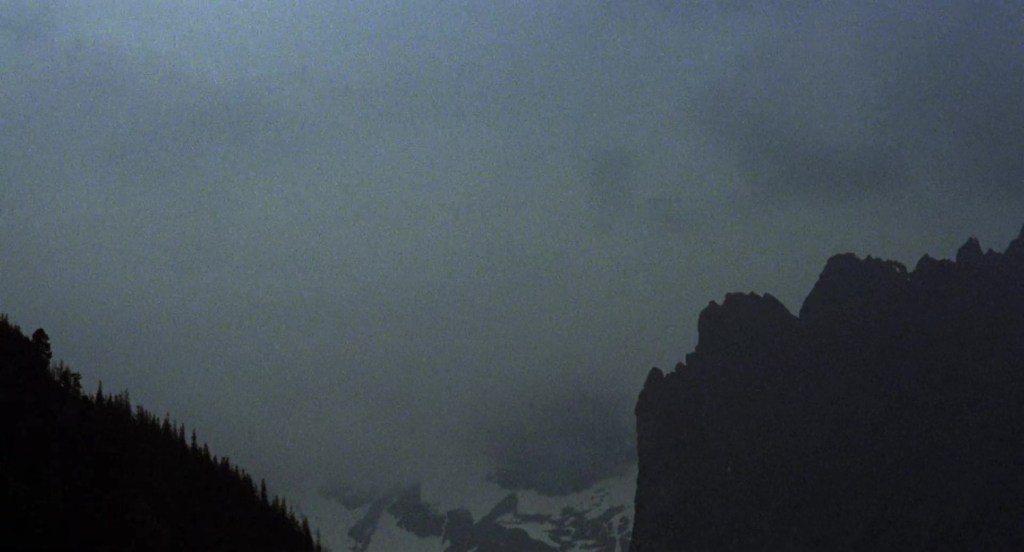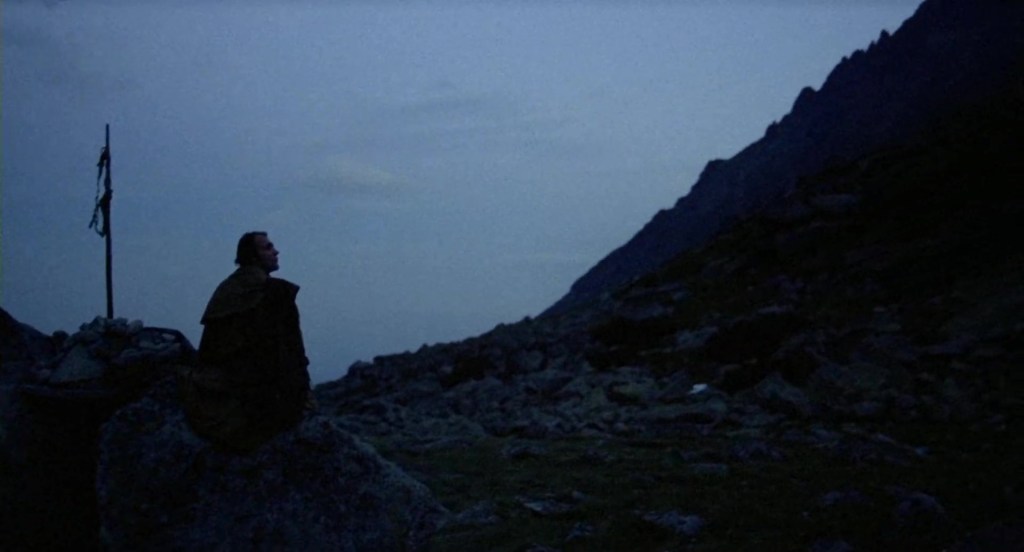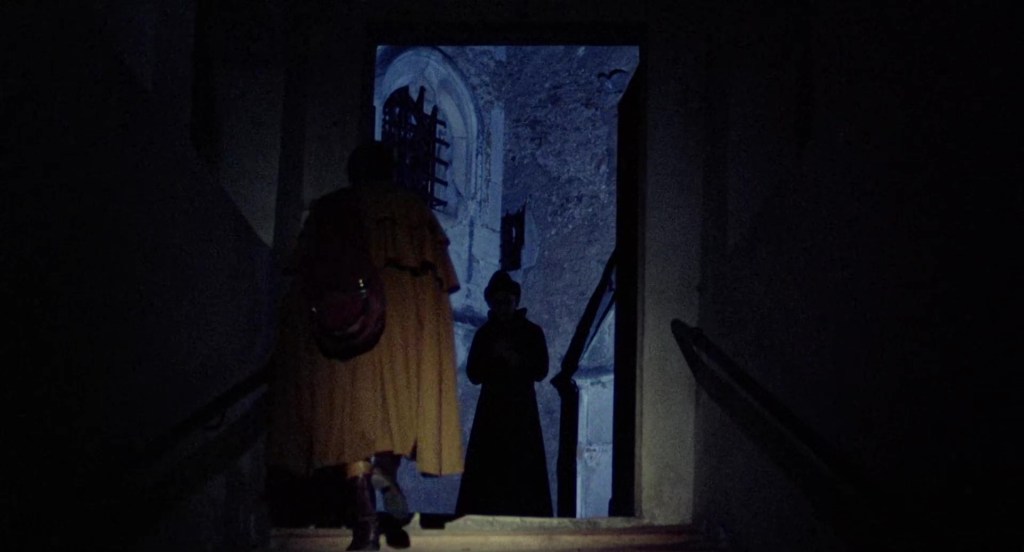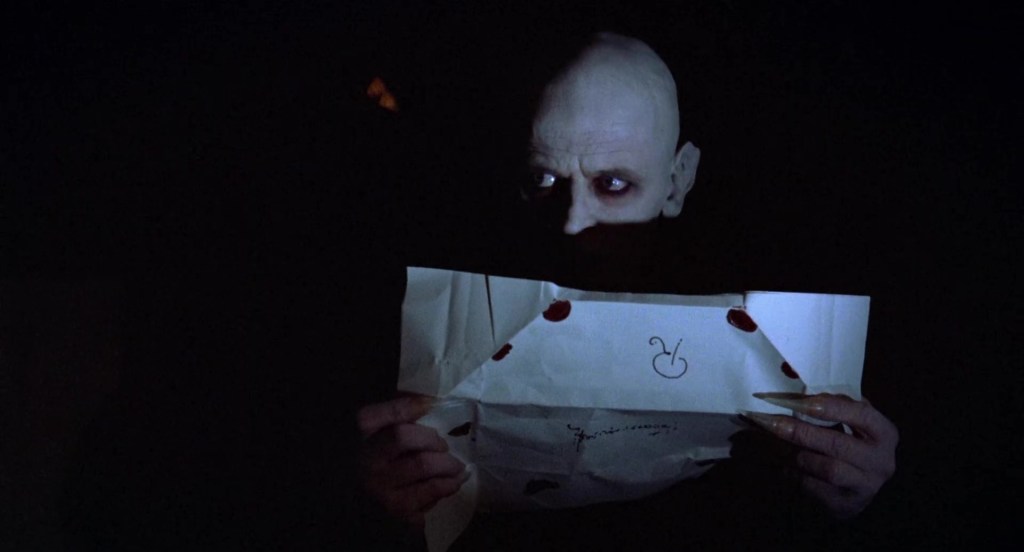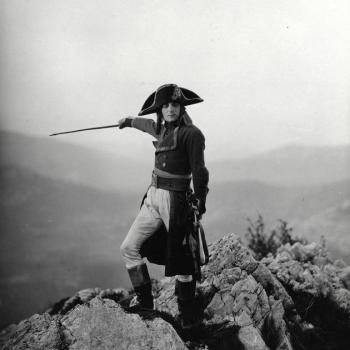
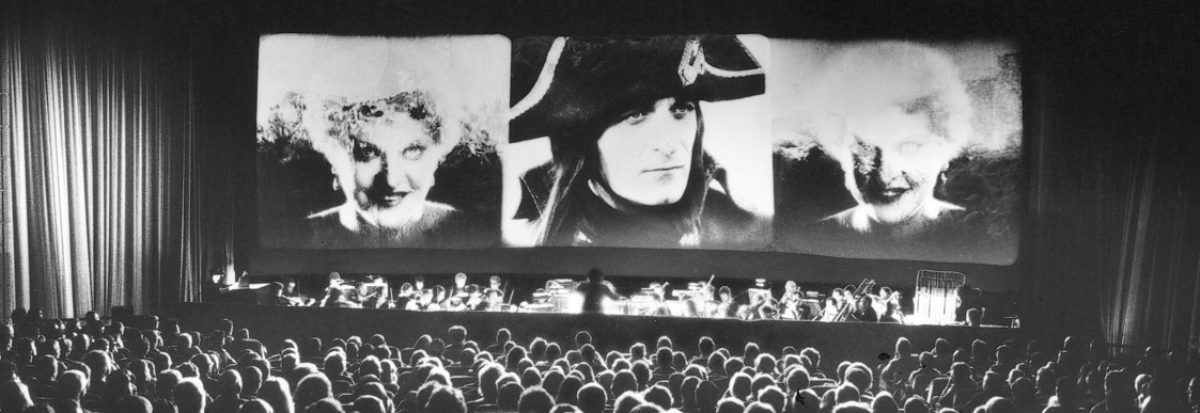
The cinematic afterlives of Nosferatu

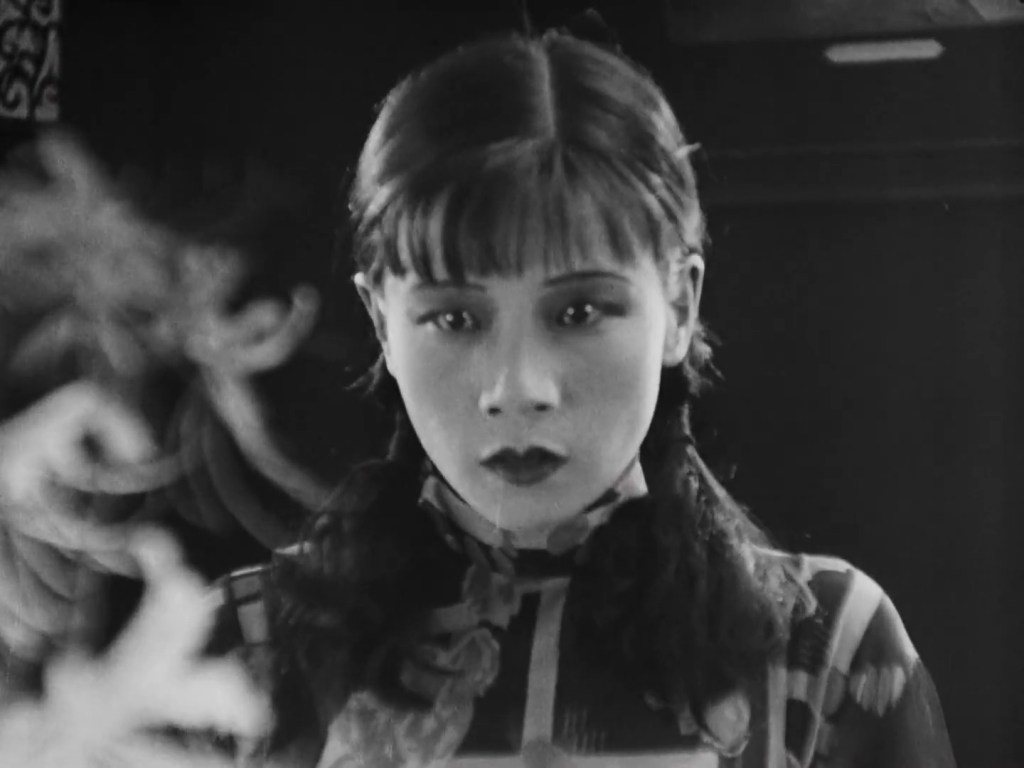
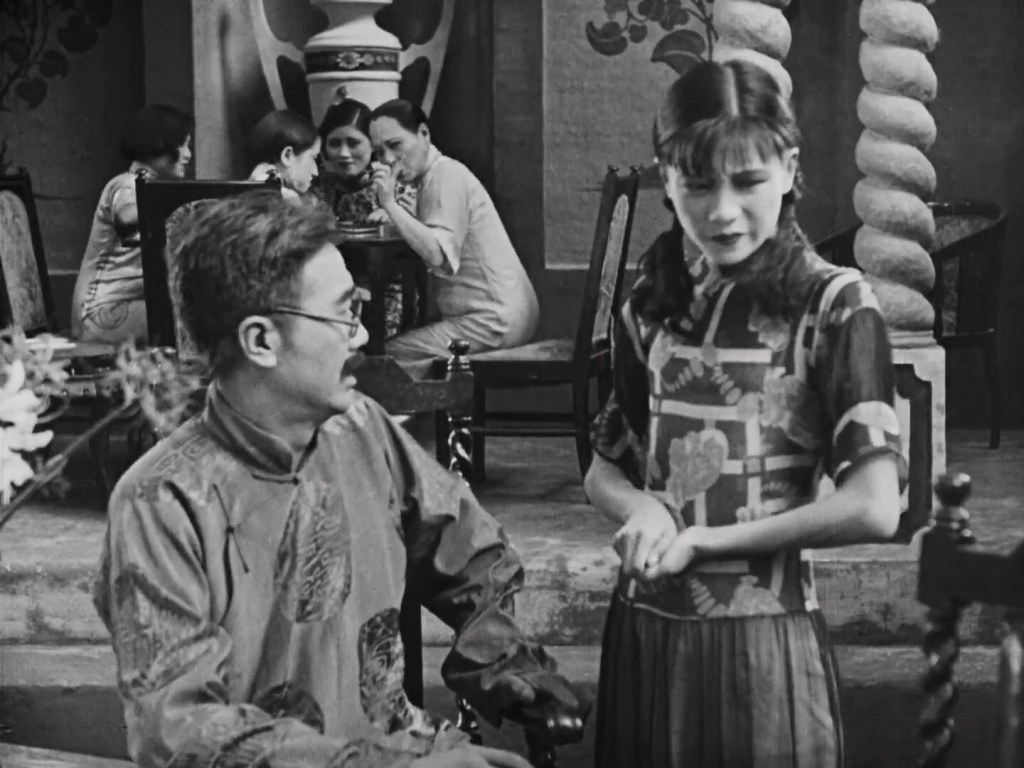
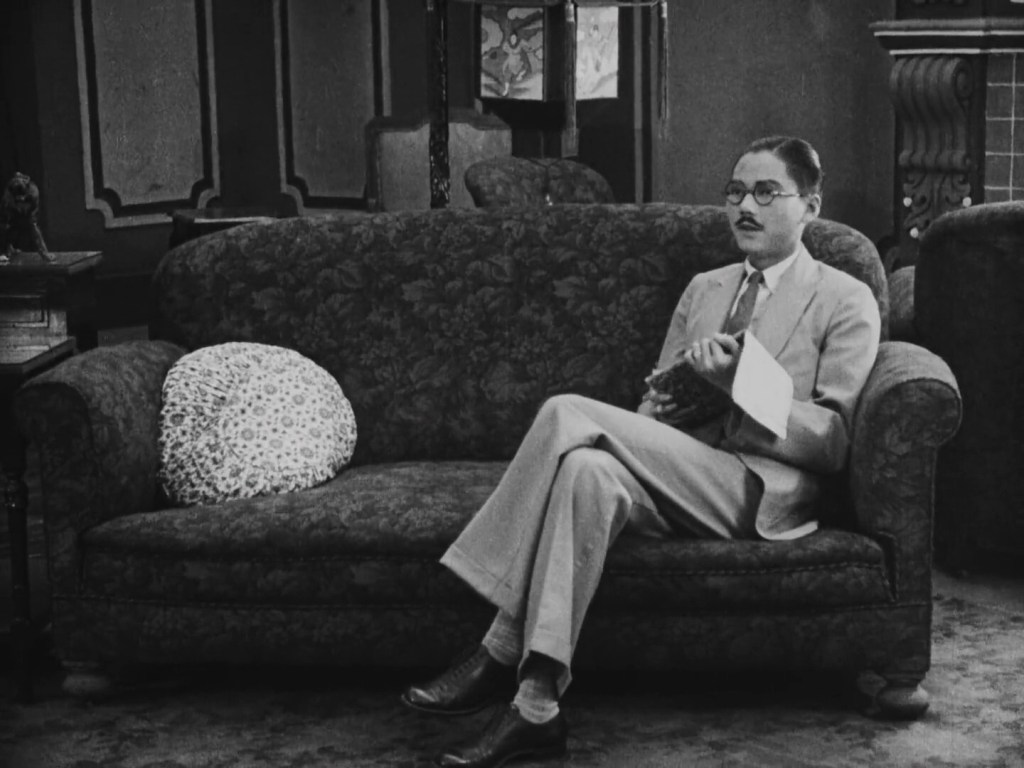
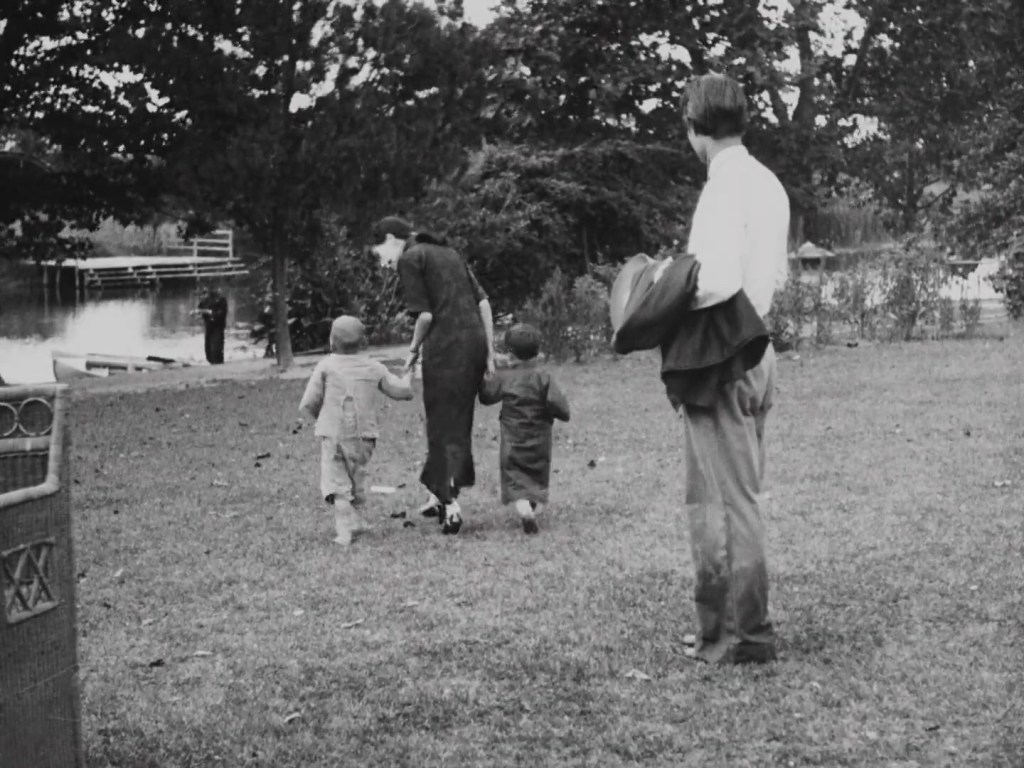
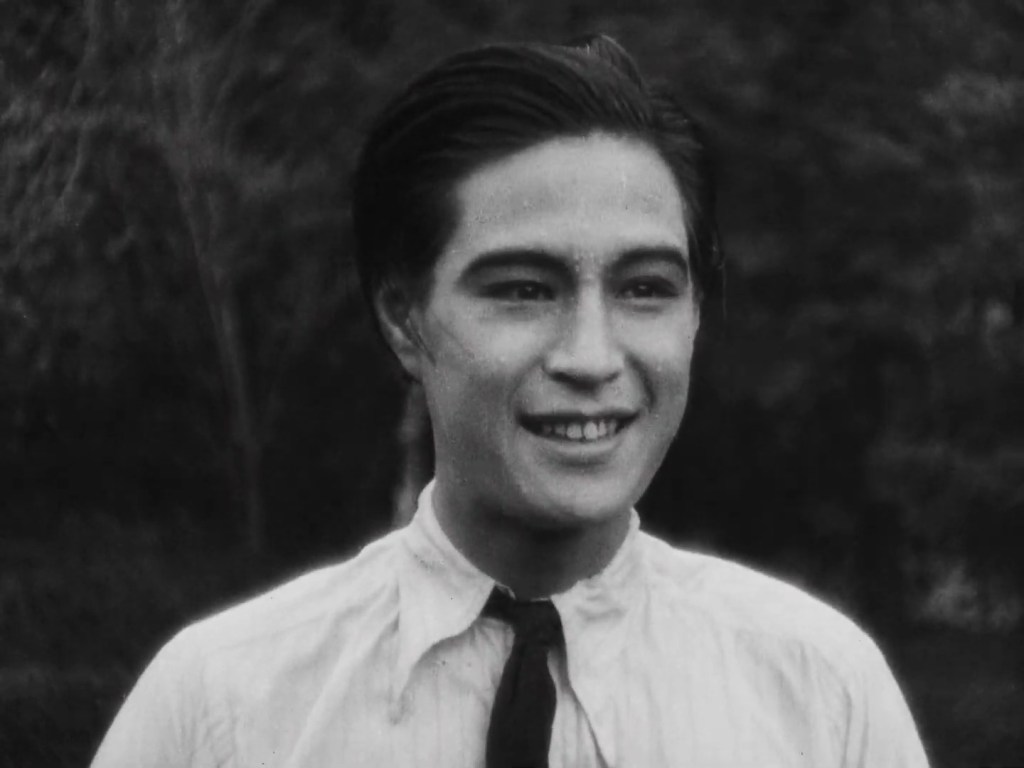
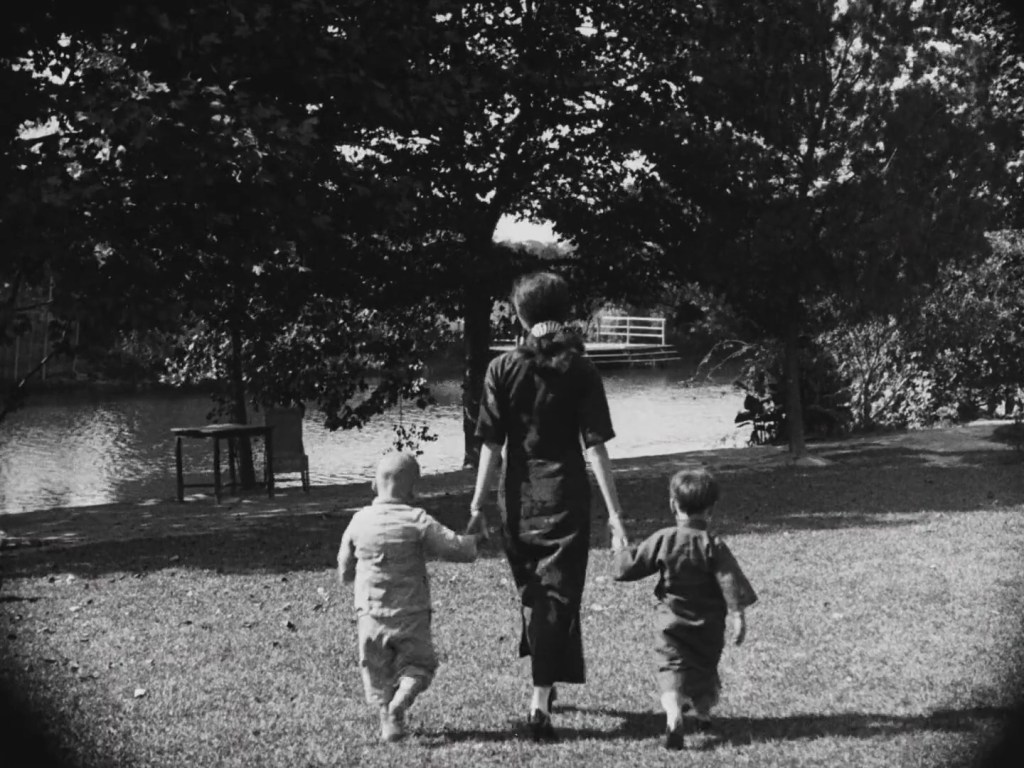
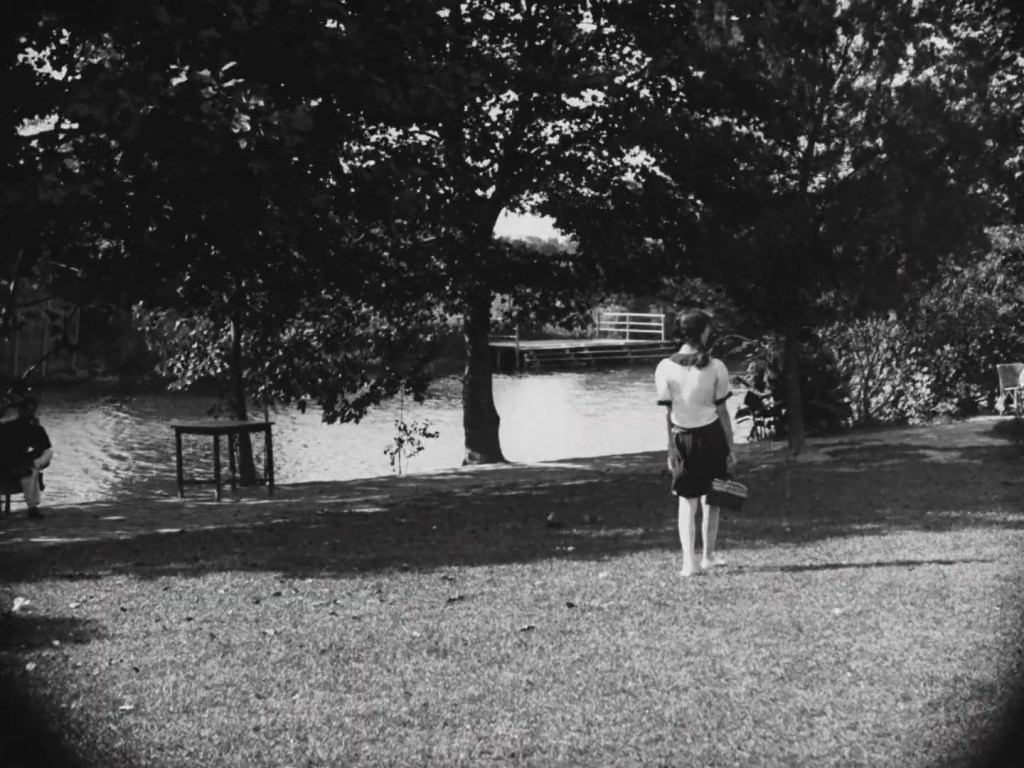
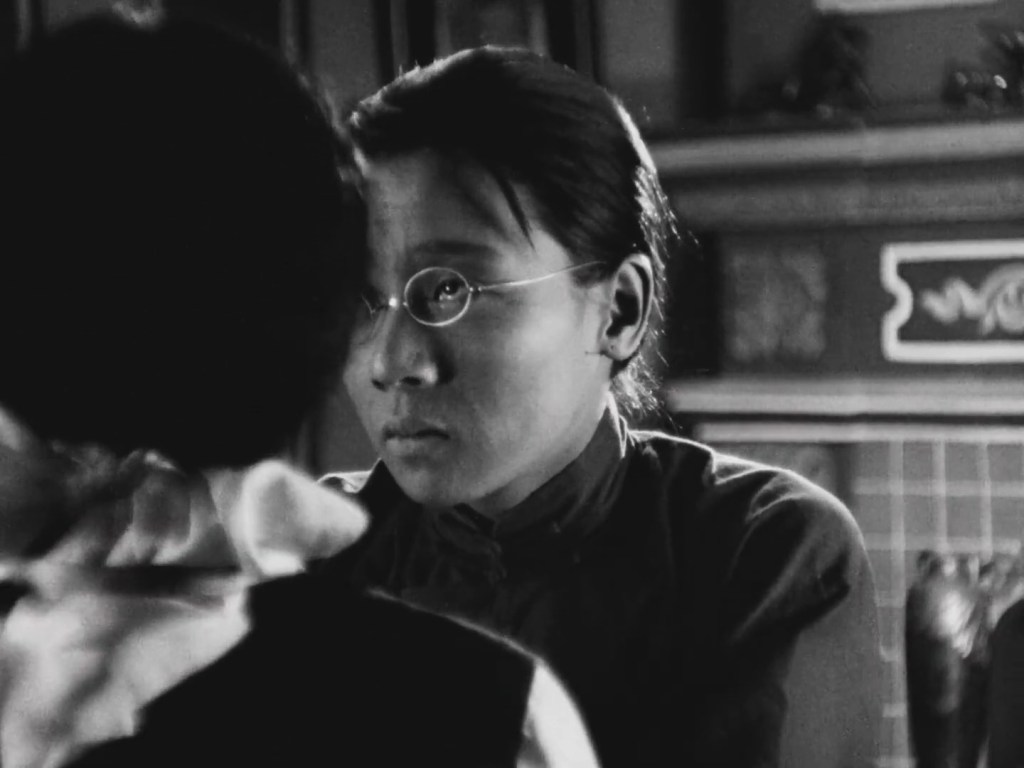
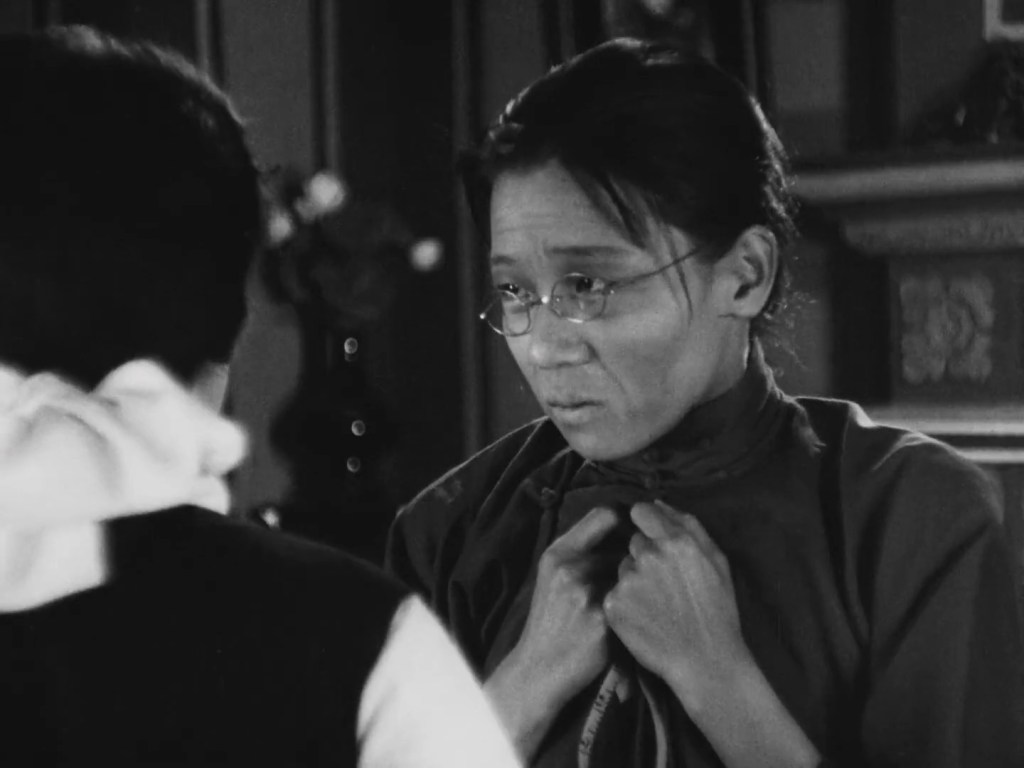
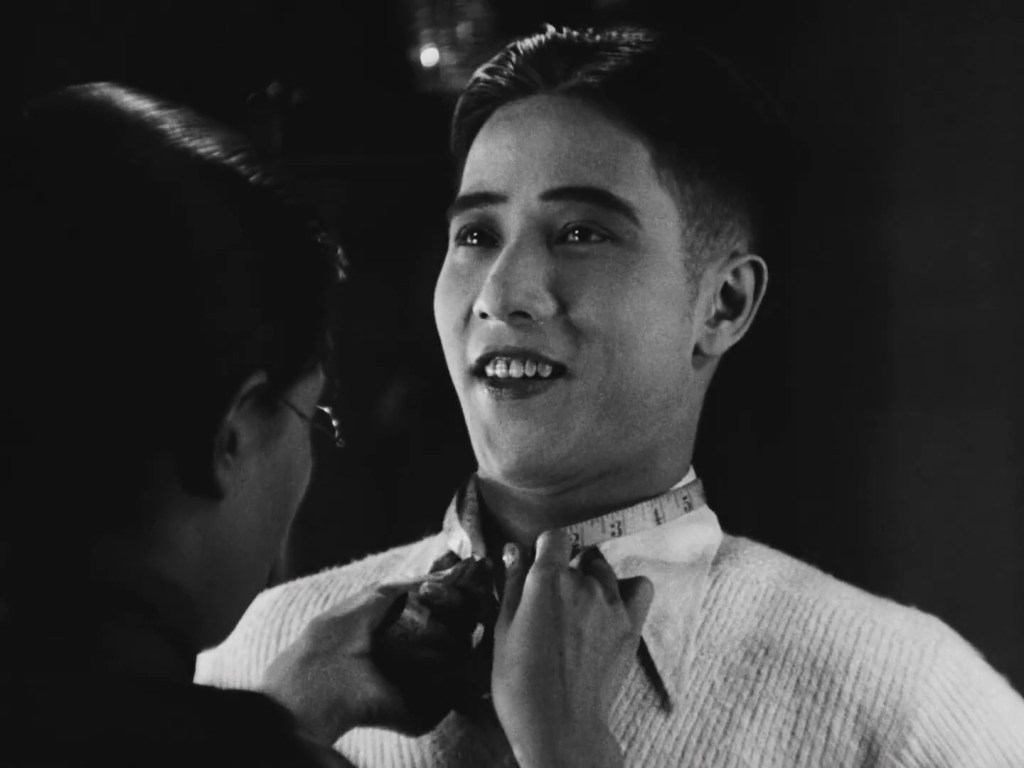
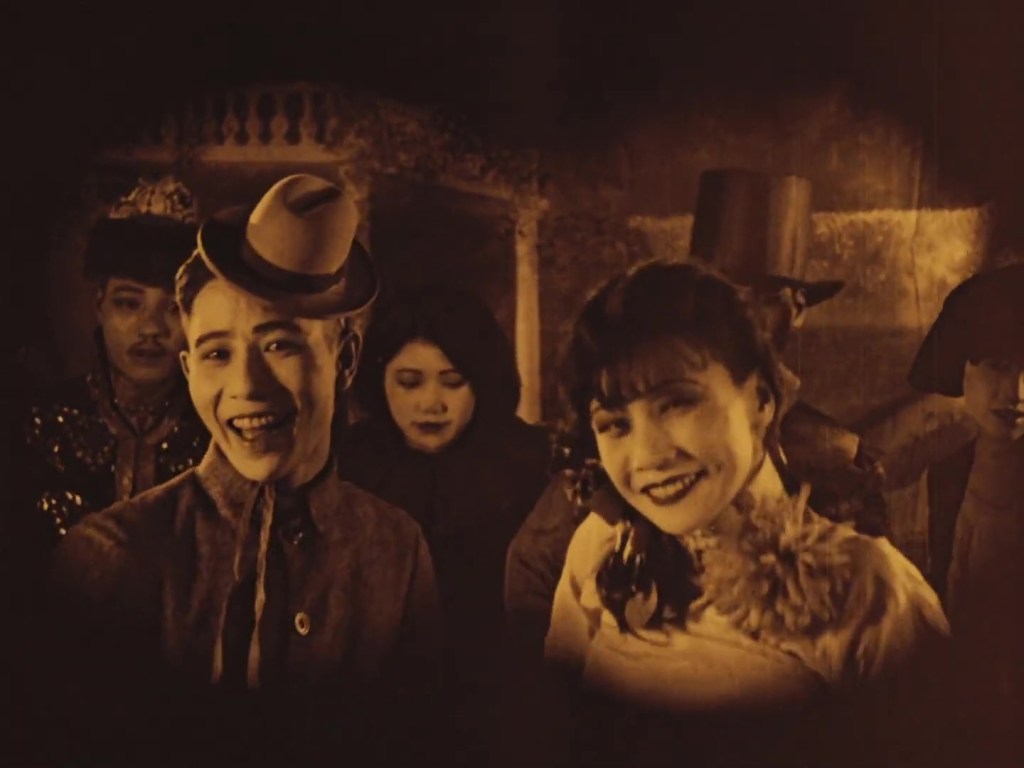
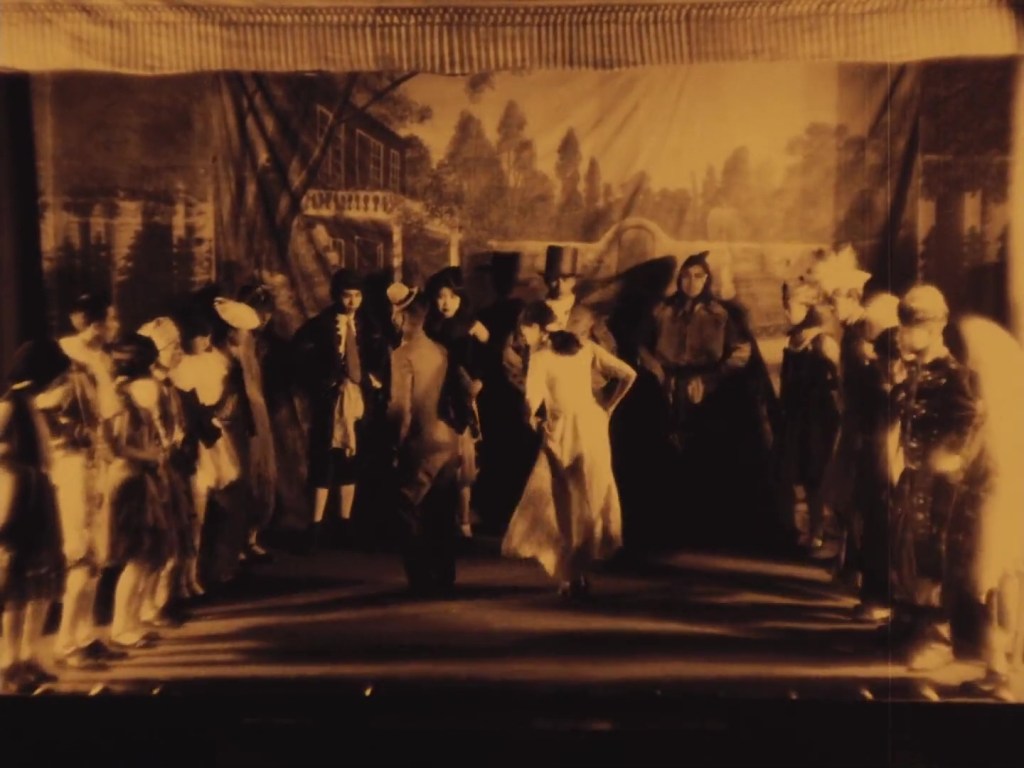
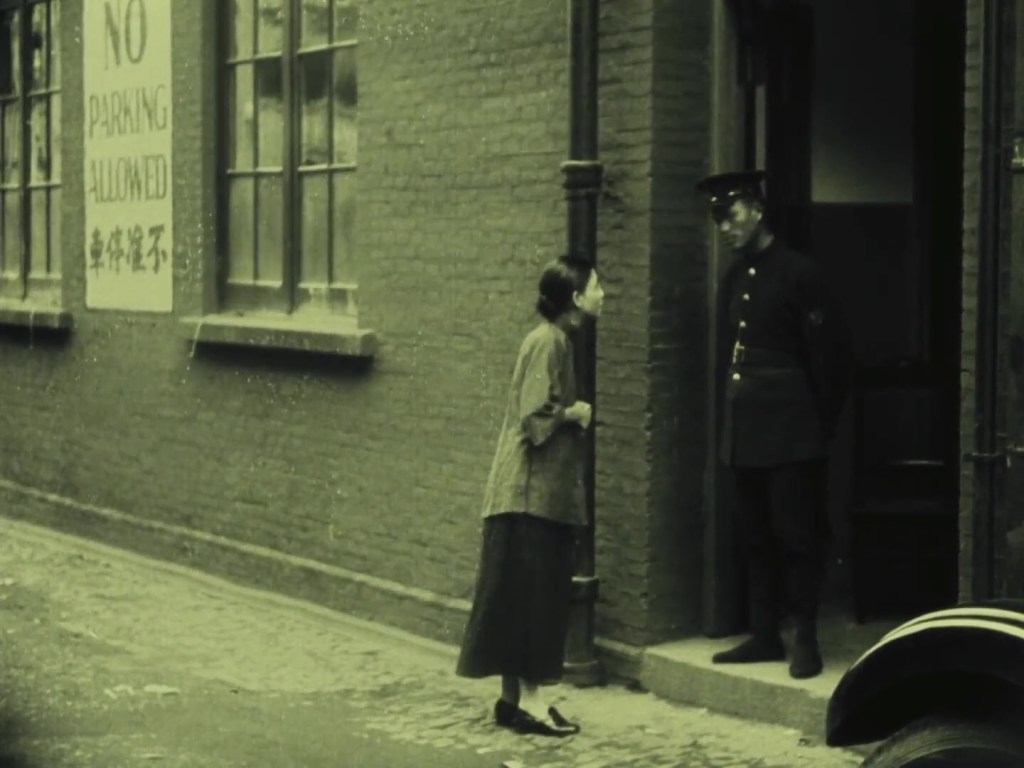
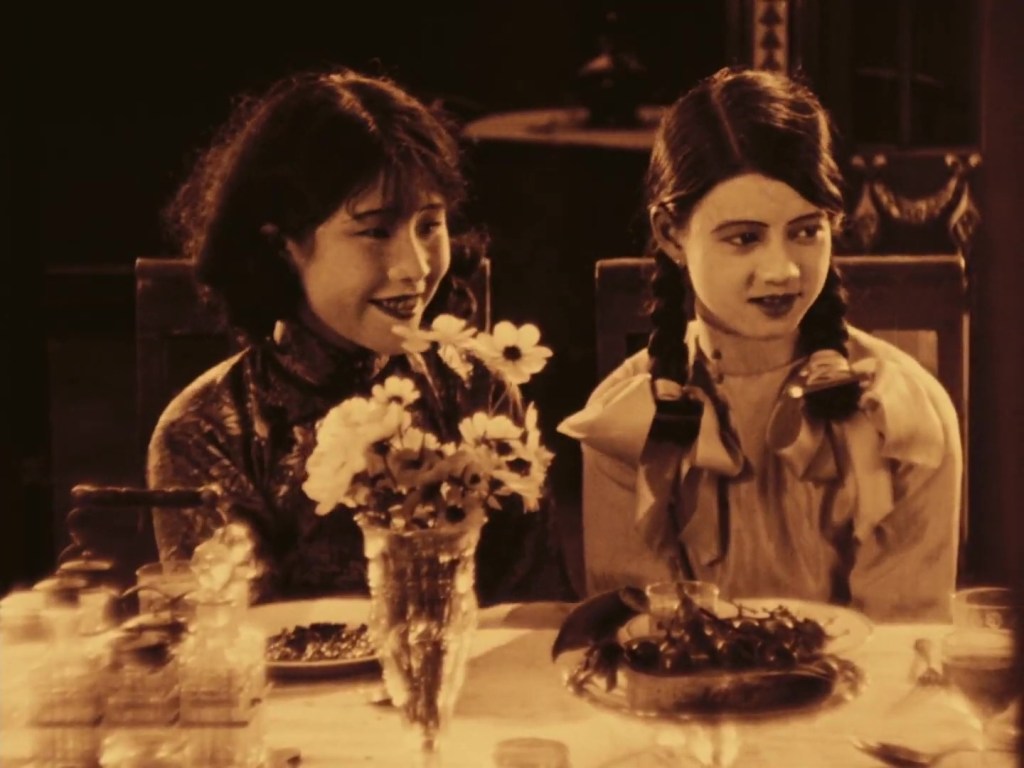
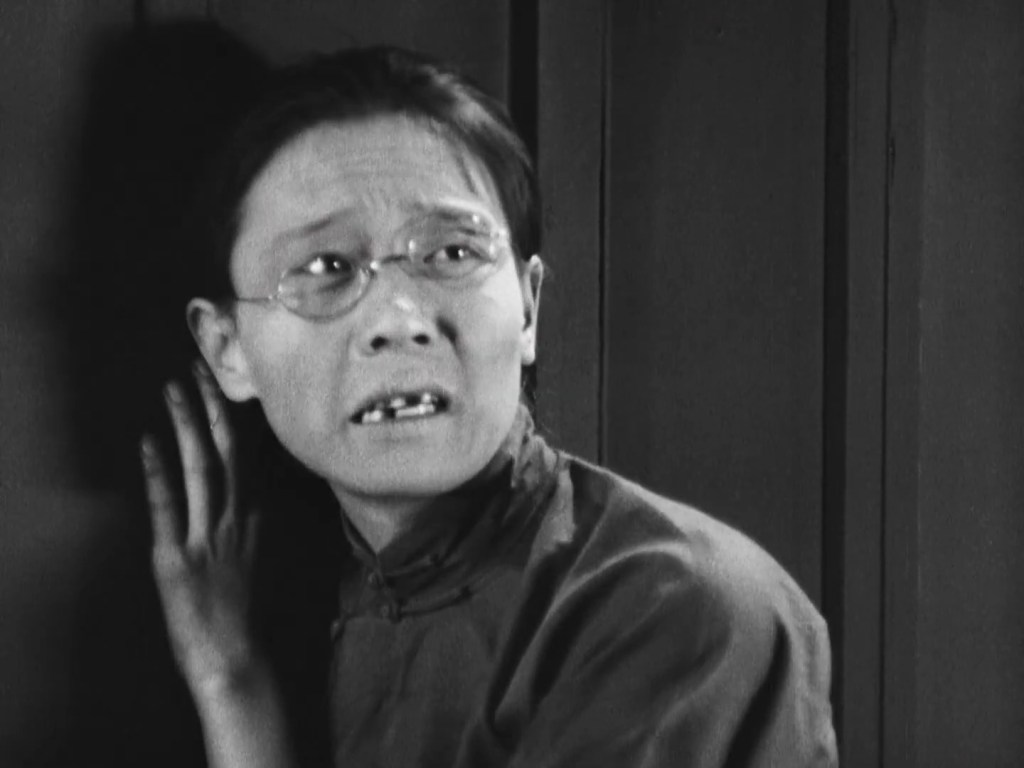
This week, I revisit some of the cinematic afterlives of Nosferatu – Eine Symphonie des Grauens (1922; Ger.; F.W. Murnau). After catching Robert Eggers’s remake of the film earlier this year, I discussed my thoughts on its relation to the silent original in a podcast with Jose Arroyo (freely available here). To prepare for this, I rewatched (and watched for the first time) several modern films that cite or rework Murnau’s original – and made notes on my thoughts as I went. As a kind of written addendum to the podcast, I have collated and attempted to polish these thoughts into what follows…

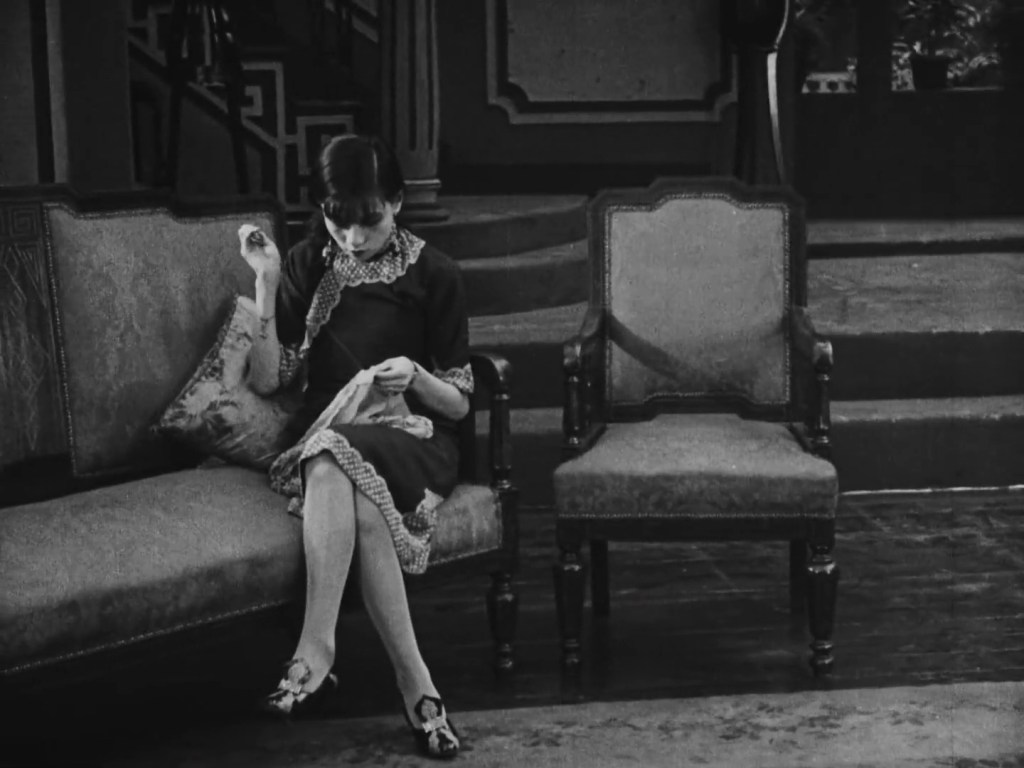
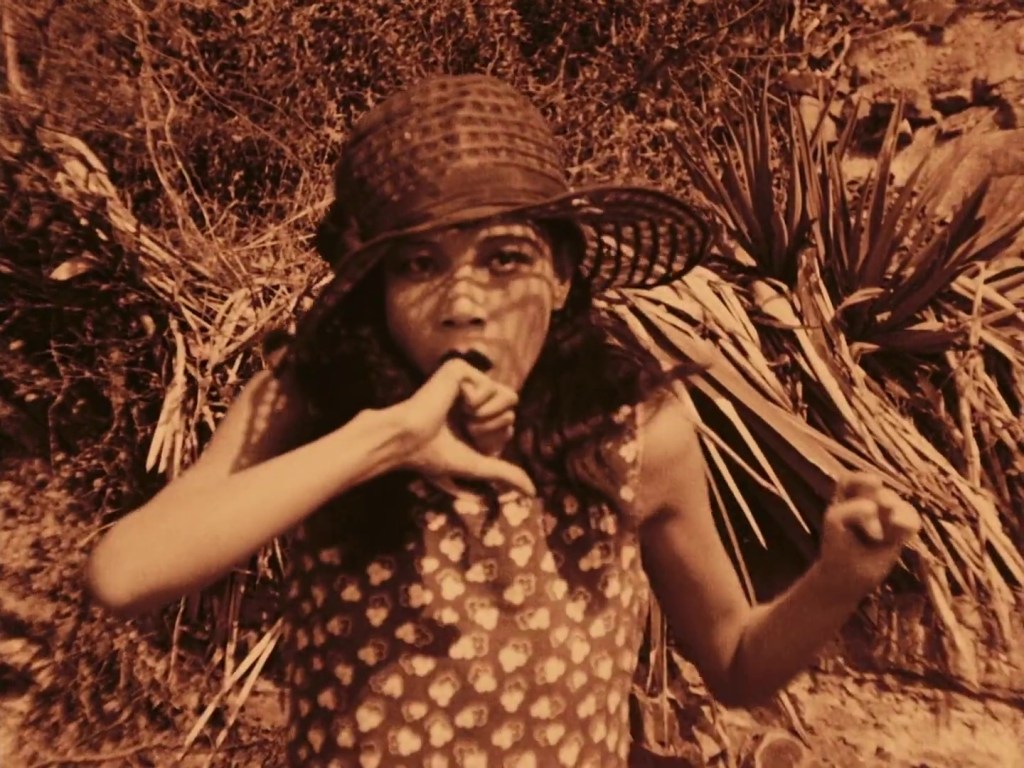
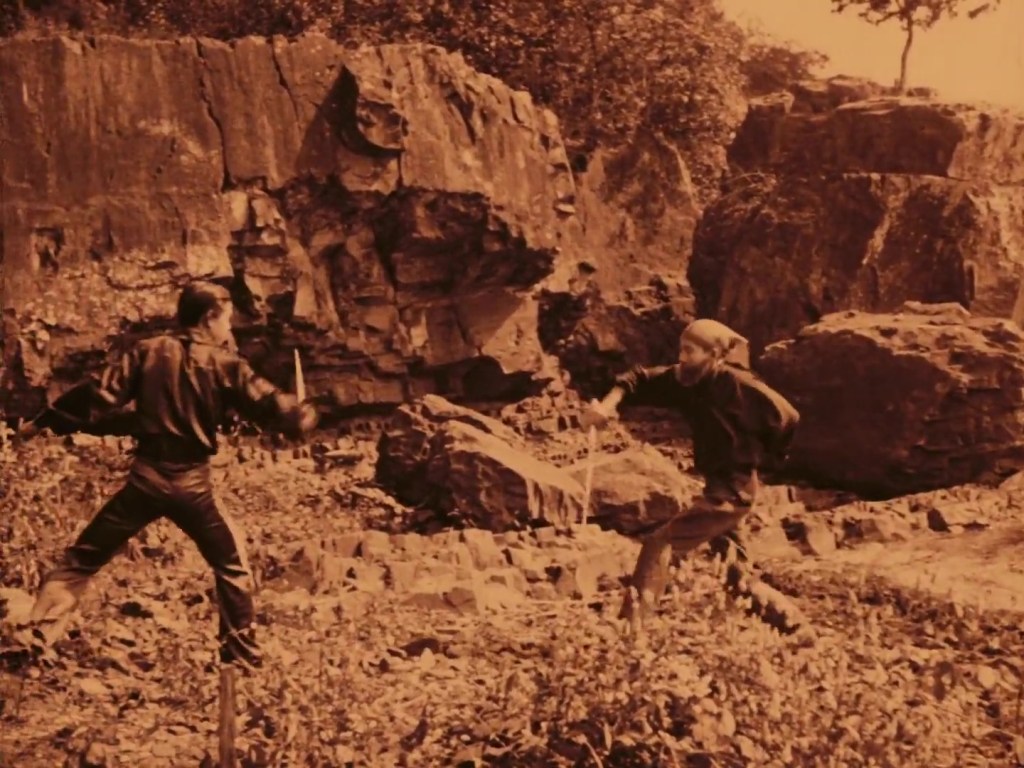
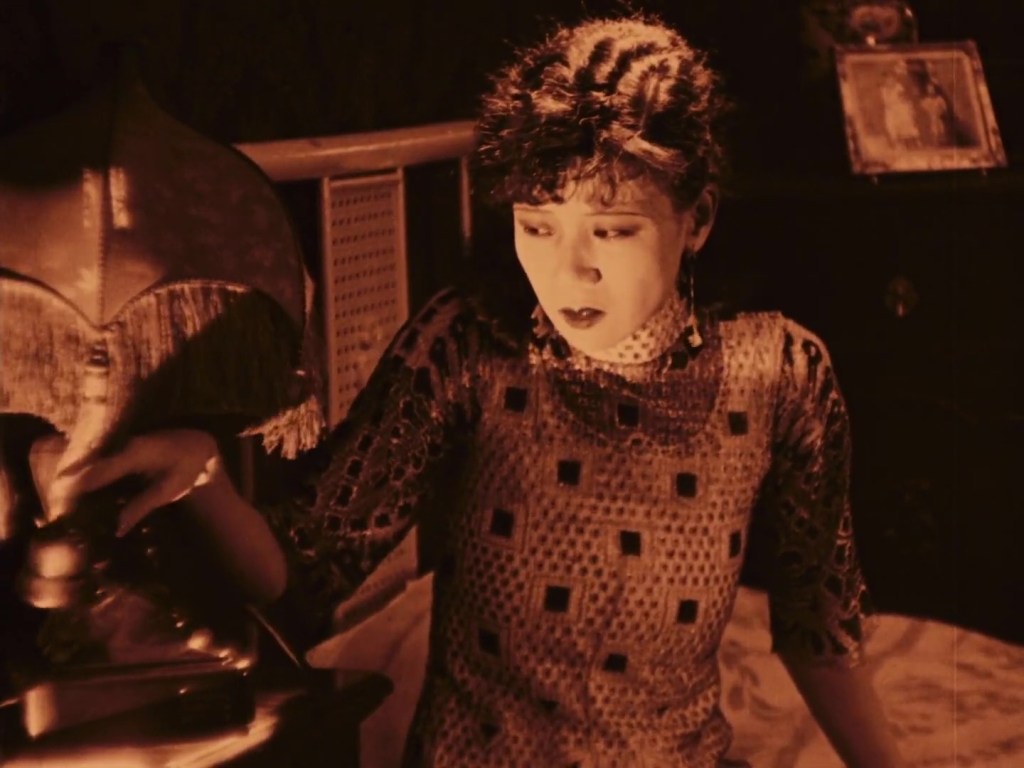
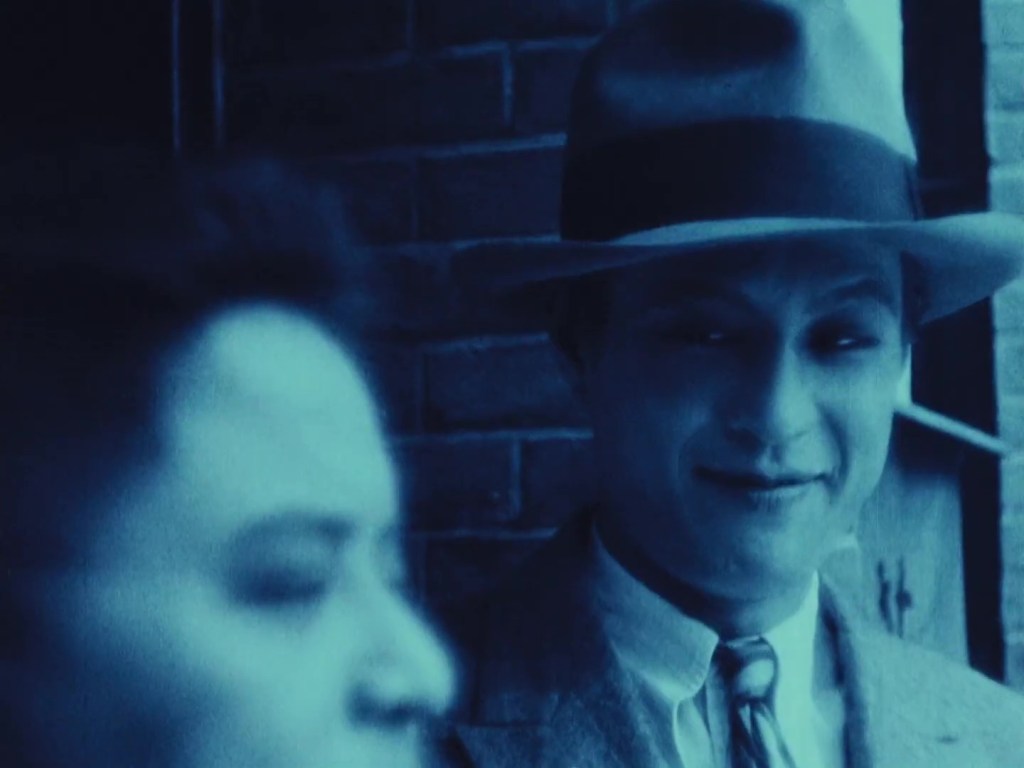
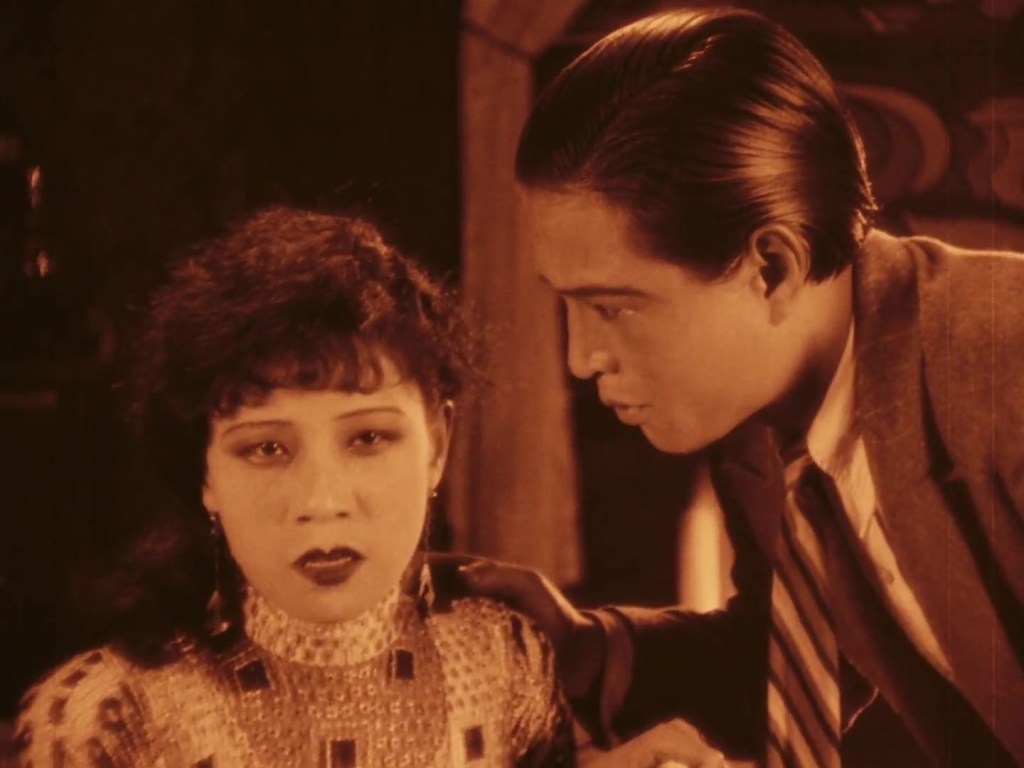
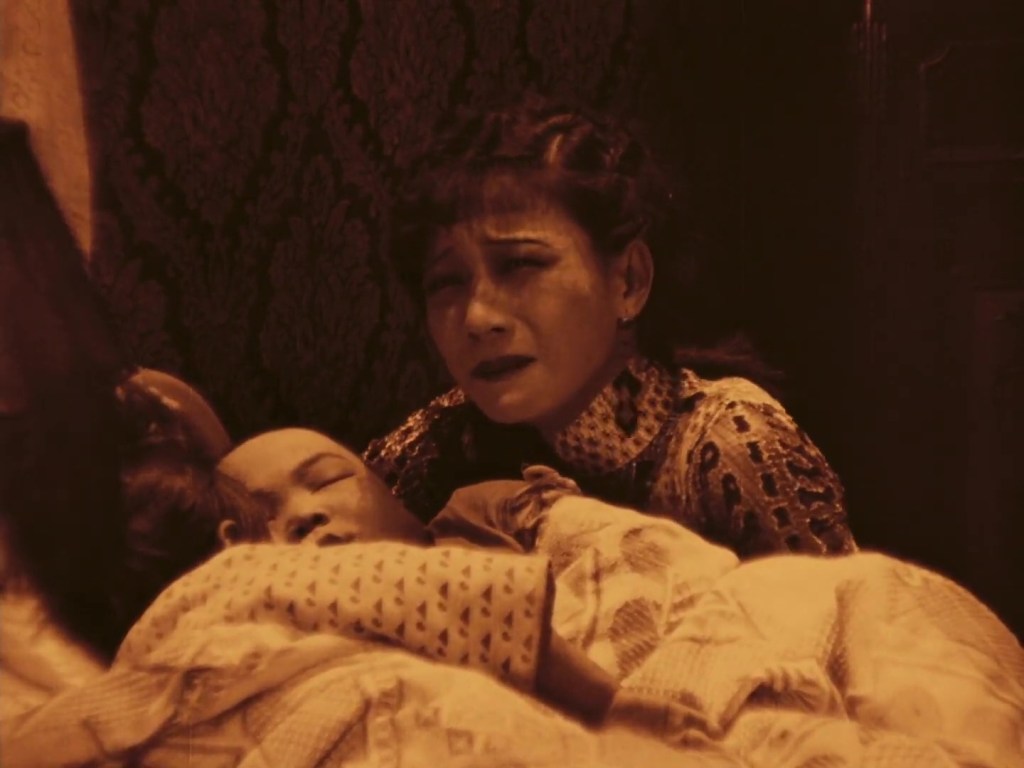
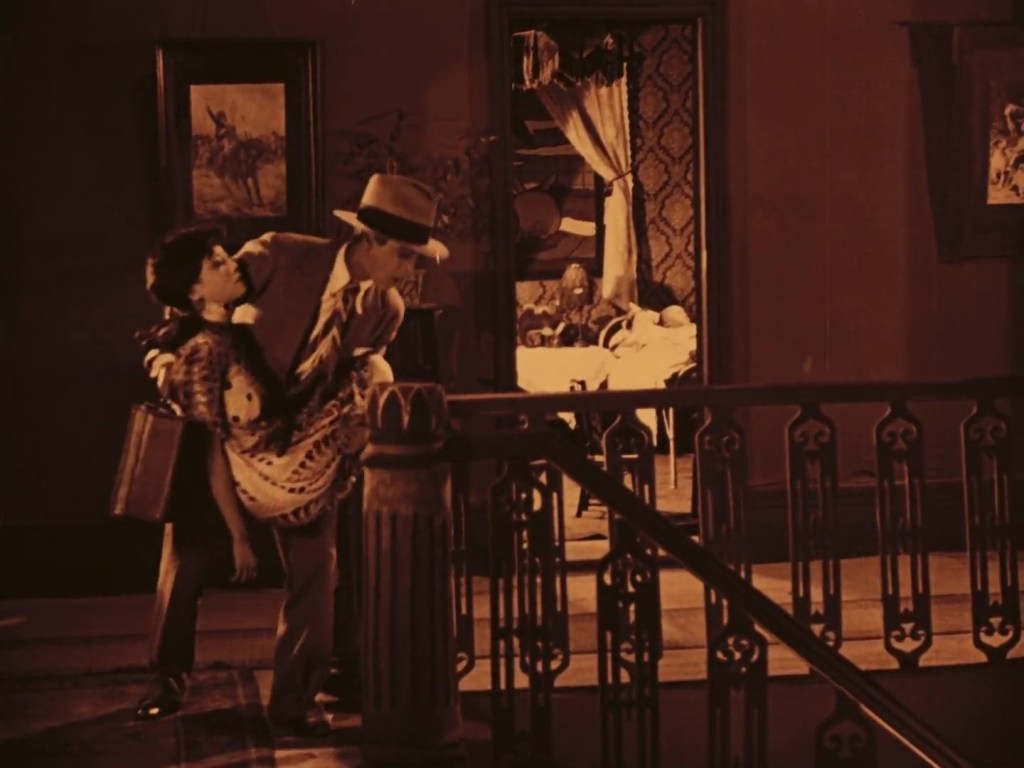
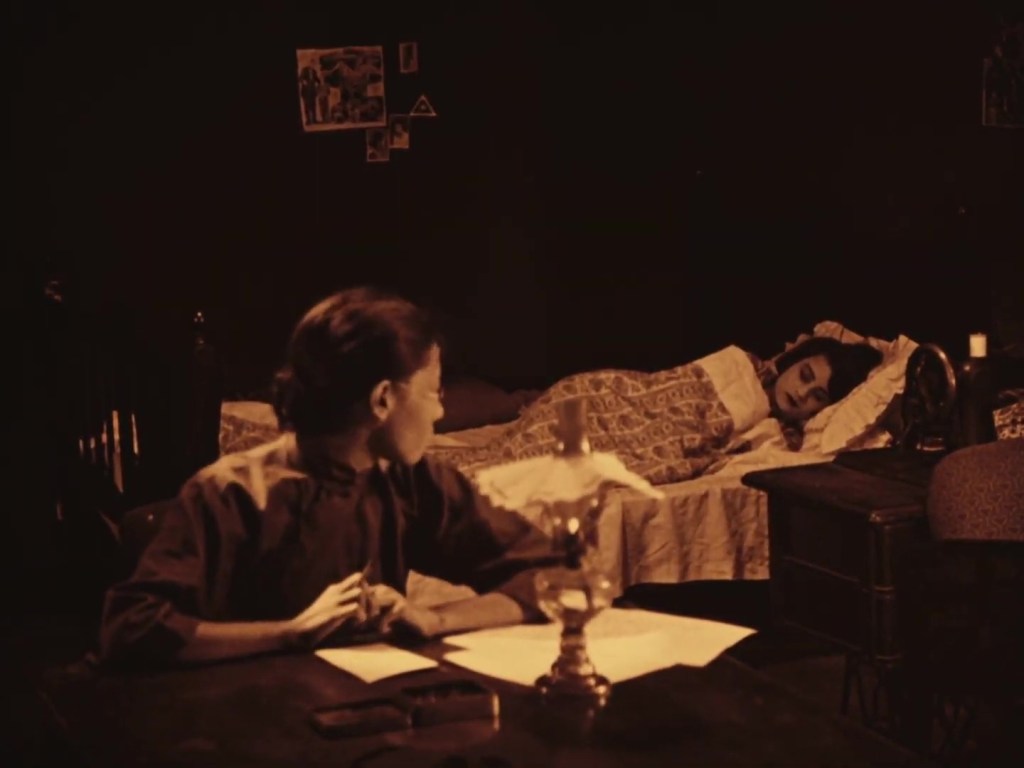
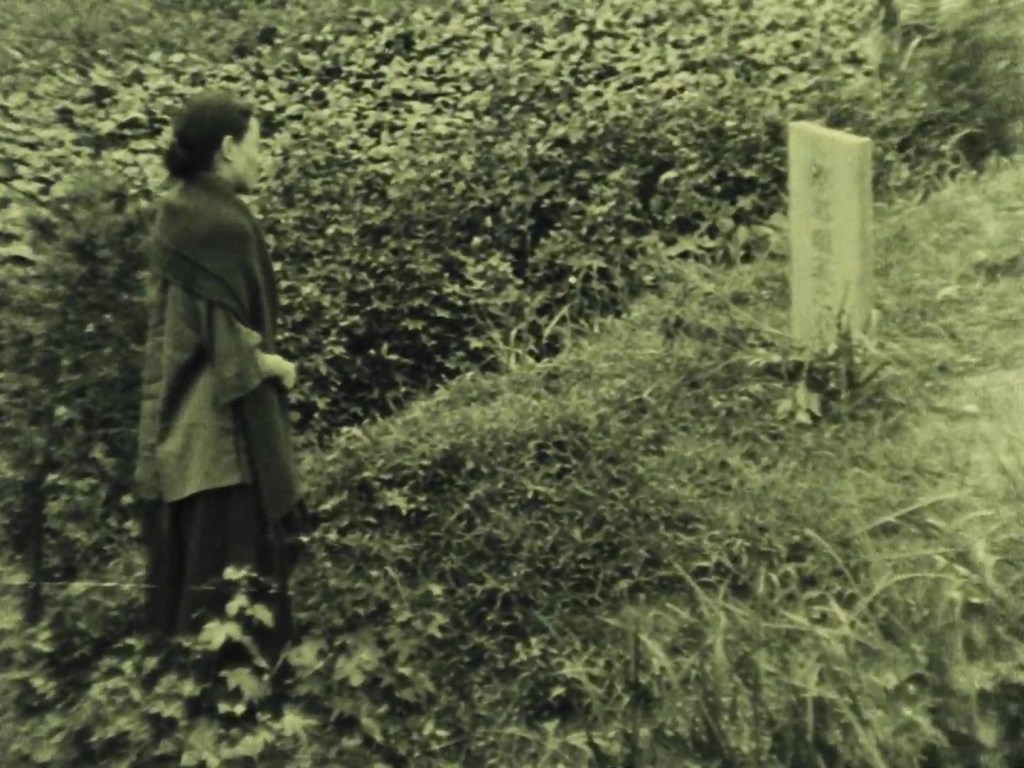
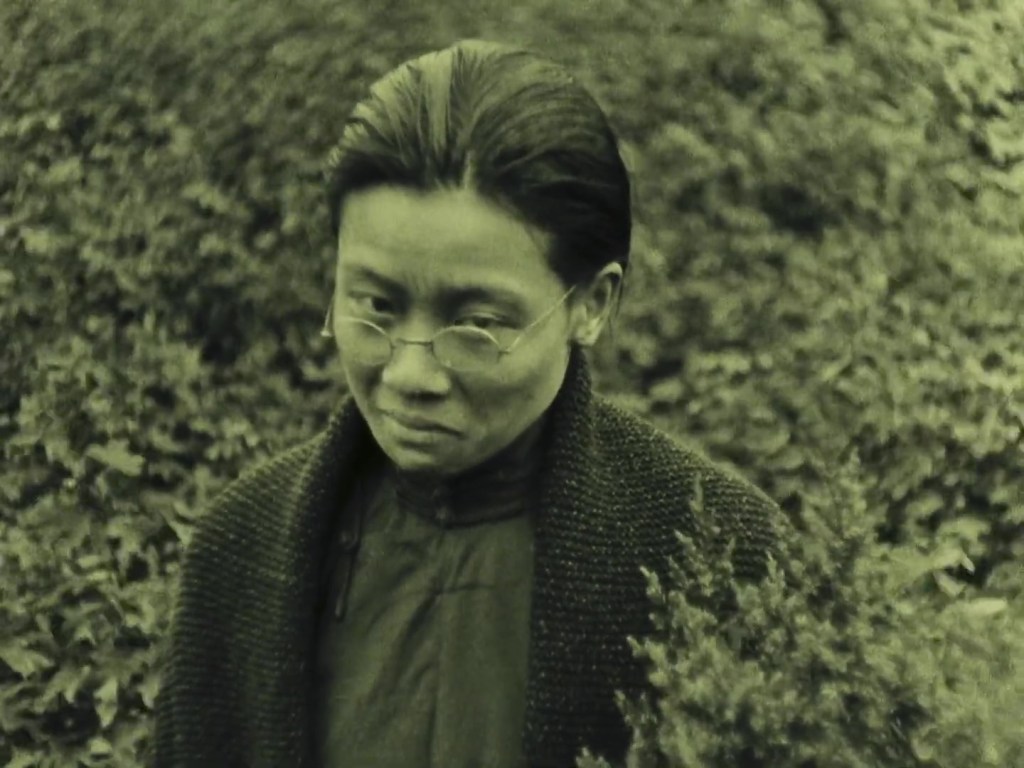
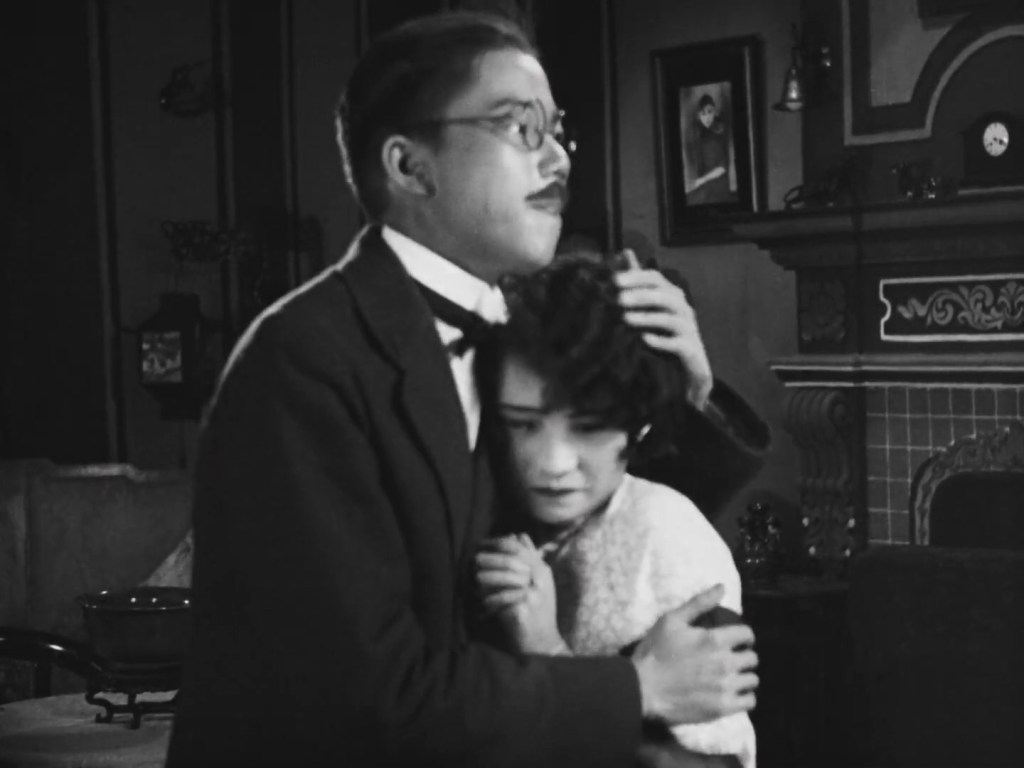
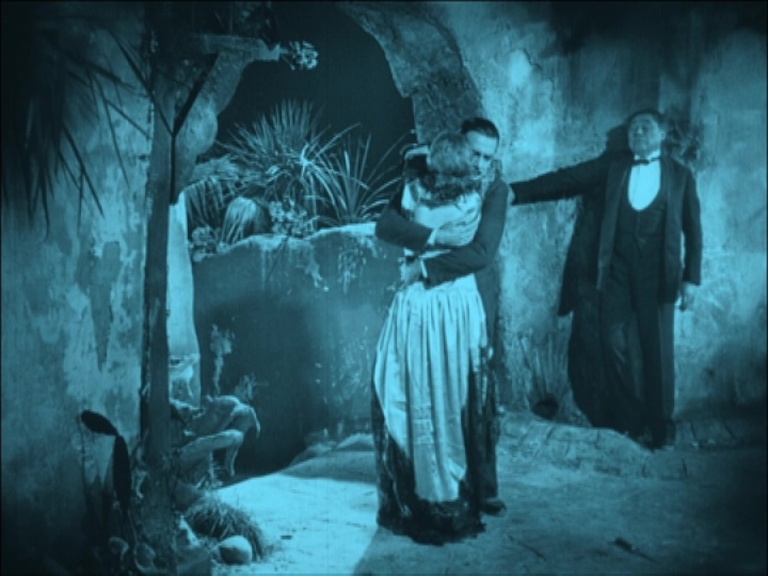
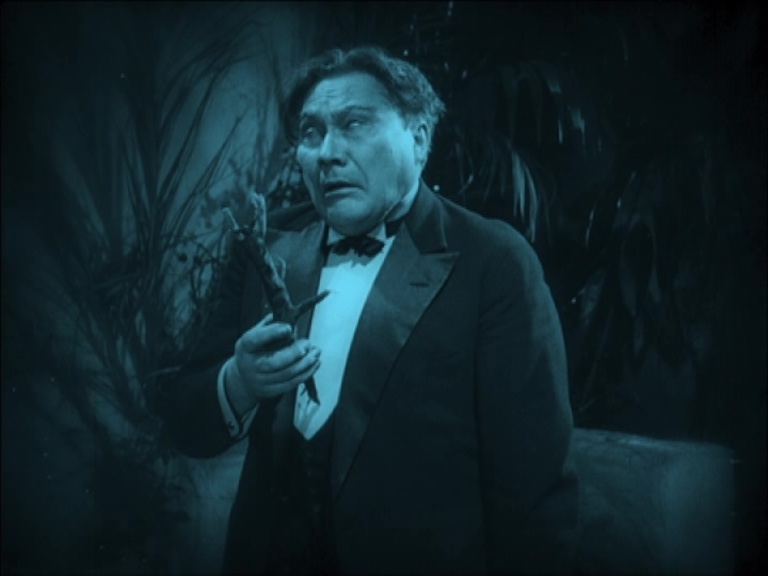
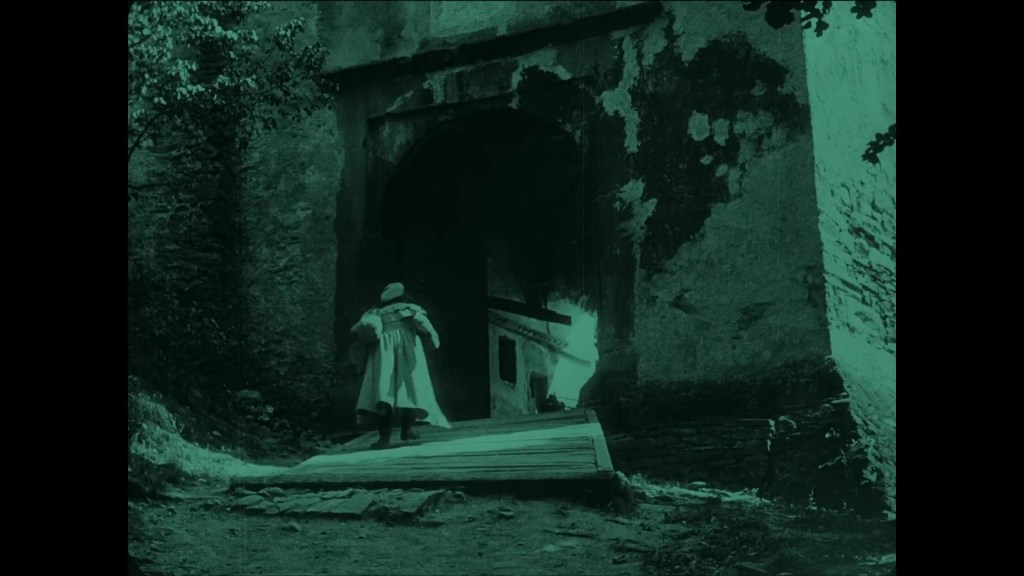
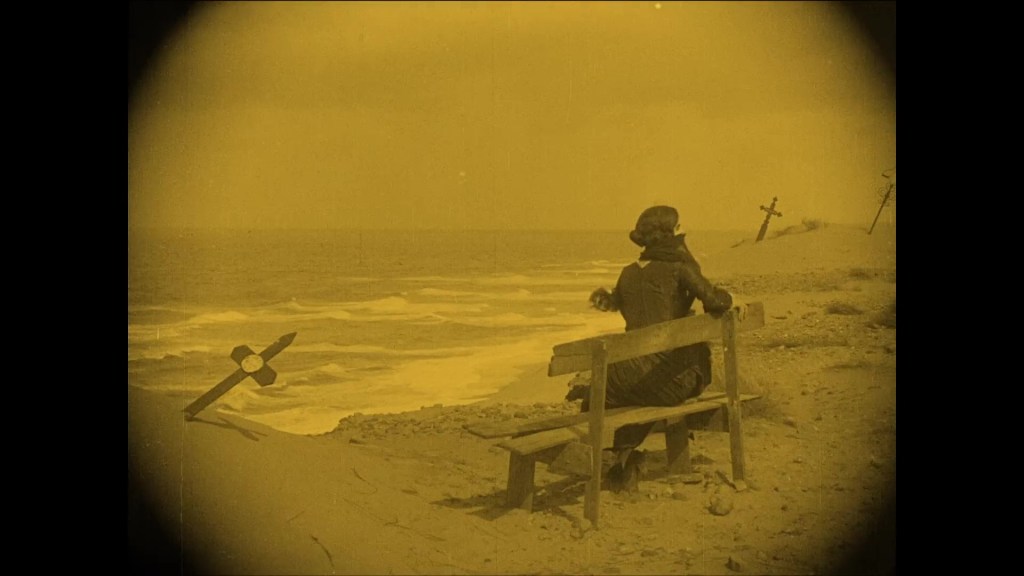
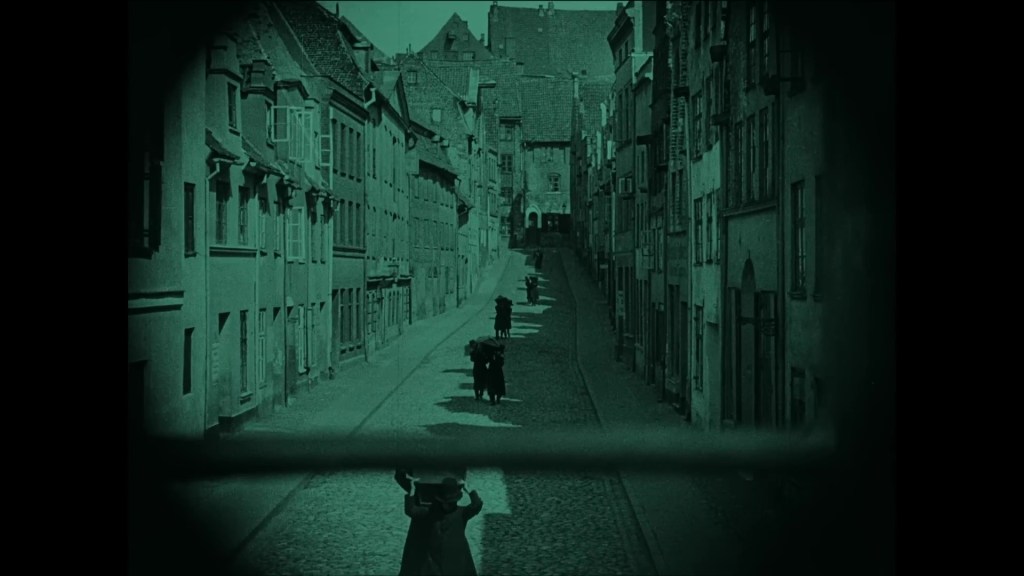
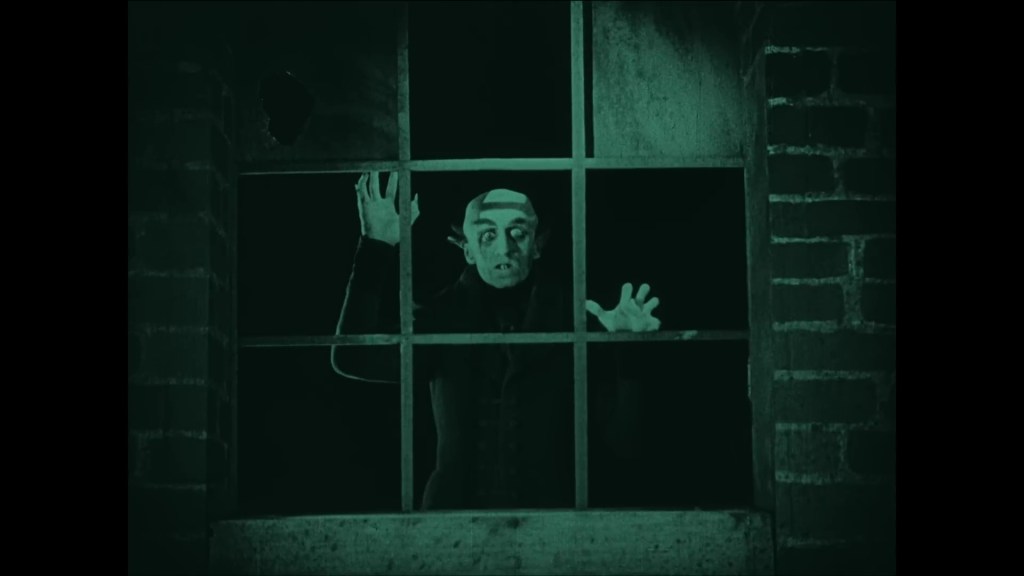
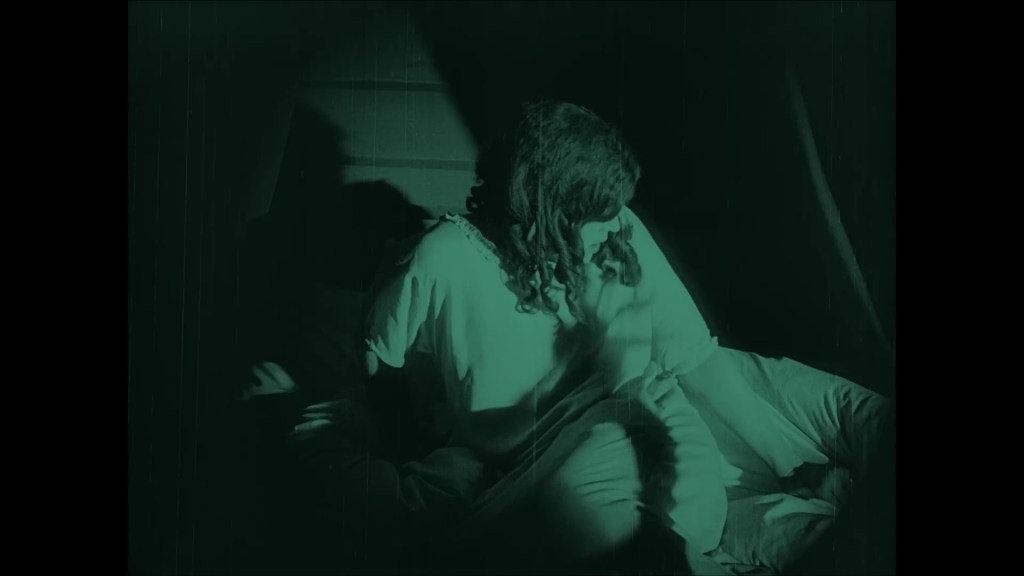
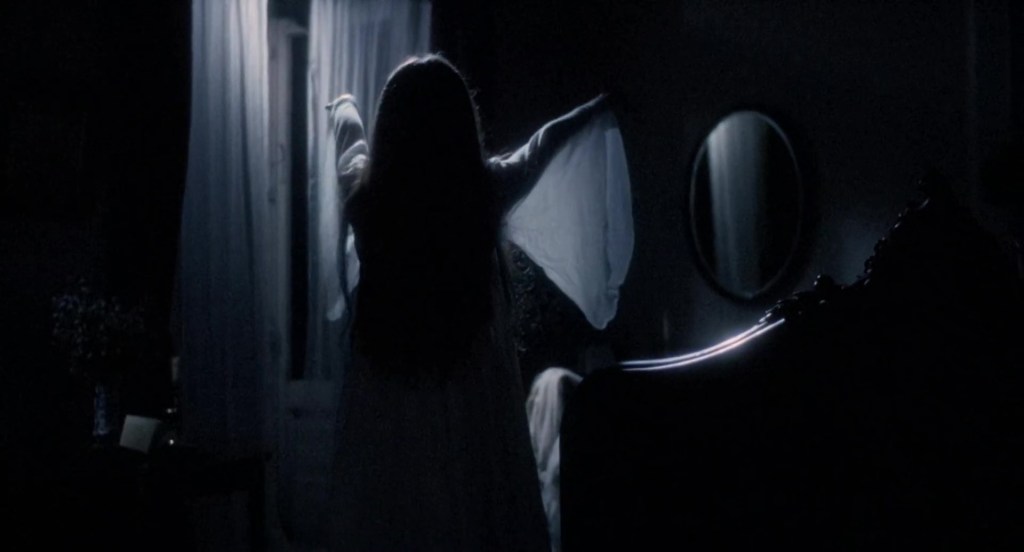
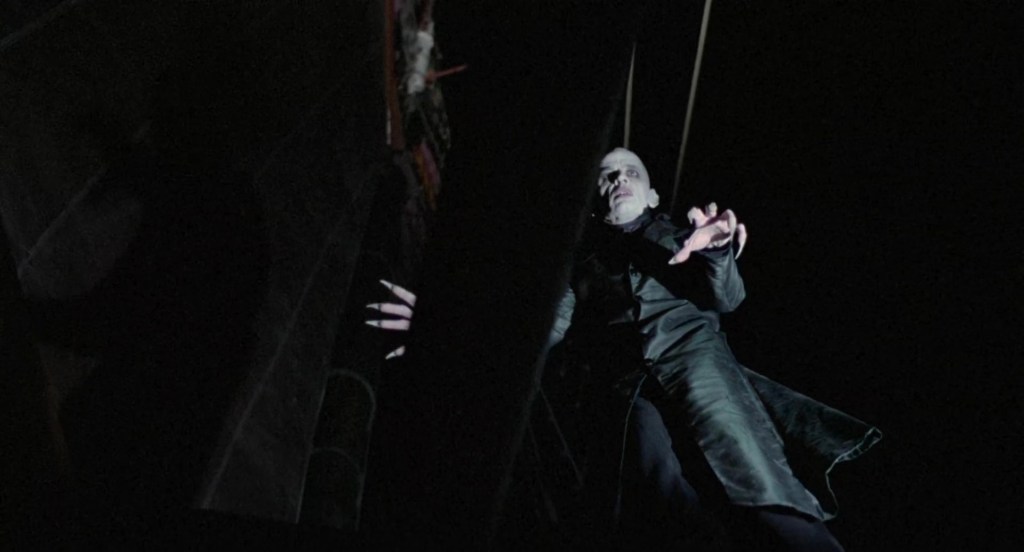
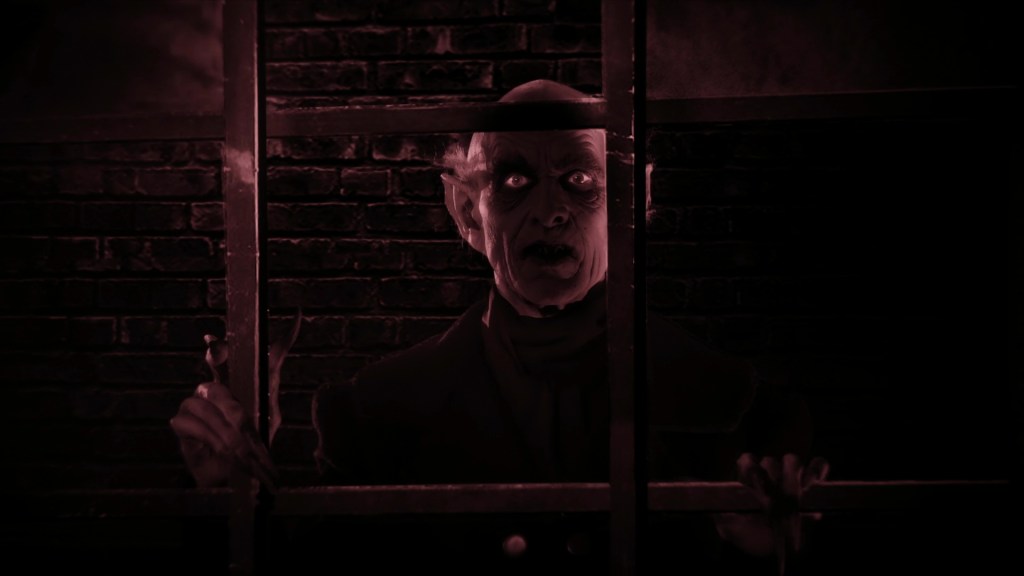
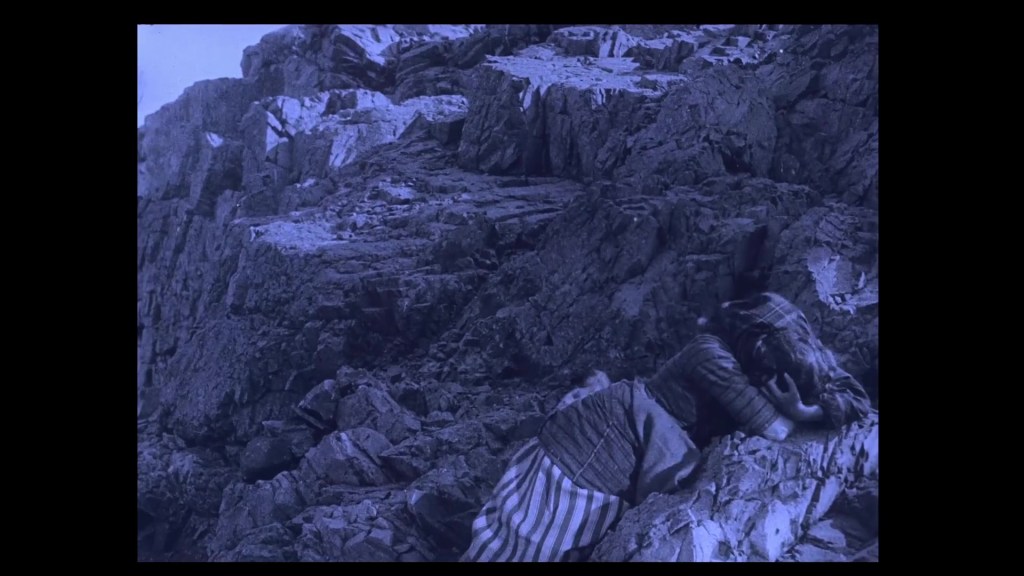
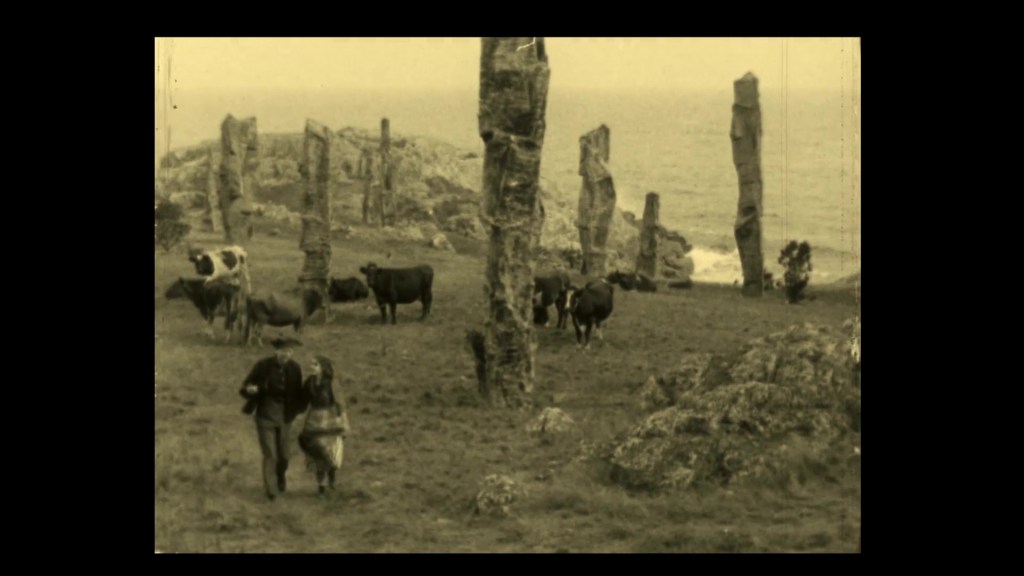
Nosferatu – Eine Symphonie des Grauens (1922; Ger.; F.W. Murnau). What can I say about this wonderfully strange and compelling film? Every image is perfectly composed, marvellously controlled. The world on screen, enriched by tinting, has marvellous texture and resonance. Nosferatu is a fantasy and a period piece, but both the fantasy and the period are rooted in real places – and, for me, its exteriors truly make the film. The town, the forest, the mountains, the castle, and the coast – these locations have such a sense of pastness, and such pictorial power, that they sink into your memory. No amount of parody or pastiche can lessen their value. So too with the performers. They are cinematic archetypes, enacting some kind ritual drama that future generations feel obliged to mimic. But the performances are also playful and delightful, even their most naïve gestures somehow innocent of cliché. There is more than a touch of camp about Max Schreck’s Nosferatu, but a camp that is always sinister. His sexual predation is not quite human; interpreting his desires and motives is like trying to understand the consciousness of an animal or an insect; those piercing eyes are bright with a life than cannot be fathomed. Murnau shapes Nosferatu’s otherworldliness through the darkness from which he emerges, the shadows he casts, the untenanted spaces he inhabits. The film plays with his ability to move across space and time: he walks with the ancient deliberation of an old aristocrat in one scene then scuttles at terrifying speed in another. The figure is allied with cinema’s own uncanniness, the medium enabling the monster: his carriage hurtling through a forest like a berserk toy, his erect body rising in magical defiance of gravity from his coffin. All this richness of image and gesture is enhanced by Hans Erdmann’s original score, best heard (I’ll have you know) via Gillian B. Anderson’s edition rather than the version released on various DVD/Blu-rays. (Anderson’s edition more closely replicates Erdmann’s original orchestration but remains, sadly, available only on a long out-of-print CD.) As it shifts from sequence to sequence, Erdmann’s music moves from the lyrical to the rustic and the elemental; it is charming, brooding, devastatingly simple. As its title states boldly at the outset, Nosferatu is a symphony of horror – a truly complete work of cinematic and musical art. As much as its images and ideas have been treated as a grab bag for future generations to ransack, it still holds an un-replicable splendour.

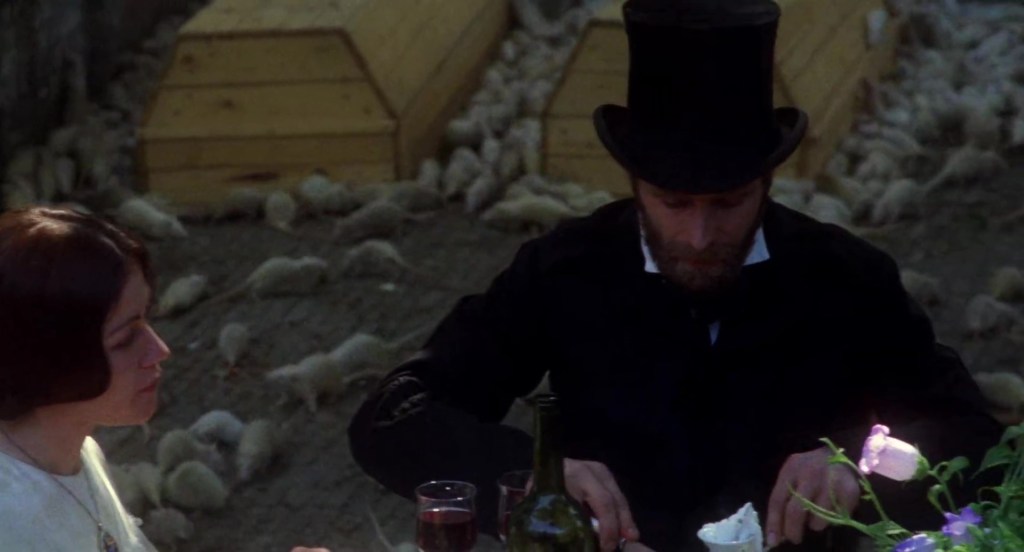
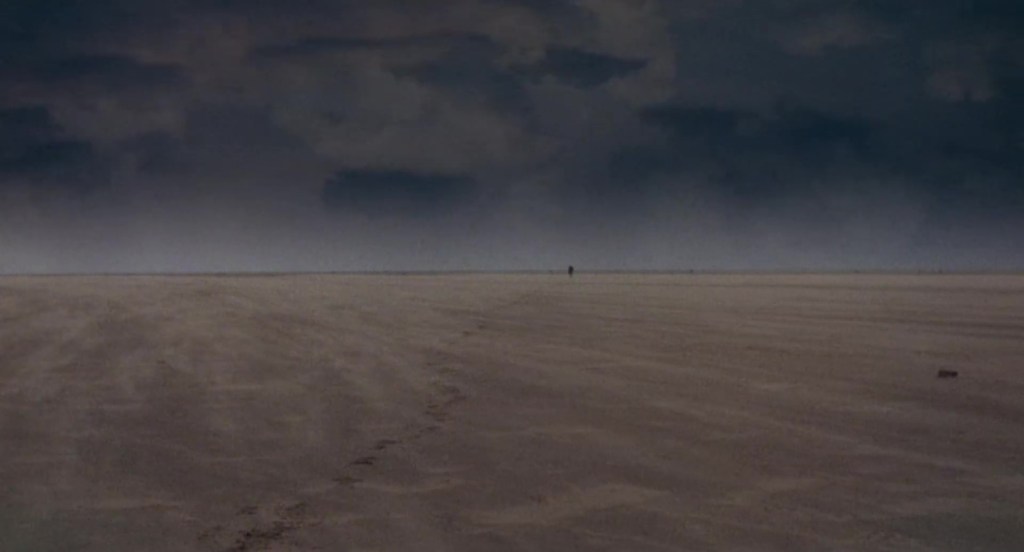
Nosferatu: Phantom der Nacht (1979; W. Ger./Fr.; Werner Herzog). The first full remake of Murnau’s film, and by far the best. Shot on location in the Netherlands and Czechoslovakia, Herzog has an unerring knack for the right places, filmed at the right time of day, captured in the right conditions. Always in his films, you can see that this is a director who has spent time walking. These aren’t pretty landscapes, touristic ones, places chosen second- or third-hand – they are fresh, harsh, rugged, sublime. There is also the sense that Herzog’s minimal budget and no-frills filmmaking benefits the atmosphere: it always feels like he has snuck into these spaces without asking permission. These are stolen images, not forged ones. The town, the coast, the mountains, the castle – all become otherworldly, other-timely. The camera seems to have found out odd corners of Europe where the past lives on, like finding patches of frost on a bright spring morning. The supernatural seems almost an extension of this natural world, the hypnotic slow-motion images of bats, the time-lapse photography of moving clouds, or the opening footage of mummified corpses fit perfectly into this world, this mood – all are implacably real and ungraspably strange. The cast, too, fits in with this mood – through costumes and setting and lighting, yes, but through performance. All is mood. This Nosferatu is ridden by angst, pain. Herzog often said that Klaus Kinski’s best performances came when he was exhausted to the point of collapse. The actor would rant and rage and scream and shout and threaten murder, and Herzog would wait until the storm ebbed – then he would roll the camera and shoot the scene. The result is an air of timeless exhaustion, of a pitiable figure advancing through centuries of fatigue. The slowness of Kinski’s gestures across the film are dreamlike, but then he moves with terrifying speed when his instincts are riled – as when he sees blood on Harker’s hand, or in his writhing death-throes, curling up like he’s a sheet of parchment caught in a flame. It’s a performance of amazing power that draws you in every time you watch it. Just as fine, perhaps finer still, is Isabelle Adjani. She is as otherworldly and magnetic as any of Herzog’s images, who indeed seems to have imbibed and embodied them. Her glance, her movement, her posture – what a sublime presence she is on screen. (Yes, I really do prefer Adjani to Greta Schröder in Murnau’s film.) Elsewhere, Herzog brings surprising depth and pathos to his characters. As Renfield, Roland Topor is oddly and touchingly gentle – a sad figure, a lonely man chasing someone to love him, or a child chasing a father. He is a world away from the comically sinister Alexander Granach as Knock in Murnau’s film (or the later scenery-chewing performances of subsequent versions). And I do love Bruno Ganz’s honest, harried Harker. He does not have the boyish innocence of Gustav von Wangenheim for Murnau, but I can believe him as a man who lives in this particular world, who loves his wife, who finds himself in thrall to the uncanny. His slow transformation into a vampire across the film is marvellous, and I have always loved his final scene. He has a marvellously comic flourish (getting the maid to sweep away the salt that keeps him magically penned in a corner of the living room), as though he were touched not merely by the spirit of Kinski but by the spirit of Max Schreck. Then Ganz takes on the faraway look of someone being drawn into another kind of life, or afterlife. The last image of him on horseback, riding across the wind-whipped sands, accompanied by the “Sanctus” from Gounod’s mass, is beautiful. This is a film of which I remain inordinately fond.

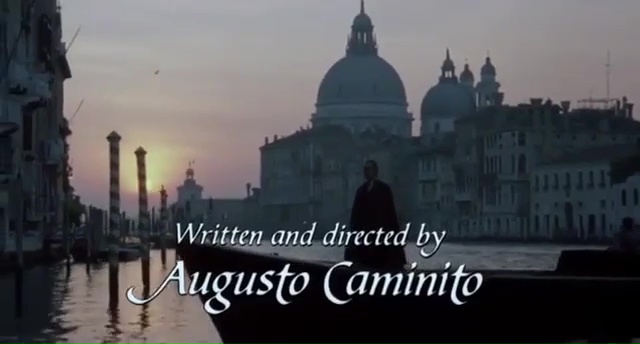
Vampires in Venice [aka Nosferatu in Venice] (1988; It.; Augusto Caminito/Klaus Kinski). Yes, dear reader, I even watched this – just for you. Frankly, it was hardly worth it for the few sentences I write here. Kinski has grown his hair, a caged lion with a rockstar mane. He wanders with glazed, angry boredom around Venice – in a Venice pretending vainly to be the past. Christopher Plummer tries to track him down in the present, encountering the vapid stock characters of post-synchronized Euro-horror. It’s a slovenly, sloppy film – salacious yet soporific. I drifted in and out of its louche, morbid pall of atmosphere. I remember the final images, which touch on the poetic – yet somehow remain earthbound. Kinski, a naked woman in his arms, walking across a deserted square in the fog. Where was the film that justified such an image? Murnau is dead, and director Caminito (and Kinski, his eminence grise) did not wander into the past to find him, or to resurrect anything of his world.

Shadow of the Vampire (2000; US/UK/Lu.; E. Elias Merhige). A film about the shooting of Murnau’s film, the concept of which is that the director hired a real vampire for the role of Nosferatu. What a curious thing this is. The concept is neat enough, but it is framed in such odd terms – at least, from a film historian’s perspective. We are told (via an intertitle, no less) that Murnau creates “the most realistic vampire film ever made” – and the character later explains that realism is the essence of cinema. For the film, this is fine, but I wonder if this is how the writer and director of Shadow of the Vampire really felt about Murnau. Does anyone associate Murnau with “realism”, let alone define him by this term? I ask, because in all other senses Shadow of the Vampire is oddly loyal to Murnau – recreating with rather charming precision many of his original shots. We see the camera’s eye view of scenes, though these shots mimic the worn monochrome quality of old celluloid. Yet the film also shows us Schreck watching some of the landscapes from Nosferatu projected on a screen – but instead of pristine rushes, we get the battered and blasted tones of a grotty 16mm print. Amid the attention to period detail, this one glimpse of Murnau’s original footage is distinctly unflattering. John Malkovich is (inevitably) a weirdly compelling Murnau, obsessive and cunning but often charming. Willem Dafoe has a twinkle in his eye as Max Schreck, knowing that it’s all a game – even if the film takes itself a little too seriously. Indeed, my reservations about Shadow of the Vampire all stem from the way it addresses its own premise. The film gestures towards an ideology or aesthetic of realism but never develops it, nor does it allow the horror to grow frightening enough to compensate. Shadow of the Vampire is not a comedy, but the comedic shadows its every move. Dafoe, I think, knows always the dramatic limitations of these projects. He is never parodic in drama, but he can tread the line wonderfully well, as he does in Eggers’s Nosferatu. Shadow of the Vampire is interesting enough as an idea, and as a curious period drama, but I’m not sure it is anything more than a superficial engagement with the cinematic past.

Dracula: Pages from a Virgin’s Diary (2002; Can.; Guy Maddin). I sometimes get asked what I think of Guy Maddin, or else people assume that I am interested in his “new” silent films. I confess that I have never taken much interest in them at all, nor have I ever felt strong kinship or interest in any “new” silent productions. I was once in Paris at the time of a retrospective and caught Maddin in person, introducing Tales from the Gimli Hospital (1988). It remains the only film of his I have seen in the cinema, and I confess I found it interminable. Maddin certainly captures the stultifying awkwardness of certain early sound productions, but it felt like a short film blown out to feature proportions and even at 70 minutes it was a slog to sit through. His Dracula: Pages from a Virgin’s Diary is a much more lavish affair, taking its cue from innumerable previous iterations of the vampire myth – but shot silently and synchronized to a music soundtrack. In many ways, it’s a superb production. Maddin lights and shoots his scenes with stylish brilliance. His staging and choreography are striking, just as his mobile camera and his editing are dashing and spirited. But I regret how the many parodic performances and gestures it makes (not to mention the garish yellow text for the intertitles that sits superimposed over monochrome imagery) keep me at a distance. Campness need not be so superficial nor so silly as it is here, and these qualities make its aesthetic sumptuousness seem no more than surface and gesture. It has the trappings of silence but not of its depth or uncanniness. It’s a filmed ballet, but one without any frisson of liveness or great physicality. Rather, it’s a danced film – and I swiftly bored of its pretty artifices. Maddin’s film is only a very distant relation to Murnau, and despite its beautiful (sometimes ravishing) moments it has no resonance.

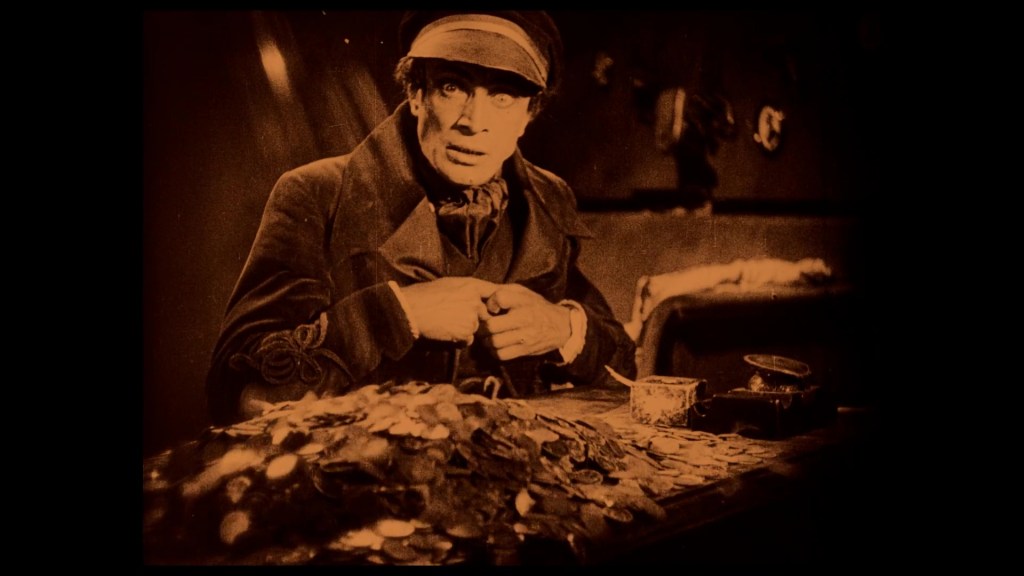
Nosferatu: A Symphony of Horror (2023; US; David Lee Fisher). You may not have noticed the release of this film, but I did – and its very existence requires some contextual explanation. Fisher’s only other film is The Cabinet of Dr Caligari (2005), a remake of Robert Wiene’s silent original. Using digital scans of the original film, Fisher recreates (not quite shot-for-shot) the aesthetic with a new cast – and dialogue. I had the peculiar privilege of encountering this film for the first time on a big screen with a class of film history students, after having watched Wiene’s original the previous week. I am always very sensitive to the mood of a room, especially of students – I do so want them to engage with (if not love) the films they are shown. There was nothing worse as a lecturer to feel that you were showing students something they actively hated (and I could always feel it in the room). But Fisher’s Caligari was the first time I felt glad to sense that the room had turned against a film. As bad a habit as it is for a critic to feel superior to a film, it is a worse habit for the director of a remake to feel equal to the original. The digital process of copy-and-pasting sets is neat enough, but the film has no idea how to replicate the sense of presence: Fisher’s cast are walking about mostly in green screen spaces, utterly divorced from their surroundings. It has the trappings of a period piece, but neither costumes nor faces nor performances can convince they have anything to do with the period. The dialogue is absurd, banal to the point of existential embarrassment. (How can such a script be thought adequate?) And when Fisher recreates the famous close-up of Conrad Veidt’s Caligari opening his eyes, the void between past and present is at its most unbridgeable, the gulf in intensity of drama and performance most apparent. (It is the same problem that Scorsese had in including this same shot of Veidt in Hugo (2011): it has infinitely more power and presence than anything in the surrounding film.)

So to Fisher’s second film… Nosferatu: A Symphony of Horror was, so the internet tells me, funded via a Kickstarter campaign way back in the 2010s. The film was purportedly shot in 2015-16, which seems remarkable given that it took another seven years to get released. Of course, it has been released only for streaming via Amazon Prime, which I suppose is the equivalent nowadays of what was once called “straight to video”. As with Fisher’s Caligari, original images from Murnau’s film have been digitally transplanted around a new cast. The effect is both more detailed and somehow more disappointing. In Fisher’s Caligari, the sets are at least flat in the original. In Nosferatu, an entire world is reprocessed in a manner that I found positively sickly. I earlier described the richness of the locations being one of the chief pleasures of Murnau’s film, and their systematic eradication was one of the chief disappointments of Fisher’s film. The landscapes are CGI creations, imaginatively stunted – as is every interior space, every shot in fact. The backdrop to every scene resembles a generic screensaver, without a trace of weight or reality or mystery. (The costumes are no less convincing, nor even the occasional moustache.) Among the cast, I single out Sarah Carter as the only figure to have genuine emotional depth – or any kind of convincing presence. She stands in a different league to anyone else on screen, even Doug Jones, whose Orlok is at least a committed performance. But it, like everything else in the film, is an exhausted stereotype of something we’ve seen dozens of times before. Fisher’s technology has improved, but he still cannot write dialogue or assemble convincing faces or performances. In comparison, Maddin’s Dracula (for all my reservations) is an infinitely more convincing use of a silent milieu.

Nosferatu (2024; US; Robert Eggers). All of which brings us to Eggers. Oh, Eggers… I have only seen one of his other films, and I thought The Lighthouse (2019) was as dramatically hollow as it was stylistically skilled. The tone of the script and performances rubbed me the wrong way. Was this a parody that took itself far too seriously, or a serious drama that was incredibly flippant? Much as I admired the way it looked, I squirmed with embarrassment and irritation at the dramatic tone. Some of my reservations about The Lighthouse I also have about Nosferatu, but I enjoyed the latter much more.

For a start, it looks lavish, and Eggers knows how to dress a set and provide a beautiful background. There are images that evoke Caspar David Friedrich (almost more so than evocations of Murnau), and there are glimpses of some fabulous locations (in the Czech Republic). The whole section in which Hutter travels to the east is the best in the film, and I wish I had seen more of the amazing churches and villages glimpsed all-too-briefly here.

But the richness of this part of the film’s world, so breezily skipped through, makes the inadequacies of the Wisburg setting more apparent. The exterior spaces of Wisburg consist of little more than two streets and a very small crowd of inhabitants. There is no sense of place and time here, nor of the scale of the invasion of the rats and the accompanying plague. (Compare this to Herzog’s film to see how much difference this space makes in dramatic tone and mood.) And while I loved some of the scenes set on the coast, you never get the sense that Eggers quite knows how to let these images sink in or resonate. They are very pretty, but they have no greater purpose. Eggers can dress a world impeccably, but a world is also people and ideas – these take work of a subtler and more difficult kind. As with The Lighthouse, to me Nosferatu was a very modern set of people dressing up and playing the past. The very impeccability of the images made the dialogue and the tone of many performances incongruous. While the film is happy to employ religion and supernaturalism, no-one seems to believe in any kind of corresponding or supporting ideology. And while the film offers a token critique of (male) medical authority, it is also entirely predicated on the idea of female desire as hysterical and “other”. (Nosferatu is explicitly summoned, if not created, by Ellen.) What, if anything, does this film believe, or want us to believe, about the drama it shows?

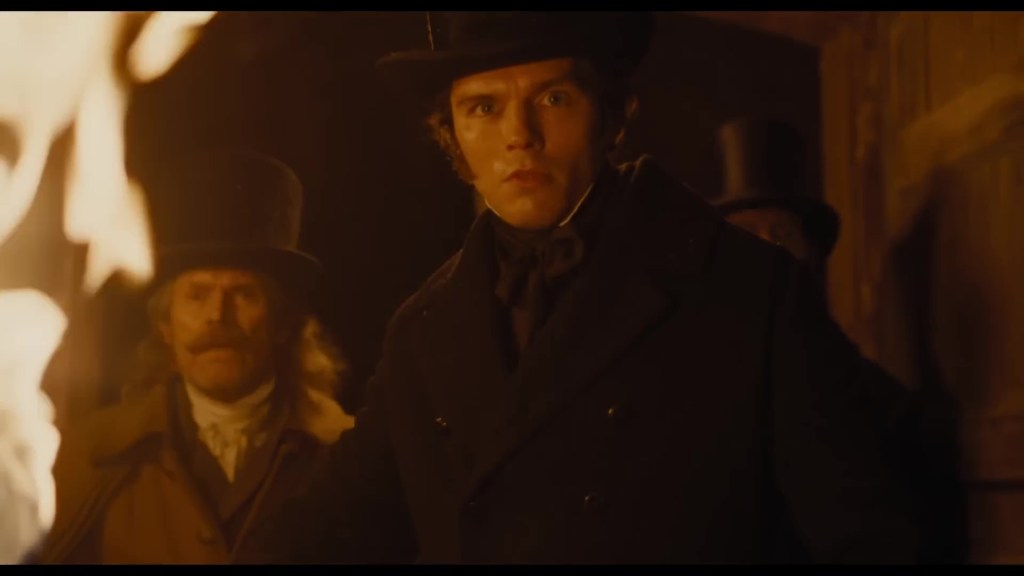
The performances are a curious mix. I must begin by praising Nicholas Hoult, who as Thomas Hutter is the emotional heart of Nosferatu. I was moved by him as by nothing else in the film. When he says he loves Ellen, you truly believe it – a conviction without which the film would fall down. Hoult was absolutely the best thing in Nosferatu, the least histrionic and the most believable. Bill Skarsgård’s Nosferatu is very… well, loud. His abstract presence is first signalled by a vast roar of sound in the film’s prologue that had me covering my ears. And when we meet him and he speaks, his voice (featuring rrrs that roll like no other), even in a whisper, reverberates throughout the speakers and floor of the cinema. Utterly unlike the silent and unknowable figure of Murnau’s film, this Nosferatu is a physical, corporeal, rotting being, defined as much by sound as image.

As Ellen, I found Lily-Rose Depp oddly unsatisfying. She gets to romp and roar and moan and writhe, and does so with aplomb. (Many of her poses are supposedly based on historical accounts of madness/hysteria, but I felt I had seen young women writhe and vomit blood this way a thousand times before in horror films.) But when she must deliver the (vaguely) period dialogue, it carries the whiff of parody. In part, it is the script’s fault for attempting (and, I think, failing) to mimic nineteenth-century turns of phrase, but mainly it is an issue of tone. I remain unconvinced that Eggers knows how to handle (or to decide upon) a consistent or convincing tone. Depp was one of the main reasons I felt this Nosferatu was playing dress-up. Again, I do not blame the performer so much as the director. This too is the case with Aaron Taylor-Johnson’s performance as Harding, which I found inexplicably bad. How can an English actor speak English so unconvincingly? I do not blame Taylor-Johnson, for he’s clearly been asked to perform like this by the director. But why? Why is he so artificial, so mannered, so parodically out of place? I am at a loss as to how I am supposed to feel towards Harding or his family. His children are ghastly screaming creatures, mobilized by the film (so I thought while watching the first half) to make us glad of their eventual demise – but when the demise came, suddenly the tone suggested they had earned our sympathy, as had Harding. Why? How? When? As for Simon McBurney’s Knock, he is as scenery-chewing as they come, gnawing on live animals and shouting – always shouting. While the characterization might echo Murnau’s version, it brings nothing new (other than fatuous gore). Just think how tender Herzog’s Renfield is by comparison, a character who is more than one-dimensional – and whose madness is a blissfully quiet delight.

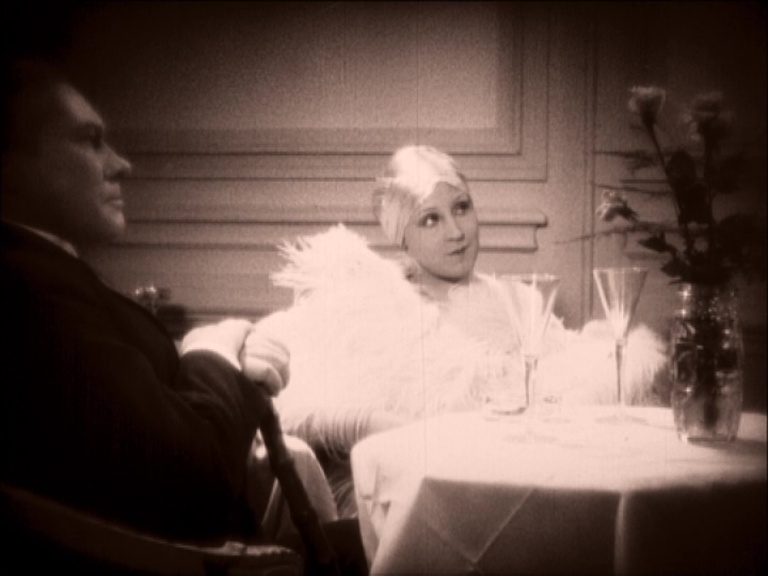
What of Eggers’s relationship to Murnau? I noticed how the new film’s credits never mention Murnau, only Henrik Galeen, the screenwriter of the 1922 film. How odd, and how ungenerous, given the direct citation of the film’s (i.e. Murnau’s) imagery as well as its characters. Yet I never quite got the sense that film history truly informed this film. Eggers has surely seen Carl-Th. Dryer’s Vampyr (1932) – the floating shadows, the uncertainty of space, the dislocation of sound and image – but his Nosferatu has nothing uncanny about it. Dryer makes his sounds teeter on silence, slip back into it, emerge unsettlingly from it; Eggers makes his film quite unbelievably loud, roaring, throbbing – even his vampire’s whispers are rendered at the volume of earthquakes. Nor did I get a sense of other Galeen films lurking in the background of Eggers’s. Perhaps this new Nosferatu has some faint echo of Galeen’s Alraune (1928), but only in the sense that both films have an interest in female sexuality and the uncanny. (And let me be absolutely clear: Lily-Rose Depp is no Brigitte Helm.) But I found no echo of the world of Galeen’s Der Student von Prag (1926), which has its own rich cultural history, being itself a remake of the (to my mind) superior version of 1913 (a film I discussed here). This is a whole strain of German cinema that I feel very little evidence of in Eggers’s film. On its own terms, this new Nosferatu is a perfectly enjoyable film – but it is a bold move to identify itself with the silent past. If nothing else, it invites comparison where otherwise it might not. Having summoned the comparison, I cannot but think that Murnau’s film is an eternally peculiar and resonant work whose secrets elude Eggers.

In summary… well, what is my summation? I set out on this little crash course through the afterlives of Nosferatu with the aim of suggesting how and where Murnau’s film inspired future generations. In the end, I fear that all I’ve done is complain. If this does not make for a neutral survey, at least it’s an honest assessment of what I felt. The more remakes, revisits, or (god help us) “reimaginings” of a film, the wearier I grow. There is something in the metaphor of the vampire, in its unkillable afterlife, that fits the ceaseless round of resurrections cinema has performed on Nosferatu. But having rewatched all these films, I feel I am become Kinski’s incarnation – eternally weary, wishing for the end of this eternal round. Let me return to my silent realm.

Paul Cuff

HippFest at Home (2025, Day 3)

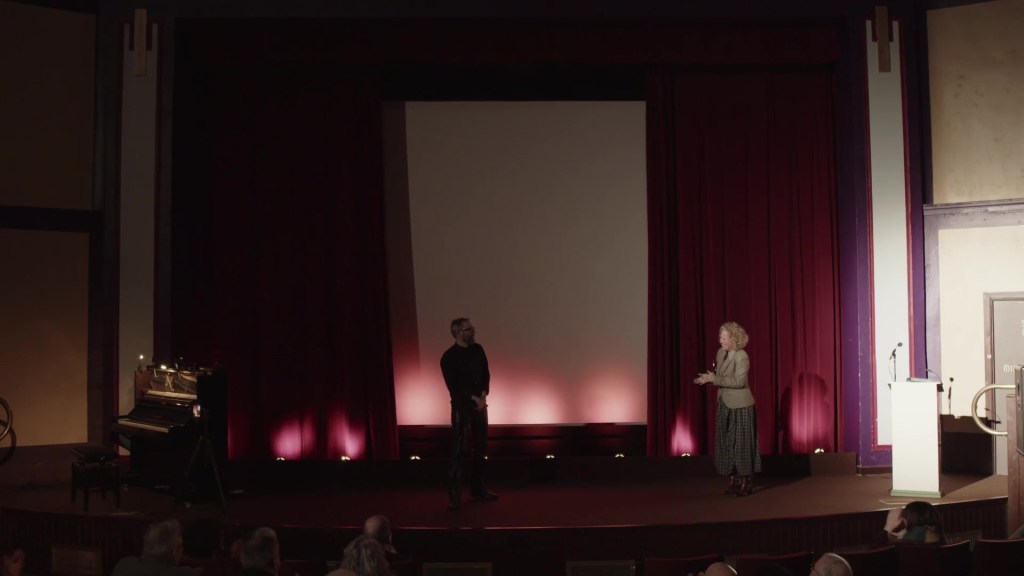
Day 3 of HippFest at Home sees us journey to the (faux) Scottish coast for a (faux) Scottish drama starring Mary Pickford. This programme of a short and feature was given introductions by Alison Strauss (once more) and Pamela Hutchinson (who of course runs the marvellous Silent London). Strauss explained the choice of films, focusing in particular on the short extract from an amateur film shot on location in Harris in the Outer Hebrides. She also highlighted HippFest’s pioneering efforts to provide audio-description via headphones and brail for these films. It’s a superb project, and another reason to admire the festival. Hutchinson gave a detailed introduction to The Pride of the Clan, highlighting its history in the context of Pickford’s career. (I will say a little more about the film’s critical reputation, which Hutchinson also covered, later.) As ever, these introductions were exceedingly engaging (and often very funny). As an online viewer (and viewing the film over a day later), I felt part of the crowd in situ. On this theme, there was a lovely moment when the Bo’ness audience cheered the restoration team of The Pride of the Clan, who were (like me) watching remotely from their respective homes. Polly Goodwin, who provided the audio descriptions, was also warmly cheered. You really get the feeling of the enthusiasm for everyone involved. I’m sure it’s the same at any such specialized festival, but HippFest is the only one I have experienced where the online version gives you such access to the people and atmosphere responsible for making it work. And so, to the films…

Holidaying in Harris (1938; UK; Nat and Nettie McGavin). A fragment of a longer document, this is (like yesterday’s shorts from Ireland) another amateur glimpse of real life. Here are the docks, the fishing boats, the baskets of herring, the men on deck, the women at work on the shore. The camera observes, unobtrusively. The past goes about its business – messy, sweaty, industrious. The film ends. While this little extract doesn’t have the chance to sustain its mood, it’s a potent window into a way of life long gone – and the faces (and, especially, the hands) of those who often go unrecorded in history. A lovely little treat to start things off.

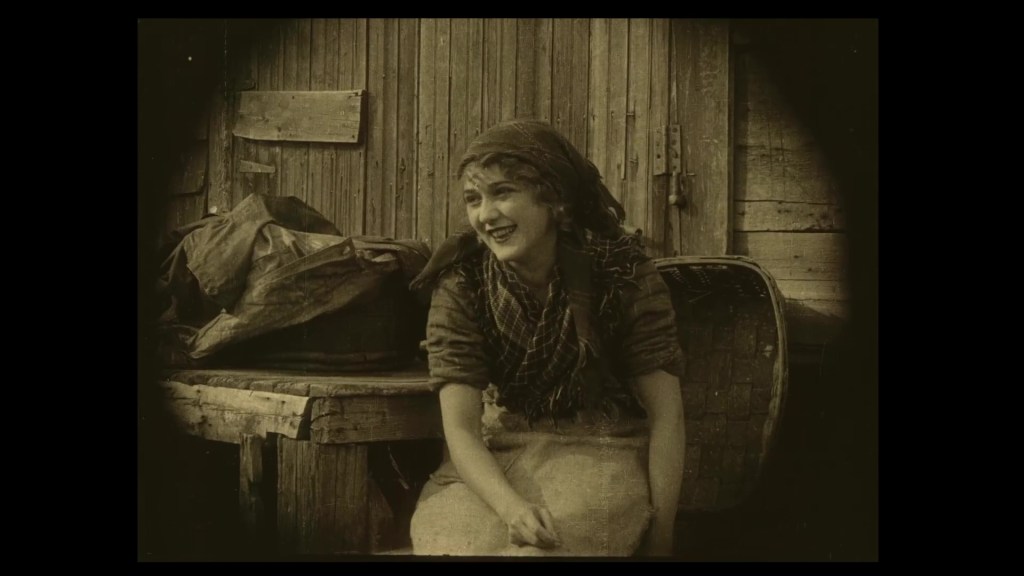
The Pride of the Clan (1917; US; Maurice Tourneur), our main feature. Set on the remote Scottish island of Killean, the film follows Marget (Mary Pickford) who must lead the MacTavish clan after the death of her father at sea. She wishes to marry Jamie Campbell (Matt Moore), but Jamie’s real parents – a wealthy countess and earl – arrive and convince her that it’s best for his future to let him join leave the clan. She accedes to their wishes but decides to sail away herself. However, her old boat soon begins to take on water. Will the hero rescue her in time? (I’ll let you guess.)

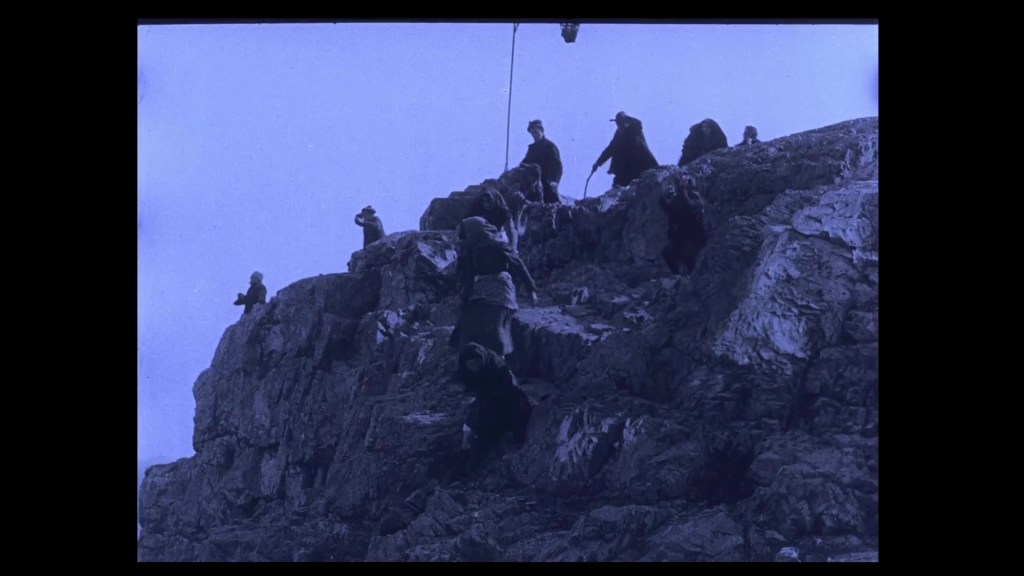
Let’s start with the good. Though it was shot in Massachusetts and thus has no visible connection with the reality of the Scottish landscape, the film at least boasts a wealth of exterior photography. There are some marvellous scenes of the locals silhouetted on the cliffs or gathered on the coast. The director Maurice Tourneur shows a keen eye for composition, making the most of the (actually quite limited) location spaces. There are some efforts to make this landscape bear some sense of history, though I must say that the church, neolithic tomb, and standing stones look hopelessly unconvincing next to some of the (clearly real) houses in the village.

Pickford is the heart of the film, and its chief asset. She’s feisty, independent and gets to be both playful and boisterous – telling stories, commanding children and adults, quite literally wielding a whip. I just wish the film did more with this tomboyishness. She might well wield a whip, but she ends the film clutching her pets as the water rises and the hero races to the rescue. Turning her from heroine to helpless waif is something of a letdown, as is the dramatic implication that by seeking an independent identity elsewhere she must inevitably come a cropper. (I rolled my eyes, too, at the intercutting of the villagers’ prayers – especially the unbelieving Gavin – with the rescue.)

Marget’s romance with Jamie is a little awkward, with the couple having little discernible chemistry (at least, nothing that I would call “romantic”; the very idea of sex, of course, is utterly absent). The humour plays well enough, but the film is far too chaste to express or even suggest anything deeper. (An early embrace ends with the pair awkwardly leaning into each other, cheek to cheek, that is surely as uncomfortable for the lovers as it is unconvincing for us as viewers.) Much of the film allows Pickford to be playful with the clan children and animals, making faces, pulling japes, or bothering kittens and donkeys, which certainly helps raise a smile but also risks infantilizing her character to the extent that the whole point of her being the head of the clan seems nothing more than a game. Besides, the whole effort of the film to present us with anything resembling real life in a real location seems to me a failure. The film might have nice images of the sea and coast, but the life of the clan seems to involve being either pious, playful, or bashful. There is little work here, and if there is a risk of death at sea, there is little dirt and no disease on land. While I appreciate that the colloquial dialogue is being used to ground the film in a sense of location, it swiftly grated on me – grated because the effort to capture the local dialect stood in stark contrast to the absence of any reality elsewhere.

Ultimately, The Pride of the Clan is all a fantasy – which is fine, but it never grabbed me. It is no more convincing or moving than the story Marget tells Jamie, visualized in absurd cutaways to a life on an exotic island complete with native cannibals. What works best are the moments of calm in-between the wearying playfulness. There is a scene of Marget alone, tying a bouquet which she drops into the sea – a gesture one might find in a D.W. Griffith film, only here carrying less emotional weight. It’s a glimpse of what might have been. For much of the film, I felt rather like Gavin, the outsider who scowls on the rocks while the loyal clansmen attend church and have faith in the narratives told therein.

This brings us back to the film’s reputation. As I mentioned, Hutchinson spoke about this film’s supposedly poor critical reception in the US in 1917 – and Pickford’s own subsequent dismissal of The Pride of the Clan as a failure. Hutchinson spoke extremely engagingly about the film’s qualities, and in the programme notes available online by Thomas A. Walsh and Catherine A. Surowiec there are other voices of praise. But these positive notes come chiefly from material that these respective authors quote. (Perhaps they are, wisely, a little cautious about making too great a claim for this film.)

Of particular note in the Walsh/Surowiec piece is a citation from Richard Koszarski, writing in 1969, who said: “Tourneur’s eye for composition is flawless, equalling or surpassing Griffith’s work of the same period, and the performances are more restrained than in much of Intolerance. Clearly this film was ten years ahead of its time.” Hmm. Ten years ahead of its time? I can imagine such a slender narrative being handled by Griffith in, say, 1911 in about twenty shots with twenty times the emotional power. (Equally, I can imagine him padding out such a narrative in, say, 1923 in about two thousand shots and achieving less.) Think of Mary Pickford in Ramona, from 1911, a Biograph production that boasts subtle performances and a masterful use of composition and choreography. (I have written about the film and its (to my mind) inferior re-adaptation as a feature film in 1928.)

Something I kept noticing with Tourneur’s film is the gulf between interiors and exteriors, which is only rarely bridged. One thinks of Victor Sjöström’s Terje Vigen (also released in 1917) as another coastal film featuring grief, wrecks, and the life of fishermen. Despite sharing tropes, the two films are worlds apart. The Swedish film builds partial sets on the coast so that we can look through windows and doors from interior to exterior, from comfy interior to raging sea. The result is an astonishing sense of place and of emotional tone: Sjöström’s film is anchored in reality, a fact which the naturalistic performances redouble. The only image in which this is regularly achieved in The Pride of the Clan is of Marget silhouetted in the doorway of her boat (an image that features in a repeated intertitle design). While The Pride of the Clan shows many characters looking in/out of windows, there is no attempt to link the spaces – aside from Marget’s boat, I cannot recall any shots where we look from interior spaces to the sea. And while many images are very nicely composed, only one image really sticks with me: the stunning silhouette of Marget and Jamie against the moonlit sea. It’s beautiful in and of itself, but also as a distillation of feeling. There weren’t enough moments like this. I wish that there the drama had been less fleetingly embedded in the setting and photography.

The issue is not helped by the variable image quality. From the restoration credits, it is clear that The Pride of the Clan was restored from a mix of 16mm and 35mm copies. While the 35mm sections are superb, these unfortunately make the 16mm sections seem all the more dulled. But would sharper images help this film? For me, I fear not. I found the whole thing cumulatively underwhelming.

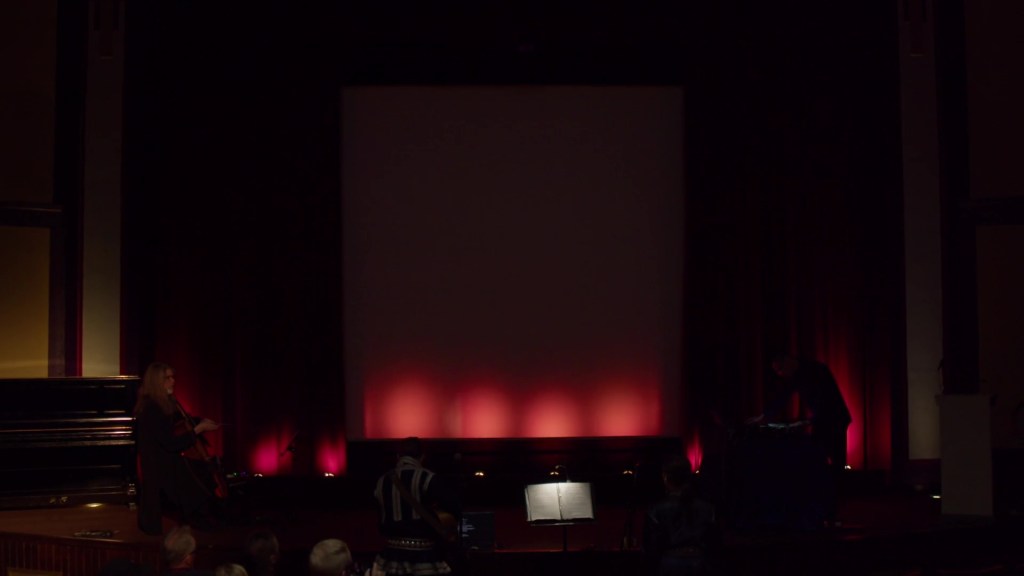
Well, that was Day 3. Goodness me, I wish that I enjoyed The Pride of the Clan more than I did. But I certainly enjoyed the music for this screening, provided by Stephen Horne (piano, flute, accordion) and Elizabeth-Jane Baudry (harp). This pair always produce gorgeous sounds, and in this case I found the music often more evocative than the film itself. Since the sound is recorded live for the videos available through HippFest at Home, you can also hear the Bo’ness audience reacting to the film – which (in this context) I very much enjoyed. If the film failed to charm me, the event itself was certainly charming.

So that was my last day of HippFest at Home. I should explain that there is a fourth online programme on offer: “Neil Brand: Key Notes”, a talk with music and film extracts. As much as I admire Brand’s work, I feel that this kind of event is not aimed at me. Aside from reasons of my own schedule, another reason that I feel able to skip this presentation is that HippFest at Home offers single tickets for individual screenings, rather than an all-in price for any/all events online (like Pordenone). I can see the benefit in this, as I have sometimes found that festivals replicate each other’s material (even online), or else include something that for whatever reason I don’t wish to see, and I regret not experiencing everything on offer.

Finally, I must repeat what I have said on all three days: HippFest at Home is simply the best presentation of an online festival that I have experienced. Everything about it, from the website, the programme notes, the video options, the introductions, the music, and the sheer enthusiasm of everyone involved, made me feel incredibly welcome. I have often written about the inevitable feeling of dislocation when “attending” online festivals. While HippFest at Home does not offer its online audience the same number of films as Bonn (ten features in 2024) or Pordenone (eight features plus several shorts in 2024), their presentation impressed me more. More of the live element was included in the online videos, and I loved being able to see the speakers and musicians – and the audience. I’m incredibly impressed by the effort of all those involved, and if any of them are reading this then I offer them my warmest congratulations. I’m sad that it’s taken me this long to attend HippFest in any guise, and I will certainly be revisiting – in one form or another – next year.

Paul Cuff

HippFest at Home (2025, Day 2)

Day 2 sees us go to Ireland for a programme called “The Near Shore: A Scottish and Irish Cinema-Concert”. Introductions to this set of films were given by Alison Strauss (the director of HippFest) and Sunniva O’Flynn (Head of Irish Film Programming, Irish Film Institute). Given the cross-seas nature of the films shown, and the collaborative aspect of archival exchange between Scotland and Ireland, it was appropriate to hear voices from both sides of the Irish Sea. As O’Flynn also explained, the Irish Film Institute often has a very inclusive remit when it comes to preserving and restoring films that might be considered “Irish”. Films can be made by Irish filmmakers outside Ireland, or films made within Ireland by non-Irish filmmakers. In the case of today’s programme, there is a blend of both – and even a kind of Scottish-Irish collaboration via a married couple’s home movie. O’Flynn introduced the programme, together with the first films – and then reappeared on stage to introduce the next films. (As she said, this was certainly preferrable to having one long introduction with too much information.) As I wrote on Day 1, these are superb introductions – informative, engaging, welcoming, and offering both personal, historical, and cultural context for the films. Perfect. So, to the films themselves…

Royal Clyde Yacht Club Regatta (1899; Ire.; Dr Robert A. Mitchell). This view of a former century has immediate charm, immediate power. The image crackles with history. Its surface is all smoke and charcoal: a distant ship peopled by shadows, a sunless sky, dark ripples on a grey sea. The image evokes the haphazard nature of film preservation, of the way time nibbles and scuffs at the celluloid. It is a muted world, in every sense; therein lies its mystery. But if the image suggests a kind of fragility, even of happenstance, the film itself is beautifully (and carefully) realized. There is intelligence at work from the outset, when the first thing that catches the eye is a massive flag saying “START”. But after a few seconds, the eye takes in the subtlety of the composition. The sense of scale and drama, managed within a single shot, is brilliant. Just look at the distant boats, faint sketches of line and tone, thrown into relief by the appearance of a tiny rowing boat in the foreground. The whole scene subtly shifts to the right, but it’s so smooth and dreamlike it’s unclear if we are moving or the boats are moving. Then the empty space in the middle-ground is suddenly occupied by the yachts themselves – beautiful great two-dimensional planes that plough through the frame. It’s startling, but dreamlike too – no sound prepares us for this apparition or adjusts for its exit. In silence, objects have neither mass nor wake. They glide fatefully across the surface of the past. These great seaborne wings brush us by and are lost. This is a startlingly beautiful film.

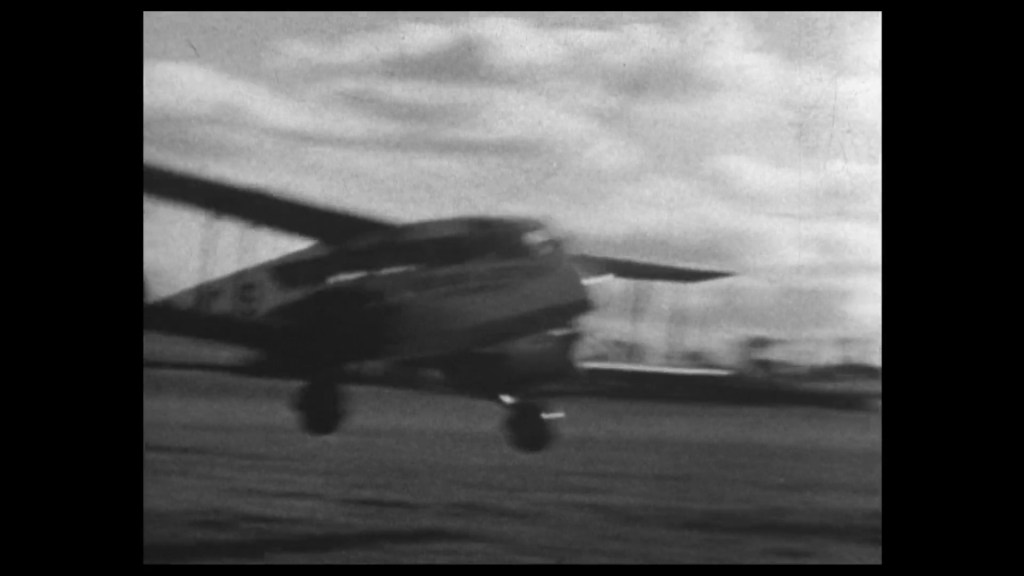
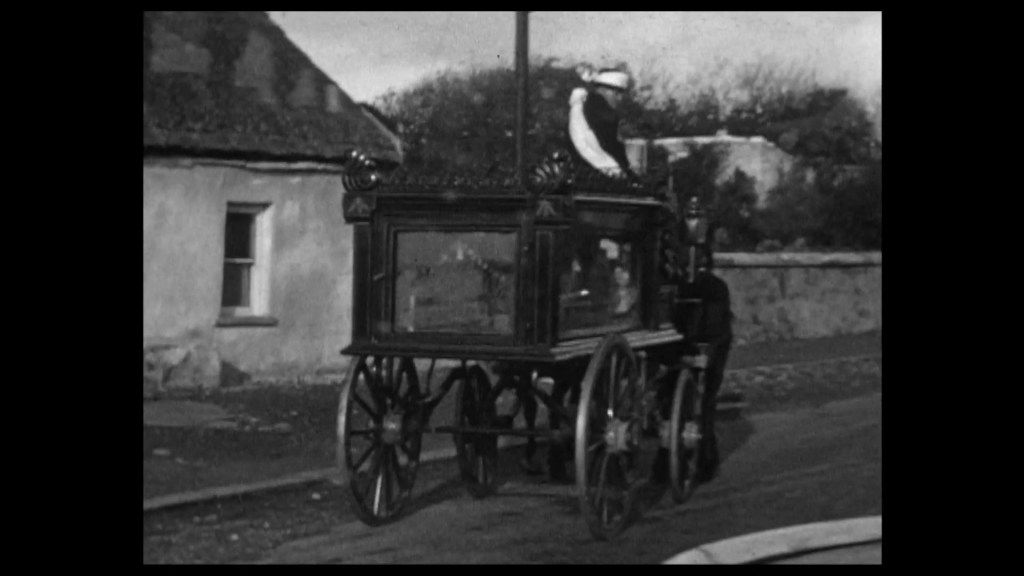
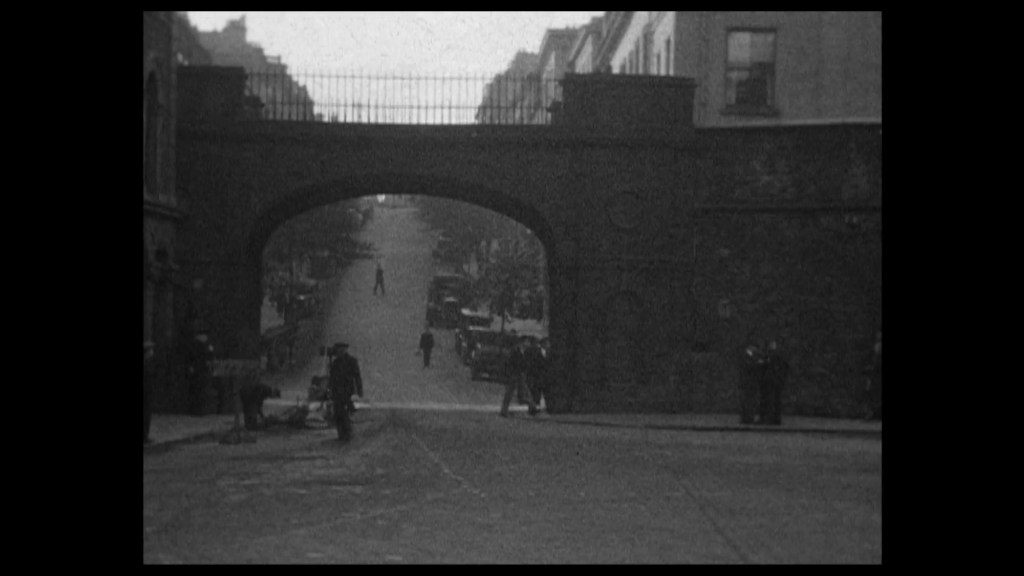
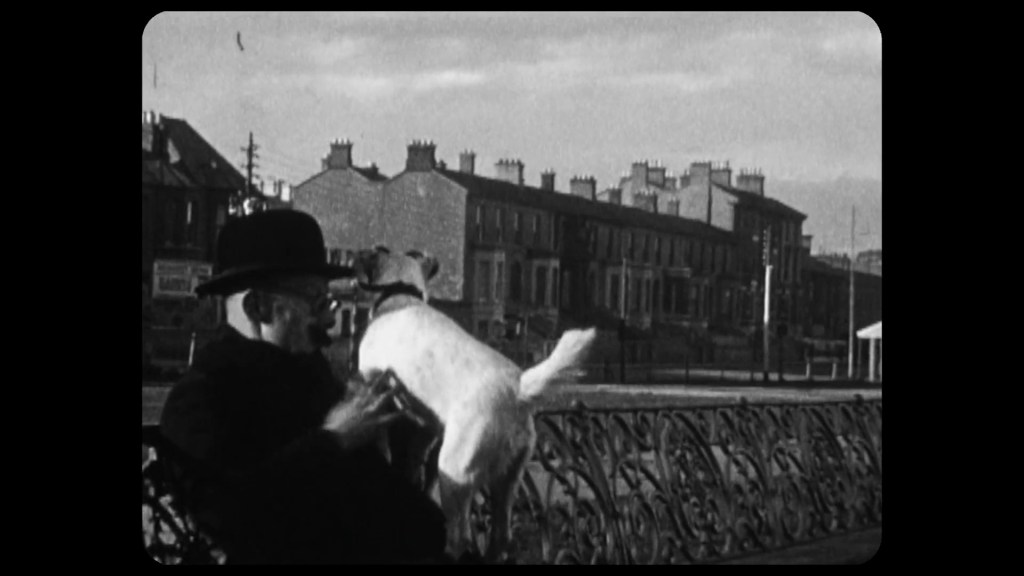
To Ireland by Air (1933; Ire.; Mr Dick). People grin at us, smoke, walk past. A plane moves forward, its propeller cranked. It gets up speed, it ascends. From the air, the world is unsteady. What can be seen? The land a distant patchwork of fields, houses. The shadow of clouds, already breaking apart. The world as it was, one day, nearly a century ago. There it is, fleeting through the vapour, the coast appearing and disappearing, a boat and its wake. “Passing Arran”; and pass it we go. It is lost in mounds of cloud. Here are ports, peopled by unseen inhabitants, long dead. Sheep and birds, the ground coming closer. The camera shakes. The world is plunged into darkness. But we are on the wing once more, high above a white sliver of surf. We seem to blink, and each time we open our eyes the world has changed. There is the shadow of the plane, the shadow of ourselves. Silence offers no preparation for the transitions of this montage. Here is Belfast, from the ground. The past and its people; silent, slow. A peacock mills around, geese stalk along. It’s a world (still) of horse and carts, of occasional cars and bicycles. (And, everywhere, horseshit on the roads.) The towns pass – Galway, Westport, Ballina, Sligo, Londonderry – and there are odd snapshots from each, from massive stone edifices to tiny homes with turf for their roof. Faces, a river, a fish in its depths. A site of ancient dread, an execution of a son by his father. (Beyond this past, another past, deeper and more obscure.) Landscapes and faces, extraordinary faces – most extraordinary when they are anonymous, when they don’t trust us, when they’re on their way to somewhere else. A hearse, a tower, a vista of coastline and hills. A sloping street, a dog rolling to scratch its back. Sudden transitions, odd glimpses. The camera is a curious stranger, glimpsing everything for the first time. It is as though we have been allowed some illicit access into the past. And still its inhabitants look back at us, wary of our intentions.

Rush Hour (1949; Ire.; John Tomkins). A bearded man waits and waits and snoozes on a bench by the sea. But then he’s too late. Dublin’s rush hour, a pell-mell mix of trams and buses and bicycles and cars. We glimpse the pedestrians hurrying here and there, and the bustle of life as it was – once. It is a glimpse of the real world, shaped by a keen eye and intelligent humour. But is it as mysterious as the last films? I think not. The past is no longer as wary of us as before. The distance is being closed, and without the fear and thrill of trespass – of crossing some historical threshold – there is less magic.

Butlins Holiday Camp Movienews (1950s; Ire.; John Tomkins). Mosney, County Heath. A delightful film, a glimpse of a holiday camp fully peoples, and in the sun. Laughter and exercises and silliness all around. It’s a charming film, but as with Rush Hour I no longer feel moved. This is a past that is more recent. It is not my past, but it is that of my parents or grandparents. The silence marks here it off from the present, but the gap is bridged by my knowing this world with sound. I am not quite a stranger here. Might I not “pass” in this past?

The Farm Below the Mountain (1958; Ire.; Ernest Tiernan). A honeymoon visit to family in County Leitrim. Another plane journey, more glimpses of the coast, of fields and rivers. The film is in colour, a dreamy filmic palette of rich hues and grainy textures. It’s a delight to watch, but again (for me) it is too recent, too much of a world that I might know second-hand. This is the recent past, dressed in the silence of its forebears.

Well, this was a rich trove of views. I regret that my interest lessened with each film, with each step toward the present. Perhaps one day these films from the 1940s and 50s will be as alien and uncanny as the films of the 1890s are to us now, in 2025. But I’d like to think that the earliest films will retain a unique aura, a unique aesthetic, that will mark them out forever. Among the films in this programme, by far the best is the first and earliest: Royal Clyde Yacht Club Regatta (1899). A film that more vividly bears the markers of its age, that more clearly sets itself apart from our epoch, from the living world. A film that possesses a kind of grandeur and mystery. Though I might intellectually imagine moving about the streets in 1899, the form of a film from this era disallows any possibility of such transgression. Silence demarcates this world from mine. It is not merely that these shadows happen to have no voice: it is that they cannot possess a voice. They are cut off illimitably and eternally from the present day. There is no calling out to us, no calling back to them. It is this quality (both historical and aesthetic) that makes the film documents of early cinema so potent.

I must also mention the music for this HippFest programme, which was improvised at the piano by Paul G. Smyth. I imagine that creating music for such odd films is exceedingly challenging, but this accompaniment was superb. He absolutely captured the odd, almost brittle rhythm of the earliest films. He understood and expressed the weirdness not just of the films but of our relation to them. There was a kind of hesitant exploration of emotional mood that surely matches our own attempts to engage with the films, to work out what’s going on and how we feel. Smyth conjured a marvellous range of textures and tones, at once varied and recognisably coherent. An excellent performance.

Well, that was Day 2. Any reservations about some of the films must not count against the value of a programme like this. Early films nestle productively alongside more recent amateur productions. All provide beautiful glimpses into the past, and evoke the lives of those who made them and those who we glimpse within them. O’Flynn’s introductions were the ideal accompaniment, framing their cultural and archival status – and why they are valuable and fascinating objects. While praising these introductions, I should add that HippFest very helpfully provides links to pdfs of all curational text online via their website. It’s another aspect of this festival that impresses. More please.

Paul Cuff

HippFest at Home (2025, Day 1)

This week, I’m off to another film festival, this time hosted by the Bo’ness Hippodrome in Scotland. Did I say “off”? I mean… well, what do I mean? What adverb suggests staying in my study? I suppose I’m “in” to another film festival. This is my first experience of HippFest, which has been on my radar for some years. I’m also pleased that the online version of this festival has its own name. “HippFest at Home” sounds delightful, a union of being away and being where I am.

The pre-film introductions – from Alison Strauss (Arts Development Officer and HippFest Director for Falkirk Council), Magnus Rosborn (Film archivist from the Swedish Film Institute), and Lisa Hoen (Director of the Tromsø International Film Festival) – were also exceedingly welcoming. My only experience of pre-film introductions at online festivals comes from Pordenone, where the videos are pre-recorded and loaded as separate (and optional) prefaces to the films themselves. At HippFest, the introductions are those given live in situ – filmed and included as part of the single video that encompasses the evening’s programme. It does not force you to watch them (one can always fast-forward), but it encourages you to do so by having them as part of the same video timeline. Unlike Pordenone, where I almost always end up skipping the introductions (purely for the sake of time), I watched all three speakers for this HippFest programme. The video stream is perfect: we get explanatory text to see the names of everyone on screen, and the camera is placed so that we feel like we are part of the audience they are addressing. Indeed, Strauss’s introduction to the festival explicitly welcomed online viewers. The speakers themselves covered issues curatorial and practical (Strauss spoke about HippFest and her interest in tonight’s film), restorative (Rosborn spoke about the film’s rediscovery and reconstruction), and cultural (Hoen spoke about the context of the Sámi people who are the film’s subject). Hoen also explained something about the motives and context of the musicians who accompanied the film, as well as introducing the musicians themselves. I can only say that I found all three introductions engaging and informative. This really was the ideal way to start the programme.

Med ackja och ren i Inka Läntas vinterland (1926; Sw.; Erik Bergström)

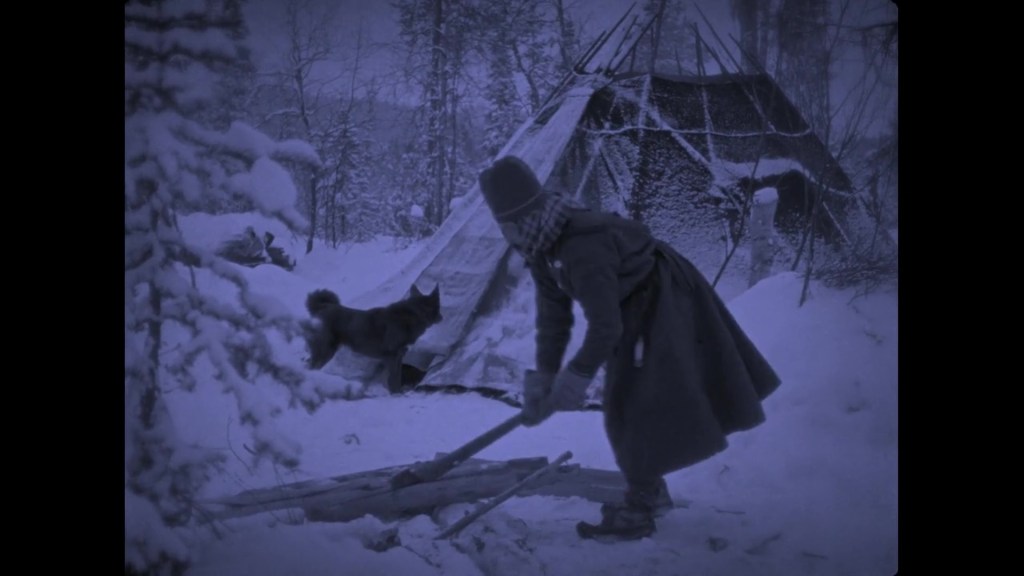
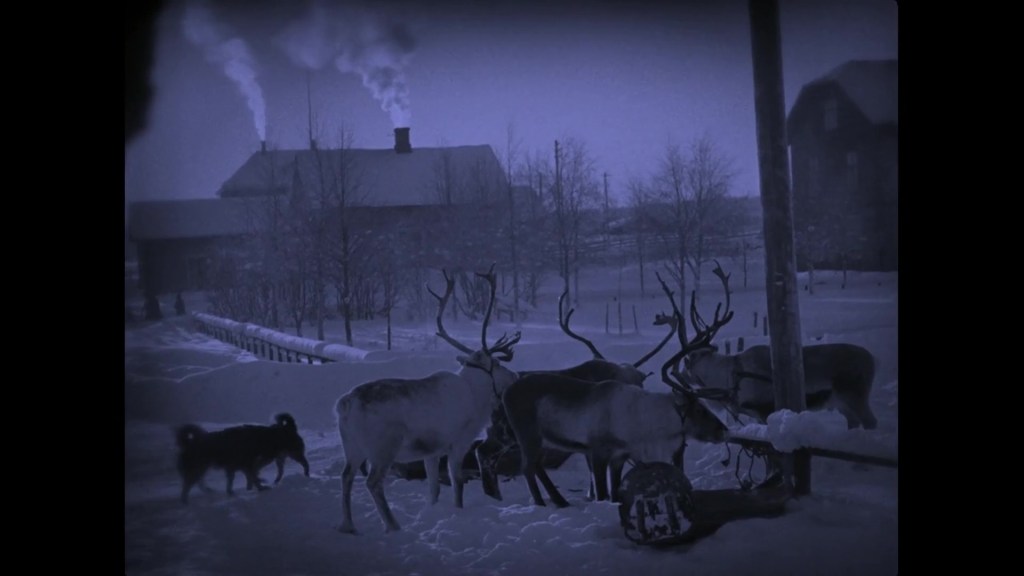
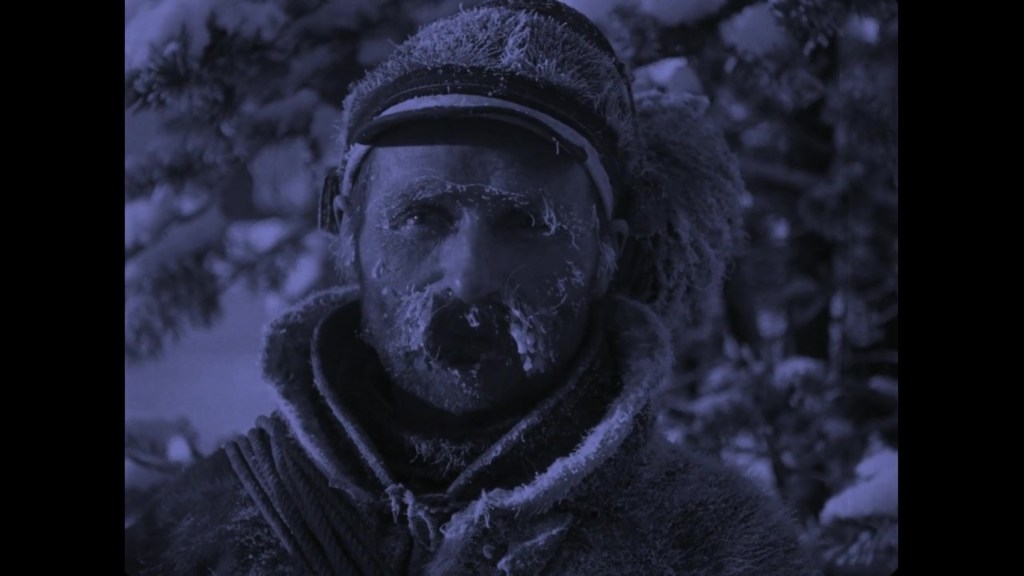
So, here is our feature film, “With Reindeer and Sled in Inka Länta’s Winterland”. The film is a portrait of life in the snowbound landscape of northern Sweden. We follow Inka Länta, who lives with her brother and maternal aunt, and next door to her maternal uncle Petter Rassa and his children. We also meet Guttorm, from a nearby (20km away) camp. We follow them as feed their family and animals, as they go to market at Jokkmokk, as they track reindeer, as they make and unmake their tents and camp, as they hunt wolves, as they slaughter deer.

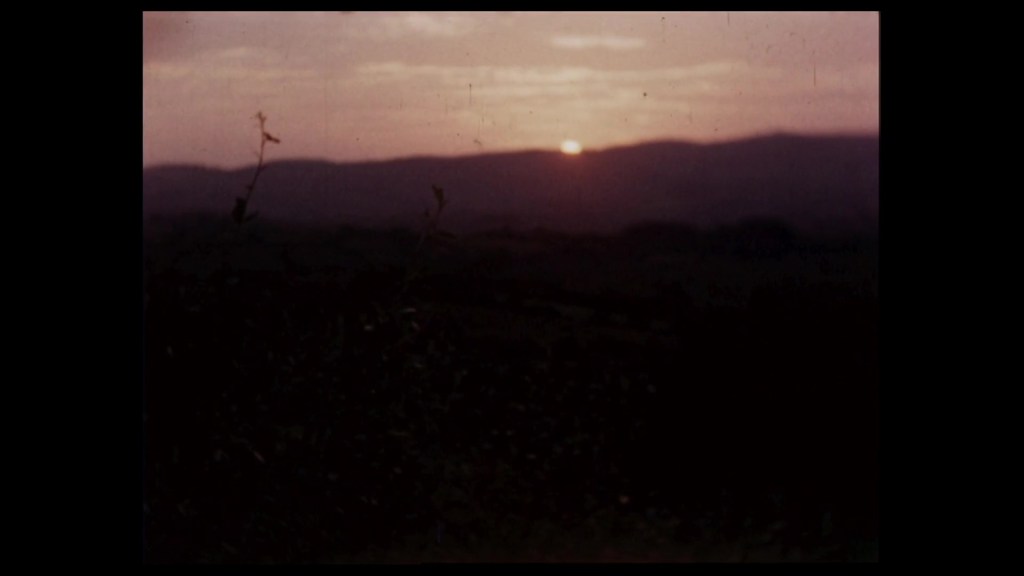
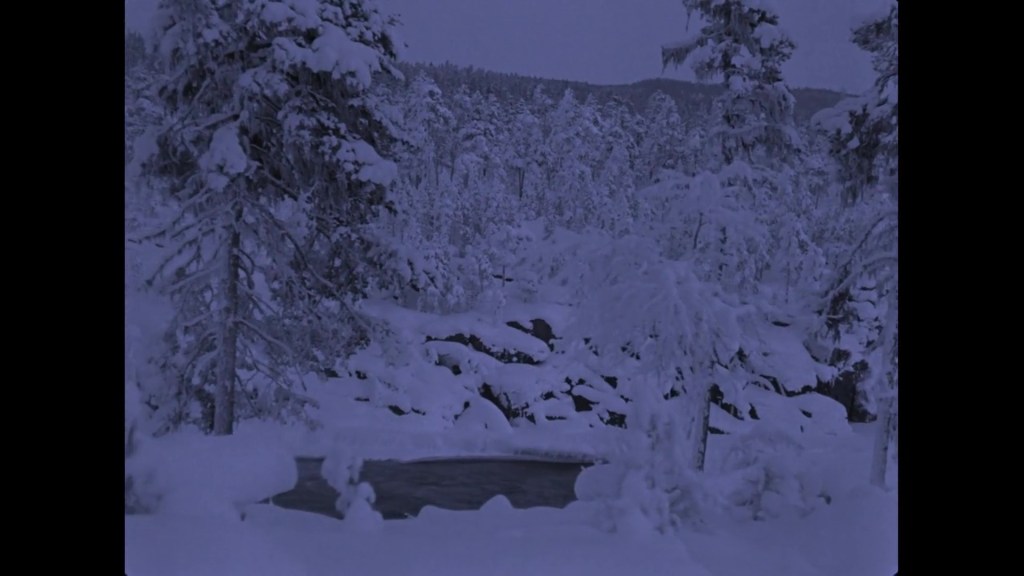
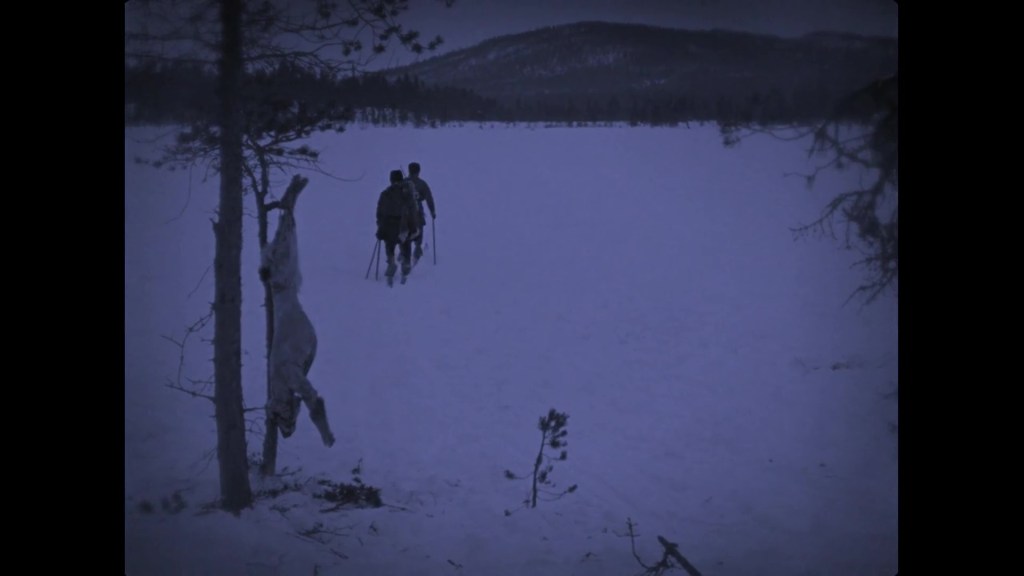
From its first images, a hypnotically beautiful panning shot around snow-covered trees, this film is a visual treat. Indeed, these first shots are among the most beautiful in the film. Complete with a delicate toning that turns the shadows a delicious deep blue-green, these are the most ravishing snowbound trees you’ve ever seen. When the camera gently tracks through the landscape, and this astonishing world begins to open out, I was incredibly moved – just by the sight of it, by the sensation of moving through stillness. My god, my god, my god, what a beautiful sequence. Cameraman Gustaf Boge captures the cold winter light with extraordinary skill. When (after several unpeopled shots) we see Guttorm wading through knee-deep snow, the light throwing his shadow before him, with the forest behind him, this is more than a mere “documentary” scene – it’s a kind of journey in space and time, a distillation of some unreachable moment in the past. The stillness of this wintry light and powdery shadow, the way that the snow itself exists in a kind of arrested physical state… goodness, it’s as perfect a glimpse of some archetypical winter as you could imagine. And yes, the silence of it is part of (essential to) the hypnotic perfection of these scenes.

But the film is as much about the difficulties of life in this landscape as it is about its beauty. For all the beauty of the snow, the trees, the vistas over endless ice, you also see what it takes to live here. The scene inside the tent when the family eats is amazing for the way the whole frame fills with the smoke from the fire, the steam from the pots, and the breath of the inhabitants. The film shows us the effort in doing everything here: from moving through snowdrifts (by foot, by ski, by sleigh) to herding livestock.

In particular, there is an extraordinary sequence in which Petter hunts, chases, shoots, kills, and skins a wolf. We watch the wolf bounding over the snow, while Petter slogs (even on skis) at high speed in pursuit. Only after several shots cutting between wolf and hunter do the two appear in the same frame. The first thing we see after the wolf has been shot is Petter mopping the sweat from his face. It’s an exhausting scene to watch, and the filmmakers make sure you realize how exhausting it was to perform. I say “perform”, because everything here may have the manner of documentary but it is all too well organized, too well filmed, and (in detail) too narratively dramatic to be truly “non-fiction”. Petter’s pursuit of the wolf is remarkable, and clearly real in the sense that he does indeed pursue and kill the wolf, but the skill of the filmmaking is just as impressive. Petter skins the wolf and leaves its body hanging from a wooden frame (I was about to say gibbet), and then he and his comrade move away into the distance. Every action is realistic, but the neatness of the framing and composition, the clarity of the montage of the sequence, bears all the hallmarks of a different kind of narrative filmmaking. This is a very beautifully organized version of reality.

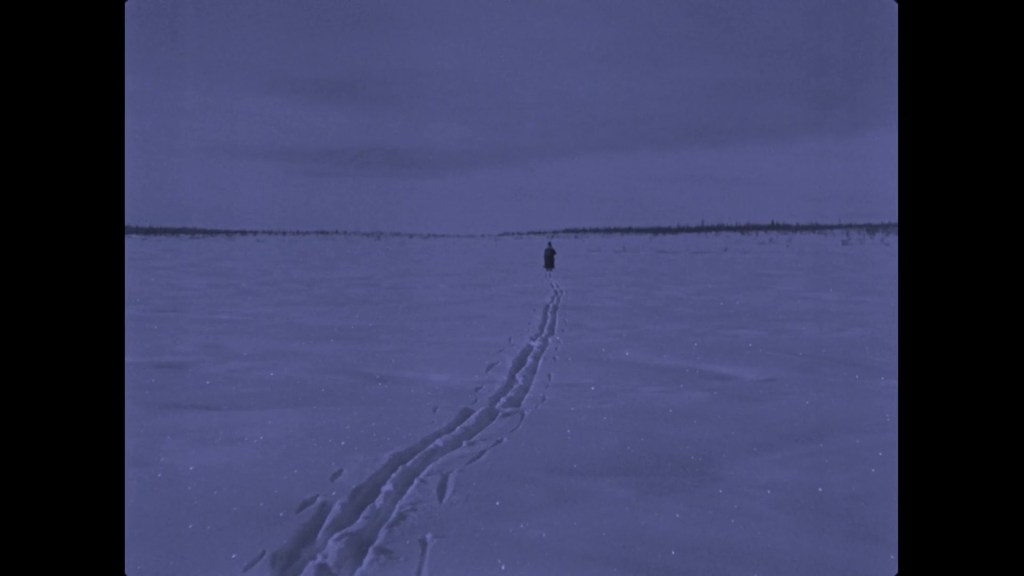
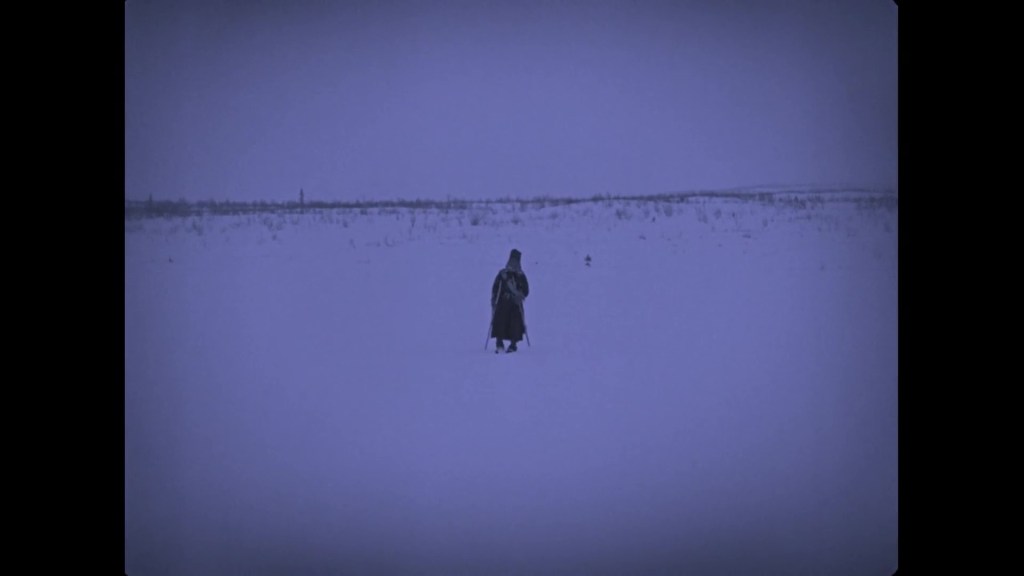
As the evening’s introductions made clear, this is part documentary and part fiction. (And, as Huen highlighted, there is a whole cultural and ethical side to the treatment of the Sámi people that the film deliberately erases.) Though there are clearly scenes of documentary reality, capturing real people and places (especially the market sequence) others (like the climactic sleigh accident) are staged events. This balance caught me a little off-guard, and I wasn’t sure whether I was being moved by the reality of the events or their fiction. At the end of the film, we see an accident in which Länta’s brother dies. Intertitles tell us that Länta must now leave her family and her homeland. She begins a trek across the open ice, and the film gives us flashbacks to earlier scenes with her family. But then Guttorm reappears and “hearts speak” and Länta returns to the hills, and to “happiness”. The sequence works, I think, because of the balance between the reality of the world we have seen (and, yes, its sheer beauty on screen) and the fictional framing of characters and events. Länta is a real enough presence on screen that, however contrived the events around her, I was sad at the thought of her life falling apart. And her world is real, too. I had spent the last hour in a kind of trance-like state of wonder at this world, so the thought of Länta leaving it (and my leaving it with her at the end of the film) carried its own sadness. So I gave a free pass to the abruptness of the ending, and the contrived nature of the narrative, and found myself moved. Why not?

I must also mention the music, by Lávre Johan Eira, Hildá Länsman, Tuomas Norvio, and Svante Henryson. Many of these musicians come from or have roots in the Sámi culture, and their score for this film is a blend of traditional and contemporary sounds. It’s a compelling combination of dreamy synth washes, rumbling electric guitar chords, and chant. While some of it worked very well (especially the opening scenes), other sections of it were too busy for my liking, falling out of rhythm with the images. But I appreciate that this kind of film (light on narrative incident and character psychology) is exceedingly difficult to write music for, and perhaps necessitates a more experimental approach. (To give you an impression of what the score is like, I cannot do better than quote the sound-description text that is an optional accompaniment to the film: “Dog noises, ruff, woof. Low vocal continue to talk like a wise old man. [….] Light dinging like a railway crossing in the distance. […] Babbling vocals continue. […] Frenzied scene of muttering vocal layers interweaving with busy backdrop of activity, metallic sweeps and glassy punctuations.” And, later: “Sweet melodies and dreamscape backdrop of echoing synths and waves of sound continue to ring out.” Kudos to whoever assembled this text, it’s really rather wonderful.) By the end of the film, I was absorbed in the soundscape as in the images.

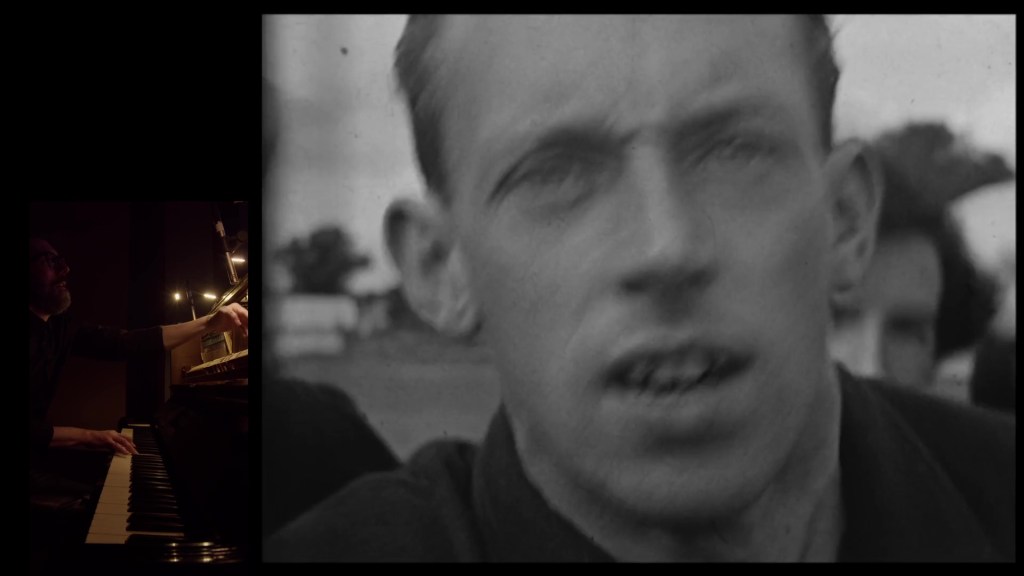
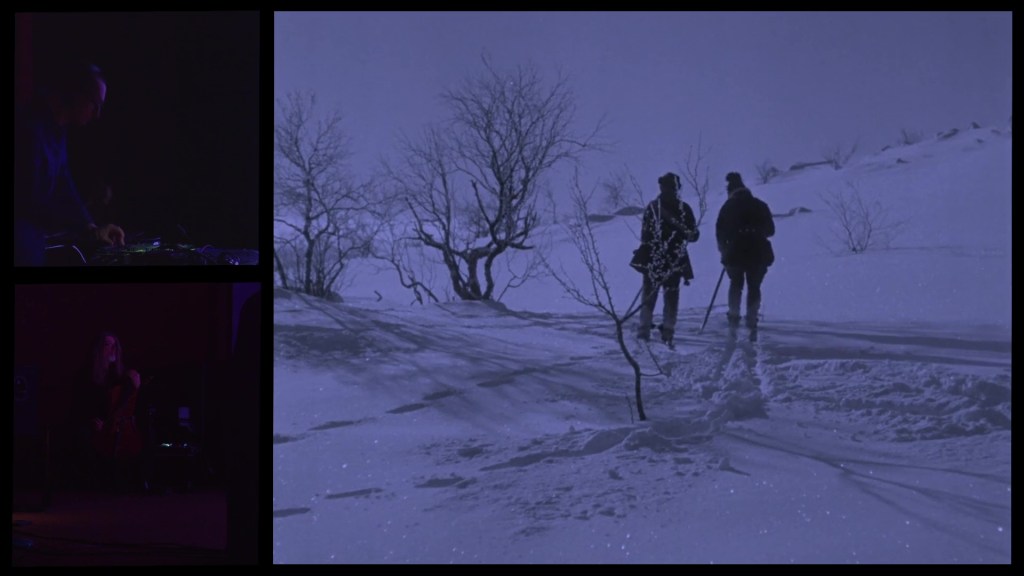
Finally, a word on the online options for this HippFest at Home presentation. There are two ways provided to watch the film. In the first, we get to see the film and the musicians: a split screen arrangement allows us to watch both at the same time. I’ve seen this approach in some youtube videos in the past, but this was better composed and lit. I’ve often thought that this would be an ideal option on any/all home media releases of silent films: seeing musicians live with the film was always (and remains always) a key part of the experience. The other option provided by HippFest at Home is to watch the film without seeing the musicians. But even in this version, we get to see the musicians at the end of the film and see and hear the audience applaud. In each case, it’s wonderful to be able to see the musicians, and glimpse the audience as well. As with the introductions at the start, this presentation made me feel a participant in the event. It’s a superb presentation.

What else can I say? This was a superb programme, superbly presented. Bravo to everyone involved. Already, I feel that HippFest at Home is the most enjoyable format for an online festival that I have experienced. While I know that I’m not really there, and that I’m watching everything over a day after the event has happened, the presentation bridges this geographical and temporal gap. I’ve never before truly felt like I was at a festival before, but here I do. I absolutely cannot wait to join in with tomorrow’s show.

Paul Cuff

The silent version of La Fin du monde (1931; Fr.; Abel Gance)

One of the pleasures of writing about film history is how often you are proved wrong. When in 2016 my book about Abel Gance’s career during the transition to sound was published, I stated that there were no known copies of Das Ende der Welt, the German version of his first sound film. As I wrote here two years ago, this was not the case: a significant fragment of this version does survive in the collection of the Eye Filmmusem. In 2016, I also wrote that no known copy survived of the “international” (i.e. silent) version of La Fin du monde. Thanks to some propitious searching and corresponding, I have now discovered that this too is not the case. An excellent copy is held by Gosfilmofond in Moscow. As you may appreciate, a visit to this archive is currently impossible. However, thanks to Alexandra Ustyuzhanina and Tamara Shvediuk and their colleagues in Gosiflmofond, I have been able to see a digitized copy of this print.

First, a little context for this film. Gance’s first sound began production in 1929. Intended as an epic moral fable about the need for universal brotherhood, and starring the director himself as a prophet, it soon became clear that Gance’s ambitions far outstripped his material resources. By the summer of 1930, Gance’s personal and professional life had virtually collapsed. In debt, reliant on cocaine, his marriage ruined, and his film in chaos, Gance surrendered control of La Fin du monde to his producers. Gance had allegedly assembled a print of 5250m (over three hours) in late 1930, but the version released in early 1931 was 2800m and bears only a distant relationship with his intentions. The director refused to attend the premiere and publicly decried the versions shown in cinemas. (For the full story of this poisonous production, I refer interested readers to my book on the subject.)

La Fin du monde was intended as a multiple-language production. Initially planned to be shot and/or dubbed in French, German, English, and (so some sources state) Spanish, Gance eventually produced just two sound versions: one in French (La Fin du monde) and one in German (Das Ende der Welt). For the latter, only one member of the cast was changed, the rest either reshooting scenes in German with direct-recorded sound or else being dubbed via post-synchronized sound. La Fin du monde was premiered in Brussels in December 1930 and was released generally in France in January 1931. Das Ende der Welt premiered in Zurich in January 1931 and the film was released generally in Germany from April. (It says something of the oddity of this film that its two major sound versions premiered not in France and Germany but in Belgium and Switzerland.) An English-language version was released in the US in 1934, but The End of the World uses the French version as its basis – using subtitles and intertitles to present a version comprehensible to anglophone audiences. Given a new prologue and additional newsreel footage throughout, this is the most severely bastardized of all the versions released in cinemas in the 1930s.

However, one other version of the film was prepared for release in Europe. This was advertised as an “international” version, i.e. a silent version (often with a “music and effects” soundtrack, but no dialogue) prepared for the numerous cinemas still unequipped for sound exhiubition. It was purportedly prepared by Eugene Deslaw (Le Figaro, 2 August 1931). Deslaw had evidently worked as one of a great many official and unofficial assistants for Gance during the production. During this time he assembled Autor de la fin du monde (1931), a curious short film that contains both behind-the-scenes footage and scenes cut from the version released in 1931. (Including one shot, of Antonin Artaud, that is one of the most astonishing close-ups Gance ever filmed.) However, the history of his editing of this film and of the “international” version of La Fin du monde is unclear. As far as I can ascertain, the premiere of Autour de la fin du monde was February 1931, in a gala evening hosted by Gance. But I can offer no such detail for the distribution of the “international” edition of the feature film. Adverts do not usually state any details of length or soundtrack, so it is very difficult to trace what – if anything – became of this version. Back in 2016, I could find no evidence that any copy of the film survived. But, as ever, I was to be proved wrong. Gosfilmofond’s print runs to approximately 2484m, just under ninety minutes, and features a synchronized music-and-effects soundtrack without dialogue. Whether this represents a “complete” copy of this version is difficult to know, but it is certainly shorter than the 2800m version that was released in 1931 – and shorter than the c.2600m restoration of the French sound version that was released by Gaumont on DVD/Blu-ray in 2021. So, what does the international version look like? And sound like?

While the (surviving) French sound version opens with text superimposed over some jerkily assembled aerial shots, the credits of the silent version unfold over a blank screen and are clearly complete. The opening music cue (Tchaikovsky’s Francesca da Rimini [1877]), curtailed and abrupt in the sound version, is here complete and ends just as the opening images begin. These first shots, too, are entirely missing from the French version. Rather than open on the interior of the church hosting the performance of the Passion, we see the exterior and the poster for the play. Geneviève’s name is on the poster, which rather neatly serves as her introductory title – for the film now cuts straight to her in close-up in the play, as Mary Magdelene. There are several extra shots of the Passion group before we reach the point at which the French version begins (at least in the Gaumont restoration). The music and sound effects for this whole opening sequence are the same as in the sound version, though the montage is briefer and there is no dialogue between the various characters we meet in the audience.

In the following scene between the brothers Jean and Martial Novalic, there is the first (of many) music cues that are not in the sound version. Here, we hear the ‘Largo’ from Handel’s Serse (1738), as arranged for piano and cello. This scene plays very differently than in the sound version. This scene plays very differently than in the sound version, with the dialogue is conveyed through intertitles. I confess that I found this scene weirdly moving. Perhaps it was the music, which gave a wonderful sense of intimacy and solemnity to the scene; certainly, it was in part due to the sheer novelty of seeing this scene for the first time in silence, which saved me from hearing the very thin sound design of the dialogued version – and Gance’s peculiarly bathetic vocal performance.

Another factor is that the montage is totally different from the sound version. Not only is the editing different (regardless of the inserted titles), but so too the camera angles and the performances. Deslaw is clearly using not just material from a different camera but from different takes. (This material was clearly shot at 24fps, the speed for synchronized sound, unlike the material visible elsewhere in the film that was shot silently at a noticeably slower framerate. Presumably, therefore, this material was taken from takes that originally had a soundtrack – not from takes shot silently.) Even the inserted close-up of the book that Jean shows Martial is different. The text is slightly shorter in the sound version, while the silent version shows the wider page and the page number. The silent version of the scene is longer, more smoothly edited, and ends differently – with the two brothers walking arm-in-arm from the scene. The sound version has an awkward insertion of a close-up of Jean and ends with a sudden fade to black before their discussion ends. The montage in the sound version is awkward, the composition tighter – next to the silent version, it looks almost cropped.

The same pattern is evident in the next scene. These are different takes of the same scene, shot from a different camera position. Again, the silent version has the camera placed slightly further away. I think the composition of the scene is improved, with the blocking of Geneviève, De Murcie (her father), and Schomburg clearer and more effective.

In scene after scene, this continues to be the case. Everything is subtly different in the silent version. It follows the same narrative line but uses different takes and different editing. Sometimes, the sound version has an extra scene, sometimes the silent version has an extra scene. But the overall shape is the same. (You could easily use the scenes in one version to plug gaps in the other.) But again and again I am struck by how awkwardly framed and edited the sound version looks in comparison with the silent version. Even when the content of sequences is shot-for-shot the same, the choices in the silent version look more balanced, more carefully chosen, and better put together. The sound version consistently looks far too tightly framed, with the tops of characters heads just out of shot, or characters standing just off-centre, or floating oddly at the edge of the composition.

The more bravura scenes of editing are also significantly different. The rapid montage of Jean’s madness is more neatly handled in the silent than the sound version, and it reaffirms my longstanding impression that the montage in the sound version is clunkily curtailed at the end. Likewise, the rapid montage in which Schomburg plummets to his death in the lift of the Eiffel Tower is longer, more dramatic, and more coherent in the silent version.

More broadly, there are significant gaps are that either version fills in for the other. While Schomburg’s rape of Geneviève is missing from the silent version, the scenes of journalists spying on the scientists as they confer on Martial’s discovery are missing from the sound version. Later, there is a more significant scene where Martial and his team return to the control centre where they had formerly had their headquarters. The centre was raided and damaged (a sequence we see in both version of the film) but now, after Schomburg’s death, the team reassembles. Martial is despondent, but Geneviève arrives and encourages him (in Jean’s name) to resume the struggle for humanity’s salvation. The pair embrace and Martial then gives a speech to his team that reinspires them to begin broadcasting their universalist message. (I had spotted one shot from this sequence in the Eye Filmmuseum print of the German version, and had assumed it came from a later (also lost) sequence, but here I saw it again – and now I understand its proper place.) This whole sequence is only in the silent version, and makes the finale make more sense. Seen with titles and no dialogue, accompanied on the soundtrack by the opening movement of Franck’s Symphony in D minor (1889), I found Martial’s stirring address (“Victory lies in your work, in your enthusiasm…”) oddly moving. (And this is a film that has never moved me!)

Curiously, there are also other scenes that appear in different places in either version. In the silent version, we see Martial’s attempt to warn the press of the impending collision of the comet, and then Werster’s agreement to support Martial, much earlier in the narrative than in the sound version. I think this actually makes the narrative clearer, even if the surrounding subplot of the press war is not well developed in either version of the film. (In Gance’s screenplay, as ever, everything is given much more time to unfold coherently.)

The final minutes, including Martial’s declaration of the “Universal Republic” and the surrounding impact of the comet, is the one section of the silent version that is less convincing. The montage leaves out much that is crucial to understanding Martial’s gathering of world leaders. And while there is certainly different footage of the worldwide panic, it is no more convincingly put together than in the sound version. In both silent and sound films, the film falls apart in an orgy of incoherence. The finale ends on the same imagery, with minor differences in editing, and is equally unconvincing – and not what Gance intended. FIN.

What to make of the Gosfilmofond copy, and of this silent version of Gance’s first sound film? Firstly, I think it’s a better viewing experience than the sound version. When the narrative is the same between versions, the framing and editing in the silent version is usually superior. That said, the silent version is not as coherently edited as a true silent production. The use of intertitles is not consistent. No character is given an introduction through titles, and there are few narrational titles to explain what is happening. Sometimes, indeed, the fragments of recorded sound on the soundtrack take the place of intertitles. This “international” version is not a sound film, but nor is it a true silent film. Though it is unfortunately missing many important scenes from the sound version, it adds other important scenes of its own. Put together, you might have a more coherent narrative. It reaffirms just how shoddy is the assemblage of even the more coherent scenes in the sound version.

But these very qualities also raise more questions than they answer. What kind of control did Eugene Deslaw have over this silent version? What material was he allowed to use, and why? When was this version assembled, and on whose instruction? Per my comments above, Deslaw clearly had access to footage from different cameras and different takes. He also must have had access to parts of the soundtrack before they had been mixed with the direct-recorded dialogue elements. (In the scene of Jean’s madness, for example, he uses the same section of music per the sound version but without the latter’s added dialogue.) Yet despite the presence of some extra scenes, Deslaw doesn’t include any of the dozens of more significant scenes that Gance shot in 1929-30 which were cut by his producers prior to the film’s release in 1931. Fragments of this mountain of extra material may appear in Autour de la fin du monde, but it is nowhere to be seen in the “international” version of La Fin du monde.

In summary, the Gosfilmofond print is a document of major importance in our understanding of La Fin du monde. I long to know more about the history of this particular print, and about the “international” version it represents. While I think many aspects of it are superior to the sound version (at least to the French version that survives), it remains very far from the version that Gance assembled in 1930. But its survival is itself a small miracle, and raises hope that other miracles are out there in archives, waiting to be discovered…

Finally, I offer my deepest thanks to Alexandra Ustyuzhanina and Tamara Shvediuk, and to their colleagues, for their help with accessing material in the Gosiflmofond collection.

Paul Cuff

British Instructional Films: Three documentary dramas, 1925-27

As promised last time, I have been watching more recreations of Great War battles produced by British Instructional Films. Unlike The Battles of Coronel and Falkland Islands, these films focus on the land battles of the Western Front. Like Walter Summers’s naval production of 1927, they offer “reconstructions” of real events using as much military personnel and equipment as possible. The exact genre of the productions is difficult to state. The BFI liner notes for their DVD/Blu-ray edition of The Battles of Coronel and Falkland Islands calls them “docudramas”, while the DVD edition of Ypres (discussed below) refers to them as “documentaries”. I’m sure a worthwhile but ultimately tedious (or tedious but ultimately worthwhile) debate exists in critical literature about what exact term refers to what exact kind of film. Shall I employ “docudrama” here? I’m not sure. I think simply “film” is best, since they appeared in cinemas per any other form of feature-length presentation, and I’m interested primarily in what kind of experience they offer rather than what label to pin to them.

Two of these films I have watched via the BFI Player. The third, Ypres, I watched via a DVD edition released by Strike Force Entertainment (now there’s a name). This is the only film that has received a physical media release. Since I’m a sucker for physical media, and did not wish to pay the BFI £3.50 to “rent” a video file, I cheerfully spent £3.48 for the DVD on eBay. As much as I wish to support the BFI, I’m also an immensely stubborn and immensely cheap human being. Thus, I price-watched the DVD for nearly a month until it fell below the BFI rental price. All to save two pence, and to make sure I had a copy of the film to keep for as long as I wish. That said, I am still relying on the few sentences of the video description available (without paying £3.50) via the BFI Player to contextualize the films. Thus, I learn that the BIF films of the 1920s were “released annually around Remembrance Day” (11 November) and were hugely popular records of wartime events. So, what kind of films are they? And how comparable are they to the one BIF film that the BFI has given a physical media release?

Ypres (1925; UK; Walter Summers). I suppose I must begin with a few facts, for anyone not familiar with this particularly resonant piece of British history. Ypres is a town in Belgium that the British army and its allies defended for almost the entirety of the war. There were three major battles (in 1914, 1915, and 1917), the first being a German effort to capture Ypres and the second and third being Allied attempts to throw the Germans back. The Allied frontline bulged around the town in what became known as the “Ypres salient”, and the Germans occupied the scant higher ground to the east, from which they could observe and bombard the British lines and the town itself. Ypres was reduced to rubble, and the salient around it to a nightmarish wasteland of rotting flesh and filth. The first battle cost around 220,000 casualties, the second 100,000, the third somewhere over 500,000. Between late 1914 and late 1917 the frontline, it need hardly be added, moved barely more than four miles. Since the British and Commonwealth armies spent most of the war occupying and fighting for the salient, the name “Ypres” has a particular resonance in their collective culture. This is also my culture. Certainly, I have been fascinated by the war and by the horrors of this place in particular since I was a child.

The figures I have cited above are not mentioned in Summers’s film of 1925. Made to commemorate the tenth anniversary of (at least) the first two battles, it announces its emotional (and cultural/political) tone in the opening credits: “Dedicated to all those who fought and suffered in the Salient and to the memory of our comrades who sleep beneath that ‘foreign field that is for ever England.’” The citation of Rupert Brooke, famous both for his enthusiasm for the war and for his early death (en route for Gallipoli) in 1915, indicates the tenor of what follows. How immortal is this film’s story? Well, very immortal, according to the first narrational title: “The immortal story of the Ypres Salient begins in October 1914. Indomitable Belgium, wrested of all save her immortal soul, resounds to the heavy tread of the invader’s heel.” Yes, we’ve got a double helping of immortality, plus a side portion of indomitability. Let’s just hope the invader’s heel doesn’t step on our metaphor! Come on, chums, let’s up and at ’em!
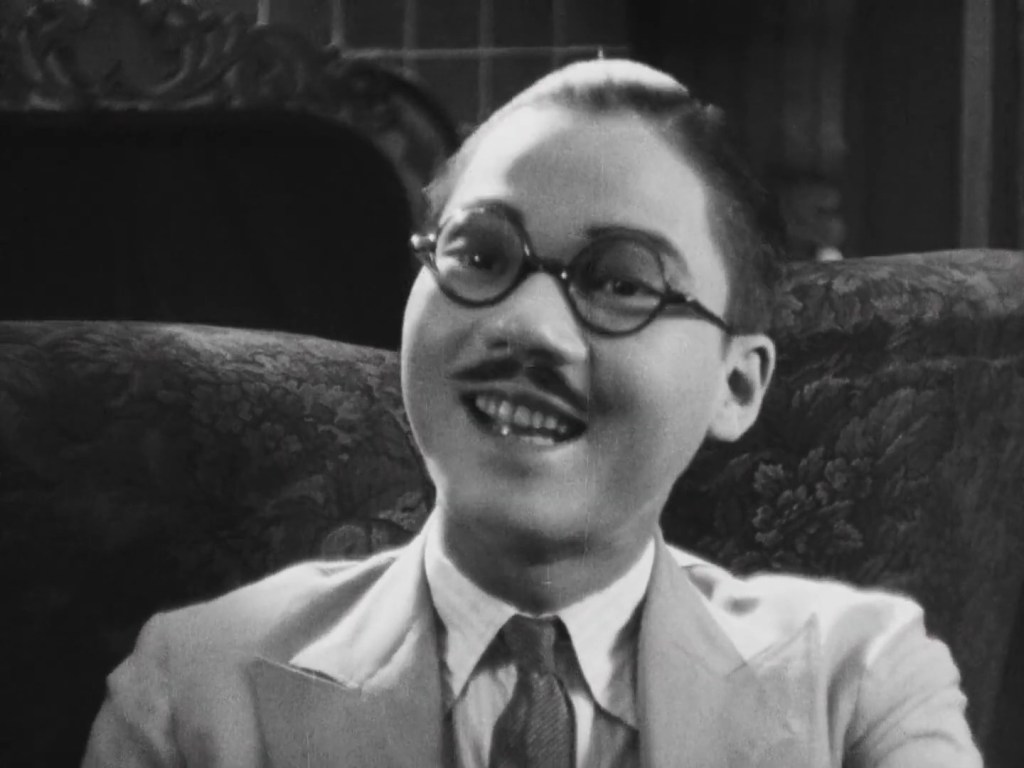
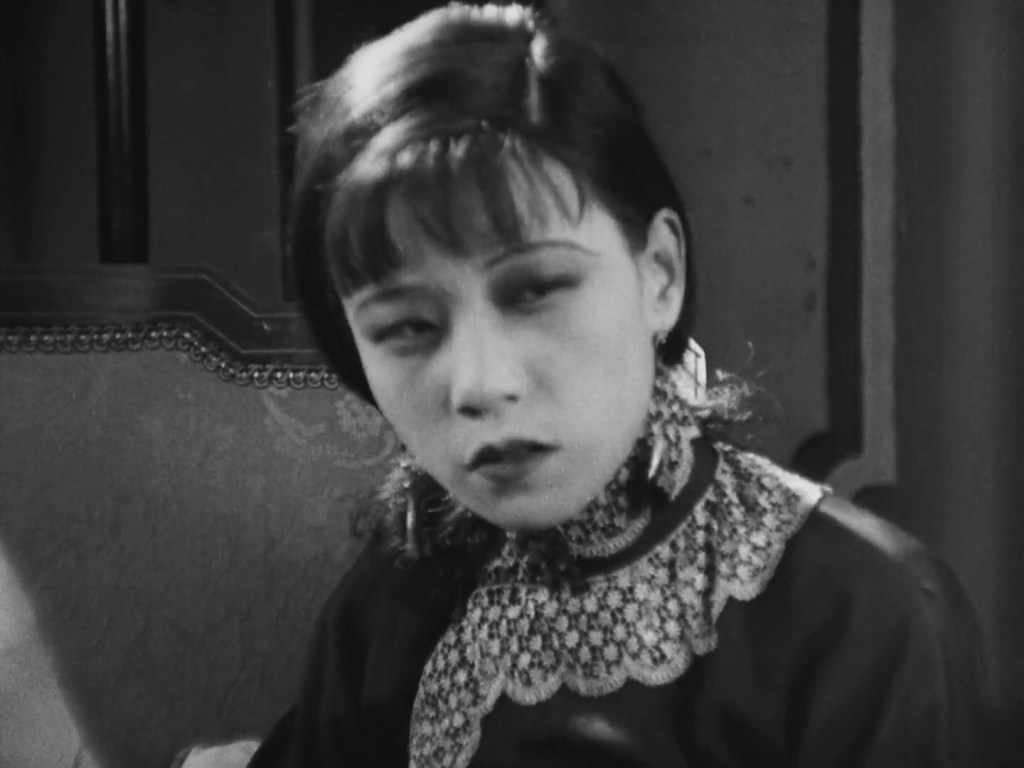
The tone of intertitles suggests how the film seeks to humanize the Allied soldiers (and nurses) and demonize the Germans. The Germans are “field-grey hordes” while the Belgian civilians are “the innocent and helpless victims of War’s ruthlessness” (see also “Sister Marguerite and her band of heroic nuns”). The British Expeditionary Force (BEF) arrives “laughing and singing” in Ypres, while the Germans are reduced to often distant ranks of fodder for their guns and cold steel. The first time we see much of the Germans at close quarters, they are in their dugout boozing and raucously playing the accordion – while outside brave Tommies with blackened faces launch a deadly raid on their position. “Is anybody in there?” a British soldier yells down the staircase to the dugout. “Nein – nein!” the accordionist shouts back. “NINE did yer say, well share this amongst yer!” Tommy throws a grenade into the dugout. It explodes inches from the group of Germans. It neither kills nor wounds any of them, but up they come to the trench, trembling like lambs.

The film is bloodthirsty while being curiously reticent to show us any actual blood. In this way, the film recreates many heroic deeds, often those that earned the Victoria Cross (the highest military award) for bravery. For example, we see a Canadian officer lead his men forward with sword in hand. He is shot down (without spilling a drop of blood), whereupon a title announces: “His is no wasted death. Spurred to vengeance by their leader’s fall, the Canadians surge forward in one headlong rush, capturing their objective and bayoneting every defender.” Lovely, though we don’t see the orgy of bayoneting the title promises. Likewise, we see heroically outnumbered British machine-guns blaze away at point blank range but nobody German falls down dead in front of it. (Later, another heroic machine-gunner’s frightful toll is unseen apart from three or four hapless Huns.)

The film also has a curious interest in immortalizing “unknown” deeds. Thus we see a chaplain making a brave crossing of a shelled road, after which a title says: “The Padre received no reward for his action, but like countless others he had the satisfaction of knowing that he had done his duty.” Elsewhere, there is a similar incident of a cook bringing rations to a company through shot and hell: “You won’t read of their deeds in the History books, / But they’re deuced fine chaps are the Company cooks.” Of course, we are privileged to see these unseen events. The film is allowing us both a public history (of celebrated heroes) and an obscure one (of uncelebrated heroes).

Other methods to humanize the nameless Tommies come in the form of comic scenes. There is a bustling bathing scene, complete with comic asides from plucky lads keeping their spirits up in hard times, as well as scenes of behind-the-lines entertainments. There is also one scene of a soldier going home to his little house, his little wife, and his little blonde child. It’s all weirdly uninvolving. That is, except for the lovely image of the soldier’s house: here are the flowers and trees of a century ago, blowing in the wind. It’s beautiful, captivating – and the film takes no time to emphasize it.

The third battle of Ypres was (in)famously fought over waterlogged terrain in which men frequently drowned. How does the film handle this most famous of features? “With the night the weather changes and the fighting is continued in heavy rain”, we are warned. But there is no rain on screen. The opening phase of the battle skips over such details thus: “In spite of all handicaps, a considerable advance is made, and over 6000 prisoners taken.” No maps show us just how “considerable” this advance was, nor are the “handicaps” shown. Immediately, though “the weather grows steadily worse, and despite superhuman efforts the advance is laboriously slow.” What do we see of this? Well, there is some inane and unconvincing hand-to-hand combat by a small stream. (A self-contained stream that has not burst its banks.) We see tanks easily crossing the battlefield, the only water a couple of puddles. To skip to the end, the last title sums it all up thus: “In a war of heroic deeds, Passchendaele will rank among the most heroic struggles. On 7th December, after five months of gruelling fighting, the crest of that tragically famous ridge is gained.” (The film does not over the fighting of 1918, in which the right was lost again – then rewon, all at the price of many tens of thousands more casualties.)

If all I’ve done is point out the crudeness of the film’s tone and dramatic method, I must conclude by saying that cinematically it is well put together. The photography is strong with frequent and effective use of soldiers silhouetted against large northern skies. There are few close-ups, which makes the use of anything closer than medium or long shots striking. More often than not this is used for the comic scenes, which are less interesting. But there are some effective uses of single soldiers positioned away from the massed ranks/groups that work well. (The image of an exhausted soldier with cigarette in mouth, standing in the foreground while ranks march past behind him, is very striking – it’s not surprisingly that the image is used by the BFI to advertise the streamed version of the film.)

There are also various models and matte painting used to good effect, though nothing very complex. The first glimpse of Ypres is a matte painting, nicely framed, while there are some models to use for the destruction of a zeppelin. For the latter, Summers wisely chooses to stage his aerial fight at night, the dark lending a hand to make the lack of real footage or locations less obvious. Summers also uses plenty of men and materiel to good effect, always filling his frame with people – or else masking portions off with the scenery or smoke and explosions. He also uses some limited amount of newsreel footage shot during the war. But he’s also canny enough not to use any of the real battlefield: it would entirely upstage and undermine the simple heroics of his own “docudrama”. You can’t show the horrors and destruction of the real battlefield if what you’re selling your audience is a boy’s own adventure version of history – albeit a well-equipped one. It’s a very clear and logical film, well put together. But it isn’t reality.

Finally, a note on the DVD edition by Strike Force Entertainment. Unlike the version on BFI Player, this presentation has a soundtrack. The back of the box announces: “The original silent documentary has had an all new soundtrack created from digitally enhanced recordings of the period as well as the addition of evocative sound effects.” Without digital enhancement, anyone nearby would have been able to hear my heart sinking as I read these words. However, the end result is not so bad. It’s a mishmash of musical fragments, united only (I assume) by the fact that they are free of copyright and can thus be chopped and changed per the arranger’s wish. There are also plenty of sound effects, which are far too “new” to my ear, so they stand out a mile from the aesthetic (and historicity) of the film and the acoustics of the musical samples. But I can’t deny that it’s better than I feared. It’s serviceable.

Mons (1926; UK; Walter Summers). On to Mons, which was one of the pivotal early battles of 1914. The BEF was retreating across Belgium, pursued by the much larger German forces. Mons was a “fighting retreat” in the last glimmers of “open warfare” that would soon be replaced by the static trench warfare. It was seen as a test of the strengths of Britain old, professional army – the army that was soon to be worn out and replaced by the waves of volunteers and conscriptions. The original BEF became known as the “Old Contemptibles”.

“Dedicated to the memory of the Old Army which came triumphant through a great ordeal and gave a new and noble meaning to the word ‘Contemptible’.” Thus the opening title. There follows a confusing and ill-explained (actually, entirely unexplained) scene between (unnamed) old politicians arguing about the validity of war. Cut to a mix of newsreel and fictional footage of British troops embarking for the continent. From this point, the action is better narrated. The progress of the armies is described in enough detail to follow, though (unlike Ypres) there are no detailed maps to put everything in place. In a way, it suits the hectic nature of the mobile front to be unbalanced in this way.

And the representation of the fighting? Well, there are cavalry charges and unconvincing firefights and scores of German prisoners, helpless at the sight of cold steel. There are heroic deeds and selfless sacrifices. There are cutaways to Germans admitting how they’ve underestimated their enemy. (“Why not admit it? Our first battle is a heavy – a very heavy – defeat. And that defeat inflicted by the English, the English whom we laughed at.”) There are endless contrasts between the smallness of the British and the masses of the Germans. (“Shatter their ranks, they are filled again. Mow them down in thousands, from the dragon’s teeth spring more.”) There are fewer overtly “comic” scenes than in Ypres, but there are several vignettes to concentrate on individuals. There is “the straggler” who gets marooned with a wounded comrade in a windmill and fights of German uhlans. There is an officer who buys a child’s drum and fife from a local shop in order to rouse his men with any kind of martial music. (The scene ends with a vision of a Victorian band in full regalia playing them on.) Then there’s the scene where a lone British soldier encounters a lone uhlan at rest. The soldier is armed but is too chivalrous to take the German’s possessions without a fight. So they take off their tunics and box, until the German is (of course) knocked out cold.

By dint of its setting in open warfare, and in summer, Mons has more chance for wide, expansive images of the landscape than in Ypres. Summers again makes great use of horizons and silhouettes, of great masses of troops, of racing horses, of mobile batteries, of bridges and brooks, of explosions filling the screen. There are one or two tracking shots, and even a rapid panning shot, which help variate the rhythm of the scenes (many of which are much of a muchness).

And the meaning of it all? According to the last title: “The Great Retreat is ended – the Great Advance, which is to end in ultimate victory, begins.” Describing the onset of static warfare and years of unimaginable suffering and appalling losses as “the Great Advance” is… well, what is it? I genuinely can’t think to express my feelings at this point. They grow more complex, and I will reserve judgement until after the next film…

The Somme (1927; UK; M.A. Wetherall). Right, the final film, and the one that covers one of the bloodiest battles in human history. Between July and November 1916, the British & Commonwealth and French armies launched an offensive on either side of the river Somme. In five months of attritional fighting, the Allies advanced barely six miles and lost over 600,000 casualties. The Germans lost somewhere over 500,000 casualties. The BFI Player notes for this film begin: “This sophisticated retelling of the Battle of the Somme includes an outstanding montage ‘over the top’ sequence.” Fine. What else? This production was “principally the brainchild of Geoffrey Barkas and writer Boyd Cable (Ernest Ewart), both of whom were at the Somme”. Barkas was the original director, but he fell ill and was replaced by M.A. Wetherall. So then, a film produced by veterans with an outstanding over the top sequence. Bring it on…

Hmm. Well, the quality of this print is by far the worst of the BIF films that are offered by the BFI.  (The clips from The Somme included in Brownlow’s documentary series Cinema Europe are clearly from a better source print (and tinted, too), and the episode that covers the film also include an interview with one of its cameramen, Freddie Young.)

What enthusiasm I can still muster for such a grotty copy of the film is steadily quashed by its treatment of war. Here are the Germans in their dugouts, laughing at the image of the Britishers. Here are comic asides by the British tunnellers, planting tons of explosives beneath the laughing Huns (“He’ll want an aeroplane for a hearse when this lot goes up!”) The Somme is filled with deeds without drama, with soldiers without subjectivity, with action without aftermath. This is not to downplay the film’s technical sophistication. Some striking images are achieved through double-exposure/matte painting combinations that mimic the explosions on the horizon as troops march towards the front. (Tinted, the effect would be much better.) But my interest in all this bustle on screen is without heart.

The “over the top” sequence is perhaps the only real effort to create dramatic tension through a complex use of imagery. We see the final minute of time before the whistle blow unfold in real time. Superimposed over the image of a clockface, we see images of the waiting men: biting nails, tapping feet, poised at the ready. It’s an oddly protracted scene of tension. What it undoubtedly possesses in cinematic flair it lacks in dramatic design. This period of waiting is not associated with any particular character or characters. We do not know any of the people we see waiting: they are unnamed figures that we have not met before don’t meet again. We can’t feel anything more than a rather abstract or generalized feeling of tension. Despite the realities the film attempts to show, and despite the reality of the seconds ticking by to Zero-hour, these aren’t real human beings on screen – and I simply didn’t feel properly involved.

Finally, the text “ZERO” grows in size to occupy the screen. Over the top! But what happens next is a quite shamelessly whitewashed depiction of the first day of the battle. To remind you all, the British & Commonwealth forces lost nearly 60,000 men for almost no ground gained. Instead, The Somme provides us with reassuring text about territorial gains and advancing guns – and no mention of objectives, casualties, expectations, consequences. The battle goes on. There are scenes of senior officers discussing plans, scenes that are stiff and awkward in the extreme. They are there for illustrative purposes, but what – really – are they illustrating? The figures aren’t named, they don’t have identities, motives; they have no function other than to gesture towards a chain of command and a strategic process that the film has no ability or interest to explore.

The film is more interested in the lower ranks, but what kind of justice does it do to their struggles? We see heroic deeds, lone pipers playing under gunfire, the wounded being rescued. But where are the bodies? We’re told in one title that two waves of an attack were mown down by machine gun and rifle fire. Instead of showing us this, the title immediately dissolves onto a second title, reassuring us that the third wave – inspired by an officer’s hunting horn – went over the top and succeeded.

The film knows it cannot deny the sacrifices made, but it also cannot bear to show them or name them. We are shown maps of the battle, but they do not show the objectives in relation to the initial timetable (positions that were meant to be taken on day one were still out of reach months into the battle). A later title implies the difficulties the Allies faced without making them explicit. Here, the text mentions Beaumont Hamel, “where our attacks had broken down with such appalling losses on 1st July” but where “the enemy still remained secure”. Where were these “appalling losses” in the relevant part of the film? Where even was anything shown to “break down”?

The film then blames the weather for stalling an inevitable victory. Here, we see some of the few instances of the troops occupied not with heroic deeds or plucky comedy but with forbearance – and even, in one scene, expressing something like fury. This comes in the form of a remarkable shot of a soldier lying in mud, delivering an untitled monologue; but anyone who can lipread even slightly will pick up phrase like “fucking war” and “fucking mud”. What to make of this? It is the only voice (but “voice” is somehow an inappropriate term in this silent scene) in the entire film raised against the tone of patriotic success. But the film cannot, dare not, follow it up or elaborate on it. Another soldier witnesses this outburst, but he carries on without comment. So does the film. A title later states: “the weather closed down like a curtain upon a glorious tragedy”. Glorious tragedy is it, now? Well, the film manages to win a victory nevertheless by skipping forward to the German tactical retreat to the Hindenburg Line in early 1917. “The sacrifice had not been in vain.” These words are spelled out over a vision of a scarred swathe of land, the remains of an advance scattered over the torn ground. But there are no bodies, no victims, in the frame. It is as if the “sacrifice” is too great to show and has already been tidied away.

I suppose by this point I had grown weary of these BIF films. But there was something in the evasiveness and hypocrisy of The Somme that especially irritated and upset me. The film retrospectively mentions horrific casualties and abject failures yet never once depicts them. It depicts heroism without placing it in the context that makes it heroic. We see just one blinded soldier, fumbling in a crater. We see just one voice raised against the appalling conditions, but his voice is un-transliterated. Nothing is questioned; everything is justified. The Somme is a film that has neither the interest nor capacity to think about what it shows us, let alone to feel something. It is a spiritual and moral vacuum.

To conclude this overlong piece, I do not regret going through these BIF films. They form an important genre of popular commercial filmmaking in the UK in the 1920s. But in all honesty, I cannot wait to watch something else, something more honest – in whatever genre. To repeat what I said in my earlier piece, these BIF films offer exciting visions of the Great War that may impress by their scale and vigour but frustrate by their utter disinterest in real human beings or real human emotions. For films dealing with industrialized slaughter, it is quite staggering how little there is on screen of genuine consequence. It is also worth repeating the citation I offered last time from Bryher, writing in in Close Up in October 1927. Illustrating that even people at the time might feel queasy watching these films, Bryher attacked these BIF productions for their dishonest treatment of war:

There are plenty of guns and even corpses in the British pictures but the psychological effect of warfare is blotted away; men shoot and walk and make jokes in the best boy’s annual tradition and that some drop in a heap doesn’t seem to matter because one feels that in a moment the whistle will sound and they will all jump up again…

I am likewise left deeply uneasy about these films. Indeed, I also take it that the way the BIF productions have been treated by the BFI suggests some similar qualms about the rationale for their restoration and exhibition. Of course, The Battle of the Somme (1916) – made while the battle was still raging in the summer of 1916 – is a famous example of wartime reporting that has been restored more than once and has long been available. It may not show the full horrors of the battle, but it has enough glimpses of real injury and real death to make it shocking – then and now. The Battle of the Somme is an extraordinary document of its time, but the reality of those faces still reaches out to us in the present; the film is naturally much seen and studied. Conversely, the BIF films – despite being more numerous and just as popular – are relatively obscure. Asthe only such production to have been fully restored and released in the modern era by the BFI, I wonder how many university courses include The Battles of Coronel and Falkland Islands? Of all the BIF films, it strikes me it is the one most palatable to modern audiences. In treating a sea battle in which the total losses were less than 4000 lives, it is less likely to seem an inappropriate mode of representation. With Mons, there is an appealing vigour in its treatment of a series of dramatic encounters in the open warfare of 1914. But with Ypres and The Somme, I cannot imagine the propagandist treatment of the bloodiest battles in British & Commonwealth history going down so well.

Of course these films are “of their time”. But is that also an excuse to avoid looking at what they represent, or at what uncomfortable resonances they might still have? As Bryher’s review makes clear, some critics could and did feel differently even in the 1920s. She herself made the link to the rise of nationalism and fascism across Europe, forces that relied on images of a glorious military past and of war as a heroic pursuit. One might also look to France and to Léon Poirier’s Verdun, visions d’histoire (1928), which is a far more melancholy look at another critical battle of the Great War. As it happens, for all its cast and resources, Verdun is an absolute bore of a film – like an illustrated lecture, only weirdly portentous. Yet it still transcends the jingoist tone of the contemporary BIF productions. Poirier’s film even tries to address the spiritual aftereffects of war, to acknowledge that the millions of men who fought and died had value beyond their actions on the battlefield – that they were all, equally, human beings. There is more to be said about films like the BIF production in comparison to Soviet “history” films of the 1920s, as well as with more straightlaced films like Verdun, but frankly I’ve had enough of this genre for a while.

Paul Cuff

The Battles of Coronel and Falkland Islands (1927; UK; Walter Summers)

To begin, a confession: the Blu-ray of The Battles of Coronel and Falkland Islands has been sat on my shelf for ten years. Yes, ten years of being shuffled from house to house, from shelving unit to shelving unit. Ten years of being saved for tomorrow. Well, tomorrow has arrived – today! I’m not sure why the existence of the film and its convenient BFI home media edition slipped my mind for so long, nor why the notion of watching it suddenly popped back into my brain. But regardless of why, I have now watched it.

The Battles of Coronel and Falkland Islands was directed by Walter Summers for British Instructional Films (BIF), a company that made documentaries and features through the 1920s. Among their larger productions were a series of historical recreations of battles from the Great War. Alongside naval dramas like Zeebrugge (1924) and The Battles of Coronel and Falkland Islands were others about the western front like Ypres (1925), Mons (1926), and The Somme (1927). The Battles of Coronel and Falkland Islands is the only one of these films to be fully restored, though others are available via the BFI streaming service. Summers’s film is the flagship production (forgive the pun) among this series because of the scale of its recreation and because it has been seen as a companion piece to Sergei Eisenstein’s Battleship Potemkin (1925). I will discuss this more later, as the discourse around this comparison is almost more interesting than the act of comparing the films itself.

The Battles of Coronel and Falkland Islands is set in 1914 and recreates two successive battles in the Pacific and Atlantic, fought by British forces against the German fleet under Admiral Graf Maximilian von Spee. The Battle of Coronel, in November 1914, was a defeat for the outclassed British ships, during which the Germans lost three wounded against British losses of 1600 killed (and two ships sunk). The Battle of the Falklands, in December 1914, was a total reverse of fortunes: for only a handful of casualties, the British sunk four German ships – killing over 1800 men and capturing another 200. The opening narrational title of Summers’s film puts it this way: “This is the story of the Sea fights of Coronel and the Falkland Islands – of a victory, and a defeat as glorious as victory – a story of our Royal navy, which through storm and calm maintained for us the Freedom of the Seas.”

The tone of this summary is revealing. Yes, the credits thank the Royal Navy for their cooperation, and boast of the many resources put at the production’s disposal; but it is not just historical recreation, it is a depiction of “glory” and empire. Rather sweetly, the credits list which (historical) ships are played by which (real) ships of the Royal Navy. None of the human cast get mentioned, which epitomizes the balance between the recreational/historic aspects of the film and its dramatic/human aspect. For while Summers takes care to humanize the leading protagonists, especially the various commanders, it is in the naval operations themselves that the film is principally concerned – and best at handling.

Here, he has an impressive array of ships and materiel to play with. Most obviously, he has several Royal Navy ships to film – from sea, from land, from high on deck, from the depths of the hold. He finds lots of interesting angles, though the commanders at their respective helms are always framed in the same way. In part this helps anchor the spaces, as well as draw parallels between the opposing commanders – all of whom are treated sympathetically.

Most impressive, however, is the sequence (called “The Effort”) in which the British prepare their ships to sail out to the Falklands to intercept the German fleet. There is a long montage (about seven minutes) of preparations. We see a dock’s worth of activity: moving equipment, welding iron, stockpiling ammunition, loading supplies. Since the crew is working day and night, there are some striking scenes in the dark of the activity illuminated by flashes of light. There is also a marvellous tracking crane shot, filmed (I presume) from one of the dock’s mobile platforms suspended over the loading bay. It’s a great shot and I wish there had been more moments of such camera movement. But Summers reserves one of his very few other mobile shots for a similar tracking shot that moves up the food-loaded expanse of von Spee’s victory banquet table in Valparaiso. This is one of the only moments in the entire film that struck me as a truly incisive, analytical use of camerawork, for it is not used simply to show-off space but to comment on the action. A contrast is being drawn between the parallel preparation of both sides: while the British are working night and day to rebuild their fleet, the Germans are feasting and drinking. It’s a nice touch, but noteworthy for the rarity of its… well, stylishness. It’s the move of a dramatic director rather than a documentary reconstructionist.

Indeed, I am tempted to say that Summers is better at directing objects, and cutting between spaces, than he is at directing people. His choreography of the various crowd scenes is quite repetitive: too often, everyone on screen is doing exactly the same thing. Thus when the militia at Port Stanley spot the German navy approaching, they all go to the cliff edge and they all point at it. When the Royal Navy closes in on the disabled German vessels at the end of the film, the curious crew all go to the railing, and they all point at the vessels. Summers is a bit better in the action scenes, with crews rushing around or dying. But even here, at the end of the battle, when the Gneisenau is scuttled, there is a shot of the German crew all gathered in various degrees of stiff, unnatural poses. (Really, what are those gestures supposed to be? Are they mimicking Mr Muscle?)

Beyond the crowds of sailors, Summers also tries to humanize his set pieces by having little vignettes of individuals or pairs among the crew. Thus, we see HMS Canopus being painted by a comic sailor who gets paint on his comrade; or we overhear conversations of sailors in-between or just after bits of action, making comic asides. I say, “comic”, but what I really mean is “tedious”. The performances are stiff, the rhythm is slow, the supposedly colloquial dialogue clunky and contrived. I suspect the humour may have gone down better in Britain in 1927 but suffice it to say that a century later these scenes do not work. (Thinking back, I recall similar scenes in Powell and Pressburger’s naval war drama The Battle of the River Plate (1956), which are likewise cringeworthy efforts to show jolly working-class sailor folk maintaining their plucky British spirits.)

All of which brings me back to the comparison with Battleship Potemkin. There are striking parallels and striking contrasts. Both films alternate between drama on land and sea, depicting history as a kind of spectacle. But while both films don’t have characters so much as collective groups, there is a vast difference in its attitude toward hierarchy. Summers has a great respect for officers of both sides – they are all represented in strikingly similar ways, with an emphasis on calmness, stoicism, and honour. This is a striking contrast to the sadistic, violent officers and priests of Battleship Potemkin. Summers is very much invested in the class system as embodied in military ranks. Eisenstein is interested in revolution, Summers in the maintenance of class and Empire.

In this sense, Summers’s film is as implicitly propagandistic as Eisenstein’s is explicitly so. The Battles of Coronel and Falkland Islands is a defence of British imperialism: the film begins and ends with references to the defence and glory of Empire, with Britain as the guardian (if not the owner) of the “seven seas”. But Summers is also careful not to dehumanize, let alone demonize, his enemy. Though there are plenty of sneering, triumphalist looks among the German officers, Spee himself is a very sympathetic (one might also say tragic) figure. He refuses to gloat or condemn the British at the victory feast, and his acceptance of the bouquet is tinged with a self-conscious defeatism: Spee says the flowers must be kept in case they should prove useful at his own funeral. (Summers makes sure to show Spee brooding on them later in the film, as defeat looms.) The film clearly admires stoicism and bravery on both sides: the suicidal courage and flag-waving defiance of the British ships in the opening battle are echoed in the actions of the doomed German crews in the second battle. There is nothing like this in Eisenstein’s depiction of the tsarist military of any rank in Battleship Potemkin.

In terms of naval spectacle, Summers’s film boasts greater resources. While Eisenstein makes do with what is clearly a single docked ship, Summers has a small fleet that is clearly filmed at sea. The scenes in which the refitted ships set sail to the Falklands are excellent and I wish there had been more scenes like this. Summers seems very concise, which is to say limited, in his use of this footage. He does not explore the interior of the ships in much detail (a cabin, a canteen, a galley), and the upper deck is likewise limited to a small number of set-ups (a couple of gun positions, the bridge). What is missing is the sense of a ship as a lived-in space, occupied by a real crew. I wonder if it was either difficult or even prohibited to show too much detail onboard the Royal Navy vessels. (I wish he had used more mobile camerawork to explore these spaces. Apart from one very brief tracking shot in the canteen when action stations are called, the camera remains static.) Nor does his montage, or his image-making, ever quite produce a true sense of drama. (The best sequence is one of preparation, not of action.) Not only does Summers explain what’s about to happen in his narrational titles, but I always feel that he is at one remove from the reality being depicted. For all its recreational efforts, you feel that The Battles of Coronel and Falkland Islands is ultimately history in the past tense. Battleship Potemkin has a far greater sense of events happening before your eyes, disorienting you, sometimes terrifying you. And, it should go without saying, Summers does not have Eisenstein’s extraordinary eye for composition, for sudden bursts of impactful imagery – nor for his playful subversiveness. The Battles of Coronel and Falkland Islands is very effectively composed and edited, but I suspect that I will struggle to remember its imagery. But with each shot of Battleship Potemkin, Eisenstein seems to smack you round the head – every image is gripping, dramatic, dynamic. (Even the slogan-like text of the titles is punchily effective.) For all Summers’s resources and skill, and for all the similarities between these films, Battleship Potemkin is in a different league than The Battles of Coronel and Falkland Islands.

On this theme, I find myself thinking about the first time I heard of The Battles of Coronel and Falkland Islands. This was a reference and clip in Mathew Sweet’s feature documentary Silent Britain (BBC Four, 2007). I have very mixed feelings about this documentary. On the plus side, it offers a valuable trove of clips from a host of interesting films, many of which are still not publicly available. On the downside, the tone of Sweet’s narration is sneeringly dismissive of anyone who has ever dared to doubt the glory of British cinema in this period.

When I first saw Silent Britain in 2007, I felt that the countless digs at “some historians” was aimed (at least in part) at Kevin Brownlow, whose episode on British cinema in Cinema Europe (1995) (“Lost Opportunity”) offered a very sober account of this same period and subject. Comparing the two documentaries, it’s striking how many of the films and historic interviews used by Brownlow are also used by Sweeney. But Sweeney doesn’t discuss the struggles of the British film industry, nor reflect on the fact that many of the films he cites from the late 1920s were not only influenced by continental filmmakers but directed by them. Brownlow’s focus, as the title of Cinema Europe indicates, is to offer a wider perspective on the relationship between national cinemas across Europe – and to highlight their successes and struggles to compete with Hollywood. As such, Brownlow’s is a more complex project than simply rediscovery – although it is also one of the great documentaries on (re)discovering silent cinema. This is not to say that Sweet is wrong to champion the films he chooses (they are too little seen), but that he offers an incredibly one-sided interpretation of the period. Watching it again, nearly twenty years later, I find Sweet’s endless sniping about critics and historians incredibly irritating. (I sincerely hope that I never strike my readers this way.) The content of the documentary is superb, but the tone of the narration is too much like tabloid journalism.

In addressing (and criticizing) the Film Society (1925-39), where otherwise rare or censored films were shown to paid subscribers, Sweet mentions Battleship Potemkin and The Battles of Coronel and Falkland Islands together:

Everyone at the Film Society was astounded by the technique of Eisenstein’s film, but it wasn’t really so far removed from what a director called Walter Summers was doing closer to home. […] For all Summers’s ambition in a field we would now call “drama documentary”, this film would have been passed over by the Film Society. It was certainly given a rough ride by the cinema intellectuals writing in the influential magazine Close Up. Close Up’s critics wrote gushy fan letters to foreign directors while dismissing the work of British filmmakers as third-rate and uninspired.

Well, excuse me! I’d forgotten how snide Sweet was in addressing one of the most important English-language film publications of the period, and their wide-ranging efforts to engage with and analyse foreign cinema. I’m well aware of the reputation of Close Up as a hotbed of snobbishness, not to mention sexual experimentation, and I know some people who have little time for their writers and editors as a whole. But I can only roll my eyes at Sweet’s setting up of these straw figures to knock down with such contemptuous ease. The point of the Film Society was not to show big commercial hits like The Battles of Coronel and Falkland Islands, a film that was readily accessible in cinemas across the land, but films that were otherwise censored, cut, or prohibited. This inevitably meant an emphasis on foreign films and those of the avant-garde. And as for the way Sweet sneers at the notion of “cinema intellectuals” and their continental tastes…

Anyway, noting that Sweet didn’t bother quoting what Close Up actually wrote about Summers’s film, I bothered to look it up. The review (“The War from more angles”, from October 1927) is written by Bryher, one of the most interesting figures in British modernism of the interwar years. (I could write much on Bryher, but this is not the space…) Bryher states at the outset that she doesn’t think The Battles of Coronel and Falkland Islands is a bad film, but she does take issue with its tone – and that of similar recreations of the Great War. “The trouble is not so much what they represent as the way they represent it”, she says. “What I and many others (according to reviews) object to in the Somme [the BIF film of 1927] and the Battle of The Falklands is that war is presented entirely from a romantic boy-adventure book angle, divorced from everyday emotions”. Sensitive to the growth of fascism across Europe in the late 1920s, Bryher worries that “the ‘We Want War’ crowd psychology may destroy a nation” – and that films ought not to encourage it:

By all means let us have war films. Only let us have war straight and as it is; mainly disease and discomfort, almost always destructive […] in its effects. Let us get away from this nursery formula that to be in uniform is to be a hero; that brutality and waste are not to be condemned, provided they are disguised in flags, medals and cheering.

For Bryher, The Battles of Coronel and Falkland Islands repeated a trend common to other BIF films: “there was not a single suggestion that war was anything other than an elaborate and permissible adventure; or that there were thousands of men and women whose lives were broken and whose homes were destroyed.” She then offers her own vision of what a more sensitive film might convey, conjuring a kind of impressionistic montage in prose. In Summers’s film, the Scilly Isles stand in for the Falklands, and Bryher uses this as a springboard for her own memories of the war there:

[N]o gigantic spectacle is needed but a central theme worked out perhaps in a little outpost and related to the actual experience of people during those awful, hungry years. Scilly for instance (as I saw it in 1917) with the long black lines of the food convoy in the distance. A liner beached in the Sound with a hole as large as a room where a torpedo had hit it; the gun on its deck trained seawards in case a submarine dodged the patrol. Old men watching on the cliffs. An old fisherman rowing in slowly with a cask of brandy—wreckage—towing behind his boat and a smuggler’s smile on his lips. (How he must have enjoyed bringing it in legitimately in broad daylight.) Shipwrecked sailors from a torpedoed boat stumbling up the beach. Letters: —“If the petrol shortage continues it is doubtful how long the country can hold out” and down at the wharf the motor launches letting the petrol hose drip into the water because, between filling tanks, they were too bored to turn it off. The war as it affected just one family. Rations, rumours, remoteness.  A film could be made of trifling impressions seen through the eyes of any average person. It would be valuable alike as picture and as document. But this glorification of terrible disaster is frankly a retrogression into the infantile idea of warfare, as a kind of sand castle on a beach where toy soldiers are set up, knocked down, and packed up in a pail in readiness for the next morning.

Bryher also contrasts BIF productions with The Big Parade (1925), which she sees as a far more honest depiction of war – and the dangerous lure of false notions of what war is. In the BIF films, war is “[h]eroic and nicely tidied up”, “[p]leasant to watch but completely unreal”:

There are plenty of guns and even corpses in the British pictures but the psychological effect of warfare is blotted away; men shoot and walk and make jokes in the best boy’s annual tradition and that some drop in a heap doesn’t seem to matter because one feels that in a moment the whistle will sound and they will all jump up again; a sensation one never had for a minute in The Big Parade.

Bryher praises the extensive dock montage sequence in The Battles of Coronel and Falkland Islands precisely because it was more honest:

Here the director touched reality, and the different machines, the darkness, the hurrying feet, and the long yard gave a feeling of preparation and activity that marked a great advance on anything previously seen in an English film. That was authentic England. Dirty and full of noise and right. The men were working the right way. Directly the atmosphere of the picture changed and the attention held.

To return to the comparison with Battleship Potemkin, it’s worth noting that Bryher never mentions Eisenstein in her review of Summers’s film: the British censors had banned it from being exhibited in the UK and it was only shown by the Film Society in November 1929. She places The Battles of Coronel and Falkland Islands in the context of other contemporary war films, especially those by BIF. Bryher sees it as part of a genre, and criticizes it as such. For all Sweet’s outlandishness, I can’t help but take his comment (I can’t call it an argument) that Battleship Potemkin “wasn’t really so far removed” from The Battles of Coronel and Falkland Islands as quite a cautious statement. Even he knows it’s absurd to claim it as a work equal cinematic, let alone cultural or historic, significance. Claiming it as “not really so far removed” is about as far as one might reasonably push it, though even here I would say that this is a gross simplification. As Bryher suggests, it’s not a matter of setting but of tone and style that distinguishes the BIF films from films like The Big Parade or Battleship Potemkin. The essays in the BFI booklet that accompanies the Blu-ray of The Battles of Coronel and Falkland Islands are rather more balanced than Sweet, arguing that it is a great film within its particular context. Bryony Dixon says that the dockyard montage is surely “one of the best pieces of filmmaking in British cinema” (Bryher says something similar), though she is also careful to shield the film from the kind of outlandish comparison that Sweet is keen to make.

Finally, a word on the score for the 2014 restoration of The Battles of Coronel and Falkland Islands. This was written by Simon Dobson and performed by the Band of the Royal Marines, together with the strings of the Elysian Quartet. Dobson uses the brass, winds, and percussion of the Band to create a marvellous sonic world – it has a great variety of rhythm, texture, and tone. I was curious to hear the way the strings are used to underscore certain parts of the film. They sounded to my ears more like the way a synthesizer is sometimes used to create a kind of acoustic wash beneath a dominant rhythm. The liner notes to the Blu-ray reveal that these strings were recorded separately from the Band and later mixed in to the soundtrack. This perhaps helps explain my sense of their slightly artificial placement. This is not a complaint, however, as the effect is certainly novel on my ear – and the whole score must rank as one of the more interesting and imaginative uses of orchestration that I’ve heard for a silent film. It sounds both akin to its period and genre, as well as sounding original. A perfect balance, and an enjoyable soundscape.

After going through the above, I feel some nagging sense of guilt that I should do more homework. Sweet’s complaint about most historians not being as familiar with British silent cinema as with foreign productions is surely true of me, if not others. In terms of availability, the situation Sweet observed in 2007 is rather better in 2025, but many important British silents are still maddeningly difficult to see. Half of the BFI’s “10 Great British Silent Films” (compiled in 2021) are not available either on DVD/Blu-ray or on the institute’s streaming service (and the DVD for Hindle Wakes (1927) is long out of print). And this list, of course, is but a tiny selection. Nevertheless, can we start by getting releases of The Lure of Crooning Water (1920) and The First Born (1928)? In the meantime, I promise to do my patriotic duty and watch not one, not two, but all three available British Instructional Films on the BFI Player service. None of this continental muck for me, just good ol’ British fare. (But after that, can I please resume writing “gushy fan letters to foreign directors”?)

Paul Cuff

Live cinema at the BFI: Gösta Berlings saga (1924; Sw.; Mauritz Stiller)

On Sunday I went to London to the BFI Southbank. The reason? To see the UK premiere of the new(ish) restoration of Mauritz Stiller’s Gösta Berlings saga. Having known the film only on its old DVD incarnation, I was excited to see the differences that extra material and tinting/toning would make. I also have memories of being mildly irritated by the Matti Bye score present on the old restoration, so looked forward to hearing the live piano accompaniment from John Sweeney. Delightfully, the presentation took place in NFT1 – Stiller deserves the biggest screen on offer! With an excellent view in the centre of the auditorium, I took my seat…

Where to begin? I suppose with a synopsis. But with Gösta Berlings saga this is something of an undertaking. As he had done with Gunnar Hedes saga (1923), Stiller simplified the Selma Lagerlöf novel on which the film is based – by my god it’s still a complex affair with a shedload of characters. Later I will discuss a few aspects of the plot through its characters, but a brief summary might go as follows: Gösta Berling is a defrocked priest who joins a band of revelling “cavaliers” on the Ekeby estate. He variously attracts and is attracted to a series of women, resulting in much heartbreak and ruin – including to the Ekeby estate. Can Gösta Berling rebuild his reputation and restore the estate to its rightful owner?

The new Svenska Filminstitut restoration was completed in 2022 and adds some sixteen minutes’ worth of footage to the longest previous edition, though it is still another fourteen minutes (approx.) short of the original two-part version from 1924. The restoration credits at least acknowledge this history, unlike those of the recent Svenska Filminstitut version of Stiller’s Sången om den eldröda blomman (1919), which (as I wrote when I saw it) omits any mention of the significant amount of material that remains missing. In terms of viewing the film, the missing scenes from Sången om den eldröda blomman cause less of a problem than the material missing from Gösta Berlings saga. With the latter, the plot is so complex that a summary of what happens in missing scenes (if this information is available) would have enhanced the experience. I remain entirely unclear as to whether the narrative gaps are an issue with Stiller’s skill as a screenwriter or with the gaps in the restoration. (More on this issue later.) As the restoration credits also admit, the pictorial designs for the intertitles of Gösta Berlings saga were not able to be recreated even if the text and font have been. This is a shame, but entirely understandable – and at least the credits flag this absence. But the most obvious difference to the new restoration is the revival of tinting (for the film) and toning (for the intertitles). The film colours are based on a positive copy of the film preserved in Portugal, and the intertitle colour on a contemporary written description, so the overall scheme is likely not identical to the copies presented in Sweden – but this is not a major issue. The main point is that the tinting, in combination with the picture quality, looks stunning. Gösta Berlings saga is a fabulous film to look at. As I’ve written on previous posts about Stiller films, one of the main reasons to watch them is the photography. For Gösta Berlings saga, Julius Jaenzon captures the landscapes in winter and in spring with equal skill. The level of detail, the subtlety of the lighting, the richness of the textures, the artfulness of the composition – it all makes for a great watch. Though I always prefer Stiller when he’s outside, the interiors of this film are also excellent. The well-appointed rooms of the big houses are grand in scale, but more interesting and more complex are the ramshackle spaces of the cavaliers’ “wing” and the various poor houses in which characters end up at various stages.

The cast of Gösta Berlings saga is led by Lars Hanson, who is superb in the title role. As well as being a strikingly handsome star, Hanson is an engaging and sympathetic screen presence – and Stiller knows just how to frame him, to light him, to capture his performance to its best. His character swings wildly from mood to mood, but Hanson can also be disarmingly reflective and vulnerable. It is these moments of stillness, often at the end of a sequence, that win you over to him. I must say that I find Hanson’s Don Juan-ish character in Sången om den eldröda blomman more comprehensible, and thus his highs and lows more moving than in Gösta Berlings saga. But Hanson is still striking on screen, and committed in his every scene of Gösta Berlings saga – whether channelling divine inspiration, drinking himself half to death, making promises he can’t keep, leaping into blazing buildings, or riding across frozen lakes. He has a lot to do and does it all with great aplomb.

Then there is Greta Garbo as Elizabeth, his Italian love interest and the not-quite-for-legal-reasons wife of the comic Henrik Dohna. I must be honest and say that I never really understood or engaged with Garbo’s character. This is partly an issue of performance, or of direction of performance. Stiller doesn’t quite know how to get the best out of Garbo, either in terms of her look or her gestures – and thus nor does Garbo. For me, Garbo is the least successful of the film’s major performances. But I think that the real issue is that her character is not well developed, and her relationship with Gösta a little unconvincing. We never see Elizabeth meeting Gösta for the first time, nor do we learn that he was tutoring her until later in the film, when we get a flashback to her Swedish lessons with him in the park. We see this same scene in flashback twice, but never the original scene or its context. I imagine this is a matter of missing material from the restoration, but if this is the case couldn’t we get a “missing scene” title to help explain? But even with this theoretical scene in place, I remain uncertain about the development of Elizabeth’s love for Gösta – and vice versa. Everything points to Gösta ending up with Marianne (they are attracted to each other, they clash, he rescues her from the snow, then from the fire), and Jenny Hasselqvist’s outstanding performance as Marianne makes her a far more appealing and comprehensible character than Elizabeth. Marianne’s smallpox aside (and are we to assume that a night out in the snow is the cause of this viral disease?), I was confused by the fact that she and Elizabeth are (so a title claims) good friends at the end of the film. This seems like a title doing a lot of work to fix quite a glaring dramatic tension, and to help us overcome any doubts about Marianne getting hard done by. The result of all this is that Garbo may look beautiful, but her character often doesn’t provide her with a clear and convincing set of motives or emotions to express or shape into a coherent performance. Don’t get me wrong, it’s still fascinating to see Garbo so young and not-quite-there-yet, but this is absolutely not her film.

For me, the real star is Gerda Lundequist as Margaretha Samzelius. When she has her first major scene with Gösta in the “wing” of the cavaliers, she suddenly brings a degree of emotional depth and complexity that the film has not yet plumbed. She narrates her past, puts his troubles in perspective, and sets up the personal trauma that comes back to haunt her later in the film. It’s a great scene, and she commands attention in everything she does. She is both naturalistic and expressive, superbly controlled without ever seeming mannered. What a great screen presence she is – you really can’t take your eyes of what she’s doing. This is the case even when the saga around her gets confusing. Dramatically, her relationship with the “cavaliers” that live on her estate goes through several total reversals of attitude that I find hard to comprehend. It’s an issue with the cavaliers more than with Margaretha, but she must bear the brunt of the dramatic topsy-turviness. Her most devoted cavalier (for reasons I don’t fully grasp) suddenly turns on the woman he has repeatedly said he loves, then feels devastated with guilt, then calls her an old witch, then (at the end of the film) feels remorseful once more. But whatever strange twists the film puts in the path of her character, Lundequist is there to embody the emotional resonance of the consequences. It’s a great performance.

Around the leads are a host of other strong, characterful performances. I have no reservations about any of the rest of the cast, but in discussing them I must work through some of my reservations about how the film knits together their various characters. For example, there is the scheming Märtha Dohna (played with relish by Ellen Hartman-Cederström). I can grasp her desire to disinherit her stepdaughter Ebba by (mis)allying her to Gösta: the film explains that this will enable Märtha’s natural son Henrik to inherit the Borg estate. But why at the end of the film does Märtha start taunting her prospective daughter-in-law, Elizabeth? Having tried so hard to get Elizabeth to sign the documents that would finalize the marriage, why does she suddenly turn on her and imply that the marriage would be a mistake? Seriously – why is she doing this? She also starts an argument with Gustafva Sinclaire about the history of her family and the identity of Henrik’s father. Given that the film has produced a dozen paintings (portraits of historic owners of Borg) to show on the walls of this very set, the faces of which are all clearly based on the features of the actor playing Henrik (Torsten Hammarén), we are given a clear visual answer (and a marvellous piece of design) – if no verbal answer in the dialogue of the scene. But this does not clarify the history of Märtha and her deceased(?) husband, nor the context of Henrik’s conception – nor the legal standing between the legitimate Ebba and the illegitimate(?) Henrik. God, what a confusing plotline – couldn’t the film make this clearer? Or at least not throw in last-second complications to make something relatively simple unnecessarily confusing?

I do not feel that I am merely nitpicking. It’s not unreasonable to want to know what is at stake in a drama and what motivates characters to act in the way that they do. For such a long and convoluted film, which has ample time to create complex narrative strands, I honestly don’t think Gösta Berlings saga is as coherent as it could be. At some point I will read the Lagerlöf novel, but my suspicion is that the film doesn’t go far enough in simplifying the original story. I often get the sense that far more has happened, and needs to be known, than I am being told in the film. Stiller creates a marvellously rich world on screen – but as impressive as the enormous sets and set-pieces are, I’m not wholly convinced in the coherence of the drama and its characters.

But I regret having to spend so much time on my reservations about this film. Despite all the above, I still think Gösta Berlings saga is tremendously pleasurable to watch – especially on a big screen with a full house and live music. In these circumstances, the film absolutely works. Indeed, one of the remarkable things about Gösta Berlings saga is that the way scenes can by be baggy or confusing yet somehow pack an emotional punch. Again and again, Stiller finds a way of pulling things together and providing you with a pay-off that works – even if the preceding material doesn’t.

In Act 2, the long flashback to Berling’s time as a priest is a case in point. The chapel scene, in which the hungover Gösta Berling delivers a knock-out sermon, doesn’t quite work on screen: intertitles have to do too much summarizing, to convey too much dramatic weight, to be convincing. (Stiller cannot quite find the cinematic means of expressing the content of the speech. Even Hanson’s performance, committed though it is, isn’t enough to substitute for what I presume is a lengthy chunk of prose in the novel.) Yet if the scene doesn’t quite come off, it is followed by a truly excellent realization of the aftermath of the sermon, as Gösta insults his parishioners and is run out of town. (We’ll pass over quite why he does this.) There follows a simply stunning image of him at night on a snowy, tree-lined road. It’s an image of amazing resonance, the very picture of dejection, isolation, loneliness, defeat. It’s beautiful to look at, with amazing low-level lighting, and expresses everything you need to know in a single shot. Perfect. Absolutely perfect. And it somehow redeems the rather uneven earlier part of the act. It gives you the emotional pay-off to what preceded it so effectively that the whole act makes more sense. This kind of thing happens many times across the film. Though I wasn’t convinced by Garbo as the main love interest, I was still moved when she got together with Gösta at the end. As I said, Stiller finds a way of ending things so effectively that your reservations (or at least mine) melt away.

Another factor must be mentioned, which is the terrific musical accompaniment by John Sweeney at the BFI screening. He kept up an amazing stream of lush, beautiful musical scenes and sequences that knitted together the drama into an effective whole. The race across the ice sequence in the penultimate act of the film, for example, was wonderfully handled. As elsewhere, I found the character motivation in this scene, and even the basic plotting, very confusing. (Dramatically, the whole sequence is oddly organized. Elizabeth heads off across the ice from Borg to Ekeby because she believes that her father will attack Gösta, but the audience has already been shown the father forgiving Gösta entirely. Fine – at least we know, even if it makes her journey less dramatically effective. But then why does Gösta seem to overtake Elizabeth rather than encounter her? The point of the scene is that they should meet each other coming from opposite directions, yet here he is catching up with her from behind. This isn’t just a matter of a different continuity pattern in Stiller’s editing, but a matter of dramatic staging. And when Gösta gives Elizabeth a lift, why does he steer away from Borg and admit that he is abducting her – not just from Borg but from Sweden? A fit of pique? Genuine passion? If so, from whence has it sprung? Only when Elizabeth asks him what the hell he’s doing does he mention the fact that they’re being chased by wolves. When did he realize this?) Yet during the screening, when Sweeney started pounding out a terrific refrain for the race across the ice, all these questions faded away: you’re left to marvel at the technical brilliance of the way the race is filmed, and the mad melodrama of it all. Even the faint sense of incoherence or (at least) incomprehension is somehow suspended, or transcended, in the thrill of such a gloriously cinematic scene. Later, when Ekeby has been rebuilt (but how?! and by what means?!), and Gösta and Elizabeth enter their new home, Sweeney’s grand, pealing chords were the perfect way to end the film. The final notes had hardly faded when the audience burst into applause: for the film, for the stars, for the music. Bravo!

I do hope this new restoration is released on DVD/Blu-ray, or at least made available online per other Swedish silents via the Svenska Filminstitut digital archive. Sadly, there is no guarantee that even the most important restorations ever get a commercial release. I still find it staggering that Sången om den eldröda blomman is not available on home media: you can buy the complete recording of Armas Järnefelt’s beautiful score on CD, but you cannot buy the film on DVD! Let’s hope something more happens to Gösta Berlings saga. I imagine that the old Matti Bye score will be expanded/reworked for any media release, but I do wish any original arrangement from 1924 would be investigated. Evidence of the music clearly survives, as Ann-Kristin Wallengren (in her thesis on music in Swedish silent film) mentions some of the cues used. (This included parts of Järnefelt’s score for Sången om den eldröda blomman, as well as of the Louis Silvers/William F. Peters score for Griffith’s Way Down East (1920).) It’s curious that the musical legacy of Swedish silent cinema has received so little attention, especially compared to the numerous original scores and arrangements that have been researched and restored for films elsewhere in Europe and in Hollywood.

Gösta Berlings saga is a big, baggy, beautiful film. I’m so glad I saw it in such wonderful circumstances at the BFI. And as much as I would welcome it on DVD/Blu-ray, I also cannot help think that I wouldn’t have been as moved – nor would my reservations have been so effectively overcome – if I had seen it on a small screen instead. Live cinema allows silent film to attain its maximum impact: audiences and music are an essential element of exhibition, and thus of understanding, that cannot be replicated at home. So if you ever get the chance to see Gösta Berlings saga this way, seize it!

Paul Cuff

Programming silent cinema: An interview with Oliver Hanley (3/3)

This final part of my conversation with Oliver Hanley covers the role of music in silent film festivals, both onsite and online.

Paul Cuff: We’ve talked so far about the processes of researching, locating, and scheduling material from archives, i.e. the work involved in curating the films themselves. But organizing a festival for silent cinema involves a whole other aspect of presentation: live music. How does the relationship between curators and musicians work?

Oliver Hanley: I’m curating for two festivals that have a long tradition. This year we had the fortieth edition of the Bonn festival, and Bologna is also approaching forty. Both festivals have been screening silent films for several decades, so I, as a curator, have “inherited” a roster of musicians, as it were. In Bonn, it’s usually a given that we will include most if not all of the “regulars” – not just for the sake of their past involvement and long relationship with the festival, but because they’re all great musicians. Neil Brand and Stephen Horne from Britain, for example, or the Aljoscha Zimmermann Ensemble or Richard Siedhoff from Germany. Richard is from a younger generation, but he’d already been playing for the Bonn festival for a good ten years when Eva and I took over curatorial duties.

PC: You’ve talked about wanting to expand the range of films shown at Bonn. Does this hold true about the musical aspect?

OH: Since Eva and I became involved with the Bonn festival in 2021, we’ve been working with the team to expand the range of musicians, particularly with an eye to increasing the number of female musicians. We also wanted to give younger musicians a chance and to involve more musicians who are based locally. In 2024, I think we had the highest turnover since I’ve done this festival.

PC: How do you organize who does what?

OH: When we divvy up the films, we make sure to have every musician or group play no less than twice as a rule, unless there are reasons why they can’t. For example, the Cologne-based group M-cine (comprising pianist Dorothee Haddenbruch and saxophonist Katharina Stashik) performed an original score for Thora van Deken [1920] for our 2024 edition. Since this was an 85-minute feature, and the score was meticulously composed note-for-note in advance, this was a lot of work for them, and it was understandable that they didn’t accompany another film in that year’s programme. The same with Filmsirup, the local group who accompanied The Black Pirate [1926] at the end of the festival. They have quite a complicated set-up because they use electronic instruments as well, so we usually have them play just once. Everyone else played twice, usually a feature and a short. We already found that we were pushing our limits in terms of how many individual musicians and groups we could incorporate with only twenty-one films to go around. We couldn’t include everyone who had previously played at the festival in recent years, and we had no possibility to bring “new” people in.

PC: How do you think you will approach this in future?

OH: I don’t know the answer. I’m sure it will be a discussion point for next year’s festival. In terms of gender balance, I’m quite happy with what we’ve achieved in Bonn so far. We had twenty-one film screenings in our main programme this year. Nine of these (so almost half) had at least one woman playing, which is not bad – though obviously, there’s still room for improvement. I don’t think you should do things purely by numbers, but you should at least have an awareness and try to do better.

PC: Is it difficult having to reject musicians?

OH: It’s very tricky. It’s always unpleasant having to turn down new people, but it’s just as unpleasant, if not more so, when we have to break the news to veterans that they can’t play in a particular year. It’s not the same as having to tell an archive that we can’t screen one of their new restorations in this year’s programme. With musicians it’s much tougher – they’re living people, and this is their livelihood.

PC: Do you choose the films first, or the musicians?

OH: In Bonn, the film selection is usually decided upon first, then we work out who should play for what film in a dialogue between the curators and the management team.

PC: And how do you decide which musician gets which film?

OH: Assigning musicians to films is as much a logistical issue as it is an artistic decision. Of course, we look at who would be suited to what film, and sometimes it’s just super obvious. This year, for example, we knew from the start that Maria do Mar [1930] would be perfectly suited to Stephen Horne and Elizabeth-Jane Baldry. So, to schedule the screening, you need to know when Stephen and Elizabeth-Jane are available. Since we’re bringing them in from abroad, their two performances should ideally be on consecutive nights. This means we can then economize on hotel costs etc. Socially, of course, this is less fun for the musicians. It’s always nice to stay longer and hang out with people and so on, but we always have to compromise. This year I think it all worked out pretty well, and I was very happy with the combinations. There were a couple of films where maybe we should have swapped the order or something, but generally I was very pleased.

PC: Does your timetable allow much flexibility for the sake of live performance?

OH: To a certain degree, we can adjust the screening schedule of our festival in Bonn to fit the musicians’ schedules, but there are limitations. For example, we only have “double features” on Fridays and Saturdays, so there are certain films that can only be screened on those days. Likewise, the films for the opening and closing night screenings tend to be set in stone. For other films in the programme, we’re usually not tied down to a specific date, just as long as the two films are screened the same evening. So, there’s a certain degree of flexibility. For mid-week screenings, we try to remain roughly within a two-hour total runtime, because we’re an open-air festival taking place in summer, so we start very late. When we have introductions to the films beforehand, that automatically extends the duration of the event. Midweek, it’s nice if we can aim to be done before midnight, because then we always have to run tests for the next day and so on. On the weekends, we feel we can afford to go on a bit longer.

PC: Do you try to think of the shape of the week as a whole?

OH: It’s nice if there’s a kind of progression that you can somehow sense, but it isn’t essential. Sometimes, for example, we might pose ourselves the question, what could liven up a quiet Tuesday during the week at Bonn? Then we say, well, maybe let’s put a film by a well-known director that might bring a few people in. With a festival like Bologna, however, programming and scheduling are a bit trickier because there’s much more to consider. You are one piece of a giant jigsaw puzzle. The difference there is that we essentially have all the musicians available more or less all the time. So, then it’s more a case of making sure that the performances are evenly and broadly distributed, making sure that as many different musicians play each day, that no one musician has too much and others in turn too little, and that everyone has a day off at some point.

PC: Do you need to negotiate with other curators at Bologna?

OH: Yes, of course. All the silent film screenings are held in the same venues. But there are several different strands. There’s my “One Hundred Years Ago” strand, and there’s the early cinema strand “A Century of Cinema”, and then there are the new restorations and the rediscoveries, and so on. Many of the issues involved are the same as the ones we have to deal with in Bonn, but on a completely different scale and level of complexity.

PC: At Bologna, there are also larger shows, where silent films are performed with a full orchestra. Are these kinds of events divorced from the rest of kind of programming? I imagine that planning for these performances is very different from what you do when recruiting smaller groups or individual musicians.

OH: Exactly. Those orchestral shows are usually defined way in advance. This is because they involve far more logistics, preparation, and so on.

PC: Beyond these larger aspects of timetabling, do you have a relatively free hand, as far as music goes?

OH: What I personally like about the musical aspect of silent film programming is that it can be seen as a bit of a playground. We can try stuff out and if it doesn’t work, then we know for next time. So-and-so might not be so good with experimental films, so-and-so isn’t very good with challenging psychological dramas, so-and-so isn’t so good with comedy. You learn this kind of thing through experience. Often, it’s just a case of the instrumentation, when you think that a particular kind of sound would be decisive for a particular film. To an extent that predefines who you need – but it doesn’t always mean you get it right. I’m always the first to admit when I was wrong about something, especially when it comes to either the accompaniment or the film itself not working as well as I thought.

PC: Do musicians ever pitch themselves?

OH: Yes, they do. We don’t always bite, sometimes because we know from the outset that it wouldn’t work out logistically (i.e. if the musician or musicians lives too far away for us to be able to cover the necessary travel expenses). What I often find is that people pitch themselves as a package deal, i.e. “here is a film for which I have recently composed a score”. Then we usually have to write back and say that that’s great, but the film was screened too recently at the festival to justify screening it again – or that we’re not interested in screening that film, but would they be interested in doing something else? A notable exception was the screening of Navesni [In Spring, 1929] in Bonn in 2023. We brought over these two Ukrainian musicians, Roksana Smirnova and Misha Kalinin, who had written to us the previous year and had performed their soundtrack to the film at several festivals and venues (they’ve since composed soundtracks for some other Ukrainian silent films). It was a great screening, and they’re great musicians and wonderful people, but like I said it’s the exception rather than the rule.

PC: Do the regular musicians also pitch specific films?

OH: Yes, this can happen from time to time. For example, Maud Nelissen was the one who pitched us Varhaník u sv. Víta [1929] because she had already played for it on several occasions, including HippFest and the San Francisco Silent Film Festival. She contacted us really late on, just as the 2024 programme was nearing completion, but we happened to be one feature short, so it was almost serendipitous. In such cases, it’s clear it would be a massive faux pas to take the film but offer the musical accompaniment to someone else! As a curator, you always want to have good relations with the musicians. Not that we had any cause to even begin to consider the possibility of having anyone else play for this film: Maud’s accompaniment was great, and she (and the film) got a huge ovation at the live screening. was really pleased for her, because silent film audiences can be quite particular, and you can never really be certain in advance how they’re going to react to a specific film or performance, particularly if the film is not well known.

PC: Is that an added pressure?

OH: Oh, yes, and not just for the musicians, also for the curators. The audience always knows best, of course! So when people come up to you after the screenings, it’s always interesting to learn who liked – or, more importantly, didn’t like – what. I always say that if just one person comes up to me after the screening and says something positive, then that’s enough to make me happy. This year, Jûjiro [1928] didn’t go down so well at the live screening in Bonn, I felt, but someone later came and told me it was the best film at the festival. Thank god, I thought! We do it for you, you know.

That was the last of the three parts of my interview with Oliver Hanley. My great thanks to Oliver for taking the time to talk to me, and for correcting the drafts of the transcript of our conversation.

Paul Cuff

Programming silent cinema: An interview with Oliver Hanley (2/3)

This second part of my conversation with Oliver Hanley covers his work as a curator at the film festivals in Bonn and Bologna.

Paul Cuff: Since 2021, you’ve worked alongside Eva Hielscher as co-curator of the Stummfilmtage Bonn. How did you get involved with this festival?

Oliver Hanley: I had a good connection to the festival already. I had attended every year since 2008, and had even brought films to the festival during my time at the Austrian Film Museum in Vienna. So, I was familiar with the programming at Bonn, and when Eva and I took over the curatorship, we tried – and still try – to follow the tradition of our predecessor, Stefan Drößler, whose curatorial work we admired very much. But of course, we also try to bring something new and to show films that would not have been shown previously.

PC: And when did you become involved with Il Cinema Ritrovato in Bologna?

OH: It was already after I became co-curator of the festival in Bonn. In late 2022, I got the offer to curate the “One Hundred Years Ago” strand at Bologna. I was a bit anxious at first at the thought of taking it on, especially being already involved in the Bonn festival at this point, but it seemed like a once in a lifetime opportunity, so I thought: just go for it!

PC: Is doing these two festivals, both taking place during the summer, difficult?

OH: It can be strenuous doing both. There’s about a six-week gap between them, so the preparation for one runs parallel to the other. But in a way, the work is complementary. When I watch films for my Bologna research, I come across films that I think could work in Bonn. Or I take films to Bologna that were shown in Bonn because I know they will work there as well. Besides, I know that my experience at Bonn and Bologna is very privileged. It might be a lot of work, but at the end of the day, I’m programming for two festivals that are approximately a week or ten days long. There are people curating film programmes for film archive cinematheques throughout the entire year! They have to create three shows a day, every day, maybe with a summer break. I can understand that you can’t devote the same amount of care and attention to detail with those programmes that I can when working for the two festivals.

PC: I presume Bonn and Bologna have distinct identifies and aims. Do you need to bear this in mind when curating the material being shown?

OH: Yes. While the festivals have some similarities, they also have their differences and this in turn affects the programming. Bologna, I feel, is very much a festival for cinephiles and specialists, while Bonn is aimed at a much wider and predominantly local public. Bonn is free, it’s all outdoors, and anyone who comes knows it has this forty-year tradition. People will come and watch all the films, but in some cases, these might be the only silent film screenings they attend across the year. In others, you have the obsessive silent film fans from the region who come over to see what they can. At Bonn, we try to go against the grain a little, which has always been the ethos of the festival – but ultimately it must appeal to a wider public. In Bologna, however, I can show things that I would never show in Bonn. For the “One Hundred Years Ago” strand, I need to show newsreel footage for the historical context. At Bonn we sometimes show documentary feature films, but newsreels are very difficult to accommodate. The same goes for things like fragments or incomplete films. The makeup of Bologna, and the existing form of the strand I curate, allows me to incorporate this kind of material more easily. But I essentially apply the same kind of the same curatorial approach to both Bonn and Bologna. You can’t just randomly throw stuff together: you need to have a clear reason for your selections. The films need to work in a kind of dialogue with each other.

PC: Do you always hope to provide clear through-lines across a festival?

OH: This year, more than in previous years, I think it was very obvious in the Bonn programme. Sometimes we made exceptions where we couldn’t really find a connection between the two films we wanted to show each evening and combined them according to other, more pragmatic criteria like running time. But in my Bologna programme the thematic connections between the individual films in the individual screening slots were very evident as well this year.

PC: What kind of programmes work best?

OH: Very simple themes work best because I think they give you the most freedom as a curator to explore things. And it makes the programme varied enough that you don’t have the feeling you’re watching the same film or variations on the same film. In Bonn this year, for example, we had films themed around the mountains or the sea, or films about filmmaking. On the first Friday we had two feature films where one of the main characters is blind, at least for part of the film. Just finding these little connections allows you to put very disparate films together. And in Bologna I had a couple of country-based programmes. For example, I combined a Swiss feature film, which picked up on the hype of the very first Winter Olympics, with an Arnold Fanck short film that was shot in Switzerland, and with a newsreel showing the last Turkish caliph in Swiss exile. I also did a Russian-themed programme, where I started with newsreel footage of the funeral of Lenin in 1924, then some rare footage of Anna Pavlova dancing for Douglas Fairbanks, and finally a completely obscure Russian film, Dvorec i krepost’ (The Palace and the Fortress, 1924). The latter wasn’t an exceptionally good film, but it was very successful in its day. Another major reason to show it was because a pristine print of the German version survived here at the Federal Archives. It was a nitrate print, tinted and toned, which you almost never see in Soviet cinema. So, just because a film may not be particularly good, this doesn’t mean there still isn’t a good reason to show it. The experience is what counts. And I am always grateful when people talk about how well the programme worked afterwards.

PC: Do you always have to consider the specific copies of films you want to show?

OH: Yes. It’s not just a question of curating film titles. You’re really curating film prints. There can be any number of good reasons to show a film. It could be we just really like the film. Or we know that where a particularly good print is located. Or we have determined the film to be in the public domain, so we didn’t have to pay any exorbitant fees to third-party copyright holders to show it. The list goes on.

PC: Does this aspect of organization differ between festivals?

OH: My experiences as a curator are very different for Bologna and for Bonn. Bologna is probably the most important film heritage festival in Europe, if not the world, and I’m just one of many curators. And there are other people on staff that take care of specific things. So, here I don’t book the prints or clear the screening rights myself because there are other people who take care of that. Whereas in Bonn, where we are a comparatively small team, we curators also liaise with archival loans departments or distributors, and negotiate with the rights holders directly. So, while programming for both festivals has a lot of similarities on the one hand, there are also differences. In the case of Bonn, this is particularly because of the hybrid format, live and streamed, which means we are very conscious about finding films that we can stream online without any issues. This form of digital accessibility is very important for the festival because it brings our programme to a much larger audience.

PC: Does digital technology pose extra problems for you, or are there advantages?

OH: There are pros and cons in every case. I’m not one of these dogmatic people who say film must always be shown on film. I think digital is a fantastic tool for making films available. And digital technology has enabled restorations of films that would never have been possible solely through analogue means. So I’m very grateful for that. From a technical perspective for us as a festival, the great thing about digital projection is this ability to record music live, because you’re guaranteed that at the end of the process it will sync up with the image perfectly. Whereas with an analogue projection you never know. So, we haven’t risked it yet – yet! Anything we screen on 35mm, we pre-record the music for the streamed version in the theatre auditorium at the cultural centre where our festival office is based. This usually takes place in the afternoon before the screening.

PC: You mentioned the rights issue being another complicating factor. What are the challenges this aspect poses for curatorship?

OH: For Bonn, we will focus a lot on films that are deemed out of copyright or in the public domain, which can simplify matters somewhat. But we have made good experiences with some copyright holders such as the Friedrich-Wilhelm-Murnau-Stiftung (e.g. for Der Berg des Schicksals [1924]) or the Fondation Jérôme Seydoux-Pathé (e.g. for La Femme et le pantin [1929]). The point is that we need to ensure that we have great films on our programme, but it often takes time until we know for definite that we can present a film on-site and online without any big repercussions. There are always exceptions. This year we closed the on-site festival with The Black Pirate [1926] in MoMA’s beautiful new restoration. We didn’t pass up on it even though it wasn’t possible for us to stream it in the end, because we knew it would work perfectly for our open-air format with the huge screen and live music. Thinking about it pragmatically, I’m sure there will be a Blu-ray release of MoMA’s restoration at some point in time, and people can see it at home then.

PC: As a curator, how do you see the relationship between the festival as offered on-site and the festival presented online?

OH: It’s a difficult balance. This year we streamed ten of the twenty-one films we screened at our on-site festival, so one each day, which I think is manageable, both for us organizers as well as for the viewers. We’ve had more films online in past editions, but at some point it just becomes too much for people to actually sit and follow at home. I think we made a good call when we decided not to stream any of the short films. Because you also want to make sure people come to the live shows, and that only at the live festival do you get the full programme. And of course, online and on-site are just very, very different experiences.

PC: Does the hybrid format of a festival change how the films are received?

OH: Yes. It’s always fascinating when live and online audiences have totally different opinions of the same films. For example, last year we screened Pozdorovljaju z perechodom [Congratulation on your Promotion, 1932], a very obscure Ukrainian children’s movie. We chose it for various reasons, including to show our solidarity with the Ukrainian people. But it’s the work of a completely unknown female director, Їvha Hryhorovyč, so it was a real rediscovery. It also isn’t a great film. Our live screening wasn’t one of the better attended, and the reception was rather lukewarm, but we still had comparatively strong streaming figures. This year, both yourself and Paul Joyce wrote very positive reviews about Jûjiro [1928], the Japanese film that we screened. But I had people coming up to me after the screening in Bonn who couldn’t fathom why we had screened it. Maybe it was just the vibe of the live screening, or maybe the film was just too intense for them. So, I was so glad to read your reviews later where you really praised the film.

PC: Since the easing of restrictions after the various lockdowns, some festivals have cut back on the amount of online content they offer. For example, the Ufa-Filmnächte festival in Berlin streamed their films for free during the pandemic and beyond, until 2023 – but now this service has ceased. What do you think the future is for the streaming of festivals more generally? Is it a sustainable model for the future?

OH: Well, it’s hard to give a kind of all-encompassing answer to that question. I think from the outset that were very different attitudes from festivals toward streaming. For example, on one extreme you had festivals which took the attitude of waiting until the pandemic was over so they could take place as on-site events as normal. Then you had others that went completely virtual. And others which tried to offer the best of both worlds while still respecting the increased health and safety restrictions that were in place at the time. When the restrictions were eventually lifted, several festivals that had been quick to offer virtual solutions just as quickly gave that up.

PC: Pordenone is one of the few major festivals to have continued a major streaming service.

OH: Yes. I think what festivals like Pordenone experienced with the streaming was that it tapped into potential new audiences. When Pordenone staged its “online limited edition” as a replacement for that year’s on-site festival, which couldn’t take place because of the pandemic, they ended up with something like twice as many subscribers as they would normally have accredited guests.

PC: And the Bonn model?

OH: At Bonn, of course, we’re somewhat different to, say, Pordenone, because no one pays any money to see the films, either at the on-site festival or online. This not only means we don’t have any revenue, but can also lead to other obstacles. For example, some people are concerned about piracy, and there’s an attitude that if something is made available for free then that also makes it easier to steal. On the one hand, I can understand the concern, as a lot of money goes into restoring the films and the institutions might be under pressure to try to recoup some of that money, but I also think it’s a bit of a shame as it restricts access to cultural heritage. And, of course, it’s not free for us to make the films available for free. On the contrary. The streaming platform is a major cost factor, but it’s just one of several. There’s also the additional cost of the sound recordist, for example, which we wouldn’t have if we were a purely on-site festival.

PC: Do you hope to be able to keep your hybrid format in the future?

OH: Bonn is maybe a relatively small silent film festival compared to the likes of Pordenone, but our hybrid approach has got us on people’s radars, and this is why we will continue to offer films for free streaming online as long as we can. But there may come a point in time where it won’t be feasible anymore.

PC: Is there a tension between wanting to promote film heritage and the need to restrict access to content?

OH: This is the irony. Just because more and more things are available digitally doesn’t make it easier for us. Actually, it can sometimes feel like the contrary. In addition to the aforementioned concerns about piracy, the additional costs for the provision of streaming materials and rights can sometimes be prohibitive. In others, it’s just not possible to license worldwide. While we strive to make everything we stream available worldwide, we’ve had to make exceptions in a limited number of cases where we could only be granted streaming rights for Germany. In the case of one film we were very keen to show in Bonn last year, we were compelled to drop it in the end because the archive which held the film had just signed a Blu-ray deal with a distributor in the US. This deal ruled out the possibility for us to stream the film. Nowadays, Blu-ray companies are very savvy about acquiring streaming rights for their territories as well.

PC: Given all these factors, I presume that offering a streaming service puts added pressure on the staff and resources of festivals. Is that your experience at Bonn?

OH: It’s a massive strain, not only in terms of the additional man-power and know-how required, but also because it all has to be carried out within the existing budgetary framework, which is still based on pre-pandemic times before streaming became a thing. That’s why for a number of years we had to forego a printed brochure. We only brought it back this year because we ran a successful crowdfunding campaign to finance it. Costs are forever going up, while funding for cultural endeavours is constantly at risk of being reduced or cut altogether.

PC: How does the actual process, the workflow, function for streaming films? Who handles it all?

OH: In the first place, we don’t do live streaming. Films are not streamed online simultaneous to live screening. We have everything planned out and prepared in advance, and when the music recording is ready, I put audio and video together and we upload the films to the streaming platform’s back-end server. It helps that I had a background working a lot with digital file wrangling and AV mastering and so on. I do all that myself, which I suppose is a bit crazy. But it’s also a bit of a guilty pleasure, so I don’t complain about it too much! It’s also positive in the sense that it helps build trust with the lending institutions. I can guarantee them that the video files don’t leave my hands until the point in time when they are uploaded to the platform’s server. The musicians and the subtitler receive heavily compressed screeners with a big fat time code rendered into them. No-one gets the clean video image apart from the server. So, it’s useful, particularly when we were dealing with new institutions, to be able to show them the workflow and demonstrate that we take active steps to restrict the possibilities of things being pirated as much as we can.

PC: From a different perspective, there are now major archives – like the Danish Film Institute or the Swedish Film Institute – that offer a lot of their holdings for free online. But these versions are often entirely without soundtrack or accompanying material. They’re not offering a full aesthetic experience, they are just offering access. Is this an entirely different model to that of festival streaming?

OH: What these institutes offer online is an unmediated form of access, at least in comparison to a cinema or festival screening. Of course, as a research tool, these platforms can be considered veritable goldmines, and I have benefitted a LOT from them in my own curatorial work. It’s a fantastic service, but not always a pleasurable viewing experience due to the lack of music or English subtitles in applicable cases. Putting silent films online without music might be good for certain formats – non-fiction, short form – but not for features. My dream would be that we make as many of the films that we have presented in the Bonn programme available online permanently – with the music. The problem is that, while the films have already been digitized and the soundtracks have already been recorded, there are still additional expenses involved in making the films available online outside of the festival streaming period. And unfortunately there are next to no funding opportunities for such endeavours.

PC: Again, I wonder how satisfying this model would be. Do you feel Bonn should have this kind of permanent presence, this recorded archive of live events? Isn’t there something uncapturable about a festival? How do you look back at what you achieved each year?

OH: As soon as the festival’s over, your mind is usually already pre-occupied with the next festival. But there’s a period of a couple of weeks where I do the digital housekeeping, backing up the master audio files and deleting all the huge video files amassed in the run up to and during the festival, but not before running off low quality reference videos to send to the musicians and to the archives for posterity. Doing this puts me back in the festival for a little while. I listen to the music again and think how nice it was, and that it’s really a pity that this material can only be experienced by audiences for a fleeting moment – and then it’s gone. But that’s cinema, right?