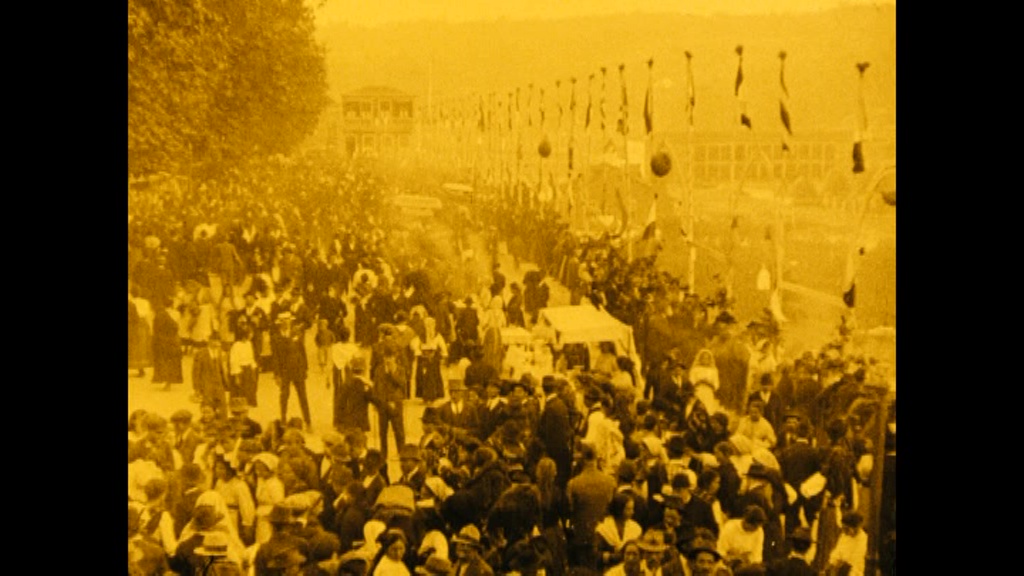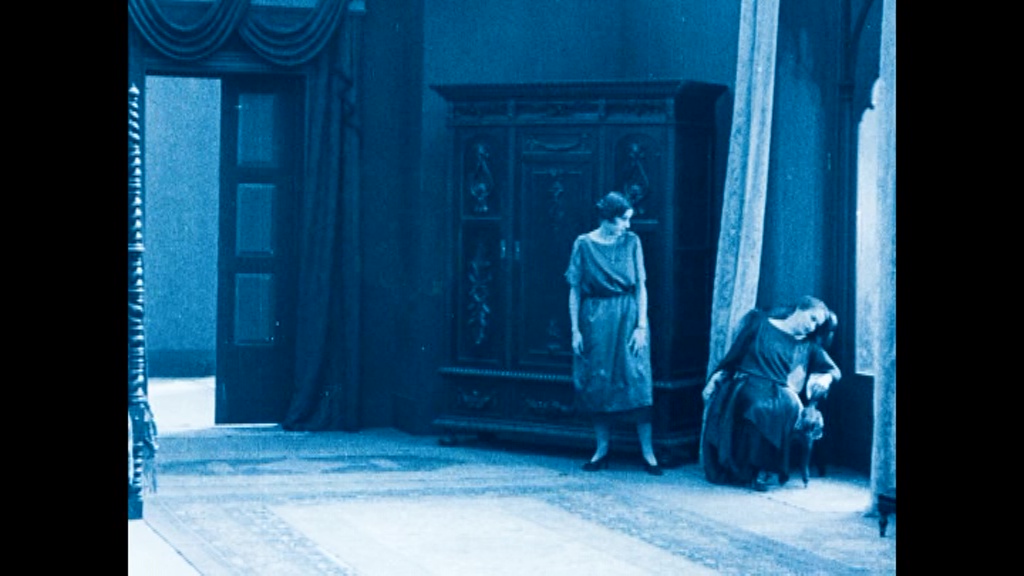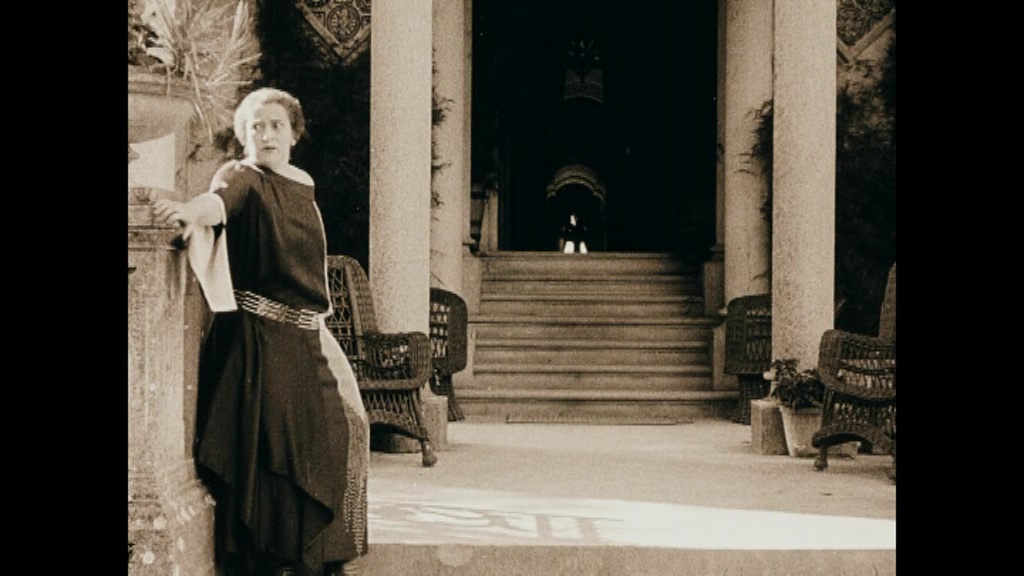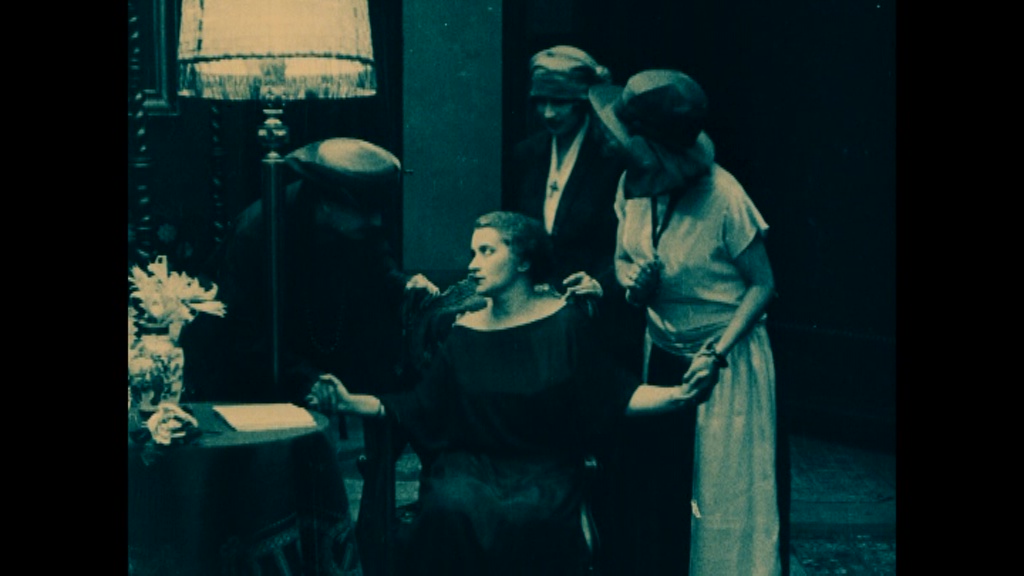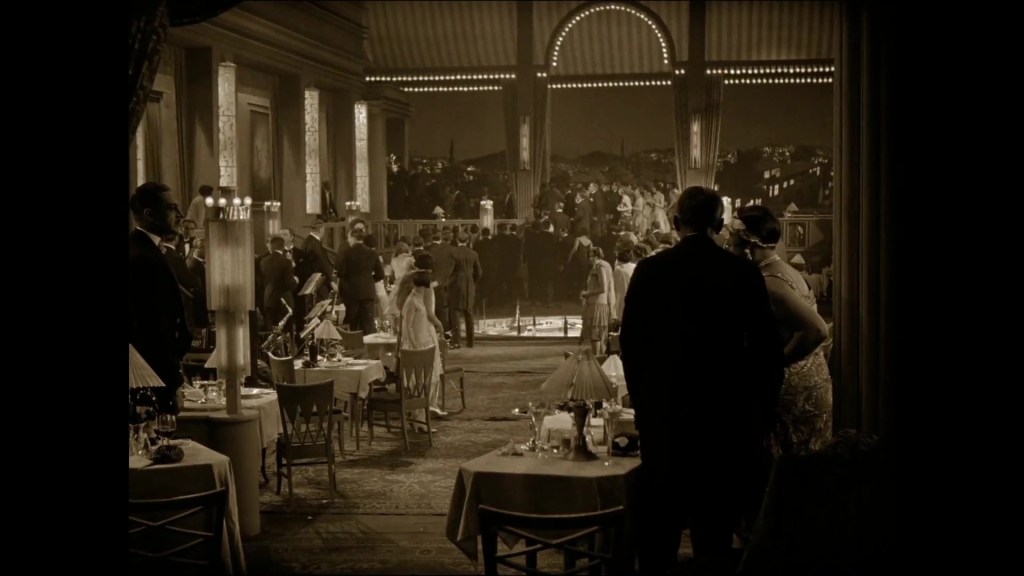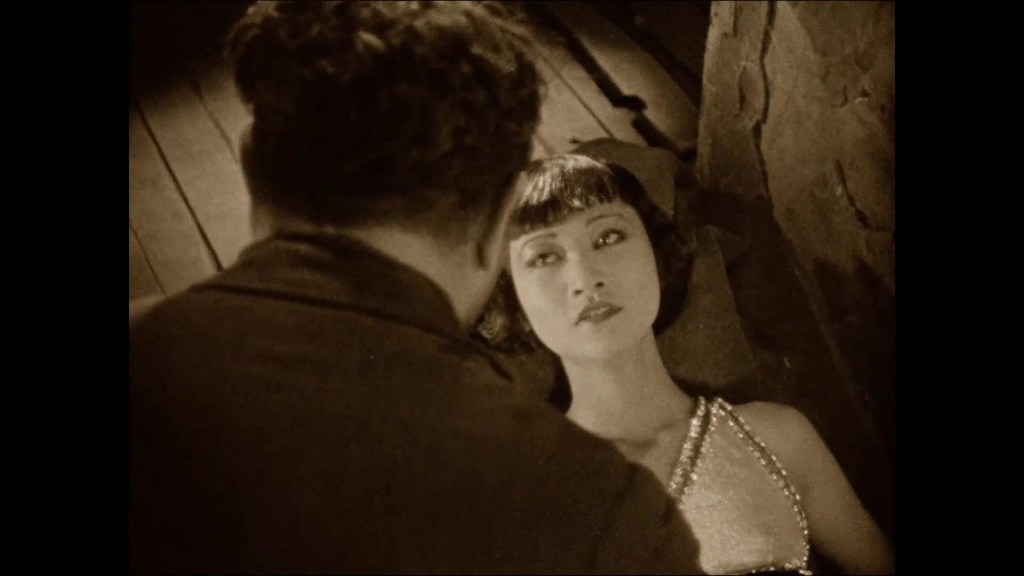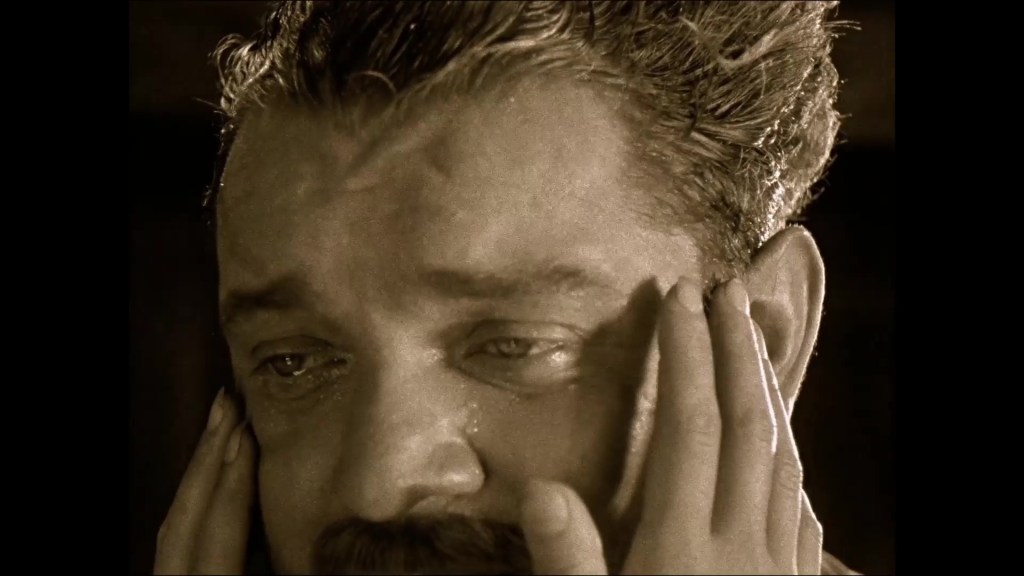
Programming silent cinema: An interview with Oliver Hanley (1/3)

To start off the new year, I’m doing something a little different. At the end of August 2024, I watched the streamed content of the Stummfilmtage Bonn. In the wake of my series of posts, I was contacted by Oliver Hanley, the co-curator of the festival. He wrote to answer the question I posed about the legal limitations of streaming, and his response encouraged me to ask more questions. Oliver was kind enough to have a longer conversation with me, the transcript of which is the basis of the three pieces that I will post across this week. We spoke about his background, his work at Bonn and Bologna, and about the difficulties and pleasures of curating a silent film festival. In this first part, we talk about Oliver’s route into curatorship…

Paul Cuff: I want to start with a quite basic question. How did you get involved in festivals and programming, and did you always have an interest in silent cinema in particular?

Oliver Hanley: We have to go a bit back to answer that question. I’ve always been interested in things from the past, from before my time. I think I first got into silent film through comedy, the big names like Chaplin and Keaton, etc. Then from there, I somehow progressed to German expressionism. I’m not entirely sure if that came from an interest in German culture or it was the other way around.

PC: Were you aware of silent cinema in broader culture when you were growing up?

OH: Being born in the mid-1980s and growing up in the UK, I was fortunate enough to catch the last of the Channel 4 silents on UK television. I remember the first one I watched was The Phantom of the Opera [1925/1929] in 1995. And then they brought out Nosferatu [1922] the following year with the James Bernard score. I was lucky to see these films when I was reaching my late teens, which also corresponded with more and more silent films being available on DVD in decent quality. For example, I’d already known Metropolis from truly, truly awful VHS copies, so when I got a chance to see the (then) most recent restoration [from 2001], it was really a revelation for me.

PC: And at what point did you realize that you wanted to become actively involved with film culture?

OH: It was clear I wanted to devote my professional life to cinema. Naïvely, I initially wanted to be a filmmaker and thought I would become rich and famous. And either through ignorance or lack of good advice, I came to the conclusion that if you wanted to be a filmmaker, you need to do film studies! That’s how I ended up in Canterbury at the University of Kent doing the film studies programme there.

PC: Did experiences at university shape your ideas about a career?

OH: It was a combination of different factors. In the first instance, I didn’t have a good experience in the practical courses that I was doing. They put me off that for life. Second was that I volunteered at the campus cinema, which gave me the opportunity to see films there for free. They would show a lot of the BFI touring packages, for example new prints of Visconti and Fellini films, and a big Michael Powell season on the occasion of the centenary of his birth. But I was quite surprised that I would very rarely see my fellow film studies students at the repertory screenings. They would all go to see the contemporary art house stuff that was all the rage at the time. Films like Donnie Darko and Mulholland Dr. would be quite well attended, but not older stuff. I remember sitting in this empty theatre, watching masterpieces in beautiful prints, and wondering why no one was there. I really thought that this was a shame.

PC: Did you experience any silent films through these kinds of screenings?

OH: No, there was very little silent programming. But I had a very sympathetic lecturer on one of the courses who was also passionate about silent cinema. At this point in time, my main outlet for exploring silent cinema was DVD, and I would collect them like mad.

PC: Did this also give you an interest in the archival side of things?

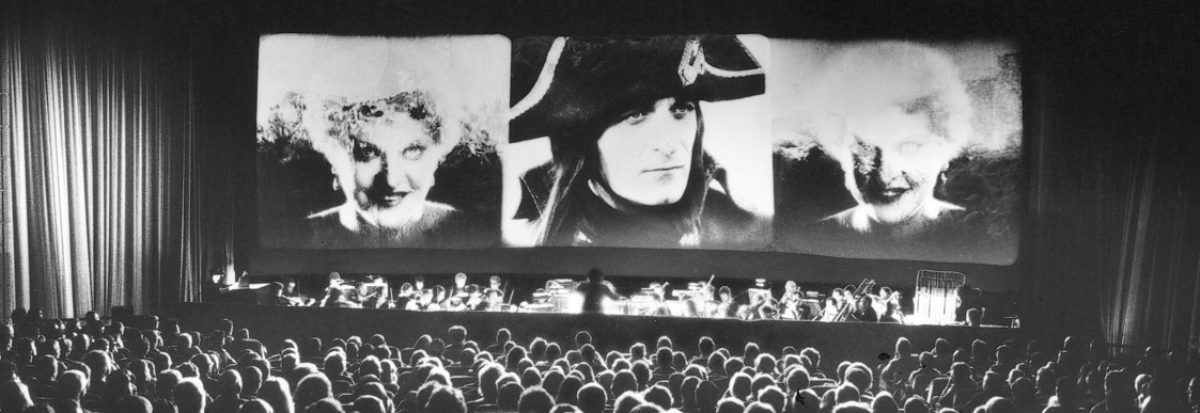
OH: Yes, I read and watched a lot about how complicated it can be to restore film. I loved the idea of scouring the whole world and tracking down all the different elements and putting them together. I was fascinated by what Robert A. Harris did for Lawrence of Arabia, for example, and by what Photoplay Productions was doing for silent films. That was really what I wanted to do. But there was always that element of wanting to do it so that people would actually see the final result. Like you, I was at the screening of Napoléon [1927] in the Royal Festival Hall in December 2004. That was really, really something!

PC: After your undergraduate degree, what did you decide to do?

OH: All these early experiences shifted my focus towards wanting to devote myself more to making sure that the film heritage – especially the silent film heritage – would survive. It was the lecturer at the university who pushed me to do what was then the relatively new specialist course at the University of Amsterdam: the professional masters in Preservation and Presentation of the Moving Image. This was my stepping stone to continental Europe. I had said that I really wanted to focus on German film and asked if there would be a way I could do an internship or some unpaid volunteer work at a film archive somewhere. She recommended me to do the masters programme instead, because that’s where people will be sought after. I can’t necessarily say that this was exactly how it turned out, because jobs in this field are few and far between. Certainly, it’s an advantage to have this kind of background, but you still have to fight. Every year there are new graduates on the market, and the market is always getting smaller.

PC: If Amsterdam was your stepping stone, where did you go from there?

OH: Via the Amsterdam programme I ended up interning in Frankfurt at the Deutsches Filminstitut and helped with various tasks in the film archive, including a restoration project, and various contributions to DVD editions. What was important for me was that it changed my perspective. Before, I had been what you might call very canon-oriented: Lang, Murnau etc. This is all great, but my experience in Frankfurt opened my eyes to what was beyond the canon. I learned to appreciate the unknown, what film history really has to offer. At this point, I changed tack and started questioning why we are so focussed on the classics, when there is all this great other stuff around. This is something that continues to influence me in my work right up to this day, for example in our Bonn programming. Particularly with German films, we try to push the lesser-known works rather than the big names. This can also tie in with the restorations being done by certain institutions.

PC: Did your time at the Deutsches Filminstitut encourage you towards curatorship?

OH: Actually, I wanted to go more into the technical side of things and do laboratory training. This didn’t work out, which I think was for the best because I’m not really a technician. I understand a lot of the technical processes and have been quite fortunate to get into the scene before analogue was being phased out. When I started, digital technology was up and coming in the archival and restoration fields, but no archive could really afford it. The big studios were going digital, but no one else. Now it’s completely different. At the time, I gained background experience with analogue, which is good because I think it’s important to know both.

PC: If you didn’t end up going into laboratory work, where did you want to go?

OH: After graduating from my Masters studies, I moved to Berlin and managed to get on board a project at the Deutsche Kinemathek. I came expecting to stay only three months – and ended up staying three years, moving from project to project wherever there was funding and work needing doing, but my dream was to become a film restorer. Back then,I think my idea of a film restorer was still Kevin Brownlow, who is actually more of a historian who restores films. But that is still what interests me most about the process: the research, comparing different versions, putting together what might be a representative edition of a film. When it moves into the technical procedure, I’m a bit more hands off. Obviously, I supervise the grading and transfer etc, but the most exciting part is over for me.

PC: After your experiences in Germany, you went to Vienna. How did that happen?

OH: At that time, there was very little money for film restoration in Germany. In 2011, I got an offer to start working at the Film Museum in Vienna. I was brought in to take over the task of curating their DVD series, which was something that had always fascinated me. DVDs had been my gateway to the film heritage, and I loved watching the extras. So, the Vienna job was a dream come true. But I also helped build up the museum’s streaming presence. We had very, very limited means, so we were looking to see how to get parts of the collection online without it costing any money. For example, we digitized newsreels that had been transferred to U-matic video tape in the 1980s. You didn’t have to worry about it being 4K or anything like that, it was just a case of dusting off our old U-matic tape player to get these films transferred and put online for the sake of access.

PC: Did you envision doing this kind of work permanently?

OH: I was more and more keen on getting into the restoration process. The museum had a complete digital post-production workflow in house. It was very small, very artisan level – we were just doing a couple of projects each year. But it enabled me to become more involved in selecting some of the films or supervising projects at a managerial level. The museum had quite an interesting collection of nitrate prints of obscure German silents, but the films didn’t really fit the museum’s curatorial profile. (They have a very strong connection to the avant-garde experimental film scene, to Soviet cinema, to American independent cinema, and so on.) Nevertheless, we were able to do some very cool projects at that time, including one with funding from the World Cinema Project, and some of these restorations then ended up on the DVDs I was producing. At the same time, whenever I could, I would investigate their nitrate collection. But it was difficult for the museum itself to restore this material. By this period, around 2015-16, money was finally being made available in Germany to digitize the German film heritage.

PC: So there more opportunity for the kind of work you wanted to do in Germany?

OH: I was in Vienna for five years. By the end of my time there, I had reached a point where I had done everything that I could with the means that were available. I was worried that I was just going to start repeating myself. But in 2016, I got the offer to come to work at the Film University in Babelsberg, where I still live, just outside of Berlin and home to the famous film studio. The Film University – Germany’s oldest film school – had set up a heritage programme at the end of 2015, modelled somewhat on the one I had taken in Amsterdam, and I was brought in to teach at Babelsberg in 2016.

PC: After all your experiences in archives and museums, was it strange going back to teaching?

OH: I felt like a change. And years of being involved with practical work, I felt – in an idealistic way – that I was returning to teach the next generation. I was able to bring my experience into teaching, but also my network that I had built up over many years.

PC: How did your earlier experiences shape your teaching?

OH: In the first instance, we did visits to archives and yearly excursions to Il Cinema Ritrovato in Bologna. But I also got some wonderful people in the industry to come to us and do guest lectures: Jay Weissberg, who runs the Pordenone Silent Film Festival, for example.

PC: It sounds like a very rewarding combination!

OH: Of course, working for the university also had its less glamorous side, and there were several administrative duties. I did the website, the newsletter, and so on. But you had a lot of freedom and a lot of access to resources, especially for academic events and various collaborations. We have our own film museum here, Filmmuseum Potsdam, with its own cinema, and we would regularly do events together. These were linked to my classes, so it was a requirement for students to attend.

PC: What kind of events were these?

OH: In my case, it was almost always a silent film event. I would get the funding through the “ZeM”, the Brandenburg Centre for Media Studies, and that would cover the cost to do a silent film screening with live music, and a guest speaker who would then do a lecture during the day. The first such event we did was Das Cabinet des Dr. Caligari [1920]. We brought over the restorer, Anke Wilkening, to talk about her work on the film, and Olaf Brill, a German film historian. Brill’s book about the film, Der Caligari Komplex [2012], does an amazing job using primary written sources to try to quash the legends that had built up over time, and to reconstruct who was responsible for what during the writing and production.  Yes, the film is a German classic, we’ve seen it a million times, and we all think we know it inside out. But both his research and her restoration enabled us in different ways to see the film in a completely new light. That was kind of the focus, and every second semester we would repeat this concept as much we could.

PC: What other events stick out for you?

OH: The year after Dr Caligari, we did Der Golem [1920]. This was a curious case because two different institutions in Germany, the Friedrich-Wilhelm-Murnau-Stiftung and the Filmmuseum München, were doing two different restorations concurrently. But that was extremely interesting because the two restorations followed completely different concepts. Filmmuseum München’s restoration benefitted from the major discovery of the film’s original score by Hans Landsberger. Landsberger only did four film scores, and I think all of them were at that time considered lost. But Richard Siedhoff, a silent film accompanist over here, came across the score for Der Golem in a German archive (seemingly no-one had thought to look before!). It wasn’t the complete orchestral score, but a reduced conductor’s score that Siedhoff then re-orchestrated. This version was shown recently on German television.

PC: How did you try to use archival material – familiar or otherwise – to engage your students with film history?

OH: Just before Covid hit, we did our biggest event – a series of lectures and screenings in about five parts. It took a completely alternative approach to the idea of the canon. We’re completely oversaturated with these “definitive” restorations, so I wanted us to look at the (by now) lesser known and – in some cases – quite bizarre re-release versions of German silent classics from different periods in German history. For example, we showed Die zwölfte Stunde [1930], which is a re-release of Nosferatu essentially as a sound film. The soundtrack doesn’t survive, but the rest of the film remains complete. We showed this version because it contains interesting changes, including some extended sequences with footage that was shot for the re-release. When you watch it as a silent film – and we showed it with live music – it can be a bit weird, but it still works. Something else we showed was from 1932-33, the crossover from the Weimar Republic to Nazi Germany. At this time, they re-released the first part of Die Nibelungen [1924] with a soundtrack. The significant thing about that soundtrack is that Gottfried Huppertz, who did the original score for Nibelungen, for Metropolis [1927], and for Zur Chronik von Grieshuus [1925], personally rearranged and conducted the recorded version for the re-release. The other interesting thing about it is that it was created not as a precursor to what was going to happen in Germany, but to mark the fiftieth anniversary of the death of Wagner. And so Huppertz incorporated Wagner’s themes into his original composition. It’s a bit of a mix of Wagner and Huppertz, but it’s a fascinating document.

PC: How easy was it to get hold of prints of these non-canonical versions?

OH: We had to put a lot of effort into screening Die Nibelungen because there’s no screenable print available of the 1932-33 version. The FWMS had done a preservation on film, but they had not made a screenable print. But we convinced them to send the preservation negative to our university to be scanned (since we were working for a state-of-the-art film school, naturally we had our own film scanner!). From the raw scan files, I then prepared the digital version for our little screening, knowing that it wasn’t restored – or even graded properly – but at least we could see the film this way. We also showed Die weiße Hölle vom Piz Palü [1929] in its “talkie” re-release version of 1935.

PC: What about more recent re-releases? Did they feature in this series?

OH: Yes. There was this company called Atlas in the 1960s that began by distributing art house films in Germany (Bergman, Antonioni, etc.). But they also re-released old films and they did a series of silent films in the mid-1960s with synchronized scores. We showed one of these because they’re very of their time, especially with the music. There is a version of Dr Mabuse [1922] with music by Konrad Elfers, from 1964, which you could imagine being a score to a kind of Euro James Bond rip-off! We also showed a television version of Dr Caligari from the 1970s with a score by Karl-Ernst Sasse, a very well-known composer who scored a lot of DEFA films, among other things. Inevitably, we crowned the series with Giorgio Moroder’s Metropolis [1984], which – I must admit – is a guilty pleasure of mine. And not just mine, it seems, as there wasn’t an empty seat in the house!

PC: Did organizing this series influence what you subsequently did at festivals?

OH: In my professional career, I had always straddled the preservation and access side of archival work, but up until this point I had mainly focused on providing access through digital media, DVDs, online. When I started doing these live cinema screening events, it was the shape of things to come for me, because it’s more or less what I do now with the festivals. I still have one foot in the preservation side of things, because I supervise a limited number of digital restorations. It’s good to be on both sides of the process.

PC: Do you think you would always have ended up as a programmer of films for festivals?

OH: In a way, I think it’s very logical that I’ve ended up where I am. From that early experience in the university cinema, right the way through to Bonn and Bologna – it’s all been about getting films to people. It was a long time before I got to where I am now. What’s the famous phrase? It took me fifteen years to become an overnight success! But I’ve been very fortunate.

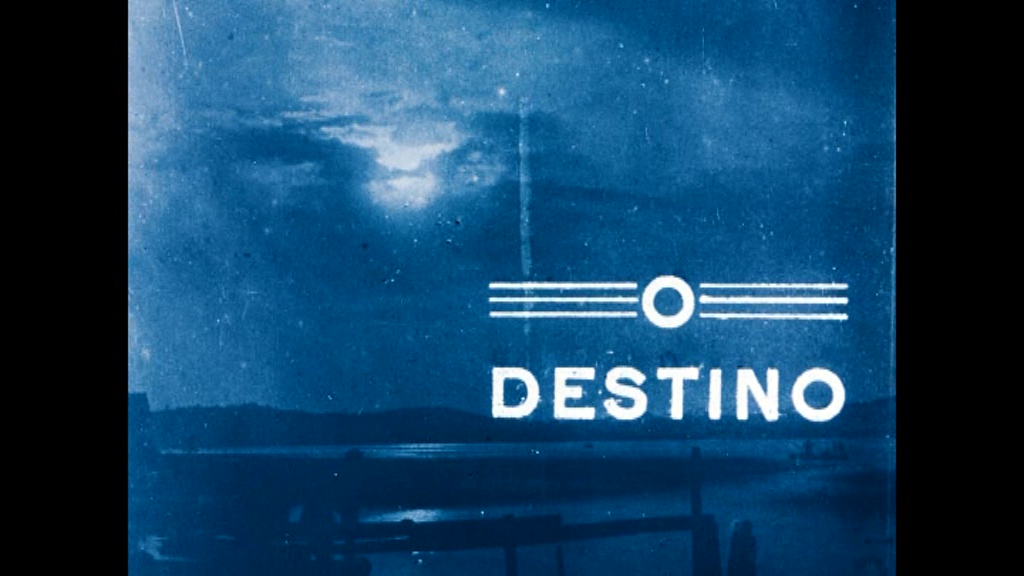
O Destino (1922; Pt.; Georges Pallu)

This week, I return to Portugal. Having been exceedingly impressed by Maria do mar (1930) at the Stummfilmtage Bonn in August, I tracked down the DVD of the film from the Cinemateca Portuguesa. Finding that the Cinemateca has produced a whole series of DVDs of recent silent restorations, many with the original scores, and all with English subtitles, I took the plunge and placed a large order… Within a few days, I had a mouthwatering pile of films in beautiful presentations. Where to start? Why not with the film that the notes describe as “the most beautiful use of colour tinting and toning in Portuguese silent cinema”? A bold claim. But having watched O Destino, I can well believe it…

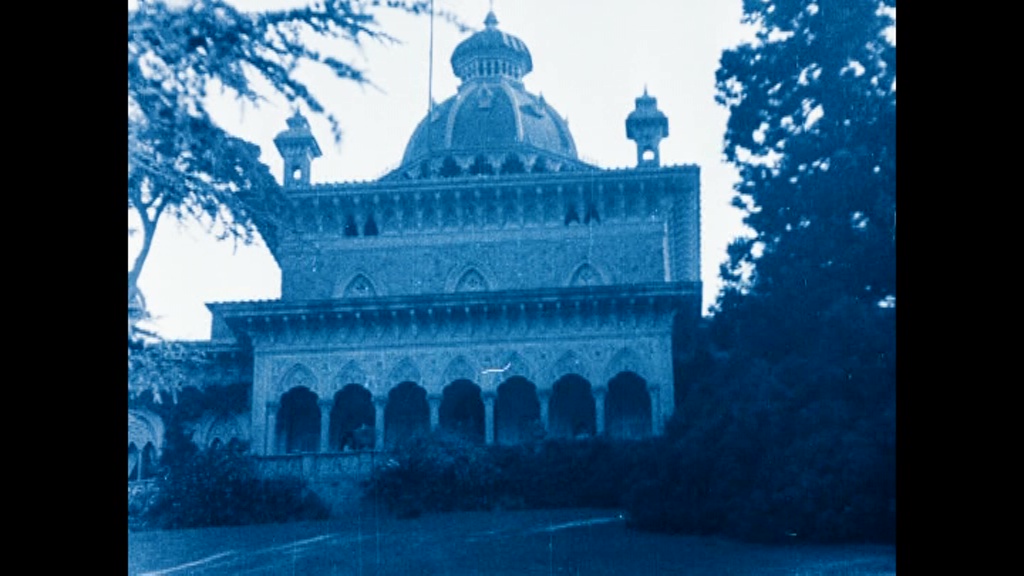
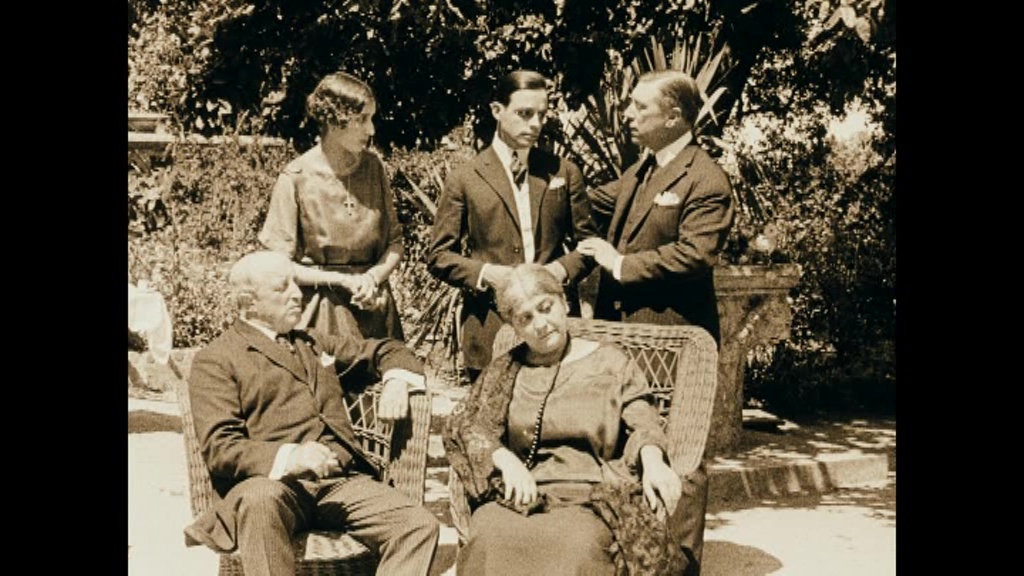
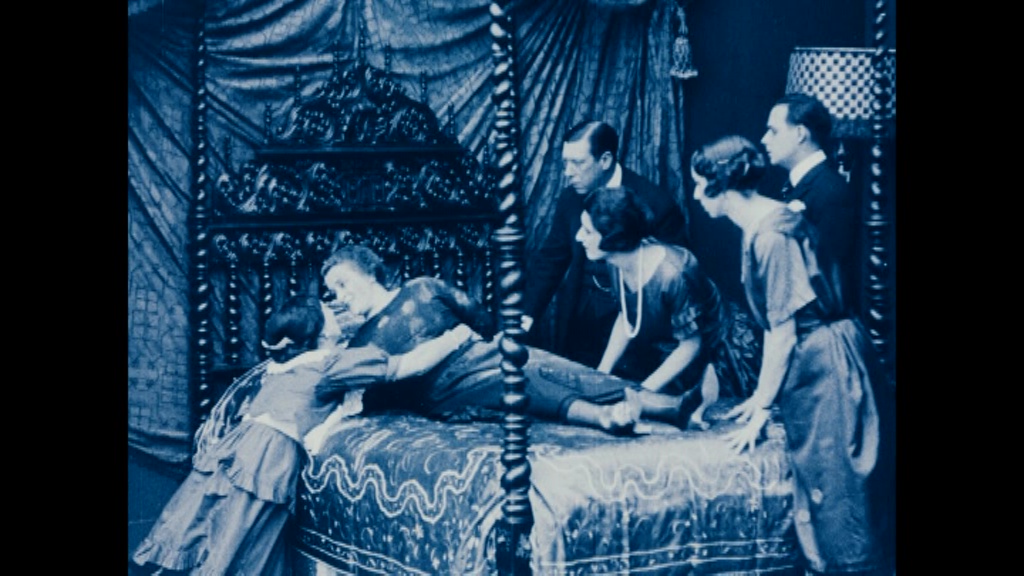
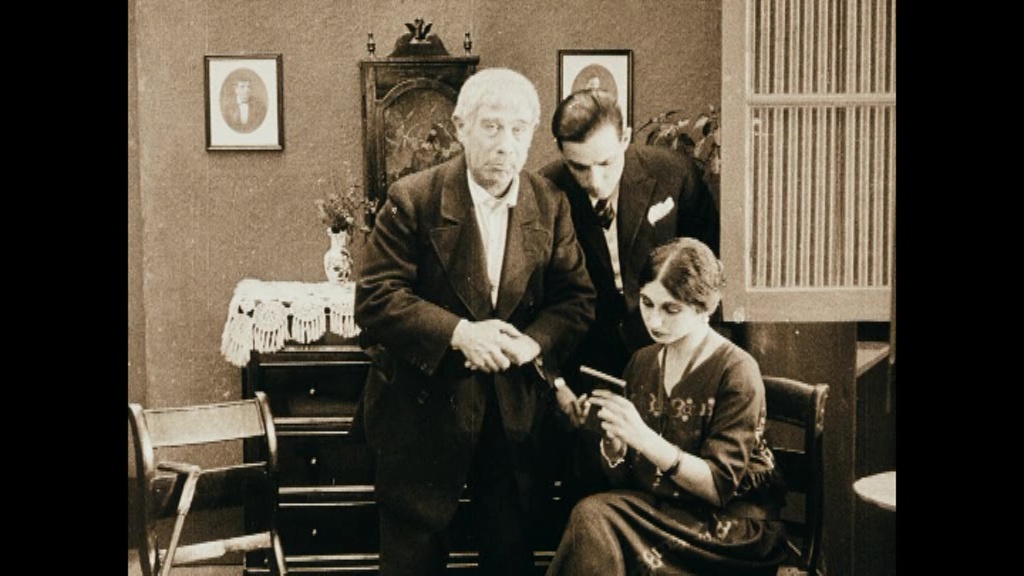
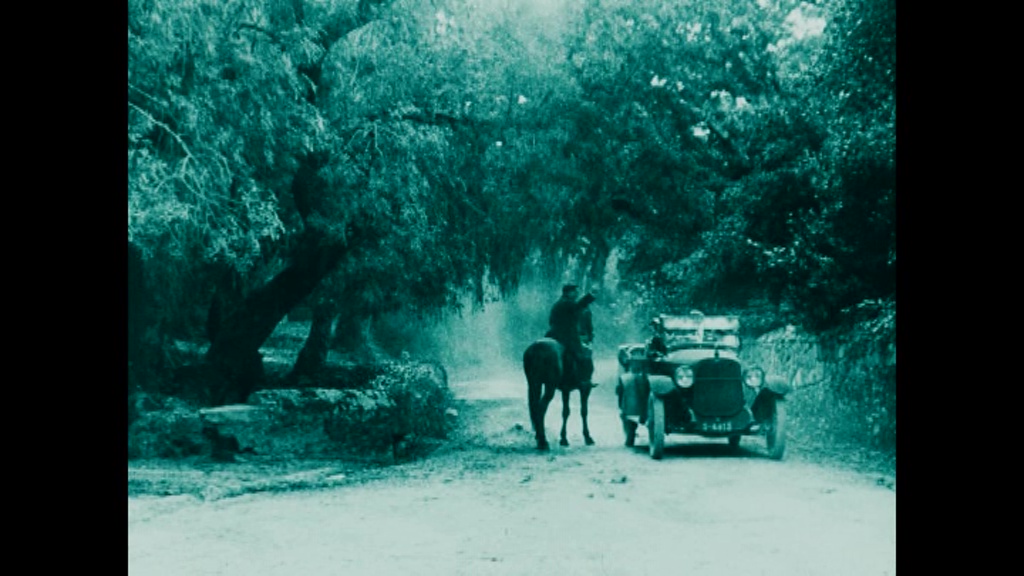
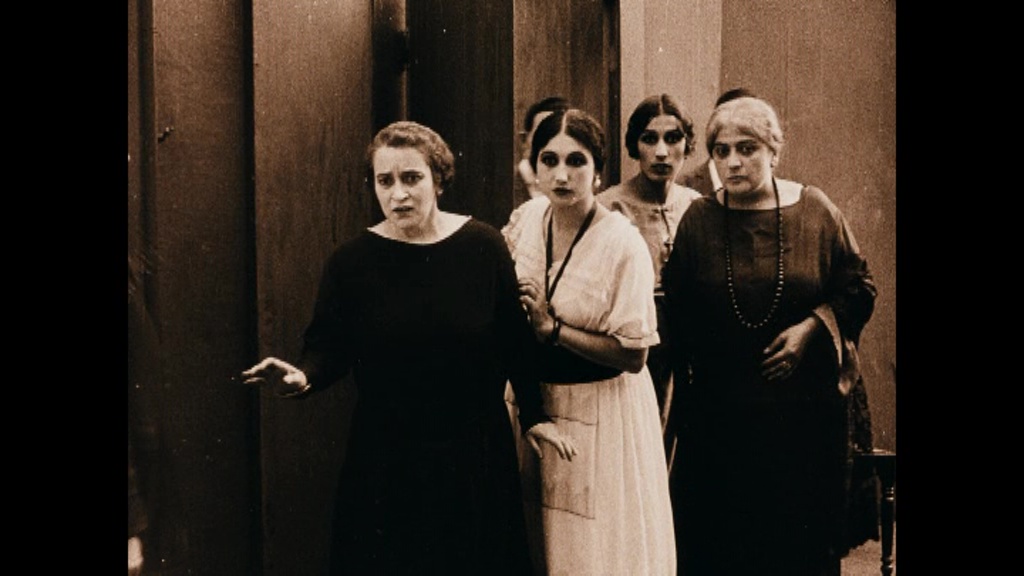
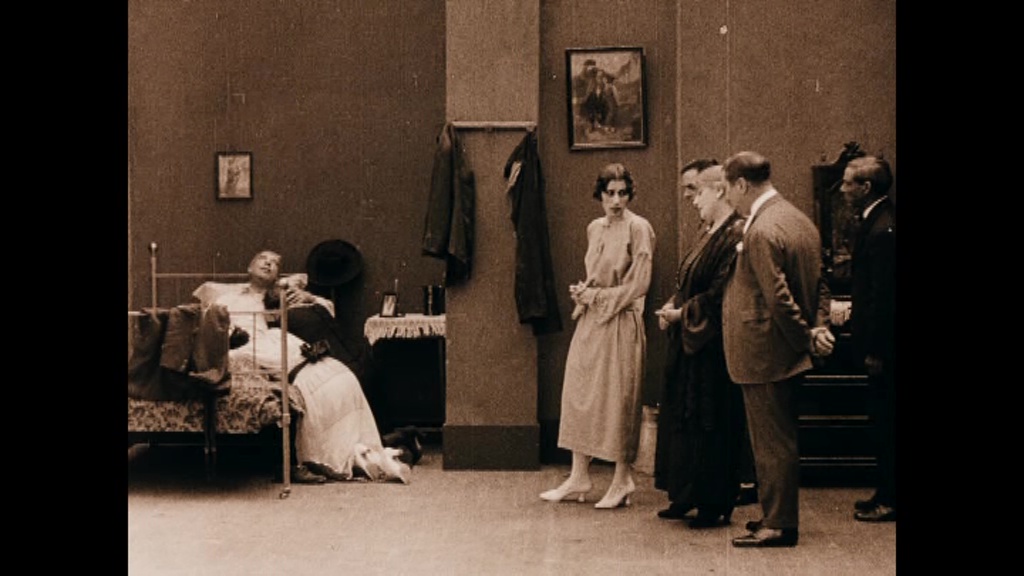
Let’s begin with the plot. (Yes, obviously, there will be spoilers.) The bereaved Maria da Silva de Oliveira returns from Brazil to her native home of Sintra to visit her daughter, who is also called Maria. After a road accident knocks her unconscious, she wakes in the palace of the Marquesa de Souzel. Here, the scheming Luís de Noronha has recently become the Conde de Grazil and thus has taken charge of the family estate. He has his eyes on Maria’s daughter, but so does his young nephew André. Meanwhile, the old housekeeper, who went blind with grief after his daughter was “disgraced” and left home twenty years earlier, wanders the estate mourning his past. These two stories are brought together when it becomes clear that Maria is the lost daughter, and that the man who disgraced her was none other than Luís. Maria decides to confront Luís, whom she – with the aid of the supportive de Souzel family – finally exile, enabling the engagement of her daughter Maria with André. FIM.

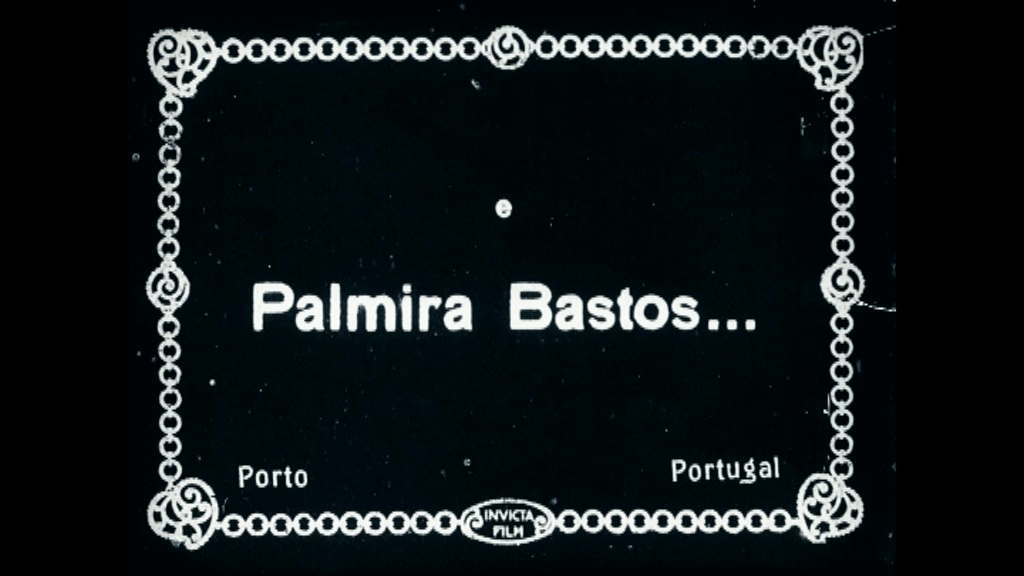
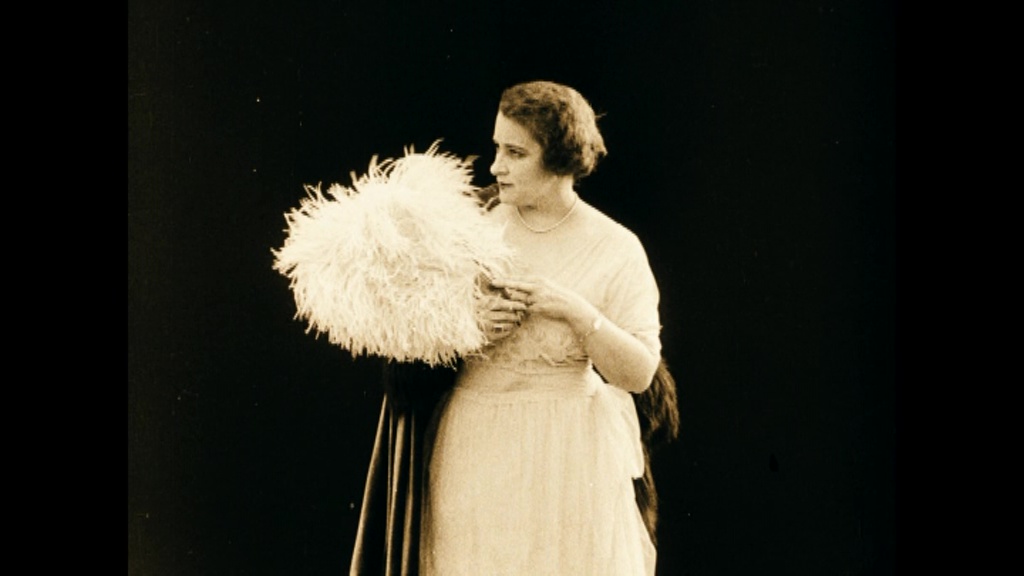
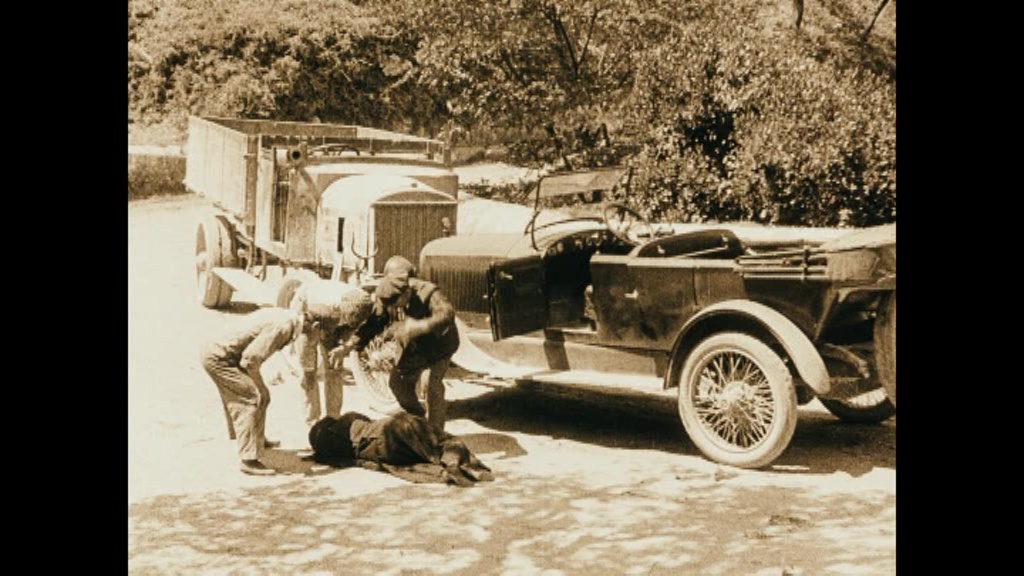
O Destino is directed by Georges Pallu, a French director whose five years in Portugal makes him one of the major figures of Portuguese cinema of this era. This film marks the only cinematic appearance of Palmira Bastos, a celebrated theatre actor. I had only the sketchiest knowledge of Pallu as a name, and none of Bastos as a performer. I therefore went into O Destino blind and was intrigued by the dramatic set up of the opening half hour or so. Pallu lets most scenes play out in long takes, with sparing use of medium and medium-close shots – and no true close-ups. I wondered if there were some missing titles in the opening, since only a couple of the characters were properly introduced – so it took a while for their relationship to sink in. What intrigued me was the fact that, despite minimal editing during scenes, Pallu kept longer sequences interesting by parallel cutting. In the opening reel, the family tensions of the de Souzels take place parallel to Maria’s arrival by steamer from Brazil. Pallu cuts between the estate and the approach of Maria (by boat, by car, and ultimately by foot) – building a kind of slow-burning tension as to when the two stories will finally meet. They do in marvellous fashion – quite literally colliding on screen when Maria’s taxi smashes into a truck, hurling her into the road. She is then carried into the palace, and she wakes up in the very site of her childhood. It’s a terrific way of introducing Maria into the drama.

That said, I found the first half of the film dramatically slow going. The relationships are carefully established, but I was never gripped by the emotional tenor of the drama. Maria spends too much of the film inert in bed, carefully avoiding contact with the man who impregnated and then abandoned her twenty years ago – and with her father. This means that the only on-screen conflict is between uncle and nephew over Maria’s daughter, which is a little uninteresting.

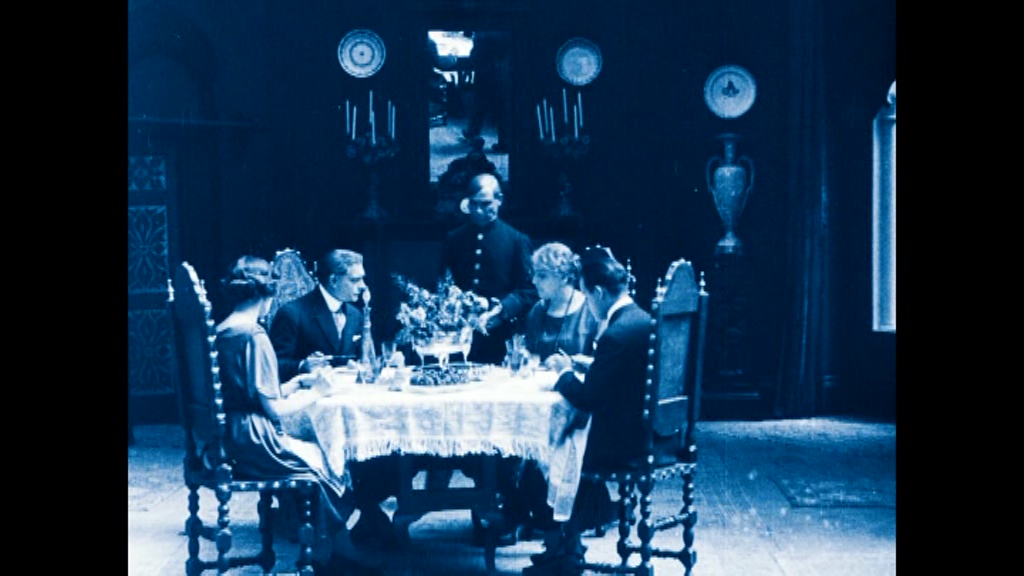
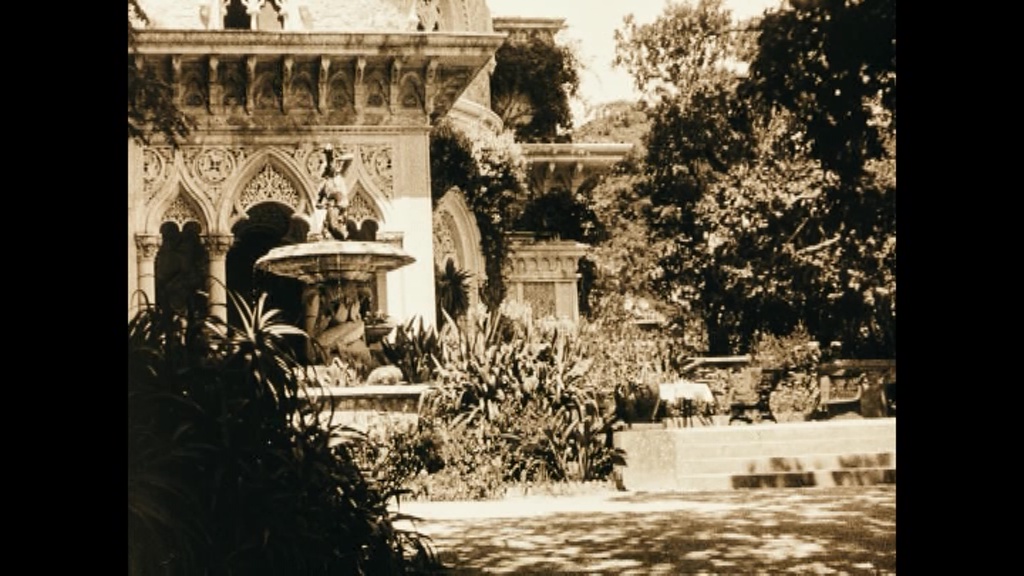
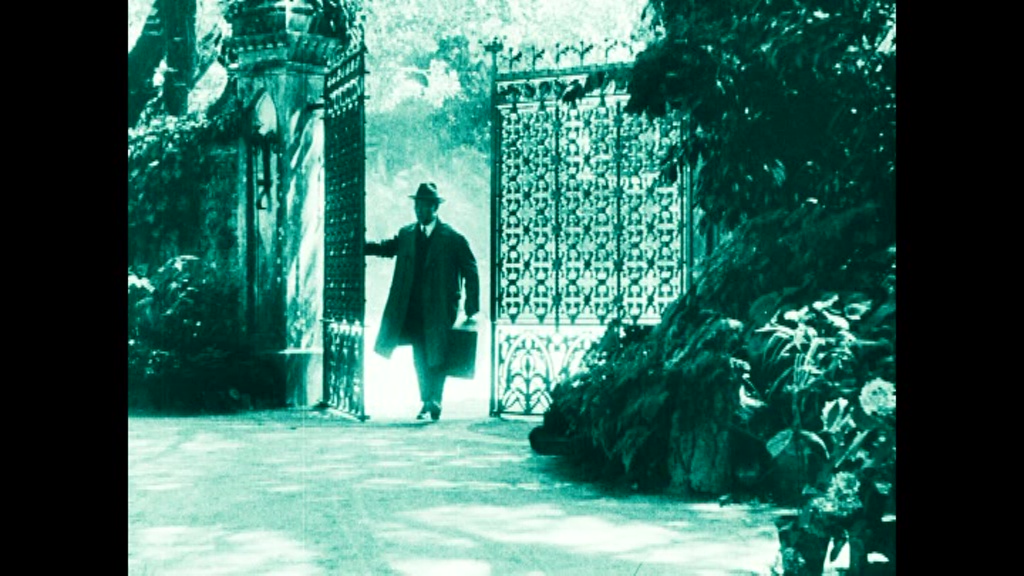
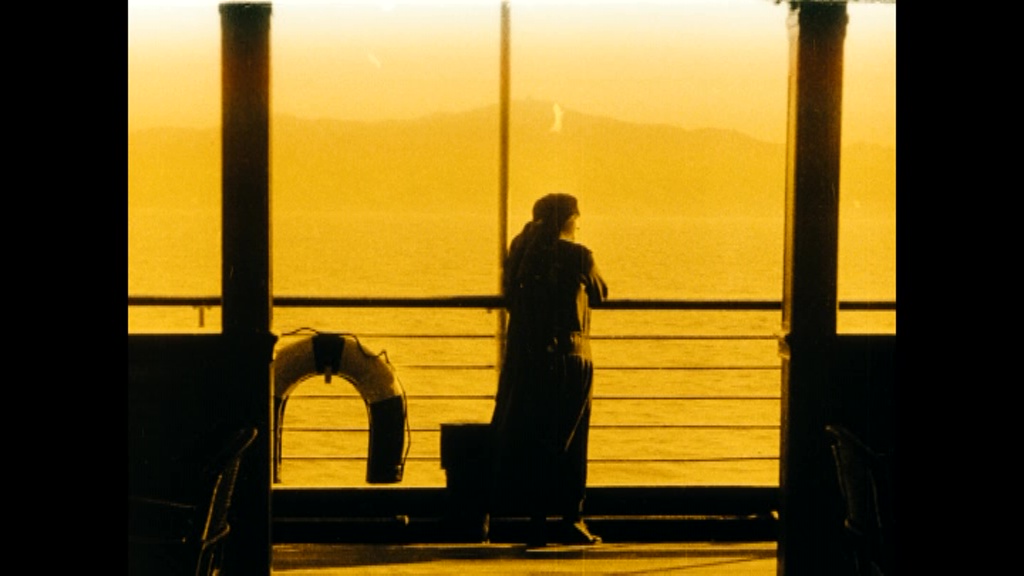
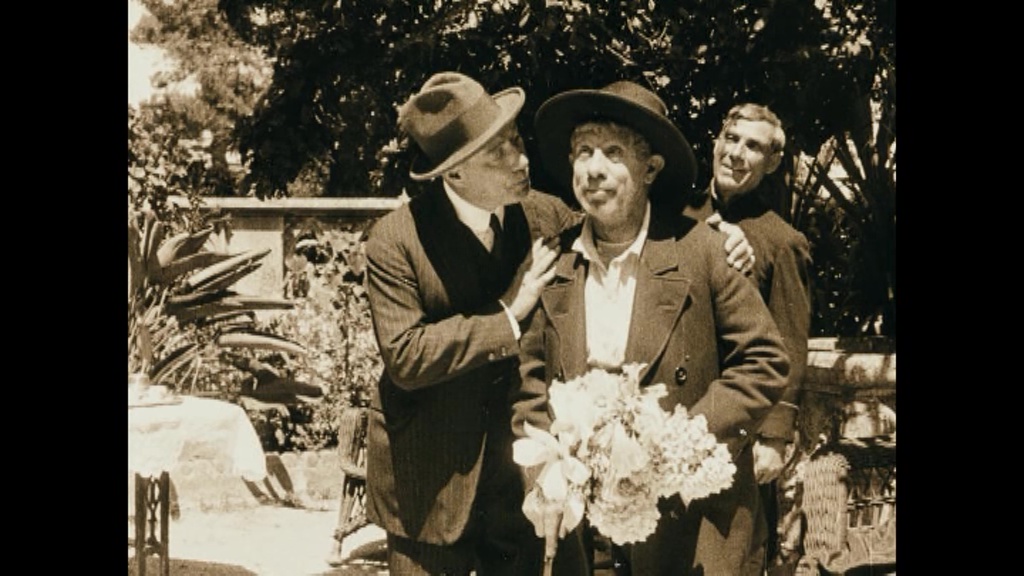
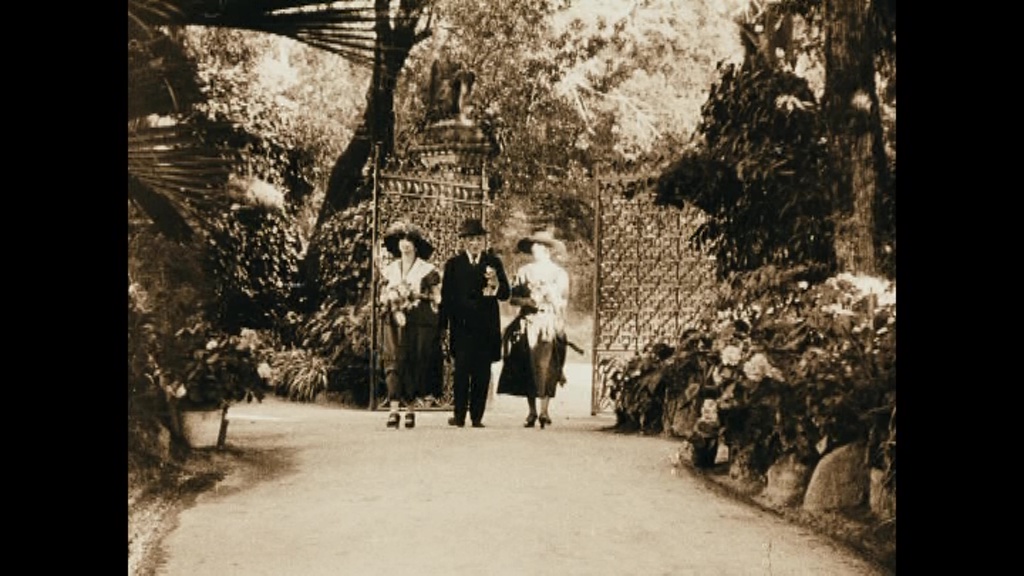
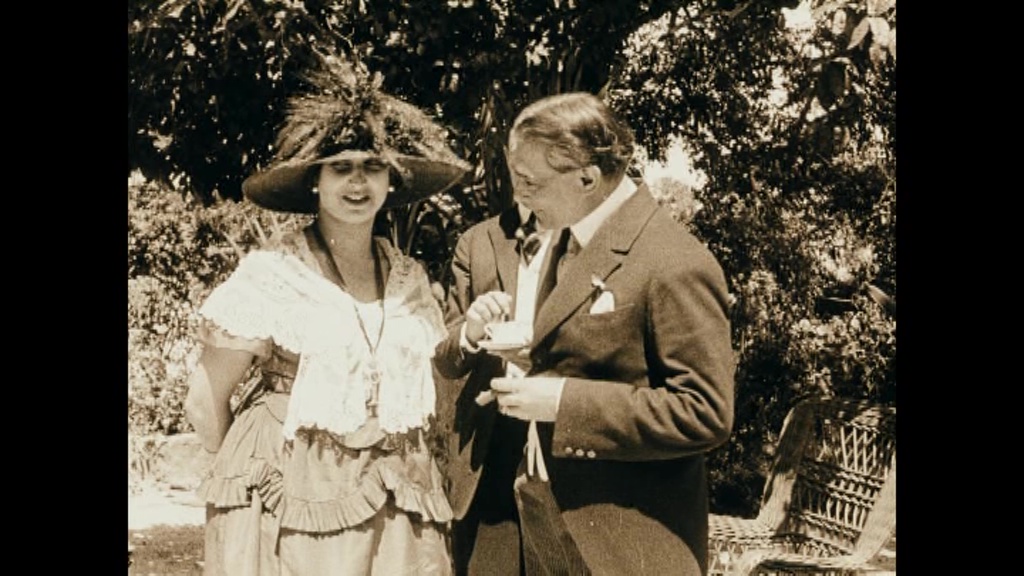
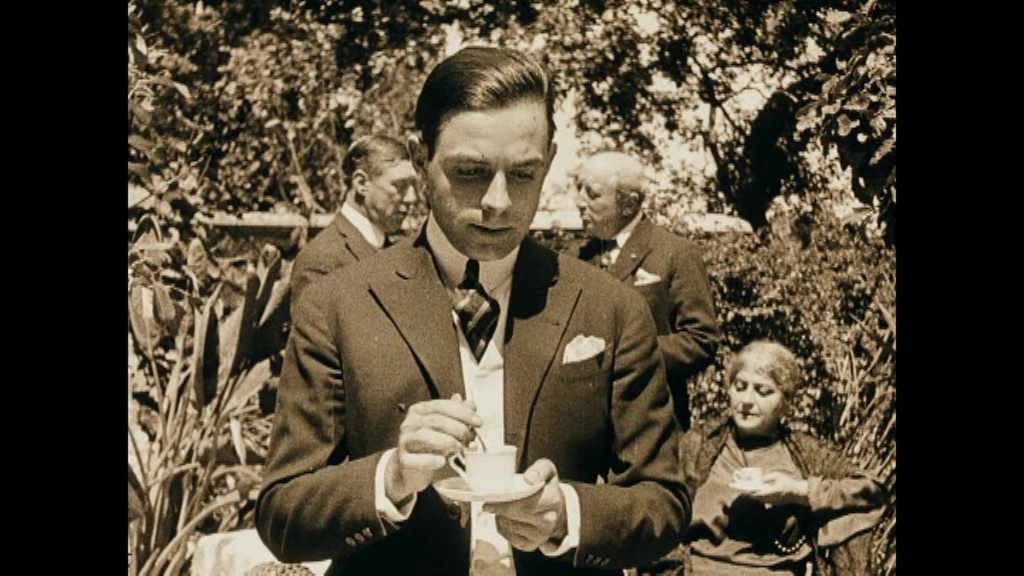
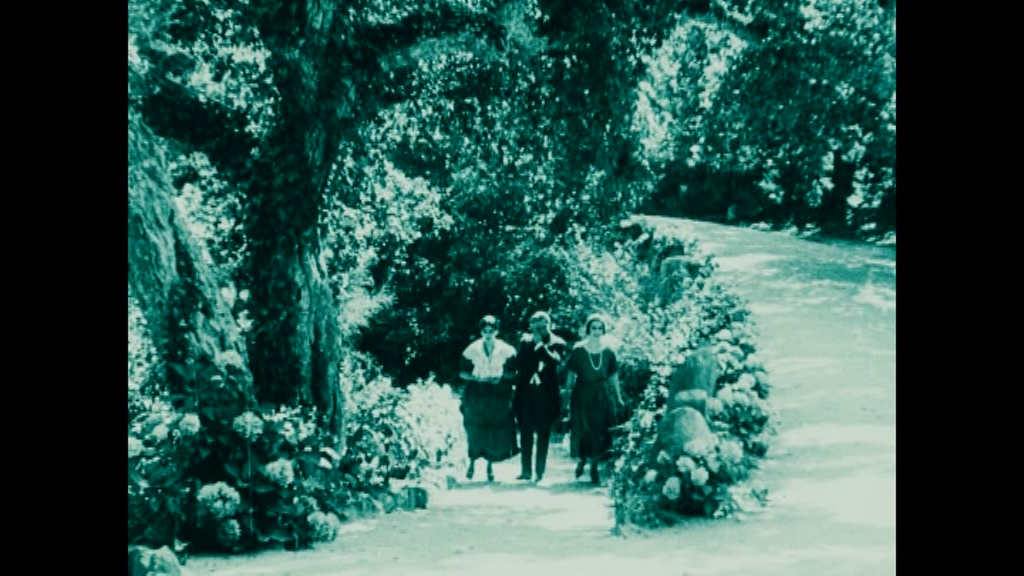
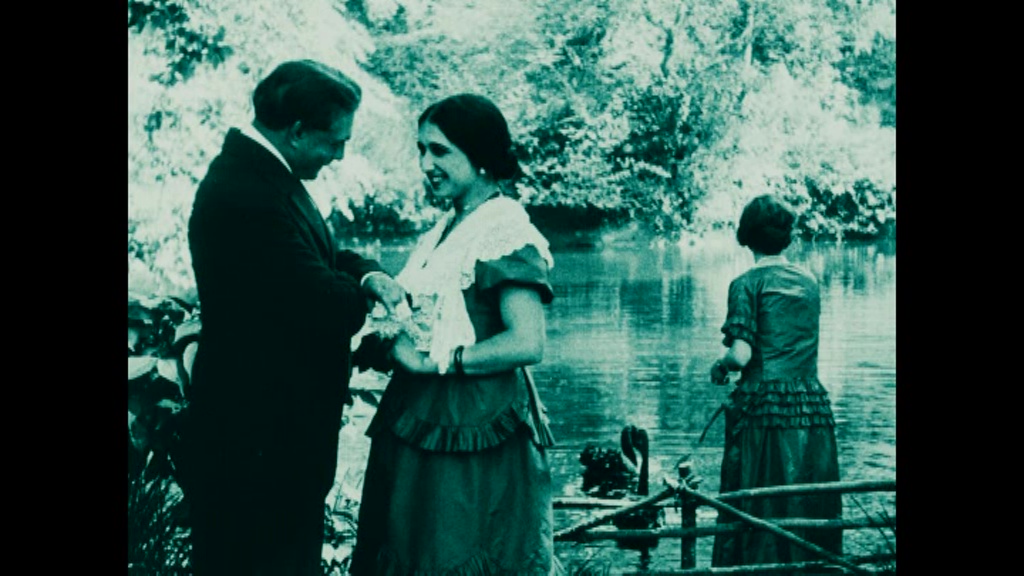
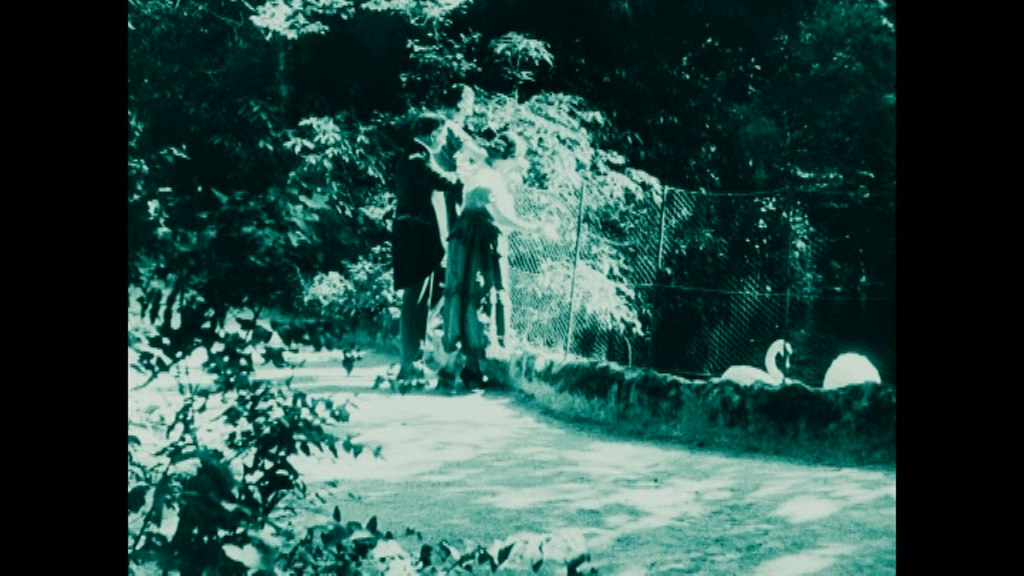
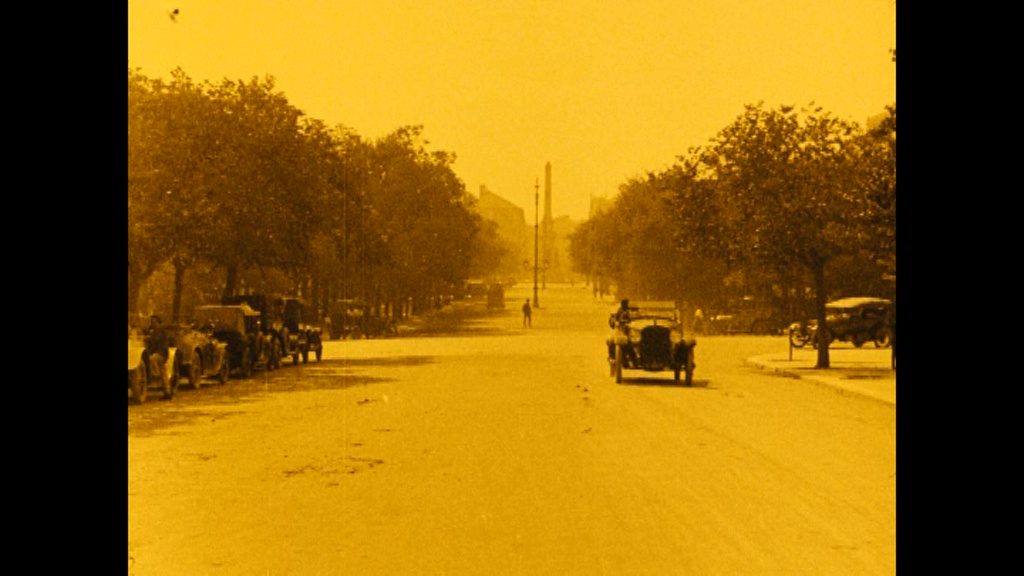
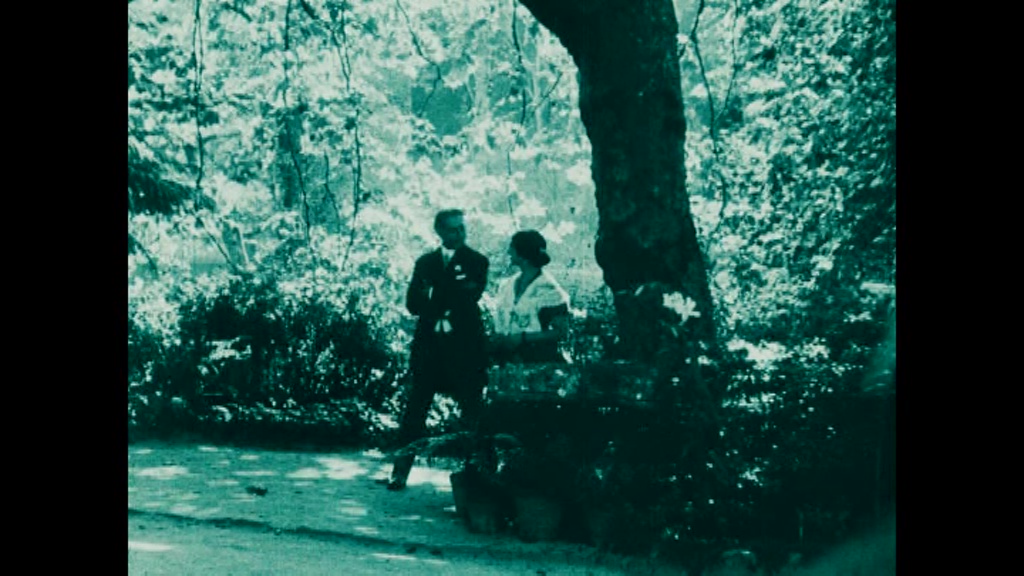
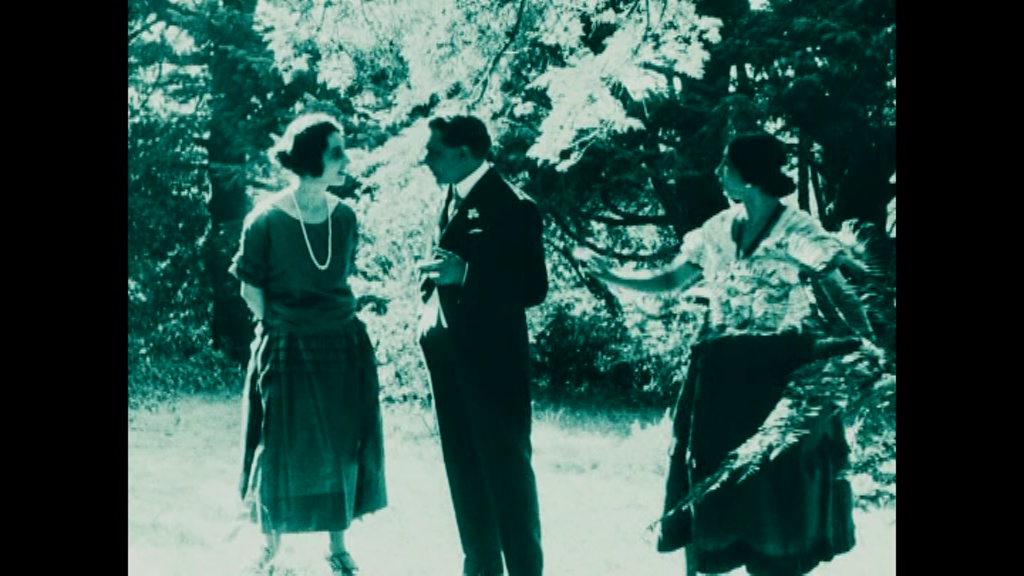
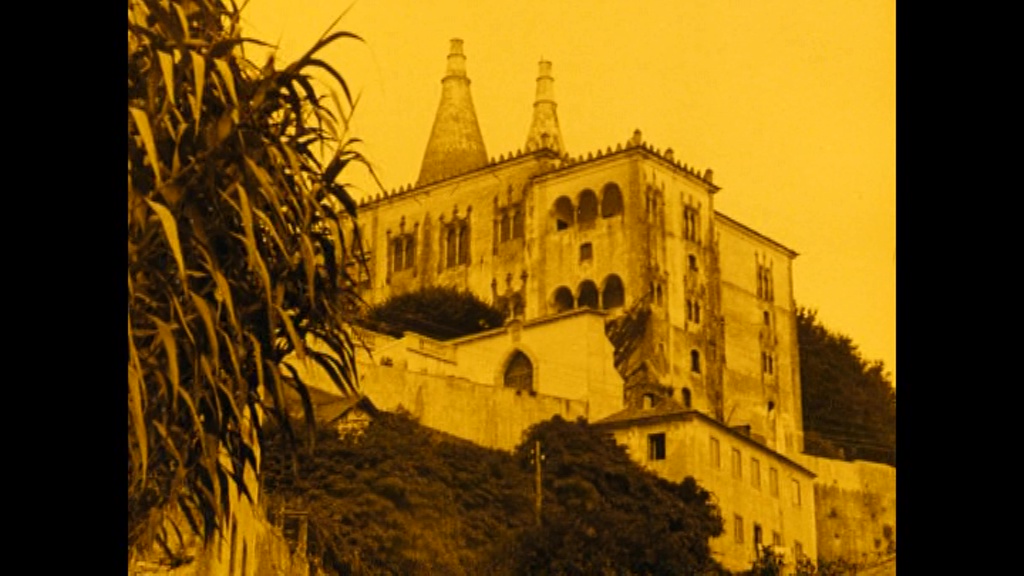
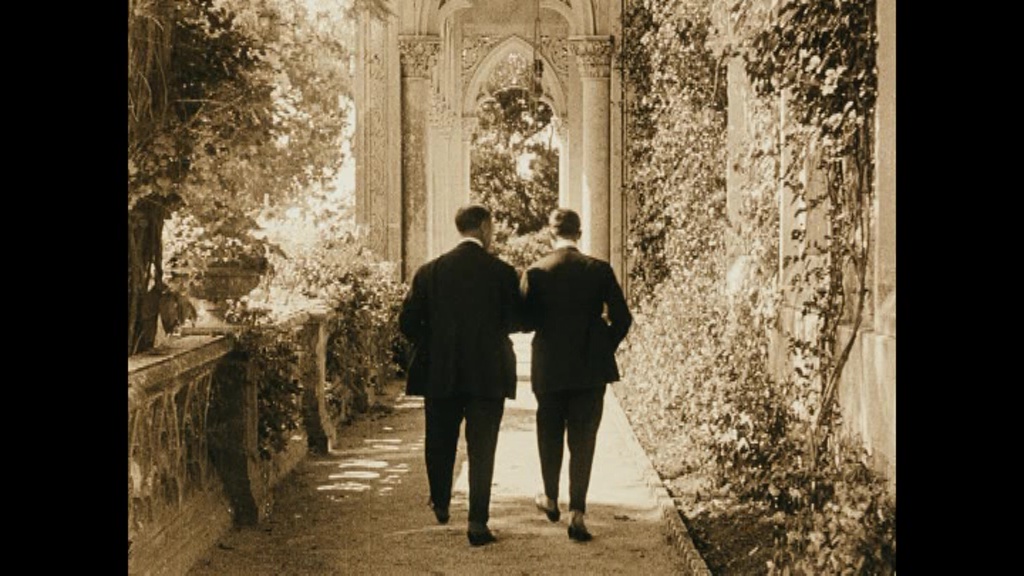
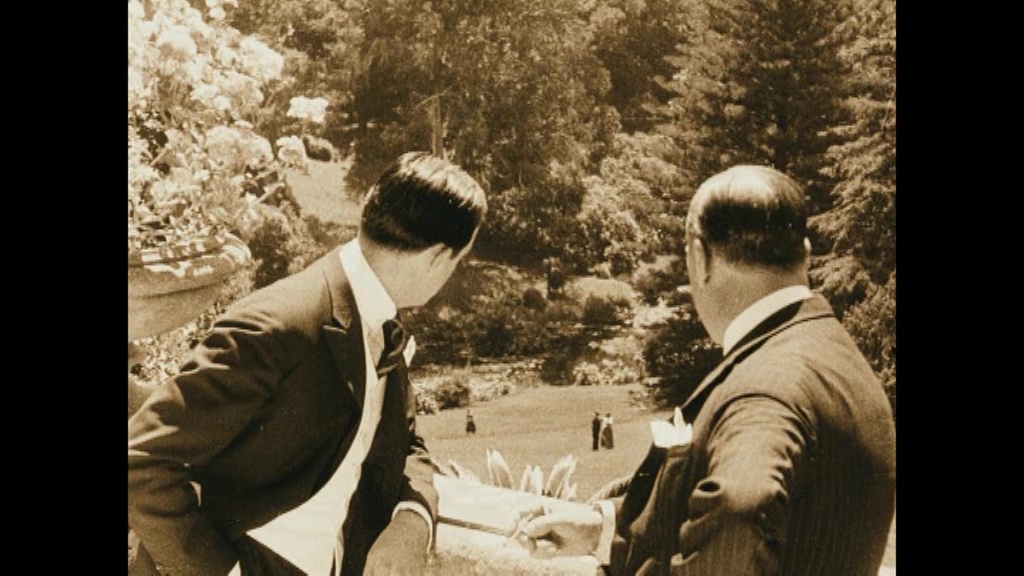
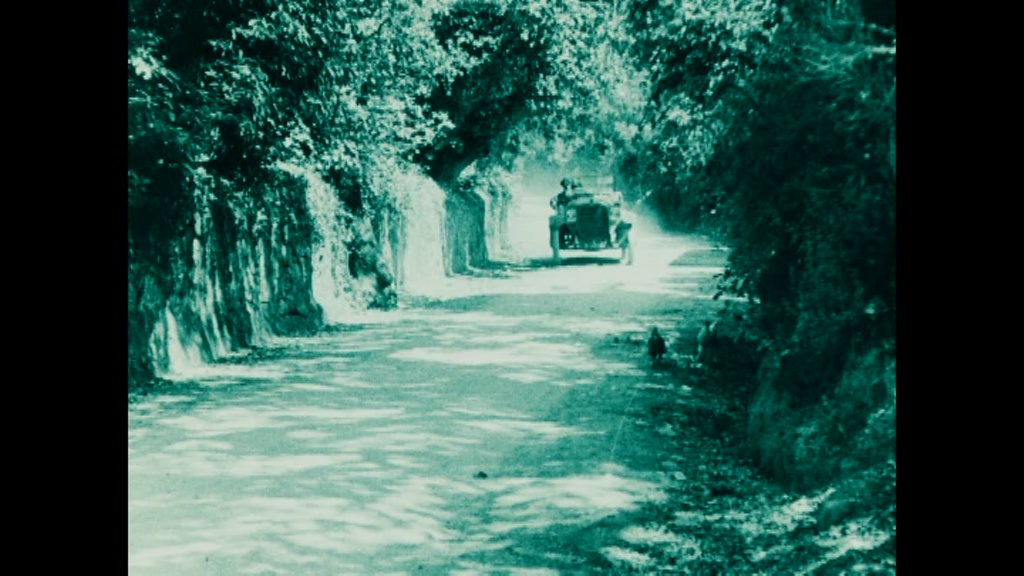
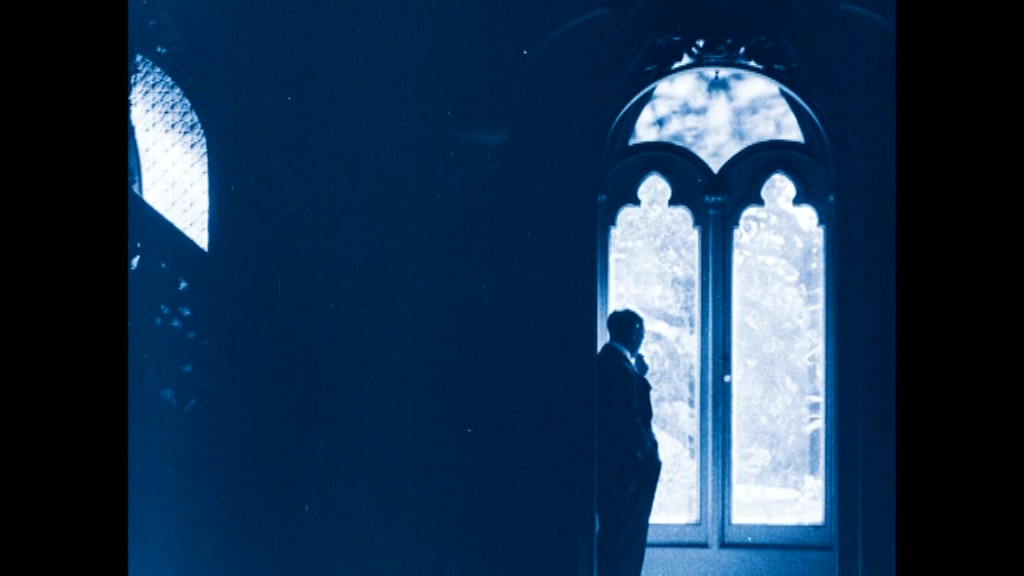
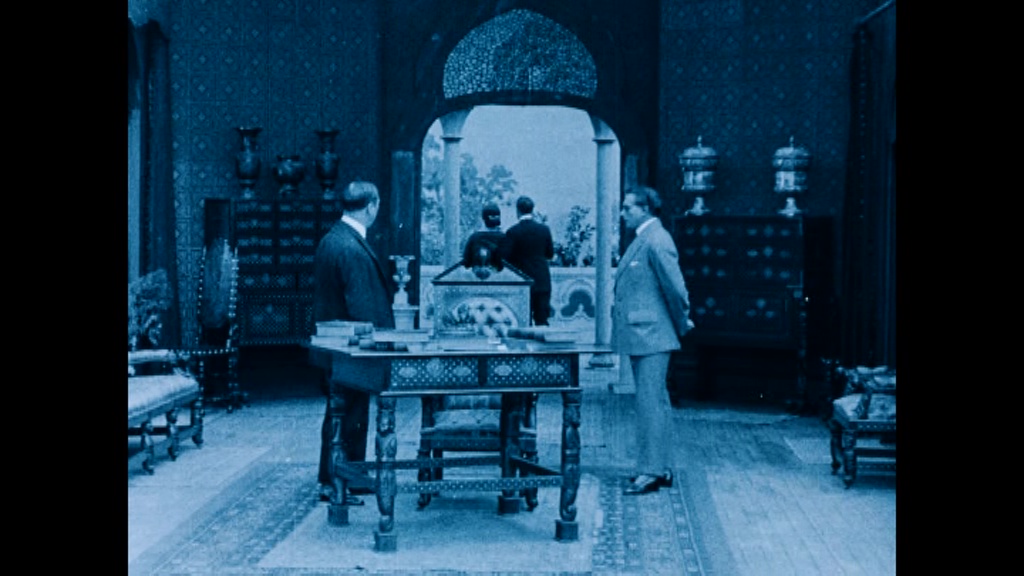
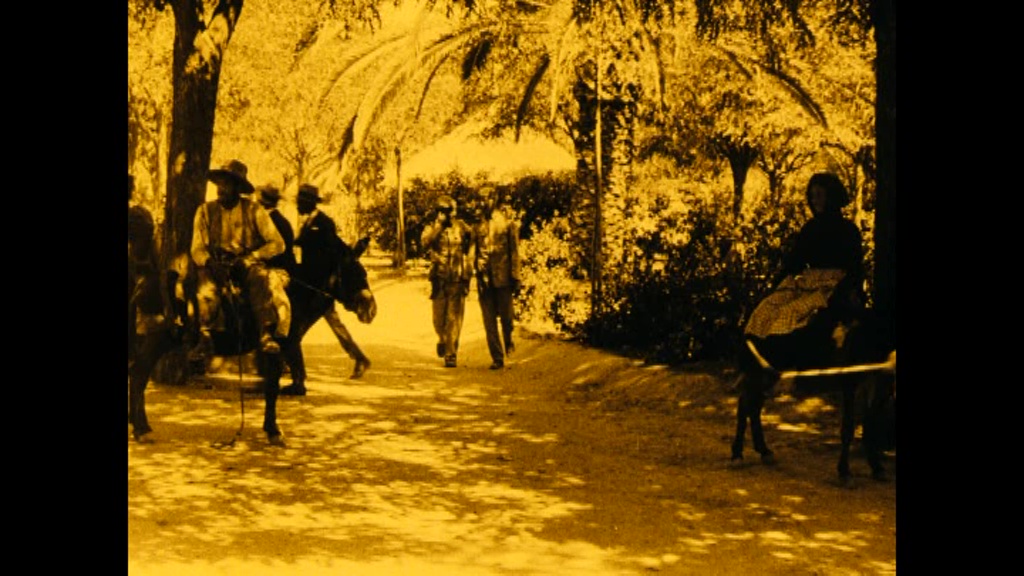
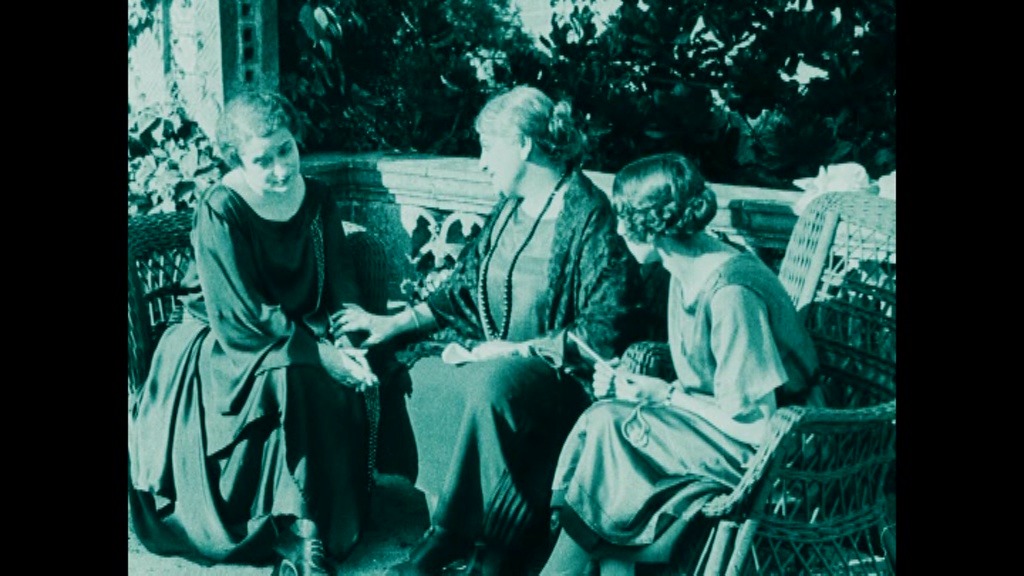
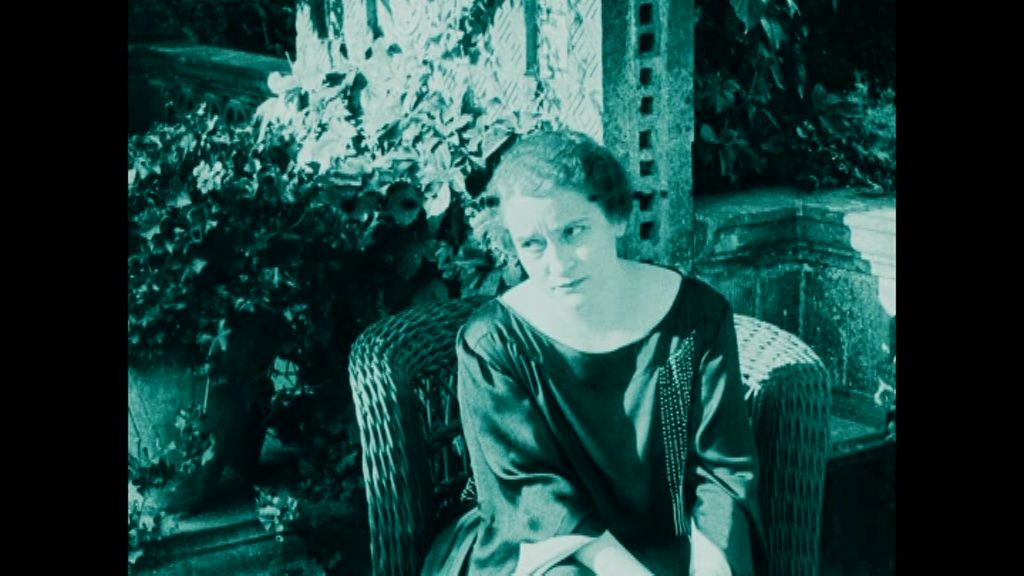
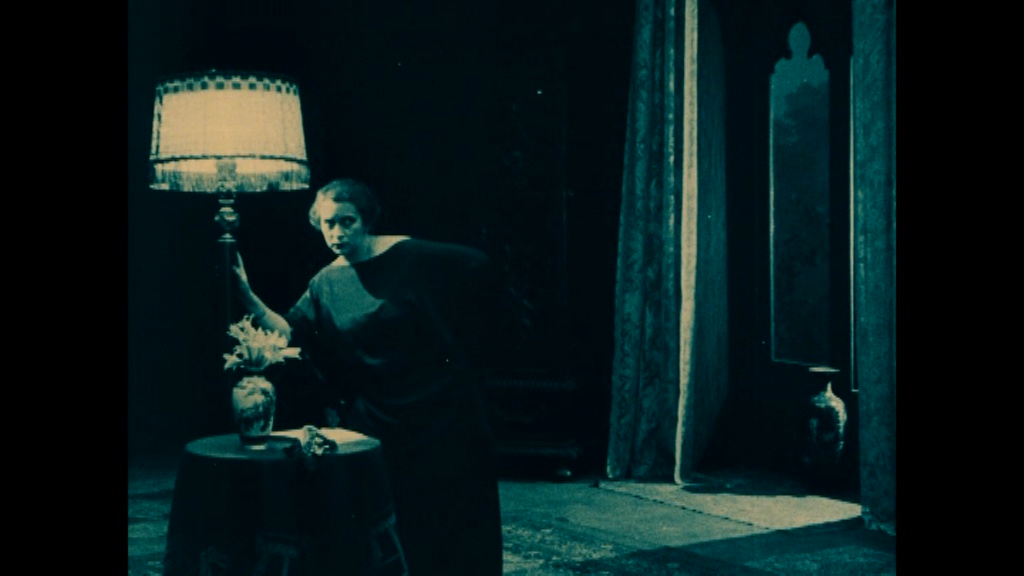
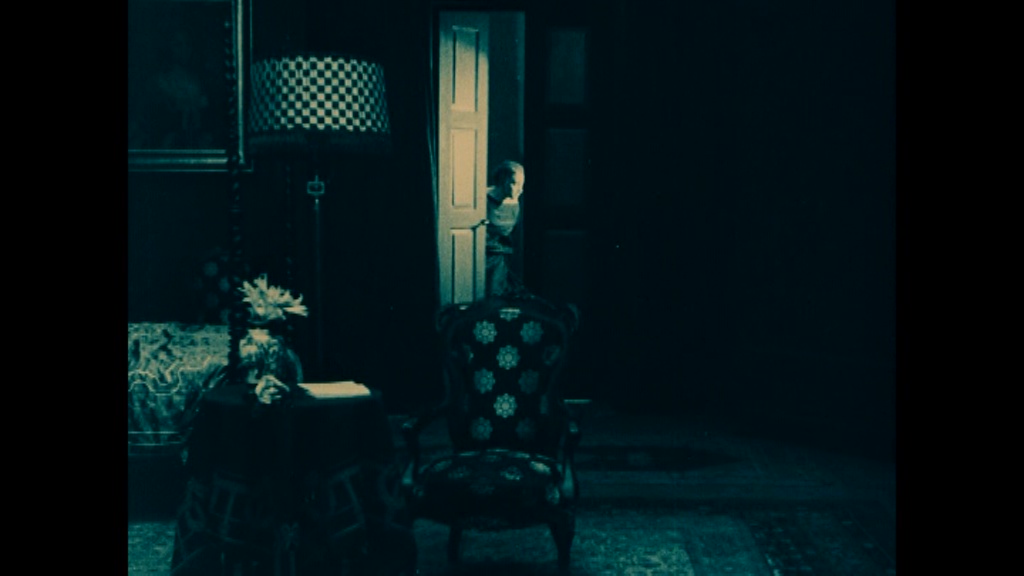
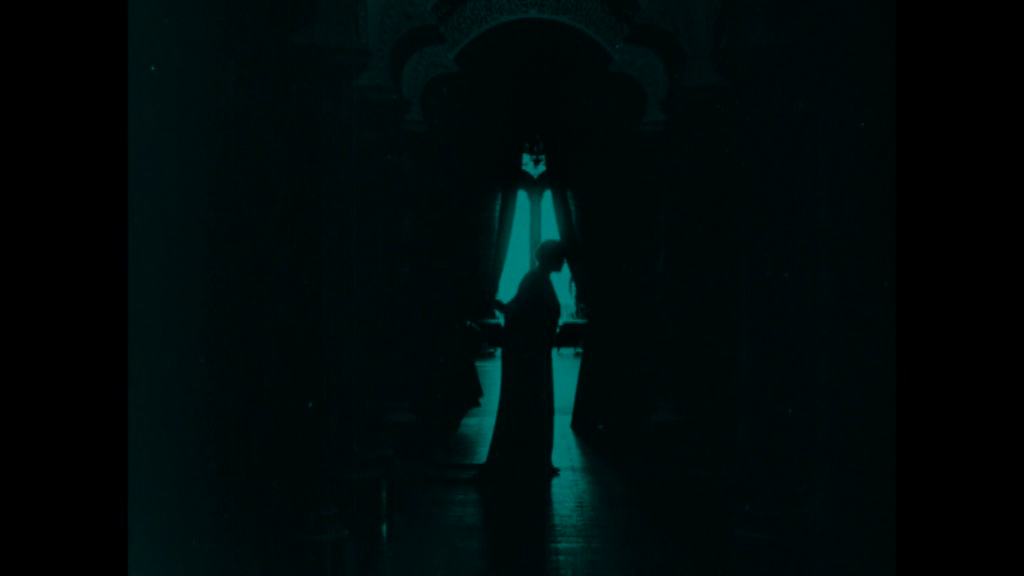
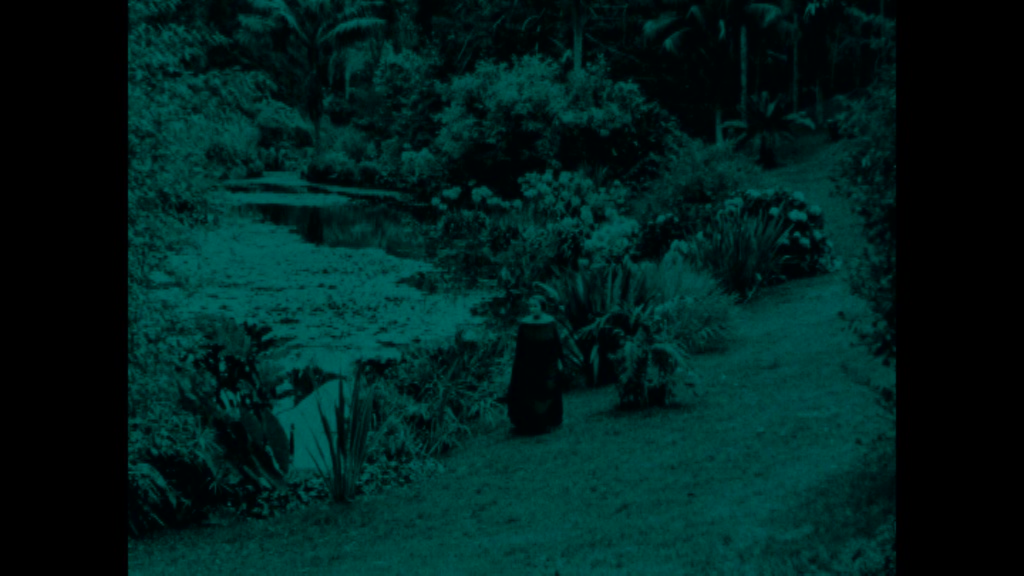
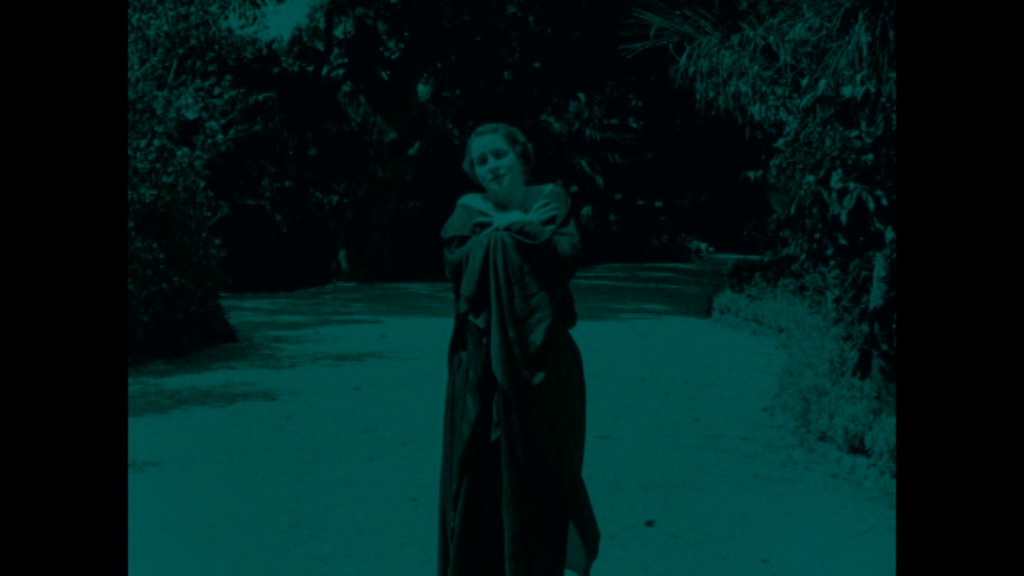
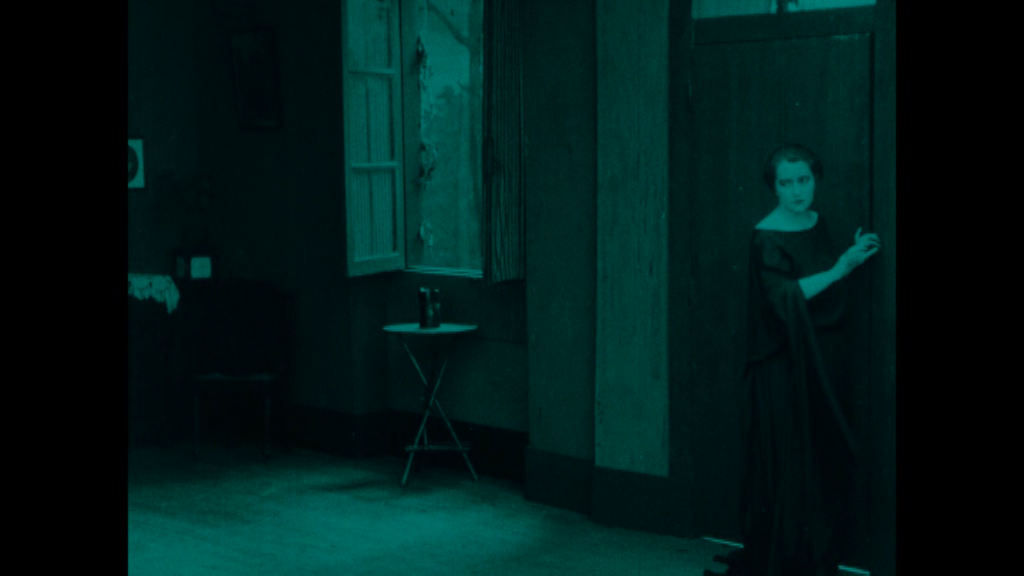
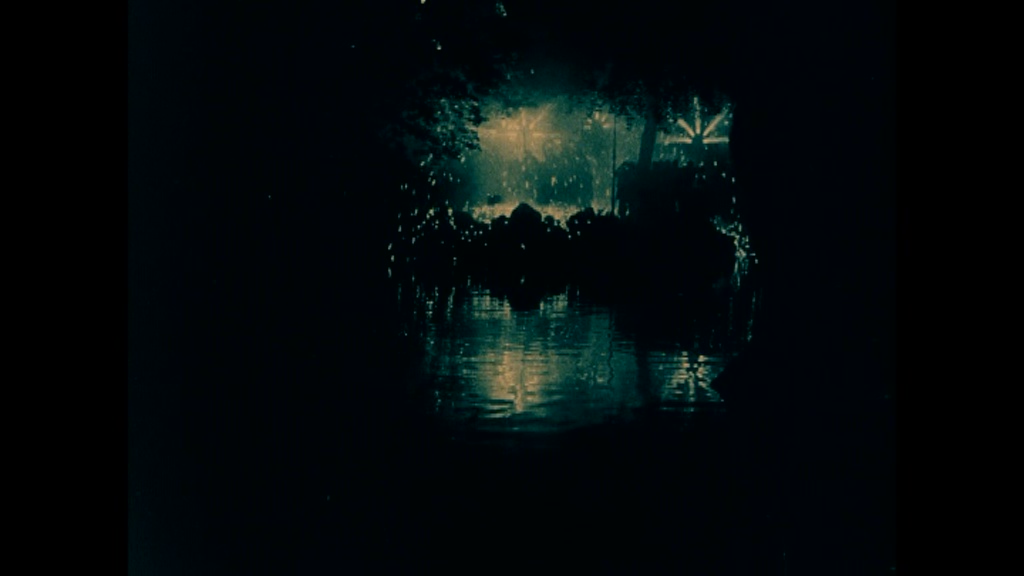
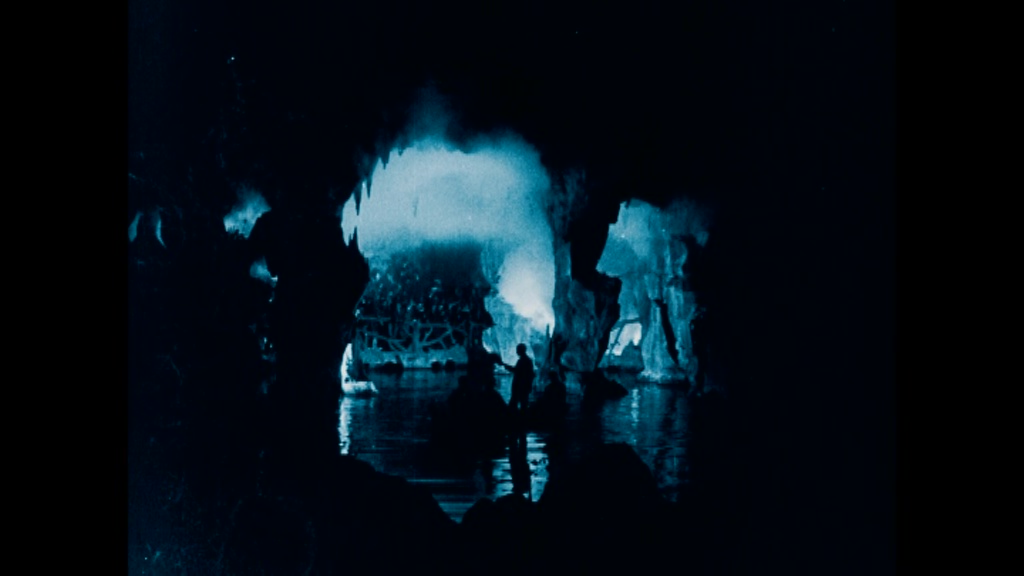
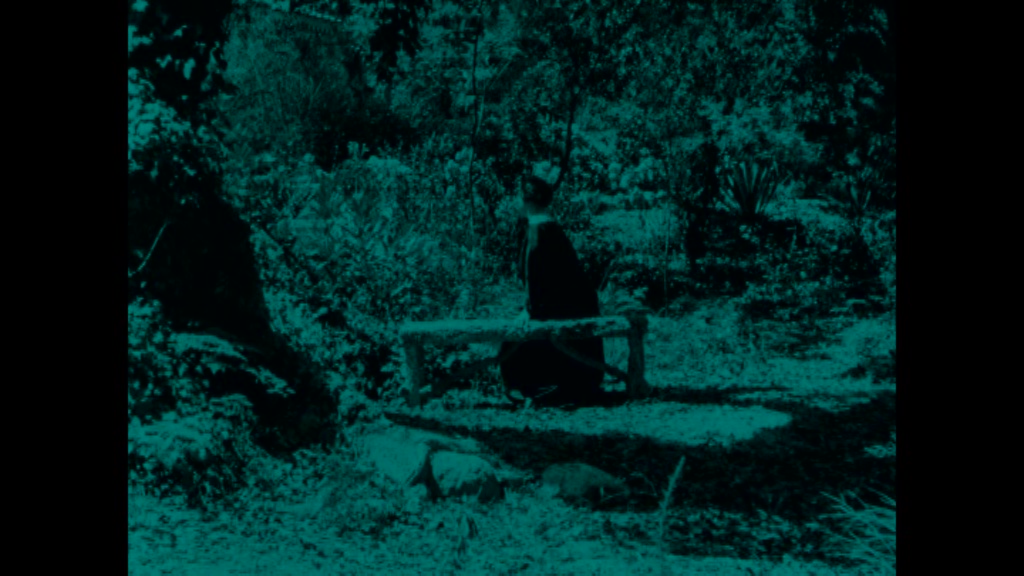
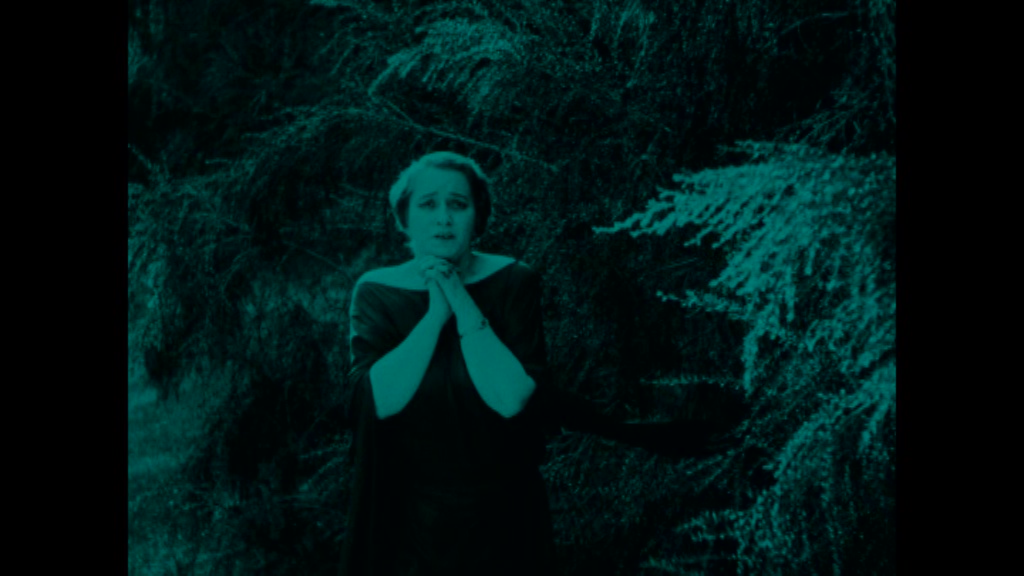
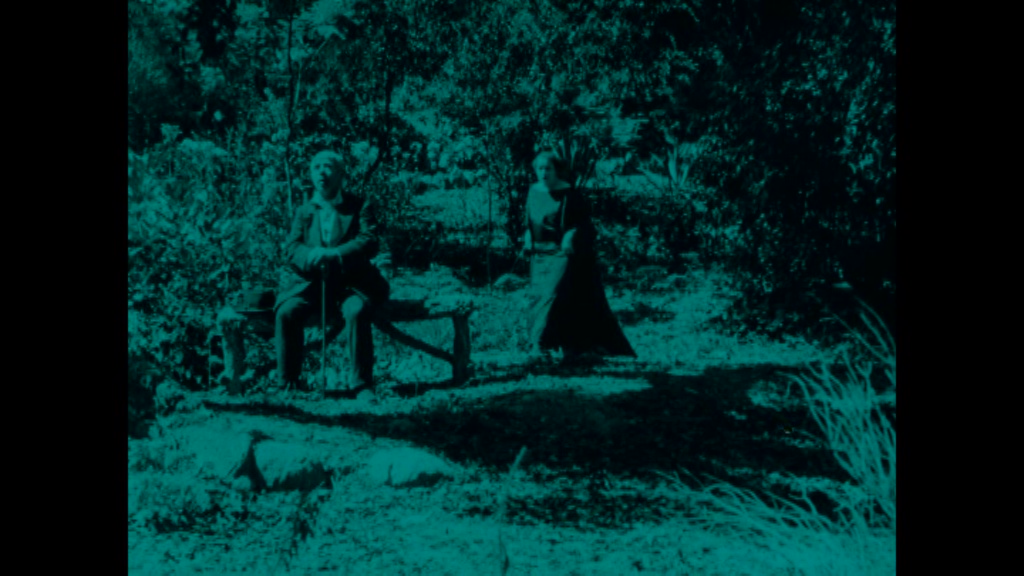
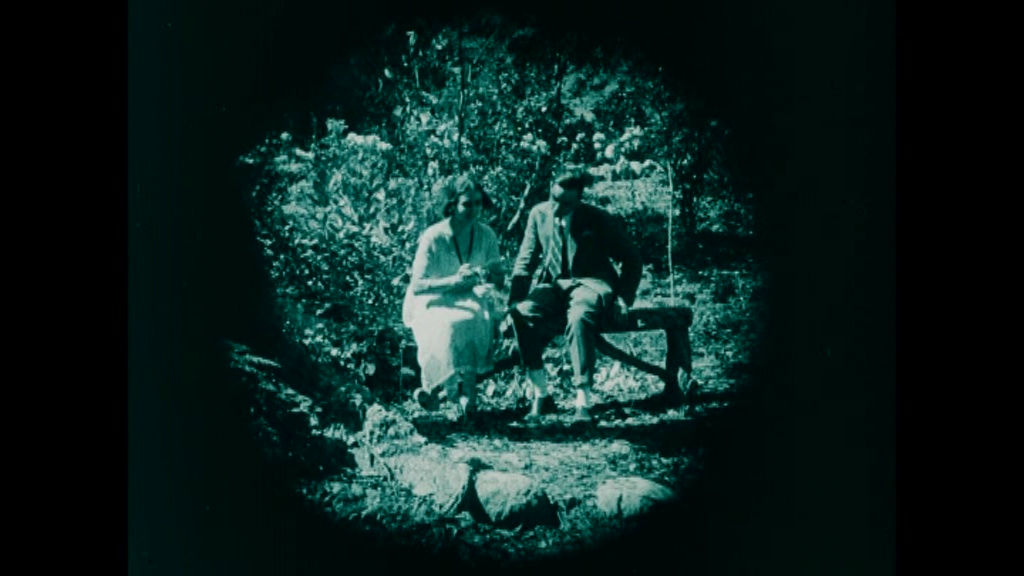
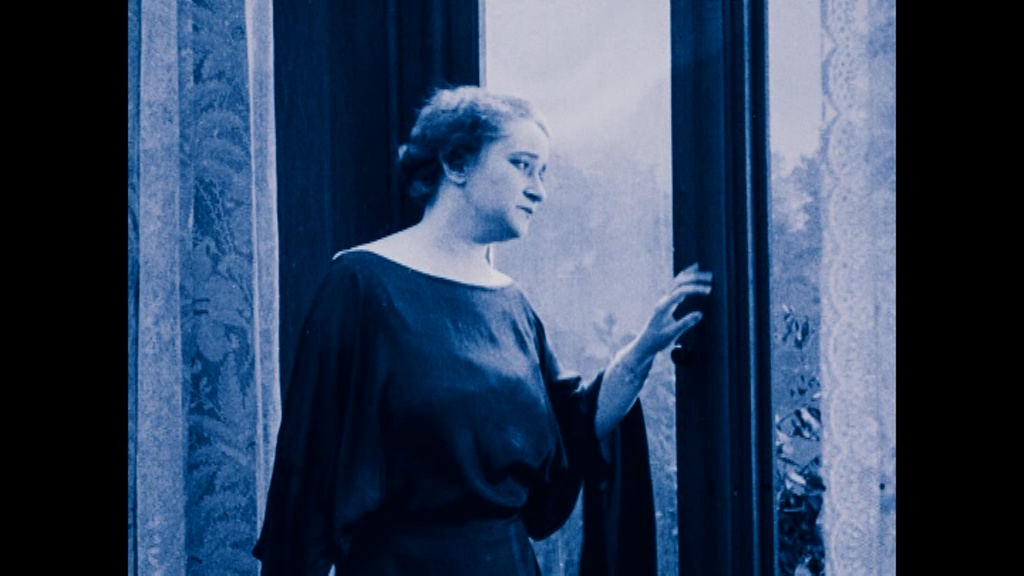
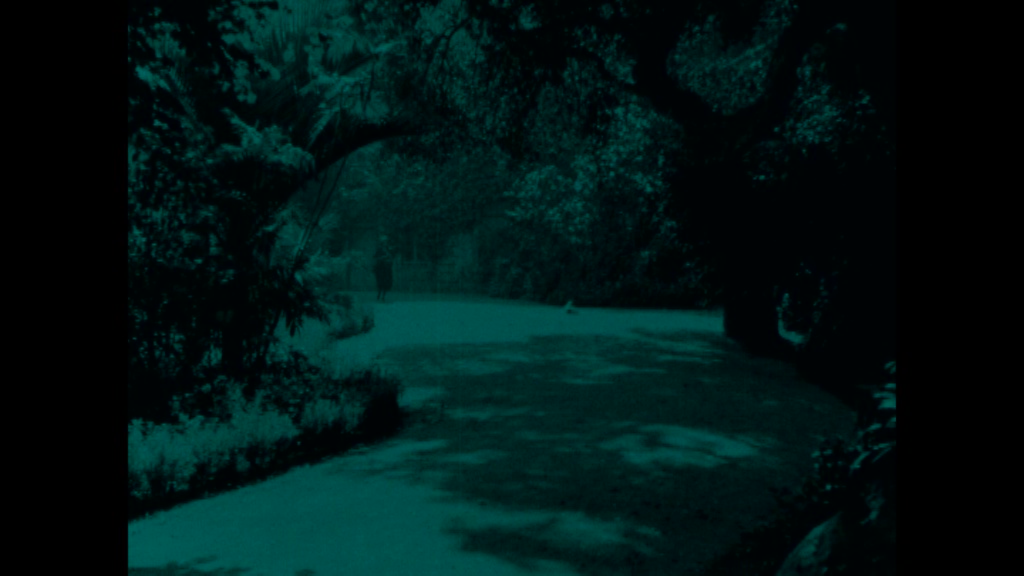
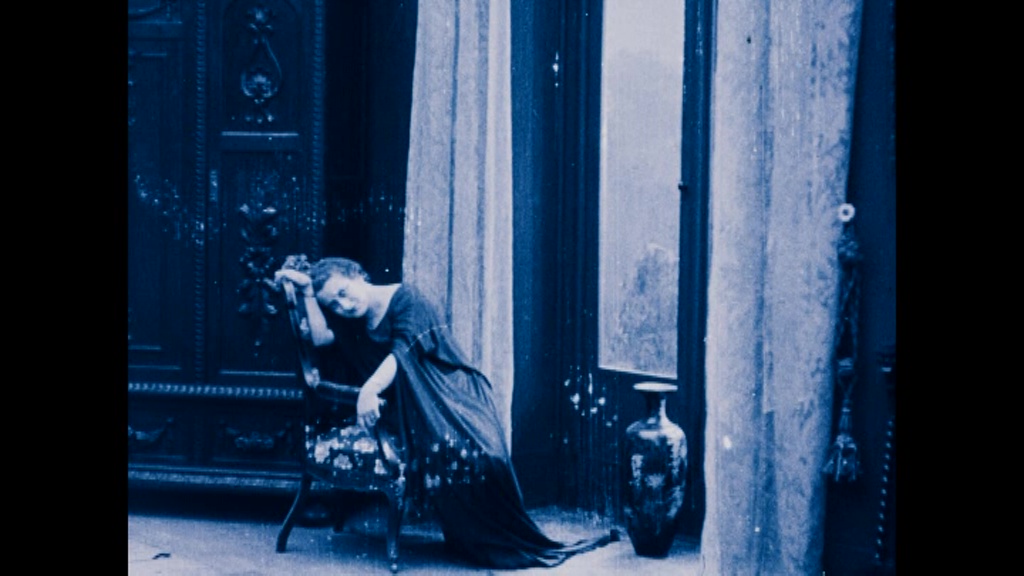
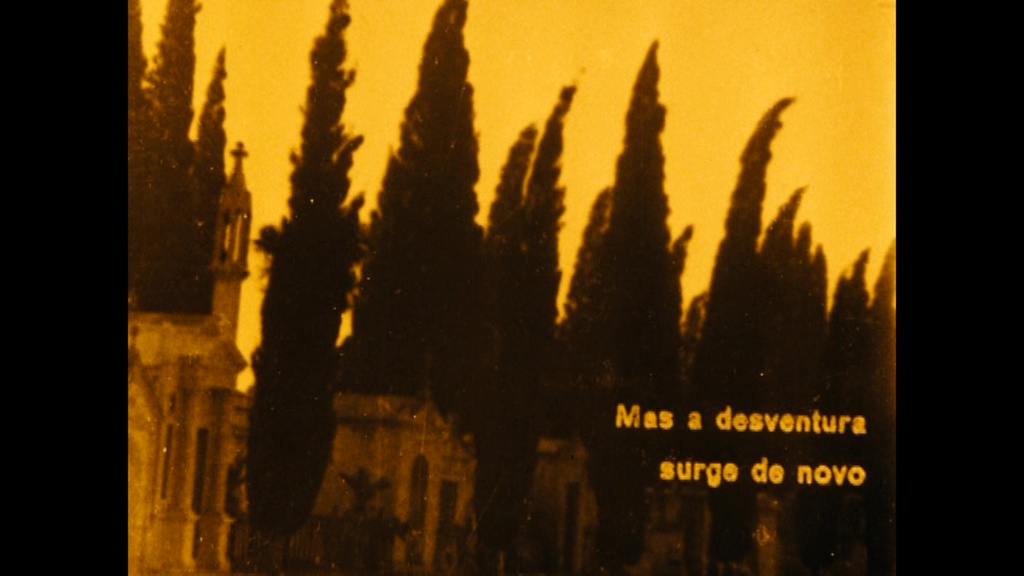
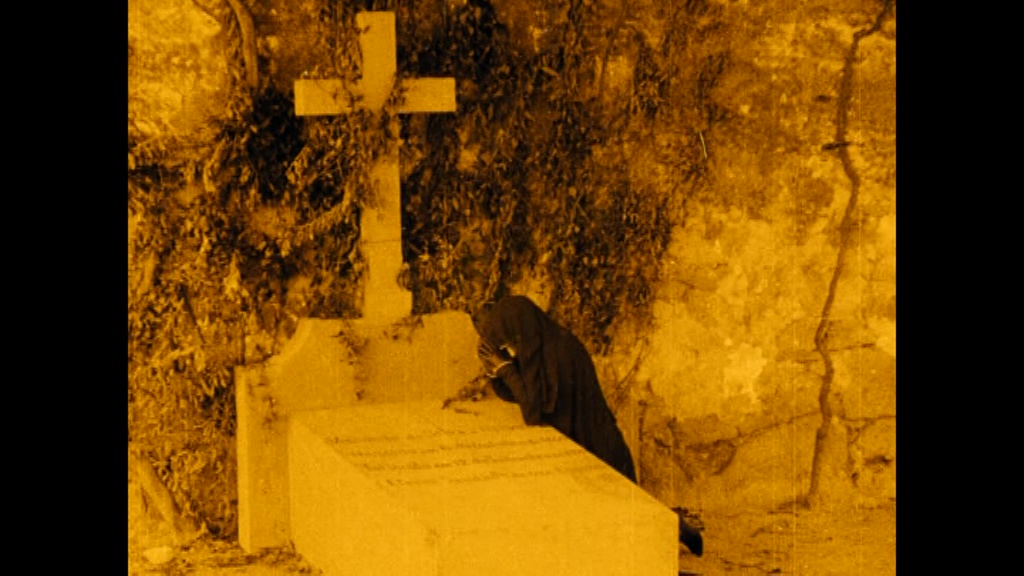
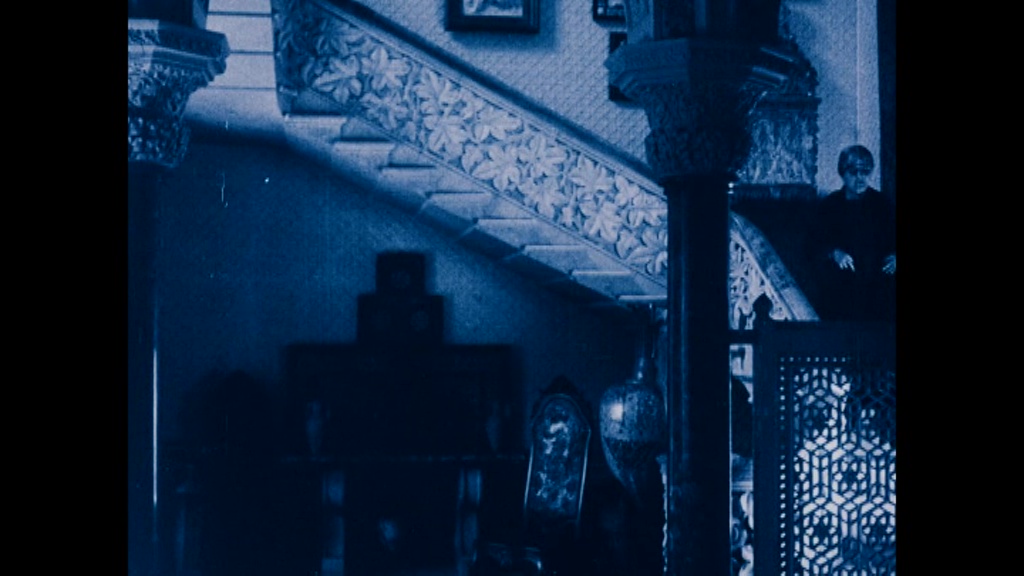
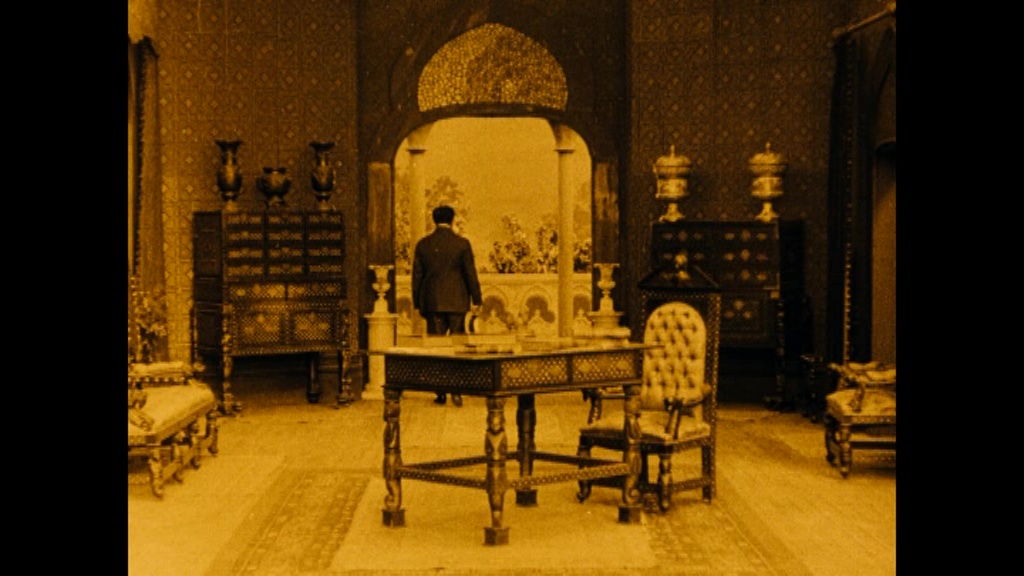
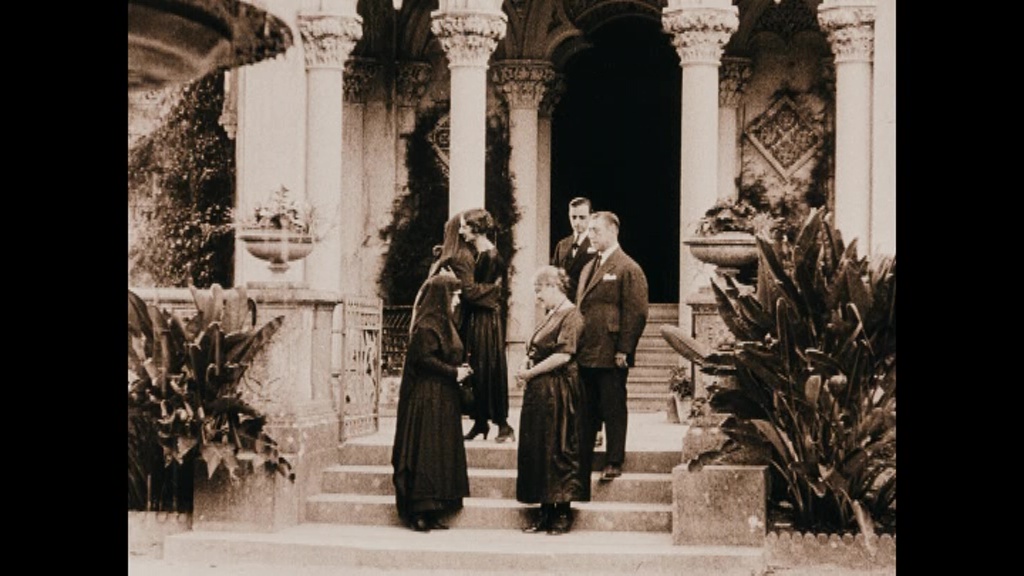
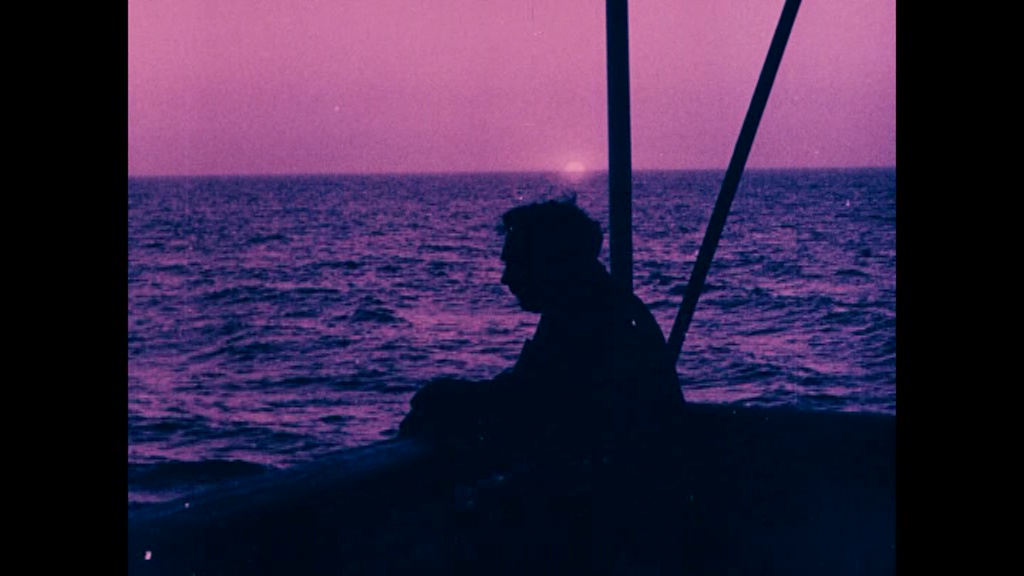
What saves this half of the film, lifts it indeed into the realm of the extraordinary, is the photography. Seen on my television screen, I thought the exterior scenes in O Destino among the most beautiful I have seen in years. Every new shot brings some astoundingly lovely vista of backlit trees, sparkling water, sun-dappled road, or rich parkland. The lighting is equally impressive in the large interior of the house, where Pallu allows natural light to create superb, rich, shadowy spaces inside the architecture. The lush pictorial beauty is enhanced by the tinting and toning, which creates a new mood for every scene. It’s stunning, just stunning. The cameraman was Maurice Laumann, whom I had not heard of – whoever he was, he did grand work here. I longed to see this film on a big screen. It’s simply wonderful to look at.

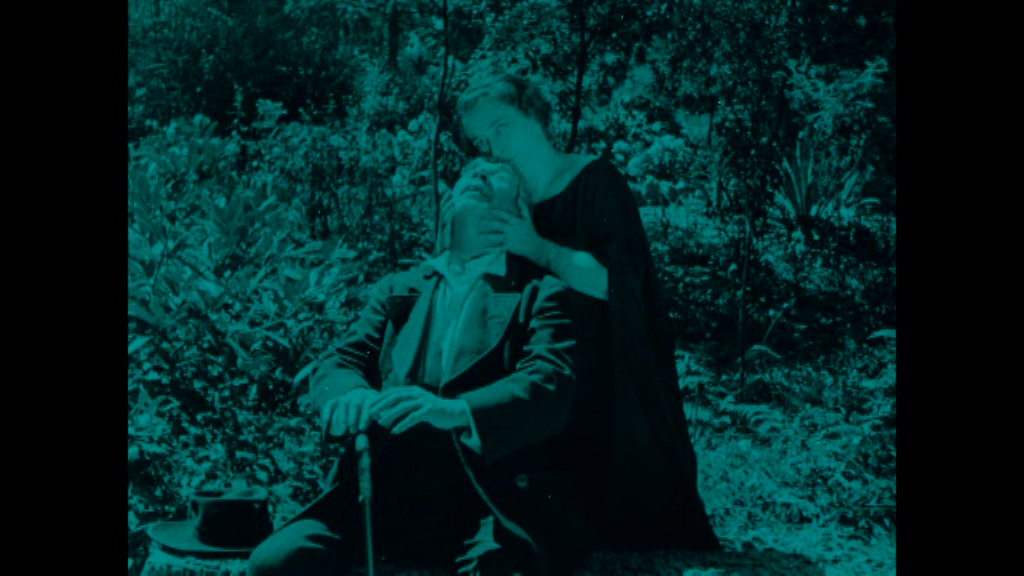
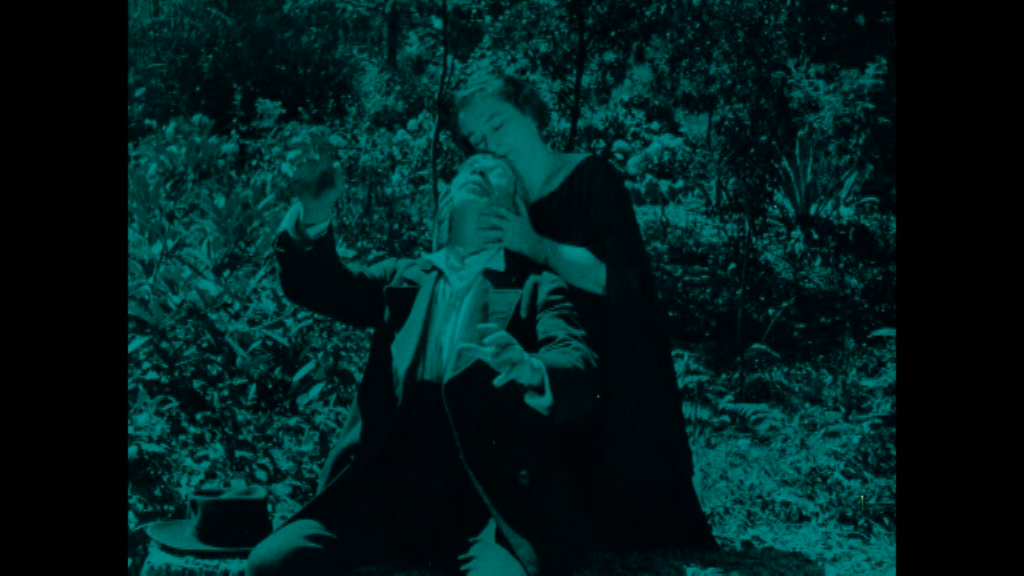
(A small footnote to this enthusiasm is that the lighting looks less effective when I went through the film and took captures from the DVD. The settings on my monitor are surely different from that on the television. I have the latter on “cinema” mode, so the contrast is not too exaggerated – but it has clearly made a difference. This clearly raises all sorts of questions about home viewing, but I must be loyal to my initial reaction: I was incredibly impressed by the way the landscapes looked on screen.)

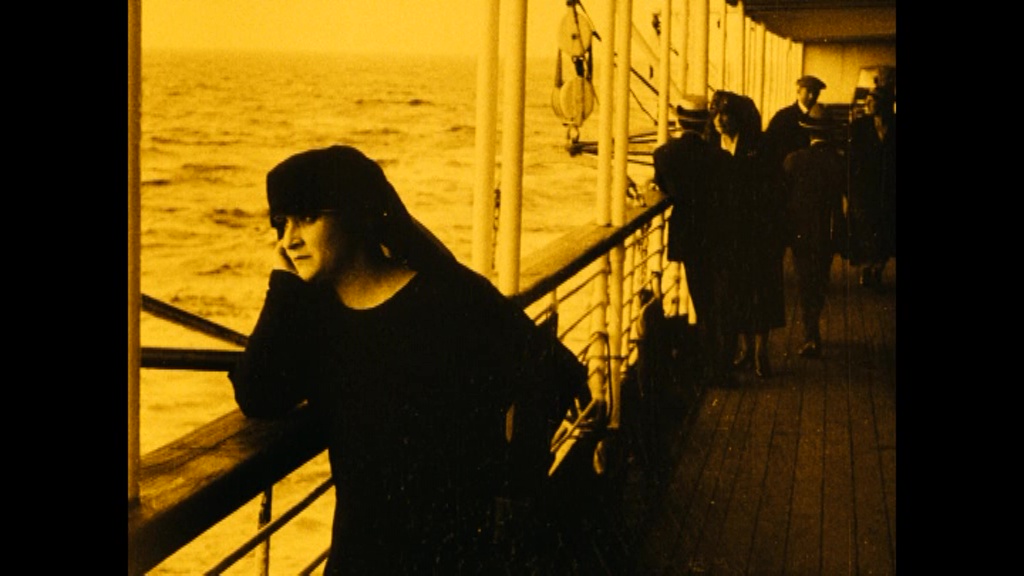
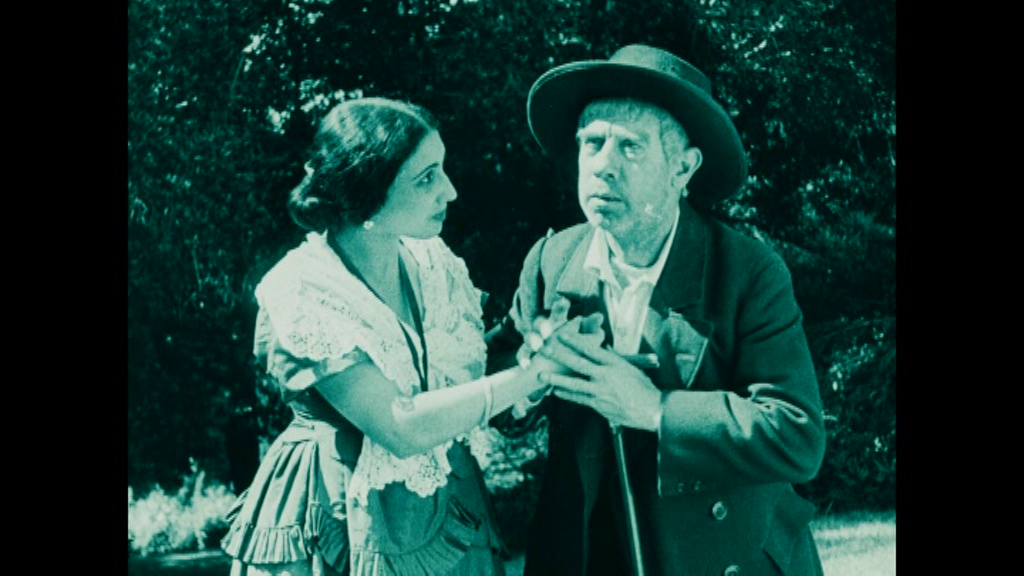
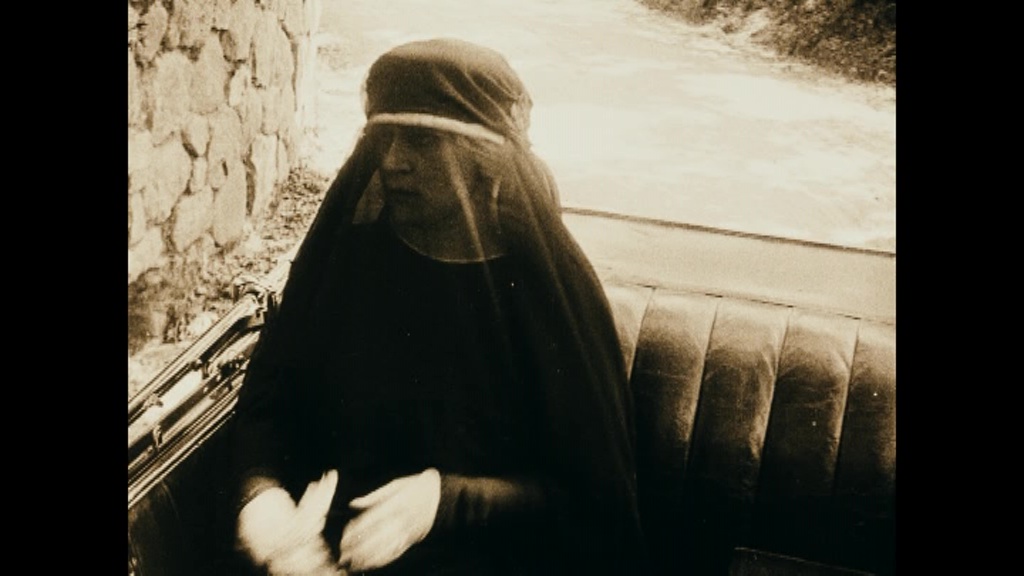
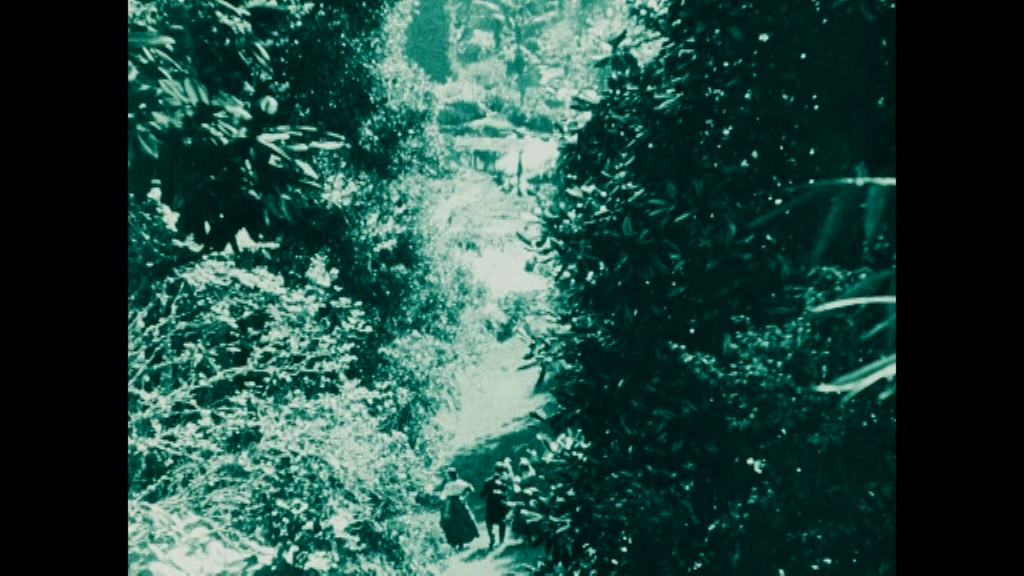
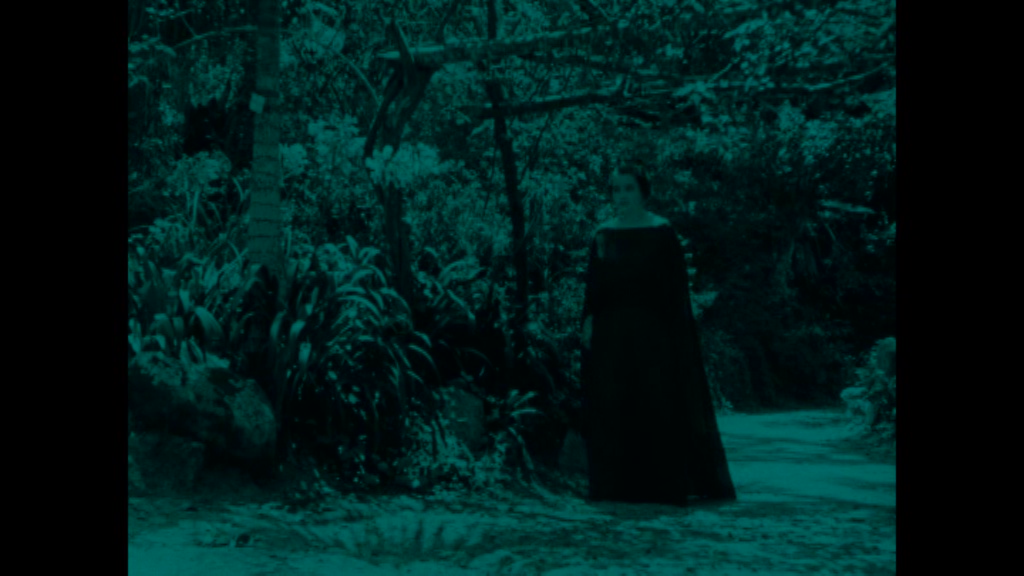
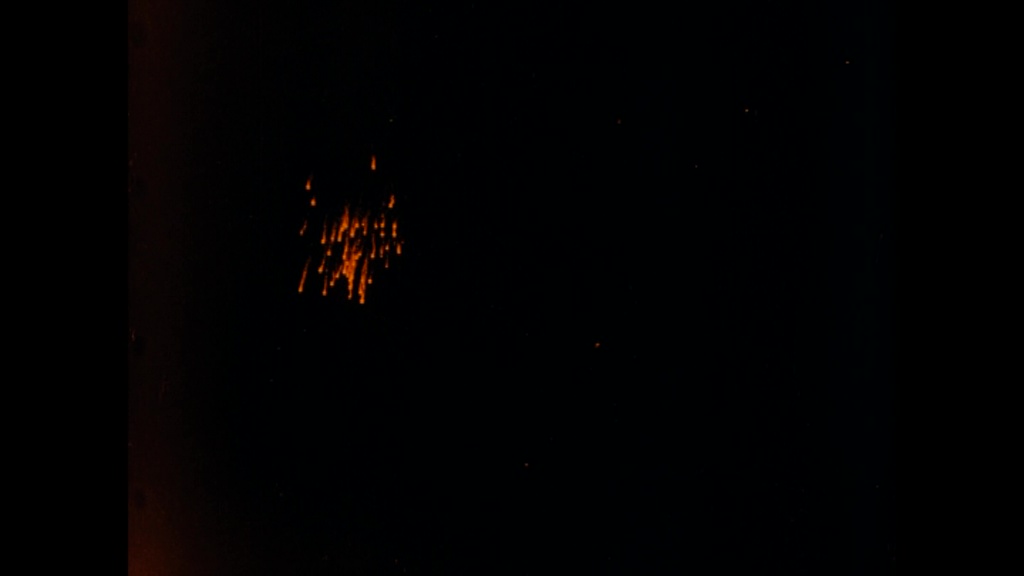
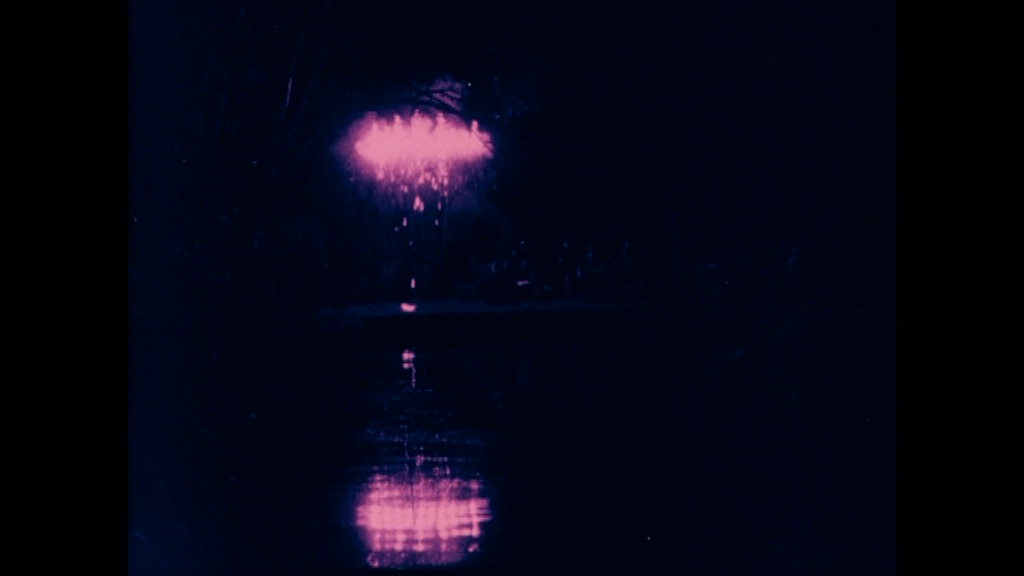
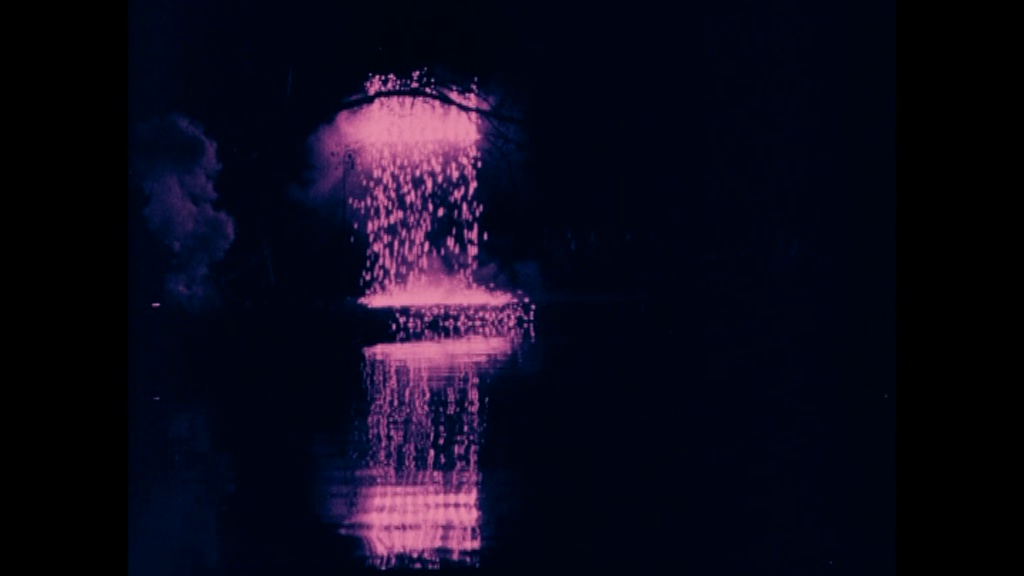
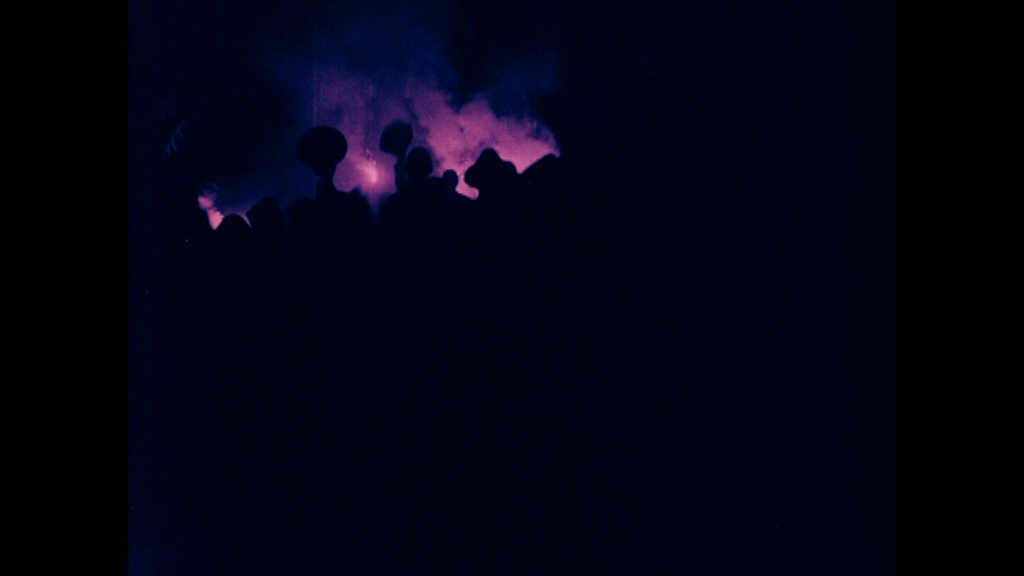
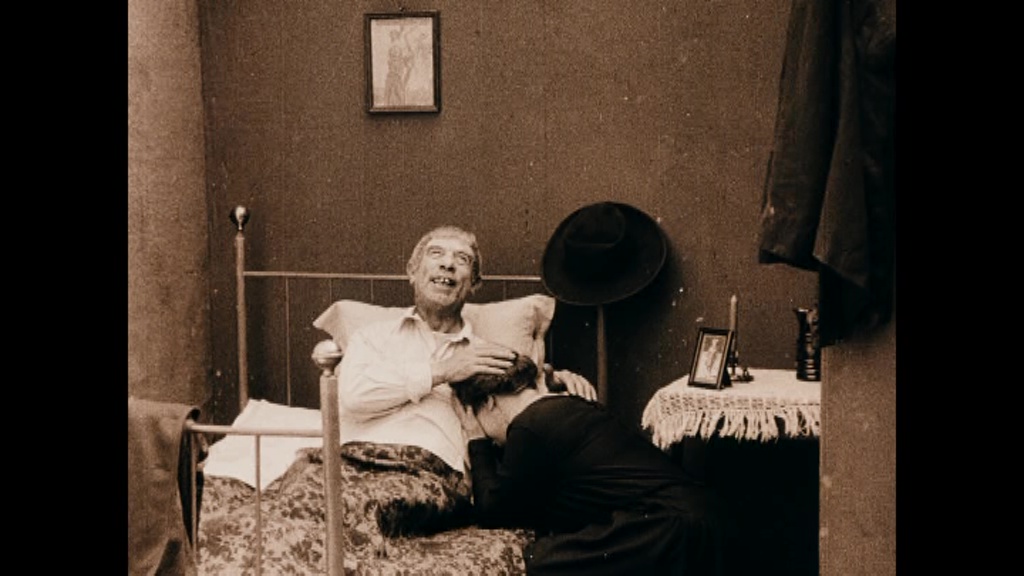
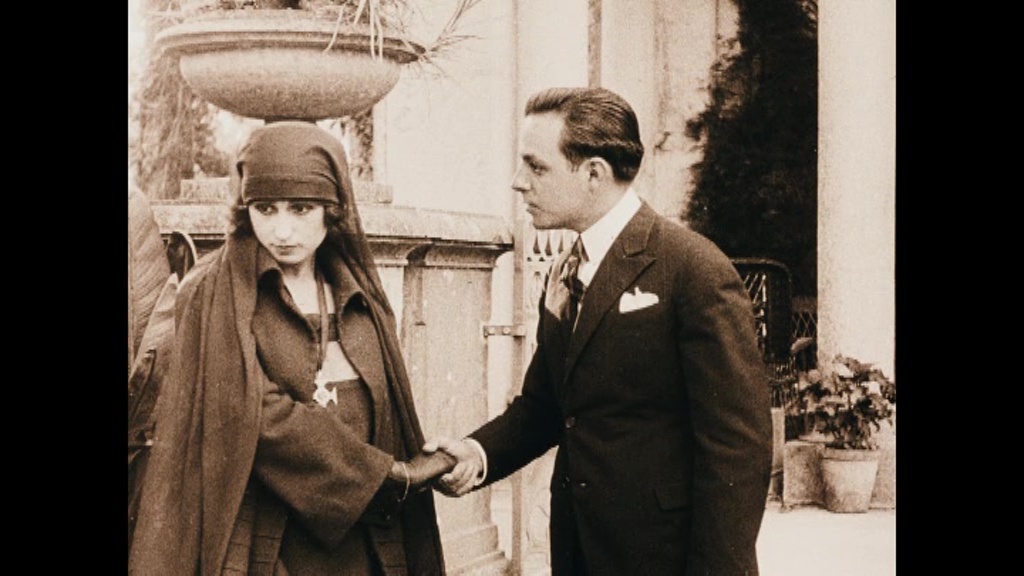
As I said, I confess that I wasn’t much gripped by the drama of O Destino until about halfway through. At this point, Maria is alone in the palace and, instead of joining the household at the fireworks in the park, she decides to walk round the gardens of the estate. It is here, in the still, dim light – tinted a kind of dusky green – that we see her truly express herself, and where the film really taps into the emotional depths of her character and past. As she wonders alone through the gardens, Pallu once again uses parallel cutting to heighten the effect of Maria’s loneliness. We see her slow, quiet walk intercut with the sudden bursts of colour (pink, gold, green) of the fireworks, together with the boisterous crowds. These scenes are magnificently tinted and toned, enhancing the amazing chiaroscuro lighting of the dark park. But they also function to make Maria’s scenes seem quieter, more isolated. The film has much in common with the kind of “diva” films produced in Italy in the 1910s, and these scenes of a female protagonist walking in black veils through gorgeous surroundings had very much the same aesthetic feel. Bastos’s performance grows in stature across the film. I didn’t quite get the fuss over her status to start with, but by now her control and dignity on screen attained its full emotional weight. I found this sequence, and the climactic encounter between father and long-lost daughter, very moving. It also helps that the motif in Nicholas McNair’s piano score is a slow, gorgeous, memorable sequence of romantic chords. The whole sequence has a magical, dreamlike effect, which the music captures and enhances perfectly. What a gorgeous piece of cinema this is. Even the sudden way it ends – with Maria planting a kiss on her father’s head, his gesture of astonishment, and the end of the reel – is perfect. It’s a great, great sequence – and from this point to the end, the film really works.

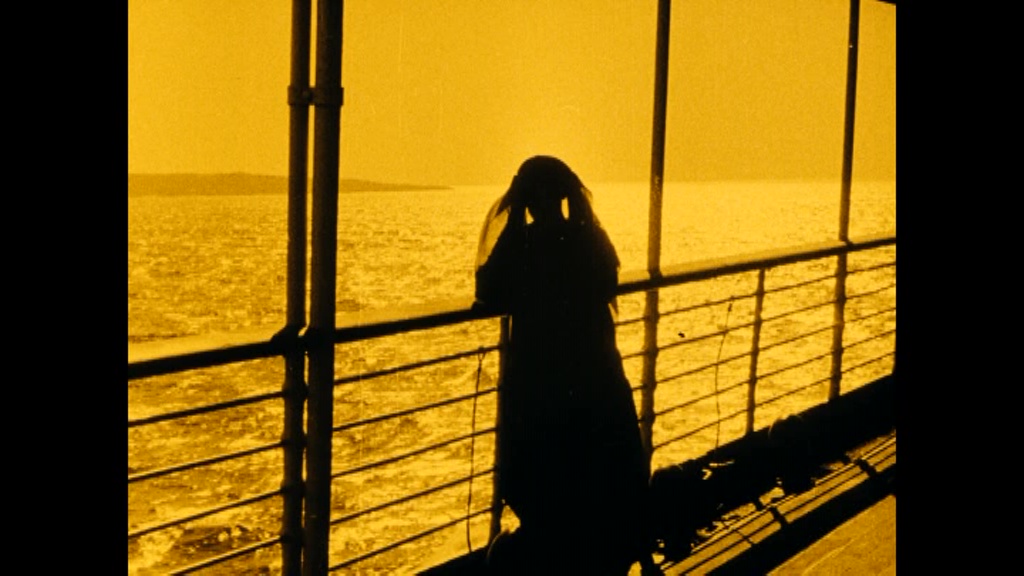
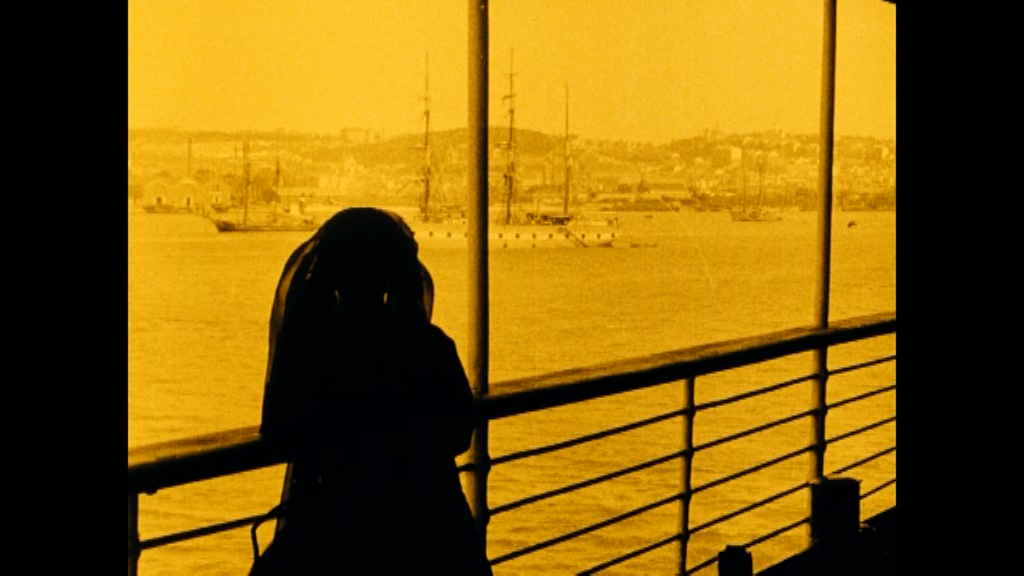
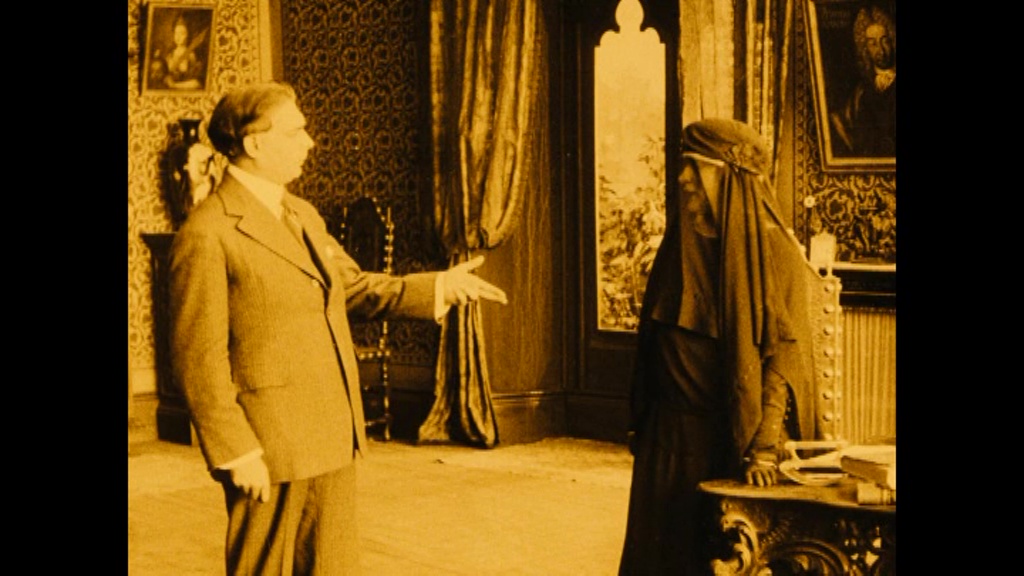
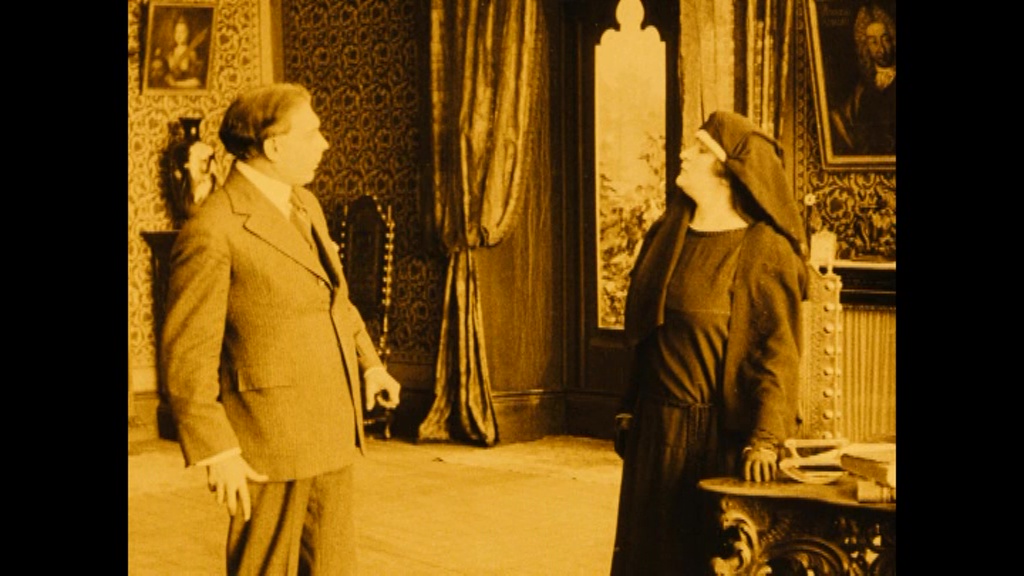
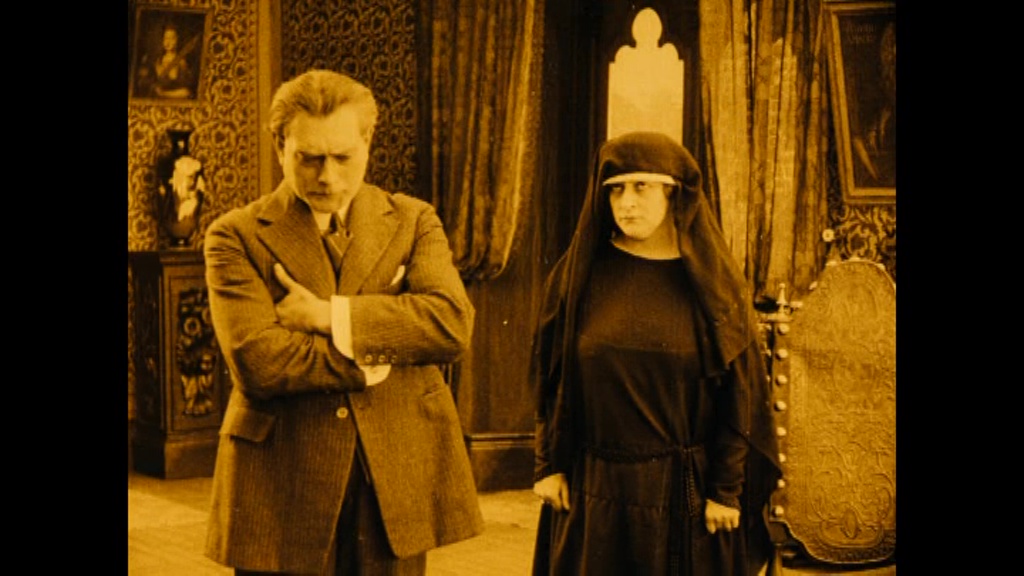
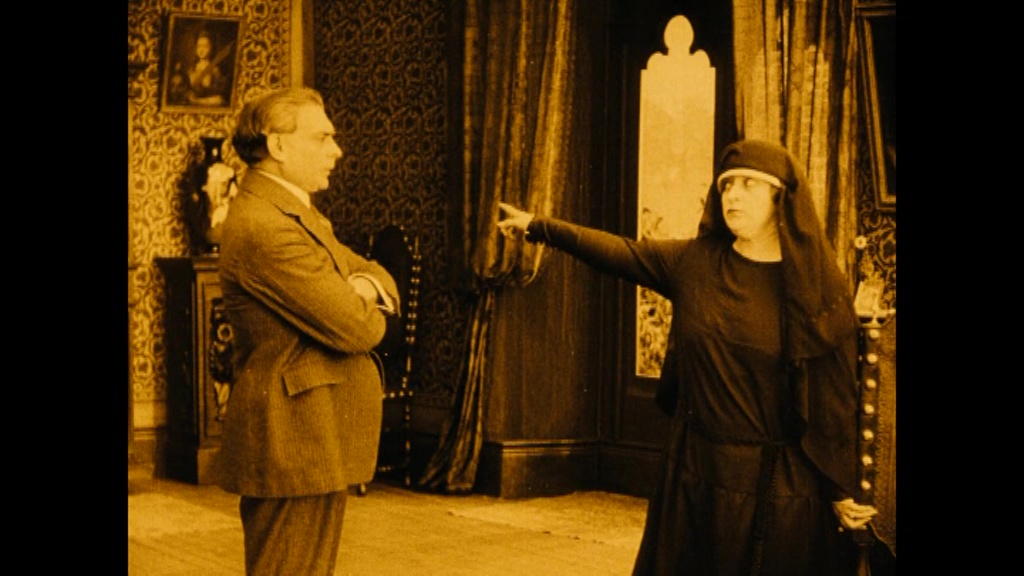
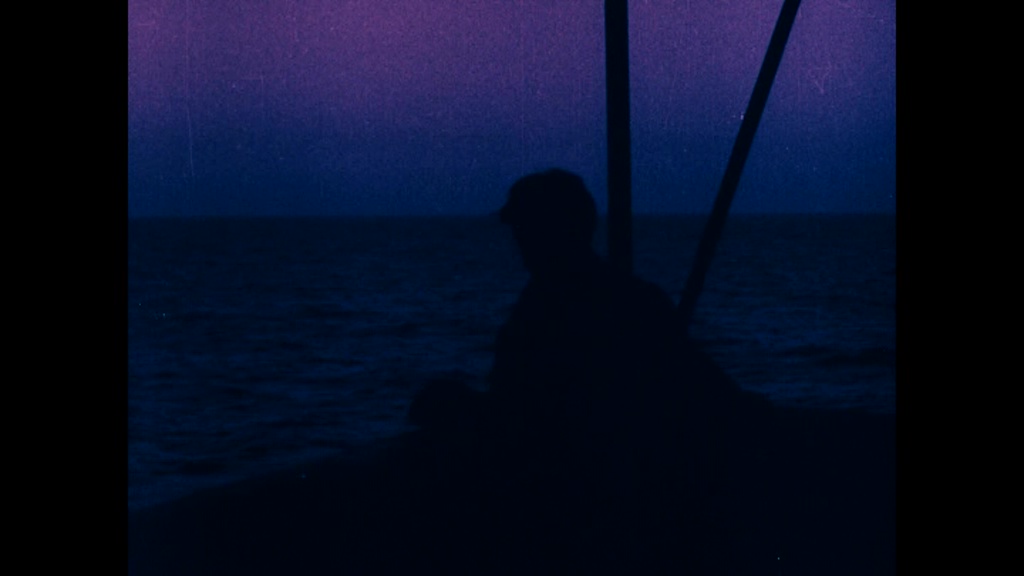
One of the reasons it works is that Maria assumes greater agency. She finally deals with the legacy of the past, confronts Luís, and speaks to her father. The way she lifts her veil to reveal herself to Luís is a fabulous moment. It’s one of the many scenes that belongs in an opera by Verdi. I could easily picture scenes and sequences being transposed into arias and duets. The fact that it gives this sense of big emotion through such economic, silent pictorial means, is a marker of the film’s success. I love the way the film ends, too, with Luís being cast into exile. The film begins and ends with lone figures, silhouetted against the dazzling waves. That Maria is now at the heart of her family, and Luís is banished from Portugal, is deeply satisfying.

If O Destino is slow to get going, by the end I was totally absorbed by it. I can see why this was “the biggest commercial success” in the silent era in Portugal. It looks preposterously good. I can’t emphasize enough how hypnotically beautiful these exteriors look. The depth of shadow, the lustre of the light. I think I would be overwhelmed by this on a big screen. Nicholas McNair’s piano score was very good, and he brought out some lovely themes for Maria’s scenes. As I say, by the halfway point I was won over. Bravo to all involved in restoring this film. I can’t wait to dig into the rest of the Cinemateca Portuguesa DVDs – including more films by Pallu…

Paul Cuff

The Coronation of King Peter the First (1904; UK/Srb.; Arnold Muir Wilson/Frank S. Mottershaw)

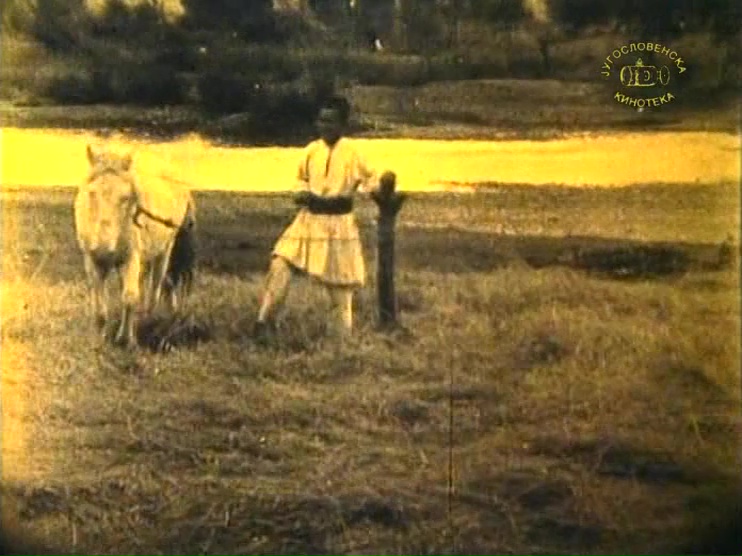
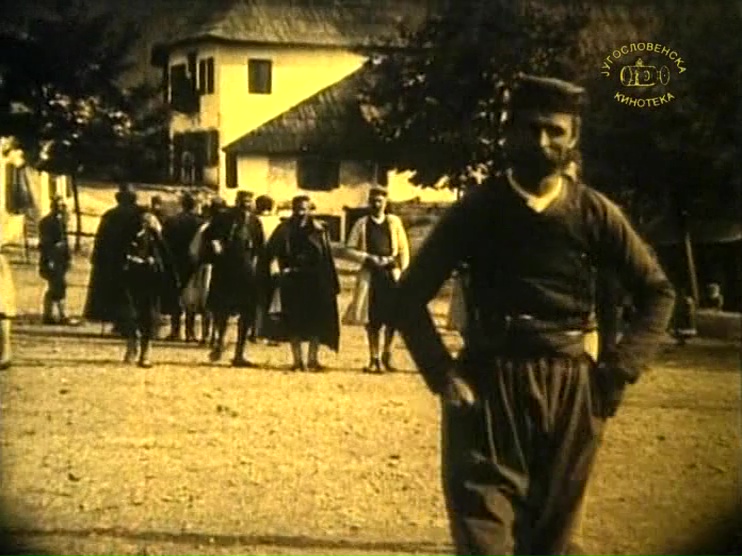
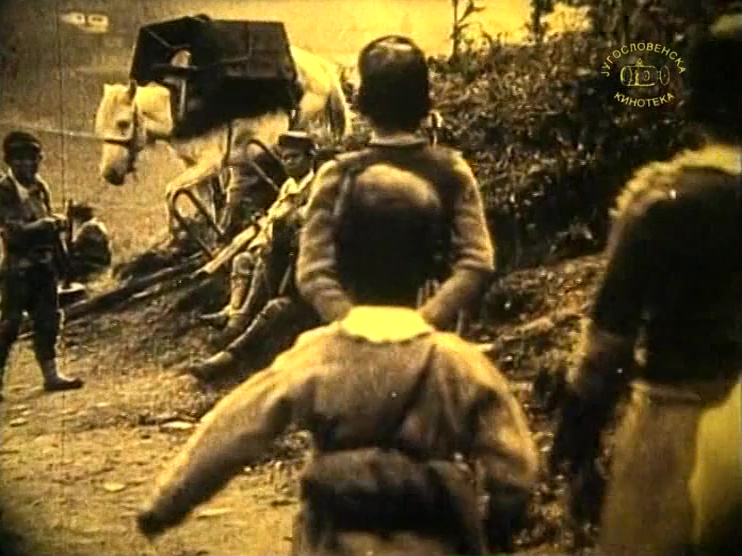
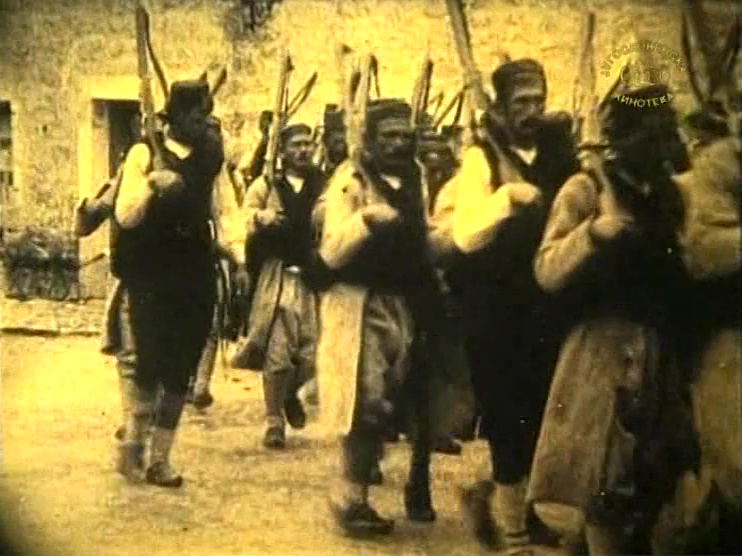
Having written last time about films featuring the Emperor Franz Joseph I of Austria-Hungary, this week we turn to a rival power in the Balkans: Serbia. In 1904, Peter Karađorđević was crowned as King Peter I of Serbia. His reign is seen as a kind of golden age of Serbian development in the region, as well as the locus of tragedy and triumph in the Great War. I had seen plenty of images from Serbia in the war, but the existence of footage taken at the time of Peter’s coronation was new to me. Thanks to a DVD from the Yugoslav film archive, we can see the surviving material filmed by Frank S. Mottershaw in 1904. Mottershaw’s father, confusing also named Frank Mottershaw, had founded his Sheffield Photo Company in 1900 and the spent the next decade making a number of inventive short films that experimented with new forms of editing, especially the “chase” format – as exemplified by the marvellous A Daring Daylight Burglary (1903). In 1904, Frank’s son journeyed to Serbia in the company of Arnold Muir Wilson, a lawyer and journalist – and honorary Consul of the Kingdom of Serbia. They went to film events around the coronation of Peter I. Though the film’s title implies a record of the actual coronation, Mottershaw and Wilson did something rather more interesting. The film’s subtitle in more accurate, and more revealing: “a Ride through Serbia, Novi-Bazaar, Montenegro, and Dalmatia”. This, then, is what we get…

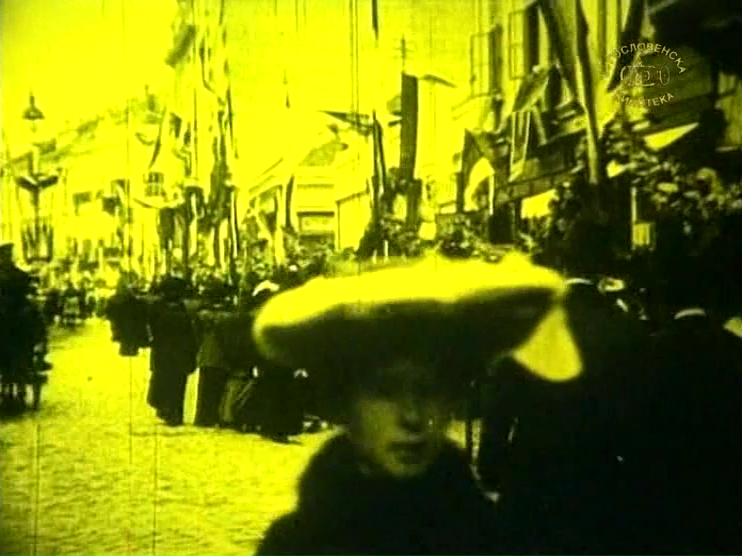
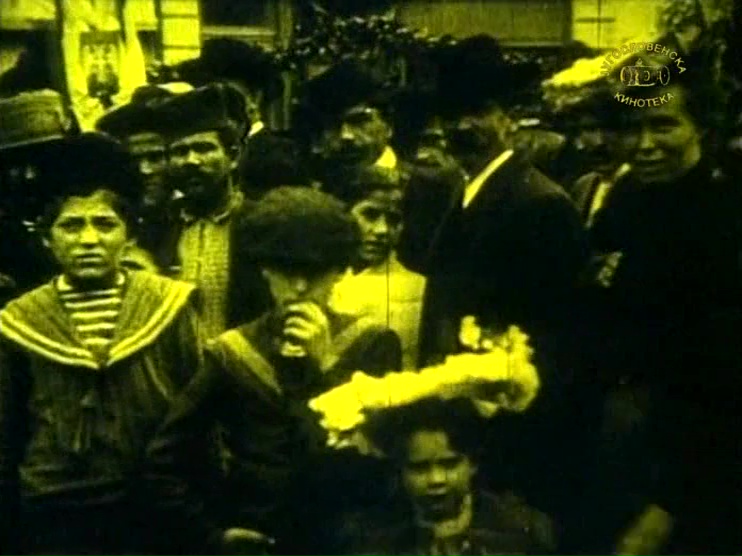
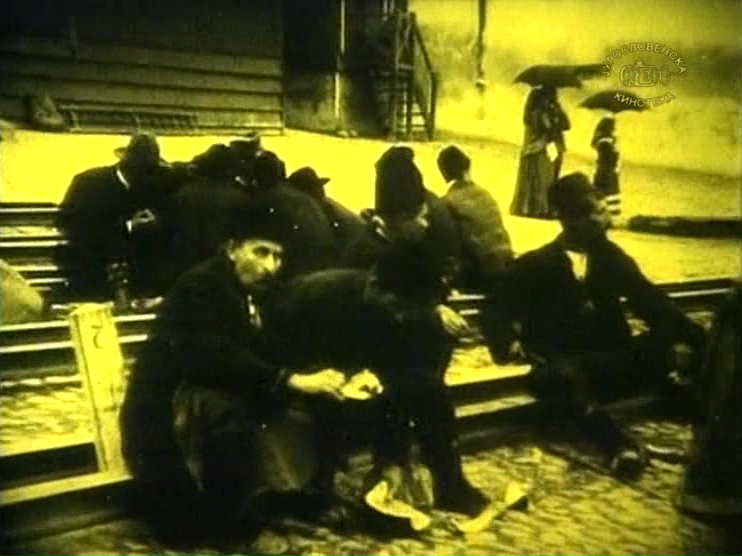
Street views of Belgrade, April 1904. The past walks past us, gazes back at us. Children, as they do everywhere in the past, stop and stare, grinning, waving, poking their noses into the frame. Here is the world as it was before the Great War, populated by the faces of those who would live through it. There are soldiers and officers and priests and march pasts. But there are also ordinary people, civilians going about their business, or waiting, or mooching aimlessly.

The royal procession, captured at an arrestingly odd angle: the camera is tilted, as though craning its neck to see the dignitaries. There they go, in splendid full-dress uniforms: caped, and plumed, and epauletted. There are carriages of women in big hats. Men raise their own hats in salute. Dignitaries in top hats, in bicornes. There is no view of the coronation, not even a glimpse of the cathedral. We wait outside, in the streets, with the crowd. We see the parade returning from the cathedral. It is less grand, and curious dogs, oblivious to the progress of state history, dart out amid the lines of slow-marching men and horses. There are long shadows and pennants and musicians (and lumps of horseshit on the cobbled street). A man who may be the king rides past. Others are more arresting, since they pass close by to the camera, momentarily filling the frame with their presence. Who are they? What became of them? More carriages roll past. The crowd mills about. The pleasures are slow. No-one is in a hurry. It’s a free show. Just stop and stare at it all. The cavalry glance guardedly to their right. The musicians are no longer playing, they examine their instruments as they pass. Now the crowd breaks up and the street fills with the bustle of everyday life.

Another parade, this time celebrating the “development of the Serbian army” across history. So a historical parade about the history of historical parades. The camera watches as it passes. Rank after rank, often just gaggle after gaggle, of soldiers in historical dress, growing more modern. Here comes the first artillery, then marching bands, then modern guns, smarter ranks, better-drilled ranks.

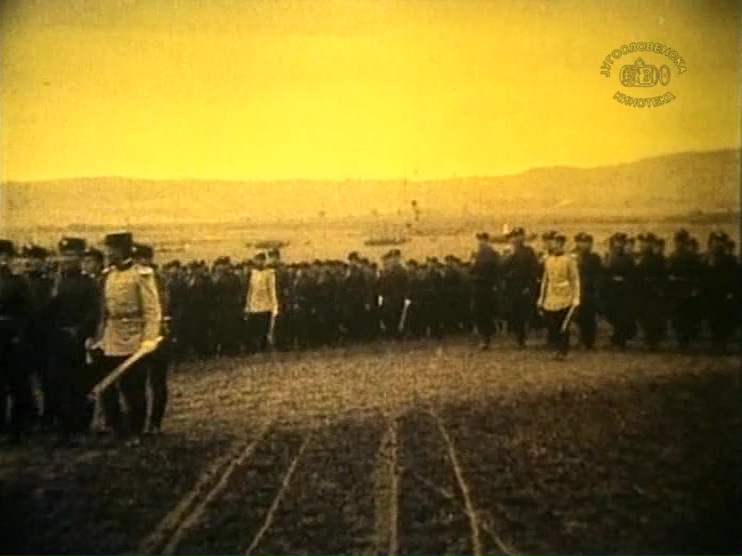
Views of Belgrade port and fortress. The past seeped in a golden haze, the haze of a distant spring, a spring of empty expanses, cold light. Now views of the Serbian army on parade. The army has room to stretch its formations, out across the muddy plains. The camera watches. There they go, the men, the horses – and the little dogs who once more run after the moving ranks. Odd figures wander in front of the camera then vanish. The past stops and restarts and vanishes. The guns roll along, but there is no chronology here, just a series of unending and thens… And then the officers dismount. And then the carriages appear. And then the priests scratch their beards. And then…

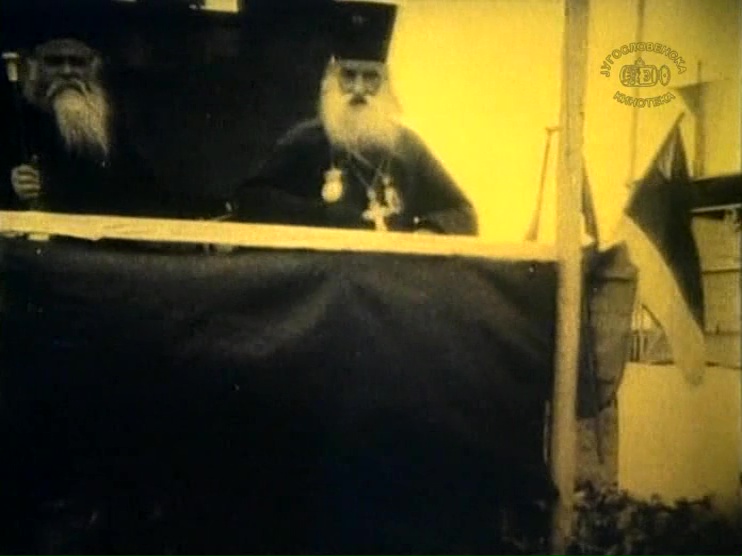
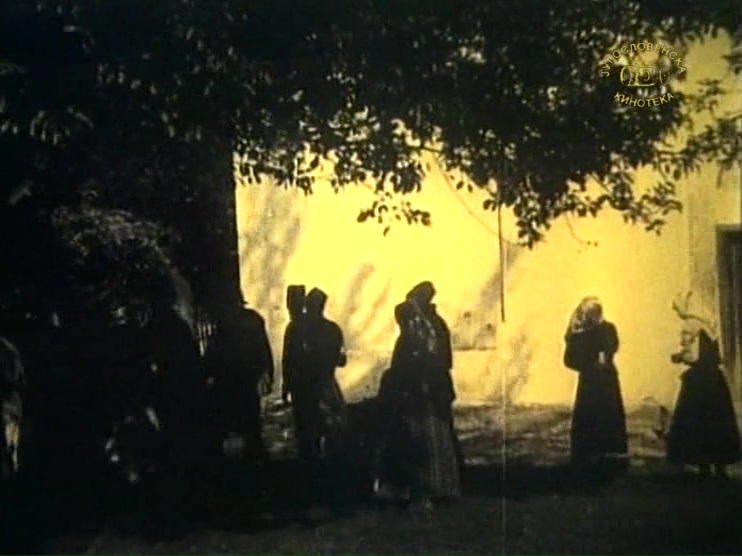
And then, Žiča monastery. A beautiful snapshot of an eastern Europe I know from innumerable books and photographs of the war-torn century. Here are the whitewashed walls (a little greyed), the Romanesque arches, the rounded cupolas topped with Orthodox crosses, the priests in their long dark robes and tall hats. (And the curious youths.)

Studenica monastery. The camera turns its head to follow the progress of a carriage. A stunning valley stretches out toward the hazy horizon. The walls, the doors, the shadows. I can see spring warming up. The sun is brighter, casting darker shadows across the forested valley and steep slopes. Horses stand around. The world is sometimes stunningly empty, sometimes observed only by us.

Kraljevo market. Pigs and sheep, an array of carts. The camera pans nearly 360-degrees, and everywhere it turns are people who stop and stare. Is this the first moving picture camera they have seen? Novi-Bazaar, and everyone stares again. The camera turns on its axis, and every frame is filled with curious life, streets I want to walk down, houses where the past resides. The people on the streets here are more casual, just as curious, more liable to smile, to mill around, to ask questions – finally, to bring their wives and children and approach. (The children are smoking.)

The Montenegrin army. I recognize their uniforms from the endless books about the Great War that I collected as a child. (Yes, this corner of the world is somehow more familiar to me in its past form, more known to me in its old clothes, as this generation and the next.)

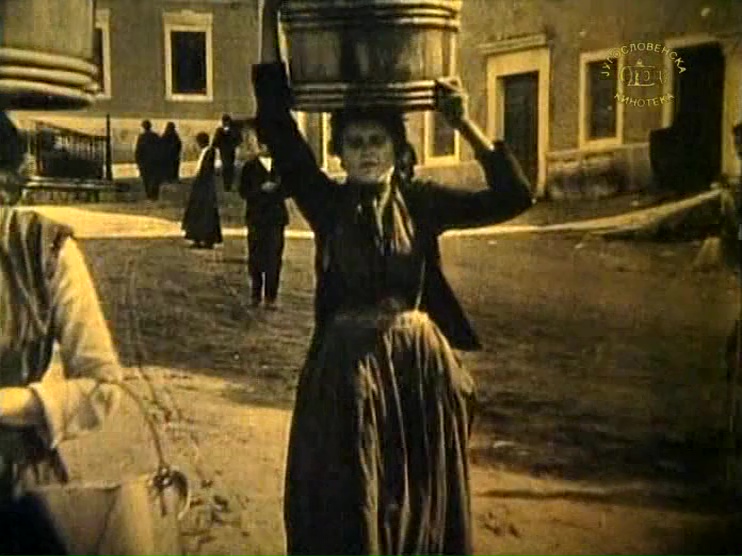
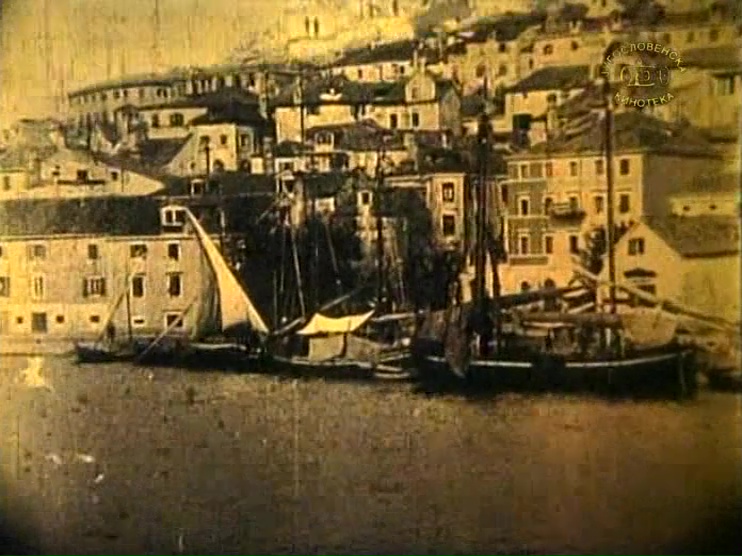
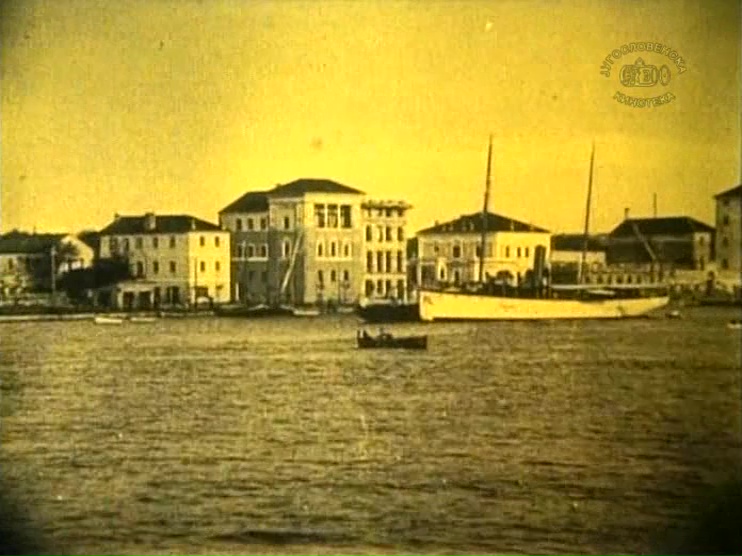
Views of Šibenik. A large ship, the dock, and smaller sailboats. Women carry huge barrels on their heads. The water glimmers in the sun. the camera turns to marvel at the houses, shoulder-to-shoulder, then suddenly floats aboard a ship. We go to Zadar, we float past ancient walls, we drift… THE END.

This film is on DVD via the Yugoslav film archive, and its material history – passing from the UK to Serbia in 1937, being shown sporadically until its restoration in 1995 – is summarized in the opening titles. The main intertitles were based on Wilson’s notes, so are a modern interpolation into the film. It has no soundtrack, but the images speak for themselves – or rather, they remain stubbornly, eternally silent. As such, they are all the more evocative. I’d love to know more about how and when it was shown in Serbia, and what kind of audiences saw it. The opening credits inform us that the film was exhibited in the UK as part of Wilson’s lecture series on Serbia, then in April 1905 shown at the National Theatre in Belgrade in the presence of King Peter, royal family, and other dignitaries. How was it presented there? With music? With narration? And was it shown outside of this one projection? Where? And when? Did the people on screen, the men and women and children who gaze back at us, ever get to gaze back at themselves?

The Coronation of King Peter the First is a great curiosity. It’s not in great shape, it shows its age, it bears the marks of its material history. It’s awkward and faintly shabby. But it’s also very beautiful and very suggestive. It has a tremendous aura of its past, of Serbia’s past, of Europe’s past.

Paul Cuff

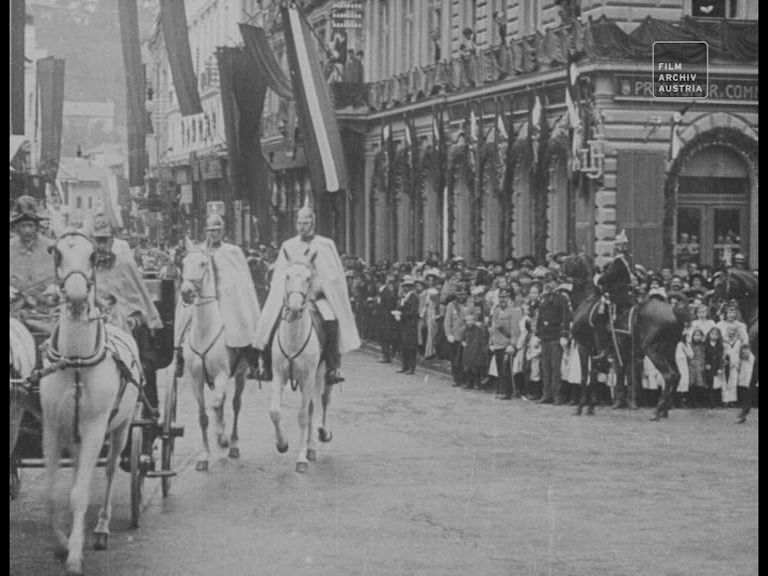
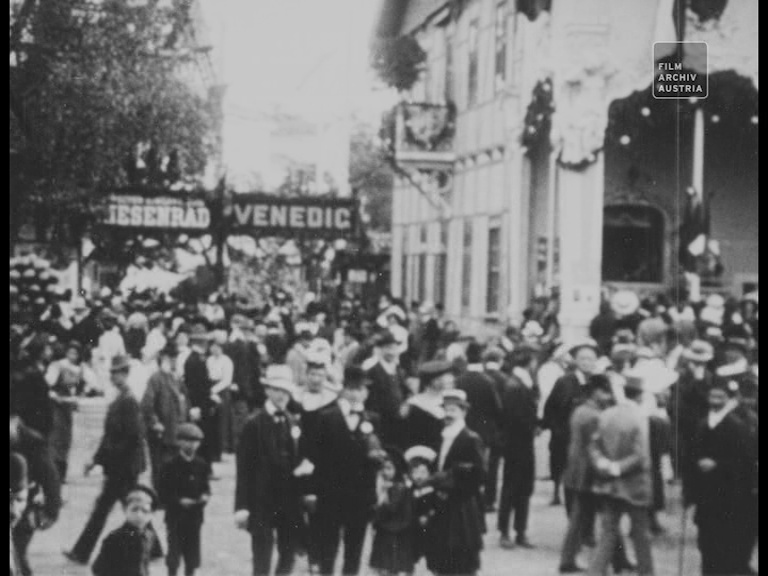
Kaiser im Kino: Franz Joseph I. in historic film documents (1903-16)

It’s been a few weeks since my last post, for which I apologize. I have been busy writing, but for a book project that is wresting control of my schedule. Having just finished a chunky chapter, I take a thematic break by revisiting a DVD released by Film Archiv Austria in 2016 to coincide with the centenary of the death of Emperor Franz Joseph I. This edition, called Kaiser im Kino: Franz Joseph I. in Historischen Filmdokumenten, is a nicely produced DVD with English subtitles and plenty of details about the sources for its selection of films. (There is also a musical soundtrack, of which more later.) There are twenty-four films, mostly produced during the Emperor’s lifetime, together with some that postdate his death. The programme is 75 minutes long, enough time to glimpse a vanished world…

The first film in this collection does not feature the Emperor. Entrée du cinématographe (1896) is a Lumière film shot to advertise the presence of their films in Vienna. It was at the cinema on Krugerstrasse on 18 April 1896 that the Emperor first encountered moving images. “Ah, c’est magnifique!” he marvelled. He was already advanced in years. Born in August 1830, he ascended to the throne in the tumultuous year of 1848. He was thus nearly 66 when he saw his first film. As an icon of the old world, and heir to the Habsburg monarchy that dated to the thirteenth century, there is something poignant about this encounter. What films did he see that day? How did eyes that had seen most of the nineteenth century react to the medium that would define the twentieth? The month Franz Joseph was born, the last Bourbon monarch of France was entering exile; when he died in November 1916, Russia was on the brink of revolution.

But here he is in 1903, a flickering patch of white, beyond ranks of dignitaries. Head down, he is annunciating a speech. In silence we watch. But the film skips this speech, untranslatable, in favour of the reaction. Umbrellas are thrust into the air. Top hats are hoisted in salute. Children curtsy. The old world goes about its awkward choreography. The Emperor shuffles off. Though he had been filmed first in 1899, Der Besuch Kaiser Franz Josephs in Braunau am Inn (1903) is the earliest surviving footage of him. As the short essay in the DVD’s liner notes highlights, the Emperor rarely gets close to the camera. For the most part, he is seen from afar. Per the liner essay, is this is a “respectful distance maintained between rulers and the ruled” – even a “quasi-religious distance”? Perhaps, yes. It is also the awkwardness of early technology, the awkwardness of etiquette. How close could a camera operator – often a foreign employee of the Lumières or Gaumont – hope to stand in public events? There are no other photographers on screen, no suggestion in these few metres of gathered reporters. Just the crowds, the dignitaries, the dusty past. We are awkward eavesdroppers, stood on tiptoe, craning to catch a glimpse. For all the talk of “quasi-religious distance”, the camera setups often speak of an ordinariness that is quite charming. These events are partially staged, but not rigorously so – not quite, it seems, for the camera. Too often we are jostled or struggle to keep the Emperor in view. He’s not a god, just an old man liable to get swallowed by the crowd. At the end of Der Besuch Kaiser Franz Josephs in Braunau am Inn, the Emperor and his little retinue come closer to the camera. It seems for a moment that he might confront the lens directly, but this impression is swiftly quashed. Instead, he ignores us entirely and marches off to our right. Saluting arms get in the way of the frame and the camera hastily pans to the right to try and keep the Emperor in view. But the old man is too fast: he disappears entirely, leaving the camera with a view blocked by the leaves of a small tree. A final shot pans around the faces of the crowd and the uniformed police presence. A man strokes his beard. Dignitaries clutch limp speeches. People mill around. The film ends.

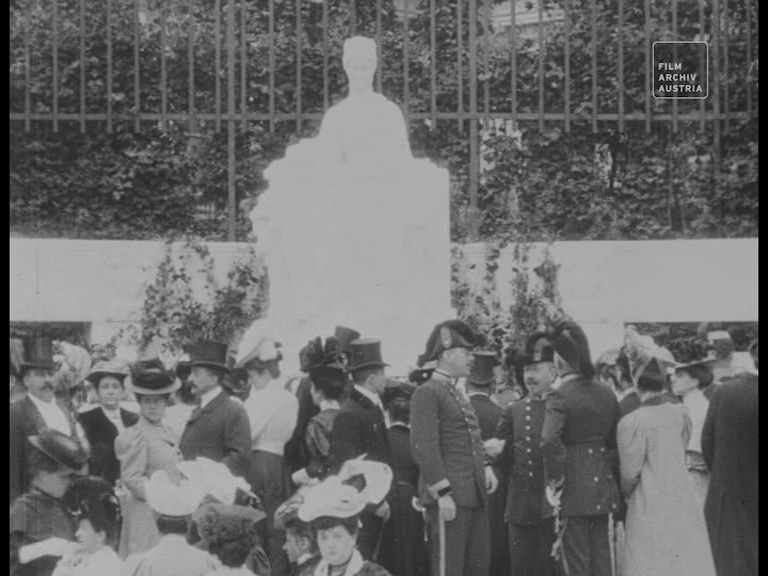
Years pass. Enthüllungsfeierlichkeiten des Kaiserin Elisabeth Denkmals (1907) – the “unveiling of the Empress Elisabeth monument” – alerts us to the recent past. In 1898, Franz Joseph’s wife Elisabeth was assassinated in Geneva by an Italian anarchist. Informed of her death, he initially assumed it was suicide, since Elisabeth (“Sisi”) had long since been mentally and physically unwell. She herself had never recovered from the death of their only son, Rudolf, who perished in a murder-suicide pact with his mistress in 1889. (In the space of ten years, she had lost both parents, two sisters, and her son.) So Franz Joseph and Elisabeth were never to appear on film together, just the image of her as the statue in the Vienna Volksgarten. In Enthüllungsfeierlichkeiten des Kaiserin, the trees flutter in the breeze. The Emperor does his rounds, saluting almost constantly. Dozens of uniformed men and hatted women follow in his trail. The statue of Elisabeth is too pale for the celluloid. Over-exposed, she is doubly absent in this film. In the sunlight of a previous century, she is rendered almost blank.

In Unser Kaiser eröffnet das neue Kinderheim in Gersthof (1910), the weather has turned. Umbrellas gleam with ancient rain. The greatcoated Emperor walks unperturbed as dignitaries with sodden shoulders introduced him to a series of tailcoated officials. Gowned priests bob around in the background. A throng stands and waits in the storm.

Here is Kaiser Franz Joseph in Sarajevo (1910), and the Emperor walks the streets where four years later his nephew Franz Ferdinand would be assassinated, triggering the Great War. Carriages pass. The Emperor walks up some steps. The camera is not privy to the interior, nor the passage of time therein. Immediately, therefore, the Emperor is outside. The carriage return. He mounts. A man walks in front of the camera and is ushered out the way. Parades of children in fezzes. The Emperor stands. The film skips past another speech, then realizes there is no more to be seen, so stops.

In Der Kaisertag in St. Pölten am 21.6.1910 (1910), the Emperor receives raised hats and salutes. Plumed gentlemen bob around him. The camera struggles to focus on its moving target. A woman anxiously looks over her shoulder, waiting for her cue to curtsy. Crowds of young girls wave their arms under instruction from their guardian. Older girls perform a floral dance. The camera glimpses faces, backs, gestures, odd looks. The operator stops turning now and then, anxious not to waste celluloid. The past skips along, slips away between frames.

The Emperor is absent from Kundgebung für den kaiser vor dem Brigittenauer-Kino (c.1910), but we see a poster bearing his image on the cinema wall. Two children in the corner of the frame, keenly peering towards us. Someone has issued instructions, for now a crowd of children cheers the image of the Emperor. But they would clearly rather look at the camera. Facing the wall, they demonstrate their fealty. Turning sneakily to us, they grin more gleefully. And how do we feel when we see these smiles of long-dead children?

Enthüllung des Denkmals “Franz Joseph als Weidmann” am Laufener Wald bei Ischl am 24 August 1910 (1910) is the first of two films recording the Emperor as huntsman. This film shows him milling as part of a crowd before his own image. He is only slightly more animated than his metalled self. In the background, a train passes – and I wonder about the travellers, and their view of us through the frames of their windows. Se. Majestät Kaiser Josef I. auf der Gemsjagd bei Ischl (1910) is the main event, though, and among the most substantial of the shorter films. The imperial villa at Bad Ischl. The Emperor emerges, smoking a cigarette. He takes a last puff, flicks the butt onto the driveway. He turns, sees the camera, pauses for a moment, then turns away. Is this the first time he has looked directly at us? It is from a distance. The connection is fleeting, for the carriages arrive. The Emperor is off into the hills, the woods. We see him striding slowly through the trees. There is something touching about his ensemble: pale knees showing between lederhosen and thick woollen socks. The Alpine hat and plume, the grand white whiskers. A horse’s tail, in perfect focus, flicks behind the blurred image of the Emperor gesturing to an assistant. Now they are higher up. A beautiful image of the throng of hunters at the bases of a slope. Sunlight streaks through the pines, highlights the white rocks. It’s a superbly composed image, perhaps the first moment of something with real vision in these films. The Emperor hunts, shoots. Dark chamois hurtle across the pale scree. Bodies are lugged uphill.

The sight of death prepares us for Unser Kaiser am Flugfelde in Wr. Neustadt (1910). Spectacularly elaborate and flimsy-looking planes await the Emperor’s inspection. Even the roller-coaster ride shown in Kaiserhuldigung im Wiener k.k. Prater (1911) feels more secure than the sight of those planes.

Vermählung des künftigen Thronfolgers (1911) shows the celebration of the marriage of the Emperor’s heir apparent Archduke Charles Franz Joseph and Princess Zita of Parma at Schwarzau castle. And of all the films in this collection, this is the most intimate. We see the various titled guests arrive, and I find it enormously endearing to see men decked out in extraordinarily elaborate military costumes puffing away at cigarettes and chuckling at private jokes. When the guests gather on the terrace, there is an amazing jostling of nobles. There is the groom, grinning and flashing a glance at the camera. There is Franz Ferdinand, lurking behind the Emperor, pulling at his collar. Children peep from behind adults, old women drift curiously past the lens. Is that the Emperor smiling?

Vue de Vienne et ces principaux monuments (1912) and Bilder aus Bad Ischl (1913) are interludes of postcard views of pre-war Vienna and Bad Ischl, and there is something touching (as always) about the past going about its business, the everyday fabric of life. And the eerie sense of emptiness in the shots of parks, the views of landscapes, the slow turn of the camera’s head to take in a present that is now long gone.

Then there is the public life of the Emperor on the brink of war. A slow parade of waiting: waiting for carriages, waiting for footmen, waiting for doors, waiting, waiting, waiting. Films like Kaiser Franz Joseph I. eröffnet die Adria-Ausstellung in Wien (1913), Geburtstagsfeierlichkeiten S.M. Kaiser Franz-Josef I. (1913), Kaiser Franz Fosef I. kehrte aus Bad Ischl zurück (1913), Kaiser Franz Joseph Denkmal-enthüllung in Mürzzuschlag (1913), and Einweihung der neuen Kaiser Franz Josef-Gedächtniskirche (1913) bear titles that take as long to pronounce are they do to watch. The Emperor is glimpsed for real and in bust form, taking salutes, stepping into or off of various forms of transport. In Wien. Platzweihe der Eucharistischen Gedächtniskirche (1913) he mounts a carriage and is handed a greatcoat to place over his legs. A reminder of the cold that we cannot feel, and of the age of his bones. In Jahrhundertfeier am Schwarzenbergplatz in Wien (1913) a crowd in greatcoats occupies a square. The wintry gloom, the cobbled streets, the silent façade of the buildings all carry an aura of premonition. How many such cities of the early twentieth-century will we see crowded, for good and ill? The Emperor walks slowly. He is old. He takes a salute. Horseshit peppers the cobbles.

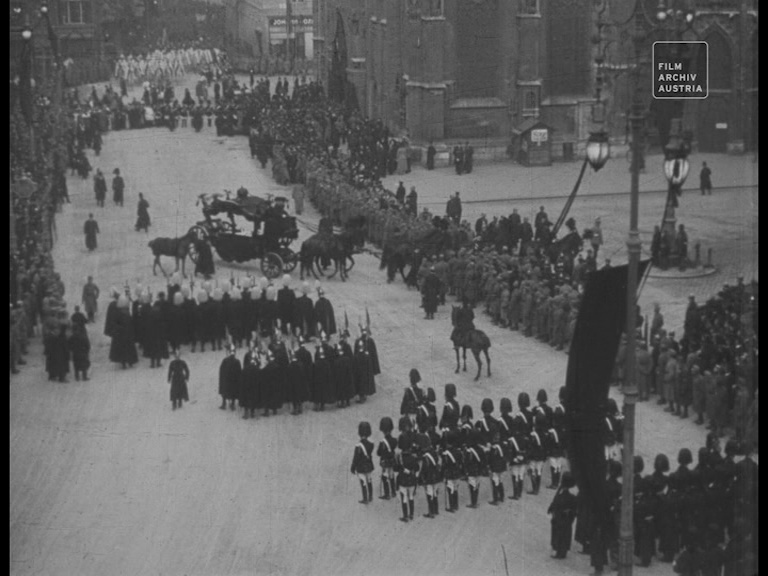
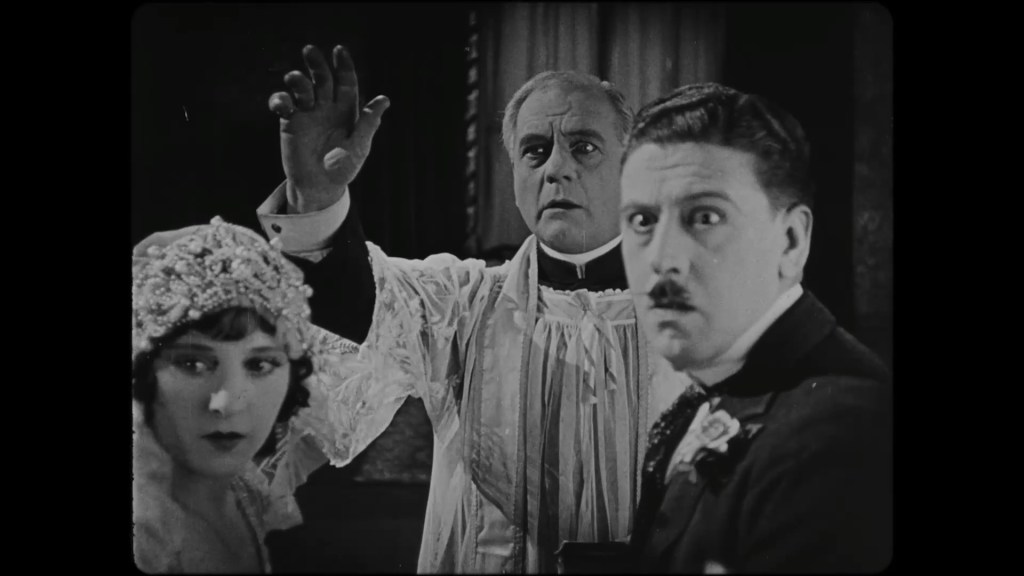
Already history has caught up with him. The very title of Aus den letzten Lebensjahren wieland Sr. Majestät (1916) evokes the inevitability of Franz Joseph’s death. By far the most evocative glimpse of the past in this film is the procession of Corpus Christi. The image, the uniforms, the ranked crowds – it is the very sight that Erich von Stroheim recreates in the centrepiece sequence of The Wedding March (1928). The film of 1916 is already looking back to the past, just as Stroheim did in 1928, and we do now in 2024. The slow march of the past. Die Trauerfeierlichkeiten für Kaiser Franz Josef I. (1916) shows us the Emperor’s funeral. Photographers await the pall. Children carrying immense candles. A world dressed in black, the dim winter light, the grey streets. Already Austro-Hungarian forces had lost two million men in the fighting.

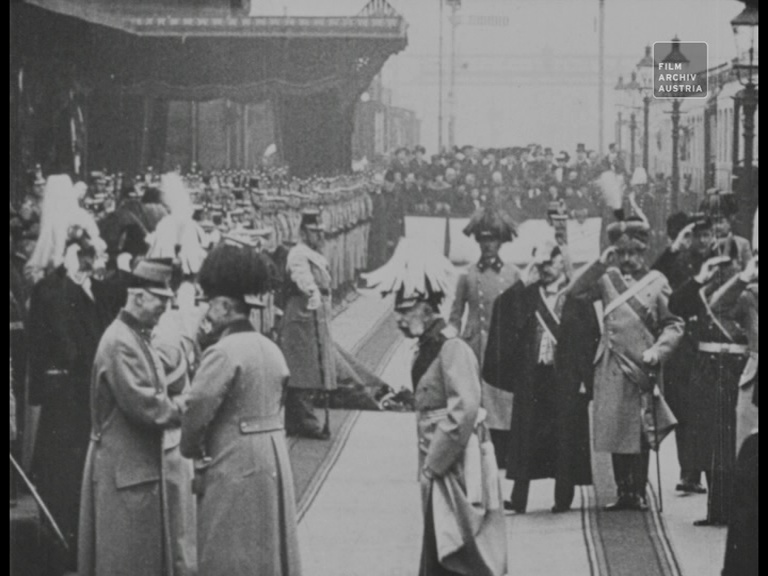
In Kaiser Franz Joseph I. als Regent und als Mensch (1930), the empire – the very idea of Austria-Hungary – is already a distant memory. A grandfather tells his two grandsons about the Emperor. Here is his image again, this time as a small figurine. Flashbacks take the form of newsreels, newsreels that are not included in the preceding selection on this DVD. So we see more parades – soldiers and civilians wearing the uniforms of past centuries – and more formal greetings at railway stations. And army manoeuvres, wherein the soldiers that would be so appallingly led during the war are seen – still alive – forming up in line, advancing, reconnoitring, charging on horseback. It’s a messy, incoherent picture of the past. The poor quality of the newsreel, as preserved for its inclusion in the 1930 assembly, makes it all the more dim and distant. A final image of the Emperor, once more cheered by a crowd. His carriages moves off, into the past. The Emperor, the people, the world around them. All gone, all gone, all gone.

This DVD has more than general interest for me. Late-nineteenth and early twentieth-century Austria-Hungary is a subject of deep fascination. So many of my favourite writers, artists, and composers occupy the culture of this period. Even the disasters that befell the empire and its eastern neighbours after 1914 are compellingly interesting. And the later worlds of Stroheim and Lubitsch owe much to the very idea of the shambolic, charming, precarious state of middle-European history.

One of my most cherished writers is Joseph Roth (1894-1939), whose fiction obsessively revisits the end of the Austro-Hungarian empire. Sensing, then experiencing firsthand, the horrific modes of nationalism that erupted after the Great War, Roth looked back on the pre-war world with a sense of deep regret and longing. While Roth’s prose is as evocative as any of the twentieth century, I was intrigued by the idea of watching images from the era of Franz Joseph. There is something silly and sad and mournful about the entire collection of films on this DVD. (I pause to note that the soundtrack for the disc is a rather weird mishmash of electronic sounds and snatches of Schubert and Beethoven, played too fast. At the moment we see the bride and groom on the terrace at Schwarzau, the soundtrack delivers an amazingly rapid blast of synthesized fanfare that was so surreal that I burst out laughing.)

If looking back at these films in 2024 is strange, a century ago it was stranger still. In late 1925, Roth went to the cinema and saw a short film juxtaposing an old newsreel of Tsar Nicholas II with the new Bolshevik leaders. Watching the Tsar, murdered seven years earlier, was an uncanny experience for Roth. He wrote a piece called “The Opened Tomb”, where he reflects on a past that is both incredibly recent and indelibly lost. The fashions are gone, the people are gone, the world is gone. There is something in the quality of the newsreel, even its brevity, that makes it so potent for him. I cannot possibly match Roth’s prose, so I end this piece with his final paragraph, written almost exactly 99 years ago:

It’s all over in three minutes. It’s no more than one of the numerous terrible moments of world history that show crowned heads at play. This one happened to have been caught by a camera and handed down to posterity. The film is a little worn, the pictures flicker, but one can’t say whether it is punctures made in it by the tooth of time, or molecules of natural dust that have shrouded these seemingly living subjects. It is the most terrible irreality that film has ever shown; a historical dance of death, an opened tomb that once looked like a throne…

Paul Cuff

Pordenone from afar (2024, Day 8)

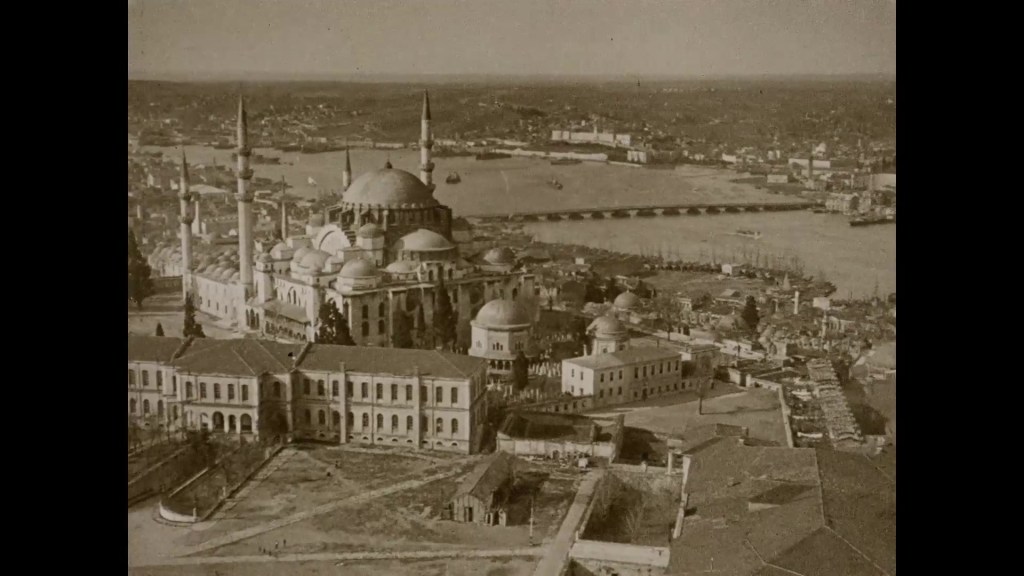
Our last day of streaming from Pordenone. We begin in Germany (or possibly Istanbul) for an Anna May Wong vehicle, then make our way to America for some Harold Lloyd. Two chunky features to digest, so here goes…

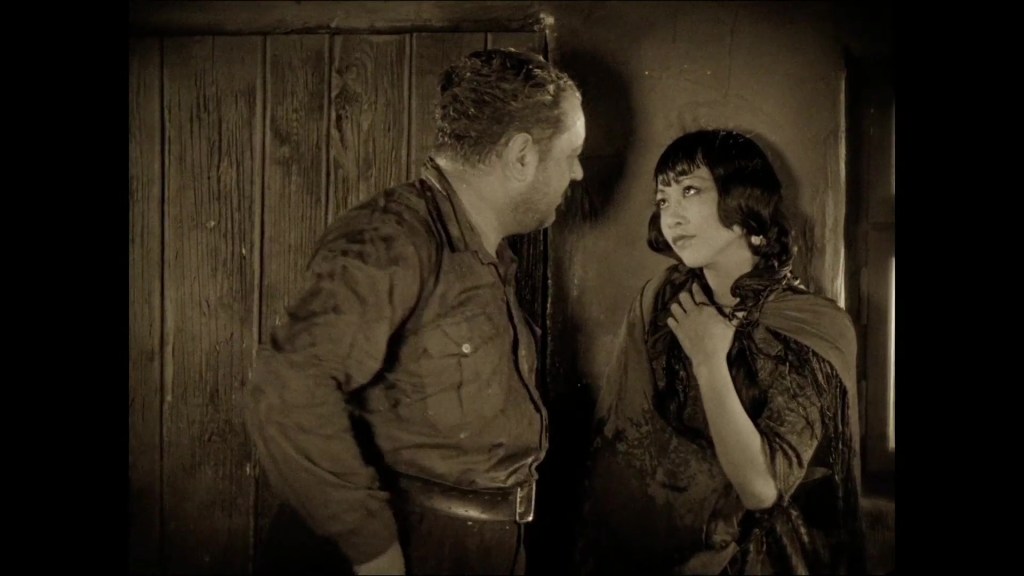
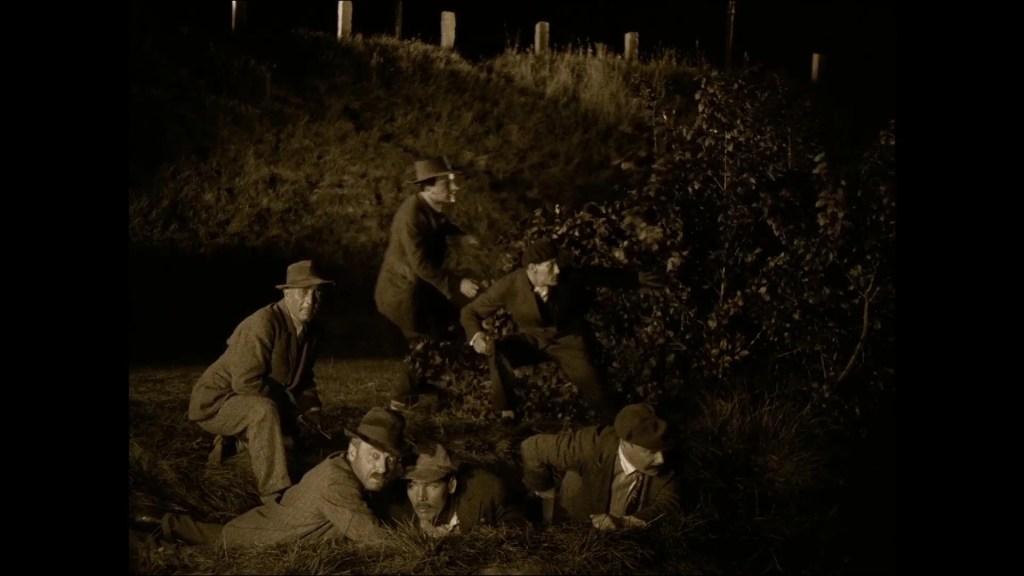
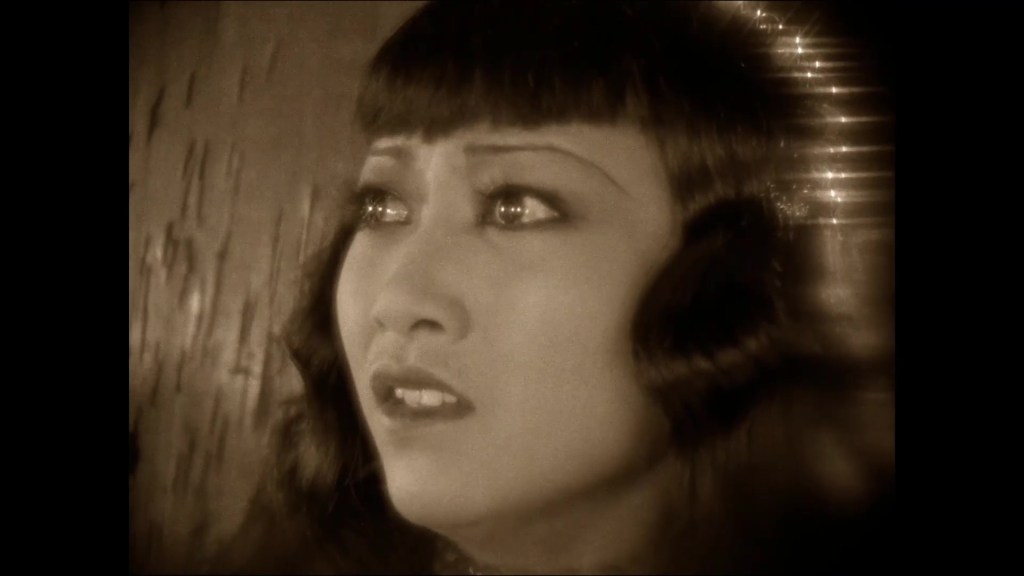
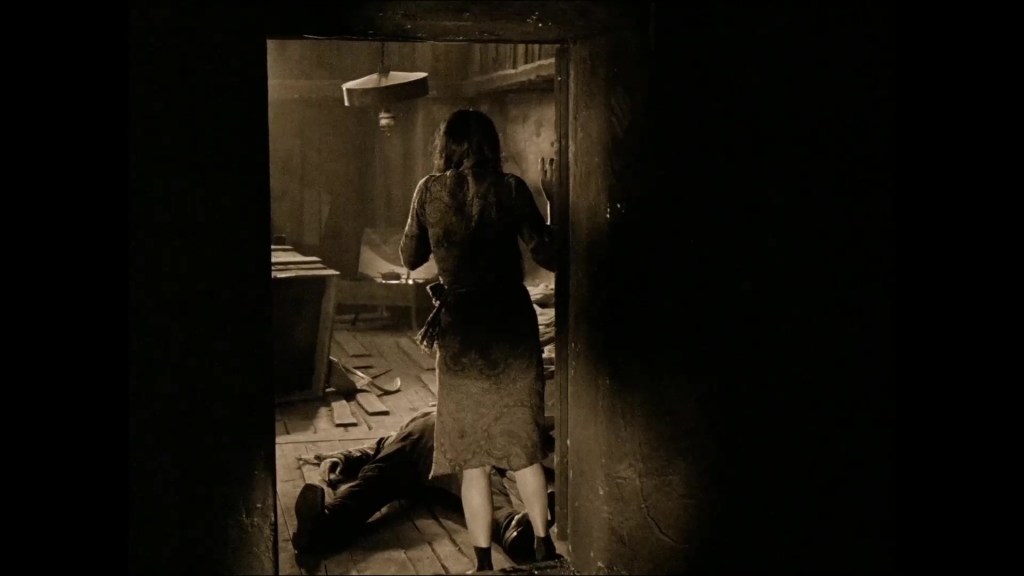
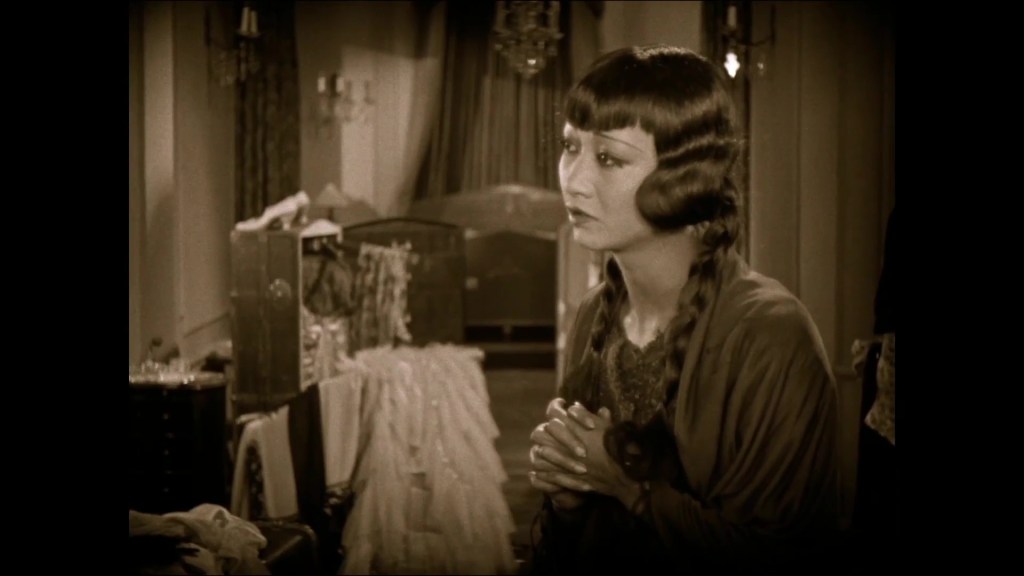
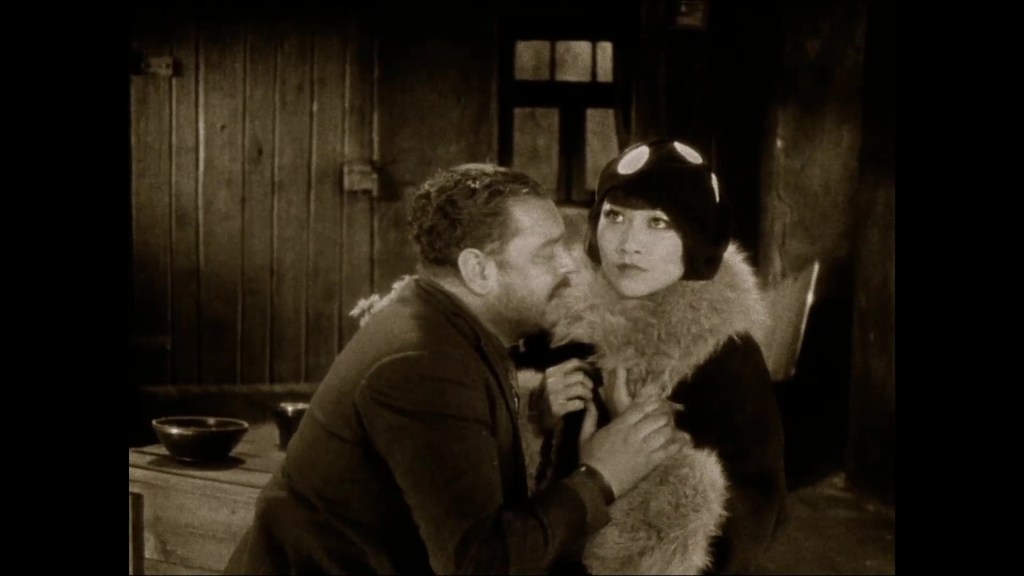
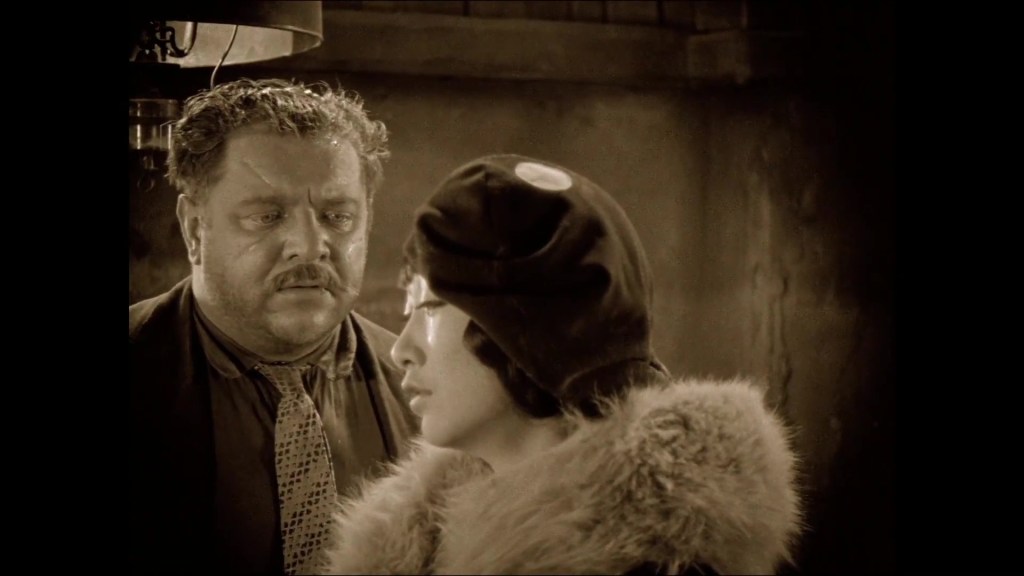
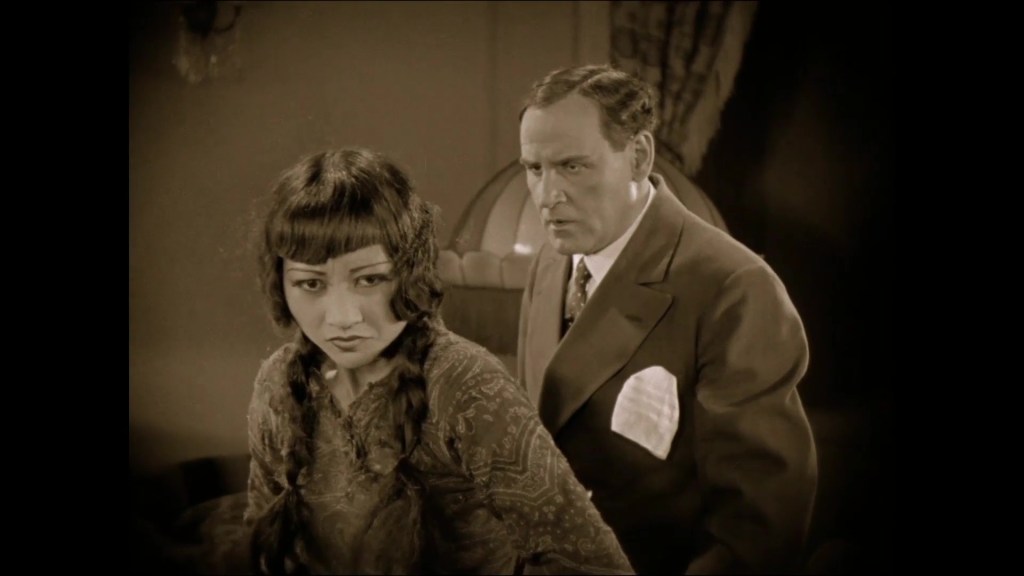
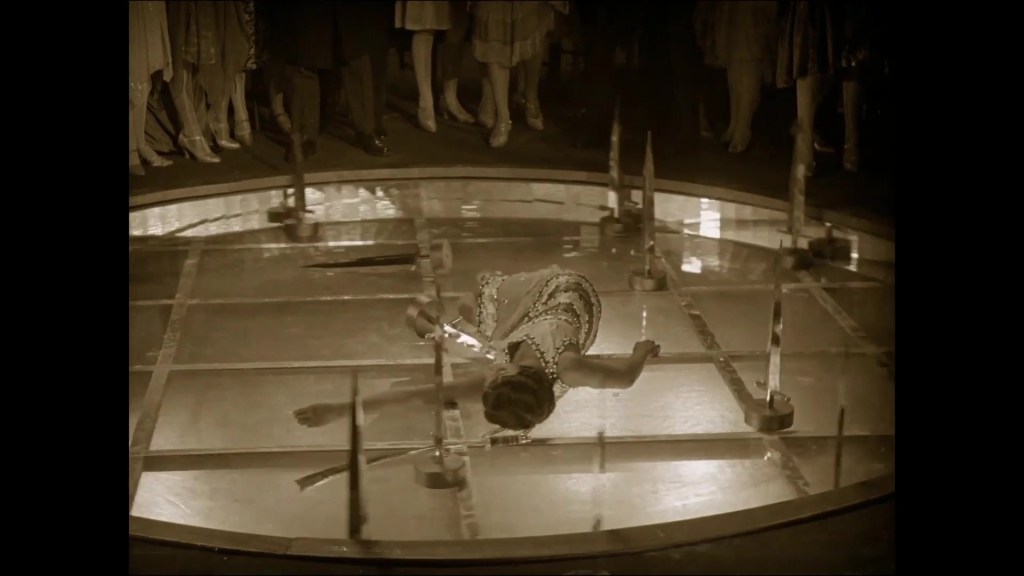
Song. Die Liebe eines armen Menschenkindes (1928; Ger./UK; Richard Eichberg). On the outskirts of an “eastern” town. John Houben (Heinrich George) encounters Song (Anna May Wong), one of “Fate’s castaways”, and rescues her from a gang of roughs. He leaves, but she follows him back to his poor home in town. He is a knife-thrower and, after some initial hesitation, she moves in with him and joins his variety troupe. Posters advertise the arrival of Gloria Lee (Mary Kid) to the city. We see her with James Prager (Hans Adalbert Schlettow), a rich patron. Meanwhile, we see in flashback that John once fought and killed a man over Gloria – and John was presumed lost overboard, but survived when washed up on the beach where he met Song. At the Blue Moon café, Gloria sees Song dance and John throw knives. Gloria offers John money, while Prager flirts with Song. The next night, John goes to see Gloria at the ballet and visits her backstage – and confesses his love. Prager arrives and the two men exchange violent looks. John wants more money to impress Gloria so joins a gang of train robbers. The plan goes awry and Song rescues John from the rail tracks. But his sight has been damaged by the accident and during his knife-throwing act he wounds Song. John suspects Song of having betrayed the gang to the police. He attacks her and falls in a stupor: he is now blind. Song goes to Gloria to ask for help. Only Doctor Balji can help, but this will be expensive. Song comes again to beg for money but is offered only Gloria’s old clothes. Song sees money in her dressing room, so steals a couple of notes and leaves. Song returns to John in Gloria’s clothes. Blind, he mistakes her for Gloria, which devastates the lovelorn Song. She lies and says the money was from Gloria, so they go to the doctor. Gloria leaves the city, but Prager stays. He once more crosses paths with Song and says he knows she stole the money. He promises her a big engagement in one of his shows. She accepts and some time later she is star performer at more upmarket venues. Meanwhile, John is cured but must not remove his bandages for three days. He asks after Gloria, so Song says she will go to fetch her. She re-enters dressed in Gloria’s clothes. He rips off his bandages, sees Song, and furiously hurls her from the house. She mournfully heads off, while John discovers that Gloria long ago left the city. Song returns to Prager, who is angry she has been with John. He tries to force himself upon her and says she must decide between John and him. Song performs a sword dance, just as John enters. Started, she falls onto a blade. He takes her home. She opens her eyes in time to see that he is recovered and has brought her back – then dies. THE END.

An odd film. Made in Germany with a mostly German cast, Song was released as “Show Life” in the UK, and this English-language print is the one that survives. The restoration, by the Filmmuseum Düsseldorf, relied on what the credits tells us was a very limited amount of original 35mm material. But the result, while missing a small amount of material, is gorgeous to look at. The photography is superb, the tinting adding a lovey atmosphere to the exteriors of Istanbul, the cramped sets of John’s house, and the elaborate stage sets for the café, ballet, and salon. In particular, the opening shots of the coast around Istanbul (or wherever, doubtless, substituted for it) are gorgeous.

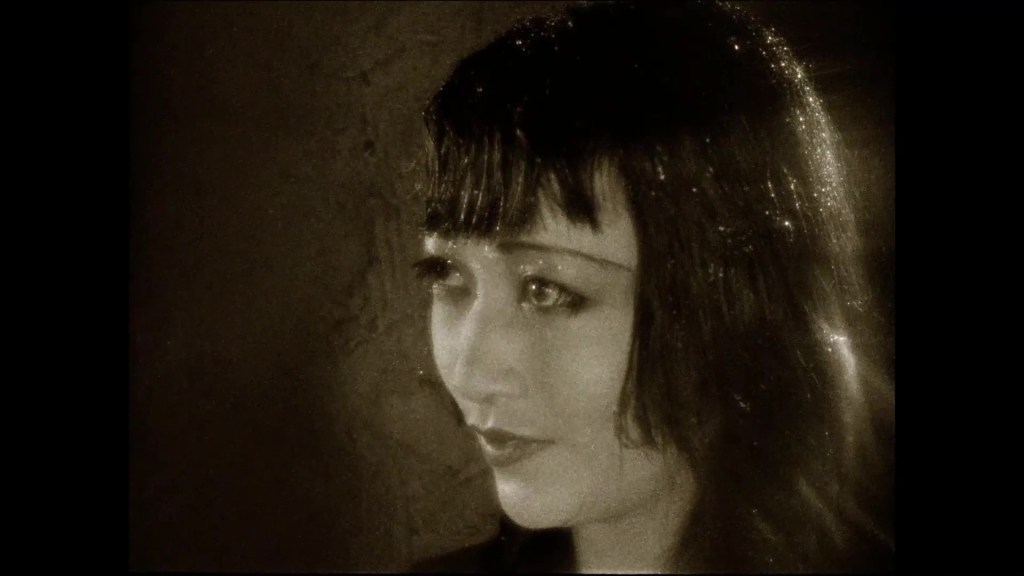
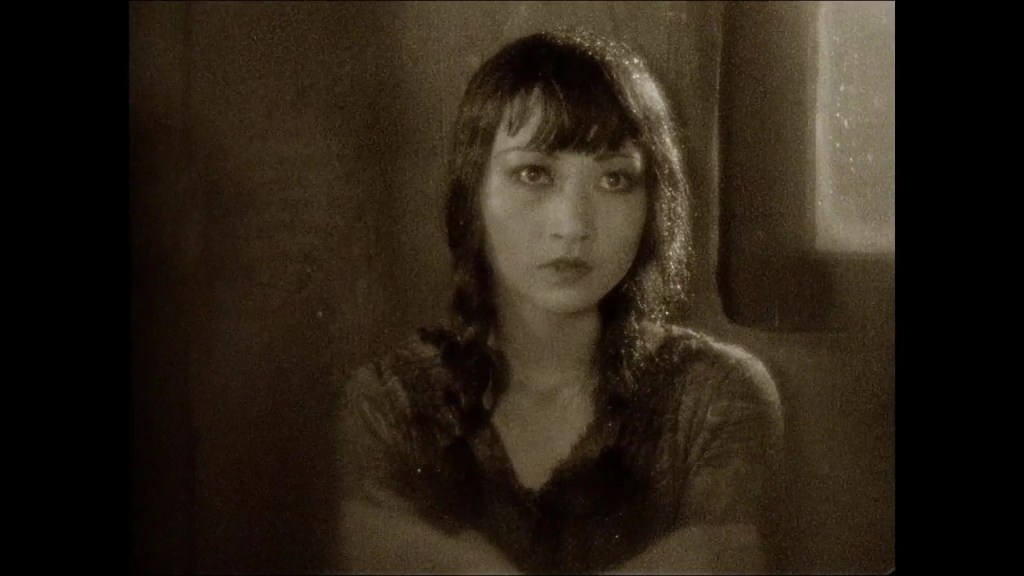
George and Wong are also captivating presences on screen. This was one of Anna May Wong’s most successful silents, and the film lavishes lots of close-ups on her. She is clearly a star, magnetic and fascinating, and even if the psychology of her character in this film is very sketchy, she gives a committed performance. But I was equally taken with Heinrich George, who made such an impression in Manolescu (shown at Pordenone in 2022). The man is a hulking physical presence – always gruff, always strong, always dangerous. When his character tries to be charming, he exudes a kind of over-keenness that threatens to become violence. He’s a fierce, brooding, never-quite-pitiable figure.

All that said, I don’t think this is a great film. As much as I like all the above aspects, the film as a drama is less than the sum of its parts. I simply didn’t care enough about the characters, or believe in the depth of the feelings they supposedly had for each other. Everyone feels rather like a stock character, which the performers all do their best with – but there’s only so far you can go with such a thin story. There are plenty of intensely concentrated shots (especially some close-ups of George and Wong), but these images don’t add up to anything of psychological depth or dramatic conviction. It’s lovely to look at, but I was underwhelmed with the drama. And although I like Wong and George, I never bought her love for him. (I think back to Manolescu, where George’s love-hate relationship with Helm was visceral on screen.) I can imagine that, looking just at the image captures here, Song may well look like a better film than in fact it is. It really does look good, but it needs more than that.

And so, to our final film: Girl Shy (1924; US; Fred Newmeyer/Sam Taylor). What can I say? This is a masterpiece. I’ve not been so moved and so delighted by a comedy feature in years. My god, where has this film been all my life?!

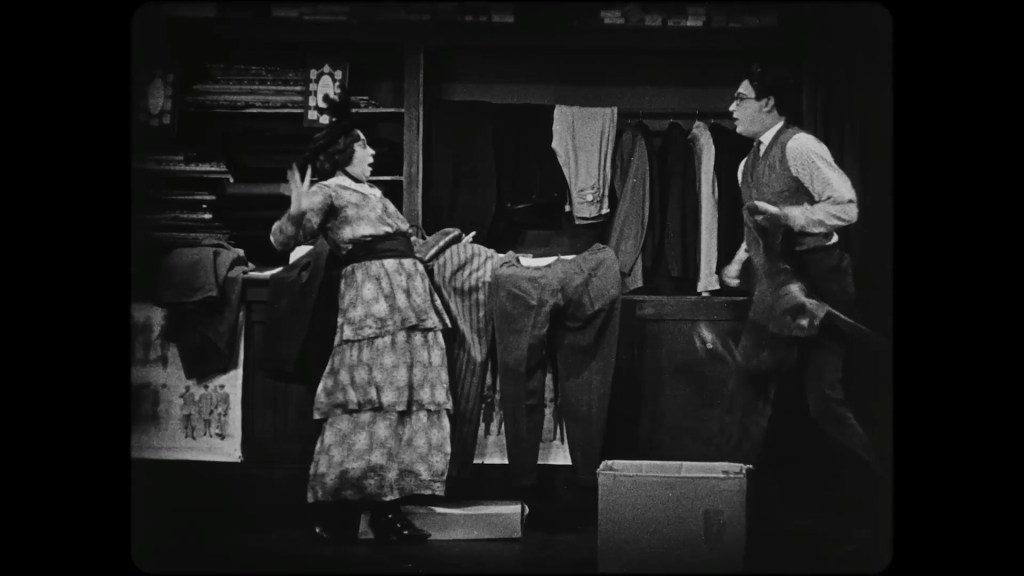
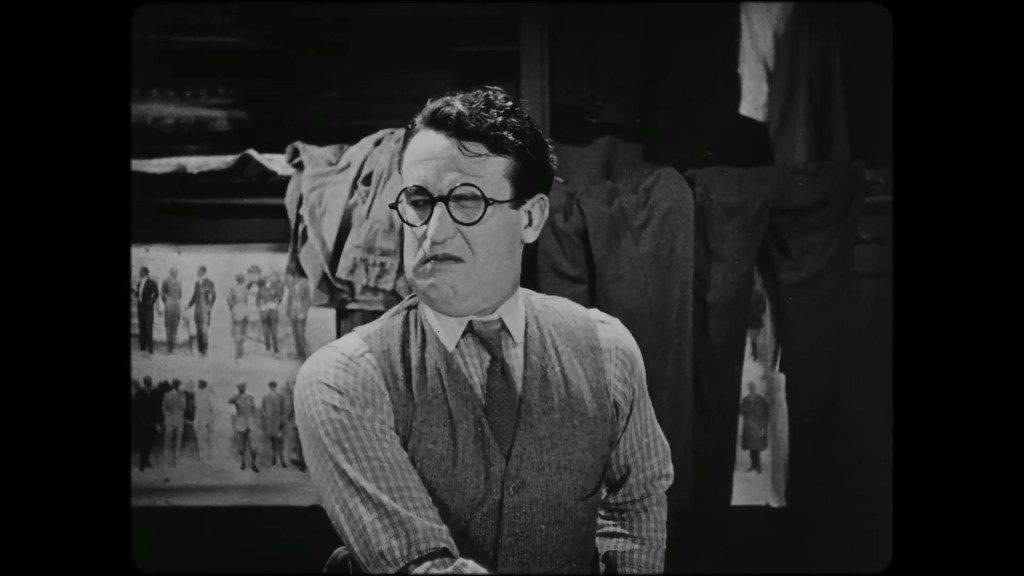
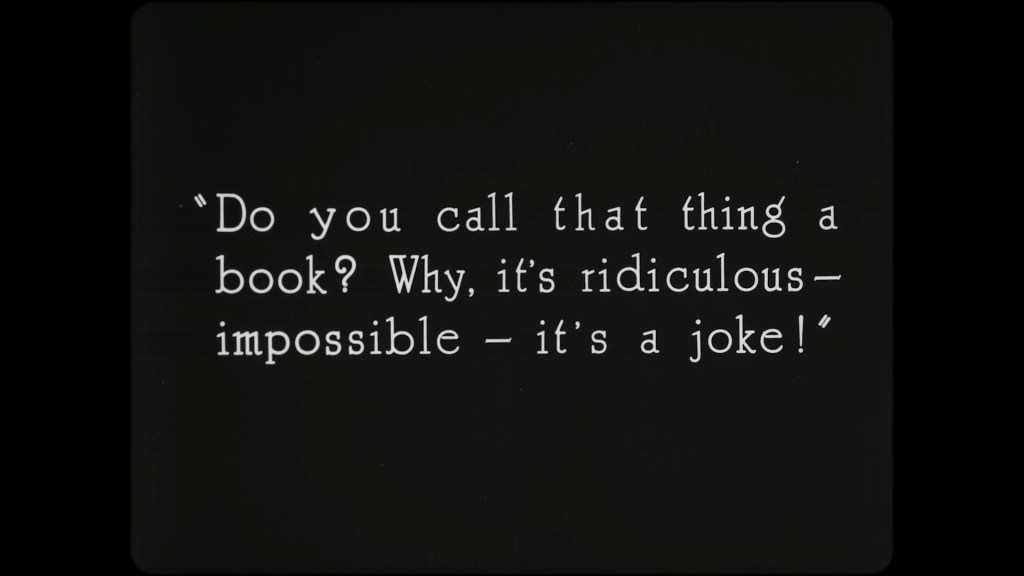
In the obscure small town of Little Bend, trainee tailor Harold Meadows (Harold Lloyd) lives with his uncle, Jerry Meadows (Richard Daniels). Harold is “girl shy”, helplessly stammering whenever he talks to a woman and recoiling at any intimacy. But he is also fascinated by women and has written a novel – “The Secret of Making Love” – in which (as we see via fantasy scenes) he imagines himself dominating them and winning their devoted admiration. On his way to the publisher with his manuscript, he encounters the heiress of the Buckingham Estate, Mary (Jobyna Ralston), and rescues (and then hides) her dog on the train. He describes the novel, and she is fascinated by it and by him. In Los Angeles, they must part – but Mary soon keeps driving through Little Bend in the hope of encountering Harold. However, she is being pursued by the louche Ronald DeVore (Carlton Griffin), a womanizer with a cynical eye for money. When Mary and Harold meet on the river in Little Bend, their romance is interrupted by Ronald, who also clashes with Jerry. The young couple are parted once more but agree to meet in town when Harold goes back to the publisher. In town, Harold is laughed at by the publisher and the entire publishing staff. He leaves, utterly crestfallen, convinced he is unworthy of Mary. When he meets her, he pretends that their romance was all an act for the sake of his new chapter. They part, and soon Mary reluctantly accepts Ronald’s proposal. But the publisher realizes that he can sell Harold book not as a drama but as a comedy: he sends a $3000 cheque. Harold, believing this to be the rejection note promised by the publisher, tears it up without looking – only for Jerry to spot the error. Realizing he is now able to marry Mary, and being told that Ronald is already married to another woman, he hurries to break up the marriage ceremony in town. After a madcap chase from Little Bend to Los Angeles, he arrives in time to rescue Mary and propose. THE END.

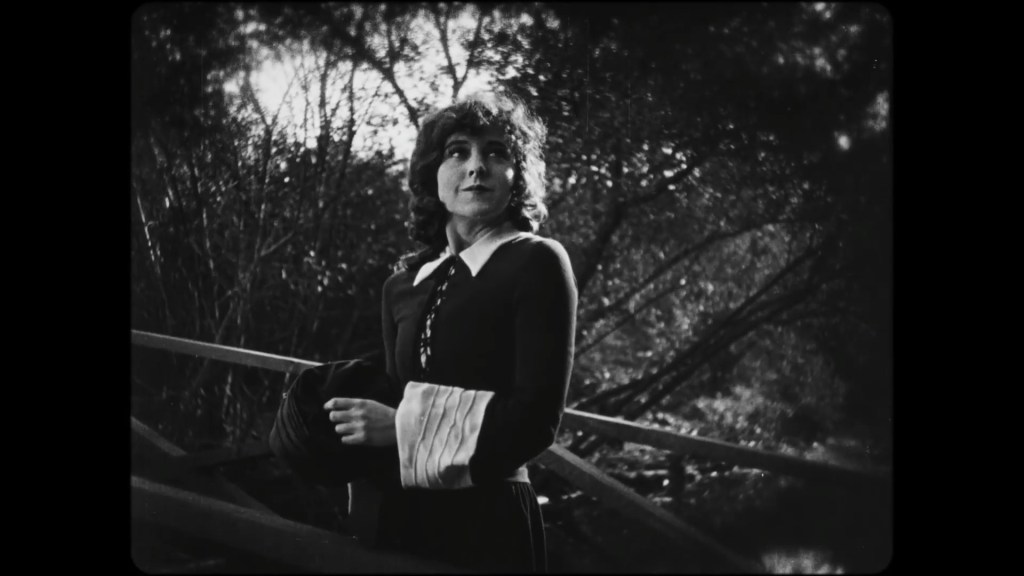
I’ll say it again: this film is a masterpiece. For a start, it looks beautiful. The photography is superb, the lighting excellent. The scene by the river, where Mary re-encounters Harold, is absolutely perfect: the evening light, the gentle softening of the background, the framing and composition of the bridge and reflections… oh my word, what a beautiful scene. It’s charming and funny and deeply touching. It’s rare in a comedy feature to be quite this moved, and not to feel grossly manipulated, but Lloyd somehow keeps the emotional tone perfectly balanced. His character is a foolish fantasist, but he is also capable of real kindness. When the publisher tells him to his fact that he’s a complete failure, I confess that my heart broke a little. The extended close-up of Lloyd offers enough time to let the impact of the words sink in for the viewer while we watch it sink in for Harold. His performance isn’t sentimental, it’s realistic – and that’s why its so effective. It lets you believe in him as a real person, and the memory of his fantasies of domination are left far behind. I cared for him here, just as I cared for Mary in the scene where Harold lies to her and breaks her heart. Again, the moment is so well pitched, so restrained, it’s simply heartbreaking.

It’s also a film of incredibly subtle visual rhymes and gestures. See how the uncle has on his knees a child whose trouser rear he’s mending; then how Harold is introduced likewise (rear first) through being bent over backwards; then how the gesture of sewing/intimacy is carried into Harold’s first encounter with the girl with the split tights. In these moments, the easy intimacy of the uncle for the child is awkwardly mirrored in the hoped-for-but-rebuffed intimacy of the girl and Harold. Harold is figuratively childlike but – unlike the actual child – cannot cope with the adult implications of intimacy. His introduction, bent over backwards, is a kind literal rendering of how he’s got things all backwards. (More crudely, you might say he’s introduced as an arse.) Then see how, in the novelistic fantasy, Harold spanks the flapper in the same posture that the uncle repairs the trousers. Here, Harold enacts a comically violent revenge on his inability to feel easy around women and their bodies: far beyond his real self’s shunning of all contact, this is not the consensual middle ground of intimacy but the extreme of physical possession. It’s funny, certainly, but a little unsettling. Here is the loner fantasizing about smacking a woman for pleasure.

But the film’s visual rhymes also signal that Harold knows in principle, and will learn in practice, how not to treat women. In the first novelistic fantasy, we see Harold put his hat and cane over the outstretched arm of the vamp; in the real world, we see Ronald put his hat and cane over the arm of the Buckingham’s maid. The latter situation reminds us of the callowness of Harold’s alter ego, but in reality, the situation is more sinister. For Ronald’s gesture with the hat conceals (to the lady of the house) the fact that he’s groping the maid’s hand. So too, the placement of the cane over her arm makes it an extension of his own touch. The maid clearly feels uncomfortable and so, surely, do we. It’s a marvellous indication of how the fantastical scenario of Harold and the vamp becomes troubling when we see it enacted in real life. The maid, unlike the vamp, is a woman without power or recourse to self-defence. Then see how the gesture with the cane appears again as Harold, seeing Mary’s beloved dog left behind off the train, uses his cane to hook the animal from the ground onto the moving train. Here the cane is used for comic effect, but it’s also a gesture of sympathy, of kindness: he’s performing a good deed, a selfless one. (Perhaps there is an unconscious desire to use this act to make contact with the girl – but Harold is too shy to follow through, and spends the next scene desperately trying to avoid Mary.)

The rhymes are also there with Mary and Harold. They are forced to sit next together when the train takes a bend and Harold falls into place next to her, just as (later) on the river Mary falls into Harold’s boat. Their two treasured mementos of the train journey, the box of biscuits (hers) and the box of dog biscuits (his) are objects of veneration, things to hold in the absence of the real person. On the river, seeing the other person with their token of love indicates to the pair that their feelings are reciprocated, just as – in the first variation on this rhyme – the devaluation of the token is a rupture of their relationship. This occurs when Harold, having been rejected by the publisher, decides it’s best that someone destined to be a failure should not disappoint Mary. He breaks up with her and claims that all his words were a mere scenario for his book. He immediately hooks up with a passing girl, who had shown interest in him a few minutes earlier. They link arms and he then buys her a box of biscuits – the same brand as he had given to Mary on the train. The replication of this gesture is deliberately hurtful, a kind of parodic rhyme that devalues (while also re-emphasizing) the initial parallel of the lovers’ tokens. Later, when Harold receives the publisher’s cheque but (believing it to be the promised rejection note) tears it up unopened, the very next scene creates a poignant rhyme. Here, Mary contemplates the cover of the biscuit box that she has torn up and now reassembles. The rhyme between torn cheque and torn box suggests the inopportune rupture of something that would bring success and happiness – and (in Mary’s scene) the desire to repair the damage. Harold will soon piece together the cheque, matching the image of Mary’s reassembled package. With both halves of this parallel repairing achieved, Harold sets off on his race to the rescue. It’s such a brilliantly organized, beautifully staged use of props and gestures. God, what a good film this is.

Of course, I’ve hardly said just how funny a film this is. The long sequence on the train, when Harold first avoids Mary then has to sit next to her, is exquisite. I particularly loved the series of gags involving his (real) stammer and (feigned) cough. Lloyd manages to make these essentially acoustic jokes work perfectly for the silent screen. His stammer involved him contorting his mouth: first his mouth hardly opens, he purses his lips, the breath fills his cheeks; then his mouth his fully open, stuck in a different register, and still no sound emerges. It’s the physical movement of speech, its physical articulation, that works so well: here is speech visually arrested in its various stages. The coughing gag – where Harold has to mask the sound of the dog’s barking – works so well because Lloyd must express the cough purely visually: he has to attract the guard’s visual attention, not just aural attention, so his whole body performs the cough. The sheer extension of this sequence is part of the delight: it runs and runs, forcing Harold to keep finding new ways of doing the same thing. (In this, it foreshadows the far greater physical effort of his race to the rescue, where he must once again keep finding new ways to overcome essentially the same problem.)

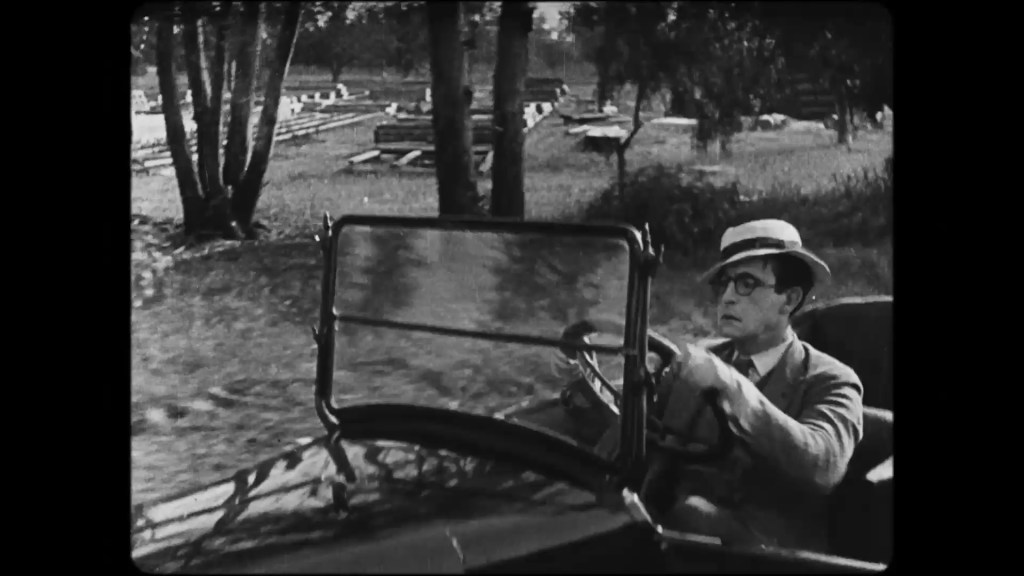
The final sequence – all thirty minutes of – is astonishing. I can’t possibly go through all the gags, but the one that made me laugh the most was the “Road closed: diversion” gag. Lloyd’s car goes over a bumpy road that makes the vehicle buck and bounce. The particular framing of the medium-close shot of Harold at the wheel, bouncing helplessly along, is wonderful – but it’s the moment when the car finally regains the main road that rendered me helpless with delight. Here, the car has been shaken so badly that the entire vehicle is now a shaking wreck. Like the sensation of seasickness after returning to dry land, it’s like the car and its driver are now unable to cope with the smooth tarmac. Within the wider context of the chase – in simple terms, one damn thing after another – it’s such a bizarre image, and such an unexpected twist, that I was rendered almost insensible with laughter.

The major stunts – Harold unwinding the fire hose, hanging off the cable car cable, the near-crash of the horses – are superb. The moment when one of the horses slips and slides along the road is genuinely breathtaking, and the tracking shot of Harold riding hell-for-leather are as remarkable in their own way as some of the chariot race footage from Ben-Hur (1925) – Lloyd’s film even foreshadows many of the same dazzling camera positions. And to conclude this finale with Harold’s inability to actually say why the marriage is invalid is such a brilliant pay-off to the preceding derring-do, I was won over again by his character, and by the film’s sense of comic timing. What an astonishing sequence, and what a brilliant film.

The music for the film was the first and only orchestral soundtrack offered for the streamed Pordenone programmes. The Zerorchestra provides a jazzy beat throughout. It keeps things moving along, although its default mode of extreme busyness sometimes lost interest in the very precise, varied rhythms of the scenes. What I admired most was the way the score knew when to keep quiet and reduce its forces for the piano alone, or even silence. The moment when Harold is rejected by the publisher was rendered all the more moving by the pause in the music. The feeling of dejection sinks in so perfectly here, the choice to pare the music back to virtually nothing works so well. The (I think , entirely necessary) use of sound effects – for the whistle, the typewriter, the dog – are subtly done, becoming a part of the music rather than intrusions into the silent world. A strong score, well executed. (Since seeing the film yesterday [actually, by the time you read this, the day before yesterday], I have dug out the version released on DVD some twenty years ago, which features an orchestral score by Robert Israel. This is a more traditional score than the Zerorchestra’s, as the latter mode of jazz certainly postdates the era of the film. I also confess that my own taste leans more toward the kind of orchestral tone painting that Israel compiles. He also has the benefit of a full symphony orchestra, so the sound is lovely and rich. I hope the film gets a Blu-ray release, perhaps with both scores as optional soundtracks. This is a film I want to watch again and again.

So that was Pordenone, as streamed in 2024. As ever, I emerge from this week-and-a-bit exhausted, without even having left my house. (Having in fact been practically housebound because of fitting in a festival around work.) Having followed a little of the writing and photographic record of the on-site festival, I am also very much aware that those who went to Pordenone saw an entirely different festival. It’s quite possible that someone there could have missed many, most, or all of the films that I saw streamed. My memory of the content of Pordenone 2024 (streamed) will be entirely distinct to the memory of Pordenone 2024 (live) for those who attended in person. I have quite literally experienced a different festival to those at Pordenone. I also regret that I have not had time (or have not made time) to watch Jay Weissberg’s video introductions, or the book launch discussions, all of which are a significant chunk of the material made available online. I suppose these, in particular, offer a more tangible sense of the festival on location. My relationship with streamed content remains very much limited by time. I fix onto the films and abandon the rest, “the rest” being precisely that content which offers contact with the people and places of Pordenone in situ. But without taking the time off to entirely devote myself to the festival, I cannot see this changing. And why take a week off when all I’m doing is standing before a screen? Oh, the ironies…

Nevertheless, I remain exceedingly glad to have seen what I have seen. Thirty euros for ten generous programmes, shorts and features, is good value, especially given the rarity of most of the material. It’s a further irony that my favourite film of the whole festival – Girl Shy – was the most readily available of all of the ones I saw. But I welcome the chance to see anything and everything, even the passing curiosities and stolid duds, simply because it’s good to explore any culture with which you are not familiar. One day I will go to Pordenone in person, whereupon I’ll probably regret not being able to take image captures and have the time to write. The irony abounds.

Paul Cuff

Pordenone from afar (2024, Day 7)

Day 7 takes us to North America: first, to the Canadian border for a display of childish derring-do, then to the louche confines of a yacht to test the strength of a marriage…

We begin with Peg o’ the Mounted (1924; US; Alfred J. Goulding). Any film where two of the lead cast are credited as “Baby Peggy” and “Tiny Tim the Pony” is sure to raise alarm bells… So, alone in a tiny cabin, Peg, a tiny child, encounters a wounded member of the Canadian Mounted Police. She tries to nurse him back to health, but when this fails, she tracks down, fights, and arrests the gang of smugglers. Nothing more about the plot need be said. The child was charming, I suppose, but it takes a lot for me to be won over by a child performer on screen. I suppose I should be thankful we never had to hear her voice, which I imagine to be unbearably irritating. There is something about the wholesomeness of a particular kind of screen child that makes me instantly take against them. So it’s something of a miracle that I could stomach the sight of Peg in this film for so long. I even found her performance impressive, especially her “speech” at the end. There are some charming enough touches, but it’s such a vapid little film I don’t know what else I can say about it as a drama. What I can say it that the photography is simply superb – the Rockies(?) look absolutely stunning, and the exterior scenes are beautiful, really amazingly beautiful. (Just incredibly pictorial beauty for such a throwaway film!) What are less beautiful are those few titles that have been digital recreated: they stick out a mile from the originals, their style and font looking far too new, too crisp, too digital.

I’ve mentioned it before, but why is it so difficult for restorers to match the style of inverted commas or apostrophes to those given in the original titles? (This seems, overwhelmingly, to be a North American issue.) Clear from the original titles in Peg o’ the Mounted is that all inverted commas (for speech or for apostrophe) should be typographic and not neutral. (Sadly, the format of this blog doesn’t permit me to demonstrate “neutral” inverted commas. In this instance, it’s irritating – but otherwise I’m glad, as they look awful.) Why can’t such a simple thing be got right? Oh well. The photographic images looked beautiful, so I suppose that’s what matters.

Now we’ve got Peggy out the way, on to our more adult feature presentation: Folly of Vanity (1925; US; Maurice Elvey/Henry Otto). Newlyweds Alice (Billie Dove) and Robert Blaine (Jack Mulhall) host Stanley Ridgeway (John Sainpolis), Robert’s client, the famous pearl collector. Alice loves pearls but cannot afford them, so she has bought a fake necklace. Robert begs her not to wear the fake in front of Ridgeway, but she can’t resist doing so. Ridgeway compliments the necklace, but his sidelong looks reveal his sniffy attitude. Ridgeway invites them to a small party, but Robert makes up an excuse not to go. Alice calls him a tyrant. They argue, and she ends up getting it her way. Ridgeway’s party turns out to be a raucous affair, with Bella Howard (a rich widow) at the heart of it. A tableau vivant, frolics, flirtation… Robert shows Alice his collection of pearls, which she tries on. He asks her to wear them for a few days so that they regain their faded lustre. She does so, not telling Robert of the exchange. On Mrs Howard’s yacht the next day, the same cast reassemble. Alice and Robert are given separate rooms, the door numbers of which are damaged. (Hmm…) The yacht descends into drunken flirtation between Bella/Robert and Ridgeway/Alice. Bella and Ridgeway observe the couple bickering over the cut of her dress. Alice retreats to her room, leaving Robert at the mercy of Bella. Ridgeway gets drunk alone and bursts into Alice’s room. She flees to the deck, where she falls overboard. Alice descends to the Kingdom of Neptune (no, I’m not drunk: this is what happens. I know, right?). A series of rather tedious displays of semi-nude bathing (discreetly, from a distance) and diving (from clifftops) in Alice’s honour. But when Alice sees herself in the mirror, both she and one of Neptune’s court see this “symbol of vanity” and Neptune banishes her forever. Alice wakes up in her own bed, sees the necklace around her neck – and returns them to Ridgeway. Owing to the damaged room number, she returns by mistake to her husband’s room and not her own. The newlyweds are reconciled, and Bella and Ridgeway agree to marry. THE END.
What a tedious film. I can’t honestly say I enjoyed any of it in a meaningful way. It has a sense of humour, but it’s rather slight. And it clearly has a desire to titillate, but it’s rather lame. I honestly don’t know if it’s meant to be dramatic, but it wasn’t – nor was it funny enough to be a comedy or charming enough to be a farce. I came close to enjoying the opening scenes between Alice and Robert, but the slightly saucy byplay never went anywhere, either in this sequence or in the rest of the film. She is coy and modest with her husband, but her refusal to show him her body is really for the censor’s sake not his. In a vague sort of way, I could believe in their marriage – but the film pussyfooted around what exactly was at stake. Is it sex? The couple finally end up in bed together (or at least, on it) in the last scene, but sex never quite seems the point – and is even the object of scorn and fear aboard the yacht. Robert remains prudish throughout, and Alice isn’t interested in bodies so much as what they can display, i.e. their jewellery – and this interest is morally dismissed by the film as “vanity”. What is this film actually about?

I admit that the descent to Neptune was unexpected, but the mythical kingdom’s appearance quickly outstayed its welcome. Its coy long shots of nude bathers and soft-focus gymnastics, its pantomime beards and watery wizards… I remember watching the short film La Légende du fantôme (1908), produced by Segundo de Chomón. In that film, we also visit the seabed for a mythical array of gods and goblins. De Chomón’s film has no pretensions whatsoever, no desire to moralize or patronize its audience; it uses two-dimensional sets and fake beards and greasepaint and any number of other nineteenth-century theatrical staples. Yet it has more integrity, majesty, and sheer bloody visual and dramatic impact than anything in Folly of Vanity. In fact, as I wrote at the time, there is something quite terrifyingly strange and surreal about de Chomóns world that will likely remain lodged in my brain for as long as I retain my senses. I promise you that I will soon forget Folly of Vanity and its tepid world of underwater theatrics. Nothing in this sequence is either dramatic enough or funny enough to hold sway.

As for the cast, I can’t honestly express great enthusiasm either. Aside from her fleeting (and uncredited) appearance in The Mysterious Lady (1928), I don’t think I’ve ever knowingly seen Betty Blythe in anything other than stills from the lost J. Gordon Edwards production The Queen of Sheba (1921). I must say that she didn’t leap off the screen as any kind of star in Folly of Vanity. I much preferred Billie Dove, who has the kind of open face and round eyes that immediately draw your attention. It’s an utterly depthless character, but Dove gives her some kind of life. Jack Mulhall has a faint spark with Dove, both nothing that made me care for him, for her, or for them as a couple. John Sainpolis normally has gravitas on the screen, but his character here was neither charming nor threatening. There was so little bite anywhere in this film or its characters.

Aesthetically, the film is decent enough. This copy, clearly based on an abridged export print (with Czech titles), is nicely tinted and toned and it’s interesting to watch the weird shifts in quality from colour to colour, sometimes from scene to scene. Some of the gleaming soft-focus visions of the shores of Neptune are gorgeous bits of photography. But really, the drama was by this point so unutterably naff that it sucked much of the pleasure from the images.

Well, that was Day 7. A strange day. A day that I’ll probably not remember in a few years’ time. A day that began with a silly comedy and ended with an even sillier drama. These are both films that I would never have seen, nor made an effort to see, if it weren’t for Pordenone. So I am, genuinely, thankful for the chance to watch them. But beyond that, I look forward to the final day of features tomorrow – and the prospect of something more substantial for my eyes and the brain…

Paul Cuff

Pordenone from afar (2024, Day 6)

Day 6 returns us to South America. We begin with a Brazilian comic skit, then cross the sea to Cuba for a drama of the land, the law, and thwarted love…

Our aperitif is Apuros do Genésio (1940; Br.; unknown), “a cinematic gag”. What a strange little film. Our hero, the initially unnamed Genésio Arruda, tries to woo a girl but is chased by a brutish rival – along a road, through the streets, until it occurs to him to simply exhale and blow the rival backwards. The film reverses and the rival, together with traffic and time itself, recoils and retreats.  He grins with his almost chinless grin, wispy beard and thick monobrow, and the film ends. But not quite. For every so often, the film has been cutting back to a cinema audience laughing at, we presume, the film that we are watching. And when the film ends and we see the audience again, the film cuts to the cinema exterior – crowds of people milling around, looking at us. The intertitles become an advert for Genésio Arruda’s “crazy shows” – a forthcoming attraction, lost to time.

And now for our feature: La virgen de la Caridad (1930; Cu.; Ramón Peón). The Cuban press, reflecting “the pulse of the nation”, recalls the case of “La Bijirita”… We are introduced to Yeyo and his grandmother Ritica, who is “always thinking of sadnesses”, polishing the frame of the film’s titular Virgin. A flashback to her husband, who fell fighting for the freedom of Cuba. To cheer themselves up, they go to a party hosted by Canuto and his daughter Rufina. We meet Hortensio, a soldier, Rufina’s sweetheart, as well as Don Pedro and his daughter Rufina. Yeyo and Trina are in love, but her father is against the match. Meanwhile, Matias Delgado (who “brings a dark cloud, foreboding evil” to the land) picks a fight with one of Yeyo’s farmworkers, and Yeyo must intervene. Matias finds an ally in the form of Fernandez, a smarmy, snappily-dressed cattle owner. At a fiesta, Fernandez sees Rufina and starts to charm Don Pedro. Though Yeyo wins the riding tournament, Don Pedro objects to his flirting with Rufina. Meanwhile, it is revealed that La Bijirita once belonged to Fernandez’s father. Matias says that the farm could return to his ownership, since the legal papers of Yeyo and Ritica are bound to have been destroyed in the war. The pair bribe some officials and Fernandez “sells” the farm to Matias. Fernandez boasts of his sale to Don Pedro, but Trina senses trouble. Fernandez confronts Yeyo and Ritica, who remind Fernandez that his father sold them the farm. But they have no paperwork, and the pair are evicted. To make matters worse, Rufina warns Yeyo that Trina and Fernandez are being hastily married. Ritica counsels him to “be resigned” and kneel before the Virgin. He does so, just as the workman is knocking through a nail. The painting falls and (yes, you’ve guessed it as soon as you saw the name of the film) the deeds of ownership fall from the back of the painting. Yeyo rushes to the wedding with the proof of Fernandez’s forgery. Don Pedro turns against Fernandez and accepts Yeyo as the rightful man for Trina. Yeyo thanks the “miracle” of the virgin. The lovers return to the happiness of life on their farm. FIN.

This was my first Cuban silent, and I enjoyed it. The film is shot entirely on location, and it takes great pleasure (and time) in showing us the land. The opening party begins with a mouthwatering montage of food preparation – the care and attention of the locals for their produce and their cooking. And we also see the gradual arrival of the guests, the slow lanes, the carts and horses of this world. With very simple means, we see the community and what characterizes their world and relationships. Later on, too, there are slow travelling shots that show off the landscape: the journey to the party, Fernandez’s arrival to the station, the race to the rescue along the dusty roads.

Though La virgen de la Caridad is by no means an exercise in cinematic flair, it uses close-ups and soft focus, a variety of shot lengths and angles, careful framing and dissolves, to great effect. What perhaps stand out most are some very effective tracking shots at dramatic moments: Rufina’s hesitant entry to greet her father and Fernandez; Yeyo confronting Fernandez and his lawyers when they take his farm; the move to reveal the partition wall where the painting falls; Yeyo arriving at the wedding. In particular, the whole race-to-the-rescue sequence is textbook D.W. Griffith: it takes place on horseback, and the horse even gets waylaid by a train en route. However cliched a device, it makes for a deeply satisfying ending – especially that final tracking shot as Yeyo marches into the municipal office brandishing his proof.

The lead cast are also very good. There is a sense that these are real people who live and work and tend the world in which we see them. If there is no great depth to any of the characters, they are all well-defined and believable. The central lovers – played by Miguel Santos and Diana Marde – are convincing together. Marde, in particular, gets some great close-ups in which her flashing glance shows us quickly and succinctly just what’s she’s thinking and feeling. Matias, Fernandez, and Don Pedro are less complex characters, but the cast do just what’s needed to make you understand their motives and feel something about them – even if that’s just a sense of outrage, or a desire to wipe that smug look of Fernandez’s face.

There is also a sense of the past, both personal and political, that La virgen de la Caridad creates through the figure of the missing father – glimpsed in flashbacks at the start and end of the film. Though a specific time and date is never mentioned, Yeyo’s father presumably died before or during the war of 1898, fighting Spanish rule. The sense of belonging that Yeyo and Ritica feel for their farm thus has broader, national/political, connotations. Reclaiming the land is not just a local issue, but a Cuban one. The son and his mother are only small-scale landowners, dressed and housed very simply – unlike the dapper Fernandez. Yeyo rides by horse, whereas Fernandez arrives on the train. Yeyo represents someone who has lived and worked on the land, someone who it is easier to sympathize with than richer landowners – people who buy and sell the land without ever tending it. All of this context is present throughout the film, but I never felt that I was being lectured. Very succinctly and effectively, the film provides a history for its characters that taps into a broader national history. As someone who knows very little about Cuban history, I felt that I was given enough information to fill out this past – but I never felt that I was being lectured, or that the film was serving an ideology more than constructing a drama.

I must also mention the music, by Daan van den Hurk, which added some pleasing Cuba rhythms to the piano accompaniment – as well as the occasional use of other instruments to fill out the texture and suggest mood and location. All in all, an enjoyable and satisfying watch.

That was Day 6, and I very much enjoyed the return to South America. Apuros do Genésio was fun enough, and I’m curious to know how contemporary audiences saw it. In 1940, was this silent trailer already an aesthetic oddity? The cutaways to the audience suggests a self-awareness of form, as well as the sense that form itself might be an object of curiosity or humour. Is the film a genuine silent comedy skit, or an ironic pastiche of one? In 1940, it might conceivably still be both. Either way, it’s a pleasingly odd morsel and I’m glad it got included in the programme. As for the main feature, La virgen de la Caridad is no masterpiece of the cinema, but it is a very effective drama in a rich setting. Though the print was not the best quality (the restoration credits state that it is the only version available), you could sense the land and its past on screen, and I found it an engrossing film to watch. A good day.

Paul Cuff

Pordenone from afar (2024, Day 5)

Where next on our Pordenone journey? Day 5 begins on the streets of Paris, before segueing to eighteenth-century Vienna, and finally to Spanish California. We get helter-skelter comedy, brooding artistry, and romantic intrigue. It’s certainly a varied programme…

The first short was La Course aux potirons (1908; Fr.; Romeo Bosetti/Louis Feuillade). This kind of “chase” film was a popular format in the first decade of the twentieth century, and many directors of later prominence will have cut their teeth developing multi-shot narrative form through something similar. La Course aux potirons is a delightful example, with runaway pumpkins being pursued through the streets of Paris. But it steadily becomes more anarchic, more surreal: the pumpkins leap over fences, hurl themselves uphill, leap through buildings, up stairs, up chimneys, plunge into sewers. They are pursued – over every bit of terrain – by an accumulating cast of comic bunglers, as well as the donkey that was pulling the initial pumpkin cart. (The animal is even, marvellously, fed up through the chimney at one point.) Via reverse motion, the pumpkins eventually find their way back to their cart and leap into its back. A real charmer of a film.

Next up is La Mort de Mozart (1909; Fr.; Étienne Arnaud), another Gaumont production – this time deadly serious. We see Mozart at work, the arrival of the “mysterious messenger” (not disguised). It all plays out in a single shot, which suddenly splits in two for an inserted vision Mozart has of his own funeral. Now he collapses and is barred from composing. But his friend plays music from his operas to sooth him, and Mozart sees more visions of scenes from his operas. Finally, Mozart asks for quill and paper to compose the requiem. Musicians enter to help him compose, and continue to sing as Mozart enters his death throes and dies. FIN.

Thus we come to our main feature: For the Soul of Rafael (1920; US; Harry Garson). A tale of Spanish California, of adventure, of “romance whispered through convent windows”, and “a daughter of Spanish dons” who follows the -metaphor-, ahem, the whisper “until it led her over shadowed trails where Tragedy spread a net for her feet.” Marta Raquel Estevan (Clara Kimball Young) has grown up in a nunnery, guarded by Dona Luisa Arteaga (Eugenie Besserer), who wishes her to marry her son Don Rafael (Bertram Grassby). Marta is served “with grim devotion” by Polonia (Paula Merritt), who considers that Marta is adopted by the hill Tribe to which she belongs. They go to the New Year fire ceremony, where they encounter the American adventurer Keith Bryton (J. Frank Glendon) who has been wounded and captured by the tribe. Marta saves Keith’s life by giving him her ring, and he is brought to Polonia’s hut to recover. Marta and Keith fall for each other, the news of which infuriates Dona Luisa. Dona Luisa forces Polonia to effectuate the Americans’ sudden departure – and lie to Marta that he died. Later, Don Rafael – a louche reprobate – is partying with the locals (including Keith) to celebrate the last of his bachelor days. El Capitan (Juan de la Cruz), “the black sheep of the Arteagas”, suddenly arrives, disguised as a padre. Then Dona Luisa arrives with Marta and greets Rafael’s cousin Ana Mendez (Ruth King). Dona Luisa invokes an oath to sweat “by the Holy Cross” to “stand guard over the soul of Rafael”, which Marta joins in – “so long as they both shall live.” (Hmm…) Keith sees Marta making the oath and leaves distraught, just as Dona Luisa dies. Later, at the wedding the “Padre” rescues Teresa and her infant, abandoned by… Rafael! Marta demands Rafael take responsibility for the woman and child, telling Rafael that Teresa is his real wife. Later, Keith arrives with his brother’s widow, Angela Bryton (Helene Sullivan), “an Englishwoman whose ambition has been aroused by the wealth and extravagance about her”. Marta, as a lengthy title explains in pompous prose, is unhappy. She has seen Keith, realized he’s not dead, and knows that Polonia lied to her. Rafael tries it on with Marta, who draws a knife and swears to strike him dead if he does so again. She seeks “refuge from the bestial soul of Rafael” in the home of Ana Mendez. The “padre” turns up with Keith, as does Rafael – on the trail of El Capitan. Keith and Marta are briefly reunited, confess their mutual love, but “for the soul of Rafael”, she must… (etc etc etc). Meanwhile, Rafael pursues Helene, who seethes with jealousy against Marta. At the nighttime fiesta, “fate” intervenes. Keith kisses Marta in the chapel (that’s not a euphemism), just as Helena is stealing Marta’s family jewels (nor is that). Rafael arrives, but so does the “padre”, who finally reveals himself as El Capitan and kills Rafael. Marta and Keith are free to marry and step “at last into the sunlight of perfect joy.” THE END.

Well, it’s about time I watched a dud, and this is it. I didn’t enjoy much about For the Soul of Rafael at all. The silliness of its titles and po-faced tone were never quite silly or po-faced enough to make me laugh at the film, but the banality of its narrative and the stiltedness of its performers never enabled me to get along with the film. It was not especially interesting to look at, with only fleeting glimpses of the much-vaunted (by the titles) beauty and summery fragrance of old California, nor anything beyond some faintly expressionist touches to the convent (with its weirdly warped convent bars) to make the interiors stand out. Just as the titles promised high-flown themes that the film could hardly convey, so the performers struggled to give any depth to the emotions their character supposedly felt. They could offer only generic gesturing and expressions, all perfectly adequate but nothing more – just as the film’s visual language articulated nothing of any depth or complexity.

In terms of its setting, especially its use of Native American characters, I think back to the adaptations of Ramona that I wrote about last year. Like the 1928 Ramona, For the Soul of Rafael casts real Native Americans as extras and a white actress with darkened skin in the main cast. But it also doesn’t have much interest in the idea of Marta as an “adopted” member of a tribe, nor does it use the tribe members outside the initial sequence of their attack on Keith. Indeed, their only function is to act violently in order for the white characters to intervene. Racial issues aside, the film does itself no dramatic credit by turning down opportunities to create a more complex social world on screen. (It doesn’t make much use of Teresa and Rafael’s bastard child, either – nor does El Capitan have any function beyond turning up to move the plot along.) This would be less important, and less frustrating, if For the Soul of Rafael did not make so much of the historical California it claims to show us. The titles’ emphasis on the beauties of California are almost invisible on screen, just as the aura of fate and religious intensity they invoke are entirely absent from the dramatic reality. I’m fine with stock characters if they move and breathe and live intensely on screen, just as I’m happy with cliched plots if they are executed with panache. For the Soul of Rafael had neither dramatic life nor directorial imagination.

That was Day 5, that was. The most entertaining film of the day was the first. I very much enjoyed La Course aux potirons: it had more life, invention, humour, wit, and filmmaking panache than either of the other two offerings. I’m intrigued by the programming of these three films together. The pace and energy of the programme decreased at the same that its earnestness increased. La Mort de Mozart was a kind of transition from the excitement of early narrative filmmaking to a more concentrated drama of character and moral seriousness. I enjoyed seeing this early drama of musical biography, and of musical composition, though its ambitions – to express interiority, creativity, memory, and history – outstrip its abilities. I was not moved by the film, despite the clear entreaties of its performers to produce serious emotion. Yet at only twelve minutes, it is far more compact than For the Soul of Rafael – and, in its own way, less pretentious. For the Soul of Rafael endlessly incites oaths to God, undying bonds of love, and depths of passion and betrayal, without ever convincing me that these notions are real, lived realities for its characters – or that the characters are themselves real people that I might or could or should care about. They all feel like stock characters, moving around in a characterless environment.

But already I feel I have spent too much time talking about this film. Let’s move on.

Paul Cuff

Pordenone from afar (2024, Day 4)

Day 4 and we return to Uzbekistan for “The Leper”. Knowing only the title of this film, I didn’t quite know what to expect. I was prepared from something troubling, and boy did this film deliver…

Moxov Qiz (1928; USSR/Uzbek SSR; Oleg Frelikh). In an old quiet town in Uzbekistan, Colonel Karonin helps oversee the locals with the aid of Ahmed-Bai, his translator. Ahmed-Bai’s only daughter is Tyllia-Oi, who one night dances to entertain Karonin’s guests. She catches the eye of Igor Karonin (the colonel’s son) and of Said-Vali, the son of Said-Murad, the richest trader in town. Said-Vali tells his father that he wants to marry Tyllia-Oi but is told that she is only “copper” compared to the gold and silver of other women. Nevertheless, Said-Vali can buy his way through the problem and the marriage takes place. Tyllia-Oi tries to impress her husband by wearing Russian-style clothing (like him), but he angrily demands if she is a whore or a Muslim – then attacks and (we presume, via an ellipsis) rapes her. Meanwhile, Ahmed-Bai takes a second wife into his home to help manage in his daughter’s absence. His older wife, sad and dejected by her husband’s new bride, visits Tyllia-Oi. Seeing the bruises on her daughter’s arms, she realizes that Tyllia-Oi is being beaten by her husband. In desperation Tyllia-Oi sends a note to the colonel’s wife, but it is intercepted by Igor, who is gleefully delighted by the prospect of her vulnerability to his advances. Igor sneaks into Tylllia-Oi’s room and (again, via an ellipsis) rapes her. Months pass, and Igor must leave for Moscow for a new posting. When Said-Vali tells this news to his wife, he sees her troubled reaction and – accusing her of infidelity – attacks her with flaming brands. The marriage ends up in a religious court, and Tyllia-Oi is forced to leave her husband and return to her father’s home. Ahmed-Bai calls his daughter a slut and blames her for the social shame that ends his job and forces them to move. In their new home, Tyllia-Oi’s mother dies. Ahmed-Bai is now an estate manager, but his authority is mocked by the workers. Tyllai-Oi’s stepmother encourages her husband to beat Tyllia-Oi, but she flees home in search of Igor – whom she finds (eventually) with another woman. Homeless, Tyllai-Oi is pursued by other men and finds herself wandering alone. She eventually reaches an isolated lepers’ “village”: a series of tiny caves in the desert. The lepers surround her, and she flees in terror, only to encounter a party of men who – thinking she is a leper – beat her to death and leave her body in the road. END.

An amazing film. Both brutal and compassionate, it is everything that Santa (Day 2) was not. Having now read the brief essay by Nigora Karimova,  I find that Moxov Qiz is based on a Frech novel by Ferdinand Duchêne, set in Algeria. It was adapted by Lolakhan Saifullina, and her screenplay transposes events to the Uzbekistan of pre-Revolution Russia. The wider context certainly shapes the political drama. This is a small town, with its petty affairs and small briberies, its minor officials who are little kings of their realm. The tension between local (religious) power and central (national) power is everywhere in the film, with Tyllai-Oi at the centre. I wonder how the rivalry between Russian (i.e. outsider) power and the local leaders played to contemporary (especially Uzbek) audiences in 1928? I can easily imagine many of these tensions remaining in place in the Soviet era. Even if the broader political scene was different, people would surely have maintained some of the personal beliefs and behaviours evident here. When Igor asks Said-Vali about his relations with his wife, for example, he replies that their “custom” does not allow any such questions to be asked. How many husbands might say the same in 1928? (Or in 2024…) I admire the film’s willingness, keenness even, to show the male control at every level of society, from the political (the Colonel, the mullahs) to the personal (the father, the husband). The women bear the brunt of much of the manual labour, and we often see Tyllai-Oi’s father lounging around waiting for service from his wife (or wives) or daughter. The political and the personal meet in the Sharia court, where the wider expectations of religious law determine Tyllai-Oi’s fate. The court (rightfully, it must surely seem) grants a divorce to the couple, but in forcing her back to her father this decision ultimately causes even greater harm. (The judgement also gives her condemnation as a woman and a wife the full force of religious taboo.) And beyond the courts, in the wider social landscape, men are only too eager to judge and prey upon Tyllai-Oi once she has left the confines of marriage or family. It’s a grim picture of social stricture.

At the heart of the film is Rachel Messerer as Tyllai-Oi. This is, as far as I am aware, the first time I have seen this actress and she’s superb. She is incredibly striking on screen, and the film knows just how to frame her to make the most of her eyes, her glances over the shoulder, her looking and being looked at. Obviously, the film is silent – but there is hardly any dialogue (i.e. speech-based intertitles) to convey Tyllai-Oi’s thoughts or feelings. Everything therefore relies on her face, her gestures, the rhythm of her body on screen. Her one notable line of speech is that desperate note for help, written on a piece of material. It’s like a title in itself and, ironically enough, it is a message that never reaches its intended destination. She herself becomes a kind of readable text when her mother sees the bruises on her arm. In a film scripted by a woman, it’s interesting that the only people who seem to read each other sympathetically are a mother and her daughter. The men are not willing or able or interested enough to want to understand the women. Superficially, Said-Vali interprets his wife’s troubled look about Igor’s departure correctly: she does have a relationship with Igor. But this “relationship” is itself based on exploitation and abuse. Tyllai-Oi is a victim, not a perpetrator, of a betrayal of trust.

This is all the more moving for the few moments when Tyllai-Oi has a sense of privacy, or solidarity with another. We first see Tyllai-Oi upside-down, laughing, descending a tree, and this rare – even unique – scene of her joy is one shared with her mother, away from Ahmed-Bai. Later, she briefly enjoys the company of children and animals – but it is a fleeting moment of private pleasure, set in the midst of evens that will expel her from family, home, and society. She has no other form of personal expression in the film. Her dance, near the beginning, may make her smile – but it is an activity that is demanded of her by her parents, and it attracts the lusty attention of men, two of whom (Igor and Said-Vali) will exploit and abuse her. The camera seems to shake a little in time with the movements of her dance, as though we are sharing her bodily rhythm – but this, too, is contained within the montage by wider shots of Tyllai-Oi surrounded by the male audience. Later in the film, all her actions are commanded by or interpreted negatively by men. When she tries to dress to please her husband, he beats (and possibly rapes) her. When she is on her hands and knees, dusting his boots before he leaves the house, he doesn’t even look at her. When she writes a letter, Igor uses it to exploit her situation and rape her. All this places our sympathies firmly with Tyllai-Oi, with her mother perhaps being a secondary point of compassion. Everything in the film is geared to expressing the restrictions and limitations being placed on women in general, and Tyllai-Oi in particular.

More broadly, it must be said how good the film looks. Compared to the other Uzbek film this week, Ajal Minorasi (Day 2), Moxov Qiz is much more visually sophisticated and articulate. It also has more to say, and more depth to give to its main female character. Shot on location, it makes brilliant use of the town and the landscape around it. It also makes these spaces mean something. The film opens with a lovely montage of flowers, marshes, trees, streets, sunlight, musicians, people basking in the sun – but this idyll is short-lived, a moment of peace before the intrigues and tensions are laid out. The shady streets become threatening when Tyllai-Oi is fleeing her husband or her family, just as the open spaces of the landscape we see during the falcon hunt become a forbidding wilderness by the film’s end. The last sequence, in the rocky desert far beyond town, is a bleak and forbidding landscape. There is nothing for Tyllai-Oi here, and nowhere else for the drama to go. A sparse, brutal end to this brilliant, disturbing film. A real discovery for me.

Paul Cuff

Pordenone from afar (2024, Day 3)

Day 3 of Pordenone takes us to Italy, then to Germany (via Vienna and London) for a programme of immense delight. Cue laughs, pratfalls, wild dancing, and a great deal of delight…

To begin, we have the short film Per la morale (1911; It.; unknown). A moral crusade against illicit images and writing is announced in the papers, and a wealthy man seeks to join the “fight”. At another person’s home, he starts daubing black paint over the exposed flesh on paintings; in the park, he tries to cover a woman who is breastfeeding her infant, then puts his coat over a naked statue. When he tries lowering a skirt over a woman’s ankles, he is confronted, taken to court, and sent to prison for offending public morals. In a delightful coda, the Roman-style film company logo – an image of Romulus and Remus being breastfed by a wolf – is itself subject to his censorship. END.

So to our main feature: Saxophon-Susi (1928; Ger.; Karel Lamač). In Vienna, Anni von Aspen (Anny Ondra) is captivated by the career of her best friend, the aspiring dancer Susi Hiller (Mary Parker). However, her father the Baron von Aspen (Gaston Jacquet) and mother (Olga Limburg) do not approve, despite the Baron’s secret interest in chorus girls. After Anni is caught at the theatre by the Baron, she is sent away to a strict boarding school in England. At the same time, the Baron is gently blackmailed into financing Susi to go to the Tiller dance school in London. On board the ship to England, Susi and Anni encounter three rich Englishmen: Lord Herbert Southcliffe (Malcolm Tod), Harry Holt (Hans Albers), and Houston Black (Carl Walther Meyer). After discovering that one of the girls is a dancer, they place a bet on which girl it is. To impress the lord, Anni lies and says she is Susi. When the ship reaches England, Anni convinces Susi to continue their identity swap. So Susi (as Anni) goes to boarding school, while Anni (as Susi) goes to dance school. The Tiller dance school is run by Mrs Strong (Mira Doré), who asks to see how “Susi” dances in Vienna. Seeing the comically bizarre improvisation that Anni concocts, Mrs Strong sends her back to the remedial class. Meanwhile, the three men place another bet that Lord Herbert cannot sneak into the dance school to see “Susi” and then bring her to their Eccentrics Club. He does, but after “Susi” impresses with her jazzy dance routine, she overhears the men discussing the bet. Assuming Lord Herbert is interested only in showing her off to win money, she leaves him. Back at the dance school, her involvement with Lord Herbert has breached the rules and she is expelled. Just as she is saying goodbye, however, she is spotted by a producer-musician (Oreste Bilancia) who wants her to lead his review in Vienna. Back in Vienna, Lord Herbert decides to ask Susi’s parents for their daughter’s hand in marriage. Ignorant of the fact that the woman Lord Herbert has fallen for is in fact Anni, Susi’s poor mother (Margarete Kupfer) is overjoyed to accept. When “Saxophone Susi” arrives in Vienna, Frau Hiller and Lord Herbert go to see the show – where Frau Hiller does not recognize her daughter on stage. After the show, the Baron von Aspen is shocked to encounter his daughter Anni back in Vienna with a troupe of other girls. Anni lies and says that the dancers are her schoolfriends on an educational trip abroad. They all go back to the von Aspen home, where Lord Herbert also finally tracks down the real “Susi”. When “Saxophone Susi” is played on the gramophone, the girls cannot disguise their dance training and burst into a spontaneous performance. Anni’s deception is revealed, but Lord Herbert’s proposal is finally accepted, and the von Aspens are all in accord. The lovers marry, much to the confusion and consternation of Harry and Houston, who are left arguing over who has won the bet. ENDE.
What a delightful film! First and foremost, Anny Ondra is superb. She is beautiful to look at, and the camera gives her some incredibly striking close-ups. But what entirely wins you over is just how funny she is as a performer. After showing her skills at the farcical hide-and-seek from her father on stage in the opening act, we are given two standout dance sequences later in the film. The first is when she arrives at the Tiller school and must improvise an entire routine from the Viennese stage. We see her concoct a fabulously bizarre range of moves: wobbling like a ragdoll, leaping backwards and forwards, scuttling sideways like a crab, stalking like a hieroglyph, flailing madly, performing gymnastic star jumps, jiving like crazy, falling over backwards, then scuffing along the ground on her backside, before dizzily stumbling to a halt. Her dancing costume (baggy shorts and short-sleeved top with a little bow), combined with her messy hair, makes her look oddly childlike. (So too the bare dance hall, with nothing to measure her scale in the room.) But there is also something cheekily adult about her gestures and posing: she’s showing off her legs, her body, her backside. Then in the dance at the Eccentrics Club, Ondry gets to show us something no less charming or silly but far more impressive as a dance. When the club dance expert starts pulling sensationally complex and graceful moves, Ondry starts to copy him. She fails at first, but soon they fall into rhythm together: she the mirror of him. She’s never quite as skilful, but the sequence is such a delight it doesn’t matter. Her timing is brilliant, even if it’s the timing of a comic more than that of a dancers. She makes the whole thing look so fun, it’s just a pleasure to watch. When she follows the dancer up the stairs, doing a kind of stop-motion walk-cum-dance, it’s both ludicrous and brilliant. The sequence then develops into a communal dance number, with the jazz band and crowd of club members (all impeccably suited anyway) becoming an impromptu troupe: Ondry is held aloft, then walks over everyone’s heads on seat covers held up for her triumphant march and descent back to earth. Ondry is clearly having great fun on set, and it’s great fun to watch. These scenes had me grinning from ear to ear. Great stuff!

The rest of the cast is never less than good, though Malcolm Tod is a bid of a nonentity. His role is entirely superficial anyway, but for this reason it would have benefitted from someone with a bit more personality, more presence, on screen. Hans Albers, in 1928 not yet a major star, is wasted as one of the other rich Englishmen. Perhaps it’s because his face is so well known to me, but I felt much more drawn to him than to Tod. Albers is more than merely handsome: he has a kind of physical presence that Tod palpably lacks. Among the rest, Gaston Jacquet stood out as the most communicative: his twinkly sophistication is straight out of a Lubitsch film. (Though Lubitsch might have cast Adolphe Menjou for this role.) As the two girls’ mothers, Olga Limburg and Margarete Kupfer make the most out of their minor roles – they are, in their own way, even in their few minutes on screen, perfectly formed characters. Lord Herbert’s comic servant-cum-go-between (Theodor Pistek) also has some nice moments, as does the wary porter at the dance school (Julius von Szöreghy) – their best scene being their first together, as the servant pretends to be a hairdresser to gain entrance to the school. Finally, as Mrs Strong, Mira Doré gives a faintly sinister, faintly predatory performance as the dance teacher. At least one scene with “Susi” suggests that her interest in her charges is not without a sense of eroticism. (After all, her first scene in the film relays her ceaseless efforts to keep men away from her girls.) I suspect this character, as with many others in the film, might have been made more of by another director, or else via a different kind of script.

Having said that, the tone of the film is nevertheless gleefully irreverent. Nothing and no-one are taken too seriously, the film never tries to condemn anyone for their actions, and it is more than willing to show a little flesh, have a laugh, and raise a glass or two of champagne. Bodies are things of pleasure, to move and dance, to flirt and display, just as expectations are there to upturn for the sake of pleasure and for the pursuit happiness. Moral outrage is only ever comic and only ever lasts a moment, before common sense and acceptance win the day. There is also something pleasingly cosmopolitan about it all. The cast and crew are a mixture of nationalities: Czech, German, French, British, Austrian, Italian, Hungarian. I could lipread some of the cast speaking English, though I dare say a whole host of tongues was used across the production. The dual-language intertitles (French and German) enhanced this sensibility, and it was also interesting to compare the phrasing across these languages, as well as with the English subtitles. Having three languages on the screen made me feel like I was in some way joining in with the continental sophistication of it all. And though the film begins and ends in Vienna, it also shows off the streets of 1920s London in some fabulous exteriors – especially at night, with the streets lit up by illuminated billboards.

(As a side note, I should also point out that Saxophon-Susi survives only through various exports prints, from which this 2023 restoration was reconstructed. About 700m of the film’s original 2746m survive. Many of the characters’ names are different from the listings of the original German version.)

I must also mention the piano score by Donald Sosin, which was delightful: catchy, rhythmic, playful, and fun. Though Sosin’s music was a perfect accompaniment, I must confess that I regretted not having some more instruments – especially for the titular saxophone-playing sequences in the club and on stage. On this note, this restoration of Saxophon-Susi was shown in August this year at the “Ufa filmnächte” festival in Berlin, where it was accompanied by Frido ter Beek and The Sprockets film orchestra. I confess that I was all set to watch this screening via its free streaming service, only to discover that the festival no longer had a free streaming service! The “Ufa filmnächte” is one of the festivals that offered this service during and after the pandemic, but that has since withdrawn it. A shame, as I would love to have heard Saxophon-Susi with some actual saxophones. (At the premiere in 1928, it was accompanied by a jazz orchestra.)

So that was Day 3. I commend the programmers for pairing Per la morale with Saxophon-Susi. Both films are uninterested in moral proscriptions or resolutions, and are pleased to acknowledge but not to condemn a little human appetite. (In contrast, I’m thinking back to the censorious Santa of Day 2.) If neither film has any great depth, they have plenty of charm and wit. Saxophon-Susi was an absolute delight to watch, and – having missed the Berlin screening – I’m particularly glad that Pordenone screened (i.e. streamed) it. A joyful little film with a joyful performance by Anna Ondry. A real treat.

Paul Cuff