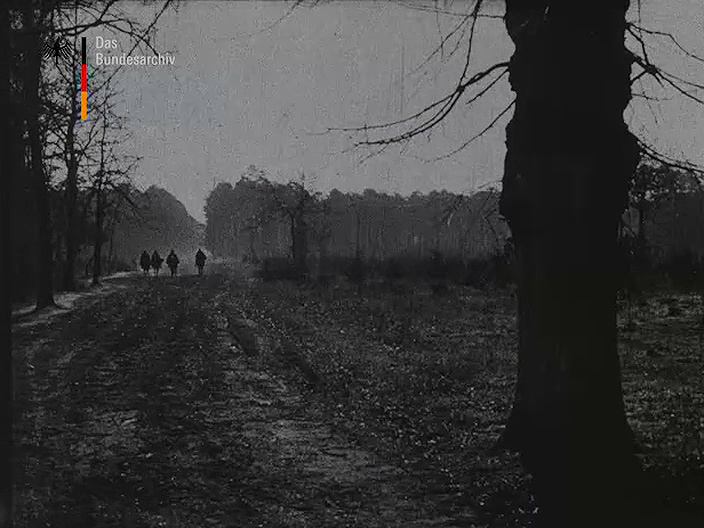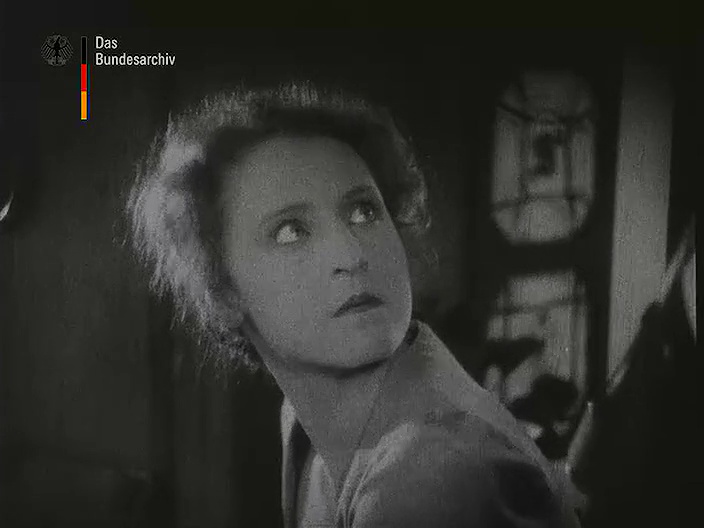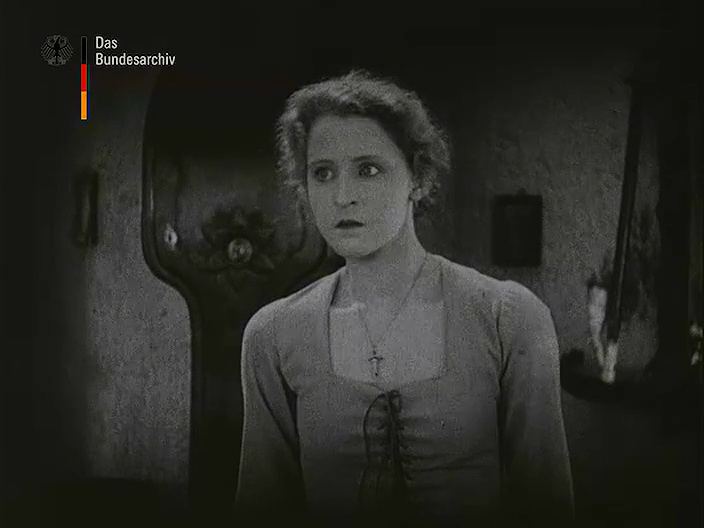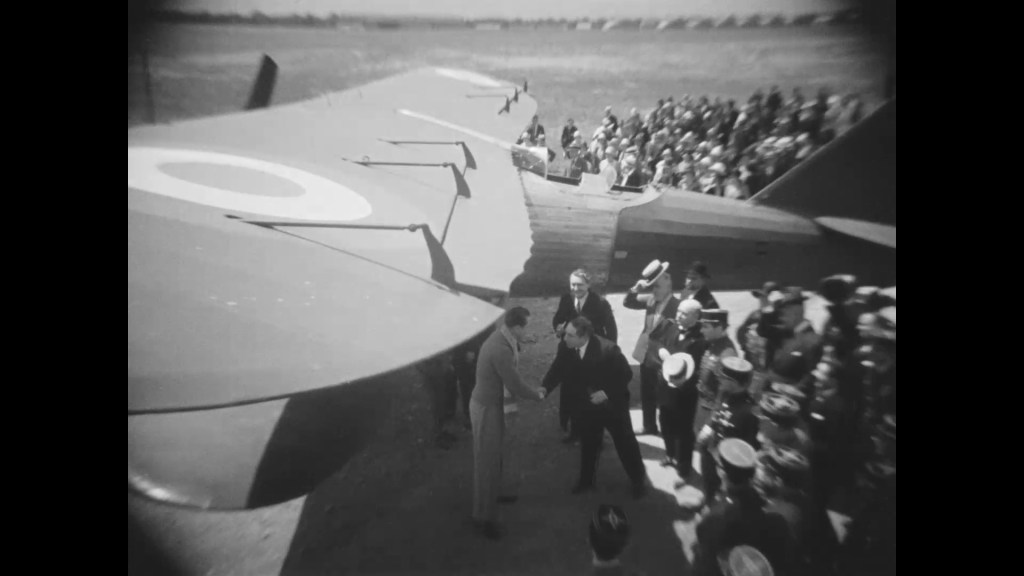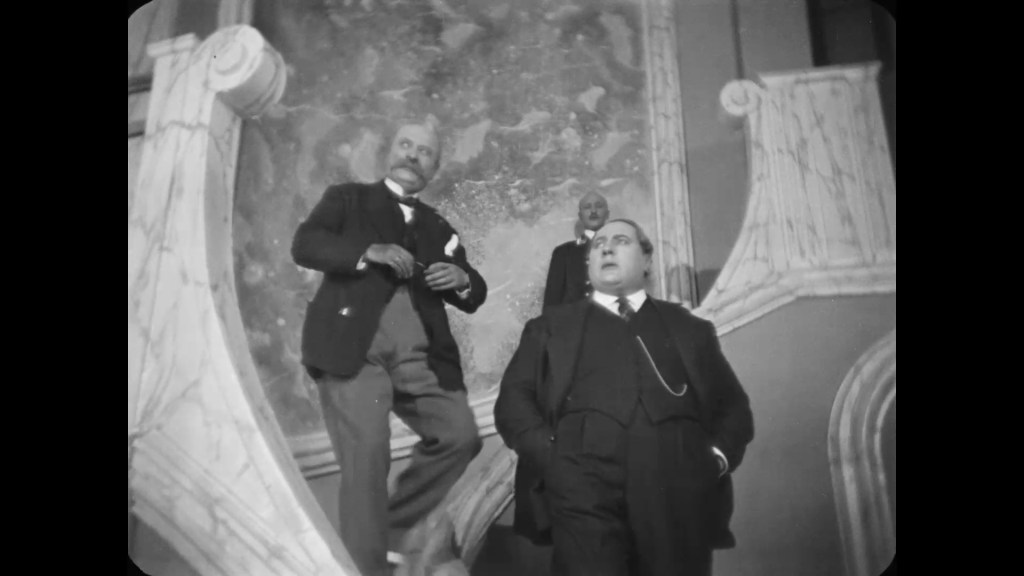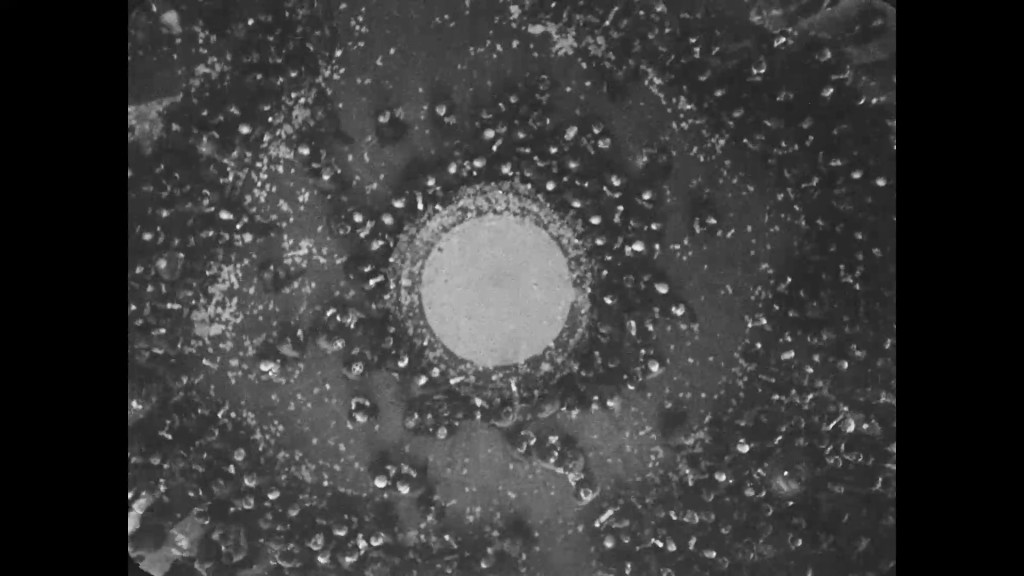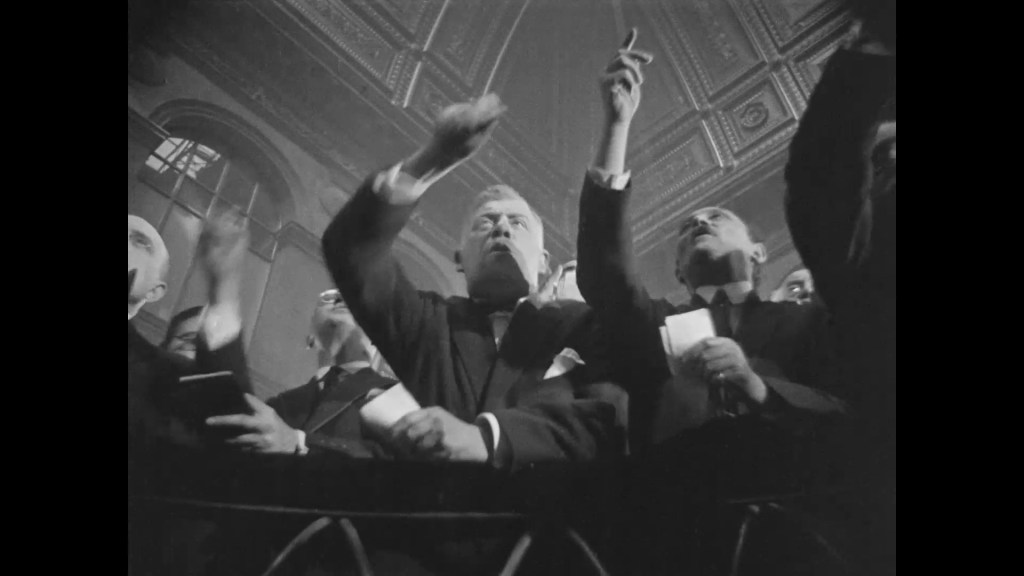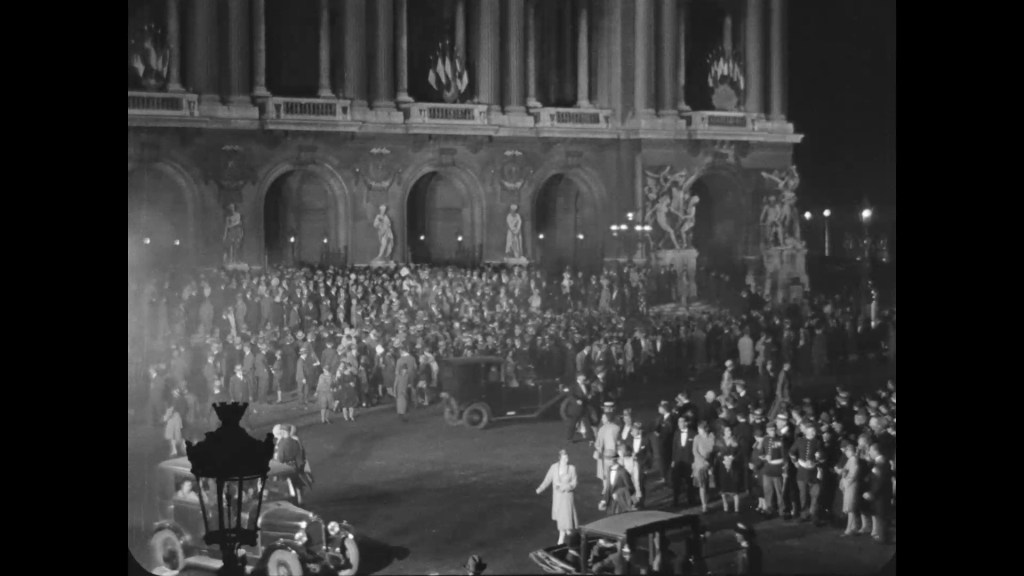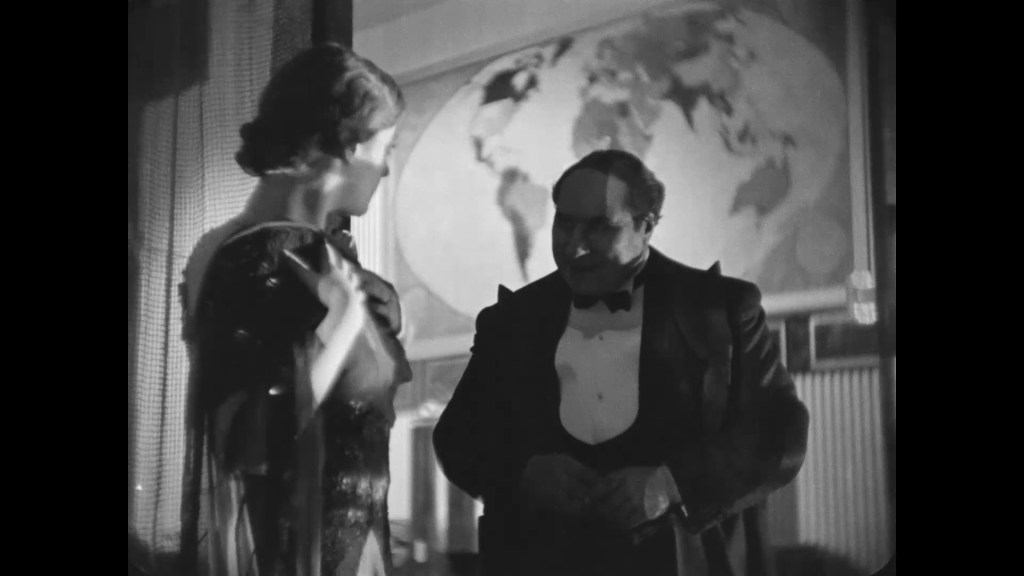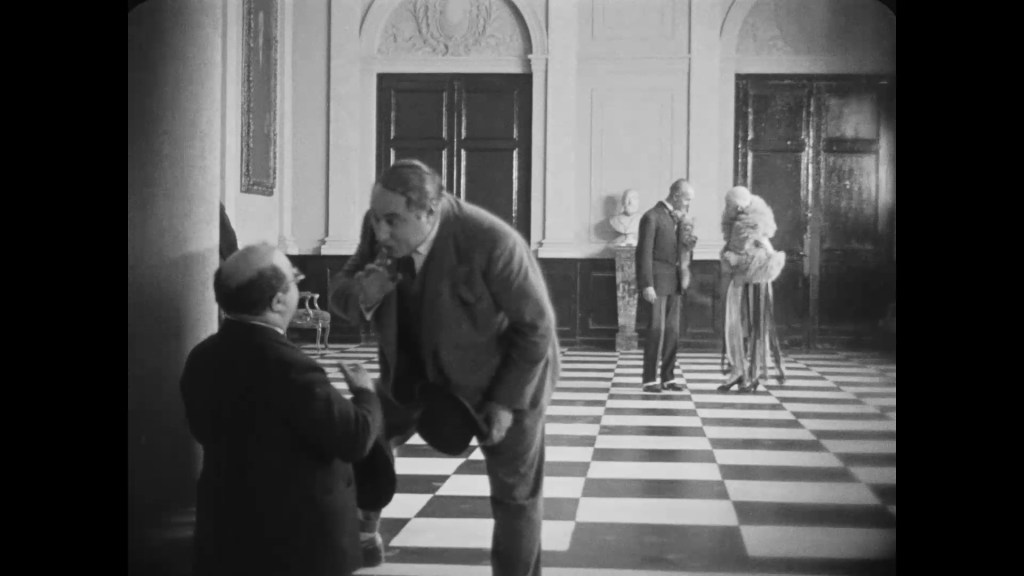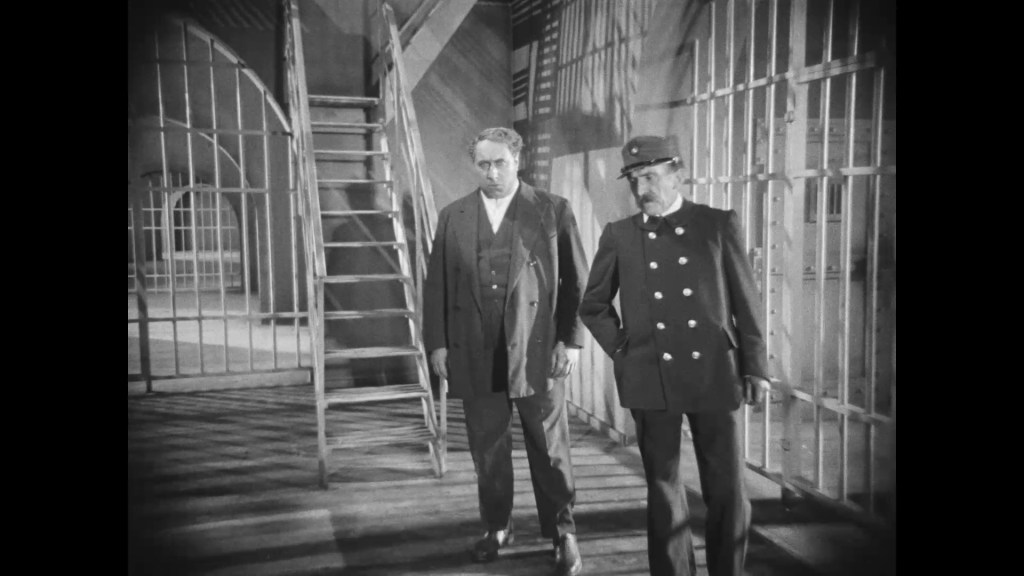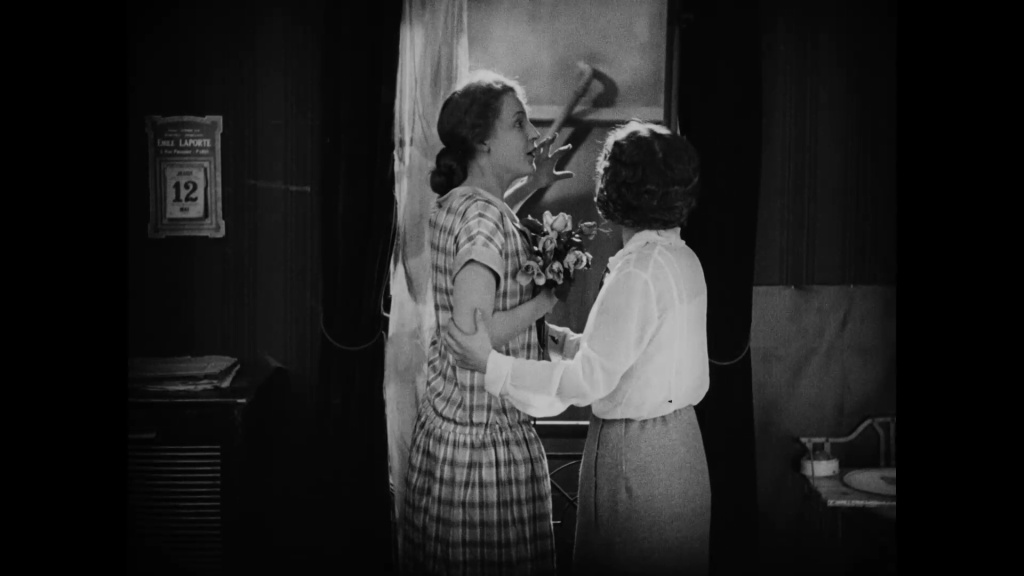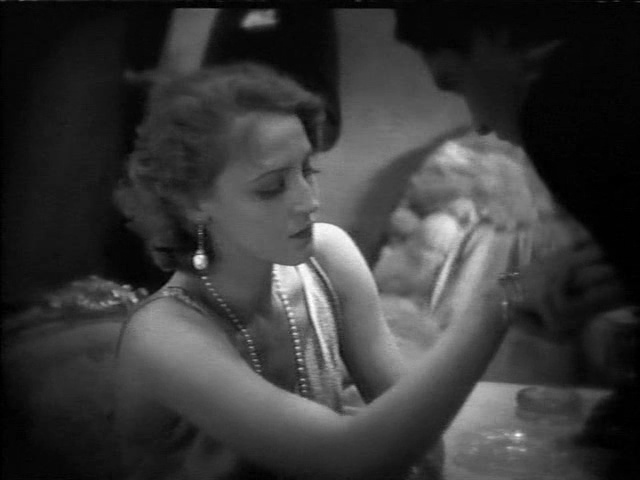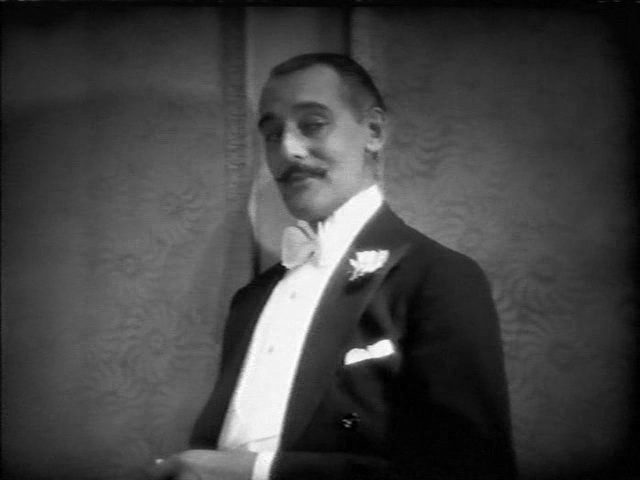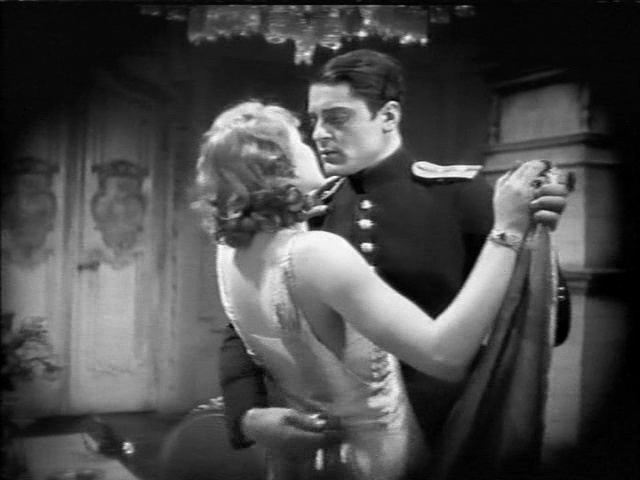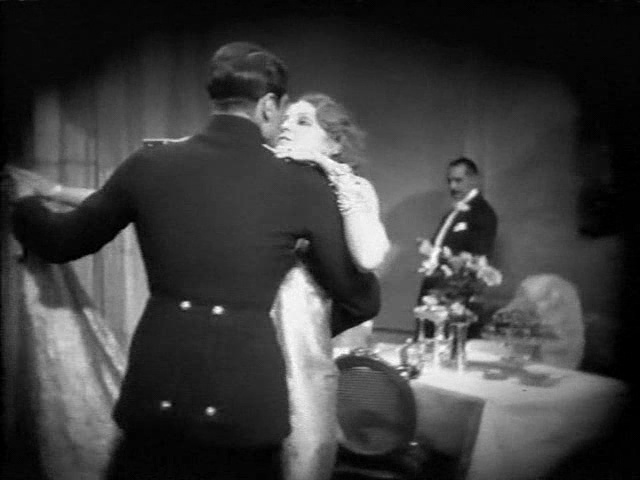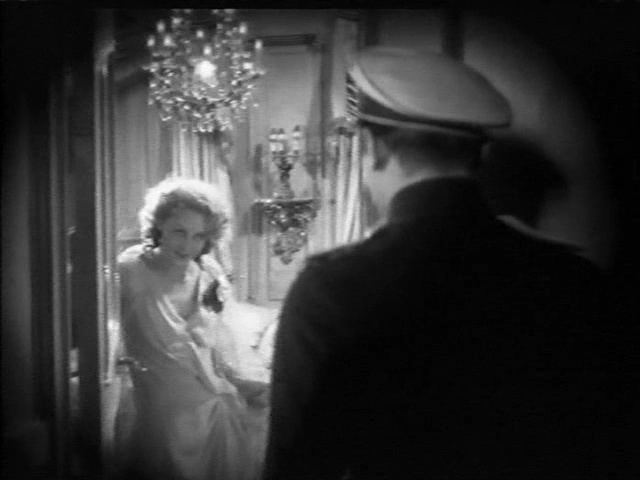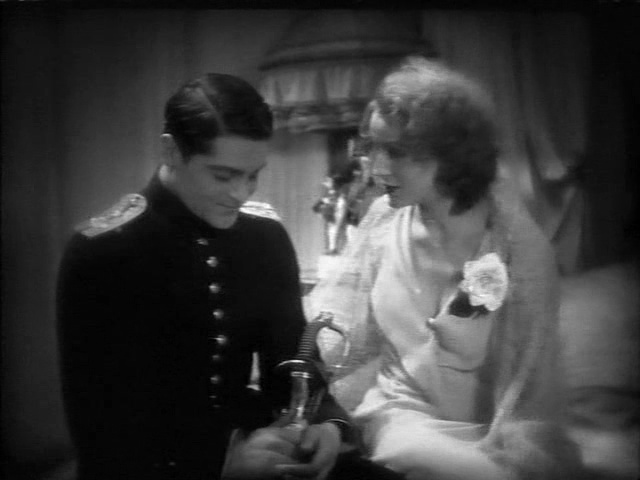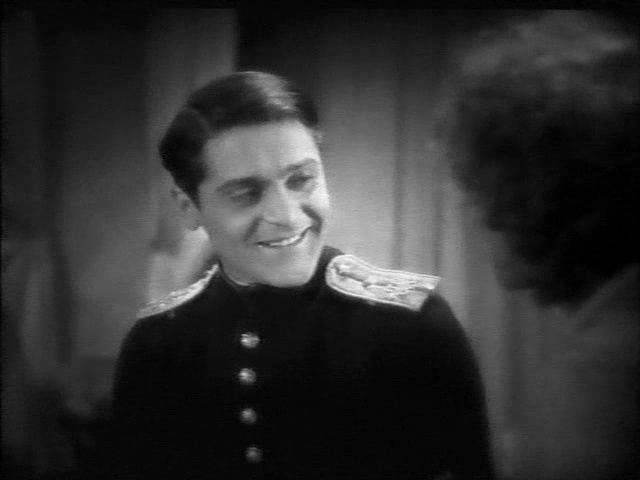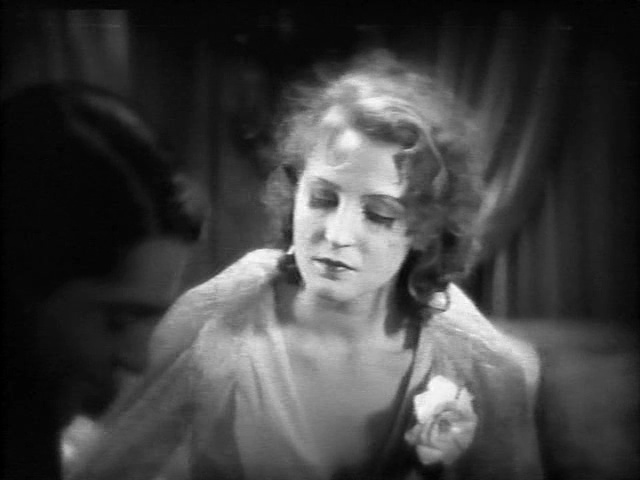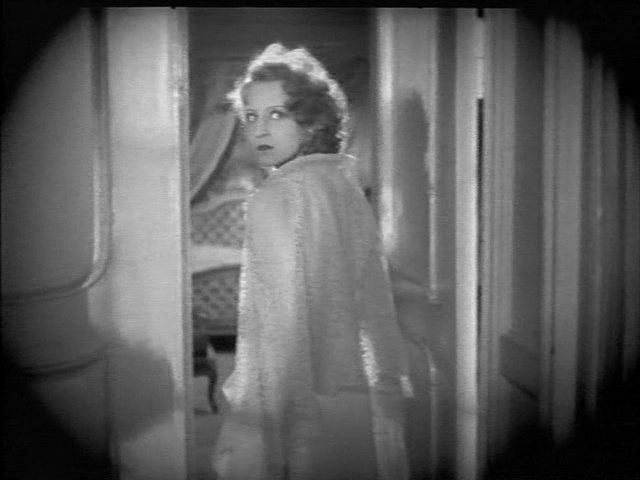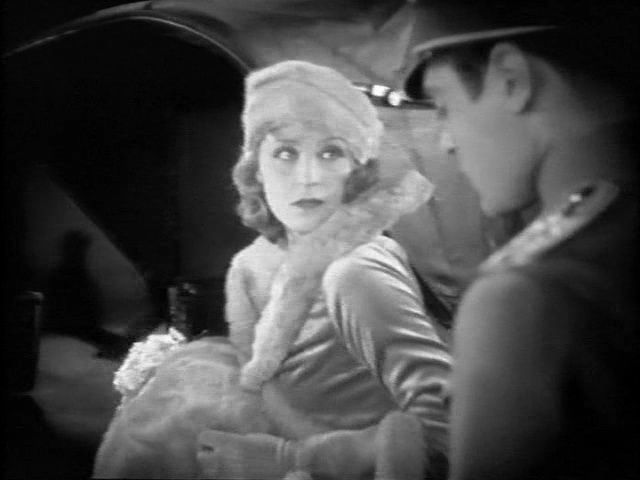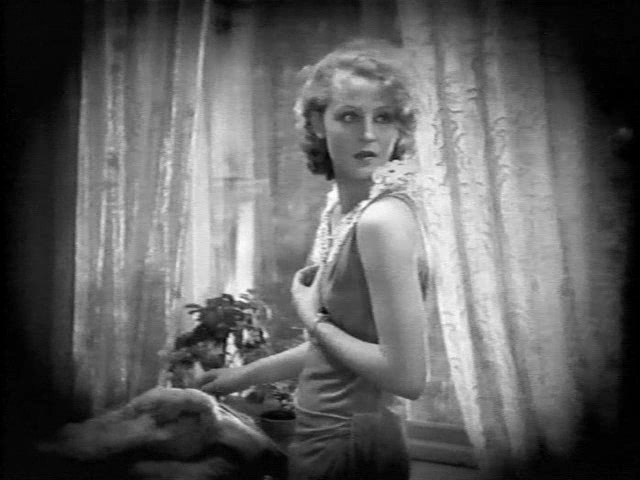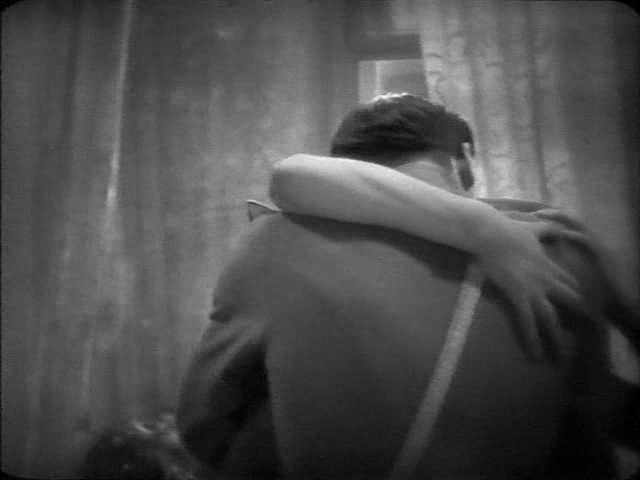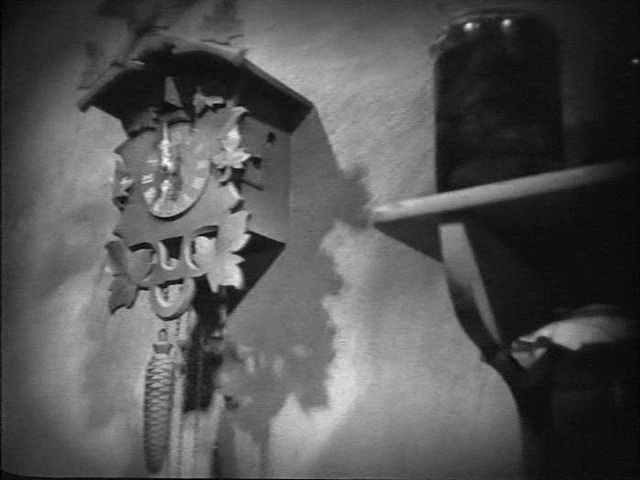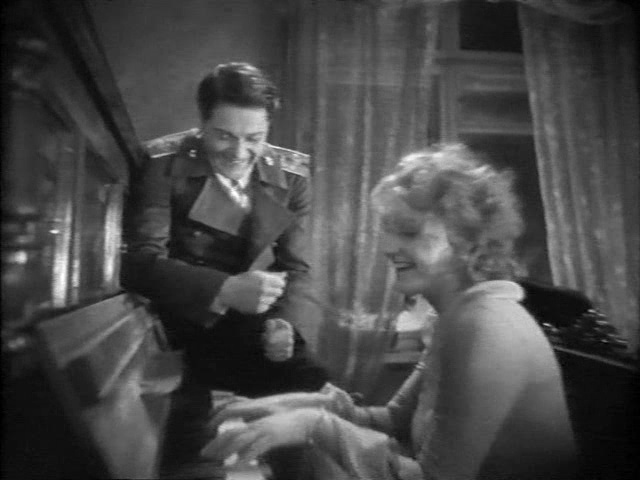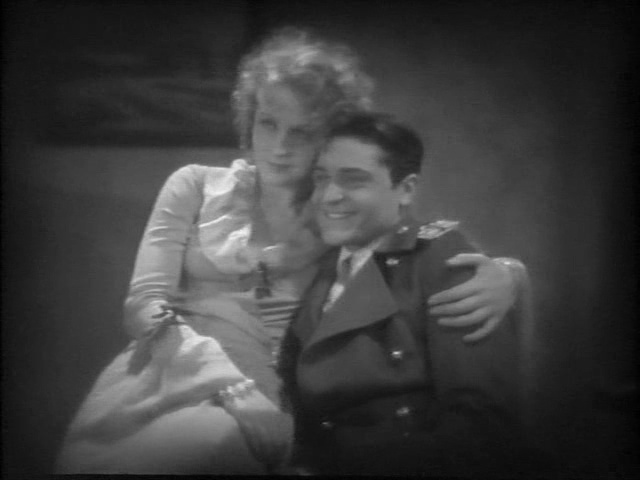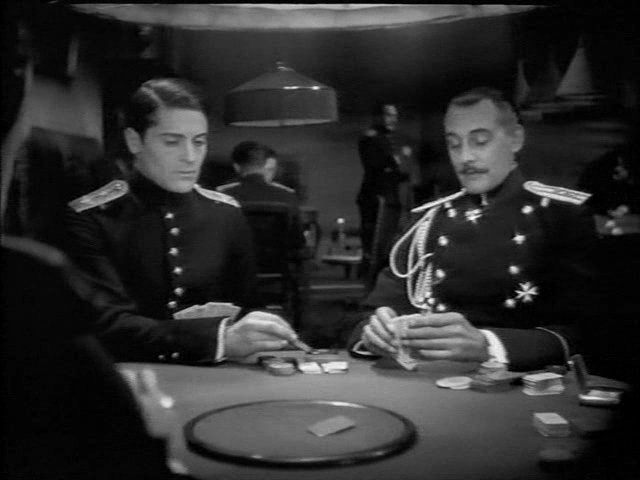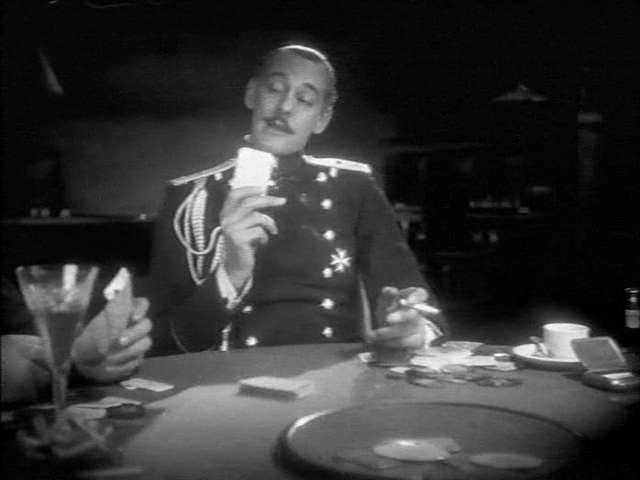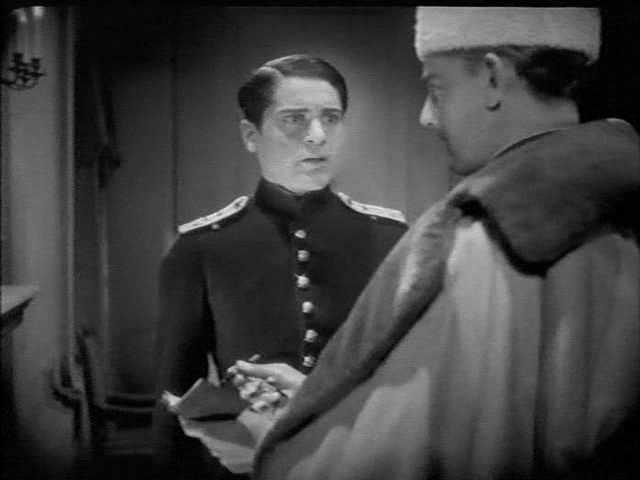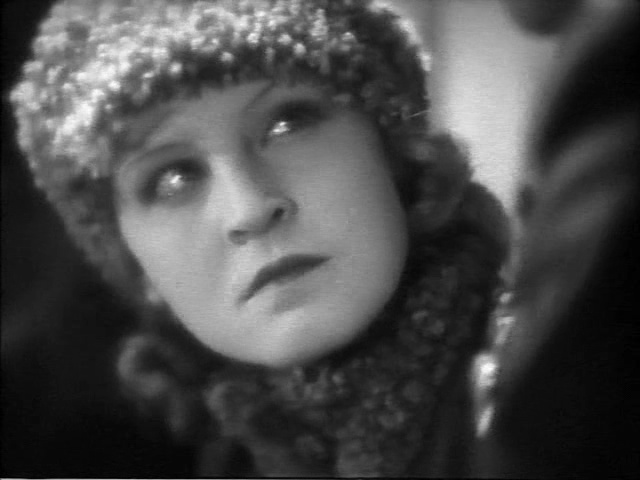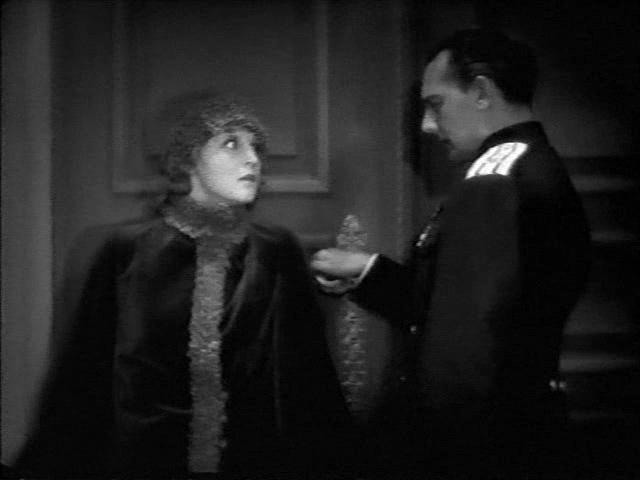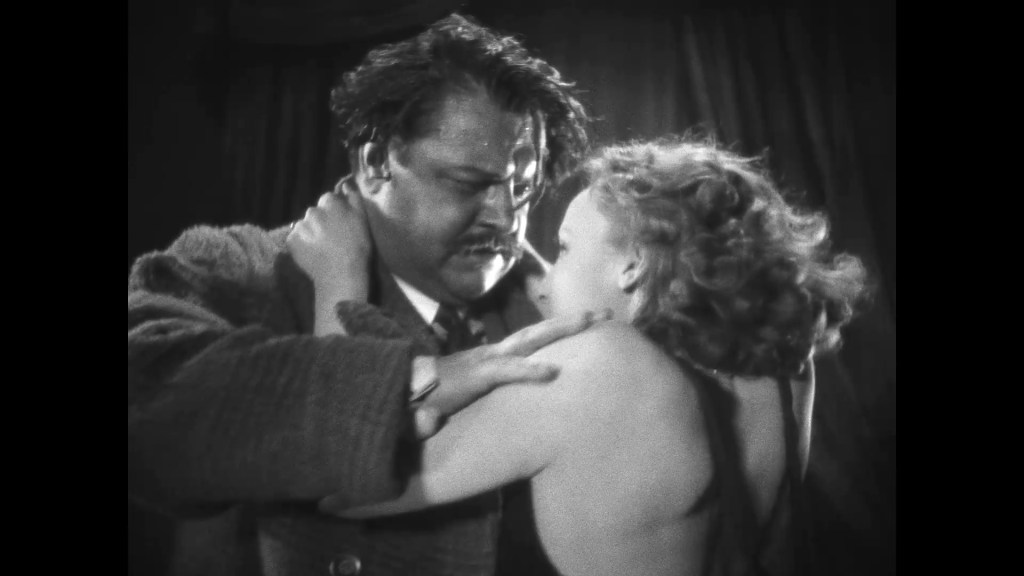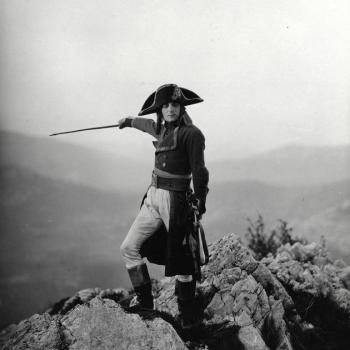
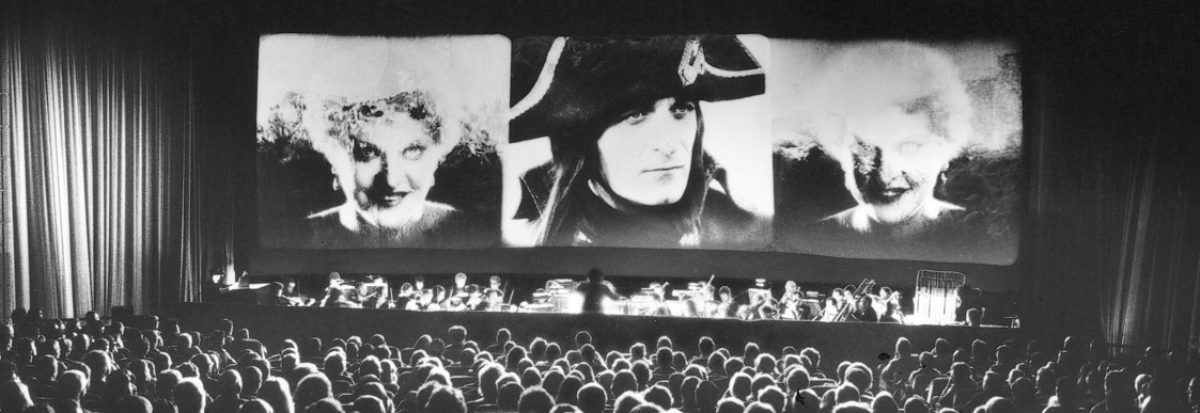
Two films by Henrik Galeen: Der Student von Prag (1926) and Alraune (1928)

This week, I reflect on two films by Henrik Galeen that have been released on a wonderful 2-disc DVD set by Edition Filmmuseum in Germany. I have been awaiting this set since it was announced nearly two years ago, so keenly pounced on it at the first opportunity. This pairing also makes a nice sequel to my last post on horror films inspired by German silent films – and Galeen’s script for Nosferatu (1922) in particular. So, in chronological order, let us begin…

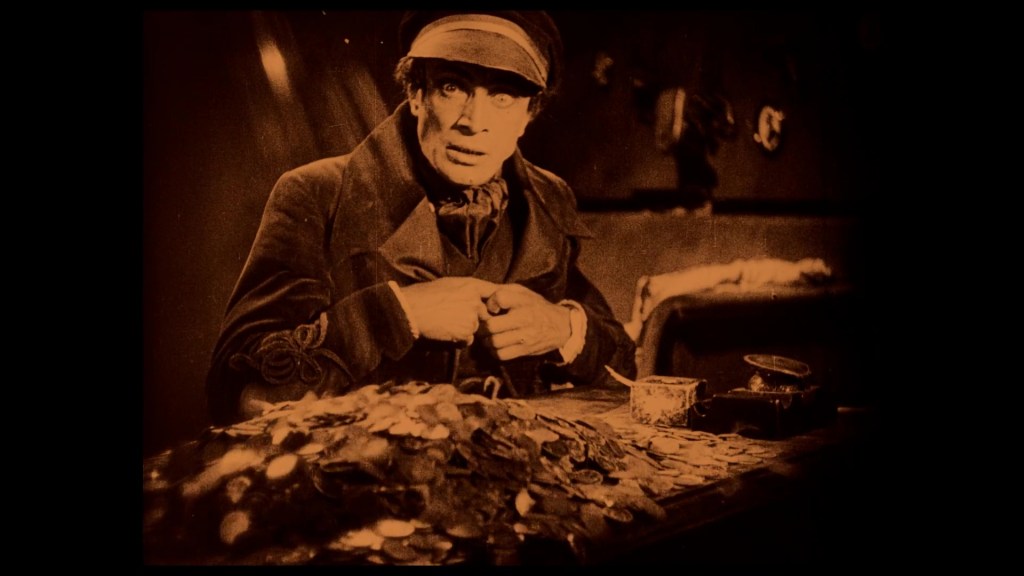
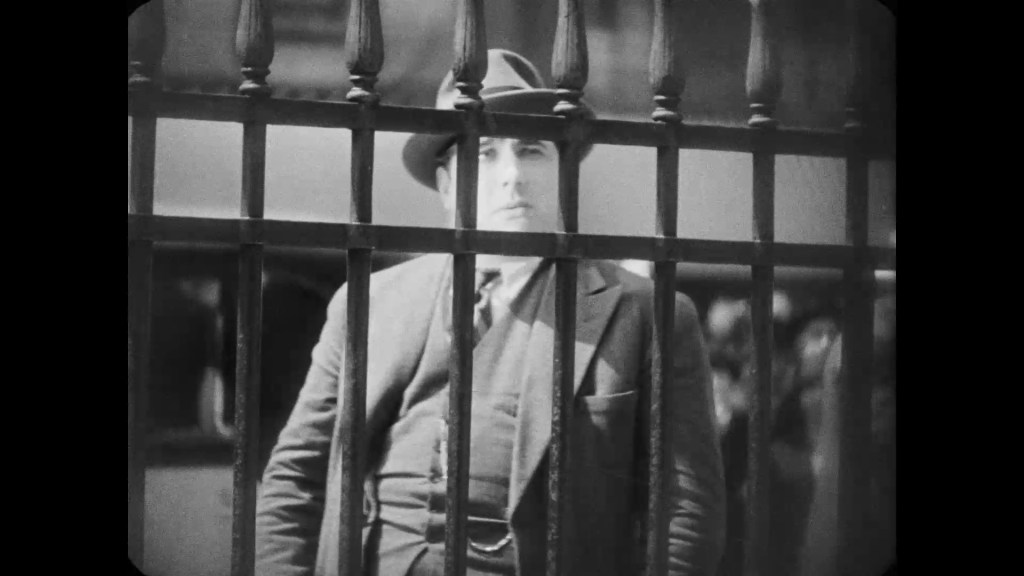
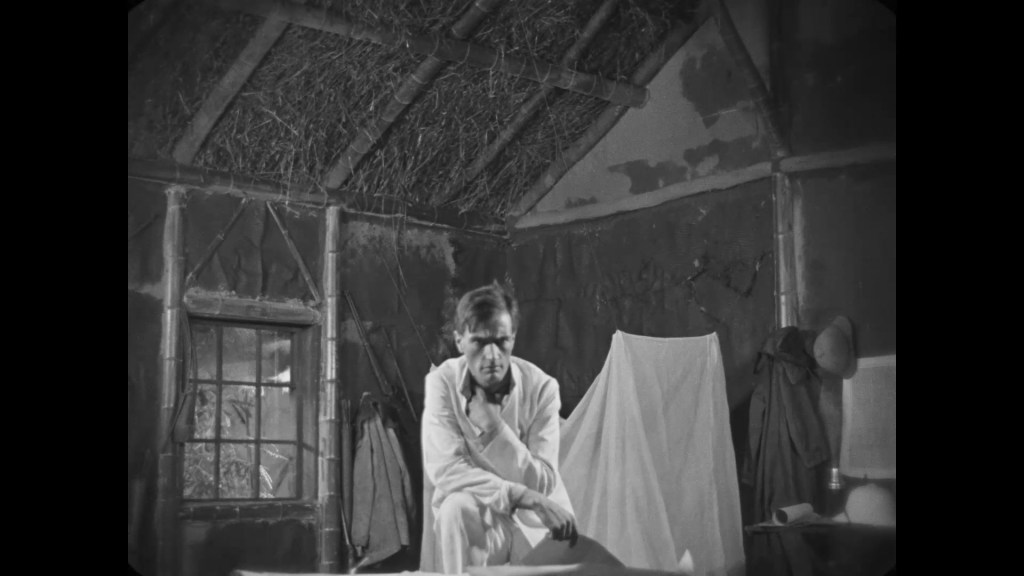
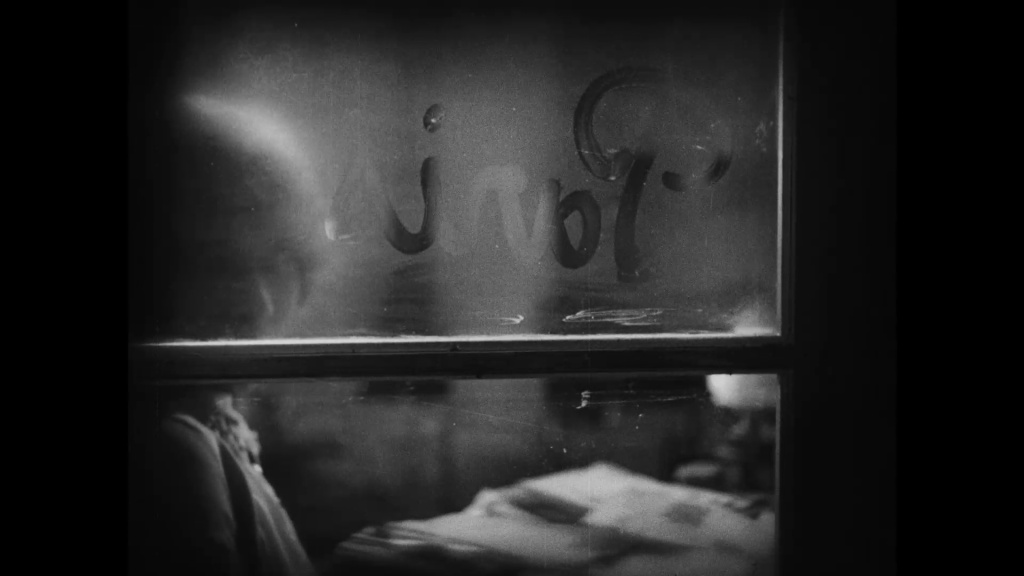
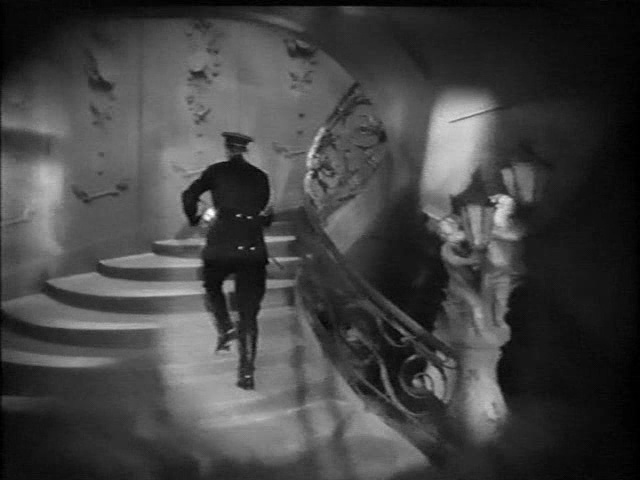
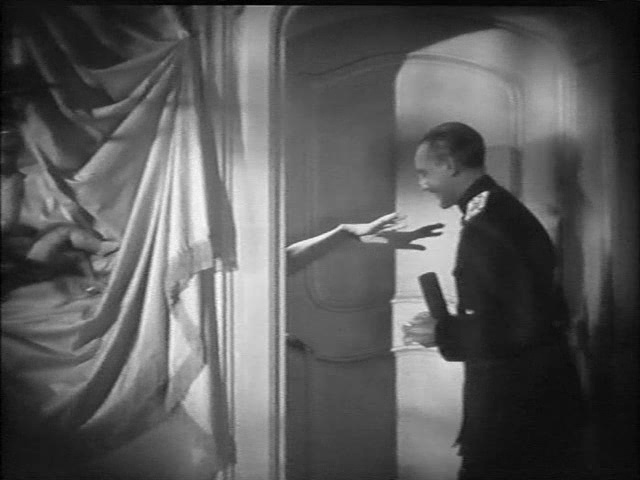
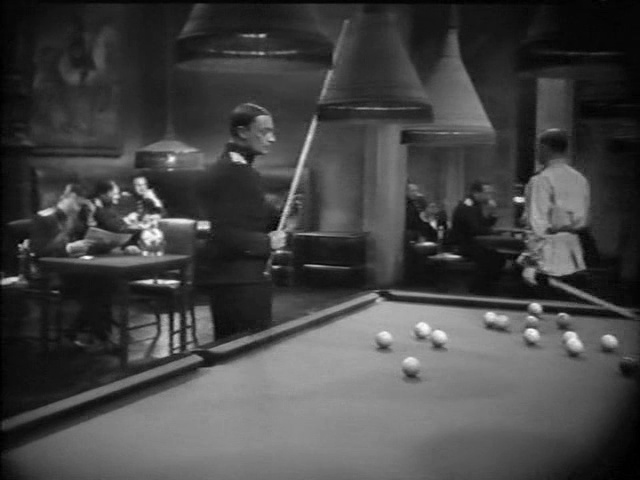
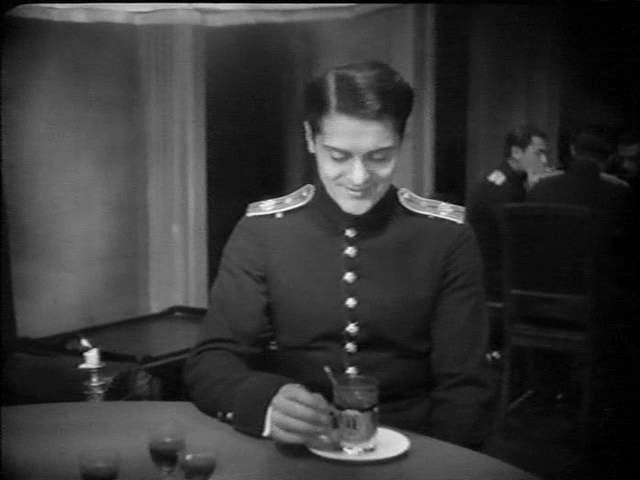
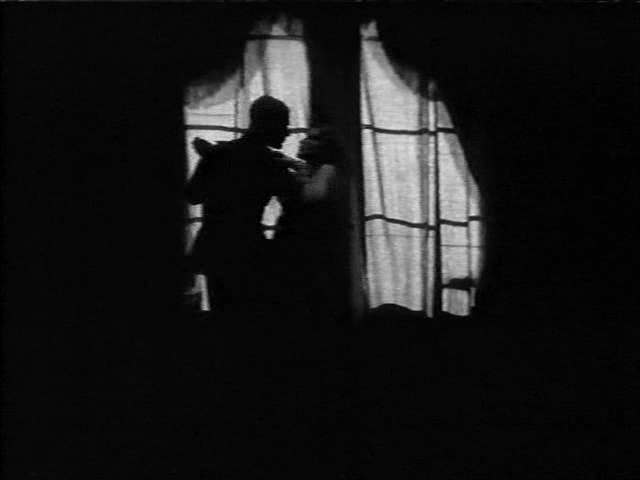
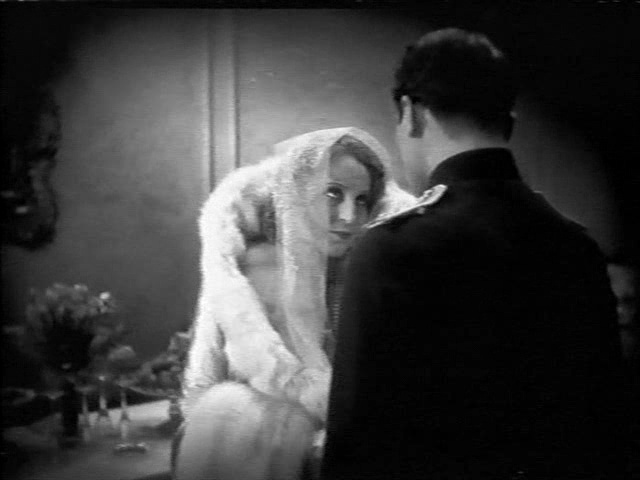
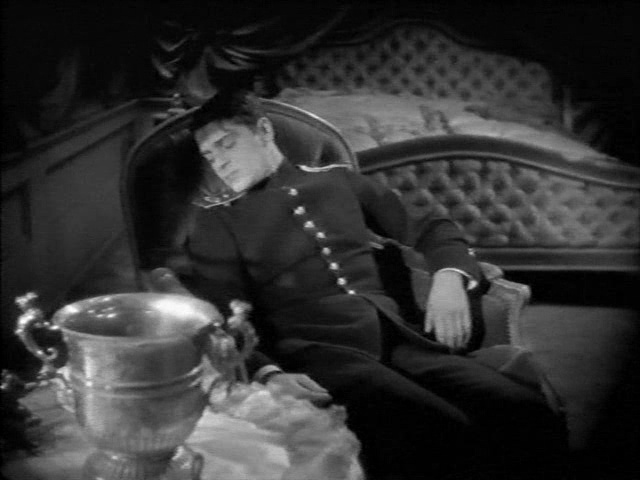
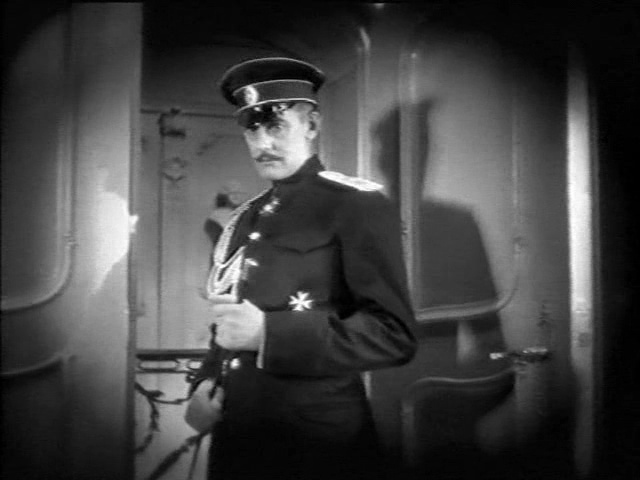
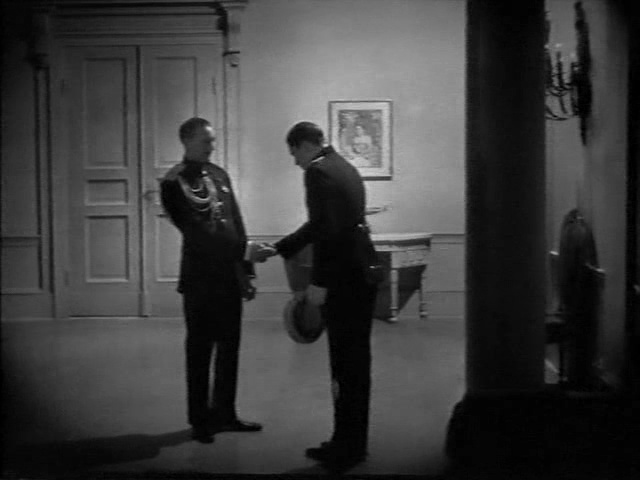
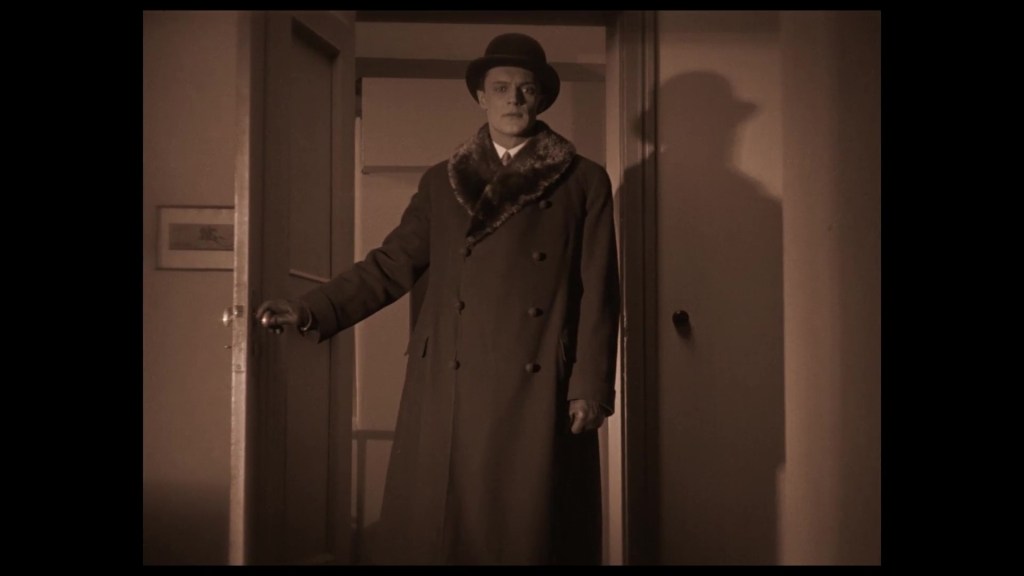
Der Student von Prag (1926; Ger.; Henrik Galeen). Galeen’s film is a remake of the 1913 film, written and co-directed by Hanns Heinz Ewers and starring Paul Wegener as the titular student. I wrote about that version some time ago, and I was very curious to see how Galeen’s version differed from the original. The plot is essentially the same. The student Balduin (Conrad Veidt) is convinced by the devilish Scapinelli (Werner Krauss) to sell his reflection for enough gold and status to seduce the aristocrat Margit von Schwarzenberg (Agnes Esterhazy). Balduin attains wealth and success, much to the jealousy of the besotted flower girl Lyduschka (Elizza La Porta) and Margit’s fiancé Baron von Waldis (Ferdinand von Alten). Balduin’s success is dogged by his doppelganger, who fights and kills von Waldis in a duel and ruins his reputation. It all goes downhill from there, as the film’s opening shot of Balduin’s gravestone promised…

I’m afraid I found the first one hundred minutes of this film a slog to sit through. While the photography is exquisite, especially the gorgeous exterior landscapes, the drama moves exceedingly slowly. The lean, concise psychological drama of 1913 has become a rather baggy melodrama. The character of Lyduschka becomes a rather more sycophantic presence (but not a more sympathetic one), while the scenes between Balduin and Margit are more lengthily (but no more convincingly) elaborated. Furthermore, Galeen restages many of the same moments of the 1913 version: the meeting of Balduin and Scapinelli at the inn; the confrontation with his mirror image; the meeting at the Jewish cemetery; the duel fought by Balduin’s double. While the in-camera double exposures are as excellent as the 1913 version, none of them are as well staged or as dramatically effective. As I wrote in my piece on the earlier film, the long takes of the 1913 version give all the trickery an extraordinarily uncanny quality: the unreal seems to emerge directly from within the real. There is nothing as effective in the 1926 version.

What bothered me especially was the tone of Werner Krauss’s performance as Scapinelli. He seemed to be almost parodying his performance in Das Cabinet des Dr Caligari (1919). In Der Student von Prag, he out-hams anything Emil Jannings ever did. His eyes bulge, he puffs out his cheeks, he gurns and grimaces. It’s faintly creepy, but it’s so outrageously different from any other performance within the film that it’s simply not frightening. Even his beard looks exceedingly artificial, almost like it’s been painted on. Indeed, Krauss’s whole demeanour is extrovertly artificial. Why? He’s either been told by Galeen to clown about like this, or else Galeen has utterly failed to rein him in. Everyone else in Der Student von Prag performs their roles with a degree of dramatic realism. It’s a fantastical story, but the performances are realistic. All except Krauss. Fine, Scapinelli is a faintly otherworldly figure, but I can’t believe that his clownish appearance and mannerisms are the best choice to signify this. (Again, the performances are far more consistent in the cast of the 1913 version.)

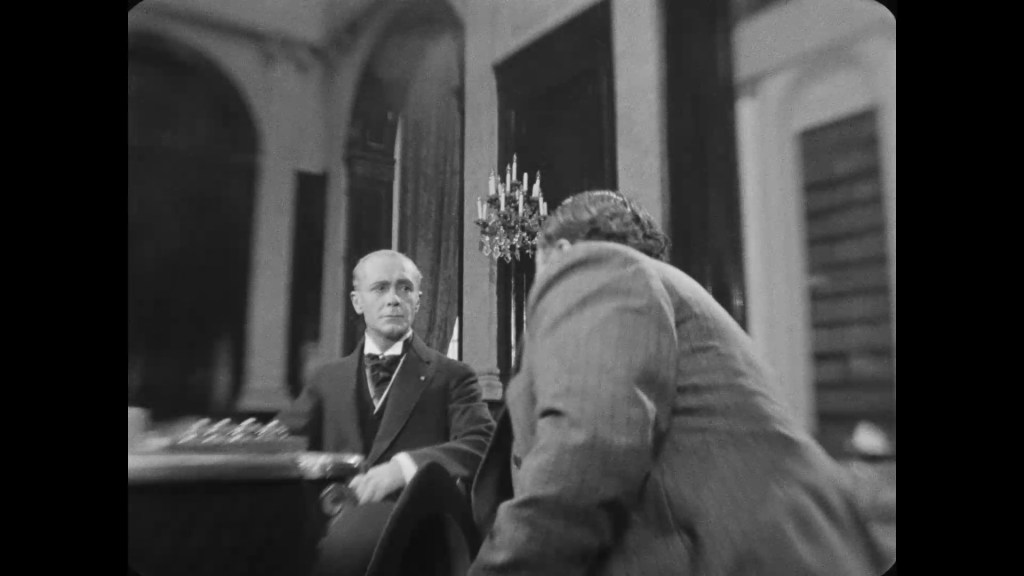
Exacerbating this factor is Galeen’s editing. So oddly were some scenes put together that I wondered if I was watching a print reconstructed from different negatives (i.e. a blend of “home” and “export” versions). When Scapinelli first propositions Balduin at the inn, Galeen cuts between a front-on mid shot of the two men to a shot that is captured from a side-on angle (in fact, more than 90 degrees from the front-on shot). It’s a peculiar choice, and the cutting between oddly different angles here and elsewhere in the film is very striking. (It’s also something I observed in Alraune, per my comments below.) This isn’t an issue of continuity: I don’t care how a film is put together, so long as it is effective. It’s because Galeen’s editing often lessens the tension in a scene, even the tension created within a particular shot, by cutting to a mismatched alternate angle or distance. Why, Henrik, why? The film is full of brilliant images, but I’m simply not sure Galeen can quite mobilize them into a truly convincing sequence of images.

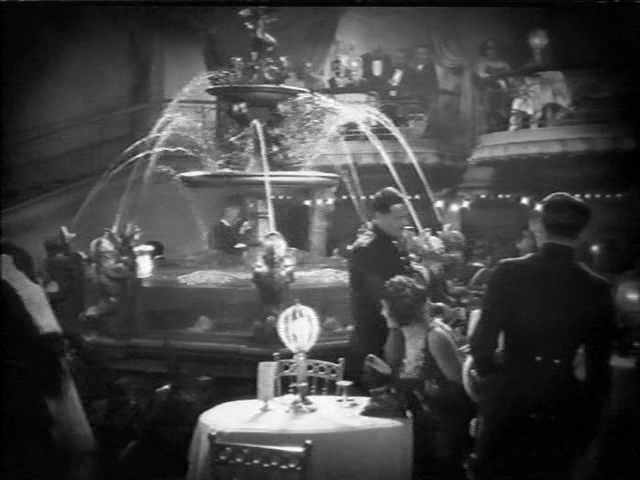
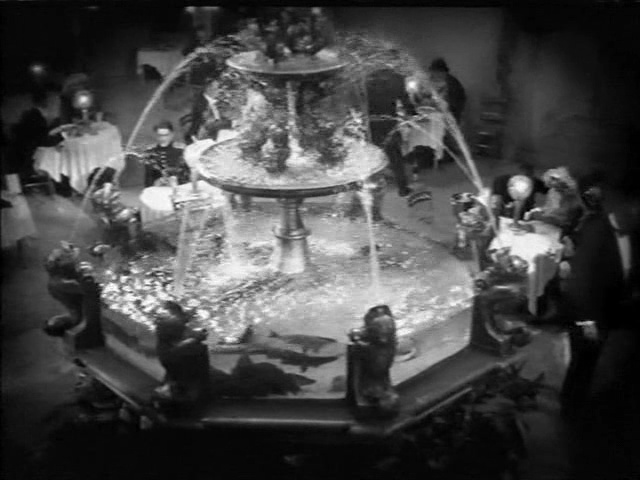
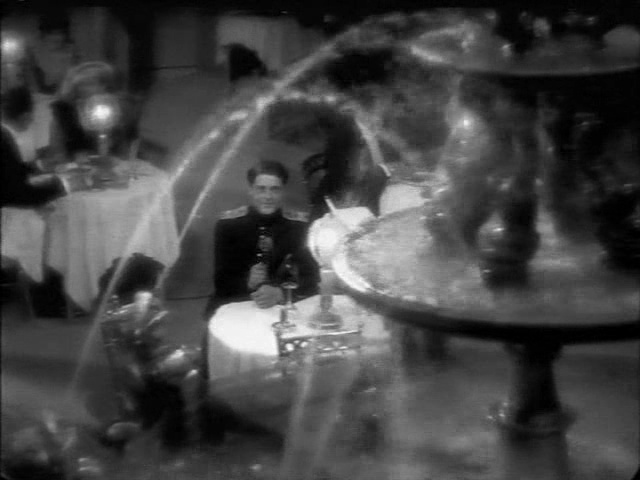
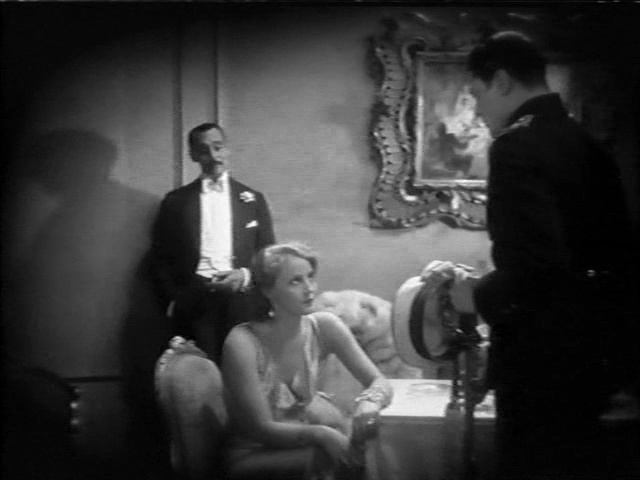
All of that said, the last half hour of Der Student von Prag is a knockout. Balduin, having lost everything, proceeds to a drinking den where he drinks, dances, and revels. The band wears weird clown make-up and grotesque masks and blindfolds, and the double-bass is being played with a saw. Clearly, something odd has the potential to break out, and break out it does. Balduin starts to become more and more manic, and the sequence around him likewise grows more and more manic. Handheld camerawork turns the crowded, shadowy interior into a stomach-churning blur. But Balduin hasn’t had enough by far. He starts conducting the dancers with a riding whip; then he starts smashing crockery, then fittings, then furniture… The sequence lasts nearly ten minutes, and it just keeps going. I’m not sure (per my above comments) that Galeen really puts the shots together in a way that builds a convincing montage, but the sheer length of the sequence has its own manic sense of energy: it just keeps going, its obsessive cheer becoming less and less amusing and more and more unsettling. Veidt’s performance, too, grows subtly more manic. His face has moved from resignation and grief to a kind of enforced, frenzied joy.

There follows a series of scenes in which Balduin races through the night, encountering Margit and then his doppelganger. What really makes the sequence work is the way the wind haunts both interior and exterior spaces: whipping the trees, the curtains, the clothing… It gives a marvellously unsettling, threatening sense to every scene. This is where everything in the film works. Scapinelli (thankfully) is simply forgotten from the narrative and Balduin is left alone to face the consequences of his actions. Galeen abandons location shooting in favour of studios, which gives all these final “exteriors” the aura of nightmarish interiors, half-empty spaces filled with shadows and shards of buildings. Everything is sinister, malevolent – and empty of everything but Balduin and his sinister double. The final scene before the mirror is fantastic, filled with striking images of the shattered glass, and Veidt’s performance is superbly convincing: mad, violent, and tender all at once.

This is a fine way to end the film, but my word the rest was a slog to sit through. Even though the 1913 version consists for the most part of long, unbroken takes for each scene, it manages to tell the entire story succinctly and swiftly in barely 80 minutes. The 1926 version (in this restoration) is over 130 minutes. That’s fifty extra minutes to tell the same story. As good as the finale is, I think that the 1913 version is a far superior film. (So too is the version directed by Arthur Robison in 1935, starring Anton Walbrook as the eponymous student.)

Alraune (1928; Ger.; Henrik Galeen). Having re-adapted Ewers’s Der Student von Prag, a year later Galeen embarked on another adaptation of this author’s work. Ewers’s novel Alraune (1911) was a huge hit and republished many times in the early twentieth century. It still retains something of a cultish reputation among certain circles. In the anglophone world, there are two English translations available. One was issued in the 1920s and presents a rather prudishly reduced/edited text. The other is a recent, self-published edition, that offers a “complete, uncensored” text – but alas sacrifices fluency in English for the sake of adherence to the original. (My references below to Ewers’s text are therefore sourced from the original German edition.)

Ewers’s novel remains an impressively nasty piece of work. The story concerns Jakob ten Brinken, a scientist who inseminates a prostitute with the seed of a hanged murderer in order to study the offspring. “Alraune” is a female mandrake, a horrific vision of modern womanhood: she drives men to their deaths with violent desire, until she discovers her true origins and kills herself.

The author of this spectacular tale was a renowned provocateur. In a career spanning literature, philosophy, propaganda, acting, filmmaking, and occultism, Ewers was also sexually and politically radical.  Homosexual, he was twice married; a supporter of Jewish enfranchisement, he embraced National Socialism. (Inevitably, his views and lifestyle led to a fall from grace under the Nazis.) Ewers’s literary avatar was Frank Braun, who appears in Alraune as a hotblooded student, arrogant and ironic, who urges his uncle to test the bounds of human power – and to challenge God. Braun had already appeared in Ewers’s novel Der Zauberlehrling (1909), in which he infiltrates and subverts a religious cult, and would reappear in Vampir (1921), which explores his moral and literal transformation into a vampire.

The male narrator of Alraune is an obtrusive, prurient presence in the text, lingering over his imagined muse as he writes. This muse morphs from a “blond little sister” into a “wild, sinful sister of my hot nights”, her “wild soul stretches forth, glad of all shame, full of all poison” (7). (And so on, and so on.) Returning perpetually to this fantasy, the narrator himself becomes vampiric, metaphorically drinking “the blood that flowed from your wounds at night, which I mixed with my red blood, this blood that was infected by the sinful poisons of the hot desert” (174). The violence of this fantasy grows across the book, fixating with gruesome glee upon the imagined sister’s body – “eternal sin” bidding him tear into “the sweet little child’s breasts, which had become the gigantic breasts of a murderous whore” (333). This imagery characterizes the book’s peculiarly salacious tone. (There are, by my count, no less than thirty references to women’s breasts – not to mention numerous depictions of physical and mental torture to animals and humans.) Just as the narrator desires the sister he imagines, so the scientist within the narrative succumbs to his desire for the mandrake he creates – and, as ten Brinken’s nephew, Braun’s desire for Alraune crosses from the familial to the sexual. But Alraune is also a satirical novel, the first half of which is a profoundly critical overview of bourgeois conservatism at the turn of the century. In a world of institutionalized hypocrisy, corruption, and vice, both Frank Braun and the narrator are perverse Nietzscheans, willing to overturn every norm.

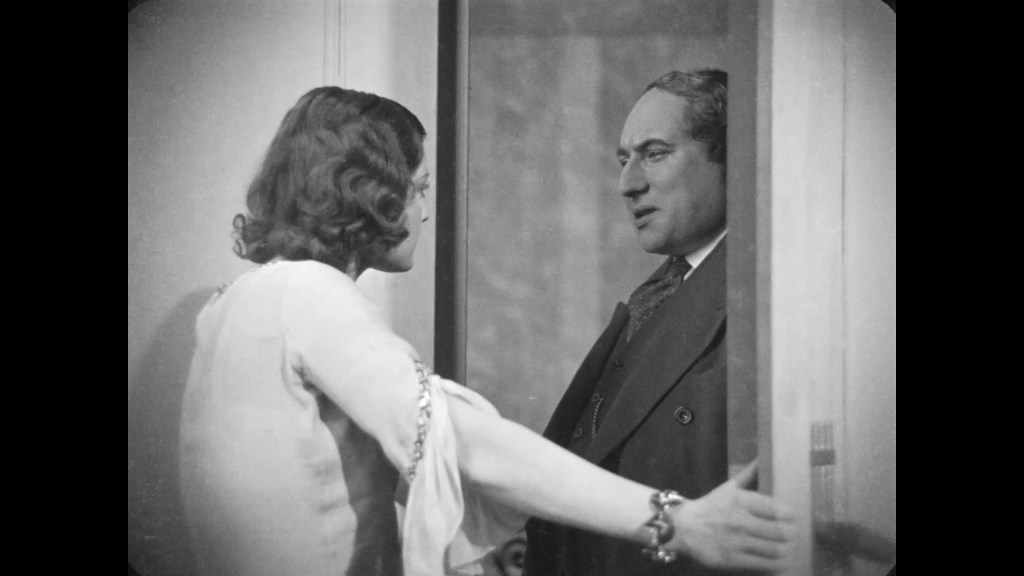
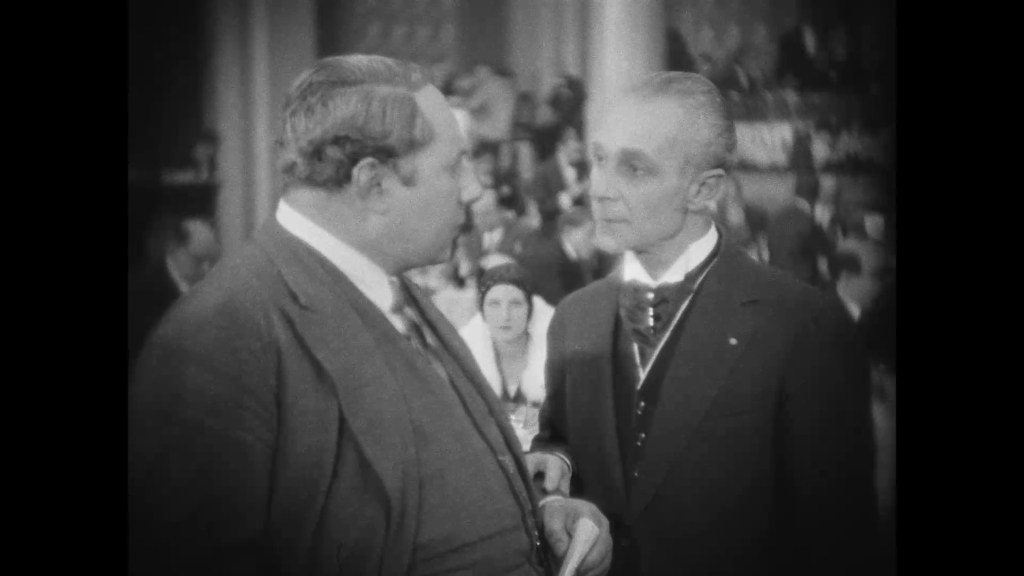
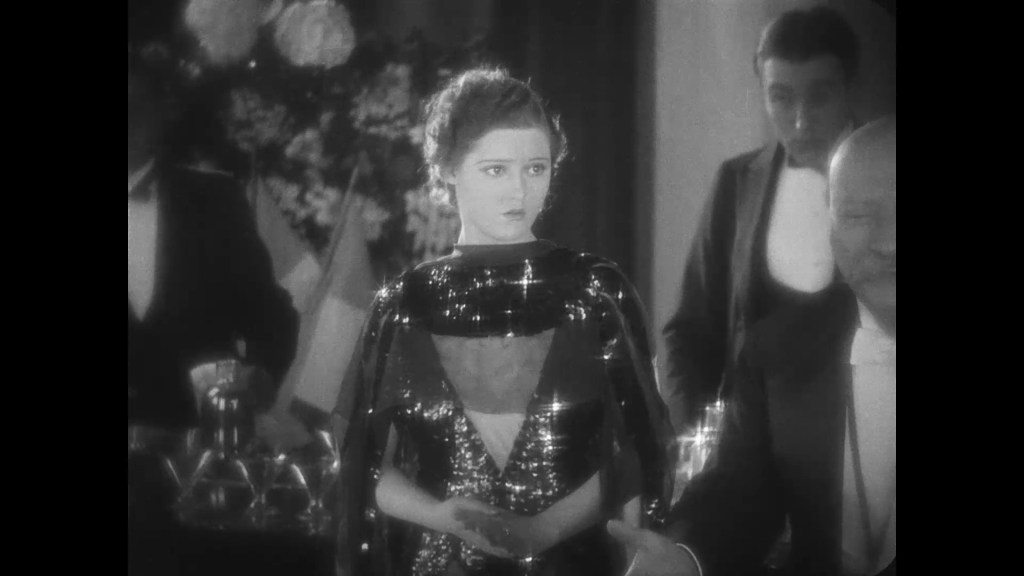
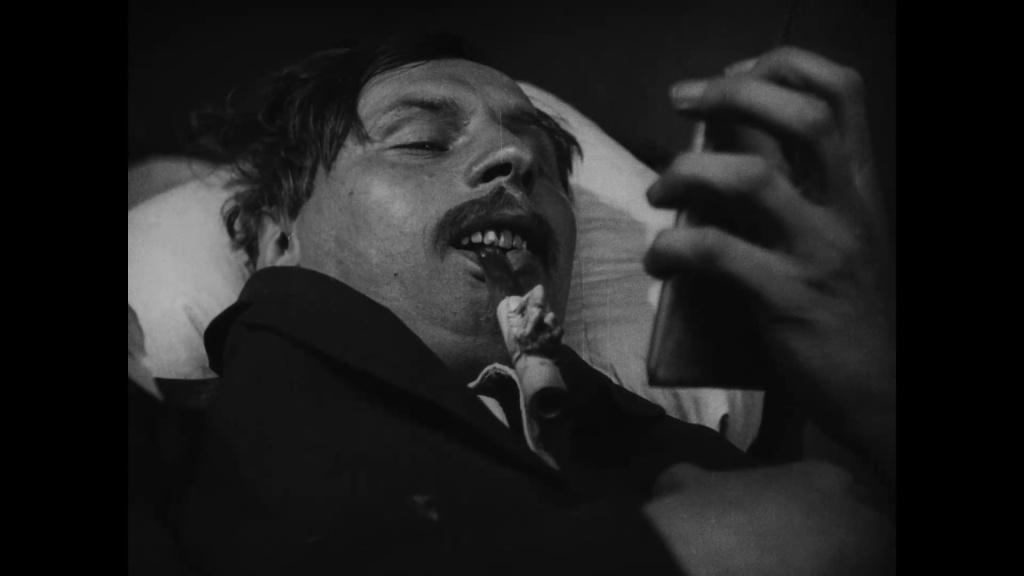
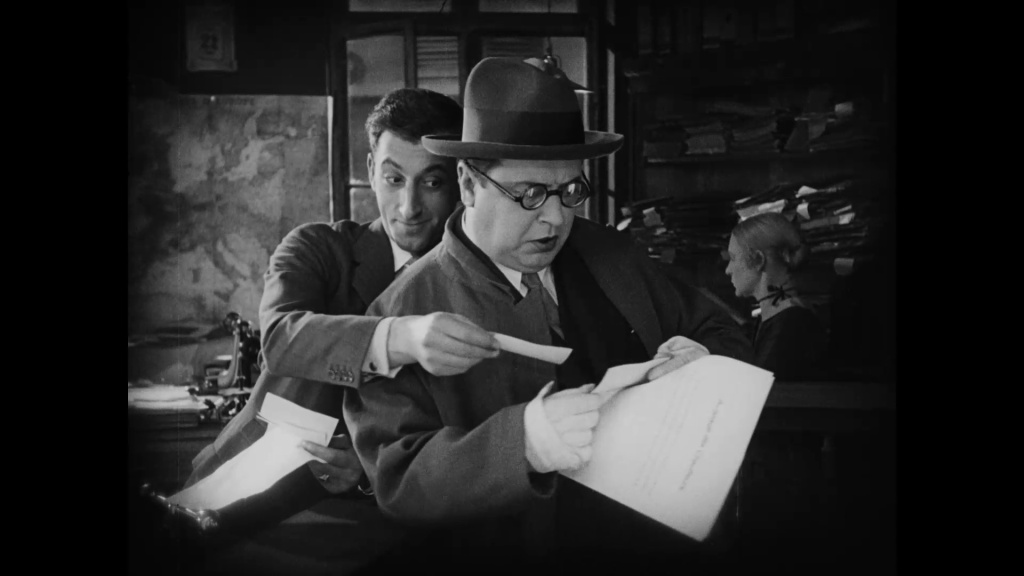
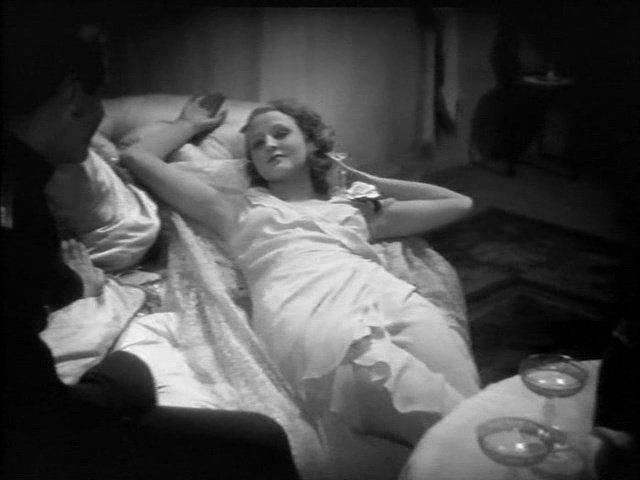
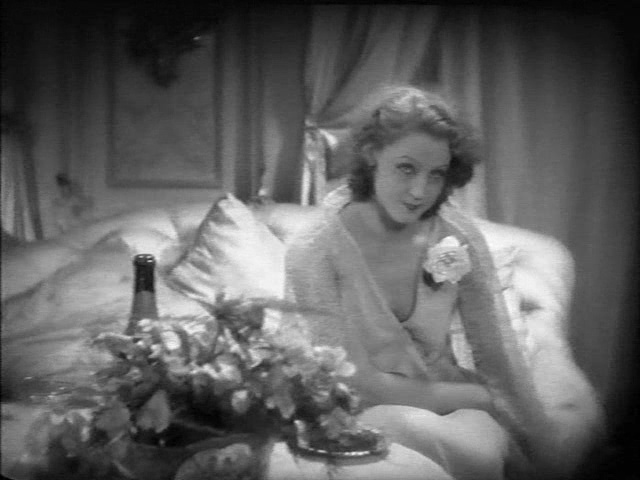
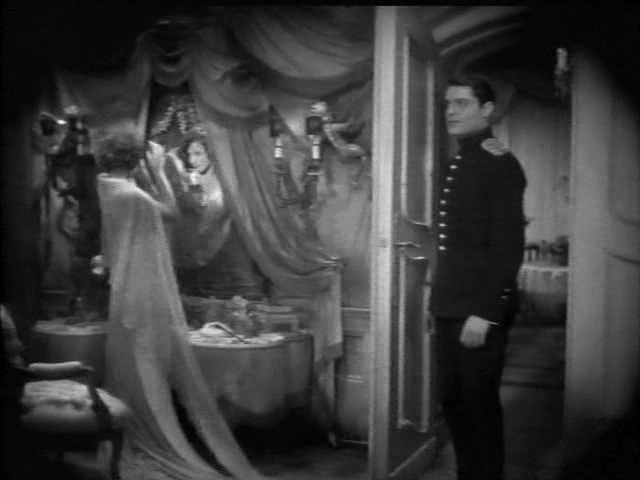
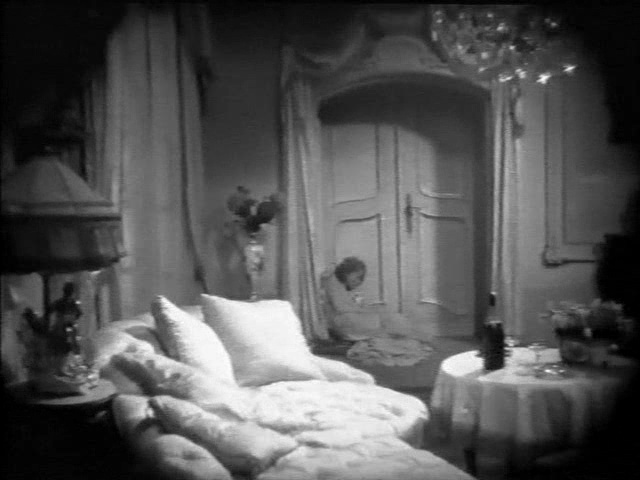
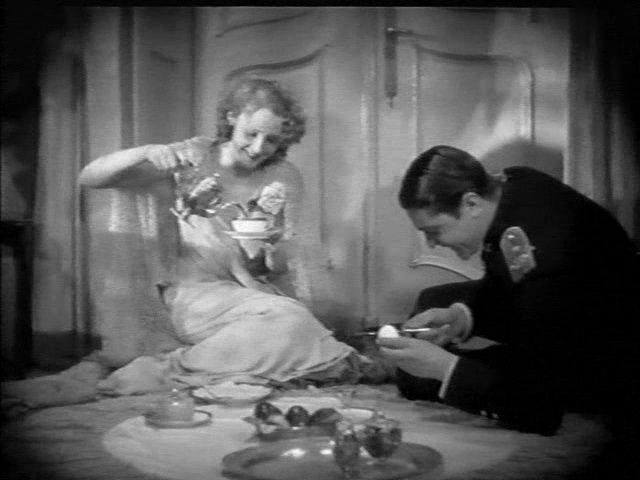
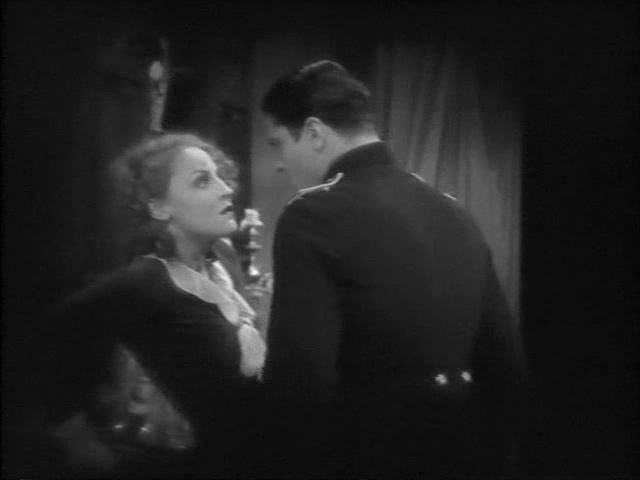
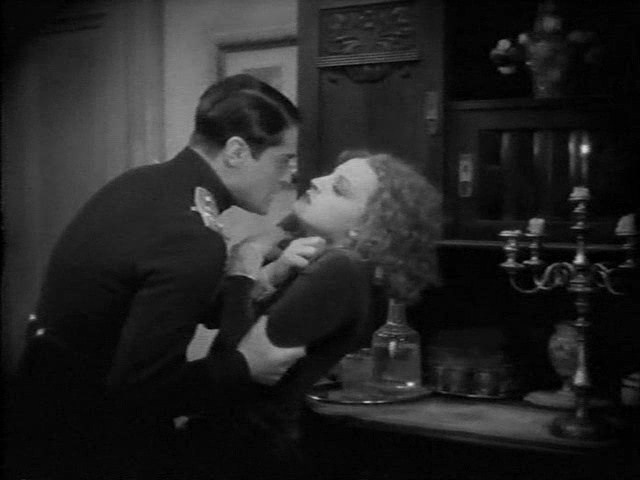
For the film version of Alraune, Galeen wrote his own screenplay, retaining only the barebones of Ewers’s novel (the first half of which does not even feature the figure of Alraune). Professor ten Brinken (Paul Wegener) has created animal life artificially and plans to do the same with a human subject. Harvesting the seed of a hanged criminal (Georg John) to inseminate a prostitute (Mia Pankau), he raises the offspring as his daughter Alraune. Seventeen years later, Alraune (Brigitte Helm) runs away from her boarding school with Wölfchen (Wolfgang Zilzer). En route, she meets the magician Torelli (Louis Ralph) and joins his circus. Ten Brinken tracks her down and forces her to accompany him to southern Europe. Here, Alraune’s flirtation with a viscount (John Loder) makes ten Brinken jealous. Discovering her origins, Alraune sets out to destroy her “father” by feigning a seduction and then ruining him at a casino. She also enlists the help of ten Brinken’s nephew Frank Braun (Iván Petrovich), with whom she eventually elopes. Financially and morally exhausted, ten Briken collapses and dies.

Alraune was premiered in Berlin in February 1928 in a version that measured some 3340m; projected at 20fps, this amounted to over 145 minutes of screen time. When the film was distributed outside Germany, numerous changes began to reshape the film. In the UK, the film was released as A Daughter of Destiny and cut from 3340m to 2468m. Critics blamed the cuts and retitling for the disruptive sense of continuity of this version. (This did not stop it being a big hit.) In France, where the film was released as Mandragore in February 1929, censorship was likewise blamed for producing narrative unevenness. In Russia, Alraune was released only after Soviet censors removed all supernatural aspects of the storyline. (The copy of this version preserved in Gosfilmofond is 2560m.) Most severe of all was the board of censors in the Netherlands, where the film was banned outright from exhibition in January 1930.

This history is important to remember when examining the film on this new DVD edition. No copy of the original German version of Alraune survives. The restoration completed in 2021 by the Filmmuseum München relies on two foreign copies (from Denmark and Russia), using archival documents to restore the correct scene order and (where possible) the original intertitles. What it cannot restore is the original montage, from which 300m of material remains missing. Until 2021, the only copy readily available was an abridged version derived from a Danish print, to which a previous restoration inserted new titles translated into German. As well as missing and reordered scenes, the titles of this Danish version are both more numerous and more moralistic in tone than the German original (as restored in 2021). While the 2021 restoration offers a version of the film that is closer to the original, I am left wondering about how coherent the original actually was. As I wrote with the case of Gösta Berlings saga (1924), new restorations cannot help films with inherently confusing or incoherent narratives. You can make them resemble original texts as much as you like, but that won’t help if the original is itself uneven.

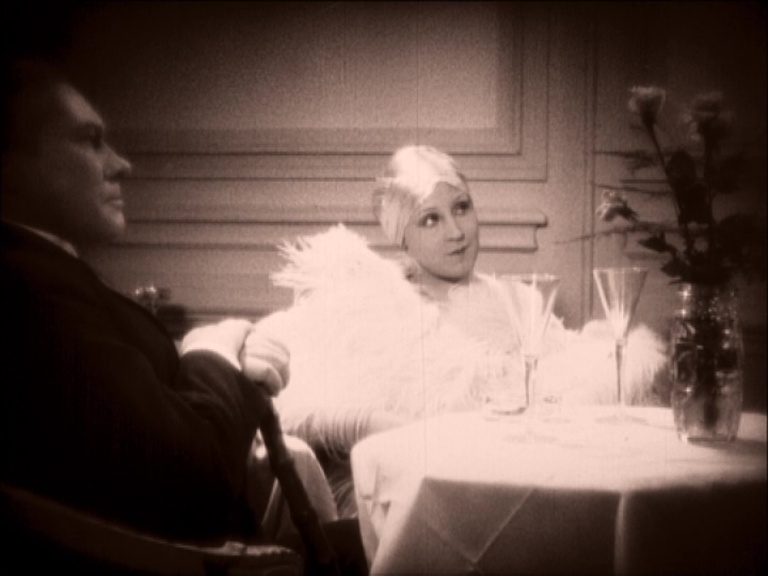
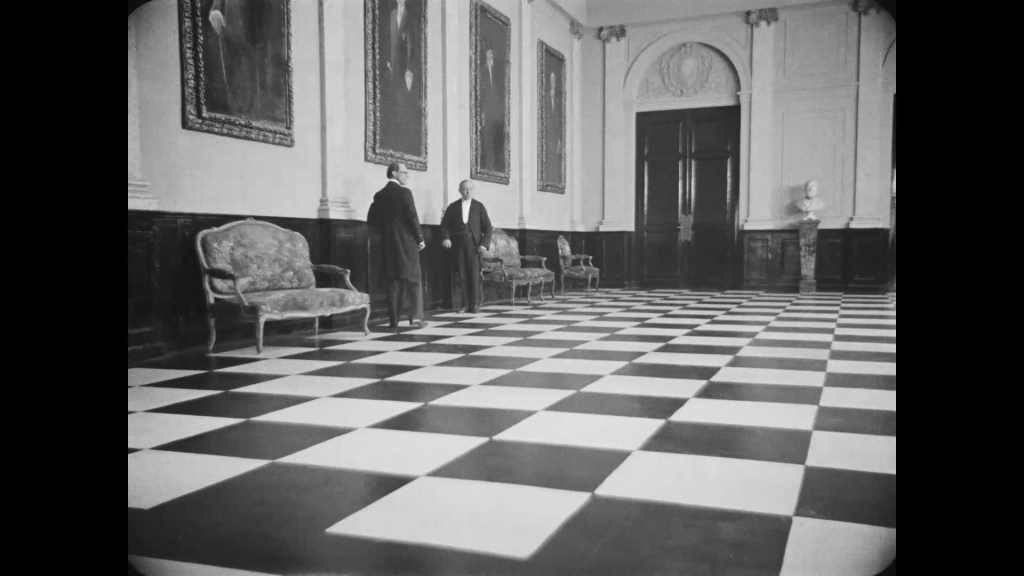
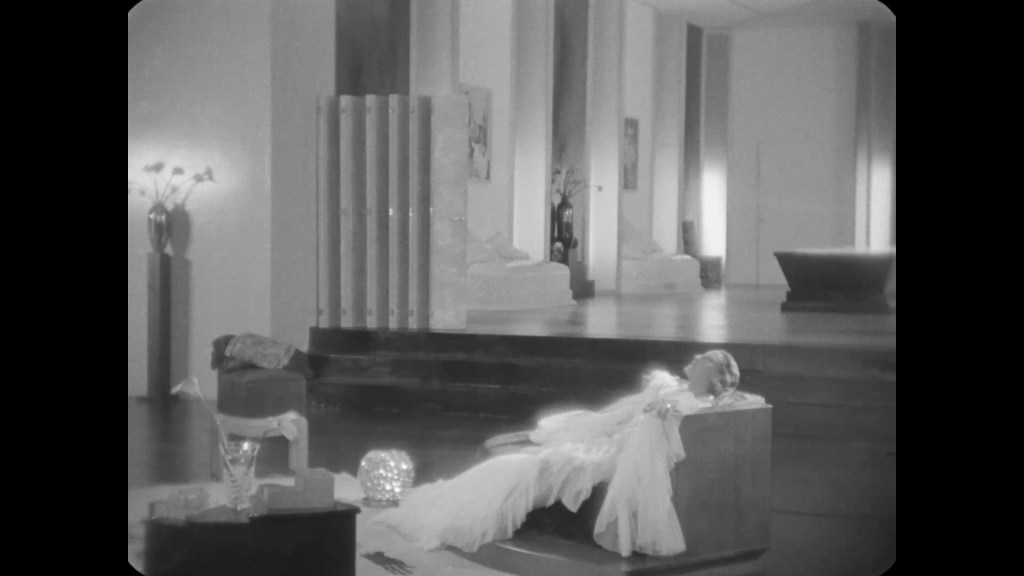
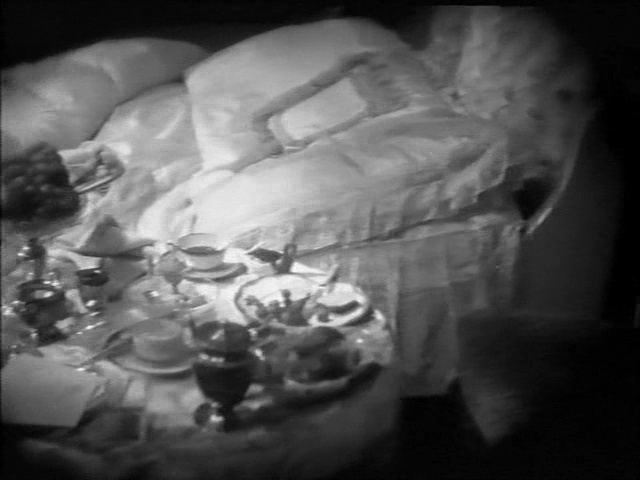
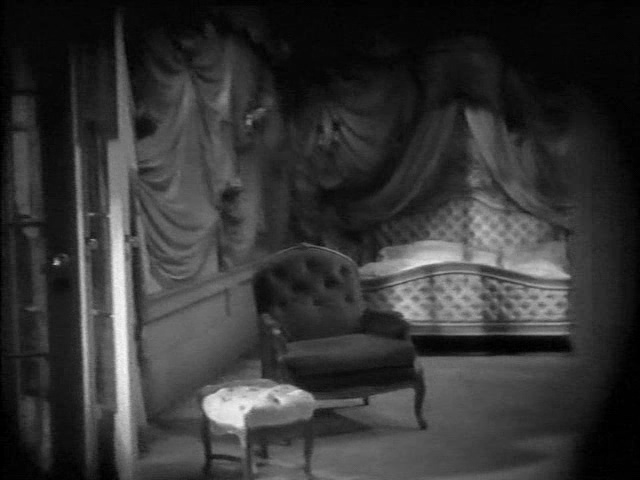
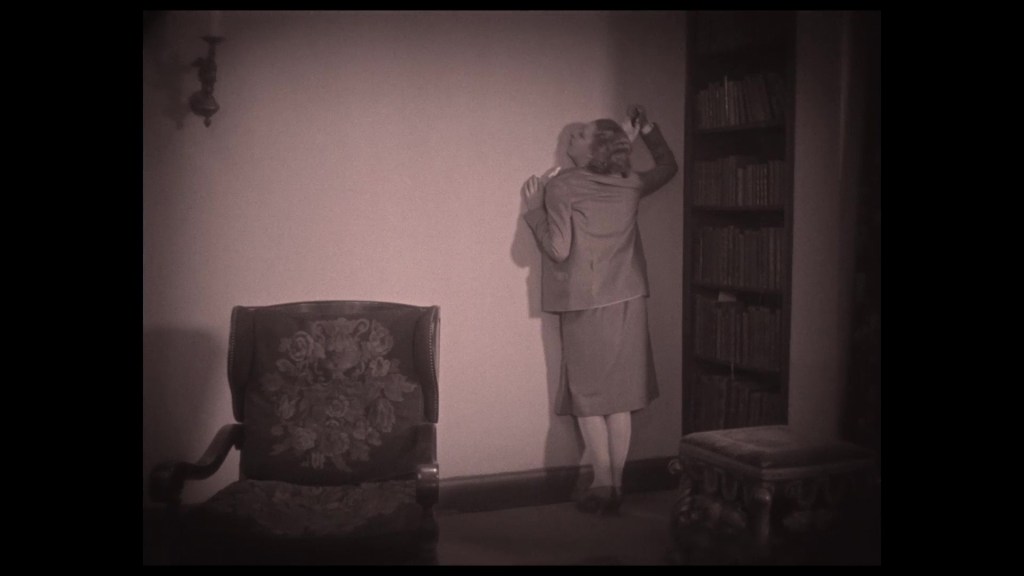
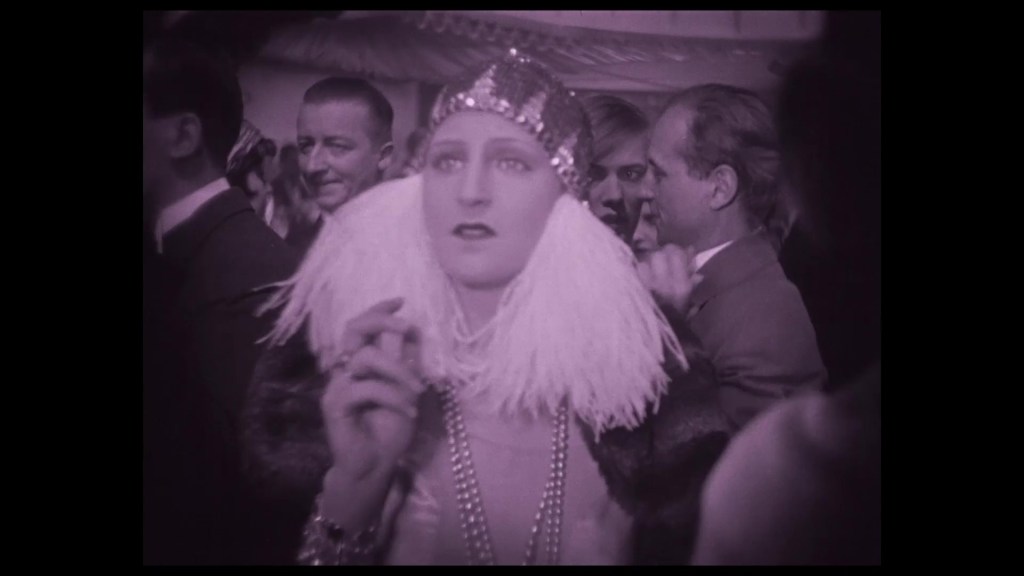
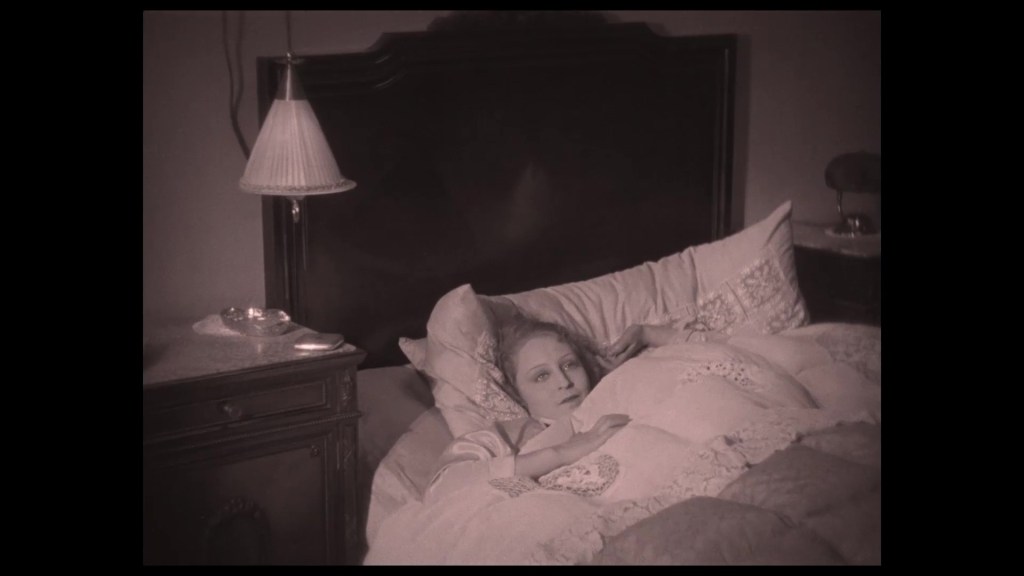
Seen in the beautifully tinted copy presented on the new DVD, Alraune is a splendidly mounted and photographed film. Galeen creates a pleasingly rich, louche world, complete with telling expressionist touches (especially ten Brinken’s home/laboratory). But some of the issues I had with the tone and editing of Galeen’s Der Student von Prag are also evident in Alraune. The cutting is sometimes rather odd, as though the montage has been reassembled from fragments. I am uncertain whether this is the fault of Galeen or of the pitfalls of lost/jumbled material inherent to the prints used for the new restoration.

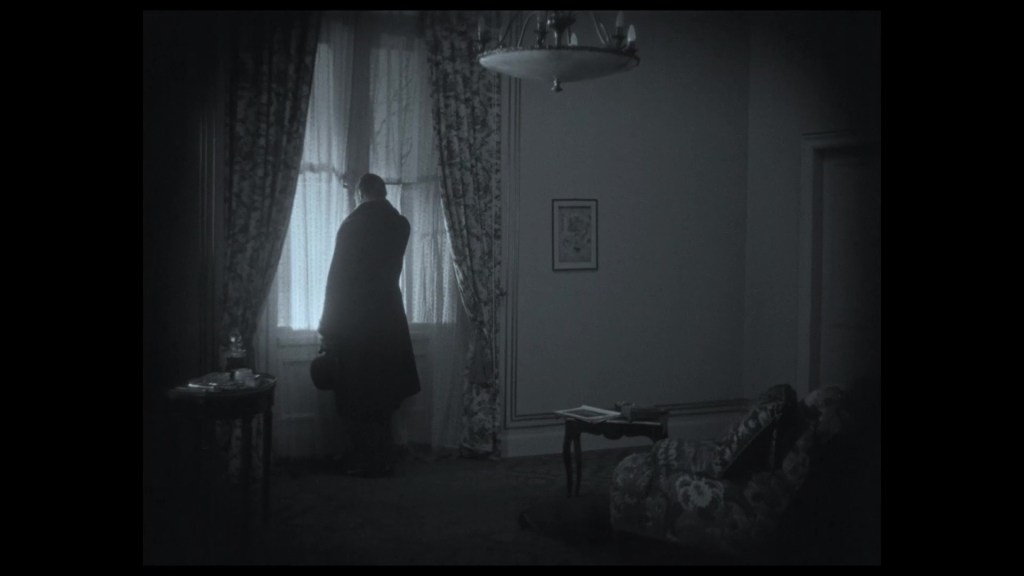
For example, late in the film, when ten Brinken is alone in the hotel room (Alraune is meanwhile meeting Frank Braun) the film keeps cutting back and forth between close-up and medium-close-up shots of ten Brinken. At this point, the Danish print inserts the vision of Alraune transforming into the mandrake root seen at the start of the film. In the German version (as restored in 2021), the vision of the mandrake is moved to an entirely different scene at the end of the film – but the editing of the shots of ten Brinken becomes no more coherent. What kind of effect is being sought by the back-and-forth shots of ten Brinken? Is the slight change in shot scale meant to convey doubt, hesitancy? What kind of reaction are we meant to have? What is the significance of this choice (if, indeed, it is a choice, rather than a textual anomaly)? Why break up Wegener’s performance into oddly mismatched chunks? I can perfectly well understand why the Danish editors of 1928 choose to interpolate the vision of the mandrake here: they wished to make sense of this otherwise inexplicable sequence of cuts, to suggest what it is that ten Brinken is thinking. As restored in 2021, Galeen’s montage is such an odd, indecisive, unconvincing way of putting together the scene. Again I ask: why, Henrik, why?

If the editing is sometimes odd and might be blamed on the complex textual history of the film, other aspects are surely to do with narrative and narrational problems. Some of the most basic elements of the narrative are left weirdly open. Though the film abandons the fatalistic conclusion of Ewers’s novel, the happy ending of Alraune running away with Frank Braun is entirely unsatisfactory. I understand how and why Alraune wishes to leave ten Brinken – the film makes it clear that she finds his lies and manipulation abhorrent. But why does she elope with Frank? The film sidesteps Frank Braun’s complicitly in inspiring and realizing ten Brinken’s experiment to create Alraune in the opening scenes, just as it offers no clarity on how or why Alraune decides to contact him – nor on how and when she develops feelings for him.

Again, a comparison between the 2021 restoration and the earlier Danish copy is instructive. In the only scene of Alraune/Frank together, the Danish version inserts additional intertitles to try and clarify the narrative. In this version of the scene, Frank begins (in good expositional fashion) by saying that Alraune has summoned him via letter. Alraune then replies at length: “In read in my ‘father’s’ diary all that happened before my birth. Have pity on me… I am eager to know everything.” In the German version, Frank says nothing at all, while Alraune merely says “Thank you for coming.” The inserted text in the Danish version is a clunky attempt to clarify the narrative, which in the German original is almost inexplicable. How did Alraune even come to know of Frank’s life (or even existence), given that Frank has been travelling for the past seventeen(?) years? And why does she suddenly send him a letter to come to meet her in southern Europe? And where/when exactly did she write to him, or know where to write? Given the supposed romantic relationship that develops between the characters (again, hardly seen in the film), these are perfectly reasonable questions to ask.

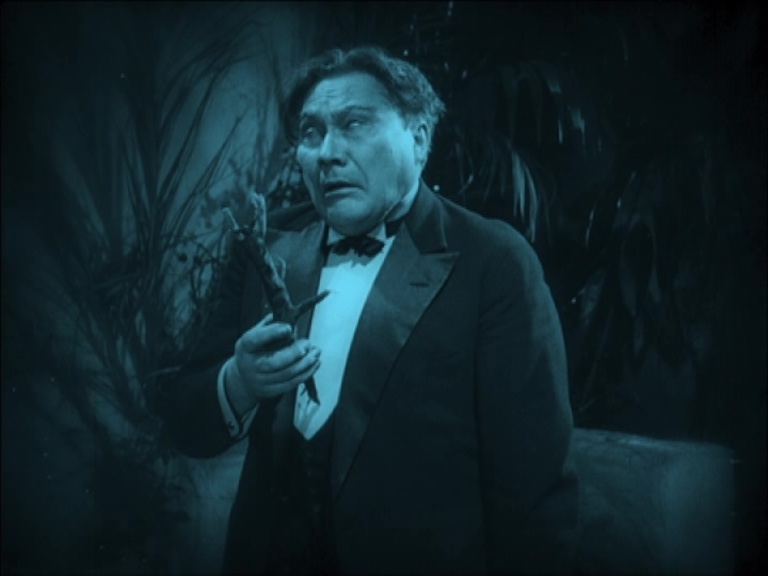
The film also remains ambiguous about the reality of (and thus our potential attitude towards) ten Brinken’s tenebrous theory of heredity. In the final scene (as restored in 2021), ten Brinken suffers delusions in his last stages of mental and physical collapse. He finds and rips from the ground a piece of vegetation he thinks is another mandrake root. As he gazes at it this perfectly ordinary root, we see a vision of the mandrake from his old collection transforming into the person of Alraune. This is clearly a fantasy, totally at odds with what we have just seen on screen. Yet the final shot of Alraune shows the ordinary root clutched by the dead ten Brinken transforming into the mythical mandrake. After showing us the scientist’s deluded folly, the film suddenly tempts us with a final trick. Do we believe? Was Alraune really a spirit of malign femininity, or just an ordinary young woman? What does the film think, or ask us to think?

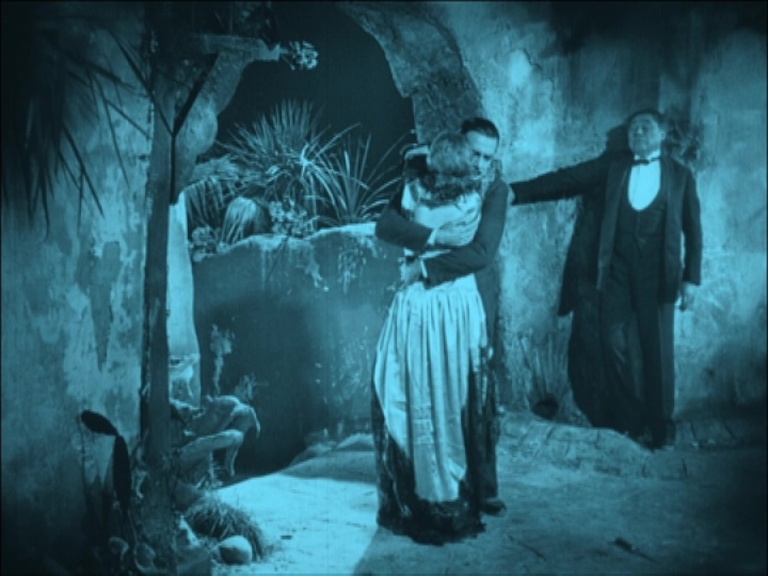
I seems to me that the film invites us to ask these narrative or cultural questions not by choice (I don’t think it makes an effort even to frame such questions) but by the nature of its loose coherence and narrative gaps. (The Danish version simply cuts this entire final sequence, as if the editors had no hope of making it coherent.) As I hope I have articulated here and in my comments on Der Student von Prag, I am unconvinced that Galeen quite has a coherent thesis to suggest, proffer, or invite examination thereof.

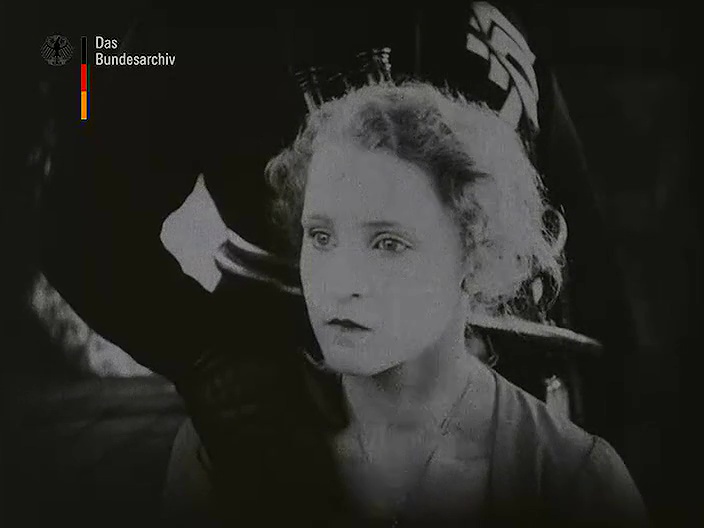
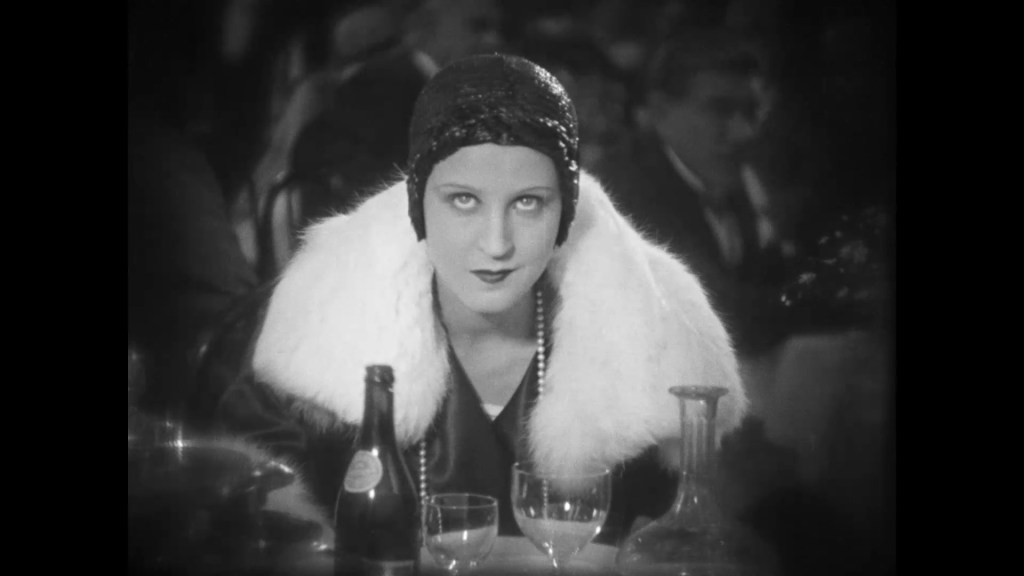
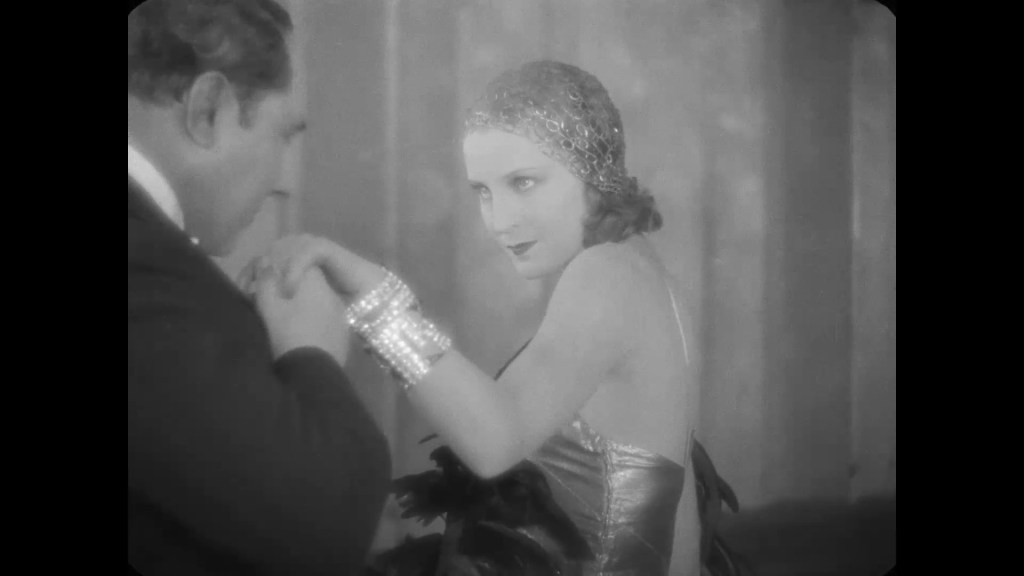
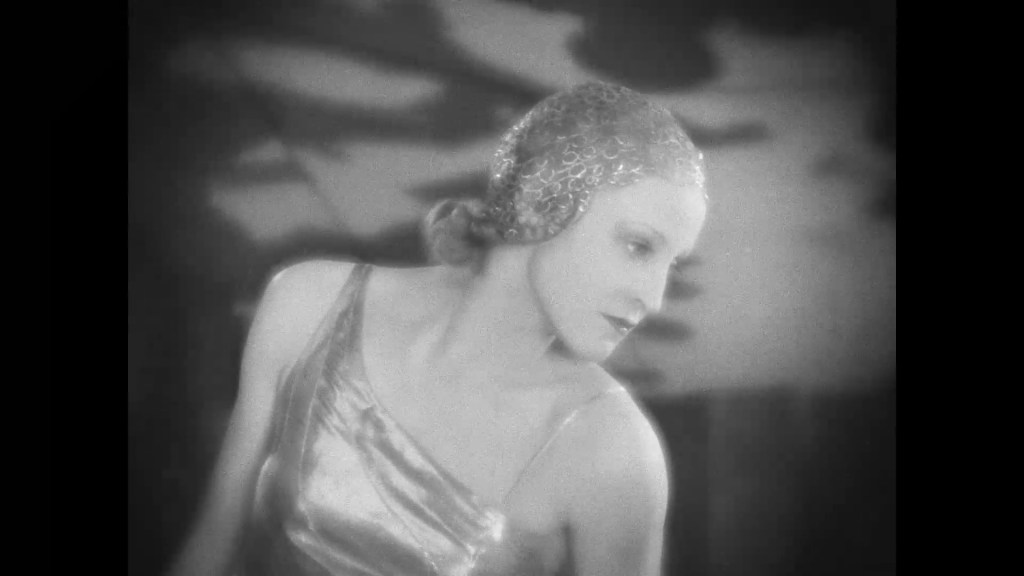
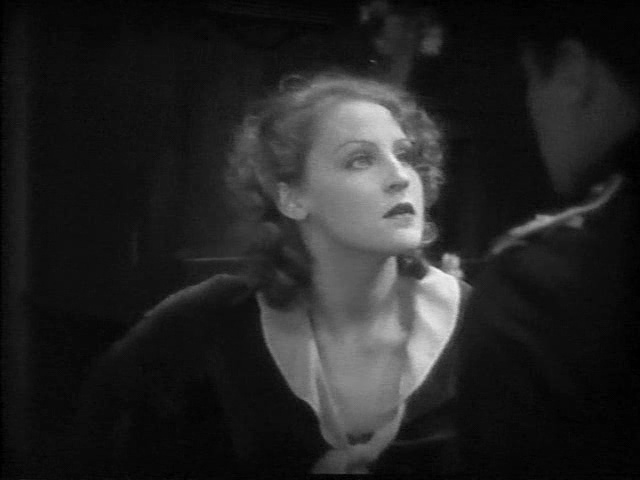
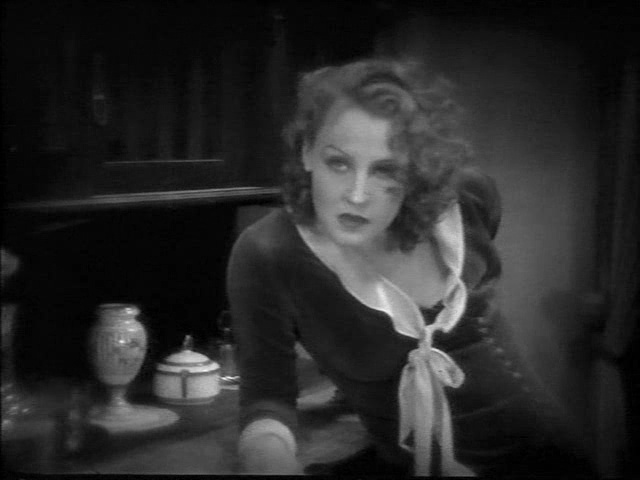
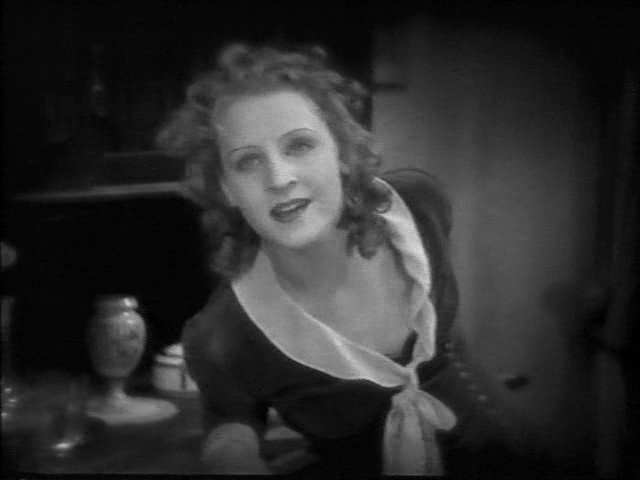
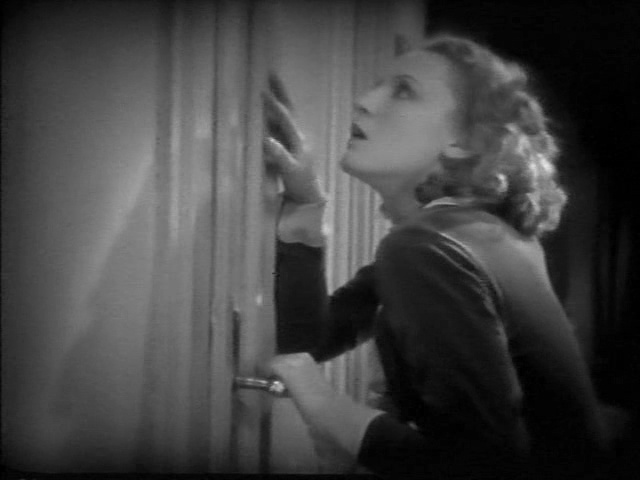
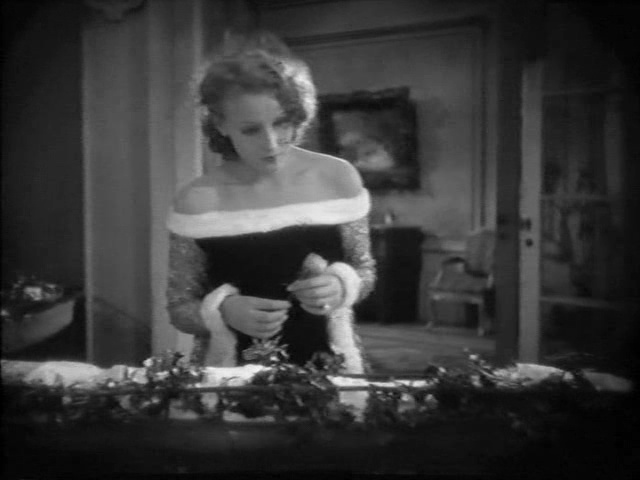
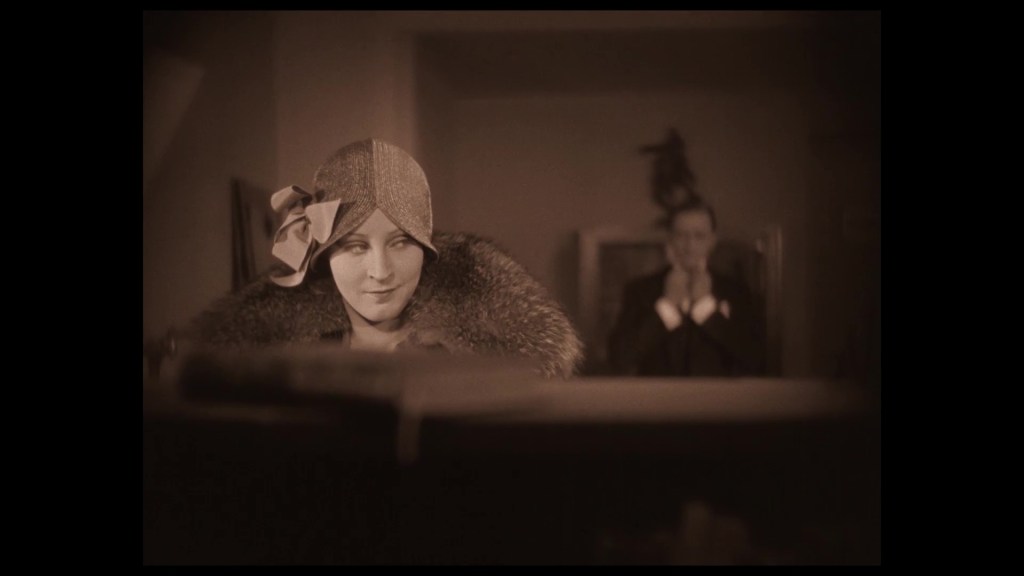
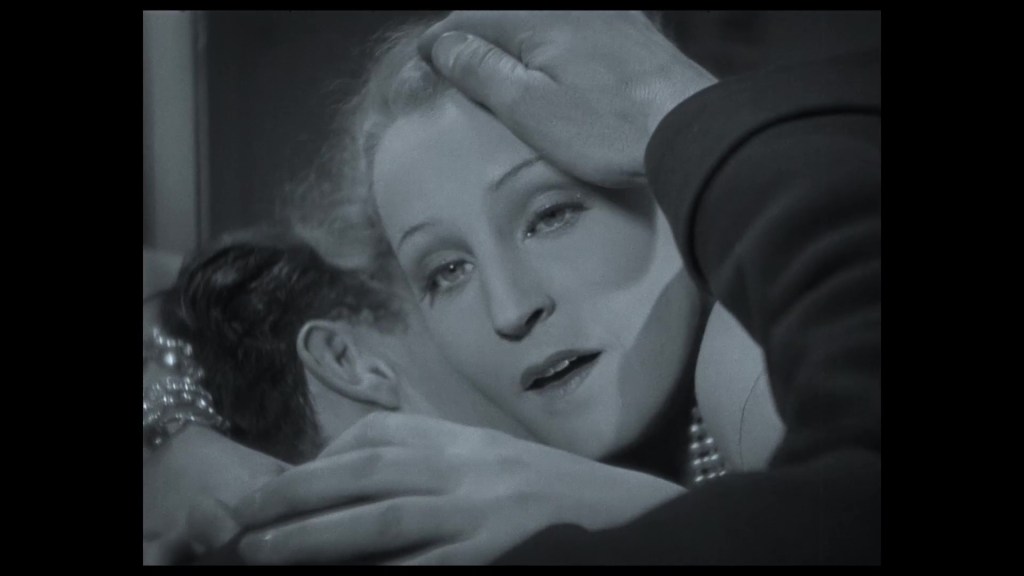
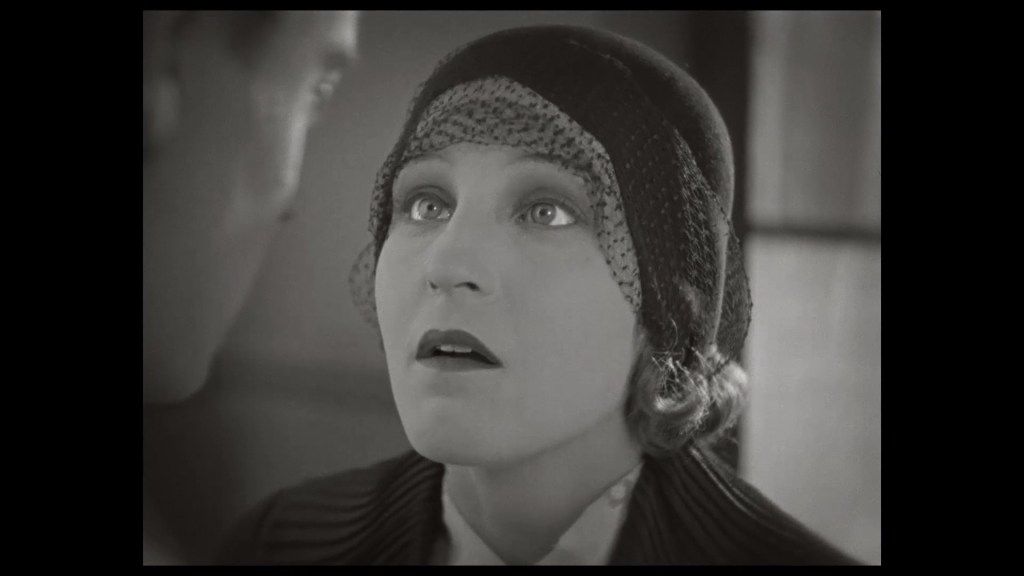
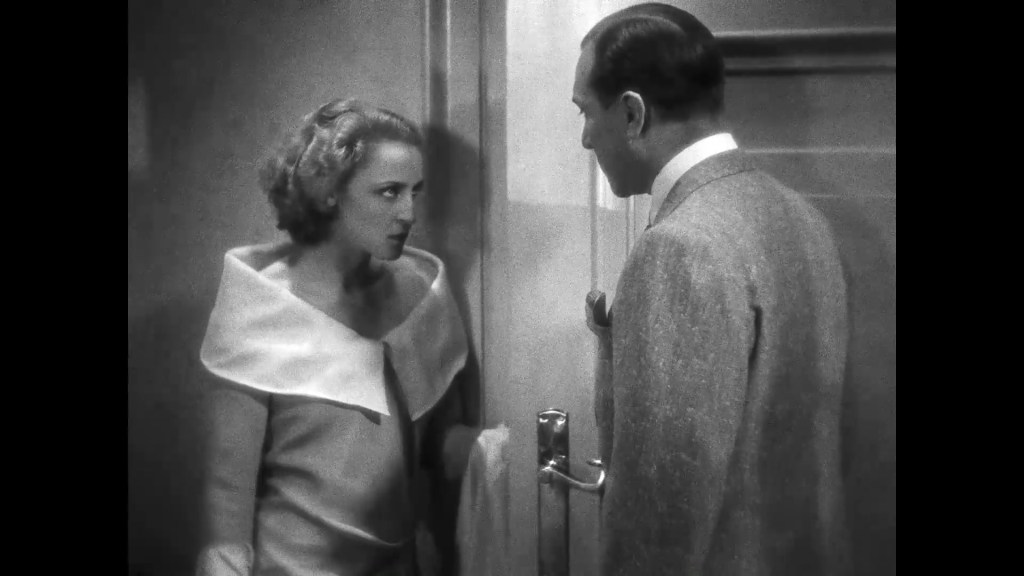
None of these issues should detract from the greatest feature of Alraune: Brigitte Helm. I never cease to be amazed, delighted, and enthralled by this astonishing performer. And despite the emphasis in popular and scholarly writing on Alraune being a horror film, I cannot help but feel that Helm plays this film as a sinister comedy of manners. Though her character grows enraged at her “father” and in one sequence approaches him with half a mind to attack him (her attempt ultimately stalls before being enacted), for the most part she is a half-detached, half-curious figure who outwits and (in all senses) outperforms her male peers. As Alraune encounters (and seduces) a series of men, we see amusement spread over her face as the men grow jealous and fight or become sullen and despair. Only with ten Brinken does she deliberately set out to destroy a man (and for good reason), but always she recognizes masculine weaknesses. Alraune has an uncanny ability to adapt and survive, to make intelligent decisions that triumph over male desires and instincts.

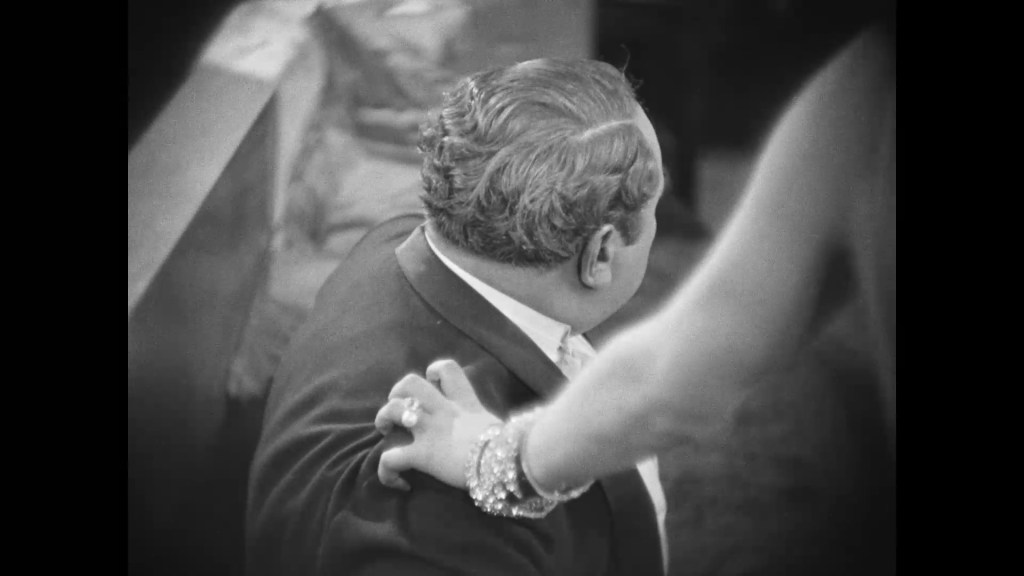
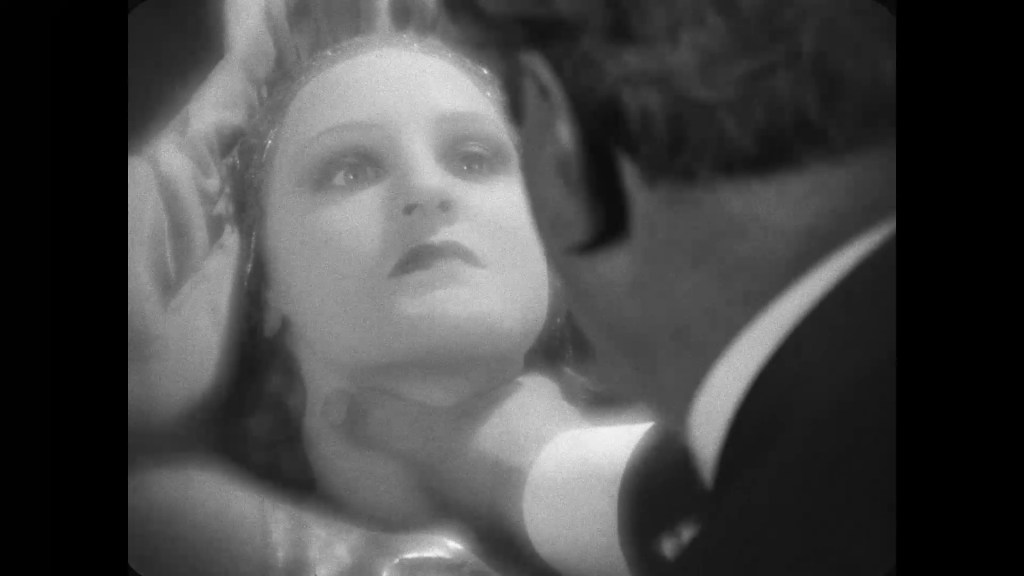
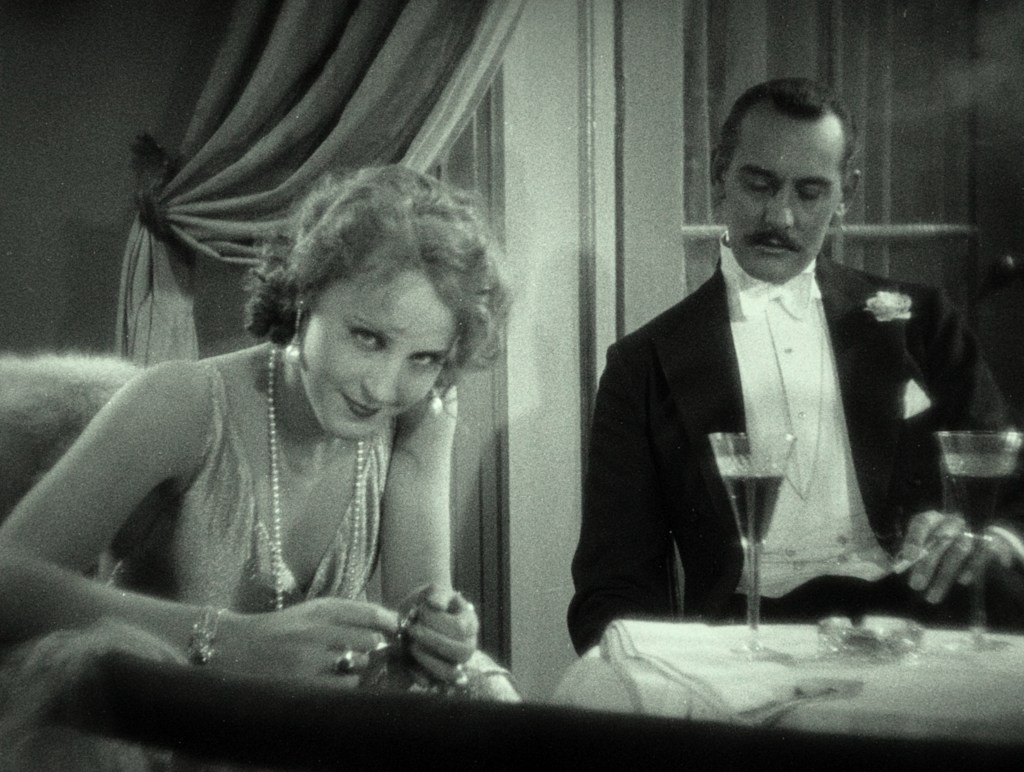
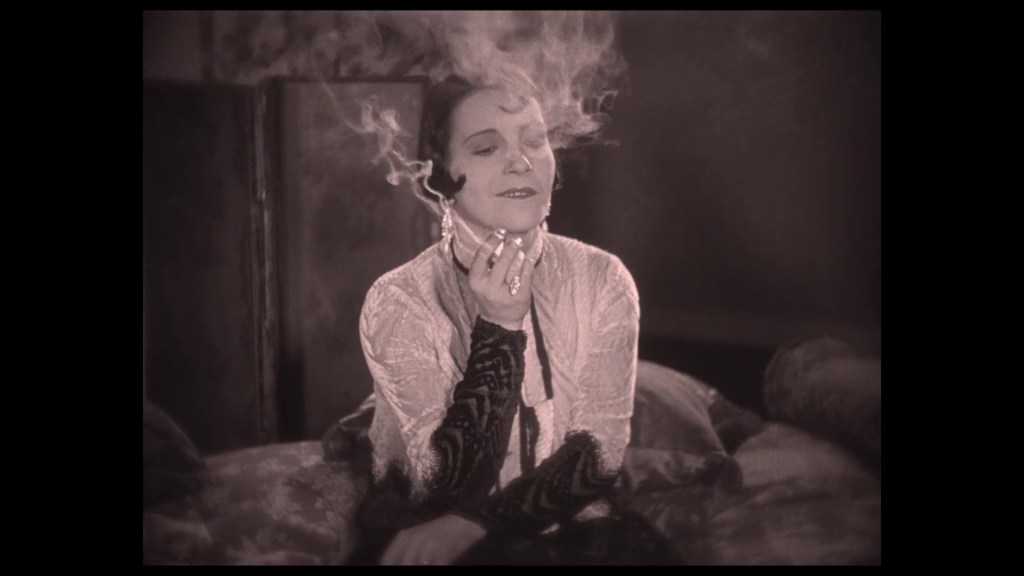
In one of the climactic scenes, Alraune pretends to seduce ten Brinken. She does so to unnerve him, to prove her superiority and his weakness, and thus (in the film’s slightly hazy dramatic logic) to make him liable to ruin himself on the gambling table. In the scene in their hotel suite, Alraune walks from ten Brinken to a chaise longue, where she bends provocatively over the cushioned expanse of silk. While Alraune’s forward posture emphasizes her cleavage, her face is all innocence: eyes wide, brows raised, then a flutter of her lashes. Here, as in her every interaction with men on screen, Helm’s performance is defined by playfulness. One marvels not only at the transparency of her every gesture, but also at the way such readability invites collusion with the viewer. This is a performance designed to make us enjoy the pleasure of her seduction, to enjoy watching feminine cunning triumph over masculine vanity. The controlling, stern, selfish ten Brinken – with his enormous physical bulk – is here slow, stumbling, hesitant. Laid resplendently on the chaise longue, Alraune motions him over to offer her a cigarette, then gently nudges his leg when he hesitates at her side. Languorously taking the cigarette, she raises herself to receive the light – only to lower herself slowly as it is offered. Drawing him down towards her, she smokes, pouts, and spreads her body invitingly. As ten Brinken struggles to control his desire and confusion, Alraune finally bursts into laughter. Through Helm’s extraordinary control of movement, gesture, and expression, this whole sequence teeters deliciously on the border of self-parody. Her climactic laugh is both a release of tension and an acknowledgement that such performative vamping – femininity itself – is always a game. If Alraune is dramatically uneven, it is given emotional direction by Helm; whatever the plot, we can follow her performance.

In summary, after watching these two new restorations of his work, I remained unconvinced that Galeen was a great director. I love many qualities in these films, and each is (in its own way) very memorable. But they are also overlong and dramatically/tonally inconsistent. I am open to the possibility that some of their problems (editing/montage) derive from textual confusion and restorative lacunae, but others (performance style, narrational clarity) seem to me the result of artistic choices. Veidt and Helm (and Wegener) are superb in their respective roles, and Helm in particular is reason enough to treasure much of Alraune. But I admit that I prefer other adaptations of these same stories. I have already stressed my preference for the 1913 version of Der Student von Prag, and I here add that I prefer Richard Oswald’s version of Alraune from 1930 – also starring Helm. The latter version is also somewhat ragged, but its raggedness lets in a degree of dreamlike atmosphere that Galeen’s lacks. Oswald’s film is weirder, nastier, more extreme. Ten Brinken is more monstrous, Alraune more frenzied – and more vulnerable. (For those wishing to hear more on both films, I advise eager readers to consult my own forthcoming book on Brigitte Helm. It may be a while before it reaches print, but I hope it will be worth the wait…)

Finally, I must praise the Edition Filmmuseum DVDs of the two Galeen films. As ever from this label, the films are impeccably presented and the accompanying liner notes (and bonus pdf book) are highly valuable. But could we please have the 1930 version of Alraune released on disc? And the 1935 version of Der Student von Prag too?

Yours optimistically,

Paul Cuff

References

Hanns Heinz Ewers, Alraune, die Geschichte eines lebenden Wesens (Munich: G. Müller, 1911).

Nina Petrowna: From screen to page (1929-30)

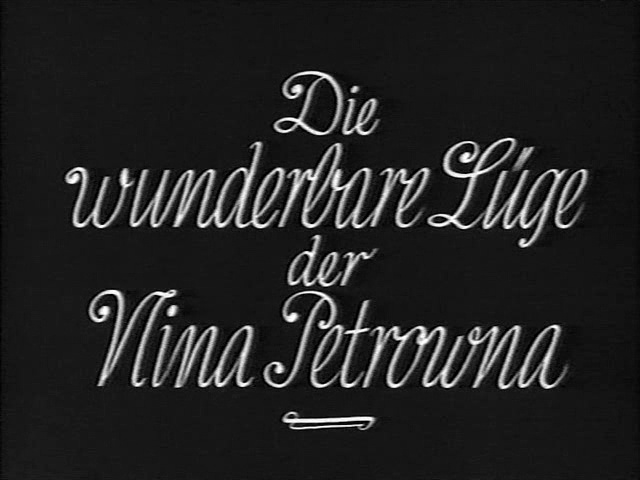
This week, we return to Hanns Schwarz’s Die wunderbare Lüge der Nina Petrowna (1929). As indicated in an earlier post, this film has become something of an obsession. (For interested parties, I have since published a rather more sober analysis of the film elsewhere.) Having spent much time digging around in contemporary press reviews and publicity material, I thought I might write a couple of follow-up pieces on the film’s release and cultural impact within and beyond Germany. A future instalment will discuss the various scores written for performances of the film in Germany, France, and the UK in 1929-30. But this week, my first instalment is devoted to Raoul Ploquin’s novelization of the film: Le Mensonge de Nina Pétrowna (Paris: Tallendier, 1930).

Ploquin’s adaptation was part of a long-running series of ciné-romans published by Tallendier from the late 1920s into the 1930s. I own several volumes in this series, as they are an interesting record of how writers (re)imagined recent films for a popular market. They are also important as records of films that might be partially or entirely lost. Illustrated with stills from the productions they “translate” into text, the books served as promotional material for the films – but also as a way of giving them some kind of cultural afterlife. Once films had left the theatre, the only way audiences might keep a part of their cinematic experience was through such mementos.

In the case of Le Mensonge de Nina Pétrowna, there was a close relationship between the author of the text and the film itself. Raoul Ploquin was the man in charge of adapting Die wunderbare Lüge der Nina Petrowna for its French release. In other words, he was the person who translated/adapted the film’s intertitles into French. Such prints were often subtly (or not to subtly) changed to suit the requirements of national taste or censors. If contemporary synopses and reviews don’t suggest any significant alterations to the film in France, they do prove that Ploquin made changes to the names of the characters. Colonel Beranoff became Colonel Teroff; Michael Andrejewitsch became Michel Silieff. Nina herself remains the same, though her surname is spelled variously as Pétrowna, Petrovna, Pétrovna, or Petrowna.

Ploquin’s novelization is intriguing for how it stays loyal to the plot of the film, yet constantly alters details – cutting, adding, and refitting the original to shape the narrative for its new format. For a start, the novel sets the opening scenes at “the start of April” (rather than the late autumn/early winter of the film). It also offers a more specific temporal setting than the film. Ploquin tells us that Nina is interested in all the latest news and culture from Europe, especially Paris. We are told that the Ballet Russes have created a sensation and that the Chinese Revolution is in full swing. Still more precisely, Nina wonders who will succeed Armand Fallières as President of France. Since Fallières retired in February 1913, this gives the novel a start-point of April that year.

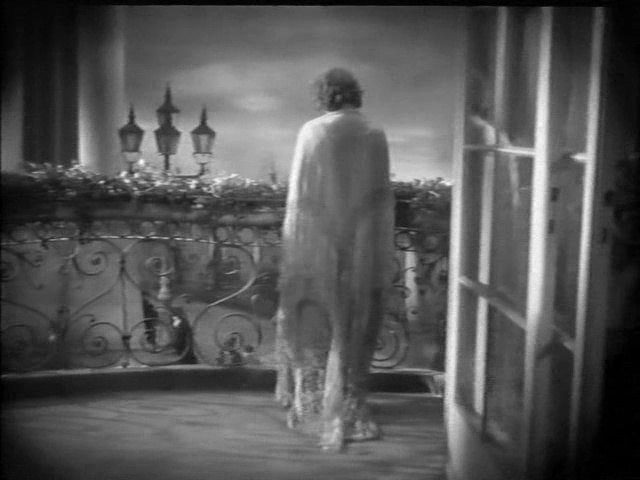
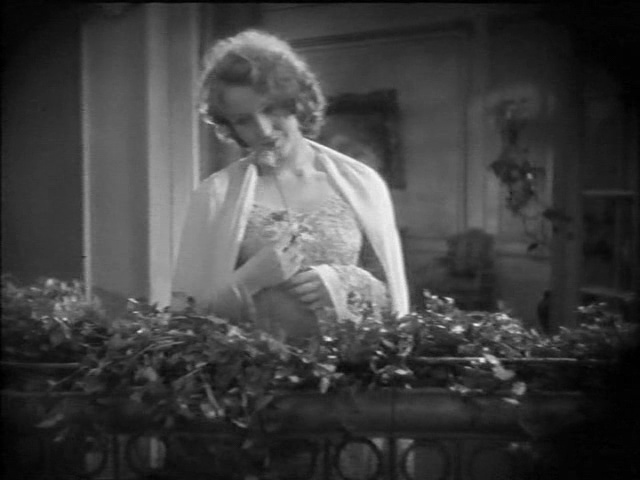
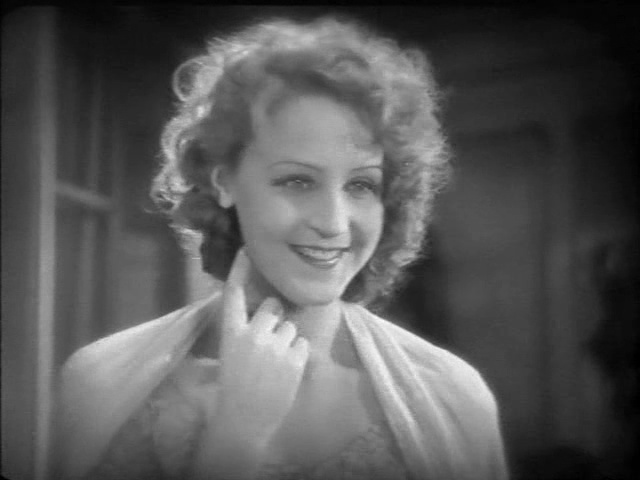
Whereas the film presents the opening scene as their first encounter, the novel begins with Nina recalling a previous sighting of Michel from her balcony. (She remembers him “blushing like a schoolboy” at her gaze (8).) Rather than a chance encounter, Ploquin makes Nina’s presence on the balcony a deliberate attempt to catch Michel’s eye. Indeed, while Nina’s past might be implied in the film it is more detailed in the novel. She considers her own reputation as “the proud Nina Petrovna, the famous Nina Petrovna, the disdainful Nina Petrovna”. (More akin to how Ploquin may have seen Helm’s screen persona.) Nina also ponders why Michel has yet to write to her or make any other kind of move to make contact.

Ploquin’s text also gives us more backstory to Nina’s relations with Teroff. She has been his mistress for five years (44) and living in his villa for three years (5). Ploquin describes Teroff thus:

regular sports had preserved a youthful silhouette; his face was hairless, apart from his upper lip, which was decorated with a small moustache, neatly dyed black. […] His face, with its fine and regular features, had earned him so many successes with women that he still retained, at the corners of his lips, a certain conceited smile that enabled the most innocuous remark to become impertinent. (9)

Nina herself is given a background: she is “an orphaned dancer” who has become “the most seen woman in the Russian capital” (9). Ploquin states that Nina is more intelligent than Teroff, and then segues to a chapter that gives us the backstory to Michel – demonstrating his intelligence.

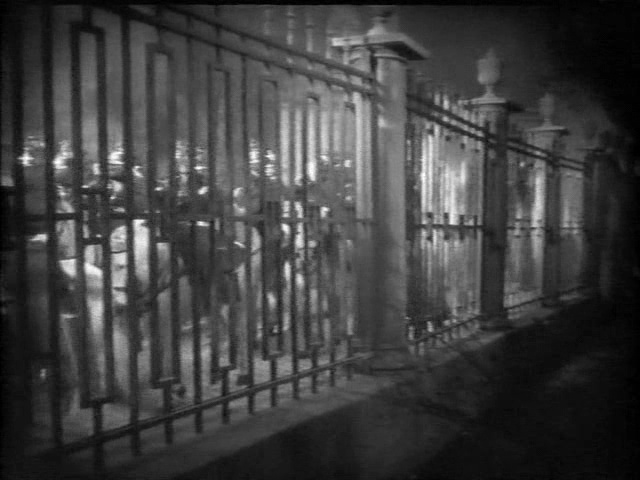
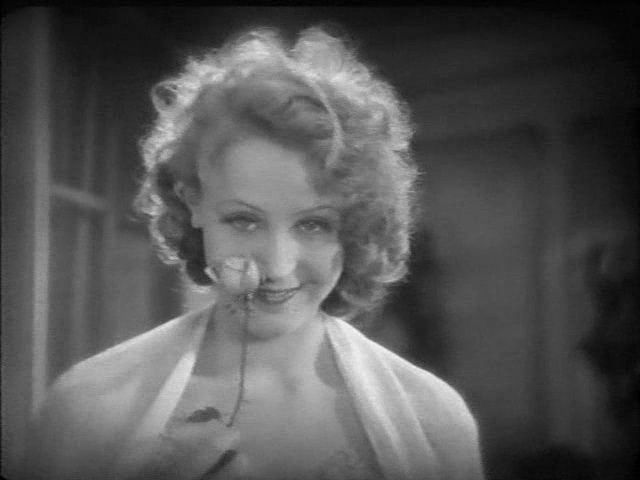
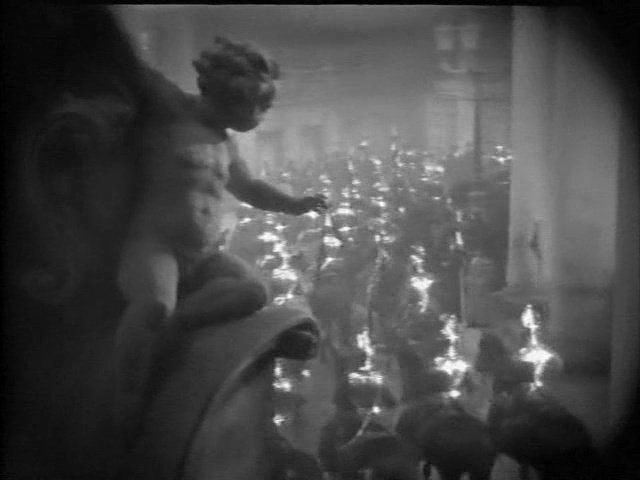
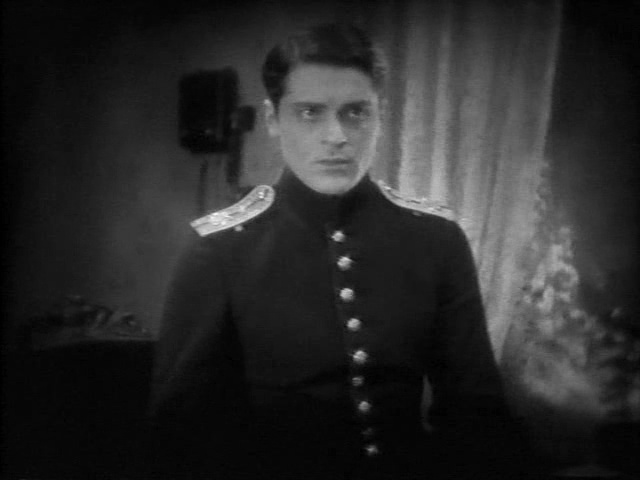
Michel, we are told, wanted to train for the Russian general staff and become “a brilliant tactician” (13). But he also wants to study psychology at university, and is busy learning German and French (he reads Schopenhauer and Napoleon’s memoirs in his spare time). Ploquin then gives a lengthy section to Michel’s inner thoughts. He recalls seeing the “pale shadow” of Nina on her balcony, but he had not learnt her name. He thinks of her simply as “Madame l’Amour”(!). His thoughts recall the imagery from the film: Nina appearing between “the two symbolic cupids” of the building’s masonry. Was she “a sort of sylphid enigma, perhaps a creates purely of his imagination”? (16) But when (in the equivalent of the film’s first scene) Nina throws him a “blood-red rose”, he realizes her true interest in him (17-18).

The scene at the “Aquarium Club” is fairly close to the equivalent sequence in the film, though throughout the novel there is much more dialogue between Michel and his fellow young officers. He feels a “magnetic” gaze upon him from the loggia in the club. Seeing Nina, his friends warn him that she is “none other than the beautiful Nina Petrovna, whom everyone in St Petersburg knows is the mistress of Colonel Alexandre Teroff” (22). Meanwhile, Nina lies to Teroff about how she knows Michel. While the film merely shows us Nina’s pantomime storytelling, the novel spells it all out: she claims that Michel was a childhood friend “who always had flowers” for her, and who once rescued her from drowning when she fell from a pony into a stream (24).

When Michel is brought up to Nina, we learn that Nina paints and plays the piano, and is friends with a famous Russian dancer, Zenaïda Fedorovna (29). (Having tried to find out whether Fedorovna was a real person, I have discovered that this is the name of a character – a mistreated lover – in Chekhov’s The Story of an Unknown Man (1893). A deliberate choice by Ploquin?) Nina and Michel dance not, as in the film, in front of Teroff and his friends, but only once they have left the room. (There is still a moment when the light is turned back on, but in the novel it is simply when Teroff et al. re-enter the room – not a deliberate ploy to end their dance.)

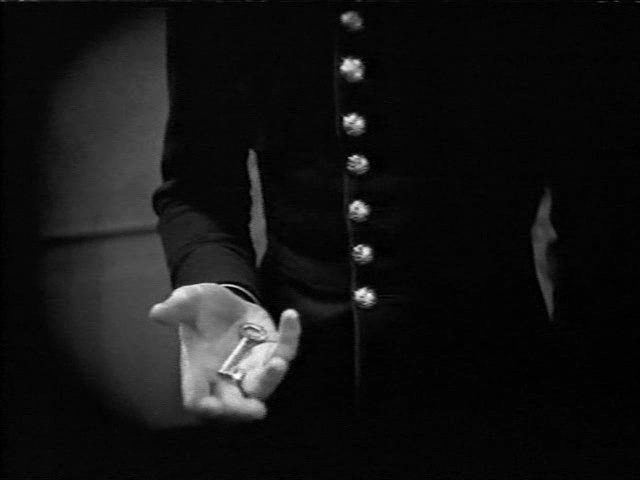
When Nina slips Michel the key to her door, he almost laughs: “He stifled a burst of joyful laughter, a burst of laughter from a child whose maddest desires have just been unexpectedly fulfilled. In a second, life appeared to him as a long series of victories, of which he had just won the most decisive” (31). (At this point, the novel cuts out the delightful little moment in the film when Michael leaves the Club without his coat, which is being held out to him by a teenage servant. The boy is so short that he disappears behind the coat that he holds out – only to poke his head out when nothing happens. It’s a lovely comic touch that eases the portentousness of Michael’s reaction. The novel has no such comic moments.)

When Michel arrives chez Nina, Ploquin adapts some of the text of intertitles into his dialogue – but, crucially, elaborates them with his own interpolations. Thus, after Nina says: “You must think me very audacious”, Michel replies: “Audacious! No, I assure you… I just think you’re good and clever” (33). Ploquin also makes more of Michael’s intimidation by the luxury of his surroundings. It’s there in the film, but the novel lays it on thick: Michel immediately sees it as a barrier to his chances with Nina (and thinks that she would never want to give it up). It presages the eventual rupture between Nina and Michel, giving an (I think, unnecessary) extra motivation for Michel to accept Nina’s lie. During their (platonic) night together, Michel tells Nina about his childhood. As with Nina, Ploquin gives Michel a tough upbringing: Michel’s mother was a widow of a minor functionary and his homelife was deprived (34).

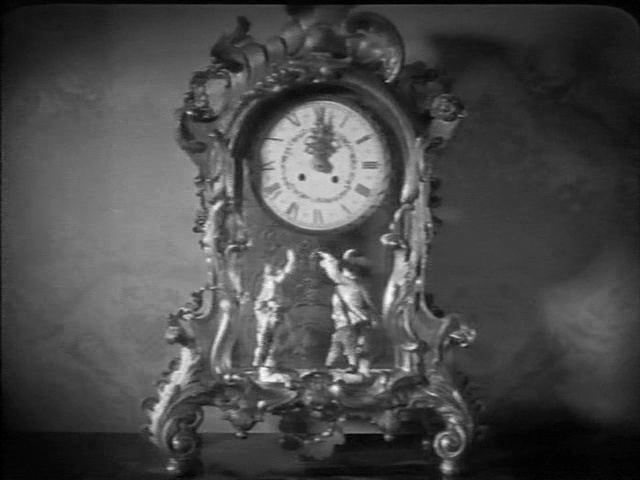
Unlike the film, where it is Nina who (after reacting to Michel’s assumptions about the kind of woman she is) says that Michel should leave, in the novel it is Michel who says that he should leave (35). There is no dance to the chiming of the clock, per the film, and instead of that perfect blend of gaucheness and childishness, the novel provides Michel with some rather silly inner monologue about realizing that Schopenhauer was right regarding the folly of romantic dalliances! (37) Once it is agreed that he will stay, it is his thoughts of Schopenhauer that stop Michel opening the door to Nina’s room that night.

In the morning, Nina is compared to “a playful cat” in her swift movements (a comparison made endlessly by French critics of Helm herself) (38). Their breakfast – which is itemized to emphasize its luxury (caviar, sandwiches, eggs and bacon with Worcestershire sauce!) (39) – is then interrupted, per the film, by Teroff. After Michel leaves, Nina taunts Teroff – slandering herself as “a whore! a bitch in heat!” (42). He retorts that he has “risked his career for her” (not something that is said in the film, where the power relations between Nina/Teroff are much clearer: she risks everything by leaving him, he risks nothing). Indeed, Teroff is much angrier and less coldly detached in this scene in the novel than the film. (Some of its prose captures Warwick Ward’s performance well, other aspects seem very different.) Meanwhile, Michel is once again left to his own thoughts. “Oh Nina! – instrument of the devil!… Perverted woman! I curse you… You’ve trapped me in this evil mire!” (46) This is part of a disturbed, often violent, inner monologue. Michel is much more troubled, and prone to outbursts (even if only in his own mind), than in the film.

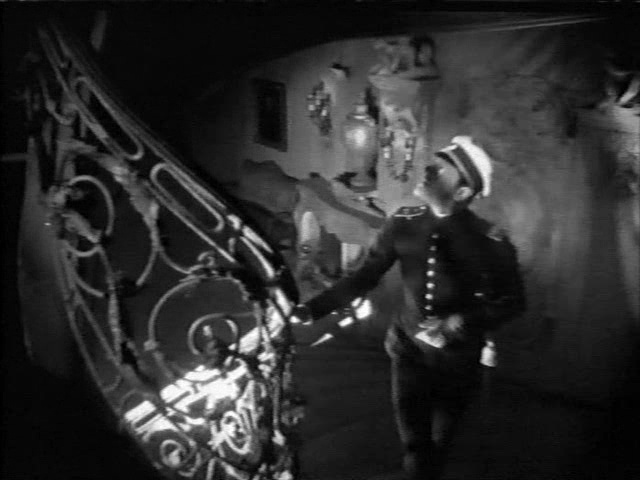
In the film, Nina reappears the next morning. But in the novel, a fortnight passes until Michel hears from Nina again (52). First, she phones him, then (per the film) arrives at his barracks. I can only suppose that the novel drags out the time between their nighttime meeting and their encounter at the barracks solely to make the narrative occupy more time. (As we shall see, whole months pass over its course.) When Michel gets into her carriage, Nina tells him her life story, how she hates the “odious objects” with which she was surrounded in Teroff’s villa (57-8). When they arrive at Nina’s apartment, she introduces Michel to her neighbour as “my husband” (59) – rather giving away what will happen next! The novel then proceeds to gives us a (rather too detailed) description of how she lives on her own. She puts on a kimono(!) and guides Michel round her small rooms, filled with (bad) paintings. She shows him the piano, which she promises she will teach him how to play – beginning with the “Hungarian waltz” to which they danced in the Aquarium Club (62). Nina plays the waltz, and Ploquin provides us with the (unsung) words: “The hours that never return, / Those we guard secretly in our hearts, / It is these that I would rekindle / In the calm of a summer night.” (62) Ploquin’s text here (at least the first line) is taken from the theme song produced to accompany the film for its German release. (I promise to return to this aspect of the film in a future post!) It is now that they dance (in silence, one presumes), whereupon “they spend their first night of love together” (63). Delicate though the line might sound in French, it’s still a rather blunt summary of the equivalent scene in the film – or rather, it describes the ellipsis after the film fades to black following the lovers’ embrace. The text quite literally spells out what’s going on, which is a shame.

Nina and Michel then spend several months together. Only now does the book catch up with the seasonal milieu of the film, which is set entirely during the winter. The fact that the novel begins in April 1913 now allows its last chapters to be set in the winter of 1913-14, hence on the verge of the Great War. (Schwarz’s film gives no exact year, but the imperial Russian setting is very clearly c.1900.) Ploquin exploits the approach of war through Nina’s fear of Michel’s career in the army. “What if there is a war?”, she asks him. “What if you were killed?” (64) While the film implicitly carries the knowledge that the entire world of its characters will be destroyed by the forthcoming war and revolution, the novel is thus more explicit. Ploquin also makes more of Nina’s worry in respect of the two lovers’ relative mindset. Michel’s inexperience is emphasized by the fact that Nina calls him “enfant”, putting “all her pity, all her love” into her utterance of this word (71).

Ploquin’s treatment of Michel renders the character less coherent, I think, than in the film. Franz Lederer’s performance on screen is so finely gauged that it’s much easier to believe in his childishness and his gaucheness. As I wrote in the piece(s) cited in my preamble, Michael in the film may be inexperienced but he is also too quick to leap to conclusions. Articulated through the combination of performance and mise-en-scène, I am far more willing to accept the film’s characterization of Michael than I am the novel’s. Ploquin’s provision of inner monologues seeks to contextualize his final outburst toward Nina, but the quality and quantity of these sections (to my mind) render the character less coherent. If anything, this is worsened by the fact that the novel also emphasizes how much pity everyone else feels towards him. (As if Nina were not really the central protagonist of the story.) Even when Teroff threatens him over his cheating at cards, the colonel mutters “poor kid” when he sends him off to Nina and certain heartbreak (89).

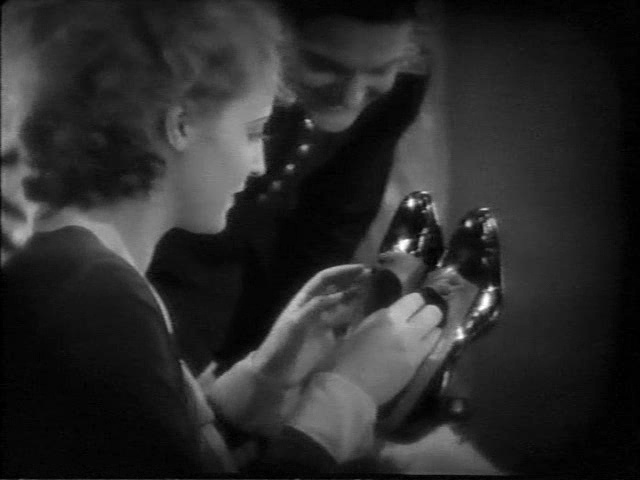
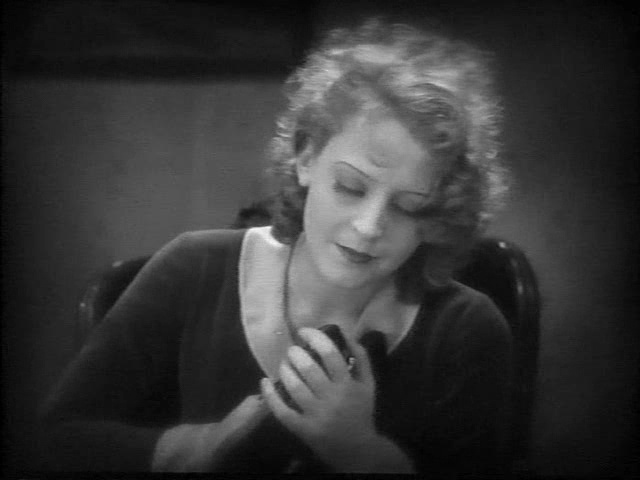
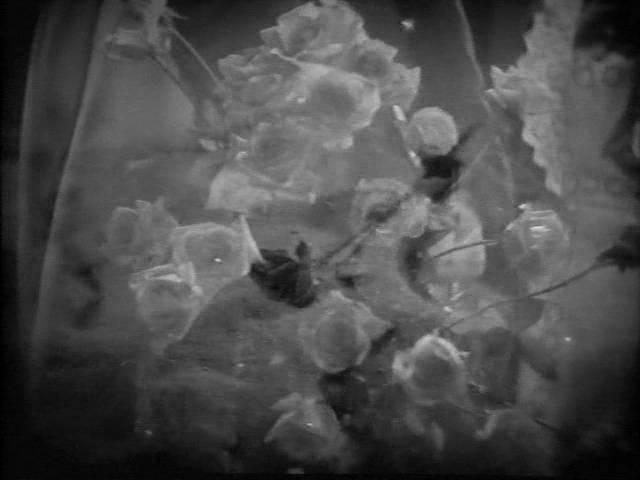
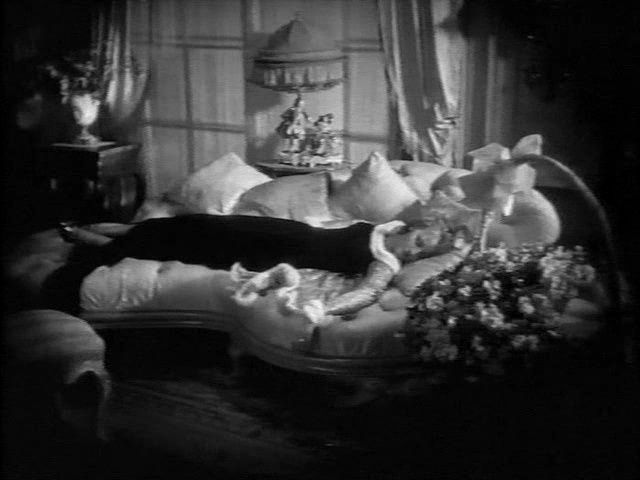
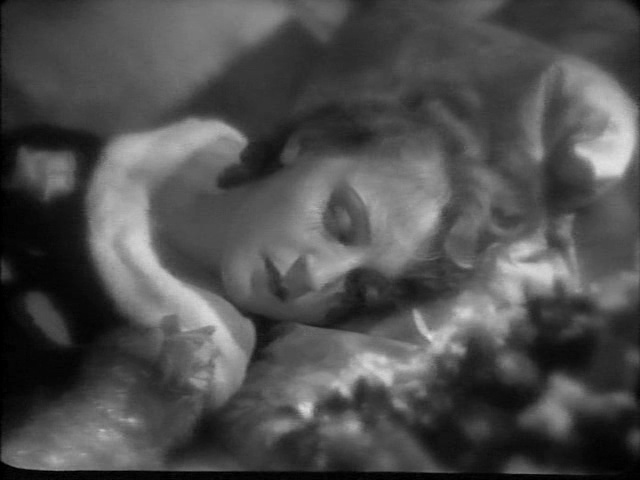
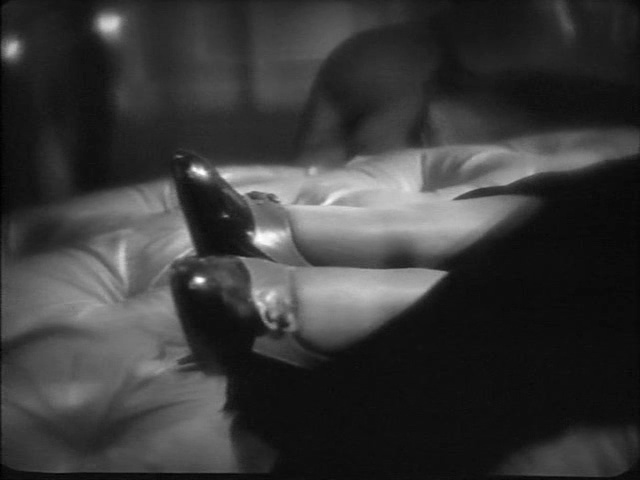
These tonal issues aside, the novel sticks much more closely to the film for its last chapters. And though I have complained about its rendering of character, there are also some pleasing moments when it tries to capture specific moments from the film. One of these is that astonishing, sustained close-up of Nina before she lies to Michael and breaks his heart. Of this, Ploquin writes: “A long moment passed, during which the young woman’s face expressed only a dreadful, enduring agony” (92). It is indeed “a long moment” on screen (some 45 seconds), though Ploquin cannot do justice in his prose to the cadence of emotion we see in Helm’s performance. Ploquin also knows when not to change the text of the original titles: Nina’s words to Michel are essentially the same as rendered in the film’s German titles. (Ploquin’s text is presumably a close match to his translated titles for French prints of the film.) Likewise, the final scene plays the same. The text does not attempt to echo the film’s complex editing and camera movement here. The film’s last image – of Nina’s shoes – is not that of the novel. Rather, it closes on a last vision of Nina: “She sleeps, Nina Pétrovna, motionless and proud, serene and mysterious. / A sleep so calm! A faithful sleep!…” (96) I don’t suppose there would be a way to adequately render in prose the sadness of the film’s ending (and the skill of its visual language). Ploquin’s attempt is a little too fond of its own idea of Nina, and the idea of her suicide as an expression of her “faithfulness” simplifies a much more complex emotional tone.

In sum, Ploquin’s text is a curious blend of adaptation and invention. It says as much about the (imagined) tastes of French cinemagoers as it does about the film itself. Nina is much more of a celebrity in the novel, drawing on contemporary fascination with Brigitte Helm. By 1930, Helm was established as a star across Europe (and beyond). She had already starred in one major French production – L’Argent (1929) – and the coming of sound would lead to many more French-language productions. (Several of which also spawned ciné-romans.) But the very fascination with Helm’s presence on screen results in some rather awkward transliteration in Ploquin’s text. His emphasis on the inner life of characters renders the text far more novelistic than cinematic. The beauty of Nina Petrowna, it seems to me, is how much meaning is shaped through the combination of performance and the impeccably crafted mise-en-scène. Still, I’m very glad to have found this book and to have gone through it, I hope, with curious interest. I remain curious about how the witnesses of silent cinema sought to capture their experiences in prose. (See also my earlier posts on musical imaginings of silent stars, here and here.) I also feel some sort of kinship with writers like Ploquin. After all, I spend much of my time trying to capture in writing my impressions of what I have seen and felt on the screen. With this in mind, at some point I will get around to writing about other ciné-romans published by Tallendier. There’s something charming about their rough, age-tanned paper and low-quality photographic reproductions – and about their enthusiastic reimagining of cinematic images and the experiences they engendered. Reading them is to take a little leap into the past, and to partake in a little of their faded cinephilia.

Paul Cuff

Am Rande der Welt (1927; Ger.; Karl Grune)

In January 1927, the director Karl Grune began a major new production for Ufa. He had co-written the screenplay with Hans Brennert, and he as deeply passionate about his project. Am Rande der Welt (“On the Edge of the World”) was to be a pacifist film, set in an unnamed borderland on the frontline of an unnamed war. The cast boasted veteran actors Albert Steinrück and Max Schreck (Nosferatu himself) alongside younger stars Wilhelm Dieterle and Brigitte Helm (fresh from shooting Metropolis). Filming took place entirely in the studio spaces of Ufa during January-March 1927. Grune completed editing Am Rande der Welt and presented it to the German censors in April 1927. It was passed and the film readied for release. At this point, the management of Ufa stepped in. In March that year, Ufa had been bought by the press baron Alfred Hugenberg, who demanded that his management team take greater control over the films they produced. This was not only for the same of economics (Metropolis had nearly bankrupted the company), but for the sake of ideology. Hugenberg was ultra-conservative, ultra-nationalist—he would later abet the rise of Adolf Hitler to power. It was the ideology of Grune’s film that was the problem: it was too pacifist, perhaps even anti-patriotic. Am Rande der Welt did not meet their moral standards. The result? The film was cut, not by the censor, but by Ufa itself. Grune’s original version measured 2635 metres (approximately 114 minutes at 20fps), whereas the version resubmitted to the censor in August 1927 was 2429m. Grune complained in private and then in public. The film had not just been reduced, but re-edited and re-titled. He felt that these changes were so severe, so damaging to the film’s pacifist message, that he asked for his name to be taken off the film. Am Rande der Welt premiered on 19 September 1927 at the Gloria-Palast in Berlin, shown with an orchestral score by Giuseppe Becce. So, what remains—and how does it stand up?

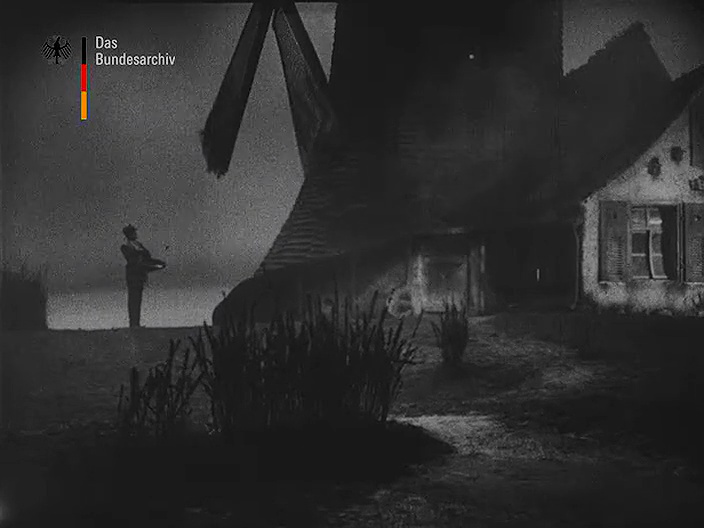
Act 1. From the mists of space, a spinning globe bowls forward. Jazz bands, dancers, superimposed—naked bodies writhing, parting. Fireworks, grotesque dancers. A Catherine wheel spins, overhead visions of dancers, dissolves away over the image of a spinning windmill. The camera tracks back, and back. Surely we at the edge of the world. A title, a motto etched on the wood. The mill is ancient, and it’s as though we’ve travelled back in time since the opening montage. What century are we in now? The only technology here is pre-modern. Labour is manual, the only mechanism the ancient technology of the sail and grindstone. The mill stands at the edge of the world: a studio painted horizon marks the limits of reality as the film knows it.

The old miller (Albert Steinrück) is sieving flour, his oldest son Johannes (Wilhelm Dieterle) emptying a bag, his youngest son Michael (Imre Ráday) cleaning the giant stone grinding wheel. This huge space is the interior of the mill, and it feels cavernous: the exterior is a model, yet the interior is an expansive reality. And here’s Magda (Brigitte Helm), feeding chickens, her hair blowing in the wind.

But already an outsider (Erwin Faber), silhouetted against the pond in the foreground, the mill turning behind him. His letter brings him to work at the mill, but it also promises further “instructions”. He reads the letter one last time, then burns it. Something sinister is afoot. A real sky glowers gloomily above the model and studio set. Just as the man meets Brigitte, the wind picks up; he is heralded by a great gust of dust. Portentous signs…

Inside, the millers gather round the dining table. The newcomer is all helpfulness and smiles, helping pick up the fragments of a dropped plate (but is he the cause of this first mishap?). “I come from the other side of the border”, he explains. The miller (Albert Steinrück) doesn’t mind, just so long as he works well. He is given a room somewhere in the mill, a gloomy cell.

Outside another figure stands before the mill. As the newcomer unpacks, the other man stalks the corridor outside. His knock portends doom. The camera pans rapidly to the door, then shakily follows the man to the door.

It’s Max Schreck, tall, sinister, a devil’s pointed beard and hat. “Are you afraid?” he asks. He’s a pedlar of sorts, but surely far more portentous. But to Brigitte he’s more flirtatious, more camp. He applies lipstick, powder to his own face to tempt her, but she laughs him off. The pedlar leaves, his appearance leaving some strange atmosphere behind him.

Another gloomy interior, the end of the working day. “Next week we’ll celebrate”, the mill will be three hundred years old. An assistant miller plays the accordion, the millers comically cavort. The miller’s son, Johannes (Wilhelm Dieterle), runs after his wife (Camilla von Hollay), who leads him outside, only to show him a baby’s clothes, newly made.

Outside, the pedlar observes the newcomer flirting with Brigitte. Scared by him, they run inside and dance… only to find his eye at a keyhole—the camera tracks rapidly into its sinister ken.

But the baby clothes attract the millers, while the newcomer seeks the owner of the eye at the whole—of course it is the pedlar. “I’ve been overserving you these last days.  No love affairs”, he warns. Who is this man, and what is his power? Another shadow falls across the ground. But the truth begins to emerge: the pedlar instructs the newcomer, and threatens him destruction if he betrays his mission. He is a spy!

The old miller reads the paper, which denies the threat of war. That night, a silhouetted figure wanders the plains outside the mill. Vertical wipe-dissolves take us from room to room, then a horizontal wipe from Brigitte’s bed to the newcomer, his shadow moving over the walls, spade in hand. Now he is a prick of light in the dark, inching forward. He digs. But the miller wakens, lights a candle, creeps to the window. The newcomer dashes madly back to bed to avoid detection. (His bed is a sinister war chest, bulging with giant protruding nail heads.) The pedlar stalks the land. End of act 1.

Act 2. The mill’s anniversary. Food and drink are being prepared. A montage of delicious produce, and the labour taken to prepare it: hands stirring, washing, striking, mashing, straining, plucking. Outside, a band of musicians, villagers in their Sunday best, marching to the mill.

Brigitte is making herself look pretty (in the homeliest way—a far cry from her later films). The old miller wears his best suit, his top hat, which he raises to the millers and to the outside world. Johannes is busy building a crib for his future child. After showing off his construction, he rushes into his festive clothes and joins the others. He and his wife march proudly with the rest out to greet the crowd. They parade with the band to the green, where the whole village has become a funfair.

Circus folk—midgets and the “woman without a head”, strapped into a chair. (It’s a grotesque image; the people laugh, but it portends something untoward.) The camera tracks overhead, looking down at the happy dancers, the clowns, the merry-go-rounds—but the camera dissolves into another tracking shot, falling back before a squadron of riders in black masks and hoods. Disaster is surely coming.

The newcomer and Brigitte are flirting. He gives her a love token. She refuses it and runs away, all fidgety nerves, all innocence and fear. She rejoins her family, as does the newcomer—disappointed but tagging along.

The pedlar meets the riders. Spies! “Order to alarm the border villages”.

The dance continues, swirling around the millers. The dance is intercut with the riders. The wind picks up. A rider appears with the news: war has been declared. The dancers are become statues, heads bowed. “Long live the fatherland!” someone cries, and the band strikes up an anthem. (But what anthem to they sing for this prolonged shot of communal musicmaking?) Close-ups of the crowd, of medals on a man’s chest, and the artificial leg he bears. Old heads shake, young faces beam.

The abandoned fete. The camera rises. There is only the sense of the wind travelling through the empty stands, billowing the streamers. But here is death, astride the horizon, ushering animated lines of bayonets through the horizon. The leaming weaponry becomes a real phalanx of infantry, rising over the folds of the landscape toward the camera.

Act 3. Suddenly it is winter, there are gas-masked troops, warning of attacks, flooded positions. The Great War is upon us, without being heralded by its name.

The pedlar is instructing the newcomer about the arrival of their troops. The latter wants nothing to do with the pedlar, but the pedlar says “there is no way back for you”—he is being watched. The troops wearily arrive at the mill, thronging about its flanks. The millers give them water. Clouds gather on the horizon: horsemen appear. It’s a fabulously sinister image, these real clouds glowering over the studio landscape and stilted trees. Five eyes watch the mill from five angles gathered in a single shot.

The millers wait nervously inside. “The world will perish in poison and gas!” says Johannes, as the newcomer tries to talk to Brigitte. Infantry roll over the folds in the land. It’s another brilliant shot, sinister, rapid. The cutting grows quicker: the single shot becomes a half dozen of the raiding tide, sweeping towards the mill.

“The enemy!” cries Michael. The newcomer looks guilty, scared. He wanders off as the knocking grows more aggressive, as the door is forced open. The enemy burst in, their faces hidden—they are just a flood of silhouettes, backs to the camera.

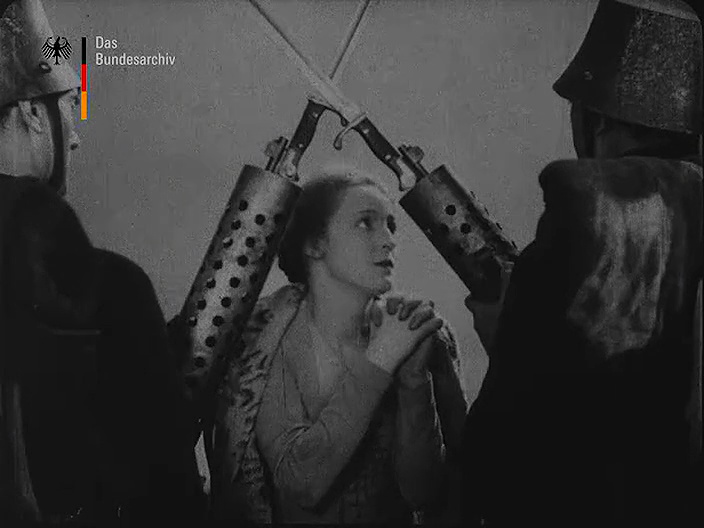
“Stand up!” the officer (Victor Janson) roars. It’s all stillness now. We can take in the strangeness of the infantry: their metallic helmets (half jäger’s shako, half “coal scuttle” Stahlhelm), the odd cages around their rifles that makes them half resemble automatic weapons. The officer has his rank on his chest, an oversized treble chevron. Touches of expressionism that creep into this half-real world. The mill is commandeered for supplies. The younger men react violently. Brigitte is restrained. Her young brother is taken outside. Brigitte’s glowing face makes the officer halt is roughness a moment. The man is clearly smitten. (It’s like the moment when the villain in Die Liebe der Jeanne Ney is overcome by the extreme close-up of Brigitte’s face.)

Another face at a loophole window: this time it is Brigitte’s anxiously looking out as her brother is led away. “Why so sad miss?” the captain asks, and Brigitte’s huge eyes almost make contact with the camera as she turns to the man. Her brother will be court martialled, says the officer, his hands seeking hers. Grune cuts away to the old mother in a chair, sneezing. (The camera whips round handheld, as it often does—destabilizing the world, here for comic rather than dramatic effect.)

The newcomer sets the wheels of the mill going, then arrests their motion. It’s a signal. The pedlar, now revealed in his officer’s uniform, issues instruction. Great guns open fire, huge plumes of black smoke and debris slow-motion their way into the sky.

Act 4. The young son paces his cell. The father visits. “They don’t understand out language”, he cries to his son. But the brute sign language of the solders is made to feel: he is ushered away. Artillery fire draws closer to the mill. The hillsides are torn up, buried under smoking clods of earth. Brigitte is cowering in feat somewhere inside. The father’s face is etched deep with age and angst. Michael is to be judged today. Brigitte leaves, determined to act.

In the cell, the captain orders that Michael be shot. Brigitte flirts her way inside, but is separated from her brother’s embrace. Her drooping head, in profile—a glorious glimpses of her poise, her grace as a performer, amid this rather ordinary scene. The captain says she can save her brother the solution of which is implied simply by his smirk, his leather-gloved hand over her neck, down towards her chest. She has 24 hours to decide. The officer who first raided the mill asks if he can help her. But “war turns people into wild beasts”, she says, and flees inside.

The corridor of the mill’s interior looks narrower, more confining. Here is the newcomer. He says: “Magda, I love you”, but almost in the same breath he confesses he guilt as an agent. Magda—her face in the first big closeups of the film, and they’re beautiful. He says he will turn against his kin to save her brother.

The junior officer tells the senior that he thinks they treated the boy to harsh, but the elder says they need to be strict—to show the locals they mean business. The junior officer finds Magda at home. Her bed is a picture book wooden frame, picture book carvings at its foot. The officer says he will save her brother, but he is seen by her father stroking her hair. So he lumbers in, lumbers between them. She cosies up to him, but he shrugs her off—the only man to resists her great big eyes in the film. Snow is falling. It coats the artificial plains before the mill.

Akt 5. The boy is to be shot. The captain looks at the hour, pours himself a drink, is served his meal, hacks at a great chunk of meat. (His black shirt, his white marks of rank make him look like a fascist: so too his slicked-back hair, cut short.) The lieutenant has aided the escape of Michael. The captain knows it.

The newcomer stops the mill again. The enemy gunners call the captain. The mill must come down, as it is being used as a point of observation by their enemy. (The newcomer is in communication with the pedlar’s men, directing fire.)

Michael returns to his father, in disguise—he wears the uniform given him by the lieutenant, who now arrives—and says they must hide the bother’s clothes or they will be lost. so they go into the basement, where the newcomer is going about his secret task. The lieutenant and Magda flirt, end up in each other’s arms, kiss. She does not quite flee him, succumbs willingly enough to his kiss.

Michael aims to flee in his disguise to their own troops. Johannes’s wife is in bed, presumably nearing the birth. Michael crosses no man’s land, handing a document to an enemy guard. A delightful scene: Magda uses flower to transform the man’s chevron into a stick figure, the head a heart. But the guns are firing outside. “Why are you our enemy?” asks the man, bewildered. “When the war is over, I won’t be an enemy anymore”. He imagines the future…

Akt 6. Soldiers enter the mill. The captain announces the building will be burnt down. A close-up of the father’s face, creased with repressed emotion. But first the captain wants the mill searched for Michael—only to find his lieutenant lurking in the basement. The telephone line has been found. It is cut, but the lieutenant is interpreted as the spy. He ranks is removed and the officer demands the man shoot himself. Magda and her father and Johannes battle the soldiers, who are about to burn the mill. Even the old mother throws water in the face of the guard by Johannes’s wife’s bed. Johannes himself calls the soldiers beasts, says that people need the bread they make. But in come the torches, the flames rise, the smoke thickens. The lieutenant questions Magda about the telephone and she points him to the newcomer. But they, and the family upstairs, are trapped in the burning building. Suddenly the newcomer emerges from his hiding place underground. “It is all my fault!” The lieutenant fights him before Magda, as the building starts to fall around them. It is prolonged, brutal, captured in a long handheld takes—the solider all in black, the assistant in his white shirt. Soon they are bleeding, half naked, sweating. The newcomer says he will die with Magda, but soldiers are breaking through the window to help her out. The assistant says he has betrayed his own fatherland and demands the soldiers shoot him. They oblige, and Magda is set free.

The mill burns, its wings spinning madly, then slowing… as Johannes, his wife, and the father struggle to a nearby farm building and fashion the wife a bed from hay. On the horizon, Magda and the lieutenant embrace. Magda is a silhouette on the horizon.

The baby is born. “He too will go to war—he too will kill people”, the mother mourns. “No, he will build new mills”, says the father, as superimposed artillery fire dissolves over the image of the family in the farm—like a Biblical scene—and the world is a vision of nighttime split open with fire. “Lord forgive them, for they know not what they do”, says the father, as the ghostly mill becomes a cross looming over the smoking battlefield. Ende.

I enjoyed this film a lot. The limited setting and studio aesthetic convey a peculiar atmosphere that is both sinister and otherworldly. It helps make the familiar seem unfamiliar: it’s like a slightly distorted dream of 1914. The uniforms are almost familiar, the setting almost realistic. Everything is subtly exaggerated, subtly off-kilter. Sets, costumes, performances—all are heightened, but only to better convey the atmosphere of the setting and story.

As for the film’s political message, the version that survives still carries a strong pacifist note. There is nothing remotely glamorous about the war or its protagonists. The soldiers are genuinely frightening. Their combination of archaic helmets and modern gasmasks and guns makes them even more sinister, just as their black uniforms give them a distinct flavour of fascism. The religious tone of the final scenes (supposedly highly censored by Ufa’s recutting) still comes across, and I wonder how much more obvious Grune had wanted to make the “message” at the end. As the film stands, the religious imagery creeps up on the viewer rather unexpectedly—and quite effectively. The transformation of the windmill into a cross needs no further visualization than as given in the film. The expressivity of “mute” objects is powerful enough. That said, I do love the fully-realized vision of Death when war is declared. There is something very pleasing about seeing an early twentieth-century version of medieval iconography. (Just as I love these elements in Murnau’s Faust (1926).) Perhaps there was more of this material in Grune’s original cut?

In one aspect, I was a little disappointed by Am Rande der Welt. I confess I wanted to watch the film primarily to see Brigitte’s Helm’s second cinematic appearance, but she’s very much limited by her character here. Her screen persona is very much along the lines of the “good” Maria in Metropolis, but without the exuberance offered to her by her other performance as the robot Maria. In Rande der Welt, she is wholly good and admirable—her character has little in the way of depth or complexity. One might say that about all the figures in the film. Since Grune sets out to make them emblematic of an older, less modern way of life they are all limited in their psychological depth.

My only other reservations about Am Rande der Welt are due to my own moderate confusion when watching the film. I was a little unclear of the nature of the spying, and where/how the artillery was using the newcomer’s telephone to direct fire. There is a lot of cutting to spaces beyond the mill, but we never see the context of these spaces. Thus, where Max Schreck has his observation post is a mystery—as is where any of the other sites of guns, trenches etc.

But the question of how we read the film’s continuity, or its politics, also depends on what version we’re watching. Here, the information is unclear. Having been digitized from a Bundesarchiv print by the Friedrich-Wilhelm-Muranu-Stiftung, the film is freely available online via filmportal.de. But there is no clarification on the physical length of the print used, or whether the intertitles are recreated—and from what sources. The digital version is a few seconds shy of 104 minutes. The database gives the framerate of other archival copies as 22fps, but the Bundesarchiv copy appears to run at 20fps. (Though the video itself translates the original frames into 23.97fps for digital playback, which makes identifying and counting the original celluloid frames difficult.) This would equate to approximately 2400m, so presumably accords with Ufa’s cut of August 1927. (If I’m wrong and it is at 22fps, 104 minutes would equate to Grune’s original version of April 1927. See why it’s important to provide this kind of information with a digital release?)

But regardless of how closely it resembles Grune’s original vision, it’s still a fascinating film. I’m very grateful the film is freely available, but I’d love to see it in better quality. Who knows what a proper restoration and a good score might not do for it.

Paul Cuff

Der Skandal in Baden-Baden (1929; Ger.; Erich Waschneck)

First, a warning: this post contains no image captures. I watched the film courtesy of the Friedrich-Wilhelm-Murnau-Stiftung, whose staff kindly allowed me access to a copy of an as-yet-unreleased restoration from their collection. As I obtained my viewing copy via these means, I will refrain from posting images—so you must rely on my description to whet your appetites. With that said, we can proceed…

Brigitte Helm starred in three films made during 1928. First was the remarkable L’Argent (1928), followed swiftly by the unremarkable Die Yacht der sieben Sünden (1928). Her final film shot that year was Der Skandal in Baden-Baden. This film had neither the prestigious cast and director of L’Argent, nor the pulpy glamour of Die Yacht der sieben Sünden. It premiered in January 1929, the first of her last three final silent films released that year. I’ve written about her last two: Die wunderbare Lüge der Nina Petrowna and Manolescu elsewhere on this blog. The director of Der Skandal in Baden-Baden, Erich Waschneck, began his career as a cameraman in 1920-21. By the middle of the decade, he was directing a number of minor Ufa productions. Indeed, if it weren’t for the presence of Helm, Der Skandal in Baden-Baden would also be deemed a minor film. (It’s fair to say it is a minor film even with her in it.) The story is based on Georg Fröschel’s novel Die Geliebte Roswolskys (1921). This had already been adapted for cinema in Felix Basch’s eponymous film of 1921, starring Asta Nielsen and Paul Wegener. I have not seen that version, but descriptions of it suggest a rather more complex plot and characters than the simplified storyline of Der Skandal in Baden-Baden.

The plot of the 1929 version is straightforward: Vera Kersten (Brigitte Helm) is an out-of-work dancer who chances to meet the British millionaire John Leeds (Ernst Stahl-Nachbaur). He pulls some strings and she ends up with a manager, Edgar Merck (Leo Peukert), and a gig at the festival in Baden-Baden. But Merck exploits Vera’s passing acquaintance with Leeds for his own financial gain, hoping to frame her in a fraud scheme. This also has the effect of sabotaging Vera’s romance with Baron Egon von Halden (Henry Stuart), who believes she is having an affair with Leeds. At Baden-Baden, Vera achieves a small triumph in her dance performance, but Merck’s machinations cause the high society crowd to believe she is a gold-digger, exploiting first Leeds and now Egon von Halden. However, Leeds himself turns up at the end of the film and clears everything up: Merck is arrested for fraud, the gossiping crowd learn the truth, and Vera and Egon walk away to rekindle their romance.

Der Skandal in Baden-Baden is barely 75 minutes long and there is no dawdling. It is concise, compact, neat. It’s a minor film, but well-made and well-performed. The real interest (for me, at least) lies in the role Helm gets to play. After being cast as varying kinds of vamp in Metropolis (1927), Alraune (1928), Die Yacht der sieben Sünden, and L’Argent; or as rather angelic innocents in Metropolis (her dual role as the “good” Maria), Am Rande der Welt (1927), and Die Liebe der Jeanne Ney (1927), her role in Der Skandal in Baden-Baden is notably every-day. She is working class, poor, jobless. Indeed, Vera in this film is something of a Cinderella role: the poor aspiring dancer being transformed into a society belle, only for the threat of her new life to disintegrate overnight.

In the opening scene, Vera is gazing over the dull rooftops from her garret in a cheap rented apartment. She is framed within the frame of the window. We’re invited to look at her and contemplate her own contemplation. Helm brings with her a certain star quality: not just her good looks, but a way of holding herself, and of holding our attention. When we cut back inside to see her small room, she turns away from the window. When she comes into view properly, we see she is holding a cat in her arms. Here is one solitary creature showing sympathy for another. There is something a little feline about Vera, too. (Reviewers were often comparing Helm with cats in her other roles.)

When she walks the streets in search of work, the way she is framed by the camera that tracks alongside her shows off her profile. Vera might walk quickly, but she is downcast. Helm’s famous profile is not thrust forward to meet the world, but reacts to it timidly. Her failure in several job agencies sends her out onto the streets again. It is by chance, on a road, that Vera enters the life of the millionaire John Leeds. Ostensibly, he runs her down in his car. The device for getting the pair to meet would be more complex if Leeds was actually the driver of the car, but he isn’t—it’s being driven by a chauffeur. What is interesting is the ambiguity of how Vera ends up walking across the road. Head downcoast again, she is wandering more slowly this time, without direction or destination. She walks across the road without looking up. It isn’t a busy street, but a sideroad somewhere on the edge of town. Is she (as it seems) purely distracted or is she (consciously or not) suicidal? I’m not sure the film knows, or lets us know. So much of the film is concerned with showing how events are always out of Vera’s control. A suicidal mentality would be definite, an act of someone finally wanting to take a decisive step. But Vera seems to wander haphazardly into her fate. The choreography of the scene makes little of the near-fatal accident: the editing is economic, not feeling the need to portray the accident as a dramatic set-piece. It just happens.

Vera’s lack of agency continues in the next scenes. For Leeds now makes decisions for Vera, who is at first nervous—clearly, she is wary of his intentions. (And, clearly, she knows what men usually want in return from women for whom they do favours.) She is given new clothes, and the presence of John Leeds gains her immediate work, and the attention of an agent. But this lucky chance is never without strings: her association with Leeds (made public by a press photographer who follows them) immediately results in gossip, and Merck, the agent she gains, wishes to exploit her for fraudulent ends. Her agency is curtailed throughout the film, always by men.

Vera’s romance with Egon, which also triggers a minor subplot involving the jealousy of Egon’s current female companion Fernande (Lilly Alexandra), begins when the two meet by chance on the train to Baden-Baden. They encounter one another again at the local golf club. Vera is dressed sportily, but unshowily: beret, jacket, and a skirt that might pass for “practical”. (That she isn’t decked out in finery doesn’t stop all the local gossips from referring to her as Leeds’s “protégée”.) Egon asks to give her her first golf lesson. We watch her being shown how to tee off. It’s pretty perfunctory stuff, but I think that’s the point. Helm is no longer swathed in luxurious fabric, seducing men to their doom in raucous surroundings. She’s an ordinary woman, undertaking ordinary actions. It’s not a great meeting of souls on screen, but a tentative encounter that the couple slowly nurture. Their hands meet when they both reach for a golf ball. They have a private moment of conversation. Fernande and her friends glimpse this and take it for more than it is. And this is rather the point: everyone in the film seems to think Vera is a vamp, when in fact she is an honest, working-class woman. Brigitte Helm’s role and performance goes against the grain of her star image. Indeed, the film is about the price paid by people who assume that a woman’s “star” status implies a kind of prostitution. Der Skandal in Baden-Baden is about the injustice of being confused for one’s (manufactured) reputation, and the way a woman’s identity is shaped (and judged) by others.

The one sequence where Vera performs a form of glamorous seduction is when she dances at the festival venue in Baden-Baden. The dance itself is a little underwhelming, and it hardly makes the most either of Helm herself or the possibilities of the performance as a set-piece. In 1929, at least one critic compared her unfavourably to Leni Riefenstahl, whose own dancing pedigree (and all-round athleticism) was much stronger than Helm’s. In Der heilige Berg (1926), Riefenstahl’s character is introduced through an astonishing dance shot in silhouette against the crashing waves and rocks of the coast. It’s a much longer sequence, a full set-piece in itself, and makes her character a kind of mythical archetype. There is nothing like that in Der Skandal in Baden-Baden. Helm’s solo number occupies only a little over a minute of screen time and the dancing is banal. It’s a kind of freestyle prancing, much of its impact being through the diaphanous skirt and wrist puffs Vera wears. The latter floats and exaggerates the movement, making more of the dance than the dancer’s body itself.

(A sidenote here: I’d be very curious to know what kind of music accompanied this sequence in 1929. The film was first presented in Berlin with a score by Artur Guttmann. Guttmann had worked as composer, arranger, and conductor for many Ufa films by this point. He had conducted the premier performances of Murnau’s Faust (1926) and Lang’s Spione (1928) (both with scores by Werner Richard Heymann). He had also produced scores for Hanns Schwarz’s Die Csardasfürstin (1927, based on Emmerich Kálmán’s operetta of the same name), Gerhard Lamprecht’s two-part Der alte Fritz (1927-28), and Artur Robison’s Looping the Loop (1928). I have no idea how much, if any, of his music from the silent era survives. What kind of music did his score for Der Skandal in Baden-Baden contain? In particular, for the dance scene, did Guttmann use anything from the familiar ballet repertoire, or something more exotic or abstract? Or was the music his own composition—and in what style?)

But the point of the dance sequence is that Egon is looking on, enraptured. Waschneck cuts between Vera, Egon, and the pianist—excluding the rest of the audience. One shot of Vera begins in close-up before she pulls away across the stage. It’s not a subjective shot (Egon is the other side of the stage pit, in a private box—there’s no way Vera could be as close to him as she is to the camera). But it is a kind of imagined, willed subjectivity: it’s the view that Egon would surely like to have. And it also gives the impression that Vera herself wants to get close to Egon. So yes, an effective moment of framing and staging—but on a modest scale. I suppose “unpretentious” is the word I’m looking for to describe it. This sequence is also one of the few where Vera has a kind of agency: she has centre stage, she performs the number that proves her artistic worth. But of course it’s also for an audience that judges her, and an audience that will soon turn against her.

If Der Skandal in Baden-Baden isn’t glamorous or glamorizing, this does not mean that it isn’t a good-looking film. It is. The cameraman was Friedl Behn-Grund, who (despite having shot several films by 1928) was still very young: he was only 22 when he shot Der Skandal in Baden-Baden. There are lots of interesting shots on location around Baden-Baden, with some nice summery exteriors. (Part of the film’s charm is not being set in Berlin. It’s curious to see a kind of provincial German clubland in the late 20s.) There is also some nice low-key lighting in the nighttime exterior scenes when Vera and Egon kiss. But there are almost no tricks pulled with lenses, focus, or elaborate movement. I’d hesitate to call so light a film “realist”, but the glamour we glimpse in the festival setting does not extend to the way it is filmed. It’s a temperate film as well as an unpretentious one.

But Der Skandal in Baden-Baden does have occasional scenes where the presence and role of the camera becomes more complex. There is a clever moment when we see a letter being written. It is addressed to Vera and its contents imply that the writer is romantically involved with her. We watch a hand sign the letter: the name is signed “John”. But then the camera tilts back and tracks away from the letter. We see the writer: it is Merck. It’s a nice way of making the writing of text more visually interesting, more significant.

Merck fakes this letter from Leeds to Vera to imply that she is his mistress. He shows it to Fernande, who shows it to Egon. Merck even vouches for its truth. The consequences are again related through a letter and another interesting visual treatment of text. Egon writes to Vera to tell her that they shouldn’t see each other her again. When Vera reads the letter, we see her shock and sadness in a close-up. She reads the letter again, and now there is an extreme close-up of the text: the lens scans the first lines almost word-by-word: “Merck has confirmed to me that you are, after all, in a relationship with John Leeds.” It’s the only extreme close-up in the film and the effect is startling: by reserving this level of proximity to this one shot, it has maximum impact.

I should also mention other members of the cast. Henry Stuart is charming, if a little bland, as Egon. He has little psychological depth, but he’s convincing enough. As Merck, Leo Peukert is smarmy and creepy without exaggeration. As Leeds, Ernst Stahl-Nachbaur is rather anonymous. In fact, the most memorable member of the cast beyond Helm herself is Adolf Edgar Licho. He plays one of the agents at the start of the film. Licho played Jeanne Ney’s uncle in Die Liebe der Jeanne Ney, where Pabst provides him with a role of utmost sliminess and greed. His appearance in Der Skandal in Baden-Baden is not quite on the same level, but it’s a clear echo of it. His agent is a cigar-chewing creep, who eyes Vera up and down. He gets her to raise her skirt to show him her knees, her thighs… It would help her get along if she were a little “nicer” to him, he says. Licho’s bald pate, stubbly round face, and bulgy little eyes make him a superbly unpleasant presence on screen. When Vera tries to smile, we see a whole history of the exploitation of aspiring female performers under creepy male managers. That Vera seems to know what’s expected of her makes the scene more unsettling, more upsetting, than it might otherwise be. Helm gives us a history of Vera, but also a history of women, that goes beyond this scene to countless other moments prior to this. When the scene fades to black, we wonder if Vera is forced to perform any other kind of favour for the agent. It’s one of the few moments of real depth or bite. It presages the way Vera will be judged as the kind of woman who performs exactly this kind of favour to get her new dresses and position in society.

So, despite its lightness, Der Skandal in Baden-Baden is an interesting film. Helm’s character is noteworthy for being a more down-to-earth character, one who feels the pressures of the patriarchal world: the male agents who judge her, and the male patron who “rescues” her but whose intervention opens her up to accusations of selling her body, and the society gossips who stand ready to judge and condemn her for her relations with men. Though we can (simply because she is Brigitte Helm) imagine she is a star being waiting to be found, the film never lets her character have control over her life. Her position as a woman at the mercy of male judgement (for good or ill) is a common theme in many of Helm’s films. Der Skandal in Baden-Baden provides Helm an unpretentious modern setting to show a more restrained performance. Of course, the film does get to clothe her in more expensive attire once Leeds has paid for it. But she doesn’t use her costumes for writhing seductively (cf. Alraune) or mooching in glamorous boredom (cf. L’Argent). Indeed, her showiest costume is used for her stage performance and never worn again; you might even see it as a practical outfit in the sense of it being (technically) workwear. She’s never less than interesting to watch, and I did so gladly.

In sum, I cannot say I was greatly moved by Der Skandal in Baden-Baden, but it was charming and engaging and I’m very happy to have seen it. It is striking that this film has been the most difficult (not to say utterly impossible) to see among all of Helm’s silent work. As far as I can tell, it has never been reissued in any format since its first run in 1929. It made only slight impact at the time, and since then it’s been something of a footnote in the few accounts of Helm’s work. As I’ve argued here, Der Skandal in Baden-Baden is an interesting film and deserves some attention. The FWMS restoration is due for completion in spring 2024, so I hope it gets a proper release for live and/or home audiences after that.

Paul Cuff

Acknowledgements: I would like to thank Luciano Palumbo, Carmen Prokopiak, and Marcel Steinlein of the Friedrich-Wilhelm-Murnau-Stiftung for their help in answering my questions and providing me access to the film.

On rewatching L’Argent (1928; Fr.; Marcel L’Herbier)

In 1928, Marcel L’Herbier undertook the most expensive film of his career. His adaptation of Zola’s novel L’Argent (1891) transposed the action to contemporary Paris. As well as shooting in the real stock exchange of the Paris Bourse and on the streets of Paris, L’Herbier had a series of fabulously large and expensive studio sets designed by André Barsacq and Lazare Meerson, constructed at Joinville studios. His chief cameraman was Jules Kruger, who had recently led the shooting of Abel Gance’s Napoléon (1927). Seeing the astonishing range of mobile camerawork in the latter, L’Herbier wanted to take advantage of every possible visual means of capturing the febrile atmosphere of the financial market and the machinations of his fictional protagonists. All this came at a huge financial cost to the production. L’Herbier allied his company with Jean Sapène’s Société des Cinéromans and the German company Ufa in order to guarantee his costs, cast foreign stars, and achieve European distribution. He spent the huge sum of 5,000,000F, much more than intended. (Though, for context, Gance spent 12,000,000F on Napoléon.) When the film premiered, it was around 200 minutes long. It was cut for general release to less than 170, and what survives in the current restoration is a little less than 150 minutes. Thankfully, what does survive is in superb quality—and the Lobster Blu-ray released in 2019 presents the film in an excellent edition…

The title of my piece this week is “rewatching L’Argent” because I do not intend a detailed review of the film. For a start, it’s too long—too complex, too interesting for me to do real justice to. (I know that if I tried, I’d end up writing more than anyone would want to read.) Instead, my reflections are inspired by being able to watch this film in a different context to that in which I first saw it. That was at least fifteen years ago, at the NFT in London. I saw the film projected from a superb 35mm print. The music was a live piano accompaniment. There were no subtitles, so instead someone in the projection booth read translations over the intercom. I won’t deny that this was a hard task to do convincingly, and that the person doing it failed utterly in this endeavour. It sounded like a playschool performance, only executed by an adult. If you’re going to present a film this way, either read the lines utterly without emotion or emphasis, or get someone who can actually emote. (I long to have experienced a live performance of L’Herbier’s L’Homme du large (1920) that took place at the HippFest festival in 2022, for which Paul McGann read live narration. The titles for that film are long and visually elaborate. You need to see them in the original French designs, so having an acoustic layer to the experience—one performed by a professional actor—must have been wonderful.) The screening at the NFT was someone trying to read the lines with emotion and emphasis but who had no experience as a voice performer. It was terrible. It lasted for two-and-a-half-hours.

The music

So where better to start with my experience in 2023 than with the music? As I said at the outset, my memory of this film is with a piano accompaniment at the NFT. Inevitably, I remember nothing of the musical accompaniment. (And frankly I wish I remember less about the awful translation accompaniment.) The music for the new restoration is by Olivier Massot, recorded live at a screening of the film in Lyon in 2019.

The score is for a symphony orchestra, including a prominent part for piano and various kinds of percussion. The orchestration is deliciously lithe and alert. The orchestra shimmers, shifts, glistens, growls, thunders. The writing is more chromatic than melodic: there are very few recognizable themes, as such, but the textures of the orchestra—particular instruments (harp, bassoon, tubular bells), particular combinations (high tremolo strings, descending piano scales)—recur through the film. Large church-like bells sound out at climactic moments, while the reverberative tubular bells give a cool, intimate sheen to smaller scenes. Indeed, the percussive element create some fabulous effects through the film. I particularly love the combination of piano and percussion to evoke the tolling of a clock near the start of the film, when Saccard faces ruin. Massot has bells in his orchestra, but here he chooses to mimic their sound indirectly. It’s a wonderfully sinister, almost hallucinatory acoustic: it sounds like bells tolling, but it’s something more than that—the grim dies irae melody is a kind of inner soundscape. I also love how the music is often brought to an abrupt halt for the ringing of a smaller (real) bell: at the first meeting of the bank’s council, and later with the ringing of various telephones. It really makes film and score interact in direct instances, as well as the constant ebb and flow of music and image. Then there are occasional lines for a muted trumpet that hint at the popular soundworld of the 1920s, while there is a jazz-like pulse to the grand soiree scenes near the end of the film, and woodblock percussion that characterizes the scenes set in Guiana. Throughout, the piano provides a kind of textural through-line: it dances and reacts to the film, and also to the orchestra. It’s never quite a solo part with accompaniment, but forms a part of the complex tapestry of sound that the orchestra produces. I do love hearing a piano used this way, and Massot has a fine ear for balance.

In this recorded performance, the Orchestre National de Lyon is conducted by the highly experienced Timothy Brock, and it’s a committed performance, very well synchronized. (One wonders how much, if any, work was needed to rejig the soundtrack for the subsequent home media format.) But like all silent film scores recorded live, it suffers from the weird acoustical effects of coughing, murmuring, and various other extraneous sounds of shuffling, shifting, dropping etc. As I have written before, this remains a very strange way of watching a film at home. The noises are familiar from a live screening, but on Blu-ray it’s a little surreal: you can hear an audience that you cannot see. And while I’m sure the film performance in 2019 ended with rousing applause, the soundtrack on the Blu-ray fades swiftly to complete silence. That said, you do get used to the extraneous sounds as the soundtrack goes on—but it’s an oddity nevertheless.

The Blu-ray edition also includes an alternate score compiled by Rodney Sauer and performed by the Mont Alto Orchestra. Per my usually comments (and with all due awareness of my innate musical snobbery), this “orchestral” score is banal and entirely inadequate for the intensity, scale, rhythm, and energy of L’Argent. Switch between audio tracks at any point in the film and listen to the difference in tone, depth and complexity of sound, and musical imagination. The Massot score has the benefit of a full orchestra performing a score that is alive to nuance, that is constantly evolving, shifting, changing gear; the Sauer score is pedestrian, humdrum, lagging infinitely behind the images.

The camerawork

And what images they are! I’d forgotten just how extraordinarily restive the camerawork is in this film. You’re constantly surprised by the way the perspective shifts, leaps, realigns. There is a constant sense of movement in the camera and the cutting. Sometimes there are rapid tracking sots, vertiginous shifts up or down through crowded spaces; at other times there are sudden, short moves: intimate scenes are suddenly recomposed, reframed, redrawn. Kruger’s camera is often on the prowl, waiting to pounce on characters. Suddenly it was spring to life and track forward from a long- to a medium-shot. The focus warps and shifts from scene to scene. One minute the lens is squishing the extremities into blurry outlines, the next everything is crystal clear. The camera is mechanically smooth, then handheld. The lines are straight, then deformed by a close-up lens. It’s wonderfully difficult to unpick the variety of devices used across just one sequence, let alone the film.

In the Bourse itself, the scale of the film—the crowds, the energy, the technological trappings—are at their most impressive. This is a real space made surreal by the way it’s shot. The camera spins upwards to the apex of the ceiling, then looks down from on high, making the crowd of financiers look like microbes swirling in a petri dish. Elsewhere, the camera is suddenly looking down from high angles, or else craning upwards from floor level. It’s an omnipresent viewpoint, operating from anywhere and everywhere.

I was also particularly truck by the nighttime scenes staged in the Place de l’Opéra. The fact that these scenes were shot at night is extraordinary, and that they look so dynamic and alive with energy is dazzling. (There is one rapid tracking shot through the crowd, lights gleaming in the far distance, that looks like it’s from a film made thirty years later.)

Throughout, L’Herbier’s cutting is dynamic to the point of being confusing. He almost has too many angles, too many perspectives, to juggle. He not only cuts from multiple angles within the same scene but intercuts entirely separate spaces. The dynamics between the various financial parties and their dealings are illustrated by cutting between these spaces. It saves on unnecessary intertitles, though at the risk of confusing the spectator. (I must say that I understand almost nothing about the financial aspect of the plot. At a certain point, references to bonds, shares, stocks, markets, exchanges, currencies etc just washes over my head. I’d be curious to know from someone who understood such things how coherent the film is in terms of its economic plotting.) There are even sporadic moments of rapid montage (per Gance) but this is never developed or made into an end in itself. Undoubtedly influenced by Napoléon, I think L’Herbier was right not to go “full Gance” and pointlessly mimic the montage of that film, which is used to very different effect (and in very different context) than this drama. L’Argent has a strange, compelling energy all of its own.

The sets

The design of this film is always eye-catching. From the massive scale of the party scene near the end (huge dance floor, cubist ponds, a wall entirely occupied by organ pipes) to the offices of Saccard that are sometimes cavernous and other times crowded. There are billowing curtains, diaphanous curtains, glimmering curtains. Light plays about shining surfaces or creates swirling shadows. Whole walls are maps of the world, doors opening and closing inside hallucinatory cells. The sets and lighting combine to make every space strange, arresting, interesting.

I’d also single out Baroness Sandorf’s lair, which is like something out of a Bond film. A card table is lit from within so that the shadows of hands cand cards are projected on the ceiling. The walls of one part of the room contain the backlit silhouettes of fish swimming in a aquarium. My word, the set designers had fun here. It’s just the kind of space you’d want to find Brigitte Helm in, holding court. It’s chic, cold, absurd, captivating.

The cast

The film wouldn’t work at all if it weren’t for Pierre Alcover’s performance as Saccard. His is a superb, domineering presence on screen. His physical bulk gives him real heft, but it’s the way he holds himself and moves that makes him imposing: he can dominate a room, a scene, a shot. He’s smarmy when he needs to be, but can just as easily become threatening, scheming, brooding, energetic, resigned. He can bustle and rush just as well as he can mooch and shuffle and slouch. Strange to say, I don’t think I’ve seen him in another film. (The only other silent I have with him in is André Antoine’s L’Hirondelle et la Mésange (1920), which I have yet to sit down and actually watch.)

As the effete, elder banker Gunderman, the German actor Alfred Abel is suave and sinister. It’s a quiet, controlled performance. His character is so calm and collected, and Abel always keeps his gestures to a minimum. The occasional flash of an eye, the hint of a smile, the slight nod of the head, is enough to spell out everything we need to know. He’s not quite a Bond villain, but he nevertheless has a fluffy pet, a dog, that we see him fondling at various points in the film.

I turn next to Brigitte Helm because she is, alongside Alcover, by far the most exciting performance in the film. As Baroness Sandorf, she is draped in expensive furs or sheathed in shimmering silks. Her eyes out-pierce anyone else’s stare and her smile is a double-edged weapon. The way she walks or sits or stands or lies or lounges is so purposeful, so designed, so compelling. Even sat at a table across the room in the back of the restaurant scene, she’s somehow magnetic. She really was a star, in the way that I take star to mean—someone whose presence instantly changes the dynamic of a scene or shot, whose life seems to emanate beyond the film. But despite being the face of the new Blu-ray cover for L’Argent, and leading the (new, digital) credit list at the end of the restoration, she has surprisingly few scenes—and not all that much significance in the plot. Perhaps more of her scenes were in L’Herbier’s original cut of the film. Either way, I spent much of the film longing to see more of her.

Conversely, as the “good” husband and wife ensnared by Saccard, I find Henry Victor (as the aviator Jacques Hamelin) and Marie Glory (as Line, Jacques’ wife) much less interesting. Their love never quite convinces or moves. I also found an uncanny resemblance between Marie Glory and L’Herbier’s regular star (and lover) Jaques Catelain. (And once observed, I couldn’t un-observe it.) I requote Noël Burch’s comment here on Catelain resembling “a wooden Harry Langdon”, and for the first half of the film I find Glory no less unconvincing. But as the film continues, and she becomes a more active agent—or at east, an agent conscious of her manipulation by Saccard—her performance finds its range and becomes more dynamic and engaging. But I still never buy into her marriage, which I suppose is an advantage to the extent it makes her appear more vulnerable once her husband is away—but undermines the fact that she is so steadfastly loyal to him. I know for a fact that I’ve seen Marie Glory in other silents, but I simply cannot bring her performances to mind. The lack of warmth or genuine feeling in this central couple if a problem for me. I find many of L’Herbier’s films emotionally constipated, and L’Argent is no exception.

One other cast member to mention is Antonin Artaud as Mazaud, Saccard’s secretary. I find it very strange to watch Artaud in such an ordinary, unengaging role. Strange, even, to see him walking around in a perfectly ordinary suit. His presence—his familiar, compelling face—is welcome, but I’m not sure I can appreciate why he was cast. (His performance as Marat in Napoléon, the year before L’Argent, and as Massieu in Dreyer’s La Passion de Jeanne d’Arc, the same year as L’Argent, really overshadow this almost anonymous part of a bank assistant.)

Summary

Yes, I enjoyed rewatching this film. But I won’t deny that it has a certain coolness that stops me from truly loving it. I feel that way with much of L’Herbier’s work. To utilize what the translator D.J. Enright once said about fin-de-siècle literature, the films of L’Herbier tend to combine the frigid with the overheated. There is a surfeit of design, of aesthetic fussiness, but a dearth of humour, of human warmth. L’Argent is his broadest canvas, and it contains the most energetic, diverse, dynamic filmmaking of his career. It needs this formal invention to keep the story alive, for a film that revolves around financial transactions is at constant risk of becoming dull or incomprehensible. It’s like watching a three-hour long game of poker without knowing the rules. My attention never drifted, but I was close to being bored—despite the many wonderful things to look at, and the wonderful ways the film invents of looking. The film’s romantic storyline of the pilot and his wife is lacklustre, especially next to the sizzling chemistry between Alcover and Helm. Their scenes crackle and I wish there had been more of them. Would the 200-minute version of the film offer a more balanced drama, or would it exacerbate the distance between me and it? For all my reservations, it’s still a magnificent work of cinema.

Paul Cuff

Music for Die Liebe der Jeanne Ney (1927; Ger.; G.W. Pabst)

This piece is devoted to the score arranged and orchestrated by Bernd Thewes for the 2016 restoration of Pabst’s Die Liebe der Jeanne Ney (1927). I confess at the outset that I love this score unreservedly. I have relistened to it all the way through a dozen times, and to certain sections of it many times more. No review that I’ve read has gone into much detail about the music, which seems to me a great oversight. This piece tries to make amends for that.

The model for Thewes’s 2016 orchestral score is a piano score from the music collection of the Museum of Modern Art in New York. This anonymous work is not an original composition, but a compilation of existing music. It was likely made in the 1930s when Iris Barry (MoMA’s curator) acquired a copy of Die Liebe der Jeanne Ney from the Reichsfilmarchiv in Berlin. We don’t know the identity of the musician who assembled this piano score, nor does the score identify the pieces of music used within it. While there is recognizable material from familiar composers (Tchaikovsky, Rachmaninov, Verdi), much of the music remains obscure—at least to me.

What’s so pleasing about Thewes’s arrangement is that it treats the identifiable and unidentifiable pieces with equal originality. Thewes began work by dubbing the piano music to match the video of the restored film, then orchestrated the score from scratch to produce a coherent sound world that fitted the images. There is a tremendous sense of freedom in this method: the familiar and the unfamiliar are made to sound equally new. Thewes’s choice of instrumentation is key to this sense of playful recreation. To the forces of a symphony orchestra (including piano) are added electric bass, saxophone, Hammond organ, and drum set. Much like the contents of the original piano score, these forces are a blend of the classical and the popular.

One of the pleasures of listening to scores based on musical compilations is recognizing familiar pieces, and hearing how they are (re)arranged to suit the film. Two of the main themes in the film are well-known pieces by well-known composers. The piece associated with the romance between Jeanne (Édith Jéhanne) and Andreas (Uno Henning) is “June”, from Tchaikovsky’s piano suite The Seasons (op. 37a, 1875-76). In Thewes’s score, this piece—a barcarolle—becomes a warm, mellow, melancholy theme taken up by the strings and supported by the Hammond organ. The organ might suggest a matrimonial—if not religious—tone to such a piece; no doubt it does in this score, but I think the distinctive timbre of the Hammond also offers something else. Its use in prog rock and pop music brings in a very different context than a pipe organ would from the context of theatre or church. (When, in later scenes, it is used in combination with an electric base, the Hammond also brings in the context of horror films.) One might say the Hammond organ is a secular counterpart to traditional pipe organs. Its use in the orchestration of Tchaikovsky’s “June” might hint at religious matrimony but it does so only within the context of secular music: a classical melody rendered on a popular instrument. Its timbre also (to my ears) heightens the sense of melancholy. We first hear the piece when Jeanne is staring into the dark, remembering time spent with the absent Andreas; this music is not just an expression of love, but of love lost or love yet to be fulfilled.

Another recurring theme is the music used for the villain of the film, Khalibiev (played by the deliciously repellent Fritz Rasp). For this, the score uses Rachmaninov’s Prelude no. 5 in G minor (from the op. 23 preludes, 1901-03). The orchestration emphasizes the sinister, irregular gait of the music: with the equivalent of the lowest (lefthand) notes from the piano taken by the bassoon and soon strengthened with brass. Later, Thewes allows the piano to join the orchestra, turning the prelude into a kind of concerto. If the “June” motif is an unpretentious, accessible theme for the lovers, the more flamboyant (more overtly “classical”) Rachmaninov prelude reflects the sinister pretensions of Khalibiev, who poses as a kind of exiled Russian aristocrat.

Other familiar pieces in the score are more radically reworked. “The Internationale” anthem (music composed in 1888) is cited several times. This well-worn tune takes on a new dimension thanks to the way Thewes uses Hammond organ, drums, and brass in his score: there’s suddenly a narrative drive to the music, one that makes it more than a recitation of the anthem’s own themes. The melody becomes threatening (for the battle scenes), boisterous (for the Bolshevik courtroom), and celebratory (for the flashback to Jeanne’s first sight of Andreas). The variations in tempo and orchestration transform what can be a slow, turgid piece (designed for the accompaniment of text, after all, not images) into exciting, thrilling music that sounds fresh and alive.

More subtly, in the scene where Andreas is in a bar, plotting with his comrades, the score uses Tchaikovsky’s “Danse russe”, from 12 Morceaux for piano (op. 40, 1878). But the way the tempo is altered (shifting in line with the ebb and flow of conversation and movement on screen) makes the music entirely serve the film. Likewise, immediately after the above scene, excerpts from Tchaikovsky’s Marche slave (op. 31, 1876) are rearranged to fit the rhythm and content of the images. Its first appearance (for the first shot of the Bolshevik forces gathering for the assault) is only a few bars from the sinister opening of the piece, but Thewes adds cymbals to subtly mimic the splash of horses galloping through the water on screen—and the added rhythm quickens the propulsion of the “march”. A few scenes later, the Marche slave’s next appearance is much in line with the original orchestration (from its finale), but after a couple of bars the organ enters to take up the rhythm: with a few deft touches, a very familiar (and much used) piece of music becomes part of the specific sound world of this score. 

Later in the film comes a piece of music whose transformation particularly struck me when first I heard it. When the newspapers announce the murder of Raymond Ney, the score uses the main theme from Verdi’s overture to La forza del destino (1862/69). It’s a very well-known piece, but in Thewes’s arrangement it took me totally by surprise. For the theme is first spelled out by the organ, supported by drums and brass before the strings enter. After this first iteration (and a fabulous diminuendo that ends in the lowest growlings of the brass), the theme is given over entirely to the organ. It’s the perfect example of making the familiar sound new. There’s more than a hint of prog about this melding of classical repertory with modern instruments (the drum kit and Hammond organ are exemplary of a prog soundscape). It makes the piece doubly new: recontextualizing it to the images of 1927 and to the worlds of both classical and popular music. And, quite simply, it’s fun.

Indeed, I should keep saying just how fun Thewes’s orchestration is throughout. To pick another moment, listen to how we are introduced to the detective agency of Raymond Ney (Adolf E. Licho) in Paris. The score uses Armas Järnefelt’s Præludium (1899-1900), a piece not now familiar for most. (After a lot of digging around trying to identify this piece, I realized that not only had I heard it before but that I actually owned it on CD. I suspect I am among a very small number of people who own a collection of Järnefelt’s work on CD, and an even smaller subset who own more than just the recent release of his music for Stiller’s Sången om den eldröda blomman (1919).) Bearing in mind that Thewes orchestrated this piece from its piano reduction, it’s remarkable how this 2016 arrangement is both similar to and distinct from the original. Thewes’s orchestration makes this charming fanfare sound more baroque than the original (with more emphasis on the bright, shiny timbre of brass). But with the addition of the saxophone, it also melds its tone into the sound world of the rest of the film. Listening to them side-by-side, I find I prefer Thewes’s orchestration to Järnefelt’s own arrangement. (Thewes removes the unnecessary pomp of Järnefelt’s cymbals and glockenspiel for the forte passages.) And the timing of the piece for the action on screen—the growling brass for Gaston’s demand for “Geld! Geld!” , the solo violin for the client’s tearful farewell to both his adulterous wife and his money—is marvellous.

But there is one section of the film that I have listened to even more times, which is when Andreas first arrives in Paris and reunites with Jeanne. This run of scenes—less than ten minutes of screen time—uses pieces of music that I have been unable to identify. Part of their charm for me is exactly this sense of the unknown, and the revelation of how beautifully arranged and orchestrated they are for the film.

The first scene in this section is of Poitra (Hans Jaray) waiting for Andreas outside the train station. The strings spell out the main melody: a simple, sweet, slow sigh. The two men great each other and, as soon as Andreas steps into the taxi, the organ takes up the main theme from the strings. When the car drives away from the station, the drums mark out the underlying beat—as though catching on to the tempo of the traffic. The camera tracks back before the car, and slowly the sense of location becomes the subject of the sequence. For here is the Gare du Nord, filling the width and height of the screen, and traffic filling the foreground. People crisscross the street. The taxi must switch lanes, weave back into view. I find it hard to say what it is about this scene that I find so moving, but I know that the music brings something out of it that is both touching and melancholy. The slow, sweet, sad melody is light music as its most winsomely romantic. I have no idea what piece it is, or who wrote it: but it bears the hallmarks of a popular tune, since it is instantly graspable, hummable, whistleable. It’s a curiously moving experience, too, to find this anonymous melody popping back into one’s head many weeks later (as it did and does into mine), and to be able to rediscover its melodic contours so easily.

The way Thewes’s arrangement handles the tune is also key to its effectiveness. I’m not normally a fan of organ scores for silent films, but I love the use of any keyboard instruments as part of an orchestral texture. For this scene, the texture of the melody is carried by the Hammond organ and—just for the last repetition of the tune—supported by a sweep of undivided strings. Its simplicity as a tune is made doubly effective by the simplicity of its rendering here: all the instruments unite for the final bars, producing a splendid sheen of sound. The presence of the Hammond organ in the midst of this piece gives the music (to my ears) a pleasingly vintage aura, summoning up a past with its warm tones. When I was a child, our neighbour (born, I think, around 1918) had a small Hammond organ at the entrance to his living room. On this, he would accompany himself singing sentimental songs from his youth of the 1930s and 40s. The Hammond organ in Thewes’ score for the melody in this Gare du Nord scene sets me in mind of this kind of popular mode: it is easy on the ear, memorable, sweet, warm. The organ was a widespread instrument in cinemas of the 1920s, and continued to be one of the few surviving aspects of live music in theatres after the arrival of sound. The instrument is thus associated with several generations of cinema sound, and its use here for this piece of (once) popular music is perfectly judged. It’s sentimental in the right way, and makes the texture of the melody more interesting than if scored simply for the sweeping strings. Purely and simply, it’s lovely. And it functions also to underline one of the pleasures of the film: seeing Paris. The sense of nostalgia in the melody also works in relation to the streets we see on screen: we are driving slowly through the past, observing the motions of the people on the street, the slow passage of the cars and trucks. The melody moves as slowly as the taxis, as the camera itself, as it tracks back through the street. It’s perfect.

For the brief scene of Jeanne at her typewriter, dreamily typing Andreas’s name before XXXX-ing it out, we hear a repeat of the melody used earlier in the film that accompanied the lovers’ last embrace in Russia. It’s like the melody is her counterpart to the dreaminess of the tune that greets Andreas at the station. And, like the previous melody, Thewes orchestrates this piece so that it’s a delightfully simplified sweep of sound—the organ this time rounding out the last iteration of the theme (as if repaying the compliment from the previous scene, where the orchestra took over from it at the end).

Next, we cut to Khalibiev and Raymond Ney. Khalibiev is holding a bouquet of flowers, and now Gabrielle (Brigitte Helm) appears. In the score, a delicious combination of piano, harp, and strings sound out a skipping, nervous, innocent melody as she approaches. It’s perfect for Gabrielle, whose naïve trustfulness of Khalibiev almost unnerves the latter. Pabst provides us with an amazing close-up of Gabrielle, staring wide-eyed into the camera. We share Khalibiev’s perspective, gazing at this beautiful face with its gleaming eyes. (Hear how the strings end their phrase with a lovely diminuendo, climbing higher before fading away.) “I’m so happy!” says Gabrielle to Jeanne, and the music has been telling us this already. But beware Khalibiev! The presence of the piano in the orchestration here reminds us of Khalibiev’s own theme, and the way this instrument tends to rumble out from the brass and take it over. And Jeanne’s worried glance at Khalibiev coincides with another melting-away of the main theme in the strings: even when the melodic line is cheerful, the placement of each phrase can carry such subtle shifts in emphasis.

Outside, Poitra is waiting with the car. (Observe here how a cat walks into frame and sits, with perfect timing and placement in the corner of the frame, just before the handheld camera pans left to see the two women emerge from Ney’s building. It’s one of those lovely unplanned moments that comes from filming on location.) The main theme—a four note phrase, with an emphasis, like an excited skip, on the second note—is taken up by the strings. Pabst cuts to a long shot of the whole street. You can see the long flight of steps behind the alley, and the sun throws swathes of light and dark between the buildings. It’s a lovely image, with depth of focus and composition: here again Paris becomes the subject of the scene.

The women get into the back of the cab, which has its roof down to let in the sun. Poitra has with him a little posy of flowers, which he looks at, then throws over his shoulder to Jeanne in the back. The music is so perfectly timed here, swelling in volume in time with Poitra’s gesture. (Again, the melodic content is a simple repetition of material, but the tempo allows the beginning and ending of phrases to make an impact.) The cab sets off and the saxophone takes up the main melody. To me, the saxophone feels delightfully in keeping with both the easy melody and the sense of time and place on screen (and, thus, the emotions of the characters who inhabit it). Pabst’s camera sits facing the two women, each holding their flowers, Gabrielle clutching at Jeanne with her free hand. In the background, the shaded walls and sunlit road flash by. “Are we flying?” asks the enraptured Gabrielle. “Yes, we’re flying—into bliss!”

Listen to the joyful way the music transitions here: brass and drums take over the impetus of the melody, then beat out a faster rhythm. It’s as if the orchestra has warmed up, has broken into a run or a dance. For a few seconds, it’s just the brass and drums, rumbling around in a repeated refrain. It’s like the bumpy road that shakes them around in the cab. It’s the quickened heartbeat of the separated lovers. It’s the excitement of an anticipated meeting. And it’s the premonition of the bustle of the underground club that now appears on screen: for we see Khalibiev descend into the bar where he meets Margot (Hertha von Walther).

Pabst creates a marvellous sense of space here: behind the bar is a huge mirror, reflecting the spiral staircase from above, down which Khalibiev speeds. The orchestra switches to a swinging, brassy, almost tipsy melody. It’s the change in tempo and rhythm, as much as the textural one, that makes the contrast between this scene and that last so effective. The transition between one “cue” and the next itself becomes a chance to switch the orchestration, to emphasize a different texture and mood. Without the score in front of me (and not recognizing the music being used), it’s difficult to know precisely how the original score changes here. Listening to it multiple times, I almost feel that the music for Khalibiev is a kind of parodic distortion of the melody used for Jeanne in the cab. Certainly, it feels as though the first melody—sweet and sentimental—slowly morphs into its boisterous, unbuttoned sequel. The way Thewes orchestrates this shift makes it a perfect match for the images.

In the bar (to a foursquare, oom-pah-oom-pah, beat in the brass), Khalibiev flirts with Margot, orders two liqueurs, and downs his in one. Khalibiev stares at Margot. Pabst gives us a huge close-up of her face, her dark brows and eyes a kind of counterpart to the pale, luminous face and eyes of Gabrielle in the earlier scene. Having been bewildered by Gabrielle, able only to ghost a kiss on her forehead, Khalibiev now grabs Margot and plants a kiss on her brow—then marches back up the stairs, just as the rumbunctious brass rounds off its melody with a flourish.

Andreas is waiting on a bridge by an entrance to the park. (The place we see them visit is the Parc des Buttes-Chaumont.) He turns round, waiting anxiously for Jeanne. The organ, too, sounds out an anxious, excited tremolo. (It’s a kind of acoustic equivalent of an impatient tapping of the foot.) As Pabst cuts to a long shot of the road curving round towards Andreas’ position, the organ begins the melody that defines this next sequence: a quick, delightful, tripping tune that expresses the excitement of the lovers’ reunion. It is swiftly joined by the drums (at first very softly, then with a rattling of a tambourine), these added textures bringing out the sense of giddy fun in the music. For Andreas is leaping at the sight of Jeanne’s car, waving his arms and running towards her—and Pabst begins cutting between parallel tracking shots that follow the lovers. The strings join in, filling in the harmony, strengthening the melody. The organ skips along with the rhythm, while the drums spell out an excited beat underneath—brass occasionally rounding-out the theme. I love, simply love, the mix of texture of timbre that this combination produces: the fizz of the drum set, the deep warble and light chirping of the organ, the sweet richness of the strings. It’s almost silly it’s so delightful. And the scene itself is likewise sillily winsome as the characters rush madly toward one another.

But for their actual meeting, everything slows down, stops. The melody of their courtship—Tchaikovsky’s “June”—floats in on woodwind, supported by wistful strings. And despite their energy, the lovers don’t end their respective journeys with a climactic embrace. Instead, Andreas doffs his cap, and they walk side by side, slowly, into the gardens. It’s strangely innocent, as though neither is quite ready to express their desires. The music waylays our expectations, reminds us of the lovers’ troubled past and uncertain future.

After cutting back to the car, to glimpse Poitra alone with Gabrielle, Pabst’s camera finds the lovers atop an artificial grotto in the park. It’s glorious to see across the rooftops of Paris: you can even match the same image to that of today’s skyline (which, thanks to the city’s ban on tall buildings in its centre, remains much the same as it was in 1927). The image of Jeanne and Andreas makes literal the sense of their elated state in each other’s company. They are (quite literally) on high. But it also carries an implied danger of their fall, of their togetherness being precarious. The music here repeats the same material heard in earlier scenes with the lovers (their last embrace in Russia; Jeanne’s daydream at her typewriter). Again, it is dominated by the tone of the saxophone, which floats over the strings. The orchestration is easy on the ear, but the use of the saxophone gives it a feeling not just of light music but of period light music. It’s a nod to the film’s setting and belonging to the 1920s.

Finally, I must finish with a comment on the last scenes in the film, set on a train as Jeanne wrests the incriminating evidence from Khalibiev. By way of prelude, I should note that the eponymous novel (by Ilya Ehrenburg) on which the film is based has the characters zipping about all over Europe on trains. Even if the film eliminates some of this journeying back and forth, there is more than one scene on a train and Thewes’s orchestration contains distinctive elements for these scenes. He includes percussive instruments, but ones that evoke something more than the simple sounds of coaches rumbling over tracks. Before Andreas is arrested, he is alone in a train carriage. He has just spent the night and morning with Jeanne and their new life beckons. In eighteen seconds of screen time, the score makes us sense everything around and within him. The melody is bright and peppy (it’s another piece I don’t recognize), made brighter and peppier by the addition of drums, bell, and triangle to the orchestra. The quick rhythm of the drums and triangle suggests not just the motion of the train but a kind of inner rhythm of the character: you can sense his joy as he sits, almost fidgety with energy, on the seat and smiles. And the fact that the view through the train window is of dappled trees, the light spilling across Andreas’s beaming face, likewise gives a visual sense of brightness and joy; the same sense of brightness and joy given to the music by the rhythm of drums and the sparks of the triangle.

The regular sounding of the bell harks back to the lovers’ morning, spent walking through Paris and at one point entering a church where they—all too briefly—link hands before the altar. It’s not a wedding, but the promise of a union together. Thewes included the bell in the musical climax for this earlier scene, and now it appears in this scene on the train as a reminder: it’s as if Andreas is summoning the sound of bells in his head, and we can hear it.

All this feeds into the final scene of Jeanne and Khalibiev on the train. Just as Jeanne tries to convince Khalibiev to help her, the two locals in their compartment proffer them sausages and bread. It’s a delightfully farcical way to increase the tension. And the score enters into the farcical spirit. The melody used at this point is a chirrupy, almost childish little theme. Thewes lets the woodwind carry this theme, with the rhythm backed up by the drums. The addition of the bell as a regular chime in this scene, as well as making the simple melody more musically interesting, has an ironic function in that it reminds us of the bell’s presence in earlier scenes: the wedding-like vision in the Paris church, Andreas’s private joy in the train carriage. There’s also a sense of a chiming clock, as if to remind us (musically) of impending deadlines: Jeanne must get the information from Khalibiev before it’s too late. Thus, this amusingly rustic tune functions to underline both the comedy of the scene and the dramatic tension underlying it. Like the scene itself, the music is a kind of elaboration of a simple theme, its function to produce tension by slowing things down at the moment when we want things to hurry up. It’s like the two locals come are humming their own tune, heedless of the drama they suspend by their presence.

After the climax, in which Jeanne wrestles with Khalibiev and finds the missing jewel, there is an extended hiatus before we reach the “end”. The film fades to black, but the black screen continues for another forty seconds until the title “ENDE” appears. Why? (This is not, as far as I am aware, a restorative choice, but the original ending as chosen in 1927.) It’s as if the blank space here—temporal, aesthetic—is a kind of inner space for Jeanne to savour her joy. So we sit in the dark, her blissful smile the last image in our mind’s eye, and the orchestra keeps playing; that it does so shows respect, sympathy even, for the black screen. This hiatus is also a chance for the music to wind down, to relax after the tension of the last scene. The music here derives from the same piece used for the earlier scene at the church, so it’s as if the score is reliving the past—and envisioning the future of the lovers. It makes the ending more complex, somehow, more resonant. And, from my point of view, it nicely refocuses our attention back on the score itself. It deserves to have the last say.

Die Liebe der Jeanne Ney is a film I had seen many years ago but never appreciated. Perhaps one reason is the quality of its earlier incarnation on DVD. That version, released in 2001 by Kino, featured a score by Timothy Brock. Revisiting this now, I am reminded how oddly subdued it feels compared to the film—and most especially to the 2016 score. It’s not just the tone of the music but the quality of the performance and recording. Produced for an earlier release (presumably VHS or even laserdisc) in 1992, the Brock score is performed by the Olympia Chamber Orchestra. This group also recorded other Brock scores for Murnau’s Faust (1926) and Sunrise (1927) in the early 1990s. I love Brock’s score for Faust, but the recording for the soundtrack doesn’t do it justice. The Olympia Chamber Orchestra is an irregular ensemble rather than a professional orchestra. Their performance is perfectly adequate, but I can imagine a far sharper, more convincing rendering. (Frankly, the playing—especially the strings—is sometimes a bit ragged. Too often the ensemble sounds out of sync, if not actually out of tune, and the dull recording hardly helps.)

The production values for the new restoration of Die Liebe der Jeanne Ney belong to a different league altogether. Recorded in February 2017 at the Westdeutscher Rundfunk, with Frank Strobel conducting the WDR Funkhausorchester Köln, the soundtrack for the Blu-ray is superb. Both the orchestral performance and the sound recording are exemplary. (I should namecheck the sound engineers listed in the credits: Rolf Lingenberg and Walter Platte.) This is the kind of result you can get when proper resources are fed into a film restoration.

My deepest thanks go to Bernd Thewes for answering my questions on his work on this score. This piece can only be a small expression of how much joy his music has brought me.

Paul Cuff

Die wunderbare Lüge der Nina Petrowna (1929; Ger.; Hanns Schwarz)

It’s 1929 and Erich Pommer has just returned to Germany from Hollywood. He’s keen to introduce sound to the Ufa productions, and he has earmarked the talented Austrian director Hanns Schwarz to direct the sound musical Melodie des Herzens (1929). But first, the pair embark on Ufa’s last big silent release…

Die wunderbare Lüge der Nina Petrowna (1929; Ger.; Hanns Schwarz)

Over the opening credits, the waltz plays. Look how the music seems to match the style of the titles, their sense. The font is a little old-fashioned, elaborate. But the text manages to flow, a feeling enhanced by the way each title dissolves into the next. It’s already an elegant world, a graceful one. But it’s also sad, transient. The waltz slows, becomes a kind of elegy.

The opening shot is of a clock. It’s old fashioned. Figures of a man and woman twirl. Elsewhere, a bath is being run. The camera tracks backward and pans to reveal a series of details; we see the elaborate breakfast table, the silk sheets recently vacated, the curtained walls, the spacious reception room (and yes, I love that the camera wobbles just the smallest amount as it moves in-between rooms: it speaks of the heaviness of the equipment, the effort of moving it, the determination to complete this fabulous shot); still moving, the camera finds the inhabitant. Her back to the camera, here is Brigitte Helm. The music brings in the main theme. It’s a glorious moment.

There is a cut. We see Helm from the front. There is a rose at her lips. She looks dreamy. She is dreaming, a daydream of someone we have yet to meet. When she looks to her left, we see her in profile. Is it my imagination, or is Helm even more beautiful than usual? She looks vulnerable in a way I’ve not seen before. I associate her with those pencil-thin eyebrows, raised in determined desire. Fritz Lang made her a star in Metropolis, but that film is such an oddity, filled with cold formality, with exaggerated tableaux and exaggerated performances—and all exacerbated by the faster-than-life framerate (seemingly in accord with its makers’ intentions)—that it’s difficult to get over, to get past. Even in some of Pabst’s films, Helm can relapse into a kind of archness that is very pleasing and striking on screen, but doesn’t always engage you in a complex, emotional way. But here, in Nina Petrowna, from this very first moment, it’s like she’s a different person, a different presence on screen. And it’s a private moment, this scene of her on the balcony. She’s not putting on a show for someone, or for the camera. The music dies away. Nina looks up.

The cavalry is on parade. The orchestra strikes up a march. But look at how Schwarz frames this scene. The horses and men are behind a high, dark, imposing fence. Who is being held off from whom? (As the narrative unfolds, we realize that both our lead characters are limited by the roles this society gives them: the confines of army life are as imprisoning as the confines of Nina’s apartment.)

On the balcony, Nina appears curious, but only mildly so. For she turns away to walk back inside—only, she cannot. Her silk throw is caught upon the balcony rail. She turns round and struggles to free it. The parade continues below. And now she looks more carefully at the men. Look at the way her face changes. She breaks into a kind of smile. But again, it’s a private smile. She’s not smiling for someone, but for herself. There is a vulnerability here. A delicious touch of backlighting haloes her uncombed hair. She throws the rose at one of the cavalrymen. It lands in his lap; surprised, he looks up and sees Nina. In each of their faces, we see a kind of childish delight. His wide-eyed surprise becomes a boyish grin. Her smile is almost a giggle, and the way she raises her hands up to her face is so gauche, it’s the gesture of a much younger girl. As if to underscore the innocence, Schwarz cuts from these close-ups to a wider shot of the parade disappearing round the corner—all overlooked up a stone cherub, who looks like he’s reaching out to touch one of the men. It’s an arresting image, sweet and sad. Sweet, because it’s an image of innocence; sad, because the men are out of reach—and because the glitter of armour makes them impregnable, cold, brittle. (Sad, also, because I’ve seen this film before, and I know what it all means.)

Nina shakes her head a little and goes back inside. Cue: the man of the house. A rich man, from the cut of his tunic; an important man, from the emblems on his shoulders; a wealthy man, from the way he is so at ease in the luxurious apartment, from the way he strides up the staircase. He has instant access to the inner rooms, to Nina’s hand, offered to his lips from the privacy of the bathroom. (His name is Colonel Beranoff, but the film purposefully denies us this for the moment.)

In the off-duty rooms of the barracks, we see the cavalrymen at ease. But the music tells us this is a military space: snare drum, marching rhythm, brass footsteps. The cavalryman we recognize from the parade is introduced—but not by name (more on this, later). He is merely “this young’un”, newly arrived in St Petersburg. His comrades (all moustached, unlike the cleanshaven youth) will show him the town. They take him to a nightclub.

The night club. Schwarz begins with a shot of fish in a shallow pond. It’s a curious image to begin the scene. It’s another image of entrapment, the fish behind their glass wall. The camera tracks back to reveal the luxury around them. The music is elegant, easy; another waltz, softer, sadder. The soldiers enter. The elder men show their innocent comrade the ropes. He kisses the hand of a woman, who seems to have been waiting for soldierly company. But as he lifts his head from her hand, his eyes catch sight of movement above him. In a balcony overlooking the hall, Nina and her companions are settling down. The cadet is all wide-eyed surprise again and, as in his first sight of Nina, breaks into a boyish smile. He is caught by surprise, by desire—by a desire not sought, but happened upon. (His comrades knew they’d find company; he was not looking for Nina.) His comrades look up to see who he’s seen. A fabulous shot through the jets of water from the fountain: the images is neatly divided so that we see distinct the two balconies, one with Nina, the other with a stranger. And oddly it’s the stranger who gives a Brigitte Helm-like look of desire back down at the soldiers (the raised eyebrow, the narrowed eyes; it really is very “Helm”). The soldiers mistake her as the object of their friend’s look. And it’s now that they name him: Michael Andrejewitsch. It’s one of only two times that he’s named in the film, and this first time is in the context of mistaken identity and desire.

Michael orders a rose, which he now holds to his lips—just as Nina spots him. The high/low spatial dynamic of their initial encounter is recreated: Nina again on a balcony, Michael below. But this time Nina is not alone. Her look of desire is seen by the man next to her: her lover, Colonel Beranoff. It’s a revealing shot: for it shows us the source for Nina’s (literally and metaphorically) “high” position. It’s not her table, it’s Beranoff’s; it wasn’t her apartment balcony, either: it was his. It’s another sad moment. And look how the two people falling in love are framed: she overlooked by the man who effectively owns her, he overlooked by the fountain, framed by water, looking small and vulnerable and out of his depth (socially, yes; romantically, yes; and, most certainly, financially).

And, oh goodness, yes, please look at Helm’s face in this scene. She starts to convey her desire—less girlish than in that first encounter; it’s more of the look we associate with Helm from other films: the eyebrows, the tilt of the head. But no sooner as she expressed this look—a look of desire, certainly; but, more than that, a look of agency, of will—than she relinquishes it. It’s a beautiful moment of performance. Just see how that clear sense of wanting drains from her face. It’s not that she ceases to desire Michael, but that she realizes that the man sat next to her will not allow it. She cannot express her longing, for her longing is prescribed. So she immediately adopts her casual, disinterested persona for Beranoff—you can see her shake off her self and become another. “Is he a good friend of yours?” the colonel asks, nodding down to the tiny figure below. Oh, just a childhood friend, she says—she lies. (As I rewatch this scene, I’m almost convinced Helm is speaking in English. It would make sense, as she’s speaking to the English actor Warwick Ward. How interesting that this first “lie” is itself spoken, albeit silently on screen, in a second tongue.) Nina is performing, and Beranoff knows it. Ward’s performance is excellent: so knowing, so charmed in his lover, yet so unbelieving. “A charming lie”, he says. “Are you jealous?” No, he isn’t—and to prove it, he invites the cadet up to their private room. (There are two other men at their table, but the camera and Nina hardly concern themselves with their presence. Nina is worried what’s happening down below.)

The exchange between them is overlooked by the colonel. He’s almost amused—almost. But he leans against the wall, casting a shadow—occupying space. He doesn’t have to say anything for his presence to be felt. And look at Helm’s face: hiding her emotion from Beranoff, resenting his presence, and falling for Michael. They waltz, and the camera moves. The piano is being played on screen, and all that’s left in the theatre is the piano below the screen. One of the colonel’s companions turns off the light. It’s ostensibly to make the effect of the punch flambee more noticeable, but it has the effect of giving the illusion (only the illusion) of intimacy in the room. Nina and Michael are in silhouette against the balcony; Beranoff becomes a dark shadow against the wall. (The scene also presages the electricity going off in the lovers’ flat, later in the film.)

The colonel quickly tires of their dance and turns on the light: the waltz ends. The young couple looks embarrassed. Nina’s face falls: once more she must hide her feelings, play the game. She dons her fur coat; she looks extraordinary. We see Michael’s eyes on her, then they fall away to the floor. What is he thinking? Well, we surely know: it’s like her downcast eyes just now, it’s the feeling of desire creeping up on him, and the sadness of unfulfillment. But Nina gives him a knowing look. Their farewell is brief. We don’t see what’s happened, initially, for Schwarz cuts to a close-up of Michael. It’s another marvellous little moment, this look on his face—and Francis Lederer’s performance is pitch-perfect. It’s innocence and expectation mingled, longing and trepidation at the same time. The camera follows his eyes as he looks down: Nina has placed a key in his hand. (And oh, the music—it’s just perfect. The waltz ebbs and flows below the image, romantic and melancholy. It’s drifting above the image, sympathetic but distanced, knowing but detached.)

This same mood is carried into the next scene, when Michael havers outside Nina’s villa before using the key to enter. The music here is cautious, almost anxious. Michael’s entry is the opposite of Beranoff’s: the colonel swept upstairs, but Michael hesitates at every step.

And here is Nina, opening the door. She, too, is half knowing, half hesitant. She knows what they both want but is not sure the hows and wherefores—and what it might mean. Michael is all boyish hesitancy. Nina offers him a seat, a closer seat. Why not sit next to her? She goes to him.

“You must have wondered about my strange invitation—” she says. He coyly shakes his head, grinning like a child whose smugness gets the better of him. Cut to Nina, whose smile fades, slowly, who looks away. This is a perfect scene, a perfect performance. You know everything about Nina’s life in the way her smile fades, right here. You know that she likes Michael, that she desires him physically, but that she hoped for more than just physical love. And the look on Michael’s face—that suggests he is not as innocent as he seems, that he assumes she is a certain kind of woman—hurts her. She worries that he thinks he has won the right to her body, that she is no more than a body to him. And the slowness of this realization, the way it imbues first the close-up of her face, then the shot of them sat together, says so much about her life. Surely now we understand her relations with the colonel, which is more of a transaction than a relationship? Surely we can fill in the blanks of how she has had to get by until now. We have not seen her in the company of friends, only the colonel’s friends. Does she have friends? What has happened to her family? The fading smile here, it seems to me, is a very lonely thing indeed. She thought she might have been connecting to someone, only for this connection to be another transaction. (It was this moment that made me fall in love with the film. Suddenly, a whole stratum of feeling is revealed beneath the surface.)

“I think it’s better if you were to leave”, she says. Now it’s Michael’s turn to realize what’s going on, how much his little grin and his little shake of the head has hurt her, wronged her. They shake hands, and as they touch the clock chimes. The montage of the clock from the opening scene begins again, and the film changes once more. Nina moves close to Michael, and they dance to the music of the clock. What are we to make of this? It’s a delightful scene, but it’s something else. Schwarz cuts from the clockwork man and woman twirling to the dance of the human couple. Is Nina simply fulfilling Michael’s expectations? Does she lead her life with a kind of mechanical drive, an ingrained habit?

“Actually, you could spend the night here”, she tells him. She goes for champagne (seeing and hiding a picture of Beranoff en route); they drain their glasses; he refills the glasses and she looks at him. The music moves from tension to something tender. Nina lies back on the bed. She’s putting on a seductive face (more Helm-like). Michael looks at her. “You must be very tired, Madame— —?” (That double extended hyphen is a lovely touch in the original title. I love a good hyphen, it’s so gestural.) The question makes Nina cease her seductive performance and sit up. She agrees it’s bedtime. He makes to leave, and we see Nina shake her head. Is he so innocent? She makes excuses about him not being about to leave: what would the neighbours say? The villa is large. She leads him by the hand to the next room. Michael looks around, in wonder. It’s clearly the nicest bedroom he’s ever been in. Nina says goodnight and leaves. But she goes only to the other side of the door. Each one listens to the other through the door, hesitant. Nina stands. The clock ticks. She quietly opens the door. Michael is asleep in a chair. He hadn’t dared even go into the bed. She looks at him sleep, almost shaking her head.

The camera finds them the next morning. She has slept on the floor by the door, and he finds her there. They are suddenly both children, innocently waking and then picnicking their breakfast on the floor.

Beranoff walks in. The colonel makes the immediate assumption that Nina has slept with Michael. “I hope, officer, that you are as pleased with her as I’ve been!” he says. (Incidentally, Michael is addressed by his rank of “Kornett”, the lowest rank of commissioned officer in the cavalry. He is, technically, an officer—but only just.) He leads Michael out, warning him that “Women and officers should have only one master!” It’s a line that reveals just what he thinks of Nina, and women in general. Beranoff next shouts at Nina, asking her to invent some new lie to explain herself. So she tells him that she cannot lie, since she loves Michael—and says he spent the whole night with her, sleeping apart. The colonel laughs and applauds her “lie”. Just as Michael made assumptions, so does Beranoff. He offers Nina the chance to leave, but she must also leave “his” diamonds, “his” furs. The full extent of her position, her lack of power, is revealed.

Michael, meanwhile, is caught by a superior officer coming back to the barracks late. “Women, no doubt the reason for your being late, are worth nothing”, the officer explains.

Nina arrives at the barracks, and of course Michael gets into her carriage. There is a long, long moment as they say nothing—until she puts her hand in his. She takes him to her apartment—her apartment. It is bare, dark, small. Michael looks around him. “You live here now, Nina Petrowna?” It’s the first time anyone in the film has spoken her name, and it comes now—when Michael realizes what she has given up, and what kind of life she has led until now. You can see him realizing it on his face. He looks adult, for once, and when he smiles it’s out of respect—an adult emotion. They kiss, and there is a propulsion to their embrace. It’s like an obstacle has been overcome, they are ready for one another.

They are living together. Nina is peeling spuds. There is clock on the wall, a simpler clock: instead of the elaborate mechanics, a small bird pops out to call the hour. There is no wine, they don’t have enough money. But Nina lays the table and looks truly happy. And Michael can afford to buy only one flower to bring home for her; but he looks happy. Nina plays their waltz. It’s a lovely scene, for the orchestra in the theatre must stop and wait: the solo piano takes over and mimics the attempts of Michael to learn the tune on screen. It’s lovely, too, for the way it’s played. The lovers are still having fun, enjoying being next to one another, giggling, joshing. Their bodies are in synch. Michael wears his uniform in a casual way (you sense he’s wearing the hardy coat for warmth in a cold apartment) and Nina’s hair is loose. So there’s a touch of studentish-ness about them, a little shambly, a little boisterous. Nina is called to the door. The orchestra resumes its accompaniment, only for the piano to try—and fail—to play with it, as Michael fluffs his playing.

Nina must lie again, a well-intentioned lie. For the electricity is about to be cut off, and she can’t bear to tell Michael how much money is owed. The lights go off as Michael fumbles with the piano. The scene harks back to their first dance in the dark. There, the piano waltz was stopped by the lights going on; here, it’s stopped by the lights going off. Nina pretends the outage is for Michael’s sake: a surprise dinner with candles. “Isn’t it beautiful?” They kiss, and Michael accidentally breaks her bracelet. Wanting more light, he goes to the switch and the truth is out. There is a long close-up of Michael, realizing what’s happening. Nina looks at him (another tender, sad close-up of Helm) and Michael promises to make enough money once he’s promoted. He sees her battered shoes, and the scene ends with his eyes in thought and hers looking away in contentment as she strokes her hair.

The officers’ casino. Michael joins a table. His face is boyish enthusiasm, excitement. Beranoff comes over, sits. Drinks are poured. The night goes on, turns to morning. It’s a scene out of Joseph Roth: the young officer trying to keep up with his peers, being out-played and out-drunk. So Michael cheats, and Beranoff sees him. Beranoff makes to leave. He puts on a fabulous coat, a fabulous hat. His status is on show (immaculate frockcoat, medals, buttons, aiguillette, sabre), as is Michael’s low rank (simple tunic, unembellished). He confronts Michael with a pre-written question that he only has to sign. It’s the first time we see Michael’s simplified name: M. Rostof. He has signed his own suicide note, for this is “the only solution possible for an officer”. But Beranoff makes him an offer: report to his flat tonight…

Cut to Nina, joyfully expecting Michael’s return. The phone rings, and Beranoff makes an unspecified threat about Michael’s career. So Nina arrives chez Beranoff. She is cold, dignified. But she tries to hide her shoes from Beranoff’s gaze. But in every scene with Nina, we know Beranoff to be knowing, shrewd, observant. He plays his hand perfectly: shows Nina the confession, the card. She looks at him harshly, but then goes to the window and cannot hide her tears. So Nina makes the deal Beranoff has forced her to make: she will save Michael by giving him up, and report back to the villa. When Michael comes in, Nina has left, and he accepts Beranoff’s apparent change of heart with that same, boyish expression that he had when he thinks luck is on his side. And on his way home, he goes into a shoe shop.

We know what will happen next, but it’s still hard to watch. Nina is alone. Their plates have already been laid out on the table. She has decorated Michael’s with sprigs of flowers. She strokes his empty chair. She extinguishes the candles. Now she must lie again. But first Michael presents her with a gift. The look on Nina’s face—wiping away tears when Michael cannot see… She unwraps the box. Look at her face, her hands—she is so happy. And Michael too grins with satisfaction. She cradles the shoes, strokes them; but her face hardens. She swallows. The music slows, turns to a minor key. “It’s very nice of you, Michael, that you’ve bought me a pair of shoes…” (and we see her face again; her eyebrows arching, something like forced cruelty taking hold of her—a performance taking shape) “…but do you think that I would wear such common shoes?” She stands, chucks the shoes onto the chair, and walks away. It’s such a devastating moment, to watch her break his heart—and to know that hers is already broken. There is a close-up of Michael, clearly hurt, clearly very hurt—hurt in such a way that he can hardly move; it’s all in the eyes, the slightly open mouth, not knowing what to say. “That’s not all Michael!” Nina adds, spinning round. And her face is almost disbelieving, almost surprised at her own performance. “I must finally be honest with you. I’m tired of living in this poverty.” Her arms swing, she arches her back. Michael comes over. “I need the wealth, the splendour, the villa…” It would be too easy to feel more for Michael in this scene, were it not for what he does next: he shoves Nina, shakes her against the cabinet. It’s the act of a child, not a man. It shows how immature he is. It tempers our sympathy with him and switches the emotional focus of the film back onto Nina. This is her film, after all. And it’s her performance here, in this scene, that we realize the “wonderful lie” she’s telling. You can tell how much it’s taking out of her: she’s almost lopsided, leaning on the sideboard for support while lurching her shoulders forward and throwing back her head. She says she’ll sell off everything she’s given him—she means Michael to think this refers only to her body, but we know it’s far more than that. Michael rushes out, and Nina is left at the shut door, leaning against it to keep her from collapsing. Cut to the cheap clock on the wall, with its little bird emerging to cry the hour.

And Schwarz dissolves from this clock to the clock we recognize from the opening shot of the film. If the clock seemed charming or silly when it first appeared, it now feels tragic. For the image has now attained its true significance, its full weight of meaning. We know the clock belongs to Beranoff more than to Nina: it is Beranoff who has determined the rhythm of Nina’s days, the timeframe of her life. The mechanical lovers are condemned to repeat their dance, which can never alter. Time is prescribed, movement is predetermined. So we see the mechanical couple waltzing once more, and the camera once more tracks back across the villa’s interior space to find Nina at the balcony, once again with a rose in her hand. Snow lines the streets. Here comes the cavalry. She looks for Michael, finds him, throws the rose. He ignores it, ignores her. We see the cherub, once more reaching out for the receding column of men. Nina turns, slowly, almost limping back inside.

The image of the discarded rose, lying on the snow, dissolves onto a huge bunch of fresh roses—and the camera tracks back to reveal them in Beranoff’s hand. He runs upstairs, bursts into Nina’s room and sees her lying on the couch. He’s all smiles. He throws the roses one by one over Nina—and now his face changes. There is a close-up of Nina, eyes closed. In the score, the solo violin was playing over a few sparse, pizzicato chords in the strings; now the music simply stops. Beranoff sees the empty vial on the floor. He drops the roses. The camera moves up from the vial on the floor, up along the line of Nina’s hand and arm, drooping from the couch, up to her face, then tracks left along the line of her body; we realize she is wearing black, and the roses strewn over her unwittingly fulfil the funerary rites. The camera still moves along her body, as the orchestra resumes its course—playing now a slow, funereal march. The camera reaches Nina’s feet and stops: she is wearing the shoes that Michael gave her. A slow, slow fade to black. ENDE.

I was very taken by this film the first time I saw it, and rewatching it has reinforced my appreciation. Most of all, I admire the performances. Francis Lederer gets his role as the young officer just right: it’s a perfect rendering of someone of that age, of that rank. He’s keen but gauche, clumsy but tender, greedy but shy. The performance could easily be silly, exceeding in any one of the conflicting emotions; but Lederer keeps everything in check, nothing is overdone. Warwick Ward plays the colonel with every bit of charm, superiority, and knowingness the character demands. He never has to emote, to shout or scream: the point of such a figure, of a man of this rank and wealth, is that he never has to emote or shout or scream to get what he wants.

And of course, there’s Brigitte Helm. I never thought I’d be moved like this by her on screen. Fascinated, yes. Enticed, yes. Delighted, enthralled, yes. But really moved, no. This film shows Helm at her most subtle, most empathetic. Of all the films of hers that I have seen, this is her most nuanced performance—aided by the superb direction. Those early scenes with Michael in the club and then in Nina’s apartment are so, so touching. It’s almost like we watch the star persona (her “role” as kept woman) fall away to reveal the young woman beneath. Several of the contemporary reviews I’ve read compare her unfavourably to Greta Garbo. It’s true that Nina is a role Garbo would have taken had the screenplay been realized in Hollywood. But I’m glad it wasn’t, and I don’t think (as some German critics did) it does Helm discredit to take it on. Though Garbo was only a few months older than Helm, somehow I can’t quite think of Garbo being the child-like host of Michael for their picnic in her apartment. Rather, I can’t imagine being surprised by the transformation in the way that I was with Helm. It’s a subtle, sophisticated performance, by turns fierce and vulnerable.

Of course, the whole film looks stunning. The sets are gorgeous, the costumes exquisite. It’s a rich, complete world on screen. Nina’s apartment, the nightclub, the barracks, and the snowy streets outside are all coherent spaces, each suggesting their own context and history. And the way the camera glides through these spaces, or glances from one space into another, is fluent, expressive, articulate, meaningful. The cameraman was Carl Hoffmann, one of the great names of German filmmaking in the 1920s and beyond. If he had shot nothing else, Hoffmann would be renowned for being the chief cameraman on E.A Dupont’s Varieté (1925) and Murnau’s Faust (1926) (to say nothing of his earlier work with Fritz Lang). If Nina Petrowna does not have the spectacle or scale of these earlier films, its images are nevertheless as stylish and delicious as anyone could want. I particularly love the dark limits of the film’s frame, the way the iris gently shapes the images. It’s most visible in the darker interior scenes, further excluding everything beyond the frame from our eyes. The outside world seems less interesting. And I’m more than happy to forget what’s beyond the screen, the scene, the performers. (Most especially, that first time they dance, or their first night together.)

In all this, it might be easy to forget the director: Hanns Schwarz. Lots of reviewers dismissed him as a merely superficial, decorative director. But it’s unfair to think the film would work merely by dint of its sets or camera movement, as if the performances fall into place without someone human directing them. So, yes, I credit the film’s success to the guiding power of Schwarz. And although the story might be a variation on a familiar theme from literature or cinema, it’s still moving and well realized. I wouldn’t argue that the film is “great” in the sense that other films of the late 20s are great. It’s not setting out to change the world or revolutionize camerawork and editing. It’s not what it sets out to do, but how it does it that makes it great. I can’t imagine it being done better.

Saying how good the film looks, I should say (as my images suggest) that I was watching Nina Petrowna via a version broadcast on Swiss television many years ago. On a smallish screen, it looks fine—and certainly shows how good it should look. (I also have a friend who saw the film on 35mm when it was shown in London in 1999-2000, who confirms that it does indeed look superb on the big screen.) A newer restoration of the film was completed in 2014-15, which is listed as being slightly longer than the version I’ve seen. (Although this always depends on the framerate of either version.) To finish, I can at least show one frame from the new restoration. Interestingly, you can see more information in the frame from the broadcast copy: the still from the DCP has slightly cropped the image to lose the rounded corners of the original aperture. Shame. Give me my rounded corners! Give me more Nina Petrowna!

One of the other great pleasures of the broadcast copy I saw is the original orchestral score by Maurice Jaubert. The soundtrack was recorded in 2000 for its broadcast on ARTE, Dominique Rouits conducting the Orchestre de Massy. Interestingly, the Jaubert score was not the one performed in cinemas for its Berlin premiere in 1929. There, the score was by Willy Schmidt-Gentner—and contemporary reviews all say how wonderful it was. I’m curious to know if it survives, but the Jaubert score is so good that the film can thrive without the “premiere” music. This was Jaubert’s first film score, and his only one for silent film. It’s built around a few melodic themes, all of which are instantly memorable and which vary and develop over the course of the film. It’s wonderful the way it wrings so much out of a simple set of melodies, by the way it changes instrumentation—moving from the full orchestral sound to smaller groups of strings, and even down to solo piano. Like so many scores of the period, it doesn’t try to hug the images too close: the music drifts over the film, creating mood, filling out the emotional resonance of the scenes. I catch myself humming bits of it very often. I hope a new recording is made for the new restoration—and that the film gets a proper release on Blu-ray someday. It’s very much worth it.

Paul Cuff

Abwege (1928; Ger.; G.W. Pabst)

I couldn’t summon the will to write about something “seasonal” (i.e. Christmassy) this week, so I went back to revisit something I saw earlier this year. (Although I suppose, as the central section of the film is a party scene, it might have some vague seasonal rhyme with New Year.) We’re in Germany in the late 1920s, so it’s odds on that whatever we see will be a quality production. We’re in the hands of G.W. Pabst, which suggests directorial excellence, and we’re in the company of Brigitte Helm, which promises…. well, ahem, good things.

Abwege (1928; Ger.; G.W. Pabst)

The opening title makes it clear whose picture this is: “Brigitte Helm in Abwege”. It’s a matter-of-fact style font, spelled out in a cool blue. I’m used to a certain kind of green for German intertitles of an earlier period (1910s-early 20s), but I like this blue.

The first shot shows us Brigitte Helm, or rather, her image. The artist Walter is drawing Irene (Helm) in profile: she’s the star, the central concern, and here she is. Walter is fond of Irene and doesn’t hide it. Irene knows it and demurs, just a little; but Liane, her friend, enjoys sitting in on their unspoken flirtation. Walter invites her to his studio. Liane seems keen for Irene to accept. There’s something curious about Liane (Herta von Walther). Her short, black hair, her dark, eyes, always narrowed in—how to put it?—receptivity. It’s not as though she’s sinister; but there’s something about her that makes her look as though she has a scheme on the go. With the cigarettes, short hair, and chic dark look there’s also a touch of the “intimate female companion” visible in other characters from films of this period (think Augusta in Pabst’s Die Büchse der Pandora, 1929). It’s like she’s seducing Irene through Walter.

There is a close-up of Irene, mulling over the idea of seeing Walter—imagining it, and perhaps its possibilities; but her face suddenly changes, her eyes widen with delight, and we realize she’s seen something at the other end of the room. Yes, indeed: her husband arrives home, and for the first time the camera gives us an establishing shot of the whole interior space. Up till now, it seemed as though we were in a sitting room. But the long shots reveal its context. First, we see the huge space extending to the glass doors that mark the entrance. Second, the camera looks back at the reception area where Irene and friends are sat. It’s dwarfed by the space around it, by the grand staircase extending over it. The furniture is huddled into this far corner; the rest of the space is empty. Apart from the curtains in the snug corner, the walls are bare, the space free of “soft” furnishing. Floor and walls are tiled. It looks like a medical facility.

Irene’s husband arrives. He kisses her, but when their lips meet Pabst cuts back to Liane lighting a cigarette. It’s a rhyme on their rival lips, a play of rival habits. The film has offered us no introductory titles to anyone so far. The only list we’ve seen is the opening credits. So although we’ve read there that Irene’s husband is “Dr Thomas Beck”, and presumably therefore a professional doctor or academic, the film makes us work out—visually, silently—what this means in terms of the relations on screen. So here is Liane, offering a cigarette to the doctor; he refuses, but a look from his wife (of hurt, disappointment, embarrassment) makes him take one out of politeness. The history of this group, the internal tensions, is all here for us to see in a few well-chosen, economic gestures of set design, performance, and editing. Even the doctor’s sense of detachment, or superiority, is here: for Pabst frames the doctor taking the cigarette from a slightly low angle, almost akin to Liane’s point of view. He’s all profile, and behind him is the well-machined, well-designed staircase, angling away to the top of the frame. It’s all very cool, reserved. Smoke drifts from the bottom of the frame. He looks away from its source, from Liane. When finally he takes a cigarette and smokes, he is still looking away from Liane. But Pabst doesn’t look away: he cuts back to Liane, amid the cushions and comfort of the only soft-furnished corner of the room, grinning in her small, but significant, moment of triumph. (My word, this film really is well directed.)

Liane has invited them to a part at the Eldorado, but the doctor has asked Irene “a hundred times” not to “associate with that woman”—and does so again now. Irene goes to say goodbye, sadly, to her friends. At the door, she shakes her head: she can’t come out tonight. Walter kisses Irene’s hand, a little too long. Liane asks Irene “why do you allow yourself to be locked away like this?”, and the words are made all the stronger for taking place at the glass doors of the entrance. Earlier, I said the interior looked like a medical facility, and now my impression is reaffirmed: the glass doors mean that Irene, inside, can be observed from outside. A space that offers scant comfort (in terms of furniture, homeliness, the bustle of everyday life) also offers scant privacy. Irene withdraws. She stands at the glass doors and it’s as if she is under observation in a facility.

But Pabst again does something interesting. As Irene stands at the doors, the film cuts back to her husband finding Walter’s drawing of Irene. He looks at her profile, and the viewer (if not the husband) realizes that Irene is caught between the roles given to her by two men. From the square sheet of paper on which Irene’s face is framed, Pabst cuts back to the square frame of the glass door behind which Irene stands. Both are frames through which Irene is observed (and, of course, we too observe her through the frame of the cinema screen). If she is trapped at home by her husband, the alternative is to be trapped in her admirer’s designs.

Irene herself picks up this theme in the next scene, accusing her husband of “locking me away”. The phone rings, and it’s more work for the doctor. He talks and examines his files, while Irene sits on his desk and glares at him. The camera cuts between close-ups of the files, the husband, and Irene. You might call the cutting here a kind of “free indirect” style, whereby the film shows us the character’s thoughts and feelings without ever quite being subjective. “This is where our marriage is!” Irene roars at the end of this little montage: has the editing prompted her cry, or were was the editing prompted by her feelings? Still he ignores her, so off she runs.

In Walter’s studio, we see more images of Irene: her face is being crafted, improved, ready to be fed into the rack of the printing press. It’s a faintly threatening image: that it precedes Irene’s arrival suggests she doesn’t quite know what’s coming. Nor does she know what’s following her: a cab with her husband. He is in his own frame now, the jealous husband, behind the glass cab window. His fur-collared coat is dark, brooding. It’s the only thing “soft” about him, even his house. It might be a sign of tenderness, of a desire for something soft and yielding, but the coat makes him look threatening: his clean-cut profile and slicked-back hair brooding over his tall, black form. He’s in marked contrast to Walter, the artist, who has donned his white studio coat. In his room, the large canvas and papers are matched by the pale sheets over the large skylight. His whole room is dominated by his craft. Irene’s face is being pressed onto a sheet. Now Irene enters. She sees her image strewn about the room. She is flattered, pleased; she demurely hides her emotion from Walter in the background, but Pabst captures the look in the foreground. When Irene sits beside Walter, she gives vent to her anger—but Pabst offers no title to translate her emotion; Helm can say it all with her performance, her face, her hands, her shoulders tensing and untensing, her body writhing even while sitting. Walter seizes his chance, and suggests they escape together to Vienna. Irene writhes into—and then out of—Walter’s embrace. (Truly, no-one writhes like Brigitte Helm.) For the first time, she’s showing off the clingy sheen of her dress—and the fact that she has the sensuality to wear it like it’s meant to be worn.

But the doctor watches still. And now he’s up in Walter’s studio, and hears him ordering the train tickets (the “sleeper” service is as suggestive a kind of ticket as any scriptwriter might cite). His entrance sends papers blowing across the room. It’s the first time the doctor seems more than merely morally assertive: here we realize he’s physically powerful, and the artist Walter looks weedy when he stands to confront him. The doctor walks stiffly, upright. He takes off his hat. Will he punch him? Pabst fades to black. (The film cannot yet show us the doctor doing something physically assertive. Throughout the film, it’s as if we’re supposed to take him as a virgin, as someone never quite capable of a physical act of intimacy with his wife. Is that it? Does she just want him to desire her physically?)

Irene is alone at the station; but not quite alone. Her husband arrives. It’s cold. It’s cold not merely because it’s evidently winter (the light, the trees, the clothes); it’s cold because suddenly the tinting has gone. This is the great advantage of tinting—and here it’s a subtle range of colours (sepia, yellow, pink, turquoise), almost like inky washes over the image: warmth and cold can be added to the tonal range, or created by transitioning from colour to monochrome.

The interior confrontation scene is introduced via the glass doors: first, Thomas steps through them to deliver Walter’s letter to Irene (the letter is a meek apology, presumably dictated to him by the husband); then, Irene goes through another set of sliding glass doors to read it, and presses her body against the wall, fists raised in anger. The husband looks guilty. But what will he do? She—well, we—are crying out for him to be human, warm. Go and kiss her, man! Show her you love her! Come on! He comes to the sliding doors. She runs to them. An embrace? No! He’s got his massive coat on again. “You’re going out now?” Irene asks, as incredulous as we are. A chance for tenderness is gone. Both regret it. The husband doesn’t go to his club, but slinks upstairs. As with the moment Irene reads the letter and presses herself against the wall, Pabst here uses a handheld camera to show the husband going upstairs. In both cases, it’s just for a moment: the camera pans, but clearly trembles a little as it does so. It’s a moment—two moments, in a visual rhyme—that introduces uncertainty, disequilibrium. Both characters are about to go off the rails.

Upstairs, the husband is alone with his shadow in the bedroom: the tinting is gone again, it looks extra bleak and cold. Downstairs, Irene descends in an astonishing dress (more on this in a moment), only to find a friend of her husband (councillor Möller) at the door. So surprised is he by her appearance and dress (and the doorman has already convinced him that Dr Beck has already left), that he allows her to invite him along to a nightclub. The doctor observes from the upstairs window, leaving it open as he slumps back onto a comfy seat.

The Eldorado is in full swing. It’s tinted a gentle pink, suggestive of warmth, and this is the first time we’ve seen crowd of people, the sense of this being a city, and the specific city of Berlin in the late 1920s. It would be a delight if it weren’t for the two sad figures on the side-lines: Walter, already drunk, and an anonymous woman (later identified as Anita), who looks not only intoxicated but world-weary to the point of moral collapse. We also glimpse two well-dressed, slightly effete, men smoking and drinking together; I say “men”, but one looks to be in his mid-teens; are they a couple? This nightclub is an ambiguous space. It’s joyful but sad, it’s a place where men and women meet, but also a place where other couplings are possible.

Enter Irene. Now let’s talk about what she’s wearing. You can glimpse the pale, silky something beneath her equally silky, fur-lined jacket, itself a kind of show-offy cut. She looks like a kind of dark-furred powder puff. And look at her hat! It’s a kind of glittering skull-cap, with two large fluffy tassels dropping like dogears on either side. It’s a mad ensemble, and Irene looks faintly frightened to wear it all as she crosses the dance floor.

It’s an amazing sequence, for Pabst now fully utilizes the handheld camera. (I say “handheld”, but it’s more likely to have been a chest-mounted camera, such was the weight of the apparatus and the difficulty of having to hand-crank it.)  As Irene pushes her way through the throng, the camera struggles to keep her in focus; it’s buffeted by the crowd, it tries to keep steady while showing us the effort needed to do so. Irene is trying to reach Liane, who is dancing in the heart of the crowd. When they go and sit at a table, Irene looks calmer. Her coat is removed, and she brushes back her hair: behold, Brigitte Helm. The silky something is now seen: a sleeveless dress, with a triple-wound pearl neckless and substantial, bejewelled wristlet to compliment it.

The nightclub sequence that follows is remarkable for intercutting lots of complex little subplots and characters. We see councillor Möller, for example, assailed by bob-cut flappers and embarrassed to be recognized elsewhere by someone he knows. Drink steadies his nerves, but also introduces him to other forms of temptation. When he joins Irene and co., he sees something fall down the back of Liane’s low-cut black dress and fears to go to the rescue—before letting something else drop there so he can have a rummage (much to Liane’s amusement). Meanwhile, at a neighbouring table, the boxer Sam Taylor observes the cool profile of Irene and begins throwing streamers over her. And on the fringes, Anita tries to score a hit (or hit it off—for money?) with various shady characters moving between various groups of people.

While all these little dramas play out, Pabst resumes the main drama of the night: Irene’s flirtation with Walter. When she first sees him, it’s as if Irene remembers that she’s Brigitte Helm. From across the room, she goes what you might call full-Helm: the slightly squinting eyes, the arched eyebrow, the power-pout, the arched back. It’s a glorious moment. To cap it off, she drains her glass—and then grabs Liane’s friend to dance and make Walter jealous.

Things start to get strange. Vendors are selling sinister child-size puppets at the tables. (We see Sam Taylor playfight with a half-naked, hairy-chested puppet version of himself.) Anita crosses Irene’s path and Liane explains that she’s after “a magic potion that carries souls up to heaven”. As Liane’s friend kisses her arm, Pabst cuts back to the doctor at home, shivering in the blowy room. At the party, Anita slips a note to gain some of her potion. Irene wanders off to sample the “potion” that Anita offers. They disappear into a curtained chamber. We see Möller, happily but unstably drunk; he’s there to make us a smile a little, and to contrast with the more serious events unfolding around him. For here is Irene, emerging through the curtains, her head slumped onto her chest. It’s like the familiar Helm writhe has been arrested halfway through and her body is stuck in a twisted shape. Her head lolls, but she tries to dance again—until she passes Walter. The two, now equally addled, stare at each other for a moment before Irene grabs another man (a stunted, almost expressionless old man with a Prussian moustache) and launches into a wild, twirling dance. When she swirls into her seat again, her mannerisms are the familiar Helm-isms, rendered even more mannered. A moment of sobriety comes as Anita passes in the arms of a dancer. It’s as if we see Irene in the future. To underscore the notion of this possibility, Irene finally asks Liane who is this woman. Only now, many scenes into the sequence, are we told: “She was the wife of the banker Haldern… who shot himself when she left him”. Irene runs out, horrified.

At home, she finds her husband immobile in the freezing room. She fears he’s dead, so is hugely relieved when he opens his eyes. She closes the window, warms his hands, takes off his coat. The film might end here, surely—if only he’d take her in his arms. But when they prepare for bed, and Irene slips invitingly between the sheets, the doctor finds the weird doll of the boxer and storms out angrily.

Irene collapses in a torpor, then wakes the next morning to find the gang from the club serenading her bedside. The room fills with liqueur and cigarette smoke, and the sight of Möller in Liane’s arms. Irene looks upset, more so when her husband walks in. The doctor tells them (sarcastically) to act as if they were in their own home. Irene stands and yells at him: “You’re no man!” (Still he refuses to assert himself physically, and the sexual connotations of these moments of refusal/reticence speak volumes about the marriage.) “You’re sick, my girl”, the doctor explains, to Irene’s fury. Sick? She’ll show him “sick”…

Pabst cuts from the limp boxer-doll on the floor to the real boxing ring. (More handheld camerawork here as Sam fights a black boxer. It’s as if the dance floor and boxing ring are equally spaces of dangerous thrills.) Irene is there with Liane, looking on. Irene’s dress is now a silky black cape, her headpiece a kind of false black bob, with glittery brow. (She’s turning the Helm-dial up to about 8 at this point.)

Irene takes Sam up to Walter’s studio: ostensibly for a portrait, but really to engage in complex flirtation and jealousy. (Meanwhile, Liane warns the doctor that his wife may be about to do “something silly”.) In the empty studio, it is Sam who is the cause of danger: he carries Irene to a bed and looms menacingly over her. Irene ceases her performative flirtation and becomes genuinely frightened. Pabst again uses the handheld camera to make the threat real, a kind of extension of the danger of the dancefloor or boxing ring. (And the unsteadiness of the frame reminds the viewer of those first scenes that set the plot in motion: the reading of the letter, the retreat of the husband to the room.) Walter arrives just in time. Irene is dishevelled, in tears. But Walter is too petty to go and comfort her. He petulantly throws his portraits of her on the floor. Irene blames him for what’s happened, only for him, in self-pity, to explain that he can’t offer her the lifestyle of her rich husband. Irene forces herself into his arms and—for the first time in the film—presses a kiss on him. But just as Pabst interrupted Irene’s marital kiss in the film’s first scene, so now the extramarital kiss is interrupted by the husband at the door. Walter is afraid, but Irene can’t suppress a smile. She quickly strips down to her chemise and makes Walter open the door. It’s a striking, candid moment of her longing for him: her eyes say it all, as she stares intently at him. As I said before, it’s as if her marriage is yet unconsummated; she’s stood there waiting for Thomas to… well, do something. But again he refuses, walking out of the scene.

Time passes between scenes. Walter has been asked to appear as a witness in the Becks’ divorce hearing. Irene wears a black veil, as though in mourning. Her eyes are sad, sincere, even if she can’t speak. Finally, outside, in the corridor, the couple approach each other. She swears she was not unfaithful, but the court has already ruled: they are divorced. But the pair are happy. Alone together in the hall, they sit on a bench. She rests her head on his shoulder. He tells her he loves her. When they kiss now, it has passion in it. It’s a kind of first kiss. When will they get married? “As soon as possible!” Irene exclaims. ENDE.

A very, very good film. Helm embodies her character’s emotions: she’s caught between wanting to express her sexuality (the desire for sex itself) and the fear of losing a marriage that might yet be saved; she’s alluring and unsatisfied, daring and timid; she wears astonishing clothes, but only intermittently knows how to mobilize their effect. As her husband, Gustav Diessl likewise manages to be both physically imposing and emotionally reticent: we spend the film waiting for him to align both body and brain with his wife. And though the narrative might seem conservative—the (un)married couple (re)united at the end, the idea of marriage itself reaffirmed—there are so many interesting, unsettling things bubbling away through the film. Even if it reassures us that husband and wife should stick together, the film is also quite clear about the need for appetites to be tested and satisfied.

The title itself—“Abwege”—might translate literally as “Mistakes” or “Wrong Ways”; when released in Anglophone markets, it was retitled “Crisis” or “The Devious Path”. Yet the word “Abwege” is one of those suggestive, faintly enigmatic German compound words. “Ab” is a preposition, a kind of directional prefix (“from” or “off”), and “Wege” the plural of “Weg”, i.e. “path/track” (hence the English word “way”). The illustrative phrase you find in dictionaries is “auf Abwege geraten”, to “go astray”. Both the official English titles for the film fumble with the subtle sense of movement, of deviation, implied in the German original. I’ll bet whoever came up with “The Devious Path” was quite pleased with themselves; but it sounds too much like the title of some government-sponsored anti-drugs film. Abwege is not a salacious or moralistic film in that way; this is Pabst, after all, not DeMille. The film’s first intertitle, “Brigitte Helm in Abwege”, is almost an extension of the film’s name: something akin to “Brigitte Helm is going astray”. Again, it’s an instance where reading a subtitle doesn’t evoke the same sense as the original title.

But my word, the film looks fabulous. It’s not a huge studio spectacular, but the sets are superbly designed and always expressive. The Beck household is big and cold; the nightclub set a swirling nest of bustle. Pabst lets performers, sets, and editing tell the story: there are remarkably few intertitles. After the opening credits, all the relationships between the characters are told entirely visually—Pabst sees no need to reintroduce anyone with a title. He trusts us to be intelligent, to see—and interpret—what’s being shown.

The restoration notes also mention that the film was tinted when first released in 1928, so the restorers have added tints in line with “the conventions of that time”. How many films of the period are still shown in monochrome prints when they were intended to be tinted? It’s a frustration that even new releases on home media (I’m thinking especially of the Feuillade serials from the 1910s) forego tinting altogether. In the case of the Feuillade serials, the restorers not only have plentiful evidence of the “conventions of that time”, but even incomplete tinted copies of the serials at their disposal—yet still they choose to release a monochrome restoration. (If you’re not going to tint your restored version, at least show us an extract of the tinted copy/copies as part of your extras—don’t hide the evidence!) So it was nice to see a restoration where a little conjecture is used to enhance the image as it would have been enhanced in the period it was made and released.

Finally, the music. I watched this film via the restoration shown (and streamed) at Pordenone in 2020. This had music for piano by (I believe) Mauro Colombis. Which was fine. Like most semi-improvised piano scores, it was perfectly acceptable. It was… just… well… fine. But I longed for an orchestra, for something as rich as the photography, as supple as the performances, as enticing as the characters. Unless it’s a through-composed score with striking melodies or invention, you’re never going to remember a piano score. You might remember it being good, it suiting the film, but in all my years of watching silent films I can only remember one piano score— Neal Kurz’s for the English-language restoration of Dreyer’s Michael (1924)—and that was because it was through-composed, and cited numerous classical works with which I was already familiar (Schubert, Tchaikovsky etc), pieces which were already great before appearing in the film. It’s always the case when I watch a great film, I want a great score to go with it and do it justice. Imagine my delight when I found that there was an excellent, a really excellent, chamber orchestra score for Abwege written by Elena Kats-Chemin—and that it was on YouTube for me to see and hear. (Notably, it was written in 1999 for a broadcast of the film on ARTE, a version that uses different titles than the newer restoration.)  The music is everything it should be: it follows the film, but not so closely that it feels cloying—it floats carefully above the images. It’s restless, rhythmic, but still melodic; with its lilt and dance-inflected feel, it fits the setting and the period. It’s also emotionally intelligent; it moves you when it need to. I love the cool, reverberating sheen of the glockenspiel—most especially when Irene emerges from the curtained room, filled with chemical heaven. (The ARTE soundtrack must have been recorded live, for there are plenty of coughs and acoustic shifting and shuffling that a proper studio recording would have avoided. But there is good atmosphere, and perhaps the performance benefits from being live and engaging with its audience.) If the film gets a proper release on Blu-ray, I do hope the best score is reunited with the best image. Without an official release on home media, there’s only so much patience I can muster to resynch the video of one rip with the audio of another…

What else to say about Abwege? Pabst’s great, Helm’s great. It’s a really, really good film.

Paul Cuff

Pordenone from afar (2022, Day 7)

Day 7 brings us the film I was most looking forward to seeing among this year’s streamed content. (Pause to consider what a foul phrase is “streamed content”.) It’s also the film that most conflicted, confounded, and confused me.

Manolescu (1929; Ger.; V. Tourjansky)

Manolescu and Cleo con their way through European cities, stealing and defrauding as they go, on the run from the law and her ex. Will she escape him? Will he escape his own lifestyle?

I have great difficulty in writing about my feelings for this film. For a start, I made no notes when watching it: Manolescu was the one film I wanted to concentrate on entirely, without pen or paper to distract my eyes even for a moment. To write this review, I’ve had to go through the film again and my thoughts are even more complex now that I see again how rich is the look and feel and design of the film. But my reservations are still there. So here we go—with due warning of sexual violence in the content…

Paris. Smouldering nightscape. A descending camera over the rooftops. A homeless man on a bench. Nightclubs ejecting revellers in the early hours. Mosjoukine as Manolescu in his finest night attire.

But Manolescu is back home and exercising by 7 a.m. The curtain is drawn. Outside, a studio Paris so fabulous the camera can drive elaborate routes through its impeccable geography. Here are cars and people, dark streets, neon signs.

A letter from the Club: Manolescu owes them 82,000F. Paris rejects him, so he obeys the neon suggestion outside: “Adieu Paris / Visitez Monte Carlo!”

The station. Steam and smoke. And Brigette Helm, smoking and sultry. She is Cleo and Manolescu stares at her and takes the neighbouring compartment.

Jack arrives to say farewell to Cleo but is being observed. His agent warns him off. He leaps onto the train, but then leaps onto another train in the other direction. The police board the train to Monte Carlo and inspect passports.

Manolescu tries to get into Cleo’s room, first by stealth then by force. The police arrive and Cleo realizes she needs protection, so she pretends to be asleep in Manolescu’s room. The police go. He locks the door, then the door to Cleo’s apartment. He paws her, forces her back onto the bed. She pushes her back against the compartment wall, closes her eyes, waits to submit. It’s a horrifying scene.

Now there are astonishing landscapes. Glorious sun and shade. Gleaming cliffs. Gleaming hotel facades.

Cleo has given Manolescu the slip and gone to her hotel. Manolescu follows. At reception, he pretends to be “Count Lahovary” to get better service. He cons his way into Cleo’s room. She’s in the bath. She demands he leave, again and again. He waits outside. She dresses. She confronts him. Eye to eye. The most astonishing shot, held for a long time: her eye the focus of the whole world, staring at him in a kind of wilful fury. His face. Gleaming eyes. A smile fades. “What do you want from me?” His answer: he grabs her, kisses her breast. They writhe together. She reacts with hatred. The camera tracks closer. They stare at each other like animals. They kiss, his hands around her throat.

They are together, laughing, running, exercising in the sun, riding, boating. Their embrace amid the sheets. The camera begins to spin. Their whirling faces dissolve onto the gleaming whirl of a roulette wheel. Casino life.

At the hotel, Jack arrives with a huge bunch of flowers. He’s like a bear. His hair in grizzly flight from his enormous head. His moustache a black lightning bolt under his nose. He enters. Manolescu hides on the balcony at Cleo’s instruction. Jack and Cleo. Their embrace turns into a kind of fight. She wrests herself away, giddy. Hatred disguised as decorum. Fear and panic. Pretence. (On the balcony, Manolescu peers into the neighbouring room: a rich old woman storing her jewels. An idea.) Jack leaves to dress. Cleo and Manolescu. What is she thinking? (Really, what is she thinking?) They kiss. There’s something animal in them. Jack walks in. There is a fight of amazing savagery: punches hurled in close-up, fury in the eyes, fury in the bodies. More animalism. Cleo flees, but only into the corridor to get help. The police arrive and drag Jack away.

Manolescu promises they’ll stay together. “We stay together?” she replies. “Could you then offer me the life I am used to living?” Taken out of context, it’s an extraordinarily revealing question. The life she’s been living has been one of enforced companionship and criminality. (And sure, he’ll give her that.) But what the question is taken to mean in the scene is one of finances: could Manolescu provide her with enough money to live the way she wants. So he steals the rich woman’s jewels in the neighbouring room.

Title: “That’s how George Manolescu’s life as a swindler began.” (Really? Wasn’t he already fleeing debts in Paris? Isn’t he already a rapist?)

Their life of crime and money fraud. Manolescu cheats his contacts and wins out.

Jack in his cell, his agent promising him to help with Cleo.

London. Neon signs. Pearl theft. Shots of faraway places. Newspaper headlines across the world: Manolescu’s thousand disguises, thousand crimes.

A nightclub. Cleo staring at another man. (No-one can stare like Brigitte Helm, no-one raise her pencil-thin brows so intently, no one narrow her eyes with such intensity of willpower.) A rift is opening.

Jack is released. Back at the hotel, a fight between Manolescu and Cleo. He taunts her with the prospect of living a life of poverty. (Has the film lost all sense of orientation? Isn’t he the one supposed to be afraid of losing her?) He grabs her arm. Let me go, read her lips, and again and again. But he just wrenches hold of her, and they swirl. A grotesque parody of a lovers’ dance.  He leaves. She weeps on a bed. (Again, what is she thinking?)

Jack arrives. She manages to half raise herself. He approaches, furiously. She has her back against the wall. It’s the same framing and pose exactly as the rape scene in the train. (How can the film be this intelligent in knowing how men treat Cleo, and yet proceed to treat Cleo as though she is the problem, the cause of men’s violence?) She somehow wrestles him into an embrace. She is squirming, desperate. She is on the bed, half-weeping, half-writhing into a new shape to enable her to survive. (God, Helm is magnificent: look at that face between her arms, raised to hide the shifting of her face, her train of thought, her pulse of cunning.) Jack looks bewildered. His eyes flashing under the breaking tide of black hair. She raises herself. He tries again to summon the will to strangle her. Their arms. Hers, bare and pale; his, thick and dark in his coat. Look at her shoulder blades, tensing, shifting. His face, gleaming with sweat. And now its her turn to strangle him into a kiss. His fury ebbs. His enormous face turns into that of a child, beaming at last with mad happiness. They have wrestled and a weird, mad pact resolved. She falls away from him, exhausted. “I’m so happy you’re back with me!” he says: the strangest line of dialogue after the preceding scene, one of the weirdest, most uncomfortable survival/attempted murder/seduction scenes I can recall.

Then Manolescu returns. Cleo between two brutes. Jack hurls a sculpture and hits Manolescu in the head. He falls. Cleo over his body. “Murderer!” she rasps, and Jack turns to leave—a giant lumbering from an inexplicable scene of defeat.

Cleo phones for the police. But look at Manolescu, on the floor. From the back of his head, in the shadows: that isn’t blood seeping from him, it’s electricity. Sparks are bubbling from his brain onto the carpet. The camera falls into them. The screen is the pulse of an electric sea. A vision of a courtroom. Faces and benches in the negative: black and white reversed. It is terrifying. The whole screen flickers uneasily. The electricity is still seeping, pulsing through his brain. Only Manolescu is in the positive: his face in profile in a scene of (literal) negativity. The crowd turns as one to stare at him. The judge rises: “Robbery… swindling… forgery…”. Manolescu stands: “Cleo… all… because of… you…”. The camera turns Manolescu on his side. He is no longer standing; he is in bed. A world of white. And Dita Parlo. She is Jeannette, a nurse with the warmest smile in the world. The film will take her side, the side that says “Cleo: all because of you” and blame Cleo for Manolescu’s own decisions.

Nurse and patient are falling for one another, but here is Cleo: “I am not to be blamed for what has happened… please, forgive me.” (The contradiction is clear, but what does the film want us to make of it?) “This is your doing!” shouts Manolescu as he sees another headline revealing his criminal work.

So Cleo departs and Manolescu and Jeannette go to the Alps to recuperate from his head injury. But Cleo visits: “We belong to each other”, she says, “I would never let anyone else have you!” “I hate you!” he hisses, and again hands and eyes are wrestling with fury. He rejects her. She catches sight of Jeannette. The two women look at one another. Cleo is contemptuous. (That raised brow, that narrowed eye.)

New Year’s Eve and Jack is drinking alone when Cleo turns up. Yet as soon as they embrace, Cleo is reluctant: “What abut Manolescu?… I have betrayed him.” Literally, this might be true—the police are on Manolescu’s trail, but how on earth are we expected to take Cleo’s logic? For now she is turned away. She is alone in the corridor, her black silhouette cast behind her on the wall. She walks away. The shadow lingers, then slips down and down the wall until it’s gone.

New Year’s Eve in the Alpine cabin. Manolescu and Jeannette and their host are having a party when two police agents arrive. Manolescu begs them to wait ten minutes so he can toast the New year with his lover. They acquiesce. Happy New Year drinks and deluded happiness. Then Manolescu must reveal the truth: they are here to take him away. Jeannette collapses beneath the Christmas tree. As he departs into the night snow, she runs outside and stands crying out that she will wait for him. This is the last image: a screaming woman, attacked by the howling night storm, pledging her love to a monster.

So that’s the film. And I’m very conflicted about it. I love Ivan Mosjoukine, I think Brigitte Helm is astonishing, and I’m a fan of Tourjansky. It’s a film made by UFA in 1928-29. This was the summit of silent filmmaking in Europe. This film has everything going for it. And it is indeed technically brilliant, sumptuous to look at, amazingly well preserved and presented, filled with spellbinding scenes and moments. But there is something at the heart of the scenario—and in turn, of the characters—that simply does not work, that is in fact exceedingly nasty. Even giving the brief synopsis at the start of this review was a struggle for me, for I gave the kind of synopsis you might see online for this film. Here is a different synopsis: Cleo is enslaved by her rapist, only to be blamed for his life of crime and rejected in order for Manolescu to “redeem” himself with a better woman.

After that early scene on the train, in which Manolescu decides he has a right to have sex with Cleo for “protecting” her, everything else is sullied. No matter how much I could talk about how fabulous it looks, about how great the performances are, I cannot get over the way the characters are conceived and conceive of each other and of themselves. The only way of making it make sense is to accept that Cleo falls for Manolescu despite the fact that in their very first scene together he imprisons her and then rapes her, then recaptures her again once she tries to escape. The unspoken condition that the film thinks it establishes—and which the film assumes somehow justifies Manolescu’s actions—is that Cleo sells herself. But she doesn’t sell herself in that first scene. There is no bargain, no conversation. We know nothing about her before she enters the train, other than that she is afraid and is hiding something. Over the course of the film, it’s clear what kind of life she’s led: but being subjected to the whims of male violence in order to live in relative luxury invites our (or at least, my) deepest sympathy, and deepest anger towards her exploiters. But for Manolescu and for the film, her associations make her the criminal. In the astonishing fantasy trial scene, among all the words used to describe him (“Robbery… swindling… forgery”), the word “rapist” is not mentioned. When the electricity starts seeping out of his head, I half wondered if the film was about to flip a switch and condemn Manolescu: were we about to watch him being dragged into hell? But no, his own self justification begins—and the film is complicit in constructing a redemption for this awful man.

The final section of the film is him finding a better woman than Cleo to love. All the film’s judgement falls upon Cleo, who is expelled from Manolescu’s life and then from Jack’s. Manolescu’s fate is to go to jail, but Jeannette awaits him. Are we really meant to sympathize with Manolescu? I find this utterly incomprehensible. If the film was about how awful Manolescu is, and how Cleo manages to find redemption and escape her life, then this review would be nothing but praise. As the film stands, I am alienated by the scenario. Is it the screenwriters’ fault? Is it a fault of the original novel, on which it is based? Or do we make some giant leap of faith and assume the film is somehow suggesting we do in fact take against Manolescu from the start, and that we should ignore the whole of the rest of the film’s story of a man pushed into criminality and then finding redemption?

I wish I could write a more coherent review, but the film compels and appals me in equal measure. I so wanted to love this film. It’s an extraordinary piece of work and a deeply uncomfortable watch.

Paul Cuff