Some years ago, in my teaching days, I grew conscious that screening material in the classroom was exclusively digital. We watched DVDs, Blu-rays, or even bits and bobs via youtube. I wondered if any of my student had experienced – or would ever in their lives experience – film on film. At that time (10+ years ago), a few prints from the BFI still circulated in the classroom, some of them the very same prints I had seen when I was a student several years before this. But the days of 16mm or 35mm were numbered, and these formats had never been (in my adult life) a feature of studying silent cinema in the classroom. Though I might incorporate discussion of the physical history of film in the module, I wanted students to sense something of the material itself. So I headed to eBay.
Here, I bought a chunk of inexpensive filmic and proto-filmic paraphernalia from the late nineteenth and early twentieth centuries. Sets of stereoscopic cards and matching “viewer” from the 1880s; a weird, cardboard-mounted strip of tinted frames from an unknown German film of the 1910s; and several boxes of Pathéorama films. Before purchasing the latter, I don’t think I had ever heard about this format. It was launched by Pathé in 1922 as another way of extending its market into home viewing. Cheaper and less cumbersome than narrow-gauge celluloid designed for home projection (17.5mm, 9.5mm etc.), the Pathéorama format is simple and easy to handle. Put simply, it consists of a small reel of 35mm containing single-frame “scenes” that are interspersed with intertitles. This strip of film is loaded into a Pathéorama viewer, a small handheld box which you hold up to the light: you then wind the film past the little peephole window and see the images. (I have included some photos of this process below.)
Thanks to a Pathéorama catalogue that came with the set I bought, I could browse the various categories of film the format offered. I say “categories”, but “genre” might be more applicable. Most of these genres are travel-oriented, providing touristic sequences of various kinds of location. Like the cinematic genre of the travel film, the Pathéorama format allowed the viewer to glimpse the wider world. Thus we can see the numerous catalogue entries (and the item codes for convenient ordering): “Paris et ses environs”, “Les beaux paysages”, “Les grandes villes”, “Les montagnes”, “Les plages et les ports”, “Colonies françaises”. Others were more focused on the art culture in these various locations, such as “Les series artistiques” (visits to museums, galleries, historical ruins like Pompeii), or specifically on sites of spiritual significance (“Les films religieux”). Many of these various genres of travel film were also tinted, allowing their little worlds to glow with colour.
If these genres were implicitly narrative, others were explicitly so. For example, Pathéorama offered “Documentaires” (exhibition walk-throughs; guides to manufacturing, industry, and sport) and “Les Voyages” (guides around regions or nations). But it also made series devoted to children’s stories: “Les contes de Perrault”, “Imageries enfantines”. A genre that combined both touristic travel and child-centred narrative was “Les film d’aventures”. Here, “Le Tour du monde d’un gamin de Paris” was a multi-reel series in which the Pathéorama viewer followed a waif through the streets of Paris – and beyond. (The follow-up series was called “Les Bandits de la Mer (Suite du Tour du monde d’un gamin de Paris).”)
But what really caught my eye among the Pathéorama catalogue were the titles classed under “Les grands succès de l’écran”. This has its own sub-genres: “Ciné-Romans Historiques”, “Ciné-Romans”, and “Ciné-Romans pour la Jeunesse”. All the titles in these various categories were derived from films released in the cinema. It is striking that Pathé deemed the films in the Pathéorama format “ciné-romans”, i.e. film-novels. The film novel was its own literary genre, one which I’ve written about here before. Tying the Pathéorama films to this genre denotes a kinship of form. Whereas a ciné-roman might be a well-illustrated book, a Pathéorama ciné-roman was a heavily-titled film.
Among the many titles in this genre, my interest was immediately roused by the reels labelled “Napoléon”. Yes, indeed, Pathéorama released Abel Gance’s vast, multi-hour drama as a “ciné-roman” slideshow in several tiny reels. As you will see below, the 35mm frames used by Pathéorama are extracted from rather worn-looking prints from Gance’s film. There are scratches and dirt, as though these were copied from off-cuts – or simply printed with very economic means. Still, they are 35mm frames from Napoléon, and I rejoiced in my miniaturized exploration of yet another version of this endlessly morphing text. I was also especially intrigued by at least one frame from a scene (or at least a single shot) that was not in the cinematic film itself – or at least not in any version that I knew. Here, some cadets and priests stand before a gate behind which mingle a group of adults. Who are these people, and where in Brienne college are they gathered?
These are not the only questions this Pathéorama version raises. What kind of licensing deal did Pathé have in producing Napoléon in this format? Who decided to include Gance’s film in this series? Who decided on its contents, and how were the images harvested from the original film? Who edited the text of the titles? And how many copies were made of this little Napoleonic series? How many of them were sold? Who bought them, and what experience – if any – had they had of this film in the cinema? If nothing else, these reels demonstrate that Pathé did have commercial hopes and ambitions for Gance’s troublesome film. Pathé also released Napoléon on 9.5mm, another format for home cinematic viewing – though more closely related to the public exhibition format.
If viewing Napoléon on a tiny screen, squinting into the light, might seem a strange, even detrimental way of watching this film, fear not – Pathéorama reels could be projected! Thanks to the “Cocorico” lantern produced specifically for this format, viewers could project their Pathéorama films at home. A successor to the much older magic lantern format, the Cocorico offered the user a proto-cinematic experience – or perhaps a way of reliving a memory of a film experienced in the cinema. Given the difficulty of seeing Napoléon adequately even in 1927, it’s rather touching that Gance’s film had this kind of domestic afterlife. Indeed, the appeal of this format was still relevant in my own life, nearly a century later. When I bought my little Pathéorama reels, Napoléon was not available on home media. If I wanted to see any version of this film, I had to go to an archive – or wait for one of the infrequent public screenings with orchestra. (In my adulthood, the latter was not exactly a regular possibility.) So I was delighted by these reels, which allowed me a kind of vicarious ownership of a print – actual 35mm film, no less – of Napoléon. Though I could never get my Cocorico projector to function, I took pleasure in winding the reels through my “viewer”. And I could share this pleasure with my students at university, allowing them to glimpse the only fragments of Napoléon available in the classroom.
There is a tragi-comic coda to this little history. As I said at the outset, much of my collection had been bought for the sake of the classroom, where I let students have a play with the materials of film history that my otherwise entirely digital course lacked. Outside this context, I rarely used my collection at home. Time passed, and I eventually drifted away from academia (or vice versa). So I packed away my film history ephemera in a box and slid it under the bed. One night I knocked over my glass of water and this box was spattered. In what remained of the night, I went without sleep fretting over the fate of my collection – and wondering what the point of keeping it was without anyone who might share it or have an educational play with it. The idea snowballed until I considered getting rid of just about everything that I had accumulated for a now defunct career: not just the Pathéorama and other curiosities, but all my Gance collection, all my cinematic paraphernalia, all my DVDs, all my everything. In the end, the sheer volume of this material put me off selling it. But I sold a huge chunk of my DVD library, and I sold all the material I used for my teaching: the Pathéorama material, the stereoscope material, and sundry other bits and bobs. The Cocorico projector went to the United States, while the films went to Italy. The projector at least made it to its destination, whereas the films got stuck in customs. As far as I know, five years later, they’re still there.
I suppose this is what happens to the material media of film history. Someone builds a collection, grows weary, grows old, disappears, and the collection is sold piecemeal; some of the material becomes the basis of other collections, while other material gets lost, mislaid, destroyed. How many collections have been dispersed for reasons as trivial as the spilling of a glass of water? And how much of film history sits in customs warehouses, basement boxes, storage facilities, bank vaults, awaiting due process – or simply the end of the world?
I often find myself searching on the FIAF database for the location of archive film prints. The database isn’t definitive, but it is often a helpful indicator. Anyone searching for archive copies of Abel Gance films would likely have spotted an entry for Le nègre blanc (1912). Click further and you would have seen that the Filmmuseum Düsseldorf was listed as holding a 16mm print of this film. I think I’ve known, vaguely, of this FIAF listing for many years. It had never occurred to me to investigate it further. Why? Well, I supposed that something so rare would have long since been checked and confirmed by another researcher. I also suspected that the copy might be so fragile that it was unavailable for viewing. The fact that the recent Gance retrospective at the Cinémathèque française did not include this film in its “complete” screening schedule seemed to confirm this (see my four posts from September 2024). But the question remained, lodged in my brain.
In the last few years, I have felt more willing and able to venture onto the continent in order to pursue various strands of my research. With a prospective trip to Germany planned for December 2025, I decided in advance that I should investigate this mysterious print in Düsseldorf. Over the autumn, there followed a long exchange of emails with various archivists, and the team at Düsseldorf kindly agreed to check their print in advance of my visit. I received the startling information that they had two prints of this title: one on 16mm and another, shorter, copy on 9.5mm. The former was approximately the length one would expect for an early two-reel film; the latter was clearly an abbreviated version of a single reel. My curiosity grew (as did my doubts), but I knew I must hold my excitement until someone had checked the prints to confirm their identity. Before I reach the inevitable (and I’m sure not surprising) conclusion of this search, I should say why the very idea of this film’s existence is so interesting. Interesting to me, anyway…
For a start, this print of Le nègre blanc would be the earliest surviving film directed by Gance. Some of his earlier appearances as an actor are preserved in films by others, but La Folie de Docteur Tube (1915) is his earliest known work as a director to exist. That this is so is something of a miracle, as the film was never commercially released. It is also frustrating, since all of Gance’s two- or three-reel films that did get released in 1912-15 are considered lost. These are the films that earned him enough success to make the more substantial features of 1916-18, films which anticipate so much of the dramatic and aesthetic qualities of his masterpieces of the next decade. What was Gance like as a filmmaker before 1916? We simply don’t know. So to find a print of any Gance film from 1912 would be of enormous interest.
Secondly, Le nègre blanc is of interest for its subject and stars. The earliest synopsis I have to hand is in Sophie Daria’s Abel Gance, hier et demain (1959), which was based on a number of conversations with Gance. As a result, it is often inaccurate and evasive – but certain details are found nowhere else. The book offers a brief sketch of Le nègre blanc, adding that “it was never projected” (44). Having searched the major film journals and major newspapers of the period, I can indeed find no evidence of a public screening. But that the film was actually made is indicated by the survival of a document from 16 April 1912, citing payment for Gance’s performance from Le Film français, the company which produced Le nègre blanc. (They paid him 500F. You can see below an image of this document, taken from the auction catalogue of 1993, at which Nelly Kaplan sold her huge collection of Gance’s personal papers. Happily, the highest bidders were two French state archives.) And before you ask, yes, Gance did play the lead role of the titular black character, so presumably would appear on screen in blackface. To what end? Well, a little more information on Le nègre blanc is given in Roger Icart’s biography of Gance from 1983:
A black boy goes to school with white children. Cold-shouldered and ridiculed by his classmates, he decides to make himself look like them by painting his face and body white. His appearance thus disguised provokes a redoubled dose of mockery, while he dies, his body slowly poisoned by his naive stratagem. (49)
As I discovered when I searched for the phrase, “le nègre blanc” (which I hope you don’t need me to translate) had a remarkably wide circulation in the early twentieth century. It appeared in any number of cultural and political contexts, as a derogatory term, a term of entreaty, of warning, of classification. In using it for the title of his film, Gance was clearly tapping into a phrase that was common enough on people’s lips. Sophie Daria cites the film as “anti-racist”, while Roger Icart cites it as “anti-racist(?)”. I like the hesitancy of Icart’s parenthetical question mark. Clearly, the film can be read both as a parable about the poison of racism – but might also hint at something less palatable about the insurmountable nature of race. Added to these murky cultural waters is the fact that, in the 1930s, Gance was identified by some as Jewish and vilified as such. (The right-wing press in France mounted numerous vile attacks on his films and him. The label “Jew”, for them, could be applied to anyone they didn’t like. Chaplin, too, was called a “Jew” by like-minded fascists in this period.) That Gance was adopted seemed to hint at family secrets, and the figure of a fatherless male seeking to rebuild (or adopt) a family is a recurrent theme throughout his films. However crude, Le nègre blanc is surely an important marker of this interest in lone men seeking identity and belonging – a kind of destiny – and being destroyed by it.
But Gance was not the first to use this title for a film. Le nègre blanc was the title of one of the numerous “Rigadin” comedies starring Charles Prince, this one being produced by Pathé in 1910 (some sources say 1912). This film (viewable online) follows much the same plot as Gance’s, though its comedy is less touched by tragedy. In the Pathé version, a black man is mocked at a high society party when he proposes to a white woman. Rejected because of his colour, he finds a potion to turn himself white. In this form, he returns to the woman – but she is now engaged to another man. In revenge, he slips her some of his potion and she turns black. Rejected by her fiancé because of her colour, she tries to seek solace with Rigadin. But now he has the last laugh and rejects her because she is “black” and he is “white”. Like Gance’s synopsis, the Pathé film is an awkward satire on the idea of race – and (in its casting and use of blackface) a perpetuation of racial stereotypes. Perhaps the very existence of this contemporary film discouraged Gance’s producers from releasing his version.
Whatever the reason, the theme of Le nègre blanc reappeared in one of the few Gance films of this period about which we have a fuller description: Le masque d’horreur (1912), starring Édouard de Max. In this film, an artist has spent years trying to create a lifelike mask expressing the greatest fear imaginable. Driven almost to the point of madness, he decides at last to become his own model. He sits before a mirror, takes poison and cuts his wrist. (As the artist smears his blood over the lamp that lights his face, so Gance tinted his film red to mimic the gruesome aesthetic.) As the artist dies, so the mask becomes more and more lifelike. He embraces his creation, and dies. Like Le nègre blanc, therefore, Le masque d’horreur portrayed a figure seeking self-transformation through the creation of a mask – and the adoption of this mask caused his death. Unlike Le nègre blanc, however, Le masque d’horreur was actually shown. After a processing error botched the first print struck of the film, it was seemingly reprinted and projected in May 1912. This brief foray into the public realm did not stop the film’s disappearance. Like everything else from this period of Gance’s directorial work, it remains lost.
Returning to Le nègre blanc, another major interest is the fact that it was made in the year Gance married his co-star in this film, Mathilde Thizeau. About Thizeau, I know frustratingly little. Though she was his first wife and starred in at least two of Gance’s films in 1912, she is a virtual non-entity in most accounts of the filmmaker. Sophie Daria cites the existence of this woman in a carelessly off-hand way: “the young cineaste had married a journalist older than himself: Mathilde, a good and simple girl with whom he lived in harmony for a few years” (65). Ouch. Given that Daria certainly got her information from Gance himself, this is quite an insult. (Of course, by 1959 he was married to Sylvie (née Marie Odette Vérité), his third wife.) The truth is that Mathilde Thizeau was only five months older than “the young cineaste”: they were both 23 when they married in 1912. Furthermore, Gance’s biographer Roger Icart offers a far fairer (though no less brief) account of Mathilde as “a young journalist of great spirituality, like [Gance] enamoured by art and philosophy, who would participate in all his endeavours and inspire him to write numerous poems, dedicated ‘to my Thilde’. Above all, she would reinforce his ambitions as an author” (23).
But who was Mathilde Thizeau? Where did she come from? What was her background? Who were her family? All I know is drawn from the scant evidence of her name in some contemporary journals. Thus on 28 October 1912, the Journal des débats announces the marriage of Abel Gance, “dramatist”, to Mathilde Thizeau, “journalist”. I am re-reading Proust at the moment, and today reached the last part of Swann’s Way (1913), in which the narrator recalls his childhood love for Gilberte. They often play together on the Champs-Élysées, and while the narrator waits in hope of Gilberte’s arrival, he makes friends with an old woman who comes loyally to sit on a bench. Here, she passes the time – come rain or shine – by reading what she calls “my old débats”. To this scene, set one imagines sometime in the early 1880s, an old woman expresses her fondness for her old journal. Proust’s novel was first published the year after the announcement of Gance’s marriage. What a strange world this is, and how charmingly old-fashioned, even then, to announce one’s marriage in the Journal des débats.
Searching for anything written by Thizeau, I eventually found my way to the issue of Le Gaulois du Dimanche published on 31 August 1912, two months before her marriage. There – among the pretty pictures, the silly adverts, the coverage of Massenet’s death and the latest crisis in the Balkans, the photos of cats and dogs, the latest women’s fashions, and a sentimental song – is Mathilde Thizeau’s piece: “La Rose qui a vu jouer ‘Héliogabale’”. A curious title, and it took me a little while to identity the “Héliogabale” it cites. It seems that Héliogabale (the Roman emperor Elagabalus) was the subject of a small number of artistic works in France around the turn of the century – there were a few plays, plus Louis Feuillade’s film Héliogabale (1911). Thizeau quotes a line from act I, scene ix of her particular source: “…et les plafonds ouverts / Sur eux laissent tomber les roses une à une…” (“…and over them the open ceilings / Let fall the roses one by one…”). I eventually found these enigmatic lines in the libretto of Déodat de Séverac’s eponymous opera of 1910. I knew Séverac by his lovely piano music, as well as by his charming opera Le Cœur du moulin (1908). He was from Languedoc in southern France and portrayed the landscapes and people of this region in his music, so it’s no surprise to learn that Héliogabale was first performed in Béziers. This took place in August 1910 in a huge arena populated by 15,000 spectators. Despite its place in a festival in high summer, the opera was a financial disaster and swiftly disappeared. But it was revived for a small number of performances at the Salle Gaveau in Paris in February and April 1911. It was here, one presumes, that Mathilde Thizeau experienced it.
Thizeau’s short prose poem takes inspiration from the scene in which Héliogabale arranges that his enemies, whom he has invited to dine, be smothered by thousands of rosebuds and petals emptied from the rafters. In Thizeau’s text, a rose watches the performance of this scene in the opera as the blossoms smother the banqueters below. She marvels at what she imagines to be the revenge of the roses against the men who have cut them from their stalks. At night, she decides to take her own revenge on the beetle which seeks to steal the nectar from her heart. When the beetle finally crawls into the flower, she “bleeds” herself to death: emptying her nectar into a delicious pool that the beetle drinks until it is insensible. Then the rose lets herself die, her petals falling over the beetle and entombing it in blossom. Thus ends the only piece of writing I have ever read by Mathilde Thizeau. What to make of it? Well, it’s very fin-de-siècle, and the imagery of male predator entombed inside a female flower is very… well, familiar. But it’s charming for how particular it is, and the fact that the story is taken from the perspective of a flower is curious. It’s a sidelong glance at a tiny corner of the world of 1912, and it’s an animistic close-up of nature.
I suppose it interests and charms me because it makes me want to know more. Did Thizeau see this opera with Gance? What was his reaction? And did they write together? Gance was performing in the theatre as well as being involved in the cinema. In the 1910s, he appeared in some important productions of D’Annunzio’s exotic, multimedia French plays – including Le Martyre de saint Sébastien (1911) and La Pisanelle ou La Mort Parfumée (1913). The latter ends with the protagonist being suffocated while inhaling the heady scent of roses, so not so far away from the world of Héliogabale. (And I have written about the links between D’Annunzio and Gance elsewhere.) So here we have this newly married couple, thinking and living theatre and music, within touching distance of the heady world of late romantic art. Such a world must have seemed far in advance of some of the films they were able to make in 1912-13, and Gance abandoned cinema for a year or more in 1913-14 in order to complete his own epic, multimedia stage drama La Victoire de Samothrace. How much of Mathilde lies in this piece, and what kind of life did they lead in these years? Sometime in 1914, Gance met Ida Danis, a secretary working for his new production company, Le Film d’Art. He fell in love with her and divorced Mathilde in 1919. Of course, Ida died in 1921 during the production of La Roue, leaving the filmmaker with a lifelong sense of loss. (Never having married Ida, he married her sister Marguerite in 1922. The marriage ended in turmoil in 1930, by which point Gance had met Sylvie…)
All of which is to say that Gance’s choice of film over theatre was echoed in his choice of Ida over Mathilde. Film history knows all about Ida as Gance’s “great love”, which only makes Mathilde’s fate the more poignant to me. Here are the limits of history. I know when Mathilde was born and died, and when she married and divorced Gance. But I don’t know her: her interests, her ambitions, what animated her soul, what drew her to Gance, or how they fell in love. I don’t even know what Mathilde looked like. Perhaps there is a photo somewhere in the archives, but when I did my research in Paris many years ago, I didn’t think to inquire. She died in 1966, but of her life after her divorce from Gance I know nothing. Did she know or care what happened to him – or see his films? Did he know or care what happened to her? And what did she do with her life?
For all these reasons, therefore, I was keen to know if the Filmmuseum Düsseldorf did indeed hold one or even two prints of Le nègre blanc. Eventually, the prints were located and examined. I received my answer… As I’m sure you’ve guessed, neither print was of Gance’s 1912 film. Instead, they were reduced versions of a film by the same name from 1925. This was made by Serge Nadejdine, Nicolas Rimsky, and Henry Wulschleger for Films Albatros. (I told you that title had surprising circulation in the early twentieth century.) At some point in the past, decades ago perhaps, the wrong iteration of this particular title was selected and recorded on a database. So no lost oddity for me, and no lost oddity for you.
But this wild goose chase offers another valuable lesson in the problems of film history. Evidently, we rely on a lot of unverifiable data. Scholars (including myself) copy and paste much of our information on a film’s cast, crew, length, date etc. without being able to check it against primary sources. (I discussed this same issue in my frustrated search for Der Evangelimann (1923).) And many films like Le nègre blanc do not survive for us to test our information or assumptions. But my experience chasing after a false entry on the FIAF database demonstrates that it’s always worth asking archives directly about what they possess. Material from this period is often sketchily catalogued on archival databases, let alone centralized platforms like FIAF. And the archivists themselves are a necessary and inspiring set of guides through the unique material they hold. If I did not get to see Le nègre blanc, I’m sure there are plenty of other surprises out there, waiting to be discovered.
Paul Cuff
My thanks to Andreas Thein and Thomas Ochs of the Filmmuseum Düsseldorf, and to Oliver Hanley for oiling the wheels of communication.
References
Sophie Daria, Abel Gance, hier et demain (Paris: La Palatine, 1959).
Roger Icart, Abel Gance, ou Le Prométhée foudroyé (Lausanne: l’Age d’homme, 1983).
This week, I return to the new restoration of Abel Gance’s Napoléon (1927) by the Cinémathèque française. I saw the premiere of this version with live orchestra in Paris in July 2024, but now I have the opportunity to pore over it on the small screen. Yes, the restoration has finally been released on UHD, Blu-ray, and DVD formats in France by Potemkine. What follows is not so much a technical review, especially since I do not have the wherewithal to play – let alone analyse – the UHD discs of this edition. Instead, I want to comment on how the Blu-rays reveal some of the choices made during the restoration process. Though it was broadcast on French television in November last year, this is the first time I have been able to see it in detail. At home, I can pause, replay, and capture. While the sense of live drama so palpable in the Paris concert cannot be replicated at home, other aspects are perhaps more evident through analysis on the small screen…
Presentation. As befits the ballyhoo around this restoration, the box is pleasingly hefty. Indeed, it rather resembles a Kubrickian obelisk. And, like our prehistoric ancestors, it took me several minutes of examination and careful fondling to work out how to open the damn thing. But I can’t deny that it’s a lovely object to observe and to handle. Inside are 1) a fold-out box of the UHD and Blu-ray versions of the film, 2) a small booklet discussing the music and listing Gance’s cast/crew, and 3) the Table Ronde book from 2024 that contains a series of essays by various people involved in the restoration, as well as historians analysing the film. The booklet contains very little material that hasn’t been included elsewhere before, and the Table Ronde book was released in exactly the same format as a separate publication last year. (On this, see my earlier review.)
On the discs themselves, I immediately flag an issue that may concern non-French speaking readers of this blog. The Potemkine edition has no subtitles of any kind on any of its presentations. This is despite press releases promising (at the very least) English options for any/all formats of this edition (DVD, Blu-ray, UHD). Furthermore, the restoration end credits include a list of translators for six foreign subtitle tracks. None of these are listed on the packaging, and I checked on the Potemkine website and various other retail outlets in France to confirm: there is no mention of subtitles. I can only assume that this was due to copyright reasons, as it is commercial folly to reduce your potential foreign sales by not offering more language options. I’ve not yet heard about any plans for the film’s international release, either via Netflix or any other means. I can only imagine that one or more interested parties don’t like the idea of an English-language home media edition of this film preceding a future release. Though the Table Ronde publication makes the claim for the Cinémathèque française possessing worldwide copyright for Napoléon, there are clearly limits as to how and when it is being sold to international territories. Since I began writing this review, news has emerged that Potemkine (and other retailers) have begun cancelling orders to anyone outside France. Merry Christmas, everyone!
Image. Something I had not properly appreciated at the film concert in Paris was the Cinémathèque française sought to digitally simulate the look of Napoléon as it might have been projected on screen in 1927. This involves simulating the relative brightness of the projection lamp, as well as the framing of the image as projected on the screen itself. Watching the Blu-ray, these choices are much more striking.
In terms of the relative brightness, projector lamps of 1927 were not only powered by different means but ultimately less luminous than a modern equivalent. A simulation of this difference involves filtering the restored video to make it look warmer than it would otherwise appear. Restorers are always conscious about digitally recreating the “look” of a silent film that was shot on celluloid, but the issue of projected brightness is less discussed. However, the effort to adjust the look of Napoléon this way has at least one recent precedent. The 2019 restoration of Gance’s La Roue (1923) by François Ede and the Cinémathèque française made a conscious effort to reproduce the look of the film as projected in 1923. (You can see images from this restoration on my post from last year.) Apparent to anyone who saw previous editions of La Roue, either projected on 35mm (on modern projectors!) or digitally reproduced on DVD, Ede’s choice gave the extensive black-and-white photography of this film a much warmer look than before. This results in black-and-white no longer being… well, black-and-white. For monochrome scenes (the majority of the film), it’s like an ochre wash has permeated the frame. It will also influence tinted/toned sequences, though the interaction of this filtered brightness with colour elements is more difficult to unpick.
All of which is to say that the black-and-white sequences of Napoléon also look less black-and-white than in previous editions. This is most obvious (and, to my eyes, most aesthetically counter-intuitive) in the prologue, where the snow in the snow-covered landscape now looks decidedly less clean. On the big screen in 2024, I think my eyes adjusted to this – though there was so much light spill from the orchestra that the contrast was hardly the best anyway. On the small screen, I notice the aesthetics of this simulated warmth (I can’t quite call it “dimness”, but that it surely part of it) on the Blu-ray much more. Ede explained his reasoning for this choice about brightness in the liner notes for the Blu-ray of La Roue in 2019, by far the best and most transparent set of notes for a restoration I have ever read in this format. There are no such explanatory notes on the Cinémathèque française release of Napoléon, so it’s worth saying again: these scenes are not tinted or toned; they are monochrome black-and-white, purposefully rendered less so.
In terms of framing, the Cinémathèque française went one step further with Napoléon than with La Roue. According to their analysis, the aperture of contemporary projectors would slightly crop the film image on all four sides of the frame. As the below captures illustrate, there is less information within the frame in the 2024 restoration than in the BFI’s 2016 restoration. This is very noticeable as soon as you compare identical frames from identical shots between versions. I don’t have the time or energy to offer dozens of examples. (It is complicated by the fact that different restorations have utilized material from different versions of the film, so finding identical shots is rather time consuming!) But the final triptych is a clear example of how images deriving from the same negative (originally included in the Opéra version and subsequently added to some presentations of the (shortened) Apollo version) look different due to choices of the restorers. First is an image from the BFI’s 2016 restoration, second one from the new Cinémathèque française restoration:
I simply don’t know what to think about either of these choices. I understand and respect absolutely the desire to be historically informed, though it is ultimately impossible to ensure absolute fidelity to lost practices. Accuracy is also difficult to guarantee in a realm where there was enormous diversity across cinemas and equipment. Even this “fixed” digital image will look different on every screen that it is seen – projected or otherwise – in 2025. This is not to say that any desire to emulate the aesthetic of projection in 1927 is wrongheaded; it isn’t. But it is an irony that this restoration, which seeks to reveal Gance’s masterpiece in its ideal form, also takes steps to restrict the boundaries of its images.
It is also curious that Napoléon has been chosen to be presented in this way, but not other contemporary films produced by the same company, the Société Générale de Films (SGF). Gaumont’s recent restorations of La Passion de Jeanne d’Arc (1928) and Finis terrae (1929) do not feature the cropping or dimming undertaken on Napoléon. You can see the edges of the frames in these other films, and the black-and-white is… well, black-and-white. Does Napoléon particularly benefit from extra treatment? If so, why? Or are we to take it that Gaumont’s restorations are somehow inaccurate, or at least ahistoric? I would perhaps have fewer qualms if the choices made during this restoration of Napoléon were in any way detailed, clarified, or explained in the accompanying booklet. But they are not.
The extras. To better illustrate the above issues, I can do no better than turn to one of the extras on the Blu-ray edition. Autour de Napoléon (1928) is a documentary made by Jean Arroy during the filming of Napoléon in 1925-26. It boasts some extraordinary behind-the-scenes footage of the production, both during and in-between shooting, as well as extracts of Napoléon itself. Extracts from Arroy’s remarkable film have previously featured in various modern documentaries on Gance and/or Napoléon, but this is the first time the surviving material has been assembled into a coherent whole. Alas, this restoration of Autour de Napoléon does not state how long it is, nor how this compares to the film’s original length in 1928. (Nor does it state what framerate(s) it uses.) However, information from 1928 does survive in the archives, so I can report that the film was originally shown in a version of 1605m, which would be approximately 70 minutes at 20fps (or 78 minutes at 18fps). At just less than one hour, this 2025 reconstruction at least presents most of the film. And, unlike the opening credits of Napoléon, it admits that the original montage is lost and cannot be definitively recreated with existing material.
Autour de Napoléon was restored by Eric Lange, with the assistance of Joël Daire, Serge Bromberg, and Kevin Brownlow. The restoration was produced by FPA France (the successor company to Lobster), though in association with the Cinémathèque française. What is immediately striking about this presentation of Autour de Napoléon is that it does not feature either the re-adjusted monochrome or frame cropping of Napoléon. This is most obvious when Autour de Napoléon includes extracts from Gance’s film. Though the footage used by Arroy seemingly derives from both the Opéra and Apollo versions of the film, certain shots are identical to those found in the Cinémathèque française restoration of Napoléon. In these examples, the full frame is visible, and the monochrome is more obviously black-and-white. (The tinted scenes are also far less saturated.) Though the original material (derived from several sources) for Autour de Napoléon is clearly less well preserved than for Napoléon, the difference in what is seen on screen is significant. In the below image captures, those from (the FPA France) Autour de Napoléon are on the left and those from (the Cinémathèque française) Napoléon on the right:
But these aesthetic issues are secondary to the sheer joy of watching Autour de Napoléon. The footage of Gance and his crew filming Napoléon is astonishing. You can see the unbelievable lengths they went to in order to achieve visual mobility: we see the camera mounted on a sledge-propelled guillotine, strapped to an operator’s chest, run on cables from the ceiling, mounted on the back of trucks and of horses. What’s more, the camera so often had to be specially mechanized to turn without being cranked by hand. Witness the amazing sight of Gance and his crew standing to admire the camera turning 360 degrees on its tripod, as if it were a living thing.
None of this would be so impressive if it weren’t for the evident energy of the entire cast and crew at work. Quite simply, Autour de Napoléon is one of the most joyful records of filmmaking you’ll ever see. Immediately striking is the sheer fun these people are having making this film. Gance – as Bonaparte is described in the prologue of Napoléon – is everywhere. Here he is in the snow, urging on the children in their snowball fight, and urging on his cameraman Jules Kruger to capture the action. Here he is demonstrating a gesture to his young Bonaparte, a gesture we will see exactly reproduced by the actor in the film itself. Here he is with an enormous megaphone, poised to direct the huge crowd that fills the set of the Convention. Here he is with a revolver, firing in the air to create the shock and fear he wants from his performers…
What’s so striking is how playful Gance is on camera. At a distance, we see him intensely concentrating on the activity on set. But when he’s close by, he’s always got an eye for the camera – for us – and he plays up to it wonderfully. Here he is in a huddle with Annabella and Gina Manès, playing with Josephine’s dog, making everyone laugh. I love these in-between moments of silliness. You get such a sense of the mood on set, such wonderful glimpses of these long-dead artists caught in the midst of life. By contrast, I think of the forbidding Marcel L’Herbier on set in Jean Dréville’s later making-of documentary Autour de l’Argent (1929). Here, L’Herbier never takes off his impenetrable sunglasses that shield him from the studio lights – and from our gaze. He’s a faintly sinister presence, always at work and never at play. (Kevin Brownlow once told me that meeting L’Herbier was like encountering an aristocrat from before the Revolution.) Dréville’s film is far more polished than Arroy’s, but it entirely lacks the fascinating odds and ends of Autour de Napoléon. See how much in-between time there is on screen. We see cast and crew relaxing on Corsica, meeting the locals; we see them waiting for the action to resume, or killing time when things ground to a halt. Arroy has an eye for the comic and incongruous. Here is a troupe of cavalry led by Bonaparte, who happens to be driving a car down the street. Here is Bonaparte, pistol in hand, sat on the back of another car. Simon Feldman, Gance’s Russian technical director, leans over the side, smoking a small cigar. They are waiting for a train to pass before they can resume filming. In the background stands a group of Pozzo’s frustrated cavalry. Gance is there too with Jules Kruger, who holds his huge handheld camera on his shoulder. The train slowly trundles past. As it does so, Gance sees that Arroy is filming and stalks towards the camera. He comes up to the back of the car and goes “Boo!”, throwing forward his arm. Arroy cuts to the next scene. It’s such a lovely moment, one of many rendered incredibly human by their incidental nature. That this film exists is miraculous, and I’m incredibly pleased and moved to finally be able to see so much of it. On this edition, Neil Brand provides a lively and fitting accompaniment on the piano. A superb extra.
Next up is Abel Gance et son Napoléon (1984), an hour-long documentary by Nelly Kaplan. This includes fragments of Autour de Napoléon, together with narration by Michel Drucker, who also appears at intervals in the former Billancourt studios where Gance filmed in 1925-26. Kaplan was Gance’s artistic (and personal) collaborator in the 1950s and early 1960s, as well as a much respected filmmaker in her own right in later years. It’s a shame, therefore, that she herself does not feature as a subject in this film. I recall seeing Kaplan for the last time in 2015, when she made an appearance at the Cinémathèque française during a presentation by Mourier about Napoléon. This included an extract from Abel Gance et son Napoléon, and when Michel Drucker appeared on screen much of the auditorium started laughing. Such is Drucker’s reputation as a cheesy host from French television in the 1980s. I felt very sorry for Kaplan, who was otherwise largely ignored at this event. One suspects that the inclusion of her Abel Gance et son Napoléon on this new Blu-ray is a mark of respect more than a measure of the documentary’s importance. Next to Autour de Napoléon, it is unfortunately rather thin.
Elsewhere, we get La Saga du Napoléon d’Abel Gance (2025) an hour-long documentary by Georges Mourier. It covers the story of the restoration, as well as the memories of some of Gance’s surviving friends and relatives. It’s lovely how Mourier plays with the age of his interviewees, showing them juxtaposed, young and old in a variety of archive (and new) footage – demonstrating the years that have passed, the time taken for this project to be envisioned and realized. I also found it very endearing to see Mourier and his colleague Laure Marchaut at work, and to see them age across the film. It’s a testament to their decades-long devotion that this documentary captures the effects of time on its human subjects as well as the film itself.
Of course, I was also longing to hear more information on the choices of the restoration, but that is not provided here. It’s very much geared to the story of the search across the globe for every last copy of Napoléon, and of the discovery of the “Rosetta Stone” in the archives: the document that details the scene-by-scene breakdown of the original Apollo version of 12,961m. But the history of how and when the Cinémathèque française decided to reconstruct the later, shorter edition of the Apollo version – “la Grande Version” – is not discussed. Nor is when and why this version was deemed “la Grande Version”, nor how its contents were determined, nor if other material survives that was excluded from the restoration, nor how closely the restoration resembles the original “Grande Version” in length or structure. As I outlined in detail in my previous posts on the new restoration, these questions remain unanswered. And since neither the credits, book, nor indeed any source mentions it, I did a quick time check. Excluding the lengthy restoration credits, this version of Napoléon runs to 6hrs, 59min, 37sec. At 18fps, this indicates a projected length of approx. 8633m – another figure not mentioned anywhere in the literature.
(I must also record my amusement at some of Mourier’s musical choices on the soundtrack of his documentary. He uses Beethoven’s Symphony No. 6 to accompany a clip of the “Double Tempest”, just as he uses sections of the same composer’s Symphony No. 7 and Coriolan Overture to show other scenes of the Revolution being reassembled. These are the exact pieces used by Carl Davis in his score for the film, per the BFI edition. It’s interesting that Mourier seems to prefer Davis’s choices than Cloquet-Lafollye’s choices, which form the soundtrack of the Cinémathèque française restoration but do not feature in this documentary. Hmm.)
There are also three videos from film historians. In “Napoléon au cinema”, David Chanteranne talks about Gance’s film in relation to other cinematic Bonapartes, and to Napoleonic iconography more generally. The other two videos are by Elodie Tamayo. I have sung her praises in earlier posts, as her work editing Gance’s correspondence and resurrecting the fragments of his Ecce Homo (1918) is of enormous value. For this release of Napoléon, there is an interview with her and a video essay featuring clips from Gance’s film itself. Both are extremely engaging, interesting, and – especially the video essay (“Napoléon à contre-jour”) – beautifully thought-through presentations. She discusses the film’s relationship with history, with Gance’s ideology, and with the medium of cinema itself. Her analysis manages to get to the heart of this enormously long film in an impressively brief space of time. (And I speak as someone who spent 332 minutes commentating on the BFI Blu-ray and still worries I didn’t do enough!) I earnestly hope that we hear more from Tamayo on Gance in the future…
Those are the sum of the extras, but I can’t help feeling that there are many more than might have been included. Most obviously, the Opéra version of Napoléon would have made a fascinating comparison piece. For all Mourier has emphasized that this was inferior to the Apollo version, it would be nice to see the difference for ourselves. If nothing else, it is of tremendous historical significance as the first version of the film shown in public. But I can also understand why this version might not have been included, aside from its four-hour length – and the expense of producing it. Its inclusion would inevitably signal that other versions of Napoléon might be interesting, valid, and valuable iterations of Gance’s project. This would rather jar against the label “definitive” that has been appended to the marketing for the restoration. Releasing the Opéra version would also demonstrate the fact that the triptych version of the “Double Tempest” it once boasted remains missing, and this fact might also raise awkward questions about the restoration process, its decisions, motives, and outcomes.
Another absence is the single-screen ending of Napoléon, as included in the original Apollo version – and in subsequent screenings at cinemas that lacked the capacity to project the triptychs (i.e. most cinemas). (Thankfully, this alternate ending is included on the BFI release as an extra.) Also absent are the triptych “studies” that Gance produced in 1927 using footage from Napoléon, short films which were subsequently projected at Studio 28. Two of these, Danses and Galops, have been restored and were shown at the Gance retrospective at the Cinémathèque française last year. (Sadly, this was a screening I couldn’t attend.) The third of Gance’s studies, Marine, is seemingly lost – a great shame, as it was purportedly the most visually beautiful of the three. Any material from or relating to these short films would have been a great bonus. Will they ever get a home media release?
Finally, I must admit my chagrin at the only book included in this set being the Table Ronde publication. I had thought that Mourier might have contributed a more substantial written account of the restoration. He announced some time ago that he would be publishing a book on his work on Napoléon, and I hoped that it would be included with the Blu-ray edition. Sadly, I must wait to give the Cinémathèque française yet more of my money. I do hope the book includes more evidence of the choices made during the restoration. (Rest assured, if/when it’s published, I will write a review.)
Conclusion. Nothing I’ve said should prevent you from buying the new edition of Napoléon. Indeed, purely on the basis of supporting this film, its makers, its legacy, its restoration, and its overall cultural importance, I strongly urge you to buy it. Several years overdue, and goodness knows how much overbudget, this is the longest version of the film we’re likely to see. The Cinémathèque française is not going to be funding any further work on Napoléon. Aside from anything else, the word “definitive” in all their marketing signals that they’re done with this film. The only question is whether you will be able to buy the Potemkine edition, and whether any alternate edition will be released on Blu-ray outside France. It would be a sad fate for this most cinematic of films to be limited to streaming via Netflix.
The “100 Years of Film Music” series was issued by BMG/RCA Victor Red Seal across twelve CDs in 1995-96. This series is impressively eclectic, and it makes a rather strange cross-section of film music. Five of these CDs are devoted to silent film music of various kinds. Original music from the era includes Paul Hindemith’s complete score for Im Kampf mit dem Berge (1921), Hans Erdmann’s score for Nosferatu (1922), extracts from Chaplin’s music for his silents (1921-36), and Paul Dessau’s music for various short films (1926-28). (Among these recordings, the Gillian B. Anderson arrangement of Erdmann’s score is perhaps the most unique in being unavailable elsewhere. Her edition is closer to Erdmann’s original orchestration than the edition that accompanies the film on any home media release.) Additionally, there is one set of modern scores for silent films in this series by Karl-Ernst Sasse, composed for two Lubitsch films in the 1980s (about which I will dedicate a post in the future). The series also includes a recording of Charles Koechlin’s The Seven Stars’ Symphony (1933), a piece inspired by cinema but never used to accompany films of the era. Altogether, a very curious blend of the old and new, the real and the imaginary.
All of which brings me to Paul Dessau (1894-1979). This prolific composer is most famous for his operas and large-scale works written in the post-war period, where he worked in East Germany. However, he began his career in the 1920s as a cinema musician – first in Hamburg, then in Berlin. In Berlin, a relative of his owned the Alhambra Theatre and recruited Dessau to work as part of the cinema orchestra there. From being a violinist, he swiftly became an arranger and composer of music for silent films. The process of composition was amazingly rapid. The afternoon before new material was shown in the cinema, Dessau would watch the film(s) and make notes of the timings of the action on screen. That evening, he composed the music and gave this material for the copyists to write out the parts for the small orchestra (usually 12-15 musicians). The next day, Dessau would lead the orchestra in rehearsal in the morning, then in live performances for the public that afternoon and/or evening. This hectic pace of music-making stood Dessau in good stead. By the sound era, he had made a name for himself as an important new composer – but continued his role for the cinema. In the early 1930s, he contributed music to the soundtracks of Arnold Fanck films, and later in the decade to the dramas of Max Ophüls. He also arranged music for films by Lotte Reiniger and the operetta films of Richard Tauber, moving freely between avant-garde modernism and popular operetta.
But how much of his silent film music survives? I wrote recently about his scores for Saxophon-Susi (1928) and Song (1928), lamenting that neither was extant and regretting the lack of any information about their style or content. In the wake of these pieces, Donald Sosin recommended that I chase down the CD of Dessau’s music on the “100 Years of Film Music” series. This CD features Dessau’s music for four short Disney cartoons from 1926 and one half-feature length animation by Władysław Starewicz from 1928. The edition features Hans-E. Zimmer (no, not that Hans Zimmer) conducting the RIAS Sinfonietta, and it is marketed as a “world premiere recording”. In order to properly gauge how this music worked, I needed to find the films. Thankfully, I found that the Starewicz film had already been restored with Dessau’s music and broadcast by ARTE in 2004 – and a video was available online (after a little searching). The Disney films posed more of a problem. I found three in decent quality online and set about synching the music to their images. (This quickly revealed that the music was recorded without the timings of the films available or in mind.) After much fiddling and repeated exporting to new video files, I was able to sit back and watch everything through…
So to our first set of films. These are part of Walt Disney’s “Alice Comedies” series, mixing (mostly) animations with (occasional) live action. The lead cartoon character is ostensibly Alice (played in these films by Margie Gay, one of several children to don this role), though really the adventures are dominated by the character of the cat Julius. (Julius deliberately echoed the design of Felix the Cat, designed by Disney’s rival animators Otto Messmer and Pat Sullivan.)
In Alice in the Wooly West (1926; US; Walt Disney), Julius fights the outlaw Pete, a bear who robs stagecoaches and harangues the local population. The film is utterly charming, filled with beautiful touches. The designs might seem relatively simple, but the animation is a riot of brilliant details. Further, it’s incredibly witty about the limitations and possibilities of its medium. Characters can climb nimbly into the air, sidestep across space, crawl across dimensions, remove and interact with their own skins, be blown apart piecemeal and reconfigure themselves… Dessau’s music interacts with this world in wonderful ways. Engaging with the (by 1926 already long-familiar) Western genre, Dessau summons a familiar soundscape of military marches (both British and American) and whip-cracking percussive effects. But he renders these musical elements unfamiliar through his harmonies and orchestration. The usual brassiness of a band or orchestra is thinned for a theatre ensemble, reduced to odd combinations, or rendered spiky and weird by odd rhythms and changes of pitch. Musical pastiche and parody are perfect accompaniments for the film’s playful mobilization of cowboy tropes. When Julius has defeated his foe, Alice arrives and calls him her “hero”. Dessau accompanies this moment with the first bar of “The Star-Spangled Banner”, which immediately lurches into a manically rapid flourish and fanfare for the film’s end. There is no loyalty to tunes for too long, nor to their attachments of nation or ideology. Melodies are summoned as material to be whipped into new shapes, then jettisoned. It’s a score as quick on its feet as the film.
Alice the Fire Fighter (1926; US; Walt Disney), as the title implies, concerns Julius and Alice battling a fire in a tall hotel building. Dessau fills the film with scurrying motifs and mechanical rhythms. There is a bell and sleigh bells to synchronize with (some of) the fire bells and engines on screen, but the orchestra itself takes on the numerous repetitive rhythms that match the identical (and identically-animated) ranks of horses, cats, and engines of the fire brigade. These motifs are also anxious, high-pitched, restless forms that scurry along in accord with the urgency of the action. Yet there are moments of pure delight, when both film and music deliver delicious little gags that act as vignettes within the action. My favourite is the moment when the little dog rescues his upright piano from the burning hotel. At first we hear a tense refrain for woodwind, with occasional dim clashes of cymbals, as he pushes it out the door and over the porch. A mouse on the top floor waves to him for help. The pianist on screen plays his piano and the notes appear in the air, the scale spelled out like stepping-stones from the window to the piano. Dessau, of course, uses the piano in the orchestra to spell out an ascending scale; then, as the mice neatly run down the notes, a descending scale. But even this moment has an odd tension in it. Dessau’s scale runs are harmonically uncomforting, ending in an anxious trill (at the top) and a low sharp (at the bottom). The strands of music throughout the score are thin, shrill, weird. It makes you notice the weirdness of the film, the curious minimalism of the line drawing, the wit and precision of the characters. Indeed, I feel that it’s an impressively tense piece of music for so slight a film. It’s endlessly moving, picking up the next idea – a kind of perpetual self-invention. So many of the motifs last barely more than a bar or two – such as the delicious rustic march, all jingling and banging, that accompanies the fire brigade’s initial effort to extinguish the fire – and later reappears as Julius rescues the lady cat. It’s such an irresistible little motif but lasts only a few seconds. And for the cats’ climactic embrace there is an amazingly long-running crescendo in the strings, followed by a final burst for brass of “Hoch soll er leben” (a traditional German celebratory tune). It’s all over in a flash, but what a brilliant flash it is.
Alice Helps the Romance (1926; US; Walt Disney) concerns Julius’s efforts to woo a girl and defeat his rival in love. It begins with a delightful passage for clarinet and banjo, as Julius strums away on screen, then preens himself to impress his lady friend. But this light-hearted insouciance doesn’t last, and the music quickly turns acerbic and ironic. Julius is outsmarted by his rival and finds himself rejected and alone. As in Buster Keaton’s Hard Luck (1921), our hero in Alice Helps the Romance repeatedly tries to kill himself, each time via different means. As Julius wanders dejectedly in a state of aggrieved loneliness, mocked by birds and thwarted in his suicide, Dessau provides some incredible little passages of anxious woodwind instruments circling one another. It’s appropriate for a film that has such bleak elements to it. A solution to Julius’s heartbreak is presented when he hires a small gang of youthful roughs to surprise his rival when he is with the girl. The gang of kittens approaches the rival while he is snuggled up with the girl. They stop and bellow “Papa!” in chorus. Dessau renders the syllables of “Papa” into a throaty, rough-edged brass call. This moment perfectly echoes the scene in Act 3 of Richard Strauss’s Der Rosenkavalier (1911), when a disguised Annina claims that Ochs is her husband and the father of her numerous children. A small crowd of the latter flock around Ochs, crying out “Papa! Papa!” in the same ascending, two-note phrase used by Dessau. The moment works perfectly in the film, the orchestration giving its humour an aggressive edge. But it’s also a delightful citation of “high”, adult culture in the context of this knockabout cartoon for children.
Finally, there is also Alice’s Monkey Business (1926; US; Walt Disney), but alas I could not find any copy of this film to watch with the music. (At least one source states that the film is lost.) Swirling woodwind, plodding marches, scraping strings, filigrees of flutes, scampering piano, rambunctious brass – it’s a weird jungle of sound. Listened to without images, you really get a sense of how intricate this music is – and how well it conjures a narrative. I do hope the film survives somewhere…
So to the longer film: L’Horloge magique (1928; Fr.; Władysław Starewicz). Produced by Louis Nalpas (the man who oversaw Abel Gance’s early feature films), this 40-minute film was the creation of Władysław Starewicz. Born in Russia to Polish parents, Starewicz (also spelled variously Starevich, Starewitsch, Starevitch) produced dozens of animated films from the 1910s into the 1960s – working initially in Russia, then (after the Revolution) mainly in France.
The framing story of L’Horloge magique shows Bombastus, the inventor of an elaborate mechanical clock, and the young Yolande, who dreamily watches the story its figures tell… In a medieval kingdom, the King seeks a knight to defeat a dragon and prove himself worthy of his daughter, the Princess. When the knight Betrand kills the dragon, he appears to win favour – only for the sudden apparition of the Black Knight to send the Princess into a torpid spell. The King’s advisors concoct elaborate schemes to bring the Princess back to health, and the knights set out to battle the Black Knight. As the bodies of the failed knights pile up, the Princess falls for the Minstrel who sings to her as she recovers. The jester informs both Betrand and the King that the princess is busy with the Minstrel. Betrand seeks out the Black Knight, who is revealed to be a fire-eyed figure of Death. At the climactic moment of their fight, a terrified Yolande breaks the clock. Distraught, at night she dreams of a fairy realm, where Sylphe (in the woods) and Ondin (in the water) are rivals in the natural world. Yolande dreams of the enchanted forest, where the trees berate her for wounding the plants and insects as she walks. Shrinking to miniature size, Yolande flees the plants who come to life. A giant appears and wounds Yolande, who is found by Ondin – while Sylphe finds the discarded Betrand and his horse. Between the two, they revive the knight and Yolande, who are guided to one another by the flowers and mushrooms. When Yolande (“this daughter of Eve”) is tempted by a giant apple, she is attacked by a serpent – and rescued by Betrand. In the real world, Yolande stirs in her sleep. FIN.
L’Horloge magique is a quite unbelievably impressive blend of live action, puppetry, and stop-motion animation. This delightful, weird, disturbing, charming film is filled with amazing moments and startling images. Though my focus here is the music, I must at least record that the film itself made quite an impression on me. Aside from the elaborateness of the worlds it creates (the medieval world around the castle, then the fairy world in the wild), it is magnificently directed. To pick just one device Starewicz uses, I loved the way the film recreates the effect of a moving camera, pushing closer to the action. Since this, too, is achieved by stop motion, the result is startingly rapid. These moments are almost like crash-zooms into the middle of the scene. My favourite such moment being after the prospective knights are introduced. Starewicz ends the scene with one of these sudden movements into the scene, accompanied by a fade to black – timed so that it seems we are disappearing into the dark maw of the palace, whose gate has (with equal suddenness) just been opened. This is the first instance of the moving camera and it’s incredibly startling, even discomforting.
Dessau’s music makes the perfect accompaniment to all these aspects. Passages of slow, anxious strings introduce us to the outer world of Bombastus and Yolande. It’s like the music is feeling its way into the narrative, just as we are being drawn towards the story-within-a-story. Only when the mechanism of the magic clock – the first use of stop motion – comes to life does the piano, followed by woodwind and percussion, join the strings. Just as the magic world of the toys comes to life, so does the orchestra. Yet the soundworld here never relaxes, never seeks to comfort us.
So many details in the harmonies and orchestration behave in ways you don’t expect. Even Bertrand, the valiant knight, gets an oddly sparse introduction. And his killing of the dragon is followed not by fanfare or bombast, but by silence for the Princess’s applause, and an odd, descending motif for solo violin. The music seems to warn us that nothing is resolved, that nothing will – or should – go the way we expect. Lo and behold, the Black Knight bursts through the palace doors. His appearance is as impressively weird and sudden in the score as on screen. A blast of sound, densely orchestrated to resemble the gust of an organ.
Very often, Dessau’s music keeps an ironic distance from the action. This score seems faintly distrusting of the film, as though it would rather observe from the sidelines. (One can imagine Dessau being akin to the ironic jester who appears in L’Horloge magique.) Dessau divides his already small orchestra into chamber textures, deploying the full volume of his forces sparingly. This is as he did for the Disney films, but here he pushes his method further, pursuing more eerie effects. In Yolande’s dream (the second half of the film), the flute and strings suggest an aura of bucolic magic – but their uneasy chromatism captures the strangeness of the world on screen. Sylphe and Ondin are sinister sprites whose motives we never quite trust. Is violence ever far away? This is a world of walking trees, writhing beetles, crushable butterflies.
But it’s also very beautiful. Listen how the music slows, and woodwind and strings climb into strange, high registers – as when Sylphe mourns the death of a beetle, examining its remains with pity and fellow feeling. And there are moments of intense excitement, as when Ondin and Sylphe rush headlong at one another, the whole orchestra coalescing into a torrent of repeated motifs. Then there’s the outrageously beautiful sequence of living flowers. Dessau uses a gorgeous solo violin in a passage as deliriously seductive as the flowers, which offer their perfume “filled with love” to intoxicate and inspire Yolande. Starewicz uses dreamy, swirling, multiple superimpositions, just as Dessau uses a dreamy halo of strings.
The film’s finale begins with a stunning image of the serpent uncoiling itself against the sky to strike Yolande, whereupon Dessau’s music races along to the rescue with Betrand. But it’s in the union of the couple that Dessau is at his most sharp and surprising. As the couple sit on the giant apple together, Starewicz cuts to an intertitle: “Immorality”! It’s such a startling line, followed by a cut to Sylphe and Ondin winking and looking shocked and awkward. Dessau brings in the wheezy chords of a harmonium, introducing what might be a religious ceremony – or even a religious condemnation. But the slow chords of the harmonium are interrupted by a decidedly irreligious volley from the orchestra. This single phrase, at once banal and catchy – a kind of dah-dah, dah, dah-dah! – sounds like the start of some swinging, music-hall style number. The tone is wonderfully odd, at once sinister and silly. It matches the film perfectly, since the “lovers” – in live action form – are barely older than children. Yolande and Betrand greedily bite into a chunk of bread, which they share with the horse. Betrand has tinsel-silver hair and talks with his mouthful, motioning to the kissing sprites. It’s a childish fantasy, an innocent end to a frightening tale. The last shot of the film is Yolande stirring in her sleep. Her finger drowsily taps out something on her chest, as though she’s spelling out the rhythm of Dessau’s music.
In sum, I found this music – with these films – exceedingly engaging and rewarding. The DVD editions of Disney’s “Alice” films thus far have often been marketed (understandably) at children, including a recent release in France. But Dessau’s music is decidedly adult. It highlights, the wit, the humour, and – above all – the strangeness of these films. The fact that Dessau’s soundworld for Disney is so close to his soundworld for Starewicz demonstrates a curious continuity between the films. These are odd, unstable little worlds on screen – liable to break out in violent fragmentation or mend in magical resolution.
In their tone and playfulness, their mixture of original and recycled music, Dessau’s music reminded me most of Karl-Ernst Sasse’s music available elsewhere in the BMG/RCA “100 Years of Film Music” series. Like Dessau, Sasse became a stalwart of East German music, though Sasse worked primarily for television – including many televised versions of silent German films. It’s pleasing to think of the legacy of a film composer of the 1920s re-emerging in a new context in the late 1970s-80s. I will have more to say on Sasse in due course, but for now it’s worth observing the relative obscurity of their music for silent films. Though I enjoyed the challenge of synching Dessau’s music with the Disney films, I deeply that I had to do it at all. And while the ARTE broadcast of L’Horloge magique evidences an excellent restoration, this version with Dessau’s music has not (to my knowledge) been issued on DVD.
Moreover, hearing this music makes me even more keen to hear Dessau’s scores for silent feature films. As I wrote in my earlier piece (linked above), reviewers in 1928 praised the wit and inventiveness of Dessau’s score for Saxophon-Susi. I wonder how Dessau handled the longer timeframe, and how he handled the melody of the film’s titular song. Moreover, what material from this or his other silent film scores survives? Where might the music be located? For the 1995 recording under discussion here, Wolfgang Gottschalk is credited with the “restoration of [the] scores”, but the process of restoration is not described at all. How much work was needed to make these scores performable? How close does this music sound to what was heard in the 1920s? And is there more material by Dessau from this period and this genre? As ever, if anyone knows more information, do get in touch…
Paul Cuff
My thanks to Donald Sosin for alerting me to the recording of Dessau’s film music.
Day 2 is overfull with content! We begin in France in the early 1910s and finish in Ukraine in the late 1920s. It’s a day of contrasts, from stillness to restlessness, from adulthood to childhood, from the bourgeois world to the world of poverty, from canonical figures within film history to those residing in the margins…
The first four films on our schedule are by Louis Feuillade, and the first of these is Le Nain (1912; Fr.; Louis Feuillade). An unknown masterpiece is presented at the theatre. Its anonymous author is Paul Darcourt, the film’s titular “dwarf”, who lives at home with his mother. He is besotted by the image of Lina Béryl, the lead actress in his play. Their relationship is conducted over the telephone, and admired by the switchboard operators. But when the actress tracks down the author and his secret is revealed, she laughs in his face. FIN.
A comedy? A tragedy? It is both. As with Cyrano de Bergerac, one can smile at the elaborateness of the romantic subterfuge over the phone – played out in a brilliant split-screen effect – and at the naïve love of Paul for Lina. But unlike Rostand’s drama, there is no redemption or acceptance or transcendence in Le Nain. The brevity of the drama, and the suddenness of Paul’s rejection by Lina, makes it impactful. What might easily have been a comedy turns into a tragedy, and it does so through laughter: Lina’s almost hysterical reaction to the sight of Paul is a sharp, shocking way to resolve the drama. There is no death or suicide to end the film. Lina’s laugh is brutal enough.
Les Vipères (1911; Fr.; Louis Feuillade). The village guard and his sick wife. Taking pity on a woman he has been ordered to evict, the guard brings her home, where she works hard to earn the respect of her new guardians. But she has a bad reputation and the locals (the titular “vipers”) gossip, turning even the guard’s wife against her. Realizing she must save her guardian’s reputation, she leaves the village. FIN.
Les Vipères is a subtly devastating film, and I was amazed how effective it was. The slow, remorseless crescendo of gossip – and the way you see it unfold through endless little gestures, snide little laughs, judgy little glances – really makes you feel the way the community turns on, and destroys, the outsider in their midst. There are no dialogue titles, only brief summaries of what transpires in a scene or what has transpired since the previous scene. Every aspect of the drama is perfectly laid out for the eye: the mise-en-scène is impeccably legible, realistic, clear. Feuillade’s unbroken, remarkably articulate tableaux make every beat of the unfolding drama understood – a clarity that enhances its emotional tenor. The final shots of the “outcast” moving through the empty house, kissing the guard’s child as she sleeps, then taking one last look at the empty main room before she leaves, her shadow passing over the floor as she moves through the door, is perfect. What a great little film!
Le Cœur et l’argent (1912; Fr.; Louis Feuillade). Suzanne and Raymond are young lovers. Her mother, an innkeeper, disapproves. M. Vernier, a wealthy landowner, takes an interest in Suzanne. Her mother tries to persuade Suzanne of the advantages of accepting the man’s interest. They marry, but Vernier soon dies. Suzanne inherits his fortune, provided she does not remarry. But she chooses to flee, and finds Raymond in their old haunt on the river. But the memory of her being with Vernier soils their idyll. Suzanne drowns herself, her body “like a cut iris, drifting on the river”. FIN.
Most of the drama takes place in exteriors, which are absolutely beautiful to look at. Sharp, rich images of a century ago. The river, the inn on the bank, the roadside, and finally the tangle of reeds and the water itself. As before, everything plays out in beautiful, lucid tableaux. There is just one medium close-up, in which we see Suzanne looking at the irises that remind her of Raymond. It’s a unique instance of proximity, powerful precisely because it evokes the closeness Suzanne imagines – and the distance we know lies between her and her true love. This moment follows a previous shot of Raymond on his boat, drifting slowly and aimlessly down the river. It’s both a contrasting image and one that rhymes perfectly: the two lovers, worlds apart, each aimless without the other. And the shot of Raymond drifting down the river foreshadows Suzanne’s fate, a fate that he himself provokes. The final images of Suzanne in the water, face up, echo Millais’s Ophelia. But the beautiful monochrome image, and the reality of the moving trees and the shifting surface of the water, make this a superbly cinematic moment. Another beautiful, concise drama, concisely and beautifully realized.
L’Erreur tragique (1912; Fr.; Louis Feuillade). Called from his estates to the town, the marquis stops at a cinema, where he sees the latest Onésime film – and glimpses his wife with a stranger in the background of the scene. He returns to the chateau, determined to find proof of his wife’s infidelity. She receives a letter from a man who begs to meet her. She goes, but the marquis has sabotaged her carriage. While the marquise is en route to her meeting, the marquis discovers that the mystery man in the film and the author of the letter are the same man: it is the marquise’s brother, returning from years of exile. Realizing his tragic error, the marquis goes in search of his wife. She has been wounded, but is safely reunited with her remorseful husband and grateful brother. FIN.
The main interest in this film is René Navarre as the marquis. There is such fantastic menace about this man. His sharp profile, those glaring eyes – he makes a perfect jealous husband, and a potentially murderous one, too. When he moves stealthily through the house at night, each room set in eerie low-key lighting, you can see immediately why he would be cast as Fantômas. This man has a marvellous, malevolent presence on screen. There is something deeply curious, too, in the way L’Erreur tragique mobilizes film as both a source of captured reality and as a misleading fantasy. The cinematic experience – offering a glimpse of something unexpected in a dark room – is one thing, but the strip of 35mm that the marquis examines is another. The first is an enigmatic, frightening, shocking encounter. The second is a forensic examination. Yet it is the latter that ultimately misleads the marquis into thinking that what he sees – and can hold in his hand – is convincing evidence of his wife’s infidelity, and the ultimately proof enough to kill her. One can pour over a strip of celluloid, arresting each frame as a photographic still, but it is only a fragment of reality – a (mis)framing of a wider picture. It’s a wonderful dramatic device, and it makes this film more potent than it would otherwise be. Nothing in L’Erreur tragique is as moving as in the other Feuillade films in this programme, but there is something disturbing and curious about the drama that will linger in the memory.
Sam sobi Robinzon [Robinson on His Own] (1929; UkrSSR; Lazar Frenkel). So to our next item on the agenda, this time from the Soviet Ukraine… Vasja is a child emersed in books and imagines himself as a Robinson Crusoe figure exploring wild lands. Mocked by his fellow pupils and his teacher, he tries to “toughen” himself. Runing off during a school away day, he tries to prove his ability to survive in the “wild” with an old pistol. His school party go in search of him and, after a night alone in a storm, Vasja is finally brought back into the fold. END.
What an absolutely delightful film. Funny, silly, sad, and poetic. The film is an hour long, which seems the right kind of in-between length for such a production. It’s ramshackle but doesn’t outstay its welcome. It’s daring and inventive but allows time enough to produce a convincing narrative. The rhythm of the film feels like a real slice of childhood. Time moves very slowly, then very fast. There are long stretches when nothing much happens, interspersed with moments of wild fantasy and drama. Like Vasja, we meander without a plan through this film, delighting in the landscapes, the skies, the glimpses of rural life, the animals, the sense of freedom. We also meander through different genres. Vasja fantasizes about being a colonial hero and a cowboy, so we see him fighting tigers, escaping gangs of natives. If these scenes are unsettling, the film also offers a non-judgemental perspective on them. They are the fantasies of a child, deliberately and wholly unbelievable. Who but a child, we are asked, might imagine life as a white colonialist in this day and age? The western fantasies are comic, using stereotypes to illustrate the childishness of such make-belief. The film ends by returning us to more down-to-earth pleasures, to a community of peers who are ultimately welcoming to Vasja. There is no need for violent fantasies of conquest: real life, and real satisfaction, exists in the community around us. Vasja is not to be condemned. He’s just a child, trying to find a role for himself.
For all I’ve said about the dramatic and thematic pleasures of Robinson on His Own, perhaps the chief pleasures are visual. This is a gorgeous film, which takes place primarily in the outdoor spaces of Ukraine. Director Lazar Frenkel has a superb eye for composition, for how and when to move the camera, for when to use sudden bursts of rapid montage. Purely as a vehicle for viewing the past, in a particular time and place, this film is an absolute gem. And we see it not through some didactic lens, or the careful choreography of propaganda, but through a kind of child-like delight in meeting new people and seeing new places. The sun-soaked landscapes are fabulous, just as the bustle of the streets are tangibly, dustily vivid. (I must add that, though the film is overwhelmingly told through images, there are some great moments of dialogue. When Vasja is helped by a local child, he happily tells him: “You’ll be my Friday.” “But today’s Thursday”, the baffled child replies.) A fine contrast with the opening shorts of today’s two-part programme, Robinson on His Own is a deeply refreshing and rewarding film.
Pryhody poltynnyka [The Adventures of a Penny] (1929; UkrSSR; Aksel Lundin). In tsarist times, the rebellious Fedka is mistreated by the authority figures around him. From a poor family, he delights in mocking the officer class and distrusts children like Tolia, who are smart and pampered. Given a penny by his father, Fedka tries to impress his friends by throwing the coin across a ravine – and then retrieving it. Meanwhile, Posmitiukha, Fedka’s best friend, has his cap confiscated – and Fedka agrees to use the penny to buy it back. Winter begins to recede, so the children head to the river the Dnieper and play on the breaking ice floes. When Tolia gets into trouble, Fedka goes to rescue him. Tolia blames Fedka, whose heroism lands him in the water and results in a fever. His parents don’t have the money for a doctor, so the mother goes to Tolia’s father for help. He gives her a miserly penny, which the angry father throws into the water. But the crisis is over. Fedka returns to health, and is reunited with Posmitiukha. END.
The Adventures of a Penny is an interesting contrast to Robinson on His Own. Both films centre their dramas around the ordinary, day-to-day experience of children, and focus on a particular child to shape the narrative. But unlike Robinson on His Own, The Adventures of a Penny has a distinct propagandistic edge. The enemies are most certainly the tsarist authorities: the local employer and his spoilt son Tolia, as well as sundry uniformed figures earlier in the film. Fedka’s father openly discusses the class and economic differences as the reason for the family’s struggle, and the film makes these issues central to its drama. The status of the adults is replicated in the children, so the drama involving the latter maps clearly onto relations between the former. Because of this clear socio-political agenda, the film is sometimes in danger of being a simplistic polemic: a rather predictable tale of trodden-upon poor struggling against the tsarist powers. In some ways, the film is just this. There is no attempt to humanize or otherwise complicate Tolia or his father: they are both mean-spirited and violent, while Tolia is also a liar and exploiter of his fellow children. But because the film spends so much time with Fedka and his friends, we are spared too much of the finger-wagging aspect of its message. We are invited to sympathize with the poor, so when the tsarist authorities intervene, we immediately take against them.
But the propagandistic element is also felt, I think, in the overall design and tone of the drama. Put simply, The Adventures of a Penny is a better organized, more carefully lit, more elaborately choreographed film by far than Robinson on His Own. While the child performers in both films are equally excellent, The Adventures of a Penny is much more careful in how these performers relate to one another and to the central theme of the film. Fedka and Posmitiukha are more overtly characterized through their shabby clothing, just as Tolia is made to perform in a more mannered way than the other children. One feels that much less is left to chance in The Adventures of a Penny than in Robinson on His Own. For a film about the lived experience of children, this seems to me a problem. At least, I felt that Robinson on His Own offered a much looser, more child-like path through the world, and through its drama, than anything in The Adventures of a Penny. Even the fantastical dream sequence in the latter is more carefully edited, and more overtly political, than the rapid montage sequence in Robinson on His Own. The child’s dream in The Adventures of a Penny is also a kind of lesson; what we learn from the storm montage in Robinson on His Own is a sense of subjective fear and isolation. Even if Robinson on His Own is clearly conscious of wider social contexts, its children are not simple ciphers for adult politics. They are first and foremost children.
So, that was Day 2, that was. I must admit that I struggled to fit all Day 2’s material into Day 2. (Full disclosure: preparing this piece has taken two days.) Of course, this is my fault, not the programmers’. And I welcome the chance to see more otherwise utterly unavailable films. But, still, nearly three-and-a-half hours of material is a lot to deal with in a single day. But I mustn’t complain. (I don’t have time.) Suffice it to say that these presentations are superb. The films look excellent, and it’s a particular joy to see films of the 1910s look so good. Music for the shorter films was provided by John Sweeney (the Feuillade programme) and Daan Van den Hurk (for Robinson on His Own). (With the latter, the online listing promised piano only, but it was actually a small ensemble. I am only presuming Van den Hurk is indeed correctly attributed. Either way, I enjoyed it!) Music for The Adventures of a Penny was provided by Olga Podgaiskaya and the Five-storey Ensemble. This was a rather elaborate affair for recorded voices and various instruments, synthetic and real. It was perhaps a little busy at times for my taste, but it was by turns inventive and boisterous and lyrical and energetic – it matched the playful mood of the film, and the sense of bustle that the children on screen embodied.
Perhaps it is the distillation of drama into such economic means, or perhaps it is the weariness at the end of viewing and writing about Day 2’s multiple films, but I feel that I may retain only the broad outline of the two children’s films. The images that I suspect will linger longest in my memory are those lucid tableaux of Feuillade’s short films. They also have the advantage of a kind of familiarity. I enjoyed (re)encountering René Navarre, and Renée Carl, who appears in the three other films (respectively, as the poet’s mother, as the outcast, and as Suzanne’s mother). Both performers are familiar from Feuillade’s famous serials of the mid-1910s, so it was nice to see them in these short, one-off dramas. (Their wider identity within film history no doubt helps make their faces stand out, too.) But I very much enjoyed the two Ukrainian films, and I’m sure something of their energy – and their child casts – will collectively reside in my brain. I do hope so. Like the children who dream in the films, perhaps I will dream of their worlds: those skies and rivers and streets of far-off, far-gone lands. But now I must sleep and prepare for tomorrow…
This week, I talk about Ilya Ehrenburg (1891-1967), a writer whose work I discovered through silent cinema. I’m a huge fan of G.W. Pabst’s Die Liebe der Jeanne Ney(1927) and was curious to read the novel on which it was based. After a long search, I tracked down an English edition of The Love of Jeanne Ney from 1929. Given the price tag of my copy, I was worried I would regret my purchase of this utterly obscure novel. But within a few pages, I was totally won over by the style and tone of the author. By turns humorous and brutal, charming and satirical, cruel and romantic, the novel is a superb read. Ehrenburg’s voice so appealed to me that I looked up what else he had written. It became apparent that the man was prolific, publishing numerous novels, reams of poetry, volumes of travel journalism, war reports, speeches, reviews – all in different languages: Russian, French, German, Yiddish… Of this ungraspably extensive bibliography, I found that none of his non-journalistic work was in print in English. Some of his wartime work remains available, in particular his report on the Holocaust in eastern Europe: The Complete Black Book of Russian Jewry, a collection of eyewitness accounts compiled with Vassily Grossman.
This situation was very different in the 1960s, in the post-Stalin cultural “thaw” (a term Ehrenburg popularized), when the author’s work was widely discussed in the anglophone world. It was in this period that he wrote his memoirs. Finding decent copies of all six volumes of this work was difficult, but I love a challenge. From bookshops across the globe, I amassed them all and read them across the course of last summer. Quite simply, Men, Years – Life (1961-66) is one of the most extraordinary memoirs I’ve ever read. It is almost unbelievable what this man experienced: from imperial to post-Stalinist Russia, from trenches in Spain to the skyscrapers of New York, from the cafes of Paris to the battlefields of the east, from writing poetry in garrets to making speeches at peace rallies, Ehrenburg experienced almost every conceivable facet of the early twentieth century. That he did not perish in the revolutions, civil wars, world wars, genocides, and multiple purges that he experienced is miraculous. “I have survived”, he writes in his opening pages, “not because I was stronger or more far-seeing but because there are times when the fate of a man is not like a game of chess played according to rule but like a lottery” (I, 7). As the title of his memoirs indicates, Men, Years – Life is a personal record of his era through the people he encountered. Amid his generosity to innumerable writers, artists, and fighters he met, the major events of Ehrenburg’s personal life sometimes slip in through devastatingly brief asides. (Thus, in passing, do we learn that his first wife leaves him for another man, with whom she raises their daughter Irma (I, 186).) If nothing else, it is an amazing record of the first half of the twentieth century, a time when “history unceremoniously broke into our lives by day and by night” (III, 89).
This week’s post, and my subsequent post, is a selected tour through some of Ehrenburg’s life and his relationship with cinema: cinema as culture, cinema as literary adaptation, cinema as a way of seeing the world.
Part 1: Early years
Ehrenburg was born in Kiev, a subject of the Russian Empire, to a Lithuanian-Jewish family. His first memories are of an era that would bring an unceasing flood of cultural shocks and revelations. “The twentieth century was under way”, he writes: “I remember one of our visitors telling us that soon a ‘bioscope’ would be opened and that they would show living photographs” (I, 30). For the adolescent Ehrenburg, the new century means other forms of revolution, too. He becomes involved in political activity associated with Bolshevism. Aged seventeen, he is arrested and exiled.
He arrives in Paris in December 1908, knowing barely any French – just an outré vocabulary drawn from the plays of Racine. With his unerring knack of finding extraordinary people wherever he went, he soon meets a raft of other local or exiled figures – from Lenin (“his head made me think not of anatomy but of architecture” (I, 69)) to Blaise Cendrars (“he was the yeast of his generation” (I, 170)), not to mention fellow avant-gardists Picasso, Modigliani, Rivera, and others. The writers and artists among them would meet at the Café de la Rotonde, a restaurant in Montparnasse where “we would gather […] in the evenings to drink, read poetry, make prophecies or simply to shout” (I, 171). Living in what amounted to almost debilitating poverty, Ehrenburg became a poet “because I had to” and a journalist “because I lost my temper” (I, 178). When he could afford it, he went out. In 1911 he attended the (in)famous premiere of Le Martyre de saint Sébastien, D’Annunzio’s stage collaboration with Debussy. He records being “infuriated by its mixture of decadent aestheticism and a kind of scent shop voluptuousness” (II, 128). (He didn’t realize it, but Abel Gance was there on stage, playing one of the extras.) Later, in the company of the painter Diego Rivera, Ehrenburg encountered a new kind of artist for the age:
Once at a small cinema Rivera and I saw a film actor I had never seen before. He smashed crockery and daubed elegant ladies with paint. We guffawed like everyone else, but when we had left the cinema I said to Diego that I felt afraid: the funny little man in the bowler hat exposed the whole absurdity of life. Diego replied: “Yes, he’s a tragedian.” We told Picasso to be sure to see the film with Chariot: that was the name the French gave Charlie Chaplin, as yet entirely unknown. (I, 199)
Then came the Great War, “a grandiose machine for the planned extermination of human beings” (I, 184). Ehrenburg volunteers to fight Germany but is rejected by the army doctor as unfit (“One cannot with impunity prefer poetry to beef for a period of three or four years” (I, 161)). So he becomes a witness, watching the old order disintegrate – and the violent forces this process unleashes. Europe’s civilization is merely a set of clothing now shed, its philosophy abandoned for bloodlust. For Ehrenburg, it is a swift and uncomfortable revelation. “I realised that I had not only been born in the nineteenth century: in 1916 I lived, thought and felt like a man from the distant past. I also realized that a new century was on its way and that it meant business” (I, 185). Europe was stepping “into the dark ante-room of a new age” (II, 101). And from the west, American culture floods in. When the US enters the war in 1917, the newspapers gush over the prospect not merely of American soldiers but American culture: “They extolled everything – President Wilson and Lilian Gish, American tinned food and the dollar” (I, 219).
After the war, Ehrenburg returns to the east. This part of his memoirs is among the most personal, since there was not enough political or cultural stability to sustain his creative life. Having always considered Kiev as his “home town”, in 1919-20 Ehrenburg realized how contingent the idea of “home” might be. “[The] Romans […] used to say Ubi bene, ibi patria: where it is good, there is your motherland. In reality, your motherland is even where it is very, very bad” (II, 75). Russia and much of eastern Europe was in turmoil. Kiev was at the centre of a civil war and changed hands several times. “Sometimes I felt as if I were watching a film and could not understand who was chasing whom”, Ehrenburg writes: “the pictures flashed by so quickly that it was impossible to see them properly, let alone think about them” (II, 80). Cinema here becomes a metaphor both for vision and for bewilderment – a kind of impediment to vision. Like silent films that were projected at faster-than-life velocities, lived history did not behave according to clock time.
The chapters that follow read like the flickering images Ehrenburg describes, passages of events so bewildering and terrifying that it is staggering that the narrator survived to narrate. Only when, for six months, the Red Army occupies Kiev is there a window of stability – at least for Ehrenburg. But even this interval is surreal, since he is charged with supervising “mofective children” (i.e. “morally defective” children). It was a form of re-education for the socialist utopia that beckoned. “The discrepancy between our discussions and reality was staggering”, Ehrenburg observes (II, 83-90). Utopia is postponed. The Reds are swept away. The Cossacks arrive. There is a pogrom. A disorganized medley of murder, mutilation, rape. As a Jew, Ehrenburg moves from hiding place to hiding place. Captured, he narrowly avoids being “baptized” (i.e. thrown into the ice-covered sea of Azov) (II, 95). He is among a flood of refugee in the Crimea, where he is starved and abused for being both a Jew and a Red. Then typhus strikes. His wife is a victim. She survives, but in what state?
After Lyuba’s temperature had gone down, a complication arose: she was convinced that she had died and that we were for some reason forcing a life after death upon her. With the greatest difficulty I got food for her and cooked it, my mouth watering, while she repeated: “Why should I eat? I’m dead, aren’t I?” One can easily imagine the effect this had on me; yet I had to go to the playground and play ring-a-ring-o’-roses with the children. (II, 101)
There follows a series of interventions random, comic, and horrifying. Ehrenburg escapes from the Crimea on a salt barge that he realizes is slowly sinking. He finds refuge in Georgia, then goes to Moscow. Having been nearly murdered by the Whites (for being a Red), Ehrenburg is now arrested by the Reds (for being a White). He is imprisoned, than released. Vsevolod Meyerhold invites him to head the organization of children’s theatre in Russia. But in 1921 Ehrenburg leaves Russia. He goes via Riga, Danzig, Copenhagen, and London to Paris – only for the French authorities to expel him to Brussels for being a suspected Bolshevik agent (II, 186-8). He travels to Berlin and witnesses the febrile uncertainty of the Weimar Republic: “The Germans were living as though they were at a railway station, no one knowing what would happen the next day. […] Everything was colossal: prices, abuse, despair” (III, 14). In a beerhall in Alexanderplatz, Ehrenburg hears the name of Adolf Hitler for the first time. Visiting Italy soon afterwards, he sees uniformed fascists.
These surreal shifts of fortune make even the most bizarre filmic narrative of the 1920s seem realistic. Ehrenburg records that the White general who instigated the pogrom in Kiev later became a circus performer, in which role he encountered him in Paris in 1925 (II, 92-3). This reads like a detail from a film by Stroheim or Sternberg, or a scene from a Joseph Roth novel. The people and events that swirl around Ehrenburg here are those whose shadows are caught in the films of the period. I’m thinking of the newsreels, those glimpses of real people and places, but also of the fictions whose strangeness is hardly less compelling. One is tempted to describe this section of the memoirs as a record of modernity at its most frenzied and fragmented, but Ehrenburg defies such labels – either as a (contemporary) protagonist or as a (retrospective) narrator. He describes himself as a “rank-and-file representative of pre-Revolutionary Russian intelligentsia” (II, 150) who understood the turmoil of 1920-21 in apparently old-fashioned terms:
We ridiculed romanticism but in reality we were romantics. We complained that events were developing too swiftly, that we could not meditate, concentrate, realize what was going on; but no sooner had history put on the brakes than we fell into despondency – we could not adapt ourselves to the new rhythm. I wrote satirical novels, had the reputation of being a pessimist, but privately nursed the hope that, before ten years had passed, the whole face of Europe would have changed. In my thoughts I had already buried the old world, yet suddenly it had sprung to life again, had even put on weight and was grinning. (III, 58)
This conflict between imagined and lived worlds, between ideals and realities, defines much of Ehrenburg’s experience of the post-1918 years. He finds himself in a world of film, radio, automation, mechanization: “I felt that the rhythm of life and its pitch were changing” (III, 93). In Paris, the artists of the 1920s “wanted to turn the world upside down, but the world stood firmly on its feet as ever” (III, 91). He meets a new generation of filmmakers: René Clair, Abel Gance, Jean Renoir, Jacques Feyder, Jean Epstein. In the cinema, he sees The Pilgrim (1923) and The Gold Rush (1925) (III, 92-3). Cultures mix and mingle. In a Paris bar, Ehrenburg overhears someone asking their friend: “Is it true that Potemkin is a better actor than Mosjoukhine?” It turns out that the man “had heard something or other about the success of Eisenstein’s film and thought Potemkin was the name of an actor” (III, 96). Similarly, finding himself in a disreputable beerhouse in Moscow in the summer of 1926, Ehrenburg overhears an argument. It ends with a girl shouting to another youth (who is covered in blood): “You needn’t try so hard. Harry Piel – he’s the one I like!” (III, 108). Later, in the UK at a PEN Club meeting, Ehrenburg is mistakenly introduced to his audience as Pabst, “the outstanding Austrian film director who had made that excellent film, The Love of Jeanne Ney” (I, 117).
These eclectic encounters should remind us that film was very different before it became “film history”. Ehrenburg meets it out of context, in translation, in argument, in slang, in misattribution, and in simple error. The modern reader may feel out of kilter, recognizing names, dates, and titles only with difficulty. But it is also curious (and curiously touching) evidence of how cinema muddled along within popular culture. The neatness of filmographies or encyclopaedias of this period do not do justice to the pell-mell realities of lived history. For the inhabitants of the past, silent cinema was a moving feast – part of a complex, multicultural diet.
Ehrenburg also does more than witness cinema. In 1927, he revisits Penmarch (in Brittany) with the artist László Moholy-Nagy to make film about Breton fishermen – but the project remains unrealized (III, 122). The always on-the-move Ehrenburg is also a go-between for other filmmakers. In 1926 (the same summer, presumably, that he overhears the drunken argument about Harry Piel) he is asked to export extracts from French films “given to me by Abel Gance, René Clair, Feyder, Epstein, Renoir, Kirsanoff.” He shows them in Moscow, where many Soviet filmmakers see the experiments of the French avant-garde for the first time. So “enthusiastic about the cinema” is he that Ehrenburg writes a pamphlet: Realization of the Fantastic. But he also states that “in point of fact, I did not like German films of the Caligari type and the people I really admired were Chaplin, Griffith, Eisenstein, René Clair” (III, 124). Ehrenburg befriends Eisenstein and later hears him speak on film and art at the Sorbonne in Paris (III, 136). But it is Clair’s Paris qui dort (1925) that he says characterizes his experience of Paris in the 1920s (III, 131).
I close this week’s piece with the work that inspired it: Die Liebe der Jeanne Ney, based on Ehrenburg’s eponymous novel of 1924. One can sense in its pages the wild emotional extremes of the post-war years, as well as the streak of romanticism that the author admitted filled his mindset. He calls it “my sentimental novel”: “a tribute to the romanticism of the revolutionary years, to Dickens, to enthusiasm for the plots of novels, and to my (this time non-literary) desire to write not only about a Trust concerned with the destruction of Europe, but also about love” (III, 57). Ehrenburg’s brush with a suspicious, reactionary French bureaucracy in 1921 surely colours his novel. The authorities in Paris (and just about every authority figure in the novel) are depicted as cruel, rapacious, sadistic. These characteristics might seem exaggerated, but given what Ehrenburg had gone through they are hardly surprising – or (one feels) inaccurate. The novel is startingly brutal but also incredibly tender. It is a story where love can (and must) survive violation and death.
The German film adaptation of 1927 retains the essentials but makes notable changes. The ending is markedly different. In the novel, Jeanne is repeatedly raped by Chalybjew – a sacrifice that does not save Andrej from being executed. In the film, Jeanne fends off Chalybjew, who is captured – thus allowing the release of Andrej from prison. The novel ends with Jeanne carrying on Andrej’s revolutionary activities, her memory of their love sustaining her life and work. The film ends with Jeanne imagining Andrej’s release (and, presumably, their future together).
Pabst’s production could never depict, let alone imply, some of the events in the novel – but its changes to the story became the subject of controversy about the conservative/nationalist politics at Ufa. Indeed, the film’s greatest political attack came from Ehrenburg himself in 1927. Through the German communist Wieland Herzfelde, he had been brought into contact with Pabst and invited to watch the filming. He accompanied the production to Berlin and Paris, where he encountered exiled White Russian soldiers among the extras, observed Pabst bullying tears from the star Édith Jéhanne, and marvelled at the crew’s futile efforts to film bedbugs in close-up. When shown the finished film, Ehrenburg couldn’t contain his mirth: “it all looked different, in details and in essentials”; “one moment I laughed angrily, at another abused everybody” (III, 128). He wrote a newspaper article claiming that his novel had been butchered. When Ufa failed to respond, Ehrenburg’s comments were expanded into a seven-page pamphlet that attacked the company for being reactionary and the film for being a betrayal of real life.
In retrospect, Ehrenburg writes with much more tolerance of Pabst’s film. Indeed, in his memoirs he spends more time talking about the in-between moments of the production than the film itself. On set, his favourite actor was Fritz Rasp, who plays the villain Chalybjew:
Rain set in, the shooting was constantly put off, and Rasp strolled with me about Paris, whirled in roundabouts at fairs, danced himself to a standstill with gay shop-girls, daydreamed on the quays of the Seine. We quickly became friends. He played villains but his heart was tender, even sentimental; I called him “Jeanne”.
We met again in later years, in Berlin, in Paris. When Hitler came to power in Germany things grew difficult for Rasp. He told me that during the war years he had lived in an eastern suburb of Berlin. SS men had entrenched themselves there and were shooting at Soviet soldiers from the windows. I have already said that Rasp looked like a classical murderer. What saved him was my books with inscriptions and photographs where we figured together. The Soviet major shook him by the hand and brought sweets for his children. (III, 127)
I love Rasp on screen, and I love this anecdote. It’s rare to hear any details about such relatively minor figures of the silent era – character actors who never play the lead, but whose faces one always encounters and delights in recognizing. Here, then, is Fritz Rasp, cavorting about Paris in 1927 with a Bolshevik, being sentimental and silly. Ehrenburg’s account of Rasp in 1945 also makes a nice counterpoint to the famous story (also set in 1945) about Emil Jannings waving his Oscar at American soldiers to convince them he was on their side.
But already the spectre of the 1930s is upon us! This means the coming of sound, and it means upheavals of a more urgent nature. Though this blog is (after all) devoted to the era of silent cinema, Ehrenburg’s life and memoirs are too fascinating to leave off at this point. And his engagement with art and artists, including film and filmmakers, continued sporadically through the rest of his life. I am interested not only in the events of the interwar years, but also how these events were seen in retrospect. This will be the subject of my next post.
Paul Cuff
References
Ilya Ehrenburg, The Love of Jeanne Ney, trans. Helen Chrouschoff Matheson (London: Peter Davies, 1929).
Ilya Ehrenburg, Men, Years – Life, trans. Tatania Shebunina and Yvonne Kapp, 6 vols (London: MacGibbon & Kee, 1961-66).
One of the pleasures of writing about film history is how often you are proved wrong. When in 2016 my book about Abel Gance’s career during the transition to sound was published, I stated that there were no known copies of Das Ende der Welt, the German version of his first sound film. As I wrote here two years ago, this was not the case: a significant fragment of this version does survive in the collection of the Eye Filmmusem. In 2016, I also wrote that no known copy survived of the “international” (i.e. silent) version of La Fin du monde. Thanks to some propitious searching and corresponding, I have now discovered that this too is not the case. An excellent copy is held by Gosfilmofond in Moscow. As you may appreciate, a visit to this archive is currently impossible. However, thanks to Alexandra Ustyuzhanina and Tamara Shvediuk and their colleagues in Gosiflmofond, I have been able to see a digitized copy of this print.
First, a little context for this film. Gance’s first sound began production in 1929. Intended as an epic moral fable about the need for universal brotherhood, and starring the director himself as a prophet, it soon became clear that Gance’s ambitions far outstripped his material resources. By the summer of 1930, Gance’s personal and professional life had virtually collapsed. In debt, reliant on cocaine, his marriage ruined, and his film in chaos, Gance surrendered control of La Fin du monde to his producers. Gance had allegedly assembled a print of 5250m (over three hours) in late 1930, but the version released in early 1931 was 2800m and bears only a distant relationship with his intentions. The director refused to attend the premiere and publicly decried the versions shown in cinemas. (For the full story of this poisonous production, I refer interested readers to my book on the subject.)
La Fin du monde was intended as a multiple-language production. Initially planned to be shot and/or dubbed in French, German, English, and (so some sources state) Spanish, Gance eventually produced just two sound versions: one in French (La Fin du monde) and one in German (Das Ende der Welt). For the latter, only one member of the cast was changed, the rest either reshooting scenes in German with direct-recorded sound or else being dubbed via post-synchronized sound. La Fin du monde was premiered in Brussels in December 1930 and was released generally in France in January 1931. Das Ende der Welt premiered in Zurich in January 1931 and the film was released generally in Germany from April. (It says something of the oddity of this film that its two major sound versions premiered not in France and Germany but in Belgium and Switzerland.) An English-language version was released in the US in 1934, but The End of the World uses the French version as its basis – using subtitles and intertitles to present a version comprehensible to anglophone audiences. Given a new prologue and additional newsreel footage throughout, this is the most severely bastardized of all the versions released in cinemas in the 1930s.
However, one other version of the film was prepared for release in Europe. This was advertised as an “international” version, i.e. a silent version (often with a “music and effects” soundtrack, but no dialogue) prepared for the numerous cinemas still unequipped for sound exhiubition. It was purportedly prepared by Eugene Deslaw (Le Figaro, 2 August 1931). Deslaw had evidently worked as one of a great many official and unofficial assistants for Gance during the production. During this time he assembled Autor de la fin du monde (1931), a curious short film that contains both behind-the-scenes footage and scenes cut from the version released in 1931. (Including one shot, of Antonin Artaud, that is one of the most astonishing close-ups Gance ever filmed.) However, the history of his editing of this film and of the “international” version of La Fin du monde is unclear. As far as I can ascertain, the premiere of Autour de la fin du monde was February 1931, in a gala evening hosted by Gance. But I can offer no such detail for the distribution of the “international” edition of the feature film. Adverts do not usually state any details of length or soundtrack, so it is very difficult to trace what – if anything – became of this version. Back in 2016, I could find no evidence that any copy of the film survived. But, as ever, I was to be proved wrong. Gosfilmofond’s print runs to approximately 2484m, just under ninety minutes, and features a synchronized music-and-effects soundtrack without dialogue. Whether this represents a “complete” copy of this version is difficult to know, but it is certainly shorter than the 2800m version that was released in 1931 – and shorter than the c.2600m restoration of the French sound version that was released by Gaumont on DVD/Blu-ray in 2021. So, what does the international version look like? And sound like?
While the (surviving) French sound version opens with text superimposed over some jerkily assembled aerial shots, the credits of the silent version unfold over a blank screen and are clearly complete. The opening music cue (Tchaikovsky’s Francesca da Rimini [1877]), curtailed and abrupt in the sound version, is here complete and ends just as the opening images begin. These first shots, too, are entirely missing from the French version. Rather than open on the interior of the church hosting the performance of the Passion, we see the exterior and the poster for the play. Geneviève’s name is on the poster, which rather neatly serves as her introductory title – for the film now cuts straight to her in close-up in the play, as Mary Magdelene. There are several extra shots of the Passion group before we reach the point at which the French version begins (at least in the Gaumont restoration). The music and sound effects for this whole opening sequence are the same as in the sound version, though the montage is briefer and there is no dialogue between the various characters we meet in the audience.
In the following scene between the brothers Jean and Martial Novalic, there is the first (of many) music cues that are not in the sound version. Here, we hear the ‘Largo’ from Handel’s Serse (1738), as arranged for piano and cello. This scene plays very differently than in the sound version. This scene plays very differently than in the sound version, with the dialogue is conveyed through intertitles. I confess that I found this scene weirdly moving. Perhaps it was the music, which gave a wonderful sense of intimacy and solemnity to the scene; certainly, it was in part due to the sheer novelty of seeing this scene for the first time in silence, which saved me from hearing the very thin sound design of the dialogued version – and Gance’s peculiarly bathetic vocal performance.
Another factor is that the montage is totally different from the sound version. Not only is the editing different (regardless of the inserted titles), but so too the camera angles and the performances. Deslaw is clearly using not just material from a different camera but from different takes. (This material was clearly shot at 24fps, the speed for synchronized sound, unlike the material visible elsewhere in the film that was shot silently at a noticeably slower framerate. Presumably, therefore, this material was taken from takes that originally had a soundtrack – not from takes shot silently.) Even the inserted close-up of the book that Jean shows Martial is different. The text is slightly shorter in the sound version, while the silent version shows the wider page and the page number. The silent version of the scene is longer, more smoothly edited, and ends differently – with the two brothers walking arm-in-arm from the scene. The sound version has an awkward insertion of a close-up of Jean and ends with a sudden fade to black before their discussion ends. The montage in the sound version is awkward, the composition tighter – next to the silent version, it looks almost cropped.
The same pattern is evident in the next scene. These are different takes of the same scene, shot from a different camera position. Again, the silent version has the camera placed slightly further away. I think the composition of the scene is improved, with the blocking of Geneviève, De Murcie (her father), and Schomburg clearer and more effective.
In scene after scene, this continues to be the case. Everything is subtly different in the silent version. It follows the same narrative line but uses different takes and different editing. Sometimes, the sound version has an extra scene, sometimes the silent version has an extra scene. But the overall shape is the same. (You could easily use the scenes in one version to plug gaps in the other.) But again and again I am struck by how awkwardly framed and edited the sound version looks in comparison with the silent version. Even when the content of sequences is shot-for-shot the same, the choices in the silent version look more balanced, more carefully chosen, and better put together. The sound version consistently looks far too tightly framed, with the tops of characters heads just out of shot, or characters standing just off-centre, or floating oddly at the edge of the composition.
The more bravura scenes of editing are also significantly different. The rapid montage of Jean’s madness is more neatly handled in the silent than the sound version, and it reaffirms my longstanding impression that the montage in the sound version is clunkily curtailed at the end. Likewise, the rapid montage in which Schomburg plummets to his death in the lift of the Eiffel Tower is longer, more dramatic, and more coherent in the silent version.
More broadly, there are significant gaps are that either version fills in for the other. While Schomburg’s rape of Geneviève is missing from the silent version, the scenes of journalists spying on the scientists as they confer on Martial’s discovery are missing from the sound version. Later, there is a more significant scene where Martial and his team return to the control centre where they had formerly had their headquarters. The centre was raided and damaged (a sequence we see in both version of the film) but now, after Schomburg’s death, the team reassembles. Martial is despondent, but Geneviève arrives and encourages him (in Jean’s name) to resume the struggle for humanity’s salvation. The pair embrace and Martial then gives a speech to his team that reinspires them to begin broadcasting their universalist message. (I had spotted one shot from this sequence in the Eye Filmmuseum print of the German version, and had assumed it came from a later (also lost) sequence, but here I saw it again – and now I understand its proper place.) This whole sequence is only in the silent version, and makes the finale make more sense. Seen with titles and no dialogue, accompanied on the soundtrack by the opening movement of Franck’s Symphony in D minor (1889), I found Martial’s stirring address (“Victory lies in your work, in your enthusiasm…”) oddly moving. (And this is a film that has never moved me!)
Curiously, there are also other scenes that appear in different places in either version. In the silent version, we see Martial’s attempt to warn the press of the impending collision of the comet, and then Werster’s agreement to support Martial, much earlier in the narrative than in the sound version. I think this actually makes the narrative clearer, even if the surrounding subplot of the press war is not well developed in either version of the film. (In Gance’s screenplay, as ever, everything is given much more time to unfold coherently.)
The final minutes, including Martial’s declaration of the “Universal Republic” and the surrounding impact of the comet, is the one section of the silent version that is less convincing. The montage leaves out much that is crucial to understanding Martial’s gathering of world leaders. And while there is certainly different footage of the worldwide panic, it is no more convincingly put together than in the sound version. In both silent and sound films, the film falls apart in an orgy of incoherence. The finale ends on the same imagery, with minor differences in editing, and is equally unconvincing – and not what Gance intended. FIN.
What to make of the Gosfilmofond copy, and of this silent version of Gance’s first sound film? Firstly, I think it’s a better viewing experience than the sound version. When the narrative is the same between versions, the framing and editing in the silent version is usually superior. That said, the silent version is not as coherently edited as a true silent production. The use of intertitles is not consistent. No character is given an introduction through titles, and there are few narrational titles to explain what is happening. Sometimes, indeed, the fragments of recorded sound on the soundtrack take the place of intertitles. This “international” version is not a sound film, but nor is it a true silent film. Though it is unfortunately missing many important scenes from the sound version, it adds other important scenes of its own. Put together, you might have a more coherent narrative. It reaffirms just how shoddy is the assemblage of even the more coherent scenes in the sound version.
But these very qualities also raise more questions than they answer. What kind of control did Eugene Deslaw have over this silent version? What material was he allowed to use, and why? When was this version assembled, and on whose instruction? Per my comments above, Deslaw clearly had access to footage from different cameras and different takes. He also must have had access to parts of the soundtrack before they had been mixed with the direct-recorded dialogue elements. (In the scene of Jean’s madness, for example, he uses the same section of music per the sound version but without the latter’s added dialogue.) Yet despite the presence of some extra scenes, Deslaw doesn’t include any of the dozens of more significant scenes that Gance shot in 1929-30 which were cut by his producers prior to the film’s release in 1931. Fragments of this mountain of extra material may appear in Autour de la fin du monde, but it is nowhere to be seen in the “international” version of La Fin du monde.
In summary, the Gosfilmofond print is a document of major importance in our understanding of La Fin du monde. I long to know more about the history of this particular print, and about the “international” version it represents. While I think many aspects of it are superior to the sound version (at least to the French version that survives), it remains very far from the version that Gance assembled in 1930. But its survival is itself a small miracle, and raises hope that other miracles are out there in archives, waiting to be discovered…
Finally, I offer my deepest thanks to Alexandra Ustyuzhanina and Tamara Shvediuk, and to their colleagues, for their help with accessing material in the Gosiflmofond collection.
Where next on our Pordenone journey? Day 5 begins on the streets of Paris, before segueing to eighteenth-century Vienna, and finally to Spanish California. We get helter-skelter comedy, brooding artistry, and romantic intrigue. It’s certainly a varied programme…
The first short was La Course aux potirons (1908; Fr.; Romeo Bosetti/Louis Feuillade). This kind of “chase” film was a popular format in the first decade of the twentieth century, and many directors of later prominence will have cut their teeth developing multi-shot narrative form through something similar. La Course aux potirons is a delightful example, with runaway pumpkins being pursued through the streets of Paris. But it steadily becomes more anarchic, more surreal: the pumpkins leap over fences, hurl themselves uphill, leap through buildings, up stairs, up chimneys, plunge into sewers. They are pursued – over every bit of terrain – by an accumulating cast of comic bunglers, as well as the donkey that was pulling the initial pumpkin cart. (The animal is even, marvellously, fed up through the chimney at one point.) Via reverse motion, the pumpkins eventually find their way back to their cart and leap into its back. A real charmer of a film.
Next up is La Mort de Mozart (1909; Fr.; Étienne Arnaud), another Gaumont production – this time deadly serious. We see Mozart at work, the arrival of the “mysterious messenger” (not disguised). It all plays out in a single shot, which suddenly splits in two for an inserted vision Mozart has of his own funeral. Now he collapses and is barred from composing. But his friend plays music from his operas to sooth him, and Mozart sees more visions of scenes from his operas. Finally, Mozart asks for quill and paper to compose the requiem. Musicians enter to help him compose, and continue to sing as Mozart enters his death throes and dies. FIN.
Thus we come to our main feature: For the Soul of Rafael (1920; US; Harry Garson). A tale of Spanish California, of adventure, of “romance whispered through convent windows”, and “a daughter of Spanish dons” who follows the -metaphor-, ahem, the whisper “until it led her over shadowed trails where Tragedy spread a net for her feet.” Marta Raquel Estevan (Clara Kimball Young) has grown up in a nunnery, guarded by Dona Luisa Arteaga (Eugenie Besserer), who wishes her to marry her son Don Rafael (Bertram Grassby). Marta is served “with grim devotion” by Polonia (Paula Merritt), who considers that Marta is adopted by the hill Tribe to which she belongs. They go to the New Year fire ceremony, where they encounter the American adventurer Keith Bryton (J. Frank Glendon) who has been wounded and captured by the tribe. Marta saves Keith’s life by giving him her ring, and he is brought to Polonia’s hut to recover. Marta and Keith fall for each other, the news of which infuriates Dona Luisa. Dona Luisa forces Polonia to effectuate the Americans’ sudden departure – and lie to Marta that he died. Later, Don Rafael – a louche reprobate – is partying with the locals (including Keith) to celebrate the last of his bachelor days. El Capitan (Juan de la Cruz), “the black sheep of the Arteagas”, suddenly arrives, disguised as a padre. Then Dona Luisa arrives with Marta and greets Rafael’s cousin Ana Mendez (Ruth King). Dona Luisa invokes an oath to sweat “by the Holy Cross” to “stand guard over the soul of Rafael”, which Marta joins in – “so long as they both shall live.” (Hmm…) Keith sees Marta making the oath and leaves distraught, just as Dona Luisa dies. Later, at the wedding the “Padre” rescues Teresa and her infant, abandoned by… Rafael! Marta demands Rafael take responsibility for the woman and child, telling Rafael that Teresa is his real wife. Later, Keith arrives with his brother’s widow, Angela Bryton (Helene Sullivan), “an Englishwoman whose ambition has been aroused by the wealth and extravagance about her”. Marta, as a lengthy title explains in pompous prose, is unhappy. She has seen Keith, realized he’s not dead, and knows that Polonia lied to her. Rafael tries it on with Marta, who draws a knife and swears to strike him dead if he does so again. She seeks “refuge from the bestial soul of Rafael” in the home of Ana Mendez. The “padre” turns up with Keith, as does Rafael – on the trail of El Capitan. Keith and Marta are briefly reunited, confess their mutual love, but “for the soul of Rafael”, she must… (etc etc etc). Meanwhile, Rafael pursues Helene, who seethes with jealousy against Marta. At the nighttime fiesta, “fate” intervenes. Keith kisses Marta in the chapel (that’s not a euphemism), just as Helena is stealing Marta’s family jewels (nor is that). Rafael arrives, but so does the “padre”, who finally reveals himself as El Capitan and kills Rafael. Marta and Keith are free to marry and step “at last into the sunlight of perfect joy.” THE END.
Well, it’s about time I watched a dud, and this is it. I didn’t enjoy much about For the Soul of Rafael at all. The silliness of its titles and po-faced tone were never quite silly or po-faced enough to make me laugh at the film, but the banality of its narrative and the stiltedness of its performers never enabled me to get along with the film. It was not especially interesting to look at, with only fleeting glimpses of the much-vaunted (by the titles) beauty and summery fragrance of old California, nor anything beyond some faintly expressionist touches to the convent (with its weirdly warped convent bars) to make the interiors stand out. Just as the titles promised high-flown themes that the film could hardly convey, so the performers struggled to give any depth to the emotions their character supposedly felt. They could offer only generic gesturing and expressions, all perfectly adequate but nothing more – just as the film’s visual language articulated nothing of any depth or complexity.
In terms of its setting, especially its use of Native American characters, I think back to the adaptations of Ramona that I wrote about last year. Like the 1928 Ramona, For the Soul of Rafael casts real Native Americans as extras and a white actress with darkened skin in the main cast. But it also doesn’t have much interest in the idea of Marta as an “adopted” member of a tribe, nor does it use the tribe members outside the initial sequence of their attack on Keith. Indeed, their only function is to act violently in order for the white characters to intervene. Racial issues aside, the film does itself no dramatic credit by turning down opportunities to create a more complex social world on screen. (It doesn’t make much use of Teresa and Rafael’s bastard child, either – nor does El Capitan have any function beyond turning up to move the plot along.) This would be less important, and less frustrating, if For the Soul of Rafael did not make so much of the historical California it claims to show us. The titles’ emphasis on the beauties of California are almost invisible on screen, just as the aura of fate and religious intensity they invoke are entirely absent from the dramatic reality. I’m fine with stock characters if they move and breathe and live intensely on screen, just as I’m happy with cliched plots if they are executed with panache. For the Soul of Rafael had neither dramatic life nor directorial imagination.
That was Day 5, that was. The most entertaining film of the day was the first. I very much enjoyed La Course aux potirons: it had more life, invention, humour, wit, and filmmaking panache than either of the other two offerings. I’m intrigued by the programming of these three films together. The pace and energy of the programme decreased at the same that its earnestness increased. La Mort de Mozart was a kind of transition from the excitement of early narrative filmmaking to a more concentrated drama of character and moral seriousness. I enjoyed seeing this early drama of musical biography, and of musical composition, though its ambitions – to express interiority, creativity, memory, and history – outstrip its abilities. I was not moved by the film, despite the clear entreaties of its performers to produce serious emotion. Yet at only twelve minutes, it is far more compact than For the Soul of Rafael – and, in its own way, less pretentious. For the Soul of Rafael endlessly incites oaths to God, undying bonds of love, and depths of passion and betrayal, without ever convincing me that these notions are real, lived realities for its characters – or that the characters are themselves real people that I might or could or should care about. They all feel like stock characters, moving around in a characterless environment.
But already I feel I have spent too much time talking about this film. Let’s move on.
Yes, it’s that time of year again! Pordenone is once more underway, and I am not on the way to it. The furthest I’m travelling is to my study, or possibly to the living room for better Wi-Fi signal. This is because I have happily handed over my thirty euros and have my pass for the streamed content of this year’s festival. For the next ten days, I shall be posting my reviews of the digital fare on offer from Pordenone (or at least, its associated servers). Appropriately enough, Day 1 takes us to Italy for a feast of marvellous landscapes and seascapes…
We begin with Attraverso la Sicilia (c.1920; It.; unknown), one of the innumerable travelogue films produced in Italy in the first decades of the twentieth century. (This film, along with sixty others, can be found on the beautiful 2xDVD set Grand Tour Italiano, releasedby the Cineteca Bologna in 2016.) I love how even this simple film – depicting the ferry boat arriving, depositing its train, followed by a series of views of the harbour and its human and animal inhabitants – is so visually elaborate. Apart from a few shots, it is all tinted. The opening is yellow, but the first view of the little train on the ferry is orange, as though its furnace is glowing with anticipation somewhere inside it. But when it sets off it reverts to monochrome, before traversing the landscape of Sicily: the blue harbour, the orange ruins, the pink ruins, the yellow hillside. People are going about their business, a hundred years ago – and here I am, sipping my Italian coffee, a century later.
The next short, Nella conca d’oro (c.1920; It.; unknown), gives us Palermo. Palermo in blue, Palermo in pink, Palermo in gold, Palermo in split screen (postcard images, shaking in the frame), Palermo in orange, Palermo in a wash of sepia, the colour of old magazine pages. Here are centuries-old buildings, seen a century ago. Shaded colonnades from the Middle Ages, Byzantine twirls and patterns, and the people of the early twentieth century, sweeping the streets, gutting fish, building model horse and carts, wandering aimlessly. And the sea, calm, bedecked with working boats. The yellow tint a kind of oily haze upon the water, a weary warmth to the overcast sky. Flashes of leader, wobbled instructions for the printer, long dead. (It didn’t matter then, and it doesn’t matter now.) Men playing cards, not bothered by our presence. The past, cut off from its moorings a century ago and deposited on my screen. FINE.
And now, to our main feature: L’Appel du sang (1919; Fr.; Louis Mercanton). The story is based on Robert Hichens’ novel The Call of the Blood (1906), and its melodramatic plot is signalled by the title…
Emile Artois (Charles le Bargy) is a veteran writer, who has earned the enmity of his peers for his unflinching attacks on “life’s artificiality”. His friend and disciple Hermione Lester (Phyllis Neilson-Terry) lives in her villa in Rome. She confesses to him that she loves Maurice Delarey (Ivor Novello) an Englishman who had a Sicilian grandmother. Artois is jealous and comes to Rome. Seeing the lovers together and obviously happy, Artois announces that he’s going to Africa. In Sicily, the lovers – now married – spend their honeymoon at Hermione’s house on the Casa del Prete on Mount Amato, with their devoted servant Gaspare (Gabriel de Gravone). In the “garden of Paradise”, the lovers are happy – but abroad, Artois is dying of fever. Maurice and Gaspare visit the “Sirens Island”, where the fisherman Salvatore (Fortunio Lo Turco) lives with his daughter Maddalena (Desdemona Mazza). On the rocks, asleep with the fisherman, Maurice dreams of sirens – and, waking early, encounters Maddalena, half-naked in the water. Meanwhile, the dying Artois sends Hermione a letter confessing his love – and insisting that she loves him. But the doctor knows that Hermione is married, so does not send her Artois’ letter – just a telegram alerting her to his illness. Once Hermione leaves for Kairouan, Maurice grows increasingly close to Maddalena. Their romance observed by her angry father, who is content only so long as the tourists keep spending money on them. Hermione aids Artois’ recovery and they journey back to Sicily, triggering Maurice’s guilt – and desire to spend his last free moments with Maddalena at the local fair. The lovers spend the night in a hotel, while Hermione anxiously awaits Maurice at her villa. In the morning, Maurice arrives, guilty and remorseful. But he cannot bring himself to tell her the truth. Salvatore hears about his daughter’s night with Maurice and locks her in her room. Maurice writes Hermione a letter confessing the truth and saying that he knows he must leave her. Salvatore wants to meet Maurice on his island, and Gaspare plays the awkward go-between. Maurice makes Artois promise to look after Hermione if anything should happen to him. Artois intercepts a letter from Maddalena, warning Maurice – and suspects the truth. Salvatore attacks Maurice and throws him from a cliff into the sea. While Gaspare rescues the body, Artois finds Maurice’s confession – and gets the full truth from Gaspare. Artois decides to burn the letter to spare Hermione’s feelings, then goes with Gaspare to confront Salvatore and Maddalena. Artois convinces father and daughter to go to America, but Maddalena visits Maurice’s grave and is discovered there by Hermione and Gaspare. Hermione realizes the truth and goes to Artois for comfort, while Gaspare seeks revenge on Salvatore. The two men fight, but it is Maddalena who is killed by her father’s gunshot. The graves of Maddalena and Maurice lie next to one another, and Hermione leaves flowers before departing. In Rome, Hermione finds Artois’ confession, passed on from the (now deceased) doctor’s possessions, and the two are finally united. FIN.
Well, well, well. First thing’s first: this is a stunning film to look at. Shot on location in Italy, the film is dominated by shot after shot of extraordinarily beautiful landscapes. The entire drama plays out against superb vistas, from views over the Colosseum in Rome to the Sicilian coastline. The whole film is also beautifully tinted and toned, from the warm gold of exterior daylight to the lustrous blue-tone-pink of evenings and the blues of nighttime exteriors. Great use is made of placing characters against these backdrops, from the terraces overlooking the landscapes to more intimate scenes along the paths and coves of the coast. The southern light is simply gorgeous, and every exterior shot of the film is a pleasure to contemplate. What an absolutely beautiful film this is.
The cast also boasts some beautiful faces. This was Ivor Novello’s first starring role, and he is strikingly beautiful in many shots – just see how the camera shows off his profile as he sits at the piano and sings, or drapes himself with open shirt across the rocks. His performance is good, but I don’t know if it’s the fault of the director or the performer that I never got a sense of depth to his character or emotions. Novello always feels slightly out of place, which suits the character – at home in Sicily without quite being Sicilian. He comes across as cutely gauche, and rather English, as he half tries to find the rhythm of the Tarantello when he first arrives on the island. In fact, he’s noticeably more convincing in his relationship with Gaspare than with either Hermione or Maddalena. The note of homoeroticism is hard to escape since the two men spend more time with each other than the married couple. Maurice goes swimming with Gaspare and his sexualized dream of sirens takes place when he is asleep with Gaspare on the rocks by the sea. Maddalena is a rival not just to Hermione, but to Gaspare: and it is the latter who tries to take revenge on Salvatore for killing his friend.
Indeed, Gabriel de Gravone was my favourite performer in the film. (Due to my decades-long obsession with Gance’s La Roue (1923), I have spent many hours watching Gravone on screen in a particular role – so I am certainly familiar with his face!) Like Novello, he is strikingly handsome – but he has an air of assurance, of physical presence, on screen that Novello never quite has for me in this film.
The rest of the cast is good, if not especially memorable. Phyllis Neilson-Terry (one of the Terry dynasty of British actors) is a strong, naturalistic lead – but her character is never given depth. I don’t think this is her fault, nor is the dullness of Charle le Bargy’s Artois; the film simply isn’t able to shape their performances or deepen their characters. Maddalena’s death, for example, is shocking – but as an act, as an event, not because I cared for (or even particularly knew or understood) her character or relationship with Maurice.
My reservations about character and performance stems, I think, from the fact that the film lacks dramatic depth. For a melodrama, even if my brain isn’t overly engaged, my heart needs to get involved: I wanted and needed to feel more from this film. It’s very, very good looking, but that’s not enough. I was purring over the landscapes, but never about the characters. Louis Mercanton is good at framing the drama against the landscapes, but his camera never gets too close to his characters. Perhaps overly conscious of showing the backdrop, there are virtually no close-ups – we are quite literally kept at a certain distance from the characters. Even so, there are other ways to create depth and complexity. Mercanton can compose a shot, and organize a sequence, but nothing ever quite builds to a single image or shot that grabs the heart or contains any kind of emotional or psychological revelation. There were no scenes where the staging struck me as being especially imaginative or striking. The fair, during which Maurice and Maddalena spend the night together, is perhaps the most dramatic of the film, with its red tinting and the lovers in silhouette at the balcony window. But this, too, is a series of pretty images rather than a fully integrated dramatic montage. (I think, inevitably, of a similar sequence in Gance’s contemporary J’accuse!, in which illicit lovers encounter one another at night during a firelit farandole – a sequence that is filled with (more) striking images and a rhythmic crescendo.) Ultimately, I was more impressed by Emile Pierre’s photography than Mercanton’s direction.
So that was Day One. Whatever my reservations, I’m very glad to have seen L’Appel du sang. It’s one of the best-looking films (I was about to say “prints”, but I suppose that’s not quite true) I’ve seen in a while, and the tinting and toning of the landscapes was a particular pleasure. But I also particularly appreciated the Italian shorts that preceded the feature. They introduced us to the period and place in which L’Appel du sang is set. Aside from compilation DVDs, such short films can be difficult to present convincingly – so slipping them into a programme in such a pertinent way is a nice touch. Seeing these three films together was a delight. A very nice way to start the festival.
This final post on the Gance retrospective reflects on my experiences at the Cinémathèque. It’s rare that I find myself at such a concentrated cultural feast. Anyone who has read my posts on Pordenone or Bonn will know that festivals are things of great fascination to me, and perennially out of reach. This post is therefore a way of considering everything that an in-person event (what a ghastly phrase) offers and means, and of acknowledging what is missing from my usual film-viewing experience. Writing is also a way of remembering and recording what were for me days of great pleasure.
I should begin by saying that Les Gaz mortels was not the first aesthetic experience of my trip. Friday 13th proved to be an auspicious day. En route to the Cinémathèque, the friend with whom I was staying took me to the Jardin des Tuileries to see the Musée de l’Orangerie. Here are displayed eight giant panoramas of Claude Monet’s Les Nymphéas (1914-26), spread across two rooms. There was something appropriate in seeing art created during the same years of Gance’s emergence as a filmmaker. (Both artists have been associated with the label “impressionism”, but the appropriateness of this -ism is too complex to consider here.) However, what I took away from the Orangerie was an extraordinary sense of the way time shapes these works and affects how we receive them.
In the 1890s, Monet wrote to a friend that he was trying to capture in his series paintings “ce que j’éprouve”. The verb “éprouver” denotes more than a process of seeing: it is a process of feeling, of experiencing. It implies a kind of temporal duration that the verb “voir” does not. To experience, or to feel, a scene is not merely to see but to contemplate; it is also to let the world sink into oneself, or to sink a little into the world. In his series paintings, Monet moved from canvas to canvas, adding successive layers of colour and texture as the hours passed – returning again and again, day after day, season after season, to build up his images. Les Nymphéas use this principle on an even larger scale, and Monet took twelve years to fill canvases that are two metres high and up to seventeen metres long.
The result is an amazing expanse and depth of paint, a veritable layering of time. Staring at the surface of these vast canvases, you realize that the very word “surface” is misleading. Every inch is built of innumerable strokes, of innumerable moments of reflection, consideration, and reaction – of feeling and intelligence. The paintings are not simply an effort at capturing a single moment, a single time of day, but a record of the process of feeling, of experiencing, that time. They are both a document of time passing before the painter and of the time spent by the painter in the act of painting. Standing before the completed canvases, as Monet must have done for countless hours – days – weeks – months – years, I was deeply moved by the sheer laboriousness of the process of painting. Having once been an amateur painter myself, I knew – I could feel, even – the physical history of this act of mark making. The time of painting was as tangible as the painting of time.
But the scale of these images creates time-systems within their borders. Traversing from left to right the thirteen metres of Nymphéas, les nuages, I had the peculiar sensation that I was moving through a kind of narrative. On the left, the reflected trees seem only a little darker than a morning haze (blues mingle with mauves, greens mingle with touches of yellow and turquoise); then the sky appears, brightens, and clouds bloom; but in the last metres the sky’s hue deepens, darkens; and suddenly a great bank of darkness fills the frame from top to bottom – it as if night, or autumn, blots out the memory of a warm afternoon. In those last two metres, the darkness is of a deep, muddy green – as though the autumn mulch were already underfoot. The lilies were dashes of blue and yellow on the left of the canvas, but here on the right they are streaks of crimson and blotches of rust. I stopped and stared at this weird, unsettling depth of gloom, trying – and quite failing – to fathom how it was formed.
From this sense of time creeping over canvas and viewer, it is a relief to find elsewhere a sense of immediacy in the business of brushstrokes. In the second salle, the surface of the pond in Nymphéas, le matin clair aux saules is alive with curling dashes of blue. This is not a great gust of wind, for the downward strokes of the willow leaves hardly stir. It is just a draft, the beginning of a breeze, that catches the water. The clarity of the sky is lost in this murmur of paint. From the mix of azure and clouds that flash amid the ripples, you can see that the weather is changeable. How extraordinary that such infinite pains were taken to capture the ephemeral moment when the wind rose on a bright day, a century ago. In this painting, the depth of time that Monet stood before his canvas crystalizes into an amazing sense of immediacy. The contrast between the process of creation and the actualization of its goal is remarkable. How many hours, over how many years, to build up this sense of subtle movement across the water?
There is personal time, too. I found myself moved not only by the richness of the colours in Nymphéas, reflets verts, but by the fact that its palette is exactly that of my grandmother’s front room – a room that has not existed for twenty years. She, too, was a painter, and adored Monet. She kept an exquisitely rich little garden whose colours spilled into the house. (She never closed the curtains, so as to always be able to see it.) There are greens of astonishing depth in Nymphéas, reflets verts, and blues from late summer skies. The light is fading, but the surface of the pond has a supernal warmth – a kind of aura of the day that is passing, that has long ago passed. (But what day is this on the canvas, if not a kind of distillation of multiple days? Somehow, time here is suspended, hovering outside history.) I stopped and stared at the deepest patches of a reflected sky that is somewhere beyond the frame, somewhere beyond time.
By this point, I became aware that my hour within the Orangerie was itself slipping away. I was struck by the strangeness of this aesthetic experience, by how something so fleeting could plumb such depths of feeling and pastness. This was an encounter of something static by something in motion. The paintings were staying, and lasting; I was moving on, undergoing a different kind of time. I recalled the scene in Le Côté de Guermantes when the duke shows M. the paintings by Elstir, which the narrator compares to the images of a magic lantern – a kind of hallucinated landscape projected by the mind of the artist. Oddly enough, I had been talking about Proust with my friend as we walked through the gardens en route to the Orangerie. As we were leaving, I tried to tell her about the passage in the novel – which M. experiences as an oasis of contemplation amid the bustle of a social event – but speaking was too much. It was the paintings themselves, and the sadness of leaving them; it was the odd proximity I found between my own body and that of the painter, long gone, standing before the canvas – allied with the fact that I could imagine so clearly the process of painting, but I no longer paint; it was the colours of a room that I knew and loved that had been restored to me for an instant; it was the memory of my favourite book, and the memory of the first time I read it: I finished the final pages of Le Temps retrouvé at my grandmother’s house, overlooking her garden. My Englishness obliged me to avoid making some kind of scene, so I gulped back my tears and tottered towards the exit. It is surely apparent by now that I was totally overwhelmed by these two rooms in the Orangerie. (All this will return us, eventually, to Gance – I promise!)
Emotionally primed, and thinking of the passing and the recapturing of lost time, we finally entered the Cinémathèque. Here we had time to visit the “Musée Méliès: La Magie du cinéma” exhibition, which was very charming. Lots of proto-cinematic optical devices, of hands-on machinery, and of designs, costumes, and models from Méliès’ films. Here, quite literally, I saw Proust’s magic lanterns. (There was also a prominent place given to Martin Scorsese’s Hugo (2011), a film I cannot stand, but we can gloss over that.)
The pleasures of the Méliès exhibition were a rewarding parallel to the Monet paintings. Here were the material means of producing immaterial visions. I love the elaborateness of pre-cinematic optical devices, the tangible sense of clunky mechanics that strive to produce fleeting moments of vision. (One of the most amazing assemblages of such material I’ve ever seen was at the “Photography: A Victorian Sensation” exhibition at the National Museum of Scotland in 2015. I’m lucky to live near to the Bill Douglas Cinema Museum, so can brush past a permanent collection of such things almost as often as I wish.) The physicality of a large magic lantern – its polished wooden shell, its gleaming brass fittings, its fragile glass and flammable lamp – is something to behold. Thanks to the Cinémathèque exhibit, it is also something one can actually hold. The labour of projection, the way the great slides must be moved and changed, is a powerful reminder of the way cinema history (and pre-history) is peopled by countless known and unknown figures. Real people are required to operate this material media. And here are the unknown figures of the past, the models for Muybridge’s Zoopraxiscope and Marey’s chronophotographic studies, backlit in their little strips of celluloid – glowing on the wall of the museum. (What happened to that man? What became of that cat?)
By the time the exhibit reaches its final stages, where the legacy of Méliès is explored in modern cinema, it was time to join the queue for the first Gance film. Queuing soon became both a major occupation and a curious pleasure at the Cinémathèque. I observed and sometimes participated in these social events, where the regulars of the establishment chat amongst themselves, where little old ladies cut calmly in front of you to talk to someone they know, and where any sense of order vanishes in the accumulation of people behind the little barrier. (“Ceci n’est pas une queue,” I told someone, “c’est une salade!”) I enjoyed seeing the same faces every single day, and watching the same latecomers scuttle to the ticket office next to the queue. The second afternoon, I was eating an apple in the queue when an old man – a habitué of the place, I’m told – came to tell me that I resembled Snow White. (After a few moments of confused conversation, I came to understand that the film was one of his earliest cinematic memories, and its images are always returning to him.) By Sunday afternoon, I had become well known enough in the queues for strangers to address me in English. Perhaps this was a failure to be adequately Parisian, a condemnation of my stumbling French. (Every time I go to Paris, I have the sense of retaking an exam that I will never pass.)
I did not get to see a film in the Salle Henri Langlois which, as its prominent name implies, is the largest screening room at the Cinémathèque. I believe that Napoléon was shown there, to take advantage of the screen size, and I was glad to hear from others that the triptych was well projected both there and at the Max Linder cinema elsewhere in Paris. (I envied them this experience, having been so disappointed by the botched finale at La Seine Musicale concert in July.) Most of the screenings I attended at the retrospective took place in the Salle Georges Franju, which was an excellent size and allowed enough space for the musicians to comfortably fit on the stage before the screen.
The last two screenings, however, were in the Salle Lotte Eisner, which was upstairs. The door to the room was tucked next to the bookshop. (I pause to acknowledge that this shop is the most concentrated example of highbrow film culture – books and DVDs/Blu-rays – one could imagine.) In fact, the door to the Salle Eisner looks like a fire escape. When I got there, a man was already leaning proprietorially against it, preventing anyone from going upstairs. He wasn’t an employee of the Cinémathèque, simply a regular who knew that there was no room to queue inside the door. When an attendant finally arrived, she observed: “Alors, vous êtes policier?” and duly thanked him. The way beyond the door was, initially, entirely unlit and we stumbled along the narrow enclosure of the staircase with some trepidation. (The average age of the regulars seemed to me to be somewhere north of seventy-five.) The room itself was smaller than Franju, but I quite enjoyed the sense of camaraderie created by everyone having to clamber over each other to get in. That said, the screen in the Salle Lotte Eisner was notably poorer. I could see the screen beneath the image, its network of conjoined dots proving a stubborn texture that interfered with the projected film. Following the end of the 7.00pm screening, getting out of the room was as tricky as getting in. Given that the queue for the 8.30pm projection began immediately, I decided to do as others did: after stumbling down the dark steps, I executed a sharp volte face and stood outside the door once more. Hell, it was my last screening, and I wanted a good seat. Fuck the queue.
If I was all too keen to get the best seat, it was because seeing these early films is so rare. I had never encountered them on the big screen, with live music in packed cinemas, and this might be my only chance. A friend told me that the Cinémathèque française used to programme multiple screenings for each film in a retrospective, but no longer does so. There was only one chance to see the films shown in the Gance retrospective, so even people who lived in Paris might easily have missed their opportunity. (How much I would like to have seen Gance’s Polyvision films of the 1950s, for example, on the big screen.) Of course, Napoléon has been shown in cinemas across France, and will soon be broadcast on French television (though I believe the date has been delayed, for unspecified reasons). But the other films are far less known, and far less available in any format. They, too, deserve their chance to be seen, not least because there is so little information about them in the public realm. Even in published filmographies of Gance’s work there are inaccurate details about some of the cast and crew (e.g. Bareberousse and Ecce Homo) and often no information on the completeness – or even survival – of his early films.
On this note, I heard it mentioned in the introductions to more than one screening that the Cinémathèque française retrospective contained all Gance’s surviving films. I don’t believe this is quite true, though it certainly represents all those available in restored or complete copies. Missing from the 2024 roster is Le Nègre blanc (1912), which is listed in the collection of a German archive. I have not had the opportunity to investigate this print, but if it is accurate, it would represent the earliest Gance film to survive – and the only instance of the screen career of Mathilde Thizeau, Gance’s first wife. (I don’t think I have ever even seen a photo of her.) There is also an important fragment of Das Ende der Welt (1931) in the collection of the Eye Filmmuseum, which I discussed here. (I am currently investigating the survival of another archival print of this film.) I hope that all the new restorations are released on home media, along with anything and everything else Gance produced. As I wrote in my earlier posts, at the end of every screening in the retrospective I wanted to go back into the cinema and see the films again. But just when will I next see them on a big screen? When, indeed, will I see them again on any screen? As much as I believe that these films – all films, even – should be seen on big screens, even basic access to lower-quality versions for home viewing is essential to their broader cultural life. What cannot be seen cannot be studied, cannot be discussed, cannot be valued.
There is a caveat to all this. At the Aéroport Charles de Gaulle, a sign in departures promises: “Paris ne vous oubliera pas”. To heighten this sense of leave-taking, the duty-free sections cram as much Frenchness as is possible into the confines of a busy thoroughfare. With some vague hope of taking home more than just memories of Paris, I bought some wine; and when I got home, I bought some bread and cheese. But it’s futile to try and recreate the flavours of France at home. Even if the ingredients are the same, how can you recreate the sense of being in a particular place and a particular time? No, no, it’s impossible. At the Cinémathèque, I’d met friends, old and new, and I’d seen films, known and unknown. The pleasure of the occasion became part of the pleasure of the art. As much as I want a set of DVDs or Blu-rays, I know they cannot truly realize – actualize – the films. I know, too, that I can look at digital scans of Monet’s paintings, but doing so loses something essential to their being in space, their being in time – and I with them.
In 1936, Walter Benjamin famously claimed that all reproductions of art lack their original’s “presence in time and space, its unique existence at the place where it happens to be”, and thus also lack the “aura” of creative authenticity. Using the idea of the “aura” of artefacts, Benjamin posited that cinema possessed no tangible presence; this form of art was an endlessly reproducible product without an original. Whatever the applicability of this argument to later forms of cinema, it surely fails to take account of the performative element of silent film exhibition. If a projected image is less graspable than a canvas, the system of its presentation – the theatre, the projector, the screen, the stage, the musicians, the audiences, the projectionists – are all part of cinema’s aura. (I would argue, too, that celluloid prints are themselves artefacts of immense value – and that their projection is their aura.)
In my reviews of the screenings, I keep referring to the sense of presence Gance’s images had in the cinema. The live performance of music – separated from, yet allied with, the films – enhanced the suprasensory effect of these silent worlds. The landscapes, alive with sun and the movement of the wind – long passed yet arrested here in astonishing detail; the interior spaces, with their velvety shadows and pools of light, and the objects that carry the symbolic weight of drama, standing alongside the human protagonists in mutual silence; and the close-ups of performers, the way these faces carry the life of the past with them into the present. How can I not be moved by the play of light on Emmy Lynn’s face and hair, by the sudden changes of colour that cling to her image, by the dreamlike and overwhelmingly tangible reality of her life – past and present – on screen? There is also a sense that the silence of these images has its own significance, its own presence. The past on screen is as silent as Monet’s painted scene, and no less potent. These films are evocations from an ever-receding history that maintain their power in the present. There is the same sense of these images, these worlds, having traversed a great distance to meet me, here and now. Perhaps it is this sense of reciprocity that is most important, most moving, in the aesthetic experience: art makes sense only in this meeting of minds across time.
Gance, too, knew and conceived of cinema exclusively as a communal experience, just as he saw it as a way of reconciling past and present, the living and the dead. Coming into a theatre from the streets, the film experience had the potential to be magical, transformative, ecstatic. In a letter of October 1923, Jean Epstein told Gance that if happiness could not be found in the real world it could be sought in their art: “À la bonne heure. Ça, c’est du cinéma!” In a similar vein, I hope to re-encounter these hours of happiness in a setting that does justice to the films. This post has emphasized the context (rather than the content) of images to highlight how differently they are experienced chez moi. Home entertainment is not cinema. (It is film-staying, not filmgoing.) So I’m happy to recall the queues, the old guard of the Cinémathèque, the wizened figures who cut me up, the strange comments, the fight for seats, even the odd smells that wafted from certain sections of the crowd. All this, together with the thrill of the films, is the cinema. I can’t wait to go back. À la prochaine.
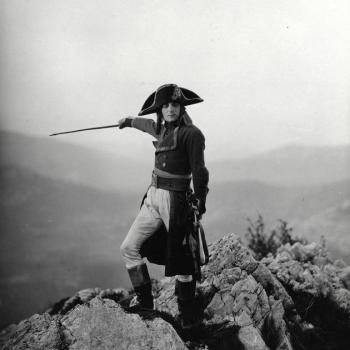
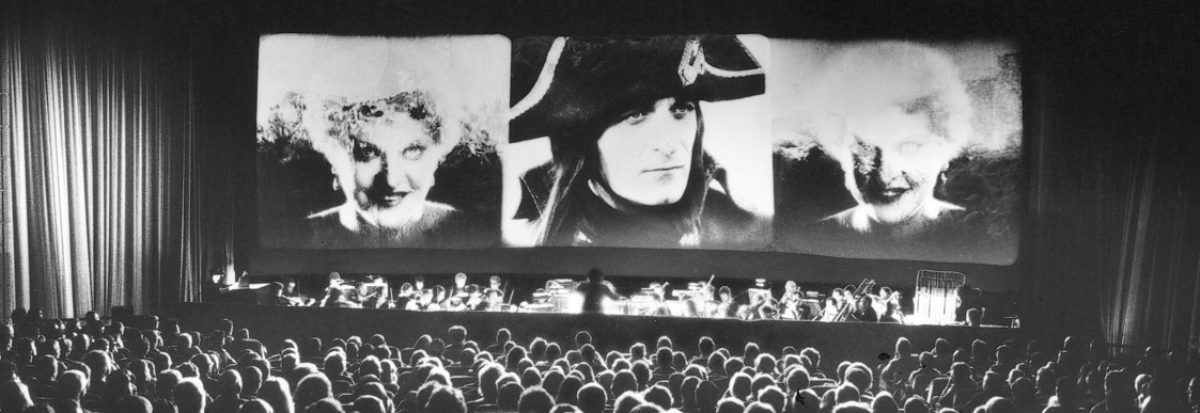
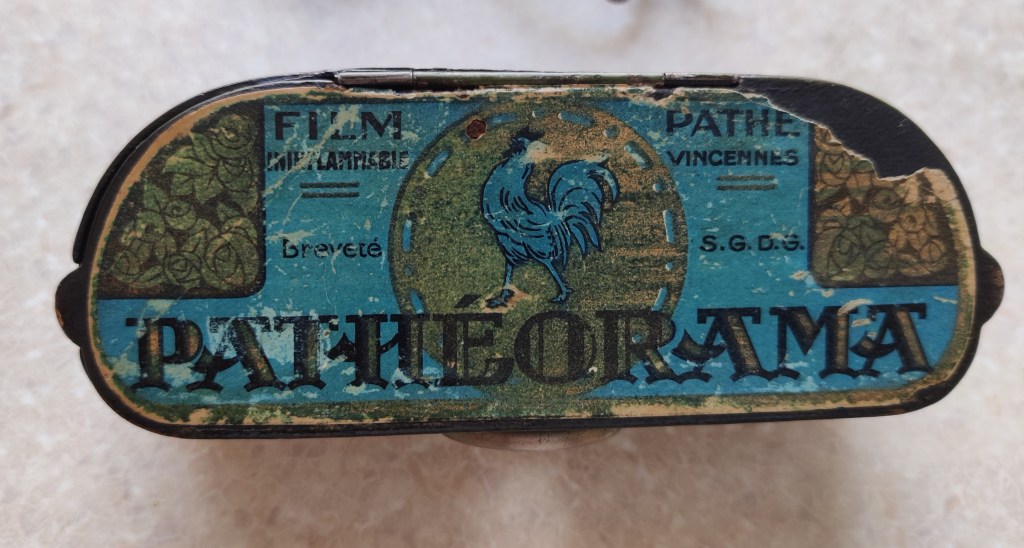
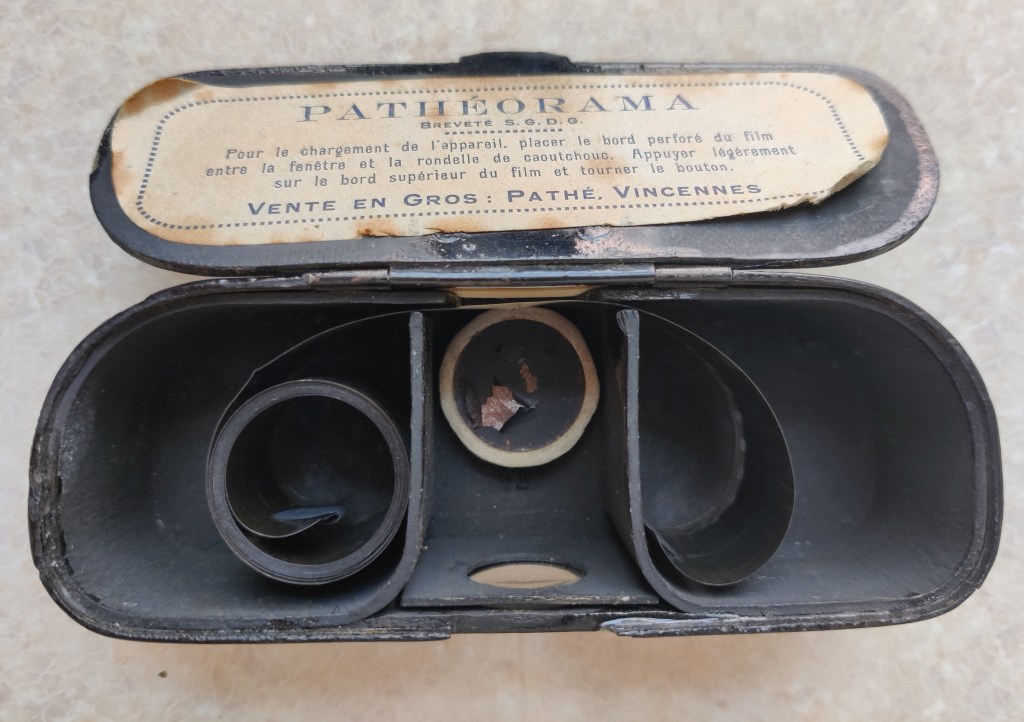
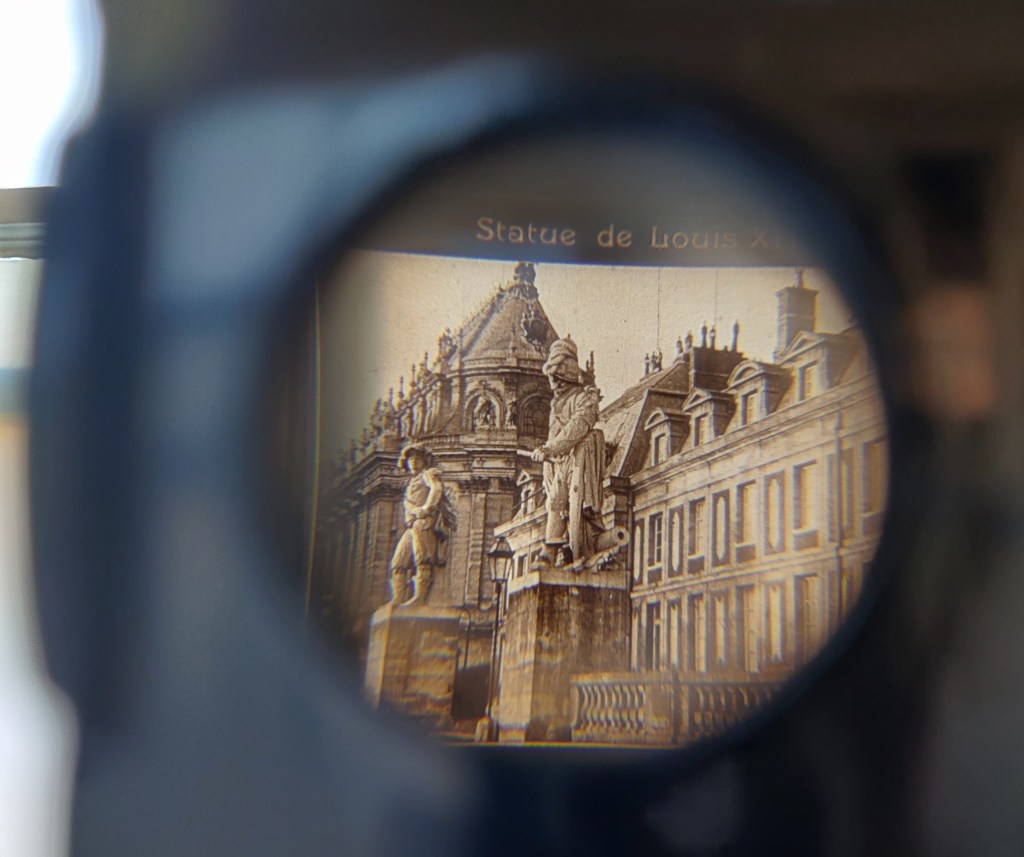
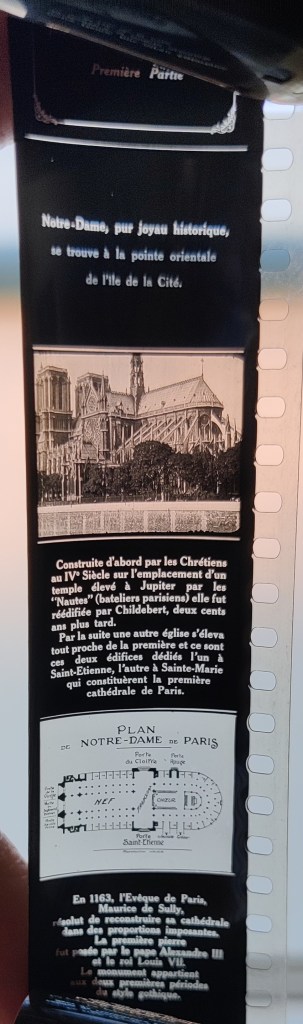
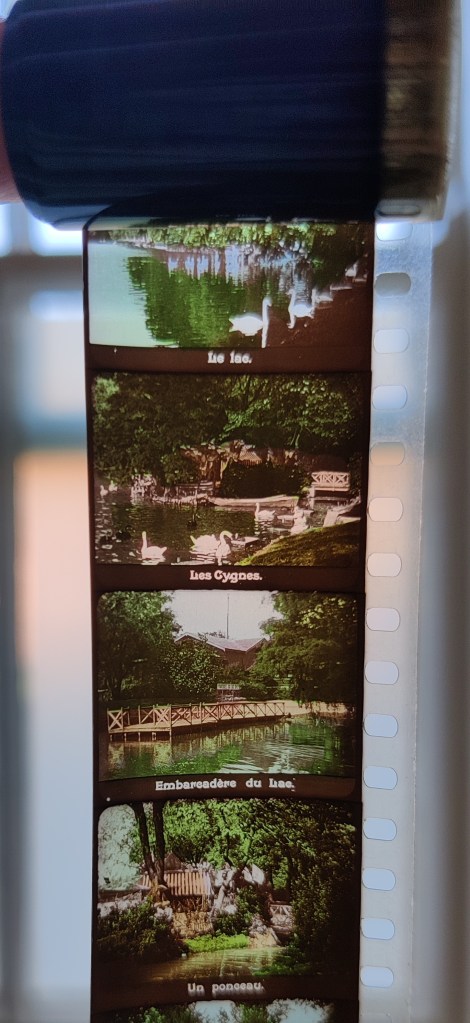
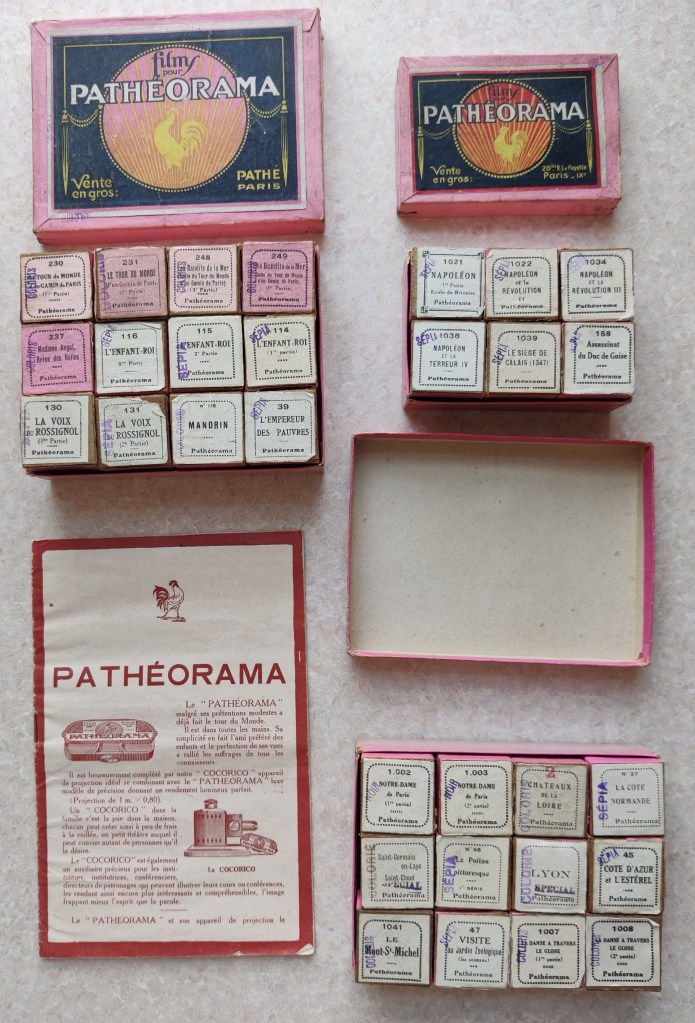
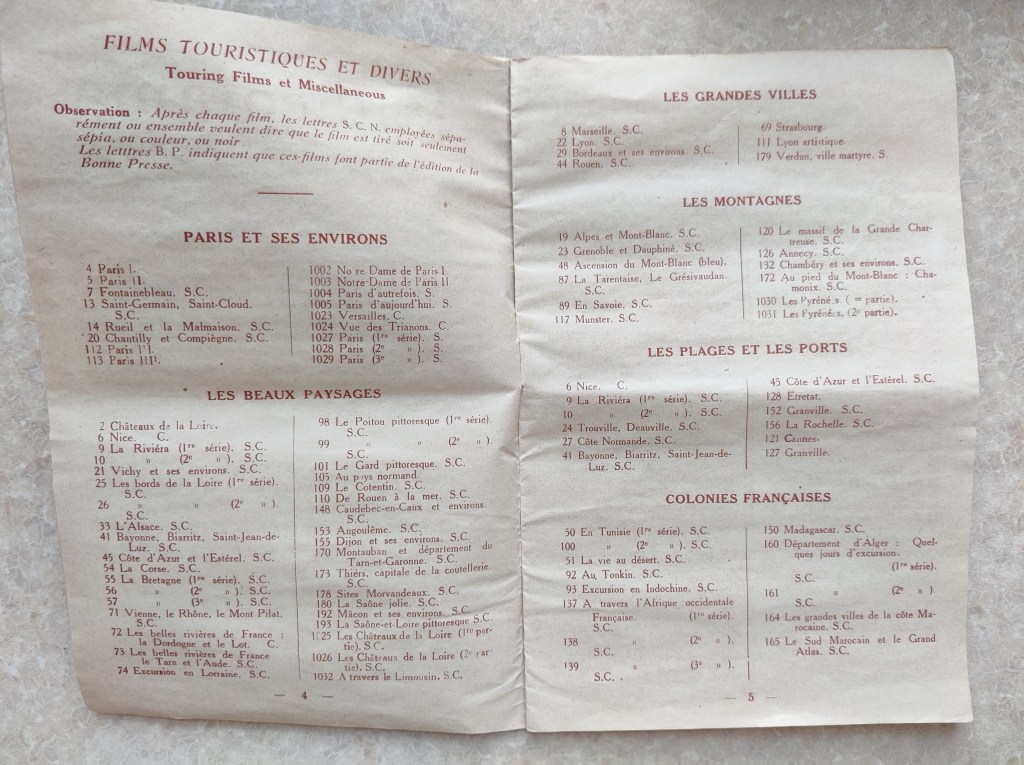
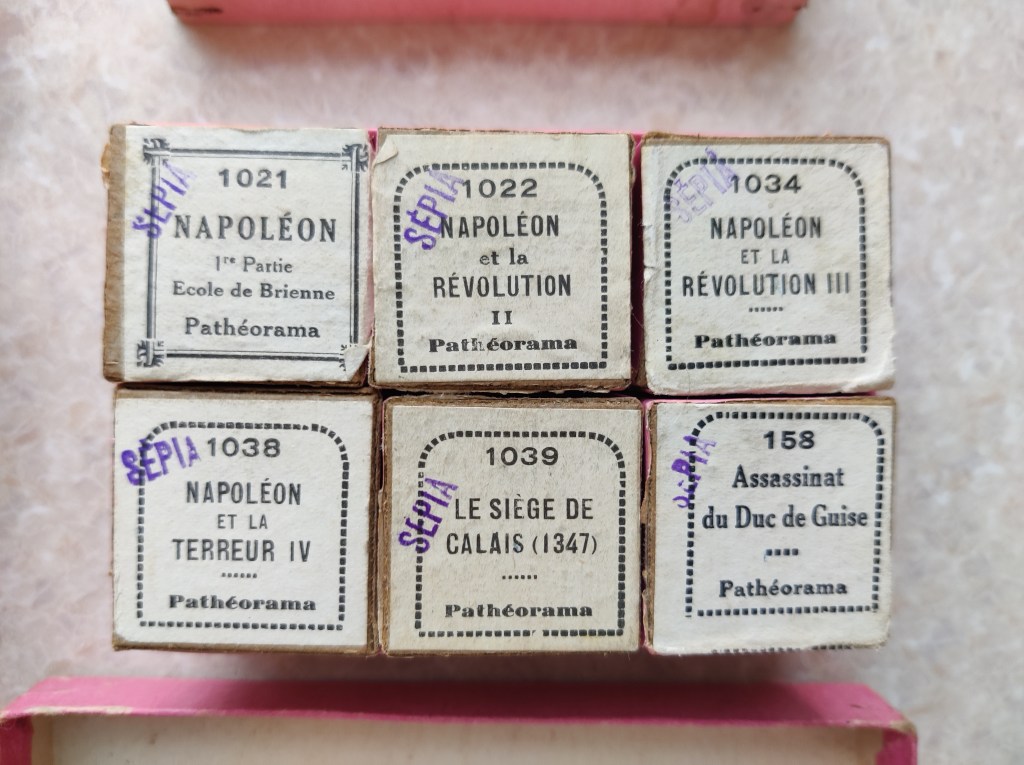
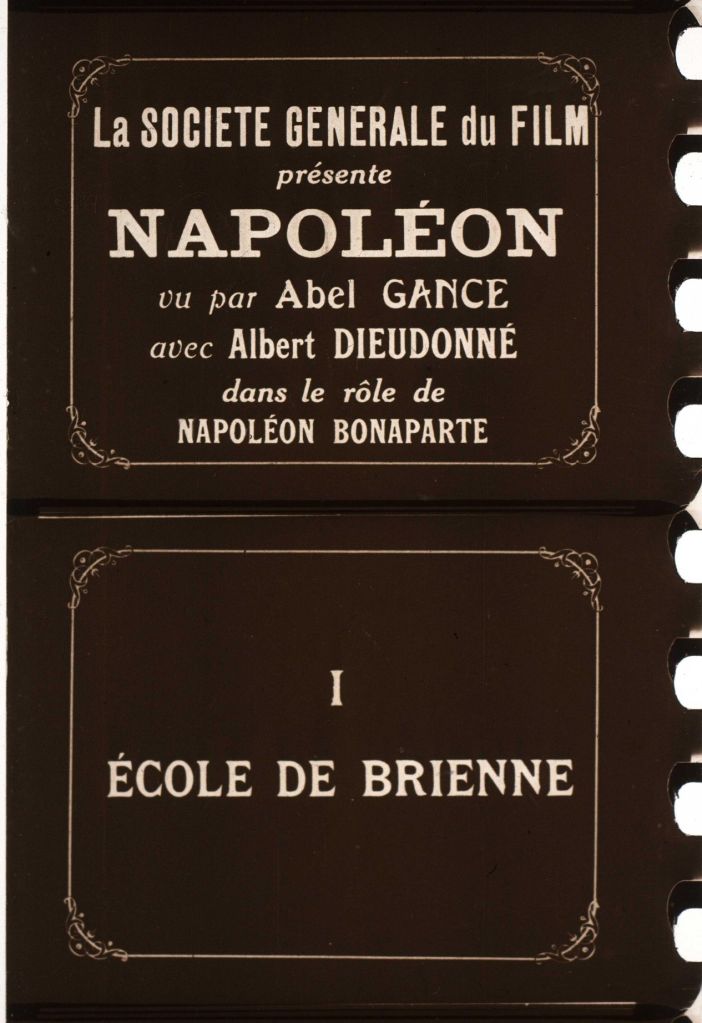
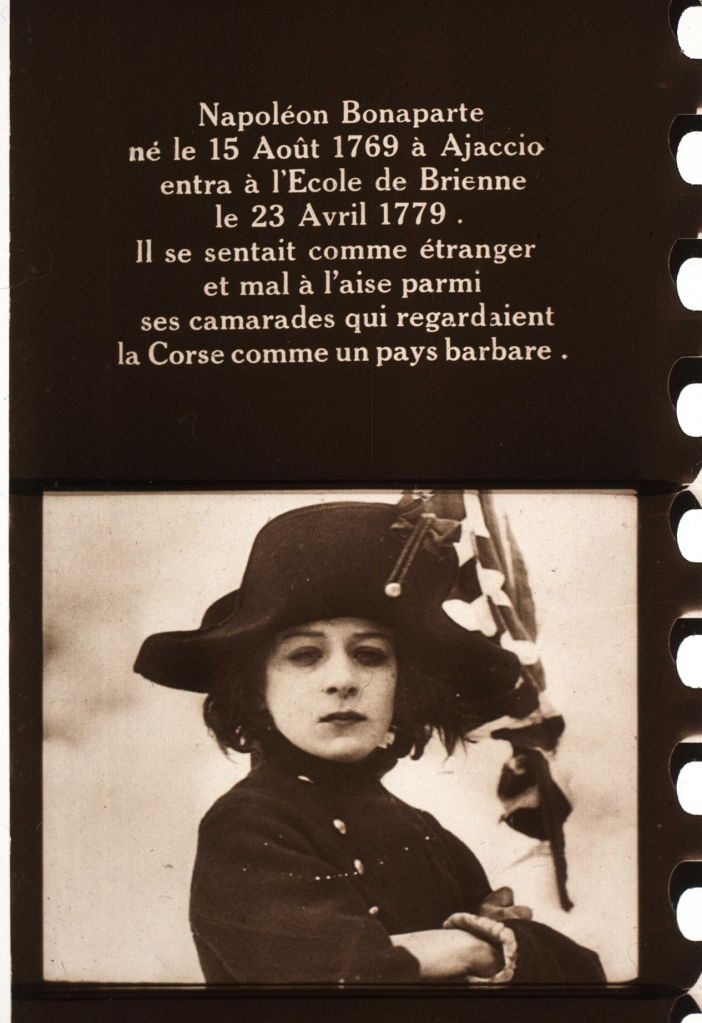
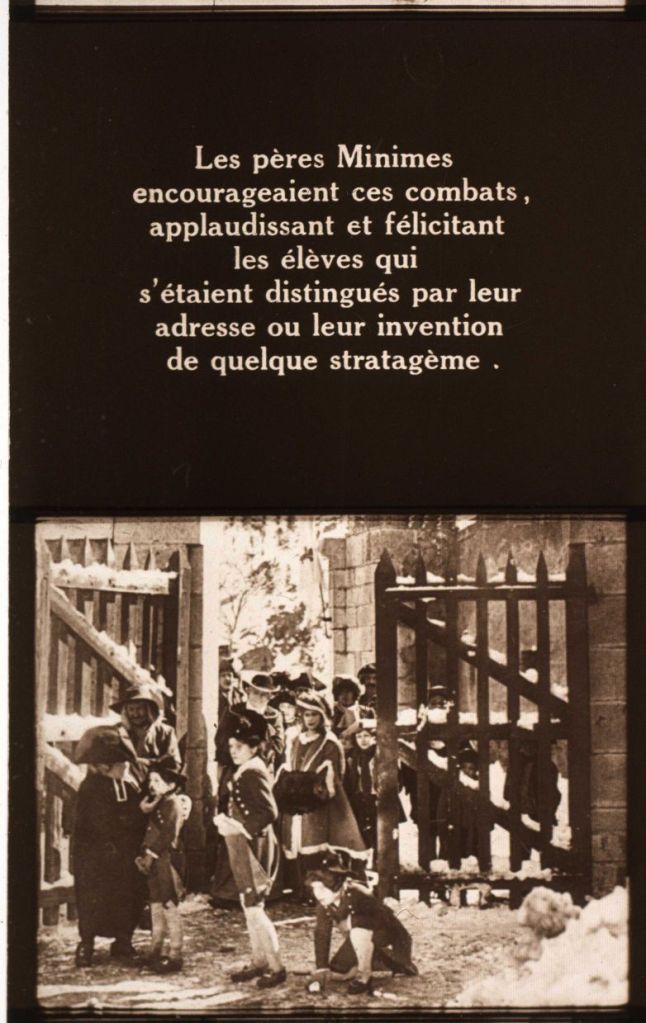
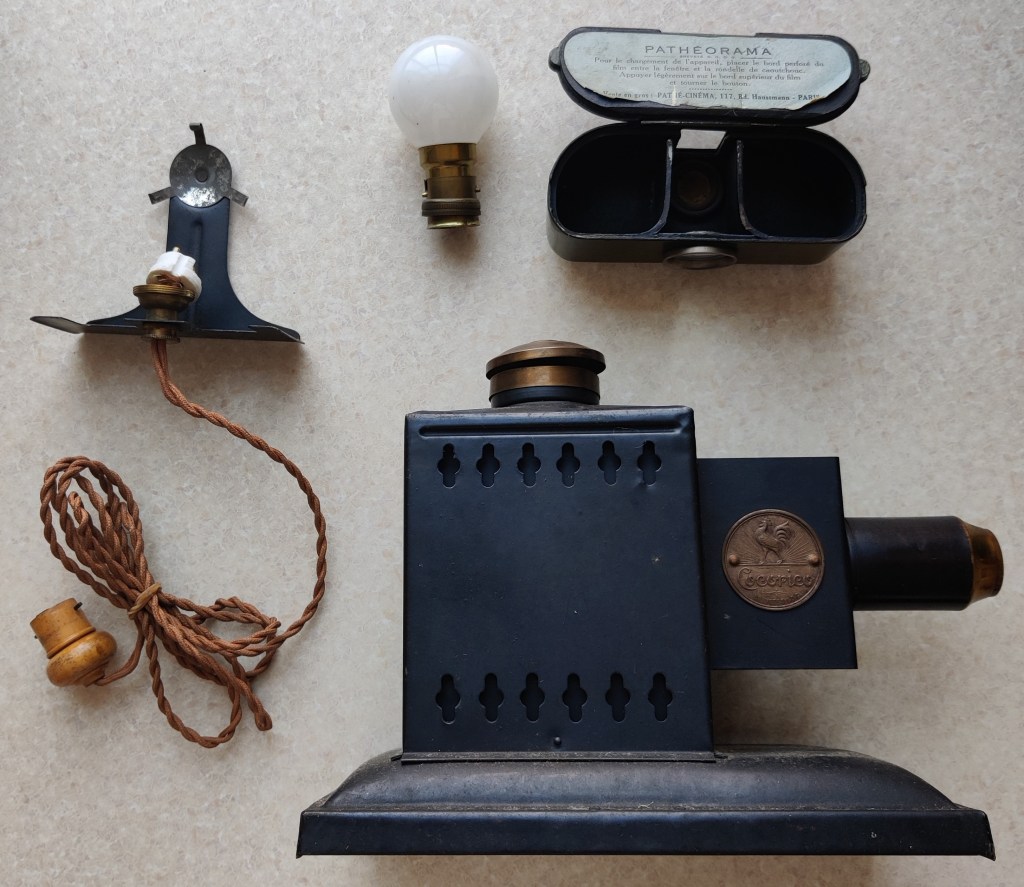
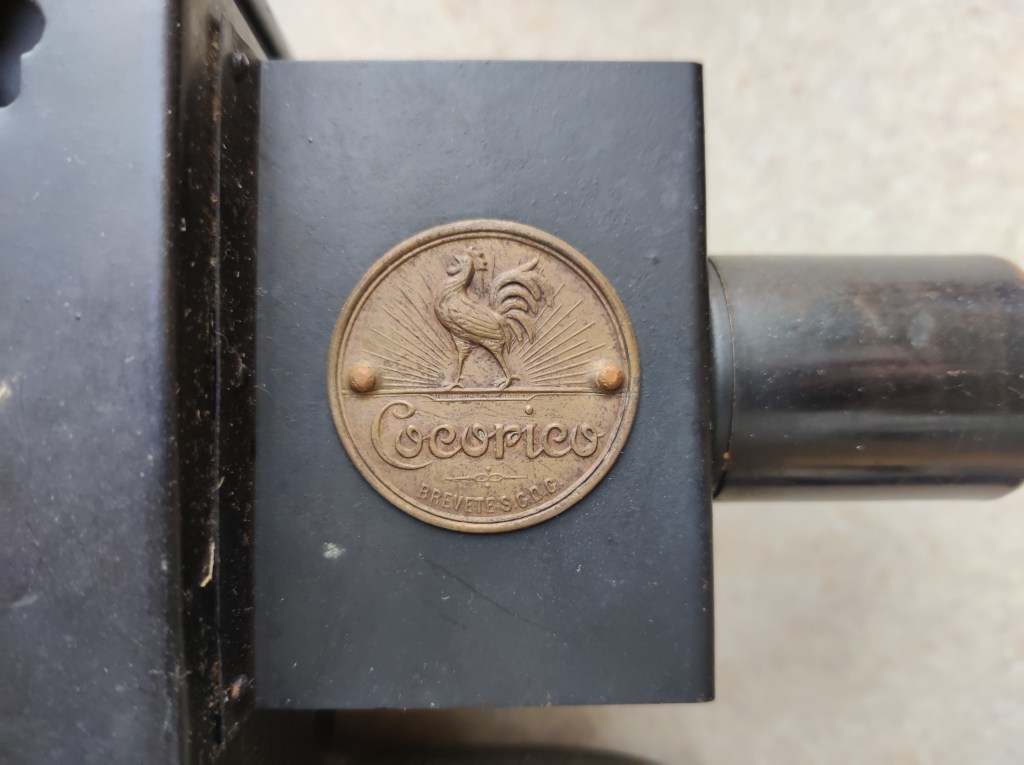
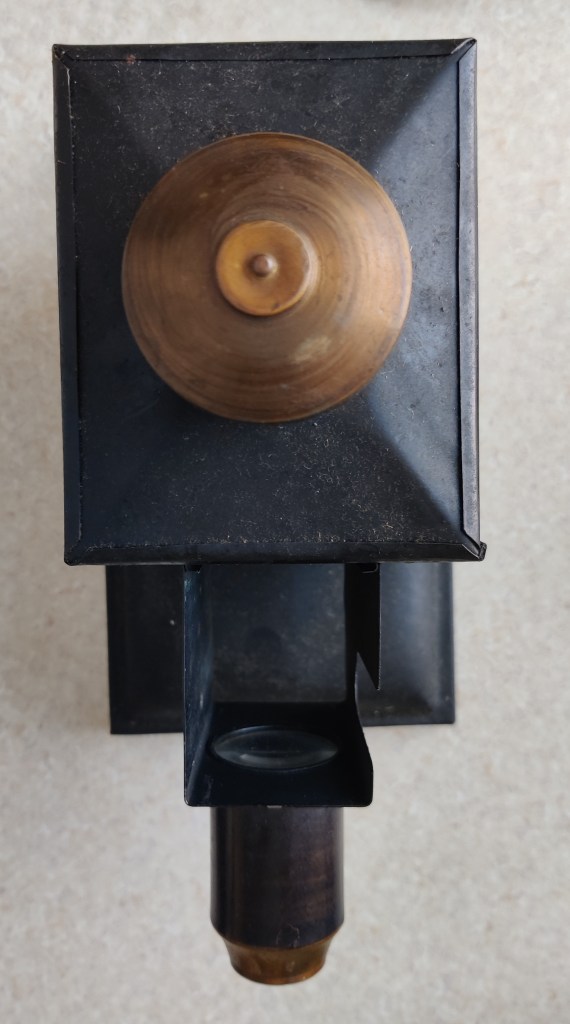
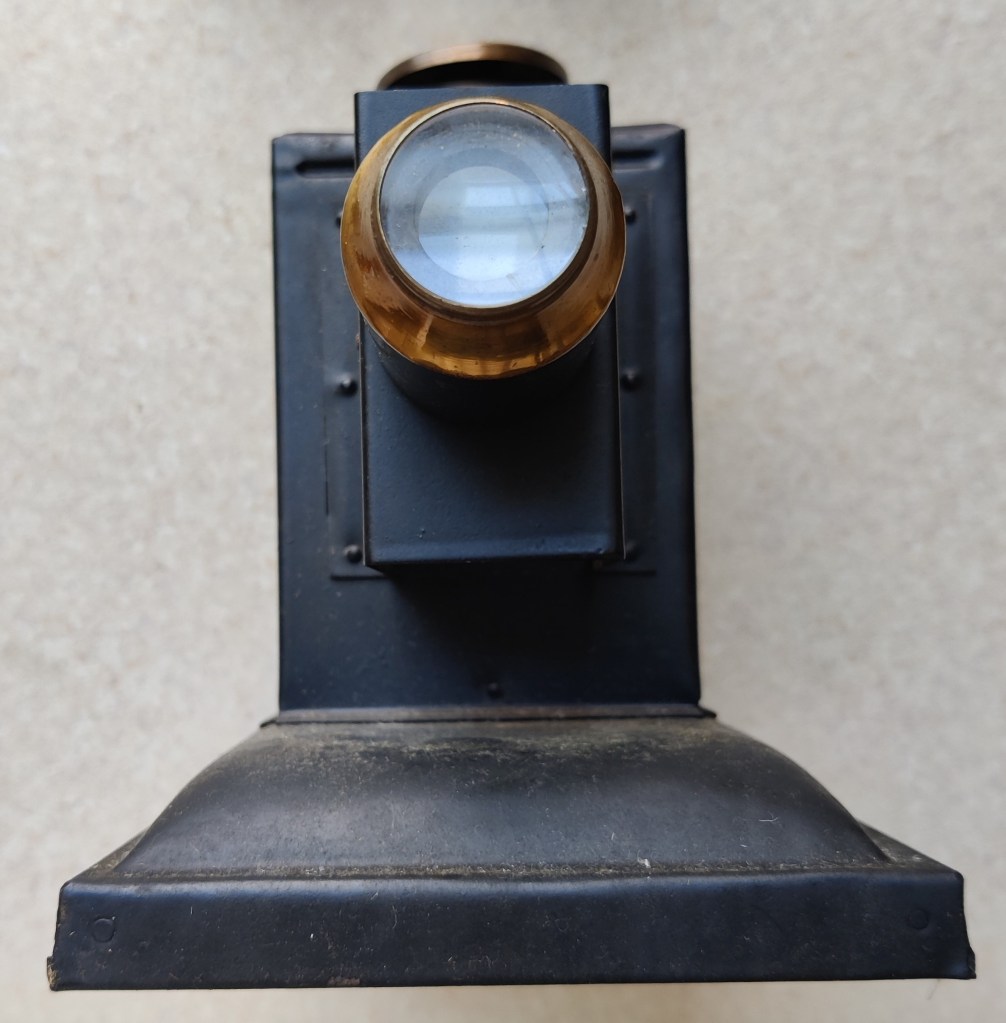
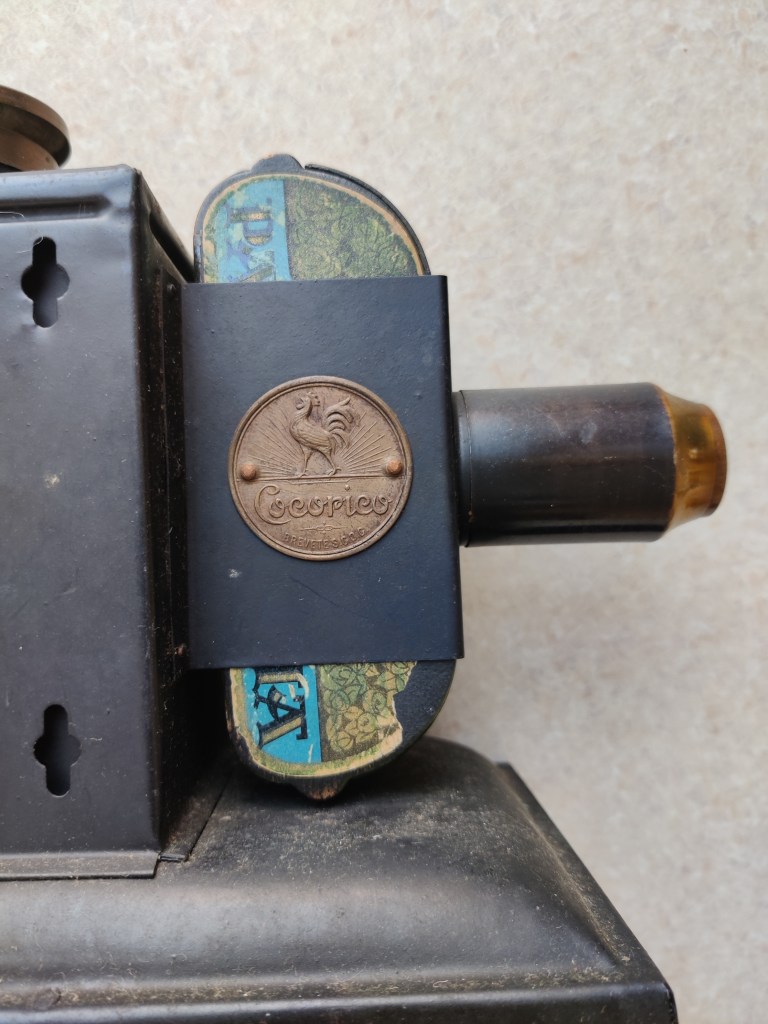
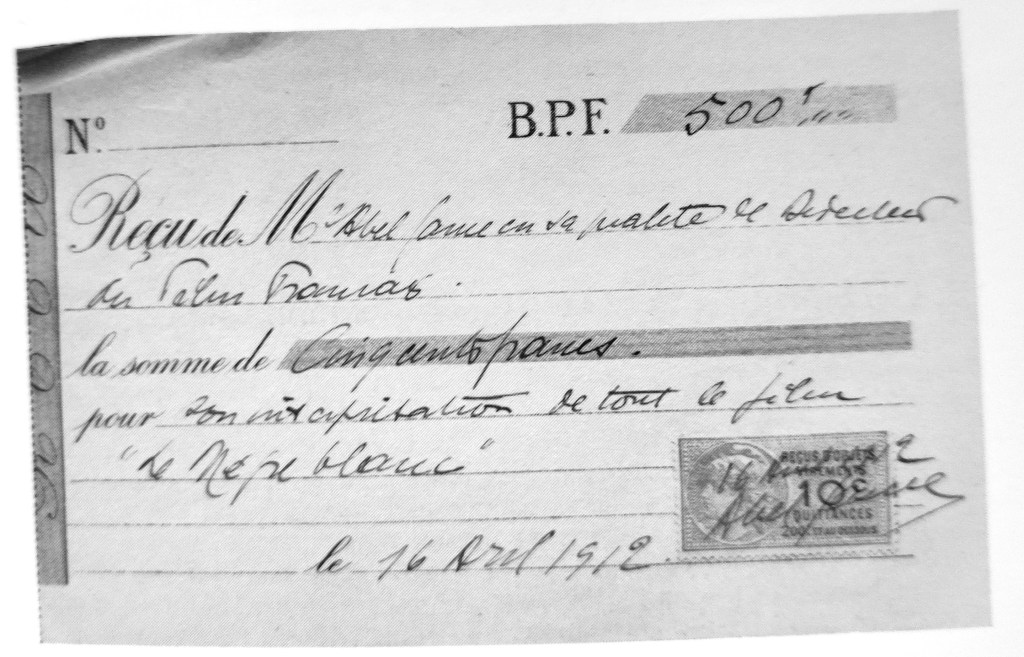
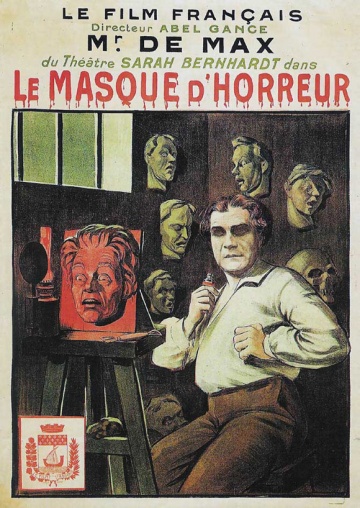
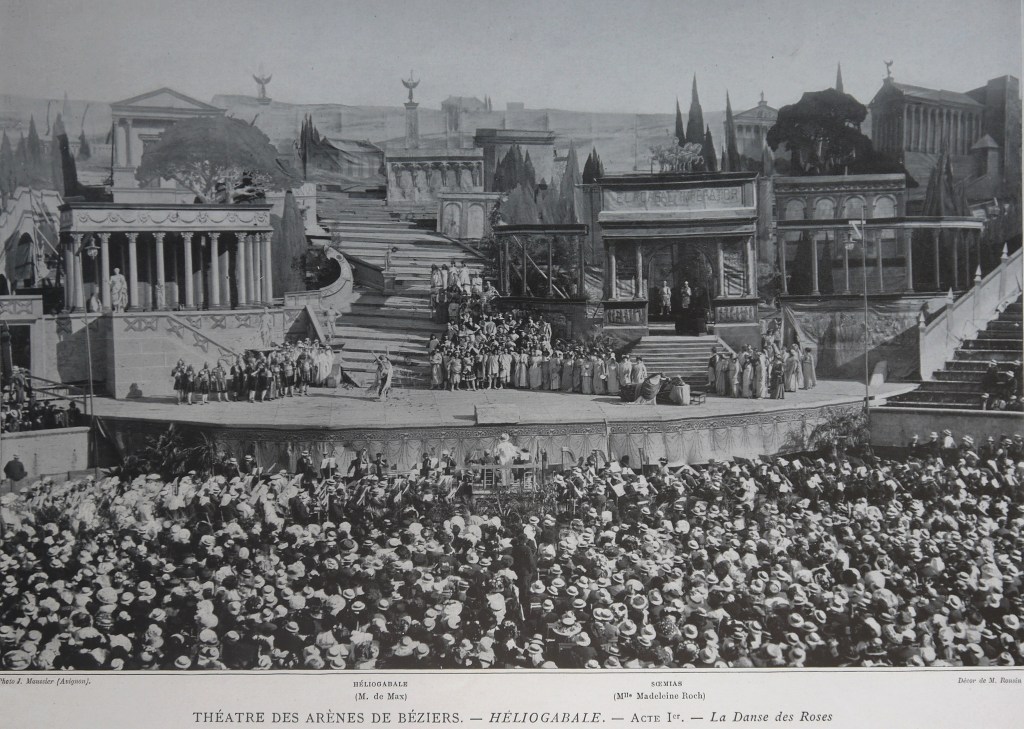


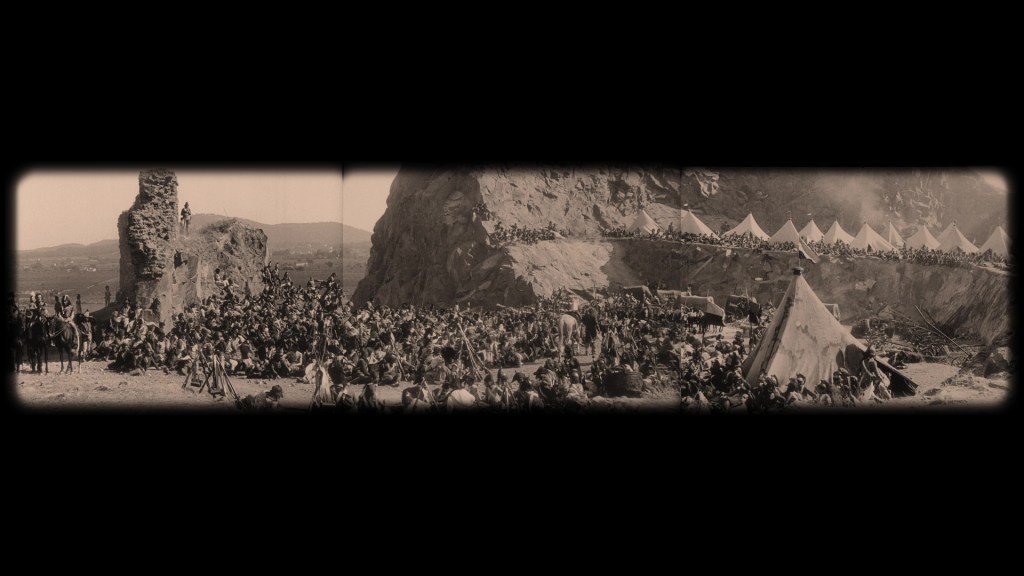


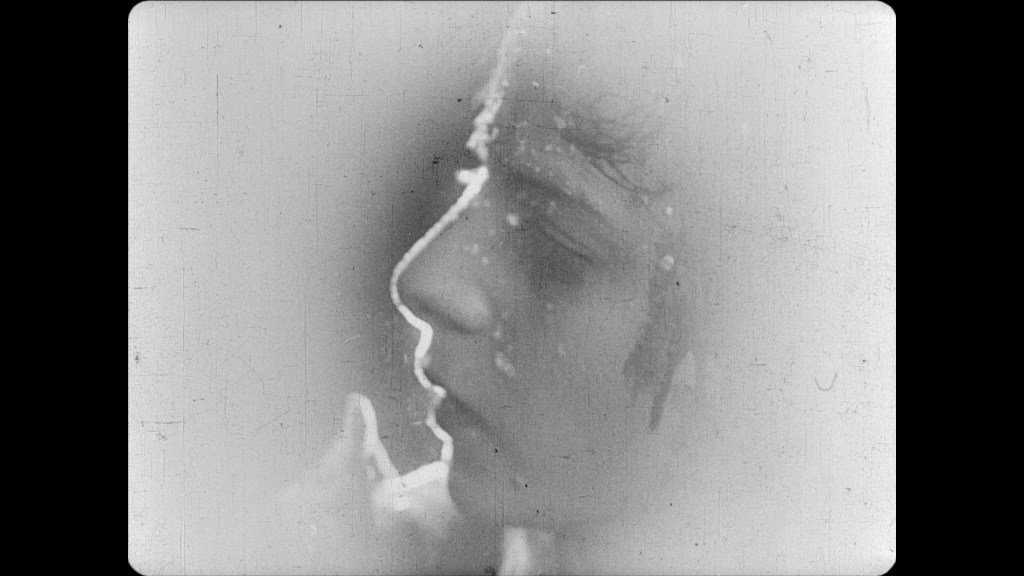


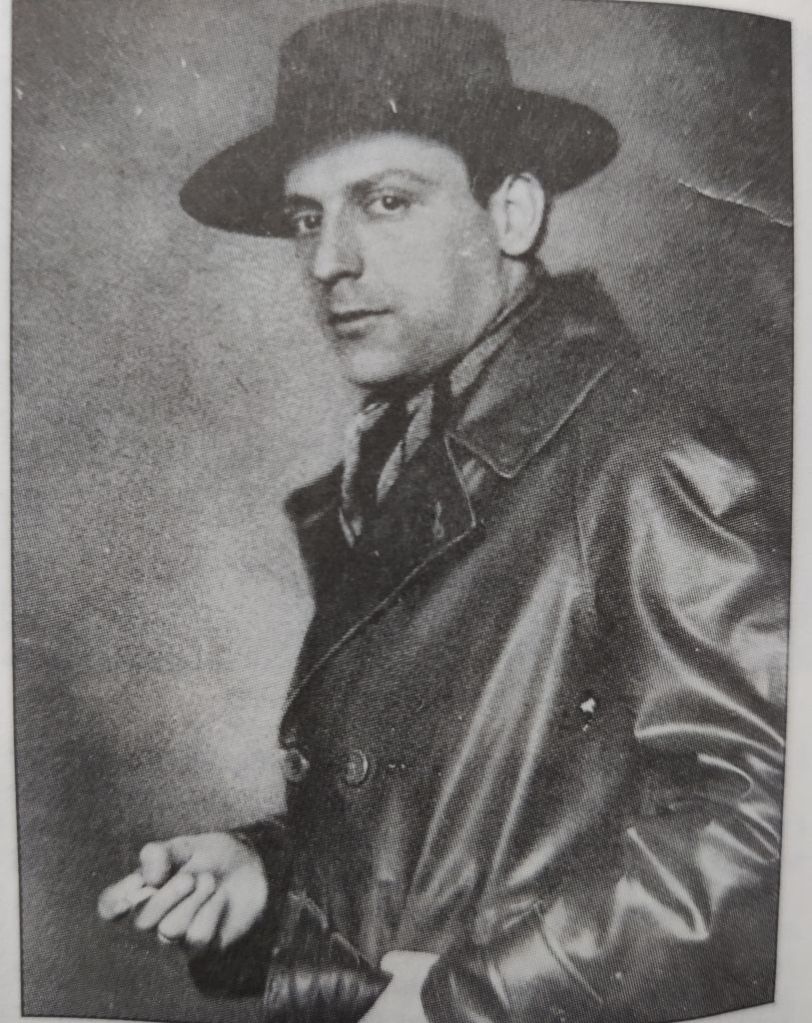


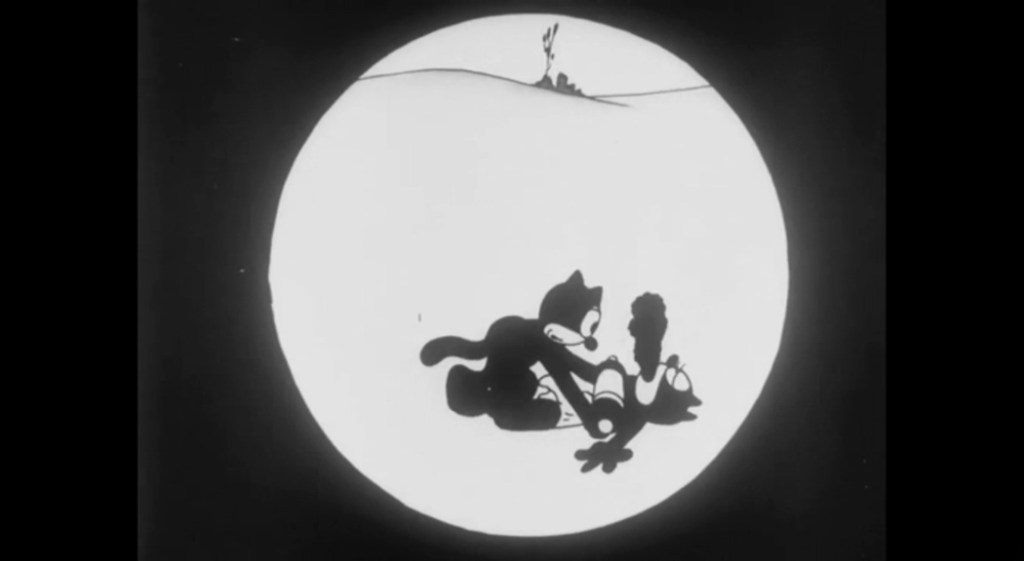


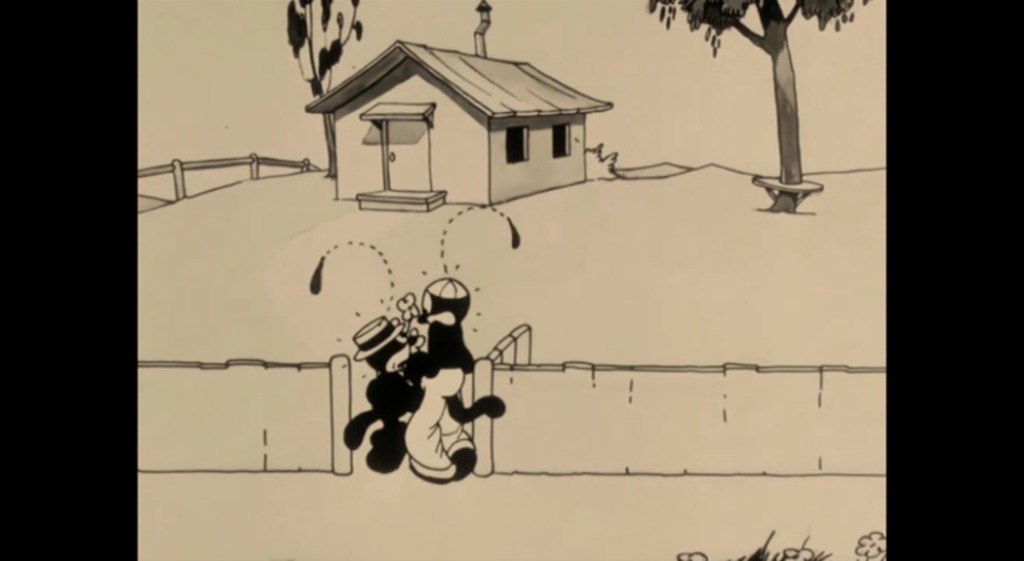


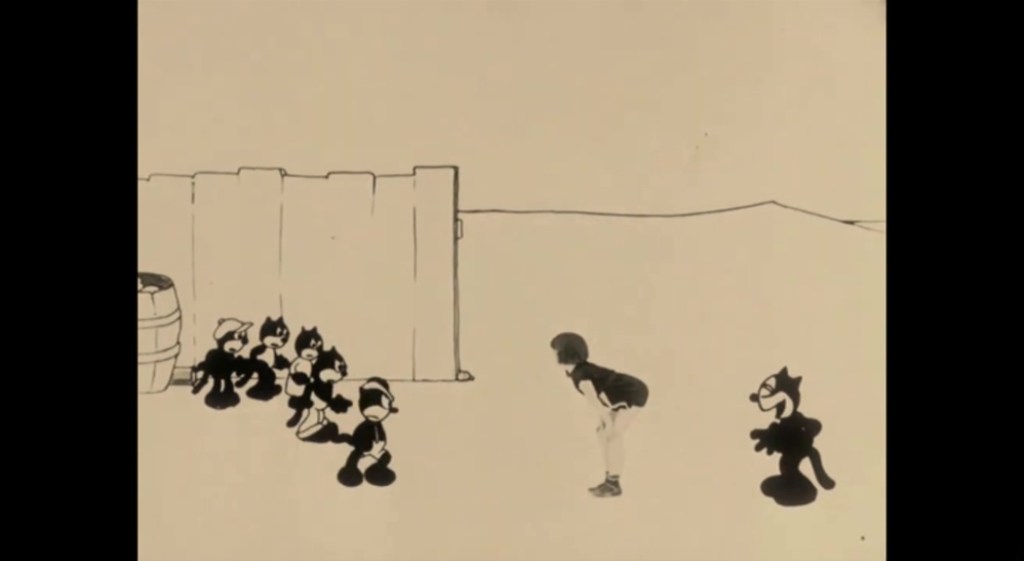
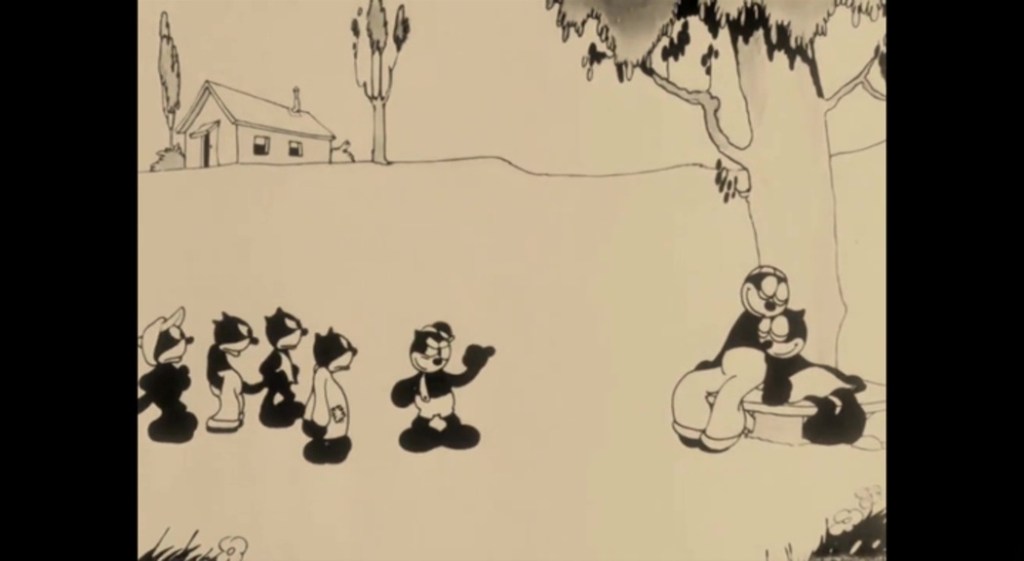


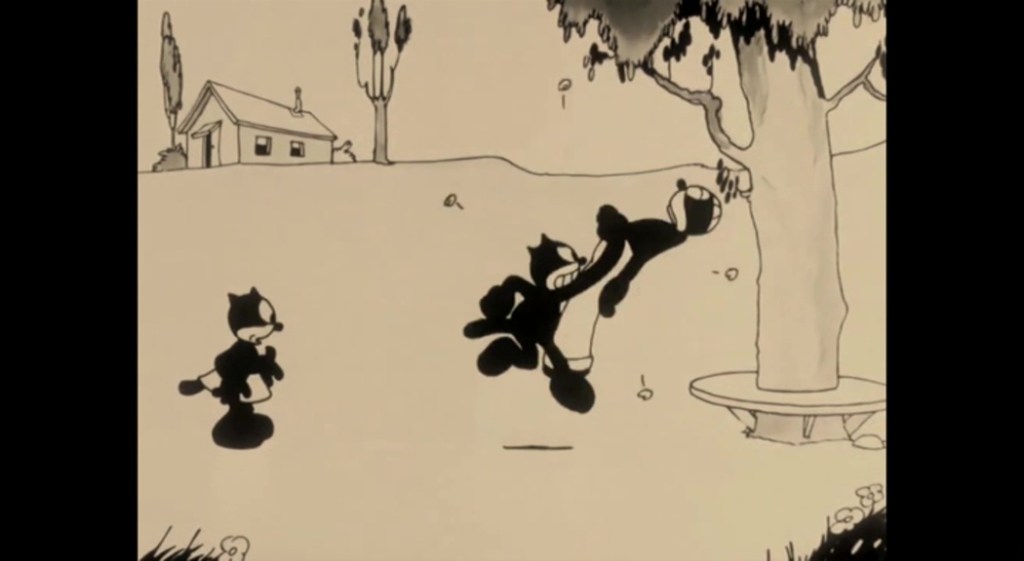


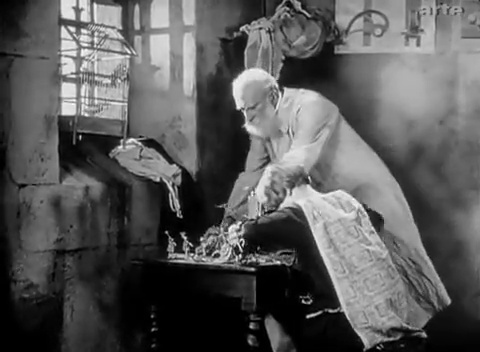


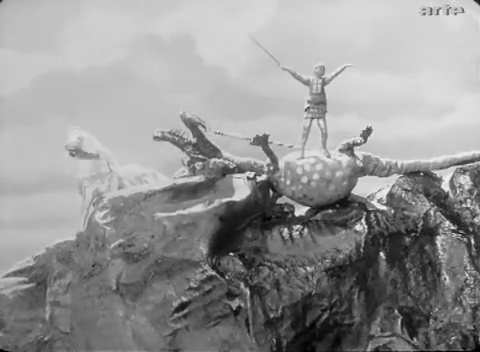

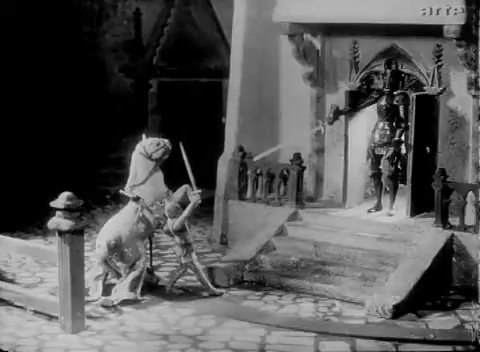


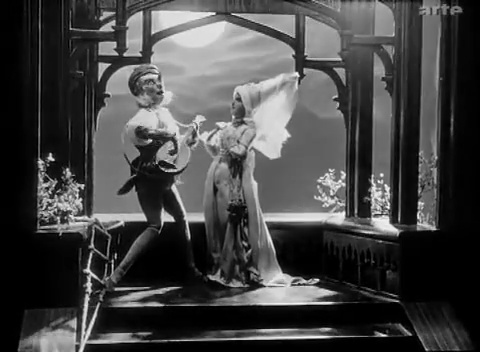


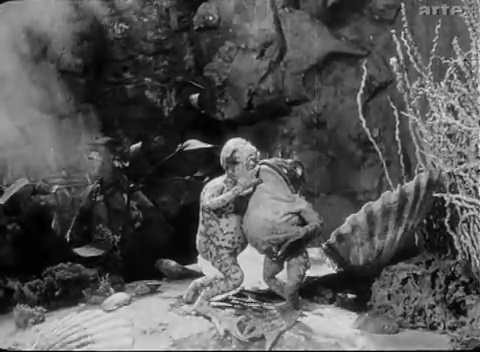


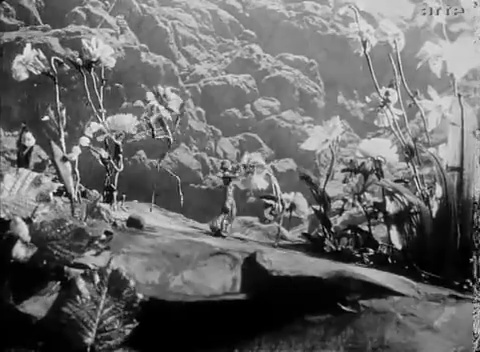


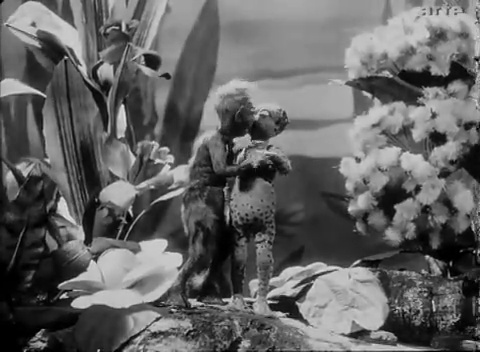



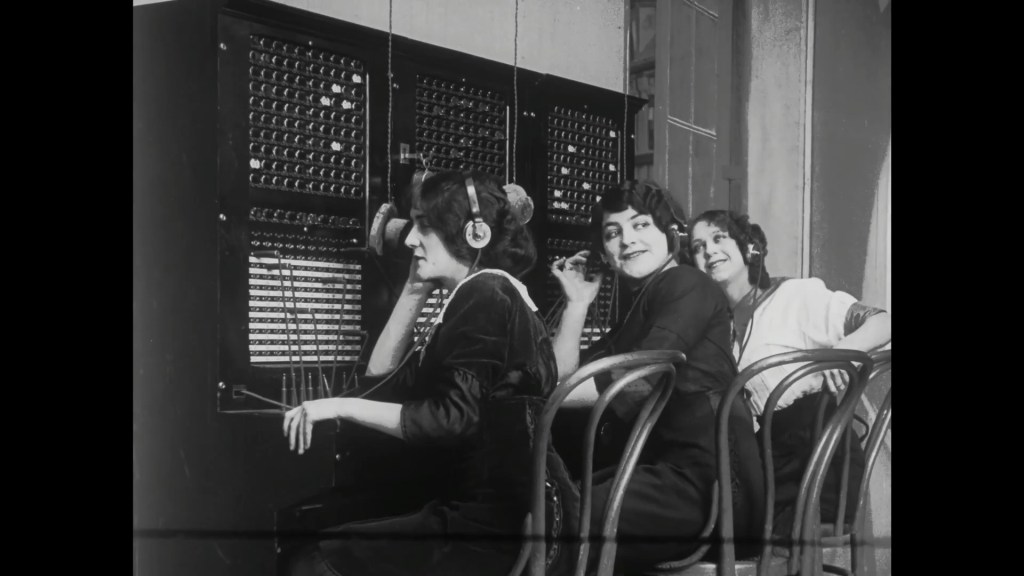






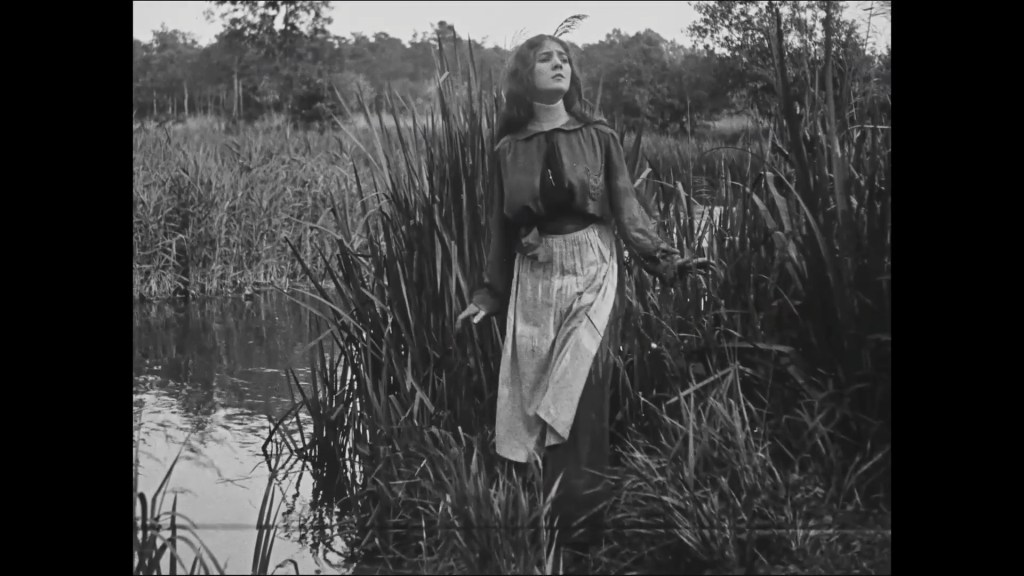


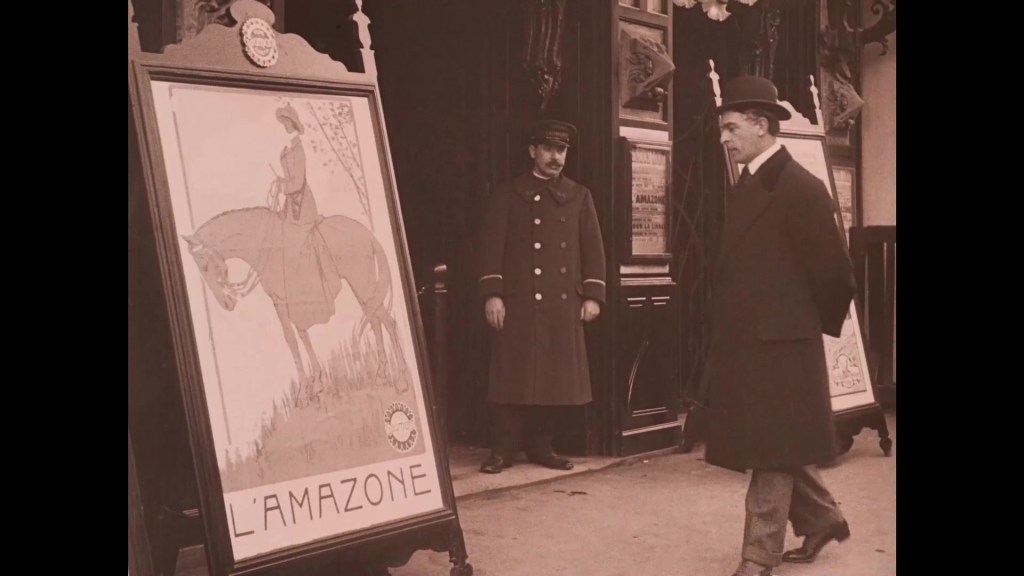

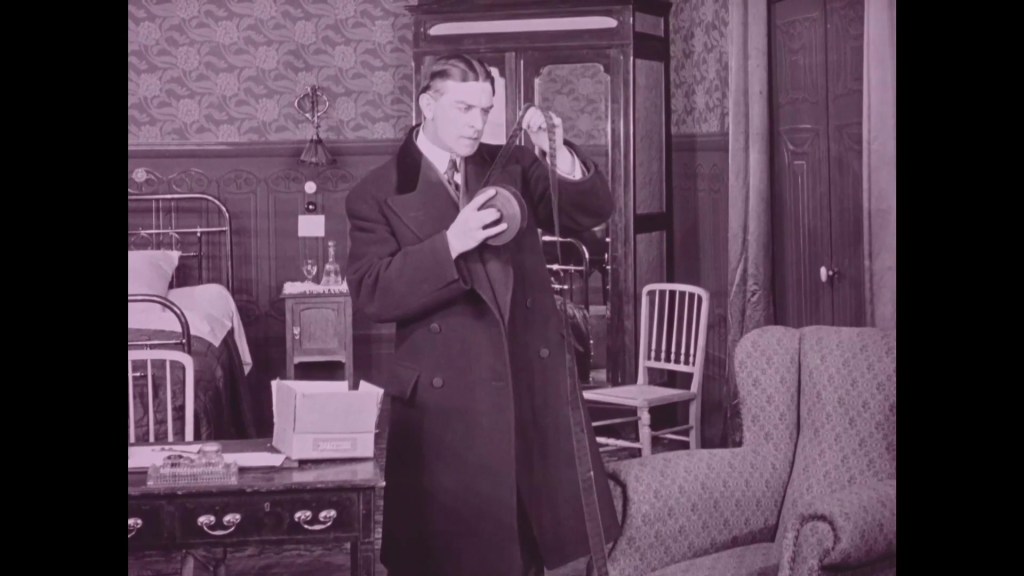


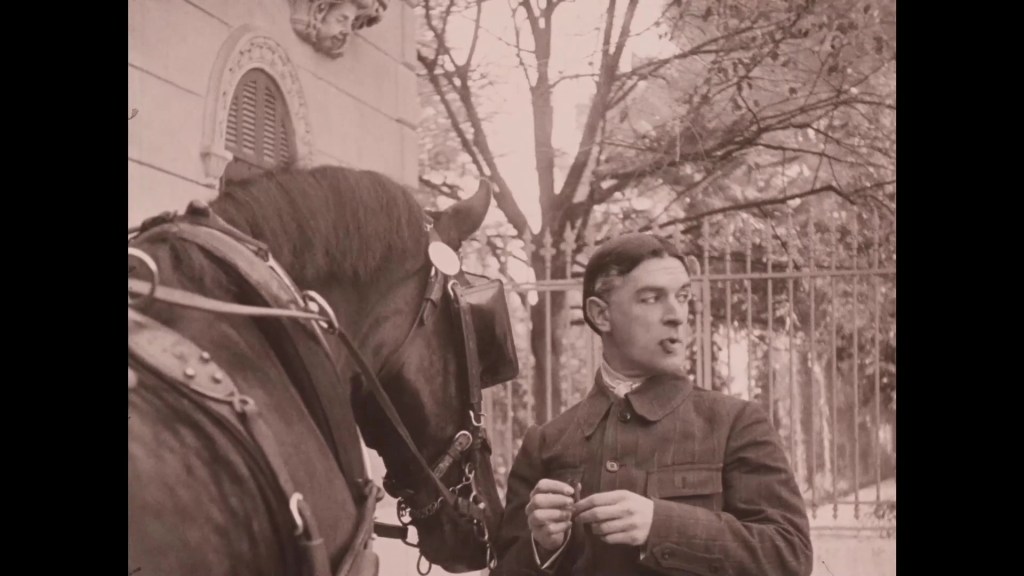
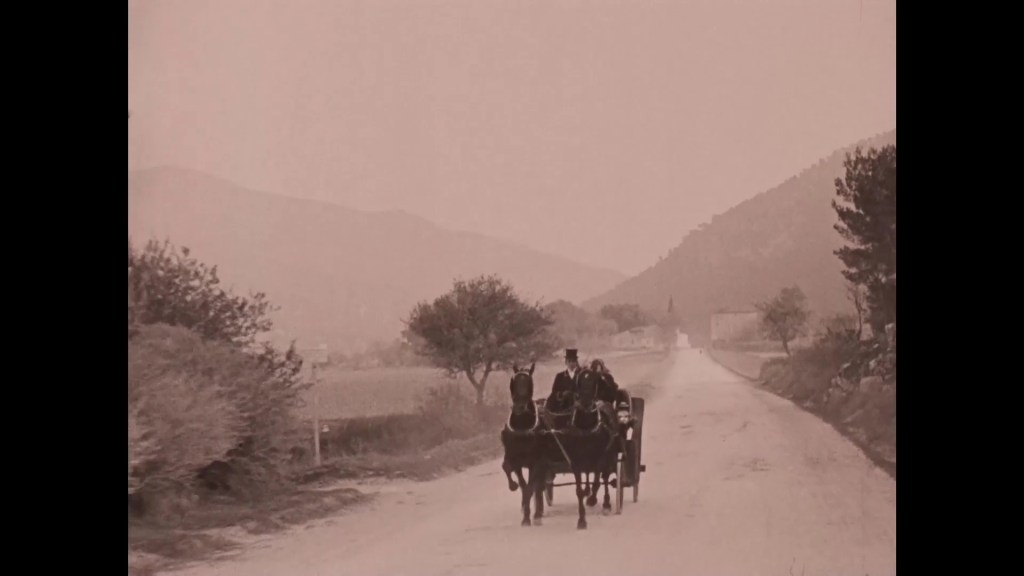

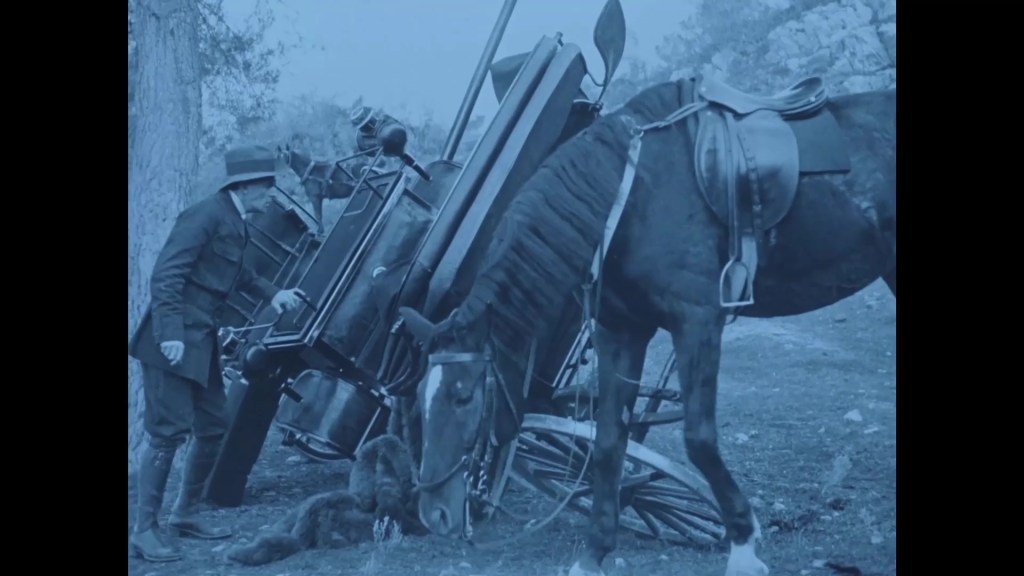


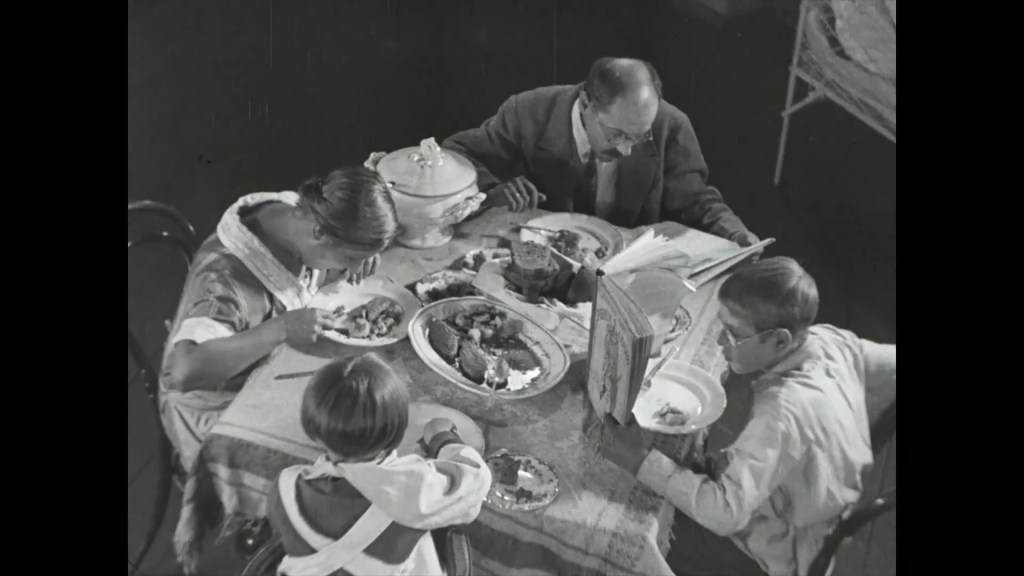


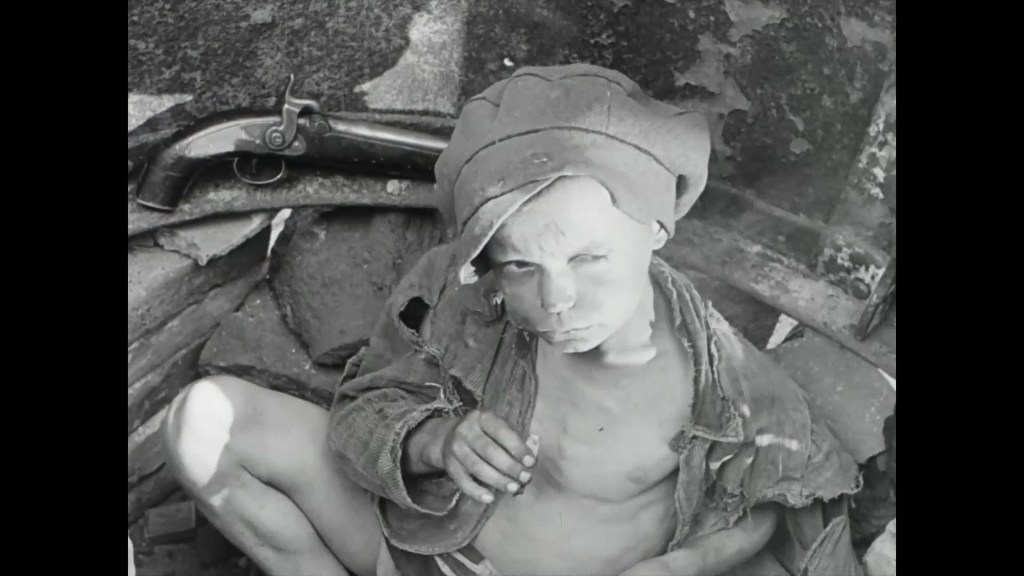


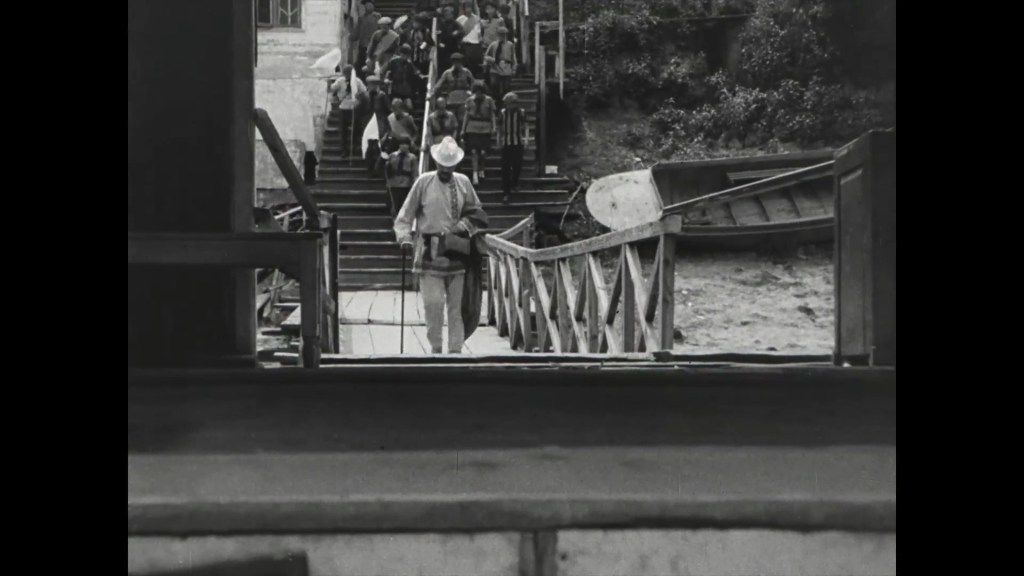


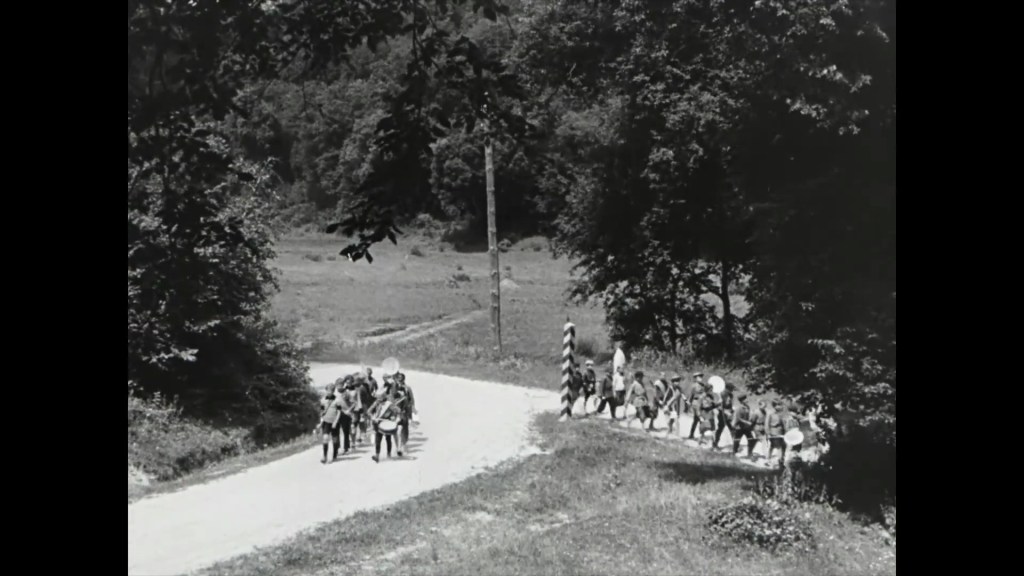
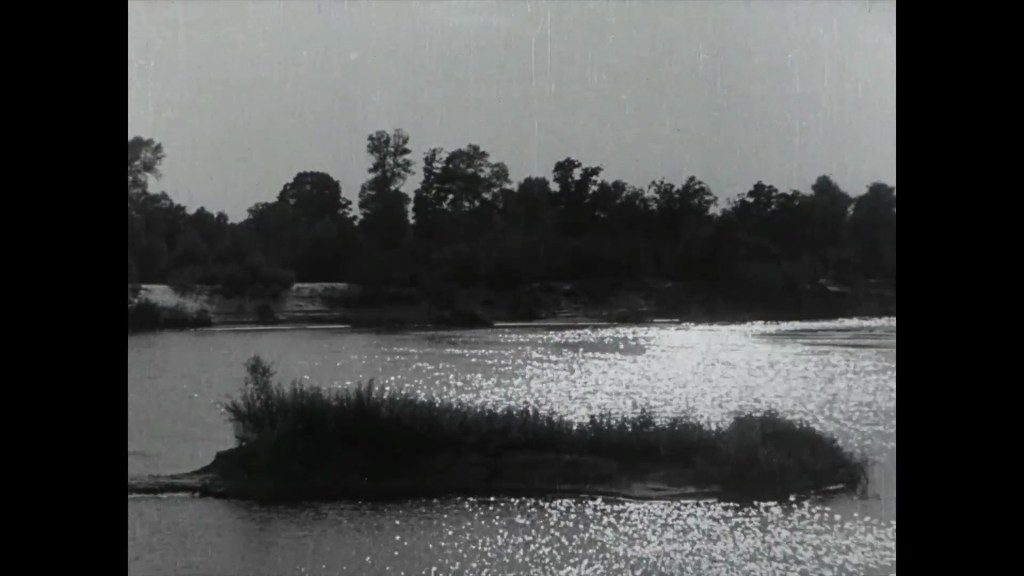


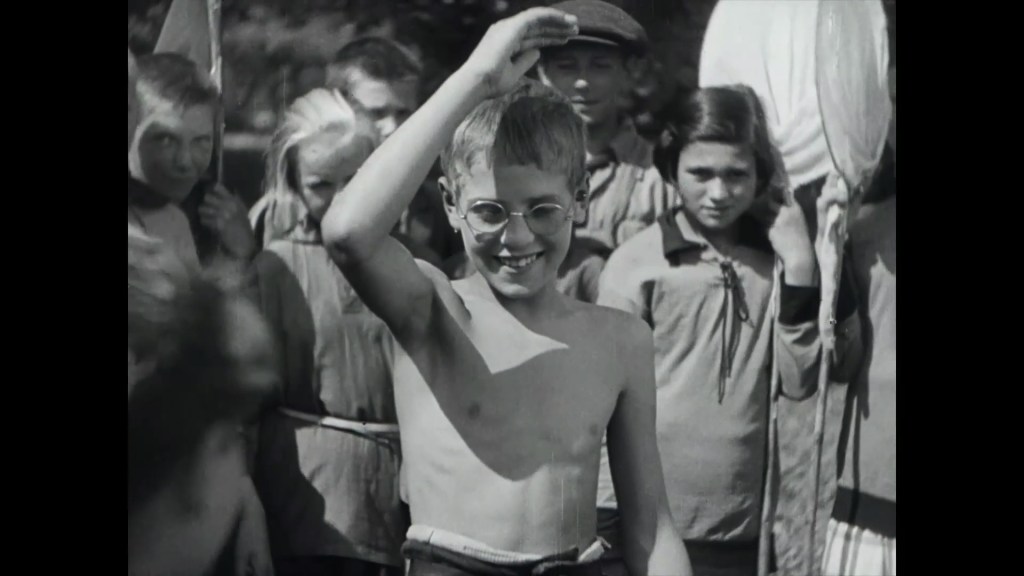


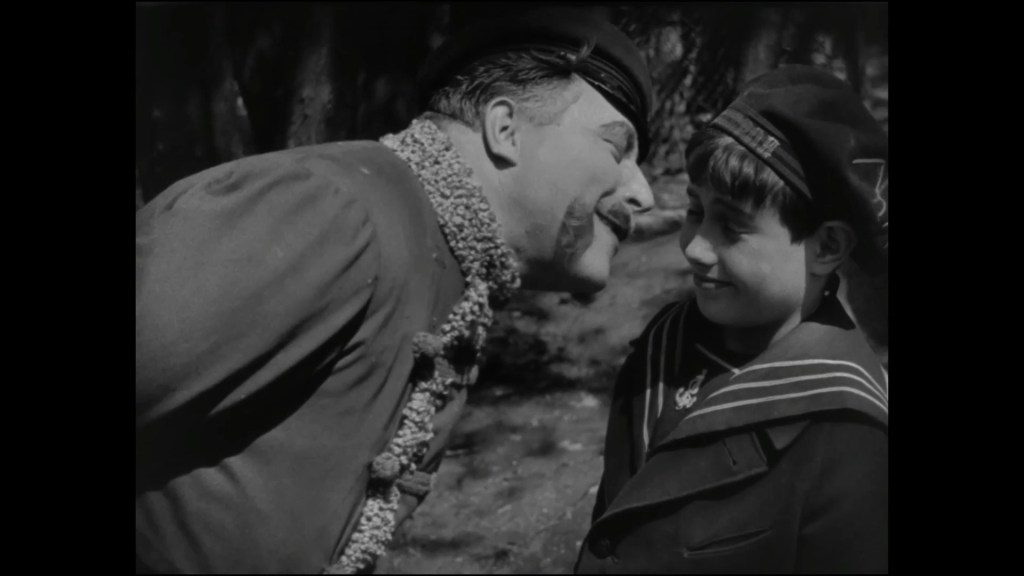


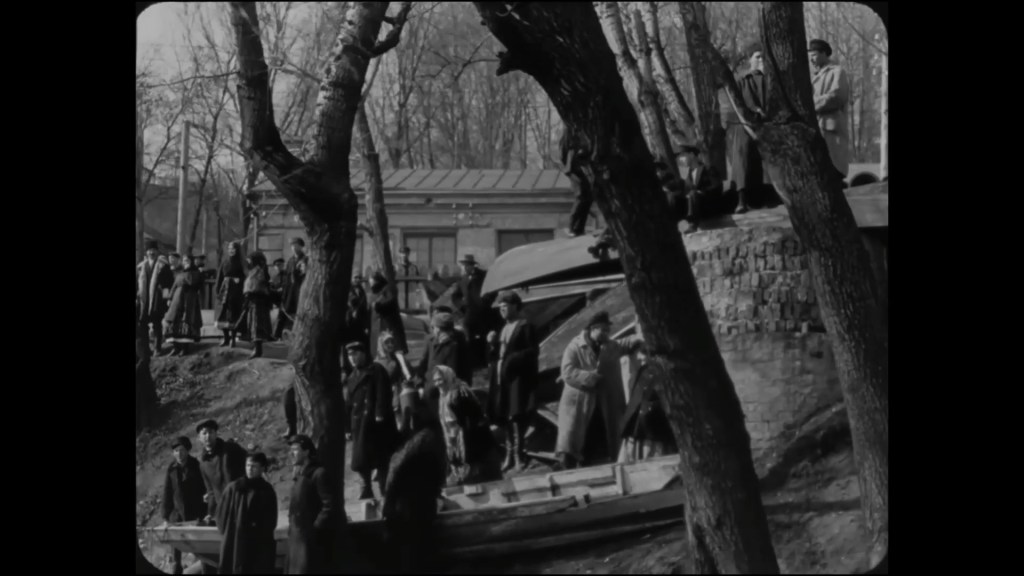

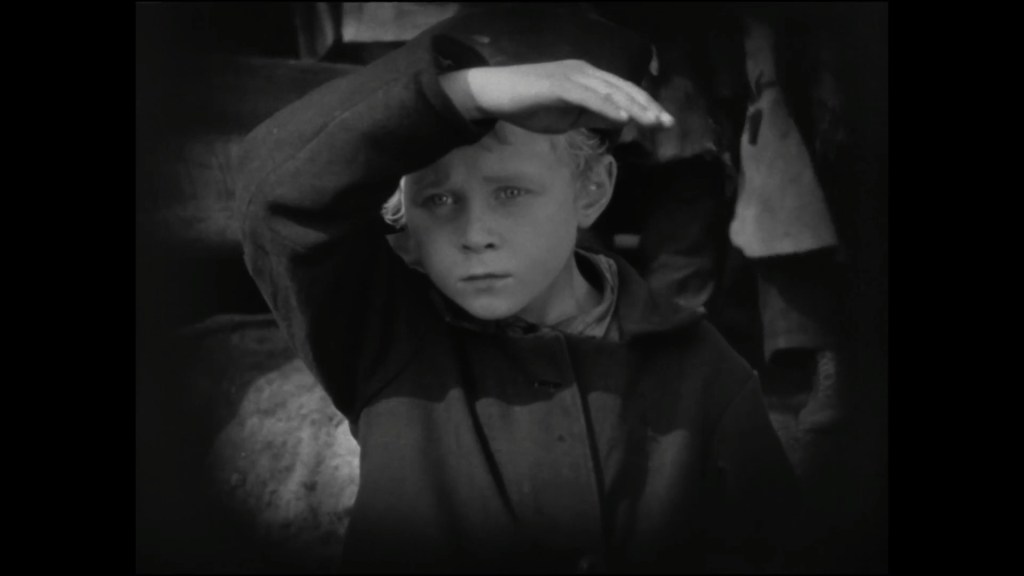


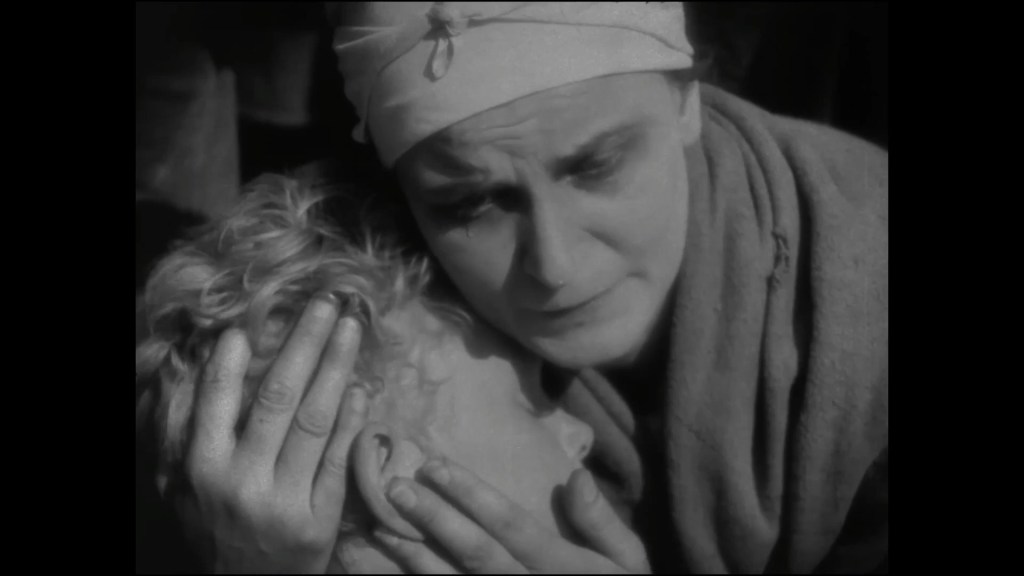


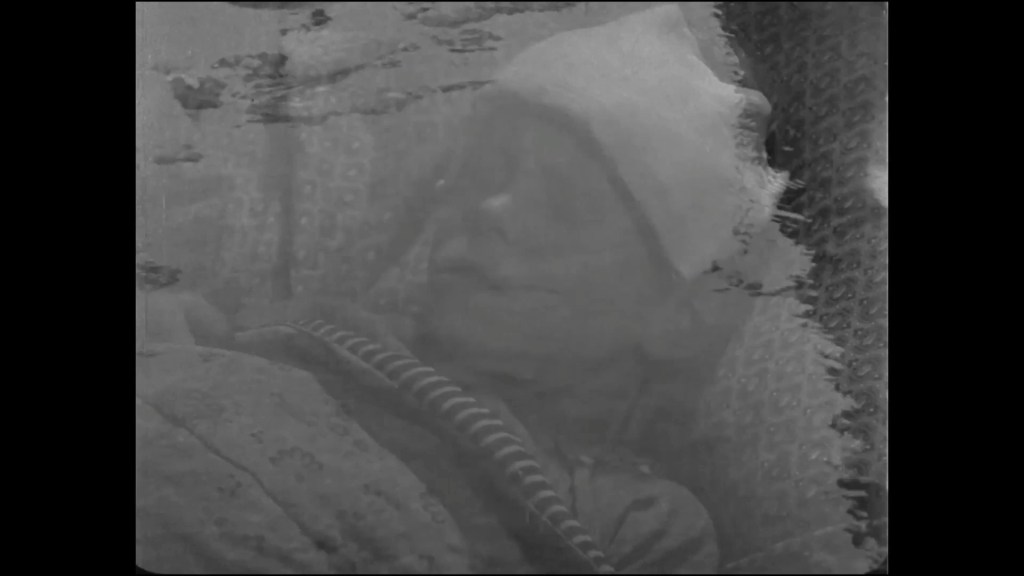


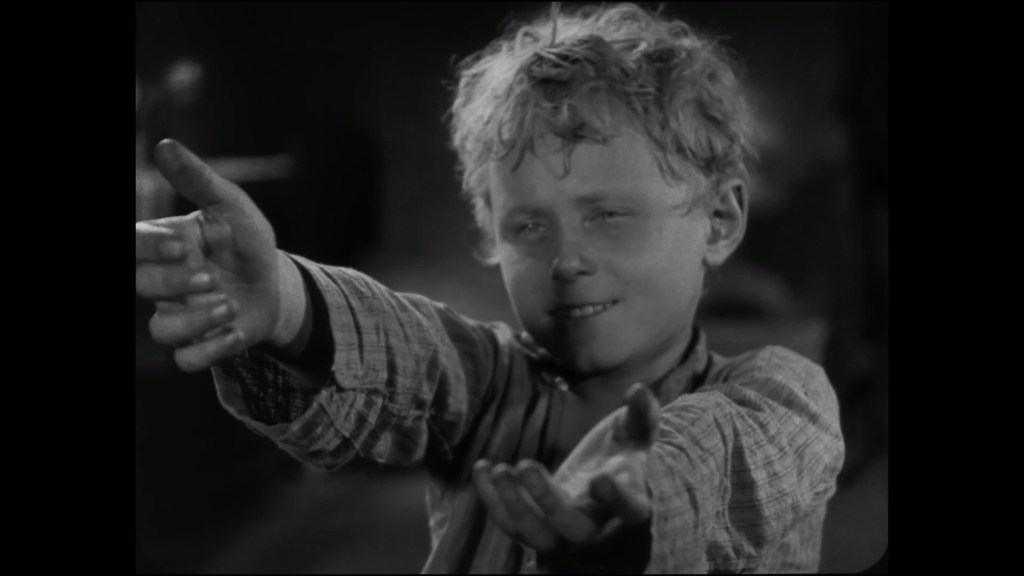


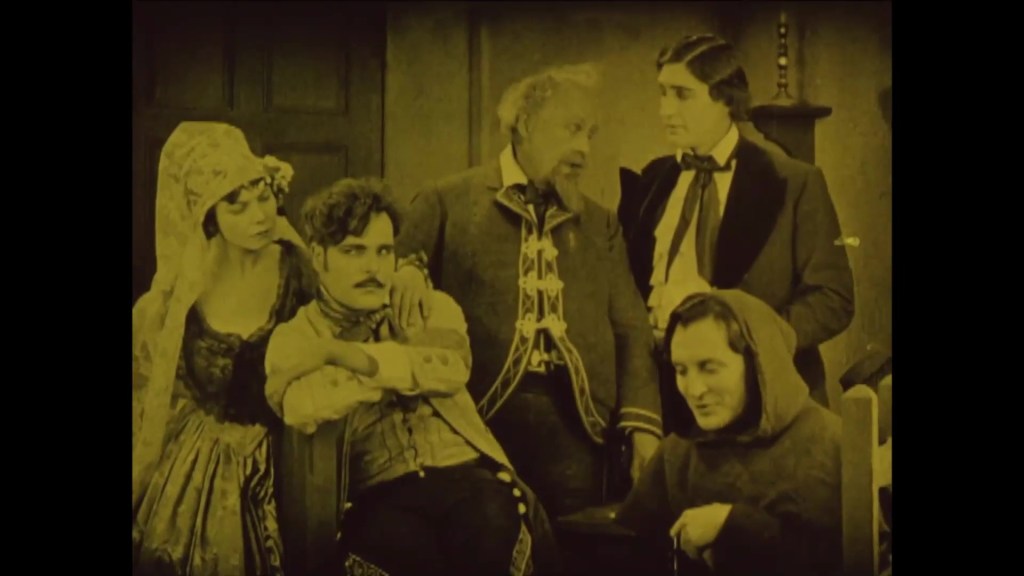




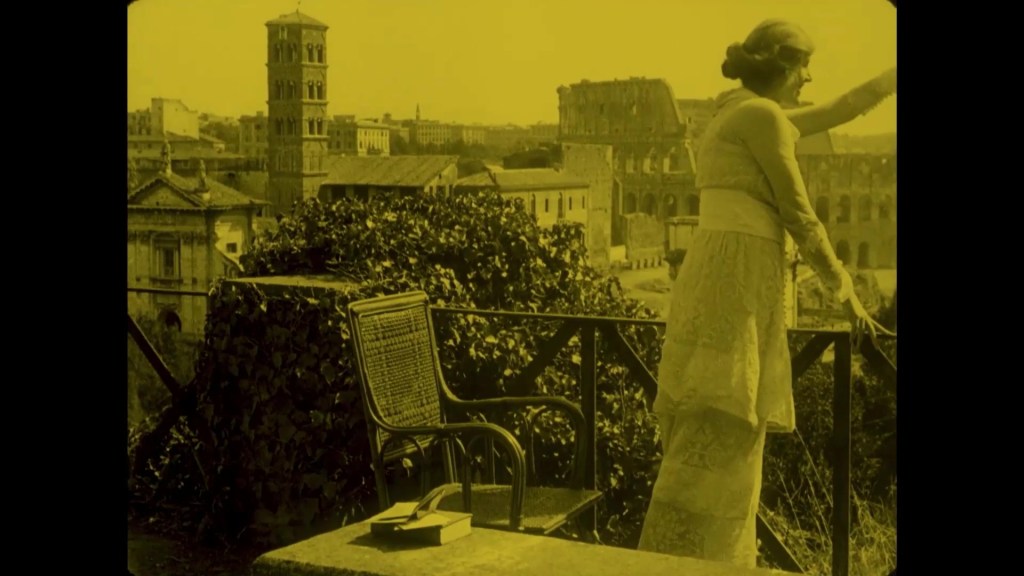


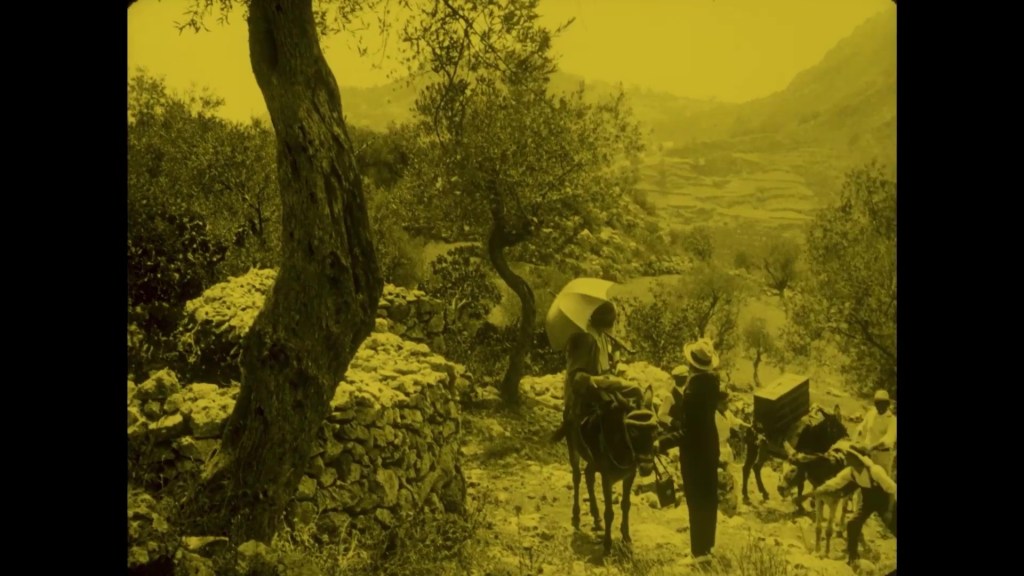


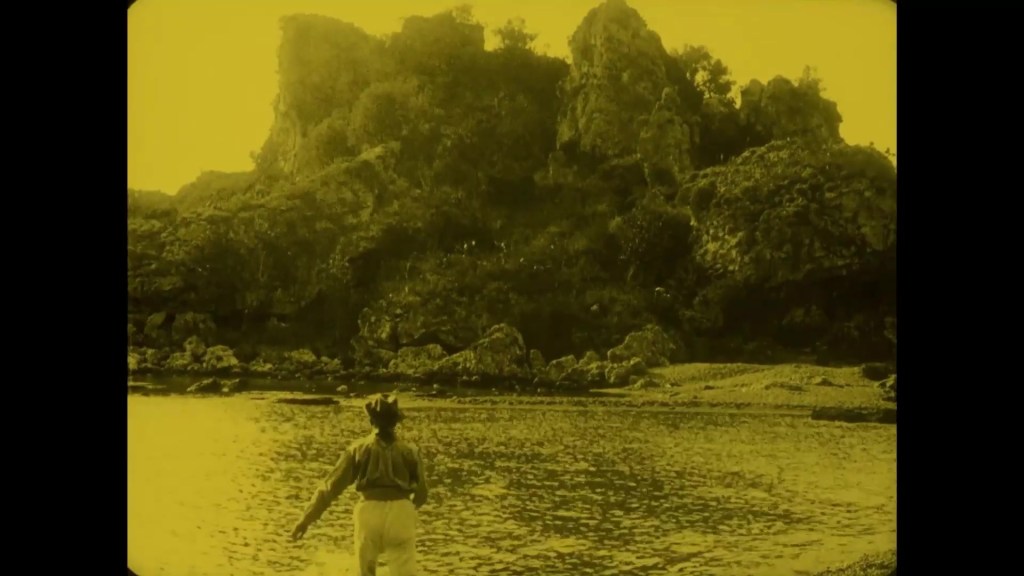
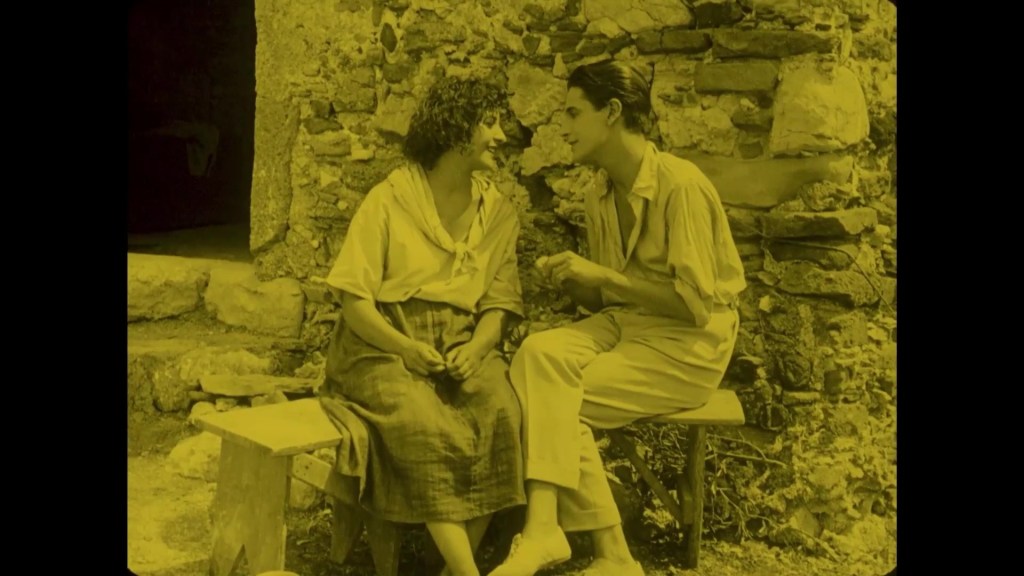

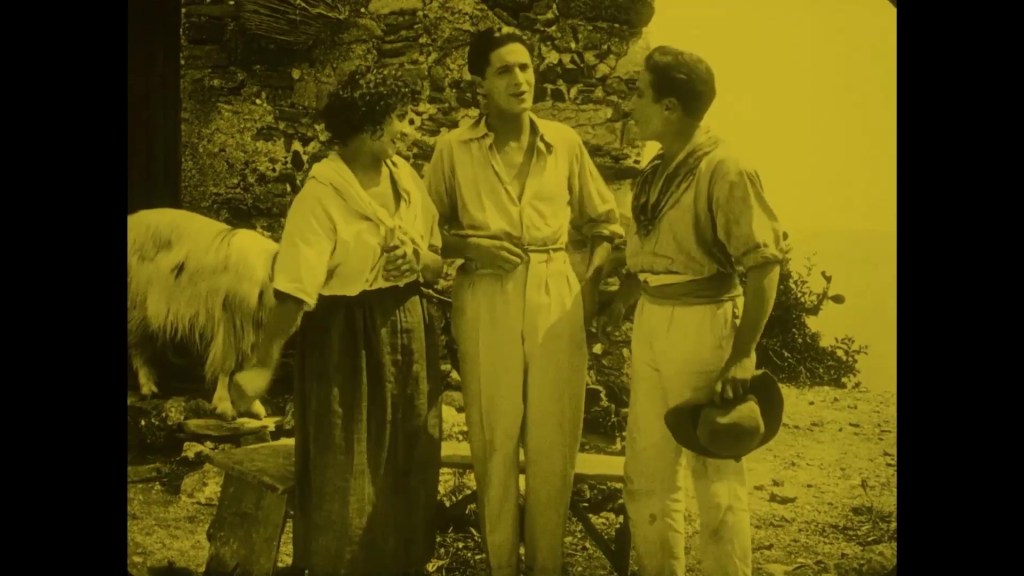


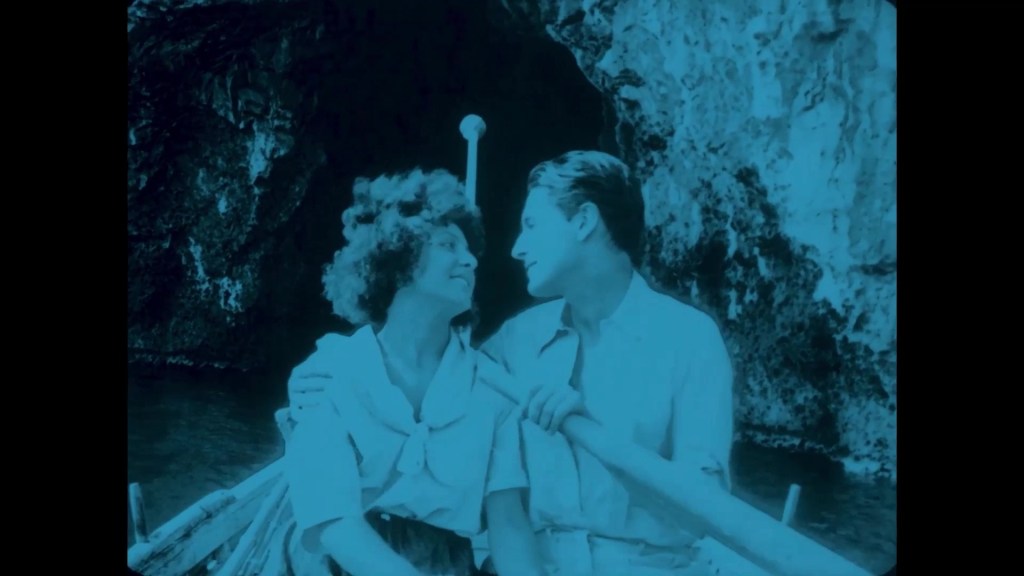


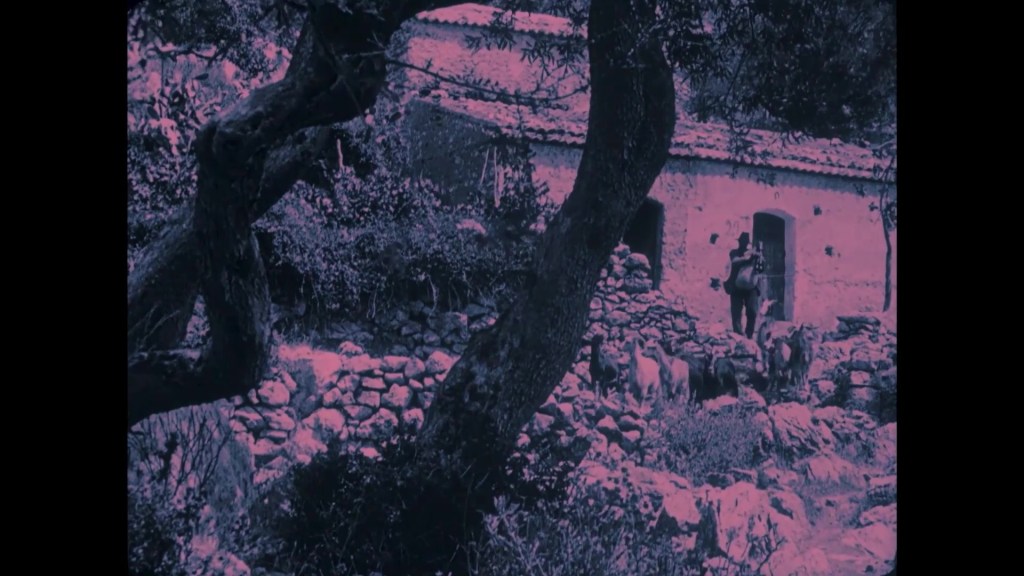

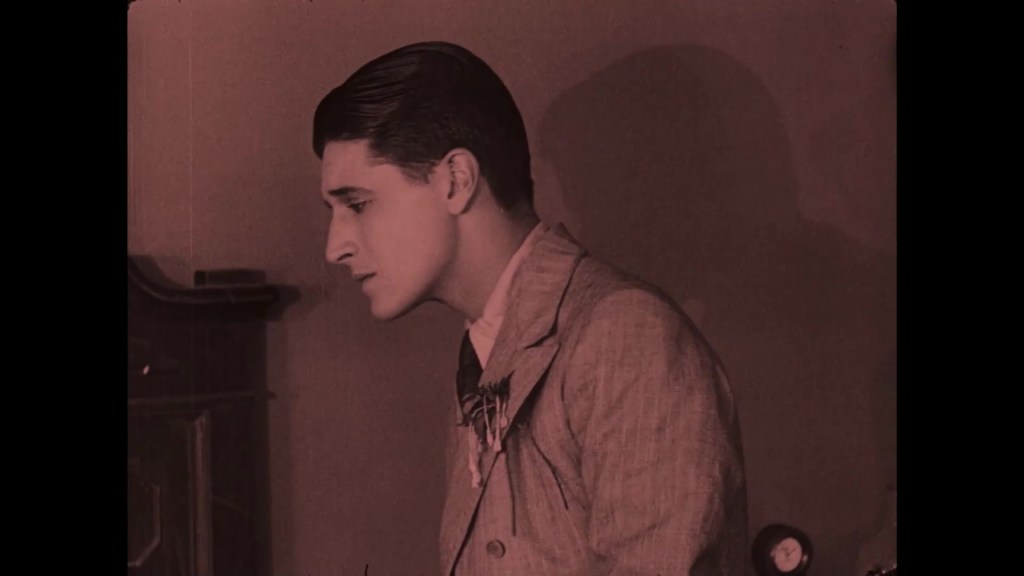


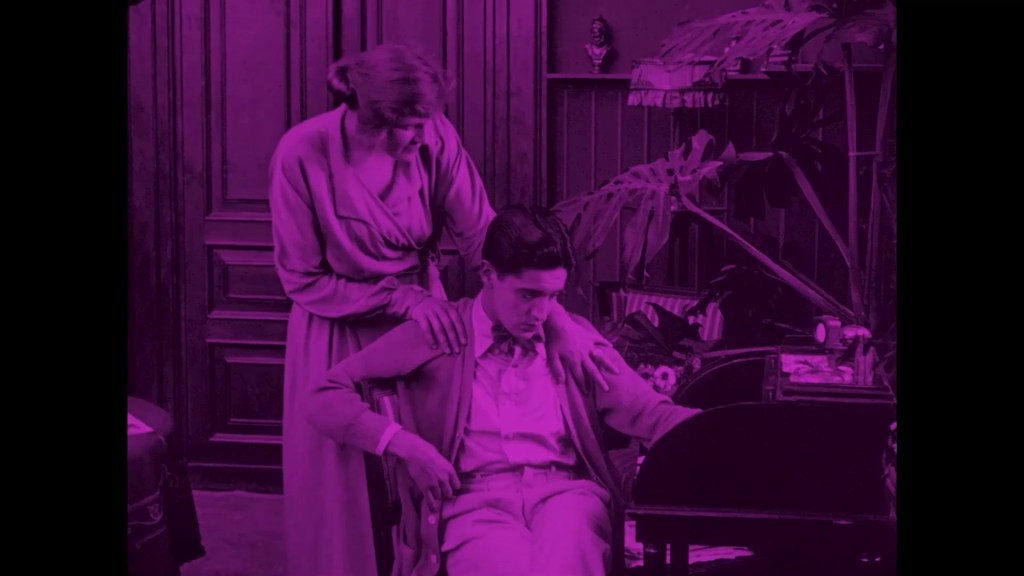


 The Realm of Silence