Bonn from afar (2024, day 4)

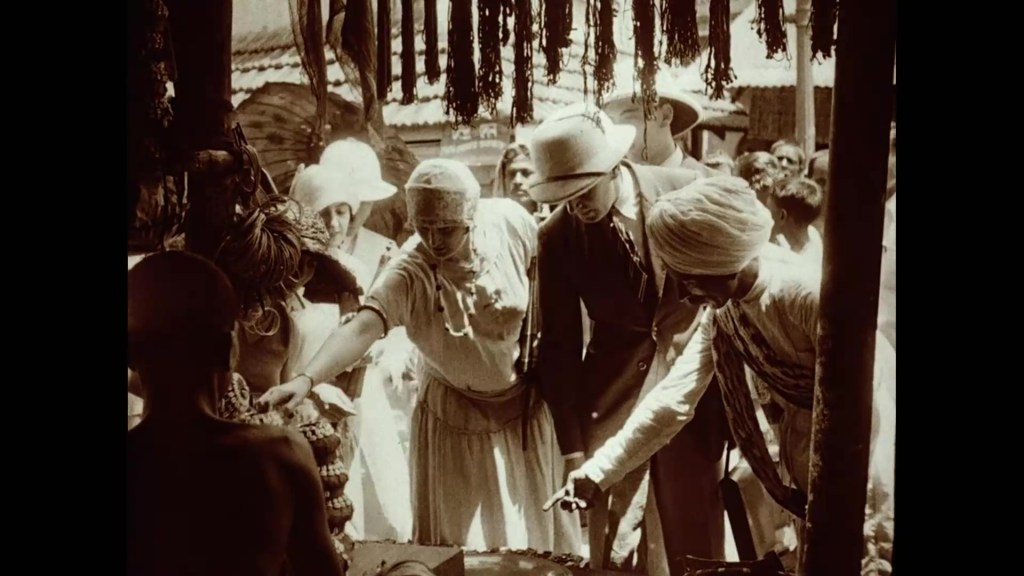
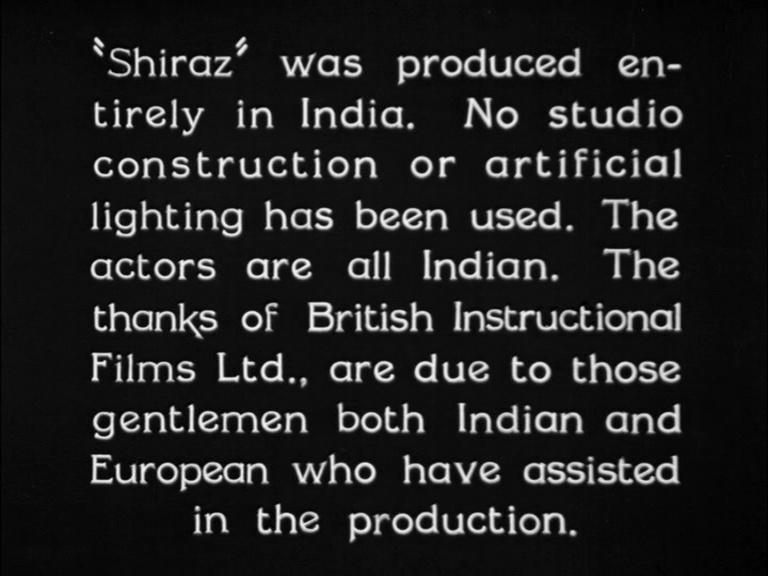
Another day (not) at the Bonn festival and another country to visit. Today we journey to India for the recreation of ancient religious drama. I outlined the context for Franz Osten’s German-Indian co-productions in my piece on Shiraz (1928). To recap briefly, these films were the brainchild of Himanshu Rai, who was instrumental in partnering Indian writers and performers with European filmmakers. Their first collaboration was Prem Sanyas, originally released as Die Leuchte Asiens in Germany in 1925 and The Light of Asia in the UK in 1926. Made with the support of the Maharajah of Jaipur (now in Pakistan), the film was shot entirely on location in India with (as the film’s opening titles remind us) no “studio sets, artificial lights, faked-up properties or make-ups”.
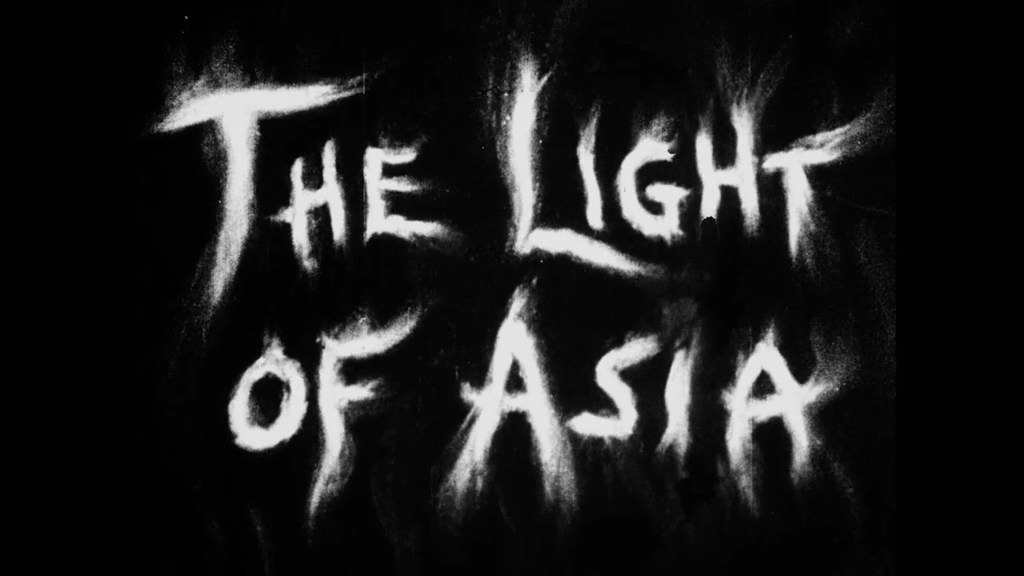
Prem Sanyas (1925; Ger./In./UK; Franz Osten/Himansu Rai)

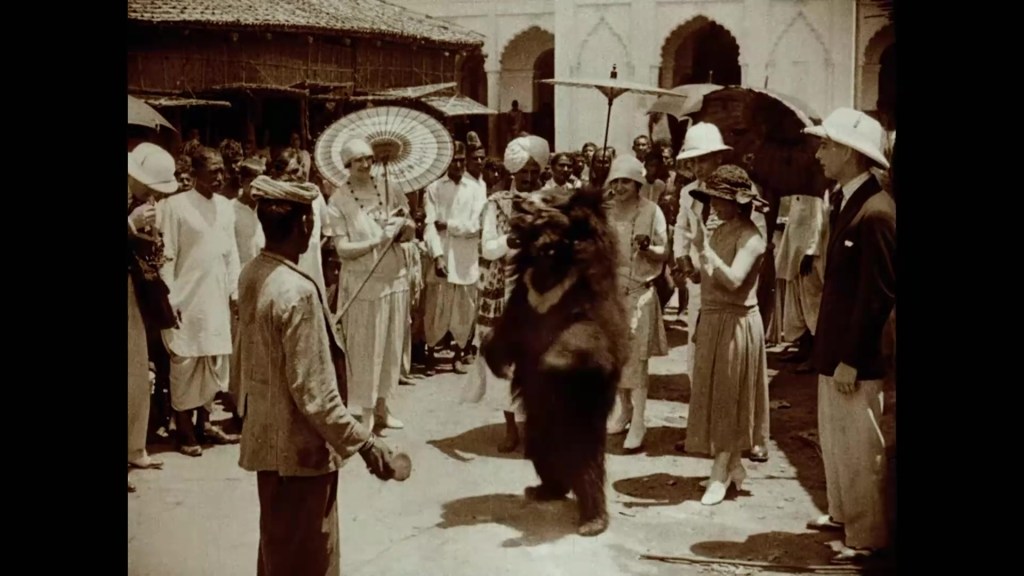
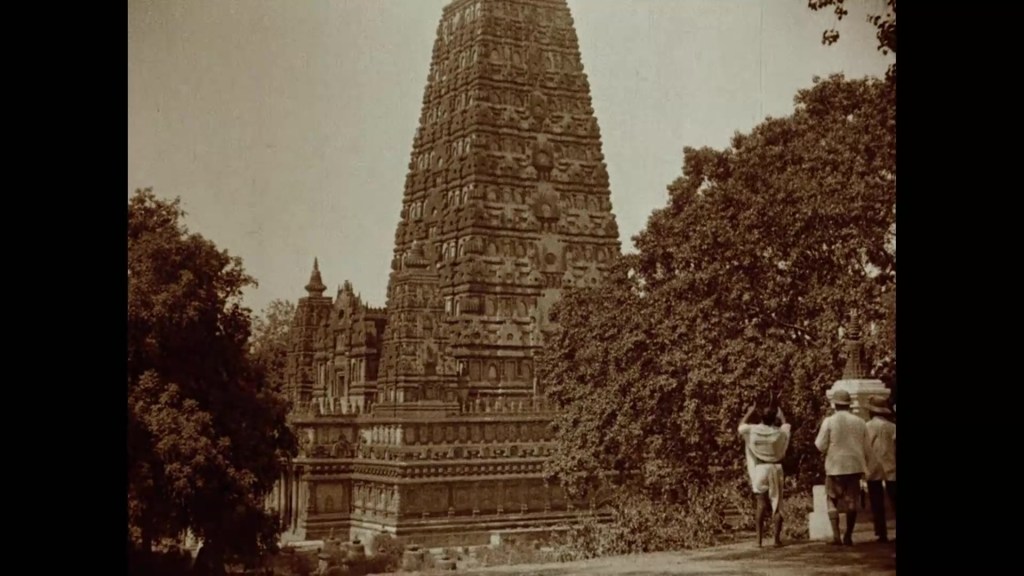
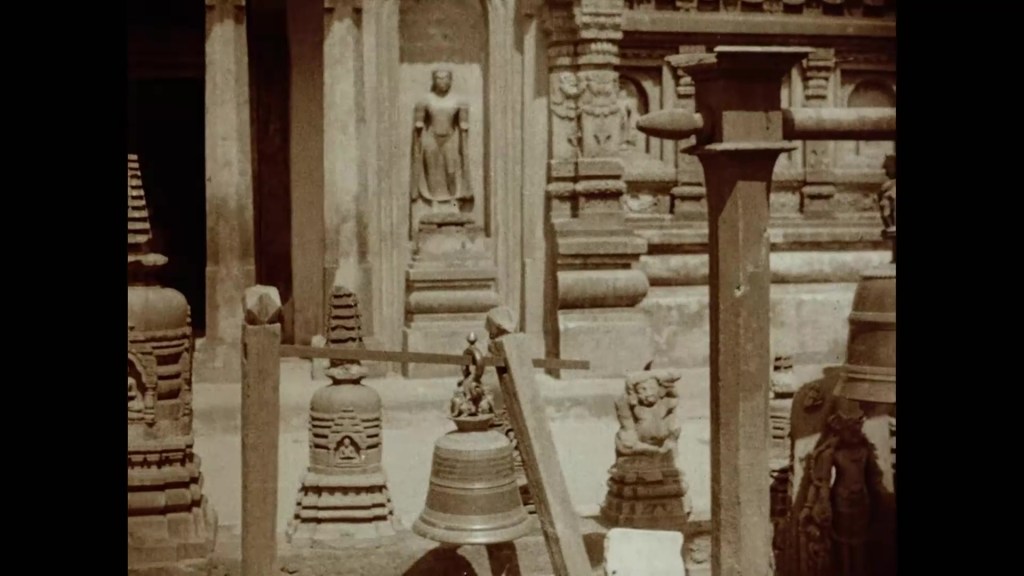
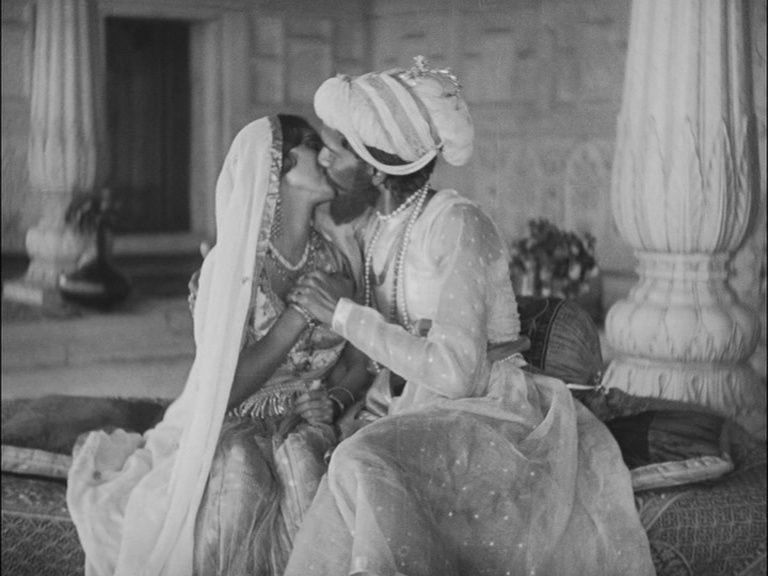
The plot? Well, the film begins with a lengthy section of quasi-documentary footage around contemporary India. Some western tourists visit the Buddhist temple complex at Gaya. There, they encounter an old man who relates the tale of how Buddha achieved enlightenment below the Bodhi tree… The film then follows the story of Prince Gautama (Himanshu Rai), who is adopted by the heirless King Suddodhana (Sarada Ukil) and Queen Maya (Rani Bala). As the boy grows, he becomes increasingly conscious of the suffering of animals and the world around him. His father is warned by a sage that it is the boy’s destiny to renounce the throne, leaving him heirless. The king therefore tries to shelter the boy from all sight of suffering. When this doesn’t work, he finds him a consort. The prince falls for Gopa (Seeta Devi), who likewise is smitten with him. However, the prince is overwhelmed by the knowledge of suffering outside his pampered life and perfect marriage. Hearing the voice of God, he abandons his wife, his palace, and his family to live as an impoverished teacher. He converts crowds to his new conception of the world, and when Gopa encounters him again, she becomes his disciple. The flashback ends with the old man concluding this tale, then (very suddenly) the film ends.

Such is the narrative. And as a drama, it is a failure. The story is very thin, with characters barely sketched and with neither the interest nor the ability to suggest real, human psychology. (Hey, it’s a religious story, so I suppose expecting a real drama is a bit wishful.) As the story of one of humanity’s great teachers/enlighteners, it’s surprisingly inert. But because the characters are picture-book cut-outs, there is barely any ordinary human emotion to engage with either. It’s a very simply parable told very simply.
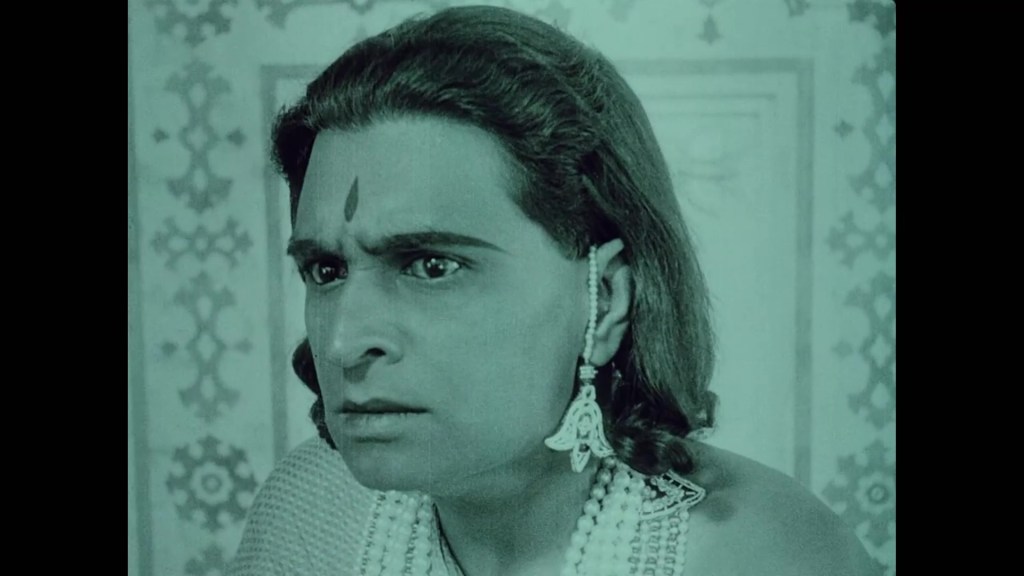
I say simply told, for there is no showiness to the film’s direction. This is a polite way of saying that the film isn’t very dynamic, let alone dramatic. There are few really telling close-ups (as if the film is afraid of exploring the reality of its human characters), and the editing between wider and closer shots is often rather clumsy. Few scenes use montage to create a sense of rhythm, and there is a kind of roughness to the way the film’s narrative is shaped. In part, of course, this is the fault of the original story: it’s a very simplistic tale and doesn’t offer a real “drama” as such. But I do wonder about the intentions of the filmmakers. Is the simplicity of the style – I am tempted to say the lack of style – a deliberate choice, or simply a limitation of means?
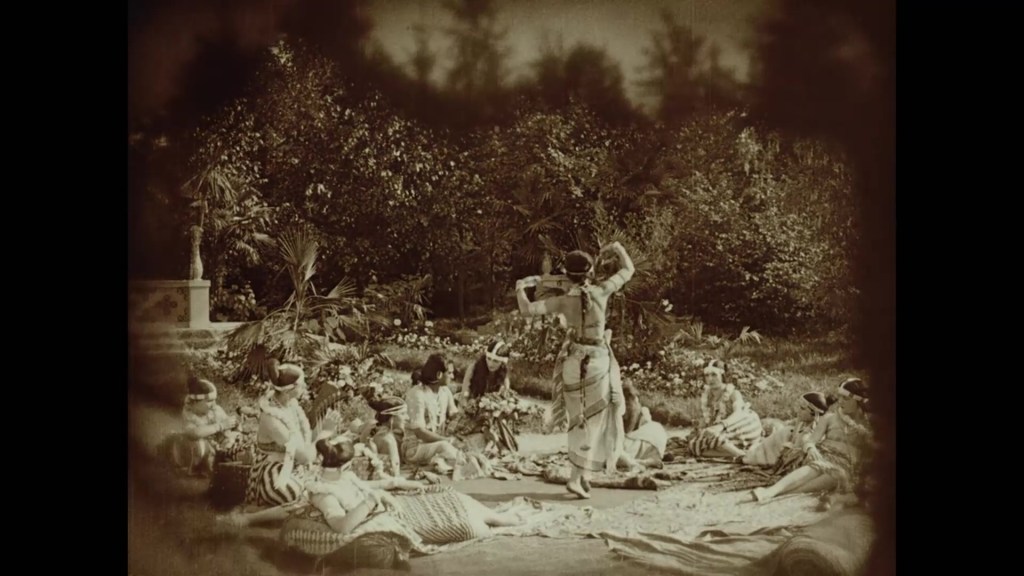
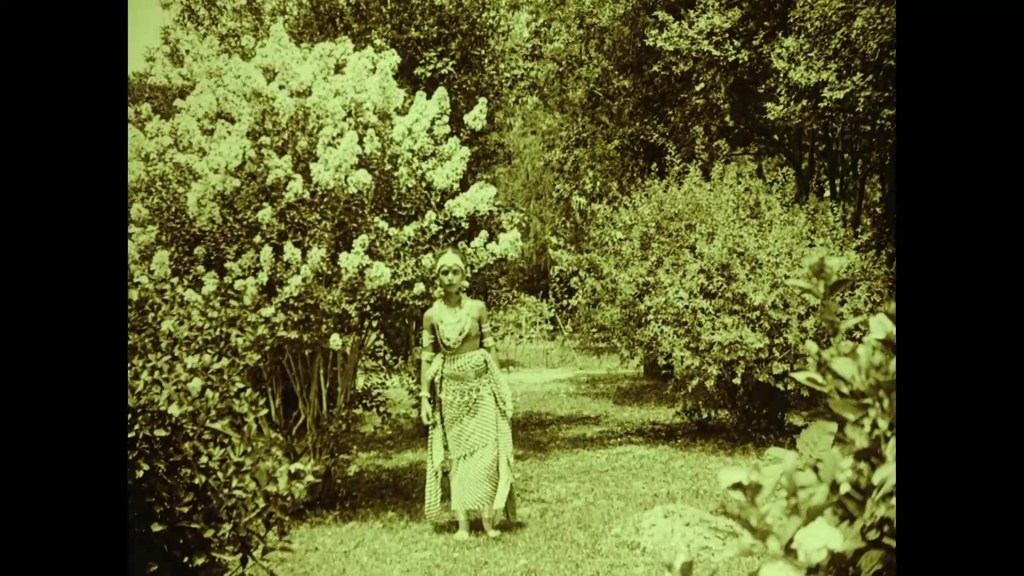
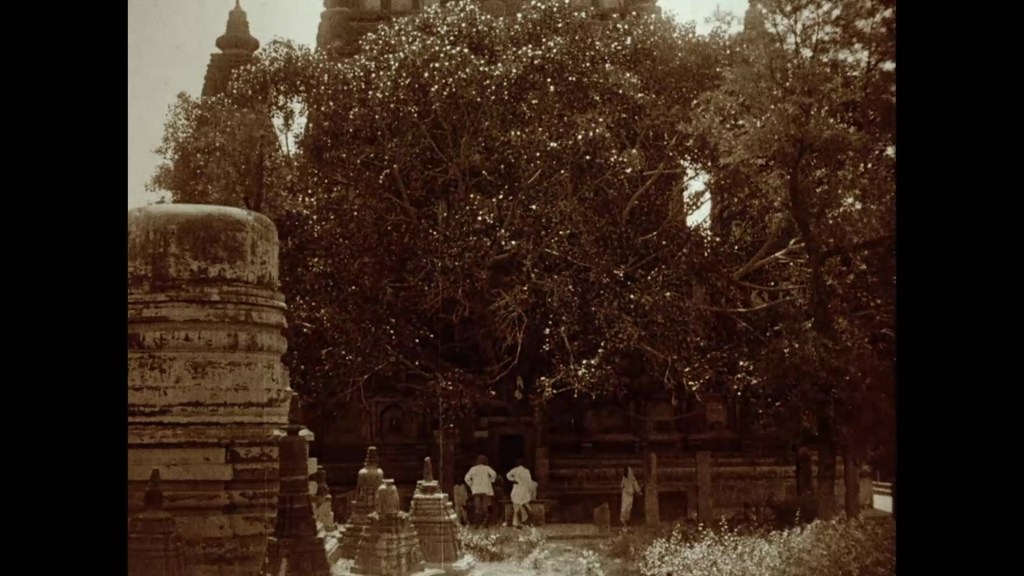
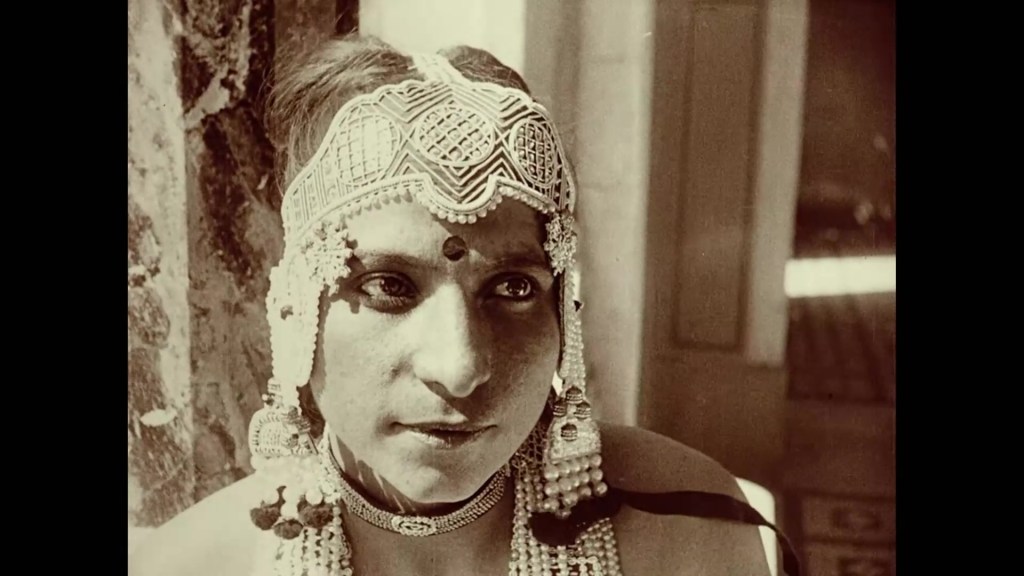
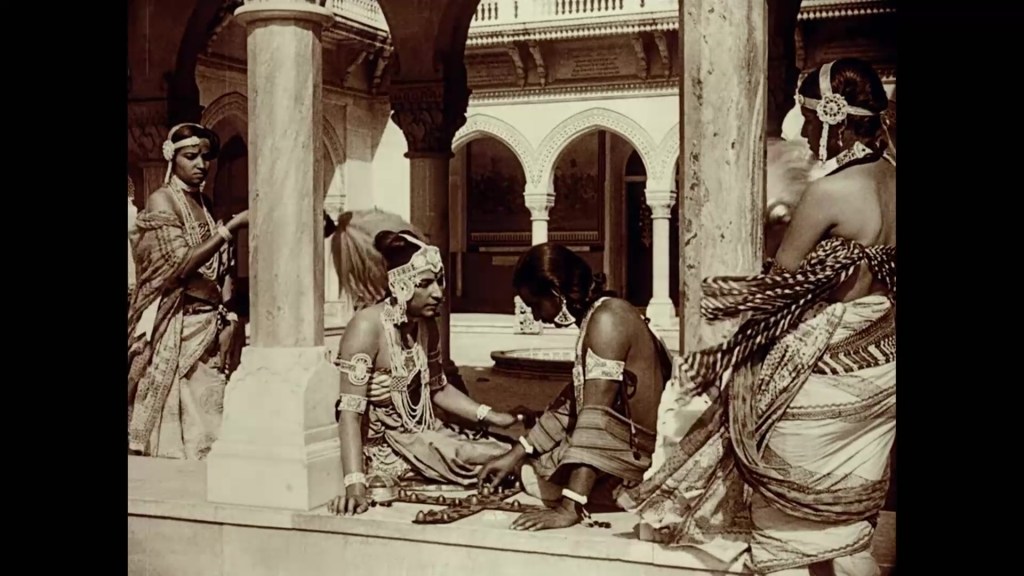
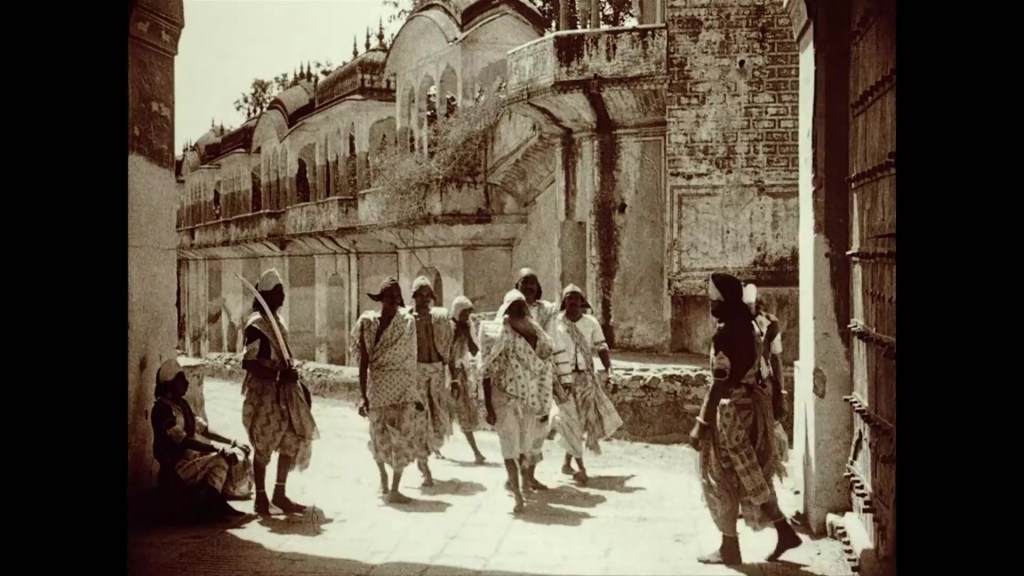
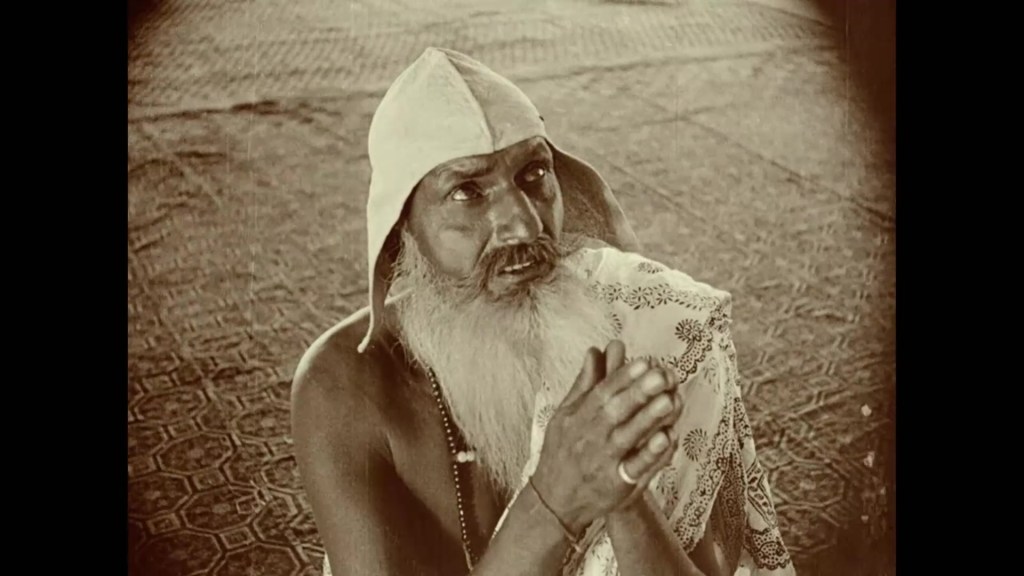
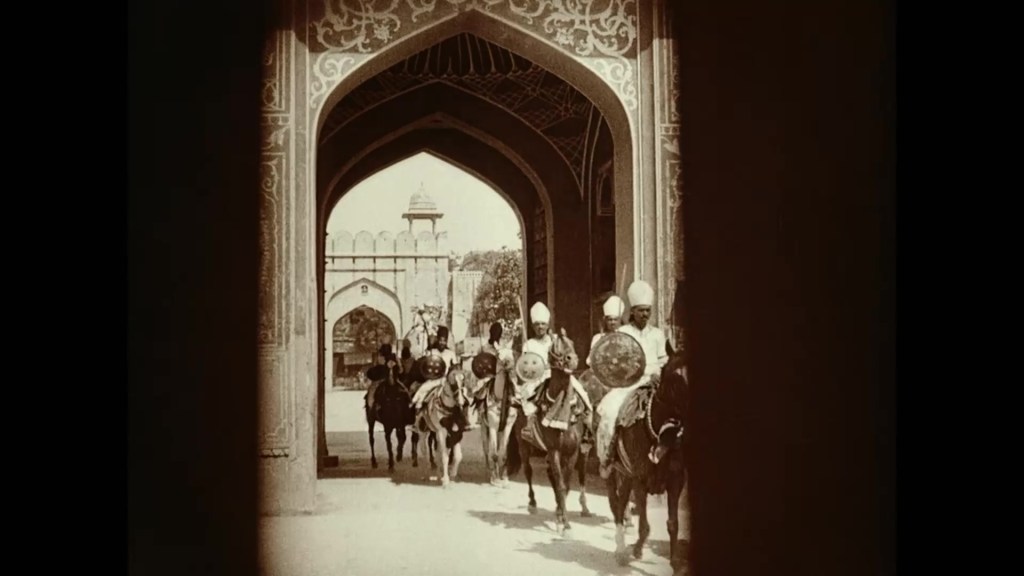
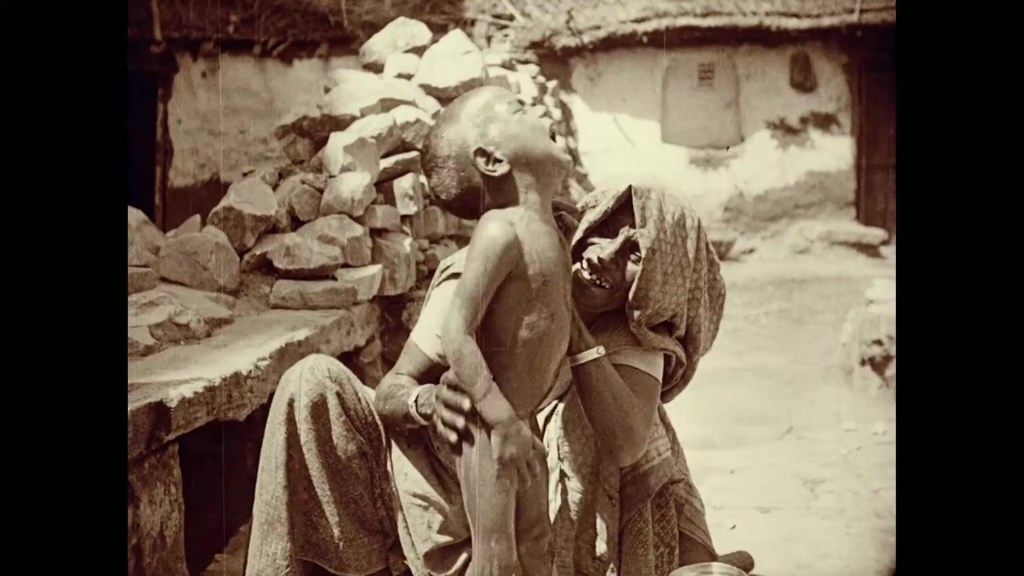
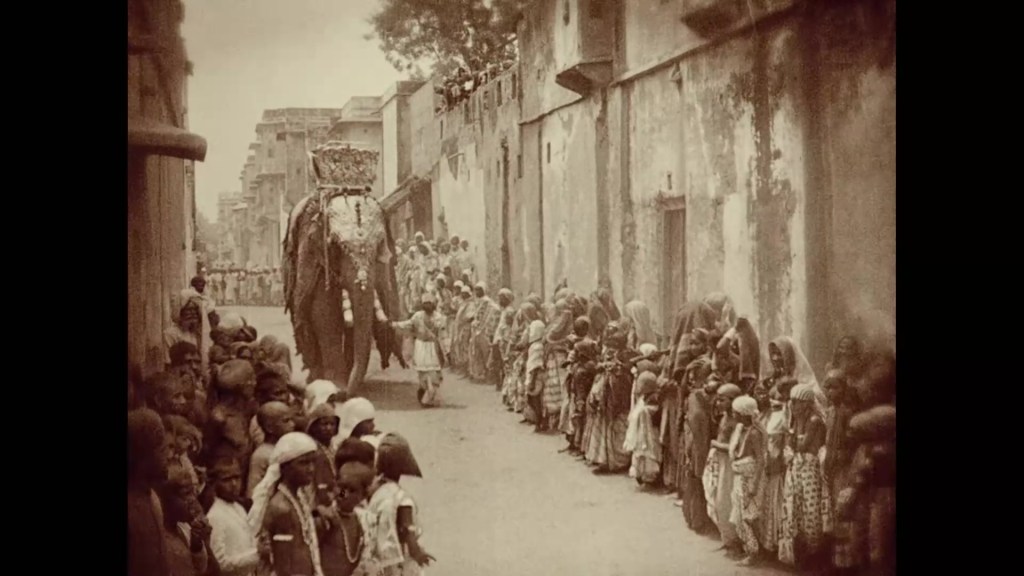
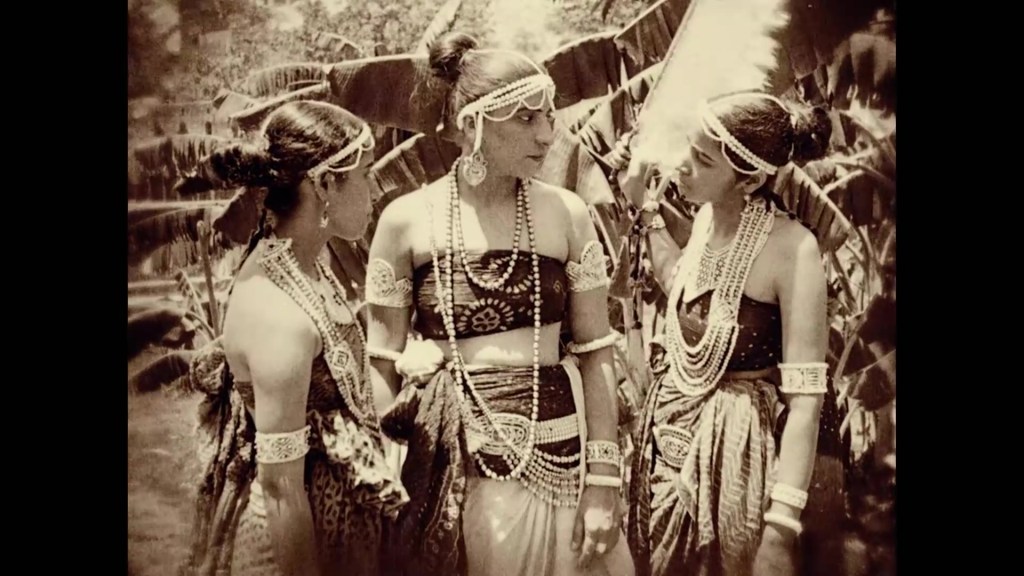
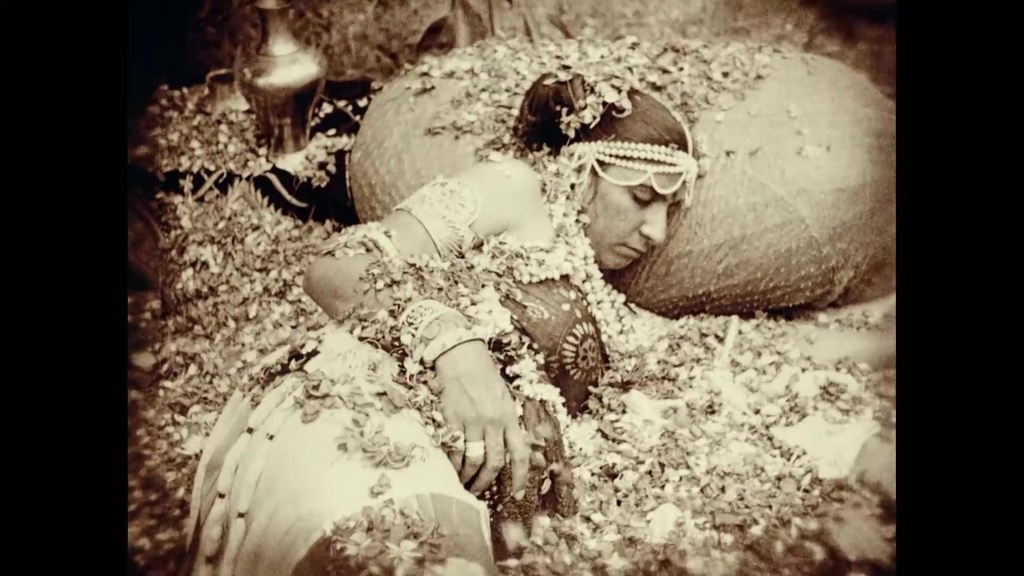
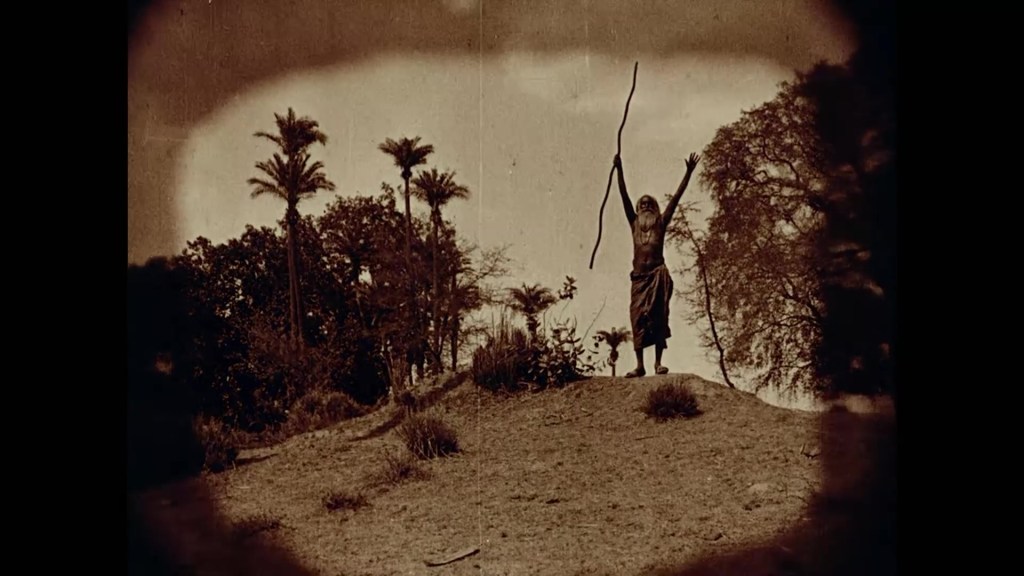
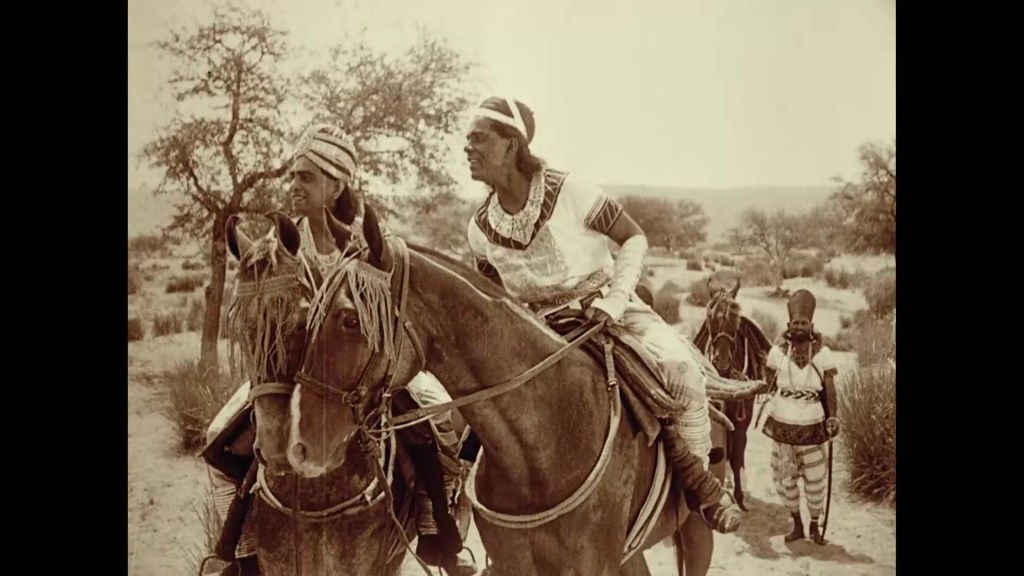
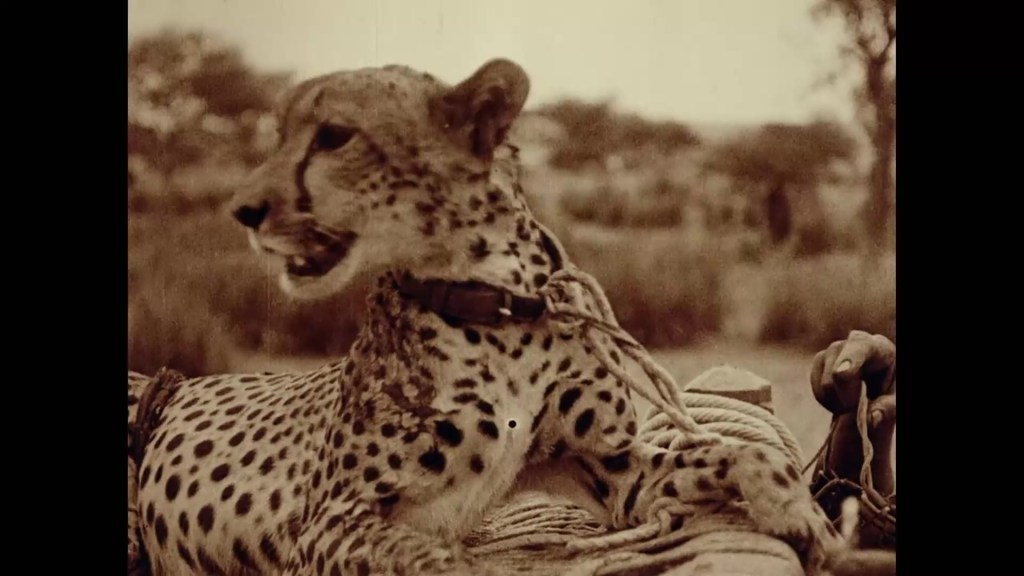
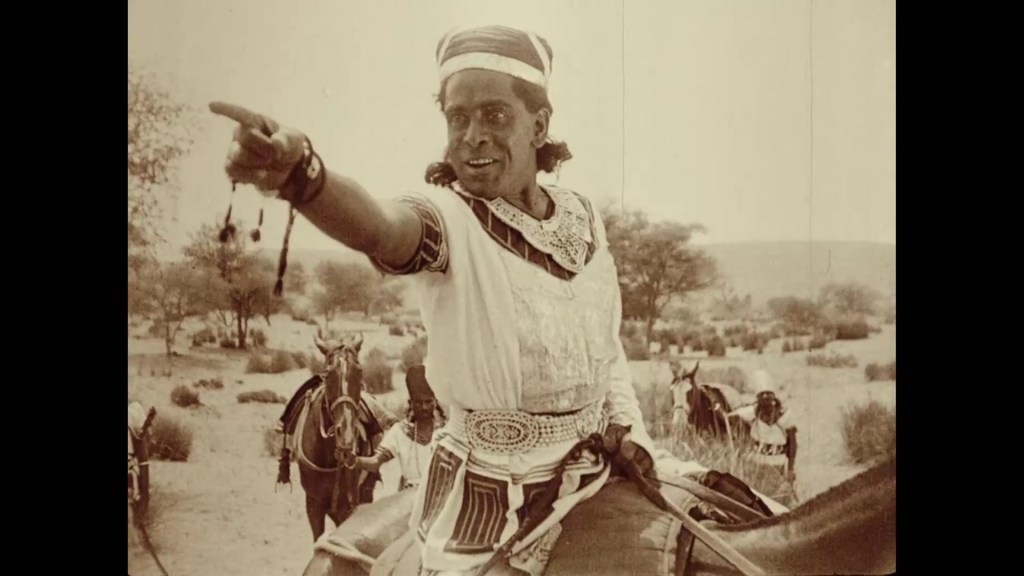
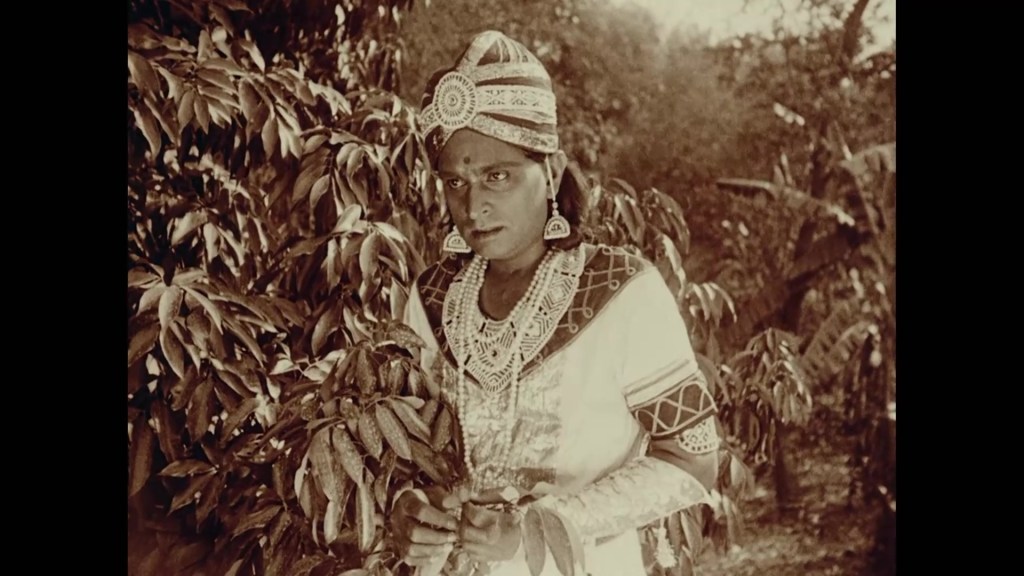
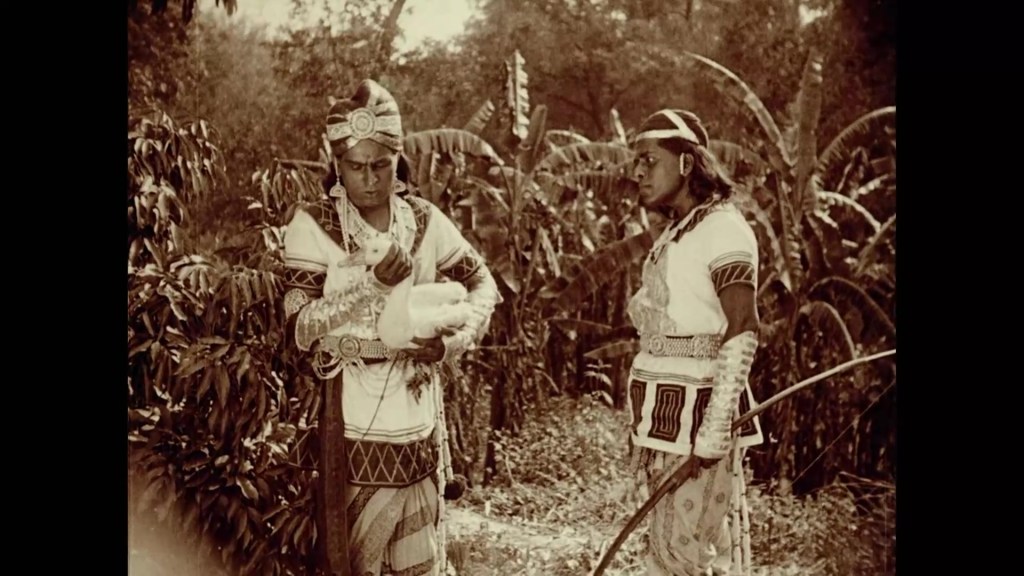
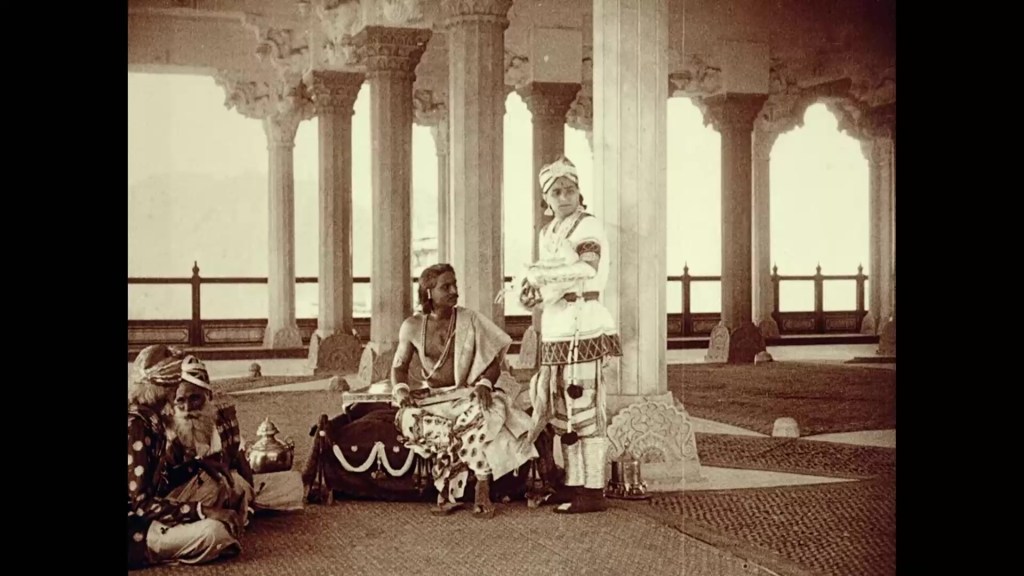
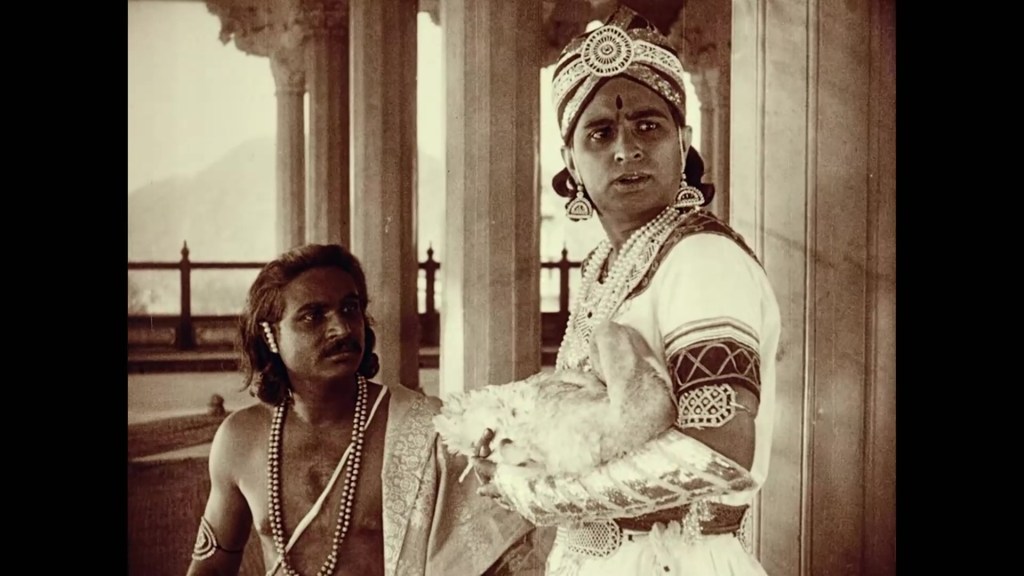
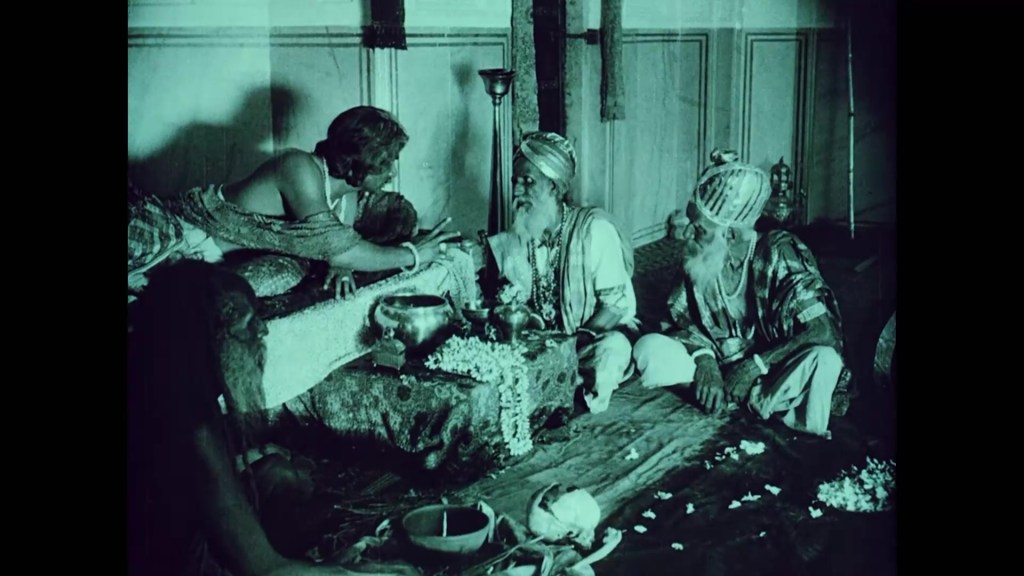
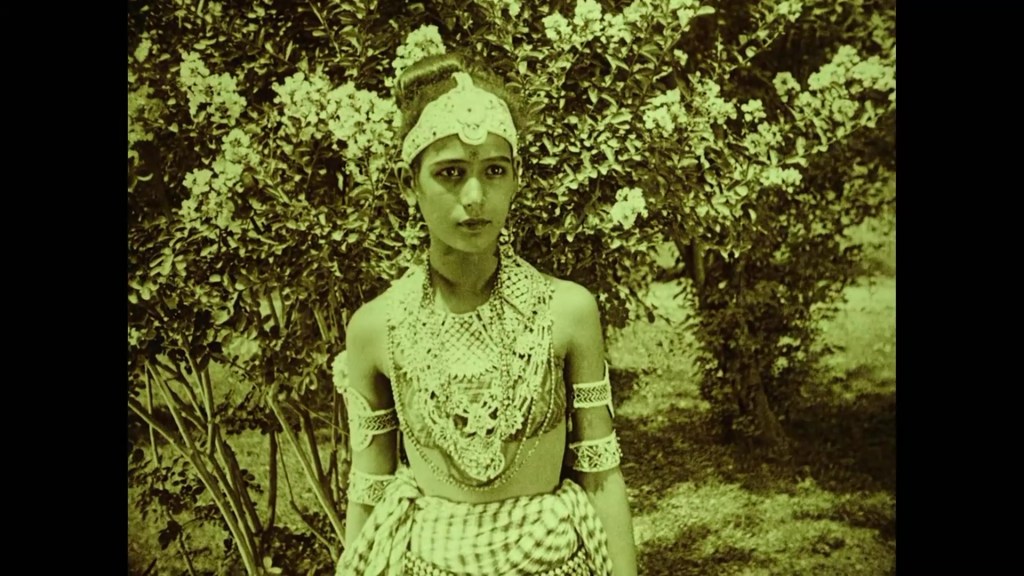
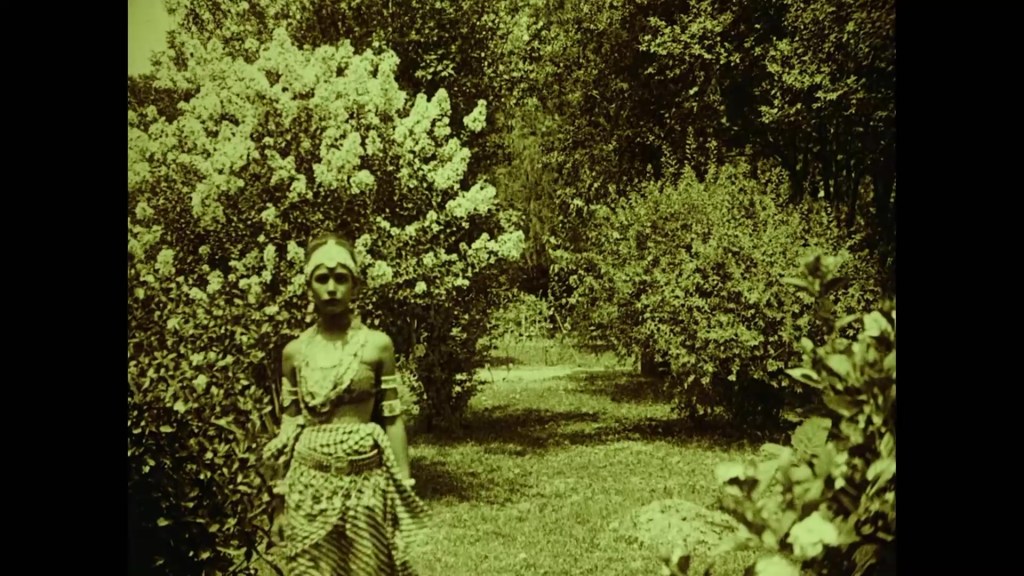
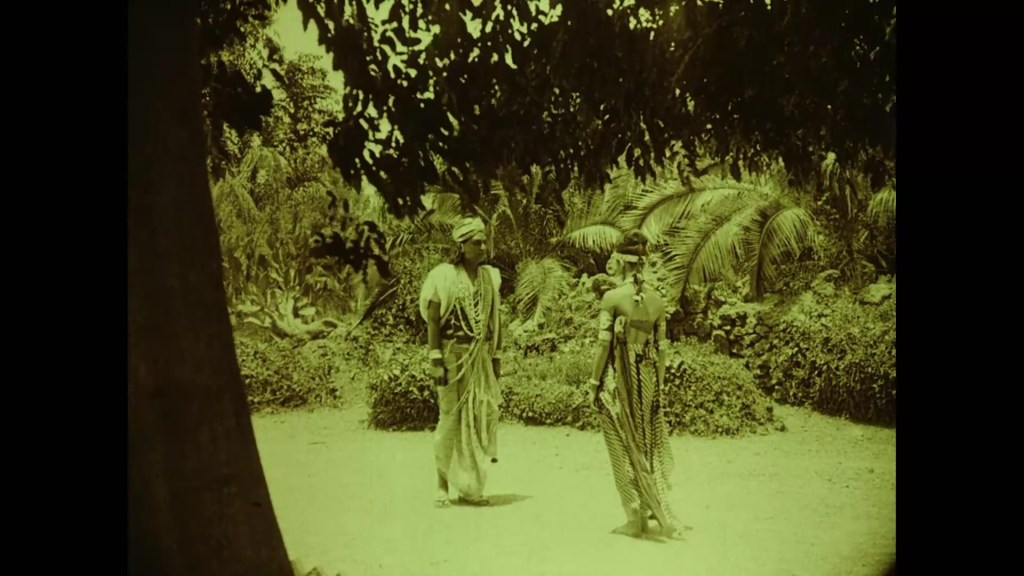
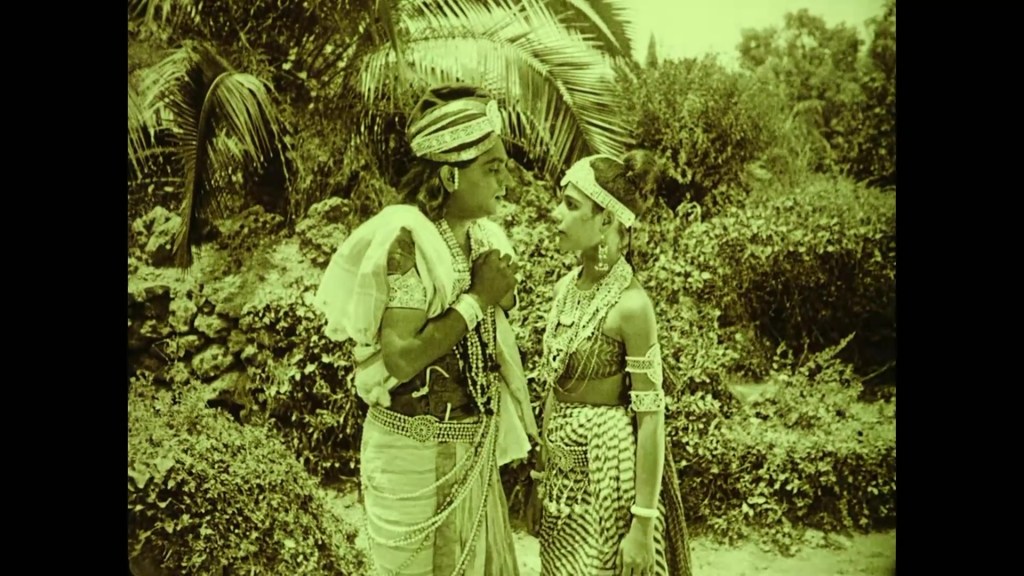
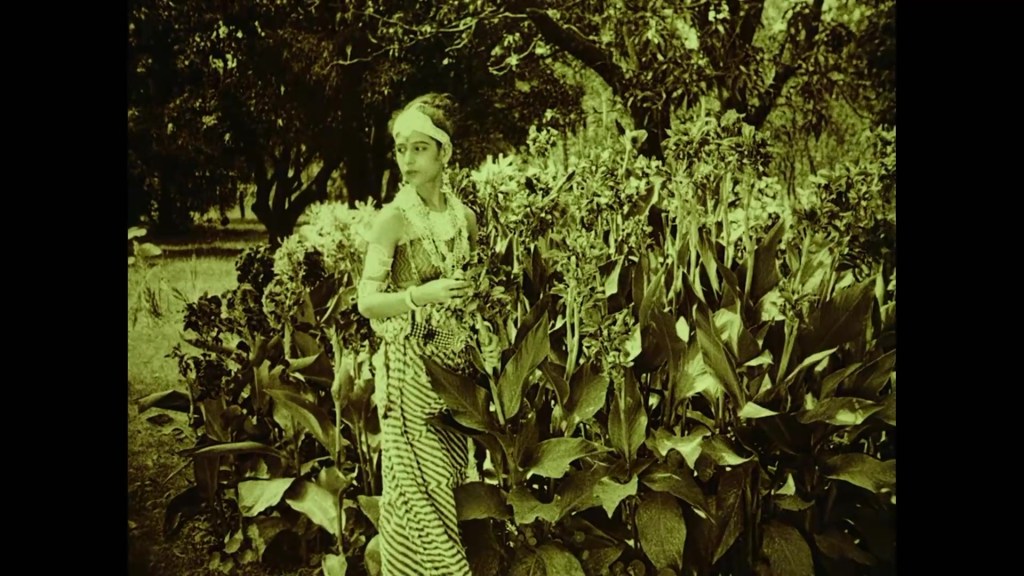
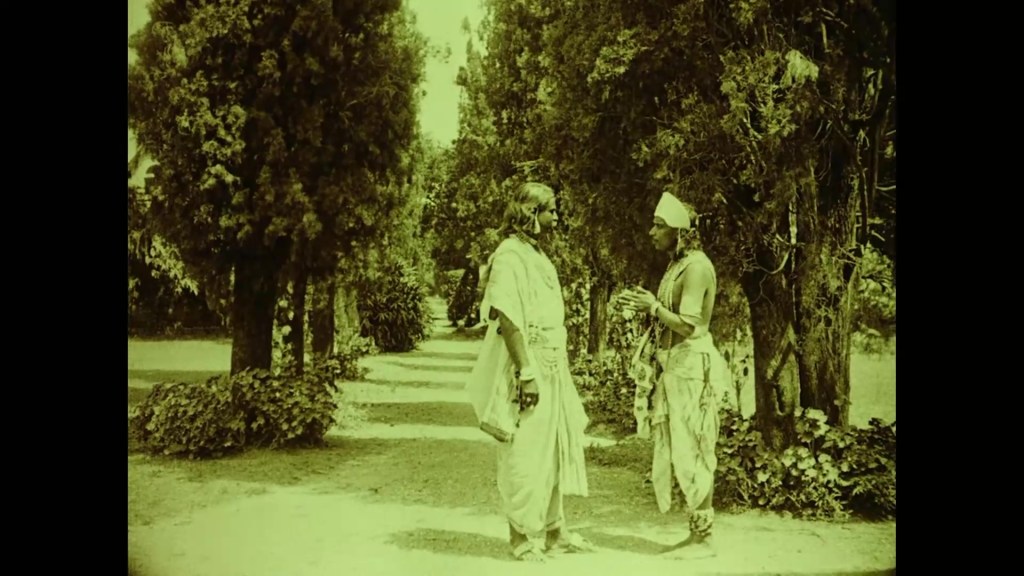
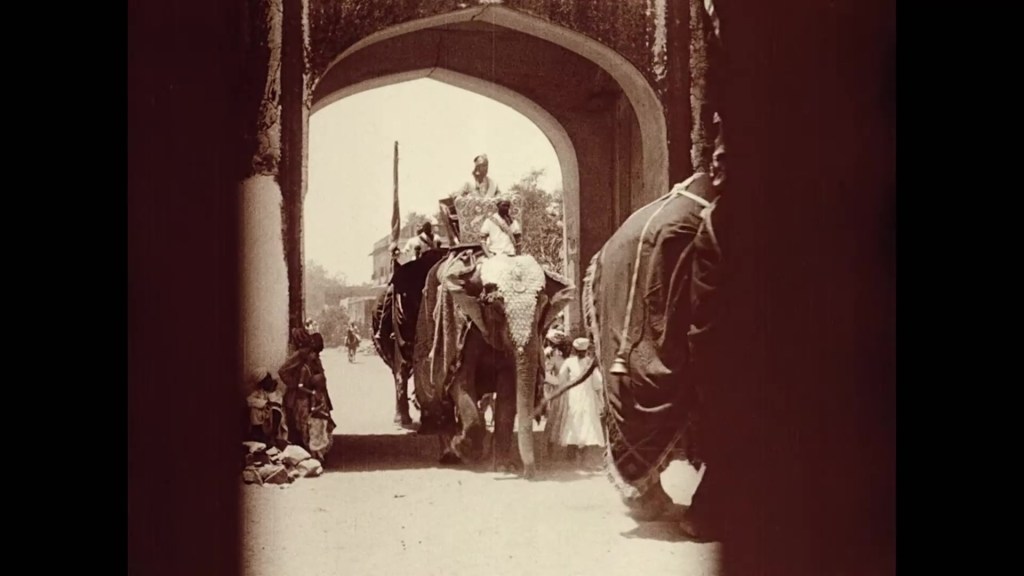
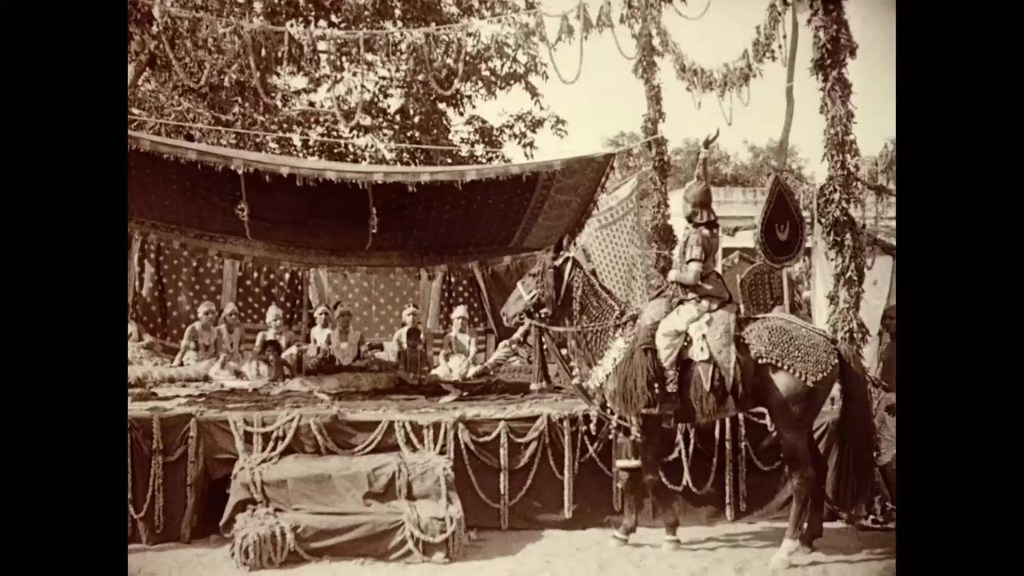
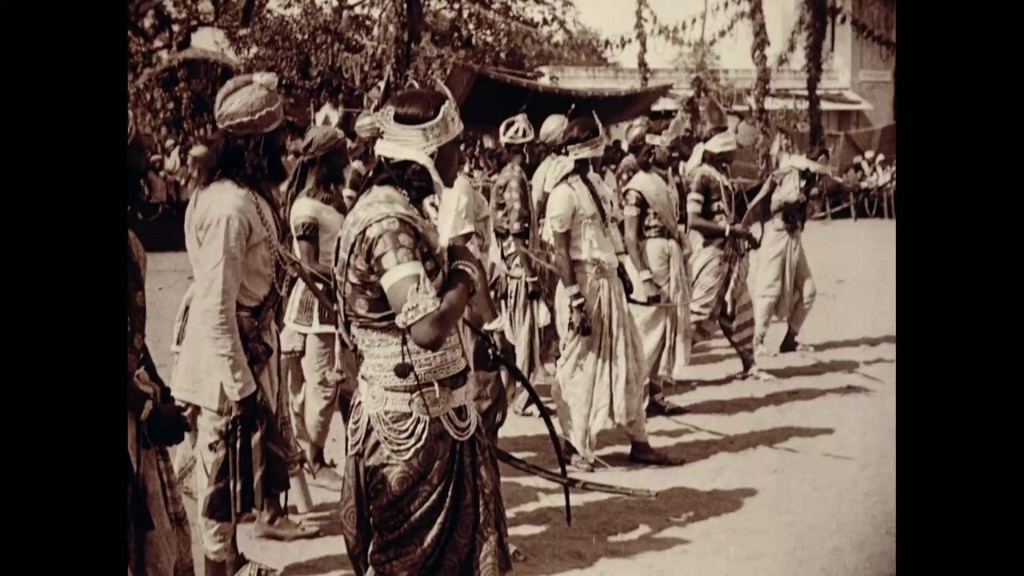
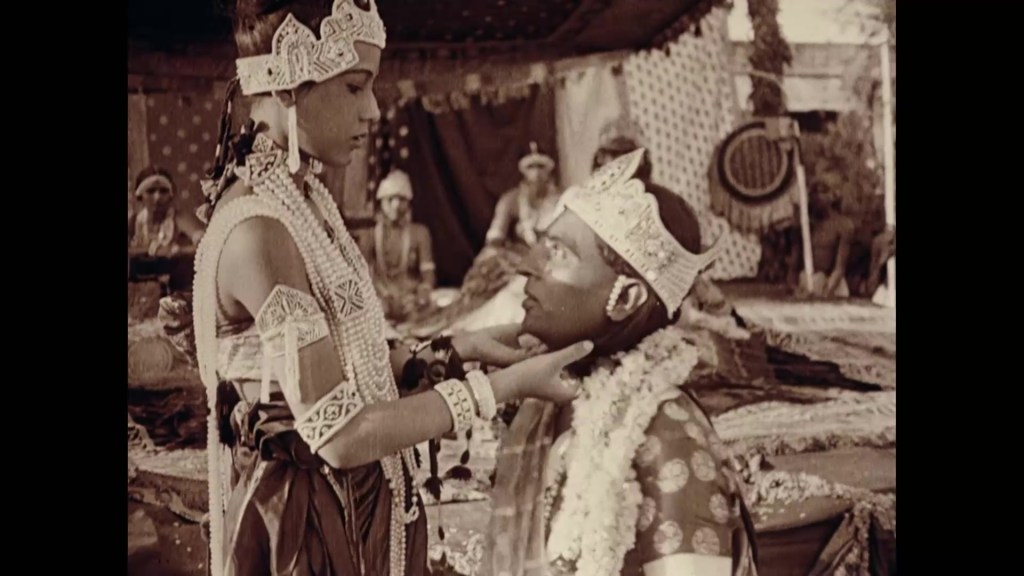
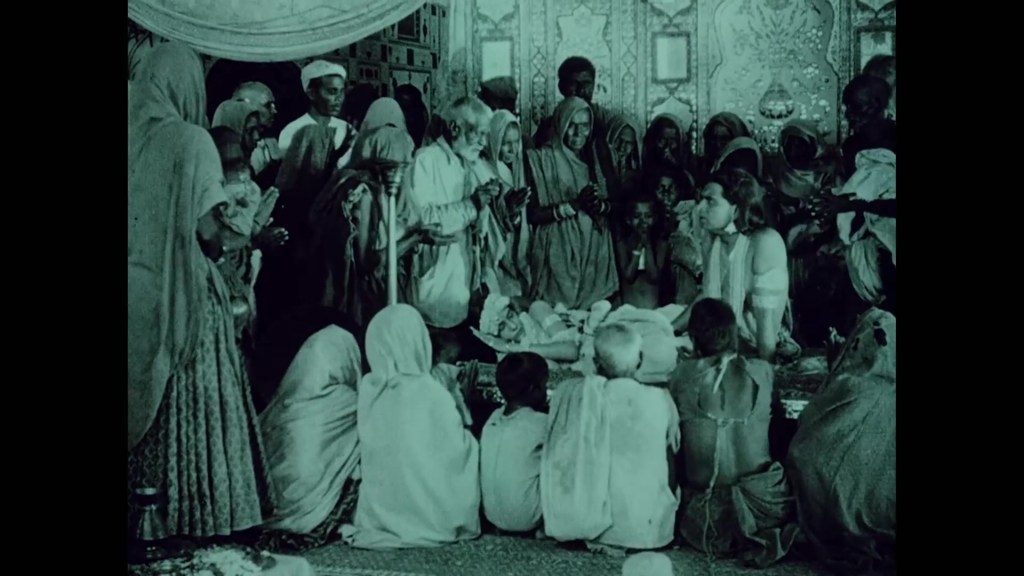
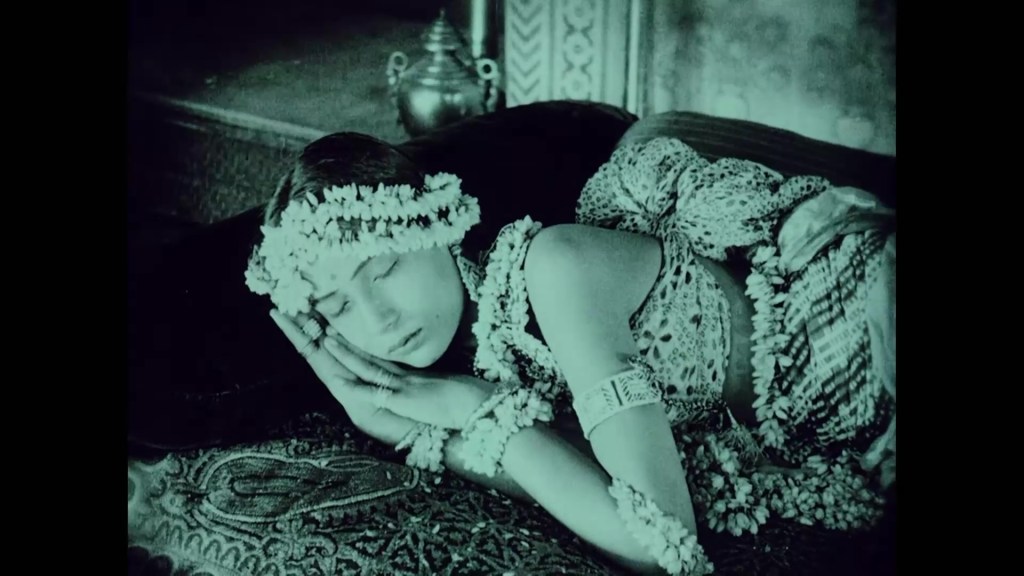
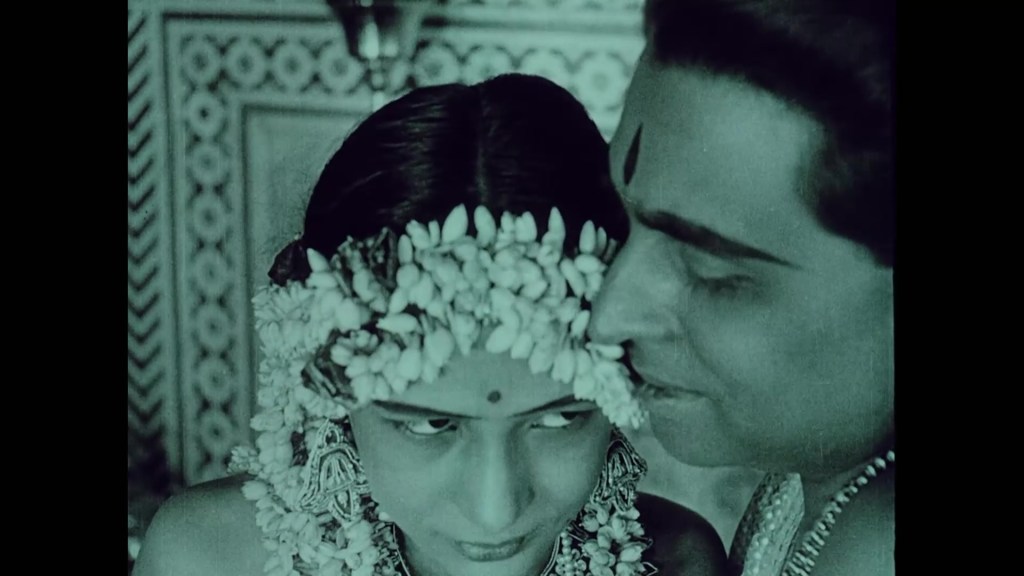
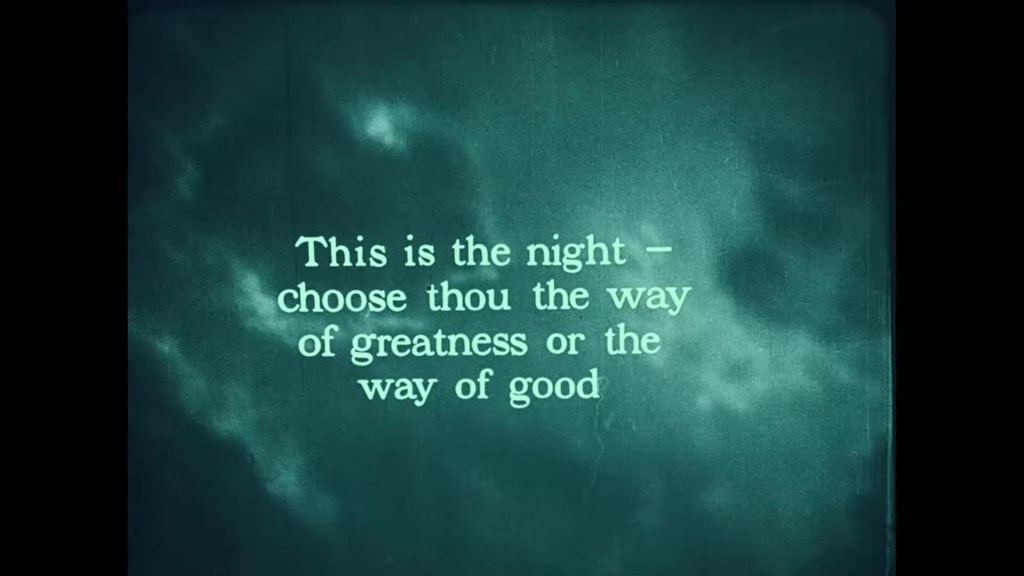
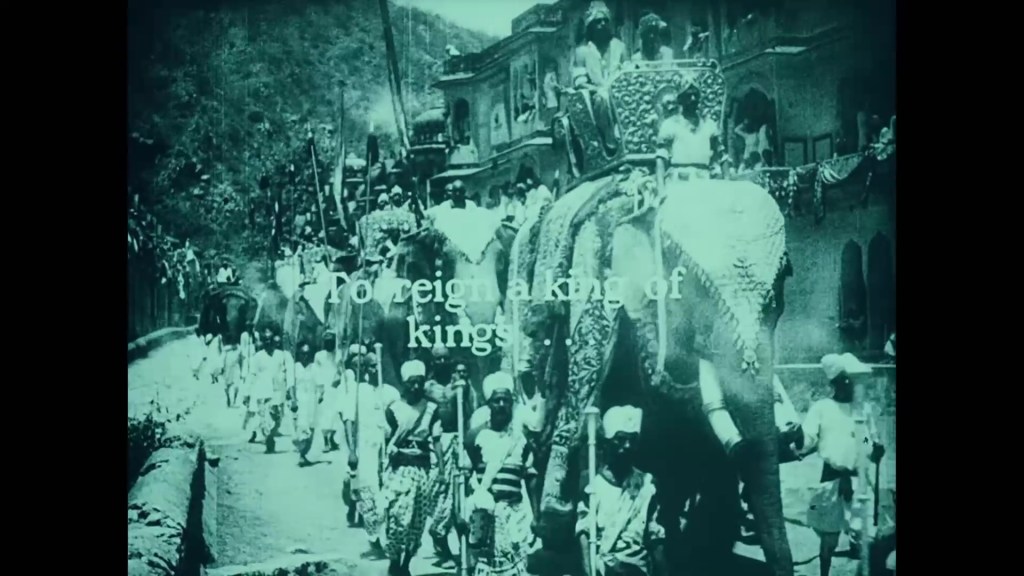
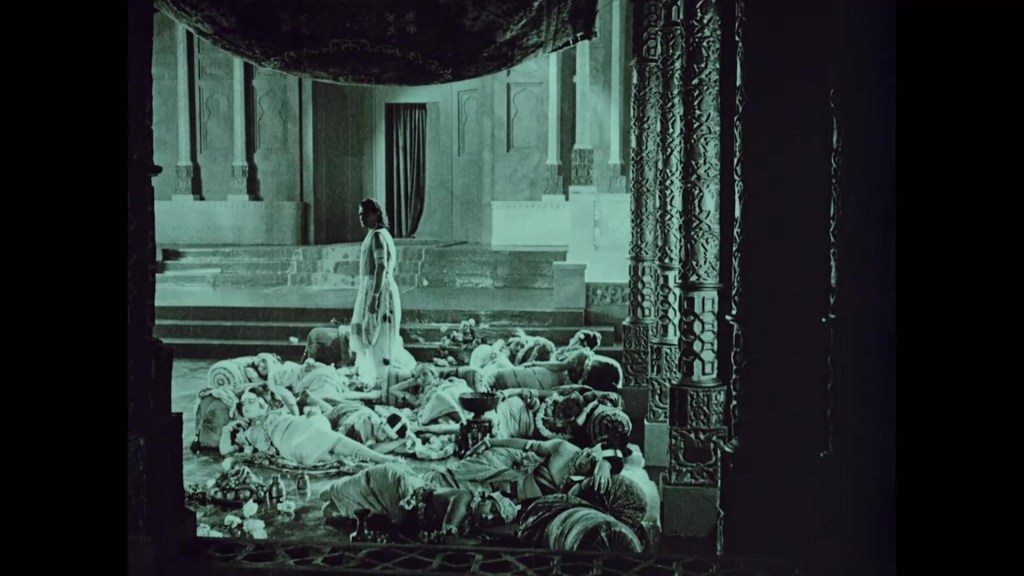
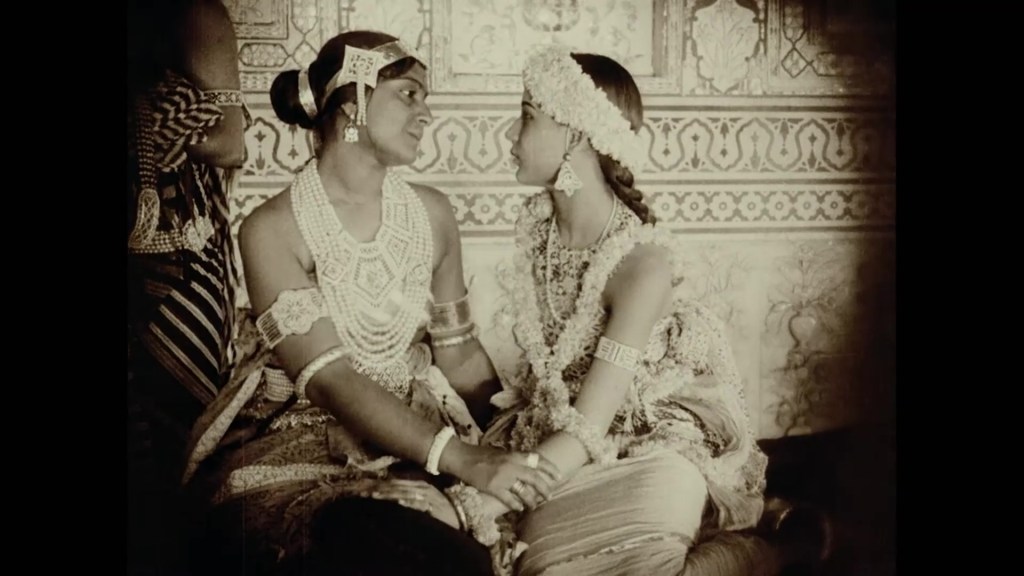
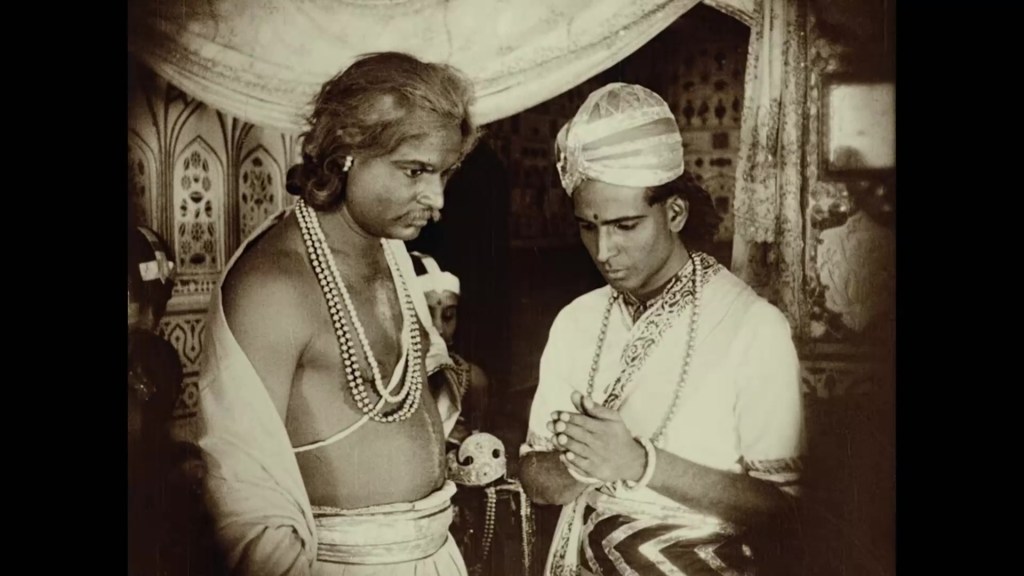
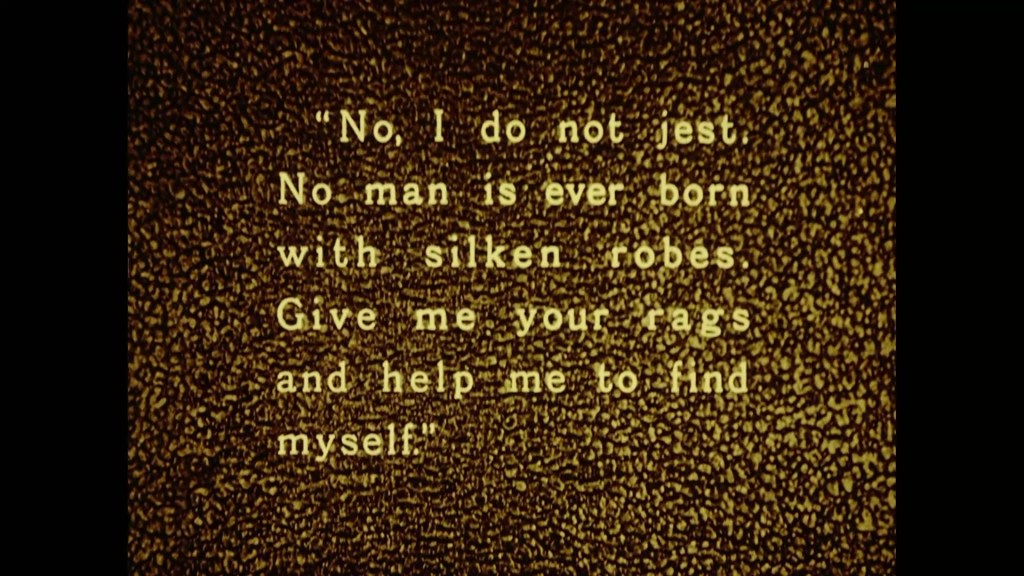
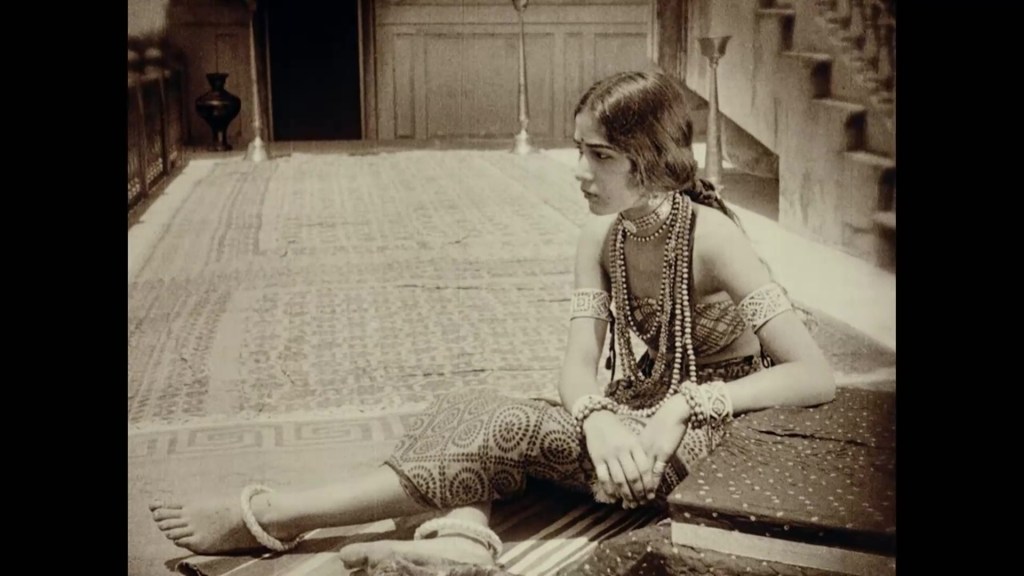
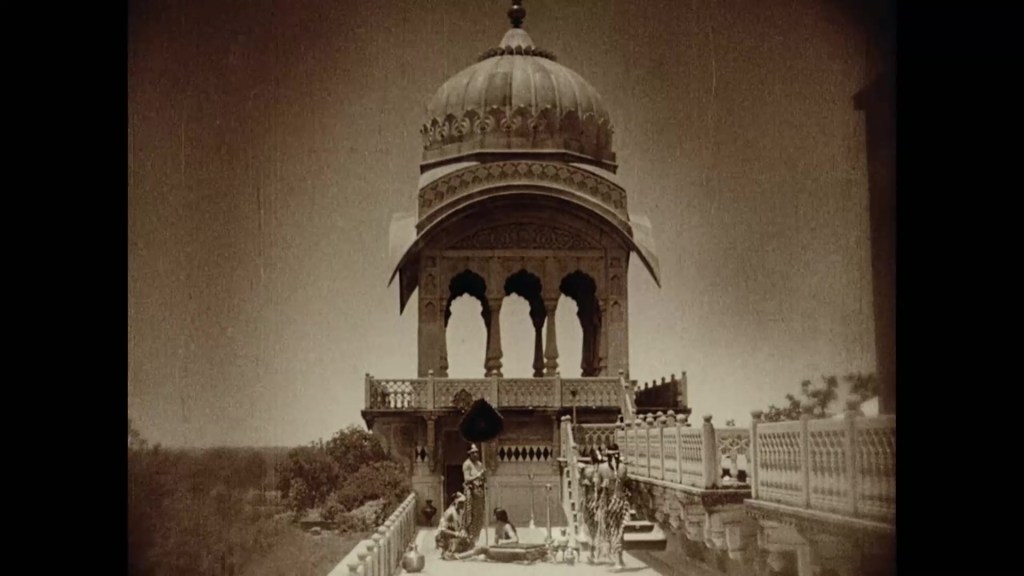
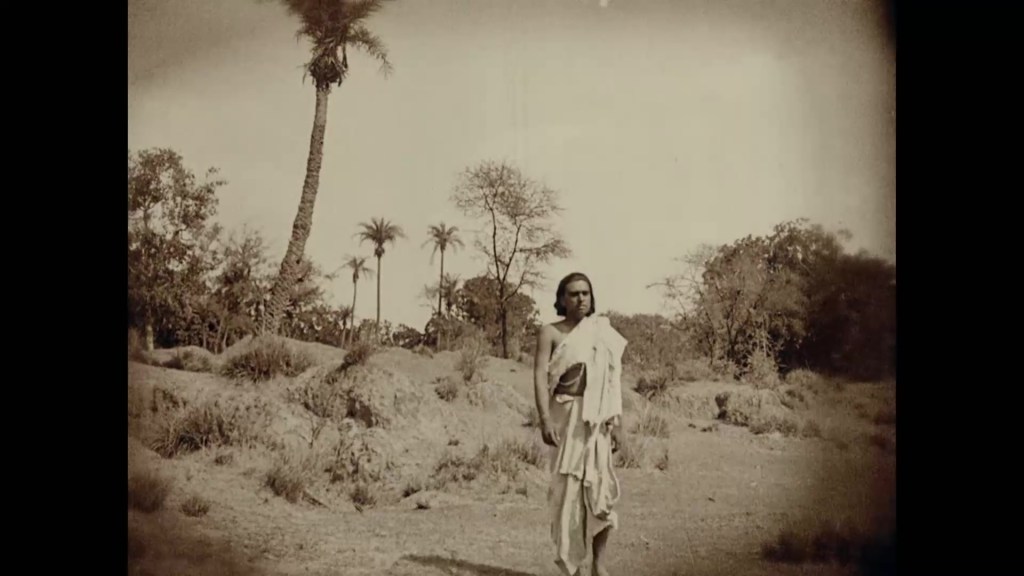
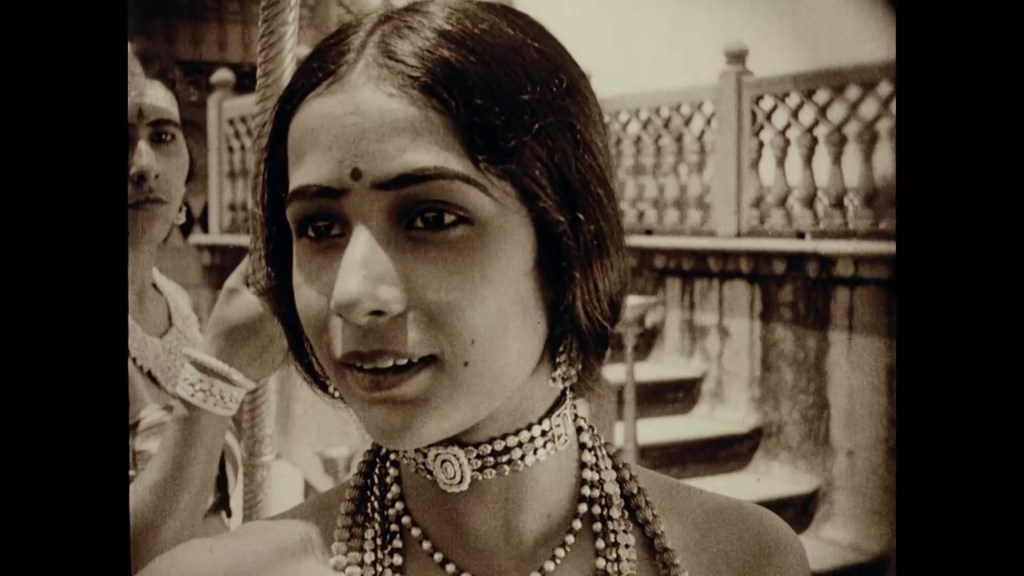
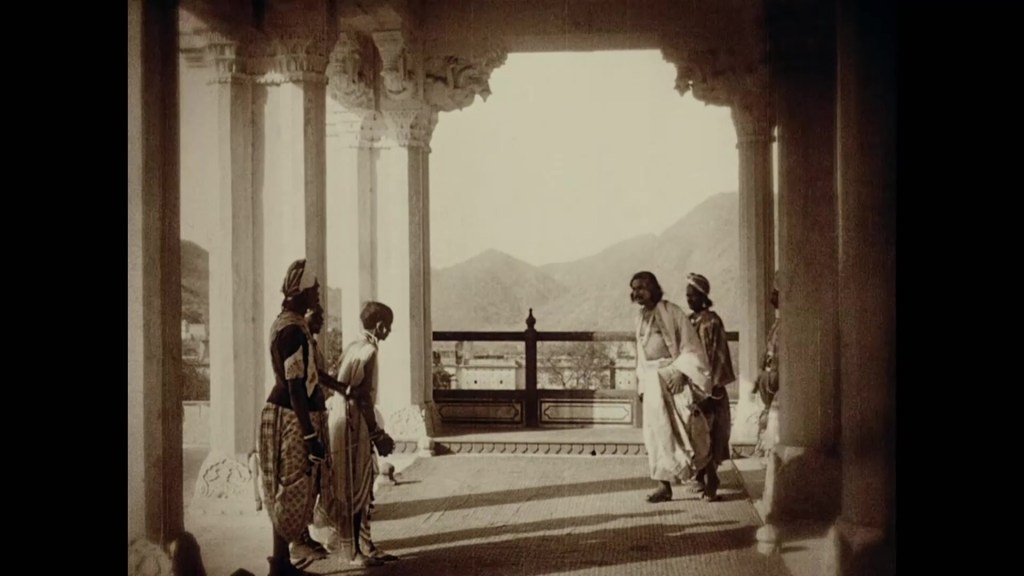
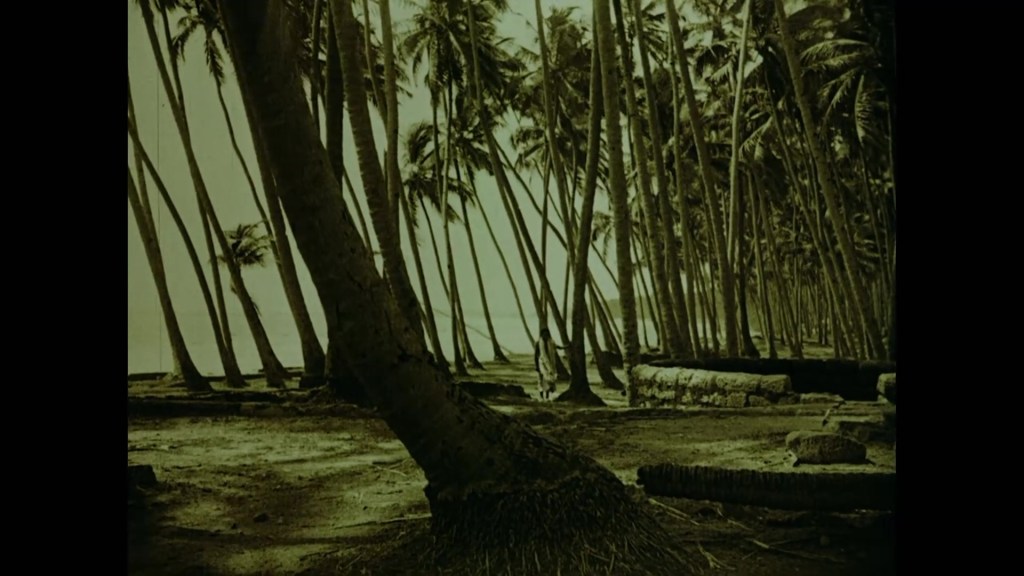
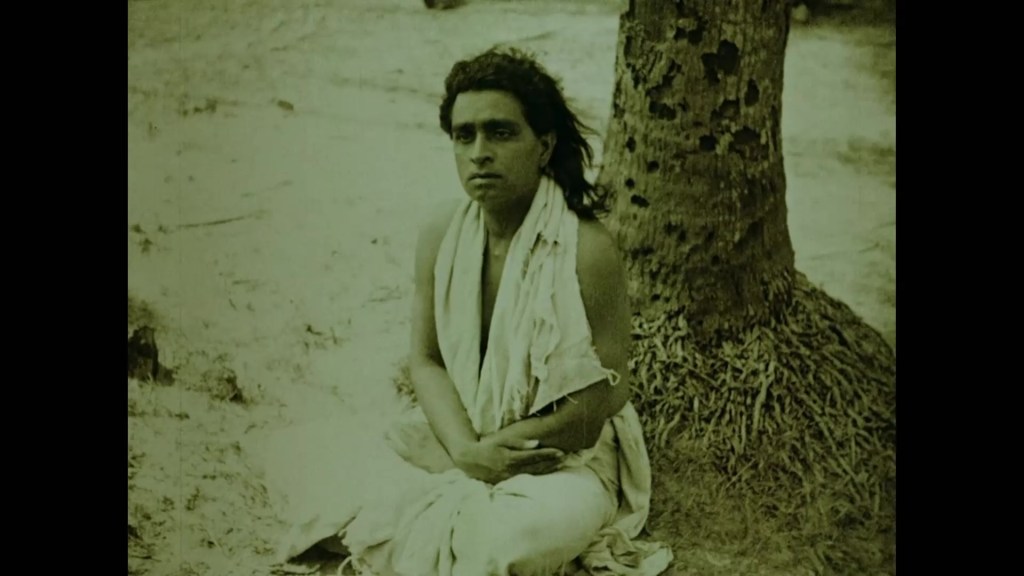
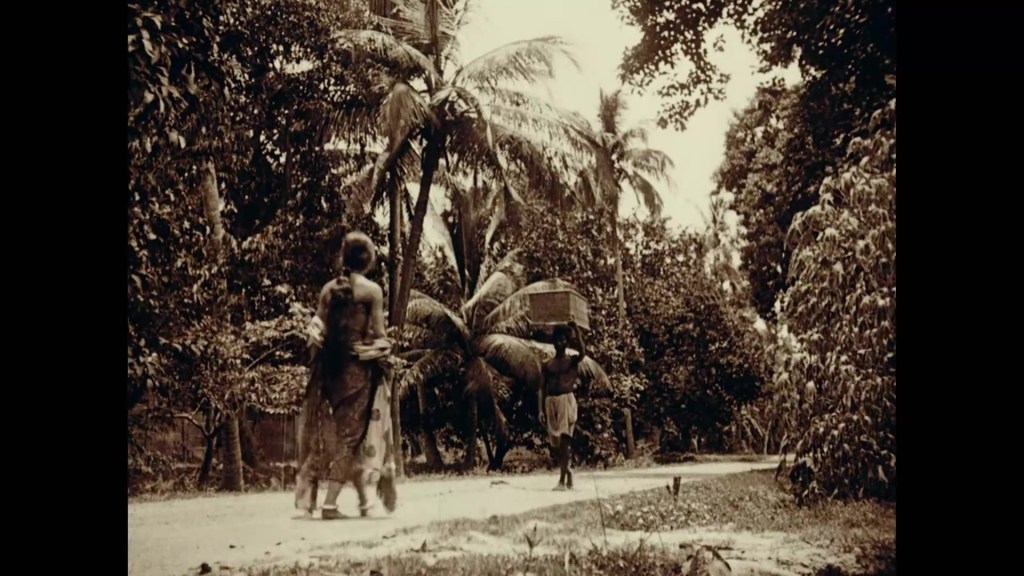
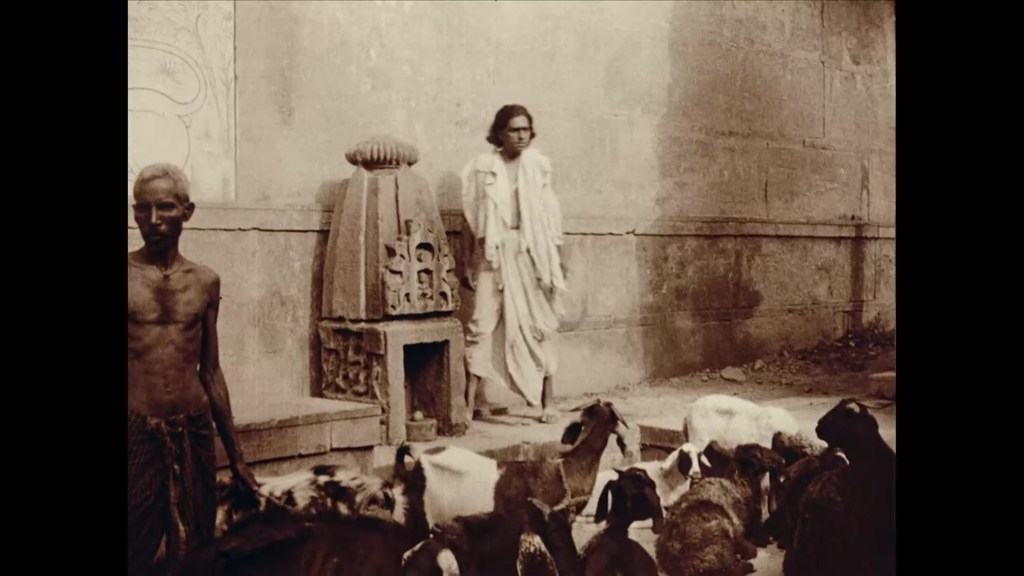
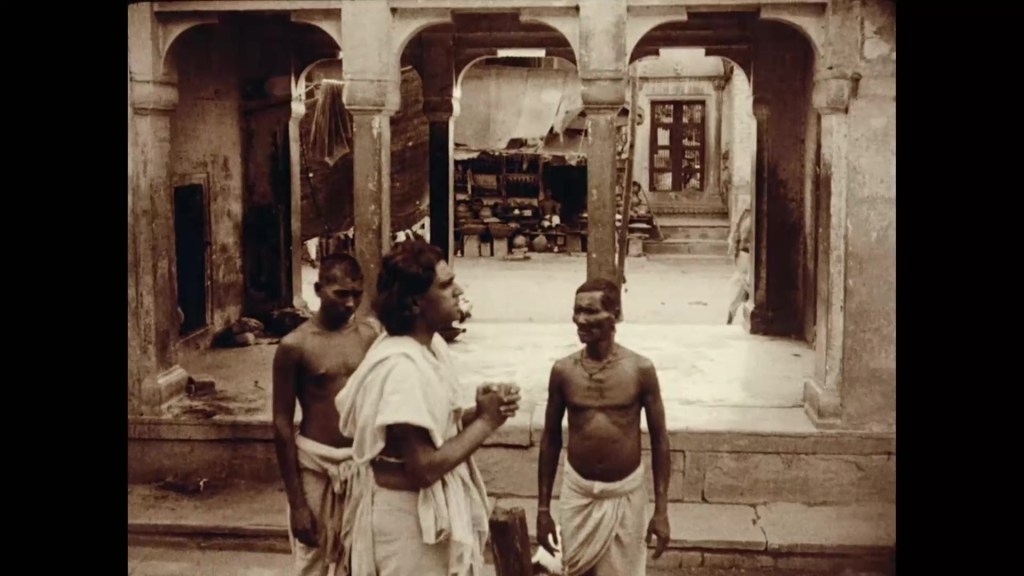
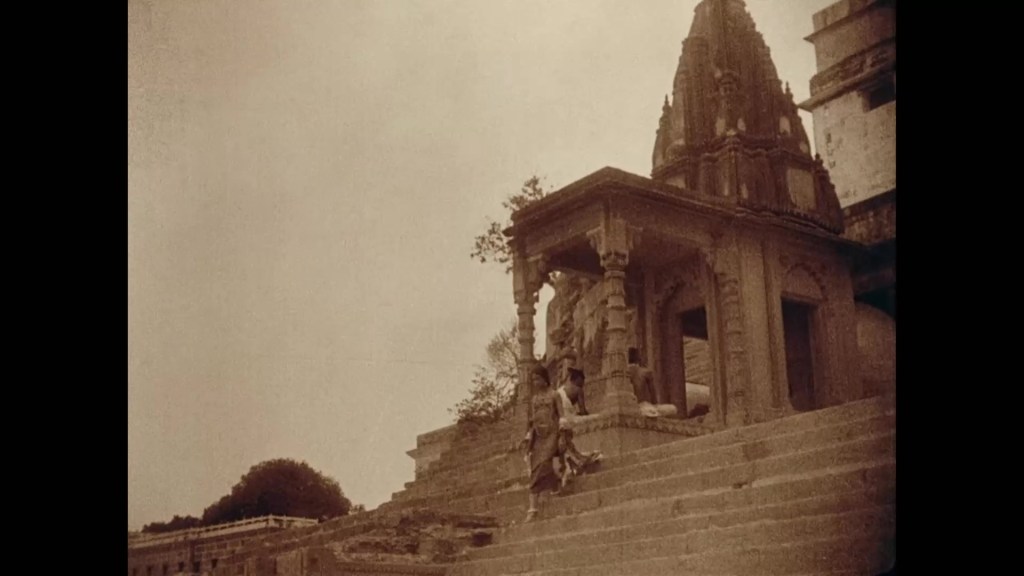
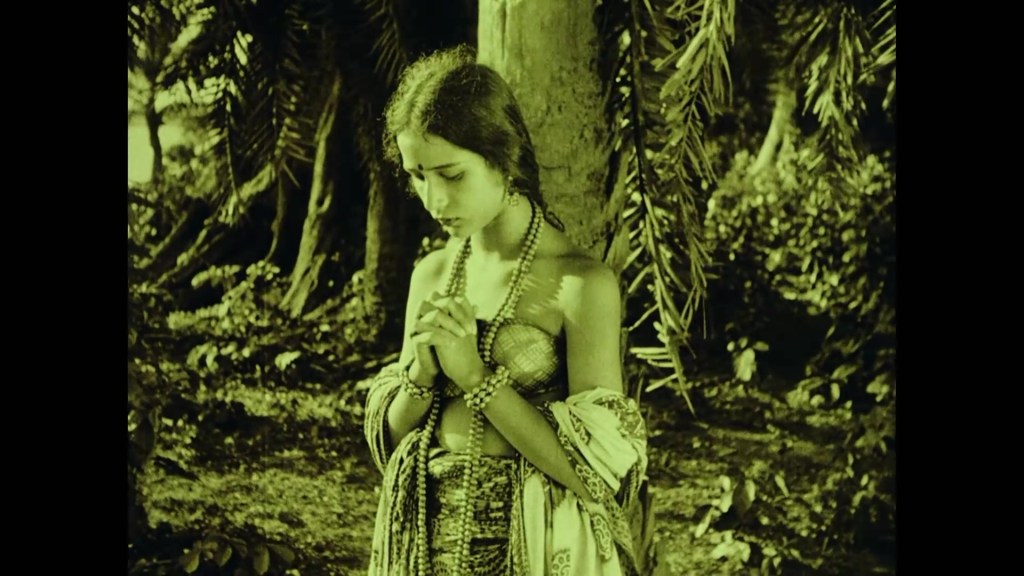
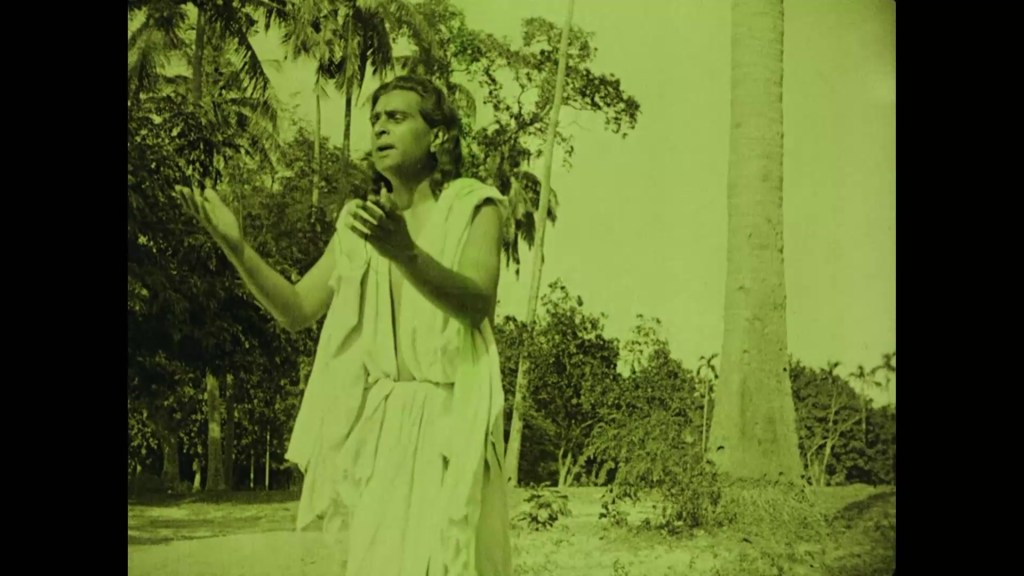
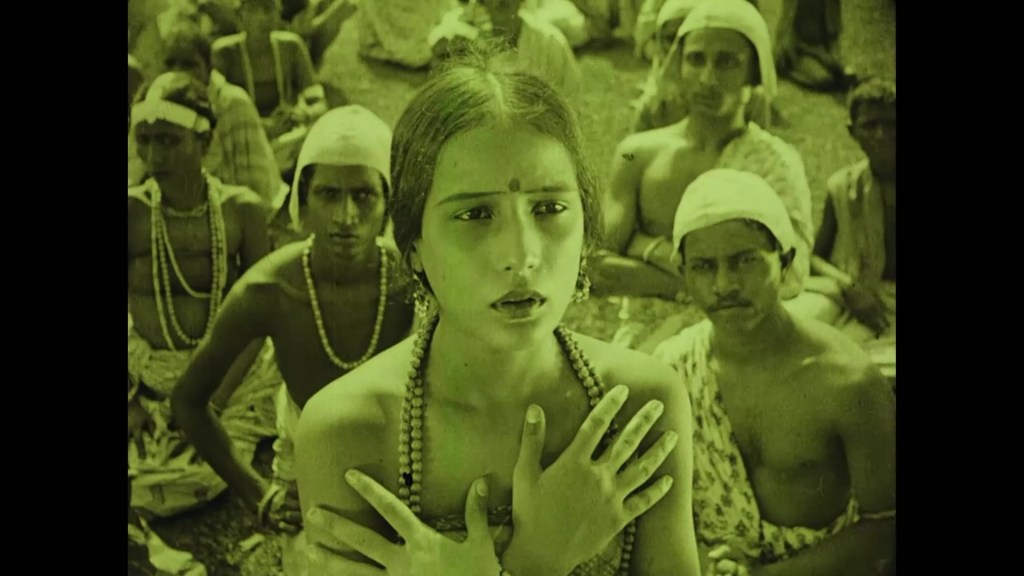
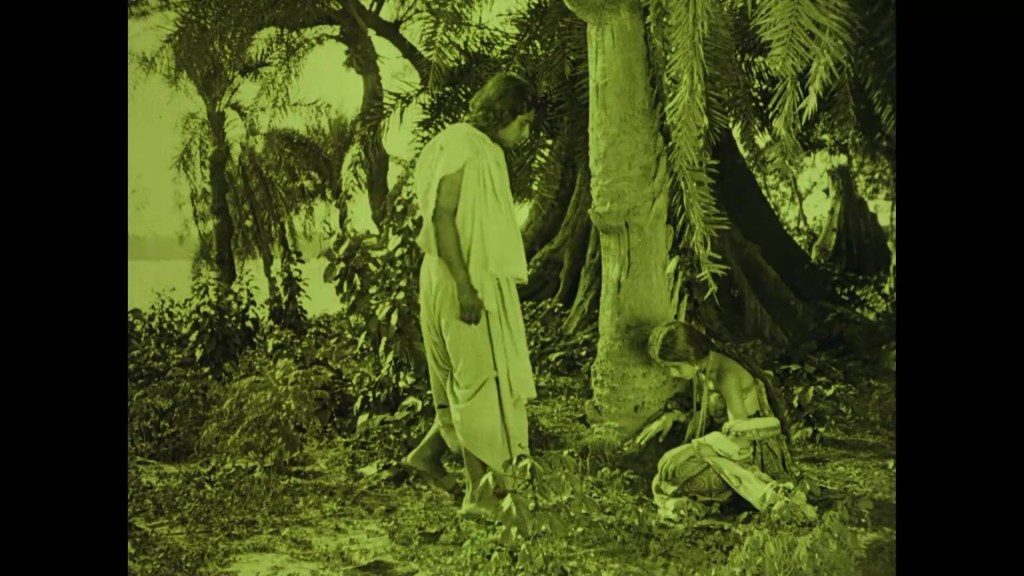
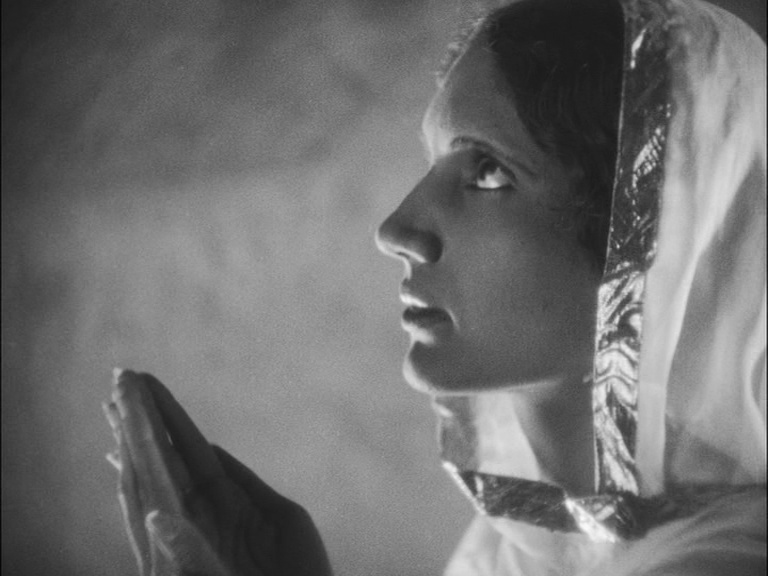
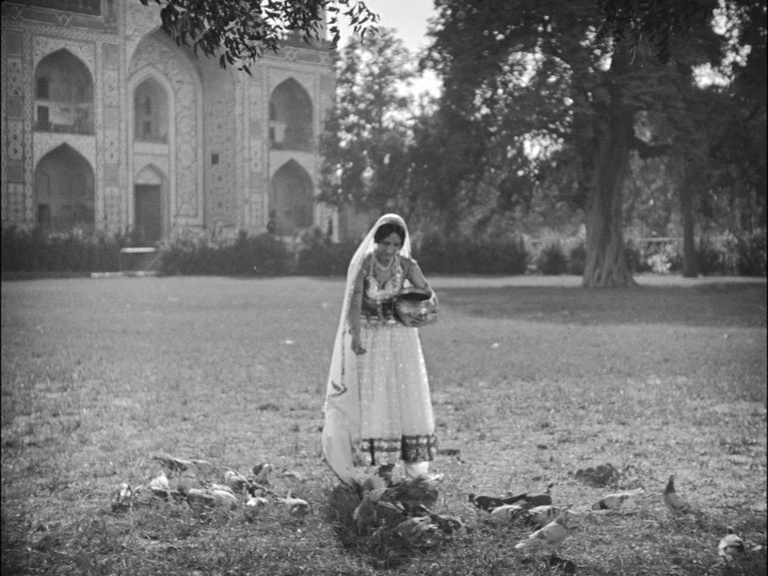
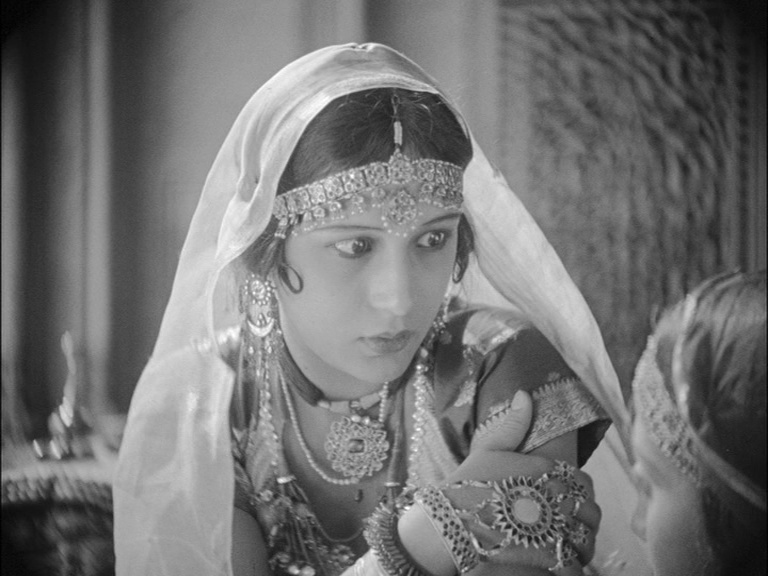
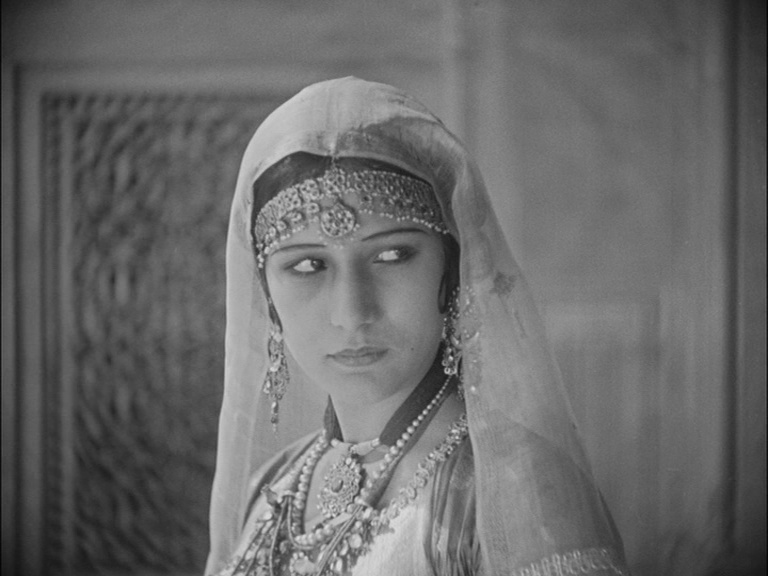
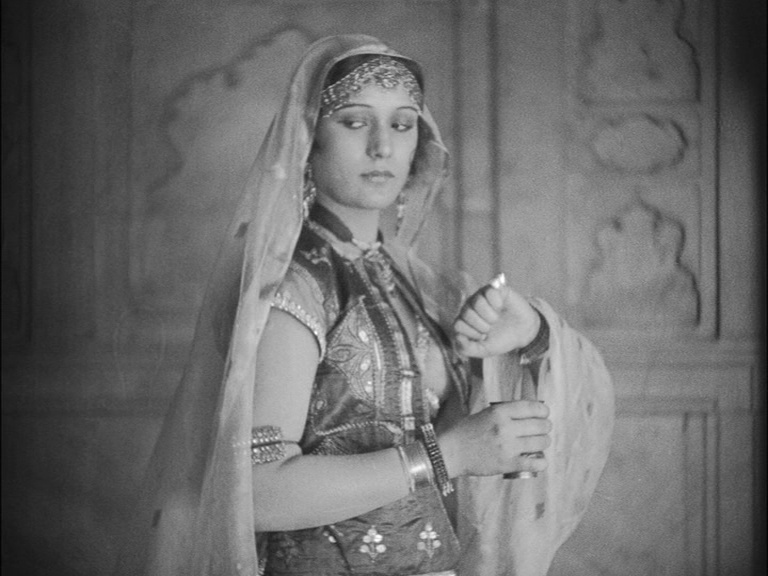
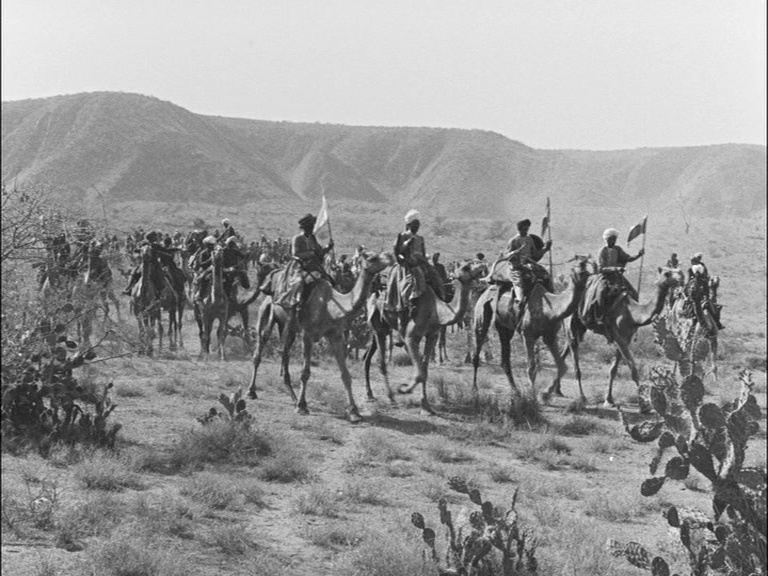
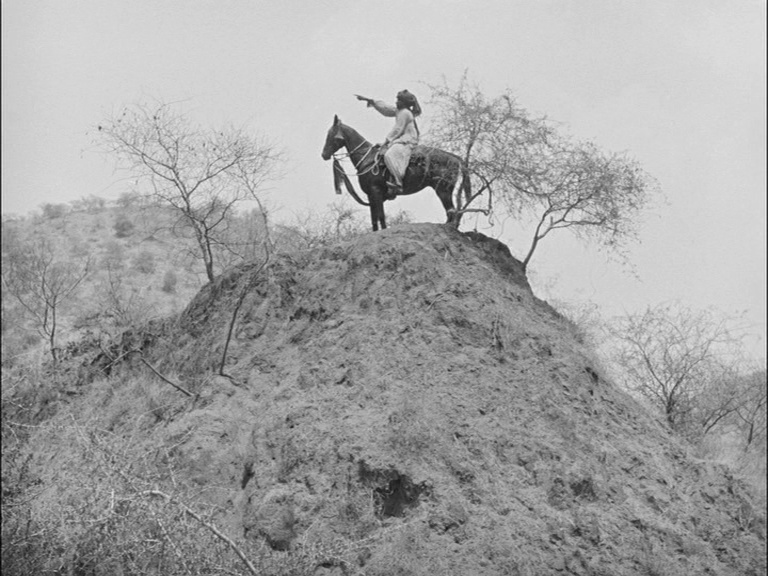
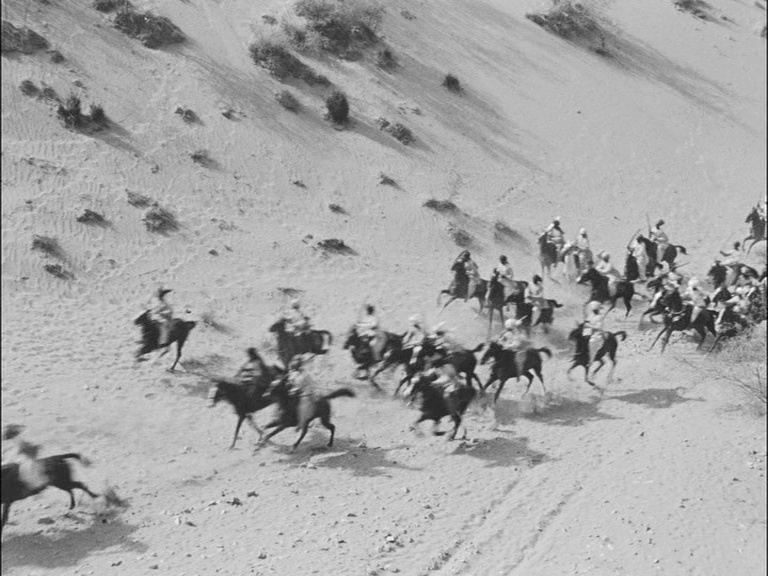
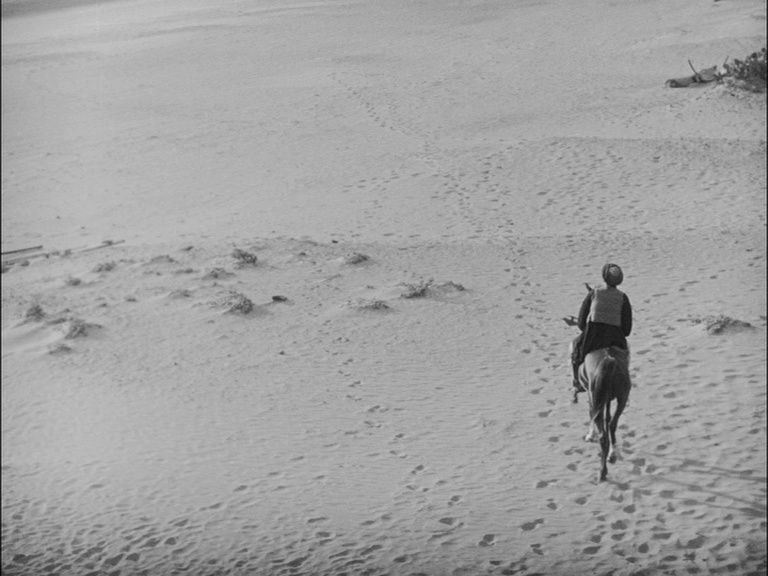
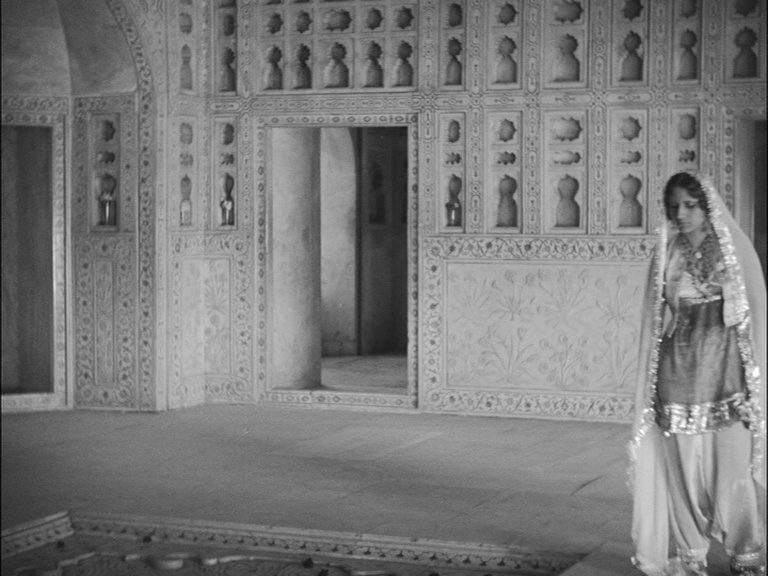
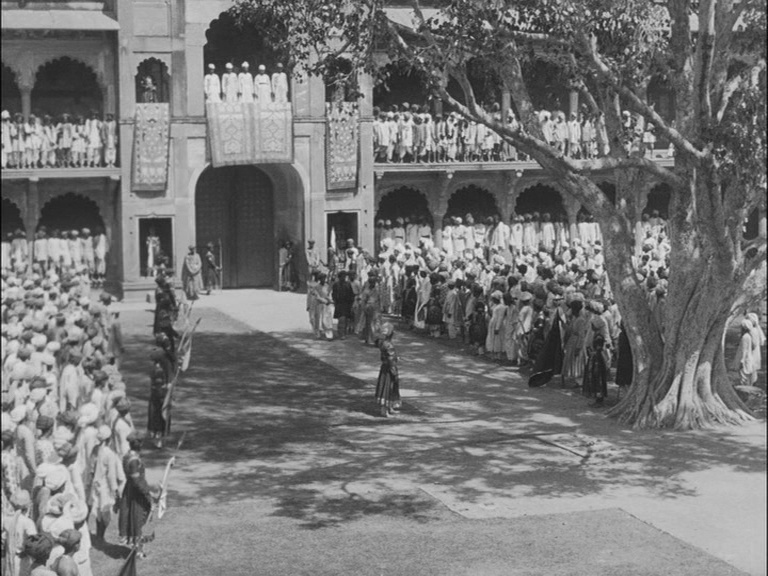
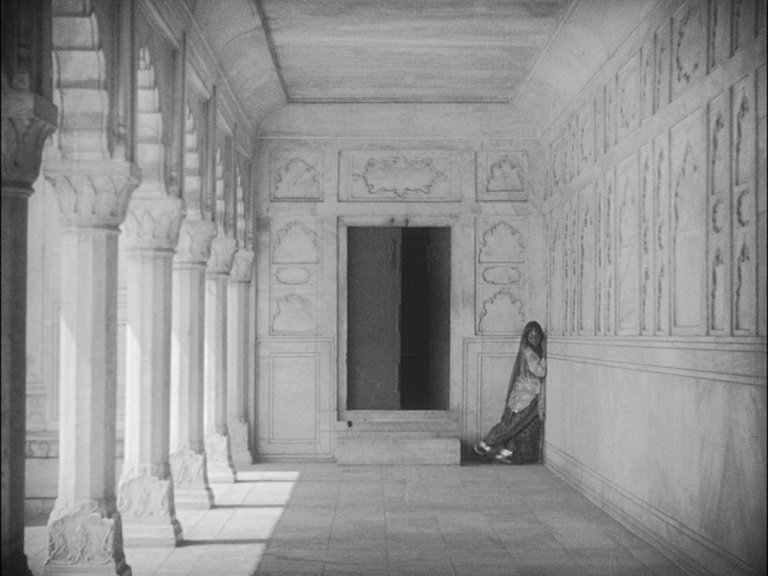
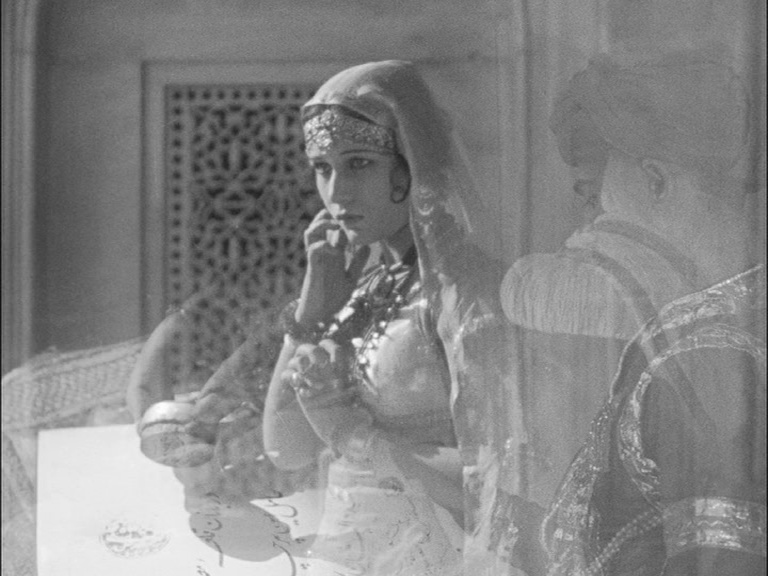
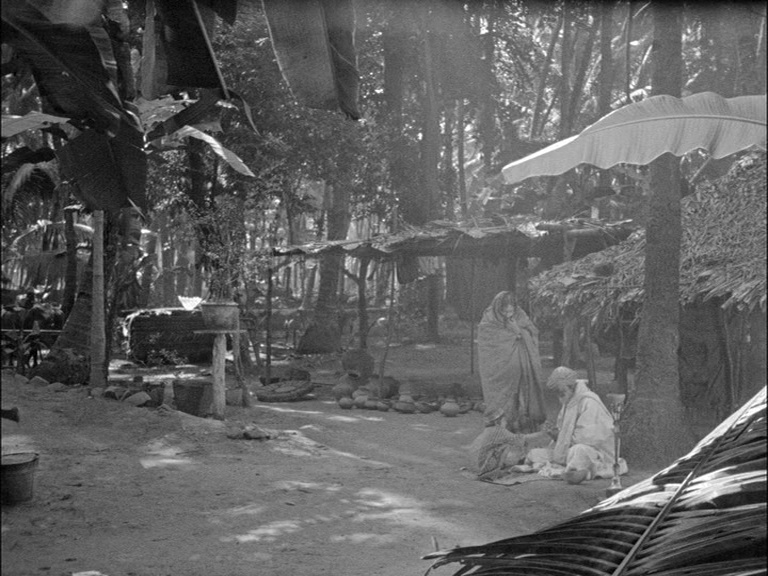
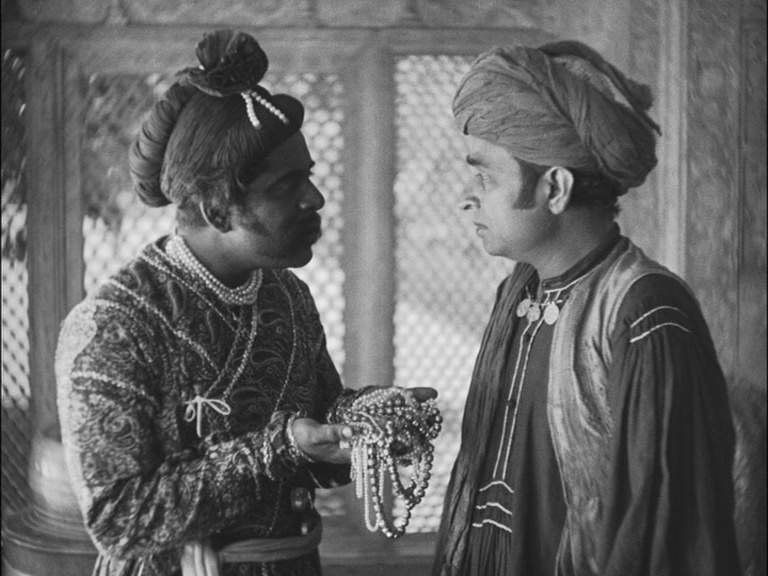
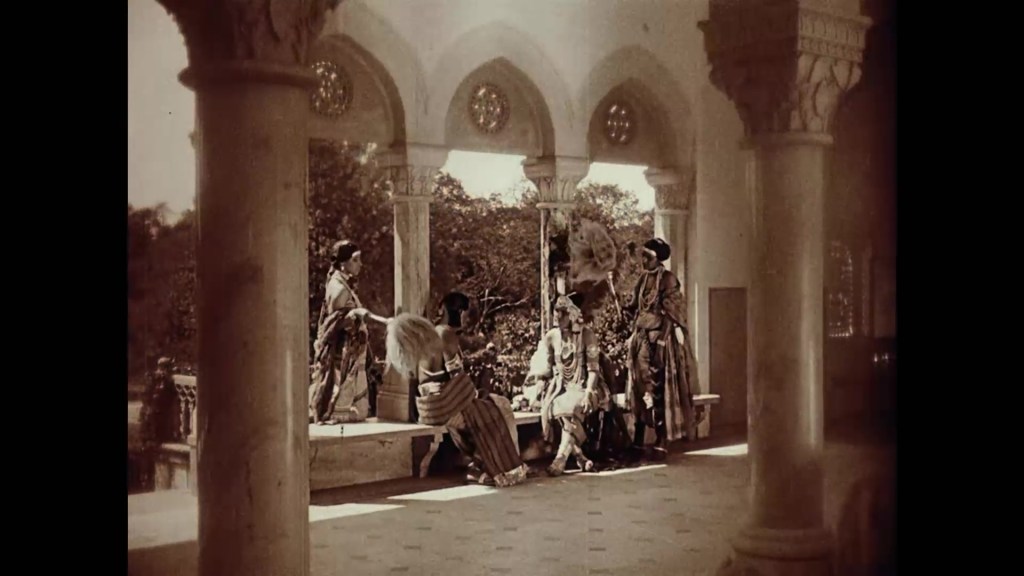
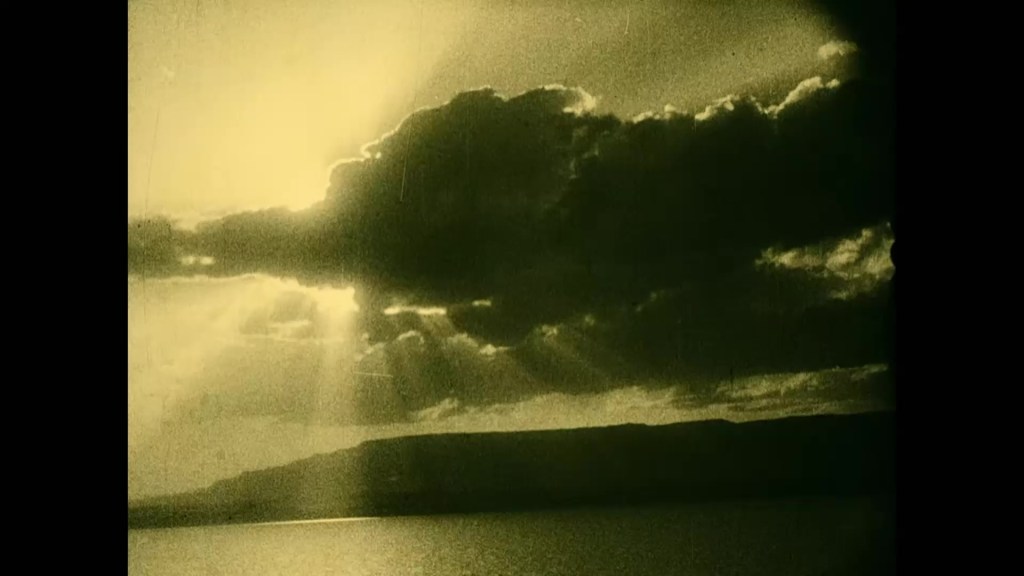
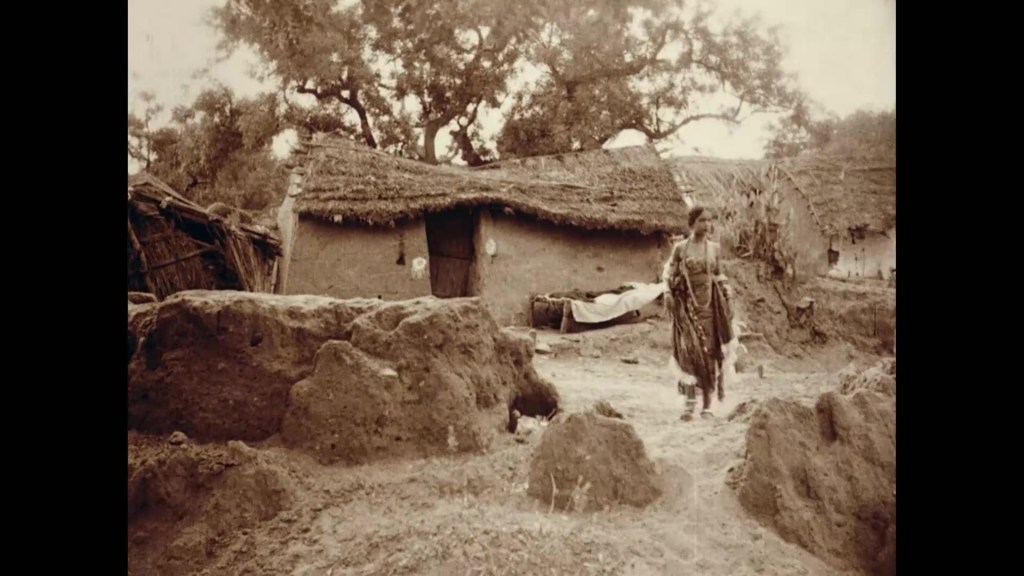
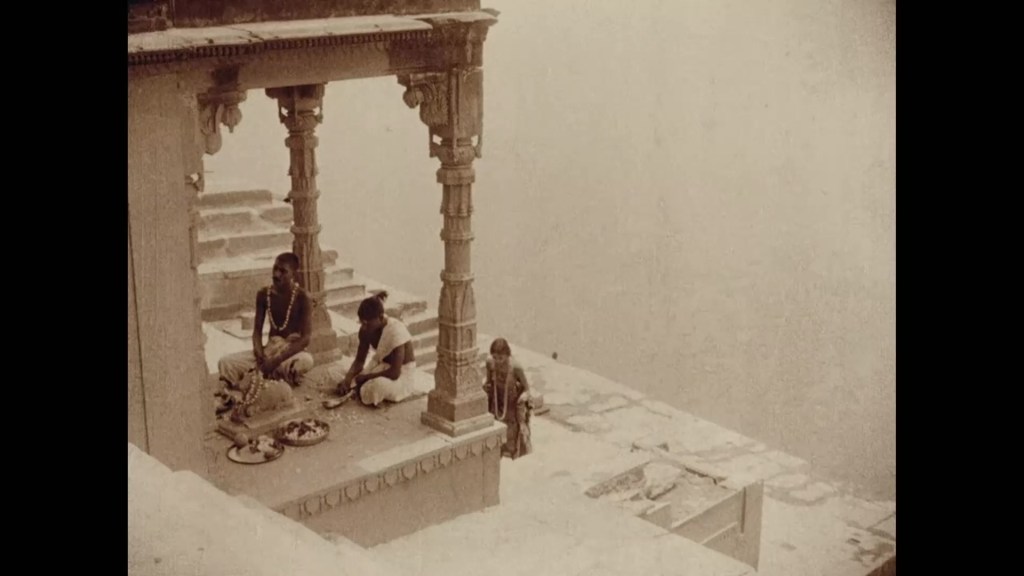
All this said, I didn’t care that the film wasn’t awash with stylistic flourishes or deft pieces of editing or camerawork. I didn’t care because this was one of the most beautiful films I’ve seen in a long time. Restored from a contemporary print released in the UK in 1926, Prem Sanyas is exquisitely tinted and toned and simply glows. For all that I have criticized (or at least, damned with faint praise) the lack of “style”, this film has no need to be showy when it uses real locations so well. So many views make you want to gasp, to spend time gazing at the frame. From ornate temples and elaborate palaces to dusty streets and overgrown gardens, this film is as astonishing document of time and place. I could rave for hours over the photography, the way the tinting seems to make you feel the heat and the haze and the dust and scent of the locations. I’ve taken a large number of image captures, but I could have taken any number more. The drama might have been inert, even inept, but I was captivated by the film itself – by the sheer aesthetic gorgeousness of the image.
To return to something of the dramatic substance of the film, I must discuss the performers. I must begin by repeating what I said in my piece on Shiraz: I simply don’t think Himanshu Rai is an engaging screen presence. I found him stiff and awkward in Shiraz and I find him stiff and awkward in The Light of Asia. Given that he’s meant to be playing a religious prophet and visionary, I find him utterly unconvincing. He is both oddly stylized (holding poses, holding glances) and oddly restrained (not doing anything!). I would welcome a down-to-earth prophet, a recognizably human figure who connects to the sufferings of man. But Rai is neither a magnetic divinity nor a vulnerable human. He’s an oddly inert prophet and an oddly inarticulate teacher.
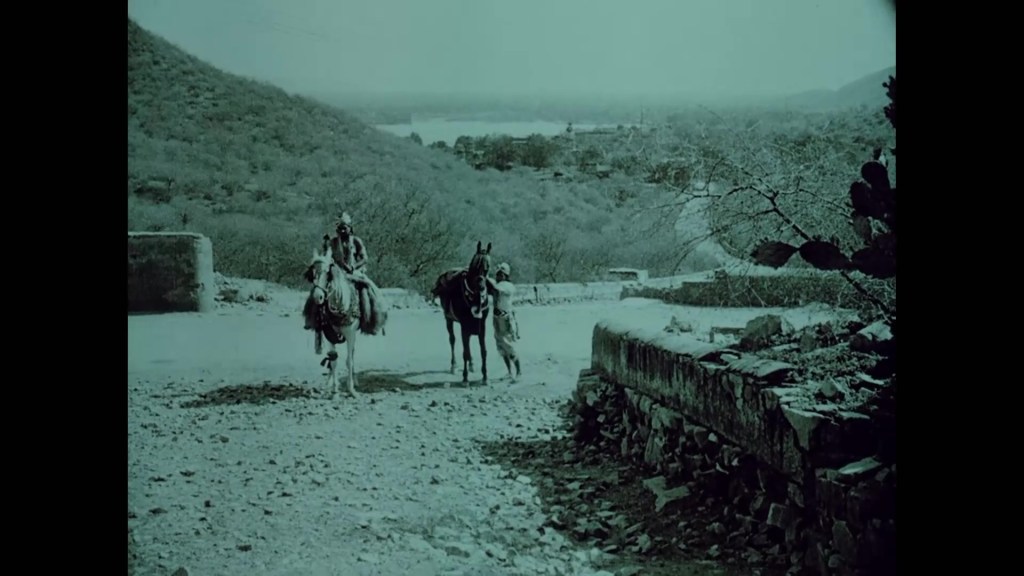
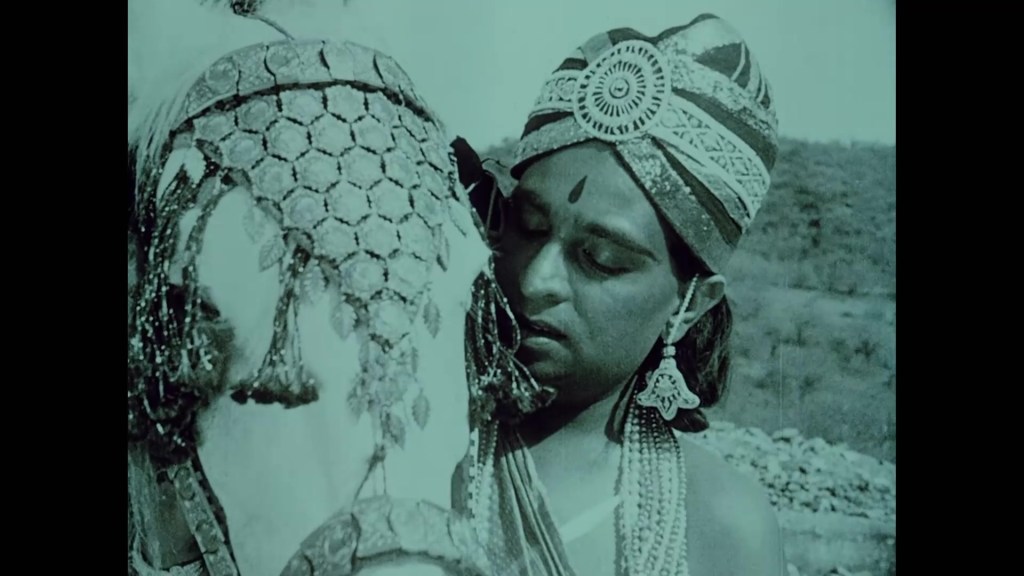
Rai’s limitations are shown up by the fact that everyone around him – and I mean everyone – has such great presence on screen: from the non-professional actors who play the minor characters to the real beggars and street performers who populate the world at large. Their faces and bodies are immensely interesting to behold. Here are real faces, real lives, real sufferings embodied for us to see. If I can’t see what the fuss is over the Buddha himself (or at least, Rai’s Buddha), I can absolutely see the fuss over the suffering of the world. The real locations and real extras are remarkably tangible, remarkably vivid.

As the king and queen, Sarada Ukil and Rani Bala are pleasingly unpretentious. Free from any posturing, gesturing, or theatrics, they are as real as figures from a mystery play – ordinary and extraordinary at the same time. Then there’s Seeta Devi, who was by far the most striking presence in Shiraz. Here, she looks scarcely more than a child – indeed, she was thirteen at the time of filming. A real child to play the prince’s child bride. In my piece on Shiraz, I remarked that she was the only performer to offer a really defined performance, i.e. someone who was palpably playing for the camera, for us. Her role, as a manipulative figure wishing to shape the drama, perfectly suited her performance style. In Prem Sanyas, she is free of mannerisms, of technique. True, she is not given much of a character to embody, but nevertheless there is a naturalness to her embodiment of Gopa that is moving in itself. And though she has yet to grow into her adult body, or adult confidence as a performer, she is still radiant on screen.
The soundtrack for this performance was compiled by Willy Schwarz and Riccardo Castagnola. It consists of (what I take to be) prerecorded sections of music, historical recordings, and ambient acoustic sound. Most of these sample the sounds of India, through instrumental choices or the sound of crowds/prayers/chanting etc. I found it a little distracting to hear recorded effects during silent scores, even in the vaguest form like the sounds of praying and general bustle offered here. While it certainly fits the setting of the film, it doesn’t suit the period of the film’s making – i.e. its silent aesthetic. The film is so overwhelmingly visual, I didn’t want a composer trying to “complete” the pictures with real sounds. I much preferred the sections of instrumental music, which felt much more in keeping with the period and setting – and the film’s historical and aesthetic origins. That said, I’ve heard infinitely worse “acoustic” soundtracks, so I’m not complaining too much.

Overall, Prem Sanyas was an excellent experience. I wrote recently about another religious parable, The King of Kings, and when watching Prem Sanyas I was reminded of the many reasons I disliked DeMille’s epic. Despite all the awkwardness of Prem Sanyas, the absolute reality of its mise-en-scène, of the places and the people who inhabit it, make it a far more rewarding viewing experience than time spent in DeMille’s artificial holy land.

Paul Cuff
Shiraz: A Romance of India (1928; Ger./In./UK; Franz Osten)

In 1924, a London-based lawyer called Himanshu Rai travelled to Munich. He had founded the Great Eastern Film Corporation and was hoping to join forces with European partners to make films inspired by tales from world religions. Rai met two brothers: Franz and Peter Osten, who together ran the firm Müncher Lichtspielkunst AG (Emelka). Rai and his Indian collaborators—scriptwriter Niranjan Pal and designer Devika Chaudhry—joined forces with the Ostens and their technicians and left for India. In 1925 they made Prem Sanya/The Light of Asia (1925), shot entirely in India using an entirely Indian cast. Its success in Europe encouraged Rai and Osten to team-up again, this time bringing in the support of the UK company British Instructional Films (BIF). BIF started life producing non-fiction films but by the mid-1920s they had begun making features: dramatic recreations of battles of the Great War. But the project they embarked on in 1927-28 was hoped to have a wider appeal. Described as “A Romance of India”, with a screenplay by William A. Burton based on a play by Pal, this film would again be shot in India with an all-Indian cast. Filming took place in and around Agra, with the Maharajah of Jaipur permitting the production to use the historic Mughal palaces as their setting. Set in the early seventeenth-century, the story offered ample opportunity to show-off the settings, costumes, and lore of historic India…

Shiraz: A Romance of India (1928; Ger./In./UK; Franz Osten)

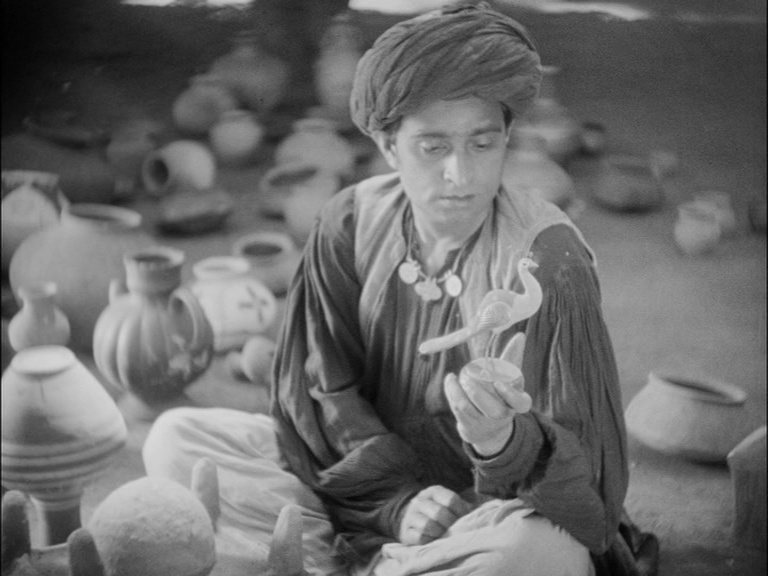
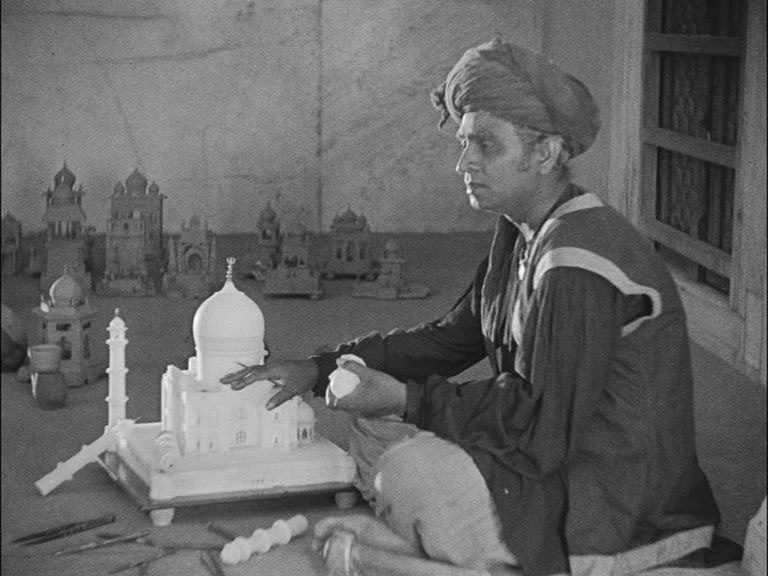
I will let you know the whole story, since it retells the inspiration behind one of India’s most famous landmarks: the Taj Mahal. In Pal’s partially fictionalized version, the child princess Selima is found amid the wreckage of an ambush. Taken home by a potter, she is adopted and raised by his family. The adult Selima (Enakshi Rama Rau) becomes the object of infatuation of the potter’s son Shiraz (Himansu Rai). But she is spotted and kidnapped by a gang of slavers and eventually bought by an agent of Prince Khurram (Charu Roy). Shiraz finds his way to the city where Selima is now part of the Prince’s household, but is unable to intervene as she and the Prince fall in love. This in turn frustrates Dalia (Seeta Devi), a general’s daughter who had hoped to marry the Prince. With the help of her maidservant (Maya Devi), she forges a pass to let Shiraz into the palace—where he is caught with Selima. The Prince orders his execution “under the elephant’s foot” (yes, literally) but when he learns the truth of Dalia’s scheme—culminating in the poisoning of her maid to leave no trail of evidence—he lets Shiraz go. Selima’s true identity is discovered and—since she has royal blood—the Prince is now free to marry her. Eighteen years pass, and Shiraz—now blind—helplessly pines for Selima. When the latter dies and the Prince commissions a design for a monument in her memory, Shriaz’s model is chosen. The two men build the Taj Mahal. THE END.

Well, so much for the story. Being more a kind of extended fable, the characterization is not the most complex imaginable. So, what of the performers?

Let me start by saying that the least appealing aspect of this film is Himansu Rai’s performance. It’s as ineffectual as his character is weak and mopey. There’s no depth or intensity visible in his performance. He doesn’t move expressively, either with his body or with his face. He occasionally holds out his hands or stands still or drops his head a little. And it’s not as if he is restrained in the sense of naturalistic performance. He’s just giving us the basic markers of emotion: but not emotion itself.

Nor did I particularly like Enakshi Rama Rau as Selima. I wonder if this is in part because of the story and the limitations of how the screenplay deals with the cultural politics (I’ll come to this later). As the film never really challenges any of the authorities or institutions, what can Selima do but be demure and wait for external intervention to aid her? But even within this context, Rau’s performance doesn’t offer great range or expressivity. I think Osten’s direction must surely contribute to this. We get glimpses of Rau’s gorgeous eyes, but she spends so much of the film looking down, looking away, covering herself with a veil, that we never get to linger on her face and see her emotions.

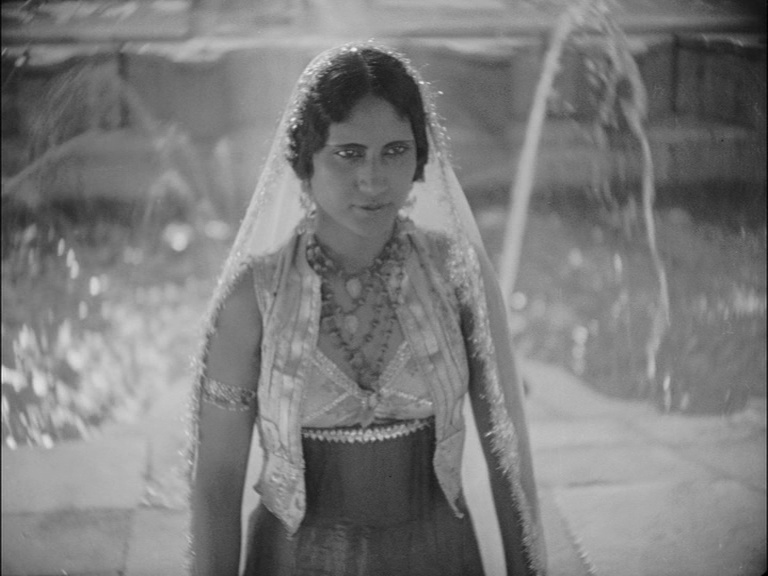
This is not the case with Seeta Devi, whose performance as the scheming Dalia is by far the most engaging in the film. You can read the thoughts pass across her face, the emotions light up her eyes. The camera knows what to do with her, too: it gives us plenty of closer shots to show her expressions, her gestures of impatience, seduction, desire, anger. Devi is absolutely magnetic: not merely beautiful, but agile and demonstrative—she’s truly communicative on screen. It’s noteworthy that the film’s titular hero is not used as the face for the BFI’s poster, nor still the film’s leading lady. Instead, it is Seeta Devi who takes centre stage, and anyone looking at the re-release posters or the Blu-ray box would think that she plays the character called Shiraz. Devi was Anglo-Indian, born Renee Smith, and I noted when watching the film that she’s one of the few people on screen who I could lipread speaking English. Doing a little digging online (weirdly enough, on her French Wikipedia page), I find that Devi spoke neither Hindi nor Bengali—and that this was one of the reasons her career in India petered out swiftly after the arrival of sound.

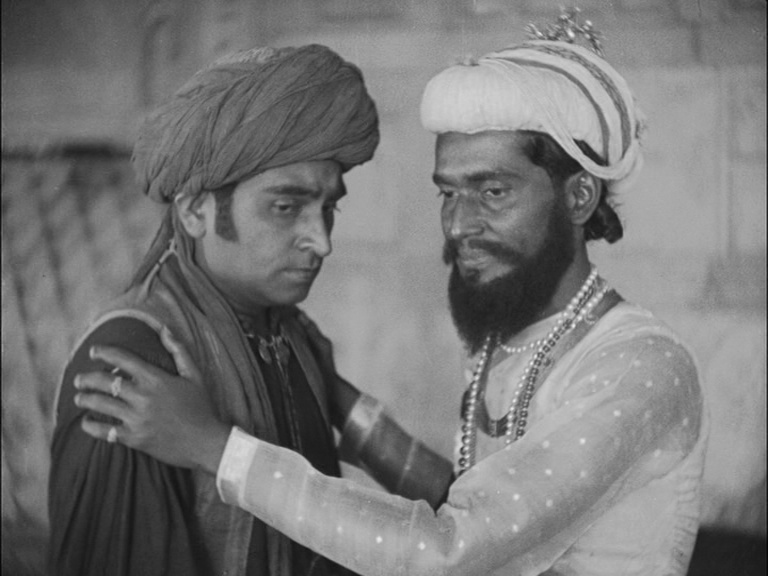
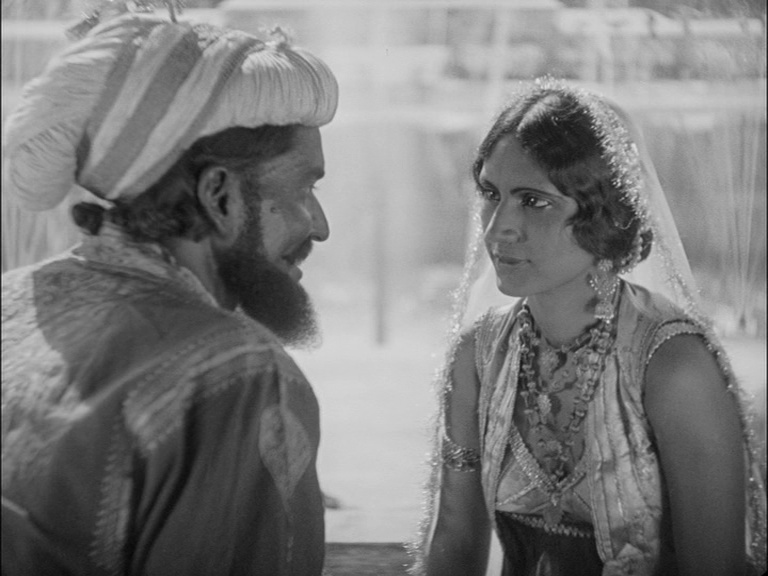
As Prince Khurram, I found myself increasingly drawn in by the performance of Charu Roy. He is understated but in a much more successful way than with Rai or Rau. Roy has a great natural warmth on screen, and he radiates a quiet authority and sense of calm. His is not the most complex of characters (none of them are, to be fair) but he gives a very clear sense of personality, of status, of purpose. I wish Himansu Rai had even a tenth of Charu Roy’s on-screen warmth. Even the minor characters—the Prince’s chief guard, Dalia’s servant—are more expressive, memorable, convincing, than him.

I haven’t said anything much about Franz Osten’s direction. For much of the film, I wasn’t really thinking about it. Everything was neat, concise. But everything was dominated by the settings. The first portion of the film is all exteriors: Shiraz’s small village, the arid landscapes around it. Osten lets the setting do the talking, so much so that I felt a sense of detachment from what was going on in in the drama.

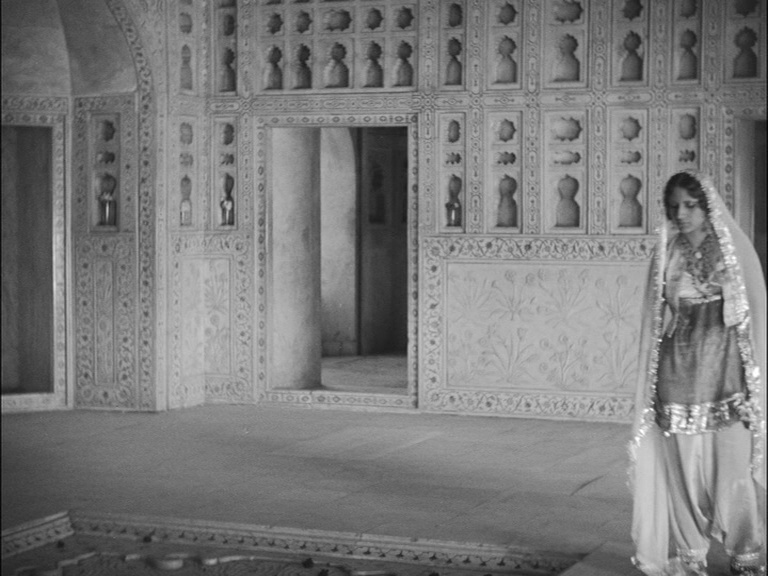
Even when we enter the city of Agra and the beautiful palace interiors and exteriors, the very formality of the surroundings dominated the tone of the drama. Everything is very neatly laid out, with plentiful use of shots that look through archways, down avenues, throughs doors and gates.

Only when the intrigue with Dalia got going did I start to be fully engaged. Here at last was a character with a bit more personality, more of a sense of a human being rather than a storybook figure (the poor potter, the abandoned princess, the noble prince). It is her actions that also seem to inspire Osten to be a bit more inventive. When Dalia forges the stamp on the pass for Shiraz, we see her in a mid-shot crouched by the chest with the official stamps. Osten cuts to what appears at first to be a blank screen. A second later, Dalia’s hand (we know it’s her hand because of the number of jewels it bears) appears slowly from left of frame, passing the document to another hand that appears from the right. Cut to a close-up of Shiraz, waiting at the wall to receive the letter. It is silence, I think, that makes the shot of the hands so startling. The transition is purely visual, and although it offers narrative continuity (the document being forged, the document being transported, the document being delivered), visually the out-of-focus background of a white wall is a stark disruption from the last shot of a dark interior space. Without any kind of background sound—even the gentle hiss of an unoccupied soundtrack—the cut to the white space is startling. Later in the film, Dalia’s thought process is shown through superimposition: we see the document again, the hands, the destination, the threat of discovery. All this is indicative of the more dramatic elements of the story: it is Dalia who tries to change events, to rely on her own wit rather than the will of Allah or the whims of the Prince. Thus Osten must make more of her, more of her agency. When she is removed from the film, the remainder of the story once more becomes a rather uninvolving series of pictures.

This brings me to my major reservation about the film. The film deliberately refuses to interrogate the world it shows us, the world whose cultural/political shape it relies on as the basis of its story. If the setting in seventeenth-century India is meant to avoid the awkwardness of contemporary, twentieth-century history (i.e. the British!), then it also creates other kinds of cultural awkwardness. In the first place, we are presumably meant to be as outraged as Shiraz that Selima has been enslaved, but the film never interrogates slavery—it cannot, since the Prince himself is the chief slaveowner of the state and buys Selima as one among many young female slaves. Indeed, Shiraz himself—at the slave market—shouts that Selima should not be sold because she has been kidnapped, not that slavery itself is an outrage. (He offers no opinion on any of the other poor wretches up for sale.) What’s more, when Selima refuses to give herself (i.e. her body) to the Prince, he replies that he has power enough to force her to take what he wants. The threat of rape is glossed over, as is the implication that that’s how the Prince has operated and continues to operate. The film doesn’t seek to find any complexity or trouble with the way this world works, nor do its main characters: Selima isn’t shocked or defensive with this threat, but simply says that whatever else may be taken, her heart cannot. And the Prince still is prepared to use great cruelty: to have the elephant crush Shiraz to death for not explaining himself, then (eighteen years later) to have Shiraz blinded with a spike so he can’t out-do his design for the Taj Mahal. Each time he relents, but clearly he remains prepared to use violence. His goodness is (albeit vaguely) emphasized by others in their descriptions of him (he is liked by his people etc). But he’s a “good” prince who practices slavery and threatens rape, torture, and death. In short, he should be a more ambiguous, complex character than the film is prepared or able to make him.

Neither does the film show interest in interrogating Shiraz’s actions. After all, Shiraz abandons his poor family to chase after Selima; he doesn’t say goodbye, nor does he ever send word to say what happened to him or to her. Nor does the film question why Shiraz turns down the money offered him by the Prince when he proves Selima’s royal status. Might he not send something back to support his family in his home village? Indeed, the film is populated by characters who passively accept what happens to them. Selima herself is lucky enough that she likes her enslaver, who is (when not torturing or enslaving) kind. Only Dalia has any kind of interest in upsetting the status quo, but she herself is prepared to murder her servant to save her own skin. Dalia is the only character apart from the Prince who wants to exert agency, but even she is trapped within the patriarchal order that can dispose of her on a whim. (She is exiled by the Prince, who says he never wants to see her face again; the film duly complies.) The film isn’t interested in challenging any of the systems it depicts, neither the slavery nor the royal autocracy that are essential elements of the world on screen.

The score for the 2017 restoration of Shiraz is by Anoushka Shankar, with a mixture of Indian and western instruments. (The notes also say that the music was arranged and orchestrated by two others, Danny Keane and Julian Hepple, so I’d be curious to know how this was organized. “Arranged and orchestrated by” is a common credit for scores from the 1920s, but for a new score it is much less so.) The music is absolutely sympathetic to the setting, and I enjoyed how it emphasized subtle elements of rhythm on screen without attempting to mimic everything that was happening. That said, the way the music floats over the images increased my sense of detachment from the drama for a good chunk of the film—but this is far more the film’s doing than the score’s. I didn’t even mind the presence of some chanting during the climactic scene with the elephant. Normally, I dislike voices in scores for silent films. And the fact that I took against the Nitin Sawhney score for Osten’s next Indian film, A Throw of Dice (1929), for the very reason that he includes an irritating trope of whispering voices in the soundtrack, means that I was surprised that I wasn’t bothered by the voices in the score for Shiraz. What makes the different is that Sawhney uses voices in a kind of sonic superimposition over the orchestra: it is a sound element that can only exist via the digital manipulation of volume and balance. This struck me as being entirely alien to the period, turning a score that could be performed live and have a life within a cinema into a soundtrack for DVD. This is a silent film, damn it, not a soundtracked one. But the voices in Shiraz are part of the live performance of the score. They sound from within the orchestra, not from an imposed wash of acoustic sound. While not exactly being a “period” score, it doesn’t deliberately emphasize acoustic aspects that could only derive from the present.

I enjoyed Shiraz, more so as it went along. And while I have reservations about some of the performances and the lack of depth in its story, it is nevertheless a very beautiful film to look at. Much of the restoration derives from the original 35mm negative and looks stunning. You’ll struggle to find a sharper-looking print of a film from this era. I makes me want to revisit the other films produced by this Indian-European collaboration. A Throw of Dice is at least on DVD, but Prem Sanya can still only be seen in off-air copies derived from its broadcast on ARTE from 2001. Nevertheless, I promise to seek out and comment in the future…

Paul Cuff