
After yesterday’s exploration of vagrancy and destitution, today we return to the world of the bourgeoisie and to the genre of light comedy. This film was just as much an unknown to me as yesterday’s, and just as welcome a treat…

Was ist los mit Nanette? (1929; Ger.; Holger-Madsen). Otti (Ruth Weyher) is married to the night editor of a newspaper, Richard Curtius (Georg Alexander). Unbeknownst to Richard, Otti has saved him from bankruptcy by living a double life. By day she is a dutiful housewife, but at night she works as “Nanette”, a successful vaudeville dancer. Richard still believes the money came from the will of Otti’s late aunt Finchen, from Batavia. However, things get complex when Aunt Finchen (Margarete Kupfer) turns up on their doorstep. Otti pretends Richard is deeply unwell, so hides her aunt in the attic, along with her pet monkey and a huge amount of luggage. Richard’s rich friend Toto (Harri Hardt), who has a crush on “Nanette”, also comes to stay. Inevitably, events soon spiral out of control. After various farcical chases and confusions, Richard realizes that his wife has been lying to him. Accusing Otti of disloyalty, he decides to pursue other women. First among them is “Nanette”, whom he invites to a night out at the Trocadero club. There, the truth emerges. Richard learns of Otti’s double life and her sacrifice for the sake of their marriage. After recognizing that they still love each other, the couple reconcile. ENDE.
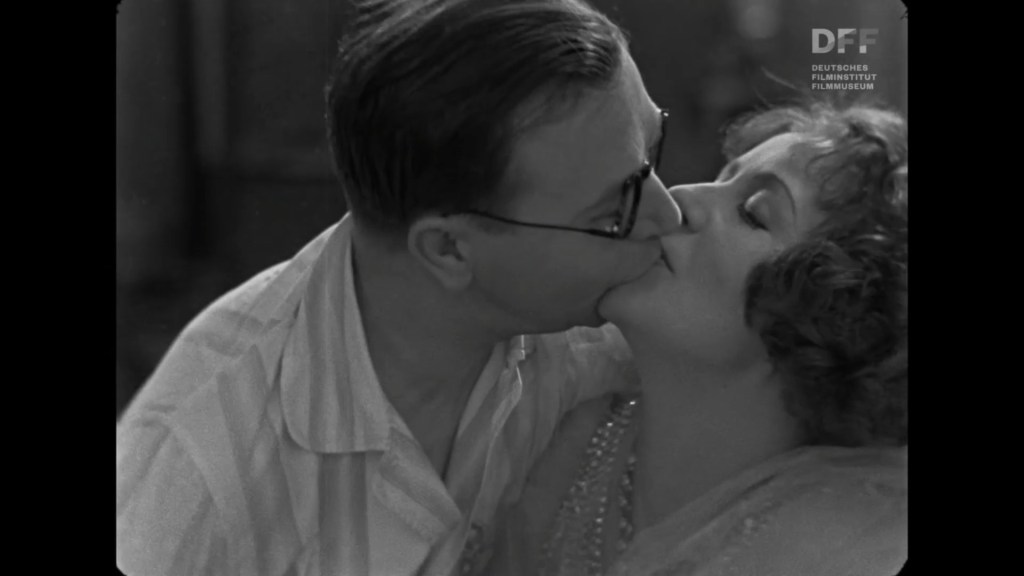
This was the only film produced by Ruth Weyher-Film, the company founded by the star. (She would quit acting at the start of the sound era.) I have seen and liked Weyher in a few productions from earlier in her career, but she is more striking here in this lead role, which drives the whole film. It is very interesting to think of Was ist los mit Nanette? as the work of a female producer and star, since its central concern is with a woman’s agency in the face of male expectations. Otti is introduced very deliberately as “Frau Dr. Curtius”, which is formally correct, but markedly eliminates her given name altogether. By contrast, her friend is introduced as “Anita Morell” (Maria Mindszenty), a woman “widowed young” and “halfway to being remarried”. It is as if the shedding of the dead husband has already given her back her name, and the possibility of agency. We might wonder if being “halfway” to marriage is rather more satisfying than being married. Weyher herself gives a delightful performance. Yes, it’s a chance for her to show off before the camera. She gets to dance on stage, run around, and don disguise. But she always bristles with intelligence and wit, her eyes flashing with playful cunning. The film also gives her plenty of close-ups in which something deeper is revealed, glimpses of emotion (doubt, frustration, longing) that lie beneath the play.


As her husband Richard, Georg Alexander is perfect. I think I’ve seen him in more sound films of the 1930s, so I am rather familiar with his distinctive voice, but here on the silent screen he makes the perfect foil for Otti. Everything about him is fussy, particular – a little vulnerable, a little defensive, a little rigid. His married life quickly unravels, and we realize how limited is his conception of a romantic union. From being a loving husband, he reveals the smallness of his mindset. He soon draws on cliched images of a “painted and deceitful” woman to describe Otti. “They used to burn people like you!” he cries at one point. Otti replies that she won’t forget that insult, and neither will we. It’s an absurd thing to say, but it is said in earnest and in spite. But since this film is, ultimately, a comedy, Richard gets his chance to learn. When he hears Otti’s true history of sacrifice – and a sacrifice for love of him – we see him realize his mistake. Alexander’s performance has enough reality to it (enough seriousness) that we might just have hope for his future with Otti.


Around these two leads are a number of interesting supporting performance. The most significant is Margarete Kupfer as Aunt Finchen. I thought this was a marvellous creation. Her hypochondria makes for some delightful use of costumes and props. Obsessed with her own glands, she travels with a monkey and an enormous spray-pump to ward off germs. The latter she uses as a splendidly phallic weapon to chase Richard around his own home. The former animal is the source of slapstick, but also of some great lines of dialogue. (“My glandular baboon! Preserver of my youth!” Finchen blubs at one point.) But this comedy also enables something more interesting. It is noteworthy how much of the physical slapstick in the film is driven by the women (the wife, the best friend, the aunt, the maid), who give out as much as they take. Echoing Otti’s use of disguise, the aunt also finds the liberation of being in costume. With the aid of Otti’s theatrical manager, Finchen undergoes a beauty treatment, emerging from her frumpy outfit and curled hair into glamorous eveningwear and tastefully modern bob cut. We have come to think of her as a purely comedic, almost buffoonish, character – but in the last act she reveals her worldly wisdom. It is she who advises Richard to feign illness, take to his bed, and earn Otti’s sympathy. He duly does, and the trick reunites husband and wife. Not so daft and dowdy, after all, these aunts.


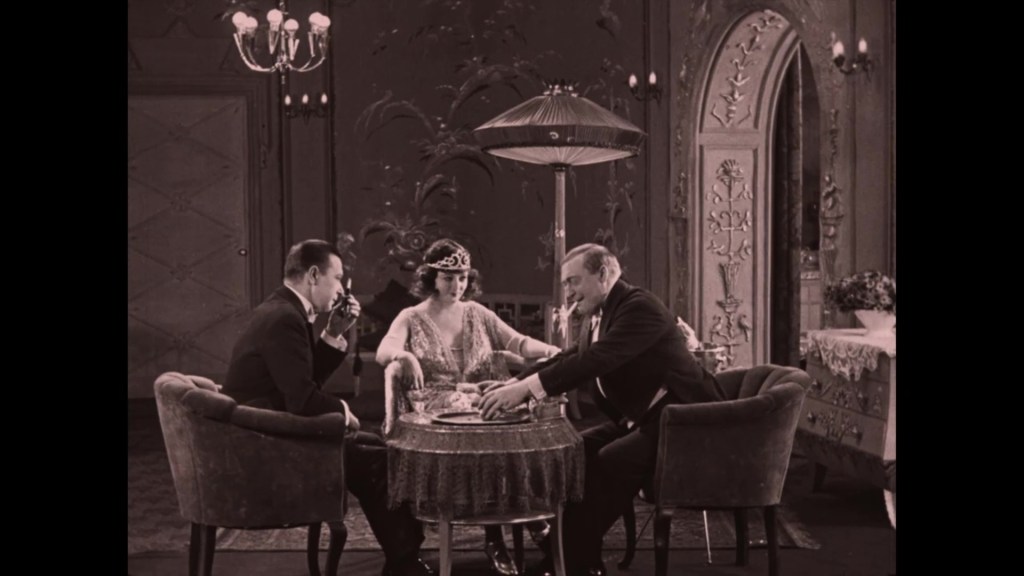
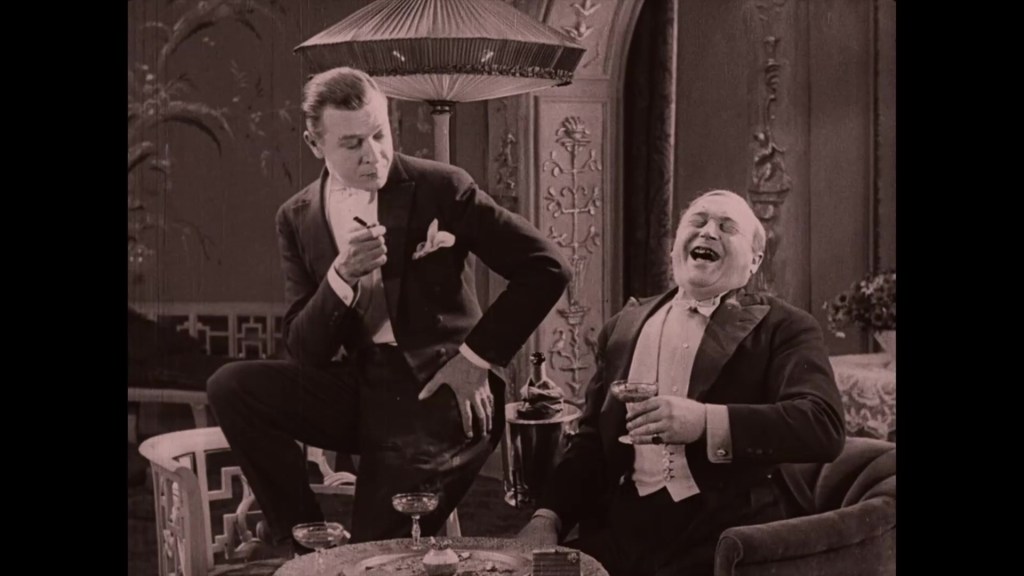
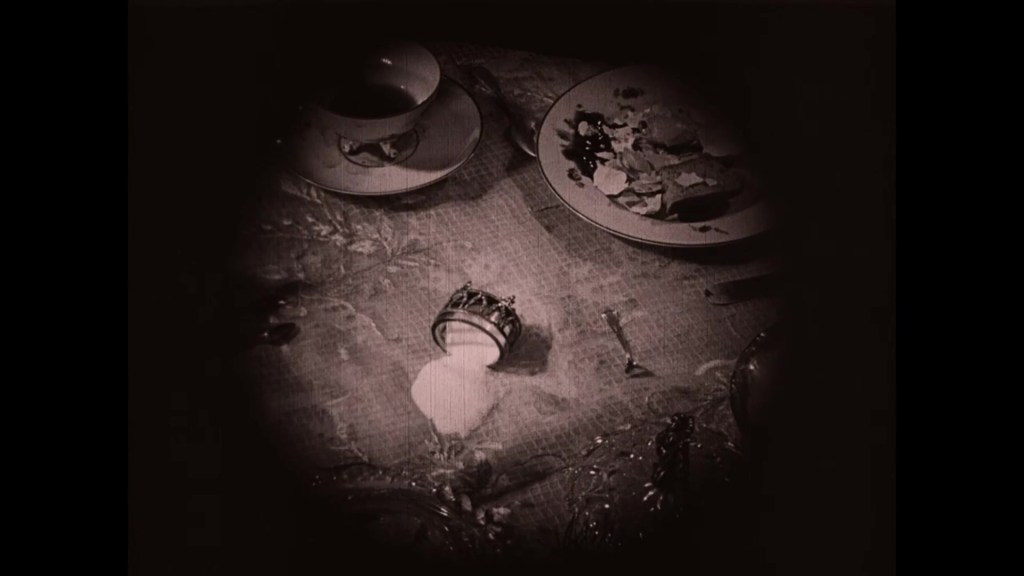
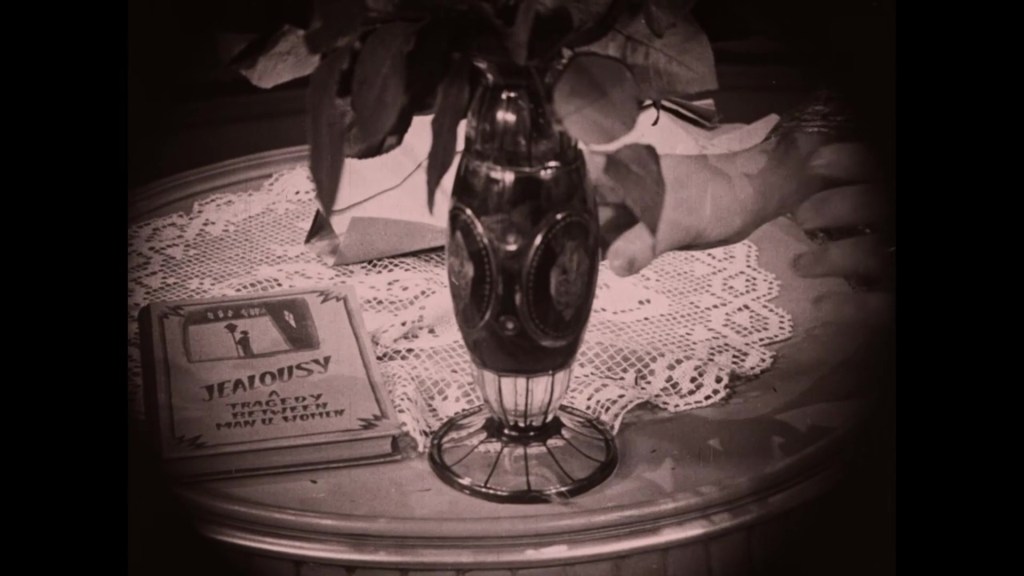
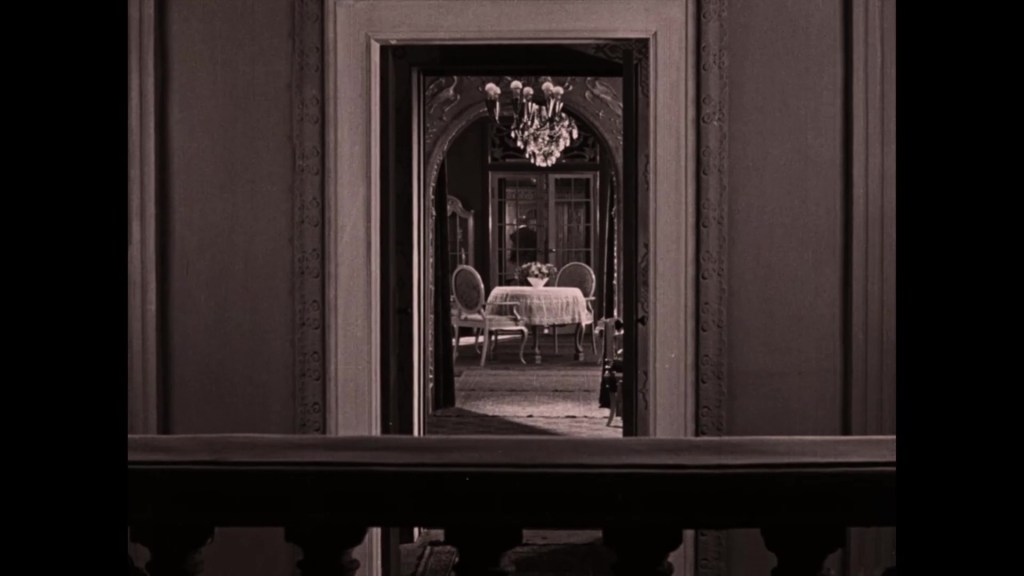
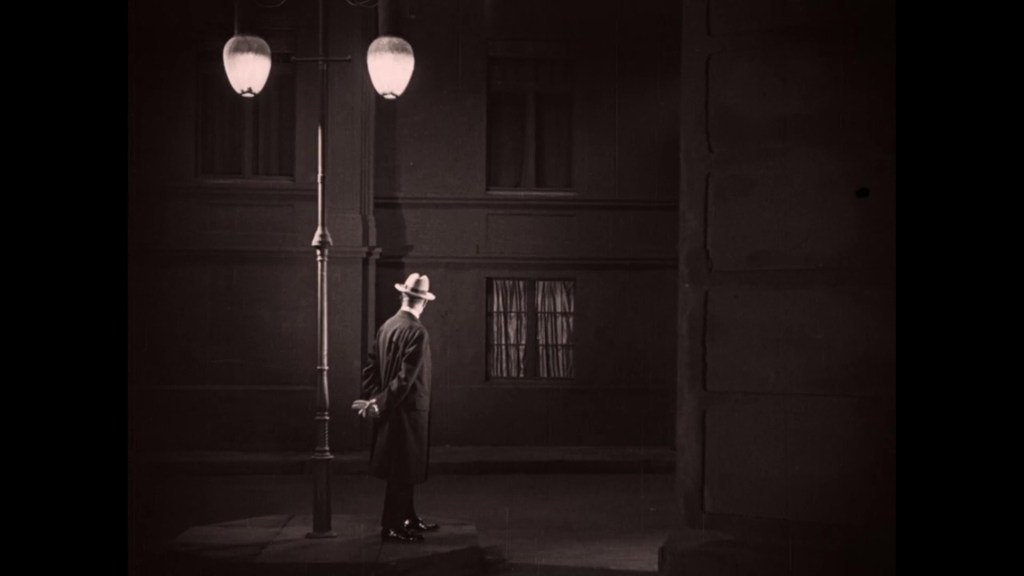
I have so far talked about the film’s performers and themes, but more broadly I must praise how nice Was ist los mit Nanette? looks, and how well the action is directed. The sets – the house, the office, the theatre, the nightclub – are great, richly detailed and beautifully dressed. Amid all this, Holger-Madsen provides lots of nice touches, such as the striking high-angle shot of the characters looking up through the ceiling light when they hear the noise from upstairs. The shot emphasizes the shock, momentarily turning this into a moment of suspense. The characters are taken by surprise with a sound, and the film transforms this into a moment of surprise for us through visual means. More imaginative camerawork is involved in a rather brilliant dream sequence in which the drunk and depressed Otti dreams of being judged and condemned by Richard in a court of law. Superimposed over Otti writhing in her sleep, this courtroom scene is a little comic gem of editing and choreography. (Compared to yesterday’s dream sequence in Der Vagabund, also involving a character dreaming of being tried and condemned, the equivalent in Was ist los mit Nanette? is much more technically sophisticated and rhythmically polished.) It also links nicely to the opening scene of Richard waking up, when he drowsily reaches for the alarm clock and we see it spinning in a kaleidoscopic multiplication of itself. Both scenes are about the vulnerability of the two characters, each experienced in scenes by themselves. It’s one of many fine touches in Was ist los mit Nanette?, which is filled with pleasing details to reveal character and emotion. The whole film is well staged, well photographed, and well edited. Though one reel of the film suffers from some bad decomposition, it is a great example of how good a film of this era can look.


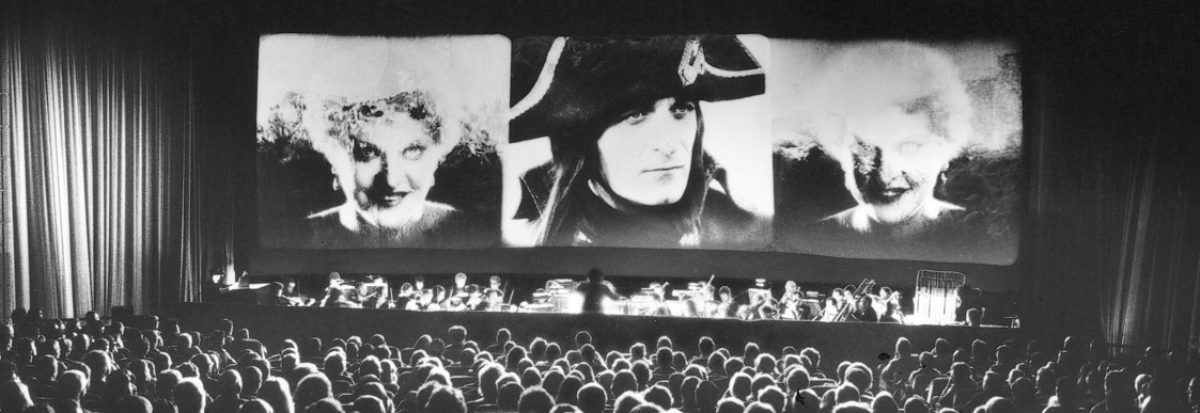
Music for this presentation from Bonn was by Maud Nelissen and Mykyta Sierov. Their combination of piano and oboe is playful, sympathetic, rhythmic, and melodic – a great accompaniment to the film. Though the live presentation of the film in Bonn (so the online notes tell me) was prefaced by an introduction and rare footage from the Weyher estate, which I would have loved to have seen, Was ist los mit Nanette? by itself is a great feature with an enjoyable score.
I said at the outset that Was ist los mit Nanette? is a very different world to yesterday’s film, Der Vagabund. But Weyher’s comedy also has an edge and offers, in its own way, a subtle critique of the bourgeois world in which it is set. Socialist drama it ain’t, but it also finds a sophisticated way for us to think about what we’ve seen, and question the assumptions we might have: about gender roles, about performance and disguise, and about our expectations and assumptions of what an equal relationship might be. I very much enjoyed this film, which was a total unknown to me. A delightful surprise, beautifully presented.

Paul Cuff
















 The Realm of Silence