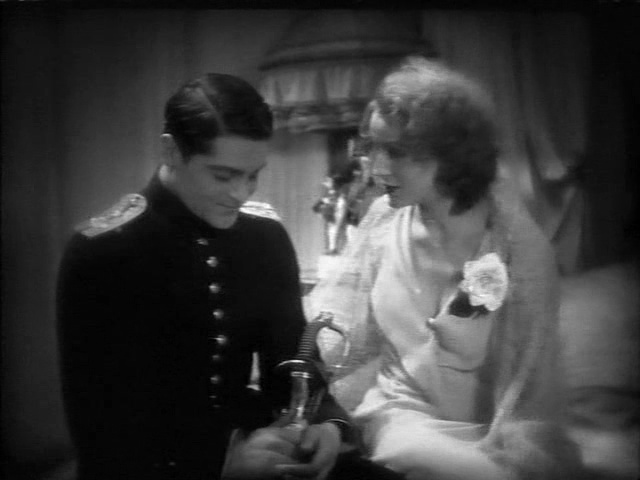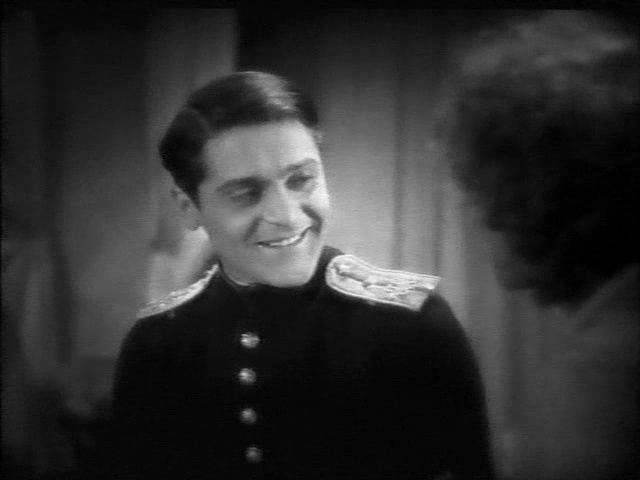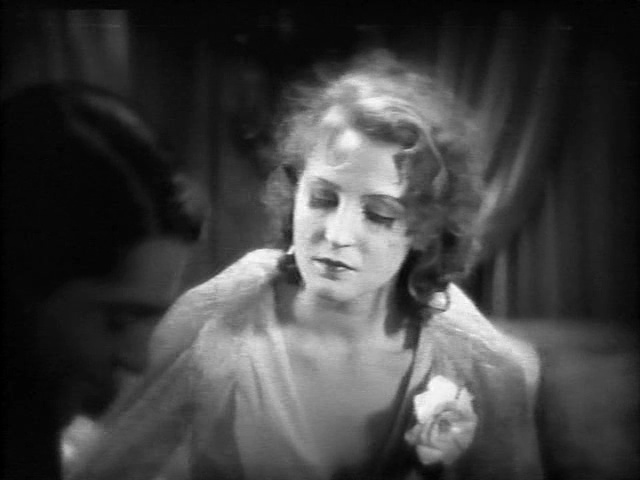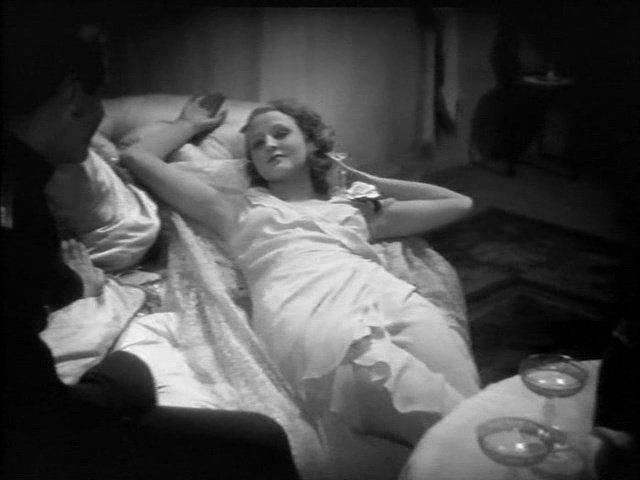
Petronella (1927; Ger./Ch.; Hanns Schwarz)

Long-time readers may have registered my admiration for Viennese director Hanns Schwarz, whose sumptuous Ufa production Die wunderbare Lüge der Nina Petrowna (1929) is a favourite of mine. I have a forthcoming (I hope!) article on his marvellous Ungarische Rhapsodie (1928), a film which I will also write about here sometime in the future. Neither of these films is currently available on DVD, but they are at least accessible in some form or other. (Even if one must go to Berlin, as I did recently, in order to see anything like a complete print of Ungarische Rhapsodie.) Schwarz’s other silent films are a different matter. The one I’d most like to see is Die Csardasfürstin (1927), an adaptation of Emmerich Kálmán’s delightful operetta. Alas, the only extant copy of this film is currently not able to be viewed. (For unstated reasons, presumably the lack of a safety copy, the Bundesarchiv’s 35mm print is restricted to the vaults.) I have at least been able to see Die Kleine vom Varieté (1926) at the Bundesarchiv, and this enormously enjoyable film will be the subject of another post in future weeks.

Today, however, I want to talk about the only other Schwarz silent from the late 1920s that is available to see: Petronella (1927). I find that I have hardly mentioned this production in my writing on Schwarz, not because it is less interesting, but because it seems to stand out among his films of this period. My interest has primarily been on Schwarz’s work for Ufa, especially his operetta films leading up to the transition to sound. Petronella may have been made with Ufa’s involvement, and shot partially in Ufa’s studios, but it was a co-production with Helvetia-Film. Adapted from a Swiss novel, recreating an important period in Swiss history (and Swiss national identity), its exteriors shot on location in Switzerland, and premiered in Bern in November 1927, Petronella is a very Swiss film. Happily, and rather appropriately given its subject, Petronella has recently been restored by the good people of the Cinémathèque Suisse, to whom I am very grateful for allowing me to access a copy of the film. Though this production has been the subject of one or two pieces (exclusively devoted to Swiss film history), I came to Petronella with very little idea of what it would be like – or how it might compare to Schwarz’s other work. Today’s piece emerges from my growing fascination with this unjustly little-known director, whose films continually have the capacity to surprise…

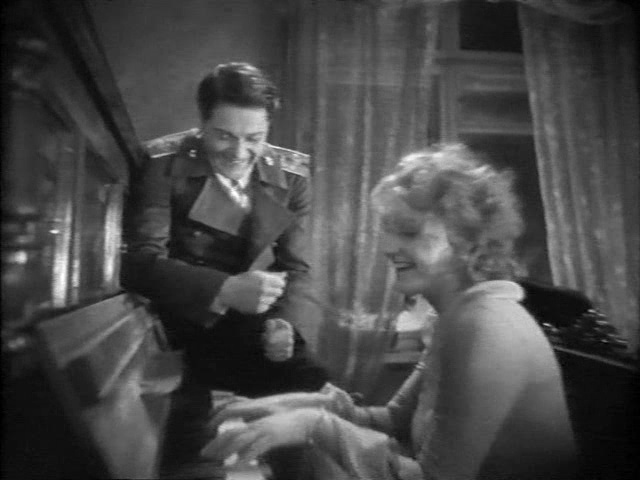
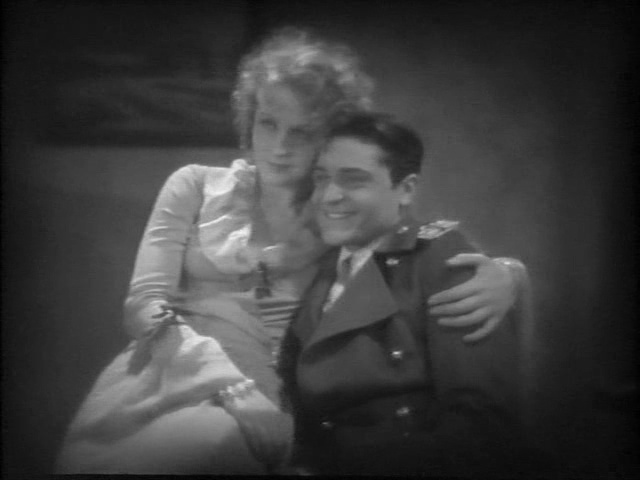
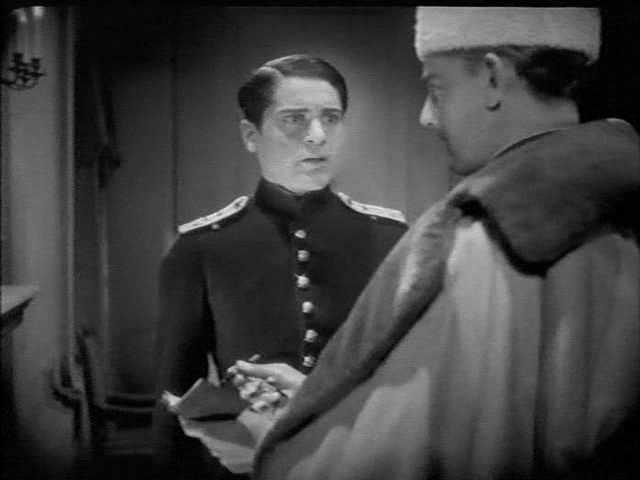
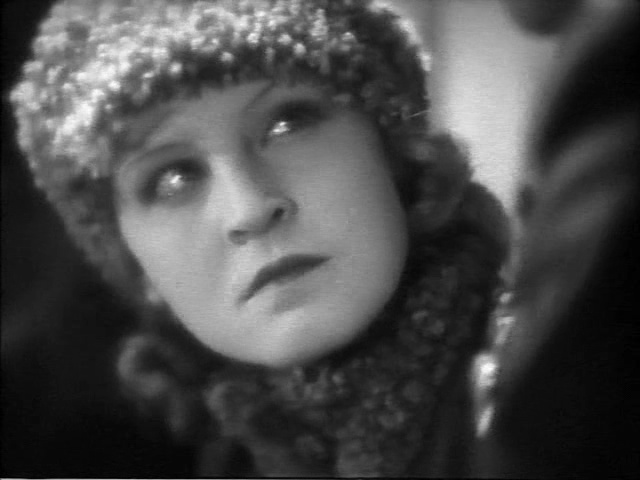
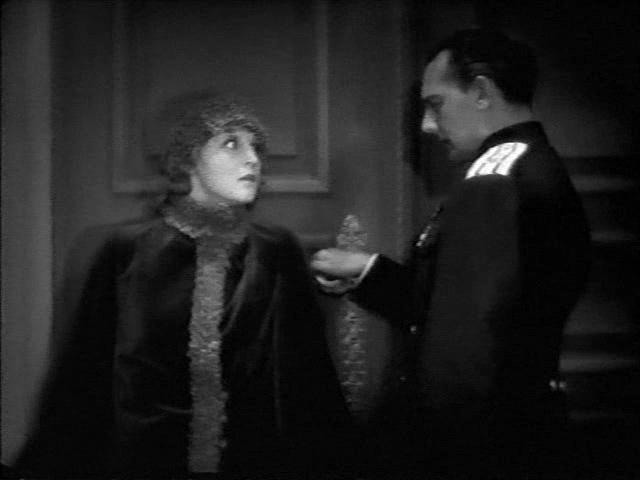
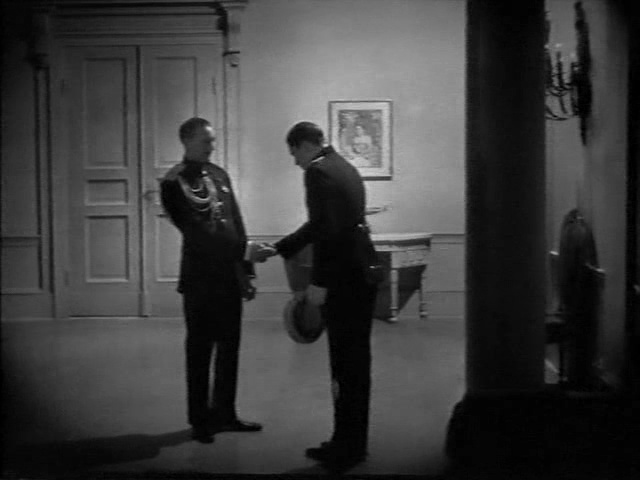
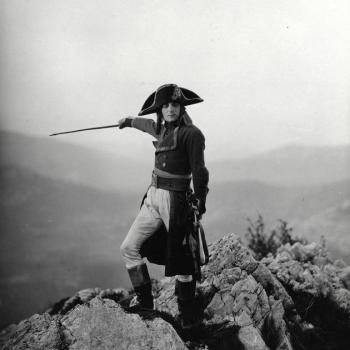
Based on Johannes Jegerlehner’s novel of the same name (1912), Petronella is set during the Napoleonic Wars. In 1801, the inhabitants of Brunegg are fighting the advancing French army. The pride of their village, the church bell known as “Petronella”, is ordered by Father Imboden (Theodor Loos) to be taken away and hidden for safety – but it is lost in a crevasse en route. Meanwhile, Gaberell Schwiek (Ernst Rückert) is mortally wounded in the battle. His last wish is for his new tavern to be completed by his young wife Pia (Maly Delschaft). Time passes, and the village mourns the misfortune of the missing “Petronella”. Pia’s new tavern is built – but she will need a license from the local council to open for business. Since the death of her husband, Pia has attracted two rivals for her hand: one of her late husband’s friends, whom she loves, Josmarie Seiler (Wilhelm Dieterle), and the wealthy, older landowner Fridolin Bortis (Oskar Homolka), whom she despises. Spurned by Pia and jealous of Josmarie, Fridolin goes to the council and denounces Pia as a woman of ill-repute – thus scuppering the approval of her license. However, Father Imboden intervenes and the license is duly granted. The rivalry between Josmarie and Fridolin reaches tipping point, and in a fight between the two Fridolin is killed. As punishment, Josmarie is exiled from the land. The misfortunes of the village continue, as there is a deadly illness at large. A local “witch”, Tschäderli (Frida Richard), is blamed and persecuted by the villagers. Further misfortune strikes when the church silver is stolen by Father Imboden’s ex-convict brother (Fritz Kampers). Realizing the truth, the priest confronts his brother – and accidentally kills him. Distraught by the deaths of Tschäderli and his brother, Father Imboden enters a monastery. Finally, Josmarie finds the “Petronella” and returns to Brunegg, where he is absolved of his sins and can marry Pia. ENDE.

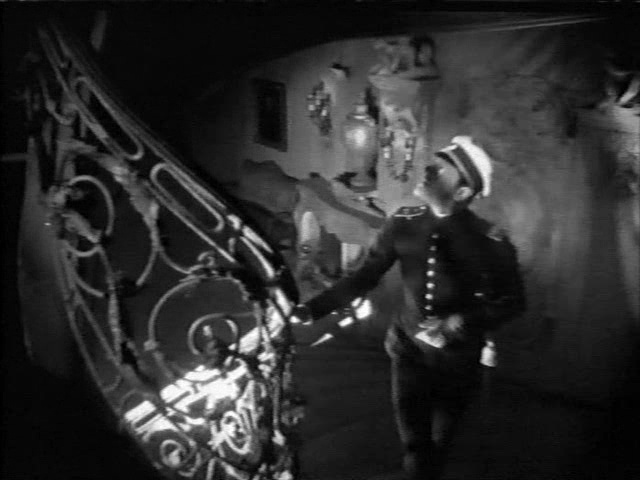
Petronella is an impressive film. The cast is strong, the performances realistic, and the setting and staging often very striking. Most obviously, the film’s prelude introduces us to the village and the surrounding spaces through the drama of a battle between French soldiers and Swiss locals. Schwarz uses the rocks, streams, and slopes of the valley to great effect. The camera peers down over successive ranks of fighters, or glances up at groups swarming over the precipitous ridges. Clouds of smoke disguise and reveal the landscape, just as the advance and retreat of figures show the difficulty of traversing it. It’s a great way to start the film.

I described this as “a very Swiss” film, and throughout there is a clear effort to show off the real landscapes and buildings of the region. (I have read conflicting reports as to where exactly it was shot. Though Brunegg is a real municipality in the canton of Aargau, the production seemingly used multiple exteriors elsewhere.) The film also engages with local (traditional) dress and culture, most obviously in the fight between the two cows that will decide who gets to marry Pia. The tone here, and throughout, is often quite broad. This is not only an outdoorsy film, rooted in the local/national/traditional, but a film that invites a popular audience. The drama and its telling are clear and free of fussiness. I suppose this is a nice way of saying that Petronella struck me as less visually inventive as some of Schwarz’s other films, especially those shot by Carl Hoffmann. The cameraman for Petronella was Alfred Hansen, who shot five films with Ernst Lubitsch in the 1910s, including Carmen (1918). If these productions link Hansen to one of the great directors of the era (and of all time!), his involvement was with films that are not primarily admired for the elaborateness of their photography.

I realize that I am adding quite a few caveats here, but I don’t mean to lessen the achievements of Petronella. Though it offers a broad, popular, unfussy treatment of its material, there are lots of moments that stand out for their subtlety and effectiveness. The end of the prologue is very striking. Here, Gaberell lies wounded in bed. To aid his recovery, Tschäderli – the local “healer” – is called. She is initially treated as a bit of a joke, and her actions are cause for some comedic touches. She forbids Gaberell fresh air and banishes Pia’s pet black cat. Josmarie cautiously picks up the cat and drops it out of the window in a scene that is so odd that it becomes funny. (It is surely played for a laugh.) But things swiftly turn serious. When Tschäderli leaves, she promises Pia that Gaberell will be up and well within two days; if he isn’t, it will be cause of some malign influence wielded by the black cat. Pia goes about her business, but on returning from fetching water she sees the black cat sneaking back out of the house. It’s a disconcerting moment, since we last saw the animal being ejected. It has clearly returned, and is now making its getaway. Since the earlier moment of the cat being dropped from the window was treated for comedy, Pia’s terrified reaction here comes as a shock. Clearly, these characters take such superstition seriously.

Pia rushes back to the house. She pauses on the threshold and, through the open door behind her, we see the snowcapped mountains. It grounds this moment – a pause before a death – in the reality of the landscape. There is also a sense of release outside the confines of the home, of a wider context to life within the home (or death within the home). Only now does Schwarz cut to a view of the bed. We are placed at a distance, like Pia, unable to intervene. The early interior scenes in this space played out in medium and close shots, and now we find ourselves looking at it in a new, less familiar way. Framed by the dark walls of the inner doorway, we see Gaberell lift and then drop his arm – as if reaching for help, or raising an alarm. Seen from a distance, through the doorway, this moment of death is rendered stranger and more sudden by this framing and distance. The oddness of how we see Gaberell’s death seems to vindicate Tschäderli’s warning. There is something unexpected, sinister even, in this domestic space. (Later in the film, there are many more moments where important gestures/actions are seen through the windows of the house – including Josmarie’s return to Pia at the end of the film, as though he has now returned to the space – literal and symbolic – vacated by Gaberell.)

At this point, I should say that I tracked down the original censorship report from 11 October 1927, a month before the film’s German premiere in Berlin (a week after the Swiss premiere in Bern). This was very interesting, as the intertitles it lists are different in order and in number from the those preserved in the Cinémathèque Suisse restoration of Petronella. The Berlin censor’s list of titles, together with its notes about cuts, also helps flesh-out two rather complex, and rather subtle, subplots that the film lets bubble away without quite resolving them.

The first is that of Tschäderli, whose first scene I discussed above. This character returns later in the film, when the village is beset by illness. In the 2024 restoration, we see Tschäderli blamed by the locals for the curse upon Brunegg – she is spat at and ushered from the village. But this is the last time we see her in the film. The censorship report includes extra intertitles here, indicating that the locals chase Tschäderli to her hut, accuse her of various forms of witchcraft, and then attack her. She is defended by the priest, but the locals taunt him that he isn’t trustworthy since his brother is a convict. Though the censorship report from October 1927 doesn’t offer a description of what happens on screen here, a second censorship report (for a regional release of the film in Baden in December 1928) does describe the action. According to this, Tschäderli’s hut “is set on fire, and she herself is finally killed while fleeing into the mountains”. This deadly encounter immediately presages the return of Father Imboden’s brother, his theft of the church silver, and his own death at the hands of Imboden.

Talking of this character, the censorship reports are also important in revealing a detail lost from the surviving version of the film. This relates to the second subplot I mentioned earlier. When Father Imboden intervenes to win Pia her licence, she is overjoyed and goes to embrace him. Realizing this might be overly familiar for a priest, she withdraws. However, Imboden reaches for her hands and begins stroking them – just as he fixes her with an odd expression. Pia goes to get him the first glass of wine she is now legally allowed to serve. She hands it to him, and Schwarz frames the priest holding the glass in a medium close-up. An iris subtly closes in to isolate this vessel, and then a dissolve transforms it into a chalice; the iris now expands and reveals that this second vessel is being held by Imboden at mass. It’s a surprisingly sacrilegious moment, affirming the crossing of professional and personal boundaries by the priest.

Before the film was censored, this sequence originally had an even more startling sequel. Imboden is leading mass. Standing before the altar, he glances up to the statue of the Virgin Mary. In the words of the Berlin censor: “the face of […] Pia appears to the priest instead of the face of a Madonna; she nods and smiles. This [shot] appears twice.” This startling interruption makes explicit what was going on in the earlier scene. It also explains the tortured, surprised reaction of the priest, filmed from a high angle: it’s his vision (and repressed love for Pia) as much the Madonna who looks down on him. The punch of this moment is rather lost without the close-ups of Pia, long since excised by the censors in 1927.

Even if the film’s current form makes these elements less effective (or even visible), they indicate how Petronella complicates its depiction of place and people. It may be a genre film, but it does interesting things with its story. In this respect, Petronella makes an interesting companion piece to later German films depicting the same period and (broader) region. Most obviously, Luis Trenker made two films dealing with Tyrolean resistance to the French: Der Rebell (1932) and Der Feuerteufel (1940). Though the Tyrolean revolt of 1809 took place in what was then the Holy Roman Empire and is now northern Italy, the story and landscape make Trenker’s two historical dramas very similar to Petronella. Yet the tone and treatment are very different. Trenker is more interested in the male hero (played, naturally, by Trenker himself) and the martial aspect of resistance to foreign occupation.

The 1932 film feels very much like (and was taken at the time to be) a statement against French occupation of German territory in the wake of the Great War. It ends with the martyrdom of Trenker’s titular rebel, shot by firing squad – exactly the kind of heroic national figure that attracted the Nazis. But if the Nazis loved Der Rebell, they were much more cautious towards Der Feuerteufel. By 1940, the image of popular resistance to an invading force looked too much like sympathy for Poland (or Czechoslovakia, or France, or anywhere else the Germans had invaded).

However complex these contexts, both of Trenker’s films stand in contrast to Schwarz’s Petronella. It seems to me that the latter has a much more complex and ambiguous viewpoint to its subject and its “national” community. For a start, the war against the invaders is the setting but (I would argue) not the subject of Petronella.Unlike Der Rebell, which continually depicts acts of violent resistance, and ends with a big battle sequence, Schwarz’s film gets the fighting with French troops out the way fairly quickly at the start of the drama. Though the battle scenes are extremely impressive, they act only as the prelude to the real drama. Petronella is primarily the story of a woman’s struggle to gain independence from intrusive male power (the rich landowner, the council) – and from intrusive male desire (the landowner, even the priest).

The local population is not merely a united, heroic force of resistance to foreign influence. Rather, it is a complex and often parochial society. Superstition is rife, not merely in the figure of Tschäderli but in those of her accusers (especially in the lost scenes of her persecution and death). There are plenty of tensions here, and the view that Brunegg is somehow cursed by the bell’s absence smacks of an era that seems older than the dawn of the nineteenth century. When the local elders announce the “indulgence” (i.e. wiping clean of sin) for anyone who recovers the bell, their notice proclaims that among their misfortunes is the arrival of “Seuchen”, which might be translated as “epidemics” but also as “plagues” – a rather medieval way of looking at the world. (Indeed, it is worth noting here that one of the reasons that the Tyrol rebelled against French occupation in 1809 was the order that the locals be inoculated against smallpox.)

It is the symbol of the bell, with its feminine name “Petronella”, that brings the community together. The rediscovery of the bell enables forgiveness and reconciliation – and forgetting. But how convincing is this ending? The German censors of 1927-28 were a little concerned at the film’s depiction of the “indulgence” issued to resolve the drama, and whether it too easily gave exemption to Josmarie not merely for his legal crime but for his sins. What was still a potentially awkward question of civic and religious law in the 1920s is less so today. More intriguing is how we are to take the broader “indulgence” of the community itself. How much of what we have seen is to be “indulged”, and by what authority? Given that we have seen superstition, manipulation, deceit, and violence at work in Brunegg, there is surely a note of doubt hanging over the ending. Beyond the loving couple, how comforted are we that all is well and stable in this community?

Thinking about how local or national identity plays out in Petronella, it is worth noting the fact that the screenplay was co-written by Schwarz and Max Jungk, both Jewish émigrés from the former Austria-Hungary. (Schwarz was born in Vienna; Jungk in Myslkovice (now in the Czech Republic).) Jungk had co-written two of Schwarz’s earliest films, Nanon (1924) and Die Stimme des Herzens (1924), neither of which I have been able to see. (Nanon, at least, survives, but the only copy lies in an archive beyond the bounds of my current travel budget!) Whether or not there is something of an outsider’s eye at work in Petronella, the involvement of émigré artists indicates the complex context in which to see this ostensibly Swiss production. In this light, Petronella might be seen as a film about belonging and expulsion. Tschäderli and Josmarie are expelled from the land, just as Father Imboden exiles himself to a monastery. (One might also add Pia’s unfortunate black cat to this list.) Imboden seeks to send his brother away from Brunegg, an act which ends in the latter’s death; the locals force Tschäderli to flee, an act which ends in her death. Only one exile returns alive to be forgiven and reintegrated: Josmarie. It feels inevitable that I must mention the fate of Schwarz and Jungk: both men would be forced to flee Germany in 1933; neither returned.

I have written this piece on Petronella because the film has lingered in my mind in the days since I saw it. I admit that I was surprised by how different it seemed from other Schwarz films. Less obviously stylish, I initially found it less engaging – and less moving – than his contemporary work. But the more I think about it, the more it seems quietly innovative. While exhibiting the trappings of many “mountain films”, as well as the historical drama, Petronella feels a little peculiar. It is not a Trenker-style (or Riefenstahl-style) mountain film about conquering peaks, heroism, and death-defying stunts. Nor does it offer a simplistic us v. them narrative of a historical-national drama. The war quickly recedes into the background, and its consequences exacerbate the various personal and social tensions in the village. As I have tried to indicate, Petronella is rather more complex and curious than its generic parameters suggest. I’d love to see how it plays before an audience, especially with a good score that brought out the tensions in the drama. Hanns Schwarz, you continue to intrigue.

Paul Cuff

My great thanks to the Cinémathèque Suisse, especially Saskia Bonfils, for allowing me to access their restoration of Petronella.

Nina Petrowna: From silence to sound (1929-30)

This is my third piece devoted to Die Wunderbare Lüge der Nina Petrowna (1929). Having previously talked about the beauties of this production and about its contemporary novelization, this week I discuss the scores created for the film’s exhibition in Berlin, Paris, and London in 1929-30.

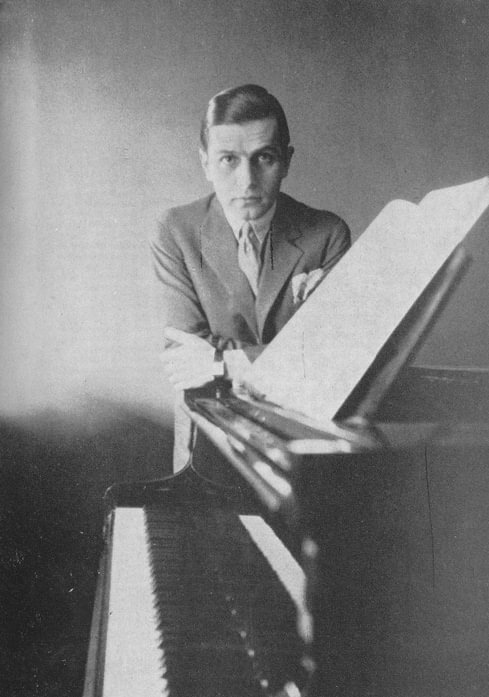
The film premiered at the Ufa-Palast am Zoo in Berlin, in April 1929. The music for this event was arranged by Willy Schmidt-Gentner, a prolific composer of scores during the silent era – and beyond. He entered the industry after the Great War, initially working as a kind of tax inspector for cinemas. But he was also a trained musician, having studied with Max Reger in his youth, and eventually switched from film admin to film accompaniment. He gained experience acting as a conductor for cinema orchestras, as well as accompanying films at the piano. In 1922, he was commissioned to write his first film score – for Manfred Noa’s Nathan der Weise. He had clearly found his métier. Across the rest of the decade, Schmidt-Gentner created, adapted, compiled, and conducted nearly a hundred scores for silent films released in Germany. He was clearly both very versatile and very efficient at what he did: working fast was a key attribute to any composer in his position. The majority of his scores would doubtless have been compilations, drawing on various libraries of repertory music, as well as the latest popular melodies. By 1929 Schmidt-Gentner was Ufa’s chief arranger and his work accompanied many of their most prestigious productions – which included Nina Petrowna. Sadly, his score for this film has either been lost or else lingers in limbo somewhere in the archives. I say “archives”, but I have no idea what archives might be responsible. Of all Schmidt-Gentner’s scores, I am not sure any have been fully restored for modern performance. I am unsure, in the most literal sense, where his music has gone!

Thankfully, there are many detailed press reports of the premiere of Nina Petrowna, so we can glean some sense of what it was like. Before the film began, the first movement of Tchaikovsky’s Violin Concerto (1878) was played as an overture. (We even know the soloist who performed this piece at the film’s premiere: Andreas Weißgerber. Weißgerber was a popular concert violinist, so a notable a guest performer for Ufa’s concert.) Presumably much of the score itself was likewise music compiled from existing sources, though the reviews do not make this clear. For the opening cavalry parade, we are told that the orchestral march involved the use of a small group of musicians hidden behind the screen/in the wings. When the cavalry marched past, the music was initially performed by these hidden players; then, as the film showed the cavalry more closely, the main orchestra took up the music. For the scenes around the barracks and military club, various quick “Russian” marches were used, while elegant waltzes characterized the scenes at the “Aquarium” club. Though some reviewers accused Schmidt-Gentner of being heavy-handed (and sometimes simply too loud!), his score for Nina Petrowna used chamber sonorities for the lovers’ scenes: a string quartet with celesta accompanied their meeting in the club, for example. The one piece of original music we know to have been used in the film was for Nina’s favourite waltz, which is described as a melancholy “valse Boston” – the melody of which recurred throughout the film as a kind of leitmotif.

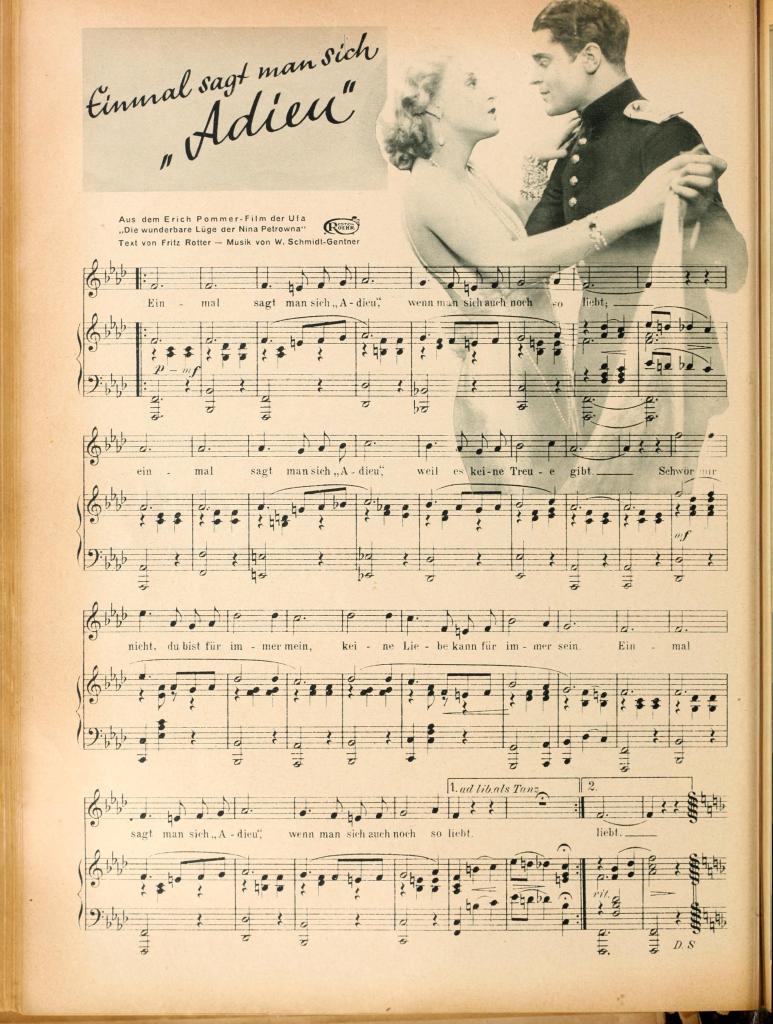
This waltz is the one part of the score does survive – thanks, in part, to Ufa’s own marketing campaign. Schmidt-Gentner’s melody was initially referred to as “Die Stunden, die nicht weiderkehren”, but for commercial purposes it was given words by Fritz Rotter and became the song “Einmal sagt man sich ‘Adieu’”. The main lyrics are:

Einmal sagt man sich ‘adieu’, / Wenn man sich auch noch so liebt. / Einmal sagt man sich ‘adieu’, / weil es keine Treue giebt. / Schwör mir nicht: du bist auf ewig mein. / Keine Liebe kann für immer sein. / Einmal sagt man sich ‘adieu’, / Wenn man sich auch noch so liebt.

A crude translation of this might be:

One day we’ll say goodbye to each other, / No matter how much we love each other. / At some point we’ll say goodbye to each other, / Because there’s no such thing as fidelity. / Don’t swear that you are mine forever. / No love can last forever. / One day we’ll say goodbye to each other, / No matter how much we love each other.

Note the German use of “man”, i.e. the third person singular, which might refer to oneself or to a slightly more abstract/general “we”. The song might therefore be a personal narrative or else a more general one. Its address sits interestingly between the personal and impersonal, as well as between tenses. It uses the present tense, but the “Einmal” (literally, “one time” – or even “at some point”/“eventually”) also suggests that it might refer to future events. (In German, the present tense can also express the future when combined with a time element.) All of which is to say that it has a tone that might apply to any listener, anywhere – that, and the gorgeous melancholy of the melody, ensured that the song was a hit success. Even if Schmidt-Gentner’s score was not performed widely outside Berlin cinemas (and it is unclear to what extent the score was distributed with the film for its silent release), the song ensured that its main original theme could circulate widely.

Another reason for the survival of this part of Schmidt-Gentner’s silent score is, ironically, the coming of sound. Ufa was already in the process of converting its major productions to sound, and Nina Petrowna was subsequently reissued with a recorded music-and-effects track in 1930. (I am unsure whether any copies of this version survive. Certainly, I can find no archival holdings on publicly accessible databases.) But even for its initial release in silent format, Ufa’s publicity marketed the film in relation to its theme song. In 1929-30, several recordings were made to capitalize on the popular success of the film – and presumably to help sell its initial release in cinemas. These vinyl releases featured contemporary bands like Dajos Béla’s Tanz-Orchester or popular singers like Wagnerian tenor Franz Völker and the ubiquitous Richard Tauber (famous for his roles in Lehár operettas). The speed at which such recordings could be licensed and made is impressive. The Derby company, for example, got the “Karkoff-Orchester” (their own scratch band) to record an orchestral arrangement of the waltz, which was released in May 1929, when the film was in the first month of its general release. More broadly, these discs point to the changing context for the marketing and consumption of film music. Before Ufa had even released its first talkie, the company’s silent pictures were already being sold in relation to recorded sound. On one level, the strategy clearly worked: the sheer number of recordings spawned by “Einmal sagt man sich ‘Adieu’” (always credited on discs to Ufa’s film) indicates a popular hit. Indeed, the song continued to generate recordings throughout the twentieth century and even into the twenty-first. (For example, Aglaja Camphausen’s recent rendition is particularly lovely.)

Nina Petrowna was one of Germany’s biggest commercial hits of the 1928-29 season, and Schmidt-Gentner’s score received very good reviews at the time of the premiere. Given this success, it is ironic that the music now most associated with Nina Petrowna was written by the French composer Maurice Jaubert. This orchestral score accompanied the film’s “exclusive” run at the Salle Marivaux in Paris, from 25 August 1929.  Jaubert had already worked as an arranger, compiling selections from the works of Offenbach to accompany Jean Renoir’s Nana (1926) at the Moulin Rouge theatre in Paris. Jaubert subsequently prepared the perforated music rolls of Jean Grémillon’s mechanical piano score for his documentary Tour au large (1927, lost). His music for Nina Petrowna thus represents his first original film score, though it should be noted that it is not entirely his own work. Jaubert also relied on musical collaboration: some scenes were scored by Jacques Brillouin and Marcel Delannoy, while another recurring theme is taken from Erik Satie’s “De l’enfance de Pantagruel” (the first number of Trois petites pièces montées (1920)). Brillouin and Delannoy had compiled the orchestral score that accompanied Grémillon’s Maldone (1928), which included music written by Jaubert.

As I wrote in my earlier piece on the film, Jaubert’s music is superb. Though Schmidt-Gentner’s score was written for a large symphony orchestra, and Jaubert’s for a chamber orchestra, they share several qualities: both make use of lighter sonorities and a central waltz motif that recurs throughout the film. Schmidt-Gentner’s music seemed to have relied on a more “Russian” milieu, though his waltz was a “Boston” – and thus another kind of popular cultural import. (The contemporary recordings make the waltz sound very much part of the soundworld of the 1920s dancehall rather than pre-war Russian.) Jaubert’s music, however, is superbly attuned to the mood and rhythm of the film. The flowing camerawork and long takes aid the ease with which the music seems to glide along with the film. But even though Jaubert uses slower tempi and extended passages (complete with repeats), he knows when to match key moments. Important sounds on screen, for example, are matched in the orchestra. Listen to the exquisite way Jaubert turns the chiming clock into music—high strings, piano, percussion—in a way that interrupts the waltz theme, but also sends us (tonally) somewhere oddly private and dreamy. (This melody has to be both memorable and moving, since it recurs in the film in vital scenes of union and separation for the central couple.) Or the lovely scene when the pianist in the orchestra must synchronize to the incompetent Michael’s efforts at the piano on screen. But the most dramatic is when the orchestra suddenly falls silent at the dramatic revelation in the final scene.

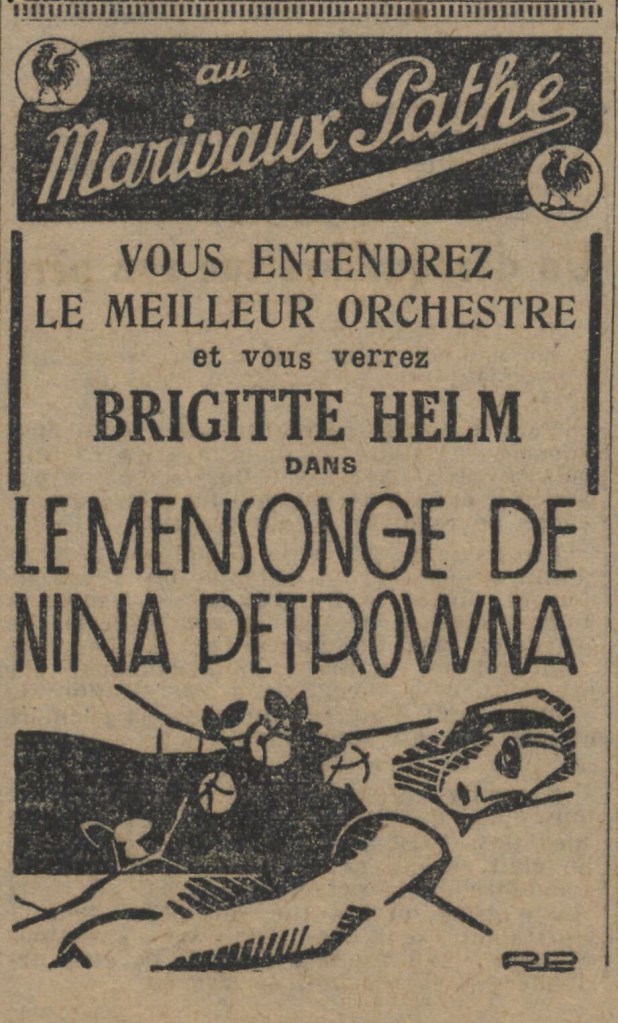
Given its importance in the history of Jaubert’s career, it is surprising that I haven’t been able to find any contemporary French reviews of Nina Petrowna that mention his name. I have found an advertisement for the film in the French press of the time, which marketed its exhibition with explicit reference to live music: “You will hear the best orchestra and you will see Brigitte Helm in…” (see image below). The same page is littered with adverts for sound films and synchronized scores, suggesting something of the climate in which Nina Petrowna was released. (Three months after the live exhibition of Nina Petrowna with “the best orchestra”, the Salle Marivaux premiered André Hugon’s Les Trois masques (1929) – the first all-talking production made in France. No longer was a live orchestra required.)

This same context highlights the release of Nina Petrowna in the UK. The film was distributed under the title The Wonderful Lie, premiering in London in June 1929. This presentation opened a special run of silent films accompanied by a full orchestra at the London Hippodrome. The Wonderful Lie, and its specially arranged score by Louis Levy, got rave reviews. It was championed especially by critics who hated the influx of talkies, which was also how the film was advertised – as the swansong of silent cinema.

Like Schmidt-Gentner, Levy had been working as an arranger of cinema music since the 1910s and would have a prosperous career in later decades as the supervisor of numerous sound film scores. I can find very little information on the contents of Levy’s score for The Wonderful Lie. It was doubtless a work of compilation, likely drawing on a familiar repertoire of music. But there was also at least one piece of original music that was used, which has survived. This was the song “Nina”, with music by Cecil Rayners and words by Herbert James. I can find no evidence that Rayners’ “Nina” was performed with a vocal soloist during exhibition. As with Schmidt-Gentner’s “Einmal sagt man sich ‘adieu’”, the song more likely functioned as a way of promoting the film. An advertisement in The Era (10 July 1929), for example, offers “The Beautiful Theme Number in the New Film Production of ‘THE WONDERFUL LIE’ now showing at the London Hippodrome Song”. Interested parties could buy the theme as arranged for full orchestra, small orchestra, or piano. Was the song performed at screenings outside the London Hippodrome? And what other kinds of music were heard with the film around the UK? These questions could just as readily be asked of the film’s distribution in Germany and France – and the answers would be as numerous and varied as the landscape of exhibition practice at the time.

In summary, the scores of Schmidt-Gentner, Jaubert, and James offer an interesting case study of how music might differentiate the experience of a film across national contexts – as well as extend the life of a film beyond its cinematic exhibition. Though Schmidt-Gentner and Jaubert are important figures in film music of this period, their reputations are widely divergent. Jaubert is celebrated for his music for sound films of the 1930s, not to mention his early death on active service in 1940. His music has been recorded many times and his work is known outside France – and, I suspect, beyond specialist circles. Schmidt-Gentner may be a familiar name in Germany, and his melodies may still occasionally be heard, but his scores from the silent era have not received the same level of treatment; his musical legacy is thus highly restricted. This is perhaps one reason why it was Jaubert’s score for Nina Petrowna that was restored and recorded in the 1980s, not that of Schmidt-Gentner. That said, Jaubert’s score has not been heard since it was broadcast with the film on the Franco-German channel ARTE and on Swiss television in 2000. The same restored print that was broadcast that year was digitized by the Friedrich-Wilhelm-Murnau-Stiftung in 2014 and shown in various venues, but never with Jaubert’s music. I can only hope that this beautiful film and score are one day reunited and released on Blu-ray. (If so, I bagsy doing the audio commentary!) Likewise, I hope that the score by Schmidt-Gentner one day resurfaces – together with more of the dozens and dozens of others he created in the silent era. Fingers crossed…

Paul Cuff

Nina Petrowna: From screen to page (1929-30)

This week, we return to Hanns Schwarz’s Die wunderbare Lüge der Nina Petrowna (1929). As indicated in an earlier post, this film has become something of an obsession. (For interested parties, I have since published a rather more sober analysis of the film elsewhere.) Having spent much time digging around in contemporary press reviews and publicity material, I thought I might write a couple of follow-up pieces on the film’s release and cultural impact within and beyond Germany. A future instalment will discuss the various scores written for performances of the film in Germany, France, and the UK in 1929-30. But this week, my first instalment is devoted to Raoul Ploquin’s novelization of the film: Le Mensonge de Nina Pétrowna (Paris: Tallendier, 1930).

Ploquin’s adaptation was part of a long-running series of ciné-romans published by Tallendier from the late 1920s into the 1930s. I own several volumes in this series, as they are an interesting record of how writers (re)imagined recent films for a popular market. They are also important as records of films that might be partially or entirely lost. Illustrated with stills from the productions they “translate” into text, the books served as promotional material for the films – but also as a way of giving them some kind of cultural afterlife. Once films had left the theatre, the only way audiences might keep a part of their cinematic experience was through such mementos.

In the case of Le Mensonge de Nina Pétrowna, there was a close relationship between the author of the text and the film itself. Raoul Ploquin was the man in charge of adapting Die wunderbare Lüge der Nina Petrowna for its French release. In other words, he was the person who translated/adapted the film’s intertitles into French. Such prints were often subtly (or not to subtly) changed to suit the requirements of national taste or censors. If contemporary synopses and reviews don’t suggest any significant alterations to the film in France, they do prove that Ploquin made changes to the names of the characters. Colonel Beranoff became Colonel Teroff; Michael Andrejewitsch became Michel Silieff. Nina herself remains the same, though her surname is spelled variously as Pétrowna, Petrovna, Pétrovna, or Petrowna.

Ploquin’s novelization is intriguing for how it stays loyal to the plot of the film, yet constantly alters details – cutting, adding, and refitting the original to shape the narrative for its new format. For a start, the novel sets the opening scenes at “the start of April” (rather than the late autumn/early winter of the film). It also offers a more specific temporal setting than the film. Ploquin tells us that Nina is interested in all the latest news and culture from Europe, especially Paris. We are told that the Ballet Russes have created a sensation and that the Chinese Revolution is in full swing. Still more precisely, Nina wonders who will succeed Armand Fallières as President of France. Since Fallières retired in February 1913, this gives the novel a start-point of April that year.

Whereas the film presents the opening scene as their first encounter, the novel begins with Nina recalling a previous sighting of Michel from her balcony. (She remembers him “blushing like a schoolboy” at her gaze (8).) Rather than a chance encounter, Ploquin makes Nina’s presence on the balcony a deliberate attempt to catch Michel’s eye. Indeed, while Nina’s past might be implied in the film it is more detailed in the novel. She considers her own reputation as “the proud Nina Petrovna, the famous Nina Petrovna, the disdainful Nina Petrovna”. (More akin to how Ploquin may have seen Helm’s screen persona.) Nina also ponders why Michel has yet to write to her or make any other kind of move to make contact.

Ploquin’s text also gives us more backstory to Nina’s relations with Teroff. She has been his mistress for five years (44) and living in his villa for three years (5). Ploquin describes Teroff thus:

regular sports had preserved a youthful silhouette; his face was hairless, apart from his upper lip, which was decorated with a small moustache, neatly dyed black. […] His face, with its fine and regular features, had earned him so many successes with women that he still retained, at the corners of his lips, a certain conceited smile that enabled the most innocuous remark to become impertinent. (9)

Nina herself is given a background: she is “an orphaned dancer” who has become “the most seen woman in the Russian capital” (9). Ploquin states that Nina is more intelligent than Teroff, and then segues to a chapter that gives us the backstory to Michel – demonstrating his intelligence.

Michel, we are told, wanted to train for the Russian general staff and become “a brilliant tactician” (13). But he also wants to study psychology at university, and is busy learning German and French (he reads Schopenhauer and Napoleon’s memoirs in his spare time). Ploquin then gives a lengthy section to Michel’s inner thoughts. He recalls seeing the “pale shadow” of Nina on her balcony, but he had not learnt her name. He thinks of her simply as “Madame l’Amour”(!). His thoughts recall the imagery from the film: Nina appearing between “the two symbolic cupids” of the building’s masonry. Was she “a sort of sylphid enigma, perhaps a creates purely of his imagination”? (16) But when (in the equivalent of the film’s first scene) Nina throws him a “blood-red rose”, he realizes her true interest in him (17-18).

The scene at the “Aquarium Club” is fairly close to the equivalent sequence in the film, though throughout the novel there is much more dialogue between Michel and his fellow young officers. He feels a “magnetic” gaze upon him from the loggia in the club. Seeing Nina, his friends warn him that she is “none other than the beautiful Nina Petrovna, whom everyone in St Petersburg knows is the mistress of Colonel Alexandre Teroff” (22). Meanwhile, Nina lies to Teroff about how she knows Michel. While the film merely shows us Nina’s pantomime storytelling, the novel spells it all out: she claims that Michel was a childhood friend “who always had flowers” for her, and who once rescued her from drowning when she fell from a pony into a stream (24).

When Michel is brought up to Nina, we learn that Nina paints and plays the piano, and is friends with a famous Russian dancer, Zenaïda Fedorovna (29). (Having tried to find out whether Fedorovna was a real person, I have discovered that this is the name of a character – a mistreated lover – in Chekhov’s The Story of an Unknown Man (1893). A deliberate choice by Ploquin?) Nina and Michel dance not, as in the film, in front of Teroff and his friends, but only once they have left the room. (There is still a moment when the light is turned back on, but in the novel it is simply when Teroff et al. re-enter the room – not a deliberate ploy to end their dance.)

When Nina slips Michel the key to her door, he almost laughs: “He stifled a burst of joyful laughter, a burst of laughter from a child whose maddest desires have just been unexpectedly fulfilled. In a second, life appeared to him as a long series of victories, of which he had just won the most decisive” (31). (At this point, the novel cuts out the delightful little moment in the film when Michael leaves the Club without his coat, which is being held out to him by a teenage servant. The boy is so short that he disappears behind the coat that he holds out – only to poke his head out when nothing happens. It’s a lovely comic touch that eases the portentousness of Michael’s reaction. The novel has no such comic moments.)

When Michel arrives chez Nina, Ploquin adapts some of the text of intertitles into his dialogue – but, crucially, elaborates them with his own interpolations. Thus, after Nina says: “You must think me very audacious”, Michel replies: “Audacious! No, I assure you… I just think you’re good and clever” (33). Ploquin also makes more of Michael’s intimidation by the luxury of his surroundings. It’s there in the film, but the novel lays it on thick: Michel immediately sees it as a barrier to his chances with Nina (and thinks that she would never want to give it up). It presages the eventual rupture between Nina and Michel, giving an (I think, unnecessary) extra motivation for Michel to accept Nina’s lie. During their (platonic) night together, Michel tells Nina about his childhood. As with Nina, Ploquin gives Michel a tough upbringing: Michel’s mother was a widow of a minor functionary and his homelife was deprived (34).

Unlike the film, where it is Nina who (after reacting to Michel’s assumptions about the kind of woman she is) says that Michel should leave, in the novel it is Michel who says that he should leave (35). There is no dance to the chiming of the clock, per the film, and instead of that perfect blend of gaucheness and childishness, the novel provides Michel with some rather silly inner monologue about realizing that Schopenhauer was right regarding the folly of romantic dalliances! (37) Once it is agreed that he will stay, it is his thoughts of Schopenhauer that stop Michel opening the door to Nina’s room that night.

In the morning, Nina is compared to “a playful cat” in her swift movements (a comparison made endlessly by French critics of Helm herself) (38). Their breakfast – which is itemized to emphasize its luxury (caviar, sandwiches, eggs and bacon with Worcestershire sauce!) (39) – is then interrupted, per the film, by Teroff. After Michel leaves, Nina taunts Teroff – slandering herself as “a whore! a bitch in heat!” (42). He retorts that he has “risked his career for her” (not something that is said in the film, where the power relations between Nina/Teroff are much clearer: she risks everything by leaving him, he risks nothing). Indeed, Teroff is much angrier and less coldly detached in this scene in the novel than the film. (Some of its prose captures Warwick Ward’s performance well, other aspects seem very different.) Meanwhile, Michel is once again left to his own thoughts. “Oh Nina! – instrument of the devil!… Perverted woman! I curse you… You’ve trapped me in this evil mire!” (46) This is part of a disturbed, often violent, inner monologue. Michel is much more troubled, and prone to outbursts (even if only in his own mind), than in the film.

In the film, Nina reappears the next morning. But in the novel, a fortnight passes until Michel hears from Nina again (52). First, she phones him, then (per the film) arrives at his barracks. I can only suppose that the novel drags out the time between their nighttime meeting and their encounter at the barracks solely to make the narrative occupy more time. (As we shall see, whole months pass over its course.) When Michel gets into her carriage, Nina tells him her life story, how she hates the “odious objects” with which she was surrounded in Teroff’s villa (57-8). When they arrive at Nina’s apartment, she introduces Michel to her neighbour as “my husband” (59) – rather giving away what will happen next! The novel then proceeds to gives us a (rather too detailed) description of how she lives on her own. She puts on a kimono(!) and guides Michel round her small rooms, filled with (bad) paintings. She shows him the piano, which she promises she will teach him how to play – beginning with the “Hungarian waltz” to which they danced in the Aquarium Club (62). Nina plays the waltz, and Ploquin provides us with the (unsung) words: “The hours that never return, / Those we guard secretly in our hearts, / It is these that I would rekindle / In the calm of a summer night.” (62) Ploquin’s text here (at least the first line) is taken from the theme song produced to accompany the film for its German release. (I promise to return to this aspect of the film in a future post!) It is now that they dance (in silence, one presumes), whereupon “they spend their first night of love together” (63). Delicate though the line might sound in French, it’s still a rather blunt summary of the equivalent scene in the film – or rather, it describes the ellipsis after the film fades to black following the lovers’ embrace. The text quite literally spells out what’s going on, which is a shame.

Nina and Michel then spend several months together. Only now does the book catch up with the seasonal milieu of the film, which is set entirely during the winter. The fact that the novel begins in April 1913 now allows its last chapters to be set in the winter of 1913-14, hence on the verge of the Great War. (Schwarz’s film gives no exact year, but the imperial Russian setting is very clearly c.1900.) Ploquin exploits the approach of war through Nina’s fear of Michel’s career in the army. “What if there is a war?”, she asks him. “What if you were killed?” (64) While the film implicitly carries the knowledge that the entire world of its characters will be destroyed by the forthcoming war and revolution, the novel is thus more explicit. Ploquin also makes more of Nina’s worry in respect of the two lovers’ relative mindset. Michel’s inexperience is emphasized by the fact that Nina calls him “enfant”, putting “all her pity, all her love” into her utterance of this word (71).

Ploquin’s treatment of Michel renders the character less coherent, I think, than in the film. Franz Lederer’s performance on screen is so finely gauged that it’s much easier to believe in his childishness and his gaucheness. As I wrote in the piece(s) cited in my preamble, Michael in the film may be inexperienced but he is also too quick to leap to conclusions. Articulated through the combination of performance and mise-en-scène, I am far more willing to accept the film’s characterization of Michael than I am the novel’s. Ploquin’s provision of inner monologues seeks to contextualize his final outburst toward Nina, but the quality and quantity of these sections (to my mind) render the character less coherent. If anything, this is worsened by the fact that the novel also emphasizes how much pity everyone else feels towards him. (As if Nina were not really the central protagonist of the story.) Even when Teroff threatens him over his cheating at cards, the colonel mutters “poor kid” when he sends him off to Nina and certain heartbreak (89).

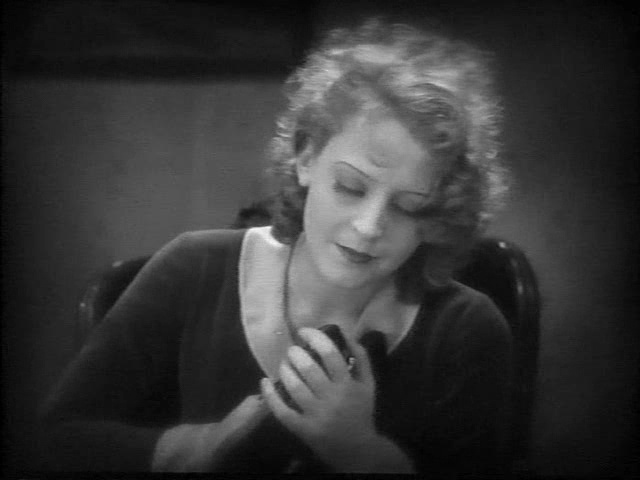
These tonal issues aside, the novel sticks much more closely to the film for its last chapters. And though I have complained about its rendering of character, there are also some pleasing moments when it tries to capture specific moments from the film. One of these is that astonishing, sustained close-up of Nina before she lies to Michael and breaks his heart. Of this, Ploquin writes: “A long moment passed, during which the young woman’s face expressed only a dreadful, enduring agony” (92). It is indeed “a long moment” on screen (some 45 seconds), though Ploquin cannot do justice in his prose to the cadence of emotion we see in Helm’s performance. Ploquin also knows when not to change the text of the original titles: Nina’s words to Michel are essentially the same as rendered in the film’s German titles. (Ploquin’s text is presumably a close match to his translated titles for French prints of the film.) Likewise, the final scene plays the same. The text does not attempt to echo the film’s complex editing and camera movement here. The film’s last image – of Nina’s shoes – is not that of the novel. Rather, it closes on a last vision of Nina: “She sleeps, Nina Pétrovna, motionless and proud, serene and mysterious. / A sleep so calm! A faithful sleep!…” (96) I don’t suppose there would be a way to adequately render in prose the sadness of the film’s ending (and the skill of its visual language). Ploquin’s attempt is a little too fond of its own idea of Nina, and the idea of her suicide as an expression of her “faithfulness” simplifies a much more complex emotional tone.

In sum, Ploquin’s text is a curious blend of adaptation and invention. It says as much about the (imagined) tastes of French cinemagoers as it does about the film itself. Nina is much more of a celebrity in the novel, drawing on contemporary fascination with Brigitte Helm. By 1930, Helm was established as a star across Europe (and beyond). She had already starred in one major French production – L’Argent (1929) – and the coming of sound would lead to many more French-language productions. (Several of which also spawned ciné-romans.) But the very fascination with Helm’s presence on screen results in some rather awkward transliteration in Ploquin’s text. His emphasis on the inner life of characters renders the text far more novelistic than cinematic. The beauty of Nina Petrowna, it seems to me, is how much meaning is shaped through the combination of performance and the impeccably crafted mise-en-scène. Still, I’m very glad to have found this book and to have gone through it, I hope, with curious interest. I remain curious about how the witnesses of silent cinema sought to capture their experiences in prose. (See also my earlier posts on musical imaginings of silent stars, here and here.) I also feel some sort of kinship with writers like Ploquin. After all, I spend much of my time trying to capture in writing my impressions of what I have seen and felt on the screen. With this in mind, at some point I will get around to writing about other ciné-romans published by Tallendier. There’s something charming about their rough, age-tanned paper and low-quality photographic reproductions – and about their enthusiastic reimagining of cinematic images and the experiences they engendered. Reading them is to take a little leap into the past, and to partake in a little of their faded cinephilia.

Paul Cuff

Die wunderbare Lüge der Nina Petrowna (1929; Ger.; Hanns Schwarz)

It’s 1929 and Erich Pommer has just returned to Germany from Hollywood. He’s keen to introduce sound to the Ufa productions, and he has earmarked the talented Austrian director Hanns Schwarz to direct the sound musical Melodie des Herzens (1929). But first, the pair embark on Ufa’s last big silent release…

Die wunderbare Lüge der Nina Petrowna (1929; Ger.; Hanns Schwarz)

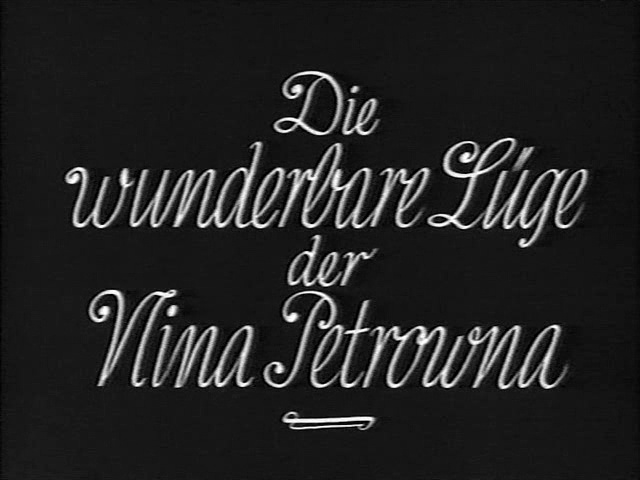
Over the opening credits, the waltz plays. Look how the music seems to match the style of the titles, their sense. The font is a little old-fashioned, elaborate. But the text manages to flow, a feeling enhanced by the way each title dissolves into the next. It’s already an elegant world, a graceful one. But it’s also sad, transient. The waltz slows, becomes a kind of elegy.

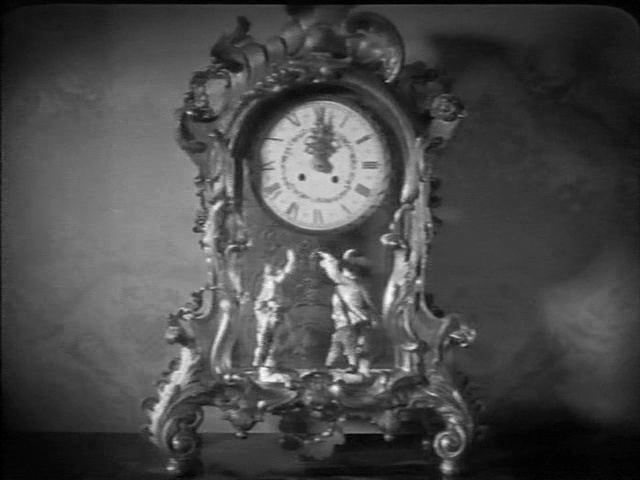
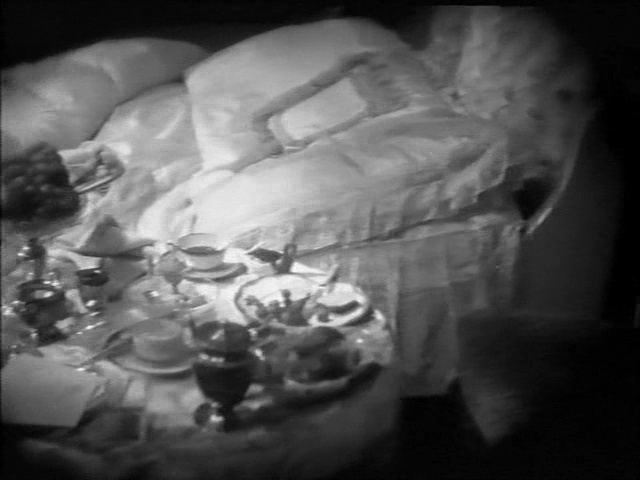
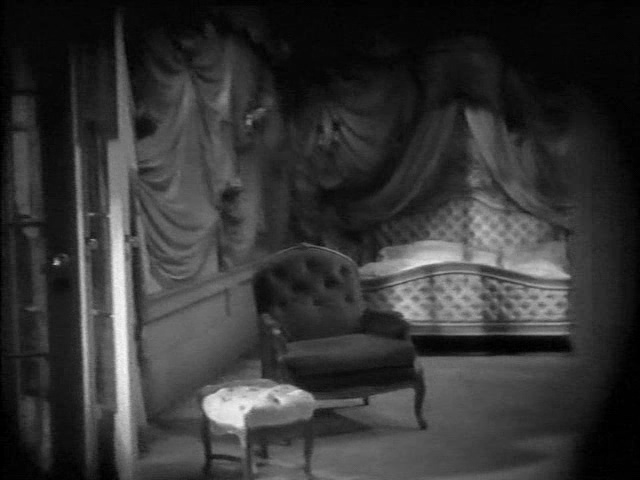
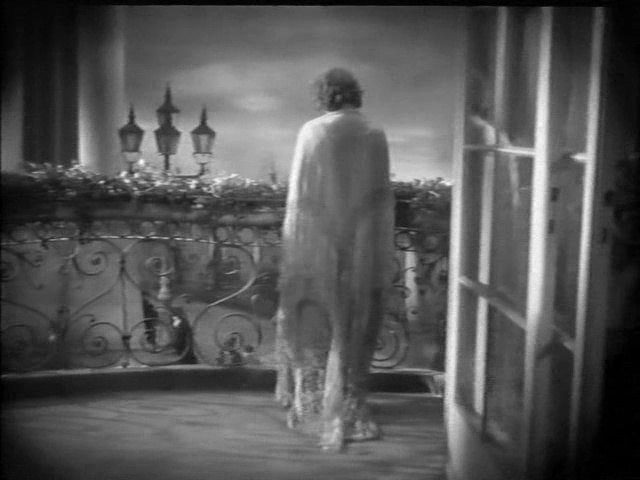
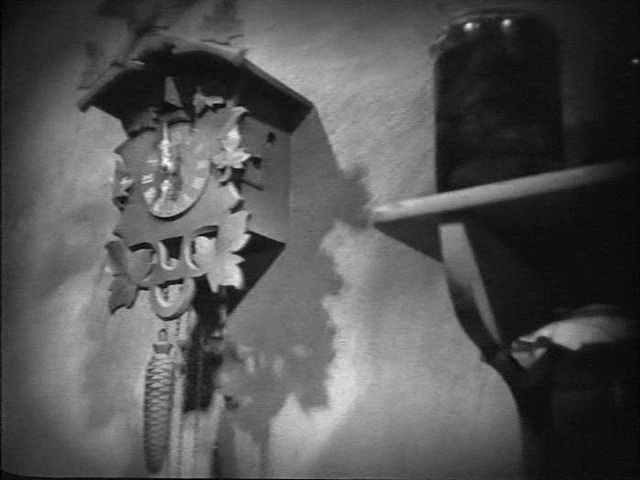
The opening shot is of a clock. It’s old fashioned. Figures of a man and woman twirl. Elsewhere, a bath is being run. The camera tracks backward and pans to reveal a series of details; we see the elaborate breakfast table, the silk sheets recently vacated, the curtained walls, the spacious reception room (and yes, I love that the camera wobbles just the smallest amount as it moves in-between rooms: it speaks of the heaviness of the equipment, the effort of moving it, the determination to complete this fabulous shot); still moving, the camera finds the inhabitant. Her back to the camera, here is Brigitte Helm. The music brings in the main theme. It’s a glorious moment.

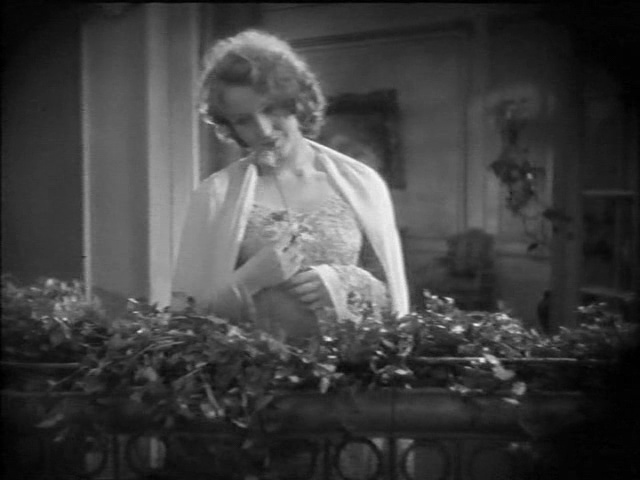
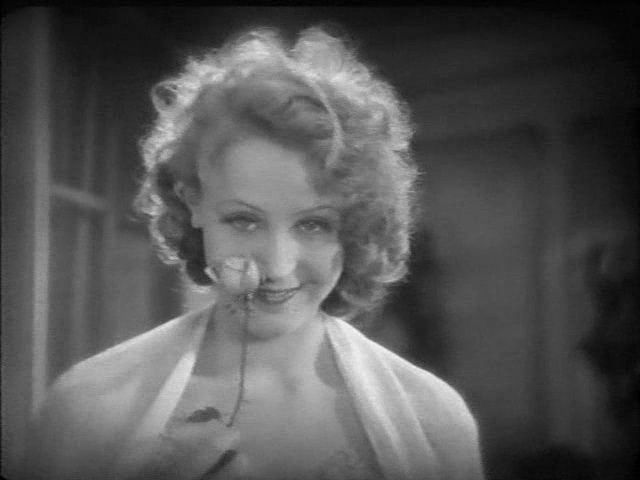
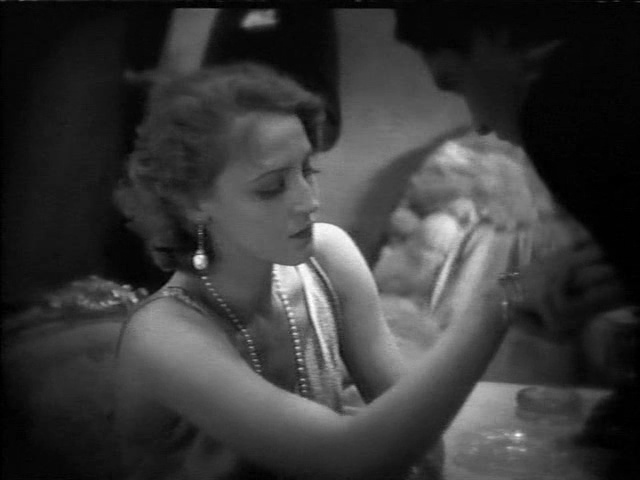
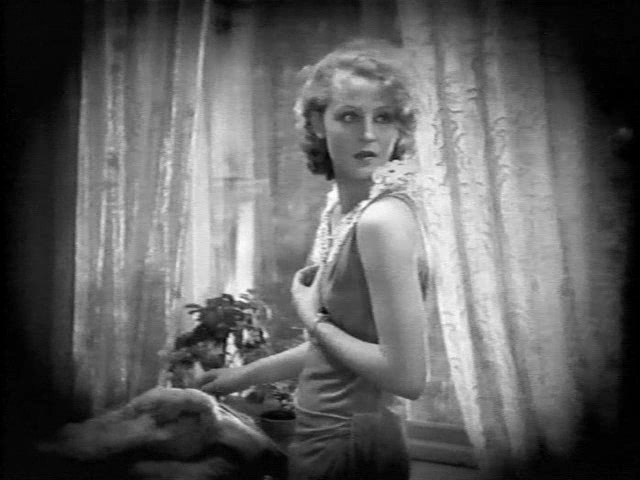
There is a cut. We see Helm from the front. There is a rose at her lips. She looks dreamy. She is dreaming, a daydream of someone we have yet to meet. When she looks to her left, we see her in profile. Is it my imagination, or is Helm even more beautiful than usual? She looks vulnerable in a way I’ve not seen before. I associate her with those pencil-thin eyebrows, raised in determined desire. Fritz Lang made her a star in Metropolis, but that film is such an oddity, filled with cold formality, with exaggerated tableaux and exaggerated performances—and all exacerbated by the faster-than-life framerate (seemingly in accord with its makers’ intentions)—that it’s difficult to get over, to get past. Even in some of Pabst’s films, Helm can relapse into a kind of archness that is very pleasing and striking on screen, but doesn’t always engage you in a complex, emotional way. But here, in Nina Petrowna, from this very first moment, it’s like she’s a different person, a different presence on screen. And it’s a private moment, this scene of her on the balcony. She’s not putting on a show for someone, or for the camera. The music dies away. Nina looks up.

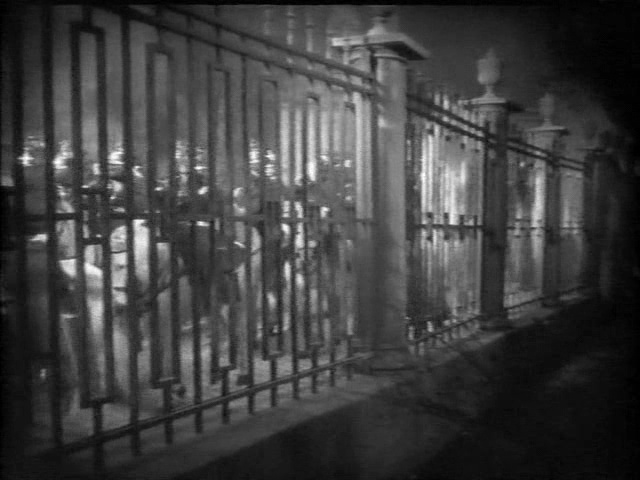
The cavalry is on parade. The orchestra strikes up a march. But look at how Schwarz frames this scene. The horses and men are behind a high, dark, imposing fence. Who is being held off from whom? (As the narrative unfolds, we realize that both our lead characters are limited by the roles this society gives them: the confines of army life are as imprisoning as the confines of Nina’s apartment.)

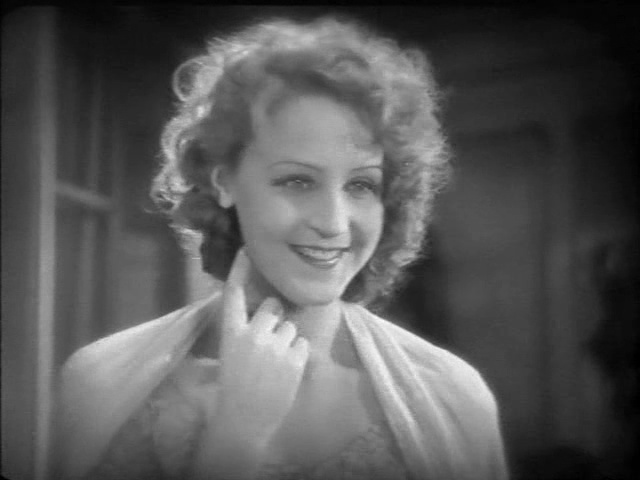
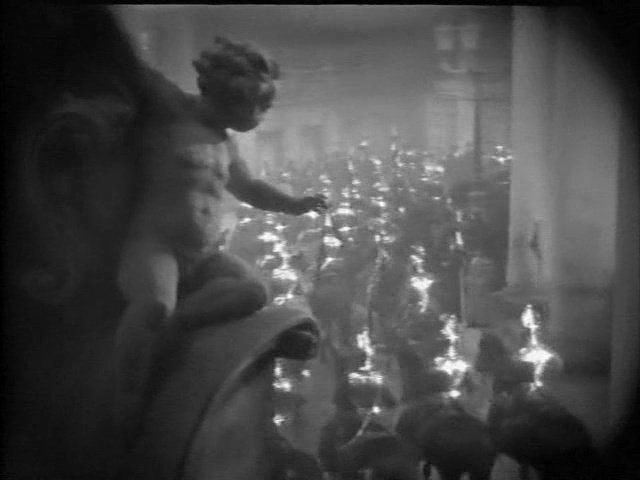
On the balcony, Nina appears curious, but only mildly so. For she turns away to walk back inside—only, she cannot. Her silk throw is caught upon the balcony rail. She turns round and struggles to free it. The parade continues below. And now she looks more carefully at the men. Look at the way her face changes. She breaks into a kind of smile. But again, it’s a private smile. She’s not smiling for someone, but for herself. There is a vulnerability here. A delicious touch of backlighting haloes her uncombed hair. She throws the rose at one of the cavalrymen. It lands in his lap; surprised, he looks up and sees Nina. In each of their faces, we see a kind of childish delight. His wide-eyed surprise becomes a boyish grin. Her smile is almost a giggle, and the way she raises her hands up to her face is so gauche, it’s the gesture of a much younger girl. As if to underscore the innocence, Schwarz cuts from these close-ups to a wider shot of the parade disappearing round the corner—all overlooked up a stone cherub, who looks like he’s reaching out to touch one of the men. It’s an arresting image, sweet and sad. Sweet, because it’s an image of innocence; sad, because the men are out of reach—and because the glitter of armour makes them impregnable, cold, brittle. (Sad, also, because I’ve seen this film before, and I know what it all means.)

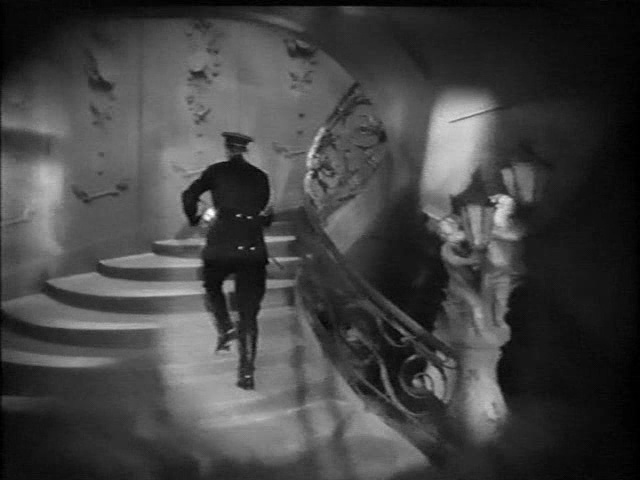
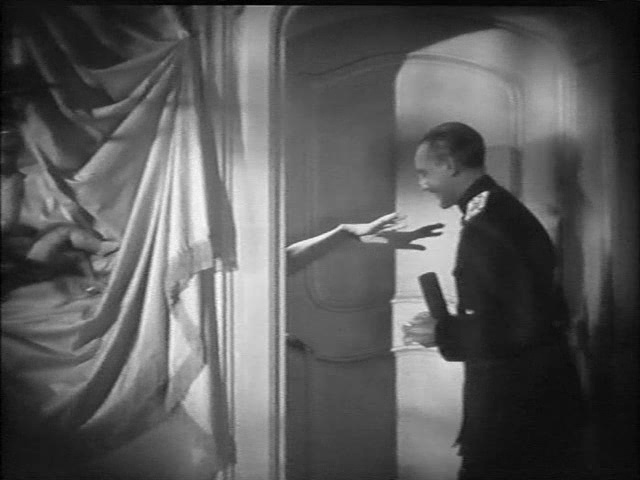
Nina shakes her head a little and goes back inside. Cue: the man of the house. A rich man, from the cut of his tunic; an important man, from the emblems on his shoulders; a wealthy man, from the way he is so at ease in the luxurious apartment, from the way he strides up the staircase. He has instant access to the inner rooms, to Nina’s hand, offered to his lips from the privacy of the bathroom. (His name is Colonel Beranoff, but the film purposefully denies us this for the moment.)

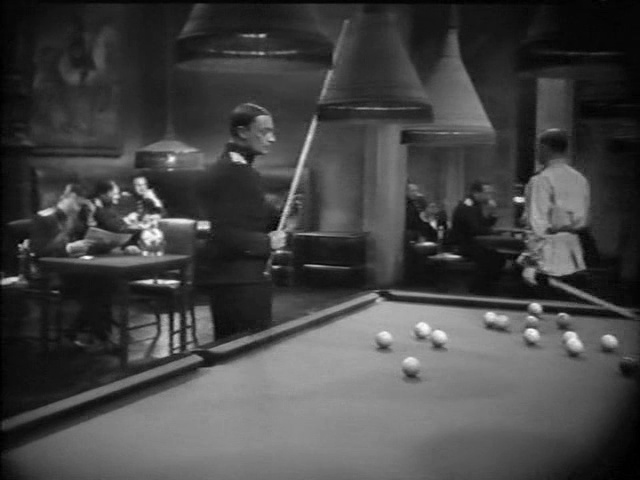
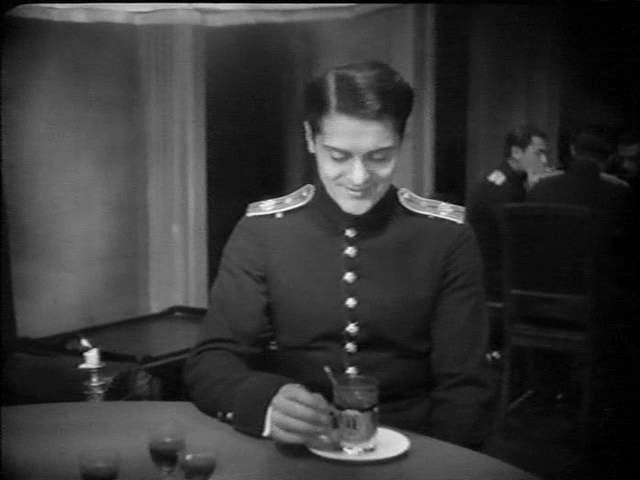
In the off-duty rooms of the barracks, we see the cavalrymen at ease. But the music tells us this is a military space: snare drum, marching rhythm, brass footsteps. The cavalryman we recognize from the parade is introduced—but not by name (more on this, later). He is merely “this young’un”, newly arrived in St Petersburg. His comrades (all moustached, unlike the cleanshaven youth) will show him the town. They take him to a nightclub.

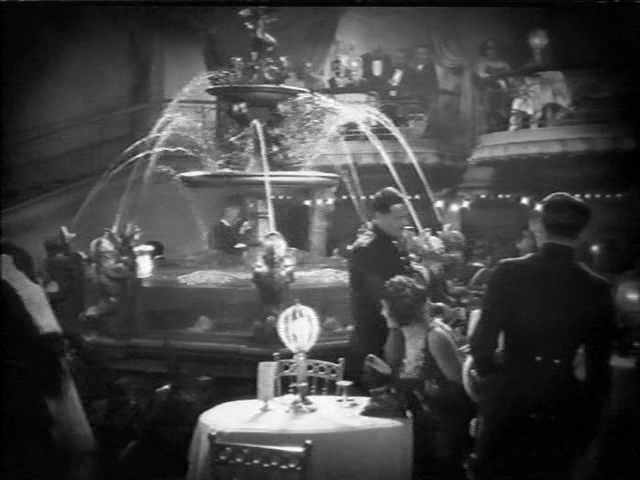
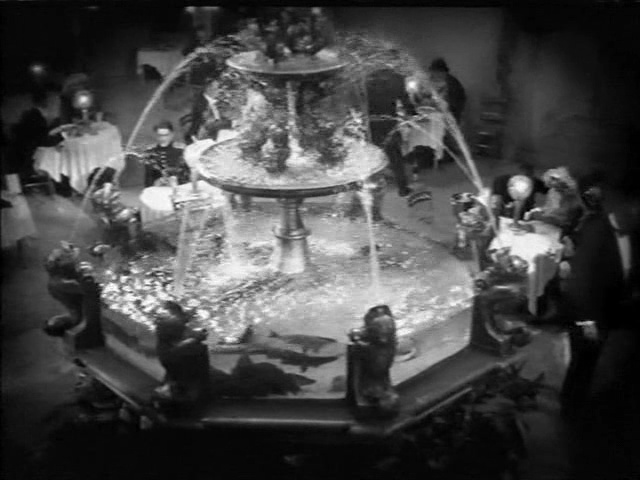
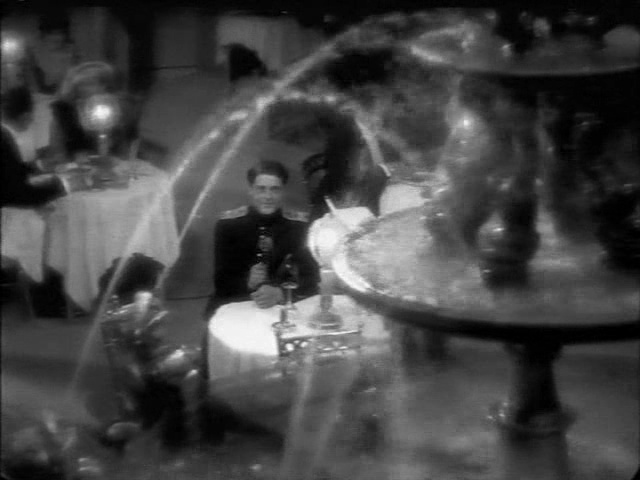
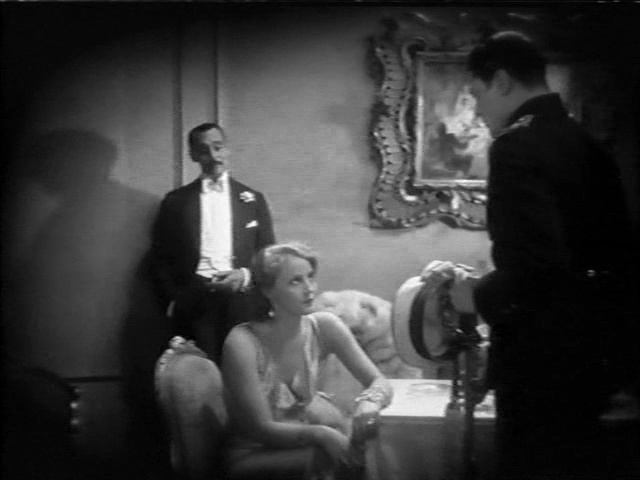
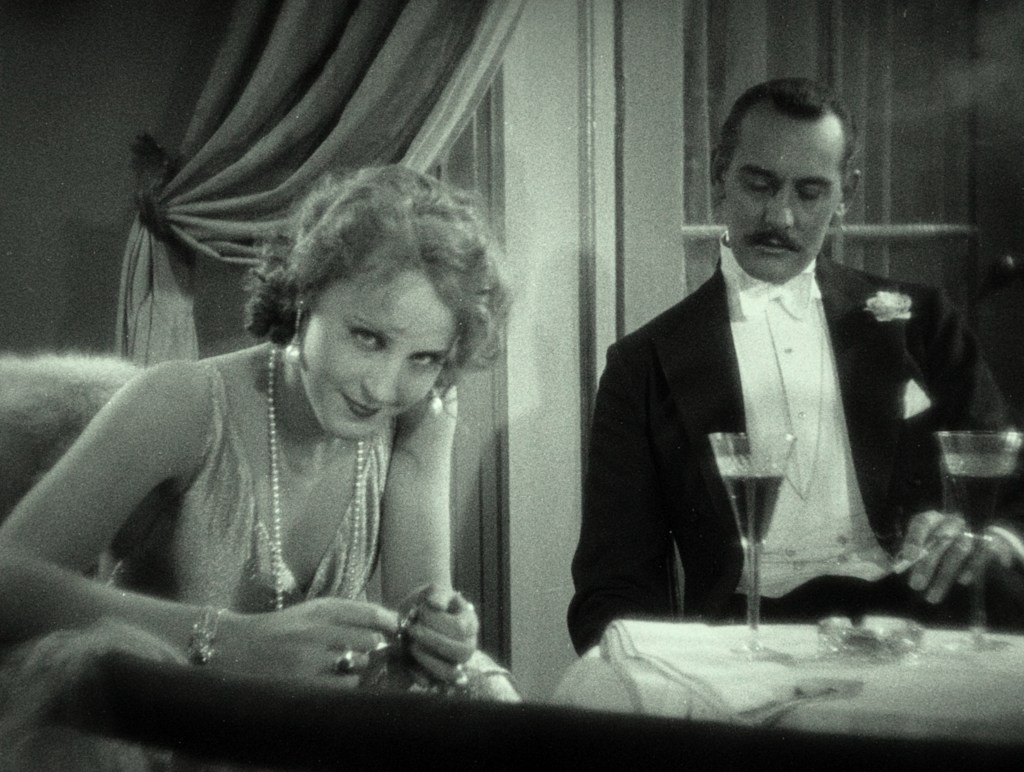
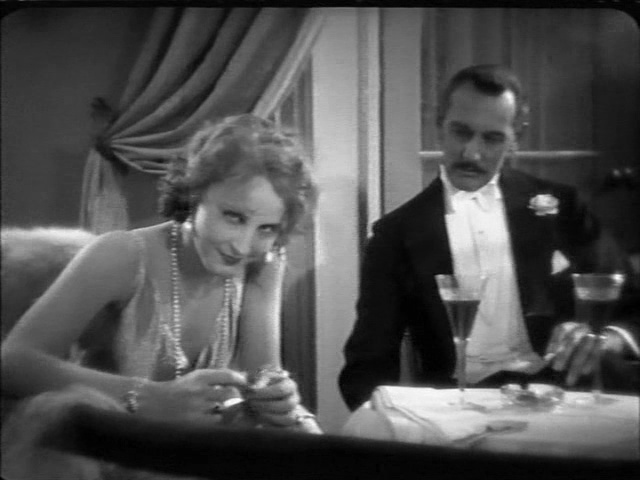
The night club. Schwarz begins with a shot of fish in a shallow pond. It’s a curious image to begin the scene. It’s another image of entrapment, the fish behind their glass wall. The camera tracks back to reveal the luxury around them. The music is elegant, easy; another waltz, softer, sadder. The soldiers enter. The elder men show their innocent comrade the ropes. He kisses the hand of a woman, who seems to have been waiting for soldierly company. But as he lifts his head from her hand, his eyes catch sight of movement above him. In a balcony overlooking the hall, Nina and her companions are settling down. The cadet is all wide-eyed surprise again and, as in his first sight of Nina, breaks into a boyish smile. He is caught by surprise, by desire—by a desire not sought, but happened upon. (His comrades knew they’d find company; he was not looking for Nina.) His comrades look up to see who he’s seen. A fabulous shot through the jets of water from the fountain: the images is neatly divided so that we see distinct the two balconies, one with Nina, the other with a stranger. And oddly it’s the stranger who gives a Brigitte Helm-like look of desire back down at the soldiers (the raised eyebrow, the narrowed eyes; it really is very “Helm”). The soldiers mistake her as the object of their friend’s look. And it’s now that they name him: Michael Andrejewitsch. It’s one of only two times that he’s named in the film, and this first time is in the context of mistaken identity and desire.

Michael orders a rose, which he now holds to his lips—just as Nina spots him. The high/low spatial dynamic of their initial encounter is recreated: Nina again on a balcony, Michael below. But this time Nina is not alone. Her look of desire is seen by the man next to her: her lover, Colonel Beranoff. It’s a revealing shot: for it shows us the source for Nina’s (literally and metaphorically) “high” position. It’s not her table, it’s Beranoff’s; it wasn’t her apartment balcony, either: it was his. It’s another sad moment. And look how the two people falling in love are framed: she overlooked by the man who effectively owns her, he overlooked by the fountain, framed by water, looking small and vulnerable and out of his depth (socially, yes; romantically, yes; and, most certainly, financially).

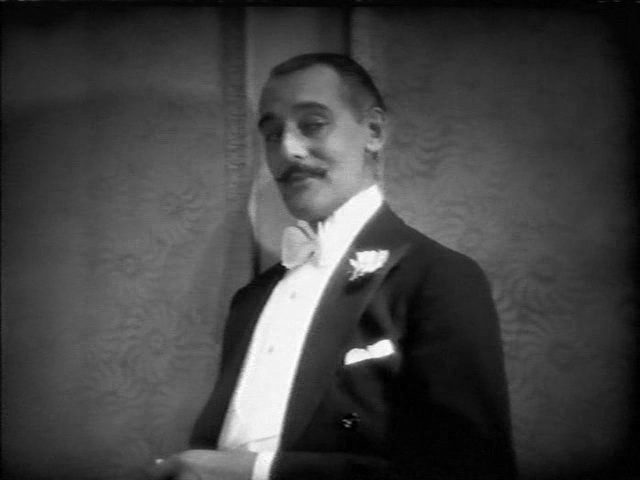
And, oh goodness, yes, please look at Helm’s face in this scene. She starts to convey her desire—less girlish than in that first encounter; it’s more of the look we associate with Helm from other films: the eyebrows, the tilt of the head. But no sooner as she expressed this look—a look of desire, certainly; but, more than that, a look of agency, of will—than she relinquishes it. It’s a beautiful moment of performance. Just see how that clear sense of wanting drains from her face. It’s not that she ceases to desire Michael, but that she realizes that the man sat next to her will not allow it. She cannot express her longing, for her longing is prescribed. So she immediately adopts her casual, disinterested persona for Beranoff—you can see her shake off her self and become another. “Is he a good friend of yours?” the colonel asks, nodding down to the tiny figure below. Oh, just a childhood friend, she says—she lies. (As I rewatch this scene, I’m almost convinced Helm is speaking in English. It would make sense, as she’s speaking to the English actor Warwick Ward. How interesting that this first “lie” is itself spoken, albeit silently on screen, in a second tongue.) Nina is performing, and Beranoff knows it. Ward’s performance is excellent: so knowing, so charmed in his lover, yet so unbelieving. “A charming lie”, he says. “Are you jealous?” No, he isn’t—and to prove it, he invites the cadet up to their private room. (There are two other men at their table, but the camera and Nina hardly concern themselves with their presence. Nina is worried what’s happening down below.)

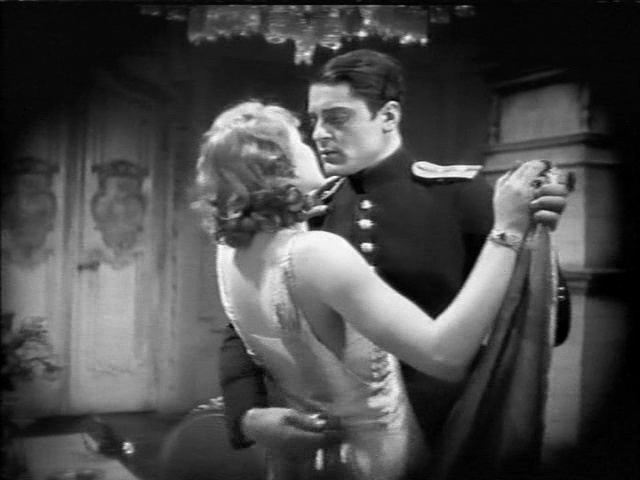
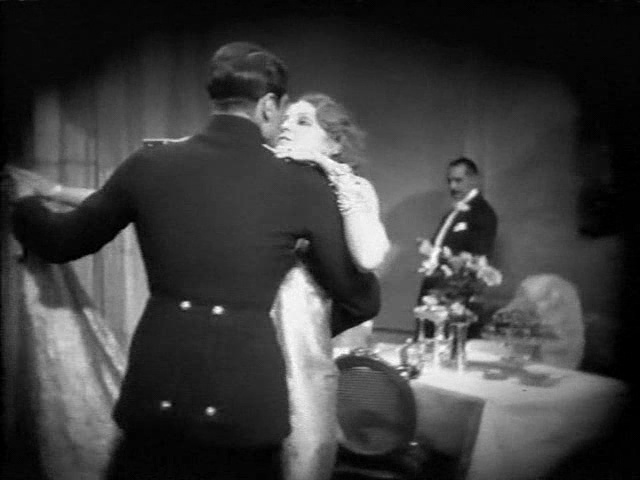
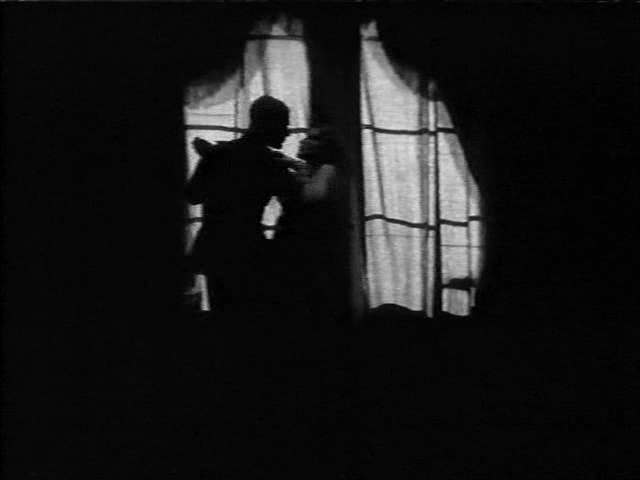
The exchange between them is overlooked by the colonel. He’s almost amused—almost. But he leans against the wall, casting a shadow—occupying space. He doesn’t have to say anything for his presence to be felt. And look at Helm’s face: hiding her emotion from Beranoff, resenting his presence, and falling for Michael. They waltz, and the camera moves. The piano is being played on screen, and all that’s left in the theatre is the piano below the screen. One of the colonel’s companions turns off the light. It’s ostensibly to make the effect of the punch flambee more noticeable, but it has the effect of giving the illusion (only the illusion) of intimacy in the room. Nina and Michael are in silhouette against the balcony; Beranoff becomes a dark shadow against the wall. (The scene also presages the electricity going off in the lovers’ flat, later in the film.)

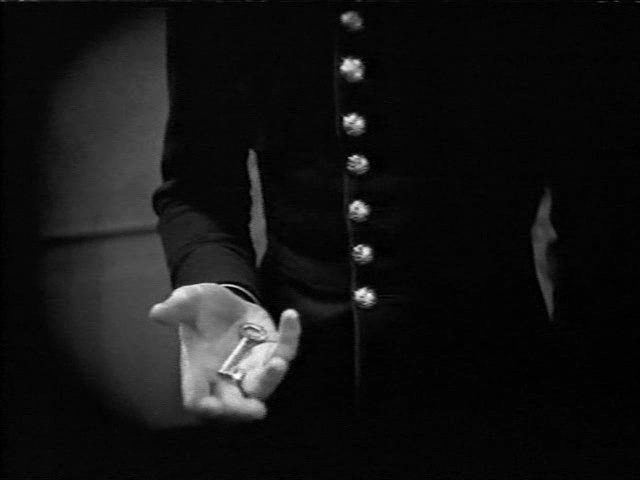
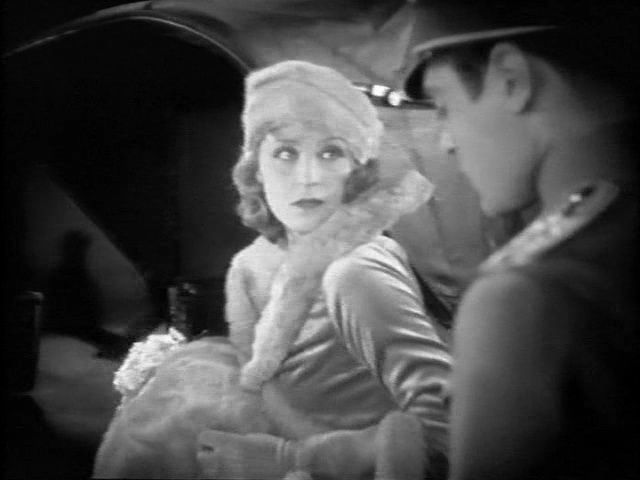
The colonel quickly tires of their dance and turns on the light: the waltz ends. The young couple looks embarrassed. Nina’s face falls: once more she must hide her feelings, play the game. She dons her fur coat; she looks extraordinary. We see Michael’s eyes on her, then they fall away to the floor. What is he thinking? Well, we surely know: it’s like her downcast eyes just now, it’s the feeling of desire creeping up on him, and the sadness of unfulfillment. But Nina gives him a knowing look. Their farewell is brief. We don’t see what’s happened, initially, for Schwarz cuts to a close-up of Michael. It’s another marvellous little moment, this look on his face—and Francis Lederer’s performance is pitch-perfect. It’s innocence and expectation mingled, longing and trepidation at the same time. The camera follows his eyes as he looks down: Nina has placed a key in his hand. (And oh, the music—it’s just perfect. The waltz ebbs and flows below the image, romantic and melancholy. It’s drifting above the image, sympathetic but distanced, knowing but detached.)

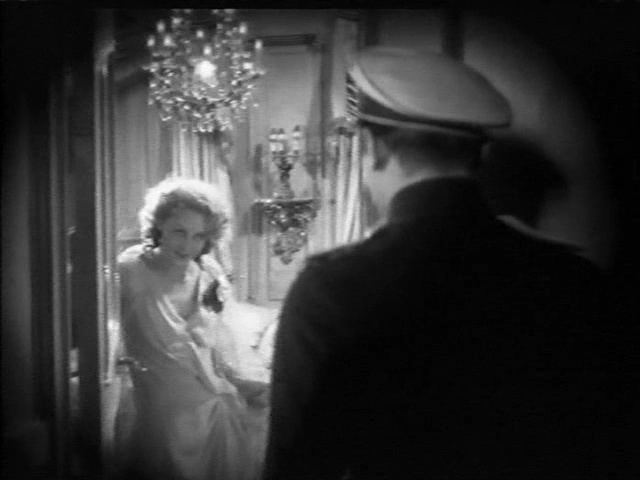
This same mood is carried into the next scene, when Michael havers outside Nina’s villa before using the key to enter. The music here is cautious, almost anxious. Michael’s entry is the opposite of Beranoff’s: the colonel swept upstairs, but Michael hesitates at every step.

And here is Nina, opening the door. She, too, is half knowing, half hesitant. She knows what they both want but is not sure the hows and wherefores—and what it might mean. Michael is all boyish hesitancy. Nina offers him a seat, a closer seat. Why not sit next to her? She goes to him.

“You must have wondered about my strange invitation—” she says. He coyly shakes his head, grinning like a child whose smugness gets the better of him. Cut to Nina, whose smile fades, slowly, who looks away. This is a perfect scene, a perfect performance. You know everything about Nina’s life in the way her smile fades, right here. You know that she likes Michael, that she desires him physically, but that she hoped for more than just physical love. And the look on Michael’s face—that suggests he is not as innocent as he seems, that he assumes she is a certain kind of woman—hurts her. She worries that he thinks he has won the right to her body, that she is no more than a body to him. And the slowness of this realization, the way it imbues first the close-up of her face, then the shot of them sat together, says so much about her life. Surely now we understand her relations with the colonel, which is more of a transaction than a relationship? Surely we can fill in the blanks of how she has had to get by until now. We have not seen her in the company of friends, only the colonel’s friends. Does she have friends? What has happened to her family? The fading smile here, it seems to me, is a very lonely thing indeed. She thought she might have been connecting to someone, only for this connection to be another transaction. (It was this moment that made me fall in love with the film. Suddenly, a whole stratum of feeling is revealed beneath the surface.)

“I think it’s better if you were to leave”, she says. Now it’s Michael’s turn to realize what’s going on, how much his little grin and his little shake of the head has hurt her, wronged her. They shake hands, and as they touch the clock chimes. The montage of the clock from the opening scene begins again, and the film changes once more. Nina moves close to Michael, and they dance to the music of the clock. What are we to make of this? It’s a delightful scene, but it’s something else. Schwarz cuts from the clockwork man and woman twirling to the dance of the human couple. Is Nina simply fulfilling Michael’s expectations? Does she lead her life with a kind of mechanical drive, an ingrained habit?

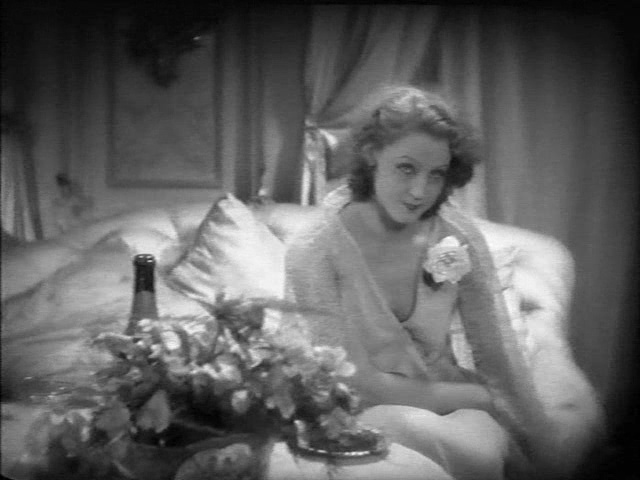
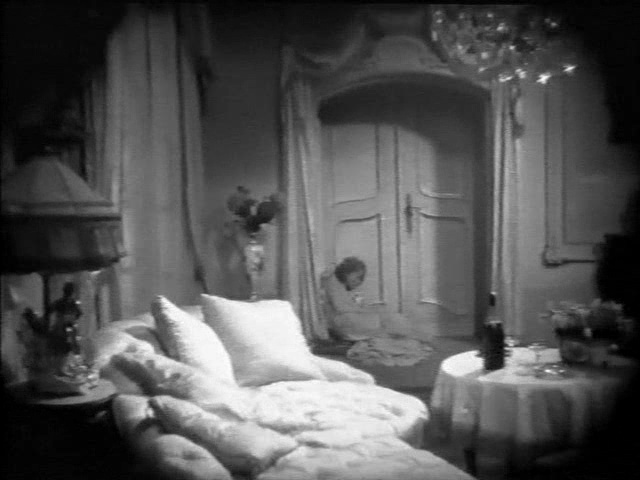
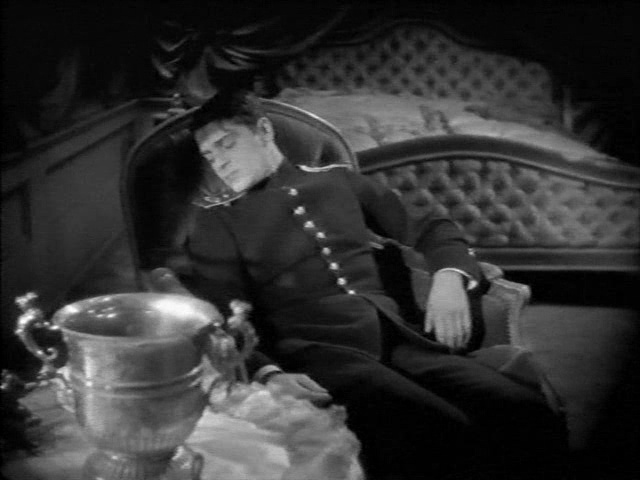
“Actually, you could spend the night here”, she tells him. She goes for champagne (seeing and hiding a picture of Beranoff en route); they drain their glasses; he refills the glasses and she looks at him. The music moves from tension to something tender. Nina lies back on the bed. She’s putting on a seductive face (more Helm-like). Michael looks at her. “You must be very tired, Madame— —?” (That double extended hyphen is a lovely touch in the original title. I love a good hyphen, it’s so gestural.) The question makes Nina cease her seductive performance and sit up. She agrees it’s bedtime. He makes to leave, and we see Nina shake her head. Is he so innocent? She makes excuses about him not being about to leave: what would the neighbours say? The villa is large. She leads him by the hand to the next room. Michael looks around, in wonder. It’s clearly the nicest bedroom he’s ever been in. Nina says goodnight and leaves. But she goes only to the other side of the door. Each one listens to the other through the door, hesitant. Nina stands. The clock ticks. She quietly opens the door. Michael is asleep in a chair. He hadn’t dared even go into the bed. She looks at him sleep, almost shaking her head.

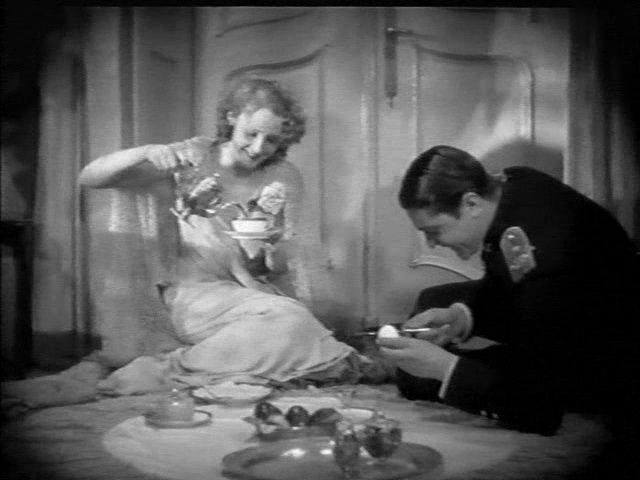
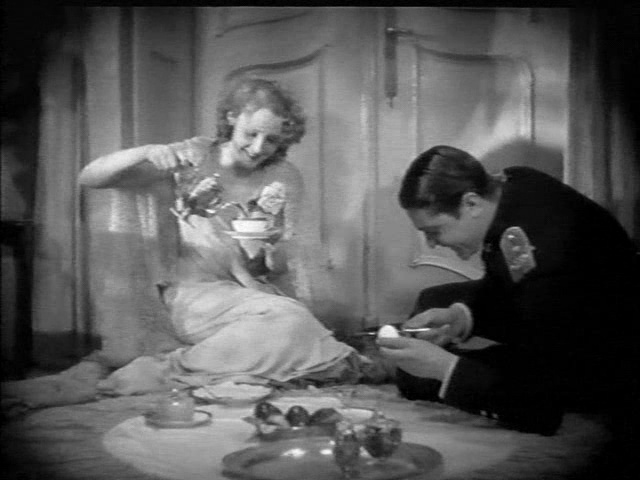
The camera finds them the next morning. She has slept on the floor by the door, and he finds her there. They are suddenly both children, innocently waking and then picnicking their breakfast on the floor.

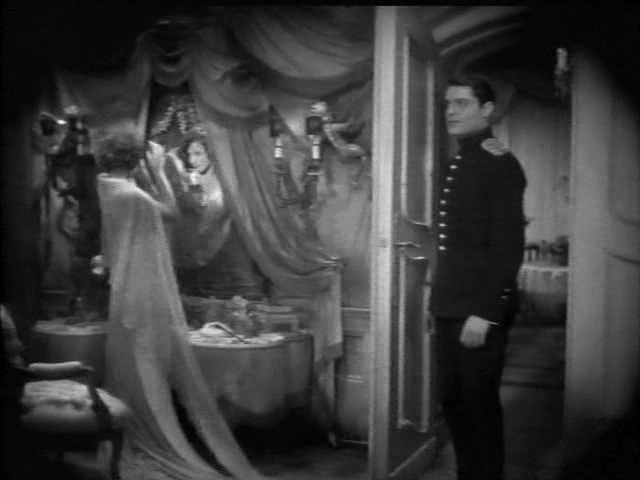
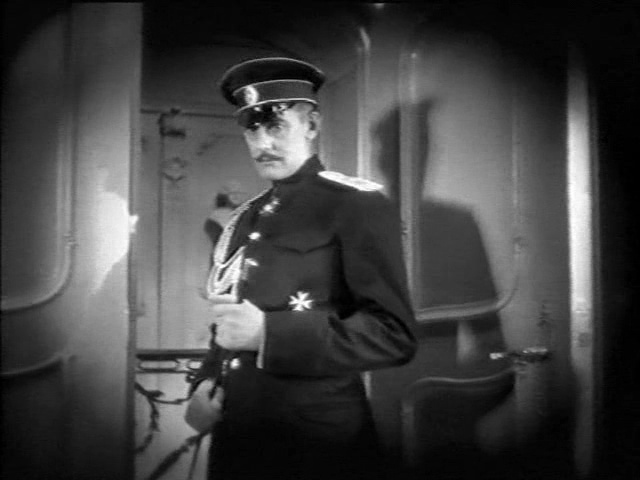
Beranoff walks in. The colonel makes the immediate assumption that Nina has slept with Michael. “I hope, officer, that you are as pleased with her as I’ve been!” he says. (Incidentally, Michael is addressed by his rank of “Kornett”, the lowest rank of commissioned officer in the cavalry. He is, technically, an officer—but only just.) He leads Michael out, warning him that “Women and officers should have only one master!” It’s a line that reveals just what he thinks of Nina, and women in general. Beranoff next shouts at Nina, asking her to invent some new lie to explain herself. So she tells him that she cannot lie, since she loves Michael—and says he spent the whole night with her, sleeping apart. The colonel laughs and applauds her “lie”. Just as Michael made assumptions, so does Beranoff. He offers Nina the chance to leave, but she must also leave “his” diamonds, “his” furs. The full extent of her position, her lack of power, is revealed.

Michael, meanwhile, is caught by a superior officer coming back to the barracks late. “Women, no doubt the reason for your being late, are worth nothing”, the officer explains.

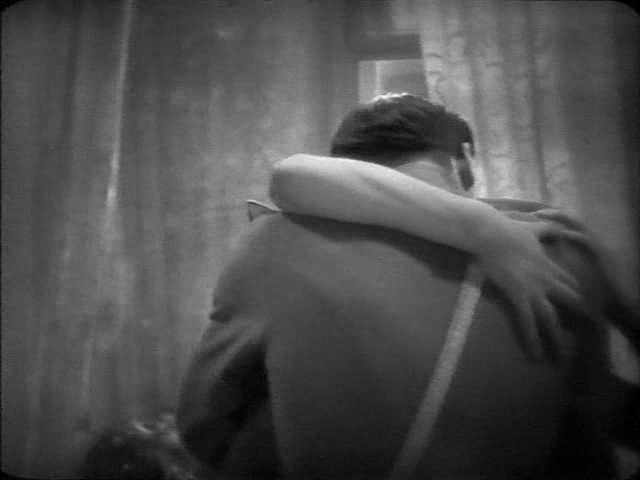
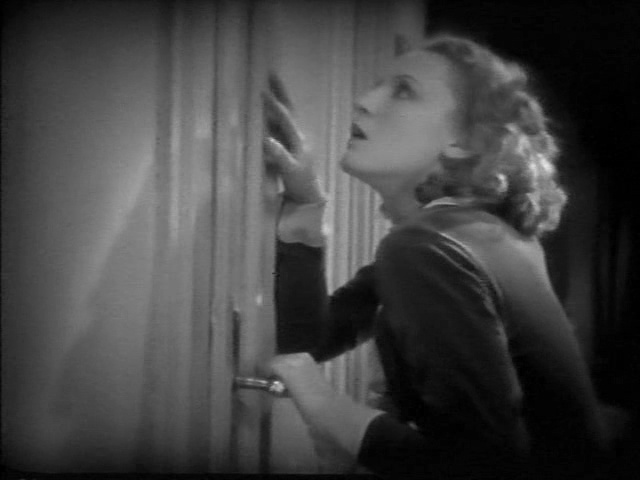
Nina arrives at the barracks, and of course Michael gets into her carriage. There is a long, long moment as they say nothing—until she puts her hand in his. She takes him to her apartment—her apartment. It is bare, dark, small. Michael looks around him. “You live here now, Nina Petrowna?” It’s the first time anyone in the film has spoken her name, and it comes now—when Michael realizes what she has given up, and what kind of life she has led until now. You can see him realizing it on his face. He looks adult, for once, and when he smiles it’s out of respect—an adult emotion. They kiss, and there is a propulsion to their embrace. It’s like an obstacle has been overcome, they are ready for one another.

They are living together. Nina is peeling spuds. There is clock on the wall, a simpler clock: instead of the elaborate mechanics, a small bird pops out to call the hour. There is no wine, they don’t have enough money. But Nina lays the table and looks truly happy. And Michael can afford to buy only one flower to bring home for her; but he looks happy. Nina plays their waltz. It’s a lovely scene, for the orchestra in the theatre must stop and wait: the solo piano takes over and mimics the attempts of Michael to learn the tune on screen. It’s lovely, too, for the way it’s played. The lovers are still having fun, enjoying being next to one another, giggling, joshing. Their bodies are in synch. Michael wears his uniform in a casual way (you sense he’s wearing the hardy coat for warmth in a cold apartment) and Nina’s hair is loose. So there’s a touch of studentish-ness about them, a little shambly, a little boisterous. Nina is called to the door. The orchestra resumes its accompaniment, only for the piano to try—and fail—to play with it, as Michael fluffs his playing.

Nina must lie again, a well-intentioned lie. For the electricity is about to be cut off, and she can’t bear to tell Michael how much money is owed. The lights go off as Michael fumbles with the piano. The scene harks back to their first dance in the dark. There, the piano waltz was stopped by the lights going on; here, it’s stopped by the lights going off. Nina pretends the outage is for Michael’s sake: a surprise dinner with candles. “Isn’t it beautiful?” They kiss, and Michael accidentally breaks her bracelet. Wanting more light, he goes to the switch and the truth is out. There is a long close-up of Michael, realizing what’s happening. Nina looks at him (another tender, sad close-up of Helm) and Michael promises to make enough money once he’s promoted. He sees her battered shoes, and the scene ends with his eyes in thought and hers looking away in contentment as she strokes her hair.

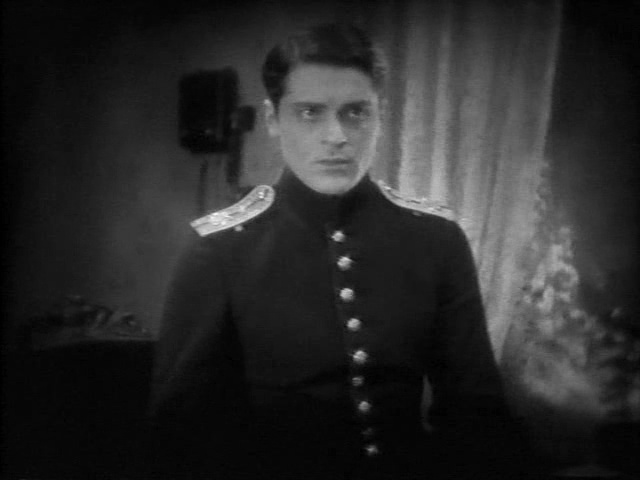
The officers’ casino. Michael joins a table. His face is boyish enthusiasm, excitement. Beranoff comes over, sits. Drinks are poured. The night goes on, turns to morning. It’s a scene out of Joseph Roth: the young officer trying to keep up with his peers, being out-played and out-drunk. So Michael cheats, and Beranoff sees him. Beranoff makes to leave. He puts on a fabulous coat, a fabulous hat. His status is on show (immaculate frockcoat, medals, buttons, aiguillette, sabre), as is Michael’s low rank (simple tunic, unembellished). He confronts Michael with a pre-written question that he only has to sign. It’s the first time we see Michael’s simplified name: M. Rostof. He has signed his own suicide note, for this is “the only solution possible for an officer”. But Beranoff makes him an offer: report to his flat tonight…

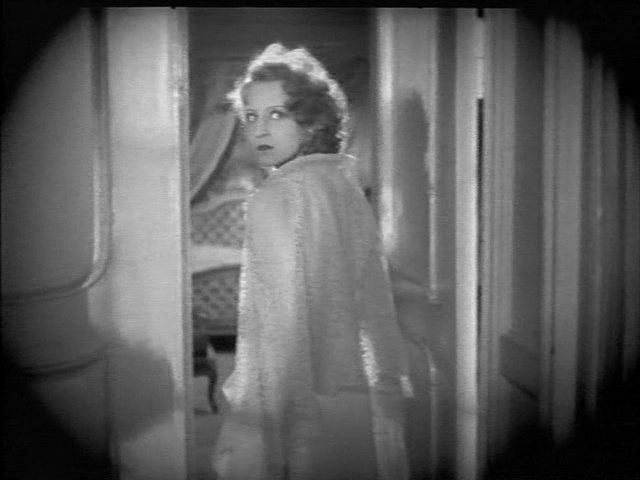
Cut to Nina, joyfully expecting Michael’s return. The phone rings, and Beranoff makes an unspecified threat about Michael’s career. So Nina arrives chez Beranoff. She is cold, dignified. But she tries to hide her shoes from Beranoff’s gaze. But in every scene with Nina, we know Beranoff to be knowing, shrewd, observant. He plays his hand perfectly: shows Nina the confession, the card. She looks at him harshly, but then goes to the window and cannot hide her tears. So Nina makes the deal Beranoff has forced her to make: she will save Michael by giving him up, and report back to the villa. When Michael comes in, Nina has left, and he accepts Beranoff’s apparent change of heart with that same, boyish expression that he had when he thinks luck is on his side. And on his way home, he goes into a shoe shop.
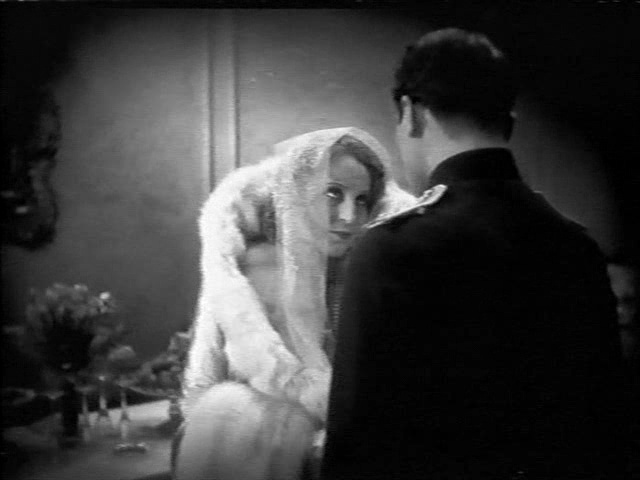
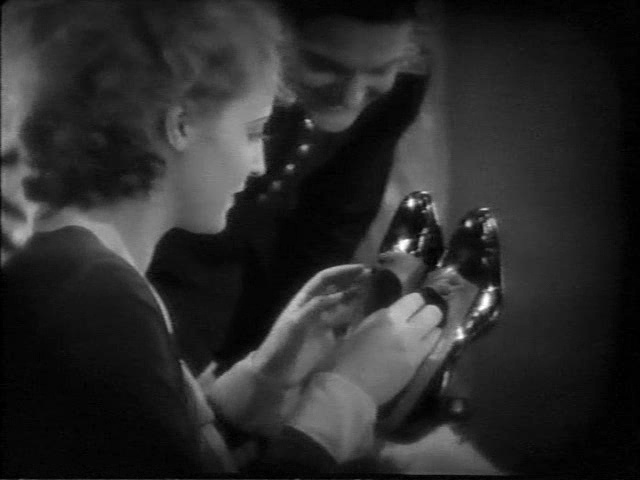
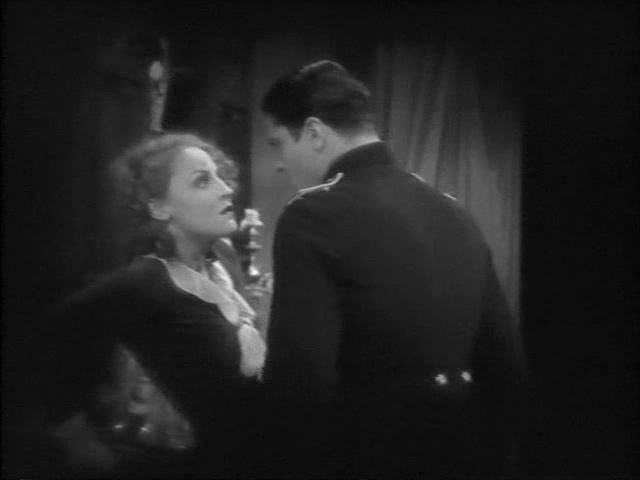
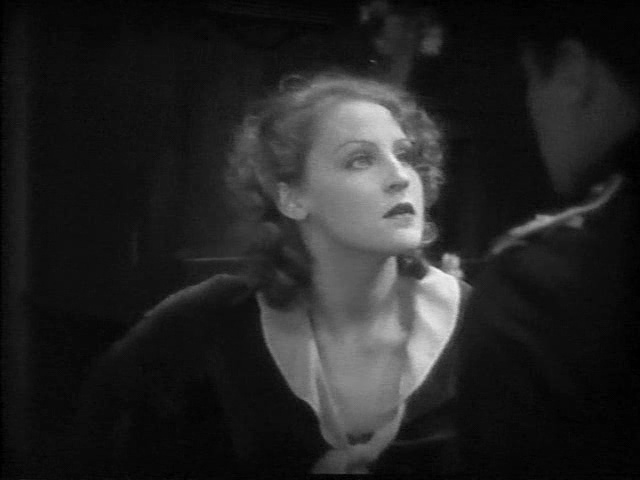
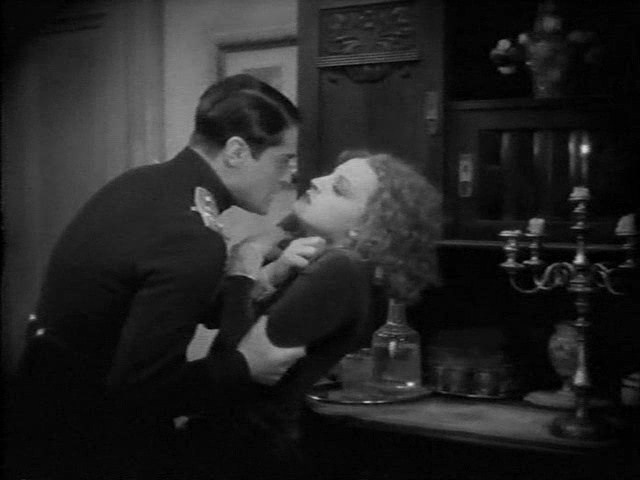
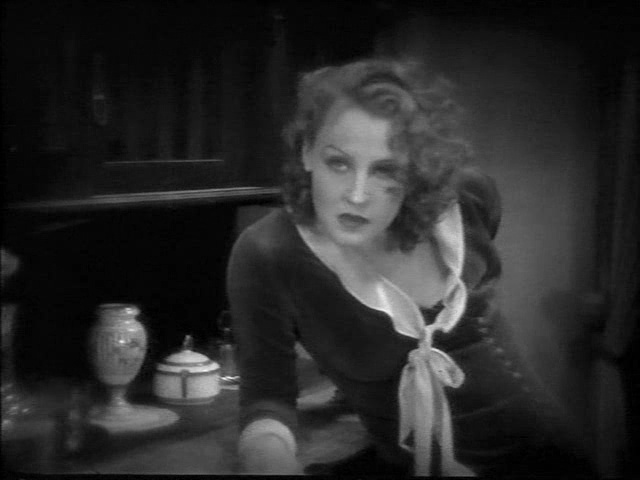
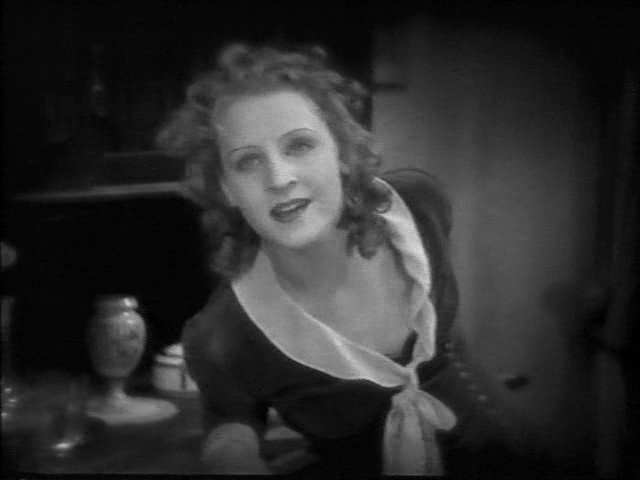
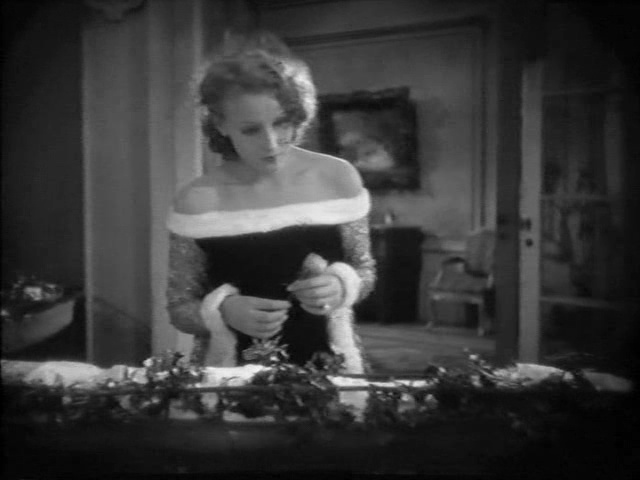
We know what will happen next, but it’s still hard to watch. Nina is alone. Their plates have already been laid out on the table. She has decorated Michael’s with sprigs of flowers. She strokes his empty chair. She extinguishes the candles. Now she must lie again. But first Michael presents her with a gift. The look on Nina’s face—wiping away tears when Michael cannot see… She unwraps the box. Look at her face, her hands—she is so happy. And Michael too grins with satisfaction. She cradles the shoes, strokes them; but her face hardens. She swallows. The music slows, turns to a minor key. “It’s very nice of you, Michael, that you’ve bought me a pair of shoes…” (and we see her face again; her eyebrows arching, something like forced cruelty taking hold of her—a performance taking shape) “…but do you think that I would wear such common shoes?” She stands, chucks the shoes onto the chair, and walks away. It’s such a devastating moment, to watch her break his heart—and to know that hers is already broken. There is a close-up of Michael, clearly hurt, clearly very hurt—hurt in such a way that he can hardly move; it’s all in the eyes, the slightly open mouth, not knowing what to say. “That’s not all Michael!” Nina adds, spinning round. And her face is almost disbelieving, almost surprised at her own performance. “I must finally be honest with you. I’m tired of living in this poverty.” Her arms swing, she arches her back. Michael comes over. “I need the wealth, the splendour, the villa…” It would be too easy to feel more for Michael in this scene, were it not for what he does next: he shoves Nina, shakes her against the cabinet. It’s the act of a child, not a man. It shows how immature he is. It tempers our sympathy with him and switches the emotional focus of the film back onto Nina. This is her film, after all. And it’s her performance here, in this scene, that we realize the “wonderful lie” she’s telling. You can tell how much it’s taking out of her: she’s almost lopsided, leaning on the sideboard for support while lurching her shoulders forward and throwing back her head. She says she’ll sell off everything she’s given him—she means Michael to think this refers only to her body, but we know it’s far more than that. Michael rushes out, and Nina is left at the shut door, leaning against it to keep her from collapsing. Cut to the cheap clock on the wall, with its little bird emerging to cry the hour.
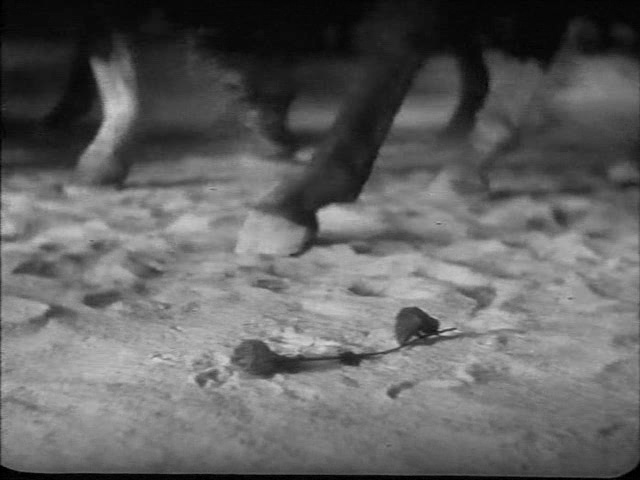
And Schwarz dissolves from this clock to the clock we recognize from the opening shot of the film. If the clock seemed charming or silly when it first appeared, it now feels tragic. For the image has now attained its true significance, its full weight of meaning. We know the clock belongs to Beranoff more than to Nina: it is Beranoff who has determined the rhythm of Nina’s days, the timeframe of her life. The mechanical lovers are condemned to repeat their dance, which can never alter. Time is prescribed, movement is predetermined. So we see the mechanical couple waltzing once more, and the camera once more tracks back across the villa’s interior space to find Nina at the balcony, once again with a rose in her hand. Snow lines the streets. Here comes the cavalry. She looks for Michael, finds him, throws the rose. He ignores it, ignores her. We see the cherub, once more reaching out for the receding column of men. Nina turns, slowly, almost limping back inside.

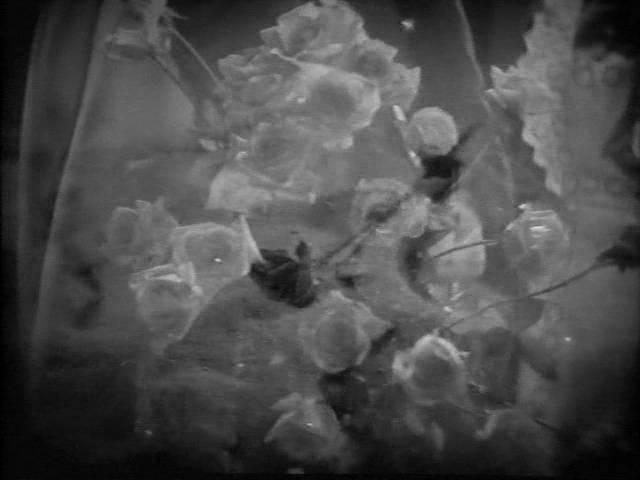
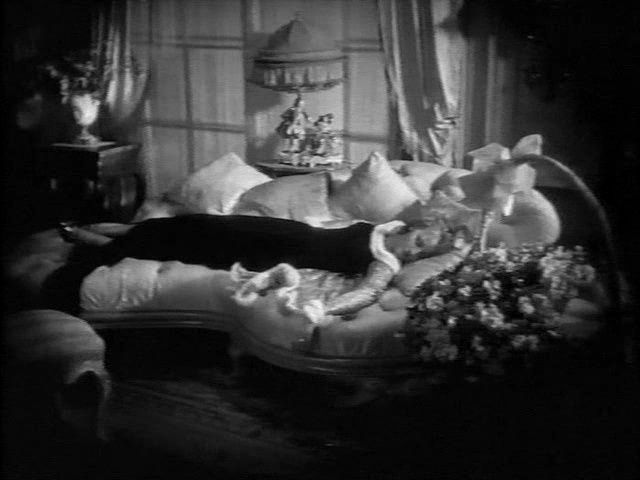
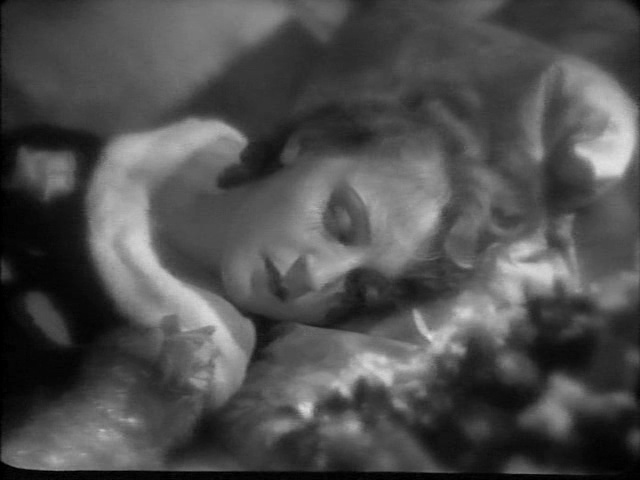
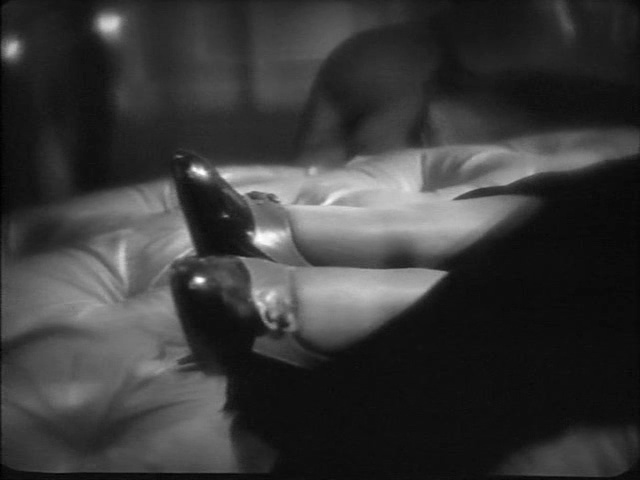
The image of the discarded rose, lying on the snow, dissolves onto a huge bunch of fresh roses—and the camera tracks back to reveal them in Beranoff’s hand. He runs upstairs, bursts into Nina’s room and sees her lying on the couch. He’s all smiles. He throws the roses one by one over Nina—and now his face changes. There is a close-up of Nina, eyes closed. In the score, the solo violin was playing over a few sparse, pizzicato chords in the strings; now the music simply stops. Beranoff sees the empty vial on the floor. He drops the roses. The camera moves up from the vial on the floor, up along the line of Nina’s hand and arm, drooping from the couch, up to her face, then tracks left along the line of her body; we realize she is wearing black, and the roses strewn over her unwittingly fulfil the funerary rites. The camera still moves along her body, as the orchestra resumes its course—playing now a slow, funereal march. The camera reaches Nina’s feet and stops: she is wearing the shoes that Michael gave her. A slow, slow fade to black. ENDE.

I was very taken by this film the first time I saw it, and rewatching it has reinforced my appreciation. Most of all, I admire the performances. Francis Lederer gets his role as the young officer just right: it’s a perfect rendering of someone of that age, of that rank. He’s keen but gauche, clumsy but tender, greedy but shy. The performance could easily be silly, exceeding in any one of the conflicting emotions; but Lederer keeps everything in check, nothing is overdone. Warwick Ward plays the colonel with every bit of charm, superiority, and knowingness the character demands. He never has to emote, to shout or scream: the point of such a figure, of a man of this rank and wealth, is that he never has to emote or shout or scream to get what he wants.

And of course, there’s Brigitte Helm. I never thought I’d be moved like this by her on screen. Fascinated, yes. Enticed, yes. Delighted, enthralled, yes. But really moved, no. This film shows Helm at her most subtle, most empathetic. Of all the films of hers that I have seen, this is her most nuanced performance—aided by the superb direction. Those early scenes with Michael in the club and then in Nina’s apartment are so, so touching. It’s almost like we watch the star persona (her “role” as kept woman) fall away to reveal the young woman beneath. Several of the contemporary reviews I’ve read compare her unfavourably to Greta Garbo. It’s true that Nina is a role Garbo would have taken had the screenplay been realized in Hollywood. But I’m glad it wasn’t, and I don’t think (as some German critics did) it does Helm discredit to take it on. Though Garbo was only a few months older than Helm, somehow I can’t quite think of Garbo being the child-like host of Michael for their picnic in her apartment. Rather, I can’t imagine being surprised by the transformation in the way that I was with Helm. It’s a subtle, sophisticated performance, by turns fierce and vulnerable.

Of course, the whole film looks stunning. The sets are gorgeous, the costumes exquisite. It’s a rich, complete world on screen. Nina’s apartment, the nightclub, the barracks, and the snowy streets outside are all coherent spaces, each suggesting their own context and history. And the way the camera glides through these spaces, or glances from one space into another, is fluent, expressive, articulate, meaningful. The cameraman was Carl Hoffmann, one of the great names of German filmmaking in the 1920s and beyond. If he had shot nothing else, Hoffmann would be renowned for being the chief cameraman on E.A Dupont’s Varieté (1925) and Murnau’s Faust (1926) (to say nothing of his earlier work with Fritz Lang). If Nina Petrowna does not have the spectacle or scale of these earlier films, its images are nevertheless as stylish and delicious as anyone could want. I particularly love the dark limits of the film’s frame, the way the iris gently shapes the images. It’s most visible in the darker interior scenes, further excluding everything beyond the frame from our eyes. The outside world seems less interesting. And I’m more than happy to forget what’s beyond the screen, the scene, the performers. (Most especially, that first time they dance, or their first night together.)

In all this, it might be easy to forget the director: Hanns Schwarz. Lots of reviewers dismissed him as a merely superficial, decorative director. But it’s unfair to think the film would work merely by dint of its sets or camera movement, as if the performances fall into place without someone human directing them. So, yes, I credit the film’s success to the guiding power of Schwarz. And although the story might be a variation on a familiar theme from literature or cinema, it’s still moving and well realized. I wouldn’t argue that the film is “great” in the sense that other films of the late 20s are great. It’s not setting out to change the world or revolutionize camerawork and editing. It’s not what it sets out to do, but how it does it that makes it great. I can’t imagine it being done better.

Saying how good the film looks, I should say (as my images suggest) that I was watching Nina Petrowna via a version broadcast on Swiss television many years ago. On a smallish screen, it looks fine—and certainly shows how good it should look. (I also have a friend who saw the film on 35mm when it was shown in London in 1999-2000, who confirms that it does indeed look superb on the big screen.) A newer restoration of the film was completed in 2014-15, which is listed as being slightly longer than the version I’ve seen. (Although this always depends on the framerate of either version.) To finish, I can at least show one frame from the new restoration. Interestingly, you can see more information in the frame from the broadcast copy: the still from the DCP has slightly cropped the image to lose the rounded corners of the original aperture. Shame. Give me my rounded corners! Give me more Nina Petrowna!

One of the other great pleasures of the broadcast copy I saw is the original orchestral score by Maurice Jaubert. The soundtrack was recorded in 2000 for its broadcast on ARTE, Dominique Rouits conducting the Orchestre de Massy. Interestingly, the Jaubert score was not the one performed in cinemas for its Berlin premiere in 1929. There, the score was by Willy Schmidt-Gentner—and contemporary reviews all say how wonderful it was. I’m curious to know if it survives, but the Jaubert score is so good that the film can thrive without the “premiere” music. This was Jaubert’s first film score, and his only one for silent film. It’s built around a few melodic themes, all of which are instantly memorable and which vary and develop over the course of the film. It’s wonderful the way it wrings so much out of a simple set of melodies, by the way it changes instrumentation—moving from the full orchestral sound to smaller groups of strings, and even down to solo piano. Like so many scores of the period, it doesn’t try to hug the images too close: the music drifts over the film, creating mood, filling out the emotional resonance of the scenes. I catch myself humming bits of it very often. I hope a new recording is made for the new restoration—and that the film gets a proper release on Blu-ray someday. It’s very much worth it.

Paul Cuff