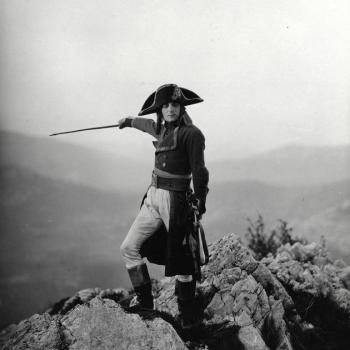
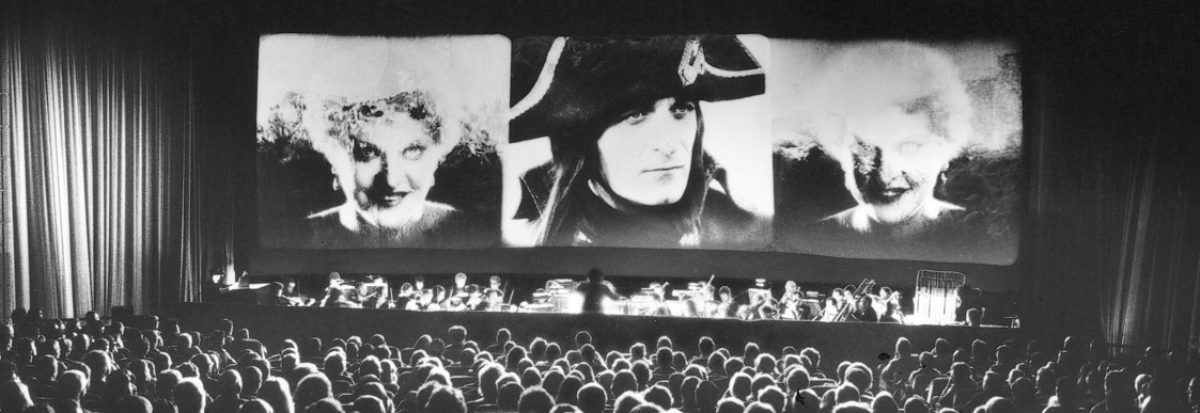
HippFest at Home (2025, Day 3)

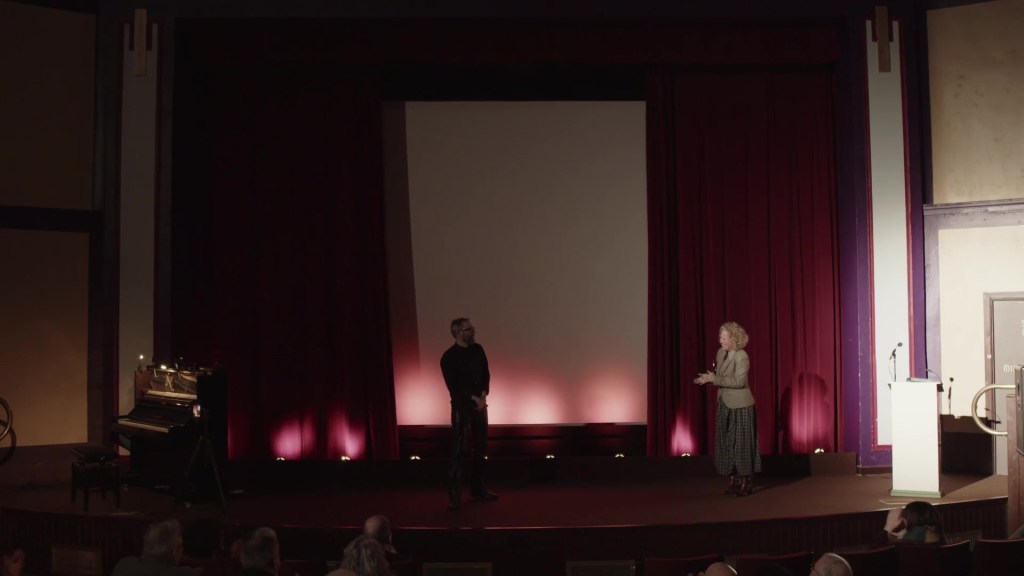
Day 3 of HippFest at Home sees us journey to the (faux) Scottish coast for a (faux) Scottish drama starring Mary Pickford. This programme of a short and feature was given introductions by Alison Strauss (once more) and Pamela Hutchinson (who of course runs the marvellous Silent London). Strauss explained the choice of films, focusing in particular on the short extract from an amateur film shot on location in Harris in the Outer Hebrides. She also highlighted HippFest’s pioneering efforts to provide audio-description via headphones and brail for these films. It’s a superb project, and another reason to admire the festival. Hutchinson gave a detailed introduction to The Pride of the Clan, highlighting its history in the context of Pickford’s career. (I will say a little more about the film’s critical reputation, which Hutchinson also covered, later.) As ever, these introductions were exceedingly engaging (and often very funny). As an online viewer (and viewing the film over a day later), I felt part of the crowd in situ. On this theme, there was a lovely moment when the Bo’ness audience cheered the restoration team of The Pride of the Clan, who were (like me) watching remotely from their respective homes. Polly Goodwin, who provided the audio descriptions, was also warmly cheered. You really get the feeling of the enthusiasm for everyone involved. I’m sure it’s the same at any such specialized festival, but HippFest is the only one I have experienced where the online version gives you such access to the people and atmosphere responsible for making it work. And so, to the films…
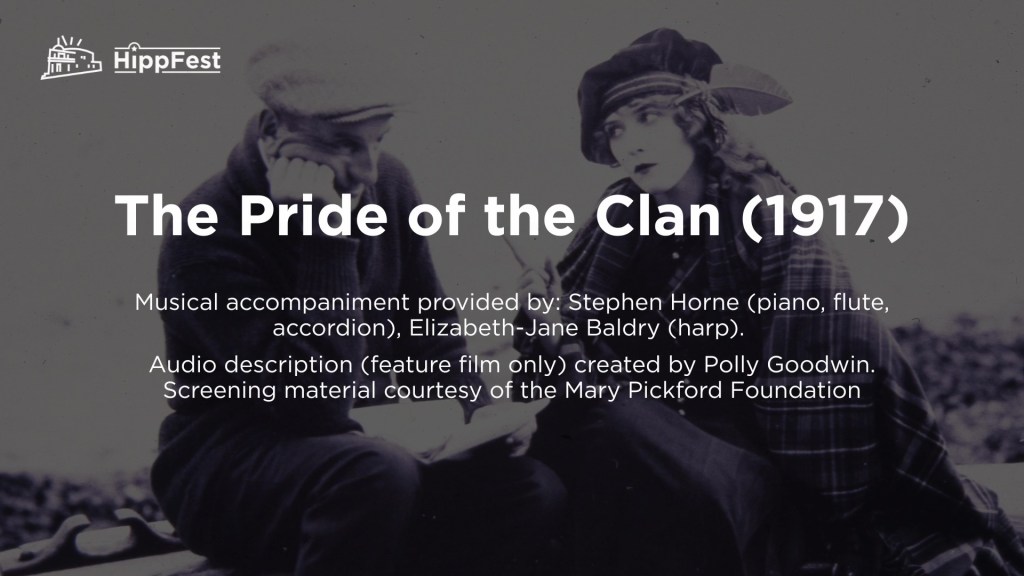
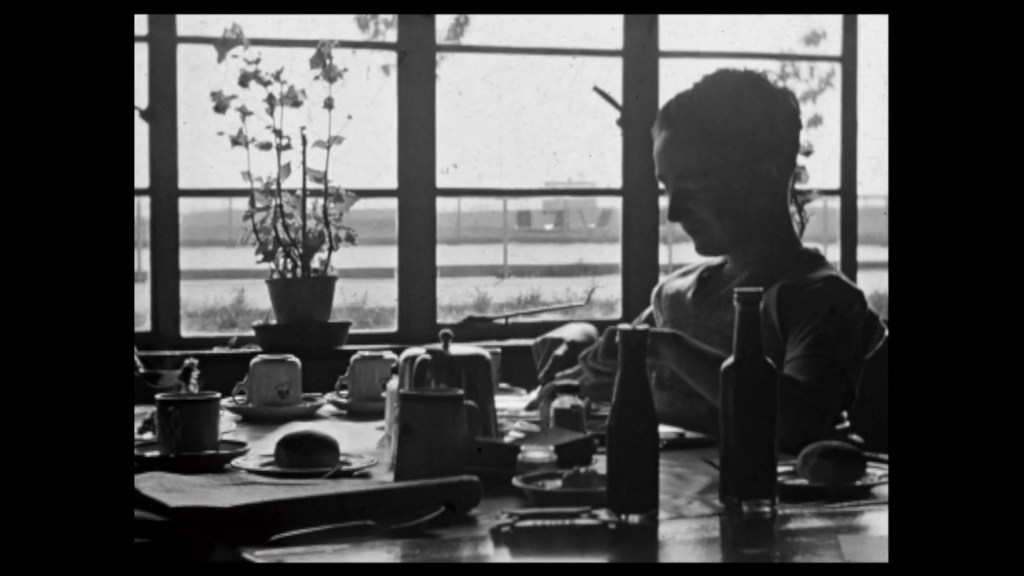
Holidaying in Harris (1938; UK; Nat and Nettie McGavin). A fragment of a longer document, this is (like yesterday’s shorts from Ireland) another amateur glimpse of real life. Here are the docks, the fishing boats, the baskets of herring, the men on deck, the women at work on the shore. The camera observes, unobtrusively. The past goes about its business – messy, sweaty, industrious. The film ends. While this little extract doesn’t have the chance to sustain its mood, it’s a potent window into a way of life long gone – and the faces (and, especially, the hands) of those who often go unrecorded in history. A lovely little treat to start things off.

The Pride of the Clan (1917; US; Maurice Tourneur), our main feature. Set on the remote Scottish island of Killean, the film follows Marget (Mary Pickford) who must lead the MacTavish clan after the death of her father at sea. She wishes to marry Jamie Campbell (Matt Moore), but Jamie’s real parents – a wealthy countess and earl – arrive and convince her that it’s best for his future to let him join leave the clan. She accedes to their wishes but decides to sail away herself. However, her old boat soon begins to take on water. Will the hero rescue her in time? (I’ll let you guess.)

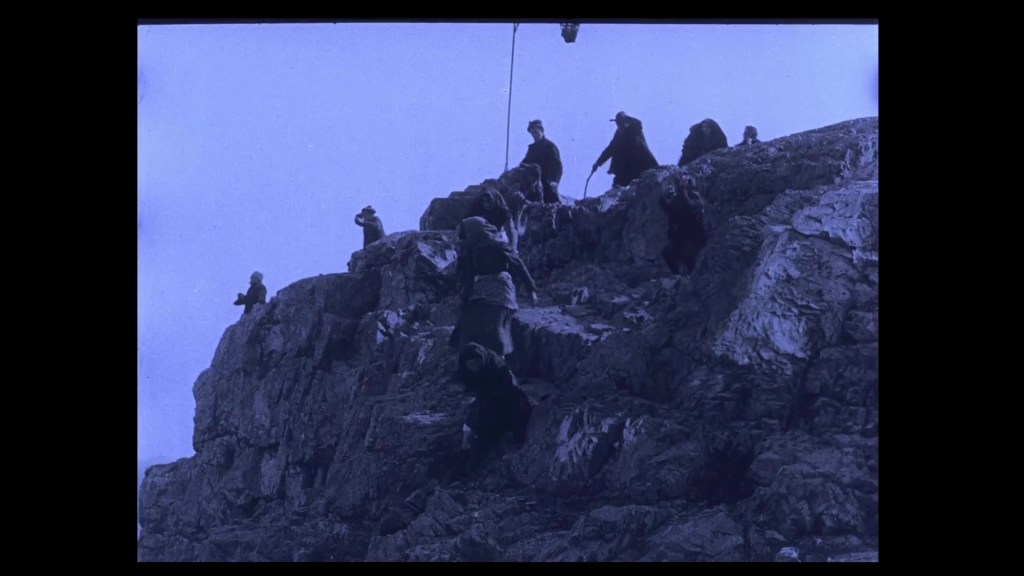
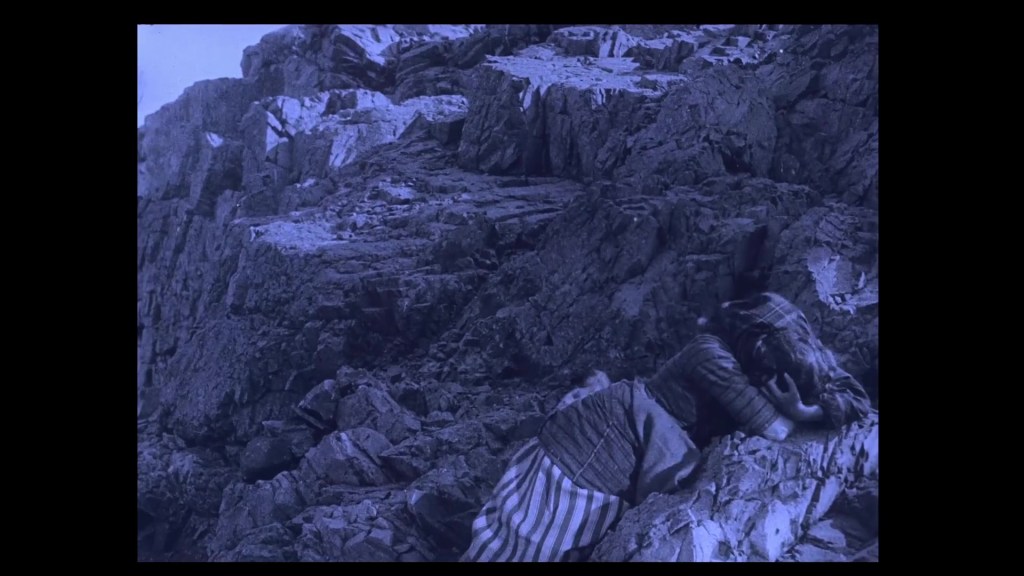
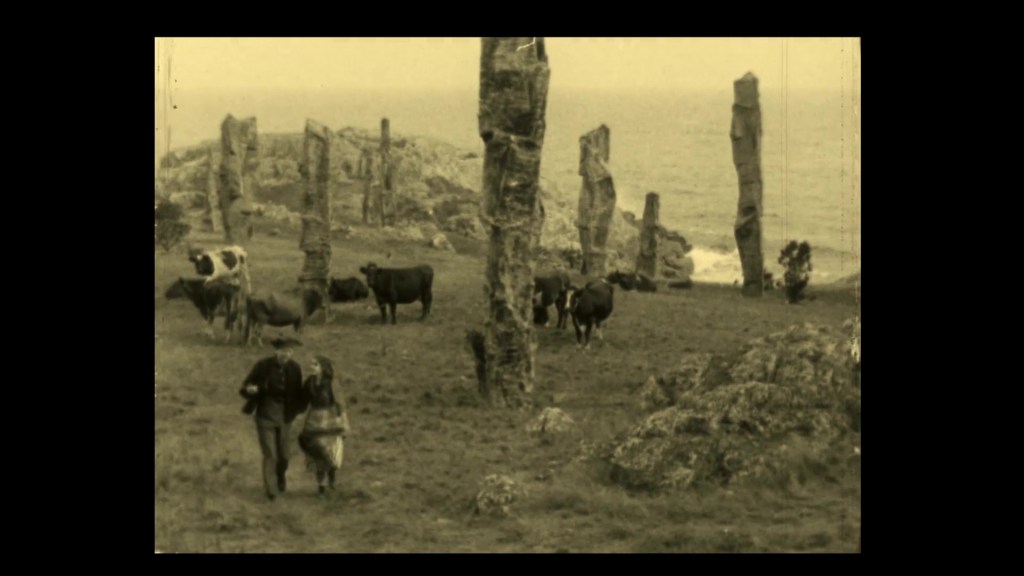
Let’s start with the good. Though it was shot in Massachusetts and thus has no visible connection with the reality of the Scottish landscape, the film at least boasts a wealth of exterior photography. There are some marvellous scenes of the locals silhouetted on the cliffs or gathered on the coast. The director Maurice Tourneur shows a keen eye for composition, making the most of the (actually quite limited) location spaces. There are some efforts to make this landscape bear some sense of history, though I must say that the church, neolithic tomb, and standing stones look hopelessly unconvincing next to some of the (clearly real) houses in the village.

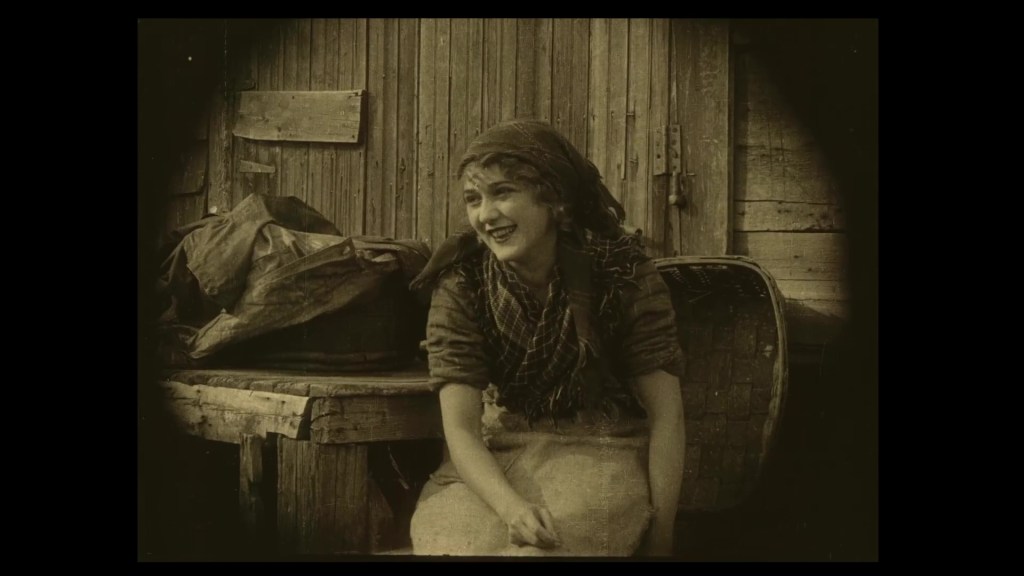
Pickford is the heart of the film, and its chief asset. She’s feisty, independent and gets to be both playful and boisterous – telling stories, commanding children and adults, quite literally wielding a whip. I just wish the film did more with this tomboyishness. She might well wield a whip, but she ends the film clutching her pets as the water rises and the hero races to the rescue. Turning her from heroine to helpless waif is something of a letdown, as is the dramatic implication that by seeking an independent identity elsewhere she must inevitably come a cropper. (I rolled my eyes, too, at the intercutting of the villagers’ prayers – especially the unbelieving Gavin – with the rescue.)

Marget’s romance with Jamie is a little awkward, with the couple having little discernible chemistry (at least, nothing that I would call “romantic”; the very idea of sex, of course, is utterly absent). The humour plays well enough, but the film is far too chaste to express or even suggest anything deeper. (An early embrace ends with the pair awkwardly leaning into each other, cheek to cheek, that is surely as uncomfortable for the lovers as it is unconvincing for us as viewers.) Much of the film allows Pickford to be playful with the clan children and animals, making faces, pulling japes, or bothering kittens and donkeys, which certainly helps raise a smile but also risks infantilizing her character to the extent that the whole point of her being the head of the clan seems nothing more than a game. Besides, the whole effort of the film to present us with anything resembling real life in a real location seems to me a failure. The film might have nice images of the sea and coast, but the life of the clan seems to involve being either pious, playful, or bashful. There is little work here, and if there is a risk of death at sea, there is little dirt and no disease on land. While I appreciate that the colloquial dialogue is being used to ground the film in a sense of location, it swiftly grated on me – grated because the effort to capture the local dialect stood in stark contrast to the absence of any reality elsewhere.

Ultimately, The Pride of the Clan is all a fantasy – which is fine, but it never grabbed me. It is no more convincing or moving than the story Marget tells Jamie, visualized in absurd cutaways to a life on an exotic island complete with native cannibals. What works best are the moments of calm in-between the wearying playfulness. There is a scene of Marget alone, tying a bouquet which she drops into the sea – a gesture one might find in a D.W. Griffith film, only here carrying less emotional weight. It’s a glimpse of what might have been. For much of the film, I felt rather like Gavin, the outsider who scowls on the rocks while the loyal clansmen attend church and have faith in the narratives told therein.

This brings us back to the film’s reputation. As I mentioned, Hutchinson spoke about this film’s supposedly poor critical reception in the US in 1917 – and Pickford’s own subsequent dismissal of The Pride of the Clan as a failure. Hutchinson spoke extremely engagingly about the film’s qualities, and in the programme notes available online by Thomas A. Walsh and Catherine A. Surowiec there are other voices of praise. But these positive notes come chiefly from material that these respective authors quote. (Perhaps they are, wisely, a little cautious about making too great a claim for this film.)

Of particular note in the Walsh/Surowiec piece is a citation from Richard Koszarski, writing in 1969, who said: “Tourneur’s eye for composition is flawless, equalling or surpassing Griffith’s work of the same period, and the performances are more restrained than in much of Intolerance. Clearly this film was ten years ahead of its time.” Hmm. Ten years ahead of its time? I can imagine such a slender narrative being handled by Griffith in, say, 1911 in about twenty shots with twenty times the emotional power. (Equally, I can imagine him padding out such a narrative in, say, 1923 in about two thousand shots and achieving less.) Think of Mary Pickford in Ramona, from 1911, a Biograph production that boasts subtle performances and a masterful use of composition and choreography. (I have written about the film and its (to my mind) inferior re-adaptation as a feature film in 1928.)

Something I kept noticing with Tourneur’s film is the gulf between interiors and exteriors, which is only rarely bridged. One thinks of Victor Sjöström’s Terje Vigen (also released in 1917) as another coastal film featuring grief, wrecks, and the life of fishermen. Despite sharing tropes, the two films are worlds apart. The Swedish film builds partial sets on the coast so that we can look through windows and doors from interior to exterior, from comfy interior to raging sea. The result is an astonishing sense of place and of emotional tone: Sjöström’s film is anchored in reality, a fact which the naturalistic performances redouble. The only image in which this is regularly achieved in The Pride of the Clan is of Marget silhouetted in the doorway of her boat (an image that features in a repeated intertitle design). While The Pride of the Clan shows many characters looking in/out of windows, there is no attempt to link the spaces – aside from Marget’s boat, I cannot recall any shots where we look from interior spaces to the sea. And while many images are very nicely composed, only one image really sticks with me: the stunning silhouette of Marget and Jamie against the moonlit sea. It’s beautiful in and of itself, but also as a distillation of feeling. There weren’t enough moments like this. I wish that there the drama had been less fleetingly embedded in the setting and photography.

The issue is not helped by the variable image quality. From the restoration credits, it is clear that The Pride of the Clan was restored from a mix of 16mm and 35mm copies. While the 35mm sections are superb, these unfortunately make the 16mm sections seem all the more dulled. But would sharper images help this film? For me, I fear not. I found the whole thing cumulatively underwhelming.

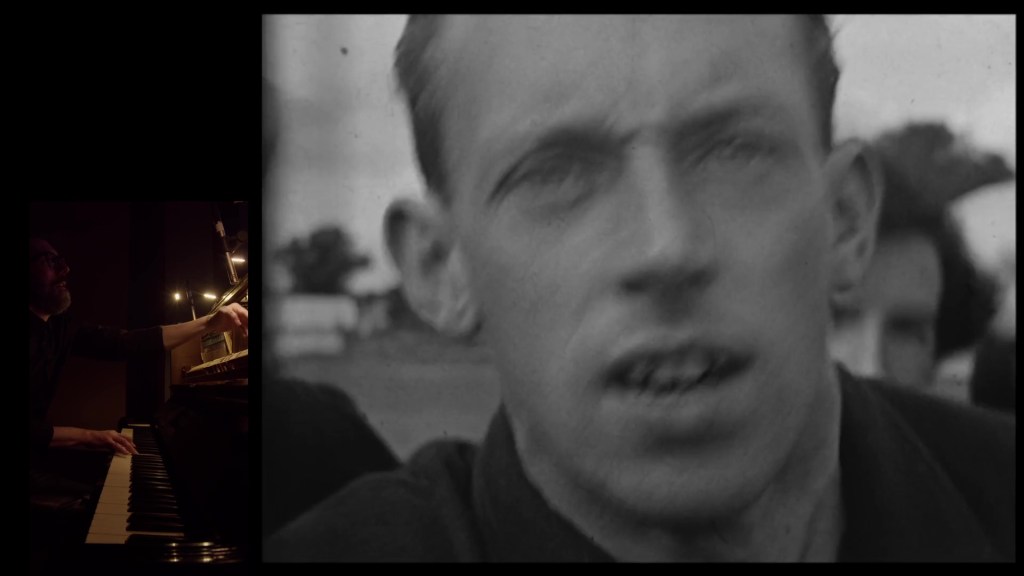
Well, that was Day 3. Goodness me, I wish that I enjoyed The Pride of the Clan more than I did. But I certainly enjoyed the music for this screening, provided by Stephen Horne (piano, flute, accordion) and Elizabeth-Jane Baudry (harp). This pair always produce gorgeous sounds, and in this case I found the music often more evocative than the film itself. Since the sound is recorded live for the videos available through HippFest at Home, you can also hear the Bo’ness audience reacting to the film – which (in this context) I very much enjoyed. If the film failed to charm me, the event itself was certainly charming.

So that was my last day of HippFest at Home. I should explain that there is a fourth online programme on offer: “Neil Brand: Key Notes”, a talk with music and film extracts. As much as I admire Brand’s work, I feel that this kind of event is not aimed at me. Aside from reasons of my own schedule, another reason that I feel able to skip this presentation is that HippFest at Home offers single tickets for individual screenings, rather than an all-in price for any/all events online (like Pordenone). I can see the benefit in this, as I have sometimes found that festivals replicate each other’s material (even online), or else include something that for whatever reason I don’t wish to see, and I regret not experiencing everything on offer.

Finally, I must repeat what I have said on all three days: HippFest at Home is simply the best presentation of an online festival that I have experienced. Everything about it, from the website, the programme notes, the video options, the introductions, the music, and the sheer enthusiasm of everyone involved, made me feel incredibly welcome. I have often written about the inevitable feeling of dislocation when “attending” online festivals. While HippFest at Home does not offer its online audience the same number of films as Bonn (ten features in 2024) or Pordenone (eight features plus several shorts in 2024), their presentation impressed me more. More of the live element was included in the online videos, and I loved being able to see the speakers and musicians – and the audience. I’m incredibly impressed by the effort of all those involved, and if any of them are reading this then I offer them my warmest congratulations. I’m sad that it’s taken me this long to attend HippFest in any guise, and I will certainly be revisiting – in one form or another – next year.

Paul Cuff

HippFest at Home (2025, Day 2)

Day 2 sees us go to Ireland for a programme called “The Near Shore: A Scottish and Irish Cinema-Concert”. Introductions to this set of films were given by Alison Strauss (the director of HippFest) and Sunniva O’Flynn (Head of Irish Film Programming, Irish Film Institute). Given the cross-seas nature of the films shown, and the collaborative aspect of archival exchange between Scotland and Ireland, it was appropriate to hear voices from both sides of the Irish Sea. As O’Flynn also explained, the Irish Film Institute often has a very inclusive remit when it comes to preserving and restoring films that might be considered “Irish”. Films can be made by Irish filmmakers outside Ireland, or films made within Ireland by non-Irish filmmakers. In the case of today’s programme, there is a blend of both – and even a kind of Scottish-Irish collaboration via a married couple’s home movie. O’Flynn introduced the programme, together with the first films – and then reappeared on stage to introduce the next films. (As she said, this was certainly preferrable to having one long introduction with too much information.) As I wrote on Day 1, these are superb introductions – informative, engaging, welcoming, and offering both personal, historical, and cultural context for the films. Perfect. So, to the films themselves…

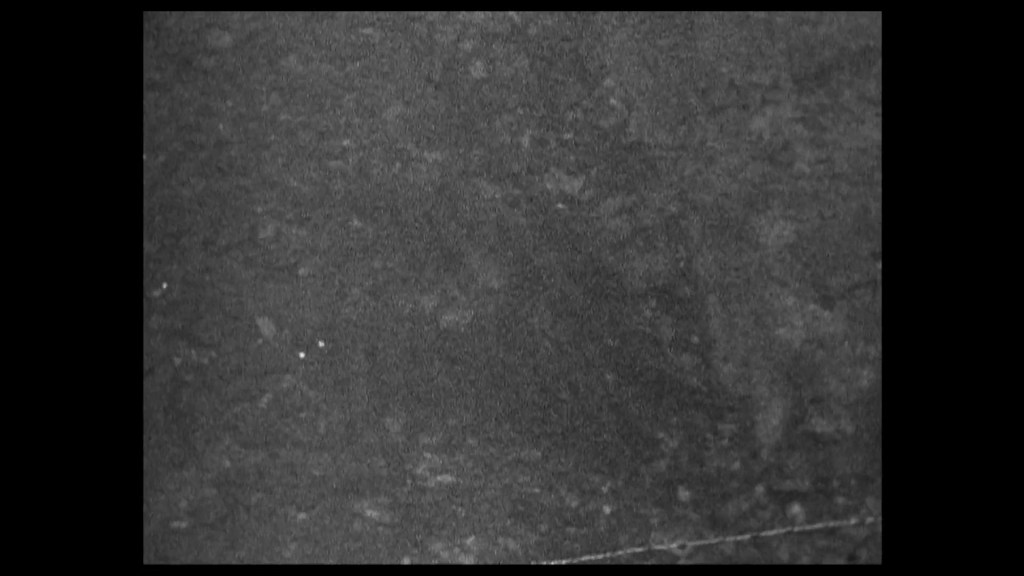
Royal Clyde Yacht Club Regatta (1899; Ire.; Dr Robert A. Mitchell). This view of a former century has immediate charm, immediate power. The image crackles with history. Its surface is all smoke and charcoal: a distant ship peopled by shadows, a sunless sky, dark ripples on a grey sea. The image evokes the haphazard nature of film preservation, of the way time nibbles and scuffs at the celluloid. It is a muted world, in every sense; therein lies its mystery. But if the image suggests a kind of fragility, even of happenstance, the film itself is beautifully (and carefully) realized. There is intelligence at work from the outset, when the first thing that catches the eye is a massive flag saying “START”. But after a few seconds, the eye takes in the subtlety of the composition. The sense of scale and drama, managed within a single shot, is brilliant. Just look at the distant boats, faint sketches of line and tone, thrown into relief by the appearance of a tiny rowing boat in the foreground. The whole scene subtly shifts to the right, but it’s so smooth and dreamlike it’s unclear if we are moving or the boats are moving. Then the empty space in the middle-ground is suddenly occupied by the yachts themselves – beautiful great two-dimensional planes that plough through the frame. It’s startling, but dreamlike too – no sound prepares us for this apparition or adjusts for its exit. In silence, objects have neither mass nor wake. They glide fatefully across the surface of the past. These great seaborne wings brush us by and are lost. This is a startlingly beautiful film.

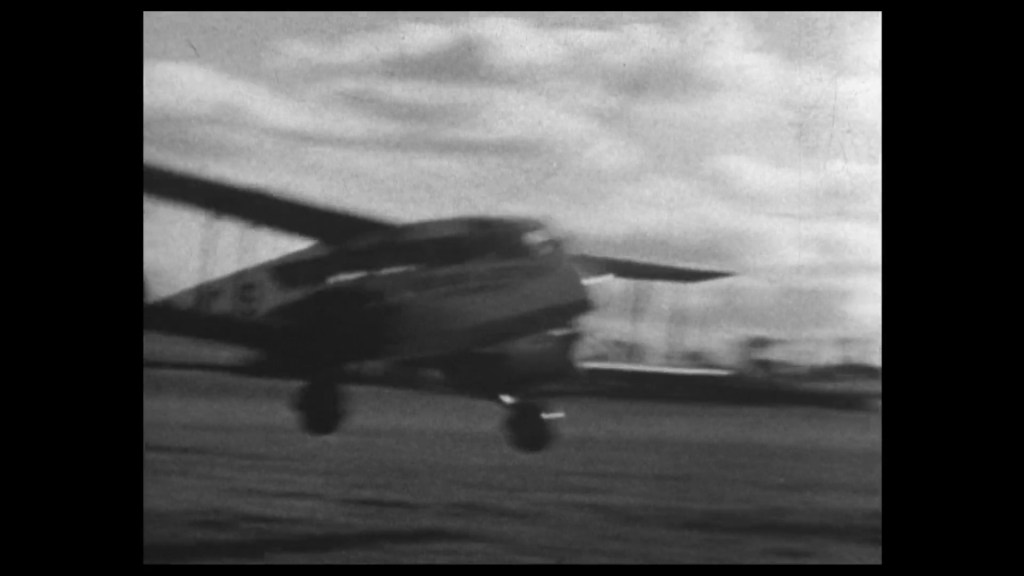
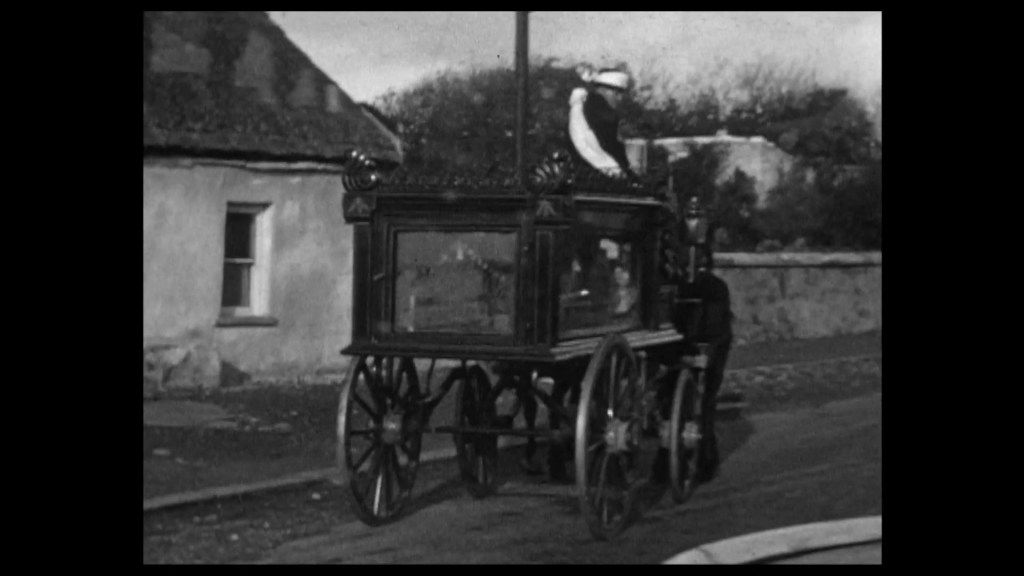
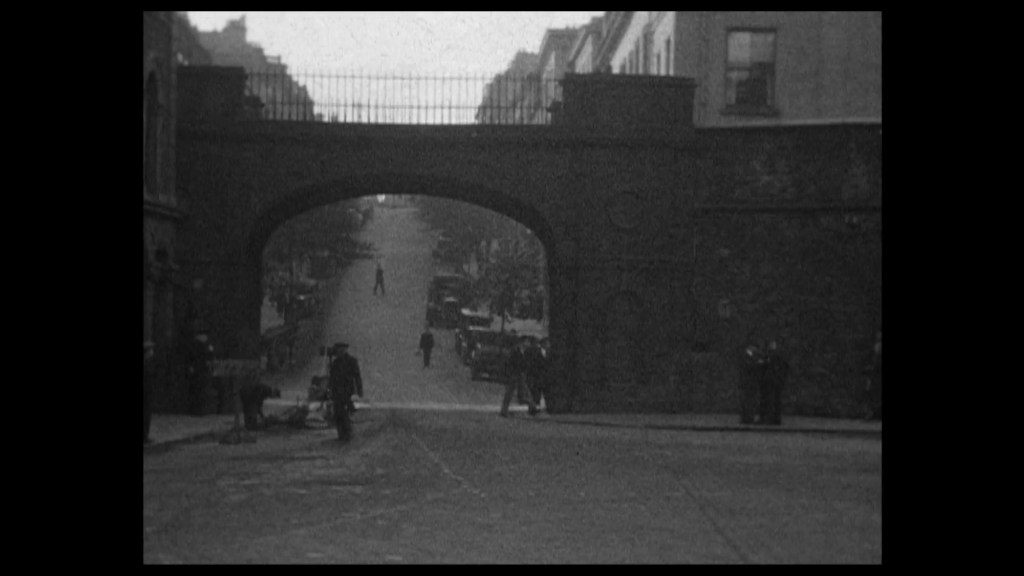
To Ireland by Air (1933; Ire.; Mr Dick). People grin at us, smoke, walk past. A plane moves forward, its propeller cranked. It gets up speed, it ascends. From the air, the world is unsteady. What can be seen? The land a distant patchwork of fields, houses. The shadow of clouds, already breaking apart. The world as it was, one day, nearly a century ago. There it is, fleeting through the vapour, the coast appearing and disappearing, a boat and its wake. “Passing Arran”; and pass it we go. It is lost in mounds of cloud. Here are ports, peopled by unseen inhabitants, long dead. Sheep and birds, the ground coming closer. The camera shakes. The world is plunged into darkness. But we are on the wing once more, high above a white sliver of surf. We seem to blink, and each time we open our eyes the world has changed. There is the shadow of the plane, the shadow of ourselves. Silence offers no preparation for the transitions of this montage. Here is Belfast, from the ground. The past and its people; silent, slow. A peacock mills around, geese stalk along. It’s a world (still) of horse and carts, of occasional cars and bicycles. (And, everywhere, horseshit on the roads.) The towns pass – Galway, Westport, Ballina, Sligo, Londonderry – and there are odd snapshots from each, from massive stone edifices to tiny homes with turf for their roof. Faces, a river, a fish in its depths. A site of ancient dread, an execution of a son by his father. (Beyond this past, another past, deeper and more obscure.) Landscapes and faces, extraordinary faces – most extraordinary when they are anonymous, when they don’t trust us, when they’re on their way to somewhere else. A hearse, a tower, a vista of coastline and hills. A sloping street, a dog rolling to scratch its back. Sudden transitions, odd glimpses. The camera is a curious stranger, glimpsing everything for the first time. It is as though we have been allowed some illicit access into the past. And still its inhabitants look back at us, wary of our intentions.

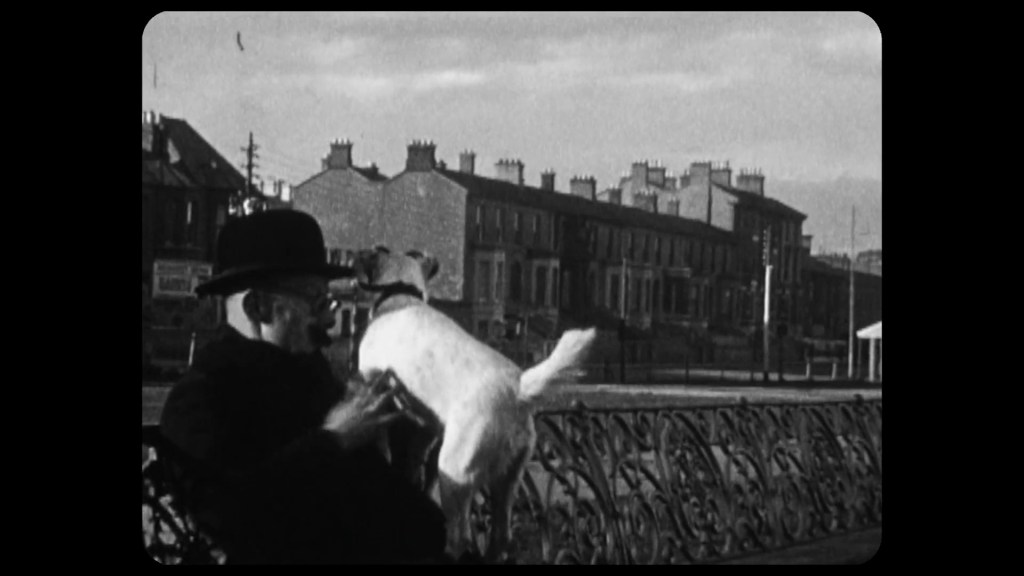
Rush Hour (1949; Ire.; John Tomkins). A bearded man waits and waits and snoozes on a bench by the sea. But then he’s too late. Dublin’s rush hour, a pell-mell mix of trams and buses and bicycles and cars. We glimpse the pedestrians hurrying here and there, and the bustle of life as it was – once. It is a glimpse of the real world, shaped by a keen eye and intelligent humour. But is it as mysterious as the last films? I think not. The past is no longer as wary of us as before. The distance is being closed, and without the fear and thrill of trespass – of crossing some historical threshold – there is less magic.

Butlins Holiday Camp Movienews (1950s; Ire.; John Tomkins). Mosney, County Heath. A delightful film, a glimpse of a holiday camp fully peoples, and in the sun. Laughter and exercises and silliness all around. It’s a charming film, but as with Rush Hour I no longer feel moved. This is a past that is more recent. It is not my past, but it is that of my parents or grandparents. The silence marks here it off from the present, but the gap is bridged by my knowing this world with sound. I am not quite a stranger here. Might I not “pass” in this past?

The Farm Below the Mountain (1958; Ire.; Ernest Tiernan). A honeymoon visit to family in County Leitrim. Another plane journey, more glimpses of the coast, of fields and rivers. The film is in colour, a dreamy filmic palette of rich hues and grainy textures. It’s a delight to watch, but again (for me) it is too recent, too much of a world that I might know second-hand. This is the recent past, dressed in the silence of its forebears.

Well, this was a rich trove of views. I regret that my interest lessened with each film, with each step toward the present. Perhaps one day these films from the 1940s and 50s will be as alien and uncanny as the films of the 1890s are to us now, in 2025. But I’d like to think that the earliest films will retain a unique aura, a unique aesthetic, that will mark them out forever. Among the films in this programme, by far the best is the first and earliest: Royal Clyde Yacht Club Regatta (1899). A film that more vividly bears the markers of its age, that more clearly sets itself apart from our epoch, from the living world. A film that possesses a kind of grandeur and mystery. Though I might intellectually imagine moving about the streets in 1899, the form of a film from this era disallows any possibility of such transgression. Silence demarcates this world from mine. It is not merely that these shadows happen to have no voice: it is that they cannot possess a voice. They are cut off illimitably and eternally from the present day. There is no calling out to us, no calling back to them. It is this quality (both historical and aesthetic) that makes the film documents of early cinema so potent.

I must also mention the music for this HippFest programme, which was improvised at the piano by Paul G. Smyth. I imagine that creating music for such odd films is exceedingly challenging, but this accompaniment was superb. He absolutely captured the odd, almost brittle rhythm of the earliest films. He understood and expressed the weirdness not just of the films but of our relation to them. There was a kind of hesitant exploration of emotional mood that surely matches our own attempts to engage with the films, to work out what’s going on and how we feel. Smyth conjured a marvellous range of textures and tones, at once varied and recognisably coherent. An excellent performance.

Well, that was Day 2. Any reservations about some of the films must not count against the value of a programme like this. Early films nestle productively alongside more recent amateur productions. All provide beautiful glimpses into the past, and evoke the lives of those who made them and those who we glimpse within them. O’Flynn’s introductions were the ideal accompaniment, framing their cultural and archival status – and why they are valuable and fascinating objects. While praising these introductions, I should add that HippFest very helpfully provides links to pdfs of all curational text online via their website. It’s another aspect of this festival that impresses. More please.

Paul Cuff

HippFest at Home (2025, Day 1)

This week, I’m off to another film festival, this time hosted by the Bo’ness Hippodrome in Scotland. Did I say “off”? I mean… well, what do I mean? What adverb suggests staying in my study? I suppose I’m “in” to another film festival. This is my first experience of HippFest, which has been on my radar for some years. I’m also pleased that the online version of this festival has its own name. “HippFest at Home” sounds delightful, a union of being away and being where I am.

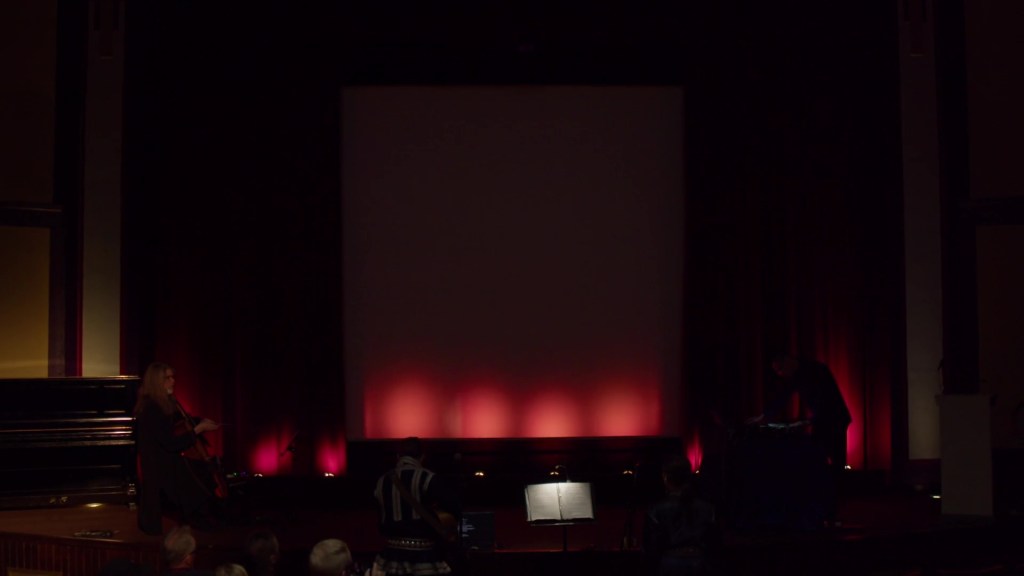
The pre-film introductions – from Alison Strauss (Arts Development Officer and HippFest Director for Falkirk Council), Magnus Rosborn (Film archivist from the Swedish Film Institute), and Lisa Hoen (Director of the Tromsø International Film Festival) – were also exceedingly welcoming. My only experience of pre-film introductions at online festivals comes from Pordenone, where the videos are pre-recorded and loaded as separate (and optional) prefaces to the films themselves. At HippFest, the introductions are those given live in situ – filmed and included as part of the single video that encompasses the evening’s programme. It does not force you to watch them (one can always fast-forward), but it encourages you to do so by having them as part of the same video timeline. Unlike Pordenone, where I almost always end up skipping the introductions (purely for the sake of time), I watched all three speakers for this HippFest programme. The video stream is perfect: we get explanatory text to see the names of everyone on screen, and the camera is placed so that we feel like we are part of the audience they are addressing. Indeed, Strauss’s introduction to the festival explicitly welcomed online viewers. The speakers themselves covered issues curatorial and practical (Strauss spoke about HippFest and her interest in tonight’s film), restorative (Rosborn spoke about the film’s rediscovery and reconstruction), and cultural (Hoen spoke about the context of the Sámi people who are the film’s subject). Hoen also explained something about the motives and context of the musicians who accompanied the film, as well as introducing the musicians themselves. I can only say that I found all three introductions engaging and informative. This really was the ideal way to start the programme.

Med ackja och ren i Inka Läntas vinterland (1926; Sw.; Erik Bergström)

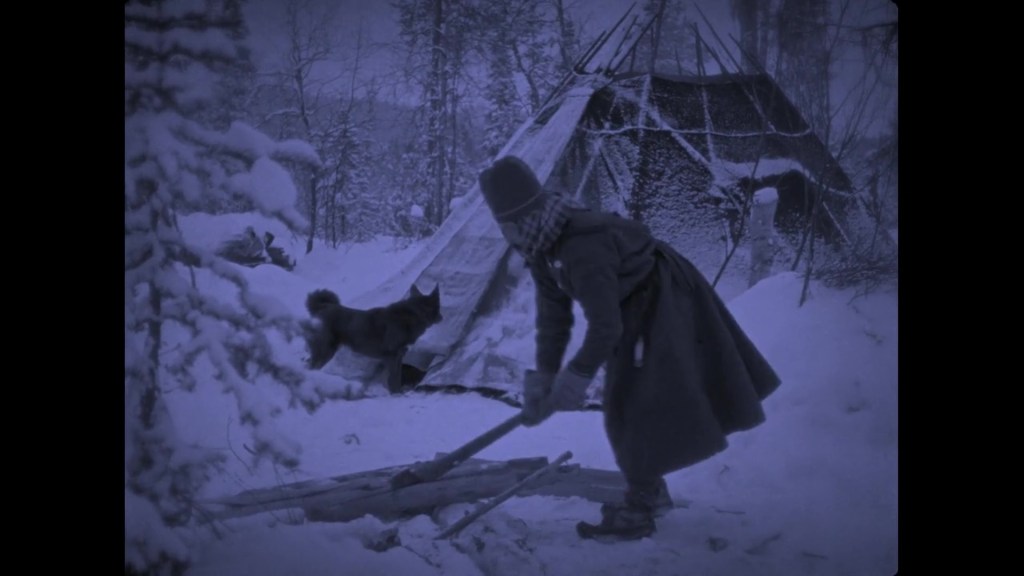
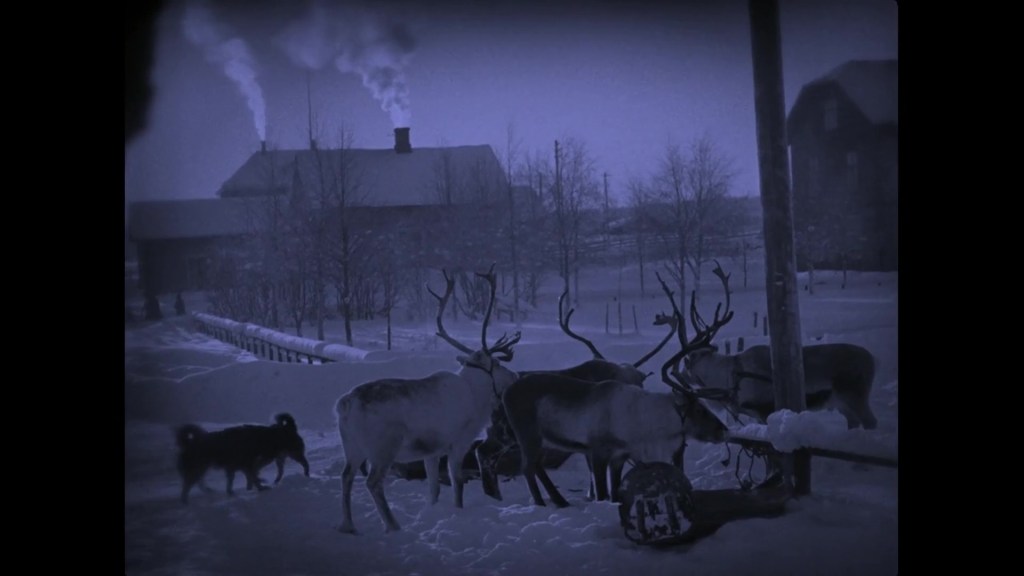
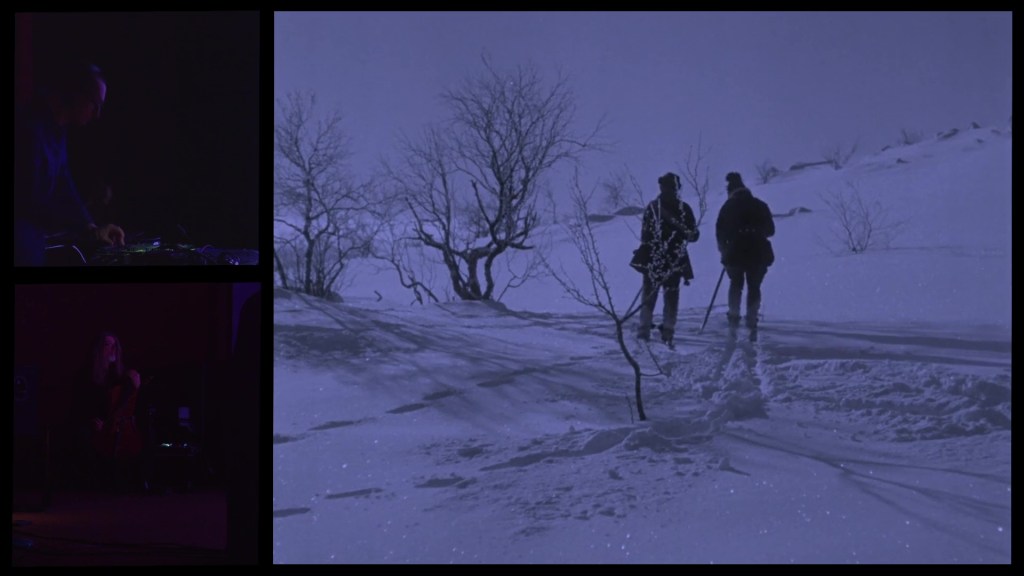
So, here is our feature film, “With Reindeer and Sled in Inka Länta’s Winterland”. The film is a portrait of life in the snowbound landscape of northern Sweden. We follow Inka Länta, who lives with her brother and maternal aunt, and next door to her maternal uncle Petter Rassa and his children. We also meet Guttorm, from a nearby (20km away) camp. We follow them as feed their family and animals, as they go to market at Jokkmokk, as they track reindeer, as they make and unmake their tents and camp, as they hunt wolves, as they slaughter deer.

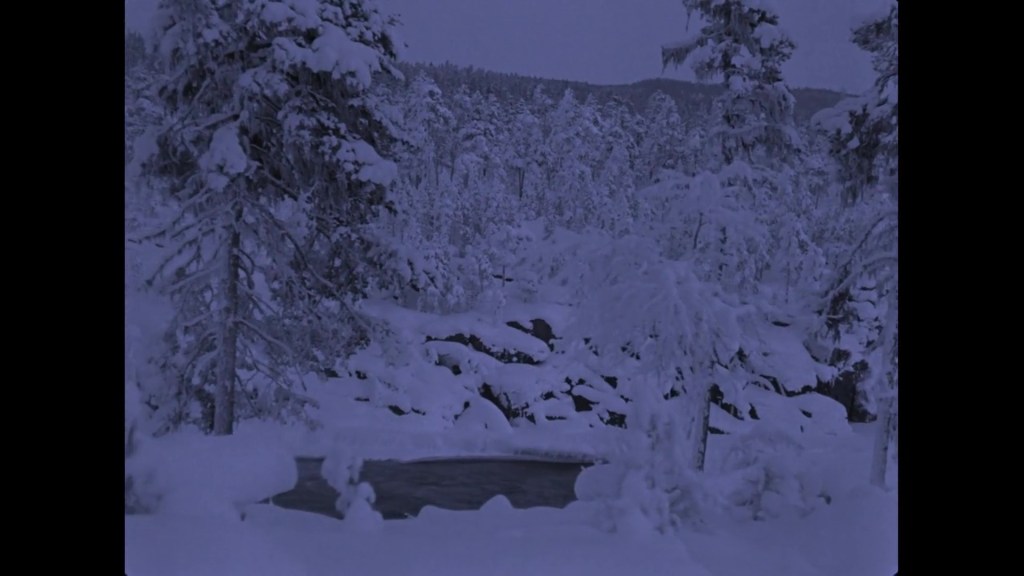
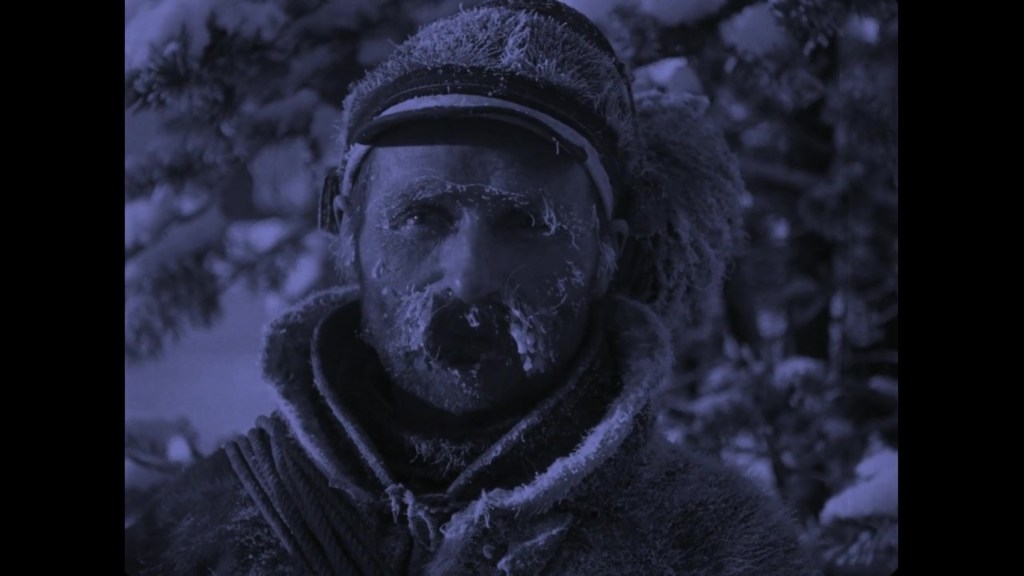
From its first images, a hypnotically beautiful panning shot around snow-covered trees, this film is a visual treat. Indeed, these first shots are among the most beautiful in the film. Complete with a delicate toning that turns the shadows a delicious deep blue-green, these are the most ravishing snowbound trees you’ve ever seen. When the camera gently tracks through the landscape, and this astonishing world begins to open out, I was incredibly moved – just by the sight of it, by the sensation of moving through stillness. My god, my god, my god, what a beautiful sequence. Cameraman Gustaf Boge captures the cold winter light with extraordinary skill. When (after several unpeopled shots) we see Guttorm wading through knee-deep snow, the light throwing his shadow before him, with the forest behind him, this is more than a mere “documentary” scene – it’s a kind of journey in space and time, a distillation of some unreachable moment in the past. The stillness of this wintry light and powdery shadow, the way that the snow itself exists in a kind of arrested physical state… goodness, it’s as perfect a glimpse of some archetypical winter as you could imagine. And yes, the silence of it is part of (essential to) the hypnotic perfection of these scenes.

But the film is as much about the difficulties of life in this landscape as it is about its beauty. For all the beauty of the snow, the trees, the vistas over endless ice, you also see what it takes to live here. The scene inside the tent when the family eats is amazing for the way the whole frame fills with the smoke from the fire, the steam from the pots, and the breath of the inhabitants. The film shows us the effort in doing everything here: from moving through snowdrifts (by foot, by ski, by sleigh) to herding livestock.

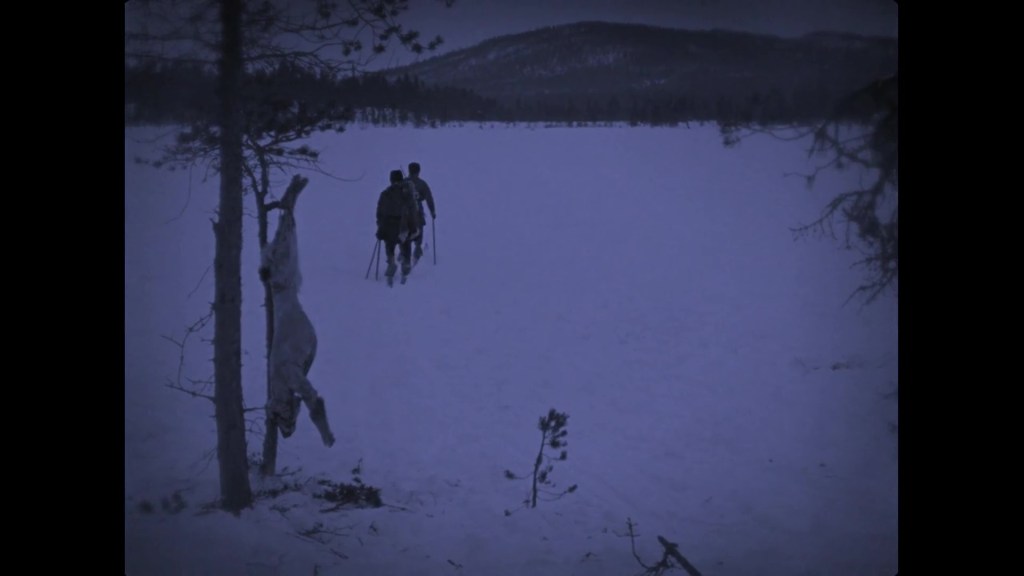
In particular, there is an extraordinary sequence in which Petter hunts, chases, shoots, kills, and skins a wolf. We watch the wolf bounding over the snow, while Petter slogs (even on skis) at high speed in pursuit. Only after several shots cutting between wolf and hunter do the two appear in the same frame. The first thing we see after the wolf has been shot is Petter mopping the sweat from his face. It’s an exhausting scene to watch, and the filmmakers make sure you realize how exhausting it was to perform. I say “perform”, because everything here may have the manner of documentary but it is all too well organized, too well filmed, and (in detail) too narratively dramatic to be truly “non-fiction”. Petter’s pursuit of the wolf is remarkable, and clearly real in the sense that he does indeed pursue and kill the wolf, but the skill of the filmmaking is just as impressive. Petter skins the wolf and leaves its body hanging from a wooden frame (I was about to say gibbet), and then he and his comrade move away into the distance. Every action is realistic, but the neatness of the framing and composition, the clarity of the montage of the sequence, bears all the hallmarks of a different kind of narrative filmmaking. This is a very beautifully organized version of reality.

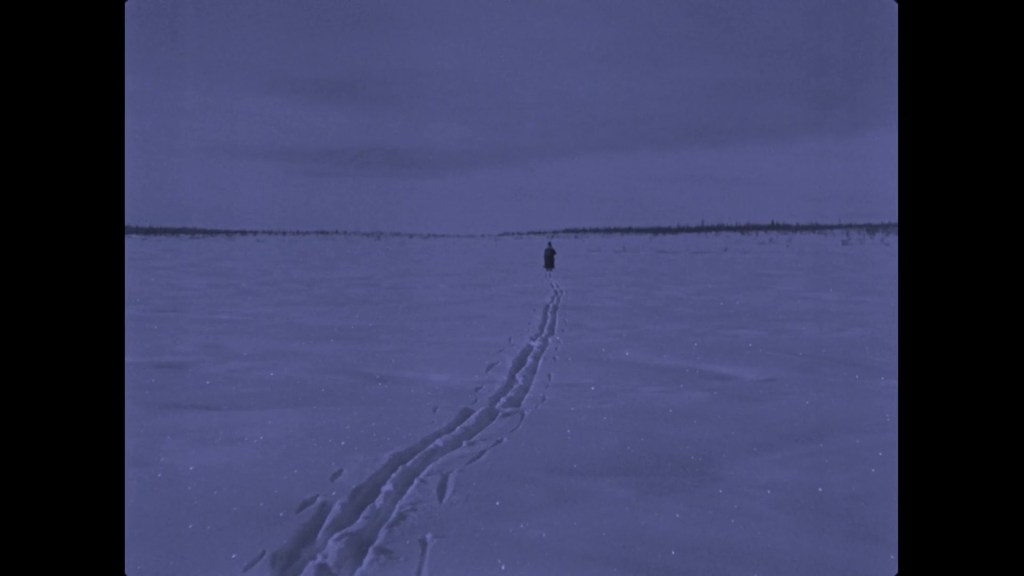
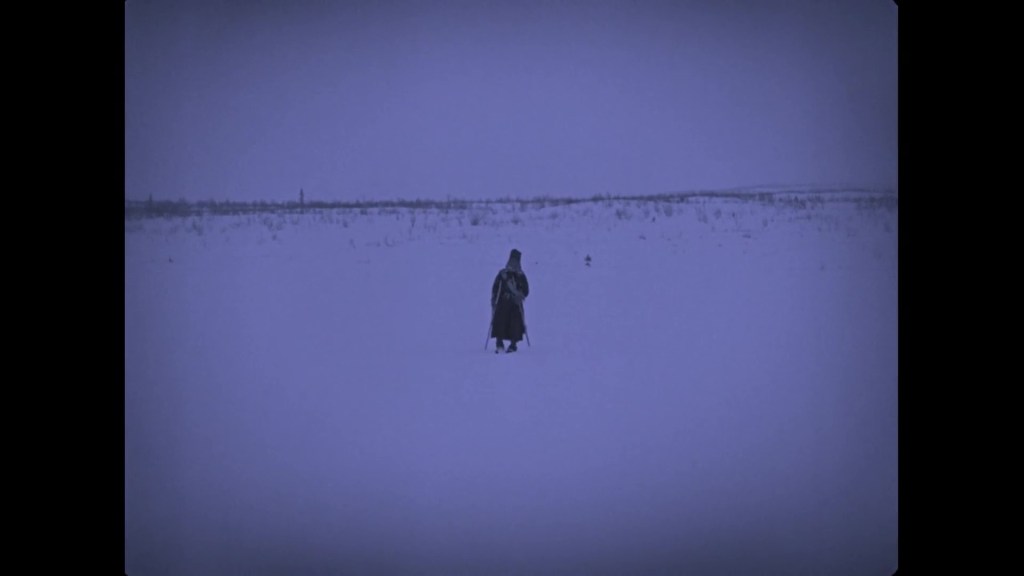
As the evening’s introductions made clear, this is part documentary and part fiction. (And, as Huen highlighted, there is a whole cultural and ethical side to the treatment of the Sámi people that the film deliberately erases.) Though there are clearly scenes of documentary reality, capturing real people and places (especially the market sequence) others (like the climactic sleigh accident) are staged events. This balance caught me a little off-guard, and I wasn’t sure whether I was being moved by the reality of the events or their fiction. At the end of the film, we see an accident in which Länta’s brother dies. Intertitles tell us that Länta must now leave her family and her homeland. She begins a trek across the open ice, and the film gives us flashbacks to earlier scenes with her family. But then Guttorm reappears and “hearts speak” and Länta returns to the hills, and to “happiness”. The sequence works, I think, because of the balance between the reality of the world we have seen (and, yes, its sheer beauty on screen) and the fictional framing of characters and events. Länta is a real enough presence on screen that, however contrived the events around her, I was sad at the thought of her life falling apart. And her world is real, too. I had spent the last hour in a kind of trance-like state of wonder at this world, so the thought of Länta leaving it (and my leaving it with her at the end of the film) carried its own sadness. So I gave a free pass to the abruptness of the ending, and the contrived nature of the narrative, and found myself moved. Why not?

I must also mention the music, by Lávre Johan Eira, Hildá Länsman, Tuomas Norvio, and Svante Henryson. Many of these musicians come from or have roots in the Sámi culture, and their score for this film is a blend of traditional and contemporary sounds. It’s a compelling combination of dreamy synth washes, rumbling electric guitar chords, and chant. While some of it worked very well (especially the opening scenes), other sections of it were too busy for my liking, falling out of rhythm with the images. But I appreciate that this kind of film (light on narrative incident and character psychology) is exceedingly difficult to write music for, and perhaps necessitates a more experimental approach. (To give you an impression of what the score is like, I cannot do better than quote the sound-description text that is an optional accompaniment to the film: “Dog noises, ruff, woof. Low vocal continue to talk like a wise old man. [….] Light dinging like a railway crossing in the distance. […] Babbling vocals continue. […] Frenzied scene of muttering vocal layers interweaving with busy backdrop of activity, metallic sweeps and glassy punctuations.” And, later: “Sweet melodies and dreamscape backdrop of echoing synths and waves of sound continue to ring out.” Kudos to whoever assembled this text, it’s really rather wonderful.) By the end of the film, I was absorbed in the soundscape as in the images.

Finally, a word on the online options for this HippFest at Home presentation. There are two ways provided to watch the film. In the first, we get to see the film and the musicians: a split screen arrangement allows us to watch both at the same time. I’ve seen this approach in some youtube videos in the past, but this was better composed and lit. I’ve often thought that this would be an ideal option on any/all home media releases of silent films: seeing musicians live with the film was always (and remains always) a key part of the experience. The other option provided by HippFest at Home is to watch the film without seeing the musicians. But even in this version, we get to see the musicians at the end of the film and see and hear the audience applaud. In each case, it’s wonderful to be able to see the musicians, and glimpse the audience as well. As with the introductions at the start, this presentation made me feel a participant in the event. It’s a superb presentation.

What else can I say? This was a superb programme, superbly presented. Bravo to everyone involved. Already, I feel that HippFest at Home is the most enjoyable format for an online festival that I have experienced. While I know that I’m not really there, and that I’m watching everything over a day after the event has happened, the presentation bridges this geographical and temporal gap. I’ve never before truly felt like I was at a festival before, but here I do. I absolutely cannot wait to join in with tomorrow’s show.

Paul Cuff