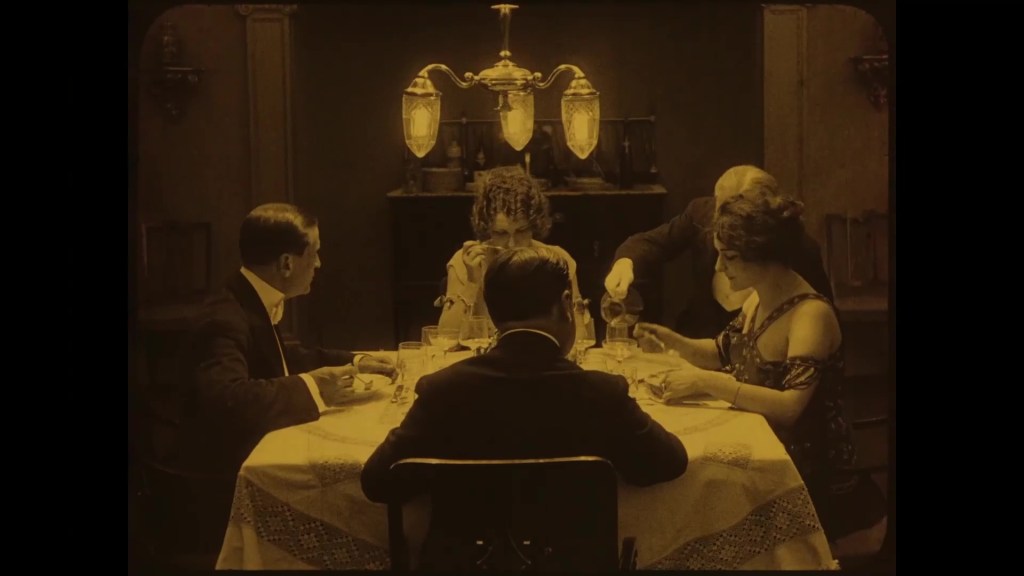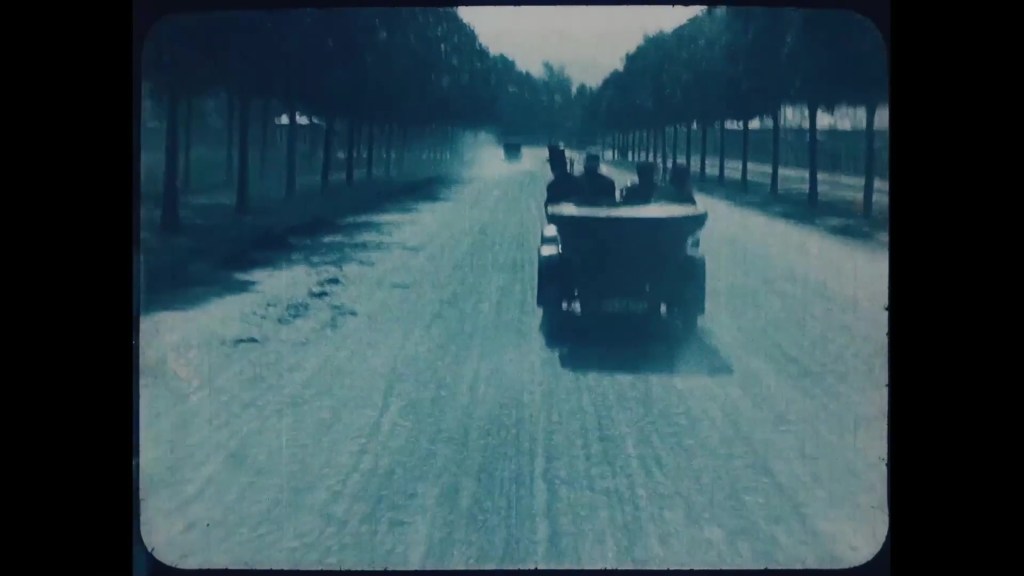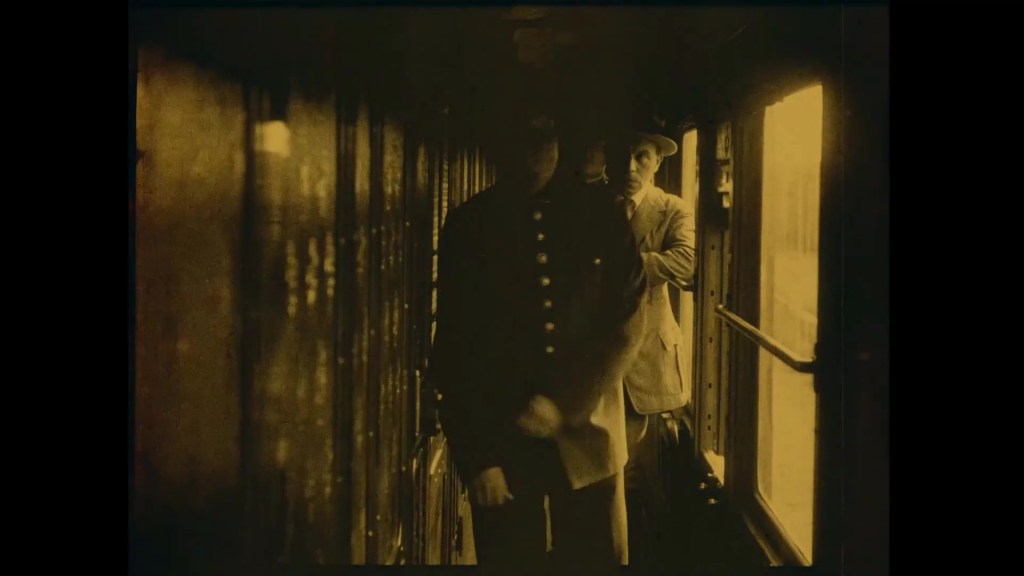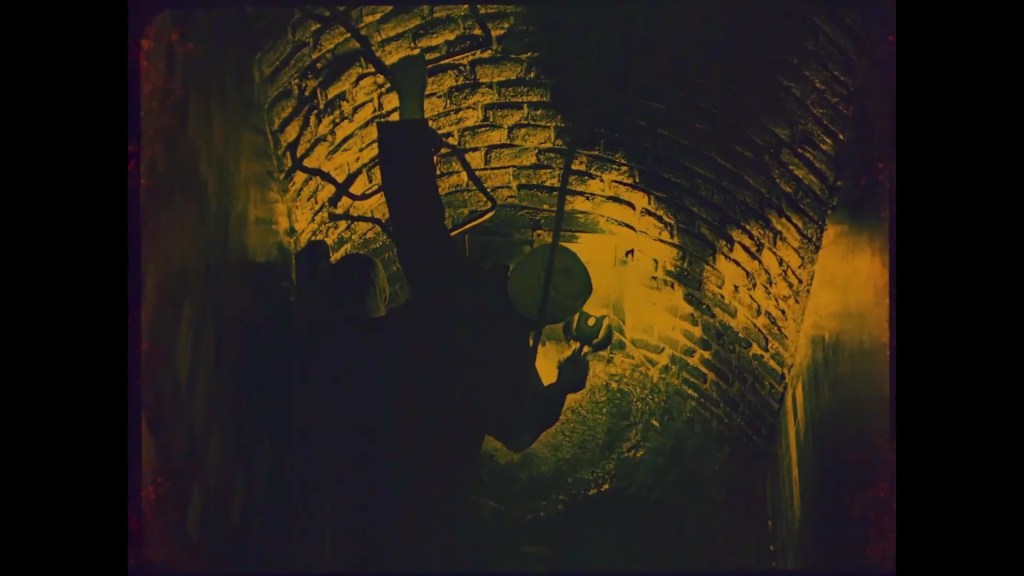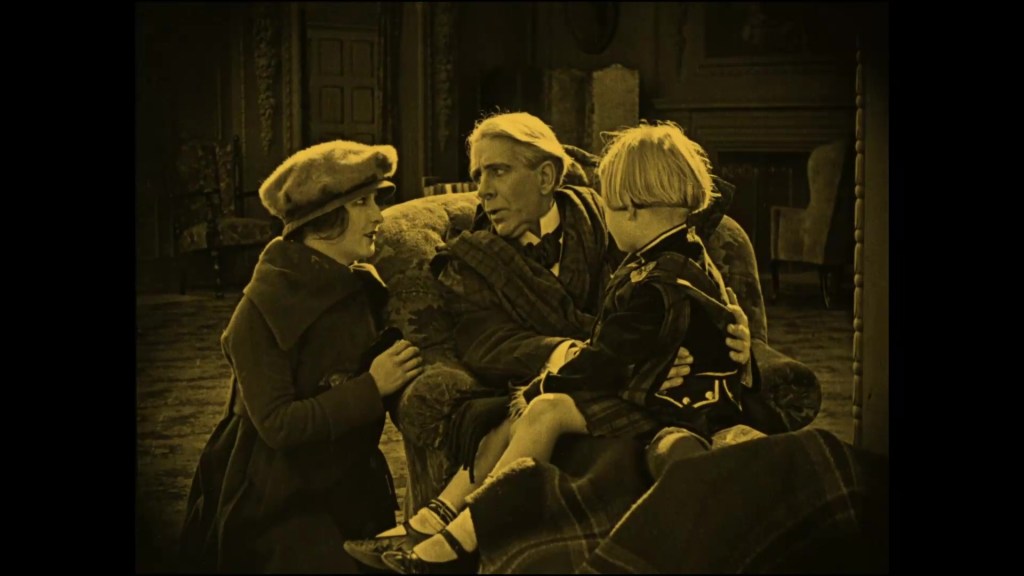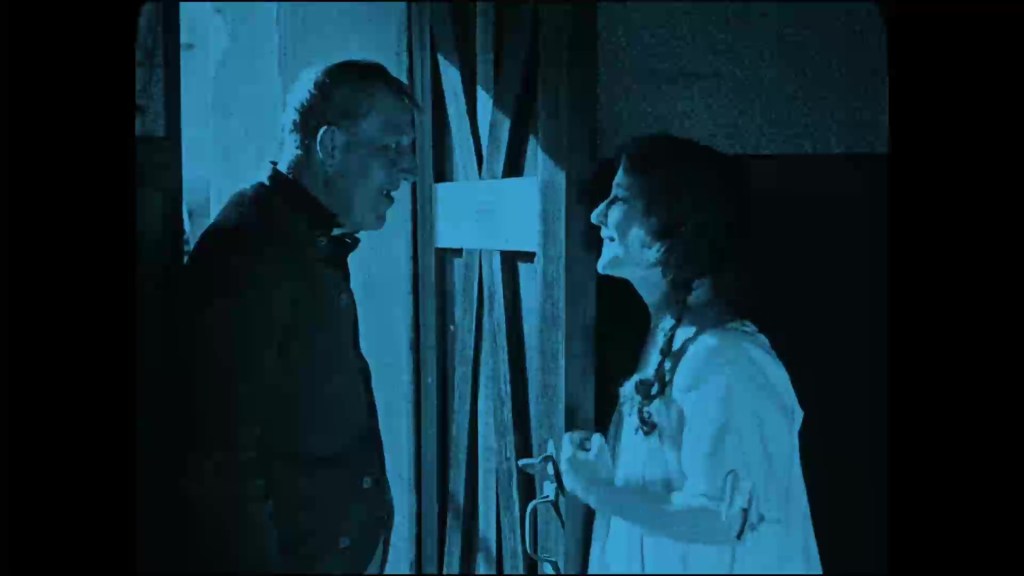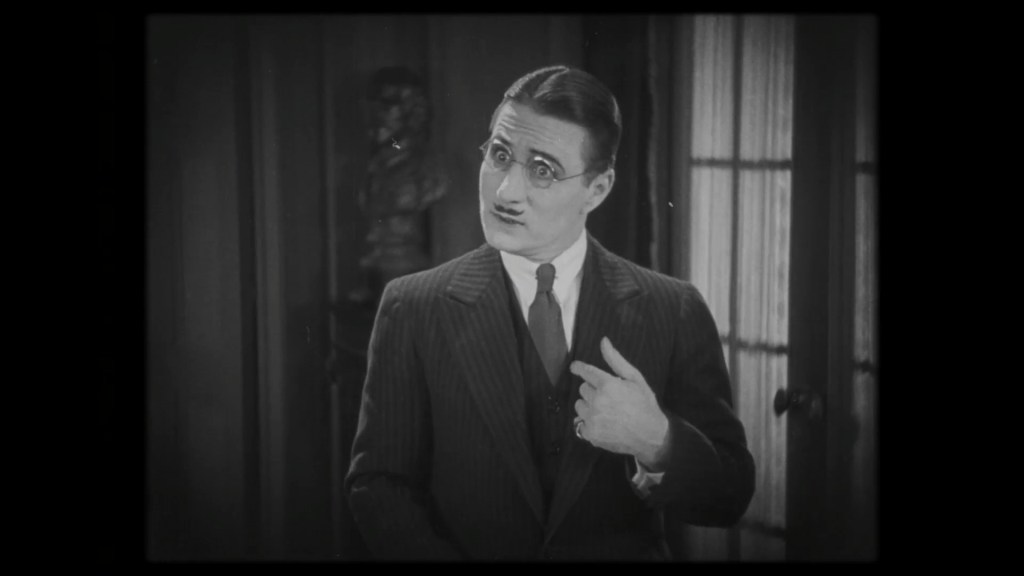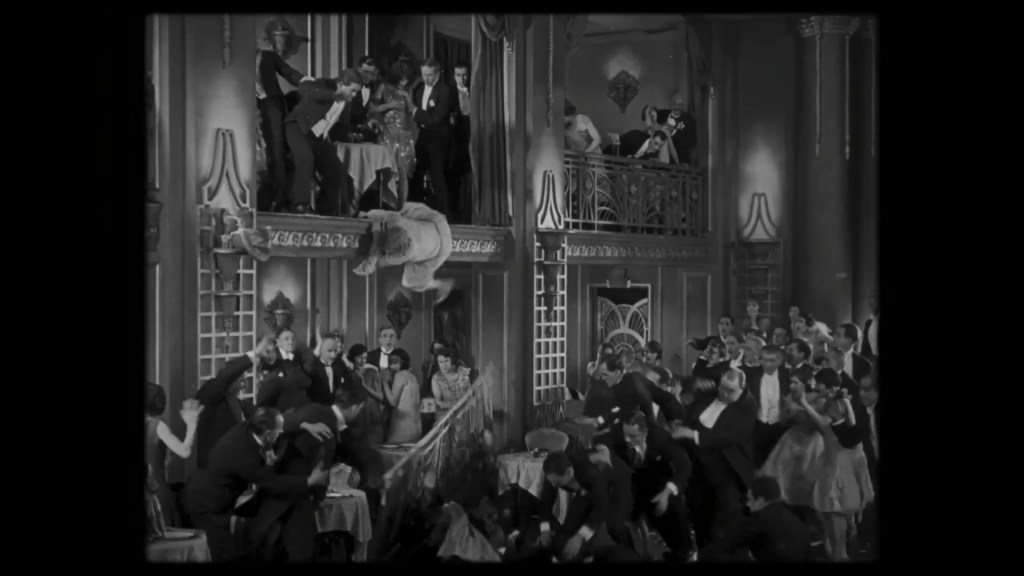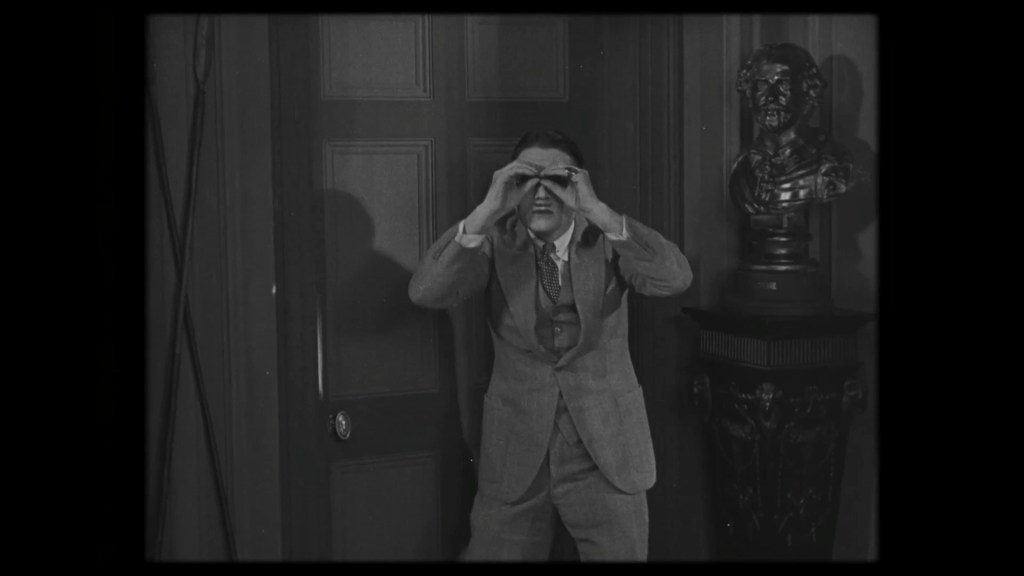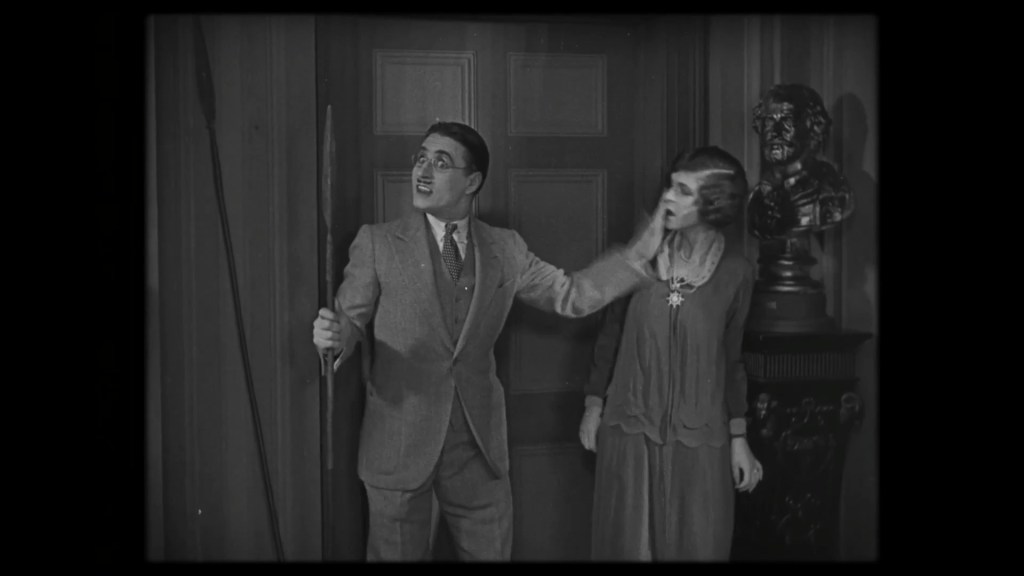
Paul Dessau: Music for silent films

The “100 Years of Film Music” series was issued by BMG/RCA Victor Red Seal across twelve CDs in 1995-96. This series is impressively eclectic, and it makes a rather strange cross-section of film music. Five of these CDs are devoted to silent film music of various kinds. Original music from the era includes Paul Hindemith’s complete score for Im Kampf mit dem Berge (1921), Hans Erdmann’s score for Nosferatu (1922), extracts from Chaplin’s music for his silents (1921-36), and Paul Dessau’s music for various short films (1926-28). (Among these recordings, the Gillian B. Anderson arrangement of Erdmann’s score is perhaps the most unique in being unavailable elsewhere. Her edition is closer to Erdmann’s original orchestration than the edition that accompanies the film on any home media release.) Additionally, there is one set of modern scores for silent films in this series by Karl-Ernst Sasse, composed for two Lubitsch films in the 1980s (about which I will dedicate a post in the future). The series also includes a recording of Charles Koechlin’s The Seven Stars’ Symphony (1933), a piece inspired by cinema but never used to accompany films of the era. Altogether, a very curious blend of the old and new, the real and the imaginary.

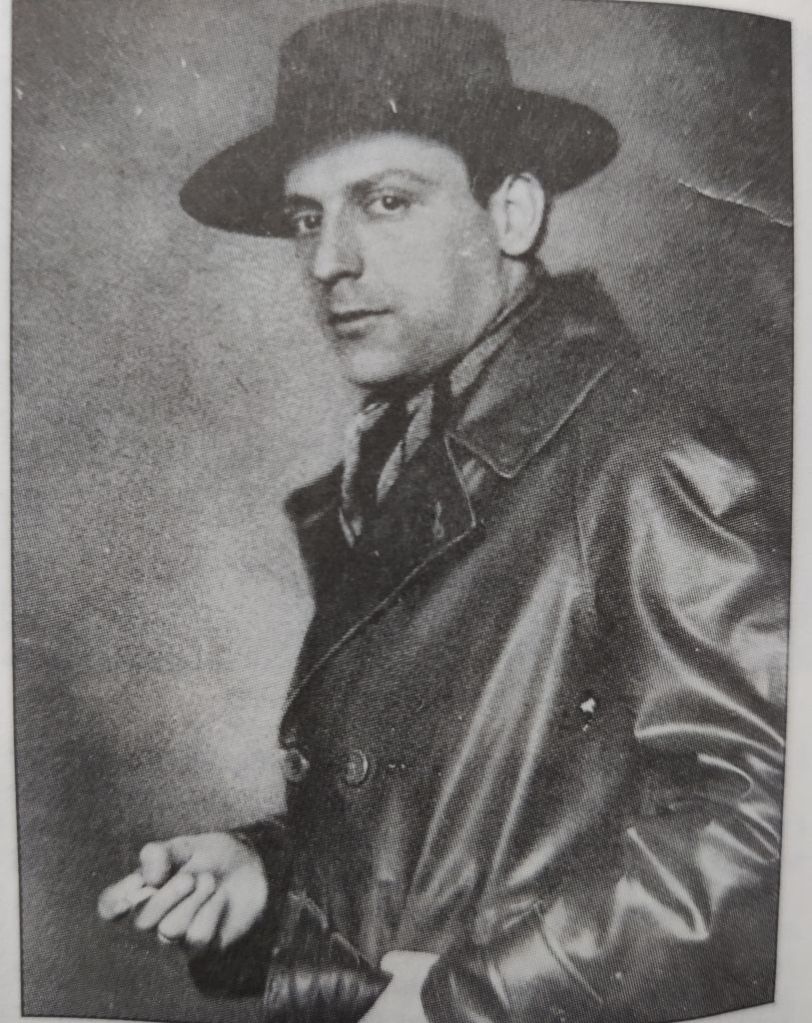
All of which brings me to Paul Dessau (1894-1979). This prolific composer is most famous for his operas and large-scale works written in the post-war period, where he worked in East Germany. However, he began his career in the 1920s as a cinema musician – first in Hamburg, then in Berlin. In Berlin, a relative of his owned the Alhambra Theatre and recruited Dessau to work as part of the cinema orchestra there. From being a violinist, he swiftly became an arranger and composer of music for silent films. The process of composition was amazingly rapid. The afternoon before new material was shown in the cinema, Dessau would watch the film(s) and make notes of the timings of the action on screen. That evening, he composed the music and gave this material for the copyists to write out the parts for the small orchestra (usually 12-15 musicians). The next day, Dessau would lead the orchestra in rehearsal in the morning, then in live performances for the public that afternoon and/or evening. This hectic pace of music-making stood Dessau in good stead. By the sound era, he had made a name for himself as an important new composer – but continued his role for the cinema. In the early 1930s, he contributed music to the soundtracks of Arnold Fanck films, and later in the decade to the dramas of Max Ophüls. He also arranged music for films by Lotte Reiniger and the operetta films of Richard Tauber, moving freely between avant-garde modernism and popular operetta.

But how much of his silent film music survives? I wrote recently about his scores for Saxophon-Susi (1928) and Song (1928), lamenting that neither was extant and regretting the lack of any information about their style or content. In the wake of these pieces, Donald Sosin recommended that I chase down the CD of Dessau’s music on the “100 Years of Film Music” series. This CD features Dessau’s music for four short Disney cartoons from 1926 and one half-feature length animation by Władysław Starewicz from 1928. The edition features Hans-E. Zimmer (no, not that Hans Zimmer) conducting the RIAS Sinfonietta, and it is marketed as a “world premiere recording”. In order to properly gauge how this music worked, I needed to find the films. Thankfully, I found that the Starewicz film had already been restored with Dessau’s music and broadcast by ARTE in 2004 – and a video was available online (after a little searching). The Disney films posed more of a problem. I found three in decent quality online and set about synching the music to their images. (This quickly revealed that the music was recorded without the timings of the films available or in mind.) After much fiddling and repeated exporting to new video files, I was able to sit back and watch everything through…

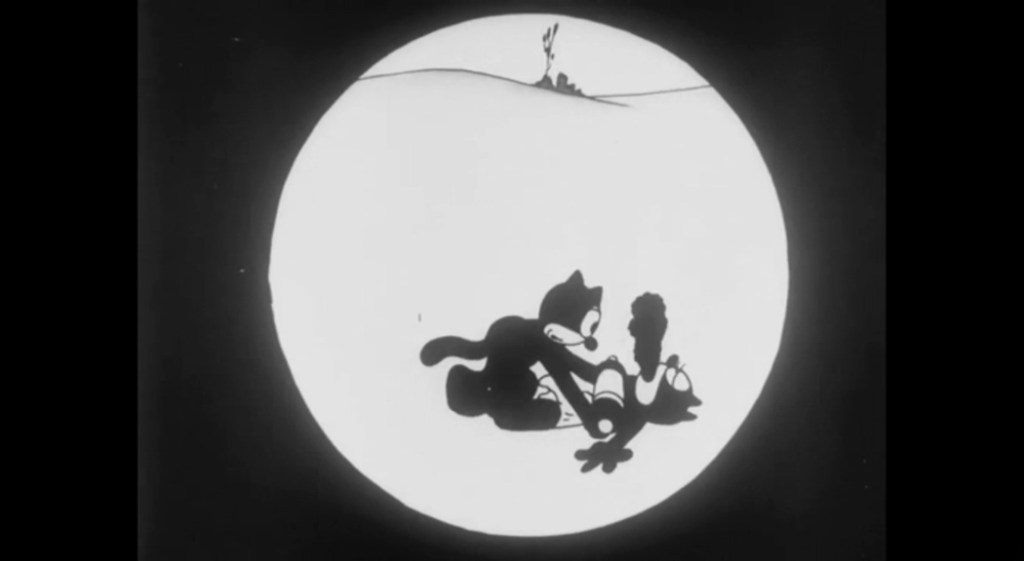
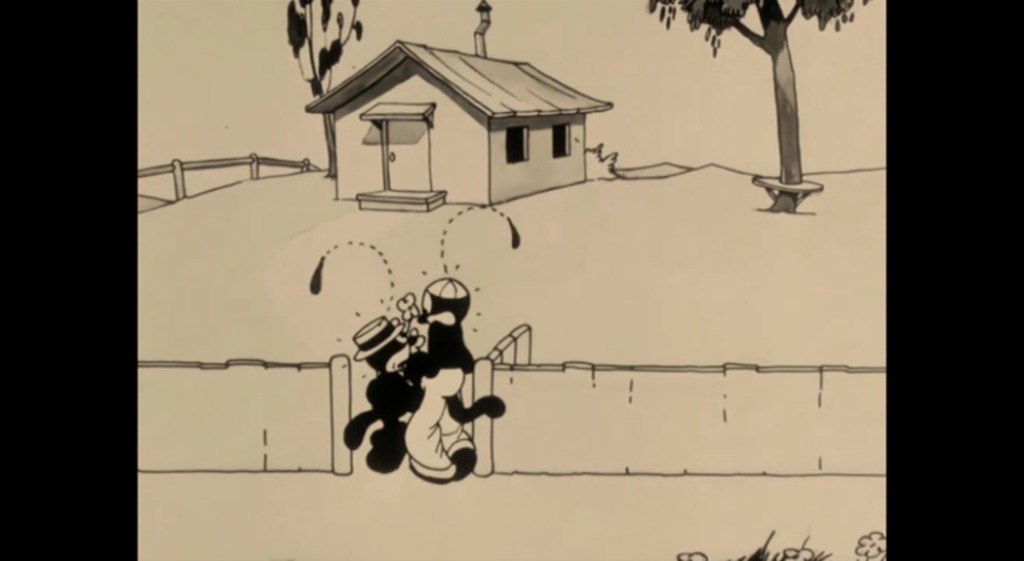
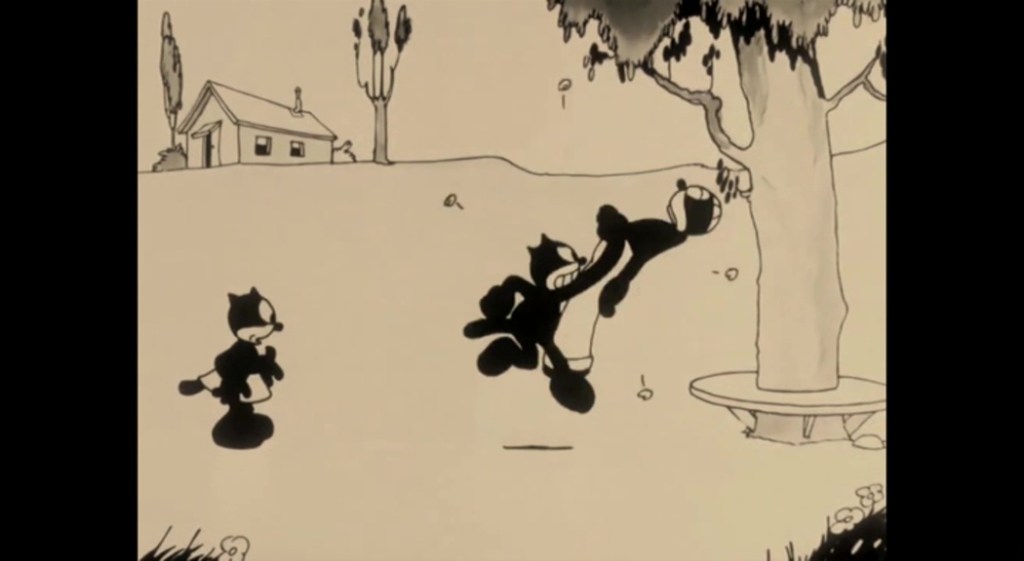
So to our first set of films. These are part of Walt Disney’s “Alice Comedies” series, mixing (mostly) animations with (occasional) live action. The lead cartoon character is ostensibly Alice (played in these films by Margie Gay, one of several children to don this role), though really the adventures are dominated by the character of the cat Julius. (Julius deliberately echoed the design of Felix the Cat, designed by Disney’s rival animators Otto Messmer and Pat Sullivan.)  

In Alice in the Wooly West (1926; US; Walt Disney), Julius fights the outlaw Pete, a bear who robs stagecoaches and harangues the local population. The film is utterly charming, filled with beautiful touches. The designs might seem relatively simple, but the animation is a riot of brilliant details. Further, it’s incredibly witty about the limitations and possibilities of its medium. Characters can climb nimbly into the air, sidestep across space, crawl across dimensions, remove and interact with their own skins, be blown apart piecemeal and reconfigure themselves… Dessau’s music interacts with this world in wonderful ways. Engaging with the (by 1926 already long-familiar) Western genre, Dessau summons a familiar soundscape of military marches (both British and American) and whip-cracking percussive effects. But he renders these musical elements unfamiliar through his harmonies and orchestration. The usual brassiness of a band or orchestra is thinned for a theatre ensemble, reduced to odd combinations, or rendered spiky and weird by odd rhythms and changes of pitch. Musical pastiche and parody are perfect accompaniments for the film’s playful mobilization of cowboy tropes. When Julius has defeated his foe, Alice arrives and calls him her “hero”. Dessau accompanies this moment with the first bar of “The Star-Spangled Banner”, which immediately lurches into a manically rapid flourish and fanfare for the film’s end. There is no loyalty to tunes for too long, nor to their attachments of nation or ideology. Melodies are summoned as material to be whipped into new shapes, then jettisoned. It’s a score as quick on its feet as the film.

Alice the Fire Fighter (1926; US; Walt Disney), as the title implies, concerns Julius and Alice battling a fire in a tall hotel building. Dessau fills the film with scurrying motifs and mechanical rhythms. There is a bell and sleigh bells to synchronize with (some of) the fire bells and engines on screen, but the orchestra itself takes on the numerous repetitive rhythms that match the identical (and identically-animated) ranks of horses, cats, and engines of the fire brigade. These motifs are also anxious, high-pitched, restless forms that scurry along in accord with the urgency of the action. Yet there are moments of pure delight, when both film and music deliver delicious little gags that act as vignettes within the action. My favourite is the moment when the little dog rescues his upright piano from the burning hotel. At first we hear a tense refrain for woodwind, with occasional dim clashes of cymbals, as he pushes it out the door and over the porch. A mouse on the top floor waves to him for help. The pianist on screen plays his piano and the notes appear in the air, the scale spelled out like stepping-stones from the window to the piano. Dessau, of course, uses the piano in the orchestra to spell out an ascending scale; then, as the mice neatly run down the notes, a descending scale. But even this moment has an odd tension in it. Dessau’s scale runs are harmonically uncomforting, ending in an anxious trill (at the top) and a low sharp (at the bottom). The strands of music throughout the score are thin, shrill, weird. It makes you notice the weirdness of the film, the curious minimalism of the line drawing, the wit and precision of the characters. Indeed, I feel that it’s an impressively tense piece of music for so slight a film. It’s endlessly moving, picking up the next idea – a kind of perpetual self-invention. So many of the motifs last barely more than a bar or two – such as the delicious rustic march, all jingling and banging, that accompanies the fire brigade’s initial effort to extinguish the fire – and later reappears as Julius rescues the lady cat. It’s such an irresistible little motif but lasts only a few seconds. And for the cats’ climactic embrace there is an amazingly long-running crescendo in the strings, followed by a final burst for brass of “Hoch soll er leben” (a traditional German celebratory tune). It’s all over in a flash, but what a brilliant flash it is.

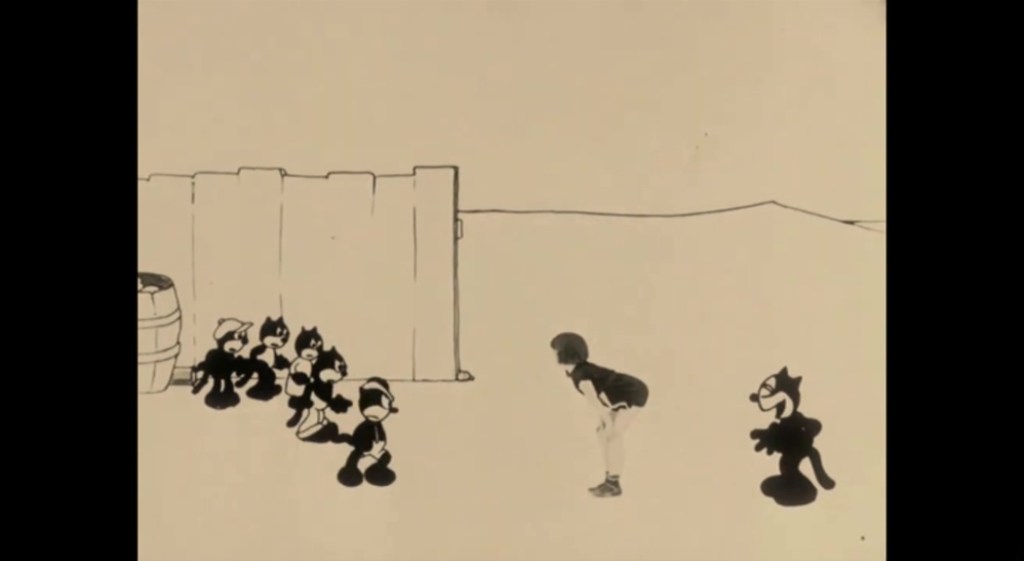
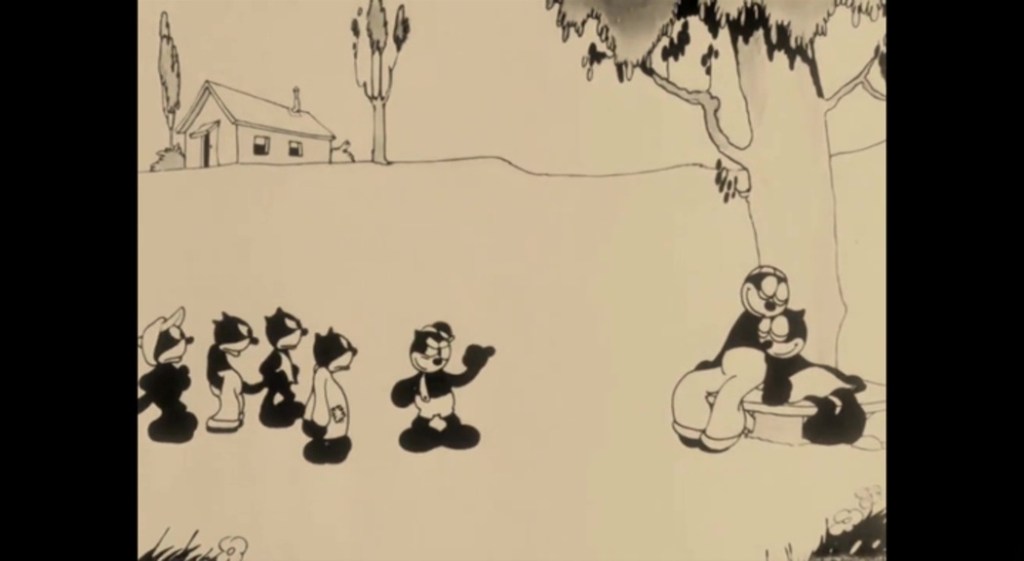
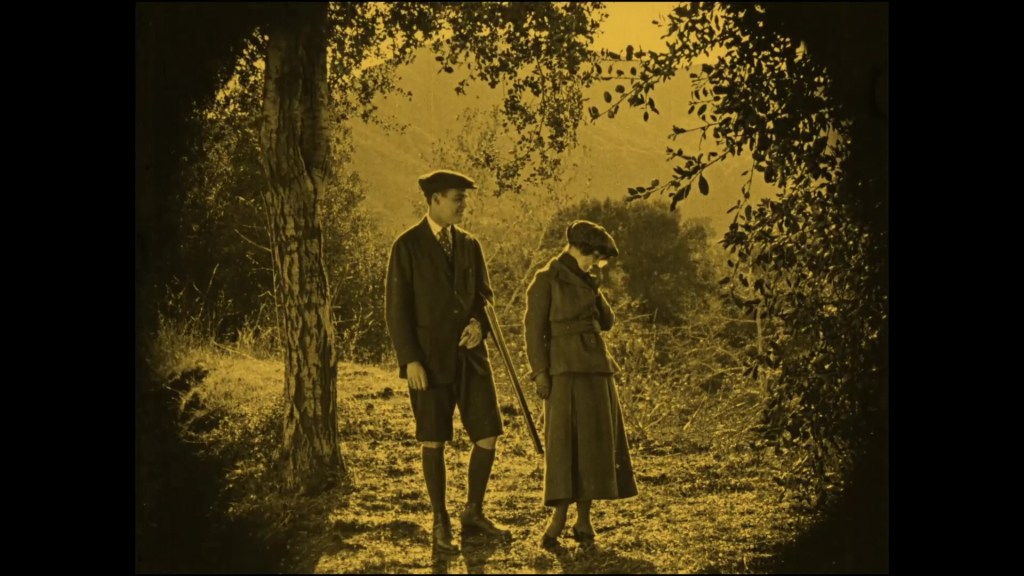
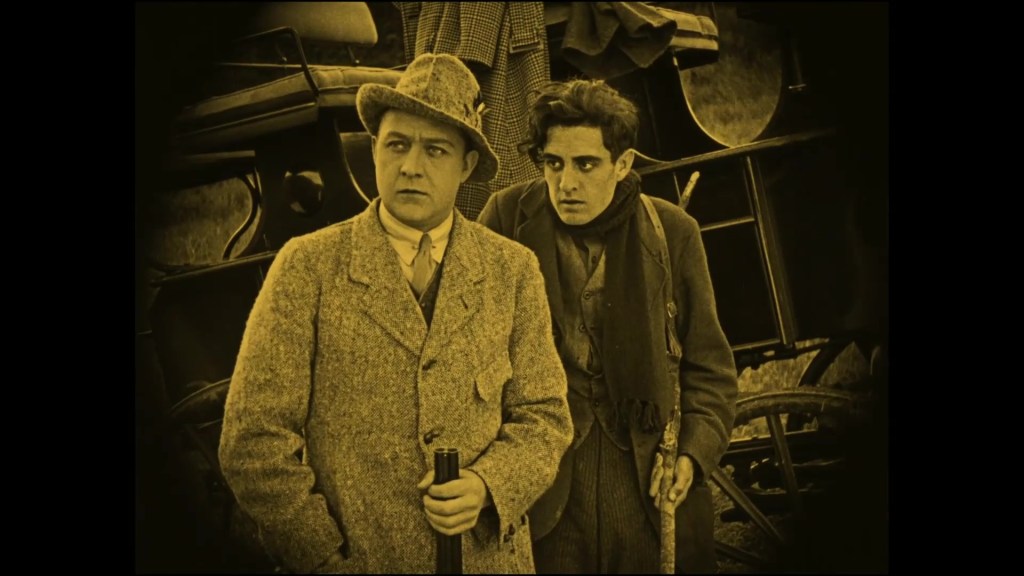
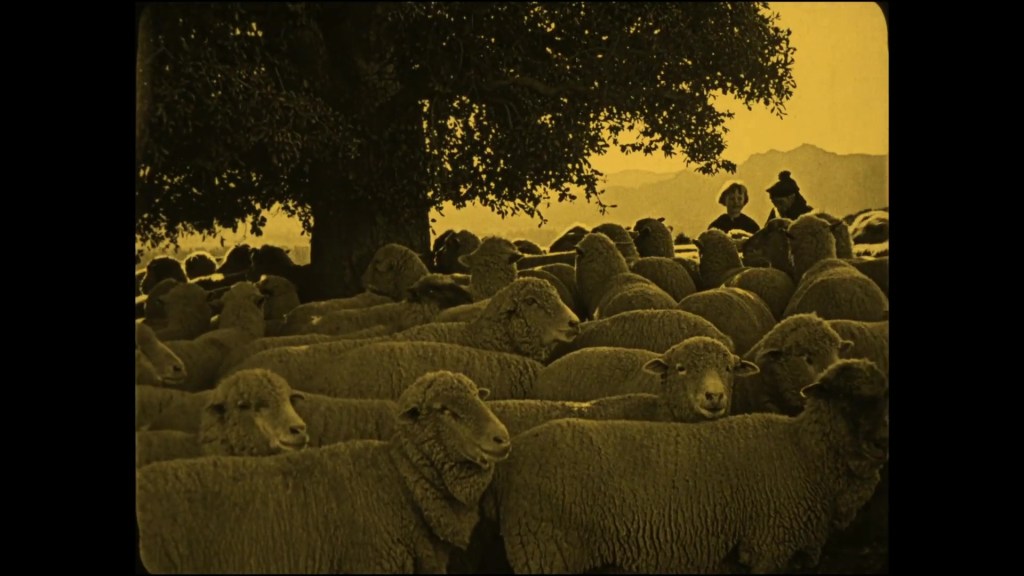
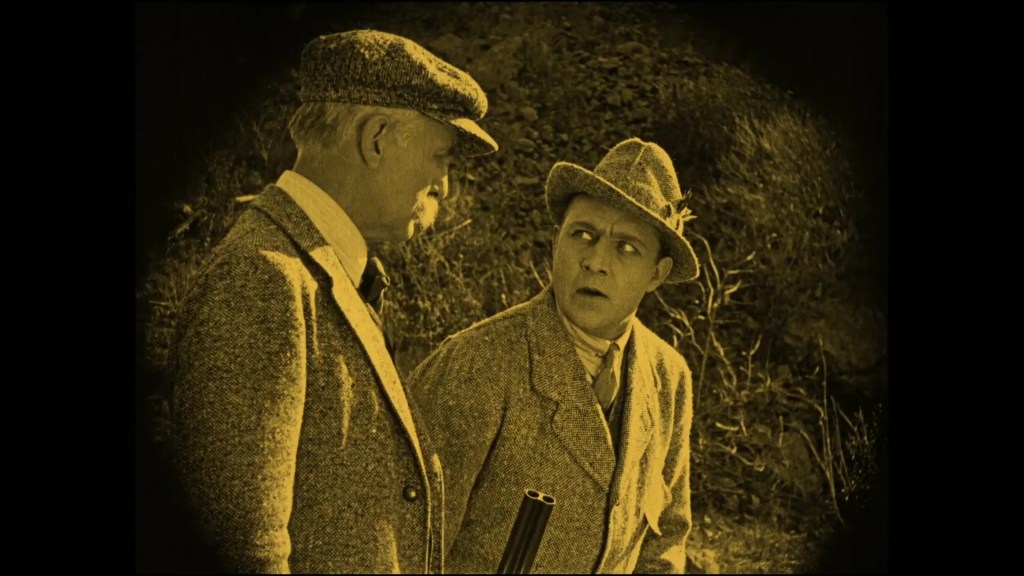
Alice Helps the Romance (1926; US; Walt Disney) concerns Julius’s efforts to woo a girl and defeat his rival in love. It begins with a delightful passage for clarinet and banjo, as Julius strums away on screen, then preens himself to impress his lady friend. But this light-hearted insouciance doesn’t last, and the music quickly turns acerbic and ironic. Julius is outsmarted by his rival and finds himself rejected and alone. As in Buster Keaton’s Hard Luck (1921), our hero in Alice Helps the Romance repeatedly tries to kill himself, each time via different means. As Julius wanders dejectedly in a state of aggrieved loneliness, mocked by birds and thwarted in his suicide, Dessau provides some incredible little passages of anxious woodwind instruments circling one another. It’s appropriate for a film that has such bleak elements to it. A solution to Julius’s heartbreak is presented when he hires a small gang of youthful roughs to surprise his rival when he is with the girl. The gang of kittens approaches the rival while he is snuggled up with the girl. They stop and bellow “Papa!” in chorus. Dessau renders the syllables of “Papa” into a throaty, rough-edged brass call. This moment perfectly echoes the scene in Act 3 of Richard Strauss’s Der Rosenkavalier (1911), when a disguised Annina claims that Ochs is her husband and the father of her numerous children. A small crowd of the latter flock around Ochs, crying out “Papa! Papa!” in the same ascending, two-note phrase used by Dessau. The moment works perfectly in the film, the orchestration giving its humour an aggressive edge. But it’s also a delightful citation of “high”, adult culture in the context of this knockabout cartoon for children.

Finally, there is also Alice’s Monkey Business (1926; US; Walt Disney), but alas I could not find any copy of this film to watch with the music. (At least one source states that the film is lost.) Swirling woodwind, plodding marches, scraping strings, filigrees of flutes, scampering piano, rambunctious brass – it’s a weird jungle of sound. Listened to without images, you really get a sense of how intricate this music is – and how well it conjures a narrative. I do hope the film survives somewhere…

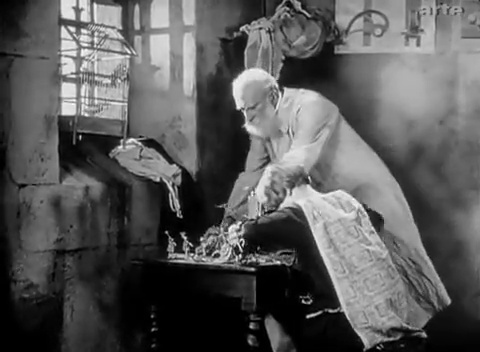
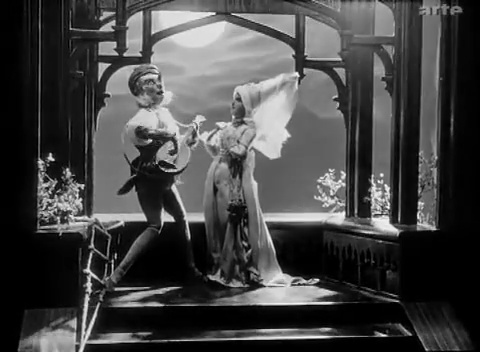
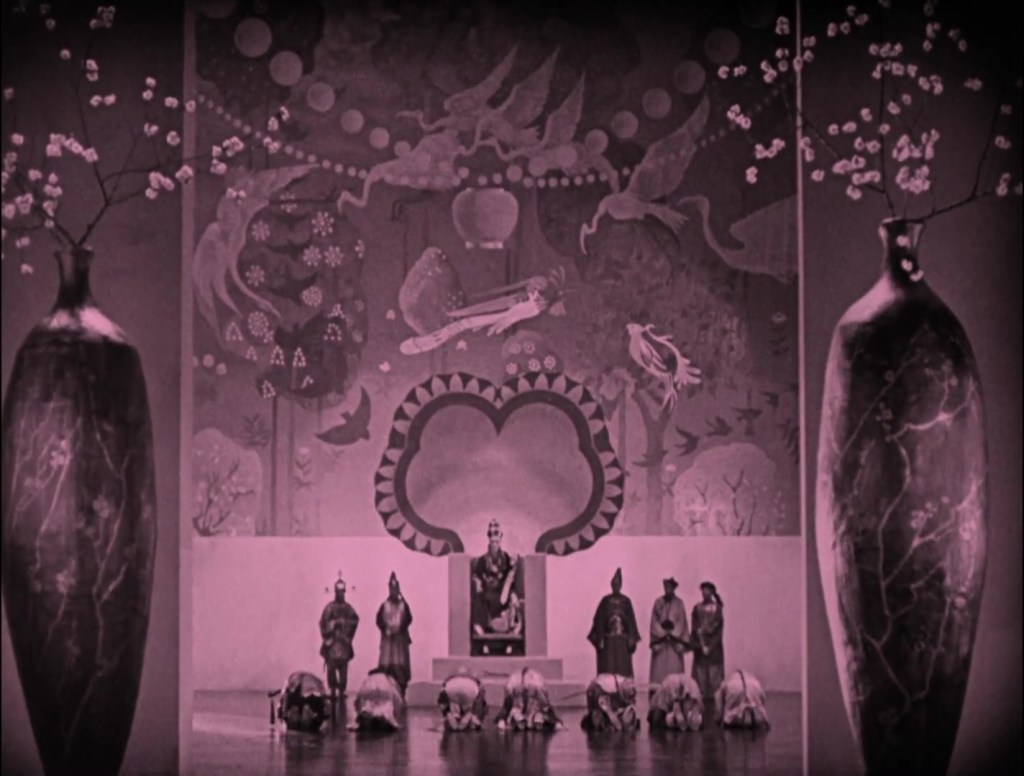
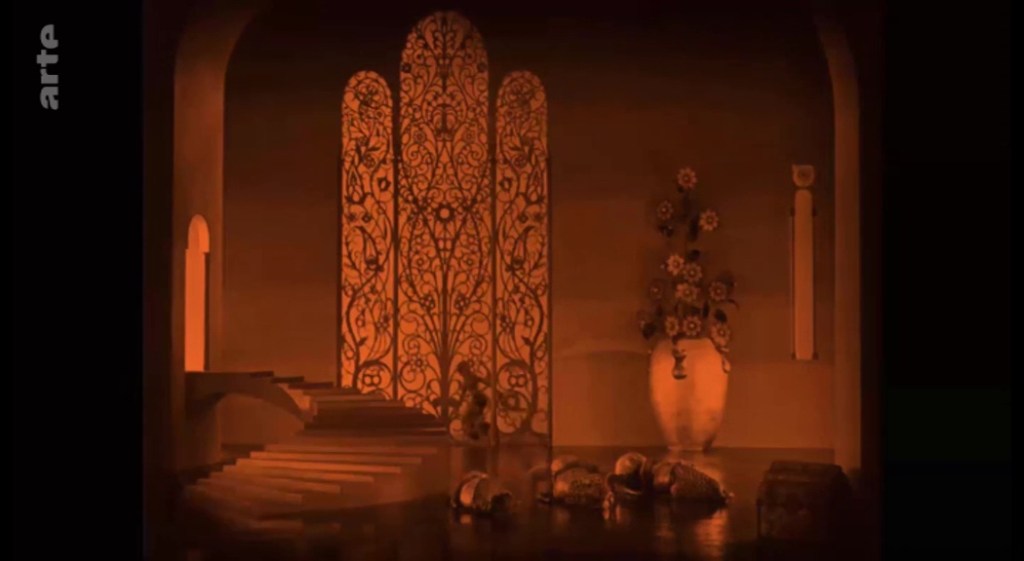
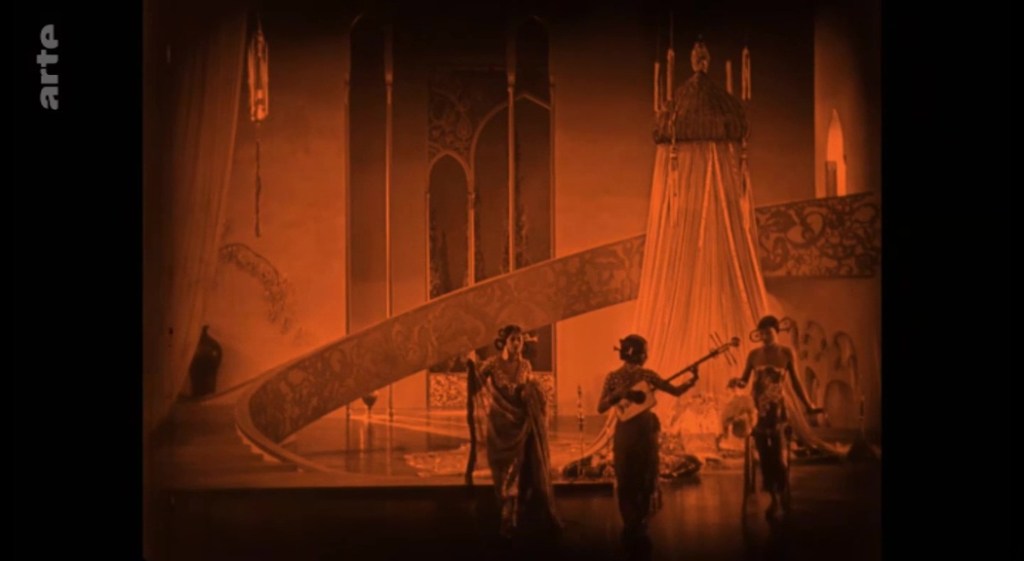
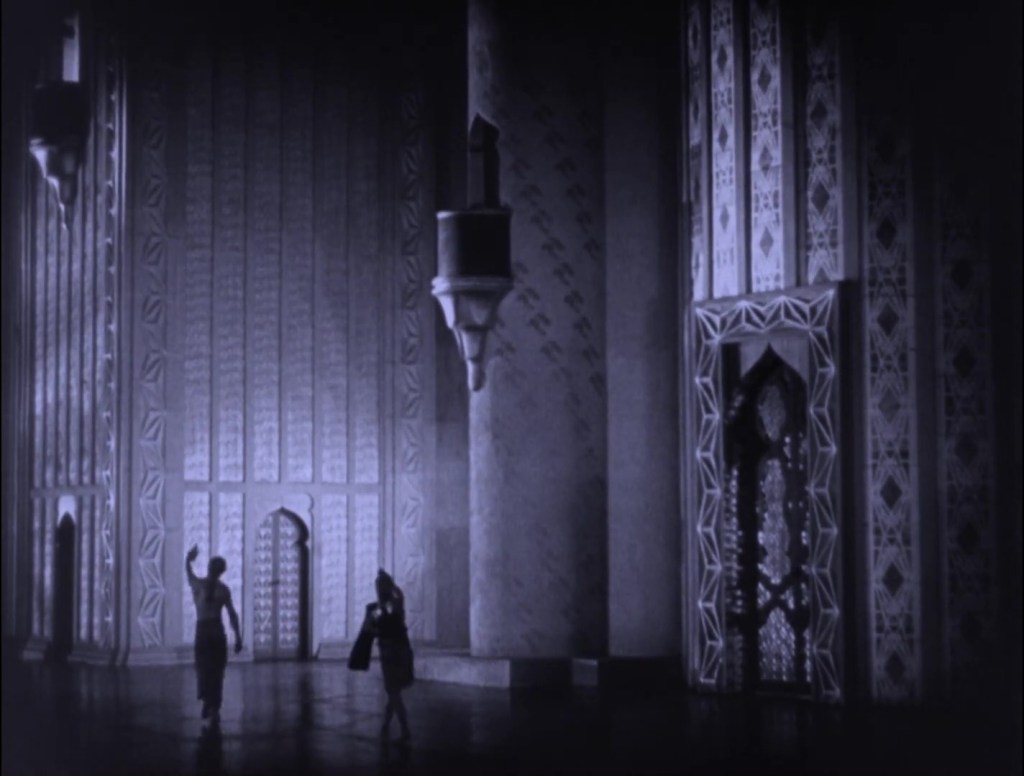
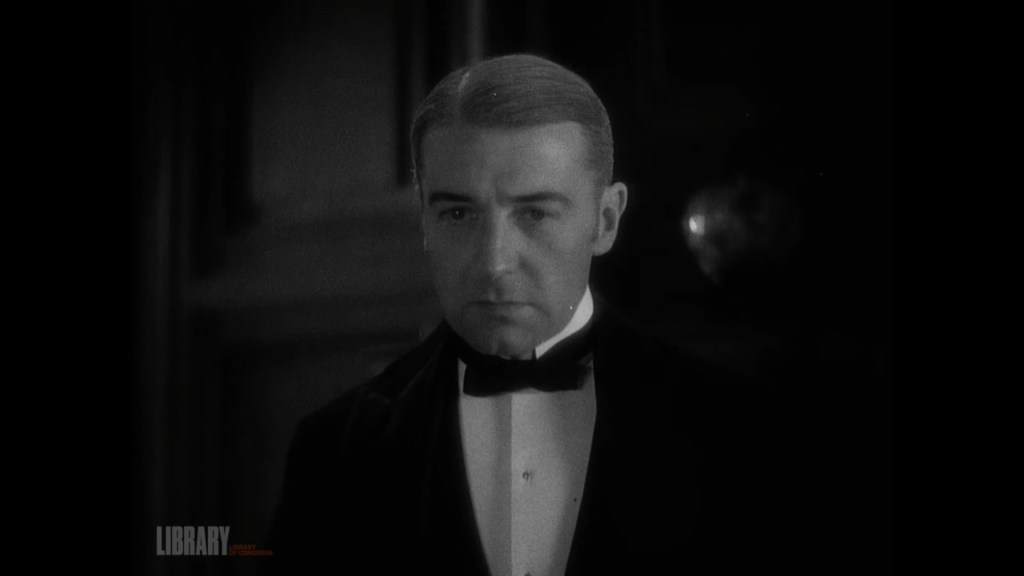
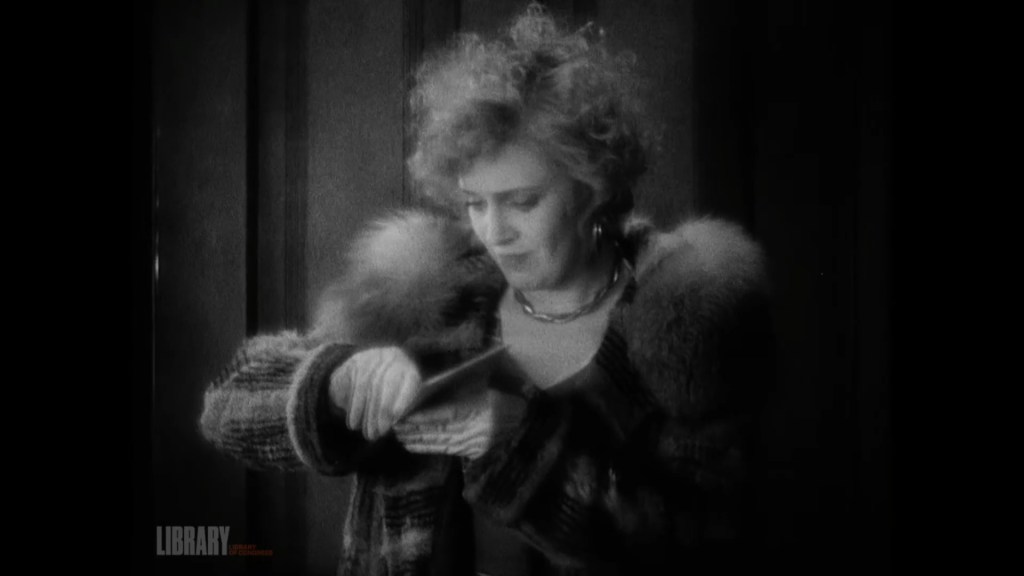
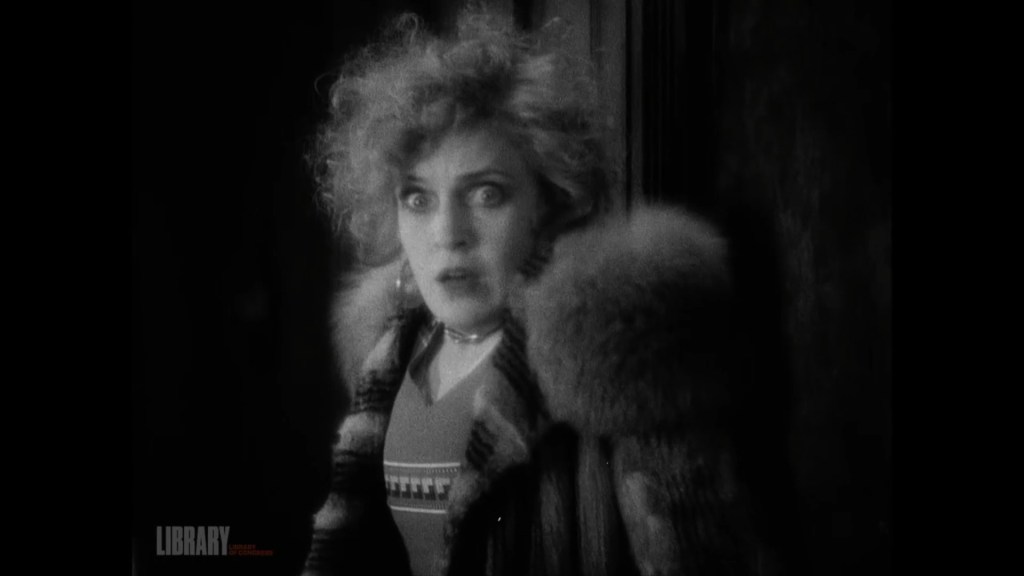
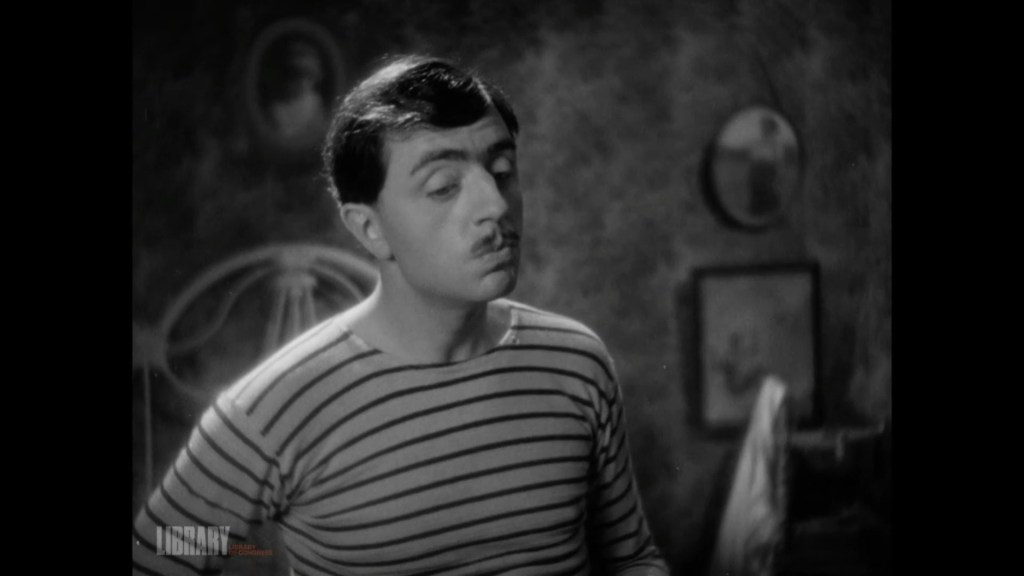
So to the longer film: L’Horloge magique (1928; Fr.; Władysław Starewicz). Produced by Louis Nalpas (the man who oversaw Abel Gance’s early feature films), this 40-minute film was the creation of Władysław Starewicz. Born in Russia to Polish parents, Starewicz (also spelled variously Starevich, Starewitsch, Starevitch) produced dozens of animated films from the 1910s into the 1960s – working initially in Russia, then (after the Revolution) mainly in France.

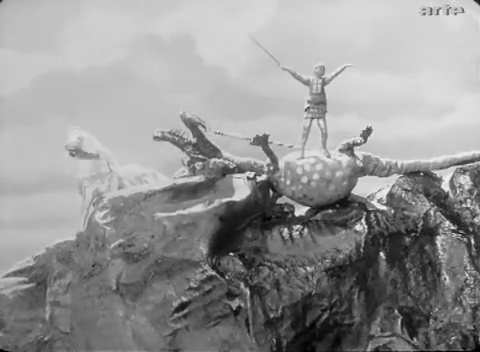
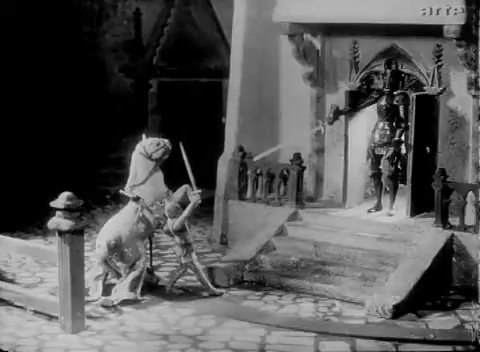
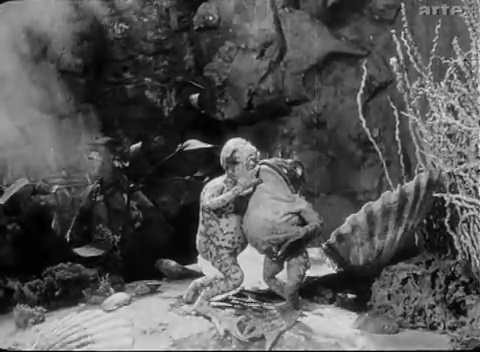
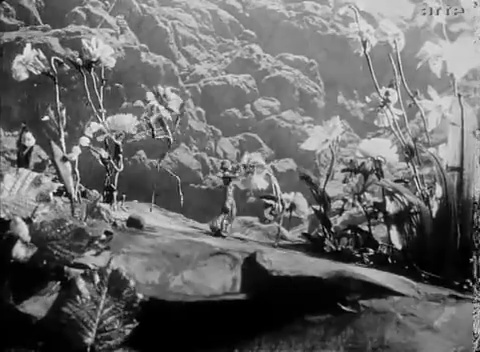
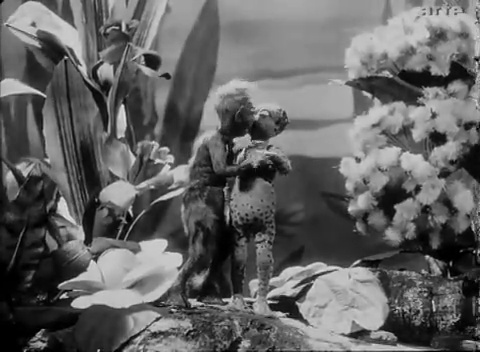
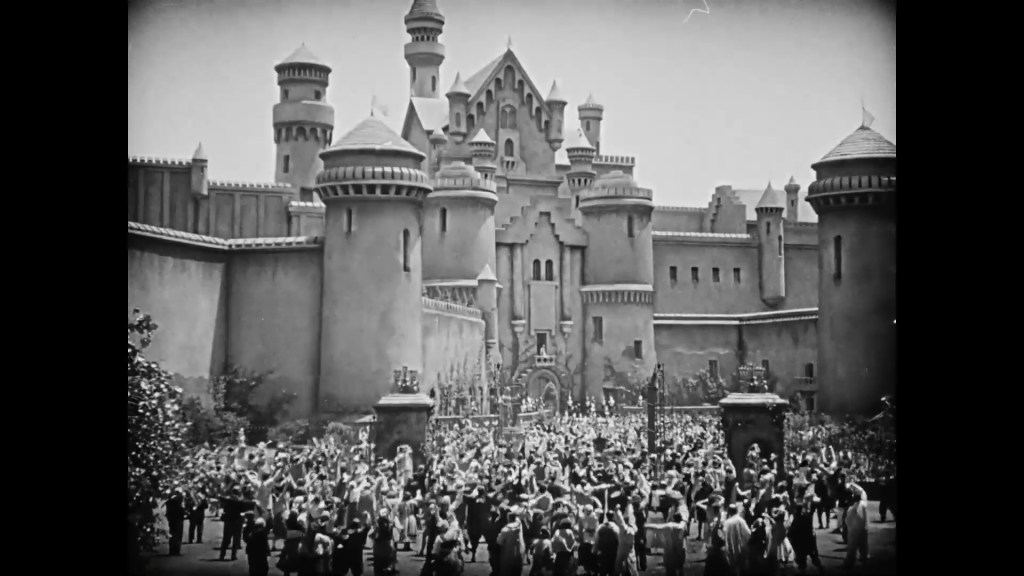
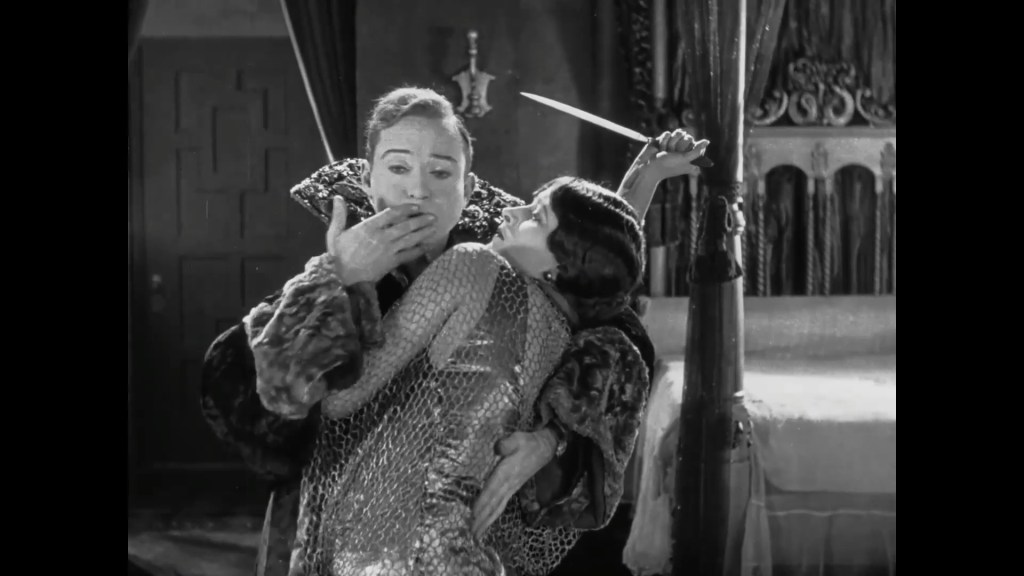
The framing story of L’Horloge magique shows Bombastus, the inventor of an elaborate mechanical clock, and the young Yolande, who dreamily watches the story its figures tell… In a medieval kingdom, the King seeks a knight to defeat a dragon and prove himself worthy of his daughter, the Princess. When the knight Betrand kills the dragon, he appears to win favour – only for the sudden apparition of the Black Knight to send the Princess into a torpid spell. The King’s advisors concoct elaborate schemes to bring the Princess back to health, and the knights set out to battle the Black Knight. As the bodies of the failed knights pile up, the Princess falls for the Minstrel who sings to her as she recovers. The jester informs both Betrand and the King that the princess is busy with the Minstrel. Betrand seeks out the Black Knight, who is revealed to be a fire-eyed figure of Death. At the climactic moment of their fight, a terrified Yolande breaks the clock. Distraught, at night she dreams of a fairy realm, where Sylphe (in the woods) and Ondin (in the water) are rivals in the natural world. Yolande dreams of the enchanted forest, where the trees berate her for wounding the plants and insects as she walks. Shrinking to miniature size, Yolande flees the plants who come to life. A giant appears and wounds Yolande, who is found by Ondin – while Sylphe finds the discarded Betrand and his horse. Between the two, they revive the knight and Yolande, who are guided to one another by the flowers and mushrooms. When Yolande (“this daughter of Eve”) is tempted by a giant apple, she is attacked by a serpent – and rescued by Betrand. In the real world, Yolande stirs in her sleep. FIN.

L’Horloge magique is a quite unbelievably impressive blend of live action, puppetry, and stop-motion animation. This delightful, weird, disturbing, charming film is filled with amazing moments and startling images. Though my focus here is the music, I must at least record that the film itself made quite an impression on me. Aside from the elaborateness of the worlds it creates (the medieval world around the castle, then the fairy world in the wild), it is magnificently directed. To pick just one device Starewicz uses, I loved the way the film recreates the effect of a moving camera, pushing closer to the action. Since this, too, is achieved by stop motion, the result is startingly rapid. These moments are almost like crash-zooms into the middle of the scene. My favourite such moment being after the prospective knights are introduced. Starewicz ends the scene with one of these sudden movements into the scene, accompanied by a fade to black – timed so that it seems we are disappearing into the dark maw of the palace, whose gate has (with equal suddenness) just been opened. This is the first instance of the moving camera and it’s incredibly startling, even discomforting.

Dessau’s music makes the perfect accompaniment to all these aspects. Passages of slow, anxious strings introduce us to the outer world of Bombastus and Yolande. It’s like the music is feeling its way into the narrative, just as we are being drawn towards the story-within-a-story. Only when the mechanism of the magic clock – the first use of stop motion – comes to life does the piano, followed by woodwind and percussion, join the strings. Just as the magic world of the toys comes to life, so does the orchestra. Yet the soundworld here never relaxes, never seeks to comfort us.

So many details in the harmonies and orchestration behave in ways you don’t expect. Even Bertrand, the valiant knight, gets an oddly sparse introduction. And his killing of the dragon is followed not by fanfare or bombast, but by silence for the Princess’s applause, and an odd, descending motif for solo violin. The music seems to warn us that nothing is resolved, that nothing will – or should – go the way we expect. Lo and behold, the Black Knight bursts through the palace doors. His appearance is as impressively weird and sudden in the score as on screen. A blast of sound, densely orchestrated to resemble the gust of an organ.

Very often, Dessau’s music keeps an ironic distance from the action. This score seems faintly distrusting of the film, as though it would rather observe from the sidelines. (One can imagine Dessau being akin to the ironic jester who appears in L’Horloge magique.) Dessau divides his already small orchestra into chamber textures, deploying the full volume of his forces sparingly. This is as he did for the Disney films, but here he pushes his method further, pursuing more eerie effects. In Yolande’s dream (the second half of the film), the flute and strings suggest an aura of bucolic magic – but their uneasy chromatism captures the strangeness of the world on screen. Sylphe and Ondin are sinister sprites whose motives we never quite trust. Is violence ever far away? This is a world of walking trees, writhing beetles, crushable butterflies.

But it’s also very beautiful. Listen how the music slows, and woodwind and strings climb into strange, high registers – as when Sylphe mourns the death of a beetle, examining its remains with pity and fellow feeling. And there are moments of intense excitement, as when Ondin and Sylphe rush headlong at one another, the whole orchestra coalescing into a torrent of repeated motifs. Then there’s the outrageously beautiful sequence of living flowers. Dessau uses a gorgeous solo violin in a passage as deliriously seductive as the flowers, which offer their perfume “filled with love” to intoxicate and inspire Yolande. Starewicz uses dreamy, swirling, multiple superimpositions, just as Dessau uses a dreamy halo of strings.

The film’s finale begins with a stunning image of the serpent uncoiling itself against the sky to strike Yolande, whereupon Dessau’s music races along to the rescue with Betrand. But it’s in the union of the couple that Dessau is at his most sharp and surprising. As the couple sit on the giant apple together, Starewicz cuts to an intertitle: “Immorality”! It’s such a startling line, followed by a cut to Sylphe and Ondin winking and looking shocked and awkward. Dessau brings in the wheezy chords of a harmonium, introducing what might be a religious ceremony – or even a religious condemnation. But the slow chords of the harmonium are interrupted by a decidedly irreligious volley from the orchestra. This single phrase, at once banal and catchy – a kind of dah-dah, dah, dah-dah! – sounds like the start of some swinging, music-hall style number. The tone is wonderfully odd, at once sinister and silly. It matches the film perfectly, since the “lovers” – in live action form – are barely older than children. Yolande and Betrand greedily bite into a chunk of bread, which they share with the horse. Betrand has tinsel-silver hair and talks with his mouthful, motioning to the kissing sprites. It’s a childish fantasy, an innocent end to a frightening tale. The last shot of the film is Yolande stirring in her sleep. Her finger drowsily taps out something on her chest, as though she’s spelling out the rhythm of Dessau’s music.

In sum, I found this music – with these films – exceedingly engaging and rewarding. The DVD editions of Disney’s “Alice” films thus far have often been marketed (understandably) at children, including a recent release in France. But Dessau’s music is decidedly adult. It highlights, the wit, the humour, and – above all – the strangeness of these films. The fact that Dessau’s soundworld for Disney is so close to his soundworld for Starewicz demonstrates a curious continuity between the films. These are odd, unstable little worlds on screen – liable to break out in violent fragmentation or mend in magical resolution.

In their tone and playfulness, their mixture of original and recycled music, Dessau’s music reminded me most of Karl-Ernst Sasse’s music available elsewhere in the BMG/RCA “100 Years of Film Music” series. Like Dessau, Sasse became a stalwart of East German music, though Sasse worked primarily for television – including many televised versions of silent German films. It’s pleasing to think of the legacy of a film composer of the 1920s re-emerging in a new context in the late 1970s-80s. I will have more to say on Sasse in due course, but for now it’s worth observing the relative obscurity of their music for silent films. Though I enjoyed the challenge of synching Dessau’s music with the Disney films, I deeply that I had to do it at all. And while the ARTE broadcast of L’Horloge magique evidences an excellent restoration, this version with Dessau’s music has not (to my knowledge) been issued on DVD.

Moreover, hearing this music makes me even more keen to hear Dessau’s scores for silent feature films. As I wrote in my earlier piece (linked above), reviewers in 1928 praised the wit and inventiveness of Dessau’s score for Saxophon-Susi. I wonder how Dessau handled the longer timeframe, and how he handled the melody of the film’s titular song. Moreover, what material from this or his other silent film scores survives? Where might the music be located? For the 1995 recording under discussion here, Wolfgang Gottschalk is credited with the “restoration of [the] scores”, but the process of restoration is not described at all. How much work was needed to make these scores performable? How close does this music sound to what was heard in the 1920s? And is there more material by Dessau from this period and this genre? As ever, if anyone knows more information, do get in touch…

Paul Cuff

My thanks to Donald Sosin for alerting me to the recording of Dessau’s film music.

Pordenone from afar (2025, Day 8)

Day 8 is our final day of films from Pordenone, and it’s another busy schedule. Our first programme takes us on a journey from the Middle East to South America and eastern Europe, from haphazard observations to machine-tooled propaganda. Our second programme gives us a comic fantasy and a comic reality, taking us from wartime Ruritania to postwar America. It’s a great range of films, and they appealed to me in unexpected ways…

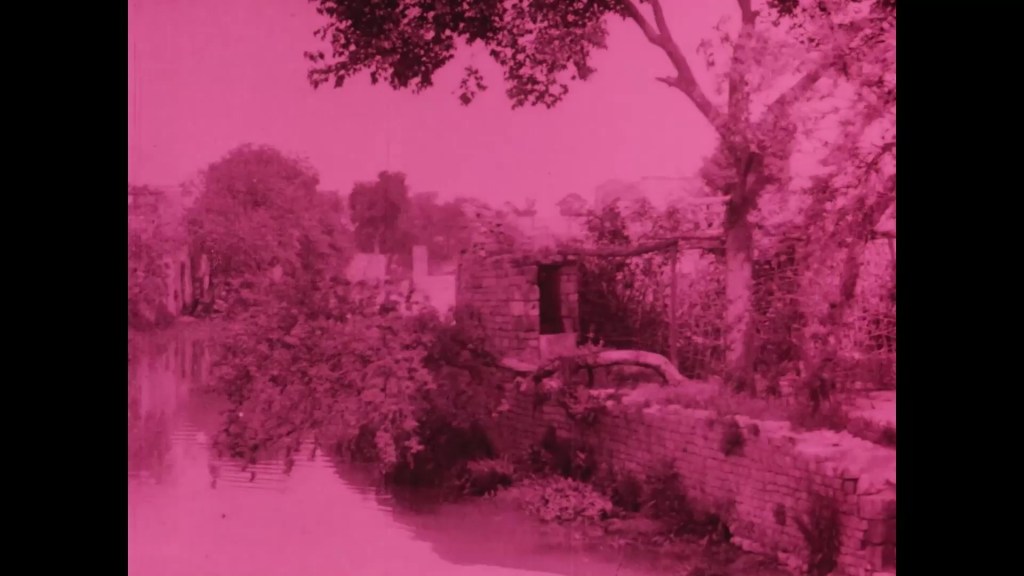
Aleppo (c.1916; Ger.; unknown). Camels kneel and rise. Soldiers and civilians mill around. Awkward looks at the camera. Views of the city, of a cemetery, of ruins, of waterways, of Arab children. It’s very beautiful to see this faraway land, and this faraway time, so calmly recorded. But of course this is 1916, and the world is at war. This is a Syria under Ottoman rule, and the European men in tunics and caps are the Turks’ erstwhile German allies, still confident in victory. These uniforms and trucks, these crowds of Turkish soldiers – they are all part of some other continuity, some other subject. The film cannot but admit that something is going on elsewhere, something unnamed, something momentous. In this other place, everything is decidedly not calm. But here are the boys and their donkeys, and the old men and their pipes, and the ruins of epochs long gone. This is a world in waiting, then, getting on with life somewhere between ancient history and the crucible of the twentieth century. The film ends, and in the fade to black, history surely intervenes.

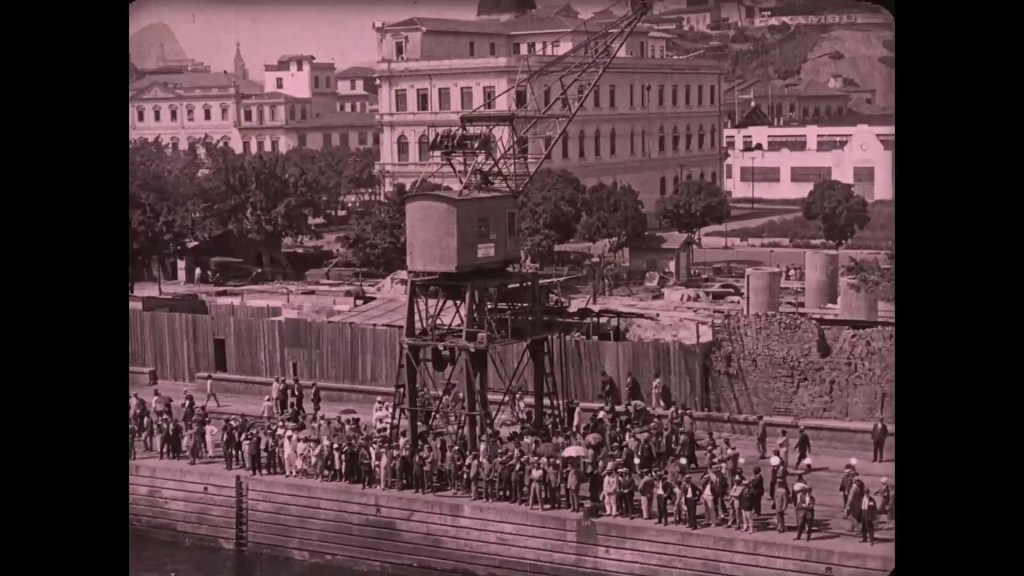
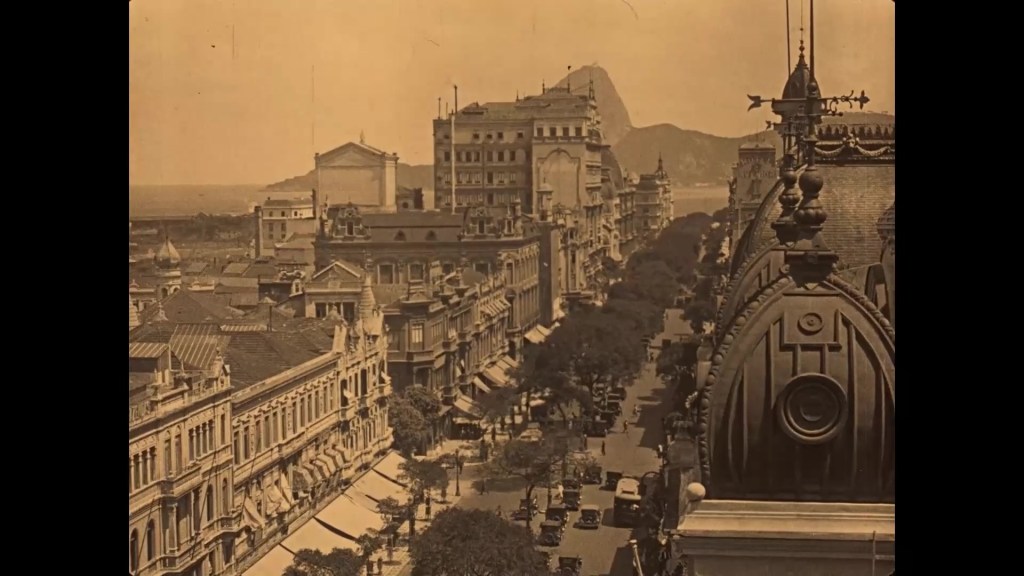
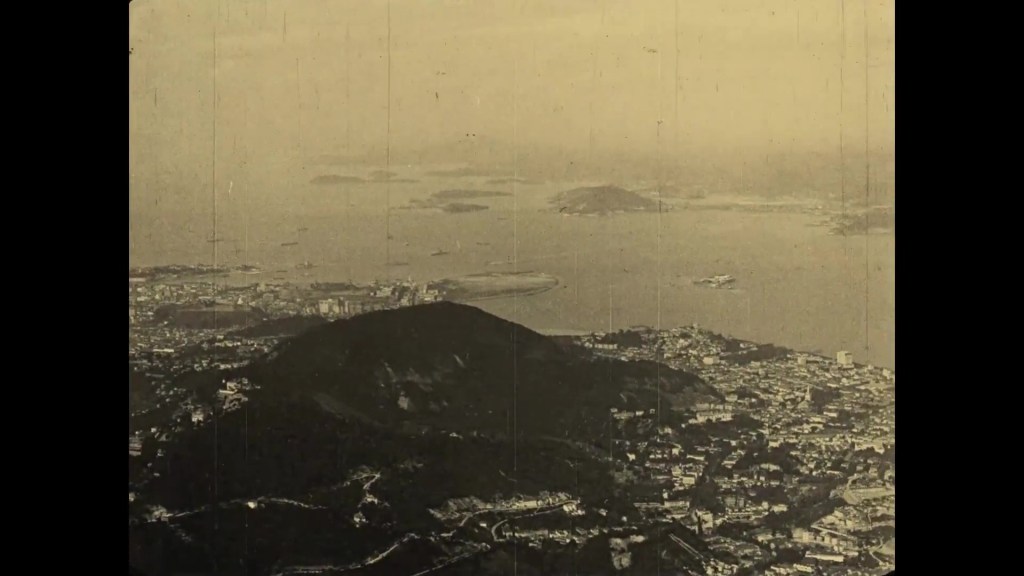
La Capitale du Brésil (1931-32; Br.; unknown). Fed information by title cards, we arrive by sea. The camera slowly bobs with the ship’s passage through the waves. Crowds await us. The camera is on the shore and onboard. Our view changes with the ease of a page turned in a travel brochure. From the rooftops, we see sunlight fall over the streets of Rio de Janeiro. The camera pans over the coast, the mountains, the distant houses. The world goes about its business. The beaches are crowded, the waves lap over the shore. Cable cars and light railways take us up the mountain of Corcovado, and – after so easy an arrival – we glance down towards the distant city, the huge arcs of hills, the bay. At sea again, we take the ferry and glide past beautiful islands. Then to the institutes, museums, gardens – the taming of this wildness. Then to views of sport, from rowing to football and tennis, and the Jockey Club. Crowds of men and women beam at the camera. A sea of hats and smiles. We visit the gold club, the polo club. A smiling, hatted, patient, affluent crowd. Life stretches out amiably before them. We are tourists, and they are showing us the life to which we might aspire. It’s very bourgeois, very decorous, very charming. (There is little life.) The last we see of this world is the patient spectators of a peaceable game, watching their world play out. The film stops, and they are swept away into the past.

Narysy Radanskoho Mista [Sketches of a Soviet City] (1929; UkrSSR; Dmytro Dalskyi). A swirl of images, an advancing tractor, swaying fields of wheat, piles of vegetables. Here are forests, and the trees being felled. Here is produce and fuel, and here are the men and women, and the trains and ships, and the factories. “From all sides of Ukraine…”. Trains arrive at Kharkiv, and Kharkiv is at work. The streets, viewed from new buildings. This is a past that is very busy. They like to think they are building the future, and perhaps they are. “The future belongs to us!”, and the film cuts to a dinosaur skeleton, to museums of ancient artefacts, to statues and books. “This all belongs to the workers”, and the workers study and read. But such a film leaves its viewers little time to think. All the thinking has been done for us. The film is merely the precis of a conclusion already written and approved. It is all madly exciting, madly busy, madly optimistic. The past here surges with energy. There is no time to dwell or to reflect. Everything is happening now. “Not a step back from the current pace of industrialization!” Slogans fill the screen, and the workers work at insane pace, in insane numbers, across every conceivable facet of production. With a last surge of statistical overachievement, the film ends. But it might just as well have gone on forever.

The whole thing reminded me of the montage in Fragment of an Empire (1929), wherein the factory workers convince the newcomer of the benefits of the Soviet system. But as I wrote about that film, the unending montage of Sketches of a Soviet City is unconvincing as any kind of argument. Indeed, it isn’t an argument so much as an unceasing statement: a statement of achievement, a statement of intent. The film is organized into a series of visual slogans, interspersed with written slogans. Though it has momentary glimpses of real life, the film bundles everything together into a package of remorseless optimism that loses sight of the human beings it claims to represent. The pleasure one takes in this film a century later is not the message so much as the glimpses of people and places it contains. These pleasures are fleeting, since the film is in such a mad rush to boast about how these people are being mobilized toward ever greater productivity. Everything is a resource to be moved, pushed, pulled, dug up, processed, transported, melded, welded, stacked, cemented, launched, turned, electrified. It’s impressive, but it quickly becomes exhausting. Unlike Aleppo, this film is at least up front and explicit about its political context. But there is more real life, both in its spatial randomness and temporal slowness, in Aleppo than in Sketches of a Soviet City. For all its avant-garde technique, the Soviet Ukrainian film is less enticing as a vision of progress, and an enticement to visit (or at least admire) than the bourgeois world presented in La Capitale du Brésil.

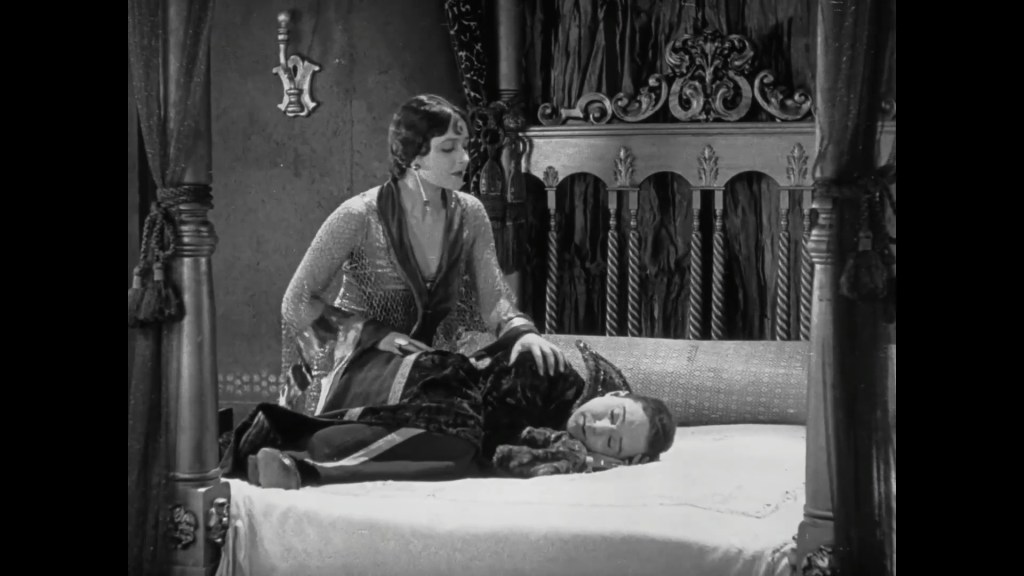
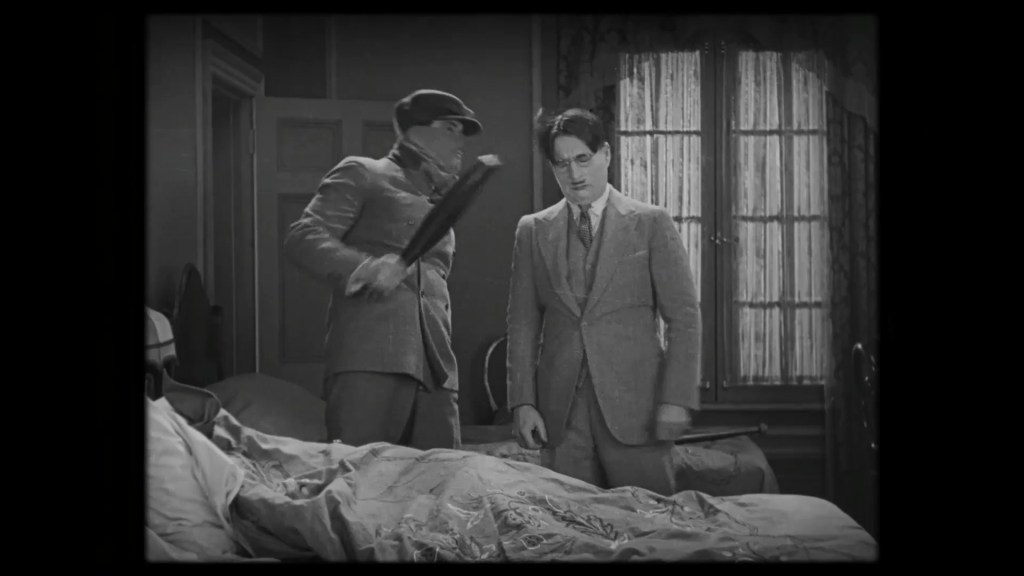
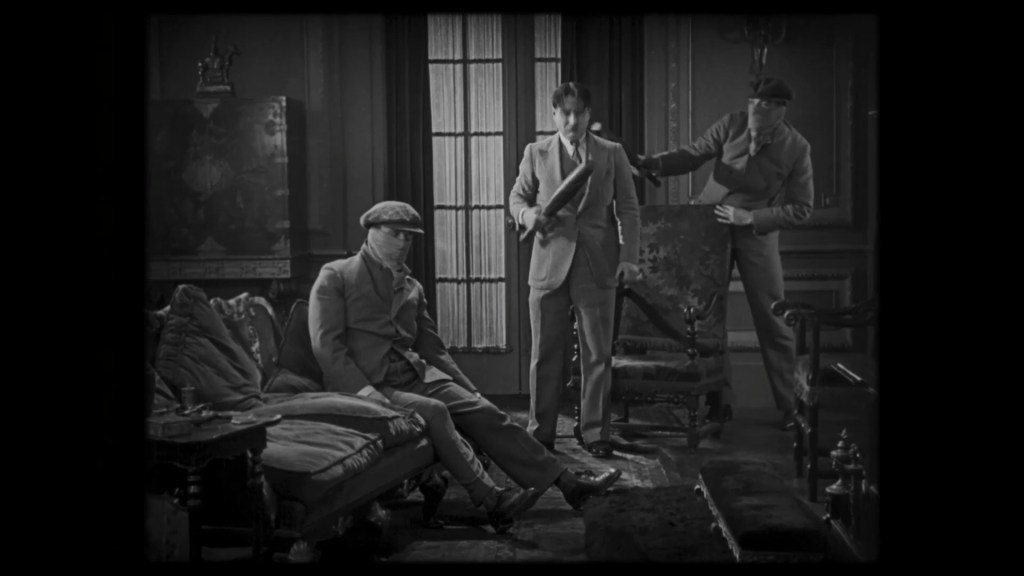
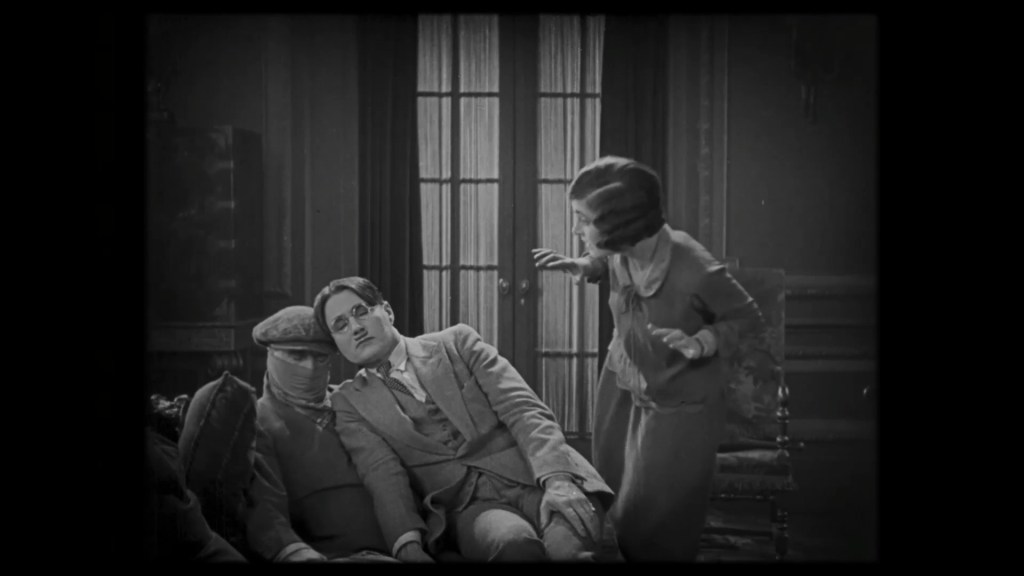
So to the day’s second half. We begin with the half-hour short, Soldier Man (1928; US; Harry Edwards). Harry Langdon is the soldier the army forgot. He has been left behind in “Bomania” after 11 November, not realizing the war is over. He stumbles around, fleeing phantom enemies, confounding local peasants. Meanwhile, King Strudel the 13th of Bomania (also played by Langdon) is fighting revolution, secretly being fermented by General von Snootzer. The Queen of Bomania hates the King for his drunken loutishness. The King is duly kidnapped and hidden in a remote barn, to be killed in due course. But the King’s loyal courtiers encounter Harry and recruit him to impersonate the missing monarch. He does so but is immediately the target of an assassination attempt by the Queen. However, it turns out that he’s a better kisser than the real King, so the Queen is disarmed. Things turn suddenly romantic, but Harry is tired. He goes to sleep on the King’s bed and wakes up in his real home with his real wife. He is a common soldier, after all, and the war is over. THE END.

I confess that I’ve seen very little of Harry Langdon in my life. The handful of features and shorts I have seen left me curious, but clearly not curious enough. So I was very glad to see him here, exhibiting all the curiosity I remember. He’s not quite a child and not quite an adult. He seemingly has sex appeal, but of an innocent kind. His appetites are easily assuaged: all he really wants is a bite to eat and a place to kip. In Soldier Man, I love the way he traverses the world so harmlessly. His gun is broken, but when he fixes it it’s only to shoot a scarecrow. When he takes cover behind a cow, he pauses to marvel with curious pleasure at its udders. He is about to paw at the suspended teats but withdraws his hands before any kind of groping might take place. The cow bends its neck to look at him, so he smiles – so innocently and friendlily – back at the animal. It’s a curious, charming, silly, almost sad little moment. It’s all incidental, puncturing the chance of threat, denying the danger of physical contact. It’s making nothing out of something.

Though Langdon also plays the King, his double, this character is swiftly bundled off screen before Harry arrives. There is no attempt made for Harry to meet his doppelganger, to see the kind of man he might otherwise have been (aggressive, selfish, sexual, powerful). It is the innocent Harry who wears the outsize royal robes, and we might wonder how they can be outsized when they were made for his other self – for him. It is as though he is figuratively smaller than his own doppelganger, so that even identical clothes do not fit. His royal regalia are superfluous to his needs. He offers his crown to a courtier, as a vessel for him to vomit in – since Harry is so innocent he cannot think of another reason why the man should bow forward. Somehow, perhaps by sheer lack of arrogance, the Queen is seduced by him. Harry is hardly interested in her at all. She tries to kiss him, to distract him from her dagger, but he’s too busy eating a biscuit to have his mouth and lips ready. He doesn’t flinch away (he’s too obliging, too unquestioning, too accepting), but apologetically motions that he has his mouth full, insists upon chewing his food properly before swallowing. His kiss is successful despite himself, and when he retreats to the royal bed it isn’t for an act of consummation with his Queen but to curl up into a ball and go to sleep.

The very title of Soldier Man is a curious conjunction of roles and titles, and a syntactic separation of those two ideas of “soldier” and “man”. It’s a very charming film, and its lightness belies the oddness of Langdon’s persona. It’s not sentimental, which is a bonus, and allows Langdon the chance to wander innocently through at least two different genres of film. There is the war drama, which the film immediately removes all possibility of pomp or danger; and there is the Ruritanian drama, with its crowd and court and mistaken identities, which the film makes immediately absurd and parodic. It’s quietly radical, gently ironic. When Harry awakes, we wonder what the meaning of his dream might be. Does it have a meaning? It’s a fantasy in which the dreamer does nothing more than wander aimlessly, ignoring all possibility of heroism (in the war drama) or romance and power (in the Ruritanian drama). The dreamer wants nothing more than to continue sleeping. When he wakes, he seems as innocent of the real world as of his fantasy. Yes, indeed, this is a curious film. It makes me want to see more Harry Langdon…

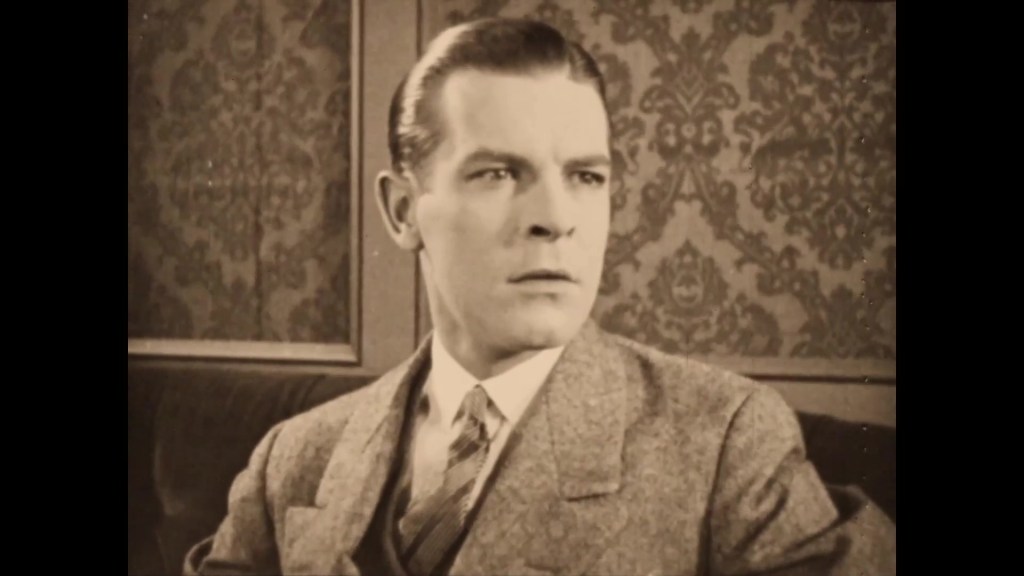
After Langon’s short, we begin our main feature – and our last: Are Parents People? (1925; US; Malcom St. Clair). James Hazlitt (Adolphe Menjou) and Alita Hazlitt (Florence Vidor) are a married couple on the verge of divorce. Their daughter Lita has been called back from school to hear the news of the separation. Lita plots to find a way to “cure” her parents’ symptoms. At school, Lita’s roommate Aurella (Mary Beth Milford) has a crush on both the film star Maurice Mansfield (George Beranger) and on the local Dr Dacer, who is also the object of Lita’s affection. When Lita’s parents visit the school, each offers her a different vacation option – but she prefers to stay at home. When a teacher finds photos and letters to Maurice Mansfield, she accuses Lita of being the culprit – and plans to expel her. Mansfield is shooting a film nearby, and takes an interest in Lita – but she arrives home to discover she has been expelled. Lita pretends she is the culprit in order to ensure her parents have to meet and discuss her future. Mansfield is summoned to Alita, and he assures her he has never met Lita – and proceeds to flirt with Alita. Lita seeks refuge with Dacer, who doesn’t realize she is in his home until the early hours of the morning. When Lita returns to her parents the next day, arguments and accusations ensue. Lita seeks solace with Dacer, who is wooed by her charm, and the Hazlitts manage to reconcile their differences (at least for now). THE END.

Well, this was a diverting film. It has a simple setup, and it delivers a well-directed and well-played result. I always enjoy watching Adolphe Menjou, and his interactions with Florence Vidor – as the pair bicker, argue, flirt, joke, and reconcile – are both amusing and poignant. (Florence Vidor, by the way, was the wife of director King Vidor. Curiously enough, the pair had divorced shortly before the production of Are Parents People? One wonders quite how she felt filming such scenes.) As Lita, I found Betty Bronson very charming and engaging. But there is little depth in her character, just as Dacer – and Lawrence Gray’s performance – is a bit flat. Though George Beranger has fun parodying a pretentious film star, acting out a whole film and trying to seduce Alita, his character is likewise paper thin. And this rather sums up my reaction to Are Parents People?, which was restricted to being charmed. I cannot say that I was moved, nor that I laughed a great deal. It was all very… pleasant. In comparison with the only other Malcolm St Clair I’ve seen, A Woman of the World (1925), Are Parents People? seems rather tame and unremarkable.

That said, it is certainly fluently and sensitively directed. Though there are no really striking images, the drama plays out nicely through small details, especially some very good cross-cutting between the two parents. Their actions and reactions mirror each other, creating all kinds of subtle little parallels and contrasts. And much of this takes place without dialogue. The opening sequence is ten minutes of wordless action, through which we grasp the whole drama through glances and editing. When there is dialogue, it is often short and snappy – echoing the back-and-forth repartee of the editing. But St Clair isn’t Lubitsch, nor is this script one of any depth or lasting resonance. Its charm is only so charming, its amusements only so amusing. I’m glad I’ve seen it, but I suspect my memory of this film will quickly pale.

In terms of the presentation, it’s a shame that Are Parents People? survives only in a 16mm copy, which is very soft to look at. Though it is nicely tinted, the amazing pictorial quality of many of the films shown earlier at Pordenone (and even the other films in Day 8) show the gap in preservation status. If this is a visually downbeat way to end the online Pordenone, it is at least a reminder that so much of film history is lost to us, and what remains is precious. Music for the first three films of Day 8 was by Mauro Colombis, and for Are Parents People? by Neil Brand. The all-piano soundtrack here was very good, though I cannot but note that past editions of Pordenone online have ended with orchestral (or at least ensemble) scores. Combined with the lesser visual quality of the film, and my reservations about the film itself, it felt like a slightly limp way end to the festival. But hey, we can’t always end with a bang, and I’ve enjoyed so much already – so I shouldn’t complain.

My experience of Pordenone from afar in 2025 has, as ever, been absorbing and exhausting. There is no other festival that offers so much, and of such diversity. We’ve traversed the globe, and we’ve traversed the era. The emphasis is not on presenting masterpiece after masterpiece but about widening our appreciation of the silent era as a whole. In this, Pordenone is unique. Even the online material, which is but a tiny fraction of the festival offered on site in Italy, is a tremendous cross-section of people, places, themes, genres, and contexts. One can only be exceedingly grateful for so much marvellous, and so much entirely new, material. For a single ticket, the quality and variety of films Pordenone offers online is exceptionally good value. Bravo to all involved in this amazing festival.

Paul Cuff

Pordenone from afar (2025, Day 5)

It’s another packed day of material from Pordenone: we get a short and no less than two features. While not quite as lengthy a programme as Day 2, it’s another full schedule for the eyes. We begin in Italy before heading to Hollywood’s high seas…

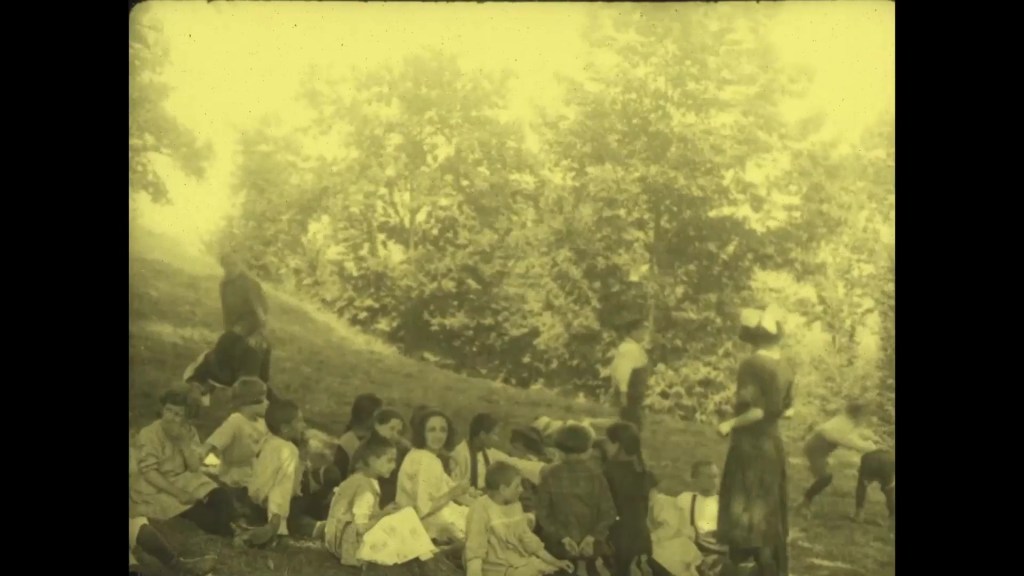
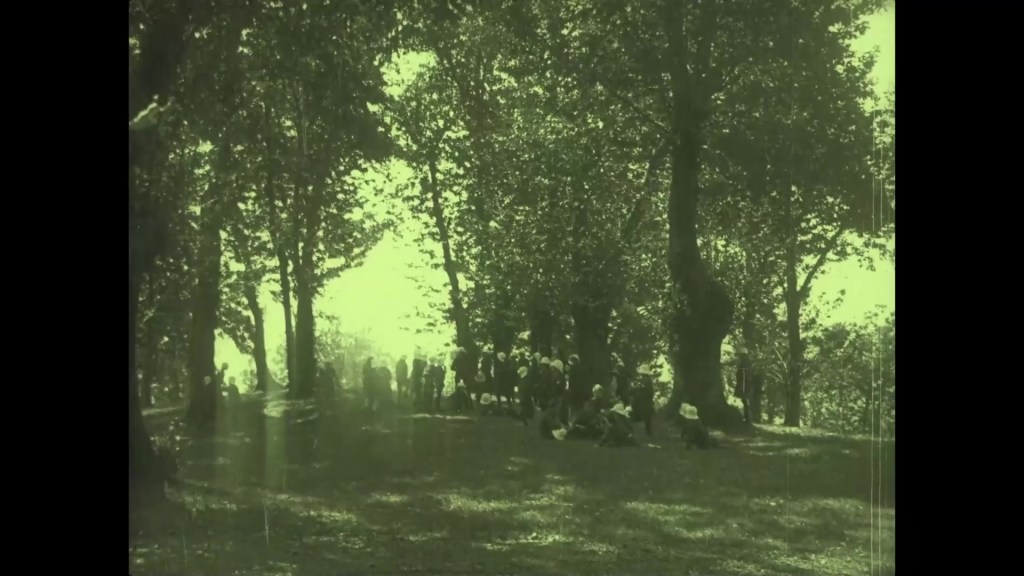
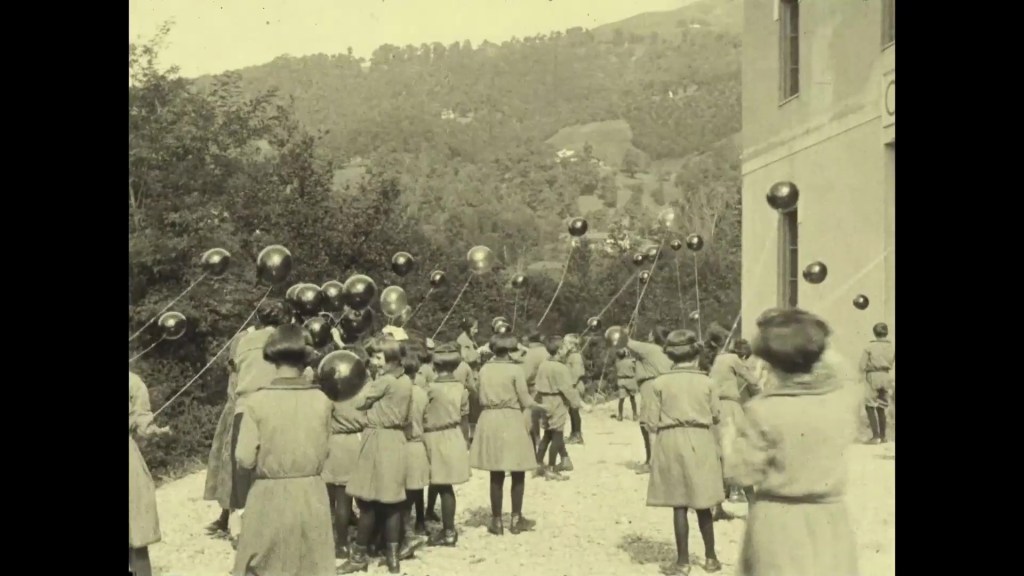
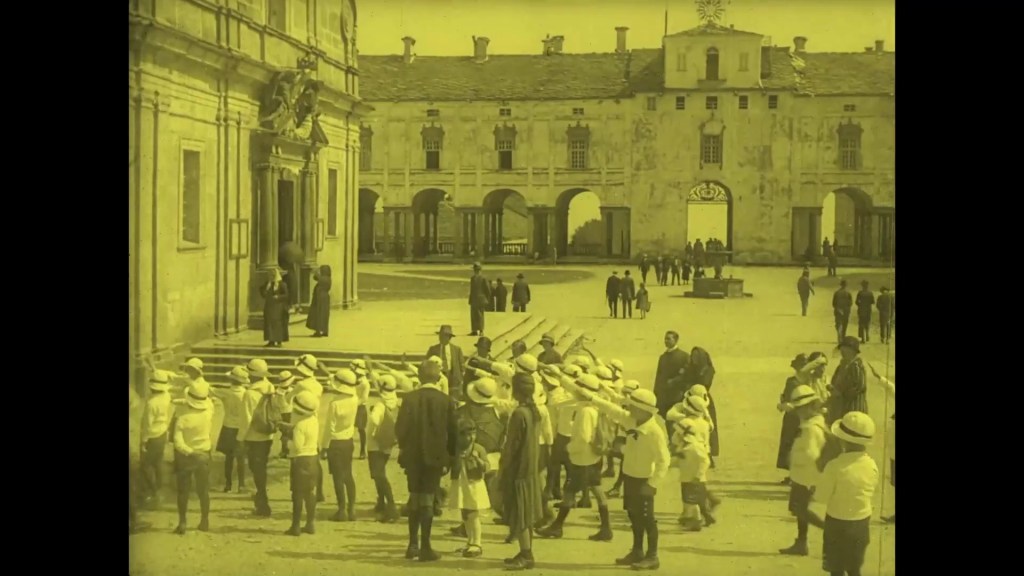
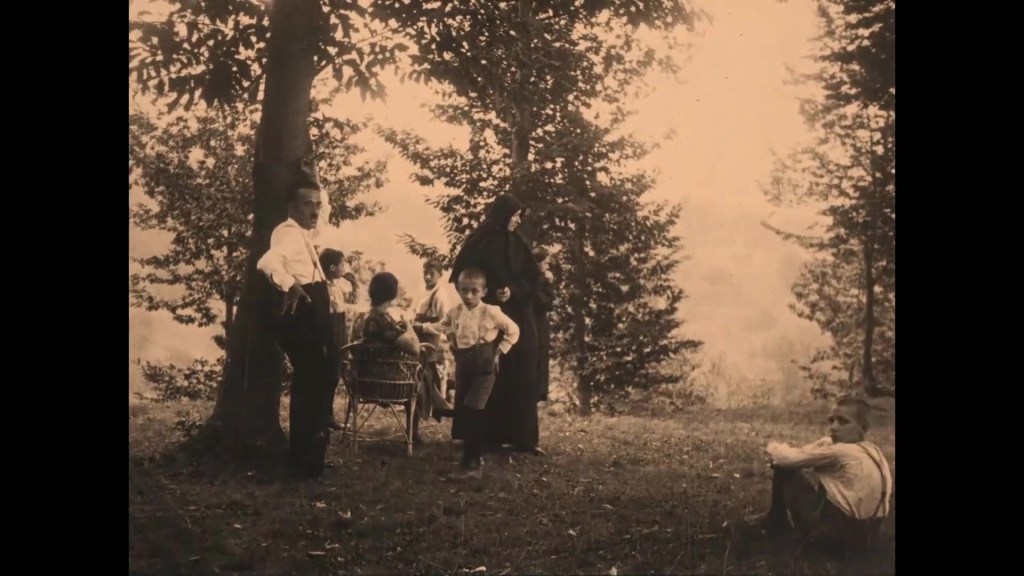
Colonia Alpina (1924-29; It.; Emilio Gallo). Our short film is a series of views of a school trip to the mountains. The opening title contains an excusatory note from the filmmaker, Emilio Gallo, apologizing for the poor quality of the material. But despite the claim of being an “amateur” production, there is much here to admire. As ever, I love this kind of fleeting glimpse into the world of the past…

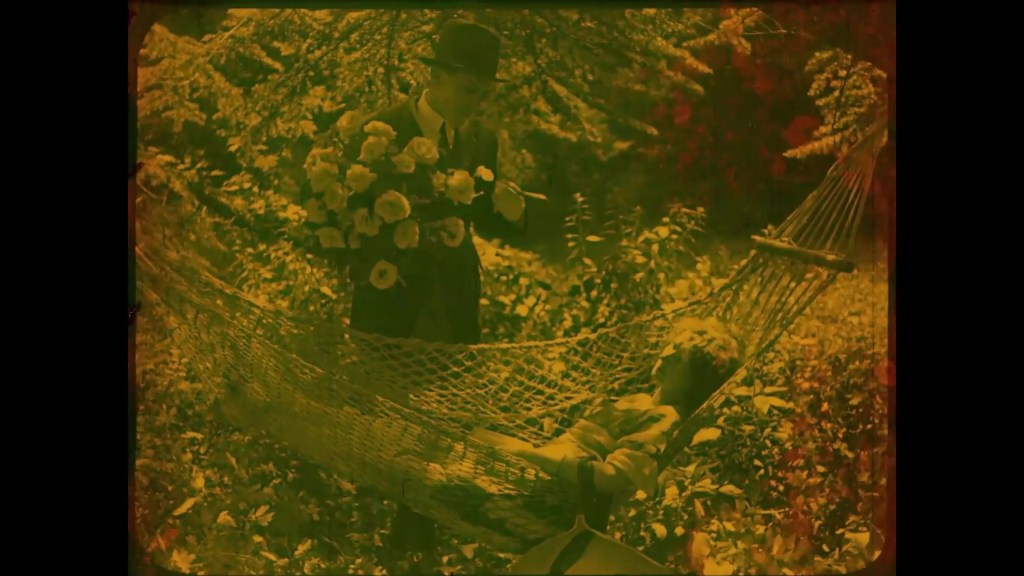
A troupe of schoolchildren march along mountain pathways. Their eyes stray towards the camera as they ascend the steps to their lodge. They are served food, still glancing over their shoulders at us. They half-march, half-tumble down a slope. Their eyes catch ours. A boy salutes, and vanishes. Exercises beneath the trees and a burnished sky. The tinting – pale amber, pale green, pale pink – makes each scene glow with warmth, with the ghost of sunlight and foliage. The children scamper and laugh, innocent of their ancientness. They raise their arms in fascist salute. They are long dead, now, and they cannot imagine why we are troubled.

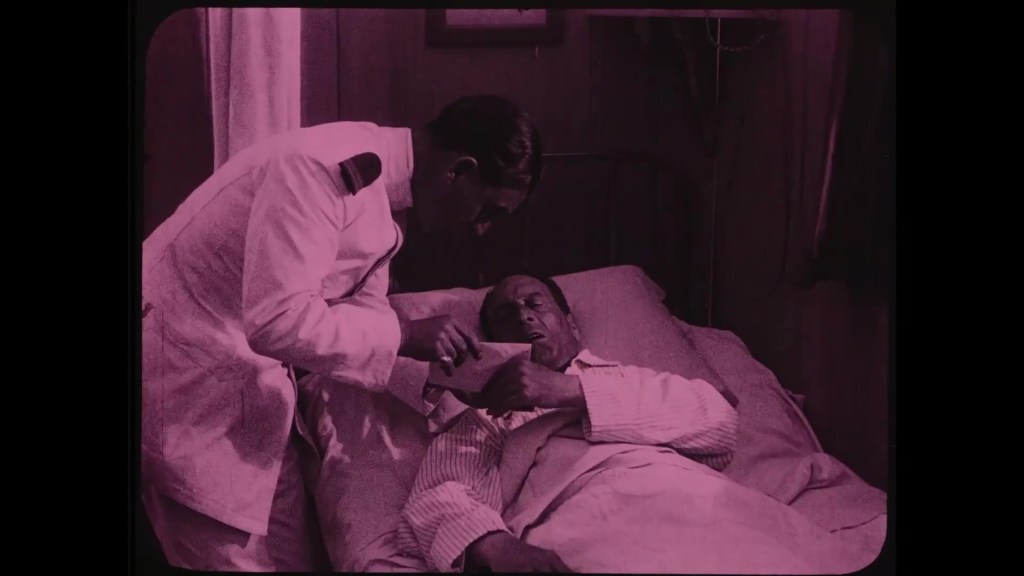
Il siluramento dell’Oceania (1917; It.; Augusto Genina). The Pacific. Warships at sea. Onboard the “Titan”, the Count and Countess de Martinval, and Baron Cocasson, who tries to flirt with the countess – little suspecting that both she and the count are criminals. Meanwhile, onboard the nearby “Oceania”, Captain Soranzi is asked to the bedside of the dying Marquis de Roccalta. Roccalta entrusts him with a letter to his daughter, Jacqueline, saying that the family fortune is hidden – and the instructions to find it lie in the hilt of the sword of the “Terrible Knight”. But the “Oceania” is torpedoed. Before the ship sinks, Soranzi messages the “Titan” with the news of the disaster – and the clue to Roccalta’s treasure. The signaller onboard the “Titan” takes the news of the treasure to the Martinvals, who decide to pursue the fortune. At Castle Roccalta, the widowed Marquise (who does not yet know that she is widowed) is heavily in debt. Her daughter Jacqueline is engaged to Henri de Ferval, and lives in ignorance of her impending destitution. The creditor Isaac is already taking inventories of the family jewels to take in lieu of payment. When the loss of the castle occurs, de Ferval abandons Jacqueline and the family must move out. Baron Cocasson exploits the situation, paying Isaac for ownership of the castle. While the Cocassons search for the treasure in the chateau, the impoverished Marquise dies – entrusting Jacqueline to the care of their loyal butler, Fidèle, with the desire that they should go to America. Meanwhile, news reaches Cocasson that Soranzi has miraculously survived the sinking and is now on his way to contact Jacqueline. When Soranzi arrives, the countess pretends to be Jacquline and receives the letter from her late father. While the villains search for the treasure, Soranzi travels to America and is feted at a soiree at which “Miss Dolly” performs. “Dolly” is none other than Jacqueline, who has come to America in search of her father – not knowing his fate aboard the “Oceania”. But the Martinvals are also now in America, searching for Jacqueline, who unknowingly holds the final clue to the treasure in her necklace pendant. When Soranzi realizes their deception, a chase ensues. The various parties head back to Castle Roccalta. The villains find the treasure, so another chase ensues. Eventually, Fidèle captures the villains in the mountains, allowing Soranzi to marry Jacqueline – and secure the treasure for their future. FINE.

As you can tell from the above synopsis, this is a madly diverting film, packed with madly zigzagging twists and turns. The restoration credits do not make clear the original length of this production, and the copy presented here is a French edition with some missing scenes explained by text. It feels like a much longer serial film has been condensed into 70 minutes. That said, the whole thing is extraordinarily entertaining – full of absurd twists and turns, sudden relocations, inexplicable plot devices, and characters that appear and disappear. Though I was never once moved, I was always engaged. Il siluramento dell’Oceania has all the pleasures of a serial – dastardly villains, killings, death by grief, hidden treasure, kidnapping, false identities, umpteen chases on planes/trains/automobiles – all delivered with great aplomb. It’s incredibly silly, but huge fun.

Plus, it looks absolutely gorgeous. The tinted and toned print preserved by the CNC is superb quality. The location shooting around Italy is superb. I love the sharpness of the highlights, the glow of the colours, the richness of the blacks. We get to see a wide variety of locations, from the high seas to the snowcapped mountains, and there are glimpses of gorgeous castles and dusty roads, as well as all forms of transport: ocean liners, trains, cars, planes, and bicycles. The characters might be cardboard, but they chase around these fabulous landscapes with marvellous commitment. When everything looks this good, and moves along with such gusto, it simply doesn’t matter how pulpy the story or situations. What a wonderful, mad rush through 1917. (Though I hate to keep picking on it, Day 3’s The White Heather lacks precisely the energy, fun, variety, and silliness that makes Il siluramento dell’Oceania so enjoyable and so rewarding.)

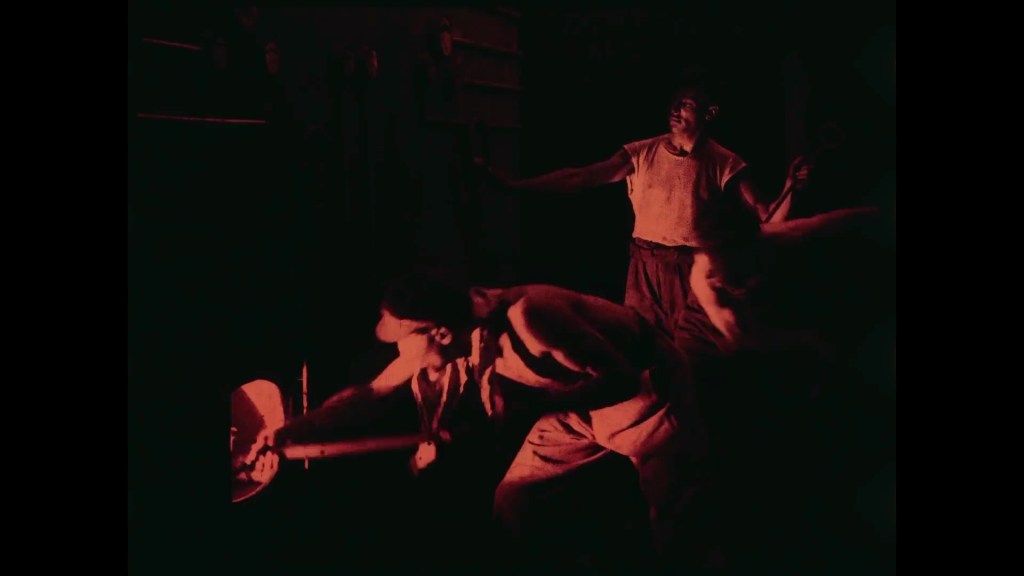
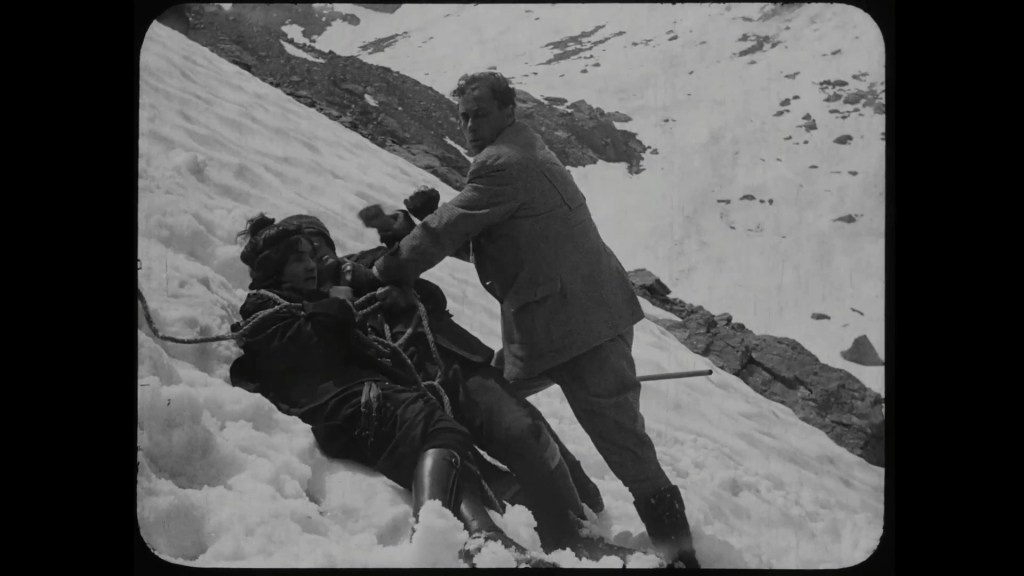
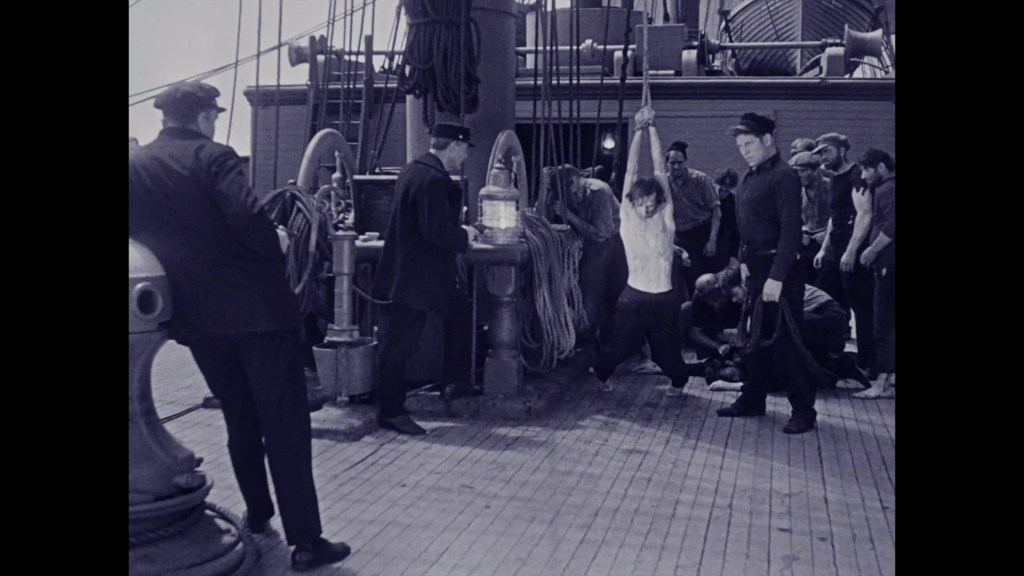
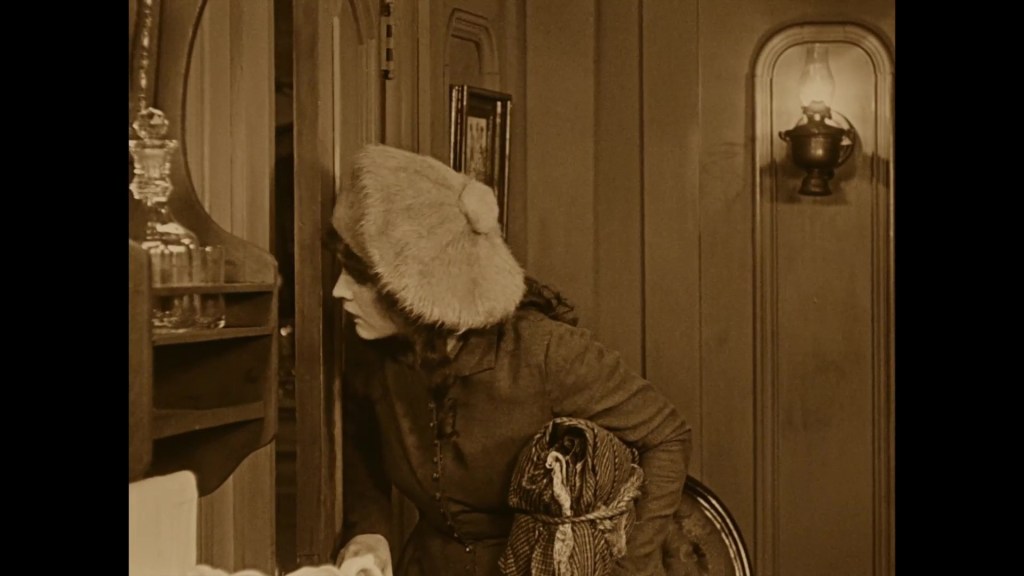
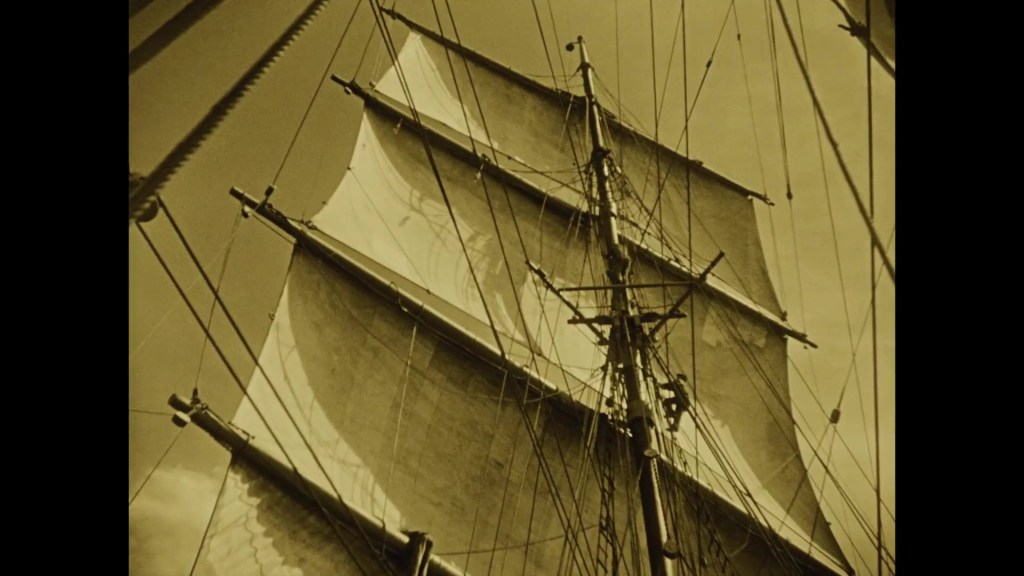
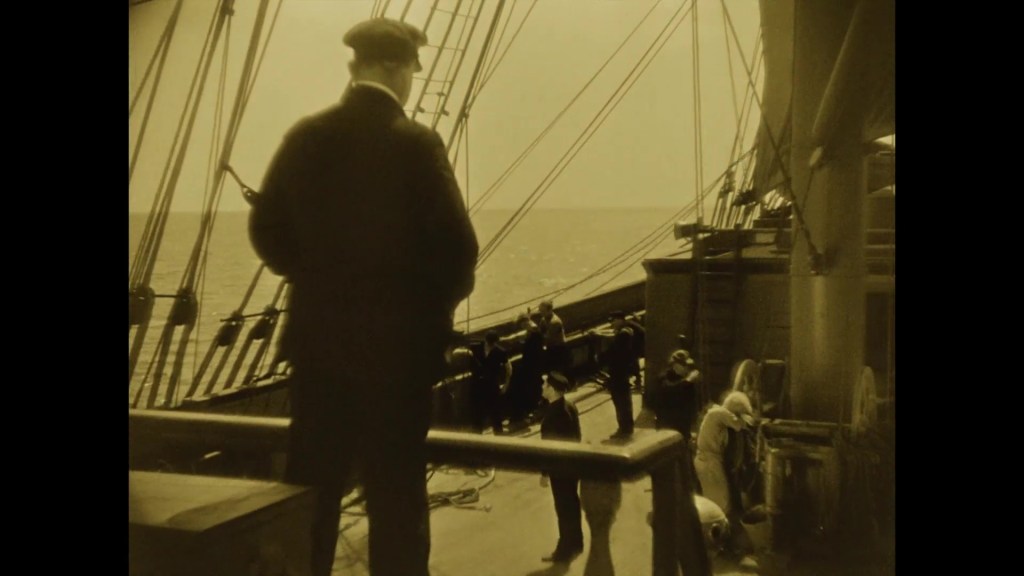
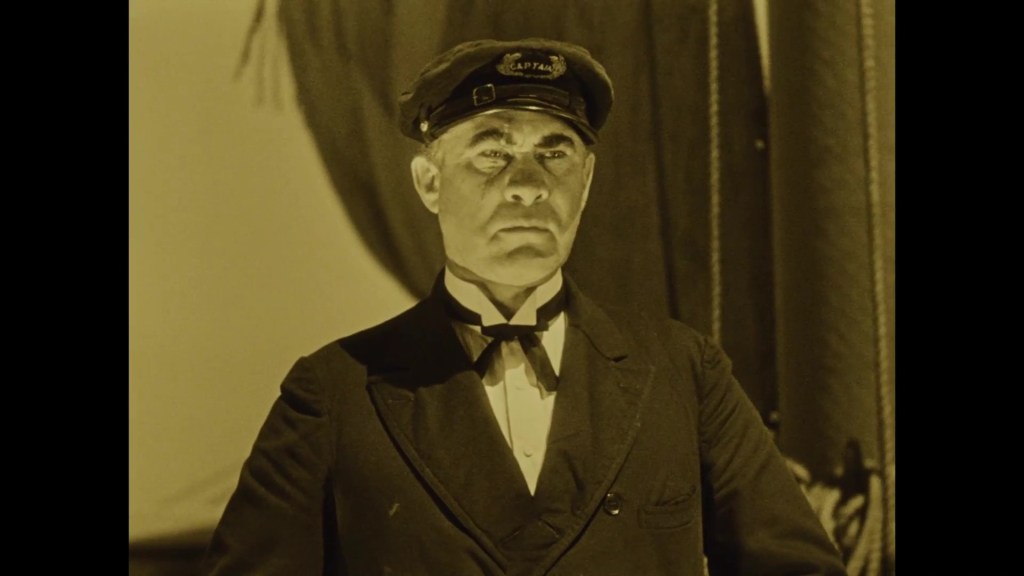
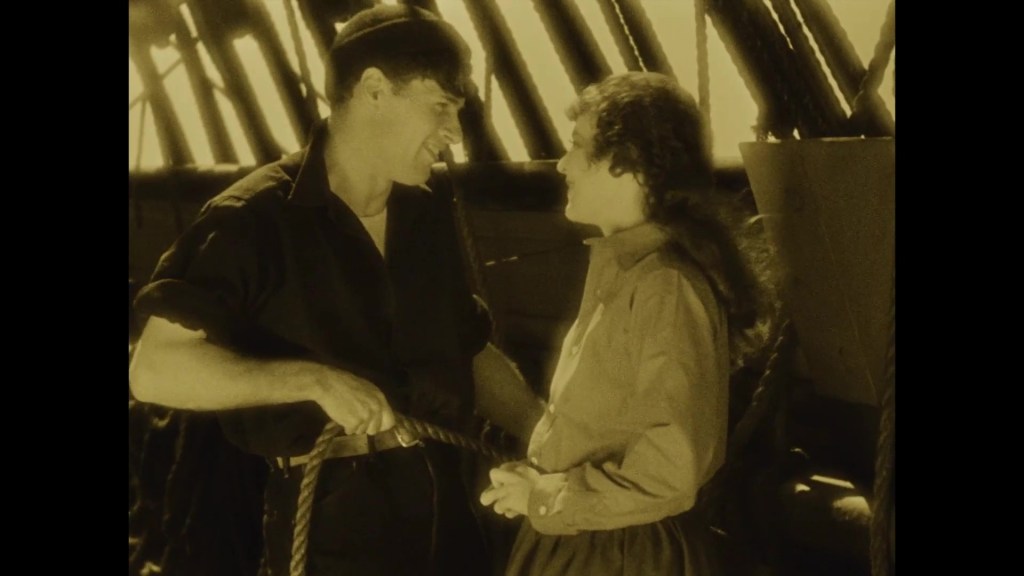
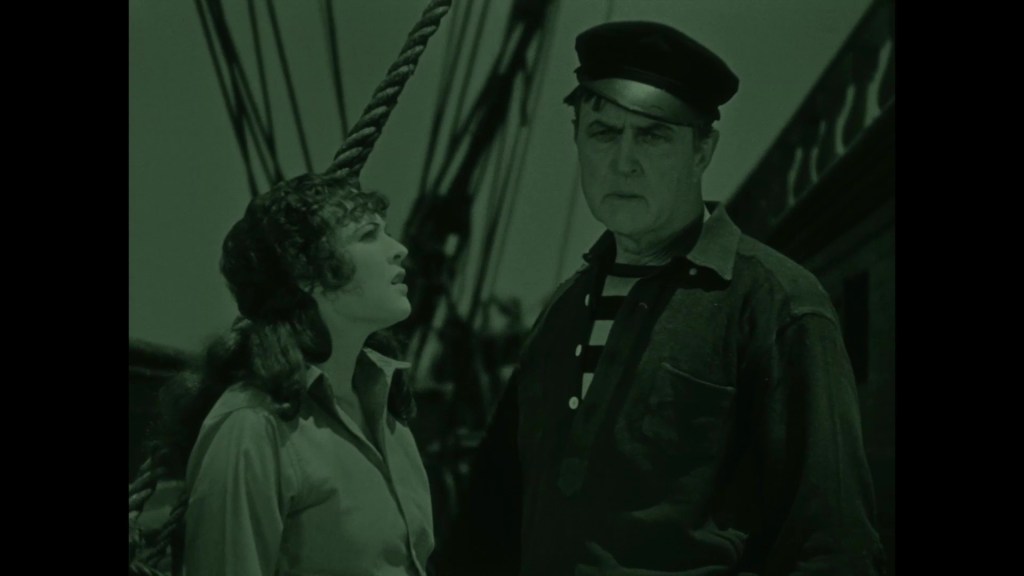
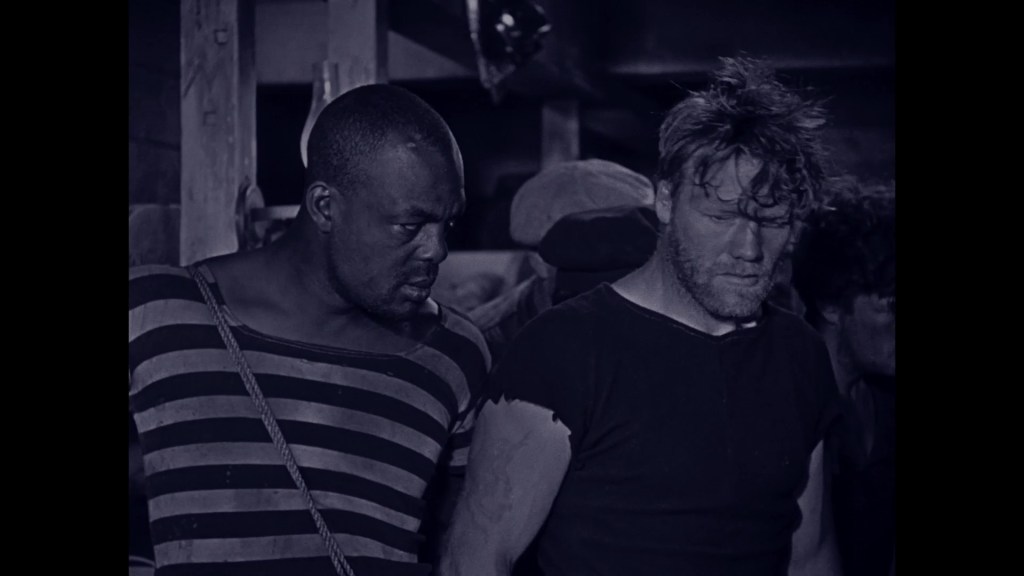
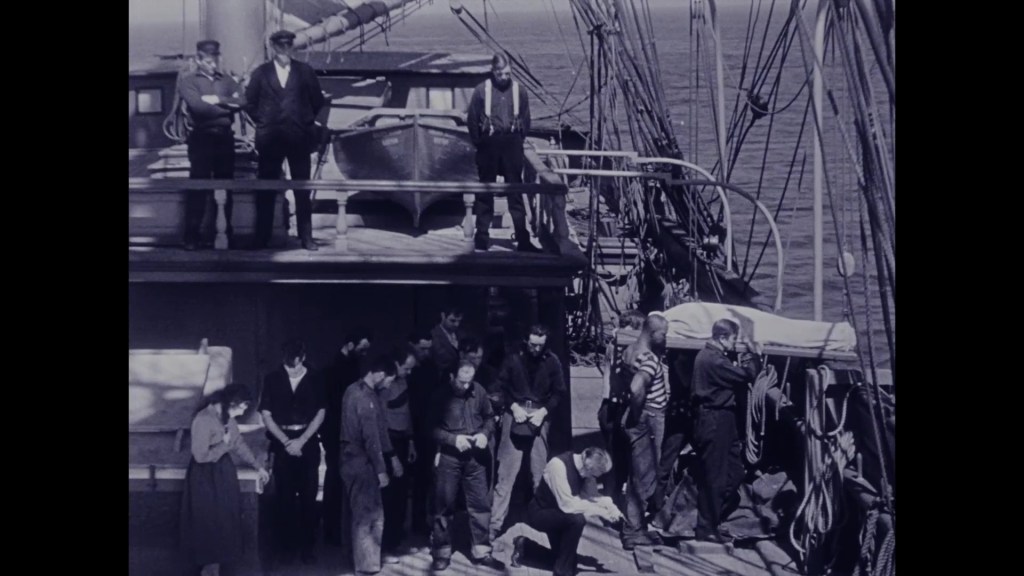
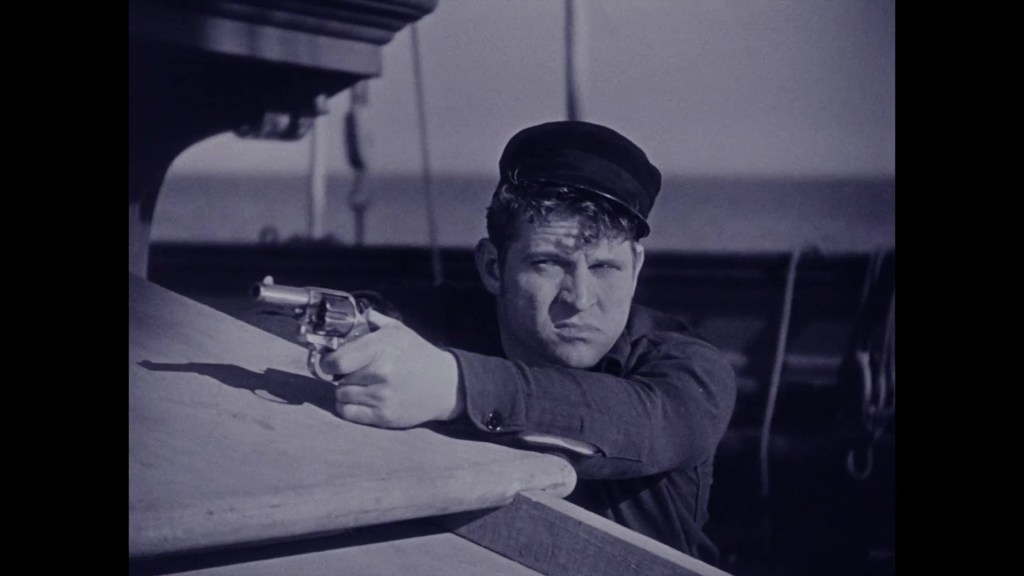
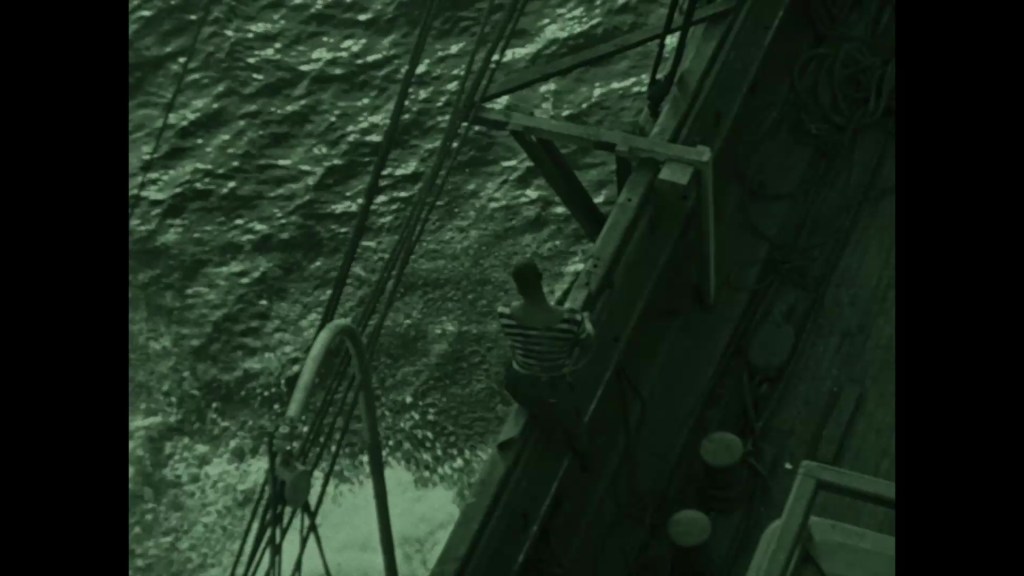
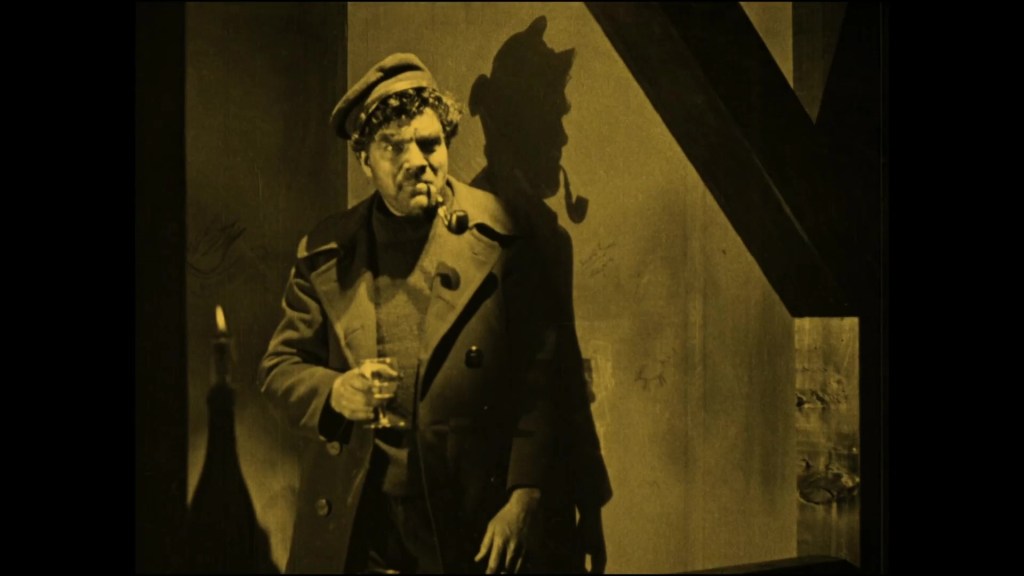
The Blood Ship (1927; US; George B. Seitz). Our second feature takes us aboard “The Golden Bough” in the 1880s, with its cruel captain “Black Yankee” Swope and his daughter Mary, who hates her father’s treatment of his crew. In San Francisco, Swope recruits a fresh crew from the harbour inn, run by “the Swede”. Mary takes the chance to run ashore but bumps straight into the sailor John Shreve. Swope forces his daughter back on board, so John decides to volunteer for the crew – as does the veteran James Newman. Most of the crew have effectively been kidnapped by the Swede, including a reverend and a diverse group of roughs from the inn. Newman confronts Swope, who kidnapped his wife and daughter (Mary) many years ago. Newman has served time for a murder Swope committed, leaving Swope free to raise Mary as his own child. The brutality of Swope and his second, Fritz, leads to the death of a young crewman. Newman is tied up and taunted by Swope, who reveals that he killed Newman’s wife. Mary overhears the truth, just as the crew mutiny. Fritz and Swope are killed and dumped overboard, and the ship sails back to San Francisco – where John and Mary can marry. FINIS.

Hmm. Well, as a drama this at least has the merit of brevity. At about 65 minutes, the film has enough plot to keep it going, but no more than that. The characters have little depth or complexity, nor are there any surprises. That said, the entire cast provide very committed performances. As James Newman, Hobart Bosworth has an especially arresting face and piercing eyes. He has tremendous presence as the wronged father and widow, and you absolutely believe in his implacable hatred and sense of mission. When he whips Swope to death, hurls his body overboard, then stretches out his arms in a gesture both of relief and triumph, it’s genuinely thrilling and disturbing. Jacqueline Logan and Richard Arlen (as Mary and John) are a very handsome couple. Both players do their best with these roles, which is enough – but no more than enough.

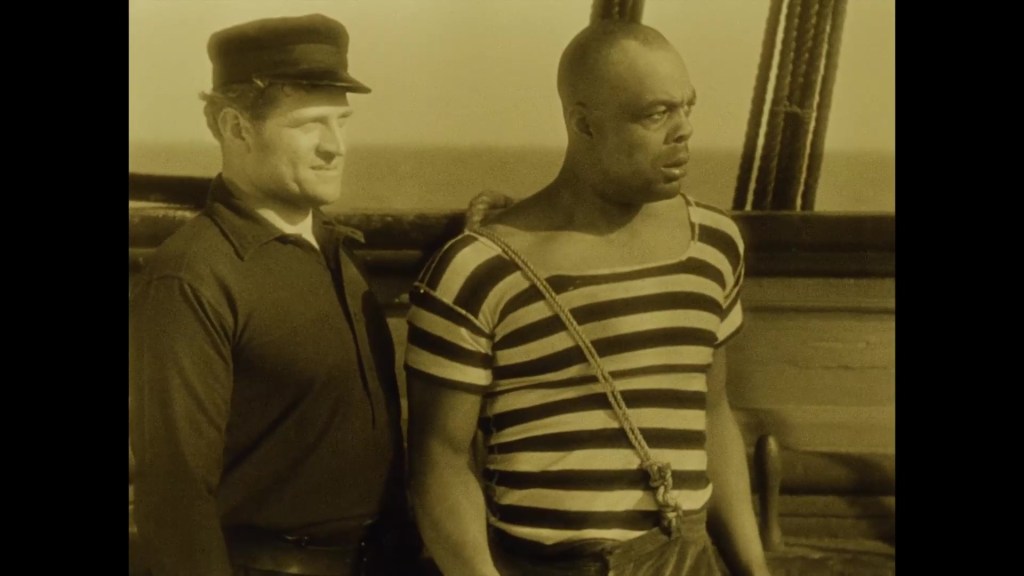
The cast as a whole are a series of stock, if not stereotype, characters. What’s interesting is how many “types” there are. Swope’s sidekick is called Fritz, the innkeeper is the Swede, and among the cast are Nils (Scandinavian) and the black sailor. Accents are made evident in the dialogue titles, with the latter two characters in particular having distinctive speech patterns. While the black sailor is the centre of various comic moments, he is (mostly) the originator of the laughs rather than the object of them. When another crew member ends up falling into some tar, there is an awkward moment of blackface humour – but thankfully it is the white sailor who is the subject of the black sailor’s joke. The black sailor is played by Blue Washington (who was also a baseball player), who appears last on the credits – and his character is unfortunately named simply as “The Negro”. Which is, I suppose, the kind of depth and detail one might expect from a story like this.

Despite these limitations of character and plot, the film does work. Indeed, it’s impressive that it is so successful at sustaining the drama across even 65 minutes without falling into piratical parody. The Blood Ship is very well lit and photographed and has a marvellous set and setting. The titular ship is a real and believable space, the perfect self-contained setting for the drama. The quality of the print used for this restoration is excellent, and it’s beautifully sharp and detailed. Faces have amazing texture, eyes gleam with superb clarity, and the ropes and wood of the ship have palpable weft and grain.

What more can I say? I enjoyed the film, but my brain was once more feeding on scraps. What sustained me throughout was Donald Sosin’s superb piano score. Absolutely committed to the drama, it was alternately swashbuckling, violent, tender, and tuneful. A real delight. Piano music for the two Italians films was provided by Jose Maria Serralde Ruiz, which was likewise excellent: playful, wistful, curious for the short, and energetic and expansive for the feature. So yes, a diverse range of entertainment: films that I would never otherwise have seen, presented to their best advantage.

Paul Cuff

Pordenone from afar (2025, Day 3)

Day 3 of Pordenone takes us to California Scotland, where we lurch into a melodrama of dastardly speculators and wronged women. (Brace yourselves, this makes for a chunky synopsis…)

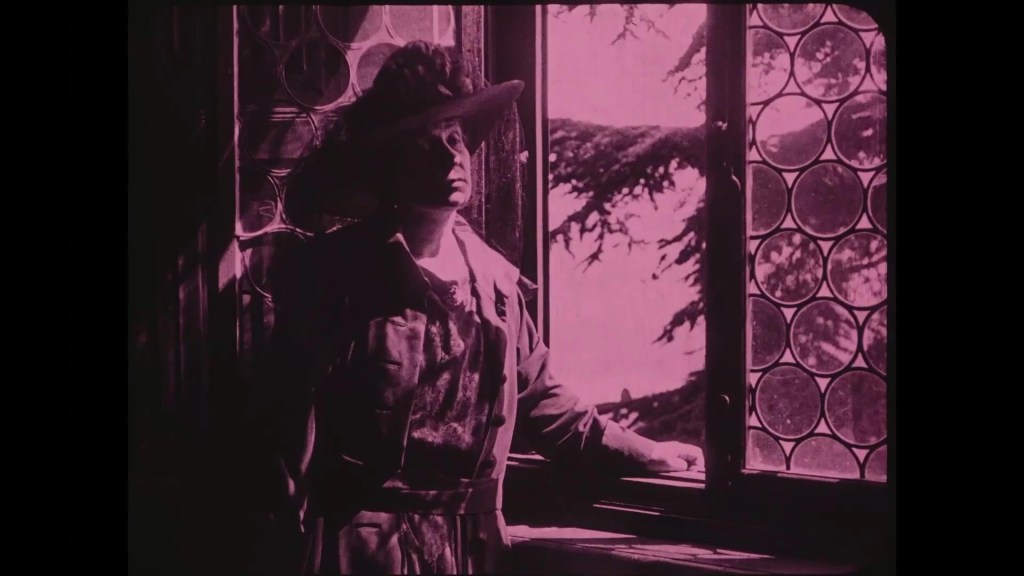
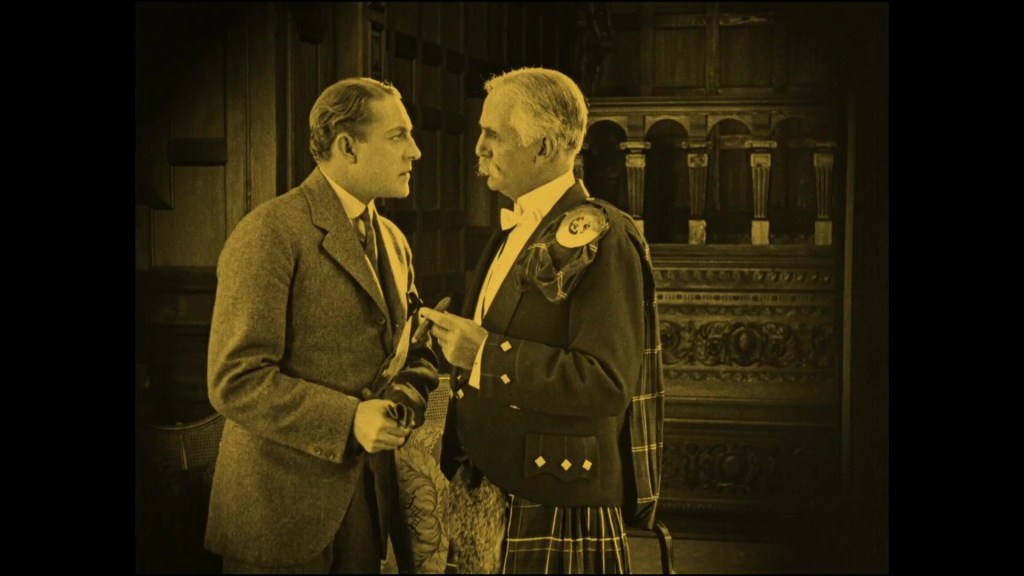
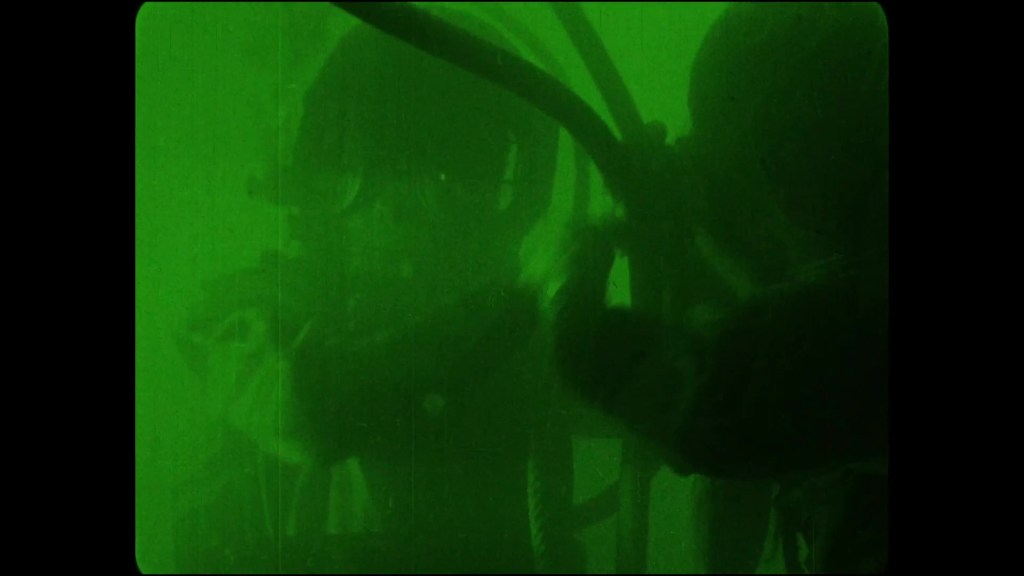
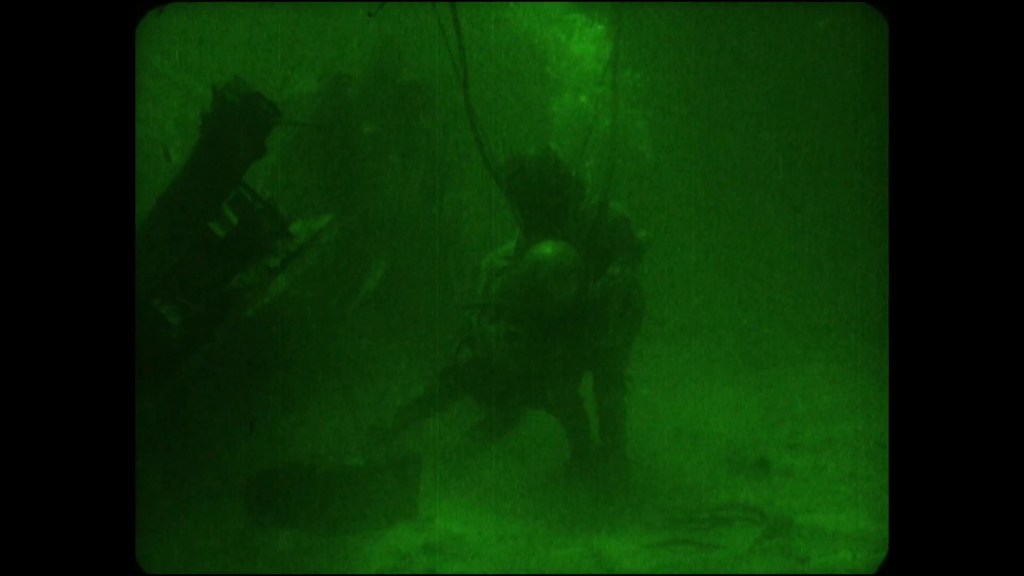
The White Heather (1919; US; Maurice Tourneur). The speculator Lord Angus Cameron has lost his money and that of his friends in a stock exchange crisis. He journeys to Shetland Castle to visit his brother, the Duke of Shetland. The Duke lives with his sister Lady Janet and her son Alec McClintock, together with their housekeeper Marion Hume – whom Cameron has secretly married and with whom he has a son, Donald. When Cameron arrives and asks the Duke for £20,000, he is refused. The Duke doesn’t want the debt to pass to his family if Cameron dies without heirs. He recommends Cameron marry a rich woman of the right class, someone like their guest Hermione de Vaux. Meanwhile, both the gamekeeper Dick Beach and Alex are secretly in love with Marion. On a hunt, Alec gives Marion a spring of white heather for luck, while Cameron is warned about the legend of the “Devil’s Chimney”. During the hunt, Donald duly walks in its shadow and is wounded by a gunshot. In the aftermath, his identity revealed – and that of his parents. Denying he is the father, or that he is married, Cameron publicly refutes Marion. Marion writes to her father, James Hume, another speculator, who has fallen seriously ill. She reveals that the only record of her marriage was lost onboard the White Heather, the ship on which they married, and which sank soon after. The case goes to court, where Hume is threatened by Cameron. The only surviving witness, Captain Hudson, cannot be located. Dick promises to find Hudson, while Hume goes bankrupt – and collapses – searching for new resources to fund his lawsuit. While Marion endures hardship to support herself and the child, Dick finally locates Hudson, who reveals that the marriage records were sealed in a waterproof case when his ship sank. [Are you still with me, reader??!] But Hudson is in the pay of Cameron, who fears that divers will retrieve the records from the wreck before they have a chance to destroy it. He sets a gang of roughs on Dick, while heading to the wreck at Buckminster Reef, where divers are working on the foundations of a new lighthouse. Dick is wounded but survives to tell Marion and Alec of Cameron’s scheme. Both Cameron and Alec find descend to the wreck. In the fight on the seabed, Cameron accidentally cuts his own air supply and dies, leaving Alec free to find the case. On the surface, Dick dies of his wounds – but only after giving his blessing to Alec and Marion, who are now free to marry etc, etc, etc. FINIS.

Lordy, lordy, lordy. Well, The White Heather is less than 70 minutes long, but it is crammed full of melodramatic incident. Indeed, that’s the trouble with it. So much time is spent advancing the plot that there is no time for a single character to develop anything resembling a personality. Much of the dialogue, indeed, consists of recapitulation and exposition. “Given that you have done this, Lord Shortbread, you shall inevitably encounter that!” “You swine, McCleft! Don’t you remember that you yourself did that, and in revenge I shall do this!” The characters are lifeless clichés, lifelessly mobilized. Doubtless some of the problem lies with the original play on which the film was based. The original Drury Lane production of 1897 was a bloated melodrama of four hours, designed expressly to show off impressive scenery – stock exchange, ballroom, castle, underwater wreck – and dramatic set pieces. In this, it shares something of the same pedigree as William Gillette’s Sherlock Holmes (1916). But whereas the Gillette film is lumbered with a great deal of unnecessary baggage from the stage version, Tourneur’s adaptation of The White Heather turns a bloated play into a very lean film. The production retains the central set pieces, using these to showcase its locations, set design, and photography. But despite its leanness, I found The White Heather almost unendurably banal.

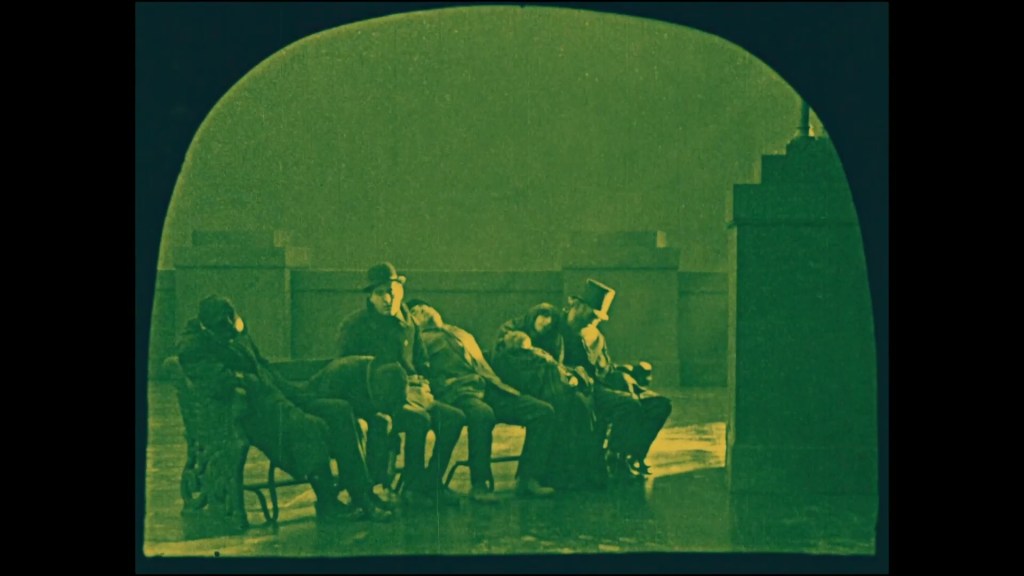
Though my brain went hungry, my eyes were given a feast. This is, after all, a film by Maurice Tourneur, photographed by René Guissart. As such, it is quite simply stunning to look at. Every frame of this film is almost unbelievably well composed, well lit, and well photographed. The interiors boast exquisite low-key lighting, wherein every detail is subtly and perfectly outlined with light in the midst of the gloom. The exteriors seem always to be shot at some magic hour, whereat the light saturates everything on screen. Whole sequences seem to exist just to show us how beautifully they can be lit and photographed. Take the sequence of shots – each its own perfect tableau – in which Dick searches for Hudson. The gloomy streets and interiors look amazing, simply amazing. There is one shot of people huddled in a doorway, the rain lashing down in a pool of light, which is one of the most individually striking shots I have seen in all the films shown via Pordenone so far. The exquisite green tone/yellow tint combination makes the shot even more perfect: just see how the textures of the wall, the sheen of the highlights, are all the more vivid. And the underwater climax, shot via a huge tank placed below the surface, is startlingly effective. This scene was the original play’s theatrical showstopper, so the film really needs to get its adapted equivalent right. And boy does it deliver. What could be (and surely is to a degree) an absurd dramatic situation needs to be saved by its realization, one that gives it some kind of reality, some kind of visible and tangible danger. Tourneur and Guissart manage to do just that, and however unbelievable the drama, one cannot but be sucked in by the photography. My god, this is a beautiful film.

And yet, and yet, and yet… Somehow the sheer prettiness of it all only served to underline just how empty this film is as an emotional drama. It reminded me very much of Tourneur’s The Pride of the Clan (1917), which I saw in a beautiful restoration via HippFest at Home earlier this year. That, too, had a faux Scottish setting, beautifully lit and photographed – and was utterly inconsequential as a drama. But The Pride of the Clan at least had a sense of humour – and Mary Pickford. The White Heather has neither. The cast – H.E. Herbert as Cameron, Ben Alexander as Shetland, Ralph Graves as Alec, Mabel Ballin as Marion, John Gilbert as Dick, Gibson Gowland as Hudson – is uniformly fine. But they have literally nothing to work with or develop by way of character or personality. Of all the cast, Mabel Ballin is the most obviously sympathetic, and Gibson Gowland the most striking – if only for the instant visual reminder of his frightening physical presence in Greed (1924) a few years later. But these pleasures are fleeting and superficial. If my interest was piqued, it was by association with other films – not by the drama of The White Heather. So yes, a beautiful film, one of the most technically accomplished pieces of photographic work you could hope to find in 1919. But its pleasures are pictorial, not dramatic, psychological, or emotional.

I should also add that this restoration is based on the only surviving print, a Dutch copy with translated titles. The English titles have been restored on the basis of censor records, contemporary descriptions, and the text of the play on which the film was based. I must say that some of the titles look a little odd in relation to the surviving montage. (Early on, for example, a title relaying the Duke’s words to Cameron is inserted in the middle of an exchange on screen in which the Duke is looking and talking to his wife. Later in the film, words spoken by Cameron are inserted into a shot in which Hume is speaking. Are these really the correct moments for these titles? Each example might be where a Dutch title was inserted, but that doesn’t mean it’s the place where the original English text belongs.)

Finally, the music for this presentation was by Stephen Horne. This was chiefly for piano with occasional interventions by other instruments. It had more moments of interest than the film, though its obligations to match moments of “Scottishness” on screen (i.e. various pipers a-pipin’) sometimes exacerbated the silliness rather than mitigated it. But it was a sterling effort, capable of heightening the aesthetic pleasure of the images if not deepening their emotional power.

Paul Cuff

Pordenone from afar (2025, Day 1)

I’ve just returned from a rather intense and wonderful few days in Berlin, gorging on culture of all kinds. (And on some seasonal German dishes, too.) I would be settling down to write about the filmic aspects of this trip, were it not for the fact that by the time I landed the Pordenone festival had already begun. Pausing only to shower, receive a flu vaccination, make some rice, upload a thousand photographs, and take the car for its MOT, I logged in to my streaming account and fell headlong into Day 1…

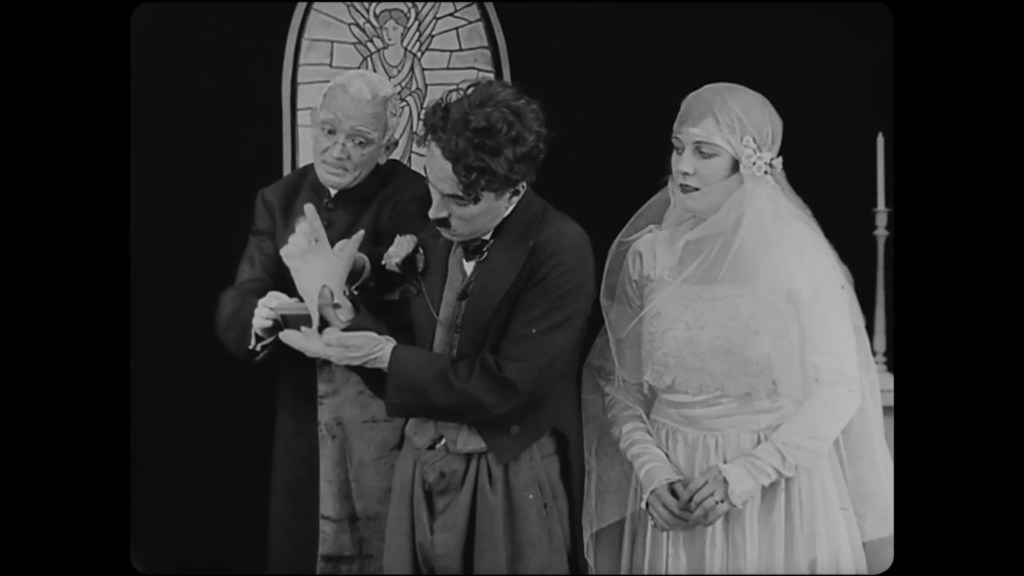
The Bond (1918; US; Charlie Chaplin). Famous for its final scene of the Tramp biffing Kaiser Wilhelm over the head with a large mallet, this short film begins with a rather more subtle and sophisticated series of sketches exploring other “bonds”. “The bond of friendship”, “The bond of love”, and “The marriage bond” are delightful vignettes, set against beautifully simple, picture-book style backgrounds (entirely black, with two-dimensional details that sometimes take on unexpected depth). Chaplin undercuts the premise of the first (getting increasingly fed-up by his friend’s friendliness), makes the second surreally literal (he is shot by Cupid’s arrow, then gets tied up with the object of his love), and undercuts the third (he resents paying the priest and gets hit with the lucky shoe). The final sketch, “The liberty bond”, is a rather brilliant series of diagrammatic tableaux in which Chaplin illustrates the motive, method, and outcome of wartime liberty bonds. He manages to be both sincere, charming, and funny – a very difficult combination to bring off in what is essentially state propaganda (albeit for a good cause). Chaplin makes human what could easily be stilted or polemic.

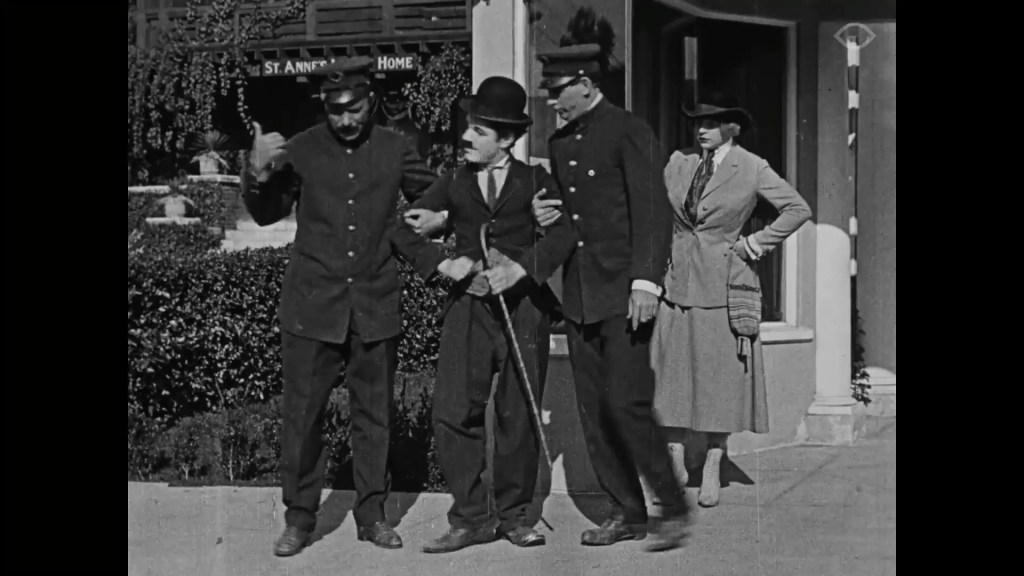
His Day Out (1918; US; Arvid E. Gillstrom). Our second short from 1918, this time not with Chaplin but with Chaplin’s most persistent and successful impersonator: Billy West. The film is a rather disjointed series of skits, the best of which is the prolonged scene in the barbershop in which Chaplin West variously shaves/assaults/preens/insults/scams his customers – including Oliver Hardy. (Inevitably, they all reappear in the slapstick finale.) It’s all very silly, but there is something inherently strange about watching this uncanny Chaplin. And as funny as some moments are, the film inevitably suffers from evidently not being by Chaplin. West is less sharp in every facet: less elegant, less quick, less touching than Chaplin. The very fact of his trying to be someone else (and not even this: he is being someone else’s persona, performing someone else’s performance) robs something of the pleasure in watching the film. Nevertheless, an interesting curiosity.

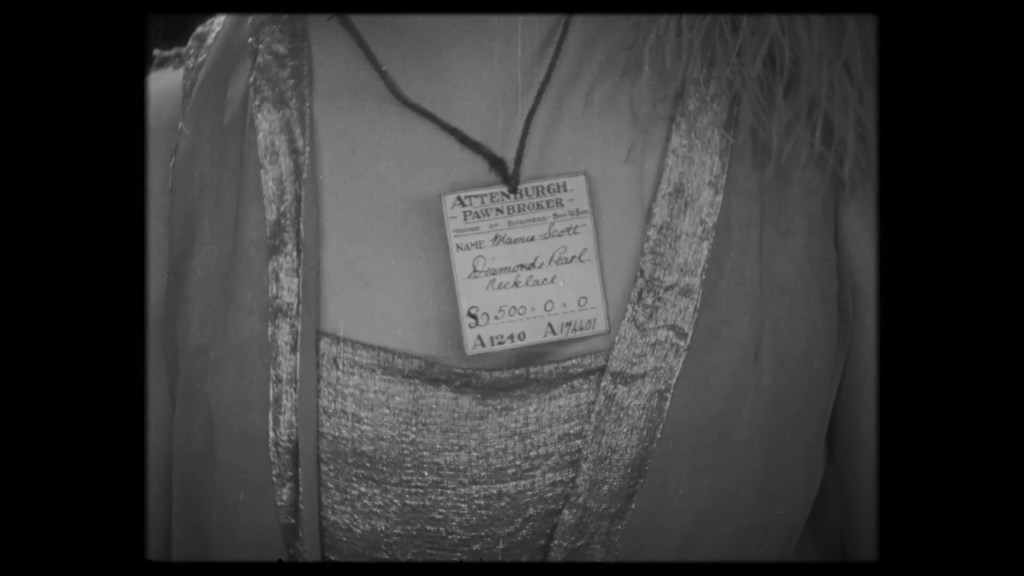
A Little Bit of Fluff (1928; UK; Jess Robbins/Wheeler Dryden). Our main feature presentation follows newlyweds Bertram Tully (Syd Chaplin) and Violet (Nancy Rigg), who live under the thumb of Violet’s imposing mother. While she and Violet are away visiting an aunt, Betram encounters the woman next door: the dancer Mamie Scott (Betty Balfour). Mamie and mutual friend John invite Bertram to the Five Hundred Club, where Betram accidentally gets hold of Mamie’s valuable necklace. There ensues a series of farcical encounters, mistaken identities, and run-ins with jealous boyfriends, the police, and criminals in disguise…

This film was an absolute unknown for me, so I was very pleased at how charming and funny it was. Sydney Chaplin is known to me (as I imagine to most) for his later role as his half-brother Charlie’s off-screen assistant, so seeing him take centre stage was fascinating to watch. He is delightful as the fey, trod-upon, Betram – a character whose name evokes Bertie Wooster, just as his actions undergo a very Woodhousian series of mistakes and minor disasters. (Troublesome matriarchs, nightclub misdemeanours, adventurous dancers, valuable necklaces, fake burglaries, and jealous boyfriends are all Woodhouse tropes, as they must have been for any number of stage comedies of the 1920s.) Syd Chaplin makes the most of his character’s small world and narrowed expectations. I love that his only visible pleasure is to play the flute, and even this is somehow a struggle and an imposition. (When he plays, he keeps blowing out his candle.)

Indeed, everything Bertram does goes wrong. The meekness of his character means that the increasing difficulty of his situation brings out wonderful and unexpected bursts of face-saving improvisation and expressive energy. I found myself laughing a great deal when Betram is cornered and has to find a desperate way out. The scene in which he his trapped between police, Mamie’s thuggish ex, and the police outside, is a delight. Ultimately forced into Mamie’s bathroom while she is bathing, and having first to impersonate her maid and then to impersonate Mamie herself, Bertram finds – just – a way out of his predicament, while also finding delight in his own ingenuity. The way he dons Mamie’s gown and bonnet, then sets out polishing his nails and smothering himself in powder, he seems to get lost in the pleasure of being someone else: having so often fallen short in fulfilling his masculine role, here is finds refuge in an exaggerated femininity.

I also loved the scene in which, trying to get his friend to back-up his alibi, he desperately mimes the title of the play and author they have supposedly seen. His mime, first “Love’s Labour Lost”, then of “Shakespeare”, is brilliant: it’s funny because it’s both an accurate mime, inaccurately identified (John announces that they saw “Gold Diggers” by Bernard Shaw), but because it once again gets this meek character to perform outlandish gestures. Having been discovered in women’s clothing by his mother-in-law, he is now discovered waving a speer by his wife. The shock of these disruptions to his usual character, and his own evident delight at his ability to perform as (respectively) highly feminine and masculine personae, make for wonderful sequences. They are also a marker of Chaplin’s ability to win us over to his character, making us believe both his meekness and his untapped performance abilities. The way each scene seems to snowball through a series of small incidents into absurd situations is both a dramatic success, but also a way for Chaplin to demonstrate a range of performance style – from small details to broad slapstick. But the film doesn’t offer any great transformation of Bertram’s character, and I rather liked how there is no effort to make us believe he has quite learned anything about himself, or that he has – ultimately – improved his lot. Early in the film, he sees the newspaper headline: “Man chokes mother-in-law”, and it’s clearly an unconscious fantasy. Even if the film has shown that he has untapped energies, he never (in the manner of a Keaton or Lloyd feature film) proves himself. There is no defeat or exile of the mother-in-law, just as Bertram himself never foils the real burglar to save the day. His successes are accidents, and at the end of the film he sinks into unconsciousness, oblivious as to what he may – or may not – have done.

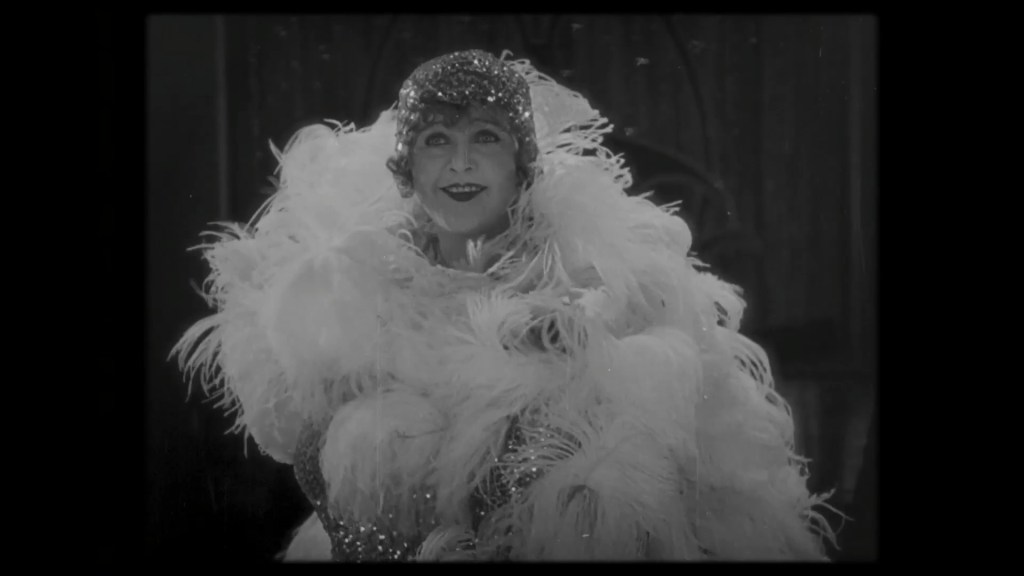
I must also mention Betty Balfour. Balfour was a major star of British cinema, maintaining her popularity with audiences throughout the 1920s. She starred in a number of foreign films as well, but I’m not sure her fame ever really had much impact beyond the UK. Even if her eponymous character is as superficial as the titular A Bit of Fluff suggests, Balfour holds her own on screen here: she’s happy to sing and dance and get involved in slapstick and farce. Balfour’s character is introduced as “celebrating the tenth anniversary of her 25th birthday”, but the film never makes her a villainous figure. (It’s worth noting that Balfour was only just older than 25 when she made this film.) She’s strong-willed and independent, traits which are never condemned. She also gets some nice lines of dialogue, as when Henry asks to borrow her necklace, to which she replies: “You showed my ring to a friend and she’s still looking at it.” Here, as often in the film, a single line of dialogue tells you much about the character and her relationship and past with others.

So that was Day 1 of Pordenone from afar. Having barely had a chance to stand still for a few minutes since I returned to the UK, I ignored all context for this Day 1 programme and ploughed straight through the content. Emerging from this rather mad dash and finding time to pause of think, I realize what a delightful programme this was, themed around various Chaplins: Charlie Chaplin, fake Charlie Chaplin, and Sydney Chaplin. It makes for a wonderful journey through the silent era, from the short slapstick of the late 1910s to the more elaborate narrative feature comedy of the late 1920s, from the most famous Chaplin who ever lived to the Chaplin who is more famous as an off-screen assistant than an on-screen lead. Starting with the familiar, moving to the familiar-yet-unfamiliar, and concluding with the hardly known is a superb way of guiding us through these three films and their stars. I hadn’t seen The Bond for many years, and it was a huge pleasure to be reminded of the context for that famous image of Chaplin with his foot on the vanquished Kaiser. (Having just returned from Berlin, I have been seeing much imagery from Wilhelmine Germany.) I had never seen either of the other films, and these are just the kind of thing I hope to encounter at a festival. If Billy West offered a rather uncanny experience, profoundly overshadowed by the real Charlie Chaplin, then Syd Chaplin was absolutely his own man. I had a great time watching A Little Bit of Fluff and was charmed by Syd’s genteelly hapless character. It was also a pleasure to see Betty Balfour, a star whose historical popularity stands in marked contrast to the difficulty of seeing her films nowadays. There are also nice echoes to Charlie Chaplin’s work in the other films: from the extendable barber chair in His Day Out (reminiscent of The Great Dictator (1940)) to the gag when Bertram uses his hands to make some dolls dance (reminiscent of the famous dance of the rolls/forks gag in The Gold Rush (1925)). It really is a superb trio of films that rhyme and contrast in pleasing ways. All in all, a highly engaging evening at the pictures. (Well… a highly engaging couple of hours in front of my television screen, anyway.) The piano music for the comic shorts (by Meg Morley) and for the main feature (by Donald Sosin) was, of course, exemplary. A marvellous start to this year’s festival.

Paul Cuff

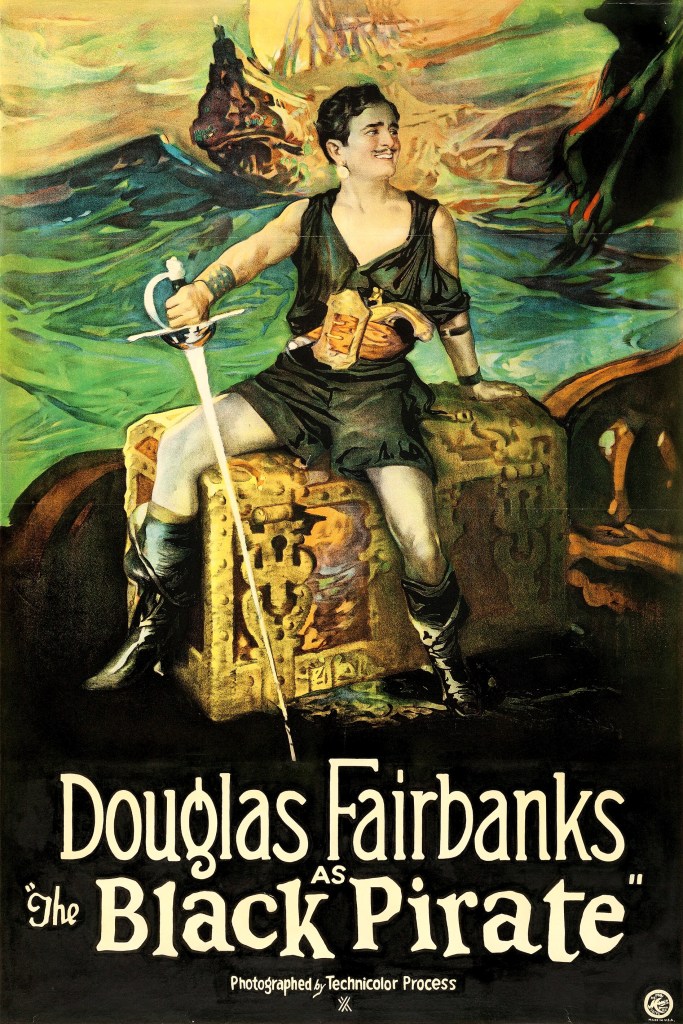
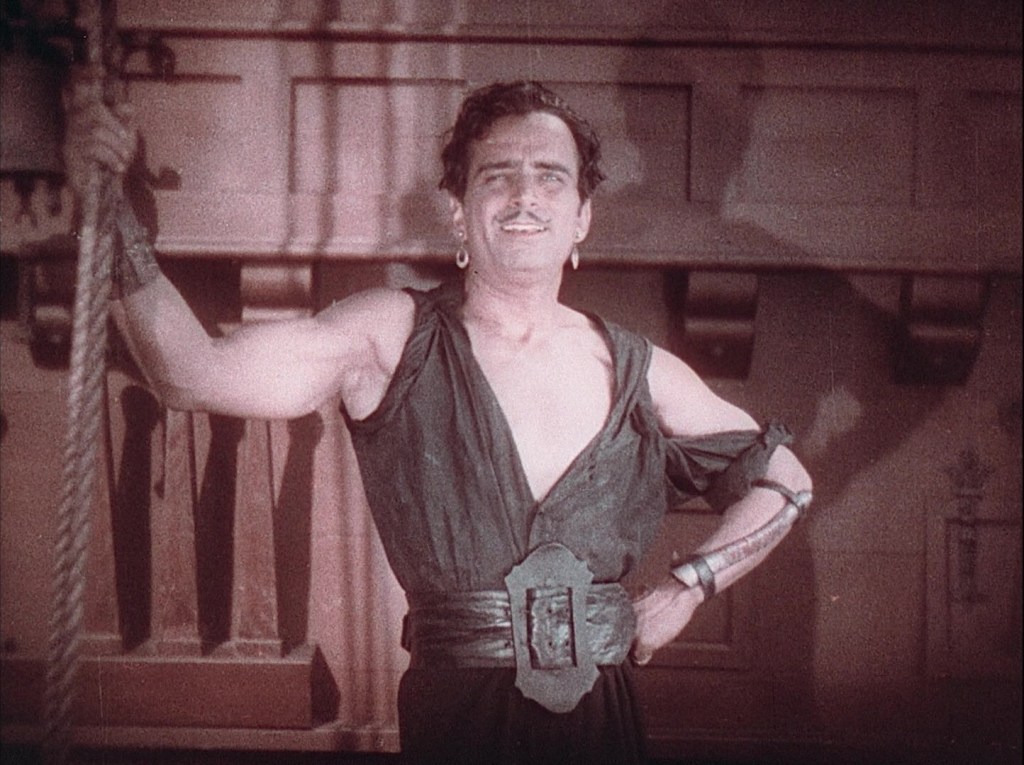
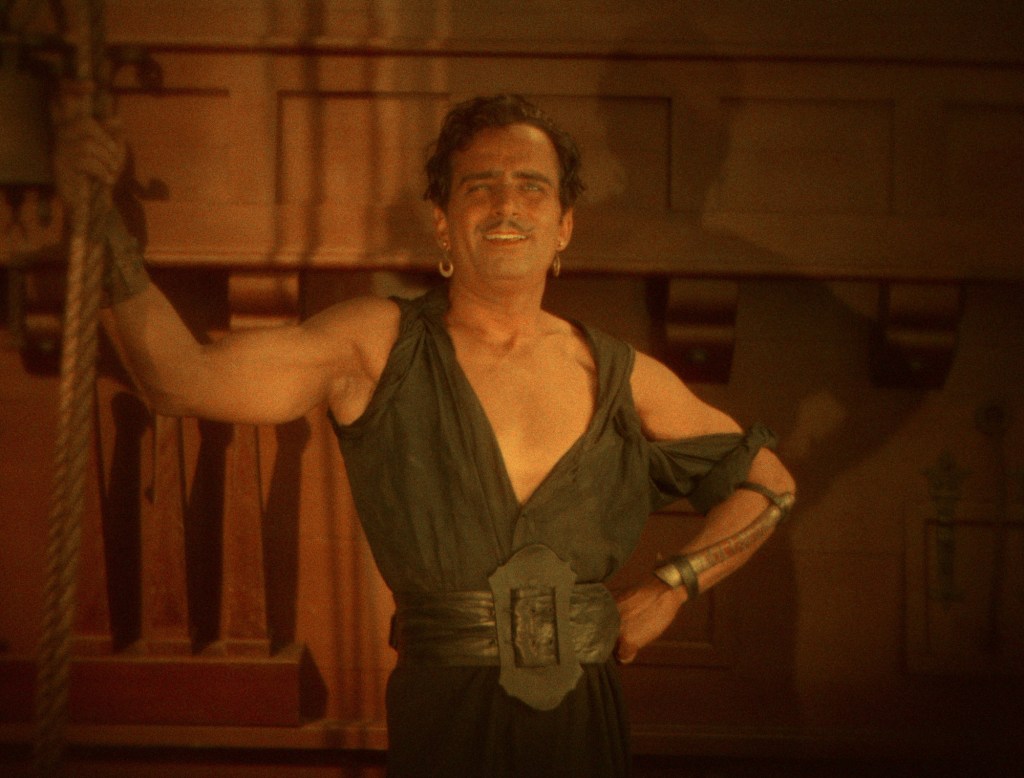
Music for The Thief of Bagdad (1924; US; Raoul Walsh)

Some time ago, I wrote about the music that accompanies different releases of Douglas Fairbanks’s The Three Musketeers (1921). I have long been meaning to do something similar for The Thief of Bagdad (1924). In the aftermath of the festival at (or via) Bonn, I felt like a return to Hollywood, so seize the chance now to turn my eyes – and especially my ears – towards Fairbanks…

First, some context. The original music for The Thief of Bagdad was written by American composer Mortimer Wilson and was commissioned by Fairbanks himself. “Make your score as artistic as you can and don’t feel that you have to jump like a bander-log from one mood to another at the expense of the development of your musical ideas”, he told Wilson (qtd in Vance 2008, 175). The result was a fully original orchestral score, which was performed at the film’s premiere on 18 March 1924 at the Liberty Theatre in New York. Wilson’s music received very good reviews from the critics, but its qualities were not appreciated by Morris Gest. Gest had already planned, in conjunction with Fairbanks, an exceedingly elaborate road show presentation for the film’s initial release. No expense was spared on ballyhoo: a veritable circus of road show variety – stage performers, an “Arabian” band, fancy-dress ushers, decorative incense, magic carpets etc – was duly assembled to exotify each venue booked for the roadshow. To support this cavalcade of orientalist claptrap, Gest wanted a score from a composer with a “big name”. For him, Wilson was not well-known enough as a composer to encourage public interest in the roadshow. Gest therefore employed James C. Bradford to compile a score from existing music – tunes more well-known than those of Wilson, and thus (Gest reasoned) more appealing to audiences. The result was not a success and quickly dropped. It was Wilson’s score that accompanied the film during its roadshow presentation at various major US cities.

However, while The Thief of Bagdad certainly made a big splash with critics, it was not the commercial success Fairbanks (and Gest) hoped. Despite being hailed as a landmark production, it proved less popular with Fairbanks’s own fans. The film was seemingly too ambitious (too long, too fanciful, too everything) for audiences in the US. But it had made its mark on history, and the film survived in enough high-quality 35mm prints to be restored in later decades, and returned to its rightful place in the canon of silent cinema.

But what of Wilson’s score? Despite Gest’s efforts to sideline it in 1924, the music has maintained a notable presence in histories of film music – and has been championed by many writers and practitioners. Composer and conductor Gillian B. Anderson, for example, has called it “one of the best film scores ever written”. Though Anderson also details its merits in more detail in her Music for Silent Films, 1894-1929: A Guide (xxxix-xlii), and the film appears on her website’s directory of original scores, I am unsure if/when she has performed it with orchestra. (Unlike many other scores on her website, it does not include performance details or guidelines for musicians.) Indeed, it is a curious fact that, despite the amount of information on the music and the survival of the music itself, Wilson’s work has remained what you might call a “paper score”.

This music certainly didn’t feature on any of the first home media releases of The Thief of Bagdad. The first DVD of the film was the 1998 edition by Film Preservation Associates. This featured the music cues assembled by Bradford in 1924, performed by Gaylord Carter on the theatre organ. (The recording itself dates from the 1970s, when presumably it accompanied a theatrical re-release of the film on 16mm/35mm. In 1978, Carter also released an extract from this score on an LP of music from silent films. Together with The Thief of Bagdad were extracts from the David Mondoza/William Axt score for Ben-Hur (1925) and the Ernst Luz score for The Temptress (1928). Rarities in themselves!) For all Carter’s personal links to the era, together with his admirable resurrection of historical scores, I often struggle with organ scores – especially for a film this long. And in any case, it’s a theatre organ not an orchestra. That it was recorded over other options evidences the relative ease of accessing and recording a theatre organ, and the preference for Bradford’s readily adaptable cue sheets rather than Wilson’s more complex orchestral score.

The first edition of The Thief of Bagdad that I owned was the 2004 release by Kino. This “deluxe edition” features an “orchestra soundtrack performed by the Mont Alto Orchestra”. The DVD credits further describe this as a score “compiled by Rodney Sauer and Susan Hall, adapted from the original 1924 cue sheet”. As I observed in my piece on The Three Musketeers, Kino’s marketing inevitably disappoints anyone expecting an “orchestra”: the credit sequence at the end of the DVD reveals that this consists of just five musicians. Kino’s use of the phrase “the original 1924 cue sheet” is also somewhat contentious. The first cue sheet used to accompany the film was the one that (briefly) replaced Wilson’s score after the first performances in 1924. Is the Sauer/Hall score based on this selection (i.e. the one by Bradford)? Even Kino’s “deluxe” edition does not provide any information on this issue. Even if it were Bradford’s selection from 1924, the word “original” seems a little misleading. After all, Bradford’s compilation of library music was a replacement for a truly original score by Wilson – the score that Fairbanks himself had commissioned. All this said, the Sauer/Hall score is perfectly fine. It is well performed and suits the film. But it feels out of scale with the images. As with the Mont Alto Orchestra’s music for The Three Musketeers, it sounds rather meagre next to the huge production values of The Thief of Bagdad. This film needs an orchestra, not an “orchestra”.

My disappointment with the Kino DVD was exacerbated by the fact that I knew that a Carl Davis score existed for this film. First performed in 1984 as part of the Kevin Brownlow/David Gill series of “Thames Silents” restorations, it was recorded for television broadcast and for home media. There was a laserdisc of the Thames Silents edition in 1989, and a VHS in 1991. Given the superior sound quality of laserdiscs, I chased down the laserdisc edition and giddily transferred it to DVD for my personal enjoyment. Davis’s score is compiled from the music of Nikolai Rimsky-Korsakov, especially from his famous orchestral suite Scheherazade (1888). The music is a perfect choice. After all, the sets, costumes, and overall conception of The Thief of Bagdad owes much to the influence of Sergei Diaghilev’s Ballets Russes, and especially to their Scheherazade, which repurposed Rimsky-Korsakov’s music. As ever, Davis rearranges the historical music with extraordinary deftness. While the music maintains its original identity, it also serves the film’s rhythm and mood. As it happens, I love Rimsky-Korsakov’s music anyway, so my first encounter with the Davis score (sat in a tiny booth, squinting at the small television screen as my laserdisc whirred away on the side) was an absolute delight. It’s a glorious compilation, perfectly suiting the dreamy, exotic, fantastic, and balletic qualities of the film. So enamoured of the music was I that I laboriously transferred the soundtrack of my laserdisc to DVD-R, then from DVD-R to my PC, then used editing software on my PC to affix the laserdisc soundtrack to the superior video image from the Kino DVD, just for my own viewing pleasure. This little experiment was the best version of The Thief of Bagdad I had until the DVD/Blu-ray release of the film, issued in the US by Cohen Media (in 2013) and in the UK by Eureka/Masters of Cinema (in 2014). This edition finally reunited the Davis score with an excellent transfer of the film.

But soon after this edition was released, it became apparent that a new restoration was in the works – one that was to revive Mortimer’s score from 1924. For this, an entirely new performing edition of the score was prepared in 2015 by Mark Fitz-Gerald. As Fitz-Gerald records in his excellent liner notes for the CD release (discussed below), the surviving music required a good deal of editing and preparation to ensure it matched the restoration of the film. Since Wilson composed the music during the production and allowed room for adjusting the length/order of scenes after the film’s premiere, there was a degree of inconsistency between surviving music and montage. Fitz-Gerald found that there was too much music for some scenes and not enough for others – as well as plenty of notational errors in various instrumental parts. These are common issues to the reconstruction of silent film scores, and there are many examples which necessitate very elaborate editing or additional composition. Nevertheless, Wilson left enough clues (and more than enough cues) for his score to be readily edited into its current working form. Fitz-Gerald’s edition of the score premiered with the film at the Pordenone festival in October 2016. Subsequently, the score was recorded in Frankfurt in April 2019 and then broadcast on ARTE later that year, with Fitz-Gerald conducting the Frankfurt Radio Symphony. Highlights from this recording were released on CD in 2022. This CD contains 75 minutes of music, which the liner notes inform us represents the “complete” score, minus the repeats of cues that make up the remaining 75 minutes of the film’s timespan.

I had to listen to Wilson’s score a couple of times before it properly sank in. I suspect this was because I was very used to Davis’s music. Though both are full, symphonic soundworlds, rich without being dense, there is a definite difference in tone. Wilson is less rapt, less intense, less filled with grand, sweeping gestures. One might say that Wilson is less inclined to being showy or flash, which Rimsky-Korsakov’s detractors would certainly argue is the case with some of his music. (Though few would argue that he isn’t one of the greatest of all orchestrators.) Davis is also working with music that is already well-known, saturated with memorable melodies – melodies that I knew incredibly well even before hearing his score for The Thief of Bagdad. Wilson’s melodies have gone virtually unheard in a century, and they are decidedly less emphatic than Rimsky-Korsakov’s – but no less worthy of being seen alongside this film. And Fitz-Gerald notes the echoes of other composers like Puccini, Reger, Tchaikovsky, and Wagner in Wilson’s score. (He even compares parts of the soundworld to that of Alban Berg, which is perhaps over-selling it. A score doesn’t need to be, or to sound, “modernist” in order to be relevant or interesting.) But there is never direct quotation, just these echoes – in the shape of melodies, or the texture of sounds.

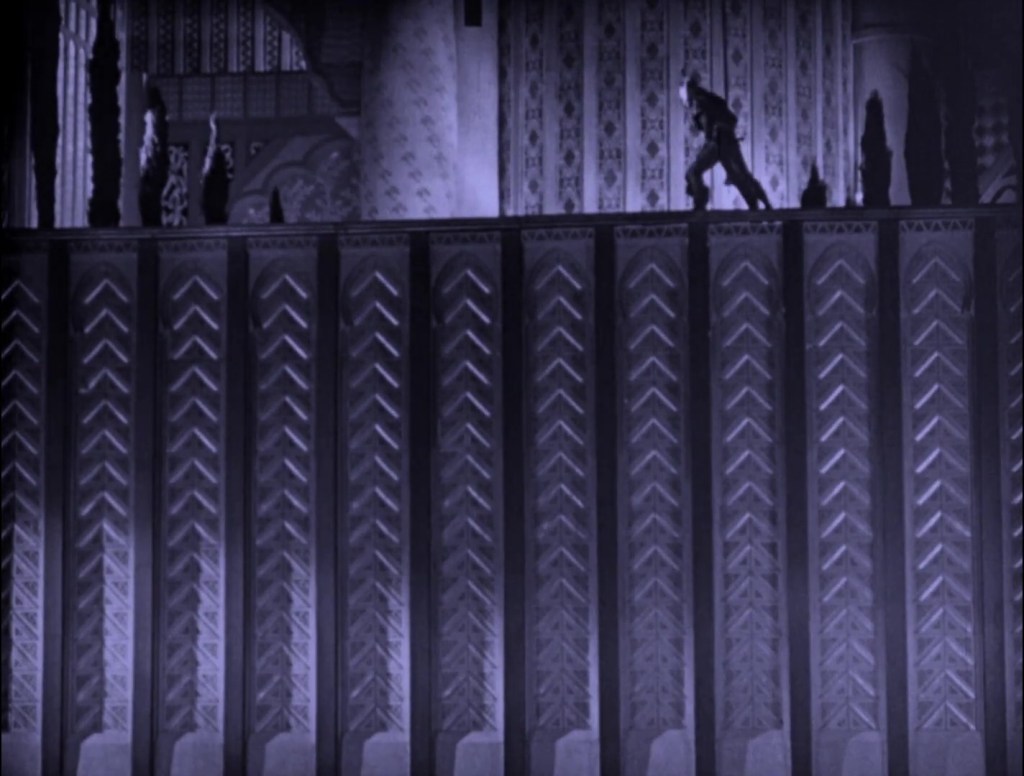
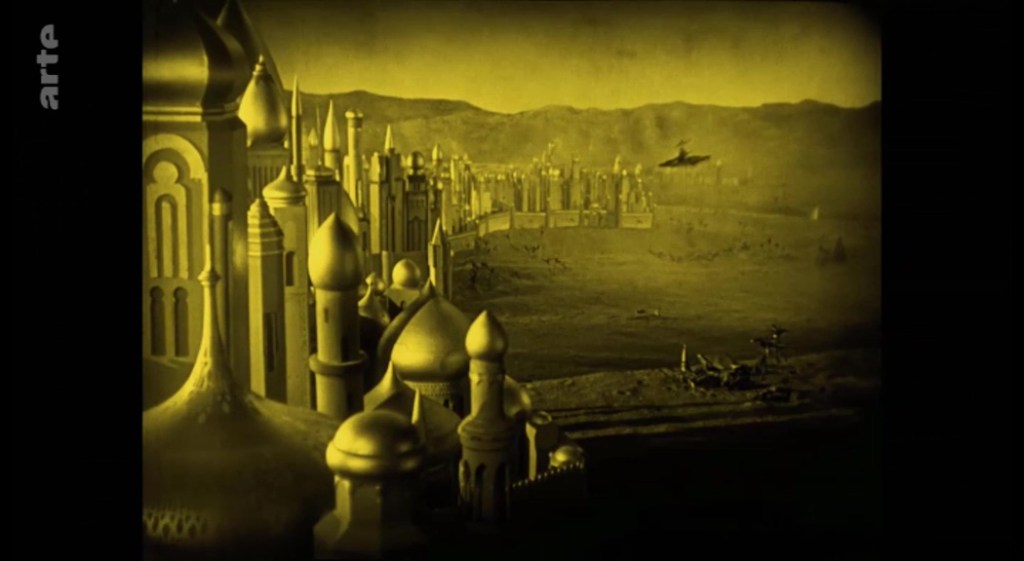
As well as the difference in musical/historical contexts for these scores, Wilson’s original music is surely conceived with a different objective in mind. In Scheherazade Rimsky-Korsakov is conjuring an entire picture from scratch, using the orchestra to form an impression in the listener’s imagination; whereas Wilson is accompanying an already-imagined world. If Wilson is less intense, perhaps this is because he isn’t striving to do everything: half the drama is already there on screen, so he is happy to be less emphatic. Just as the city walls seem to hover over those polished black floors, or the minarets hang before those dreamy picture-book skies, so Wilson’s music floats over the images. Everything works in tandem with the action, but the music has its own tempo, its own sense of mood. While there are plenty of examples of percussive effects for particular moments (gongs, weapons, jewels, clapping hands, magical apparitions etc.), the score itself is never in a rush to match every movement on screen. Wilson maintains a very pleasing balance between fidelity and independence. His music seems to have just the right tempo, both for individual scenes and for the film as a whole. It flows with the drama, seamlessly negotiating each sequence – picking out individual moments to highlight, but always with a wider sense of forward momentum. It certainly exudes the same warmth, geniality, and feeling as the drama.

Such qualities are immediately clear in Wilson’s opening theme, spelt out over the opening title. This theme is a slow, singing melody: wistful, yearning, gentle. If it lacks the absolute immediacy of Rimsky-Korsakov’s opening theme on the solo violin, used by Davis for the film’s prologue, it possesses a kind of calm that really works. This is music that’s never in a rush to impress. Like the film, it takes its time to unfold. Wilson’s main theme is heard for the first time within the drama when Ahmed enters the mosque and we see the Holy Man speak. The immediate sense of peace that Wilson conjures, a kind of sonic balm, is perfect. From the bustle of the streets, we enter a different kind of space – physical and emotional.

Later, when Ahmed first sees the Princess, the music grows into a slow, dreamy ecstasy. Like the opening theme, subsequently associated with the Holy Man, Wilson produces a drawn-out, singing melody – this time brought out in the low strings. It’s like a romantic version of the spiritual theme. In Davis’s score, the scene is more musically ambiguous. The theme that we will hear fully developed, expanded in orchestration and in volume at the end of the film’s first part, when Ahmed sets out on his quest, is here heard for the first time in tentative form. Over quiet, tremolo strings, solo oboe and then clarinet start to spell out the theme – but are soon interrupted in the scene when the Princess’s guards return. Davis’s score recognizes (in its orchestration) the intimacy of the scene, but (in its melody) hints at the dramatic consequences of this first contact between Ahmed and the Princess.

I have spent the best part of three mornings listening to the Davis and Wilson scores side-by-side, and I love them both. For sheer richness, variety, and moments of piercing intensity, Davis’s is hard to beat. (How I wish I had heard this score performed live!) But Wilson’s score has a tremendous cumulative impact: everything about it simply works. It’s beautifully organized, orchestrated, and fits the film like a glove. The restoration of Wilson’s score is reason to celebrate.

Added to this are the qualities of the Photoplay Productions restoration of The Thief of Bagdad. While the off-air copy from ARTE that I have watched does not do the astonishing imagery justice, it immediately signals its difference from earlier transfers of the film. Firstly, it contains the original credit sequence. The version presented both on the Kino DVD and the Cohen/MoC Blu-ray has a different (less elaborate) font for the main title, then dissolves straight to the image of the Holy Man and child in the desert:

In the Photoplay version, the more elaborate title is followed by full credits of cast and crew, then the desert prologue scene:

But the major difference is that the image in the Photoplay restoration is darker, the colours more saturated; it is as though the whole film has had a bath in some enriching elixir. I suspect that many viewers might worry the shadows are too dark. Having never seen an original tinted print from 1924, I cannot say how it compares with a contemporary copy – nor can I say how it compares to a contemporary projection of the film. What I can say is that it makes the previous transfers look anaemic, as though they have been over-cleaned. This is especially obvious in the beautiful transition from day to night via a dissolve. In the Cohen version, the tinting dissolves almost to monochrome for night:

In the Photoplay version, the tinting dissolves to deep blue:

As you can see from the following captures, the overall difference in colour and contrast makes a big difference. In the images below, stills from the Cohen Blu-ray are on the left, images from the ARTE broadcast of the Photoplay version on the right:

I simply don’t know which is more “authentic”, but I must say I’m a sucker for the shadowy saturation of the Photoplay version. I also note that many compositions in the Photoplay restoration are less cropped at the top, left, and bottom of the frame. (The takes and editing appear to be exactly the same in Cohen/Photoplay versions, so I don’t think this is an instance of each copy deriving from a different negative.) This, combined with the title font and longer credit sequence, suggests a different, and dare I say superior, generation print being used by Photoplay. It really does look gorgeous.

But will we ever see it on home media? And will Wilson’s score ever get a chance to accompany it? There is certainly reason enough culturally, and surely room enough commercially, for both the Davis/Cohen release and the Wilson/Photoplay restoration to co-exist. Please, someone make it so!

Paul Cuff

References

Gillian B. Anderson, Music for Silent Films, 1894-1929: A Guide (Washington, DC: Library of Congress, 1988).

Mark Fitz-Gerald, liner notes for Mortimer Wilson: The Thief of Bagdad, First Hand Records FHR126, 2022, compact disc.

Jeffrey Vance, Douglas Fairbanks (Berkeley, CA: University of California Press, 2008).

Bonn from afar (2025, day 1)

This week, I’m off to Bonn! Well, that’s not quite true. This week, I’m staying home in order to watch the streamed content from this year’s Stummfilmtage Bonn. Last year was the first time I saw the entire online programme, and this year promises another excellent line-up. Day 1 takes us to America for a potent blend of crime, subterfuge, and revenge…

Forgotten Faces (1928; US; Victor Schertzinger). Harry “Heliotrope” Adames (Clive Brook), so-called for his signature fondness for the flower, is by day a loyal husband and caring father – and by night a gentleman thief. His wife Lilly (Olga Baclanova), meanwhile, is busy being a neglectful mother to their infant child Alice and having an affair. Discovering the pair together, and realizing that Lilly has also betrayed him to the police, Harry shoots dead the lover and takes the child away. He leaves the infant Alice (complete with sprig of heliotrope) on the doorstep of a rich married couple, the Deanes, who had lost their previous child. Making his sidekick Froggy (William Powell) promise to remember the name and address of the Deanes, Harry hands himself in to the police. Seventeen years pass. Froggy keeps the imprisoned Heliotrope up to date on his daughter, now raised as Alice Deane (Mary Brian), and on the movements of Lilly, who still hopes to find her daughter. Meanwhile, Froggy is tricked by Lilly into giving her information about Alice. Lilly then visits Harry, and taunts him with her plan to take custody of their daughter. Later, when another convict engineers an escape, Harry assists – but the pair are thwarted. Harry having saved the life of the warden during the ensuing fight, he is given parole – promising not to lay a hand on his wife in the pursuit of his daughter. Outside, Harry and Froggy find Alice in the company of her fiancé Norman van Buren Jr., a rich heir. Hoodwinking his way into Alice’s household by pretending to be a new butler, Harry acts as her guardian. He also threatens Lilly and, in the climax, lures her to the house of Alice in order to get her to commit a crime and die in the escape. Sacrificing his own life for this purpose, he lives just long enough to say goodbye to his daughter. THE END.

Well, well, well, what an excellent slice of crime drama this is. I wondered what kind of genre this might be, since the tone subtly shifts gear in the opening act. It begins as a Raffles-like case of Harry as a gentleman thief. Added by some charming and witty dialogue, I assumed the light touch would continue. However, this film soon starts pulling its punches. The sudden, unapologetic way Harry kills his wife’s lover (off-screen) is startling, as is the way Harry later engineers Lilly’s death. I found the tone a little disconcerting later on, when the film milks sentiment from the father hiding his identity from Alice. Though there are some gorgeous touches – as when Alice calls out to her father, and both Harry and Deane turn to respond – I found myself increasingly unsympathetic to Harry.

This was in part due to the performances of Clive Brook and Olga Baclanova as the estranged couple. For me, Baclanova was by far the most engaging presence on screen. She is wonderful as Lilly, always on the verge of wildness – like her hair, which when uncontained by her hat springs out in a kind of pale mane. By contrast, as the older Harry, Clive Brook’s hair is pasted and greyed into a kind of docile wig – so orderly and so meek that it almost hurts to look at. If Brook maintains a kind of sad father nobility, Baclanova gets to play an increasingly desperate emotional state. Harry plays weird mind games with her (stalking her, sending her threats, luring her from her safehouse), a kind of escalating cruelty that the film never questions – but that Baclanova makes you really feel. Lilly is mentally teased and tortured to the point where she is so desperate to be free that she confronts Harry. When he dies, saying he has kept his word to the warden, I felt much sorrier for Lilly than for Harry. After all, Harry has kept his promise not to touch Lilly but has carefully directed (in every sense) her death – albeit at the price of his own. And even the murder she commits – his – is the result of Harry’s own bluff and entrapment. He has made her commit murder, forcing her to play the part that he has cast. It’s a nasty ruse, one which the film seems to think we accept on the basis that Lilly is a bad mother, a kind of failed vamp, who surely doesn’t deserve to have her child – or even to survive the film. What exactly is the fate that Harry assumes Alice will have under Lilly’s influence? Whatever it is, it’s a fate so bad that he’s prepared to kill Alice’s mother to waylay it before it even happens. Lilly doesn’t have to commit a crime to be deemed a criminal; Harry can commit several but dies believing himself a hero. Though Brook’s performance is good, there is a kind of smugness in Harry’s victimhood (and apportioning of pre-emptive blame on Lilly) that rubbed me the wrong way. Does being a well-intentioned father excuse two murders? Does Harry’s oft-stated belief in the sanctity of marriage justify him being judge, juror, and executioner-by-proxy of his wife? Is Lilly so inherently wicked that she deserves to die? Certainly Harry seems to think so, and the film seems to think so.

I should also mention William Powell, who as Froggy gets to sport a delightful monobrow that is at once comic and sympathetic, marking his character as a sidekick. He doesn’t get much screen time, but Powell nevertheless gets to shape this little character into someone with a past, and with some humanity. (Froggy, it seems to me, is a far more sympathetic character than Harry. I’d rather like Froggy to have been given a gag or a send-off at the end of the film to indicate that things turn out alright for him!)

Whatever I thought of the characters, I was absolutely captivated by the look of Forgotten Faces. The cameraman was J. Roy Hunt, who does some remarkable work. There are some fabulous images of the gambling house at the start of the film. I love the shot from within the roulette wheel, looking up through the dial to the eager circle of faces of the gamblers, and then the roving camera – tracking and panning – that penetrates into the midst of the eager throng. Here and throughout, there are scenes with superb low-key lighting. The nighttime exteriors and interiors (the street, the prison, the Deane house) have some exquisite lighting, moody and atmospheric: this is film noir avant la lettre. (So too, I suggest, is its punishment of the wayward female character.)

This reaches its zenith in the climax to the film, which boasts an astonishing moving camera that seems to glide through the entire house – round corners, up flights of stairs, through corridors, through doors. It’s an outrageously well-orchestrated use of movement, combined with incredibly complex lightning. (Rewatching it again, there is a subtle cut that slightly breaks the spell – but nevertheless, it is wonderful as a whole.) It’s the perfect device for the sequence, which is Harry luring Lilly to her doom. He has him himself acted as metteur-en-scène, using shadows, props, and hired actors to trick Lilly into shooting him then falling to her death on a sabotaged ladder. As a viewer, you absolutely feel as entranced, almost as will-less, as Lilly as she follows Harry to her doom – and his. An amazing sequence.

Finally, a word on the presentation. The film featured piano accompaniment by Meg Morley, which was excellent: melodic, atmospheric, always appropriate. The restored print from the Library of Congress was superb to look at. There was a copyright logo in the bottom left of the screen (as you can see from my images), but its placement and design rendered it unobtrusive. This film is so rich to look at that you quickly forget the logo is there. (Unlike some copyright logos, as I mentioned last week.) All in all, a fabulous way to start the festival.

Paul Cuff

(Re)discovering The Student Prince in Old Heidelberg (1927; US; Ernst Lubitsch)

This week’s post has been written by Devan Scott, host of the superb “How Would Lubitsch Do it?” podcast. As anyone familiar with this series will know, Devan is not only an exceedingly knowledgeable devotee of Lubitsch but an active participant in researching and promoting the director’s work. Here, he writes about the discovery of an alternate version of The Student Prince in Old Heidelberg and the light this copy sheds on the film’s production and exhibition across 1927-28. So, without further ado, I now hand over the reins to Devan…

The Student Prince in Old Heidelberg – also known under the title Old Heidelberg – has been an obsession of mine ever since I first watched it a half-decade ago, and I attribute this to the fact that it exists at a unique intersection between three interests of mine.

First: it is not only a film by Ernst Lubitsch, greatest of all directors of romantic comedies, but a great film. It is, as far as his American canon is concerned, an unusually simplistic bit of melodrama: a young, cloistered prince experiences the world for the first time and winds up in a doomed romance with someone below his station. There’s very little of Lubitsch’s trademark high-society gamesmanship, but it’s brilliant anyways because of his singular ability to shade every single gesture with the lightest of brushstrokes. It’s a swooning film of large gestures, but it’s never only that.

Second: the version of the film I first encountered features an orchestral score composed by Carl Davis, greatest of all retrospective silent film composers. In typical Davis fashion, it is a brash, boisterous marvel of a thing, with an uncommon sensitivity towards the film for which it has been composed. It interfaces with the film as readily as any of Lubitsch’s own gestures, and this collaboration across time has resulted in a masterpiece.

Third, and the focus of this blog piece: outside of the odd 35mm screening here or there, the film has solely been available in the form of a telecine of the 1984 restoration by Kevin Brownlow and David Gill, for which Davis wrote his score. Released on laserdisc by MGM/UA Home Video in 1993, and occasionally broadcast since then, this telecine is a wholly inadequate representation of a work of such magnitude. (Retroformat recently posted a different version of Old Heidelberg. Though this version matches the cut restored by Brownlow/Gill, it derives from a heavily cropped 16mm print that is unfortunately inferior to the laserdisc.)

And so it came as a pleasant surprise that one day, out of the blue, a high-definition version of the film suddenly appeared on the Bundesarchiv’s digital platform. (Credit to Anthony on my Discord server for spotting this.) Per the opening title card, this version derives from the archives of the Museum of Modern Art (MoMA) – and features a distinct title. Whereas the widely circulating Brownlow/Gill version credited itself simply “Old Heidelberg”, this version was titled “The Student Prince in Old Heidelberg.” Though a problematic transfer of an unrestored print, the improvement it offers on the laserdisc is obvious:

Clearly, the logical next step for me was to line it up with the laserdisc version so as to create an ideal hybrid video synchronized to the Carl Davis soundtrack. This is the point at which certain kinks made themselves known: it quickly became apparent that these two versions of the film featured often wildly divergent shot lengths and, in the case of the MoMA version, greatly extended sequences with distinct footage.

My initial suspicion was that this was an alternative negative, possibly struck for overseas territories; this suspicion was echoed by the many extremely helpful folks who generously responded to my various self-indulgent emails on the subject. (In addition to this blog’s proprietor, Dave Kehr, Peter Williamson, Scott Eyman, David Neary, Stefan Drossler, Jose Arroyo, and Matt Severson all contributed information and guidance to this piece.)

Further analysis of the film made it clear that – with a few exceptions involving alternate takes and a few extended or truncated scenes – the bulk of the changes were related to two elements:

  1. New location footage of the real Heidelberg, Germany, totally absent from the earlier version which featured footage exclusively shot in the Los Angeles County area.

  1. Norma Shearer’s performance, which has (compromised logistics of quick-and-dirty reshoots permitting) been largely reshot to the tune of at least fifty new distinct replacement shots. Only a few of these feature any other performers: the vast majority feature her and only her. (Note the production design inconsistencies in the example below (see images), which indicate pick-up photography done after principal had wrapped.)

The aesthetic implications of the first additions are limited: there’s a greater sense of verisimilitude around Heidelberg, the entrance to which is rendered with significantly more grandeur. A fine set of additions, but the fabric of the film is not fundamentally altered.

Shearer’s reshoots, on the other hand, have fascinating knock-on effects on the film’s form. She hits her emotional beats with far more emphasis in the new footage, and the rhythms of the performative edits are far more generous – geared to give her time in which to land those beats. The results are a mixed bag: certain beats cut through with more clarity, but (though this could be my own familiarity bias towards Old Heidelberg) at other points Shearer risks embodying Rawitch a little too closely.

The most interesting by-product of this new coverage is the way that scenes otherwise covered in long master shots have been broken up with somewhat more conventional coverage in the form of close-ups. Whether the motivation for doing so was to better highlight Shearer’s performance or to better suit the limited nature of pick-ups (it’s easier to recreate a set if the background is cropped and out-of-focus), the impact in the newer version is that the camera direction subtly changes whenever Shearer is on screen. There’s a slightly out-of-character (for Lubitsch) cuttiness, and Lubitsch was rarely one to lean on close-ups to make subtle emotional beats emphatic anyways. For example, in the below scene (see images) there is a common occurrence: a cut breaks up the final wide shot with a close-up, extending the scene and more forcefully punctuating the emotional beat.

As is probably clear at this point, this is no A-negative/B-negative situation but an updated version of the film assembled at a later date. What we know about the circumstances of the film’s development, production, and post-production cycle is in some ways illuminating and in others a contradictory fog-of-war situation…

The film’s origin lies with MGM’s purchase of the rights to the operetta The Student Prince (1924), itself based on Wilhelm Meyer-Förster’s play In Old Heidelberg (1901), itself adapted from his novel Karl Heinrich (1898). William Wellman and Erich von Stroheim were at various points either attached or courted before Lubitsch – on loan in the midst of his move from Warner Brothers to Paramount – landed the project. Both Shearer and Navarro were reportedly insisted upon by the studio.

Principal photography wrapped up by early May 1927. Lubitsch’s desire to include footage of the real Heidelberg led him to decamp to Germany to record b-roll material there in mid-May. This is where things become hopelessly convoluted. Various sources, including The Exhibitor’s Herald and Picture Play, all seem to agree that John Stahl undertook reshoots in Lubitsch’s absence, but the details of these reshoots are contested: the Herald (August 1927) claims that these involved retakes of Shearer, and that additionally Paul Bern and Fred Niblo also took turns at the helm before Lubitsch resumed control when he returned from Germany. Picture Play (October & November 1927) claims that certain “love episodes” were “tempered”.

A frequently-made claim involves Stahl reshooting the film’s major “love scene” in particular. An odd claim, considering that this scene – the one in the moonlit field – is one of the few featuring Shearer that is virtually identical between the two cuts. Could this claim be referring to a later, far more subdued (and heavily reshot) scene in which Karl and Kathi kiss on a sofa before a fade-out (the sole time in the film that we’re invited to infer that the two have consummated their romance)?

Confusing matters further, Meyer-Förster and MGM were embroiled in various legal battles throughout 1927 over naming rights: various trade publications refer to the film in early 1927 as “Old Heidelberg” before transitioning to “The Student Prince” thereafter. Meyer-Förster’s lawsuit and appeal – though both rejected – would seem to have something to do with this name change, as reported in Picture Play:

[T]he author of “Old Heidelberg” took occasion to make some unpleasant remarks about the filming of his play. His contention was that the picture had been made without his permission. It seems that this had necessitated a change in title, and so “Old Heidelberg” will come to the screen as “The Student Prince”, thus linking it up with the recent musical version of the famous German play.

Whatever the provenance of the various shoots, the film premiered in September 1927 in New York and entered general release in January 1928. MGM’s continuity cutting report, filed in June 1928, would appear to indicate that the later “The Student Prince in Old Heidelberg” cut – complete with reshoots – was what entered general release that year. By 1936, MoMA had acquired the nitrate print of “The Student Prince in Old Heidelberg”, with a copy landing at the Bundesarchiv in 1970.

This version, however, seems to have been lost to film history at some point between MoMA’s acquisition and its resurfacing this year. Virtually everything written about the film – at least, what’s publicly available – is based on the “Old Heidelberg” version. To take one example, in a text from 2017 that continues to accompany screenings, Kevin Brownlow states that Lubitsch’s on-location footage taken in Heidelberg never made it into the final cut of the film. (This text has been reprinted at recent screenings of the film.) Yet the existence of “The Student Prince in Old Heidelberg” cut – and its apparent status as the definitive released version – clearly indicates that this is not the case. Additionally, prior to my inquiries it seems that neither the Bundesarchiv nor MoMA had any information regarding this version and its distinctiveness: it appears to have fallen through the historical cracks until now. I look forward to a more detailed account of the two versions and their provenance, once more investigation has taken place.

Just as interesting are the numerous unanswered questions: did the Old Heidelberg cut ever see significant screenings in 1927? Perhaps this was what premiered in New York in 1927, or maybe it was relegated to overseas showings? Why did this version, almost certainly lesser-seen, eventually become the only widely-available one? Who or what instigated the Shearer-centric reshoots? It’s tantalizing to imagine that they were an Irving Thalberg initiative, given his relationship with Shearer. How much of the new footage was directed by Lubitsch? These questions vary in terms of knowability, but they’re fascinating to contemplate.

Happily, the resurfacing of “The Student Prince in Old Heidelberg” cut has set gears in motion that might lead to a full restoration (and release) of the film. This should include the tinting scheme detailed by MGM’s continuity report of 1928. While most of the film remains monochrome, blue is indicated for nighttime scenes and lavender for the death of the king and its aftermath.

There remains the question of whether Carl Davis’s score can be made to synchronize with a different cut of the film. My own (amateur) synchronizing of the two versions indicates that Davis’s work could be adapted for the new cut without many compromises. (Some looping and grafting fixed most of the holes, but the different pacing of various scenes meant an increase of speed by as much as 10%.) I can only hope that such minor changes to the score/recording might be possible for any future (official) restoration.

Whatever happens, this is an exciting time to be one of this film’s fans. When unencumbered by the ravages of a decades-old laserdisc transfer, The Student Prince in Old Heidelberg is a film of immense emotional power, and one of Lubitsch’s great silent works.

Devan Scott

My great thanks to Devan for writing this week’s post. I alert interested readers to his “How Would Lubitsch Do it?” podcast, which includes an episode on The Student Prince in Old Heidelberg. – Paul Cuff

The cinematic afterlives of Nosferatu

This week, I revisit some of the cinematic afterlives of Nosferatu – Eine Symphonie des Grauens (1922; Ger.; F.W. Murnau). After catching Robert Eggers’s remake of the film earlier this year, I discussed my thoughts on its relation to the silent original in a podcast with Jose Arroyo (freely available here). To prepare for this, I rewatched (and watched for the first time) several modern films that cite or rework Murnau’s original – and made notes on my thoughts as I went. As a kind of written addendum to the podcast, I have collated and attempted to polish these thoughts into what follows…

Nosferatu – Eine Symphonie des Grauens (1922; Ger.; F.W. Murnau). What can I say about this wonderfully strange and compelling film? Every image is perfectly composed, marvellously controlled. The world on screen, enriched by tinting, has marvellous texture and resonance. Nosferatu is a fantasy and a period piece, but both the fantasy and the period are rooted in real places – and, for me, its exteriors truly make the film. The town, the forest, the mountains, the castle, and the coast – these locations have such a sense of pastness, and such pictorial power, that they sink into your memory. No amount of parody or pastiche can lessen their value. So too with the performers. They are cinematic archetypes, enacting some kind ritual drama that future generations feel obliged to mimic. But the performances are also playful and delightful, even their most naïve gestures somehow innocent of cliché. There is more than a touch of camp about Max Schreck’s Nosferatu, but a camp that is always sinister. His sexual predation is not quite human; interpreting his desires and motives is like trying to understand the consciousness of an animal or an insect; those piercing eyes are bright with a life than cannot be fathomed. Murnau shapes Nosferatu’s otherworldliness through the darkness from which he emerges, the shadows he casts, the untenanted spaces he inhabits. The film plays with his ability to move across space and time: he walks with the ancient deliberation of an old aristocrat in one scene then scuttles at terrifying speed in another. The figure is allied with cinema’s own uncanniness, the medium enabling the monster: his carriage hurtling through a forest like a berserk toy, his erect body rising in magical defiance of gravity from his coffin. All this richness of image and gesture is enhanced by Hans Erdmann’s original score, best heard (I’ll have you know) via Gillian B. Anderson’s edition rather than the version released on various DVD/Blu-rays. (Anderson’s edition more closely replicates Erdmann’s original orchestration but remains, sadly, available only on a long out-of-print CD.) As it shifts from sequence to sequence, Erdmann’s music moves from the lyrical to the rustic and the elemental; it is charming, brooding, devastatingly simple. As its title states boldly at the outset, Nosferatu is a symphony of horror – a truly complete work of cinematic and musical art. As much as its images and ideas have been treated as a grab bag for future generations to ransack, it still holds an un-replicable splendour.

Nosferatu: Phantom der Nacht (1979; W. Ger./Fr.; Werner Herzog). The first full remake of Murnau’s film, and by far the best. Shot on location in the Netherlands and Czechoslovakia, Herzog has an unerring knack for the right places, filmed at the right time of day, captured in the right conditions. Always in his films, you can see that this is a director who has spent time walking. These aren’t pretty landscapes, touristic ones, places chosen second- or third-hand – they are fresh, harsh, rugged, sublime. There is also the sense that Herzog’s minimal budget and no-frills filmmaking benefits the atmosphere: it always feels like he has snuck into these spaces without asking permission. These are stolen images, not forged ones. The town, the coast, the mountains, the castle – all become otherworldly, other-timely. The camera seems to have found out odd corners of Europe where the past lives on, like finding patches of frost on a bright spring morning. The supernatural seems almost an extension of this natural world, the hypnotic slow-motion images of bats, the time-lapse photography of moving clouds, or the opening footage of mummified corpses fit perfectly into this world, this mood – all are implacably real and ungraspably strange. The cast, too, fits in with this mood – through costumes and setting and lighting, yes, but through performance. All is mood. This Nosferatu is ridden by angst, pain. Herzog often said that Klaus Kinski’s best performances came when he was exhausted to the point of collapse. The actor would rant and rage and scream and shout and threaten murder, and Herzog would wait until the storm ebbed – then he would roll the camera and shoot the scene. The result is an air of timeless exhaustion, of a pitiable figure advancing through centuries of fatigue. The slowness of Kinski’s gestures across the film are dreamlike, but then he moves with terrifying speed when his instincts are riled – as when he sees blood on Harker’s hand, or in his writhing death-throes, curling up like he’s a sheet of parchment caught in a flame. It’s a performance of amazing power that draws you in every time you watch it. Just as fine, perhaps finer still, is Isabelle Adjani. She is as otherworldly and magnetic as any of Herzog’s images, who indeed seems to have imbibed and embodied them. Her glance, her movement, her posture – what a sublime presence she is on screen. (Yes, I really do prefer Adjani to Greta Schröder in Murnau’s film.) Elsewhere, Herzog brings surprising depth and pathos to his characters. As Renfield, Roland Topor is oddly and touchingly gentle – a sad figure, a lonely man chasing someone to love him, or a child chasing a father. He is a world away from the comically sinister Alexander Granach as Knock in Murnau’s film (or the later scenery-chewing performances of subsequent versions). And I do love Bruno Ganz’s honest, harried Harker. He does not have the boyish innocence of Gustav von Wangenheim for Murnau, but I can believe him as a man who lives in this particular world, who loves his wife, who finds himself in thrall to the uncanny. His slow transformation into a vampire across the film is marvellous, and I have always loved his final scene. He has a marvellously comic flourish (getting the maid to sweep away the salt that keeps him magically penned in a corner of the living room), as though he were touched not merely by the spirit of Kinski but by the spirit of Max Schreck. Then Ganz takes on the faraway look of someone being drawn into another kind of life, or afterlife. The last image of him on horseback, riding across the wind-whipped sands, accompanied by the “Sanctus” from Gounod’s mass, is beautiful. This is a film of which I remain inordinately fond.

Vampires in Venice [aka Nosferatu in Venice] (1988; It.; Augusto Caminito/Klaus Kinski). Yes, dear reader, I even watched this – just for you. Frankly, it was hardly worth it for the few sentences I write here. Kinski has grown his hair, a caged lion with a rockstar mane. He wanders with glazed, angry boredom around Venice – in a Venice pretending vainly to be the past. Christopher Plummer tries to track him down in the present, encountering the vapid stock characters of post-synchronized Euro-horror. It’s a slovenly, sloppy film – salacious yet soporific. I drifted in and out of its louche, morbid pall of atmosphere. I remember the final images, which touch on the poetic – yet somehow remain earthbound. Kinski, a naked woman in his arms, walking across a deserted square in the fog. Where was the film that justified such an image? Murnau is dead, and director Caminito (and Kinski, his eminence grise) did not wander into the past to find him, or to resurrect anything of his world.

Shadow of the Vampire (2000; US/UK/Lu.; E. Elias Merhige). A film about the shooting of Murnau’s film, the concept of which is that the director hired a real vampire for the role of Nosferatu. What a curious thing this is. The concept is neat enough, but it is framed in such odd terms – at least, from a film historian’s perspective. We are told (via an intertitle, no less) that Murnau creates “the most realistic vampire film ever made” – and the character later explains that realism is the essence of cinema. For the film, this is fine, but I wonder if this is how the writer and director of Shadow of the Vampire really felt about Murnau. Does anyone associate Murnau with “realism”, let alone define him by this term? I ask, because in all other senses Shadow of the Vampire is oddly loyal to Murnau – recreating with rather charming precision many of his original shots. We see the camera’s eye view of scenes, though these shots mimic the worn monochrome quality of old celluloid. Yet the film also shows us Schreck watching some of the landscapes from Nosferatu projected on a screen – but instead of pristine rushes, we get the battered and blasted tones of a grotty 16mm print. Amid the attention to period detail, this one glimpse of Murnau’s original footage is distinctly unflattering. John Malkovich is (inevitably) a weirdly compelling Murnau, obsessive and cunning but often charming. Willem Dafoe has a twinkle in his eye as Max Schreck, knowing that it’s all a game – even if the film takes itself a little too seriously. Indeed, my reservations about Shadow of the Vampire all stem from the way it addresses its own premise. The film gestures towards an ideology or aesthetic of realism but never develops it, nor does it allow the horror to grow frightening enough to compensate. Shadow of the Vampire is not a comedy, but the comedic shadows its every move. Dafoe, I think, knows always the dramatic limitations of these projects. He is never parodic in drama, but he can tread the line wonderfully well, as he does in Eggers’s Nosferatu. Shadow of the Vampire is interesting enough as an idea, and as a curious period drama, but I’m not sure it is anything more than a superficial engagement with the cinematic past.

Dracula: Pages from a Virgin’s Diary (2002; Can.; Guy Maddin). I sometimes get asked what I think of Guy Maddin, or else people assume that I am interested in his “new” silent films. I confess that I have never taken much interest in them at all, nor have I ever felt strong kinship or interest in any “new” silent productions. I was once in Paris at the time of a retrospective and caught Maddin in person, introducing Tales from the Gimli Hospital (1988). It remains the only film of his I have seen in the cinema, and I confess I found it interminable. Maddin certainly captures the stultifying awkwardness of certain early sound productions, but it felt like a short film blown out to feature proportions and even at 70 minutes it was a slog to sit through. His Dracula: Pages from a Virgin’s Diary is a much more lavish affair, taking its cue from innumerable previous iterations of the vampire myth – but shot silently and synchronized to a music soundtrack. In many ways, it’s a superb production. Maddin lights and shoots his scenes with stylish brilliance. His staging and choreography are striking, just as his mobile camera and his editing are dashing and spirited. But I regret how the many parodic performances and gestures it makes (not to mention the garish yellow text for the intertitles that sits superimposed over monochrome imagery) keep me at a distance. Campness need not be so superficial nor so silly as it is here, and these qualities make its aesthetic sumptuousness seem no more than surface and gesture. It has the trappings of silence but not of its depth or uncanniness. It’s a filmed ballet, but one without any frisson of liveness or great physicality. Rather, it’s a danced film – and I swiftly bored of its pretty artifices. Maddin’s film is only a very distant relation to Murnau, and despite its beautiful (sometimes ravishing) moments it has no resonance.

Nosferatu: A Symphony of Horror (2023; US; David Lee Fisher). You may not have noticed the release of this film, but I did – and its very existence requires some contextual explanation. Fisher’s only other film is The Cabinet of Dr Caligari (2005), a remake of Robert Wiene’s silent original. Using digital scans of the original film, Fisher recreates (not quite shot-for-shot) the aesthetic with a new cast – and dialogue. I had the peculiar privilege of encountering this film for the first time on a big screen with a class of film history students, after having watched Wiene’s original the previous week. I am always very sensitive to the mood of a room, especially of students – I do so want them to engage with (if not love) the films they are shown. There was nothing worse as a lecturer to feel that you were showing students something they actively hated (and I could always feel it in the room). But Fisher’s Caligari was the first time I felt glad to sense that the room had turned against a film. As bad a habit as it is for a critic to feel superior to a film, it is a worse habit for the director of a remake to feel equal to the original. The digital process of copy-and-pasting sets is neat enough, but the film has no idea how to replicate the sense of presence: Fisher’s cast are walking about mostly in green screen spaces, utterly divorced from their surroundings. It has the trappings of a period piece, but neither costumes nor faces nor performances can convince they have anything to do with the period. The dialogue is absurd, banal to the point of existential embarrassment. (How can such a script be thought adequate?) And when Fisher recreates the famous close-up of Conrad Veidt’s Caligari opening his eyes, the void between past and present is at its most unbridgeable, the gulf in intensity of drama and performance most apparent. (It is the same problem that Scorsese had in including this same shot of Veidt in Hugo (2011): it has infinitely more power and presence than anything in the surrounding film.)

So to Fisher’s second film… Nosferatu: A Symphony of Horror was, so the internet tells me, funded via a Kickstarter campaign way back in the 2010s. The film was purportedly shot in 2015-16, which seems remarkable given that it took another seven years to get released. Of course, it has been released only for streaming via Amazon Prime, which I suppose is the equivalent nowadays of what was once called “straight to video”. As with Fisher’s Caligari, original images from Murnau’s film have been digitally transplanted around a new cast. The effect is both more detailed and somehow more disappointing. In Fisher’s Caligari, the sets are at least flat in the original. In Nosferatu, an entire world is reprocessed in a manner that I found positively sickly. I earlier described the richness of the locations being one of the chief pleasures of Murnau’s film, and their systematic eradication was one of the chief disappointments of Fisher’s film. The landscapes are CGI creations, imaginatively stunted – as is every interior space, every shot in fact. The backdrop to every scene resembles a generic screensaver, without a trace of weight or reality or mystery. (The costumes are no less convincing, nor even the occasional moustache.) Among the cast, I single out Sarah Carter as the only figure to have genuine emotional depth – or any kind of convincing presence. She stands in a different league to anyone else on screen, even Doug Jones, whose Orlok is at least a committed performance. But it, like everything else in the film, is an exhausted stereotype of something we’ve seen dozens of times before. Fisher’s technology has improved, but he still cannot write dialogue or assemble convincing faces or performances. In comparison, Maddin’s Dracula (for all my reservations) is an infinitely more convincing use of a silent milieu.

Nosferatu (2024; US; Robert Eggers). All of which brings us to Eggers. Oh, Eggers… I have only seen one of his other films, and I thought The Lighthouse (2019) was as dramatically hollow as it was stylistically skilled. The tone of the script and performances rubbed me the wrong way. Was this a parody that took itself far too seriously, or a serious drama that was incredibly flippant? Much as I admired the way it looked, I squirmed with embarrassment and irritation at the dramatic tone. Some of my reservations about The Lighthouse I also have about Nosferatu, but I enjoyed the latter much more.

For a start, it looks lavish, and Eggers knows how to dress a set and provide a beautiful background. There are images that evoke Caspar David Friedrich (almost more so than evocations of Murnau), and there are glimpses of some fabulous locations (in the Czech Republic). The whole section in which Hutter travels to the east is the best in the film, and I wish I had seen more of the amazing churches and villages glimpsed all-too-briefly here.

But the richness of this part of the film’s world, so breezily skipped through, makes the inadequacies of the Wisburg setting more apparent. The exterior spaces of Wisburg consist of little more than two streets and a very small crowd of inhabitants. There is no sense of place and time here, nor of the scale of the invasion of the rats and the accompanying plague. (Compare this to Herzog’s film to see how much difference this space makes in dramatic tone and mood.) And while I loved some of the scenes set on the coast, you never get the sense that Eggers quite knows how to let these images sink in or resonate. They are very pretty, but they have no greater purpose. Eggers can dress a world impeccably, but a world is also people and ideas – these take work of a subtler and more difficult kind. As with The Lighthouse, to me Nosferatu was a very modern set of people dressing up and playing the past. The very impeccability of the images made the dialogue and the tone of many performances incongruous. While the film is happy to employ religion and supernaturalism, no-one seems to believe in any kind of corresponding or supporting ideology. And while the film offers a token critique of (male) medical authority, it is also entirely predicated on the idea of female desire as hysterical and “other”. (Nosferatu is explicitly summoned, if not created, by Ellen.) What, if anything, does this film believe, or want us to believe, about the drama it shows?

The performances are a curious mix. I must begin by praising Nicholas Hoult, who as Thomas Hutter is the emotional heart of Nosferatu. I was moved by him as by nothing else in the film. When he says he loves Ellen, you truly believe it – a conviction without which the film would fall down. Hoult was absolutely the best thing in Nosferatu, the least histrionic and the most believable. Bill Skarsgård’s Nosferatu is very… well, loud. His abstract presence is first signalled by a vast roar of sound in the film’s prologue that had me covering my ears. And when we meet him and he speaks, his voice (featuring rrrs that roll like no other), even in a whisper, reverberates throughout the speakers and floor of the cinema. Utterly unlike the silent and unknowable figure of Murnau’s film, this Nosferatu is a physical, corporeal, rotting being, defined as much by sound as image.

As Ellen, I found Lily-Rose Depp oddly unsatisfying. She gets to romp and roar and moan and writhe, and does so with aplomb. (Many of her poses are supposedly based on historical accounts of madness/hysteria, but I felt I had seen young women writhe and vomit blood this way a thousand times before in horror films.) But when she must deliver the (vaguely) period dialogue, it carries the whiff of parody. In part, it is the script’s fault for attempting (and, I think, failing) to mimic nineteenth-century turns of phrase, but mainly it is an issue of tone. I remain unconvinced that Eggers knows how to handle (or to decide upon) a consistent or convincing tone. Depp was one of the main reasons I felt this Nosferatu was playing dress-up. Again, I do not blame the performer so much as the director. This too is the case with Aaron Taylor-Johnson’s performance as Harding, which I found inexplicably bad. How can an English actor speak English so unconvincingly? I do not blame Taylor-Johnson, for he’s clearly been asked to perform like this by the director. But why? Why is he so artificial, so mannered, so parodically out of place? I am at a loss as to how I am supposed to feel towards Harding or his family. His children are ghastly screaming creatures, mobilized by the film (so I thought while watching the first half) to make us glad of their eventual demise – but when the demise came, suddenly the tone suggested they had earned our sympathy, as had Harding. Why? How? When? As for Simon McBurney’s Knock, he is as scenery-chewing as they come, gnawing on live animals and shouting – always shouting. While the characterization might echo Murnau’s version, it brings nothing new (other than fatuous gore). Just think how tender Herzog’s Renfield is by comparison, a character who is more than one-dimensional – and whose madness is a blissfully quiet delight.

What of Eggers’s relationship to Murnau? I noticed how the new film’s credits never mention Murnau, only Henrik Galeen, the screenwriter of the 1922 film. How odd, and how ungenerous, given the direct citation of the film’s (i.e. Murnau’s) imagery as well as its characters. Yet I never quite got the sense that film history truly informed this film. Eggers has surely seen Carl-Th. Dryer’s Vampyr (1932) – the floating shadows, the uncertainty of space, the dislocation of sound and image – but his Nosferatu has nothing uncanny about it. Dryer makes his sounds teeter on silence, slip back into it, emerge unsettlingly from it; Eggers makes his film quite unbelievably loud, roaring, throbbing – even his vampire’s whispers are rendered at the volume of earthquakes. Nor did I get a sense of other Galeen films lurking in the background of Eggers’s. Perhaps this new Nosferatu has some faint echo of Galeen’s Alraune (1928), but only in the sense that both films have an interest in female sexuality and the uncanny. (And let me be absolutely clear: Lily-Rose Depp is no Brigitte Helm.) But I found no echo of the world of Galeen’s Der Student von Prag (1926), which has its own rich cultural history, being itself a remake of the (to my mind) superior version of 1913 (a film I discussed here). This is a whole strain of German cinema that I feel very little evidence of in Eggers’s film. On its own terms, this new Nosferatu is a perfectly enjoyable film – but it is a bold move to identify itself with the silent past. If nothing else, it invites comparison where otherwise it might not. Having summoned the comparison, I cannot but think that Murnau’s film is an eternally peculiar and resonant work whose secrets elude Eggers.

In summary… well, what is my summation? I set out on this little crash course through the afterlives of Nosferatu with the aim of suggesting how and where Murnau’s film inspired future generations. In the end, I fear that all I’ve done is complain. If this does not make for a neutral survey, at least it’s an honest assessment of what I felt. The more remakes, revisits, or (god help us) “reimaginings” of a film, the wearier I grow. There is something in the metaphor of the vampire, in its unkillable afterlife, that fits the ceaseless round of resurrections cinema has performed on Nosferatu. But having rewatched all these films, I feel I am become Kinski’s incarnation – eternally weary, wishing for the end of this eternal round. Let me return to my silent realm.

Paul Cuff

HippFest at Home (2025, Day 3)

Day 3 of HippFest at Home sees us journey to the (faux) Scottish coast for a (faux) Scottish drama starring Mary Pickford. This programme of a short and feature was given introductions by Alison Strauss (once more) and Pamela Hutchinson (who of course runs the marvellous Silent London). Strauss explained the choice of films, focusing in particular on the short extract from an amateur film shot on location in Harris in the Outer Hebrides. She also highlighted HippFest’s pioneering efforts to provide audio-description via headphones and brail for these films. It’s a superb project, and another reason to admire the festival. Hutchinson gave a detailed introduction to The Pride of the Clan, highlighting its history in the context of Pickford’s career. (I will say a little more about the film’s critical reputation, which Hutchinson also covered, later.) As ever, these introductions were exceedingly engaging (and often very funny). As an online viewer (and viewing the film over a day later), I felt part of the crowd in situ. On this theme, there was a lovely moment when the Bo’ness audience cheered the restoration team of The Pride of the Clan, who were (like me) watching remotely from their respective homes. Polly Goodwin, who provided the audio descriptions, was also warmly cheered. You really get the feeling of the enthusiasm for everyone involved. I’m sure it’s the same at any such specialized festival, but HippFest is the only one I have experienced where the online version gives you such access to the people and atmosphere responsible for making it work. And so, to the films…

Holidaying in Harris (1938; UK; Nat and Nettie McGavin). A fragment of a longer document, this is (like yesterday’s shorts from Ireland) another amateur glimpse of real life. Here are the docks, the fishing boats, the baskets of herring, the men on deck, the women at work on the shore. The camera observes, unobtrusively. The past goes about its business – messy, sweaty, industrious. The film ends. While this little extract doesn’t have the chance to sustain its mood, it’s a potent window into a way of life long gone – and the faces (and, especially, the hands) of those who often go unrecorded in history. A lovely little treat to start things off.

The Pride of the Clan (1917; US; Maurice Tourneur), our main feature. Set on the remote Scottish island of Killean, the film follows Marget (Mary Pickford) who must lead the MacTavish clan after the death of her father at sea. She wishes to marry Jamie Campbell (Matt Moore), but Jamie’s real parents – a wealthy countess and earl – arrive and convince her that it’s best for his future to let him join leave the clan. She accedes to their wishes but decides to sail away herself. However, her old boat soon begins to take on water. Will the hero rescue her in time? (I’ll let you guess.)

Let’s start with the good. Though it was shot in Massachusetts and thus has no visible connection with the reality of the Scottish landscape, the film at least boasts a wealth of exterior photography. There are some marvellous scenes of the locals silhouetted on the cliffs or gathered on the coast. The director Maurice Tourneur shows a keen eye for composition, making the most of the (actually quite limited) location spaces. There are some efforts to make this landscape bear some sense of history, though I must say that the church, neolithic tomb, and standing stones look hopelessly unconvincing next to some of the (clearly real) houses in the village.

Pickford is the heart of the film, and its chief asset. She’s feisty, independent and gets to be both playful and boisterous – telling stories, commanding children and adults, quite literally wielding a whip. I just wish the film did more with this tomboyishness. She might well wield a whip, but she ends the film clutching her pets as the water rises and the hero races to the rescue. Turning her from heroine to helpless waif is something of a letdown, as is the dramatic implication that by seeking an independent identity elsewhere she must inevitably come a cropper. (I rolled my eyes, too, at the intercutting of the villagers’ prayers – especially the unbelieving Gavin – with the rescue.)

Marget’s romance with Jamie is a little awkward, with the couple having little discernible chemistry (at least, nothing that I would call “romantic”; the very idea of sex, of course, is utterly absent). The humour plays well enough, but the film is far too chaste to express or even suggest anything deeper. (An early embrace ends with the pair awkwardly leaning into each other, cheek to cheek, that is surely as uncomfortable for the lovers as it is unconvincing for us as viewers.) Much of the film allows Pickford to be playful with the clan children and animals, making faces, pulling japes, or bothering kittens and donkeys, which certainly helps raise a smile but also risks infantilizing her character to the extent that the whole point of her being the head of the clan seems nothing more than a game. Besides, the whole effort of the film to present us with anything resembling real life in a real location seems to me a failure. The film might have nice images of the sea and coast, but the life of the clan seems to involve being either pious, playful, or bashful. There is little work here, and if there is a risk of death at sea, there is little dirt and no disease on land. While I appreciate that the colloquial dialogue is being used to ground the film in a sense of location, it swiftly grated on me – grated because the effort to capture the local dialect stood in stark contrast to the absence of any reality elsewhere.

Ultimately, The Pride of the Clan is all a fantasy – which is fine, but it never grabbed me. It is no more convincing or moving than the story Marget tells Jamie, visualized in absurd cutaways to a life on an exotic island complete with native cannibals. What works best are the moments of calm in-between the wearying playfulness. There is a scene of Marget alone, tying a bouquet which she drops into the sea – a gesture one might find in a D.W. Griffith film, only here carrying less emotional weight. It’s a glimpse of what might have been. For much of the film, I felt rather like Gavin, the outsider who scowls on the rocks while the loyal clansmen attend church and have faith in the narratives told therein.

This brings us back to the film’s reputation. As I mentioned, Hutchinson spoke about this film’s supposedly poor critical reception in the US in 1917 – and Pickford’s own subsequent dismissal of The Pride of the Clan as a failure. Hutchinson spoke extremely engagingly about the film’s qualities, and in the programme notes available online by Thomas A. Walsh and Catherine A. Surowiec there are other voices of praise. But these positive notes come chiefly from material that these respective authors quote. (Perhaps they are, wisely, a little cautious about making too great a claim for this film.)

Of particular note in the Walsh/Surowiec piece is a citation from Richard Koszarski, writing in 1969, who said: “Tourneur’s eye for composition is flawless, equalling or surpassing Griffith’s work of the same period, and the performances are more restrained than in much of Intolerance. Clearly this film was ten years ahead of its time.” Hmm. Ten years ahead of its time? I can imagine such a slender narrative being handled by Griffith in, say, 1911 in about twenty shots with twenty times the emotional power. (Equally, I can imagine him padding out such a narrative in, say, 1923 in about two thousand shots and achieving less.) Think of Mary Pickford in Ramona, from 1911, a Biograph production that boasts subtle performances and a masterful use of composition and choreography. (I have written about the film and its (to my mind) inferior re-adaptation as a feature film in 1928.)

Something I kept noticing with Tourneur’s film is the gulf between interiors and exteriors, which is only rarely bridged. One thinks of Victor Sjöström’s Terje Vigen (also released in 1917) as another coastal film featuring grief, wrecks, and the life of fishermen. Despite sharing tropes, the two films are worlds apart. The Swedish film builds partial sets on the coast so that we can look through windows and doors from interior to exterior, from comfy interior to raging sea. The result is an astonishing sense of place and of emotional tone: Sjöström’s film is anchored in reality, a fact which the naturalistic performances redouble. The only image in which this is regularly achieved in The Pride of the Clan is of Marget silhouetted in the doorway of her boat (an image that features in a repeated intertitle design). While The Pride of the Clan shows many characters looking in/out of windows, there is no attempt to link the spaces – aside from Marget’s boat, I cannot recall any shots where we look from interior spaces to the sea. And while many images are very nicely composed, only one image really sticks with me: the stunning silhouette of Marget and Jamie against the moonlit sea. It’s beautiful in and of itself, but also as a distillation of feeling. There weren’t enough moments like this. I wish that there the drama had been less fleetingly embedded in the setting and photography.

The issue is not helped by the variable image quality. From the restoration credits, it is clear that The Pride of the Clan was restored from a mix of 16mm and 35mm copies. While the 35mm sections are superb, these unfortunately make the 16mm sections seem all the more dulled. But would sharper images help this film? For me, I fear not. I found the whole thing cumulatively underwhelming.

Well, that was Day 3. Goodness me, I wish that I enjoyed The Pride of the Clan more than I did. But I certainly enjoyed the music for this screening, provided by Stephen Horne (piano, flute, accordion) and Elizabeth-Jane Baudry (harp). This pair always produce gorgeous sounds, and in this case I found the music often more evocative than the film itself. Since the sound is recorded live for the videos available through HippFest at Home, you can also hear the Bo’ness audience reacting to the film – which (in this context) I very much enjoyed. If the film failed to charm me, the event itself was certainly charming.

So that was my last day of HippFest at Home. I should explain that there is a fourth online programme on offer: “Neil Brand: Key Notes”, a talk with music and film extracts. As much as I admire Brand’s work, I feel that this kind of event is not aimed at me. Aside from reasons of my own schedule, another reason that I feel able to skip this presentation is that HippFest at Home offers single tickets for individual screenings, rather than an all-in price for any/all events online (like Pordenone). I can see the benefit in this, as I have sometimes found that festivals replicate each other’s material (even online), or else include something that for whatever reason I don’t wish to see, and I regret not experiencing everything on offer.

Finally, I must repeat what I have said on all three days: HippFest at Home is simply the best presentation of an online festival that I have experienced. Everything about it, from the website, the programme notes, the video options, the introductions, the music, and the sheer enthusiasm of everyone involved, made me feel incredibly welcome. I have often written about the inevitable feeling of dislocation when “attending” online festivals. While HippFest at Home does not offer its online audience the same number of films as Bonn (ten features in 2024) or Pordenone (eight features plus several shorts in 2024), their presentation impressed me more. More of the live element was included in the online videos, and I loved being able to see the speakers and musicians – and the audience. I’m incredibly impressed by the effort of all those involved, and if any of them are reading this then I offer them my warmest congratulations. I’m sad that it’s taken me this long to attend HippFest in any guise, and I will certainly be revisiting – in one form or another – next year.

Paul Cuff