This final part of my conversation with Oliver Hanley covers the role of music in silent film festivals, both onsite and online.
Paul Cuff: We’ve talked so far about the processes of researching, locating, and scheduling material from archives, i.e. the work involved in curating the films themselves. But organizing a festival for silent cinema involves a whole other aspect of presentation: live music. How does the relationship between curators and musicians work?
Oliver Hanley: I’m curating for two festivals that have a long tradition. This year we had the fortieth edition of the Bonn festival, and Bologna is also approaching forty. Both festivals have been screening silent films for several decades, so I, as a curator, have “inherited” a roster of musicians, as it were. In Bonn, it’s usually a given that we will include most if not all of the “regulars” – not just for the sake of their past involvement and long relationship with the festival, but because they’re all great musicians. Neil Brand and Stephen Horne from Britain, for example, or the Aljoscha Zimmermann Ensemble or Richard Siedhoff from Germany. Richard is from a younger generation, but he’d already been playing for the Bonn festival for a good ten years when Eva and I took over curatorial duties.
PC: You’ve talked about wanting to expand the range of films shown at Bonn. Does this hold true about the musical aspect?
OH: Since Eva and I became involved with the Bonn festival in 2021, we’ve been working with the team to expand the range of musicians, particularly with an eye to increasing the number of female musicians. We also wanted to give younger musicians a chance and to involve more musicians who are based locally. In 2024, I think we had the highest turnover since I’ve done this festival.
PC: How do you organize who does what?
OH: When we divvy up the films, we make sure to have every musician or group play no less than twice as a rule, unless there are reasons why they can’t. For example, the Cologne-based group M-cine (comprising pianist Dorothee Haddenbruch and saxophonist Katharina Stashik) performed an original score for Thora van Deken [1920] for our 2024 edition. Since this was an 85-minute feature, and the score was meticulously composed note-for-note in advance, this was a lot of work for them, and it was understandable that they didn’t accompany another film in that year’s programme. The same with Filmsirup, the local group who accompanied The Black Pirate [1926] at the end of the festival. They have quite a complicated set-up because they use electronic instruments as well, so we usually have them play just once. Everyone else played twice, usually a feature and a short. We already found that we were pushing our limits in terms of how many individual musicians and groups we could incorporate with only twenty-one films to go around. We couldn’t include everyone who had previously played at the festival in recent years, and we had no possibility to bring “new” people in.
PC: How do you think you will approach this in future?
OH: I don’t know the answer. I’m sure it will be a discussion point for next year’s festival. In terms of gender balance, I’m quite happy with what we’ve achieved in Bonn so far. We had twenty-one film screenings in our main programme this year. Nine of these (so almost half) had at least one woman playing, which is not bad – though obviously, there’s still room for improvement. I don’t think you should do things purely by numbers, but you should at least have an awareness and try to do better.
PC: Is it difficult having to reject musicians?
OH: It’s very tricky. It’s always unpleasant having to turn down new people, but it’s just as unpleasant, if not more so, when we have to break the news to veterans that they can’t play in a particular year. It’s not the same as having to tell an archive that we can’t screen one of their new restorations in this year’s programme. With musicians it’s much tougher – they’re living people, and this is their livelihood.
PC: Do you choose the films first, or the musicians?
OH: In Bonn, the film selection is usually decided upon first, then we work out who should play for what film in a dialogue between the curators and the management team.
PC: And how do you decide which musician gets which film?
OH: Assigning musicians to films is as much a logistical issue as it is an artistic decision. Of course, we look at who would be suited to what film, and sometimes it’s just super obvious. This year, for example, we knew from the start that Maria do Mar [1930] would be perfectly suited to Stephen Horne and Elizabeth-Jane Baldry. So, to schedule the screening, you need to know when Stephen and Elizabeth-Jane are available. Since we’re bringing them in from abroad, their two performances should ideally be on consecutive nights. This means we can then economize on hotel costs etc. Socially, of course, this is less fun for the musicians. It’s always nice to stay longer and hang out with people and so on, but we always have to compromise. This year I think it all worked out pretty well, and I was very happy with the combinations. There were a couple of films where maybe we should have swapped the order or something, but generally I was very pleased.
PC: Does your timetable allow much flexibility for the sake of live performance?
OH: To a certain degree, we can adjust the screening schedule of our festival in Bonn to fit the musicians’ schedules, but there are limitations. For example, we only have “double features” on Fridays and Saturdays, so there are certain films that can only be screened on those days. Likewise, the films for the opening and closing night screenings tend to be set in stone. For other films in the programme, we’re usually not tied down to a specific date, just as long as the two films are screened the same evening. So, there’s a certain degree of flexibility. For mid-week screenings, we try to remain roughly within a two-hour total runtime, because we’re an open-air festival taking place in summer, so we start very late. When we have introductions to the films beforehand, that automatically extends the duration of the event. Midweek, it’s nice if we can aim to be done before midnight, because then we always have to run tests for the next day and so on. On the weekends, we feel we can afford to go on a bit longer.
PC: Do you try to think of the shape of the week as a whole?
OH: It’s nice if there’s a kind of progression that you can somehow sense, but it isn’t essential. Sometimes, for example, we might pose ourselves the question, what could liven up a quiet Tuesday during the week at Bonn? Then we say, well, maybe let’s put a film by a well-known director that might bring a few people in. With a festival like Bologna, however, programming and scheduling are a bit trickier because there’s much more to consider. You are one piece of a giant jigsaw puzzle. The difference there is that we essentially have all the musicians available more or less all the time. So, then it’s more a case of making sure that the performances are evenly and broadly distributed, making sure that as many different musicians play each day, that no one musician has too much and others in turn too little, and that everyone has a day off at some point.
PC: Do you need to negotiate with other curators at Bologna?
OH: Yes, of course. All the silent film screenings are held in the same venues. But there are several different strands. There’s my “One Hundred Years Ago” strand, and there’s the early cinema strand “A Century of Cinema”, and then there are the new restorations and the rediscoveries, and so on. Many of the issues involved are the same as the ones we have to deal with in Bonn, but on a completely different scale and level of complexity.
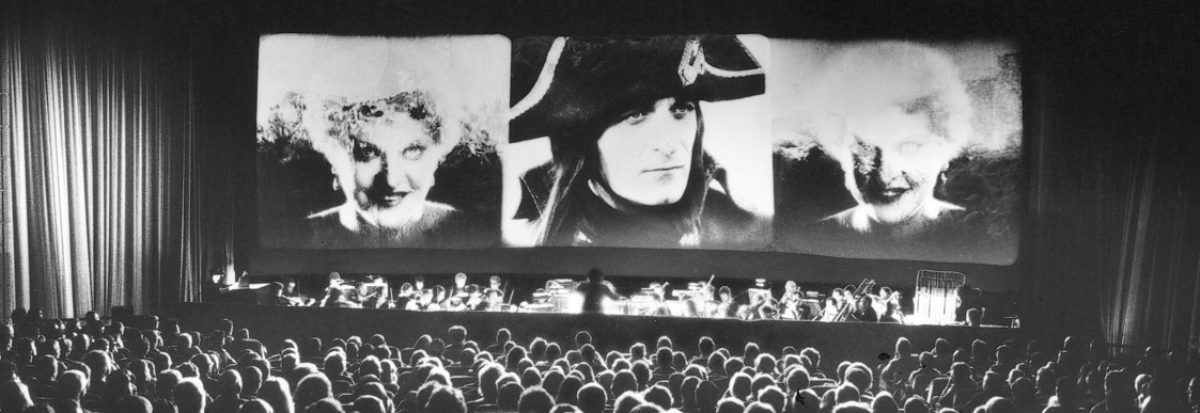
PC: At Bologna, there are also larger shows, where silent films are performed with a full orchestra. Are these kinds of events divorced from the rest of kind of programming? I imagine that planning for these performances is very different from what you do when recruiting smaller groups or individual musicians.
OH: Exactly. Those orchestral shows are usually defined way in advance. This is because they involve far more logistics, preparation, and so on.
PC: Beyond these larger aspects of timetabling, do you have a relatively free hand, as far as music goes?
OH: What I personally like about the musical aspect of silent film programming is that it can be seen as a bit of a playground. We can try stuff out and if it doesn’t work, then we know for next time. So-and-so might not be so good with experimental films, so-and-so isn’t very good with challenging psychological dramas, so-and-so isn’t so good with comedy. You learn this kind of thing through experience. Often, it’s just a case of the instrumentation, when you think that a particular kind of sound would be decisive for a particular film. To an extent that predefines who you need – but it doesn’t always mean you get it right. I’m always the first to admit when I was wrong about something, especially when it comes to either the accompaniment or the film itself not working as well as I thought.
PC: Do musicians ever pitch themselves?
OH: Yes, they do. We don’t always bite, sometimes because we know from the outset that it wouldn’t work out logistically (i.e. if the musician or musicians lives too far away for us to be able to cover the necessary travel expenses). What I often find is that people pitch themselves as a package deal, i.e. “here is a film for which I have recently composed a score”. Then we usually have to write back and say that that’s great, but the film was screened too recently at the festival to justify screening it again – or that we’re not interested in screening that film, but would they be interested in doing something else? A notable exception was the screening of Navesni [In Spring, 1929] in Bonn in 2023. We brought over these two Ukrainian musicians, Roksana Smirnova and Misha Kalinin, who had written to us the previous year and had performed their soundtrack to the film at several festivals and venues (they’ve since composed soundtracks for some other Ukrainian silent films). It was a great screening, and they’re great musicians and wonderful people, but like I said it’s the exception rather than the rule.
PC: Do the regular musicians also pitch specific films?
OH: Yes, this can happen from time to time. For example, Maud Nelissen was the one who pitched us Varhaník u sv. Víta [1929] because she had already played for it on several occasions, including HippFest and the San Francisco Silent Film Festival. She contacted us really late on, just as the 2024 programme was nearing completion, but we happened to be one feature short, so it was almost serendipitous. In such cases, it’s clear it would be a massive faux pas to take the film but offer the musical accompaniment to someone else! As a curator, you always want to have good relations with the musicians. Not that we had any cause to even begin to consider the possibility of having anyone else play for this film: Maud’s accompaniment was great, and she (and the film) got a huge ovation at the live screening. was really pleased for her, because silent film audiences can be quite particular, and you can never really be certain in advance how they’re going to react to a specific film or performance, particularly if the film is not well known.
PC: Is that an added pressure?
OH: Oh, yes, and not just for the musicians, also for the curators. The audience always knows best, of course! So when people come up to you after the screenings, it’s always interesting to learn who liked – or, more importantly, didn’t like – what. I always say that if just one person comes up to me after the screening and says something positive, then that’s enough to make me happy. This year, Jûjiro [1928] didn’t go down so well at the live screening in Bonn, I felt, but someone later came and told me it was the best film at the festival. Thank god, I thought! We do it for you, you know.
That was the last of the three parts of my interview with Oliver Hanley. My great thanks to Oliver for taking the time to talk to me, and for correcting the drafts of the transcript of our conversation.
Paul Cuff
 The Realm of Silence