Day 2 sees us go to Ireland for a programme called “The Near Shore: A Scottish and Irish Cinema-Concert”. Introductions to this set of films were given by Alison Strauss (the director of HippFest) and Sunniva O’Flynn (Head of Irish Film Programming, Irish Film Institute). Given the cross-seas nature of the films shown, and the collaborative aspect of archival exchange between Scotland and Ireland, it was appropriate to hear voices from both sides of the Irish Sea. As O’Flynn also explained, the Irish Film Institute often has a very inclusive remit when it comes to preserving and restoring films that might be considered “Irish”. Films can be made by Irish filmmakers outside Ireland, or films made within Ireland by non-Irish filmmakers. In the case of today’s programme, there is a blend of both – and even a kind of Scottish-Irish collaboration via a married couple’s home movie. O’Flynn introduced the programme, together with the first films – and then reappeared on stage to introduce the next films. (As she said, this was certainly preferrable to having one long introduction with too much information.) As I wrote on Day 1, these are superb introductions – informative, engaging, welcoming, and offering both personal, historical, and cultural context for the films. Perfect. So, to the films themselves…

Royal Clyde Yacht Club Regatta (1899; Ire.; Dr Robert A. Mitchell). This view of a former century has immediate charm, immediate power. The image crackles with history. Its surface is all smoke and charcoal: a distant ship peopled by shadows, a sunless sky, dark ripples on a grey sea. The image evokes the haphazard nature of film preservation, of the way time nibbles and scuffs at the celluloid. It is a muted world, in every sense; therein lies its mystery. But if the image suggests a kind of fragility, even of happenstance, the film itself is beautifully (and carefully) realized. There is intelligence at work from the outset, when the first thing that catches the eye is a massive flag saying “START”. But after a few seconds, the eye takes in the subtlety of the composition. The sense of scale and drama, managed within a single shot, is brilliant. Just look at the distant boats, faint sketches of line and tone, thrown into relief by the appearance of a tiny rowing boat in the foreground. The whole scene subtly shifts to the right, but it’s so smooth and dreamlike it’s unclear if we are moving or the boats are moving. Then the empty space in the middle-ground is suddenly occupied by the yachts themselves – beautiful great two-dimensional planes that plough through the frame. It’s startling, but dreamlike too – no sound prepares us for this apparition or adjusts for its exit. In silence, objects have neither mass nor wake. They glide fatefully across the surface of the past. These great seaborne wings brush us by and are lost. This is a startlingly beautiful film.


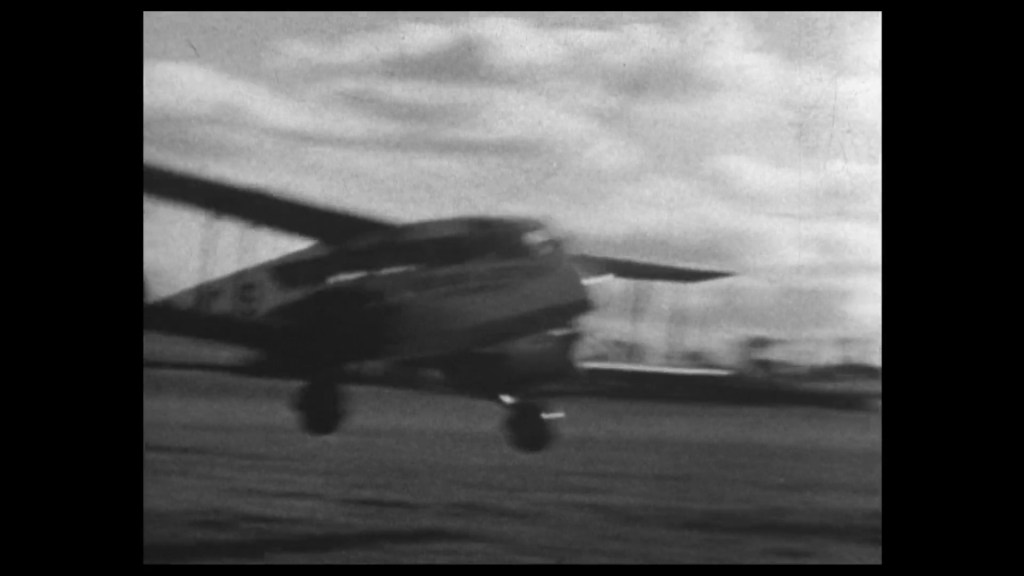
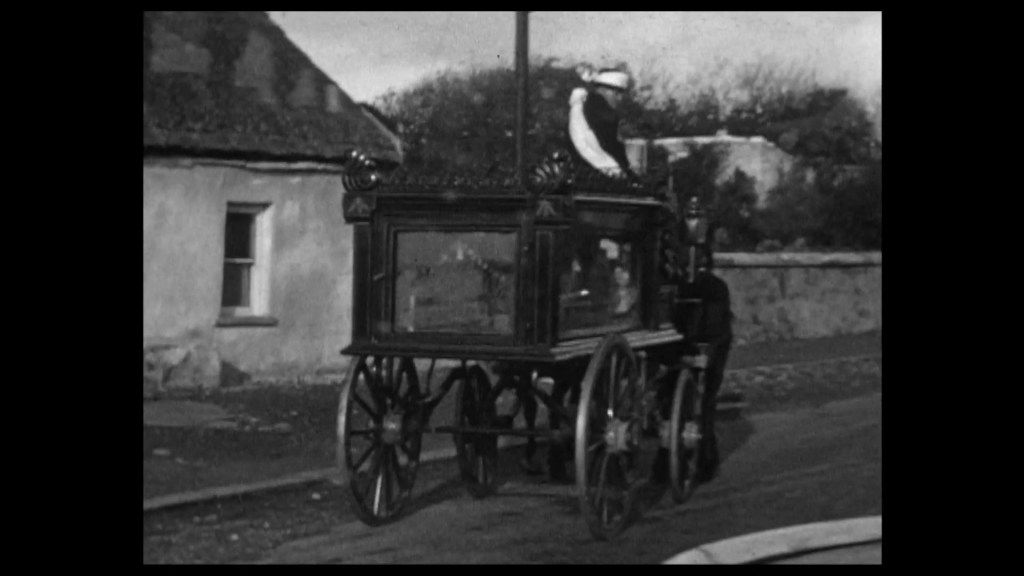
To Ireland by Air (1933; Ire.; Mr Dick). People grin at us, smoke, walk past. A plane moves forward, its propeller cranked. It gets up speed, it ascends. From the air, the world is unsteady. What can be seen? The land a distant patchwork of fields, houses. The shadow of clouds, already breaking apart. The world as it was, one day, nearly a century ago. There it is, fleeting through the vapour, the coast appearing and disappearing, a boat and its wake. “Passing Arran”; and pass it we go. It is lost in mounds of cloud. Here are ports, peopled by unseen inhabitants, long dead. Sheep and birds, the ground coming closer. The camera shakes. The world is plunged into darkness. But we are on the wing once more, high above a white sliver of surf. We seem to blink, and each time we open our eyes the world has changed. There is the shadow of the plane, the shadow of ourselves. Silence offers no preparation for the transitions of this montage. Here is Belfast, from the ground. The past and its people; silent, slow. A peacock mills around, geese stalk along. It’s a world (still) of horse and carts, of occasional cars and bicycles. (And, everywhere, horseshit on the roads.) The towns pass – Galway, Westport, Ballina, Sligo, Londonderry – and there are odd snapshots from each, from massive stone edifices to tiny homes with turf for their roof. Faces, a river, a fish in its depths. A site of ancient dread, an execution of a son by his father. (Beyond this past, another past, deeper and more obscure.) Landscapes and faces, extraordinary faces – most extraordinary when they are anonymous, when they don’t trust us, when they’re on their way to somewhere else. A hearse, a tower, a vista of coastline and hills. A sloping street, a dog rolling to scratch its back. Sudden transitions, odd glimpses. The camera is a curious stranger, glimpsing everything for the first time. It is as though we have been allowed some illicit access into the past. And still its inhabitants look back at us, wary of our intentions.






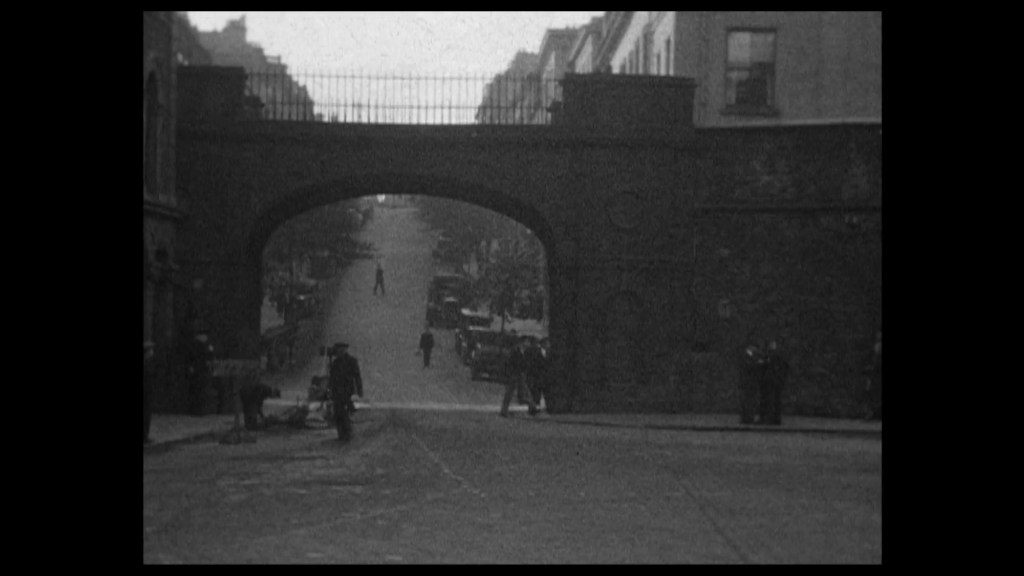

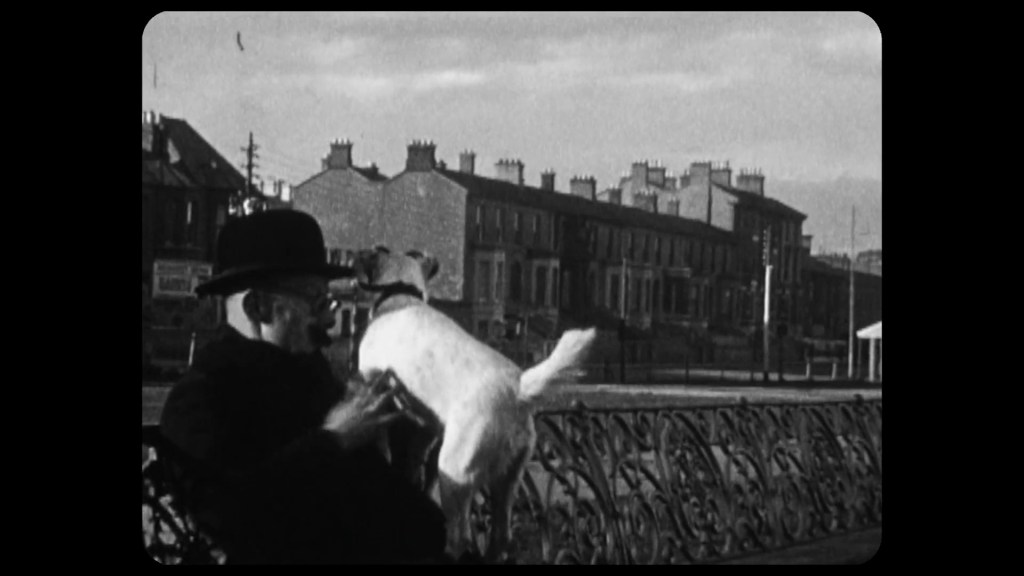
Rush Hour (1949; Ire.; John Tomkins). A bearded man waits and waits and snoozes on a bench by the sea. But then he’s too late. Dublin’s rush hour, a pell-mell mix of trams and buses and bicycles and cars. We glimpse the pedestrians hurrying here and there, and the bustle of life as it was – once. It is a glimpse of the real world, shaped by a keen eye and intelligent humour. But is it as mysterious as the last films? I think not. The past is no longer as wary of us as before. The distance is being closed, and without the fear and thrill of trespass – of crossing some historical threshold – there is less magic.


Butlins Holiday Camp Movienews (1950s; Ire.; John Tomkins). Mosney, County Heath. A delightful film, a glimpse of a holiday camp fully peoples, and in the sun. Laughter and exercises and silliness all around. It’s a charming film, but as with Rush Hour I no longer feel moved. This is a past that is more recent. It is not my past, but it is that of my parents or grandparents. The silence marks here it off from the present, but the gap is bridged by my knowing this world with sound. I am not quite a stranger here. Might I not “pass” in this past?


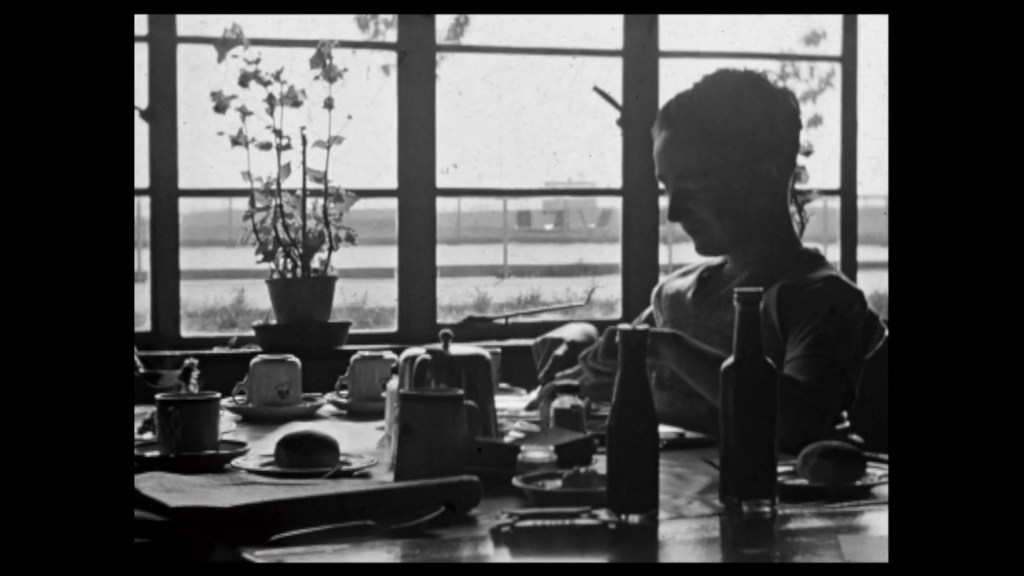


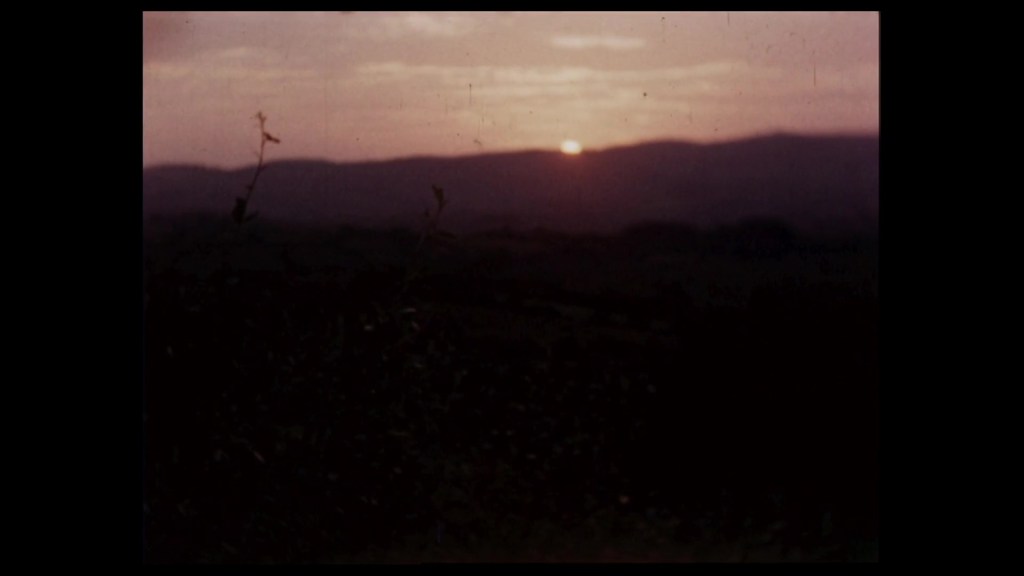
The Farm Below the Mountain (1958; Ire.; Ernest Tiernan). A honeymoon visit to family in County Leitrim. Another plane journey, more glimpses of the coast, of fields and rivers. The film is in colour, a dreamy filmic palette of rich hues and grainy textures. It’s a delight to watch, but again (for me) it is too recent, too much of a world that I might know second-hand. This is the recent past, dressed in the silence of its forebears.


Well, this was a rich trove of views. I regret that my interest lessened with each film, with each step toward the present. Perhaps one day these films from the 1940s and 50s will be as alien and uncanny as the films of the 1890s are to us now, in 2025. But I’d like to think that the earliest films will retain a unique aura, a unique aesthetic, that will mark them out forever. Among the films in this programme, by far the best is the first and earliest: Royal Clyde Yacht Club Regatta (1899). A film that more vividly bears the markers of its age, that more clearly sets itself apart from our epoch, from the living world. A film that possesses a kind of grandeur and mystery. Though I might intellectually imagine moving about the streets in 1899, the form of a film from this era disallows any possibility of such transgression. Silence demarcates this world from mine. It is not merely that these shadows happen to have no voice: it is that they cannot possess a voice. They are cut off illimitably and eternally from the present day. There is no calling out to us, no calling back to them. It is this quality (both historical and aesthetic) that makes the film documents of early cinema so potent.
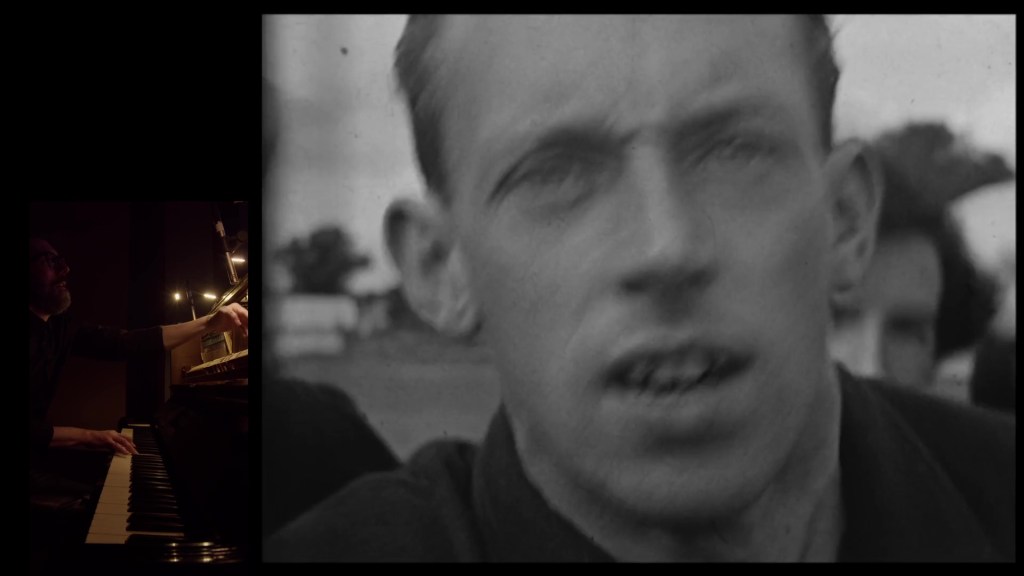
I must also mention the music for this HippFest programme, which was improvised at the piano by Paul G. Smyth. I imagine that creating music for such odd films is exceedingly challenging, but this accompaniment was superb. He absolutely captured the odd, almost brittle rhythm of the earliest films. He understood and expressed the weirdness not just of the films but of our relation to them. There was a kind of hesitant exploration of emotional mood that surely matches our own attempts to engage with the films, to work out what’s going on and how we feel. Smyth conjured a marvellous range of textures and tones, at once varied and recognisably coherent. An excellent performance.
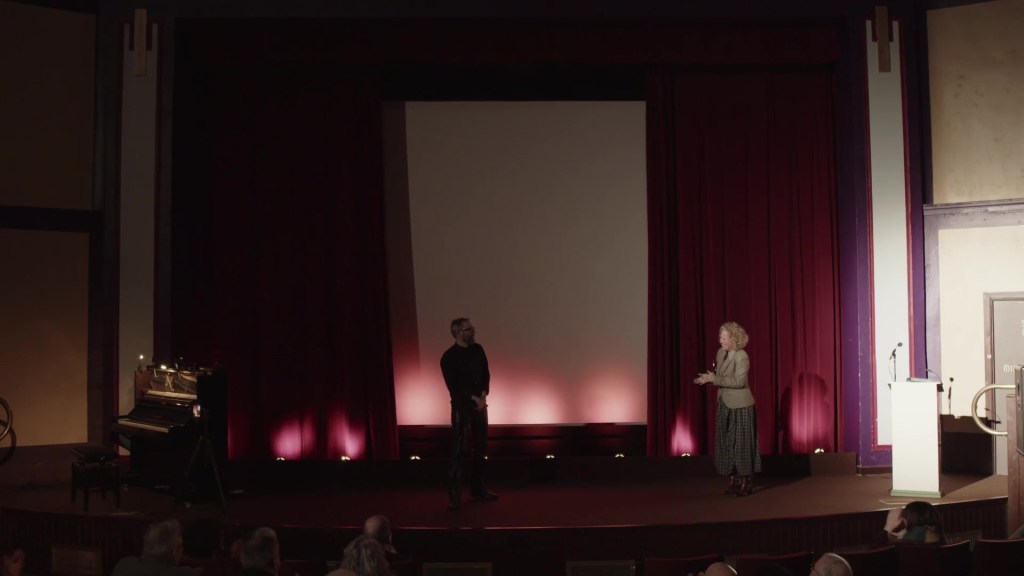
Well, that was Day 2. Any reservations about some of the films must not count against the value of a programme like this. Early films nestle productively alongside more recent amateur productions. All provide beautiful glimpses into the past, and evoke the lives of those who made them and those who we glimpse within them. O’Flynn’s introductions were the ideal accompaniment, framing their cultural and archival status – and why they are valuable and fascinating objects. While praising these introductions, I should add that HippFest very helpfully provides links to pdfs of all curational text online via their website. It’s another aspect of this festival that impresses. More please.
Paul Cuff
 The Realm of Silence