Day 5 of the Bonn festival takes us to Germany, and an exploration of jealousy and marital strife. Described by its opening titles as “A tragicomedy between man and woman”, I was expecting – well, I suppose I was expecting something very much akin to what I got…
Eifersucht (1925; Ger.; Karl Grune)
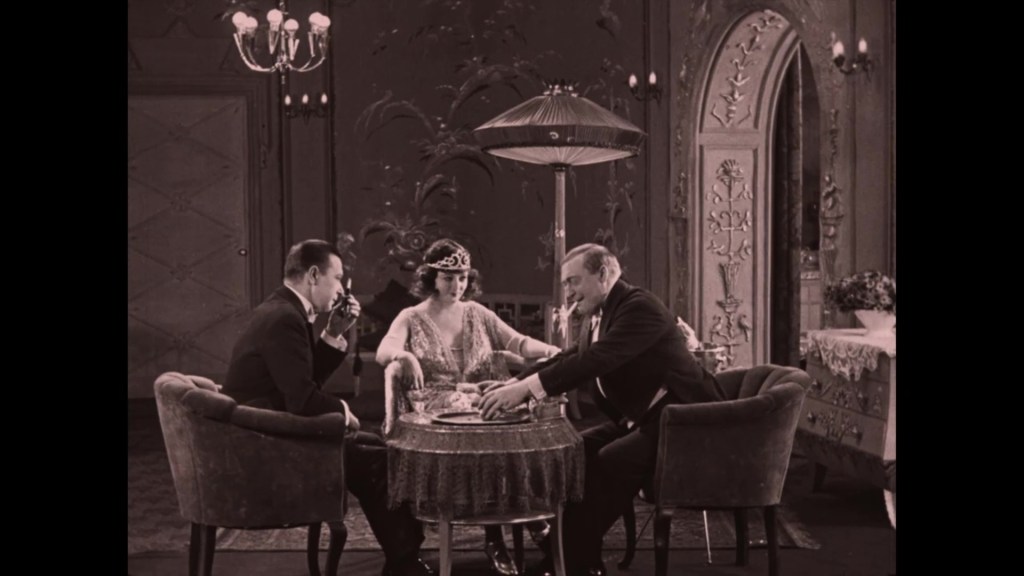
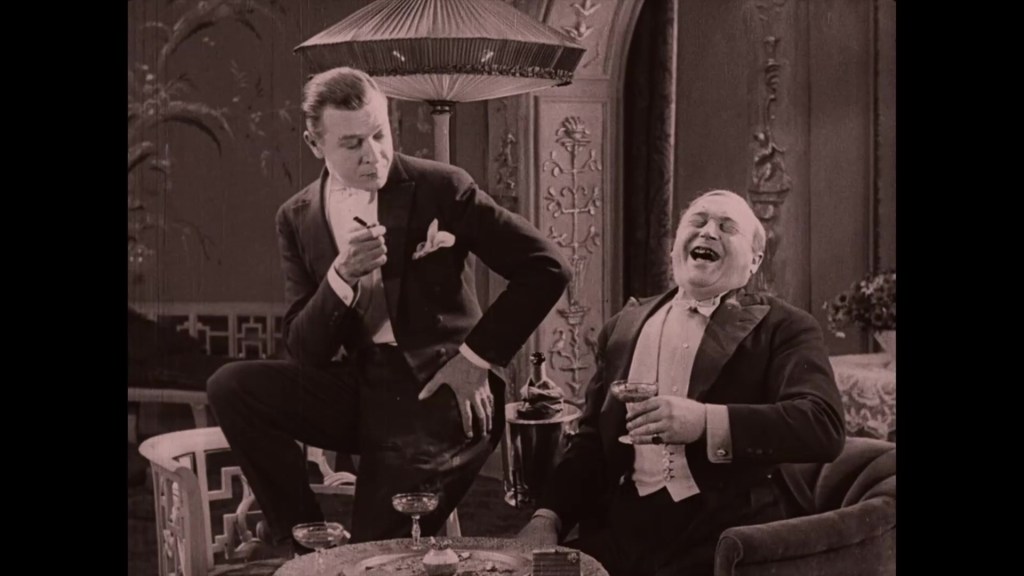
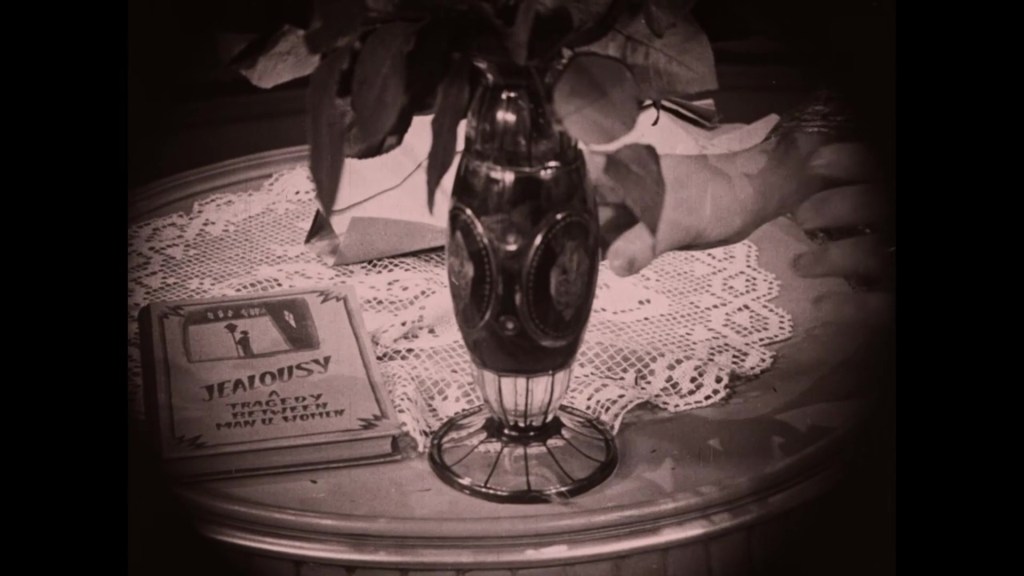
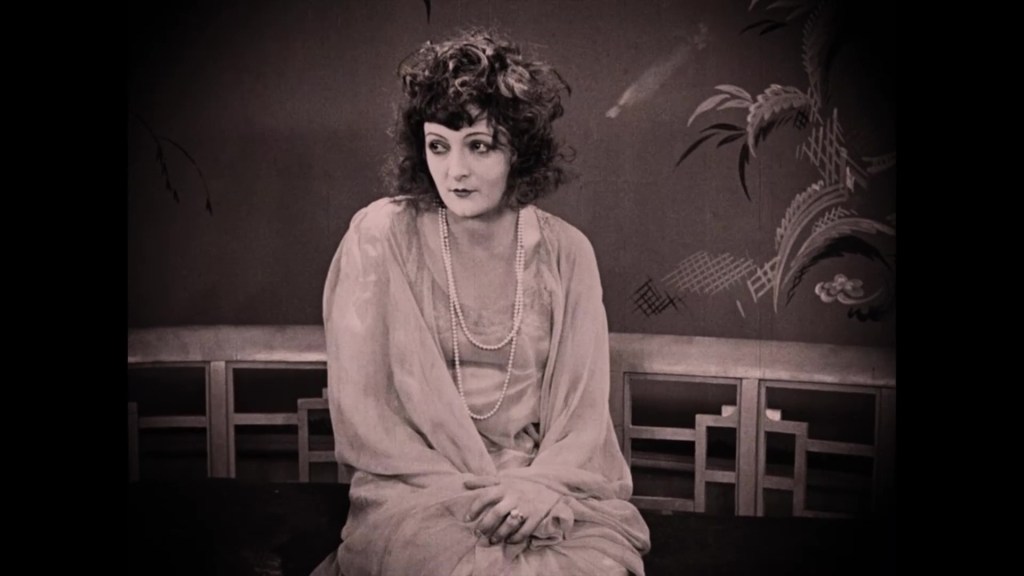
Act 1 establishes what might be called the rules of the game for the remaining film. The opening scene of a husband strangling his wife is revealed to be a stage performance, and the playwright (Georg Alexander) comes on stage to take the applause. He then returns home with his two friends, a husband (Werner Krauss) and wife (Lya De Putti) whose marriage seems to be ideal. But the playwright keeps questioning whether either of the couple feels jealousy, while trying to flirt with the wife. Act 2 sees the first signs of jealousy: the wife receives flowers and refuses to tell her husband the sender; the wife finds a lock of blonde hair in the husband’s pocket watch. The playwright then arrives and flirts with the wife and convinces them to go to the palais de dance. There, the wife makes both men jealous by dancing with a stranger. The husband ends up striking the stranger and the night ends with husband and wife sleeping in separate beds. In Act 3, after a frosty breakfast the wife becomes intrigued by her husband’s correspondence – reading and then stealing his latest letter. She goes to the playwright, then lies that she has been to her friend Lola’s – and is confronted by her husband. In Act 4, the wife gets Lola to lie for her, covering her absence from home both in the past and on future nights. The husband follows her to a giant apartment store, then loses her and blunders about town in search of her. The wife arrives home, still fuming over the husband’s mysterious letter. The husband tells her how much he loves her and begs to know what she has been doing. She asks for his trust, but he insists on knowing the truth. She demands the truth from him and says he would be ashamed to know the truth from her. He raises his hand to strike her but doesn’t land the blow. In Act 5, the husband follows the wife, this time to a strange building on the outskirts of town. He sees his wife kissing a child who address her as “mummy”. Back home, the husband demands (via a note passed via a servant) that the wife leaves the house. Infuriated by her refusal of the truth about the child, he hurls his wife to the floor. The violence is interrupted by the arrival of the playwright, and the truth is eventually discovered. The letter the wife has stolen from the husband refers to his child, whose carer cannot afford it any longer. The husband falls at his wife’s feet and the two are reconciled. ENDE
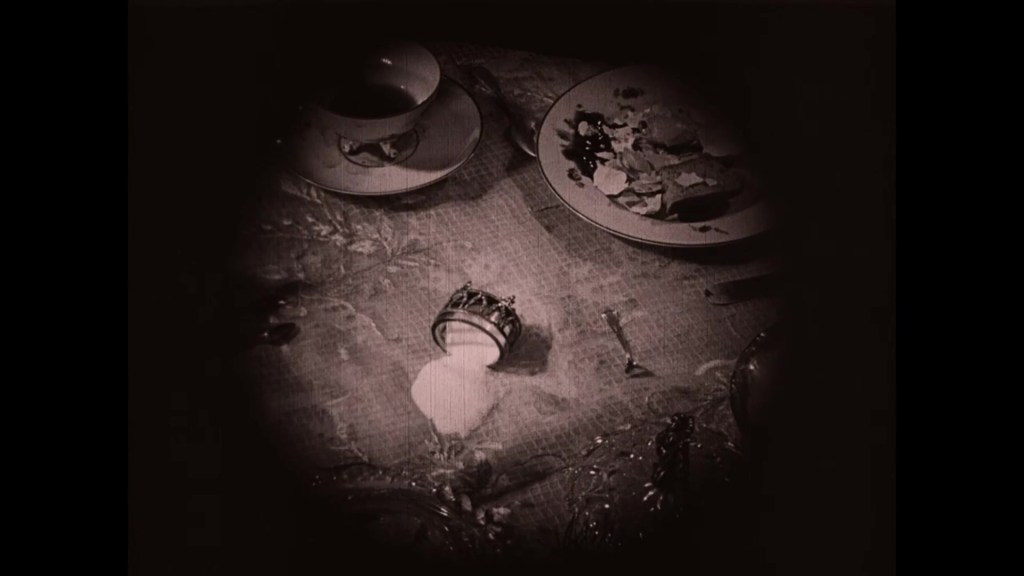
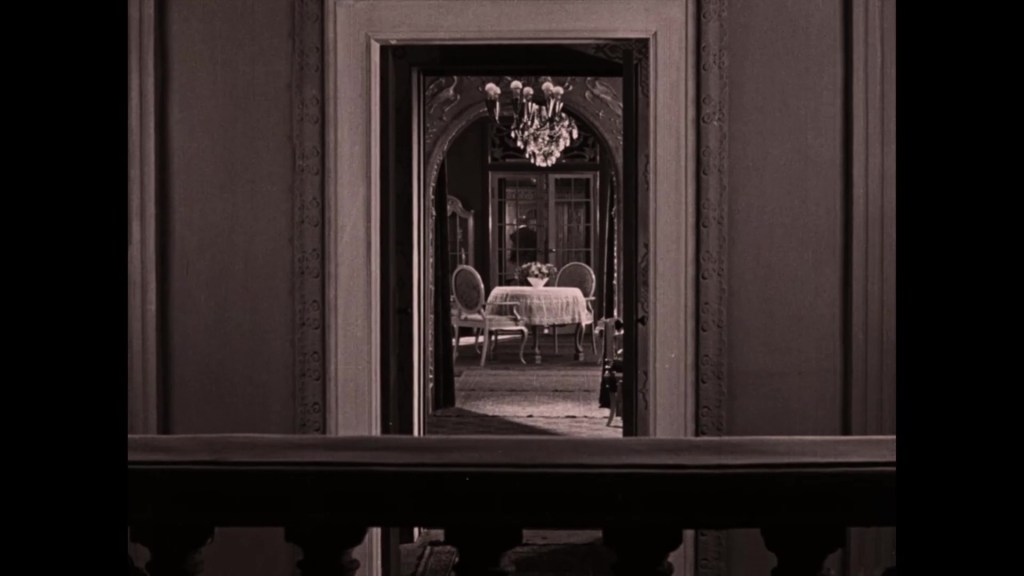
As I said, a plot that doesn’t offer any real surprises. It’s well-written, well-mounted, and well-played. I admired the numerous nice touches that shaped the drama, like the repeated detail of the couple’s shoes: hers next to his at the start, then separate from his during their fallout, then reunited in the final images; or the way their first breakfast scene has them sat side-by-side, but the second has then say on opposite sides of the table. Technically, the film was also well executed. There are also some neat moments of superimposition. Some are simple, like the wife imagining the lock of hair in the watch, or later seeing his imagined lover superimposed over her book. Some are more complex, like the husband seeing his wife dancing with another on the crowded dancefloor – only for the other dancers to fade into ghost-like transparencies, revealing his wife and her partner at the centre (a really lovely effect). Though I liked some deep focus compositions in the apartment, it was the exterior scenes that really stood out. There are several big sets/matte painted night cityscapes, which are reminiscent of Grune’s Die Straße. Particularly effective is the apartment store, with a double paternoster lift and a view across to a multistorey wing illuminated from within. You sense the husband’s fear becoming faintly nightmarish in these surroundings, just as you did with the central character in Die Straße.
But what interested me particularly with Eifersucht was its script by Paul Czinner. (I have a longstanding project on Czinner that I have kept delaying for various reasons.) I was struck by how many details in Eifersucht match traits from his other films. There is the jealousy over a bunch of flowers (cf. Der Geiger von Florenz (1926)), conflicts spelt out over a breakfast routine (cf. Ariane (1931) and Der träumende Mund (1932)), the woman reflecting on her image in relation to men (Fräulein Else, 1929), the nods to luck and fate (like the spilling of salt) and life’s reflection of art that haunt numerous of Czinner’s other films. Czinner’s authorship is often overshadowed by the two figures with whom he collaborated: his frequent leading actress, Elisabeth Bergner, and his screenplay collaborator, Carl Meyer (often uncredited). In this sense, it was curious to feel how strongly Eifersucht felt like a Czinner film without either of these two influences at play. But also, this made me like Eifersucht less. The marital strife in Grune’s film is more interestingly played, and played out, in Czinner’s Nju (1924), just as the sense of life imitating the tragedy of art is more potent in Czinner’s Der träumende Mund. And Bergner is an infinitely more subtle, complex, and sympathetic performer than De Putti. Werner Krauss’s character, too, is at the very least equalled by Emil Jannings’s character in Nju, for example, and Georg Alexander’s rather underdeveloped character is a pale shadow next to that of Rudolf Forster in Der träumende Mund. (Der träumende Mund, if you’ve not seen it, is a masterpiece.)
More broadly, in fact, my problem with Eifersucht was precisely this sense that what I was watching I had seen done better, and with more dash, elsewhere. Czinner’s films aside, I also thought of E.A. Dupont’s contemporary Varieté (1925), which features De Putti in a much more powerful drama, and one which allows for more complex, stylish cinematic storytelling. (Dupont’s film was also, confusingly, released under the title “Jealousy” in some regions.) Eifersucht’s theatricality is ultimately a kind of limitation. It is, if anything, too neat and tidy, too precisely organized. (Even the dance hall feels oddly well-mannered to sense the wife’s desire for freedom express itself. Think of how many other Weimar films have great party scenes!) Eifersucht feels like an exercise more than a living, evolving drama. Even the interesting outdoor sets and moments of technical skill didn’t lift the film into something more complex or moving. Indeed, I still await being really moved a Karl Grune film: his are films that I admire without truly liking. (See my pieces on Am Rande der Welt(1927) and Die Straße.) The fact that Eifersucht describes itself as a “tragicomedy” rather sums it up: it is neither comic enough nor tragic enough. (All Czinner’s films are much sharper in their comic touches and more tragic in their outcomes.) It is a good film, but not a great one.
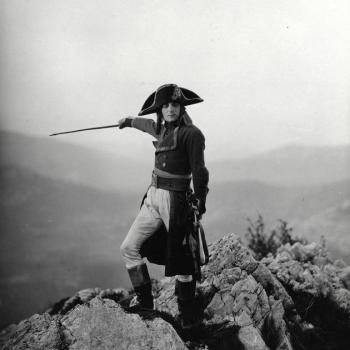
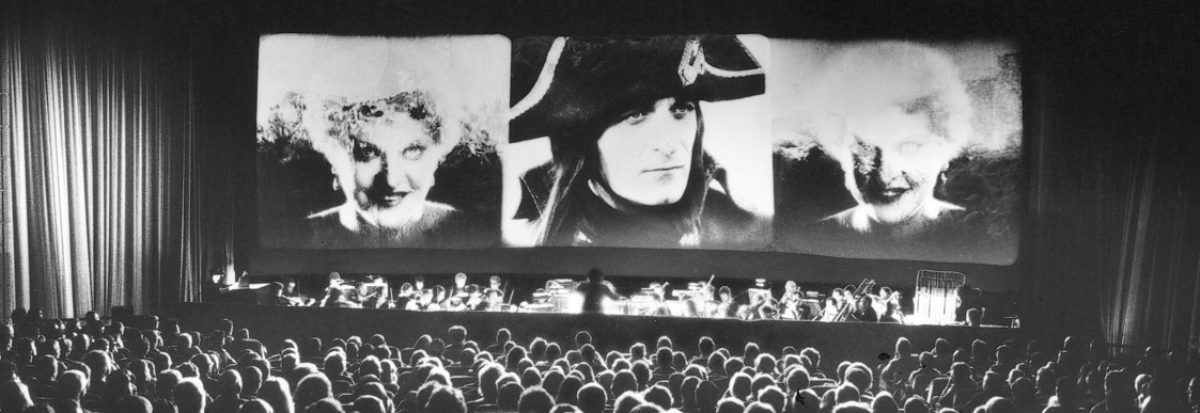
The music for this performance was by Richard Siedhoff and Mykyta Sierov. Their combination of piano and oboe worked well, though its emotional register could never make the film more moving than it was. I must also highlight the excellence of the detailed restoration credits at the start of the film: we are given a history of the film’s release, the location and qualities of surviving prints, the ethics behind the restoration choices, and the precise lengths in metres of various copies, as well as the speed used in the transfer. It should be mandatory to have such information at the outset of all films, especially silents. (Yes, the latest restoration Napoléon, I’m thinking of you.)
In January 1927, the director Karl Grune began a major new production for Ufa. He had co-written the screenplay with Hans Brennert, and he as deeply passionate about his project. Am Rande der Welt (“On the Edge of the World”) was to be a pacifist film, set in an unnamed borderland on the frontline of an unnamed war. The cast boasted veteran actors Albert Steinrück and Max Schreck (Nosferatu himself) alongside younger stars Wilhelm Dieterle and Brigitte Helm (fresh from shooting Metropolis). Filming took place entirely in the studio spaces of Ufa during January-March 1927. Grune completed editing Am Rande der Welt and presented it to the German censors in April 1927. It was passed and the film readied for release. At this point, the management of Ufa stepped in. In March that year, Ufa had been bought by the press baron Alfred Hugenberg, who demanded that his management team take greater control over the films they produced. This was not only for the same of economics (Metropolis had nearly bankrupted the company), but for the sake of ideology. Hugenberg was ultra-conservative, ultra-nationalist—he would later abet the rise of Adolf Hitler to power. It was the ideology of Grune’s film that was the problem: it was too pacifist, perhaps even anti-patriotic. Am Rande der Welt did not meet their moral standards. The result? The film was cut, not by the censor, but by Ufa itself. Grune’s original version measured 2635 metres (approximately 114 minutes at 20fps), whereas the version resubmitted to the censor in August 1927 was 2429m. Grune complained in private and then in public. The film had not just been reduced, but re-edited and re-titled. He felt that these changes were so severe, so damaging to the film’s pacifist message, that he asked for his name to be taken off the film. Am Rande der Welt premiered on 19 September 1927 at the Gloria-Palast in Berlin, shown with an orchestral score by Giuseppe Becce. So, what remains—and how does it stand up?
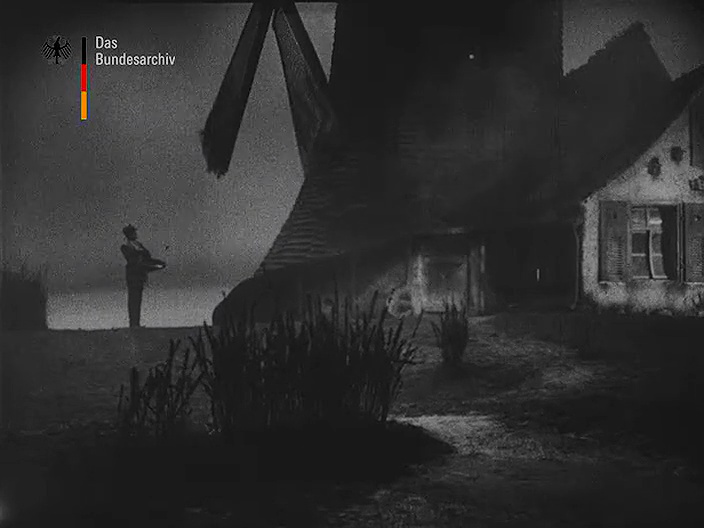
Act 1. From the mists of space, a spinning globe bowls forward. Jazz bands, dancers, superimposed—naked bodies writhing, parting. Fireworks, grotesque dancers. A Catherine wheel spins, overhead visions of dancers, dissolves away over the image of a spinning windmill. The camera tracks back, and back. Surely we at the edge of the world. A title, a motto etched on the wood. The mill is ancient, and it’s as though we’ve travelled back in time since the opening montage. What century are we in now? The only technology here is pre-modern. Labour is manual, the only mechanism the ancient technology of the sail and grindstone. The mill stands at the edge of the world: a studio painted horizon marks the limits of reality as the film knows it.
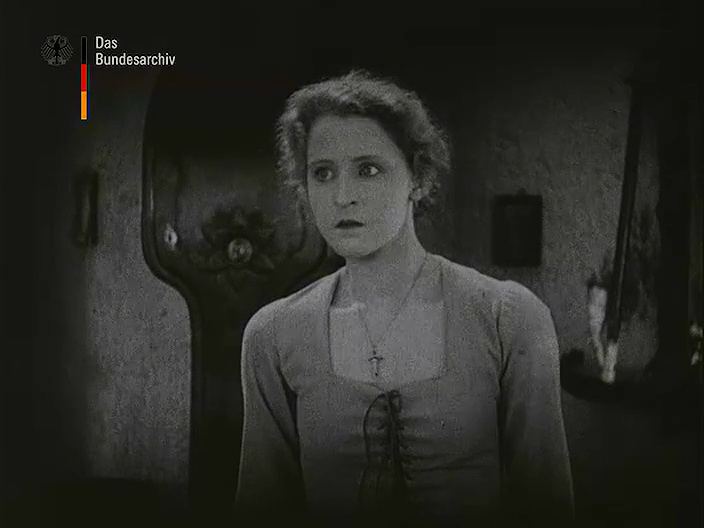
The old miller (Albert Steinrück) is sieving flour, his oldest son Johannes (Wilhelm Dieterle) emptying a bag, his youngest son Michael (Imre Ráday) cleaning the giant stone grinding wheel. This huge space is the interior of the mill, and it feels cavernous: the exterior is a model, yet the interior is an expansive reality. And here’s Magda (Brigitte Helm), feeding chickens, her hair blowing in the wind.
But already an outsider (Erwin Faber), silhouetted against the pond in the foreground, the mill turning behind him. His letter brings him to work at the mill, but it also promises further “instructions”. He reads the letter one last time, then burns it. Something sinister is afoot. A real sky glowers gloomily above the model and studio set. Just as the man meets Brigitte, the wind picks up; he is heralded by a great gust of dust. Portentous signs…
Inside, the millers gather round the dining table. The newcomer is all helpfulness and smiles, helping pick up the fragments of a dropped plate (but is he the cause of this first mishap?). “I come from the other side of the border”, he explains. The miller (Albert Steinrück) doesn’t mind, just so long as he works well. He is given a room somewhere in the mill, a gloomy cell.
Outside another figure stands before the mill. As the newcomer unpacks, the other man stalks the corridor outside. His knock portends doom. The camera pans rapidly to the door, then shakily follows the man to the door.
It’s Max Schreck, tall, sinister, a devil’s pointed beard and hat. “Are you afraid?” he asks. He’s a pedlar of sorts, but surely far more portentous. But to Brigitte he’s more flirtatious, more camp. He applies lipstick, powder to his own face to tempt her, but she laughs him off. The pedlar leaves, his appearance leaving some strange atmosphere behind him.
Another gloomy interior, the end of the working day. “Next week we’ll celebrate”, the mill will be three hundred years old. An assistant miller plays the accordion, the millers comically cavort. The miller’s son, Johannes (Wilhelm Dieterle), runs after his wife (Camilla von Hollay), who leads him outside, only to show him a baby’s clothes, newly made.
Outside, the pedlar observes the newcomer flirting with Brigitte. Scared by him, they run inside and dance… only to find his eye at a keyhole—the camera tracks rapidly into its sinister ken.
But the baby clothes attract the millers, while the newcomer seeks the owner of the eye at the whole—of course it is the pedlar. “I’ve been overserving you these last days. No love affairs”, he warns. Who is this man, and what is his power? Another shadow falls across the ground. But the truth begins to emerge: the pedlar instructs the newcomer, and threatens him destruction if he betrays his mission. He is a spy!
The old miller reads the paper, which denies the threat of war. That night, a silhouetted figure wanders the plains outside the mill. Vertical wipe-dissolves take us from room to room, then a horizontal wipe from Brigitte’s bed to the newcomer, his shadow moving over the walls, spade in hand. Now he is a prick of light in the dark, inching forward. He digs. But the miller wakens, lights a candle, creeps to the window. The newcomer dashes madly back to bed to avoid detection. (His bed is a sinister war chest, bulging with giant protruding nail heads.) The pedlar stalks the land. End of act 1.
Act 2. The mill’s anniversary. Food and drink are being prepared. A montage of delicious produce, and the labour taken to prepare it: hands stirring, washing, striking, mashing, straining, plucking. Outside, a band of musicians, villagers in their Sunday best, marching to the mill.
Brigitte is making herself look pretty (in the homeliest way—a far cry from her later films). The old miller wears his best suit, his top hat, which he raises to the millers and to the outside world. Johannes is busy building a crib for his future child. After showing off his construction, he rushes into his festive clothes and joins the others. He and his wife march proudly with the rest out to greet the crowd. They parade with the band to the green, where the whole village has become a funfair.
Circus folk—midgets and the “woman without a head”, strapped into a chair. (It’s a grotesque image; the people laugh, but it portends something untoward.) The camera tracks overhead, looking down at the happy dancers, the clowns, the merry-go-rounds—but the camera dissolves into another tracking shot, falling back before a squadron of riders in black masks and hoods. Disaster is surely coming.
The newcomer and Brigitte are flirting. He gives her a love token. She refuses it and runs away, all fidgety nerves, all innocence and fear. She rejoins her family, as does the newcomer—disappointed but tagging along.
The pedlar meets the riders. Spies! “Order to alarm the border villages”.
The dance continues, swirling around the millers. The dance is intercut with the riders. The wind picks up. A rider appears with the news: war has been declared. The dancers are become statues, heads bowed. “Long live the fatherland!” someone cries, and the band strikes up an anthem. (But what anthem to they sing for this prolonged shot of communal musicmaking?) Close-ups of the crowd, of medals on a man’s chest, and the artificial leg he bears. Old heads shake, young faces beam.
The abandoned fete. The camera rises. There is only the sense of the wind travelling through the empty stands, billowing the streamers. But here is death, astride the horizon, ushering animated lines of bayonets through the horizon. The leaming weaponry becomes a real phalanx of infantry, rising over the folds of the landscape toward the camera.
Act 3. Suddenly it is winter, there are gas-masked troops, warning of attacks, flooded positions. The Great War is upon us, without being heralded by its name.
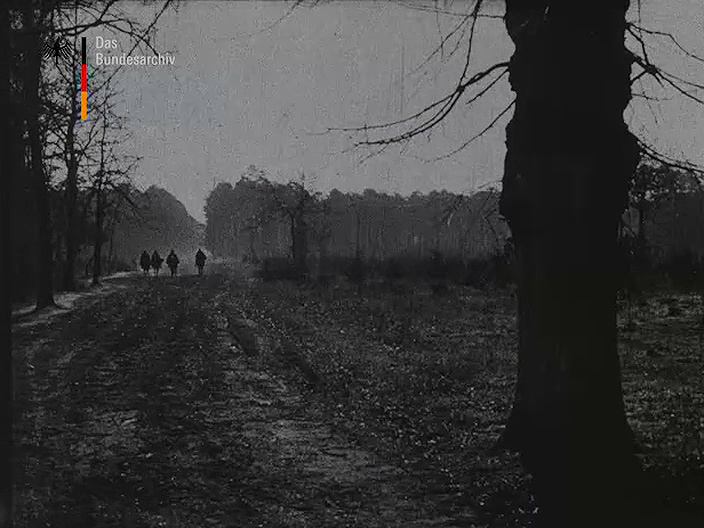
The pedlar is instructing the newcomer about the arrival of their troops. The latter wants nothing to do with the pedlar, but the pedlar says “there is no way back for you”—he is being watched. The troops wearily arrive at the mill, thronging about its flanks. The millers give them water. Clouds gather on the horizon: horsemen appear. It’s a fabulously sinister image, these real clouds glowering over the studio landscape and stilted trees. Five eyes watch the mill from five angles gathered in a single shot.
The millers wait nervously inside. “The world will perish in poison and gas!” says Johannes, as the newcomer tries to talk to Brigitte. Infantry roll over the folds in the land. It’s another brilliant shot, sinister, rapid. The cutting grows quicker: the single shot becomes a half dozen of the raiding tide, sweeping towards the mill.
“The enemy!” cries Michael. The newcomer looks guilty, scared. He wanders off as the knocking grows more aggressive, as the door is forced open. The enemy burst in, their faces hidden—they are just a flood of silhouettes, backs to the camera.
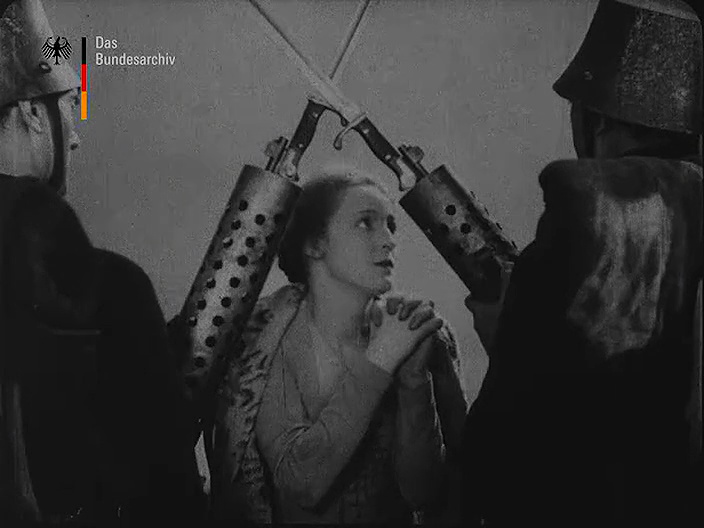
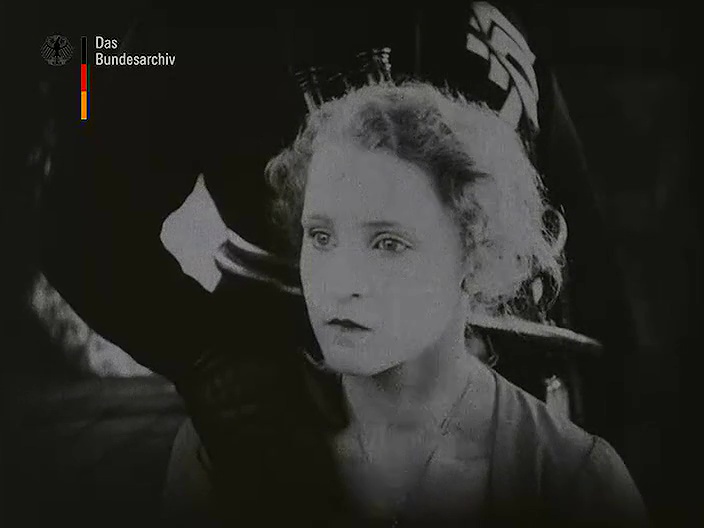
“Stand up!” the officer (Victor Janson) roars. It’s all stillness now. We can take in the strangeness of the infantry: their metallic helmets (half jäger’s shako, half “coal scuttle” Stahlhelm), the odd cages around their rifles that makes them half resemble automatic weapons. The officer has his rank on his chest, an oversized treble chevron. Touches of expressionism that creep into this half-real world. The mill is commandeered for supplies. The younger men react violently. Brigitte is restrained. Her young brother is taken outside. Brigitte’s glowing face makes the officer halt is roughness a moment. The man is clearly smitten. (It’s like the moment when the villain in Die Liebe der Jeanne Ney is overcome by the extreme close-up of Brigitte’s face.)
Another face at a loophole window: this time it is Brigitte’s anxiously looking out as her brother is led away. “Why so sad miss?” the captain asks, and Brigitte’s huge eyes almost make contact with the camera as she turns to the man. Her brother will be court martialled, says the officer, his hands seeking hers. Grune cuts away to the old mother in a chair, sneezing. (The camera whips round handheld, as it often does—destabilizing the world, here for comic rather than dramatic effect.)
The newcomer sets the wheels of the mill going, then arrests their motion. It’s a signal. The pedlar, now revealed in his officer’s uniform, issues instruction. Great guns open fire, huge plumes of black smoke and debris slow-motion their way into the sky.
Act 4. The young son paces his cell. The father visits. “They don’t understand out language”, he cries to his son. But the brute sign language of the solders is made to feel: he is ushered away. Artillery fire draws closer to the mill. The hillsides are torn up, buried under smoking clods of earth. Brigitte is cowering in feat somewhere inside. The father’s face is etched deep with age and angst. Michael is to be judged today. Brigitte leaves, determined to act.
In the cell, the captain orders that Michael be shot. Brigitte flirts her way inside, but is separated from her brother’s embrace. Her drooping head, in profile—a glorious glimpses of her poise, her grace as a performer, amid this rather ordinary scene. The captain says she can save her brother the solution of which is implied simply by his smirk, his leather-gloved hand over her neck, down towards her chest. She has 24 hours to decide. The officer who first raided the mill asks if he can help her. But “war turns people into wild beasts”, she says, and flees inside.
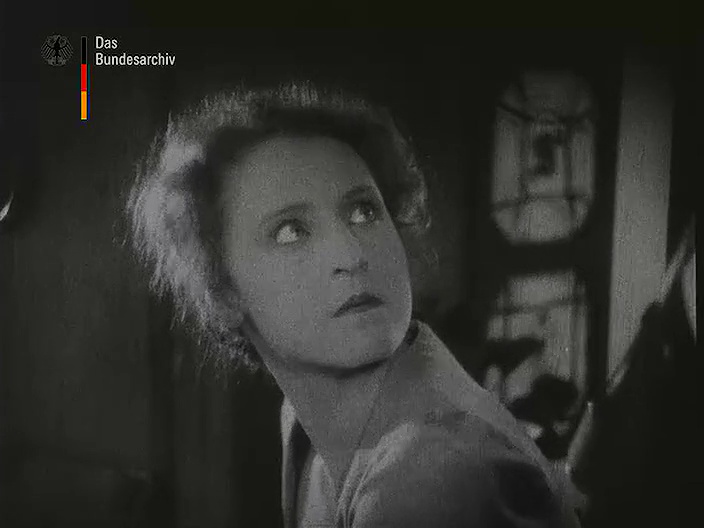
The corridor of the mill’s interior looks narrower, more confining. Here is the newcomer. He says: “Magda, I love you”, but almost in the same breath he confesses he guilt as an agent. Magda—her face in the first big closeups of the film, and they’re beautiful. He says he will turn against his kin to save her brother.
The junior officer tells the senior that he thinks they treated the boy to harsh, but the elder says they need to be strict—to show the locals they mean business. The junior officer finds Magda at home. Her bed is a picture book wooden frame, picture book carvings at its foot. The officer says he will save her brother, but he is seen by her father stroking her hair. So he lumbers in, lumbers between them. She cosies up to him, but he shrugs her off—the only man to resists her great big eyes in the film. Snow is falling. It coats the artificial plains before the mill.
Akt 5. The boy is to be shot. The captain looks at the hour, pours himself a drink, is served his meal, hacks at a great chunk of meat. (His black shirt, his white marks of rank make him look like a fascist: so too his slicked-back hair, cut short.) The lieutenant has aided the escape of Michael. The captain knows it.
The newcomer stops the mill again. The enemy gunners call the captain. The mill must come down, as it is being used as a point of observation by their enemy. (The newcomer is in communication with the pedlar’s men, directing fire.)
Michael returns to his father, in disguise—he wears the uniform given him by the lieutenant, who now arrives—and says they must hide the bother’s clothes or they will be lost. so they go into the basement, where the newcomer is going about his secret task. The lieutenant and Magda flirt, end up in each other’s arms, kiss. She does not quite flee him, succumbs willingly enough to his kiss.
Michael aims to flee in his disguise to their own troops. Johannes’s wife is in bed, presumably nearing the birth. Michael crosses no man’s land, handing a document to an enemy guard. A delightful scene: Magda uses flower to transform the man’s chevron into a stick figure, the head a heart. But the guns are firing outside. “Why are you our enemy?” asks the man, bewildered. “When the war is over, I won’t be an enemy anymore”. He imagines the future…
Akt 6. Soldiers enter the mill. The captain announces the building will be burnt down. A close-up of the father’s face, creased with repressed emotion. But first the captain wants the mill searched for Michael—only to find his lieutenant lurking in the basement. The telephone line has been found. It is cut, but the lieutenant is interpreted as the spy. He ranks is removed and the officer demands the man shoot himself. Magda and her father and Johannes battle the soldiers, who are about to burn the mill. Even the old mother throws water in the face of the guard by Johannes’s wife’s bed. Johannes himself calls the soldiers beasts, says that people need the bread they make. But in come the torches, the flames rise, the smoke thickens. The lieutenant questions Magda about the telephone and she points him to the newcomer. But they, and the family upstairs, are trapped in the burning building. Suddenly the newcomer emerges from his hiding place underground. “It is all my fault!” The lieutenant fights him before Magda, as the building starts to fall around them. It is prolonged, brutal, captured in a long handheld takes—the solider all in black, the assistant in his white shirt. Soon they are bleeding, half naked, sweating. The newcomer says he will die with Magda, but soldiers are breaking through the window to help her out. The assistant says he has betrayed his own fatherland and demands the soldiers shoot him. They oblige, and Magda is set free.
The mill burns, its wings spinning madly, then slowing… as Johannes, his wife, and the father struggle to a nearby farm building and fashion the wife a bed from hay. On the horizon, Magda and the lieutenant embrace. Magda is a silhouette on the horizon.
The baby is born. “He too will go to war—he too will kill people”, the mother mourns. “No, he will build new mills”, says the father, as superimposed artillery fire dissolves over the image of the family in the farm—like a Biblical scene—and the world is a vision of nighttime split open with fire. “Lord forgive them, for they know not what they do”, says the father, as the ghostly mill becomes a cross looming over the smoking battlefield. Ende.
I enjoyed this film a lot. The limited setting and studio aesthetic convey a peculiar atmosphere that is both sinister and otherworldly. It helps make the familiar seem unfamiliar: it’s like a slightly distorted dream of 1914. The uniforms are almost familiar, the setting almost realistic. Everything is subtly exaggerated, subtly off-kilter. Sets, costumes, performances—all are heightened, but only to better convey the atmosphere of the setting and story.
As for the film’s political message, the version that survives still carries a strong pacifist note. There is nothing remotely glamorous about the war or its protagonists. The soldiers are genuinely frightening. Their combination of archaic helmets and modern gasmasks and guns makes them even more sinister, just as their black uniforms give them a distinct flavour of fascism. The religious tone of the final scenes (supposedly highly censored by Ufa’s recutting) still comes across, and I wonder how much more obvious Grune had wanted to make the “message” at the end. As the film stands, the religious imagery creeps up on the viewer rather unexpectedly—and quite effectively. The transformation of the windmill into a cross needs no further visualization than as given in the film. The expressivity of “mute” objects is powerful enough. That said, I do love the fully-realized vision of Death when war is declared. There is something very pleasing about seeing an early twentieth-century version of medieval iconography. (Just as I love these elements in Murnau’s Faust (1926).) Perhaps there was more of this material in Grune’s original cut?
In one aspect, I was a little disappointed by Am Rande der Welt. I confess I wanted to watch the film primarily to see Brigitte’s Helm’s second cinematic appearance, but she’s very much limited by her character here. Her screen persona is very much along the lines of the “good” Maria in Metropolis, but without the exuberance offered to her by her other performance as the robot Maria. In Rande der Welt, she is wholly good and admirable—her character has little in the way of depth or complexity. One might say that about all the figures in the film. Since Grune sets out to make them emblematic of an older, less modern way of life they are all limited in their psychological depth.
My only other reservations about Am Rande der Welt are due to my own moderate confusion when watching the film. I was a little unclear of the nature of the spying, and where/how the artillery was using the newcomer’s telephone to direct fire. There is a lot of cutting to spaces beyond the mill, but we never see the context of these spaces. Thus, where Max Schreck has his observation post is a mystery—as is where any of the other sites of guns, trenches etc.
But the question of how we read the film’s continuity, or its politics, also depends on what version we’re watching. Here, the information is unclear. Having been digitized from a Bundesarchiv print by the Friedrich-Wilhelm-Muranu-Stiftung, the film is freely available online via filmportal.de. But there is no clarification on the physical length of the print used, or whether the intertitles are recreated—and from what sources. The digital version is a few seconds shy of 104 minutes. The database gives the framerate of other archival copies as 22fps, but the Bundesarchiv copy appears to run at 20fps. (Though the video itself translates the original frames into 23.97fps for digital playback, which makes identifying and counting the original celluloid frames difficult.) This would equate to approximately 2400m, so presumably accords with Ufa’s cut of August 1927. (If I’m wrong and it is at 22fps, 104 minutes would equate to Grune’s original version of April 1927. See why it’s important to provide this kind of information with a digital release?)
But regardless of how closely it resembles Grune’s original vision, it’s still a fascinating film. I’m very grateful the film is freely available, but I’d love to see it in better quality. Who knows what a proper restoration and a good score might not do for it.
It’s the final day of the online festival—or at least it was, since I write this four days after it actually ended. But a bout of Covid has sent me to bed for the last three, so I’ve fallen behind my writing schedule. Now I have the strength to stand up and type, I can return to finish off my report of the final two films: first, a defining work of the German “street film” genre; second, a sensitive drama from William C. DeMille about the lure of the past…
Die Straße (1923; Ger.; Karl Grune)
“The film of one night”. The characters have no names. They are simply: the Husband (Eugen Klöpfer), the Wife (Lucie Höflich), the Provincial Gentleman (Leonhard Haskel), the Girl (Aud Egede Nissen), the Fellow (Hans Traunter), the Blind Man (Max Schreck), the Blind Man’s Son (Anton Edthofer), the Child (Sascha).
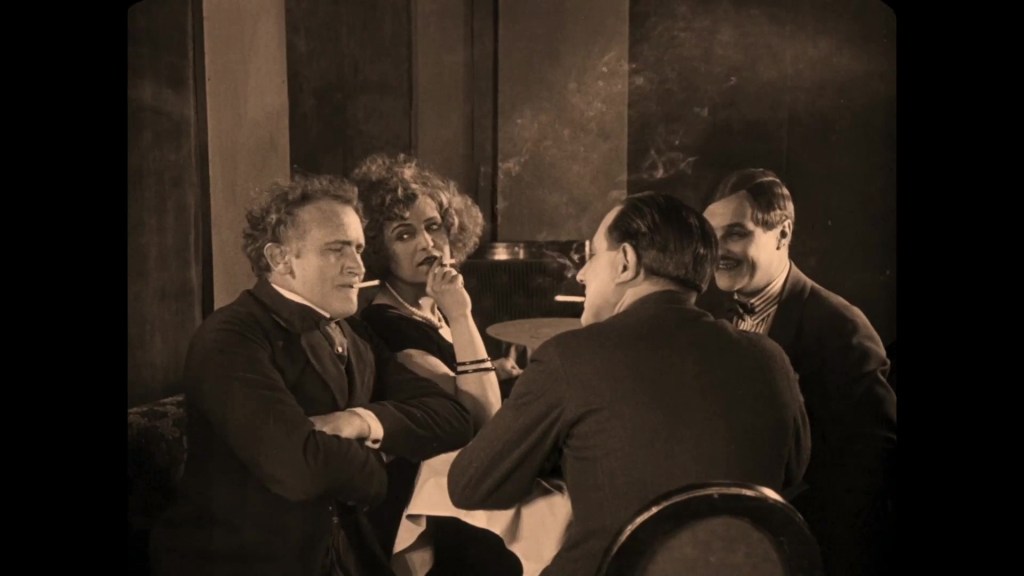
The story is very simple: the Husband is bored at home and goes out to explore the oponymous “street”. He ends up being lured into a nightclub by a woman, who—with her pimp/partners—lures him into gambling with an out-of-towner. The latter is then killed and the Husband falsely accused, only to be released just before he hangs himself from shame. He returns home to the embrace of his wife.
The story is a familiar one of (male) temptation, guilt, and return. But it’s the atmosphere of the film that takes hold of you. At the start, we see the Husband lying snoozing on the sofa. The Wife cooks, clears the table. Lights and shadows play upon the ceiling. The Husband gazes up, half asleep. An astonishing vision projected above him: a man and woman walk, stop, interact. The Husband goes over to the window to stare at the world outside. A flowing montage of sights, multiple superimpositions of life on the streets. He sees fireworks and clowns and parties teeming and swarming. Then the Wife goes to the window. Another close-up, followed by her view: a single, unmanipulated view of the street—ordinary life, going about its business. She puts the humble dinner upon the table. The man, repulsed by the interior, rushes outside.
Everything is set up here: the subjectivity of the nightlife, the explicitness of male fantasy and female subjugation. In the first scene in the street, the Husband encounters a streetwalker. She pauses. He stares. Her face becomes a skull. (Shades of ancient imagery, of ancient associations: strange women, prostitutes, disease, death.)
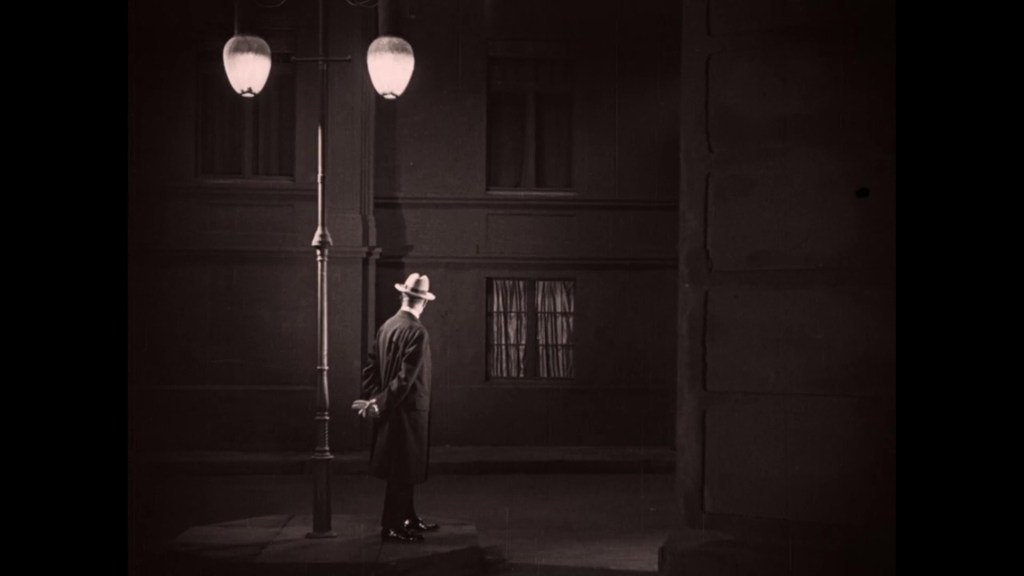
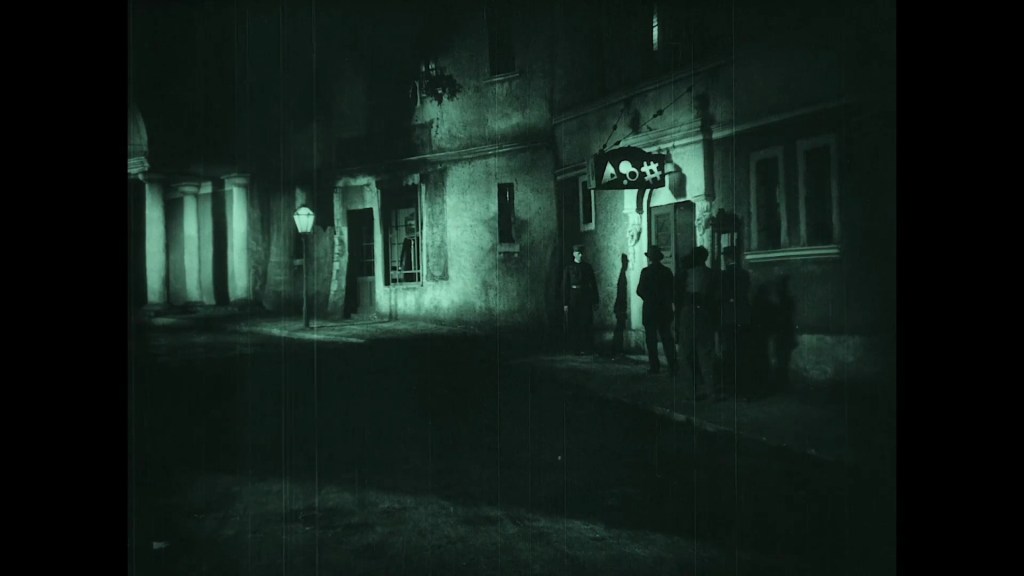
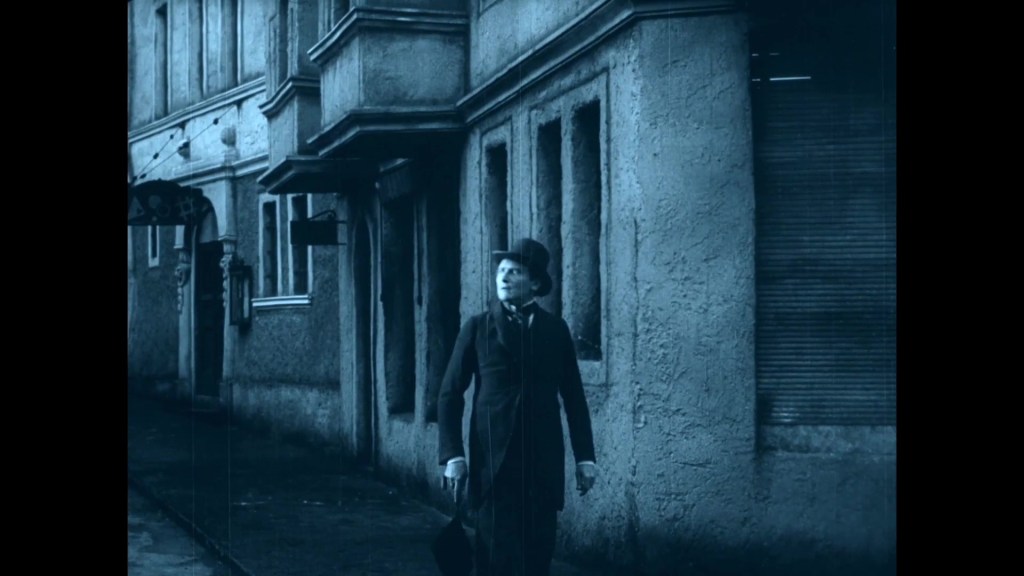
This vision warns us that the world on screen will be dreamlike rather than realistic. Everything is subtly heightened, warped. When the Blind Man and the Child (his granddaughter) leave their tiny apartment, we see the interiors’ subtle disfiguration by design and by shadow. Expressionism leans on the uprights, exaggerates the hallways, the corridors. Outside, the streets are swathed in rich shadows and patches of light. There are also surreal interventions of the modern world: the Husband is entranced by an illuminated sign in the pavement, and later an opticians’ advert illuminates a pair of giant eyes in glasses that makes him flinch with guilt. When he follows the Girl to a park bench, we are given a view overlooking the city. But “the city” is a remarkable combination of models and paintings that has a dreamlike sensibility.
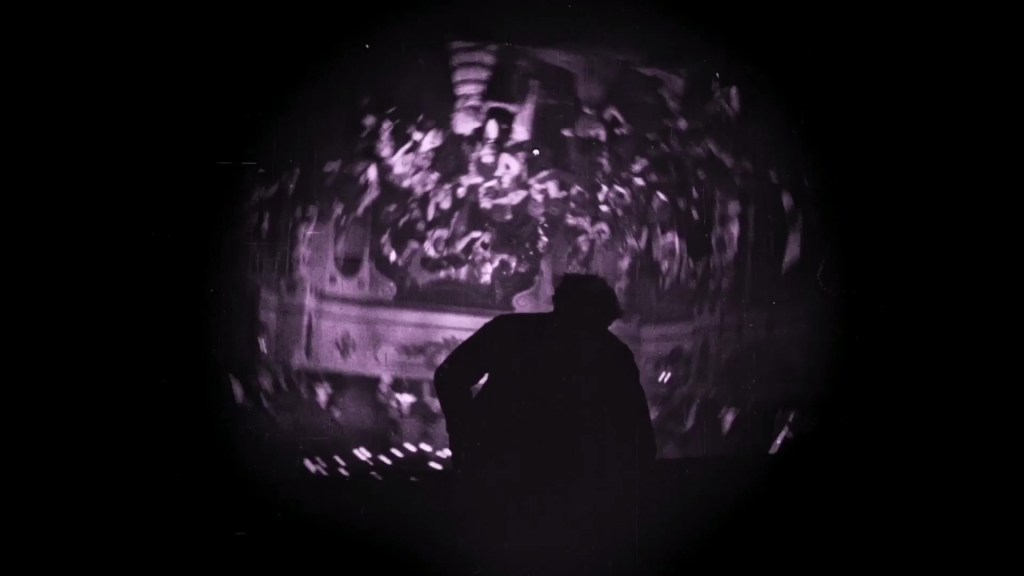
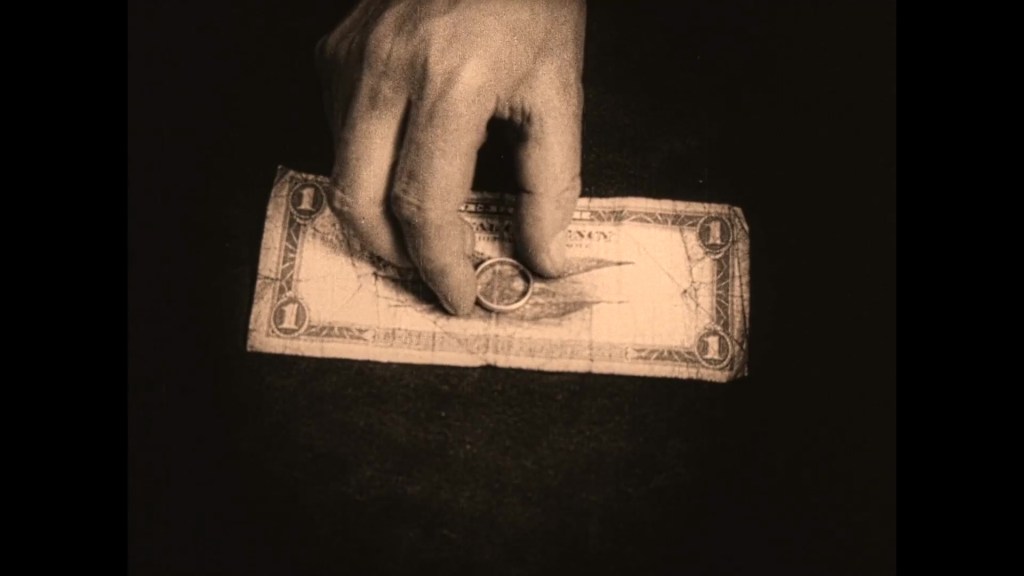
The camerawork heightens this atmosphere. When the Blind Man is separated from the Child, Grune places the camera at ground-level to capture the rhythm of the traffic pulsing dangerously around the child. And in the nightclub, the Husband becomes hallucinates the room spinning—and we then seen him, a dark silhouette, against the spinning vision we have just seen. And when he later bets his wedding ting, we see a vision of his wife (quite literally) slipping out of his life in a superimposed vignette framed by the ring in extreme close-up.
The heightened performance style—the slowness of gestures, the elaborateness of movement—are also all part of the dreamlike quality. We see the Husband’s journey from respectability to crime in the way he moves: his face slowly contorts with desire, with fear, with lust, with guilt, with triumph. Other figures are also more evidently characterized through costume and make-up. The Provincial Gentleman has his slightly shiny suit, his elaborate combover, his permanently shadowed cheeks—lined with age and/or flushed with colour.
But what all of this does is make you feel like you’re trapped inside a bad dream. For a start, the film eschews any geographical particularity. This “street” could be any street in any city. The signs we see (a distant street sign, the police station sign) are abstract symbols in no recognizable language. The use of models and false perspectives is subtle but all-prevalent. Reality is as absent as daylight. It’s a twilight world of neon night or pale dawn. In this world, the plot of the Husband’s downward descent feels as inevitable as it does nightmarish: things just keep getting worse and worse. Following his desire into the nightclub, he soon gets into a scuffle with the grotesque Provincial Gentleman over the Girl. Even when this is resolved, he’s drawn back into the Provincial’s company through the gambling table, where he bets, loses, bets again… bets a last cheque, and loses—only to reveal that that cheque was not his. Klöpfer’s performance makes you feel the gathering sense of doom like an oncoming panic attack. It’s a nightmare of repeated failure, of repeated mistakes, of satisfaction endlessly delayed.
Success in this world is also guilty. The Husband eventually bets his wedding ring… and wins… and wins again… and again… until he retrieves his money, his cheque, and leaves. Flush and giddy with success, he leaves—but is tailed by the Blind Man’s Son and the Fellow. (Another trip through snister streets, pools of light, deep shadow.) Even when he is about to “get” the Girl, he is being used by the gang to cover their crime. The Blind Man’s Son and the Fellow attack and kill the rich Provincial Gentleman while the Husband is next door with the Girl. The police end up intervening, arresting the only stranger now left on the premises: the Husband. At the station the Girl accuses him of the murder, her outstretched arm of accusation some kind of archetypal gesture, which can condemn even the innocent. (And, as in a bad dream, the innocent Husband is indeed condemned.)
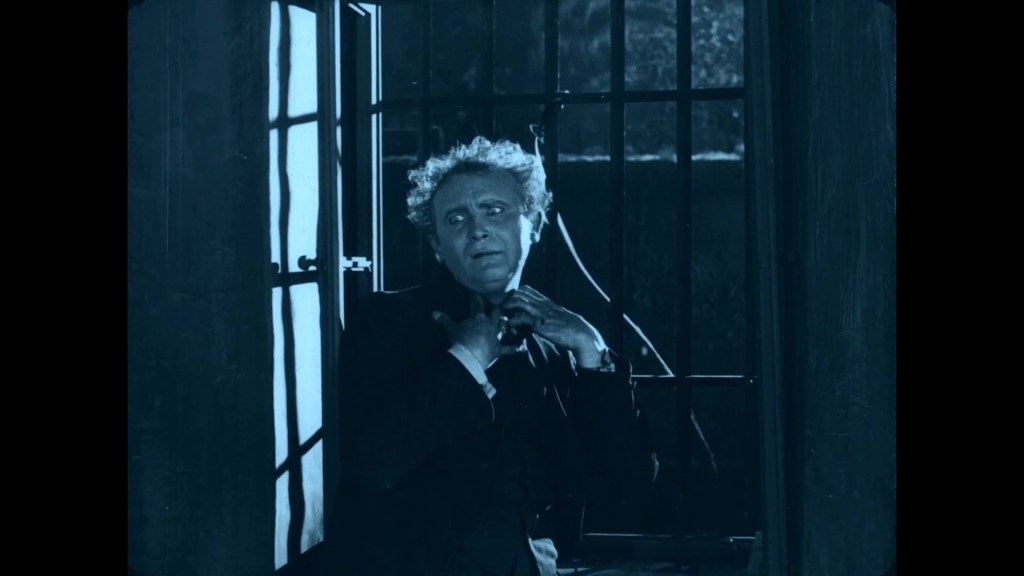
Does the ending offer us comfort? The Child eventually correctly identifies her own father as the murderer. The Husband is about to kill himself in his cell when the police arrive to release him. The image of his belt tied to the window grate, flapping in the wind, is extraordinarily chilling. It’s another image struck from nightmares. There follows a vision of the street by early morning: deserted but for sheets of newspaper blowing in the wind. The Husband comes home. His Wife is asleep at the table. Shamefaced, head bowed, he stands at the threshold. She takes the remainder of the dinner and places it upon the table. He goes to her, places his head on her shoulder. She strokes his head. They look at one another eye to eye. Ende. It’s an ending of ambiguity, of unanswered questions. What happens next? What does the husband say? Has his nightmare even ended?
Conrad in Quest of His Youth (1920; US; William C. DeMille)
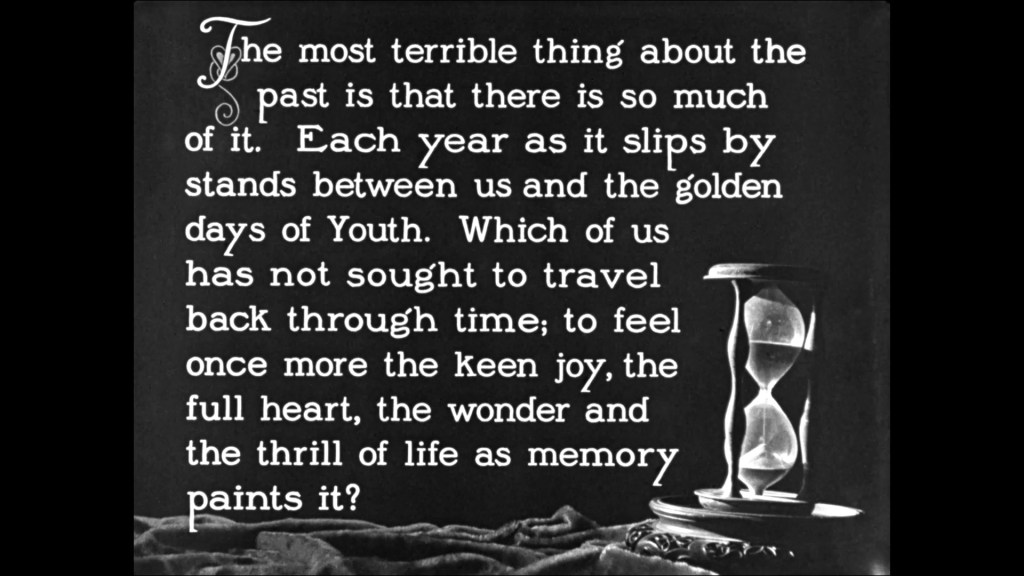
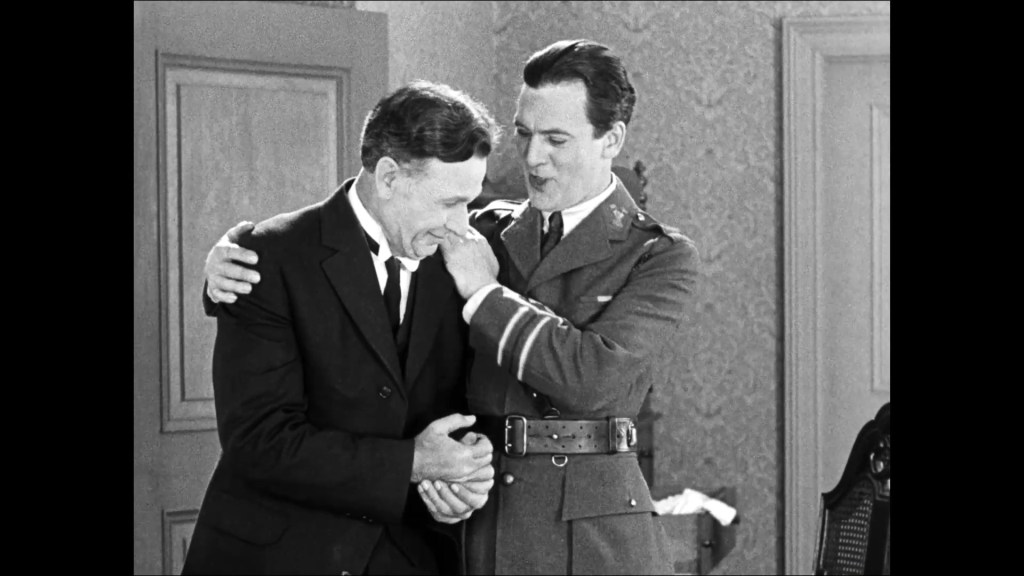
“The most terrible thing about the past is that there is so much of it…” Have we not all wanted to “travel back though time”? Here is Conrad Warrener, back from India, back from the Great War. The only one at home is Dobson, his servant. The simple delights of being home: a bath, fresh soap. Conrad mourns the loss of his fallen friends and wonders why he feels “like a stranger in his old haunts”. He goes through some old photographs. A picture of childish happiness: “Sweetbay”, and three other childhood friends. Ted, Nina, Gina.
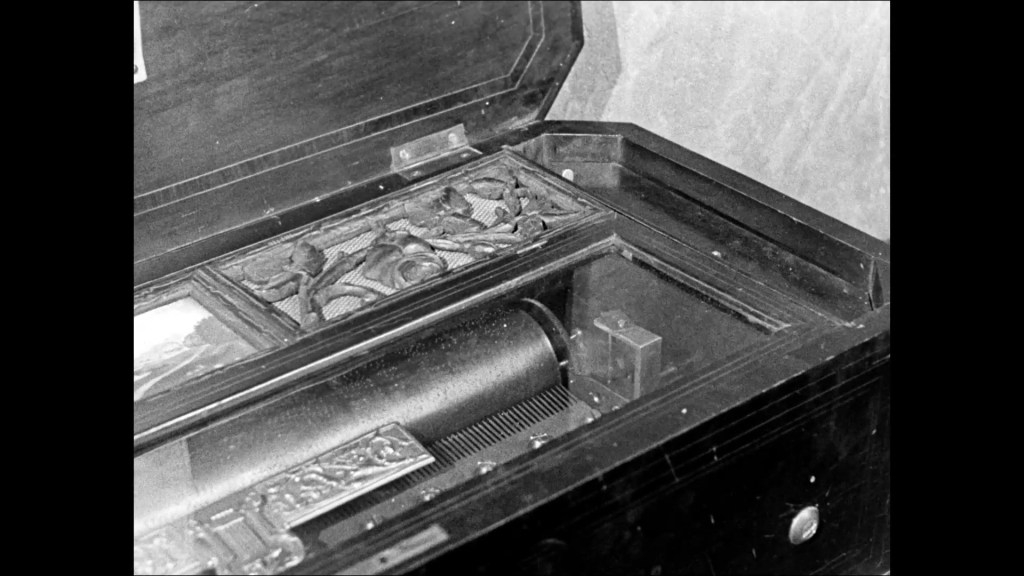
They arrive. A mechanical music box is played. Old pictures on the wall, needlework. It’s all conspicuously a world from another century. Ted finds his old catapult, but it snaps as soon as he tries it. Dinner time, and the friends stare at the tiny table and chairs where they used to eat together. (Neil Brand’s piano accompaniment brilliantly brings back the theme used for the mechanical music.) Only Conrad likes the childhood fare of milk and porridge, but the women look disconsolate—and Ted slips some spirit into his mug to get through the meal. And instead of a game of bridge, Conrad insists on a boardgame. But the foul weather soon intervenes, blowing smoke back down the chimney.
That night, the comforts are hardly any better: water leaks though the ceiling onto the bed the women must share, while Ted’s bed is cracked and uncomfortable. While Conrad and Dobson play a boardgame, the three other guests huddle together and make plans to head back onto town the next day. All three have colds, and announce (with delightfully cold-inflected text) that they’re off.
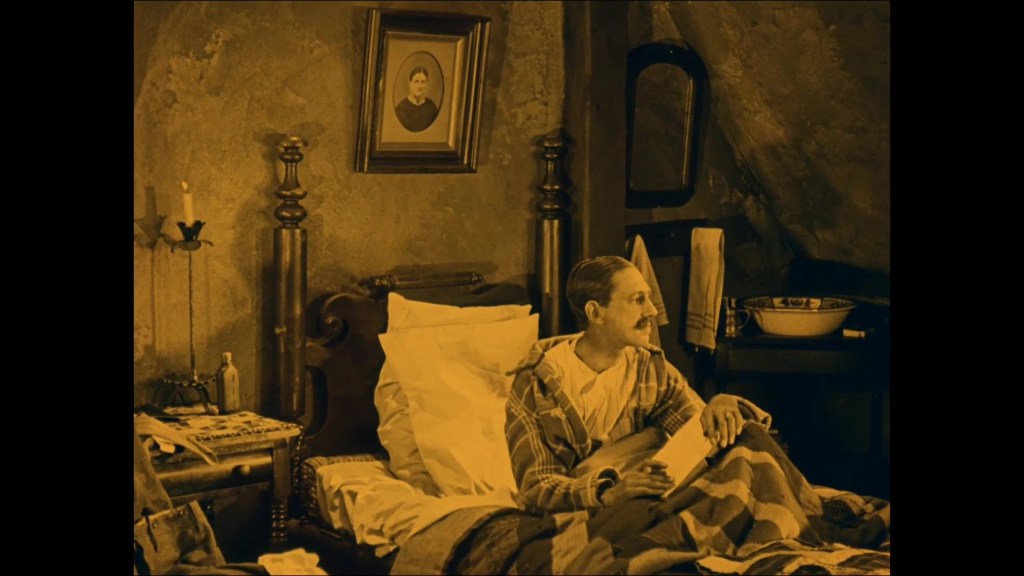
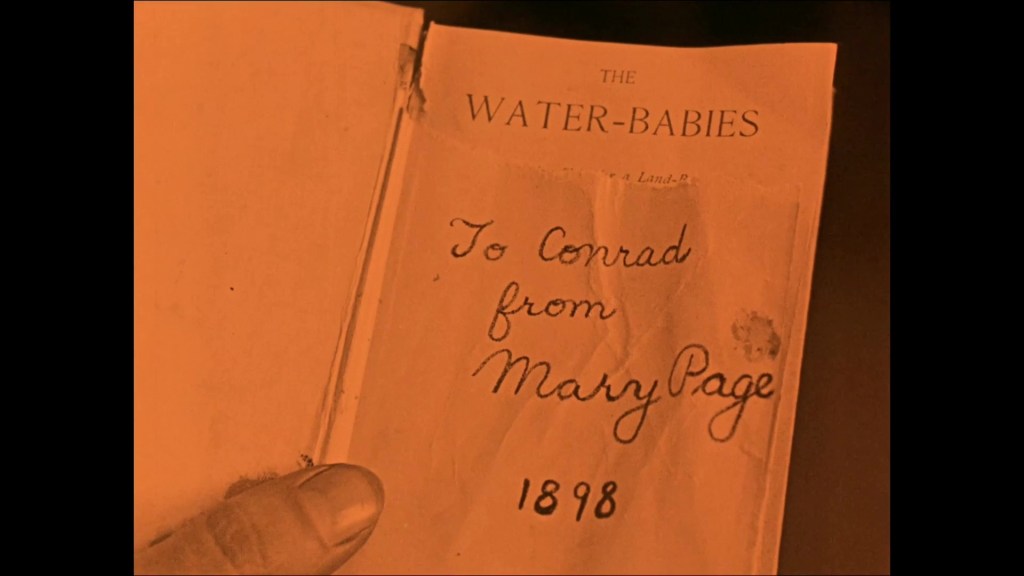
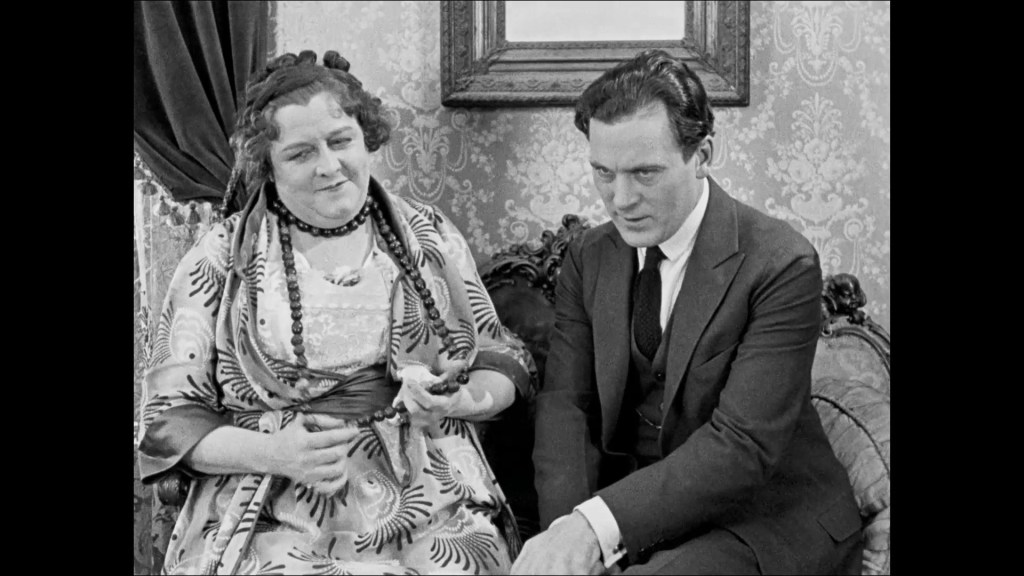
But Conrad picks up a book, dedicated: “To Conrad, from Mary Page, 1898”—and he seeks out his first love. She is now “Mrs Barchester-Bailey”, a conspicuously middle-aged woman with four boisterous children and a jealous husband, and ghastly soft furnishings.
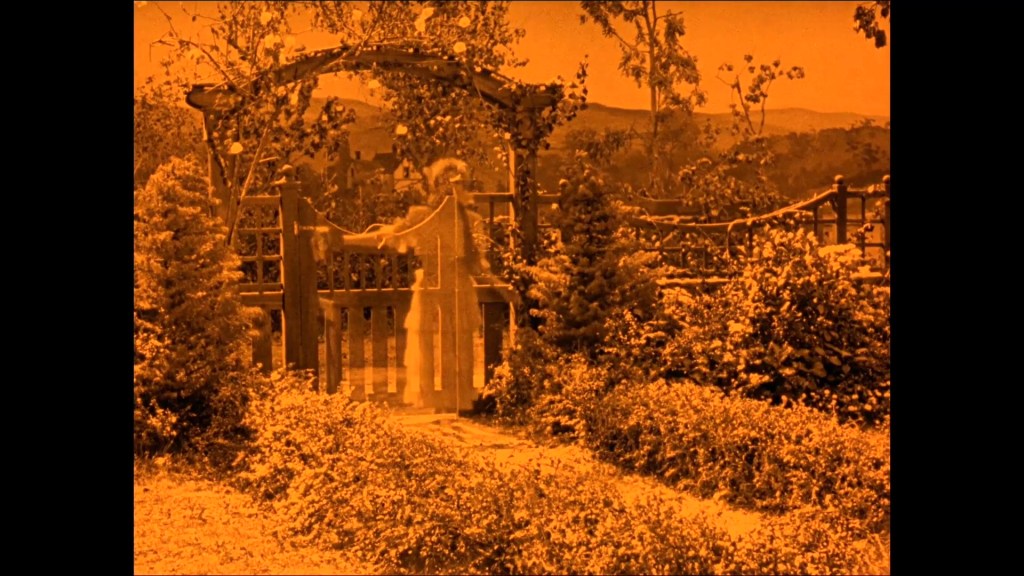
So Conrad returns to London, seeking pleasure in the high life. At a table, he sniffs a bouquet: “And in the scent of the little white flower, Conrad is wept breathless across the years to a garden in Italy, when he was seventeen and madly in love with ‘the most beautiful woman in the world’. Mrs Adaile…”. (Dissolves, for once, make the transition between past and present, titles and action. It’s a kind of softening of the film’s thus-far conventional language.) He recalls his last night there, and the flowers she gave him—and the solitary kiss of her feeling. The last transition, the slow dissolve between the lonely youth and the present-day adult, is gorgeous.
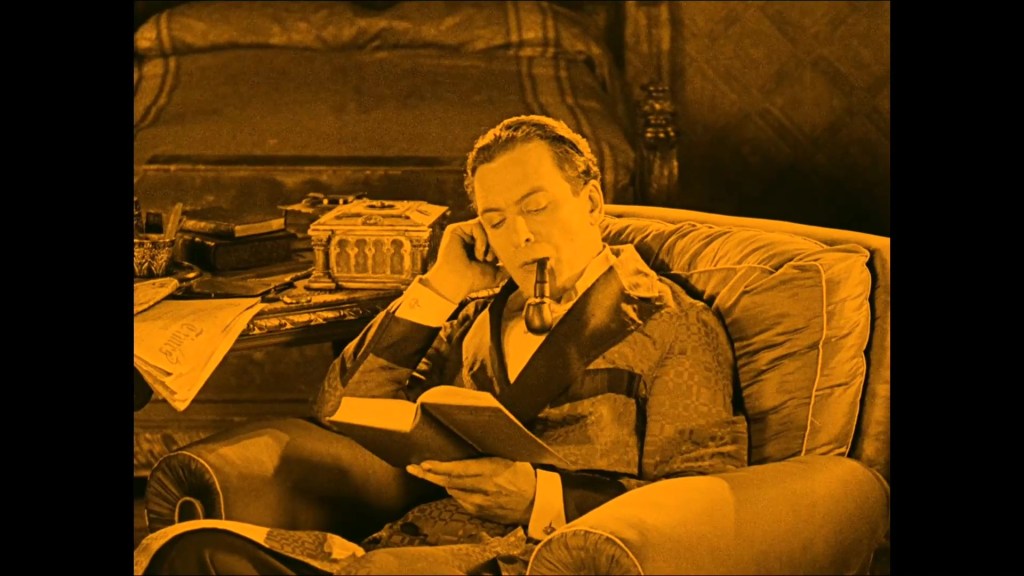
Conrad returns to Italy, to the same location, and sees Mrs Adaile—now say knitting in the sun. But she cannot remember him. So he offers her the same flowers, pressed carefully into his wallet, and finally she recalls. “Conrad, my friend, you’re in love with a memory and not with me.” But both are invested in the fantasy, both trying to be young through one another. Their last night in Italy. A kiss given, an appointment made for that night for a final farewell. Dobson is ushered out, Adaile is busy powdering her face. Conrad reads a book to pass the time, and this is how Adaile finds him: asleep in a chair, book on his lap. She immediately has second thoughts, so writes him a note and pins it to his chair. Half-crying, half-laughing, she leaves. The next morning, he finds the note: “Farewell! There is no road back to seventeen.” Conrad heads home.
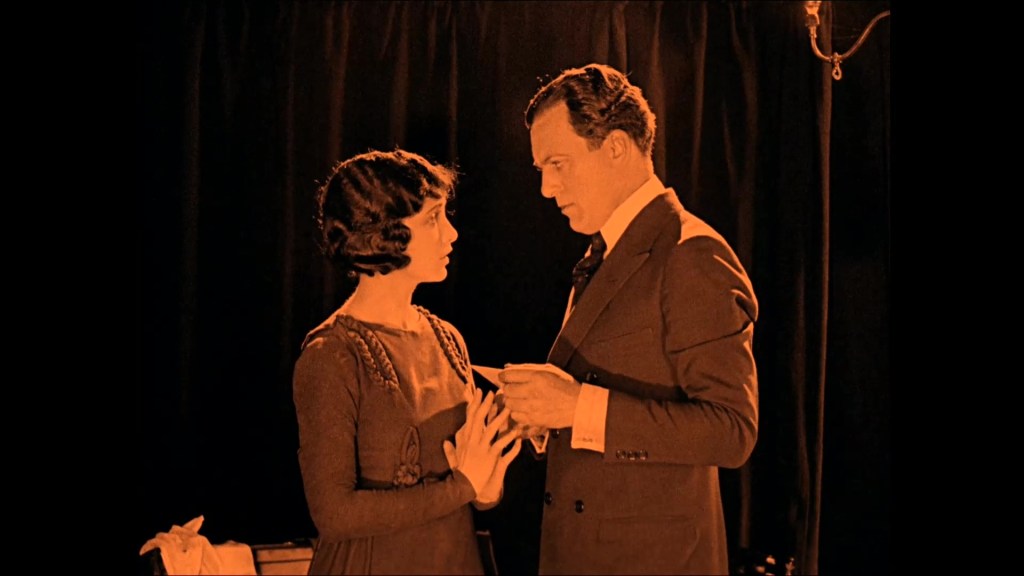
Enter Rosalind Heath, the widowed Countess of Darlington (and former dancer), who is likewise listless with her life. She too now goes through old photos, finds old letters from friends. But a bad train connection intervenes. Rosalind is visiting Tattie and her tiny theatre troupe. Rosalind and Conrad meet outside the theatre, where news has come that the manage has absconded with their money. Conrad offers to help, by now feeling he’s older than he actually is—and highly protective of Tattie and (in particular) Rosalind. He falls for her and she for him. After refusing his money, Rosalind accepts his proposal—but insists he ask “Lady Darlington” first. Of course, she is Lady Darlington. He proposes a second time, and the pair find happiness. The End.
A subtle, sensitive film. I liked it without loving it. The first thing that comes to mind after seeing it is that I can think of few other silent films in which scent is so thematically important. Conrad sniffs the soap at home, sniffs the flowers that send him back to Italy; Rosalind too, sniffs the objects of her youth: the cards, the grease paint. Food and drink, too, are used to try and summon or recreate the past. It’s a film very sensitive to all these sensory aspects. Yet the language of the film is never quite as lyrical or inventive as the extrasensory elements might suggest. The camera scarcely moves—most of the travelling between places or times is done through cutting. But the few instances when dissolves are used make them all the more potent, and I would love to have seen more use of these devices.
And if the film isn’t in any sense “showy”, it is still lovely to look at: the print is (aside from a few momentary sections of decay) in very good condition and tinted to fine effect. The photography is clear, sharp, and William DeMille shows us everything we need to know in order to grasp what’s going on. Besides, the drama is character-driven and therefore performance-driven. The camera doesn’t need to spell out emotions when the performers do so much. (Though the intertitles also do quite a lot of work.) And the cast is uniformly excellent. The film isn’t afraid to show us or talk to us about age and ageing, about regret and loss, and the performers all have moments of vulnerability shared with the camera. There is real emotion at the edge of every scene, and if there is no great melodramatic outpouring then that is because the film isn’t interested in wallowing in sentiment. It’s about ordinary characters experiencing feelings everyone knows and shares.
Day 8: Summary
A curious pairing of films in which (to find a common theme) men go out in search of something they don’t feel they have at home. Grune’s film is a far richer cinematic world, and a far more potent one. It makes you feel uncomfortable from beginning to end. It’s a fantastic piece of expressionism, where everything is heightened and meaningful. If anything, I was glad to emerge into the daylight world of Conrad in Quest of His Youth. DeMille’s film is less stylistically rich, but offers a wholly different range of emotions. It’s a real world, populated by real people. (Albeit the lead pair are ultimately cocooned from too much trouble by their wealth.) It’s subtle, tender, gentle. But I kept waiting to be really moved, and never was. And isn’t it a problem that the relationship presented in the past (with Adaile) moved me more than the relationship pursued in the present (with Rosalind)?
Tomorrow, I will try and gather my thoughts on the online festival as a whole and post a round-up of Pordenone 2023. Right now, I must go and lie down again—and hope my dreams are not unduly infected by the nightmarish atmosphere of Die Straße…




















































 The Realm of Silence