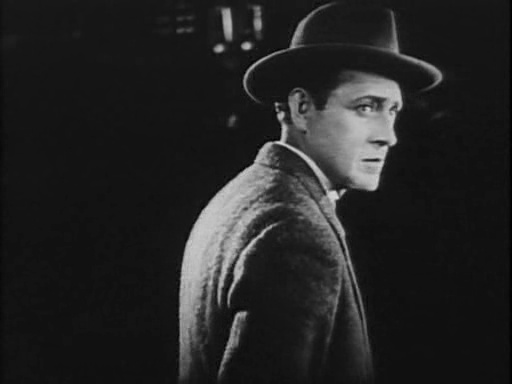
Home media releases of The Sheik (1921; US; George Melford)

This piece is about the various incarnations of The Sheik on home media formats. I write it out of curiosity and out of frustration. Curiosity because the differences between copies of silent films always interests me. Frustration because the object of my curiosity is obscured by the usual opacity and vagueness produced when historical artefacts become digital commodities. Let me explain…

Some years ago, a course on which I was teaching assistant (i.e. seminar tutor) scheduled a screening of The Sheik. Curious as to what copy we would be showing, I looked at the departmental copy: it was the DVD version released in the UK in 2004 by Instant Vision. It presents a monochrome version of the film with a soundtrack of… No, in fact I can’t even remember what the soundtrack was like. What I do remember is that it was such poor quality, visually and musically, that I couldn’t bear for any student on the course to experience the same in this way. (My general rule with screening material is that if I couldn’t sit through it, then neither should my students.) So I looked for alternatives.
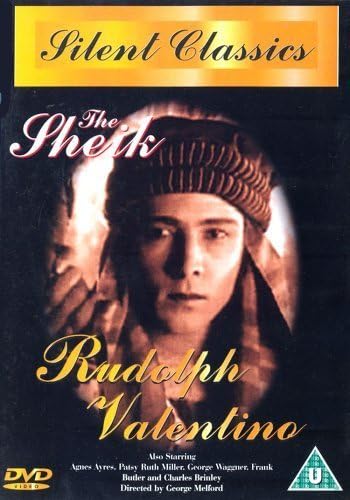
Thankfully, there was at least the DVD produced in the US by Image in 2002. This presented a fully tinted version of the film. However, the score was by the “Café Mauré Orchestra”. Those inverted commas are there for a reason, since this “orchestra” is in fact composed of MIDI (Musical Instrument Digital Interface)-based synthetic sounds—as arranged and performed by Eric Beheim. Though the music choices used (but “used” doesn’t do the MIDI justice: should I say the music is sampled? digitized? synthesized? appropriated? co-opted? press-ganged? harvested? made vassal unto?) are appropriate, the sound of synthetic music rather undoes the benefits of the music itself. Put bluntly, MIDI soundtracks sound cheap. It’s the DVD producers saying: “Listen to how little money we’ve spent on the music! You’ll be amazed!”
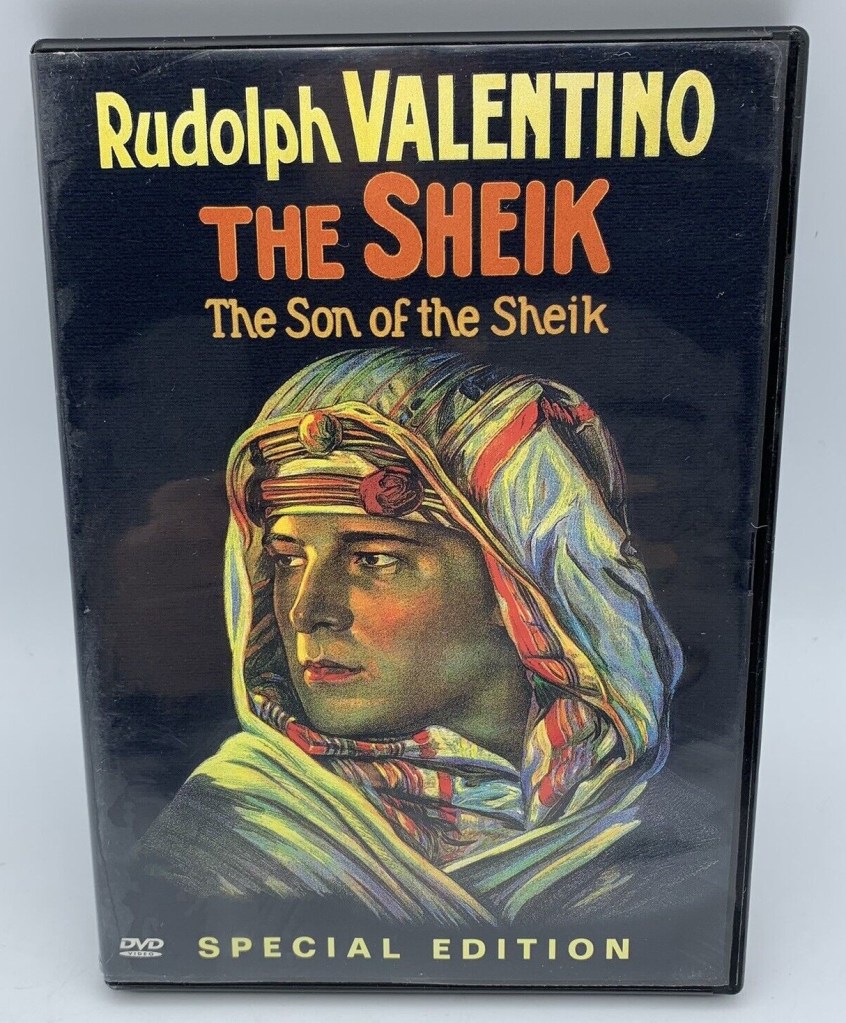
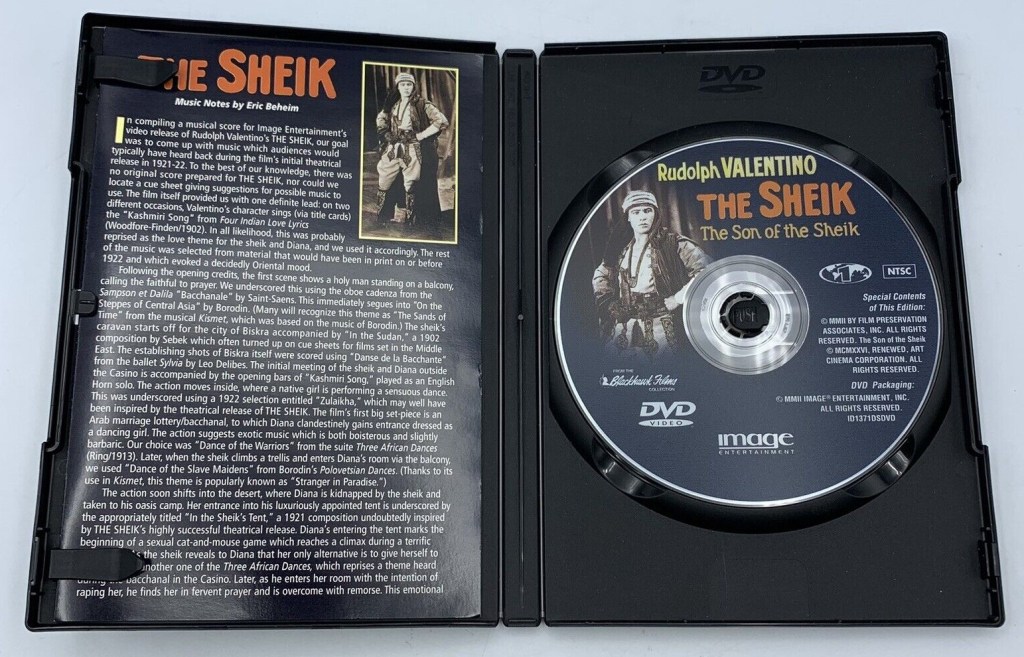
So I ripped the DVD and set about compiling my own soundtrack, one that used various nineteenth- and early twentieth-century pieces—including a nice orchestral arrangement of “Kashmiri Song” that Valentino’s character sings in the film. (I even used a couple of the cues from the Beheim score, only these were sampled from actual orchestral recordings.) It worked well and the students enjoyed the film. (More importantly, I enjoyed the film. There are few more maddening experiences in life—well, my life—than sitting through a silent film accompanied by bad music.)

The years passed. I no longer taught on the course that included The Sheik. (Or, for that matter, on any course.) So I was mildly curious when a Blu-ray of the film was announced in 2017. I was poised to buy it, if for the only reason that I try to buy almost anything silent that comes out in a good edition. But then I saw that the score was for theatre organ and my heart sank. (I know, I know, I’m a snob: but really, I just don’t enjoy sitting through over an hour of theatre organ music.) I also considered that my interest in the film was such that I had no real desire to actually buy the Blu-ray. My teaching days seemed to be over, so buying the Blu-ray to try rescoring the film again seemed pointless. I wouldn’t be watching the film, and nor would anyone else. So I passed. Of course, I should have bought the edition anyway. Kino often let their licenses expire, leading to a huge number of titles going out-of-print. Thus, The Sheik duly went OOP.

Paramount then announced their own edition of The Sheik would receive a Blu-ray release in November 2021. Still curious, I searched to see what information I could find about the restoration. I found an interview with Andrea Kalas, who leads Asset Management at Paramount. According to Kalas:

We looked around the world for best sources and Film Preservation Associates graciously loaned us a 35mm black and white print. We also had a finegrain which turned out to have a better overall picture quality, but the print turned out to be great for the intertitles. […] The original frame-per-second cadence was 22fps. The fine grain we used had been ‘stretched’ to 24—essentially by adding frames. With the help of the lab, Pictureshop, we went back to 22fps. […] We had a continuity script that was a critical guide to the digital tinting and toning we added – which was the way the audience in 1921 would have seen it.

The Paramount restoration promised to run to 66 minutes, nine minutes shorter than the Kino Blu-ray and a full twenty minutes shorter than the Image DVD. Kalas’ talk of reversing the stretch-print process of one of their source prints was reassuring—but if the film was “returned” to 22fps, why was the runtime so short?

All of which led me to some basic questions about The Sheik that no home media edition had addressed: How long was the film when shown in 1921? What projection speed was used? What print material survives? Thankfully, the American Film Institute database has some excellent material that is readily accessible. Here, I found that the original length of The Sheik was 6579 feet, which equates to 2005m. (IMDB.com states that the film ran to 1818m when shown in the UK, but I am less inclined to trust IMDB than the AFI when it comes to any film of this vintage.) Even if projected as fast at 24fps, 2005m would be 72 minutes. At 20fps it would be closer to 87 minutes. So how did the previous home media versions of The Sheik relate to this 2005m print, and at what speed did they run?

Well, here are the various incarnations (not including the infinitude of grey market rip-offs) and their runtimes:

  • Paramount VHS (1992) = 79 minutes
  • Image DVD (2002) = 86 minutes
  • Flicker Alley (made-on-demand) DVD (2015) = 76 minutes
  • Kino Blu-ray (2017) = 75 minutes
  • Paramount Blu-ray (2021) = 66 minutes

Maddeningly, nowhere on any single home media release does any company—Paramount, Image, Kino, or Flicker Alley—actually state what the length of their copies are in metres. As a result, we must second guess frame rates and go through each edition to try and work out how they compare to one another…

Though there are some minor textual differences between the copies (the Image DVD, for example, is missing one or two intertitles), the basic material remains consistent through these various home media incarnations. One notable exception is the Paramount VHS, which presents different intertitles to the later DVD and Blu-ray editions. The home media review for The Sheik on silentera.com states that the VHS used the re-edited and retitled version of the film, not the original. It’s ironic that the visual quality of the titles presented on the VHS is often superior to that of the DVD/Blu-ray editions: the titles in the reissue print are uniformly strong, sharp, and legible. It’s a shame that many of the original titles have not survived in such a state: after the very high-quality images of live action in the film (especially on Blu-ray), it’s a shock to have to squint at the slightly blurry wording of the titles.
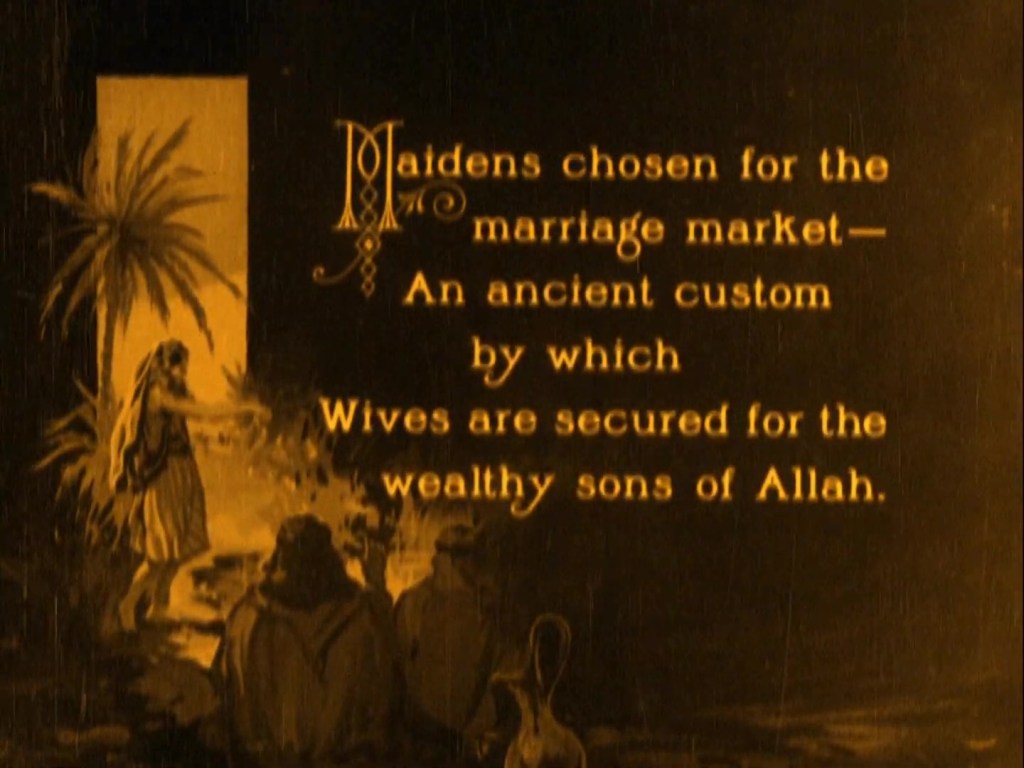
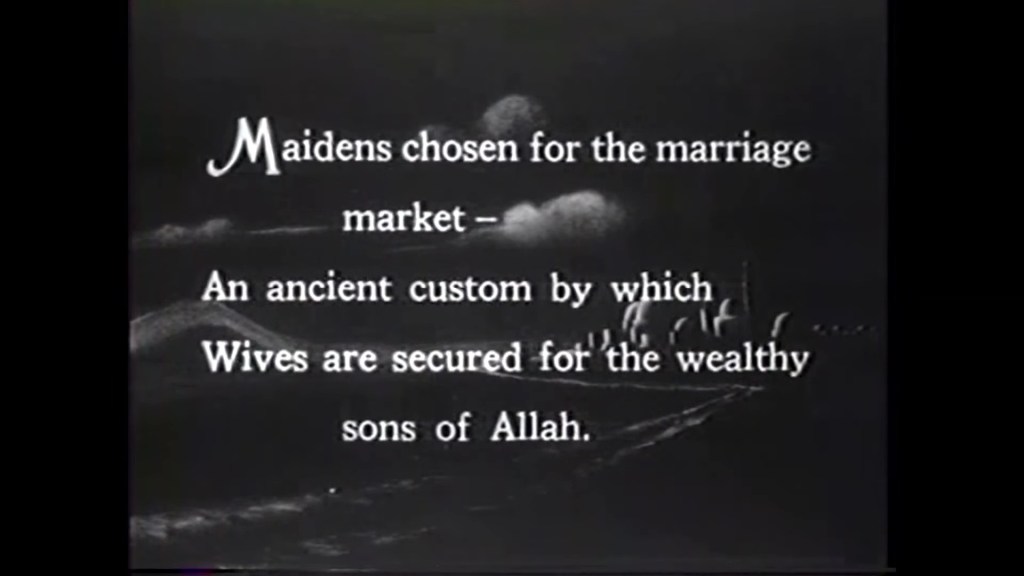
The differences in runtime across the above home media editions are due overwhelmingly to the different framerates applied to the print sources. Deciphering the various video files of these editions has not proved easy, but I can offer an informed estimate of the rates for each. The Image DVD uses the slowest speed of 18fps, the Paramount VHS uses 20fps, Flicker Alley DVD and Kino Blu-ray use 21fps, and the Paramount Blu-ray uses 24fps. Kalas states that the film originally ran at 22fps, though my impression viewing the versions of the film that run to c.75 minutes at 21fps is that this seems perfectly life-like. (It may be that the projection speed used in 1921 was 22fps; but Kalas doesn’t go into any detail about this issue in the interview.)

I’ve checked the Paramount disk and (shorn of new opening/ending credits) the film does indeed last 66 minutes (and nine seconds) and runs at 24fps without any repeated frames. At 24fps, 66 minutes equates to an approximate print length of 1830m. That’s still 175m (6-8 minutes, depending on projection speed) short of the film as seen in 1921. Some of this might be accounted for in the length of intertitles, but it’s still a not insignificant amount of material for such a short film (nearly 9% of its length). I’ve also checked the Paramount Blu-ray against the Kino Blu-ray. It appears to be exactly the same restoration. And I mean exactly the same. The same tints and tones, the same titles, the same scratches and damage. The only difference is the framerate and the soundtrack. I can only presume that Paramount’s centenary restoration of The Sheik was completed by 2017 and Kino simply licensed this version to last until the actual centenary of the film, whereupon Paramount could release their own edition. But why on earth does the Paramount Blu-ray transfer this same restoration at 24fps?

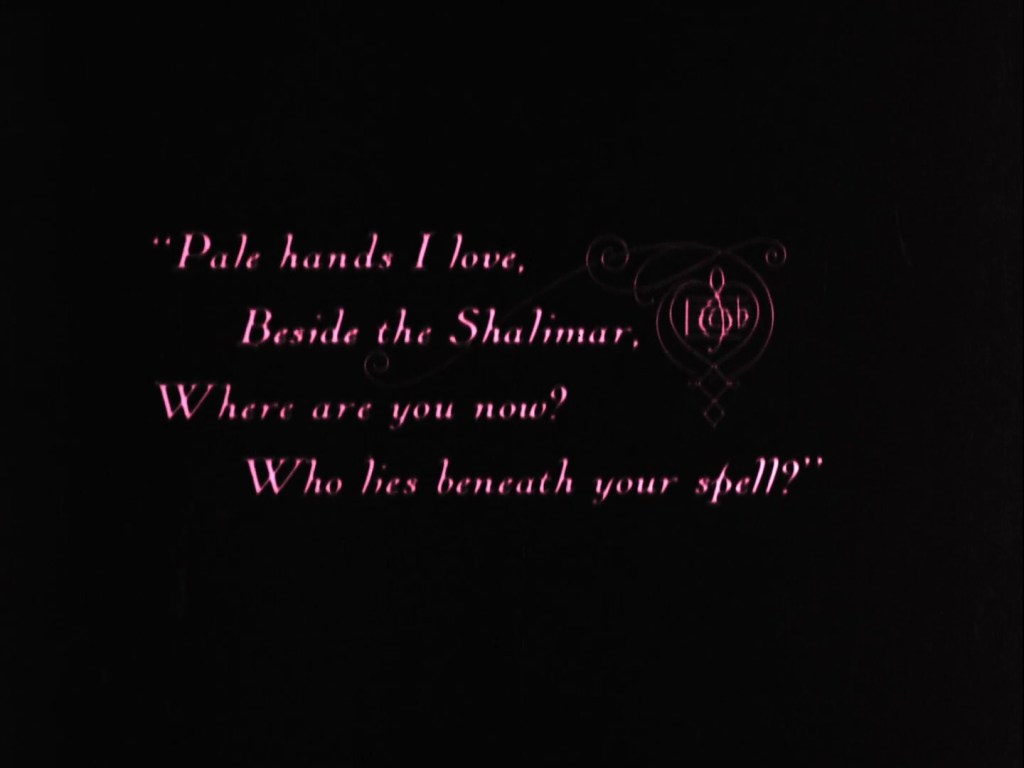
The decision is even stranger when you consider that the soundtrack for Paramount’s Blu-ray—a synth score by Roger Bellon—is the same as the one on Paramount’s VHS thirty years ago. Although Kalas claims the music was “commissioned in 1990 as part of a celebration of Paramount’s 75th”, the VHS edition from 1992 bears a copyright date of 1987 for the soundtrack. (According to various reviews of older home media editions, The Sheik was first released on VHS by Paramount in 1988. I’ve not been able to find any VHS from 1988, only the edition from 1992.) Kalas adds that Bellon’s music “really stands up”, which again begs the question why transfer the film at 24fps when the soundtrack was arranged for a version of the film that ran at 20fps? Another issue with the Bellon score is that it never uses the “Kashmiri Song” that is cited in the film’s intertitles and sung by Valentino on screen. This may well be because the intertitles of the VHS version (for which the score was composed) are from the reissue print, which changes the wording of the Sheik’s song—and thus loses the context of the original song. (While no substitute for a real orchestra, the theatre organ score by Ben Model for the Kino edition at least quotes the “Kashmiri Song” at the appropriate moments.)
Paramount are not alone in sidelining the complex issues and inevitable compromises of film restoration in their home media salesmanship. But in the past I have been irritated by the way some of their press releases muddy the waters of what editions are being presented on Blu-ray, and how they relate to the films as originally presented in the silent era.

For example, their 2011 Blu-ray release of Wings (William A. Wellman, 1927) was announced with a press release that detailed how they had restored the original score composed by John Stepan Zamecnik (plus the numerous sound effects that were a feature of the film’s initial release). This “newly-restored” soundtrack was announced as the culmination of great effort:

the film’s original paper score was procured from the Library of Congress and recorded with a full orchestra […] Musicians with expertise in silent film music were chosen to recreate a truly orchestral experience.

Note the references to physical artefacts and institutions: paper score, material archive, real musicians. They echo the dual boast of historical sources and modern technologies: celluloid prints scanned using HD software, sheet music from 1927 recorded in 5.1 Dolby Digital Surround sound.

But there is a good deal of ballyhoo (if not bullshit) here. For a start, the only surviving hard copy of the music for Wings was a conductor’s short score, bearing just two or three staves of information. This document lacked details of orchestration, and the structure of its cues did not match the montage of surviving prints. The task of re-editing the score was further hampered by copyright issues: Paramount could not include (or could not afford) several of the musical works originally quoted at length by Zamecnik. And the reorchestration of this music was performative as well as editorial. Contrary to the press release, Dominik Hauser’s arrangement of the “orchestral” score on the Blu-ray is not performed by an orchestra, but instead consists of an assembly of MIDI sound files. The only real musician audible on the soundtrack is Frederick Hodges, whose solo piano interpolations were needed to bridge gaps in the “orchestral” score. Whilst the Paramount edition includes an alternative soundtrack of Gaylord Carter’s organ score, it does not offer Carl Davis’s orchestral score, which was recorded with real musicians for the Photoplay restoration of Wings in 1993. This latter version has never received commercial release.

The spin around Paramount’s release of Wings made me more suspicious than I might otherwise have been when it came to their release of The Sheik. My heart sinks that in 2021 Paramount offered a less satisfying presentation of their own centenary restoration than Kino presented in 2017. (I might add that the Kino edition included an audio commentary track on the film by Gaylyn Studlar, which the Paramount edition lacks. Even if Paramount had been willing and able to reuse this commentary, they would have had to speed-up the track by 114% to match their 24fps presentation of the film.) I have no particular fondness for The Sheik as a film, but even just as a historical document it deserves to be treated with respect. It’s great that Paramount decided to restore and release this silent film on Blu-ray. But why then make choices that lessen its impact?

Paul Cuff

A Woman of the World (1925; US; Malcolm St Clair)

My exploration of more Pola Negri films continues with an adaptation of Carl van Vechten’s novel The Tattooed Countess (1924). This Paramount production was directed by Malcolm St Clair, a veteran comedy actor and director, but someone still relatively new to feature films. But as its star, Negri was a growing box office attraction—and the film plays up her status as an exotic outsider in America…

A Woman of the World (1925; US; Malcolm St Clair)

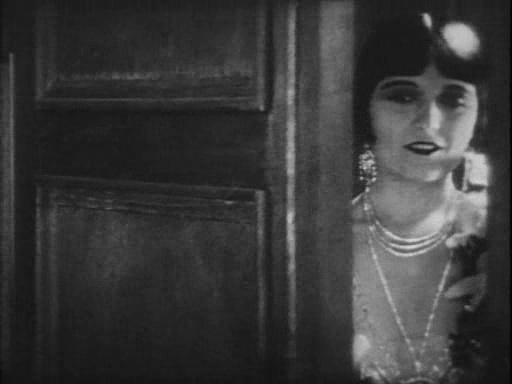
The opening title: “The Riviera—Where one may start a love affair—or end one—in surroundings beautiful enough for either occasion.” Closeup: drinks are poured, raised, returned to the table. One hand takes another. Finally, a man’s face lowers itself into the frame to kiss the woman’s hand. The framing makes his appearance faintly comic, faintly sinister. His smile is lugubrious. The couple step over to the veranda edge, overlooking the sea. But already the woman is unconvinced. He’s whispered this line to other women, she says. She leaves and we stay with the man: we see his self-satisfied grin, his finishing off the glassful of liqueur. Inside, he returns to the woman and takes her in a kiss. And as he does, we cut to a door opening: it is Countess Elnora (Pola Negri). Her face moves through a series of thoughts, emotions. She already wore a smile when first we glimpsed the face, but as the door swings open the smile fades, then some other notion flickers at its edge. It is a different kind of smile: a knowing, resigned, tired flicker of a thing. Like an acknowledgement of what she already knew, or expected. The couple, in each other’s arms, look up. Now it’s their turn for smiles to change, fade. Elnora moves to a photo given “to my beloved—for eternity”, removes it from its frame, and tears it up.

“Dearest, I was merely playing—a moment’s diversion—a woman of the world should understand.” I like it when a film’s title appears in the film, especially when it’s italicized like this. The phrase disguises its misogyny and cruelty with an apparent compliment. But it’s a compliment that serves to categorize and thus control its subject.

And we do not yet know Elnora. Indeed, we know her only by her image, and by the image of Negri we bring to the film. There is something as yet unmasked, unrevealed about her in this first scene. Negri’s hair is like a kind of black helmet, a sheening, almost threatening bob-cut. It’s like a kind of defence, imprisoning as it is protective. And look how she pours herself a drink in her room, and takes her time to elongate the studied sorrow of her mouth before taking a sip. And now she laughs, tipsily, as the man comes in and takes her in his arms. “I knew you’d understand. You’re mine for eternity”, he says, smarmily. She lets him closer to her face, then belts him across the cheek. “Eternity! A week ago I tattooed my arm as proof of my love for you—branded myself with your crest—and today…” She speaks through her teeth, white against lips that are almost black. “—woman of the world, yes; but not the world’s woman!” She ejects him from her room, as her servants are busy packing her things. She’s going to the far side of the world, “to forget”.

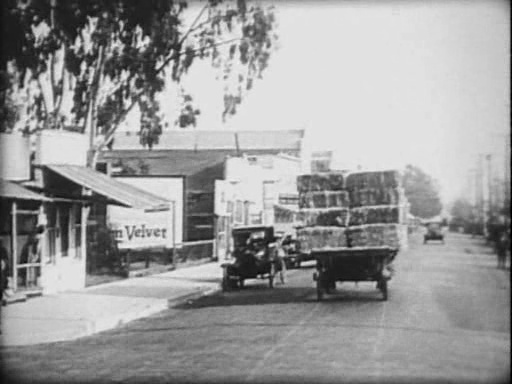
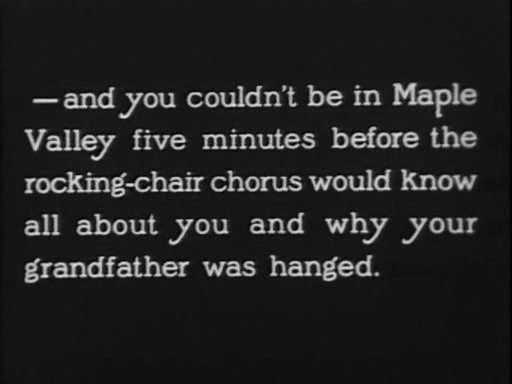
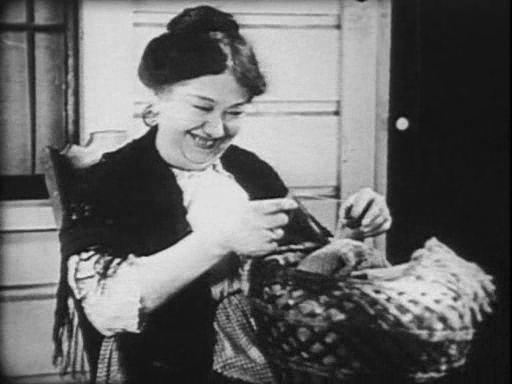
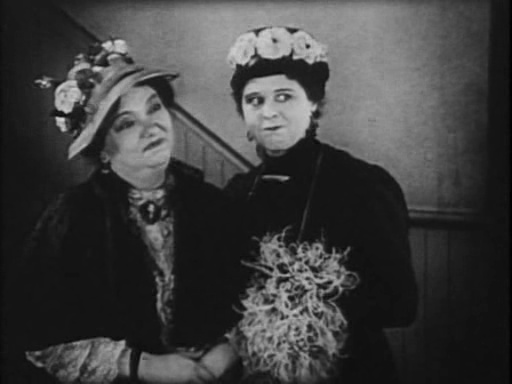
Cut to the far side of the world, somewhere in the American mid-west, “Maple Valley”, where everyone knows each other’s business. Two women sit knitting on their porches and gossiping, gossiping in a needling kind of way, each showing off that they know the truth behind each other’s small talk.

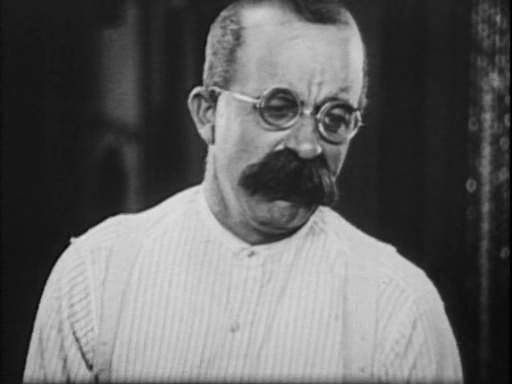
The Countess is in the paper, due to visit her cousin (by marriage, the paper adds in an aside), Samuel Poore (Chester Conklin). It’s a different world, a different genre, here in Maple Valley. Sam Poore is a figure out of Keystone: balding pate, a huge black moustache, thick round spectacles, braces getting snagged in a fence, struggling with an absurdly large garden tool. [After viewing the film, I was gratified to find my instincts correct when looking up the cast: Conklin was one of Mack Sennett’s original Keystone troupe.]

The gossips provide us with more background info: Attorney Granger is “hot after vice”, has “lovely morals”, and spends time “snoopin’ around the dance halls”. Here is his assistant, Gareth Johns (Charles Emmett Mack), with his belle, Lennie Porter (Blanche Mehaffey). They want to go dancing, but Granger wouldn’t like it.

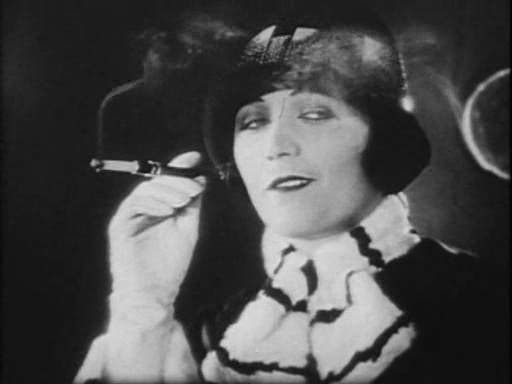
The Countess arrives. It’s late, dark. Her nervous smile fades away. Her cab gets stuck in traffic outside the dance hall in town. There, Granger (Holmes Herbert) is frostily observing the crowd. Now he sees a cigarette being held out of the cab window by an elegant, gloved hand. He immediately goes up to her, shouts, and informs her: “We don’t want loose women from other towns here.” Elnora smiles. Or rather, Negri smiles—for it’s as if the challenge from this man has awoken her persona, which now creeps into her face and smiles a familiar smile. Free of the forgettable man in the opening scene, she now looks in control of herself. Look at her poise, her slightly lowered lids, her stillness set against the trail of smoke from her cigarette. Already she has the upper hand: she informs Granger that she’s come from Italy and asks him to direct her to her cousin’s “chateau”. Granger looks embarrassed, incredulous. From his stern, powerful disposition he’s now an awkward, fidgety figure. We glimpse Elnora’s face as the cab drives off: watch that smile, those cat-like eyes, shadowed, narrowed. Granger’s body turns away, but his eyes follow the cab.

Next morning, the gossips are keen to pry into the new arrival chez Poore. With bumbling, shuffling, and slang, Sam tells the Countess that breakfast’s ready. Elnora now her arm around Sam, promises him that they’ll be “what you say—great pals”, and enters the breakfast parlour.

She’s wearing an amazing black dress, with huge sleeves covered in a bright flower pattern. Sam’s wife (Lucille Ward), plainly dressed, sees how eager he is to please the countess. Comic flirtation on his part, frowning disapproval on hers. And then Mrs Poore sees the tattoo on Elnora’s arm. “I did it for a man I loved”, she explains, and at once a dreamy sadness permeates her face. It’s a face we’ve not seen since the first scenes. Suddenly she shakes it off into a polite smile. But Mrs Poore is concerned about what the neighbours will think. “That’s nothin’”—says Sam, “I knew a lady that had the names of the whole Seventh Infantry tattooed on her!” It’s a great line, but immediately segues into talk of the moral puritanism of Granger (of which Mrs Poore approves). The newspaper says Granger is busy “snatching cigarettes from the lips of women and threatening jail for their escorts”. Elnora smiles. “He has lovely eyes”, she says, to Mrs Poole’s surprise (and now it’s her turn to flash a knowing look at Sam, to raise her eyebrow; it’s a lovely bit of performance, saying to us as much as to Sam, “she moves quick”).

The “wit, beauty, and talent” of Maple Valley assemble to meet and greet the countess. Elnora hides her tattoo in layers of jewellery. She descends the staircase, enters on Sam’s arms. She looks like a million dollars. But talk is all of the local water works, built by Granger and as mighty as “Niagry Falls” for the townsfolk. Now Granger is here, and Elnora’s eyes are on him, then flash to one side. She pauses to think a moment, and her face tells us it’s a happy scheme. Then just as swiftly her face transforms. She puts down her glass and begins her performance. Her first prop: a cigarette, which she puts seductively in her mouth and asks Granger to light—which he does, to the consternation of the locals. They have something more to talk about when Sam whispers that Elnora has a tattoo. In a panning shot, we see the rumour spread around the room. Elnora is flirting with Granger, cracking jokes, but then suddenly serious when she fears she’s insulted him. But Sam interrupts, saying that Elnora has been nominated “Queen of the Bazaar” for the opening of the Water Works.

Next day, as the neighbours gossip, Granger asks Gareth to help him interpret Elnora’s comments. “Gee, Mr Granger, I hear she fell for you!” Granger’s face softens. He blinks rapidly. He looks suddenly coy, almost feminine. He’s persuaded to send flowers.

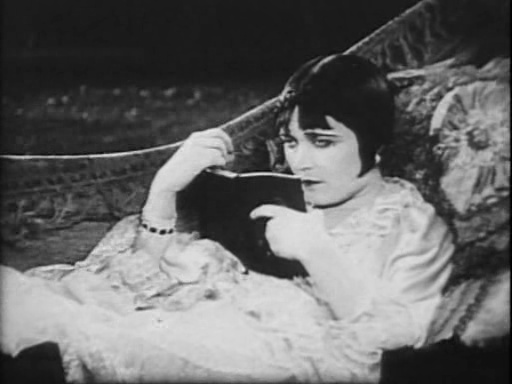
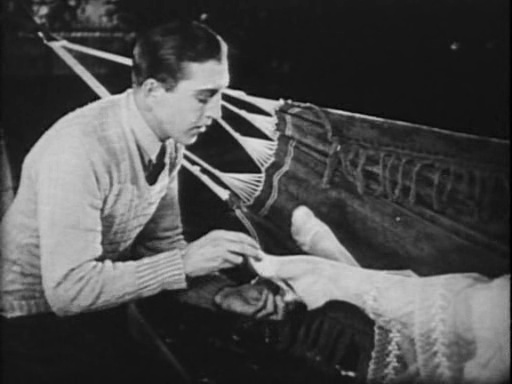
Meanwhile, Elnora is dreamily reading in a hammock. She’s wearing (and here my couturial illiteracy tells) a kind of lacy, frilly summer dress. Her body has become a kind of soft, fluffy expanse. Gareth brings her flowers from Granger, but is so smitten by the barefooted Elnora that he ends up sat on the ground, helplessly entertaining Elnora, who idly brings her lips to the flowers and grins flirtatiously.

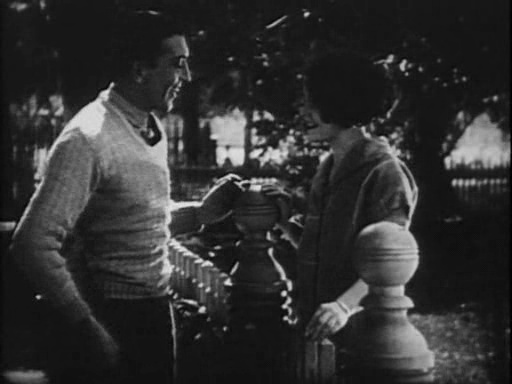
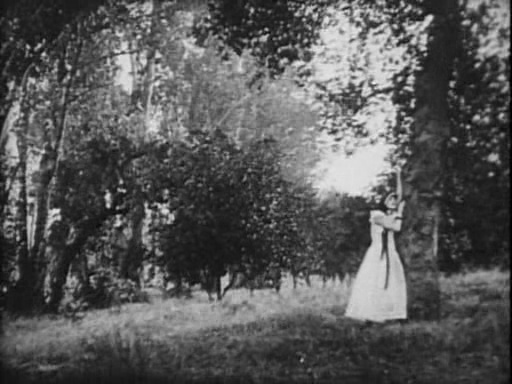
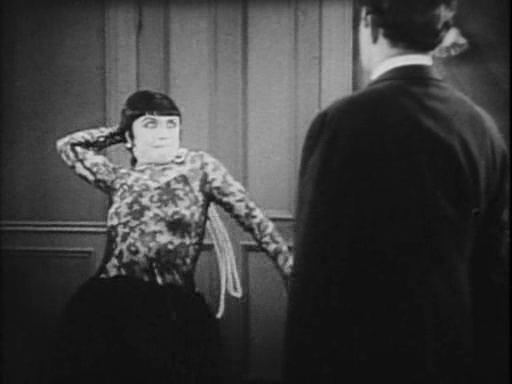
So Granger looks uncomfortable when Gareth dreamily recalls his time Elnora. And he’s right to be suspicious, for the next scene shows the pair walking in the parkland of Maple Valley arm in arm. But Gareth is so awed by her that he finally admits it was Granger who sent the flowers, not he. Close-up of Elnora, and Negri packs as much delighted (and delightful) cunning into a few seconds of celluloid as seems possible. Ah yes, we read her lips, and she bits a fingertip for a moment, before another flick of the head brings in another nuance to the scene; it’s almost as though these little switches in expression keep us from her, making sure she’s always one step ahead of us, one idea further on. She does it again, in turning back toward Gareth. Then she throws her whole body into her next gesture, turning away and rushing over to a tree. “But poor Mr Granger”, she says—as though the man won’t stand a chance against her. (And surely he won’t.) She throws her head back against the tree, and looks so desirable that Gareth himself hurls himself into her arms. But she’s still in control, almost smiling in pity at the young man—until she sees Granger driving past, and sees that he has spotted the couple in their embrace. She runs after the car, but it’s too late.

The Bazaar. Elnora sees the prize event: “meet a real countess, price 25¢”. Dressed in her finest, most alluring outfit, her face suddenly drains of pleasure. She looks around her. The gossips are gathering. St Clair puts in some good gags. The first is via titles: an old man with a hearing trumpet asks if people are saying she’s a “prude”; Gareth explains they said “tattooed”—“but she’s a wonderful woman!” The second is visual: the two neighbours are nodding with pursued lips and judgmental expressions; St Clair dissolves to an empty rocking chair on their porch, then back to the women: the nodding of the chair becomes a kind of emblem for the unchanging attitude of the gossips.

Enter Granger. The crowd is too busy meeting Elnora, who is being pressed by an old man to show him her tattoo (he offers to slip her another two cents for the privilege). Angry, Granger shouts: “HEAR ME! We are gathered to honor a decent enterprise—not to exploit a tattooed Countess!” Elnora’s eyes flash with anger. And when we cut back to her, she has tears in her eyes. She leaves, as Granger rebukes the townsfolk for letting “a woman like that into your Christian homes”. Gareth leaps to his feet: “I’ll make you apologize to her—you muck-raking, psalm-singing hypocrite—”. They trade insults, threats, and Gareth storms out. The local gossips confront Granger: “With seven decent spinster ladies of the Civic Club right here in town, you fall in love with a foreigner and get jealous of a—boy!”

Elnora tells the Poores she’s leaving town. Sam comforts her, saying the tattoo is nothing to be ashamed of—“it’s artistic”. He then pulls up his sleeve to reveal a long tattoo of a train and carriages all the way along his arm. Elnora laughs, and it dissolves the tension marvellously—especially the way Negri laughs, which always seems so winningly, so honestly, without any pretence. Sam shows her more: the train continues all the way across one arm and along down the other. Elnora is in stiches when Mrs Poole walks in. But her reaction is not like that of the gossips, and Lucille Ward’s performance is not only naturalistic but sympathetic. It’s a sign of how well managed these performances are—and how well St Clair manages the film’s tone—that these potentially one-dimensional characters now feel like actual human beings.

A moral council is held. The elders—all old men—demand Granger face the countess before them.

Gareth comes to the Poore house and finds Elnora packing. Once more she’s having to run away. But Gareth begs her to take him with her, saying she’s his only friend—and that he loves her. He rests his head on her shoulder. Suddenly Elnora looks older, wiser. And (snatching the very thought from my head as I began to write this down) she says: “You must stay—remember me—remember me as half lover—half mother—”. It’s an extraordinary title, and one that complicates both characters. Much like the fleshing out of the Poores, so now we suddenly have the possibility of Gareth having an inner life. Where is his mother? Does he have a family? The film can’t quite build on this, but just the ideas it raises are intriguing. (One can imagine a different scriptwriter or filmmaker making all these supporting characters even more interesting.) At the very least, Elnora’s line brings a strange kind of moral weight to what follows.

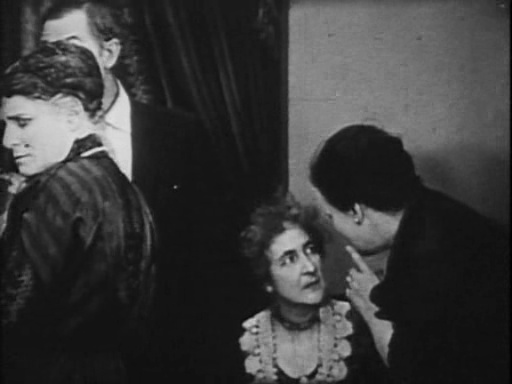
Elnora (and a gossip from across the way) watch Granger approach the house. Gareth—afraid that Granger will run him out of town—is made to hide behind a curtain. Elnora prepares herself by lighting a cigarette, only to pointedly put it out when Granger starts talking. He has come to warn her of the elders wanting to force her out of town. “—and you have thrown no stones?” she asks. They reach a kind of understanding—but there are other issues at play. For a start, Elnora must quickly hide Gareth’s hat under a cushion as they talk. And despite the danger of discovery, just as Granger is about to leave, Elnora offers him her hand and he stays longer. Suddenly, he’s on his knees. “—don’t crucify me with ridicule—I have no excuse—only when a man suppresses love it turns to hate, fanatic reform, hypocrisy.” Again, this title carries an unexpected weight for this apparently “light” film. And the film, I feel, hasn’t quite earned the right to mobilize all these terms. Or at least it hasn’t quite built enough before it to bring their full force to bear on the end. “Heaven help me—I love you!” he says, pleads almost. And Elnora weakens. Her face is disarmed with emotion. They fall into each other’s arms. (The curtains are tensed with Gareth’s gesture of agony.) “Promise that whatever happens you will—believe in me.” (The curtains go limp.)

Elnora goes and opens the curtains to reveal Gareth. Somehow the dynamics make a weird sense. Here is the younger man, caught in his infatuation with an older woman. “I tried to trick you”, she explains, “—to save the boy—but I couldn’t—because—” (we cut back to see her face before the final words) “—I love you”. The older man (whose look of confusion, anger, somehow emphasizes his age) gets up and goes to the door. Gareth leaves, forlorn, but Granger too wants to leave. Without histrionics—with small gestures, like the pulling of his sleeve, the clutching at his hand—Elnora begs him to stay. Now it’s necessary to lip-read. “You…” he seems to say, before we cut—this next shot a close-up of Elnora, with his face in the top-left of the frame. Though this shot provides only a side-on view of his face, the word I think he says is “harpy”.  That the film refuses to dignify the word with a title makes its use more powerful. The silence of the image means that only Elnora can hear it, be affected by it, feel its weight, its misogynist nastiness. The look on her face as the word is spoken conveys all of this. It’s like she been physically wounded. Granger leaves. We see the last moments they are together in close-up: it’s a close-up of their hands, his on the handle, hers grabbing at his.

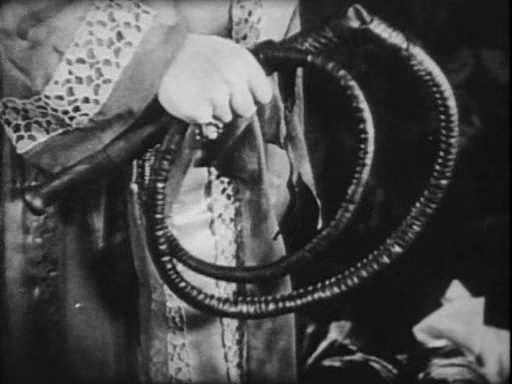
But go he does. “That woman is shameless”, he tells Sam, and threatens them if they try to protect her. And Sam again appears more human, more sympathetic as the film goes on—for he appears confused, reluctant here. His performance in the first half of the film was broad, comic. Now it’s detailed, naturalistic. There’s a close-up of his reaction, and he just looks sad. So too with his wife, who appears at the top of the stairs. They talk to each other but instead of superfluous titles we just watch their faces and eyes to know what’s being said, and the tone of it. For Mrs Poole is almost in tears as she tells Elnora that she can stay. “This is our home—and all the Grangers in the world can’t budge us.” She goes and retrieves a whip, threatening to go and thrash Granger—but Elnora takes it from her. “Leave him to me—I am the cause—and I will be the cure!” (As if the melodrama of this final exchange is too much, St Clair diffuses it with a gag in the last interior scene: Mrs Poole goes downstairs to find Sam with a shotgun, likewise in a rage against Granger. But as they talk, he accidentally fires the gun, and they end up leaping into each other’s arms in alarm.)

Back to the moral council, and Granger resigns his position. “Until an hour ago I was one of you—parading my virtue—crying for victims—yipping for blood—”, he says, let someone else drive her out of town.

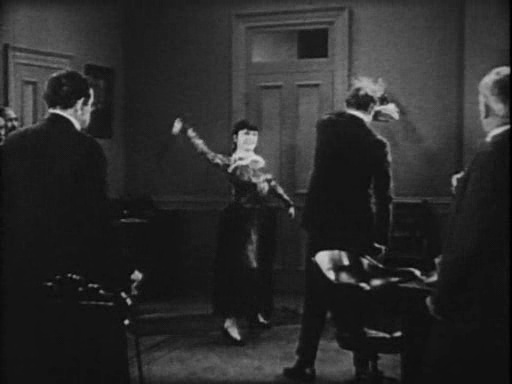
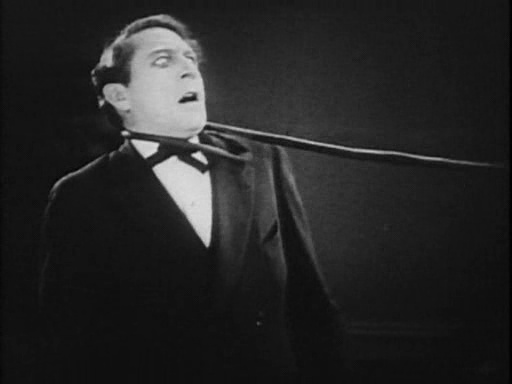
Elnora enters and immediately commands the room. She lets rip with a speech, only the last part of which is titled: “—but do no fear that I will take away your only text—my mark of shame—I’ll leave another to remember me by—” And then, in a quite breath-taking extended take, she proceeds to whip Granger in front of the moral council. We see the impact of the lashes on his body and face, even though he remains still. Then there are close-ups up Elnora as she wields the whip, and of Granger as the whip lashes his face—leaving a diagonal mark of blood across his forehead and cheek. This last blow makes Elnora stop in horror. She drops the whip. Granger picks it up and offers it back to her. But she has her hand over her face and walks away. Then—and I really didn’t know what might happen at this point—Granger marches up to her, grabs her, and kisses her passionately. Amazing! Exit the moral council, leaving the couple in each other’s arms. At last, we cut closer, and see their desperate embrace—and I found myself suddenly, quite by surprise, very moved by the sight of them locked together like this, Elnora’s face overcome with emotion.

Dissolve to the back of a cab with “Just Married” on the back. Again, St Clair produces a fine gag at this point that is also a lovely commentary: we see empty rocking chairs on the neighbours’ porches, each seemingly rocking of their own accord. It’s as if the gossips can’t bear to look, but their spirits—and their judgmentalism—go on animating the space around them, go on taking their familiar place in the world. Is it reassuring that the gossips have gone, or do we understand from this that their gestures somehow outlast them?

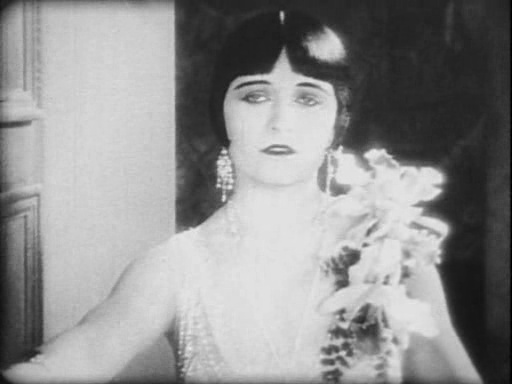
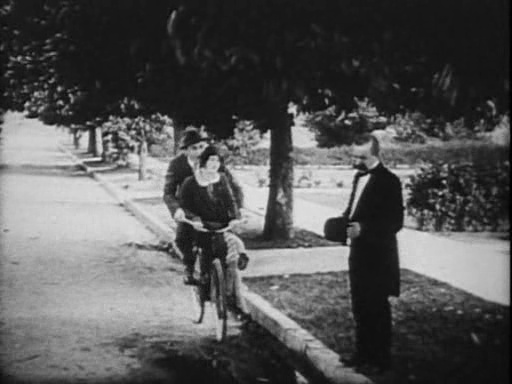
In the cab, we see the happy couple. And Granger looks less stiff, less formal. Holmes Herbert’s performance can at last—and only in this last scene—relax and relent. He’s got a sense of humour, too, for he smilingly reaches into his pocket to withdraw a cigarette case. He offers a cigarette to Elnora, whose eyes turn to him in delight—and love. And it isn’t even that the cigarette is so important (she ignores it anyway), but the gesture itself. They embrace, and Eleanor lifts a bouquet of flowers to cover their kiss. It’s a neat act of modesty, privacy—for this final moment when the couple can be together, and start a new life together. But the film’s last word goes to Sam, who watches the cab drive out of Maple Valley, and is splashed with mud as Gareth and Lennie ride by on their bike. It’s a disarming way to end the film, as if it daren’t quite take itself too seriously. You sense that life will go on in Maple Valley, much as it did before: Sam is once more a Keystone figure of fun, almost looking to camera after the mud splatters his shirtfront. And what of the moral council, the gossips? They too, I suppose, will go on. THE END.

This film took a while to win me over. What unsettled me a little was the tone: is this a romantic comedy or a romantic drama? But gradually the film managed to convince me that its competing aspects—a romance, a moral story, a comedy of manners—could work together. The comic characters attained greater heft: the gossips became emblems of small-town small-mindedness, the Poore couple became sympathetically generous. What begins as a comic set-up of a glamorous foreigner in Midwest America gradually and effectively escalates into a wider conflict of cultural values: between religious puritanism and social liberalism, between patriarchal power and female independence. The film builds up the weight of the drama so effectively that I was both surprised at its climax and also (ultimately) convinced it worked. What starts out as comic gossip at the Poores’ welcoming party gradually becomes genuinely threatening xenophobia and misogyny. It actually reminded me of Sjöström’s The Scarlet Letter (1926). A Woman of the World certainly might have less emotional impact (not to say cultural clout), but the two films each tackle a small town judging and condemning a woman for what they see as moral crimes, i.e. her independent sexuality.

Pola Negri embodies the film’s handling of tone. The whole drama condenses in the way her smile can turn into sorrow, in how she can be both seductive and vulnerable. The opening scenes give context to the Countess’s otherwise privileged position: she is treated badly by a man interested only in her as an object. And when she arrives as the glamorous foreigner in Maple Valley, she soon becomes the victim of wider social prejudice. When the council talk of “running her out of town”, the threat is physical—I wondered if we’d actually see a mob wielding pitchforks and flaming torches at the end.

There’s also a parallel with Negri’s career. Indeed, press coverage for A Woman of the World focused more on Negri herself than the content of the film. Ivan St Johns wrote an article titled “How Pola was Tamed”, claiming: “For three years they tried every means to tame that fascinating tiger-cat—Pola Negri. And now the funniest thing in the world has happened. Pola has licked herself—with her own sense of humor” (Photoplay (January 1926): 53). Seemingly, Negri had frustrated many directors and crews by her timekeeping. But for this production, she was convinced that self-deprecation and humour were the way to win over her colleagues. So she began cracking more jokes, being more familiar, and arriving early. The story even got visualized in some drawings that Malcolm St Clair did on set, published under the title “The Transformation of Pola” (Photoplay (April 1926): 76).

(By the way, this image took me a bloody age to find. The reference to it in a piece by Diane Negra gives the incorrect date for the source [January 1926 rather than April 1926]. Then it turned out that the colour scanned collection of Photoplay from January-June 1926 on archive.org was missing the pages on which this piece was published! However, I found an alternate version of the issue in monochrome elsewhere on archve.org. You’re welcome.)

The position of foreign stars in Hollywood was often fraught with difficulties, exacerbated by their treatment in the press. Many European actors who came to Hollywood ended up being typecast as exotic foreigners on screen, just as many directors found themselves recreating European settings in Hollywood backlots. The attitude to their screen selves impacted the way they were seen in the press. Negri was not alone in attracting attention for being not just “different” but “difficult” compared to her American peers.

The occasional hostility towards foreign stars (and directors) gets sublimated into the drama of A Woman of the World. Negri represents an alien lifestyle to the world of smalltown America. She looks different, behaves differently. Her persona really is a world apart from anyone else on screen in this film. It’s much to Malcolm St Clair’s credit that he makes a subtler, more surprising drama out of what could be a rather crude conflict between character “types”. Negri, of course, provides the countess with a real sense of inner life (more than just a sense of her having desires). But by the end of the film, I believed that Gareth, the Poores, and Granger also had inner lives—when all these characters (the younger lover, the comic smalltown relative, the bigoted attorney) could so easily have been one-dimensional. And, of course, Negri whips her way through to Granger’s heart—taking a savage kind of revenge on her fiercest critic.

Whatever the attitudes to Negri, contemporary reviews of A Woman of the World were positive. Photoplay describes her as “[t]he fascinating, continental Pola”, playing a “dangerous, cynical, tempestuous Italian countess”. St Clair is credited “for the restraint shown in the small-town scenes and types that must have tempted exaggeration.” More revealing is the brief review’s last line: “Not for the children” (February 1926: 50). Another contemporary reviewer, Epes W. Sargent (how does one end up going by the name “Epes”?), said that St Clair painted the film with “broad comedy strokes” because the theme of moral hypocrisy “is too mentally subtle for pantomimic expression”. The result is “a vivid story with a wealth of comedy relief most of which is genuinely amusing.” He particularly credits Chester Conlkin, sporting “an almost impossible moustache”, for providing the laughs (Moving Picture World (26 December 1925): 303).

Though it’s mentioned in various accounts of Negri, early stardom, and European émigré films, A Woman of the World doesn’t seem to have received a great deal of attention since 1925. Nor, one might say, have many of Negri’s Paramount films. She made 22 films for the studio, of which only six survive. Of these six, few have been restored and none have been properly released on DVD/Blu-ray. The copy I saw of A Woman of the World came from a grey-market DVD derived from a grotty nth-generation print. I’d love to see it restored, and a good score might also give it more emotional weight. But even in its reduced visual circumstances, this film still won me over. Negri’s performance can pierce even the murkiest of copies, her eyes are still flashing and alive nearly a hundred years beyond the film.

Paul Cuff