Silent images into music: Louis Aubert’s Cinéma, six tableaux symphoniques (1956)

Recently, I wrote about Charles Koechlin’s The Seven Stars’ Symphony (1933), a remarkable musical evocation of stars from the silent and early sound era. This week is a kind of sequel, devoted to another obscure late nineteenth/early twentieth-century French composer. Louis Aubert (1887-1968) was (like Koechlin) a pupil of Fauré, was well respected by Ravel (whose Valses nobles et sentimentales he premiered as a performer), and made his name as a composer with the fairytale opera La forêt bleue (1911). Though he produced numerous works for piano and for orchestra, his work is rarely heard today. Indeed, there is only one modern recording of some of his orchestral works—and it was through this CD (released by Marco Polo in 1994) that I discovered Aubert in the first place. I found it at a local Oxfam for £2.99 and wasn’t going to turn down the chance to encounter another interesting obscurity.
What really sold me on it was the fact that one of the works on the CD was called “Cinéma”, six tableaux symphoniques. Very much like Koechlin’s symphony, this suite offers six portraits of various stars/aspects of cinema. (The recording with which I’m familiar is only available in six separate videos on youtube, so I have included links to each movement below.) Unlike Koechlin’s symphony, however, Aubert’s music was originally designed with a narrative purpose. In 1953, Aubert wrote a score to accompany a ballet called Cinéma, performed at the Paris Opéra in March 1953. This offered (according to the CD liner notes) a series of “episodes” from film history, from the Lumière brothers to the last Chaplin films “by way of Westerns and stories of vamps”. I’m intrigued by the sound of all this, though I can find only one image from the performance—depicting Disney characters (see below)—to suggest anything about what it was like on stage. I also presume that the ballet consisted of many more musical numbers than are selected for the “six tableaux symphoniques” that is the only version of the score that appears to have been published (and certainly the only portion to be recorded). Nevertheless, the music is a marvellous curiosity…

Douglas Fairbanks et Mary Pickford. Here is Fairbanks—listen to that fanfare! Drums and brass announce his name. The strings snap into a march rhythm (off we go: one-two! one-two! one-two!). but then the rhythm slows, fades. Harp and strings glide towards a sweeter, softer timbre. Mary Pickford swirls into view. But there is skittishness here as well as elegance. The music is lively as much as graceful. There is a kind of precision amid the haze of glamour, strong outlines amid the shimmer of sound. A drumbeat enters the fray, then cymbals and snare bustle in. Doug has bustled in, caught Mary unawares. His music sweeps hers away. He’s busy doing tricks, showing off. The music cuts and thrusts, leaps, jumps—and lands triumphantly on the downbeat.

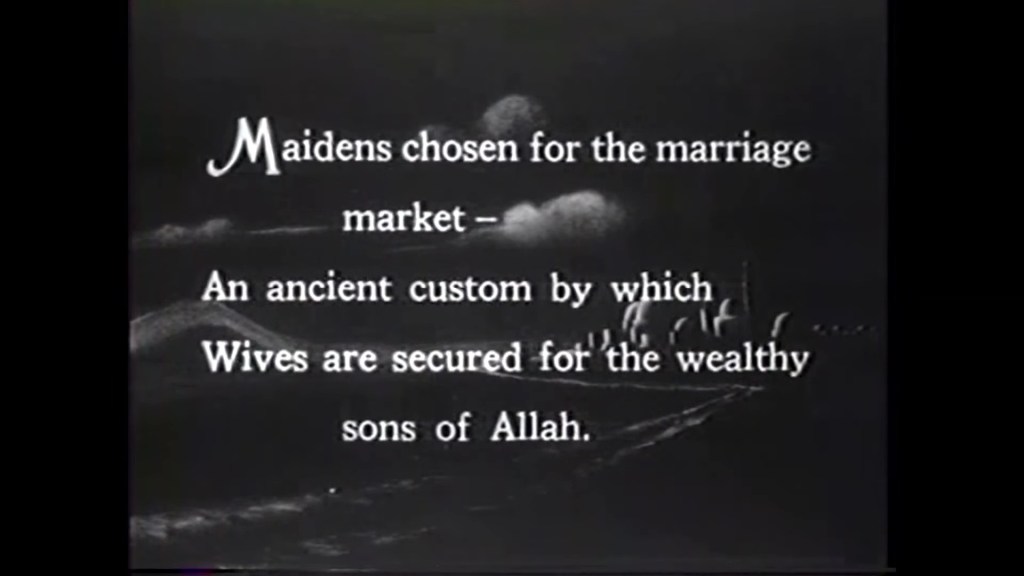
Rudolf Valentino. After a boisterous introduction, a sinuous saxophone melody unwinds across a busy pizzicato rhythm in the strings. It’s a superb image the music conjures: a kind of rapidity amid a vast, unchanging landscape. Surely this is the image of a desert, of Valentino in The Sheik, riding across an immensity of sand. But it’s also nothing quite like the film itself. It’s a memory, a mistaken recollection. And the music develops this simple idea, building slowly in volume. (More like the famous first shot of Omar Sharif’s character in Lawrence of Arabia than a scene in The Sheik.) Then figure disappears, riding off into the distance. Fade to black.

Charlot et les Nymphes Hollywoodiennes. Here is Charlot! Bubbly, jaunty rhythms. There’s a jazzy swagger, rich twists of sound. A violin solo breezily dances over the brassy orchestra. The drums are played with brushes: a pleasing, rustling soundscape. Then all is wistful, dreamy. A solo violin dreams over gentle strings, over warm breaths of woodwind, over a muted trumpet call.

Walt Disney. Almost at once, the music is mickey-mousing across the soundscape. But the orchestration is also weirdly threatening. It’s as if Aubert is recalling the sorcerer’s apprentice section of Fantasia, threatening to take Mickey on a perilous journey. And there he goes, marching off—the percussion jangling, as though with keys in hand, walking edgily towards a great door that he must open, behind which is the unknown…

Charlot amoureux. Another facet of Charlot. Wistful, dreaming, languorous. A private world, an inner world. (One can imagine the Tramp falling in love, comically, tragically, delightfully.) But reality intervenes. A blast of sound, then an awkward silence. Quietened, tremolo strings swirl under an ominous brass refrain. It is love lost, abandoned, proved false, proved insubstantial, unobtainable, unrequited.

Valse finale. Hollywood bustles in. The orchestra sweeps itself into a waltz. It’s grand, if a little undefined. Here is glamour in sound, showing itself off for our appreciation. It makes me think of Carl Davis’s glorious theme for the television series Hollywood: A Celebration of the American Silent Film (1980). But, as so often, Davis has the genius to make his melody instantly memorable—conjuring in the space of two bars an entire world, mood, and feeling. Aubert’s waltz is both less memorable but more orchestrally substantial (it is, crudely, louder, written for larger forces). So it’s at once dreamy and unwieldy, a kind of too-crowded dancefloor. You can’t see the stars for the wealth of movement, of swishing figure, of gleaming jewels. (Glockenspiel and triangle chime and jingle.) The music swirls and swaggers to its inevitable conclusion: THE END.

Aubert’s score is (I think) less musically inventive—less outlandishly exotic in tone and texture—than Koechlin’s Seven Stars’ Symphony. The CD linter notes (by Michel Fleury) argue that Aubert’s music is (like Koechlin’s) more interested in creating mood pieces than in recreating specific scenes from films. But I wonder how true this is. After all, the music accompanied specific dramatic action on the stage. Listening to it, I can more readily imagine it accompanying images/action than I can the majority of Koechlin’s score. I could even see the music working well as silent film accompaniment, and I wonder if the original ballet mimicked this very strategy in the theatre. As with Koechlin, I want to know what kind of experiences Aubert had with the cinematic subjects he depicts in music. Did he go to the cinema in the silent era? If so, what kind of music did he hear there? I’d also ask similar questions about the ballet of 1953: what kind of a history of film did this present, and what inspired it? (And what did the spectators think of it, especially those who knew the silent era firsthand?) Many questions, to which I currently have no answers. But I’d be intrigued to find out more, and may (in time) do a little more digging to find out. In the meantime, we have Aubert’s music, which is well worth your time. Once again, go listen!

Paul Cuff

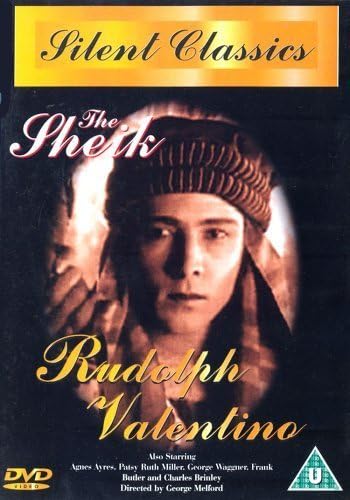
Home media releases of The Sheik (1921; US; George Melford)

This piece is about the various incarnations of The Sheik on home media formats. I write it out of curiosity and out of frustration. Curiosity because the differences between copies of silent films always interests me. Frustration because the object of my curiosity is obscured by the usual opacity and vagueness produced when historical artefacts become digital commodities. Let me explain…

Some years ago, a course on which I was teaching assistant (i.e. seminar tutor) scheduled a screening of The Sheik. Curious as to what copy we would be showing, I looked at the departmental copy: it was the DVD version released in the UK in 2004 by Instant Vision. It presents a monochrome version of the film with a soundtrack of… No, in fact I can’t even remember what the soundtrack was like. What I do remember is that it was such poor quality, visually and musically, that I couldn’t bear for any student on the course to experience the same in this way. (My general rule with screening material is that if I couldn’t sit through it, then neither should my students.) So I looked for alternatives.

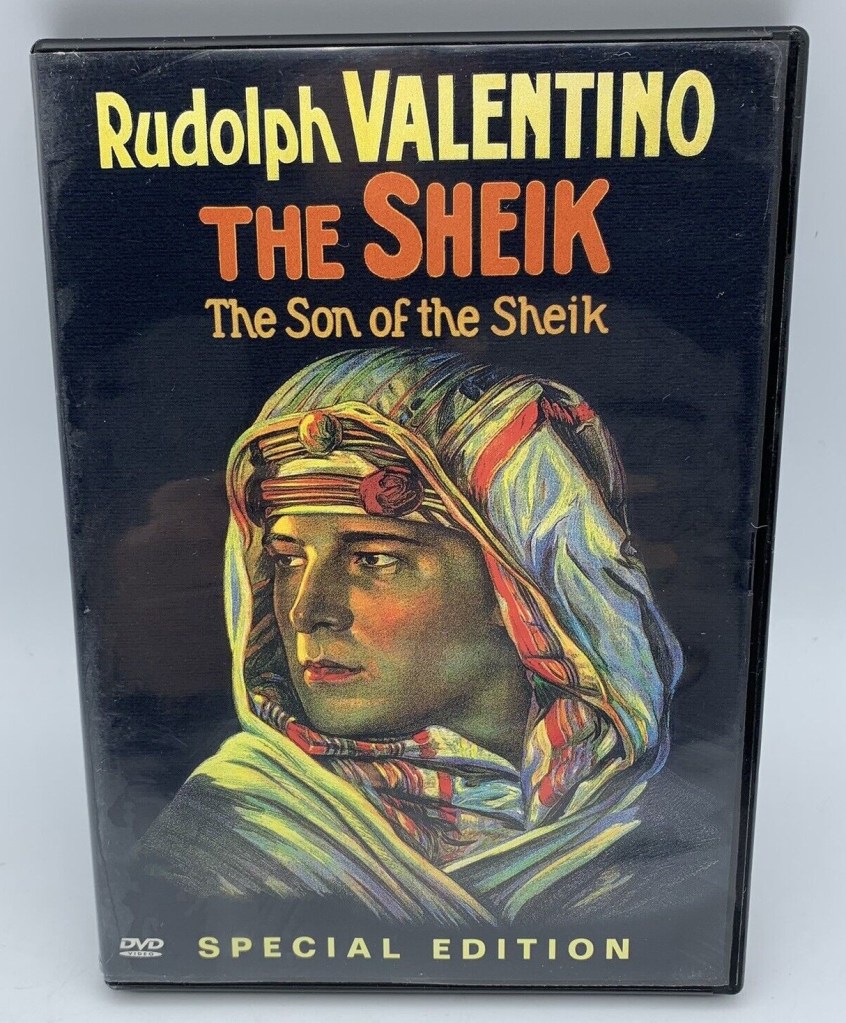
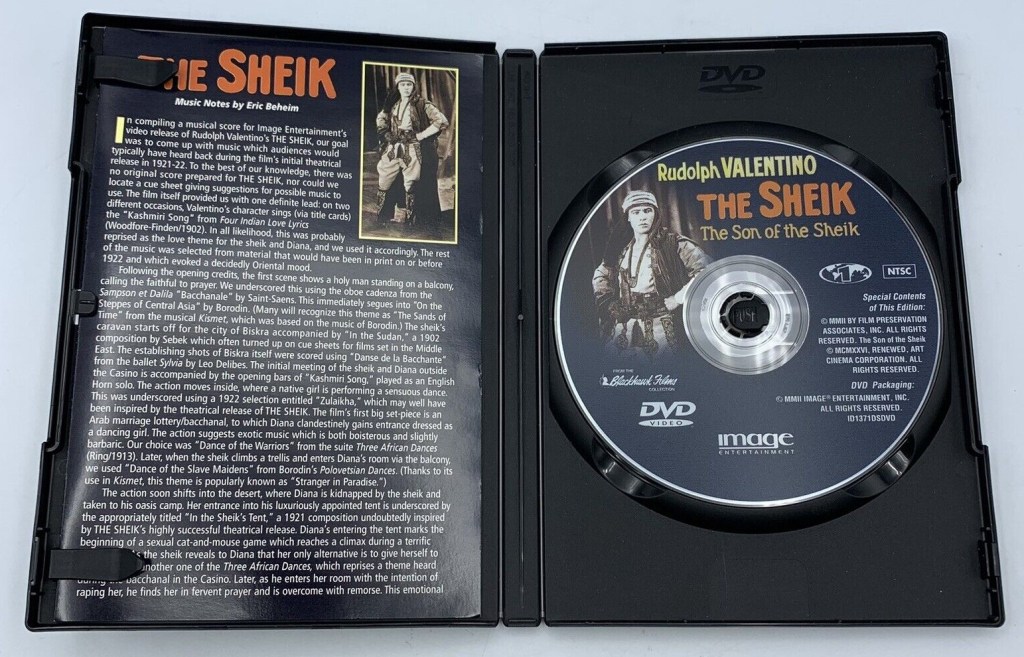
Thankfully, there was at least the DVD produced in the US by Image in 2002. This presented a fully tinted version of the film. However, the score was by the “Café Mauré Orchestra”. Those inverted commas are there for a reason, since this “orchestra” is in fact composed of MIDI (Musical Instrument Digital Interface)-based synthetic sounds—as arranged and performed by Eric Beheim. Though the music choices used (but “used” doesn’t do the MIDI justice: should I say the music is sampled? digitized? synthesized? appropriated? co-opted? press-ganged? harvested? made vassal unto?) are appropriate, the sound of synthetic music rather undoes the benefits of the music itself. Put bluntly, MIDI soundtracks sound cheap. It’s the DVD producers saying: “Listen to how little money we’ve spent on the music! You’ll be amazed!”

So I ripped the DVD and set about compiling my own soundtrack, one that used various nineteenth- and early twentieth-century pieces—including a nice orchestral arrangement of “Kashmiri Song” that Valentino’s character sings in the film. (I even used a couple of the cues from the Beheim score, only these were sampled from actual orchestral recordings.) It worked well and the students enjoyed the film. (More importantly, I enjoyed the film. There are few more maddening experiences in life—well, my life—than sitting through a silent film accompanied by bad music.)

The years passed. I no longer taught on the course that included The Sheik. (Or, for that matter, on any course.) So I was mildly curious when a Blu-ray of the film was announced in 2017. I was poised to buy it, if for the only reason that I try to buy almost anything silent that comes out in a good edition. But then I saw that the score was for theatre organ and my heart sank. (I know, I know, I’m a snob: but really, I just don’t enjoy sitting through over an hour of theatre organ music.) I also considered that my interest in the film was such that I had no real desire to actually buy the Blu-ray. My teaching days seemed to be over, so buying the Blu-ray to try rescoring the film again seemed pointless. I wouldn’t be watching the film, and nor would anyone else. So I passed. Of course, I should have bought the edition anyway. Kino often let their licenses expire, leading to a huge number of titles going out-of-print. Thus, The Sheik duly went OOP.

Paramount then announced their own edition of The Sheik would receive a Blu-ray release in November 2021. Still curious, I searched to see what information I could find about the restoration. I found an interview with Andrea Kalas, who leads Asset Management at Paramount. According to Kalas:

We looked around the world for best sources and Film Preservation Associates graciously loaned us a 35mm black and white print. We also had a finegrain which turned out to have a better overall picture quality, but the print turned out to be great for the intertitles. […] The original frame-per-second cadence was 22fps. The fine grain we used had been ‘stretched’ to 24—essentially by adding frames. With the help of the lab, Pictureshop, we went back to 22fps. […] We had a continuity script that was a critical guide to the digital tinting and toning we added – which was the way the audience in 1921 would have seen it.

The Paramount restoration promised to run to 66 minutes, nine minutes shorter than the Kino Blu-ray and a full twenty minutes shorter than the Image DVD. Kalas’ talk of reversing the stretch-print process of one of their source prints was reassuring—but if the film was “returned” to 22fps, why was the runtime so short?

All of which led me to some basic questions about The Sheik that no home media edition had addressed: How long was the film when shown in 1921? What projection speed was used? What print material survives? Thankfully, the American Film Institute database has some excellent material that is readily accessible. Here, I found that the original length of The Sheik was 6579 feet, which equates to 2005m. (IMDB.com states that the film ran to 1818m when shown in the UK, but I am less inclined to trust IMDB than the AFI when it comes to any film of this vintage.) Even if projected as fast at 24fps, 2005m would be 72 minutes. At 20fps it would be closer to 87 minutes. So how did the previous home media versions of The Sheik relate to this 2005m print, and at what speed did they run?

Well, here are the various incarnations (not including the infinitude of grey market rip-offs) and their runtimes:

  • Paramount VHS (1992) = 79 minutes
  • Image DVD (2002) = 86 minutes
  • Flicker Alley (made-on-demand) DVD (2015) = 76 minutes
  • Kino Blu-ray (2017) = 75 minutes
  • Paramount Blu-ray (2021) = 66 minutes

Maddeningly, nowhere on any single home media release does any company—Paramount, Image, Kino, or Flicker Alley—actually state what the length of their copies are in metres. As a result, we must second guess frame rates and go through each edition to try and work out how they compare to one another…

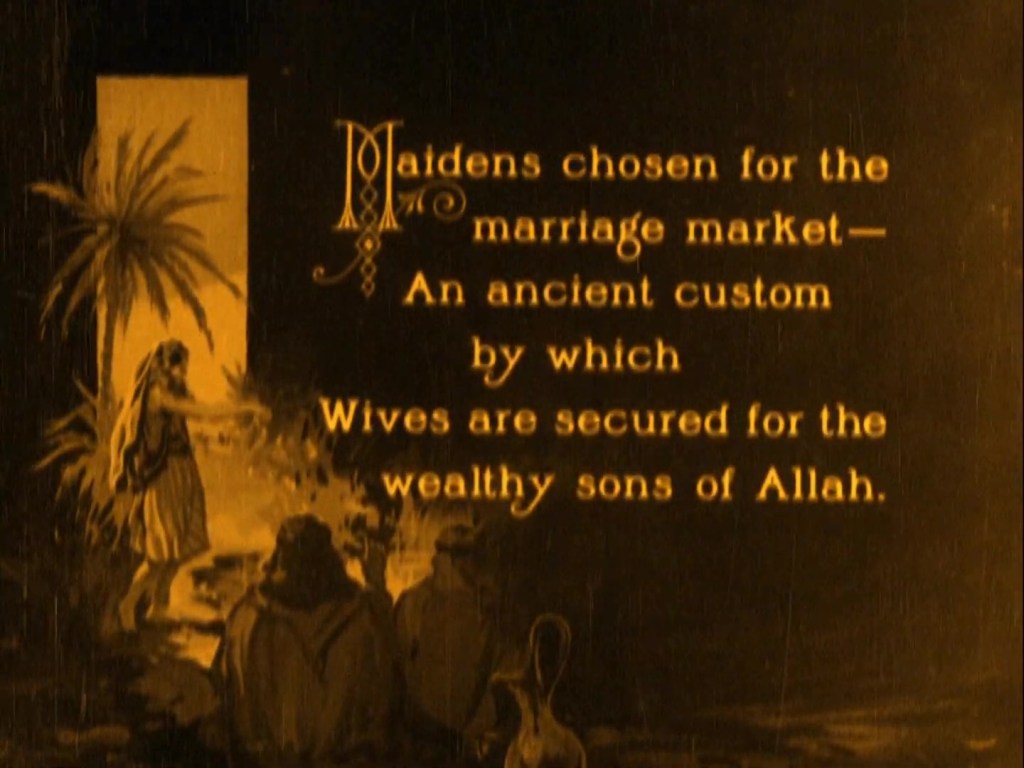
Though there are some minor textual differences between the copies (the Image DVD, for example, is missing one or two intertitles), the basic material remains consistent through these various home media incarnations. One notable exception is the Paramount VHS, which presents different intertitles to the later DVD and Blu-ray editions. The home media review for The Sheik on silentera.com states that the VHS used the re-edited and retitled version of the film, not the original. It’s ironic that the visual quality of the titles presented on the VHS is often superior to that of the DVD/Blu-ray editions: the titles in the reissue print are uniformly strong, sharp, and legible. It’s a shame that many of the original titles have not survived in such a state: after the very high-quality images of live action in the film (especially on Blu-ray), it’s a shock to have to squint at the slightly blurry wording of the titles.

The differences in runtime across the above home media editions are due overwhelmingly to the different framerates applied to the print sources. Deciphering the various video files of these editions has not proved easy, but I can offer an informed estimate of the rates for each. The Image DVD uses the slowest speed of 18fps, the Paramount VHS uses 20fps, Flicker Alley DVD and Kino Blu-ray use 21fps, and the Paramount Blu-ray uses 24fps. Kalas states that the film originally ran at 22fps, though my impression viewing the versions of the film that run to c.75 minutes at 21fps is that this seems perfectly life-like. (It may be that the projection speed used in 1921 was 22fps; but Kalas doesn’t go into any detail about this issue in the interview.)

I’ve checked the Paramount disk and (shorn of new opening/ending credits) the film does indeed last 66 minutes (and nine seconds) and runs at 24fps without any repeated frames. At 24fps, 66 minutes equates to an approximate print length of 1830m. That’s still 175m (6-8 minutes, depending on projection speed) short of the film as seen in 1921. Some of this might be accounted for in the length of intertitles, but it’s still a not insignificant amount of material for such a short film (nearly 9% of its length). I’ve also checked the Paramount Blu-ray against the Kino Blu-ray. It appears to be exactly the same restoration. And I mean exactly the same. The same tints and tones, the same titles, the same scratches and damage. The only difference is the framerate and the soundtrack. I can only presume that Paramount’s centenary restoration of The Sheik was completed by 2017 and Kino simply licensed this version to last until the actual centenary of the film, whereupon Paramount could release their own edition. But why on earth does the Paramount Blu-ray transfer this same restoration at 24fps?

The decision is even stranger when you consider that the soundtrack for Paramount’s Blu-ray—a synth score by Roger Bellon—is the same as the one on Paramount’s VHS thirty years ago. Although Kalas claims the music was “commissioned in 1990 as part of a celebration of Paramount’s 75th”, the VHS edition from 1992 bears a copyright date of 1987 for the soundtrack. (According to various reviews of older home media editions, The Sheik was first released on VHS by Paramount in 1988. I’ve not been able to find any VHS from 1988, only the edition from 1992.) Kalas adds that Bellon’s music “really stands up”, which again begs the question why transfer the film at 24fps when the soundtrack was arranged for a version of the film that ran at 20fps? Another issue with the Bellon score is that it never uses the “Kashmiri Song” that is cited in the film’s intertitles and sung by Valentino on screen. This may well be because the intertitles of the VHS version (for which the score was composed) are from the reissue print, which changes the wording of the Sheik’s song—and thus loses the context of the original song. (While no substitute for a real orchestra, the theatre organ score by Ben Model for the Kino edition at least quotes the “Kashmiri Song” at the appropriate moments.)

Paramount are not alone in sidelining the complex issues and inevitable compromises of film restoration in their home media salesmanship. But in the past I have been irritated by the way some of their press releases muddy the waters of what editions are being presented on Blu-ray, and how they relate to the films as originally presented in the silent era.

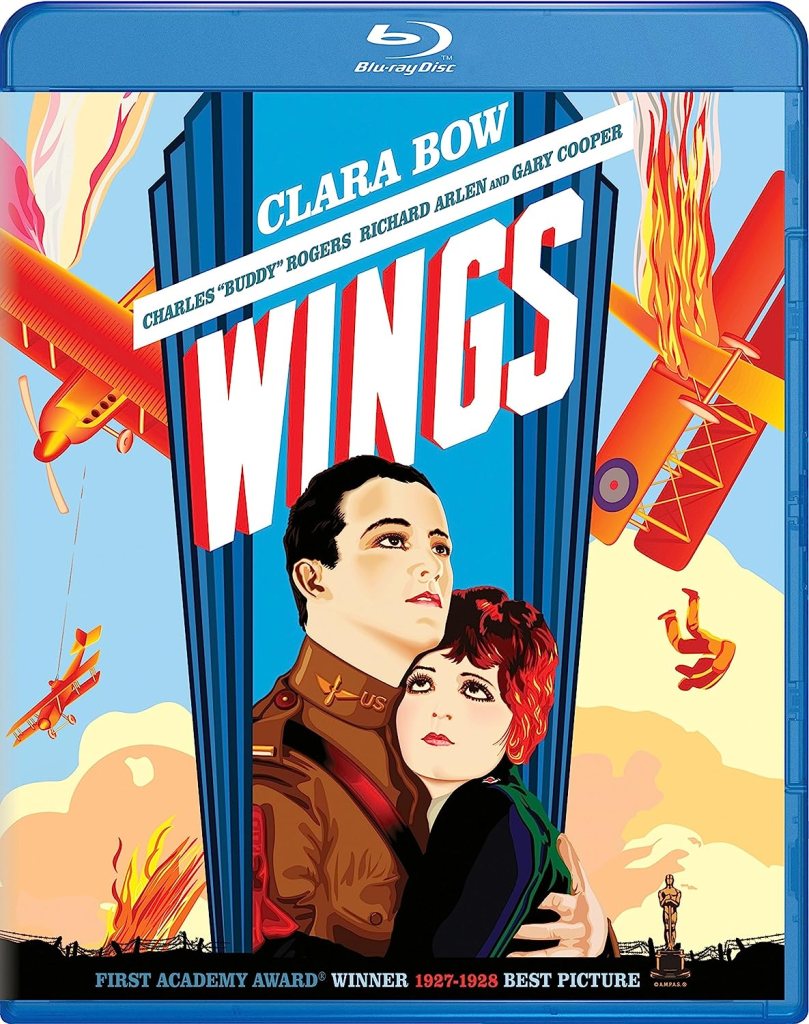
For example, their 2011 Blu-ray release of Wings (William A. Wellman, 1927) was announced with a press release that detailed how they had restored the original score composed by John Stepan Zamecnik (plus the numerous sound effects that were a feature of the film’s initial release). This “newly-restored” soundtrack was announced as the culmination of great effort:

the film’s original paper score was procured from the Library of Congress and recorded with a full orchestra […] Musicians with expertise in silent film music were chosen to recreate a truly orchestral experience.

Note the references to physical artefacts and institutions: paper score, material archive, real musicians. They echo the dual boast of historical sources and modern technologies: celluloid prints scanned using HD software, sheet music from 1927 recorded in 5.1 Dolby Digital Surround sound.

But there is a good deal of ballyhoo (if not bullshit) here. For a start, the only surviving hard copy of the music for Wings was a conductor’s short score, bearing just two or three staves of information. This document lacked details of orchestration, and the structure of its cues did not match the montage of surviving prints. The task of re-editing the score was further hampered by copyright issues: Paramount could not include (or could not afford) several of the musical works originally quoted at length by Zamecnik. And the reorchestration of this music was performative as well as editorial. Contrary to the press release, Dominik Hauser’s arrangement of the “orchestral” score on the Blu-ray is not performed by an orchestra, but instead consists of an assembly of MIDI sound files. The only real musician audible on the soundtrack is Frederick Hodges, whose solo piano interpolations were needed to bridge gaps in the “orchestral” score. Whilst the Paramount edition includes an alternative soundtrack of Gaylord Carter’s organ score, it does not offer Carl Davis’s orchestral score, which was recorded with real musicians for the Photoplay restoration of Wings in 1993. This latter version has never received commercial release.

The spin around Paramount’s release of Wings made me more suspicious than I might otherwise have been when it came to their release of The Sheik. My heart sinks that in 2021 Paramount offered a less satisfying presentation of their own centenary restoration than Kino presented in 2017. (I might add that the Kino edition included an audio commentary track on the film by Gaylyn Studlar, which the Paramount edition lacks. Even if Paramount had been willing and able to reuse this commentary, they would have had to speed-up the track by 114% to match their 24fps presentation of the film.) I have no particular fondness for The Sheik as a film, but even just as a historical document it deserves to be treated with respect. It’s great that Paramount decided to restore and release this silent film on Blu-ray. But why then make choices that lessen its impact?

Paul Cuff