This week, I’m off to another film festival, this time hosted by the Bo’ness Hippodrome in Scotland. Did I say “off”? I mean… well, what do I mean? What adverb suggests staying in my study? I suppose I’m “in” to another film festival. This is my first experience of HippFest, which has been on my radar for some years. I’m also pleased that the online version of this festival has its own name. “HippFest at Home” sounds delightful, a union of being away and being where I am.
The pre-film introductions – from Alison Strauss (Arts Development Officer and HippFest Director for Falkirk Council), Magnus Rosborn (Film archivist from the Swedish Film Institute), and Lisa Hoen (Director of the Tromsø International Film Festival) – were also exceedingly welcoming. My only experience of pre-film introductions at online festivals comes from Pordenone, where the videos are pre-recorded and loaded as separate (and optional) prefaces to the films themselves. At HippFest, the introductions are those given live in situ – filmed and included as part of the single video that encompasses the evening’s programme. It does not force you to watch them (one can always fast-forward), but it encourages you to do so by having them as part of the same video timeline. Unlike Pordenone, where I almost always end up skipping the introductions (purely for the sake of time), I watched all three speakers for this HippFest programme. The video stream is perfect: we get explanatory text to see the names of everyone on screen, and the camera is placed so that we feel like we are part of the audience they are addressing. Indeed, Strauss’s introduction to the festival explicitly welcomed online viewers. The speakers themselves covered issues curatorial and practical (Strauss spoke about HippFest and her interest in tonight’s film), restorative (Rosborn spoke about the film’s rediscovery and reconstruction), and cultural (Hoen spoke about the context of the Sámi people who are the film’s subject). Hoen also explained something about the motives and context of the musicians who accompanied the film, as well as introducing the musicians themselves. I can only say that I found all three introductions engaging and informative. This really was the ideal way to start the programme.
Med ackja och ren i Inka Läntas vinterland (1926; Sw.; Erik Bergström)
So, here is our feature film, “With Reindeer and Sled in Inka Länta’s Winterland”. The film is a portrait of life in the snowbound landscape of northern Sweden. We follow Inka Länta, who lives with her brother and maternal aunt, and next door to her maternal uncle Petter Rassa and his children. We also meet Guttorm, from a nearby (20km away) camp. We follow them as feed their family and animals, as they go to market at Jokkmokk, as they track reindeer, as they make and unmake their tents and camp, as they hunt wolves, as they slaughter deer.
From its first images, a hypnotically beautiful panning shot around snow-covered trees, this film is a visual treat. Indeed, these first shots are among the most beautiful in the film. Complete with a delicate toning that turns the shadows a delicious deep blue-green, these are the most ravishing snowbound trees you’ve ever seen. When the camera gently tracks through the landscape, and this astonishing world begins to open out, I was incredibly moved – just by the sight of it, by the sensation of moving through stillness. My god, my god, my god, what a beautiful sequence. Cameraman Gustaf Boge captures the cold winter light with extraordinary skill. When (after several unpeopled shots) we see Guttorm wading through knee-deep snow, the light throwing his shadow before him, with the forest behind him, this is more than a mere “documentary” scene – it’s a kind of journey in space and time, a distillation of some unreachable moment in the past. The stillness of this wintry light and powdery shadow, the way that the snow itself exists in a kind of arrested physical state… goodness, it’s as perfect a glimpse of some archetypical winter as you could imagine. And yes, the silence of it is part of (essential to) the hypnotic perfection of these scenes.
But the film is as much about the difficulties of life in this landscape as it is about its beauty. For all the beauty of the snow, the trees, the vistas over endless ice, you also see what it takes to live here. The scene inside the tent when the family eats is amazing for the way the whole frame fills with the smoke from the fire, the steam from the pots, and the breath of the inhabitants. The film shows us the effort in doing everything here: from moving through snowdrifts (by foot, by ski, by sleigh) to herding livestock.
In particular, there is an extraordinary sequence in which Petter hunts, chases, shoots, kills, and skins a wolf. We watch the wolf bounding over the snow, while Petter slogs (even on skis) at high speed in pursuit. Only after several shots cutting between wolf and hunter do the two appear in the same frame. The first thing we see after the wolf has been shot is Petter mopping the sweat from his face. It’s an exhausting scene to watch, and the filmmakers make sure you realize how exhausting it was to perform. I say “perform”, because everything here may have the manner of documentary but it is all too well organized, too well filmed, and (in detail) too narratively dramatic to be truly “non-fiction”. Petter’s pursuit of the wolf is remarkable, and clearly real in the sense that he does indeed pursue and kill the wolf, but the skill of the filmmaking is just as impressive. Petter skins the wolf and leaves its body hanging from a wooden frame (I was about to say gibbet), and then he and his comrade move away into the distance. Every action is realistic, but the neatness of the framing and composition, the clarity of the montage of the sequence, bears all the hallmarks of a different kind of narrative filmmaking. This is a very beautifully organized version of reality.
As the evening’s introductions made clear, this is part documentary and part fiction. (And, as Huen highlighted, there is a whole cultural and ethical side to the treatment of the Sámi people that the film deliberately erases.) Though there are clearly scenes of documentary reality, capturing real people and places (especially the market sequence) others (like the climactic sleigh accident) are staged events. This balance caught me a little off-guard, and I wasn’t sure whether I was being moved by the reality of the events or their fiction. At the end of the film, we see an accident in which Länta’s brother dies. Intertitles tell us that Länta must now leave her family and her homeland. She begins a trek across the open ice, and the film gives us flashbacks to earlier scenes with her family. But then Guttorm reappears and “hearts speak” and Länta returns to the hills, and to “happiness”. The sequence works, I think, because of the balance between the reality of the world we have seen (and, yes, its sheer beauty on screen) and the fictional framing of characters and events. Länta is a real enough presence on screen that, however contrived the events around her, I was sad at the thought of her life falling apart. And her world is real, too. I had spent the last hour in a kind of trance-like state of wonder at this world, so the thought of Länta leaving it (and my leaving it with her at the end of the film) carried its own sadness. So I gave a free pass to the abruptness of the ending, and the contrived nature of the narrative, and found myself moved. Why not?
I must also mention the music, by Lávre Johan Eira, Hildá Länsman, Tuomas Norvio, and Svante Henryson. Many of these musicians come from or have roots in the Sámi culture, and their score for this film is a blend of traditional and contemporary sounds. It’s a compelling combination of dreamy synth washes, rumbling electric guitar chords, and chant. While some of it worked very well (especially the opening scenes), other sections of it were too busy for my liking, falling out of rhythm with the images. But I appreciate that this kind of film (light on narrative incident and character psychology) is exceedingly difficult to write music for, and perhaps necessitates a more experimental approach. (To give you an impression of what the score is like, I cannot do better than quote the sound-description text that is an optional accompaniment to the film: “Dog noises, ruff, woof. Low vocal continue to talk like a wise old man. [….] Light dinging like a railway crossing in the distance. […] Babbling vocals continue. […] Frenzied scene of muttering vocal layers interweaving with busy backdrop of activity, metallic sweeps and glassy punctuations.” And, later: “Sweet melodies and dreamscape backdrop of echoing synths and waves of sound continue to ring out.” Kudos to whoever assembled this text, it’s really rather wonderful.) By the end of the film, I was absorbed in the soundscape as in the images.
Finally, a word on the online options for this HippFest at Home presentation. There are two ways provided to watch the film. In the first, we get to see the film and the musicians: a split screen arrangement allows us to watch both at the same time. I’ve seen this approach in some youtube videos in the past, but this was better composed and lit. I’ve often thought that this would be an ideal option on any/all home media releases of silent films: seeing musicians live with the film was always (and remains always) a key part of the experience. The other option provided by HippFest at Home is to watch the film without seeing the musicians. But even in this version, we get to see the musicians at the end of the film and see and hear the audience applaud. In each case, it’s wonderful to be able to see the musicians, and glimpse the audience as well. As with the introductions at the start, this presentation made me feel a participant in the event. It’s a superb presentation.
What else can I say? This was a superb programme, superbly presented. Bravo to everyone involved. Already, I feel that HippFest at Home is the most enjoyable format for an online festival that I have experienced. While I know that I’m not really there, and that I’m watching everything over a day after the event has happened, the presentation bridges this geographical and temporal gap. I’ve never before truly felt like I was at a festival before, but here I do. I absolutely cannot wait to join in with tomorrow’s show.
On Sunday I went to London to the BFI Southbank. The reason? To see the UK premiere of the new(ish) restoration of Mauritz Stiller’s Gösta Berlings saga. Having known the film only on its old DVD incarnation, I was excited to see the differences that extra material and tinting/toning would make. I also have memories of being mildly irritated by the Matti Bye score present on the old restoration, so looked forward to hearing the live piano accompaniment from John Sweeney. Delightfully, the presentation took place in NFT1 – Stiller deserves the biggest screen on offer! With an excellent view in the centre of the auditorium, I took my seat…
Where to begin? I suppose with a synopsis. But with Gösta Berlings saga this is something of an undertaking. As he had done with Gunnar Hedes saga (1923), Stiller simplified the Selma Lagerlöf novel on which the film is based – by my god it’s still a complex affair with a shedload of characters. Later I will discuss a few aspects of the plot through its characters, but a brief summary might go as follows: Gösta Berling is a defrocked priest who joins a band of revelling “cavaliers” on the Ekeby estate. He variously attracts and is attracted to a series of women, resulting in much heartbreak and ruin – including to the Ekeby estate. Can Gösta Berling rebuild his reputation and restore the estate to its rightful owner?
The new Svenska Filminstitut restoration was completed in 2022 and adds some sixteen minutes’ worth of footage to the longest previous edition, though it is still another fourteen minutes (approx.) short of the original two-part version from 1924. The restoration credits at least acknowledge this history, unlike those of the recent Svenska Filminstitut version of Stiller’s Sången om den eldröda blomman (1919), which (as I wrote when I saw it) omits any mention of the significant amount of material that remains missing. In terms of viewing the film, the missing scenes from Sången om den eldröda blomman cause less of a problem than the material missing from Gösta Berlings saga. With the latter, the plot is so complex that a summary of what happens in missing scenes (if this information is available) would have enhanced the experience. I remain entirely unclear as to whether the narrative gaps are an issue with Stiller’s skill as a screenwriter or with the gaps in the restoration. (More on this issue later.) As the restoration credits also admit, the pictorial designs for the intertitles of Gösta Berlings saga were not able to be recreated even if the text and font have been. This is a shame, but entirely understandable – and at least the credits flag this absence. But the most obvious difference to the new restoration is the revival of tinting (for the film) and toning (for the intertitles). The film colours are based on a positive copy of the film preserved in Portugal, and the intertitle colour on a contemporary written description, so the overall scheme is likely not identical to the copies presented in Sweden – but this is not a major issue. The main point is that the tinting, in combination with the picture quality, looks stunning. Gösta Berlings saga is a fabulous film to look at. As I’ve written on previous posts about Stiller films, one of the main reasons to watch them is the photography. For Gösta Berlings saga, Julius Jaenzon captures the landscapes in winter and in spring with equal skill. The level of detail, the subtlety of the lighting, the richness of the textures, the artfulness of the composition – it all makes for a great watch. Though I always prefer Stiller when he’s outside, the interiors of this film are also excellent. The well-appointed rooms of the big houses are grand in scale, but more interesting and more complex are the ramshackle spaces of the cavaliers’ “wing” and the various poor houses in which characters end up at various stages.
The cast of Gösta Berlings saga is led by Lars Hanson, who is superb in the title role. As well as being a strikingly handsome star, Hanson is an engaging and sympathetic screen presence – and Stiller knows just how to frame him, to light him, to capture his performance to its best. His character swings wildly from mood to mood, but Hanson can also be disarmingly reflective and vulnerable. It is these moments of stillness, often at the end of a sequence, that win you over to him. I must say that I find Hanson’s Don Juan-ish character in Sången om den eldröda blomman more comprehensible, and thus his highs and lows more moving than in Gösta Berlings saga. But Hanson is still striking on screen, and committed in his every scene of Gösta Berlings saga – whether channelling divine inspiration, drinking himself half to death, making promises he can’t keep, leaping into blazing buildings, or riding across frozen lakes. He has a lot to do and does it all with great aplomb.
Then there is Greta Garbo as Elizabeth, his Italian love interest and the not-quite-for-legal-reasons wife of the comic Henrik Dohna. I must be honest and say that I never really understood or engaged with Garbo’s character. This is partly an issue of performance, or of direction of performance. Stiller doesn’t quite know how to get the best out of Garbo, either in terms of her look or her gestures – and thus nor does Garbo. For me, Garbo is the least successful of the film’s major performances. But I think that the real issue is that her character is not well developed, and her relationship with Gösta a little unconvincing. We never see Elizabeth meeting Gösta for the first time, nor do we learn that he was tutoring her until later in the film, when we get a flashback to her Swedish lessons with him in the park. We see this same scene in flashback twice, but never the original scene or its context. I imagine this is a matter of missing material from the restoration, but if this is the case couldn’t we get a “missing scene” title to help explain? But even with this theoretical scene in place, I remain uncertain about the development of Elizabeth’s love for Gösta – and vice versa. Everything points to Gösta ending up with Marianne (they are attracted to each other, they clash, he rescues her from the snow, then from the fire), and Jenny Hasselqvist’s outstanding performance as Marianne makes her a far more appealing and comprehensible character than Elizabeth. Marianne’s smallpox aside (and are we to assume that a night out in the snow is the cause of this viral disease?), I was confused by the fact that she and Elizabeth are (so a title claims) good friends at the end of the film. This seems like a title doing a lot of work to fix quite a glaring dramatic tension, and to help us overcome any doubts about Marianne getting hard done by. The result of all this is that Garbo may look beautiful, but her character often doesn’t provide her with a clear and convincing set of motives or emotions to express or shape into a coherent performance. Don’t get me wrong, it’s still fascinating to see Garbo so young and not-quite-there-yet, but this is absolutely not her film.
For me, the real star is Gerda Lundequist as Margaretha Samzelius. When she has her first major scene with Gösta in the “wing” of the cavaliers, she suddenly brings a degree of emotional depth and complexity that the film has not yet plumbed. She narrates her past, puts his troubles in perspective, and sets up the personal trauma that comes back to haunt her later in the film. It’s a great scene, and she commands attention in everything she does. She is both naturalistic and expressive, superbly controlled without ever seeming mannered. What a great screen presence she is – you really can’t take your eyes of what she’s doing. This is the case even when the saga around her gets confusing. Dramatically, her relationship with the “cavaliers” that live on her estate goes through several total reversals of attitude that I find hard to comprehend. It’s an issue with the cavaliers more than with Margaretha, but she must bear the brunt of the dramatic topsy-turviness. Her most devoted cavalier (for reasons I don’t fully grasp) suddenly turns on the woman he has repeatedly said he loves, then feels devastated with guilt, then calls her an old witch, then (at the end of the film) feels remorseful once more. But whatever strange twists the film puts in the path of her character, Lundequist is there to embody the emotional resonance of the consequences. It’s a great performance.
Around the leads are a host of other strong, characterful performances. I have no reservations about any of the rest of the cast, but in discussing them I must work through some of my reservations about how the film knits together their various characters. For example, there is the scheming Märtha Dohna (played with relish by Ellen Hartman-Cederström). I can grasp her desire to disinherit her stepdaughter Ebba by (mis)allying her to Gösta: the film explains that this will enable Märtha’s natural son Henrik to inherit the Borg estate. But why at the end of the film does Märtha start taunting her prospective daughter-in-law, Elizabeth? Having tried so hard to get Elizabeth to sign the documents that would finalize the marriage, why does she suddenly turn on her and imply that the marriage would be a mistake? Seriously – why is she doing this? She also starts an argument with Gustafva Sinclaire about the history of her family and the identity of Henrik’s father. Given that the film has produced a dozen paintings (portraits of historic owners of Borg) to show on the walls of this very set, the faces of which are all clearly based on the features of the actor playing Henrik (Torsten Hammarén), we are given a clear visual answer (and a marvellous piece of design) – if no verbal answer in the dialogue of the scene. But this does not clarify the history of Märtha and her deceased(?) husband, nor the context of Henrik’s conception – nor the legal standing between the legitimate Ebba and the illegitimate(?) Henrik. God, what a confusing plotline – couldn’t the film make this clearer? Or at least not throw in last-second complications to make something relatively simple unnecessarily confusing?
I do not feel that I am merely nitpicking. It’s not unreasonable to want to know what is at stake in a drama and what motivates characters to act in the way that they do. For such a long and convoluted film, which has ample time to create complex narrative strands, I honestly don’t think Gösta Berlings saga is as coherent as it could be. At some point I will read the Lagerlöf novel, but my suspicion is that the film doesn’t go far enough in simplifying the original story. I often get the sense that far more has happened, and needs to be known, than I am being told in the film. Stiller creates a marvellously rich world on screen – but as impressive as the enormous sets and set-pieces are, I’m not wholly convinced in the coherence of the drama and its characters.
But I regret having to spend so much time on my reservations about this film. Despite all the above, I still think Gösta Berlings saga is tremendously pleasurable to watch – especially on a big screen with a full house and live music. In these circumstances, the film absolutely works. Indeed, one of the remarkable things about Gösta Berlings saga is that the way scenes can by be baggy or confusing yet somehow pack an emotional punch. Again and again, Stiller finds a way of pulling things together and providing you with a pay-off that works – even if the preceding material doesn’t.
In Act 2, the long flashback to Berling’s time as a priest is a case in point. The chapel scene, in which the hungover Gösta Berling delivers a knock-out sermon, doesn’t quite work on screen: intertitles have to do too much summarizing, to convey too much dramatic weight, to be convincing. (Stiller cannot quite find the cinematic means of expressing the content of the speech. Even Hanson’s performance, committed though it is, isn’t enough to substitute for what I presume is a lengthy chunk of prose in the novel.) Yet if the scene doesn’t quite come off, it is followed by a truly excellent realization of the aftermath of the sermon, as Gösta insults his parishioners and is run out of town. (We’ll pass over quite why he does this.) There follows a simply stunning image of him at night on a snowy, tree-lined road. It’s an image of amazing resonance, the very picture of dejection, isolation, loneliness, defeat. It’s beautiful to look at, with amazing low-level lighting, and expresses everything you need to know in a single shot. Perfect. Absolutely perfect. And it somehow redeems the rather uneven earlier part of the act. It gives you the emotional pay-off to what preceded it so effectively that the whole act makes more sense. This kind of thing happens many times across the film. Though I wasn’t convinced by Garbo as the main love interest, I was still moved when she got together with Gösta at the end. As I said, Stiller finds a way of ending things so effectively that your reservations (or at least mine) melt away.
Another factor must be mentioned, which is the terrific musical accompaniment by John Sweeney at the BFI screening. He kept up an amazing stream of lush, beautiful musical scenes and sequences that knitted together the drama into an effective whole. The race across the ice sequence in the penultimate act of the film, for example, was wonderfully handled. As elsewhere, I found the character motivation in this scene, and even the basic plotting, very confusing. (Dramatically, the whole sequence is oddly organized. Elizabeth heads off across the ice from Borg to Ekeby because she believes that her father will attack Gösta, but the audience has already been shown the father forgiving Gösta entirely. Fine – at least we know, even if it makes her journey less dramatically effective. But then why does Gösta seem to overtake Elizabeth rather than encounter her? The point of the scene is that they should meet each other coming from opposite directions, yet here he is catching up with her from behind. This isn’t just a matter of a different continuity pattern in Stiller’s editing, but a matter of dramatic staging. And when Gösta gives Elizabeth a lift, why does he steer away from Borg and admit that he is abducting her – not just from Borg but from Sweden? A fit of pique? Genuine passion? If so, from whence has it sprung? Only when Elizabeth asks him what the hell he’s doing does he mention the fact that they’re being chased by wolves. When did he realize this?) Yet during the screening, when Sweeney started pounding out a terrific refrain for the race across the ice, all these questions faded away: you’re left to marvel at the technical brilliance of the way the race is filmed, and the mad melodrama of it all. Even the faint sense of incoherence or (at least) incomprehension is somehow suspended, or transcended, in the thrill of such a gloriously cinematic scene. Later, when Ekeby has been rebuilt (but how?! and by what means?!), and Gösta and Elizabeth enter their new home, Sweeney’s grand, pealing chords were the perfect way to end the film. The final notes had hardly faded when the audience burst into applause: for the film, for the stars, for the music. Bravo!
I do hope this new restoration is released on DVD/Blu-ray, or at least made available online per other Swedish silents via the Svenska Filminstitut digital archive. Sadly, there is no guarantee that even the most important restorations ever get a commercial release. I still find it staggering that Sången om den eldröda blomman is not available on home media: you can buy the complete recording of Armas Järnefelt’s beautiful score on CD, but you cannot buy the film on DVD! Let’s hope something more happens to Gösta Berlings saga. I imagine that the old Matti Bye score will be expanded/reworked for any media release, but I do wish any original arrangement from 1924 would be investigated. Evidence of the music clearly survives, as Ann-Kristin Wallengren (in her thesis on music in Swedish silent film) mentions some of the cues used. (This included parts of Järnefelt’s score for Sången om den eldröda blomman, as well as of the Louis Silvers/William F. Peters score for Griffith’s Way Down East (1920).) It’s curious that the musical legacy of Swedish silent cinema has received so little attention, especially compared to the numerous original scores and arrangements that have been researched and restored for films elsewhere in Europe and in Hollywood.
Gösta Berlings saga is a big, baggy, beautiful film. I’m so glad I saw it in such wonderful circumstances at the BFI. And as much as I would welcome it on DVD/Blu-ray, I also cannot help think that I wouldn’t have been as moved – nor would my reservations have been so effectively overcome – if I had seen it on a small screen instead. Live cinema allows silent film to attain its maximum impact: audiences and music are an essential element of exhibition, and thus of understanding, that cannot be replicated at home. So if you ever get the chance to see Gösta Berlings saga this way, seize it!
Day 6 and a trip to Sweden for what I might call a drama of the conscience. Everything in this production is as might be expected from the “Golden era” of Swedish cinema. Superb photography? Check. Naturalistic performances? Check. Drama with strong moral centre? Check. Overall satisfaction? Read on…
Thora van Deken (1920; Swe.; John W. Brunius)
Let’s get straight to the plot. Divorcee Thora van Deken (Pauline Brunius) returns to her dying ex-husband Niels Engelsoft (Hugo Björne). Niels’s will provides a generous annuity for his lawyers, as well as the establishment of a nursing home for women to be run by the brother of his deceased fiancée, Sofie. What it doesn’t provide for is Esther (Jessie Wessel), the daughter of Niels and Thora. Thora demands that Niels cater for Esther, but Niels says that Thora is as embittered and hateful as ever. Thora recalls her mother being “tormented to death” by her father, and how Niels himself was a spoiled youth. Their romance is told in brief flashback: revealing how Niels’s affections were entirely for Esther and not her mother, who was trying to teach their child to look after herself; how Niels betrayed Thora with Sofie (Ellen Dall) at a party; how Esther was the one thing that Thora asked to be hers. As Niels lies dying, Thora steals the will. After the funeral, Thora lies about the will being voluntarily withdrawn and has taken charge of the estate, much to the disgruntlement of the locals and the lawyers. She receives threatening letters, calling her a murderer. Pastor Bjerring (Gösta Ekman), who is in love with Esther, tries to placate Thora’s anger with the world. But Thora denies the law of God, saying there is only the law of the heart: for her, God is dead. Thora secretly adds a postscript to the stolen will, saying that after her death Esther will understand the wickedness of Niels and her own actions to rectify his injustice. Justice Sidenius visits. He recalls his childhood friendship with Thora, and his unspoken love. He warns her of the moves to launch an official investigation, so Thora agrees to a hearing and lies under oath – despite the thought of being damned in the eyes of God. Meanwhile, Bjerring weighs up his fondness for Esther with his desire to join a mission in Asia. Seeing this burgeoning romance, Thora secretly sends the funds necessary for his departure to Asia. When Esther chooses Bjerring over her mother, Thora renounces Esther – who then elopes with Bjerring. In despair, and prematurely ageing with grief, Thora confesses her crime to Sidenius. As Esther and Bjerring sail for the east, Thora prepares to face the consequences. END.
This film belongs to Pauline Brunius (wife of the director), who is simply superb. This is one of the finest, most convincing, and most perfectly judged screen performances you could hope to see. There is such immense depth of emotion to the slightest gesture or move of the eyes. Nothing is overplayed, but everything is crystal clear. A remarkable performance around which the entire film revolves. If none of the other actors are quite on the same level, all are more than capable. There is great sincerity in all the main players and the drama carries tremendous conviction through their combined efforts.
The whole film looks superb in that way that Swedish films of this period tend to: locations are perfectly chosen and perfectly photographed. The warmth and depth and texture of every scene is aided by the tinting, which enhances the mood of the film throughout. This film looks beautiful – and is technically impeccable – in a way that is entirely unshowy. There is some beautiful low-key lighting, as well as some gorgeous early morning exteriors, but even these most (technically) impressive moments are there for a dramatic purpose: enhancing the feeling of the scene. Everything is where it should be, everything contributes to mood and drama.
So how do I feel about the drama itself? (Perhaps this is another way of asking why I didn’t love the film more than I did.) I have pondered this for a while and have rewritten the remaining paragraphs twice over. My only reason is the tone of the narrative and the way it treats Thora. She is by far the most interesting and sympathetic character in the film. She has been wronged by her ex-husband, yet despite this everyone in the community (apart from the lovelorn Sidenius) gang up against her. Though the film clearly puts us – to a degree – on her side, I am unsure if the moral “lesson” of the film remains that she deserves punishment, and her conscience must condemn her. Films can and do find ways of mobilizing our sympathy towards transgressive women, even if the narratives punish them. Is that the case here?
I am curious to know how contemporaries took the tone of religiosity. When Thora prepares to perjure herself under oath, the repeated cutaways to the passage in the Bible about being judged and condemned by God lay on the consequences pretty thick, so when Thora has a vision of her hand being withered by divine wrath it’s genuinely horrifying. Of course, she lies anyway – but are we invited to admire the bravery of her decision to favour her daughter (and herself), or to condemn her actions? This is complicated by how much sympathy we might have for the plight of Thora’s daughter, who wants to run away from her (transgressive) mother. The fact that Esther runs away with a pastor seems to underline the fact that Thora is not on the right side of the moral code. When Thora quite rightly asks why the pastor is willing to risk his life and that of Esther to join a mission he knows is riddled with malaria, the pastor replies: “God will protect me”. How are we meant to feel about this statement? To me, over a hundred years later, it smacks of absurd arrogance and a disregard for his or Esther’s safety. But does the film invite even the possibility of a critical attitude toward the pastor? He is otherwise a very sympathetic character, trying to find a way of understanding Thora. He doesn’t even contradict her when she tells him to his face that God doesn’t exist – though his later statement of belief in divine protection is an implicit counter to Thora. How far does the film (together with Esther) internalize the logic that compels Thora to wrathful judgement? I longed for the film to deliberately court my outrage over Thora’s mistreatment, only to give her some kind of victory at the end. Does the film agree – tacitly if not explicitly – that Thora should be punished, and the daughter and pastor should be free to run away together? Does the film share the pastor’s view that the lovers will find happiness in Asia, and that they won’t succumb to the disease that struck down his predecessors?
Having written the above, I wonder if I’m not asking unnecessary, if not impossible, questions of the film. After all, the existence of my own attitude – my scepticism – is evidence that one can read, or desire to read, Thora van Deken contrary to its apparent religious moralism. But it’s always possible to do so, with or without the intentions of the film. Other than the fact of Pauline Brunius’s performance, there is no reason to side with her. Is her performance enough to persuade an audience (contemporary or otherwise) that the film is a criticism of the society that condemns her? I’m not sure. If this were a film by Victor Sjöström, for example, I think there would be a clearer sense of siding with Thora – and a clearer indication that she was the victim, not the perpetrator, of injustice. Think of the astonishing power of Sjöström’s Trädgårdsmästaren (1912), for example, or Ingeborg Holm (1913), which famously provoked such outrage that the law was changed in favour of women’s legal power. In these, or in something much later like The Scarlet Letter (1926), it’s evident – but never crude – that the film is on the side of the woman wronged, and that the societies that condemn her are at fault. All these films are more melodramatic than Thora van Deken, which perhaps allows them more freedom to signal their (feminist) sympathies. But what is the attitude of the film – of John W. Brunius – towards Thora? I’m not sure. Perhaps this ambiguity (neutrality, even) makes it successful, but it left me oddly unsatisfied. I suppose what was missing was tears – mine or Thora’s. The tension was so restrained, the film never quite let go – and so nor did I. If I had cried, I might have more confidence in the emotional tenor of the film – and thus its sympathies.
These final paragraphs have been written with the benefit of a night’s sleep. I actually think I dreamt about the film, which proves that it rather got under my skin – even into my brain. I have now gone through it again to take some image captures, and I find it even more beautiful to look at. And every shot of Pauline Brunius – and I do mean every shot – reveals an extraordinary intensity in her performance. I think it absolutely remarkable that she maintains such restraint and yet reveals so much depth of feeling, of psychology, of a character’s past and inner life. Every time she appears on screen, she instantly draws your eye – I really couldn’t stop looking at her. Reading what I wrote yesterday, I find myself more convinced of the film’s sympathy towards Thora. If the film offers us no evidence that it condones her actions, it offers constant evidence for Thora’s motivation – and Pauline Brunius’s performance absolutely demands that we see the world from her perspective. This does not mean we support her actions, but we know why she acted as she did. Only the mob and the (quite unsympathetically portrayed) lawyers actively hate her, and we are clearly not on their side.
At the end of the film, Thora is ready to mount into the carriage to be taken to face charges. As she steps forward, she stumbles, then straightens herself. There is a cut to a medium shot. We see her hand raised to her chest. Is she about to grip her heart? No, not quite. As her hand approaches her heart, she clenches it into a fist. Her face tenses, almost hardens. She is not courting sympathy but summoning her inner strength just to stand here. Thora stares past us – far past us – and into a kind of imagined distance. The iris slowly closes in on her face, the darkness encroaching, about to swallow her. How can we not feel for her, admire her? And when the film cuts to the final shot of the steamship bearing Esther and Bjerring on board, it is surely far from a happy ending. A powerful film, an extraordinary performance, and much food for thought.
This piece is a follow-up from one I wrote last year on Stiller’s Sången om den eldröda blomman (1919). Since then, I have tracked down a copy of the novel on which the film was based: Johannes Linnankoski’s Laulu tulipunaisesta kukasta (1905). I’m very glad I did, and the following are some notes on the relationship between book and film, as well as some of the shared context between them.
Firstly, the very existence of this book in English is noteworthy, since no other translation of it has been issued since 1920. (Of course, the late nineteenth and early twentieth century saw a huge number of translations from continental authors, which is still often the only way to find them in English. Always fascinated by such editions, I have read a good deal of the likes of Hugo, Heine, Hoffmann, Sand, Balzac, Maeterlinck, D’Annunzio, Anatole France etc. via lovely old hardbacks from a century ago.) Linnankoski’s book was translated as The Song of the Blood-Red Flower for the edition published in London by Gyldendal. Though there is no date in the book, worldcat.org lists the publication date as 1920. (My copy has an owner’s name inscribed with the date 16 January 1924.) The American edition (New York: Moffat, Yard & Company, 1921) is the same translation, which (unlike the British edition) credits the translator as W. Worster. Given that the British edition came out in the same year as Stiller’s production was released in the UK, I wonder if the translation (or its release) was directly inspired by the film.
On this note, a little research reveals that Sången om den eldröda blomman was titled “The Flame of Life” for its British release. The film was trade shown at the London Pavilion in August 1919, only four months after its premiere in Sweden in April 1919. This was a swift import from the continent, and the UK distributors—Western Import—clearly thought it could sell. Indeed, it was part of a series of “selected masterpieces” that were trade shown under the guise of the year’s best films. (Going by comments in the trade press, a Swedish import was something of a novelty for Western Import, who had mainly imported American products for the UK market.)
“The Flame of Life” was well received by its first audiences, and the film was released publicly in May 1920. In fact, it followed closely on from the release of another Stiller film, Herr Arnes pengar (1919), which was distributed under the title “Snows of Destiny” in the UK in February 1920. (I like how they timed the respective cinematic seasons of these films to the seasons for audiences: the wintry Herr Arnes pengar for a late winter release, the summery Sången om den eldröda blomman for a summer release.) I’ve not yet found out to what extent “The Flame of Life” was altered from the original Swedish version. It was listed as seven reels, which is the same as the original, but obviously this isn’t a precise length. A trade piece says that they recommend cutting the scene near the end in which Kyllikki strips down to her underlayer to defy her father—but this is the only snippet of information I can find. Of course, Kyllikki was not called Kyllikki, nor was Olof called Olof. The Kinematograph and Lantern Weekly plot synopsis reveals that “The Flame of Life” not only anglicized but changed entirely the names of people and places from the Swedish original. Instead of Olof Koskela, there is David Leaford. Instead of Kyllikki Moisio, there is Bessie Bourne of “Fairylight Farm”(!).
Thankfully, the book edition of 1920 offers a more faithful adaptation of names and places. Though it provides English equivalents for the nicknames of Olof’s lovers, the original Finnish proper names are kept as they are in the original. As for the book itself, I very much enjoyed it. And while the film bears a strong resemblance to the novel, there are some interesting divergences.
From the first pages, it’s clear that the book shares with the film an interest in depicting and imagining the natural world. There is a great deal of animism in Linnankoski’s novel: the forest talks, the house talks, and Olof address one monologue to the “the evening gloom” (140). All of Olof’s lovers are given the names of flowers or animals or natural spirits. I feel that this is more extensive than in the film—though given how much of the original film remains missing (see my earlier post), I can’t be sure that the film once followed the book more closely in this regard. But there is also more depth and backstory given to all of Olof’s lovers, and their connection with nature is also interrogated across the novel.
To Olof, the women appear as manifestations of a fecund natural world. But the reader is also offered more glimpses into their inner lives: unlike in the film, the women are given interior monologues as well as lengthier conversations with Olof. He and “Hawthorn” philosophize about love, for example, while “Clematis” narrates her own story-within-a-story: a dark, obsessive fairytale. The tone of the book is also more direct, which is to say explicit, than the film. Linnankoski makes clear from the outset that Olof’s love is as dangerous and destructive as it is enticing and erotic. Here he is with “Gazelle” in an early chapter—expressing his desire in violent terms:
‘If anyone had told me, I would never have believed love was like this. It’s all so strange. Do you know, I want to…’ / ‘Yes? Tell me!’ / ‘Crush you to death—like this!’ / ‘Oh, if I could die like that—now, now…’ / ‘No, no—but to crush you slowly, in a long, long kiss.’ (19)
A post-coital scene later in the book describes how these “two human creatures thrilled with sorrow and joy in the pale dawn” (54-56). Another lover tells Olof that she would die for him, while other lovers are “crushed” by his embrace (87). Even his first kiss with Kyllikki—“The girl that’s proud beyond winning!” (91)—is tinged with violence: “On her under lip showed a tiny drop of blood”, which Olof then drinks (119-26).
Linnankoski’s language connects sex and death but also familial and romantic love. Later, Olof is likewise “crushed” by the shame brought by his mother finding him with Elli. And, in a startling scene with his lover “Daisy”, there is this moment: ‘“I love you”, she whispered, “as only your mother ever could!” / Olof turned cold. It was if a stranger had surprised them in an intimate caress” (87). We also learn that Olof had a sister called Maya, who nursed him through childhood illness but then caught it herself and died. Olof imagines her as an adult: “Like mother’s eyes—only with all, all the fire of youth—almost like Kylli…” (140). His longing for Kyllikki is also a longing for a familial embrace, the longing for home also a kind of longing for the female body.
The central sequence of the film—the ride down the Kohiseva rapids—is more elaborate in the book. Olof’s strength is evident from the outset, when he hurls his father across room “as a ball is thrown” (26). But his daring with logs on the river is more elaborately built up across chapters: he actually makes an earlier attempt to ride the river at night, with only the other men watching: this is not a dare but a task to do as part of his logging work (30-36). Two girls (“Pansy” and “Rowna”), and at least one season, pass before the main event. The novel’s sequence of “shooting the rapids” is also given more context: it is a bet that Olof makes against a man called Redjacket, who likewise must perform the ride (94f.). Rejacket goes first and soon falls into the river. Olof completes the course (with more exposition than the film offers to clarify the route etc.), but in his leap to safety he ends up with a bloodied face from the impact. The chapter is an entertaining read, but it cannot compare to the sheer thrill of watching the ride unfold on screen—especially with Järnefelt’s glorious orchestral music.
From this point on, the novel is increasingly more elaborate than the film. The book has thirty-two chapters compared to the seven chapters of the film (each “chapter” marking the start of each of the seven reels). While the film has a more complex series of events leading up to Olof’s rejection by Kyllikki’s father (discussed below), the novel details how Olof is emotionally wounded by Kyllikki (113-14) before being turned away by her father. The latter scene is in fact narrated by Olof to Kyllikki in the form of a song that he sings as he passes on his way down to the river (116-18).
The differences increase in the subsequent chapters. In “Dark Furrows” (162f.), we realize that years have been passing with the progressions of chapters. Olof looks in the mirror (per the film) and sees he’s ageing—we are even told he has a moustache (not per the film!). In fury at himself and his fate, he smashes mirror (164) then sets out “To the Dregs” (165f.). This town scene is set on a warm light summer’s night, not the rainy night of the film. Per the film, Olof drinks with one girl, who then offers him her friend: it is Elli, the “Gazelle” of the opening chapter/scenes. However, in the film Elli commits suicide at the horror of being discovered by the man who “ruined” her. In the book, she merely she sends him a note the next morning saying that she’s gone away—there is no implication of death.
When, at this point, Olof returns home in the film, he learns that his parents are dead. But in the novel, the chapter “By the Roadside” (178f.) relays Olof meeting a shepherd who informs him that while Olof’s father is dead his mother is still alive—but only just. Herein lies a major difference between film and novel. In Linnankoski’s narrative, the chapter “The Cupboard” (182f.) sees Olof go home to his mother and his brother—the latter a character not even in the film at all. His mother reveals that she once caught her husband with another woman, the same way she caught Olof with Elli—and her husband hurled an axe in his fury. (She shows them the mark on the cupboard door.) This revelation deepens our sense of why she reacted with such hurt at Olof’s behaviour and makes his father’s hypocrisy more apparent. It also makes it clear that Olof is not some one-off Don Juan, but actually part of a culture in which men mistreat women. (This is a theme that the book develops further across its final third, but which the film does not.)
When Olof’s mother dies, Olof gives his share of the estate to his brother. Instead of living from his inheritance, he seeks to make his own fortune—building his own house on a hill and draining the land for use (192f.). (At this point, the novel clarifies that six years have passed since Olof left home. This timeline is not made explicit in the film, at least in the form that it survives.)
There then follows chapters of correspondence between Olof and Kyllikki (200f.) before their reunion and Kullikki’s father agreeing to her marriage. It is at this point that the film ends, but the novel has another nine chapters (80 pages) left. And this is where the strategies of Stiller’s adaptation become clearer. In the novel, the wedding fete quickly becomes a scene of conflict. A stranger tells Olof that Kyllikki is not a virgin. Olof threatens him, dances a furious polka with several girls, then smashes the fiddler’s violin. Stiller’s film transposed this scene to when Olof is first in Kyllikki’s village, and the fight is part of the reason he leaves soon after. It allows an extra element of violence to lead to the break, whereas in the novel it is a prelude to the real confrontation, which is between Olof and Kyllikki. Olof relays what the stranger told him and accuses her of having given away what was “his”. Understandably, she’s pretty pissed off at Olof:
The girl was trembling in every limb. She felt a loathing for the man before her—and for all his sex. These men, that lied about women, or cried out about what was theirs on their wedding night, raved of their happiness, demanding purity and innocence of others, but not of themselves… she felt that there could be no peace, no reconciliation between them now, only bitterness and the ruin of all they had hoped for together. (225)
This chapter really develops the cultural context for Olof’s actions. As foreshadowed by the behaviour of Olof’s father (relayed by his mother), this is a patriarchal culture of grotesque double-standards. Having lived a carefree life and treated many women exceedingly shoddily (leaving them heartbroken and even ostracized), Olof now expects sexual “purity” of his bride. Kyllikki retorts that the stranger was lying. But even if she were not in fact a virgin, the sheer hypocrisy of Olof’s anger would be enough to make her furious with him.
Reading the novel after having seen the film, I started to wonder at this point if Stiller had excised something quite radical from the original text. For the novel continues for quite some time after the couple’s marriage and the revelation that Olof is prone to jealousy, anger, and unrest. In the next chapter, Olof becomes a “somnambulist” in their marriage. Kyllikki asks him: “Are my arms not warm enough to hold you; can your soul not find rest in my soul’s embrace?” (231). They talk about his unease and the legacy of his former life. Even when they embrace, Olof is distant. As Linnankoski marvellously describes: “It was as if the soul that looked out of his eyes had suddenly vanished, leaving only a body that stiffened in a posture of embrace” (233).
In subsequent chapters, Olof’s past comes back to haunt him. Firstly, “Clematis”—the girl who narrated the sinister fairytale about loyalty and death—writes to him, informing Olof that their son is now two years old (239f.). Olof then encounters Clematis, who is now married and has had a second child with her husband. Observing her new domestic life (and reflecting on his own guilt and unhappiness), Olof asks for her forgiveness (244f.).
Secondly, in a chapter called “The Pilgrimage” (the title of the film’s final chapter), he encounters another—unnamed—former lover. She gives an amazingly angry monologue, which again links Olof’s behaviour with the broader way in which women are treated in this patriarchal society: “Oh, I could tear the eyes out of every man on this earth—and yours first of all!” (255). And in the chapter called “The Reckoning”, Olof confesses to Kyllikki everything that he has done in his former life (264f.). These chapters are absent from Stiller’s adaptation, but the remorse and despair of “The Reckoning” surely informs the scene in the film in which Olof sees himself in the mirror. That scene, and its intensity of framing and performance, condenses the tone of the novel’s final chapters in a single set-piece.
In the novel, this “reckoning” is followed by another epistolary chapter. Through his letters to Kyllikki, we learn that Olof goes back to his plot of land on the hill and builds his house. And through Kyllikki’s reply, we learn that she has given birth to their son (271-76). Finally, in the last chapter, “The Homecoming” (277f.), Kyllikki and the child arrive at the house that Olof has built and prepare for their future together.
Reflecting on book and film, I think that all the changes made to the novel by Stiller and his co-screenwriter Gustaf Molander make absolute sense. In my original post I said that the film sometimes seemed episodic (perhaps, in part, due to the missing material), but compared to the novel it seems much tighter. By eliminating extraneous characters (Olof’s siblings, some of his lovers) and events (his child with another woman), Stiller enables a more concentrated narrative. Similarly, by making Elli commit suicide the film is able to condense a far lengthier and more expositional section of the novel into a single dramatic event. In this respect, the film is certainly more taught and effective than the book. What the novel has that the film perhaps lacks is the sense of interiority to the female characters. Linnankoski gives some remarkably powerful, almost feminist, monologues to the women wronged by Olof—and the book more thoroughly outlines Olof’s hypocrisy and faults. Much of what is at best implicit in the film is made explicit in the novel. It’s true that the film lacks the female subjectivity so foregrounded in the latter part of the novel, but Stiller nevertheless manages to capture the tone of Olof’s remorse through different means. Throughout, Stiller finds superbly cinematic means to convey the content of the written text. The film is so successful and satisfying at the end that I wouldn’t wish it changed.
In summary, my reading of Linnankoski’s novel has increased my appreciation of Stiller’s film—just as seeing the film enhanced my reading of the novel. For curious anglophone readers, you don’t even need to track down (as I stubbornly did) a physical copy of the book, since the American edition is readily available for free online via archive.org. I heartily recommend both the film and the book.
By 1918, Mauritz Stiller was one of Sweden’s leading filmmakers. He had joined Svenska Bio in 1912 and worked variously as actor, screenwriter, and director. After making dozens of shorter films in a variety of genres, he was tackling larger subjects with bigger budgets. His next production would be his largest to date: an adaptation of Johannes Linnankoski’s Finnish novel Laulu tulipunaisesta kukasta (1905). In June 1918, Stiller began shooting his exteriors around the river Faxälven, and the nearby towns of Långsele and Sollefteå. The production lasted until August, taking advantage of the lengthy summer evenings and natural locations. Shot by Ragnar Westfelt and the great Henrik Jaenzon (brother of the equally great cameraman Julius Jaenzon), the film would show off the technical prowess of Swedish cinematography and the beauty of the country’s landscape. After finishing shooting the interior scenes in Svenska Bio’s studios in Stockholm, the film was released in April 1919. The musical accompaniment for its first screening was created by the Finnish composer Armas Järnefelt—the first score specially written for any Swedish film. Stiller’s production was a tremendous critical success, both within Sweden and throughout Europe. The strategy of adapting Scandinavian literature for the screen came to dominate Stiller’s work and that of Swedish cinema into the 1920s. Indeed, by the time Sången om den eldröda blomman premiered, Stiller had already nearly finished shooting his next film, Herr Arnes pengar (1919)—an adaptation of Selma Lagerlöf’s novel. The first of many…
Sången om den eldröda blomman follows the adventures of Olof (Lars Hanson), son of the wealthy farmers of Koskela. Tempted first by Annikki (Greta Almroth), he then attracts the attention of Elli (Lillebil Christensen). The pair are caught in a compromising situation by Olof’s mother (Louise Fahlman), and both Olof and Elli are ejected from their homes for their behaviour. Each goes in a different direction from their village, Olof going to work as a log driver on the river Kohiseva. Here he encounters the proud Kyllikki (Edith Erastoff), who he decides to impress by riding on a log through the Kohiseva rapids. Their romance blooms briefly, but Olof feels he cannot settle and—after a fight with some locals and a confrontation with Kyllikki’s father (Hjalmar Peters)—heads to the city. Here he drifts into a seedy underworld of brothels, where he encounters Elli. This chance meeting drives each to despair at where their lives have led: Elli kills herself, an act which drives Olof back to his homestead. He finds that his parents have died, so he returns to the one woman who was prepared to live with him: Kyllikki.
Having recently watched Stiller’s Gunnar Hedes saga (1923), I can say that Sången om den eldröda blomman has a more engaging story and fewer storytelling impediments. The film shows its literary sources only in the poetic titles that begin each “chapter” (in fact, each reel of the original seven-reel film) and, unlike in Gunnar Hedes saga, there are no awkward visual metaphors inserted into the telling. Though Stiller simplified the story of the original novel—which is more of a Don Juan narrative than the film—it still has a sense of ebb and flow, together with a cumulative power by the final two chapters.
It also made me think this must have been a more personal endeavour for Stiller. The Finnish source material for Sången om den eldröda blomman has some clear emotional resonances with Stiller’s life. Like Olof, Stiller was an outsider: he was an orphan, a Jew, a homosexual, a Finnish-Russian filmmaker working within Sweden, then a Swedish filmmaker working within Hollywood. His childhood was defined by his mother’s suicide and his early adulthood by having to flee to Sweden to avoid conscription in the imperial Russian army. He had to rebuild his life in a foreign land to which he was in every way a foreigner. Sången om den eldröda blomman shows us a man forever on the move, first being ejected from his maternal home, then finding itinerant work in places on the outskirts of towns. He is always on the outside: he meets lovers in remote patches of forest, perched on hills away from civilization. We see him on numerous doorsteps, facing rejection: on the steps of his native Koskela, on the steps of the Moisio farm, in the doorways of the city streets. He doesn’t have a home, a place to settle. Spending most of his time with menfolk at work, he nevertheless sits awkwardly among them: he is prone to rash acts, he gets into fights, he lashes out in rage. (Stiller himself had a famous bad temper.) The story may not have a neat trajectory, but its episodic nature slowly builds up a compelling characterization.
Which brings us to Lars Hanson. Of those that I’ve seen of his performances, this is perhaps my favourite. He’s incredibly beautiful to look at, and manages to present aspects of youthfulness and of experience. There are scenes when he looks barely twenty, and others when he might be forty. The narrative offers him great scope to show off his range. He is by turns wilful, impetuous, violent, tender, vulnerable, grieving, joyful. His performance—and the performances across the cast—are naturalistic, free of odd tics and too much exaggeration. There is an emotional transparency throughout: Hanson signals what his character is feeling through subtle gestures rather than melodramatic ones.
In the penultimate chapter of the film, the scene in which Olof confronts himself in a mirror is a superb combination of performance and direction. Stiller only lets Olof—and us—sense the mirror by framing it almost side on, on the wall overlooking the character. Olof starts to turn his head right, then left. He turns up his collar. Only now does Stiller cut to a frontal view of Olof and the mirror. The glass is angled downward to avoid revealing the camera shooting the scene, but it also serves as a brilliant way of suggesting Olof being overlooked: the mirror is practically peering down at him from the wall. And Hanson’s doubled performance is marvellous. Stiller now cuts between Olof in the room and the reflection in the glass. For the latter, he keeps the corner of the frame in view. The way the reflected figure reaches out, it seems as though the hand might even stretch beyond this frame, into the real space of the bar. And Hanson’s performance as the reflected Olof is wonderfully sinister: it’s an exaggerated version of the facial range we have seen, but only slightly. The raised eyebrow, the widened eyes, the furrowed brow—they are both recognizably his, but weirdly, disturbingly different. Even without the trickery of the mirror scene in Der Student von Prag(1913), this scene is a perfect moment of cinematic uncanniness.
If there are scenes of such complex staging and framing, there are also plenty of rougher, less tidy, aspects of Sången om den eldröda blomman. It’s more of an outdoors film, and there is a kind of roughness in the editing that seems to suit the episodic nature of the story and its rural setting. It’s not merely that Stiller is working outside the so-called “rules” of “continuity editing”. It’s also that he has no interest in neatness or prettiness for its own sake. Stiller is not interested in spatial continuity, but emotive continuity—Stiller places the camera where is needed, where he wants, not where it should go.
Just look at the last scene, set at the Moirio farm, when Olof comes to claim Kyllikki and must confront her father. The interior space is filmed from the outside, then through doorways, then from both behind and in front of Olof. Stiller has interest in showing the initial framing: it echoes the various earlier scenes in which Olof has stood in doorways, always coming or going, and in the mirror scene where his presence within the frame on the wall finally “reveals” what he has become. But once Olof has entered the space, Stiller cuts according to feeling. We see Olof from behind, looking out into the room; then from front on, his back to the door he has just come through. Once Stiller gets all three characters inside this space, he cuts freely from whatever angle he chooses. He wants us to see the emotion on their faces, the way they stand according to each other. It doesn’t matter if it means cutting across lines of sight or viewpoint. Such editing is dynamic, even if it is sometimes disconcerting—perhaps even because it is disconcerting. After all, the scene is about rearranging expectations: Olof is returning to Kyllikki, Kyllikki is disobeying her father, her father and Kyllikki finally discover the history of Olof’s family. Why not film this scene of changing roles, of upended assumptions, in a way that pays no heed to established space or perspective? The scene works. That’s all that matters.
I’ve said that Sången om den eldröda blomman is an “outdoors” film, but this undersells what it achieves with its exterior shooting. Quite simply, this is one of the most beautiful, immersive natural environments you could hope to see on screen. I’ve already gone through the film three times for this review, and every time I gape in wonder at the richness of the photography. Though just about every shot is populated by at least one character, the whole film is defined by the world we see around them.
Olof meets Annikki just as he has felled a tree. They sit surrounded by immense pines, suffused with warm summer light. When they dance, they do so against great expanses of grass bordering by the river. When Olof encounters Kyllikki, we see the farmland behind her, the river before her; the rose garden and the rose itself becomes the place and emblem of their romance. When Olof rides the rapids, we see the huge expanse of water, the shifting tempo of the river, the rocks of the valley, the forests at its edge.
Conversely, when Olof enters the city, at his lowest moral point in the film, the streets are encased in darkness: there is no sense of sky, of space. Furthermore, it’s raining for the only time in the film. The city glistens with a kind of sweat. Clothes and attitudes and morals are all affected by this dark, grim, sodden climate.
All this sense of place, of time, of atmosphere and mood, is enhanced by the tinting and toning. The whole film is in some way coloured, giving an even greater sense of tone and warmth to the images of landscapes. From memory, the restoration from the 1980s was coloured via the Desmet process, a rather crude method of overlaying a colour image on top of a monochrome one. This results in some rather thick, flat colours in many of the earlier restorations of Swedish silents of this period. The earlier restoration of Sången om den eldröda blomman that I’d seen looked far muddier, had far less depth and detail to the colour. In particular, the rapids sequence is utterly transformed by the 2017 digital restoration: the subtle blue toning brings out all the depth and texture of the rocks and trees in the background, leaving the highlights of the swirling, foaming rapids deliciously white. The images are so crips, so detailed, so textured—it’s a real revelation.
But what really, really makes the images in this film work is the score. My word, I’ve been waiting a long time to hear this original score. I’m familiar with some of Järnefelt’s orchestral music, but this score represents the largest work of his I know—indeed, it’s the lengthiest single work in his entire oeuvre. He studied in Berlin and Paris in the 1890s, then (with his wife, the singer Maikki Järnefelt) lived in Germany and worked as a rehearsal pianist and assistant conductor in several opera houses. Returning to Scandinavia, he earned a growing reputation as a conductor, first in his native Finnish city of Viipuri (1898-1903), then in Helsinki (1904-07), and finally at the Royal Opera in Stockholm (1907-32).
Järnefelt never wrote an opera, but he did write much incidental music for the stage—ideal training for silent film music. Being possessed “by an insane Wagner fever” as a youth (and mounting numerous opera productions of Wagner during his time in Helsinki), there are some aspects of recurring motifs in his score for Sången om den eldröda blomman (see Korhonen, 4). There also seems, to me, to be at least one direct nod to Wagner in the score, albeit a subtle (which is to say, quiet!) one. The lengthy passage for solo oboe at the start of the seventh, final, chapter is surely influenced by an equivalent scene in Wagner’s Tannhäuser (1845). Act 1, scene 3, of the opera opens with a lengthy, seemingly improvised, passage played by a shepherd, who sits alone on stage. (In fact, his “pipes” come from an offstage cor anglais.) The image of the lone shepherd is matched on screen in Stiller’s film, as is the fact that the hero of the film is, like Tannhäuser, a man torn between restless physical wants and the desire to settle and find love. Like Tannhäuser, Olof is a pilgrim returning to his home from the “sinful” city. (The title of the film’s final chapter is “The Pilgrimage”, after all.)
But this talk of Wagner is misleading, since Järnefelt’s score is far lighter than Wagnerian music-drama. It’s written for a small orchestra, with parts for flute, oboe, two clarinets, two horns, trumpet, trombone, percussion, piano, harmonium, first and second violins, viola, cello (En afton på Röda Kvarn, 216). In style and tone, it evokes the soundworld of Scandinavian—specifically, Finnish—“national romantic” music. The music is evocative of time and place, somewhat nostalgic even, and makes plentiful use of folk tunes and “rustic” timbres. The use of harmonium as part of the orchestral texture is a particular delight: at times it hints at a religious mode (Olof at the graveyard), at others it evokes the sound of an accordion (the dance scenes). There are leitmotivs for various scenes/characters (Elli and Olof, Olof and Kyllikki), but they are deliberately clear and simple to follow—again, this isn’t a Wagnerian score.
Indeed, the simplicity of the musical structure (which uses plenty of repeats, as well as recurring motifs) was necessitated by the arduous process of composing music for a silent film in this period. Järnefelt later recalled:
I had to build up metre by metre, bit by bit. I received a list of the principal scenes of the film and their durations; but that information proved to be quite wrong, as the film was screened at a much faster pace, and I was horrified to discover how poorly music and image went together. I was obliged to shorten the score. Never in my life had I had to write music in such a way, that I was forced to confirm to the tempo of events—I, who am used to setting the tempo myself! In the end, it all finally worked out. (qtd in Korhonen, 6)
It did indeed “work out”. Though following the broad strokes of the action on screen (the rhythm of the dances, the rivers), and often evoking the sounds occurring in the scene (the sound of the fiddler, the distant hymn from a church), the music is more interested in providing a wider tonal sense of mood for each scene.
Listen to how the score introduces the Moisio farm, where Olof will see and fall for Kyllikki. Under the strings, piano and woodwind spell out a undulating motif; it’s like the burble of the river in the distance, or like the wheatfield that we see rippling in the wind. With this music, the image becomes one of dreamlike wonder. I’ve said how Stiller’s editing is sometimes “rough”. I might better describe it as “open”. The lack of clinical continuity means there is more room for the landscapes to dominate our sense of place, to define a broader imaginative geography. Wherever Stiller places his camera, there is something marvellous to find. Each new shot seems to reveal some new angle, to open some new window onto this world. I could just stare and stare and stare at these landscapes forever.
Look at the scene when, after proving himself worthy of her, Olof tries to explain why he cannot stay with Kyllikki. They are sat in a forest clearing, overlooking the great swathe of valley and river in the distance. It is evening. The light is exquisitely warm, diffuse. The amber tinting makes you feel the warmth radiating from the trees, from the hills in the distance, from the two bodies at the centre of the image. Järnefelt captures all of this perfectly: in his orchestra, the strings are a bed of calm. It’s an acoustic impression of sunset, of a kind of summery hum, sweet and sad and tired. Over this sound, a solo clarinet casts a slow, dreamy melody and is eventually joined by the violin. The two instruments then engage in a languorous, anxious exchange above the hushed strings. The lovers are gently haloed by the evening sky behind them. Christ, Jesus, it’s beautiful to look at, to listen to. I could perch here forever with these lovers—long dead, now—and watch them talk in silence, and listen to the music float over these golden images, arrested from the past. Scenes like these are why I love silent cinema. Iris-out to black.
I must conclude by saying something about the restoration itself. The film was digitized in 2017 by Svenska Filminstitut from “a 35mm b/w dupe negative and a tinted and toned positive nitrate”. In terms of content, it’s the same as the version restored in the 1980s that has been available in various guises since then. But for its presentation on Netflix, there are no notes on how this version compares to that seen in 1919. Looking up the film on the Swedish Film Institute database, I find that the original length was 2657m (across seven reels). The database gives a projection speed of 16fps, making the film 145 minutes when first shown. As presented on Netflix, there is no technical information about the sources used for the 2017 digitized version. How long is it in metres? What frame rate does it have? How does it relate to earlier versions of the film? These are the kinds of questions that must be asked of any silent film, and any decent restoration should be accompanied with at least a few notes on its history. Frustrated by this, I looked elsewhere and spent a tiring but ultimately rewarding morning digging out more information…
My starting point was the CD release of the complete orchestral score (available on the Ondine label). I say “complete”, but Kimmo Korhonen’s liner notes for the CD release are far more informative on this subject than any online notes about the film restoration. Korhonen refers to Ann-Kristin Wallengren’s thesis on music in Swedish silent films, which contains a chapter on Sången om den eldröda blomman and the history of Järnefelt’s score (En afton på Röda Kvarn, 210-45). The music was performed at screenings across several Swedish locations, and was still extant as late as 1931, when Järnefelt conducted extracts of the score for recording. After this, nothing more was heard until the 1980s. As Wallengren relates:
When I started my research, the sheet music for Sången om den eldröda blomman was considered to have been lost long ago. However, after many long telephone conversations, the Finnish Broadcasting Company were quite surprised to find in their holdings the complete orchestral parts. However, the score was still missing. On a loose sheet among the orchestral parts, it was noted that the score and conductor’s part were lent to the composer in 1938. By searching for survivors in Järnefelt’s estate inventory, I found the material in the possession of a relative who kindly lent everything for copying. The score and conductor’s part are now also available at the Finnish Broadcasting Company. (En afton på Röda Kvarn, 214)
After finding this material, a version of the score was assembled for performance in 1988. But by this time, a significant portion of the film had been lost. Sången om den eldröda blomman was released in its full length in April 1919, then rereleased in a shortened version in June 1920. Neither the 1919 nor 1920 versions survive compete, so the 1988 restoration was nearly 45 minutes shorter than Järnefelt’s score, which accorded to the version of 1919 (ibid., 213). Further versions of the score were made to accompany the 1980s restoration. This included an edition by Robert Israel, who worked directly from Järnefelt’s manuscript to prepare the score for a live performance in Helsinki in 2006. A decade later, a new arrangement of the score was made to accompany the new digital restoration of 2017. For this, Jani Kyllönen and Jaakko Kuusisto also worked from Järnefelt’s manuscript score, and the orchestral parts preserved from the original performances in 1919. The recording made in 2018 claims to offer the exact orchestration that Järnefelt presented in 1919, even if not all the music written for the film can be accommodated in the surviving film material. (It’s a shame that the double-CD release couldn’t include more of the music either!)
As so often, this complex history is not even hinted at in the online publicity for the 2017 restoration—at least as far as its release via Netflix is concerned. Another (minor) frustration with this presentation is the way Netflix have encoded the subtitles. The translations seem passable (though the informal idiom of much of the dialogue is lost, as is the lyricism of the poetry), but the timing and placement of the subtitles make it difficult to follow all the original information on screen. This is because the subtitles are held on screen for the whole length of the original title (which is more than enough time to read each line in translation), leaving no time to look at the original text alone. And because the subtitles don’t bother translating the actor credits that appear at the bottom of many titles, you can’t actually read the original text: the credits remain buried under the subtitles. Thanks to this technical decision, I was unable to see the name of the main characters being introduced (together with the name of the performers). It’s such a simple thing but getting it right would have made a big difference to the viewing experience. I do hope this is fixed if/when the film gets a physical release.
On the theme of new presentations for Swedish silents, the Järnefelt score made me want to hear more contemporary music arrangements from this context. Even if specially written scores like Sången om den eldröda blomman are the exception for Swedish films of this period, how many compiled scores (i.e. cue sheets) survive for other films—and therefore could be recreated? Wallengren’s thesis mentions dozens of films for which the musical cues are known to some degree. But Sången om den eldröda blomman is one of the only examples where the original music has been used for a digital release. Many Swedish silents on DVD have modern scores by Matti Bye, whose work was attached to numerous restorations from the 1990s-2000s. These are perfectly acceptable scores, but I find aspects of them very frustrating. Bye has a habit of instructing his string section to improvise atonal chaos at moments of suspense (the image of carriage wheels in Körkarlen (1921)) or high drama (the fight scene in Gösta Berlings saga (1924)) that I find very distracting. These outbursts of musical violence are at odds with the rest of the scores and sit uncomfortably with the films themselves. More broadly, Bye’s music rarely moves me in the way the films do. I’d be deeply curious to experience the films with the kinds of music that audiences might have heard in the 1910s-20s. For the premiere of Victor Sjöström’s Körkarlen at the Röda Kvarn in Stockholm, on New Year’s Day 1921, music was arranged by Eric Westberg. This was based around the music of Ture Rangström, together with works by Mendelssohn, Sibelius, Saint-Saëns, and Reger. With respect to Matti Bye, I’d rather hear music by any of the above.
And if, as Wallengren outlines, this was the standard mode of presentation for films presentation in silent-era Sweden, then we should try and recreate it. If films by Sjöström and Stiller had assembled scores rather than original ones, then it’s a valid and important historical task to recreate what these might have sounded like. Wallengren also explains that even music specially written for a particular film was frequently reused to score other films. Thus, Järnefelt’s music for the rapids sequence in Sången om den eldröda blomman was reused for the similar scenes of the rapids in Stiller’s Johan (1920)—together with six other lengthy pieces from his work. Several of these same pieces were reused for Stiller’s Gunnar Hedes saga and again for Gösta Berlings saga. This kind of borrowing even extended to imported film music. For use in performances of Gösta Berlings saga, music was also taken from the score arranged by Louis Silvers and William F. Peters for Griffith’s Way Down East (1920) (En afton på Röda Kvarn, 141). I’d love to see all these films with the music arranged for them at the time, even if it means hearing the same pieces used and reused in different ways. It’s gorgeous music, so why not hear it more often? When else will you get a chance to hear new recordings of Järnefelt’s work? And beyond the familiar soundscapes of Grieg and Sibelius (or even Nielsen), Scandinavian orchestral music of the early twentieth century—by Hugo Alfvén, Kurt Atterberg, Rued Langgaard, Wilhelm Peterson-Berger, Ture Rangström, Johan Svendsen, et al.—is a great, untapped resource for anyone wishing to arrange contemporary music for silent films.
If I’ve talked about the music for so long, it’s simply because it made such a huge impact on my viewing experience of this film. Seen and heard in this quality, Sången om den eldröda blomman is hypnotically beautiful, emblematic of all the great qualities of Swedish cinema in its “golden era”. I was utterly entranced. With Järnefelt’s original score restored, this is the single best presentation of any silent Swedish film I know. More restorations like this, please.
Paul Cuff
References
Kimmo Korhonen, ‘Song of the Scarlet Flower: A Pioneering Nordic film score’ (trans. Jaakko Mäntyjärvi), Liner notes for Armas Järnefelt: Song of the Scarlet Flower (Full score to the 1919 film), Ondine, ODE1328-2D, 2019.
Ann-Kristin Wallengren, En afton på Röda Kvarn. Svensk stumfilm som musikdrama, PhD Thesis, Lund University, 1998 [available online].
I saw the film via the streaming service of the Bonn International Silent Film Festival this summer. I didn’t make many notes “live”, so what follows is not as detailed as previous entries…
Gunnar Hedes saga (1923; Swe.; Mauritz Stiller)
Gunnar Hedes wants to be a musician, but his father dies and his mother wants him to go into business to save the family house. But when Gunnar falls for the orphan Ingrid, he decides to choose music over business and embarks on a wild scheme to win a fortune by herding reindeer…
The opening titles tell us the film is “freely adapted” from Selma Lagerlöf’s novel by Mauritz Stiller. It’s always interesting to see the way a filmmaker can insert their name into the credits when adapting a literary text. Given the tense relationship between these two authors, it’s no wonder that Stiller had to emphasize his artistic license from the outset. It’s a boast and an excuse.
Little Gunnar dreams of his grandfather the fiddler and legendary reindeer-rustler, whose portrait hangs on the wall of the Munkhyttan estate house. Miss Stava, the family’s old housemaid—who almost stands in for a kind of Lagerlöf -style female narrator—tells Gunnar the tale of his grandfather. The picture on the wall comes alive: within the inner frame, the grandfather plays his violin; beyond the inner frame, a vision of reindeer fills the rest of the film’s frame. It’s a neat encapsulation of Stiller’s art: exterior spaces flooding into the interior world of the boy’s physical and imaginative space. It also encapsulates the functions of the film’s music: bringing to life pictures in the frame. If the boy longs for an escape from reality, we soon understand why. For Gunnar’s reality is a world where the bourgeois adults (as exemplified by his mother) are cold, judgemental, and restrictive. “Gunnar is not going to be a violin player and a dreamer, but a practical man, who can one day take over Munkhyttan!”
Cut to the adult Gunnar (Einar Hansson), who is forced to study mining instead of his beloved music. A letter arrives, dragging him back home: his father is dying. We see the father die, but the following scenes are missing—so the restoration gives us just the titles, which survive without a visual context. There is something moving in the way the film offers just these intertitles. We read, then, that the father has left debts, and that the estate must get rid of some of its staff. The falling apart of Munkhyttan is given a kind of reconstructive equivalent by the missing footage.
The Blomgrens—travelling performers—arrive with an orphan they have taken in. She is Ingrid (Mary Johnsson). The Blomgrens are the antidote to the Hedes: free-talking, freewheeling, artistic. Even their horse, Lady Hamilton, has personality: she doesn’t budge without a musical soundtrack, so the Blomgrens must take it in turn to play the harmonica while they travel.
When the performers arrive in the courtyard of Munkhyttan, Gunnar is daydreaming of his grandfather playing the violin: his tiny figure appears superimposed on the desk. But he is woken by reality: it is Ingrid playing the violin. Gunnar races downstairs and joins in, playing the waltz from Gounod’s Faust and nicknaming Ingrid “Marguerite”. He explains that she was “a young girl who loved Faust and saved his soul with her love.” (Hint, hint.)
Gunnar’s mother comes outside and smashes the violin. Not just that, she stamps on it. It’s a great scene, and a brutal assertion of parental power. Realizing it was Ingrid’s violin and not her son’s, she instead gifts Gunnar’s violin in its stead: an act of spite disguised as an act of charity. Mother and son have a furious argument. Ingrid enters, hoping to return the violin to Gunnar, but falls in a faint at the family’s feet. She is taken in by the estate’s old steward, while Gunnar’s mother ejects him from Munkhyttan without a penny.
Gunnar takes up as a strolling musician and, on a train, ends up entering into a business deal with strangers to herd reindeer in order to make a quick profit. There follows a long section of the film in which we follow the reindeer herd across stunning landscapes. The film’s main set piece takes place when a snowstorm strikes and the lead reindeer makes a dash for it, dragging Gunnar across the frozen landscape and depositing him in a snow drift. When he wakes, he hallucinates a vision in the horns of a deer. The vision is, frankly, confusingly rendered via superimposition: it represents a fire at Munkhyttan, where Gunnar’s mother is trying to beat Ingrid. I wonder if this scene is in the novel (Lagerlöf liked her premonitions, so it strikes me as possible): it feels shoehorned into the scene. It didn’t relate convincingly to the rest of the film.
Ingrid’s own vision in the next scene is more interesting: the vision of an old woman as the personification of sorrow gives Stiller the chance to play with interior/exterior spaces. The woman and her bear-drawn sled appear to dissolve as a vision into Ingrid’s room, but (in reality, as a production still suggests) the bed has surely been relocated into the exterior space itself. (The wall dissolving away is an exceedingly brilliant effect.) Stiller cuts between a medium shot of Ingrid with the sled in the background to close-ups of Ingrid with the bedroom behind her: she is weirdly in these two spaces at the same time. The sled then appears inside the room itself, and slides out of frame as if further into the house, completing this strange transformation of spaces.
As elsewhere in the film (and in Lagerlöf’s work, and Stiller’s adaptations thereof), the vision is a premonition. As Gunnar is revealed being borne by misfortune, so Gunnar returns to Munkhyttan in a state of mental derangement. He refuses to sleep in the main house and soon escapes into the countryside. There is a lovely scene where he stares at his reflection in a river, and where he is found by Ingrid—the only person he seems to trust. Together they gather some gleaming rocks, which Gunnar believes are coins. He hopes to buy back Munkhyttan, which is being sold off by his distraught mother for want of funds.
But despite the time he spends with Ingrid, Gunnar is divorced from reality. In despair, as Munkhyttan is about to be sold, Ingrid tries to drown herself—but is rescued by the Blomgrens, who are once more on their summer tour. The scene is set for a return to the start of the film: this time it is Ingrid who plays the music from Faust, and it is this music which awakens Gunnar from his mental torpor. Gunnar’s mother finally blesses bother her son and Ingrid, and the Munkhyttan estate is miraculously saved: the rocks Gunnar gathered when mad are in fact valuable, and enable a new mining operation to bring them a fortune. The End.
A good film? Yes, but not a great one. If my description of Gunnar Hedes saga is less lengthy than with previous posts, it’s because I found the film less interesting than many I’ve watched recently. Perhaps it would make a difference if more of the film survived: only 70 minutes remain from the original 100. Would the various premonitions/visions have made more sense with more scenes around them? Perhaps, but I don’t think my wider reservations would be solved with more plot. I didn’t find the story especially engaging, and I was moved only occasionally. Likewise, I found the performances only occasionally moving. This film was Einar Hansson’s first leading role, and he only got it because Lars Hanson proved unavailable for the film. Perhaps this was a happy accident, for Einar Hansson is a much more boyish Gunnar than Hanson would have been. (The former was thirteen years younger than the latter.) Through Hansson, I can believe in Gunnar’s youthful enthusiasms, and he has a kind of sad, silly charm when playing mad in the latter half of the film. But I find Mary Johnsson rather stiff and doll-like. Her way of holding a gesture for too long, even her stilted way of playing the violin, inhibited rather than evoked feeling. Her performance often made it difficult to feel for her, or to believe in her inner life and emotions. I don’t think it’s her fault: she’s clearly been asked to perform this way. The sheer beauty of the way she is filmed almost underlines the limitations of the performance: the cinematography is lavishing so much attention on her face and hair that it forgets that more is needed to move the viewer.
But I should spend more time on the cinematography, which is stunning. Julius Jaenzon was the great cameraman of Sweden’s “golden era” of the 1910s-20s, and his work here is superb. I’ve mentioned the close-ups of Johnsson, which are often breathtakingly beautiful (aesthetically, yes, but not emotionally engaging for the drama itself). But the real stars of the film are the landscapes. The reindeer herding scenes contain some extraordinarily beautiful exteriors. Jaenzon captures the light shining off water, snow, and rock in an almost unearthly way. The tinting makes everything gleam and glow, while also enhancing the texture of the elements. I’d love to see these scenes on a big screen.
And I’d love to know what music was intended to accompany the film. The Bonn performance I saw streamed featured excellent music for violin and piano, as played by Günther Buchwald and Neil Brand. Sadly, the only soundtrack to accompany the film in its official online life (on the Swedish archive site www.filmarkivet.se) is by Helmer Alexandersson, which is more of an acoustic wash than a composed score. It’s reverbed to the max, leaving you with a dreamy, echoey drowsiness that quickly disintegrates in the memory. It’s like musical mulch. Not even the blizzard sequence awakens the soundtrack into more than a few deeper washes of sound. More to the point is that the music specifically cited by the film (and played on screen) is not used in the Alexandersson score. Buchwald/Brand carefully cite Gounod’s melody when required, and work the piece into their score in a very effective way. Why couldn’t Alexandersson? It’s not as if Gounod presents a copyright issue. (It’s a bugbear of mine when new scores ignore the music on screen. For example, the TCM restoration of The Mysterious Lady (1928) issued on DVD has a score by Vivek Maddala that ignores the music from Puccini’s Tosca that is shown being performed on screen, first in a theatrical performance and later on the piano. The opera is a thematic touchpoint of the film and to substitute it with something else—not to mention something infinitely blander—is baffling. I’m lucky to have seen the film performed with Carl Davis’s score, which quotes from Tosca and is by far and away musically superior.)
But one point to raise is with the choice of Gounod itself. A brief search in the text of the original novel seems to suggest that Lagerlöf made no mention of Faust, so perhaps the musical motif was one invented by Stiller. (Lagerlöf was unhappy with Stiller’s changes to her text, to the point of threatening to publicly disown her involvement with the film. Not having read the novel, I am unable to say which changes are obvious.) Gounod’s melody is a famous one, but also superficial: it’s a repetitive dance motif. It’s famous enough to be recognizable when played in the scene (and in the cinema) but it’s not a piece with any emotional weight. Indeed, Gounod’s opera had become a sort of joke for bourgeois taste: by the end of the nineteenth century, it was one of the most-performed operas ever written. In Germaine Dulac’s La Souriante Madame Beudet (1923), the artistic wife plays Debussy at the piano while her boorish husband wants to go and hear Gounod’s Faust in the theatre. (Dulac even gives us a visual parody of the singers belting out tunes that were by now a kind of cultural cliché.) The kind of cultural division between Gounod (bourgeois, populist) and Debussy (refined, modernist) is a key marker of the divide between husband and wife in Dulac’s film. (And yes, Madame Beudet is another film where the new score, by Manfred Knaak, doesn’t bother citing the music being played on screen.) Stiller’s film was released in the same year at Dulac’s, and it’s curious to observe the way these films use Gounod in very different ways. The fact that the climactic emotional scene in Gunnar Hedes saga is achieved through the citing of a banal piece of music seems odd, and contributes to the reasons why I wasn’t as moved as I felt I could and should have been. The idea of a Marguerite saving Gunnar’s soul was cited rather than developed, and the well-worn melody seemed to suit the facile way the film wrapped itself up.
So, in sum, a film worth seeing—but mostly for the exteriors, where Stiller (like Gunnar) seems freer to express himself, and where Julius Jaenzon’s cinematography is at its very best.
It’s back to Ruritania for Day 4: a slice of slapstick with Stan Laurel for starters, then a main course of Germano-Swedish romantic comedy…
Rupert of Hee Haw (1924; US; Percy Pembroke)
“The Plot”, explains the opening title: “A Princess is engaged to marry a king—but she loves another—This makes it an original story.” Stan Laurel plays a sozzled King, together with the lookalike who brings chaos to the court…
All the Ruritanian trappings are here: the uniforms, the palace sets, the tapestries, suits of armour etc. In fact, the settings have the best recurring jokes. When the King is drunk, the set itself behaves as if drunk: a wall moves back and forth to confound him, then acts as if it was innocent. When the King shoots the cuckoo clock, the suit of armour raises its arms in shock. When the King reappears later in the film, another suit of armour thumps him unconscious. And all for no apparent reason. The King’s fiancée, the Princess, gets her own recurring gag: whenever she is slapped on the back or knocked over, huge clouds of powder (or dust) billow from her clothing. It’s as if she’s fossilized, or she’s wearing a museum costume.
The chaos spreads through the court. A general’s hat reacts every time the King sneezes. First the hat leaps into the air. So the General takes off the hat. The King sneezes and the hat’s plume leaps into the air. The General re-affixes the plume. The King sneezes and the General’s hair leaps into the air. What’s wonderful is that the General looks so nonplussed at each turn, turning around as if to spot how the gag’s being done.
The film takes apart every social formality it can get its hands on. Displays of etiquette become slapstick routines: lines of saluting courtiers turn into front-facing, sideways-kicking brawls. Signs of rank are treated with contempt, articles of uniform defaced and used against their owners.
I quickly lost sense of what the plot was, and so did the film. It swiftly becomes a chaos of banana skins, pratfalls, abrupt changes of fortune, arse-kicks, bits-with-a-dog, incompetent duelling, and callous announcements of deaths and misfortunes. There’s a subplot involving a letter but frankly I had no idea what was supposed to be happening. For Rupert of Hee Haw, the Ruritanian genre is merely a fancy-dress box into which the performers dive and emerge in a chaos of tropes. For only 23 minutes, it feels rather baggy—like the costume doesn’t quite fit the film.
Nickolo Grégory is an aspiring young barber, raised in the trade by his grandfather André. He falls for Astrid, the granddaughter of hair tonic millionairess Sophie Svensson. The millionairess thinks her granddaughter should marry Count Edelstjerna, the closest thing to royalty she can find. But André has a secret, which is that Nickolo is the long-lost Crown Prince of the kingdom of Tirania—and a king worthy of Astrid (and her grandmother). But how will they reclaim the crown, and can they trust the agents sent to help them?
This is an absolutely charming film. It has a charming script, a charming cast, charming performances, charming photography. Its lightness of touch was a very pleasing change from yesterday’s feature, Profonazione, as was its sophisticated staging and camerawork: nothing showy, but imaginative when needed and making the most of its resources.
I’ve commented on title designs more than once in the features from Pordenone this year, and do so again now. Here, the title designs gesture at the secret “royalty” of Nickolo’s family, and the aristocratic pretensions of Sophie’s family.
But everything in this film is well designed. When André sees the hair tonic bottle produced by Sophie Svensson, the shape of the bottle dissolves onto the shape of the castle she has bought with its proceeds of its fabulous success.
Design matches aspiration throughout. André keeps the “thousand-year-old iron crown Tirania” in a secret case behind a mirrored cabinet door. The door is decorated with filigree that matches that used on the film’s intertitles: his secret is hinted at in the very design of the film’s narration. Likewise, when Sophie and Count Edelstjerna are discussing his plans to marry Astrid, Sophie has eyes only for the Count’s signet ring. The Count, too, has eyes only for the portrait of Astrid. Everyone’s aspiration is expressed through knowing gestures, comic transferences. Even Astrid’s rival for Nickolo’s heart, Karin, flirts with Nickolo by a kind of proxy: letting him continually fashion and refashion her hair. Hair itself becomes the means of access to various spaces: Astrid herself eventually invites Nickolo to the Svensson castle to cut her hair.
The rivals in romance play out in a lovely dance sequence in a wood beside the sea. It’s a cliché to expect beautiful coastal landscapes in Swedish films, but here is another. The camera views the circling lines of dancers from the festive Midsummer tree. It swirls and tracks, at one moment keeping pace with the dance, at others stepping aside to let others swirl around it. Couples swap, interact, tease, and reunite.
Nickolo and Astrid slip away on a rowing boat to an island. The film gives us gorgeous close-ups of the two leads—Brita Appelgren and Enrique Rivero—and we see them stood against sea and sky. The characters are falling for one another, so we must fall a little for them too.
The plot literally sails into view at this point: a large ship from Tirania, bearing the nation’s flag. Nickolo reveals he never knew his parents, since he was rescued from revolution in Tirania by André when he was an infant. Meanwhile, from shore, André secretly signals to the boat, crewed (we now learn) by people intent on conning money out of the old man. It signals that the plot will become more convoluted before the truth is revealed…
First, Sophie must be convinced of Nickolo’s worth. When she sees him shingling Astrid’s hair at the castle, he throws him out: a beautiful gag involving deep staging that shows off the scale of the castle and the scale of Sophie’s ambition. Nickolo is pushed through a never-ending series of doorways, all in the same shot, by the endlessly aggressive Sophie. Shingling is all the rage, but her hair-growth fortune takes it as an insult. (The film’s Swedish title makes the issue clearer: literally, “His Royal Highness the Shingler”, as does the German title “His Royal Highness the Bob-cutter”, something missed in the given English title. Nickolo specializes in a speciality of 1920s women’s fashion: the bob cut, a style inimical to the older generation of Sophie and her long hair-growth tonic industry.)
The agents extort money from André to help stage a coup and restore the dynasty, but he must get more funds from Sophie. He brings the ancient crown and unboxes it before Sophie’s goggling eyes. The pomp of ceremony is delightfully undercut as Sophie reaches out to touch the crown and André slaps away her hand and snaps shut the box.
The flashback to the story of revolution in Tirania is a lesson in how to maximize minimal budget of space and time in a montage. Guards in fezzes and Greek-style fustanella skirts swarm through palace corridors. Huge curtains billow. Gun barrels recoil. Flashes through windows. Soldiers pile on each other. An infant is handed to the young André, the King’s barber. The film uses only a handful of single-scene sets, but clever lighting, staging, and a wind-machine transform them into a microcosm kingdom, a time and place of drama and mystery. Drama and comedy blend in the story’s telling and reception: André having too much fun relaying past events, Sophie being too moved (and too ravenous) at the prospects of a royal future for her granddaughter and herself. Sophie has a fabulous vision of Nickolo and Astrid on the throne, dressed like dolls, crowning her as Queen Mother. (Karin Swanström, as Sophie, is superb and steals every scene she’s in.) André shows her the deeds to the dynasty, another written/visual symbol of aspiration to match its comic brethren: the ornate titles, the hair tonic bottle, the signet ring—even the modes of hair.
There follows a further complication of plot: not knowing her immanent fortune, Astrid wants to be abducted and escape with Nickolo onto the Tiranian ship, which falls into the plans of André and Sophie—and the Tiranian agents.
The machinations of the finale are set up in a complex series of intercutting spaces. In the barbershop: Nickolo, his female client Karin (jealous of Astrid), Astrid (jealous of Karin); elsewhere: two strangers that Astrid phones, pretending to be speaking to the Count, to make Nickolo jealous; finally, the Count himself, who is actually in the barbershop, snoozing in a booth.
I simply don’t have the time to describe the complexities of what happens in the next scene that night. There are ladders, lies, false abductions, real abductions, subterfuge, disguises, piles of money, pistols, hidden figures, speedboats, faulty engines, races to the rescue… It’s like a scene from P.G. Wodehouse orchestrated by Franz Léhar.
The best twist is that the villains’ ship is filled with other young men who have been told they are the Crown Prince of Tirania, each with a thousand-year-old iron crown of Tirania and the deeds to the throne. The villains kidnapped five orphans when the kingdom fell, and fobbed them off on perfect strangers whom they would later extort for profit. “We easily found five idiots”, the crook explains, “sorry—five patriots”, he corrects himself. It’s a delightful way of undercutting the absurdities of Ruritanian pomp—it takes a dig at the characters’ ambitions, as well as ours for expecting a fairy-tale ending. And why (the film surely asks us) should we favour the right of an exiled king to stage a coup d’état? The country’s name suggests Tirania was a tyrannical state, not a democracy. Why be nostalgic for a world of monarchical whim and caste-bound deference? As with Rupert of Hee Haw (though in a far more sophisticated fashion), Hans Kungl. Höghet Shinglar invites us to question the precepts of the Ruritanian genre on which it is founded.
Yet we do get a kind of fairy-tale ending, albeit one that is magnificently, showily mercantile: The couple marry and create their magical kingdom, a barbershop in Paris: “Grégory & Cie., Salon de Coiffure”, complete with the mythical Tiranian crown and royal accoutrements as part of the décor. Neon signs overlay the screen, the final marker of aspiration triumphantly stamped upon reality itself. Everyone gets what they want, including Sophie, who plays her part in the fantasy of the “king’s” barbershop alongside André. Sincerity didn’t suit them: they are better here as knowing performers. Why try and reclaim a real throne when one can simply create a fake one that’s more worthwhile?
It’s an ending that acknowledges the falsity of nationalist delusion. Balkan immigrants and Swedish merchants set up their own world in central Europe. It’s also a reflection of the film’s own hybridity: a German-Swedish co-production with a French-Chilean leading man and a German-Swedish cast. Better to be a cosmopolitan in Paris than an autocrat in a tiny kingdom. How nice to leave a film grinning from ear to ear.
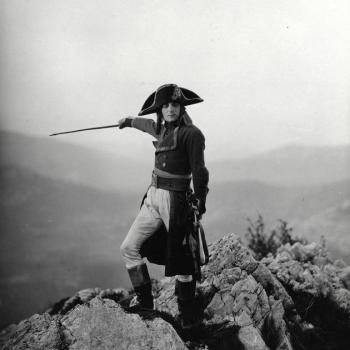
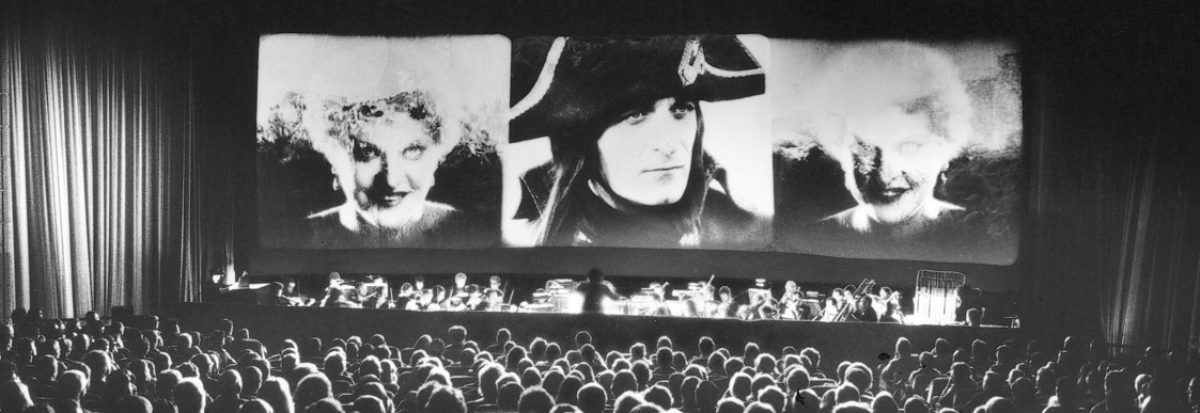


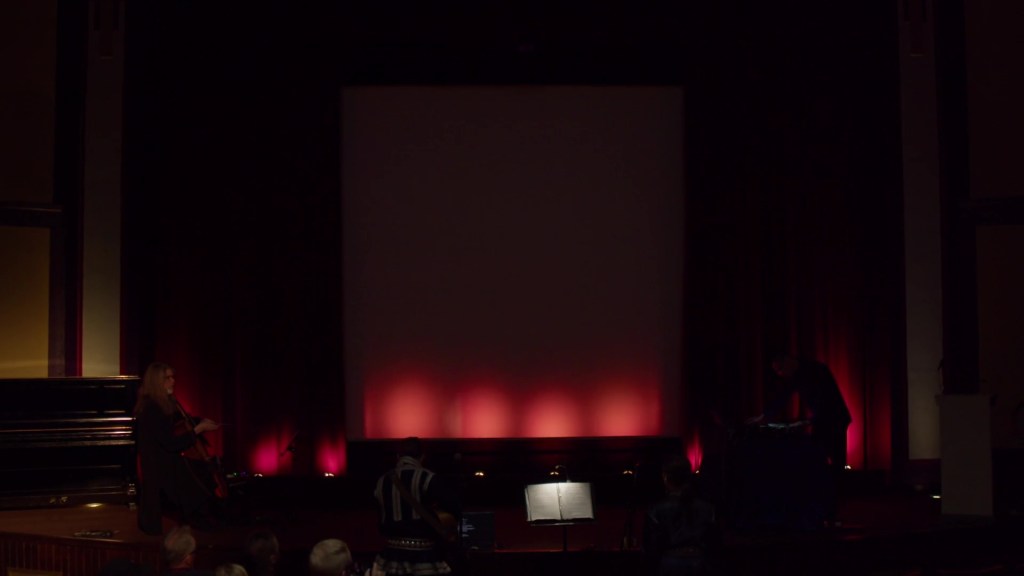


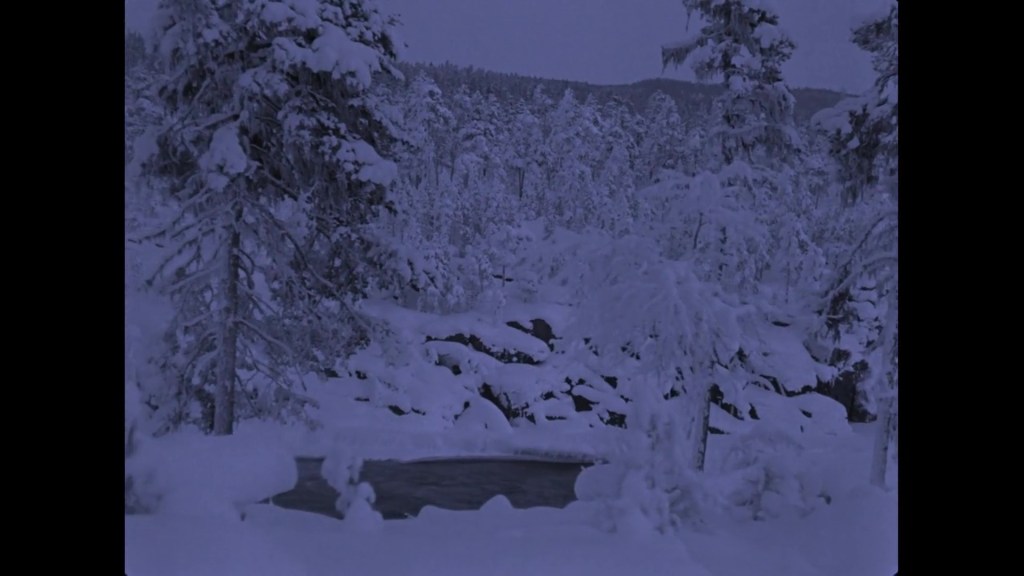

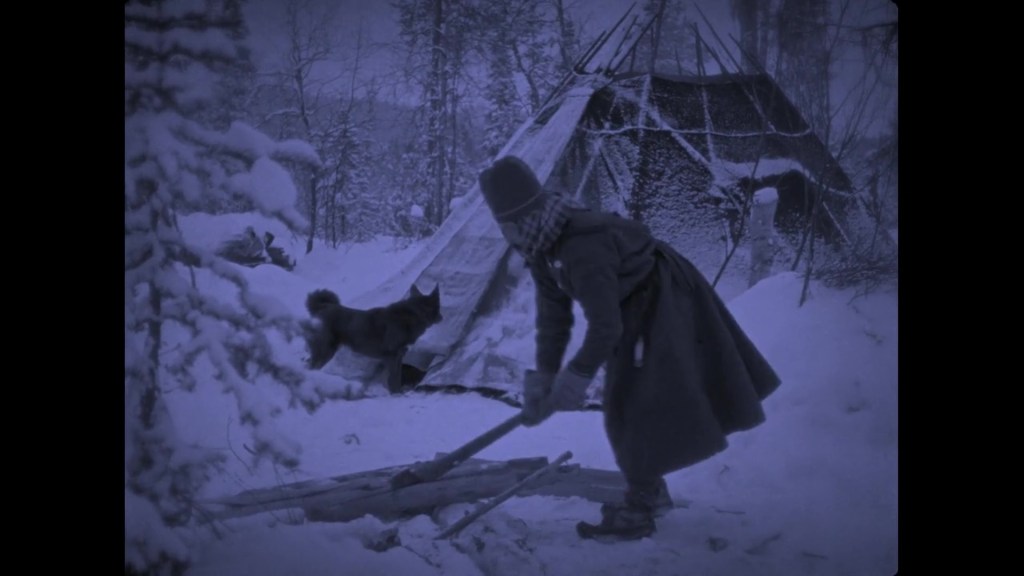


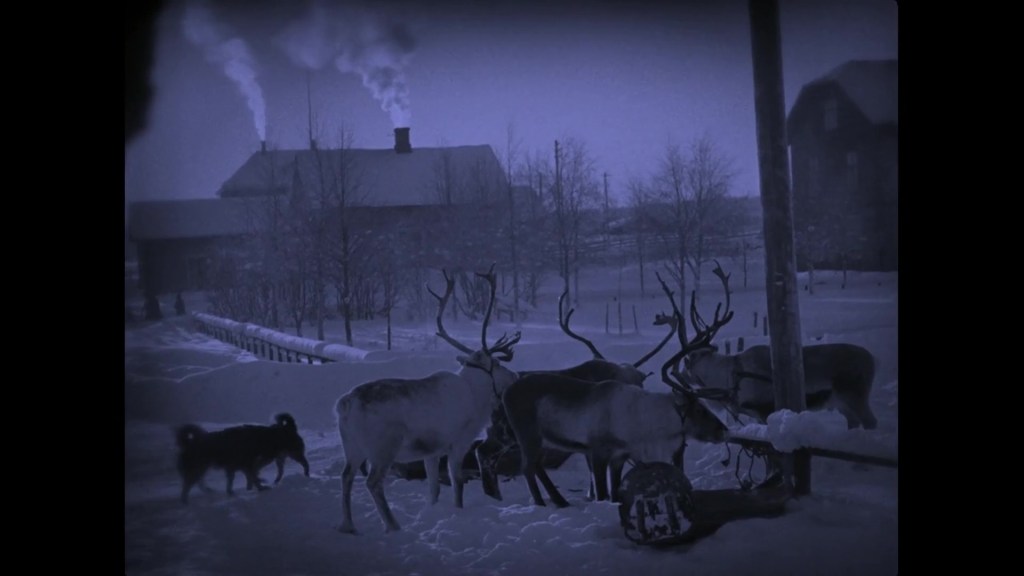

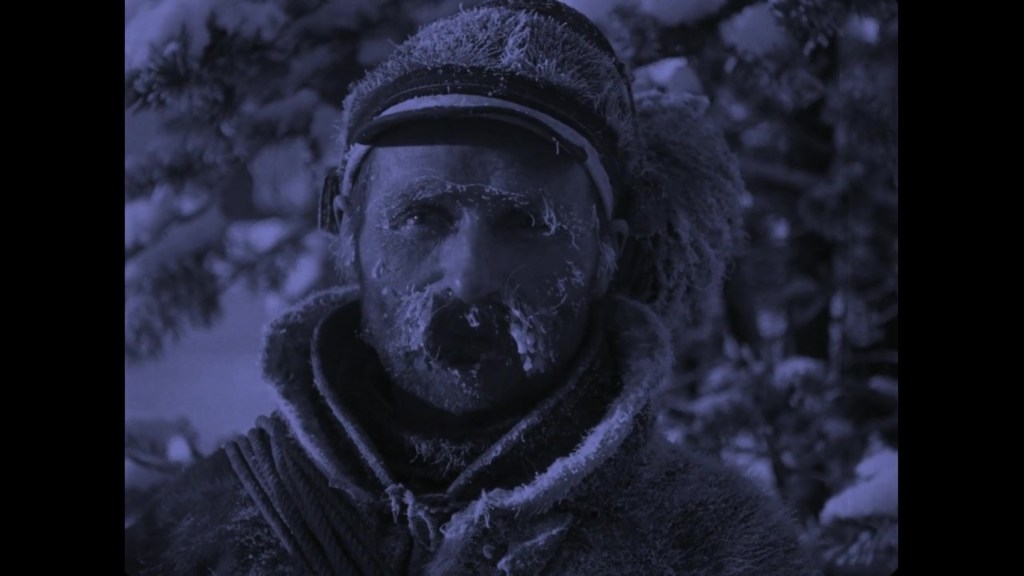


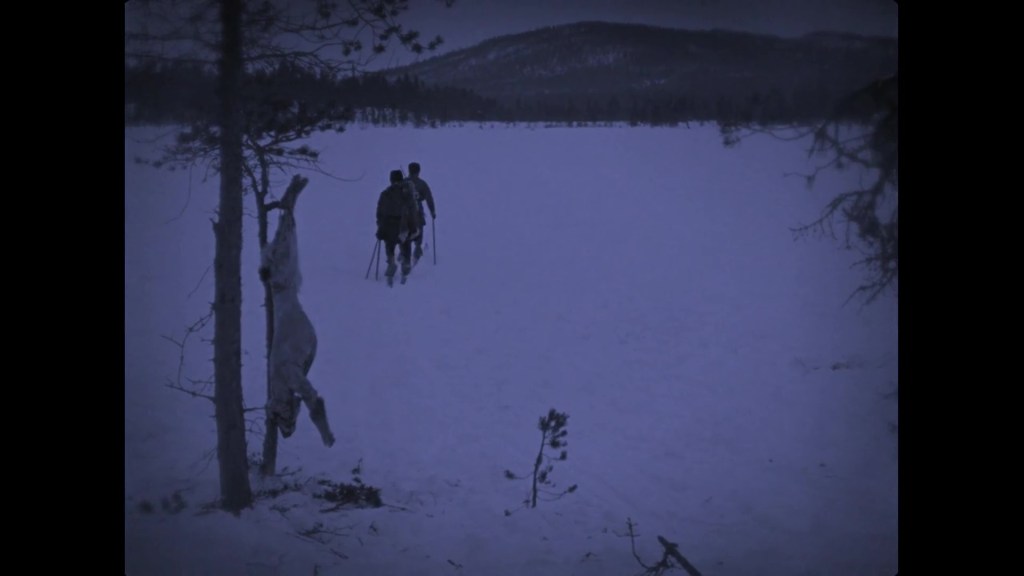


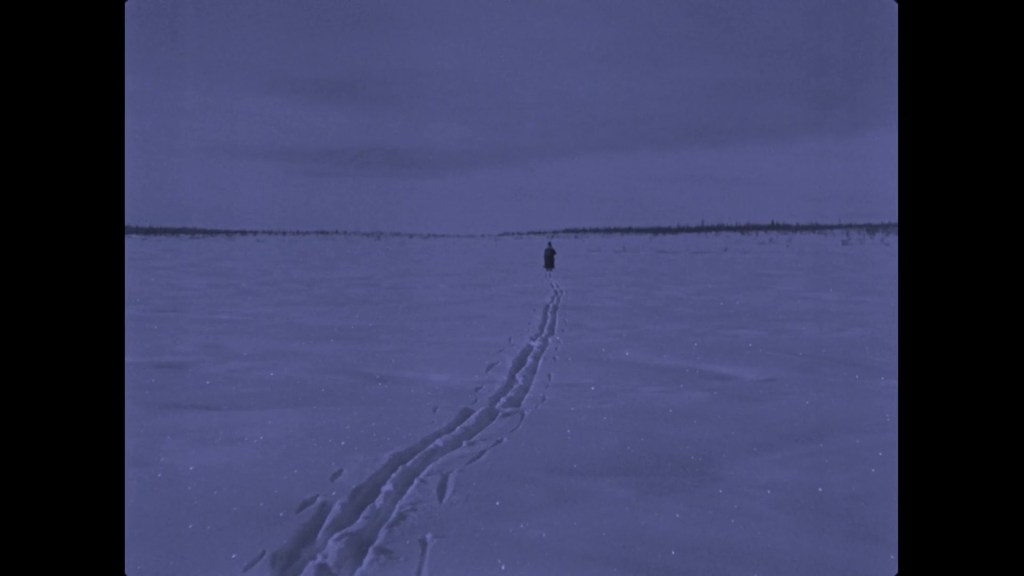


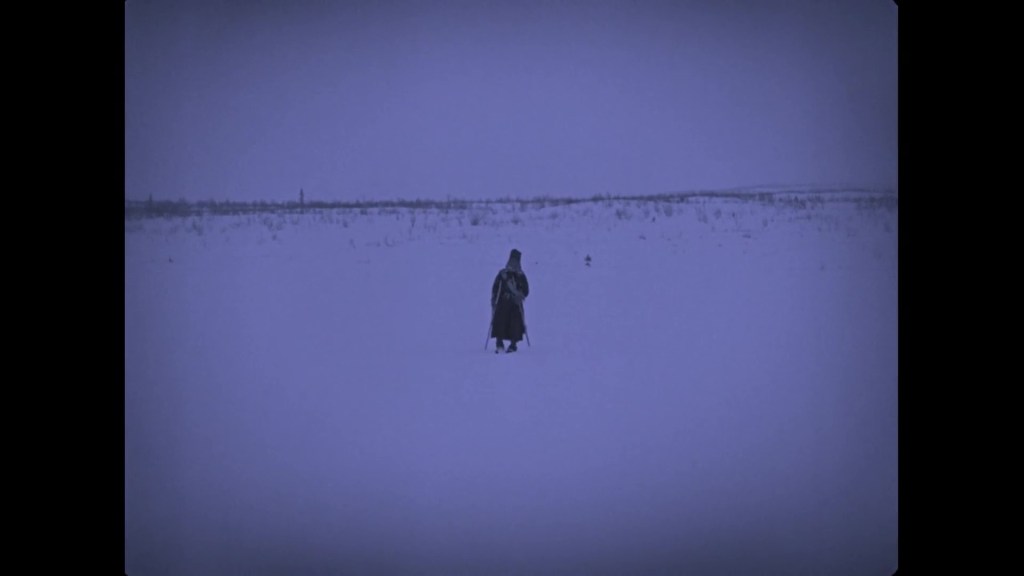


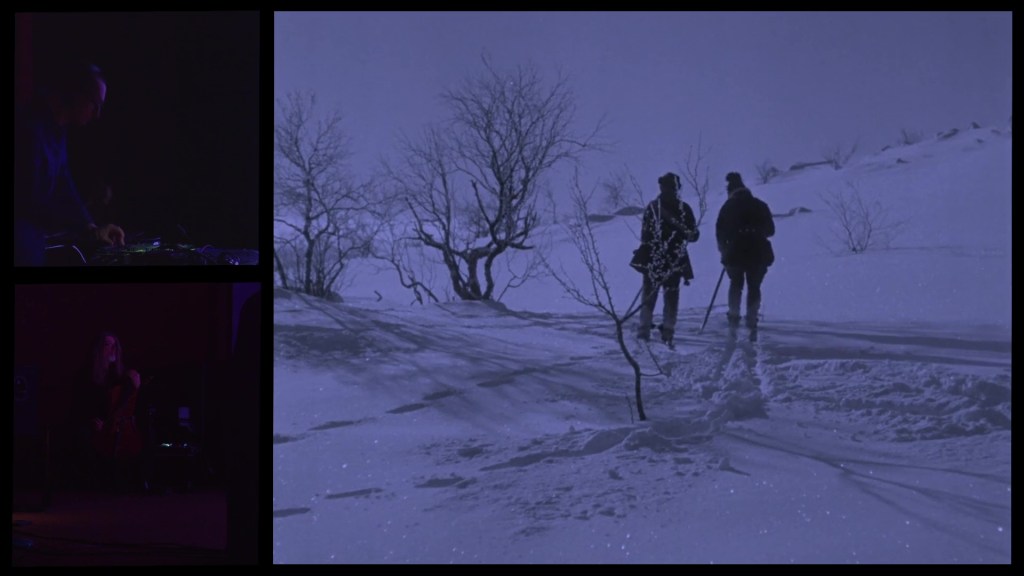


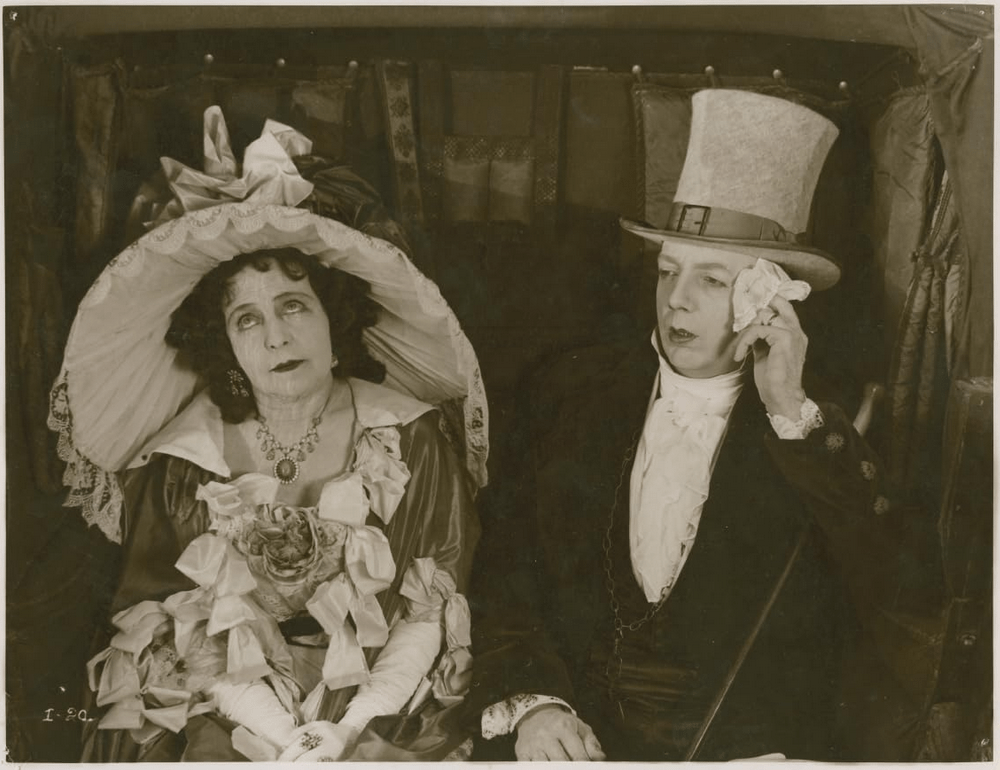


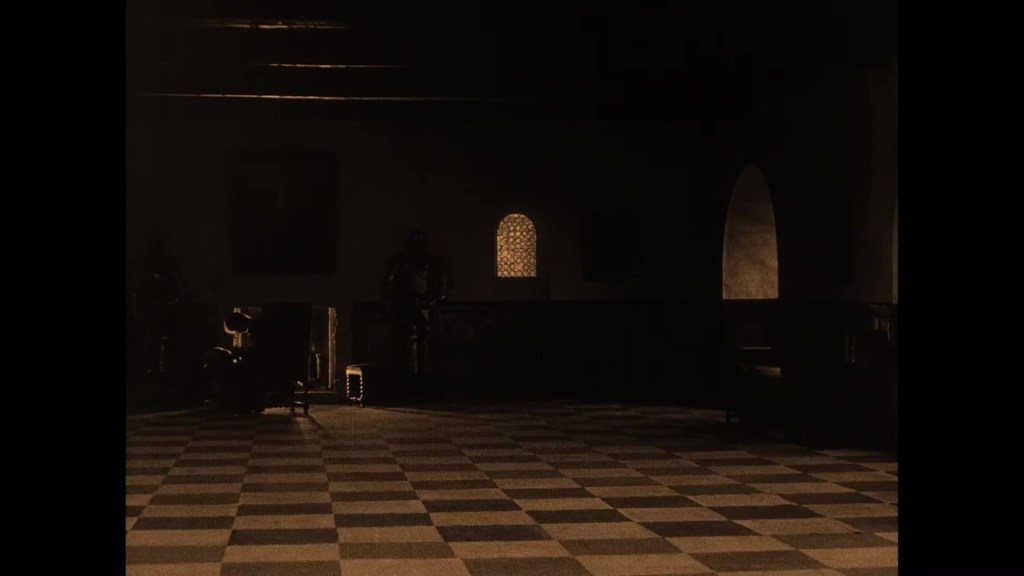


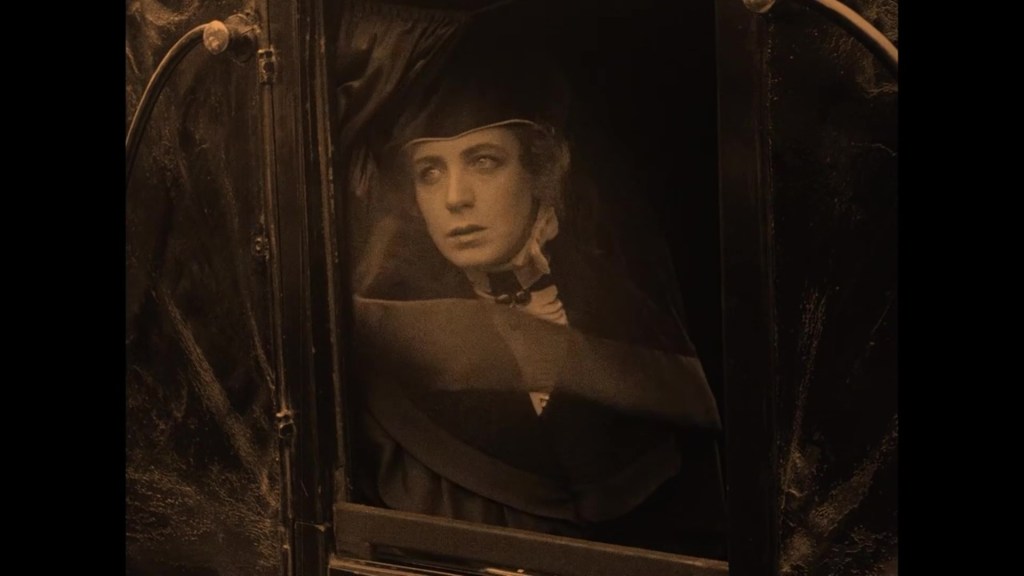


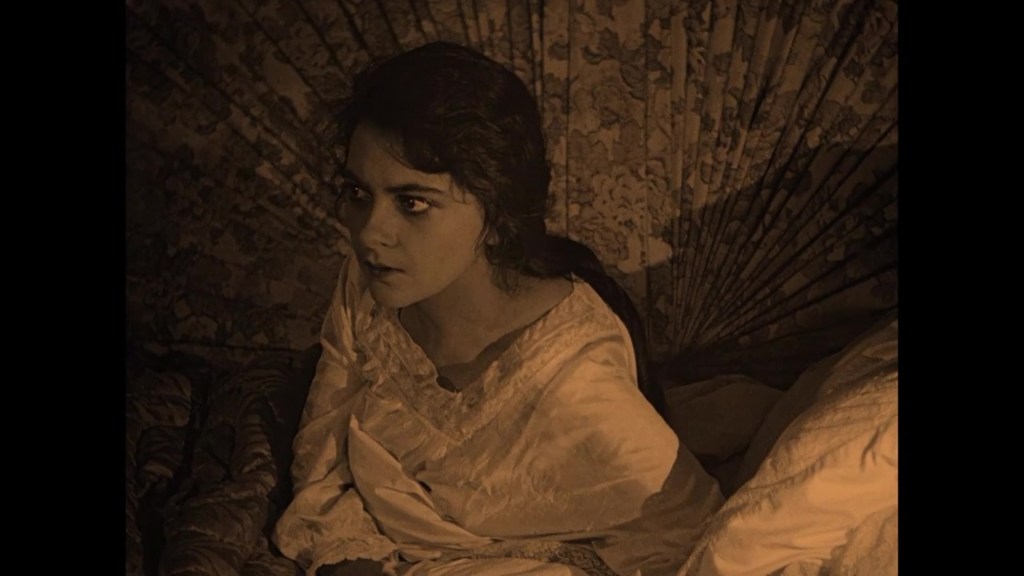


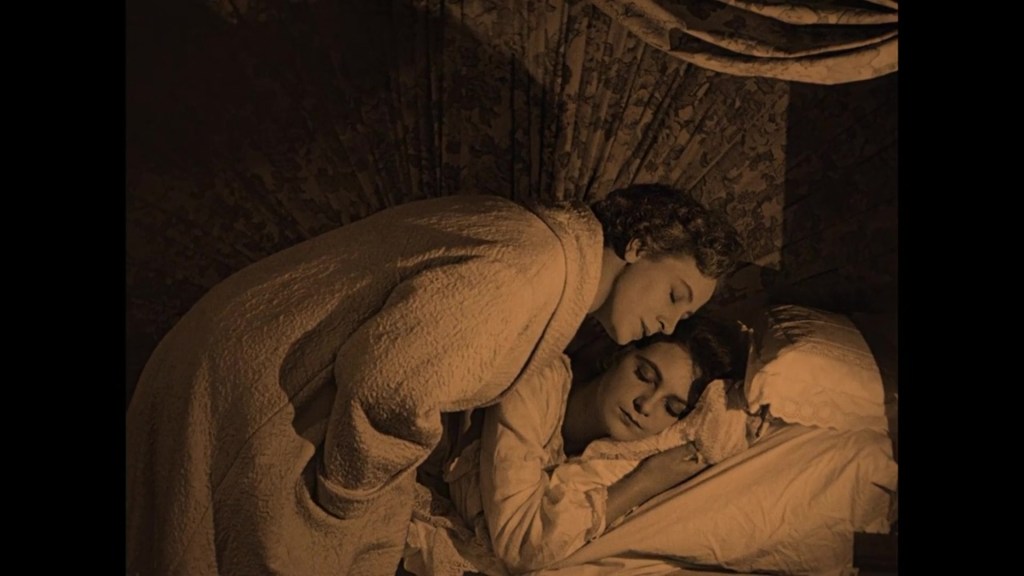


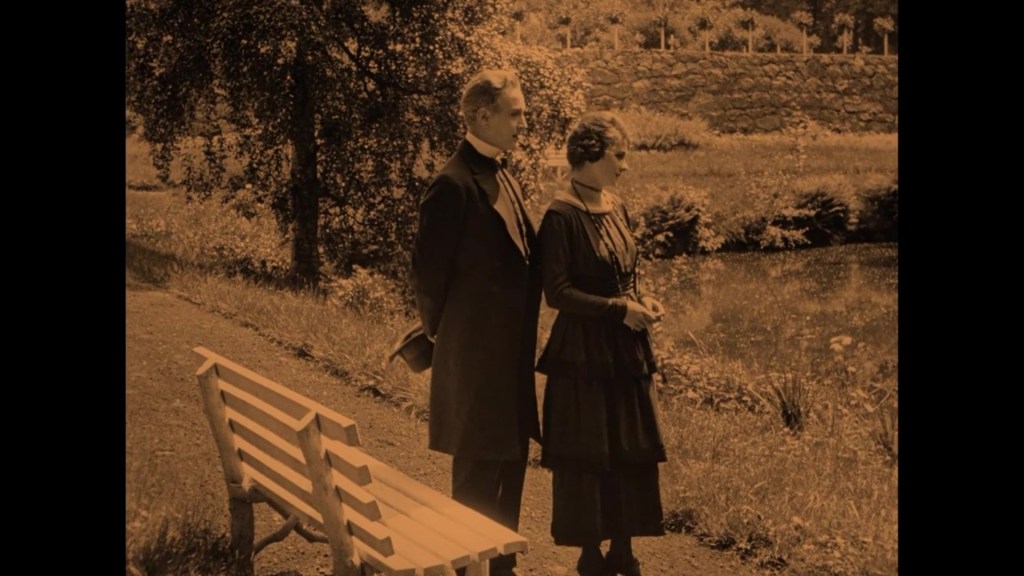


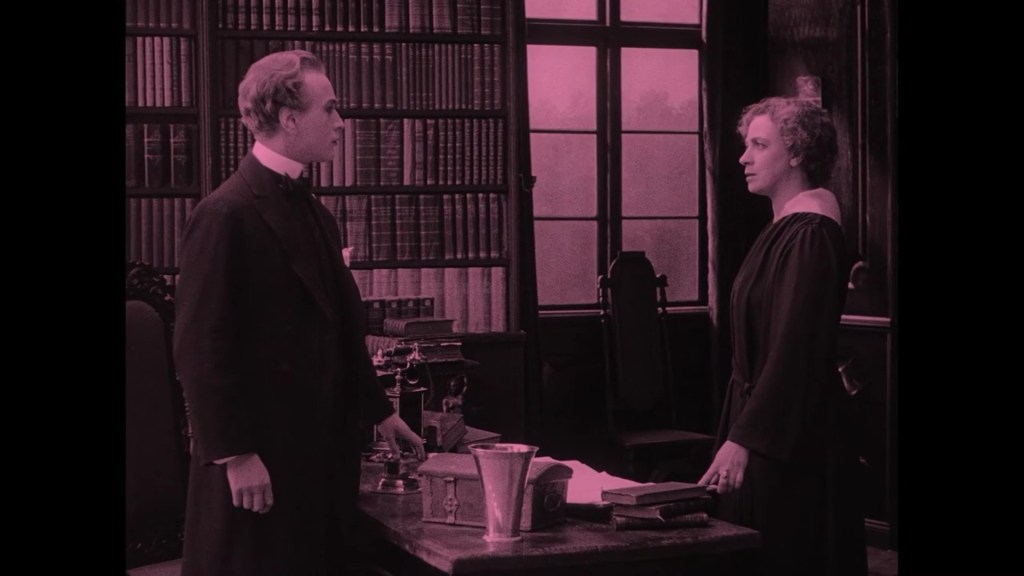


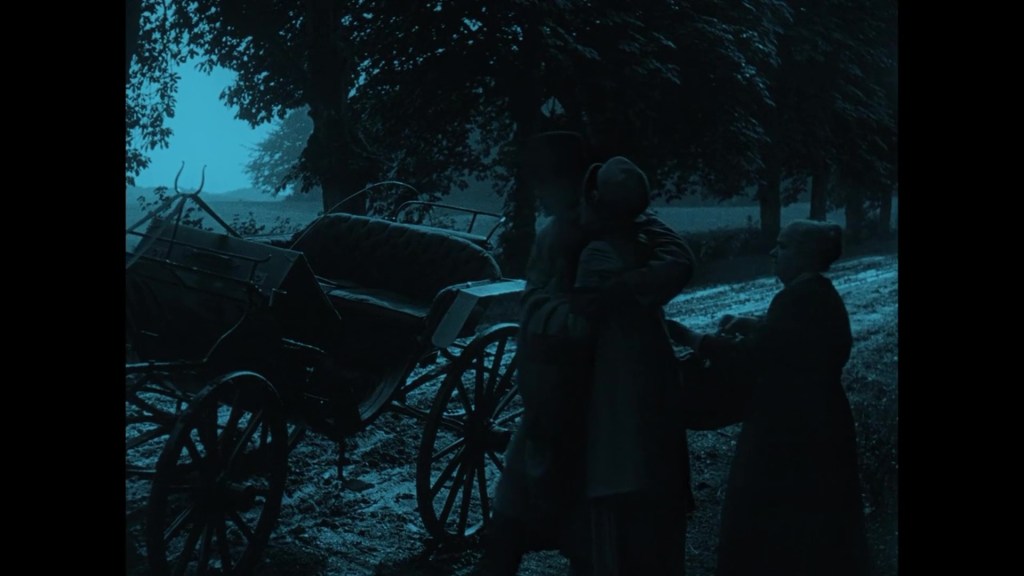


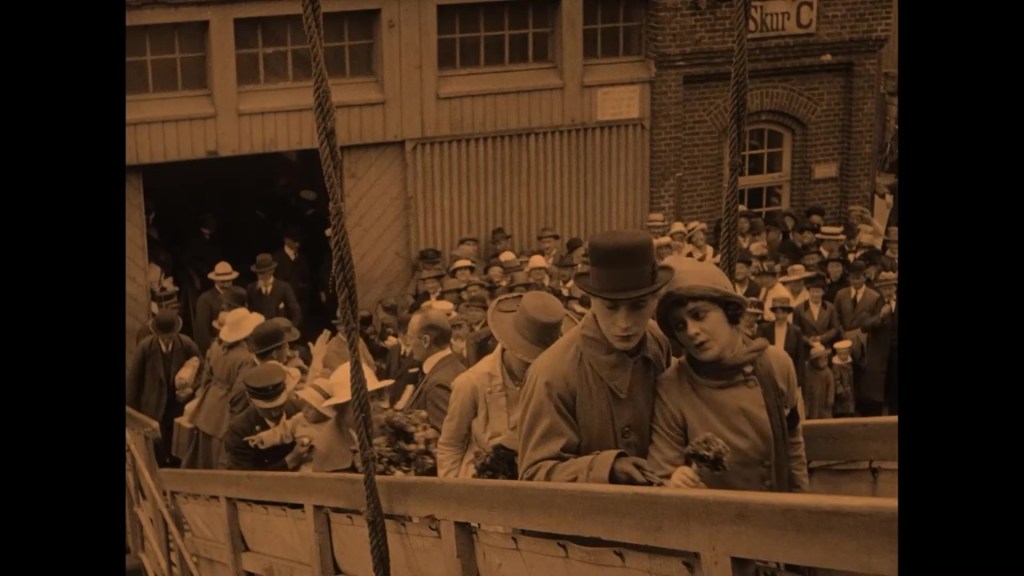


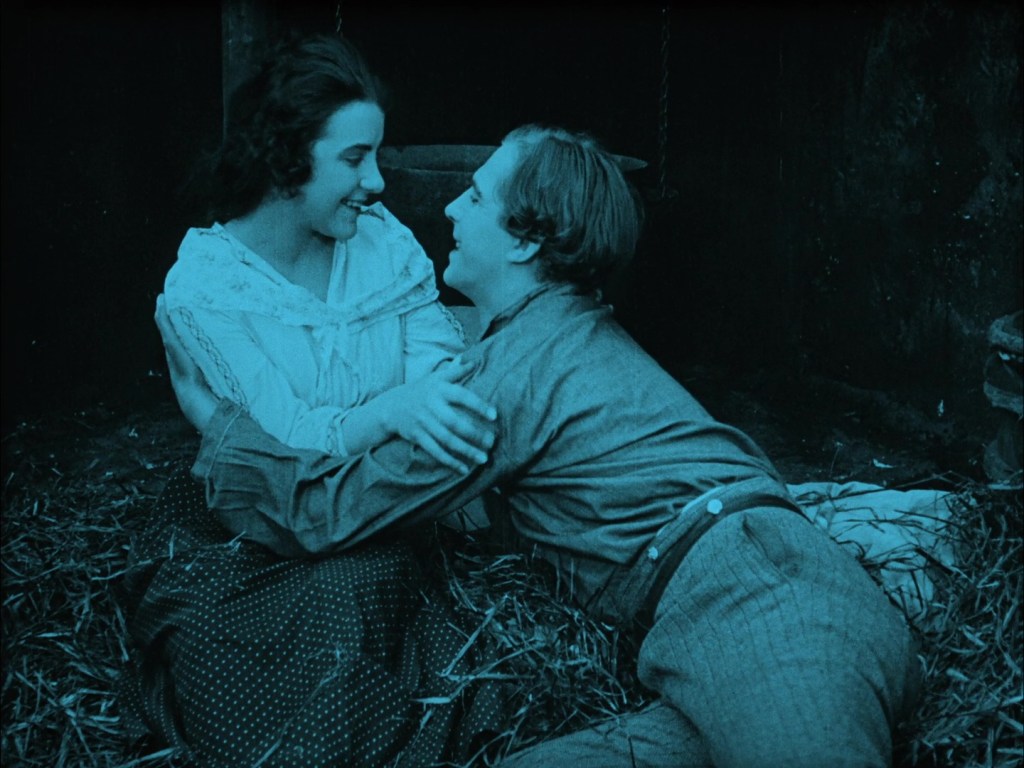

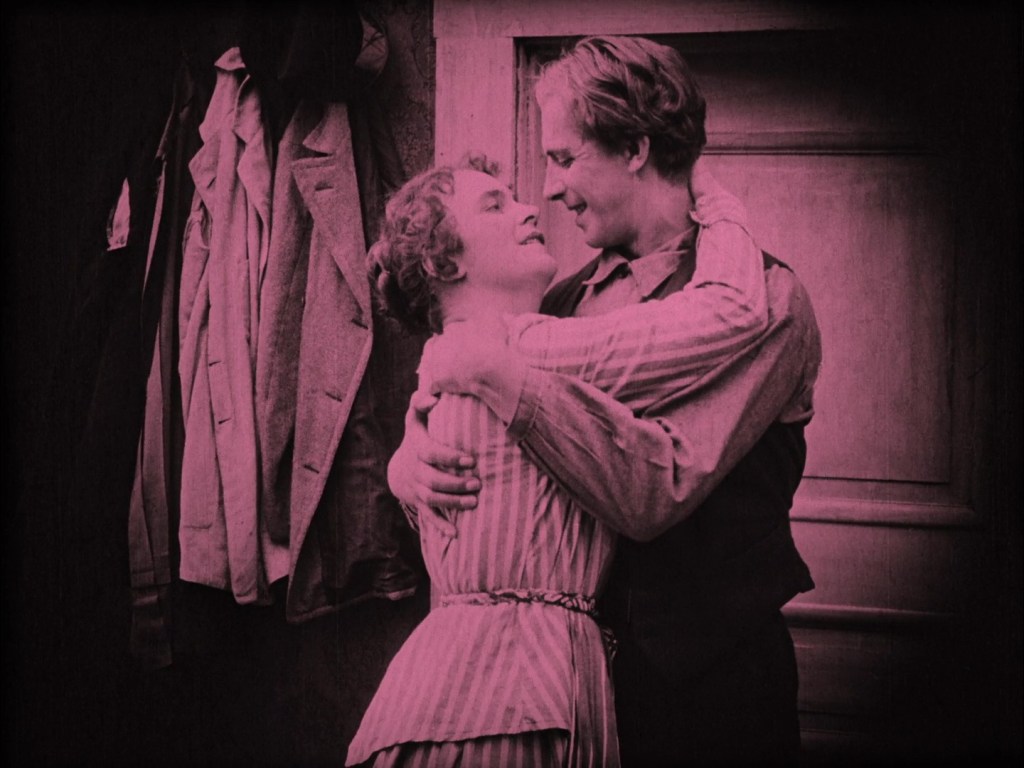


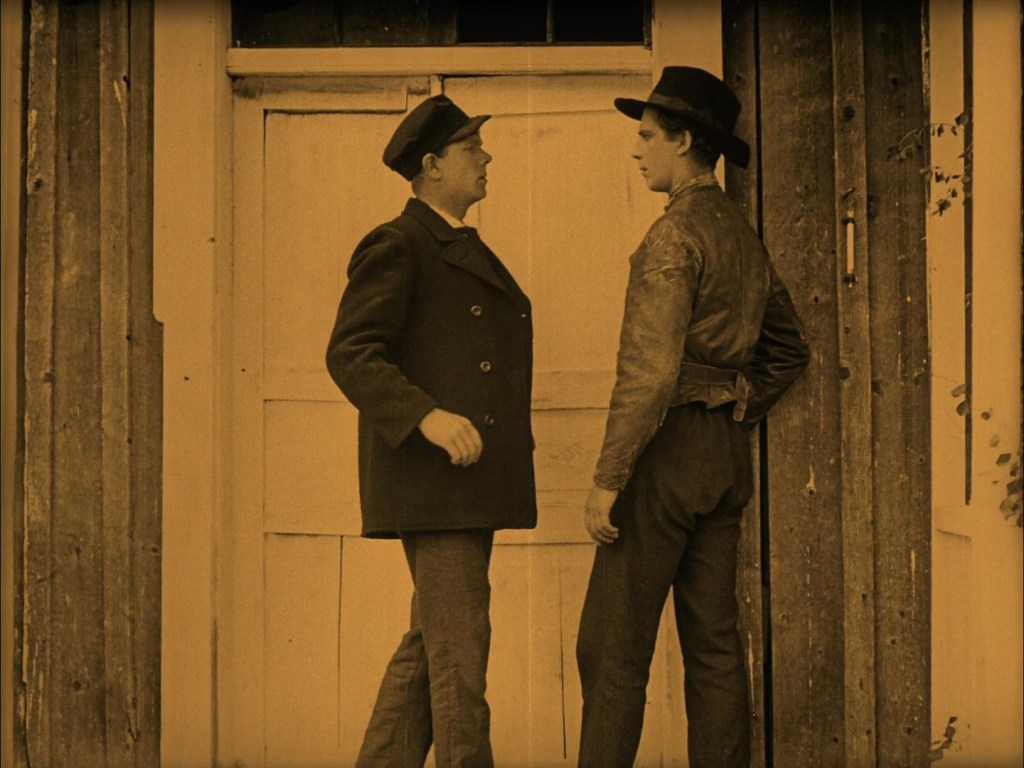


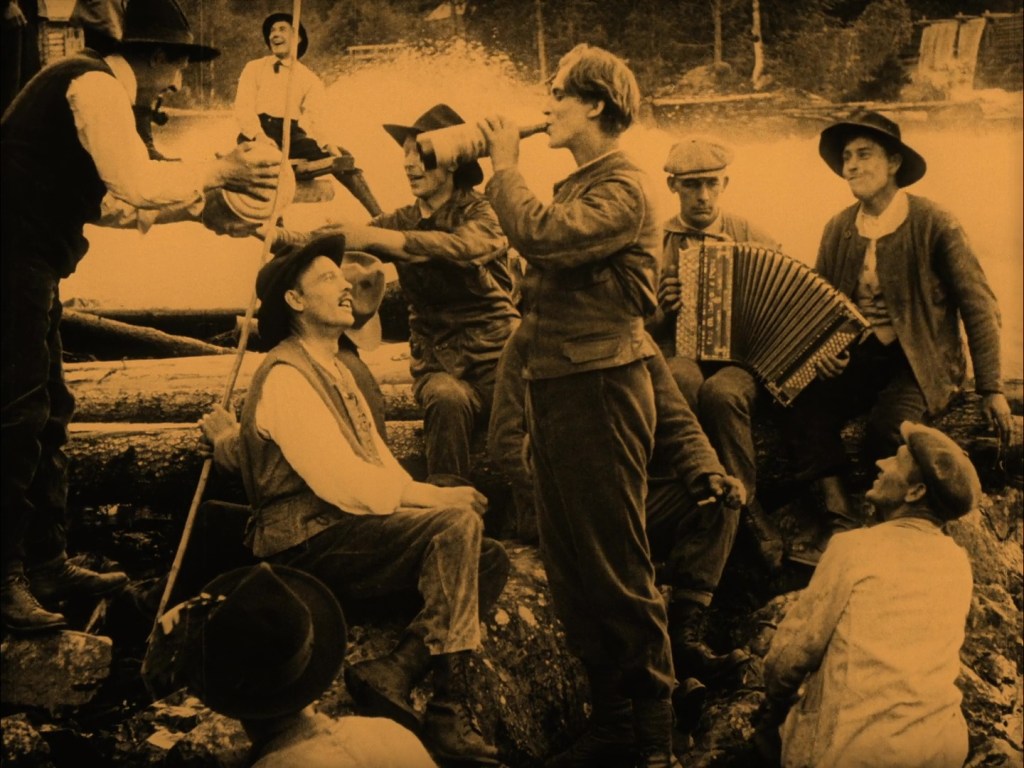


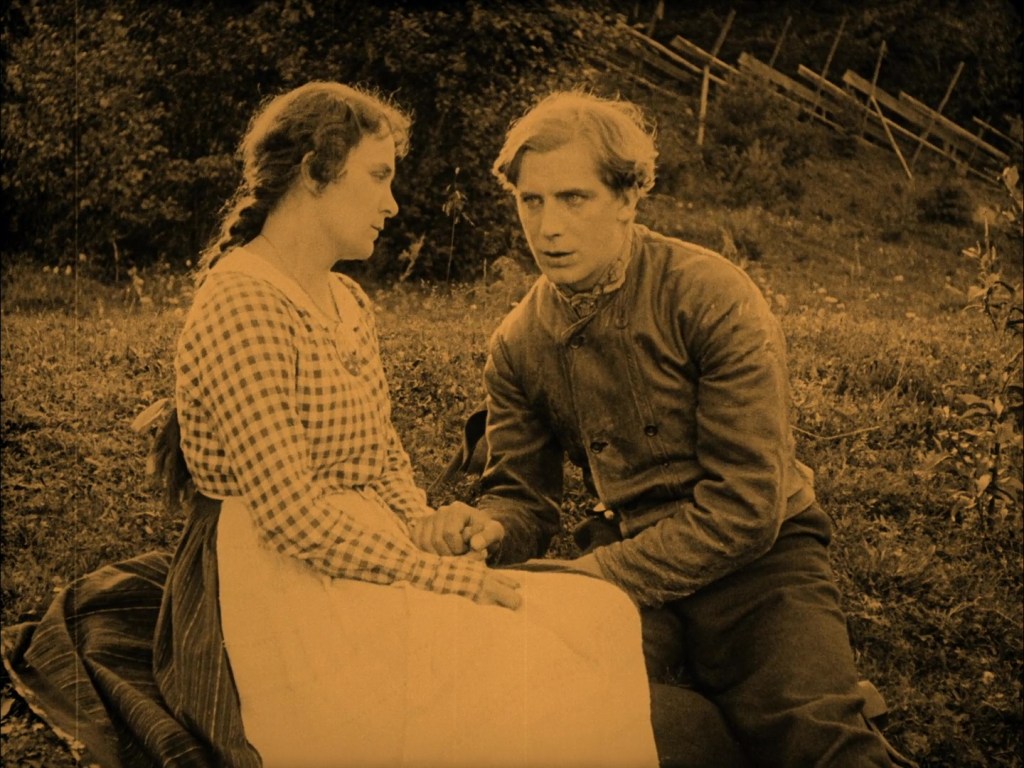


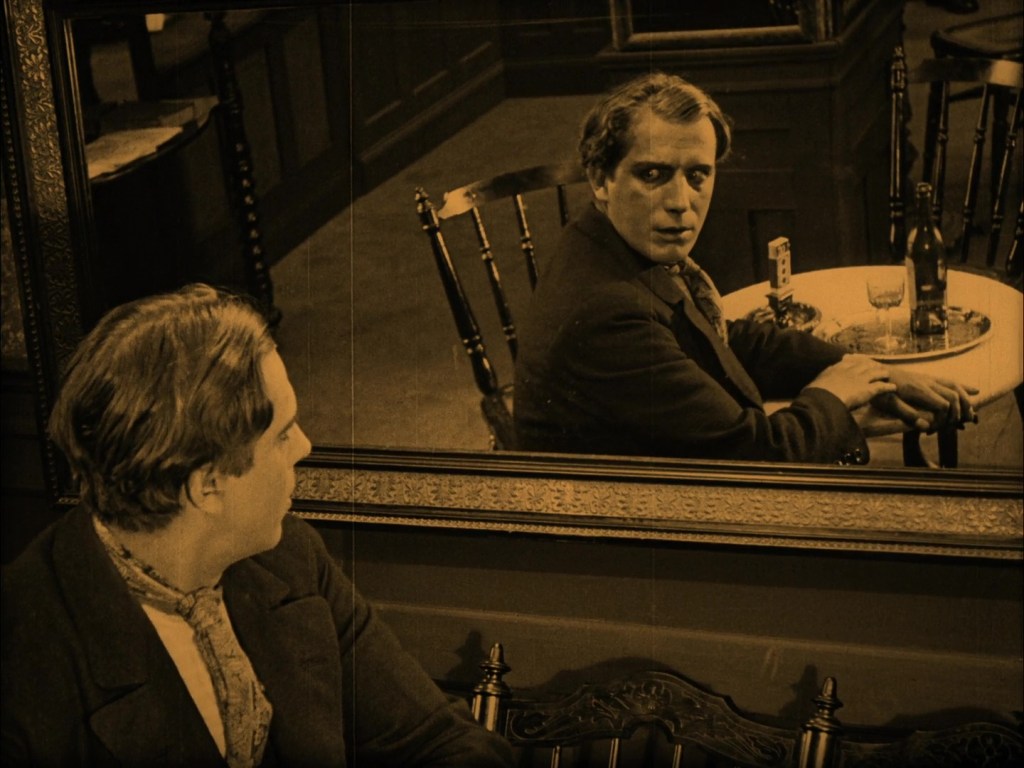


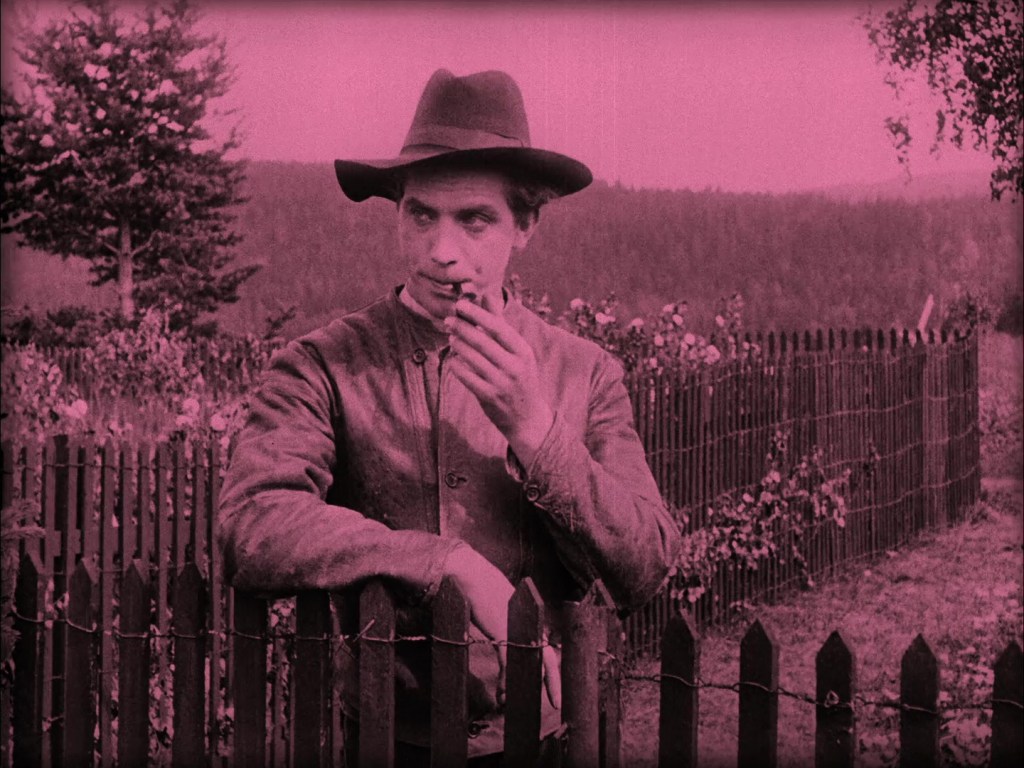


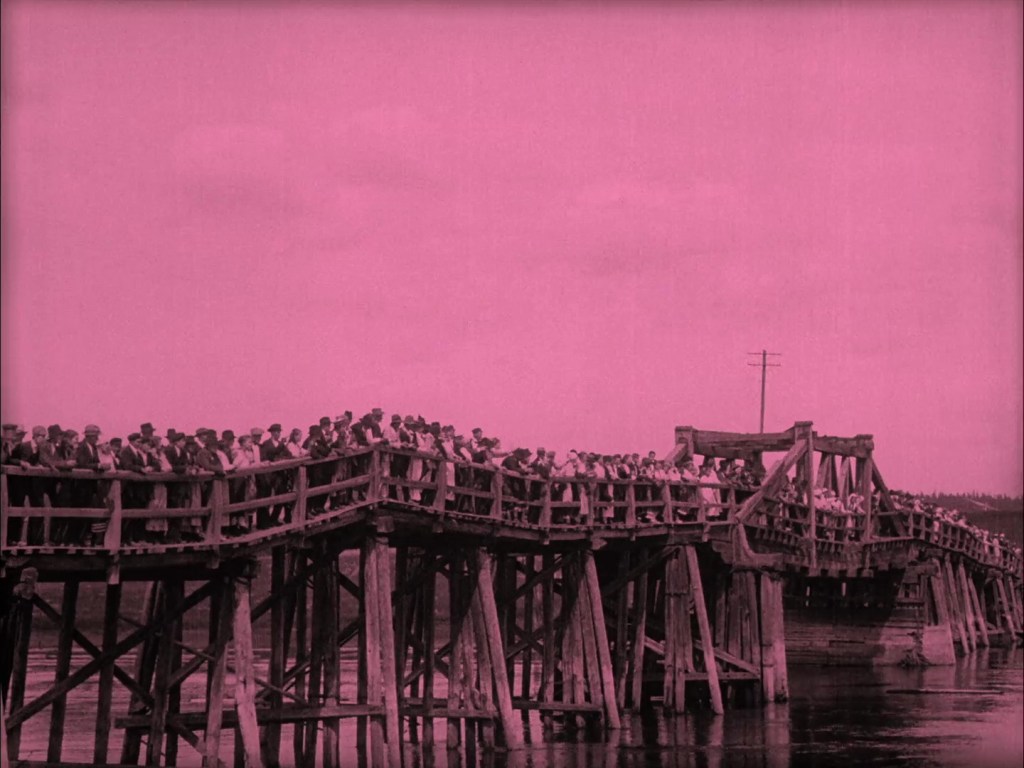


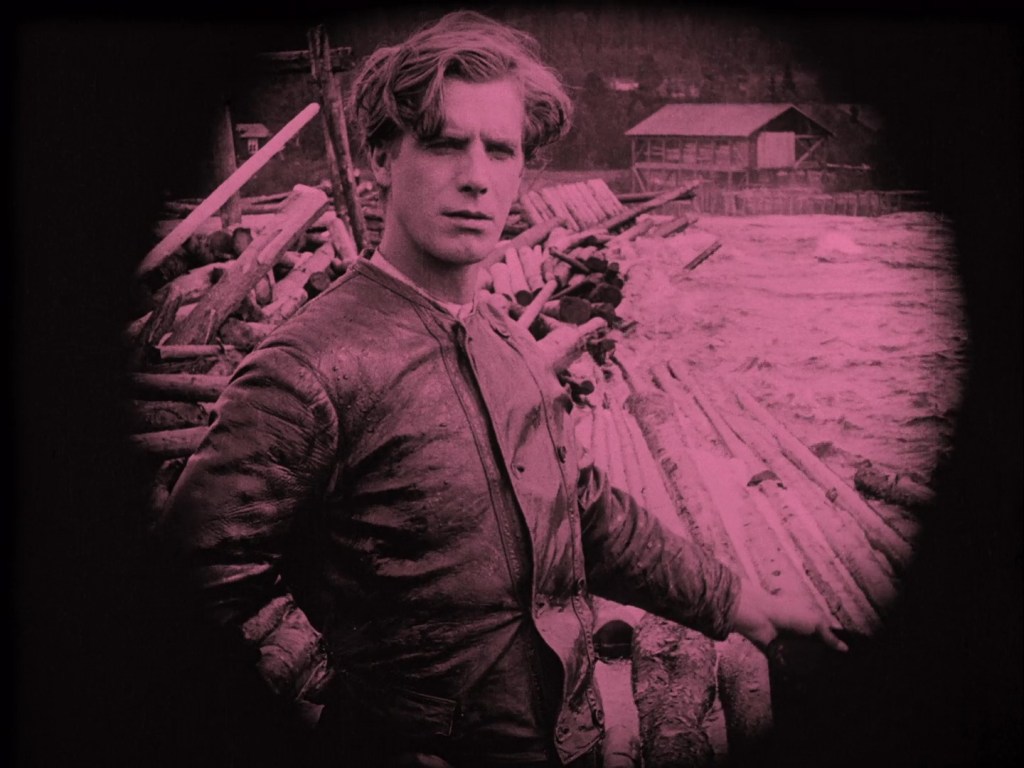


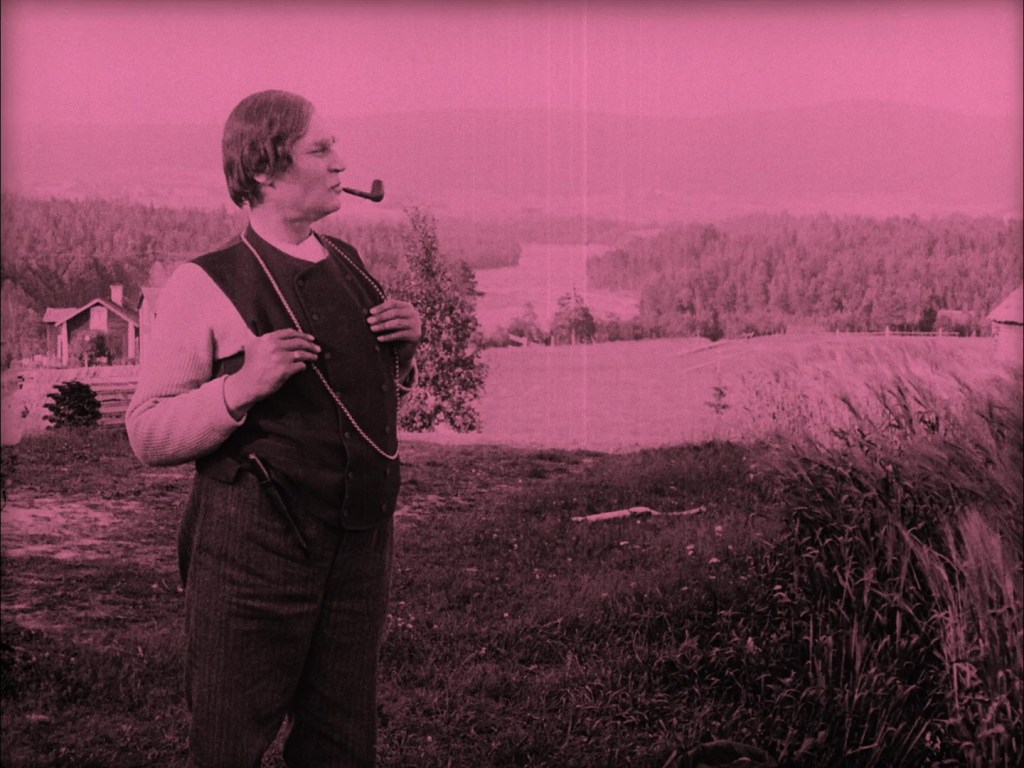


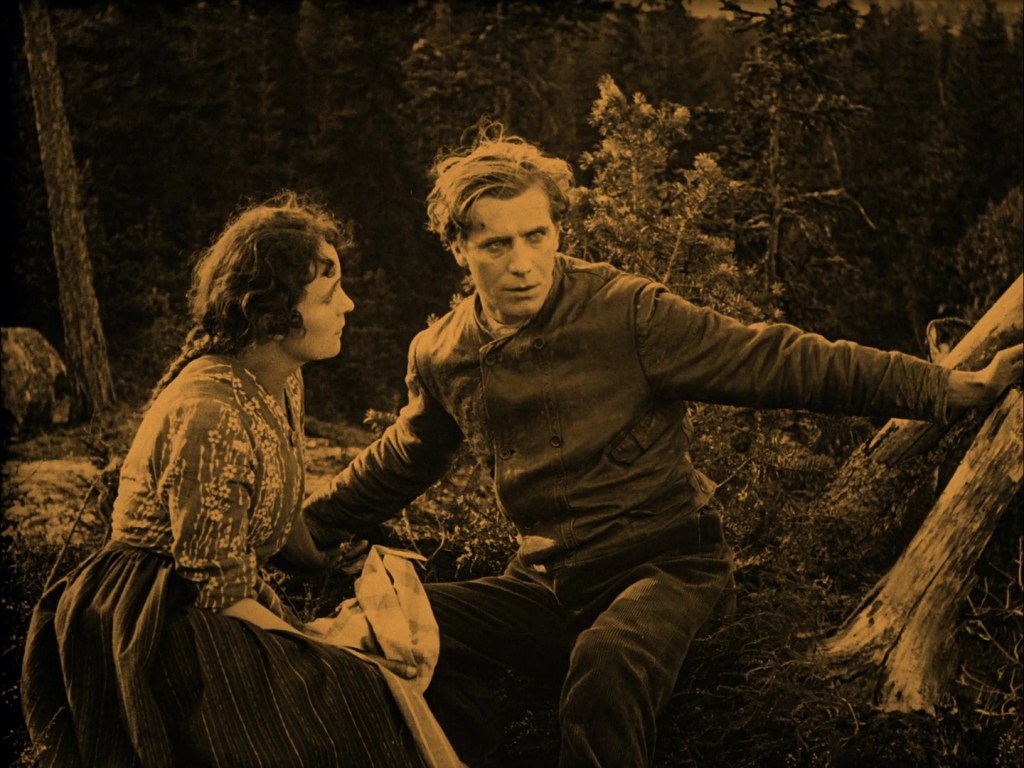


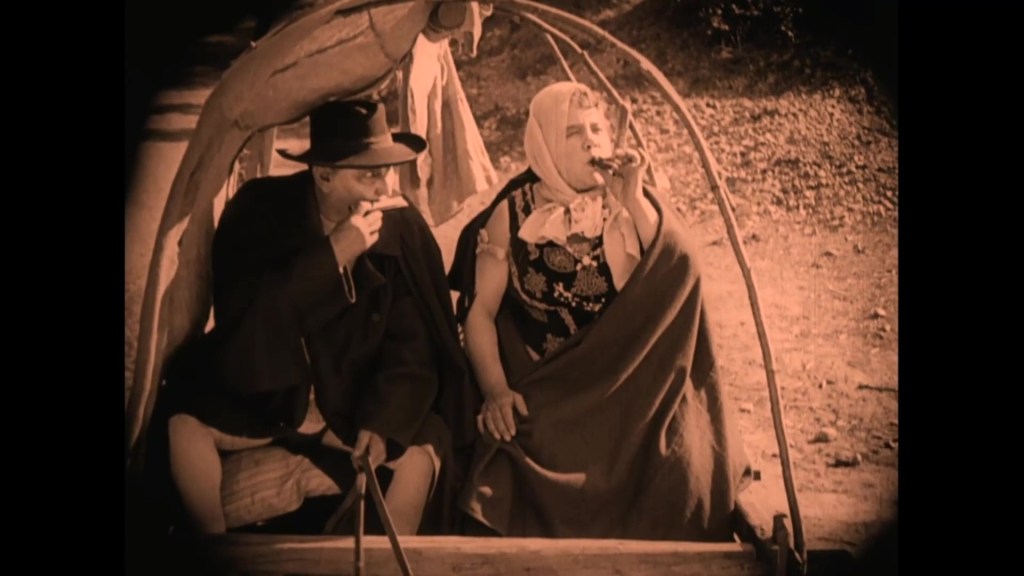


 The Realm of Silence