Day 4 and we return to Uzbekistan for “The Leper”. Knowing only the title of this film, I didn’t quite know what to expect. I was prepared from something troubling, and boy did this film deliver…
Moxov Qiz (1928; USSR/Uzbek SSR; Oleg Frelikh). In an old quiet town in Uzbekistan, Colonel Karonin helps oversee the locals with the aid of Ahmed-Bai, his translator. Ahmed-Bai’s only daughter is Tyllia-Oi, who one night dances to entertain Karonin’s guests. She catches the eye of Igor Karonin (the colonel’s son) and of Said-Vali, the son of Said-Murad, the richest trader in town. Said-Vali tells his father that he wants to marry Tyllia-Oi but is told that she is only “copper” compared to the gold and silver of other women. Nevertheless, Said-Vali can buy his way through the problem and the marriage takes place. Tyllia-Oi tries to impress her husband by wearing Russian-style clothing (like him), but he angrily demands if she is a whore or a Muslim – then attacks and (we presume, via an ellipsis) rapes her. Meanwhile, Ahmed-Bai takes a second wife into his home to help manage in his daughter’s absence. His older wife, sad and dejected by her husband’s new bride, visits Tyllia-Oi. Seeing the bruises on her daughter’s arms, she realizes that Tyllia-Oi is being beaten by her husband. In desperation Tyllia-Oi sends a note to the colonel’s wife, but it is intercepted by Igor, who is gleefully delighted by the prospect of her vulnerability to his advances. Igor sneaks into Tylllia-Oi’s room and (again, via an ellipsis) rapes her. Months pass, and Igor must leave for Moscow for a new posting. When Said-Vali tells this news to his wife, he sees her troubled reaction and – accusing her of infidelity – attacks her with flaming brands. The marriage ends up in a religious court, and Tyllia-Oi is forced to leave her husband and return to her father’s home. Ahmed-Bai calls his daughter a slut and blames her for the social shame that ends his job and forces them to move. In their new home, Tyllia-Oi’s mother dies. Ahmed-Bai is now an estate manager, but his authority is mocked by the workers. Tyllai-Oi’s stepmother encourages her husband to beat Tyllia-Oi, but she flees home in search of Igor – whom she finds (eventually) with another woman. Homeless, Tyllai-Oi is pursued by other men and finds herself wandering alone. She eventually reaches an isolated lepers’ “village”: a series of tiny caves in the desert. The lepers surround her, and she flees in terror, only to encounter a party of men who – thinking she is a leper – beat her to death and leave her body in the road. END.


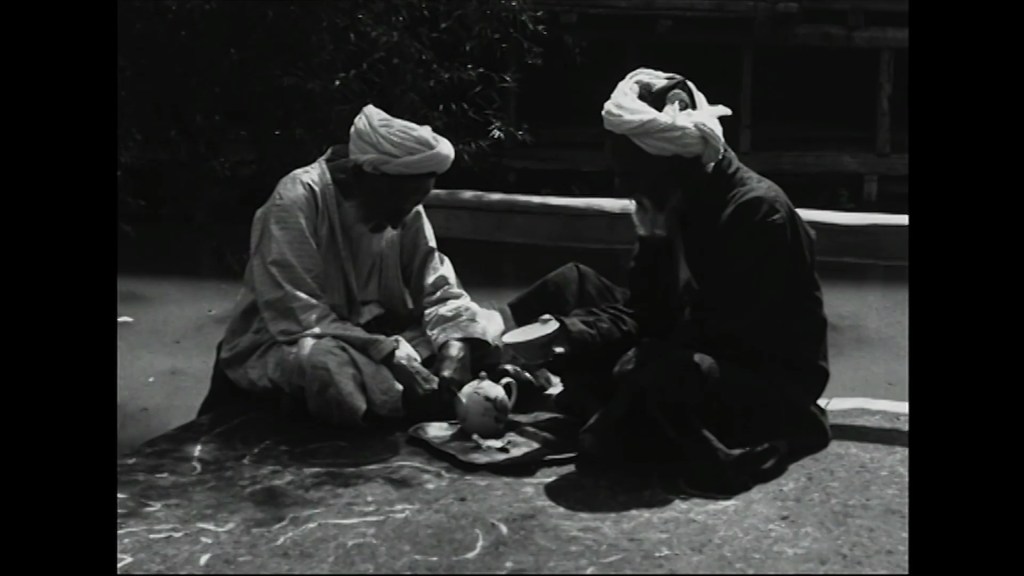




An amazing film. Both brutal and compassionate, it is everything that Santa (Day 2) was not. Having now read the brief essay by Nigora Karimova, I find that Moxov Qiz is based on a Frech novel by Ferdinand Duchêne, set in Algeria. It was adapted by Lolakhan Saifullina, and her screenplay transposes events to the Uzbekistan of pre-Revolution Russia. The wider context certainly shapes the political drama. This is a small town, with its petty affairs and small briberies, its minor officials who are little kings of their realm. The tension between local (religious) power and central (national) power is everywhere in the film, with Tyllai-Oi at the centre. I wonder how the rivalry between Russian (i.e. outsider) power and the local leaders played to contemporary (especially Uzbek) audiences in 1928? I can easily imagine many of these tensions remaining in place in the Soviet era. Even if the broader political scene was different, people would surely have maintained some of the personal beliefs and behaviours evident here. When Igor asks Said-Vali about his relations with his wife, for example, he replies that their “custom” does not allow any such questions to be asked. How many husbands might say the same in 1928? (Or in 2024…) I admire the film’s willingness, keenness even, to show the male control at every level of society, from the political (the Colonel, the mullahs) to the personal (the father, the husband). The women bear the brunt of much of the manual labour, and we often see Tyllai-Oi’s father lounging around waiting for service from his wife (or wives) or daughter. The political and the personal meet in the Sharia court, where the wider expectations of religious law determine Tyllai-Oi’s fate. The court (rightfully, it must surely seem) grants a divorce to the couple, but in forcing her back to her father this decision ultimately causes even greater harm. (The judgement also gives her condemnation as a woman and a wife the full force of religious taboo.) And beyond the courts, in the wider social landscape, men are only too eager to judge and prey upon Tyllai-Oi once she has left the confines of marriage or family. It’s a grim picture of social stricture.


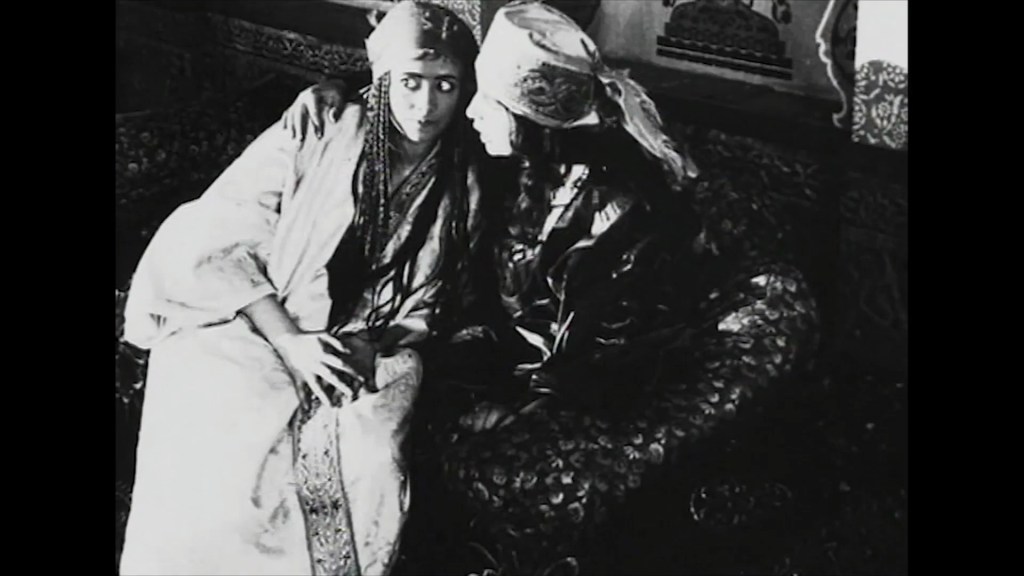
At the heart of the film is Rachel Messerer as Tyllai-Oi. This is, as far as I am aware, the first time I have seen this actress and she’s superb. She is incredibly striking on screen, and the film knows just how to frame her to make the most of her eyes, her glances over the shoulder, her looking and being looked at. Obviously, the film is silent – but there is hardly any dialogue (i.e. speech-based intertitles) to convey Tyllai-Oi’s thoughts or feelings. Everything therefore relies on her face, her gestures, the rhythm of her body on screen. Her one notable line of speech is that desperate note for help, written on a piece of material. It’s like a title in itself and, ironically enough, it is a message that never reaches its intended destination. She herself becomes a kind of readable text when her mother sees the bruises on her arm. In a film scripted by a woman, it’s interesting that the only people who seem to read each other sympathetically are a mother and her daughter. The men are not willing or able or interested enough to want to understand the women. Superficially, Said-Vali interprets his wife’s troubled look about Igor’s departure correctly: she does have a relationship with Igor. But this “relationship” is itself based on exploitation and abuse. Tyllai-Oi is a victim, not a perpetrator, of a betrayal of trust.


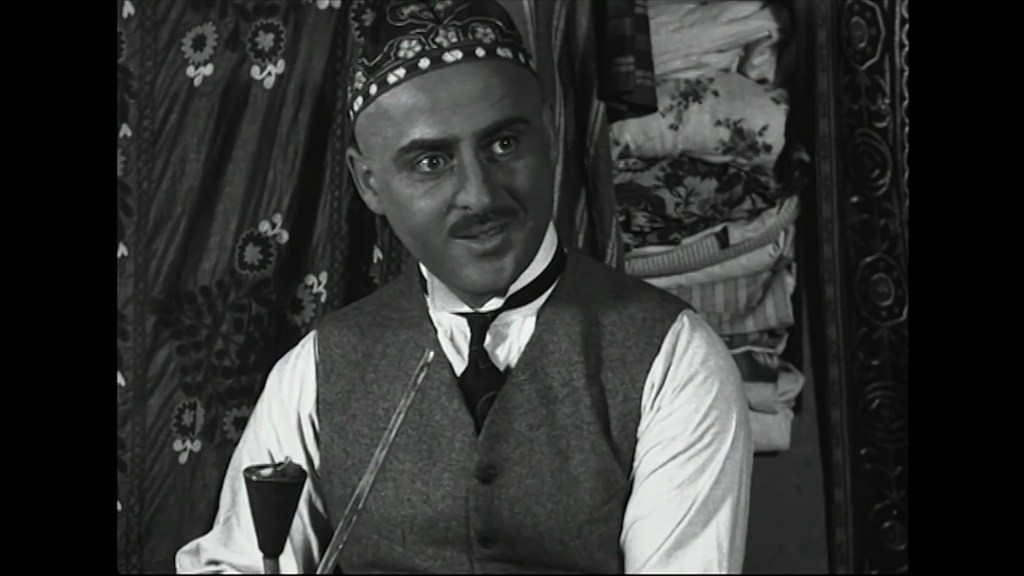


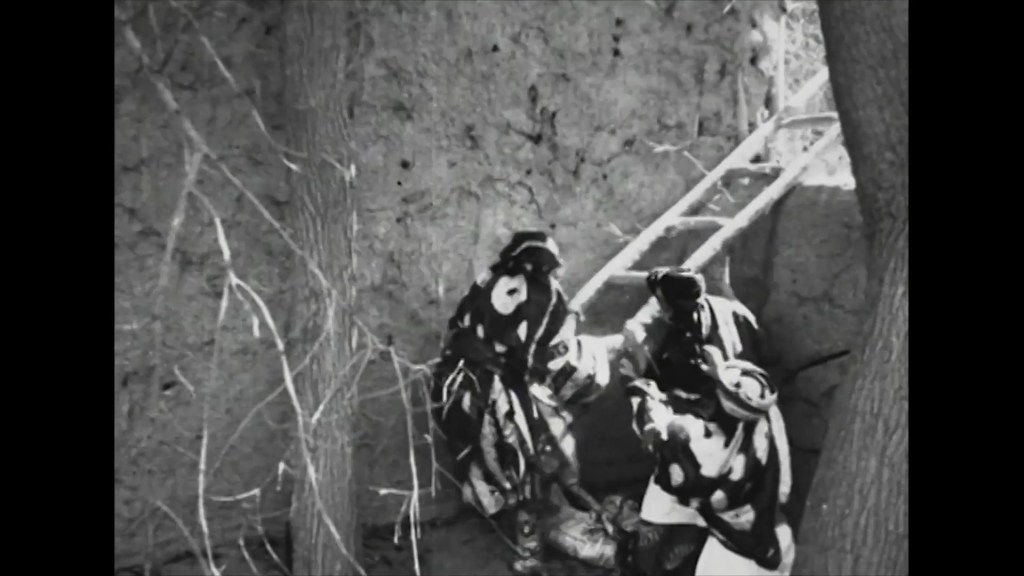
This is all the more moving for the few moments when Tyllai-Oi has a sense of privacy, or solidarity with another. We first see Tyllai-Oi upside-down, laughing, descending a tree, and this rare – even unique – scene of her joy is one shared with her mother, away from Ahmed-Bai. Later, she briefly enjoys the company of children and animals – but it is a fleeting moment of private pleasure, set in the midst of evens that will expel her from family, home, and society. She has no other form of personal expression in the film. Her dance, near the beginning, may make her smile – but it is an activity that is demanded of her by her parents, and it attracts the lusty attention of men, two of whom (Igor and Said-Vali) will exploit and abuse her. The camera seems to shake a little in time with the movements of her dance, as though we are sharing her bodily rhythm – but this, too, is contained within the montage by wider shots of Tyllai-Oi surrounded by the male audience. Later in the film, all her actions are commanded by or interpreted negatively by men. When she tries to dress to please her husband, he beats (and possibly rapes) her. When she is on her hands and knees, dusting his boots before he leaves the house, he doesn’t even look at her. When she writes a letter, Igor uses it to exploit her situation and rape her. All this places our sympathies firmly with Tyllai-Oi, with her mother perhaps being a secondary point of compassion. Everything in the film is geared to expressing the restrictions and limitations being placed on women in general, and Tyllai-Oi in particular.

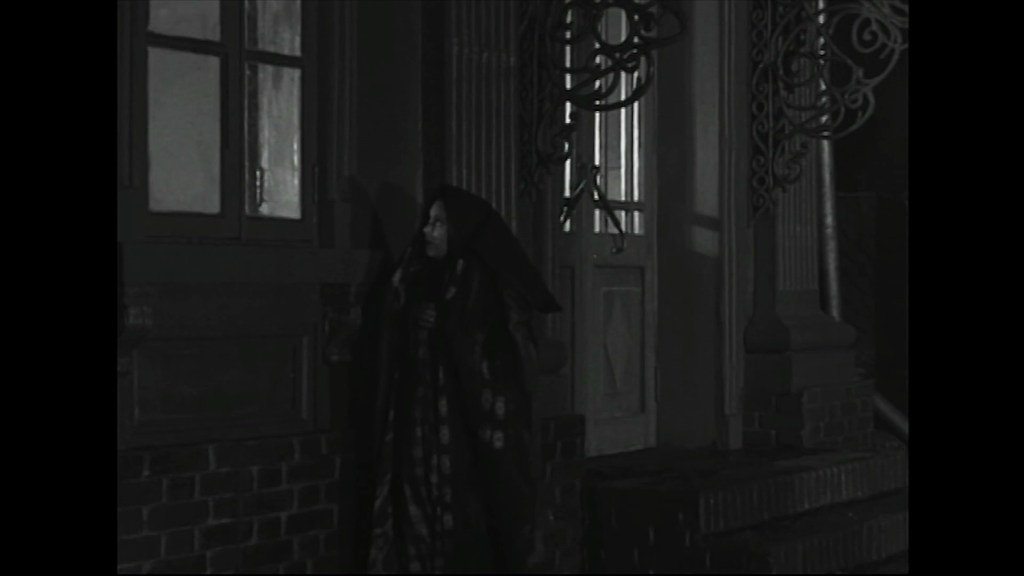


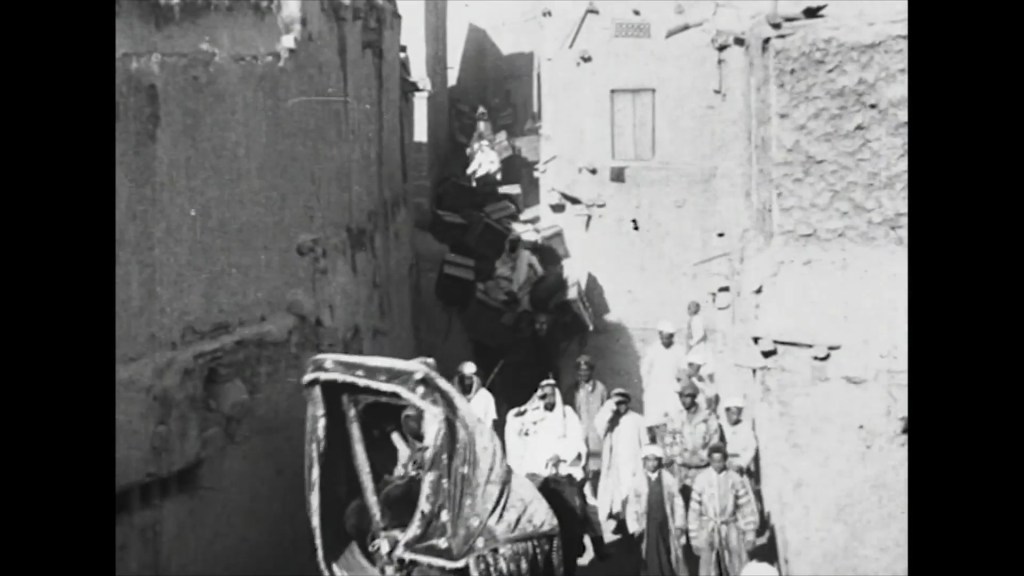
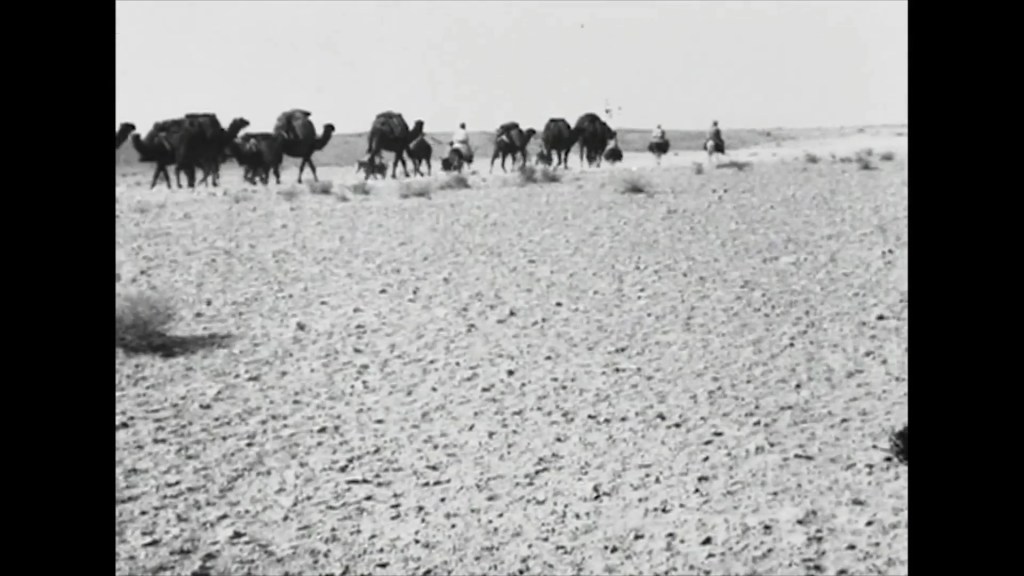
More broadly, it must be said how good the film looks. Compared to the other Uzbek film this week, Ajal Minorasi (Day 2), Moxov Qiz is much more visually sophisticated and articulate. It also has more to say, and more depth to give to its main female character. Shot on location, it makes brilliant use of the town and the landscape around it. It also makes these spaces mean something. The film opens with a lovely montage of flowers, marshes, trees, streets, sunlight, musicians, people basking in the sun – but this idyll is short-lived, a moment of peace before the intrigues and tensions are laid out. The shady streets become threatening when Tyllai-Oi is fleeing her husband or her family, just as the open spaces of the landscape we see during the falcon hunt become a forbidding wilderness by the film’s end. The last sequence, in the rocky desert far beyond town, is a bleak and forbidding landscape. There is nothing for Tyllai-Oi here, and nowhere else for the drama to go. A sparse, brutal end to this brilliant, disturbing film. A real discovery for me.
Paul Cuff












 The Realm of Silence