I’ve been revisiting lots of early Lubitsch films recently, and it occurred to me that my knowledge of Pola Negri is confined almost exclusively to these German productions of the late 1910s-early 1920s. Negri’s silent filmography features a huge number of missing films, and many of the surviving pictures from her career in the 1920s are available only in copies so grim to watch that I have stayed clear. But one title intrigued me enough to take the plunge. In 1929, Negri was at a strange, transitional stage of her career. Having been in Hollywood since 1922, by the end of the decade Negri had married the Georgian “Prince” Serge Mdivani, broken with Paramount, and retired to France. However, the retirement was short-lived. She suffered a miscarriage, while her husband gambled away his money. So, she returned to work, and made her last silent film in the UK. This would be one of the many British-German co-productions produced in the late 20s. Alongside Negri, it starred the Swiss actor Hans Rehmann and the British Warwick Ward—both of whom appeared in a number of German films of the period. Its director, Paul Czinner, was Austrian—though it’s difficult to know what to call the many artists who were born anywhere across the expanse of the former Austro-Hungarian territories, and who went on to work across Europe. Czinner was born in Budapest, educated in Vienna, spent most of the silent era working in Germany—and (since he was also Jewish) would emigrate to the UK in 1933 to escape the Nazis. His first “British” film was also Negri’s last silent. Much of the production was filmed in Cornwall, on what must have been a very small budget—but it still packs a punch…
The Woman He Scorned (1929; UK; Paul Czinner)
The sea. Waves breaking. In the distance, a lighthouse. Closer and closer, until we’re right up next to the lamp. The younger of the two lighthouse keepers, John (Hans Rehmann), goes to the harbour to get his telescope fixed. Views of the harbour, murky against the bright expanse of sea. The camera pans, and pans again. The filmmaking is economic, the spaces quickly introduced. We are inside the opticians. The keeper tries the lens, approves, steps outside. The focus shifts: we see through the window to the street, where he turns his lens across the town. And now the camera pans per the view of the telescope. Czinner plays with a subjective glance of the town, but soon the camera is panning and cutting quickly. Where are we? There are no explanatory titles, just images. We see café signs in French, but this is the only hint of location. The quick cutting makes this town almost alien. We cannot settle our eyes, take it in. We’re in the midst of the streets, an impressionistic account of space. Czinner shows off the wider seascape with stylish movements, but the mood is bleak: the sky is overcast, the sea churning, the rocks dark, the town overlooked by factory chimneys, the streets full of shadow.


Now we’re with Louise: Pola Negri. She’s pinning pictures up on the wall (a modernist collage above, a classical nude below). She’s smoking. Her dark hair is dishevelled. Her eyes dark. A black neckband highlights how pale and slender her arm and shoulders seem. The camera is tilted. It’s intimate, off-kilter. She winds a gramophone and sits at a mirror. She applies mascara. A man appears in the mirror. The camera flexes, half looks up. It’s Max (Warwick Ward). The dingy bar. Tilted angles. Max with cigarette, with a flash of cash. He looks greasy, hard-up. He drinks, smokes, gambles.


John enters the “Bleue Paradis”. Around him, it’s a den of vice. Female shapes are scrawled on the wall. He sits, drinks. Titled angles, mirrors, smoke. Women approach, kick out their legs. The walls loom down. Enter Louise, the camera slanted as she comes down in feather boa and hat, smoking, drinking. Close-ups of dancers, attitudes. She goes up to the lighthouse keeper. She raises her eyebrow, gives him the eye, turns, turns again, looks at him through his telescope, drinks his drink, shows off her cleavage, waves her boa at him. She sits on his table, forces him to look at her. The camera pans 360 degrees as she does a turn round the room. She’s the life of the place, turning the room into her own parlour. The cutting becomes quicker, the camera moving from faces and gestures around the room. There are no intertitles. We’ve had no intertitles since the first scene of the film. It’s pure visual filmmaking, and it’s superb.


Louise sees John get out a banknote. She snatches it, twirls it round it, makes him grab for it, then pushes it down her cleavage. She puffs out a great bloom of smoke toward his face. She moves closer. So does the camera. The camera is high, now low, now peering over shoulders, now switching focus. Max is half directing her from the next table. He loses patience.


Now Max and Louise are dancing. He is aggressive, she dives away, returns. Their dance shows their power relations: he grabs her, she swirls away, he grabs her again. They fight. He hurls her across the room. John stands, moves to threaten Max. Close-ups of faces, closer and closer, all from tilted angles. Louise looks on, her face drained, surprised—and taken, taken with the stranger. John leaves and Louise follows, a silhouette down the street.


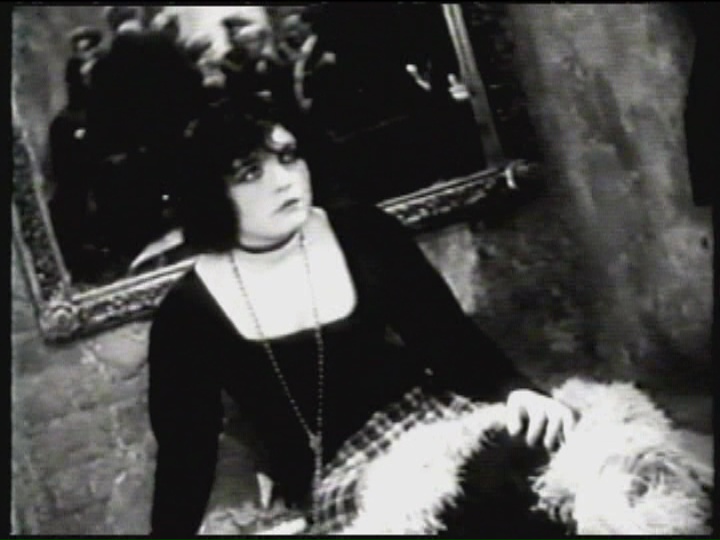
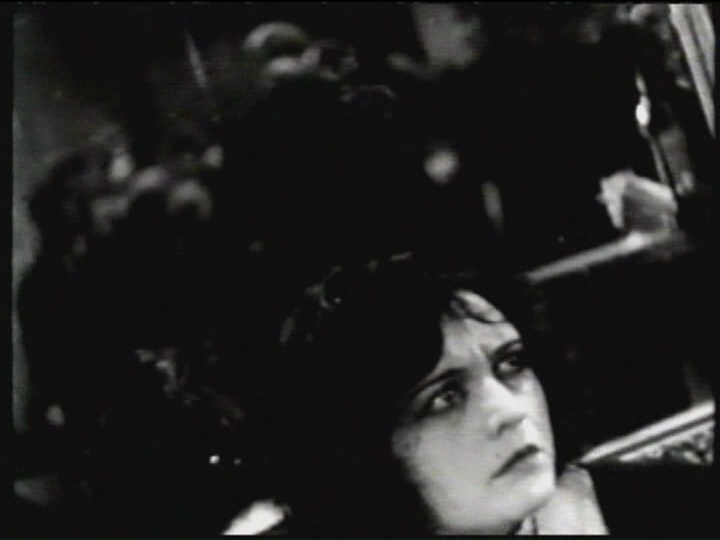


Max is slapped gently awake from his stupor, exits, enters the same street. The pair are ahead of him and hide in the shadows. Louise is following the keeper, desperate. “Take me! Take me!” She’s saved $100 and will give him everything. The camera tracks in front of them, capturing his flight and her determination. She stumbles, falls. She’s pleading. “Max will kill me!” she says, and it’s the first time we’ve seen a character’s name spelled out on screen. The keeper strokes her hair, calms her. Overcome, she sinks back against the steps. He folds her boa into a makeshift pillow, slips some money into her purse, and takes to his boat to leave.


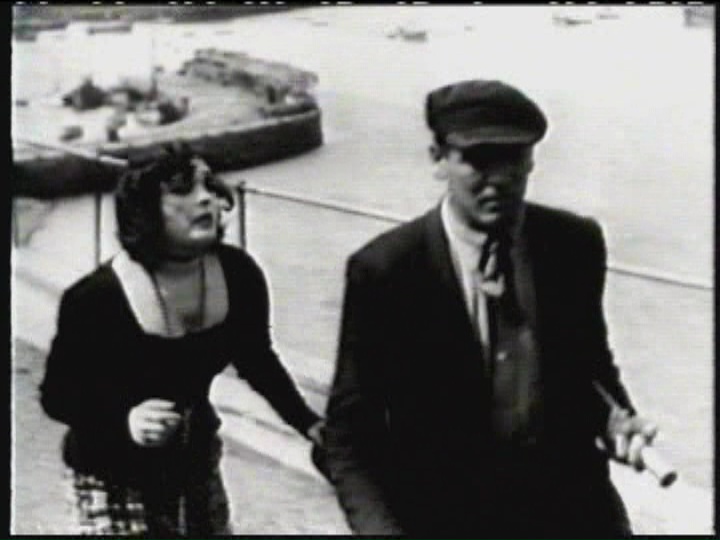

The sea is swooshing past. The wind rises. Birds flock around the mast. The camera bobs, is assaulted by waves. The sea hurls itself against the dock. The camera grows seasick: shots of sea, sky, boat, hands, waves, foam. Rapid cutting. John is overboard. He prays to God: he will save the unfortunate if only his life is spared. The skies calm. Czinner dissolves from the roughing waves to the static image of the married couple—and the two images overlap, the mobile waves and the immobile couple. It’s a moment before you realize it isn’t a photograph but a moving image, so still do John and Louise look. The camera pans to the others at the table, first left, then right, then tracking back: a bizarre, entirely frozen crowd. As the camera tracks back and back, a dark figure crouches in the foreground: it’s a photographer, who snaps his shutter, and suddenly the scene comes alive. It’s an extraordinary little scene, so strange and sinister. What is the future of this frozen marriage?


They come home. Louise wanders around, at a loose end. She sits on the bed, huffs and puffs in—what? Boredom? Frustration? The husband walks up and down. Louise wipes her nose on her wedding dress. “Anything to drink?” she asks. She lights a cigarette, as her man paces up and down. He goes to the window, looks out. Louise throws off her veil and gown, shouts at him. John doesn’t hate her, he says, but worries he’ll do her no good. But suddenly she is tender, and he too. She wants him to forget her past.


The waves break upon the shore. The camera pans around the bedroom. Louise is in bed, cosy. She reaches in her half-sleep to the pillow next to her. Where is he? She gets up, sets kettle on stove, lights a fire. The camera pans around the room, watching her busy herself with wifely duties: but she’s in a flap, dropping things, in too much of a hurry. A cat is eating an egg she’s dropped. The fire is too strong. The kettle is too hot. She’s spilled the milk. She’s cut her finger on the breadknife.

She goes out, to the shore. She wanders over the rocks, out towards the lighthouse. People stare. She makes the same visual and spatial journey as made by the camera in the opening of the film: the same shots, now occupied by her. She shouts up to her man: why didn’t he eat before leaving? His life is tied to “the blue paradise”. (This is the name of her former brothel, and John’s phrase seems to make her look down in fear, or regret, or shame.) But he’s smiling at her care for him, and she busies herself making her man and the older keeper some tea. The older man looks at Louise’s legs—or is it the high heels she’s worn to climb over the rocks to reach them? He’s laughing at this strangely allied couple: the gruff sailor with lipstick on his cheek, and the housewife in heels and makeup who’s climbed out to the lighthouse. John wipes away the trace of the kiss, just as Louise hides her hurt as she turns and puts on her shawl, offering a smile as she leaves. He runs after her, gives her money to buy new shoes and a scarf. She goes away, over the barren rocky landscape inland.


Back home, she sits and takes off her stockings and shoes. In the mirror, she looks at herself. The camera cuts closer, and closer still. She wipes away a beauty spot, her lipstick, a smear of mascara. She ties her head in a scarf, hides her hair away. She is transformed. She smiles at herself, and it’s a warm, surprised, happy smile. It’s a beautiful scene, and touching.

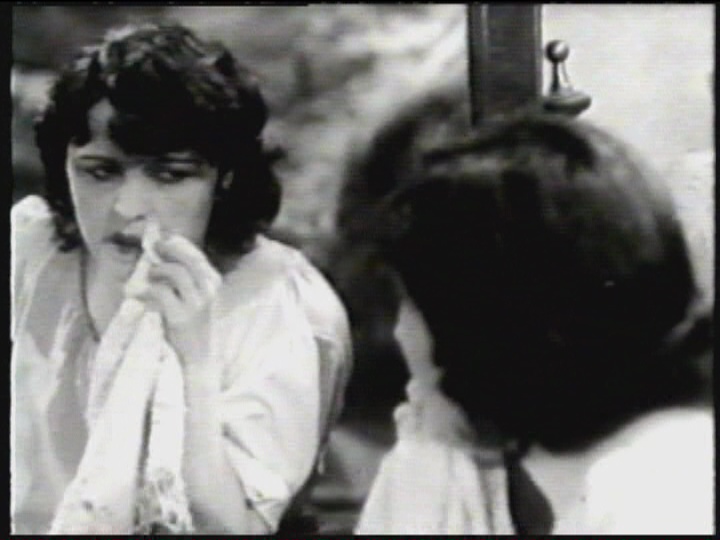
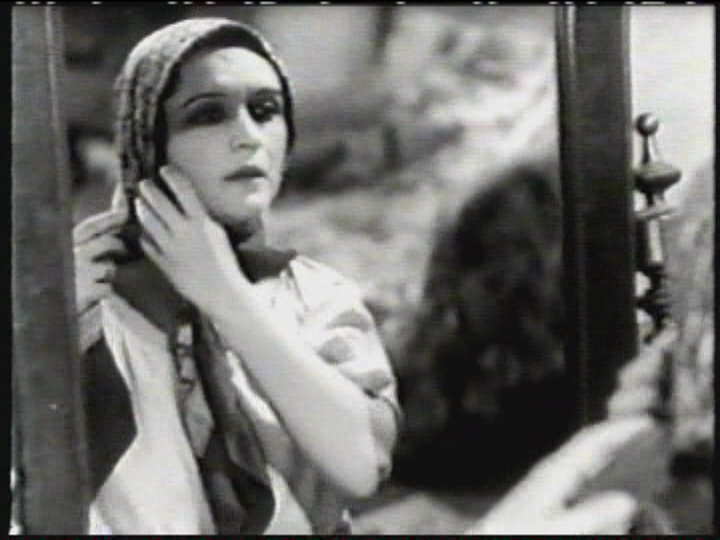

So Louise is at home, with flowers, with kittens. The camera once more pans around to follow her domesticity. It’s better done this time, and her husband arrives to embrace her—and it’s a warm embrace. They’re both smiling for the first time. She cuts his butter, hands him the bread. She’s gazing at him, lovingly. “It’s been three months”, she says, and finally she feels he had confidence in her. They go together through the village, and rather than stare at her the locals smile and doff their hats to the couple. They embrace on the beach, and she nestles her head against his neck.


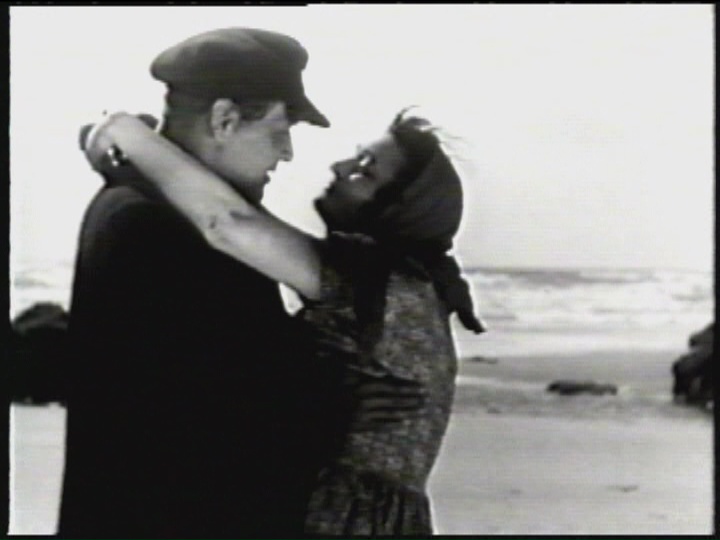

But who is this following her on her return to the village? It’s Max. He noses around town, sees the photo of the wedding on the noticeboard.
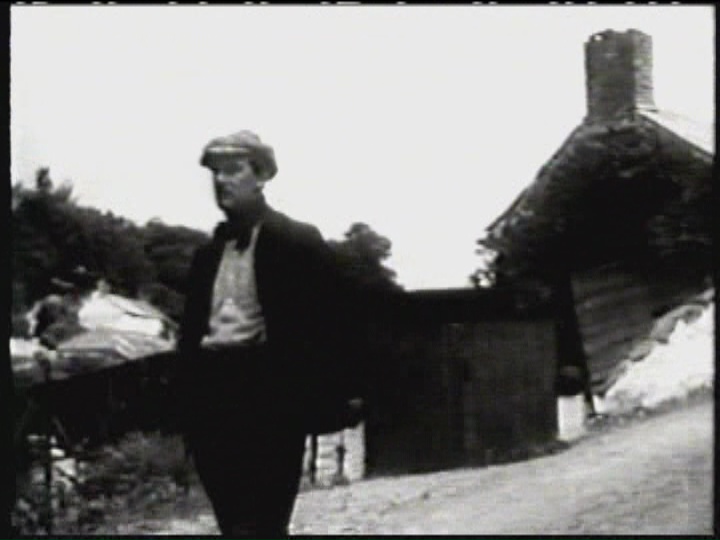


Cue a scene of Louise singing, wordlessly. She’s interrupted by the cat, then by Max. He appears first as a silhouette on the wall. He’s threatening. The camera is tilted again, as it was at the brothel. “What do you want?” “You!” But the neighbour is at the door. Louise ushers her out. Max has hidden on her bed, and makes himself comfortable to sleep. Louise implores him to leave. He gets up, his huge shadow trailing him around the room. The police are after him. Louise is on the floor, the tilted camera looming over her—she’s desperate, oppressed within the frame. She will find John (the first time he’s named) and tell him everything. But Max wants money, time to rest, and doesn’t trust John to be told. He tells her to turn off the light. So the only light in the room is the intermittent flash of the lighthouse: it’s a beautiful moment.


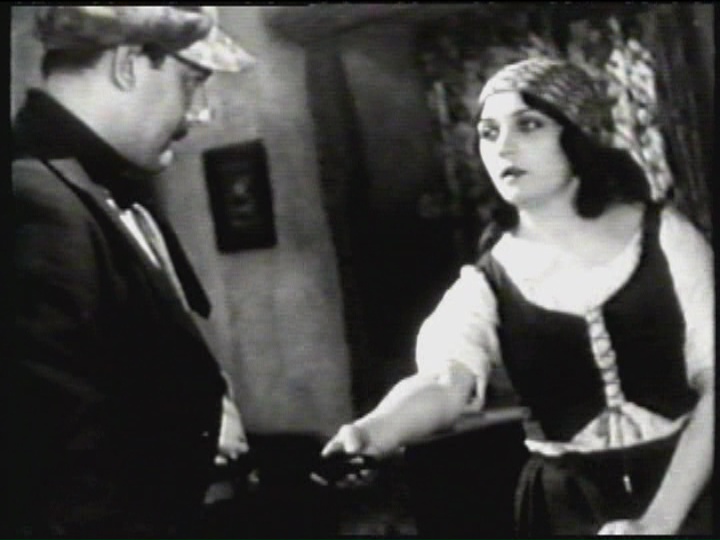

Next morning, the neighbour sees Max leave the couple’s house—and sees the wanted poster of Max, freshly plastered to the wall. The village is in uproar. The policeman comes to Louise to ask about Max. She’s wrapped in her black shawl. She looks so vulnerable, so cold.
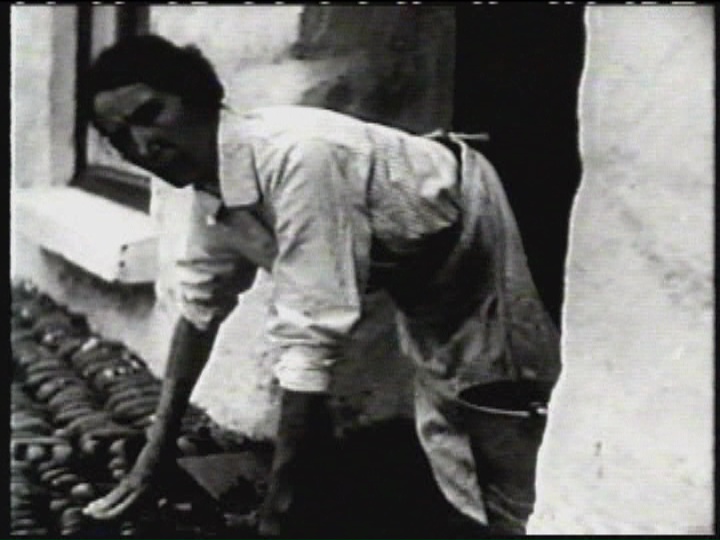


Back at the lighthouse, John sees Louise arrive by boat. She breaks down in tears, throws herself into his arms—tells him about Max. It’s all done in a single take, without titles—her face says everything. She lied to the policeman not to save Max “but to save my happiness”. John demands she denounce Max if he turns up again, and she swears—her hand raised in tentative agreement. She’s afraid to go back to the village (and the villagers), so stays with John at the lighthouse.


But here’s Max, whistling from the gate of the lighthouse. Louise creeps out, to make Max go away. She gives him money, demands he go away on her boat. As the wind whips her hair, she looks on at the men fight. John tells her to go away forever, calls her a whore—and the word hurts her. She drags herself away, away to the water’s edge. She gets into the boat. The villagers and police arrive, and as Max flees, he falls to his death. And Louise? The waters are raging, a storm building. She rows. The skies darken. She hears his words again. She is alone with the camera, her face in the leigh of the light. She flings aside the oars. She stares at us. What do we think of her? Cut back to land, where John is on the shore, his back to us, staring out to sea. We see an upturned boat on the shore, amid the foaming waves. The sea and sky are dark, but a patch of sunlight catches the white hull of the boat. Waves break over its back. The camera holds upon the image—holds, and holds… FIN.


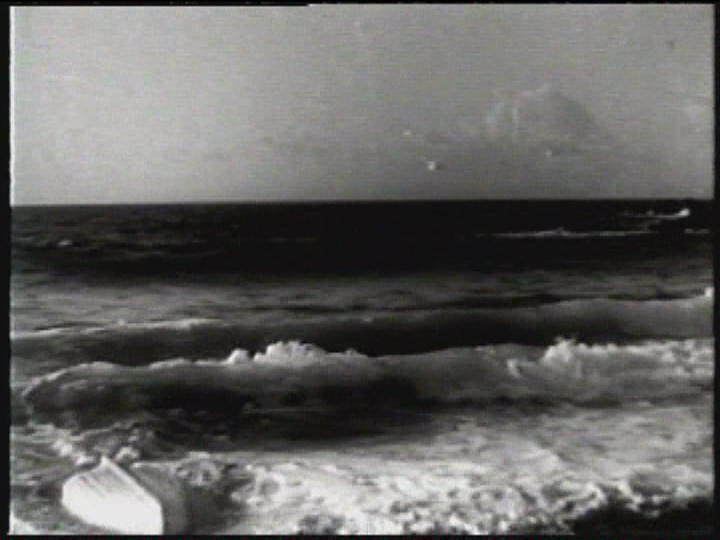


An excellent film. Czinner makes the most of his small cast, low budget, and coastal locations. The deserted Cornish (or should that be “French”?) streets are turned alternately into idyllic retreats or threatening, noir-ish mazes. The locals are friendly but can turn into a mob. From the dark world centred on the brothel, we go to the windswept expanses of sea and sky around the village and lighthouse. This society may be remote from the lower depths of the brothel, but it can still judge and condemn individuals. Louise is dominated by Max in the brothel, but married life with John carries its own burdens. And the elements are there all around, threatening and buffeting Louise in her new life.
At the heart of the film is Pola Negri, who is always compelling. To see her smoking, dancing, flirting, and fighting in the brothel scenes is a thrill. And to see her find something that might be love, and to make somewhere that might be called home, is moving. Though I can imagine other stars of this period in similar roles, I cannot imagine them doing quite what Negri does here. Gloria Swanson, in her more daring outings, such as Sadie Thompson (1928), might have pulled it off—but her glamour is of a different order to that of Negri. Glamour is a kind of presence, but I don’t know if it’s the word I’d use to describe Negri’s presence. Thinking of slightly later films, you might imagine Marlene Dietrich taking on this role of prostitute-turned-housewife. But Dietrich (at least for Sternberg) likewise has a kind of glamour that doesn’t thrive in the climate of a film like The Woman He Scorned. She’s impeccable, even in poverty, even in exotic locations. I could imagine Dietrich in the brothel of Czinner’s film, but not on the streets even immediately outside it. Perhaps my imagination here is too limited to the impeccably arranged mise-en-scène of Sternberg films, and I do Dietrich a disservice, but somehow I can’t see her being so open to the elements as Negri. And I couldn’t imagine Dietrich convincingly becoming a housewife for a lighthouse keeper, which Negri does—or at least conveys her own belief in being that role. Negri is a messier screen presence, more able both to be convincingly violent and convincingly tender. Dietrich never moves me; impresses, yes, but never moves. (But I suppose, her films with Sternberg are not meant to move you in such a manner. Doubtless Sternberg might scoff at my talking about his films in such a way.) Negri has a bodily presence; she’s more than an image, more than a luxurious piece of the mise-en-scène; she’s able to be raw. Though I love her presence on screen, I can far more easily imagine her walking off screen, off set, and onto the real streets than many of her contemporaries.
Not that The Woman He Scorned is just Negri. The world around her is atmospheric, and the performances around Negri set the limits of her world, the horizons of her expectations. Warwick Ward is pleasingly greasy, selfish, and violent—while still looking like he might, once, have been charming. As John, Hans Rehmann is solid if not remarkable. Frankly, I’d need to see a better-quality print to better follow his facial and bodily performance. For much of the film, he is the cool, collected presence against which Negri’s more expressive performance contrasts. It’s the point of his character to be emotionally reserved, almost stolid. John understands the duty of marriage, but not the reality of love. Rehmann certainly has the physical build to convince as a sailor, and he conveys the conflict between his good intentions and social prejudices well. He has the bulk to protect Negri from the outside world, but also the bulk to exclude her from his inner world.
All of which brings me back to the production itself. Czinner’s camerawork is fluid, expressive, articulate. There are only a handful of intertitles in the whole film, and you’d virtually be able to cut them all and still have a coherent narrative. So articulate was the film that (even watching it in appalling quality), I didn’t feel the need to ask questions about the names of the characters or the location of the film. However, trying to do the most basic research on background to the film has proved illuminating—and confusing. I’ve titled this entry The Woman He Scorned, but is this even the correct title for the film? The BFI lists no less than seven alternatives: “Hunted”, “Traquée”, “The Street of Lost Souls”, “Rue des Âmes Perdues”, “Son dernier Tango”, “The Way of Lost Souls”, “Seat of the Fallen”. In her memoirs (Memoirs of a Star, 1970), Pola Negri calls the film “Street of Abandoned Children” (334) and claims the film was retitled “Seat of the Fallen” “in England and America” (338). It’s a marker of the film’s status on the borders of silence and sound, as well as between UK, European, and US markets, that it should bear so many aliases. Released in 1929 as a silent film, then swiftly reissued with a soundtrack of music and effects, it is currently available to watch only in a murky print with French titles. (These titles have themselves been digitally replaced with English for the sake of the shitty DVD I watched.) And who wrote the script? The BFI page says Czinner wrote the scenario, but other sources credit Charles E. Whittaker—an Irish writer and producer, whose company was the British element of this British-German coproduction.
So, if I refer to this film as The Woman He Scorned, I do so because it seems the most succinct summary of its story—and because all these talk of “streets” and “ways” raises the question of the film’s setting. Where, exactly, is the film meant to be set? The street signs in town are in French, but the wider view across the harbour looks more like south-west England—and the village around the lighthouse is clearly Cornish. In his biography of the actress (Pola Negri: Hollywood’s First Femme Fatale, 2014), Mariusz Kotowski describes Pola’s character as “a Marseille prostitute” and John as “a law-abiding sailor with strong convictions” (163). Fine, but are we meant to be in Marseille in the opening scenes? And how far away is the lighthouse from the town? If this man is John and not (for example) Jean, what nationality is he? The synopsis provided on the BFI database describes John as “a French lighthouse keeper”. The more clarity you seek, the more confusing things get.
Negri’s memoirs offer some nice details around the production (though no clarification about some of the above ambiguities of setting). She recalls the Cornish location shooting thus:
We were quartered in a quaint little old village inn and naturally the natives were enormously curious about us. Many of them had never seen a motion picture and were not quite certain what was happening in their midst, except that it must be something of satanic design and could well bring bad luck to all who came in contact with it. Even without being accompanied by all of our strange equipment, actors would have been rumored to hold black masses and be practitioners of witchcraft. Add the cameras and lights and make-up and we must certainly be doing the devil’s own handiwork. As a result, it was initially very difficult for our production manager to persuade the locals to appear as extras, but raising the fees performed the miracle of lifting the curse of working with us. (339)
Negri even records the camera crew being assailed by “local men bearing down upon us armed primitively with pitchforks, rakes, spades, rocks, clubs”, their women and children marching behind them, “babbling in that almost unintelligible Cornish accent” (341). (Their crime was filming on the sabbath day!) What Negri does confirm is that Czinner did film some material in France, around Marseille:
The difference between the tiny immaculate Cornish fishing village and the teeming French port was a study in opposites. We were shooting in the actual Rue des Infants Abandonées in the heart of the red-light district. It was a narrow street in which prostitutes openly promenaded or else sat in windows lustily hawking their wares to lonely sailors off ships from every country in the world. (342)
But how much of this footage is in the film? And is the film—as I watched it—complete? Clearly, The Woman He Scorned needs restoring. Are there missing intertitles that would help explain the setting and character names? Are here any differences between the UK and international versions of the film? Is there any alternative footage or variation in editing? Is the ending the same in the other versions? But if I want answers to these questions, it’s because the film intrigues me. Lean, low-budget, and narratively simple, it’s nevertheless a stylish and emotionally engaging film with a great central performance.
Paul Cuff
 The Realm of Silence