This week, I’m off to Bonn! Well, that’s not quite true. This week, I’m staying home in order to watch the streamed content from this year’s Stummfilmtage Bonn. Last year was the first time I saw the entire online programme, and this year promises another excellent line-up. Day 1 takes us to America for a potent blend of crime, subterfuge, and revenge…
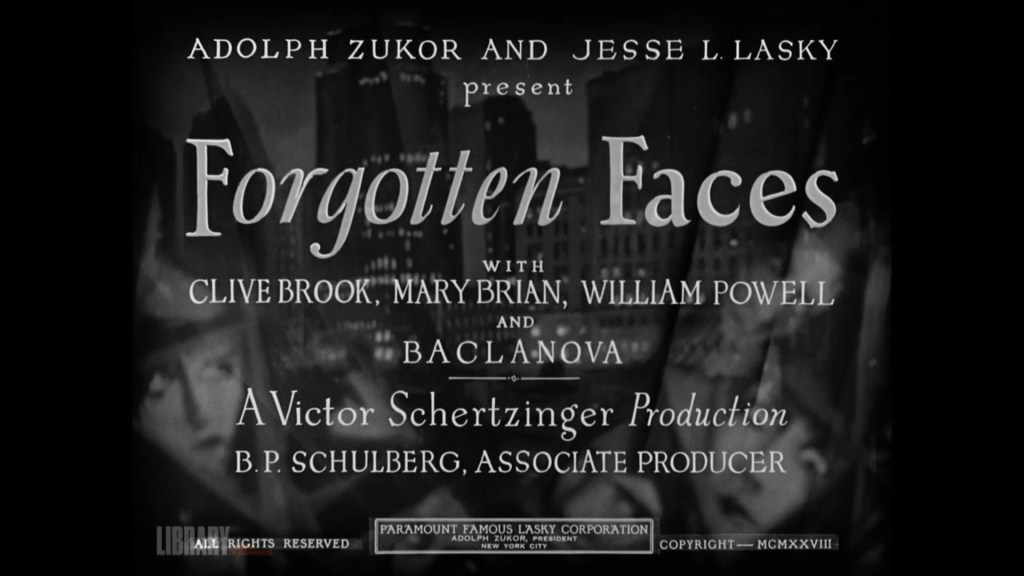
Forgotten Faces (1928; US; Victor Schertzinger). Harry “Heliotrope” Adames (Clive Brook), so-called for his signature fondness for the flower, is by day a loyal husband and caring father – and by night a gentleman thief. His wife Lilly (Olga Baclanova), meanwhile, is busy being a neglectful mother to their infant child Alice and having an affair. Discovering the pair together, and realizing that Lilly has also betrayed him to the police, Harry shoots dead the lover and takes the child away. He leaves the infant Alice (complete with sprig of heliotrope) on the doorstep of a rich married couple, the Deanes, who had lost their previous child. Making his sidekick Froggy (William Powell) promise to remember the name and address of the Deanes, Harry hands himself in to the police. Seventeen years pass. Froggy keeps the imprisoned Heliotrope up to date on his daughter, now raised as Alice Deane (Mary Brian), and on the movements of Lilly, who still hopes to find her daughter. Meanwhile, Froggy is tricked by Lilly into giving her information about Alice. Lilly then visits Harry, and taunts him with her plan to take custody of their daughter. Later, when another convict engineers an escape, Harry assists – but the pair are thwarted. Harry having saved the life of the warden during the ensuing fight, he is given parole – promising not to lay a hand on his wife in the pursuit of his daughter. Outside, Harry and Froggy find Alice in the company of her fiancé Norman van Buren Jr., a rich heir. Hoodwinking his way into Alice’s household by pretending to be a new butler, Harry acts as her guardian. He also threatens Lilly and, in the climax, lures her to the house of Alice in order to get her to commit a crime and die in the escape. Sacrificing his own life for this purpose, he lives just long enough to say goodbye to his daughter. THE END.




Well, well, well, what an excellent slice of crime drama this is. I wondered what kind of genre this might be, since the tone subtly shifts gear in the opening act. It begins as a Raffles-like case of Harry as a gentleman thief. Added by some charming and witty dialogue, I assumed the light touch would continue. However, this film soon starts pulling its punches. The sudden, unapologetic way Harry kills his wife’s lover (off-screen) is startling, as is the way Harry later engineers Lilly’s death. I found the tone a little disconcerting later on, when the film milks sentiment from the father hiding his identity from Alice. Though there are some gorgeous touches – as when Alice calls out to her father, and both Harry and Deane turn to respond – I found myself increasingly unsympathetic to Harry.

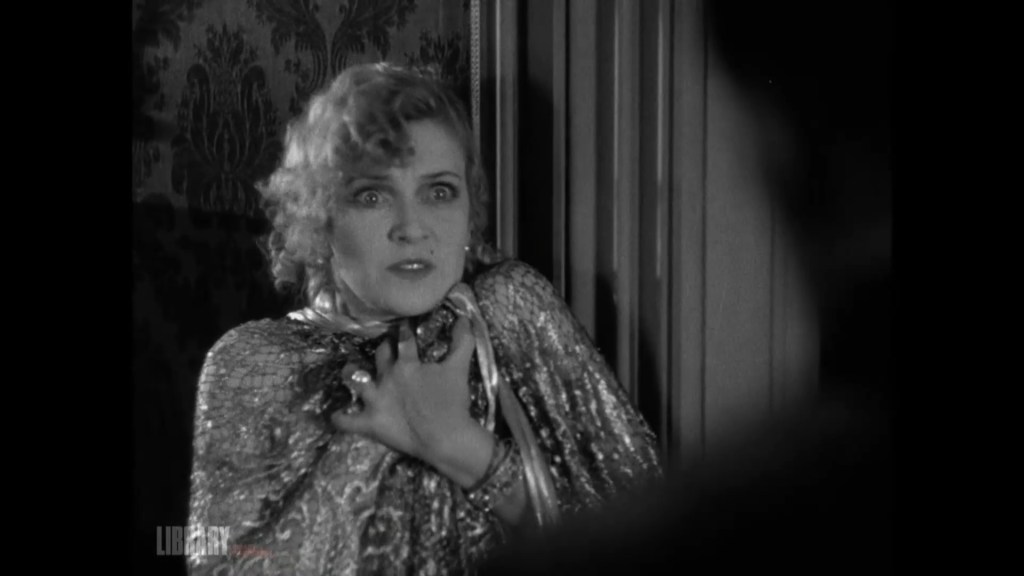
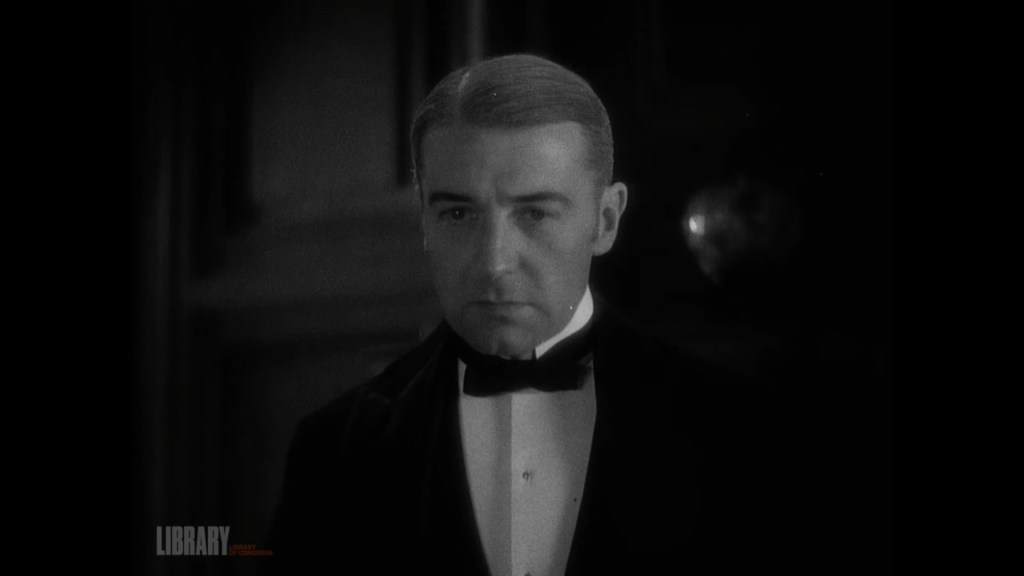
This was in part due to the performances of Clive Brook and Olga Baclanova as the estranged couple. For me, Baclanova was by far the most engaging presence on screen. She is wonderful as Lilly, always on the verge of wildness – like her hair, which when uncontained by her hat springs out in a kind of pale mane. By contrast, as the older Harry, Clive Brook’s hair is pasted and greyed into a kind of docile wig – so orderly and so meek that it almost hurts to look at. If Brook maintains a kind of sad father nobility, Baclanova gets to play an increasingly desperate emotional state. Harry plays weird mind games with her (stalking her, sending her threats, luring her from her safehouse), a kind of escalating cruelty that the film never questions – but that Baclanova makes you really feel. Lilly is mentally teased and tortured to the point where she is so desperate to be free that she confronts Harry. When he dies, saying he has kept his word to the warden, I felt much sorrier for Lilly than for Harry. After all, Harry has kept his promise not to touch Lilly but has carefully directed (in every sense) her death – albeit at the price of his own. And even the murder she commits – his – is the result of Harry’s own bluff and entrapment. He has made her commit murder, forcing her to play the part that he has cast. It’s a nasty ruse, one which the film seems to think we accept on the basis that Lilly is a bad mother, a kind of failed vamp, who surely doesn’t deserve to have her child – or even to survive the film. What exactly is the fate that Harry assumes Alice will have under Lilly’s influence? Whatever it is, it’s a fate so bad that he’s prepared to kill Alice’s mother to waylay it before it even happens. Lilly doesn’t have to commit a crime to be deemed a criminal; Harry can commit several but dies believing himself a hero. Though Brook’s performance is good, there is a kind of smugness in Harry’s victimhood (and apportioning of pre-emptive blame on Lilly) that rubbed me the wrong way. Does being a well-intentioned father excuse two murders? Does Harry’s oft-stated belief in the sanctity of marriage justify him being judge, juror, and executioner-by-proxy of his wife? Is Lilly so inherently wicked that she deserves to die? Certainly Harry seems to think so, and the film seems to think so.


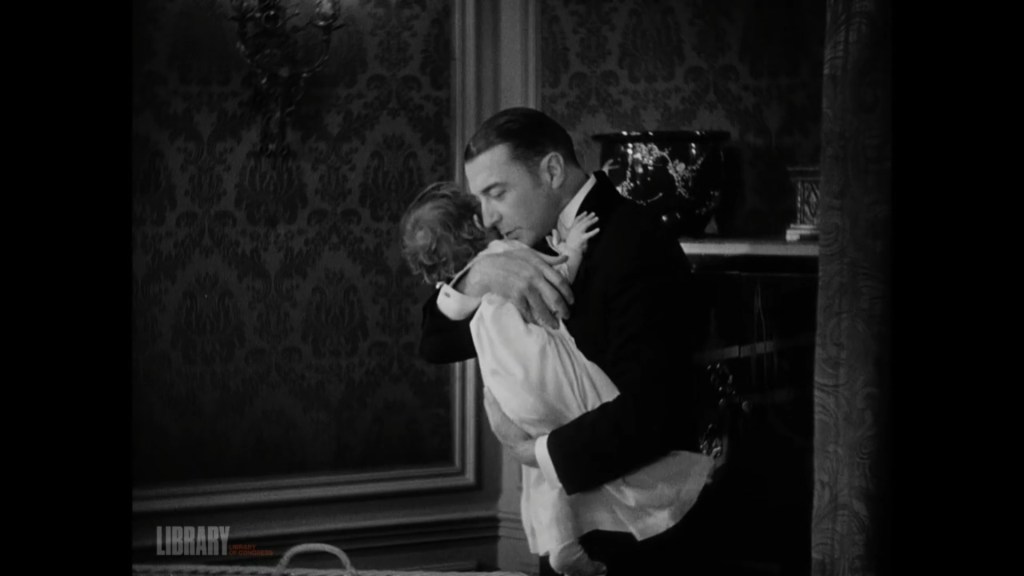




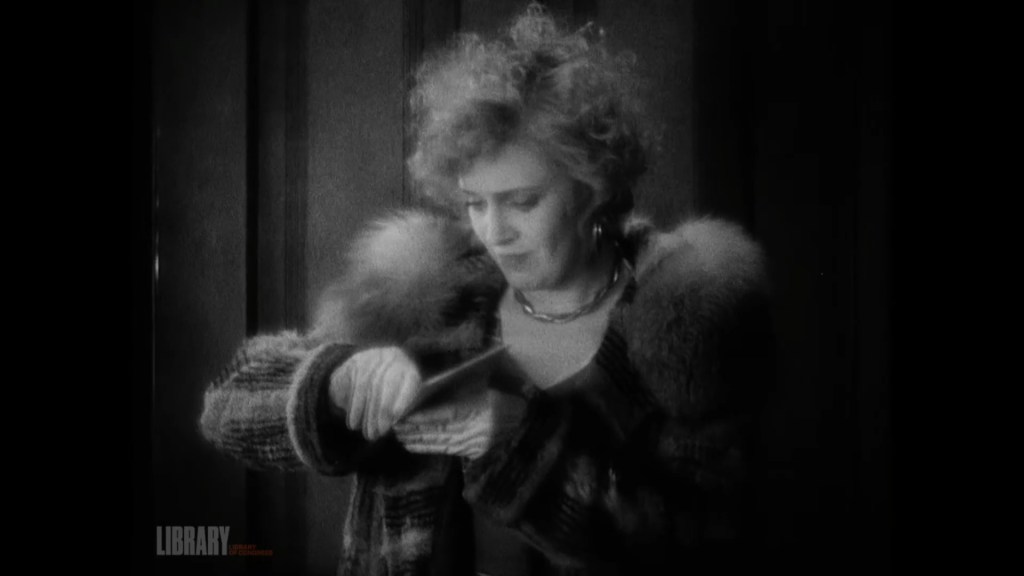
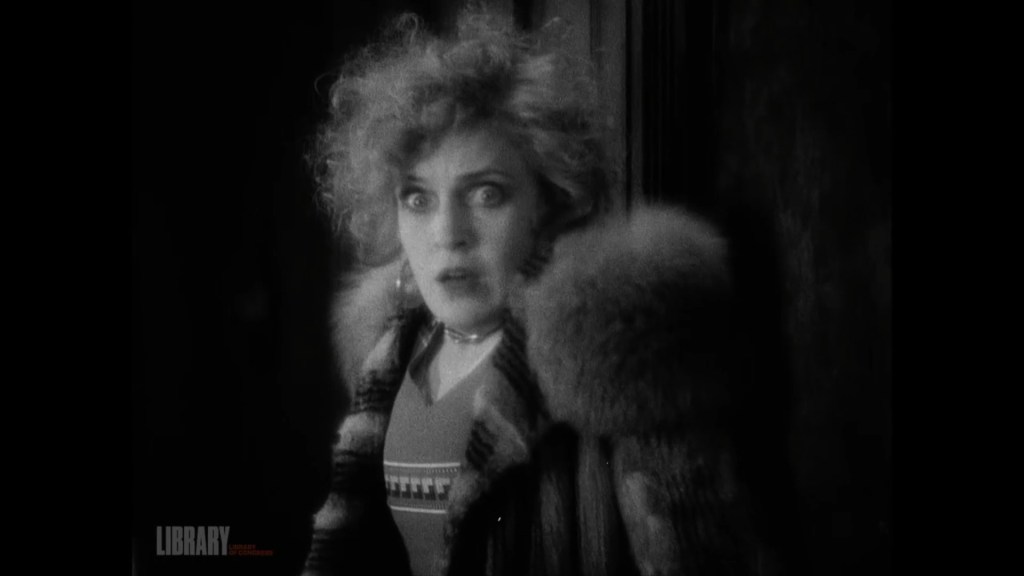


I should also mention William Powell, who as Froggy gets to sport a delightful monobrow that is at once comic and sympathetic, marking his character as a sidekick. He doesn’t get much screen time, but Powell nevertheless gets to shape this little character into someone with a past, and with some humanity. (Froggy, it seems to me, is a far more sympathetic character than Harry. I’d rather like Froggy to have been given a gag or a send-off at the end of the film to indicate that things turn out alright for him!)
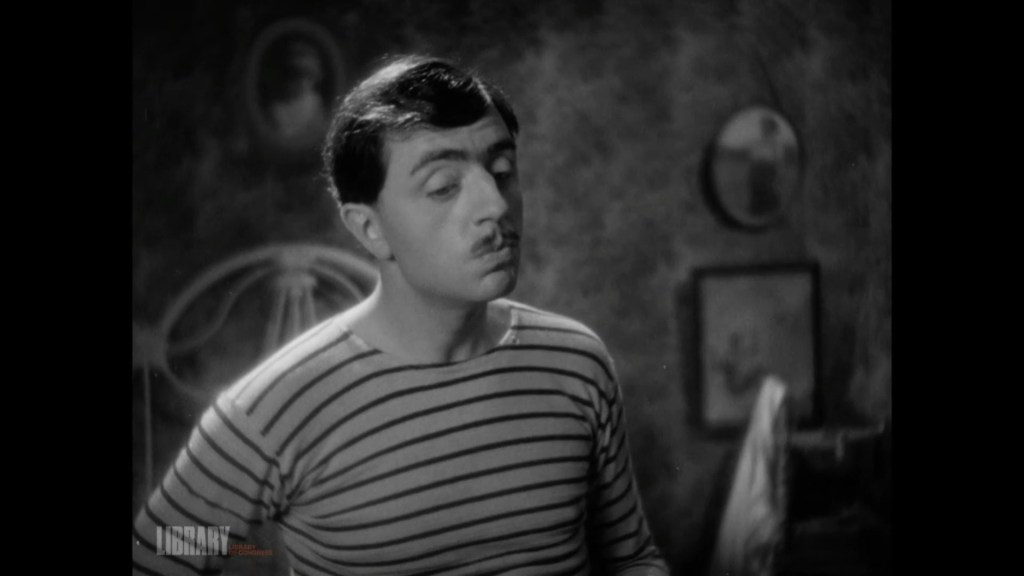
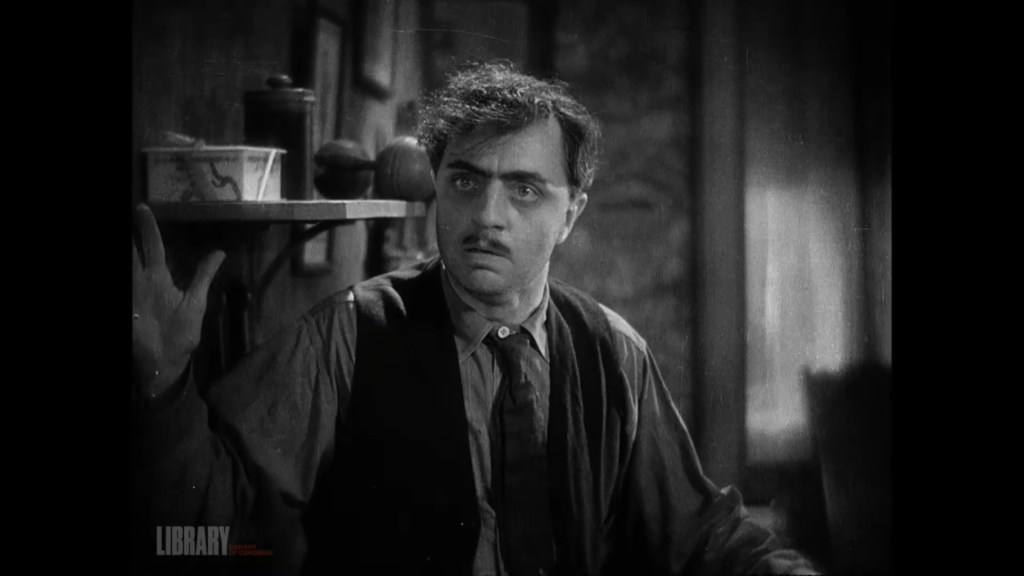
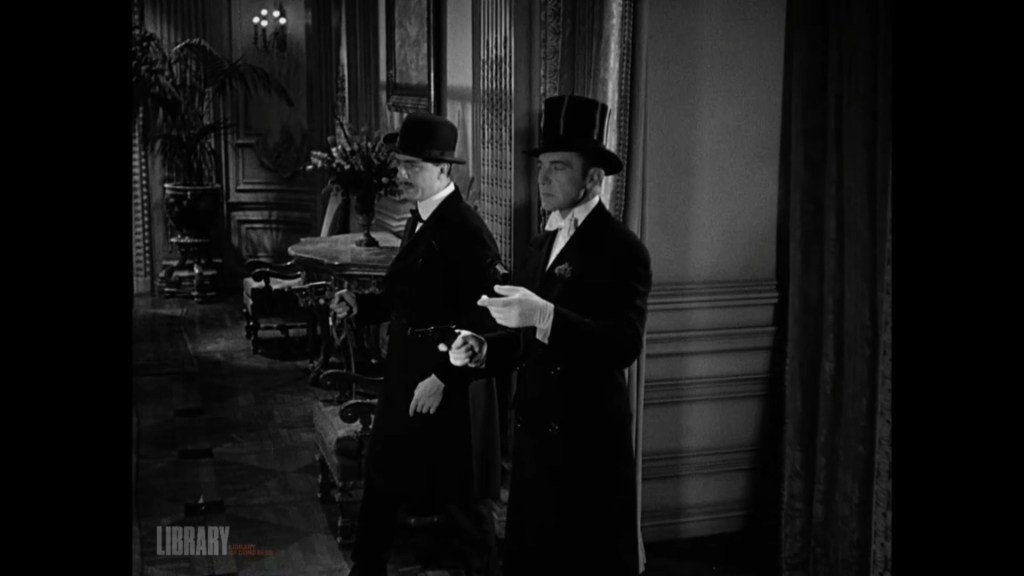
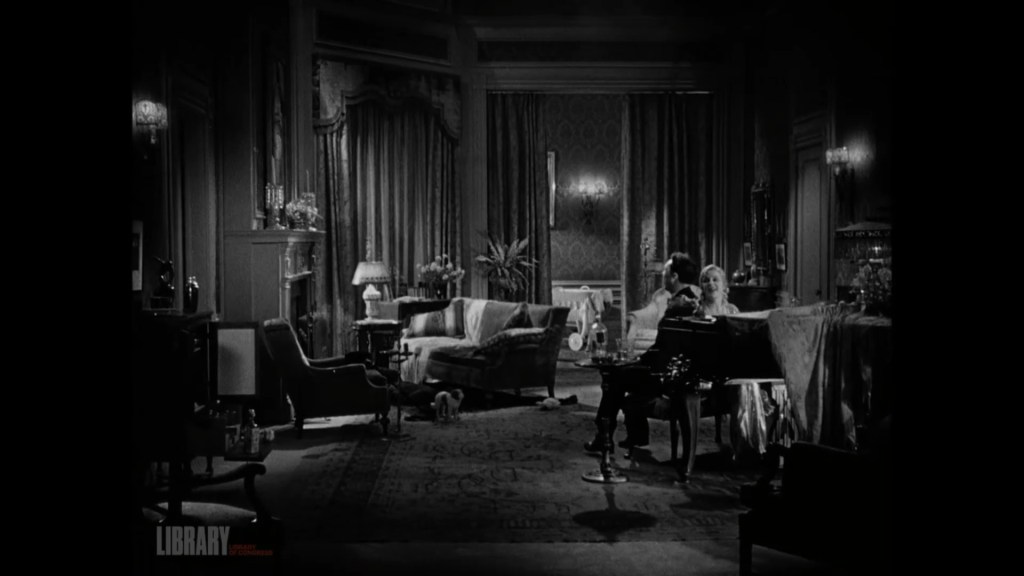
Whatever I thought of the characters, I was absolutely captivated by the look of Forgotten Faces. The cameraman was J. Roy Hunt, who does some remarkable work. There are some fabulous images of the gambling house at the start of the film. I love the shot from within the roulette wheel, looking up through the dial to the eager circle of faces of the gamblers, and then the roving camera – tracking and panning – that penetrates into the midst of the eager throng. Here and throughout, there are scenes with superb low-key lighting. The nighttime exteriors and interiors (the street, the prison, the Deane house) have some exquisite lighting, moody and atmospheric: this is film noir avant la lettre. (So too, I suggest, is its punishment of the wayward female character.)


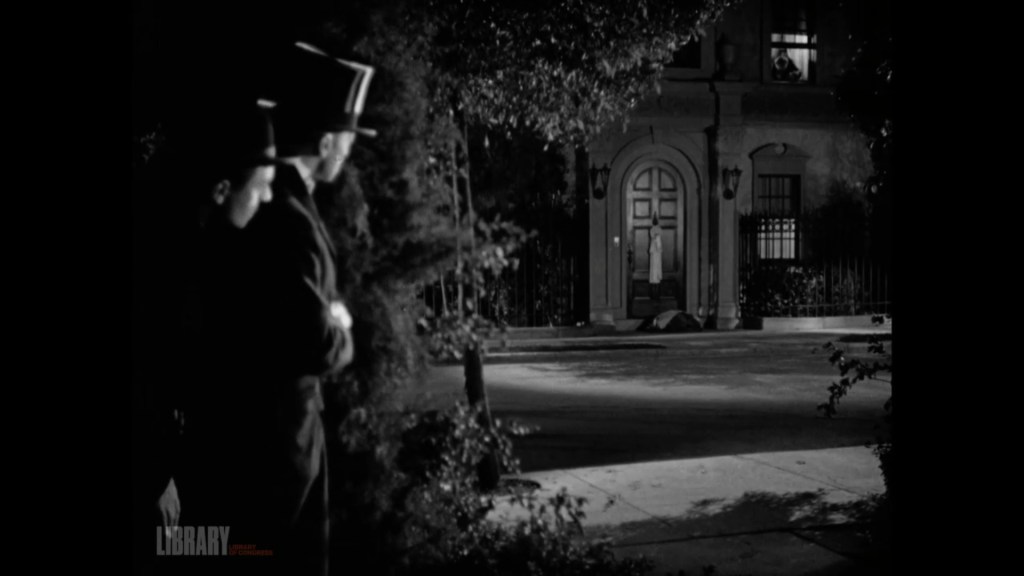
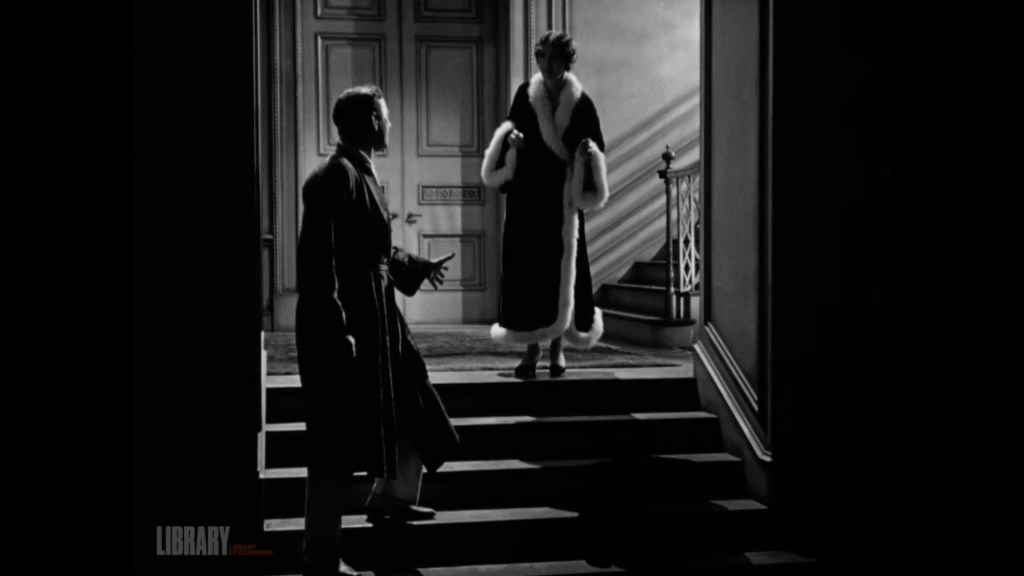


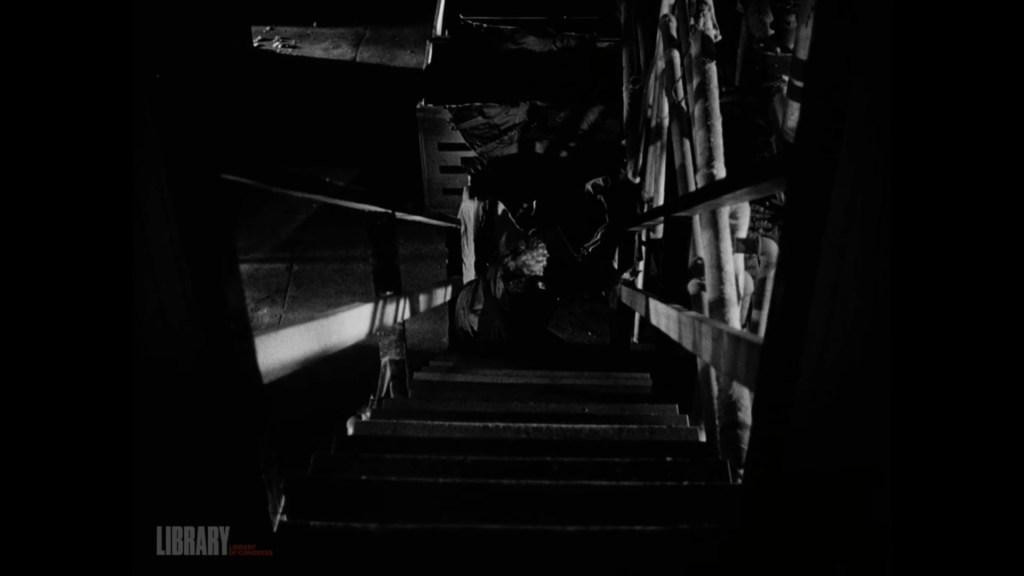


This reaches its zenith in the climax to the film, which boasts an astonishing moving camera that seems to glide through the entire house – round corners, up flights of stairs, through corridors, through doors. It’s an outrageously well-orchestrated use of movement, combined with incredibly complex lightning. (Rewatching it again, there is a subtle cut that slightly breaks the spell – but nevertheless, it is wonderful as a whole.) It’s the perfect device for the sequence, which is Harry luring Lilly to her doom. He has him himself acted as metteur-en-scène, using shadows, props, and hired actors to trick Lilly into shooting him then falling to her death on a sabotaged ladder. As a viewer, you absolutely feel as entranced, almost as will-less, as Lilly as she follows Harry to her doom – and his. An amazing sequence.
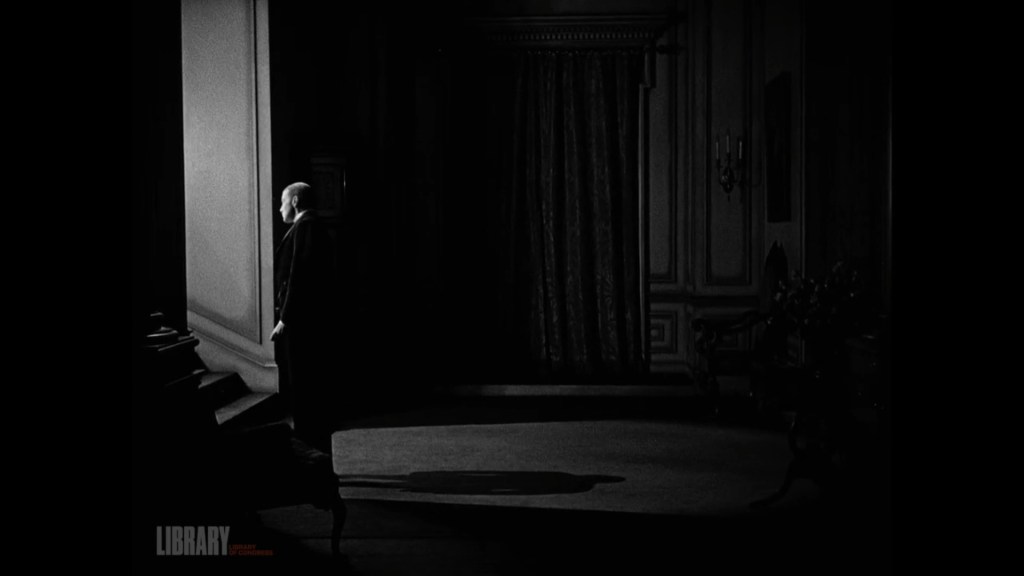


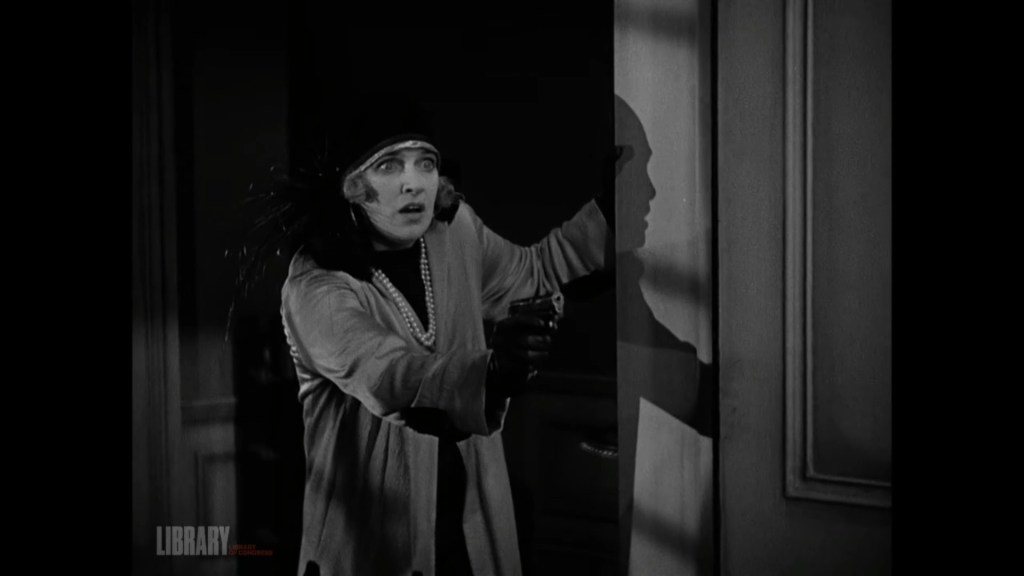


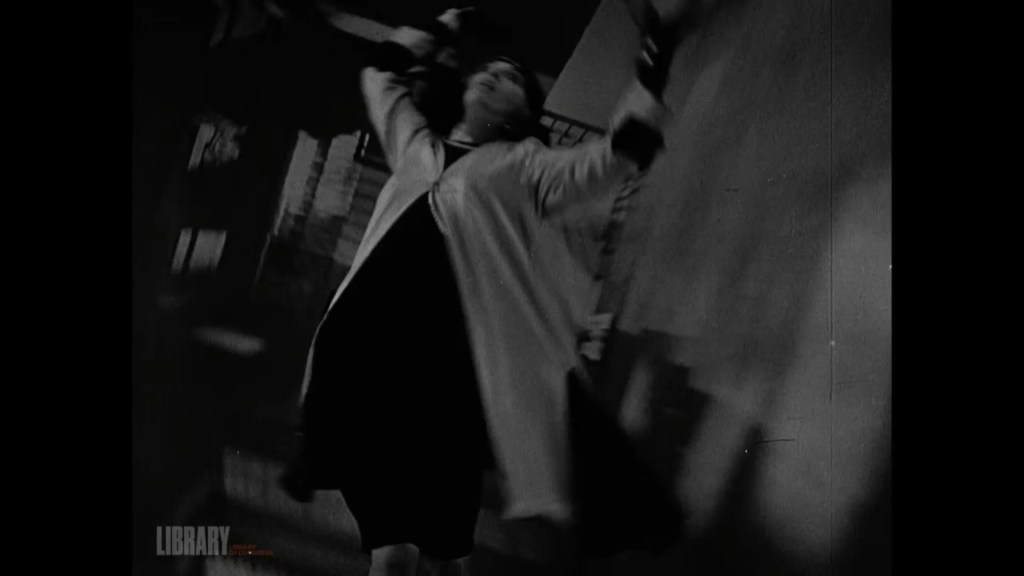


Finally, a word on the presentation. The film featured piano accompaniment by Meg Morley, which was excellent: melodic, atmospheric, always appropriate. The restored print from the Library of Congress was superb to look at. There was a copyright logo in the bottom left of the screen (as you can see from my images), but its placement and design rendered it unobtrusive. This film is so rich to look at that you quickly forget the logo is there. (Unlike some copyright logos, as I mentioned last week.) All in all, a fabulous way to start the festival.
Paul Cuff
 The Realm of Silence