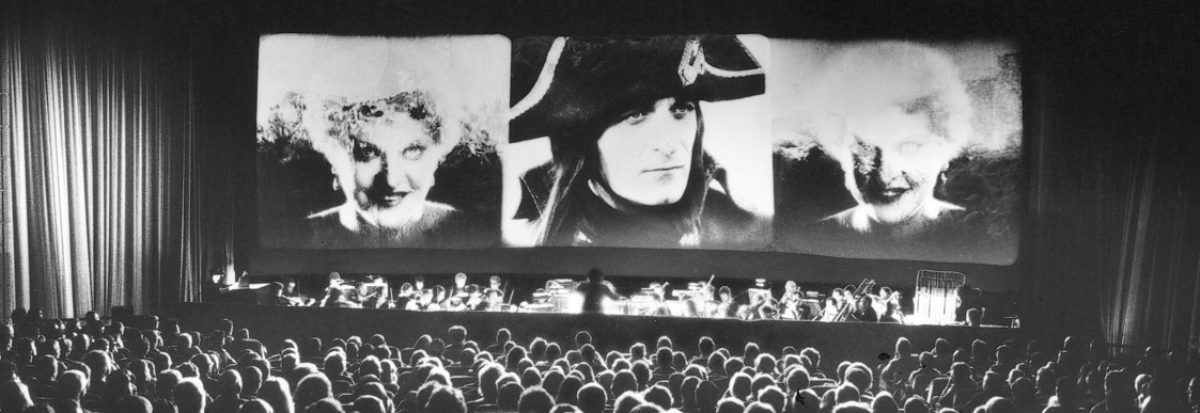
This week, I’m returning to my notes for another piece on the music of the late Carl Davis. In August, I wrote about the recording sessions for Napoléon. Today, I turn my attention to Ben-Hur: A Tale of the Christ (1925) and the orchestral score written for it by Davis in 1987. In May 2016, I experienced four successive performances of this music with Davis conducting the City of Birmingham Symphony Orchestra: two run-throughs at the CBSO Centre, followed by a dress rehearsal and public screening at the Birmingham Town & Symphony Hall.
Returning to the notes I made at the time, I’m struck by how little I wrote compared to the recording sessions of Napoléon. This is more to do with the different pace and atmosphere of the two environments than my own levels of interest. (Watching orchestras rehearse and perform has been one of the greatest joys of my life.) The soundtrack of Napoléon was a thousand-and-one piece jigsaw, its recording continuity entirely separate from the continuity of the film. Cues were recorded in a way that suited the schedule and personnel. At the Angel Studios sessions in 2015, the music was being prepared for a soundtrack. In Birmingham in 2016, music was being prepared for a live performance. Instead of a jumbled jigsaw, the score was to be a continuous stretch of music: two hours and twenty minutes’ worth of sound. There were no click tracks, no visual markings. The orchestra sight read from sheet music, followed Davis’s directions, and marked changes or comments with pencil on their copies. It follows that the rehearsals were arranged around several long, near-continuous read-throughs. There was no technology, no instant feedback, no continuous repetition—none of the endless back-and-forth, chop-and-change rhythm of the recording sessions. It all felt curiously relaxed, far less pressured than the studio environment. Conversation often took place as the orchestra played: musicians might exchange whispered comments or smiles of encouragement, and were free to applaud good work. Davis, too, was free to use his voice as well as gestures to communicate during rehearsals. Yet all this was preparation for the intense collective concentration of the concert itself, a unique endeavour within an exacting timeframe—where no error could be corrected.
All of which is to explain why what follows feels brief compared to the Napoléon sessions I wrote about last month. Put simply, the continuity of the rehearsal and concert presented far less opportunity for notetaking. To make this piece more “complete”, I have used a subsequent publication and some additional memories to supplement the final sections on the dress rehearsal and actual concert performance. As before, I gather this material here for lack of any other viable place to share them.
Thursday, 12 May 2016: CBSO Centre, Birmingham
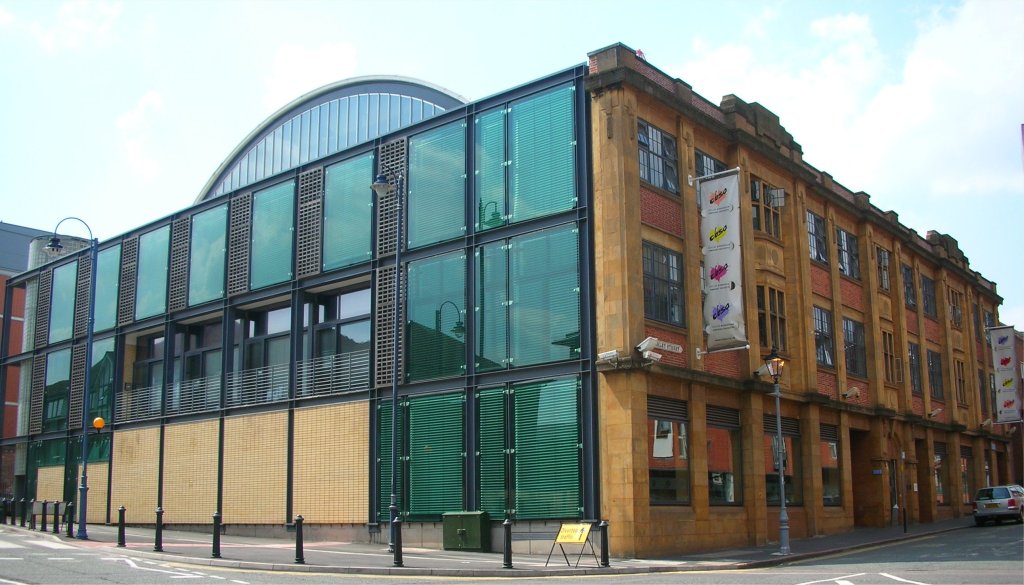

The CBSO Centre feels like a sports hall. Outside, chairs and sofa before the reception. Inside, it’s a great, empty box. High, bare walls. Wooden floor. Narrow galleries far above. Chairs stacked at the back. / I am used to the studio booth. The orchestra could ignore me there. Here, there is no glass and steel to sit behind. I sit conspicuously in my chair in front of the gathered instrument cases, facing the orchestra. I am the entire audience.
The rehearsal begins by lowering the curtains. The sound must be contained, but gently. Half the walls are slowly shrouded by synchronous ochre blinds that unfurl from the rafters. / Ben-Hur is placed on a makeshift plinth: a mobile crate wheeled before the podium is the base for a monitor. Back and to the right of the podium is a small table on which a laptop displays a timecoded copy of the film. In control of this, Davis’s assistant sits quietly waiting for instruction. / At the back of the room, the percussion section sends eyebrows into the air with a low blast of sound that shakes the wooden floor. / Rhythms break out in ignorance of one another. Melodies test their legs, as do technicians—on patrol with wires and portable kit. / (I can hear an organ, and I can see an organist at his keyboard—but where is the organ?)
An announcement for the players (there is an outside world). Other concerts, other dates, other commitments. / Davis is introduced. / Many of the orchestra have played for him before. But Davis manages an instant rapport with them all. He is already beaming, smiling, joking. / Davis calls Ben-Hur “a really grand film. We’re talking Wagner, Bruckner, Strauss—that kind of level. But there are laughs!”
Monitors are checked, scores flutter on stands. The bustle of settling down. / The orchestra attends. / “So…”, says Davis at last, “roll film.”

The “Dreden Amen” sounds in the brass. Thus does Parsifal draw nigh to the gates of MGM. / The percussion is on high, perched around the rear rank of players, but the sound seems to rumble under my feet—to trip me up from below whilst hitting me on the head. / Camel bells make me look up—just in time to see the animal negotiate a timecode and lumber across the crowded screen. / Romans and horns must coincide. Work to be done.


Davis encourages the violin leader’s solo to be less pretty—the character on screen is “pretty rough”. / The “Dresden Amen”. An immensely moving sonic apparition. My eyes seek the monitor. It’s the Mother of God! / There is no room in the inn. / Scenes from an illustrated bible. Timecodes are exacting in this world of legend. / Three kings are crossing the desert. (If they are not on time, the orchestra must be.) / There are whispers among the double-basses but they must concentrate on pizzicato.


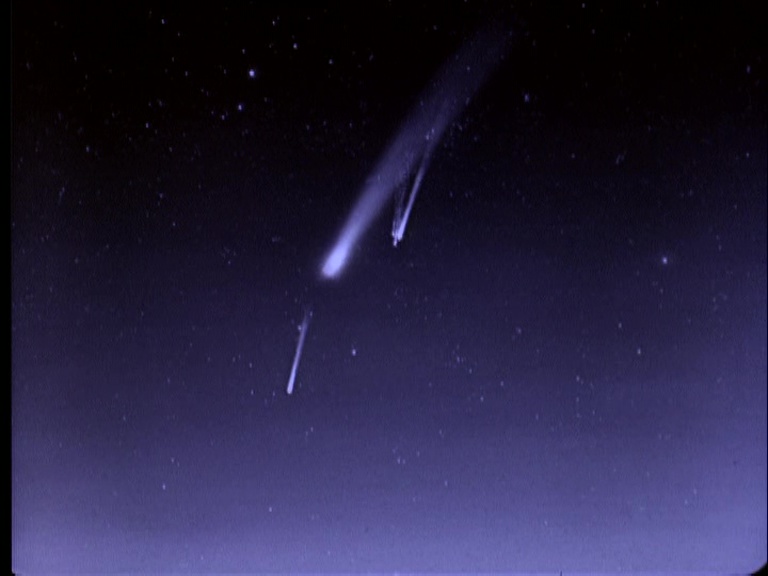
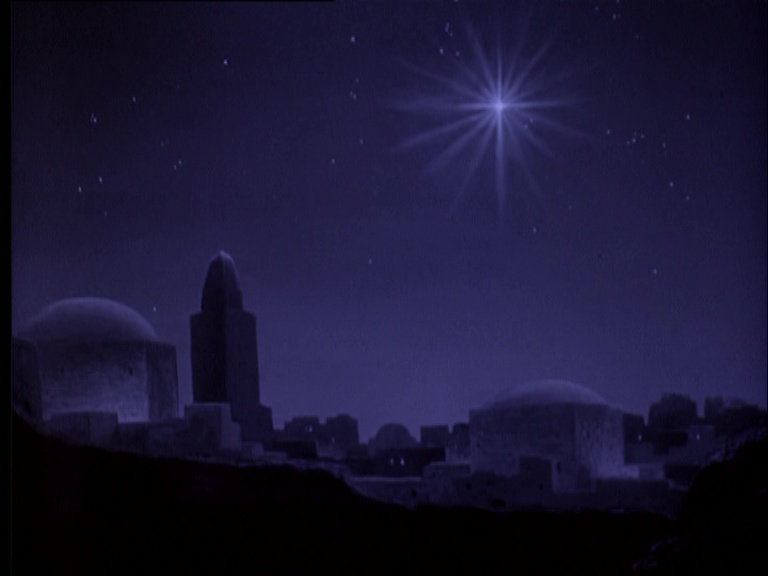
The star falls from heaven and comes to rest over a tiny stable. / We run through the birth of Christ. A glimpse of two-strip Technicolor. The music here is all, the images must wait to be unboxed. / The orchestra unfolds an immense crescendo. / Davis adjusts the balance of sound.




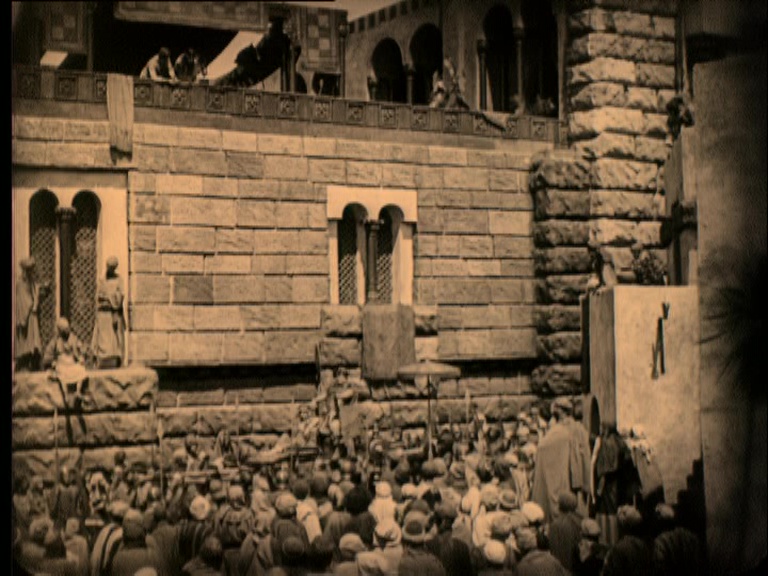
Later in time, Romans are marching. / Double-basses begin the march col legno, as if equipment were rattling on their shoulders. / Such is the fun they have, the players begin to laugh. / The cue is replayed. The double-basses go again. They are soon joined by cellos. Footsteps made into music. / (There is noise in the room. Coughs, whispers, a rustle of paper.)


Ben-Hur is introduced with his motif. I have not heard it for five years, and its sudden appearance moves me unaccountably. It’s like meeting an old friend. I gulp back a sob. (Would it be a social gaff to cry at a rehearsal? I feel more conspicuous than ever, the observer being observed.)
“Can we start at bar 30?” the assistant asks, so Davis translates into a timecode: “20:16 please”. / A run-through. / The curtains on the left of the room rise, to general bemusement.
“Now ’bones, you’ve got the full Roman ‘Bah-bam!!’ OK?” / Ben-Hur’s motif speaks for him. / Davis says, “Sorry, it’s my problem—I need to go a little faster.” / A man carefully holding a cup of coffee walks slowly on the uppermost balcony, pausing to look down at us.
The fanfares are out of synch—but my eyes are on the live players. More trumpets appear on screen—and nothing happens! The assistant pauses—plays—pauses, in confused expectation of a problem. / We start with the absent fanfare.


Romans march. Trombones have fun. The martial rhythm slowly spreads through the orchestra. Musicians—playing through the score for the first time—begin bobbing and nodding appreciatively. By the climax of the cue, some are swaying in their chairs. / (But this is kinetic learning. Musical preparation is also physical preparation. The concert tomorrow will be an immense exertion, a form of athleticism.) / The march builds up a head of steam, stretches its legs and chest to the full—“Then”—a tile falls from the roof and the orchestra scrambles into angry reaction. / Ben-Hur is arrested. A percussionist leaps from one instrument across to another. / I finally spot the organist, on the left. (No wonder I was confused. The pipes are somewhere else.)




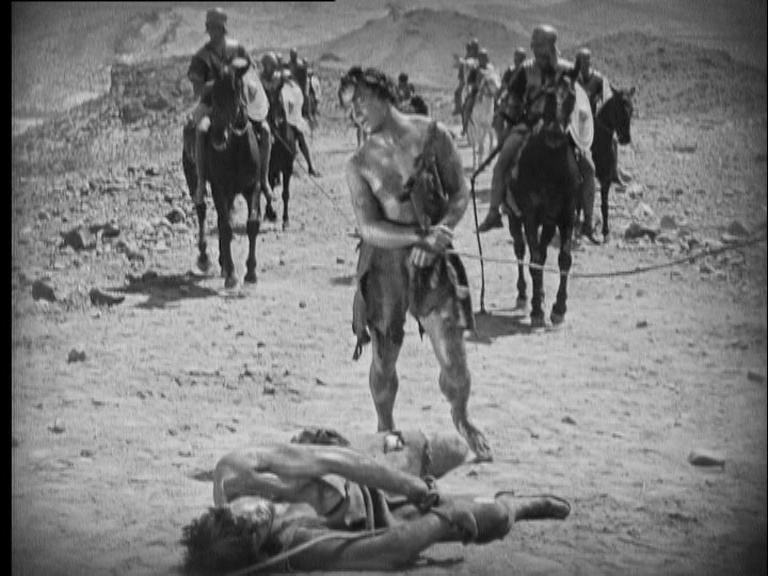
The desert. Slaves and their brutal overlords. / Davis explains some of the effects. / “Now I’ve had to give up the whipping here.” / A massive groan of disappointment from all players. / No visuals—“But let’s see if I can do it by directing.” / Grins of delight at the strange sounds. (The desert chain gang, “The Way of Death”. Two lines of mounted guards, a single line of desperate prisoners. An expanse of sand and hills.) / Strange tones of organ. It is a glimpse of Christ amid the horror. / Ben-Hur lurches for water, but the guard pours it on the ground and swipes away the wet dirt. / More sound-effects in the score are abandoned for the sake of the live performance. / “No rattle at the back!” instructs Davis. / Groans from the eager percussionists. / Before we are sent to the galley, we get a coffee break.


[Later]
“Now who’s my galley driver?” Davis asks. / A man with what appears to be a large club waves it in the air. / All pencil marks are to be ignored. Back to the original. / The galley driver starts off with pencilled markings and sets off at a lumbering run. / “Stop! We’re not doing it that way!”


Pirates. The galley rhythm needs to be sharper, reaction more coherent. / “Now, snakes…” The lead violin demonstrates a variety of ways of playing. Which is the right sound? / “Should they be angry snakes?” she asks. / “Yes, angry snakes”, Davis replies. […] “There are more snakes up ahead, but you know what you’re doing now—it’s authoritative!”

The attack. A run-through. / Davis must drive the galley driver faster—everyone is falling behind. / Another run-through. We get further—the camera oscillates on impact; the orchestra enjoys doing violence. / “OK, the snakes have moved over to woodwind now.”
[Later]
Each time there is a break in rehearsal, the sound of a harpist practising their cue cuts through the gentle hum. It’s the promise of melodic delight somewhere later in the score.
Act 2. / Davis sets the scene: “Now, we’re in the world of Egyptian spice, courtesans, exoticism—Salome.” He turns to the first violins: “…and you, you’re…” (To demonstrate glamour, he hugs himself, hugs his own gesture.) / The orchestra proceeds into the lush soundscape. / The Egyptian princess Iras. / “And… change!” Davis cries out, as the strings move to shimmer and seduce.
Since the orchestra cannot see any screen, the film they are illustrating remains a mystery. / Davis guides his players: “Percussion, you need to come out a bit here—we’re talking money… Clarinets, you should be a bit looser. We’re in a bazaar. You sound too good!… Yes, cello, it’s like a drug.” / We break for lunch.




[Later]
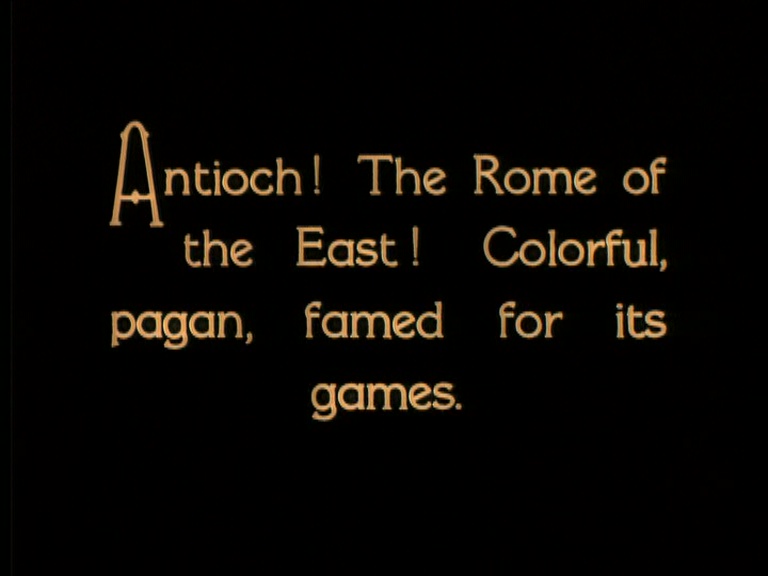
The orchestra retunes for the chariot race. The talk at lunch was of the energy needed for the next ten minutes of the score. / The entry into the Circus of Antioch. The volume of sound conjured is huge. / The organ enters—and immediately Davis stops. / “Sorry. Organ: we’re starting at bar 43.” / “Oh, I’m sorry.” / General, good-natured laughter. / The chariots make ready. The players brim with excitement.
A whole run-through of the race. Musically, it is magnificent. / But too slow! On the monitor, the chariots have been and gone. The next scene waits impatiently. / Groans as Davis announces: “Rather than do bits and pieces, I suggest we do another run through at the tempo I need.” / Second run-through. The orchestra ties the race with the image. The perfect result. / Ben-Hur’s winnings make his motif do an almost grotesque gig.


The film plays through. In step, the orchestra learn their paces. / Esther wins Ben-Hur’s heart. Stones are cast. Legions are raised and march. / An encounter with Christ transforms Ben-Hur’s motif into the lightest of violin solos. / It is hard work, and the musicians are conscious that they are rehearsing for a continuous performance. Stamina, exertion, and timing. Is there room for manoeuvre? / In one scene, Davis highlights that there may be more or less of a gap “on the night”: “It depends how I’m doing.” / In another, he tells a player: “Bass clarinet, at bar 52-53 there can be a bit of a hiatus. If it gets too long and it becomes difficult to sustain, just stop. Especially if you run out of breath. Maybe you will, maybe you won’t. It’s different for every show.”
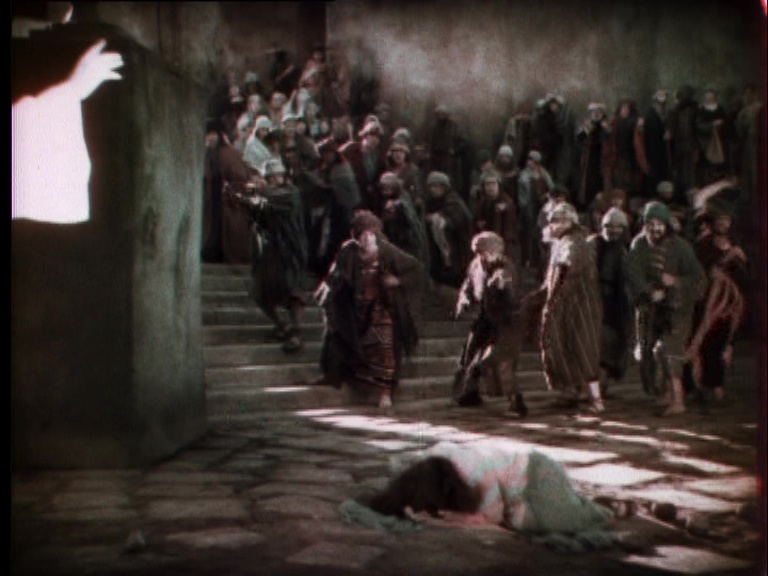

Ben-Hur wishes to lead a revolution. His theme is garbed in unwholesome aggression. Trombones spell it out, and his name is growled into the floorboards. / The death of Christ. The walls of Jerusalem fall. The room trembles, and on the tiny screen the superimposed masonry flickers and crumbles to shadow. / Ben-Hur’s final address. A soft haze of Technicolor flesh. The strings are divided: a cello descends slowly into the depths, while the violins climb higher. The musical line is split in two, yet this falling away and this rising up are part of the same journey. The cello’s line is met by a percussive finality, and the high strings form the last iteration of the “Dresden Amen” at end of the film.


Friday, 13 May 2016: Birmingham Town & Symphony Hall
I meet Davis early to help him carry his bags across to the Symphony Hall. We have time for some refreshment. He orders tea and scones, the consumption of which he soon delegates to me. It’s been many years since I ate a scone. I fumble with the spreading of cream and jam. My scone breaks apart as I grapple it. Davis watches, bemused. “Wow, you’ve really fucked that up”, he says.
The time has come. We cross to the Hall, via a combination of stairs, lift, and suspended corridor. Within, there are keycards and doorways and narrower passages. A small room, a dressing room for later. And for now, a drop-off point for bags. Messages descend and ascend.
Then we descend, further down, via a route I could never retrace. Eventually we emerge at the side of the stage. The screen is immense. A great white wing hovering overhead. The orchestra’s seats are laid out in front, their backs to the empty screen. The maestro moves across to the podium. Greetings, questions, a gentle hubbub. (Importantly, we are told where the bathroom is backstage.)
I have never seen this space from the stage. (I’ve never even been on a stage this large.) It’s strange and wonderful to stand here. Thousands of vacant seats, vacant galleries. Somewhere at the very back of the space, a dim booth, a gleam of light. Therein, the projector and its team. I find a seat in the centre, close enough to keep an ear on what’s being said by the musicians.

It is 2pm. The orchestra has gathered. In the empty hall, the organ tests its lungs. Snare drums snap out a summoning beat across so many unpeopled rows. / The harpist practices a delicate refrain, the organist the appearance of Christ, the drummer a Roman march. / Now added: a trombone’s lugubrious step-downs, the padded footsteps of a drummer’s distant roll—thunder taking its time; the mellow scales of woodwind glimmer behind the podium; a gong sounds from the back; strings adjust their heights. / Lights from above dim then reassert themselves.
The great pale wing of the screen barely wavers. / The lights fade. / The screen comes alive. And I want to hug myself for my luck to sit before an orchestra in this empty hall.
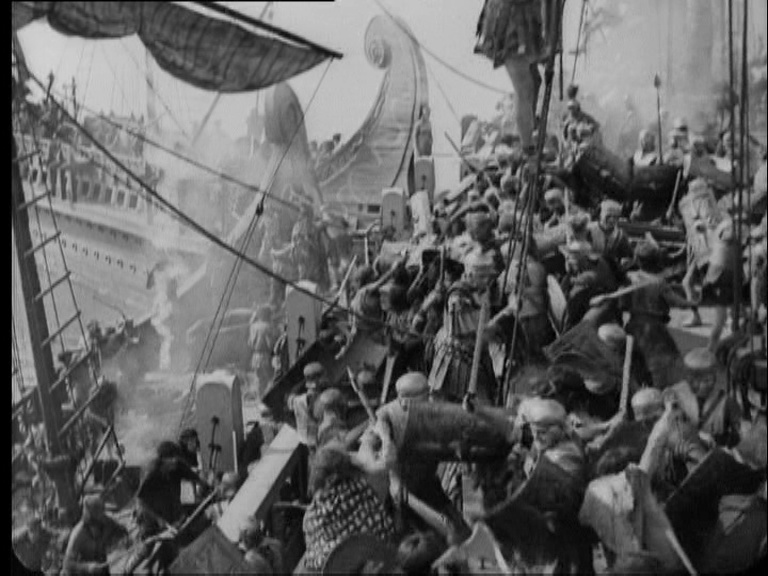
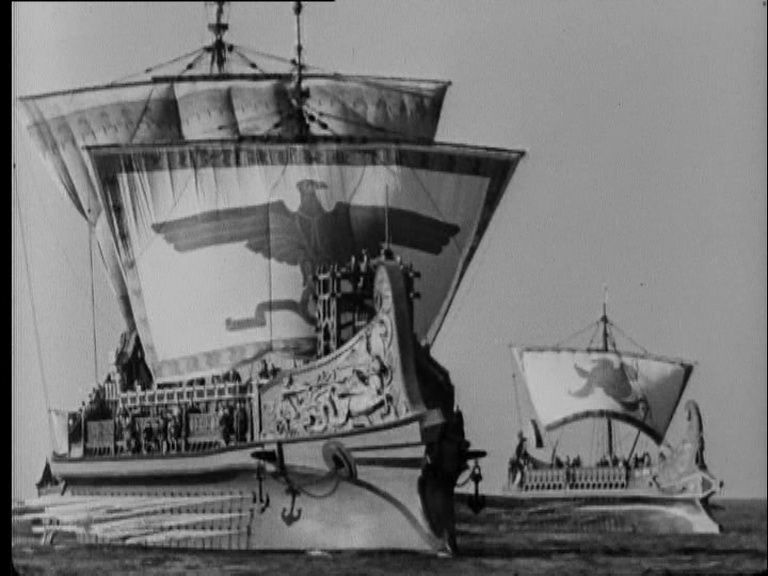
The stars. / The Star resonates with light, the orchestra rings with sound. / Music fills the air. Some distant memory of watching the film on DVD. I showed it to my students a few years previously. I wish they were all here, to see and hear and feel how this film should be shown and experienced. / Don’t trust Massala—the orchestra growls under his tread. / Jesus defies the laws of continuity. / Aboard the galley, Ben-Hur impresses Quintus Arrius. When his ankle is unchained, Ben-Hur’s motif floats up in a solo violin. / The fleets crash together. Extras tumble. (There were dark rumours of real deaths.) Percussionists thunder out the clash of arms, the sliver of snakes. / I spot one of the double-basses cast a furtive look up at the screen to see what’s going on. Is this the first glimpse he’s had of the film? Interval.




[Later]
After a break, the orchestra are on stage. / There is a long delay. Footsteps in the hall. A woman with a torch comes to the front. A messenger. / Somewhere far behind us, in the projection booth, comments are being relayed forward. / There is too much light spill from the stage: the image up on screen is being lost. / Can the orchestra put blue filters on their lamps? / The filters are fitted. There is a flurry of comments. Discussion with Davis. / The verdict: the players cannot adequately see their paper scores. / From the projection booth, a message of disappointment. More discussion. (Last year, Davis told that me this happens at every performance.) / Compromise is reached. The filters will be half placed over the lamps: a little more clarity for the players, a little more clarity for the screen.
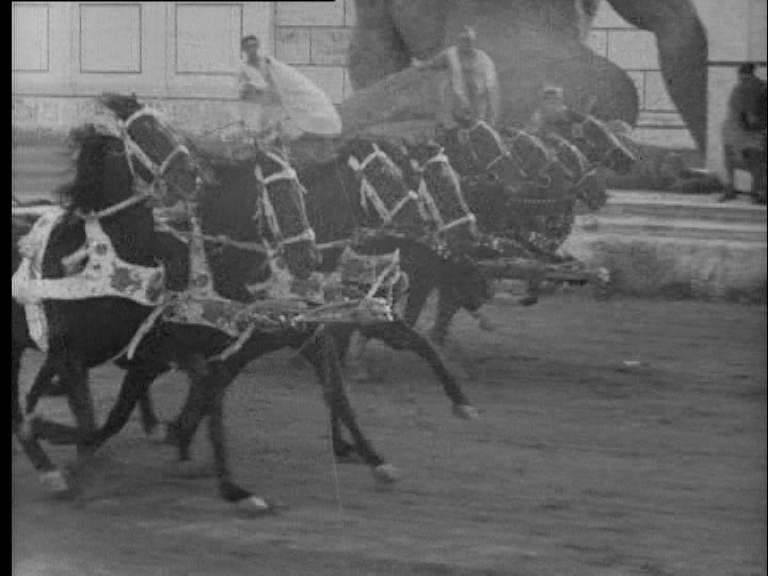
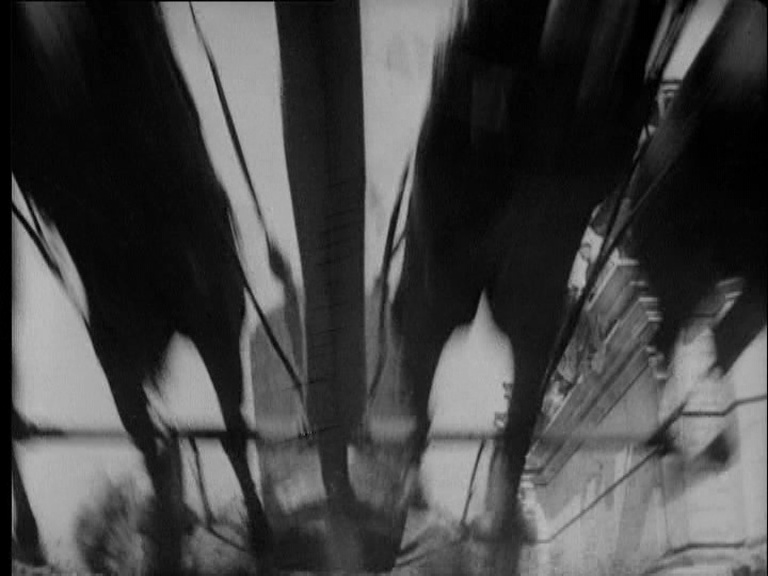
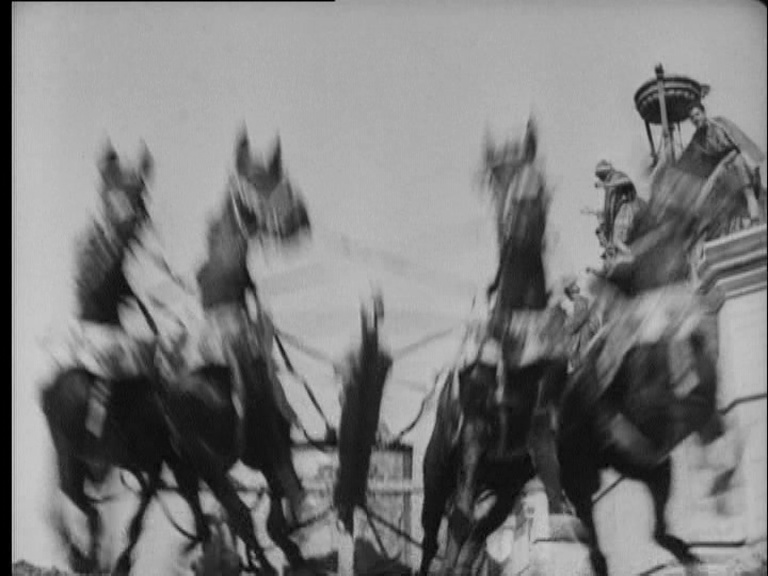
The chariot race. / In the CBSO centre, the orchestra competed against two tiny monitors; here in the Symphony Hall, a screen several metres wide still quakes at the music’s power to spill across time. / I am one among barely half a dozen people scattered around the empty hall. The number of extras on screen, cheering on the racers, makes the empty hall feel all the stranger. / Ben-Hur is tied for first with the musicians, but the winner finishes celebrating before the orchestra: Ben-Hur’s mother and sister (in the next scene) seem to cower in fear at the immense volume of celebration still booming from the stage. / To me, even this minor error seems a tremendous achievement.




[Later]
7.30pm. From six scattered spectators this afternoon to an audience of 2,000 this evening. The pleasure of experiencing the rehearsals seeps into the pleasure of seeing the final concert. I’m curious—nervous, in fact—to see how the performance matches the run-throughs. Will the timing be the same? Will the performance feel different?
Here are the opening scenes once more. I’m struck by how Davis’s score not only matches the physical exertions on screen during the chariot race, but also gives weight to these earlier scenes which rely on artificial visual effects. The star appears over Bethlehem in a shower of meteors. This glittering curtain falls and fades, leaving a single star that dominates the sky—its gleams condensing into the sign of a cross. As the Wise Men and Shepherds see this apparition, the star radiates ever brighter—sending ripples of light out through the sky. While these images can seem synthetic on a television monitor, they have tremendous impact when revitalized during live performance—especially projected on 35 mm. On such a scale, and accompanied by an orchestra, spectators are invited to appreciate the human touch that created the scene’s effects: hand-operated cameras, hand-painted glass mattes, celluloid manhandled into chemical baths to tint its silver with colour.
Davis’s score for this scene is orchestrated to provide a wealth of sonic sensations: from the aural coruscation of falling meteors (glissandi bell tree, high strings/woodwind, rolling cymbals/tam-tam) to the floor-shuddering bass of the star itself (all the above plus fortississimo timpani, horns, trumpets, trombones, tuba, organ). This music evokes extreme depths and extreme heights: acoustic space expands the dimensions of the image, making its impact near supernatural.

Davis introduced the “Dresden Amen” theme during the opening credits but withholds its full iteration until this moment at Bethlehem. As the star grows into a luminous cross, the “Dresden Amen” is projected with immense clarity by the brass—a blast of sound that organizes the layers of orchestral timbre into meaning, reconnecting this scene with the film’s religious narrative. This is at once a moment of intellectual comprehension and of emotional revelation: the visual shockwaves from the star are transformed into music that reverberates through the concert hall. Silent images thus have physiological impact on spectators in the venue; the star’s ringing clamour is followed by the tangible dissipation of its sound.
Experienced in the concert hall, I was especially struck by these spatial dimensions of Davis’s score. I don’t just mean the thrilling loudness of music in the climactic scenes. Quietness, I think, is just as affecting when freed from the confines of a soundtrack. In a later scene, Ben-Hur returns to his former home and, exhausted, falls asleep on the stone steps at the base of the wall outside. His mother, Miriam, and sister, Tirzah—both afflicted with leprosy—arrive, dragging with them (through the orchestra) the Hur family motif, disfigured by the scraping strings that have throughout signified their illness. In his sleep, he mutters “Mother”; a solo violin raises Ben-Hur’s motif, which his mother seems to hear. The two women approach, but Miriam holds Tirzah back: “Not a sound! He belongs to the living—and we to the dead.” The Hur theme climbs to a higher register, as if lifting itself away from the sleeping figure. The low sonorities of a solo cello accompany Miriam as she crawls up to her son, while Tirzah kisses the sole of his boot. As Miriam caresses the stone beneath Ben-Hur’s head, harps accompany the cello’s refrain—low and high pitch seem equally to avoid making too loud a sound. The mother places her head in a position parallel to her son, stretching out one step below him. After kissing the step, she withdraws—but we see that she has left a tear on the stone. The two women retire, the orchestra’s strings scuffing in deep tremolo—the musical texture of their leprosy.


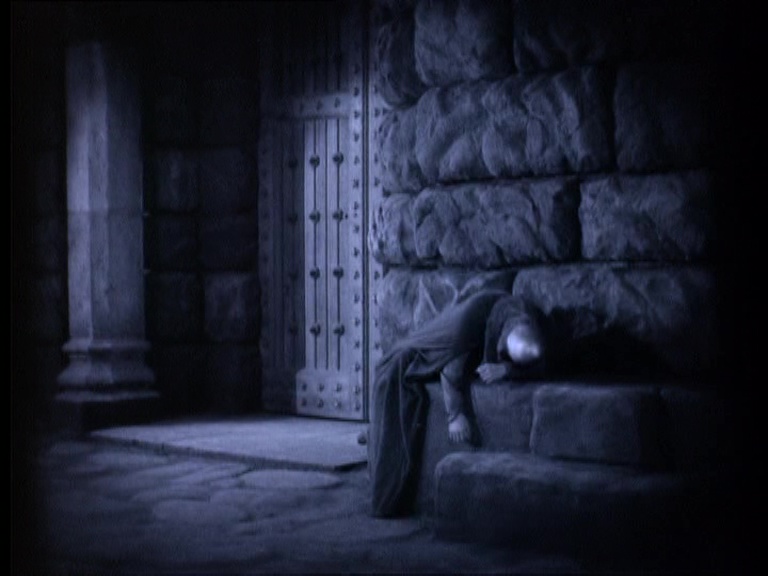
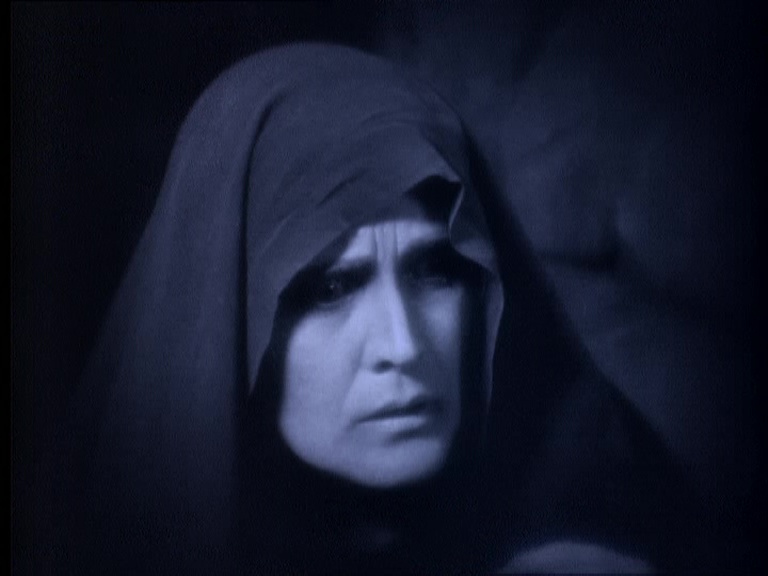

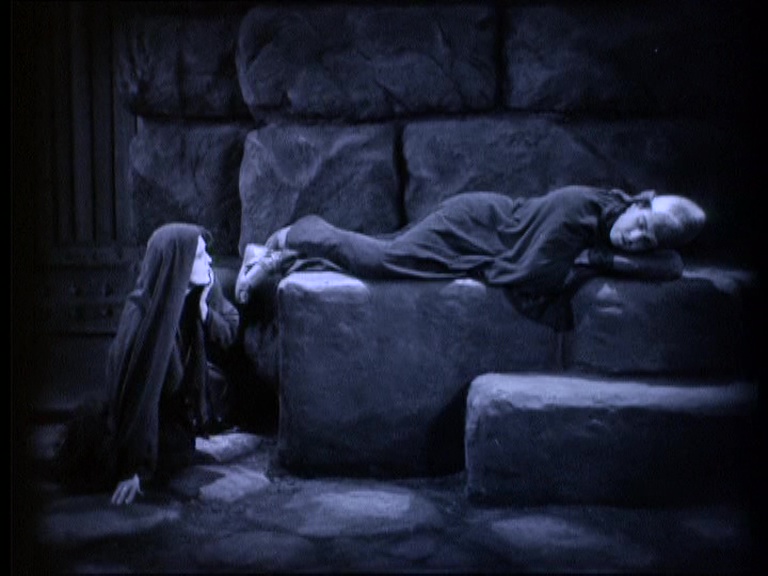


Ben-Hur awakes. He places his foot down onto the lower step, not realizing he has almost stepped on his mother’s tear; the plucked note of a harp suggests the fallen drop and—as did his mother before him—Ben-Hur seems to hear the motif in the orchestra, but remains unaware of his family hiding nearby. This scene is the film’s most moving, and its dramatic irony is worked into the music through the motifs that trigger mutual reminiscence among characters and spectators. Davis’s score plays upon the idea of presence and presentiment—on screen and in the auditorium. The effect is made stronger by the fact of the music’s generation by live musicians. While this sequence seemed powerfully intimate for those in the near-empty hall at rehearsal in 2016, the filled concert space later magnified the moment’s empathy.


While a DVD presentation might trigger these connective experiences, the sense of dramatic continuity in a live concert is unrepeatable. The 2016 performance was nothing short of miraculous: the chariot race was delivered with an ideal blend of panache and precision. This was a collective feat no less impressive than the race itself. The timing was perfect, the effect thrilling beyond words.
Yet there was another, stranger sensation produced in 2016 through accident. Near the end of the film, Christ’s crucifixion is followed by earthquakes that wrack Jerusalem, climaxing in the collapse of the huge Senate building. This remarkable screen effect is achieved through the combination of matte painting, models, and superimposition. Davis’s score grants the catastrophe an immense sonic impact: the weightless fiction of silent images attains preternatural mass in performance, where the venue’s interior trembles in response to a full orchestral fortississimo. In the 2016 concert, this musical climax was mistimed: the sound of Jerusalem’s masonry hitting the ground preceded its image by around five seconds. Yet even here, the silence of the building’s slow-motion disintegration possessed an uncanny gravitas. In the presence of an orchestra, silence itself acquires heightened impact. For these few moments, conductor, players, and audience were united in rapt attention to the film’s solo performance.


Afterword
After the concert, I went back to listen to highlights from the score on CD. The performance recorded in 1989 features Davis conducting the Royal Liverpool Orchestra. I was struck by how different the music sounded. The 1989 performance was tremendous, and the recording creates a great sense of space and depth to the music. But it didn’t sound the same as the CBSO performances I had just experienced. Over the course of the rehearsals, I had got used to the music per the 2016 performances. Subtle differences in phrasing, in emphasis, in balance made the music sound very different in the 1989 recording. What was the music losing? What was the music gaining?
Of course, after multiple relistenings to the 1989 recording, the CD version has become my dominant impression of the score. Now I cannot say for certain how the performances differed. I certainly feel the CD is a better-sounding document of the music than the recording featured on home media editions of Ben-Hur. For the laserdisc release (subsequently issued on DVD), Davis conducted the London Philharmonic Orchestra. (There is no date for the recording, but the laserdisc was released in 1989, so I presume the recording dates from sometime between 1987, the year Davis’s score premiered in London, and 1989.) This is the version through which I first encountered both film and score. It is the version I watched while taking a course at university and which I, in turn, later showed my students on a course that I taught. The film always impressed, just as the score always impressed. But it’s an entirely different experience to a live projection with orchestra.
Years later, I rewatched sections of the film on DVD for the sake of writing this piece. At this distance, it seems all the more difficult to connect my experience of the film at home with the memory of the concert in 2016. I so desperately want to go back and hear those CBSO performances again, to discover the differences between them and the older recordings. Weren’t the arpeggios in the strings for the “Star of Bethlehem” brought out more in 2016? Didn’t the attack of the pirates have an angrier twist to the rhythm? And how can any recording recapture the sensation of sound travelling through the air, reverberating through the floor? Or of the sensation of being in the midst of hundreds or thousands of spectators, in thrall to film and music?
Even if the precise memories of those days in May 2016 have faded, the impression made by Ben-Hur in concert grows in stature—especially now, after the death of Davis. Though his recorded legacy is strong, I hope his music will persevere in live screenings. It is here, in the ritual strangeness of a single, continuous performance of music before an audience, that the power of silent cinema is most fully revealed.
Paul Cuff

 The Realm of Silence