After a day of urbane, light-hearted musical comedy, Day 3 of Bonn takes us to the streets for poverty and vagabondage…
Der Vagabund (1930; Aut.; Fritz Weiß). The opening titles tell us that this is a story “taken from everyday lives”, as recounted to a journalist. The prologue begins with the sight of a vagrant’s body being found in a country ditch between Werder and Potsdam. All that’s found with him is a self-penned poem, an enigma that sets the journalist on a journey to the homeless shelter and the underworld of the unemployed and destitute. What follows is both an account of the journalist’s investigation and the stories he hears from the “vagabonds” themselves. What account of the “plot” I can give is necessarily brief: the film frames its narrative with the journalist visiting shelters and listening to personal accounts of vagrancy and homelessness. The main story becomes that of a man’s journey through Austria, where he encounters the uncaring attitude of many in society. Put like this, Der Vagabund sounds prosaic. But the structure and its cinematic realization are very striking, and the film is filled with amazing images of people and places.
From the outset, director Fritz Weiß provides some beautifully composed images of the landscape, the stillness of which is then offset by the handheld camerawork that brings us up-close to look at lived reality. Soon the camera is perched behind the journalist as he speeds into the city, where there are some amazing shots of the bustling streets that whiz past the car. Alongside the journalist, we visit the shelters and inspect the occupants. We see the vagrants strip and get inspected for lice, then shower. The faces and bodies are palpably real. (When the camera tracks past the vagrants as they eat, one of them shelters his face from the camera, as if ashamed or fearful of being seen.) There are powerful, often quick montages of details: the faces, the bodies, the clothes of the vagrants; or the watches, the coats, the hats left hanging in the shelter.
The film begins to give us some context for these people. We meet Gregor Gog, “the vagrants’ leader”, who gets an amazing introductory close-up in which he stares at – almost through – the camera. It’s a challenging look, one that demands we pay attention; it’s also a kind of question: what are we thinking when we see the vagrants on screen? There is a series of cutaways to the unemployed, drunks, petty thieves. We see their faces, are given little vignettes of their actions and habits. There are scenes in which we see the sign language by which their “brotherhood” communicates – chalked symbols on the walls if houses where they have found, or not found, help or food. The film thus gives us a sense of community, of commonality, between these otherwise isolated, down-and-out individuals.
This leads me to think about the film’s structure, which I found very curious. The first section of Der Vagabund, discussed in my previous paragraphs, is based on articles which (within the film) is deemed “too theoretical” by the newspaper editor. Is this a kind of judgement on the style of the film we have just seen? As if in reaction, the film shifts register. The editor wants “life stories”, and that then is what we are given by the film. Though it is carefully framed via the journalist’s interview, what follows is the story of one man who wandered through Austria. We see his temporary work, his moving from place to place, his interactions with locals in a smith, a farm, and on the road. We also see a glimpse of his time with a woman, of a shelter in Austria for other vagrants. Throughout, the film intercuts between this inner narrative and the framing narrative of the journalist interviewing the vagrants. There is a pleasing tension between the real and the fictional, especially given how real even the fictionalized sequences look. This is also felt in the rhythm of the editing. While earlier sequences have some swift montage of faces and illustrative scenes, when we are on the road with the vagrant in Austria there are more long shots/takes of his travels. It’s always a pleasure to roam about in the past like this, and this film’s rambling itinerary is the perfect way to see little pockets of history that you would other never see. There are beautifully composed images that show us the sweep of mountains and valleys. Though the film always gives us a contrast between the richness of the summer meadows and the rags and dirt of the traveller.
The film’s mode is not solely naturalistic, as there is a trippy dream sequence in which the vagrant character imagines himself tried and executed by the bourgeois bullies he has encountered on the road in Austria. It’s a wonderfully strange interlude, with a bleak edge: he imagines himself being hanged in a kind of forbidding, expressionist landscape. And “naturalist” doesn’t mean this film is so austere that it lacks lyricism or poetry. As I’ve said, there are some beautiful shots – beautifully composed and photographed – throughout the film, especially in the Austrian countryside. There is also a delightful sequence of shadow puppetry, improvised by the main character on the wall of the prison cell he shares with another vagrant, who is ill and lying in bed. The setting is realistic, but it finds a way of expressing something more personal than the set-up might suggest. The scene is silly and sad and touching all at once.
Der Vagabund ends with a montage of people from all classes pouring over the journalist’s articles in the newspaper Tempo. The motage then begins to intercut these scenes of reading with the “march” of the vagrants. To these shots are superimposed a vision of Gregor Gog giving a passionate speech. It was curious to see Gog emerge as a kind of heroic leader in this final montage. Though he is a real figure, playing himself on screen, his appearance at the end of the film is much more like that of a work of Soviet propaganda. Are we to read this as a promise of reform? A threat of revenge? A call to arms? It might be all three, and it is a surprisingly punchy end to Der Vagabund. Like the bourgeois readers of Tempo on screen, the media we consume is coming to life and confronting us with reality – demanding we think, reflect, react. Though the images stand comparison with numerous scenes in Soviet fiction films of this period, it also reminded me – with its confrontational crowd marching towards the camera – of Abel Gance’s J’accuse! (1919). The realization of the imagery is not as developed and sustained in Der Vagabund as in either these French or Soviet counterparts, but perhaps that is to its advantage. In such a film, I’d rather be won over by naturalism or lyricism than lectured or beaten over the head with crude slogans or overly tooled editing.
I should add that since watching the film I looked up Gregor Gog (what a name!), and I see that he led quite the life. From a working-class background, he ended up being drafted into the German army, where he was court-martialled during the Great War for his political activities. Mixing in an anarchist-communist milieu in the 1920s, he came to lead the “Vagabond Movement” (Vagabundenbewegung) and edit their mouthpiece publication, Der Kunde, which we see in the film. After 1933, he was arrested by the Nazis, escaped, fled to Switzerland, was expelled to Russia, spent time there in a labour camp, tried to become a novelist, and ended up dying in a sanatorium in Uzbekistan. Der Vagabund thus gives us a vivid glimpse into this corner of interwar Europe and its political movements. That said, Der Vagabund is not a work of crude propaganda. It certainly has an anti-bourgeois attitude (per the film’s many negative portrayals of monocled officials, hypocritical housewives, and brutish burghers). But it is also poetic and rambling. Its very structure of a narrative within a narrative lends it a picaresque quality, a slightly ramshackle form that loosens any sense of the viewer being lectured. A couple of years ago, I watched another low-budget socialist film, Brüder (1929), which was far cruder in its messaging – and (despite much beautiful location photography) less skilled in mobilizing either its lyrical, naturalist elements or its fictional, narrative elements. Der Vagabund is altogether a more interesting and more successful film.
The music for this presentation was by Filmsirup (Matthias André and Michi Hendricks) on piano and electric guitar. I found this extremely sensitive and sympathetic to the film. The rhythm was perfectly in match with the action, though “action” is often not the right word. Much of the time, the film follows characters who are killing time, mooching or loitering with or without intent. The music finds way of matching these sections very well. The dotted rhythms follow the vagrants as they walk along, slow down, dawdle, come to a halt, and resume again. The plash of water in the shower and the shattering of glass get their own moments in the music, just as the flashes of anger or dips into resignation of the characters are felt. I imagine this might be a difficult film to accompany, but Filmsirup do a very admirable job.
In sum, I found Der Vagabund an extremely interesting and engaging experience. Realistic and poetic, inventive and provocative, it’s a fascinating film. The restoration by Film Archiv Austria, based on a Dutch copy of the film, is beautiful to look at. A rich a rewarding film, with a pleasing musical accompaniment. A rich and rewarding film, with a pleasing musical accompaniment. Just the kind of thing you hope to discover at a festival. Bravo.
This week, I’m writing about not being able to write. I’d love to be telling you all about the beauties of Holger-Madsen’s film Der Evangelimann (1923), but all I can do is write about my entirely unsuccessful efforts to find a copy. While I am therefore unable to offer much insight into the film itself, I hope to offer some reflection on the intractable difficulties of writing about film history – and finding it.
Why am I interested in Der Evangelimann? Well, as previous posts indicated, I have a growing curiosity about the work of Paul Czinner and Elisabeth Bergner. I have a longstanding project on their Weimar films, but I am also interested in their work before their first collaboration in 1924. Der Evangelimann was Bergner’s first film role, and her only pre-Czinner work for the cinema. This Ufa production was made in Germany but was directed by the Danish filmmaker Holger-Madsen and premiered in Austria in December 1923. Contemporary reviews were mostly favourable, but since its general release in 1924 it has virtually disappeared from the record.
I am also interested in the cultural background to Der Evangelimann. The film was based on an opera of the same name, composed by Wilhelm Kienzl (1857-1941). As even semi-regular readers of this blog may be aware, I am a devotee of late romantic music – and obscure operas by lesser-known composers have their own attraction for me. Since it swiftly became apparent to me that Der Evangelimann was going to be a difficult film to see, I turned my attention to finding a recording of the opera. As it turned out, Kienzl’s music was an absolute delight. A pupil of Liszt and a devotee of Wagner, by the 1890s Kienzl had become a successful composer and music director in various central European cities. Der Evangelimann (1895) was his greatest hit and became a regular production for opera houses into the first decades of the twentieth century. However, Kienzl never produced another opera that established itself in the repertoire to this extent, nor did he write much in the way of substantial music in other genres. By the 1930s, he had withdrawn from active work and by the time Europe emerged from the Second World War he was dead, and his work largely neglected. (His support for the Nazi takeover of Austria in 1938 cannot have helped his posthumous reputation.)
The opera Der Evangelimann is a pleasing blend of late romanticism with a touch of verismo (i.e. something rather more realistic than romantic drama). The libretto, adapted by Kienzl from a play by L.F. Meissner, is also a kind of ethical drama. Act 1 is set in 1820 around the Benedictine monastery of St Othmar in Lower Austria. The monastery’s clerk Matthias is in love with Martha, the niece of the local magistrate Friedrich Engel. Matthias’s brother Johannes is jealous of this romance, since he covets Martha for himself. Johannes betrays the lovers’ secret relationship to Friedrich, who furiously dismisses Matthias from his job. Seizing his chance, Johannes proposes to Martha, but he is angrily rejected. Matthias arranges with Martha’s friend Magdalena that he will meet his beloved late one evening, before he leaves town to seek work elsewhere. Their nocturnal meeting is witnessed by Johannes, who storms away in a fury of jealousy. As the lovers say a sad farewell, a fire starts in the monastery. Matthias tries to help but is swiftly blamed and arrested for the crime. Act 2 is set thirty years later, when Matthias returns to St. Othmar. He has spent twenty-five years in prison, after which he became a travelling evangelist, preaching righteousness and justice. He encounters Martha’s old friend Magdalena, who now looks after the ailing Johannes. We learn that Martha drowned herself rather than submit to Johannes’s proposal, and that Johannes has since attained great wealth but is haunted by enormous guilt. Magdalena ushers Matthias to see Johannes, who receives Johannes’s dying confession of guilt for the fire. Matthias forgives his brother, who dies in peace.
Kienzl’s opera is gorgeously orchestrated and contains at least two rather wonderful melodies. The most famous, “Selig sind, die Verfolgung leiden um der Gerechtigkeit willen”, is Matthias’s evangelist hymn. Kienzl, knowing he had written a good tune, cunningly makes Matthias teach a troupe of children this melody on stage. We thus get to hear the melody several times in a row, and it becomes the leitmotiv of reconciliation and forgiveness between the brothers. But my favourite scene of the opera is in Act 1. Rather than a set-piece number, it is a scene of anxious, hushed dialogue between Mathias and Magdalena. They are arranging Matthias’s final meeting with Martha before he leaves, and as they talk the bells are ringing across town for vespers. Kienzl creates a spine-tingling atmosphere that has remarkable depth of sound: from the slow, deep ringing of the cathedral bell to the warm halo of strings, then to the bright chiming of a triangle. A simple downward motif is thus given greater emotional resonance: you can sense the space and warmth of the evening, but also the sadness of departure, the steady pressing of time upon Matthias. In Act 2, when Matthias meets Magdelena again, the midday bells sound: suddenly, the scene evokes the past through an echo of its warm, chiming orchestration. It’s a beautiful scene, perfectly realized. (At this point, I pause to recommend the 1980 recording of Der Evangelimann conducted by Lothar Zagrosek. It has a great cast, too: Kurt Moll, Helen Donath, Siegfried Jerusalem. Though the EMI set is out of print, it is readily available second-hand. A must for anyone interested in out-of-the-way late romantic opera.)
The 1924 film maintains the same basic plot and setting as the opera, though it has one or two curious departures. Per the opera, the first part of the film replicates Mathias (Paul Hartmann) and Martha (Hanni Weisse) being betrayed by Johannes (Jakob Feldhammer) to Friedrich Engel (Heinrich Peer), followed by the fire in the monastery and Mathias’s arrest. Years pass, Martha has married Johannes and together they have a young daughter, Florida. Martha then discovers that Johannes was the real arsonist (when he talks in his sleep) and ends her life rather than continue in their doomed marriage. After her death, Johannes moves to America – leaving Florida in the care of Magdalena (Elisabeth Bergner). Twenty years after the fire, the dying Johannes returns to St Othmar – as does the newly-released Mathias, now known as “the Evangelist” due to his preaching of holy justice. After Magdalena and the teenage Florida (now played by Hanni Weisse) go in search of him, Mathias eventually meets the dying Johannes – who then confesses to his brother and receives forgiveness.
I initially pieced together a synopsis from those available via various online sources, plus evidence from contemporary reviews. However, online sources do not provide the sources of their information, and I was left uncertain of numerous details. After a more thorough searching of the documentation catalogue of the Bundesarchiv (Germany’s state archive), I located the German censorship report of July 1923. Thankfully, this had been digitized and made available for public access. (As have many such censorship documents from the period.) The censorship report includes a complete list of all the original intertitles for the film, together with an exact length (in metres) for each of the six “acts” (“act” usually being a synonym for reel). Though there is no accompanying description of the action (i.e. what’s happening on screen), the titles provide a much clearer picture of the film’s structure and action. The document demonstrates how significantly Holger-Madsen expanded the ellipsis between the opera’s original two acts. The film’s second and third acts are set after the trial and the first years of Mathias’s imprisonment, allowing a glimpse into the minds of both brothers and of Martha – and showing us Martha’s discovery of Johannes’s guilt, and then her suicide.
Yet even the list of titles leaves some aspects of the narrative unclear. The film’s invention of a daughter for Martha/Johannes allows Hanni Weisse a double role as both mother and daughter. But I am unclear as to what (if any) dramatic function Florida has to the plot (she is evidently not a suicide deterrent!), or how exactly Mathias’s return is handled. Does Magdalena have a crucial role in this, or does he find his way back by chance – or by his own volition? Does Mathias encounter Florida, and what is his reaction to seeing the spitting image of his lost love? The titles do not make this clear.
Would other documents help? I know that if I visit the Bundesarchiv collection in person, I can inspect a copy of the programme for Der Evangelimann which may (or may not) clarify the issue. But where else to turn? I cannot find evidence of the film being released in France, in the US, or in the UK, and thus cannot find any other easy source of a more elaborate synopsis or of additional still photographs.
What of sources on Bergner? In Germany, there are many books devoted to her life and career on stage and screen – as well as her own memoirs. Ten years after the film was released, Bergner recalled being so disappointed with her experience on Der Evangelimann that it inspired her “contempt” for the entire medium of cinema (Picturegoer, 18 August 1934). In her later memoirs, Bergner claims that Nju (1924) was “my first film” (69) – erasing altogether the memory of Der Evangelimann. Those subsequent biographers or scholars to mention the film do so only in passing, but most accounts simply ignore its existence. The only account that even suggests familiarity with the film is that of Klaus Völker, which provides a meagre synopsis in its filmography and describes Bergner’s “slightly hunchbacked” appearance (398). Had Völker seen Der Evangelimann, or was this description based purely on publicity photos of the production? (The book contains only one other reference to the film, which repeats Bergner’s own grave disappointment in the role and the medium as a whole.)
Elsewhere, Kerry Wallach’s very interesting discussion of suicide in Bergner’s films (and contemporary Weimar/Jewish culture) makes passing reference to Der Evangelimann (19), but nothing that suggests familiarity with its content. Given Wallach’s interest in suicide and love triangles across Bergner’s films, it is odd that nothing is made of this first screen role being in a film that has both. I am curious, too, that Holger-Madsen chose to cast Bergner in the secondary role of Magdalena, since Martha is a much more interesting character – and her off-screen suicide (“in the waters of the Danube”, according to Matthias in the opera) would have directly foreshadowed the deaths of Bergner’s later characters.
All of which brings me to the nub of the issue: does any copy of Der Evangelimann survive? Has anyone seen it? Of course, the first source interested parties are usually advised to consult is the Fédération internationale des archives du film (FIAF) database. This is designed to be a collaborative database for information on archival holdings from across the world. Search here, and you can find the details of a film and a list of archives that hold material relating to it. That, at least, is the theory. In practice, it relies on data from its member archives that is not always available, complete, accurate, up-to-date, or forthcoming. I have long since accepted that the absence of a film on the FIAF database does not mean it is absent from the archives. This acceptance brings hope but creates other problems.
The next step, at least for a German production, is the usually (but not always) reliable filmportal.de. It is usually a decent indicator of the film’s survival in German archives and will also list the rights holders to the film and/or any restored copies. In the case of their page on Der Evangelimann, it lists the rights holders as the Friedrich-Wilhelm-Murnau-Stiftung – the inheritors of much German cinema of the pre-1945 era. The FWMS lists details of the film on their website but (having asked them) they do not themselves possess any copy. Such is often the case, where the legal possession of a film does not coincide with the physical possession of a copy – or even the guarantee that a copy exists.
Where next? Well, the Bundesarchiv helpfully provides an accurate database of its film holdings – but this too yields no copy of Der Evangelimann. Various catalogue searches and archival contacts in Germany, Austria, the UK, and Russia have likewise yielded no result. Given that Holger-Madsen was Danish, I did also consult the Danish Film Institute about the film – but Der Evangelimann is not even listed on the DFI filmography of Holger-Madsen’s work, and they profess to have no copy. (Or at least, did not profess so to me.)
If Der Evangelimann had been restored, it would likely appear on more archival or institutional catalogues available online. But it seems scarcely to have made any mark on film history before proceeding swiftly to oblivion. Indeed, the only record I can find of any screening since 1924 was at the Internationales Filmfestival Mannheim-Heidelberg in 1963, where Der Evangelimann was part of a retrospective of Bergner’s work. Was this a complete print? Was it even shown, or just listed as part of the line-up? (Needless to say, I have contacted the IFFMH to see if they have any record of which archive loaned them the print, but I have not yet heard back.)
My only remaining option is to contact every film archive in the world, but there is no guarantee (as I have already discovered) that any of them will reply to a private researcher undertaking a wild goose chase. If an institution, restoration team, or legal rights holder were to make this inquiry, I imagine the process would be much more likely to yield results. As an individual, I have only a handful of contacts in the archival world, and limited resources of time, money, and patience to feed into this search. I cannot issue a convenient “call for help” that summons responses from across the world.
All of which makes an illustrative example of the problems of film history. What I have experienced scouring public resources for traces of Der Evangelimann is a frequent and frustrating instance of a common issue. The film may well exist in an archive, but without any publicly available acknowledgement of its status it might as well (for the purposes of film history and film historians) not exist. That which cannot be seen cannot be studied. It is also frustrating that no scholar on Bergner has ever taken care to admit either that they have not seen the film, or that the film does not exist – and that therefore future scholars should not waste time trying to locate it. Filmographies are infinitely more useful if they include information on a film’s original length (in metres, not duration), together with its current restorative status in relation to its original form of exhibition. These are quite basic facets of film history, but it is amazing how rarely scholars ever cite them – or are required to do so. (I am myself guilty of this.) As regular readers will know, it is a bugbear of mine that many restorations and home media editions likewise provide viewers with so little information on the history of what we are actually watching. It perpetuates a cycle of missing information: the material history of a silent film – the most literal evidence of the medium itself – is too often taken for granted and simply left out of its presentation, either on video or in written texts.
In the case of Der Evangelimann, a century of critical and cultural disinterest has left me with very little evidence to go on. Does the film survive? I do hope so. Even if it is a failure, and even if Bergner’s performance awful, I just want to see it and find out. A film doesn’t have to be a masterpiece to deserve recognition and restoration. I just want to see it! I will continue to pester archives, but in the meantime I suppose I can also pester you, dear reader. Do you know anything about where a copy of Der Evangelimann might be held? Any information would be most gratefully received.
Paul Cuff
References
Elisabeth Bergner, Bewundert viel und viel gescholten: Elisabeth Bergners unordentliche Erinnerungen (Munich: Bertelsmann, 1978).
Klaus Völker (ed.), Elisabeth Bergner: das Leben einer Schauspielerin (Berlin: Hentrich, 1990).
Kerry Wallach, ‘Escape Artistry: Elisabeth Bergner and Jewish Disappearance in Der träumende Mund (Czinner, 1932)’, German Studies Review 38/1 (2015), 17-34.
It’s been a few weeks since my last post, for which I apologize. I have been busy writing, but for a book project that is wresting control of my schedule. Having just finished a chunky chapter, I take a thematic break by revisiting a DVD released by Film Archiv Austria in 2016 to coincide with the centenary of the death of Emperor Franz Joseph I. This edition, called Kaiser im Kino: Franz Joseph I. in Historischen Filmdokumenten, is a nicely produced DVD with English subtitles and plenty of details about the sources for its selection of films. (There is also a musical soundtrack, of which more later.) There are twenty-four films, mostly produced during the Emperor’s lifetime, together with some that postdate his death. The programme is 75 minutes long, enough time to glimpse a vanished world…
The first film in this collection does not feature the Emperor. Entrée du cinématographe (1896) is a Lumière film shot to advertise the presence of their films in Vienna. It was at the cinema on Krugerstrasse on 18 April 1896 that the Emperor first encountered moving images. “Ah, c’est magnifique!” he marvelled. He was already advanced in years. Born in August 1830, he ascended to the throne in the tumultuous year of 1848. He was thus nearly 66 when he saw his first film. As an icon of the old world, and heir to the Habsburg monarchy that dated to the thirteenth century, there is something poignant about this encounter. What films did he see that day? How did eyes that had seen most of the nineteenth century react to the medium that would define the twentieth? The month Franz Joseph was born, the last Bourbon monarch of France was entering exile; when he died in November 1916, Russia was on the brink of revolution.
But here he is in 1903, a flickering patch of white, beyond ranks of dignitaries. Head down, he is annunciating a speech. In silence we watch. But the film skips this speech, untranslatable, in favour of the reaction. Umbrellas are thrust into the air. Top hats are hoisted in salute. Children curtsy. The old world goes about its awkward choreography. The Emperor shuffles off. Though he had been filmed first in 1899, Der Besuch Kaiser Franz Josephs in Braunau am Inn (1903) is the earliest surviving footage of him. As the short essay in the DVD’s liner notes highlights, the Emperor rarely gets close to the camera. For the most part, he is seen from afar. Per the liner essay, is this is a “respectful distance maintained between rulers and the ruled” – even a “quasi-religious distance”? Perhaps, yes. It is also the awkwardness of early technology, the awkwardness of etiquette. How close could a camera operator – often a foreign employee of the Lumières or Gaumont – hope to stand in public events? There are no other photographers on screen, no suggestion in these few metres of gathered reporters. Just the crowds, the dignitaries, the dusty past. We are awkward eavesdroppers, stood on tiptoe, craning to catch a glimpse. For all the talk of “quasi-religious distance”, the camera setups often speak of an ordinariness that is quite charming. These events are partially staged, but not rigorously so – not quite, it seems, for the camera. Too often we are jostled or struggle to keep the Emperor in view. He’s not a god, just an old man liable to get swallowed by the crowd. At the end of Der Besuch Kaiser Franz Josephs in Braunau am Inn, the Emperor and his little retinue come closer to the camera. It seems for a moment that he might confront the lens directly, but this impression is swiftly quashed. Instead, he ignores us entirely and marches off to our right. Saluting arms get in the way of the frame and the camera hastily pans to the right to try and keep the Emperor in view. But the old man is too fast: he disappears entirely, leaving the camera with a view blocked by the leaves of a small tree. A final shot pans around the faces of the crowd and the uniformed police presence. A man strokes his beard. Dignitaries clutch limp speeches. People mill around. The film ends.
Years pass. Enthüllungsfeierlichkeiten des Kaiserin Elisabeth Denkmals (1907) – the “unveiling of the Empress Elisabeth monument” – alerts us to the recent past. In 1898, Franz Joseph’s wife Elisabeth was assassinated in Geneva by an Italian anarchist. Informed of her death, he initially assumed it was suicide, since Elisabeth (“Sisi”) had long since been mentally and physically unwell. She herself had never recovered from the death of their only son, Rudolf, who perished in a murder-suicide pact with his mistress in 1889. (In the space of ten years, she had lost both parents, two sisters, and her son.) So Franz Joseph and Elisabeth were never to appear on film together, just the image of her as the statue in the Vienna Volksgarten. In Enthüllungsfeierlichkeiten des Kaiserin, the trees flutter in the breeze. The Emperor does his rounds, saluting almost constantly. Dozens of uniformed men and hatted women follow in his trail. The statue of Elisabeth is too pale for the celluloid. Over-exposed, she is doubly absent in this film. In the sunlight of a previous century, she is rendered almost blank.
In Unser Kaiser eröffnet das neue Kinderheim in Gersthof (1910), the weather has turned. Umbrellas gleam with ancient rain. The greatcoated Emperor walks unperturbed as dignitaries with sodden shoulders introduced him to a series of tailcoated officials. Gowned priests bob around in the background. A throng stands and waits in the storm.
Here is Kaiser Franz Joseph in Sarajevo (1910), and the Emperor walks the streets where four years later his nephew Franz Ferdinand would be assassinated, triggering the Great War. Carriages pass. The Emperor walks up some steps. The camera is not privy to the interior, nor the passage of time therein. Immediately, therefore, the Emperor is outside. The carriage return. He mounts. A man walks in front of the camera and is ushered out the way. Parades of children in fezzes. The Emperor stands. The film skips past another speech, then realizes there is no more to be seen, so stops.
In Der Kaisertag in St. Pölten am 21.6.1910 (1910), the Emperor receives raised hats and salutes. Plumed gentlemen bob around him. The camera struggles to focus on its moving target. A woman anxiously looks over her shoulder, waiting for her cue to curtsy. Crowds of young girls wave their arms under instruction from their guardian. Older girls perform a floral dance. The camera glimpses faces, backs, gestures, odd looks. The operator stops turning now and then, anxious not to waste celluloid. The past skips along, slips away between frames.
The Emperor is absent from Kundgebung für den kaiser vor dem Brigittenauer-Kino (c.1910), but we see a poster bearing his image on the cinema wall. Two children in the corner of the frame, keenly peering towards us. Someone has issued instructions, for now a crowd of children cheers the image of the Emperor. But they would clearly rather look at the camera. Facing the wall, they demonstrate their fealty. Turning sneakily to us, they grin more gleefully. And how do we feel when we see these smiles of long-dead children?
Enthüllung des Denkmals “Franz Joseph als Weidmann” am Laufener Wald bei Ischl am 24 August 1910 (1910) is the first of two films recording the Emperor as huntsman. This film shows him milling as part of a crowd before his own image. He is only slightly more animated than his metalled self. In the background, a train passes – and I wonder about the travellers, and their view of us through the frames of their windows. Se. Majestät Kaiser Josef I. auf der Gemsjagd bei Ischl (1910) is the main event, though, and among the most substantial of the shorter films. The imperial villa at Bad Ischl. The Emperor emerges, smoking a cigarette. He takes a last puff, flicks the butt onto the driveway. He turns, sees the camera, pauses for a moment, then turns away. Is this the first time he has looked directly at us? It is from a distance. The connection is fleeting, for the carriages arrive. The Emperor is off into the hills, the woods. We see him striding slowly through the trees. There is something touching about his ensemble: pale knees showing between lederhosen and thick woollen socks. The Alpine hat and plume, the grand white whiskers. A horse’s tail, in perfect focus, flicks behind the blurred image of the Emperor gesturing to an assistant. Now they are higher up. A beautiful image of the throng of hunters at the bases of a slope. Sunlight streaks through the pines, highlights the white rocks. It’s a superbly composed image, perhaps the first moment of something with real vision in these films. The Emperor hunts, shoots. Dark chamois hurtle across the pale scree. Bodies are lugged uphill.
The sight of death prepares us for Unser Kaiser am Flugfelde in Wr. Neustadt (1910). Spectacularly elaborate and flimsy-looking planes await the Emperor’s inspection. Even the roller-coaster ride shown in Kaiserhuldigung im Wiener k.k. Prater (1911) feels more secure than the sight of those planes.
Vermählung des künftigen Thronfolgers (1911) shows the celebration of the marriage of the Emperor’s heir apparent Archduke Charles Franz Joseph and Princess Zita of Parma at Schwarzau castle. And of all the films in this collection, this is the most intimate. We see the various titled guests arrive, and I find it enormously endearing to see men decked out in extraordinarily elaborate military costumes puffing away at cigarettes and chuckling at private jokes. When the guests gather on the terrace, there is an amazing jostling of nobles. There is the groom, grinning and flashing a glance at the camera. There is Franz Ferdinand, lurking behind the Emperor, pulling at his collar. Children peep from behind adults, old women drift curiously past the lens. Is that the Emperor smiling?
Vue de Vienne et ces principaux monuments (1912) and Bilder aus Bad Ischl (1913) are interludes of postcard views of pre-war Vienna and Bad Ischl, and there is something touching (as always) about the past going about its business, the everyday fabric of life. And the eerie sense of emptiness in the shots of parks, the views of landscapes, the slow turn of the camera’s head to take in a present that is now long gone.
Then there is the public life of the Emperor on the brink of war. A slow parade of waiting: waiting for carriages, waiting for footmen, waiting for doors, waiting, waiting, waiting. Films like Kaiser Franz Joseph I. eröffnet die Adria-Ausstellung in Wien (1913), Geburtstagsfeierlichkeiten S.M. Kaiser Franz-Josef I. (1913), Kaiser Franz Fosef I. kehrte aus Bad Ischl zurück (1913), Kaiser Franz Joseph Denkmal-enthüllung in Mürzzuschlag (1913), and Einweihung der neuen Kaiser Franz Josef-Gedächtniskirche (1913) bear titles that take as long to pronounce are they do to watch. The Emperor is glimpsed for real and in bust form, taking salutes, stepping into or off of various forms of transport. In Wien. Platzweihe der Eucharistischen Gedächtniskirche (1913) he mounts a carriage and is handed a greatcoat to place over his legs. A reminder of the cold that we cannot feel, and of the age of his bones. In Jahrhundertfeier am Schwarzenbergplatz in Wien (1913) a crowd in greatcoats occupies a square. The wintry gloom, the cobbled streets, the silent façade of the buildings all carry an aura of premonition. How many such cities of the early twentieth-century will we see crowded, for good and ill? The Emperor walks slowly. He is old. He takes a salute. Horseshit peppers the cobbles.
Already history has caught up with him. The very title of Aus den letzten Lebensjahren wieland Sr. Majestät (1916) evokes the inevitability of Franz Joseph’s death. By far the most evocative glimpse of the past in this film is the procession of Corpus Christi. The image, the uniforms, the ranked crowds – it is the very sight that Erich von Stroheim recreates in the centrepiece sequence of The Wedding March (1928). The film of 1916 is already looking back to the past, just as Stroheim did in 1928, and we do now in 2024. The slow march of the past. Die Trauerfeierlichkeiten für Kaiser Franz Josef I. (1916) shows us the Emperor’s funeral. Photographers await the pall. Children carrying immense candles. A world dressed in black, the dim winter light, the grey streets. Already Austro-Hungarian forces had lost two million men in the fighting.
In Kaiser Franz Joseph I. als Regent und als Mensch (1930), the empire – the very idea of Austria-Hungary – is already a distant memory. A grandfather tells his two grandsons about the Emperor. Here is his image again, this time as a small figurine. Flashbacks take the form of newsreels, newsreels that are not included in the preceding selection on this DVD. So we see more parades – soldiers and civilians wearing the uniforms of past centuries – and more formal greetings at railway stations. And army manoeuvres, wherein the soldiers that would be so appallingly led during the war are seen – still alive – forming up in line, advancing, reconnoitring, charging on horseback. It’s a messy, incoherent picture of the past. The poor quality of the newsreel, as preserved for its inclusion in the 1930 assembly, makes it all the more dim and distant. A final image of the Emperor, once more cheered by a crowd. His carriages moves off, into the past. The Emperor, the people, the world around them. All gone, all gone, all gone.
This DVD has more than general interest for me. Late-nineteenth and early twentieth-century Austria-Hungary is a subject of deep fascination. So many of my favourite writers, artists, and composers occupy the culture of this period. Even the disasters that befell the empire and its eastern neighbours after 1914 are compellingly interesting. And the later worlds of Stroheim and Lubitsch owe much to the very idea of the shambolic, charming, precarious state of middle-European history.
One of my most cherished writers is Joseph Roth (1894-1939), whose fiction obsessively revisits the end of the Austro-Hungarian empire. Sensing, then experiencing firsthand, the horrific modes of nationalism that erupted after the Great War, Roth looked back on the pre-war world with a sense of deep regret and longing. While Roth’s prose is as evocative as any of the twentieth century, I was intrigued by the idea of watching images from the era of Franz Joseph. There is something silly and sad and mournful about the entire collection of films on this DVD. (I pause to note that the soundtrack for the disc is a rather weird mishmash of electronic sounds and snatches of Schubert and Beethoven, played too fast. At the moment we see the bride and groom on the terrace at Schwarzau, the soundtrack delivers an amazingly rapid blast of synthesized fanfare that was so surreal that I burst out laughing.)
If looking back at these films in 2024 is strange, a century ago it was stranger still. In late 1925, Roth went to the cinema and saw a short film juxtaposing an old newsreel of Tsar Nicholas II with the new Bolshevik leaders. Watching the Tsar, murdered seven years earlier, was an uncanny experience for Roth. He wrote a piece called “The Opened Tomb”, where he reflects on a past that is both incredibly recent and indelibly lost. The fashions are gone, the people are gone, the world is gone. There is something in the quality of the newsreel, even its brevity, that makes it so potent for him. I cannot possibly match Roth’s prose, so I end this piece with his final paragraph, written almost exactly 99 years ago:
It’s all over in three minutes. It’s no more than one of the numerous terrible moments of world history that show crowned heads at play. This one happened to have been caught by a camera and handed down to posterity. The film is a little worn, the pictures flicker, but one can’t say whether it is punctures made in it by the tooth of time, or molecules of natural dust that have shrouded these seemingly living subjects. It is the most terrible irreality that film has ever shown; a historical dance of death, an opened tomb that once looked like a throne…
This time last year saw me start this blog with ten days of posts attending the Pordenone silent film festival from afar. This year, I’m once more not making the trip to Pordenone. It’s the same reasons: time, money, and the budgeting of annual leave across the year. But yet again I am inexorably drawn to the idea of Pordenone, and what follows is the first of another ten daily posts about the online version of the festival. Day 1 sees a two-part screening. First, an hour-long programme of slapstick shorts (with music by Daan Van den Hurk). Second, a feature film western (with music by Philip Carli). We’ve barely a moment to lose before the next films are upon us, so for goodness’ sake keep reading…
Le Torchon brûle, ou une querelle de ménage (1911; Fr.; Roméo Bosetti). The wife serves the husband a meal. The husband objects to the meal. The situation snowballs. Crockery is thrown. Then furniture. Soon the husband is ripping cupboards off the wall and hurling them out of the window in fury. (Down below, outside, two policemen are slowly but inevitably buried in the defenestrated wreckage of the home.) When the entire room is broken in pieces or hurled out the window, the couple turn on each other with bare hands. They role around on the floor, down the hall, down the stairs, into another room, out the window—where they land on top of the policemen. They keep on rolling: across the street, under a car (still fighting), under a horse and cart (still fighting), through a mob of merchants and shoppers (trashing a stall en route), down the street, down a manhole, into the sewer. Then a wonderfully bizarre twist: the film is reversed and the couple whizz back up the manhole and out into the street, up a set of stairs, up the road, over the broken pile of furniture (before the eyes of the disbelieving policemen), then hurl themselves through the air back into their apartment. The end. A charming, silly, anarchic, violent piece of slapstick. And a neat comment on the escalation of an argument that can quite literally go nowhere but return to its source—presumably to begin again the next day.
Rudi Sportman (1911; Aut.-Hu.; Emil Artur Longen). A man and woman sit outside a tennis court. The man irritates the woman, the woman irritates the man. Presumably frustrated by his inability to smoke and read the paper in peace, the man begins the next scene trying to get on a horse. He does so backwards, forwards, falls off, remounts, then is jettisoned by the horse. Frustrated again, the next scene shows him trying and failing to ride a bicycle. The woman from the first scene ends up being run down and chasing the man away with a stick. The man (still dressed in frock coat, shirt, and tie) now bunders onto a football pitch, where his attempts to enter the game end in him being chivvied and kicked and beaten by the players. Enthused (and presumably suffering from the debilitating effects of his various falls and beatings), he next tries hurdles, then tennis. (All the while, there are glimpses of a lost European world in the background: the buildings, the officials, the way of life… What happened to those young men playing football in 1914? What became of the lads diving into the pool to save the hapless rower? Did the boat attendant become a military attendant?) The man’s enthusiasm sends him stumbling, falling, summersaulting—and leaving. Next to the rowing pool, where he swiftly ends up in the water. Reprimanded by the attendant, he finds solace in the final scene with the woman—a man in drag, who might or might not be his other half, who now seems both pleased that the man has been severely injured and pleased that he has returned to her. She gives him a kiss, licks her lips, and the film ends.
At Coney Island (1912; US; Mack Sennett). It’s familiar Mack Sennett fare: two alternately grinning and gurning men fight over a woman. Around them, the swarm of life: real life in 1912 Coney Island, with groups of Keystone players dotted around, embodying grotesque families, arrogant fathers, scurrying girls, violent adulterers, and a midget policeman. A chaotic mess of desire sends men and women scuttling into fairground rides, and (just as quickly) out again. Wives chase after husbands, children scream. Couples illicit and singles jealous hurl after one another down terrifyingly unsafe rides, stopping only to shake their fists at each other, gurn, jump up and down in fury. Soon a kind of turquoise dusk descends. But why should continuity concern anyone in this madcap world? The dancehall is a light rose, the tent a bright orange. Time passes, but the men keep chasing their desire—and I’ve hardly had time to unpick who is being chased by whom, or whether the policeman is after the father or the lover or the child, when the film ends.
En Sølvbryllupsdag (1920; Den.; Lau Lauritzen Sr.). “Their Silver Wedding Anniversary”. Already the title bodes ill. The wife wakes Mr Taxman with the news of their anniversary. In his separate bed a little way from the wife, the Taxman—a walrusy sort of fellow—yawns, turns from gurn to grin, kisses his wife, and mourns their lack of money. Talk is of money, but it soon escalates: “You’re a lazy, fat, spoiled bastard—so the woman from the culture centre says”, his wife informs him. “And you are an old, mean, sleazy sea-goose. That what I say!” Soon these two heavy-set middle-aged people are out of bed and shouting at each other. In tears, the wife leaves home. Chuntering, the Taxman goes back to bed. Cue a passing brass quartet. They troop up to the Taxman’s house and start blasting him a serenade. Whereupon… he weeps! It’s weirdly touching, this comic scene: a reminder of time past and passing, of regret and age and loss. But it’s also funny, for soon the emotion shifts gear: the Taxman throws a jug of water out the window to chase away the band. A visitor to the taxman (now deemed a lawyer in the title). He relays an offer of 25,000Kr from an uncle, but only on the condition that the agent reports that the couple lead a harmonious life together. The husband leaves the agent with a large case of cigars, a glass, a soda siphon, and a whole bottle of spirits. He goes on “The Wild Hunt for the Silver Bride!” (Meanwhile—and this is a lovely touch—we see the agent contemplate the bottle, turn it away from him, then give up and slowly fill his glass to the brim. A tiny dash of soda later, he settles down to his drink.) Where is Ludovica? She’s gone on a trip. We follow the jacketless husband through the streets of Copenhagen—these glimpses of a century-old world are always so beautiful—and into a women’s meeting, where he tries to silence the speakers at the podium so he can yell for Ludovica, only for the entire hall of women to run him out. (Meanwhile, the agent pours a second and third glass—and by the third he misses the glass with the soda altogether.) The man meanwhile charges into a women’s bathing area and peers into each and every booth, only to be chased and ejected yet again by a crowd of women. (A fourth glass goes down the agent’s throat.) The man returns home, finds his wife in tears on the stairs, and hurries her in. The agent, now drunk out of his head, sits giggling in the chair where we left him. But he can hand over the cheque, amid blasts of cigar smoke, to the old couple. “Remember: you can’t buy silver for gold!” a final title reminds us. (And a final treat in the last title: an animated logo for Nordisk Films, complete with real bear atop a globe.)
From Hand to Mouth (1919; US; Alfred Goulding). Harold Lloyd is The Boy, “hungry enough to eat a turnip and call it a turkey”. We are introduced to various kinds of will (people and objects). Will Snobbe gets my favourite intro: “His head would make a fine hat rack”. Meanwhile, outside, the Boy, amid scenes of poverty. (How long since scenes of outright poverty and hardship were the mainstay of American comedy?) He gazes longingly at a cheap restaurant. He puts on a napkin, takes a think bone out of his pocket, and chews on it. The Boy steals a biscuit, which is then stolen by a child. He chases the child, retrieves the biscuit, but the child is so cute he gives it back to her. Meanwhile in the lawyer’s office (the lawyer being called Leech, of course), the will is being fought over. Snobbe and Leech are in cahoots. The plot proceeds. Child and Boy (now friends) find cash, buy food—only to find the money is counterfeit. (They have also befriended a dog with a broken paw, who—just as they drop their unpaid-for food—drops his unpaid-for food.) Boy meets Girl, who rescues him from arrest. Cue various lost wallets, found wallets, biffed policemen, angry policemen, a kind of whack-a-mole sequence with the Boy popping up between two manholes, and a high-speed chase that mashes the Boy’s chase into the plot handed down from Snobbe to his ruffian underlings. At night, the Boy accompanies them on their robbery. A delightful gag about opening a window (assuring the band he knows how to jimmy open the window, the Boy systematically smashes it with a crowbar) is accompanied by a little gag in the titles: an anthropomorphic moon looks at the dialogue on each card, then appears to laugh at the payoff. Of course, the house being robbed is the Girl’s, and the Boy (after trying to eat the entire larder) soon takes her side in the robbery. Via a dazzling chase (Boy lassoing a car from a bicycle, which he then rides without steering), the Boy tries to summon the police to help him. None are interested, so he summons them via a series of vengeful acts: he hits them, insults them, hoses them down, vandalizes a police station (then reaches through the smashed glass to pull a cop’s nose)—until dozens of officers are pursuing him to the villains’ lair, where they treat the baddies to some good ol’ fashioned police brutality. Boy and Girl arrive just in time to scoop up the inheritance from the lawyer and chase out Snobbe. A lovely final scene shows Boy and Girl, with street child and dog-with-broken-paw, eating a hearty supper. A final longing look of love, as the Boy sneaks a spoonful of her pudding. An absolute delight of a film.
Cretinetti che bello! (1909; It.; André Deed). “Too beautiful!” a title announces, and it needs to do so to clarify the almost inexplicable events that follow… A man in an absurd wig and jazzy waistcoat is invited to a wedding, so he dons an enormous top hat, clown shoes, and powders his face with an inch of powder. Now with monocle and cigar, he marches along, looking so beautiful he attracts women (all men in drag) from his house, a gelato stall, and a park bench. At the wedding, more women (most of whom are again men in drag) fall for him, including the bride and the women of both families—who chase him outside, through a park, and tear him—quite literally—to pieces. Horrified and disappointed, they run off. But the pieces start moving around and eventually reanimate themselves, so that Segnor Cretinetti delightfully comes back to life and jigs with glee. A joyfully silly film, and a nice way to round off the programme of shorts.
Next, our main feature presentation…
The Fox (1920; US; Robert Thornby).
A sleepy town on the edge of the desert. Suddenly, an eruption of violence, horses and cars and lassoes careering through the streets. The Sheriff is called for, violent gangmen are everywhere. Enter Harry Carey as Santa Fe. (“They didn’t know where he came from, and they didn’t care.”) He sees a bear tamer threaten a child. Cue fistfight, the tamer using the bear for self-defence(!). Santa Fe chases off the father, only for the child to chase him. The child admits the man wasn’t his father. “He found me, just like you”. The two outsiders make friends. One mishap with the law later, and the child is effectively adopted—they are put in the same cell together. But the Sheriff’s daughter Annette pleads for Santa Fe’s good nature. The old sheriff offers Santa Fe a job. But the child remains in jail as a “hostage”, to make Harry more liable to do the Sheriff a favour. First, Santa Fe takes a job as a porter in the local bank. (Carey is very funny here, and throughout: the way he playfights, the way he tries to kill a fly, the way he holds a duster.) But Santa Fe’s here to spy on the goings on behind-the-scenes at the bank. Coulter, the dodgy president, enlists the help of his clerk Farwell to take the fall for his own emptying of the bank’s funds.
Meanwhile, Santa Fe is at a restaurant—carrying stacks dishes, rushing with the precarious skill of a comedian. In the desert, Farwell is captured under false pretences (all according to Coulter’s plan). In the restaurant, Santa Fe prepares a surprise for some gang members: mustard in their coffee. But to his surprise, they love it: “Now that’s good coffee!” But a fight nevertheless ensues, with hurled furniture and crockery. “Can you only fight?” the Sheriff asks, bringing him back to the jail. Now the gang, drunk, barge in and start a fight in a store. But the Sheriff arrives, only to be bested by the gang. (In this section of the film, there are some very nice low-key lighting for the night scenes. And a nice shot of Santa Fe in jail, beautifully lit, highlights on the bars and his shoulders—the same light that catches the flies buzzing in the foreground.) Santa Fe comes to save the day, gun in hand, and earns the respect of the Sheriff and Annette. His esteem warrants him a better hat and a sturdier pair of trousers: he slowly starts to look the part of the cowboy rather than the hobo. He heads into the desert to chase the gang and the missing clerk. He finds the “Painted Cliff Gang” hideout in the desert cliffs: a kind of “city”, hidden from the outside world. He finds and rescues Farwell, then returns to the town. Santa Fe reveals that he is a government agent and offers his full support.
So, to the desert, where the gang—armed with Lewis machine-guns—fight the forces of town and law. They are waiting for the cavalry. And they arrive in style, these “Veterans of the Argonne”. Hails of bullets, falling bodies from cliffs, sticks of dynamite, Santa Fe climbing cliff walls, a huge explosion, the charge of the army, machine-gun fire sawing through a bridge support, “waves of lead and cold steel”. The bad guys are marched off and the cavalry chase after Coulter. But it’s Santa Fe who finds him, and the missing funds. Various happy endings ensure: Farwell marries the sheriff’s younger daughter, while Santa Fe goes off with Annette and the child—who Santa Fe hopes to enlist in the army. The makeshift family ride off into the desert. The End.
Day 1: Summary
A breathless start to the online festival. I found the hour of slapstick from across the globe an absolute delight. Even the least cinematically interesting (Rudi Sportman) had the delight of its real locations in a lost world, a lost time. Pratfalls in the foreground, history in the background. And talking of comedy, I was surprised by how many comic touches there were in The Fox. It was the first complete Harry Carey film I’ve ever seen, so a real treat. And a surprise, too. For I could imagine Buster Keaton or Harold Lloyd playing a similar role to Carey’s “Santa Fe” (the outsider hiding his physical abilities while timidly wooing the girl of a patrician figure), and the stray child could be a companion for Chaplin. Even the way Carey flirts, or looks longingly, is a little comic—comic in the way he’s so shy, and turns away when the girl catches him lingering. I like the way he slowly accrues the imagery of the cowboy: first the gun, then the hat, the jeans, and finally the all-action heroics of the finale. He moves from smart outsider, impressing with his deft touches and wit, to become the lawman and gunfighter of physical action. A solid, compact, oddly light film. (I admit, I’m not much for westerns—and I did prefer the slapstick to The Fox today.) A lot to see, but all new to me. And no time to dawdle! It’s only day one and already I feel the schedule nipping at my heels…
In 1924, the German director Robert Wiene was lured to Vienna by the Austrian company Pan-Film. This was one of the country’s leading production companies, with a distribution network that covered a large portion of central and eastern Europe. But the Austrian industry was struggling (especially in comparison with its mighty neighbour Germany), so the recruitment of Wiene—one of Germany’s most successful directors—was designed to bolster their status and generate a number of quality commercial productions. Accordingly, Wiene was appointed “Oberregisseur” and given a large degree of freedom. He stayed for three years and directed five films. Only three of these survive, Orlacs Hände (1924) being the most well-known. But the film with the most cultural clout was undoubtedly Der Rosenkavalier, made in 1925 and premiered in January 1926.
This was an adaptation of Richard Strauss’s opera of the same name, first staged in 1911. Strauss’s original librettist Hugo von Hofmannsthal was hired to write a screenplay as early as 1923, and Strauss to adapt his score to the film. Although Hofmannsthal remained the accredited scenarist, his screenplay was in fact almost wholly rejected by Wiene, who wrote his own treatment with the Austrian scenarist Ludwig Nerz. Hofmannsthal’s treatment had significantly reworked the plot of the opera, whereas Wiene and Nerz actually stayed reasonably close to it (albeit with some significant changes). But Pan-Film were keen to emphasize the proximity of film and opera. After all, it was a considerable coup to have one of the world’s most renowned composers create a film score. So the names of Strauss and Hofmannsthal were mobilized prominently in Pan-Film’s publicity, as was Alfred Roller, the set designer—who was also the original set designer for the opera in 1911. What’s more, the film premiered on 10 January 1926 in the Semperoper, Dresden’s prestigious opera house—the very venue where the opera Der Rosenkavalier had premiered on 26 January 1911—with Strauss himself conducting the hundred-strong orchestra. Released across Europe later in 1926 (with Strauss reprising his role as conductor for the London premiere in April), the film was a critical success—but subsequently disappeared from public view. Various, incomplete, versions were revived from the 1960s onwards, but it wasn’t until Film Archiv Austria undertook a major restoration in the early 2000s that the film could be seen in anything like its original form—complete with a reconstructed version of Strauss’s score. The restoration was premiered in 2006—once again in the Dresden Semperoper—and released on DVD in 2007.
All that said, is the film any good? Well, not particularly. Which is to say, the music is superb, but the film itself has some significant drawbacks. My usual habit is to go through a film chronologically, but I don’t think that would reap a great deal of reward with Der Rosenkavalier. Instead, I’d rather concentrate on its personnel and weave my thoughts around how the film deals with character and tone. So:
Princess Werdenberg, known as the Marschallin (Huguette Duflos). The central character of opera and film, the Marschallin, is a married woman whose husband—the Marschall—is permanently away from home in the army. Her lover is a younger man, Octavian, who brings her happiness but whose youth she knows will one day lead him away from her. The film provides us with more backstory to the Marschallin, offering in the opening scenes a flashback to her youth in a convent. We see her forced to accept an arranged marriage to Prince Werdenberg. Her wedding day is also the day on which her husband leaves to take command of the army. The Marschallin looks like a Velasquez, wearing a gorgeous white dress with rather fin-de-siècle curled motifs running down its flanks. She looks beautiful, but also awkward, stiff, uncertain. The camera keeps its distance, as though proximity—sheer physical closeness—is alien to the mood of the scene. The flashback gives us a glimpse of the pressures on her to look and act a certain part, whilst simultaneously being denied the warmth of human connection from her husband.
But though this flashback signals the Marschallin’s melancholy in the present, the effect is not fully felt on screen. It is certainly indicated in titles and telegraphed with gesture. But Duflos offers no depth or complexity of feeling, nor does the camera offer any close-ups to seek out more. The Marschallin is the heart of the opera and should be the heart of the film. But Duflos and Wiene offer only surfaces, flat pictorial representations of melancholy, not melancholy itself. Strauss’s music is fully alert to what should be being conveyed on screen: all the feeling is in the music, not in the images. The film cries out for some close-ups, for some expressive way of externalizing the Marschallin’s complex emotions. But Wiene’s scenario even cuts the most intimate scenes from the opera, where the character’s subjective thoughts are explored.
In the opera, at the end of Act 1, the Marschallin is once more alone with Octavian. The morning routine has wearied her, and she begins to reflect on the passage of time. Her aria-cum-monologue, “Die Zeit, die ist ein sonderbar Ding”, has the following text:
Time is a strange thing. / When one lives heedlessly, time means nothing. / But then suddenly, one is aware of nothing else. / It is all around us, it is also inside us. / It trickles in our faces, / it trickles in the looking glass, / it flows through my temples. / And between me and you / it flows again, silently, like an hourglass. / Oh, Quinquin! Sometimes I hear it flowing— / ceaselessly. / Sometimes I rise in the middle of the night / and stop all the clocks, all of them.
Under these last lines, Strauss uses harp and celesta to mimic the sounds of a clock. Their high, metallic notes strike thirteen times. It’s a chilly pulse, chiming through the orchestra. It’s a premonition of death, of stillness—and the music comes to a halt at the thirteenth stroke. It’s a beautiful, heart-breaking moment. The Marschallin voices her thoughts (and fears), but the real poignancy is in the way the orchestra articulates her subjective mood. It’s not just those thirteen chimes—that seem to come from within the Marschallin’s imagination, not from any real clock within the external scene—but the melancholic tone and texture of the orchestra. Strauss’s sound world is suspended in a kind of autumnal half-light, so that even when it dances to the rhythm of a waltz its tone is gently nostalgic—as though it knows that the dance must come to an end, or has already come to an end. Even when the Marschallin tries to convince herself (in subsequent lines) that the passage of time is all part of God’s plan, the orchestra is not convinced. The orchestra is all-knowing, and its early twentieth-century mindset is subtly at odds with the eighteenth-century mindset of its character. The passage of time is already apparent to us, as the world on stage is a rococo past at odds with our present—be it 1911 or 2023. Indeed, the waltz themes of the opera are deliberately at odds with its historical setting: the waltz was a nineteenth-century mode, and (while still being in use in new compositions in the 1910s) already a kind of old-fashioned musical idiom by the time Strauss wrote Der Rosenkavalier in 1909-10. Act 1 of the opera ends with Octavian leaving the Marschallin’s room, and the Marschallin realizes that she forgot to kiss him goodbye. The curtain falls as she looks at herself in the mirror. For all the apparent lightness of the opera’s treatment of love and sex, there are much deeper strata of meaning and feeling at work throughout.
Where, where in Wiene’s film is there anything like this? Yes, there are moments where we see the Marschallin look pained or sad, but they are so fleeting, so superficial. When she sees Octavian kissing a young woman (Sophie) at the tavern, she looks hurt—but no more. It’s not just that the performance is awkward (it is), it’s that Wiene’s camera doesn’t react. There is no movement, no proximity, no expression. For a director best-known for the most famous expressionist film ever made—Das Cabinet der Doctor Caligari (1920)—Der Rosenkavalier film lacks any sustained externalization of feeling in sets, in lighting, in performance, in camerawork. One of the only times in the entire film we see the Marschallin alone is after her husband has (unbeknownst to her) triumphed on the battlefield. In her room, she remembers the kiss Octavian bestowed on Sophie in the garden. She says she knew this time would come, that she had tried to hide it from herself… Strauss’s music makes magic of this scene, but the visual equivalent is bereft of magic. The Marschallin clutches her dog and swoons a little on her chaise longue. There is no sustained close-up, the camera (as throughout the film) hardly wishing to move beyond a medium close shot of the performers. And Duflos herself is hardly the most subtle performer here, looking pained but never convincingly sorrowful. We should be more moved, infinitely more moved, here. The music is crying out for a more convincing, a more filmic, moment of expression. Oh, for a different director, or for a script that allotted more room and more power to the close-up.
Count Octavian (Jaque Catelain). It doesn’t help that the Marschallin’s young lover is played by Jaque Catelain. In real life, Catelain was the lover of Marcel L’Herbier, who gave him leading roles in many of his silent features during the 1920s. Catelain is an acknowledged “weak point” in L’Herbier’s filmography. As Noël Burch puts it: “Boasting an unsettling androgynous beaty but lacking ability as a mime or comedian, this star resembles a kind of wooden Harry Langdon, charmless and humorous, as stiff as a shopfront mannequin.” (“Ambivalences d’un réalisateur ‘bisexuel’”, 204.) Catelain’s androgyny is at least a potential advantage for his role as Octavian: a lover younger than the Marschallin who can convincingly disguise himself as a maid for the plot’s various subterfuges. In the opera, all three members of the central love triangle are played/sung by women: the Marschallin is a dramatic soprano, Octavian a mezzo-soprano, and Sophie (Octavian’s subsequent lover) a lyric soprano.
But even if the sexual ambiguities of the original opera suit Catelain superficially, he still needs to convince us through performance in the film. The opening scenes immediately present us with the problems that continue throughout the film. Octavian’s arrival, through the Marschallin’s window, and meeting with her in the early hours are awkward, stiff, contrived. Duflos and Catelain move round each other, pulling poses, throwing back their heads, clasping their hands. Nothing about them suggests the physical, let alone emotional, attraction for the lovers. Nor does the camera. It remains motionless, just keeping its distance and watching the performers go through the motions. “There are no words in the world to tell you how much I love you…” Octavian says to the Marschallin. Fine, but how about a performance to tell her—to tell us—that you love her? Clasping and twitching and grinning and moving awkwardly doesn’t do it.
Even less convincing is Octavian’s subsequent flirtation with Sophie: there is nothing in his body or face that suggests genuine desire or feeling, let alone the complexities of being torn between his old and new love interests. I’d say that the music saves both these scenes—and my god, the music is beautiful—but it doesn’t. The music in fact underlines how compromised are the performances, and how inadequate is the direction in lifting the film above a series of gestures without deeper meaning.
Baron Ochs auf Lerchenau (Michael Bohnen). The best performance in the film is in the part of the impoverished Baron Ochs, the Marschallin’s cousin who wants to marry Sophie and thus inherit her dowry. In this role, Michael Bohnen is far more engaging a presence than Duflos or Catelain. He had every reason to be, for he was a professional baritone and had played the role of Ochs on stage: this was his part, and you can tell. We first see him in bed, buried under a mountain of blankets. When he gets up, his character is fully formed, convincing, human. Bohnen knows how to put on a pair of round spectacles and make it funny. And Ochs’s servants—impoverished like their master—are likewise more human and interesting than the powdered servants who staff the Marschallin’s apartments. Ochs’s chief servant is hairy, gruff, always chewing, stifling his giggles; and the stableboy looks pleasingly gormless, countrified, confused.
See how these scenes have a kind of life and vitality not seen in many other places in the film. And listen how—at last—music, image, and performance work in accord. Strauss’s elegant waltz theme as Ochs has his servants dress him underlines the contrast between the Baron’s aristocratic pretensions and his impoverished state. Just as Ochs reads the letter, a delightful waltz—orchestrated to resemble a hurdy-gurdy—strikes up. It is the stableboy, playing a hurdy-gurdy in the yard, a group of cats feeding near his feet. Once more, the waltz is suggestive of Vienna—Ochs’s destination—but performed on a peasant’s instrument, a rural counterpart to the orchestral strains of the melody heard in the Marschallin’s aristocratic world. It is Ochs’s exuberant presence and performance that makes his appearance in the Maschallin’s world such a relief: here at last is someone who conveys emotions, even if they are comic rather than tragic. Bohnen makes his eyebrows twitch, he wriggles with delight, dances with glee, puffs himself up with pride and arrogance. He enlivens every scene he’s in. It’s as though he’s being directed not by Wiene but by Lubitsch. He also gets the only proper close-up in the film: when he roars with pain, having been wounded in a brief swordfight with Octavian. It’s a marker of the film’s emotional range that the only time it deigns to provide a real close-up is for a crude expression of pain, and never for the subtle pangs of melancholy, sadness, or love.
Sophievon Faninal (Felicie Berger). Sophie is the daughter of a parvenu bourgeois, whose fortune as the army’s provisioner has made her desirable to the impoverished blueblood Ochs. Octavian encounters her at an open-air dance, where he takes pity on her because she is being shunned as a newcomer. Berger is very pretty, and appropriately youthful (given the need to contrast her with the older Marschallin). And I think her performance—girlish, slightly gauche—looks all the better for being opposite the utterly unconvincing Catelain. Catelain’s facial expressions in his first scene with Sophie make him look like a chipmunk: he’s all goggling eyes, silly smile, bared teeth, trembly little gestures and ticks.
The centrepiece of the film has the same issue. Here, Octavian has been nominated by the Marschallin to act as “Rosenkavalier”, giving a silver rose to Sophie as a promise of Ochs’s betrothal. The scene is as musically beautiful as any in the film. The descending motif of the rose—spelled out by harp, celesta, triangle, and glockenspiel—has an unearthly, otherworldly texture. In the opera, the rose theme is a counterpoint to the similarly high notes of the chiming clock in the Marschallin’s monologue in Act 1. The lovers have their own kind of time signature in their theme, floating high above the rest of the orchestra. Their music is piercingly lovely. But the film cannot match it. Catelain’s performance in the rose-giving scene is unmoving in every sense: stiff, awkward. Berger’s performance is as natural as the circumstance allows: she is meant to be awkward, shy, smitten. But surely there are subtler, more emotionally revealing, ways of rendering this encounter: to reveal the love beneath the formality. The contrast between music and image is again evident in Octavian and Sophie’s final meeting in the extended ball sequence at the end of the film. They meet, knowing that they can surely be together at last. And the music is as meltingly tender, as gentle, and rapt as the scene demands. But the scene doesn’t work on screen. Berger is perfectly good here: her hesitancy, her disbelief, her restrained joy. But Catelain is dreadful: he can’t hold his body naturally, can’t suggest any kind of emotion with his arms, his posture, his face. Thus, the climactic emotional scene between the lovers is a dud.
Annina and Valzacchi (Carmen Cartellieri and Friedrich Féher). These two minor characters appear only in a few scenes in the film. Either their roles are somewhat underwritten or there may be some missing fragments of the film that would give greater prominence to them. Early in the film, hoping to reveal the Marschallin’s affair, Annina engages with “Her High Apostolic Majesty’s Commission” for morality, a group of bewigged old men. (In the opera, there is none of this: Annina and Valzacchi are employed by Ochs to find “Mariandl”, the name given by Octavian when he is disguised as a maid.) The “Commission” likewise isn’t developed much in the film, but they get a lovely, slightly cumbersome waltz in the score: the tempo relents, as though the fuddy-duddies of the Commission are circling in slow-motion. In the opera, Annina and Valzacchi are niece and uncle; in the film, they are unrelated and form the third romantic couple to find happiness in the final scenes. Do they have inner lives? The film doesn’t, can’t, will not, show us.
The Marschall (Paul Hartmann). We never see or hear this character in the opera. The Marschallin’s husband is permanently absent from her life, hence her lover and her sense of loneliness. For the film version, we see the Marschall in a flashback of his wedding to the Marschallin. Strauss accompanies the scene with martial music: trumpets and timpani thump out a repetitive melody; it’s a march rather than a dance, a fanfare for a different kind of ceremony—not a wedding. It’s a simple and effective means of underlining the total absence of sentiment in this marriage. The Marschall’s music dominates the scene, obliterating any joy his bride might have felt.
But the film complicates our impression of the Marschall, for we subsequently see his military campaign, together with his frustration at not hearing from his wife. Strauss’s martial music gives the character a sense of pomp, but also of activity and passion. (The way he bosses the army is also played for laughs: he gets them all up early and on parade because he’s jealous of the letters they get from their loved ones.) The film wants us to feel sympathy for him, but Wiene’s direction is not sympathetic enough. The camera never bothers to find filmic ways of emphasizing the Marschall’s mood. We just watch him wander around looking stiff and uncomfortable. That said, perhaps the only time Wiene uses effectively dramatic lighting in the film is when we see the Marschall alone in his billet, the firelight casting shadows around him. It makes him look all the more lonely, angry, isolated. But (as ever) Wiene never makes much or more of this. No close-up, no development of character. Yet again, I can only find fault with the direction: why doesn’t it do something with its material?
The film brings back this character in the climactic sequence, a masked ball set in and around the Marschallin’s estate. Everyone is in disguise, trying and succeeding to lure Ochs into a compromising situation in order to break his engagement with Sophie. The final scenes unite three couples: Octavian and Sophie, Annina and Valzacchi, the Marshall and Maschallin. Ochs, meanwhile, slinks away in shame… Thus, the film offers a neat tying-up of ends that the opera eschews. (In the latter, the Marschallin relinquishes Octavian to Sophie, but she is left alone at the end. The Marschall never appears.)
Hofmannstahl, Strauss, Wiene. The tensions between the film’s three major “authors” are evident in its original release. The Dresden premiere was conducted by Strauss on 11 January 1926. Despite his decades of experience at the podium, Strauss has never accompanied a film projection: the film had to be stopped twenty times during the performance because Strauss was concentrating on his musicians and not the screen (Jung & Schatzberg, 126). A critic said that Strauss had “torn the film to shreds” to preserve the continuity of his musical performance. By the time of the Berlin premiere, just five days later, the experienced cinema musician Willy Schmidt-Gentner had taken over the duties at the podium and rearranged the music to better its synchronization with the film. (Strauss merely sat in the audience.) The film was a great success, much bolstered by the score and the fame of its author—as well as the supposed involvement of Hofmannsthal as scenarist.
Hofmannsthal himself was initially full of praise for Wiene, persuading Strauss to approve the project on the basis of the director’s success. But when he saw Der Rosenkavalier on the screen, Hofmannsthal described it as “the most dilettante and clumsy film imaginable” (qtd in Jung & Schatzberg, 123). This was partly sour grapes at having his scenario rejected, but I cannot but agree that the film is less than the sum of its parts. The direction of performers is one thing (if you can’t make Catelain a better actor, you can surely film him differently), but the direction of action is another. The music is a supple, shifting tapestry of themes. It’s charming, wistful, melancholic, joyful, exciting. But Wiene’s direction is flat, static, unimaginative. The camera never once moves, hardly ever cuts close to the performers. (I could understand if they were actually singing: close-ups in broadcasts of live opera are often quite awkward. But this is an opera which suffers none of the inconvenience of operatic performance.)
More recently, it has been argued that Wiene “tried to replace what is essential for an opera—namely, the arias—with what is outstanding in a silent film—namely, the opulence of the images” (Jung & Schatzberg, 129). But “opulence” is not enough. You can have “opulence” on stage. Alfred Roller’s sets for the film are “opulent”. (It was Roller—ever the perfectionist—who picked the exterior locations for Ochs’s estate (Hartmann, 78-79).) Sets and costumes were modelled on eighteenth-century patterns, and Wiene clearly sought to replicate some of these directly in his compositions (see Krenn, 31, 223-41).
But none of this is a substitute for the voice, or the function of the voice in opera: i.e. a carrier of emotion, a means of emotive expressive. Arranging “opulence” before a camera isn’t the same as filming something in a way that conveys meaning or emotion. Why can’t Wiene match the sensuous dimension of the music in the way the scene is shot? It’s not as if silence cannot be expressive, as though images cannot conjure subjective moods, feelings. Wiene’s direction is—at best—old fashioned, shunning the innovations evident in any number of other German productions of the time. I can imagine an infinitely more interesting film being made in 1925 by Murnau or Lubitsch. In 1928-29, Hofmannsthal himself hoped to remake Der Rosenkavalier in Hollywood with the backing of Lillian Gish (Krenn, 90-95). In the 1930s, Lubitsch wanted do adapt the opera, hoping to cast Emil Jannings as Ochs—he was still planning an adaptation shortly before he died in 1947 (Eyman, 243, 357). There was and is a great film to be made out of Der Rosenkavalier, but Wiene’s is not it.
Finally, a few words about the restoration of Der Rosenkavalier. Material for this 2006 restoration came from the Bundesarchiv Filmarchiv (Berlin), the Narodni Filmovy Archiv (Prague), National Film and Television Archive (London), and the Österreichisches Theatermuseum (Vienna). In the gorgeous book that comes with the DVD, there are images from these prints to show the qualities and limitations of each (Krenn, 139-63), and there are several obvious moments when the print source switches mid-scene. (I also note that the English-language print clearly had more elaborate title designs than the others; rather than subtitles, the DVD uses digital replicas of the text for each language option. It’s a shame that the nice painted title designs couldn’t be reused.) And though the reconstruction of the film from these various sources is clearly a labour of love, visually it leaves a lot to be desired. Many of the scenes are scratched, flickery, and soft. The film once looked a lot better than it does now. There was also more of it. Der Rosenkavalier was originally 2996m long, equating to 115 minutes at 22fps. The 2006 restoration is only slightly shorter, running to 109 minutes (at the same speed), but the final scenes are missing and must be replaced with stills and fragments from the film’s original trailer (clearly in worse condition than the rest of the footage).
But the music is superb, and again we hear the superb work of Bernd Thewes in the reconstruction of the score. As ever, various sources had to be used to rebuild the score—and lots of creative decisions had to be made to achieve synchronization. The music was recorded at a live performance of Der Rosenkavalier in September 2006 at the Semperoper, Dresden—the very location of the film’s premiere in January 1926. The DVD presentation starts and finishes with footage of the musicians—Frank Strobel conducting the Staatskapelle Dresden—taking the applause of this live audience. It’s a great way to feel involved in the occasion, and sense something of the original excitement in the collaboration of Strauss with cinema. It’s also appropriate to close with an image of the orchestra, for Strauss’s music is certainly greater than Wiene’s film.
Paul Cuff
References
Noël Burch, “Ambivalences d’un réalisateur ‘bisexuel’. Quatre films de Marcel L’Herbier”, in Laurent Véray (ed.), Marcel L’Herbier. L’art du cinema (Paris: AFRHC, 2007), 201-16.
Scott Eyman, Ernst Lubitsch: Laughter in Paradise (New York: Simon & Schuster, 1993).
Rudolf Hartmann, Richard Strauss: The Staging of his Operas and Ballets (New York: Oxford UP, 1982).
Uli Jung and Walter Schatzberg, Beyond Caligari: The Films of Robert Wiene (New York: Berghahn Books, 1999).
Günter Krenn (ed.), “Ein sonderbar Ding”, Essays und Materialien zum Stummfilm “Der Rosenkavalier” (Vienna: Filmarchiv Austria, 2007).
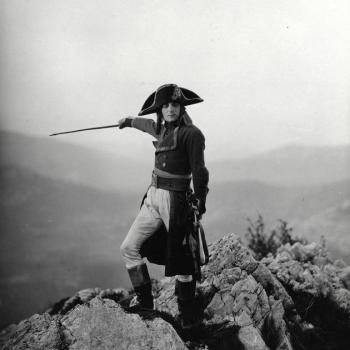
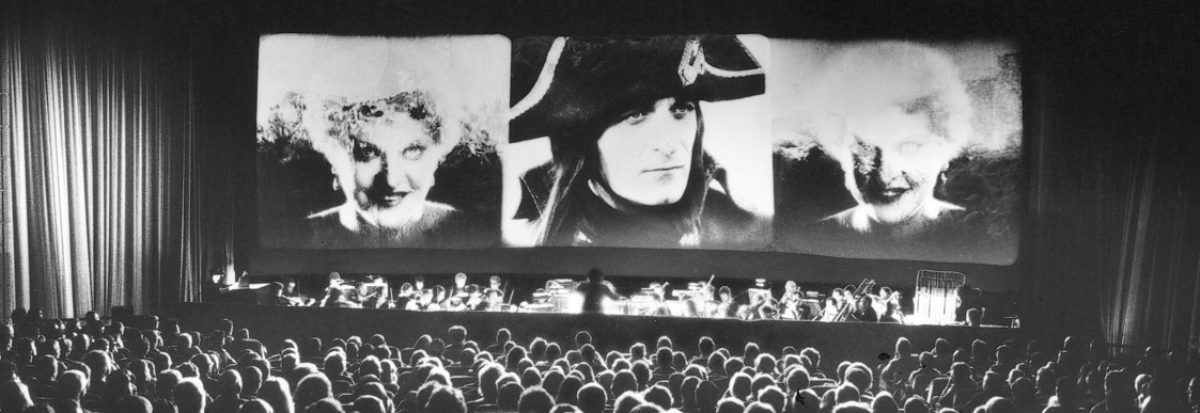
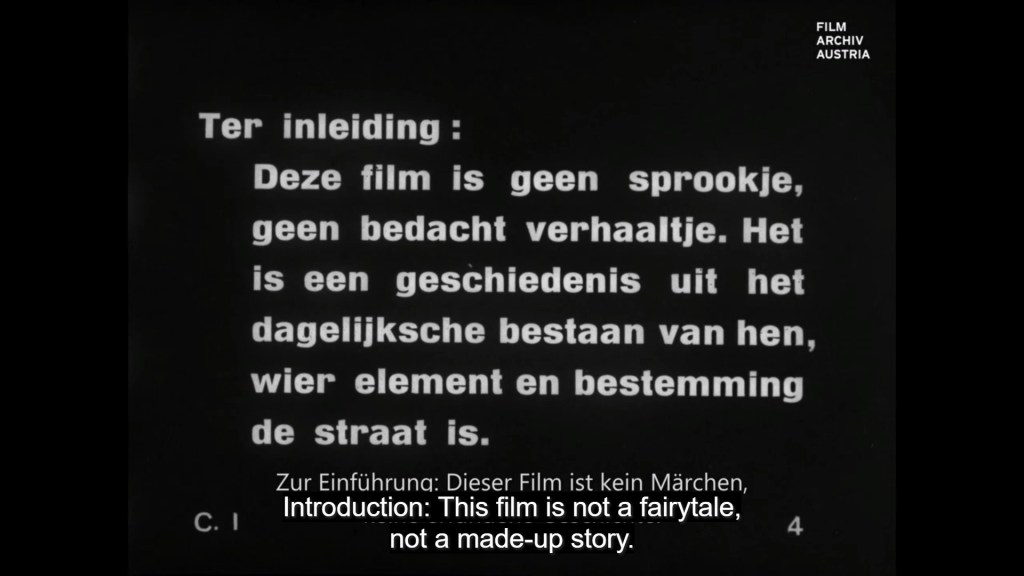


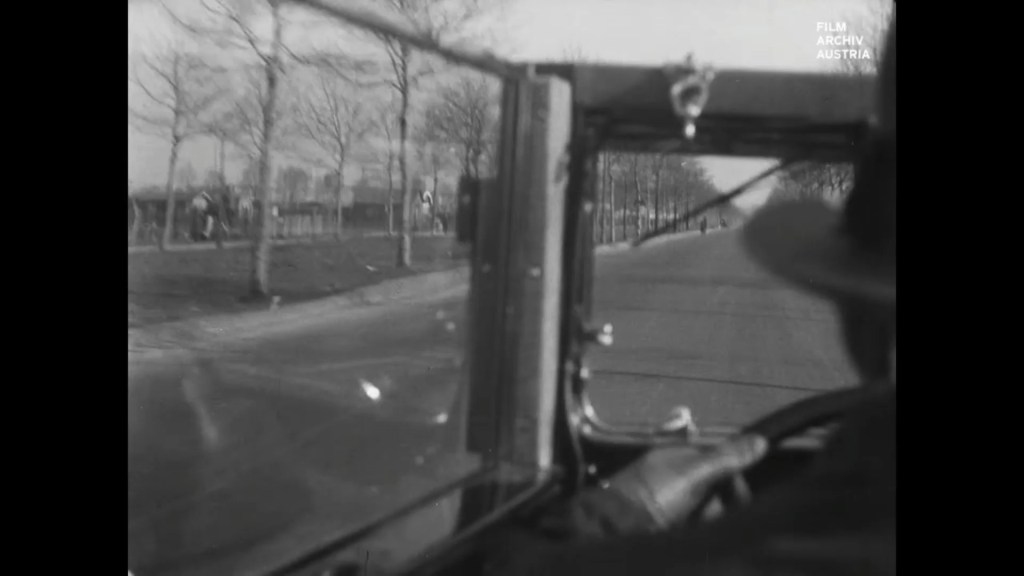


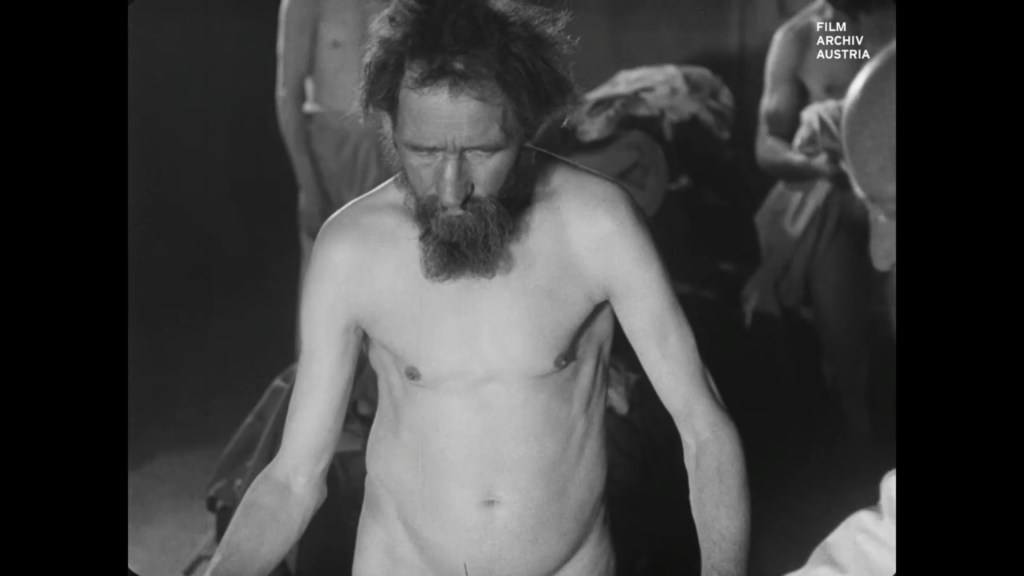


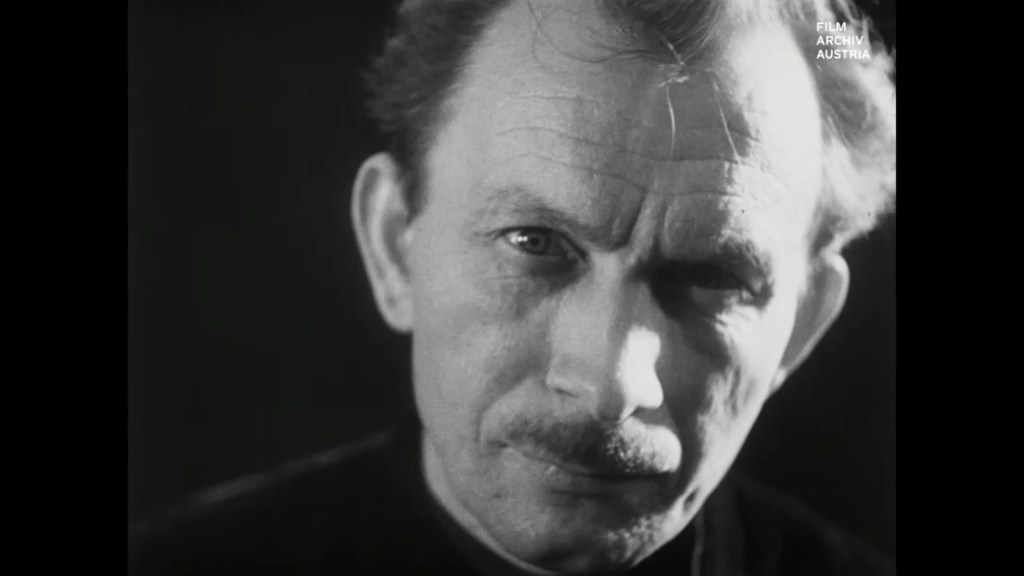


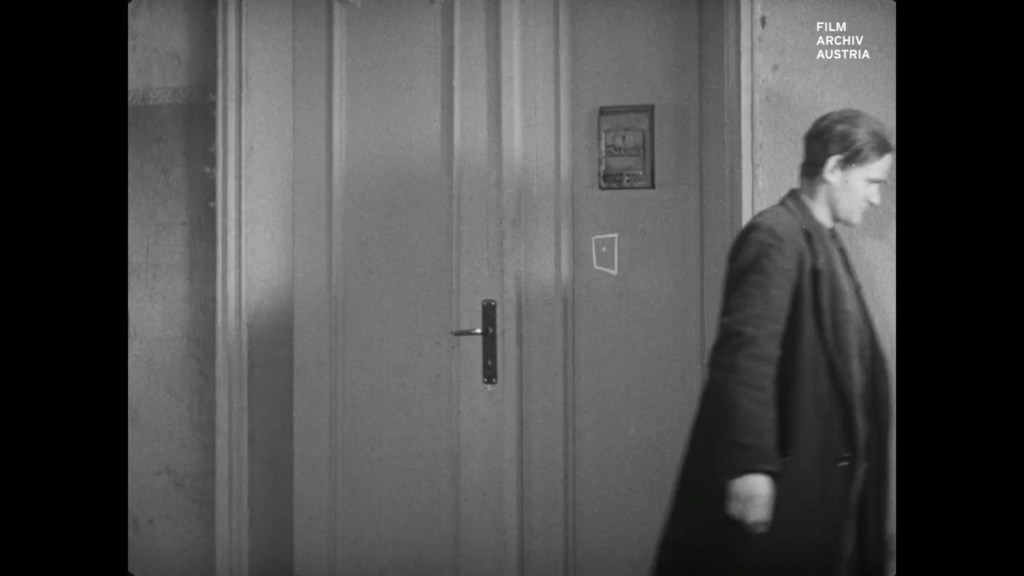


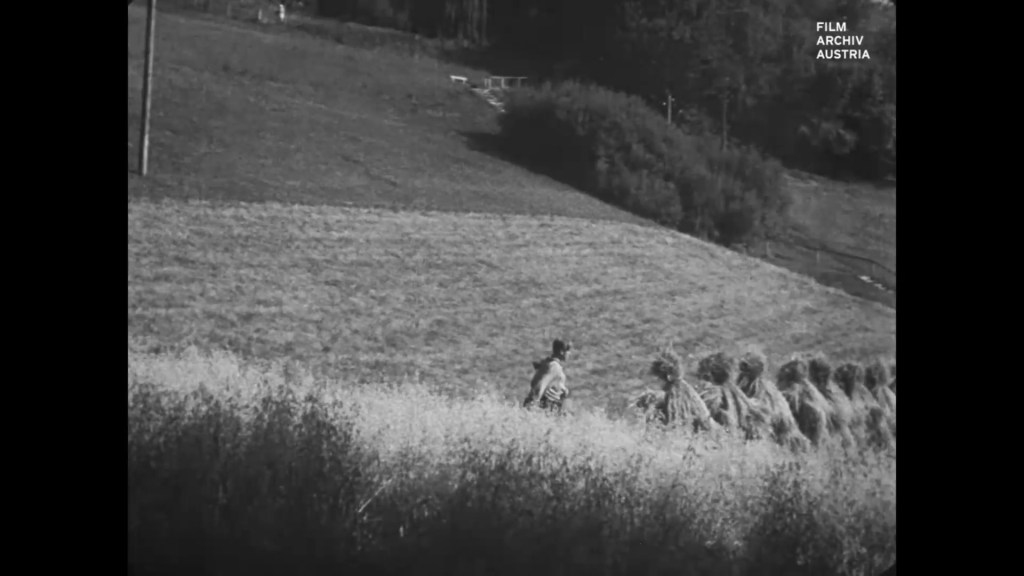


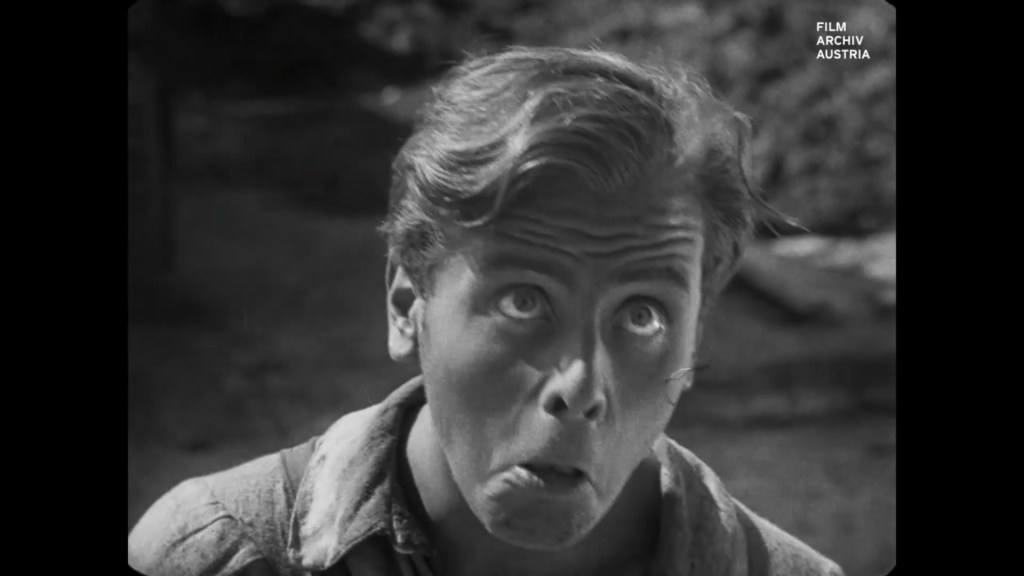

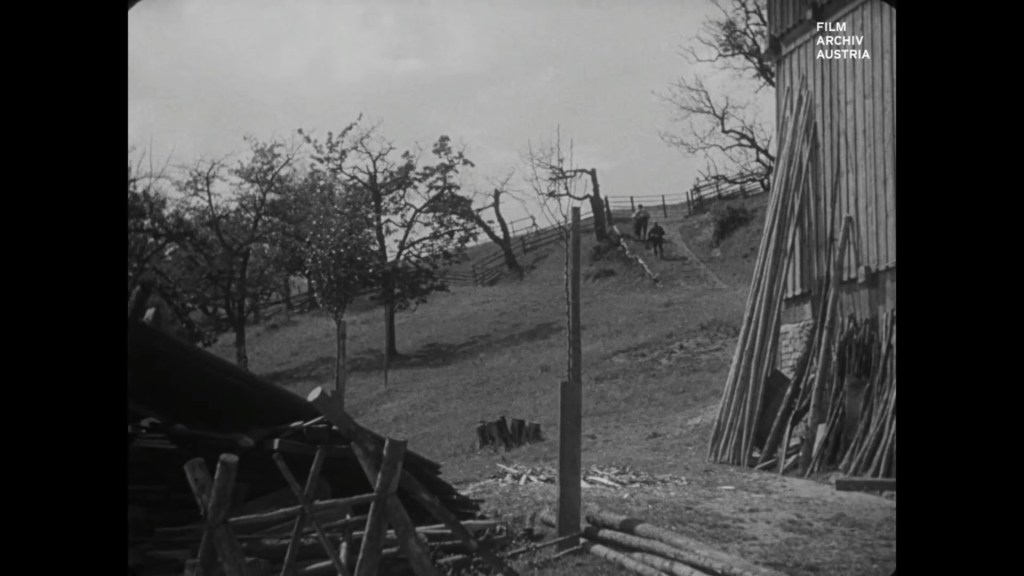


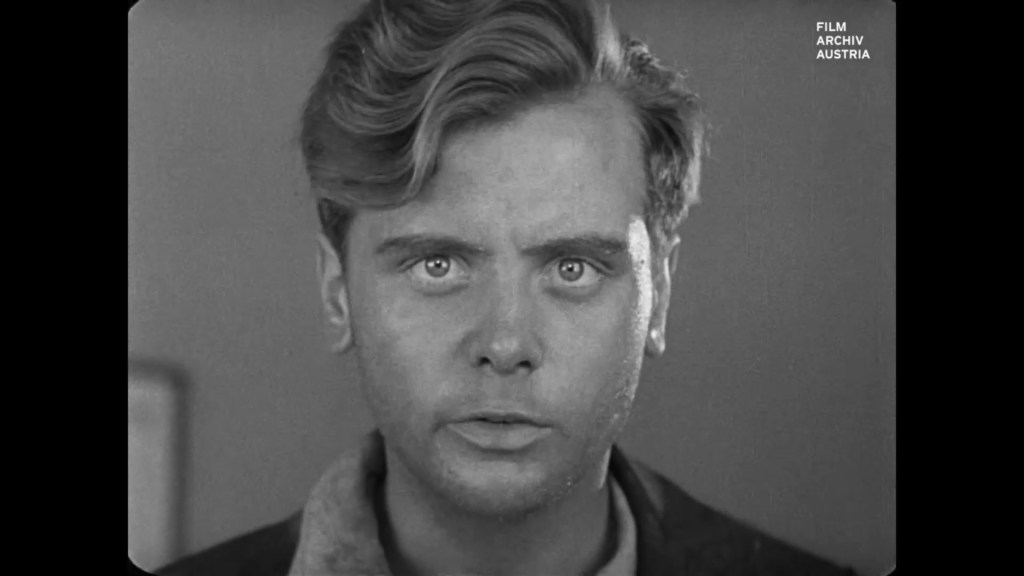


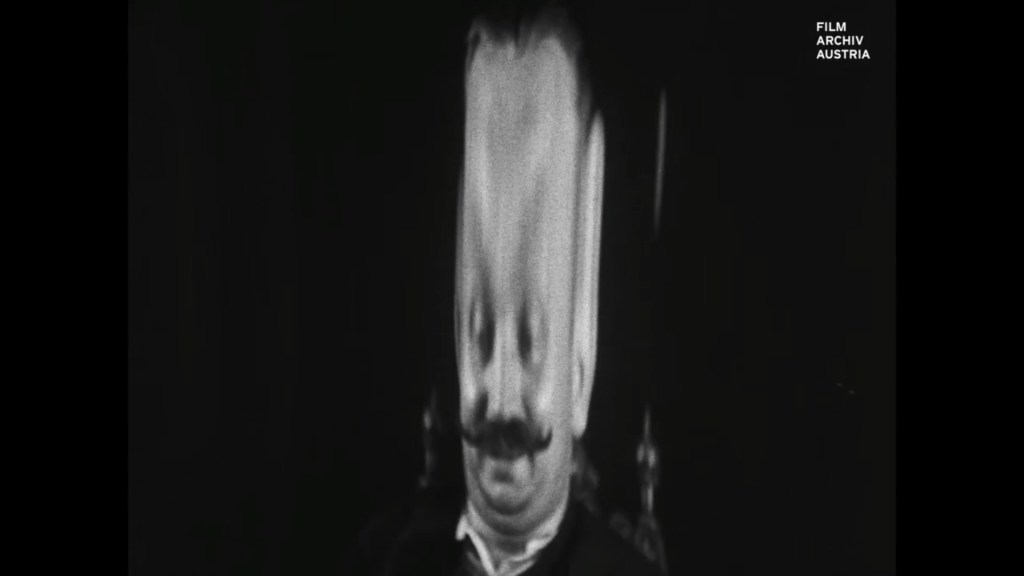


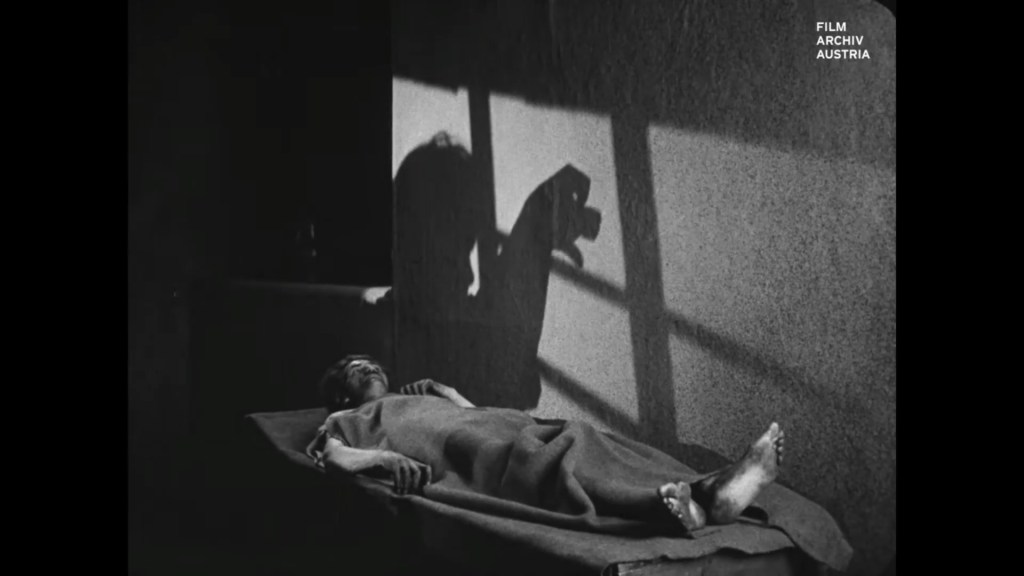


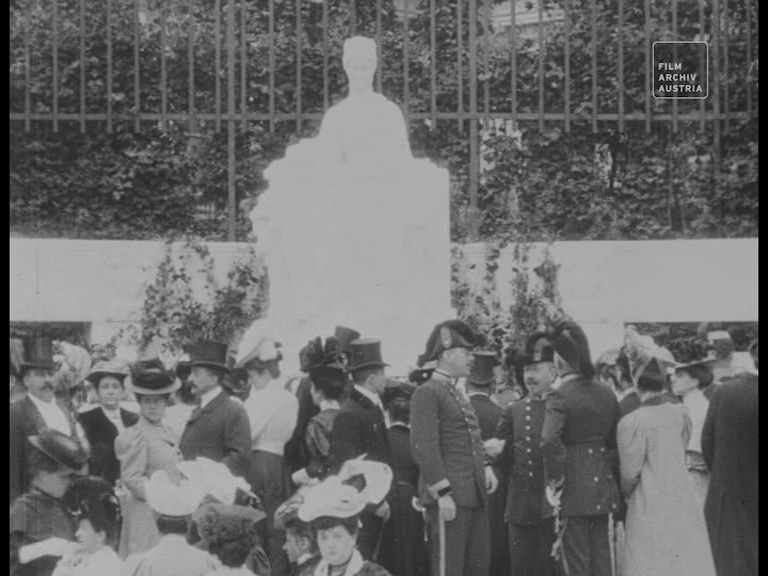

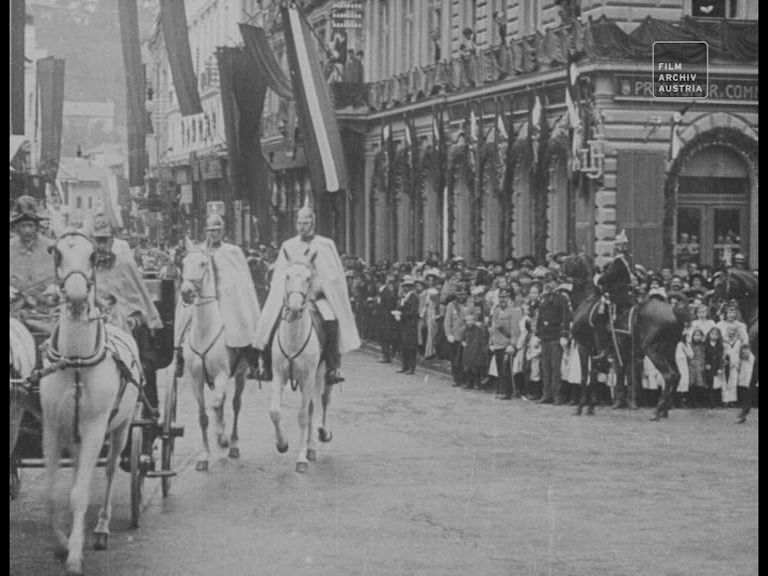


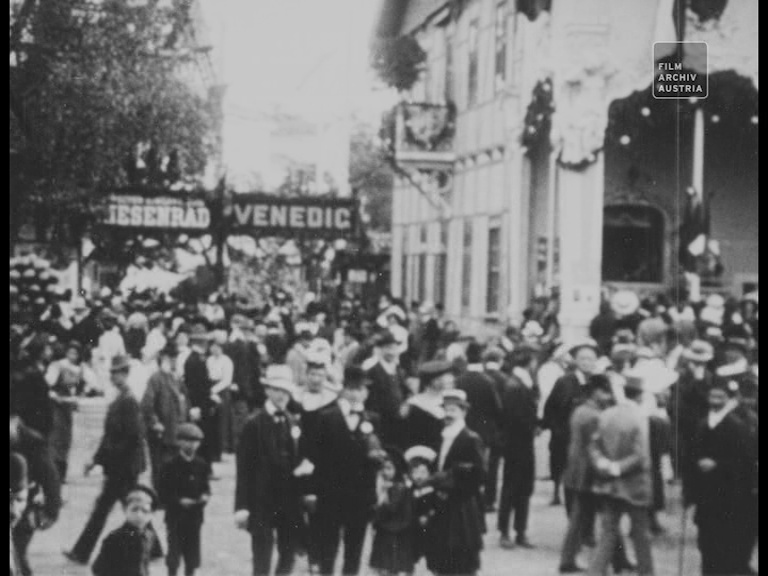


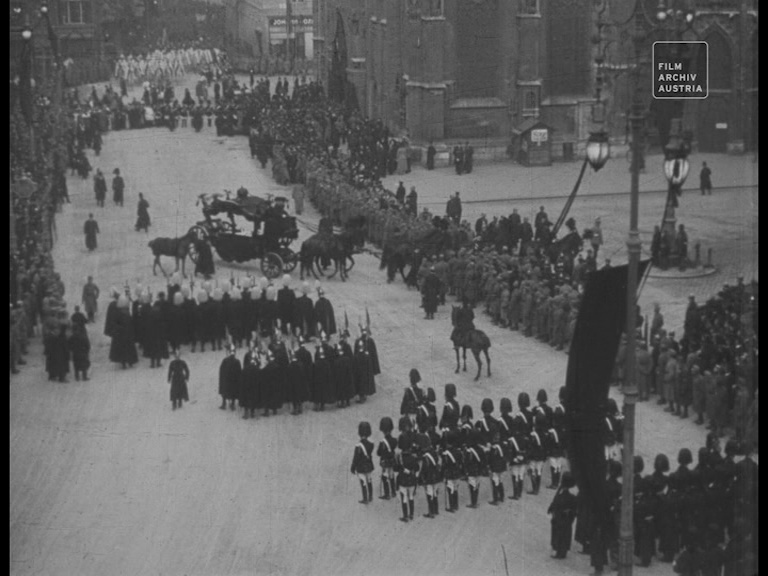


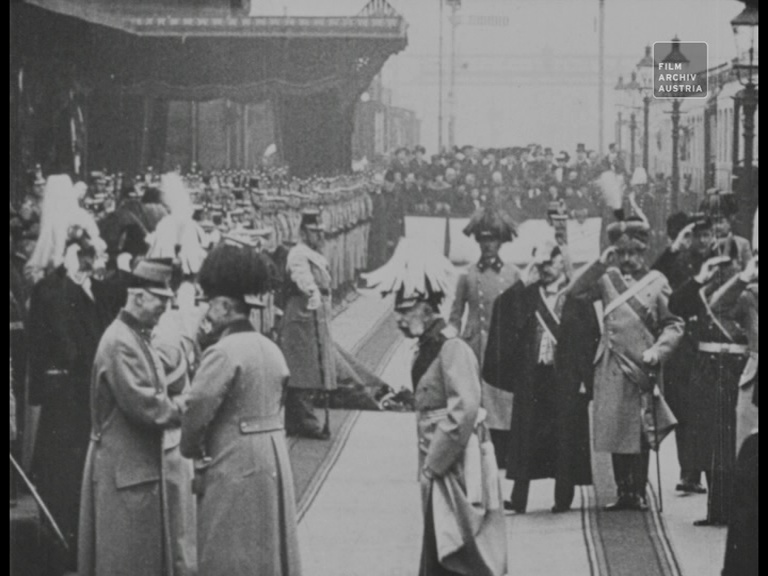


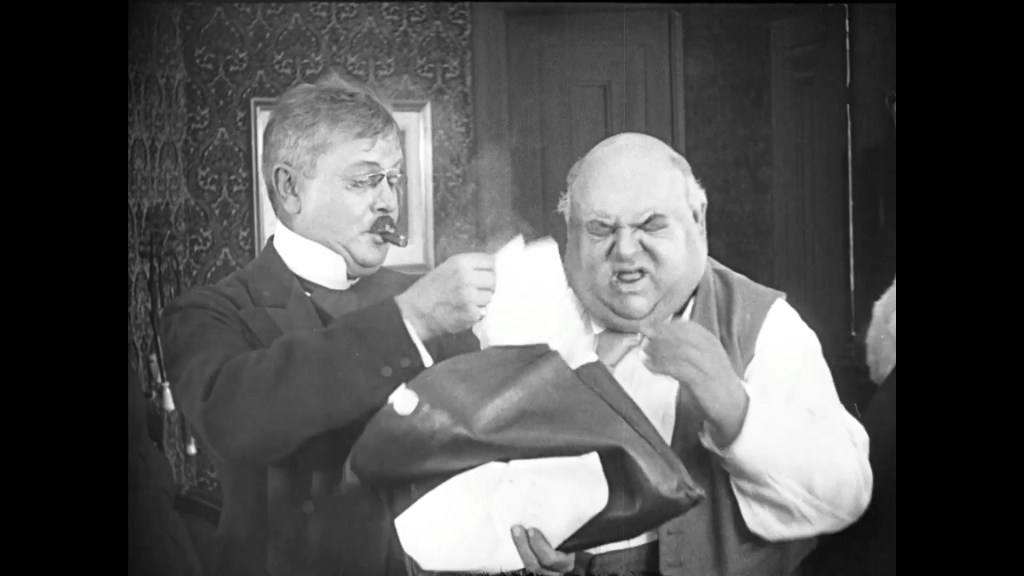


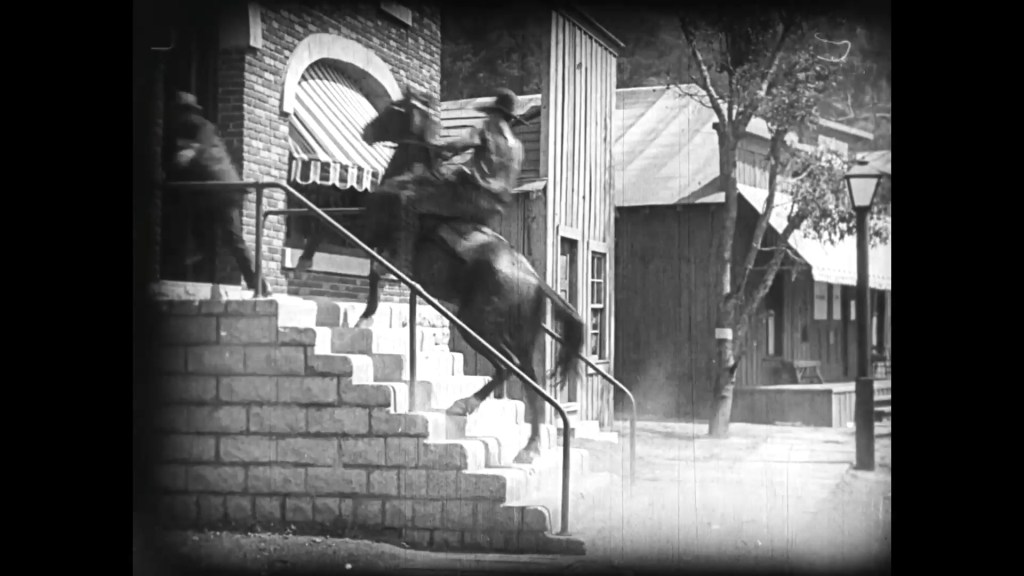


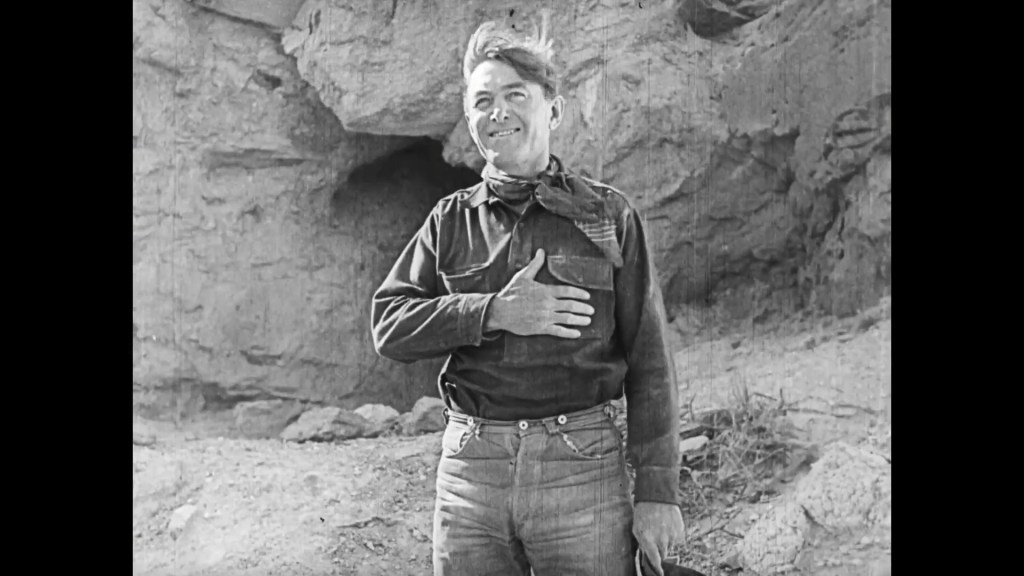


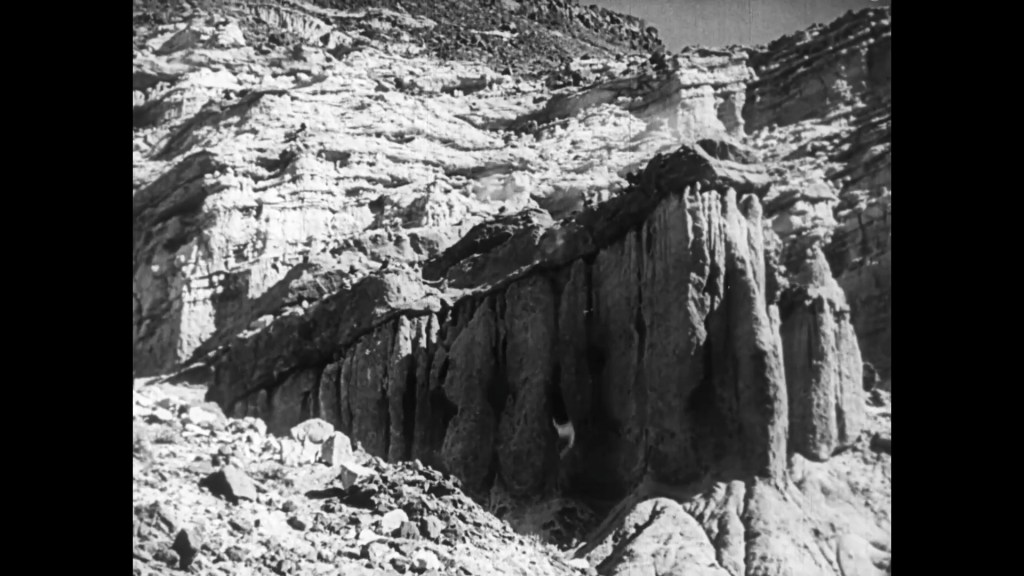
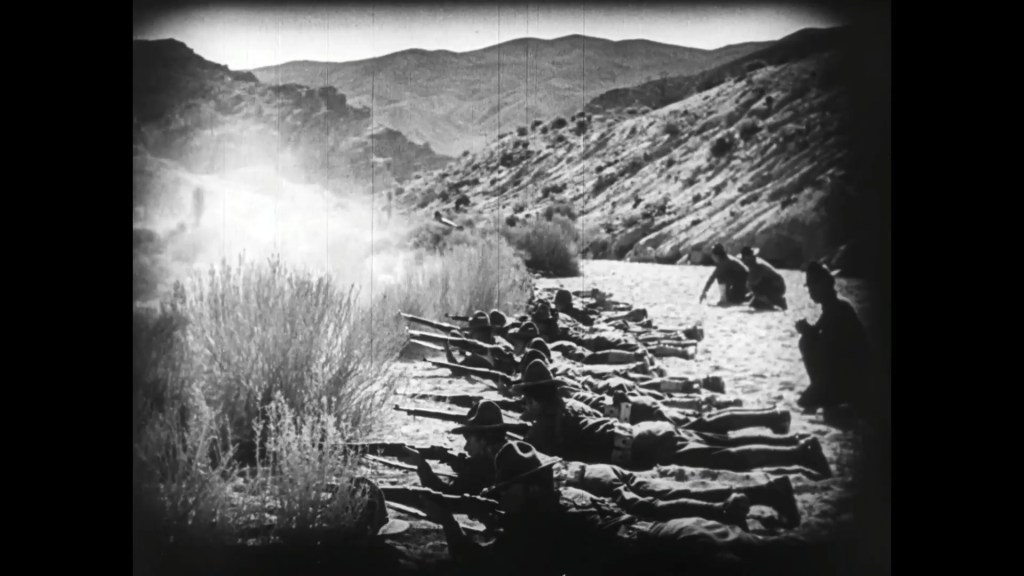


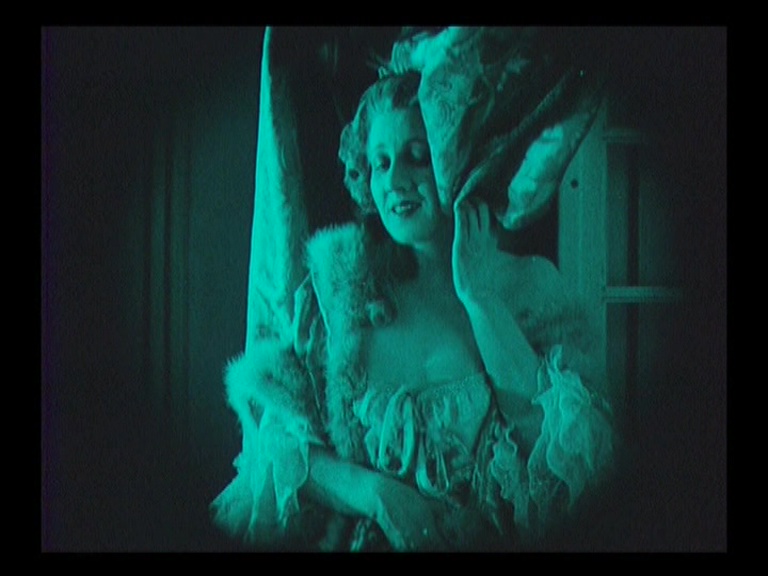


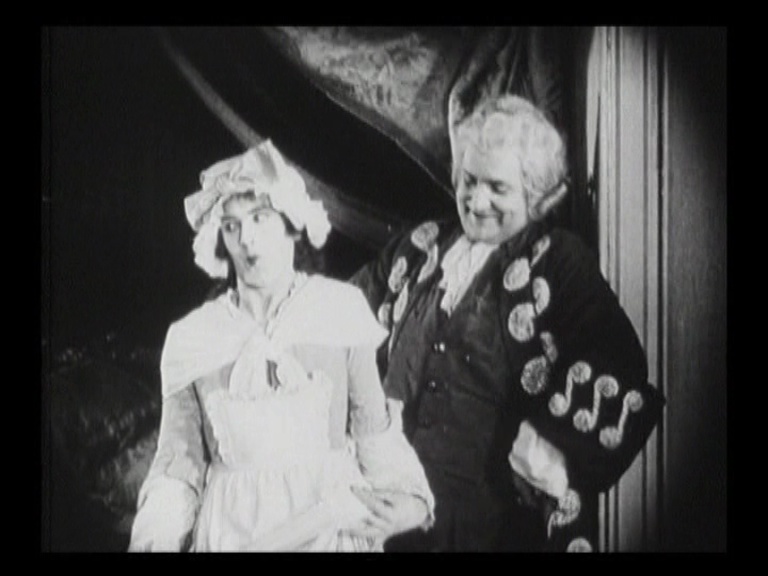


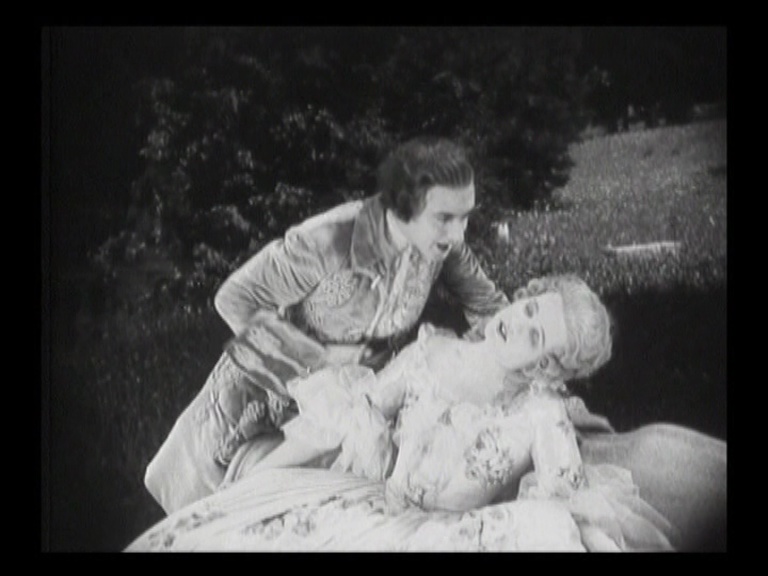


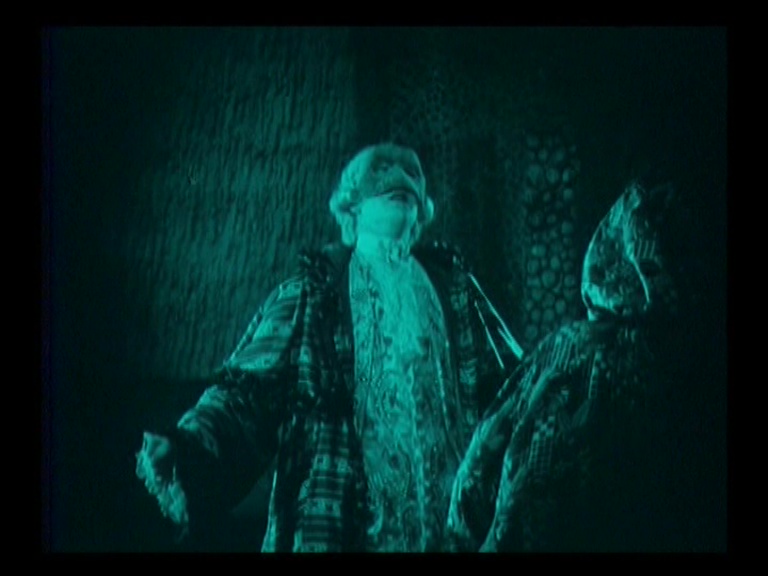


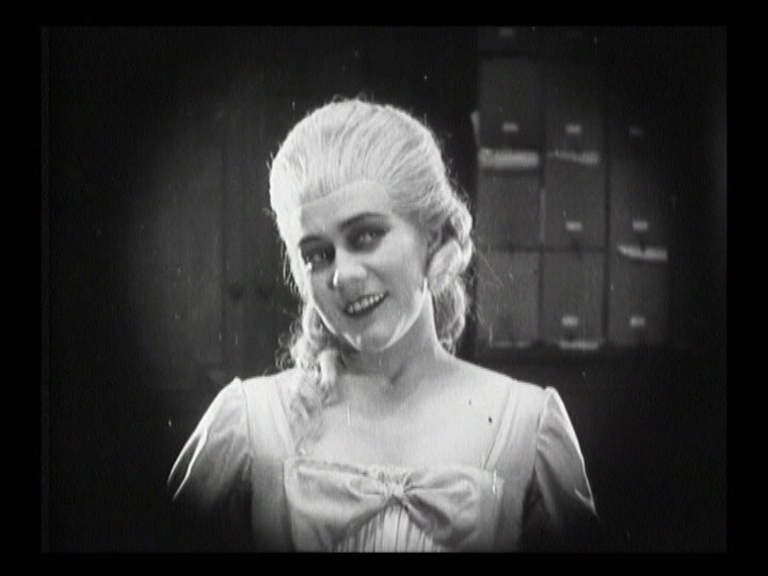


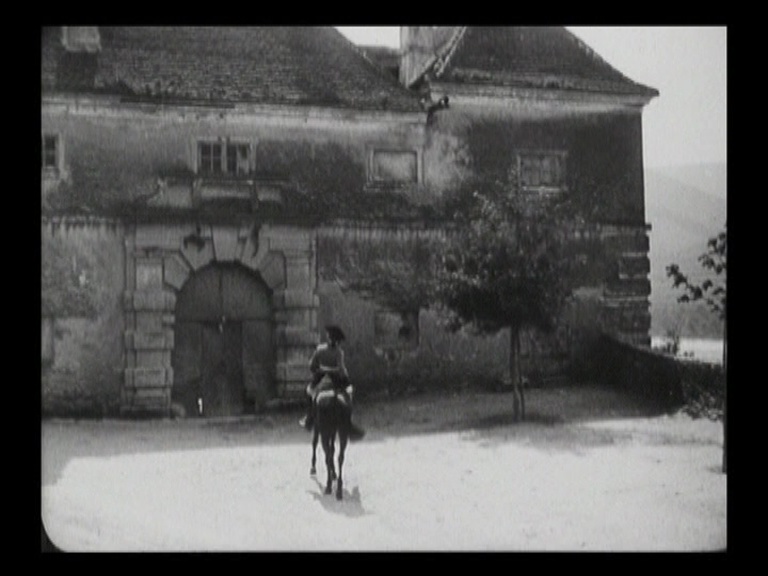
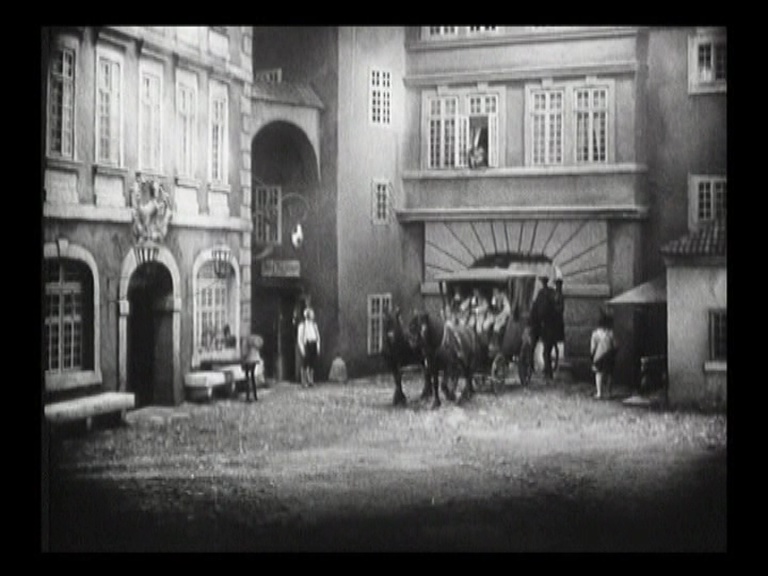


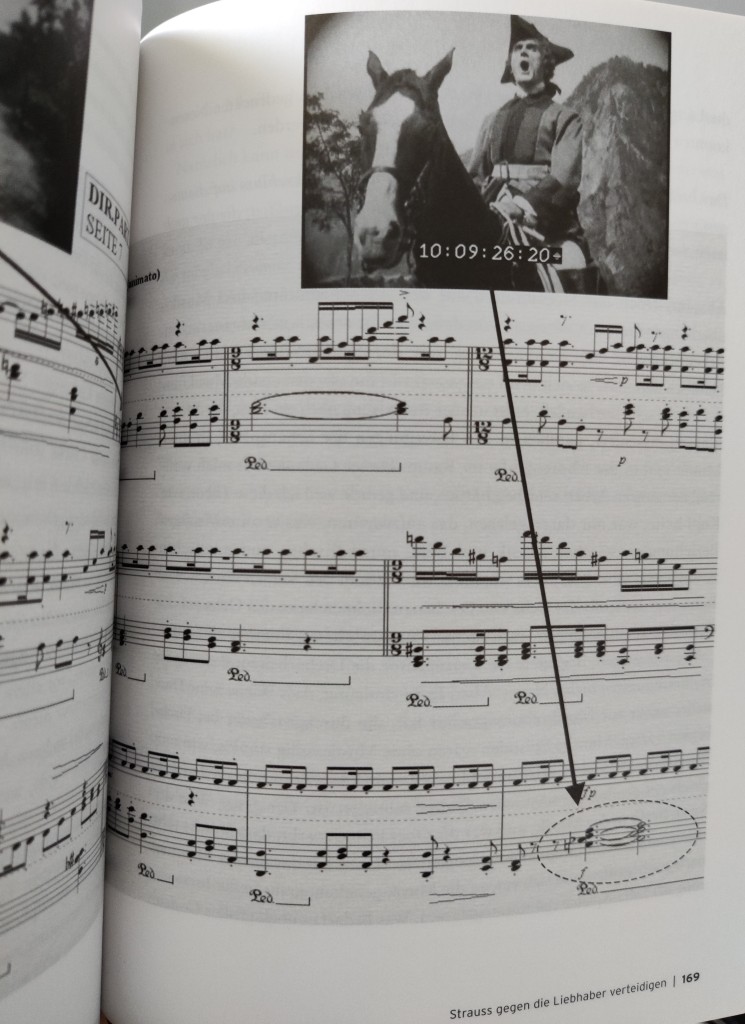

 The Realm of Silence