Abel Gance at the Cinémathèque française (2)

Day two of my retrospective binge, and we continue our exploration of Gance’s melodramas from the 1910s. Both films were familiar to me, but not in the form they were presented at the Cinémathèque…

Saturday 14 September 2024: Salle Georges Franju, 6.30pm

First up was Le Droit à la vie (1917). I had seen this film in the archives of the Cinémathèque française in 2010, in the company of Kevin Brownlow, and was very impressed by it. However, the copy that we saw had no intertitles at all, so we had only the synopsis to go on. (Some weeks later, Brownlow sent me a list of titles from his Pathé-Baby 9.5mm print, so having seen the film I could then read it!) Thankfully, the film has since been beautifully restored by the Cinémathèque française alongside (as the retrospective notes are keen to acknowledge) TransPerfect Media. The screening last week was, I believe, the premiere of this restoration – so it was a real treat to see it. This was a 4K restoration, based on the surviving 35mm negative. This original element had begun to decompose, so it was supplemented by the safeguard copy made of the negative in 1965. The missing titles were recreated on the basis of those in the 9.5mm version and Gance’s manuscript scenario, both preserved in the collection of the CNC/Cinémathèque française. The font for the titles was recreated after the typography of La Dixième Symphonie. I report this latter information with some pleasure, since one thing that can spoil even the best restoration is a modern font. (I think especially of many North American DVDs that not only translate but transliterate the foreign titles, turning them into the ugliest imaginable insertions into original prints. Urgh! I’ve written about this in an issue of Screen, should anyone be interested in more detailed pedantry.)

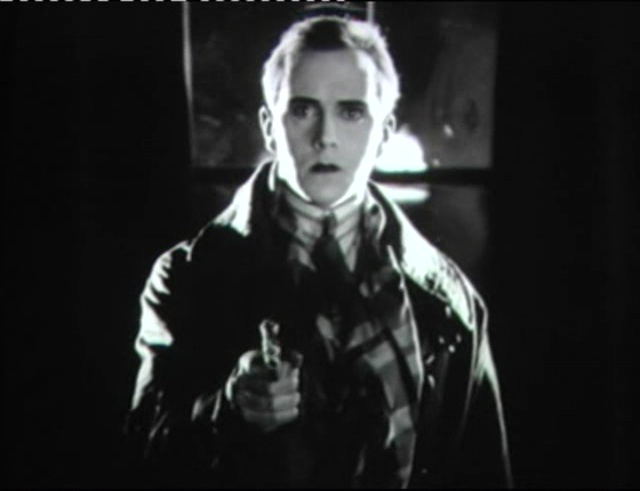
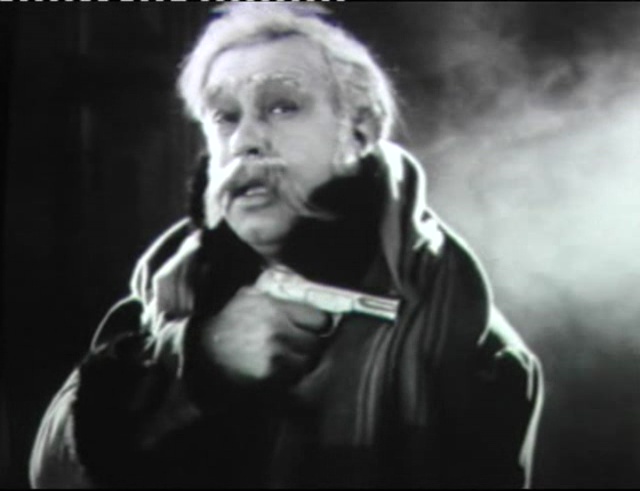
The plot of Le Droit à la vie is a pleasingly gripping drama (and yes, spoilers ahead). Pierre Veryal (Pierre Vermoyal) is a prodigiously talented young financier, aided by his two ambitious secretaries, Jacques Althéry (Léon Mathot) and Marc Toln (Georges Paulais). However, Veryal’s absolute – and amoral – devotion to his work is undermining his health, and he ignores his doctor’s recommendation for absolute rest. Veryal’s only real feelings are for his pupil Andrée Maël (Andrée Brabant), an orphan being looked after by her grandmother (Eugénie Bade). But Andrée loves Jacques, who returns her feelings while being financially unable to support a wife. He is about to ask Andrée’s grandmother for permission to marry, but the old woman dies – and Jacques must leave for America to manage Veryal’s affairs, and to win his own fortune. The grandmother has willed that Andrée is entrusted to the care of Veryal, who exploits this to marry Andrée. Many months later, Jacques returns from America a rich man. He not only finds that Andrée is married, but that Veryal has an infectious illness that will condemn Andrée if there is significant “contact”. Despite Jacques’s entreaties, Veryal insists on enjoying his last months of life. He sells all his assets to fund lavish parties. Meanwhile, Marc Toln exploits Veryal’s distraction to embezzle large sums from his accounts. When this is discovered by Veryal during a masked ball, Toln tries to kill his employer – but only succeeds in wounding him, an act witnessed by Jacques. Knowing Jacques is a rival for Andrée’s affections, Veryal falsely supports Toln’s claim that it was Jacques who fired the shot. But at the trial, Jacques is vindicated by Veryal, who dies after having accepted that Andrée will marry Jacques.

Le Droit à la vie is a cracking film. It’s beautifully staged, beautifully lit, and the drama has real heft. The central love triangle – between a corrupt (usually capitalist, usually older) man, a younger woman, and her young lover – is one that recurs in multiple variations across Gance’s work. In Le Droit à la vie it is given its most vivid realization thus far in his filmography. The bite to Veryal’s predatory sexuality comes in the form of his illness, which initially seems to be merely fatigue – but is soon implied to be something more sinister. His increasingly erratic and violent behaviour, coupled with his rapid mental deterioration (even before being shot!), suggests syphilis – a diagnosis surely confirmed by the doctor’s insistence that he must avoid “contact” with his wife. No other kind of “contact” is envisaged as being dangerous, and the horror of Veryal’s “right” to Andrée’s body is as explicit as can be imagined.

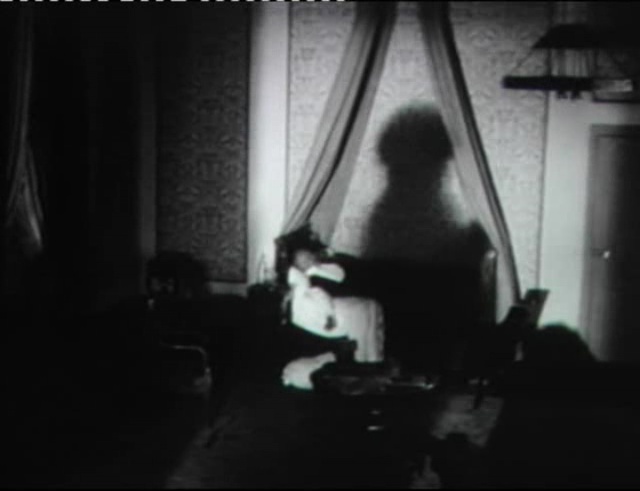
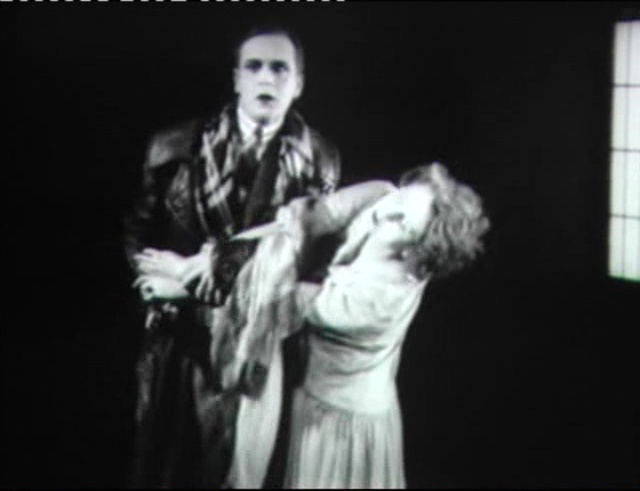
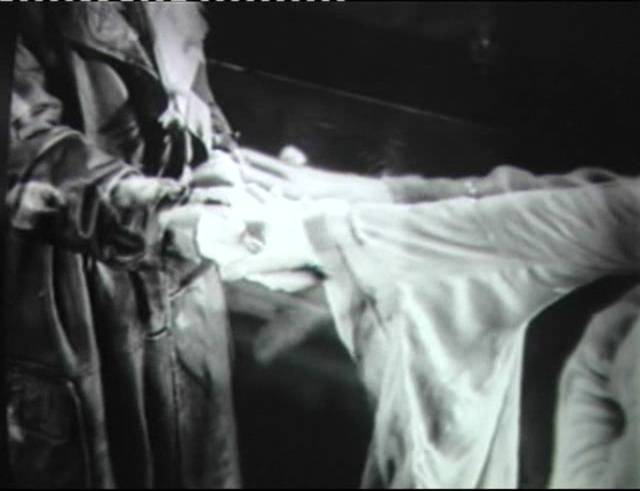
Le Droit à la vie finds marvellous imagery with which to make this situation sinister. In particular, there is one remarkable staging of a scene that Gance replicates (closely) in J’accuse and (virtually identically) in La Roue. This is when Jacques witnesses Veryal forcing Andrée into his arms. The brutish embrace is framed within a window and partially-concealed by lace curtains. The equivalent scene in J’accuse is when Jean Diaz sees Edith being assaulted by her brutish husband François at the window – a moment made all the more shocking by the symbolic breaking of the glass and bleeding hand. And in La Roue, when Elie witnesses Norma being assaulted by Hersan, Gance goes further – making the rape of Norma as explicit as could be expected within the laws of censorship. (This scene was so often cut from the film that it was lost from all surviving prints, so the 2019 restoration had to reconstruct it from the 35mm rushes discovered in the archives.) Its iteration in Le Droit à la vie is still very powerful, one of many scenes when the combination of framing, editing, and lighting are united into a perfect mise-en-abïme of the drama.

It is with great sadness that I cannot share any image captures from this film, since it has never been released on any format since the advent of 9.5mm! I really, really hope that it is released on home media because it looks stunning. Burel’s photography is sumptuous, from the dark, complex interior spaces of Veryal’s rooms to the exquisite sun-dappled exteriors where the forbidden lovers meet. During the latter, there is one stunning shot of Jacques and Andrée: he half-concealed behind a tree, his profile outlined in sunlight; she, half-revealed in the clearing beyond, her face and hair haloed with natural back-lighting. My god, my god, my god this is a good-looking film. I cannot praise the visual qualities of the restoration highly enough. The 4K scan does real justice to the film, and seeing it on the big screen in the Salle Franju was incredibly moving. Some of the close-ups of Andrée were ludicrously detailed, simply glowing with life. Such was the sheer presence of this film, I cried just to look at it.

The performances in Le Droit à la vie are very good. Andrée Brabant is a proto-Ivy Close in La Roue, and both women have the long, curly blonde hair of a Mary Pickford – and are as exquisitely lit as she or (very much Gance’s role-model) Lillian Gish. Brabant herself is an engaging presence, able to communicate with her eyes – sometimes directly into the camera – the emotions of her character. Not to repeat myself from my last post, but Léon Mathot is once again both a sensitive and dramatic performer. However, I find him more engaging and affecting in Le Droit à la vie than in Les Gaz mortels. I think this is entirely to do with the respective quality of the films. Le Droit à la vie is a pleasingly dark drama, and the performers have something to work with – Mathot included. Vermoyal is creepy as Veryal, but has a tendency to eye-rolling exaggeration and occasional histrionics (especially when suffering from his bullet wound). I’ve only seen him in Gance’s early films and believe he was an actor from the Grand-Guignol theatre, which might explain his playing-to-the-gallery mode of performance. His was the only performance that stood out for its moments of crudity – but I suppose that conveying the signs of tertiary syphilis gives license to a bit of excess. Actually, I thought one of the most engaging performances in Le Droit à la vie is by Georges Paulais. His role is relatively minor, but there is a great clarity and presence in all of his gestures, all of his glances.

My final word on the film must go the music for this screening by Nicolas Giraud and Fixi. I confess that when I saw the name “Fixi” I was faintly worried about being given something peculiar (a fear not exactly allayed by the sight of his garish shirt as he stood to acknowledge our applause welcoming him to the stage). Fixi was at the piano, but he sometimes swapped the keyboard for his accordion. Giraud played a variety of instruments, from guitar to percussion and acoustic loops. If all this sounds like an odd mix, the result was superb: rhythmically and tonally in tune to the action, and independently musically satisfying. There were some very pleasing combinations of sounds, and such was the variety of combinations that it often felt like the musicians were jamming with the film – but jamming in the best possible sense, of playing off the changes in tempo and dramatic context. The score was well-conceived and well-executed. A pleasure to hear, and an enhanced pleasure to watch. Bravo!

Saturday 14 September 2024: Salle Georges Franju, 8.15pm

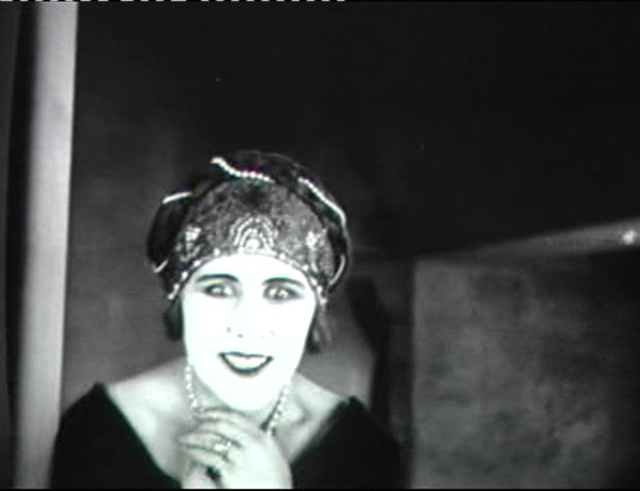
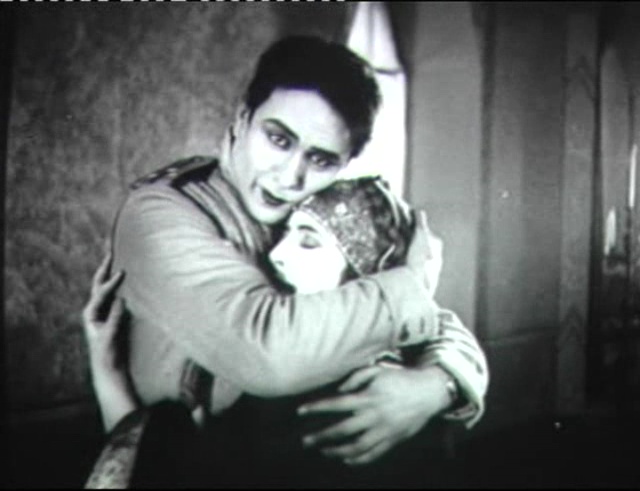
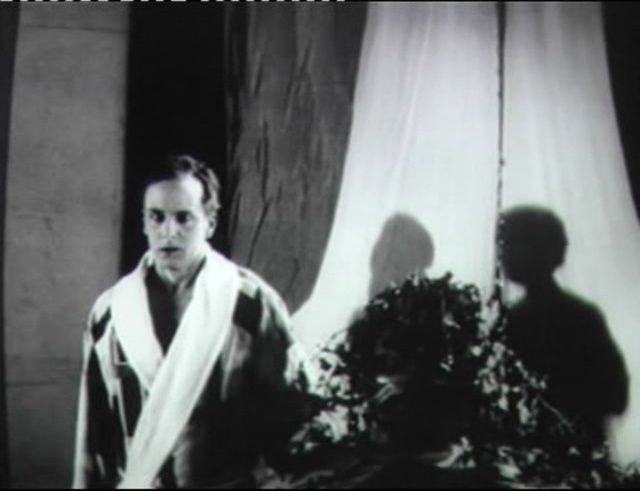
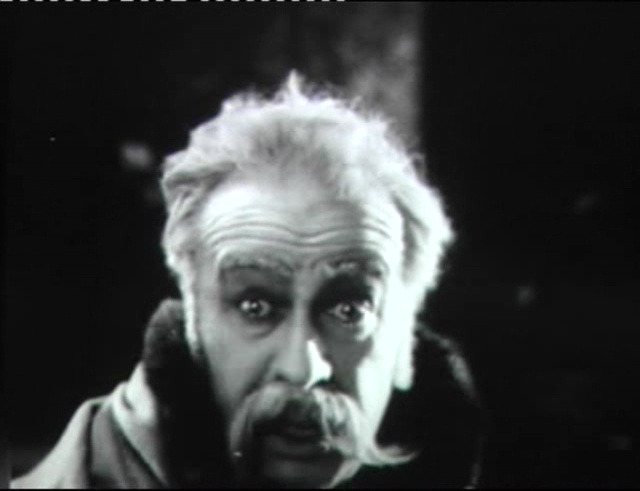
Hot on the heels of Le Droit à la vie, released in January 1917, Gance’s Mater Dolorosa (1917) was released in March 1917. Another concentrated melodrama, Mater Dolorosa focuses on Marthe Berliac (Emmy Lynn), who is having an affair with her brother-in-law, the writer Claude Berliac (Armand Tallier). In an attempted suicide, Marthe accidentally shoots her lover. Though she promises the dying Claude never to reveal the truth, Marthe’s secret attracts the interest of hunchbacked blackmailer Jean Dormis (Pierre Vermoyal) and his henchman (Gaston Modot). In attempting to pay off these men, Marthe’s husband Gilles Berliac (Firmin Gémier), a successful doctor, discovers the affair and disowns both Marthe and their son Pierre (Carène). Pierre is sent away to the suburbs of Paris, where he falls dangerously ill. Marital and paternal crises are eventually resolved when the husband sees the sincerity of his wife’s anguish, and is provided with new evidence by loyal servant Ferval (Anthony Gildès). Gilles finally reunites Marthe with Pierre and welcomes both back into his life.

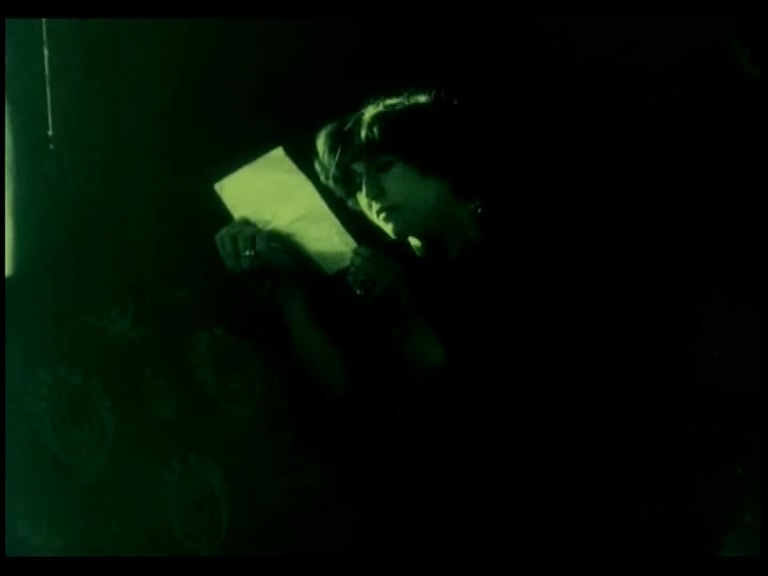
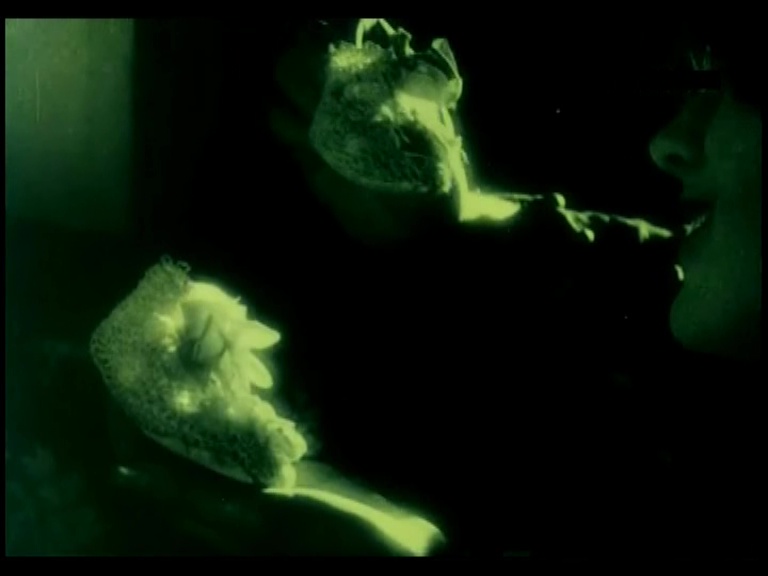
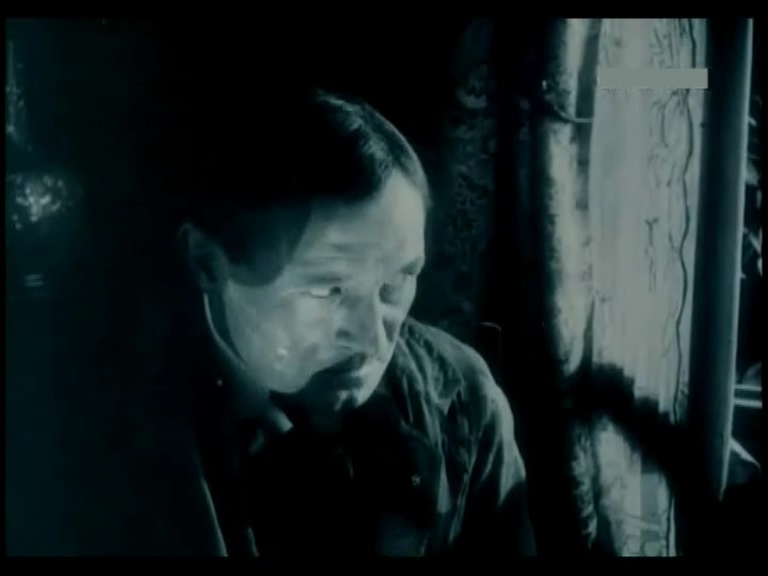
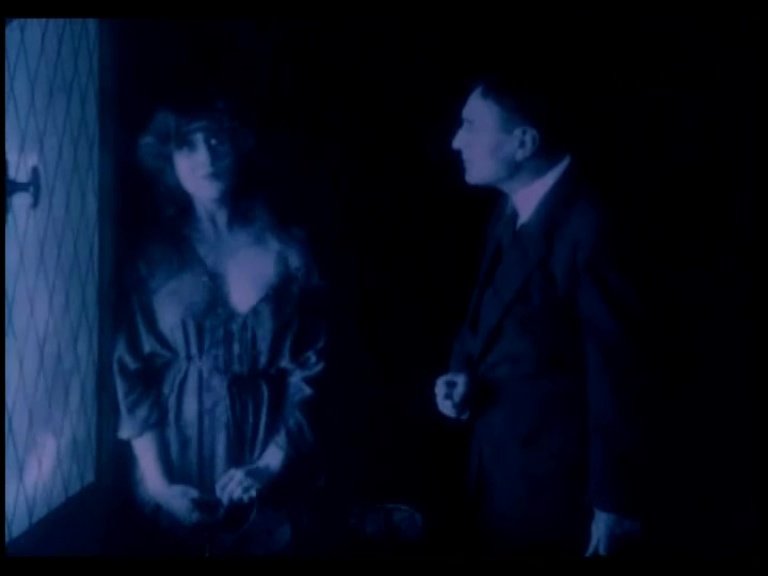
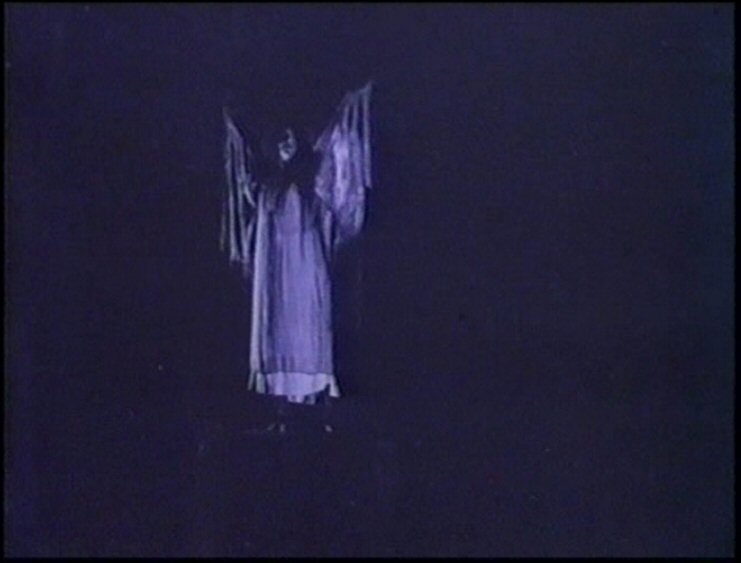
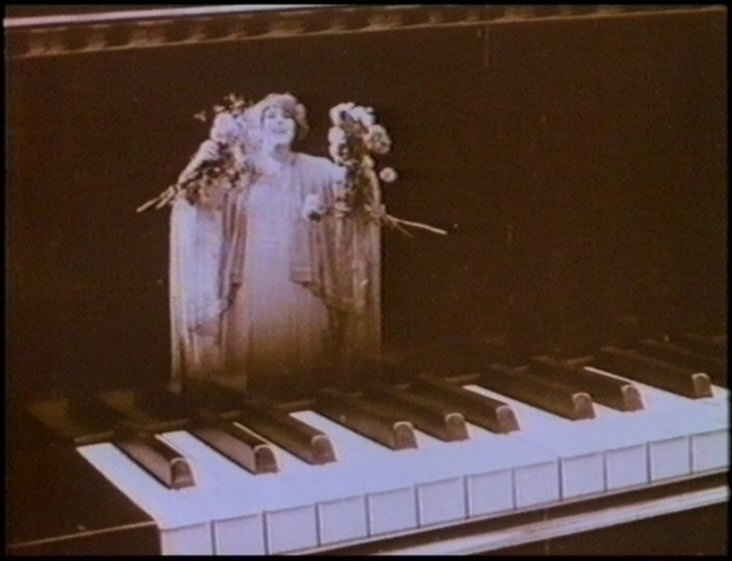
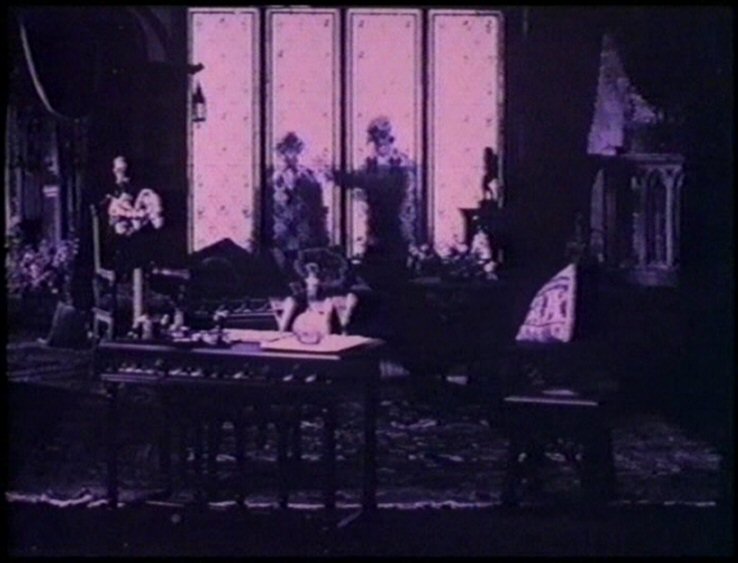
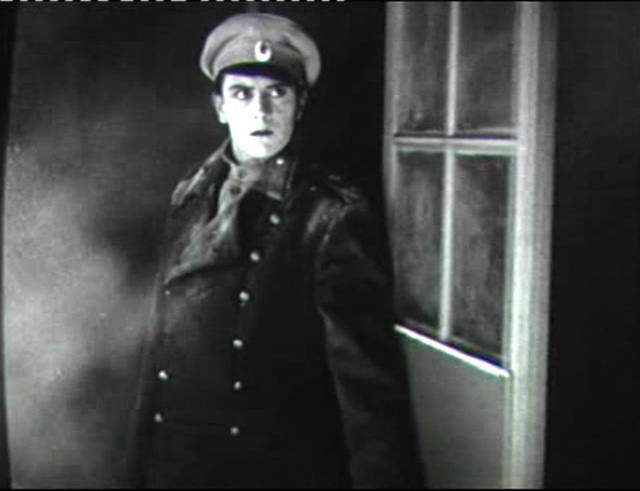
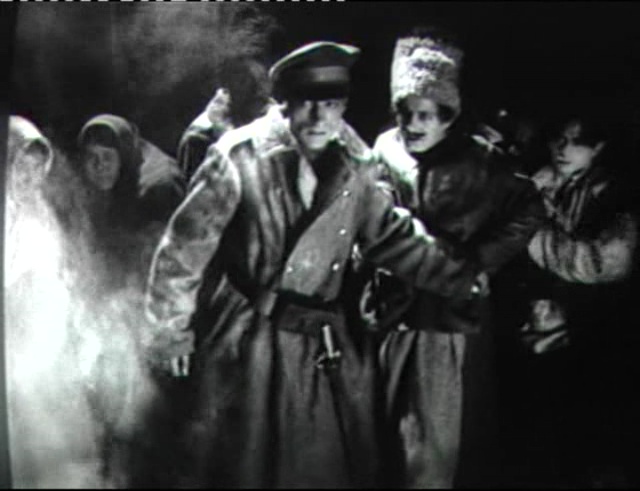
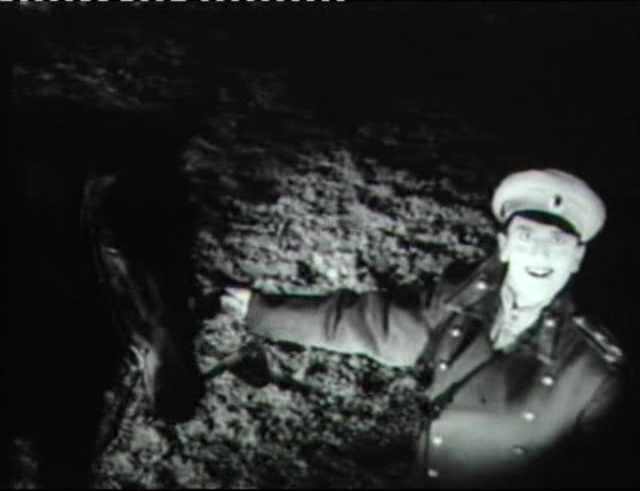
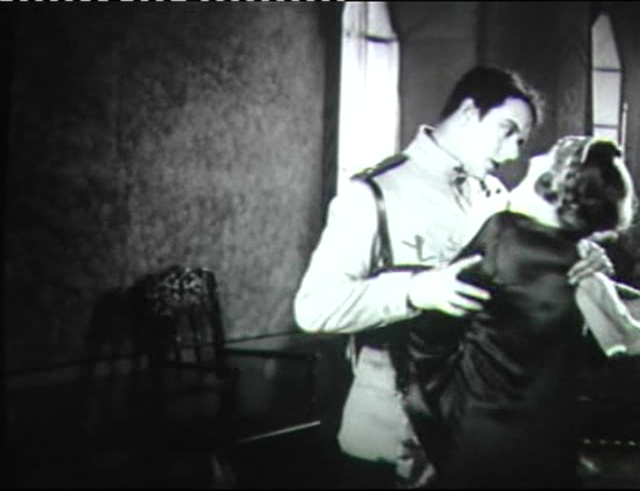
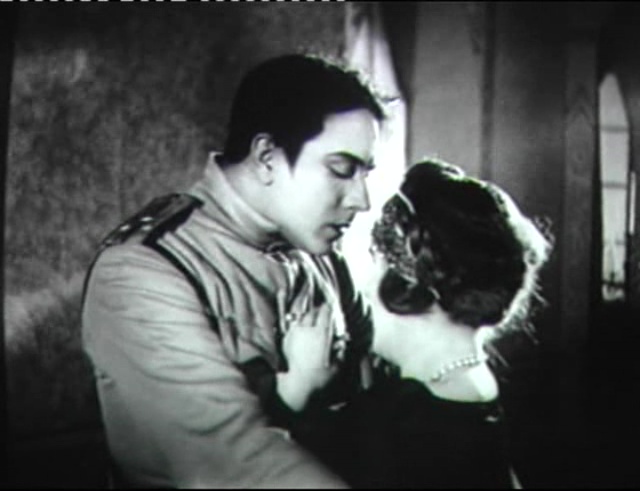
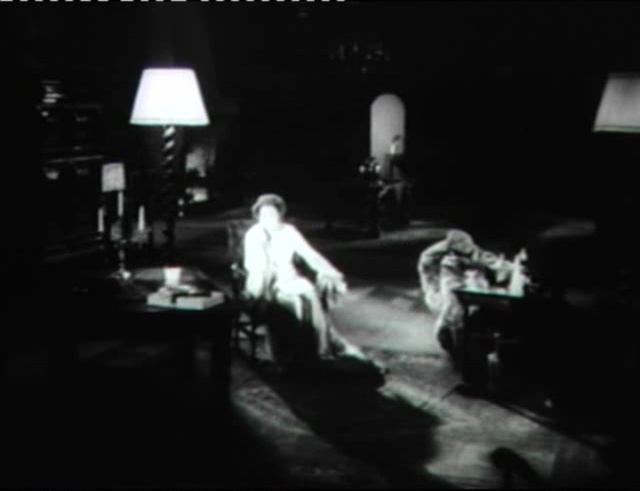
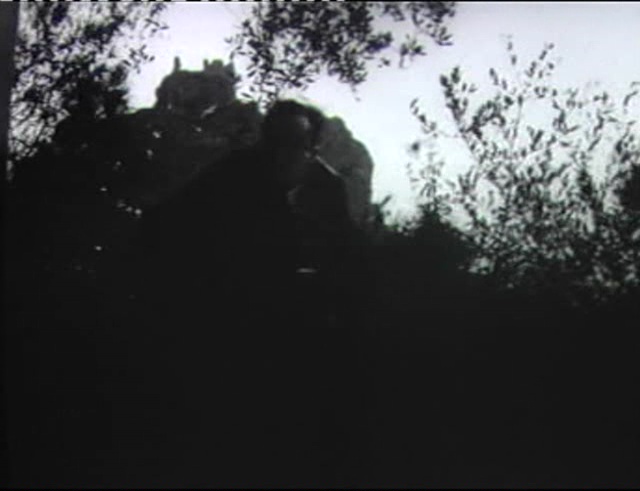
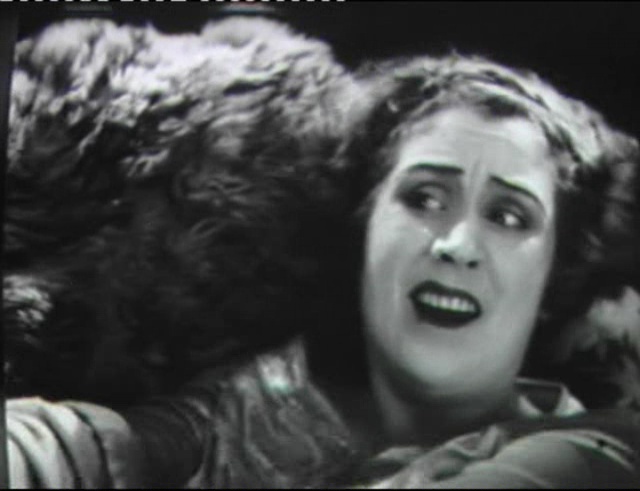
Mater Dolorosa has a complex history during the silent era, and was also remade by Gance as a sound film with the same title in 1932. After being premiered in 1917, the silent version was re-edited and rereleased several times between 1918 and 1926. In 1993, the Cinémathèque Royale Belge undertook two restorations: the first reconstructed the original version of 1917, the second reconstructed the final rerelease version of 1926. The differences between the two include character names, character identities, and intertitles. The restoration of the 1917 version is (for me) by far the most satisfying, and the one I am used to seeing. Tinted and toned, it looks utterly gorgeous – while also being less verbose and more concentrated as a text. (The image captures included in this post are all from a copy of that version.) The 1926 rerelease version of Mater Dolorosa has more (to me, unnecessary and distracting) titles, as well as watering-down the love triangle by demoting the dead lover to a mere friend of Gilles Berliac rather than his brother. It also survives in monochrome only, which denies the film something of its visual richness.

The Cinémathèque française retrospective showed only the 1926 version. I confess that I was disappointed by the quality of the print, which was by far the poorest of any film I saw. It looked as though it had been assembled from copies of copies of copies, as well as being quite badly scratched. The restoration of the 1917 version is in much better shape, as well as offering the original tinting/toning that the 1926 print lacked. The 1993 restoration was shown on 35mm, but it lacked any restoration credits to explain its complex history. (For anyone seeing a copy of the 1917 Mater Dolorosa for the first time, it must have been confusing to see all the letters in the film dated March 1920!) All that said, I still enjoyed seeing the film projected, and with a good accompaniment on piano by Kolia Chabanier, another student from Jean-François Zygel’s school of improvisation.

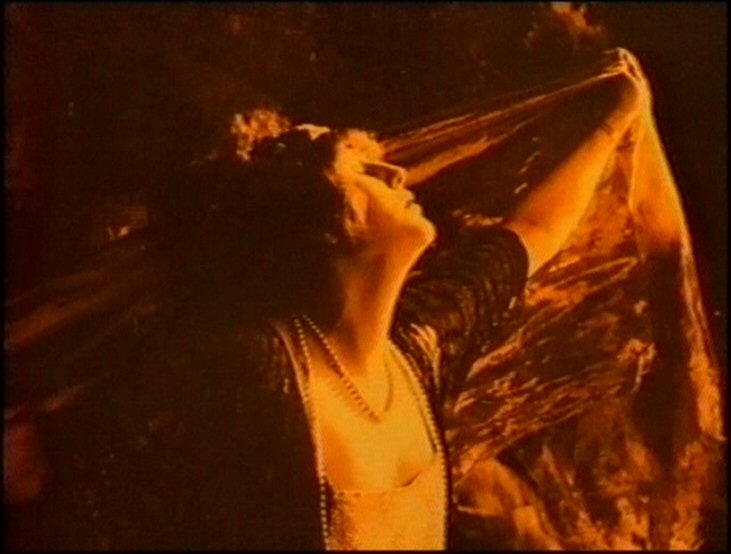
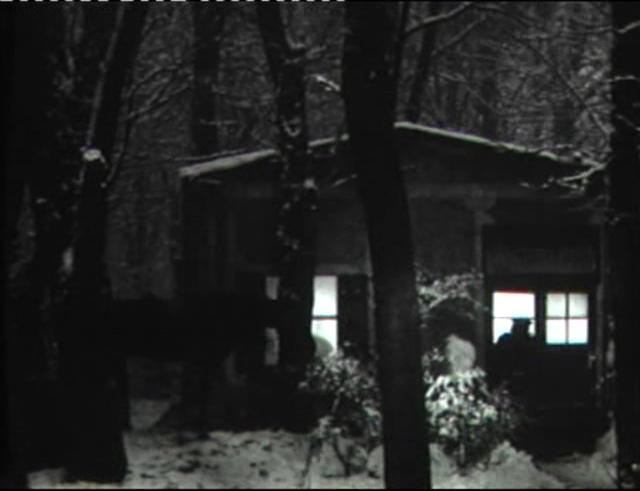
This was Gance’s first collaboration with Emmy Lynn, and her performance is terrific – it’s her film, from beginning to end, and she carries the drama. With a fabulous wardrobe of dark, velvety dresses, of fur-lined coats, of hats and veils, she is a passionate, sombre diva – retreating into shadows, falling to her knees, her hair haloed against fire, against wintry windows. The intensity of emotion, and her rendering of anguish, is also inseparable from the way Gance visualizes the dramatic tone. I have previously described Gance’s love of sun-soaked southern landscapes. Mater Dolorosa is the antithesis of the outdoorsy brightness evident in the opening scenes of Les Gaz mortels. Mater Dolrosa was shot in and around Paris in the winter of 1916-17. Bleak northern light, forever dimmed by clouds, defines the exterior spaces. The house to which Pierre is exiled is grim in and of itself, but the bare trees and cold glinting pond outside make it doubly so. The climactic sequence, in which Gilles drives his wife through a rundown suburban landscape of dark woods and walled cemetery, is chilling in every sense. This is a cold world, in which passions smoulder in the shadowy interiors of domestic space.

Chiaroscuro lighting defines all the scenes of emotional intensity, from the rich – and faintly sinister – apartment of Claude Berliac to the curtained spaces of Gilles and Marthe. Gance’s compositions delight in great swathes of black, from dramatic drapes to silhouetted figures. Light floods across floors, illuminating patches of action or highlighting pale faces. It’s exquisite to look it, an aesthetic that wraps you up in its atmosphere.

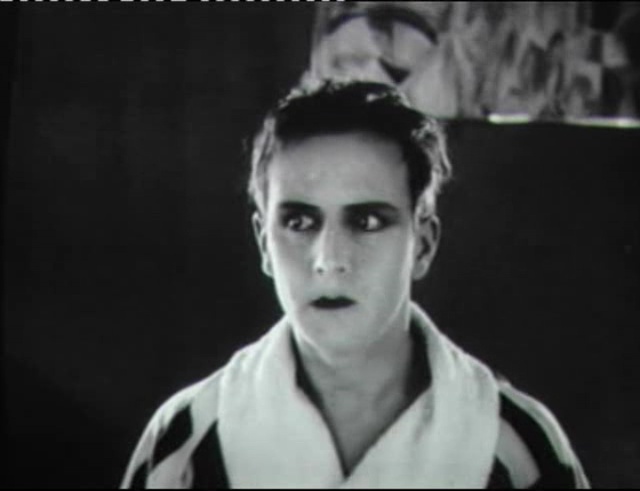
It helps that Gance fills his drama with strange touches and rich images. Take the way that the romping Pierre, playing naked in a fish tank, comes to the window to see his parents. It’s another scene framed by a window, Marthe and Gilles half masked by the lace curtains. The child puts its hands up towards his parents, but can only paw at the lace and glass. It’s such a beautiful moment, and one that sems to carry some extra weight of meaning. It is as though Pierre’s parents don’t really exist: they are as unreachable as a projection, a painting framed by the window. (It’s almost an image from an Ingmar Bergman film.) The compelling oddness of the image unsettles the cosiness of the family so effectively, so completely, that you can totally understand the way Gilles willingly tries to destroy their relationship.

So too with the scene when Gilles deposits Pierre into the care of a nurse in a distant house. Convinced he is not the father of the child, he reaches for a mirror and stares at his image. We see the light gleaming on his face (yet again framed against a window), the cruelty in his eyes. When he reaches for his child, his hands clasp around Pierre’s throat. It’s an embrace and a threat. The same gesture recurs in Gance’s films, each time becoming more complex, more troubling. It’s there in Le Droit à la vie, in Veryal’s sinister embrace of the reluctant Andrée – a gesture of enforced attachment, of physical ownership and restraint. In J’accuse, Edith is raped by German soldiers and gives birth to Angèle, who is adopted by her lover Jean Diaz. This adoption of the half-German Angèle is absorbed into (and complicated by) the film’s narrative concern with revenge and forgiveness. After Édith shows Jean her child for the first time, there is an extraordinary moment when Jean half-protectively, half-threateningly holds Angèle’s throat. Looking into her eyes, he tells her: “I’ll teach you how to become French. Then you can find your own way to punish your father as he deserves.” In La Roue, Sisif clasps his son Elie – who is also his rival in love for Sisif’s adopted daughter Norma – around the neck with the same gesture, realizing that Norma has returned into their life. And in Napoléon, Bonaparte enacts this gesture in the scene with his adopted daughter Hortense, forcing her into a reluctant kiss. (Sadly, I could not make the screening of the 1932 Mater Dolorosa in the retrospective, but the same gesture is evidently in that film: one of its posters uses this subject.)

But to return to the silent Mater Dolorosa, I long to see the 1917 version on a big screen with live music. I love its imagery, its atmosphere, its wintriness, its strangeness. Perhaps the last word on Gance’s film should go to Colette. “Let us praise Mater Dolorosa”, she wrote in June 1917:

Let us praise Emmy Lynn, exhausted young mother, who surpasses everything she promised us in the theatre. Agree with me, since I take so much pleasure in it, that the action progresses in scenes lit with a rare richness – gilded whites, sooty and profound blacks. And my memory also retains certain sombre close ups in which the speaking, suppliant head of Emmy Lynn floats like a decapitated flower.

Paul Cuff

Abel Gance at the Cinémathèque française (1)

Between 29 August and 25 September 2024, the Cinémathèque française is hosting a retrospective of the works of Abel Gance. This programme presents (almost) all the surviving films and television work Gance made across his lengthy career. The retrospective features new restorations, as well as presentations by restorers and scholars. Time and geography permitting, I would have attended every screening. (This is not the first time in my life that I have longed to be Parisian.) However, across the weekend of 13-15 September I was able to make a targeted smash-and-grab raid on Gance’s early silent filmography. Across three days, I attended seven screenings and saw five feature films, two shorts, and a curated presentation of fragments. I will devote a post to each day of cinemagoing that I attended in the retrospective, and another to offer some concluding thoughts on the experience as a whole. (There might even be an anecdote or two.) So, without further delay, day one of my trip…

Friday 13 September 2024: Salle Georges Franju, 6.30pm

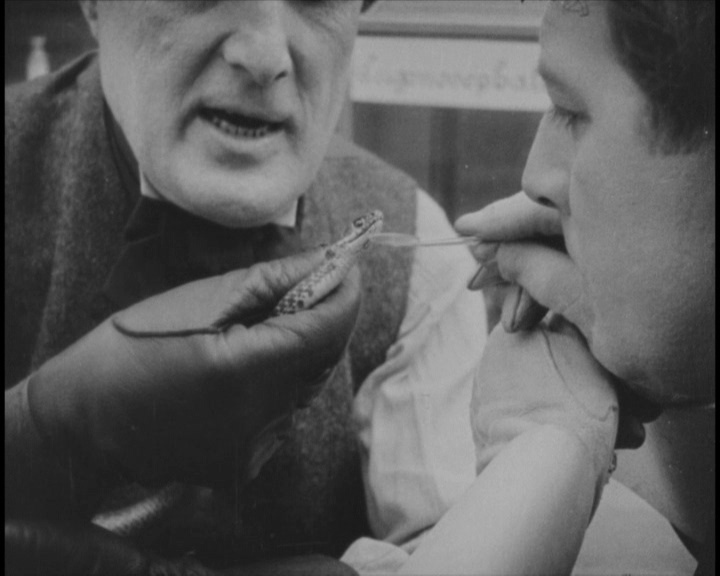
The first film I saw was Les Gaz mortels (1916), the earliest surviving multi-reel production in Gance’s filmography. In the spring of 1916, producer Louis Nalpas ordered Gance to head south with a small cast and crew and return to Paris a.s.a.p. with two films. According to Gance, he wrote the scripts on the train to Cassis and shot Les Gaz mortels and Barberousse simultaneously. (“Quite a business!” Gance recalled to Kevin Brownlow. “But it gave me a great facility. I really had to exert myself – it was like doing one’s Latin and Greek at the same time.”) The first film to be edited was Les Gaz mortels, released in Paris cinemas in September 1916. The name of Gance’s employers, Le Film d’Art, is a little misleading: much of the company’s output at this time was made for a commercial market. In wartime France, escapism jostled strangely alongside grim realities. For its initial release at the Pathé-Palace, Les Gaz mortels took its place in a programme that included episodes from the Pearl White serial The Exploits of Elaine (1914), the latest Rigadin comedy starring Charles Prince, and newsreels fresh from the frontline (La Presse, 1 September 1916). Given this context, the plot that Gance concocted for Les Gaz mortels while his train rattled the length of France is a pleasing mix of popular genres: it is at once a Western, war drama, suspense drama, melodrama, and race-to-the-rescue film…

The renowned French scientist Hopson (Henri Maillard) and his American assistant Mathus (Léon Mathot) work in Texas, where they are called to help Maud (Maud Richard) escape the clutches of Ted (Doriani), a drunkard who supplies the two researchers with snakes from Mexico. Maud is rescued and returns with the scientists to France, where a romance develops between her and Mathus. But war is declared, and Hopson’s son is killed by poison gas on the frontline, leaving Hopson’s grandson André (Jean Fleury) in the care of Edgar Ravely (Émile Keppens) and his wife Olga (Germaine Pelisse) – who hope to profit from their role. But Hopson takes André from his carers, who then join forces with Ted to seek revenge. Edgar and Ted sabotage the poison gas factory run by Hopson and Mathus, while Olga unleashes a poisonous snake into André’s bedroom…

Les Gaz mortels is familiar to me, as I have watched the DVD several times. (The film is also currently available via HENRI, the free online film selection from the Cinémathèque française.) However, it was an entirely unfamiliar experience on the big screen – and projected on 35mm. Unlike the entirely silent DVD issued by Gaumont, this Cinémathèque screening was accompanied by a pianist from the improvisation class of Jean-François Zygel. (One minor bugbear with the retrospective is that not all the performers are credited in the programme or online. I have tried to find the names of all the musicians but lack details for two of them – the first being the fellow who accompanied Les Gaz mortels.)

Les Gaz mortels is a compact, well-made, and rather fun drama. At just over an hour, it was Gance’s longest film to date, and it races along to a satisfying conclusion. It is also beautifully shot by Léonce-Henri Burel. I adore the opening scenes set around the Mexican-Texan border but filmed on the south coast of France around Cassis. It was clearly a location Gance loved. Many of his early films were shot amid these sun-soaked landscapes, and Burel’s photography makes the most of the landscapes, the seascapes, the gorgeous southern light.

Seeing the film projected on the big screen of the Salle Georges Franju was a particular pleasure. I spotted details I’d never noticed before, like the initials carved onto the branch of a tree overlooking the sea, where Maud pauses for a moment on her search for vipers. Indeed, Maud’s snake-hunt features some of the most beautiful, naturally back-lit scenes of the film. Her hair is transformed into a chaotic halo, like a white flame flurrying worriedly about her head as she runs in terror from the snake-infested scrubland. Then there is the scene of her wakeful night, spent longing for release from capture. The lighting is simply exquisite, giving this entirely incidental scene a curious poignancy. The character is contemplating her imagined future, and we contemplate the image of her at the open window – seduced for a few seconds by the same evening light, the same moment of calm.

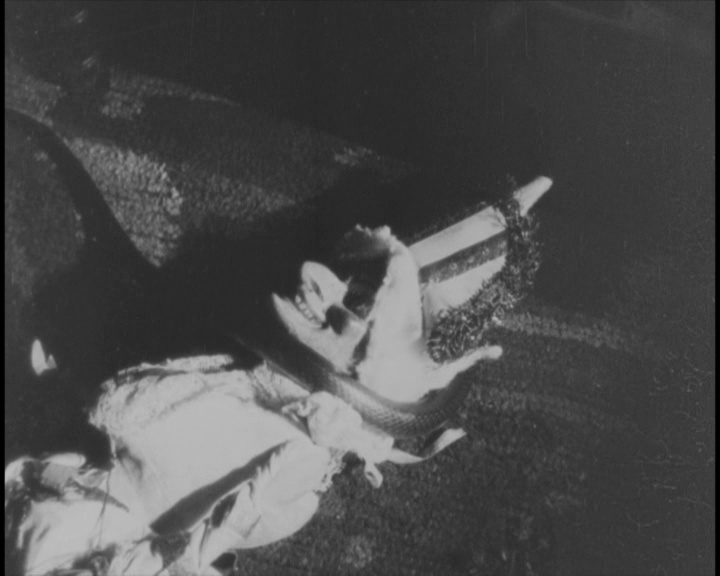
But such moments of “calm” are rare in a film that deals primarily in seething skullduggery and dramatic spectacle. The film climaxes with complex intercutting between various spaces. The parallel race-to-the-rescue scenes cut not just between two different locations, but between multiple spaces within each location. The interiors where the snake is let loose boast some very striking close-ups (the snake sliding over the neck of a doll) and effective low-key lightning (Olga peering into the snake tank), just as the exteriors offer some travelling shots and intriguing views of the (unnamed) town and landscape being swathed in swirling banks of gas.

The performances are rather mixed in style. As the drunkard Ted, Doriani is as crudely villainous as anything from a serial quickie. The two bourgeois baddies, Émile Keppens and Germaine Pelisse, are more convincing (if two-dimensional). Maud Richard is charming enough, but her toothy grinning can be slightly gawkish. Henri Maillard is a little stiff as Hopson, while Léon Mathot is alternately winsome and bathetic as Mathus. Of course, Les Gaz mortels offers scant dramatic depth for the performers to plumb, but even so… I have mixed feelings about Mathot as an actor. He is a reliable, sometimes strong presence on screen, but when tasked with expressing sadness he has a certain default expression that strikes me as mawkish. It’s interesting that such an important early male star should be so vulnerable, so evidently sensitive, on screen, but I am not affected – not moved – by his performances. He signals sentiment while (for me) never quite giving the illusion of real depth. (Several years after his collaborations with Gance, Mathot is still the same mawkish presence in Jean Epstein’s L’Auberge rouge (1923) and Cœur fidèle (1923), films that are beautiful to look at and, alas, highly soporific.)

The 2006 restoration of Les Gaz mortels is based on a (jumbled) negative print that survived without titles. Thankfully, it was possible to reconstruct the film’s titles and original montage – though the print remains untinted, which may not be how audiences saw it in 1916. As a study by Aurore Lüscher explores, Gance (in his notebooks from 1916) refers to the film variously as “Le Brouillard Rouge”, “Le Brouillard de Mort”, and “Le Brouillard sur la ville”. The title “Red Fog” makes me wonder if Gance had a colour-scheme in mind to heighten the climactic images of fire and gas stand out visually. (There are also nighttime scenes that could be clarified by some blue.) This reservation aside, the film looks as good as it can, and it was a great pleasure to see projected.

Friday 13 September 2024: Salle Georges Franju, 8.15pm

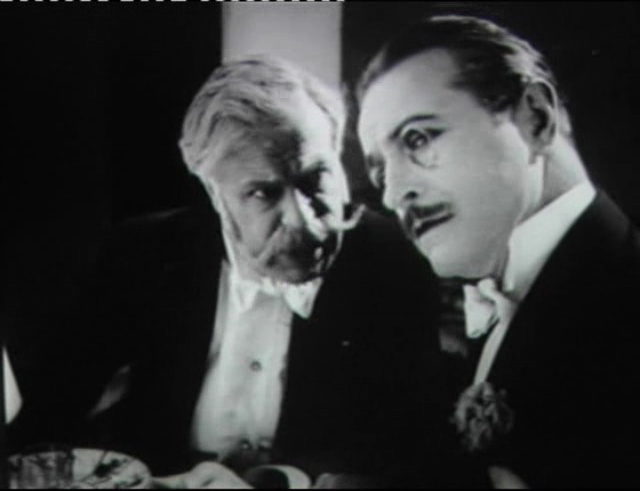
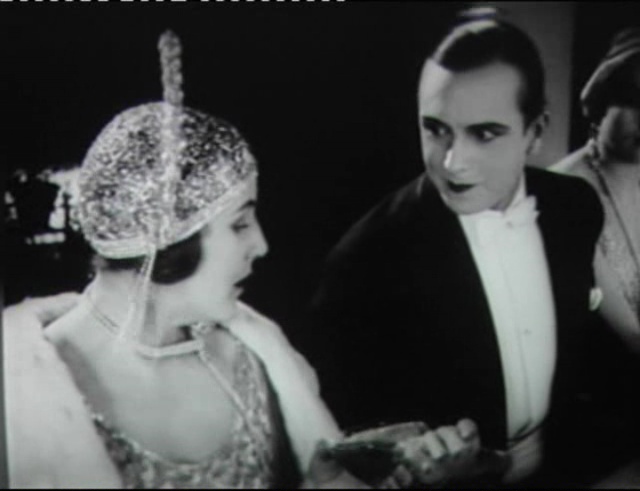
As soon as the first screening ended, so the queue began for the next. After a few minutes’ respite to chew some bread and gulp down water, we were let back into the Salle Georges Franju for La Dixième symphonie (1918). I have seen this film several times before, but the new restoration shown at the retrospective was nothing short of a revelation. The print that served as the basis of the restoration was exquisitely tinted and toned, a beautiful example of how elaborate and enriching contemporary prints could (and can) look. In his introduction to the film, Hervé Pichard explained that the restoration retained the original title cards between “parts” giving notice to spectators of a short break while the reels were changed. As Pichard put it, retaining these titles were a mark of respect for the original celluloid (and its exhibition context). A nice touch, given that we were watching the film via a DCP.

La Dixième symphonie is both a vivid melodrama and an ambitious foray into new expressive possibilities. Eve Dinant (Emmy Lynn) marries the widowed composer Enric Damor (Séverin-Mars) and adopts his daughter, Claire (Elizabeth Nizan). The latter is pursued by the exploitative Fred Ryce (Jean Toulout), who is also blackmailing Eve over her involvement with the death of his sister. Eve’s attempts to prevent Claire’s marriage are misinterpreted by Enric, who thinks she is having an affair. He finds solace in music, composing a symphony that expresses his sorrow and its transformation. The drama is resolved when the apparent rivals in love, Eve and Claire, confront Ryce and reveal the truth to Enric.

If this plot is like something out of D’Annunzio (whom Gance had met and admired), then the décor is as lush as the Italian’s prose. It looks utterly sumptuous. Emmy Lynn’s costumes are gorgeous, and everything on screen has such depth and detail that you felt as though you could reach out and feel the fabrics, the furs, the furniture, the sculpture. Fred’s lair is decked in decadent clutter: animal skins strewn over steps, throws and rugs galore, glass screens, weird ferns, cabinets with secret compartments, and “the god with golden eyes” – an oriental statue – that overlooks the ensemble. There are shadowy recesses, curtained partitions, screened-off niches – and all treated with exquisite chiaroscuro lighting and rich tinting and toning. Outside, the exteriors are just as gorgeous. My god Burel was a great cameraman! Every leaf, every blade of grass is practically three-dimensional. This is a truly stunning-looking film.

But it’s not just how good it all looks. The drama is marvellous. I love how it opens in medias res with a body on the steps, with the dog trampling across the room in panic, with the flustered Eve immediately falling into Fred’s sinister influence. And I love that the comedic character – the Marquis Groix Saint-Blaise (André Lefaur), Claire’s absurd older suitor – got real laughs in the cinema, and functioned both to puncture the air of preciousness the film might otherwise exude and to heighten the drama of the romantic entanglements. Most of all, I loved how much bite there is in every twist and turn of the narrative. Gance finds ways of making us gasp or chuckle, of drawing attention to telling details, of making these characters more than just stock villains, victims, types. I’d forgotten how fabulously slimy and sinister Jean Toulout’s character is, with his creepy haircut and louche tastes. I’d forgotten, in particular, how he looks right into the camera for a moment before shooting himself at the end of the film: with an almost triumphant smile, he defies us not to be surprised, even impressed, by his final act of will.

There are some superb close-ups, and having only experienced the film via small-screens I was unprepared for how emotionally effective these were. I had never properly seen the tears on Damor’s face; seeing them was a kind of revelation, as though the film was finally able to show me the depth of its feeling. I finally believed in Damor as a man as well as an artist, and the whole drama just clicked into place. From the outset, the sheer visual quality of the film revealed such great depth of detail to the faces that I was moved as never before. I’d always loved Emmy Lynn in this film, but it was Séverin-Mars’s performance that really struck me. He always has such intensity on screen, but he can sometimes seem to give a little too much. But in La Dixième symphonie he gets it just right: there is the right balance of emotional give-and-take, of guarding and revealing feeling. After ninety minutes of the drama, I found Damor’s final words to his wife – “Eve, I love you infinitely” – extraordinarily moving. It was not the only scene in which I found myself crying.

I must also credit much of the success of this screening to the music written by Benjamin Moussay and performed on piano (Moussay), violin (Frédéric Norel), and trumpet (Csaba Palotaï). The original score to La Dixième symphonie, cited in the opening credit sequence, was written by Michel-Maurice Lévy. So far as is known, this is lost. However, the very opening image of the film is the full-page score of the titular “Tenth Symphony”, so some of the most important music cue survives thanks to the celluloid itself. For its release on VHS, the 1986 restoration by Bambi Ballard was accompanied by an orchestral score by Amaury du Closel. The music is very nice, but I never felt it really matched the film scene by scene. It was too distant from the images, and thus never really got to grips with the emotional drama. By contrast, Moussay’s score for the 2024 screening was superbly judged. It supports the film at every stage, providing a constant melodic counterpoint to the images on screen. The narrative has a constant sense of impetus and development, of emotional depth and dramatic clarity. The arrangement for trio is beautifully balanced. The use of the trumpet provides extra sonic depth to the musical texture but is used both sparingly and sensitively.

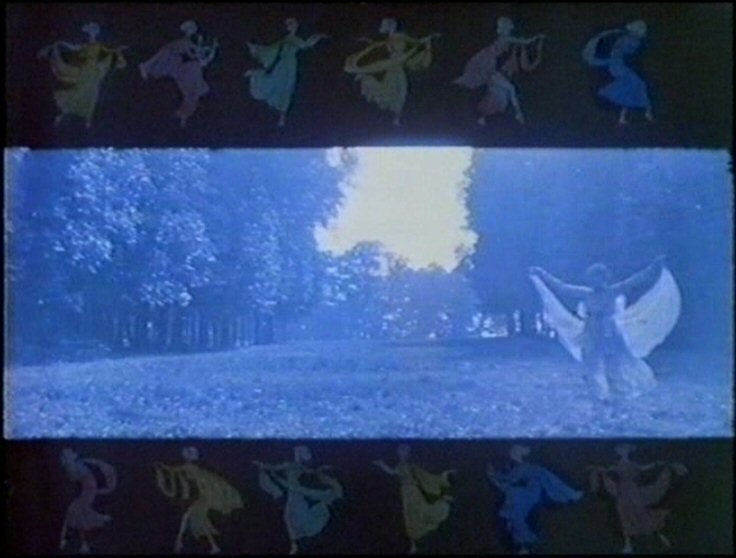
For the central performance of Damor’s symphony on screen, Moussay matches the film’s own visual instrumentation: piano and violin. Together, they offered a “symphony” that was both harmonically in touch with Beethoven while also being distinct enough to seem new: the ideal combination for this sequence. The sequence itself, in which the music is rendered visual through visions of superimposed dances (by Ariane Hugon), complete with masking and hand-coloured details, is the most well-known of the film. It’s certainly avant-garde as a cinematic conceit, though I’ve always felt that it’s couched in conventional imagery. But Gance recognizes that something needs to happen here for the point and import of Damor’s symphony to have significance. This visual music breaks out of the film, and the way Gance intercuts these visions with the enraptured expressions of the spectators creates the impression of a collective hallucination. (Much as the return of the dead at the end of J’accuse is a kind of collective hallucination.) It is this dramatic handling of the vision, more than the aesthetics of the vision itself, that is really interesting – and effective.

Though this symphony worked superbly, the scene that moved me most was earlier. When Damor discovers Eve’s supposed affair, he sits (almost falls) at the piano and his fist strikes the keyboard. In the Salle Franju screening, Moussay’s own hand struck the keyboard at precisely this moment. All the instruments had ceased playing a few moments earlier, so the piano’s single, despairing chord resonated in the total silence of the cinema. The chord died away until Damor, on screen, began feeling out a melody. Moussay, in the cinema, felt out this same melody, matching his own strokes of the keyboard to the figure on screen. It was a perfect moment. Two hands striking the same chord, a hundred years apart; two musicians, a hundred years apart, feeling out the same melody. The sense of synchronicity was both uncannily powerful and deeply moving. Live music became an act of communication, a literal reaching out of the hands to touch and revive the past. But it was also touching because of the context of the drama, for in this scene Damor feels entirely alone – deprived of the woman he loves – until he sits at the piano. Music is his solace, and he finds it not merely on screen but in the act of a live musician revivifying his creation. It’s an instance of connection, of time transcended, that only live silent cinema can provide. A truly beautiful moment.

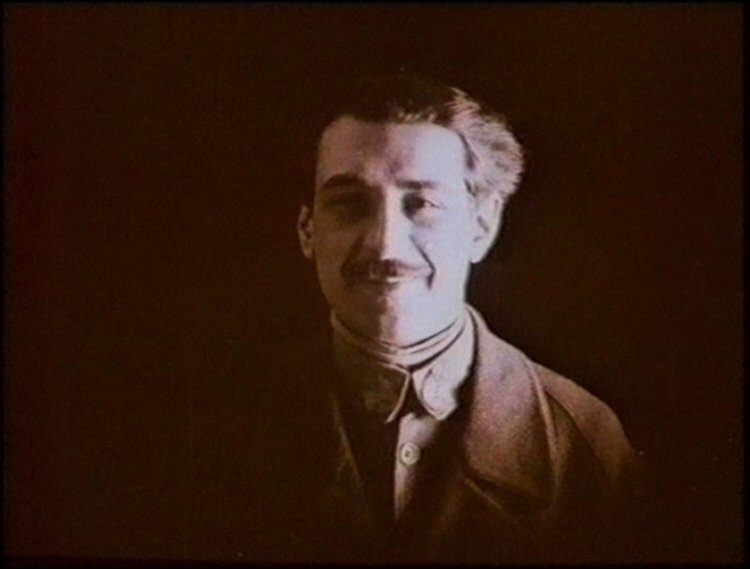
Almost as touching was the last shot of the film. After the image of Enric and Eve has faded to black, Gance himself appears under his name. This visual credit has always delighted me, but I’ve never experienced it in the cinema before. On Friday, I watched Gance turn to face the camera and smile. The audience broke into a great wave of applause just as Gance mouthed his thanks to us and smiled again. I can’t tell you how pleasing and moving this moment was: it was another instance of communication across a century of time. After seeing the creation of Damor’s symphony, we applaud the creator of La Dixième symphonie. A perfect end to a perfect screening. Bravo!

Paul Cuff

Le Vertige (1926; Fr.; Marcel L’Herbier)

In 1926, Marcel L’Herbier’s production company Cinégraphic was in dire financial straits. It had financed several films that made no money and consumed progressively larger budgets: Autant-Lara’s avant-garde short Fait Divers (1923), Louis Delluc’s feature L’Inondation (1924), Jaque-Catelain’s two directorial efforts Le Marchand de plaisirs (1923) and Le Galerie des monstres (1924), and finally L’Herbier’s own studio spectacular L’Inhumaine (1924) and Pirandello adaptation Feu Mathias Pascal (1926). L’Herbier needed his next film to be easier to make, cheaper to produce, and more commercially appealing. This was to be Le Vertige, an adaptation of a play by Charles Méré (1922)—a work that foreshadows the same themes of obsession with a “double” in Hitchcock’s Vertigo (1958). L’Herbier’s regular collaborator (and lover) Jaque-Catelain was to play the lead, alongside Emmy Lynn and Roger Karl (both of whom he had also worked with before). He enlisted another regular collaborator, the architect Robert Mallet-Stevens, to design the sets. Exteriors were shot rapidly around Eden-Roc and Eze on the Côte d’Azur, then the production returned to Paris for a lengthier period shooting interiors in the elaborate sets. The film was indeed a commercial hit, something of a surprise for L’Herbier. But despite (or perhaps because of) this, Le Vertige is a rather overlooked film in the director’s work. Is this deserved?

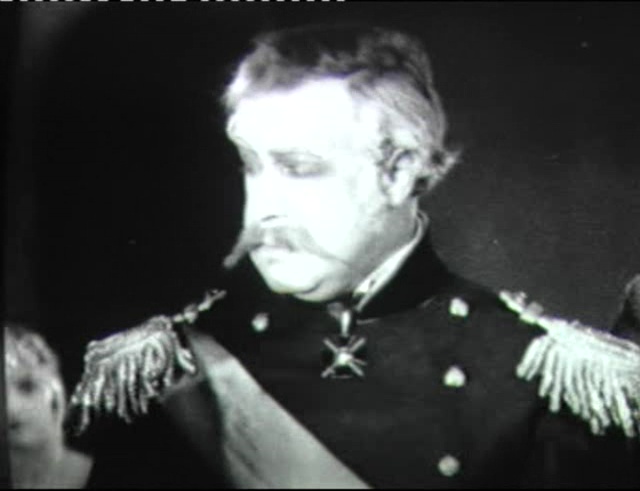
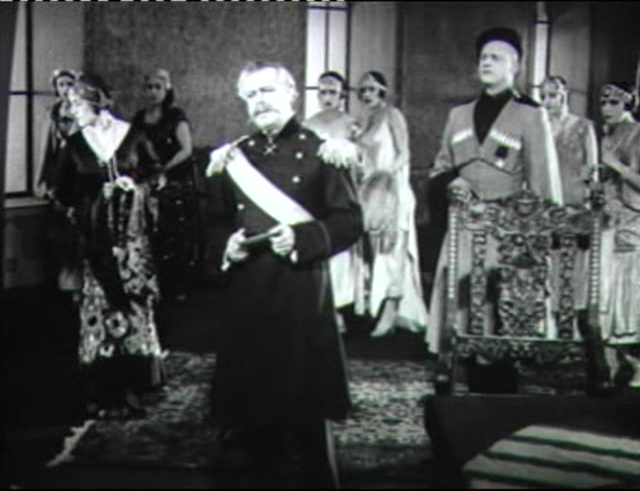
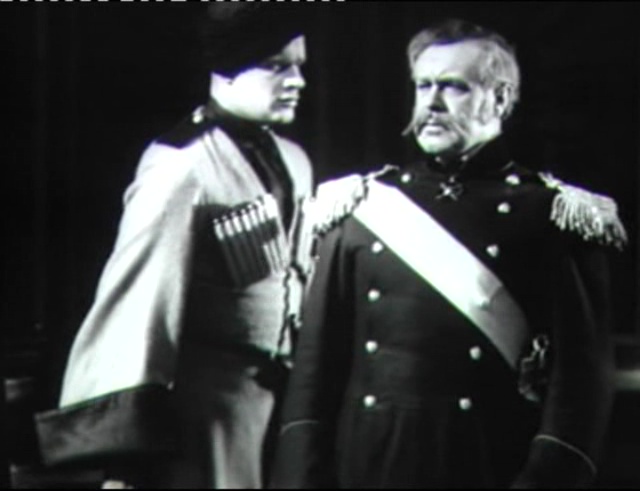
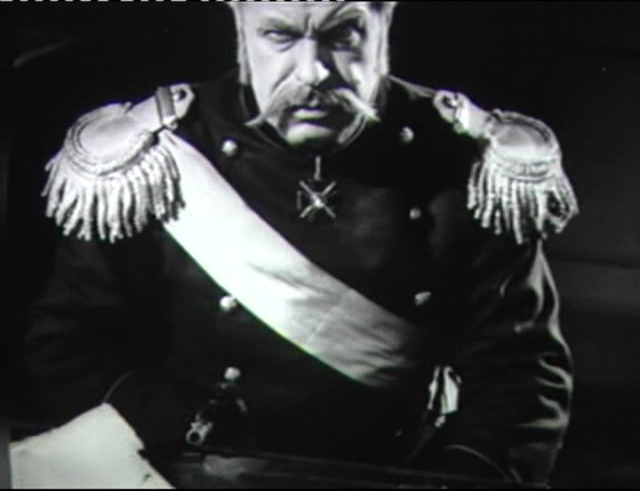
The “vertigo” of the opening title is induced by delicious lines that form a false perspective, funnelling down into the L and V of the film’s title. It is 1917, Petrograd. A snowy square. Events overseen from the windows of a house. Count Mikailov (Roger Karl) and his young wife Natacha (Emmy Lynn). But whose return does she anxiously await, a title asks us? It isn’t her husband, given a foreboding entrance—composition in depth, doors opening, guards on hand. Roger Karl is, as ever, a stern elder figure—made sterner, but also more comic, by a huge moustache and picture-book epaulettes.

A commotion outside. Shots fired, crowds running. Shadows on projected on glass. A boy runs in to warn of the dangers. The women, dressed for the summer-conditions of the palace interior, run behind the huge columns of the hall. Fur coats are donned, they scamper out. (The window recesses narrow at the top, like the shape of a coffin.)

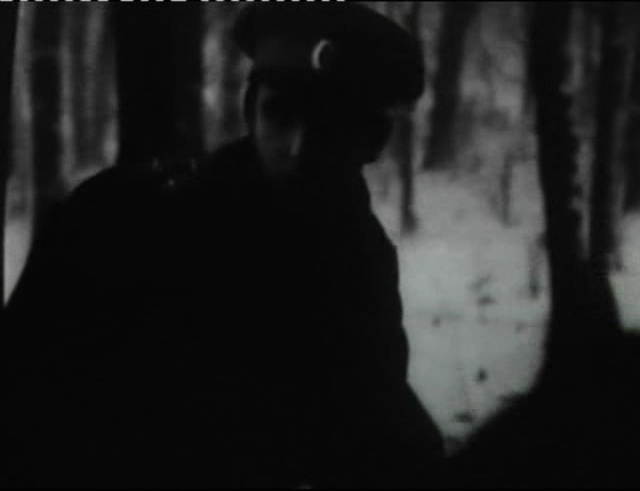
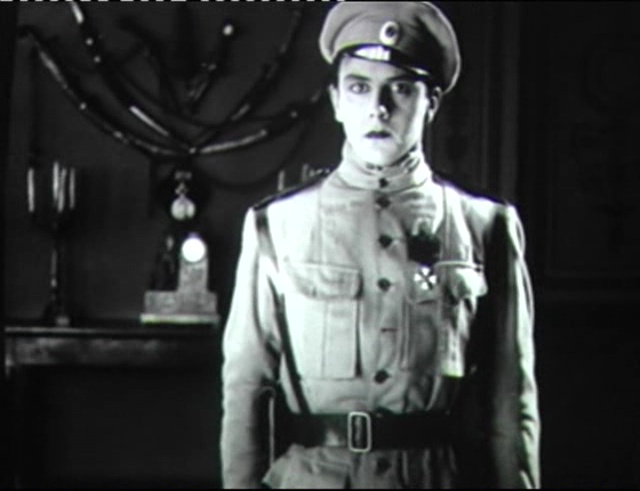
Dimitriev is on a dangerous mission. He is played by Jaque-Catelain, and he makes quite the entrance: in silhouette, horse hurtling and rearing into the camera. Dimitriev causes a stir in a local hovel, filled with roughs. (Meanwhile, Natacha is on her knees praying—and looking ever so elegant as she does so, her drooping black sleeves embellishing her form as she holds out her arms.)

The General finds a photo of Natacha and Dimitriev together (no, not like that—staged, but intimate). And Dimitriev arrives, beckoned in eagerly by Natacha. They run at each other, and L’Herbier’s camera twists to catch Natacha’s last leap into his arms. The couple escape their present danger by remembering the past… A flashback to the scene captured in the photo, here spelt out in a single tableau of dancers, of shadows, of an embrace. (But I’m not moved, nor is Petrov, the guard, who spies on the lovers in the present—he almost looks to camera, as if to say, “What nonsense”.)

Past and present are intercut. A ring is given (then) and contemplated (now). The palace doors open. It is the wind, or is it? The sinister Petrov waits for Dimitriev, ushers him out—and into the presence of the General. He takes the young man to task for disobeying his orders, for deserting his mission on the revolt’s frontline. (Catelain looks like a schoolboy in a play, caught out for forgetting his lines.) He is threatened with martial law. The General shoots him. He clutches his face, which is apparently unharmed, then lurches to a window—L’Herbier cuts to soldiers scurrying past (perhaps remembering Gance doing the same, to much better effect, in J’accuse in 1919). Natacha sees his last moments, and faints. They both lie in pools of light. She is revived by the General, just as his palace is being stormed by the mob. Husband and wife flee, and the soldiers plunge their bayonets into the corpse of Dimitriev (though L’Herbier cuts just before the final thrust).

It’s a half-hour prologue to the main timeline of the film. On the Côte d’Azur, the General (now in evening wear) and Natacha (diaphanous swirls wreathed about her shoulders) recover from their ordeal. Outside, a motorboat plunges through sparkling waters. Crowds of pleasure-seekers observe the boat race. Natacha still has her “obsession”, and a title warns us that none of the gaiety around her dispels her focus on the past—on her lost lover.

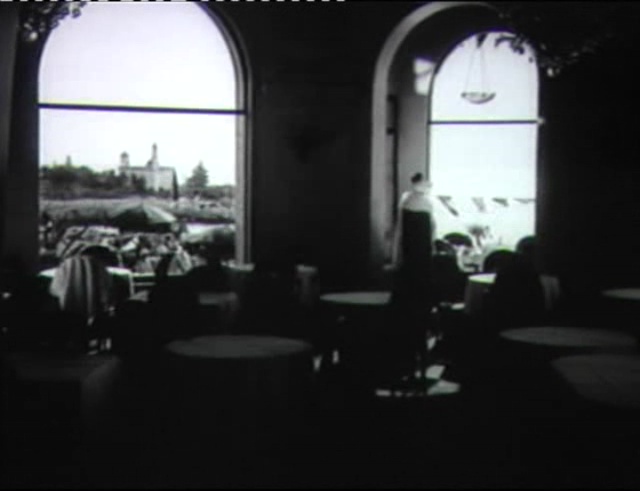
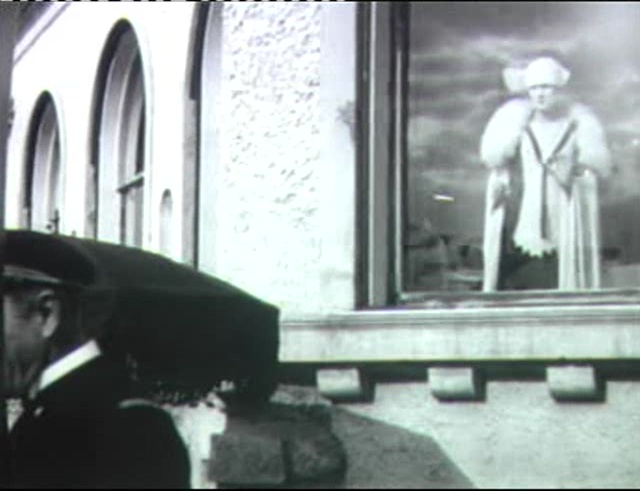
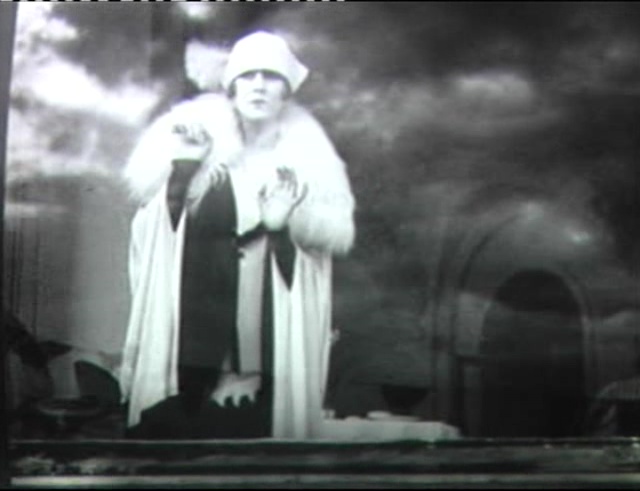
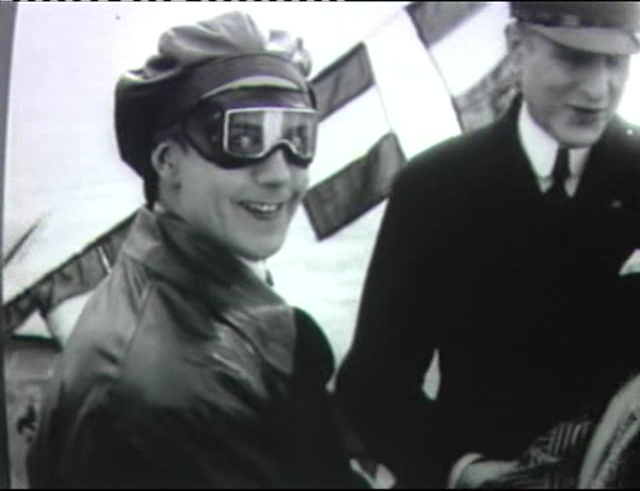
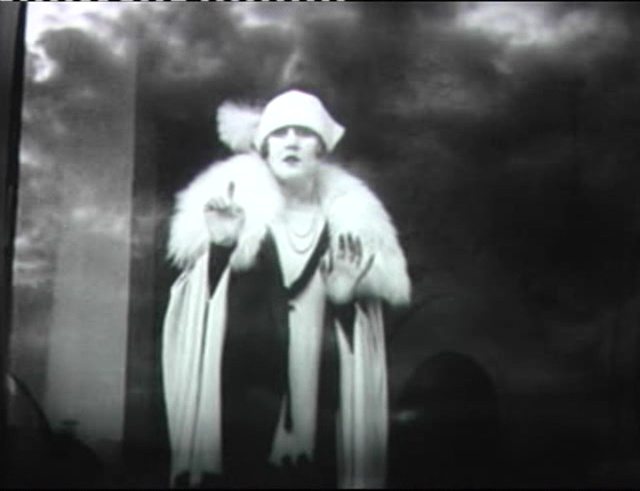
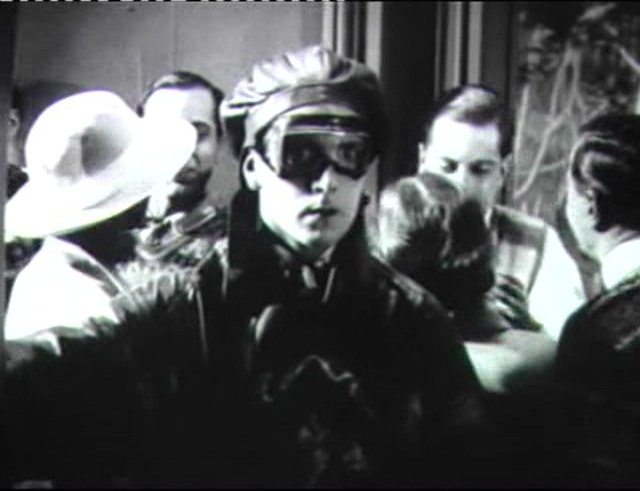
Here is Jaques Catelain, again—now in the guise of a boatrace winner, of a youth clad in black mackintosh and driver’s cap and goggles. Natacha, too, sees him. And he sees her—magnificently framed within the window frame, dark clouds seemingly looming all around her. (It’s an extraordinary image, the best shot in the film.) Now the race winner bustles in with a crowd of admirers, round and round through the revolving door of the hotel entrance. Meanwhile, they gaze at each other, these two strangers who seem to share something in this gazing.

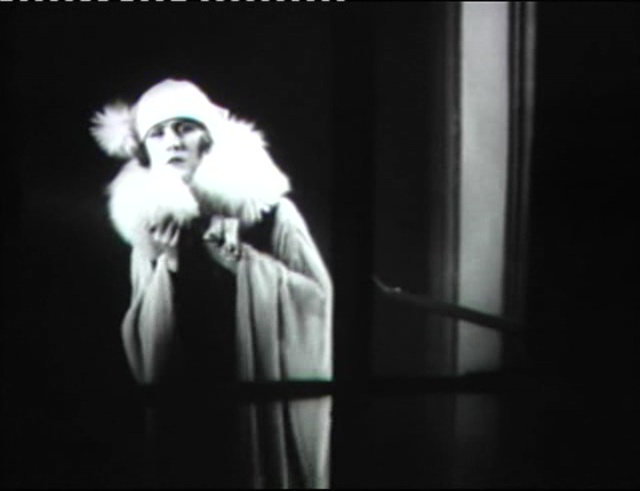
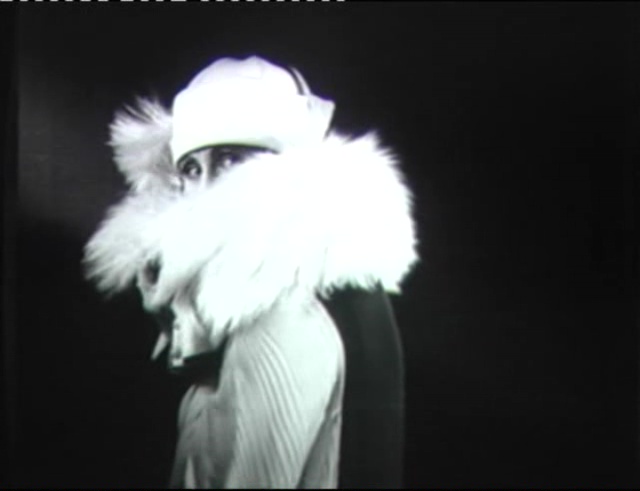
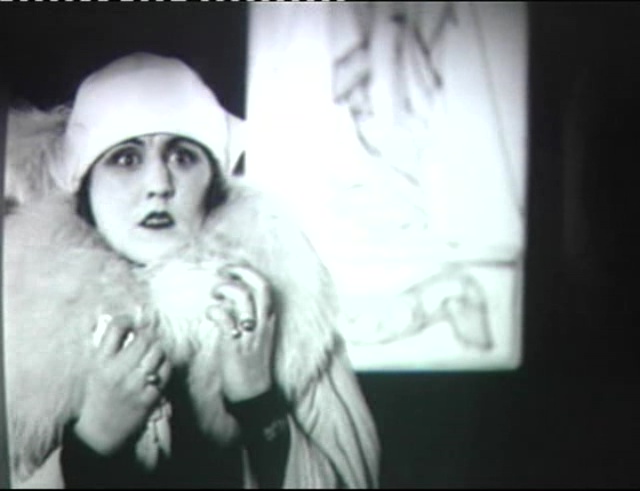
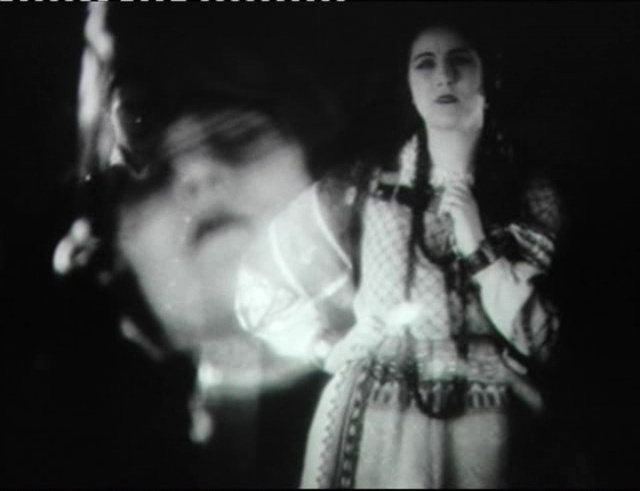
Natacha flees this “dream”, but the camera follows her (and so too does Jaques Catelain), speeding along in her car, along the coast, to an Orthodox church, a kind of miniature of something from St Petersburg. Inside, she prays, and the dark face of the icon becomes the superimposed face of Dimitriev—or that of the stranger. And the stranger is here. (Emmy Lynn does wonders with her fur collar, clutching it, covering and uncovering her face.) He picks up her fallen glove, returns it to her, catches her as she swoons.

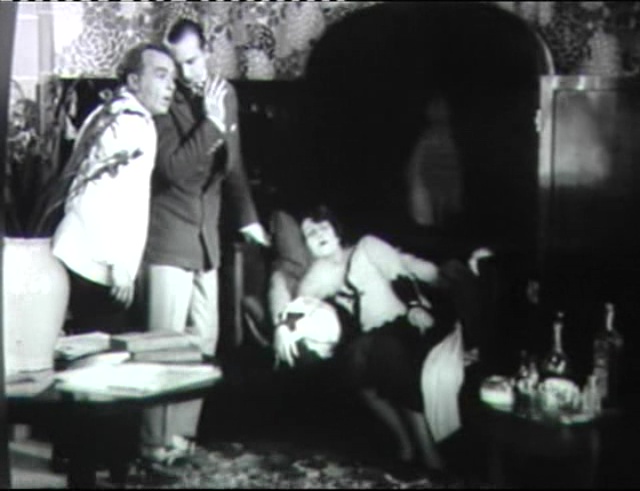
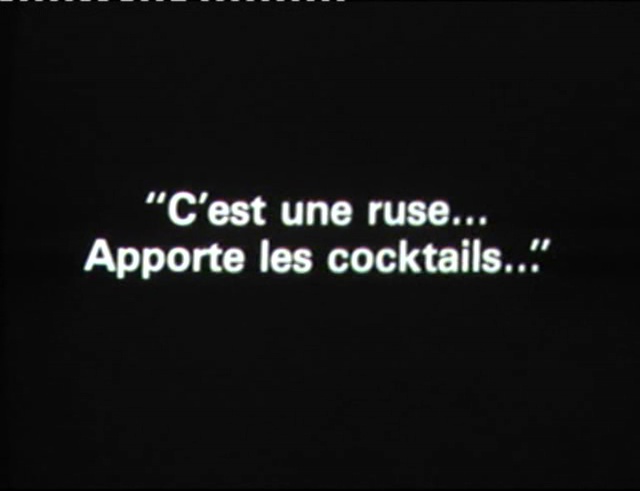
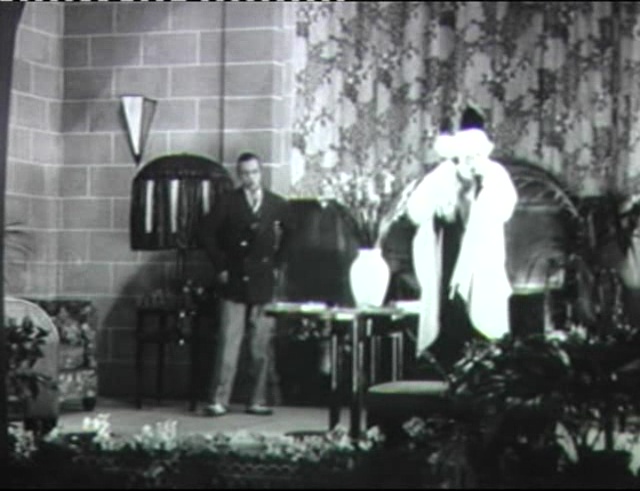
At home, with Natacha asleep, Catelain becomes a lounge lizard—“It’s a stratagem: bring the cocktails!” he whispers to his servant. In a delightfully appalling interior (fake brick patterns on the walls, on the columns; drapes that obscure the rest of the set; absurd exotic plants) he makes his move. But she goes outside, flees him, perhaps having entranced him a little.

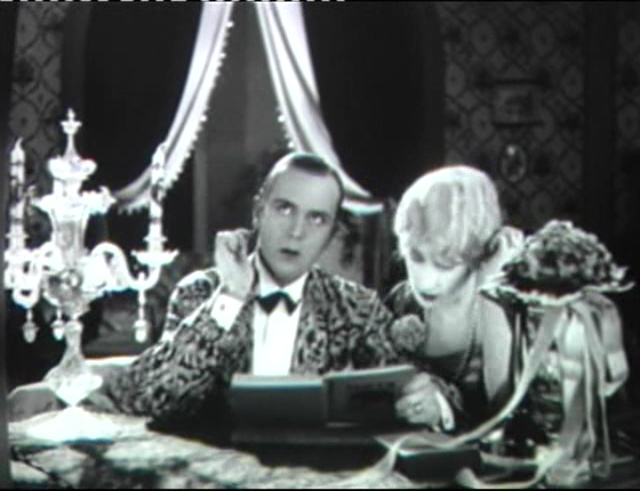
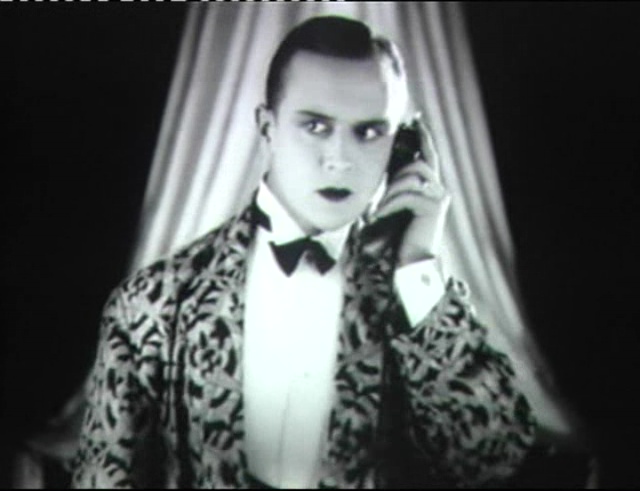
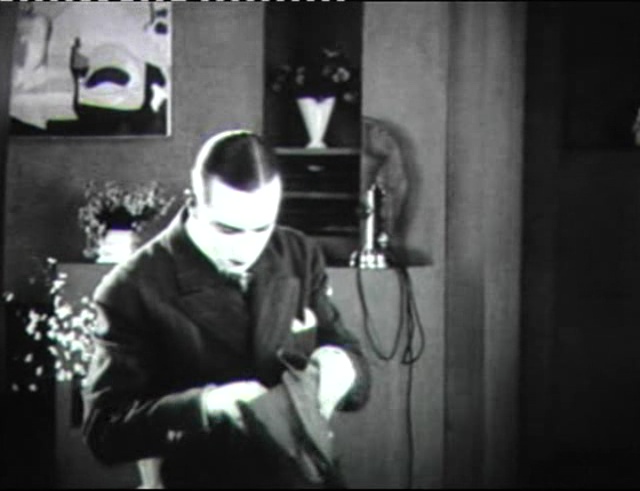
Now she learns his name: Henri de Cassel, engraved on a brass plate at the entrance to the mansion. At home, she looks up his phone number, gazes at Dimitriev’s pocket portrait. Meanwhile, Henri—wearing a staggeringly garish smoking jacket—does the crossword with his mother. He is bored, restless, until Natacha calls and makes a rendezvous with him—or rather, with the man she wants him to be, with Dimitriev.

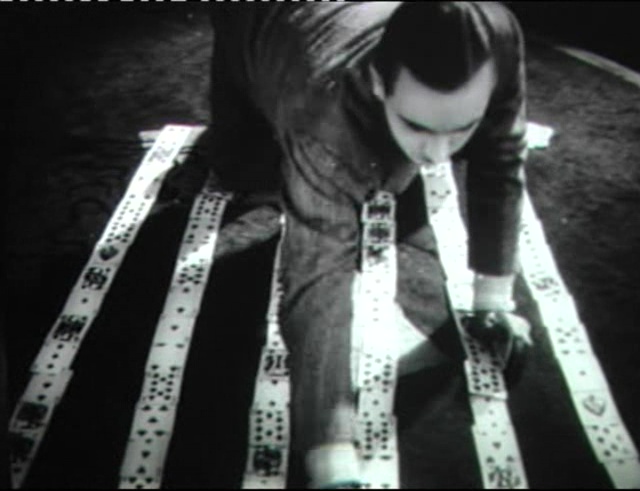
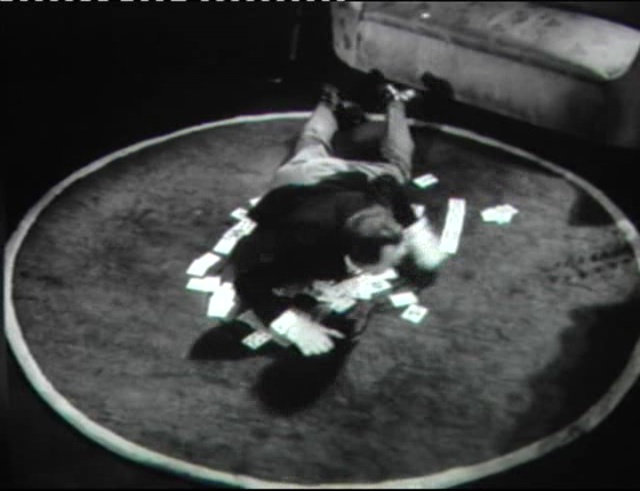
Spied on by Petrov, she leaves the house. Chez Henri, the master of the house is playing an exceedingly elaborate game of patience—or is it fortune telling? He prances around the circle he has made upon the floor, sits, mourns, leaps, runs everywhere when he hears the doorbell. Master and servant, in on the game, rush around—it’s wonderfully silly, and a little sinister, too. Music by Borodin and Balakirev are swiftly put on the piano. A score is opened with a “nuptial march” on display. Automatic doors are opened. Catelain makes a marvellous cad. (He’s more attractive, less artificial, on the wall, in a painting.) For him, Natacha is “ma belle Inconnue”. She responds with a traditional Russian saying, that to attempt to seize love is to see it fly away.

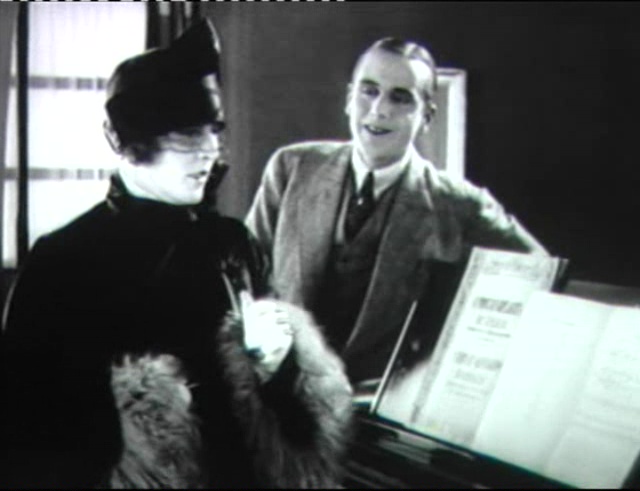
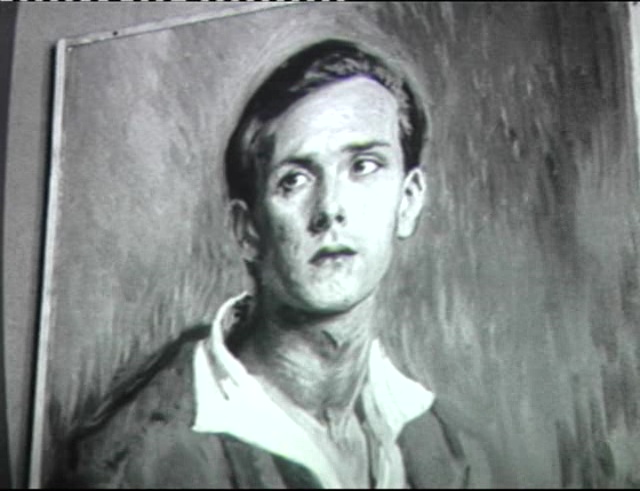
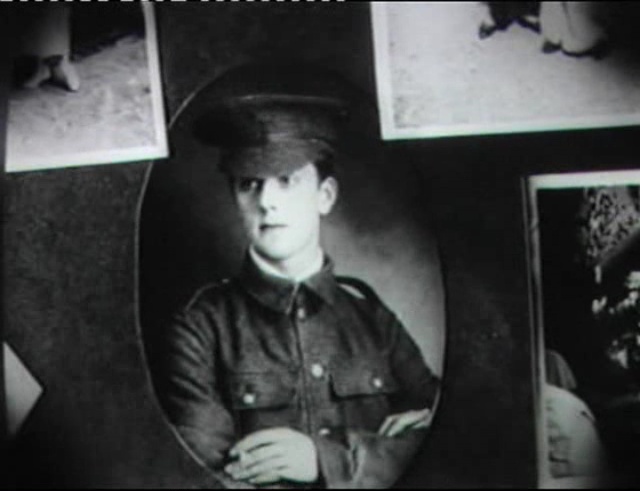
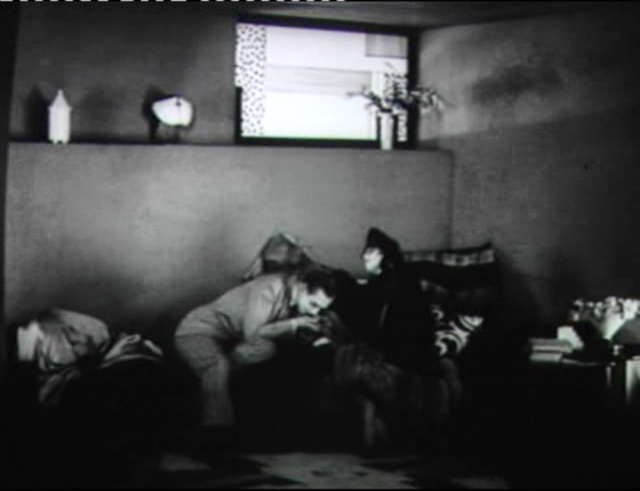
The scene proceeds. He seizes a chance to kiss her hand. She recalls the real past, a real kiss from Dimitriev. He looks sheepish, guilty, confused by her sultry glamour. (The dark dress, the dark hat, the dark veil—and dark eyes, and dark lips.) She sees a photo of him in uniform and it makes him giggle, giggle until she moves in for a kiss—but the telephone rings. She goes to the piano, plays the wedding march. He approaches. L’Herbier gives him a close-up that is threatening, sinister—the bars of a backlit screen behind him, then his face blurring, her face blurring. The past bleeds (dissolves) into the present. Her memories take over. A distant kiss replaces the real scene, the real Henri moving closer. His arms are around her, he grapples with her. Their kiss—is it willing?—shown reflected on the black sheen of the piano lid. It’s marvellously sinister, as is the dissolve to—later. She is leaning back. Again, how willingly has she submitted? He demands to know more about her, grabs her again as she goes to leave. “Try to tread the truth in my eyes. And if you see it, stay silent.” With this, she leaves.

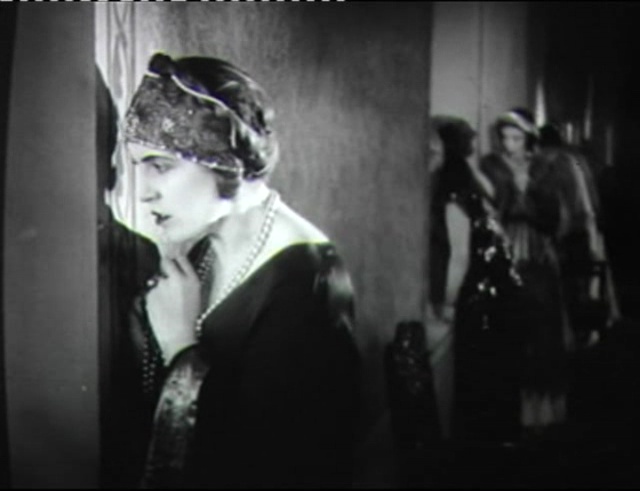
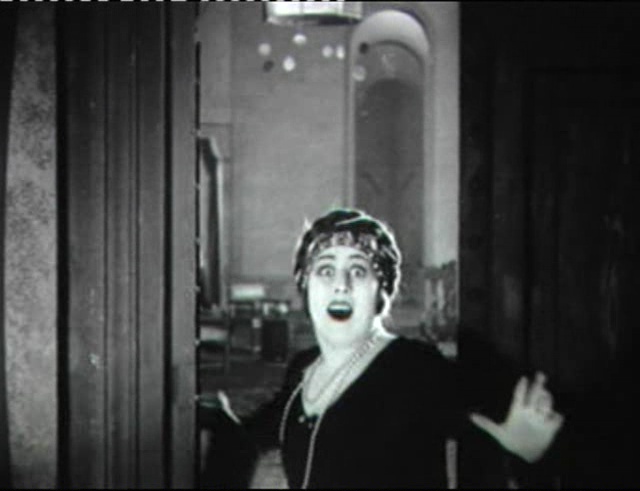
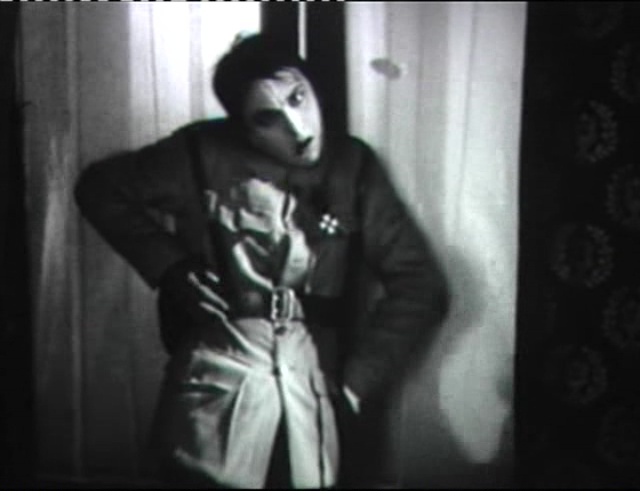
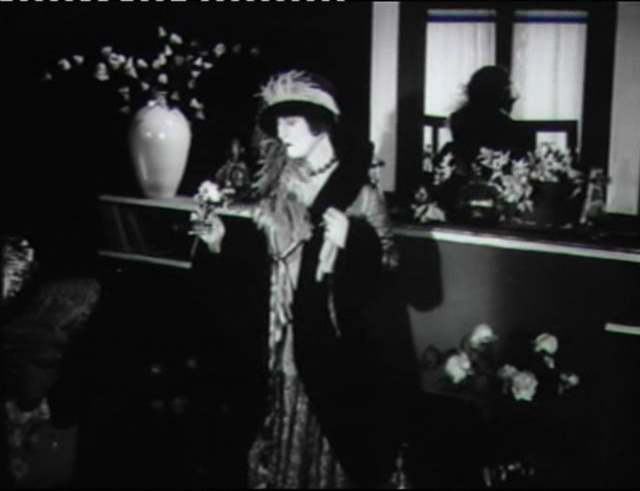
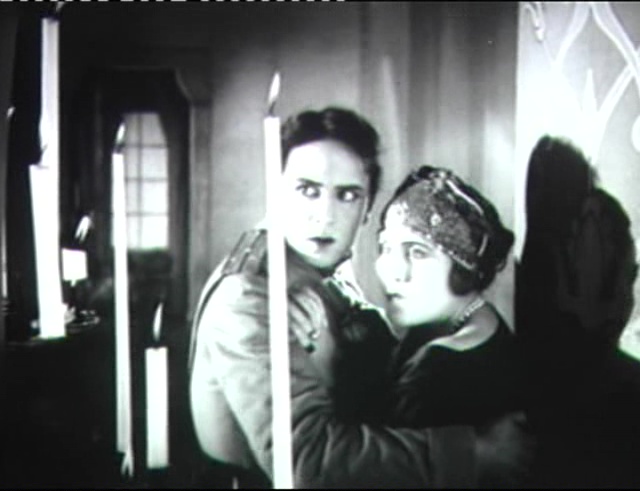
A titled angle. The footsteps of—who? The camera tracking to a door. Natacha followed, found—by her husband. Lynn looks at her fingernails, looks at her watch—it would be comic (it is, a little), if it weren’t for the seriousness of her husband’s questions. “I’m seeking someone that I’ve lost, and wish to find again…” In response, her husband pulls out a gun. He turns it on her, points it in her face. Who has she been seeing? No answer. Natacha laughs, leaves, and her laugh fades. (If she reminds me so much of Marthe in Gance’s Mater Dolorosa [1917], it’s because her fashion—feathers, fur collars, veils, broad-brimmed hats—and acting style—the occasional bulge of the eye, the way she turns, flattens herself against the wall, pauses at doorways—seem hardly to have changed since 1917.)

Chez Henri, a friend, Charançon (Gaston Jacquet), teases him about his disappearing from the social scene. A woman no doubt, but who? The friend conjures exotic possibilities, only for the woman herself to turn up. More comic running about by Catelain, this time with his friend. And when Natacha arrives, they both see Petrov on the street outside, following her.

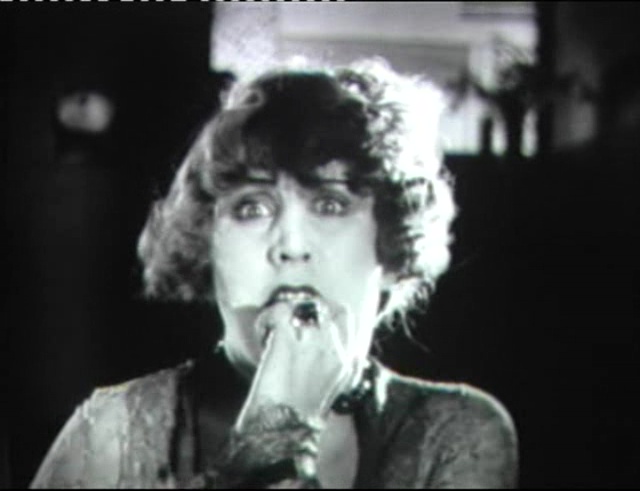
Henri confronts her. The Shot-reverse-shots, close-ups as each looks into—through—the camera at each other. “You are always obliged to leave, to go SOMEWHERE where SOMEONE awaits you… WHERE?… WHO?…” It’s not clear who says this line: the title has inverted commas, denoting speech, but neither of the close-ups show the protagonists talking. Natacha looks afraid, resigned, shakes her head. He looks angry, then weak, then submits to her touch, like a child seeking his mother. (Emmy Lynn is eight years older than Catelain, but her old-fashioned clothes makes her seem older than she is—just as his babyish face makes him seem younger.) She leaves the room, and Henri seizes the chance to go through her bag. Henri finds a card with her name, her address, and a photograph of Dimitriev. She leaves, but he confronts her: “It’s not me you love. It’s another, ANOTHER whom you love through me.” She says he’s now made it impossible for her to see him again. Clutching the image of his doppelganger, Henri broods.

Now he goes to find his friend, whom he surprises in bed. It’s an extraordinary bed, the friend lying under a furry, feminine expanse of duvet. After being goaded into action, Charançon phones a contact and gets Henri invited to a reception at which the General and Natacha will appear.

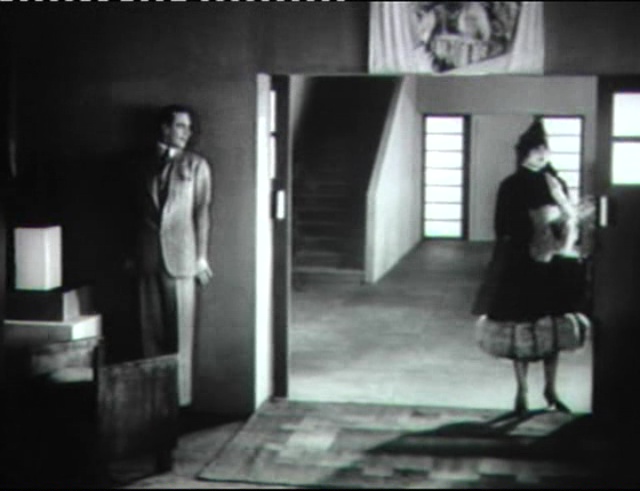
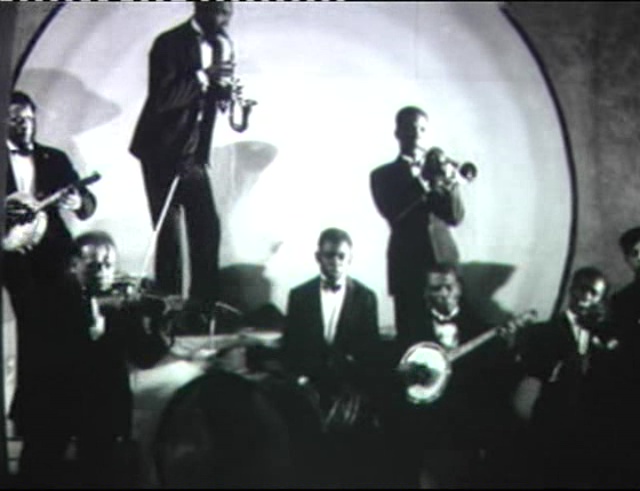
It’s another expansive Mallet-Stevens creation: a geometric layout, a jazz band on a stage, cubist sliding doors, cubist signage, angular, deeply uncomfortable-looking furniture. Henri finds Natacha, who wields a giant feather fan in defence. (See too her Russian-dome shaped headpiece, glittering with jewels. She looks extraordinary, remote, glamorous, from another age.) Henri speaks, and L’Herbier intercuts their exchange with the violin solo of the band—it’s as if emotion is being played at, manufactured, summoned as a means to an end.

The lover and husband see one another. The General is shocked. (An exchange of close-ups, of reactions—it’s the closest the camera has been to them yet.) The General questions Charançon about Henri. Again, the glances are intercut with music—and just as a confrontation seems to brew, there is a drumroll. Now a contortionist swings from a trapeze rope in the centre of the space. It’s a bizarre interruption (like a reserve act from the central sets of L’Inhumaine or L’Argent).

But now Petrov sees Henri and also calls our Dimitriev’s name. The machinations swirl around, as more drink is poured. A younger, lither woman than Natacha is flirting with Henri, and the cutting between glances grows more complex. But the brutish nature of the husband becomes simpler, clearer: he downs yet more vodka cocktails, makes his wife dance with Henri. Quick cutting between the dancers, the band, and the couple—whom the General now threatens with a large knife. But it’s swiftly quelled, laughed off. Henri questions Natacha, discovers that the husband killed Dimitriev, but demands her love for him and not “the other”.

Natacha, soon to be forced away from Paris by her husband, goes to see Henri’s mother, to warn her of the General’s threats. Henri eavesdrops, wearing yet another eye-popping piece of home wear, a sort of cubist bath robe. (How strange he dresses like this only around his mother.)

The couple go to Provence (a brief, glorious glimpse of the outside world—exterior shots of silhouetted hilltop towns). The General is visibly ageing. He waves a gun around, half inviting Death to confront him. (She wears another long-sleeved dress: she looks like a glamorous medieval princess.) The wind rises. Dogs bark. Petrov is ordered to release them. He goes through the cavernous villa, sets them loose. Henri is outside. The wind blows through the doors. The General shoots into the heaving wilderness outside. L’Herbier cuts back and forth between exteriors, interiors, faces, places. A shot is fired. A dog falls dead. Henri’s journey to the interior seems to last forever. Long enough for the General to try and force himself on his wife. He’s just revealing her flesh when Henri appears at the threshold. He pulls a gun. For once, he looks serious—convincing. He’s come for Natacha (who is busy emptying the General’s revolver). The General wants to duel, and the men pace out the distance inside. The General looks apoplectic, so much so that he drops dead of rage and age before he can fire a shot in anger. Natacha has been clutching desperately at Henri, the cutting dragging out his bizarre self-induced death. Now the lovers are together, but what is their future? Henri puts on his coat, holds out a hand. She puts out hers, and again the past dissolves over the present—as Dimitriev’s hand also reaches out to her. FIN.

I was urged to rewatch Le Vertige by David Melville Wingrove, for whom it is one of L’Herbier’s outright masterpieces. I see plenty to admire in the film, but I’m afraid it just didn’t do it for me as a whole. The film is nearly two-and-a-quarter hours long, and I wanted it to be condensed into ninety minutes. Both the opening half hour and the closing half hour feel overextended. Neither the melodrama of the Revolution nor of the violent denouement engaged me. But the middle section did have plenty of interest, both visual and thematic. There are lots of interest ideas bubbling away. Natacha’s obsession blinds her to the (initially, at least) selfish motives of Henri in seducing her, and L’Herbier delights in making Henri at first appear both smarmy and faintly ludicrous—anything but the hero that Dimitriev was. (Henri even shows Natacha a photo of him in military uniform, seeming to chuckle afterwards—as though he couldn’t take this part of his life seriously.) And Henri has a strange relationship with the two women in his life: his mother and Natacha. When Natacha first sees him from the hotel, immediately outside is his mother. And later in the film, she goes to Henri’s mother to warn her about the danger to her son—while Henri himself runs away from the two women. I’m not altogether clear of the implications of Henri’s relationship with his mother, or even where his mother is supposed to be living. (A title says they return to Paris together, but that’s all the information we’re given.) What could have been developed into another layer of emotional complication ends up being sidelined. The theme is better developed in L’Inhumaine, where Catelain again plays the boyish figure loved by an older woman. (Emmy Lynn was eight years older than Catelain, and in L’Inhumaine Georgette Leblanc is nearly thirty years older—ten years older than Claire Prélia, who plays Catelain’s mother in Le Vertige.)

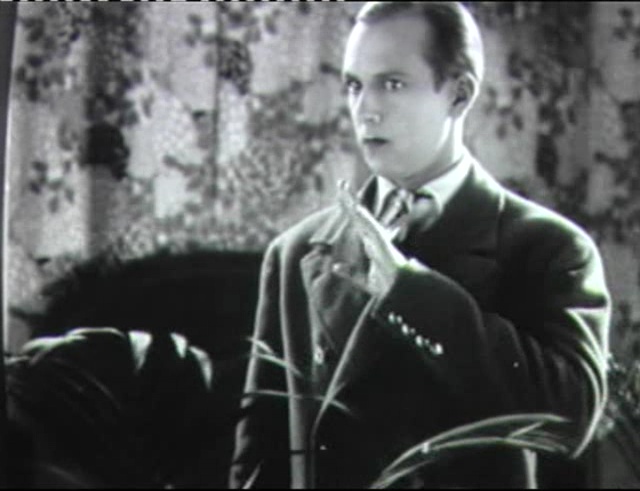
This brings me to the two leads in Le Vertige. Jacque Catelain himself often underwhelms me. He can be as good as the film he’s in, but never more so—for me, he’s not a real star and I remain baffled by his appeal. He looks good as a still image, as a poster, even as a painting—but set him to move on camera, ask him to emote, demand he convince us of a life with depth and feeling and truth, and too often he looks totally inadequate. That said, he’s more suited to his character in Le Vertige: a superficial playboy, without great depth. He also gets to do some comic scenes (being bored by his mother, scurrying about with his servant or friend) and plenty of sinister ones. He’s rather good at being a kind of modernist lounge lizard, pouncing on an older, vulnerable woman. The prolonged scene of him and Natacha in his apartment is perhaps the strongest and most interesting in the film. But the trouble is his character is supposed to develop actual feelings for Natacha, and I’m never quite convinced of this on screen. (But again, perhaps this plays into the film’s own ambiguity about the character: at what point are we meant to genuinely trust Henri, believe him?)

Emmy Lynn is altogether more engaging. I’d only seen her in two earlier films, both directed by Gance: Mater Dolorosa (1917) and La Dixième symphonie (1918). In both cases, she plays similar roles of women suffering with private torments. Her performances in all three films are remarkably similar (so too is her wardrobe, though L’Herbier gives her more hats to play with). She does a lot of business with her fur collars, with her fans; she finds doorways and walls to lean against in anguish; she turns her head and closes her eyes, in grief, in suppressed desire. She’s very pleasing to watch and even if she is, in her own way, as mannered a performer as Catelain, hers are much more convincing manners.

Elsewhere, the character of Petrov (Andrews Engelmann, a German actor actually raised in Russia) offers nothing much in the way of subtlety. And as the General, this is one of Roger Karl’s least impressive performances. I’m used to him being stern, reserved, brooding, threatening (in La Femme de nulle part [1921], L’Homme du large, or Maldone [1928]). Here he’s given a slightly silly moustache and he gradually retreats into a hammy form of villainy. Had he been more subtle, I would have felt more for Natacha.

So where does this leave me? I wrote last time that L’Argent is both magnificent and heavy going, but it offers rather more for me than Le Vertige. I respect and admire L’Herbier a great deal, but I’m still left a little cool by his films. As much as I like and enjoy L’Homme du large (1920), El Dorado (1921), my appreciation of his subsequent, longer silent features—Feu Matthias Pascal, L’Inhumaine, L’Argent—tends to flirt with boredom. Though often visually spectacular, none of these films has ever truly moved me. But nevertheless, I persevere, partly out of the hope that one day I will be surprised and genuinely overcome with emotion at something he made. It’s why I have spent so much time picking my way through the film, in the hope that longer reflection might encourage greater appreciation.

Has it? In all honesty, one image in Le Vertige did grab me, emotionally. For me, the best shot in the film is the image of Natacha looking through the huge window to see Henri for the first time. Showing her entrapped, with the dark clouds naturally superimposed by the glass, the shot is so beautifully potent, so full of feeling and meaning. The trouble is, nowhere else in the film did I feel this same sensation. I saw evidence that I was being cued to feel something, but the feeling never came. The image of Natacha behind glass reminds me that I tend to prefer films with a little more fresh air blowing through them. Perhaps it’s because I’m from the countryside that I long to see a director use real locations and exteriors to good effect, and in Le Vertige we get only superficial glances out the window, a handful of establishing shots before L’Herbier swiftly moves inside to show us his interiors. Sadly, fussy modernist design—something in which L’Herbier specializes—holds my interest for only so long.

But it’s this modernist milieu that, understandably, keeps many of his films in the canon. Le Vertige was shown at Pordenone this year as part of a theme devoted to designer Sonia Delaunay. Her work on Le Vertige involved designing the costumes and soft furnishing (seat covers, curtains etc), while Pierre Chareau contributed the furniture, Jean Lurçat the paintings and carpets, Robert Delaunay a painting of the Eiffel Tower (in Henri’s apartment). Contemporary reviewers praised L’Herbier for filling his commercial film with such modernist décor. I concur that it looks great, but it still leaves me cold. It’s impeccable design, but it all feels like an advert for another project—as though the characters live inside sterile modernist showrooms. For much the same reason, I become weary every time I sit through L’Inhumaine, and parts of Le Vertige feels like cast-off scenes from L’Inhumaine. (More generally, films about people feeling alienated in well-appointed rooms have little interest for me. This rules out great swathes of European art cinema of the late 1950s and 1960s.) Again, it comes down to feeling. As much as I loved certain scenes, the film just doesn’t make me feel for its characters. Nevertheless, Le Vertige was a worthwhile watch, and I’d be curious to see what a full restoration with a good score would do for it—and for me.
Paul Cuff