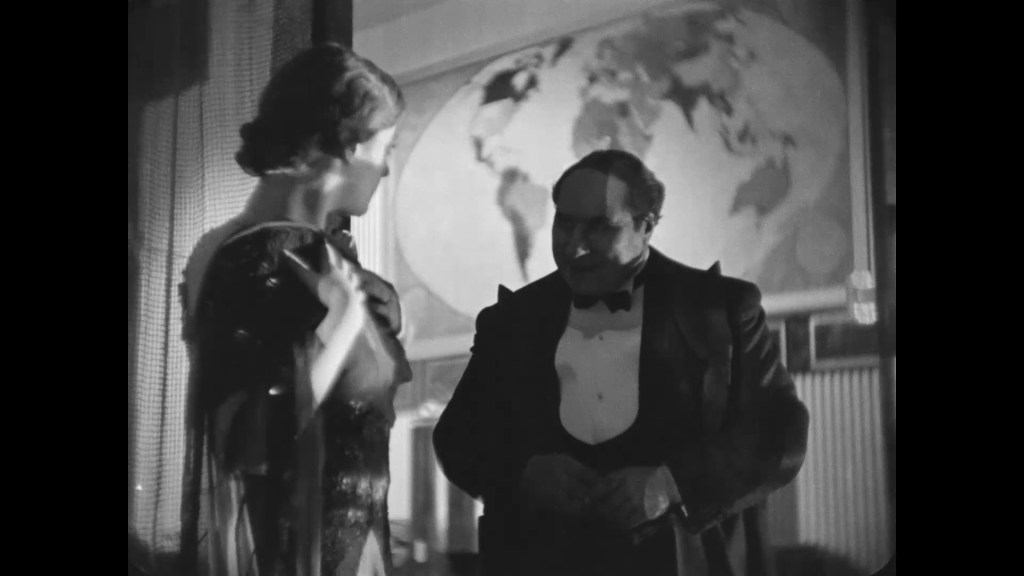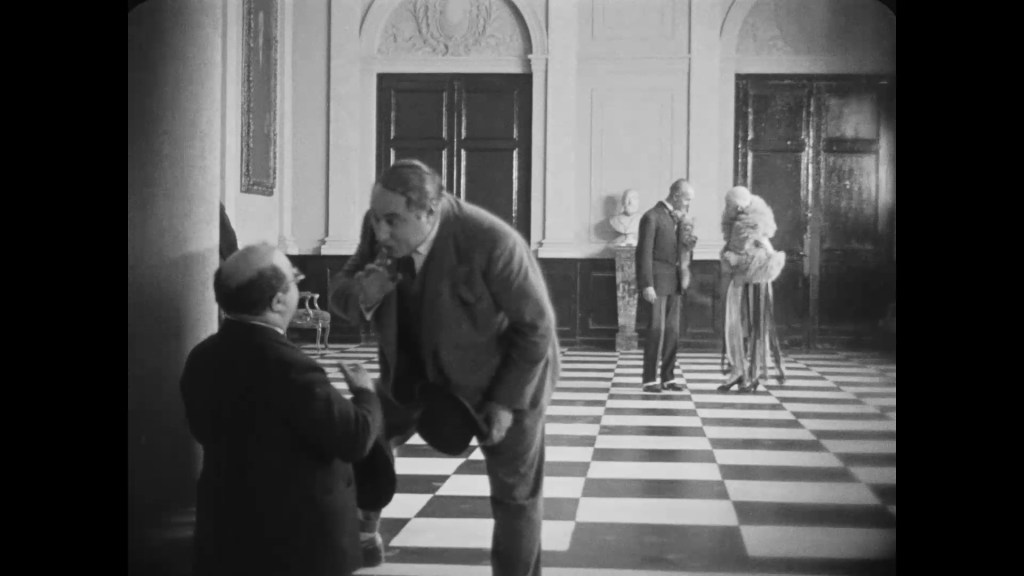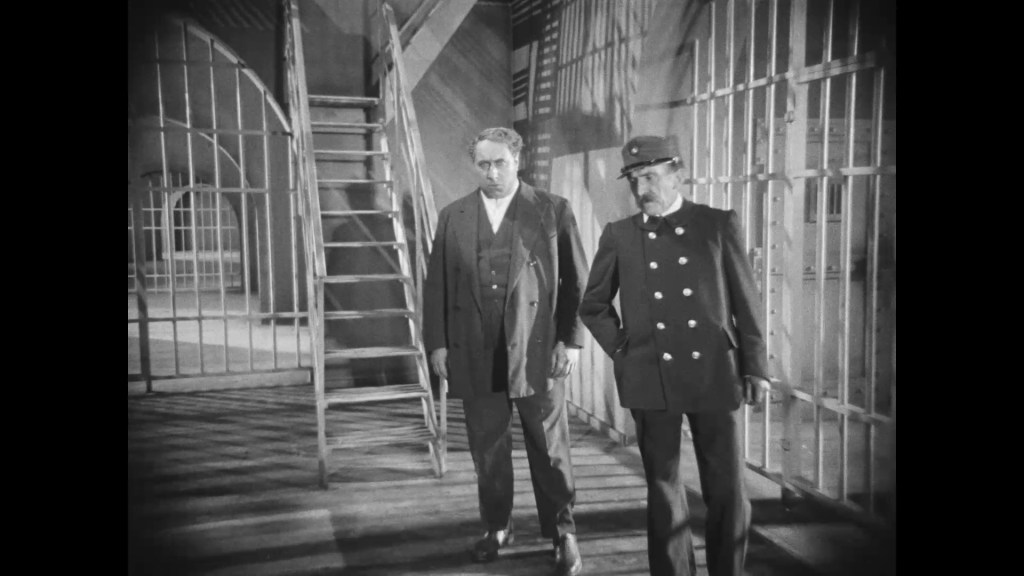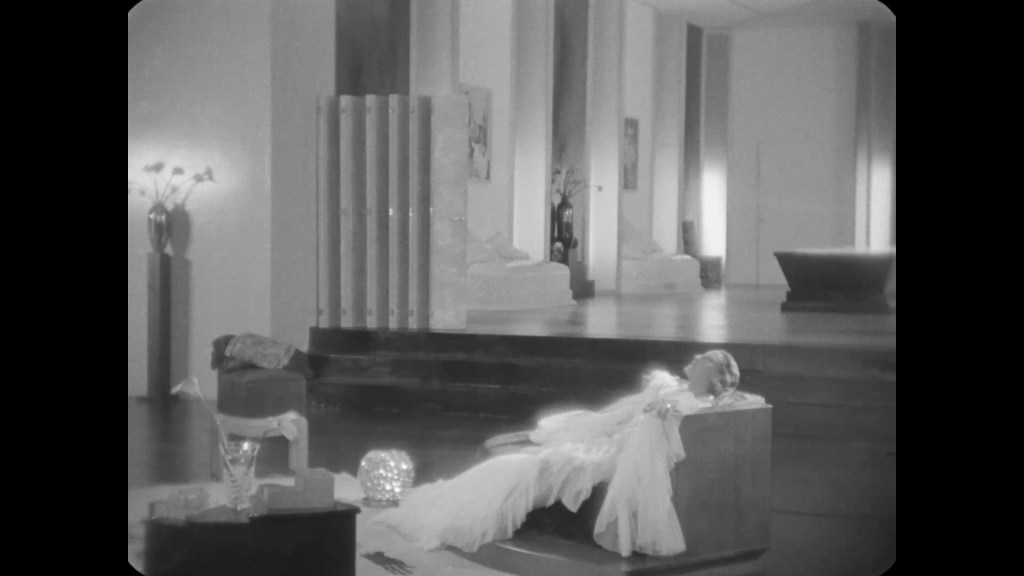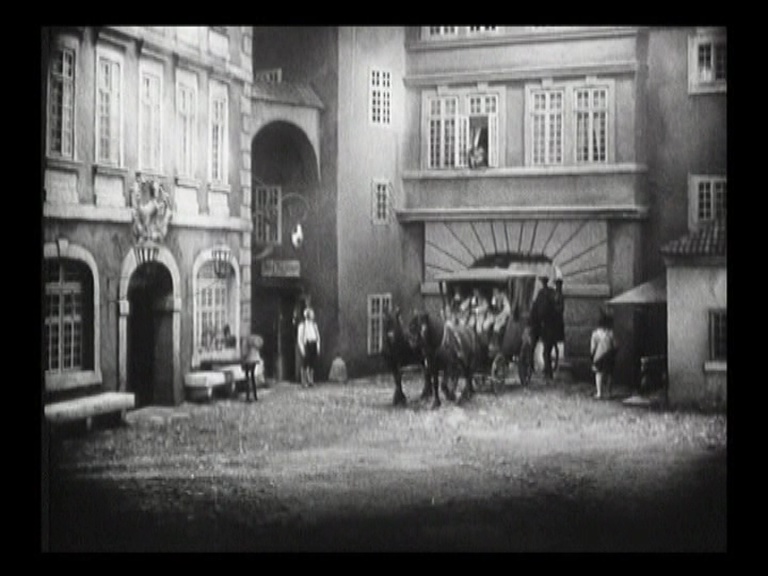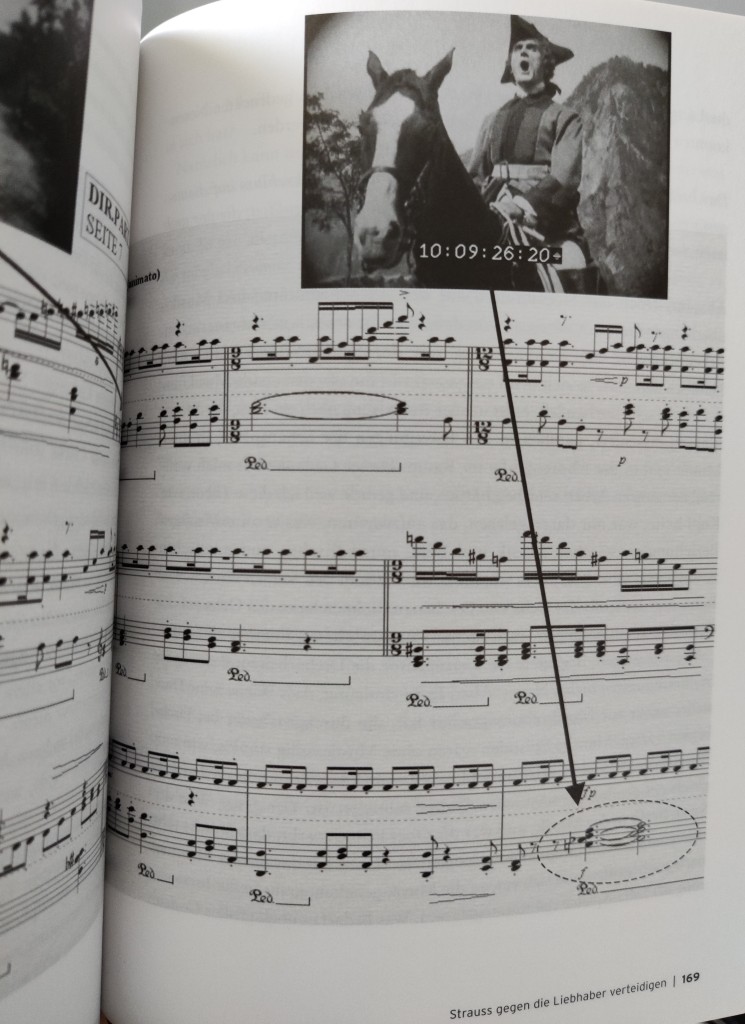
The films of Abel Gance in the Netherlands, 1915-1937

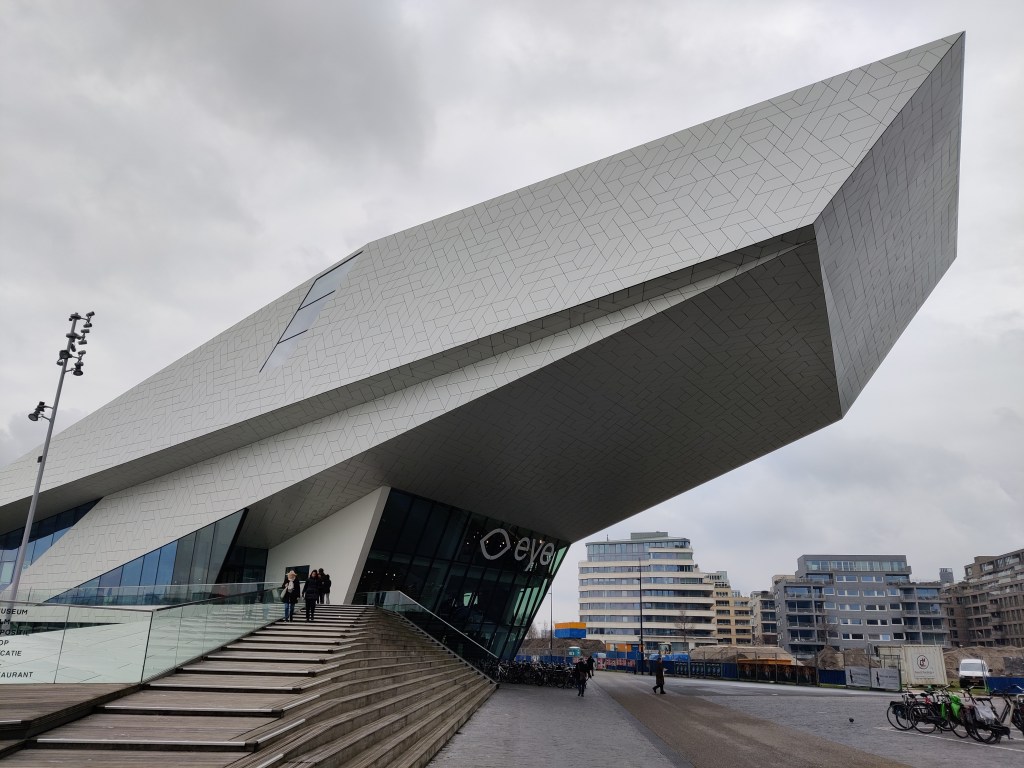
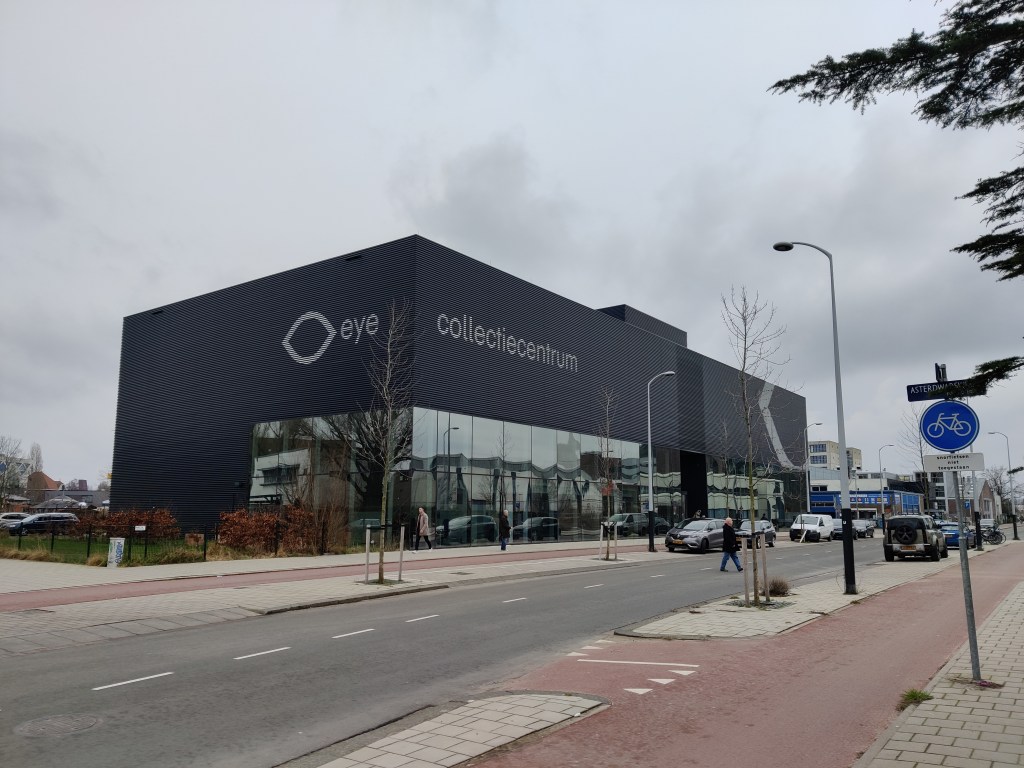
This piece is inspired by a recent trip to Amsterdam to visit the archive of the Eye Filmmuseum. Here, their collection specialist Leenke Ripmeester was an exceedingly helpful host. She not only showed me a unique print of Gance’s first sound film but also introduced me to some fantastic online resources where I could research historical film distribution in the Netherlands. The most remarkable for me was “Cinema Context”, an amazing database containing information from the Dutch film censors and contemporary press reports. (Leenke told me that she herself, in her student days, was part of the team who collated the data from contemporary documents.) It strikes me as a fabulous project, one that I wish every country would pursue. This, together with the newspaper archive, proved tremendously useful in revealing how, when, and in what form Gance’s films were shown in the Netherlands during the 1920s-30s. What follows is a brief account of my visit to the archive that afternoon, and what I have discovered about Gance’s silent and early sound films in the meantime…

Films produced by Le Film d’art (1915-1917)

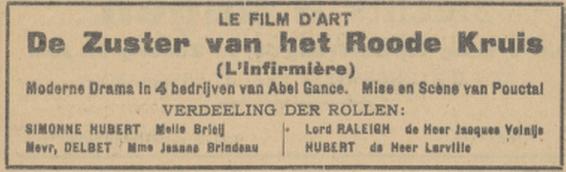
The earliest reference to Gance’s name in the Netherlands press is in 1915, when he had started working for Louis Nalpas’ production company Le Film d’art. His first assignment—as scenarist—was Henri Pouctal’s L’infirmière (1915). The film was released in the Netherlands and the adverts even featured Gance’s name alongside that of Pouctal (see below, from the Arnhemsche courant (17 June 1915)). Thereafter, Gance assumed the direction of his own scripts, and Le Film d’art productions seem to have been distributed in the Netherlands throughout the war years.

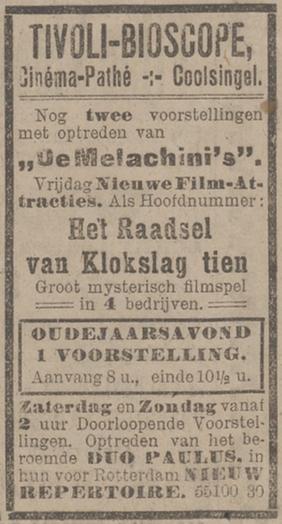
L’Énigme de dix heures (1915). First released in France in August 1915 in a version of 1200m. First shown in the Netherlands in December 1915 under the title “Het Raadsel van klokslag tien”.

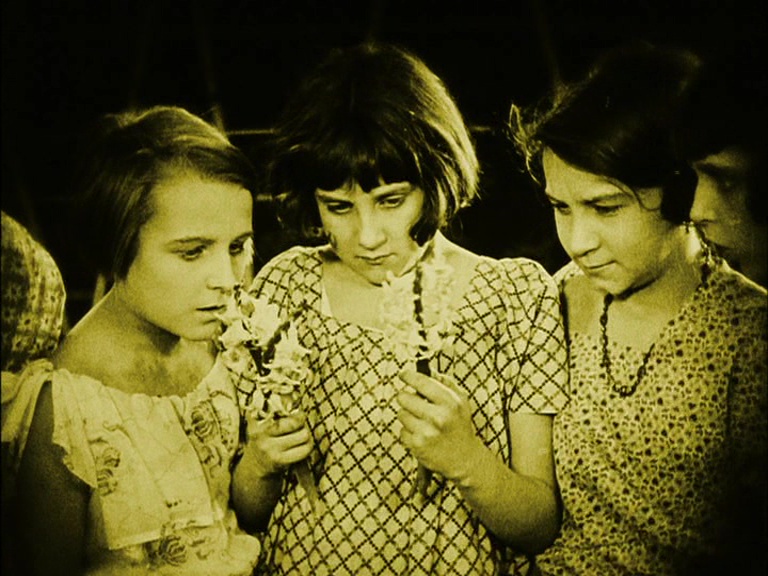
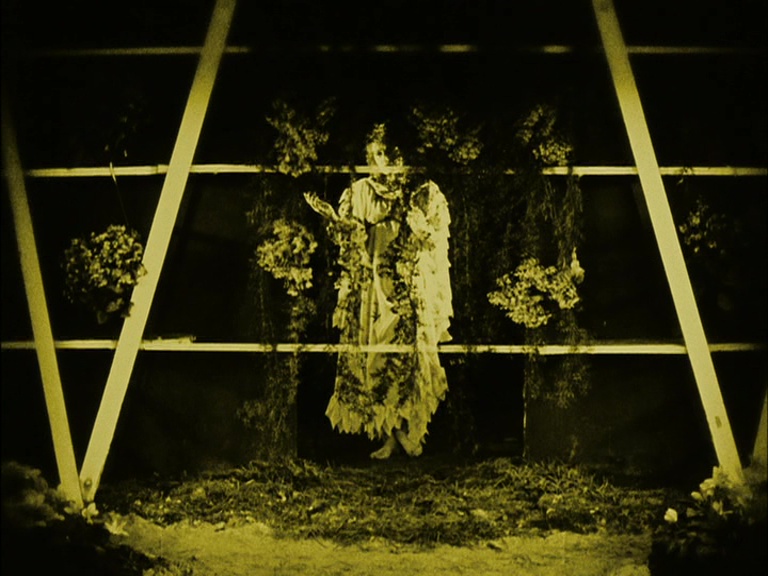
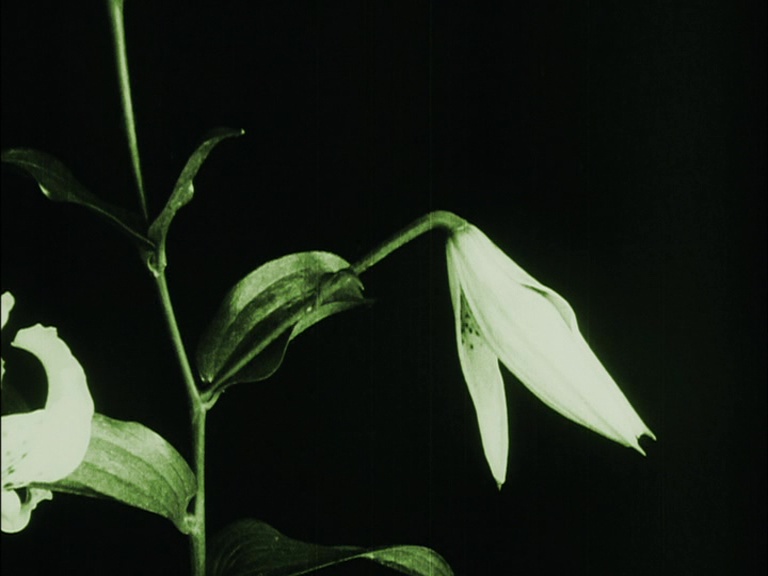
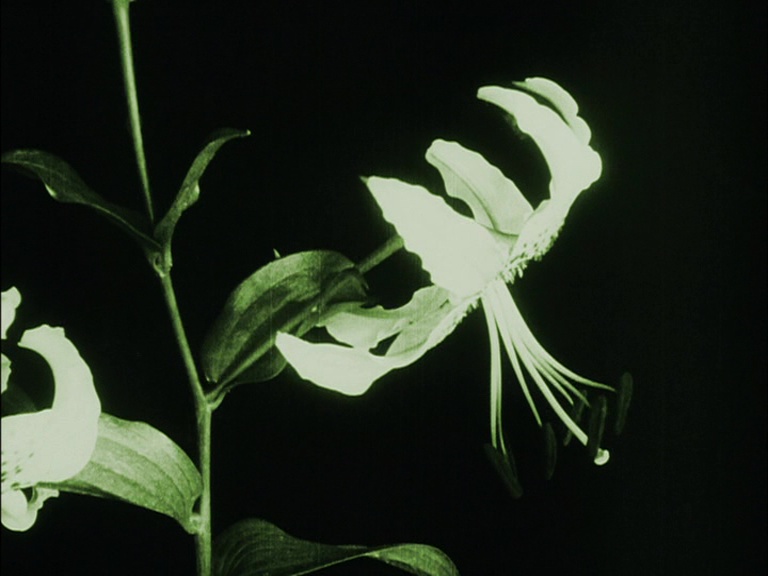
La Fleur des ruines (1915). First released in France in late 1915 in a version of three parts (sometimes listed as four parts). First shown in the Netherlands in November 1915 under the title “De Lelie der puinen” or “Een lelie tusschen de puinhoopen”. There is no known length listed for the French version, but the Dutch censors record the length as 900m. (This is the first time Gance is mentioned by name in the reports.)

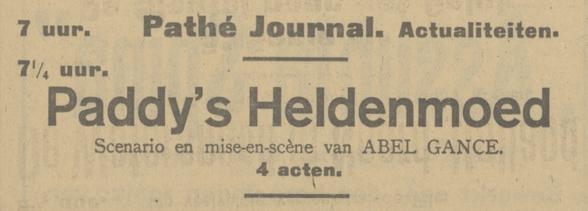
L’Héroïsme de Paddy (1915). First released in France in October 1915 in a version of three parts. First shown in the Netherlands in January 1916 under the title “Paddy’s heldenmoed”. There is no known length listed for the French version, but the Dutch censors record the length as 1200m. An advert in the Arnhemsche courant (26 January 1916) describes the film as being in “four acts”.

Le Fou de la Falaise (1916). First released in France in January 1916 in a version of 1180m in three parts. First shown in the Netherlands in May 1916 under the title “De Gek van de klippen” or “De Dwaas van de rotsen”. Dutch censor also gives length as 1180m.

La Droit à la vie (1917). First released in France in January 1917 in a version of 1355m (some filmographies say 1600m). First shown in the Netherlands in March 1917 under the title “Een Kind uit het volk” or “Het Recht om te leven”. Described by the censor as a “social drama in four acts” with the original act titles: “1. De brand, 2. Oproer, 3. Haar offer, 4. Uitgestoten”.

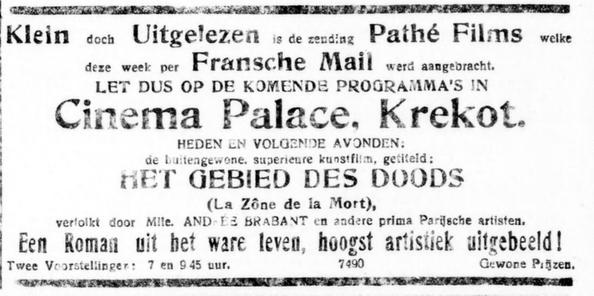
La Zone de la mort (1917). First released in France in October 1917 in a version of 1535m. First shown in the Netherlands in July-August 1918 under the title “Het Vuur” or “Het Gebied des doods”.

Barberousse (1917). First released in France in April 1917 in a version of 1600m. First shown in the Netherlands in December 1921 under the title “De Bende van Barbarossa”. Dutch censor gives length as 1700m (100m longer than Gance filmographies state). After a much-delayed release in Leiden in December 1921, the film was then rereleased in Rotterdam in April-May 1922.

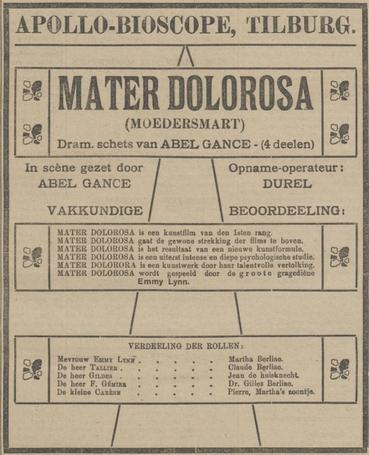
Mater Dolorosa (1917). First released in France in March 1917 in a version of 1510m. First shown in the Netherlands in April 1917 under the titles “Vrouwennoodlot”, “Een Moederhart verloochent zich niet”, or “Moedersmart”. Dutch censor gives length of 1344m and an age certificate of 18+. (This is the first Gance film I have found in the Dutch records to be given an age rating.) The film was rereleased in the Netherlands in June 1920 and again in February 1924.

La Dixième symphonie (1918). First released in France in November 1918 in a version of 1510m. First shown in the Netherlands in October 1919 under the title “De Tiende symphonie”. The release date suggests the film was shown in the wake of J’accuse, presumably to capitalize on the latter’s commercial success (see below).

Films produced by Pathé (1919-23)

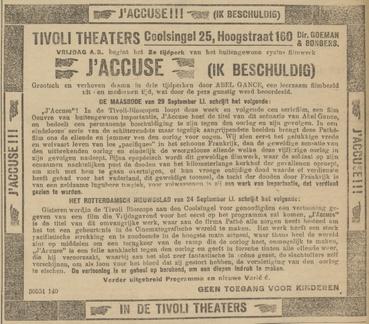
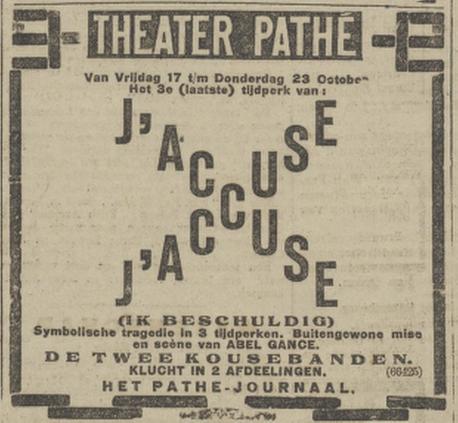
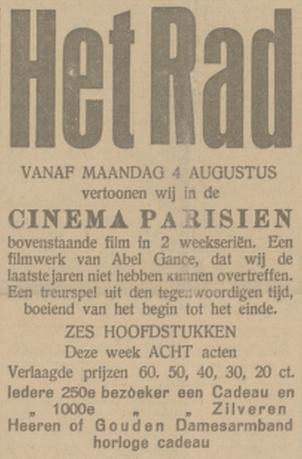
J’accuse! (1919). First shown in France in March-April 1919 in a four-part version of 5250m, released generally in a three-part version of 4350m, rereleased in a version of 3200m in 1922. First shown in the Netherlands in September 1919 under the title “Ik beschuldig”. Censorship records record the length as 4500m (150m longer than Gance filmographies state), divided into three parts. The film evidently had a wide release across the Netherlands, as there are records of screenings in various locations from late 1919 through to September 1920.

La Roue (1922). First shown in France in December 1922 in a six-part version of 11,000m, released generally in a four-part version of 10,495m, then rereleased in 1924 in a two-part version of 4500m. First shown in the Netherlands in a two-part version of 4632m in March 1924 (The Hague). Gance filmographies state the length of the two-part version (which Pathé intended to be the standard export version of La Roue) as 4200m or 4500m, but the Dutch records give a precise length. The records note the title of part two as “De Witte symphonie”, which matches the evidence that the 1924 version was divided into “La Symphonie noire” (part one) and “La Symphonie blanche” (part two). The Dutch censor gives an age certificate of 18+ for La Roue for “ongezonde, krankzinnige vertoning” (i.e. “unhealthy” displays of “mad” behaviour). The film was successful enough to be rereleased in the Netherlands in March 1925 (Amsterdam and Rotterdam) and again in February 1927 (Leiden).

Au secours! (1924). First released in France in October 1924 in a version of 900m. A 752m version of the film was passed for censorship in the Netherlands in October 1928 under the title “Max Linder en het spookslot” but there is no indication that the film was exhibited. The Dutch censor gives this film an age certificate of 18+ for “griezeligheden” (“creepiness”!).

Napoléon, vu par Abel Gance (1927)

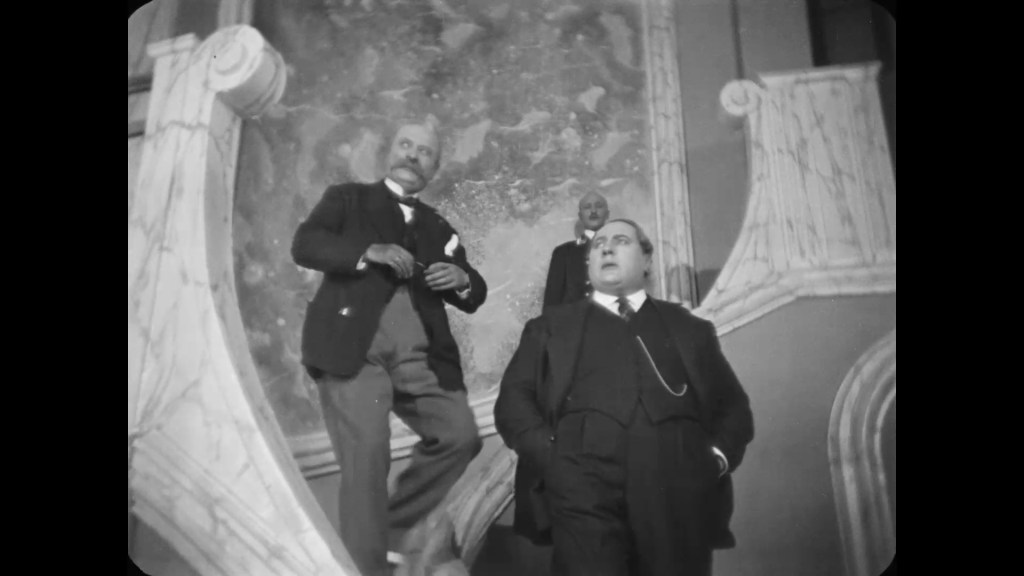
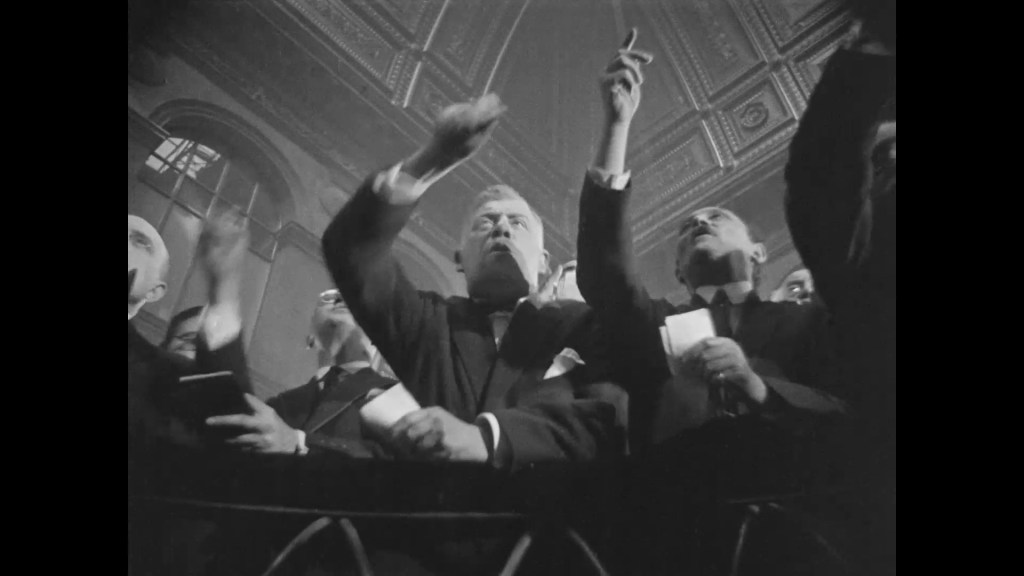
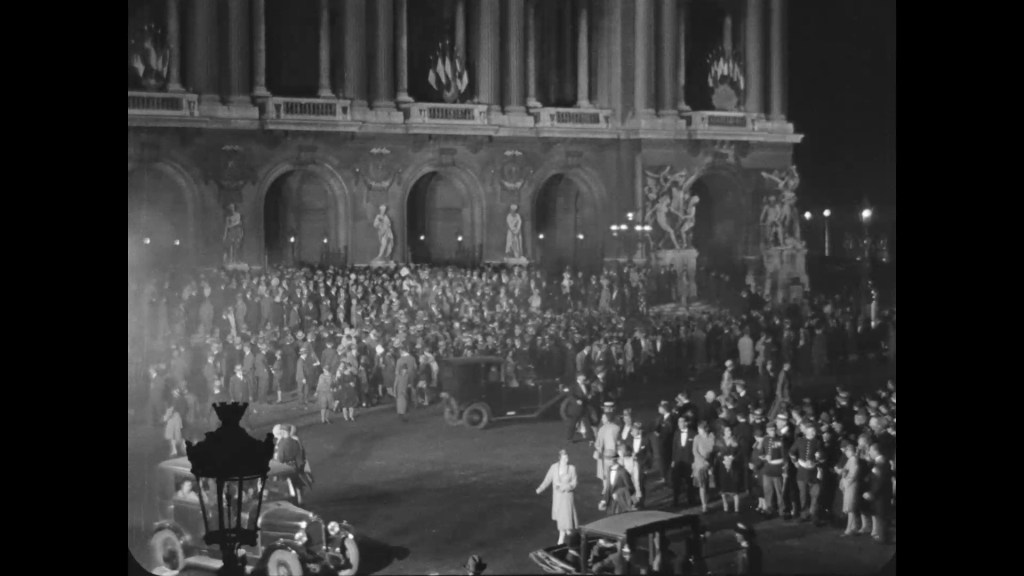
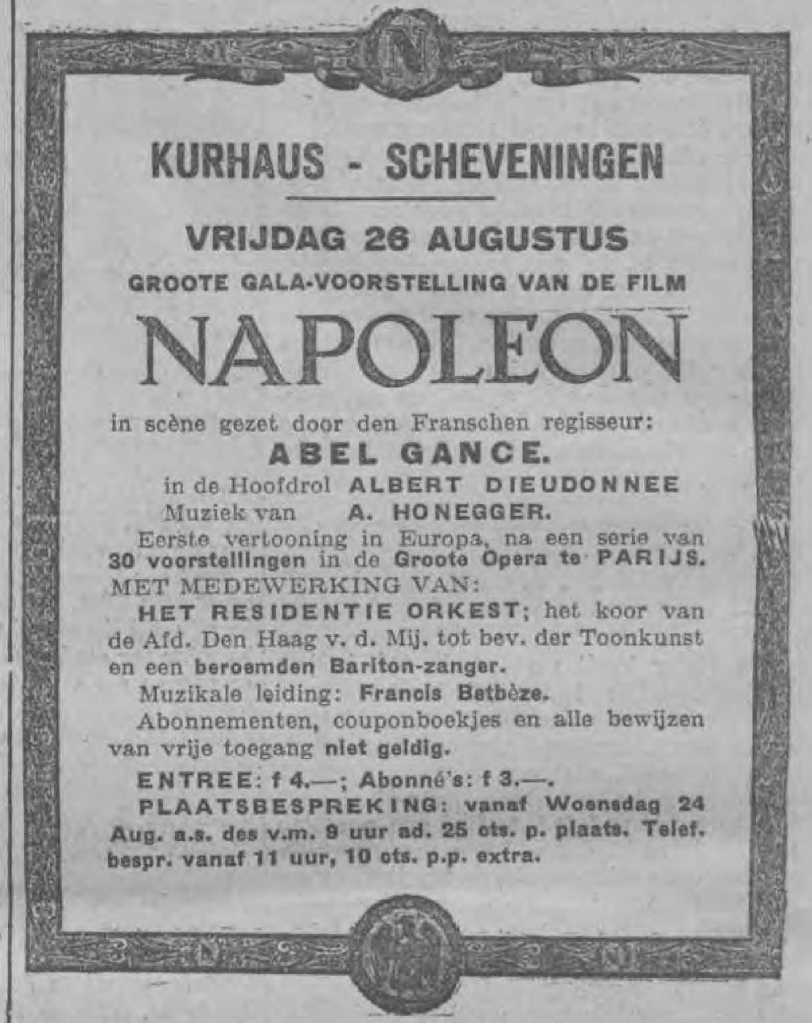
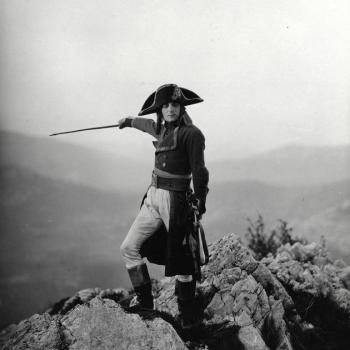
Well, such are the complexities of this film that it needs its own section. Napoléon was first shown in France in April 1927 in a version of 5200m with triptych sequences (the “Opéra” version), then released in May 1927 in a version of 12,961m without triptychs (the “Apollo” version); subsequently prepared for international distribution in a version of 9600m with triptychs (the “definitive” version). First shown in the Netherlands in August 1927, then rereleased in March 1929 and September 1931.

Given the innumerable different versions of the film released in 1927-28, many without supervision by Gance, it is difficult to tell in what form Napoléon was exhibited in the Netherlands. It is possible that the version shown in August 1927 was the same version seen in Berlin in October 1927 and subsequently released in central Europe through UFA. This version was around three hours, which would accord with the Dutch records providing a length of 3946m (170 minutes at 20fps) for Napoléon. However, the film’s Dutch premiere in The Hague predates the first censorship records from March 1929. Though the length of the film is given as 3946m, there are also separate records for two “episodes” of this version: part one is 973m, part two is 1033m (i.e. a total length of only 2006m). The censor records six cuts were made to the version shown in 1929, due to “schijn van ongeklede dames” (i.e. scantily-clad women). The 1931 file states the film has two “episodes” that pass without cuts. For its screenings in 1929, the exhibition records reveal that Napoléon was shown in a programme that also included several films by Walter Ruttmann: the avant-garde shorts Opus II (1922), Opus III (1924), and Opus IV (1925), together with his feature documentary Berlin: die Sinfonie der Grossstadt (1927). Given the potential length of this programme, it would indicate that only a severely reduced version of Napoléon was shown in 1929—perhaps even a version amounting to extracts of the major sequences.

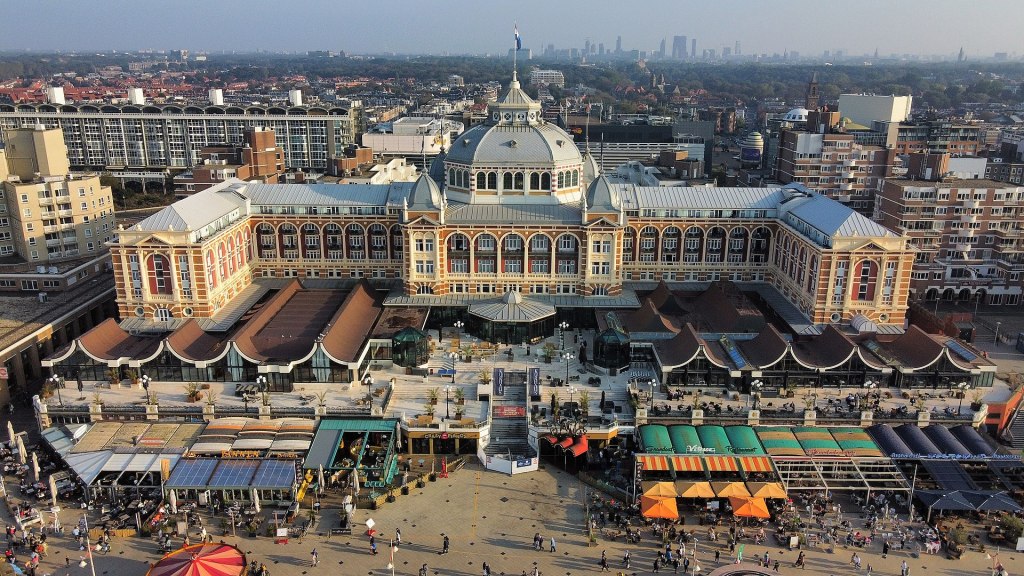
But it is the film’s first exhibition in the Netherlands that intrigues me most. Contemporary reviews indicate that the version of Napoléon shown there in 1927 measured 4000m (De locomotief, 1 October 1927; De Telegraf, 27 August 1927), which accords with the 3946m length given in the censorship records. This version had its gala premiere in the Kurhaus, The Hague, on 26 August 1927. It was clearly a major screening in a grand location (see an image of the venue below).

Musical accompaniment was provided by the 82-man resident orchestra and the 40-strong chorus of the Haagsche Toonkunst, together with the baritone Tilkin Servaes (Het Vaderkabd, 13 August 1927). The conductor was due to be Francis Betbèze, but he was ill the day of the premiere so was replaced by a Mr. Schuyer. The score itself was that written and arranged by Arthur Honegger for the film’s premiere at the Paris Opéra in April 1927. Before reading the Dutch press reports, I had no idea that Honegger’s score was ever performed outside of France in 1927. It must have been specially arranged by Betbèze or Schuyer, because Honegger’s score was designed to accompany a longer version of the film (the Opéra print ran to 5200m, 1200m longer than the Netherlands version). There was also the inherent issue of the score being a rushed and unsatisfactory project. Reviews of the premiere performance in Paris describe Honegger’s music as being badly performed (as well as poorly arranged) and often clashing with the film. This isn’t surprising, given that Honegger walked out on Gance before he had finished work on the score—there were doubtless last-minute changes in editing that meant the music had little chance of synchronizing throughout. So how did the music fare in The Hague performance?

The review of the premiere in De Telegraf (27 August 1927) indicates that the music was as much a failure here as it had been in Paris. Due to bad timing (whether due to projection speed or musical error), the solo baritone had to sing the Marseillaise “at a gallop”. The choir was likewise “forced to sing at a tempo apparently much faster than it had rehearsed”. But this was only one instance of a general problem:

Honegger’s accompanying music has not taken any further steps in solving the problem of film music. One does not get the impression that this music was composed especially for the film. On the contrary. Scenes in which the obsessive violence of revolution can be seen on screen are sometimes accompanied by an idyllic duet of two flutes. Modern and modernist sounds are unleashed on the film when a piano is seen on screen: the piano is represented by a celesta while the orchestra plays Mozart’s B-flat aria from The Marriage of Figaro. No trace of style. Indeed, in many places the music destroyed the mood evoked by the film images. The last act of the film is apparently not accompanied by Honegger’s arrangement. The potpourri then performed has a cheap allure. Thus, the performance ended in a vocal and instrumental debacle. Music synchronized with images: this ideal was a long way off from the premiere of Napoleon!

These are much the same issue cited in the performance of Honegger’s music in Paris. Doubtless, the textual changes to the 4000m version shown in The Hague exacerbated the existing issues with synchronization in the score. But the mere fact that Honegger’s original score accompanied the film is itself an indicator of the effort put into the exhibition of Napoléon in the Netherlands. The press reports feature photos of Gance, and the reviews repeatedly use the word “masterpiece” in their advertisements. However flawed its musical presentation, the film itself made a critical impact.

One last note to add to this section is the fact that Jean Arroy’s documentary Autour de Napoléon (1928) was also shown in the Netherlands. It was first released in France in February 1928 in a version of 1200m. It was released in the Netherlands in May 1928 (at the Centraal Theater, Amsterdam and the Corso cinema, Rotterdam). That it was exhibited at all in the Netherlands indicates that Napoléon generated public interest. After all, various versions of Napoléon continued to circulate there throughout 1927-31.

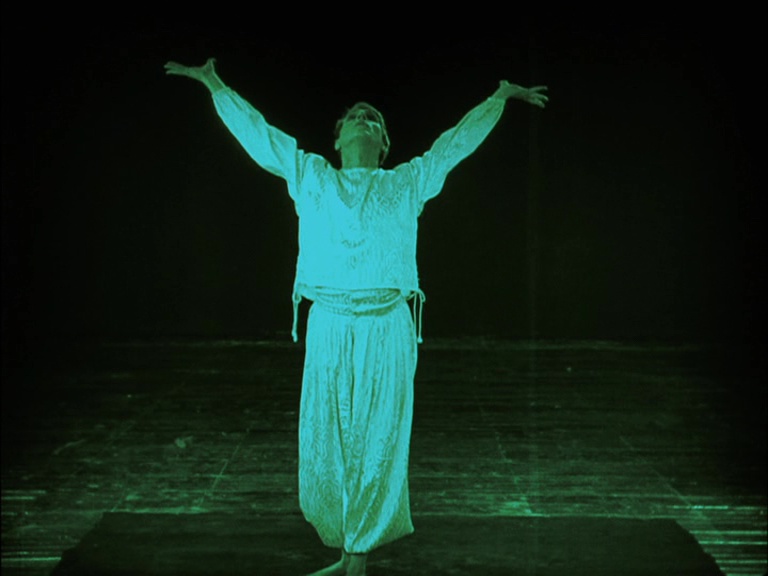
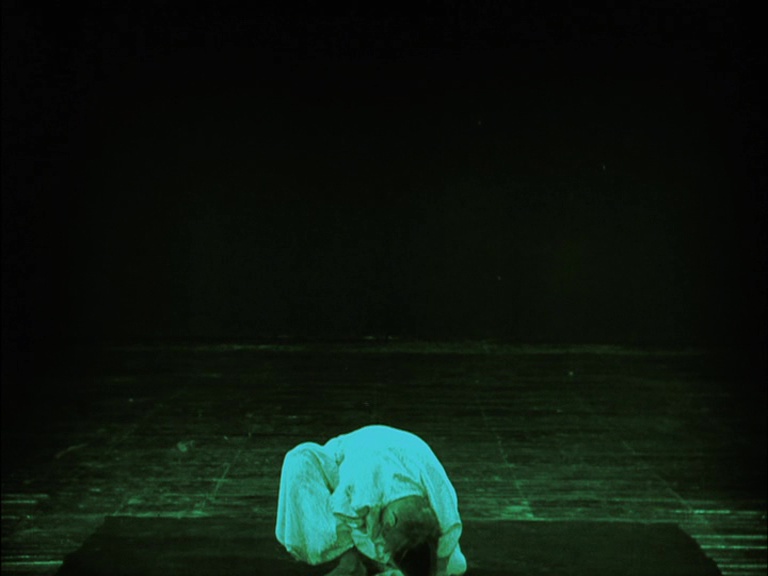
La Fin du Monde / Das Ende der Welt (1931)

The history of La Fin du monde is exceedingly complex. (For a full account of the production and its context, I refer readers to my book on the subject.) In brief, before surrendering control of the editing to his producer, Gance assembled a version of 5250m (over three hours). The version that was ultimately released was only 2800m (c.100 minutes). It was first shown in Brussels in December 1930, then began its general release in France in January 1931. The German-language version, Das Ende der Welt, was first shown in Zurich in January 1931, then began its general release in Germany in April.

When La Fin du monde is first discussed in the Dutch press, it is under the title “Het Einde der wereld”, the literal Dutch translation of “La Fin du monde”. The Paris correspondents of various Dutch newspapers reported on La Fin du monde and highlighted all the faults that other critics noted (exaggerated performances, poor sound, inept editing). Given that both the film’s production company (L’Écran d’art) and its main distributor (Les Établissements Jacques Haïk) went bankrupt by the end of 1931, it’s not surprising that La Fin du monde was not taken up by distributors in the Netherlands at this stage. A comment in Het Vaderland at the end of the year summed it up well: La Fin du monde “has not yet been shown in our country, but in Berlin it has already sunk like a brick” (19 September 1931).

Although the film was not yet released in the Netherlands, the French-language version had been submitted to the censor in March 1931. I was very intrigued to discover that these records give a precise length for La Fin du monde of 2906m, longer than the 2800m usually cited in filmographies. The files show that the film was given an 18+ rating, describing the film as “sensational, exciting, confused” and included a “banal image of suffering Christ”. Six cuts were made, all of them to the “orgy” sequence near the climax of the film. (One gets the impression of a protestant sensibility in the Dutch censors’ office.) But despite being passed for release, La Fin du monde was not shown in the Netherlands in 1931.

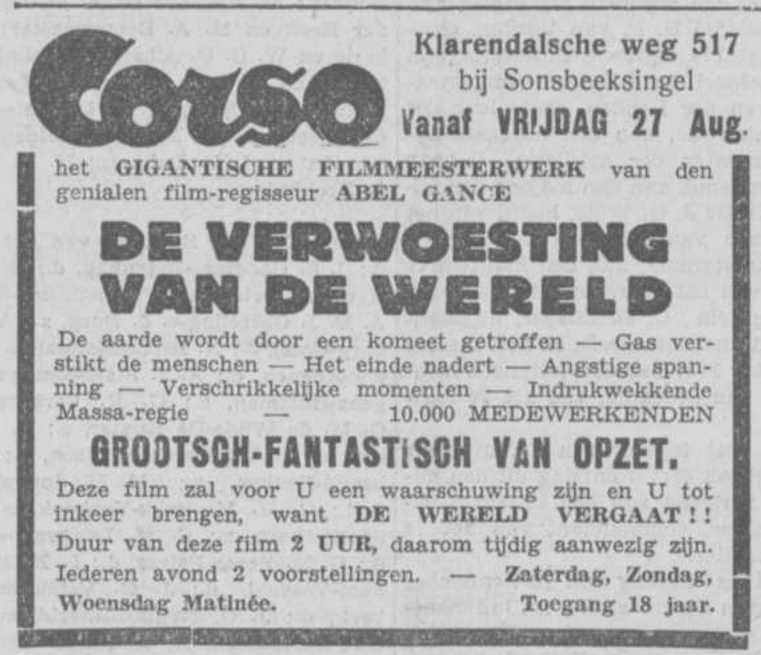
There is a second file from May 1935. The film is now referred to as “Het einde der wereld”, the literal Dutch translation of the French original. But the film is still not released. In December 1935, the film once again comes before the censor—this time under the new title “De Verwoesting van de wereld”, i.e. “The Destruction of the World”. However, the print being submitted is not the French-language version of the film, but the German-language version: Das Ende der Welt. The censor again gives the film an 18+ rating for the film’s “sensational tenor and frivolity”. Two cuts are recorded, totalling 76m of footage. (No content description is given, but one presumes it was the same orgy sequence that again brought out the scissors.)

In June 1936, over five years since it was first shown in Switzerland and Germany, Das Ende der Welt was finally released in the Netherlands under the title “De Verwoesting van de wereld”. It was shown at the Roxy cinema in Leiden, then in various other cities across 1936-37. Why did it take so long for the film to reach the Netherlands? One reason is that the film was such a flop in 1931 that it was perhaps wise to wait until the memory of its failure had faded. For by 1936-37, newspapers were announcing “De Verwoesting van de wereld” as if it were a new production. (Perhaps the title was changed precisely to dissociate the film with its original release.)

The Arnhemsche courant, for example, carried a hyperbolic advert announcing the “gigantic film masterpiece by the genius director Abel Gance” (26 August 1937). The tone of the Dutch press pieces strongly echoes the advertisements in the German press in 1930-31, which also emphasized the scale of the spectacle and the numbers of extras. It is worth noting that it was Viatcheslav Tourjansky who had supervised the editing of the German-language version of Gance’s film. Very little is known about how either the French or German prints were assembled for their release, so the existence of “De Verwoesting van de wereld” is a significant piece of evidence. The adverts for its release in 1936 say the film lasts two hours, though the censor record of 2906m suggests an actual time of 105 minutes. However, with a fifteen-minute interval, you can easily imagine the film becoming a two-hour showing.

There are surprisingly few reviews that I can find from 1936-37, and none of anything like the length of the reviews sent from Paris correspondents to the Dutch press in 1931. The Nieuw weekblad voor de cinematografie calls it an “exciting film” and reassures its readers that the epic story is in the “safe hands” of Abel Gance (17 April 1936). (I think this is the only time I’ve ever seen Gance referred to as a pair of safe hands!) The Dagblad van Noord-Brabant mentions the film’s scale and number of extras but offers scant comment on its quality (20 February 1937).

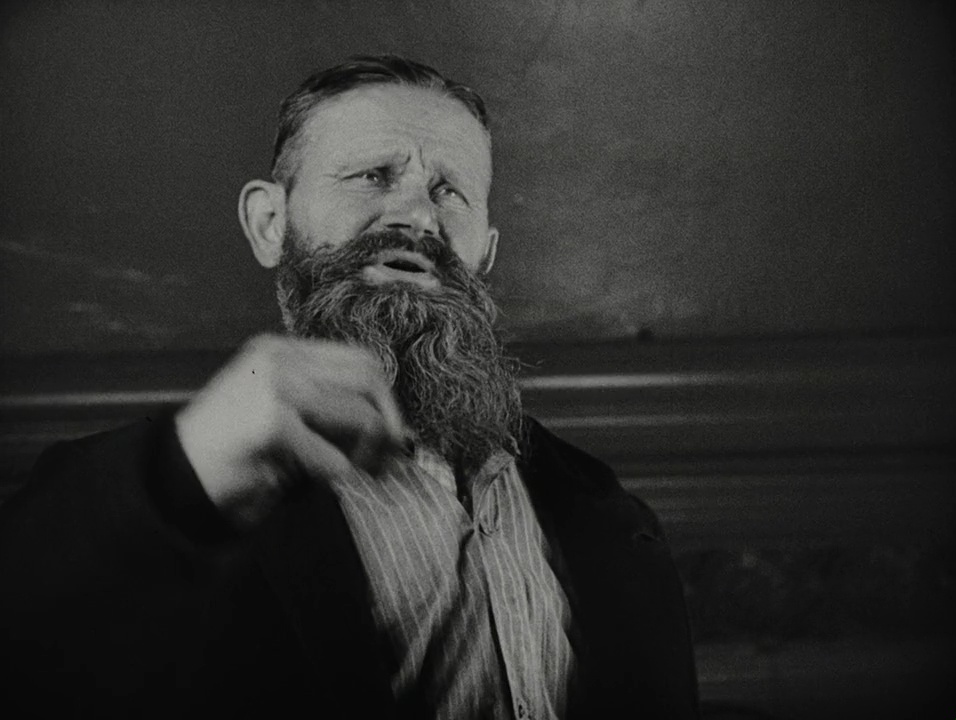
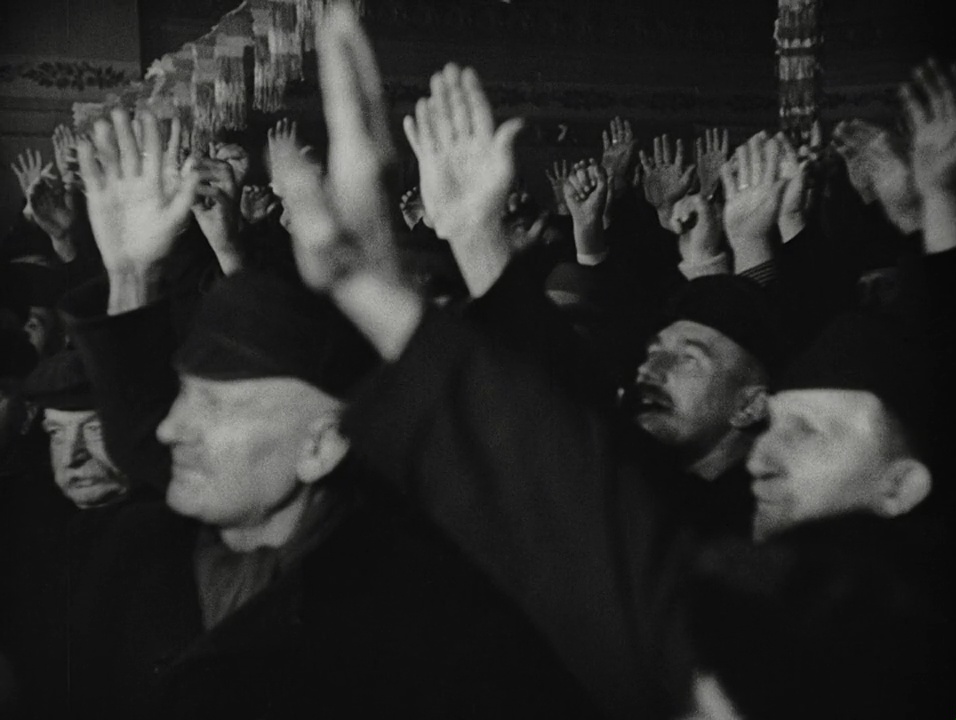
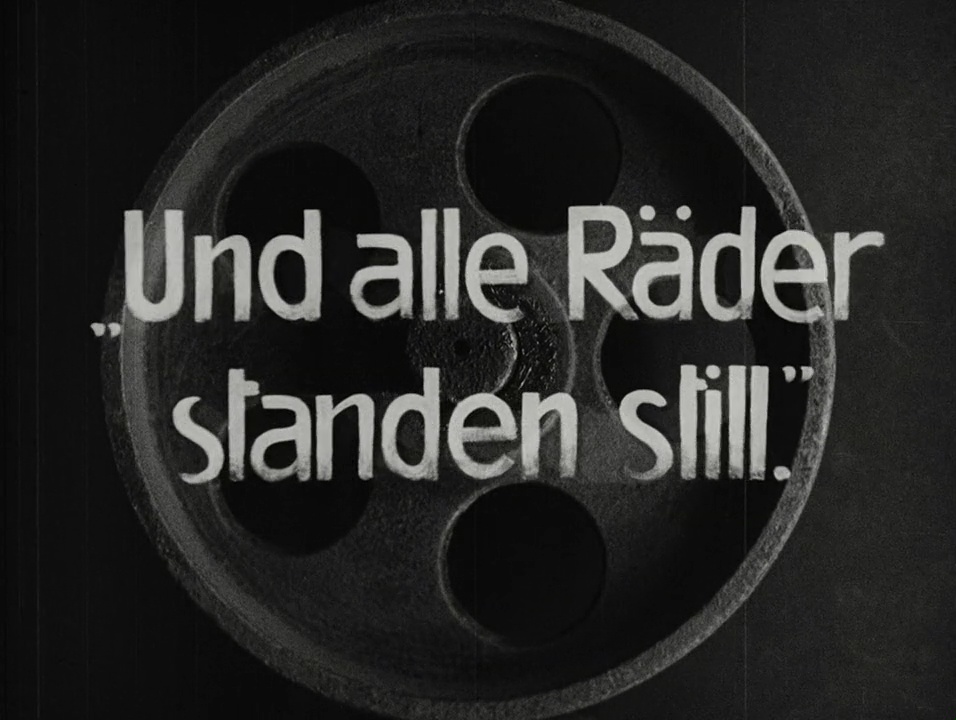
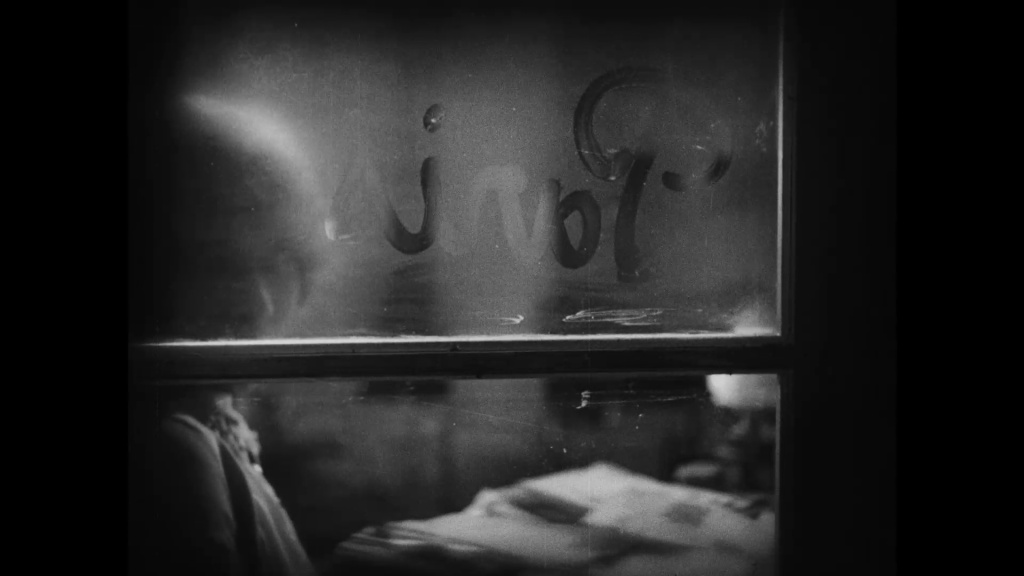
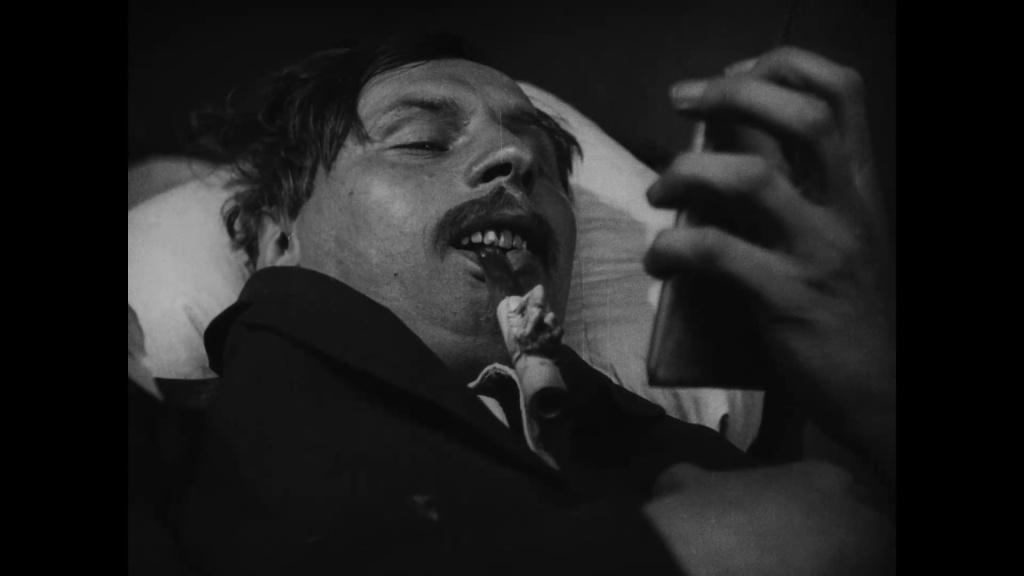
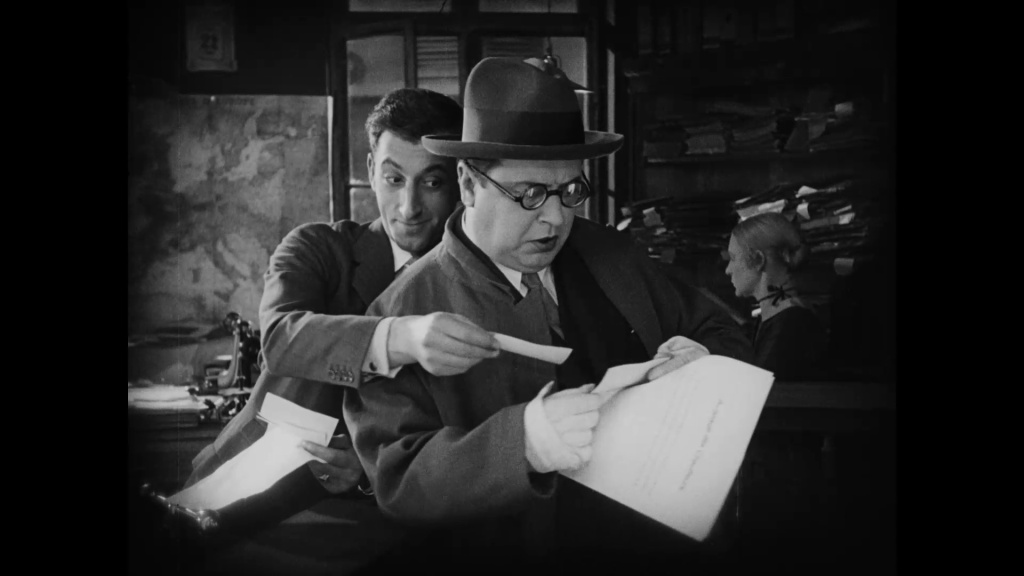
But thanks to the Eye Filmmuseum, I can at least offer some comment on “De Verwoesting van de wereld”: for a print of 830m (thirty minutes) is preserved in their collection in Amsterdam. I had long thought that no copy of the German version of Gance’s film survived. (I had even said so in print!) So I was incredibly excited to see even this fragment of Das Ende der Welt. The print had Dutch introductory credits and Dutch subtitles, but the soundtrack was most definitely in German. For this, I knew from my earlier research that the main performers (Abel Gance, Victor Francen, Samson Fainsilber etc) had been dubbed by German actors. Only one actor was recast for the German version: Wanda Gréville (credited as Vanda Vengen) replaced Colette Darfeuil from the French version. (Gréville was English but spoke German fluently. She was also intended to shoot scenes for an English-language version of the film, but this version was never assembled in 1931. The version of the film released in the US in 1934 was the French version with English title cards and subtitles.)

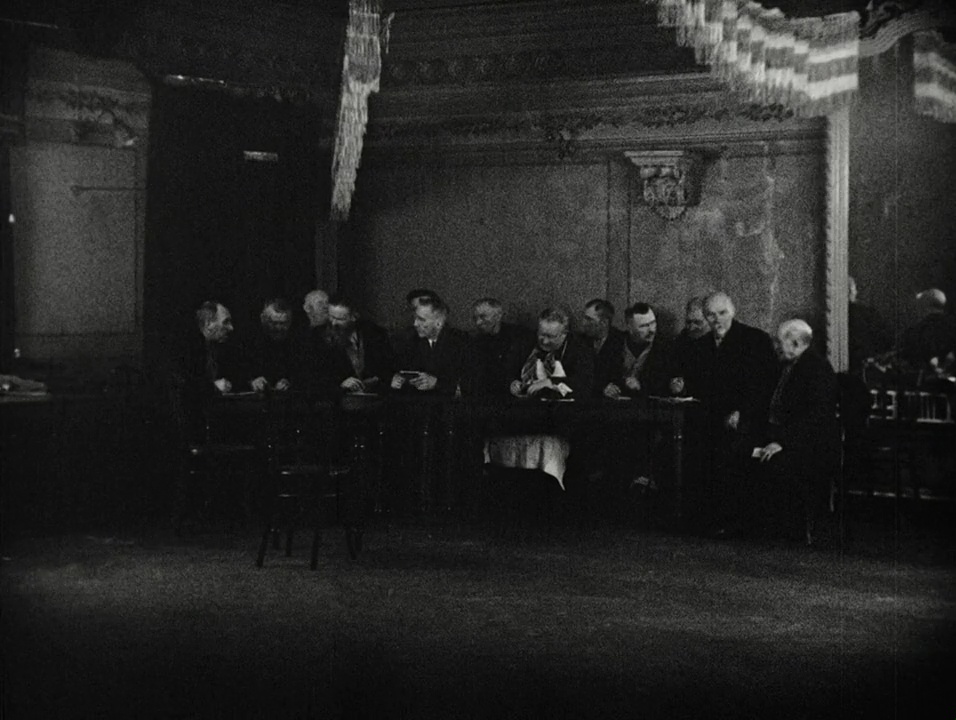
Sadly, the first third of the film is entirely missing from the Dutch copy, so there is no sight of Gance as Jean Novalic at all—I had so hoped to hear what he sounded like in the German dub. But Victor Francen as Martial Novalic is there, dubbed in authoritative German. I also spotted at least two scenes featuring German dialogue recorded live on set (i.e. not dubbed), but only with minor characters. Most of the Dutch print consists of the climactic scenes of the comet approaching: we see crowds fleeing in panic, nature running amok, extreme weather etc. Amongst this material are several shots that do not survive in the French version, but nothing significant. Sadly, there is no sign of Wanda Gréville. I had also wondered if there were any extra scenes missing from the surviving French-language copies of the film. The recent Gaumont restoration of La Fin du monde runs to 94 minutes, several minutes short of the prints shown in 1931. But aside from a few very brief shots, there are no major discoveries in the Dutch print. (The only shot that was suggestive of a missing sequence was one shot of Martial Novalic behind-the-scenes at the “Universal Convention” in the last minutes. Assuming this is him after he makes his grand speech, it would belong to the scenes in which he is—according to the script—finally reunited with Geneviève.)

Though it is only a fragment of “De Verwoesting van de wereld” as it was shown in 1936-37, the surviving Dutch print survives in very good visual quality. The viewing copy I saw was an acetate dupe of the 35mm nitrate print held in the archive, so the original should look even better. The 35mm print was part of a private collection of reels purchased by the Eye Filmmuseum in the 1960s. No further information is known about the history of this particular print, or how it ended up being reduced from c.105 minutes to just thirty.

Summary

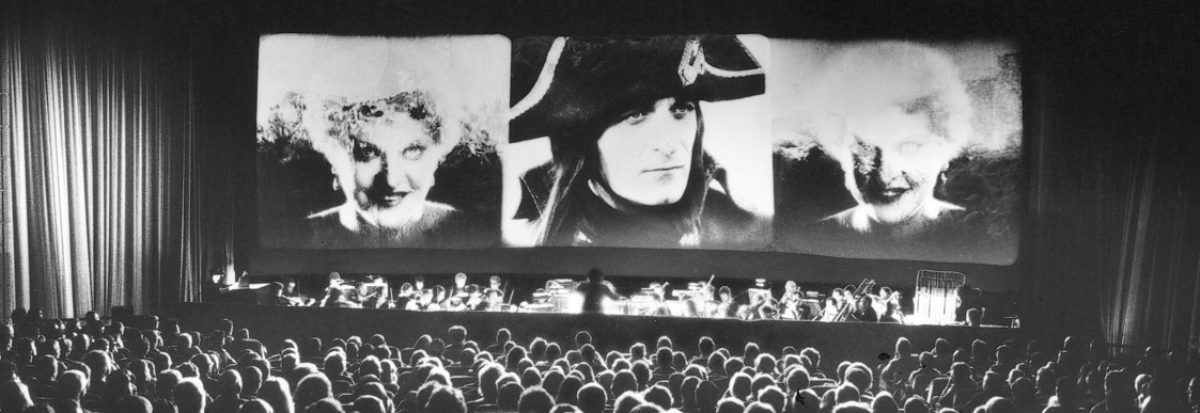
This was only my second trip to Amsterdam. The first was in 2014 for a screening of Napoléon at the Ziggodome. Here, the film was projected on 35mm and accompanied by Carl Davis conducting the Het Gelders Orkest. This was the most extraordinary performance of the film I have ever seen. For the final triptych, the three screens measured a total of forty metres wide and ten metres tall.

My trip to the Eye Filmmuseum to see the fragment of Das Ende der Welt on a small screen was less spectacular, but nevertheless rewarding. I knew nothing about the print until revisiting the FIAF database in 2021. The mere existence of the print is a miracle, especially as it led me to explore the wonderful Dutch archive sites and discover all kinds of new information on the distribution of Gance’s films. It just proves to show how much more can be gleaned if only you know where to look. And I do hope more of any version of La Fin du monde turns up. (Of course, the mythical three hour cut that Gance assembled would be a dream, but the chances of it existing at all are infinitesimally small.) I have just seen that Kino is to release the recent Gaumont restoration of La Fin du Monde on Blu-ray in North America. Sadly, there are no new extras. Will someone be keen enough to offer a UK release? If so, I can certainly recommend at least one extra: the Dutch print of Das Ende der Welt. (And I know at least one person who’d be keen to do another commentary track. Ahem…)

My thanks once again to Leenke Ripmeester for her time and help within and beyond the archive.

Paul Cuff
Music for Die Liebe der Jeanne Ney (1927; Ger.; G.W. Pabst)

This piece is devoted to the score arranged and orchestrated by Bernd Thewes for the 2016 restoration of Pabst’s Die Liebe der Jeanne Ney (1927). I confess at the outset that I love this score unreservedly. I have relistened to it all the way through a dozen times, and to certain sections of it many times more. No review that I’ve read has gone into much detail about the music, which seems to me a great oversight. This piece tries to make amends for that.

The model for Thewes’s 2016 orchestral score is a piano score from the music collection of the Museum of Modern Art in New York. This anonymous work is not an original composition, but a compilation of existing music. It was likely made in the 1930s when Iris Barry (MoMA’s curator) acquired a copy of Die Liebe der Jeanne Ney from the Reichsfilmarchiv in Berlin. We don’t know the identity of the musician who assembled this piano score, nor does the score identify the pieces of music used within it. While there is recognizable material from familiar composers (Tchaikovsky, Rachmaninov, Verdi), much of the music remains obscure—at least to me.

What’s so pleasing about Thewes’s arrangement is that it treats the identifiable and unidentifiable pieces with equal originality. Thewes began work by dubbing the piano music to match the video of the restored film, then orchestrated the score from scratch to produce a coherent sound world that fitted the images. There is a tremendous sense of freedom in this method: the familiar and the unfamiliar are made to sound equally new. Thewes’s choice of instrumentation is key to this sense of playful recreation. To the forces of a symphony orchestra (including piano) are added electric bass, saxophone, Hammond organ, and drum set. Much like the contents of the original piano score, these forces are a blend of the classical and the popular.

One of the pleasures of listening to scores based on musical compilations is recognizing familiar pieces, and hearing how they are (re)arranged to suit the film. Two of the main themes in the film are well-known pieces by well-known composers. The piece associated with the romance between Jeanne (Édith Jéhanne) and Andreas (Uno Henning) is “June”, from Tchaikovsky’s piano suite The Seasons (op. 37a, 1875-76). In Thewes’s score, this piece—a barcarolle—becomes a warm, mellow, melancholy theme taken up by the strings and supported by the Hammond organ. The organ might suggest a matrimonial—if not religious—tone to such a piece; no doubt it does in this score, but I think the distinctive timbre of the Hammond also offers something else. Its use in prog rock and pop music brings in a very different context than a pipe organ would from the context of theatre or church. (When, in later scenes, it is used in combination with an electric base, the Hammond also brings in the context of horror films.) One might say the Hammond organ is a secular counterpart to traditional pipe organs. Its use in the orchestration of Tchaikovsky’s “June” might hint at religious matrimony but it does so only within the context of secular music: a classical melody rendered on a popular instrument. Its timbre also (to my ears) heightens the sense of melancholy. We first hear the piece when Jeanne is staring into the dark, remembering time spent with the absent Andreas; this music is not just an expression of love, but of love lost or love yet to be fulfilled.

Another recurring theme is the music used for the villain of the film, Khalibiev (played by the deliciously repellent Fritz Rasp). For this, the score uses Rachmaninov’s Prelude no. 5 in G minor (from the op. 23 preludes, 1901-03). The orchestration emphasizes the sinister, irregular gait of the music: with the equivalent of the lowest (lefthand) notes from the piano taken by the bassoon and soon strengthened with brass. Later, Thewes allows the piano to join the orchestra, turning the prelude into a kind of concerto. If the “June” motif is an unpretentious, accessible theme for the lovers, the more flamboyant (more overtly “classical”) Rachmaninov prelude reflects the sinister pretensions of Khalibiev, who poses as a kind of exiled Russian aristocrat.

Other familiar pieces in the score are more radically reworked. “The Internationale” anthem (music composed in 1888) is cited several times. This well-worn tune takes on a new dimension thanks to the way Thewes uses Hammond organ, drums, and brass in his score: there’s suddenly a narrative drive to the music, one that makes it more than a recitation of the anthem’s own themes. The melody becomes threatening (for the battle scenes), boisterous (for the Bolshevik courtroom), and celebratory (for the flashback to Jeanne’s first sight of Andreas). The variations in tempo and orchestration transform what can be a slow, turgid piece (designed for the accompaniment of text, after all, not images) into exciting, thrilling music that sounds fresh and alive.

More subtly, in the scene where Andreas is in a bar, plotting with his comrades, the score uses Tchaikovsky’s “Danse russe”, from 12 Morceaux for piano (op. 40, 1878). But the way the tempo is altered (shifting in line with the ebb and flow of conversation and movement on screen) makes the music entirely serve the film. Likewise, immediately after the above scene, excerpts from Tchaikovsky’s Marche slave (op. 31, 1876) are rearranged to fit the rhythm and content of the images. Its first appearance (for the first shot of the Bolshevik forces gathering for the assault) is only a few bars from the sinister opening of the piece, but Thewes adds cymbals to subtly mimic the splash of horses galloping through the water on screen—and the added rhythm quickens the propulsion of the “march”. A few scenes later, the Marche slave’s next appearance is much in line with the original orchestration (from its finale), but after a couple of bars the organ enters to take up the rhythm: with a few deft touches, a very familiar (and much used) piece of music becomes part of the specific sound world of this score. 

Later in the film comes a piece of music whose transformation particularly struck me when first I heard it. When the newspapers announce the murder of Raymond Ney, the score uses the main theme from Verdi’s overture to La forza del destino (1862/69). It’s a very well-known piece, but in Thewes’s arrangement it took me totally by surprise. For the theme is first spelled out by the organ, supported by drums and brass before the strings enter. After this first iteration (and a fabulous diminuendo that ends in the lowest growlings of the brass), the theme is given over entirely to the organ. It’s the perfect example of making the familiar sound new. There’s more than a hint of prog about this melding of classical repertory with modern instruments (the drum kit and Hammond organ are exemplary of a prog soundscape). It makes the piece doubly new: recontextualizing it to the images of 1927 and to the worlds of both classical and popular music. And, quite simply, it’s fun.

Indeed, I should keep saying just how fun Thewes’s orchestration is throughout. To pick another moment, listen to how we are introduced to the detective agency of Raymond Ney (Adolf E. Licho) in Paris. The score uses Armas Järnefelt’s Præludium (1899-1900), a piece not now familiar for most. (After a lot of digging around trying to identify this piece, I realized that not only had I heard it before but that I actually owned it on CD. I suspect I am among a very small number of people who own a collection of Järnefelt’s work on CD, and an even smaller subset who own more than just the recent release of his music for Stiller’s Sången om den eldröda blomman (1919).) Bearing in mind that Thewes orchestrated this piece from its piano reduction, it’s remarkable how this 2016 arrangement is both similar to and distinct from the original. Thewes’s orchestration makes this charming fanfare sound more baroque than the original (with more emphasis on the bright, shiny timbre of brass). But with the addition of the saxophone, it also melds its tone into the sound world of the rest of the film. Listening to them side-by-side, I find I prefer Thewes’s orchestration to Järnefelt’s own arrangement. (Thewes removes the unnecessary pomp of Järnefelt’s cymbals and glockenspiel for the forte passages.) And the timing of the piece for the action on screen—the growling brass for Gaston’s demand for “Geld! Geld!” , the solo violin for the client’s tearful farewell to both his adulterous wife and his money—is marvellous.

But there is one section of the film that I have listened to even more times, which is when Andreas first arrives in Paris and reunites with Jeanne. This run of scenes—less than ten minutes of screen time—uses pieces of music that I have been unable to identify. Part of their charm for me is exactly this sense of the unknown, and the revelation of how beautifully arranged and orchestrated they are for the film.

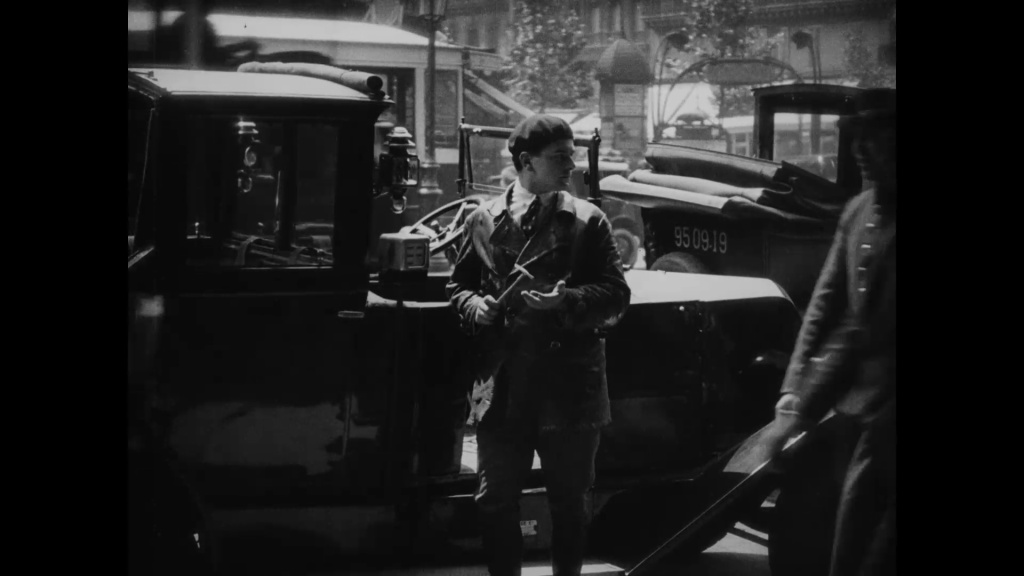
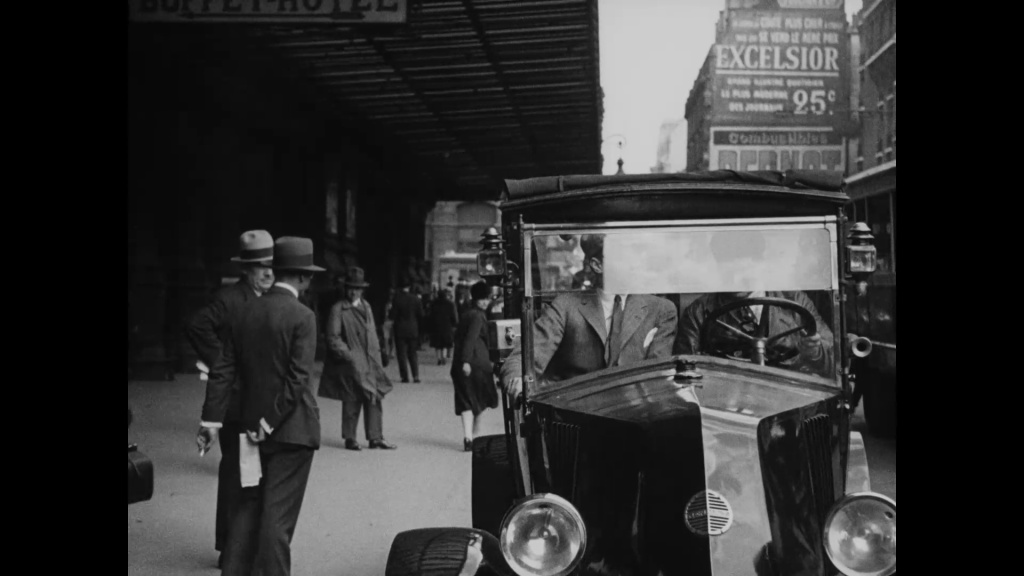
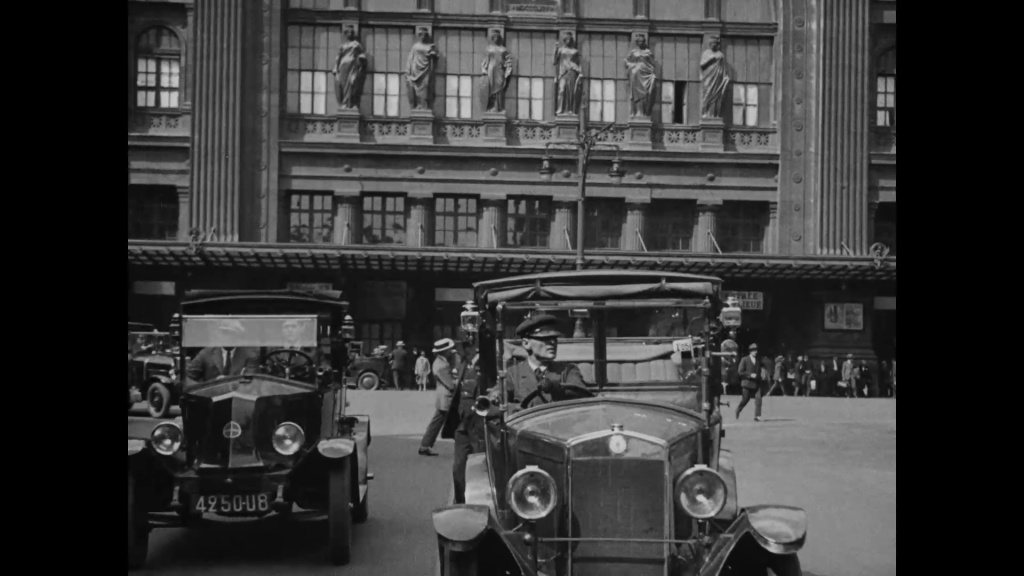
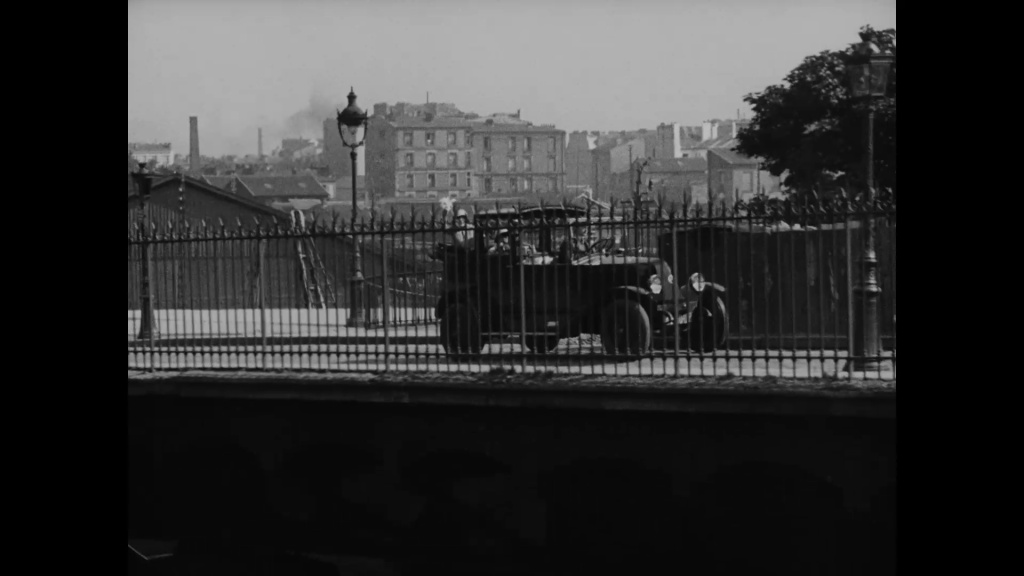
The first scene in this section is of Poitra (Hans Jaray) waiting for Andreas outside the train station. The strings spell out the main melody: a simple, sweet, slow sigh. The two men great each other and, as soon as Andreas steps into the taxi, the organ takes up the main theme from the strings. When the car drives away from the station, the drums mark out the underlying beat—as though catching on to the tempo of the traffic. The camera tracks back before the car, and slowly the sense of location becomes the subject of the sequence. For here is the Gare du Nord, filling the width and height of the screen, and traffic filling the foreground. People crisscross the street. The taxi must switch lanes, weave back into view. I find it hard to say what it is about this scene that I find so moving, but I know that the music brings something out of it that is both touching and melancholy. The slow, sweet, sad melody is light music as its most winsomely romantic. I have no idea what piece it is, or who wrote it: but it bears the hallmarks of a popular tune, since it is instantly graspable, hummable, whistleable. It’s a curiously moving experience, too, to find this anonymous melody popping back into one’s head many weeks later (as it did and does into mine), and to be able to rediscover its melodic contours so easily.

The way Thewes’s arrangement handles the tune is also key to its effectiveness. I’m not normally a fan of organ scores for silent films, but I love the use of any keyboard instruments as part of an orchestral texture. For this scene, the texture of the melody is carried by the Hammond organ and—just for the last repetition of the tune—supported by a sweep of undivided strings. Its simplicity as a tune is made doubly effective by the simplicity of its rendering here: all the instruments unite for the final bars, producing a splendid sheen of sound. The presence of the Hammond organ in the midst of this piece gives the music (to my ears) a pleasingly vintage aura, summoning up a past with its warm tones. When I was a child, our neighbour (born, I think, around 1918) had a small Hammond organ at the entrance to his living room. On this, he would accompany himself singing sentimental songs from his youth of the 1930s and 40s. The Hammond organ in Thewes’ score for the melody in this Gare du Nord scene sets me in mind of this kind of popular mode: it is easy on the ear, memorable, sweet, warm. The organ was a widespread instrument in cinemas of the 1920s, and continued to be one of the few surviving aspects of live music in theatres after the arrival of sound. The instrument is thus associated with several generations of cinema sound, and its use here for this piece of (once) popular music is perfectly judged. It’s sentimental in the right way, and makes the texture of the melody more interesting than if scored simply for the sweeping strings. Purely and simply, it’s lovely. And it functions also to underline one of the pleasures of the film: seeing Paris. The sense of nostalgia in the melody also works in relation to the streets we see on screen: we are driving slowly through the past, observing the motions of the people on the street, the slow passage of the cars and trucks. The melody moves as slowly as the taxis, as the camera itself, as it tracks back through the street. It’s perfect.

For the brief scene of Jeanne at her typewriter, dreamily typing Andreas’s name before XXXX-ing it out, we hear a repeat of the melody used earlier in the film that accompanied the lovers’ last embrace in Russia. It’s like the melody is her counterpart to the dreaminess of the tune that greets Andreas at the station. And, like the previous melody, Thewes orchestrates this piece so that it’s a delightfully simplified sweep of sound—the organ this time rounding out the last iteration of the theme (as if repaying the compliment from the previous scene, where the orchestra took over from it at the end).

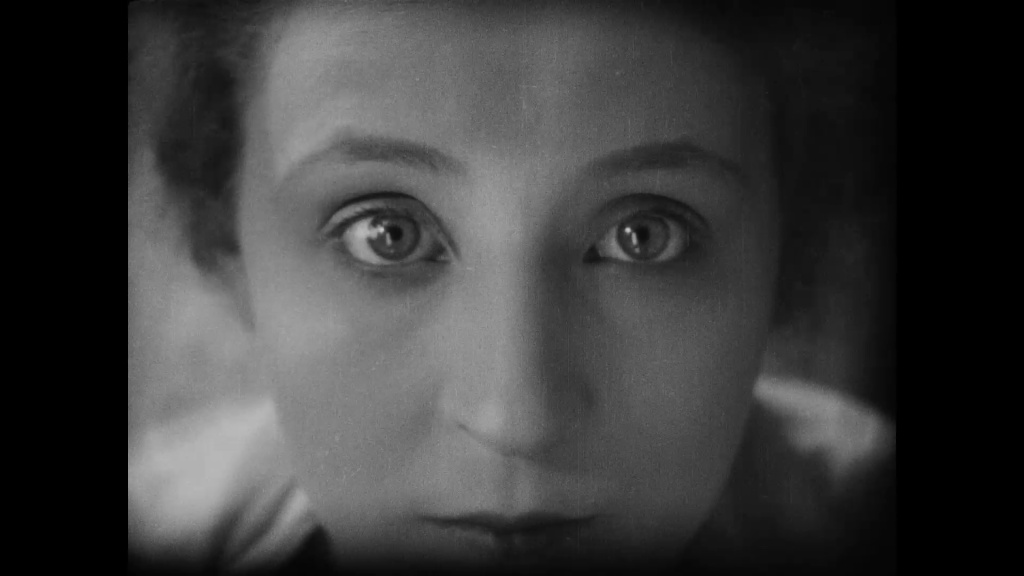
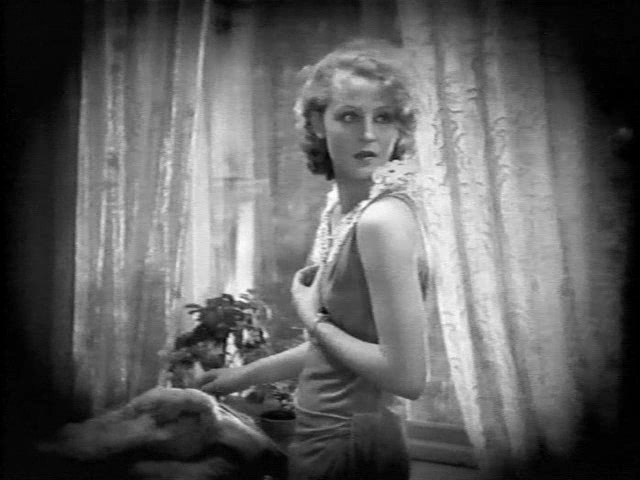
Next, we cut to Khalibiev and Raymond Ney. Khalibiev is holding a bouquet of flowers, and now Gabrielle (Brigitte Helm) appears. In the score, a delicious combination of piano, harp, and strings sound out a skipping, nervous, innocent melody as she approaches. It’s perfect for Gabrielle, whose naïve trustfulness of Khalibiev almost unnerves the latter. Pabst provides us with an amazing close-up of Gabrielle, staring wide-eyed into the camera. We share Khalibiev’s perspective, gazing at this beautiful face with its gleaming eyes. (Hear how the strings end their phrase with a lovely diminuendo, climbing higher before fading away.) “I’m so happy!” says Gabrielle to Jeanne, and the music has been telling us this already. But beware Khalibiev! The presence of the piano in the orchestration here reminds us of Khalibiev’s own theme, and the way this instrument tends to rumble out from the brass and take it over. And Jeanne’s worried glance at Khalibiev coincides with another melting-away of the main theme in the strings: even when the melodic line is cheerful, the placement of each phrase can carry such subtle shifts in emphasis.

Outside, Poitra is waiting with the car. (Observe here how a cat walks into frame and sits, with perfect timing and placement in the corner of the frame, just before the handheld camera pans left to see the two women emerge from Ney’s building. It’s one of those lovely unplanned moments that comes from filming on location.) The main theme—a four note phrase, with an emphasis, like an excited skip, on the second note—is taken up by the strings. Pabst cuts to a long shot of the whole street. You can see the long flight of steps behind the alley, and the sun throws swathes of light and dark between the buildings. It’s a lovely image, with depth of focus and composition: here again Paris becomes the subject of the scene.

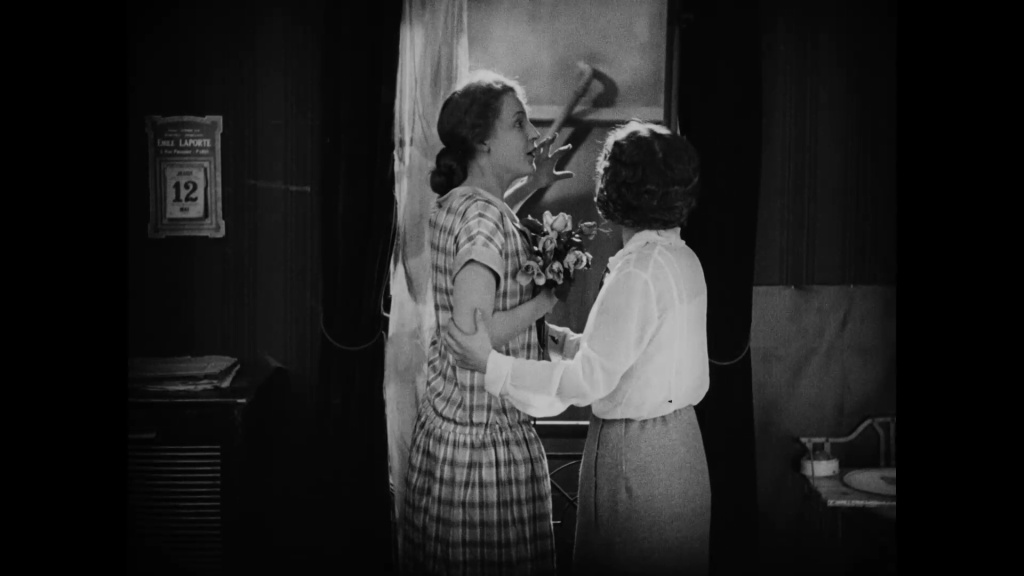
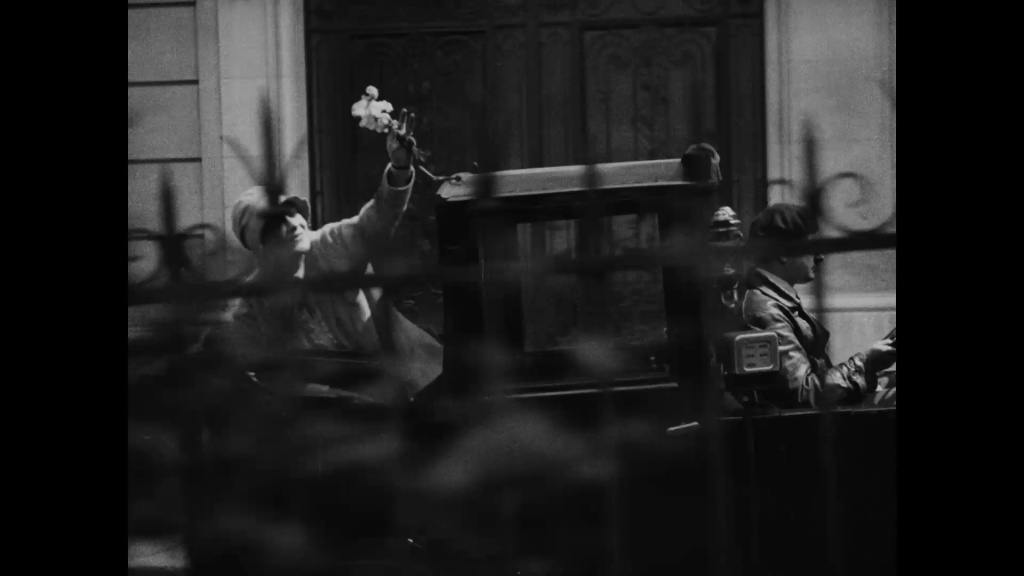
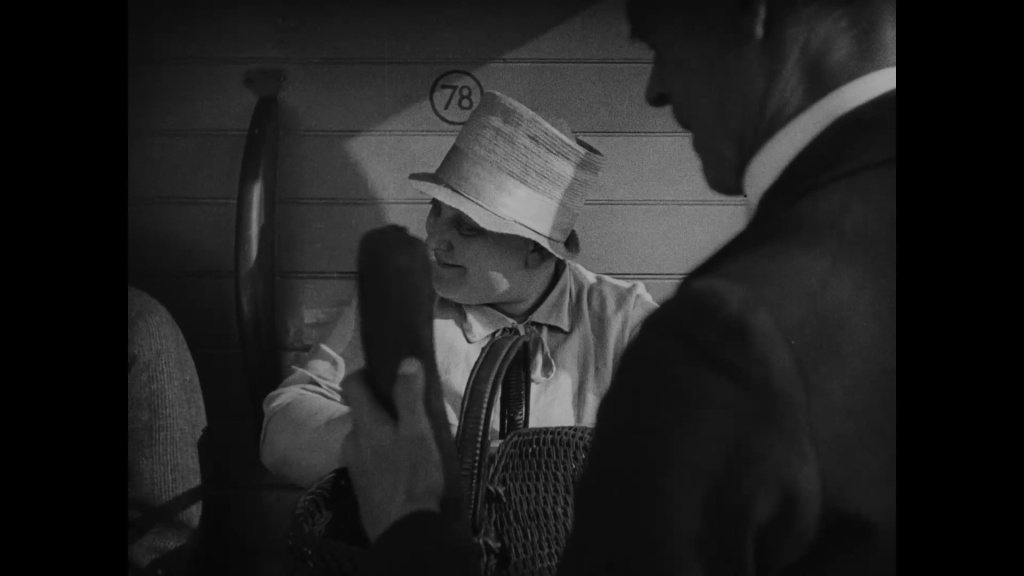
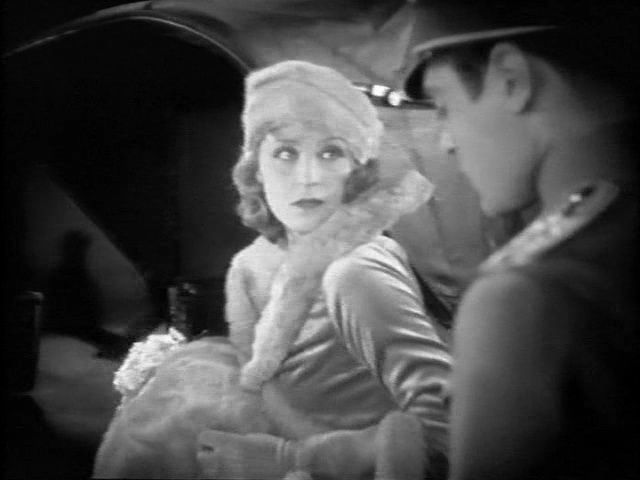
The women get into the back of the cab, which has its roof down to let in the sun. Poitra has with him a little posy of flowers, which he looks at, then throws over his shoulder to Jeanne in the back. The music is so perfectly timed here, swelling in volume in time with Poitra’s gesture. (Again, the melodic content is a simple repetition of material, but the tempo allows the beginning and ending of phrases to make an impact.) The cab sets off and the saxophone takes up the main melody. To me, the saxophone feels delightfully in keeping with both the easy melody and the sense of time and place on screen (and, thus, the emotions of the characters who inhabit it). Pabst’s camera sits facing the two women, each holding their flowers, Gabrielle clutching at Jeanne with her free hand. In the background, the shaded walls and sunlit road flash by. “Are we flying?” asks the enraptured Gabrielle. “Yes, we’re flying—into bliss!”

Listen to the joyful way the music transitions here: brass and drums take over the impetus of the melody, then beat out a faster rhythm. It’s as if the orchestra has warmed up, has broken into a run or a dance. For a few seconds, it’s just the brass and drums, rumbling around in a repeated refrain. It’s like the bumpy road that shakes them around in the cab. It’s the quickened heartbeat of the separated lovers. It’s the excitement of an anticipated meeting. And it’s the premonition of the bustle of the underground club that now appears on screen: for we see Khalibiev descend into the bar where he meets Margot (Hertha von Walther).

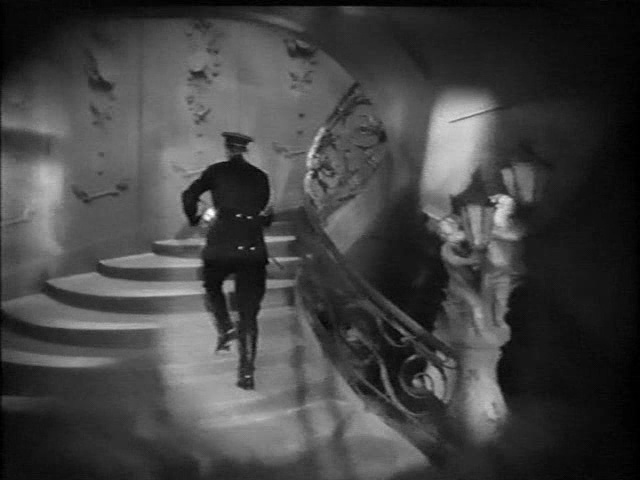
Pabst creates a marvellous sense of space here: behind the bar is a huge mirror, reflecting the spiral staircase from above, down which Khalibiev speeds. The orchestra switches to a swinging, brassy, almost tipsy melody. It’s the change in tempo and rhythm, as much as the textural one, that makes the contrast between this scene and that last so effective. The transition between one “cue” and the next itself becomes a chance to switch the orchestration, to emphasize a different texture and mood. Without the score in front of me (and not recognizing the music being used), it’s difficult to know precisely how the original score changes here. Listening to it multiple times, I almost feel that the music for Khalibiev is a kind of parodic distortion of the melody used for Jeanne in the cab. Certainly, it feels as though the first melody—sweet and sentimental—slowly morphs into its boisterous, unbuttoned sequel. The way Thewes orchestrates this shift makes it a perfect match for the images.

In the bar (to a foursquare, oom-pah-oom-pah, beat in the brass), Khalibiev flirts with Margot, orders two liqueurs, and downs his in one. Khalibiev stares at Margot. Pabst gives us a huge close-up of her face, her dark brows and eyes a kind of counterpart to the pale, luminous face and eyes of Gabrielle in the earlier scene. Having been bewildered by Gabrielle, able only to ghost a kiss on her forehead, Khalibiev now grabs Margot and plants a kiss on her brow—then marches back up the stairs, just as the rumbunctious brass rounds off its melody with a flourish.

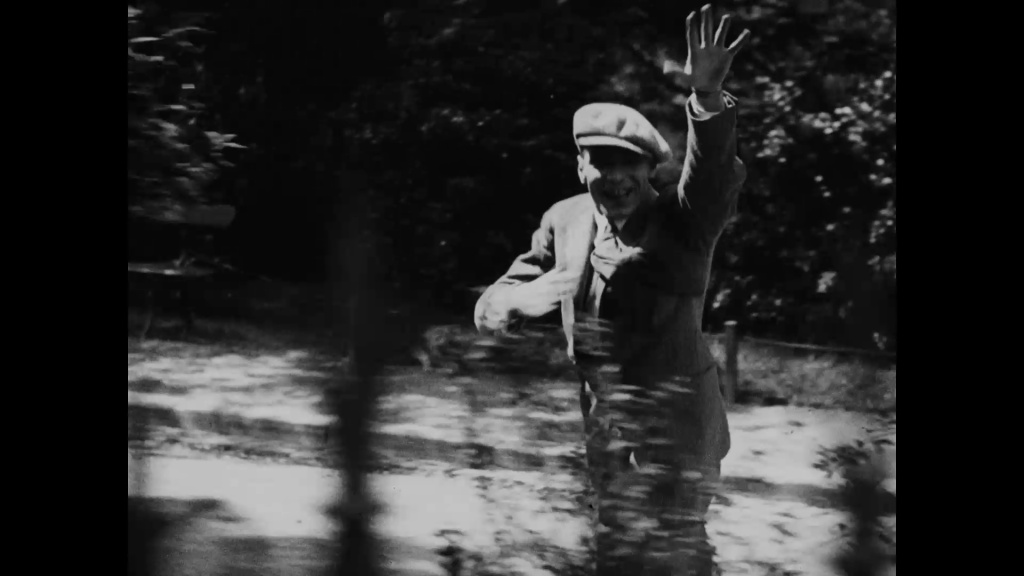
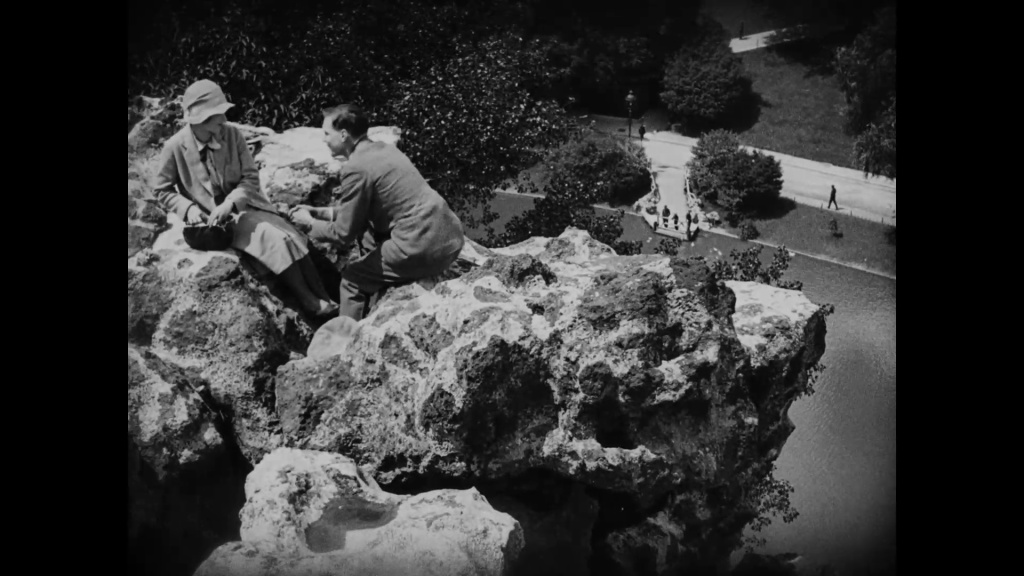
Andreas is waiting on a bridge by an entrance to the park. (The place we see them visit is the Parc des Buttes-Chaumont.) He turns round, waiting anxiously for Jeanne. The organ, too, sounds out an anxious, excited tremolo. (It’s a kind of acoustic equivalent of an impatient tapping of the foot.) As Pabst cuts to a long shot of the road curving round towards Andreas’ position, the organ begins the melody that defines this next sequence: a quick, delightful, tripping tune that expresses the excitement of the lovers’ reunion. It is swiftly joined by the drums (at first very softly, then with a rattling of a tambourine), these added textures bringing out the sense of giddy fun in the music. For Andreas is leaping at the sight of Jeanne’s car, waving his arms and running towards her—and Pabst begins cutting between parallel tracking shots that follow the lovers. The strings join in, filling in the harmony, strengthening the melody. The organ skips along with the rhythm, while the drums spell out an excited beat underneath—brass occasionally rounding-out the theme. I love, simply love, the mix of texture of timbre that this combination produces: the fizz of the drum set, the deep warble and light chirping of the organ, the sweet richness of the strings. It’s almost silly it’s so delightful. And the scene itself is likewise sillily winsome as the characters rush madly toward one another.

But for their actual meeting, everything slows down, stops. The melody of their courtship—Tchaikovsky’s “June”—floats in on woodwind, supported by wistful strings. And despite their energy, the lovers don’t end their respective journeys with a climactic embrace. Instead, Andreas doffs his cap, and they walk side by side, slowly, into the gardens. It’s strangely innocent, as though neither is quite ready to express their desires. The music waylays our expectations, reminds us of the lovers’ troubled past and uncertain future.

After cutting back to the car, to glimpse Poitra alone with Gabrielle, Pabst’s camera finds the lovers atop an artificial grotto in the park. It’s glorious to see across the rooftops of Paris: you can even match the same image to that of today’s skyline (which, thanks to the city’s ban on tall buildings in its centre, remains much the same as it was in 1927). The image of Jeanne and Andreas makes literal the sense of their elated state in each other’s company. They are (quite literally) on high. But it also carries an implied danger of their fall, of their togetherness being precarious. The music here repeats the same material heard in earlier scenes with the lovers (their last embrace in Russia; Jeanne’s daydream at her typewriter). Again, it is dominated by the tone of the saxophone, which floats over the strings. The orchestration is easy on the ear, but the use of the saxophone gives it a feeling not just of light music but of period light music. It’s a nod to the film’s setting and belonging to the 1920s.

Finally, I must finish with a comment on the last scenes in the film, set on a train as Jeanne wrests the incriminating evidence from Khalibiev. By way of prelude, I should note that the eponymous novel (by Ilya Ehrenburg) on which the film is based has the characters zipping about all over Europe on trains. Even if the film eliminates some of this journeying back and forth, there is more than one scene on a train and Thewes’s orchestration contains distinctive elements for these scenes. He includes percussive instruments, but ones that evoke something more than the simple sounds of coaches rumbling over tracks. Before Andreas is arrested, he is alone in a train carriage. He has just spent the night and morning with Jeanne and their new life beckons. In eighteen seconds of screen time, the score makes us sense everything around and within him. The melody is bright and peppy (it’s another piece I don’t recognize), made brighter and peppier by the addition of drums, bell, and triangle to the orchestra. The quick rhythm of the drums and triangle suggests not just the motion of the train but a kind of inner rhythm of the character: you can sense his joy as he sits, almost fidgety with energy, on the seat and smiles. And the fact that the view through the train window is of dappled trees, the light spilling across Andreas’s beaming face, likewise gives a visual sense of brightness and joy; the same sense of brightness and joy given to the music by the rhythm of drums and the sparks of the triangle.

The regular sounding of the bell harks back to the lovers’ morning, spent walking through Paris and at one point entering a church where they—all too briefly—link hands before the altar. It’s not a wedding, but the promise of a union together. Thewes included the bell in the musical climax for this earlier scene, and now it appears in this scene on the train as a reminder: it’s as if Andreas is summoning the sound of bells in his head, and we can hear it.

All this feeds into the final scene of Jeanne and Khalibiev on the train. Just as Jeanne tries to convince Khalibiev to help her, the two locals in their compartment proffer them sausages and bread. It’s a delightfully farcical way to increase the tension. And the score enters into the farcical spirit. The melody used at this point is a chirrupy, almost childish little theme. Thewes lets the woodwind carry this theme, with the rhythm backed up by the drums. The addition of the bell as a regular chime in this scene, as well as making the simple melody more musically interesting, has an ironic function in that it reminds us of the bell’s presence in earlier scenes: the wedding-like vision in the Paris church, Andreas’s private joy in the train carriage. There’s also a sense of a chiming clock, as if to remind us (musically) of impending deadlines: Jeanne must get the information from Khalibiev before it’s too late. Thus, this amusingly rustic tune functions to underline both the comedy of the scene and the dramatic tension underlying it. Like the scene itself, the music is a kind of elaboration of a simple theme, its function to produce tension by slowing things down at the moment when we want things to hurry up. It’s like the two locals come are humming their own tune, heedless of the drama they suspend by their presence.

After the climax, in which Jeanne wrestles with Khalibiev and finds the missing jewel, there is an extended hiatus before we reach the “end”. The film fades to black, but the black screen continues for another forty seconds until the title “ENDE” appears. Why? (This is not, as far as I am aware, a restorative choice, but the original ending as chosen in 1927.) It’s as if the blank space here—temporal, aesthetic—is a kind of inner space for Jeanne to savour her joy. So we sit in the dark, her blissful smile the last image in our mind’s eye, and the orchestra keeps playing; that it does so shows respect, sympathy even, for the black screen. This hiatus is also a chance for the music to wind down, to relax after the tension of the last scene. The music here derives from the same piece used for the earlier scene at the church, so it’s as if the score is reliving the past—and envisioning the future of the lovers. It makes the ending more complex, somehow, more resonant. And, from my point of view, it nicely refocuses our attention back on the score itself. It deserves to have the last say.

Die Liebe der Jeanne Ney is a film I had seen many years ago but never appreciated. Perhaps one reason is the quality of its earlier incarnation on DVD. That version, released in 2001 by Kino, featured a score by Timothy Brock. Revisiting this now, I am reminded how oddly subdued it feels compared to the film—and most especially to the 2016 score. It’s not just the tone of the music but the quality of the performance and recording. Produced for an earlier release (presumably VHS or even laserdisc) in 1992, the Brock score is performed by the Olympia Chamber Orchestra. This group also recorded other Brock scores for Murnau’s Faust (1926) and Sunrise (1927) in the early 1990s. I love Brock’s score for Faust, but the recording for the soundtrack doesn’t do it justice. The Olympia Chamber Orchestra is an irregular ensemble rather than a professional orchestra. Their performance is perfectly adequate, but I can imagine a far sharper, more convincing rendering. (Frankly, the playing—especially the strings—is sometimes a bit ragged. Too often the ensemble sounds out of sync, if not actually out of tune, and the dull recording hardly helps.)

The production values for the new restoration of Die Liebe der Jeanne Ney belong to a different league altogether. Recorded in February 2017 at the Westdeutscher Rundfunk, with Frank Strobel conducting the WDR Funkhausorchester Köln, the soundtrack for the Blu-ray is superb. Both the orchestral performance and the sound recording are exemplary. (I should namecheck the sound engineers listed in the credits: Rolf Lingenberg and Walter Platte.) This is the kind of result you can get when proper resources are fed into a film restoration.

My deepest thanks go to Bernd Thewes for answering my questions on his work on this score. This piece can only be a small expression of how much joy his music has brought me.

Paul Cuff
Shiraz: A Romance of India (1928; Ger./In./UK; Franz Osten)

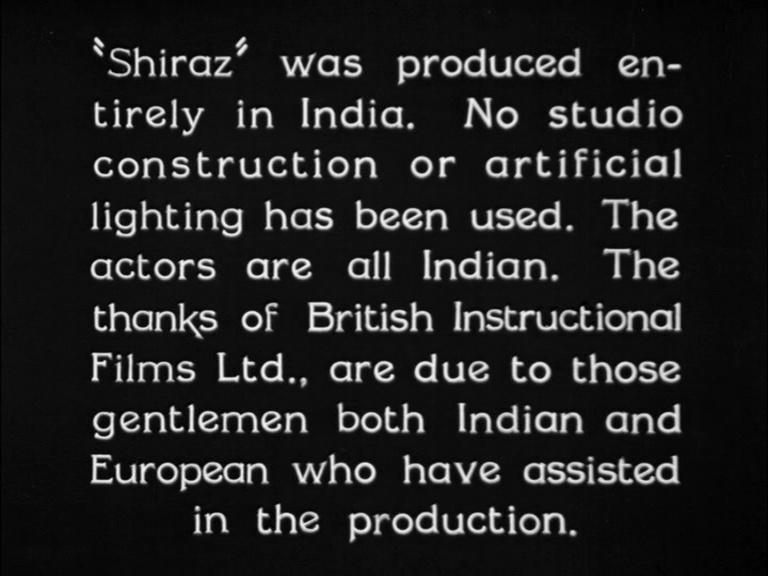
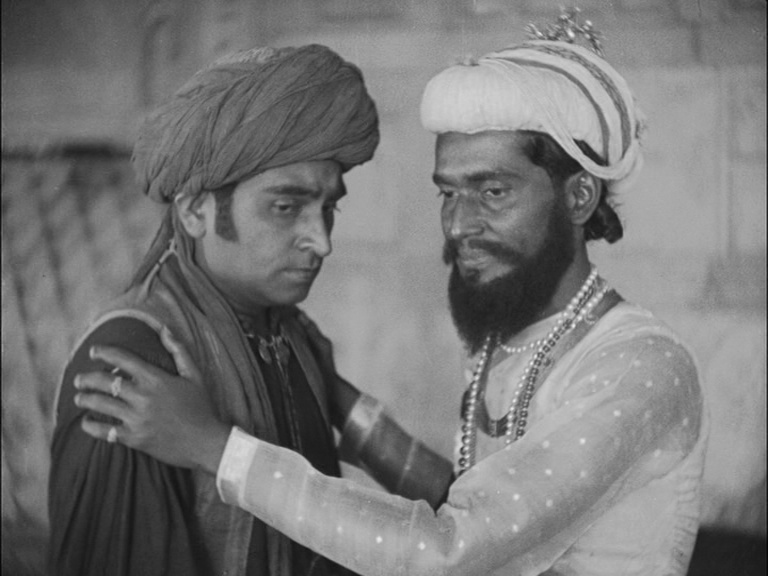
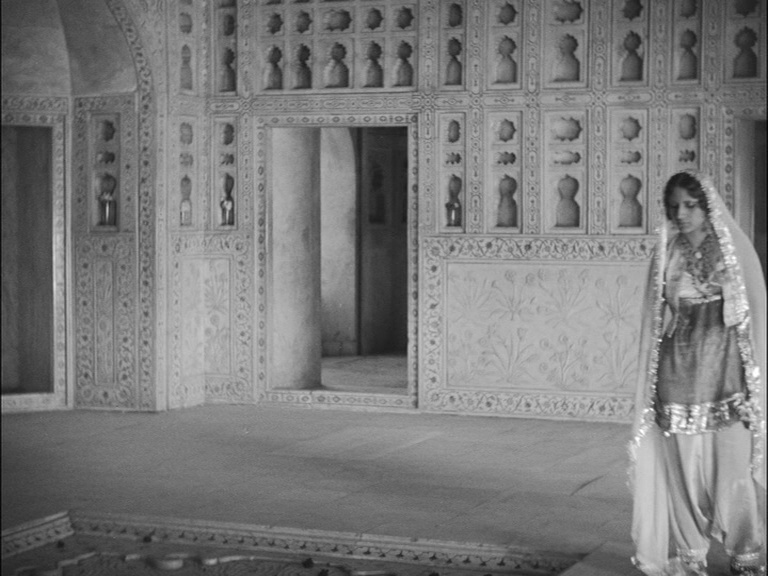
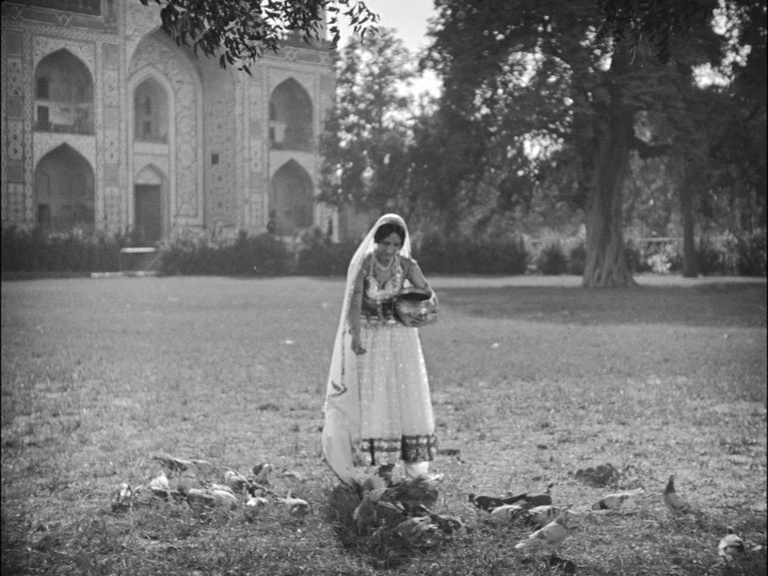
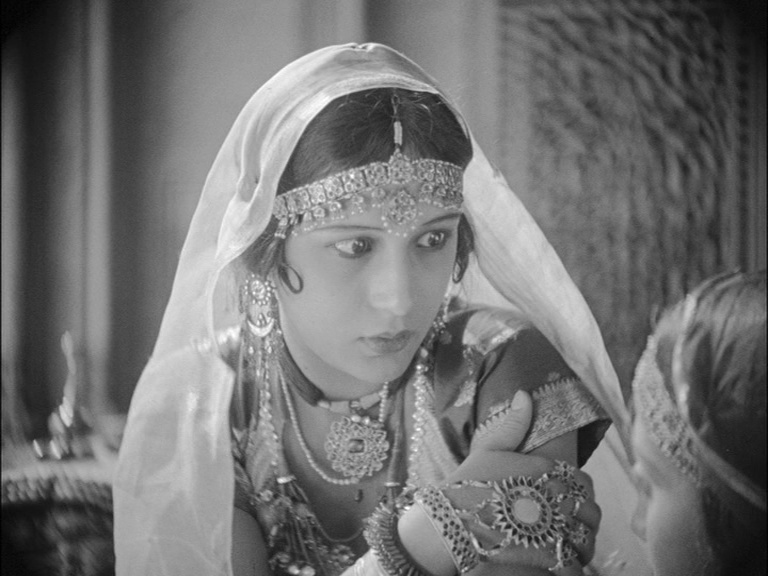
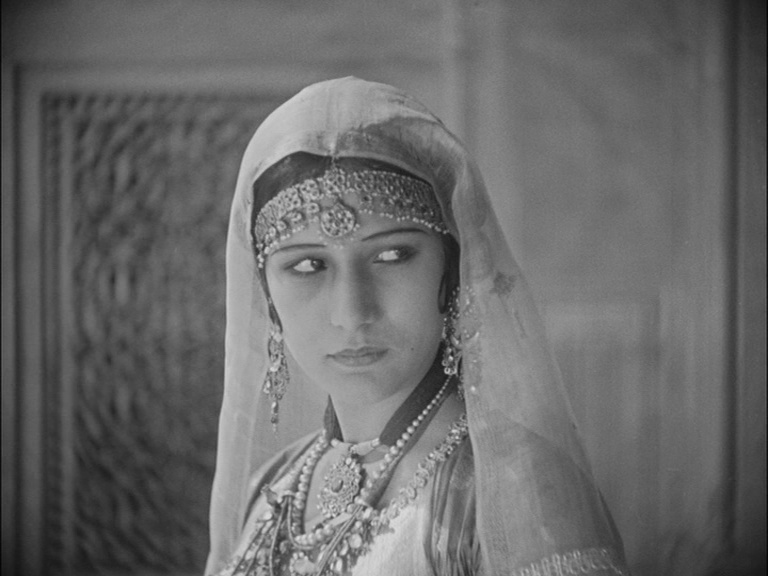
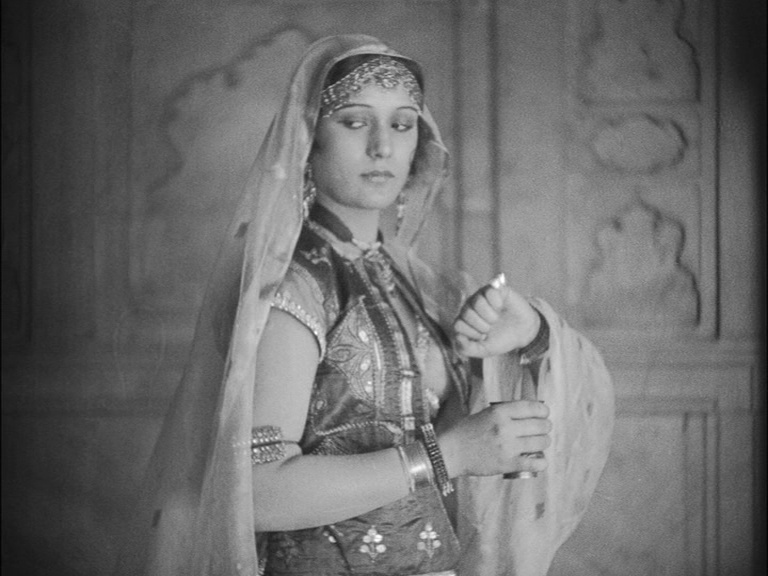
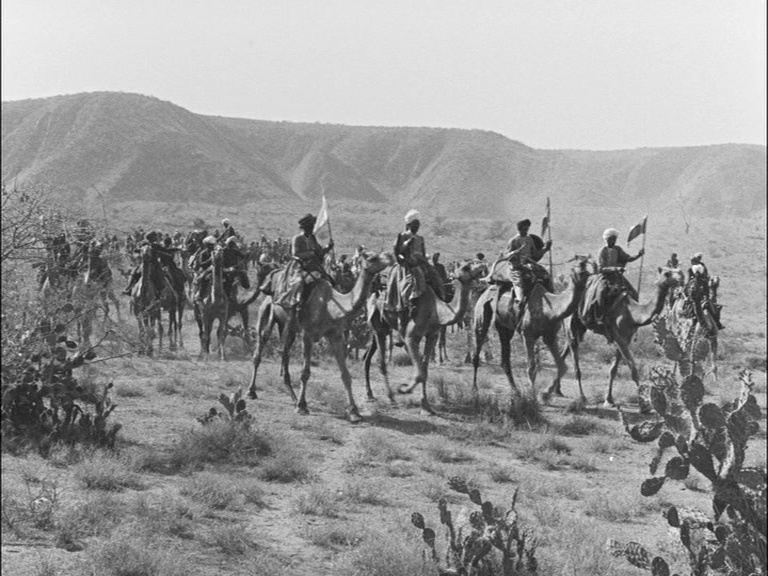
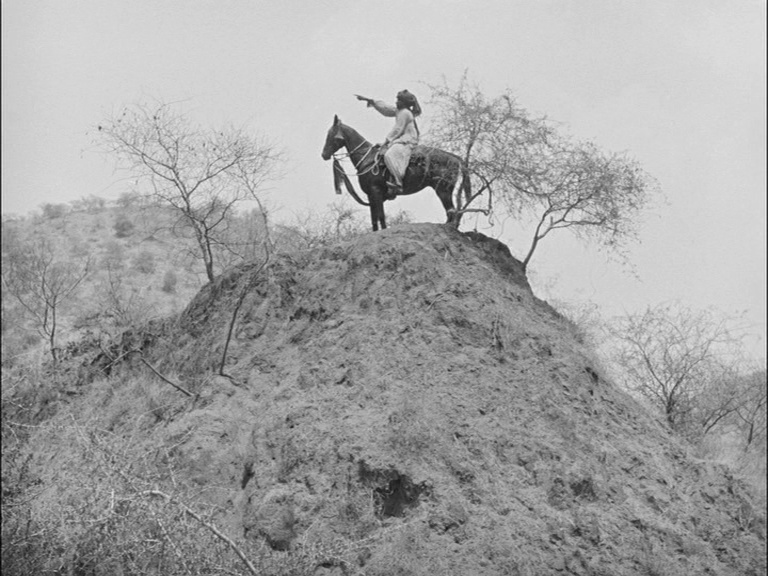
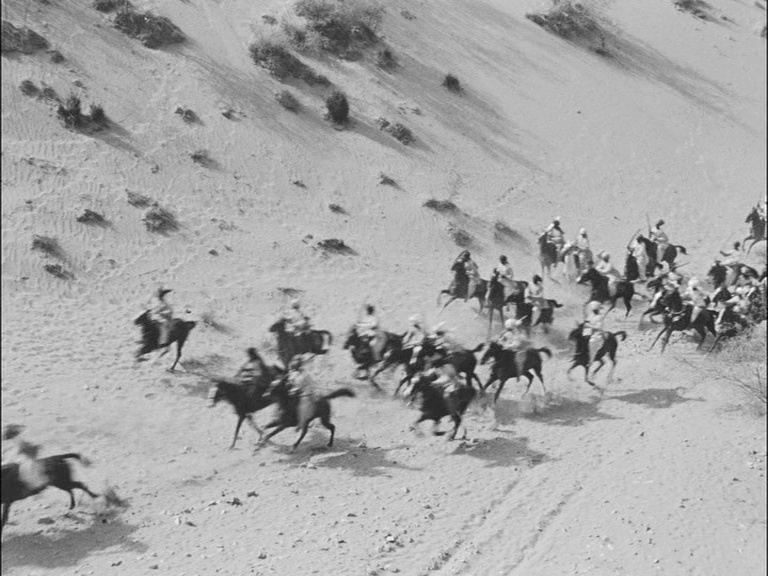
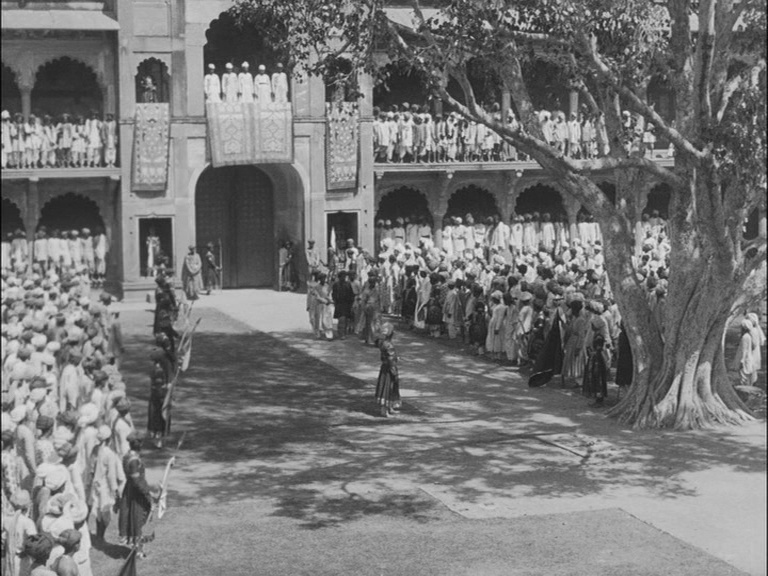
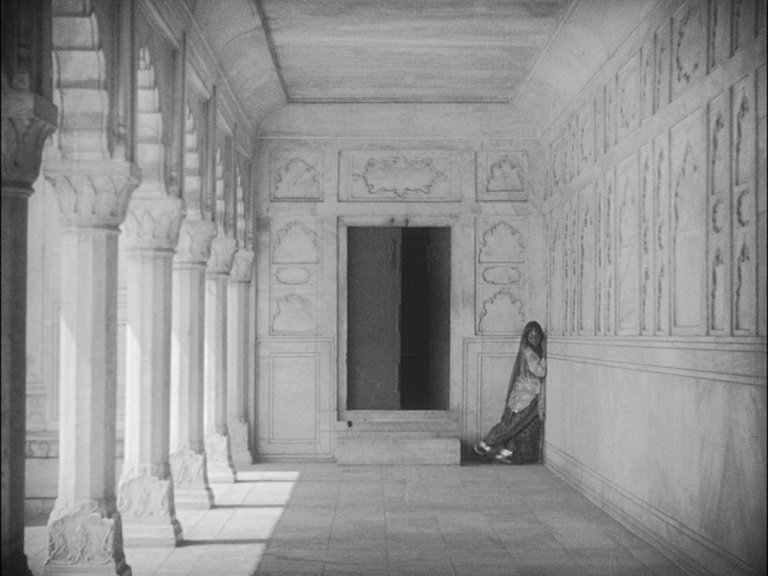
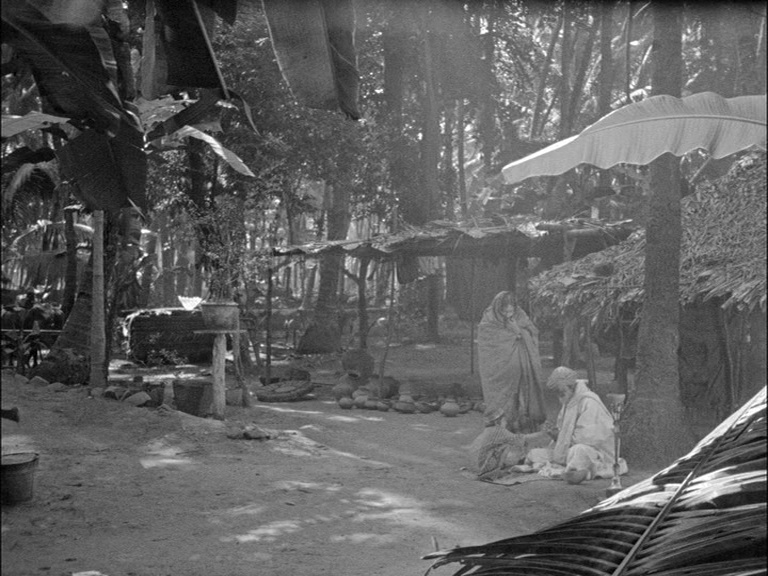
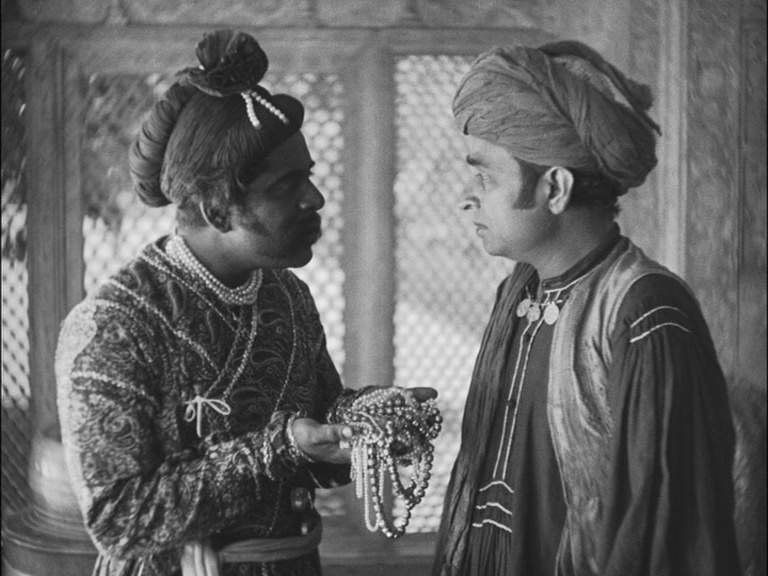
In 1924, a London-based lawyer called Himanshu Rai travelled to Munich. He had founded the Great Eastern Film Corporation and was hoping to join forces with European partners to make films inspired by tales from world religions. Rai met two brothers: Franz and Peter Osten, who together ran the firm Müncher Lichtspielkunst AG (Emelka). Rai and his Indian collaborators—scriptwriter Niranjan Pal and designer Devika Chaudhry—joined forces with the Ostens and their technicians and left for India. In 1925 they made Prem Sanya/The Light of Asia (1925), shot entirely in India using an entirely Indian cast. Its success in Europe encouraged Rai and Osten to team-up again, this time bringing in the support of the UK company British Instructional Films (BIF). BIF started life producing non-fiction films but by the mid-1920s they had begun making features: dramatic recreations of battles of the Great War. But the project they embarked on in 1927-28 was hoped to have a wider appeal. Described as “A Romance of India”, with a screenplay by William A. Burton based on a play by Pal, this film would again be shot in India with an all-Indian cast. Filming took place in and around Agra, with the Maharajah of Jaipur permitting the production to use the historic Mughal palaces as their setting. Set in the early seventeenth-century, the story offered ample opportunity to show-off the settings, costumes, and lore of historic India…

Shiraz: A Romance of India (1928; Ger./In./UK; Franz Osten)

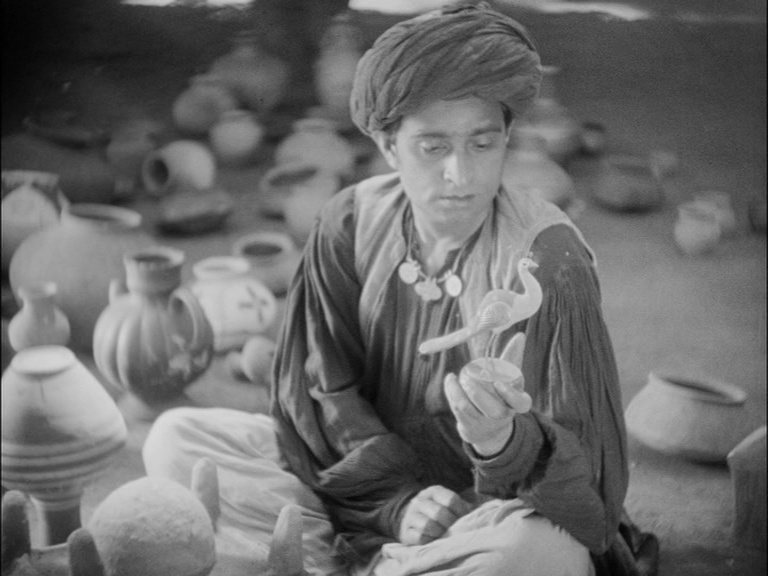
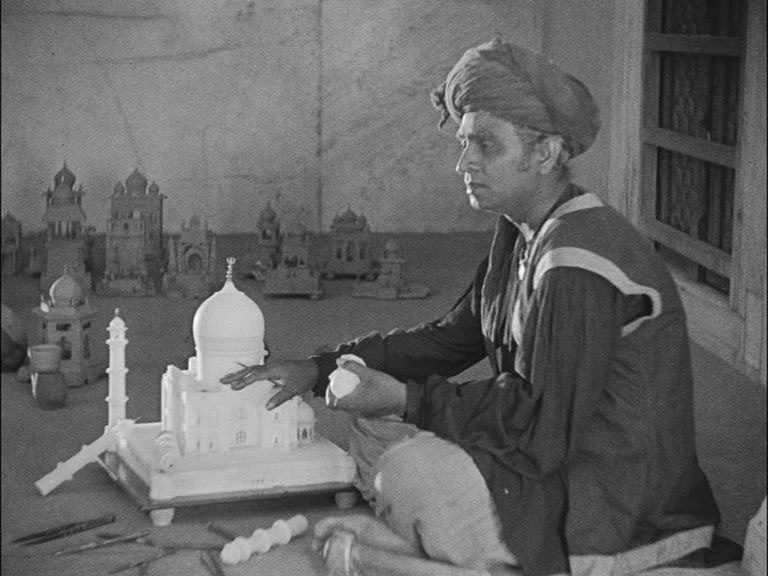
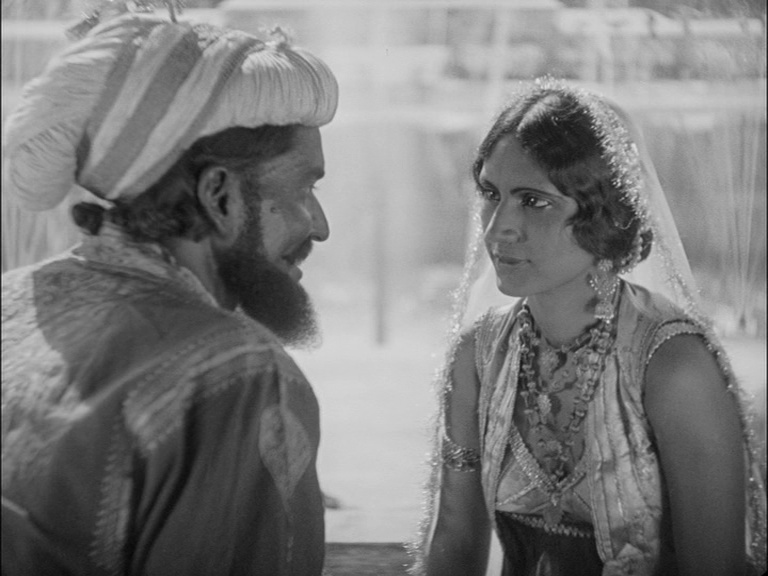
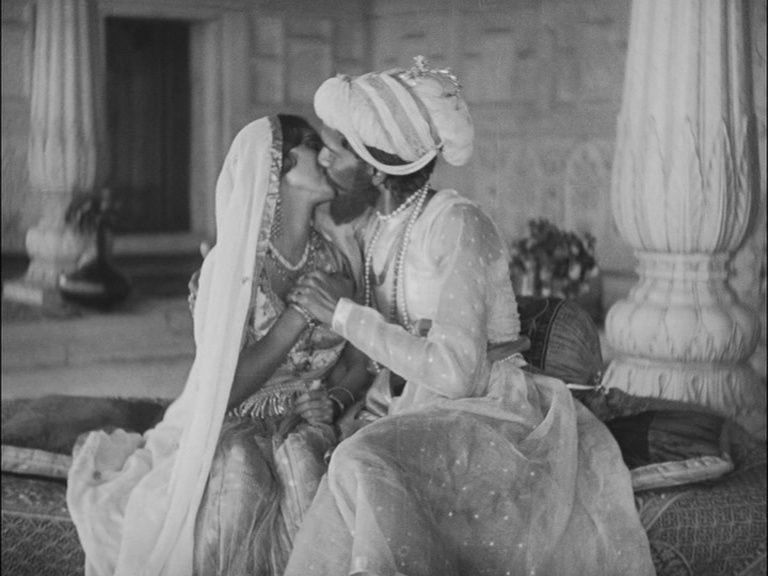
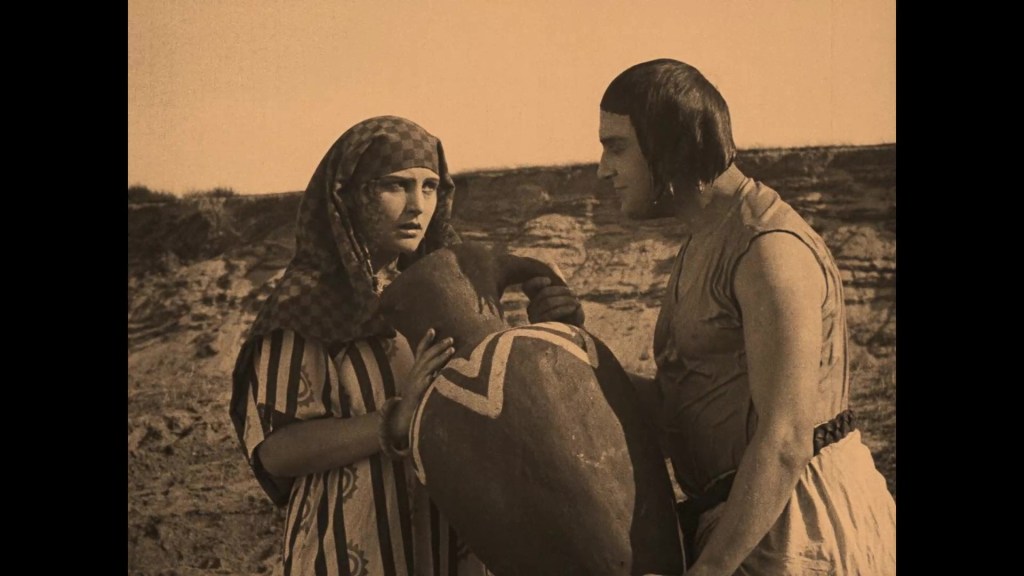
I will let you know the whole story, since it retells the inspiration behind one of India’s most famous landmarks: the Taj Mahal. In Pal’s partially fictionalized version, the child princess Selima is found amid the wreckage of an ambush. Taken home by a potter, she is adopted and raised by his family. The adult Selima (Enakshi Rama Rau) becomes the object of infatuation of the potter’s son Shiraz (Himansu Rai). But she is spotted and kidnapped by a gang of slavers and eventually bought by an agent of Prince Khurram (Charu Roy). Shiraz finds his way to the city where Selima is now part of the Prince’s household, but is unable to intervene as she and the Prince fall in love. This in turn frustrates Dalia (Seeta Devi), a general’s daughter who had hoped to marry the Prince. With the help of her maidservant (Maya Devi), she forges a pass to let Shiraz into the palace—where he is caught with Selima. The Prince orders his execution “under the elephant’s foot” (yes, literally) but when he learns the truth of Dalia’s scheme—culminating in the poisoning of her maid to leave no trail of evidence—he lets Shiraz go. Selima’s true identity is discovered and—since she has royal blood—the Prince is now free to marry her. Eighteen years pass, and Shiraz—now blind—helplessly pines for Selima. When the latter dies and the Prince commissions a design for a monument in her memory, Shriaz’s model is chosen. The two men build the Taj Mahal. THE END.

Well, so much for the story. Being more a kind of extended fable, the characterization is not the most complex imaginable. So, what of the performers?

Let me start by saying that the least appealing aspect of this film is Himansu Rai’s performance. It’s as ineffectual as his character is weak and mopey. There’s no depth or intensity visible in his performance. He doesn’t move expressively, either with his body or with his face. He occasionally holds out his hands or stands still or drops his head a little. And it’s not as if he is restrained in the sense of naturalistic performance. He’s just giving us the basic markers of emotion: but not emotion itself.

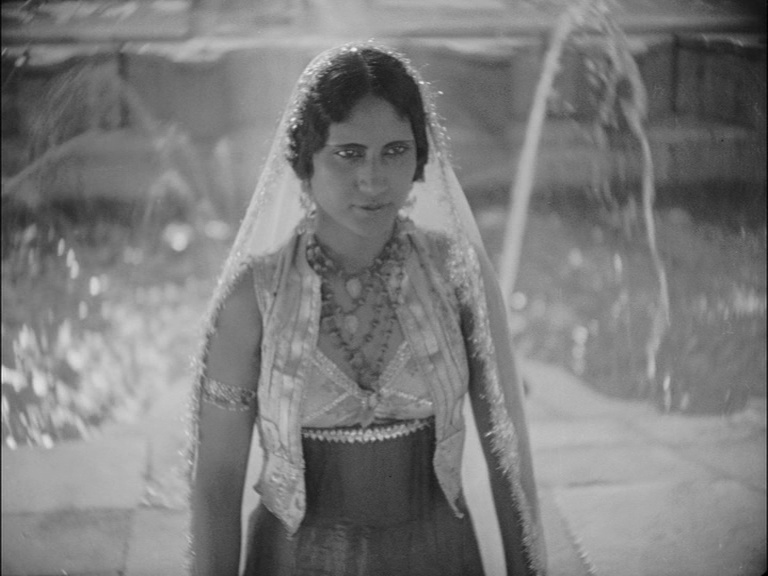
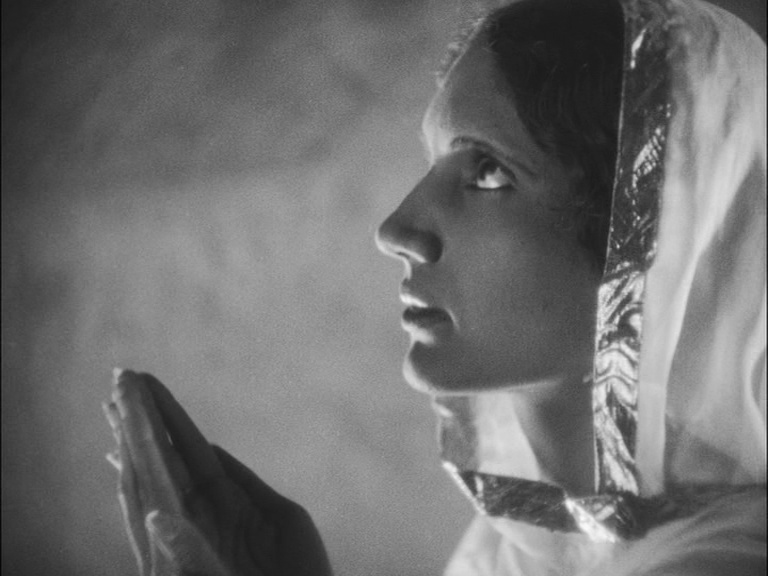
Nor did I particularly like Enakshi Rama Rau as Selima. I wonder if this is in part because of the story and the limitations of how the screenplay deals with the cultural politics (I’ll come to this later). As the film never really challenges any of the authorities or institutions, what can Selima do but be demure and wait for external intervention to aid her? But even within this context, Rau’s performance doesn’t offer great range or expressivity. I think Osten’s direction must surely contribute to this. We get glimpses of Rau’s gorgeous eyes, but she spends so much of the film looking down, looking away, covering herself with a veil, that we never get to linger on her face and see her emotions.

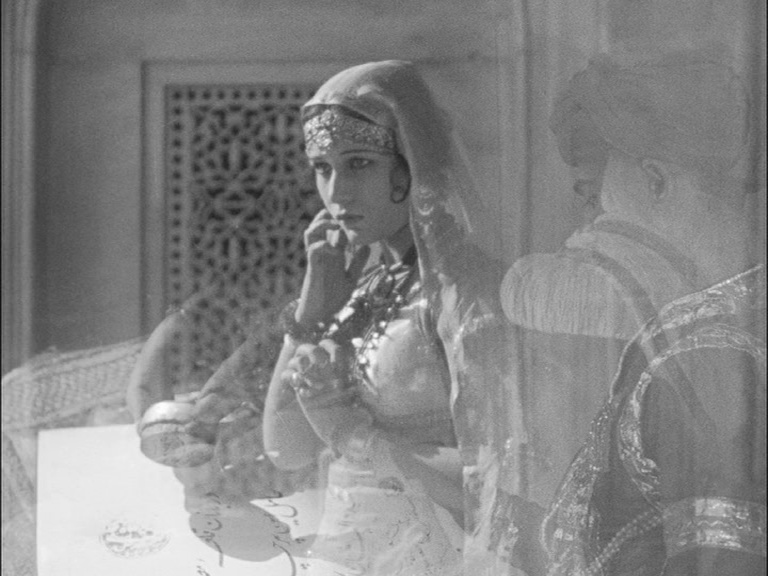
This is not the case with Seeta Devi, whose performance as the scheming Dalia is by far the most engaging in the film. You can read the thoughts pass across her face, the emotions light up her eyes. The camera knows what to do with her, too: it gives us plenty of closer shots to show her expressions, her gestures of impatience, seduction, desire, anger. Devi is absolutely magnetic: not merely beautiful, but agile and demonstrative—she’s truly communicative on screen. It’s noteworthy that the film’s titular hero is not used as the face for the BFI’s poster, nor still the film’s leading lady. Instead, it is Seeta Devi who takes centre stage, and anyone looking at the re-release posters or the Blu-ray box would think that she plays the character called Shiraz. Devi was Anglo-Indian, born Renee Smith, and I noted when watching the film that she’s one of the few people on screen who I could lipread speaking English. Doing a little digging online (weirdly enough, on her French Wikipedia page), I find that Devi spoke neither Hindi nor Bengali—and that this was one of the reasons her career in India petered out swiftly after the arrival of sound.

As Prince Khurram, I found myself increasingly drawn in by the performance of Charu Roy. He is understated but in a much more successful way than with Rai or Rau. Roy has a great natural warmth on screen, and he radiates a quiet authority and sense of calm. His is not the most complex of characters (none of them are, to be fair) but he gives a very clear sense of personality, of status, of purpose. I wish Himansu Rai had even a tenth of Charu Roy’s on-screen warmth. Even the minor characters—the Prince’s chief guard, Dalia’s servant—are more expressive, memorable, convincing, than him.

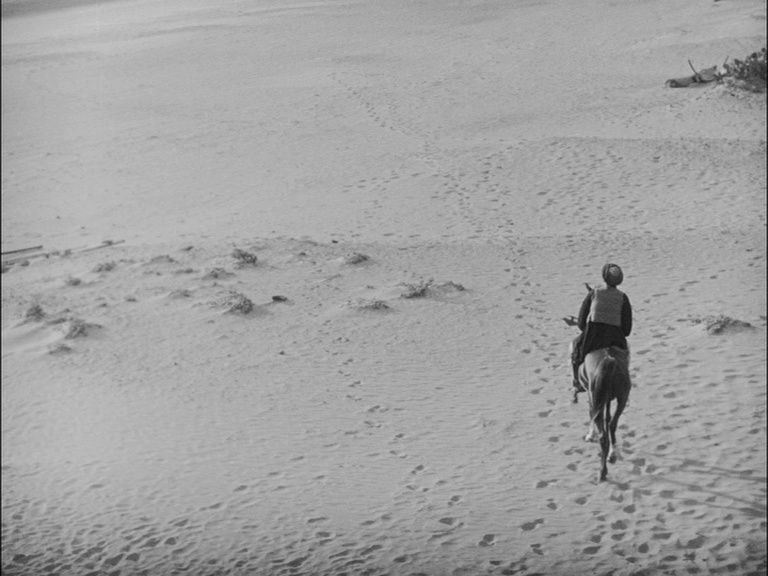
I haven’t said anything much about Franz Osten’s direction. For much of the film, I wasn’t really thinking about it. Everything was neat, concise. But everything was dominated by the settings. The first portion of the film is all exteriors: Shiraz’s small village, the arid landscapes around it. Osten lets the setting do the talking, so much so that I felt a sense of detachment from what was going on in in the drama.

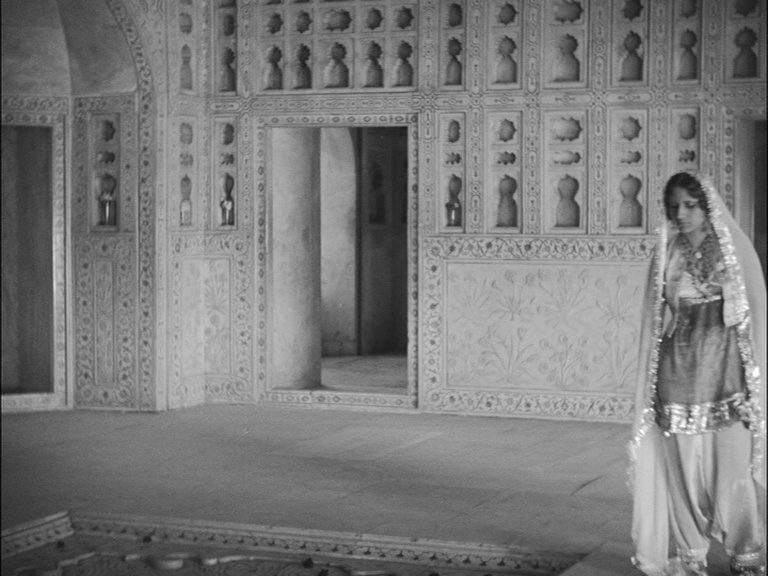
Even when we enter the city of Agra and the beautiful palace interiors and exteriors, the very formality of the surroundings dominated the tone of the drama. Everything is very neatly laid out, with plentiful use of shots that look through archways, down avenues, throughs doors and gates.

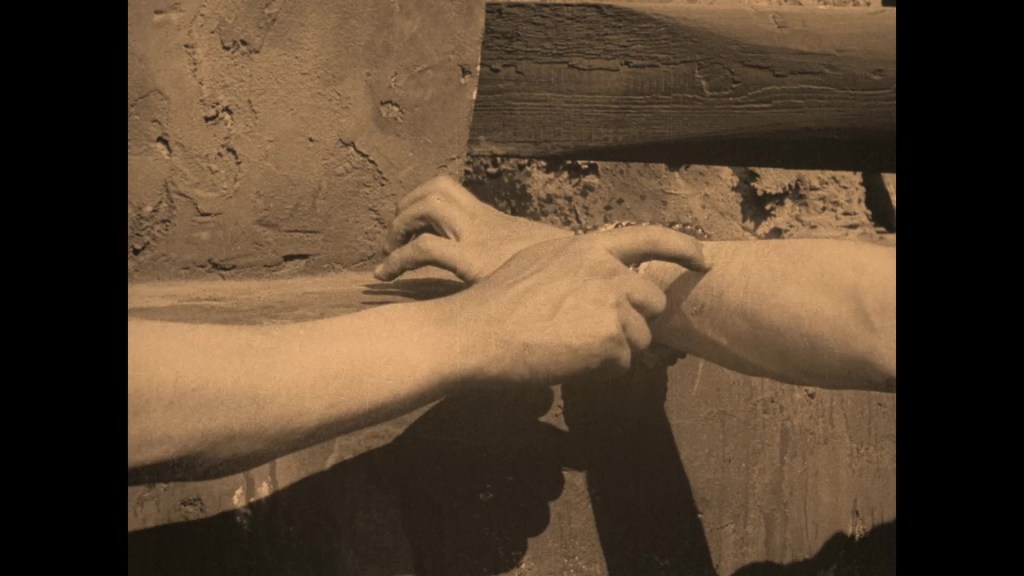
Only when the intrigue with Dalia got going did I start to be fully engaged. Here at last was a character with a bit more personality, more of a sense of a human being rather than a storybook figure (the poor potter, the abandoned princess, the noble prince). It is her actions that also seem to inspire Osten to be a bit more inventive. When Dalia forges the stamp on the pass for Shiraz, we see her in a mid-shot crouched by the chest with the official stamps. Osten cuts to what appears at first to be a blank screen. A second later, Dalia’s hand (we know it’s her hand because of the number of jewels it bears) appears slowly from left of frame, passing the document to another hand that appears from the right. Cut to a close-up of Shiraz, waiting at the wall to receive the letter. It is silence, I think, that makes the shot of the hands so startling. The transition is purely visual, and although it offers narrative continuity (the document being forged, the document being transported, the document being delivered), visually the out-of-focus background of a white wall is a stark disruption from the last shot of a dark interior space. Without any kind of background sound—even the gentle hiss of an unoccupied soundtrack—the cut to the white space is startling. Later in the film, Dalia’s thought process is shown through superimposition: we see the document again, the hands, the destination, the threat of discovery. All this is indicative of the more dramatic elements of the story: it is Dalia who tries to change events, to rely on her own wit rather than the will of Allah or the whims of the Prince. Thus Osten must make more of her, more of her agency. When she is removed from the film, the remainder of the story once more becomes a rather uninvolving series of pictures.

This brings me to my major reservation about the film. The film deliberately refuses to interrogate the world it shows us, the world whose cultural/political shape it relies on as the basis of its story. If the setting in seventeenth-century India is meant to avoid the awkwardness of contemporary, twentieth-century history (i.e. the British!), then it also creates other kinds of cultural awkwardness. In the first place, we are presumably meant to be as outraged as Shiraz that Selima has been enslaved, but the film never interrogates slavery—it cannot, since the Prince himself is the chief slaveowner of the state and buys Selima as one among many young female slaves. Indeed, Shiraz himself—at the slave market—shouts that Selima should not be sold because she has been kidnapped, not that slavery itself is an outrage. (He offers no opinion on any of the other poor wretches up for sale.) What’s more, when Selima refuses to give herself (i.e. her body) to the Prince, he replies that he has power enough to force her to take what he wants. The threat of rape is glossed over, as is the implication that that’s how the Prince has operated and continues to operate. The film doesn’t seek to find any complexity or trouble with the way this world works, nor do its main characters: Selima isn’t shocked or defensive with this threat, but simply says that whatever else may be taken, her heart cannot. And the Prince still is prepared to use great cruelty: to have the elephant crush Shiraz to death for not explaining himself, then (eighteen years later) to have Shiraz blinded with a spike so he can’t out-do his design for the Taj Mahal. Each time he relents, but clearly he remains prepared to use violence. His goodness is (albeit vaguely) emphasized by others in their descriptions of him (he is liked by his people etc). But he’s a “good” prince who practices slavery and threatens rape, torture, and death. In short, he should be a more ambiguous, complex character than the film is prepared or able to make him.

Neither does the film show interest in interrogating Shiraz’s actions. After all, Shiraz abandons his poor family to chase after Selima; he doesn’t say goodbye, nor does he ever send word to say what happened to him or to her. Nor does the film question why Shiraz turns down the money offered him by the Prince when he proves Selima’s royal status. Might he not send something back to support his family in his home village? Indeed, the film is populated by characters who passively accept what happens to them. Selima herself is lucky enough that she likes her enslaver, who is (when not torturing or enslaving) kind. Only Dalia has any kind of interest in upsetting the status quo, but she herself is prepared to murder her servant to save her own skin. Dalia is the only character apart from the Prince who wants to exert agency, but even she is trapped within the patriarchal order that can dispose of her on a whim. (She is exiled by the Prince, who says he never wants to see her face again; the film duly complies.) The film isn’t interested in challenging any of the systems it depicts, neither the slavery nor the royal autocracy that are essential elements of the world on screen.

The score for the 2017 restoration of Shiraz is by Anoushka Shankar, with a mixture of Indian and western instruments. (The notes also say that the music was arranged and orchestrated by two others, Danny Keane and Julian Hepple, so I’d be curious to know how this was organized. “Arranged and orchestrated by” is a common credit for scores from the 1920s, but for a new score it is much less so.) The music is absolutely sympathetic to the setting, and I enjoyed how it emphasized subtle elements of rhythm on screen without attempting to mimic everything that was happening. That said, the way the music floats over the images increased my sense of detachment from the drama for a good chunk of the film—but this is far more the film’s doing than the score’s. I didn’t even mind the presence of some chanting during the climactic scene with the elephant. Normally, I dislike voices in scores for silent films. And the fact that I took against the Nitin Sawhney score for Osten’s next Indian film, A Throw of Dice (1929), for the very reason that he includes an irritating trope of whispering voices in the soundtrack, means that I was surprised that I wasn’t bothered by the voices in the score for Shiraz. What makes the different is that Sawhney uses voices in a kind of sonic superimposition over the orchestra: it is a sound element that can only exist via the digital manipulation of volume and balance. This struck me as being entirely alien to the period, turning a score that could be performed live and have a life within a cinema into a soundtrack for DVD. This is a silent film, damn it, not a soundtracked one. But the voices in Shiraz are part of the live performance of the score. They sound from within the orchestra, not from an imposed wash of acoustic sound. While not exactly being a “period” score, it doesn’t deliberately emphasize acoustic aspects that could only derive from the present.

I enjoyed Shiraz, more so as it went along. And while I have reservations about some of the performances and the lack of depth in its story, it is nevertheless a very beautiful film to look at. Much of the restoration derives from the original 35mm negative and looks stunning. You’ll struggle to find a sharper-looking print of a film from this era. I makes me want to revisit the other films produced by this Indian-European collaboration. A Throw of Dice is at least on DVD, but Prem Sanya can still only be seen in off-air copies derived from its broadcast on ARTE from 2001. Nevertheless, I promise to seek out and comment in the future…

Paul Cuff
Anna Boleyn (1920; Ger.; Ernst Lubitsch)

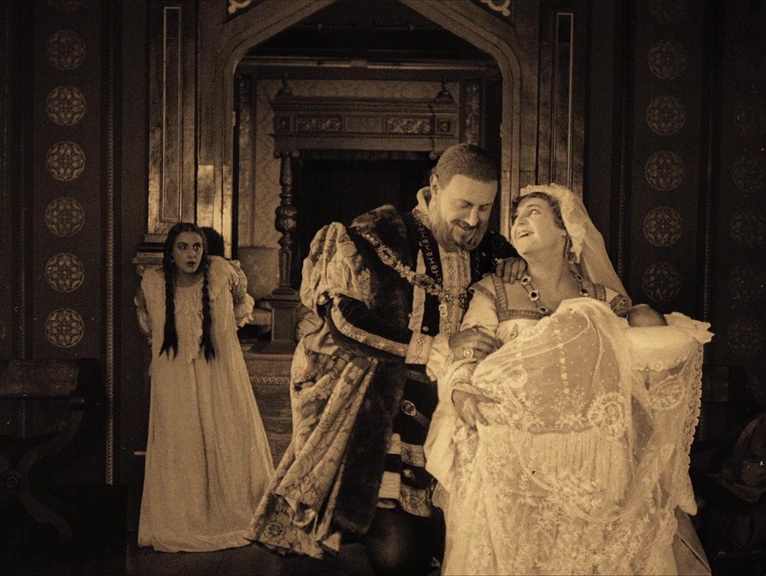
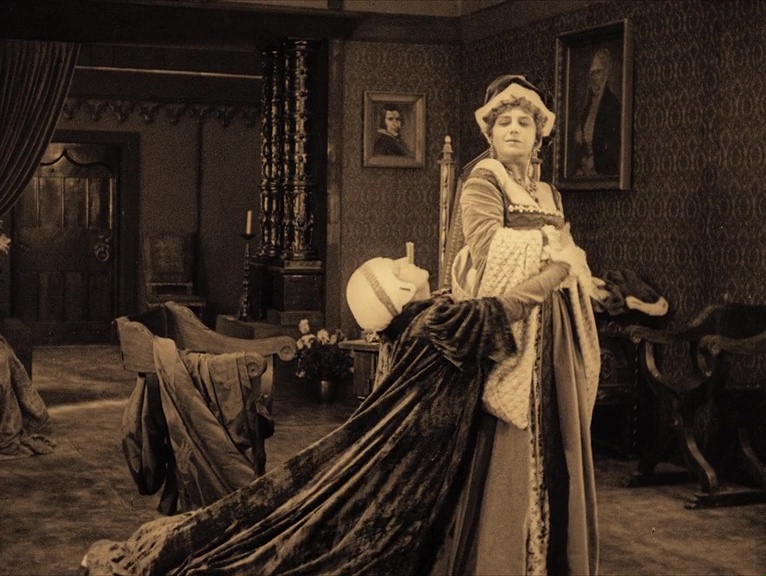
By the start of the 1920s, Ernst Lubitsch was not yet thirty years old and he stood at the top of the list of German directors. He was working with extraordinary speed and skill, producing seven films in 1919 and a further five in 1920. He was making shorter comedies, longer fantasies, historical epics. One month, he was working with a small cast on location in the Alps. The next month, he was constructing elaborate sets in the studio, or herding hundreds of extras through parkland. He was trying his hand at everything—and succeeding. In July 1920, he embarked on “A historical drama in six acts”. The script was by his regular collaborators Hanns Kräly and Norbert Falk, the cast was led by Emil Jannings and Henny Porten—both of whom had starred in Lubitsch’s various productions of the last year. With the aid of UFA’s clout, enormous sets—a tournament ground, palatial exteriors, half a cathedral—were constructed in Berlin-Tempelhof. Kurt Richter and Ferdinand Bellan took charge of the designs, Hans Poelzig the props, Ali Hubert the costumes. Four thousand extras—mostly unemployed—were gathered to populate the scenes. The budget was 8,500,000DM. We can glimpse Lubitsch on set thanks to the trade press, which followed this huge production with interest. Thus can we see him, shirtsleeves rolled up in the summer heat, standing on a pile of timber, presiding over the rising walls of his sets. And there he is, observing the arrival of Friedrich Ebert—President of Germany; Jannings and Porten gather for a photo, but Lubitsch keeps his eyes on the volatile crowd he has assembled—will they start a riot? (Kreimeier, The Ufa Story, 58-59) Evidently, Weimar politics is seething at the fringes of this film; but the film itself, its vision of distant history, foreign history—what lies therein?

Anna Boleyn (1920; Ger.; Ernst Lubitsch)

Opening titles. The colour is c.1920 green and the font is c.1530 gothic.

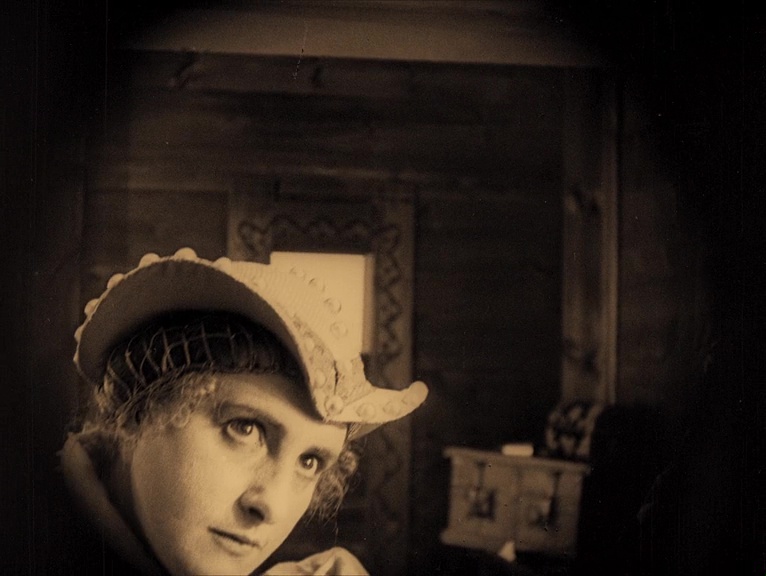
We are at sea. A marvellous close-up: Anna bobs up into frame, then down out of it again. The motion of the sea is comic, but unsettling. The cabin throws Anna around, has her at its mercy. (And of course the first close-up detaches Anna’s head from her body, something that prefigures her fate; it contains the beheading that the last scene of the film denies us.)

Henry Norris greets her at Dover. We are ashore, with fine sets, fine crowds, glimpses of masts. The courtyard of the Norfolks’s house is full of texture, the house with paintings. Anna is kissing Henry Norris, who dashes off, leaving her at the window, still happy and untroubled.

At court, chez Queen Catherine and Princess Marie. A room of stern women, impeccably dressed. They await the King, the prospect of whom produces looks of fear on the women’s faces.

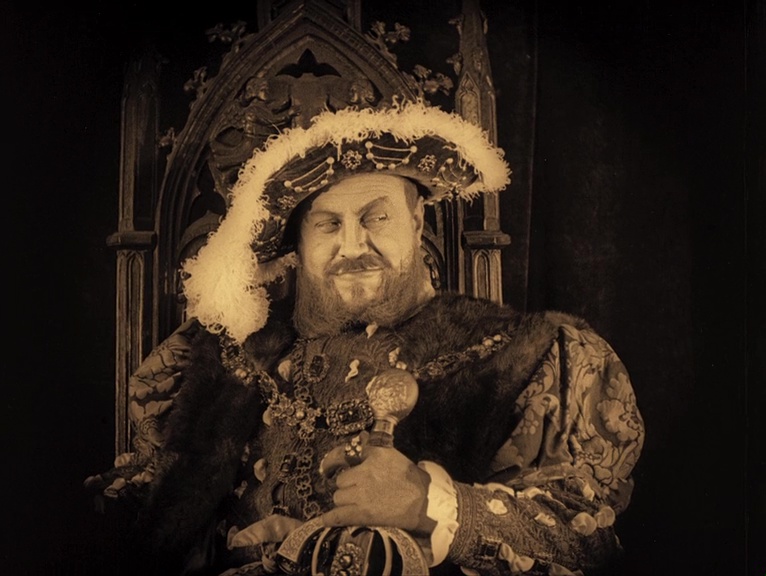
Henry VIII: Emil Jannings, cutting up a great slab of meat. (I thought of making a joke about this first appearance of a “giant ham” on screen, but decided against it; you can make your own.) And this is as perfect a piece of casting as you could want. As a performer, Jannings is ambition personified, appetite exteriorized. He’s utterly uninhibited. Look at how well fitted he is to this costume, to this part. Look at him drink from that enormous flagon of ale. Look at him feed his jester. (Paul Biensfeldt plays sidekick to Jannings here, as he does in the same way in Das Weib des Pharao; he’s all camp obeisance, playful subservience.) See the look of angry boredom that comes on his face to hear of the queen. And look at the enormous pie, out of which comes a white-clad wench for Henry to carry off.

The throne room is coldly formal. Banners, halberds, windows shaped like blades. The king must be summoned. The jester does his part, singing a comic song about poor Catherine (as Henry kisses his pie-wench). Biensfeldt has a marvellous turn, his face going from smug self-satisfaction at his witty song to mortal terror as the king takes the joke badly. He’s whipped and left whimpering as Henry storms out.

Enter the king into the queen’s room. He rolls his eyes at her chastisement, but then sees the tail of a dress caught in a door: it is Anna. He opens the door. Anna retreats, bows. The king looks over his shoulder. The roomful of ladies-in-waiting look back at him. He slams shut the massive door. He’s all smiles, now, as he approaches Anna—and Anna can’t help but smile a little, too. Nor can we, as Henry flirts with her, for Jannings’ performance is so winningly—how to put it?—apparent. It’s very Lubitsch, in fact, this transparency of desire, this delight in open expression of appetite. “Is the lady afraid of me?” She demurs. “You won’t run away from me again, then?” Henry kisses her hand, opens the door for her to leave. “My niece”, Norfolk explains. “A beautiful niece”, says Henry. Lubitsch ends the scene with black masking that descends from the top of the frame. It’s like the camera itself is winking. What can I say, other than that the scene makes me smile, that Jannings makes me smile, and that a “historical drama” film that can make you smile like this has something about it?

Exterior scenes. Henry with the queen but his eyes are roving elsewhere. Look at him strum his knee impatiently. Anna plays ball in the park. She accidentally hits the ball too far: it hits Henry, who comes over. “You would have lost your head— —if it wasn’t so beautiful”. Note the double extended hyphen. I’ve talked about punctuation in silent titles before, and here is another example of the way it functions to emphasize the intonation of speech we cannot hear. Henry starts with a threat, only to offer a complement. It’s the whole film in a sentence, in a grammatical pause. Henry is a comic flirt and a deadly threat. His smile carries this double meaning. So Henry plays ball with Anna. The ball goes into a bush. Anna runs to the bush, Henry too. (And pause here to observe how beautiful the greenery looks on screen: bright, eye-popping detail of sunlight amid the dark leaves.) The king steals a kiss. (Just now, the jester pops up from the bushes as a witness. He functions for the film as he does in court: to appear and offer an ironic commentary. Here his knowing look is a kind of nod to the audience, as if to say: “we all know what’s afoot here!”) The pair emerge; the queen faints; Anna is shunned.

Norris writes to Anna that he will come to her that night, in a black cloak. So Anna waits. A black-cloaked figure climbs in through a window. It’s the king! Anna recoils. Henry’s smile is eager but threatening. (Look how he’s framed: the sculpture around the recess is of fruit. You can see a pear and grapes in the corner of the frame. It’s a visual nod to hunger, appetite.) Anna pushes him away. The king purses. He will have her, he says, even if it costs him his crown. Norris sees the king slink away, and though Anna begs him to stay he runs away. Norris’s readiness to think ill of her goes against him. Anna takes against him, says all she’d have to do to be queen of England is say: “Ja!”

The king tries to write a love letter but cannot get past the first line. He screws up the paper and storms out. When we next see his handwriting, it is a letter to Catherine saying that he will divorce her. The royal couple argues. He thrashes the table. The queen sees Anna, motions her away. I wish Henny Porten were better able to move me. For despite the pressure from the King and her uncle—their faces either side of her shown in an uncomfortably close masked shot—her performance doesn’t win my heart. But perhaps it isn’t all her fault. Does Lubitsch give her enough time alone on screen? Does he give her an extended close-up? She needs time alone on screen to show a subtler, deeper range of emotion. Without this, she must endlessly swoon, bow her head, close her eyes, go limp. But these are theatrical devices. They might catch my attention in the back rows, but on film they are indicators of emotion, not emotion itself. She is told she must take the crown, that her duty is to provide England with an heir to the throne.

A sinister, beaky priest announces the divorce. But a fatter priest, emissary of the Pope, comes to spoil Henry’s plan. Henry is comically bored by Catherine’s entreaties (he leans back in his chair, in splendid isolation, isolated further by the circular masking). And he stands proud, defiant, against the anxious faces of the court.

Norris hears the news. It is too late. (And neither his performance nor Polten’s in their shared, brief moment of mutual grief are moving—and this is a problem for the film.)

The wedding day. Guards ensure the crowd cheers. Huge castle walls. Sinister forests of pikes. It’s a threateningly full world on screen. As the King descends, the crowd cheers—then falls silent for Anna. The soldiers motion. The crowd cheers. Henry raises an eyebrow in triumph and turns to Anna: “See how they cheer you?” It’s another moment when we delight in the performance, here a double kind of performance—for the king knows as well as us, as Anna must too, that he’s lying through his teeth. And we can admire the crowds, and the jumble of houses, the cobbled streets, the sunlight and shadow. Look how Lubitsch frames the approach to the cathedral, and the interior itself: it’s painterly, symmetrical, austere. A riot breaks out as the wedding takes place. Princess Marie enters and shouts abuse at the new queen.

Anna is unhappy, and she carries her visible distress into the wedding feast. Henry eats, then looks to his bride and whispers something in her ear. There is no title to spell it out, but the next scene takes place in the bedroom. In fact, the bed we first cut to is Norris’s. He has been wounded in the riot, but now the jester brings a gift to him and says that Queen Anna wishes him a speedy recovery. Only after this glimpse of the bed she would rather share does Lubitsch cut back to the bed Anna is obliged to occupy: the King’s. Henry awaits. He’s all smiles. He asks her if she’s happy. “After all, I’m the Queen of England”, she says. But she looks terrified. We know why, and the awfulness of what she must go through is implied well enough. But I don’t think it’s reticence or the worry with tone that prevents Lubitsch going further. There are no telling close-ups of Anna or Henry: their scene plays out a single mid shot, and Henny Porten gives us all the signals of distress. But it’s not as affecting, nor as chilling, a scene as it might be, should be, and it’s the limitations of the film—of Lubitsch, at this point in time, in this genre—that make it so.

The next day, Henry flirts with Anna in front of his male courtiers by approaching her with a dagger and surreptitiously cutting her thread as she works on her needlework. They laugh at her surprise, but it’s a marvellously sinister scene. Smeaton reads a poem to Anna; the jester gurns in disgust; the king kicks him aside. Norris enters but Henry bids him leave. Smeaton observes Anna’s look toward Norris, and the jester warns Anna to beware of Smeaton.

Outside, Smeaton tempts the king to hold a spring festival to lift his spirits. The king kicks the ground, until the idea of women in scanty costumes seems to appeal. His face contorts into a comically grotesque grin. And when the festival takes place, the king amuses himself with one of the female dancers. Smeaton tries to seduce the queen, who faints and is carried back by the king (who has unceremoniously dumped his dancer to the floor).

Anna is pregnant, and the look on Henry’s face when he is told is one of immense self-satisfaction. (But even while all this is going on, I feel the film has already played its hand. It has nothing more to add to what’s already been shown. The look and feel are of an impeccable, traditional staging. It’s what you might see on stage, or at the opera, but without the benefit of singing. If only this film was given an orchestral score for its Blu-ray/DVD release. The piano score is entirely inadequate to the scale of the production. More elaborate music would surely help.)

But… it’s “——— ein Mädchen ———” You thought the double extended hyphen was significant? Well check out these bad boys: no less than six double extended hyphens! Now that’s what I call emphasis. It’s a nice little detail amid the extraordinary scenes around it: the crowds, the exteriors overlooked by enormous place walls. The design is simply exquisite: everything looks so real, so weighty, so textured. But the king is furious at the news of a girl, and orders the cheering crowds to be sent to the devil. Anna herself swoons at the king’s reaction, swoons in a way that is entirely gestural, superficial, unmoving. She doesn’t get to have any fun. Unlike Emil Jannings, whom we see now flirting with a lady-in-waiting, Lady Jane, then being gloved and booted by four servants simultaneously (a delightful image, the king spreadeagled, the servants bustling around him). And the king leaves his child to cry while he flirts with lady Jane again. Anna is goaded by her uncle, who says she must fight to maintain her position.

The hunt. Wide open spaces, horses everywhere. (But not a patch on the menace, the strangeness of the hunting scene in Der Student von Prag (1913).) The king at rest. The woods are so beautifully photographed, it’s a shame the drama itself is less enticing. Anna encounters Jane, whom the king believed her to be when she kissed him.

Smeaton goads Norris before the king, and then sings a taunting song before them both. Norris fights Smeaton, but Smeaton takes his revenge by telling the king of Norris’s love for Anna—and lying to say that they are still lovers. The King goes to look at his infant and asks Jane if the child bears him any resemblance. Anna breaks the pair up just as Henry is getting touchy-feely with Jane, but Jane says she’s only serving her as Anna served Catherine. (The film makes Jane the pushy, manipulative, ambitious counterpart to the innocent Anna.)

A joust, and yet more fabulous set design: the jousting courtyard a kind of pit overlooked from all sides by huge galleries. There is a plot to kill Norris in the joust, and Anna’s reaction to his being struck convinces the king of her guilt. It’s all very… unmoving, uninvolving.

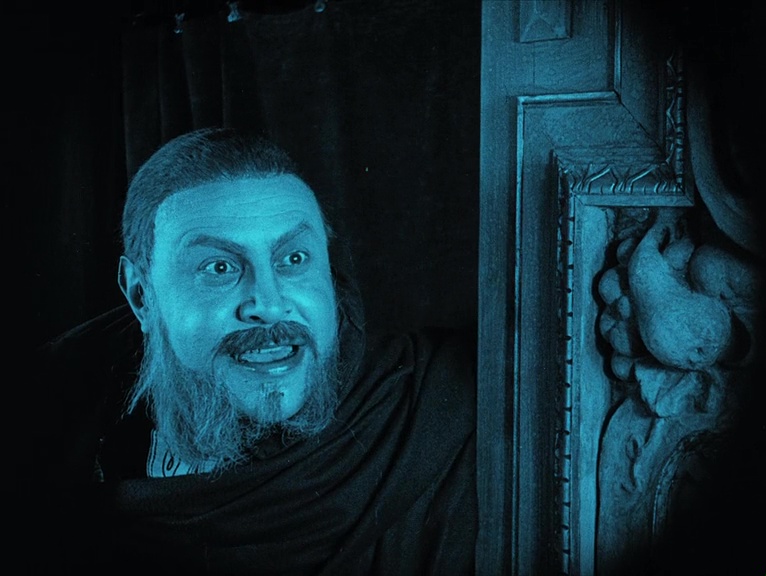
So Henry takes up with Jane, and makes her uncle assist in getting Anna to confess her guilt. Her uncle, it should be said, is fantastically sinister: a permanent scowl, narrowed eyes, lank greying hair. At the trial, Smeaton accidentally indicts himself and is taken away for torture. There’s a brilliant shot, looking down a dark corridor, as Smeaton is led to the chamber: the huge doors open, and his destination is illuminated, as are all the tools of torture on the wall. Smeaton confesses and is then dragged away. And when Anna demands Smeaton confess before her, her own doors are flung open to reveal the hanging body of Smeaton at the back of the scene. These two moments—of the torture doors opening, and now of Anna’s doors revealed the hanged man—are the most concise, chilling moments in the film. There should be more of them!

Anna awaits her fate. She swoons, falls into the arms of a priest, bangs at the doors. And it’s all less moving than those two shots of Smeaton’s torture and death. Anna is led away by men in black hoods, and the film ends as she walks off screen to her the block. ENDE.

Reviewing this film was a strange experience. I had seen it once, many years ago, and never felt a particular urge to revisit it. But I remembered Jannings’ smile, that hungry smile, which spelled desire and fortune and death all in one. It wasn’t until I found myself invited onto the wonderful How Would Lubitsch Do It? podcast that I returned to the film, and it was both a pleasant surprise and a mild disappointment. A pleasant surprise because Jannings’ smile was still there waiting for me, and a mild disappointment because I had forgotten what a trudge are large portions of the film.

What’s lacking—I feel, now—is an emotional vent for the film’s melodrama. Preparing for the podcast, I relistened to Donizetti’s Anna Bolena (1830). The main protagonists—Anne, Henry, Jane (Anna, Enrico, Giovanna in the Italian)—undergo the same historical crisis as in Lubitsch’s film. Anna is likewise an innocent victim of scheming, though Jane is a slightly more complex character in the opera. And Henry is given much less time in the limelight, and (unlike Jannings) he cannot raise a laugh—even an ambiguous one. The setting of Act 3, scene 3 (the last in the opera), is the Tower of London. Outside is the noise of crowds cheering King Henry and his new bride, Jane Seymour. Inside, Anna appears. She is in a state of delusion, imagining that today is her wedding day to the King, and that the cheering is for their marriage. It’s a scene of extraordinary coloratura singing, one in which all the pent-up rage, fear, and longing pours out of Anna and fills the auditorium. Where is there anything like this in Lubitsch’s film?

This question reminded me of something that Andrew Britton wrote about melodrama and “the woman’s film” (“A New Servitude”, 24-63). He describes the mode of such films: dramas centred on women, where “the excess of the heroine’s intensity” becomes the dominant subject (37). Thus, he draws a direct comparison between film melodrama and the historical operas of Donizetti. “[T]he metaphor of persecution” in film melodrama is a direct inheritor of “the classical operatic theme of the heroine’s decline into madness and delusion”:

the echoes of the convention of the ‘mad scene’ are especially pronounced in D.W. Griffith’s melodramas with Lillian Gish, which are in themselves one of Hollywood’s main links to the nineteenth century. Gish’s hysteria in the closet in Broken Blossoms (1919) and the baptism of the dying child in Way Down East (1920) are, in effect, mad scenes, and in the famous sequence with the bouquet of flowers in A Woman of Affairs (1928), the convention passes from Gish to Garbo. (39)

All of which is to say that this “mad scene”—per Donizetti or Griffith—is precisely what’s missing from Lubitsch’s film. Lubitsch doesn’t give Henny Porten the scope accorded to Gish by Griffith. Porten clearly had a wider range of performance than shown in Anna Boleyn. In Lubitsch’s Kohlhiesels Töchter (1920), filmed within the same year as Anna Boleyn, Porten plays two sisters—Gretel and Liesel—and this dual role offers her far more scope to show off her range. She’s by turns exuberant, clever, subtle, violent—and always funny, always eye-catching. It’s a more “operatic” performance in many ways than in Anna Boleyn (albeit more Rossinian farce than Donizettian tragedy), but the exaggerated comedy style of the film provides ample frame for this to work. Lubitsch was clearly more successful in producing emotion in comedy than in drama.

If this is obvious to us now (just as the comparison between Lubitsch and Griffith seems ill-conceived), it was not in 1920. With its multimillion budget, Anna Boleyn was the kind of prestige historical drama with which Germany might rival the Hollywood productions of the period (see Eyman, Ernst Lubitsch, 70). Oddly enough, the history depicted was itself a source of debate in the German press. From some quarters, there was controversy at the idea of putting so much money into the depiction of non-German history on screen. Hanns Heinz Ewers wrote that German films should concentrate on German history and myth (e.g. his own Der Student von Prag). But Lubitsch wrote back in the press, saying that “The history of all nations belongs to the world!” (qtd in Hake, Passions and Deceptions, 123). Quality was what mattered, and a German film of this scale could hold its own on the international market. Whatever their opinions of the film, the domestic press was agreed that Anna Boleyn set down a new standard for the scale of German cinema.

Indeed, it was precisely this sense of scale and quality that led to Lubitsch being called “The Griffith of Europe” in the US (Eyman, Ernst Lubitsch, 71). Anna Boleyn was duly imported and retitled “Deception” for its North American release. The reviews highlight many of the themes I touched on above. “As entertainment it is slow going”, said a critic in Variety, “but as a vivid historical document it is valuable.” If the picture “dragged”, the performances made it worthwhile:

Emil Jannings (an American, by the way, who has studied under Rinehardt [sic] in Berlin), gave an amazingly capable portrait of the loose, merry, sensual Henry. Than his performance, nothing better has ever graced the screen. Equally effective was Henny Porten. The first view of her reveals a woman without much claim to beauty, but the distinction and power of her portrayal get to you. It is not her fault that she has not epitomized Anne Boleyn as her co-star has the king. The sympathy here is thrown to Anne. History’s record hardly Indicates she deserved it.  (Leed., “Deception”, 40)

Aside from the remarkable claim that Jannings was American(!), and the casual insult thrown at Henny Porten, you can sense the same reservations viewers today have about the film. Jannings has character and material to get his teeth into; Porten does not. More pertinent in the Variety review is the subsequent comment about the film’s likely commercial fate: “Its success in anything but first run houses in larger towns is doubtful” (ibid., 40). This prediction proved accurate. In the wake of the Great War, various groups were campaigning against the presence of German films on American screens. Variety mentions that “Passion” (i.e. Madame DuBarry, 1919) and “Deception” went down well better when “no mention was made that these films were made in Germany” (10 June 1921, p. 33). But even this was not enough to save them outside the big cities. Even those German films that proved a “hit in New York” still “flopped in out-of-town territory”—“Deception” included (Variety, 25 November 1921, p. 44). But the film still made an impact in influential places. As of 1924, “Deception” was one of Mary Pickford’s ten favourite films (Howe, “Mary Pickford’s Favorite Stars and Films”, 29). And it would be Pickford who was instrumental in luring Lubitsch to Hollywood…

It is a great irony of Lubitsch’s career that the films that convinced Hollywood of his worth—Carmen, Madame DuBarry, Anna Boleyn, Das Weib des Pharao—are among the least known, the least liked now. Of the little that is written on Anna Boleyn, most of it is devoted to context rather than text (e.g. Hake, Passions and Deceptions, 114-38). Historians write around a film when they have no interest in diving into a film.

Would better music help? And what of the original score from 1920? The DVD/Blu-ray features the 2006 piano accompaniment by Javier Pérez de Azpeitia, which (at least when experienced at home) lacks the presence and scale of the film. In 1920, there was an orchestral score by Hans Landsberger. Landsberger had written the music for Der Golem (1920) earlier that year, which had been greatly praised in the press. It was not an assemblage of existing music, but an original score. “If you have heard Der Golem with this music by Landsberger”, a contemporary said, “you can no longer imagine it with any other.” Landsberger created “striking and memorable” themes for the main characters, using them individually or in counterpoint like contrasting leitmotivs. The reviewer praises Landsberger’s “original” orchestration, his “melodic richness and unerring way of building up dramaturgical tensions” (“Der Golem”, 1-2). This score was reconstructed and performed (and possibly recorded) in 2021, which sadly postdates the (re)issue of the film on Blu-ray in both Germany and the UK. Maddening! Why can’t companies wait a few months for better elements to become available?

Given the success of Landsberger’s music for Der Golem, it’s surprising that I cannot find any contemporary press review that discusses his work for Anna Boleyn. Neither the short reviews in Vorwärts (“Filmschau Anna Boleyn”, 4) or Vossische Zeitung (My., “Anna Boleyn”, 4), nor the much longer pieces in Film-Kurier (L.K.F. “Anna Boleyn”, 1-2) and Das Tage-Buch (Pinthus, “Aus dem Tage-Buch”, 1634-36) so much as mention the composer’s name. The Film-Kurier piece even lists members of the audience—politicians, figures from the arts and film (including Pola Negri)—to emphasize the scale of the gala premiere, but still doesn’t mention the presence of the orchestra or music. Curious, and disappointing. Such is the lack of information on the music, I have no idea if it survives in any form whatsoever. I’d love to hear it and see if it makes a difference to the film.

For its release as “Deception”, Hugo Riesenfeld assembled another score, most likely a compilation rather than an original work. (I note, in passing, the existence of another opera, Saint-Saëns’ Henry VIII (1883), that shares much the same plot as Lubitsch’s film. I have listened to three different versions of this, including a recent reconstruction of the original, longer version of the score—but I still find it a little dull. Nevertheless, it would be a possible source of musical borrowing for a contemporary film composer.) Whatever its nature, the score for “Deception” goes without detailed mention in the press. In Variety, adverts for the first run of screenings in New York say that Riesenfeld “is to stage a special show to precede the film” (29 April 1921, p. 44), which suggests one of the many theatrical embellishments meted out to films for their prestigious first run. (For its US premiere, Das Cabinet der Doctor Caligari (1920) had its narrative reframed by scenes with dialogue performed before/after the film.)

How far could a good orchestral score save Anna Boleyn from its own dramatic limitations? The beauties of Eduard Künneke’s music for Das Weib des Pharao didn’t make me like that film any more—indeed, it tended to exacerbate the deficiencies of the drama. Perhaps no-one mentioned the Landsberger score for Anna Boleyn because it was a dud? Maybe one day it will be unearthed, and we will have the chance to judge for ourselves. It will be some years before I have an urge to watch Anna Boleyn again, but a new score would make me revisit it sooner…

Paul Cuff

References

Der Golem, wie er in die Welt kam: Ufa-Palast am Zoo”, Film-Kurier (30 October 1920), pp. 1-2

“Filmschau Anna Boleyn”, Vorwärts 64 (16 December 1920), p. 4.

Andrew Britton, “A New Servitude: Bette Davis, Now, Voyager, and the Radicalism of the Woman’s Film” (1992), in Britton on Film: The Complete Film Criticism of Andrew Britton, ed. Barry Keith Grant (Detroit: Wayne States UP, 2009), 24-63.

Scott Eyman, Ernst Lubitsch: Laughter in Paradise (New York: Simon & Schuster, 1993).

L.K.F. “Anna Boleyn: Die Festvorstellung im Ufa-Palast am Zoo”, Film-Kurier (15 December 1920), pp. 1-2.

Sabine Hake, Passions and Deceptions: The Early Films of Ernst Lubitsch (Princeton UP, 1992).

Herbert Howe, “Mary Pickford’s Favorite Stars and Films”, Photoplay 25.2(January 1924), pp. 28-29, 105.

Klaus Kreimeier, The Ufa Story: A History of Germany’s Greatest Film Company, 1918-1945, trans. Robert & Rita Kimber (California UP, 1999).

Leed., “Deception”, Variety (21 April 1921), p. 40.

My., “Anna Boleyn”, Vossische Zeitung 610 (15 December 1920), p. 4. NOT ISSUE 612, 16 DEC

Pinthus, “Aus dem Tage-Buch, Anna Boleyn”, Das Tage-Buch 51 (31 December 1920), pp. 1634-36.

Das Blumenwunder (1926; Ger.; Max Reichmann)

In 1921, the chemical corporation Badische Anilin und Sodafabrik (BASF) sponsored the production of a new film. BASF had bankrolled several short films with heart-poundingly exciting titles like Die Anwendung und Wirkung neuzeitlicher Luftstickstoffdüngemittel (“The application and effect of modern atmospheric nitrogen fertilizers”, 1921) and Mais-Düngungsversuch mit und ohne Stickstoff (“Maize fertilization trial with and without nitrogen”, 1923). But the film they undertook in 1921 was of a more elaborate scale and length than these earlier experimental/documentary works. At BASF’s studio-cum-laboratory in Ludwigshafen (south-west Germany), various varieties of seed were planted and painstakingly photographed, exposing one frame of celluloid at a time over a series of days, weeks, and months. It would take five years to complete this process. BASF joined forces with the Unterrichts-Film-Gesellschaft (“Film Teaching Society”) and hired an up-and-coming director to shoot additional footage and assemble the resulting material. (BASF were clearly the lead partner in all this: the chemical corporation had produced more films than the film company they engaged.) The director was Max Reichmann, who had worked as a production assistant on four of E.A. Dupont’s films: Der Mann aus Neapel (1921), Kämpfende Welten (1922), Sie und die Drei (1922), and Varieté (1925). At this end of this apprentice period, he directed two feature films—Verkettungen (1924) and Der Kampf gegen Berlin (1925)—before finishing BASF’s plant film. To BASF’s laboratory footage was added a framing narrative and ballet sequences, including some complex dissolves from plant to human movement. More than a film made for publicity or instruction (hardly counting as “cinematic” at all), this creation would be a feature-length spectacle. The stop-motion photography was the main attraction, but the film could now boast the dancers of the Berlin Staatsoper and a specially-composed score by the successful operetta composer Eduard Künneke. The film was premiered at the Piccadilly theatre in February 1926 and created quite a sensation. And what’s more, it still does…

Das Blumenwunder (1926; Ger.; Max Reichmann)

Part One. The orchestra puts its best foot forward, and we leap into the spectacle. A garden, young girls running. They dance, then pick and fight over blossom. The music is rhythmic, boisterous, stylish, skittish, jazzy. But the severing of the flowers marks a chance in tempo, mood.

A ghostly figure appears, dissolving through the wall of foliage at the rear of the scene. She is Flora “protector of the flowers” (Maria Solveg). She explains that the flowers have life, just like the girls: “in blooming and withering they have the same feelings as you”. “Man’s rhythm of life is the pulse, the chasing of blood cells.” Flora takes the arm of a child and places her fingers on the wrist. The orchestra slows, and a trumpet gently marks out the pulse of blood. Then the timpani take over: the pulse moves deeper into the body of the orchestra. The child’s wrist moves slowly towards the camera, until the flesh begins to blur.

The film cuts to a microscopic view of veins, then—as the strings in the orchestra slide and glisten—a shot of blood plasma slipping through tissue. It’s an extraordinary interruption of the infinitesimal, the scientific, the biological, into the wider world of the film. It’s at once disturbing, extraordinary, and magical. The whole screen is filled with the intimate pulsing of life, the cinema with the warm pulse of the orchestra.

We draw back into the human scene. Flora looks up, bids the children watch the clock. We see the hands speed up, race around the dial: hours, then days glide past. “One day in the life of man is a second in the life of a flower”, she says. “The miracle of flowers will bloom before you.” And so they do. As the orchestra swells, flowers grow from the base of the screen to its summit. The buds dip and rise, like fanfaring trumpets. And just as the spectacle seems set to take off, it’s the End of Part One.

Part Two. Tobacco plants lower and raise their leaves, each lowering and raising (we are told) taking place over a 24-hour period. But each 24 hours are seconds on screen. The three plants lift, strain, grow, burgeon before our eyes. It’s a gorgeously surreal chorus line, the orchestra rising in crescendo, pulsing and growing in time to the plants.

Then we see bean sprouts, the downward progress of their roots as the stem wriggles aboveground, turning 90 degrees when the box is turned. Künneke’s music shifts gear, becomes a kind of slow dance. The bean’s shoot coils around a pole, crawling its way clockwise, up and up. Even when a pair of hands tries to rewind it in the other direction, it breaks free of this imposed rhythm and winds clockwise once more. It reaches the top. The orchestra rings out. The beanstalk wiggles. It’s like the plant is taking a bow.

The banana leaf; ferns. The orchestra is also in a kind of slow-motion, reaching for a rhythm as the plants unfurl. But the vine grows quickly, reaching out to each new support: so the strings skittishly feel out a new rhythm. Another shift. The vine starts growing, lifting its heavy burden of spreading leaves. The orchestra slows, introduces a wrenching little melody for the lead violin. Suddenly the plant seems anthropomorphic: look at it stretching out, clasping at the new support, straining its sinews to reach a higher position. “It grows beyond the last support, with nothing more to cling to.” So tells us an intertitle, as if introducing us to its death. And so the next title finishes the thought: “The vines desperately circle alone, vainly seeking support, they languish and die.” But then we realize that the plant is cleverer than that, for it starts to curl and reach back to an earlier support, “where life is still possible”. We’ve seen a kind of thought process, a vegetal exercise in logic and self-preservation. So too in the next shot, where we see a vine drawing the lengths of string supports closer together to make its journey easier. Now vines clasp one another, dancing around the rival spaces: the camera cuts back to a wider shot so we can follow the upward battle for each vine. End of Part Two.

“Musical Interlude”. The music repeats that wrenching little melody, led by the solo violin. It’s slow, sweet, sad. The score is creating a mood, a feeling. With only the dark screen to see, we are now simply listening to the secret life of plants; is the film asking us to imagine our own images with the music, to reflect on what we’ve seen so far? The slow, sad dance winds to a halt.

Part Three. No titles, just the glittering sound of music—glissando strings, harp, gentle woodwind—to set up the next scenes. Flowers unfold, bloom white and green against the black background. Purplish stems sprout tiny blossoms. The music reaches for high, unsettling extremes; now the leaves are dancing, and the music turns rustic, a countrified dance. Here are bluish buds, curtseying, doffing their leaves. New growths wiggle, circle, shimmer, tremble. They seem to grow faster. Fade to black. The music dies.

Greenish shoots from the soil. The pulse of low strings. Solo woodwinds seek out a melody, test out a rhythm. The flowers look sleepy, dopey. It takes them an age to raise their buds. Fade to black, before they quite bloom in full. A strange, solo shoot—and a dissolve to a dancer, flowing white dress, mimicking the growth of the flower. A succession of close-ups, flowers trumpeting toward the lens.

Shoots fall over the side, bud slowly, change shape a dozen times. Flowers nod together, perform collective awakenings. Another solo dance, flower dissolving to dancer, dancer to flower. It’s hypnotically beautiful. A mass of buds, flowers that slowly fill the screen, that grow stranger and more extraordinary as the shot continues. End of Part Three.

Part Four. Flowers that open and shut, that wither, that die. The life of plants, their struggle, their disintegration. Flowers with skirts, which become a troupe of dancers. The dancers are now in slow-motion, performing impossible manoeuvres on their toes, leaping as if weightless. So entranced am I that I don’t question the continuity between flowers and dancers, between stop-motion and slow-motion, between days-between-frames and microseconds-between-frames.

The music slows. There’s that pulse in the timpani. It’s almost funereal, that beat below the strings. The progress of leaves, of petals, of stamen. It’s agonizingly slow, this sped-up motion of the flowers. It’s a ballet created by removing days, weeks, years’ worth of time—and yet time seems to be suspended. The camera manages to track around some flowers, to capture their slowness with an even slower repositioning. Another dancer; combined with the tinting and toning (dark brown tone, turquoise tint), the sheen of his robes becomes surreally bright, surreally three-dimensional. Flowers seem to gesture, and the film cuts to a man gesturing—his movements as rapid as those of the flowers. A sunflower grows, lifts its shoulders, reveals its mane of petals. The orchestra responds. We watch the tiny ripples of its seeds. Poppies grow; a dancer wakes from sleep, reaches out her arms, shows off the veils of her sleeves; so too do the poppies, before their petals unfurl, fall, disappear. End of Part Four.

Prelude to Act Five. The music is more forceful, louder, the beat of timpani and brass spelling out some impending drama. “The song of coming-to-be and passing away.” A dancer appears, that same sheen of turquoise over the rich black-brown of the space behind them. The coming drama is spelt out in his mime: he rises, struggles, dies. The plants’ lives are spelt out in a few seconds each: they wrench themselves up from parental branches, expand to their fullest; they flinch, tremble, curl up, diminish, die. The music offers a fanfare, then a melancholy waltz, then a tender farewell. Each new plant comes before the lens, lives and fades. A multi-headed cactus performs life and death five times, each stem collapsing one after the other, each flower dying one after the other. ENDE

What a treat to discover a film by chance, and to discover it’s a little gem. I first saw mention of this film thanks to the German Wikipedia page on Eduard Künneke, which listed among his film scores Das Blumenwunder (the music for which was later rearranged into orchestral suites). I was delighted to find that a DVD was available, issued by ARTE in the wake of their restoration and broadcast of the film in the 2010s. The music was originally arranged for a smaller ensemble, but the restoration uses Künneke’s later, expanded, version for larger orchestra as its basis. It sounds lovely, full of energy, melody, and deft orchestral touches. It’s light music, but in its best sense: its transparent, generous, captivating. It works wonderfully well with the images, and by the last sections of the film—which function mostly without intertitles—the music takes up all the sense of narrative and emotive expression. As I wrote on my earlier piece on Das Weib des Pharao (1922), the music of Künneke is well worth investigating: he offers a glimpse into the soundworld of the 1920s: light, popular music, infused with elements of jazz and dance. It’s remarkable in itself that two of his scores should have survived and been recorded for issue on home media. Confusingly, both filmportal.de and the German Wikipedia page also list among Künneke’s work a film score for the German-British co-production A Knight in London / Eine Nacht in London (1928), directed by Lupu Pick. However, the two sites differ on their info for the latter film: filmportal.de claims the music was by Künneke, Wikipedia claims the composer was Giuseppe Becce. In either case, the film is unavailable to view and the score—whoever wrote it—is among the many that of the silent era that languishes in obscurity.

Das Blumenwunder was released as a kind of “culture film”, designed to attract critical attention. It certainly did, and not just from film critics. The many reviews (cited in Blankenship, 2010) focused on the revelatory way the film showed the (normally unnoticed or invisible) movement of plants. If some claimed the film belonged in the classroom and not the cinema, others were more generous. Rudolf Arnheim called the film “an uncanny discovery of a new living world in a sphere in which one had of course always admitted life existed but had never been able to see it in action.” The plants, he said, “were suddenly and visibly enrolled in the ranks of living beings. One saw that the same principles applied to everything, the same code of behaviour, the same difficulties, the same desires” (Film as Art, 136). The expressionist writer Oskar Loerke noted in his diary:

Das Blumenwunder […] was a first-class experience. Unbelievable. The film nearly proves the existence of everything supernatural. When one sees the growth and life of plants that have another tempo from that of people, every order becomes imaginable—even slower tempos or faster ones, which are not perceptible to us because of this difference. (qtd in Blankenship)

As Janelle Blankenship explains, the film did well enough to be shown on numerous other occasions by various interested organizations:

[Das] Blumenwunder was promoted by the League of Nations, screened in England at a social meeting of the Anglo-German Academic Bureau at the University of London, University College, and praised by Welsh writer and novelist Berta Ruck, among others. The film was also a ‘special sightseeing attraction’ at an ‘expo-cinema’ during the 1927 horticulture congress in Leipzig, and was screened as a horticultural film at a monthly meeting of the garden club ‘Verein zur Beförderung des Gartenbaues in den königlich preussischen Staaten, Deutsche Gartenbau-Gesellschaft’ in 1926.

Thankfully, the film was also preserved in the archives and the DVD edition presents it in excellent visual and audio quality. (Though I should add that—at least on my machine—a few of the intertitles lack the English subtitles otherwise presented throughout.) The DVD also prefaces the film with some explanatory text: we learn that Das Blumenwunder was originally 1755m (c.65 minutes) but the only copy that was preserved runs to 1664m (60 minutes). What is missing is unclear, but given it’s only a small percentage of the overall runtime we must be grateful that more wasn’t lost. The DVD includes a pdf of the original booklet issued at the premiere. Rather delightfully, the edge of each page is formed of individual frames from the film, showing you a frame-by-frame account of the growth of the flowers.

Das Blumenwunder is a visual delight, as well as a musical delight—and I’ve found myself relistening to the score three times already since watching the film for the first time at the weekend. For me, Das Blumenwunder was a real treat to discover.

Paul Cuff
References

Rudolf Arnheim, Film as Art (Berkeley: California UP, 2006).

Janelle Blankenship, “Film-Symphonie vom Leben und Sterben der Blumen”: Plant Rhythm and Time-Lapse Vision in Das Blumenwunder”, Intermédialités 16 (2010): 83–103. Available at: https://doi.org/10.7202/1001957ar

Der Rosenkavalier (1926; Aut.; Robert Wiene)

In 1924, the German director Robert Wiene was lured to Vienna by the Austrian company Pan-Film. This was one of the country’s leading production companies, with a distribution network that covered a large portion of central and eastern Europe. But the Austrian industry was struggling (especially in comparison with its mighty neighbour Germany), so the recruitment of Wiene—one of Germany’s most successful directors—was designed to bolster their status and generate a number of quality commercial productions. Accordingly, Wiene was appointed “Oberregisseur” and given a large degree of freedom. He stayed for three years and directed five films. Only three of these survive, Orlacs Hände (1924) being the most well-known. But the film with the most cultural clout was undoubtedly Der Rosenkavalier, made in 1925 and premiered in January 1926.

This was an adaptation of Richard Strauss’s opera of the same name, first staged in 1911. Strauss’s original librettist Hugo von Hofmannsthal was hired to write a screenplay as early as 1923, and Strauss to adapt his score to the film. Although Hofmannsthal remained the accredited scenarist, his screenplay was in fact almost wholly rejected by Wiene, who wrote his own treatment with the Austrian scenarist Ludwig Nerz. Hofmannsthal’s treatment had significantly reworked the plot of the opera, whereas Wiene and Nerz actually stayed reasonably close to it (albeit with some significant changes). But Pan-Film were keen to emphasize the proximity of film and opera. After all, it was a considerable coup to have one of the world’s most renowned composers create a film score. So the names of Strauss and Hofmannsthal were mobilized prominently in Pan-Film’s publicity, as was Alfred Roller, the set designer—who was also the original set designer for the opera in 1911. What’s more, the film premiered on 10 January 1926 in the Semperoper, Dresden’s prestigious opera house—the very venue where the opera Der Rosenkavalier had premiered on 26 January 1911—with Strauss himself conducting the hundred-strong orchestra. Released across Europe later in 1926 (with Strauss reprising his role as conductor for the London premiere in April), the film was a critical success—but subsequently disappeared from public view. Various, incomplete, versions were revived from the 1960s onwards, but it wasn’t until Film Archiv Austria undertook a major restoration in the early 2000s that the film could be seen in anything like its original form—complete with a reconstructed version of Strauss’s score. The restoration was premiered in 2006—once again in the Dresden Semperoper—and released on DVD in 2007.

All that said, is the film any good? Well, not particularly. Which is to say, the music is superb, but the film itself has some significant drawbacks. My usual habit is to go through a film chronologically, but I don’t think that would reap a great deal of reward with Der Rosenkavalier. Instead, I’d rather concentrate on its personnel and weave my thoughts around how the film deals with character and tone. So:

Princess Werdenberg, known as the Marschallin (Huguette Duflos). The central character of opera and film, the Marschallin, is a married woman whose husband—the Marschall—is permanently away from home in the army. Her lover is a younger man, Octavian, who brings her happiness but whose youth she knows will one day lead him away from her. The film provides us with more backstory to the Marschallin, offering in the opening scenes a flashback to her youth in a convent. We see her forced to accept an arranged marriage to Prince Werdenberg. Her wedding day is also the day on which her husband leaves to take command of the army. The Marschallin looks like a Velasquez, wearing a gorgeous white dress with rather fin-de-siècle curled motifs running down its flanks. She looks beautiful, but also awkward, stiff, uncertain. The camera keeps its distance, as though proximity—sheer physical closeness—is alien to the mood of the scene. The flashback gives us a glimpse of the pressures on her to look and act a certain part, whilst simultaneously being denied the warmth of human connection from her husband.

But though this flashback signals the Marschallin’s melancholy in the present, the effect is not fully felt on screen. It is certainly indicated in titles and telegraphed with gesture. But Duflos offers no depth or complexity of feeling, nor does the camera offer any close-ups to seek out more. The Marschallin is the heart of the opera and should be the heart of the film. But Duflos and Wiene offer only surfaces, flat pictorial representations of melancholy, not melancholy itself. Strauss’s music is fully alert to what should be being conveyed on screen: all the feeling is in the music, not in the images. The film cries out for some close-ups, for some expressive way of externalizing the Marschallin’s complex emotions. But Wiene’s scenario even cuts the most intimate scenes from the opera, where the character’s subjective thoughts are explored.

In the opera, at the end of Act 1, the Marschallin is once more alone with Octavian. The morning routine has wearied her, and she begins to reflect on the passage of time. Her aria-cum-monologue, “Die Zeit, die ist ein sonderbar Ding”, has the following text:

Time is a strange thing. / When one lives heedlessly, time means nothing. / But then suddenly, one is aware of nothing else. / It is all around us, it is also inside us. / It trickles in our faces, / it trickles in the looking glass, / it flows through my temples. / And between me and you / it flows again, silently, like an hourglass. / Oh, Quinquin! Sometimes I hear it flowing— / ceaselessly. / Sometimes I rise in the middle of the night / and stop all the clocks, all of them.

Under these last lines, Strauss uses harp and celesta to mimic the sounds of a clock. Their high, metallic notes strike thirteen times. It’s a chilly pulse, chiming through the orchestra. It’s a premonition of death, of stillness—and the music comes to a halt at the thirteenth stroke. It’s a beautiful, heart-breaking moment. The Marschallin voices her thoughts (and fears), but the real poignancy is in the way the orchestra articulates her subjective mood. It’s not just those thirteen chimes—that seem to come from within the Marschallin’s imagination, not from any real clock within the external scene—but the melancholic tone and texture of the orchestra. Strauss’s sound world is suspended in a kind of autumnal half-light, so that even when it dances to the rhythm of a waltz its tone is gently nostalgic—as though it knows that the dance must come to an end, or has already come to an end. Even when the Marschallin tries to convince herself (in subsequent lines) that the passage of time is all part of God’s plan, the orchestra is not convinced. The orchestra is all-knowing, and its early twentieth-century mindset is subtly at odds with the eighteenth-century mindset of its character. The passage of time is already apparent to us, as the world on stage is a rococo past at odds with our present—be it 1911 or 2023. Indeed, the waltz themes of the opera are deliberately at odds with its historical setting: the waltz was a nineteenth-century mode, and (while still being in use in new compositions in the 1910s) already a kind of old-fashioned musical idiom by the time Strauss wrote Der Rosenkavalier in 1909-10. Act 1 of the opera ends with Octavian leaving the Marschallin’s room, and the Marschallin realizes that she forgot to kiss him goodbye. The curtain falls as she looks at herself in the mirror. For all the apparent lightness of the opera’s treatment of love and sex, there are much deeper strata of meaning and feeling at work throughout.

Where, where in Wiene’s film is there anything like this? Yes, there are moments where we see the Marschallin look pained or sad, but they are so fleeting, so superficial. When she sees Octavian kissing a young woman (Sophie) at the tavern, she looks hurt—but no more. It’s not just that the performance is awkward (it is), it’s that Wiene’s camera doesn’t react. There is no movement, no proximity, no expression. For a director best-known for the most famous expressionist film ever made—Das Cabinet der Doctor Caligari (1920)—Der Rosenkavalier film lacks any sustained externalization of feeling in sets, in lighting, in performance, in camerawork. One of the only times in the entire film we see the Marschallin alone is after her husband has (unbeknownst to her) triumphed on the battlefield. In her room, she remembers the kiss Octavian bestowed on Sophie in the garden. She says she knew this time would come, that she had tried to hide it from herself… Strauss’s music makes magic of this scene, but the visual equivalent is bereft of magic. The Marschallin clutches her dog and swoons a little on her chaise longue. There is no sustained close-up, the camera (as throughout the film) hardly wishing to move beyond a medium close shot of the performers. And Duflos herself is hardly the most subtle performer here, looking pained but never convincingly sorrowful. We should be more moved, infinitely more moved, here. The music is crying out for a more convincing, a more filmic, moment of expression. Oh, for a different director, or for a script that allotted more room and more power to the close-up.

Count Octavian (Jaque Catelain). It doesn’t help that the Marschallin’s young lover is played by Jaque Catelain. In real life, Catelain was the lover of Marcel L’Herbier, who gave him leading roles in many of his silent features during the 1920s. Catelain is an acknowledged “weak point” in L’Herbier’s filmography. As Noël Burch puts it: “Boasting an unsettling androgynous beaty but lacking ability as a mime or comedian, this star resembles a kind of wooden Harry Langdon, charmless and humorous, as stiff as a shopfront mannequin.” (“Ambivalences d’un réalisateur ‘bisexuel’”, 204.) Catelain’s androgyny is at least a potential advantage for his role as Octavian: a lover younger than the Marschallin who can convincingly disguise himself as a maid for the plot’s various subterfuges. In the opera, all three members of the central love triangle are played/sung by women: the Marschallin is a dramatic soprano, Octavian a mezzo-soprano, and Sophie (Octavian’s subsequent lover) a lyric soprano.

But even if the sexual ambiguities of the original opera suit Catelain superficially, he still needs to convince us through performance in the film. The opening scenes immediately present us with the problems that continue throughout the film. Octavian’s arrival, through the Marschallin’s window, and meeting with her in the early hours are awkward, stiff, contrived. Duflos and Catelain move round each other, pulling poses, throwing back their heads, clasping their hands. Nothing about them suggests the physical, let alone emotional, attraction for the lovers. Nor does the camera. It remains motionless, just keeping its distance and watching the performers go through the motions. “There are no words in the world to tell you how much I love you…” Octavian says to the Marschallin. Fine, but how about a performance to tell her—to tell us—that you love her? Clasping and twitching and grinning and moving awkwardly doesn’t do it.

Even less convincing is Octavian’s subsequent flirtation with Sophie: there is nothing in his body or face that suggests genuine desire or feeling, let alone the complexities of being torn between his old and new love interests. I’d say that the music saves both these scenes—and my god, the music is beautiful—but it doesn’t. The music in fact underlines how compromised are the performances, and how inadequate is the direction in lifting the film above a series of gestures without deeper meaning.

Baron Ochs auf Lerchenau (Michael Bohnen). The best performance in the film is in the part of the impoverished Baron Ochs, the Marschallin’s cousin who wants to marry Sophie and thus inherit her dowry. In this role, Michael Bohnen is far more engaging a presence than Duflos or Catelain. He had every reason to be, for he was a professional baritone and had played the role of Ochs on stage: this was his part, and you can tell. We first see him in bed, buried under a mountain of blankets. When he gets up, his character is fully formed, convincing, human. Bohnen knows how to put on a pair of round spectacles and make it funny. And Ochs’s servants—impoverished like their master—are likewise more human and interesting than the powdered servants who staff the Marschallin’s apartments. Ochs’s chief servant is hairy, gruff, always chewing, stifling his giggles; and the stableboy looks pleasingly gormless, countrified, confused.

See how these scenes have a kind of life and vitality not seen in many other places in the film. And listen how—at last—music, image, and performance work in accord. Strauss’s elegant waltz theme as Ochs has his servants dress him underlines the contrast between the Baron’s aristocratic pretensions and his impoverished state. Just as Ochs reads the letter, a delightful waltz—orchestrated to resemble a hurdy-gurdy—strikes up. It is the stableboy, playing a hurdy-gurdy in the yard, a group of cats feeding near his feet. Once more, the waltz is suggestive of Vienna—Ochs’s destination—but performed on a peasant’s instrument, a rural counterpart to the orchestral strains of the melody heard in the Marschallin’s aristocratic world. It is Ochs’s exuberant presence and performance that makes his appearance in the Maschallin’s world such a relief: here at last is someone who conveys emotions, even if they are comic rather than tragic. Bohnen makes his eyebrows twitch, he wriggles with delight, dances with glee, puffs himself up with pride and arrogance. He enlivens every scene he’s in. It’s as though he’s being directed not by Wiene but by Lubitsch. He also gets the only proper close-up in the film: when he roars with pain, having been wounded in a brief swordfight with Octavian. It’s a marker of the film’s emotional range that the only time it deigns to provide a real close-up is for a crude expression of pain, and never for the subtle pangs of melancholy, sadness, or love.

Sophie von Faninal (Felicie Berger). Sophie is the daughter of a parvenu bourgeois, whose fortune as the army’s provisioner has made her desirable to the impoverished blueblood Ochs. Octavian encounters her at an open-air dance, where he takes pity on her because she is being shunned as a newcomer. Berger is very pretty, and appropriately youthful (given the need to contrast her with the older Marschallin). And I think her performance—girlish, slightly gauche—looks all the better for being opposite the utterly unconvincing Catelain. Catelain’s facial expressions in his first scene with Sophie make him look like a chipmunk: he’s all goggling eyes, silly smile, bared teeth, trembly little gestures and ticks.

The centrepiece of the film has the same issue. Here, Octavian has been nominated by the Marschallin to act as “Rosenkavalier”, giving a silver rose to Sophie as a promise of Ochs’s betrothal. The scene is as musically beautiful as any in the film. The descending motif of the rose—spelled out by harp, celesta, triangle, and glockenspiel—has an unearthly, otherworldly texture. In the opera, the rose theme is a counterpoint to the similarly high notes of the chiming clock in the Marschallin’s monologue in Act 1. The lovers have their own kind of time signature in their theme, floating high above the rest of the orchestra. Their music is piercingly lovely. But the film cannot match it. Catelain’s performance in the rose-giving scene is unmoving in every sense: stiff, awkward. Berger’s performance is as natural as the circumstance allows: she is meant to be awkward, shy, smitten. But surely there are subtler, more emotionally revealing, ways of rendering this encounter: to reveal the love beneath the formality. The contrast between music and image is again evident in Octavian and Sophie’s final meeting in the extended ball sequence at the end of the film. They meet, knowing that they can surely be together at last. And the music is as meltingly tender, as gentle, and rapt as the scene demands. But the scene doesn’t work on screen. Berger is perfectly good here: her hesitancy, her disbelief, her restrained joy. But Catelain is dreadful: he can’t hold his body naturally, can’t suggest any kind of emotion with his arms, his posture, his face. Thus, the climactic emotional scene between the lovers is a dud.

Annina and Valzacchi (Carmen Cartellieri and Friedrich Féher). These two minor characters appear only in a few scenes in the film. Either their roles are somewhat underwritten or there may be some missing fragments of the film that would give greater prominence to them. Early in the film, hoping to reveal the Marschallin’s affair, Annina engages with “Her High Apostolic Majesty’s Commission” for morality, a group of bewigged old men. (In the opera, there is none of this: Annina and Valzacchi are employed by Ochs to find “Mariandl”, the name given by Octavian when he is disguised as a maid.) The “Commission” likewise isn’t developed much in the film, but they get a lovely, slightly cumbersome waltz in the score: the tempo relents, as though the fuddy-duddies of the Commission are circling in slow-motion. In the opera, Annina and Valzacchi are niece and uncle; in the film, they are unrelated and form the third romantic couple to find happiness in the final scenes. Do they have inner lives? The film doesn’t, can’t, will not, show us.

The Marschall (Paul Hartmann). We never see or hear this character in the opera. The Marschallin’s husband is permanently absent from her life, hence her lover and her sense of loneliness. For the film version, we see the Marschall in a flashback of his wedding to the Marschallin. Strauss accompanies the scene with martial music: trumpets and timpani thump out a repetitive melody; it’s a march rather than a dance, a fanfare for a different kind of ceremony—not a wedding. It’s a simple and effective means of underlining the total absence of sentiment in this marriage. The Marschall’s music dominates the scene, obliterating any joy his bride might have felt.

But the film complicates our impression of the Marschall, for we subsequently see his military campaign, together with his frustration at not hearing from his wife. Strauss’s martial music gives the character a sense of pomp, but also of activity and passion. (The way he bosses the army is also played for laughs: he gets them all up early and on parade because he’s jealous of the letters they get from their loved ones.) The film wants us to feel sympathy for him, but Wiene’s direction is not sympathetic enough. The camera never bothers to find filmic ways of emphasizing the Marschall’s mood. We just watch him wander around looking stiff and uncomfortable. That said, perhaps the only time Wiene uses effectively dramatic lighting in the film is when we see the Marschall alone in his billet, the firelight casting shadows around him. It makes him look all the more lonely, angry, isolated. But (as ever) Wiene never makes much or more of this. No close-up, no development of character. Yet again, I can only find fault with the direction: why doesn’t it do something with its material?

The film brings back this character in the climactic sequence, a masked ball set in and around the Marschallin’s estate. Everyone is in disguise, trying and succeeding to lure Ochs into a compromising situation in order to break his engagement with Sophie. The final scenes unite three couples: Octavian and Sophie, Annina and Valzacchi, the Marshall and Maschallin. Ochs, meanwhile, slinks away in shame… Thus, the film offers a neat tying-up of ends that the opera eschews. (In the latter, the Marschallin relinquishes Octavian to Sophie, but she is left alone at the end. The Marschall never appears.)

Hofmannstahl, Strauss, Wiene. The tensions between the film’s three major “authors” are evident in its original release. The Dresden premiere was conducted by Strauss on 11 January 1926. Despite his decades of experience at the podium, Strauss has never accompanied a film projection: the film had to be stopped twenty times during the performance because Strauss was concentrating on his musicians and not the screen (Jung & Schatzberg, 126). A critic said that Strauss had “torn the film to shreds” to preserve the continuity of his musical performance. By the time of the Berlin premiere, just five days later, the experienced cinema musician Willy Schmidt-Gentner had taken over the duties at the podium and rearranged the music to better its synchronization with the film. (Strauss merely sat in the audience.) The film was a great success, much bolstered by the score and the fame of its author—as well as the supposed involvement of Hofmannsthal as scenarist.

Hofmannsthal himself was initially full of praise for Wiene, persuading Strauss to approve the project on the basis of the director’s success. But when he saw Der Rosenkavalier on the screen, Hofmannsthal described it as “the most dilettante and clumsy film imaginable” (qtd in Jung & Schatzberg, 123). This was partly sour grapes at having his scenario rejected, but I cannot but agree that the film is less than the sum of its parts. The direction of performers is one thing (if you can’t make Catelain a better actor, you can surely film him differently), but the direction of action is another. The music is a supple, shifting tapestry of themes. It’s charming, wistful, melancholic, joyful, exciting. But Wiene’s direction is flat, static, unimaginative. The camera never once moves, hardly ever cuts close to the performers. (I could understand if they were actually singing: close-ups in broadcasts of live opera are often quite awkward. But this is an opera which suffers none of the inconvenience of operatic performance.)

More recently, it has been argued that Wiene “tried to replace what is essential for an opera—namely, the arias—with what is outstanding in a silent film—namely, the opulence of the images” (Jung & Schatzberg, 129). But “opulence” is not enough. You can have “opulence” on stage. Alfred Roller’s sets for the film are “opulent”. (It was Roller—ever the perfectionist—who picked the exterior locations for Ochs’s estate (Hartmann, 78-79).) Sets and costumes were modelled on eighteenth-century patterns, and Wiene clearly sought to replicate some of these directly in his compositions (see Krenn, 31, 223-41).

But none of this is a substitute for the voice, or the function of the voice in opera: i.e. a carrier of emotion, a means of emotive expressive. Arranging “opulence” before a camera isn’t the same as filming something in a way that conveys meaning or emotion. Why can’t Wiene match the sensuous dimension of the music in the way the scene is shot? It’s not as if silence cannot be expressive, as though images cannot conjure subjective moods, feelings. Wiene’s direction is—at best—old fashioned, shunning the innovations evident in any number of other German productions of the time. I can imagine an infinitely more interesting film being made in 1925 by Murnau or Lubitsch. In 1928-29, Hofmannsthal himself hoped to remake Der Rosenkavalier in Hollywood with the backing of Lillian Gish (Krenn, 90-95). In the 1930s, Lubitsch wanted do adapt the opera, hoping to cast Emil Jannings as Ochs—he was still planning an adaptation shortly before he died in 1947 (Eyman, 243, 357). There was and is a great film to be made out of Der Rosenkavalier, but Wiene’s is not it.

Finally, a few words about the restoration of Der Rosenkavalier. Material for this 2006 restoration came from the Bundesarchiv Filmarchiv (Berlin), the Narodni Filmovy Archiv (Prague), National Film and Television Archive (London), and the Österreichisches Theatermuseum (Vienna). In the gorgeous book that comes with the DVD, there are images from these prints to show the qualities and limitations of each (Krenn, 139-63), and there are several obvious moments when the print source switches mid-scene. (I also note that the English-language print clearly had more elaborate title designs than the others; rather than subtitles, the DVD uses digital replicas of the text for each language option. It’s a shame that the nice painted title designs couldn’t be reused.) And though the reconstruction of the film from these various sources is clearly a labour of love, visually it leaves a lot to be desired. Many of the scenes are scratched, flickery, and soft. The film once looked a lot better than it does now. There was also more of it. Der Rosenkavalier was originally 2996m long, equating to 115 minutes at 22fps. The 2006 restoration is only slightly shorter, running to 109 minutes (at the same speed), but the final scenes are missing and must be replaced with stills and fragments from the film’s original trailer (clearly in worse condition than the rest of the footage).

But the music is superb, and again we hear the superb work of Bernd Thewes in the reconstruction of the score. As ever, various sources had to be used to rebuild the score—and lots of creative decisions had to be made to achieve synchronization. The music was recorded at a live performance of Der Rosenkavalier in September 2006 at the Semperoper, Dresden—the very location of the film’s premiere in January 1926. The DVD presentation starts and finishes with footage of the musicians—Frank Strobel conducting the Staatskapelle Dresden—taking the applause of this live audience. It’s a great way to feel involved in the occasion, and sense something of the original excitement in the collaboration of Strauss with cinema. It’s also appropriate to close with an image of the orchestra, for Strauss’s music is certainly greater than Wiene’s film.

Paul Cuff
References

Noël Burch, “Ambivalences d’un réalisateur ‘bisexuel’. Quatre films de Marcel L’Herbier”, in Laurent Véray (ed.), Marcel L’Herbier. L’art du cinema (Paris: AFRHC, 2007), 201-16.

Scott Eyman, Ernst Lubitsch: Laughter in Paradise (New York: Simon & Schuster, 1993).

Rudolf Hartmann, Richard Strauss: The Staging of his Operas and Ballets (New York: Oxford UP, 1982).

Uli Jung and Walter Schatzberg, Beyond Caligari: The Films of Robert Wiene (New York: Berghahn Books, 1999).

Günter Krenn (ed.), “Ein sonderbar Ding”, Essays und Materialien zum Stummfilm “Der Rosenkavalier” (Vienna: Filmarchiv Austria, 2007).

Das Weib des Pharao (1922; Ger.; Ernst Lubitsch)

In 1921, Paramount set up what they called the European Film Alliance (EFA). It was staffed mainly by ex-UFA employees and designed to be a US foothold in the German film industry. It would guarantee US rights for German exports, as well as produce and distribute films. Thanks to the exchange rate at the time, they were 300% cheaper to make in Germany than in the US. The system was designed to bypass import restrictions: even if they were financed with US money, the films they produced were made in Germany and thus didn’t count as imports. All of which brings us to one of the major films made by EFA…

Das Weib des Pharao (1922; Ger.; Ernst Lubitsch)

The orchestral prelude sets the scene. The music is the original score, by Eduard Künneke: it’s music that is big, lush, flavoured with orientalist harmonies. The film’s main theme, first spelt out quietly in the strings, then loudly in the brass as the main titles appear. We are promised a drama in six acts. Everything suggests scale, length, expense…

The darkness splits open: a huge set of curtains part to reveal grovelling subjects. It’s a great effect, teasing us with the outside world, with the promise of mighty sets yet to be fully revealed. Cut to the Pharoah, Amenes: it’s Emil Jannings, looking meaty, immense, shaven. Here’s his chief advisor, Menon, played by Paul Biensfeldt—and played in a slightly arch, slightly camp, slightly comic fashion. He hands a scroll to Amenes. There follows the rather silly business of the intertitle showing us the hieroglyphic document, before a dissolve reveals the translated text. (Here’s the plot, folks…) King Samlak of Ethiopia wishes an alliance, and offers his daughter Makeda to Amenes for his wife—to seal the deal. Amenes chuckles. Menon joins in, but a little too much—a swift look from the Pharoah makes him cut his joy short.

Meanwhile, the construction of the treasury has gone awry. The chief architect, Sotis, enters to tell the bad news, begging for mercy (and time) for his workers to complete the job. But Jannings raises a threatening eyebrow, and the architect exits.

Outside: the conditions of the workers are causing unrest. Look at the way the womenfolk spill down the steps, beneath the huge walls of the city. Here’s the film’s budget on show: bricks, mortar, and extras. Hundreds of women crash like a wave at the bottom of the palace steps, then ascend; then stop; then recoil at the presence of the Pharoah. As the orchestra rumbles to silence for a moment, the crowd falls to its knees. A woman ascends the steps: “Think of the children!” she begs. The Pharoah, magnificently isolated in an iris-framed close-up, looks imperiously indifferent.

A priest advises him to make a sacrifice to the gods. Cut to a simply gorgeous interior, tinted red. Smoke trails drift up through the massive space, swathed in shadows. It’s a fabulous image, beautifully lit—an orientalist painting come to life. But when it comes to the business of what goes on inside such a space, the scene immediately loses some of its impact: for Lubitsch must cut closer to the fawning of Jannings & co. on the floor, holding silly poses. The sets are more impressive, more affecting, than the action here.

So, to the king of Ethiopia: Paul Wegener in (yes, it was inevitable) blackface. Wegener is a large man, and this is a large performance: the king is made comic, almost grotesque. His huge wig makes him a kind of dark lion, and with the huge feathers in his mane, and his body swathed in beads and patterns, he is eye-catching in every sense. His daughter Makeda is surrounded by maids. It’s a deliberately comic scene, and it is as though Lubitsch is trying his best to enliven these otherwise cardboard characters.

Cut to the river, where one of Makeda’s servants, Theonis (Dagny Servaes), is gathering water. On the river comes Ramphis and his crew. The music makes this more beguiling than the image suggests: for Künneke’s orchestra glitters and shimmers, suggesting both the rhythm of the oars and the light on the water (neither of which Lubitsch makes much of).

Ramphis (Harry Liedtke), a worker on the treasury, swims ashore—so taken is he with the beauty of Theonis. And the music swells and gives this faintly silly scene some heft. For it’s difficult to take Liedtke’s haircut and the slightly stilted performance of Servaes quite seriously. Theonis is like a walking sculpture: beautiful but awkward, moving to hold a pose. Ramphis is big, bold, recognizably human—but too showy, with no finesse. These two contrasting performances stand awkwardly next to one another on screen. It’s flirtation of a kind, but brief and unconvincing. Much of the ensuing material is missing, so we get stills and superb music: Ramphis and Theonis escape together and it’s the end of Act 1.

Ramphis’ father Sotis reluctantly brings accepts the Greek girl, and here—in this miniature sitcom of father, son, and new girlfriend—is the first glimmering of Lubitsch’s “touch” in this film. “Do you not even want to look at her?”, asks Ramphis, tickling his father’s arm. It’s a silly, sweet little gesture in the midst of all the massive sets, massive crowds, massive orchestral exoticism.

Speaking of which, here they are again: the exterior of the palace in all its massive glory, the crowds watching King Samlak’s arrival. Are we in a Fritz Lang film? Touches of DeMille, of Griffith—but perhaps the touches of campness in Biensfeldt and Wegener help to undermine the pomp of it all. For Wegener is very funny (if only he weren’t in blackface), his exuberance itself the point of this sequence: the two kings don’t quite get on. Jannings is reserved, gloomy, sinister. Wegener is all grand gestures, huge steps, swishing cloak (and what a fabulous piece of costume is the cloak). Cue massive crowds, huge throne rooms; living tableaux; piles of gifts. (Look at our budget! Look at our designs! Look at our extras!)

Thank goodness for the next scene. It’s all rather more Lubitsch, in the way we might come to understand him: two lovers under the eyes of a stern parent, flirtation over a boardgame. The music is also more relaxed, swinging into a lilting, almost music-hall style beat (Künneke’s strength was comic musical theatre, after all). But it’s also over all too swiftly, and feels underdeveloped. (Lubitsch would fashion a whole scene and several jokes out of this kind of set-up in later films.) Sotis is falling asleep, so the lovers wander off into the streets.

Meanwhile, the Ethiopian royals are interested in the treasury looming out of the gloom—a huge Sphynx head, that also overlooks the next scene of Ramphis and Theonis. Again, Künneke’s music makes the scene more than it is: the “love” scene simply isn’t intimate or moving. More successful is the approach of the lovers to the treasury, which (we have already been told) is a capital offence. They are caught and brought before the Pharoah, who immediately falls for Theonis.

I say “falls for”, for that is a literal description of the plot turn: but it’s a look of almost comic lust that overcomes Jannings as he gazes at the girl. It’s one of many instances where the performers (and, as ever, the music) are working hard to tell you what’s happening when there is so little emotional nuance to make you feel what’s going on. End of Act 2.

The musical introduction is simply gorgeous, more moving and enthralling than what’s on screen. What’s on screen is the Pharaoh’s attempted seduction of Theonis. He offers to spare Ramphis’ life if she will submit to the Pharoah. The girl throws herself against the wall. The Pharoah falls back, looks sad (well, frankly, he looks constipated). It’s like watching an opera, only the characters aren’t singing. That’s the issue: the emotion isn’t coming from the performers. They are gesturing correctly, moving correctly, doing everything that you should expect: but it all seems like they’re going through the motions. They’re not transmitting anything. There is no depth. It’s all surface. The wonderful music makes this all the more apparent: the score is doing all the real work, fashioning all the real emotion. Which is fine, but shouldn’t we be getting something from the screen? More than just the great lighting, the great sets, the great show of composition and shadow? You can’t just blame Jannings for what’s happening: it’s Lubitsch’s fault too. Can he help it? Surely he can, for both the historical setting and the performance of Jannings works much better in Lubitsch’s earlier Anna Boleyn (1920). In that film, the king’s smile means so much more: the fear that his smile instils. To be a woman and smiled at by Henry VIII is a kind of death sentence. It’s a fantastic way of uniting a kind of Lubitsch “touch” (the suggestive smile) with the historical drama (the lethal consequences of the smile). In Das Weib des Pharao, there is no complexity or nuance. I believe in Henry VIII as a character, but I do not in the Pharoah Amenes.

Here is Jannings, moping in the gloom, then moping in the dawn. The sun rises. We see the real sun, then the effect of the light entering the Pharoah’s chamber. It’s beautiful, but it’s—what? It’s superficial. What is the effect for? It makes me think of a scene change in act one of Verdi’s opera Jérusalem (1847), which consists of two minutes of music, a musical depiction of sunrise (in the score, the number is simply called “Le lever du soileil”). The scene is not in the original, Italian, version of the opera (I Lombardi¸ 1843). The French version of the opera was refitted for the sake of the bigger budget, bigger stage, bigger effects at the Paris Opera. Verdi wrote the sunrise scene in Jérusalem purely for the sake of the set designers showing off how they could produce a lighting effect on stage. As it happens, Verdi also takes spectacular advantage of the expanded orchestra he could use at the Paris opera: wonderful, deep blasts of sound from the trombones (not in the orchestra for the Italian version of the score) underpin the sunrise sequence, allowing it to both blaze and boom at the same time. But despite how great the music is, it’s there purely to show off what’s on stage: nothing happens in the scene other than the visual effect. So too in this scene in Lubitsch’s film. There’s no point to this other than to show time has passed: it’s there really to show off a lighting effect. And the lighting effect is great, don’t get me wrong. But what’s it doing? What’s it bringing? It’s cool to look at, and Künneke does something similar to Verdi in his orchestration of this sunrise, but it doesn’t make me feel anything. It’s just stuff happening.

The execution is about to take place, a huge edifice to lower a giant slab onto poor Ramphis. Again, it’s great to look at but not dramatic enough. There’s no real tension (unlike, for example, Griffith’s famous execution sequence in Intolerance, made several years earlier), and the plot swiftly moves on: Theonis accepts the Pharoah’s deal. So the Pharoah half-mopes, half stumbles to his new bride and mutters “I love you!” in one of the least convincing “I love you”s I’ve seen in a while. Again, it’s not Jannings’ fault: what can he do with this script? It’s all gesture, as cardboard as the characters. It moves correctly, is constructed correctly, but has no nuance, no depth, no feeling.

So too with the next scenes, of Ramphis being taken away, of the Ethiopians’ anger, of the marriage itself: beautiful lighting, great music, but… To paraphrase Wagner (writing on grand opera, the genre of Verdi’s Jérusalem), it’s all “effects without cause”. So too with Ramphis at the quarry, where he’s sent in punishment. Nothing here convinces, despite the scale: the fighting is perfunctory, the weapons too well designed for their silhouette (nice crescent!) and not for their usage (crap swing!). Weirdly, the sight of half-naked workers with silly haircuts wielding clubs reminded me of nothing more than the early scenes of Carry On Cleo (1964). Lubitsch finds some great angles to show off the scenery, but the film has already lost me emotionally—I simply don’t care that Ramphis escapes.

The new queen goes down well with the populace: she eases tensions by embracing the worker’s child earlier shunned by the Pharoah. But now the Ethiopians are invading, and the treasury workers are rebelling. Time for Jannings to start ramping up his performance. He’s obsessed but weakening, powerful yet grovelling before his desires. (Künneke’s music belongs to a far better film in these scenes, or at least to an opera where the Pharoah might sing convincingly—even if the words are tripe. Here, it is only Jannings falling about on set. It’s not the film’s silence that’s the problem, but the fact that it doesn’t utilize it fully.) So jealous is he that when Theonis refuses to swear loyalty even unto Amenes’ death, he entombs her in the treasury. The Pharoah then forces Sotis to show him the secret entrance, then blinds this poor architect so no-one else will ever be shown how to find it. It’s all pretty gruesome, but even that fails to entice. The stakes get higher, and so do the number of extras: every spare hand is crowding the screen as the Egyptian army is led out.

Ramphis finds his blinded father, but I am not moved. The armies fight, but I am not moved. Amenes is defeated, but I am not moved. Ramphis finds his way into the Treasury, but I am not moved. But yes, I am obliged to say how well-lit it is here—this chiaroscuro tomb, this incredible set, those steps cut out of the night, that glowing bier laid out at the base of the image. But what’s the point when the drama is now so unenthralling? Ramphis lifts a knife to kill his former lover, still believing her to have betrayed him. What can Harry Liedtke do to make this scene work? Not this, not those bulging eyes, not that moribund gesture. No, no, no. The story seems to want to become a kind of savage epic, but it has nothing of the sustained, brutal horror of Lang’s final scenes of Die Nibelungen: Kriemhilds Rache (1924)—though Kriemhild herself looks rather like Theonis does at times in Lubitsch’s film, with those long plaits and cool demeanour. So we watch Ramphis turn into a leader, hide the population from the Ethiopians, then launch a winning attack—and we feel very little. End of Act 5—and I’ve already lost track of where the other acts went.

The “judgement of the dead” on Amenes. It’s another fabulous image: the stillness, the smoke, the silhouettes, all back-lit perfectly. So the old pharaoh is obliterated from public memory and Ramphis is proclaimed the new king. But Amenes is back! He’s not dead, and now Jannings stumbles back in a new guise: the dishevelled, comic, grotesque remnant of nobility. (He’ll play this kind of part infinitely better, in an infinitely better film, Murnau’s Der letzte Mann, in 1924. That’s the kind of film that makes best use of Jannings. See also Sternberg’s The Last Command (1928).)

Amenes shows up in time for the giant celebrations, made spectacular in the scale of sets lit by torchlight and tinted pink and green. But who believes him? Machinations take place, gestures are made. Ramphis responds with even broader gestures, broader eye-bulges. He must make way for Theonis’ true husband. She acquiesces. The crowd reacts. They don’t like it one bit!

The denouement wants to be Shakespearean—the usurped king returned, the queen defiled and stoned to death with her lover, the restored king dying and falling from the throne as the crown is placed on his head—but it’s a strangely underwhelming ending. Everyone dies, but I’m not moved. I’m not even shocked, as in Kriemhilds Rache, which is similarly brutal to its main cast but with far more bite, more purpose, more panache. So Jannings lies dead at the base of the dais, and the orchestra thunders out its main theme. ENDE.

Das Weib des Pharao is an interesting film, historically. A flagship production for EFA, it remains a startling instance of Germany making a Hollywood-style ancient spectacle along the lines of DeMille. Indeed, this German film received its world premiere in New York in February 1922—it’s Berlin premiere was in March. But despite its scale and the effort put into its exhibition, Das Weib des Pharao was only moderately successful in America.

I looked to see what coverage the film got in Variety, which does indeed relay the release of “Loves of the Pharoah”(as Das Weib des Pharao was renamed for the US market). Lubitsch made his first trip to America for the film’s premiere, but it didn’t go well. In an article titled “German director, Lubitsch, regarded unkindly, he says” (I love that “he says” in the title!), we read: “Following a long conference among Famous Players officials and his friends, Ernest Lubitsch, the German director of ‘Passion’, ‘Deception’ and other foreign film spectacles, sailed for home, giving as his reason he was regarded as an unfriendly person and an enemy of the American actor” (Variety, 3 February 1922, p. 45). The article cites “unpleasant, if not threatening” letters and phone calls lodged against Lubitsch, so it’s no wonder he didn’t bother to attend the premiere. Interesting to note that at this time Lubitsch is known as a director of “foreign film spectacles”, the article citing Madame DuBarry (1919; released in the US as ‘Passion’) and Anna Boleyn (1920; aka ‘Deception’) as his most noteworthy films. The piece continues: “His decision again brought to light the situation as to German films here and the very slight effect they have had on American conditions. Bookings of ‘The Cabinet of Dr. Caligari’ have been only $78,000 up to last week, and the comparative flop of ‘Passion’, ‘Deception’, ‘The Golem’ and others has been commented on” (ibid.).

Clearly, Das Weib des Pharao was up against some stiff competition. It was also being reshaped for the US market. Variety reveals that “Loves of the Pharoah” has “been given a happy ending by the simple expedient of leaving off the epilog” (ibid.). In March, Variety reports that the film was “running continuously noon till midnight, played to almost $8,500 in five days, at 50 cents top matinees and $1 nights” (3 March 1922, p. 46). But it was also up against Rex Ingram’s The Four Horseman of the Apocalypse (1921), which was still raking in nearly $40,000 per week—a whole year after its premiere. Stroheim’s Foolish Wives (1922) was also in cinemas, making steady (if not spectacular) money.

Das Weib des Pharao stands as a testament to the ambition of Paramount’s European enterprise, and to its failure. EFA only lasted one year, going bankrupt (amid much scandal) in 1922 after producing just five films, none of which had the hoped-for success. The failure of EFA to establish a US base in Germany led to a different strategy, one that would reshape the industry landscape by the end of the 1920s. Rather than take Hollywood to Europe, Europeans would be lured to Hollywood: cue the great wave of European talent arriving in Hollywood from the mid-1920s onwards. Including, of course, Ernst Lubitsch.

By the time he arrived, the kind of cultural feedback loop (Hollywood influencing Germany influencing Hollywood) exemplified by Das Weib des Pharao was already bearing fruits. DeMille’s The Ten Commandments (1923) was surely influenced by the set design and scale of Lubitsch’s film. Having just now refreshed my memory of DeMille’s film (see below three images from the film), it makes a curious companion piece to Das Weib des Pharao. The Ten Commandments is (spoilers alert) sanctimonious guff of the highest order. It’s worth stating that Lubitsch’s film is free of the nasty, preachy ideology of The Ten Commandments. You might want to read the violence and mob mentality of portions of Das Weib des Pharao in terms of contemporary politics in Germany or elsewhere, but the film surely has no real interest in complex analogies or political subtlety. If it does, it’s so superficial as to be without impact. If this is me finding another “lack” in the film, I much prefer its lack of politics to the puritanical, vengeful grudges that DeMille’s film nurses against its characters. The Ten Commandments certainly has a message, but it’s one of the crudest imaginable.

The score for The Ten Commandments was written by Hugo Riesenfeld (1879-1939), who had also compiled the music for “Loves of the Pharoah” in 1922. Riesenfeld was an Austrian composer who had emigrated to America in 1907, becoming a prolific composer and arranger of silent music scores. Among many others, he wrote music for films by DeMille, Raoul Walsh, James Cruze, Frank Borzage—but his most famous (which is to say, most heard) score was for Murnau’s Sunrise (1927). I presume that Riesenfeld may well have compiled his score for “Loves of the Pharoah” without Lubitsch’s supervision. (Though he would have the chance to consult the director when he arranged the music for Lubitsch’s last silent film, Eternal Love (1929).) Riesenfeld’s score for “Loves of the Pharoah”, like that version of the film itself, is not available for study—and I can find no information whether the music survives or not.

However, what does survive is the score Lubitsch himself commissioned from Eduard Künneke (1885-1953) for the film’s German release. Like his contemporaries Franz Lehár (1870-1948), Oscar Straus (1870-1954), and Emmerich Kálmán (1882-1953), Künneke was famous as a composer of operettas. And though these composers’ chosen genre remains classed as “light music”, each of these figures were superb craftsmen. (For me, Lehár is one of the supreme musical talents of the early twentieth century.) By 1920, the symphony orchestra was the most amazingly diverse instrument, and just because a composer specialized in “light music” didn’t mean they handled the orchestra any less well than a composer of symphonic or operatic works. Künneke achieved his greatest hit with Der Vetter aus Dingsda (“The Cousin from Nowhere”) in April 1921, so his engagement on Das Weib des Pharao later that same year was when he was at the height of his popularity. His score for Das Weib des Pharao shows his talent not merely for sumptuous orchestration and “big” sound, but also for lighter, more lyrical sections—even a moment or two of comedy. Though Künneke would write music for German sound films (including adaptations of his operettas), Das Weib des Pharao would be his most substantial film score—and, indeed, his longest purely orchestral work. (Anyone seeking to hear more Künneke could do no better than find his few other orchestral works: a charming piano concerto and his orchestral Tänzerische Suite from 1929—the latter a purely delightful example of Weimar-era popular dance music.)

A final word on the 2008-11 restoration of Das Weib des Pharao. The German Blu-ray is a superb presentation of the film, coming with a huge range of language options for its titles (all of which are coded as subtitles, but designed to appear as full titles on the screen—all rendered in the appropriate style and colour). The image and sound quality are excellent, and this is an exemplary version of a silent film on home media. And one of the most interesting extras on the disc is a filmed concert of the main feature, allowing you to experience Das Weib des Pharao as a primarily musical event. You can see how complex is the interaction of conductor, players, and image—and how the notations of the score are modified to align sound with image. I wish all major releases of silents had this option: it reminds us that this isn’t a soundtrack but a performance, that the context for the music was in its live presentation before audiences. This version of Das Weib des Pharao is (excluding the Vitaphone soundtrack for Eternal Love) the only release of a Lubitsch silent with its original musical score. How many others survive, and how many other companies will take the trouble to record the music with such care and attention?

I’ve made my views clear already, but just to reaffirm: Das Weib des Pharao isn’t a great film. It’s great to look at, but not to sit through. I’m very happy for others to write about the sophistication of its design, its use of crowds, the influence of (for example) DeMille and (more generally) Hollywood staging and lighting on this German film made with American money—all this is true and interesting, but what counts ultimately (at least, for me) is that the film isn’t affecting, moving, enthralling. Without a genuinely emotive human drama at its centre, all the many fine qualities of this production are for nought.

Paul Cuff
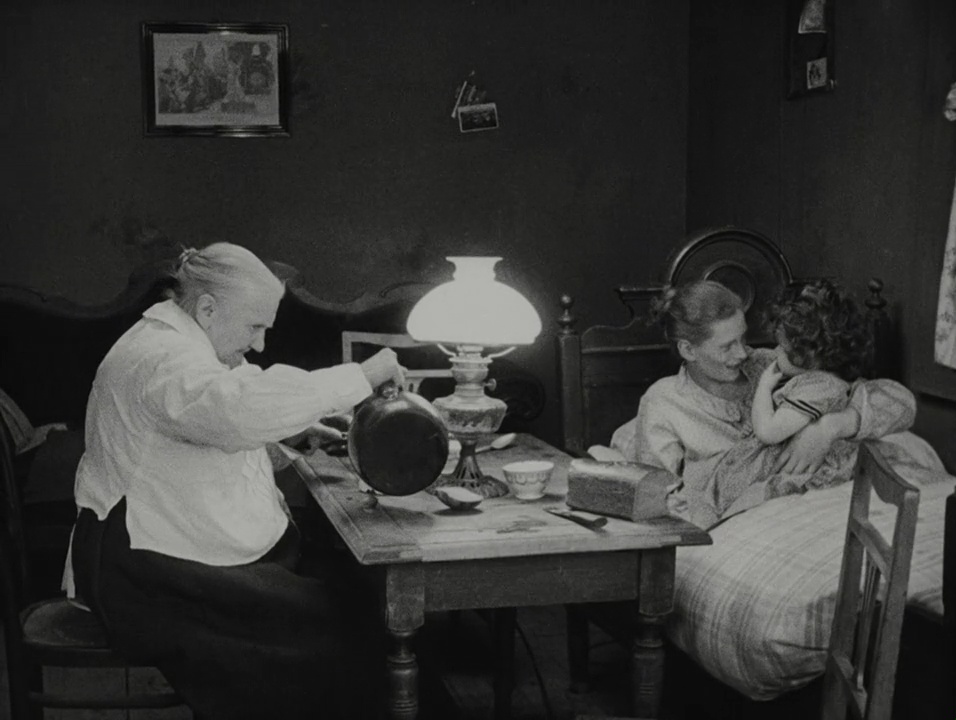
Die wunderbare Lüge der Nina Petrowna (1929; Ger.; Hanns Schwarz)

It’s 1929 and Erich Pommer has just returned to Germany from Hollywood. He’s keen to introduce sound to the Ufa productions, and he has earmarked the talented Austrian director Hanns Schwarz to direct the sound musical Melodie des Herzens (1929). But first, the pair embark on Ufa’s last big silent release…

Die wunderbare Lüge der Nina Petrowna (1929; Ger.; Hanns Schwarz)

Over the opening credits, the waltz plays. Look how the music seems to match the style of the titles, their sense. The font is a little old-fashioned, elaborate. But the text manages to flow, a feeling enhanced by the way each title dissolves into the next. It’s already an elegant world, a graceful one. But it’s also sad, transient. The waltz slows, becomes a kind of elegy.

The opening shot is of a clock. It’s old fashioned. Figures of a man and woman twirl. Elsewhere, a bath is being run. The camera tracks backward and pans to reveal a series of details; we see the elaborate breakfast table, the silk sheets recently vacated, the curtained walls, the spacious reception room (and yes, I love that the camera wobbles just the smallest amount as it moves in-between rooms: it speaks of the heaviness of the equipment, the effort of moving it, the determination to complete this fabulous shot); still moving, the camera finds the inhabitant. Her back to the camera, here is Brigitte Helm. The music brings in the main theme. It’s a glorious moment.

There is a cut. We see Helm from the front. There is a rose at her lips. She looks dreamy. She is dreaming, a daydream of someone we have yet to meet. When she looks to her left, we see her in profile. Is it my imagination, or is Helm even more beautiful than usual? She looks vulnerable in a way I’ve not seen before. I associate her with those pencil-thin eyebrows, raised in determined desire. Fritz Lang made her a star in Metropolis, but that film is such an oddity, filled with cold formality, with exaggerated tableaux and exaggerated performances—and all exacerbated by the faster-than-life framerate (seemingly in accord with its makers’ intentions)—that it’s difficult to get over, to get past. Even in some of Pabst’s films, Helm can relapse into a kind of archness that is very pleasing and striking on screen, but doesn’t always engage you in a complex, emotional way. But here, in Nina Petrowna, from this very first moment, it’s like she’s a different person, a different presence on screen. And it’s a private moment, this scene of her on the balcony. She’s not putting on a show for someone, or for the camera. The music dies away. Nina looks up.

The cavalry is on parade. The orchestra strikes up a march. But look at how Schwarz frames this scene. The horses and men are behind a high, dark, imposing fence. Who is being held off from whom? (As the narrative unfolds, we realize that both our lead characters are limited by the roles this society gives them: the confines of army life are as imprisoning as the confines of Nina’s apartment.)

On the balcony, Nina appears curious, but only mildly so. For she turns away to walk back inside—only, she cannot. Her silk throw is caught upon the balcony rail. She turns round and struggles to free it. The parade continues below. And now she looks more carefully at the men. Look at the way her face changes. She breaks into a kind of smile. But again, it’s a private smile. She’s not smiling for someone, but for herself. There is a vulnerability here. A delicious touch of backlighting haloes her uncombed hair. She throws the rose at one of the cavalrymen. It lands in his lap; surprised, he looks up and sees Nina. In each of their faces, we see a kind of childish delight. His wide-eyed surprise becomes a boyish grin. Her smile is almost a giggle, and the way she raises her hands up to her face is so gauche, it’s the gesture of a much younger girl. As if to underscore the innocence, Schwarz cuts from these close-ups to a wider shot of the parade disappearing round the corner—all overlooked up a stone cherub, who looks like he’s reaching out to touch one of the men. It’s an arresting image, sweet and sad. Sweet, because it’s an image of innocence; sad, because the men are out of reach—and because the glitter of armour makes them impregnable, cold, brittle. (Sad, also, because I’ve seen this film before, and I know what it all means.)

Nina shakes her head a little and goes back inside. Cue: the man of the house. A rich man, from the cut of his tunic; an important man, from the emblems on his shoulders; a wealthy man, from the way he is so at ease in the luxurious apartment, from the way he strides up the staircase. He has instant access to the inner rooms, to Nina’s hand, offered to his lips from the privacy of the bathroom. (His name is Colonel Beranoff, but the film purposefully denies us this for the moment.)

In the off-duty rooms of the barracks, we see the cavalrymen at ease. But the music tells us this is a military space: snare drum, marching rhythm, brass footsteps. The cavalryman we recognize from the parade is introduced—but not by name (more on this, later). He is merely “this young’un”, newly arrived in St Petersburg. His comrades (all moustached, unlike the cleanshaven youth) will show him the town. They take him to a nightclub.

The night club. Schwarz begins with a shot of fish in a shallow pond. It’s a curious image to begin the scene. It’s another image of entrapment, the fish behind their glass wall. The camera tracks back to reveal the luxury around them. The music is elegant, easy; another waltz, softer, sadder. The soldiers enter. The elder men show their innocent comrade the ropes. He kisses the hand of a woman, who seems to have been waiting for soldierly company. But as he lifts his head from her hand, his eyes catch sight of movement above him. In a balcony overlooking the hall, Nina and her companions are settling down. The cadet is all wide-eyed surprise again and, as in his first sight of Nina, breaks into a boyish smile. He is caught by surprise, by desire—by a desire not sought, but happened upon. (His comrades knew they’d find company; he was not looking for Nina.) His comrades look up to see who he’s seen. A fabulous shot through the jets of water from the fountain: the images is neatly divided so that we see distinct the two balconies, one with Nina, the other with a stranger. And oddly it’s the stranger who gives a Brigitte Helm-like look of desire back down at the soldiers (the raised eyebrow, the narrowed eyes; it really is very “Helm”). The soldiers mistake her as the object of their friend’s look. And it’s now that they name him: Michael Andrejewitsch. It’s one of only two times that he’s named in the film, and this first time is in the context of mistaken identity and desire.

Michael orders a rose, which he now holds to his lips—just as Nina spots him. The high/low spatial dynamic of their initial encounter is recreated: Nina again on a balcony, Michael below. But this time Nina is not alone. Her look of desire is seen by the man next to her: her lover, Colonel Beranoff. It’s a revealing shot: for it shows us the source for Nina’s (literally and metaphorically) “high” position. It’s not her table, it’s Beranoff’s; it wasn’t her apartment balcony, either: it was his. It’s another sad moment. And look how the two people falling in love are framed: she overlooked by the man who effectively owns her, he overlooked by the fountain, framed by water, looking small and vulnerable and out of his depth (socially, yes; romantically, yes; and, most certainly, financially).

And, oh goodness, yes, please look at Helm’s face in this scene. She starts to convey her desire—less girlish than in that first encounter; it’s more of the look we associate with Helm from other films: the eyebrows, the tilt of the head. But no sooner as she expressed this look—a look of desire, certainly; but, more than that, a look of agency, of will—than she relinquishes it. It’s a beautiful moment of performance. Just see how that clear sense of wanting drains from her face. It’s not that she ceases to desire Michael, but that she realizes that the man sat next to her will not allow it. She cannot express her longing, for her longing is prescribed. So she immediately adopts her casual, disinterested persona for Beranoff—you can see her shake off her self and become another. “Is he a good friend of yours?” the colonel asks, nodding down to the tiny figure below. Oh, just a childhood friend, she says—she lies. (As I rewatch this scene, I’m almost convinced Helm is speaking in English. It would make sense, as she’s speaking to the English actor Warwick Ward. How interesting that this first “lie” is itself spoken, albeit silently on screen, in a second tongue.) Nina is performing, and Beranoff knows it. Ward’s performance is excellent: so knowing, so charmed in his lover, yet so unbelieving. “A charming lie”, he says. “Are you jealous?” No, he isn’t—and to prove it, he invites the cadet up to their private room. (There are two other men at their table, but the camera and Nina hardly concern themselves with their presence. Nina is worried what’s happening down below.)

The exchange between them is overlooked by the colonel. He’s almost amused—almost. But he leans against the wall, casting a shadow—occupying space. He doesn’t have to say anything for his presence to be felt. And look at Helm’s face: hiding her emotion from Beranoff, resenting his presence, and falling for Michael. They waltz, and the camera moves. The piano is being played on screen, and all that’s left in the theatre is the piano below the screen. One of the colonel’s companions turns off the light. It’s ostensibly to make the effect of the punch flambee more noticeable, but it has the effect of giving the illusion (only the illusion) of intimacy in the room. Nina and Michael are in silhouette against the balcony; Beranoff becomes a dark shadow against the wall. (The scene also presages the electricity going off in the lovers’ flat, later in the film.)

The colonel quickly tires of their dance and turns on the light: the waltz ends. The young couple looks embarrassed. Nina’s face falls: once more she must hide her feelings, play the game. She dons her fur coat; she looks extraordinary. We see Michael’s eyes on her, then they fall away to the floor. What is he thinking? Well, we surely know: it’s like her downcast eyes just now, it’s the feeling of desire creeping up on him, and the sadness of unfulfillment. But Nina gives him a knowing look. Their farewell is brief. We don’t see what’s happened, initially, for Schwarz cuts to a close-up of Michael. It’s another marvellous little moment, this look on his face—and Francis Lederer’s performance is pitch-perfect. It’s innocence and expectation mingled, longing and trepidation at the same time. The camera follows his eyes as he looks down: Nina has placed a key in his hand. (And oh, the music—it’s just perfect. The waltz ebbs and flows below the image, romantic and melancholy. It’s drifting above the image, sympathetic but distanced, knowing but detached.)

This same mood is carried into the next scene, when Michael havers outside Nina’s villa before using the key to enter. The music here is cautious, almost anxious. Michael’s entry is the opposite of Beranoff’s: the colonel swept upstairs, but Michael hesitates at every step.

And here is Nina, opening the door. She, too, is half knowing, half hesitant. She knows what they both want but is not sure the hows and wherefores—and what it might mean. Michael is all boyish hesitancy. Nina offers him a seat, a closer seat. Why not sit next to her? She goes to him.

“You must have wondered about my strange invitation—” she says. He coyly shakes his head, grinning like a child whose smugness gets the better of him. Cut to Nina, whose smile fades, slowly, who looks away. This is a perfect scene, a perfect performance. You know everything about Nina’s life in the way her smile fades, right here. You know that she likes Michael, that she desires him physically, but that she hoped for more than just physical love. And the look on Michael’s face—that suggests he is not as innocent as he seems, that he assumes she is a certain kind of woman—hurts her. She worries that he thinks he has won the right to her body, that she is no more than a body to him. And the slowness of this realization, the way it imbues first the close-up of her face, then the shot of them sat together, says so much about her life. Surely now we understand her relations with the colonel, which is more of a transaction than a relationship? Surely we can fill in the blanks of how she has had to get by until now. We have not seen her in the company of friends, only the colonel’s friends. Does she have friends? What has happened to her family? The fading smile here, it seems to me, is a very lonely thing indeed. She thought she might have been connecting to someone, only for this connection to be another transaction. (It was this moment that made me fall in love with the film. Suddenly, a whole stratum of feeling is revealed beneath the surface.)

“I think it’s better if you were to leave”, she says. Now it’s Michael’s turn to realize what’s going on, how much his little grin and his little shake of the head has hurt her, wronged her. They shake hands, and as they touch the clock chimes. The montage of the clock from the opening scene begins again, and the film changes once more. Nina moves close to Michael, and they dance to the music of the clock. What are we to make of this? It’s a delightful scene, but it’s something else. Schwarz cuts from the clockwork man and woman twirling to the dance of the human couple. Is Nina simply fulfilling Michael’s expectations? Does she lead her life with a kind of mechanical drive, an ingrained habit?

“Actually, you could spend the night here”, she tells him. She goes for champagne (seeing and hiding a picture of Beranoff en route); they drain their glasses; he refills the glasses and she looks at him. The music moves from tension to something tender. Nina lies back on the bed. She’s putting on a seductive face (more Helm-like). Michael looks at her. “You must be very tired, Madame— —?” (That double extended hyphen is a lovely touch in the original title. I love a good hyphen, it’s so gestural.) The question makes Nina cease her seductive performance and sit up. She agrees it’s bedtime. He makes to leave, and we see Nina shake her head. Is he so innocent? She makes excuses about him not being about to leave: what would the neighbours say? The villa is large. She leads him by the hand to the next room. Michael looks around, in wonder. It’s clearly the nicest bedroom he’s ever been in. Nina says goodnight and leaves. But she goes only to the other side of the door. Each one listens to the other through the door, hesitant. Nina stands. The clock ticks. She quietly opens the door. Michael is asleep in a chair. He hadn’t dared even go into the bed. She looks at him sleep, almost shaking her head.

The camera finds them the next morning. She has slept on the floor by the door, and he finds her there. They are suddenly both children, innocently waking and then picnicking their breakfast on the floor.

Beranoff walks in. The colonel makes the immediate assumption that Nina has slept with Michael. “I hope, officer, that you are as pleased with her as I’ve been!” he says. (Incidentally, Michael is addressed by his rank of “Kornett”, the lowest rank of commissioned officer in the cavalry. He is, technically, an officer—but only just.) He leads Michael out, warning him that “Women and officers should have only one master!” It’s a line that reveals just what he thinks of Nina, and women in general. Beranoff next shouts at Nina, asking her to invent some new lie to explain herself. So she tells him that she cannot lie, since she loves Michael—and says he spent the whole night with her, sleeping apart. The colonel laughs and applauds her “lie”. Just as Michael made assumptions, so does Beranoff. He offers Nina the chance to leave, but she must also leave “his” diamonds, “his” furs. The full extent of her position, her lack of power, is revealed.

Michael, meanwhile, is caught by a superior officer coming back to the barracks late. “Women, no doubt the reason for your being late, are worth nothing”, the officer explains.

Nina arrives at the barracks, and of course Michael gets into her carriage. There is a long, long moment as they say nothing—until she puts her hand in his. She takes him to her apartment—her apartment. It is bare, dark, small. Michael looks around him. “You live here now, Nina Petrowna?” It’s the first time anyone in the film has spoken her name, and it comes now—when Michael realizes what she has given up, and what kind of life she has led until now. You can see him realizing it on his face. He looks adult, for once, and when he smiles it’s out of respect—an adult emotion. They kiss, and there is a propulsion to their embrace. It’s like an obstacle has been overcome, they are ready for one another.

They are living together. Nina is peeling spuds. There is clock on the wall, a simpler clock: instead of the elaborate mechanics, a small bird pops out to call the hour. There is no wine, they don’t have enough money. But Nina lays the table and looks truly happy. And Michael can afford to buy only one flower to bring home for her; but he looks happy. Nina plays their waltz. It’s a lovely scene, for the orchestra in the theatre must stop and wait: the solo piano takes over and mimics the attempts of Michael to learn the tune on screen. It’s lovely, too, for the way it’s played. The lovers are still having fun, enjoying being next to one another, giggling, joshing. Their bodies are in synch. Michael wears his uniform in a casual way (you sense he’s wearing the hardy coat for warmth in a cold apartment) and Nina’s hair is loose. So there’s a touch of studentish-ness about them, a little shambly, a little boisterous. Nina is called to the door. The orchestra resumes its accompaniment, only for the piano to try—and fail—to play with it, as Michael fluffs his playing.

Nina must lie again, a well-intentioned lie. For the electricity is about to be cut off, and she can’t bear to tell Michael how much money is owed. The lights go off as Michael fumbles with the piano. The scene harks back to their first dance in the dark. There, the piano waltz was stopped by the lights going on; here, it’s stopped by the lights going off. Nina pretends the outage is for Michael’s sake: a surprise dinner with candles. “Isn’t it beautiful?” They kiss, and Michael accidentally breaks her bracelet. Wanting more light, he goes to the switch and the truth is out. There is a long close-up of Michael, realizing what’s happening. Nina looks at him (another tender, sad close-up of Helm) and Michael promises to make enough money once he’s promoted. He sees her battered shoes, and the scene ends with his eyes in thought and hers looking away in contentment as she strokes her hair.

The officers’ casino. Michael joins a table. His face is boyish enthusiasm, excitement. Beranoff comes over, sits. Drinks are poured. The night goes on, turns to morning. It’s a scene out of Joseph Roth: the young officer trying to keep up with his peers, being out-played and out-drunk. So Michael cheats, and Beranoff sees him. Beranoff makes to leave. He puts on a fabulous coat, a fabulous hat. His status is on show (immaculate frockcoat, medals, buttons, aiguillette, sabre), as is Michael’s low rank (simple tunic, unembellished). He confronts Michael with a pre-written question that he only has to sign. It’s the first time we see Michael’s simplified name: M. Rostof. He has signed his own suicide note, for this is “the only solution possible for an officer”. But Beranoff makes him an offer: report to his flat tonight…

Cut to Nina, joyfully expecting Michael’s return. The phone rings, and Beranoff makes an unspecified threat about Michael’s career. So Nina arrives chez Beranoff. She is cold, dignified. But she tries to hide her shoes from Beranoff’s gaze. But in every scene with Nina, we know Beranoff to be knowing, shrewd, observant. He plays his hand perfectly: shows Nina the confession, the card. She looks at him harshly, but then goes to the window and cannot hide her tears. So Nina makes the deal Beranoff has forced her to make: she will save Michael by giving him up, and report back to the villa. When Michael comes in, Nina has left, and he accepts Beranoff’s apparent change of heart with that same, boyish expression that he had when he thinks luck is on his side. And on his way home, he goes into a shoe shop.

We know what will happen next, but it’s still hard to watch. Nina is alone. Their plates have already been laid out on the table. She has decorated Michael’s with sprigs of flowers. She strokes his empty chair. She extinguishes the candles. Now she must lie again. But first Michael presents her with a gift. The look on Nina’s face—wiping away tears when Michael cannot see… She unwraps the box. Look at her face, her hands—she is so happy. And Michael too grins with satisfaction. She cradles the shoes, strokes them; but her face hardens. She swallows. The music slows, turns to a minor key. “It’s very nice of you, Michael, that you’ve bought me a pair of shoes…” (and we see her face again; her eyebrows arching, something like forced cruelty taking hold of her—a performance taking shape) “…but do you think that I would wear such common shoes?” She stands, chucks the shoes onto the chair, and walks away. It’s such a devastating moment, to watch her break his heart—and to know that hers is already broken. There is a close-up of Michael, clearly hurt, clearly very hurt—hurt in such a way that he can hardly move; it’s all in the eyes, the slightly open mouth, not knowing what to say. “That’s not all Michael!” Nina adds, spinning round. And her face is almost disbelieving, almost surprised at her own performance. “I must finally be honest with you. I’m tired of living in this poverty.” Her arms swing, she arches her back. Michael comes over. “I need the wealth, the splendour, the villa…” It would be too easy to feel more for Michael in this scene, were it not for what he does next: he shoves Nina, shakes her against the cabinet. It’s the act of a child, not a man. It shows how immature he is. It tempers our sympathy with him and switches the emotional focus of the film back onto Nina. This is her film, after all. And it’s her performance here, in this scene, that we realize the “wonderful lie” she’s telling. You can tell how much it’s taking out of her: she’s almost lopsided, leaning on the sideboard for support while lurching her shoulders forward and throwing back her head. She says she’ll sell off everything she’s given him—she means Michael to think this refers only to her body, but we know it’s far more than that. Michael rushes out, and Nina is left at the shut door, leaning against it to keep her from collapsing. Cut to the cheap clock on the wall, with its little bird emerging to cry the hour.

And Schwarz dissolves from this clock to the clock we recognize from the opening shot of the film. If the clock seemed charming or silly when it first appeared, it now feels tragic. For the image has now attained its true significance, its full weight of meaning. We know the clock belongs to Beranoff more than to Nina: it is Beranoff who has determined the rhythm of Nina’s days, the timeframe of her life. The mechanical lovers are condemned to repeat their dance, which can never alter. Time is prescribed, movement is predetermined. So we see the mechanical couple waltzing once more, and the camera once more tracks back across the villa’s interior space to find Nina at the balcony, once again with a rose in her hand. Snow lines the streets. Here comes the cavalry. She looks for Michael, finds him, throws the rose. He ignores it, ignores her. We see the cherub, once more reaching out for the receding column of men. Nina turns, slowly, almost limping back inside.

The image of the discarded rose, lying on the snow, dissolves onto a huge bunch of fresh roses—and the camera tracks back to reveal them in Beranoff’s hand. He runs upstairs, bursts into Nina’s room and sees her lying on the couch. He’s all smiles. He throws the roses one by one over Nina—and now his face changes. There is a close-up of Nina, eyes closed. In the score, the solo violin was playing over a few sparse, pizzicato chords in the strings; now the music simply stops. Beranoff sees the empty vial on the floor. He drops the roses. The camera moves up from the vial on the floor, up along the line of Nina’s hand and arm, drooping from the couch, up to her face, then tracks left along the line of her body; we realize she is wearing black, and the roses strewn over her unwittingly fulfil the funerary rites. The camera still moves along her body, as the orchestra resumes its course—playing now a slow, funereal march. The camera reaches Nina’s feet and stops: she is wearing the shoes that Michael gave her. A slow, slow fade to black. ENDE.

I was very taken by this film the first time I saw it, and rewatching it has reinforced my appreciation. Most of all, I admire the performances. Francis Lederer gets his role as the young officer just right: it’s a perfect rendering of someone of that age, of that rank. He’s keen but gauche, clumsy but tender, greedy but shy. The performance could easily be silly, exceeding in any one of the conflicting emotions; but Lederer keeps everything in check, nothing is overdone. Warwick Ward plays the colonel with every bit of charm, superiority, and knowingness the character demands. He never has to emote, to shout or scream: the point of such a figure, of a man of this rank and wealth, is that he never has to emote or shout or scream to get what he wants.

And of course, there’s Brigitte Helm. I never thought I’d be moved like this by her on screen. Fascinated, yes. Enticed, yes. Delighted, enthralled, yes. But really moved, no. This film shows Helm at her most subtle, most empathetic. Of all the films of hers that I have seen, this is her most nuanced performance—aided by the superb direction. Those early scenes with Michael in the club and then in Nina’s apartment are so, so touching. It’s almost like we watch the star persona (her “role” as kept woman) fall away to reveal the young woman beneath. Several of the contemporary reviews I’ve read compare her unfavourably to Greta Garbo. It’s true that Nina is a role Garbo would have taken had the screenplay been realized in Hollywood. But I’m glad it wasn’t, and I don’t think (as some German critics did) it does Helm discredit to take it on. Though Garbo was only a few months older than Helm, somehow I can’t quite think of Garbo being the child-like host of Michael for their picnic in her apartment. Rather, I can’t imagine being surprised by the transformation in the way that I was with Helm. It’s a subtle, sophisticated performance, by turns fierce and vulnerable.

Of course, the whole film looks stunning. The sets are gorgeous, the costumes exquisite. It’s a rich, complete world on screen. Nina’s apartment, the nightclub, the barracks, and the snowy streets outside are all coherent spaces, each suggesting their own context and history. And the way the camera glides through these spaces, or glances from one space into another, is fluent, expressive, articulate, meaningful. The cameraman was Carl Hoffmann, one of the great names of German filmmaking in the 1920s and beyond. If he had shot nothing else, Hoffmann would be renowned for being the chief cameraman on E.A Dupont’s Varieté (1925) and Murnau’s Faust (1926) (to say nothing of his earlier work with Fritz Lang). If Nina Petrowna does not have the spectacle or scale of these earlier films, its images are nevertheless as stylish and delicious as anyone could want. I particularly love the dark limits of the film’s frame, the way the iris gently shapes the images. It’s most visible in the darker interior scenes, further excluding everything beyond the frame from our eyes. The outside world seems less interesting. And I’m more than happy to forget what’s beyond the screen, the scene, the performers. (Most especially, that first time they dance, or their first night together.)

In all this, it might be easy to forget the director: Hanns Schwarz. Lots of reviewers dismissed him as a merely superficial, decorative director. But it’s unfair to think the film would work merely by dint of its sets or camera movement, as if the performances fall into place without someone human directing them. So, yes, I credit the film’s success to the guiding power of Schwarz. And although the story might be a variation on a familiar theme from literature or cinema, it’s still moving and well realized. I wouldn’t argue that the film is “great” in the sense that other films of the late 20s are great. It’s not setting out to change the world or revolutionize camerawork and editing. It’s not what it sets out to do, but how it does it that makes it great. I can’t imagine it being done better.

Saying how good the film looks, I should say (as my images suggest) that I was watching Nina Petrowna via a version broadcast on Swiss television many years ago. On a smallish screen, it looks fine—and certainly shows how good it should look. (I also have a friend who saw the film on 35mm when it was shown in London in 1999-2000, who confirms that it does indeed look superb on the big screen.) A newer restoration of the film was completed in 2014-15, which is listed as being slightly longer than the version I’ve seen. (Although this always depends on the framerate of either version.) To finish, I can at least show one frame from the new restoration. Interestingly, you can see more information in the frame from the broadcast copy: the still from the DCP has slightly cropped the image to lose the rounded corners of the original aperture. Shame. Give me my rounded corners! Give me more Nina Petrowna!

One of the other great pleasures of the broadcast copy I saw is the original orchestral score by Maurice Jaubert. The soundtrack was recorded in 2000 for its broadcast on ARTE, Dominique Rouits conducting the Orchestre de Massy. Interestingly, the Jaubert score was not the one performed in cinemas for its Berlin premiere in 1929. There, the score was by Willy Schmidt-Gentner—and contemporary reviews all say how wonderful it was. I’m curious to know if it survives, but the Jaubert score is so good that the film can thrive without the “premiere” music. This was Jaubert’s first film score, and his only one for silent film. It’s built around a few melodic themes, all of which are instantly memorable and which vary and develop over the course of the film. It’s wonderful the way it wrings so much out of a simple set of melodies, by the way it changes instrumentation—moving from the full orchestral sound to smaller groups of strings, and even down to solo piano. Like so many scores of the period, it doesn’t try to hug the images too close: the music drifts over the film, creating mood, filling out the emotional resonance of the scenes. I catch myself humming bits of it very often. I hope a new recording is made for the new restoration—and that the film gets a proper release on Blu-ray someday. It’s very much worth it.

Paul Cuff
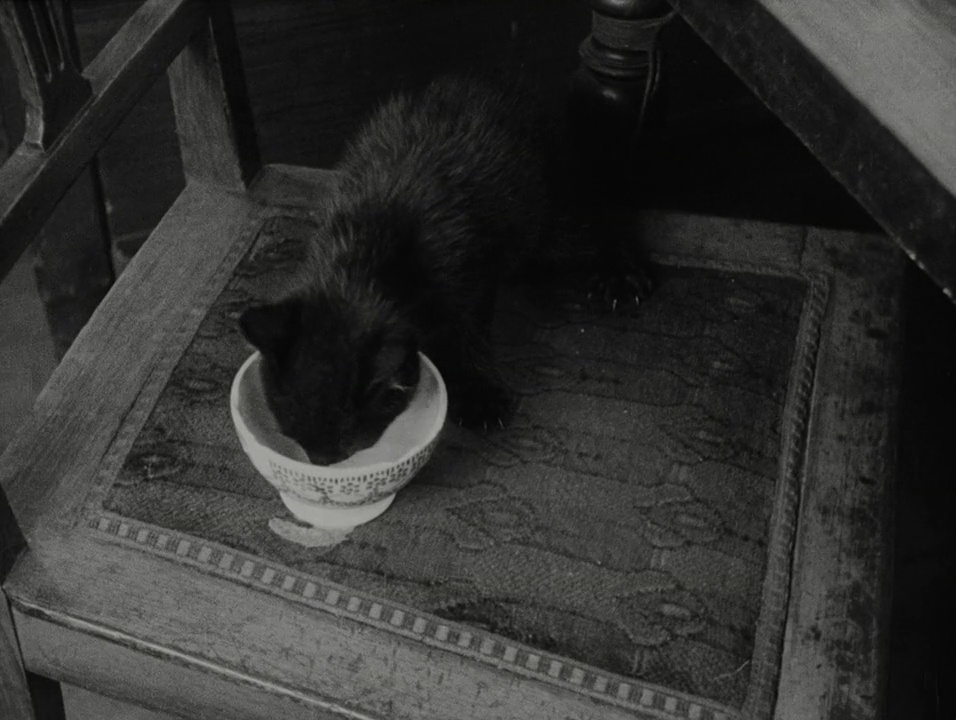
Abwege (1928; Ger.; G.W. Pabst)

I couldn’t summon the will to write about something “seasonal” (i.e. Christmassy) this week, so I went back to revisit something I saw earlier this year. (Although I suppose, as the central section of the film is a party scene, it might have some vague seasonal rhyme with New Year.) We’re in Germany in the late 1920s, so it’s odds on that whatever we see will be a quality production. We’re in the hands of G.W. Pabst, which suggests directorial excellence, and we’re in the company of Brigitte Helm, which promises…. well, ahem, good things.

Abwege (1928; Ger.; G.W. Pabst)

The opening title makes it clear whose picture this is: “Brigitte Helm in Abwege”. It’s a matter-of-fact style font, spelled out in a cool blue. I’m used to a certain kind of green for German intertitles of an earlier period (1910s-early 20s), but I like this blue.

The first shot shows us Brigitte Helm, or rather, her image. The artist Walter is drawing Irene (Helm) in profile: she’s the star, the central concern, and here she is. Walter is fond of Irene and doesn’t hide it. Irene knows it and demurs, just a little; but Liane, her friend, enjoys sitting in on their unspoken flirtation. Walter invites her to his studio. Liane seems keen for Irene to accept. There’s something curious about Liane (Herta von Walther). Her short, black hair, her dark, eyes, always narrowed in—how to put it?—receptivity. It’s not as though she’s sinister; but there’s something about her that makes her look as though she has a scheme on the go. With the cigarettes, short hair, and chic dark look there’s also a touch of the “intimate female companion” visible in other characters from films of this period (think Augusta in Pabst’s Die Büchse der Pandora, 1929). It’s like she’s seducing Irene through Walter.

There is a close-up of Irene, mulling over the idea of seeing Walter—imagining it, and perhaps its possibilities; but her face suddenly changes, her eyes widen with delight, and we realize she’s seen something at the other end of the room. Yes, indeed: her husband arrives home, and for the first time the camera gives us an establishing shot of the whole interior space. Up till now, it seemed as though we were in a sitting room. But the long shots reveal its context. First, we see the huge space extending to the glass doors that mark the entrance. Second, the camera looks back at the reception area where Irene and friends are sat. It’s dwarfed by the space around it, by the grand staircase extending over it. The furniture is huddled into this far corner; the rest of the space is empty. Apart from the curtains in the snug corner, the walls are bare, the space free of “soft” furnishing. Floor and walls are tiled. It looks like a medical facility.

Irene’s husband arrives. He kisses her, but when their lips meet Pabst cuts back to Liane lighting a cigarette. It’s a rhyme on their rival lips, a play of rival habits. The film has offered us no introductory titles to anyone so far. The only list we’ve seen is the opening credits. So although we’ve read there that Irene’s husband is “Dr Thomas Beck”, and presumably therefore a professional doctor or academic, the film makes us work out—visually, silently—what this means in terms of the relations on screen. So here is Liane, offering a cigarette to the doctor; he refuses, but a look from his wife (of hurt, disappointment, embarrassment) makes him take one out of politeness. The history of this group, the internal tensions, is all here for us to see in a few well-chosen, economic gestures of set design, performance, and editing. Even the doctor’s sense of detachment, or superiority, is here: for Pabst frames the doctor taking the cigarette from a slightly low angle, almost akin to Liane’s point of view. He’s all profile, and behind him is the well-machined, well-designed staircase, angling away to the top of the frame. It’s all very cool, reserved. Smoke drifts from the bottom of the frame. He looks away from its source, from Liane. When finally he takes a cigarette and smokes, he is still looking away from Liane. But Pabst doesn’t look away: he cuts back to Liane, amid the cushions and comfort of the only soft-furnished corner of the room, grinning in her small, but significant, moment of triumph. (My word, this film really is well directed.)

Liane has invited them to a part at the Eldorado, but the doctor has asked Irene “a hundred times” not to “associate with that woman”—and does so again now. Irene goes to say goodbye, sadly, to her friends. At the door, she shakes her head: she can’t come out tonight. Walter kisses Irene’s hand, a little too long. Liane asks Irene “why do you allow yourself to be locked away like this?”, and the words are made all the stronger for taking place at the glass doors of the entrance. Earlier, I said the interior looked like a medical facility, and now my impression is reaffirmed: the glass doors mean that Irene, inside, can be observed from outside. A space that offers scant comfort (in terms of furniture, homeliness, the bustle of everyday life) also offers scant privacy. Irene withdraws. She stands at the glass doors and it’s as if she is under observation in a facility.

But Pabst again does something interesting. As Irene stands at the doors, the film cuts back to her husband finding Walter’s drawing of Irene. He looks at her profile, and the viewer (if not the husband) realizes that Irene is caught between the roles given to her by two men. From the square sheet of paper on which Irene’s face is framed, Pabst cuts back to the square frame of the glass door behind which Irene stands. Both are frames through which Irene is observed (and, of course, we too observe her through the frame of the cinema screen). If she is trapped at home by her husband, the alternative is to be trapped in her admirer’s designs.

Irene herself picks up this theme in the next scene, accusing her husband of “locking me away”. The phone rings, and it’s more work for the doctor. He talks and examines his files, while Irene sits on his desk and glares at him. The camera cuts between close-ups of the files, the husband, and Irene. You might call the cutting here a kind of “free indirect” style, whereby the film shows us the character’s thoughts and feelings without ever quite being subjective. “This is where our marriage is!” Irene roars at the end of this little montage: has the editing prompted her cry, or were was the editing prompted by her feelings? Still he ignores her, so off she runs.

In Walter’s studio, we see more images of Irene: her face is being crafted, improved, ready to be fed into the rack of the printing press. It’s a faintly threatening image: that it precedes Irene’s arrival suggests she doesn’t quite know what’s coming. Nor does she know what’s following her: a cab with her husband. He is in his own frame now, the jealous husband, behind the glass cab window. His fur-collared coat is dark, brooding. It’s the only thing “soft” about him, even his house. It might be a sign of tenderness, of a desire for something soft and yielding, but the coat makes him look threatening: his clean-cut profile and slicked-back hair brooding over his tall, black form. He’s in marked contrast to Walter, the artist, who has donned his white studio coat. In his room, the large canvas and papers are matched by the pale sheets over the large skylight. His whole room is dominated by his craft. Irene’s face is being pressed onto a sheet. Now Irene enters. She sees her image strewn about the room. She is flattered, pleased; she demurely hides her emotion from Walter in the background, but Pabst captures the look in the foreground. When Irene sits beside Walter, she gives vent to her anger—but Pabst offers no title to translate her emotion; Helm can say it all with her performance, her face, her hands, her shoulders tensing and untensing, her body writhing even while sitting. Walter seizes his chance, and suggests they escape together to Vienna. Irene writhes into—and then out of—Walter’s embrace. (Truly, no-one writhes like Brigitte Helm.) For the first time, she’s showing off the clingy sheen of her dress—and the fact that she has the sensuality to wear it like it’s meant to be worn.

But the doctor watches still. And now he’s up in Walter’s studio, and hears him ordering the train tickets (the “sleeper” service is as suggestive a kind of ticket as any scriptwriter might cite). His entrance sends papers blowing across the room. It’s the first time the doctor seems more than merely morally assertive: here we realize he’s physically powerful, and the artist Walter looks weedy when he stands to confront him. The doctor walks stiffly, upright. He takes off his hat. Will he punch him? Pabst fades to black. (The film cannot yet show us the doctor doing something physically assertive. Throughout the film, it’s as if we’re supposed to take him as a virgin, as someone never quite capable of a physical act of intimacy with his wife. Is that it? Does she just want him to desire her physically?)

Irene is alone at the station; but not quite alone. Her husband arrives. It’s cold. It’s cold not merely because it’s evidently winter (the light, the trees, the clothes); it’s cold because suddenly the tinting has gone. This is the great advantage of tinting—and here it’s a subtle range of colours (sepia, yellow, pink, turquoise), almost like inky washes over the image: warmth and cold can be added to the tonal range, or created by transitioning from colour to monochrome.

The interior confrontation scene is introduced via the glass doors: first, Thomas steps through them to deliver Walter’s letter to Irene (the letter is a meek apology, presumably dictated to him by the husband); then, Irene goes through another set of sliding glass doors to read it, and presses her body against the wall, fists raised in anger. The husband looks guilty. But what will he do? She—well, we—are crying out for him to be human, warm. Go and kiss her, man! Show her you love her! Come on! He comes to the sliding doors. She runs to them. An embrace? No! He’s got his massive coat on again. “You’re going out now?” Irene asks, as incredulous as we are. A chance for tenderness is gone. Both regret it. The husband doesn’t go to his club, but slinks upstairs. As with the moment Irene reads the letter and presses herself against the wall, Pabst here uses a handheld camera to show the husband going upstairs. In both cases, it’s just for a moment: the camera pans, but clearly trembles a little as it does so. It’s a moment—two moments, in a visual rhyme—that introduces uncertainty, disequilibrium. Both characters are about to go off the rails.

Upstairs, the husband is alone with his shadow in the bedroom: the tinting is gone again, it looks extra bleak and cold. Downstairs, Irene descends in an astonishing dress (more on this in a moment), only to find a friend of her husband (councillor Möller) at the door. So surprised is he by her appearance and dress (and the doorman has already convinced him that Dr Beck has already left), that he allows her to invite him along to a nightclub. The doctor observes from the upstairs window, leaving it open as he slumps back onto a comfy seat.

The Eldorado is in full swing. It’s tinted a gentle pink, suggestive of warmth, and this is the first time we’ve seen crowd of people, the sense of this being a city, and the specific city of Berlin in the late 1920s. It would be a delight if it weren’t for the two sad figures on the side-lines: Walter, already drunk, and an anonymous woman (later identified as Anita), who looks not only intoxicated but world-weary to the point of moral collapse. We also glimpse two well-dressed, slightly effete, men smoking and drinking together; I say “men”, but one looks to be in his mid-teens; are they a couple? This nightclub is an ambiguous space. It’s joyful but sad, it’s a place where men and women meet, but also a place where other couplings are possible.

Enter Irene. Now let’s talk about what she’s wearing. You can glimpse the pale, silky something beneath her equally silky, fur-lined jacket, itself a kind of show-offy cut. She looks like a kind of dark-furred powder puff. And look at her hat! It’s a kind of glittering skull-cap, with two large fluffy tassels dropping like dogears on either side. It’s a mad ensemble, and Irene looks faintly frightened to wear it all as she crosses the dance floor.

It’s an amazing sequence, for Pabst now fully utilizes the handheld camera. (I say “handheld”, but it’s more likely to have been a chest-mounted camera, such was the weight of the apparatus and the difficulty of having to hand-crank it.)  As Irene pushes her way through the throng, the camera struggles to keep her in focus; it’s buffeted by the crowd, it tries to keep steady while showing us the effort needed to do so. Irene is trying to reach Liane, who is dancing in the heart of the crowd. When they go and sit at a table, Irene looks calmer. Her coat is removed, and she brushes back her hair: behold, Brigitte Helm. The silky something is now seen: a sleeveless dress, with a triple-wound pearl neckless and substantial, bejewelled wristlet to compliment it.

The nightclub sequence that follows is remarkable for intercutting lots of complex little subplots and characters. We see councillor Möller, for example, assailed by bob-cut flappers and embarrassed to be recognized elsewhere by someone he knows. Drink steadies his nerves, but also introduces him to other forms of temptation. When he joins Irene and co., he sees something fall down the back of Liane’s low-cut black dress and fears to go to the rescue—before letting something else drop there so he can have a rummage (much to Liane’s amusement). Meanwhile, at a neighbouring table, the boxer Sam Taylor observes the cool profile of Irene and begins throwing streamers over her. And on the fringes, Anita tries to score a hit (or hit it off—for money?) with various shady characters moving between various groups of people.

While all these little dramas play out, Pabst resumes the main drama of the night: Irene’s flirtation with Walter. When she first sees him, it’s as if Irene remembers that she’s Brigitte Helm. From across the room, she goes what you might call full-Helm: the slightly squinting eyes, the arched eyebrow, the power-pout, the arched back. It’s a glorious moment. To cap it off, she drains her glass—and then grabs Liane’s friend to dance and make Walter jealous.

Things start to get strange. Vendors are selling sinister child-size puppets at the tables. (We see Sam Taylor playfight with a half-naked, hairy-chested puppet version of himself.) Anita crosses Irene’s path and Liane explains that she’s after “a magic potion that carries souls up to heaven”. As Liane’s friend kisses her arm, Pabst cuts back to the doctor at home, shivering in the blowy room. At the party, Anita slips a note to gain some of her potion. Irene wanders off to sample the “potion” that Anita offers. They disappear into a curtained chamber. We see Möller, happily but unstably drunk; he’s there to make us a smile a little, and to contrast with the more serious events unfolding around him. For here is Irene, emerging through the curtains, her head slumped onto her chest. It’s like the familiar Helm writhe has been arrested halfway through and her body is stuck in a twisted shape. Her head lolls, but she tries to dance again—until she passes Walter. The two, now equally addled, stare at each other for a moment before Irene grabs another man (a stunted, almost expressionless old man with a Prussian moustache) and launches into a wild, twirling dance. When she swirls into her seat again, her mannerisms are the familiar Helm-isms, rendered even more mannered. A moment of sobriety comes as Anita passes in the arms of a dancer. It’s as if we see Irene in the future. To underscore the notion of this possibility, Irene finally asks Liane who is this woman. Only now, many scenes into the sequence, are we told: “She was the wife of the banker Haldern… who shot himself when she left him”. Irene runs out, horrified.

At home, she finds her husband immobile in the freezing room. She fears he’s dead, so is hugely relieved when he opens his eyes. She closes the window, warms his hands, takes off his coat. The film might end here, surely—if only he’d take her in his arms. But when they prepare for bed, and Irene slips invitingly between the sheets, the doctor finds the weird doll of the boxer and storms out angrily.

Irene collapses in a torpor, then wakes the next morning to find the gang from the club serenading her bedside. The room fills with liqueur and cigarette smoke, and the sight of Möller in Liane’s arms. Irene looks upset, more so when her husband walks in. The doctor tells them (sarcastically) to act as if they were in their own home. Irene stands and yells at him: “You’re no man!” (Still he refuses to assert himself physically, and the sexual connotations of these moments of refusal/reticence speak volumes about the marriage.) “You’re sick, my girl”, the doctor explains, to Irene’s fury. Sick? She’ll show him “sick”…

Pabst cuts from the limp boxer-doll on the floor to the real boxing ring. (More handheld camerawork here as Sam fights a black boxer. It’s as if the dance floor and boxing ring are equally spaces of dangerous thrills.) Irene is there with Liane, looking on. Irene’s dress is now a silky black cape, her headpiece a kind of false black bob, with glittery brow. (She’s turning the Helm-dial up to about 8 at this point.)

Irene takes Sam up to Walter’s studio: ostensibly for a portrait, but really to engage in complex flirtation and jealousy. (Meanwhile, Liane warns the doctor that his wife may be about to do “something silly”.) In the empty studio, it is Sam who is the cause of danger: he carries Irene to a bed and looms menacingly over her. Irene ceases her performative flirtation and becomes genuinely frightened. Pabst again uses the handheld camera to make the threat real, a kind of extension of the danger of the dancefloor or boxing ring. (And the unsteadiness of the frame reminds the viewer of those first scenes that set the plot in motion: the reading of the letter, the retreat of the husband to the room.) Walter arrives just in time. Irene is dishevelled, in tears. But Walter is too petty to go and comfort her. He petulantly throws his portraits of her on the floor. Irene blames him for what’s happened, only for him, in self-pity, to explain that he can’t offer her the lifestyle of her rich husband. Irene forces herself into his arms and—for the first time in the film—presses a kiss on him. But just as Pabst interrupted Irene’s marital kiss in the film’s first scene, so now the extramarital kiss is interrupted by the husband at the door. Walter is afraid, but Irene can’t suppress a smile. She quickly strips down to her chemise and makes Walter open the door. It’s a striking, candid moment of her longing for him: her eyes say it all, as she stares intently at him. As I said before, it’s as if her marriage is yet unconsummated; she’s stood there waiting for Thomas to… well, do something. But again he refuses, walking out of the scene.

Time passes between scenes. Walter has been asked to appear as a witness in the Becks’ divorce hearing. Irene wears a black veil, as though in mourning. Her eyes are sad, sincere, even if she can’t speak. Finally, outside, in the corridor, the couple approach each other. She swears she was not unfaithful, but the court has already ruled: they are divorced. But the pair are happy. Alone together in the hall, they sit on a bench. She rests her head on his shoulder. He tells her he loves her. When they kiss now, it has passion in it. It’s a kind of first kiss. When will they get married? “As soon as possible!” Irene exclaims. ENDE.

A very, very good film. Helm embodies her character’s emotions: she’s caught between wanting to express her sexuality (the desire for sex itself) and the fear of losing a marriage that might yet be saved; she’s alluring and unsatisfied, daring and timid; she wears astonishing clothes, but only intermittently knows how to mobilize their effect. As her husband, Gustav Diessl likewise manages to be both physically imposing and emotionally reticent: we spend the film waiting for him to align both body and brain with his wife. And though the narrative might seem conservative—the (un)married couple (re)united at the end, the idea of marriage itself reaffirmed—there are so many interesting, unsettling things bubbling away through the film. Even if it reassures us that husband and wife should stick together, the film is also quite clear about the need for appetites to be tested and satisfied.

The title itself—“Abwege”—might translate literally as “Mistakes” or “Wrong Ways”; when released in Anglophone markets, it was retitled “Crisis” or “The Devious Path”. Yet the word “Abwege” is one of those suggestive, faintly enigmatic German compound words. “Ab” is a preposition, a kind of directional prefix (“from” or “off”), and “Wege” the plural of “Weg”, i.e. “path/track” (hence the English word “way”). The illustrative phrase you find in dictionaries is “auf Abwege geraten”, to “go astray”. Both the official English titles for the film fumble with the subtle sense of movement, of deviation, implied in the German original. I’ll bet whoever came up with “The Devious Path” was quite pleased with themselves; but it sounds too much like the title of some government-sponsored anti-drugs film. Abwege is not a salacious or moralistic film in that way; this is Pabst, after all, not DeMille. The film’s first intertitle, “Brigitte Helm in Abwege”, is almost an extension of the film’s name: something akin to “Brigitte Helm is going astray”. Again, it’s an instance where reading a subtitle doesn’t evoke the same sense as the original title.

But my word, the film looks fabulous. It’s not a huge studio spectacular, but the sets are superbly designed and always expressive. The Beck household is big and cold; the nightclub set a swirling nest of bustle. Pabst lets performers, sets, and editing tell the story: there are remarkably few intertitles. After the opening credits, all the relationships between the characters are told entirely visually—Pabst sees no need to reintroduce anyone with a title. He trusts us to be intelligent, to see—and interpret—what’s being shown.

The restoration notes also mention that the film was tinted when first released in 1928, so the restorers have added tints in line with “the conventions of that time”. How many films of the period are still shown in monochrome prints when they were intended to be tinted? It’s a frustration that even new releases on home media (I’m thinking especially of the Feuillade serials from the 1910s) forego tinting altogether. In the case of the Feuillade serials, the restorers not only have plentiful evidence of the “conventions of that time”, but even incomplete tinted copies of the serials at their disposal—yet still they choose to release a monochrome restoration. (If you’re not going to tint your restored version, at least show us an extract of the tinted copy/copies as part of your extras—don’t hide the evidence!) So it was nice to see a restoration where a little conjecture is used to enhance the image as it would have been enhanced in the period it was made and released.

Finally, the music. I watched this film via the restoration shown (and streamed) at Pordenone in 2020. This had music for piano by (I believe) Mauro Colombis. Which was fine. Like most semi-improvised piano scores, it was perfectly acceptable. It was… just… well… fine. But I longed for an orchestra, for something as rich as the photography, as supple as the performances, as enticing as the characters. Unless it’s a through-composed score with striking melodies or invention, you’re never going to remember a piano score. You might remember it being good, it suiting the film, but in all my years of watching silent films I can only remember one piano score— Neal Kurz’s for the English-language restoration of Dreyer’s Michael (1924)—and that was because it was through-composed, and cited numerous classical works with which I was already familiar (Schubert, Tchaikovsky etc), pieces which were already great before appearing in the film. It’s always the case when I watch a great film, I want a great score to go with it and do it justice. Imagine my delight when I found that there was an excellent, a really excellent, chamber orchestra score for Abwege written by Elena Kats-Chemin—and that it was on YouTube for me to see and hear. (Notably, it was written in 1999 for a broadcast of the film on ARTE, a version that uses different titles than the newer restoration.)  The music is everything it should be: it follows the film, but not so closely that it feels cloying—it floats carefully above the images. It’s restless, rhythmic, but still melodic; with its lilt and dance-inflected feel, it fits the setting and the period. It’s also emotionally intelligent; it moves you when it need to. I love the cool, reverberating sheen of the glockenspiel—most especially when Irene emerges from the curtained room, filled with chemical heaven. (The ARTE soundtrack must have been recorded live, for there are plenty of coughs and acoustic shifting and shuffling that a proper studio recording would have avoided. But there is good atmosphere, and perhaps the performance benefits from being live and engaging with its audience.) If the film gets a proper release on Blu-ray, I do hope the best score is reunited with the best image. Without an official release on home media, there’s only so much patience I can muster to resynch the video of one rip with the audio of another…

What else to say about Abwege? Pabst’s great, Helm’s great. It’s a really, really good film.

Paul Cuff
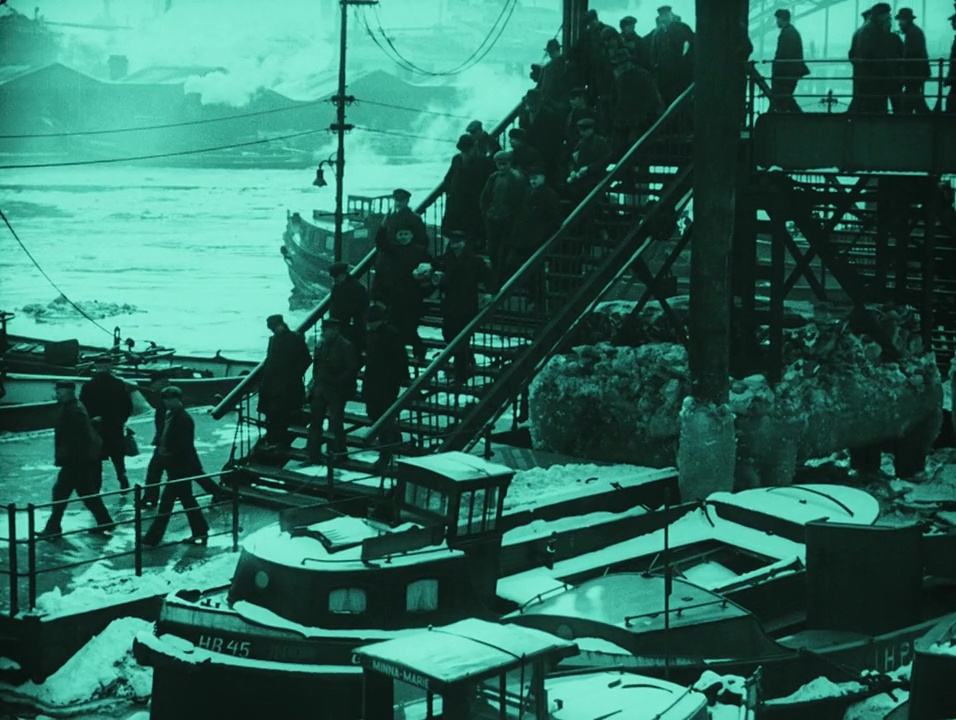
Im Kampf mit dem Berge (1921; Ger.; Arnold Fanck)

Well, it’s been cold lately, so I thought I’d watch something icy. I’m a sucker for anything that calls itself (or has retrospectively been called) a “mountain film”, and the fact that this one is subtitled “an Alpine Symphony” makes it even more appealing for me—as does the fact that the original orchestral score is part of the film’s restoration. And (spoilers alert) I was very, very happy with my choice.

Im Kampf mit dem Berge (1921; Ger.; Arnold Fanck)

Two climbers, a man and a woman, ascend towards the Liskamm mountain in the Alps. And that’s all the plot outline you need…

The film announces itself as “An Alpine Symphony in pictures / By Arnold Fanck”. Fanck is aiming high, even before the first image hits the screen. Richard Strauss’s tone poem Eine Alpensinfonie (1915) was still a recent cultural phenomenon in 1921, and quite the most famous work with that title. That, too, is a depiction of the ascent and descent of a mountain, starting at dawn and finishing at nightfall. (Though Strauss also saw it as a philosophical allegory of man’s post-Christian moral evolution, planning initially to call the work “Der Antichrist”, after Nietzsche.) Fanck’s film is likewise both a literal depiction of an ascent and a rumination on the power of nature. Like Strauss’s tone poem, Fanck’s film is divided into movements (six “Acts”) and has its own score, by Paul Hindemith (of which, more later).

Many silent films begin by introducing us to its cast via close-ups and written credits. Fanck does the equivalent for mountains (“The Giants of Zermatt”). Each is given an introductory title (i.e. “Weisshorn 4511m” / “Breithorn 4171m” etc), followed by a majestic shot of the peak. It’s a brilliant series of shots, each one carefully framed (sometimes with masking), with clouds and mist speeding by the summits. The music swells and thunders in conjunction with the images, articulating in sound the sense of visual threat, of material might. The mountain at the heart of the film is the last to be named: “Liskamm, called the ‘devourer of men’, 4538m”. Yes, here is the star of our film.

Such is the film’s relative interest in humans and mountains that the only two characters in the film go unnamed, and are merely introduced with a shared introductory title (“Players: Hannes Schneider, Ilse Rohde”). Indeed, the humans are never once given a close-up in the whole film: Fanck is interested in them only as a means to construct his “symphony in pictures” of the mountains. They provide us with a narrative and (at various intervals) a means to reflect on the process of filmmaking on location.

Perhaps this is why the “dialogue” (such as it is) is so perfunctory. I say perfunctory, it’s actually very lengthy—but it’s a kind of narrative guide more than a real conversation. The first such title sets the tone: “I’m going to the Betemps Hut. Do you see over there at the foot of Monte Rosa? I’m staying there by myself. No-one comes up here so late in the Autumn. One shouldn’t go climbing in the mountains alone. It is too dangerous. But it is beautiful.” He’s clearly not trying to chat her up. As if to confirm this, his follow-up is: “There, through this wild glacier full of crevasses, the path leads up to the Liskamm. There one looks down from a height of more than 4000m into Italy. Would you like to come with me up to such heights? But the air is thin up there.” See what I mean? It’s not exactly flirtatious. He then invites her to join him in the morning for the trek, following it up with an intertitle so long that it has to scroll down the text to fit it all in a single screen: “Do you see how the Liskamm is smoking? The Föhn wind is blowing over from Italy. I’m afraid it will be a stormy passage tomorrow morning. The Ice Giant isn’t as harmless as it looks. Many who have encroached upon its giant crevasses and icy walls have never returned. Thus Liskamm is known as the devourer of men. The ascent of Liskamm is attained more infrequently than all the other mountains in this area.” Just as Fanck shows the visual “conversation” between the two climbers in a single shot, so the textual “conversation” is really just a monologue. The film has no interest in either figure as a character, and Fanck offers no attempt at a visual dynamic between them: this scene has no close-ups, indeed no cutting at all.

So what is the film interested in? The scenery. My god, yes, the scenery. I’m not sure how much more I can say about the film’s narrative, save for the fact that its imagery is unendingly mesmerizing. I could easily have taken a capture of every single shot of this film. From the moment the journey starts, the screen is filled with wonderful, striking images. The woman traverses a glacier to reach the hut, and we see the expanse of undulating snow and ice with the dark mountain flanks growing in the background. Daylight is a glowing, golden yellow tint. That evening, we see their destination glowering red. When they set off together, the moonlight makes the world turquoise.
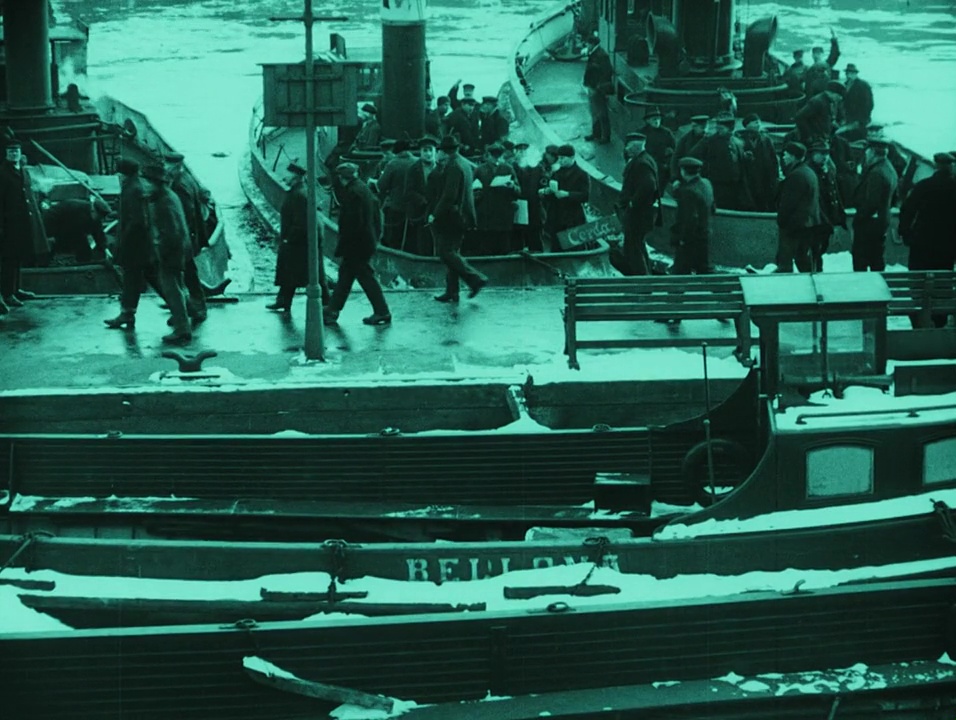
Given that the views are entirely dominated by ice and snow (i.e. white) and rock (i.e. black), it’s worth reflecting on why the entire film is tinted and toned this way. In the first instance, there is a practical advantage in colouring monochrome images: in the context of endless white vistas, tinting reveals subtle nuances in tone that the eye might miss in pure black-and-white. (Fanck’s later films would overcome this partly by being shot on more sensitive filmstock.) Then there is the need to demonstrate the passage of the day, which has a narrative purpose (the added drama of the climbers having to spend a night in the mountains). But the main reason is, I think, more poetic than practical. A film that calls itself an “alpine symphony” clearly has ambitions beyond documentation: Fanck wants to show what it feels like to climb a mountain. The film’s titles move between very practical explanations of what we are being shown (placenames, altitudes, technical equipment) and evocative descriptions. Thus, when the climbers set off the title introduces the sequence: “The shine of the alpine moonlight lies magical and unreal over the frozen world of the eternal ice.” Even the titles are tinted green: typical of many German films of the period, but also integrating Fanck’s text into the coloured world of the film.
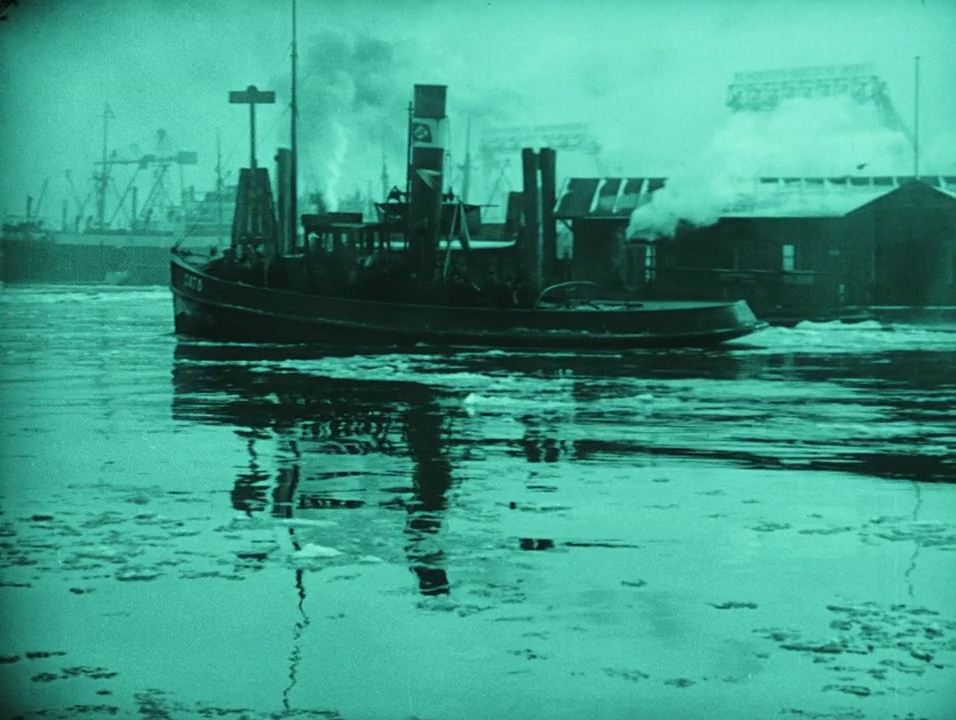
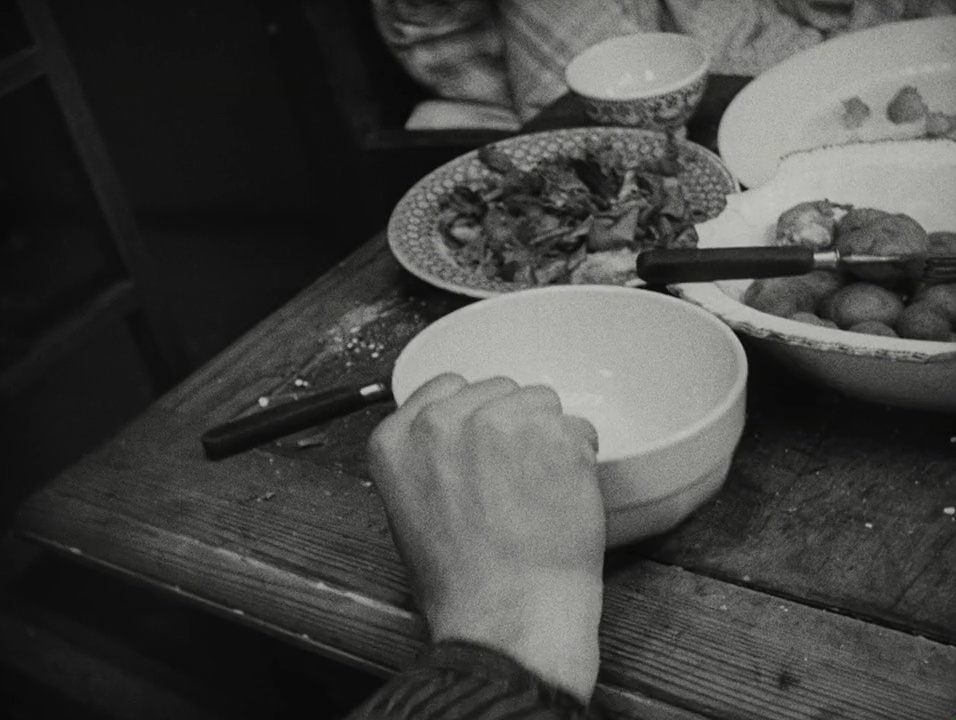
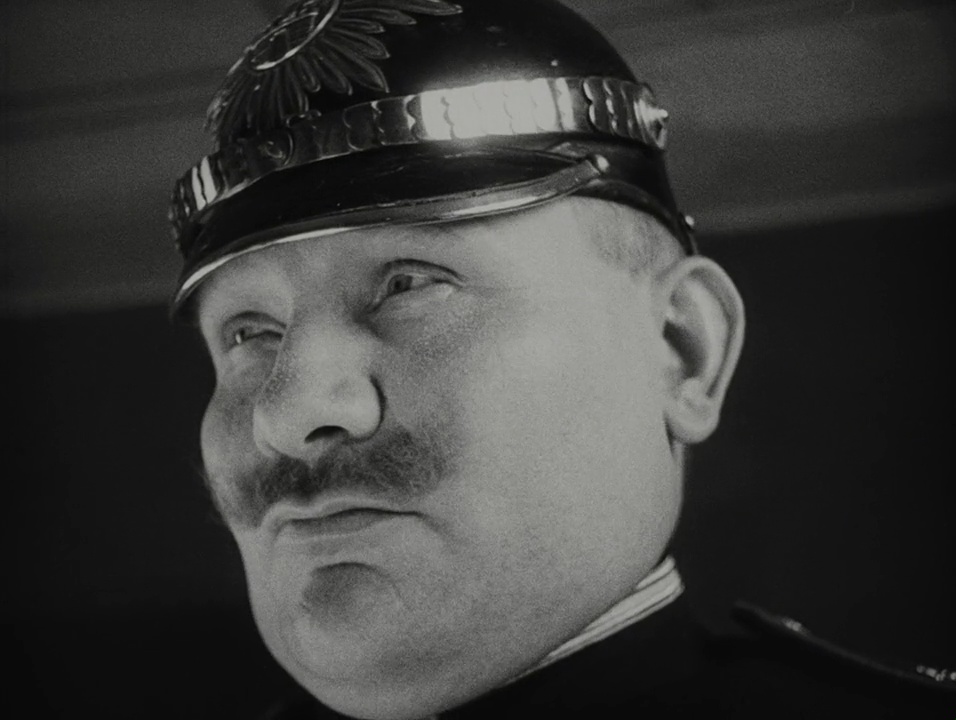
So, we watch the climbers negotiate the fissures and rock, wending slowly across the screen, shot-by-shot up the mountain. Sometimes Fanck lets the whole manoeuvre unfold in a single, unadulterated shot. Other times, he will subtly remove a section from the middle of a scene to speed up the climbers’ progress. It’s an utterly absorbing process. Not only the danger and daring of the climbers, but the means of their climb is fascinating. It’s extraordinary how little equipment they have: just some goggles, a length of rope, spiked boots, and an ice pick that doubles as a walking stick. Much of the time they aren’t wearing gloves, and one can only marvel at the hardiness (and leatheriness) of these mountainfolk. (It’s only when the storm descends late in the film that anyone even bothers to put on a scarf.)

What are we watching? Is this a documentary? Is it fiction? The question seems to be raised by Fanck, too. For although he creates a kind of dramatic narrative, he is also interested in the process of filming what we are watching. About halfway through the film, we suddenly see a man lugging a camera and tripod on his shoulder. He climbs an icy peak, sets up the camera, and begins turning. Fanck’s own camera pans right to show what the camera is filming. It’s such a strange, delightful moment to step out of the fictional world—only to realize that the camera is itself part of that world. You realize that we are seeing one scene of precarious filming via a second scene of precarious filming. Fanck makes us realize the difficulties of filming the very scenes we are watching. (According to his own account, Sepp Allgeier was exhausted after three days of carrying his camera up the mountain. Perhaps it’s not surprising that he wanted some record of their collective exertions within the film itself.) A title then announces: “Shadow play in a crevasse” and we see the silhouette of cameraman and climbers united within the same frame. The shadows of the climbers wave for our benefit (or is it for the cameraman?). I’m still unsure quite what to make of the scene, other than to say Fanck clearly liked the image and thought “why not, I’ll include it in the film”. It turns the film into a meditation on its own making, and (I think) very effectively makes us even more impressed by the logistics of what we see. The very next scene involves the climbers hacking steps into the ice up the side of a frozen cliff face: every metre must be carved to traverse it. And thanks to the previous scenes, we immediately think of the difficulty of carrying two cameras up the same path—and of trying to film the process while suspended over an abyss.

Soon, we are offered extraordinary views of cloud-filled valleys and gleaming peaks. The figures become Caspar-David Friedrich’s “wanderer above a sea of fog”, only the tangible danger of the setting makes the image even more compelling. It’s both romantic vision and practical achievement: tiny figures stand in the thrilling, terrifying context of nature. It’s the real world and it’s sublime.

On the descent, Fanck is (or tries to be) dramatic by showing one of the climbers fall into a crevasse. But it’s done in a single take, in a long shot, and the drama is only achieved by an explanatory intertitle. It’s actually difficult to tell whether anything untoward has actually happened, or if it’s been staged for the camera. It’s less impressive than the very real leaps we see both figures make across ravines, and the extraordinary ascents and descents along sheer cliffs of frozen rock. Similarly, when the storm comes and the two climbers are forced to spend the night in a small rocky ledge, it’s not very dramatic. Even if it’s real, Fanck does not have the interest (or the filmmaking ability) to make the scene more troubling, thrilling, frightening, or even comic. The camera simply records their actions in a single take, with titles doing the rest of the work. It’s difficult not to see such scenes in the light of his later—explicitly fictional—work, where the personal drama of his characters is forced to become more complex, even if on the basic level of more complex (which is to say, any) editing.

Where Fanck does try to ramp things up is in the descriptive titles. Thus, when they descend we are told: “In the last rays of the sinking sun the pair are locked in a struggle with the terrible wall of ice which they must conquer before nightfall.” And then we are asked to view the surrounding shots of the landscape with a poetic sensibility: “Shadows of storm-driven clouds flit like ghosts through the nightmarish Labyrinth of jagged ice walls and dark, gaping fissures.” When the climber falls, we are told that “only the rope saves them from certain doom in the dark abyss of the eternal ice.” And at night, the world beyond the ledge is described through words before being shown through images: “Above them the Föhn roars over the icy peak and whips the endless masses of clouds normally encamped like a lurking monster over Italy, over the mountain tops. Woe betide the mountaineer who is caught by this storm high up on the exposed ridge.”

What also makes the film more dramatic, more poetic, more evocative is the music. The score—for chamber orchestra, augmented by piano (and, I think, harmonium)—is by no less a personage than Paul Hindemith. I admit that Hindemith is not normally my cup of tea, but this is a delightful score. It’s got a small set of melodic themes, not leitmotifs, exactly (the film’s dramatic structure and characterization are not developed enough for a truly integrated musical design), but variations that come and go according to the overall mood of the scenes. What’s delightful about the way it functions is the freedom Fanck’s images give the composer. This isn’t a feature fiction film, it’s an “alpine symphony in images”. The music is thus detached from the images; or, at least, the music is not obliged to follow an intricate series of narrative happenings on screen. Scenes of climbers slowly traversing a landscape, of equipment being tested, of passing of clouds—these are not quite “events” in the usual, dramatic sense. So the music moves like a weather system over the images: floating above them, sometimes innocuous, sometimes playful, sometimes threatening. The musical texture builds, thickens into a storm of sound; then ebbs away, thinning until the images are left to carry the heft of the drama on their own merit. The fact that the music of this “alpine symphony in pictures” is on an entirely different scale to Strauss’s purely musical “alpine symphony” is to its great advantage. Unlike Strauss, Hindemith doesn’t have to bombard the cinemagoer with sonic torrents; he can suggest them, carrying enough weight of sound to make an impact at the right moments (the opening titles, the sights of mountains, the scenes of genuine danger) while at other times pulling back to sparse textures that are more like a hum, a distant sound carried on the breeze. (In these moments, I treasure his use of the harmonium; it’s like a kind of musical wheeze, a squeeze of sound blown through an alpine fissure.)

In the final act of the film, the climbers descend successfully, of course, and then bid goodbye with a disarming casualness. (Again, Fanck’s later work would go all-out to provide more dramatic pay-offs to the same basic plot devices of climbing and descending a mountain.) But then the film ends with an astonishing series of images, preceded by an equally extraordinary title: “And the clouds surge around the lonely summit of the Matterhorn, from time immemorial onwards into gloomy infinities, until someday its giant body is gnawed and corroded by ice, cold, and storm and it falls into ruins.” Fanck hurls us forward in time to the disintegration of the very rock on which he stands to film the scenes. He also speeds forward through time on screen: the clouds surge in time-lapse photography, washing and breaking like waves around the peak, until finally the mountain seems to wrap itself in a shroud and disappear. THE END.

This is a tremendously good film. The photography is exceptional, the pace never hurried. We follow the progress of the climb with an appropriately measured tread. The music is superb, floating across the visual landscapes in a way that enhances the images without ever trying to outdo them. I also think the lack of characterization is one of the film’s strengths. In Fanck’s later films (I think especially of Der Heilige Berg, 1926), we get characters who are sometimes more symbolic than real, or else so banal they might as well be cardboard cut-outs. At either extreme, they occupy so much screen time that their symbolism or their banality becomes wearying. But with Im Kampf mit dem Berge, we never have to take the climbers as anything more than climbers. There is a pleasing matter-of-factness that allows the viewer to become entirely absorbed in the procession of images, in the depth and richness of the screen landscapes. Frankly, I’m happy that the stars of this film are the mountains. There is a scene right at the end of Act V, and the start of Act VI, after the climbers spend the night on the mountain, where we watch the morning sun slowly spread over the mountainside. It’s time traversing an unpopulated world; unpopulated save for the camera, that is. The music creeps into life, building from the wheeze and rumble of harmonium and piano up to the bright blaring of brass. It happens so slowly, and with so little regard for any sense of human life: it’s slow time, deep time, caught on camera. It’s simply fabulous. When everything looks—and sounds—this good, I can do without characters entirely.

Paul Cuff