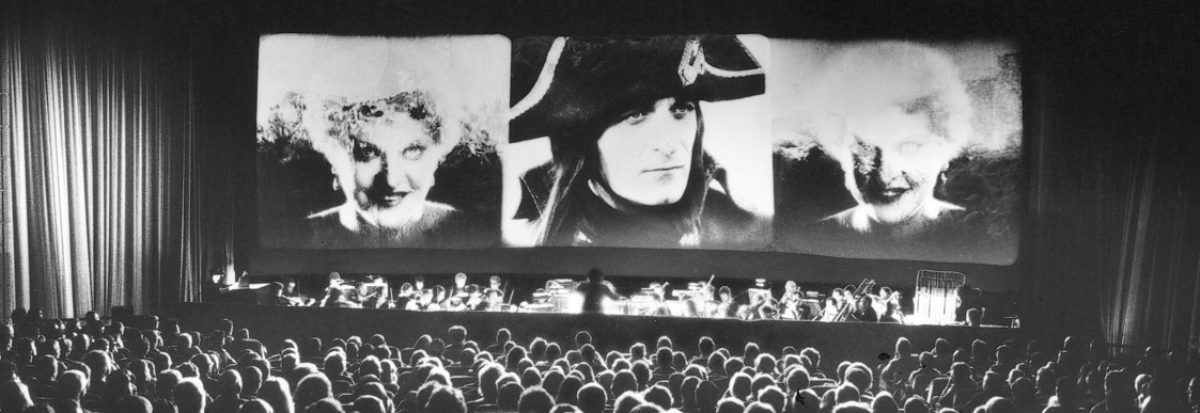
Le Vertige (1926; Fr.; Marcel L’Herbier)

In 1926, Marcel L’Herbier’s production company Cinégraphic was in dire financial straits. It had financed several films that made no money and consumed progressively larger budgets: Autant-Lara’s avant-garde short Fait Divers (1923), Louis Delluc’s feature L’Inondation (1924), Jaque-Catelain’s two directorial efforts Le Marchand de plaisirs (1923) and Le Galerie des monstres (1924), and finally L’Herbier’s own studio spectacular L’Inhumaine (1924) and Pirandello adaptation Feu Mathias Pascal (1926). L’Herbier needed his next film to be easier to make, cheaper to produce, and more commercially appealing. This was to be Le Vertige, an adaptation of a play by Charles Méré (1922)—a work that foreshadows the same themes of obsession with a “double” in Hitchcock’s Vertigo (1958). L’Herbier’s regular collaborator (and lover) Jaque-Catelain was to play the lead, alongside Emmy Lynn and Roger Karl (both of whom he had also worked with before). He enlisted another regular collaborator, the architect Robert Mallet-Stevens, to design the sets. Exteriors were shot rapidly around Eden-Roc and Eze on the Côte d’Azur, then the production returned to Paris for a lengthier period shooting interiors in the elaborate sets. The film was indeed a commercial hit, something of a surprise for L’Herbier. But despite (or perhaps because of) this, Le Vertige is a rather overlooked film in the director’s work. Is this deserved?

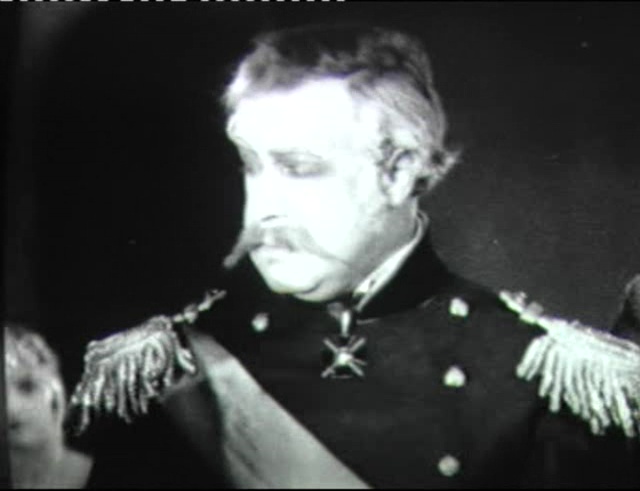
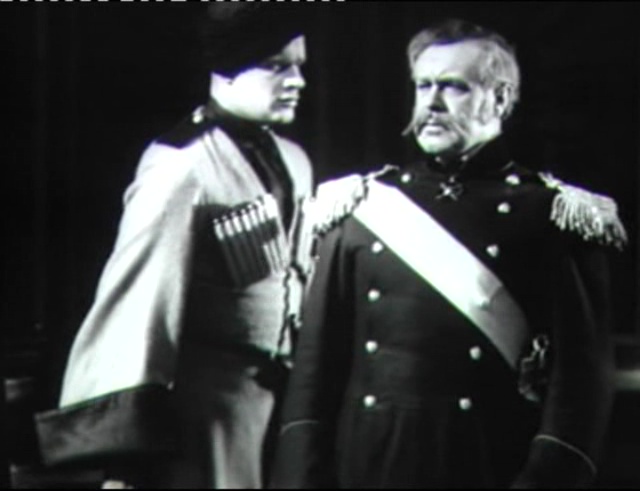
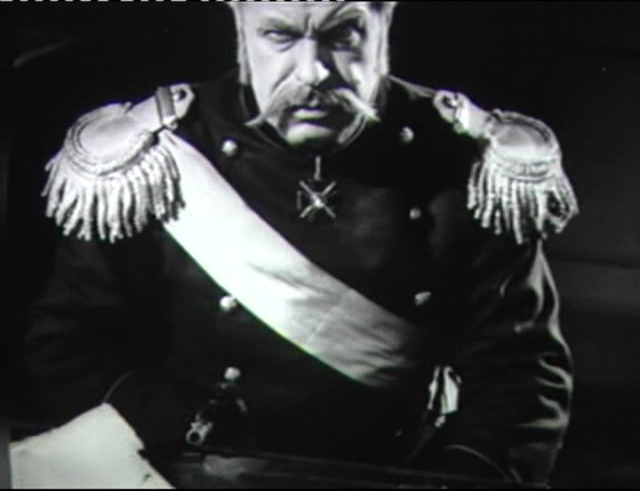
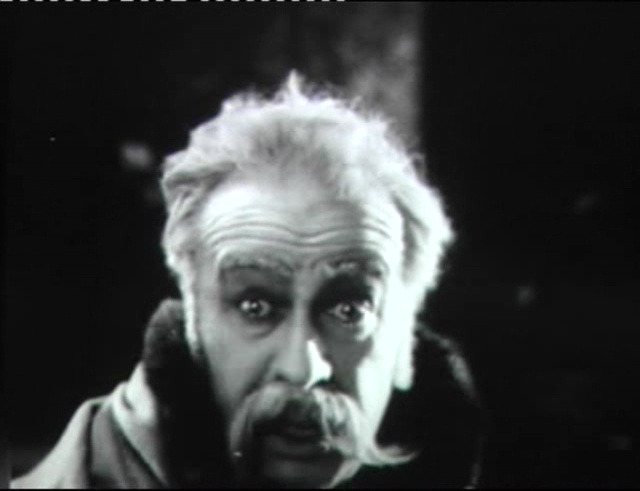
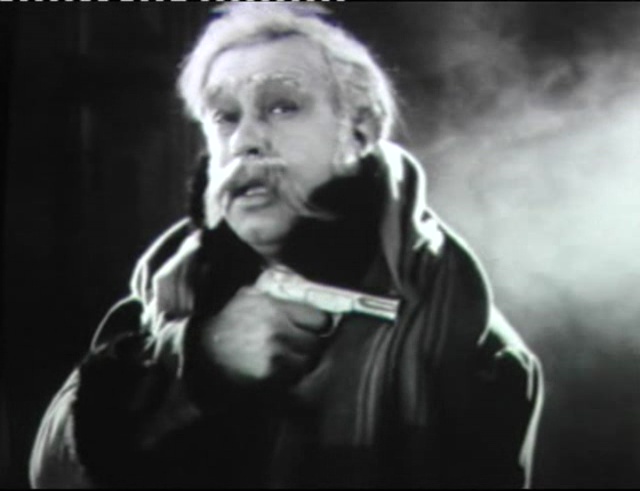
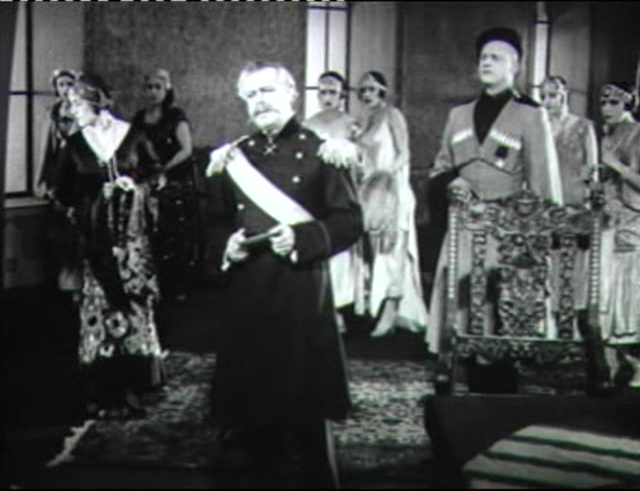
The “vertigo” of the opening title is induced by delicious lines that form a false perspective, funnelling down into the L and V of the film’s title. It is 1917, Petrograd. A snowy square. Events overseen from the windows of a house. Count Mikailov (Roger Karl) and his young wife Natacha (Emmy Lynn). But whose return does she anxiously await, a title asks us? It isn’t her husband, given a foreboding entrance—composition in depth, doors opening, guards on hand. Roger Karl is, as ever, a stern elder figure—made sterner, but also more comic, by a huge moustache and picture-book epaulettes.

A commotion outside. Shots fired, crowds running. Shadows on projected on glass. A boy runs in to warn of the dangers. The women, dressed for the summer-conditions of the palace interior, run behind the huge columns of the hall. Fur coats are donned, they scamper out. (The window recesses narrow at the top, like the shape of a coffin.)
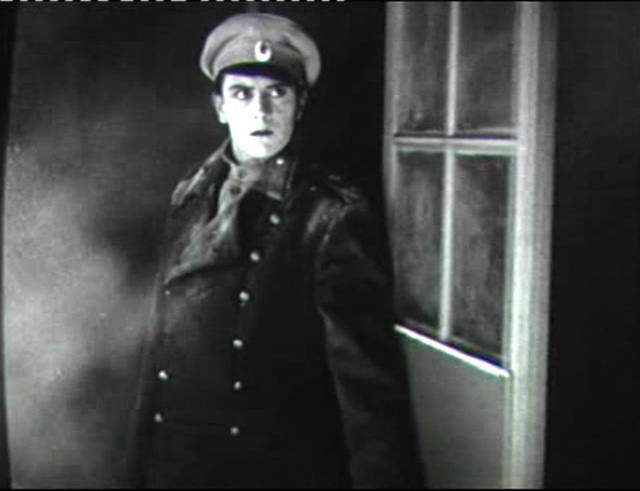
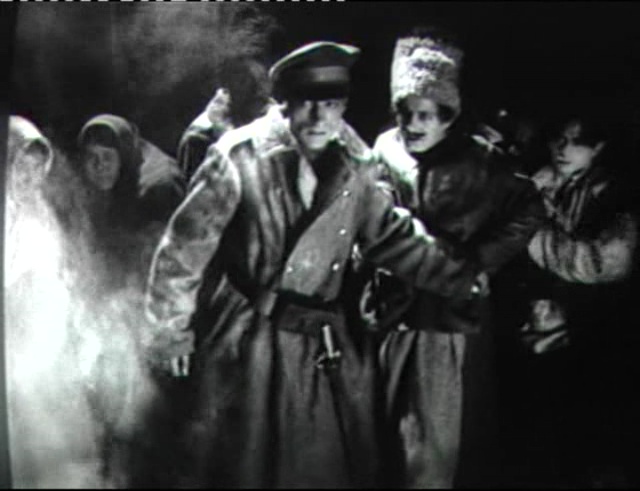
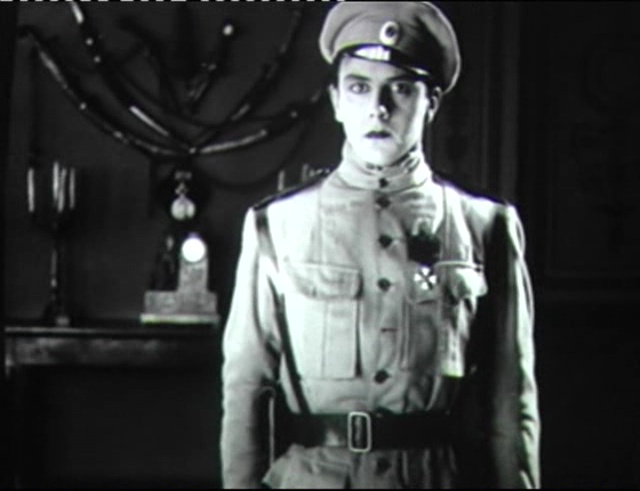
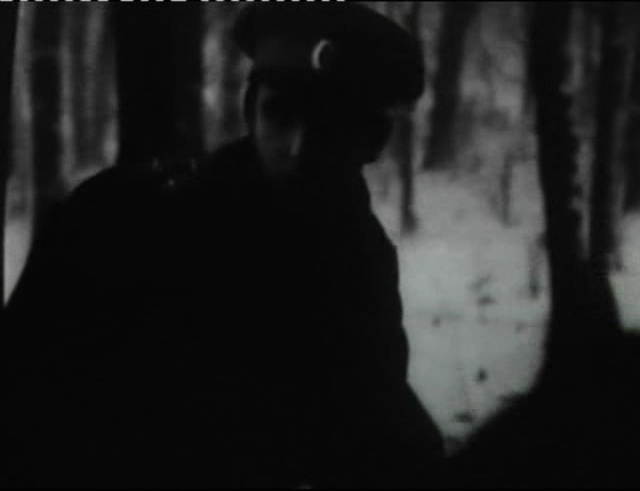
Dimitriev is on a dangerous mission. He is played by Jaque-Catelain, and he makes quite the entrance: in silhouette, horse hurtling and rearing into the camera. Dimitriev causes a stir in a local hovel, filled with roughs. (Meanwhile, Natacha is on her knees praying—and looking ever so elegant as she does so, her drooping black sleeves embellishing her form as she holds out her arms.)
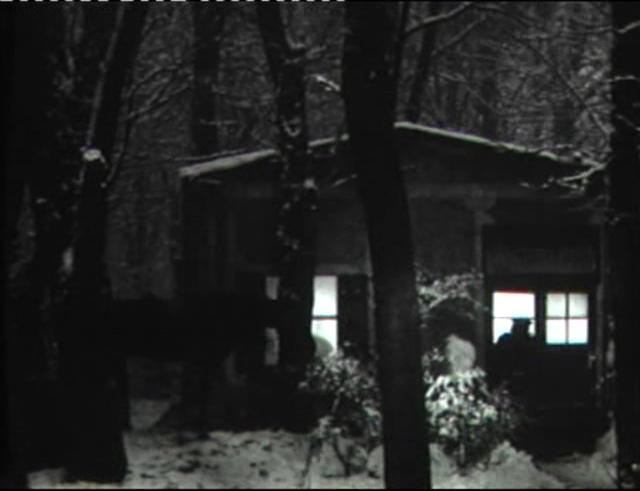
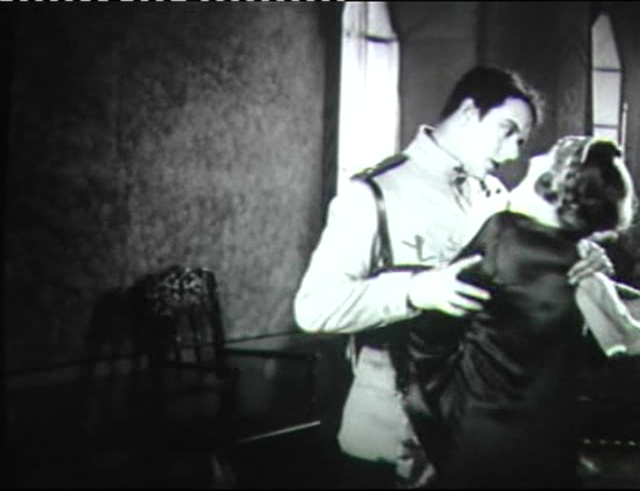
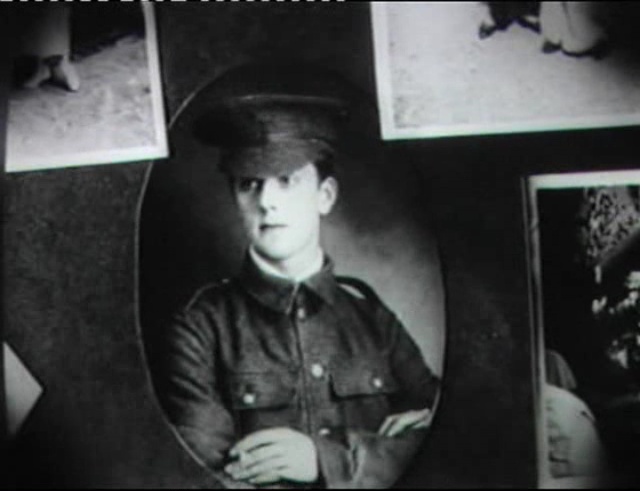
The General finds a photo of Natacha and Dimitriev together (no, not like that—staged, but intimate). And Dimitriev arrives, beckoned in eagerly by Natacha. They run at each other, and L’Herbier’s camera twists to catch Natacha’s last leap into his arms. The couple escape their present danger by remembering the past… A flashback to the scene captured in the photo, here spelt out in a single tableau of dancers, of shadows, of an embrace. (But I’m not moved, nor is Petrov, the guard, who spies on the lovers in the present—he almost looks to camera, as if to say, “What nonsense”.)

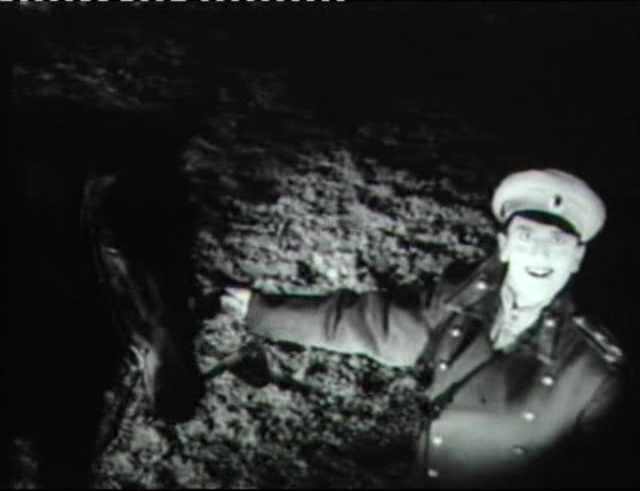
Past and present are intercut. A ring is given (then) and contemplated (now). The palace doors open. It is the wind, or is it? The sinister Petrov waits for Dimitriev, ushers him out—and into the presence of the General. He takes the young man to task for disobeying his orders, for deserting his mission on the revolt’s frontline. (Catelain looks like a schoolboy in a play, caught out for forgetting his lines.) He is threatened with martial law. The General shoots him. He clutches his face, which is apparently unharmed, then lurches to a window—L’Herbier cuts to soldiers scurrying past (perhaps remembering Gance doing the same, to much better effect, in J’accuse in 1919). Natacha sees his last moments, and faints. They both lie in pools of light. She is revived by the General, just as his palace is being stormed by the mob. Husband and wife flee, and the soldiers plunge their bayonets into the corpse of Dimitriev (though L’Herbier cuts just before the final thrust).
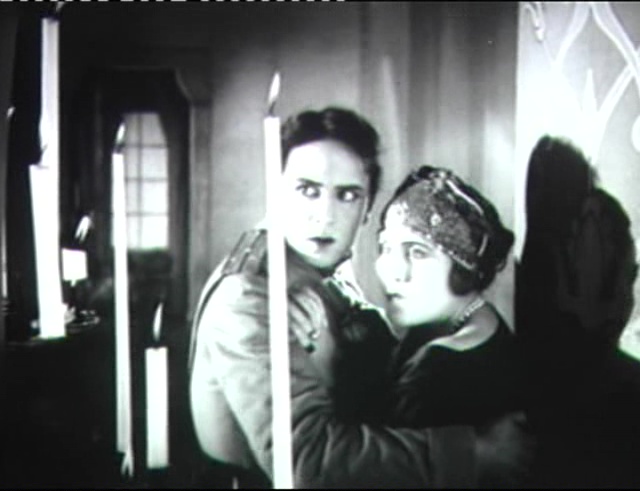
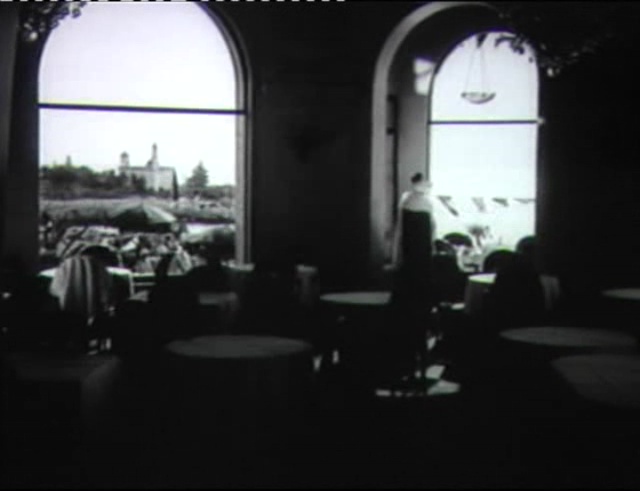
It’s a half-hour prologue to the main timeline of the film. On the Côte d’Azur, the General (now in evening wear) and Natacha (diaphanous swirls wreathed about her shoulders) recover from their ordeal. Outside, a motorboat plunges through sparkling waters. Crowds of pleasure-seekers observe the boat race. Natacha still has her “obsession”, and a title warns us that none of the gaiety around her dispels her focus on the past—on her lost lover.

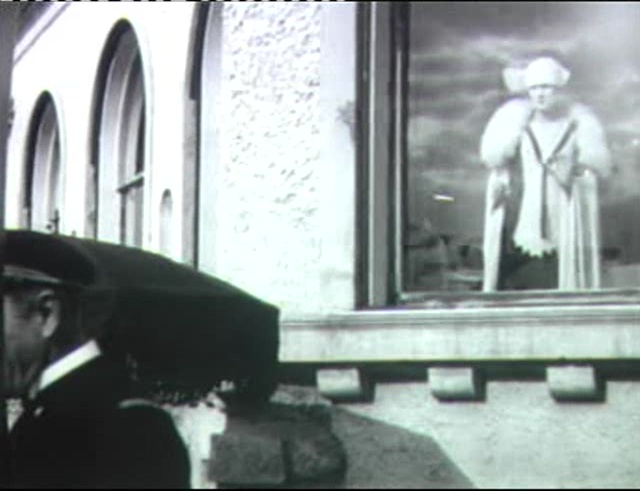
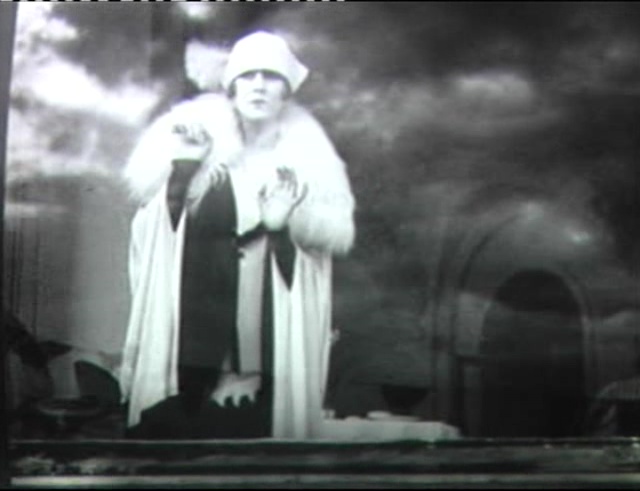
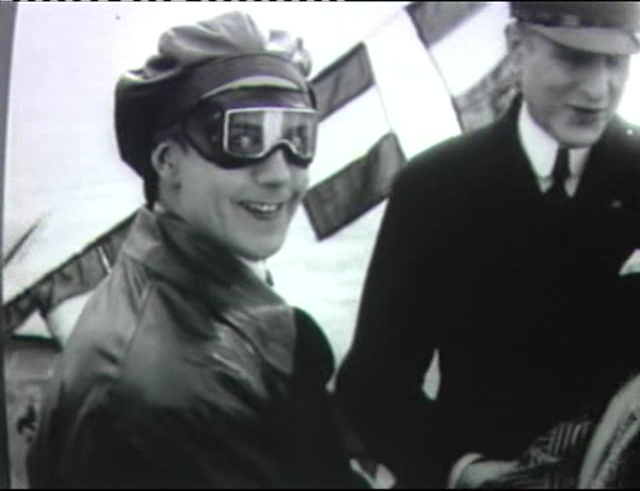
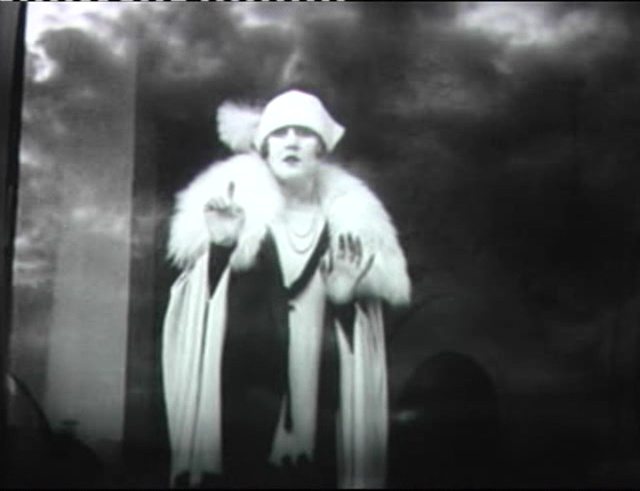
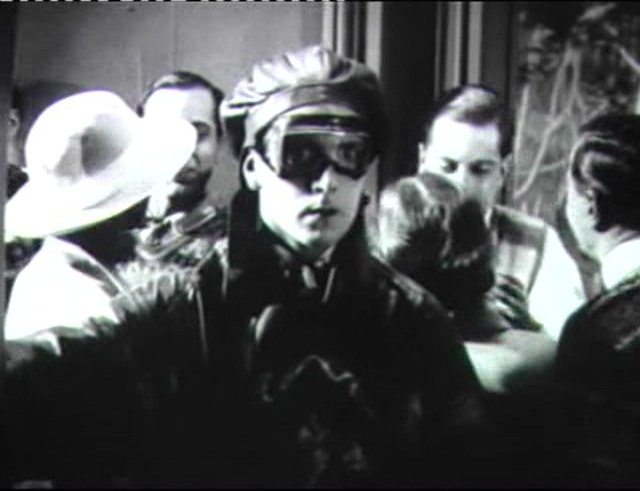
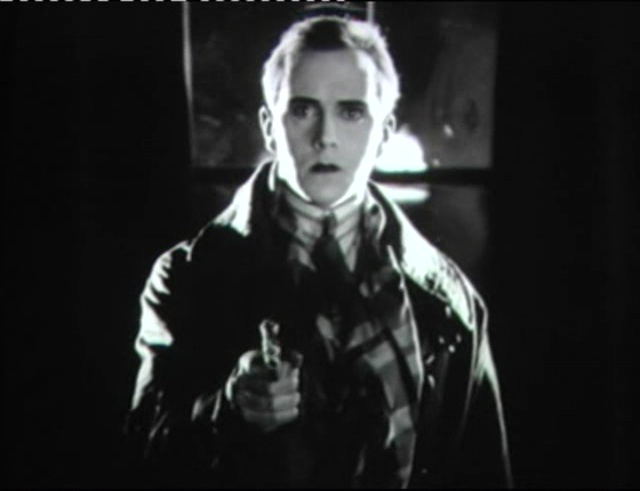
Here is Jaques Catelain, again—now in the guise of a boatrace winner, of a youth clad in black mackintosh and driver’s cap and goggles. Natacha, too, sees him. And he sees her—magnificently framed within the window frame, dark clouds seemingly looming all around her. (It’s an extraordinary image, the best shot in the film.) Now the race winner bustles in with a crowd of admirers, round and round through the revolving door of the hotel entrance. Meanwhile, they gaze at each other, these two strangers who seem to share something in this gazing.

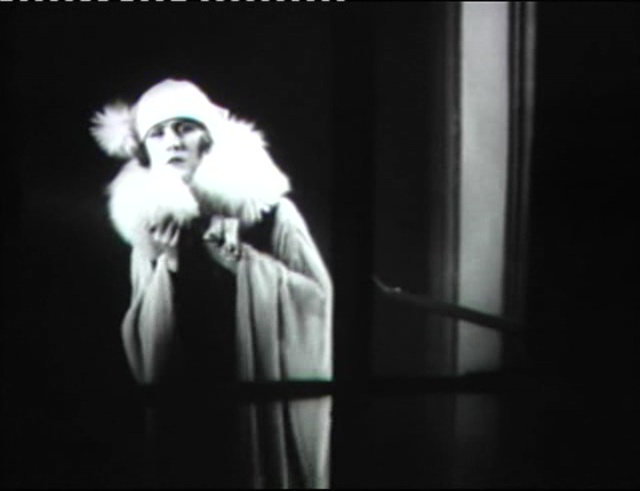
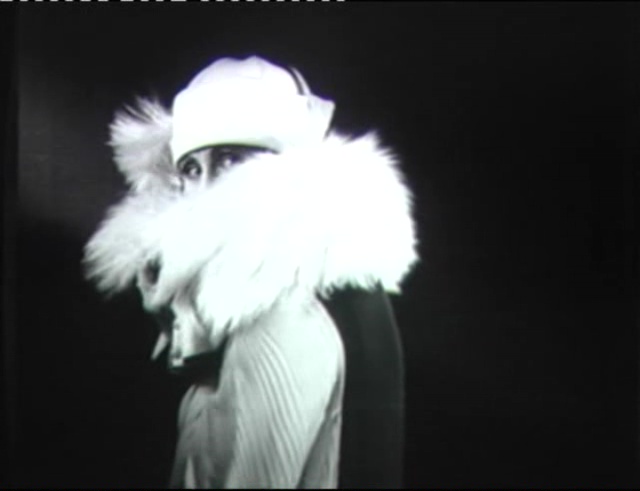
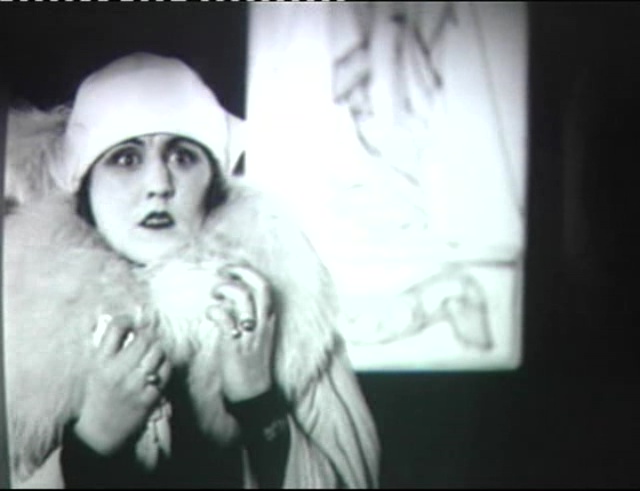
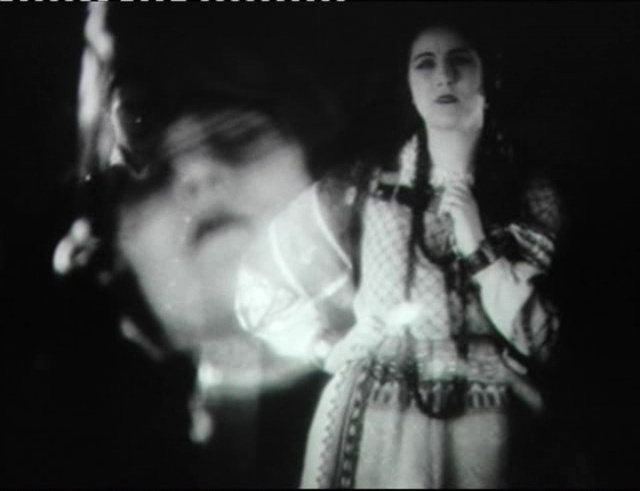
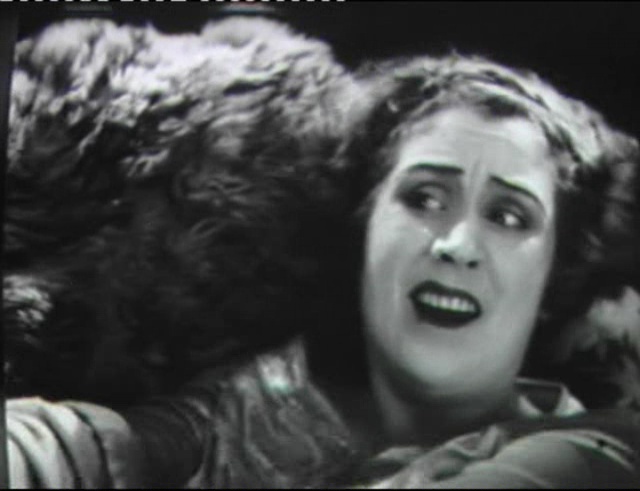
Natacha flees this “dream”, but the camera follows her (and so too does Jaques Catelain), speeding along in her car, along the coast, to an Orthodox church, a kind of miniature of something from St Petersburg. Inside, she prays, and the dark face of the icon becomes the superimposed face of Dimitriev—or that of the stranger. And the stranger is here. (Emmy Lynn does wonders with her fur collar, clutching it, covering and uncovering her face.) He picks up her fallen glove, returns it to her, catches her as she swoons.

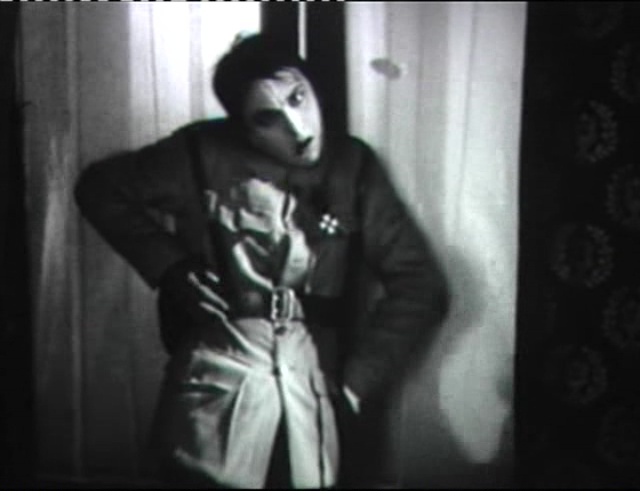
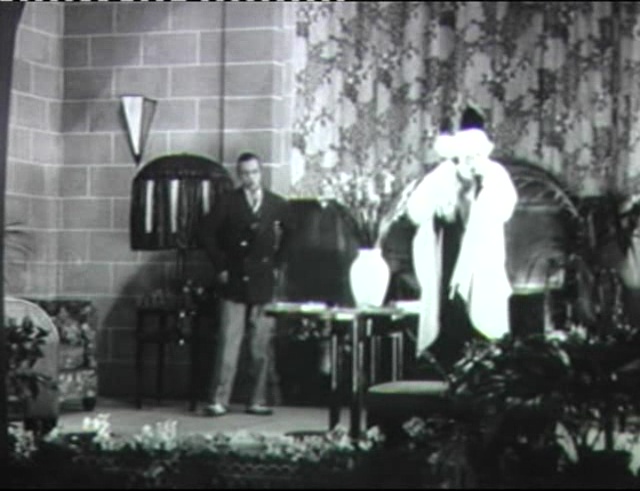
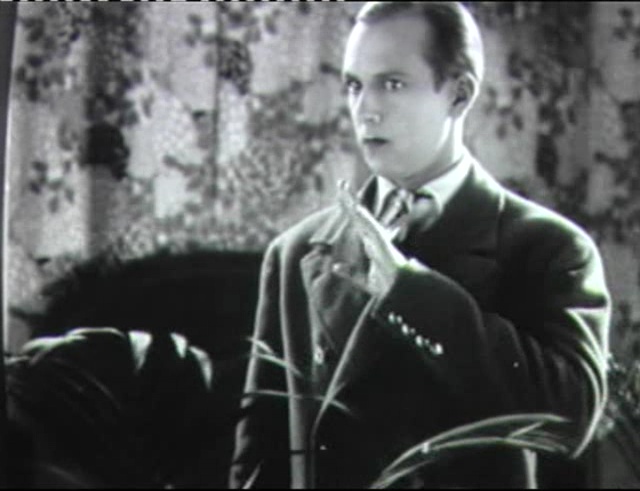
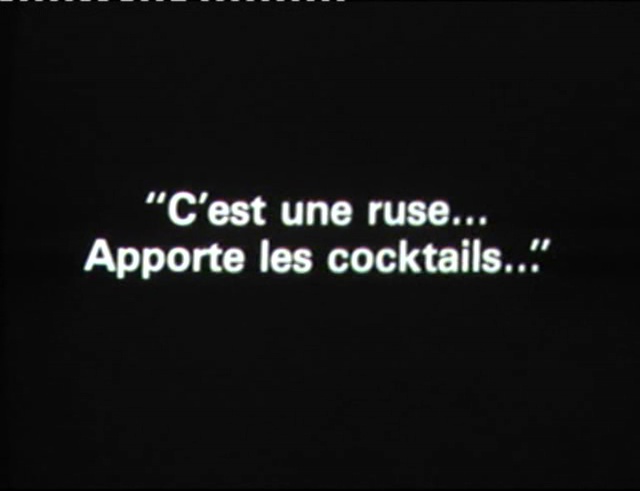
At home, with Natacha asleep, Catelain becomes a lounge lizard—“It’s a stratagem: bring the cocktails!” he whispers to his servant. In a delightfully appalling interior (fake brick patterns on the walls, on the columns; drapes that obscure the rest of the set; absurd exotic plants) he makes his move. But she goes outside, flees him, perhaps having entranced him a little.
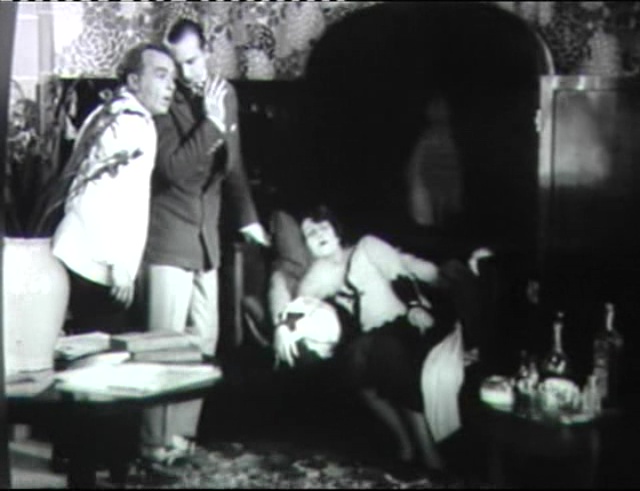
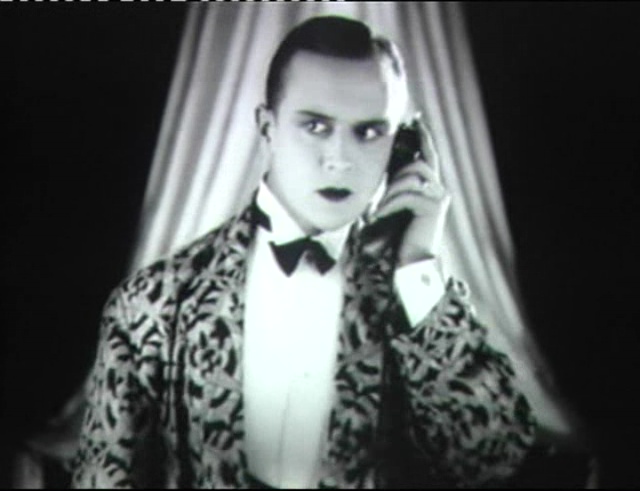
Now she learns his name: Henri de Cassel, engraved on a brass plate at the entrance to the mansion. At home, she looks up his phone number, gazes at Dimitriev’s pocket portrait. Meanwhile, Henri—wearing a staggeringly garish smoking jacket—does the crossword with his mother. He is bored, restless, until Natacha calls and makes a rendezvous with him—or rather, with the man she wants him to be, with Dimitriev.

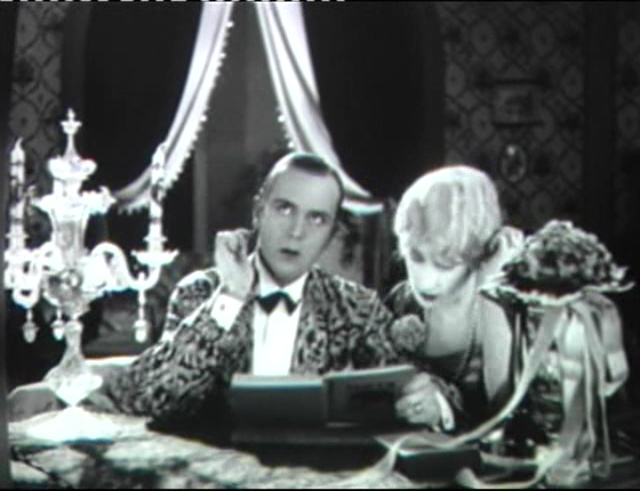
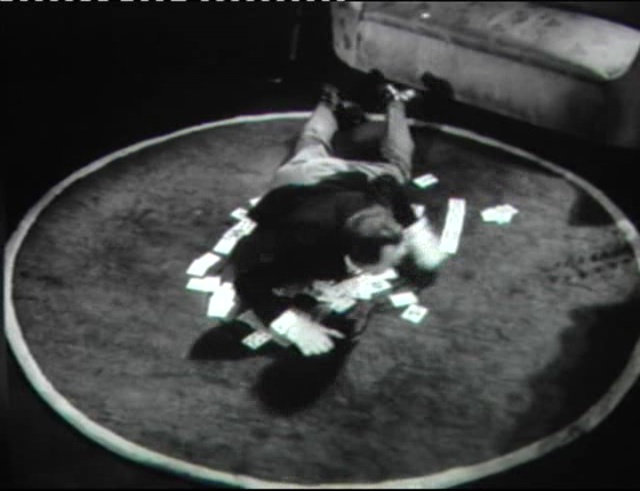
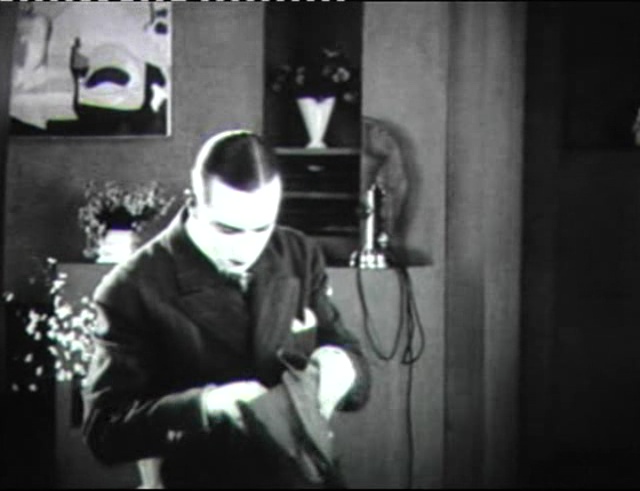
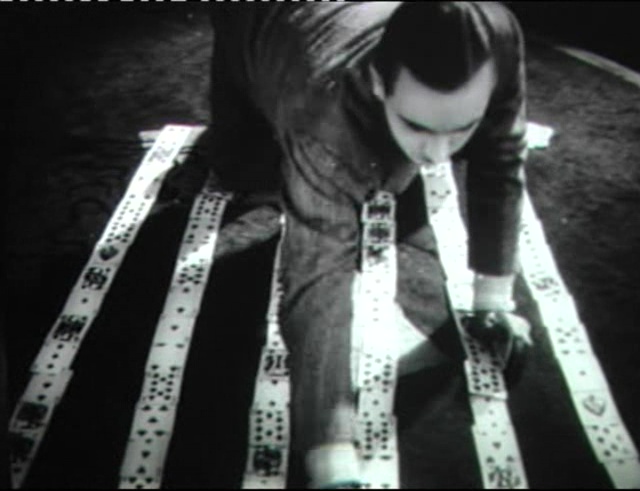
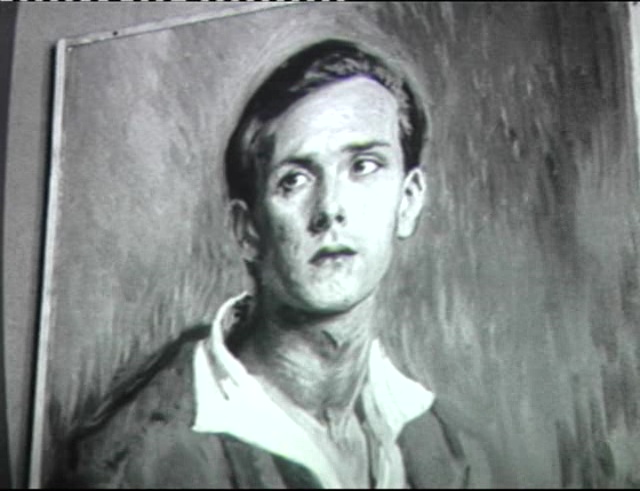
Spied on by Petrov, she leaves the house. Chez Henri, the master of the house is playing an exceedingly elaborate game of patience—or is it fortune telling? He prances around the circle he has made upon the floor, sits, mourns, leaps, runs everywhere when he hears the doorbell. Master and servant, in on the game, rush around—it’s wonderfully silly, and a little sinister, too. Music by Borodin and Balakirev are swiftly put on the piano. A score is opened with a “nuptial march” on display. Automatic doors are opened. Catelain makes a marvellous cad. (He’s more attractive, less artificial, on the wall, in a painting.) For him, Natacha is “ma belle Inconnue”. She responds with a traditional Russian saying, that to attempt to seize love is to see it fly away.
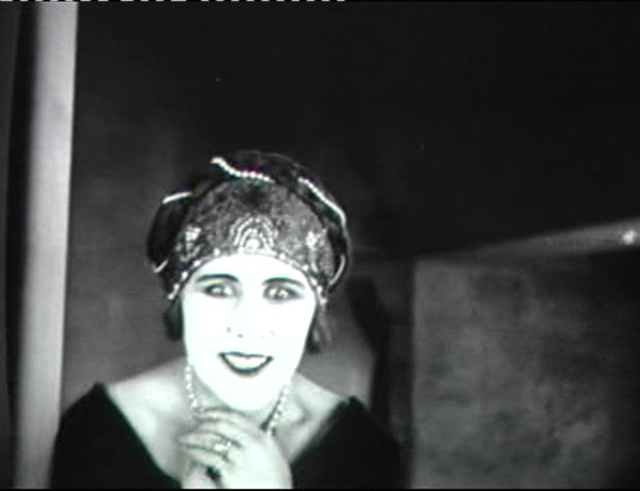
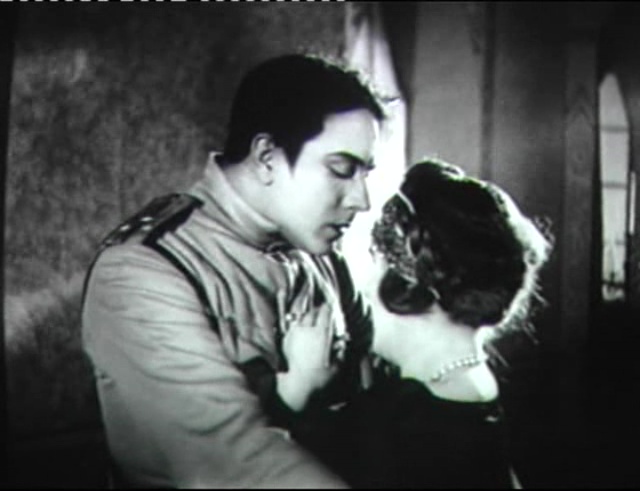
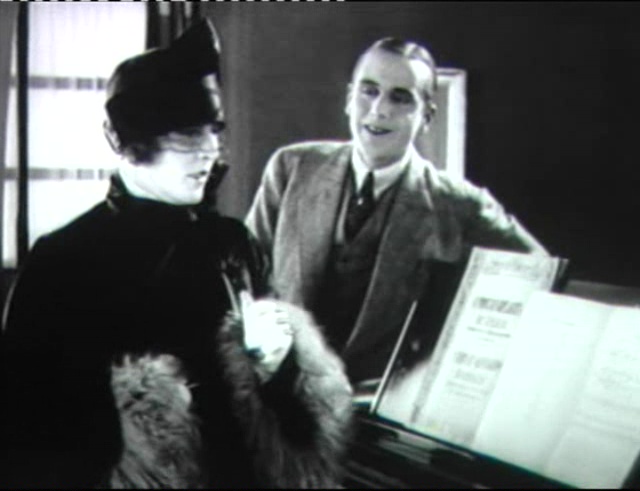
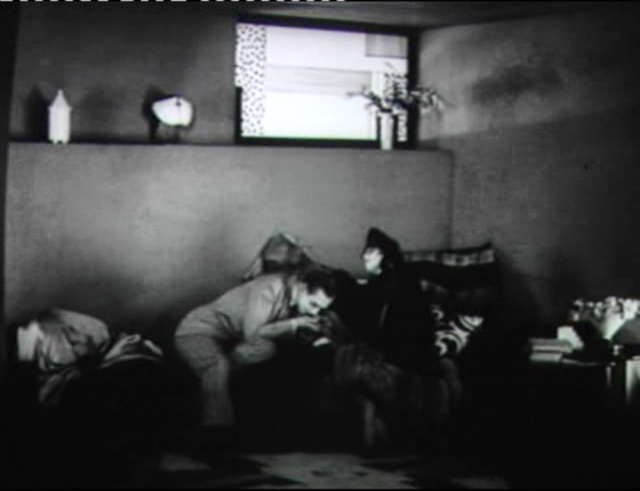
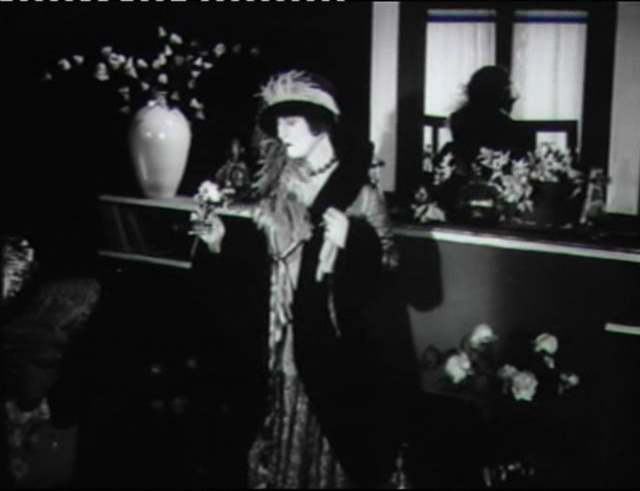
The scene proceeds. He seizes a chance to kiss her hand. She recalls the real past, a real kiss from Dimitriev. He looks sheepish, guilty, confused by her sultry glamour. (The dark dress, the dark hat, the dark veil—and dark eyes, and dark lips.) She sees a photo of him in uniform and it makes him giggle, giggle until she moves in for a kiss—but the telephone rings. She goes to the piano, plays the wedding march. He approaches. L’Herbier gives him a close-up that is threatening, sinister—the bars of a backlit screen behind him, then his face blurring, her face blurring. The past bleeds (dissolves) into the present. Her memories take over. A distant kiss replaces the real scene, the real Henri moving closer. His arms are around her, he grapples with her. Their kiss—is it willing?—shown reflected on the black sheen of the piano lid. It’s marvellously sinister, as is the dissolve to—later. She is leaning back. Again, how willingly has she submitted? He demands to know more about her, grabs her again as she goes to leave. “Try to tread the truth in my eyes. And if you see it, stay silent.” With this, she leaves.
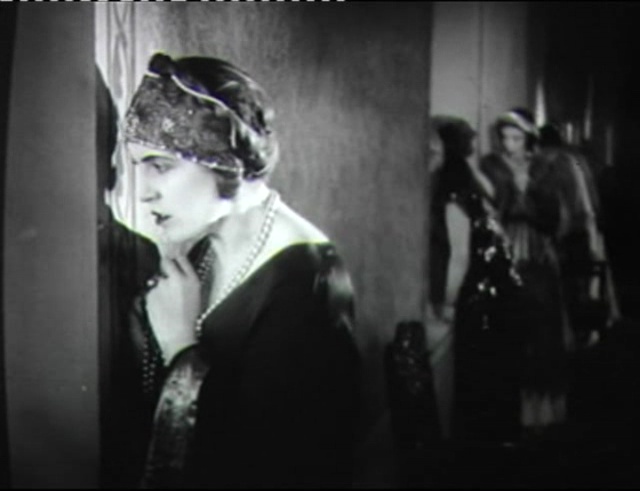
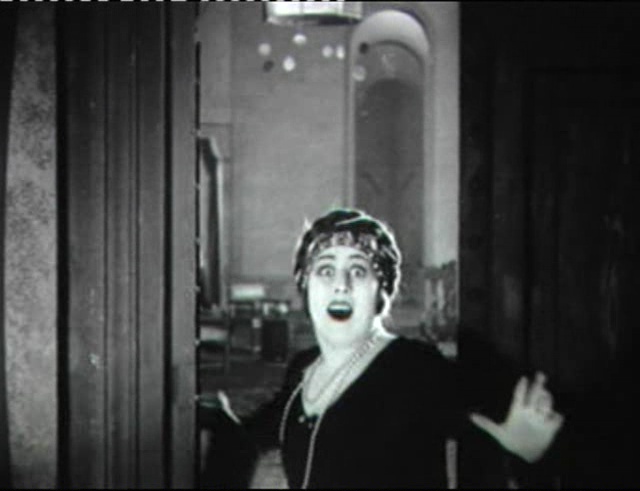
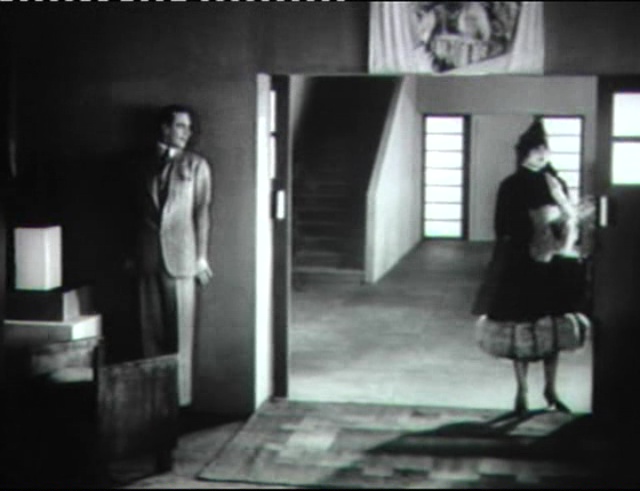
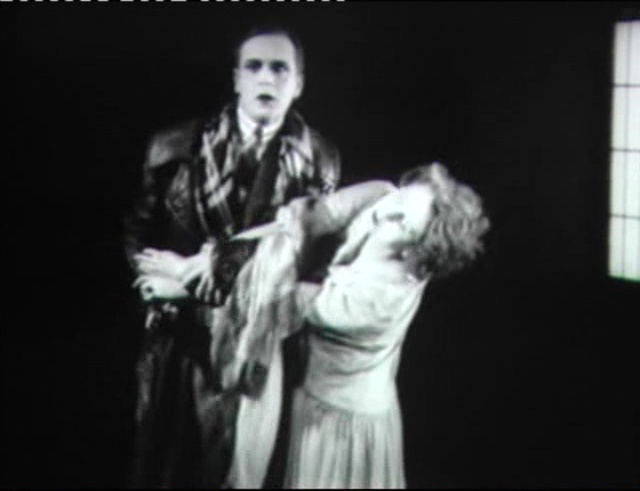
A titled angle. The footsteps of—who? The camera tracking to a door. Natacha followed, found—by her husband. Lynn looks at her fingernails, looks at her watch—it would be comic (it is, a little), if it weren’t for the seriousness of her husband’s questions. “I’m seeking someone that I’ve lost, and wish to find again…” In response, her husband pulls out a gun. He turns it on her, points it in her face. Who has she been seeing? No answer. Natacha laughs, leaves, and her laugh fades. (If she reminds me so much of Marthe in Gance’s Mater Dolorosa [1917], it’s because her fashion—feathers, fur collars, veils, broad-brimmed hats—and acting style—the occasional bulge of the eye, the way she turns, flattens herself against the wall, pauses at doorways—seem hardly to have changed since 1917.)
Chez Henri, a friend, Charançon (Gaston Jacquet), teases him about his disappearing from the social scene. A woman no doubt, but who? The friend conjures exotic possibilities, only for the woman herself to turn up. More comic running about by Catelain, this time with his friend. And when Natacha arrives, they both see Petrov on the street outside, following her.

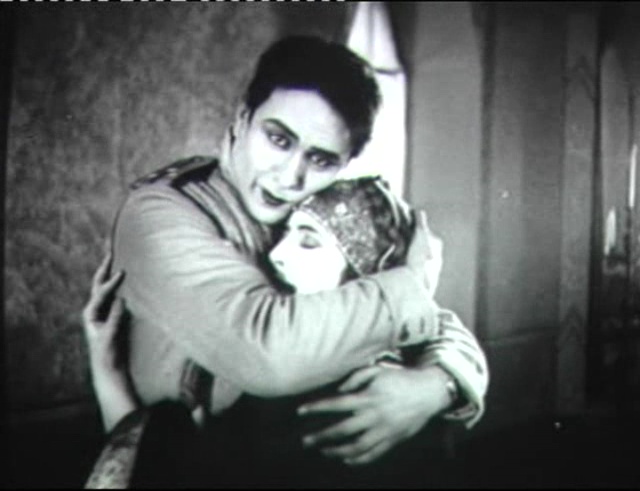
Henri confronts her. The Shot-reverse-shots, close-ups as each looks into—through—the camera at each other. “You are always obliged to leave, to go SOMEWHERE where SOMEONE awaits you… WHERE?… WHO?…” It’s not clear who says this line: the title has inverted commas, denoting speech, but neither of the close-ups show the protagonists talking. Natacha looks afraid, resigned, shakes her head. He looks angry, then weak, then submits to her touch, like a child seeking his mother. (Emmy Lynn is eight years older than Catelain, but her old-fashioned clothes makes her seem older than she is—just as his babyish face makes him seem younger.) She leaves the room, and Henri seizes the chance to go through her bag. Henri finds a card with her name, her address, and a photograph of Dimitriev. She leaves, but he confronts her: “It’s not me you love. It’s another, ANOTHER whom you love through me.” She says he’s now made it impossible for her to see him again. Clutching the image of his doppelganger, Henri broods.

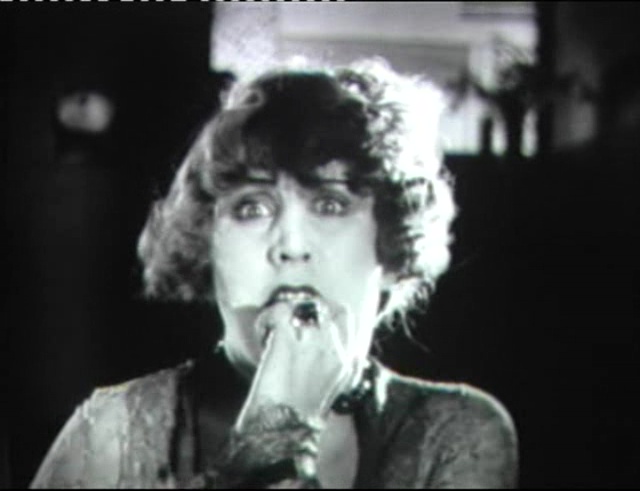
Now he goes to find his friend, whom he surprises in bed. It’s an extraordinary bed, the friend lying under a furry, feminine expanse of duvet. After being goaded into action, Charançon phones a contact and gets Henri invited to a reception at which the General and Natacha will appear.

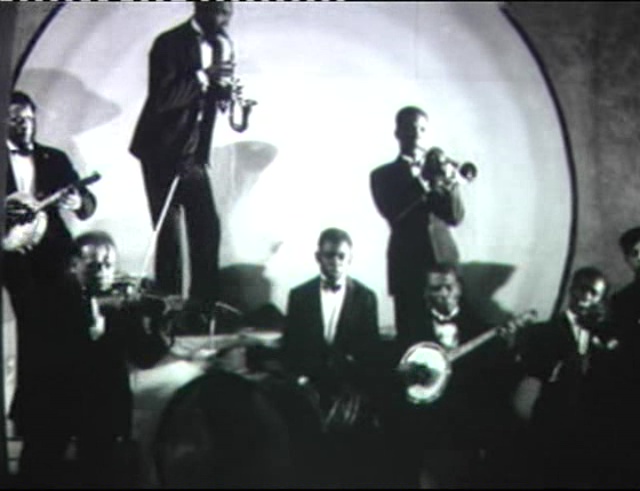
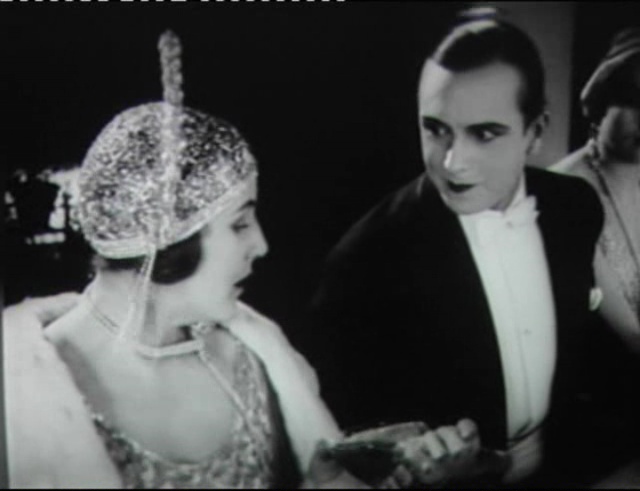
It’s another expansive Mallet-Stevens creation: a geometric layout, a jazz band on a stage, cubist sliding doors, cubist signage, angular, deeply uncomfortable-looking furniture. Henri finds Natacha, who wields a giant feather fan in defence. (See too her Russian-dome shaped headpiece, glittering with jewels. She looks extraordinary, remote, glamorous, from another age.) Henri speaks, and L’Herbier intercuts their exchange with the violin solo of the band—it’s as if emotion is being played at, manufactured, summoned as a means to an end.

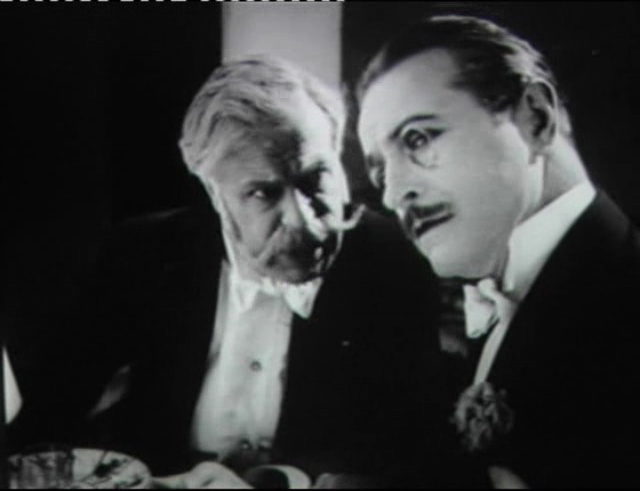
The lover and husband see one another. The General is shocked. (An exchange of close-ups, of reactions—it’s the closest the camera has been to them yet.) The General questions Charançon about Henri. Again, the glances are intercut with music—and just as a confrontation seems to brew, there is a drumroll. Now a contortionist swings from a trapeze rope in the centre of the space. It’s a bizarre interruption (like a reserve act from the central sets of L’Inhumaine or L’Argent).

But now Petrov sees Henri and also calls our Dimitriev’s name. The machinations swirl around, as more drink is poured. A younger, lither woman than Natacha is flirting with Henri, and the cutting between glances grows more complex. But the brutish nature of the husband becomes simpler, clearer: he downs yet more vodka cocktails, makes his wife dance with Henri. Quick cutting between the dancers, the band, and the couple—whom the General now threatens with a large knife. But it’s swiftly quelled, laughed off. Henri questions Natacha, discovers that the husband killed Dimitriev, but demands her love for him and not “the other”.

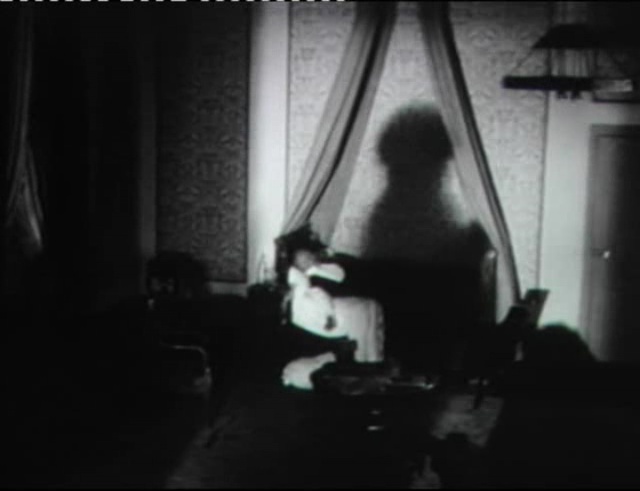
Natacha, soon to be forced away from Paris by her husband, goes to see Henri’s mother, to warn her of the General’s threats. Henri eavesdrops, wearing yet another eye-popping piece of home wear, a sort of cubist bath robe. (How strange he dresses like this only around his mother.)

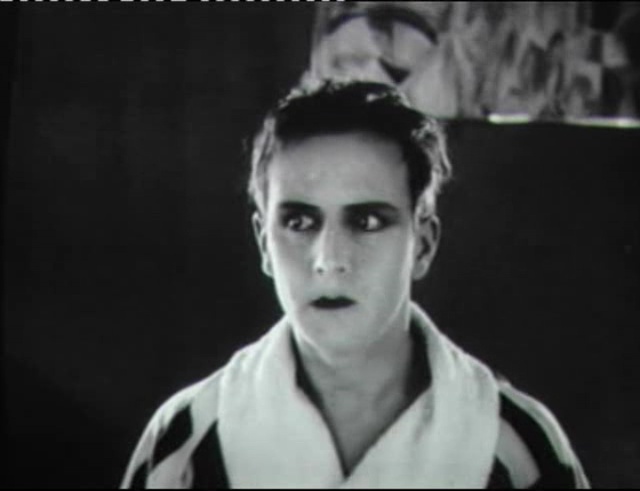
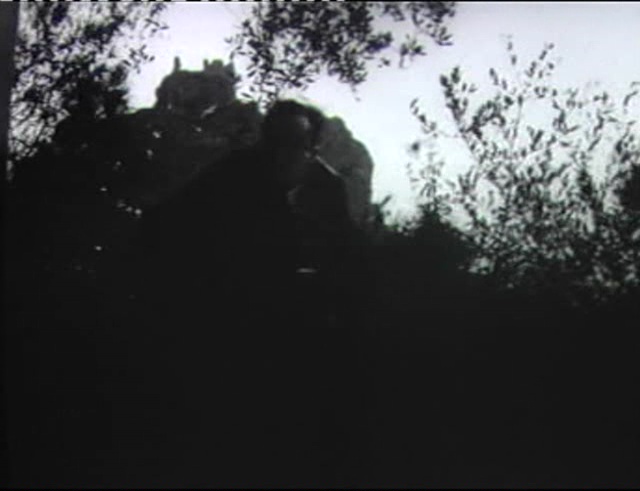
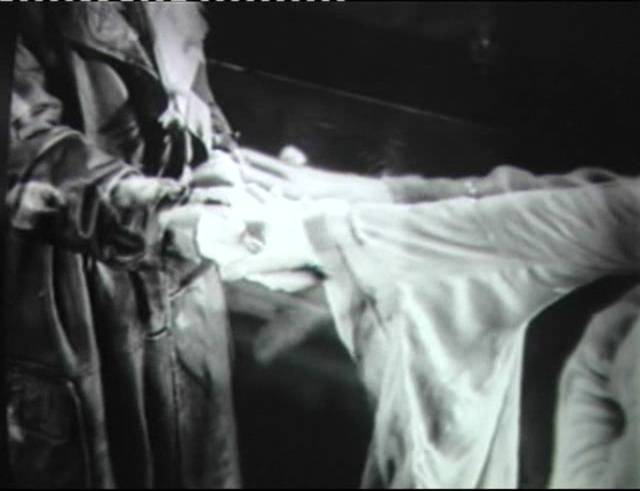
The couple go to Provence (a brief, glorious glimpse of the outside world—exterior shots of silhouetted hilltop towns). The General is visibly ageing. He waves a gun around, half inviting Death to confront him. (She wears another long-sleeved dress: she looks like a glamorous medieval princess.) The wind rises. Dogs bark. Petrov is ordered to release them. He goes through the cavernous villa, sets them loose. Henri is outside. The wind blows through the doors. The General shoots into the heaving wilderness outside. L’Herbier cuts back and forth between exteriors, interiors, faces, places. A shot is fired. A dog falls dead. Henri’s journey to the interior seems to last forever. Long enough for the General to try and force himself on his wife. He’s just revealing her flesh when Henri appears at the threshold. He pulls a gun. For once, he looks serious—convincing. He’s come for Natacha (who is busy emptying the General’s revolver). The General wants to duel, and the men pace out the distance inside. The General looks apoplectic, so much so that he drops dead of rage and age before he can fire a shot in anger. Natacha has been clutching desperately at Henri, the cutting dragging out his bizarre self-induced death. Now the lovers are together, but what is their future? Henri puts on his coat, holds out a hand. She puts out hers, and again the past dissolves over the present—as Dimitriev’s hand also reaches out to her. FIN.

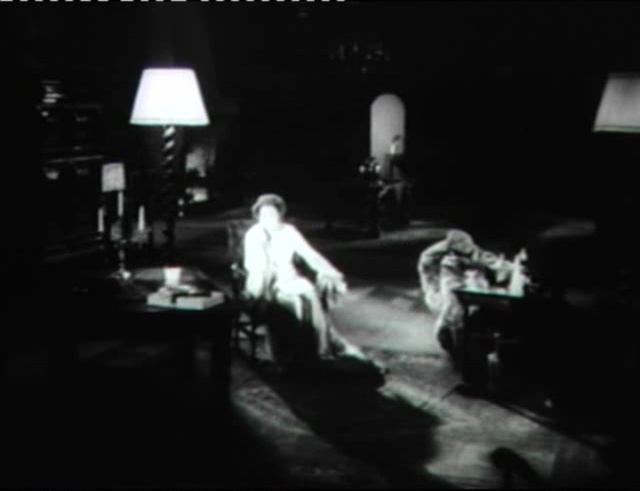
I was urged to rewatch Le Vertige by David Melville Wingrove, for whom it is one of L’Herbier’s outright masterpieces. I see plenty to admire in the film, but I’m afraid it just didn’t do it for me as a whole. The film is nearly two-and-a-quarter hours long, and I wanted it to be condensed into ninety minutes. Both the opening half hour and the closing half hour feel overextended. Neither the melodrama of the Revolution nor of the violent denouement engaged me. But the middle section did have plenty of interest, both visual and thematic. There are lots of interest ideas bubbling away. Natacha’s obsession blinds her to the (initially, at least) selfish motives of Henri in seducing her, and L’Herbier delights in making Henri at first appear both smarmy and faintly ludicrous—anything but the hero that Dimitriev was. (Henri even shows Natacha a photo of him in military uniform, seeming to chuckle afterwards—as though he couldn’t take this part of his life seriously.) And Henri has a strange relationship with the two women in his life: his mother and Natacha. When Natacha first sees him from the hotel, immediately outside is his mother. And later in the film, she goes to Henri’s mother to warn her about the danger to her son—while Henri himself runs away from the two women. I’m not altogether clear of the implications of Henri’s relationship with his mother, or even where his mother is supposed to be living. (A title says they return to Paris together, but that’s all the information we’re given.) What could have been developed into another layer of emotional complication ends up being sidelined. The theme is better developed in L’Inhumaine, where Catelain again plays the boyish figure loved by an older woman. (Emmy Lynn was eight years older than Catelain, and in L’Inhumaine Georgette Leblanc is nearly thirty years older—ten years older than Claire Prélia, who plays Catelain’s mother in Le Vertige.)

This brings me to the two leads in Le Vertige. Jacque Catelain himself often underwhelms me. He can be as good as the film he’s in, but never more so—for me, he’s not a real star and I remain baffled by his appeal. He looks good as a still image, as a poster, even as a painting—but set him to move on camera, ask him to emote, demand he convince us of a life with depth and feeling and truth, and too often he looks totally inadequate. That said, he’s more suited to his character in Le Vertige: a superficial playboy, without great depth. He also gets to do some comic scenes (being bored by his mother, scurrying about with his servant or friend) and plenty of sinister ones. He’s rather good at being a kind of modernist lounge lizard, pouncing on an older, vulnerable woman. The prolonged scene of him and Natacha in his apartment is perhaps the strongest and most interesting in the film. But the trouble is his character is supposed to develop actual feelings for Natacha, and I’m never quite convinced of this on screen. (But again, perhaps this plays into the film’s own ambiguity about the character: at what point are we meant to genuinely trust Henri, believe him?)

Emmy Lynn is altogether more engaging. I’d only seen her in two earlier films, both directed by Gance: Mater Dolorosa (1917) and La Dixième symphonie (1918). In both cases, she plays similar roles of women suffering with private torments. Her performances in all three films are remarkably similar (so too is her wardrobe, though L’Herbier gives her more hats to play with). She does a lot of business with her fur collars, with her fans; she finds doorways and walls to lean against in anguish; she turns her head and closes her eyes, in grief, in suppressed desire. She’s very pleasing to watch and even if she is, in her own way, as mannered a performer as Catelain, hers are much more convincing manners.

Elsewhere, the character of Petrov (Andrews Engelmann, a German actor actually raised in Russia) offers nothing much in the way of subtlety. And as the General, this is one of Roger Karl’s least impressive performances. I’m used to him being stern, reserved, brooding, threatening (in La Femme de nulle part [1921], L’Homme du large, or Maldone [1928]). Here he’s given a slightly silly moustache and he gradually retreats into a hammy form of villainy. Had he been more subtle, I would have felt more for Natacha.

So where does this leave me? I wrote last time that L’Argent is both magnificent and heavy going, but it offers rather more for me than Le Vertige. I respect and admire L’Herbier a great deal, but I’m still left a little cool by his films. As much as I like and enjoy L’Homme du large (1920), El Dorado (1921), my appreciation of his subsequent, longer silent features—Feu Matthias Pascal, L’Inhumaine, L’Argent—tends to flirt with boredom. Though often visually spectacular, none of these films has ever truly moved me. But nevertheless, I persevere, partly out of the hope that one day I will be surprised and genuinely overcome with emotion at something he made. It’s why I have spent so much time picking my way through the film, in the hope that longer reflection might encourage greater appreciation.

Has it? In all honesty, one image in Le Vertige did grab me, emotionally. For me, the best shot in the film is the image of Natacha looking through the huge window to see Henri for the first time. Showing her entrapped, with the dark clouds naturally superimposed by the glass, the shot is so beautifully potent, so full of feeling and meaning. The trouble is, nowhere else in the film did I feel this same sensation. I saw evidence that I was being cued to feel something, but the feeling never came. The image of Natacha behind glass reminds me that I tend to prefer films with a little more fresh air blowing through them. Perhaps it’s because I’m from the countryside that I long to see a director use real locations and exteriors to good effect, and in Le Vertige we get only superficial glances out the window, a handful of establishing shots before L’Herbier swiftly moves inside to show us his interiors. Sadly, fussy modernist design—something in which L’Herbier specializes—holds my interest for only so long.

But it’s this modernist milieu that, understandably, keeps many of his films in the canon. Le Vertige was shown at Pordenone this year as part of a theme devoted to designer Sonia Delaunay. Her work on Le Vertige involved designing the costumes and soft furnishing (seat covers, curtains etc), while Pierre Chareau contributed the furniture, Jean Lurçat the paintings and carpets, Robert Delaunay a painting of the Eiffel Tower (in Henri’s apartment). Contemporary reviewers praised L’Herbier for filling his commercial film with such modernist décor. I concur that it looks great, but it still leaves me cold. It’s impeccable design, but it all feels like an advert for another project—as though the characters live inside sterile modernist showrooms. For much the same reason, I become weary every time I sit through L’Inhumaine, and parts of Le Vertige feels like cast-off scenes from L’Inhumaine. (More generally, films about people feeling alienated in well-appointed rooms have little interest for me. This rules out great swathes of European art cinema of the late 1950s and 1960s.) Again, it comes down to feeling. As much as I loved certain scenes, the film just doesn’t make me feel for its characters. Nevertheless, Le Vertige was a worthwhile watch, and I’d be curious to see what a full restoration with a good score would do for it—and for me.

Paul Cuff

Der Rosenkavalier (1926; Aut.; Robert Wiene)

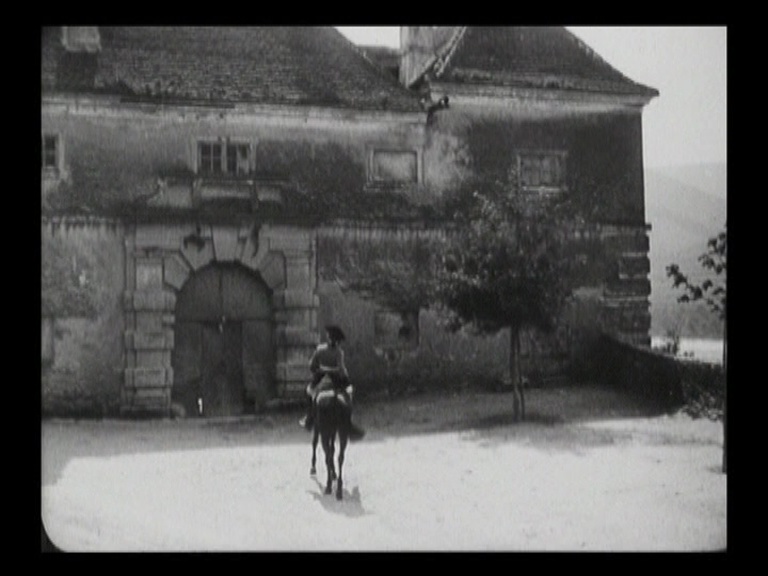
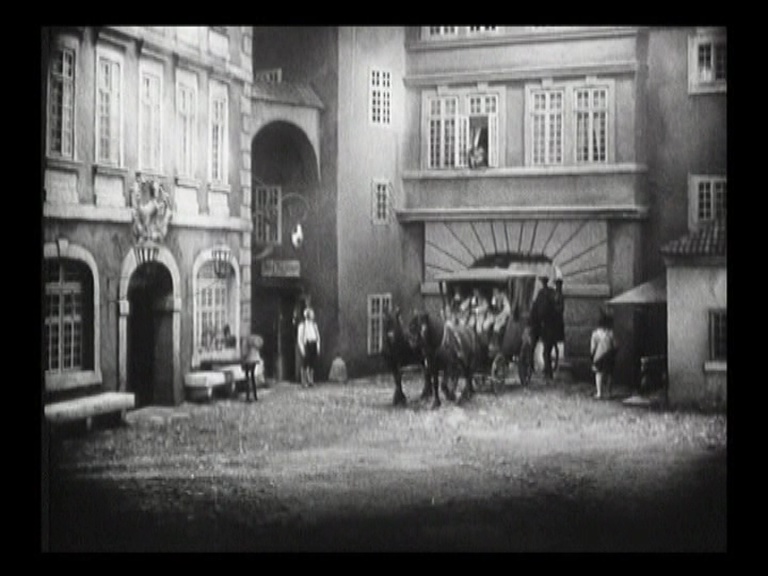
In 1924, the German director Robert Wiene was lured to Vienna by the Austrian company Pan-Film. This was one of the country’s leading production companies, with a distribution network that covered a large portion of central and eastern Europe. But the Austrian industry was struggling (especially in comparison with its mighty neighbour Germany), so the recruitment of Wiene—one of Germany’s most successful directors—was designed to bolster their status and generate a number of quality commercial productions. Accordingly, Wiene was appointed “Oberregisseur” and given a large degree of freedom. He stayed for three years and directed five films. Only three of these survive, Orlacs Hände (1924) being the most well-known. But the film with the most cultural clout was undoubtedly Der Rosenkavalier, made in 1925 and premiered in January 1926.

This was an adaptation of Richard Strauss’s opera of the same name, first staged in 1911. Strauss’s original librettist Hugo von Hofmannsthal was hired to write a screenplay as early as 1923, and Strauss to adapt his score to the film. Although Hofmannsthal remained the accredited scenarist, his screenplay was in fact almost wholly rejected by Wiene, who wrote his own treatment with the Austrian scenarist Ludwig Nerz. Hofmannsthal’s treatment had significantly reworked the plot of the opera, whereas Wiene and Nerz actually stayed reasonably close to it (albeit with some significant changes). But Pan-Film were keen to emphasize the proximity of film and opera. After all, it was a considerable coup to have one of the world’s most renowned composers create a film score. So the names of Strauss and Hofmannsthal were mobilized prominently in Pan-Film’s publicity, as was Alfred Roller, the set designer—who was also the original set designer for the opera in 1911. What’s more, the film premiered on 10 January 1926 in the Semperoper, Dresden’s prestigious opera house—the very venue where the opera Der Rosenkavalier had premiered on 26 January 1911—with Strauss himself conducting the hundred-strong orchestra. Released across Europe later in 1926 (with Strauss reprising his role as conductor for the London premiere in April), the film was a critical success—but subsequently disappeared from public view. Various, incomplete, versions were revived from the 1960s onwards, but it wasn’t until Film Archiv Austria undertook a major restoration in the early 2000s that the film could be seen in anything like its original form—complete with a reconstructed version of Strauss’s score. The restoration was premiered in 2006—once again in the Dresden Semperoper—and released on DVD in 2007.

All that said, is the film any good? Well, not particularly. Which is to say, the music is superb, but the film itself has some significant drawbacks. My usual habit is to go through a film chronologically, but I don’t think that would reap a great deal of reward with Der Rosenkavalier. Instead, I’d rather concentrate on its personnel and weave my thoughts around how the film deals with character and tone. So:

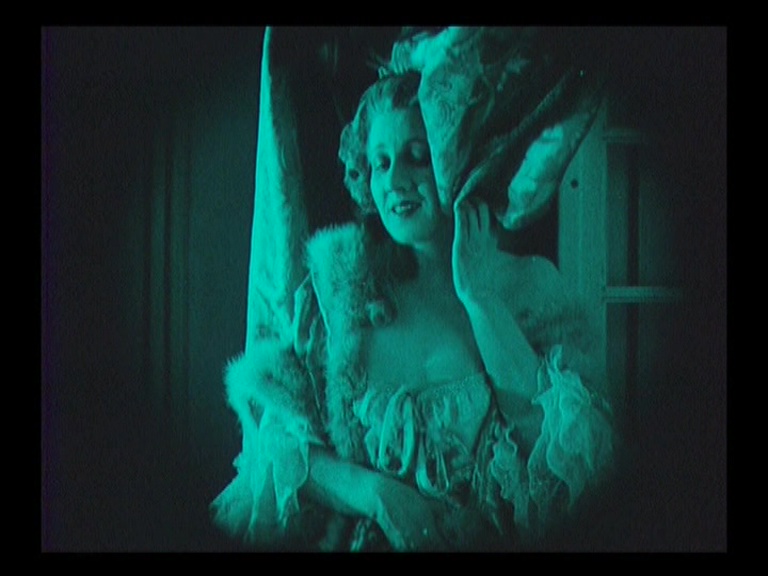
Princess Werdenberg, known as the Marschallin (Huguette Duflos). The central character of opera and film, the Marschallin, is a married woman whose husband—the Marschall—is permanently away from home in the army. Her lover is a younger man, Octavian, who brings her happiness but whose youth she knows will one day lead him away from her. The film provides us with more backstory to the Marschallin, offering in the opening scenes a flashback to her youth in a convent. We see her forced to accept an arranged marriage to Prince Werdenberg. Her wedding day is also the day on which her husband leaves to take command of the army. The Marschallin looks like a Velasquez, wearing a gorgeous white dress with rather fin-de-siècle curled motifs running down its flanks. She looks beautiful, but also awkward, stiff, uncertain. The camera keeps its distance, as though proximity—sheer physical closeness—is alien to the mood of the scene. The flashback gives us a glimpse of the pressures on her to look and act a certain part, whilst simultaneously being denied the warmth of human connection from her husband.

But though this flashback signals the Marschallin’s melancholy in the present, the effect is not fully felt on screen. It is certainly indicated in titles and telegraphed with gesture. But Duflos offers no depth or complexity of feeling, nor does the camera offer any close-ups to seek out more. The Marschallin is the heart of the opera and should be the heart of the film. But Duflos and Wiene offer only surfaces, flat pictorial representations of melancholy, not melancholy itself. Strauss’s music is fully alert to what should be being conveyed on screen: all the feeling is in the music, not in the images. The film cries out for some close-ups, for some expressive way of externalizing the Marschallin’s complex emotions. But Wiene’s scenario even cuts the most intimate scenes from the opera, where the character’s subjective thoughts are explored.

In the opera, at the end of Act 1, the Marschallin is once more alone with Octavian. The morning routine has wearied her, and she begins to reflect on the passage of time. Her aria-cum-monologue, “Die Zeit, die ist ein sonderbar Ding”, has the following text:

Time is a strange thing. / When one lives heedlessly, time means nothing. / But then suddenly, one is aware of nothing else. / It is all around us, it is also inside us. / It trickles in our faces, / it trickles in the looking glass, / it flows through my temples. / And between me and you / it flows again, silently, like an hourglass. / Oh, Quinquin! Sometimes I hear it flowing— / ceaselessly. / Sometimes I rise in the middle of the night / and stop all the clocks, all of them.

Under these last lines, Strauss uses harp and celesta to mimic the sounds of a clock. Their high, metallic notes strike thirteen times. It’s a chilly pulse, chiming through the orchestra. It’s a premonition of death, of stillness—and the music comes to a halt at the thirteenth stroke. It’s a beautiful, heart-breaking moment. The Marschallin voices her thoughts (and fears), but the real poignancy is in the way the orchestra articulates her subjective mood. It’s not just those thirteen chimes—that seem to come from within the Marschallin’s imagination, not from any real clock within the external scene—but the melancholic tone and texture of the orchestra. Strauss’s sound world is suspended in a kind of autumnal half-light, so that even when it dances to the rhythm of a waltz its tone is gently nostalgic—as though it knows that the dance must come to an end, or has already come to an end. Even when the Marschallin tries to convince herself (in subsequent lines) that the passage of time is all part of God’s plan, the orchestra is not convinced. The orchestra is all-knowing, and its early twentieth-century mindset is subtly at odds with the eighteenth-century mindset of its character. The passage of time is already apparent to us, as the world on stage is a rococo past at odds with our present—be it 1911 or 2023. Indeed, the waltz themes of the opera are deliberately at odds with its historical setting: the waltz was a nineteenth-century mode, and (while still being in use in new compositions in the 1910s) already a kind of old-fashioned musical idiom by the time Strauss wrote Der Rosenkavalier in 1909-10. Act 1 of the opera ends with Octavian leaving the Marschallin’s room, and the Marschallin realizes that she forgot to kiss him goodbye. The curtain falls as she looks at herself in the mirror. For all the apparent lightness of the opera’s treatment of love and sex, there are much deeper strata of meaning and feeling at work throughout.

Where, where in Wiene’s film is there anything like this? Yes, there are moments where we see the Marschallin look pained or sad, but they are so fleeting, so superficial. When she sees Octavian kissing a young woman (Sophie) at the tavern, she looks hurt—but no more. It’s not just that the performance is awkward (it is), it’s that Wiene’s camera doesn’t react. There is no movement, no proximity, no expression. For a director best-known for the most famous expressionist film ever made—Das Cabinet der Doctor Caligari (1920)—Der Rosenkavalier film lacks any sustained externalization of feeling in sets, in lighting, in performance, in camerawork. One of the only times in the entire film we see the Marschallin alone is after her husband has (unbeknownst to her) triumphed on the battlefield. In her room, she remembers the kiss Octavian bestowed on Sophie in the garden. She says she knew this time would come, that she had tried to hide it from herself… Strauss’s music makes magic of this scene, but the visual equivalent is bereft of magic. The Marschallin clutches her dog and swoons a little on her chaise longue. There is no sustained close-up, the camera (as throughout the film) hardly wishing to move beyond a medium close shot of the performers. And Duflos herself is hardly the most subtle performer here, looking pained but never convincingly sorrowful. We should be more moved, infinitely more moved, here. The music is crying out for a more convincing, a more filmic, moment of expression. Oh, for a different director, or for a script that allotted more room and more power to the close-up.

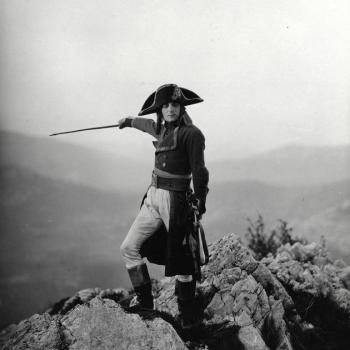
Count Octavian (Jaque Catelain). It doesn’t help that the Marschallin’s young lover is played by Jaque Catelain. In real life, Catelain was the lover of Marcel L’Herbier, who gave him leading roles in many of his silent features during the 1920s. Catelain is an acknowledged “weak point” in L’Herbier’s filmography. As Noël Burch puts it: “Boasting an unsettling androgynous beaty but lacking ability as a mime or comedian, this star resembles a kind of wooden Harry Langdon, charmless and humorous, as stiff as a shopfront mannequin.” (“Ambivalences d’un réalisateur ‘bisexuel’”, 204.) Catelain’s androgyny is at least a potential advantage for his role as Octavian: a lover younger than the Marschallin who can convincingly disguise himself as a maid for the plot’s various subterfuges. In the opera, all three members of the central love triangle are played/sung by women: the Marschallin is a dramatic soprano, Octavian a mezzo-soprano, and Sophie (Octavian’s subsequent lover) a lyric soprano.

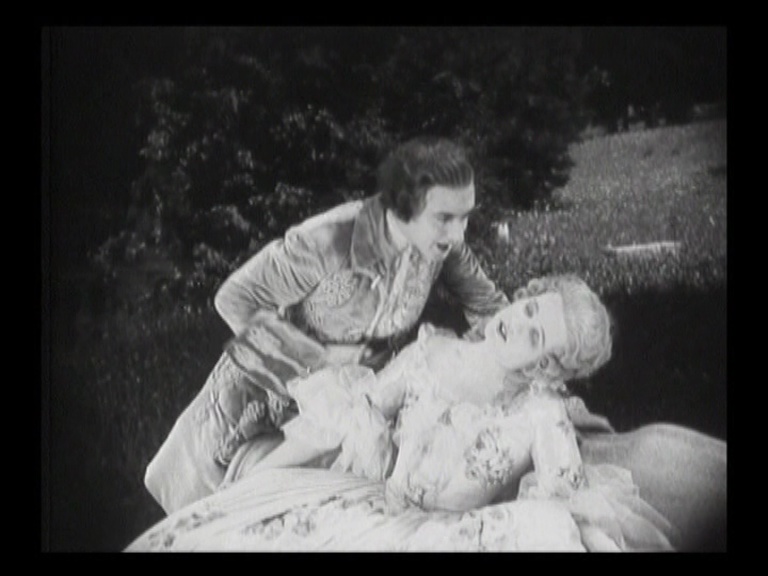
But even if the sexual ambiguities of the original opera suit Catelain superficially, he still needs to convince us through performance in the film. The opening scenes immediately present us with the problems that continue throughout the film. Octavian’s arrival, through the Marschallin’s window, and meeting with her in the early hours are awkward, stiff, contrived. Duflos and Catelain move round each other, pulling poses, throwing back their heads, clasping their hands. Nothing about them suggests the physical, let alone emotional, attraction for the lovers. Nor does the camera. It remains motionless, just keeping its distance and watching the performers go through the motions. “There are no words in the world to tell you how much I love you…” Octavian says to the Marschallin. Fine, but how about a performance to tell her—to tell us—that you love her? Clasping and twitching and grinning and moving awkwardly doesn’t do it.

Even less convincing is Octavian’s subsequent flirtation with Sophie: there is nothing in his body or face that suggests genuine desire or feeling, let alone the complexities of being torn between his old and new love interests. I’d say that the music saves both these scenes—and my god, the music is beautiful—but it doesn’t. The music in fact underlines how compromised are the performances, and how inadequate is the direction in lifting the film above a series of gestures without deeper meaning.

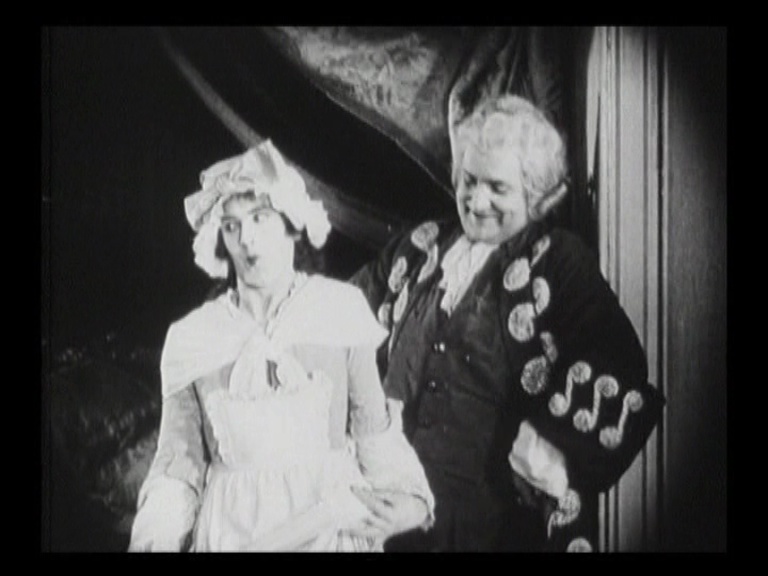
Baron Ochs auf Lerchenau (Michael Bohnen). The best performance in the film is in the part of the impoverished Baron Ochs, the Marschallin’s cousin who wants to marry Sophie and thus inherit her dowry. In this role, Michael Bohnen is far more engaging a presence than Duflos or Catelain. He had every reason to be, for he was a professional baritone and had played the role of Ochs on stage: this was his part, and you can tell. We first see him in bed, buried under a mountain of blankets. When he gets up, his character is fully formed, convincing, human. Bohnen knows how to put on a pair of round spectacles and make it funny. And Ochs’s servants—impoverished like their master—are likewise more human and interesting than the powdered servants who staff the Marschallin’s apartments. Ochs’s chief servant is hairy, gruff, always chewing, stifling his giggles; and the stableboy looks pleasingly gormless, countrified, confused.

See how these scenes have a kind of life and vitality not seen in many other places in the film. And listen how—at last—music, image, and performance work in accord. Strauss’s elegant waltz theme as Ochs has his servants dress him underlines the contrast between the Baron’s aristocratic pretensions and his impoverished state. Just as Ochs reads the letter, a delightful waltz—orchestrated to resemble a hurdy-gurdy—strikes up. It is the stableboy, playing a hurdy-gurdy in the yard, a group of cats feeding near his feet. Once more, the waltz is suggestive of Vienna—Ochs’s destination—but performed on a peasant’s instrument, a rural counterpart to the orchestral strains of the melody heard in the Marschallin’s aristocratic world. It is Ochs’s exuberant presence and performance that makes his appearance in the Maschallin’s world such a relief: here at last is someone who conveys emotions, even if they are comic rather than tragic. Bohnen makes his eyebrows twitch, he wriggles with delight, dances with glee, puffs himself up with pride and arrogance. He enlivens every scene he’s in. It’s as though he’s being directed not by Wiene but by Lubitsch. He also gets the only proper close-up in the film: when he roars with pain, having been wounded in a brief swordfight with Octavian. It’s a marker of the film’s emotional range that the only time it deigns to provide a real close-up is for a crude expression of pain, and never for the subtle pangs of melancholy, sadness, or love.

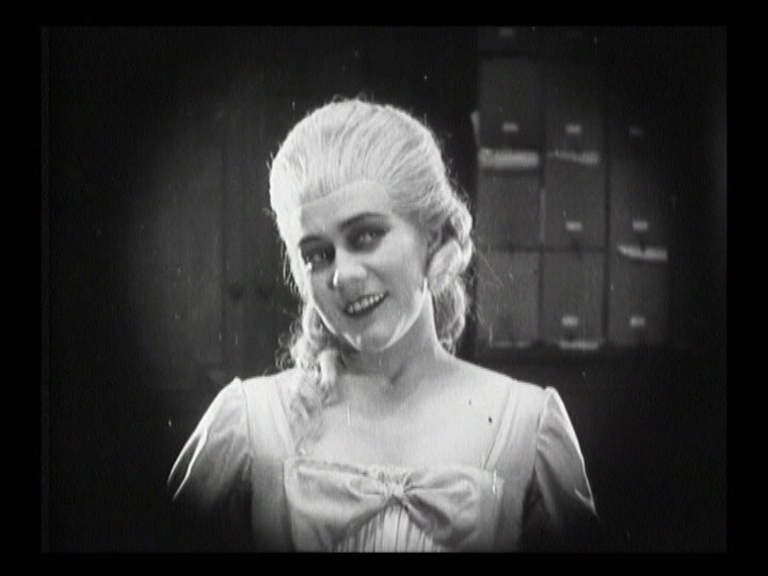
Sophie von Faninal (Felicie Berger). Sophie is the daughter of a parvenu bourgeois, whose fortune as the army’s provisioner has made her desirable to the impoverished blueblood Ochs. Octavian encounters her at an open-air dance, where he takes pity on her because she is being shunned as a newcomer. Berger is very pretty, and appropriately youthful (given the need to contrast her with the older Marschallin). And I think her performance—girlish, slightly gauche—looks all the better for being opposite the utterly unconvincing Catelain. Catelain’s facial expressions in his first scene with Sophie make him look like a chipmunk: he’s all goggling eyes, silly smile, bared teeth, trembly little gestures and ticks.

The centrepiece of the film has the same issue. Here, Octavian has been nominated by the Marschallin to act as “Rosenkavalier”, giving a silver rose to Sophie as a promise of Ochs’s betrothal. The scene is as musically beautiful as any in the film. The descending motif of the rose—spelled out by harp, celesta, triangle, and glockenspiel—has an unearthly, otherworldly texture. In the opera, the rose theme is a counterpoint to the similarly high notes of the chiming clock in the Marschallin’s monologue in Act 1. The lovers have their own kind of time signature in their theme, floating high above the rest of the orchestra. Their music is piercingly lovely. But the film cannot match it. Catelain’s performance in the rose-giving scene is unmoving in every sense: stiff, awkward. Berger’s performance is as natural as the circumstance allows: she is meant to be awkward, shy, smitten. But surely there are subtler, more emotionally revealing, ways of rendering this encounter: to reveal the love beneath the formality. The contrast between music and image is again evident in Octavian and Sophie’s final meeting in the extended ball sequence at the end of the film. They meet, knowing that they can surely be together at last. And the music is as meltingly tender, as gentle, and rapt as the scene demands. But the scene doesn’t work on screen. Berger is perfectly good here: her hesitancy, her disbelief, her restrained joy. But Catelain is dreadful: he can’t hold his body naturally, can’t suggest any kind of emotion with his arms, his posture, his face. Thus, the climactic emotional scene between the lovers is a dud.

Annina and Valzacchi (Carmen Cartellieri and Friedrich Féher). These two minor characters appear only in a few scenes in the film. Either their roles are somewhat underwritten or there may be some missing fragments of the film that would give greater prominence to them. Early in the film, hoping to reveal the Marschallin’s affair, Annina engages with “Her High Apostolic Majesty’s Commission” for morality, a group of bewigged old men. (In the opera, there is none of this: Annina and Valzacchi are employed by Ochs to find “Mariandl”, the name given by Octavian when he is disguised as a maid.) The “Commission” likewise isn’t developed much in the film, but they get a lovely, slightly cumbersome waltz in the score: the tempo relents, as though the fuddy-duddies of the Commission are circling in slow-motion. In the opera, Annina and Valzacchi are niece and uncle; in the film, they are unrelated and form the third romantic couple to find happiness in the final scenes. Do they have inner lives? The film doesn’t, can’t, will not, show us.

The Marschall (Paul Hartmann). We never see or hear this character in the opera. The Marschallin’s husband is permanently absent from her life, hence her lover and her sense of loneliness. For the film version, we see the Marschall in a flashback of his wedding to the Marschallin. Strauss accompanies the scene with martial music: trumpets and timpani thump out a repetitive melody; it’s a march rather than a dance, a fanfare for a different kind of ceremony—not a wedding. It’s a simple and effective means of underlining the total absence of sentiment in this marriage. The Marschall’s music dominates the scene, obliterating any joy his bride might have felt.

But the film complicates our impression of the Marschall, for we subsequently see his military campaign, together with his frustration at not hearing from his wife. Strauss’s martial music gives the character a sense of pomp, but also of activity and passion. (The way he bosses the army is also played for laughs: he gets them all up early and on parade because he’s jealous of the letters they get from their loved ones.) The film wants us to feel sympathy for him, but Wiene’s direction is not sympathetic enough. The camera never bothers to find filmic ways of emphasizing the Marschall’s mood. We just watch him wander around looking stiff and uncomfortable. That said, perhaps the only time Wiene uses effectively dramatic lighting in the film is when we see the Marschall alone in his billet, the firelight casting shadows around him. It makes him look all the more lonely, angry, isolated. But (as ever) Wiene never makes much or more of this. No close-up, no development of character. Yet again, I can only find fault with the direction: why doesn’t it do something with its material?

The film brings back this character in the climactic sequence, a masked ball set in and around the Marschallin’s estate. Everyone is in disguise, trying and succeeding to lure Ochs into a compromising situation in order to break his engagement with Sophie. The final scenes unite three couples: Octavian and Sophie, Annina and Valzacchi, the Marshall and Maschallin. Ochs, meanwhile, slinks away in shame… Thus, the film offers a neat tying-up of ends that the opera eschews. (In the latter, the Marschallin relinquishes Octavian to Sophie, but she is left alone at the end. The Marschall never appears.)

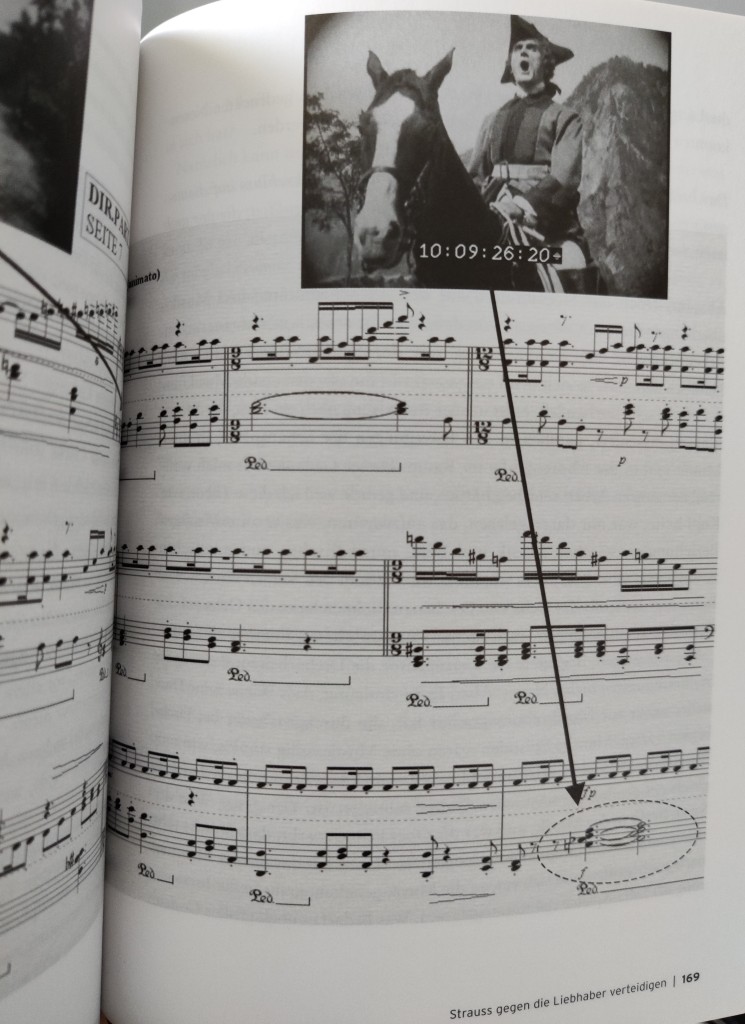
Hofmannstahl, Strauss, Wiene. The tensions between the film’s three major “authors” are evident in its original release. The Dresden premiere was conducted by Strauss on 11 January 1926. Despite his decades of experience at the podium, Strauss has never accompanied a film projection: the film had to be stopped twenty times during the performance because Strauss was concentrating on his musicians and not the screen (Jung & Schatzberg, 126). A critic said that Strauss had “torn the film to shreds” to preserve the continuity of his musical performance. By the time of the Berlin premiere, just five days later, the experienced cinema musician Willy Schmidt-Gentner had taken over the duties at the podium and rearranged the music to better its synchronization with the film. (Strauss merely sat in the audience.) The film was a great success, much bolstered by the score and the fame of its author—as well as the supposed involvement of Hofmannsthal as scenarist.

Hofmannsthal himself was initially full of praise for Wiene, persuading Strauss to approve the project on the basis of the director’s success. But when he saw Der Rosenkavalier on the screen, Hofmannsthal described it as “the most dilettante and clumsy film imaginable” (qtd in Jung & Schatzberg, 123). This was partly sour grapes at having his scenario rejected, but I cannot but agree that the film is less than the sum of its parts. The direction of performers is one thing (if you can’t make Catelain a better actor, you can surely film him differently), but the direction of action is another. The music is a supple, shifting tapestry of themes. It’s charming, wistful, melancholic, joyful, exciting. But Wiene’s direction is flat, static, unimaginative. The camera never once moves, hardly ever cuts close to the performers. (I could understand if they were actually singing: close-ups in broadcasts of live opera are often quite awkward. But this is an opera which suffers none of the inconvenience of operatic performance.)

More recently, it has been argued that Wiene “tried to replace what is essential for an opera—namely, the arias—with what is outstanding in a silent film—namely, the opulence of the images” (Jung & Schatzberg, 129). But “opulence” is not enough. You can have “opulence” on stage. Alfred Roller’s sets for the film are “opulent”. (It was Roller—ever the perfectionist—who picked the exterior locations for Ochs’s estate (Hartmann, 78-79).) Sets and costumes were modelled on eighteenth-century patterns, and Wiene clearly sought to replicate some of these directly in his compositions (see Krenn, 31, 223-41).

But none of this is a substitute for the voice, or the function of the voice in opera: i.e. a carrier of emotion, a means of emotive expressive. Arranging “opulence” before a camera isn’t the same as filming something in a way that conveys meaning or emotion. Why can’t Wiene match the sensuous dimension of the music in the way the scene is shot? It’s not as if silence cannot be expressive, as though images cannot conjure subjective moods, feelings. Wiene’s direction is—at best—old fashioned, shunning the innovations evident in any number of other German productions of the time. I can imagine an infinitely more interesting film being made in 1925 by Murnau or Lubitsch. In 1928-29, Hofmannsthal himself hoped to remake Der Rosenkavalier in Hollywood with the backing of Lillian Gish (Krenn, 90-95). In the 1930s, Lubitsch wanted do adapt the opera, hoping to cast Emil Jannings as Ochs—he was still planning an adaptation shortly before he died in 1947 (Eyman, 243, 357). There was and is a great film to be made out of Der Rosenkavalier, but Wiene’s is not it.

Finally, a few words about the restoration of Der Rosenkavalier. Material for this 2006 restoration came from the Bundesarchiv Filmarchiv (Berlin), the Narodni Filmovy Archiv (Prague), National Film and Television Archive (London), and the Österreichisches Theatermuseum (Vienna). In the gorgeous book that comes with the DVD, there are images from these prints to show the qualities and limitations of each (Krenn, 139-63), and there are several obvious moments when the print source switches mid-scene. (I also note that the English-language print clearly had more elaborate title designs than the others; rather than subtitles, the DVD uses digital replicas of the text for each language option. It’s a shame that the nice painted title designs couldn’t be reused.) And though the reconstruction of the film from these various sources is clearly a labour of love, visually it leaves a lot to be desired. Many of the scenes are scratched, flickery, and soft. The film once looked a lot better than it does now. There was also more of it. Der Rosenkavalier was originally 2996m long, equating to 115 minutes at 22fps. The 2006 restoration is only slightly shorter, running to 109 minutes (at the same speed), but the final scenes are missing and must be replaced with stills and fragments from the film’s original trailer (clearly in worse condition than the rest of the footage).

But the music is superb, and again we hear the superb work of Bernd Thewes in the reconstruction of the score. As ever, various sources had to be used to rebuild the score—and lots of creative decisions had to be made to achieve synchronization. The music was recorded at a live performance of Der Rosenkavalier in September 2006 at the Semperoper, Dresden—the very location of the film’s premiere in January 1926. The DVD presentation starts and finishes with footage of the musicians—Frank Strobel conducting the Staatskapelle Dresden—taking the applause of this live audience. It’s a great way to feel involved in the occasion, and sense something of the original excitement in the collaboration of Strauss with cinema. It’s also appropriate to close with an image of the orchestra, for Strauss’s music is certainly greater than Wiene’s film.

Paul Cuff

References

Noël Burch, “Ambivalences d’un réalisateur ‘bisexuel’. Quatre films de Marcel L’Herbier”, in Laurent Véray (ed.), Marcel L’Herbier. L’art du cinema (Paris: AFRHC, 2007), 201-16.

Scott Eyman, Ernst Lubitsch: Laughter in Paradise (New York: Simon & Schuster, 1993).

Rudolf Hartmann, Richard Strauss: The Staging of his Operas and Ballets (New York: Oxford UP, 1982).

Uli Jung and Walter Schatzberg, Beyond Caligari: The Films of Robert Wiene (New York: Berghahn Books, 1999).

Günter Krenn (ed.), “Ein sonderbar Ding”, Essays und Materialien zum Stummfilm “Der Rosenkavalier” (Vienna: Filmarchiv Austria, 2007).