Where next on our Pordenone journey? Day 5 begins on the streets of Paris, before segueing to eighteenth-century Vienna, and finally to Spanish California. We get helter-skelter comedy, brooding artistry, and romantic intrigue. It’s certainly a varied programme…
The first short was La Course aux potirons (1908; Fr.; Romeo Bosetti/Louis Feuillade). This kind of “chase” film was a popular format in the first decade of the twentieth century, and many directors of later prominence will have cut their teeth developing multi-shot narrative form through something similar. La Course aux potirons is a delightful example, with runaway pumpkins being pursued through the streets of Paris. But it steadily becomes more anarchic, more surreal: the pumpkins leap over fences, hurl themselves uphill, leap through buildings, up stairs, up chimneys, plunge into sewers. They are pursued – over every bit of terrain – by an accumulating cast of comic bunglers, as well as the donkey that was pulling the initial pumpkin cart. (The animal is even, marvellously, fed up through the chimney at one point.) Via reverse motion, the pumpkins eventually find their way back to their cart and leap into its back. A real charmer of a film.


Next up is La Mort de Mozart (1909; Fr.; Étienne Arnaud), another Gaumont production – this time deadly serious. We see Mozart at work, the arrival of the “mysterious messenger” (not disguised). It all plays out in a single shot, which suddenly splits in two for an inserted vision Mozart has of his own funeral. Now he collapses and is barred from composing. But his friend plays music from his operas to sooth him, and Mozart sees more visions of scenes from his operas. Finally, Mozart asks for quill and paper to compose the requiem. Musicians enter to help him compose, and continue to sing as Mozart enters his death throes and dies. FIN.


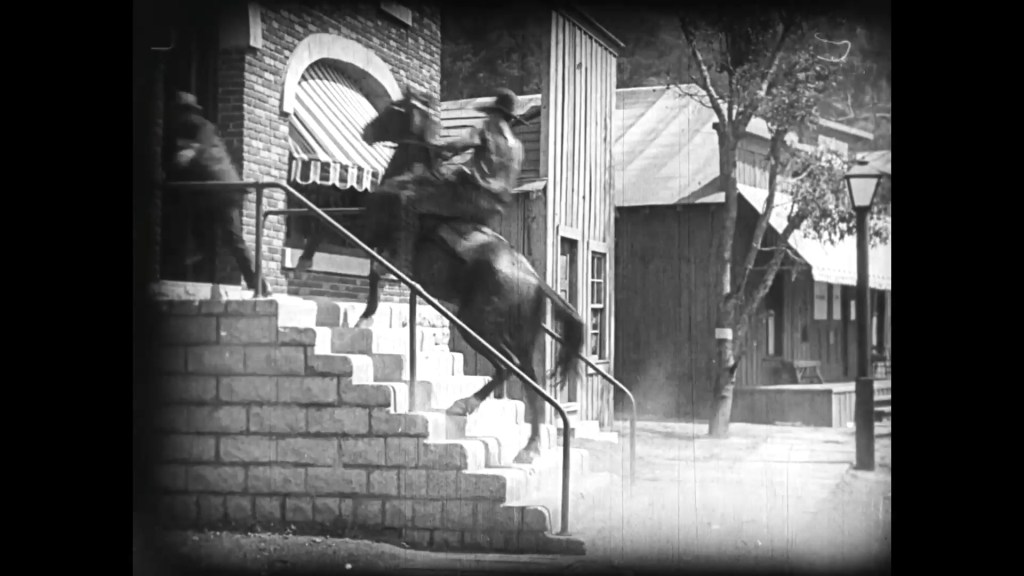
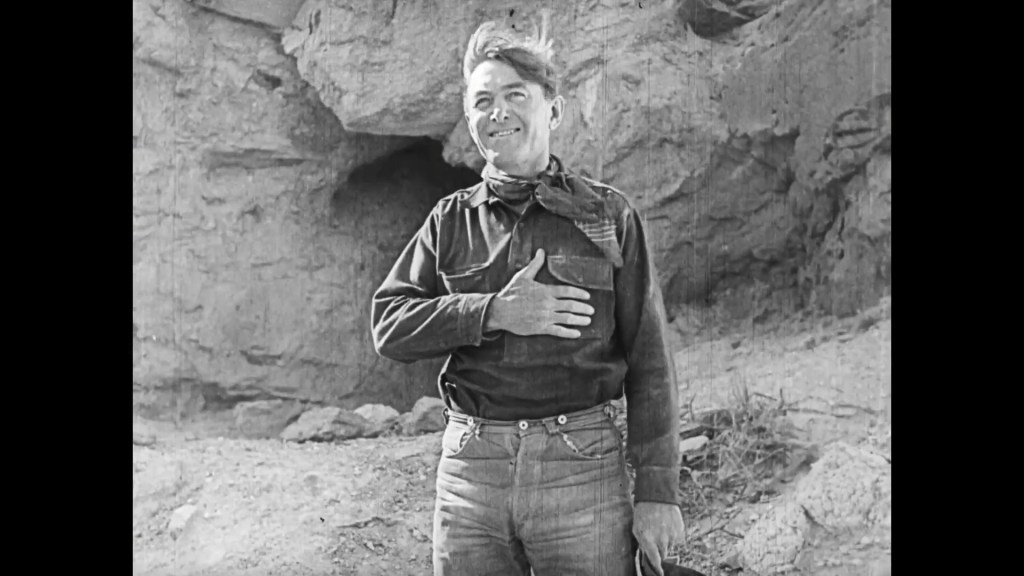
Thus we come to our main feature: For the Soul of Rafael (1920; US; Harry Garson). A tale of Spanish California, of adventure, of “romance whispered through convent windows”, and “a daughter of Spanish dons” who follows the -metaphor-, ahem, the whisper “until it led her over shadowed trails where Tragedy spread a net for her feet.” Marta Raquel Estevan (Clara Kimball Young) has grown up in a nunnery, guarded by Dona Luisa Arteaga (Eugenie Besserer), who wishes her to marry her son Don Rafael (Bertram Grassby). Marta is served “with grim devotion” by Polonia (Paula Merritt), who considers that Marta is adopted by the hill Tribe to which she belongs. They go to the New Year fire ceremony, where they encounter the American adventurer Keith Bryton (J. Frank Glendon) who has been wounded and captured by the tribe. Marta saves Keith’s life by giving him her ring, and he is brought to Polonia’s hut to recover. Marta and Keith fall for each other, the news of which infuriates Dona Luisa. Dona Luisa forces Polonia to effectuate the Americans’ sudden departure – and lie to Marta that he died. Later, Don Rafael – a louche reprobate – is partying with the locals (including Keith) to celebrate the last of his bachelor days. El Capitan (Juan de la Cruz), “the black sheep of the Arteagas”, suddenly arrives, disguised as a padre. Then Dona Luisa arrives with Marta and greets Rafael’s cousin Ana Mendez (Ruth King). Dona Luisa invokes an oath to sweat “by the Holy Cross” to “stand guard over the soul of Rafael”, which Marta joins in – “so long as they both shall live.” (Hmm…) Keith sees Marta making the oath and leaves distraught, just as Dona Luisa dies. Later, at the wedding the “Padre” rescues Teresa and her infant, abandoned by… Rafael! Marta demands Rafael take responsibility for the woman and child, telling Rafael that Teresa is his real wife. Later, Keith arrives with his brother’s widow, Angela Bryton (Helene Sullivan), “an Englishwoman whose ambition has been aroused by the wealth and extravagance about her”. Marta, as a lengthy title explains in pompous prose, is unhappy. She has seen Keith, realized he’s not dead, and knows that Polonia lied to her. Rafael tries it on with Marta, who draws a knife and swears to strike him dead if he does so again. She seeks “refuge from the bestial soul of Rafael” in the home of Ana Mendez. The “padre” turns up with Keith, as does Rafael – on the trail of El Capitan. Keith and Marta are briefly reunited, confess their mutual love, but “for the soul of Rafael”, she must… (etc etc etc). Meanwhile, Rafael pursues Helene, who seethes with jealousy against Marta. At the nighttime fiesta, “fate” intervenes. Keith kisses Marta in the chapel (that’s not a euphemism), just as Helena is stealing Marta’s family jewels (nor is that). Rafael arrives, but so does the “padre”, who finally reveals himself as El Capitan and kills Rafael. Marta and Keith are free to marry and step “at last into the sunlight of perfect joy.” THE END.


Well, it’s about time I watched a dud, and this is it. I didn’t enjoy much about For the Soul of Rafael at all. The silliness of its titles and po-faced tone were never quite silly or po-faced enough to make me laugh at the film, but the banality of its narrative and the stiltedness of its performers never enabled me to get along with the film. It was not especially interesting to look at, with only fleeting glimpses of the much-vaunted (by the titles) beauty and summery fragrance of old California, nor anything beyond some faintly expressionist touches to the convent (with its weirdly warped convent bars) to make the interiors stand out. Just as the titles promised high-flown themes that the film could hardly convey, so the performers struggled to give any depth to the emotions their character supposedly felt. They could offer only generic gesturing and expressions, all perfectly adequate but nothing more – just as the film’s visual language articulated nothing of any depth or complexity.


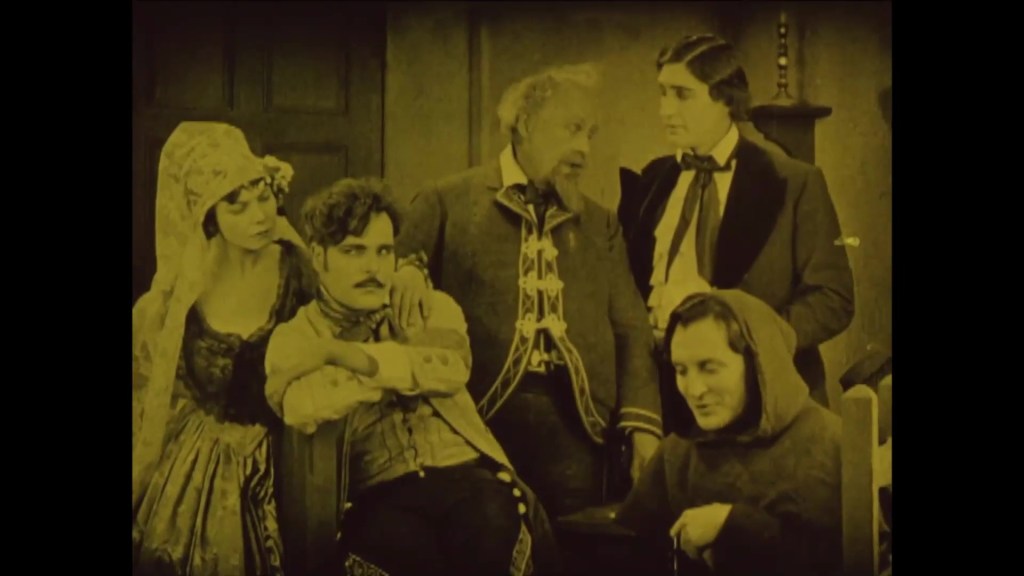


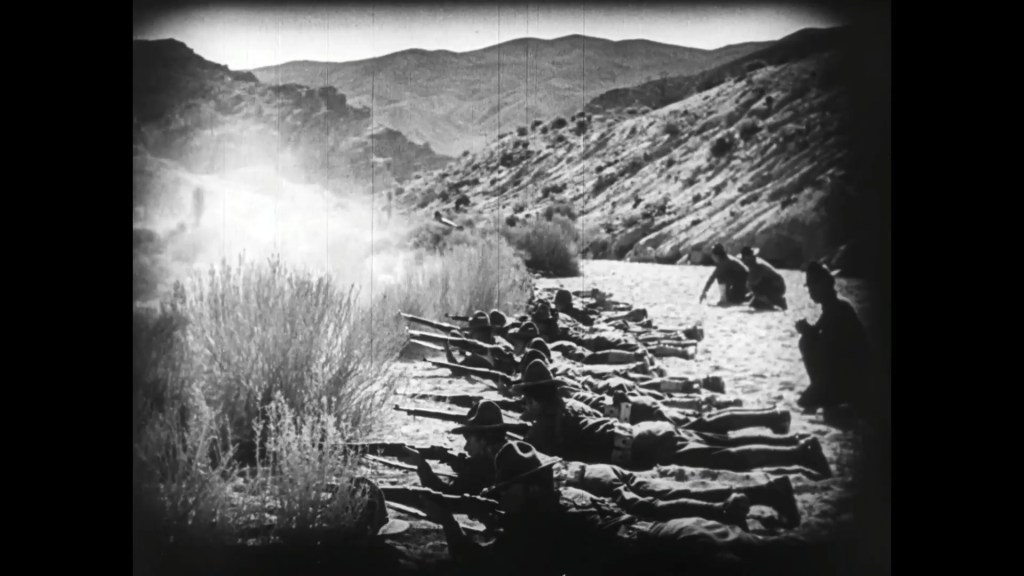
In terms of its setting, especially its use of Native American characters, I think back to the adaptations of Ramona that I wrote about last year. Like the 1928 Ramona, For the Soul of Rafael casts real Native Americans as extras and a white actress with darkened skin in the main cast. But it also doesn’t have much interest in the idea of Marta as an “adopted” member of a tribe, nor does it use the tribe members outside the initial sequence of their attack on Keith. Indeed, their only function is to act violently in order for the white characters to intervene. Racial issues aside, the film does itself no dramatic credit by turning down opportunities to create a more complex social world on screen. (It doesn’t make much use of Teresa and Rafael’s bastard child, either – nor does El Capitan have any function beyond turning up to move the plot along.) This would be less important, and less frustrating, if For the Soul of Rafael did not make so much of the historical California it claims to show us. The titles’ emphasis on the beauties of California are almost invisible on screen, just as the aura of fate and religious intensity they invoke are entirely absent from the dramatic reality. I’m fine with stock characters if they move and breathe and live intensely on screen, just as I’m happy with cliched plots if they are executed with panache. For the Soul of Rafael had neither dramatic life nor directorial imagination.


That was Day 5, that was. The most entertaining film of the day was the first. I very much enjoyed La Course aux potirons: it had more life, invention, humour, wit, and filmmaking panache than either of the other two offerings. I’m intrigued by the programming of these three films together. The pace and energy of the programme decreased at the same that its earnestness increased. La Mort de Mozart was a kind of transition from the excitement of early narrative filmmaking to a more concentrated drama of character and moral seriousness. I enjoyed seeing this early drama of musical biography, and of musical composition, though its ambitions – to express interiority, creativity, memory, and history – outstrip its abilities. I was not moved by the film, despite the clear entreaties of its performers to produce serious emotion. Yet at only twelve minutes, it is far more compact than For the Soul of Rafael – and, in its own way, less pretentious. For the Soul of Rafael endlessly incites oaths to God, undying bonds of love, and depths of passion and betrayal, without ever convincing me that these notions are real, lived realities for its characters – or that the characters are themselves real people that I might or could or should care about. They all feel like stock characters, moving around in a characterless environment.
But already I feel I have spent too much time talking about this film. Let’s move on.
Paul Cuff










 The Realm of Silence