Recently, I wrote about Charles Koechlin’s The Seven Stars’ Symphony (1933), a remarkable musical evocation of stars from the silent and early sound era. This week is a kind of sequel, devoted to another obscure late nineteenth/early twentieth-century French composer. Louis Aubert (1887-1968) was (like Koechlin) a pupil of Fauré, was well respected by Ravel (whose Valses nobles et sentimentales he premiered as a performer), and made his name as a composer with the fairytale opera La forêt bleue (1911). Though he produced numerous works for piano and for orchestra, his work is rarely heard today. Indeed, there is only one modern recording of some of his orchestral works—and it was through this CD (released by Marco Polo in 1994) that I discovered Aubert in the first place. I found it at a local Oxfam for £2.99 and wasn’t going to turn down the chance to encounter another interesting obscurity.
What really sold me on it was the fact that one of the works on the CD was called “Cinéma”, six tableaux symphoniques. Very much like Koechlin’s symphony, this suite offers six portraits of various stars/aspects of cinema. (The recording with which I’m familiar is only available in six separate videos on youtube, so I have included links to each movement below.) Unlike Koechlin’s symphony, however, Aubert’s music was originally designed with a narrative purpose. In 1953, Aubert wrote a score to accompany a ballet called Cinéma, performed at the Paris Opéra in March 1953. This offered (according to the CD liner notes) a series of “episodes” from film history, from the Lumière brothers to the last Chaplin films “by way of Westerns and stories of vamps”. I’m intrigued by the sound of all this, though I can find only one image from the performance—depicting Disney characters (see below)—to suggest anything about what it was like on stage. I also presume that the ballet consisted of many more musical numbers than are selected for the “six tableaux symphoniques” that is the only version of the score that appears to have been published (and certainly the only portion to be recorded). Nevertheless, the music is a marvellous curiosity…
Douglas Fairbanks et Mary Pickford. Here is Fairbanks—listen to that fanfare! Drums and brass announce his name. The strings snap into a march rhythm (off we go: one-two! one-two! one-two!). but then the rhythm slows, fades. Harp and strings glide towards a sweeter, softer timbre. Mary Pickford swirls into view. But there is skittishness here as well as elegance. The music is lively as much as graceful. There is a kind of precision amid the haze of glamour, strong outlines amid the shimmer of sound. A drumbeat enters the fray, then cymbals and snare bustle in. Doug has bustled in, caught Mary unawares. His music sweeps hers away. He’s busy doing tricks, showing off. The music cuts and thrusts, leaps, jumps—and lands triumphantly on the downbeat.
Rudolf Valentino. After a boisterous introduction, a sinuous saxophone melody unwinds across a busy pizzicato rhythm in the strings. It’s a superb image the music conjures: a kind of rapidity amid a vast, unchanging landscape. Surely this is the image of a desert, of Valentino in The Sheik, riding across an immensity of sand. But it’s also nothing quite like the film itself. It’s a memory, a mistaken recollection. And the music develops this simple idea, building slowly in volume. (More like the famous first shot of Omar Sharif’s character in Lawrence of Arabia than a scene in The Sheik.) Then figure disappears, riding off into the distance. Fade to black.
Charlot et les Nymphes Hollywoodiennes. Here is Charlot! Bubbly, jaunty rhythms. There’s a jazzy swagger, rich twists of sound. A violin solo breezily dances over the brassy orchestra. The drums are played with brushes: a pleasing, rustling soundscape. Then all is wistful, dreamy. A solo violin dreams over gentle strings, over warm breaths of woodwind, over a muted trumpet call.
Walt Disney. Almost at once, the music is mickey-mousing across the soundscape. But the orchestration is also weirdly threatening. It’s as if Aubert is recalling the sorcerer’s apprentice section of Fantasia, threatening to take Mickey on a perilous journey. And there he goes, marching off—the percussion jangling, as though with keys in hand, walking edgily towards a great door that he must open, behind which is the unknown…
Charlot amoureux. Another facet of Charlot. Wistful, dreaming, languorous. A private world, an inner world. (One can imagine the Tramp falling in love, comically, tragically, delightfully.) But reality intervenes. A blast of sound, then an awkward silence. Quietened, tremolo strings swirl under an ominous brass refrain. It is love lost, abandoned, proved false, proved insubstantial, unobtainable, unrequited.
Valse finale. Hollywood bustles in. The orchestra sweeps itself into a waltz. It’s grand, if a little undefined. Here is glamour in sound, showing itself off for our appreciation. It makes me think of Carl Davis’s glorious theme for the television series Hollywood: A Celebration of the American Silent Film (1980). But, as so often, Davis has the genius to make his melody instantly memorable—conjuring in the space of two bars an entire world, mood, and feeling. Aubert’s waltz is both less memorable but more orchestrally substantial (it is, crudely, louder, written for larger forces). So it’s at once dreamy and unwieldy, a kind of too-crowded dancefloor. You can’t see the stars for the wealth of movement, of swishing figure, of gleaming jewels. (Glockenspiel and triangle chime and jingle.) The music swirls and swaggers to its inevitable conclusion: THE END.
Aubert’s score is (I think) less musically inventive—less outlandishly exotic in tone and texture—than Koechlin’s Seven Stars’ Symphony. The CD linter notes (by Michel Fleury) argue that Aubert’s music is (like Koechlin’s) more interested in creating mood pieces than in recreating specific scenes from films. But I wonder how true this is. After all, the music accompanied specific dramatic action on the stage. Listening to it, I can more readily imagine it accompanying images/action than I can the majority of Koechlin’s score. I could even see the music working well as silent film accompaniment, and I wonder if the original ballet mimicked this very strategy in the theatre. As with Koechlin, I want to know what kind of experiences Aubert had with the cinematic subjects he depicts in music. Did he go to the cinema in the silent era? If so, what kind of music did he hear there? I’d also ask similar questions about the ballet of 1953: what kind of a history of film did this present, and what inspired it? (And what did the spectators think of it, especially those who knew the silent era firsthand?) Many questions, to which I currently have no answers. But I’d be intrigued to find out more, and may (in time) do a little more digging to find out. In the meantime, we have Aubert’s music, which is well worth your time. Once again, go listen!
In the summer of 1926, Cecil B. DeMille embarked on what was considered to be an enormously risky project: an epic treatment of the life of Jesus Christ. There had been plenty of Christs seen on screen in early cinema. In France, films about the Passion produced some of the longest productions thus far assembled. Pathé’s La Vie et la passion de Jésus Christ (Lucien Nonguet/Ferdinand Zecca, 1903) was nearly 45 minutes, while Gaumont’s La Vie du Christ (Alice Guy, 1906) was over 30 minutes. These early Christian narrative films were also boasted elaborate forms of cinematic spectacle. When Pathé remade their La Vie et la Passion in 1907, Segundo de Chomón took charge of the elaborate stencil- and hand-colouring of Zecca’s film for exhibition. Thus, long-form narrative and colour effects were always part of the history of silent biblical productions. But the context for DeMille’s film—to be made on the largest possible scale, complete with Technicolor sequences—was rather different. In the US in the 1920s, there had been much controversy about the depiction of Christ on screen. Ben-Hur: A Tale of the Christ (1925) had famously been obliged to include Christ only in the form of an occasional limb or edge-of-frame glow. Were censors, critics, and audiences ready for a modern dramatic interpretation of the Passion? And was DeMille the man to handle the project?
It turned out that he was, and that they were. For a start, DeMille tried to inoculate his production against religious concerns about Hollywood by having Mass performed every morning on set, as well as offering daily prayers via various religious leaders. He also imposed a “morality clause” in the contract of Dorothy Cummings, who played Jesus’s mother. And H.B. Warner, who played Jesus, was segregated from the rest of the cast to preserve his aura of otherness—and presumably to stop him socializing in ways that would not be becoming for someone playing his role. DeMille’s screenplay—by Jeanie MacPherson—was also built around incidents relayed in the New Testament, and the film’s intertitles are dominated by biblical citation. In sum, DeMille did everything in his power to make sure his production would offer a sincere and sanctioned depiction of its subject—and (as ever) his publicity department made sure that people knew about it.
When the film was released in April 1927, The King of Kings still caused a degree of controversy: depictions of Christ were (and, of course, still are) a sensitive issue for many spectators. But though the film encountered censorship in various territories, it was a resounding critical and commercial success. An early review in The Film Daily (20 April 1927) took the lead in what was to be an avalanche of glowing reviews:
There can be said nothing but praise for the reverence and appreciation with which the beautiful story here has been developed. DeMille has been successful in striking a tempo that is remarkable for the peaceful and benign influence it wields on the spectator. […] The spiritual fibre of innumerable numbers throughout the world are being stirred to their very core. […] [DeMille] has shown a supreme courage and a vast daring. He has been brave enough to show The Christ on the screen. […] The King of Kings is tremendous from every standpoint. It is the finest piece of screen craftsmanship ever turned out by DeMille.
Writing in Photoplay (June 1927), Frederick James Smith followed suit:
Here is Cecil B. DeMille’s finest motion picture effort. He has taken the most difficult and exalted theme in the world’s history—the story of Jesus Christ—and transcribed it intelligently and ably to the screen. / De Mille has had a variegated career. He has wandered, with an eye to the box office, up bypaths into ladies’ boudoirs and baths, he has been accused of garishness, bad taste and a hundred and one other faults, he frequently has been false and artificial. One of his first efforts, The Whispering Chorus [1918], stood until this as his best work. / The King of Kings, however, reveals a shrewd, discerning and skilful technician, a director with a fine sense of drama, and, indeed, a man with an understanding of the spiritual. / The King of Kings is the best telling of the Christ story the screen has ever revealed. […] You are going to be amazed at the complete sincerity of DeMille’s direction. Nothing is studied. There is no aiming at theatrical appeal. DeMille has followed the New Testament literally and with fidelity. He has taken no liberties. […] The King of Kings is a tremendous motion picture, one that, through its sincerity, is going to win thousands of new picture goers. DeMille deserves unstinted praise. He ventured where few would dare to venture, he threw a vast fortune into the balance and he carried through without deviating. Congratulations, Mr. DeMille.
And in Picture Play (August 1927), Norbert Lusk saw the film not just as a triumph for DeMille but for cinema itself:
The King of Kings is Cecil B. DeMille’s masterpiece, and is among the greatest of all pictures. It is a sincere and reverent visualization of the last three years in the life of Christ, produced on a scale of tasteful magnificence, finely acted by the scores in it, and possessed of moments of poignant beauty and unapproachable drama. This is a picture that will never become outmoded. […] Until you see The King of Kings you will not have seen all that the screen is capable of today.
I begin my piece with this context because I feel that what follows would otherwise do an injustice to DeMille’s film. Following the historical high praise, my own reaction will seem distinctly—perhaps unfairly—negative. Over the recent Easter weekend, I was looking for something culturally appropriate to watch. (I’m in no way religious, but sometimes it’s nice to feel “seasonal”.) I chose The King of Kings because I’d had the gorgeous French Blu-ray edition produced by Lobster say on my shelf for a long time—unopened. I don’t think I’d actually seen the film all the way through before, and frankly I couldn’t make it all the way through in one go this time. Rarely have I been so intellectually bored when watching a film of my own free choice.
It started so promisingly. A two-strip Technicolor cabal of harlots and decadents, lounging around in lurid pink robes. High drama, high kitsch. Mary Magdalene is Judas’s former lover and wants to know where he is. Discovering that Judas is in league with a carpenter named Jesus, Mary starts issuing instructions to her servants: “Bring me my richest perfumes! […] Harness my zebras!” (I think “Harness my zebras” is the most fabulous intertitle I’ve seen for quite some time.) So off she rides in her zebra-pulled carriage to find Jesus and Judas…
Thus ended my dramatic involvement with the film. From this point on, I was increasingly restless. I can only presume that DeMille started his epic with this sequence precisely to lure in a wider audience. Want debauchery, colour, spectacle? Here it is! Now we have your attention, we segue to the real story… Alas, Demille’s Te Deum for God was tedium for me. By the halfway point, I was experiencing such crippling mental boredom that I had to stop. I wanted to rant and rage, or run madly into the night, to vent my frustration. After a break (and a more sedate session to finish the film), I have been trying to ponder why my reaction was so strong. Why was I so totally detached from the drama? What this a problem with the film or with me?
Firstly, the film’s high productions values and superb photography were part of the problem for me. It felt akin to being confronted by one of my local Jehovah’s Witnesses. Doing their rounds, they always dress in their most immaculate suits. Their clothing is never showy, it’s merely tasteful. It’s not a uniform as such, but it defines them, limits them. It’s an invariable combination of immaculate suits, dustless shoes, neatly combed hair, and a tone of voice that is both calm and exceedingly well-rehearsed. This polished smoothness of sound and image is never meant to impress, as such. Rather, the aesthetic is meant to soothe, to calm, to convince. When they open their mouths, the reassurance of middleclass, middlebrow, middle-manager-esque measuredness acts as a kind of anaesthetic for what they’re trying to sell you. As it happens, I’m very bad at telling people that I have no interest in what they have to say, so when confronted by these gleamingly bland, affable people on my doorstep I tend to let them babble away untroubled. (Unlike the Blu-ray of DeMille’s film, I cannot simply press “stop”.) A year or so ago, one of them spoke so long on their chosen topic that their reasonableness eventually gave way to something far more striking: I got conspiracy theories, scatological metaphors, and brutish fundamentalism. I stood, fascinating and appalled, as the man’s charm slowly unravelled and revealed a kind of ideological black hole.
I say all this because my experience stood at my front door, helplessly confronted with two impeccably well-presented religious salespeople spouting sententious homilies, is very much like my experience of watching The King of Kings. The film feels the need to dress in its very best clothes to impress you with its message. If a film’s this good-looking, surely the content must be solid? But it’s precisely the contrast between the well-dressedness of the picture and the dramatic paucity of its every move that annoyed me. You could tell how much money had been spent on everything, on how much time had been spent dressing actors and picking props.
Take the way the Roman soldiers are depicted: they all hang around in full body armour and immaculately plumed helmets, which they seem to wear even when sleeping. They’re all too well groomed, too well fed, too well rehearsed. Or look at the flock of sheep that flees the temple merchants, or the lamb that Jesus fondles later in that sequence. I could almost hear DeMille shouting: “Look at the sheep! Each one hand picked for maximum pictorial beauty! Just feel the quality of these fleeces. You know how much each one would be worth on the market? Let me tell you how much I paid for them…!” The trouble is, everyone on screen is too well attired, too well made up. Every piece of furniture is too well designed, too well finished. Even rags or scraps or fragments of woods are too well fashioned, too well placed. Cripples are too pretty, lunatics too cute. Nothing bears the weight or texture of reality, nor does its fantasy go beyond a kind of bland pictorialism. It’s an illustrated children’s Bible, referencing only the most familiar tropes of Christian iconography or art. Neither aesthetically or dramatically does DeMille offer anything that either wasn’t already a cliché by 1927 or has become one since then—perhaps thanks to this very film. Everything from his sanitized, Aryanized Christ—blonde, bearded, blue-eyed—to his impeccably desexed Mary (Mother of) feels so wearingly familiar, I found it almost impossible to enjoy anything on screen.
What’s more, the drama moves at a slow pace. (Is this what The Film Daily critic meant when he said that the film’s tempo is “remarkable for the peaceful and benign influence it wields on the spectator”?) The film is 155 minutes long, but that’s not the issue. The problem is that every incident is so painstakingly relayed, and so laboriously earnest in citing (literal) chapter and verse, that the drama gets sucked out of every situation. Nothing in this film has bite, or tension, or excitement. The children who are subject to the first instances of Christ’s on-screen miracles are irritating for their cuteness, as is the length of time it takes for their inevitable curing. Soon after, the cleansing of the “seven deadly sins” from Mary Magdalene is already long and absurd without one of the apostles turning to another and explaining to them (and us) what’s going on. Yes, the multiple superimpositions are technically marvellous, but the personifications of the “sins” are ludicrously crude.
By the time we get to the climax of Judas’s betrayal, I’d grown infinitely weary of DeMille’s painstakingly earnest treatment. Just see how, in the Garden of Gethsemane, Judas goes in to identity Jesus with a kiss. DeMille milks this scene ad infinitum. Judas approaches slowly, moves to Jesus slowly, hovers at his side slowly, moves even closer slowly, leans in slowly, kisses him slowly, reacts slowly, moves away slowly. Poor Jesus has to stand stock still, staring straight ahead, for an eternity—like us, waiting for Judas to bloody well get on with it. The scene is so laboured, its contrivance so drawn out… (Even writing about this scene is tedious—I just want it to be over with!) We come to this scene, as we do to every incident, already knowing exactly what to expect, so to drag it out like this is dramatically absurd. Do something unexpected, Cecil! Surprise me! It’s even more of a shame, since the hand-coloured flames in combination with blue tinting make the Garden of Gethsemane sequence visually extraordinary. Why couldn’t the drama do anything to match it?
Part of the issue is that the film seems to imagine it’s offering us something with profound insight into universal moral truths, but I found it simplistic and superficial. No matter how much backstory the film gives us, I simply cannot believe in Judas as a real human being with real concerns or motives—and thus I cannot believe in the reality of his divided loyalties, his betrayal, or his remorse. Just as all the various Marys on screen are not real women at all, just walking illustrations from a crude book of dogma. And none of this is helped by the way the film uses endless biblical citations as dramatic punchlines to scenes. It ends up smacking the viewer as a kind of narrative (not to mention moral) smugness. This is a film that feels superior to (all but one of) its characters.
If the above makes it sound like I got nothing from the film, this is not quite true. Amid the pomp and platitudes, H.B. Warner gives a very restrained and (within the film’s own terms) rewarding performance as Jesus. He manages to be dignified and sympathetic even when the film around him is not. Both the role itself and the screenplay allow Warner little room for psychological or emotional complexity. He is caring, or sad, or knowing-yet-forgiving. He’s also miraculous, in a way that is oddly unimpressive. When DeMille’s Christ waves his hand to heal the sick, there’s no suspense, no emotion. The effects (like the soldier’s vanishing wound in the Garden of Gethsemane) take place too smoothly, or too swiftly. They’re so miraculously effortless that they are no longer miraculous. (And no-one in the film ever pauses to question the motivation or context of these miracles: like absolutely everything else in the film, they are meant to be received without a scintilla of scepticism.) Given all this, Warner’s eyes are often the source of the only real emotion in the film—even if these emotions (pity, love, resignation) lack any kind of human context. Jesus as a character is merely Christ the symbol. He might walk around and interact with people, but a real human being—as an individual with a human consciousness or a personal history or a complex inner life—he is not. Warner does his best within the many limitations put upon him.
If DeMille cast a very un-Jewish-looking Jesus, he did cast two actual Jewish actors in prominent roles. The father and son actors Rudolph and Joseph Schildkraut were Austrian emigres who had come to the US at the start of the decade. In The King of Kings, they respectively play Caiaphas (the High Priest of Israel) and Judas. The former has the less nuanced character: he’s all bearded malevolence and unrepentant scheming. But as Judas, Joseph Schildkraut has more work to do. It’s a shame that the script’s effort to give him some kind of backstory makes his character less interesting than he might otherwise be. DeMille makes Judas a power-hungry schemer, eager to gain influence (and affluence) once he has installed Jesus as king. Making a villain more villainous does not make him a more interesting character. Joseph Schildkraut’s performance is as mannered as his character is simplistic. Ne’er has a man been seen to so shiftily fondle his cummerbund in villainous contemplation. In the Last Supper scene, the breaking of the bread is a cue for more scurrilous shifting on Schildkraut’s part. He resembles a schoolboy faced with unpalatable food (I’ve been there), who must pretend to eat his portion while secretly depositing it onto the floor. We are presumably meant to take against him from the outside for being dark-haired and clean shaven. Once things get serious, Judas’s hair becomes tangled—as if this could in any way make his character arc more convincing.
Of course, casting the two main villains in the film as Jews is not exactly sensitive. DeMille is also nasty to both the Schildkrauts at the end. Judas, per the tradition, hangs himself. Though we don’t see him do so, we see his swinging body tumble into the abyss, courtesy of the clunky earthquake that intervenes during the crucifixion. Meanwhile, Caiaphas falls on his knees at the temple: “Lord God Jehovah, visit not Thy wrath on Thy people Israel—I alone am guilty!” For once, there’s no biblical citation. DeMille is at least more courteous here than in the similar scene in Mel Gibson’s The Passion of the Christ (2004), which (in)famously takes the opportunity (via Caiaphas’s dialogue) to pass the blame onto the entire Jewish people forevermore. DeMille wants to have it both ways: cast Jews as the villains yet insert an excusatory note. The note is meant to excuse the Jews, but it’s also an excuse for DeMille. Like Pilate, he washes his hands.
The rest of the cast is uniformly uninteresting. Among the disciples, only Peter (Ernest Torrence) stands out, though not for good reasons. His alternately comedic and sincere characterization hits every note so squarely and obviously, I immediately took against him. I know it’s part of the New Testament story, but the way Peter is told that he will deny Jesus three times, then refutes this, then is proven wrong, then acts repentantly, is the perfect example of how the film fails to deliver any novelty, any friction or doubt, in its adaptation. What is meant to be the tragic fulfilment of Jesus’s prediction comes across as almost comedic on screen, such is Torrence’s eye-bulging doubletake. It’s a kind of visual “D’oh!” Likewise, the film’s laborious setting-up of the moment, and equally laborious explication of the punchline, is another instance of dramatic smugness. But at least I can remember Peter. The rest of the disciples are virtually indistinguishable. They have no personality, no inner lives, no function beyond the affirmation of what we already know. (In the liner notes of the Blu-ray, Lobster include a wonderful advert for the film in which the whole cast appear to swarm around the central figure of DeMille. Such is the size of font and layout of the design that it looks like the “King of Kings” is DeMille himself!)
If the adults are too often piously bland, the children are worse. I would like to restate how irritating I found the children in this film. They’re part of the ingratiating way the film seeks our sympathy, the way it hopes to humanize the story. Thus, the soon-to-be New Testament author Mark is a picture-book pretty child equipped with an enormous crop of curly blond hair—a cliché of fresh-faced cuteness that instantly made me take against him. Not only does he introduce us to Jesus via another child (a blind boy, who is likewise fair-haired), but he’s there right to the end. It’s he who encourages Simon of Cyrene to take up the burden of Jesus’s cross in the penultimate sequence. This is another of DeMille’s biblical amendments, since the scriptures state that it was the Romans that “compelled” Simon to carry the cross. Why the amendment? Merely to squeeze our sympathy glands again?
But was I really this annoyed by the film? Did it never affect me? Was I entirely unmoved? Hmm. Well, no. I did find moments moving, but this was often more due to the choice of music. For Lobster’s restoration of The King of Kings, Robert Israel used Hugo Riesenfeld’s orchestral score (as recorded for the synchronized 1928 version of the film) as the basis for his own adaptation. Copying Riesenfeld’s cues from 1928, he expanded the music to fit the longer 1927 version. I will have more to say on the score shortly, but for now I just want to point out how particular pieces of music seemed to make something more of the film—at least, for me. Take the Last Supper sequence. I’ve already said that I find the handling of Judas in this scene clumsy, but at the end of the sequence Riesenfeld introduces music from Wagner’s Parsifal (1882). It’s the opening of the Prelude to Act I: a soundscape of shifting, unresolved harmonic tension that hypnotically ebbs and flows—it’s music of unworldly beauty, of abstract sorrow, of unfulfilled longing. As rendered for Israel’s modern recording, the music is reduced for a smaller orchestra than Wagner intended—but it still sent shivers down my spine. And though the music doesn’t sound like it should in better performances by larger orchestras, and though Riesenfeld cuts and pastes from other sources as the scene proceeds, the effect as a whole is still superb. For once, something unearthly creeps over the picture. But then, inevitably, a voiceless choir comes in at the end of the scene with the melody from “Abide with me”, and the effect is ruined. From late romantic mysticism—all unsettled harmonics and soft, swirling rhythms—the score crashes to earth with resounding cliché.
That said, I did find Israel’s adaption of the Riesenfeld score very impressive. What’s most remarkable is its fleetfooted switching from one piece to another. Rarely does Riesenfeld see out a whole movement from its original context. Rather, he will use a single iteration of a theme, a single phrase, then segue rapidly to another piece. Thus, we sometimes get the “Dresden Amen” theme (usually as orchestrated by Wagner in Parsifal) in the brass, but the entire thing lasts one or two bars. It makes its point, then moves on. Later, we get more from Parsifal—but only a few more bars, just enough to introduce the right mood for the moment. Pontius Pilate gets the anxious, unsettled opening of Rimsky-Korsakov’s “Antar” symphony (1868, rev. 1875/91), but only the opening—again, Riesenfeld moves on to something else to follow the action on screen. Even the way he unleashes music from the finale of Berlioz’s Symphonie fantastique (1830)—surely the most extrovertly wild and exciting music of the entire score—he does so only for a few measures during the scourging of Jesus by the Romans. There are even smaller touches, too. I loved, for example, the delicious way that tambourine strikes accompany the silver pieces falling in a pile before Judas.
Sometimes the brevity of the cues works against their effectiveness. Thus, during the crucifixion sequence, Riesenfeld uses music from the last movement of Tchaikovsky’s sixth symphony, the “Pathétique”(1893). But he reorchestrates it so that the music is less effective than in the original. The original is an extraordinary unwinding of orchestral timbre, the whole movement slowing and deepening and darkening—occasionally lashing out in fury—until the music peters out in the depths of despair. With Riesenfeld, we get a much steadier tempo and rhythm, and the musical narrative of the movement—from anger to oblivion—is cut short. Equally, the way Riesenfeld chucks in some Verdi (the dies irae from his requiem (1874)) for DeMille’s earthquake feels as clunky an imposition as the earthquake itself.
My other reservation is not about the music but about the 2016 recording for the film’s digital release. I can never fully detach my comments from what is inevitably a kind of snobbery, but nevertheless I really do think that there isan issue of quality at stake. When citing well-known musical themes, it is very easy for scores to sound tired and cliched. What makes or breaks the use of such music is the way they are arranged and performed. For example, several cues used in the Riesenfeld score for The King of Kings are also used in the (anonymous, c.1930) score for Die Liebe der Jeanne Ney. Modern renditions of both scores were arranged and recorded almost at the same time, in 2016-17, for their respective digital release. But despite sharing some of the same music, the two soundtracks are very different. Bernd Thewes (for Jeanne Ney) orchestrates the score in such a lively and interesting way—and the music is performed and recorded with such immense panache—that the effect is quite different, and more effective.
Of course, Israel’s forces are smaller than Thewes’s: Israel has the Czech Cinema Orchestra, while Thewes has the WDR Funkhausorchester Köln. My search for “The Czech Cinema Orchestra” yielded no results online. There is such a thing as “The Czech Film Orchestra”, however. As I surmised in an earlier post, Czech orchestras are popular with soundtrack composers for their competitive prices. As the homepage of the Czech Film Orchestra states: “We can offer you world-class orchestral recordings for 25% of the cost of a recording in the USA, Canada, or London.” Is the “Czech Cinema Orchestra” a budget version of the Czech Film Orchestra? I presume it’s a scratch band assembled for the 2016 recording. The performance—especially, of the strings—is less well drilled than it could be, and less atmospherically recorded than more budget-enhanced silent film soundtracks I’ve heard. (For examples of the latter, see: just about anything produced in Germany through ARTE, or any soundtrack produced by Carl Davis.)
It’s a shame, as Riesenfeld’s score does a lot of the heavy lifting as far as mood and emotion are concerned in The King of Kings. When the music really needs to land, it often doesn’t. During the resurrection sequence, DeMille’s Technicolor glows with gorgeous lustre—the music needs to do likewise. Yet I don’t think I’ve heard a less convincing rendition of the prelude to Act 3 of Tannhäuser (1845) than the one given here, per Israel’s performance. The string section, in particular, can scarcely keep together for the swirling crescendo that leads to Jesus’s miraculous reappearance. What should be a sonic whirlwind is something of a whimper.
In summary, I’ve not been so irritated by a silent film in a long time. I find DeMille a very frustrating filmmaker, especially when it comes to his religious (or religiose) productions. Oddly, I almost wished he’d do something outrageous with the narrative of The King of Kings to make it more interesting. The only temporal interpolation he offers is at the end, when Jesus appears to loom over the skyscrapers of the modern world, offering his love. But the effect is banal. Compared with other biblical screen worlds of the 1920s (and even those early Passion films of the 1900s), The King of Kings never gripped or surprised me. Neither realistic nor magical, for me the film offers very little that would make me want to sit through the whole thing again—even if I thought I could bare it. I can see how audiences at the time might have found themselves drawn to its reverent portrayal, and I can appreciate the effort that has gone into its look. The photography is superb, the lighting lovely, the Technicolor gorgeous. But a film can look like a million dollars and still feel impoverished.
I adore the soundworld of late romantic music. I have lived and continue to live in this lush, exotic, expressive, excessive, experimental realm—I spend hours every week immersed in music well-known and music forgotten. I love the great composers, but I also love the lesser-knowns. The latter appeal to my obsessive side: they are people I can hunt down through footnotes, through asides, through the marketplace outlets and only-available-as-offair-broadcast-mp3 sharers of the world. Give me your Austro-German oddities, your Scandinavian obscurities. Give me your tone poems on bizarre themes, your operas about abstract ideas, your itinerant harmonies and luxuriously strange orchestration, your dozens of weird symphonies, your books of diverse chamber works. Give me your Schrekers, your Braunfels, your Schulhoffs and Schmidts (and Schmitts!), your Atterbergs and your Langgaards. Francophone? No problem! Give me an obscure French composer of orchestral music who was born (approximately) in the latter half of the nineteenth century and died (sometime) in the interwar years and I’ll be a happy man. D’Indy? It’s a done deal! Magnard? Yes please! Rabaud? You bet! Pierné? Seconds please! I love the music of all these composers (and many more besides). What I love especially is when this music overlaps with the world of silent cinema, either in my imagination or in that of the original composer’s intentions. The instruments and rhythms of popular music of the 1910s, 20s, and 30s bleeds into the legacy of orchestral music from the nineteenth century—and the fusion produces fantastic things. And of course I delight in original silent music scores written in the era, since it introduces me to any number of more obscure composers. So you can imagine my joy when I came across the music of Charles Koechlin (1867-1950) and, in particular, a symphony he wrote that was inspired by silent cinema…
The Seven Stars’ Symphony, op. 132 (1933)
Koechlin wrote this “symphony” in 1933, when sound had conquered cinema. The stars he recalls in music thus straddle the divide between these two eras. He’s recalling the silent screen as well as acknowledging the coming of sound. Across seven movements, we get sonic pictures—or recollections—or seven stars of the screen. This is not a symphony in the classical sense, since there is no overarching unity of form or design to the work. Rather, it is a series of tone poems that conjure a musical-cinematic universe. Just as Koechlin uses one medium to evoke another, so must I use prose to try and capture his music. (Of course, you can listen to the symphony here.) I make no pretence at real analysis, offering only an impression of Koechlin’s impressions:
I. Douglas Fairbanks (en souvenir du voleur de Bagdad). We step into a harmonic world of the orient. The movement instructs us to recall The Thief of Bagdad. But as soon as we begin, we’re lost. This is not the film of 1924: it’s a dream of the film. Woodwind tiptoes up weird scales. Slow-motion strings unwind in the stratosphere. Weird curlicues perform oriental turns. Melodies bubble up and die away. There is no drama, only glittering stepping stones towards sonic dissolution. It’s six minutes of spellbinding strangeness. Nine years had passed between the film’s premiere in Hollywood and Koechlin’s score being written. A distant memory revived in sound.
II. Lilian Harvey (menuet fugue). A graceful dance, strings shining over warm woodwind. Is Harvey performing a turn on screen? What does Koechlin remember of her? A saxophone line blooms in the orchestra. The music turns chromatically sour for an instant, threatens to unwind the texture. Then this moment of drama dissipates. All ends with a dreamy slide up into silvery nothingness.
III. Greta Garbo (choral Païen). The ondes Martenot spells out something that may or may not be a melody. It’s an unstable base on which to build a movement. Woodwind tread in its path. Strings uncommittedly slide underfoot. If Garbo is here, she is as insubstantial as quicksilver. Here is her unknowability, her ungraspable form on the screen. The image does not flicker. The music is a portrait of the surface of the screen: it’s all sonic sheen, all gleaming illusion. There is no scene, hardly any form—just something slipping away, beyond one’s grasp.
IV. Clara Bow et la joyouse Californie. Bustle! Brass! Light, skipping percussive steps. Here is Clara Bow, or the sonic imprint of her liveliness, her spirit. This is the first time Koechlin’s orchestra has shown real body, something approaching a full, round, sweep of sound. It’s more harmonically traditional. That is, until the whole soundscape dies away. Suddenly there is a skittish rhythm and a reduced texture, a kind of circus-like dance in the distance. (In the background, a glockenspiel adds texture to the downward line of melody, then an upward leap.) Is this California? Are we on the street, a studio lot, or in a fictional world? Of course, this is all a fictional world, at one, two, three, or four removes from reality. The harmonies thin again. It’s like a pair of curtains part, revealing another vista—some way off. A saxophone ripens the melody. Then the melody unpeels into weird, restless harmonies. The whole world threatens to collapse, until the brass and strings gather together and bulldoze forward. The movement ends in a massive affirmation.
V. Merlène Dietrich (variations sur le thème par les letters de son nom). Oh my word, this is gorgeous orchestration. Dietrich in sound is more worldly than Garbo in sound. The melody unfolds on the woodwind. A repeated refrain moves slowly, turning back on itself, comes on again. If this is Dietrich, she is alone. It’s a kind of hum. (Somewhere deep in the orchestra, pizzicato double basses pick out a regular beat.) The music turns from us, departs, trailing melancholic satisfaction. (Note Koechlin’s misspelling of Dietrich’s name: “Merlène Dietrich” is surely a deliberate marker of the composer. Here is his star, his memory of her.)
VI. Emil Jannings (en souvenir de l’Ange bleu). Growling, brooding brass. A kind of slow stomp in sound. Bitterness, darkness. Depths and weights and plugs of music. Then the strings recall some distant melody, some dim memory of pleasure, of longing that may be satisfied. The movement refers to Der blaue Engel, but not to a scene so much as a mood—a portrait of Jannings’ character as the character might himself feel before he falls asleep. Anger, resignation, memory—fading away.
VII. Charlie Chaplin (variations sur le thème par les letters de son nom). What begins melodically soon turns chaotic. Entropy enters the rhythms, the harmonies. This is Chaplin in the form of his movement, his sudden bursts of speed, of wit, of evasion. Charlie is skipping, Charlie is running, Charlie is fighting. There are bursts of exquisitely controlled fury, such that threaten to turn atonal—to wrench us into another genre. Then all is sinisterly quiet. Bubbles of noise rise to the surface, burst, and vanish. Where are we? What’s happening on screen, or in our souls? Woodwind try to rescue the mood from eerie, high-stringed harmonies. Where is Charlie? A solo violin rises from the chromatic unease, but only for a bar. Soon the unrest resumes. It’s a kind of sonic starvation, minimalism on the lookout for sustenance. Where are we? Is this winter? Is this the dawning of madness in The Gold Rush? Poverty pulls at the edges of the score, threatening to impinge on this portrait of a comic icon. Eventually, after meandering through various scrapes and scraps of scenes, the solo violin leaps up against outbursts of brass, clattering glockenspiel, sinister fanfares. Some kind of resolution is reached, and it’s hardly a happy one. Has the Tramp died? Is he on his way to heaven? High woodwind detaches itself from the ground. The saxophone freewheels in the mid distance. Odd percussive clashes are far below us. Is this the dream of heaven in The Kid? If so, Koechlin treats it as a slow, surreal scene. The orchestra appears to waken. All is bleary, unsure of itself. The solo violin recalls something, leaves behind the other strings. Finally, a determined little march: woodwind steps, one-two, one-two, one-two; pizzicato strings, one-two, one-two, one-two… To where are we heading? Toward silence. The little march fades into the distance. Is this the end? Just as it seems as though silence is the answer, the whole orchestra rises into an enormous crescendo of sound: an apotheosis that towers over the preceding caesura, as if spelling out an enormous intertitle on screen—“THE END”!
What an absolute delight this music is. The orchestration is as lucid and precise as that of Debussy but anticipates later work by Messiaen. It’s lush and rich yet teeters on the brink of atonality. By turns gossamer light and terrifying dense, soothing and scarifying, evocative and vague, particular and meandering, this score is everything I love about late romantic music.
But how might we understand the relationship between The Seven Stars’ Symphony and the cinema that inspired it? Koechlin is surely more interested in these stars as starting points for music, as representatives of cultural moods and manners. In conception, the symphony reminded me of Roland Barthes’s famous essay “The Face of Garbo” (in Mythologies, 1957). I don’t just mean in the sense that, in Barthes’s words, “The face of Garbo is an Idea”; but in the way both treat Garbo as an excuse to produce delightfully vague and suggestive evocations using the actress (or rather, the image of the actress) as their starting point. Though Barthes had recently re-encountered Garbo in a revival of Queen Christina (1933) in Paris, he too was surely relying on memories—not just of films, but of images and associations. The distance between star and spectator itself becomes the subject of interrogation. Barthes is not interested in the history or life of the star so much as her symbolic function in (an exceedingly ill-defined conception of) cinematic history:
Garbo still belongs to that moment in cinema when capturing the human face still plunged audiences into the deepest ecstasy, when one literally lost oneself in a human image as one would in a philtre, when the face represented a kind of absolute state of the flesh, which could be neither reached nor renounced. A few years earlier the face of Valentino was causing suicides; that of Garbo still partakes of the same rule of Courtly Love, where the flesh gives rise to mystical feelings of perdition.
Koechlin’s music allows the listener to become as “lost” in Garbo-as-sound as one might be “lost” in the image of Garbo-on-screen. Koechlin’s symphony is the product of a kind of fandom: an expression of his encounters with Garbo in film. But it’s also an analysis of that experience: a musical exploration of the idea of cinema. The Seven Stars’ Symphony offers a glimpse of the afterlife of stars within the imagination of contemporary viewers. Images become sounds, cinema becomes music.
As well as these more abstract thoughts, the symphony also makes me want to ask more practical questions. How often did Koechlin visit the cinema, and where did he go? What films did he see in the silent era, and in what circumstances? (I would buy the one and only book on the man to find out more, but it’s been out of print for decades and will currently set you back the best part of £200 to get it. My curiosity can wait.) As so often, the cinematic life of artists who lived through the silent era is frustratingly obscure. How often have I wanted contemporary writers and painters and composers to have left accounts of everything they saw and heard… Of course, Koechlin’s symphony is itself an account of his experiences, even if only the abstract impressions left on him by the cinema. His seven studies are mood pieces, fleeting glimpses of life and stillness and movement on screen, of rhythms that might have been seen or heard or felt at the cinema. Koechlin’s extraordinary orchestration offers us a way to explore cinematic impressions through sound, to let the transmuted forms of one medium live again in another. By any measure, with or without a filmic context, The Seven Stars’ Symphony is a glorious sonic experience. Go listen to it.
Last year I wrote about the Film Preservation Society’s Blu-ray of The Three Musketeers, released for the hundredth anniversary of the film in 2021. Since then, Cohen Media released another version of the film in a Blu-ray package which also includes The Iron Mask (1929; US; Allan Dwan). The Cohen Media release is an entirely separate restoration to that of the Film Preservation Society. Scanned in 4K and transferred at 21fps, the Cohen release looks excellent – but it is presented entirely in monochrome. As I wrote in my previous post on thefilm, The Three Musketeers was designed to be shown with extensive tinting – including use of the Handschiegl colour process to render D’Artagnan’s “buttercup yellow” horse. In recreating these colour elements, the Film Preservation Soceity’s restoration is visually superior. But where the new release is decidedly stronger is in its musical accompaniment, and it is this soundtrack that I want to write about here.
In 1921, Louis F. Gottschalk assembled a score for The Three Musketeers that was performed by an orchestra for the film’s first run. The music survives, but it has not been well treated in its modern realizations. The soundtrack for Kino’s old DVD edition of the film featured the Gottschalk score “performed by Brian Benison and the ‘Elton Thomas Salon Orchestra’”. Sadly, this “orchestra” wasn’t an orchestra at all, but a collection of synthesized MIDI files. Though I have listened to this rendition of Gottschalk’s music, I still wouldn’t claim I’ve heard the real thing. Budget-saving soundtracks will be familiar to anyone who has collected enough home media release of silent cinema over the years. It’s a familiar history of “orchestral scores” not performed by orchestras, of original music being rendered null by synthetic sound or else replaced entirely. I remember struggling to enjoy much about The Three Musketeers when watching the Kino release. The aesthetic effect of this synthetic soundscape is the homogenization of musical rhythm and timbre, and its computerized tones ensure that the acoustics are divorced from human performance. Put bluntly, the assemble of MIDI files is a bland, insipid procession of synthetic sounds that makes me squirm in my seat. Even if Gottschalk’s music were more varied or exciting (and it isn’t really either of these things), this realization renders it null and void on the soundtrack.
The Film Preservation Society’s Blu-ray release of The Three Musketeers in 2021 featured a score arranged by Rodney Sauder and performed by the Mont Alto Orchestra (a six-piece ensemble). But even if it consists of real musicians playing real music, this “orchestra” cannot produce an orchestral soundscape. My earlier piece discussed how the score frequently lags behind the film’s action, and (above any other factor) struggles to match the scale or richness of the world presented on screen. By contrast, the Cohen Blu-ray features a new orchestral score arranged by Robert Israel and performed by the Moravian Philharmonic Orchestra. And yes, the Moravian Philharmonic Orchestra is an actual orchestra. Despite the claims of the last two home media editions, Israel’s score is the first truly orchestral score this film has received.
Right from the off, the difference is apparent. When the film’s opening titles appear, we get a brassy, boisterous theme—the whole orchestra is up and running. It sets the tone of the film perfectly. It sounds like a period score (i.e. one from the 1920s) while also evoking the kind of music more familiar from this genre in later decades. (One can imagine Errol Flynn arriving on screen just as much as Fairbanks.) The music also captures the tone of Fairbanks’s adventure: excitement, drama, and (above anything else) fun. The period of the film’s setting is soon evoked through baroque turns of phrase and instrumentation. For the domestic scenes with Queen Anne and her staff, a harpsichord forms part of the orchestral texture; then, organ and bell appear for the introduction of Father Joseph. Period, character, and tone are all created and developed with the choice of melody and orchestration.
Israel’s orchestration also makes room for smaller combinations of instruments and soloists. It can alternate between the chamberlike scale that introduces D’Artagnan’s home and father with the brassy fanfare for D’Artagnan himself. There also little gags made musical by Israel’s instrumentation. The little bassoon solo that accompanies the comic figure trying to escape D’Artagnan’s first fight with Rochefort at the inn. Or, when D’Artagnan has just bought his new hat in Paris, the descending glockenspiel scale that signals someone chucking out a bucket of water into the street. The same little gesture occurs again when D’Artagnan trips up on the steps of Bonacieux’s shop. The glockenspiel motif thus becomes one not just of a sight gag, but of D’Artagnan’s social embarrassment.
The greater variety provided by Israel’s orchestral forces means that, even when very familiar pieces are used, you do not get the impression of direct copy-and-paste musical assembly that you sometimes do with smaller ensembles. The melody that accompanies a scene between Queen Anne and King Louis (from Saint-Saëns’s prelude to Le Déluge (1875)) is one that I’ve heard used many times over in silent film scores. (Indeed, I’m sure I’ve heard Israel use it before in his other work.) I’ve heard it reduced for a small ensemble, for a duo with piano, for… well, god knows what else; I’ve heard it well played, poorly played, indifferently recorded, badly recorded. It gets used a lot. What makes it work in Israel’s score for The Three Musketeers is hearing its proper treatment: the violin taking the melody, with strings providing an underlying rhythm, by turns consoling and agitated. The tempo modulates across the scene, quickening as the King interrogates the Queen. The strings sometimes divide into multiple parts, then settle back into their united rhythm. Brass occasionally supports the strings, either to emphasize the return of the main melody, or else to add weight to a particular beat on screen. Even in repeating the same melody, the orchestral timbre provides a shifting soundscape across the scene. What can sound thin and trite when performed by a tiny ensemble has greater depth and gravitas when rendered (as Saint-Saëns originally intended) for orchestra. Give a well-worn theme musical body, greater acoustical depth, and it assumes a kind of grandeur. Put simply, it’s nice to hear a melody written for orchestra actually played by an orchestra.
A real orchestra also makes such a difference to the sense of the film’s scale. Early in the film, D’Artagnan approaches the city that is his destination, and his destiny. There is a title card announcing, simply: “Paris—”. The extended hyphen, which I always like to see, gives us a sense of expectation. It’s as if no more need be said, for Paris is, well… Paris—! This is D’Artagnan’s first experience of Paris, and it’s our first sight of the film’s Paris sets too. It’s a moment and it demands a response from the music. Israel gives us that response. After a few bars of silence that accompanied the previous title and transition, the full orchestra enters at a rapid tempo, responding to the excitement of seeing the city’s grand gates, its tall façade of houses, its bustling streets. This is a proper sense of musical boisterousness for a scene of visual boisterousness. (Compare this with the MIDI score on the old Kino DVD, or the music offered by the Monte Alto Orchestra. Even if the choices of music had been grander, the difference in sonic scale is tremendous. Israel evokes the bustling streets of Paris, the other scores only summon small provincial marketplaces.) Israel’s orchestral forces also have a greater ability to directly reflect sound being produced on screen. Fanfares on screen are accompanied by fanfares in the orchestra. A tambourine struck on screen becomes a tambourine struck in the orchestra. It makes the world on screen more tangible, more directly translated into the sound that occupies the acoustic space of the viewer.
Part of what impressed me was also the subtler shifts of motif within individual sequences. This is music that can shift gear quickly and effectively. Sometimes, only a few bars of a piece are used before segueing to the next. For example, Comte de Rochefort is introduced with a motif from the sinfonia of Verdi’s Luisa Miller (1849). When we first see this character at the inn of Meung, we just have time to register the melody before D’Artagnan enters the scene and the music shifts. Yet the melody recurs later in the film to remind us of this moment: when D’Artagnan sees Rochefort from a window in Paris, there is the theme again—more pronounced, carrying greater orchestral (and narrative) weight. Again, the music shifts gear and moves along… Near the end of the film, for D’Artagnan’s fight with Rochefort and his men, followed by the rooftop escape with Constance, Israel again uses the motif from Luisa Miller, but segues rapidly into Berlioz’s frenetic overture Les Francs-juges (1828). The switching from motif to motif is marvellously assured and effective. It gives the impression of a continuous musical intelligence, even though it is made up of music taken from many different sources and periods.
Many times, I was struck by how Israel’s choices make the drama more… well, dramatic. Take the scene in which Richelieu tries to keep D’Artagnan talking long enough for an assassin to kill him. Richelieu’s line, “If you were about to die, what would you do?”, is invested with real weight by beat of the timpani that underscores the moment. Then the switch to a march motif, complete with snare drum and little flourishes in the brass, makes D’Artagnan’s reply as bold and brassy as it is. The climax, when D’Artagnan makes his daring escape past the Cardinal’s guards, suddenly brings in the whole orchestra swelling into D’Artagnan’s own musical theme. The music makes the moment as thrilling, charming, and satisfying as it ought to be. Switching from motif to motif, this whole sequence worked for me in a way that it never quite did with previous scores.
There is also the pleasure of recognizing pieces of music that arrive out of the blue. For example, in the final court ball sequence, we see live music and dances being played on screen. Israel’s score accompanies the scene with a delightful orchestration of a seventeenth-century melody I recognized as one of Michael Praetorius’s terpsichorean dances (c.1612). (Rechecking my CD liner notes, I find that the melody—a bourrée—originates with Adrianus Valerius (c.1575-1625). Praetorius collected it as part of his series of 300 dances based on popular contemporary melodies from across Europe, especially France.) There was delight in recognizing the music (a quite fabulously catchy little melody) but delight too in the way Israel’s treats it. His score offers a small-scale, period arrangement of the music, then suddenly alters to bring in brass and strings whenever the scene cuts away to exterior scenes of intrigue.
So, in summary, this is a really excellent score. More than just well selected (i.e. appropriate for what’s happening on screen), Israel’s music is warm, charming, and immediately accessible. It is intelligent and emotive, subtle when it needs to be and obvious when required. Though it matches the action through tempo and instrumentation, there are also some very pleasing moments of synchronization. (I’ve already mentioned some comic touches with the glockenspiel, but a scene that brought particular satisfaction was Rochefort’s final clash with D’Artagnan. This sees a more extensive use of Luisa Millar motif, Rochefort’s theme, and Israel times the brass perfectly with several thrusts of his sword in this last scene. It’s a really lovely touch.) Israel’s score for The Three Musketeers in fact pairs very nicely with the wonderful Carl Davis score for The Iron Mask, which is also on the Blu-ray. The latter was recorded by the City of Prague Philharmonic and featured on the 1999 DVD release of the film. It’s curious that the films each have music performed by Czech orchestras (dare I say that rates are cheaper there than in the US?). Occasionally, Israel’s orchestra sounds as though it needed a couple more run-throughs to really gel. (By comparison, the Davis recording—made some quarter-century earlier—sounds not merely professional but polished.) But this is a very minor reservation indeed. Israel’s score sounds much better than many silent soundtracks, and I rejoice at being able to hear it. If only it accompanied the Film Preservation Society’s restoration of the film!
John Noel had an extraordinary early life. Born in southwest England, educated in Switzerland, and posted with the British army to India, he fell in love with mountains at an early age. When his unit was stationed near the Himalayas in 1913, he travelled in disguise into Tibet to get a glimpse of Mount Everest. He served with the BEF in 1914, being taken prisoner at the battle of Le Cateau before escaping his captors and returning to active service. After the war, he became involved with the Royal Geographical Society and Alpine Club, joining the 1922 expedition to Everest as official photographer. He experimented with new kinds of telescopic lens to photograph and film at long distance in the mountains. The result was the short film Climbing Mount Everest (1922), as well as a desire to do better next time. In 1924, he helped fund the next expedition to Everest, led by General Charles G. Bruce. This time, Noel would record enough footage for a feature film. If the expedition was a success, he hoped to film the team’s actual ascent to the summit. And if the expedition failed…?
This film has been sat on my shelf for a long time. Having written about South: Sir Ernest Shackleton’s Glorious Epic of the Antarctic (1919), and having seen The Great White Silence (1924), I knew I would get to it eventually. Thanks to the very cold weather we had in January, I was finally inspired to watch it. The first thing to say about The Epic of Everest is that it is astonishingly beautiful to look at. The 2013 restoration by the BFI presents the remarkable footage in as good a quality as could be hoped.
The grain of the image lets you feels the rocks and ice and clouds, as well as the texture of the clothing and animal hides. The scenes tinted blue, pink, or give a dramatic, otherworldly quality to the film—but the landscapes are otherworldly enough in monochrome. Indeed, the whites and blacks seem almost destined to be used for such mountainous terrain. Noel plays with space and time, so that the mountains attain a magical sense of life: we see light and shade rushing across gleaming slopes, or darkness creeping up sheer cliffs of ice. Clouds pass at preternatural speed over the ridges and summits, or obscure whole swathes of the world. The silhouette of Everest itself becomes a constant visual anchor: it’s as though it is the one constant presence in a landscape at the mercy of elements. And it’s a kind of visual motif that embodies the obsession of the expedition that wishes to climb it. That we see the summit so often, without ever being about to reach it, is emblematic of the entire narrative.
These remarks aside, I was a little worried by the opening section of the film. There are a lot of titles, interspersed with one or two shots of landscapes. The landscapes looked beautiful, but I was concerned how much work the titles would have to do to shape the footage into a narrative. Happily, the film settles down after a few minutes and the footage dominates the text. The progress of the expedition is visually clear, helped by some marvellous compositions. The landscapes are also so vast that the literal progress of the lines of men, women, and animals is naturally choreographed. From the large crowds of porters and animals, we then see smaller teams of men and animals, and finally just men. And all the while, the terrain becomes steeper, whiter, harsher.
Indeed, it is the sense of scale that The Epic of Everest most brilliantly conveys. Noel composes the figures in this landscape carefully, so that we always get a sense of how small they are compared to the slopes. What’s more, the extraordinary telescopic lens he uses enable us to see across huge swathes of land to pick out the tiny dots of figures on distant slopes. You really do get the sense of the vastness of this terrain, and the vulnerability of the climbers. If Noel offers us a few glimpses of the faces of the main team and of the local porters, we never linger on any of them for that long. In fact, the only sustained close-ups we get of anyone in the expedition are the two still images of Mallory and Irvine near the end of the film. If this denies us a direct emotional involvement with the figures, it also concentrates all our attention on the reality of the world they inhabit. The drama is often played out at great distance, so the titles must do a lot of narrating for us (together with lots of undercranking to speed up the slowness of their traversal of the snow).
The film’s attitude to the nature and purpose of the expedition is also interesting. As far as the presence and culture of the local Tibetans is concerned, the perspective of The Epic of Everest is a little mixed. We are introduced to one village by being told how filthy and smelly it is, and the tone of other titles is rather patronising. (It is unclear if the film expects or encourages its contemporary Western audiences to laugh.) But I was surprised by how much respect the Tibetans are given: they are thanked for their welcome, company, and help; their temples and religious customs are given nodding respect—to the extent of being given some credence. For we are told that the Lama visited by the climbers told them that their expedition would fail, and the film acknowledges that he was right—even that it was a kind of destiny foreknown.
Which brings us to the ending. Narratively, the film is far stronger than Herbert Ponting’s The Great White Silence. Since the filmmakers could not accompany Scott and his team to the South Pole in 1912, the story of their fate is told via substitute footage and an animated map. Conversely, though filmmaker Franky Hurley was present throughout the gruelling events depicted in South in 1914-16, he was unable to film any of the climactic journey and rescue. That film ends with footage of the location recorded long after, with a lot of wildlife thrown in for good measure. Both are unsatisfactory ways to conclude fascinating narratives. But for The Epic of Everest, Noel was present and filming throughout the climactic events. And there is a powerful irony in the fact that the film’s boasts of telescopic lenses proved powerless against the weather to record the final stretch of Mallory and Irvine’s attempt to reach the summit. Like Noel, we can only sit at a great distance and observe the slow and often obscure events unfold. One moment, the climbers are tiny dots, the next they are lost in cloud. We wait. Hours pass. Other figures appear, messages are relayed with painful slowness. Mallory and Irvine have disappeared, and the film cannot solve the mystery or offer us any alternate means of representing what happened.
In dealing with the failure of the expedition, and the death of two of its members, the film becomes surprisingly reflective. If Mallory and Irvine died, we are asked, isn’t resting forever in this astonishing landscape an idyllic kind of afterlife? Further, the text of the titles wonders if the expedition was fated to fail, and whether some spiritual aspect of the mountain—and, implicitly, of Tibetan culture—prevented them from reaching their goal. It returns to the native idea of the mountain as a goddess that protects herself from intruders—especially (I think it is implied) from those outside of Tibetan culture. Whether the filmmaker is being sincere, or is just finding a convenient way of ending the film on a dramatically satisfying fashion, is up for debate. But I think the ending does succeed narratively and emotionally: the last images, tinted a burnished red, of the mountain drawing the darkness up over its flanks and summit is an exceptionally beautiful way of making a sense of irresolution a fitting conclusion.
The BFI restoration comes with a choice of two scores. The first is by Simon Fisher Turner. I say “first” because the cover of the Blu-ray credits this as “a film by Captain John Noel with music by Simon Fisher Turner”. (Not quite in the same league as the BFI release which Amazon sells under the title “Michael Nyman’s Man With A Movie Camera”, which really takes the biscuit.) Described in the liner notes of this edition as “an epic of contemporary music-making”, it boasts an array of sampled sounds—from the original 1924 recordings of Tibetan vocalists recorded by the expedition to various kinds of “silence”, yak bells etc. The music that is not sampled or recorded on location is rather more generic. Washes and warblings of sound, dashes of synthesized brass, tinklings and scratchings, breathy acoustic sighs… This mood music engages only in the very broadest way with the rhythm of the film, or the rhythm of watching it.
The liner notes contain a very brief essay by Fisher Turner. “Where do I begin?” he asks. “On the internet.” He freely acknowledges his role as acoustic “thief”, while also emphasizing the improvisatory way he compiles pre-existing and original sections of the soundtrack. It’s difficult to reconcile the claim of this being an “epic of contemporary music-making” with Fisher Turner’s own account of downloading apps and stealing audio from online videos. Bits of his essay read like parody: “Ideas come and go. Puzzle making. Noise collecting. Soft electricity. Sound climbing. Notimemusic. Snowblind snarls. I meet Ruby and Madan, and play music on the sofa, and eat Nepalese lunch with blue skies and new friends.” Epic indeed. At least Fisher Turner’s soundtrack for The Epic of Everest is preferable to his score for The Great White Silence, which I found entirely unenjoyable—and sometimes downright stupid. (At one point, the soundscape lapses into silence. Fisher Turner himself then appears in audio form, telling us that the silence we are listening to was recorded at Scott’s cabin in Antarctica. Having to appear on your soundtrack to explain the soundtrack is absurd enough, but Fisher Turner chooses to speak at the very moment when there is a lengthy intertitle on screen. Trying to read one voice and listen to another is difficult, and it struck me as the very acme of aesthetic imposition to literally talk over the film while the film itself was “talking”.)
I wonder how much money was spent commissioning and recording the Fisher Turner soundtrack, and how much was spent on its alternative: the reconstruction of the 1924 orchestral score? The relative market standing of the two soundtracks is clear enough from the way the modern one is prioritized in publicity and on packaging. The liner notes also promise that Fisher Turner’s score is available on “deluxe limited-edition vinyl” and CD. But not, of course, the 1924 score. And you must go past two essays on the modern soundtrack before you reach Julie Brown’s excellent essay on the 1924 score, which is the last one included in the booklet.
So, what of the 1924 score? It was compiled for the film’s screening at the New Scala Theatre in London by the renowned conductor Eugene Goossens (Senior) and composer Frederick Laurence. It consists mainly of music from the existing repertory, together with some specially composed pieces for a few sequences. Much of the music is familiar: there is a lot of Borodin, some Mussorgsky, Korngold, Lalo, Prokofiev, and Smetana. Then there are the more obscure pieces by lesser-known composers: Joachim Raff, Félix Fourdrain, Hermann Goetz, Henri Rabaud. Of the latter, I knew the music of Fourdrain and Rabaud only through other silent film scores. Some of Fourdrain’s music was used in the score compiled by Paul Fosse and Arthur Honegger for Abel Gance’s La Roue (1922), while Rabaud composed the scores for Raymond Bernard’s historical epics La Miracle des loups (1924) and Le Joueur d’échecs (1927).
The music has much to do in keeping a sense of pace and involvement with The Epic of Everest, as the succession of landscapes and titles can sometimes become monotonous—or at least mono-rhythmic. Having solid symphonic works, neatly arranged, provides another temporal dimension to our viewing experience.
There are also some oddities. One sequence is introduced with the title: “Into the heart of the pure blue ice, rare, cold, beautiful, lonely—Into a Fairyland of Ice.” The music cued at this point is the Moldau movement from Smetana’s Má vlast (1872-79). But while Smetana’s music famously captures water in motion, the images on screen are of water arrested: a sonic depiction of racing rivers accompanies the sight of frozen drifts. Elsewhere, there are slightly awkward accompaniments around scenes of Tibetan life. Thus, when a mother is scene happily giving her child a “butter bath”, the music is oddly dramatic. But it is hardly more at odds with the scene than Fisher Turner’s mood-music synth wash with odd clicks and scratches.
Besides, there are far more scenes where the 1924 choices work wonderfully—even with music that is familiar from other contexts. Thus, we get Mussorgsky’s “St. John’s Eve on Bald Mountain” (1867) accompanying a sequence of images of wind and snow blasting across Everest and its approaches. (“Should you not mind wind or frost of fifty degrees, you may stand out on the glacier and watch the evening light beams play over the ice world around.”) It’s fabulously evocative, sinister, thrilling music—every bit the equal of Noel’s images. The original music by Frederick Laurence that introduces the Kampa-Dzong temple (“Tibetan chant”) is also marvellously simple and evocative (harp chords and, I think, bass notes on the piano). And for the last scenes of the film, where the mood changes to one of brooding reflection and resignation, we get another excellent arrangement. Rabaud’s “Procession nocturne” (1899) soars slowly, ecstatically over the images—before the score switches to the sinister fugue from Foudrain’s prelude to Madame Roland (1913) as darkness encroaches over the mountain.
For the BFI restoration, the music is performed by the Cambridge University Chamber Orchestra, conducted by Andrew Gourlay. I’d not encountered this group before and had an initial concern that budget might restrict either the size of the orchestra or the quality of the performance. I was happily surprised by both aspects: the sound is full and rich, the music well played and decently recorded. The sonic depth and complexity of a symphony orchestra is immeasurably preferable to the kinds of four- or five-person ensembles advertised as “orchestras” on some silent film releases. The Epic of Everest benefits enormously from its original score, and I wish more releases would take the trouble (or be given the budget) to provide music of this scale and quality.
This week, I’m writing about a British literary family history and its connection with music for silent cinema. One of my favourite living writers is Alan Bennett (1934-), and among all his work it is his memoirs and personal essays that I revisit again and again. This is, in part, because many of them are available as audiobooks read by the author himself. I have read his memoirs more than once but listened to the (abridged) audio versions many times over. Of particular interest are two volumes: Telling Tales (2001) and Untold Stories (2005). The former is a series of reflections on Bennett’s childhood and the people and places he knew as a boy growing up in Leeds in the 1940s. Telling Tales is a kind of sketch for Untold Stories, but the latter goes into more detail about Bennett’s parents and their history, tracing the mental illness on his mother’s side of the family through two generations. Both accounts contain details that are of interest for this blog, for Bennett writes about his early cinemagoing experiences—and the earlier experiences of his parents’ generation.
In Telling Tales, Bennett’s piece “Aunt Eveline” relates memories of Eveline Peel, his grandmother’s sister-in-law. At the end of the silent era, she had been a pianist for a cinema in a local cinema (in, I presume, Halifax, where she lived). After the arrival of sound in the 1930s, she became a “corsetière”, then in the 1940s she turned to housekeeping. But she never stopped playing the piano at home, and her music collection was founded on the repertoire she built for silent film accompaniment. Bennett records that he still has Eveline’s sheet music. Much of it is covered in brown paper, not uncommon to preserve well-thumbed scores. More interestingly, the edges of the pages are likewise bound in brown paper, “for easier turning over when, in the darkened pit of the Electric, she gazes up at the silent screen while thumping out ‘Any Time’s Kissing Time’, ‘Mahbubah’, or ‘The Careless Cuckoo Cakewalk’ by Ernest Bucalossi, in brackets ‘very animated’.” Bennett likewise records finding “The Mosquito’s Parade” by Howard Whitney, “At the Temple Gates” by Gatty Sellars, and “sheets and sheets of Ivor Novello” (Telling Tales, 119), together with works by Vivian Ellis, Gilbert & Sullivan, and copious “Edwardian favourites” like Albert Ketèlbey (“Untold Stories”, 52-55).
I was curious about these titles and decided to look them up. Some were easier to find than others. Both “Mahbubah” and “Any Time’s Kissing Time” are numbers from Chu Chin Chow (1916), a musical comedy by Oscar Asche with music by Frederic Norton (1869-1946). This was loosely based on “Ali Baba and the 40 Thieves”, and proved an immensely popular hit—running for over five years and two thousand performance. It’s no wonder the music migrated to the popular music press, to recorded media, and thence to the repertory of cinemas. Much the same can be said of the work of Vivian Ellis (1903-1996), a prolific composer for musicals in London’s West End in the 1920s and 30s. Numbers like Ellis’s “Spread a Little Happiness”, from Mister Cinders (1928) could achieve success on stage, then success on record, then success as sheet music for pianists at home or at the cinema.
As for Ernest Bucalossi (1863-1933), he was the son of Procida Bucalossi (1832-1918). Both men were British-Italian composers of light music, as well as arrangers and orchestrators of the music of others. Their work is now obscure, doubly so since they often signed their scores “Bucalossi” without distinguishing father from son. Lists of their hits include numerous dances, arrangements of Gilbert & Sullivan, the occasional operetta or musical, and countless “descriptive” pieces. The latter no doubt appealed to theatre and cinema orchestras to fit new arrangements for stage and screen. Works for ensemble and small orchestra were endlessly used and reused, and who knows how often films were shown with Eveline Peel’s favourite choices at the piano or organ. (I can find no recording of the “Careless Cuckoo Cakewalk”, but there are plenty of short pieces by Bucalossi that survive in various renditions. His delightful “Grasshopper’s Dance” seems to have been a much-favoured ditty since its publication in 1905.)
The other pieces Bennett cites are more obscure. Gatty Sellars (1875-1947) was a popular recital organist in the 1920s-30s, and all I can find out about his piece “At the Temple Gates” is the year it was published: 1930. An exquisitely clunky film by British Pathé shows Sellars performing this piece in 1931. Sellars himself peers awkwardly over his shoulder at the camera, a glimpse of one of innumerable popular entertainers from the interwar years who have disappeared into the shadows. Likewise, I’ve been able to find out very little about Howard Whitney (1869-1924), composer of “The Mosquito’s Parade” (c.1899). He seems to have been American, and several of his short pieces were recorded in the early 1900s. The earliest of these is listed as “Mosquito Parade”, recorded by Arthur Pryor’s Orchestra in 1899. Numerous other short pieces (as with Bucalossi, often given descriptive titles) received renditions for small orchestra, piano, organ, banjo etc. in the earliest years of the gramophone. He was clearly popular enough in the 1900s for his music to have made it into the British repertoire in subsequent decades.
But the most prominent name among Eveline Peel’s collection is that of Albert Ketèlbey (1875-1959), whose acute accent appears as a delightfully distinctive affectation. Ketèlbey was an extraordinarily successful composer of “light music” from the 1910s until the 1940s. He was the master of the “descriptive” piece, short (around five minutes) musical numbers that could fill out a concert programme or be used as scene-setting for a silent film score. Simple, succinct, and suggestive, Ketèlbey’s music was easy to perform and easy to arrange and rearrange for performance in theatres, cinemas, and at home. His career traversed the lucrative worlds of late Victorian and Edwardian musical theatre, silent cinema, and the coming of sound. His music was copiously published for public consumption, as well as being recorded and distributed on various formats. Either as a full score (for orchestra and chorus), or as arranged for smaller forces or soloists, his short piece “In a Persian Market” (1920) was “probably more frequently played, at home and abroad, than any other work in the history of English music, with the possible exception of the national anthem” (Ehrlich, Harmonious Alliance, 37).
Having spent much of the morning listening to Ketèlbey’s tunes on youtube, I can vouch that he represents the very definition of “light music”. He is tuneful, elegant, and very easy on the ear. Indeed, the easiness of the music—to perform and to receive—is doubtless the reason for its extraordinary success. Such pieces of light music are the distant relatives of the kinds of “programme music” or “tone poems” produced by many major composers of the nineteenth and early twentieth centuries. Though they share the same method of evocative titles and descriptive music, their depth and complexity is… well, far less deep and complex than their “serious” forebears. As I write, I’m currently listening to “In a Fairy Realm” (1927), the first movement of which is like something from Parsifal watered-down to a kind of sugary vagueness. It’s mood music for audiences that could never go to the opera, or who might not have the interest in going. Instead of four-and-a-half hours of Wagner, you can have four-and-a-half minutes of Ketèlbey. If this is not music of lasting depth (either aesthetic or emotional), it is certainly music of great utility. I’m not sure I’d sit and listen to a concert of pure Ketèlbey, but I can absolutely imagine his music working perfectly with silent films. Its lightness might easily be deepened and enhanced by cinematic images, just as the music would enhance the images.
To return to Bennett’s memoirs of his parents and aunt, it’s worth reflecting on the incredible impact of cinema on the business of light music. There was a reciprocal relationship between film and music, as well as between music publishers and cinemas. There was a huge demand for light music to perform during screenings, so music (and the rights to it) had to be made available for this purpose. Composers like Ketèlbey benefitted enormously from the growth of film with live musical performance in the 1910s and 20s. As audiences boomed, so did the quality and quantity of music. Larger audiences meant larger cinemas, larger cinemas meant larger musical forces. And more and longer films required more and longer musical accompaniments. Once embedded in a cinema orchestra’s repertoire, who knows how many times the same pieces would be rearranged and replayed for new films? (For a history of the legal situation of music publication and performance in Britain in this period, see Davison, “Workers’ Rights and Performing Rights”.)
The boom in music was also, of course, a boon for musicians. As Geoffrey Self relates, three-quarters of British instrumental musicians were employed (partially or wholly) in cinemas by the end of the 1920s (Light Music, 125). Cinema can be credited for the fact that, in that decade, “more live music was being performed by professional musicians than at any other time in the country’s history” (Ehrlich, Harmonious Alliance, 35). Eveline Peel was thus among the tens of thousands of musicians who benefitted from regular employment by cinemas, not to mention those like Walter Bennett who performed as occasional performers when the need arose. In this context, the coming of sound was an unimaginable crisis. A census in 1931 suggests that about one third of all musicians in the UK were unemployed: up to 15,000 musicians had lost their jobs as a direct result of synchronized sound films (Ehrlich, The Music Profession in Britain, 210). Eveline Peel’s move from musician to “corsetiere”, and from corsetiere to housekeeper, was just one of thousands of transitions enforced by the shift in film technology.
Bennett’s account of his aunt reopens a whole little world of film history. I wonder what other pieces, by what other composers, survives in her sheet music collection? And how often were they performed, and accompanying what films? Answering such questions would certainly make a good research project: a small window into musical performance in northern England at the end of the 1920s. But Bennett’s own account also illustrates the wider significance of Eveline and her music.
After the arrival of sound, Eveline Peel made music only within the home, with close family and friends. Bennett records that throughout his childhood in the 1940s, there were regular musical gatherings at his grandmother’s home. Eveline would play the piano, Walter would accompany her on the violin, and various others would sing. His description of this kind of communal musicmaking is another window into home entertainment in the war and post-war years. The conclusion to Bennett’s account of his aunt is likewise instructive:
[I]t isn’t death that puts paid to these musical evenings, though when Aunt Eveline dies we inherit her piano and take it home. What takes its place in the smoky sitting room is a second-hand television set and it’s this which, within a year or so, makes such musical evenings inconceivable. My other aunties don’t mind, as talking as always had to be suspended while Aunt Eveline presides at the piano, whereas with the TV no one minds if you talk. And until they get a proper table for it, the TV even squats for a while in triumph on the piano stool that Aunt Eveline has occupied for so long. (“Aunt Eveline”, 119)
I say “instructive”, and of course it is: it touches on the way home entertainment changed from music-making to music listening, from active participation to passive reception; it suggests how the fate of the music and musicians of the silent era gradually sank away into obscurity and obsolescence. But more than this, Bennett’s memoirs are an immensely engaging and moving account of family history. I recommend both Telling Tales and Untold Stories unreservedly.
Paul Cuff
References
Alan Bennett, “Auntie Eveline”, in Telling Tales (London: BBC, 2001).
Alan Bennett, “Untold Stories” and “The Ginnel”, in Untold Stories (London: Faber & Faber, 2005).
Annette Davison, “Workers’ Rights and Performing Rights: Cinema Music and Musicians Prior to Synchronized Sound”, in Julie Brown and Annette Davison (eds), The Sounds of the Silents in Britain (Oxford UP, 2013), 243-62.
Cyril Ehrlich, The Music Profession in Britain Since the Eighteenth Century: A Social History (Oxford: Clarendon Press, 1985).
Cyril Ehrlich, Harmonious Alliance: A History of the Performing Right Society (Oxford UP, 1989).
Geoffrey Self, Light Music in Britain since 1870: A Survey (London: Routledge, 2016).
This week, I’m returning to my notes for another piece on the music of the late Carl Davis. In August, I wrote about the recording sessions for Napoléon. Today, I turn my attention to Ben-Hur: A Tale of the Christ (1925) and the orchestral score written for it by Davis in 1987. In May 2016, I experienced four successive performances of this music with Davis conducting the City of Birmingham Symphony Orchestra: two run-throughs at the CBSO Centre, followed by a dress rehearsal and public screening at the Birmingham Town & Symphony Hall.
Returning to the notes I made at the time, I’m struck by how little I wrote compared to the recording sessions of Napoléon. This is more to do with the different pace and atmosphere of the two environments than my own levels of interest. (Watching orchestras rehearse and perform has been one of the greatest joys of my life.) The soundtrack of Napoléon was a thousand-and-one piece jigsaw, its recording continuity entirely separate from the continuity of the film. Cues were recorded in a way that suited the schedule and personnel. At the Angel Studios sessions in 2015, the music was being prepared for a soundtrack. In Birmingham in 2016, music was being prepared for a live performance. Instead of a jumbled jigsaw, the score was to be a continuous stretch of music: two hours and twenty minutes’ worth of sound. There were no click tracks, no visual markings. The orchestra sight read from sheet music, followed Davis’s directions, and marked changes or comments with pencil on their copies. It follows that the rehearsals were arranged around several long, near-continuous read-throughs. There was no technology, no instant feedback, no continuous repetition—none of the endless back-and-forth, chop-and-change rhythm of the recording sessions. It all felt curiously relaxed, far less pressured than the studio environment. Conversation often took place as the orchestra played: musicians might exchange whispered comments or smiles of encouragement, and were free to applaud good work. Davis, too, was free to use his voice as well as gestures to communicate during rehearsals. Yet all this was preparation for the intense collective concentration of the concert itself, a unique endeavour within an exacting timeframe—where no error could be corrected.
All of which is to explain why what follows feels brief compared to the Napoléon sessions I wrote about last month. Put simply, the continuity of the rehearsal and concert presented far less opportunity for notetaking. To make this piece more “complete”, I have used a subsequent publication and some additional memories to supplement the final sections on the dress rehearsal and actual concert performance. As before, I gather this material here for lack of any other viable place to share them.
Thursday, 12 May 2016: CBSO Centre, Birmingham
The CBSO Centre feels like a sports hall. Outside, chairs and sofa before the reception. Inside, it’s a great, empty box. High, bare walls. Wooden floor. Narrow galleries far above. Chairs stacked at the back. / I am used to the studio booth. The orchestra could ignore me there. Here, there is no glass and steel to sit behind. I sit conspicuously in my chair in front of the gathered instrument cases, facing the orchestra. I am the entire audience.
The rehearsal begins by lowering the curtains. The sound must be contained, but gently. Half the walls are slowly shrouded by synchronous ochre blinds that unfurl from the rafters. / Ben-Hur is placed on a makeshift plinth: a mobile crate wheeled before the podium is the base for a monitor. Back and to the right of the podium is a small table on which a laptop displays a timecoded copy of the film. In control of this, Davis’s assistant sits quietly waiting for instruction. / At the back of the room, the percussion section sends eyebrows into the air with a low blast of sound that shakes the wooden floor. / Rhythms break out in ignorance of one another. Melodies test their legs, as do technicians—on patrol with wires and portable kit. / (I can hear an organ, and I can see an organist at his keyboard—but where is the organ?)
An announcement for the players (there is an outside world). Other concerts, other dates, other commitments. / Davis is introduced. / Many of the orchestra have played for him before. But Davis manages an instant rapport with them all. He is already beaming, smiling, joking. / Davis calls Ben-Hur “a really grand film. We’re talking Wagner, Bruckner, Strauss—that kind of level. But there are laughs!”
Monitors are checked, scores flutter on stands. The bustle of settling down. / The orchestra attends. / “So…”, says Davis at last, “roll film.”
The “Dreden Amen” sounds in the brass. Thus does Parsifal draw nigh to the gates of MGM. / The percussion is on high, perched around the rear rank of players, but the sound seems to rumble under my feet—to trip me up from below whilst hitting me on the head. / Camel bells make me look up—just in time to see the animal negotiate a timecode and lumber across the crowded screen. / Romans and horns must coincide. Work to be done.
Davis encourages the violin leader’s solo to be less pretty—the character on screen is “pretty rough”. / The “Dresden Amen”. An immensely moving sonic apparition. My eyes seek the monitor. It’s the Mother of God! / There is no room in the inn. / Scenes from an illustrated bible. Timecodes are exacting in this world of legend. / Three kings are crossing the desert. (If they are not on time, the orchestra must be.) / There are whispers among the double-basses but they must concentrate on pizzicato.
The star falls from heaven and comes to rest over a tiny stable. / We run through the birth of Christ. A glimpse of two-strip Technicolor. The music here is all, the images must wait to be unboxed. / The orchestra unfolds an immense crescendo. / Davis adjusts the balance of sound.
Later in time, Romans are marching. / Double-basses begin the march col legno, as if equipment were rattling on their shoulders. / Such is the fun they have, the players begin to laugh. / The cue is replayed. The double-basses go again. They are soon joined by cellos. Footsteps made into music. / (There is noise in the room. Coughs, whispers, a rustle of paper.)
Ben-Hur is introduced with his motif. I have not heard it for five years, and its sudden appearance moves me unaccountably. It’s like meeting an old friend. I gulp back a sob. (Would it be a social gaff to cry at a rehearsal? I feel more conspicuous than ever, the observer being observed.)
“Can we start at bar 30?” the assistant asks, so Davis translates into a timecode: “20:16 please”. / A run-through. / The curtains on the left of the room rise, to general bemusement.
“Now ’bones, you’ve got the full Roman ‘Bah-bam!!’ OK?” / Ben-Hur’s motif speaks for him. / Davis says, “Sorry, it’s my problem—I need to go a little faster.” / A man carefully holding a cup of coffee walks slowly on the uppermost balcony, pausing to look down at us.
The fanfares are out of synch—but my eyes are on the live players. More trumpets appear on screen—and nothing happens! The assistant pauses—plays—pauses, in confused expectation of a problem. / We start with the absent fanfare.
Romans march. Trombones have fun. The martial rhythm slowly spreads through the orchestra. Musicians—playing through the score for the first time—begin bobbing and nodding appreciatively. By the climax of the cue, some are swaying in their chairs. / (But this is kinetic learning. Musical preparation is also physical preparation. The concert tomorrow will be an immense exertion, a form of athleticism.) / The march builds up a head of steam, stretches its legs and chest to the full—“Then”—a tile falls from the roof and the orchestra scrambles into angry reaction. / Ben-Hur is arrested. A percussionist leaps from one instrument across to another. / I finally spot the organist, on the left. (No wonder I was confused. The pipes are somewhere else.)
The desert. Slaves and their brutal overlords. / Davis explains some of the effects. / “Now I’ve had to give up the whipping here.” / A massive groan of disappointment from all players. / No visuals—“But let’s see if I can do it by directing.” / Grins of delight at the strange sounds. (The desert chain gang, “The Way of Death”. Two lines of mounted guards, a single line of desperate prisoners. An expanse of sand and hills.) / Strange tones of organ. It is a glimpse of Christ amid the horror. / Ben-Hur lurches for water, but the guard pours it on the ground and swipes away the wet dirt. / More sound-effects in the score are abandoned for the sake of the live performance. / “No rattle at the back!” instructs Davis. / Groans from the eager percussionists. / Before we are sent to the galley, we get a coffee break.
[Later]
“Now who’s my galley driver?” Davis asks. / A man with what appears to be a large club waves it in the air. / All pencil marks are to be ignored. Back to the original. / The galley driver starts off with pencilled markings and sets off at a lumbering run. / “Stop! We’re not doing it that way!”
Pirates. The galley rhythm needs to be sharper, reaction more coherent. / “Now, snakes…” The lead violin demonstrates a variety of ways of playing. Which is the right sound? / “Should they be angry snakes?” she asks. / “Yes, angry snakes”, Davis replies. […] “There are more snakes up ahead, but you know what you’re doing now—it’s authoritative!”
The attack. A run-through. / Davis must drive the galley driver faster—everyone is falling behind. / Another run-through. We get further—the camera oscillates on impact; the orchestra enjoys doing violence. / “OK, the snakes have moved over to woodwind now.”
[Later]
Each time there is a break in rehearsal, the sound of a harpist practising their cue cuts through the gentle hum. It’s the promise of melodic delight somewhere later in the score.
Act 2. / Davis sets the scene: “Now, we’re in the world of Egyptian spice, courtesans, exoticism—Salome.” He turns to the first violins: “…and you, you’re…” (To demonstrate glamour, he hugs himself, hugs his own gesture.) / The orchestra proceeds into the lush soundscape. / The Egyptian princess Iras. / “And… change!” Davis cries out, as the strings move to shimmer and seduce.
Since the orchestra cannot see any screen, the film they are illustrating remains a mystery. / Davis guides his players: “Percussion, you need to come out a bit here—we’re talking money… Clarinets, you should be a bit looser. We’re in a bazaar. You sound too good!… Yes, cello, it’s like a drug.” / We break for lunch.
[Later]
The orchestra retunes for the chariot race. The talk at lunch was of the energy needed for the next ten minutes of the score. / The entry into the Circus of Antioch. The volume of sound conjured is huge. / The organ enters—and immediately Davis stops. / “Sorry. Organ: we’re starting at bar 43.” / “Oh, I’m sorry.” / General, good-natured laughter. / The chariots make ready. The players brim with excitement.
A whole run-through of the race. Musically, it is magnificent. / But too slow! On the monitor, the chariots have been and gone. The next scene waits impatiently. / Groans as Davis announces: “Rather than do bits and pieces, I suggest we do another run through at the tempo I need.” / Second run-through. The orchestra ties the race with the image. The perfect result. / Ben-Hur’s winnings make his motif do an almost grotesque gig.
The film plays through. In step, the orchestra learn their paces. / Esther wins Ben-Hur’s heart. Stones are cast. Legions are raised and march. / An encounter with Christ transforms Ben-Hur’s motif into the lightest of violin solos. / It is hard work, and the musicians are conscious that they are rehearsing for a continuous performance. Stamina, exertion, and timing. Is there room for manoeuvre? / In one scene, Davis highlights that there may be more or less of a gap “on the night”: “It depends how I’m doing.” / In another, he tells a player: “Bass clarinet, at bar 52-53 there can be a bit of a hiatus. If it gets too long and it becomes difficult to sustain, just stop. Especially if you run out of breath. Maybe you will, maybe you won’t. It’s different for every show.”
Ben-Hur wishes to lead a revolution. His theme is garbed in unwholesome aggression. Trombones spell it out, and his name is growled into the floorboards. / The death of Christ. The walls of Jerusalem fall. The room trembles, and on the tiny screen the superimposed masonry flickers and crumbles to shadow. / Ben-Hur’s final address. A soft haze of Technicolor flesh. The strings are divided: a cello descends slowly into the depths, while the violins climb higher. The musical line is split in two, yet this falling away and this rising up are part of the same journey. The cello’s line is met by a percussive finality, and the high strings form the last iteration of the “Dresden Amen” at end of the film.
Friday, 13 May 2016: Birmingham Town & Symphony Hall
I meet Davis early to help him carry his bags across to the Symphony Hall. We have time for some refreshment. He orders tea and scones, the consumption of which he soon delegates to me. It’s been many years since I ate a scone. I fumble with the spreading of cream and jam. My scone breaks apart as I grapple it. Davis watches, bemused. “Wow, you’ve really fucked that up”, he says.
The time has come. We cross to the Hall, via a combination of stairs, lift, and suspended corridor. Within, there are keycards and doorways and narrower passages. A small room, a dressing room for later. And for now, a drop-off point for bags. Messages descend and ascend.
Then we descend, further down, via a route I could never retrace. Eventually we emerge at the side of the stage. The screen is immense. A great white wing hovering overhead. The orchestra’s seats are laid out in front, their backs to the empty screen. The maestro moves across to the podium. Greetings, questions, a gentle hubbub. (Importantly, we are told where the bathroom is backstage.)
I have never seen this space from the stage. (I’ve never even been on a stage this large.) It’s strange and wonderful to stand here. Thousands of vacant seats, vacant galleries. Somewhere at the very back of the space, a dim booth, a gleam of light. Therein, the projector and its team. I find a seat in the centre, close enough to keep an ear on what’s being said by the musicians.
It is 2pm. The orchestra has gathered. In the empty hall, the organ tests its lungs. Snare drums snap out a summoning beat across so many unpeopled rows. / The harpist practices a delicate refrain, the organist the appearance of Christ, the drummer a Roman march. / Now added: a trombone’s lugubrious step-downs, the padded footsteps of a drummer’s distant roll—thunder taking its time; the mellow scales of woodwind glimmer behind the podium; a gong sounds from the back; strings adjust their heights. / Lights from above dim then reassert themselves.
The great pale wing of the screen barely wavers. / The lights fade. / The screen comes alive. And I want to hug myself for my luck to sit before an orchestra in this empty hall.
The stars. / The Star resonates with light, the orchestra rings with sound. / Music fills the air. Some distant memory of watching the film on DVD. I showed it to my students a few years previously. I wish they were all here, to see and hear and feel how this film should be shown and experienced. / Don’t trust Massala—the orchestra growls under his tread. / Jesus defies the laws of continuity. / Aboard the galley, Ben-Hur impresses Quintus Arrius. When his ankle is unchained, Ben-Hur’s motif floats up in a solo violin. / The fleets crash together. Extras tumble. (There were dark rumours of real deaths.) Percussionists thunder out the clash of arms, the sliver of snakes. / I spot one of the double-basses cast a furtive look up at the screen to see what’s going on. Is this the first glimpse he’s had of the film? Interval.
[Later]
After a break, the orchestra are on stage. / There is a long delay. Footsteps in the hall. A woman with a torch comes to the front. A messenger. / Somewhere far behind us, in the projection booth, comments are being relayed forward. / There is too much light spill from the stage: the image up on screen is being lost. / Can the orchestra put blue filters on their lamps? / The filters are fitted. There is a flurry of comments. Discussion with Davis. / The verdict: the players cannot adequately see their paper scores. / From the projection booth, a message of disappointment. More discussion. (Last year, Davis told that me this happens at every performance.) / Compromise is reached. The filters will be half placed over the lamps: a little more clarity for the players, a little more clarity for the screen.
The chariot race. / In the CBSO centre, the orchestra competed against two tiny monitors; here in the Symphony Hall, a screen several metres wide still quakes at the music’s power to spill across time. / I am one among barely half a dozen people scattered around the empty hall. The number of extras on screen, cheering on the racers, makes the empty hall feel all the stranger. / Ben-Hur is tied for first with the musicians, but the winner finishes celebrating before the orchestra: Ben-Hur’s mother and sister (in the next scene) seem to cower in fear at the immense volume of celebration still booming from the stage. / To me, even this minor error seems a tremendous achievement.
[Later]
7.30pm. From six scattered spectators this afternoon to an audience of 2,000 this evening. The pleasure of experiencing the rehearsals seeps into the pleasure of seeing the final concert. I’m curious—nervous, in fact—to see how the performance matches the run-throughs. Will the timing be the same? Will the performance feel different?
Here are the opening scenes once more. I’m struck by how Davis’s score not only matches the physical exertions on screen during the chariot race, but also gives weight to these earlier scenes which rely on artificial visual effects. The star appears over Bethlehem in a shower of meteors. This glittering curtain falls and fades, leaving a single star that dominates the sky—its gleams condensing into the sign of a cross. As the Wise Men and Shepherds see this apparition, the star radiates ever brighter—sending ripples of light out through the sky. While these images can seem synthetic on a television monitor, they have tremendous impact when revitalized during live performance—especially projected on 35 mm. On such a scale, and accompanied by an orchestra, spectators are invited to appreciate the human touch that created the scene’s effects: hand-operated cameras, hand-painted glass mattes, celluloid manhandled into chemical baths to tint its silver with colour.
Davis’s score for this scene is orchestrated to provide a wealth of sonic sensations: from the aural coruscation of falling meteors (glissandi bell tree, high strings/woodwind, rolling cymbals/tam-tam) to the floor-shuddering bass of the star itself (all the above plus fortississimo timpani, horns, trumpets, trombones, tuba, organ). This music evokes extreme depths and extreme heights: acoustic space expands the dimensions of the image, making its impact near supernatural.
Davis introduced the “Dresden Amen” theme during the opening credits but withholds its full iteration until this moment at Bethlehem. As the star grows into a luminous cross, the “Dresden Amen” is projected with immense clarity by the brass—a blast of sound that organizes the layers of orchestral timbre into meaning, reconnecting this scene with the film’s religious narrative. This is at once a moment of intellectual comprehension and of emotional revelation: the visual shockwaves from the star are transformed into music that reverberates through the concert hall. Silent images thus have physiological impact on spectators in the venue; the star’s ringing clamour is followed by the tangible dissipation of its sound.
Experienced in the concert hall, I was especially struck by these spatial dimensions of Davis’s score. I don’t just mean the thrilling loudness of music in the climactic scenes. Quietness, I think, is just as affecting when freed from the confines of a soundtrack. In a later scene, Ben-Hur returns to his former home and, exhausted, falls asleep on the stone steps at the base of the wall outside. His mother, Miriam, and sister, Tirzah—both afflicted with leprosy—arrive, dragging with them (through the orchestra) the Hur family motif, disfigured by the scraping strings that have throughout signified their illness. In his sleep, he mutters “Mother”; a solo violin raises Ben-Hur’s motif, which his mother seems to hear. The two women approach, but Miriam holds Tirzah back: “Not a sound! He belongs to the living—and we to the dead.” The Hur theme climbs to a higher register, as if lifting itself away from the sleeping figure. The low sonorities of a solo cello accompany Miriam as she crawls up to her son, while Tirzah kisses the sole of his boot. As Miriam caresses the stone beneath Ben-Hur’s head, harps accompany the cello’s refrain—low and high pitch seem equally to avoid making too loud a sound. The mother places her head in a position parallel to her son, stretching out one step below him. After kissing the step, she withdraws—but we see that she has left a tear on the stone. The two women retire, the orchestra’s strings scuffing in deep tremolo—the musical texture of their leprosy.
Ben-Hur awakes. He places his foot down onto the lower step, not realizing he has almost stepped on his mother’s tear; the plucked note of a harp suggests the fallen drop and—as did his mother before him—Ben-Hur seems to hear the motif in the orchestra, but remains unaware of his family hiding nearby. This scene is the film’s most moving, and its dramatic irony is worked into the music through the motifs that trigger mutual reminiscence among characters and spectators. Davis’s score plays upon the idea of presence and presentiment—on screen and in the auditorium. The effect is made stronger by the fact of the music’s generation by live musicians. While this sequence seemed powerfully intimate for those in the near-empty hall at rehearsal in 2016, the filled concert space later magnified the moment’s empathy.
While a DVD presentation might trigger these connective experiences, the sense of dramatic continuity in a live concert is unrepeatable. The 2016 performance was nothing short of miraculous: the chariot race was delivered with an ideal blend of panache and precision. This was a collective feat no less impressive than the race itself. The timing was perfect, the effect thrilling beyond words.
Yet there was another, stranger sensation produced in 2016 through accident. Near the end of the film, Christ’s crucifixion is followed by earthquakes that wrack Jerusalem, climaxing in the collapse of the huge Senate building. This remarkable screen effect is achieved through the combination of matte painting, models, and superimposition. Davis’s score grants the catastrophe an immense sonic impact: the weightless fiction of silent images attains preternatural mass in performance, where the venue’s interior trembles in response to a full orchestral fortississimo. In the 2016 concert, this musical climax was mistimed: the sound of Jerusalem’s masonry hitting the ground preceded its image by around five seconds. Yet even here, the silence of the building’s slow-motion disintegration possessed an uncanny gravitas. In the presence of an orchestra, silence itself acquires heightened impact. For these few moments, conductor, players, and audience were united in rapt attention to the film’s solo performance.
Afterword
After the concert, I went back to listen to highlights from the score on CD. The performance recorded in 1989 features Davis conducting the Royal Liverpool Orchestra. I was struck by how different the music sounded. The 1989 performance was tremendous, and the recording creates a great sense of space and depth to the music. But it didn’t sound the same as the CBSO performances I had just experienced. Over the course of the rehearsals, I had got used to the music per the 2016 performances. Subtle differences in phrasing, in emphasis, in balance made the music sound very different in the 1989 recording. What was the music losing? What was the music gaining?
Of course, after multiple relistenings to the 1989 recording, the CD version has become my dominant impression of the score. Now I cannot say for certain how the performances differed. I certainly feel the CD is a better-sounding document of the music than the recording featured on home media editions of Ben-Hur. For the laserdisc release (subsequently issued on DVD), Davis conducted the London Philharmonic Orchestra. (There is no date for the recording, but the laserdisc was released in 1989, so I presume the recording dates from sometime between 1987, the year Davis’s score premiered in London, and 1989.) This is the version through which I first encountered both film and score. It is the version I watched while taking a course at university and which I, in turn, later showed my students on a course that I taught. The film always impressed, just as the score always impressed. But it’s an entirely different experience to a live projection with orchestra.
Years later, I rewatched sections of the film on DVD for the sake of writing this piece. At this distance, it seems all the more difficult to connect my experience of the film at home with the memory of the concert in 2016. I so desperately want to go back and hear those CBSO performances again, to discover the differences between them and the older recordings. Weren’t the arpeggios in the strings for the “Star of Bethlehem” brought out more in 2016? Didn’t the attack of the pirates have an angrier twist to the rhythm? And how can any recording recapture the sensation of sound travelling through the air, reverberating through the floor? Or of the sensation of being in the midst of hundreds or thousands of spectators, in thrall to film and music?
Even if the precise memories of those days in May 2016 have faded, the impression made by Ben-Hur in concert grows in stature—especially now, after the death of Davis. Though his recorded legacy is strong, I hope his music will persevere in live screenings. It is here, in the ritual strangeness of a single, continuous performance of music before an audience, that the power of silent cinema is most fully revealed.
In 1928, Marcel L’Herbier undertook the most expensive film of his career. His adaptation of Zola’s novel L’Argent (1891) transposed the action to contemporary Paris. As well as shooting in the real stock exchange of the Paris Bourse and on the streets of Paris, L’Herbier had a series of fabulously large and expensive studio sets designed by André Barsacq and Lazare Meerson, constructed at Joinville studios. His chief cameraman was Jules Kruger, who had recently led the shooting of Abel Gance’s Napoléon (1927). Seeing the astonishing range of mobile camerawork in the latter, L’Herbier wanted to take advantage of every possible visual means of capturing the febrile atmosphere of the financial market and the machinations of his fictional protagonists. All this came at a huge financial cost to the production. L’Herbier allied his company with Jean Sapène’s Société des Cinéromans and the German company Ufa in order to guarantee his costs, cast foreign stars, and achieve European distribution. He spent the huge sum of 5,000,000F, much more than intended. (Though, for context, Gance spent 12,000,000F on Napoléon.) When the film premiered, it was around 200 minutes long. It was cut for general release to less than 170, and what survives in the current restoration is a little less than 150 minutes. Thankfully, what does survive is in superb quality—and the Lobster Blu-ray released in 2019 presents the film in an excellent edition…
The title of my piece this week is “rewatching L’Argent” because I do not intend a detailed review of the film. For a start, it’s too long—too complex, too interesting for me to do real justice to. (I know that if I tried, I’d end up writing more than anyone would want to read.) Instead, my reflections are inspired by being able to watch this film in a different context to that in which I first saw it. That was at least fifteen years ago, at the NFT in London. I saw the film projected from a superb 35mm print. The music was a live piano accompaniment. There were no subtitles, so instead someone in the projection booth read translations over the intercom. I won’t deny that this was a hard task to do convincingly, and that the person doing it failed utterly in this endeavour. It sounded like a playschool performance, only executed by an adult. If you’re going to present a film this way, either read the lines utterly without emotion or emphasis, or get someone who can actually emote. (I long to have experienced a live performance of L’Herbier’s L’Homme du large (1920) that took place at the HippFest festival in 2022, for which Paul McGann read live narration. The titles for that film are long and visually elaborate. You need to see them in the original French designs, so having an acoustic layer to the experience—one performed by a professional actor—must have been wonderful.) The screening at the NFT was someone trying to read the lines with emotion and emphasis but who had no experience as a voice performer. It was terrible. It lasted for two-and-a-half-hours.
The music
So where better to start with my experience in 2023 than with the music? As I said at the outset, my memory of this film is with a piano accompaniment at the NFT. Inevitably, I remember nothing of the musical accompaniment. (And frankly I wish I remember less about the awful translation accompaniment.) The music for the new restoration is by Olivier Massot, recorded live at a screening of the film in Lyon in 2019.
The score is for a symphony orchestra, including a prominent part for piano and various kinds of percussion. The orchestration is deliciously lithe and alert. The orchestra shimmers, shifts, glistens, growls, thunders. The writing is more chromatic than melodic: there are very few recognizable themes, as such, but the textures of the orchestra—particular instruments (harp, bassoon, tubular bells), particular combinations (high tremolo strings, descending piano scales)—recur through the film. Large church-like bells sound out at climactic moments, while the reverberative tubular bells give a cool, intimate sheen to smaller scenes. Indeed, the percussive element create some fabulous effects through the film. I particularly love the combination of piano and percussion to evoke the tolling of a clock near the start of the film, when Saccard faces ruin. Massot has bells in his orchestra, but here he chooses to mimic their sound indirectly. It’s a wonderfully sinister, almost hallucinatory acoustic: it sounds like bells tolling, but it’s something more than that—the grim dies irae melody is a kind of inner soundscape. I also love how the music is often brought to an abrupt halt for the ringing of a smaller (real) bell: at the first meeting of the bank’s council, and later with the ringing of various telephones. It really makes film and score interact in direct instances, as well as the constant ebb and flow of music and image. Then there are occasional lines for a muted trumpet that hint at the popular soundworld of the 1920s, while there is a jazz-like pulse to the grand soiree scenes near the end of the film, and woodblock percussion that characterizes the scenes set in Guiana. Throughout, the piano provides a kind of textural through-line: it dances and reacts to the film, and also to the orchestra. It’s never quite a solo part with accompaniment, but forms a part of the complex tapestry of sound that the orchestra produces. I do love hearing a piano used this way, and Massot has a fine ear for balance.
In this recorded performance, the Orchestre National de Lyon is conducted by the highly experienced Timothy Brock, and it’s a committed performance, very well synchronized. (One wonders how much, if any, work was needed to rejig the soundtrack for the subsequent home media format.) But like all silent film scores recorded live, it suffers from the weird acoustical effects of coughing, murmuring, and various other extraneous sounds of shuffling, shifting, dropping etc. As I have written before, this remains a very strange way of watching a film at home. The noises are familiar from a live screening, but on Blu-ray it’s a little surreal: you can hear an audience that you cannot see. And while I’m sure the film performance in 2019 ended with rousing applause, the soundtrack on the Blu-ray fades swiftly to complete silence. That said, you do get used to the extraneous sounds as the soundtrack goes on—but it’s an oddity nevertheless.
The Blu-ray edition also includes an alternate score compiled by Rodney Sauer and performed by the Mont Alto Orchestra. Per my usually comments (and with all due awareness of my innate musical snobbery), this “orchestral” score is banal and entirely inadequate for the intensity, scale, rhythm, and energy of L’Argent. Switch between audio tracks at any point in the film and listen to the difference in tone, depth and complexity of sound, and musical imagination. The Massot score has the benefit of a full orchestra performing a score that is alive to nuance, that is constantly evolving, shifting, changing gear; the Sauer score is pedestrian, humdrum, lagging infinitely behind the images.
The camerawork
And what images they are! I’d forgotten just how extraordinarily restive the camerawork is in this film. You’re constantly surprised by the way the perspective shifts, leaps, realigns. There is a constant sense of movement in the camera and the cutting. Sometimes there are rapid tracking sots, vertiginous shifts up or down through crowded spaces; at other times there are sudden, short moves: intimate scenes are suddenly recomposed, reframed, redrawn. Kruger’s camera is often on the prowl, waiting to pounce on characters. Suddenly it was spring to life and track forward from a long- to a medium-shot. The focus warps and shifts from scene to scene. One minute the lens is squishing the extremities into blurry outlines, the next everything is crystal clear. The camera is mechanically smooth, then handheld. The lines are straight, then deformed by a close-up lens. It’s wonderfully difficult to unpick the variety of devices used across just one sequence, let alone the film.
In the Bourse itself, the scale of the film—the crowds, the energy, the technological trappings—are at their most impressive. This is a real space made surreal by the way it’s shot. The camera spins upwards to the apex of the ceiling, then looks down from on high, making the crowd of financiers look like microbes swirling in a petri dish. Elsewhere, the camera is suddenly looking down from high angles, or else craning upwards from floor level. It’s an omnipresent viewpoint, operating from anywhere and everywhere.
I was also particularly truck by the nighttime scenes staged in the Place de l’Opéra. The fact that these scenes were shot at night is extraordinary, and that they look so dynamic and alive with energy is dazzling. (There is one rapid tracking shot through the crowd, lights gleaming in the far distance, that looks like it’s from a film made thirty years later.)
Throughout, L’Herbier’s cutting is dynamic to the point of being confusing. He almost has too many angles, too many perspectives, to juggle. He not only cuts from multiple angles within the same scene but intercuts entirely separate spaces. The dynamics between the various financial parties and their dealings are illustrated by cutting between these spaces. It saves on unnecessary intertitles, though at the risk of confusing the spectator. (I must say that I understand almost nothing about the financial aspect of the plot. At a certain point, references to bonds, shares, stocks, markets, exchanges, currencies etc just washes over my head. I’d be curious to know from someone who understood such things how coherent the film is in terms of its economic plotting.) There are even sporadic moments of rapid montage (per Gance) but this is never developed or made into an end in itself. Undoubtedly influenced by Napoléon, I think L’Herbier was right not to go “full Gance” and pointlessly mimic the montage of that film, which is used to very different effect (and in very different context) than this drama. L’Argent has a strange, compelling energy all of its own.
The sets
The design of this film is always eye-catching. From the massive scale of the party scene near the end (huge dance floor, cubist ponds, a wall entirely occupied by organ pipes) to the offices of Saccard that are sometimes cavernous and other times crowded. There are billowing curtains, diaphanous curtains, glimmering curtains. Light plays about shining surfaces or creates swirling shadows. Whole walls are maps of the world, doors opening and closing inside hallucinatory cells. The sets and lighting combine to make every space strange, arresting, interesting.
I’d also single out Baroness Sandorf’s lair, which is like something out of a Bond film. A card table is lit from within so that the shadows of hands cand cards are projected on the ceiling. The walls of one part of the room contain the backlit silhouettes of fish swimming in a aquarium. My word, the set designers had fun here. It’s just the kind of space you’d want to find Brigitte Helm in, holding court. It’s chic, cold, absurd, captivating.
The cast
The film wouldn’t work at all if it weren’t for Pierre Alcover’s performance as Saccard. His is a superb, domineering presence on screen. His physical bulk gives him real heft, but it’s the way he holds himself and moves that makes him imposing: he can dominate a room, a scene, a shot. He’s smarmy when he needs to be, but can just as easily become threatening, scheming, brooding, energetic, resigned. He can bustle and rush just as well as he can mooch and shuffle and slouch. Strange to say, I don’t think I’ve seen him in another film. (The only other silent I have with him in is André Antoine’s L’Hirondelle et la Mésange (1920), which I have yet to sit down and actually watch.)
As the effete, elder banker Gunderman, the German actor Alfred Abel is suave and sinister. It’s a quiet, controlled performance. His character is so calm and collected, and Abel always keeps his gestures to a minimum. The occasional flash of an eye, the hint of a smile, the slight nod of the head, is enough to spell out everything we need to know. He’s not quite a Bond villain, but he nevertheless has a fluffy pet, a dog, that we see him fondling at various points in the film.
I turn next to Brigitte Helm because she is, alongside Alcover, by far the most exciting performance in the film. As Baroness Sandorf, she is draped in expensive furs or sheathed in shimmering silks. Her eyes out-pierce anyone else’s stare and her smile is a double-edged weapon. The way she walks or sits or stands or lies or lounges is so purposeful, so designed, so compelling. Even sat at a table across the room in the back of the restaurant scene, she’s somehow magnetic. She really was a star, in the way that I take star to mean—someone whose presence instantly changes the dynamic of a scene or shot, whose life seems to emanate beyond the film. But despite being the face of the new Blu-ray cover for L’Argent, and leading the (new, digital) credit list at the end of the restoration, she has surprisingly few scenes—and not all that much significance in the plot. Perhaps more of her scenes were in L’Herbier’s original cut of the film. Either way, I spent much of the film longing to see more of her.
Conversely, as the “good” husband and wife ensnared by Saccard, I find Henry Victor (as the aviator Jacques Hamelin) and Marie Glory (as Line, Jacques’ wife) much less interesting. Their love never quite convinces or moves. I also found an uncanny resemblance between Marie Glory and L’Herbier’s regular star (and lover) Jaques Catelain. (And once observed, I couldn’t un-observe it.) I requote Noël Burch’s comment here on Catelain resembling “a wooden Harry Langdon”, and for the first half of the film I find Glory no less unconvincing. But as the film continues, and she becomes a more active agent—or at east, an agent conscious of her manipulation by Saccard—her performance finds its range and becomes more dynamic and engaging. But I still never buy into her marriage, which I suppose is an advantage to the extent it makes her appear more vulnerable once her husband is away—but undermines the fact that she is so steadfastly loyal to him. I know for a fact that I’ve seen Marie Glory in other silents, but I simply cannot bring her performances to mind. The lack of warmth or genuine feeling in this central couple if a problem for me. I find many of L’Herbier’s films emotionally constipated, and L’Argent is no exception.
One other cast member to mention is Antonin Artaud as Mazaud, Saccard’s secretary. I find it very strange to watch Artaud in such an ordinary, unengaging role. Strange, even, to see him walking around in a perfectly ordinary suit. His presence—his familiar, compelling face—is welcome, but I’m not sure I can appreciate why he was cast. (His performance as Marat in Napoléon, the year before L’Argent, and as Massieu in Dreyer’s La Passion de Jeanne d’Arc, the same year as L’Argent, really overshadow this almost anonymous part of a bank assistant.)
Summary
Yes, I enjoyed rewatching this film. But I won’t deny that it has a certain coolness that stops me from truly loving it. I feel that way with much of L’Herbier’s work. To utilize what the translator D.J. Enright once said about fin-de-siècle literature, the films of L’Herbier tend to combine the frigid with the overheated. There is a surfeit of design, of aesthetic fussiness, but a dearth of humour, of human warmth. L’Argent is his broadest canvas, and it contains the most energetic, diverse, dynamic filmmaking of his career. It needs this formal invention to keep the story alive, for a film that revolves around financial transactions is at constant risk of becoming dull or incomprehensible. It’s like watching a three-hour long game of poker without knowing the rules. My attention never drifted, but I was close to being bored—despite the many wonderful things to look at, and the wonderful ways the film invents of looking. The film’s romantic storyline of the pilot and his wife is lacklustre, especially next to the sizzling chemistry between Alcover and Helm. Their scenes crackle and I wish there had been more of them. Would the 200-minute version of the film offer a more balanced drama, or would it exacerbate the distance between me and it? For all my reservations, it’s still a magnificent work of cinema.
This week’s piece is in tribute to the composer and conductor Carl Davis (1936-2023), who passed away last week at the age of eighty-six. Like so many, it was through Davis’s music that I fell in love with silent cinema. I first saw Napoléon (1927) in a live performance with his score in December 2004. It was an experience that changed the course of my life. Seeking out other silent films meant encountering more of his music, especially the Thames Silents series, for which he composed many extraordinary orchestral scores. In all, he wrote music for nearly sixty silent films—from the shorts of Chaplin and Keaton to the epic features of D.W. Griffith and Abel Gance. This body of work is of inestimable importance in the revival of silent film and live cinema.
These last few days, I have been wondering how best to pay tribute to Davis and his music. But where do I even begin? Faced with such a challenge, my solution is to focus on one experience of one work. Thanks to Carl and his daughter Jessie, I was able to attend some of the recording sessions for Napoléon in September-October 2015 at Angel Studios, London. What follows is a transcription of notes I took during these sessions. Some of these notes informed an article I wrote on the relationship between live performance and recorded soundtracks. But anyone who has written a piece for academic (indeed, any kind of) publication knows that translating an aesthetic experience into prose inevitably sacrifices much of what was essential to that experience. Just as I have never—despite trying on innumerable occasions, out loud and in print—adequately described the impact of seeing Napoléon, so I feel I have never done justice to how thrilling and moving is Davis’s score for the film. His music understands Gance’s film, grasps and articulates the essence of it, in a way that no other has ever done. It follows that the vast majority of what I wrote during the recording sessions in 2015 has never found the chance to be “translated” for publication. I reproduce them here in their original form because I cannot conceive of where else they might find a reader other than myself. If nothing else, they summon the spirit of the recording sessions.
You will see that I have not tried to attach names to all the snippets of conversations and instructions going on in the booth. This is partly because I couldn’t always identify where the words came from, partly because I didn’t know the names of everyone in the studio, and partly because I like to keep fidelity to my original style. Thus, you will see that I keep referring to the recording producer as “the captain”, since the booth looked like the helm of a ship. (In fact, his name is Chris Egan.) In terms of form, my original transcription kept the line breaks of the manuscript, but for the sake of space here I have indicated line breaks with “/”. I regret this a little, as the line breaks at least gave an impression of the continual shift of sounds and images that I was trying to capture on the fly. Limitations of form aside, I hope this piece gives you a sense of the recording sessions—of the communal effort, the humour and generosity of Davis and the Philharmonia musicians, the skill and perfectionism of Chris Egan and his production team. It was a tremendous privilege to sit, watch, and listen to this wonderful group of people make music. Reading my notes again after several years, I am reminded of all the hours I have spent under the spell of Davis’s scores—and that these hours have been some of the happiest of my life.
Friday, 25 September 2015
A small, narrow passage; below, a pit that has been extracted from somewhere familiar. / A forest of leafless music stands, petrified. / A flautist is playing “Ça ira”—badly (I’m sure they will improve). / Double-bass sarcophagi, garish and plastered with the remnants of official approval. / The control room has a triptych of glass: Polyvision for the captain at this land-bound helm. / The way out (for relief of at least three kinds) is through a warren of panelled attic doors, over duct-taped zigzags like sloughed snakeskin… We go up, along, left, up, left, down, around, through, up, along, and across (we come back a different way). / An intertitle awaits us in the booth: “In this feverish reaction of life against death, a thirst for joy had seized the whole of France. In the space of a few days, 644 balls took place over the tombs of the victims of the Terror. (Hist.)”
The forest is drawing a population, perhaps curious by this new landmass lifted from an extinct theatre. Warblings, farpings, shrill snatches of melody—broken, repetitive, working towards fluency. The musicians settle. / A titled mirror on the far right; behind, two fragments of wall and window snapped from the upper deck of this ship. / The title is replaced by a murky image, a square of potential floating within the dark grey frame of the monitor. (A gown is waiting to flutter, flickering faintly with the quiver of an electric pulse.) / The clamour of sound grows. / Latecomers, carrying instrumental coffins. (The inhabitants are beautifully preserved.) / The atonal buzz aids my prose—this is an attempt to reacquaint myself with pen and paper.
The players cannot see the film; only the captain and the conductor. / Davis is at the mirrored helm opposite our enclosed triptych cabin. / The forest is filled with music—overlaid, overlaid, overlaid, overlaid. / Superimposition of sound is joined by strange, deep exhalations, breaths short and rasping, the scatter of conversation.
The timbre of Davis’s voice cuts through a multiplicity of clarinets: “This is a transcription of a Beethoven piano sonata, hence all the fiddly bits.” / The sonata is now sonorous. / The captain wanders the helm. / Sound explodes against the triptych glass and breaks into the booth through multiple speakers, bouncing around—wind hitting receptive sails. / A conversation between helm and pit. / Strings only: the balance shifts, hisses, stops. / The speakers on the left and right are shrouded in a black veil, as if in mourning. / In the helm, the music has passed into sound—made indirect. / The woodwind are in the central window of the triptych through which I gaze, yet their music emerges from a speaker on my left. / The timpanist is lost in the funeral roll and misses the calls to stop. He looks over his shoulder at us, nervously.
Though the man stands straight before me, Davis’s voice comes from my left and hovers above a hum of voices behind the black shroud. / Davis’s arms are the only mobile branches.
“Short! Short! Apart from that last note…” / The woodwind give the strings an appreciative noise after their run-through. / Davis amends the balance between bassoons, clarinets, and oboes.
Describing the prison scene the players cannot see, Davis explains: “This is all tragedy and despair and fainting and… so on! It’s meant to be heartrending!” He laughs. / The helm sends instructions: “Six quaver clicks to bar one…” and Josephine enters her cell. / A vertical blue stripe gleaming like cobalt glides across an intertitle and a large white circle leaps into the centre of the frame. Napoléon has been bombed by Ballet Mécanique.
Salicetti enters the room, but the music stops—he carries on into Bonaparte’s cell in awkward silence before someone orders him to freeze; he stays wrapped in his cloak, glaring at the man he has yet to reach.
Clarinet One speaks: “I need some more click.” / A voice from behind me in the booth: “In other words, what you’re saying is ‘Carl, conduct in time’!” / “Yeah, something like that.” / Before each take the musicians put on headphones in ritualistic accord. / Josephine looks out of her cell window outside; Davis wipes away an invisible shot; Gance cuts to the exterior; Davis wipes away another image; Gance cuts back to Josephine.
Salicetti steps into the room once more; he makes it two steps further before being ordered to freeze; he looks even crosser, hands on hips, his glare wider under the foaming plumage of his hat. / “Sorry to stop you. The room was a little bit noisy. Please be careful of noise in the room”, the captain stresses with polite firmness. / “The trombones are moving…” The culprits of the noise? Eyes peer suspiciously round the corner. / Two monitors (one above, centre; one below, right) display the interrupted scene. We are waiting in 2015 and they are waiting in 1927.
The orchestra has lost its click track. / “You may have lost the clicks, but we’ve still got them.” / “I doubt it, on the basis that our computer froze entirely.” / “OK. It’s just my delusional state.”
[Later]
“Folks, just to let you know that I need you to be careful of noise in the quiet moments in this passage, particularly bars 8-11 and 17-20. I’m getting a lot of noise in the room.” / Another take. / “I’m going to need you to go again with that section straight away.” / “9 and 10 are still vulnerable. Strings, if I could suggest that you keep your instruments up when you’re not playing—that would really help us.” / “6 clicks into bar 51…” / Salicetti tries again—and fails.
“Have I got a wipe at this point?” / “Yeah, and I’ll give you a streaker.” / Davis: “OK, this should be ferocious.” / Salicetti enters the room: the orchestra roars in unison before giving Salicetti’s steps the fierce momentum of his mood. / Salicetti enters again, even more ferocious (he’s been frustrated before). / Captain: “Coming from where we’ve been, we really need to make a statement of intent. If we can have a strong accent on that first note, that would help us out of the last cue.” / “Yup”, agrees Davis, “Drama.” / The orchestra hits the silence with even greater force.
Davis: “It’s very serious, I’d say. Dark. A very sonorous sound. And the trudge, trudge, trudge of the bassoons.” / Salicetti confronts Bonaparte. After all this time (so many times, in fact), Bonaparte ignores him—“I’m working out a route to the east, by way of a canal at Suez”—and Salicetti slopes out.
The players are requested to check their mobile phones. There is a rustle of amused outrage. Davis extracts his phone. It was the maestro! / Captain: “OK, I’ll gloss over that.” / Davis: “Napoleon was very modern!”
Basses and cellos are intense, wringing darks strains of melody—opposite, a first violin. / “Some people are landing late on 45. One more time please folks, and please be careful of noise.” / Another take. / “Fabulous. Just a small repair. I’ll give you 4 clicks on 45. Just a little intonation thing, I’m sure we can fix it.” / The third monitor (above, right) mutely tracks the number of takes, moving from “Next” (green) to “Current” (red).
Absolute silence: the helm has muted the orchestra, even their conversation. / “OK, I’ll have the room back on please.” / “We’ll give you a red streamer at the cut-off.” / A whole scene is played through. Davis’s gestures strike the invisible cuts that have changes in emphasis. / Afterwards, the captain double-checks the list of errors with his assistant. A series of repairs are needed, named as timecodes and bars. / “I’m just not covered with a few little noise things for 16-17.” / A series of instructions are relayed from helm to pit, channelled into every player’s ears. Bar-by-bar orders. / “Still think we can do 33-36 better.” / “Anything else, Chris?” / “Yeah, just 57 to the end—general untidiness.” / They go again. / “A little more from the bass drum, please. Carl, if you could pre-empt the streamer.” / It goes wrong. / “Actually, if we could do from 55 through to the end, that would make our join much easier.” / The strings leave.
Bach’s Passacaglia in C minor. / Davis tells the woodwinds to be sinister. / Abel Gance enters the room. He is oblivious to the dots and streamers that flick and slide across the digital image. He observes the form of the guillotine in the paperwork. The contrabassoon is guttural. A look of lugubrious pleasure glows in Saint-Just’s expression. The winds growl, the double-bass is scraping the pit of a cavern, and the gothic arch above Saint-Just vibrates with shadow.
“The ending was fabulous.” / “The end was fabulous? Uh-oh!” / “No, no! I just meant the last phrase was perfect.” / They begin. They stop. / “Sorry folks. A little noise in the room.” / Davis: “Yeah, a little distracted. OK, now a minute-and-a-half of glory.” / The bridge of the double-basses resembles the gothic arch of the scene. / Time for coffee.
[Later]
A new session, post caffeine. / The audience awaits—on the screen, and the second screen—a thousand faces face the camera. / Minor wrath at those in the orchestra who have not yet put on their headphones. / Minor panic that a flautist is sitting in the cor anglais’ seat.
Four minutes through which Bach is unwound and ravelled anew—a fearsome logic works itself into a crescendo of volume. The floor trembles, the seats tremble. I feel the music crawling through my flesh, sounding out my bones, testing my tendons.
It is evident that someone has ignored instructions. The booth comments: “That’s how we know who was wearing headphones.” / “Do you want us to land more heavily on that second note?” / “Yup. It’s like—urgh!” (Davis mimes being strangled to clarify his answer for the player.) “OK, so this is nasty, I would say. This pizzicato…” He describes his intentions to the strings, then turns to the whole ensemble. “OK everybody: implacable. We are implacable.” / Amused accusations and counter-accusations when orders for a silent downbeat are missed by one player. / “One of the horns?” Davis inquires. Laughter. “What do I know! I’ve got headphones on.”
Again. / “Can we stop there please, Carl. Sorry folks. It took a few bars to settle. I think we can do it better than that.” / Again. / Deep breaths. / “Bravo, brass.” / Bar-by-bar analysis from the helm. / “Good. Well… not good!” / “No, but will be.” / “It will be!” / Davis delights over some phrases: “The arrangers have drawn out this lovely detail—I think we can really make something of it.” / “One more time folks, thank you. I’m not fully covered yet. It’s sounding fabulous—but we need to make sure it’s absolutely right.” / A repeat. A break.
“Carl?” A voice from the orchestra. Davis looks around. “Over here—the horns, Carl.” / The horns want to have another go. / The captain enters the conversation, addressing horn player Nigel by name. / Another run. Saint-Just despises his body once more, his final speech is about to go again. / “I almost have it. I think we just need to really attack it, picture-wise. If we really attack it hard, we can do it just once.” / Again the floor shakes, the wall shakes. / It works. / “What now?” / “I’d say a 30-second break.”
“I’m thinking something strenuous.” / “Exactly. We’ll have a look and see.” / Discussion. “It’s the Coriolan Overture. The real fun with this is that I had to remove the big major chords in here. It’s a clumsy cut, but necessary: the good news hasn’t come yet! You’ll see when they come.” / A pause. We go back in time before Saint-Just begins his speech. / “The Philharmonia playing Coriolan. How marvellous”, Davis enthuses. He marshals the players.
Robespierre now takes the stand. He is drowned out in the orchestra of voices on screen and by the voices of the orchestra in the pit. / A complete run-through. / Davis discusses the accent of the two-note phrase with the lead violin. / More stitches, revisions. / More, more, more.
A break for several sections. They gratefully remove their headphones and scratch their heads. / Cellos, double-basses, and bass-drum execute a run of tuttis in pizzicato. Their notes walk across the room in single-file, surrounded by stillness and silence.
[Later]
The afternoon session. / Violin is being prepped for recording. Her scenes are timecoded, broken down, divided-up. The beats will fall in the right places—and the orchestra will fall into step. / Davis explains his choice of quotation. As the orchestra can’t see the film, he also describes the action.
The beat precedes the players. They land in its midst and fall into step. / Run-through whole cue. / Changing trills from A-flat to A. “It’s nastier”, Davis concludes. / Another take. / Discussion of dynamics for strings. The helm believes all “to go up one… Everything needs to be a bit healthier.” / Davis compliments his players: “I love the crescendo-diminuendo. It was a real treat.”
Click track adjustment. / Timecodes changed to give an extra second before a key change. / Complex instrument-swapping. / The tambour militaire is changed.
“Follow the click.” / One of the woodwinds went too early and points it out: “I came too early.” / “Yes, you did. I was a bit bewildered”, responds Davis. “I thought, ‘Did I write that?’” Laughter. / More discussion. / “Beethoven’s a terrific film composer”, comments Davis.
There are more small screens in the pit: mobile phones with metronome apps, ticking in silence but synchronizing with the headphone click-track. / Noise of instruments being picked up. / Many takes of Bonaparte entering the Convention: the horns must redo one section; the strings are getting tired; the fifth retake produces laughter… / “Don’t worry”, the helm tells the players, “Whatever we do next will be easier. We’ll find something. There must be something easy in the remaining four-and-a-half hours of music.”
In the hiatus, the woodwind break into a rendition of “Ça ira”, as if threatening revolt against the helm. / Davis responds to the woodwind: “Play it as if it’s familiar to you.” The “Ça ira” becomes more fluent with repetition, as does the other traditional French song, the “Chant du départ”. “Play it knowing that everyone in France knows it”, Davis adds.
It’s the Bal des Victimes. / “Shall we follow you at the click?” / The click sustains the score when soloists are absent. Josephine plays the piano without a pianist. The rest of the orchestra plays around her in silence. / Solos. / “Carl, just don’t turn the page. There’s nothing more I can offer you to help.”
[Later]
The hurdy-gurdy player is alone with Davis in an empty pit. / Davis mimics Robespierre’s hand gestures on screen. / Many takes. Nervous atmosphere.
Monday, 29 September 2015
I have waited in the street outside. I walked past the studio boss on the way, grateful for my sunglasses. / The side road was populated by isolated groups of musicians, smoking or eating. / I am almost recognized. / I want a giant badge that says I belong here. The one face that I wear by default announces only uncertain hesitation. / There are new faces in the orchestra. Old comrades greet each other. The clarinettist from Friday is gone. The grumpy viola returns (only just in time). / The speakers in the helm isolate individual microphones. We hear the sound of drums, horns, strings, woodwind. Each springs into the aural spotlight, its comrades falling into artificial distance.
The Victims’ Ball again. First run-through (without click).
The film frame has slipped—it always will at this timecode. Its perfection is not needed here, not yet. / The snare drum needs a higher pitch. (“We’re being dragged down.”) / Davis instructs individual players on the purpose of phrases: “This is Napoleon spoiling the fun, the old party-pooper.” / The timing is perfect.
The film frame has slipped—it always will at this timecode. / The revellers enjoy another take, and spring once more into joyful dance. / Whilst the dancers step and swing in immaculate gaiety, the orchestra is still settling into cohesion.
The film frame has slipped – it always will at this timecode. / Snare or tambour militaire? “Let’s have both”, Davis says. “It is for Napoleon, after all.” / Rhythm is adjusted from 89 to 95. Figures are tapped into machines, electric notation reconfigures itself.
The film frame has slipped—it always will at this timecode. / Fourth take. An oboist makes a last joke with his colleague. She laughs quietly with only a click to go. The clarinettist scratches his ear as the other sections replay their parts.
New cue. / “It’s supposed to be light and frothy!” Davis explains. He breaks into giggles just as he counts the players in. / The clarinet fluffs his solo. General bemused consternation. / “That was frothy alright! It took us all by surprise. It was fun while it lasted.” / A long pause and discussion. Another take. The drummer is reading a novel. / “Strings, that last phrase…” Davis considers for a moment. “I know I said it should be like a recitative in a Mozart opera, but I don’t think there’s space. So ignore me! Follow the click.”
A new cue is announced: “111.” The drummer puts down his book and flips through the score, then puts on his headphones. / A long confusion with stops/opens for the horns. / “OK, there’s some romance in the air”, Davis announces. / A good take. / “Mm”, says the maestro, “Yummy.” / Discussion of dynamics. / “We’re making a narrative point”, Davis interjects. “An eyebrow is being raised. Ha!” / Long interruption as Davis rummages for his phone. / “He’s hopeless!” calls a voice from next to me in the booth. It’s his wife.
The drummer is free again and busy drumming his leg, just above the knee. / “113.” / The timpanist hesitantly picks up his sticks and headphones, all the while inspecting the score. He sees he isn’t needed and replaces them, refolding his arms. / A great take! Violine is poisoned by her own hand!
The lead violin asks if a stronger phrasing will help. / Davis swoons with pleasure at the result: “Oh yes! Argh! Stabbed!” / The drummer is back into the depths of his book. / The bass-clarinettist stops the next take: “I’m sorry, there was an accident.” / “What happened?” Davis asks, concerned. / “I played the wrong note.” / “Oh, that’s all. I thought it was something serious and dental.”
Violine empties her vial once more. / “Perfect. Great.” / Violine is carried inside. Davis explains the strings are panting, and he himself performs a series of strange gasping noises. There is a touch of embarrassment among the members of his family in the booth.
Davis takes the first run-through too fast. / “I’m sorry”, he says. “I need to calm myself.” / There is a coffee break.
[Later]
Napoleon’s exclamation: “At last!” The orchestra produces a great smack of sound. / A tempo change is needed for the sake of an added shot of Napoleon’s hat at the end of the scene. / “I just need to learn the tempo of this”, Davis mutters. “I don’t want to do any more composing. I’m not writing an anthem for a hat.”
“At last!” Mobile phone interference. Once more… / “At last!” That was great. Once more for safety. / “At last!” I preferred the last one.
The scene complete, the orchestra returns to a much earlier scene. They will now accompany the hurdy-gurdy, recorded last week. / “Good moment for Trombone Three to be sinister”, Davis says encouragingly. / Davis explains that the accent for the title announcing “The Terror” is “a guillotine chop”. The players change the notation to read ff in their scores. “That first note needs to be startling.” Negotiations with strings. The suggestion they alter to mezzo forte is received with audible relief.
Robespierre and Saint-Just stand by while Danton is executed. / The drums are political, not military, Davis adds. / The high strings have trouble. / “Yeah, this is piano music” explains the captain. / Davis gets cellos and violas to give more extreme accelerando/diminuendo—they do so, mimicking the oceanic sway of the Double Tempest.
The orchestra is about to be introduced to the hurdy-gurdy. They must now play around the instrument, the sound of which will reach them through their headphones from last Friday. / The booth flicks a switch and the wheezing whine of the ancient instrument comes through. There are expressions of wonderment, giggles, and orchestral surprise. One violinist nods his head in appreciative rhythm. The bass-clarinettist looks at his colleagues and mimics the hand-cranking gesture of the absent hurdy-gurdy player. / Davis instructs the high strings: “This should be cold—icy—implacably cold.” He is describing Saint-Just.
The next cue: “France, in agony, was starving…” / “The music should be an atmosphere that’s specific to the film”, Davis demands. He alters the dynamics for “the sake of recording. Live, it’s another matter.” / The Captain speaks of 12th Vendémiaire: “I’d just like it in one performance without my having to cut it together later”.
Next scene. Brass and woodwind growl. “Wow!” exclaims Davis. “Wotan’s come in!” / Another scene. Violine’s “marriage” to the shadow of Napoleon. Gorgeous oboe and viola solos. / All tempo changes are removed. / “That’s slower than I ever intended.” / “This way it hits every cut.” / “If it hits every cut, I’ll buy it.”
Another cue. / “Woah!” Davis cries. “Eroica again. We’ll need a cup of coffee for this one.” / “We’ve got two big ones to do”, warns the helm. / “Two big ones?” / “Yup, and only one cup of coffee.”
[Later]
Afternoon session. / There is a debate over temperature. The helm wants the orchestra to be a degree colder to prevent tiredness: “I’d rather they whinge. Whingeing will keep ’em awake.”
The opening of the Victims’ Ball. / The first take sounds Viennese. / “No slows, please”, Davis instructs. The lead demonstrates the ideal phrasing and accents. / Second take. More French. “But what century?” Davis wonders. / Josephine’s fan. / Josephine is seductive, but the helm thinks the orchestra could be more “playful”.
Cue 96. This has been saved for the new guests to the booth. They whisper in respect whilst the guests on the screen let loose. / Beethoven’s Seventh. Whooping horns, racing strings, an orchestra champing at the bit. / “OK, now you’re doomed”, Davis says. “’Bones, you’re the doom!” / “It was here that I was summoned to the guillotine”, Josephine explains. / “It’s meant to be spooky and strange”, Davis interprets. “Apart from a lovely viola solo!” he adds, looking at the viola. / A great take. The orchestra applaud the viola. / Muted trombones. The ghosts of the Terror are moving in their graves, underfoot, in quicklime not yet set.
[Later]
Evening. The orchestra has gone down to a quintet. / Hypnotic chamber sonorities. A silent room. Uneasy quiet. Sinister work. / Saint-Just enters and the quintet falls into uncertain silence. They don’t know how to break it off. / Davis: “Here’s where the most awful man in the world comes in. It’s like Stalin walking in.”
There is an intimacy in the studio, the players gathered around the podium. / The lead violin asks us to make a note that one section of the last take was the best. The captain says we loved the whole take, but thanks him anyway and makes the note. / An error in the printed copy is spotted. / Each player takes great pride in this section. Each one asks to go further than the required repairs, hoping to better their execution.
The quintet becomes a quartet for a new scene. / The players can take the dynamics up a level for the sake of the recording—sound can “get the most out of the instrument”. / Davis’s page-turning of the paper score is amplified into a marvellously sensual solo sound in the helm. He stands a few metres away, but his handiwork flutters like a flock of birds’ wings in our ears. / Davis is enjoying the sound of the quartet so much he has rescored other scenes with Josephine for this small ensemble.
Josephine’s affair with Barras is ending. Davis tells the group: “It’s a romantic scene. They’re both adults. It’s coming to an end. People move on. It’s just one of those things.” / “Is it, Carl?”, chuckles his wife—unheard—in the booth.
The bass player is brought back (the violinist sprints out to open the doors) and we are a quintet again. / “Now this is very slow, and slightly boring”, the composer explains, “but that’s the point. Everyone is waiting—snoring.” / Josephine is waiting for her fiancé to turn up to their wedding. / Take one. / The captain encourages the players: “Just believe in the boredom, believe in the mundane, the banality.”
Now we are down to a single player: the solo viola. / A dialogue in an empty room. Violine’s marriage to the shadow of her absent beloved. / She is on her own. / Davis does not conduct her, but sits in silent contentment. / “It’s gorgeous. Really. And getting lovelier and lovelier.” / The pair discusses a couple of the awkward moments in the score, and they work out between them what is preferable. / Double-stops are dropped in. / Another take, now without click—the viola’s voice superbly alone, a true performance, free to float and find its own rhythm. / “This is so much nicer without the click”—the verdict of us all.
Friday, 2 October 2015
Davis’s voice wanders through a sea of noise. Fragments of his score peel away in disorder from individual players. There is a background hubbub of conversation, a landscape beneath a landscape. / Gossip stands next to a microphone, then passes—“Wine… crazy…” / A violinist squeezes along the rear of the studio wall, climbing up over the podium as she does so. She pauses whilst others make room on the other side. The conductor’s mic has the chance to eavesdrop on someone else. A brief snippet of conversation—the only words caught in the mic from her last phrase: “I’d better get down from the podium or I’ll start shaking.” (She is used to being at the back, on the extremity of the strings.)
The studio falls silent. / “Too still, too still!” Davis cries. “Move around—make some noise!” / The orchestra responds and flutters its woodwind, preens its brass, strokes its strings. / A technician wends his way through the forest to straighten the microphones for the woodwind.
Tuning. Click. / “No click for the violas”, Davis relays to the booth. / “No click for anyone!” someone adds. / Matt, one of the technicians, speaks to all: “I only have one job.” Laughter. / “The person responsible has now been fired”, the captain says in deadpan tones. The clarinets turn around in their seats to look into the booth.
We start with the release from prison, a dance to Beethoven. The dance lasts a fraction of a second too long. Frames are recalculated. / Another take. / Strings only, for balance. A half-empty cue springs from mic to mic, speaker to speaker. / Trumpets only. They play six notes, then stop. Bemused, they break off. The orchestra laughs, shout “Bravo!”—the two trumpeters stand and bow. / More takes. The horns are too raucous.
Haydn. Bonaparte refuses his command. / A new violinist stands to ask Davis a question. Consternation in the helm: “Who’s that? He’s gone up to the podium. The violins are revolting!” / Meanwhile, one of the clarinets is showing the other videos on his phone. / Davis spots an error in second oboe: “In bar 88, you should have an E natural.” / “I thought there was something strange there.” / “It’s a mistake that’s lasted 35 years.” / Captain: “Better late than never, Carl.” / More errors in the oboe part.
“OK, Josephine”, Davis speaks to the figure on-screen that the orchestra cannot see. / After the start of a cue, Davis stops the players to comment: “Late-morning droop. Cellos, it’s A-flat—it’s gotta spell love, it’s an exotic key. It’s Josephine—she’s coming, you can smell her perfume.” / Davis goes through with the strings. He can tell that not all give a pure A natural at a crucial moment. / Overlap is arranged to avoid the noise of a page turn. / Noise is checked on the playback, bar-by-bar, combing through the balance, mic by mic, to isolate the sound of page turns, to hunt down anomalies.
The “Three Graces” at the Ball. / The double-basses ask if they should double the cellos for the last bars. / “A low G? There’s a wonderful name for that on your instrument, isn’t there?” Davis asks. / There is: “The fire escape.”
The orchestra polish themselves to match the soft-focus. Strings are made to soften their steps. / “It’s moving but it’s smooth”, Davis summarizes. / Josephine smiles in recognition but catches her expression in her fan and gathers to herself the secret of her pleasure. / Coffee break.
Cello solo during the game of “Blind Man’s Bluff”. The run-through earns applause. / “I can’t give you that much legato, for time”, comments Davis. “Live, I could, but not for the recording.” / The second flautist has a magazine on her stand, hidden (from Davis’s point of view) behind the score.
A big march for Vendémiaire. / The timpanist is having fun. The music thrashes behind the glass of its cage. Napoleon strides in moody concentration. / In all the commotion, an oboist turns his page and a gust of air blows into the microphone. / Davis comments: “18 minutes ’til lunch.” / The voice of the helm, to everyone: “20 minutes by our watch.” / General laughter.
The game of chess. / The lead asks about phrasing. Davis wants staccato—“a little flirting”.
[Later]
Afternoon session. / The start of the Victims’ Ball. No violas. Darkness is banished. The viola player plays Sudoku; bassoons sit idle: the older of the two reads a magazine, the younger—perhaps more earnest—follows proceedings holding his instrument by his side. / Nigel’s horn solo as Napoleon refuses his command. The helm agrees: “So much better without the click.”
Davis explains the next cue, that of Josephine’s approach to Napoleon: “Very solemn, but very giggly at the same time.” / A 30 second break. In the quiet, the microphone relays Davis’s under-the-breath humming of the forthcoming cue. / The film demands a re-interpretation of the music.
The trumpets leave. Every time they have done so, someone has to get up and shut the door after them. “They never shut that fucking door properly”, a voice comments from the helm. So many times has he been asked to do it that the lead double-bass now goes without instruction to shut the door—getting up before the trumpets are even out of the room.
Violine is at her altar to Napoleon. / Solo violin, oboes, and flutes sound gorgeous. / The solo violin is now allowed to leave the click—but pizzicato strings must “stick with click”. “Live, I would give you some room”, Davis reassures them. / Another take, as Josephine tries on a series of hats. / “Stunning”, Davis adds at the end. “Carry on like this and we’ll definitely be going home early”. The orchestra applauds.
The orchestra now sits in silence whilst their sound reverberates in our booth. Davis takes off his headphones. We hear the mechanical heartbeat of his click through his microphone. / “Does he always have it that loud?” the captain asks. / “He seems alright”, someone responds, a smile evident in their voice. / “Blood’s trickling from his eyes, but apart from that…” / The booth dissolves into giggles.
[Later]
After a break, Napoleon is eager to rush through the marriage ceremony. “Skip all that!” he cries. / The registrar fumbles ahead in the sheets of official procedure; Davis increases the tempo. / A quick break. / A string player manages to segue from Beethoven’s Creatures of Prometheus to a sea shanty.
The end of the day. The orchestra has left. A series of short, stocky men clear the floor and the piano is manoeuvred into the centre of the space. The shortest of the group sets about tuning the strings. Notes, then chords, emerge from the piano. Everyone looks on at the laborious work and checks their watches.
Davis is now at the piano, grinning. “This is the Hitchcock moment!” He is about to appear in his own score. / The first take. / He practices the cue while we listen to the last take being played back in the booth. Davis is unwittingly performing a duet with himself.
By 1918, Mauritz Stiller was one of Sweden’s leading filmmakers. He had joined Svenska Bio in 1912 and worked variously as actor, screenwriter, and director. After making dozens of shorter films in a variety of genres, he was tackling larger subjects with bigger budgets. His next production would be his largest to date: an adaptation of Johannes Linnankoski’s Finnish novel Laulu tulipunaisesta kukasta (1905). In June 1918, Stiller began shooting his exteriors around the river Faxälven, and the nearby towns of Långsele and Sollefteå. The production lasted until August, taking advantage of the lengthy summer evenings and natural locations. Shot by Ragnar Westfelt and the great Henrik Jaenzon (brother of the equally great cameraman Julius Jaenzon), the film would show off the technical prowess of Swedish cinematography and the beauty of the country’s landscape. After finishing shooting the interior scenes in Svenska Bio’s studios in Stockholm, the film was released in April 1919. The musical accompaniment for its first screening was created by the Finnish composer Armas Järnefelt—the first score specially written for any Swedish film. Stiller’s production was a tremendous critical success, both within Sweden and throughout Europe. The strategy of adapting Scandinavian literature for the screen came to dominate Stiller’s work and that of Swedish cinema into the 1920s. Indeed, by the time Sången om den eldröda blomman premiered, Stiller had already nearly finished shooting his next film, Herr Arnes pengar (1919)—an adaptation of Selma Lagerlöf’s novel. The first of many…
Sången om den eldröda blomman follows the adventures of Olof (Lars Hanson), son of the wealthy farmers of Koskela. Tempted first by Annikki (Greta Almroth), he then attracts the attention of Elli (Lillebil Christensen). The pair are caught in a compromising situation by Olof’s mother (Louise Fahlman), and both Olof and Elli are ejected from their homes for their behaviour. Each goes in a different direction from their village, Olof going to work as a log driver on the river Kohiseva. Here he encounters the proud Kyllikki (Edith Erastoff), who he decides to impress by riding on a log through the Kohiseva rapids. Their romance blooms briefly, but Olof feels he cannot settle and—after a fight with some locals and a confrontation with Kyllikki’s father (Hjalmar Peters)—heads to the city. Here he drifts into a seedy underworld of brothels, where he encounters Elli. This chance meeting drives each to despair at where their lives have led: Elli kills herself, an act which drives Olof back to his homestead. He finds that his parents have died, so he returns to the one woman who was prepared to live with him: Kyllikki.
Having recently watched Stiller’s Gunnar Hedes saga (1923), I can say that Sången om den eldröda blomman has a more engaging story and fewer storytelling impediments. The film shows its literary sources only in the poetic titles that begin each “chapter” (in fact, each reel of the original seven-reel film) and, unlike in Gunnar Hedes saga, there are no awkward visual metaphors inserted into the telling. Though Stiller simplified the story of the original novel—which is more of a Don Juan narrative than the film—it still has a sense of ebb and flow, together with a cumulative power by the final two chapters.
It also made me think this must have been a more personal endeavour for Stiller. The Finnish source material for Sången om den eldröda blomman has some clear emotional resonances with Stiller’s life. Like Olof, Stiller was an outsider: he was an orphan, a Jew, a homosexual, a Finnish-Russian filmmaker working within Sweden, then a Swedish filmmaker working within Hollywood. His childhood was defined by his mother’s suicide and his early adulthood by having to flee to Sweden to avoid conscription in the imperial Russian army. He had to rebuild his life in a foreign land to which he was in every way a foreigner. Sången om den eldröda blomman shows us a man forever on the move, first being ejected from his maternal home, then finding itinerant work in places on the outskirts of towns. He is always on the outside: he meets lovers in remote patches of forest, perched on hills away from civilization. We see him on numerous doorsteps, facing rejection: on the steps of his native Koskela, on the steps of the Moisio farm, in the doorways of the city streets. He doesn’t have a home, a place to settle. Spending most of his time with menfolk at work, he nevertheless sits awkwardly among them: he is prone to rash acts, he gets into fights, he lashes out in rage. (Stiller himself had a famous bad temper.) The story may not have a neat trajectory, but its episodic nature slowly builds up a compelling characterization.
Which brings us to Lars Hanson. Of those that I’ve seen of his performances, this is perhaps my favourite. He’s incredibly beautiful to look at, and manages to present aspects of youthfulness and of experience. There are scenes when he looks barely twenty, and others when he might be forty. The narrative offers him great scope to show off his range. He is by turns wilful, impetuous, violent, tender, vulnerable, grieving, joyful. His performance—and the performances across the cast—are naturalistic, free of odd tics and too much exaggeration. There is an emotional transparency throughout: Hanson signals what his character is feeling through subtle gestures rather than melodramatic ones.
In the penultimate chapter of the film, the scene in which Olof confronts himself in a mirror is a superb combination of performance and direction. Stiller only lets Olof—and us—sense the mirror by framing it almost side on, on the wall overlooking the character. Olof starts to turn his head right, then left. He turns up his collar. Only now does Stiller cut to a frontal view of Olof and the mirror. The glass is angled downward to avoid revealing the camera shooting the scene, but it also serves as a brilliant way of suggesting Olof being overlooked: the mirror is practically peering down at him from the wall. And Hanson’s doubled performance is marvellous. Stiller now cuts between Olof in the room and the reflection in the glass. For the latter, he keeps the corner of the frame in view. The way the reflected figure reaches out, it seems as though the hand might even stretch beyond this frame, into the real space of the bar. And Hanson’s performance as the reflected Olof is wonderfully sinister: it’s an exaggerated version of the facial range we have seen, but only slightly. The raised eyebrow, the widened eyes, the furrowed brow—they are both recognizably his, but weirdly, disturbingly different. Even without the trickery of the mirror scene in Der Student von Prag(1913), this scene is a perfect moment of cinematic uncanniness.
If there are scenes of such complex staging and framing, there are also plenty of rougher, less tidy, aspects of Sången om den eldröda blomman. It’s more of an outdoors film, and there is a kind of roughness in the editing that seems to suit the episodic nature of the story and its rural setting. It’s not merely that Stiller is working outside the so-called “rules” of “continuity editing”. It’s also that he has no interest in neatness or prettiness for its own sake. Stiller is not interested in spatial continuity, but emotive continuity—Stiller places the camera where is needed, where he wants, not where it should go.
Just look at the last scene, set at the Moirio farm, when Olof comes to claim Kyllikki and must confront her father. The interior space is filmed from the outside, then through doorways, then from both behind and in front of Olof. Stiller has interest in showing the initial framing: it echoes the various earlier scenes in which Olof has stood in doorways, always coming or going, and in the mirror scene where his presence within the frame on the wall finally “reveals” what he has become. But once Olof has entered the space, Stiller cuts according to feeling. We see Olof from behind, looking out into the room; then from front on, his back to the door he has just come through. Once Stiller gets all three characters inside this space, he cuts freely from whatever angle he chooses. He wants us to see the emotion on their faces, the way they stand according to each other. It doesn’t matter if it means cutting across lines of sight or viewpoint. Such editing is dynamic, even if it is sometimes disconcerting—perhaps even because it is disconcerting. After all, the scene is about rearranging expectations: Olof is returning to Kyllikki, Kyllikki is disobeying her father, her father and Kyllikki finally discover the history of Olof’s family. Why not film this scene of changing roles, of upended assumptions, in a way that pays no heed to established space or perspective? The scene works. That’s all that matters.
I’ve said that Sången om den eldröda blomman is an “outdoors” film, but this undersells what it achieves with its exterior shooting. Quite simply, this is one of the most beautiful, immersive natural environments you could hope to see on screen. I’ve already gone through the film three times for this review, and every time I gape in wonder at the richness of the photography. Though just about every shot is populated by at least one character, the whole film is defined by the world we see around them.
Olof meets Annikki just as he has felled a tree. They sit surrounded by immense pines, suffused with warm summer light. When they dance, they do so against great expanses of grass bordering by the river. When Olof encounters Kyllikki, we see the farmland behind her, the river before her; the rose garden and the rose itself becomes the place and emblem of their romance. When Olof rides the rapids, we see the huge expanse of water, the shifting tempo of the river, the rocks of the valley, the forests at its edge.
Conversely, when Olof enters the city, at his lowest moral point in the film, the streets are encased in darkness: there is no sense of sky, of space. Furthermore, it’s raining for the only time in the film. The city glistens with a kind of sweat. Clothes and attitudes and morals are all affected by this dark, grim, sodden climate.
All this sense of place, of time, of atmosphere and mood, is enhanced by the tinting and toning. The whole film is in some way coloured, giving an even greater sense of tone and warmth to the images of landscapes. From memory, the restoration from the 1980s was coloured via the Desmet process, a rather crude method of overlaying a colour image on top of a monochrome one. This results in some rather thick, flat colours in many of the earlier restorations of Swedish silents of this period. The earlier restoration of Sången om den eldröda blomman that I’d seen looked far muddier, had far less depth and detail to the colour. In particular, the rapids sequence is utterly transformed by the 2017 digital restoration: the subtle blue toning brings out all the depth and texture of the rocks and trees in the background, leaving the highlights of the swirling, foaming rapids deliciously white. The images are so crips, so detailed, so textured—it’s a real revelation.
But what really, really makes the images in this film work is the score. My word, I’ve been waiting a long time to hear this original score. I’m familiar with some of Järnefelt’s orchestral music, but this score represents the largest work of his I know—indeed, it’s the lengthiest single work in his entire oeuvre. He studied in Berlin and Paris in the 1890s, then (with his wife, the singer Maikki Järnefelt) lived in Germany and worked as a rehearsal pianist and assistant conductor in several opera houses. Returning to Scandinavia, he earned a growing reputation as a conductor, first in his native Finnish city of Viipuri (1898-1903), then in Helsinki (1904-07), and finally at the Royal Opera in Stockholm (1907-32).
Järnefelt never wrote an opera, but he did write much incidental music for the stage—ideal training for silent film music. Being possessed “by an insane Wagner fever” as a youth (and mounting numerous opera productions of Wagner during his time in Helsinki), there are some aspects of recurring motifs in his score for Sången om den eldröda blomman (see Korhonen, 4). There also seems, to me, to be at least one direct nod to Wagner in the score, albeit a subtle (which is to say, quiet!) one. The lengthy passage for solo oboe at the start of the seventh, final, chapter is surely influenced by an equivalent scene in Wagner’s Tannhäuser (1845). Act 1, scene 3, of the opera opens with a lengthy, seemingly improvised, passage played by a shepherd, who sits alone on stage. (In fact, his “pipes” come from an offstage cor anglais.) The image of the lone shepherd is matched on screen in Stiller’s film, as is the fact that the hero of the film is, like Tannhäuser, a man torn between restless physical wants and the desire to settle and find love. Like Tannhäuser, Olof is a pilgrim returning to his home from the “sinful” city. (The title of the film’s final chapter is “The Pilgrimage”, after all.)
But this talk of Wagner is misleading, since Järnefelt’s score is far lighter than Wagnerian music-drama. It’s written for a small orchestra, with parts for flute, oboe, two clarinets, two horns, trumpet, trombone, percussion, piano, harmonium, first and second violins, viola, cello (En afton på Röda Kvarn, 216). In style and tone, it evokes the soundworld of Scandinavian—specifically, Finnish—“national romantic” music. The music is evocative of time and place, somewhat nostalgic even, and makes plentiful use of folk tunes and “rustic” timbres. The use of harmonium as part of the orchestral texture is a particular delight: at times it hints at a religious mode (Olof at the graveyard), at others it evokes the sound of an accordion (the dance scenes). There are leitmotivs for various scenes/characters (Elli and Olof, Olof and Kyllikki), but they are deliberately clear and simple to follow—again, this isn’t a Wagnerian score.
Indeed, the simplicity of the musical structure (which uses plenty of repeats, as well as recurring motifs) was necessitated by the arduous process of composing music for a silent film in this period. Järnefelt later recalled:
I had to build up metre by metre, bit by bit. I received a list of the principal scenes of the film and their durations; but that information proved to be quite wrong, as the film was screened at a much faster pace, and I was horrified to discover how poorly music and image went together. I was obliged to shorten the score. Never in my life had I had to write music in such a way, that I was forced to confirm to the tempo of events—I, who am used to setting the tempo myself! In the end, it all finally worked out. (qtd in Korhonen, 6)
It did indeed “work out”. Though following the broad strokes of the action on screen (the rhythm of the dances, the rivers), and often evoking the sounds occurring in the scene (the sound of the fiddler, the distant hymn from a church), the music is more interested in providing a wider tonal sense of mood for each scene.
Listen to how the score introduces the Moisio farm, where Olof will see and fall for Kyllikki. Under the strings, piano and woodwind spell out a undulating motif; it’s like the burble of the river in the distance, or like the wheatfield that we see rippling in the wind. With this music, the image becomes one of dreamlike wonder. I’ve said how Stiller’s editing is sometimes “rough”. I might better describe it as “open”. The lack of clinical continuity means there is more room for the landscapes to dominate our sense of place, to define a broader imaginative geography. Wherever Stiller places his camera, there is something marvellous to find. Each new shot seems to reveal some new angle, to open some new window onto this world. I could just stare and stare and stare at these landscapes forever.
Look at the scene when, after proving himself worthy of her, Olof tries to explain why he cannot stay with Kyllikki. They are sat in a forest clearing, overlooking the great swathe of valley and river in the distance. It is evening. The light is exquisitely warm, diffuse. The amber tinting makes you feel the warmth radiating from the trees, from the hills in the distance, from the two bodies at the centre of the image. Järnefelt captures all of this perfectly: in his orchestra, the strings are a bed of calm. It’s an acoustic impression of sunset, of a kind of summery hum, sweet and sad and tired. Over this sound, a solo clarinet casts a slow, dreamy melody and is eventually joined by the violin. The two instruments then engage in a languorous, anxious exchange above the hushed strings. The lovers are gently haloed by the evening sky behind them. Christ, Jesus, it’s beautiful to look at, to listen to. I could perch here forever with these lovers—long dead, now—and watch them talk in silence, and listen to the music float over these golden images, arrested from the past. Scenes like these are why I love silent cinema. Iris-out to black.
I must conclude by saying something about the restoration itself. The film was digitized in 2017 by Svenska Filminstitut from “a 35mm b/w dupe negative and a tinted and toned positive nitrate”. In terms of content, it’s the same as the version restored in the 1980s that has been available in various guises since then. But for its presentation on Netflix, there are no notes on how this version compares to that seen in 1919. Looking up the film on the Swedish Film Institute database, I find that the original length was 2657m (across seven reels). The database gives a projection speed of 16fps, making the film 145 minutes when first shown. As presented on Netflix, there is no technical information about the sources used for the 2017 digitized version. How long is it in metres? What frame rate does it have? How does it relate to earlier versions of the film? These are the kinds of questions that must be asked of any silent film, and any decent restoration should be accompanied with at least a few notes on its history. Frustrated by this, I looked elsewhere and spent a tiring but ultimately rewarding morning digging out more information…
My starting point was the CD release of the complete orchestral score (available on the Ondine label). I say “complete”, but Kimmo Korhonen’s liner notes for the CD release are far more informative on this subject than any online notes about the film restoration. Korhonen refers to Ann-Kristin Wallengren’s thesis on music in Swedish silent films, which contains a chapter on Sången om den eldröda blomman and the history of Järnefelt’s score (En afton på Röda Kvarn, 210-45). The music was performed at screenings across several Swedish locations, and was still extant as late as 1931, when Järnefelt conducted extracts of the score for recording. After this, nothing more was heard until the 1980s. As Wallengren relates:
When I started my research, the sheet music for Sången om den eldröda blomman was considered to have been lost long ago. However, after many long telephone conversations, the Finnish Broadcasting Company were quite surprised to find in their holdings the complete orchestral parts. However, the score was still missing. On a loose sheet among the orchestral parts, it was noted that the score and conductor’s part were lent to the composer in 1938. By searching for survivors in Järnefelt’s estate inventory, I found the material in the possession of a relative who kindly lent everything for copying. The score and conductor’s part are now also available at the Finnish Broadcasting Company. (En afton på Röda Kvarn, 214)
After finding this material, a version of the score was assembled for performance in 1988. But by this time, a significant portion of the film had been lost. Sången om den eldröda blomman was released in its full length in April 1919, then rereleased in a shortened version in June 1920. Neither the 1919 nor 1920 versions survive compete, so the 1988 restoration was nearly 45 minutes shorter than Järnefelt’s score, which accorded to the version of 1919 (ibid., 213). Further versions of the score were made to accompany the 1980s restoration. This included an edition by Robert Israel, who worked directly from Järnefelt’s manuscript to prepare the score for a live performance in Helsinki in 2006. A decade later, a new arrangement of the score was made to accompany the new digital restoration of 2017. For this, Jani Kyllönen and Jaakko Kuusisto also worked from Järnefelt’s manuscript score, and the orchestral parts preserved from the original performances in 1919. The recording made in 2018 claims to offer the exact orchestration that Järnefelt presented in 1919, even if not all the music written for the film can be accommodated in the surviving film material. (It’s a shame that the double-CD release couldn’t include more of the music either!)
As so often, this complex history is not even hinted at in the online publicity for the 2017 restoration—at least as far as its release via Netflix is concerned. Another (minor) frustration with this presentation is the way Netflix have encoded the subtitles. The translations seem passable (though the informal idiom of much of the dialogue is lost, as is the lyricism of the poetry), but the timing and placement of the subtitles make it difficult to follow all the original information on screen. This is because the subtitles are held on screen for the whole length of the original title (which is more than enough time to read each line in translation), leaving no time to look at the original text alone. And because the subtitles don’t bother translating the actor credits that appear at the bottom of many titles, you can’t actually read the original text: the credits remain buried under the subtitles. Thanks to this technical decision, I was unable to see the name of the main characters being introduced (together with the name of the performers). It’s such a simple thing but getting it right would have made a big difference to the viewing experience. I do hope this is fixed if/when the film gets a physical release.
On the theme of new presentations for Swedish silents, the Järnefelt score made me want to hear more contemporary music arrangements from this context. Even if specially written scores like Sången om den eldröda blomman are the exception for Swedish films of this period, how many compiled scores (i.e. cue sheets) survive for other films—and therefore could be recreated? Wallengren’s thesis mentions dozens of films for which the musical cues are known to some degree. But Sången om den eldröda blomman is one of the only examples where the original music has been used for a digital release. Many Swedish silents on DVD have modern scores by Matti Bye, whose work was attached to numerous restorations from the 1990s-2000s. These are perfectly acceptable scores, but I find aspects of them very frustrating. Bye has a habit of instructing his string section to improvise atonal chaos at moments of suspense (the image of carriage wheels in Körkarlen (1921)) or high drama (the fight scene in Gösta Berlings saga (1924)) that I find very distracting. These outbursts of musical violence are at odds with the rest of the scores and sit uncomfortably with the films themselves. More broadly, Bye’s music rarely moves me in the way the films do. I’d be deeply curious to experience the films with the kinds of music that audiences might have heard in the 1910s-20s. For the premiere of Victor Sjöström’s Körkarlen at the Röda Kvarn in Stockholm, on New Year’s Day 1921, music was arranged by Eric Westberg. This was based around the music of Ture Rangström, together with works by Mendelssohn, Sibelius, Saint-Saëns, and Reger. With respect to Matti Bye, I’d rather hear music by any of the above.
And if, as Wallengren outlines, this was the standard mode of presentation for films presentation in silent-era Sweden, then we should try and recreate it. If films by Sjöström and Stiller had assembled scores rather than original ones, then it’s a valid and important historical task to recreate what these might have sounded like. Wallengren also explains that even music specially written for a particular film was frequently reused to score other films. Thus, Järnefelt’s music for the rapids sequence in Sången om den eldröda blomman was reused for the similar scenes of the rapids in Stiller’s Johan (1920)—together with six other lengthy pieces from his work. Several of these same pieces were reused for Stiller’s Gunnar Hedes saga and again for Gösta Berlings saga. This kind of borrowing even extended to imported film music. For use in performances of Gösta Berlings saga, music was also taken from the score arranged by Louis Silvers and William F. Peters for Griffith’s Way Down East (1920) (En afton på Röda Kvarn, 141). I’d love to see all these films with the music arranged for them at the time, even if it means hearing the same pieces used and reused in different ways. It’s gorgeous music, so why not hear it more often? When else will you get a chance to hear new recordings of Järnefelt’s work? And beyond the familiar soundscapes of Grieg and Sibelius (or even Nielsen), Scandinavian orchestral music of the early twentieth century—by Hugo Alfvén, Kurt Atterberg, Rued Langgaard, Wilhelm Peterson-Berger, Ture Rangström, Johan Svendsen, et al.—is a great, untapped resource for anyone wishing to arrange contemporary music for silent films.
If I’ve talked about the music for so long, it’s simply because it made such a huge impact on my viewing experience of this film. Seen and heard in this quality, Sången om den eldröda blomman is hypnotically beautiful, emblematic of all the great qualities of Swedish cinema in its “golden era”. I was utterly entranced. With Järnefelt’s original score restored, this is the single best presentation of any silent Swedish film I know. More restorations like this, please.
Paul Cuff
References
Kimmo Korhonen, ‘Song of the Scarlet Flower: A Pioneering Nordic film score’ (trans. Jaakko Mäntyjärvi), Liner notes for Armas Järnefelt: Song of the Scarlet Flower (Full score to the 1919 film), Ondine, ODE1328-2D, 2019.
Ann-Kristin Wallengren, En afton på Röda Kvarn. Svensk stumfilm som musikdrama, PhD Thesis, Lund University, 1998 [available online].
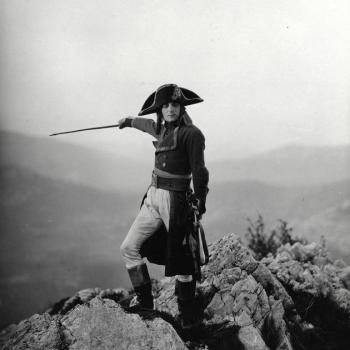
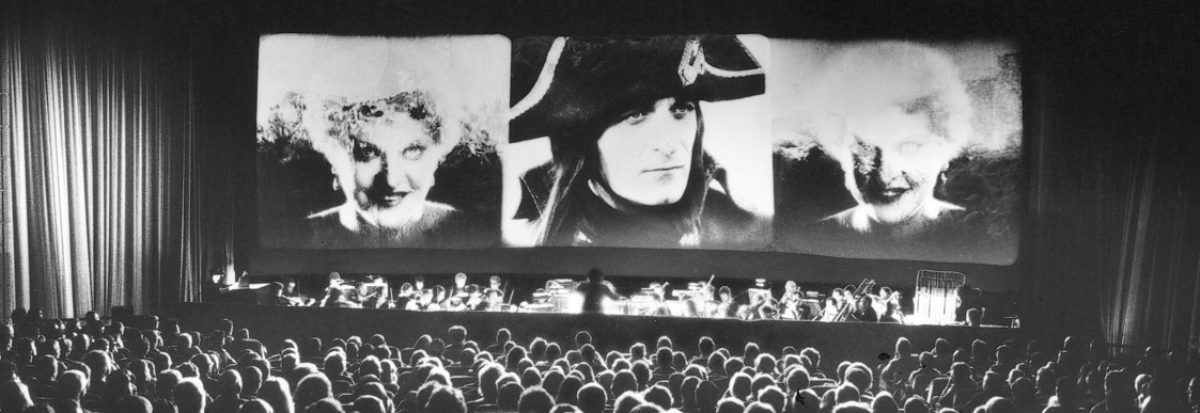
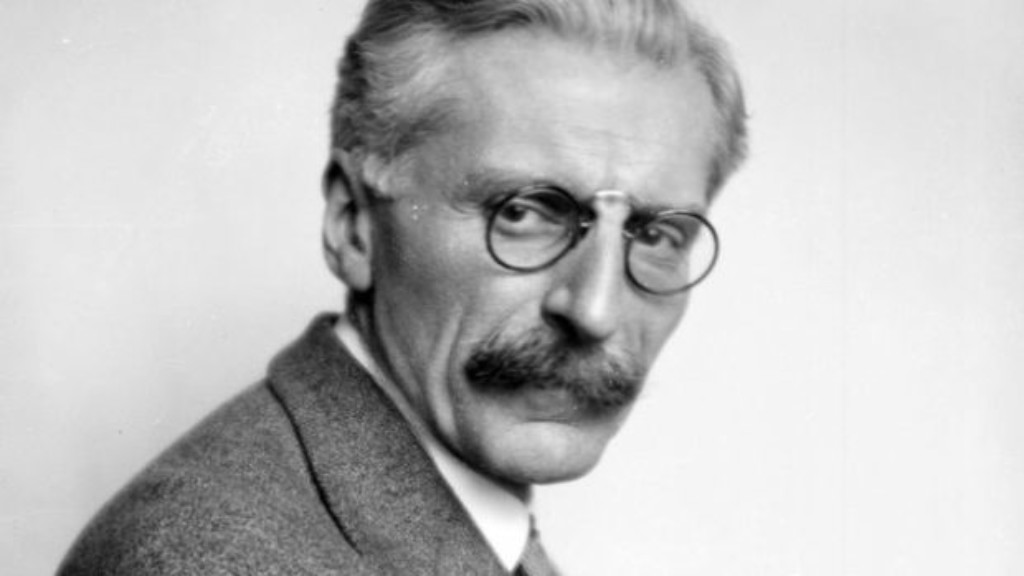


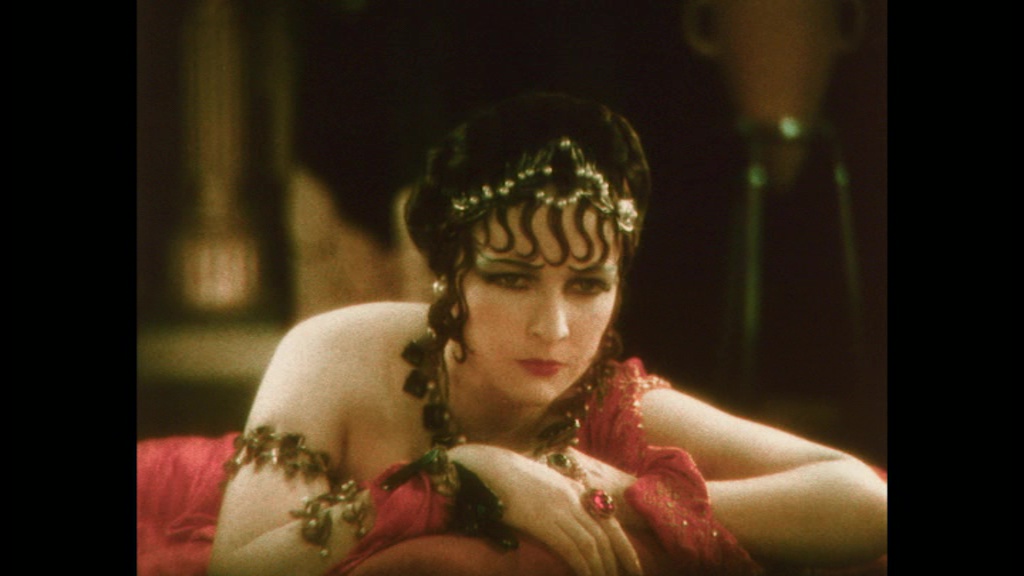


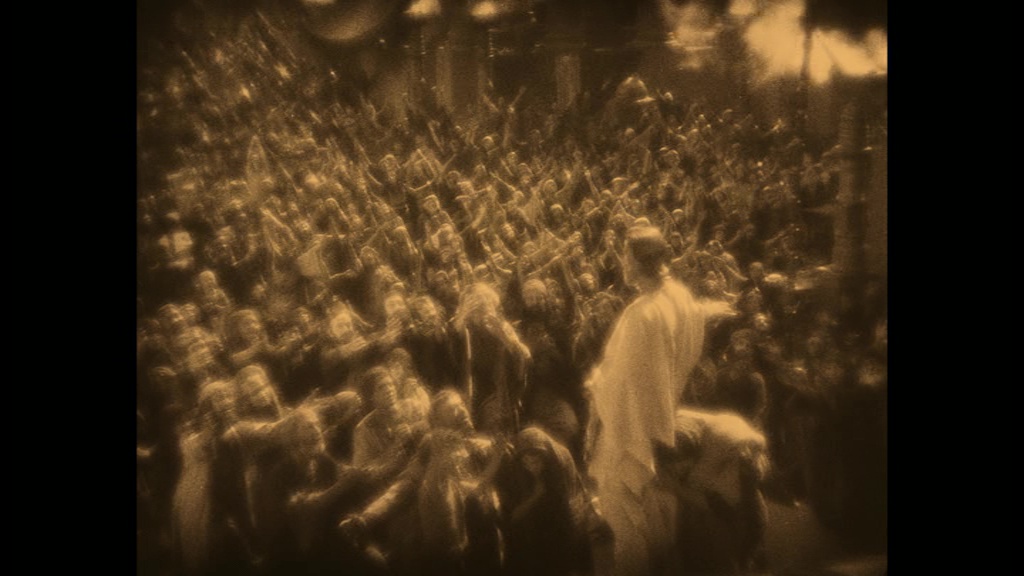


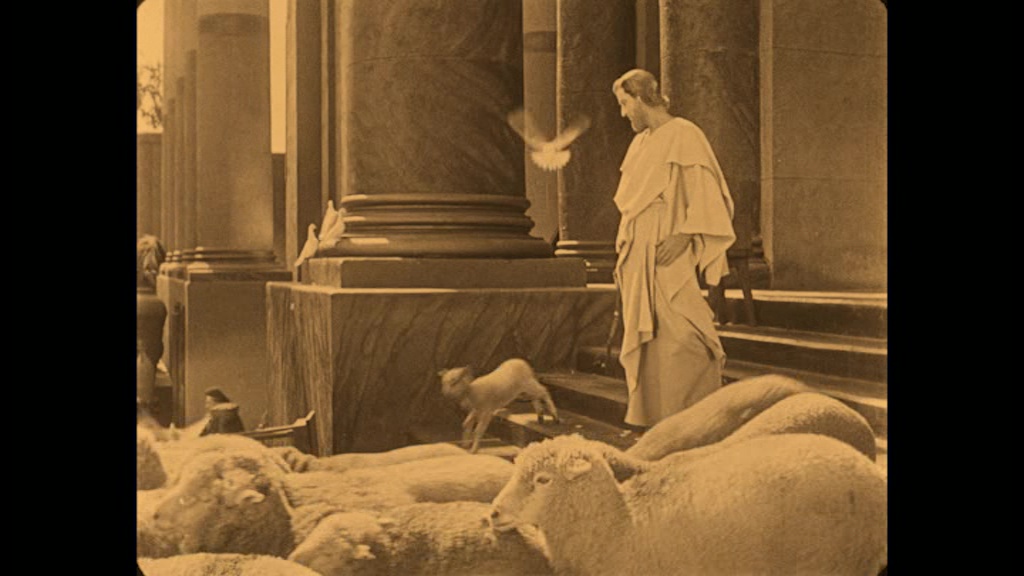

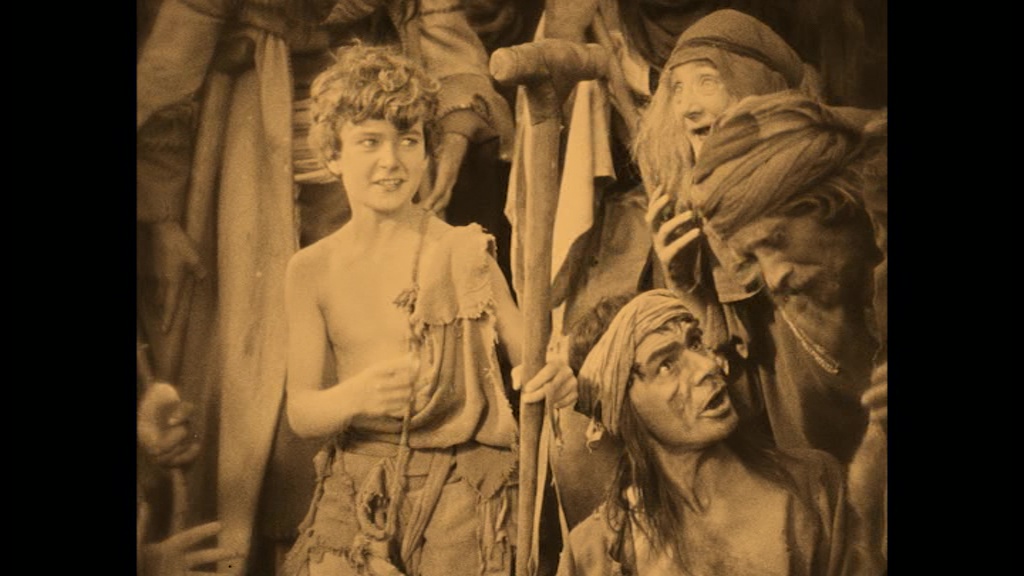


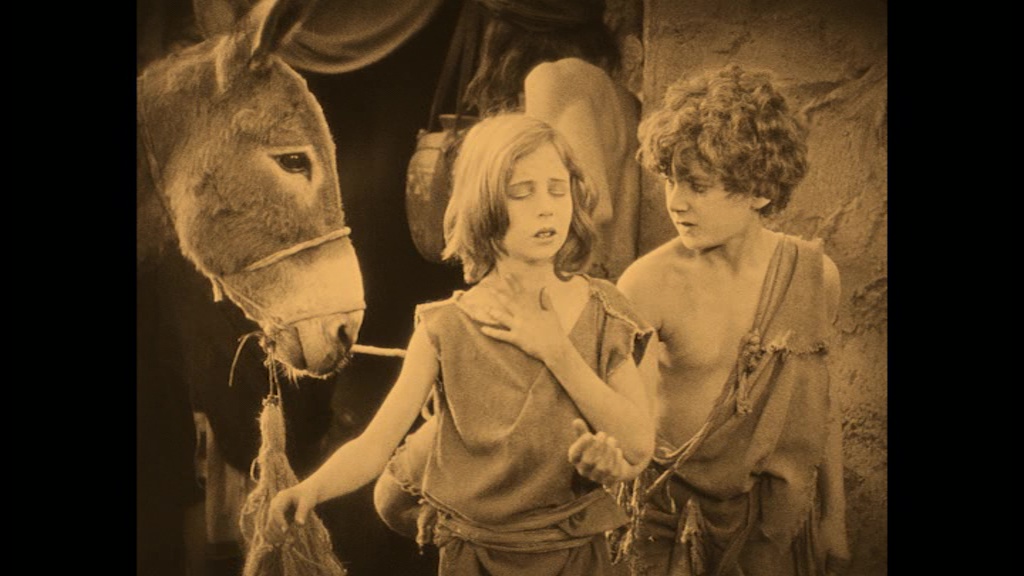


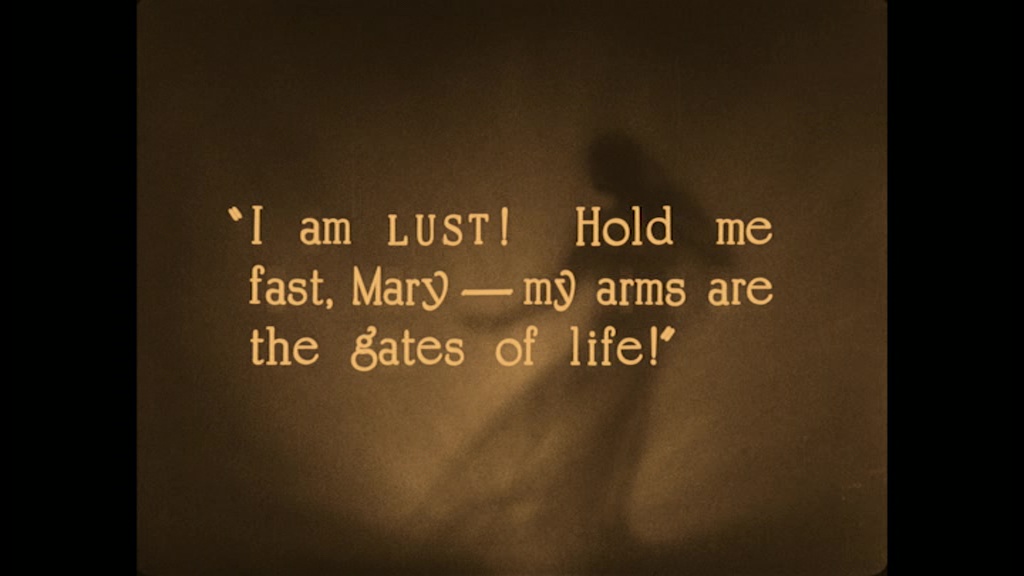

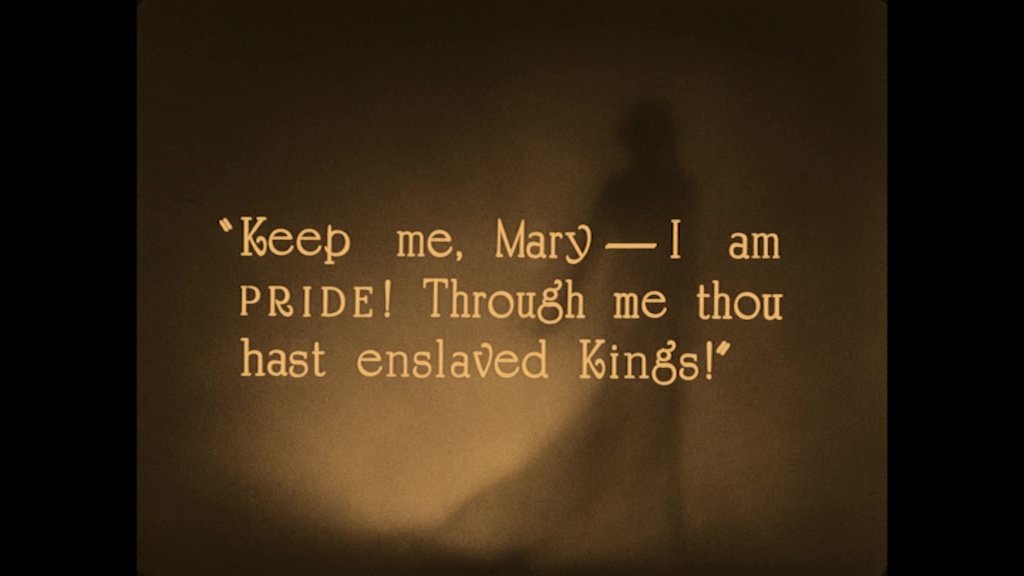
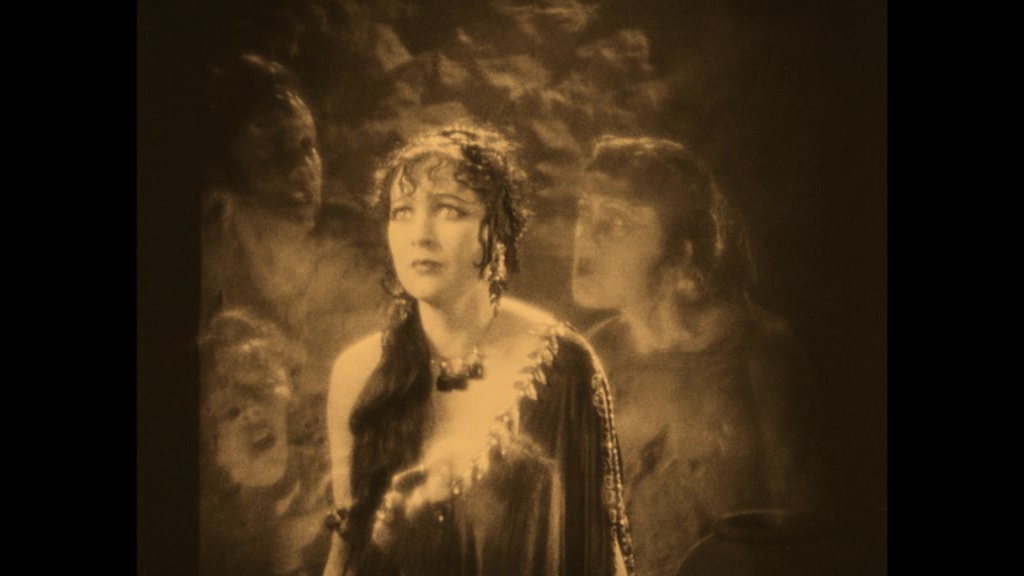


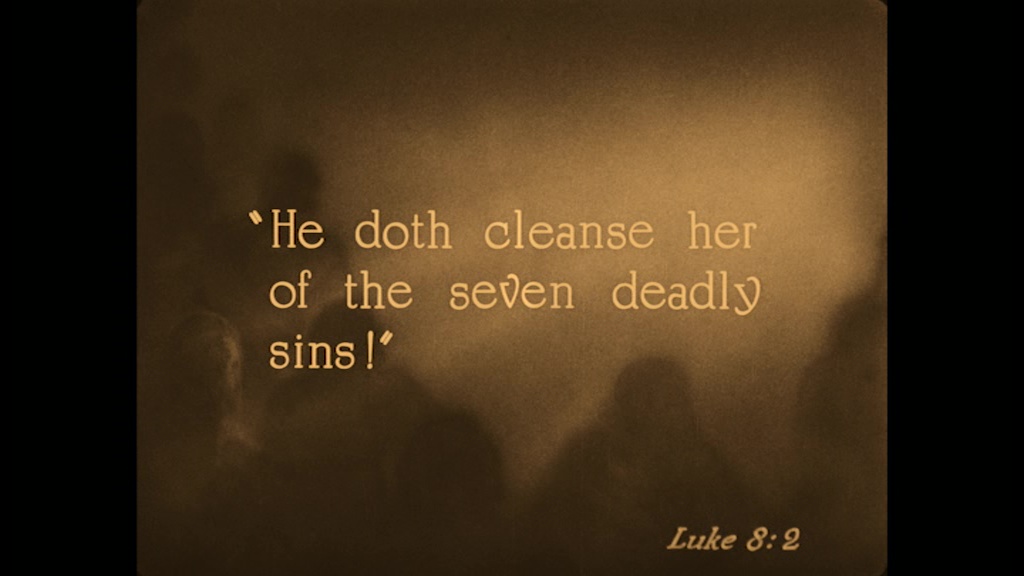
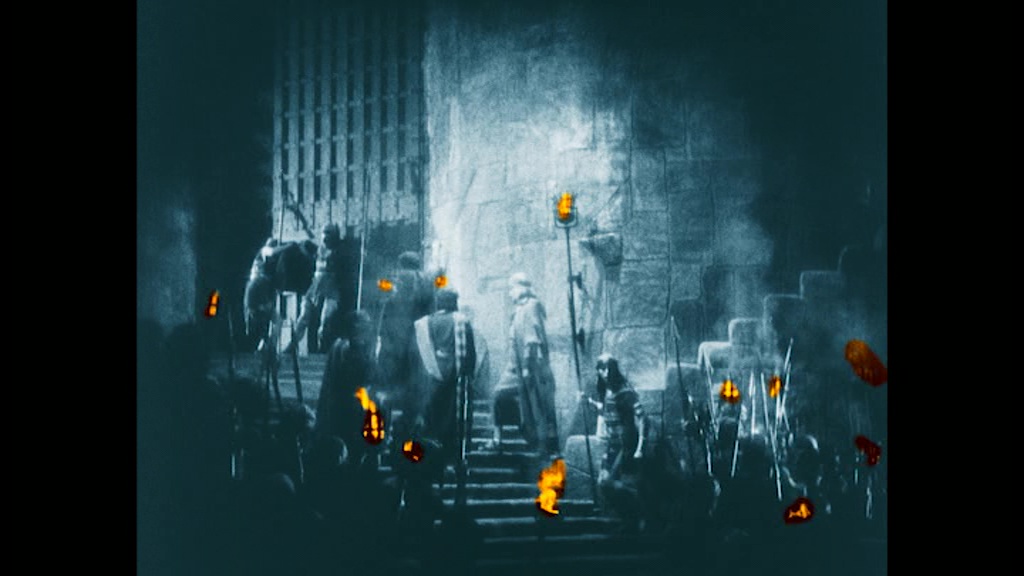


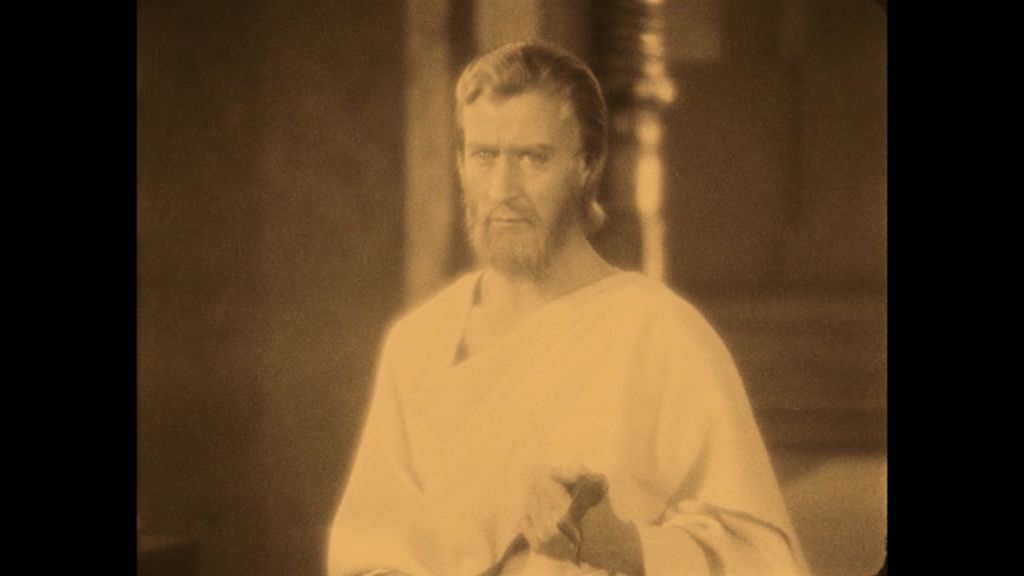


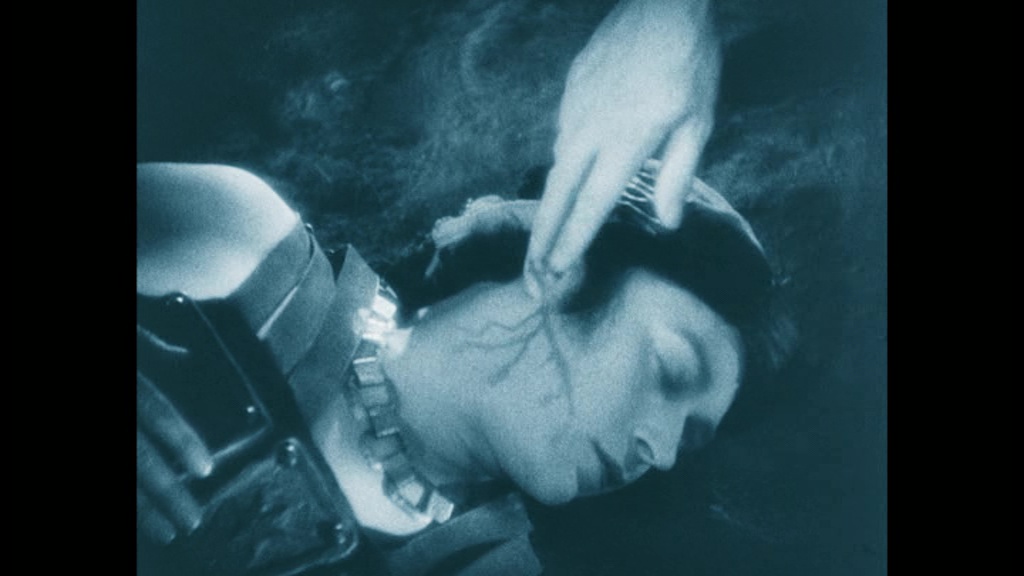


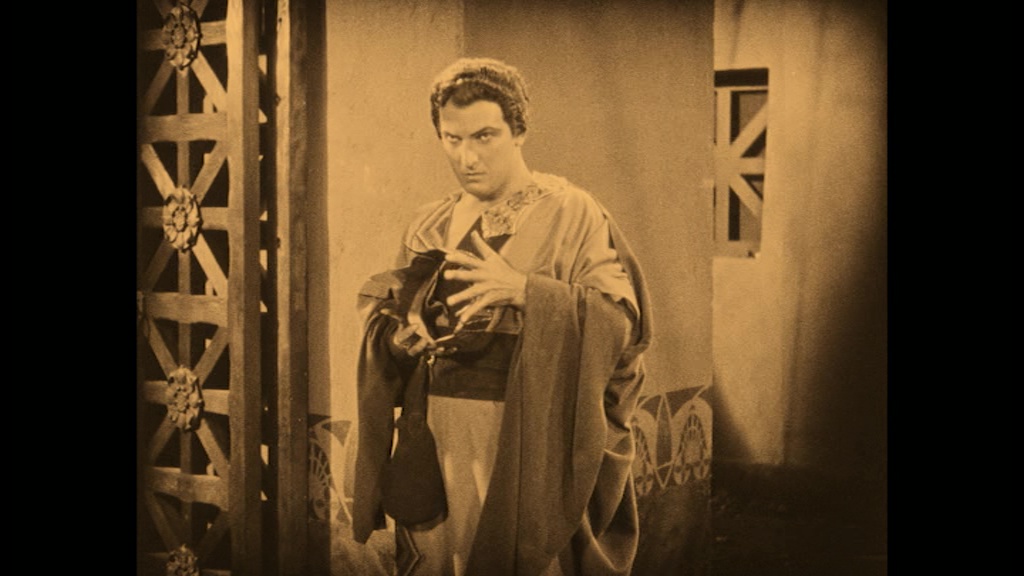
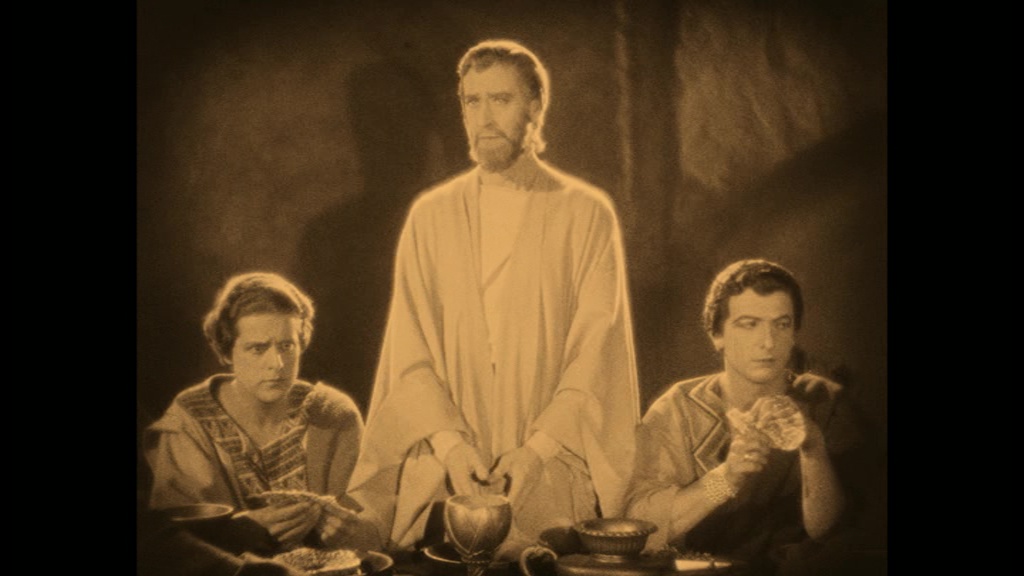


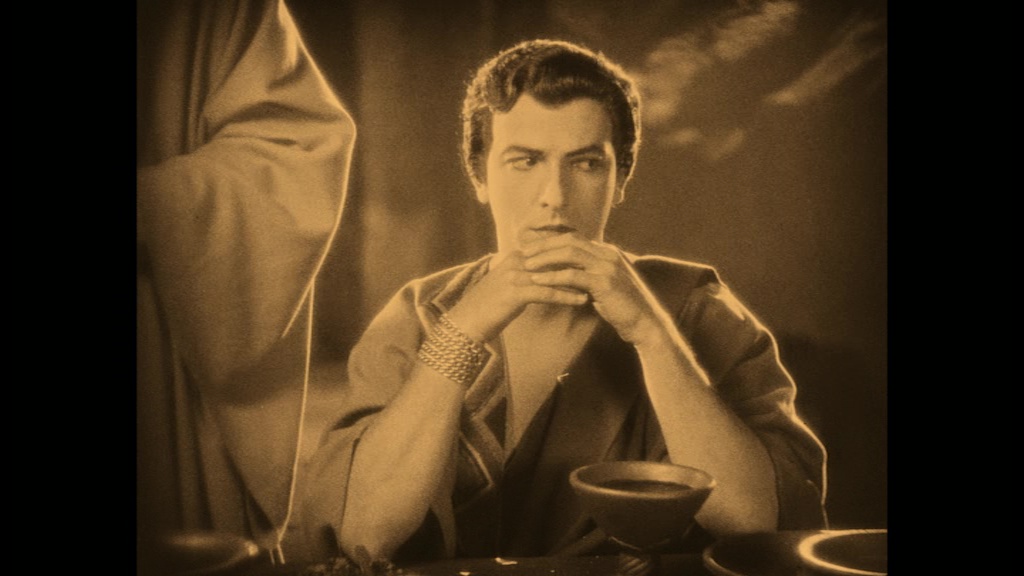
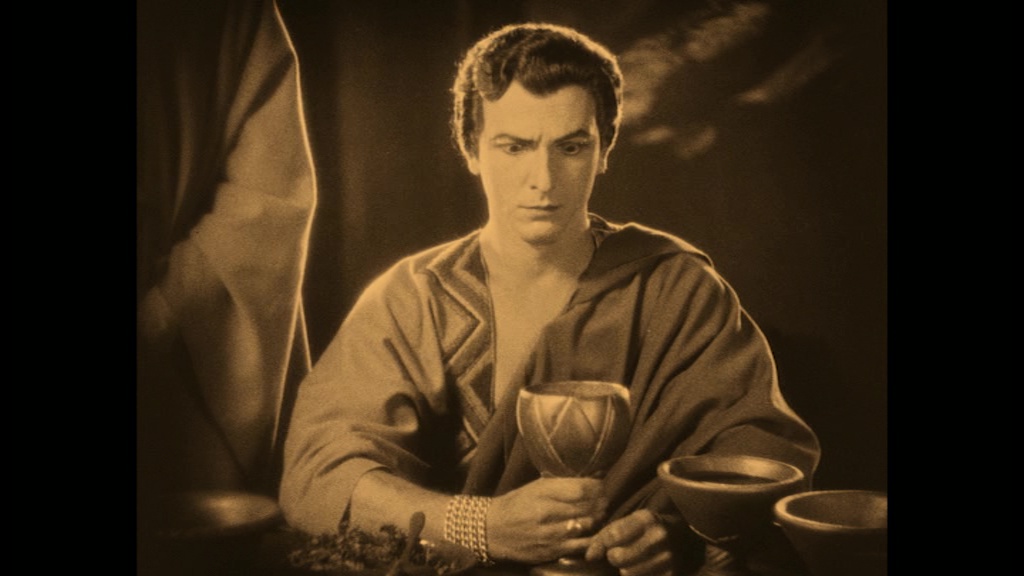
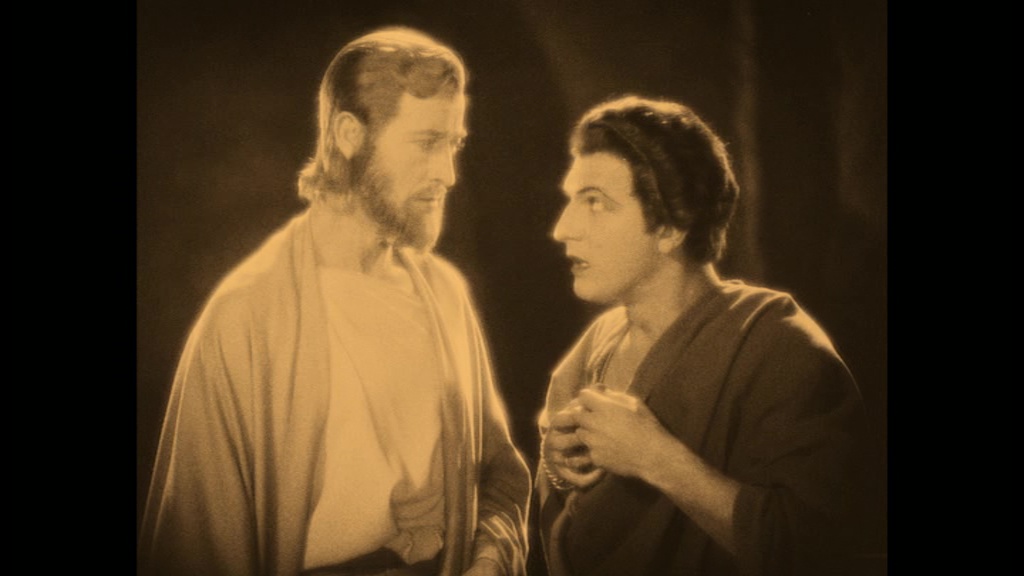


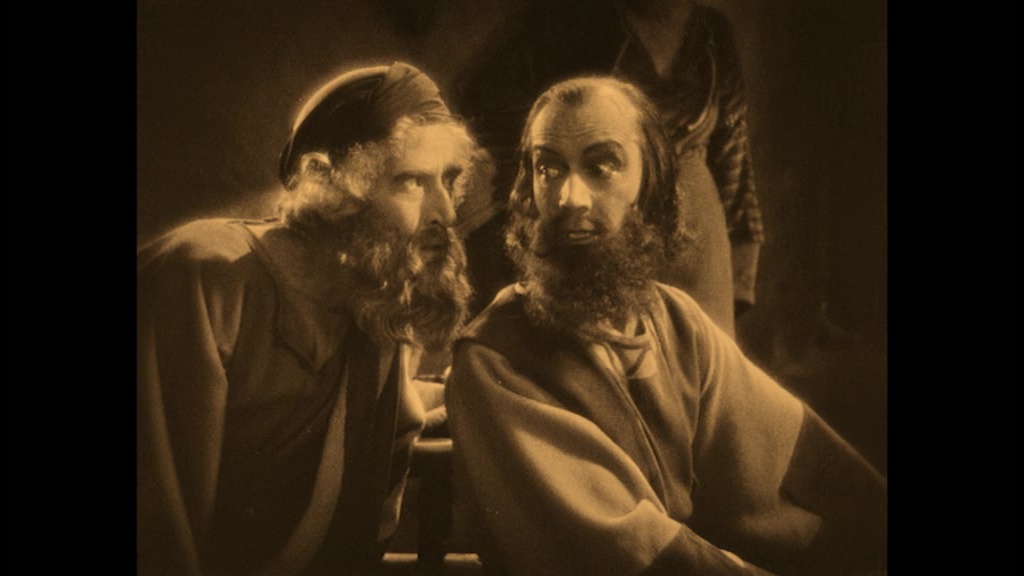
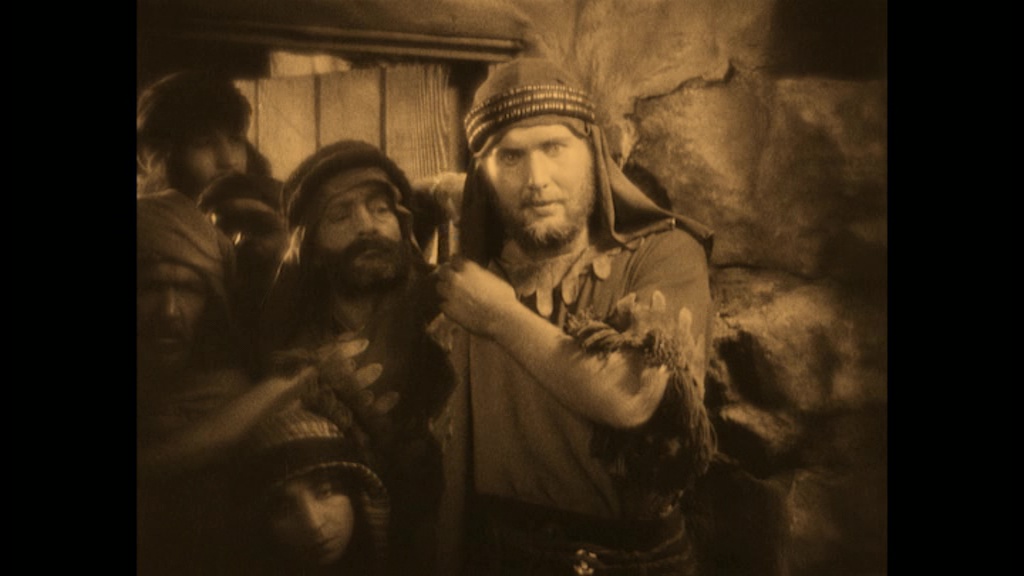


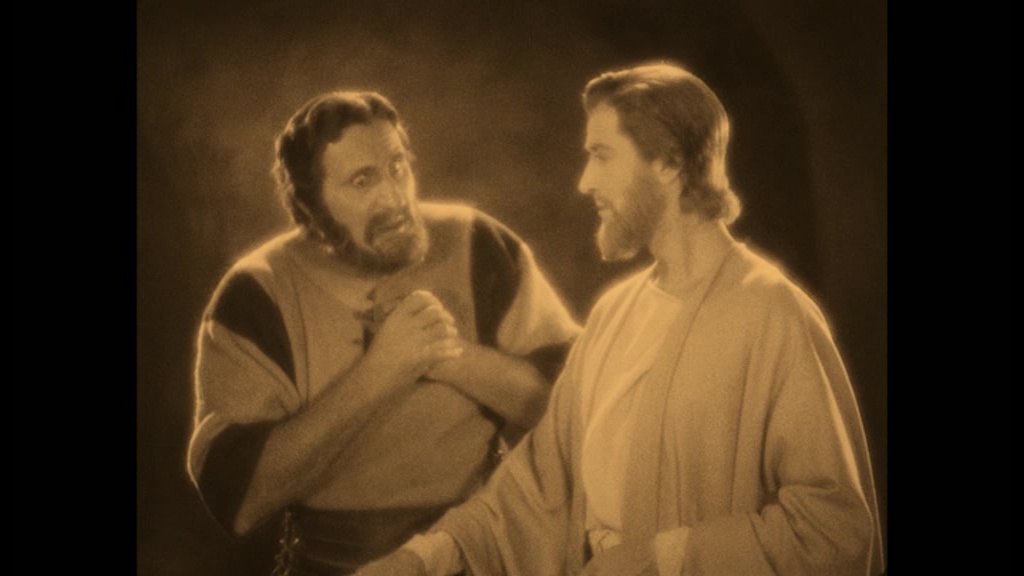


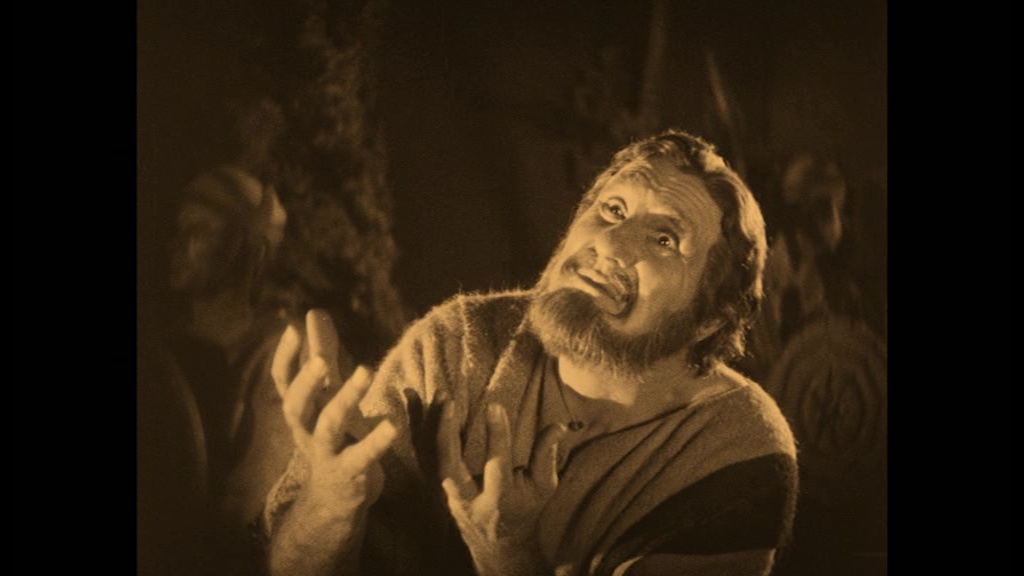


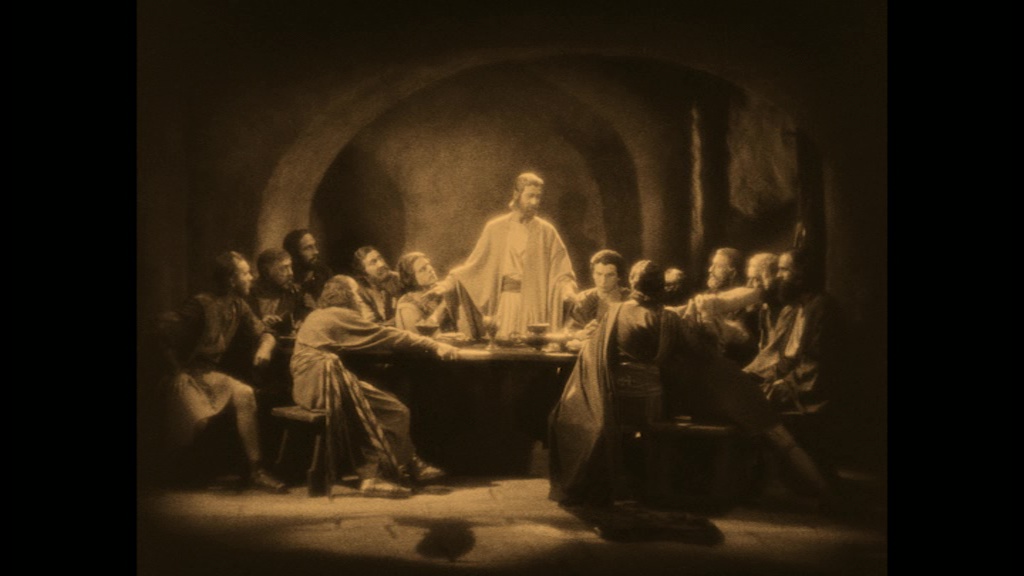


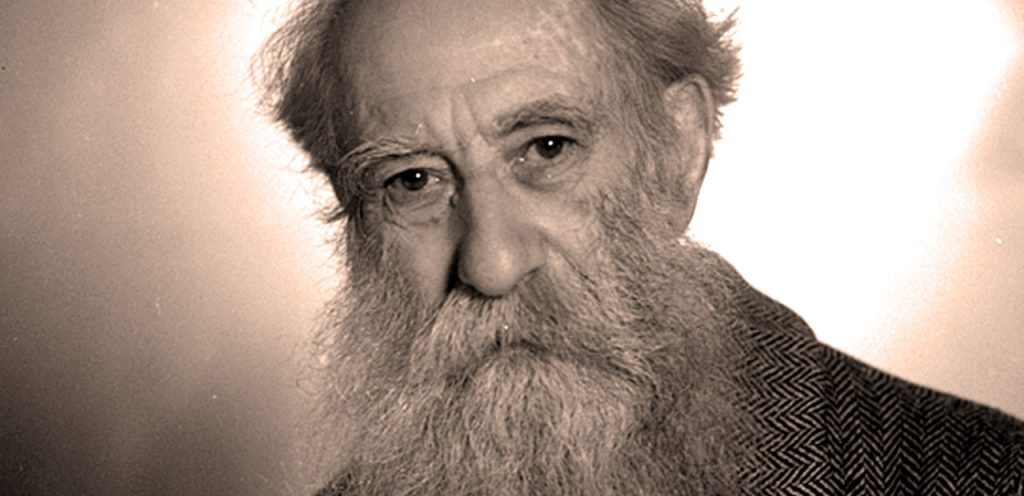


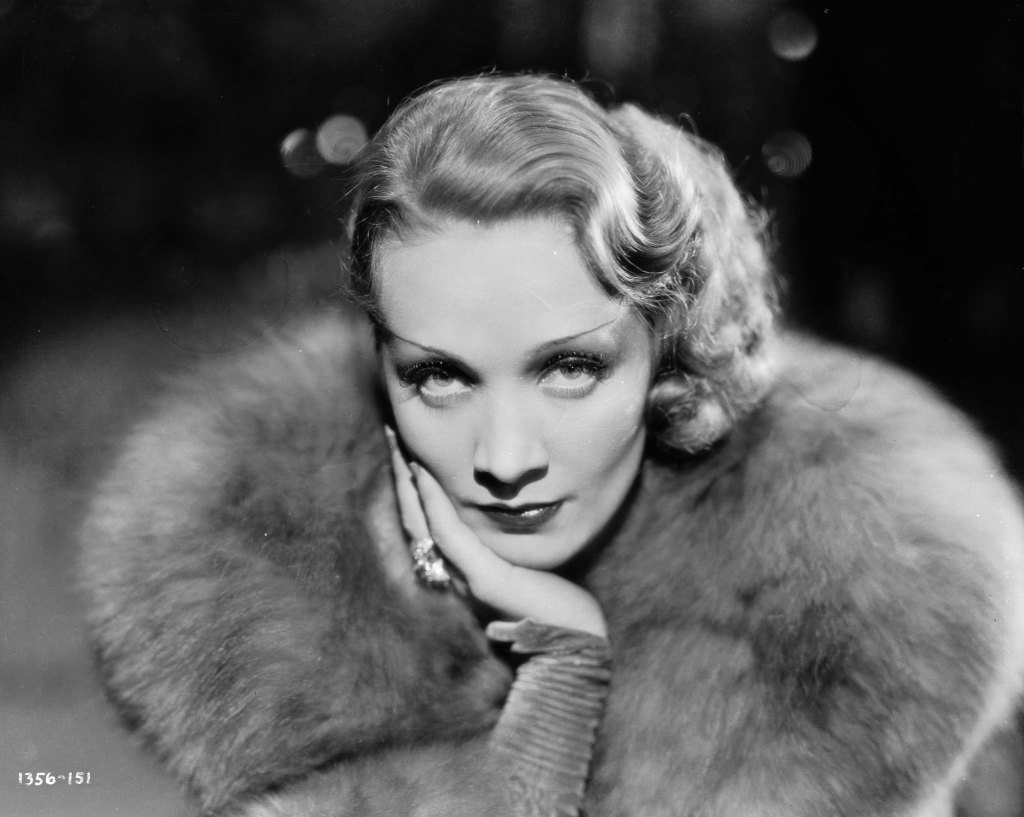


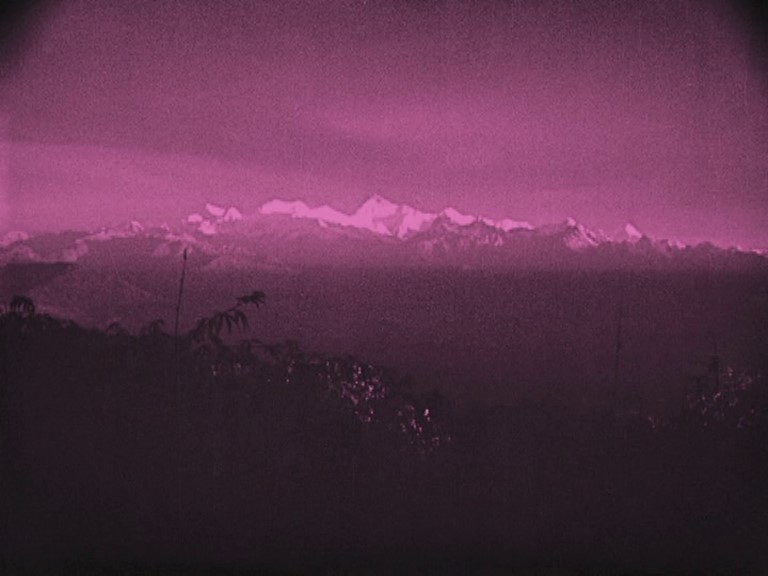

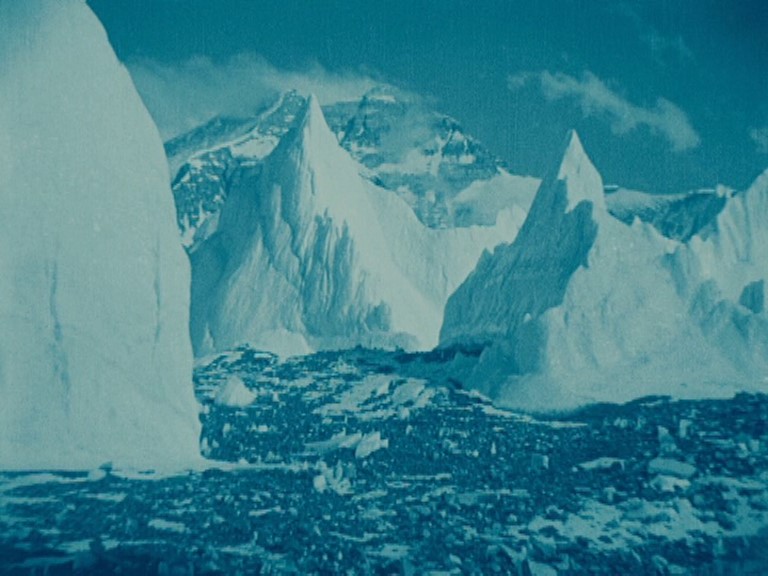
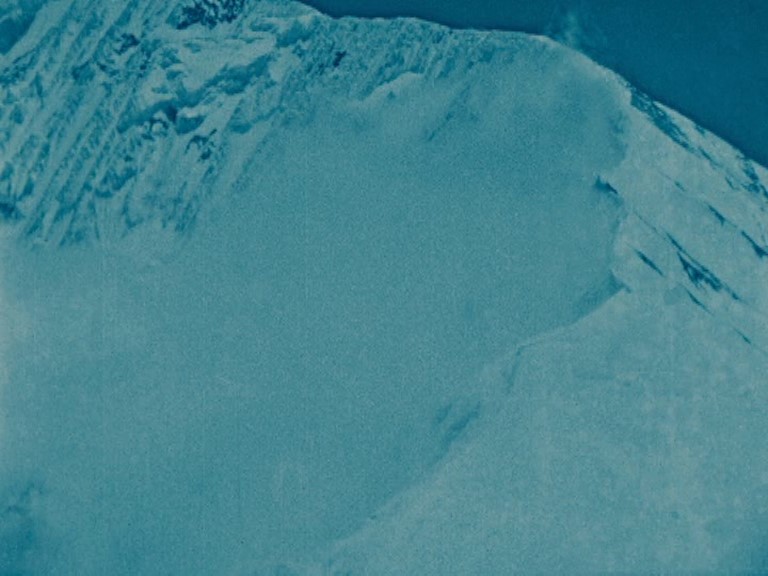
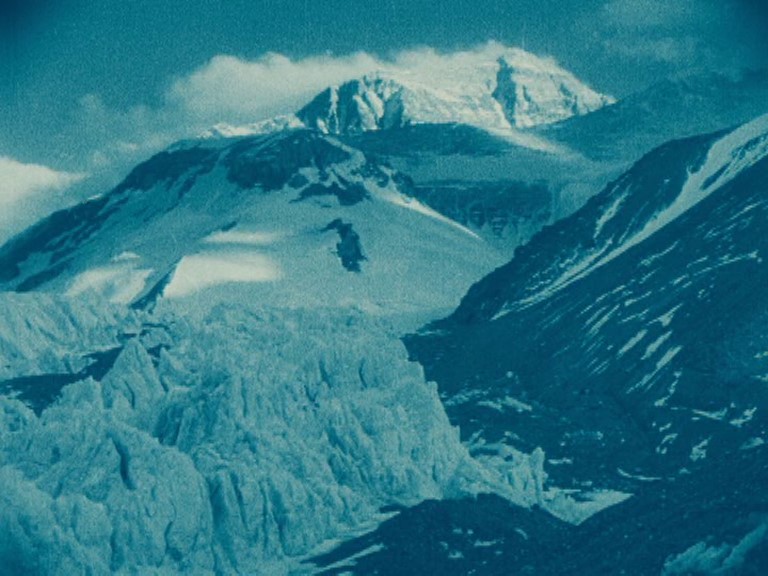




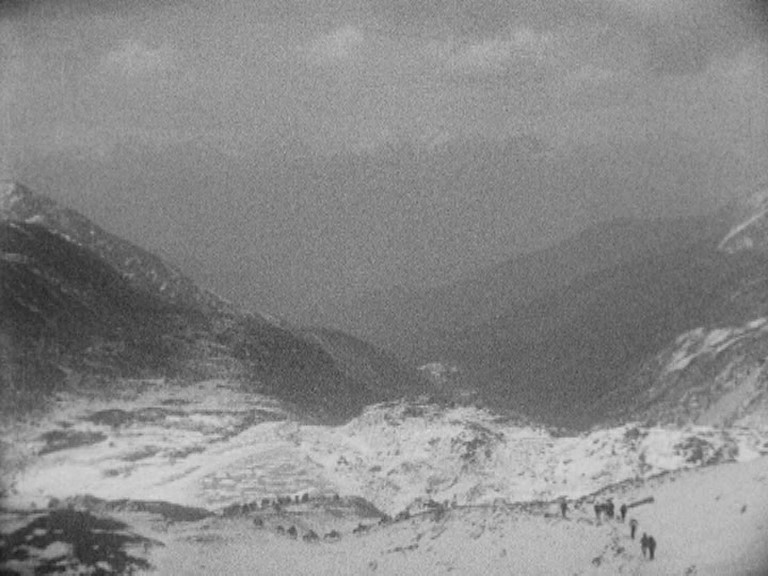
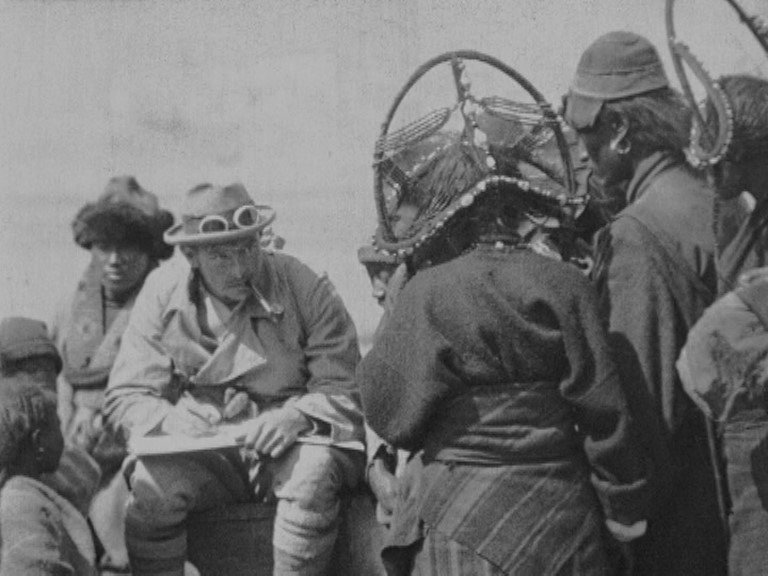
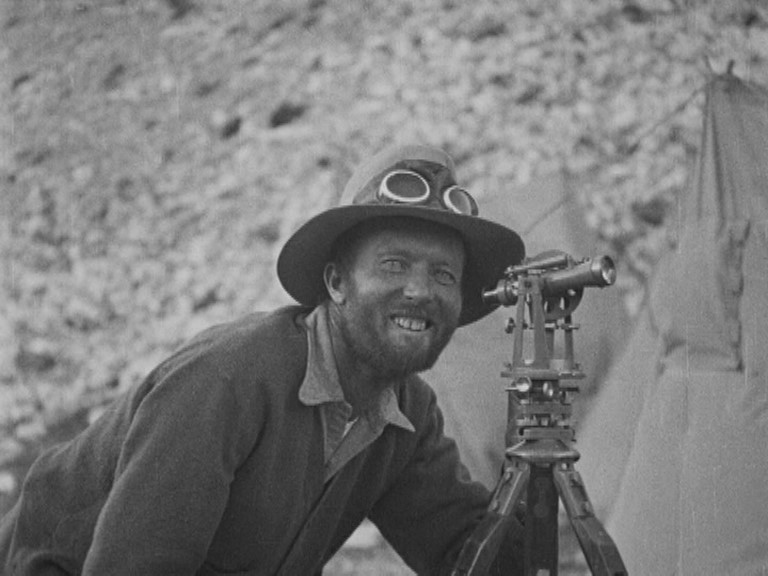
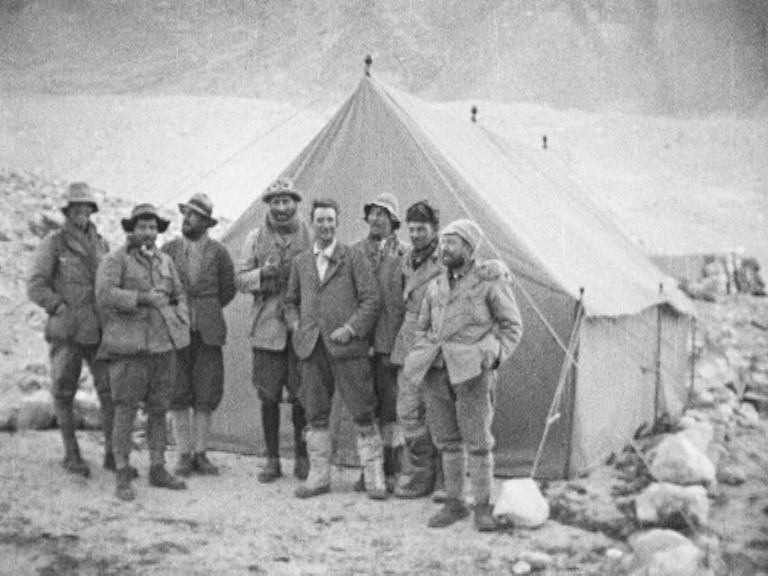
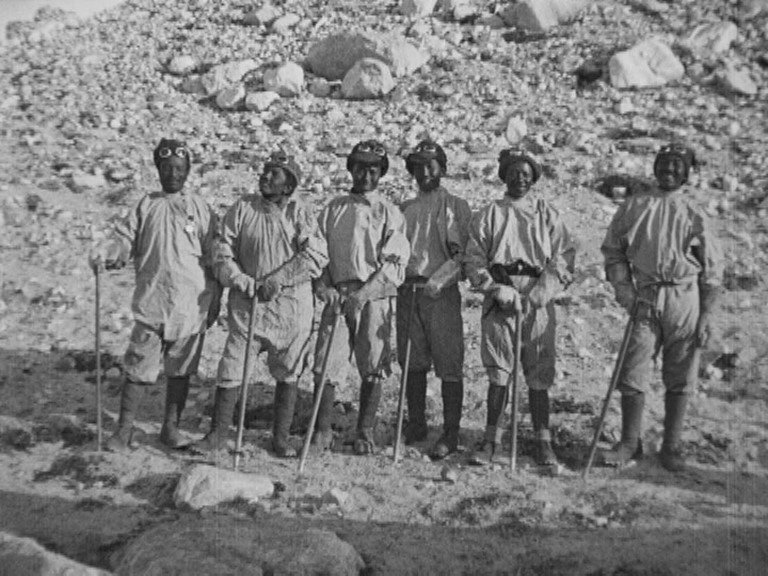

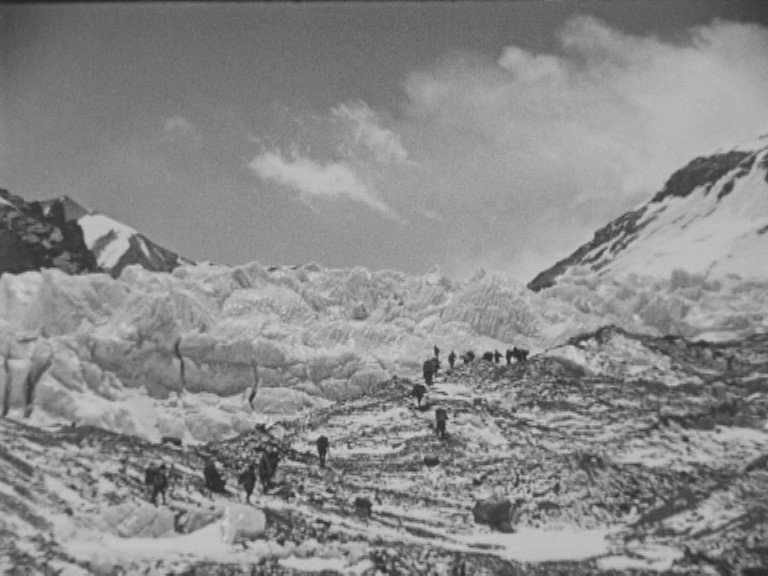

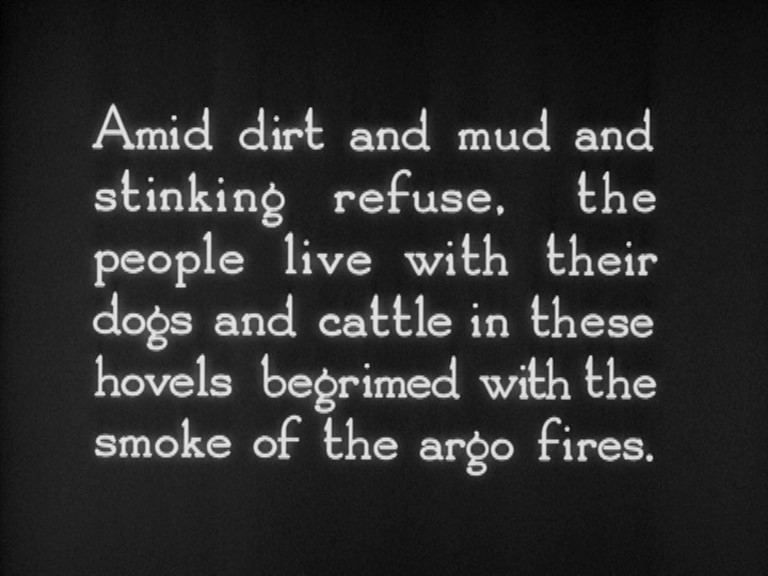
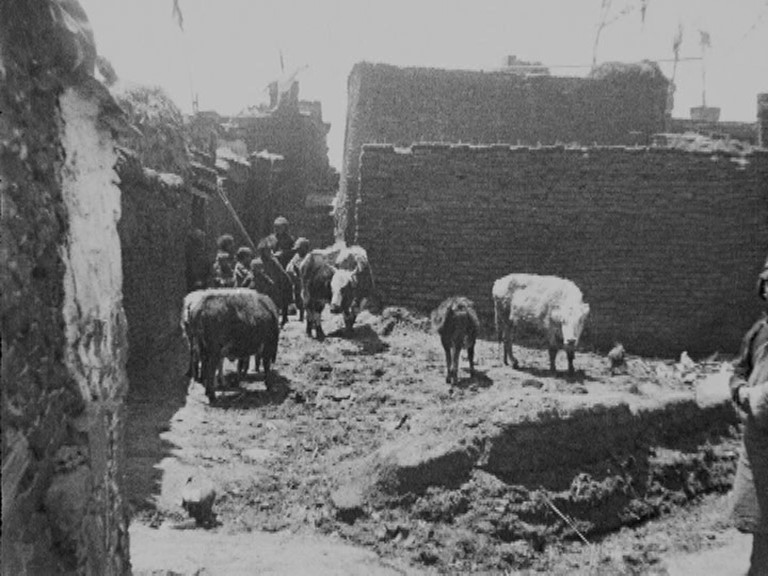


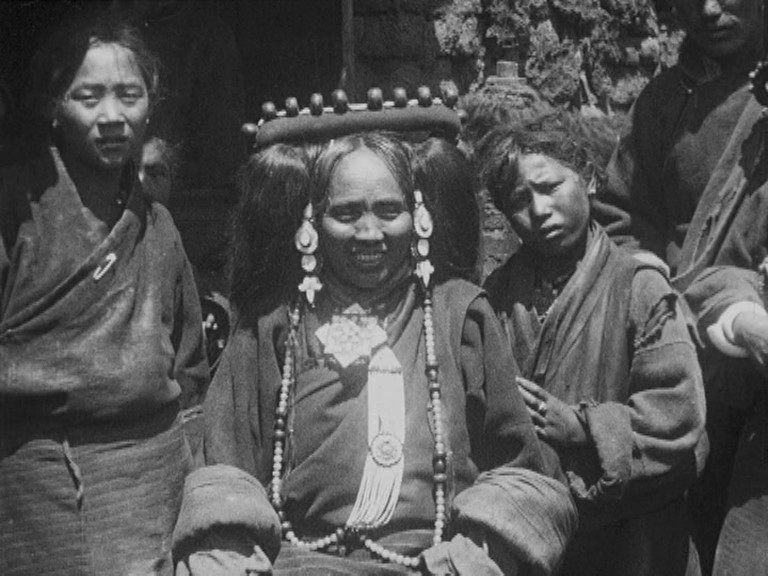


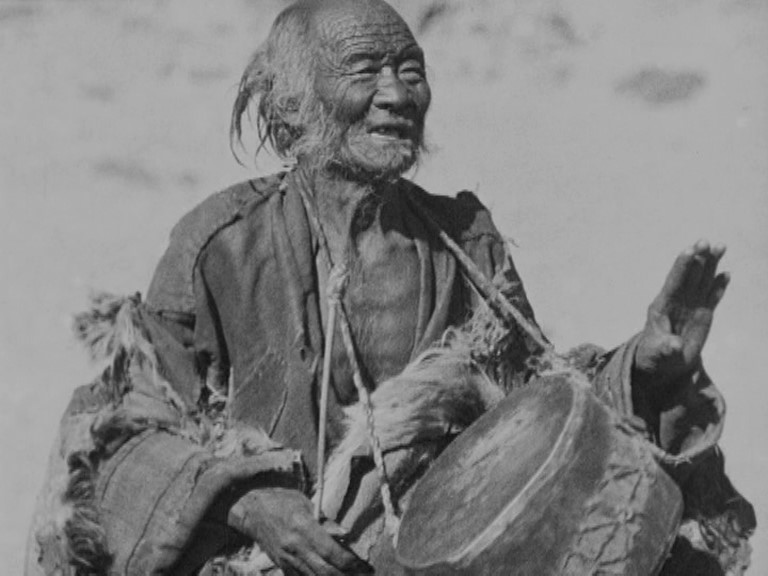
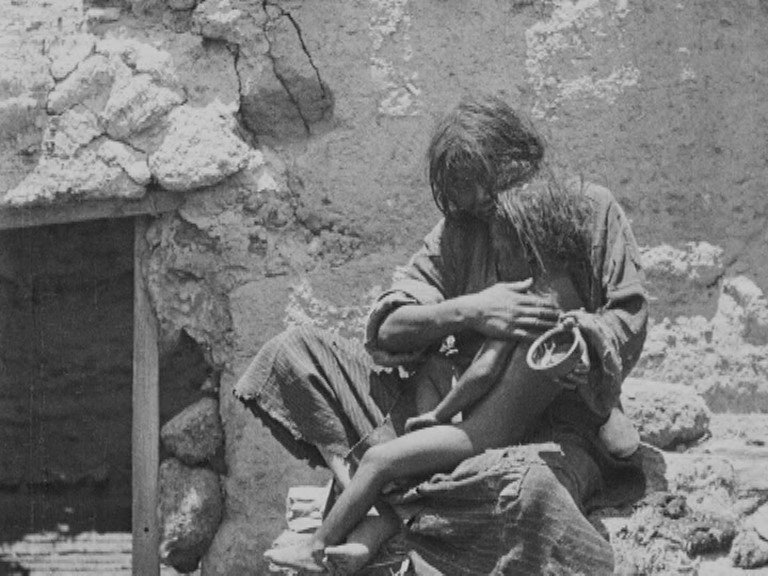

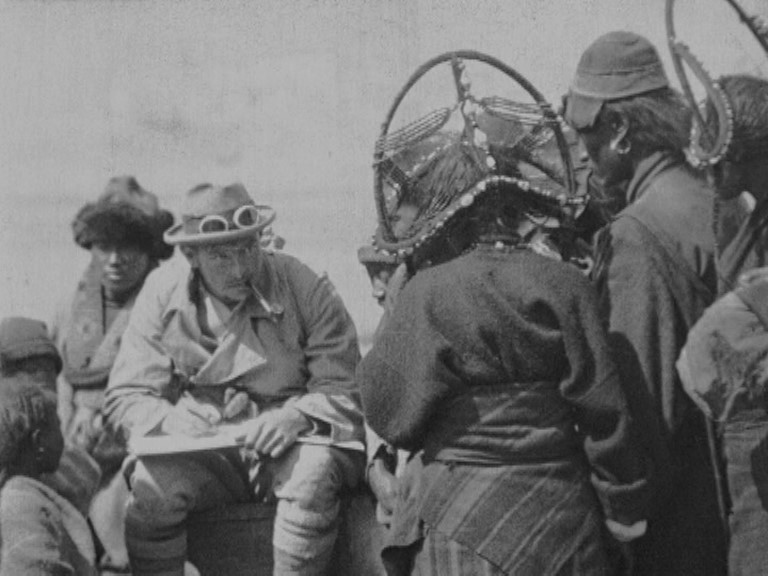


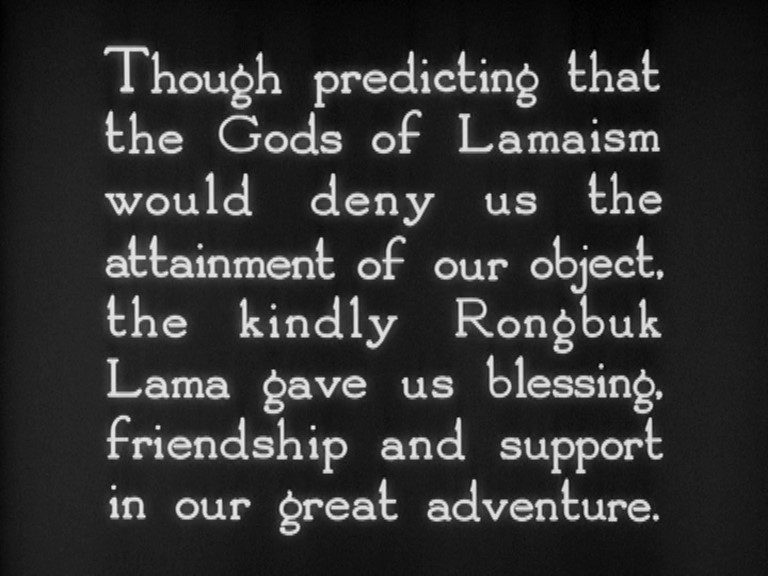
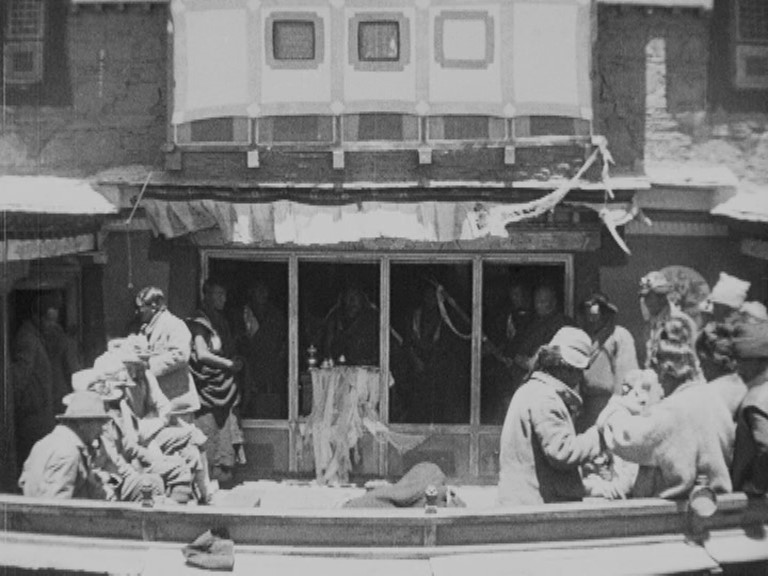
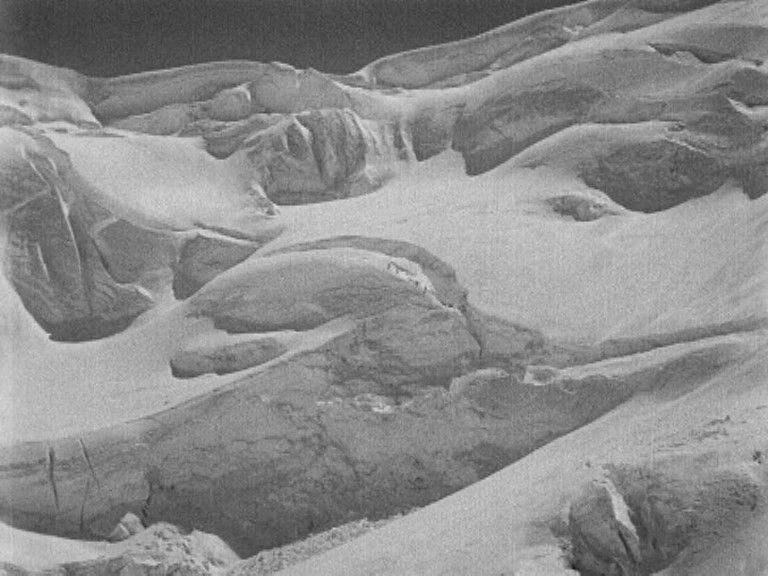

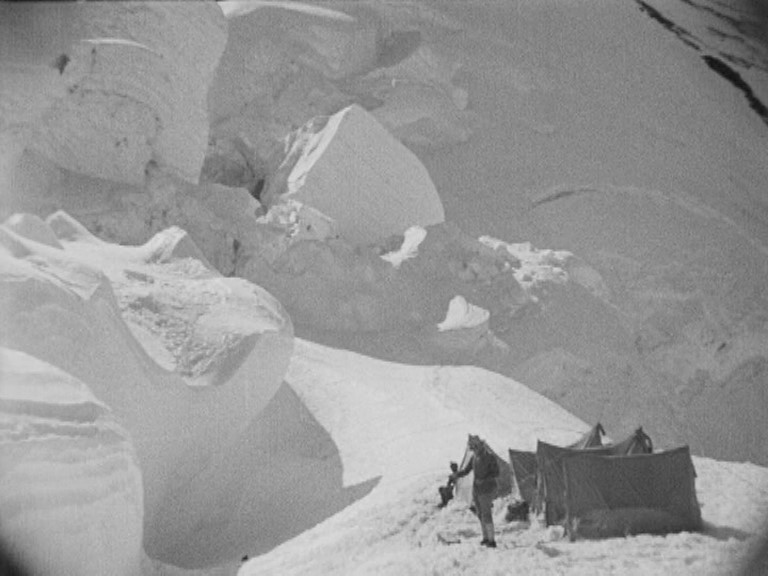


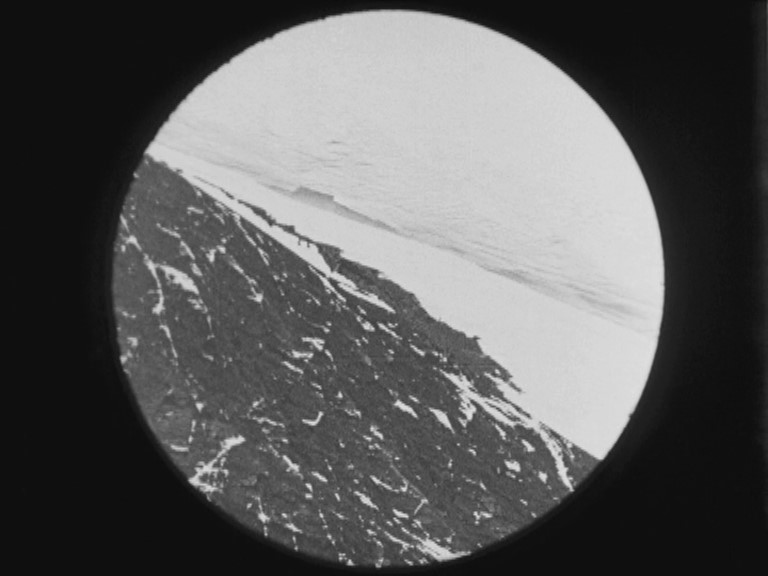

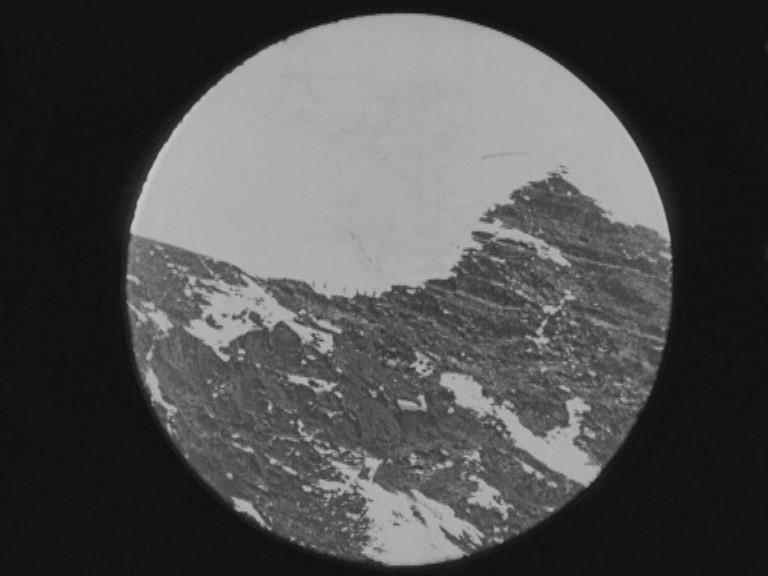
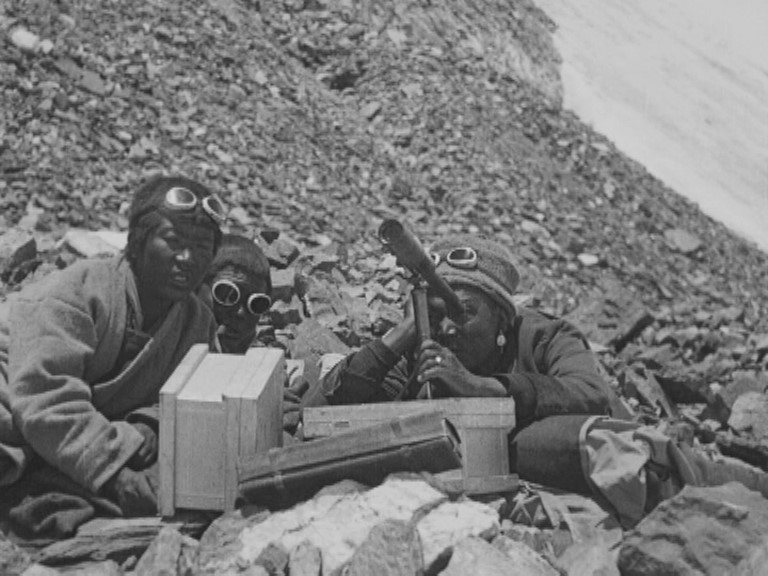
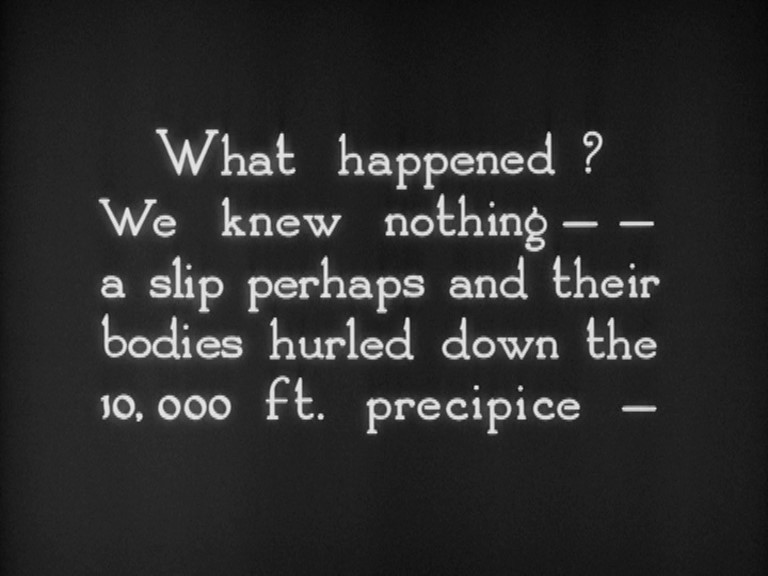
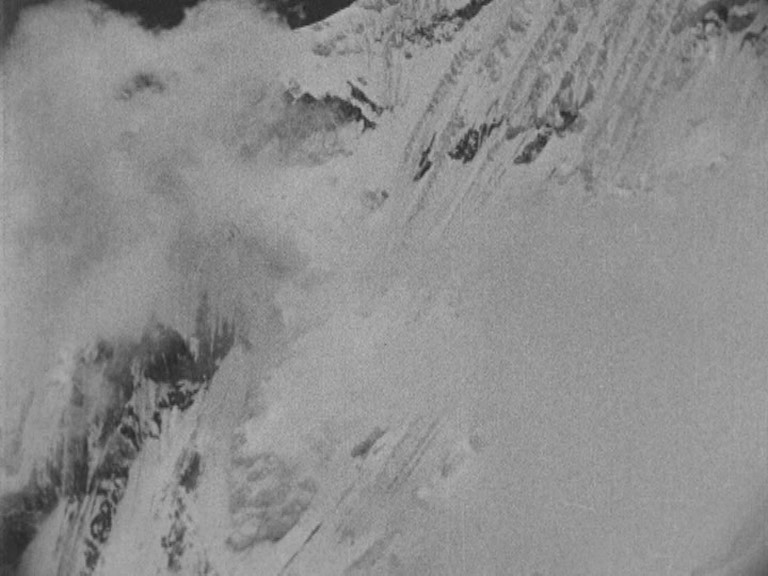


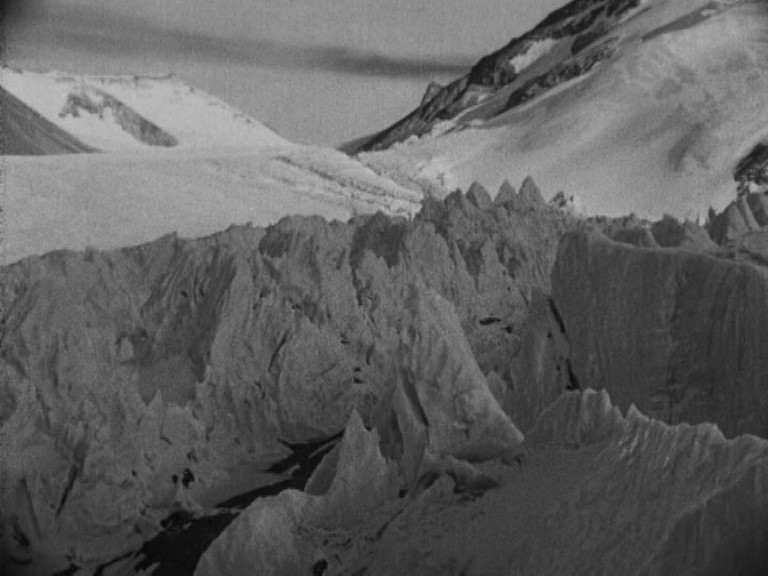
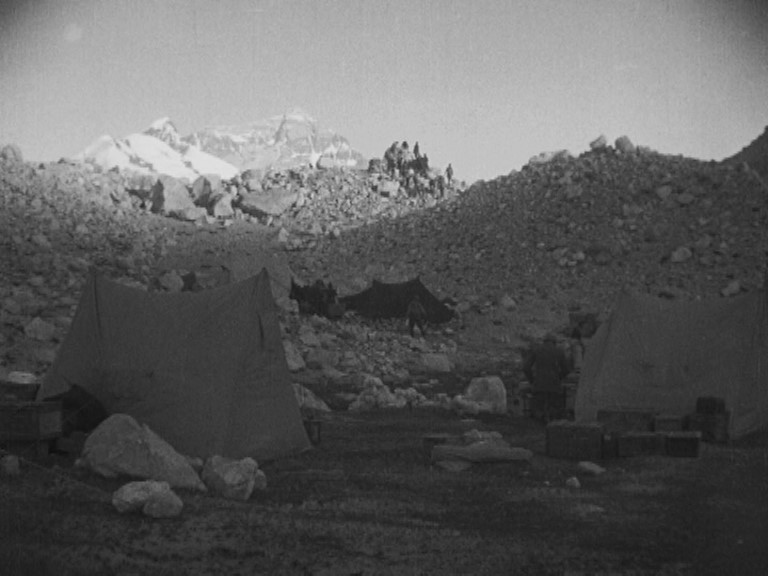

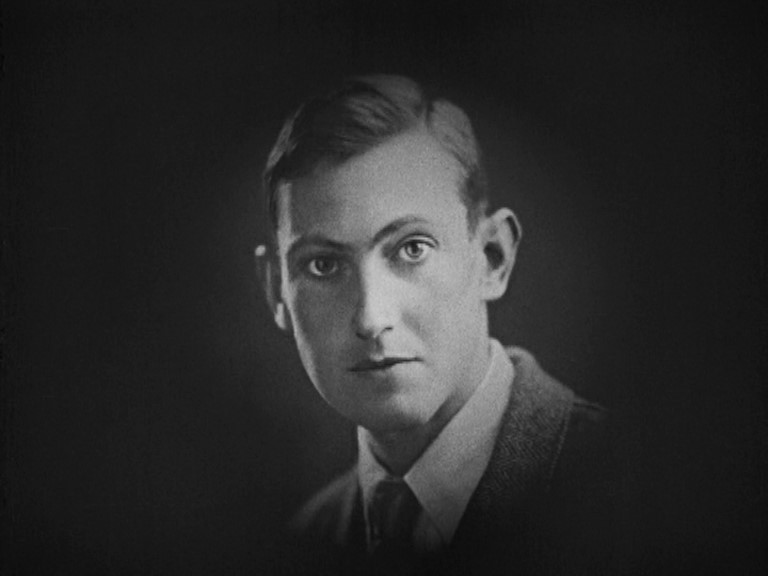
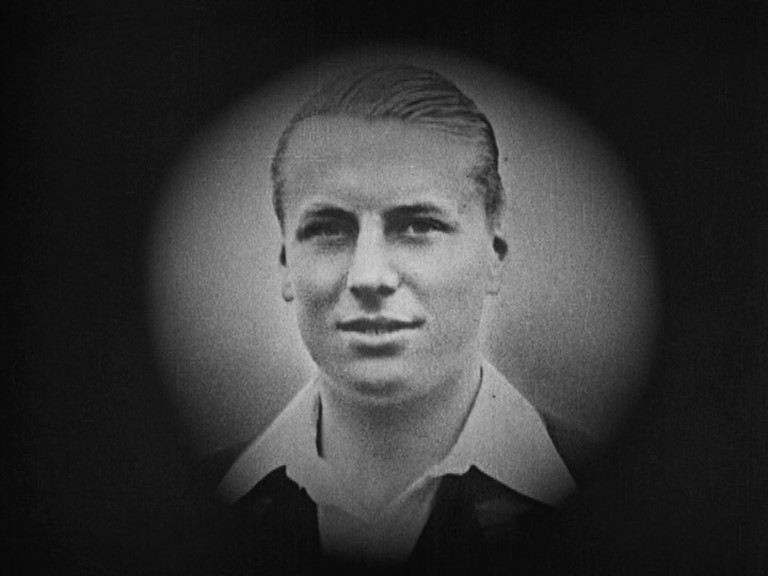
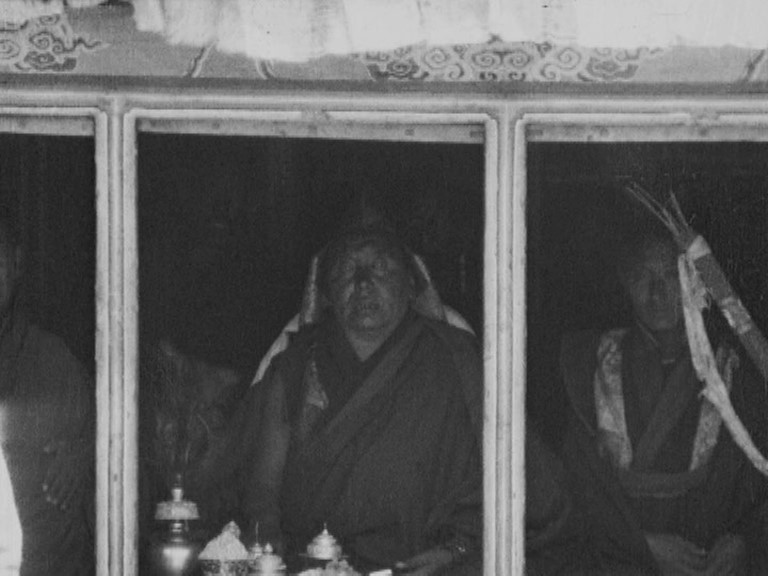


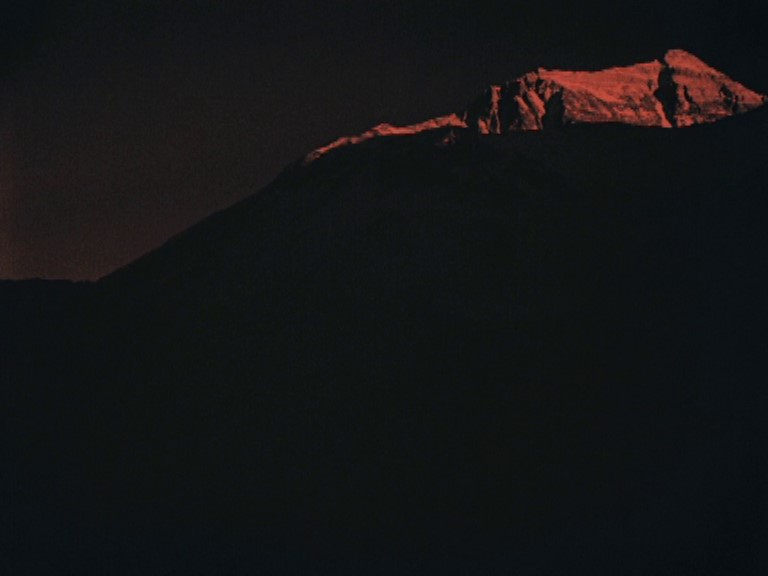
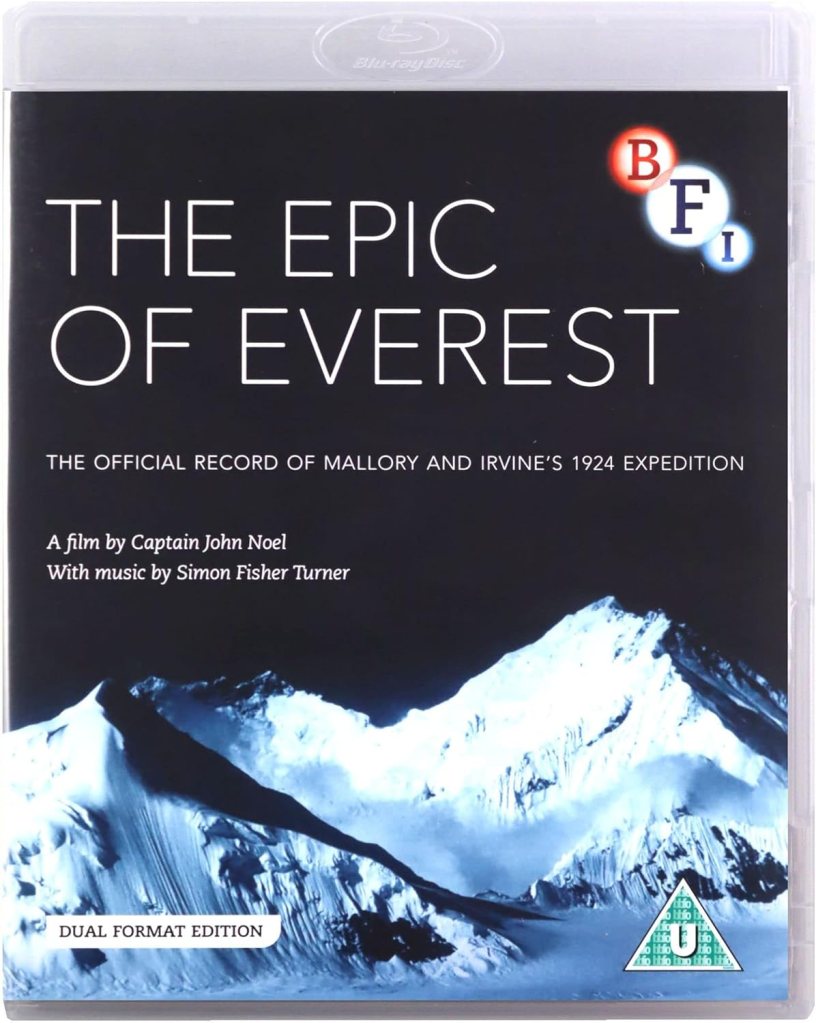


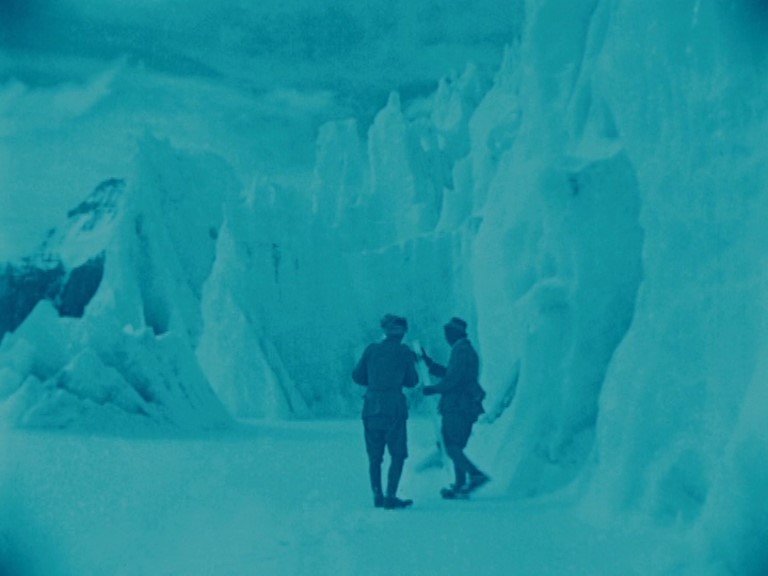
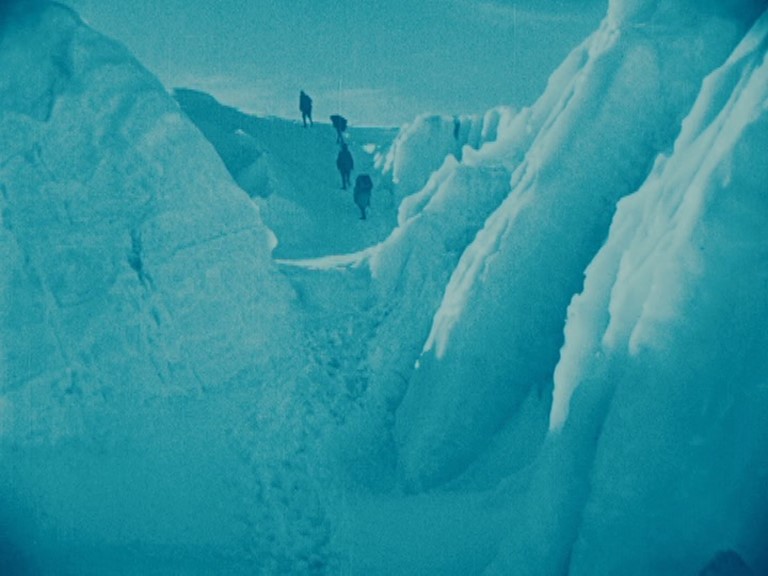

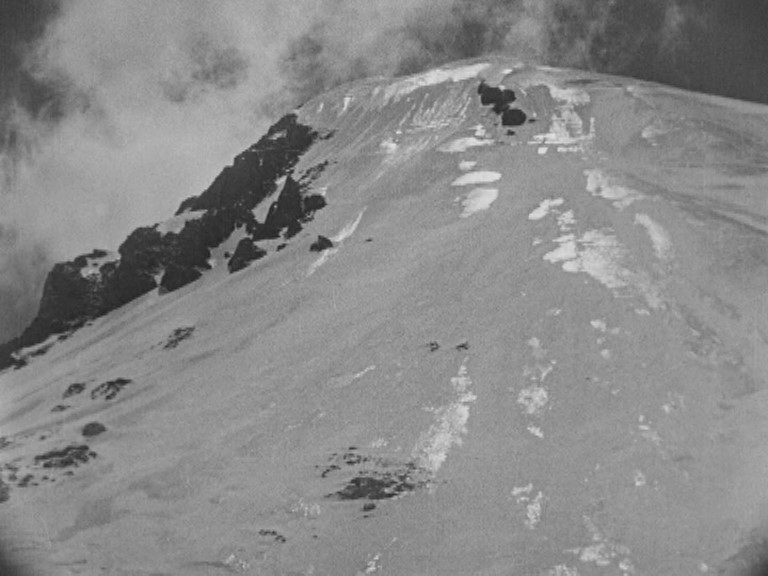

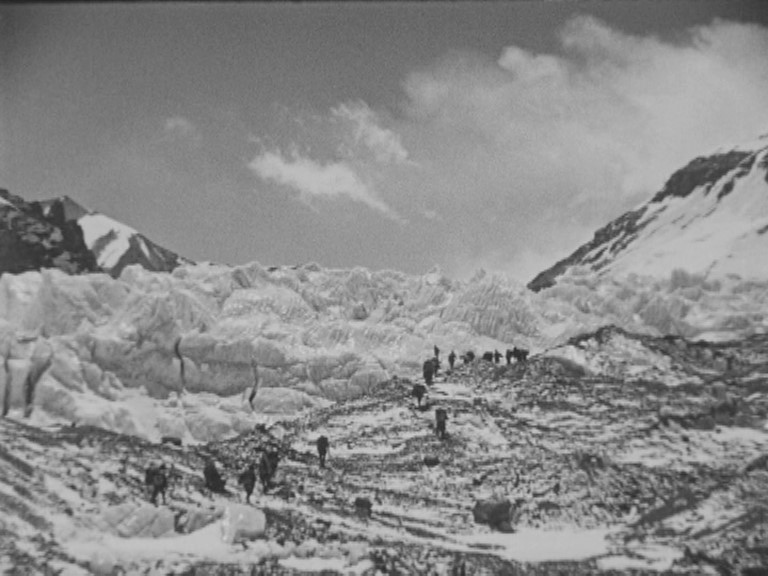
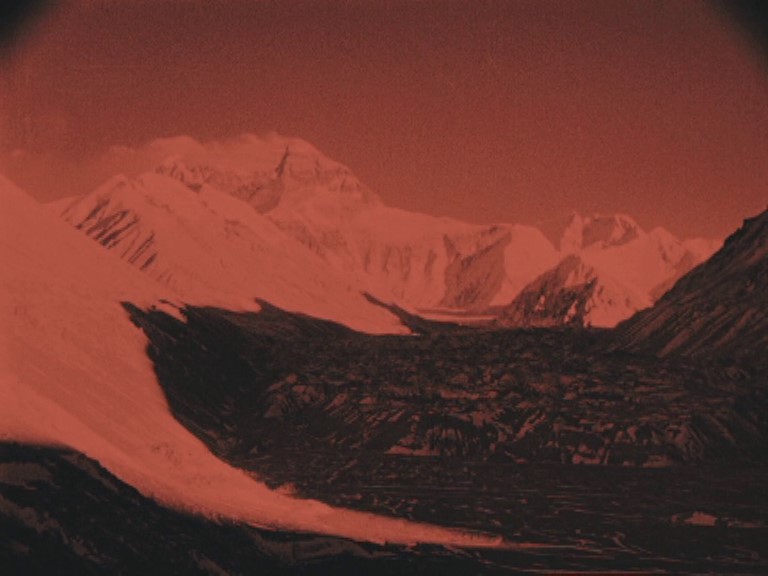
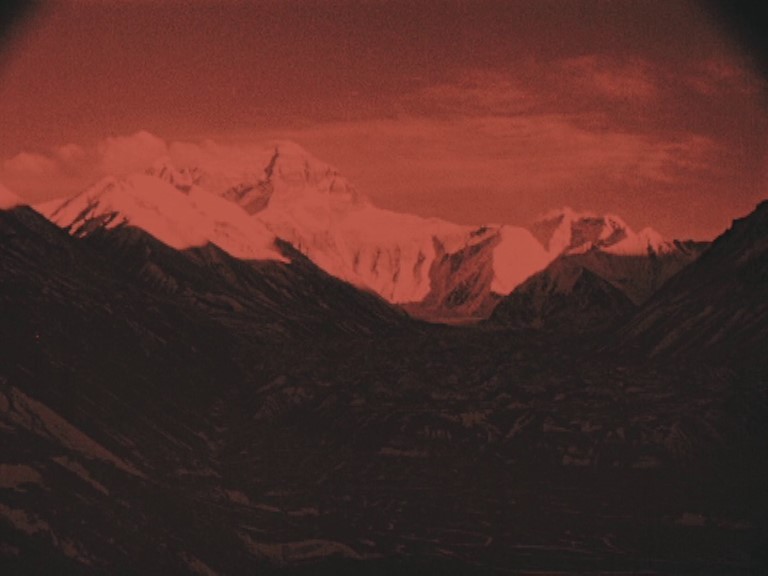




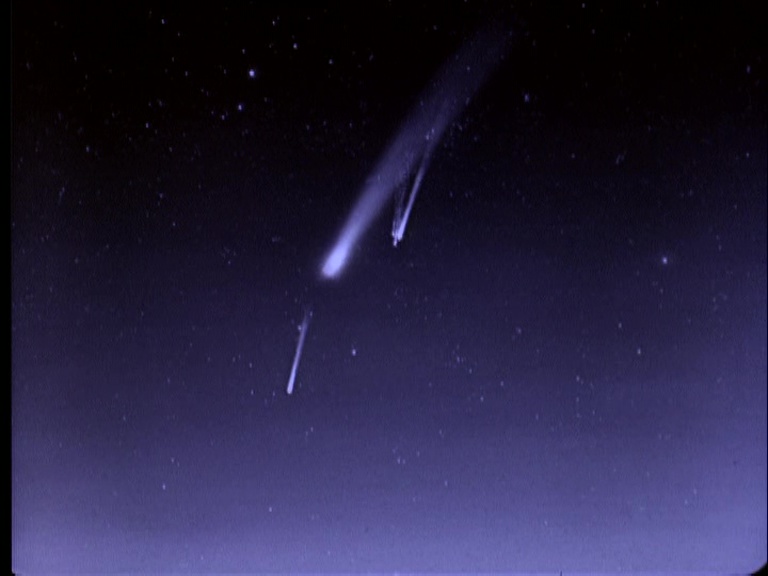


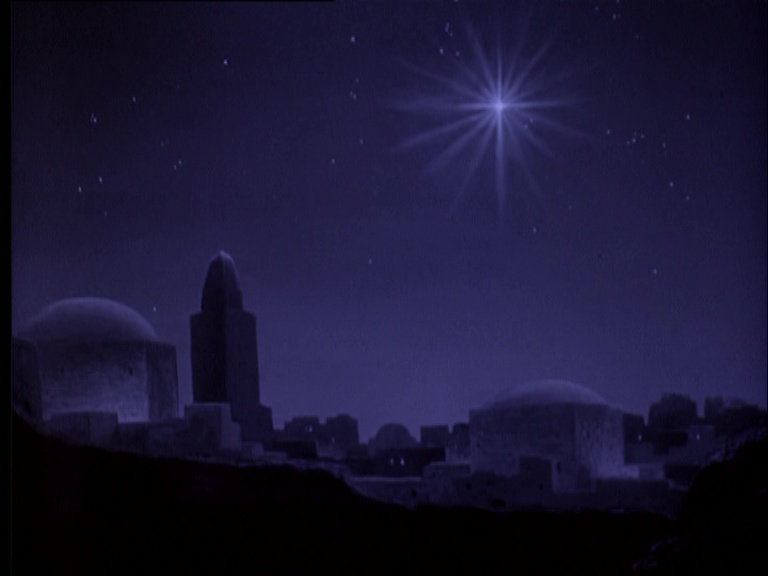


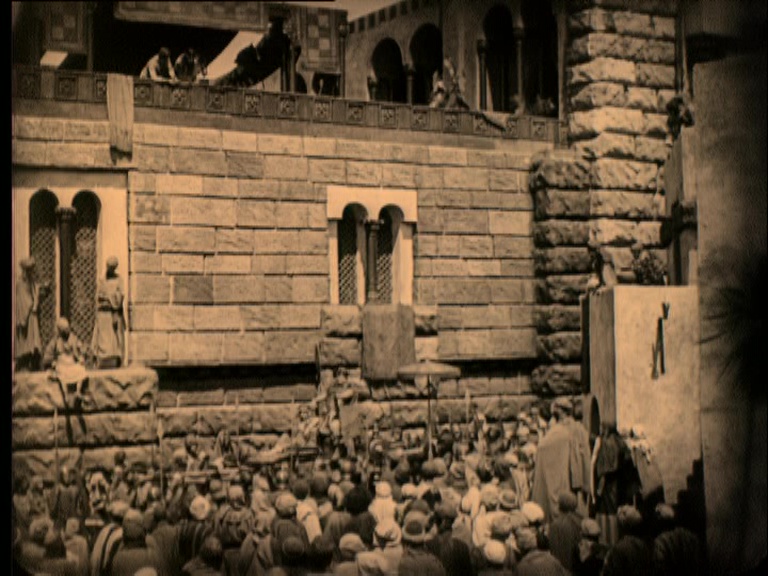


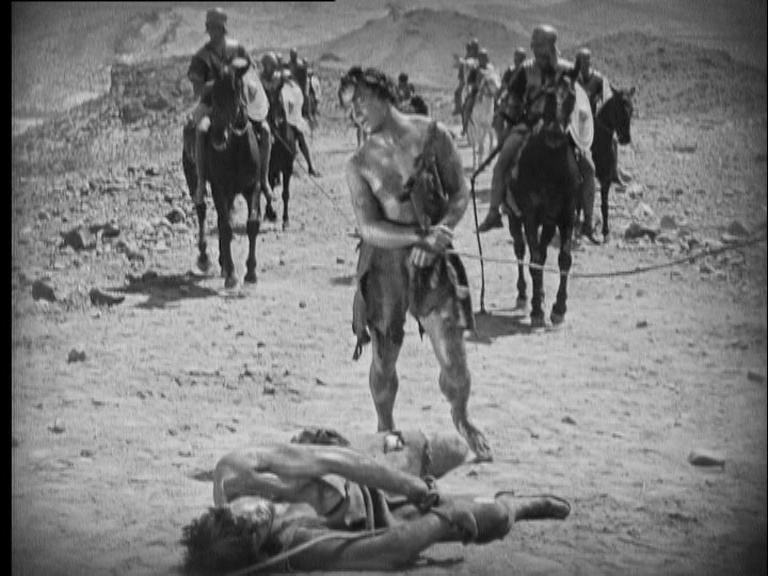




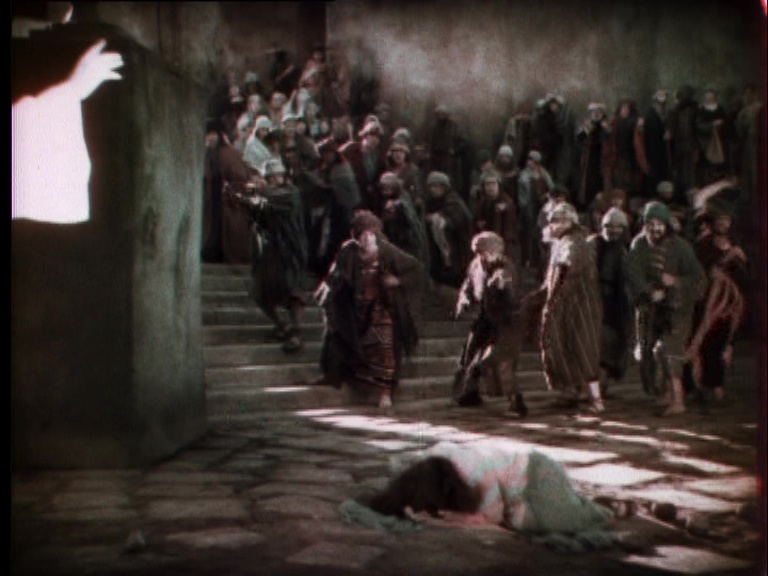


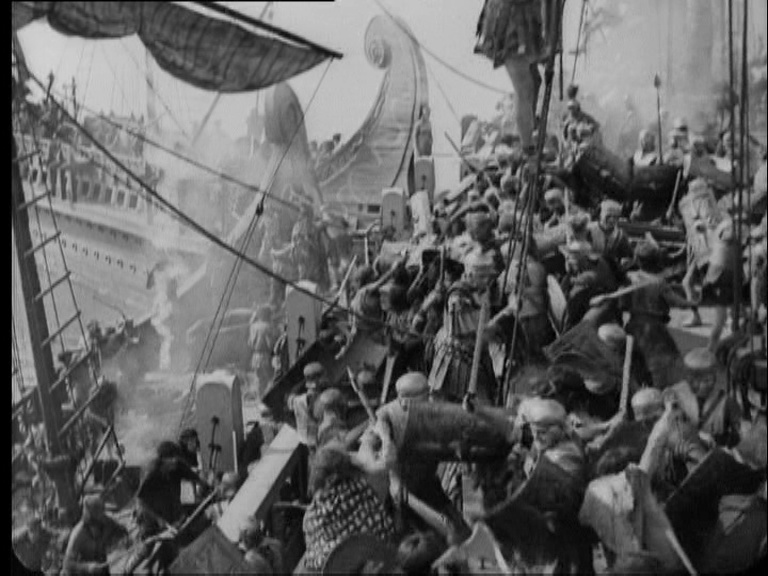


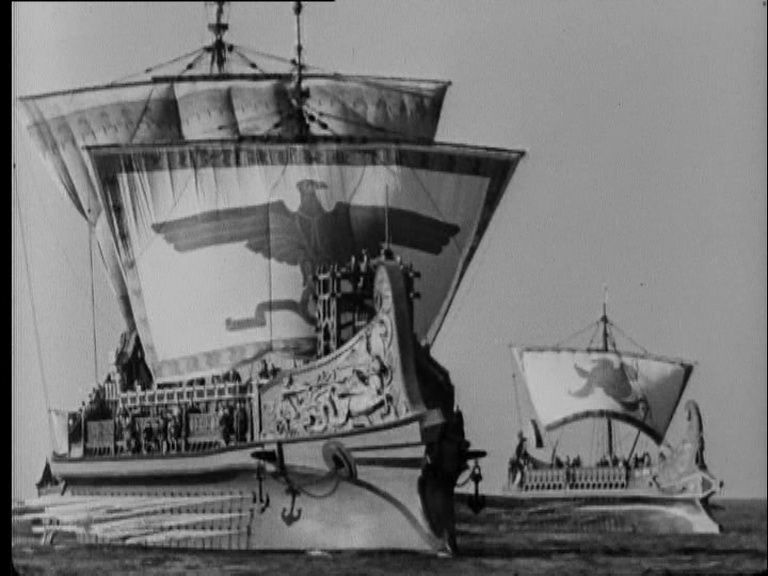


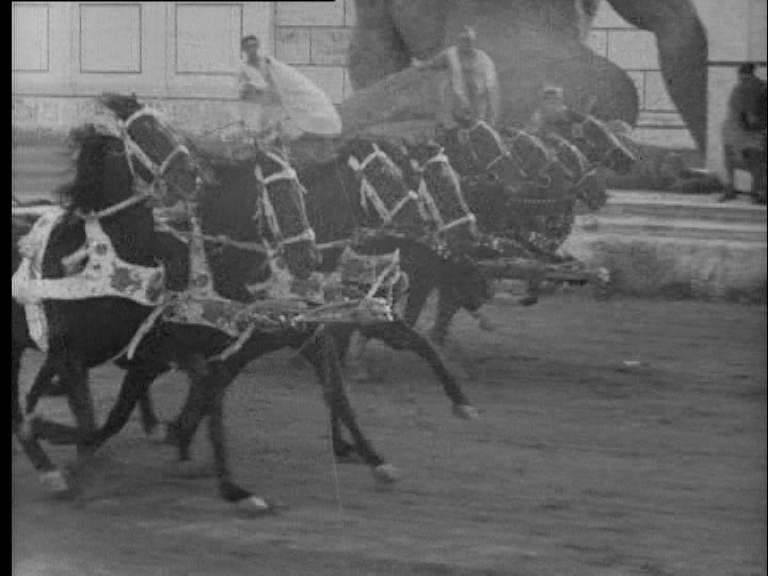



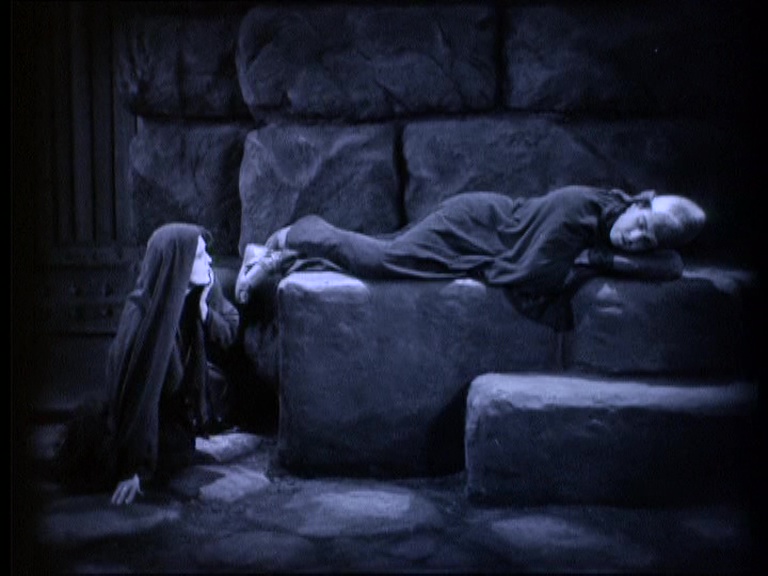





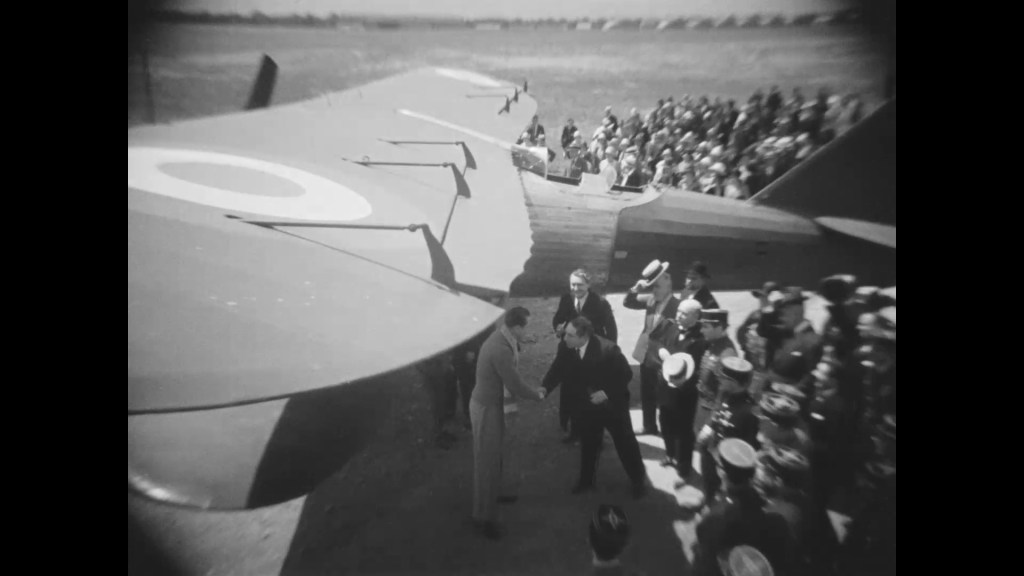
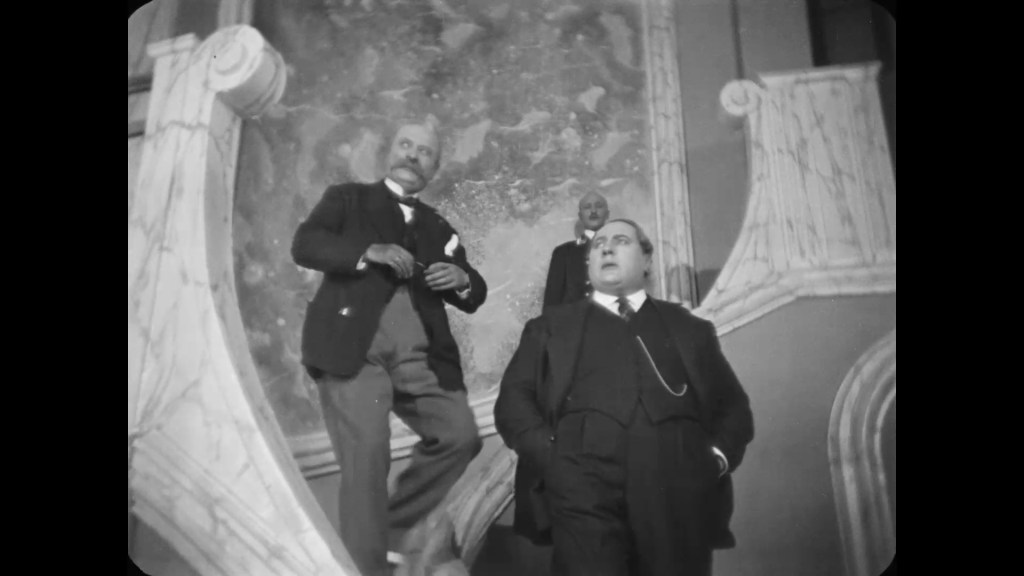


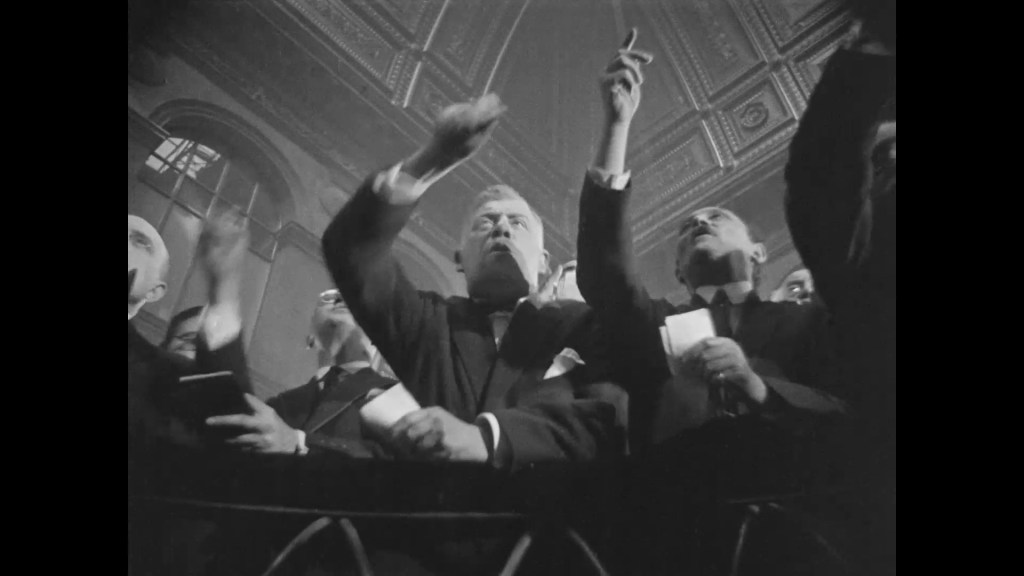

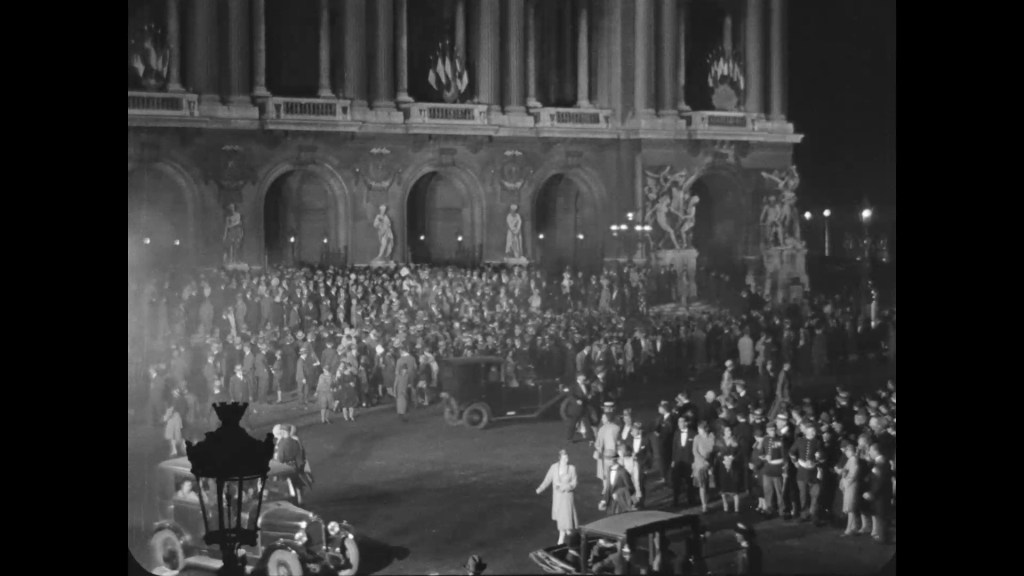


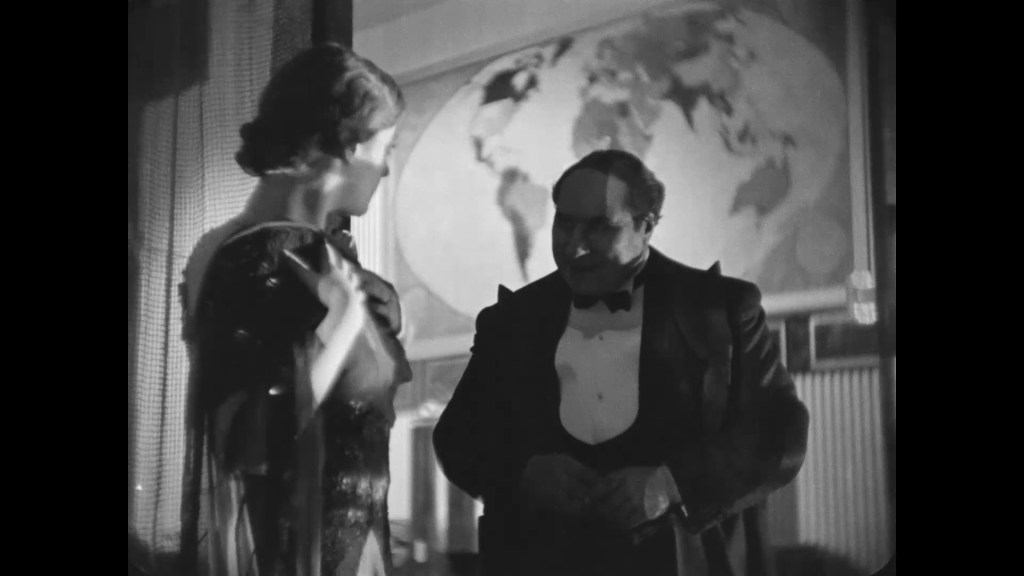


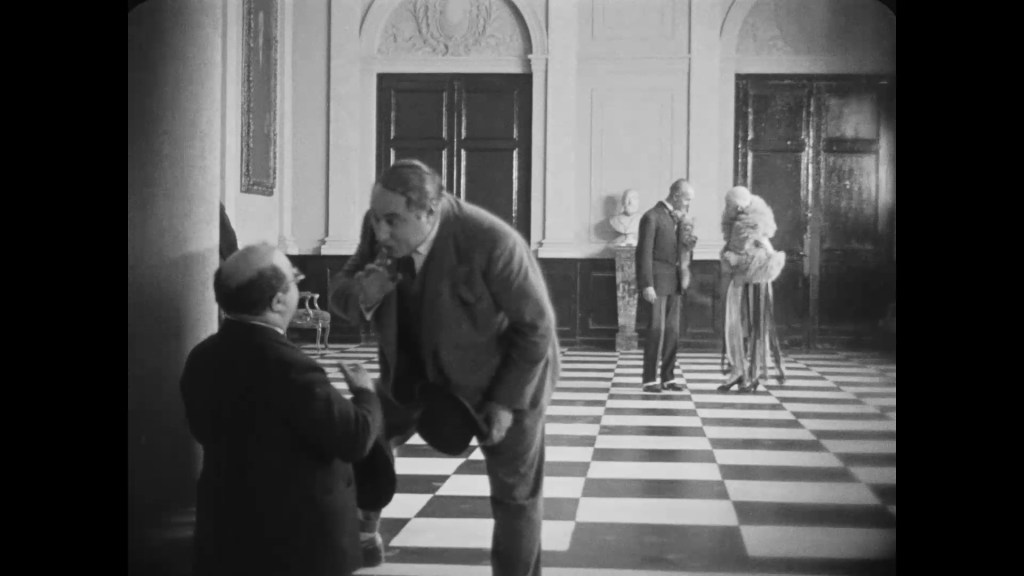


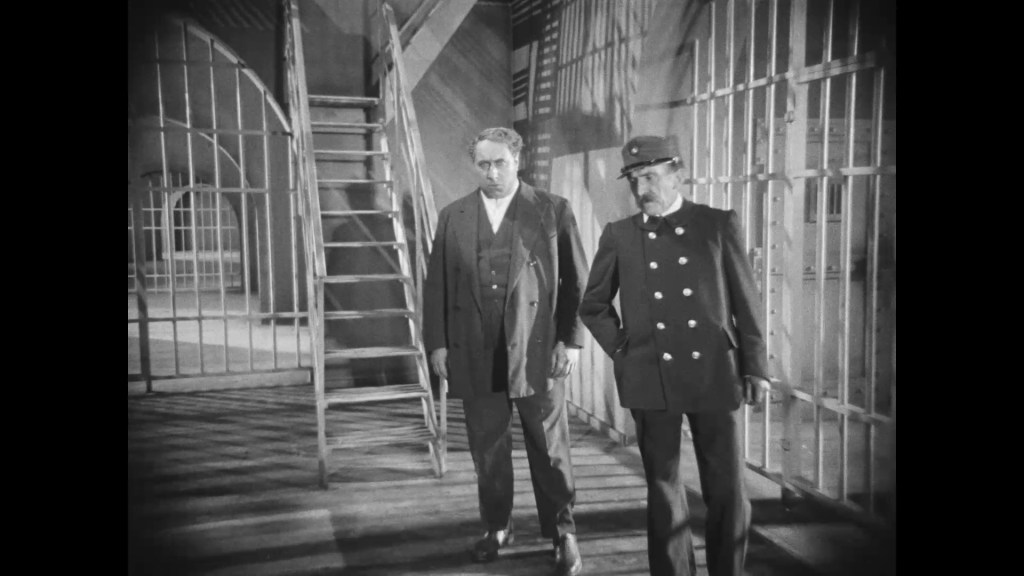

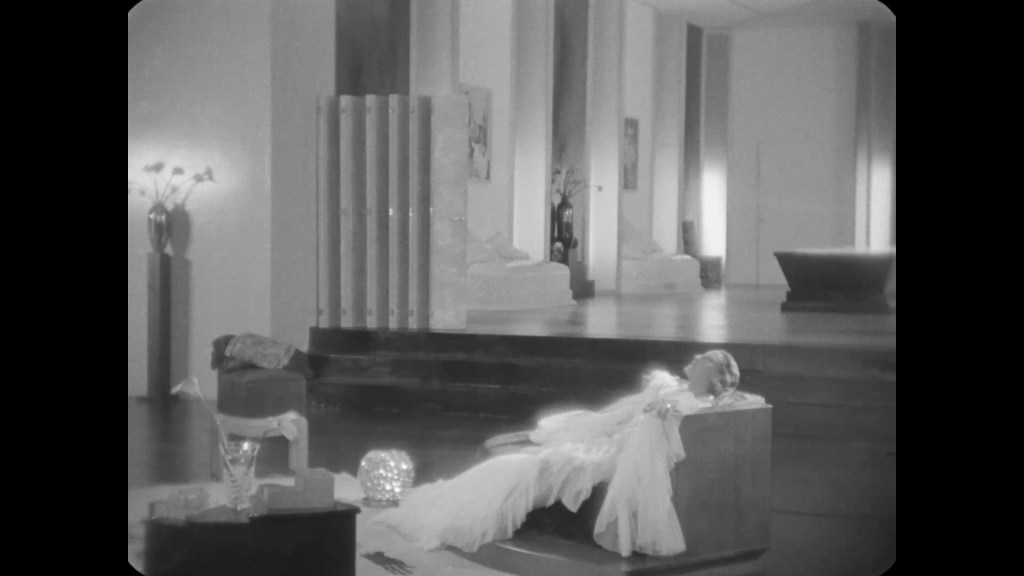

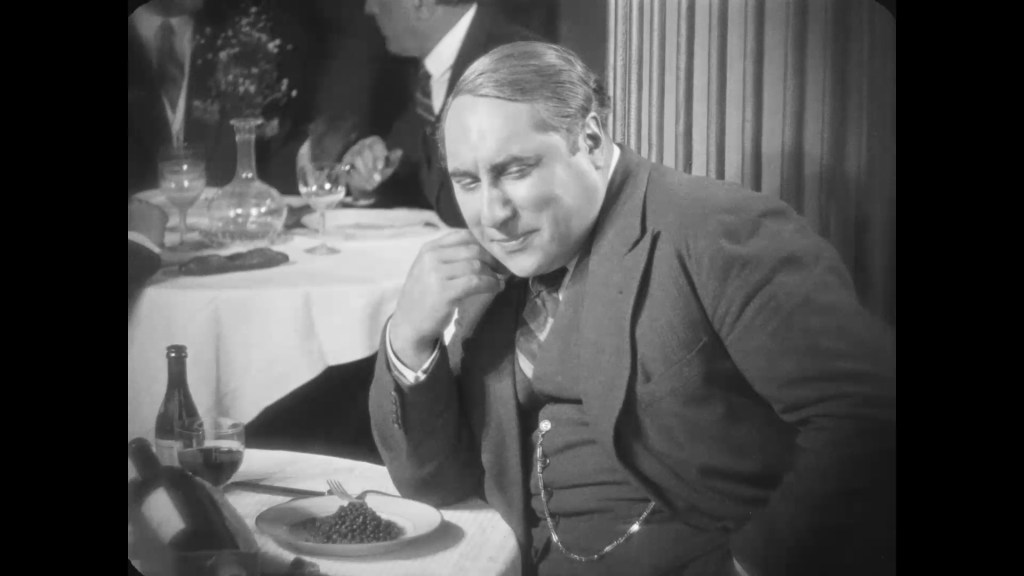

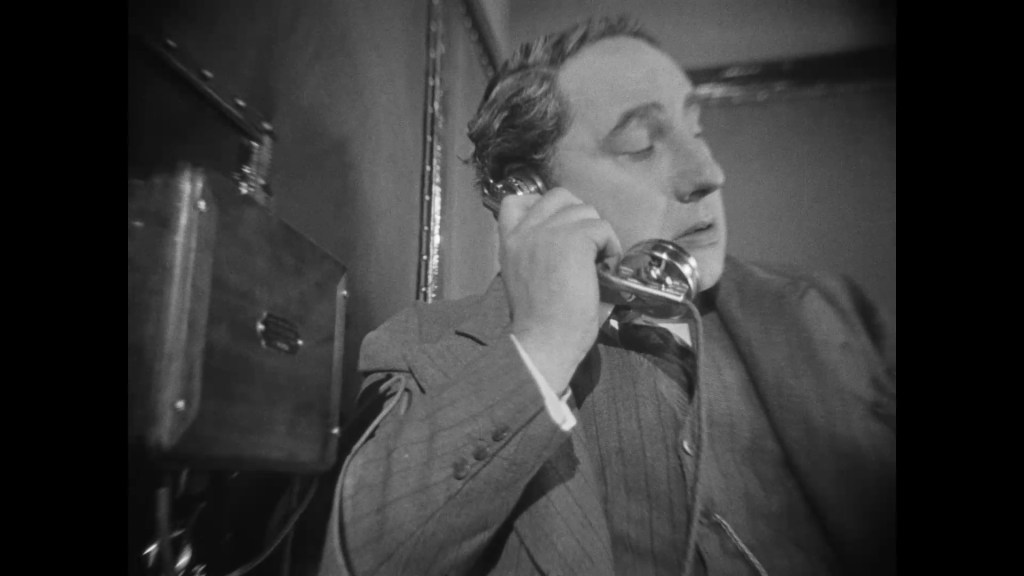

































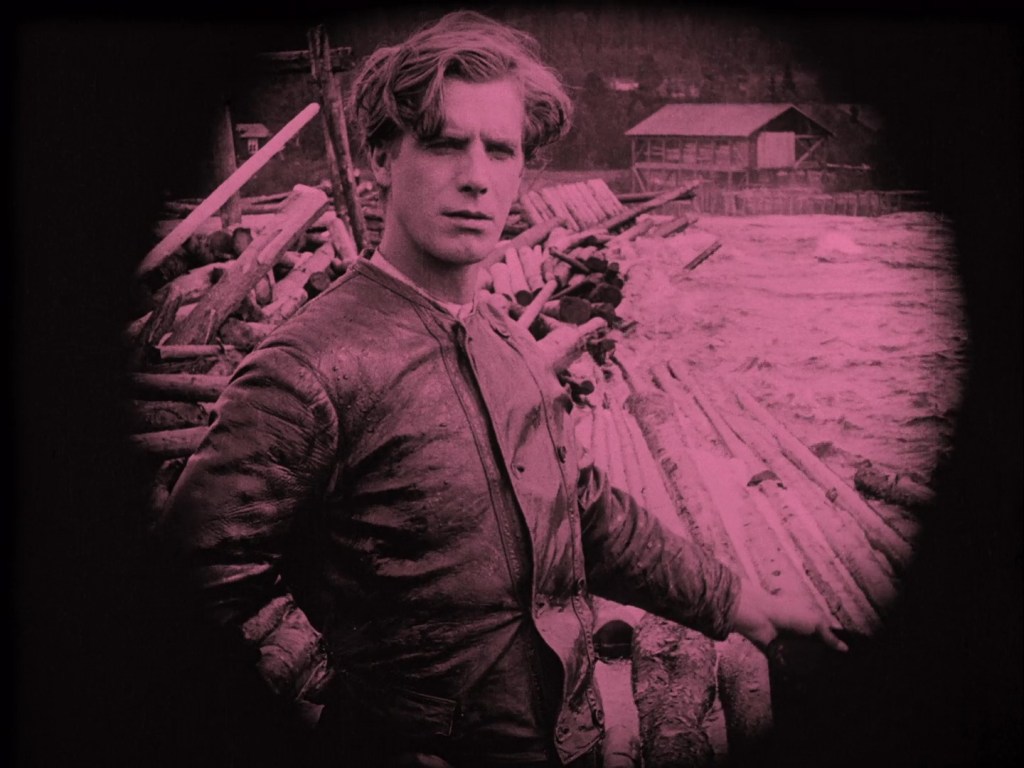


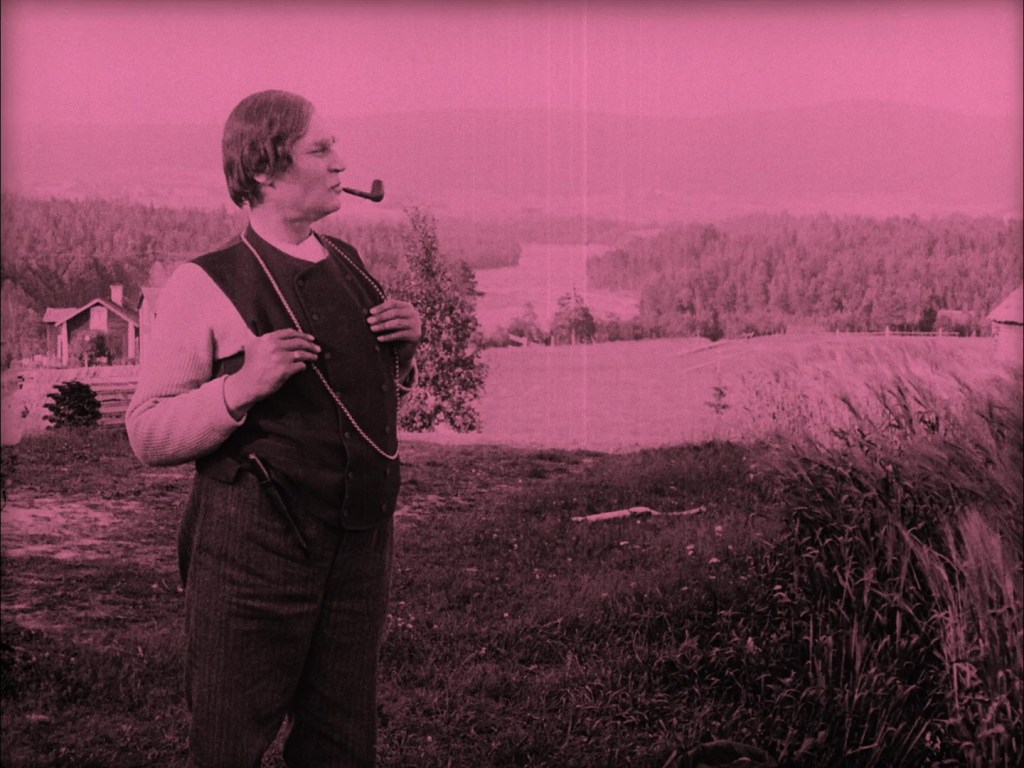


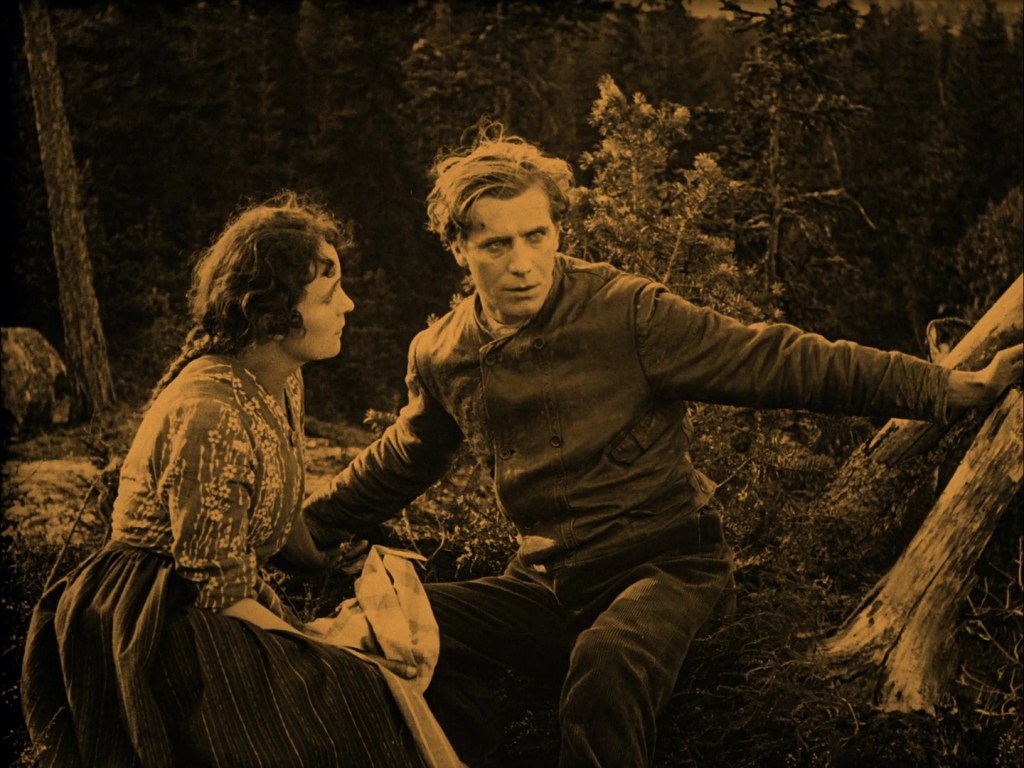

 The Realm of Silence