This is my third piece devoted to Die Wunderbare Lüge der Nina Petrowna (1929). Having previously talked about the beauties of this production and about its contemporary novelization, this week I discuss the scores created for the film’s exhibition in Berlin, Paris, and London in 1929-30.
The film premiered at the Ufa-Palast am Zoo in Berlin, in April 1929. The music for this event was arranged by Willy Schmidt-Gentner, a prolific composer of scores during the silent era – and beyond. He entered the industry after the Great War, initially working as a kind of tax inspector for cinemas. But he was also a trained musician, having studied with Max Reger in his youth, and eventually switched from film admin to film accompaniment. He gained experience acting as a conductor for cinema orchestras, as well as accompanying films at the piano. In 1922, he was commissioned to write his first film score – for Manfred Noa’s Nathan der Weise. He had clearly found his métier. Across the rest of the decade, Schmidt-Gentner created, adapted, compiled, and conducted nearly a hundred scores for silent films released in Germany. He was clearly both very versatile and very efficient at what he did: working fast was a key attribute to any composer in his position. The majority of his scores would doubtless have been compilations, drawing on various libraries of repertory music, as well as the latest popular melodies. By 1929 Schmidt-Gentner was Ufa’s chief arranger and his work accompanied many of their most prestigious productions – which included Nina Petrowna. Sadly, his score for this film has either been lost or else lingers in limbo somewhere in the archives. I say “archives”, but I have no idea what archives might be responsible. Of all Schmidt-Gentner’s scores, I am not sure any have been fully restored for modern performance. I am unsure, in the most literal sense, where his music has gone!
Thankfully, there are many detailed press reports of the premiere of Nina Petrowna, so we can glean some sense of what it was like. Before the film began, the first movement of Tchaikovsky’s Violin Concerto (1878) was played as an overture. (We even know the soloist who performed this piece at the film’s premiere: Andreas Weißgerber. Weißgerber was a popular concert violinist, so a notable a guest performer for Ufa’s concert.) Presumably much of the score itself was likewise music compiled from existing sources, though the reviews do not make this clear. For the opening cavalry parade, we are told that the orchestral march involved the use of a small group of musicians hidden behind the screen/in the wings. When the cavalry marched past, the music was initially performed by these hidden players; then, as the film showed the cavalry more closely, the main orchestra took up the music. For the scenes around the barracks and military club, various quick “Russian” marches were used, while elegant waltzes characterized the scenes at the “Aquarium” club. Though some reviewers accused Schmidt-Gentner of being heavy-handed (and sometimes simply too loud!), his score for Nina Petrowna used chamber sonorities for the lovers’ scenes: a string quartet with celesta accompanied their meeting in the club, for example. The one piece of original music we know to have been used in the film was for Nina’s favourite waltz, which is described as a melancholy “valse Boston” – the melody of which recurred throughout the film as a kind of leitmotif.
This waltz is the one part of the score does survive – thanks, in part, to Ufa’s own marketing campaign. Schmidt-Gentner’s melody was initially referred to as “Die Stunden, die nicht weiderkehren”, but for commercial purposes it was given words by Fritz Rotter and became the song “Einmal sagt man sich ‘Adieu’”. The main lyrics are:
Einmal sagt man sich ‘adieu’, / Wenn man sich auch noch so liebt. / Einmal sagt man sich ‘adieu’, / weil es keine Treue giebt. / Schwör mir nicht: du bist auf ewig mein. / Keine Liebe kann für immer sein. / Einmal sagt man sich ‘adieu’, / Wenn man sich auch noch so liebt.
A crude translation of this might be:
One day we’ll say goodbye to each other, / No matter how much we love each other. / At some point we’ll say goodbye to each other, / Because there’s no such thing as fidelity. / Don’t swear that you are mine forever. / No love can last forever. / One day we’ll say goodbye to each other, / No matter how much we love each other.
Note the German use of “man”, i.e. the third person singular, which might refer to oneself or to a slightly more abstract/general “we”. The song might therefore be a personal narrative or else a more general one. Its address sits interestingly between the personal and impersonal, as well as between tenses. It uses the present tense, but the “Einmal” (literally, “one time” – or even “at some point”/“eventually”) also suggests that it might refer to future events. (In German, the present tense can also express the future when combined with a time element.) All of which is to say that it has a tone that might apply to any listener, anywhere – that, and the gorgeous melancholy of the melody, ensured that the song was a hit success. Even if Schmidt-Gentner’s score was not performed widely outside Berlin cinemas (and it is unclear to what extent the score was distributed with the film for its silent release), the song ensured that its main original theme could circulate widely.
Another reason for the survival of this part of Schmidt-Gentner’s silent score is, ironically, the coming of sound. Ufa was already in the process of converting its major productions to sound, and Nina Petrowna was subsequently reissued with a recorded music-and-effects track in 1930. (I am unsure whether any copies of this version survive. Certainly, I can find no archival holdings on publicly accessible databases.) But even for its initial release in silent format, Ufa’s publicity marketed the film in relation to its theme song. In 1929-30, several recordings were made to capitalize on the popular success of the film – and presumably to help sell its initial release in cinemas. These vinyl releases featured contemporary bands like Dajos Béla’s Tanz-Orchester or popular singers like Wagnerian tenor Franz Völker and the ubiquitous Richard Tauber (famous for his roles in Lehár operettas). The speed at which such recordings could be licensed and made is impressive. The Derby company, for example, got the “Karkoff-Orchester” (their own scratch band) to record an orchestral arrangement of the waltz, which was released in May 1929, when the film was in the first month of its general release. More broadly, these discs point to the changing context for the marketing and consumption of film music. Before Ufa had even released its first talkie, the company’s silent pictures were already being sold in relation to recorded sound. On one level, the strategy clearly worked: the sheer number of recordings spawned by “Einmal sagt man sich ‘Adieu’” (always credited on discs to Ufa’s film) indicates a popular hit. Indeed, the song continued to generate recordings throughout the twentieth century and even into the twenty-first. (For example, Aglaja Camphausen’s recent rendition is particularly lovely.)
Nina Petrowna was one of Germany’s biggest commercial hits of the 1928-29 season, and Schmidt-Gentner’s score received very good reviews at the time of the premiere. Given this success, it is ironic that the music now most associated with Nina Petrowna was written by the French composer Maurice Jaubert. This orchestral score accompanied the film’s “exclusive” run at the Salle Marivaux in Paris, from 25 August 1929. Jaubert had already worked as an arranger, compiling selections from the works of Offenbach to accompany Jean Renoir’s Nana (1926) at the Moulin Rouge theatre in Paris. Jaubert subsequently prepared the perforated music rolls of Jean Grémillon’s mechanical piano score for his documentary Tour au large (1927, lost). His music for Nina Petrowna thus represents his first original film score, though it should be noted that it is not entirely his own work. Jaubert also relied on musical collaboration: some scenes were scored by Jacques Brillouin and Marcel Delannoy, while another recurring theme is taken from Erik Satie’s “De l’enfance de Pantagruel” (the first number of Trois petites pièces montées (1920)). Brillouin and Delannoy had compiled the orchestral score that accompanied Grémillon’s Maldone (1928), which included music written by Jaubert.
As I wrote in my earlier piece on the film, Jaubert’s music is superb. Though Schmidt-Gentner’s score was written for a large symphony orchestra, and Jaubert’s for a chamber orchestra, they share several qualities: both make use of lighter sonorities and a central waltz motif that recurs throughout the film. Schmidt-Gentner’s music seemed to have relied on a more “Russian” milieu, though his waltz was a “Boston” – and thus another kind of popular cultural import. (The contemporary recordings make the waltz sound very much part of the soundworld of the 1920s dancehall rather than pre-war Russian.) Jaubert’s music, however, is superbly attuned to the mood and rhythm of the film. The flowing camerawork and long takes aid the ease with which the music seems to glide along with the film. But even though Jaubert uses slower tempi and extended passages (complete with repeats), he knows when to match key moments. Important sounds on screen, for example, are matched in the orchestra. Listen to the exquisite way Jaubert turns the chiming clock into music—high strings, piano, percussion—in a way that interrupts the waltz theme, but also sends us (tonally) somewhere oddly private and dreamy. (This melody has to be both memorable and moving, since it recurs in the film in vital scenes of union and separation for the central couple.) Or the lovely scene when the pianist in the orchestra must synchronize to the incompetent Michael’s efforts at the piano on screen. But the most dramatic is when the orchestra suddenly falls silent at the dramatic revelation in the final scene.
Given its importance in the history of Jaubert’s career, it is surprising that I haven’t been able to find any contemporary French reviews of Nina Petrowna that mention his name. I have found an advertisement for the film in the French press of the time, which marketed its exhibition with explicit reference to live music: “You will hear the best orchestra and you will see Brigitte Helm in…” (see image below). The same page is littered with adverts for sound films and synchronized scores, suggesting something of the climate in which Nina Petrowna was released. (Three months after the live exhibition of Nina Petrowna with “the best orchestra”, the Salle Marivaux premiered André Hugon’s Les Trois masques (1929) – the first all-talking production made in France. No longer was a live orchestra required.)
This same context highlights the release of Nina Petrowna in the UK. The film was distributed under the title The Wonderful Lie, premiering in London in June 1929. This presentation opened a special run of silent films accompanied by a full orchestra at the London Hippodrome. The Wonderful Lie, and its specially arranged score by Louis Levy, got rave reviews. It was championed especially by critics who hated the influx of talkies, which was also how the film was advertised – as the swansong of silent cinema.
Like Schmidt-Gentner, Levy had been working as an arranger of cinema music since the 1910s and would have a prosperous career in later decades as the supervisor of numerous sound film scores. I can find very little information on the contents of Levy’s score for The Wonderful Lie. It was doubtless a work of compilation, likely drawing on a familiar repertoire of music. But there was also at least one piece of original music that was used, which has survived. This was the song “Nina”, with music by Cecil Rayners and words by Herbert James. I can find no evidence that Rayners’ “Nina” was performed with a vocal soloist during exhibition. As with Schmidt-Gentner’s “Einmal sagt man sich ‘adieu’”, the song more likely functioned as a way of promoting the film. An advertisement in The Era (10 July 1929), for example, offers “The Beautiful Theme Number in the New Film Production of ‘THE WONDERFUL LIE’ now showing at the London Hippodrome Song”. Interested parties could buy the theme as arranged for full orchestra, small orchestra, or piano. Was the song performed at screenings outside the London Hippodrome? And what other kinds of music were heard with the film around the UK? These questions could just as readily be asked of the film’s distribution in Germany and France – and the answers would be as numerous and varied as the landscape of exhibition practice at the time.
In summary, the scores of Schmidt-Gentner, Jaubert, and James offer an interesting case study of how music might differentiate the experience of a film across national contexts – as well as extend the life of a film beyond its cinematic exhibition. Though Schmidt-Gentner and Jaubert are important figures in film music of this period, their reputations are widely divergent. Jaubert is celebrated for his music for sound films of the 1930s, not to mention his early death on active service in 1940. His music has been recorded many times and his work is known outside France – and, I suspect, beyond specialist circles. Schmidt-Gentner may be a familiar name in Germany, and his melodies may still occasionally be heard, but his scores from the silent era have not received the same level of treatment; his musical legacy is thus highly restricted. This is perhaps one reason why it was Jaubert’s score for Nina Petrowna that was restored and recorded in the 1980s, not that of Schmidt-Gentner. That said, Jaubert’s score has not been heard since it was broadcast with the film on the Franco-German channel ARTE and on Swiss television in 2000. The same restored print that was broadcast that year was digitized by the Friedrich-Wilhelm-Murnau-Stiftung in 2014 and shown in various venues, but never with Jaubert’s music. I can only hope that this beautiful film and score are one day reunited and released on Blu-ray. (If so, I bagsy doing the audio commentary!) Likewise, I hope that the score by Schmidt-Gentner one day resurfaces – together with more of the dozens and dozens of others he created in the silent era. Fingers crossed…
La Seine Musicale stands on the Île Seguin, some few minutes’ walk from the last stop on line 14 of the Paris metro. On a warm Thursday afternoon, I find myself among a band of spectators trooping across the bridge towards the concert hall. The hot sun makes us sweat convincingly for the first security check. Tickets scanned, we file through. It is half past five. Several lines lead towards covered checkpoints. Bags are inspected, bodies are searched. We proceed to the doors, where our tickets are scanned once more. Inside, there is a buzz of expectation. I overhear conversations in French, English, German. Further down the lobby, I see a giant projection of the trailer for tonight’s premiere. I catch the words “definitive”, “monumental”, “historic”, “complete”. Above the doors to the auditorium, the same video loops on LCD screens.
The screening is supposed to start at six o’clock, but five minutes beforehand queues still struggle through the three tiers of security outside. Inside, I take a programme booklet and search for my seat. Buying tickets online was not easy. The seating plan was like a nightmarish game of Tetris. With no sense of where each block lay in relation to the screen, in desperation I opted for “gold” tickets. Inside the concert hall, I find with immense relief that my view is superb. Dead centre, two ranks below the projection booth, three ranks above the sound mixing station. (Seemingly, the orchestra is being augmented through speakers to ensure level volume throughout the auditorium.)
I sit and read the programme. It promises me a kind of accumulative bliss. Sixteen years of work. 1000 boxes of material examined. 300 kilometres of celluloid sorted. A score of 148 cues from 104 works by 48 composers, spanning 200 years of music. (It is as if the sheer number of pieces cited, and the breadth of periods plundered, were proof of artistic worth.) Even the performance space is advertised in terms of gigantism. This is to be a ciné-concert “on a giant screen”. Giant? I look up. The screen is big, but it’s the wrong format. It is 16:9, like a giant television. The sides are not curtained or masked. How will they produce the triptych? The hall fills up. Last-minute arrivals scurry in. I catch a glimpse of Georges Mourier. He has chosen to sit very close to the screen. (Does he know something?) I switch my phone to flight mode and put it away. By the time the lights go down, it must be at least a quarter past six. But what matter a few minutes’ delay compared to sixteen years of preparation? This is Napoléon.
I have indulged in the above preamble because I had been anticipating this premiere for several years. With its much-delayed completion date, the Cinémathèque française restoration of Napoléon seemed always to be on the horizon. Now that it has at last arrived, the marketing generated by its release has swamped the film in superlatives. I have seen Napoléon projected with live orchestra four times before, in London (2004, 2013, 2016) and in Amsterdam (2014), but this Paris premiere outstripped them all in terms of sheer ballyhoo.
So, what does the new restoration offer? For a start, it looks stunning. The “giant screen” promised me did indeed present the single-screen material in superb quality. Though there was far too much light spill from the orchestra on stage, and no mask/curtains to define the edges of the frame, the image still revealed great depth and detail. Throughout, the photography is captivatingly beautiful. I was struck anew by the sharpness of Gance’s compositions in depth, by the landscapes across winter, spring, and summer, by the brilliance of the close-ups. I fell in love all over again with those numerous shots in which characters stare directly into the camera, making eye contact with us nearly a century later. The young Napoleon’s tears; the smallpox scars on Robespierre’s face; the adult Napoleon’s flashing eyes amid the gleaming slashes of rain in Toulon; the sultry soft-focus of Josephine at the Victims’ Ball. The tinting looked quite strong, but the visual quality was such that – for the most part – the images could take it. (I reserve judgement until I’ve seen the film without such persistent light spill on the screen.) In terms of speed, I was rarely disturbed by the framerate of 18fps throughout the entire film. (As I noted in my earlier post, the 2016 edition released by the BFI uses 18fps for the prologue but 20fps for the rest of the film.) Aside from a few shots that looked palpably too slow (for example, Salicetti and Pozzo di Borgo in their Paris garret), the film looked very fluid and natural in motion. Though some sequences did seem to drag a little for me, this was entirely due to the choice of music (more on this later).
The Cinémathèque française restoration is notable for containing about an hour of material not found in the BFI edition. The longest single section of new material comes at the start of the Toulon sequence, with Violine and Tristan witnessing civil unrest. It provides a welcome fleshing-out of their characters, which were much more present in the longer versions of the film in 1927. (Indeed, in the 1923 scenario that covered all six of Gance’s planned cycle, they were the main characters alongside Napoleon.) Not only are the scenes important for the sake of character, but they also have some superb camerawork: multiple superimpositions of Violine observing the horror, plus handheld (i.e. cuirass-mounted) shots of the scenes in the streets. Elsewhere, there were many new scenes of brief duration – together with numerous small changes across the entire film: new shots, different shots, titles in different places, new titles, cut titles. I welcome it all and greedily ate up every addition. Though most of the contents of this new restoration will be familiar to anyone who has seen the BFI edition, I was continually struck by the fluidity of the montage.
Do these changes fundamentally change or transform our understanding of Napoléon? Not as such. The alterations tend to reinforce, rather than reorient, the material evident in previous restorations. And if the montage is clarified or intensified in many places, there are others when it still feels oddly incomplete. When Napoleon sees Josephine at the Victims’ Ball, for example, the rapid montage of his previous encounters with her includes shots from several scenes that are no longer in the film. Is this a case of Gance not wishing to lose the cadence of his montage, or are there still missing scenes from the new restoration? (There is a similar instance in La Roue, when Sisif’s confession begins with a rapid montage that includes snippets of scenes cut from the 1923 version of the film.)
In another instance, I remain unsure if the additional material in the new restoration helps or hinders the sequence in question. I’m thinking of the end of the Double Tempest, where a new section – almost a kind of epilogue – appears after the concluding titles about Napoleon being “carried to the heights of history”. The additional shots are dominated by Napoleon in close-up, looking around him, a shot that Mourier himself explained (in a 2012 article) originally belonged in the central screen of the triptych version of the sequence. In that version, Gance’s triptych montage used the close-up of Napoleon looking around him to make it seem like he was observing the action on the two side screens. In that context, it made perfect sense. But now, in the latest restoration (which, for unstated reasons, did not attempt to reconstruct the Double Tempest triptych), the shot appears in isolation and looks a little odd. It’s still a compelling image, but it has nothing to interact with on either side, as originally intended. What exacerbates this disconnection between the old and new material is the music that accompanies it. The sequence reaches its climax – in terms of sheer volume, if nothing else – with the slow, loud, dense, chromatic roar of music from Sibelius’s Stormen (1926). (From my seat, I could see the decibel counter reach 89db, the loudest passage of the score thus far.) This cue – an almost unvarying succession of waves and troughs – ends at the point the sequence stops in previous restorations. This is then followed by Mozart’s Maurerische Trauermusik (1785): swift, lucid, succinct, melodic. There was no obvious link between the two musical pieces, which made the new material seem divorced from the rest of the sequence. Even if the film knew what it was doing (and I can find no information to say if this sequence is truly “complete”), the score didn’t.
The music. The role of Simon Cloquet-Lafollye’s score is central to this issue of aesthetic coherence. His musical adaptation is the major difference between the new restoration and previous ones, which featured scores by Carl Davis (1980/2016), Carmine Coppola (1981), and Marius Constant (1992). I will doubtless find myself writing more about this in the future, when I’ve been able to view the new version on DVD/Blu-ray. But based on the live screening, several features strike me as significant.
As (re)stated in the concert programme, Cloquet-Lafollye’s aim was to produce “a homogenous, coherent piece, in perfect harmonic synchronization with the rhythm imposed by the images”, a “score totally new and hitherto unheard that takes its meaning solely from the integrity of the images” (28-29). But these ambitions were only intermittently realized, and sometimes entirely abandoned. Rhythmically, aesthetically, and even culturally, the music was frequently divorced from what was happening on screen. My impression was of blocks of sound floating over the images, occasionally synchronizing, then drifting away – like weather systems interacting with the world beneath it. To me, this seemed symptomatic of the way Cloquet-Lafollye tended to use whole movements of repertory works rather than a more elaborate montage of shorter segments. Using blocks of music in this way also made the transition from one work to the other more obvious, and sometimes clunky. This is most obvious when, for the same sequence, Cloquet-Lafollye follows a piece from the late nineteenth/early twentieth century with something from the late eighteenth/early nineteenth century. It’s not just a question of shifting from more adventurous (even dissonant) tonality to classical textures, but often a difference in density and volume. In part one, Gaubert (the “Vif et léger” from his Concert en fa majeur, 1934) is followed by Mendelssohn (Symphony No. 3, 1842), Sibelius is followed by Mozart (per above); in part two, Mahler (Symphony No. 6, 1906) is followed by Mozart (Ave Verum Corpus, 1791). The music itself was all good, sometimes even great, but in many sections sound and image remained only passingly acquainted. (This is sometimes heightened by the fact that, by my count, thirteen of the 104 works used in Cloquet-Lafollye’s compilation postdate 1927.)
In the film’s prologue, for example, the snowball fight was often well synchronized – though its climax was mistimed (at least in the live performance). But the geography lesson, the scene with the eagle, the start of the pillow fight, and the return of the eagle in the final scene, all failed to find a match in the music. The score reflected neither the precise rhythm of scenes, nor the broader dramatic shape of the prologue. Cloquet-Lafollye ends the prologue with music from Benjamin Godard’s Symphonie gothique (1874). This slow, resigned piece of music accompanies one of the great emotional highpoints of the film: the return of Napoleon’s eagle. In the concert hall, I was astonished that this glorious moment was not treated with any special attention by the score. Why this piece for that scene? Of course, these reservations are no doubt informed by personal taste – and my familiarity with Davis’s score for Napoléon. But there are many examples of significant dramatic moments on screen that cry out for musical acknowledgement, and which Cloquet-Lafollye’s choices ignore. Too often, the score is working in a different register and/or at a different tempo to the film.
All this said, there were sequences where the choices did, ultimately, gel with the image. In the final section of part one, the Battle of Toulon can sometimes drag – and I was wondering if the slower framerate (and extra footage) of the new restoration would exacerbate this. (Certainly, some friends at the screening thought it did.) But here, Cloquet-Lafollye’s movement-based structure did, for me, help structure the often-confusing events of this long section into an effective whole.
In particular, one passage worked both theatrically and cinematically. As the storm and battle reaches a climax on screen, on stage extra brass players began trooping from the wings to join the orchestra. It was a premonition of musical might, realized a few moments later in the form of “Siegfrieds Trauermusik” from Wagner’s Götterdämmerung (1874). I confess I was initially deeply unsure of this choice. (It is, after all, very famous and has its own specific operatic/dramatic context.) As often with Cloquet-Lafollye’s selections, this piece was initially too slow for the images on screen and the vision of hailstones on drums (a clear invitation for a musical response) went without musical comment. Only gradually did the music coalesce with images: the immense crescendo, the switch from minor to major key, and climactic thundering of orchestral timbre, snare drums included, was irresistible. I’d never heard this piece performed live, and it was simply thrilling. (On the decibel reader, Wagner hit 91db – the loudest piece in the entire score. Perhaps the programme notes could have included this in its list of numerical achievements? “More decibels than any previous restoration!”)
But, as elsewhere, Cloquet-Lafollye followed this immensely dense, loud, surging late romantic music with a piece from an earlier era: the “Marcia funebre” from Beethoven’s Symphony No. 3 (1804). As well as not fitting the rhythm of the scenes, this music undercut the gradual shift from mourning to the vision of Napoleon asleep but triumphant. In these final shots, Gance mobilizes several recurrent visual leitmotifs to reaffirm the place of Toulon in the course of Bonaparte’s destiny: the eagle lands on a tree branch nearby, echoing its earlier appearance on the mast of the ship that rescues Bonaparte after the Double Tempest; the morning sun rises above the sleeping general, blazing ever brighter at the top of the frame’s circular masking; the gathered flags are caught in a sudden gust of wind and flutter as brilliantly as Liberty’s superimposed pennants in the Cordeliers sequence or the wind-lashed waves of the Double Tempest; and, in the lower left of the frame, a gun-carriage wheel replicates the last image of the young Bonaparte at Brienne. These images cry out for a musical statement to acknowledge Napoleon’s destiny, but Cloquet-Lafollye just lets the funeral march play out in full – a slow, quiet, trudge to mark the end of the film’s first part. As much as I enjoyed the movement-based structure of the score for Toulon, this didn’t feel the right finale.
These issues of tone and tempo effect comedic scenes as well as dramatic ones. In part two, the Victims’ Ball begins with a title announcing: “The Reaction”. The opening shots – gruff guards, prison bars, bloody handprints – are designed to echo the earlier scenes in the Terror. Convinced of the gravitas of the scene, the audience is unprepared for what happens next: after returning to the establishing shot, the camera slowly pulls backwards to reveal that the “victims” in the foreground are in fact dancing. This carefully prepared joke is lost in Cloquet-Lafollye’s score, which begins the sequence with light, graceful dance music (from the ballet of Mozart’s Idomeneo (1780)). The music gives away the punchline while the film is still establishing the set-up.
Part of me wondered if these elements of disconnection stem from Cloquet-Lafollye’s working method. Per their programme notes, Frédéric Bonnaud and Michel Orier confirm that the score was constructed from tracks taken from existing recordings. Cloquet-Lafollye initially submitted “a montage of recorded music” (17) to the musical team, which suggests he did not begin his work from paper scores or working through passages on the piano. Might this process discourage a more hands-on, score-based construction?
One other point about the score is the inclusion of a single piece from Arthur Honegger’s original music for the film, created for Paris Opéra premiere in April 1927. His name was absent from the musical table of contents issued in the recent Table Ronde publication on Napoléon, so it was a pleasant surprise to see his name in the concert programme. This sole piece, “Les Ombres” for the ghosts of the Convention sequence in part two, was eerie and effective – and distinctive. It is a nice, if brief, acknowledgement of Honegger’s work – though I am puzzled as to why its inclusion was not mentioned until the programmes were issued on the day of the concert. (Cloquet-Lafollye’s essay mentions Honegger only to reiterate that both he and Gance were dissatisfied with the music at the premiere.)
On a similar note, I wonder if Cloquet-Lafollye was familiar with Carl Davis’s score. There are two scenes where the former seems to echo the latter. The first is in Toulon, where Cloquet-Lafollye uses the same traditional melody – “The British Grenadiers” – to contrast with “Malbrough s’en va-t-en guerre” during the build-up to the battle. (In the programme notes, “Malbrough s’en va-t-en guerre” is not credited as “traditional”, but to Beethoven’s Wellingtons Sieg (1813) – though I would need to relisten to the score to discern how closely it follows Beethoven’s version.) The second similarity occurs in one of the few scenes credited as an original piece by Cloquet-Lafollye: “Bureau de Robespierre”. Here, he cites the same popular melodies for the hurdy-gurdy as Davis, and even orchestrates the scene where Robespierre signs death warrants the same way as his predecessor: the hurdy-gurdy accompanied by a low drone-like chord in the orchestra, with strokes of the bell as each warrant is signed. A curious coincidence. (I look forward to being able to listen to these scenes again to compare the scores.)
By far the best section of the music (and the film performance as a whole) was the performance of “La Marseillaise” in part one. I think this was precisely because the sequence forced Cloquet-Lafollye to stick to the rhythm of events on screen, moment by moment, beat by beat. There was also the tremendous theatricality of seeing the choir silently troop onto stage in the concert hall, switch on small lamps above their sheet music, and wait for their cue. The tenor Julien Dran launched into the opening lines, synchronizing his performance with that of Roget de Lisle (Harry Krimer) on screen. When the choir joins in, their first attempt is delightfully disjointed and out of tune. This makes their final, united rendition all the more satisfying and moving. Here, too, the montage of the new restoration evidences the stunning precision with which Gance visualizes “La Marseillaise” on screen: each line and word of the anthem is carried across multiple close-ups of different faces in a tour-de-force of rapid editing. The long-dead faces on screen were suddenly alive – the emotion on their faces and the song on their lips revivified in the theatre. I had never heard “La Marseillaise” performed live, and in the concert hall I wept throughout this rendition. (Even recalling it – writing about it – is oddly powerful.) It was one of the most moving experiences I have had in the cinema. But seeing how well this sequence worked – images and music in perfect harmony – makes me regret even more the way other sections were managed. Considering that Cloquet-Lafollye’s score draws on 200 years of western classical music for its material, and that it has had several years to be assembled, I was disheartened to find so many scenes which lacked a sustained rhythmic, tonal, and cultural synchronicity with the film.
Polyvision. All of which brings me to the film’s finale. I wrote earlier that the screen size (and lack of masking) made me wonder how the triptych would be handled in the Paris concert hall. Since there was no rearrangement of the screen or space for the second evening’s projection, I was even more puzzled. How would they fit the three images on screen?
Eventually, I got my answer. When Napoleon reaches the Army of Italy and confronts his generals, something peculiar started happening to the image: it started shrinking. This was not a sudden change of size. Rather, like a form of water torture, the image slowly, slowly, got smaller and smaller on the screen. To those who had never seen Napoléon before, I cannot image what they thought was happening; did they belief that this gradual diminishment was Gance’s intention? As the image continued to shrink, someone in the audience started shouting. I couldn’t make out what he said, but something along the lines of “Projectionist!” Was he shouting because he didn’t know what was happening, or because he knew what should be happening? I would have started shouting myself, but I was struck dumb with disappointment. More than anything, it was the agonizing slowness of the image wasting away that made me want to sink into the ground rather than face what I realized was coming.
When the image had shrunk enough (making me feel like I was fifty rows further back in the auditorium), the two additional images of Gance’s triptych joined the first. This was the first time I’ve seen Napoléon projected live when the audience didn’t spontaneously applaud this moment. Why would they applaud here, when the revelation was rendered so anticlimactic? Those who hadn’t seen the film before must have been baffled; those who had seen the film before were seething. If the organizers had announced in advance that this was going to happen, it would still have been bad but at least those who had never seen the film would know it wasn’t the way Gance wanted it to be seen. As it was, nothing was said – and the consequences of this decision unfolded like a slow-motion disaster. I’m not sure I’ve ever been so disappointed in my life. Every time I’ve seen the triptych projected as intended, I’ve been almost physically overwhelmed by the power of it. (In Amsterdam in 2014, before a triptych forty metres wide and ten metres high, I thought my heart was about to burst, so violently was it beating.) This time, I was taken utterly out of the film. I could hardly bear being in the concert hall.
All this was exacerbated by the choice of music. Gance’s vision of the assembly of Napoleon’s army, the beating of drums, the shouts of command, the immense gathering of military and moral force, and the revelation of the triptych, is one of the great crescendos in cinema – and the transition from single to triple screen is a sudden and sensational revelation. But Cloquet-Lafollye accompanies these scenes with “Nimrod” from Elgar’s Enigma Variations (1899): slow, restrained, stately music that takes several minutes to swell to its climax. Rhythmically, it is virtually the antithesis of the action on screen. Culturally, too, I thought it was utterly absurd to see Napoleon reviewing the French army to the music of his enemies – the very enemies we saw him fighting in part one. Furthermore, “Nimrod” isn’t just any piece of British orchestral music, but almost a cliché of Englishness – and of a certain period of Englishness, a century away from the scenes on screen. This was followed by the opening of Mahler’s Symphony No. 6, which was at least swifter – but only rarely synchronized in any meaningful or effective way with the images of Napoleon’s invasion of Italy. (Chorus and hurdy-gurdy aside, Cloquet-Lafollye’s score does not respond to musicmaking – bells, drums, bugles – within the film; in the finale, the drumroll of the morning reveille on screen goes unechoed in his orchestra on stage.)
In the final few minutes, Napoleon’s “destruction and creation of worlds” bursts across three simultaneous screens: lateral and consecutive montage combine; shot scales collide; spatial and temporal context are intermingled. Finally, the screens are tinted blue, white, and red – just as Gance simultaneously rewinds, fast-forwards, and suspends time. After this incalculable horde of images flies across their breadth, each of the three screens bears an identical close-up of rushing water. This is an image we first saw during the Double Tempest when Bonaparte sets out to confront his destiny – there, the water churns in the path of his vessel, borne by a sail fashioned from a huge tricolour; now, the screen itself has become a flag: the fluttering surge of the ocean is the spirit of the Revolution and of the cinema. The triptych holds this form just long enough for the spectator to lose any sense of the world beyond it, then vanishes with heart-wrenching suddenness. The elation of flight is followed by the sensation of falling to earth.
But what music does Cloquet-Lafollye chose for this visual apocalypse, this lightning-fast surge of images? During the last passage of the Mahler, I saw the choir troop back onto the stage to join the orchestra. Was this to be another performance of “La Marseillaise”? No. As the Army of Italy marches into history, the choir and orchestra on stage began their rendition of Mozart’s Ave Verum Corpus – music of the utmost slowness and serenity, of absolute calm and peace. It is perhaps the most ill-conceived choice of music I have ever seen in a silent film score. I’ve sat through far, far worse scores, but none has ever disappointed me as much as this single choice of music. When the choir started singing, I honestly thought it must be a mistake, a joke – even that I was dreaming, the kind of absurd anxiety dream where something impossibly awful is happening and there is nothing you can do to stop it. While Gance was busy reinventing time and space, hurling cinema into the future, my ears were being bathed in shapeless placidity. Instead of being bound up in the rush of images, I was sat in my seat as my heart sank through the floor.
How was I meant to feel? What intention lay behind this choice of music? Why this sea of calm tranquillity, this gentle hymn to God, this sense of exquisite grace and harmony? On screen, Gance explicitly compares Napoleon to Satan in the film’s final minutes – the “tempter” who offers the “promised land” to his followers; and our knowledge that this hero is already doomed to corruption and to failure is suspended in the rush of promise that history might, could, should have been different, that the fire of the Revolution might yet inspire other, better goals. Yet from the Paris stage on Friday night, Mozart’s hymn to God carried serenely, blissfully, indifferently over the fissuring, rupturing, exploding imagery on screen – beyond the last plunge into darkness, beyond Gance’s signature on screen, until – having reached the end of its own, utterly independent itinerary – it faded gently into silence. I did not understand. I still do not understand. I sat in bewilderment then as I write in bewilderment now. In combination with the shrunken triptych, this musical finale seemed like the ineptest imaginable rendering of Gance’s aesthetic intentions. (In the lobby afterwards, an acquaintance who was very familiar with the film put it more bluntly: “What a fucking disgrace.”) Roll credits.
Summary. But how to summarize this Parisian ciné-concert of Napoléon? I am still digesting the experience. I wouldn’t have missed this premiere for the world, but aspects of the presentation deeply upset me. Part of my disappointment is doubtless due to the intensity of the marketing around the release of the Cinémathèque française restoration. In my review of the Table Ronde publication that coincides with this release, I expressed reservations about the language with which the restoration has been described, as well as the misleading equivalencies made with previous versions of the film. The same aspects are repeated in the programme notes for the screening, which reproduces the essays by Costa Gavras, Georges Mourier, and Simon Cloquet-Lafollye. The new pieces by Frédéric Bonnaud and Michel Orier (“Comme une symphonie de lumières”) and Thierry Jousse (“Abel Gance et la musique”) are in much the same vein.
In the programme, only the last line of credits cites a precise length for the version we are supposedly watching: “Grande Version (négatif Apollo) / 11,582m”. This length is a metric equivalent of the 38,000ft positive print that Kevin Brownlow (in 1983) records Gance sent to MGM in late 1927. (As opposed to the 9600m negative print that Mourier, in 2012, cites as being assembled for international export at the same time in 1927.) The total amount of footage in the MGM positive included the material used for all three screens of both the Double Tempest and Entry into Italy triptychs, plus (Brownlow assumes) alterative single screen material for these same sequences. The total projected length of the print is given as 29,000ft (a length of such neatness that it suggests approximation). At 18fps, this 29,000ft (8839m) would indeed equate to the 425 minutes of the Cinémathèque française restoration. But are its contents (or two-part structure) the same? There is still no information on how Mourier et al. distinguished the contents of the “Grande Version” from that of the (longer) Apollo version. (Or, indeed, how to distinguish the contents of the “Grande Version” from the contemporaneous 9600m version.) Without more clarification, I’m unsure if the figure of 11,582m in the programme notes truly represents what we are watching. Any differences between the 1927 and 2024 iterations of the “Grande Version” would not matter were it not for the fact that every single press piece and publication relating to the film insists that the two are one and the same thing. Finding even the most basic information about runtimes and framerates is hard enough amid the perorations of marketing.
None of this should obscure the fact that this restoration really does look very good indeed – absolutely beautiful, in fact. And I must reaffirm that Cloquet-Lafollye’s score is not all bad, and sometimes effective – but I simply cannot understand the finale. Even if the image hadn’t shrunk in size in the concert hall, the music would have baffled me. In combination with the botched triptych, it was simply crushing. I still struggle to comprehend how it can have been allowed to take place at the premiere of such a major (not to mention expensive) restoration. Some of the friends with me in Paris had at least seen Napoléon in London or Amsterdam, so knew what it should look (and, ideally, sound) like. But I felt devastated for those experiencing the film for the first time. Only a proper projection of the triptych, as Gance intended, on three screens, will do. I can scarcely believe that the organizers booked a venue in which the outstanding feature of their new restoration could not be adequately presented. I am sure that arranging the forces involved in this concert was both hideously expensive and exhaustingly complex. But why would you go to all that trouble when the film can’t be shown properly? I remain dumbfounded.
One aspect of the Paris concert that I cannot criticize is the musical performance. Throughout both nights, the musicians on stage provided a remarkably sustained, even heroic accompaniment. Frank Strobel conducted the Orchestre Philharmonique de Radio France for part one (Thursday) and the Orchestre National de France for part two (Friday), together with the Chœur de Radio France (both nights), with immense skill. I have admired his work for silent films over many years, including the premiere of La Roue in Berlin in 2019, and I can hardly imagine a better live performance being given of this score. The audience offered regular applause throughout the film, which was richly deserved. Indeed, there was a great deal of communal enjoyment throughout the concert that I found infectious. (This was evident even beyond the musical performance. There is no music during any of the opening credits, so the Paris audience amused itself by applauding each successive screen of text. This got increasingly ironic, and there were even some laughs when the “special thanks to Netflix” credit appeared.)
If I left the concert hall on Friday night with a heavy heart, it was because of an overwhelming sense of a missed opportunity. This was a long-awaited and much-heralded premiere, and I had so wanted it to be perfect. The restoration is a ravishing visual achievement, offering (thus far) the most convincing montage of this monstrously complex film. But I remain unconvinced by the new score. Given its stated remit of precise synchronization, too much of it washes over the images – and sometimes directly contradicts the film’s tone and tempo. Its soundworld is neither that of the film’s period setting, nor that of the film’s production. In either direction, something more appropriate could surely have been achieved. Bernd Thewes’s rendition of the Paul Fosse/Arthur Honegger score for La Roueis a wonderful model of musical reconstruction, offering a soundworld that is both historically informed, aesthetically coherent, and emotionally engaging. Alternatively, Carl Davis’s score for Napoléon is a model of musical imagination: respecting both historical and cinematic dimensions, it is sensitive, intelligent, witty, and in perfect synch with the film’s every mood and move. I cannot say the same of Cloquet-Lafollye’s work. So while I offer my utmost and enthusiastic praise for the work that went into the Cinémathèque française restoration, I resist the idea that this presentation of Napoléon is “definitive”.
This week, we return to Hanns Schwarz’s Die wunderbare Lüge der Nina Petrowna (1929). As indicated in an earlier post, this film has become something of an obsession. (For interested parties, I have since published a rather more sober analysis of the film elsewhere.) Having spent much time digging around in contemporary press reviews and publicity material, I thought I might write a couple of follow-up pieces on the film’s release and cultural impact within and beyond Germany. A future instalment will discuss the various scores written for performances of the film in Germany, France, and the UK in 1929-30. But this week, my first instalment is devoted to Raoul Ploquin’s novelization of the film: Le Mensonge de Nina Pétrowna (Paris: Tallendier, 1930).
Ploquin’s adaptation was part of a long-running series of ciné-romans published by Tallendier from the late 1920s into the 1930s. I own several volumes in this series, as they are an interesting record of how writers (re)imagined recent films for a popular market. They are also important as records of films that might be partially or entirely lost. Illustrated with stills from the productions they “translate” into text, the books served as promotional material for the films – but also as a way of giving them some kind of cultural afterlife. Once films had left the theatre, the only way audiences might keep a part of their cinematic experience was through such mementos.
In the case of Le Mensonge de Nina Pétrowna, there was a close relationship between the author of the text and the film itself. Raoul Ploquin was the man in charge of adapting Die wunderbare Lüge der Nina Petrowna for its French release. In other words, he was the person who translated/adapted the film’s intertitles into French. Such prints were often subtly (or not to subtly) changed to suit the requirements of national taste or censors. If contemporary synopses and reviews don’t suggest any significant alterations to the film in France, they do prove that Ploquin made changes to the names of the characters. Colonel Beranoff became Colonel Teroff; Michael Andrejewitsch became Michel Silieff. Nina herself remains the same, though her surname is spelled variously as Pétrowna, Petrovna, Pétrovna, or Petrowna.
Ploquin’s novelization is intriguing for how it stays loyal to the plot of the film, yet constantly alters details – cutting, adding, and refitting the original to shape the narrative for its new format. For a start, the novel sets the opening scenes at “the start of April” (rather than the late autumn/early winter of the film). It also offers a more specific temporal setting than the film. Ploquin tells us that Nina is interested in all the latest news and culture from Europe, especially Paris. We are told that the Ballet Russes have created a sensation and that the Chinese Revolution is in full swing. Still more precisely, Nina wonders who will succeed Armand Fallières as President of France. Since Fallières retired in February 1913, this gives the novel a start-point of April that year.
Whereas the film presents the opening scene as their first encounter, the novel begins with Nina recalling a previous sighting of Michel from her balcony. (She remembers him “blushing like a schoolboy” at her gaze (8).) Rather than a chance encounter, Ploquin makes Nina’s presence on the balcony a deliberate attempt to catch Michel’s eye. Indeed, while Nina’s past might be implied in the film it is more detailed in the novel. She considers her own reputation as “the proud Nina Petrovna, the famous Nina Petrovna, the disdainful Nina Petrovna”. (More akin to how Ploquin may have seen Helm’s screen persona.) Nina also ponders why Michel has yet to write to her or make any other kind of move to make contact.
Ploquin’s text also gives us more backstory to Nina’s relations with Teroff. She has been his mistress for five years (44) and living in his villa for three years (5). Ploquin describes Teroff thus:
regular sports had preserved a youthful silhouette; his face was hairless, apart from his upper lip, which was decorated with a small moustache, neatly dyed black. […] His face, with its fine and regular features, had earned him so many successes with women that he still retained, at the corners of his lips, a certain conceited smile that enabled the most innocuous remark to become impertinent. (9)
Nina herself is given a background: she is “an orphaned dancer” who has become “the most seen woman in the Russian capital” (9). Ploquin states that Nina is more intelligent than Teroff, and then segues to a chapter that gives us the backstory to Michel – demonstrating his intelligence.
Michel, we are told, wanted to train for the Russian general staff and become “a brilliant tactician” (13). But he also wants to study psychology at university, and is busy learning German and French (he reads Schopenhauer and Napoleon’s memoirs in his spare time). Ploquin then gives a lengthy section to Michel’s inner thoughts. He recalls seeing the “pale shadow” of Nina on her balcony, but he had not learnt her name. He thinks of her simply as “Madame l’Amour”(!). His thoughts recall the imagery from the film: Nina appearing between “the two symbolic cupids” of the building’s masonry. Was she “a sort of sylphid enigma, perhaps a creates purely of his imagination”? (16) But when (in the equivalent of the film’s first scene) Nina throws him a “blood-red rose”, he realizes her true interest in him (17-18).
The scene at the “Aquarium Club” is fairly close to the equivalent sequence in the film, though throughout the novel there is much more dialogue between Michel and his fellow young officers. He feels a “magnetic” gaze upon him from the loggia in the club. Seeing Nina, his friends warn him that she is “none other than the beautiful Nina Petrovna, whom everyone in St Petersburg knows is the mistress of Colonel Alexandre Teroff” (22). Meanwhile, Nina lies to Teroff about how she knows Michel. While the film merely shows us Nina’s pantomime storytelling, the novel spells it all out: she claims that Michel was a childhood friend “who always had flowers” for her, and who once rescued her from drowning when she fell from a pony into a stream (24).
When Michel is brought up to Nina, we learn that Nina paints and plays the piano, and is friends with a famous Russian dancer, Zenaïda Fedorovna (29). (Having tried to find out whether Fedorovna was a real person, I have discovered that this is the name of a character – a mistreated lover – in Chekhov’s The Story of an Unknown Man (1893). A deliberate choice by Ploquin?) Nina and Michel dance not, as in the film, in front of Teroff and his friends, but only once they have left the room. (There is still a moment when the light is turned back on, but in the novel it is simply when Teroff et al. re-enter the room – not a deliberate ploy to end their dance.)
When Nina slips Michel the key to her door, he almost laughs: “He stifled a burst of joyful laughter, a burst of laughter from a child whose maddest desires have just been unexpectedly fulfilled. In a second, life appeared to him as a long series of victories, of which he had just won the most decisive” (31). (At this point, the novel cuts out the delightful little moment in the film when Michael leaves the Club without his coat, which is being held out to him by a teenage servant. The boy is so short that he disappears behind the coat that he holds out – only to poke his head out when nothing happens. It’s a lovely comic touch that eases the portentousness of Michael’s reaction. The novel has no such comic moments.)
When Michel arrives chez Nina, Ploquin adapts some of the text of intertitles into his dialogue – but, crucially, elaborates them with his own interpolations. Thus, after Nina says: “You must think me very audacious”, Michel replies: “Audacious! No, I assure you… I just think you’re good and clever” (33). Ploquin also makes more of Michael’s intimidation by the luxury of his surroundings. It’s there in the film, but the novel lays it on thick: Michel immediately sees it as a barrier to his chances with Nina (and thinks that she would never want to give it up). It presages the eventual rupture between Nina and Michel, giving an (I think, unnecessary) extra motivation for Michel to accept Nina’s lie. During their (platonic) night together, Michel tells Nina about his childhood. As with Nina, Ploquin gives Michel a tough upbringing: Michel’s mother was a widow of a minor functionary and his homelife was deprived (34).
Unlike the film, where it is Nina who (after reacting to Michel’s assumptions about the kind of woman she is) says that Michel should leave, in the novel it is Michel who says that he should leave (35). There is no dance to the chiming of the clock, per the film, and instead of that perfect blend of gaucheness and childishness, the novel provides Michel with some rather silly inner monologue about realizing that Schopenhauer was right regarding the folly of romantic dalliances! (37) Once it is agreed that he will stay, it is his thoughts of Schopenhauer that stop Michel opening the door to Nina’s room that night.
In the morning, Nina is compared to “a playful cat” in her swift movements (a comparison made endlessly by French critics of Helm herself) (38). Their breakfast – which is itemized to emphasize its luxury (caviar, sandwiches, eggs and bacon with Worcestershire sauce!) (39) – is then interrupted, per the film, by Teroff. After Michel leaves, Nina taunts Teroff – slandering herself as “a whore! a bitch in heat!” (42). He retorts that he has “risked his career for her” (not something that is said in the film, where the power relations between Nina/Teroff are much clearer: she risks everything by leaving him, he risks nothing). Indeed, Teroff is much angrier and less coldly detached in this scene in the novel than the film. (Some of its prose captures Warwick Ward’s performance well, other aspects seem very different.) Meanwhile, Michel is once again left to his own thoughts. “Oh Nina! – instrument of the devil!… Perverted woman! I curse you… You’ve trapped me in this evil mire!” (46) This is part of a disturbed, often violent, inner monologue. Michel is much more troubled, and prone to outbursts (even if only in his own mind), than in the film.
In the film, Nina reappears the next morning. But in the novel, a fortnight passes until Michel hears from Nina again (52). First, she phones him, then (per the film) arrives at his barracks. I can only suppose that the novel drags out the time between their nighttime meeting and their encounter at the barracks solely to make the narrative occupy more time. (As we shall see, whole months pass over its course.) When Michel gets into her carriage, Nina tells him her life story, how she hates the “odious objects” with which she was surrounded in Teroff’s villa (57-8). When they arrive at Nina’s apartment, she introduces Michel to her neighbour as “my husband” (59) – rather giving away what will happen next! The novel then proceeds to gives us a (rather too detailed) description of how she lives on her own. She puts on a kimono(!) and guides Michel round her small rooms, filled with (bad) paintings. She shows him the piano, which she promises she will teach him how to play – beginning with the “Hungarian waltz” to which they danced in the Aquarium Club (62). Nina plays the waltz, and Ploquin provides us with the (unsung) words: “The hours that never return, / Those we guard secretly in our hearts, / It is these that I would rekindle / In the calm of a summer night.” (62) Ploquin’s text here (at least the first line) is taken from the theme song produced to accompany the film for its German release. (I promise to return to this aspect of the film in a future post!) It is now that they dance (in silence, one presumes), whereupon “they spend their first night of love together” (63). Delicate though the line might sound in French, it’s still a rather blunt summary of the equivalent scene in the film – or rather, it describes the ellipsis after the film fades to black following the lovers’ embrace. The text quite literally spells out what’s going on, which is a shame.
Nina and Michel then spend several months together. Only now does the book catch up with the seasonal milieu of the film, which is set entirely during the winter. The fact that the novel begins in April 1913 now allows its last chapters to be set in the winter of 1913-14, hence on the verge of the Great War. (Schwarz’s film gives no exact year, but the imperial Russian setting is very clearly c.1900.) Ploquin exploits the approach of war through Nina’s fear of Michel’s career in the army. “What if there is a war?”, she asks him. “What if you were killed?” (64) While the film implicitly carries the knowledge that the entire world of its characters will be destroyed by the forthcoming war and revolution, the novel is thus more explicit. Ploquin also makes more of Nina’s worry in respect of the two lovers’ relative mindset. Michel’s inexperience is emphasized by the fact that Nina calls him “enfant”, putting “all her pity, all her love” into her utterance of this word (71).
Ploquin’s treatment of Michel renders the character less coherent, I think, than in the film. Franz Lederer’s performance on screen is so finely gauged that it’s much easier to believe in his childishness and his gaucheness. As I wrote in the piece(s) cited in my preamble, Michael in the film may be inexperienced but he is also too quick to leap to conclusions. Articulated through the combination of performance and mise-en-scène, I am far more willing to accept the film’s characterization of Michael than I am the novel’s. Ploquin’s provision of inner monologues seeks to contextualize his final outburst toward Nina, but the quality and quantity of these sections (to my mind) render the character less coherent. If anything, this is worsened by the fact that the novel also emphasizes how much pity everyone else feels towards him. (As if Nina were not really the central protagonist of the story.) Even when Teroff threatens him over his cheating at cards, the colonel mutters “poor kid” when he sends him off to Nina and certain heartbreak (89).
These tonal issues aside, the novel sticks much more closely to the film for its last chapters. And though I have complained about its rendering of character, there are also some pleasing moments when it tries to capture specific moments from the film. One of these is that astonishing, sustained close-up of Nina before she lies to Michael and breaks his heart. Of this, Ploquin writes: “A long moment passed, during which the young woman’s face expressed only a dreadful, enduring agony” (92). It is indeed “a long moment” on screen (some 45 seconds), though Ploquin cannot do justice in his prose to the cadence of emotion we see in Helm’s performance. Ploquin also knows when not to change the text of the original titles: Nina’s words to Michel are essentially the same as rendered in the film’s German titles. (Ploquin’s text is presumably a close match to his translated titles for French prints of the film.) Likewise, the final scene plays the same. The text does not attempt to echo the film’s complex editing and camera movement here. The film’s last image – of Nina’s shoes – is not that of the novel. Rather, it closes on a last vision of Nina: “She sleeps, Nina Pétrovna, motionless and proud, serene and mysterious. / A sleep so calm! A faithful sleep!…” (96) I don’t suppose there would be a way to adequately render in prose the sadness of the film’s ending (and the skill of its visual language). Ploquin’s attempt is a little too fond of its own idea of Nina, and the idea of her suicide as an expression of her “faithfulness” simplifies a much more complex emotional tone.
In sum, Ploquin’s text is a curious blend of adaptation and invention. It says as much about the (imagined) tastes of French cinemagoers as it does about the film itself. Nina is much more of a celebrity in the novel, drawing on contemporary fascination with Brigitte Helm. By 1930, Helm was established as a star across Europe (and beyond). She had already starred in one major French production – L’Argent (1929) – and the coming of sound would lead to many more French-language productions. (Several of which also spawned ciné-romans.) But the very fascination with Helm’s presence on screen results in some rather awkward transliteration in Ploquin’s text. His emphasis on the inner life of characters renders the text far more novelistic than cinematic. The beauty of Nina Petrowna, it seems to me, is how much meaning is shaped through the combination of performance and the impeccably crafted mise-en-scène. Still, I’m very glad to have found this book and to have gone through it, I hope, with curious interest. I remain curious about how the witnesses of silent cinema sought to capture their experiences in prose. (See also my earlier posts on musical imaginings of silent stars, here and here.) I also feel some sort of kinship with writers like Ploquin. After all, I spend much of my time trying to capture in writing my impressions of what I have seen and felt on the screen. With this in mind, at some point I will get around to writing about other ciné-romans published by Tallendier. There’s something charming about their rough, age-tanned paper and low-quality photographic reproductions – and about their enthusiastic reimagining of cinematic images and the experiences they engendered. Reading them is to take a little leap into the past, and to partake in a little of their faded cinephilia.
After a long (writing-deadline induced) delay, I return to the blog with a book review. Though I have been busy writing this last month, I have also been reading the latest Gance-related publication. This handsome 300-page paperback is designed to accompany the forthcoming Cinémathèque française restoration of Napoléon. Having spent much of my adult life researching and writing about Gance (and Napoléon in particular), I am of course immeasurably excited about this new edition of the film. I will be attending the premiere of its presentation in Paris in July, so this book is a tremendously tasty preview of what to expect.
Firstly, the book is a lovely thing to hold and flick through. Though it is a paperback, it also comes with a dustjacket – a slightly odd combination that tends to be a little slippery to hold. That said, it’s filled with full colour reproductions of stills, portraits, posters, and – most of all – images from the film itself. The text occupies the bottom part of each page, while the top boasts a frame from the new restoration. Page by page, these frames cover the entire chronology of the film – including several fold-out spreads for the final triptych scenes. The text of the books contains nine essays that cover the film’s restoration, history, and cultural importance. Rather than go through them all in detail, I will group them into strands that discuss the film’s restoration, the new musical score, and the film’s genesis and ideology.
The restoration is the focus of pieces by Costa-Gavras (“La Cinémathèque française: une longue fidélité à Abel Gance et à son Napoléon”) and Georges Mourier (“L’éternel retour d’une restauration”). The former is the president of the Cinémathèque française and, as his title suggests, is both a history – and a kind of defence – of the institution’s relationship with Gance. Costa-Garvas traces the awkward history of the film’s restorations and the need for a more comprehensive attempt to reproduce the “Grande Version” envisaged by Gance at the end of 1927 (more on this later). As well as paying tribute to the previous versions assembled by Marie Epstein and Kevin Brownlow, Costa-Gavras also acknowledges the huge number of archives, funders, and cultural institutions that have collaborated for the new restoration. Of particular significance is his credit to the SACD (Société des Auteurs et Compositeurs Dramatiques) for confirming the world rights of the Cinémathèque française in relation to Napoléon (38). Anyone familiar with the film’s complex legal history will know that the rights to Napoléon outside France and the UK have always been claimed by another party. (A fact that is never mentioned in this book.)
As the head of the restoration team, Mourier has been working on Napoléon for nearly twenty years – and his passion for Gance long predates this project. His piece goes into more detail about the restoration process, though it cites (and reuses much information from) a more in-depth piece Mourier wrote some twelve years ago (“La Comète Napoléon”, Journal of Film Preservation, no. 86 (2012): 35-52). I mention this because both Costa-Gavras and Mourier summarize the principal versions of the film in a way that is not always the clearest exposition of the numerous different editions (and restorations). This relates to the way the new restoration has been advertised, both throughout this book and more generally in the press, which also merits discussion.
To do so, it’s necessary to recap the most important versions of Napoléon successively prepared by Gance in 1927. (The following figures are from Mourier’s 2012 article.) First, the “Opéra version” was shown in a single screening at the Paris Opéra in April 1927. This included two triptych sequences (the “Double Tempest” and the “Entry into Italy”) and measured 5200m. At 20fps, this would be approximately 225 minutes. Second, the “Apollo version”, which was shown over two days at the Apollo cinema in Paris in May 1927. This version did not include any triptychs and measured 13,261m (c.575 minutes), reduced to 12,961m (c.562 minutes) for release. Third, a reduced version of the Apollo edition that was prepared for release in America in November 1927 but never screened (it was subsequently butchered by MGM). It is this version that Mourier – and the entire 2024 book of essays – refers to as “la Grande Version”. It was not called “la Grande Version” in Mourier’s 2012 article, so this seems to have been rebaptized in the intervening years. Mourier has recently cited Gance himself as a source for this epithet – but provides no source as to where or when it was originally used. Furthermore, as noted by Kevin Brownlow (“Napoleon”, Abel Gance’s Classic Film (Photoplay, 2004), 146n) and Norman King (Abel Gance: A Politics of Spectacle (BFI, 1984), 148-9n), the version prepared for MGM in November 1927 included both the triptych and the single-screen versions of the Double Tempest and Entry into Italy (i.e. it could be shown with one, both, or neither of the triptychs, according to the requirements of exhibitors). Taking this additional/alternative material into account, Mourier (in 2012) gives the length of this version as 9600m (c.416 minutes, i.e. just less than seven hours). This figure is oddly absent from the 2024 book, as is the issue of how closely the new restoration relates to it.
Mourier’s contribution to the new book states that the Apollo version was 12,800m, “9 hours”, but states only that the “Grande Version” was “about 7 hours with triptychs” (225). Both these figures, and those used in Mourier’s 2012 article, assume a projection speed of 20fps. However, as detailed on the Cinémathèque française website, the new restoration runs at 18fps. (Brownlow’s restoration uses 18fps for the Brienne prologue, but 20fps for the remainder of the film.) Since the 2024 book and all the press reports use only runtimes (not length in metres), there is a pervasive confusion between the different versions of the film. The new restoration has a runtime of 425 minutes, which equates to approximately 8830m at 18fps. It is therefore somewhat shorter than the 9600m of the “Grande Version” (if we are to keep calling it that) as assembled by Gance in November 1927. (About 37 minutes shorter, at 18fps.)
The book also leaves unclear the precise method by which the contents of the Grande Version have been distinguished from the contents of the Apollo version. (Or even if this distinction was the goal of the restoration.) This is important, since the Grande Version was a reduced version of the Apollo version – and derived from the same negative. Mourier refers to a document he nicknames his “Rosetta Stone” in restoring Napoléon (236-7). It consists of a scene-by-scene breakdown of the Apollo version (divided into 36 reels), with length in metres for each sequence. Costa-Gavras writes that this document was “rediscovered in 2012” (35). But I presume it is the same document seen by Brownlow during his restoration, also discussed by Norman King (Abel Gance, 148-9). (I too went through it for my research in 2009.) Using this document to reconstruct the Apollo version is an obvious step, but was there a way of distinguishing footage that was used in the Apollo version but subsequently excised for the Grande Version?
This question is not addressed in any of the 2024 essays, nor in Mourier’s 2012 article. It is the same issue that arose with François Ede’s restoration of Gance’s La Roue. In that case, their blueprint for the restoration was the version released in February 1923. This was a shortened version of the premiere version seen in December 1922. Though Ede was unable to find all the footage from the 1923 version, he did find material from the 1922 version that he knew was subsequently excised. He therefore did not incorporate it into his restoration. (These few scenes are included in the extras on the DVD/Blu-ray release of the 2019 restoration.) Is there anything that Mourier has excluded from his reconstruction of the Grande Version, knowing that it was only used in the longer Apollo version? Or was all surviving material from the Apollo version used, regardless of whether it could be established to have been included in the Grande Version?
I also find it surprising that the 2024 book gives no runtime or physical length for the Cinémathèque française restoration, nor is the projection speed of any version given. This creates a false equivalence among previous restorations. Costa-Gavras, for example, records the temporal length of Brownlow’s restorations to compare them with that of the Cinémathèque française – but crucially does not mention the different projection speeds (32-4). Brownlow’s most recent restoration runs to 332 minutes, equating to 7542m. But while Costa-Gavras gives the impression this is 90 minutes shorter than the Cinémathèque française restoration, the divergent speeds means that the actual difference is only an hour.
Similarly, it is unclear to me why the 2024 book makes no reference to the given length (9600m) of the Grande Version. Only Dimitri Vezyroglou’s piece cites this figure, but he does not refer to it as the “Grande Version”. He states that this 9600m version was prepared in November 1927 for release in France, but for various reasons was not ultimately distributed in the form that Gance envisaged (115). Per all the other essays, Vezyroglou describes this version as “7 hours” – which (again) is only true with a projection speed of 20fps. Is there some doubt about the exact length or contents of the “Grande Version”? In which case, why insistently use this label to describe the new restoration?
I am also curious about the fate of the Double Tempest sequence. In his 2012 article, Mourier discussed elements that are known to survive from this triptych – and even provides a reconstructed triptych panel for one section (see below). However, the 2024 book makes almost no mention of it in relation to the new restoration or the decisions that led to it taking the form that it has. Joël Daire comments only that it “remains lost” (77), but Mourier never explains why or how it has been impossible to reconstruct – or the reasons why he chose not to attempt to do so. Given that it was an (optional) part of the version Gance prepared in late 1927, any decision to exclude it is also (necessarily) a creative one.
All the above relates to the main absence from the 2024 book (and, more generally, the information released by the Cinémathèque française): a discussion of the creative decision making involved in this restoration. The contributors acknowledge the sheer variety of (historical) versions and (modern) restorations of Napoléon, but the purpose of the book is ultimately to promote the singular (and presumably “definitive”) version of the film that the Cinémathèque française has prepared for worldwide release. While always paying tribute to earlier restorers (especially Epstein and Brownlow), the aura of definitiveness about the Cinémathèque française project carries a certain (unspoken) sense that the work of amateurs has now made way for the work of professionals. Brownlow’s history of his restoration of Napoléon is filled with personal anecdotes – his meetings with Gance, his obsessive hunt for material from the film, his taping together pieces of filmstock or sneaking behind Marie Epstein’s back to examine rusty tins of celluloid. In 2024, Frédéric Bonnaud writes that Brownlow’s account now “reads like a suspense novel” (58). I’m not sure if this is intended as a compliment or a criticism. It certainly contrasts with the way Mourier talks about the restoration process. In 2012, he described his work not as detection and intuition but as a scientific process of “geological drilling”: a combination of “vertical” and “horizontal” investigations to trace both the history of the film’s negatives and the multiplication of positive copies. The 2024 book expands this into a much wider discussion of the film’s history, but there is also an odd sense that the history of multiple versions has now come to an end: numerous paths have led to this single destination. But the staggering thoroughness of the Cinémathèque française project, and the wealth of primary documentation consulted, does not mean that there have been no creative choices involved – alternative paths not taken. Would (or should) a reconstruction of the “Grande Version” preclude the incorporation of any additional material from the original, longer Apollo version? Why choose 18fps rather than 20fps as the projection speed? Why not attempt to reconstruct the Double Tempest triptych?
Though these questions are specific to Napoléon, the archival and textual issues they raise are inevitable in any silent film restoration. Whatever the answers, it should be remembered that the ultimate goal of restoration is, after all, for the film to be shown to new audiences. Regardless of how the 2024 version relates to those of 1927, the Cinémathèque française can justifiably regard their restoration as the most satisfying presentation of Napoléon that can be achieved with the material they possess. Even if I remain unsure how the new restoration can claim to be “la Grande Version”, it is undoubtedly “une grande version” of Napoléon.
The music is perhaps the most significant aspect of creative choice involved for the presentation of the new restoration. In the 2024 book, the score is mentioned by several authors, but is the special subject of a piece by the composer Simon Cloquet-Lafollye, who compiled the new score to accompany Napoléon. While Cloquet-Lafollye never discusses previous scores (though the anonymous preface to his essay does (249)), other contributors cover the history of musical presentation – if not in much detail.
In his piece “Un film plutôt que sa légende”, Frédéric Bonnaud raises the fact that Napoléon was first seen in April 1927 with a musical score compiled by Arthur Honegger. For this, Honegger wrote a small amount of original music and otherwise relied on music from the existing repertory (including, in all likelihood, his own other compositions). But the difficulties of preparing both the film and the score for the premiere meant that the music was inadequate for exhibition, satisfying neither Gance nor Honegger. The performance in April 1927 (and, as I wrote elsewhere, in the Netherlands in August 1927) was something of a shambles. Thus, Bonnard rather breezily dismisses the composer’s involvement in the film: “So, no, dear friend, Arthur Honegger did not write the music for Napoléon” (44).
Since an earlier restoration of Napoléon presented by the Cinémathèque française in 1992 included a score based on the work of Honegger, compiled and expanded by Marius Constant, this attitude marks something of a shift. To highlight the inadequacies of Honegger’s music for the Opéra version is understandable, but to exclude his music entirely from the new score is a bold decision – especially considering the 2019 restoration of La Roue, where the Paul Fosse/Honegger score of 1923 plays such a pivotal role. In that restoration (which I discussed here), Honegger likewise wrote only a small percentage of the overall score – and much of this original material remains lost. Yet the musical reconstruction took Honegger’s involvement seriously enough to create new sections of music based on the material that does survive. Back in 2019, I was also told by the German music team responsible for the La Roue score that they had made some interesting archival discoveries relating to Honegger’s work for Napoléon. This was an avenue not pursued for the new Cinémathèque française restoration.
From his comments, Cloquet-Lafollye’s contract seems to have precluded any attempt to amend/expand Honegger’s surviving music for Napoléon to match the new restoration. (Until the BFI’s restoration of Napoléon in 2016, Carl Davis’s score included one of Honegger’s cues. This was Honegger’s counterpoint arrangement of “Le Chant du départ” and “La Marseillaise” in the final triptych. It worked well, and I do regret that it was replaced in 2016 with new music by Davis. Not that I don’t like Davis’s cue for this sequence, but it was a nice tribute to Honegger to at least preserve something of his music for modern presentations of the film.) Was it also impossible for Cloquet-Lafollye to include any of Honegger’s music from this period in the score? Why make room for Penderecki but not for Honegger? (Penderecki’s Third Symphony (1988-95), used by Cloquet-Lafollye, seems to me a rather undistinguished piece to choose in relation to almost anything else he could have picked from Honegger’s oeuvre, or from any other early twentieth-century modernist.)
Though such questions – no doubt involving copyright issues – go unanswered in the 2024 book, Cloquet-Lafollye at least discusses something of his methodology. He writes that there was “no question of creating a musical pastiche of the eighteenth century” (253), though he does cite work by Haydn and Mozart. He also wanted to avoid creating an unnaturally precise evocation of sounds on screen, for example gunfire: “Gance didn’t have the possibility of employing [such synchronization], so there was no question of my doing so” (252). His goal was to produce “a homogenous, coherent piece, in perfect harmonic synchronization with the rhythm imposed by the images” (256). Yet the very idea of “a homogenous, coherent piece, in perfect harmonic synchronization with the rhythm imposed by the images” would have been just as impossible for Gance to achieve in 1927 as the kind of synchronized sound effects that Cloquet-Lafollye shuns.
The 2024 book usefully lists all the pieces used by Cloquet-Lafollye in his score (303). Given comments I had read earlier by the composer, I was (happily) surprised to see so much music from the mid or early nineteenth century (some Beethoven, Schubert, Mendelssohn, and plenty of Liszt). I was also curious to see similarities between the music chosen by Cloquet-Lafollye for Napoléon and the music chosen by Fosse/Honegger for La Roue (and used in the restoration of that film in 2019). Both scores feature work by Dupont, D’Indy, Gaubert, Godard, Magnard, Massenet, Ropartz, P. Scharwenka, Schmitt, Sibelius, and de la Tombelle. Indeed, some of the same works used in La Roue – Gabriel Dupont’s Les Heures dolentes, Philipp Scharwenka’s Fantaisie dramatique, Fernand de la Tombelle’s Impressions matinales – are used by Cloquet-Lafollye for Napoléon. Though Cloquet-Lafollye’s essay makes no reference to this connection, these choices can hardly be a coincidence. Given that Honegger was involved in selecting the music for La Roue, it’s quite a backhanded compliment for Cloquet-Lafollye to use music that Honegger knew and used but not the music of Honegger himself.
I am left wondering what was the exact remit for Cloquet-Lafollye’s choices? The score is not an attempt to recreate the soundworld of Napoleon, nor the soundworld of Gance or Honegger. He has chosen to avoid too much synchronization, but conversely choses to create a “perfect” match for the rhythm of the images. Some of his other musical choices strike me as asserting a kind of retrospective cultural kinship between the film and like-minded (or like-spirited) music. Hence the inclusion of works with impeccable modernist pedigree – Mahler, Shostakovich, Webern – but which are also some of the music least likely to have been used for any screening in 1927. (Shostakovich had yet to write either his ninth or thirteenth symphony (from 1945 and 1962, respectively); the pieces by Webern and Mahler were not widely known outside Vienna.) But the like-mindedness (or like-spiritedness) is also a matter of creative interpretation. Whether Gance’s film is constitutionally “romantic” or “modernist” is a topic I have written about many times elsewhere, and it’s an issue that tends to come to the fore whenever music is discussed. Personally, I consider Napoléon a work of romantic imagination – and that this is the very source of the film’s modernity, fuelling its rich, strange, and profound inventiveness. Overlaying Gance’s astonishingly beautiful, often highly romantic imagery with layers of angst-ridden musical modernism does not always produce the best results.
But at this point, I am overstepping the bounds of this piece, which is (I remind myself) supposed to be a book review. I must see Napoléon with the new score before I judge how it works. All the extracts I have seen work very well, so I am not complaining about the use of the music – just querying the stated rationale of its compilation. I am very curious to see how Cloquet-Lafollye employs his wide-ranging musical choices.
The film’s genesis and ideology are discussed in pieces by Joël Daire (“Histoire d’une réalisation hors norme”), Dimitri Vezyoglou (“La circulation de Napoléon juqu’à la fin des années 1920”), and Elodie Tamayo (“Un cinema d’Apocalypse”). I fear I do not have the space to adequately explore these fascinating essays. What I would observe is that these are by far the most rigorous (and well-footnoted) sections of the book. Daire’s piece traces the pre-history of the film’s conception, especially the cinematic (and cultural) influences that shaped Gance’s imagination in the 1910-20s. It’s great to see the influence of American cinema – not just Griffith and DeMille but Fairbanks – being acknowledged (64-6), as well as Gance’s ambition to create a mode of world cinema (not simply a national one). In his contribution, Vezyroglou details the “tragedy” of Napoléon’s botched distribution within and beyond France. Much of this has been covered in Brownlow’s book, but Vezyroglou brings more archival sources to the story and enriches his account with more detail than many previous accounts.
Tamayo’s piece is the most interpretive (and imaginative) of the three, creating a marvellous picture of the film as “an apocalyptic poem, a work that demands cinema destroy the world in order to create anew” (135). Through its mission “to reveal an art of the future” (137), Napoléon sought to explode the spectator’s conception of spatial and temporal reality – hence the lightning-quick editing, the multiple superimpositions, the triptych expansion of the screen. But Tamayo also focuses on the “soft apocalypse” of the film’s treatment of faces in close-up, especially the use of the Wollensac soft-focus lens (149-56). Her analysis is superbly well-informed, incisive, and erudite. (Yes, I’m jealous.) Incidentally, I am aware that Tamayo’s work on Gance is more extensive than evidenced by her existing publications. I do hope that her research on Gance’s unrealized projects (i.e. the bulk of his creative career!) will one day be published. In me, there is at least one eager reader.
I have only one other observation about these pieces, which also applies to the 2024 book as a whole. This is the balance between new and old scholarship on Gance in the essays’ bibliographies, which are heavily skewed in favour of recent work. (And there is no general bibliography in the book.) It is as if nothing on Gance was written before the year 2000. Even Gance’s biographer, Roger Icart, gets only a passing mention. The balance between anglophone/francophone material is also noteworthy. Not counting one or two references to Brownlow’s work, I think that Tamayo’s citation of my 2015 monograph on Napoléon is the sole citation of any English-language scholarship in the entire book. These aspects of bibliographic balance speak, perhaps, to the fact that this new Table Ronde publication is not aimed at an academic market – the sources are mostly to primary, not secondary material. It is also, needless to say, aimed at a francophone market. Indeed, the book makes me wonder what kind of strategy is planned for the restoration’s international release. What kind of accompanying (i.e. written) material will be released outside France, and how will the film be released and marketed? I note that Vezyroglou is soon to publish a book on Napoléon – will Mourier also publish his own, more detailed, account of the restoration? These are questions that will only be answered later this year, when (I presume) Napoléon enters the commercial marketplace – cinemas, television, streaming, Blu-ray…
In summary, this is a very pleasing book to look through and an exceedingly interesting text to read. I regret that I have spent so much time highlighting unanswered questions about the Cinémathèque française project, but much of the film’s history is already known to me: it is precisely the unknown factors of the restoration process that interest me most! For readers who are less familiar with Gance and Napoléon, it is undoubtedly a great resource. It provides both a history of the film and a context for the new restoration. As I have tried to indicate, it still leaves some odd gaps in the information – but I must conclude by emphasizing that the restoration is surely one of the most important ever undertaken (certainly in the arena of silent cinema). I have nothing but admiration, and profound gratitude, for the monumental effort of Georges Mourier and his team. My only reservation is that the complexities of the Cinémathèque française project are inevitably simplified for the sake of commercial marketing, which does justice neither to their work nor to the film. Publicists and distributors like simple narratives, but the history of Napoléon is anything but simple.
In this context, I think the term “la Grande Version” is not particularly helpful, just as the reliance on runtimes rather than lengths confuses an already complex situation. As I have tried to indicate, the rather ambiguous discourse in the book (echoed in press releases) results in a false impression – something akin to the syllogism: “Gance envisaged a seven-hour film; the Cinémathèque française restoration is seven hours; therefore, the Cinémathèque française is the version Gance envisaged.” Mourier himself has indicated the staggering difficulties of the film’s physical and restorative history, and the work of his team in the face of these challenges is astonishing. But transparency is always the best policy, and it would be nice to see – if not in this 2024 book, but elsewhere in writing about the restoration – a more open account of some of the issues I have discussed.
Re-reading what I have written, I wonder if my reservations are only of real concern to obsessives like me? After all, I still very much enjoyed this book – and I hope the restoration generates more interest, more writing, and more publications on Gance and his masterpiece. And all my comments must be put into context: I have not yet experienced the new Napoléon in the cinema. This I will do in a few weeks’ time – and I look forward to writing more about it then…
Gance’s La Roue is a film that has obsessed for me for nearly twenty years. The seeds were sown in December 2004, when I first saw Napoléon. On the return train from London, I began reading Kevin Brownlow’s history of the film. It was the first book I ever read about Gance, and I immediately wanted to know more about the epic production that had preceded Napoléon—and pioneered many of the techniques that Gance perfected in his masterpiece of 1927. Back then, La Roue was a very very difficult film to see—as was virtually all of Gance’s silent work. (Much of it still is.) I tracked down various copies—from a three-hour version released on laserdisc in Japan, to a five-hour restoration assembled by Marie Epstein—before a DVD was released by Flicker Alley in 2008. This version was both wonderful and disappointing. Despite the inevitable claims of this being “the longest version of the film shown since 1923”, it wasn’t: it was shorter than Marie Epstein’s 1980 restoration. But it did have material that the latter lacked. By now irredeemably obsessed, I collated the two copies together with the laserdisc version. Using various synopses and the novelization written by Ricciotto Canudo in 1923, I assembled a homemade version of 6h15m and compiled a score for my own viewing pleasure.
Thankfully, a professional restoration was in the offing. In the 2010s, a huge project led by François Ede and the Cinémathèque française was busy restoring the film to a version of 7 hours. Ede’s work is simply extraordinary, and his essay in the booklet that accompanies the 2019 Blu-ray edition of the film is the finest set of liner notes I have ever encountered. Anyone interested in the film’s making, unmaking, and restoration should read it to find out this unbelievably complex story. What was particularly exciting was the fact that this new version was accompanied by Bernd Thewes’s reconstruction of the musical score compiled in 1922-23 by Paul Fosse and Arthur Honegger. I was lucky enough to attend the world premiere of this restoration at the Konzerthaus Berlin in September 2019. There, I experienced La Roue on a huge screen with Frank Strobel conducting the Rundfunk-Sinfonieorchester Berlin in live concert. It was one of the great cinematic experiences of my life. In this piece, I offer some reflections on the reconstructed score and its relation to the film. Though what follows is based on numerous relistenings to the score via the soundtrack of the Blu-ray, I will always refer back to my initial experience of the film the context of its live presentation in 2019. This circumstance was the way Gance wanted the film shown, and my understanding of the effectiveness of the music on that day was at once aural, physical, and emotional…
The score: Music history, film history
La Roue was premiered across three weekly screenings in December 1922 at the Gaumont-Palace, Paris. The Gaumont-Palace was a grand, prestigious venue and had its own orchestra, directed by Paul Fosse. Between 1911 and 1928, Fosse arranged music for over 1500 silent films shown at the Gaumont-Palace. Two huge volumes of handwritten cue sheets survive, each one detailing which pieces of music were used. Though the details are not always precise, these documents offer an extraordinary picture of the music used for accompaniment at the Gaumont-Palace. Among the cue lists can be found those for La Roue. After the premiere in December 1922, the film was slightly reduced in length (from 10,730m to 10,495m) and restructured from six “chapters” into four “episodes” for its general release in February 1923. Fosse’s cue sheet accords with this four-part version, and his notations were an invaluable guide for the team reconstructing the film. Since all the music used for this version of the film was listed, it also allowed the opportunity to reconstruct the score as presented in 1923.
For La Roue, Fosse collaborated with his friend Arthur Honegger to compile and arrange what originally amounted to over eight hours of music. They presumably also consulted Gance, but one of the great missing links in this history is the exact nature of the decision-making process that led to the score’s assembly. While many film histories assume that the score for La Roue was wall-to-wall Honegger, Fosse’s cue sheets reveal that Honegger is one of 56 composers whose music is used. Honegger wrote the film’s overture and five pieces for specific sequences: six cues among a total of 117, i.e. just 5% of the score. Even with the five pieces used in the film, two are simply repetitions of music from the overture. And though this overture survives, all three of Honegger’s pieces of “special” music—“musique accident”, “disques”, “catastrophe”—are lost and had to be recreated on the basis of his other work.
The musical adaptation and arrangement for the 2019 restoration was by composer Bernd Thewes. Though Thewes had worked on other silent film scores (some of which I have discussed in earlier posts), La Roue was to be a challenge of very different proportions. As well as the detective work in finding the sheet music for numerous (often very obscure) cues, Thewes had to orchestrate and arrange the entire score into a coherent whole. Some of the music proved untraceable, just as there were missing parts of the film to negotiate. Even regardless of these obstacles, I think his work is masterful. The reconstructed music for La Roue is one of the great achievements in the history of film restoration.
The score: Music and montage
Right from the start, the score provides a complex, often intimate, accompaniment to the images. Having listened many times to Honegger’s “overture” from La Roue (the only piece from the 1923 score to have been previously recorded), I was astonished to see how well each section and theme fitted the opening credits and build-up of images before the first main sequence. Its mix of soft and abrasive tones, its juddering rhythms and calm interludes, its patches of light and dark—all of it made perfect sense with the restored montage. The music added depth to the images, just as the images made the structure of the “overture” make sense: indeed, the credits are themselves a visual overture that introduce not just the characters/performers of the film but also the visual motifs (rails, wheels, signals) of the drama.
Then, for the train crash itself, the orchestra thunders into music from Jean Roger-Ducasse’s Orphée (1913). At the Konzerthaus in 2019, I sat sweating in my seat at the sheer sonic weight of Roger-Ducasse’s pounding rhythms. On screen, a third train threatens to plough into the wreckage of the two derailed trains: Gance cuts between the crash site, the oncoming train, the signalmen, and Sisif. As the montage quickens, the music builds into an immense crescendo. In the 2019 screening, I could hear people around me quite literally gasping with tension as the sequence tightened; and, when it ended in the avoidance of further disaster, a woman behind me let out a great breath in relief. The visual montage is already a remarkable instance of quick cutting between multiple spaces, but the addition of the music multiplied its effectiveness. In the theatre, you could feel the tension: Gance’s silent world was given weight and pressure through music, through the sound of the orchestra in the air, the sensation of music vibrating through the floor and seats. Truly, there is nothing like seeing a silent film with a live orchestra.
Part of what was striking about the musical-visual whole was the aesthetic complexity of the experience. Just as Roger-Ducasse’s music utilizes the full range of orchestral timbre—from deep brass to glistening percussion,—so Gance’s utilizes a wide range of colour elements across his montage. The effectiveness of this was enhanced by the restoration. Ede’s team decided to reproduce the visual quality of what the “monochrome” black-and-white sections of the film would have had on screen in 1923: i.e. not pure black-and-white but subtly warm monochrome (like a very faint wash of ochre). This choice allowed the range of other colours a warmer base level with which to interact: it made the complex stencil-colouring (for individual areas of the frame) less garish, while not lessening their presence. Seen across the opening crash sequence, the impact of these various forms of colour is amazing: there are vibrant reds, subtler reds, yellows, ambers, washes of ochre, sudden splashes of stencilled red and yellow and green. The image changes its tone just as the music changes its texture.
The Fosse/Honegger score also does well to provide both consistency and variety in its musical accompaniment. It’s noteworthy, for example, that Honegger’s music doesn’t dominate all the sequences of rapid montage. I’ve already mentioned Roger-Ducasse’s music over the opening train crash, but the later scenes of impending disaster and fury feature music by Ferruccio Volpatti, Alfred Bruneau, and Gabriel Dupont. Among these, I particularly enjoyed the use of Volpatti’s Vers la gloire [n.d.]. Bernd Thewes’s orchestration of this (utterly obscure) piece is superb: listen to that pulsing, mechanical rhythm, the punching brass beats, the hyperventilating woodwind, the rising strings. It sounds like the orchestra has been put on some dangerous autopilot setting—or else possessed by a machine: it’s all rhythm, a mechanism racing at full-pelt, held in perfect synchronism while hurtling toward to dissolution. Again, in the theatre, this was a simply thrilling sequence to watch.
While many scholarly accounts of La Roue have (understandably) emphasized its sequences of rapid montage, the film is also concerned with duration in all its senses (one might say, at all tempi). The film was, after all, originally over eight hours long—effectively the length of several substantial feature films. This is a very protracted drama, not some kind of ceaseless collage. What makes the rapid sequences so effective is the fact that they occur within the context of a much longer, slower narrative. Great stretches of brooding melodrama suddenly condense and erupt in violent passages of lightning-quick editing. The music reflects these contrasts in tempo.
Like most scores from the silent era, the Fosse/Honegger score for La Roue often floats over the images—occupying space and time without directly mimicking the images. For the most part, this is an inevitability because 111 of the 117 musical cues were not written for the film but selected from music in the repertory (and, specifically, Fosse’s in-house music library at the Gaumont-Palace). Thus, part of the pleasure is just in watching in a kind of trance as the rich strains of late romantic music, some familiar pieces but most unfamiliar, move like weather systems over the imagery. L.-H. Burel’s cinematography is as rich, textured, and evocative as any you’ll ever see; seeing it while listening to Massenet or Sibelius, Schmitt or Debussy only enhances the aesthetic pleasure. The music invites an emotional engagement with even the simplest or most abstract views: organized sound makes (I think) the spectator more receptive to the drama, more ready to be moved, more ready to feel what’s happening. Part of the nature of late romantic symphonic music is the fact that it often takes is sweet time to develop, to explore an idea, to unravel a theme. The same can be said of the film: it moves across time in great sweeps, long paragraphs; it reflects back on itself, summons memories of earlier episodes, shifts tempo, broods, slows, comes to a halt, only to move on again…
The score: Matches and misalliances
On a purely musical level, Thewes’s reconstruction of the Fosse/Honegger score is an unmitigated pleasure for me. As I have written before, I have been a lifelong sucker for late romantic music—especially obscurities that offer the additional pleasure of my having to scour the earth for recordings. The Fosse/Honegger compilation is a treasure-trove of music that was known and played in the 1920s but has now fallen entirely from the repertoire. There is simply nowhere else that I can go to hear the orchestral works of Georges Hüe, Félix Fourdrain, or Georges Sporck. Indeed, even more major figures like Vincent d’Indy or Gustave Charpentier are rarities in concert halls today—especially outside France. I first saw the Fosse/Honegger cue sheet several years before the 2019 restoration was completed, and my own exploration of the music that I could find available was already a revelation. It was through La Roue that I came to love the work of d’Indy and Charpentier, as well as the more obscure (but no less interesting) work of composers like Guy Ropartz, Benjamin Godard, Roger-Ducasse, and Alfred Bruneau. Straddling two centuries, their music represents the overlapping worlds of late romanticism and experimental modernism in sound. In the wake of seeing the restoration in 2019, the score has become a further springboard to hear more. (Happily, the music of Gabriel Dupont, for example, has now been recorded together with Dupont’s other symphonic works and released on CD (Outhere/Fuga Libera, 2019). So too has the work of Fernand de La Tombelle (Outhere/Bru Zane, 2019).)
Obscure or not, the music takes on a wonderfully definite role when used in the film. Take, for example, the lengthy sequence of Sisif’s confession to Hersan at the end of Part 1. It begins with Saint-Saëns’s prelude to Le Déluge (1875)—a familiar piece whose frequent use in silent films scores I even discussed in an earlier piece on The Three Musketeers (1921). In La Roue, Saint-Saëns’s uneasy opening section for strings alone introduces Sisif’s angsty exchange with Norma and then Hersan (the close-up of Sisif turning toward the camera times perfectly with the measure for lowest strings); the passage with solo violin over pizzicato strings then coincides with Elie’s playing of the violin as Norma watches from the window. I’ve heard this piece used so many times, but never has the solo violin section been so well used for events on screen: Elie’s playing picks up the sounds coming from the orchestra. But it’s the next piece of music, the first movement from Philipp Scharwenka’s Fantaisie dramatique (1900), that really make the sequence. The angry brass chords with which it opens announces the darkness of Sisif’s confession. The tempo is slow to start, but this musical pace actually heightens the intensity of the first flashback sequence (related via a rapid montage of the film’s opening scenes): the minor-key intensity of the piece is the perfect mood music, creating an emotional through-line that traverses the screen’s sudden plunging through time. The subtle shifts to lighter passages accompany other, happier, memories of Norma and her life with Sisif at home—followed by more brassy interjections that swing the music back into growling depths of anger and desire. And it’s also the skill of Thewes as an orchestrator that allows the next piece—a “lied” by Gaston Schindler (originally for piano and violin)—to segue so convincingly from Scharwenka’s piece and into Ropartz’s Les Landes, the piece that concludes Part 1. Diverse pieces, from the well-known to the obscure, are made to work with and enhance the images.
So what doesn’t work? Well, there are some notable scenes where the music weirdly detaches itself from the drama in a way that feels oddly ineffective. One of these is the scene in Part 2 in which Sisif is partially blinded by an accident while repairing a steam valve on his train. The music is “L’Epreuve”, by Charles Pons (1870-1957), and it is a mildly dreamy, slow piece—a charming, if not very memorable work of late romantic loveliness. So why is it being used in a scene of drama and tragedy? It could of course be a question of historical taste, but there is one other possibility. At the premiere of La Roue in December 1922, the orchestral score was augmented by numerous sound effects produced via mechanical means. The critic Emile Vuillermoz reported that the audience heard “real jets of steam” synchronized with at least one scene in the film (Comœdia, 31 December 1922). Was the audible drama for Sisif’s blinding originally provided by this use of sound? If so, it would make sense that the music played by the orchestra would be quiet: this way, the sound effect could be heard more effectively. Sadly, the reports from 1922-23 do not make this issue any clearer, and I can find no record of what sound effects were used in what sequences (or in which subsequent screenings). This issue is also apparent in the moment (in Part 1) when Elie and Norma are interrupted from their mutual daydreaming by the sound of a train’s steam-powered whistle. The musical cue ends precisely before the film cuts to the source of the aural interruption (and then rapidly cuts to an even closer shot of the shrilling steam). This is a sound effect rendered entirely visual: the music does not resume until the film cuts back to the interior scene of Elie and Norma. The effect is very odd, since it is silence that does the interrupting rather than sound. I presume that, at least at the 1922 premiere, this moment was accompanied by a sound effect that reproduced the visual cue. While the silent interruption is weirdly effective, we should bear in mind that this may not have been the original way the moment worked.
Talking of silence, there is another moment in the film that struck me as not working as originally intended. At the end of Part 3, Elie is hanging by his fingertips to the side of a cliff. Norma and Sisif (and Tobie, Sisif’s dog) are racing to the rescue. But, just as Norma arrives, Elie’s grip loosens. There is an astonishing sequence of rapid montage, which accelerates to the rate of one frame per shot—the filmstrip’s maximum unitary velocity—as Elie’s memories of Norma flash across the screen. This was the first time in film history that such a technique had been used like this, and it remains dazzling. Gance’s film invites us to share the subjective vision of his character, his last moments of consciousness, before he plunges into the abyss. But somehow, the awful suddenness of the fall isn’t as awful or as sudden in the restored score. Fosse’s original cue sheet states that there should be “a silence for the fall”. But the reconstructed score does not give us a silence here; instead, the music overlaps the climactic burst of rapid montage and the sight of Elie plummeting into the ravine. Though it is timed reasonably well with a small crescendo in the music, there is no equivalent burst of speed, fury, or anger in this section of Dupont’s Le Chant de la destinée. Wouldn’t it have been more effective to simply cut the music short—even mid-bar—for this moment? I can imagine it could more potently create the sense of a life being cut short, of our expectations of Elie’s rescue being so swiftly ended. (From memory, I think I was more disappointed by this moment in the live 2019 performance than when reviewing the scene on Blu-ray at home. Perhaps that’s because the tension generated in a live, continuous experience was all the greater when I felt the tension dissipate.) It’s not that the sequence doesn’t work (it does), but that it could have worked better.
The score: Missing music
There are sections of the Fosse/Honegger compilation that could not be reconstructed with historical precision because the music has proved untraceable. I have already mentioned Honegger’s missing “special” pieces (“musique accident”, “disques”, “catastrophe”) that had to be recreated from surviving music. Additionally, a piece called “Cher passé” by a composer cited only as “Abriès” was impossible to identify or find. While Abriès’s music was only used in one scene, a more substantial loss was Pons’s Symphonie humaine. Sections of this music were used in two sequences: firstly, in a scene in Part 1 prior to Sisif’s confession; secondly in the scene in Part 3 where Elie witnesses Hersan’s rape of Norma. (Thewes replaces these with portions of another work used elsewhere in the score: Scharwenka’s Fantaisie dramatique.) I was curious about the fate of Pons’s piece, so I did some digging. It turns out to have quite a revealing history: revealing not just about how music can disappear, but the way in which it could be recycled during the lifetime of its composer.
Intriguingly, Pons’s “symphony” appears to have started life as the score for another film! In November 1916, the Gaumont-Palace presented Henri Pouctal’s La Flambée, which was based on a play by Henry Kistemaeckers. Among the music used, the contemporary reviews mention Godard’s Scènes poétiques, d’Indy’s prelude to L’Etranger, Paul Dukas’ overture to Polyeucte, and Pons’ Symphonie humaine. All four of these pieces were subsequently used in the Fosse/Honegger score for La Roue. But Pons’ Symphonie humaine is cited as being a piece specially composed for Pouctal’s La Flambée in 1916. The music “underlines by its harmonic intensity the scene of the spy’s death and the tragic scene of reconciliation between Colonel de Felt and his wife” (Le Film, 18 November 1916). Other reviews also mention the superb way that Pons had captured the emotional rhythm and tone of the sequences in the film (L’Œuvre, 10 November 1916; La Liberté, 11 November 1916). The press reports also reveal that Pons himself came to compose for the cinema via his work at the Opéra Comique and his incidental music for Georges Clemenceau’s drama Voile du Bonheur (1901). Clearly, there was good employment to be had for a young composer writing new orchestral music for various forms of live accompaniment in Paris.
This is all rather interesting: in 1922-23, Fosse reused the entirety of the music assembled for Pouctal’s La Flambée at the Gaumont-Palace in 1916. But the reuse of Pons’ symphony was not limited to cinematic presentations. After the end of the silent era, this work later appeared on concert and radio programmes. In February 1936, for example, Radio-Paris broadcast a programme that included Pons’ Symphonie humaine, which is described as a “musical commentary in three episodes” from Kistemaeckers’s drama (Le Peuple, 20 February 1936). The same station broadcast another performance of the symphony in April that year (Le Matin, 29 April 1936), and in 1937 Grenoble radio broadcast a concert with several works by Pons, including the Symphonie humaine (L’Intransigeant, 9 June 1937).
Conclusion: Miracles musical and visual
Part 4 is my favourite portion of La Roue, and in the 2019 restoration I think it’s a perfect miracle of musical and visual collaboration. (I have just rewatched the last half hour of the film and find myself in floods of tears.) This part is called “La symphonie blanche” (“Symphony in white”) and the whole last movement is a kind of late romantic tone poem of darkness giving way to light, of death and transfiguration.
I’ve written about this part of La Roue in detail elsewhere, but I did so before I had seen the film with its reconstructed score. By the time of the live performance in 2019, I’d seen many different versions of La Roue in many different circumstances, on every format from VHS to 35mm, on tiny screens and cinema screens. None of that prepared me for the effect that the film had on me in the cinema with live orchestra. There are many miraculous moments in “La symphonie blanche”, all of which are made more miraculous by the music.
This final part of the film is its strangest. Dramatically, it contains the least potential of any episode of La Roue. Hersan has died, Elie has died. Minor characters have been left behind. Only two of the film’s four main characters are still alive, and the sole source of tension is whether Sisif will welcome Norma back into his life. Despite these potential limitations, Gance proceeds to draw out his increasingly strange resolution for nearly two hours—and the music finds ways of articulating the strange emotional journey of the film’s protagonists.
Only in the second half of Part 4 do Sisif and Norma even encounter one another directly. After Sisif has planted the cross at the site of Elie’s death, Norma silently follows him back to his cabin and, at night, appears trembling in the doorway in a swirl of ice and snow. She enters and finds herself alone by the unlit hearth. The music here is from Albert Roussel’s first symphony, known as “Poème de la forêt”. The movement here has the perfect thematic link to the wintry scene: the “Fôret d’hiver”, which magically sparkles and warms as Norma lights the fire—the tinting shifting from blue to orange as the fire is lit. The next cue—Camille Chevillard’s Ballade symphonique (1889)—likewise gradually seems to warm to life: there is a lovely, winding theme for the strings that feeds through Norma’s first scenes in daylight in the cabin. But it also shifts into an angry climax (accompanying Sisif’s fury on discovering that he has an intruder), before calming for Sisif’s slow acceptance. (Here the score switches to the calm mood of “Dans les bois” from Godard’s Scènes poétiques (1878).)
There follows one of my favourite scenes in the film, when Sisif gently strokes Norma’s hair as she sleeps (the first time he has touched her in years). The scene is given an absolutely beautiful accompaniment: Henri Duparc’s Aux étoiles (1874). Just as Norma wakes to her father’s touch, a solo violin line rises out of the gentle glow of the orchestral adagio… it’s an exquisite moment, surely one of the most tender in Gance’s entire filmography. The next cue—the “Carillon” from Fernand de La Tombelle’s Impressions matinales (1892)—accompanies the “transformation” of Sisif’s interior space with increasingly bright orchestral textures, as well as a lovely bell-like pealing in the brass.
But just as we think that the score is beginning to lift some of the narrative weight that has preceded it, the lightened atmosphere is broken by the next piece if music, taken from Honegger’s overture to La Roue. The visual cue is a cutaway to the ascent of the funicular railway and the music returns us to the opening montage of wheels in motion. It is a sinister, mechanical march—pulsing, threatening. Sisif and Norma have not yet spoken to each other, not yet openly acknowledged their mutual presence; the score’s sudden shift to this troubled musical world of the Prologue indicates that all is not well—that there are issues yet to be resolved in the drama. The transition is made more effective by being followed by a passage from Roger-Ducasse’s Orphée—the same eerie soundworldthat accompanied the nighttime part of the crash sequence (when Sisif first found Norma). This is used for their “first words” to each other. The music becomes lighter, just as the snow outside and the newly-painted white interior of the cabin are bright spaces. This is suddenly interrupted by another musical reminiscence: to more music from Roger-Ducasse, repeated from the end of the Prologue, as Sisif ruminates on the past. (The original piece of Honegger here is lost; Thewes chose the Roger-Ducasse piece as a strong substitute that also recalled the earlier scenes of the accident and the children’s game that recreated the crash with toy trains. It works brilliantly, again disrupting the optimistic atmosphere of the previous cue.) The brutal blast of brassy, percussive sound that disrupts the gentle texture of the scene dissolves back to lightness in the strings.
The score next uses Debussy’s “La fille aux cheveux de lins” (from his piano preludes of 1909-13), a deliciously light, ungraspable texture. (Just see how it seems to rhyme with the soft fronds of the pampas grass that Sisif gathers in his arms to decorate the cabin.) From this point, Gance allows his characters time to experience something close to contentment with one another, just as he offers the film’s audience time to fall in synch with the quiet tempo of dramatic domesticity. We see the arrival of the guides, who as part of their seasonal fete begin a dance up to the highest meadow on the mountainside, overlooked by Sisif’s cabin. Here, the score switches to a popular mode: a folk-like dance from Marcel Samuel’s-Rousseau’s Noël Bénichon (1908). The use of this, and a later cue on a similar theme, is perhaps the score’s most joyful, happy cue. After so many hours of tension and anger and fear, finally the mood is one of release. Pent-up angst has become a kind of dance. (And another form of the wheel, as the dancers outside circle round a tree.)
There is a far subtler, more lyrical lilt to the next music cue: from the ballet music of Georges Hüe’s opera Le Miracle (1910). This is the only music by Hüe that I’ve ever heard, and it’s absolutely gorgeous. Listen to the way the simple, yearning melody becomes stranger and more captivating as it’s passed between high strings, woodwind/harp, then back to the lower strings. The scene it accompanies is one of my favourites in the film. When a local girl asks Norma to join the dance of the guides, Norma reacts with girlish glee. She tells Sisif, asking if it’s alright to leave him for a while, then rushes over to the girl with her answer. After a slight pause, as if not sure how to show or offer her affection, Norma kisses the girl—then returns to apply “a touch of powder”.
(A passing note: one of the inspirations for Gance’s theme of unrequited love was Kipling’s novel The Light that Failed (1891). The novel centres on Dick, a youth who falls for Maisie, a fellow orphan; after a successful career as a war artist, Dick reencounters Maisie in later life—who still rejects his love; Dick then descends into bitterness, blindness, and eventual death on a remote battlefield. Discussing The Light that Failed with Kipling when Gance visited the author in 1919 (just before beginning work on La Roue), the filmmaker startled Kipling by telling him that Maisie was a lesbian—identifying the truth about Flo Garrard, the real-life inspiration for Kipling’s character, long before modern biographers confirmed her sexuality. Is Norma’s kiss in this scene in La Roue—the only kiss that she willingly gives to someone outside her family in the entire film—an echo of this theme? The film offers us few clear indications of Norma’s romantic desires. She might willingly fall into the incestuous fantasy of Elie’s imagination, but it is his fantasy, not hers. What are her real wants and needs? In this context, you can see how her one kiss with another woman carries great significance.)
Now, as well as powdering her face, Norma childishly ties a huge bow in her hair. (It recalls the bow in her hair for the very first time we see her in the film, as a child.) In the mirror she sees a wrinkle and finds a grey hair. Her whole body droops in visceral recognition that she is no longer a girl. She slowly pulls the ribbon from her hair then (in a miraculous moment of performance) shivers herself back to life—shaking the doubt from her body and smiling once more. This half-second of time is tremendously moving precisely because it takes place within the context of such a long narrative—and reminds us that Norma has a life that will extend beyond the film’s timeframe.
She goes over to Sisif to say goodbye. He senses in her the nervous tremor that has inhabited her since Elie’s death. “Tu n’es donc pas gaie aujourd’hui?” he asks. She replies: “Je ne suis pas gaie papa… je suis heureuse! Ce n’est pas la même chose… C’est plus doux et plus triste!” The distinction between “gaie” and “heureuse” is difficult to render in English, but the “sweeter and sadder” qualities of happiness are made evident in the tone of Gance’s ultimate scenes—and in the exquisite music here by Hüe.
Just as Norma shook off her melancholy, so now the film seems to shake of its melancholy. For here it shows us the dance of the guides, which ascends higher and higher up the mountain until it reaches the plateau below the summit of Mont Blanc. Gance shot all these exteriors on location, and they are truly extraordinary scenes.
The music that accompanies this sequence is a selection of folk dances, arranged and orchestrated by Julien Tiersot in his Danses populaires françaises (c.1903). First, a jaunty “Branle de Savoie” and “farandole” (as Sisif waves goodbye to Norma from the window; he has hardly smiled in the whole film, but now grins with almost childish innocence), then two “danses provençales”. The last of these is a quite gloriously catchy melody, perhaps the most memorable of the film. The first time I heard it (live in 2019), I had the uncanny feeling that I had encountered it before. I don’t think I can have done, since this particular set of dances by Tiersot has never (to my knowledge) been recorded. But the piece is a folk tune; whether or not it has been used in some piece I have heard before, the melody is so instantly memorable that it sounds familiar. During the recording sessions in September 2019, there was some discussion among the musicians about this piece. The conductor Frank Strobel felt that going from this piece (the folksiest melody in the entire score) to the next (the ethereally sublime final scene from Debussy’s Le Martyre de Saint Sébastien (1912)) was too abrupt and startling a transition. But it absolutely works with the film. The “danse Provençale” is purposefully simple and joyful—it’s a release of tension, and a way for Norma to find her way back into the rhythm of everyday life (which she has been denied for so long in the narrative). And the pace of the music and dancers is also deliberately at odds with Sisif’s own ailing body. He listens to the distant sounds of the dance, but his body falls out of rhythm with its meter. Put next to the image of Sisif’s vitality visibly fading, the suddenness of the music’s end—a kind of boisterous full stop—is a shock.
Then comes the piece by Debussy, which begins with some of the strangest and most eerie orchestral music he ever wrote. Unearthly strings, unsettled harmonies, chromatic shifting. Is it formlessness seeking form, or form seeking formlessness? On screen, Sisif’s body untenses and he wearily lowers the pipe from his mouth—tracing, as he does so, the smallest circles with its stem. Finally, he slumps in his chair, but does not fall. We see smoke rings from Sisif’s pipe dissolve in the air; outside, clouds encircle the peaks and Norma dances in a giant ronde on the snow-covered plateau beneath Mont Blanc.
Debussy’s music here originally served as incidental accompaniment to Gabriele D’Annunzio’s Le Martyre de Saint Sébastien. The music that conveys Sisif into the snowy blankness of eternity was that which (in the play’s final scene) lifted Sébastien into the heavens. The martyr’s liberated spirit cries out: “I come, I rise up. I have wings. / All is white.” In Gance’s film, intertitles tell us that Sisif’s soul possesses “adumbral wings” that caress Norma as they ascend. The image is visualized as the shadow of clouds passing over the dancers circling in the snow. It is an uncannily beautiful scene, accompanied by uncannily beautiful music. The final close-up of Sisif is a freeze-frame, his face arrested at the moment of death; in repeating and extending this static image uncannily forward through time, Gance makes manifest the cinematic afterlife of Séverin-Mars, who died before the film premiered. The last movement within La Roue is Tobie, who sits up and barks into the silence; Sisif’s inert form continues to face the snowy nothingness through the window frame—then, likewise, the cinematic frame through which we view him dissolves onto the blank image of a pale curtain. The music reaches its climax, the final chord booming out over the last title: FIN.
These last scenes of La Roue are as moving as anything Gance realized, and possess a kind of ecstatic calm found nowhere else in his films. The music is as sad, serene, and piercingly beautiful as the images on screen. If you haven’t already, please go and find a way to watch the restoration. (The Blu-ray may be very difficult to obtain, but you can always try watching it on the Criterion Collection channel.) It’s a truly miraculous film.
Paul Cuff
Further reading
Paul Cuff, “Interpretation and restoration: Abel Gance’s La Roue (1922)”, Film History 23.2 (2011): 223-41.
Paul Cuff, “The Cinema as Time Machine: Temporality and Duration in the Films of Abel Gance”, Aniki 4.2 (2017): 353-74. [Available online.]
Paul Cuff, “Words Radiating Images: Visualizing Text in Abel Gance’s La Roue”, Literature/Film Quarterly 46.3 (2018) [online].
François Ede, “La Roue, Cahiers d’une restauration.” Booklet notes for La Roue, DVD/Blu-ray. Paris: Pathé, 2020.
Jürg Stenzl, Musik für über 1500 Stummfilme/Music for more than 1500 silent films. Das Inventar der Filmmusik im Pariser Gaumont-Palace (1911-1928) von Paul Fosse (Münster: Lit-Verlag, 2017).
Recently, I wrote about Charles Koechlin’s The Seven Stars’ Symphony (1933), a remarkable musical evocation of stars from the silent and early sound era. This week is a kind of sequel, devoted to another obscure late nineteenth/early twentieth-century French composer. Louis Aubert (1887-1968) was (like Koechlin) a pupil of Fauré, was well respected by Ravel (whose Valses nobles et sentimentales he premiered as a performer), and made his name as a composer with the fairytale opera La forêt bleue (1911). Though he produced numerous works for piano and for orchestra, his work is rarely heard today. Indeed, there is only one modern recording of some of his orchestral works—and it was through this CD (released by Marco Polo in 1994) that I discovered Aubert in the first place. I found it at a local Oxfam for £2.99 and wasn’t going to turn down the chance to encounter another interesting obscurity.
What really sold me on it was the fact that one of the works on the CD was called “Cinéma”, six tableaux symphoniques. Very much like Koechlin’s symphony, this suite offers six portraits of various stars/aspects of cinema. (The recording with which I’m familiar is only available in six separate videos on youtube, so I have included links to each movement below.) Unlike Koechlin’s symphony, however, Aubert’s music was originally designed with a narrative purpose. In 1953, Aubert wrote a score to accompany a ballet called Cinéma, performed at the Paris Opéra in March 1953. This offered (according to the CD liner notes) a series of “episodes” from film history, from the Lumière brothers to the last Chaplin films “by way of Westerns and stories of vamps”. I’m intrigued by the sound of all this, though I can find only one image from the performance—depicting Disney characters (see below)—to suggest anything about what it was like on stage. I also presume that the ballet consisted of many more musical numbers than are selected for the “six tableaux symphoniques” that is the only version of the score that appears to have been published (and certainly the only portion to be recorded). Nevertheless, the music is a marvellous curiosity…
Douglas Fairbanks et Mary Pickford. Here is Fairbanks—listen to that fanfare! Drums and brass announce his name. The strings snap into a march rhythm (off we go: one-two! one-two! one-two!). but then the rhythm slows, fades. Harp and strings glide towards a sweeter, softer timbre. Mary Pickford swirls into view. But there is skittishness here as well as elegance. The music is lively as much as graceful. There is a kind of precision amid the haze of glamour, strong outlines amid the shimmer of sound. A drumbeat enters the fray, then cymbals and snare bustle in. Doug has bustled in, caught Mary unawares. His music sweeps hers away. He’s busy doing tricks, showing off. The music cuts and thrusts, leaps, jumps—and lands triumphantly on the downbeat.
Rudolf Valentino. After a boisterous introduction, a sinuous saxophone melody unwinds across a busy pizzicato rhythm in the strings. It’s a superb image the music conjures: a kind of rapidity amid a vast, unchanging landscape. Surely this is the image of a desert, of Valentino in The Sheik, riding across an immensity of sand. But it’s also nothing quite like the film itself. It’s a memory, a mistaken recollection. And the music develops this simple idea, building slowly in volume. (More like the famous first shot of Omar Sharif’s character in Lawrence of Arabia than a scene in The Sheik.) Then figure disappears, riding off into the distance. Fade to black.
Charlot et les Nymphes Hollywoodiennes. Here is Charlot! Bubbly, jaunty rhythms. There’s a jazzy swagger, rich twists of sound. A violin solo breezily dances over the brassy orchestra. The drums are played with brushes: a pleasing, rustling soundscape. Then all is wistful, dreamy. A solo violin dreams over gentle strings, over warm breaths of woodwind, over a muted trumpet call.
Walt Disney. Almost at once, the music is mickey-mousing across the soundscape. But the orchestration is also weirdly threatening. It’s as if Aubert is recalling the sorcerer’s apprentice section of Fantasia, threatening to take Mickey on a perilous journey. And there he goes, marching off—the percussion jangling, as though with keys in hand, walking edgily towards a great door that he must open, behind which is the unknown…
Charlot amoureux. Another facet of Charlot. Wistful, dreaming, languorous. A private world, an inner world. (One can imagine the Tramp falling in love, comically, tragically, delightfully.) But reality intervenes. A blast of sound, then an awkward silence. Quietened, tremolo strings swirl under an ominous brass refrain. It is love lost, abandoned, proved false, proved insubstantial, unobtainable, unrequited.
Valse finale. Hollywood bustles in. The orchestra sweeps itself into a waltz. It’s grand, if a little undefined. Here is glamour in sound, showing itself off for our appreciation. It makes me think of Carl Davis’s glorious theme for the television series Hollywood: A Celebration of the American Silent Film (1980). But, as so often, Davis has the genius to make his melody instantly memorable—conjuring in the space of two bars an entire world, mood, and feeling. Aubert’s waltz is both less memorable but more orchestrally substantial (it is, crudely, louder, written for larger forces). So it’s at once dreamy and unwieldy, a kind of too-crowded dancefloor. You can’t see the stars for the wealth of movement, of swishing figure, of gleaming jewels. (Glockenspiel and triangle chime and jingle.) The music swirls and swaggers to its inevitable conclusion: THE END.
Aubert’s score is (I think) less musically inventive—less outlandishly exotic in tone and texture—than Koechlin’s Seven Stars’ Symphony. The CD linter notes (by Michel Fleury) argue that Aubert’s music is (like Koechlin’s) more interested in creating mood pieces than in recreating specific scenes from films. But I wonder how true this is. After all, the music accompanied specific dramatic action on the stage. Listening to it, I can more readily imagine it accompanying images/action than I can the majority of Koechlin’s score. I could even see the music working well as silent film accompaniment, and I wonder if the original ballet mimicked this very strategy in the theatre. As with Koechlin, I want to know what kind of experiences Aubert had with the cinematic subjects he depicts in music. Did he go to the cinema in the silent era? If so, what kind of music did he hear there? I’d also ask similar questions about the ballet of 1953: what kind of a history of film did this present, and what inspired it? (And what did the spectators think of it, especially those who knew the silent era firsthand?) Many questions, to which I currently have no answers. But I’d be intrigued to find out more, and may (in time) do a little more digging to find out. In the meantime, we have Aubert’s music, which is well worth your time. Once again, go listen!
In the summer of 1926, Cecil B. DeMille embarked on what was considered to be an enormously risky project: an epic treatment of the life of Jesus Christ. There had been plenty of Christs seen on screen in early cinema. In France, films about the Passion produced some of the longest productions thus far assembled. Pathé’s La Vie et la passion de Jésus Christ (Lucien Nonguet/Ferdinand Zecca, 1903) was nearly 45 minutes, while Gaumont’s La Vie du Christ (Alice Guy, 1906) was over 30 minutes. These early Christian narrative films were also boasted elaborate forms of cinematic spectacle. When Pathé remade their La Vie et la Passion in 1907, Segundo de Chomón took charge of the elaborate stencil- and hand-colouring of Zecca’s film for exhibition. Thus, long-form narrative and colour effects were always part of the history of silent biblical productions. But the context for DeMille’s film—to be made on the largest possible scale, complete with Technicolor sequences—was rather different. In the US in the 1920s, there had been much controversy about the depiction of Christ on screen. Ben-Hur: A Tale of the Christ (1925) had famously been obliged to include Christ only in the form of an occasional limb or edge-of-frame glow. Were censors, critics, and audiences ready for a modern dramatic interpretation of the Passion? And was DeMille the man to handle the project?
It turned out that he was, and that they were. For a start, DeMille tried to inoculate his production against religious concerns about Hollywood by having Mass performed every morning on set, as well as offering daily prayers via various religious leaders. He also imposed a “morality clause” in the contract of Dorothy Cummings, who played Jesus’s mother. And H.B. Warner, who played Jesus, was segregated from the rest of the cast to preserve his aura of otherness—and presumably to stop him socializing in ways that would not be becoming for someone playing his role. DeMille’s screenplay—by Jeanie MacPherson—was also built around incidents relayed in the New Testament, and the film’s intertitles are dominated by biblical citation. In sum, DeMille did everything in his power to make sure his production would offer a sincere and sanctioned depiction of its subject—and (as ever) his publicity department made sure that people knew about it.
When the film was released in April 1927, The King of Kings still caused a degree of controversy: depictions of Christ were (and, of course, still are) a sensitive issue for many spectators. But though the film encountered censorship in various territories, it was a resounding critical and commercial success. An early review in The Film Daily (20 April 1927) took the lead in what was to be an avalanche of glowing reviews:
There can be said nothing but praise for the reverence and appreciation with which the beautiful story here has been developed. DeMille has been successful in striking a tempo that is remarkable for the peaceful and benign influence it wields on the spectator. […] The spiritual fibre of innumerable numbers throughout the world are being stirred to their very core. […] [DeMille] has shown a supreme courage and a vast daring. He has been brave enough to show The Christ on the screen. […] The King of Kings is tremendous from every standpoint. It is the finest piece of screen craftsmanship ever turned out by DeMille.
Writing in Photoplay (June 1927), Frederick James Smith followed suit:
Here is Cecil B. DeMille’s finest motion picture effort. He has taken the most difficult and exalted theme in the world’s history—the story of Jesus Christ—and transcribed it intelligently and ably to the screen. / De Mille has had a variegated career. He has wandered, with an eye to the box office, up bypaths into ladies’ boudoirs and baths, he has been accused of garishness, bad taste and a hundred and one other faults, he frequently has been false and artificial. One of his first efforts, The Whispering Chorus [1918], stood until this as his best work. / The King of Kings, however, reveals a shrewd, discerning and skilful technician, a director with a fine sense of drama, and, indeed, a man with an understanding of the spiritual. / The King of Kings is the best telling of the Christ story the screen has ever revealed. […] You are going to be amazed at the complete sincerity of DeMille’s direction. Nothing is studied. There is no aiming at theatrical appeal. DeMille has followed the New Testament literally and with fidelity. He has taken no liberties. […] The King of Kings is a tremendous motion picture, one that, through its sincerity, is going to win thousands of new picture goers. DeMille deserves unstinted praise. He ventured where few would dare to venture, he threw a vast fortune into the balance and he carried through without deviating. Congratulations, Mr. DeMille.
And in Picture Play (August 1927), Norbert Lusk saw the film not just as a triumph for DeMille but for cinema itself:
The King of Kings is Cecil B. DeMille’s masterpiece, and is among the greatest of all pictures. It is a sincere and reverent visualization of the last three years in the life of Christ, produced on a scale of tasteful magnificence, finely acted by the scores in it, and possessed of moments of poignant beauty and unapproachable drama. This is a picture that will never become outmoded. […] Until you see The King of Kings you will not have seen all that the screen is capable of today.
I begin my piece with this context because I feel that what follows would otherwise do an injustice to DeMille’s film. Following the historical high praise, my own reaction will seem distinctly—perhaps unfairly—negative. Over the recent Easter weekend, I was looking for something culturally appropriate to watch. (I’m in no way religious, but sometimes it’s nice to feel “seasonal”.) I chose The King of Kings because I’d had the gorgeous French Blu-ray edition produced by Lobster sat on my shelf for a long time—unopened. I don’t think I’d actually seen the film all the way through before, and frankly I couldn’t make it all the way through in one go this time. Rarely have I been so intellectually bored when watching a film of my own free choice.
It started so promisingly. A two-strip Technicolor cabal of harlots and decadents, lounging around in lurid pink robes. High drama, high kitsch. Mary Magdalene is Judas’s former lover and wants to know where he is. Discovering that Judas is in league with a carpenter named Jesus, Mary starts issuing instructions to her servants: “Bring me my richest perfumes! […] Harness my zebras!” (I think “Harness my zebras” is the most fabulous intertitle I’ve seen for quite some time.) So off she rides in her zebra-pulled carriage to find Jesus and Judas…
Thus ended my dramatic involvement with the film. From this point on, I was increasingly restless. I can only presume that DeMille started his epic with this sequence precisely to lure in a wider audience. Want debauchery, colour, spectacle? Here it is! Now we have your attention, we segue to the real story… Alas, Demille’s Te Deum for God was tedium for me. By the halfway point, I was experiencing such crippling mental boredom that I had to stop. I wanted to rant and rage, or run madly into the night, to vent my frustration. After a break (and a more sedate session to finish the film), I have been trying to ponder why my reaction was so strong. Why was I so totally detached from the drama? What this a problem with the film or with me?
Firstly, the film’s high productions values and superb photography were part of the problem for me. It felt akin to being confronted by one of my local Jehovah’s Witnesses. Doing their rounds, they always dress in their most immaculate suits. Their clothing is never showy, it’s merely tasteful. It’s not a uniform as such, but it defines them, limits them. It’s an invariable combination of immaculate suits, dustless shoes, neatly combed hair, and a tone of voice that is both calm and exceedingly well-rehearsed. This polished smoothness of sound and image is never meant to impress, as such. Rather, the aesthetic is meant to soothe, to calm, to convince. When they open their mouths, the reassurance of middleclass, middlebrow, middle-manager-esque measuredness acts as a kind of anaesthetic for what they’re trying to sell you. As it happens, I’m very bad at telling people that I have no interest in what they have to say, so when confronted by these gleamingly bland, affable people on my doorstep I tend to let them babble away untroubled. (Unlike the Blu-ray of DeMille’s film, I cannot simply press “stop”.) A year or so ago, one of them spoke so long on their chosen topic that their reasonableness eventually gave way to something far more striking: I got conspiracy theories, scatological metaphors, and brutish fundamentalism. I stood, fascinating and appalled, as the man’s charm slowly unravelled and revealed a kind of ideological black hole.
I say all this because my experience stood at my front door, helplessly confronted with two impeccably well-presented religious salespeople spouting sententious homilies, is very much like my experience of watching The King of Kings. The film feels the need to dress in its very best clothes to impress you with its message. If a film’s this good-looking, surely the content must be solid? But it’s precisely the contrast between the well-dressedness of the picture and the dramatic paucity of its every move that annoyed me. You could tell how much money had been spent on everything, on how much time had been spent dressing actors and picking props.
Take the way the Roman soldiers are depicted: they all hang around in full body armour and immaculately plumed helmets, which they seem to wear even when sleeping. They’re all too well groomed, too well fed, too well rehearsed. Or look at the flock of sheep that flees the temple merchants, or the lamb that Jesus fondles later in that sequence. I could almost hear DeMille shouting: “Look at the sheep! Each one hand picked for maximum pictorial beauty! Just feel the quality of these fleeces. You know how much each one would be worth on the market? Let me tell you how much I paid for them…!” The trouble is, everyone on screen is too well attired, too well made up. Every piece of furniture is too well designed, too well finished. Even rags or scraps or fragments of woods are too well fashioned, too well placed. Cripples are too pretty, lunatics too cute. Nothing bears the weight or texture of reality, nor does its fantasy go beyond a kind of bland pictorialism. It’s an illustrated children’s Bible, referencing only the most familiar tropes of Christian iconography or art. Neither aesthetically or dramatically does DeMille offer anything that either wasn’t already a cliché by 1927 or has become one since then—perhaps thanks to this very film. Everything from his sanitized, Aryanized Christ—blonde, bearded, blue-eyed—to his impeccably desexed Mary (Mother of) feels so wearingly familiar, I found it almost impossible to enjoy anything on screen.
What’s more, the drama moves at a slow pace. (Is this what The Film Daily critic meant when he said that the film’s tempo is “remarkable for the peaceful and benign influence it wields on the spectator”?) The film is 155 minutes long, but that’s not the issue. The problem is that every incident is so painstakingly relayed, and so laboriously earnest in citing (literal) chapter and verse, that the drama gets sucked out of every situation. Nothing in this film has bite, or tension, or excitement. The children who are subject to the first instances of Christ’s on-screen miracles are irritating for their cuteness, as is the length of time it takes for their inevitable curing. Soon after, the cleansing of the “seven deadly sins” from Mary Magdalene is already long and absurd without one of the apostles turning to another and explaining to them (and us) what’s going on. Yes, the multiple superimpositions are technically marvellous, but the personifications of the “sins” are ludicrously crude.
By the time we get to the climax of Judas’s betrayal, I’d grown infinitely weary of DeMille’s painstakingly earnest treatment. Just see how, in the Garden of Gethsemane, Judas goes in to identity Jesus with a kiss. DeMille milks this scene ad infinitum. Judas approaches slowly, moves to Jesus slowly, hovers at his side slowly, moves even closer slowly, leans in slowly, kisses him slowly, reacts slowly, moves away slowly. Poor Jesus has to stand stock still, staring straight ahead, for an eternity—like us, waiting for Judas to bloody well get on with it. The scene is so laboured, its contrivance so drawn out… (Even writing about this scene is tedious—I just want it to be over with!) We come to this scene, as we do to every incident, already knowing exactly what to expect, so to drag it out like this is dramatically absurd. Do something unexpected, Cecil! Surprise me! It’s even more of a shame, since the hand-coloured flames in combination with blue tinting make the Garden of Gethsemane sequence visually extraordinary. Why couldn’t the drama do anything to match it?
Part of the issue is that the film seems to imagine it’s offering us something with profound insight into universal moral truths, but I found it simplistic and superficial. No matter how much backstory the film gives us, I simply cannot believe in Judas as a real human being with real concerns or motives—and thus I cannot believe in the reality of his divided loyalties, his betrayal, or his remorse. Just as all the various Marys on screen are not real women at all, just walking illustrations from a crude book of dogma. And none of this is helped by the way the film uses endless biblical citations as dramatic punchlines to scenes. It ends up smacking the viewer as a kind of narrative (not to mention moral) smugness. This is a film that feels superior to (all but one of) its characters.
If the above makes it sound like I got nothing from the film, this is not quite true. Amid the pomp and platitudes, H.B. Warner gives a very restrained and (within the film’s own terms) rewarding performance as Jesus. He manages to be dignified and sympathetic even when the film around him is not. Both the role itself and the screenplay allow Warner little room for psychological or emotional complexity. He is caring, or sad, or knowing-yet-forgiving. He’s also miraculous, in a way that is oddly unimpressive. When DeMille’s Christ waves his hand to heal the sick, there’s no suspense, no emotion. The effects (like the soldier’s vanishing wound in the Garden of Gethsemane) take place too smoothly, or too swiftly. They’re so miraculously effortless that they are no longer miraculous. (And no-one in the film ever pauses to question the motivation or context of these miracles: like absolutely everything else in the film, they are meant to be received without a scintilla of scepticism.) Given all this, Warner’s eyes are often the source of the only real emotion in the film—even if these emotions (pity, love, resignation) lack any kind of human context. Jesus as a character is merely Christ the symbol. He might walk around and interact with people, but a real human being—as an individual with a human consciousness or a personal history or a complex inner life—he is not. Warner does his best within the many limitations put upon him.
If DeMille cast a very un-Jewish-looking Jesus, he did cast two actual Jewish actors in prominent roles. The father and son actors Rudolph and Joseph Schildkraut were Austrian emigres who had come to the US at the start of the decade. In The King of Kings, they respectively play Caiaphas (the High Priest of Israel) and Judas. The former has the less nuanced character: he’s all bearded malevolence and unrepentant scheming. But as Judas, Joseph Schildkraut has more work to do. It’s a shame that the script’s effort to give him some kind of backstory makes his character less interesting than he might otherwise be. DeMille makes Judas a power-hungry schemer, eager to gain influence (and affluence) once he has installed Jesus as king. Making a villain more villainous does not make him a more interesting character. Joseph Schildkraut’s performance is as mannered as his character is simplistic. Ne’er has a man been seen to so shiftily fondle his cummerbund in villainous contemplation. In the Last Supper scene, the breaking of the bread is a cue for more scurrilous shifting on Schildkraut’s part. He resembles a schoolboy faced with unpalatable food (I’ve been there), who must pretend to eat his portion while secretly depositing it onto the floor. We are presumably meant to take against him from the outside for being dark-haired and clean shaven. Once things get serious, Judas’s hair becomes tangled—as if this could in any way make his character arc more convincing.
Of course, casting the two main villains in the film as Jews is not exactly sensitive. DeMille is also nasty to both the Schildkrauts at the end. Judas, per the tradition, hangs himself. Though we don’t see him do so, we see his swinging body tumble into the abyss, courtesy of the clunky earthquake that intervenes during the crucifixion. Meanwhile, Caiaphas falls on his knees at the temple: “Lord God Jehovah, visit not Thy wrath on Thy people Israel—I alone am guilty!” For once, there’s no biblical citation. DeMille is at least more courteous here than in the similar scene in Mel Gibson’s The Passion of the Christ (2004), which (in)famously takes the opportunity (via Caiaphas’s dialogue) to pass the blame onto the entire Jewish people forevermore. DeMille wants to have it both ways: cast Jews as the villains yet insert an excusatory note. The note is meant to excuse the Jews, but it’s also an excuse for DeMille. Like Pilate, he washes his hands.
The rest of the cast is uniformly uninteresting. Among the disciples, only Peter (Ernest Torrence) stands out, though not for good reasons. His alternately comedic and sincere characterization hits every note so squarely and obviously, I immediately took against him. I know it’s part of the New Testament story, but the way Peter is told that he will deny Jesus three times, then refutes this, then is proven wrong, then acts repentantly, is the perfect example of how the film fails to deliver any novelty, any friction or doubt, in its adaptation. What is meant to be the tragic fulfilment of Jesus’s prediction comes across as almost comedic on screen, such is Torrence’s eye-bulging doubletake. It’s a kind of visual “D’oh!” Likewise, the film’s laborious setting-up of the moment, and equally laborious explication of the punchline, is another instance of dramatic smugness. But at least I can remember Peter. The rest of the disciples are virtually indistinguishable. They have no personality, no inner lives, no function beyond the affirmation of what we already know. (In the liner notes of the Blu-ray, Lobster include a wonderful advert for the film in which the whole cast appear to swarm around the central figure of DeMille. Such is the size of font and layout of the design that it looks like the “King of Kings” is DeMille himself!)
If the adults are too often piously bland, the children are worse. I would like to restate how irritating I found the children in this film. They’re part of the ingratiating way the film seeks our sympathy, the way it hopes to humanize the story. Thus, the soon-to-be New Testament author Mark is a picture-book pretty child equipped with an enormous crop of curly blond hair—a cliché of fresh-faced cuteness that instantly made me take against him. Not only does he introduce us to Jesus via another child (a blind boy, who is likewise fair-haired), but he’s there right to the end. It’s he who encourages Simon of Cyrene to take up the burden of Jesus’s cross in the penultimate sequence. This is another of DeMille’s biblical amendments, since the scriptures state that it was the Romans that “compelled” Simon to carry the cross. Why the amendment? Merely to squeeze our sympathy glands again?
But was I really this annoyed by the film? Did it never affect me? Was I entirely unmoved? Hmm. Well, no. I did find moments moving, but this was often more due to the choice of music. For Lobster’s restoration of The King of Kings, Robert Israel used Hugo Riesenfeld’s orchestral score (as recorded for the synchronized 1928 version of the film) as the basis for his own adaptation. Copying Riesenfeld’s cues from 1928, he expanded the music to fit the longer 1927 version. I will have more to say on the score shortly, but for now I just want to point out how particular pieces of music seemed to make something more of the film—at least, for me. Take the Last Supper sequence. I’ve already said that I find the handling of Judas in this scene clumsy, but at the end of the sequence Riesenfeld introduces music from Wagner’s Parsifal (1882). It’s the opening of the Prelude to Act I: a soundscape of shifting, unresolved harmonic tension that hypnotically ebbs and flows—it’s music of unworldly beauty, of abstract sorrow, of unfulfilled longing. As rendered for Israel’s modern recording, the music is reduced for a smaller orchestra than Wagner intended—but it still sent shivers down my spine. And though the music doesn’t sound like it should in better performances by larger orchestras, and though Riesenfeld cuts and pastes from other sources as the scene proceeds, the effect as a whole is still superb. For once, something unearthly creeps over the picture. But then, inevitably, a voiceless choir comes in at the end of the scene with the melody from “Abide with me”, and the effect is ruined. From late romantic mysticism—all unsettled harmonics and soft, swirling rhythms—the score crashes to earth with resounding cliché.
That said, I did find Israel’s adaption of the Riesenfeld score very impressive. What’s most remarkable is its fleetfooted switching from one piece to another. Rarely does Riesenfeld see out a whole movement from its original context. Rather, he will use a single iteration of a theme, a single phrase, then segue rapidly to another piece. Thus, we sometimes get the “Dresden Amen” theme (usually as orchestrated by Wagner in Parsifal) in the brass, but the entire thing lasts one or two bars. It makes its point, then moves on. Later, we get more from Parsifal—but only a few more bars, just enough to introduce the right mood for the moment. Pontius Pilate gets the anxious, unsettled opening of Rimsky-Korsakov’s “Antar” symphony (1868, rev. 1875/91), but only the opening—again, Riesenfeld moves on to something else to follow the action on screen. Even the way he unleashes music from the finale of Berlioz’s Symphonie fantastique (1830)—surely the most extrovertly wild and exciting music of the entire score—he does so only for a few measures during the scourging of Jesus by the Romans. There are even smaller touches, too. I loved, for example, the delicious way that tambourine strikes accompany the silver pieces falling in a pile before Judas.
Sometimes the brevity of the cues works against their effectiveness. Thus, during the crucifixion sequence, Riesenfeld uses music from the last movement of Tchaikovsky’s sixth symphony, the “Pathétique”(1893). But he reorchestrates it so that the music is less effective than in the original. The original is an extraordinary unwinding of orchestral timbre, the whole movement slowing and deepening and darkening—occasionally lashing out in fury—until the music peters out in the depths of despair. With Riesenfeld, we get a much steadier tempo and rhythm, and the musical narrative of the movement—from anger to oblivion—is cut short. Equally, the way Riesenfeld chucks in some Verdi (the dies irae from his requiem (1874)) for DeMille’s earthquake feels as clunky an imposition as the earthquake itself.
My other reservation is not about the music but about the 2016 recording for the film’s digital release. I can never fully detach my comments from what is inevitably a kind of snobbery, but nevertheless I really do think that there is an issue of quality at stake. When citing well-known musical themes, it is very easy for scores to sound tired and cliched. What makes or breaks the use of such music is the way they are arranged and performed. For example, several cues used in the Riesenfeld score for The King of Kings are also used in the (anonymous, c.1930) score for Die Liebe der Jeanne Ney. Modern renditions of both scores were arranged and recorded almost at the same time, in 2016-17, for their respective digital release. But despite sharing some of the same music, the two soundtracks are very different. Bernd Thewes (for Jeanne Ney) orchestrates the score in such a lively and interesting way—and the music is performed and recorded with such immense panache—that the effect is quite different, and more effective.
Of course, Israel’s forces are smaller than Thewes’s: Israel has the Czech Cinema Orchestra, while Thewes has the WDR Funkhausorchester Köln. My search for “The Czech Cinema Orchestra” yielded no results online. There is such a thing as “The Czech Film Orchestra”, however. As I surmised in an earlier post, Czech orchestras are popular with soundtrack composers for their competitive prices. As the homepage of the Czech Film Orchestra states: “We can offer you world-class orchestral recordings for 25% of the cost of a recording in the USA, Canada, or London.” Is the “Czech Cinema Orchestra” a budget version of the Czech Film Orchestra? I presume it’s a scratch band assembled for the 2016 recording. The performance—especially, of the strings—is less well drilled than it could be, and less atmospherically recorded than more budget-enhanced silent film soundtracks I’ve heard. (For examples of the latter, see: just about anything produced in Germany through ARTE, or any soundtrack produced by Carl Davis.)
It’s a shame, as Riesenfeld’s score does a lot of the heavy lifting as far as mood and emotion are concerned in The King of Kings. When the music really needs to land, it often doesn’t. During the resurrection sequence, DeMille’s Technicolor glows with gorgeous lustre—the music needs to do likewise. Yet I don’t think I’ve heard a less convincing rendition of the prelude to Act 3 of Tannhäuser (1845) than the one given here, per Israel’s performance. The string section, in particular, can scarcely keep together for the swirling crescendo that leads to Jesus’s miraculous reappearance. What should be a sonic whirlwind is something of a whimper.
In summary, I’ve not been so irritated by a silent film in a long time. I find DeMille a very frustrating filmmaker, especially when it comes to his religious (or religiose) productions. Oddly, I almost wished he’d do something outrageous with the narrative of The King of Kings to make it more interesting. The only temporal interpolation he offers is at the end, when Jesus appears to loom over the skyscrapers of the modern world, offering his love. But the effect is banal. Compared with other biblical screen worlds of the 1920s (and even those early Passion films of the 1900s), The King of Kings never gripped or surprised me. Neither realistic nor magical, for me the film offers very little that would make me want to sit through the whole thing again—even if I thought I could bare it. I can see how audiences at the time might have found themselves drawn to its reverent portrayal, and I can appreciate the effort that has gone into its look. The photography is superb, the lighting lovely, the Technicolor gorgeous. But a film can look like a million dollars and still feel impoverished.
I adore the soundworld of late romantic music. I have lived and continue to live in this lush, exotic, expressive, excessive, experimental realm—I spend hours every week immersed in music well-known and music forgotten. I love the great composers, but I also love the lesser-knowns. The latter appeal to my obsessive side: they are people I can hunt down through footnotes, through asides, through the marketplace outlets and only-available-as-offair-broadcast-mp3 sharers of the world. Give me your Austro-German oddities, your Scandinavian obscurities. Give me your tone poems on bizarre themes, your operas about abstract ideas, your itinerant harmonies and luxuriously strange orchestration, your dozens of weird symphonies, your books of diverse chamber works. Give me your Schrekers, your Braunfels, your Schulhoffs and Schmidts (and Schmitts!), your Atterbergs and your Langgaards. Francophone? No problem! Give me an obscure French composer of orchestral music who was born (approximately) in the latter half of the nineteenth century and died (sometime) in the interwar years and I’ll be a happy man. D’Indy? It’s a done deal! Magnard? Yes please! Rabaud? You bet! Pierné? Seconds please! I love the music of all these composers (and many more besides). What I love especially is when this music overlaps with the world of silent cinema, either in my imagination or in that of the original composer’s intentions. The instruments and rhythms of popular music of the 1910s, 20s, and 30s bleeds into the legacy of orchestral music from the nineteenth century—and the fusion produces fantastic things. And of course I delight in original silent music scores written in the era, since it introduces me to any number of more obscure composers. So you can imagine my joy when I came across the music of Charles Koechlin (1867-1950) and, in particular, a symphony he wrote that was inspired by silent cinema…
The Seven Stars’ Symphony, op. 132 (1933)
Koechlin wrote this “symphony” in 1933, when sound had conquered cinema. The stars he recalls in music thus straddle the divide between these two eras. He’s recalling the silent screen as well as acknowledging the coming of sound. Across seven movements, we get sonic pictures—or recollections—or seven stars of the screen. This is not a symphony in the classical sense, since there is no overarching unity of form or design to the work. Rather, it is a series of tone poems that conjure a musical-cinematic universe. Just as Koechlin uses one medium to evoke another, so must I use prose to try and capture his music. (Of course, you can listen to the symphony here.) I make no pretence at real analysis, offering only an impression of Koechlin’s impressions:
I. Douglas Fairbanks (en souvenir du voleur de Bagdad). We step into a harmonic world of the orient. The movement instructs us to recall The Thief of Bagdad. But as soon as we begin, we’re lost. This is not the film of 1924: it’s a dream of the film. Woodwind tiptoes up weird scales. Slow-motion strings unwind in the stratosphere. Weird curlicues perform oriental turns. Melodies bubble up and die away. There is no drama, only glittering stepping stones towards sonic dissolution. It’s six minutes of spellbinding strangeness. Nine years had passed between the film’s premiere in Hollywood and Koechlin’s score being written. A distant memory revived in sound.
II. Lilian Harvey (menuet fugue). A graceful dance, strings shining over warm woodwind. Is Harvey performing a turn on screen? What does Koechlin remember of her? A saxophone line blooms in the orchestra. The music turns chromatically sour for an instant, threatens to unwind the texture. Then this moment of drama dissipates. All ends with a dreamy slide up into silvery nothingness.
III. Greta Garbo (choral Païen). The ondes Martenot spells out something that may or may not be a melody. It’s an unstable base on which to build a movement. Woodwind tread in its path. Strings uncommittedly slide underfoot. If Garbo is here, she is as insubstantial as quicksilver. Here is her unknowability, her ungraspable form on the screen. The image does not flicker. The music is a portrait of the surface of the screen: it’s all sonic sheen, all gleaming illusion. There is no scene, hardly any form—just something slipping away, beyond one’s grasp.
IV. Clara Bow et la joyouse Californie. Bustle! Brass! Light, skipping percussive steps. Here is Clara Bow, or the sonic imprint of her liveliness, her spirit. This is the first time Koechlin’s orchestra has shown real body, something approaching a full, round, sweep of sound. It’s more harmonically traditional. That is, until the whole soundscape dies away. Suddenly there is a skittish rhythm and a reduced texture, a kind of circus-like dance in the distance. (In the background, a glockenspiel adds texture to the downward line of melody, then an upward leap.) Is this California? Are we on the street, a studio lot, or in a fictional world? Of course, this is all a fictional world, at one, two, three, or four removes from reality. The harmonies thin again. It’s like a pair of curtains part, revealing another vista—some way off. A saxophone ripens the melody. Then the melody unpeels into weird, restless harmonies. The whole world threatens to collapse, until the brass and strings gather together and bulldoze forward. The movement ends in a massive affirmation.
V. Merlène Dietrich (variations sur le thème par les letters de son nom). Oh my word, this is gorgeous orchestration. Dietrich in sound is more worldly than Garbo in sound. The melody unfolds on the woodwind. A repeated refrain moves slowly, turning back on itself, comes on again. If this is Dietrich, she is alone. It’s a kind of hum. (Somewhere deep in the orchestra, pizzicato double basses pick out a regular beat.) The music turns from us, departs, trailing melancholic satisfaction. (Note Koechlin’s misspelling of Dietrich’s name: “Merlène Dietrich” is surely a deliberate marker of the composer. Here is his star, his memory of her.)
VI. Emil Jannings (en souvenir de l’Ange bleu). Growling, brooding brass. A kind of slow stomp in sound. Bitterness, darkness. Depths and weights and plugs of music. Then the strings recall some distant melody, some dim memory of pleasure, of longing that may be satisfied. The movement refers to Der blaue Engel, but not to a scene so much as a mood—a portrait of Jannings’ character as the character might himself feel before he falls asleep. Anger, resignation, memory—fading away.
VII. Charlie Chaplin (variations sur le thème par les letters de son nom). What begins melodically soon turns chaotic. Entropy enters the rhythms, the harmonies. This is Chaplin in the form of his movement, his sudden bursts of speed, of wit, of evasion. Charlie is skipping, Charlie is running, Charlie is fighting. There are bursts of exquisitely controlled fury, such that threaten to turn atonal—to wrench us into another genre. Then all is sinisterly quiet. Bubbles of noise rise to the surface, burst, and vanish. Where are we? What’s happening on screen, or in our souls? Woodwind try to rescue the mood from eerie, high-stringed harmonies. Where is Charlie? A solo violin rises from the chromatic unease, but only for a bar. Soon the unrest resumes. It’s a kind of sonic starvation, minimalism on the lookout for sustenance. Where are we? Is this winter? Is this the dawning of madness in The Gold Rush? Poverty pulls at the edges of the score, threatening to impinge on this portrait of a comic icon. Eventually, after meandering through various scrapes and scraps of scenes, the solo violin leaps up against outbursts of brass, clattering glockenspiel, sinister fanfares. Some kind of resolution is reached, and it’s hardly a happy one. Has the Tramp died? Is he on his way to heaven? High woodwind detaches itself from the ground. The saxophone freewheels in the mid distance. Odd percussive clashes are far below us. Is this the dream of heaven in The Kid? If so, Koechlin treats it as a slow, surreal scene. The orchestra appears to waken. All is bleary, unsure of itself. The solo violin recalls something, leaves behind the other strings. Finally, a determined little march: woodwind steps, one-two, one-two, one-two; pizzicato strings, one-two, one-two, one-two… To where are we heading? Toward silence. The little march fades into the distance. Is this the end? Just as it seems as though silence is the answer, the whole orchestra rises into an enormous crescendo of sound: an apotheosis that towers over the preceding caesura, as if spelling out an enormous intertitle on screen—“THE END”!
What an absolute delight this music is. The orchestration is as lucid and precise as that of Debussy but anticipates later work by Messiaen. It’s lush and rich yet teeters on the brink of atonality. By turns gossamer light and terrifying dense, soothing and scarifying, evocative and vague, particular and meandering, this score is everything I love about late romantic music.
But how might we understand the relationship between The Seven Stars’ Symphony and the cinema that inspired it? Koechlin is surely more interested in these stars as starting points for music, as representatives of cultural moods and manners. In conception, the symphony reminded me of Roland Barthes’s famous essay “The Face of Garbo” (in Mythologies, 1957). I don’t just mean in the sense that, in Barthes’s words, “The face of Garbo is an Idea”; but in the way both treat Garbo as an excuse to produce delightfully vague and suggestive evocations using the actress (or rather, the image of the actress) as their starting point. Though Barthes had recently re-encountered Garbo in a revival of Queen Christina (1933) in Paris, he too was surely relying on memories—not just of films, but of images and associations. The distance between star and spectator itself becomes the subject of interrogation. Barthes is not interested in the history or life of the star so much as her symbolic function in (an exceedingly ill-defined conception of) cinematic history:
Garbo still belongs to that moment in cinema when capturing the human face still plunged audiences into the deepest ecstasy, when one literally lost oneself in a human image as one would in a philtre, when the face represented a kind of absolute state of the flesh, which could be neither reached nor renounced. A few years earlier the face of Valentino was causing suicides; that of Garbo still partakes of the same rule of Courtly Love, where the flesh gives rise to mystical feelings of perdition.
Koechlin’s music allows the listener to become as “lost” in Garbo-as-sound as one might be “lost” in the image of Garbo-on-screen. Koechlin’s symphony is the product of a kind of fandom: an expression of his encounters with Garbo in film. But it’s also an analysis of that experience: a musical exploration of the idea of cinema. The Seven Stars’ Symphony offers a glimpse of the afterlife of stars within the imagination of contemporary viewers. Images become sounds, cinema becomes music.
As well as these more abstract thoughts, the symphony also makes me want to ask more practical questions. How often did Koechlin visit the cinema, and where did he go? What films did he see in the silent era, and in what circumstances? (I would buy the one and only book on the man to find out more, but it’s been out of print for decades and will currently set you back the best part of £200 to get it. My curiosity can wait.) As so often, the cinematic life of artists who lived through the silent era is frustratingly obscure. How often have I wanted contemporary writers and painters and composers to have left accounts of everything they saw and heard… Of course, Koechlin’s symphony is itself an account of his experiences, even if only the abstract impressions left on him by the cinema. His seven studies are mood pieces, fleeting glimpses of life and stillness and movement on screen, of rhythms that might have been seen or heard or felt at the cinema. Koechlin’s extraordinary orchestration offers us a way to explore cinematic impressions through sound, to let the transmuted forms of one medium live again in another. By any measure, with or without a filmic context, The Seven Stars’ Symphony is a glorious sonic experience. Go listen to it.
This piece is a follow-up from one I wrote last year on Stiller’s Sången om den eldröda blomman (1919). Since then, I have tracked down a copy of the novel on which the film was based: Johannes Linnankoski’s Laulu tulipunaisesta kukasta (1905). I’m very glad I did, and the following are some notes on the relationship between book and film, as well as some of the shared context between them.
Firstly, the very existence of this book in English is noteworthy, since no other translation of it has been issued since 1920. (Of course, the late nineteenth and early twentieth century saw a huge number of translations from continental authors, which is still often the only way to find them in English. Always fascinated by such editions, I have read a good deal of the likes of Hugo, Heine, Hoffmann, Sand, Balzac, Maeterlinck, D’Annunzio, Anatole France etc. via lovely old hardbacks from a century ago.) Linnankoski’s book was translated as The Song of the Blood-Red Flower for the edition published in London by Gyldendal. Though there is no date in the book, worldcat.org lists the publication date as 1920. (My copy has an owner’s name inscribed with the date 16 January 1924.) The American edition (New York: Moffat, Yard & Company, 1921) is the same translation, which (unlike the British edition) credits the translator as W. Worster. Given that the British edition came out in the same year as Stiller’s production was released in the UK, I wonder if the translation (or its release) was directly inspired by the film.
On this note, a little research reveals that Sången om den eldröda blomman was titled “The Flame of Life” for its British release. The film was trade shown at the London Pavilion in August 1919, only four months after its premiere in Sweden in April 1919. This was a swift import from the continent, and the UK distributors—Western Import—clearly thought it could sell. Indeed, it was part of a series of “selected masterpieces” that were trade shown under the guise of the year’s best films. (Going by comments in the trade press, a Swedish import was something of a novelty for Western Import, who had mainly imported American products for the UK market.)
“The Flame of Life” was well received by its first audiences, and the film was released publicly in May 1920. In fact, it followed closely on from the release of another Stiller film, Herr Arnes pengar (1919), which was distributed under the title “Snows of Destiny” in the UK in February 1920. (I like how they timed the respective cinematic seasons of these films to the seasons for audiences: the wintry Herr Arnes pengar for a late winter release, the summery Sången om den eldröda blomman for a summer release.) I’ve not yet found out to what extent “The Flame of Life” was altered from the original Swedish version. It was listed as seven reels, which is the same as the original, but obviously this isn’t a precise length. A trade piece says that they recommend cutting the scene near the end in which Kyllikki strips down to her underlayer to defy her father—but this is the only snippet of information I can find. Of course, Kyllikki was not called Kyllikki, nor was Olof called Olof. The Kinematograph and Lantern Weekly plot synopsis reveals that “The Flame of Life” not only anglicized but changed entirely the names of people and places from the Swedish original. Instead of Olof Koskela, there is David Leaford. Instead of Kyllikki Moisio, there is Bessie Bourne of “Fairylight Farm”(!).
Thankfully, the book edition of 1920 offers a more faithful adaptation of names and places. Though it provides English equivalents for the nicknames of Olof’s lovers, the original Finnish proper names are kept as they are in the original. As for the book itself, I very much enjoyed it. And while the film bears a strong resemblance to the novel, there are some interesting divergences.
From the first pages, it’s clear that the book shares with the film an interest in depicting and imagining the natural world. There is a great deal of animism in Linnankoski’s novel: the forest talks, the house talks, and Olof address one monologue to the “the evening gloom” (140). All of Olof’s lovers are given the names of flowers or animals or natural spirits. I feel that this is more extensive than in the film—though given how much of the original film remains missing (see my earlier post), I can’t be sure that the film once followed the book more closely in this regard. But there is also more depth and backstory given to all of Olof’s lovers, and their connection with nature is also interrogated across the novel.
To Olof, the women appear as manifestations of a fecund natural world. But the reader is also offered more glimpses into their inner lives: unlike in the film, the women are given interior monologues as well as lengthier conversations with Olof. He and “Hawthorn” philosophize about love, for example, while “Clematis” narrates her own story-within-a-story: a dark, obsessive fairytale. The tone of the book is also more direct, which is to say explicit, than the film. Linnankoski makes clear from the outset that Olof’s love is as dangerous and destructive as it is enticing and erotic. Here he is with “Gazelle” in an early chapter—expressing his desire in violent terms:
‘If anyone had told me, I would never have believed love was like this. It’s all so strange. Do you know, I want to…’ / ‘Yes? Tell me!’ / ‘Crush you to death—like this!’ / ‘Oh, if I could die like that—now, now…’ / ‘No, no—but to crush you slowly, in a long, long kiss.’ (19)
A post-coital scene later in the book describes how these “two human creatures thrilled with sorrow and joy in the pale dawn” (54-56). Another lover tells Olof that she would die for him, while other lovers are “crushed” by his embrace (87). Even his first kiss with Kyllikki—“The girl that’s proud beyond winning!” (91)—is tinged with violence: “On her under lip showed a tiny drop of blood”, which Olof then drinks (119-26).
Linnankoski’s language connects sex and death but also familial and romantic love. Later, Olof is likewise “crushed” by the shame brought by his mother finding him with Elli. And, in a startling scene with his lover “Daisy”, there is this moment: ‘“I love you”, she whispered, “as only your mother ever could!” / Olof turned cold. It was if a stranger had surprised them in an intimate caress” (87). We also learn that Olof had a sister called Maya, who nursed him through childhood illness but then caught it herself and died. Olof imagines her as an adult: “Like mother’s eyes—only with all, all the fire of youth—almost like Kylli…” (140). His longing for Kyllikki is also a longing for a familial embrace, the longing for home also a kind of longing for the female body.
The central sequence of the film—the ride down the Kohiseva rapids—is more elaborate in the book. Olof’s strength is evident from the outset, when he hurls his father across room “as a ball is thrown” (26). But his daring with logs on the river is more elaborately built up across chapters: he actually makes an earlier attempt to ride the river at night, with only the other men watching: this is not a dare but a task to do as part of his logging work (30-36). Two girls (“Pansy” and “Rowna”), and at least one season, pass before the main event. The novel’s sequence of “shooting the rapids” is also given more context: it is a bet that Olof makes against a man called Redjacket, who likewise must perform the ride (94f.). Rejacket goes first and soon falls into the river. Olof completes the course (with more exposition than the film offers to clarify the route etc.), but in his leap to safety he ends up with a bloodied face from the impact. The chapter is an entertaining read, but it cannot compare to the sheer thrill of watching the ride unfold on screen—especially with Järnefelt’s glorious orchestral music.
From this point on, the novel is increasingly more elaborate than the film. The book has thirty-two chapters compared to the seven chapters of the film (each “chapter” marking the start of each of the seven reels). While the film has a more complex series of events leading up to Olof’s rejection by Kyllikki’s father (discussed below), the novel details how Olof is emotionally wounded by Kyllikki (113-14) before being turned away by her father. The latter scene is in fact narrated by Olof to Kyllikki in the form of a song that he sings as he passes on his way down to the river (116-18).
The differences increase in the subsequent chapters. In “Dark Furrows” (162f.), we realize that years have been passing with the progressions of chapters. Olof looks in the mirror (per the film) and sees he’s ageing—we are even told he has a moustache (not per the film!). In fury at himself and his fate, he smashes mirror (164) then sets out “To the Dregs” (165f.). This town scene is set on a warm light summer’s night, not the rainy night of the film. Per the film, Olof drinks with one girl, who then offers him her friend: it is Elli, the “Gazelle” of the opening chapter/scenes. However, in the film Elli commits suicide at the horror of being discovered by the man who “ruined” her. In the book, she merely she sends him a note the next morning saying that she’s gone away—there is no implication of death.
When, at this point, Olof returns home in the film, he learns that his parents are dead. But in the novel, the chapter “By the Roadside” (178f.) relays Olof meeting a shepherd who informs him that while Olof’s father is dead his mother is still alive—but only just. Herein lies a major difference between film and novel. In Linnankoski’s narrative, the chapter “The Cupboard” (182f.) sees Olof go home to his mother and his brother—the latter a character not even in the film at all. His mother reveals that she once caught her husband with another woman, the same way she caught Olof with Elli—and her husband hurled an axe in his fury. (She shows them the mark on the cupboard door.) This revelation deepens our sense of why she reacted with such hurt at Olof’s behaviour and makes his father’s hypocrisy more apparent. It also makes it clear that Olof is not some one-off Don Juan, but actually part of a culture in which men mistreat women. (This is a theme that the book develops further across its final third, but which the film does not.)
When Olof’s mother dies, Olof gives his share of the estate to his brother. Instead of living from his inheritance, he seeks to make his own fortune—building his own house on a hill and draining the land for use (192f.). (At this point, the novel clarifies that six years have passed since Olof left home. This timeline is not made explicit in the film, at least in the form that it survives.)
There then follows chapters of correspondence between Olof and Kyllikki (200f.) before their reunion and Kullikki’s father agreeing to her marriage. It is at this point that the film ends, but the novel has another nine chapters (80 pages) left. And this is where the strategies of Stiller’s adaptation become clearer. In the novel, the wedding fete quickly becomes a scene of conflict. A stranger tells Olof that Kyllikki is not a virgin. Olof threatens him, dances a furious polka with several girls, then smashes the fiddler’s violin. Stiller’s film transposed this scene to when Olof is first in Kyllikki’s village, and the fight is part of the reason he leaves soon after. It allows an extra element of violence to lead to the break, whereas in the novel it is a prelude to the real confrontation, which is between Olof and Kyllikki. Olof relays what the stranger told him and accuses her of having given away what was “his”. Understandably, she’s pretty pissed off at Olof:
The girl was trembling in every limb. She felt a loathing for the man before her—and for all his sex. These men, that lied about women, or cried out about what was theirs on their wedding night, raved of their happiness, demanding purity and innocence of others, but not of themselves… she felt that there could be no peace, no reconciliation between them now, only bitterness and the ruin of all they had hoped for together. (225)
This chapter really develops the cultural context for Olof’s actions. As foreshadowed by the behaviour of Olof’s father (relayed by his mother), this is a patriarchal culture of grotesque double-standards. Having lived a carefree life and treated many women exceedingly shoddily (leaving them heartbroken and even ostracized), Olof now expects sexual “purity” of his bride. Kyllikki retorts that the stranger was lying. But even if she were not in fact a virgin, the sheer hypocrisy of Olof’s anger would be enough to make her furious with him.
Reading the novel after having seen the film, I started to wonder at this point if Stiller had excised something quite radical from the original text. For the novel continues for quite some time after the couple’s marriage and the revelation that Olof is prone to jealousy, anger, and unrest. In the next chapter, Olof becomes a “somnambulist” in their marriage. Kyllikki asks him: “Are my arms not warm enough to hold you; can your soul not find rest in my soul’s embrace?” (231). They talk about his unease and the legacy of his former life. Even when they embrace, Olof is distant. As Linnankoski marvellously describes: “It was as if the soul that looked out of his eyes had suddenly vanished, leaving only a body that stiffened in a posture of embrace” (233).
In subsequent chapters, Olof’s past comes back to haunt him. Firstly, “Clematis”—the girl who narrated the sinister fairytale about loyalty and death—writes to him, informing Olof that their son is now two years old (239f.). Olof then encounters Clematis, who is now married and has had a second child with her husband. Observing her new domestic life (and reflecting on his own guilt and unhappiness), Olof asks for her forgiveness (244f.).
Secondly, in a chapter called “The Pilgrimage” (the title of the film’s final chapter), he encounters another—unnamed—former lover. She gives an amazingly angry monologue, which again links Olof’s behaviour with the broader way in which women are treated in this patriarchal society: “Oh, I could tear the eyes out of every man on this earth—and yours first of all!” (255). And in the chapter called “The Reckoning”, Olof confesses to Kyllikki everything that he has done in his former life (264f.). These chapters are absent from Stiller’s adaptation, but the remorse and despair of “The Reckoning” surely informs the scene in the film in which Olof sees himself in the mirror. That scene, and its intensity of framing and performance, condenses the tone of the novel’s final chapters in a single set-piece.
In the novel, this “reckoning” is followed by another epistolary chapter. Through his letters to Kyllikki, we learn that Olof goes back to his plot of land on the hill and builds his house. And through Kyllikki’s reply, we learn that she has given birth to their son (271-76). Finally, in the last chapter, “The Homecoming” (277f.), Kyllikki and the child arrive at the house that Olof has built and prepare for their future together.
Reflecting on book and film, I think that all the changes made to the novel by Stiller and his co-screenwriter Gustaf Molander make absolute sense. In my original post I said that the film sometimes seemed episodic (perhaps, in part, due to the missing material), but compared to the novel it seems much tighter. By eliminating extraneous characters (Olof’s siblings, some of his lovers) and events (his child with another woman), Stiller enables a more concentrated narrative. Similarly, by making Elli commit suicide the film is able to condense a far lengthier and more expositional section of the novel into a single dramatic event. In this respect, the film is certainly more taught and effective than the book. What the novel has that the film perhaps lacks is the sense of interiority to the female characters. Linnankoski gives some remarkably powerful, almost feminist, monologues to the women wronged by Olof—and the book more thoroughly outlines Olof’s hypocrisy and faults. Much of what is at best implicit in the film is made explicit in the novel. It’s true that the film lacks the female subjectivity so foregrounded in the latter part of the novel, but Stiller nevertheless manages to capture the tone of Olof’s remorse through different means. Throughout, Stiller finds superbly cinematic means to convey the content of the written text. The film is so successful and satisfying at the end that I wouldn’t wish it changed.
In summary, my reading of Linnankoski’s novel has increased my appreciation of Stiller’s film—just as seeing the film enhanced my reading of the novel. For curious anglophone readers, you don’t even need to track down (as I stubbornly did) a physical copy of the book, since the American edition is readily available for free online via archive.org. I heartily recommend both the film and the book.
Last year I wrote about the Film Preservation Society’s Blu-ray of The Three Musketeers, released for the hundredth anniversary of the film in 2021. Since then, Cohen Media released another version of the film in a Blu-ray package which also includes The Iron Mask (1929; US; Allan Dwan). The Cohen Media release is an entirely separate restoration to that of the Film Preservation Society. Scanned in 4K and transferred at 21fps, the Cohen release looks excellent – but it is presented entirely in monochrome. As I wrote in my previous post on thefilm, The Three Musketeers was designed to be shown with extensive tinting – including use of the Handschiegl colour process to render D’Artagnan’s “buttercup yellow” horse. In recreating these colour elements, the Film Preservation Soceity’s restoration is visually superior. But where the new release is decidedly stronger is in its musical accompaniment, and it is this soundtrack that I want to write about here.
In 1921, Louis F. Gottschalk assembled a score for The Three Musketeers that was performed by an orchestra for the film’s first run. The music survives, but it has not been well treated in its modern realizations. The soundtrack for Kino’s old DVD edition of the film featured the Gottschalk score “performed by Brian Benison and the ‘Elton Thomas Salon Orchestra’”. Sadly, this “orchestra” wasn’t an orchestra at all, but a collection of synthesized MIDI files. Though I have listened to this rendition of Gottschalk’s music, I still wouldn’t claim I’ve heard the real thing. Budget-saving soundtracks will be familiar to anyone who has collected enough home media release of silent cinema over the years. It’s a familiar history of “orchestral scores” not performed by orchestras, of original music being rendered null by synthetic sound or else replaced entirely. I remember struggling to enjoy much about The Three Musketeers when watching the Kino release. The aesthetic effect of this synthetic soundscape is the homogenization of musical rhythm and timbre, and its computerized tones ensure that the acoustics are divorced from human performance. Put bluntly, the assemble of MIDI files is a bland, insipid procession of synthetic sounds that makes me squirm in my seat. Even if Gottschalk’s music were more varied or exciting (and it isn’t really either of these things), this realization renders it null and void on the soundtrack.
The Film Preservation Society’s Blu-ray release of The Three Musketeers in 2021 featured a score arranged by Rodney Sauder and performed by the Mont Alto Orchestra (a six-piece ensemble). But even if it consists of real musicians playing real music, this “orchestra” cannot produce an orchestral soundscape. My earlier piece discussed how the score frequently lags behind the film’s action, and (above any other factor) struggles to match the scale or richness of the world presented on screen. By contrast, the Cohen Blu-ray features a new orchestral score arranged by Robert Israel and performed by the Moravian Philharmonic Orchestra. And yes, the Moravian Philharmonic Orchestra is an actual orchestra. Despite the claims of the last two home media editions, Israel’s score is the first truly orchestral score this film has received.
Right from the off, the difference is apparent. When the film’s opening titles appear, we get a brassy, boisterous theme—the whole orchestra is up and running. It sets the tone of the film perfectly. It sounds like a period score (i.e. one from the 1920s) while also evoking the kind of music more familiar from this genre in later decades. (One can imagine Errol Flynn arriving on screen just as much as Fairbanks.) The music also captures the tone of Fairbanks’s adventure: excitement, drama, and (above anything else) fun. The period of the film’s setting is soon evoked through baroque turns of phrase and instrumentation. For the domestic scenes with Queen Anne and her staff, a harpsichord forms part of the orchestral texture; then, organ and bell appear for the introduction of Father Joseph. Period, character, and tone are all created and developed with the choice of melody and orchestration.
Israel’s orchestration also makes room for smaller combinations of instruments and soloists. It can alternate between the chamberlike scale that introduces D’Artagnan’s home and father with the brassy fanfare for D’Artagnan himself. There also little gags made musical by Israel’s instrumentation. The little bassoon solo that accompanies the comic figure trying to escape D’Artagnan’s first fight with Rochefort at the inn. Or, when D’Artagnan has just bought his new hat in Paris, the descending glockenspiel scale that signals someone chucking out a bucket of water into the street. The same little gesture occurs again when D’Artagnan trips up on the steps of Bonacieux’s shop. The glockenspiel motif thus becomes one not just of a sight gag, but of D’Artagnan’s social embarrassment.
The greater variety provided by Israel’s orchestral forces means that, even when very familiar pieces are used, you do not get the impression of direct copy-and-paste musical assembly that you sometimes do with smaller ensembles. The melody that accompanies a scene between Queen Anne and King Louis (from Saint-Saëns’s prelude to Le Déluge (1875)) is one that I’ve heard used many times over in silent film scores. (Indeed, I’m sure I’ve heard Israel use it before in his other work.) I’ve heard it reduced for a small ensemble, for a duo with piano, for… well, god knows what else; I’ve heard it well played, poorly played, indifferently recorded, badly recorded. It gets used a lot. What makes it work in Israel’s score for The Three Musketeers is hearing its proper treatment: the violin taking the melody, with strings providing an underlying rhythm, by turns consoling and agitated. The tempo modulates across the scene, quickening as the King interrogates the Queen. The strings sometimes divide into multiple parts, then settle back into their united rhythm. Brass occasionally supports the strings, either to emphasize the return of the main melody, or else to add weight to a particular beat on screen. Even in repeating the same melody, the orchestral timbre provides a shifting soundscape across the scene. What can sound thin and trite when performed by a tiny ensemble has greater depth and gravitas when rendered (as Saint-Saëns originally intended) for orchestra. Give a well-worn theme musical body, greater acoustical depth, and it assumes a kind of grandeur. Put simply, it’s nice to hear a melody written for orchestra actually played by an orchestra.
A real orchestra also makes such a difference to the sense of the film’s scale. Early in the film, D’Artagnan approaches the city that is his destination, and his destiny. There is a title card announcing, simply: “Paris—”. The extended hyphen, which I always like to see, gives us a sense of expectation. It’s as if no more need be said, for Paris is, well… Paris—! This is D’Artagnan’s first experience of Paris, and it’s our first sight of the film’s Paris sets too. It’s a moment and it demands a response from the music. Israel gives us that response. After a few bars of silence that accompanied the previous title and transition, the full orchestra enters at a rapid tempo, responding to the excitement of seeing the city’s grand gates, its tall façade of houses, its bustling streets. This is a proper sense of musical boisterousness for a scene of visual boisterousness. (Compare this with the MIDI score on the old Kino DVD, or the music offered by the Monte Alto Orchestra. Even if the choices of music had been grander, the difference in sonic scale is tremendous. Israel evokes the bustling streets of Paris, the other scores only summon small provincial marketplaces.) Israel’s orchestral forces also have a greater ability to directly reflect sound being produced on screen. Fanfares on screen are accompanied by fanfares in the orchestra. A tambourine struck on screen becomes a tambourine struck in the orchestra. It makes the world on screen more tangible, more directly translated into the sound that occupies the acoustic space of the viewer.
Part of what impressed me was also the subtler shifts of motif within individual sequences. This is music that can shift gear quickly and effectively. Sometimes, only a few bars of a piece are used before segueing to the next. For example, Comte de Rochefort is introduced with a motif from the sinfonia of Verdi’s Luisa Miller (1849). When we first see this character at the inn of Meung, we just have time to register the melody before D’Artagnan enters the scene and the music shifts. Yet the melody recurs later in the film to remind us of this moment: when D’Artagnan sees Rochefort from a window in Paris, there is the theme again—more pronounced, carrying greater orchestral (and narrative) weight. Again, the music shifts gear and moves along… Near the end of the film, for D’Artagnan’s fight with Rochefort and his men, followed by the rooftop escape with Constance, Israel again uses the motif from Luisa Miller, but segues rapidly into Berlioz’s frenetic overture Les Francs-juges (1828). The switching from motif to motif is marvellously assured and effective. It gives the impression of a continuous musical intelligence, even though it is made up of music taken from many different sources and periods.
Many times, I was struck by how Israel’s choices make the drama more… well, dramatic. Take the scene in which Richelieu tries to keep D’Artagnan talking long enough for an assassin to kill him. Richelieu’s line, “If you were about to die, what would you do?”, is invested with real weight by beat of the timpani that underscores the moment. Then the switch to a march motif, complete with snare drum and little flourishes in the brass, makes D’Artagnan’s reply as bold and brassy as it is. The climax, when D’Artagnan makes his daring escape past the Cardinal’s guards, suddenly brings in the whole orchestra swelling into D’Artagnan’s own musical theme. The music makes the moment as thrilling, charming, and satisfying as it ought to be. Switching from motif to motif, this whole sequence worked for me in a way that it never quite did with previous scores.
There is also the pleasure of recognizing pieces of music that arrive out of the blue. For example, in the final court ball sequence, we see live music and dances being played on screen. Israel’s score accompanies the scene with a delightful orchestration of a seventeenth-century melody I recognized as one of Michael Praetorius’s terpsichorean dances (c.1612). (Rechecking my CD liner notes, I find that the melody—a bourrée—originates with Adrianus Valerius (c.1575-1625). Praetorius collected it as part of his series of 300 dances based on popular contemporary melodies from across Europe, especially France.) There was delight in recognizing the music (a quite fabulously catchy little melody) but delight too in the way Israel’s treats it. His score offers a small-scale, period arrangement of the music, then suddenly alters to bring in brass and strings whenever the scene cuts away to exterior scenes of intrigue.
So, in summary, this is a really excellent score. More than just well selected (i.e. appropriate for what’s happening on screen), Israel’s music is warm, charming, and immediately accessible. It is intelligent and emotive, subtle when it needs to be and obvious when required. Though it matches the action through tempo and instrumentation, there are also some very pleasing moments of synchronization. (I’ve already mentioned some comic touches with the glockenspiel, but a scene that brought particular satisfaction was Rochefort’s final clash with D’Artagnan. This sees a more extensive use of Luisa Millar motif, Rochefort’s theme, and Israel times the brass perfectly with several thrusts of his sword in this last scene. It’s a really lovely touch.) Israel’s score for The Three Musketeers in fact pairs very nicely with the wonderful Carl Davis score for The Iron Mask, which is also on the Blu-ray. The latter was recorded by the City of Prague Philharmonic and featured on the 1999 DVD release of the film. It’s curious that the films each have music performed by Czech orchestras (dare I say that rates are cheaper there than in the US?). Occasionally, Israel’s orchestra sounds as though it needed a couple more run-throughs to really gel. (By comparison, the Davis recording—made some quarter-century earlier—sounds not merely professional but polished.) But this is a very minor reservation indeed. Israel’s score sounds much better than many silent soundtracks, and I rejoice at being able to hear it. If only it accompanied the Film Preservation Society’s restoration of the film!
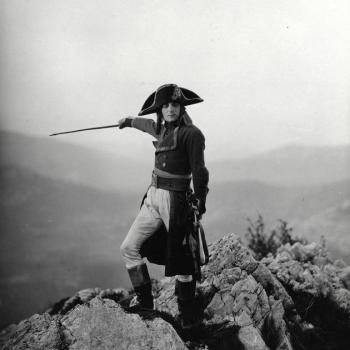
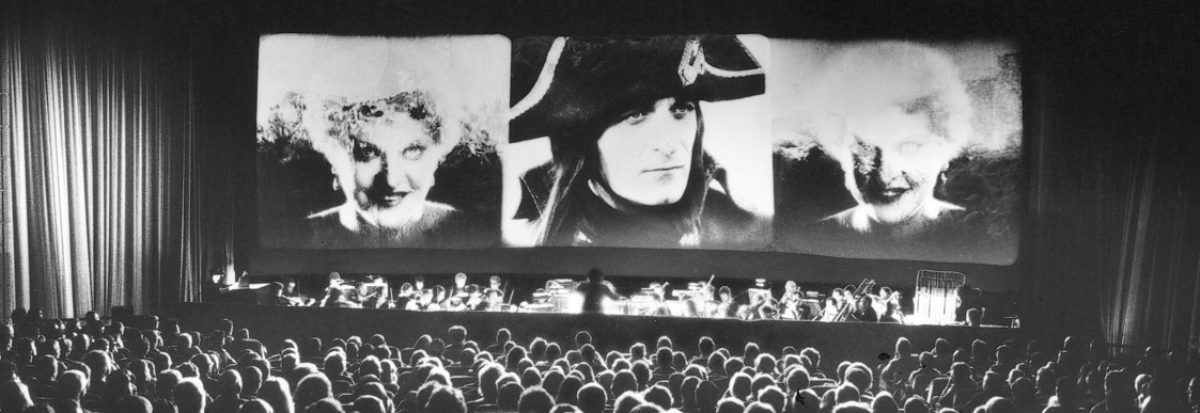


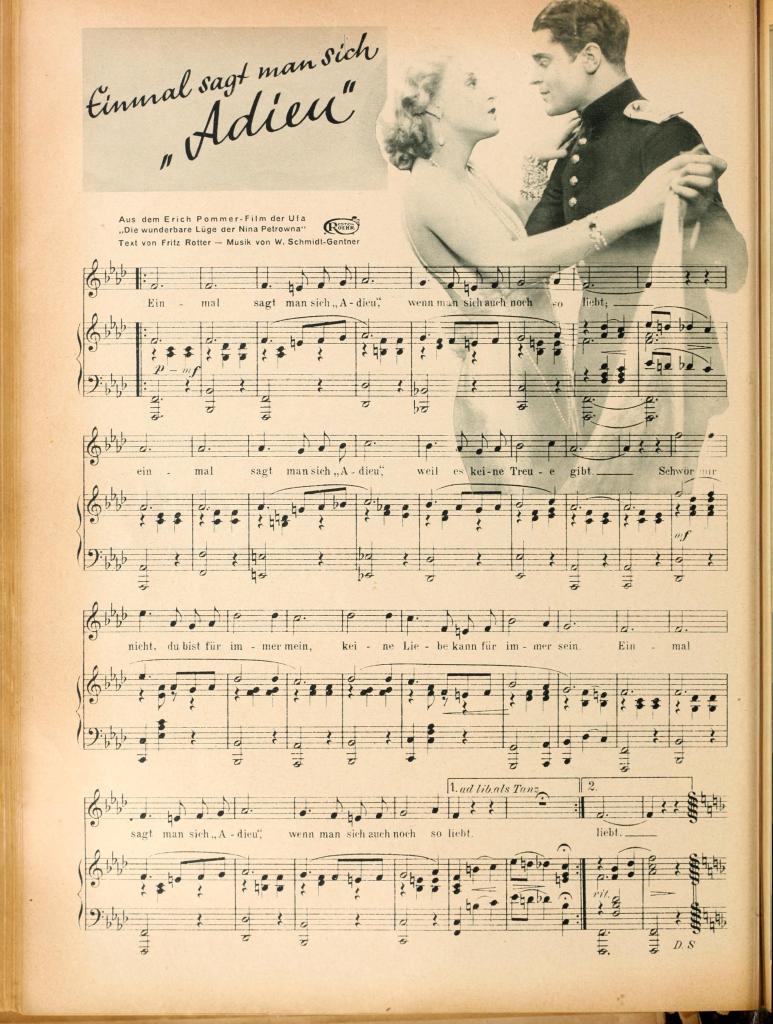
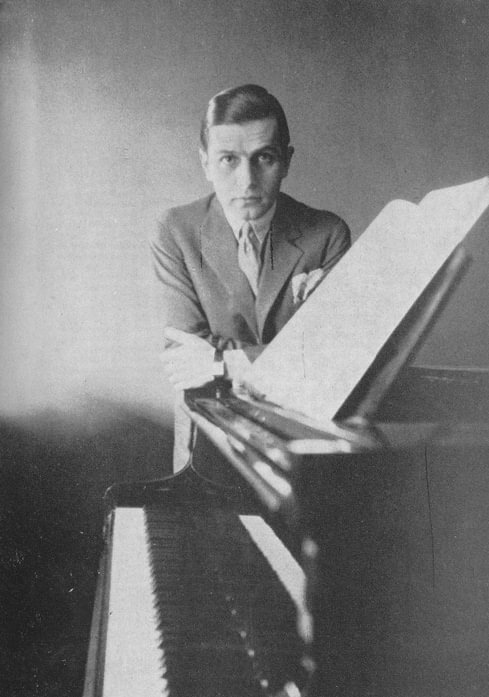
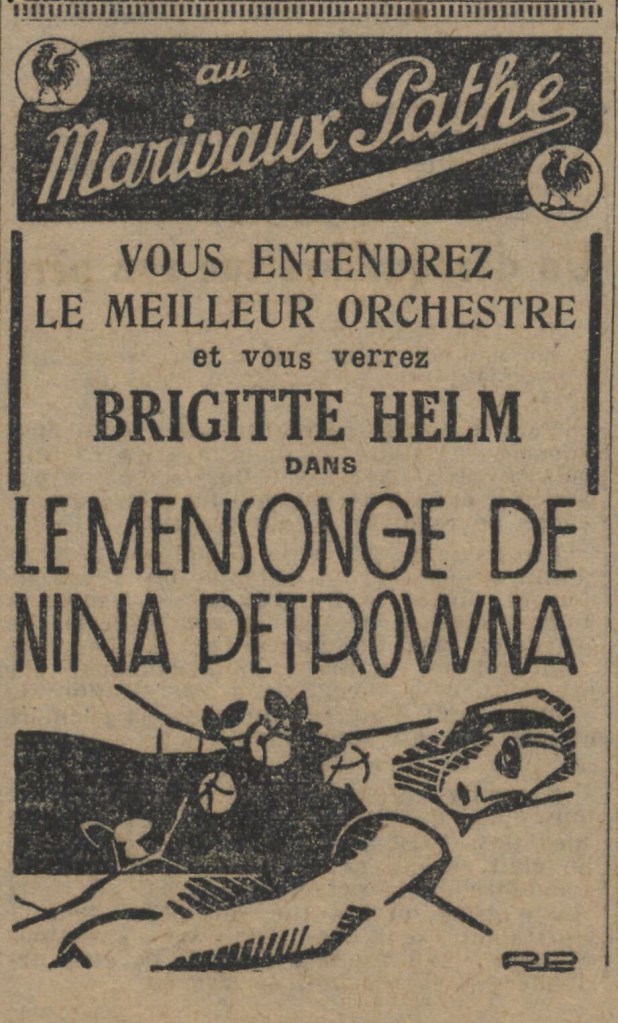


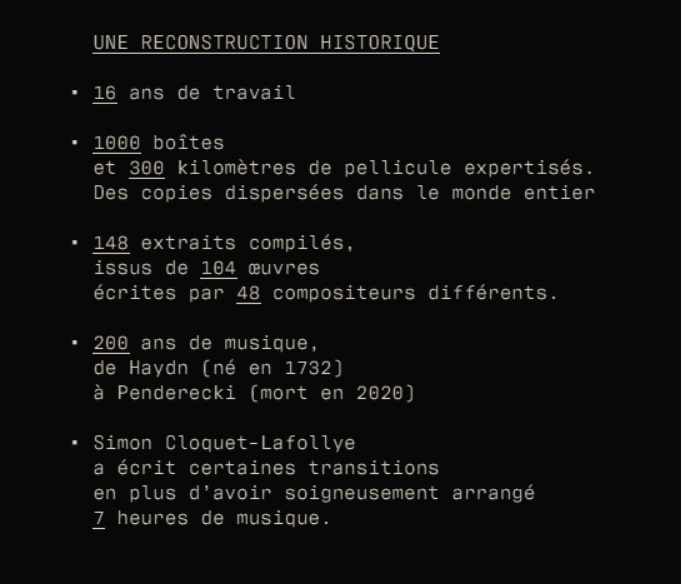


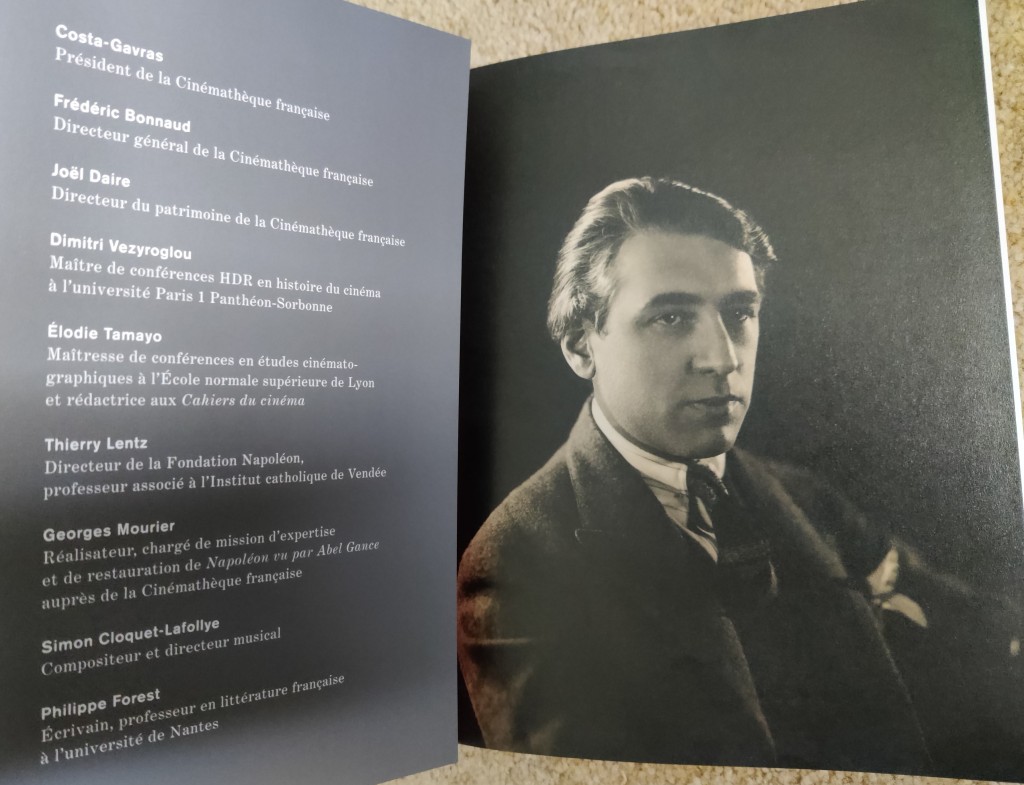


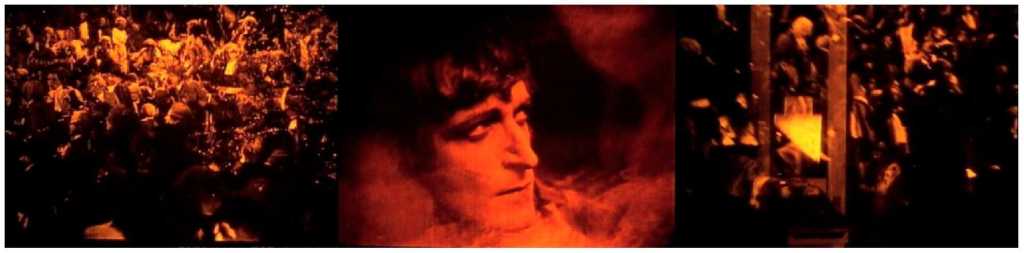






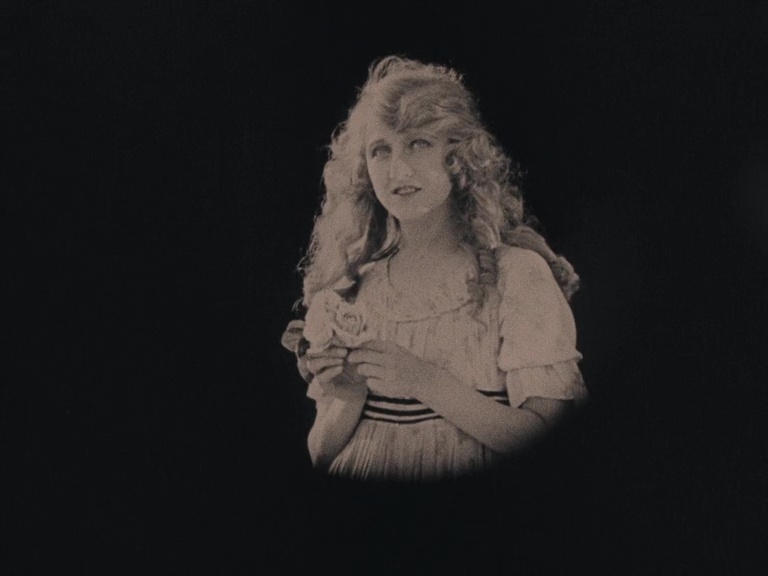




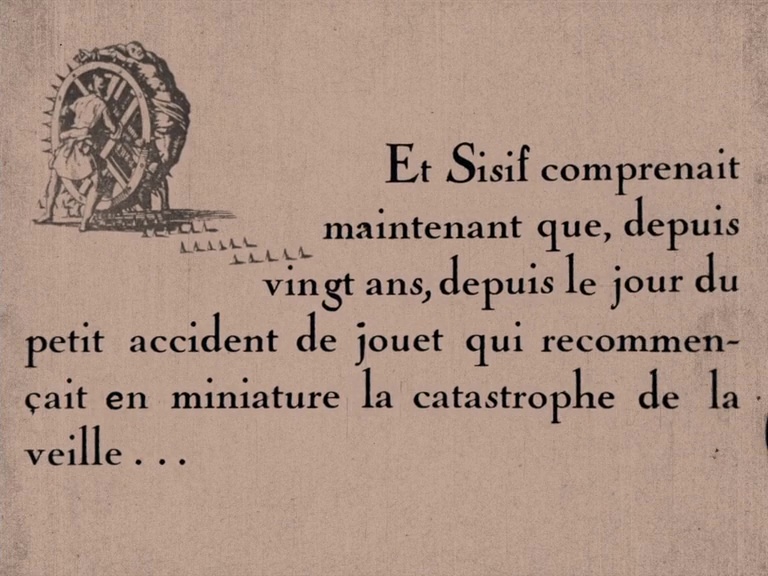


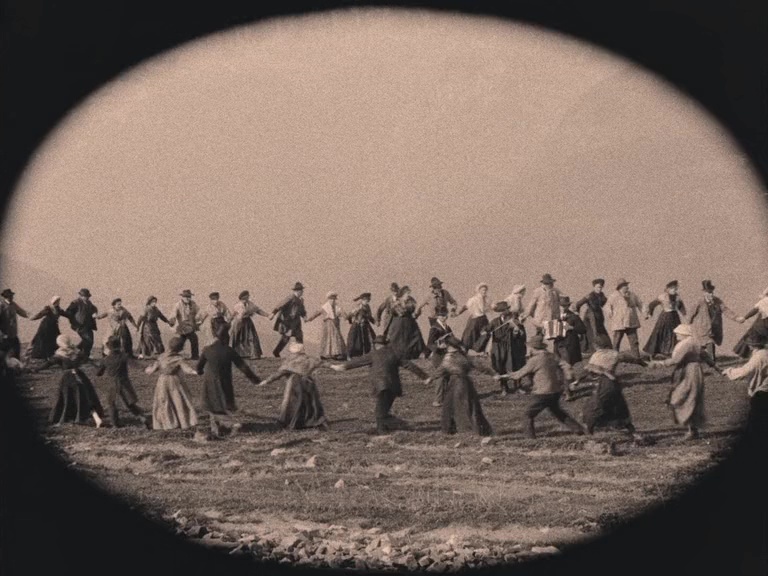







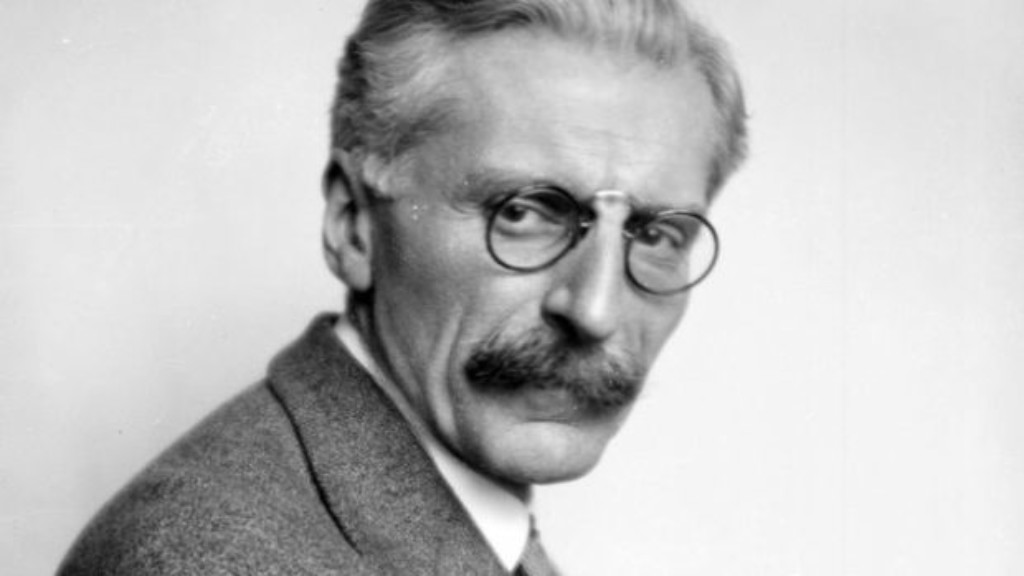


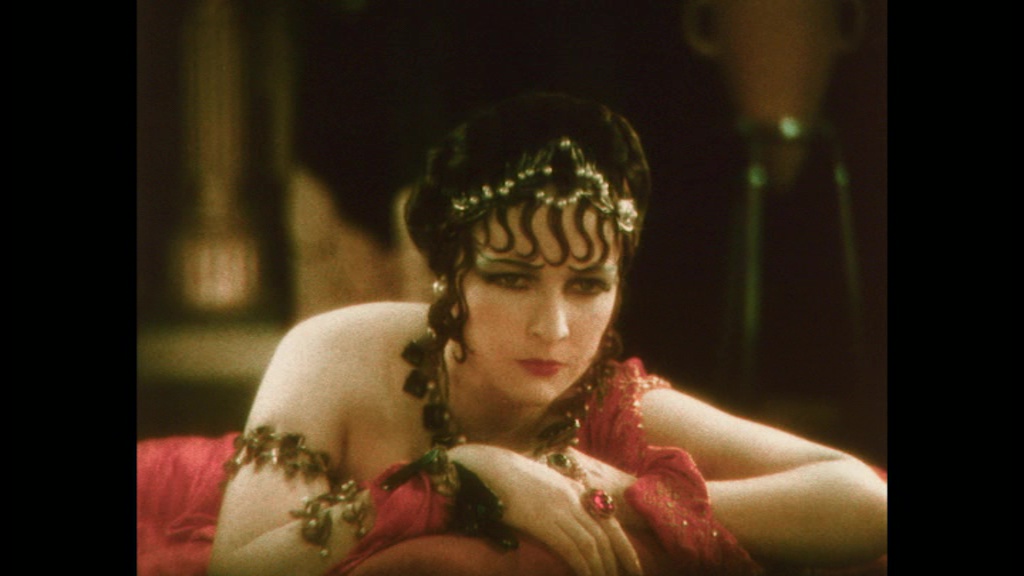


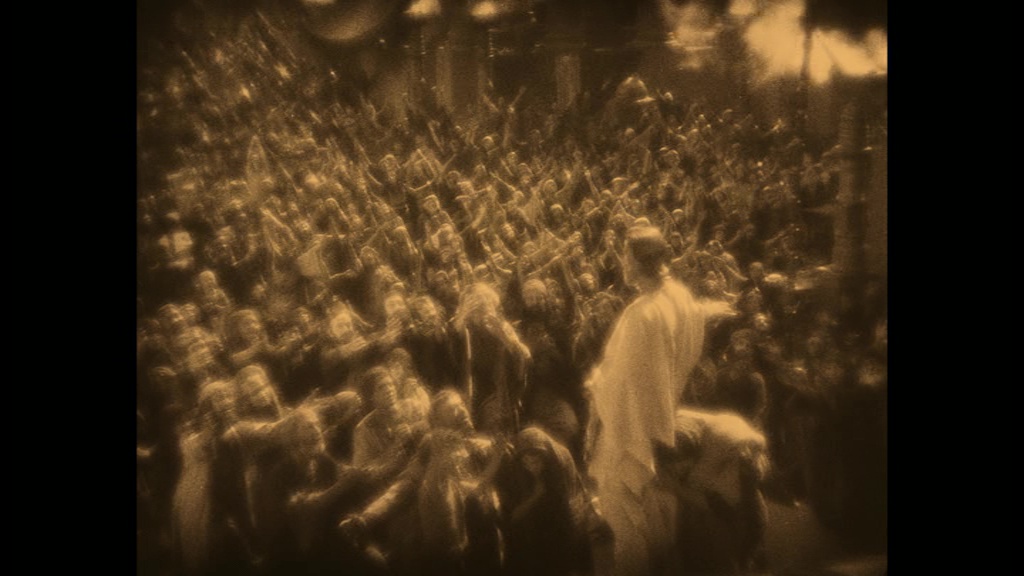








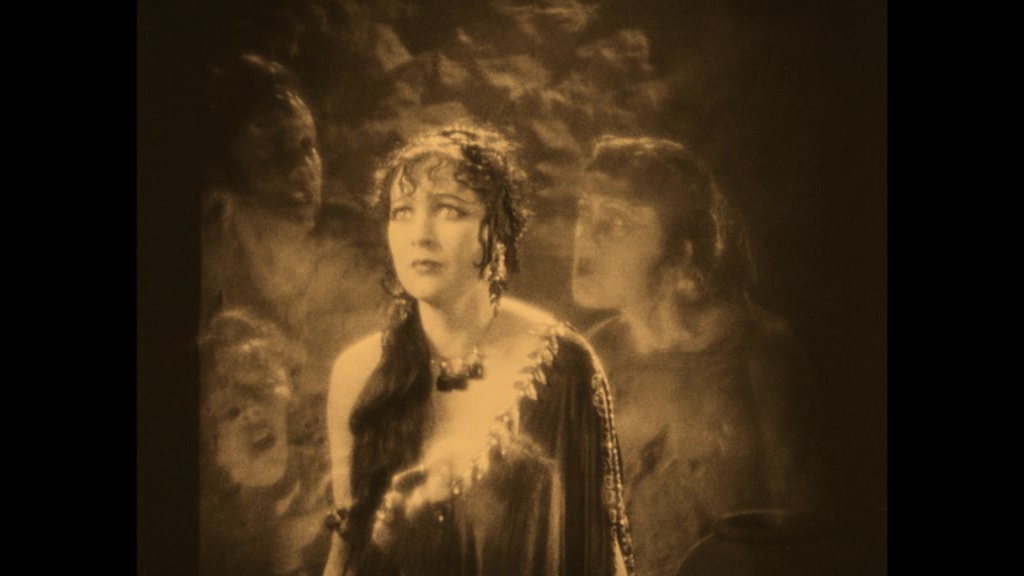


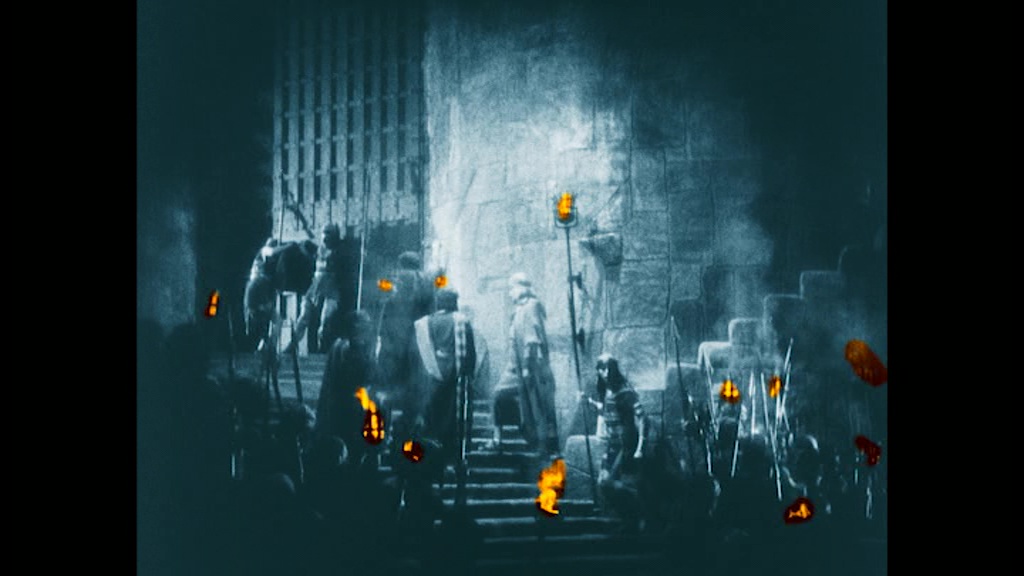


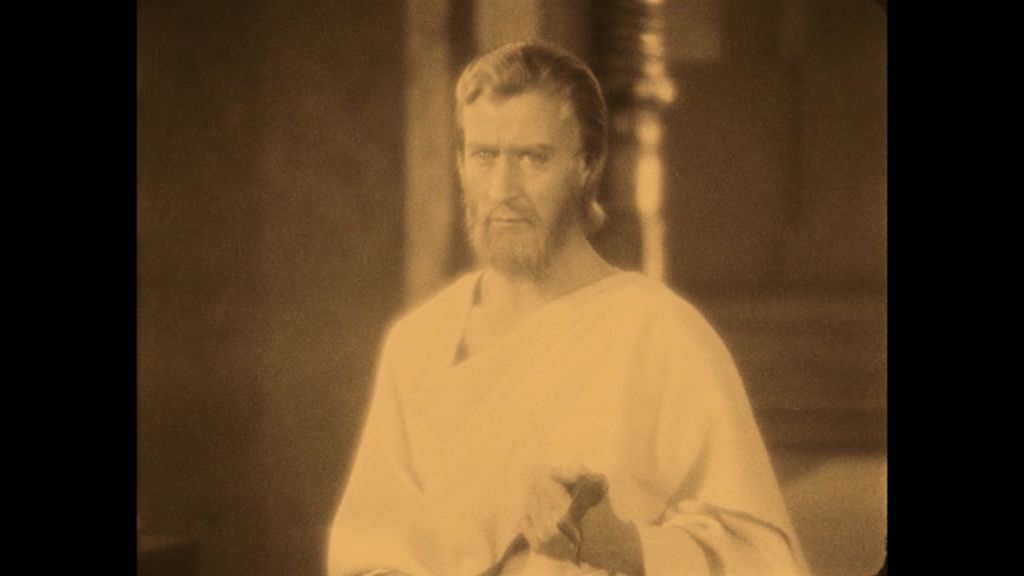


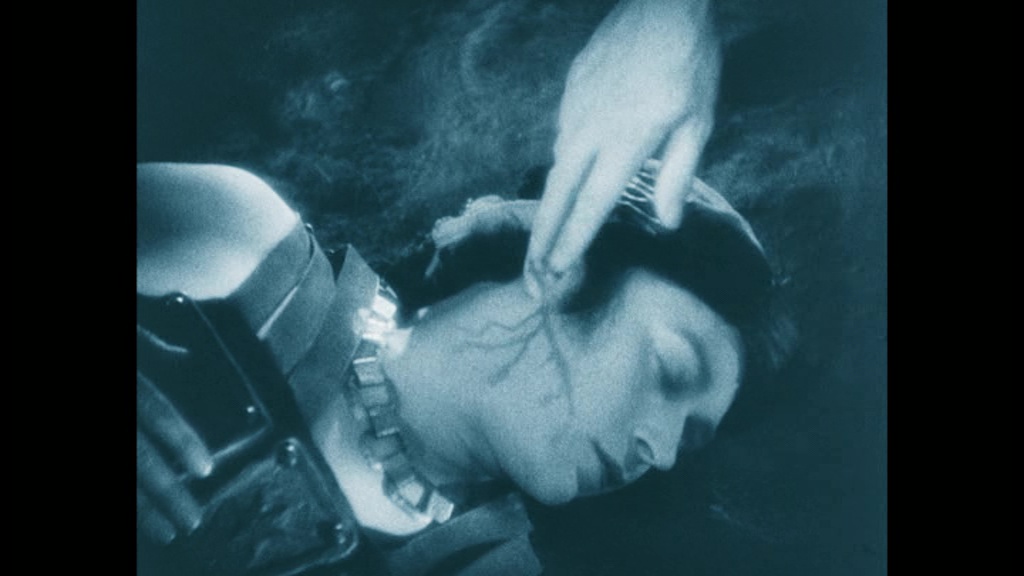


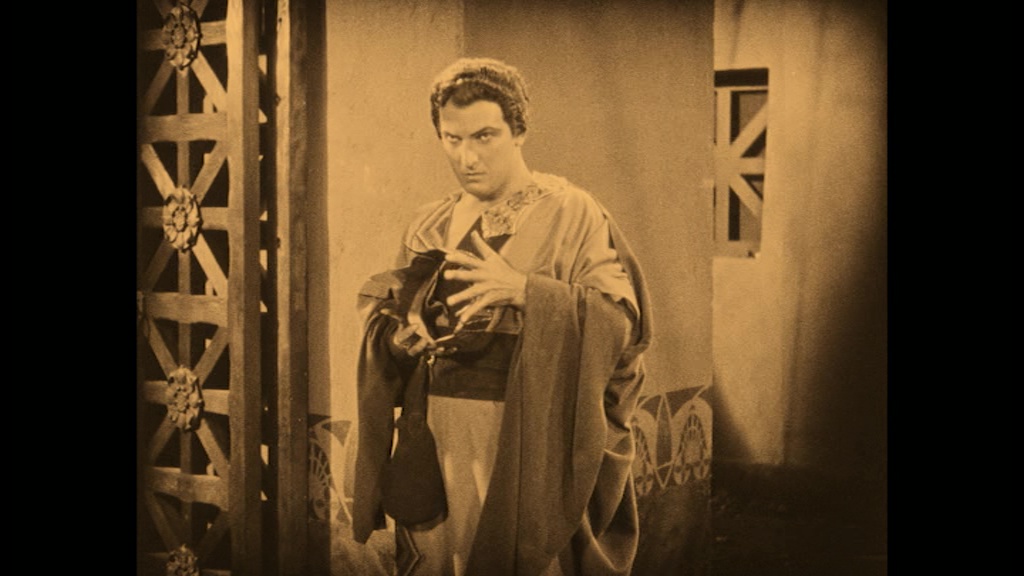
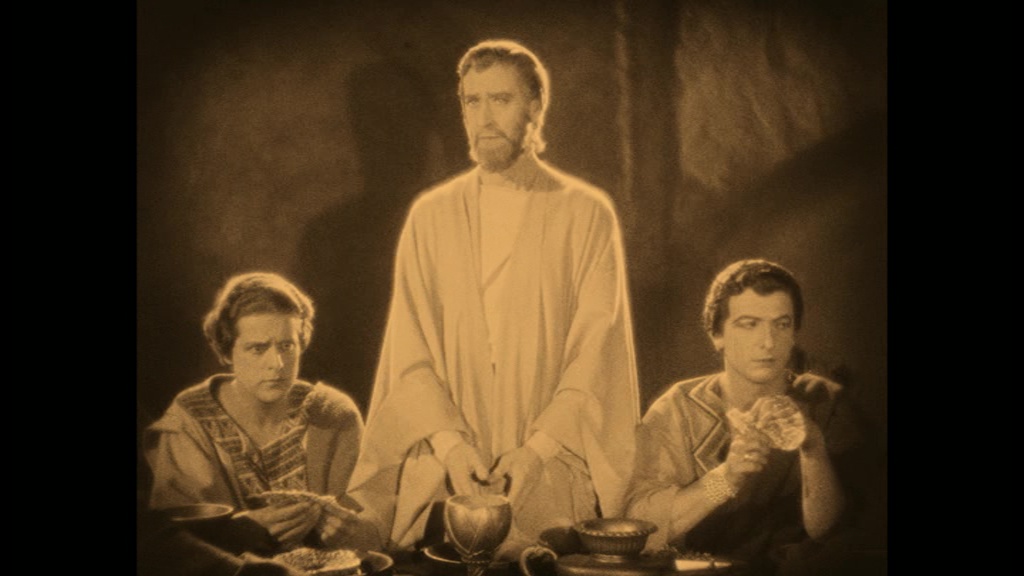


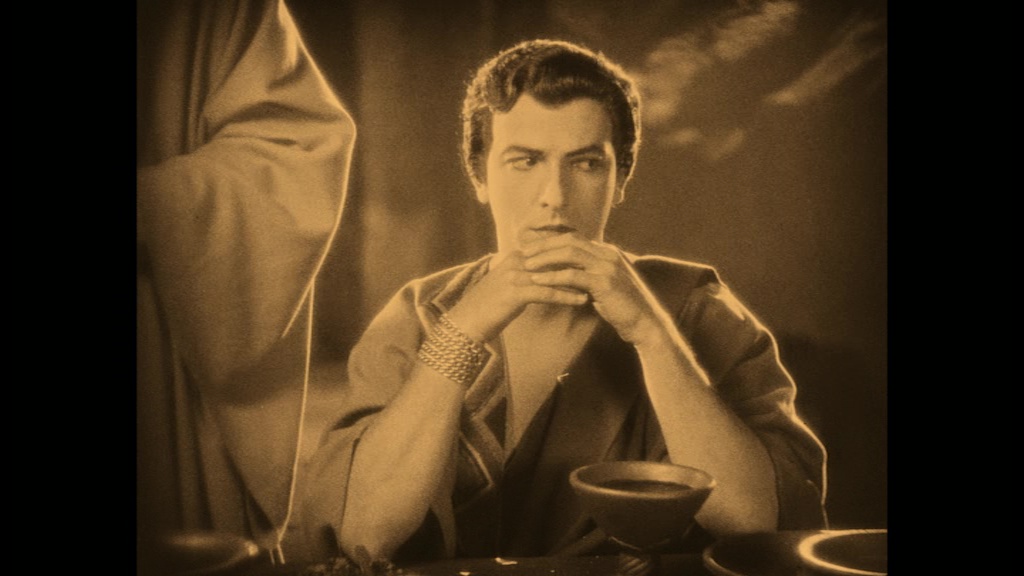
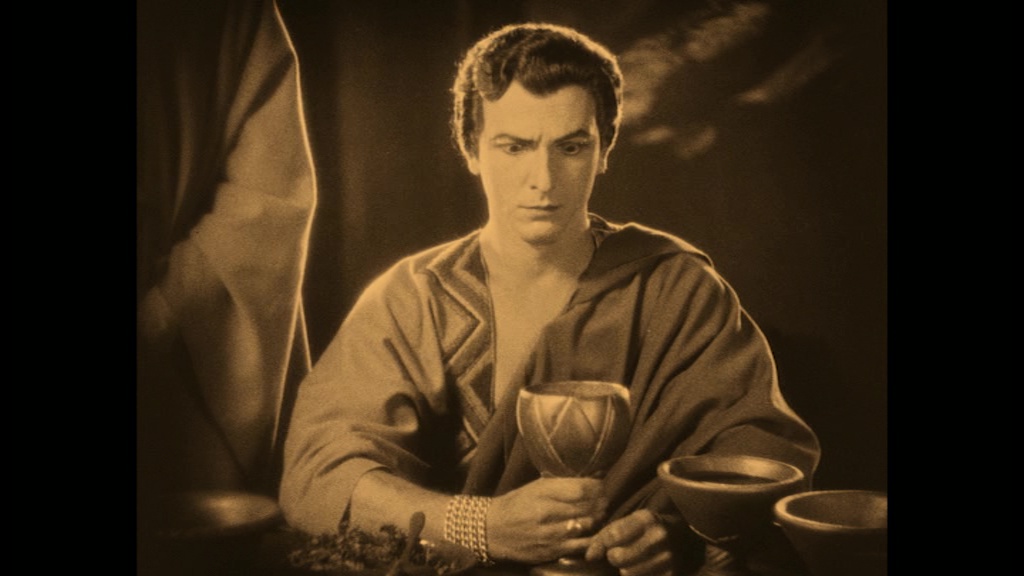
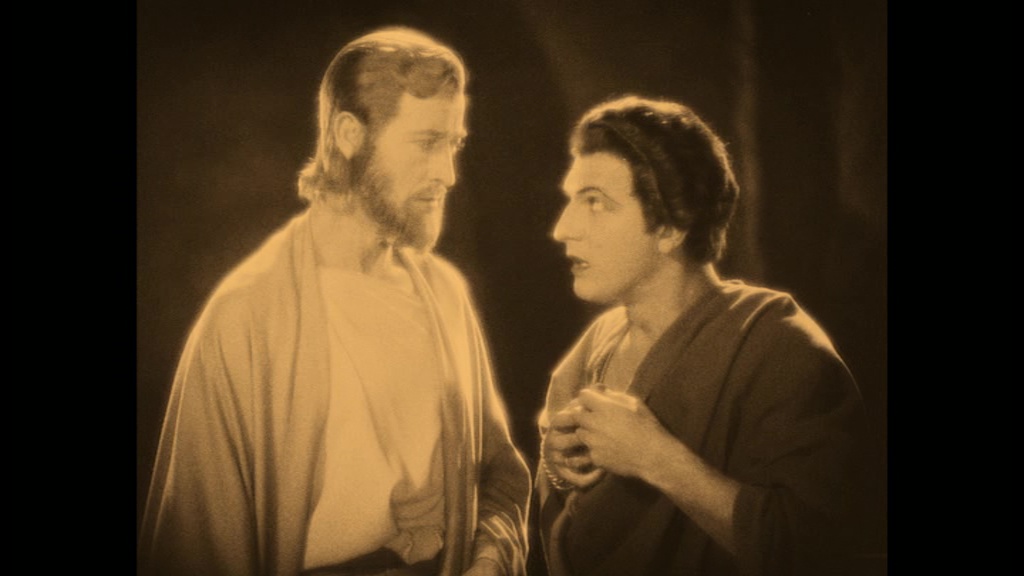


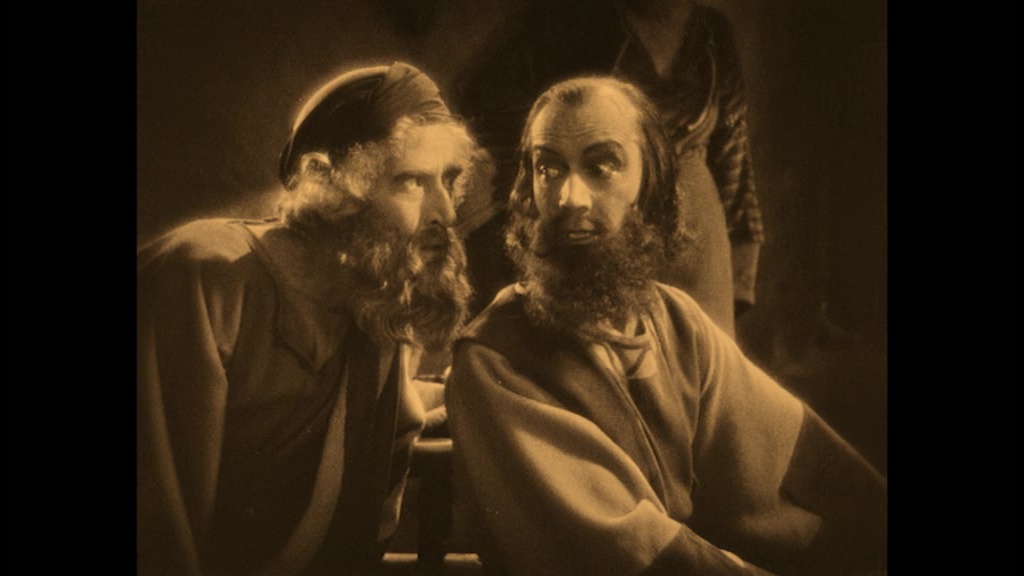










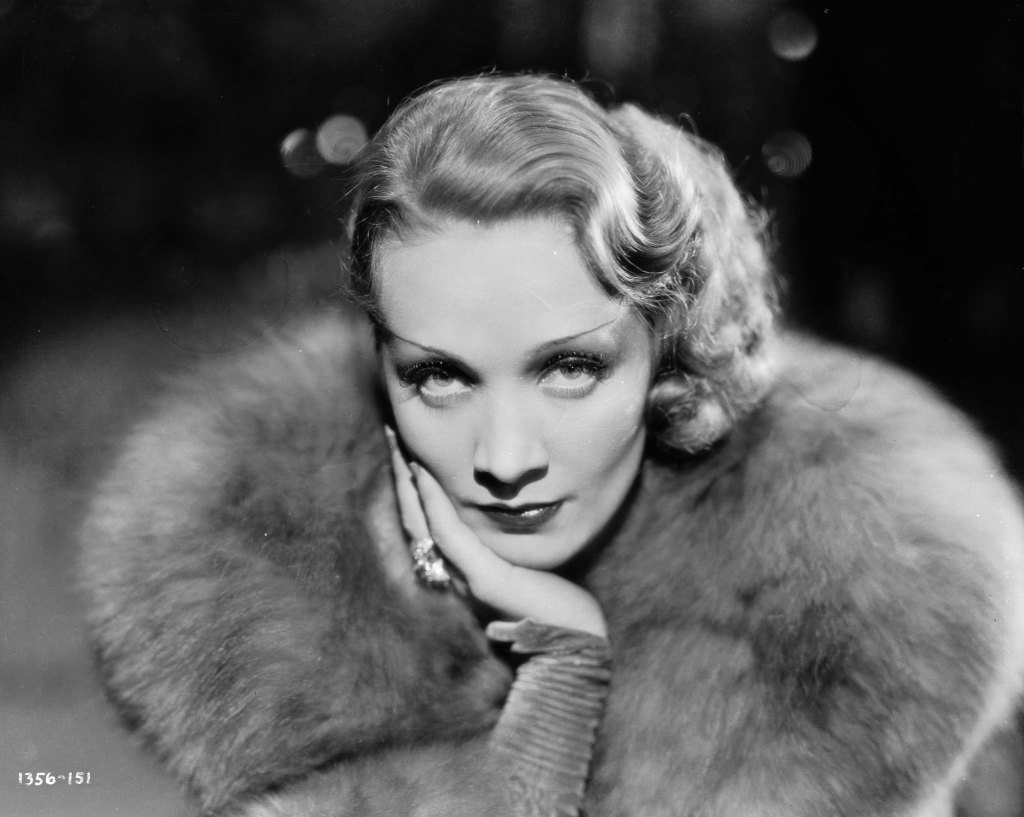


 The Realm of Silence