Der Geiger von Florenz was the sixth film directed by Paul Czinner and the third to star Elisabeth Bergner, whom he later married. It’s also the first of Czinner’s silent films to be released on Blu-ray. Given that my last experience of Czinner’s silent work was the shoddy copy of The Woman He Scorned (1929), I was keen to see his work in high definition. I was also intrigued to see Elisabeth Bergner as the lead, a very different star to Pola Negri.
First, the plot—and yes, as ever, I spoil everything. The young Renée (Elisabeth Bergner) is deeply attached to her father (Conrad Veidt) and deeply jealous of her stepmother (Nora Gregor). After numerous petty squabbles, Renée is sent away to a ladies’ finishing school in Switzerland. There, she rebels against her teachers and runs away, disguising herself as a boy in order to cross the border into Italy. While roaming the streets, she encounters an old violinist and asks to play his violin. As she does so, a car pulls up and the artist (Walter Rilla) and his sister (Grete Mosheim) are entranced by the image of this beautiful young player. Renée goes with the siblings to Florence, where she becomes the subject of the artist’s paintings. The painting of the anonymous “Fiddler of Florence” is published and seen in a newspaper by Renée’s father, who seeks out his missing daughter. Renée’s identity as a woman is revealed, as is the mutual attraction between her and the artist. Renée’s father arrives in time to bless the couple.
At a little over eighty minutes, the film is a seemingly simple drama: light, charming, faintly silly. But it has plenty of telling details that cumulatively make for a surprisingly complex engagement with the complexities of desire and gender.
The daughter/stepmother jealousy plays out in the very first scene: at her father’s desk, Renée substitutes a photo of her stepmother for her own—and destroys the image of her rival. At the dinner table, she replaces her stepmother’s choice of flowers with her own enormous bouquet, which she then moves to try and block the conversation between father and stepmother. The rivalry is then played out through two rival dogs: Renée feeding her own dog, which then ends up attacking the stepmother’s dog under the table. The whole trio tries to placate the dogs, one of which bites Renée’s father—the two women gather round with medical boxes, bandages etc. It’s a comic sequence, a snowballing farce than ends up with everyone chasing around the house.
All this is told through images. But when Renée sees her father alone outside, clearly depressed, she commits her thoughts to her notebook. The film then offers us a lot of contextual information through this written text, then through two flashbacks. We see Renée on holiday with her father in Italy, where she embraces him and says that “If you weren’t my father, I’d marry you”. Then, when her father spots the woman who will become his second wife at the next table, Renée keeps moving her parasol to block their eye contact. It’s the same trick she pulled with the flowers earlier in the film, and the history of their fraught daughter-father-stepmother relationship confirms the impression that it’s effectively a love triangle. Outside, the stepmother joins the father. She issues him an ultimatum: either Renée goes, or she does.
Renée’s desire for her father is epitomized in the next scene, when her father comes to say goodnight. Renée eagerly pats the bed, but her father pulls up a chair. Renée is visibly crestfallen, and the sustained close-ups of her face in the ensuing conversation show the waves of emotion passing over her. Bergner’s face is wonderfully expressive, her eyes beautifully lit: they seem huge, and you seem to fall into them in these close-ups. Indeed, much of the film is spent watching Bergner’s expressivity. Her performance is incredibly animated. She’s scheming, or emoting, or running away, or hurling herself away in shock or fear or despair or delight. The framerate of the film is faster-than-life throughout, apart from one section of slow-motion. Thus, Bergner’s movements are all exaggerated. It’s as though the film itself shares the energy and ferocity of her teenage emotional life. Even in these close-ups in her bedroom, her face becomes the sight of tremendous emotional activity—condensed in her luminous eyes.
Promised another Italian holiday if she behaves, Renée tries to make things up with her stepmother. We see her in the next scene approaching her rival as if attempting to seduce her: she creeps along the wall, nervously—or is it flirtatiously? Then she helps make a punch, urging her stepmother to make it stronger and stronger. So they get very rapidly tipsy and start to dance with each other. Enter Renée’s father, who is offered cups of punch by both women. He pushes away Renée’s hand and drinks from his wife’s cup. Renée hurls her glass of punch at her stepmother. There’s a kind of savagery in this action: the violence of the gesture contrasting with the primness of the weapon.
So Renée is sent to Switzerland, where we see her writing of her sadness at her confinement. The film has skipped forward here, for Renée has already made an enemy of her tutor. We see her wipe away a chalkboard announcement of her punishment and draw instead a caricature of the tutor. In another riff on the dog theme seen in the opening scenes, Renée has better command over the tutor’s dog (called Fellow) than the tutor herself. Renée waits for a letter from her father to rescue her, but instead a letter arrives that says she must stay put. Perhaps Czinner was conscious of how much letter-writing (and thus letter-reading) there has been in the film in this section, for he provides a gorgeous visualization of Renée’s emotions as she reads here. She is on a bench in parkland and the wind whips the trees all around her as she wanders forlornly back and forth across the grass. It’s a lovely scene, and a relief that Czinner finds a way of visualizing feeling again, not having to rely on more text.
At night, Renée escapes—wearing an extraordinarily eye-catching plaid outfit and hat. Thankfully, after failed attempts to cross the border to Italy via train and road, she is able to swap clothes with a young peasant. In male clothing, she crosses into Italy and roams freely along the beautiful mountainside roads. For such a short film, Czinner gives plenty of time to Renée’s wandering here: we see the landscapes around lake Lugano in dazzling sunlight. The haze of the vistas interacts beautifully with the grain of the filmstock. You can understand why Czinner lets the film’s plot meander here, it’s lovely to look at—with Bergner’s tiny figure, dressed almost as if from a previous century, providing scale and narrative punctuation to the landscapes.
She eventually encounters a beggar playing a violin by the roadside. Convincing him to lend her his instrument, she begins to play—just as a motorcar draws up alongside. The driver and his companion seem to take a fancy to this strange figure, dressed in peasant clothes, striking a pose from another age. The man is an artist and wishes to paint the “boy” violinist. Renée readily agrees. There follows a lovely (and again, surprisingly lengthy, given the film’s short length) segment where the camera sits behind Renée and follows her journey to Florence. It becomes a travelogue documentary, the film simply cutting as it wishes to segue from one view to the next. It’s always fascinating to glimpse the real streets of the 1920s, with ordinary people moving aside for the car and glancing at the camera as it passes.
But the levels of artifice are foregrounded in what follows. At his glamorous estate in Florence, the artist is transformed from an apparently old, grey-haired man into a youth. For the grey of his hair, and that of his female companion, is merely the dust of the roads. Renée is startled by their transformation, just as she is frightened when the artist demands that “he” too must be scrubbed clean. Renée’s own transformation into the suited “boy” is greeted with curiosity by both her hosts. She is an object of fascination and flirtation by both the man and woman. They are siblings, but Renée doesn’t discover this until she has already fallen for him. She poses as the “fiddler”, and Czinner turns the posing into a lengthy sequence for Bergner to express her fidgety, restless character. She cannot stand still, and the artist grows irritated. So Czinner makes this frustration into a little marvel of cinematic magic: the camera is over-cranked, thus slowing the film for us in projection. Renée’s restless movements become a strange dance, the film finally finding a way of slowing her down, of capturing her for our gaze.
The peculiarities pile on, however, as the artist’s sister grows jealous of his new muse. It’s the artist’s turn to be offered two cups of punch, and when he chooses Renée’s, his sister throws her drink at Renée. This reverse of the scene with Renée and her stepmother reminds us of the weirdness of the film’s emotional path. Renée seems keen to be adopted by what she takes as an older man, only to find him a young man. The artist thus attracts her as an image of her father, then wins her over as a different kind of male figure: Renée transfers (at least some of) her affections from a familial to a romantic object.
But the film isn’t as neat as that sounds. For the brother-sister relationship of the artist and his sister is also weirdly intense. Renée sees them embracing in the garden and it’s not just her who wonders just how close this couple might be. And the sister not only flirts with Renée when she is disguised as a young man, but also reveals Renée’s femininity by placing her hand on Renée’s breast and embracing her. Thus, wherever you look, the film offers unusual and interesting couplings, or the potential of unusual and interesting couplings. Besides, what kind of disguise is Renée’s outfit? And for what do we or the characters take her? She is androgynous by virtue of her clothing but also by her age: she is not quite a woman, not quite a man, not quite a girl, not quite a boy.
The word to describe all this is doubtless “queer”. It’s a queer film whose brevity and lightness allows it to get away with a complex play on the ambiguities of gender and familial/romantic feeling. A contemporary reviewer in the UK said that Der Geiger von Florenz possessed a “somewhat unusual theme” (Kinematograph Weekly, 7 October 1926), which is a very British way of saying “queer”.
The impression of queerness, however lightly worn or exercised, made me curious about both its director and star. The English-language Wikipedia page suggests that Czinner was gay, but that “despite” this factor his marriage “proved a happy and personally and professionally enriching one for both partners.” Well, that’s very interesting—although the “citation needed” at the end of the paragraph casts its contents into uncertainty. (His sexuality is not mentioned in other available sources.)
So, is there anything autobiographical hidden in Der Geiger von Florenz? It’s worth observing that Czinner himself was a child prodigy on the violin. Can we read the “boy” Renée, attracting the attention of an elder male lover, as a version of Czinner’s early life? One can only conjecture. What is curious is that the film itself offers no more convincing context to Renée’s musical talents and thus narrative journey. At no point in Der Geiger von Florenz are we told that Renée is musical or can even play an instrument. Her ability to play is a seemingly spur-of-the-moment decision, one which immediately propels the plot into a new direction.
Looking for some kind of context for Der Geiger von Florenz, we might turn to Czinner’s other silent work with Bergner. As in Der Geiger von Florenz, the Bergner characters in Nju (1924), Doña Juana (1927), and Fräulein Else (1929) are all dominated by complex relationships with older men—husbands, fathers, or lovers.
Of particular note is Doña Juana, a film which I’m now dying to see. The latter also stars the legendary Max Schreck as Bergner’s father, who sends her out into the world dressed as a boy. From what I can tell, the film reworks many of the themes of Der Geiger von Florenz, providing a happy ending—unlike the suicides that the Bergner character commits at the end of Nju, Liebe (1926), and Fräulein Else. These stills from the German magazine UHU (December 1927) certainly whet the appetite for Der Geiger von Florenz—not just for Bergner in the role, but for more location shooting, this time in Spain:
All of which brings us to Elisabeth Bergner. A lot has been written about her in German and almost nothing about her in English. This is surprising, given her career path: from acclaim as a young stage star in Germany, a flourishing film career followed by exile to the UK, a move to the US in WWII, then a return to various projects on stage and screen across the world until her death in 1986. She led a fascinating life about which I want to know more. (And, to be honest, in the time it has taken me to finish this piece I’ve embarked on a project about Bergner so have developed a little obsession. This will be the subject of another piece, another time…) She was certainly bisexual, perhaps more interested in women in men, and one cannot help but wonder how her marriage with Czinner worked. They were both Jewish and fled from mainland Europe, marrying to cement their relationship—and presumably their careers. But as to one might call the practicalities of their marriage, much remains unknown. In many studies on Czinner-Bergner, we’re in a world of unspoken truths, of sly hints, of euphemisms and ambiguities. It’s a world of mysterious “travelling companions” and of “intimate friendships”. It makes everything tantalizing and nothing certain. But it should certainly inform our viewing of their films, and Der Geiger von Florenz in particular.
I should also make clear that the Blu-ray of this film was released in Germany in 2019, without English subtitles. As explained in the opening credits, the original negative for Der Geiger von Florenz no longer exists. The 2018 restoration used a (shorter) negative of the film, which had been prepared for the film’s export to the UK, supplemented by extracts from exports prints from Russia and the US. Thanks to a little more digging on the ever-useful filmportal.de database, I learned that Der Geiger von Florenz was originally 2260m, divided into “Five Acts”. The 2018 restoration runs to 81 minutes at 24fps, giving it an approximate length of 2243m, so very close to the original length. This slightly surprised me, as the film seemed to have some very sudden transitions between scenes, as well as some odd glitches in continuity. (The reviewer of the Kinematograph Weekly noted this when the film was released in the UK: “Continuity is jerky, probably due to cutting” (7 October 1926).) I’m thinking especially of the scene when Renée decides to run away from her school in Switzerland: the dog flashes past in one shot but doesn’t reappear until later in the scene. Perhaps the restoration was forced to cut between two different continuities across prints; or perhaps the error was always in the film. Ditto my sense of the sudden transition between scenes, especially in the first part of the film. At the end of one scene, Renée is in bed, then she is suddenly outside sipping punch with her stepmother. Is this the same night, or the next? Soon after, when she is given the letter notifying her of her forced emplacement in Switzerland, we cut straight from her holding the letter to her in Switzerland, weeks later, writing in her notebook in a field. At the very least, I would expect a title to prepare us for this transition. The film was originally in five “acts”, so surely this transition would have had a new “act” title card here? As it stands, the continuity is so swift it’s startling. The 2018 restoration has recreated all the original intertitles in the original font—but it has no division into “acts”. I’m guessing the lack of domestic print material leaves no indication of where the acts may have started/ended, so they have not tried to recreate this element. It’s not a substantial loss, I suppose, but it does make a difference to the rhythm of the film.
I wonder also if having a clearer structure might have encouraged the score to behave differently, to shape its overall structure a little more clearly. For this 2018 restoration, a new score for quartet (violin/mandolin, cello, piano/organ, trombone) was written by Uwe Dierksen. It’s perfectly fine, but far too busy for most of the film. It is chromatically restless, occasionally spiky, sometimes outright sinister—not exactly descriptors of the film itself. More surprisingly, the score makes no effort to match the music being performed on screen. Neither the scene where Renée plays her violin, nor the scene when her stepmother plays the piano, is matched in the new score. Would it really be too much to ask that a film called “The Fiddler of Florence” should feature the odd section for solo violin? The original music for Der Geiger von Florenz was by Giuseppe Becce, one of the most prominent film composers working in Germany in the silent era. Alas, this score is one of many that do not appear to have been preserved or survive. A shame, as I would love to see the film with a more sympathetic, a more charming and romantic, score.
In January 1927, the director Karl Grune began a major new production for Ufa. He had co-written the screenplay with Hans Brennert, and he as deeply passionate about his project. Am Rande der Welt (“On the Edge of the World”) was to be a pacifist film, set in an unnamed borderland on the frontline of an unnamed war. The cast boasted veteran actors Albert Steinrück and Max Schreck (Nosferatu himself) alongside younger stars Wilhelm Dieterle and Brigitte Helm (fresh from shooting Metropolis). Filming took place entirely in the studio spaces of Ufa during January-March 1927. Grune completed editing Am Rande der Welt and presented it to the German censors in April 1927. It was passed and the film readied for release. At this point, the management of Ufa stepped in. In March that year, Ufa had been bought by the press baron Alfred Hugenberg, who demanded that his management team take greater control over the films they produced. This was not only for the same of economics (Metropolis had nearly bankrupted the company), but for the sake of ideology. Hugenberg was ultra-conservative, ultra-nationalist—he would later abet the rise of Adolf Hitler to power. It was the ideology of Grune’s film that was the problem: it was too pacifist, perhaps even anti-patriotic. Am Rande der Welt did not meet their moral standards. The result? The film was cut, not by the censor, but by Ufa itself. Grune’s original version measured 2635 metres (approximately 114 minutes at 20fps), whereas the version resubmitted to the censor in August 1927 was 2429m. Grune complained in private and then in public. The film had not just been reduced, but re-edited and re-titled. He felt that these changes were so severe, so damaging to the film’s pacifist message, that he asked for his name to be taken off the film. Am Rande der Welt premiered on 19 September 1927 at the Gloria-Palast in Berlin, shown with an orchestral score by Giuseppe Becce. So, what remains—and how does it stand up?
Act 1. From the mists of space, a spinning globe bowls forward. Jazz bands, dancers, superimposed—naked bodies writhing, parting. Fireworks, grotesque dancers. A Catherine wheel spins, overhead visions of dancers, dissolves away over the image of a spinning windmill. The camera tracks back, and back. Surely we at the edge of the world. A title, a motto etched on the wood. The mill is ancient, and it’s as though we’ve travelled back in time since the opening montage. What century are we in now? The only technology here is pre-modern. Labour is manual, the only mechanism the ancient technology of the sail and grindstone. The mill stands at the edge of the world: a studio painted horizon marks the limits of reality as the film knows it.
The old miller (Albert Steinrück) is sieving flour, his oldest son Johannes (Wilhelm Dieterle) emptying a bag, his youngest son Michael (Imre Ráday) cleaning the giant stone grinding wheel. This huge space is the interior of the mill, and it feels cavernous: the exterior is a model, yet the interior is an expansive reality. And here’s Magda (Brigitte Helm), feeding chickens, her hair blowing in the wind.
But already an outsider (Erwin Faber), silhouetted against the pond in the foreground, the mill turning behind him. His letter brings him to work at the mill, but it also promises further “instructions”. He reads the letter one last time, then burns it. Something sinister is afoot. A real sky glowers gloomily above the model and studio set. Just as the man meets Brigitte, the wind picks up; he is heralded by a great gust of dust. Portentous signs…
Inside, the millers gather round the dining table. The newcomer is all helpfulness and smiles, helping pick up the fragments of a dropped plate (but is he the cause of this first mishap?). “I come from the other side of the border”, he explains. The miller (Albert Steinrück) doesn’t mind, just so long as he works well. He is given a room somewhere in the mill, a gloomy cell.
Outside another figure stands before the mill. As the newcomer unpacks, the other man stalks the corridor outside. His knock portends doom. The camera pans rapidly to the door, then shakily follows the man to the door.
It’s Max Schreck, tall, sinister, a devil’s pointed beard and hat. “Are you afraid?” he asks. He’s a pedlar of sorts, but surely far more portentous. But to Brigitte he’s more flirtatious, more camp. He applies lipstick, powder to his own face to tempt her, but she laughs him off. The pedlar leaves, his appearance leaving some strange atmosphere behind him.
Another gloomy interior, the end of the working day. “Next week we’ll celebrate”, the mill will be three hundred years old. An assistant miller plays the accordion, the millers comically cavort. The miller’s son, Johannes (Wilhelm Dieterle), runs after his wife (Camilla von Hollay), who leads him outside, only to show him a baby’s clothes, newly made.
Outside, the pedlar observes the newcomer flirting with Brigitte. Scared by him, they run inside and dance… only to find his eye at a keyhole—the camera tracks rapidly into its sinister ken.
But the baby clothes attract the millers, while the newcomer seeks the owner of the eye at the whole—of course it is the pedlar. “I’ve been overserving you these last days. No love affairs”, he warns. Who is this man, and what is his power? Another shadow falls across the ground. But the truth begins to emerge: the pedlar instructs the newcomer, and threatens him destruction if he betrays his mission. He is a spy!
The old miller reads the paper, which denies the threat of war. That night, a silhouetted figure wanders the plains outside the mill. Vertical wipe-dissolves take us from room to room, then a horizontal wipe from Brigitte’s bed to the newcomer, his shadow moving over the walls, spade in hand. Now he is a prick of light in the dark, inching forward. He digs. But the miller wakens, lights a candle, creeps to the window. The newcomer dashes madly back to bed to avoid detection. (His bed is a sinister war chest, bulging with giant protruding nail heads.) The pedlar stalks the land. End of act 1.
Act 2. The mill’s anniversary. Food and drink are being prepared. A montage of delicious produce, and the labour taken to prepare it: hands stirring, washing, striking, mashing, straining, plucking. Outside, a band of musicians, villagers in their Sunday best, marching to the mill.
Brigitte is making herself look pretty (in the homeliest way—a far cry from her later films). The old miller wears his best suit, his top hat, which he raises to the millers and to the outside world. Johannes is busy building a crib for his future child. After showing off his construction, he rushes into his festive clothes and joins the others. He and his wife march proudly with the rest out to greet the crowd. They parade with the band to the green, where the whole village has become a funfair.
Circus folk—midgets and the “woman without a head”, strapped into a chair. (It’s a grotesque image; the people laugh, but it portends something untoward.) The camera tracks overhead, looking down at the happy dancers, the clowns, the merry-go-rounds—but the camera dissolves into another tracking shot, falling back before a squadron of riders in black masks and hoods. Disaster is surely coming.
The newcomer and Brigitte are flirting. He gives her a love token. She refuses it and runs away, all fidgety nerves, all innocence and fear. She rejoins her family, as does the newcomer—disappointed but tagging along.
The pedlar meets the riders. Spies! “Order to alarm the border villages”.
The dance continues, swirling around the millers. The dance is intercut with the riders. The wind picks up. A rider appears with the news: war has been declared. The dancers are become statues, heads bowed. “Long live the fatherland!” someone cries, and the band strikes up an anthem. (But what anthem to they sing for this prolonged shot of communal musicmaking?) Close-ups of the crowd, of medals on a man’s chest, and the artificial leg he bears. Old heads shake, young faces beam.
The abandoned fete. The camera rises. There is only the sense of the wind travelling through the empty stands, billowing the streamers. But here is death, astride the horizon, ushering animated lines of bayonets through the horizon. The leaming weaponry becomes a real phalanx of infantry, rising over the folds of the landscape toward the camera.
Act 3. Suddenly it is winter, there are gas-masked troops, warning of attacks, flooded positions. The Great War is upon us, without being heralded by its name.
The pedlar is instructing the newcomer about the arrival of their troops. The latter wants nothing to do with the pedlar, but the pedlar says “there is no way back for you”—he is being watched. The troops wearily arrive at the mill, thronging about its flanks. The millers give them water. Clouds gather on the horizon: horsemen appear. It’s a fabulously sinister image, these real clouds glowering over the studio landscape and stilted trees. Five eyes watch the mill from five angles gathered in a single shot.
The millers wait nervously inside. “The world will perish in poison and gas!” says Johannes, as the newcomer tries to talk to Brigitte. Infantry roll over the folds in the land. It’s another brilliant shot, sinister, rapid. The cutting grows quicker: the single shot becomes a half dozen of the raiding tide, sweeping towards the mill.
“The enemy!” cries Michael. The newcomer looks guilty, scared. He wanders off as the knocking grows more aggressive, as the door is forced open. The enemy burst in, their faces hidden—they are just a flood of silhouettes, backs to the camera.
“Stand up!” the officer (Victor Janson) roars. It’s all stillness now. We can take in the strangeness of the infantry: their metallic helmets (half jäger’s shako, half “coal scuttle” Stahlhelm), the odd cages around their rifles that makes them half resemble automatic weapons. The officer has his rank on his chest, an oversized treble chevron. Touches of expressionism that creep into this half-real world. The mill is commandeered for supplies. The younger men react violently. Brigitte is restrained. Her young brother is taken outside. Brigitte’s glowing face makes the officer halt is roughness a moment. The man is clearly smitten. (It’s like the moment when the villain in Die Liebe der Jeanne Ney is overcome by the extreme close-up of Brigitte’s face.)
Another face at a loophole window: this time it is Brigitte’s anxiously looking out as her brother is led away. “Why so sad miss?” the captain asks, and Brigitte’s huge eyes almost make contact with the camera as she turns to the man. Her brother will be court martialled, says the officer, his hands seeking hers. Grune cuts away to the old mother in a chair, sneezing. (The camera whips round handheld, as it often does—destabilizing the world, here for comic rather than dramatic effect.)
The newcomer sets the wheels of the mill going, then arrests their motion. It’s a signal. The pedlar, now revealed in his officer’s uniform, issues instruction. Great guns open fire, huge plumes of black smoke and debris slow-motion their way into the sky.
Act 4. The young son paces his cell. The father visits. “They don’t understand out language”, he cries to his son. But the brute sign language of the solders is made to feel: he is ushered away. Artillery fire draws closer to the mill. The hillsides are torn up, buried under smoking clods of earth. Brigitte is cowering in feat somewhere inside. The father’s face is etched deep with age and angst. Michael is to be judged today. Brigitte leaves, determined to act.
In the cell, the captain orders that Michael be shot. Brigitte flirts her way inside, but is separated from her brother’s embrace. Her drooping head, in profile—a glorious glimpses of her poise, her grace as a performer, amid this rather ordinary scene. The captain says she can save her brother the solution of which is implied simply by his smirk, his leather-gloved hand over her neck, down towards her chest. She has 24 hours to decide. The officer who first raided the mill asks if he can help her. But “war turns people into wild beasts”, she says, and flees inside.
The corridor of the mill’s interior looks narrower, more confining. Here is the newcomer. He says: “Magda, I love you”, but almost in the same breath he confesses he guilt as an agent. Magda—her face in the first big closeups of the film, and they’re beautiful. He says he will turn against his kin to save her brother.
The junior officer tells the senior that he thinks they treated the boy to harsh, but the elder says they need to be strict—to show the locals they mean business. The junior officer finds Magda at home. Her bed is a picture book wooden frame, picture book carvings at its foot. The officer says he will save her brother, but he is seen by her father stroking her hair. So he lumbers in, lumbers between them. She cosies up to him, but he shrugs her off—the only man to resists her great big eyes in the film. Snow is falling. It coats the artificial plains before the mill.
Akt 5. The boy is to be shot. The captain looks at the hour, pours himself a drink, is served his meal, hacks at a great chunk of meat. (His black shirt, his white marks of rank make him look like a fascist: so too his slicked-back hair, cut short.) The lieutenant has aided the escape of Michael. The captain knows it.
The newcomer stops the mill again. The enemy gunners call the captain. The mill must come down, as it is being used as a point of observation by their enemy. (The newcomer is in communication with the pedlar’s men, directing fire.)
Michael returns to his father, in disguise—he wears the uniform given him by the lieutenant, who now arrives—and says they must hide the bother’s clothes or they will be lost. so they go into the basement, where the newcomer is going about his secret task. The lieutenant and Magda flirt, end up in each other’s arms, kiss. She does not quite flee him, succumbs willingly enough to his kiss.
Michael aims to flee in his disguise to their own troops. Johannes’s wife is in bed, presumably nearing the birth. Michael crosses no man’s land, handing a document to an enemy guard. A delightful scene: Magda uses flower to transform the man’s chevron into a stick figure, the head a heart. But the guns are firing outside. “Why are you our enemy?” asks the man, bewildered. “When the war is over, I won’t be an enemy anymore”. He imagines the future…
Akt 6. Soldiers enter the mill. The captain announces the building will be burnt down. A close-up of the father’s face, creased with repressed emotion. But first the captain wants the mill searched for Michael—only to find his lieutenant lurking in the basement. The telephone line has been found. It is cut, but the lieutenant is interpreted as the spy. He ranks is removed and the officer demands the man shoot himself. Magda and her father and Johannes battle the soldiers, who are about to burn the mill. Even the old mother throws water in the face of the guard by Johannes’s wife’s bed. Johannes himself calls the soldiers beasts, says that people need the bread they make. But in come the torches, the flames rise, the smoke thickens. The lieutenant questions Magda about the telephone and she points him to the newcomer. But they, and the family upstairs, are trapped in the burning building. Suddenly the newcomer emerges from his hiding place underground. “It is all my fault!” The lieutenant fights him before Magda, as the building starts to fall around them. It is prolonged, brutal, captured in a long handheld takes—the solider all in black, the assistant in his white shirt. Soon they are bleeding, half naked, sweating. The newcomer says he will die with Magda, but soldiers are breaking through the window to help her out. The assistant says he has betrayed his own fatherland and demands the soldiers shoot him. They oblige, and Magda is set free.
The mill burns, its wings spinning madly, then slowing… as Johannes, his wife, and the father struggle to a nearby farm building and fashion the wife a bed from hay. On the horizon, Magda and the lieutenant embrace. Magda is a silhouette on the horizon.
The baby is born. “He too will go to war—he too will kill people”, the mother mourns. “No, he will build new mills”, says the father, as superimposed artillery fire dissolves over the image of the family in the farm—like a Biblical scene—and the world is a vision of nighttime split open with fire. “Lord forgive them, for they know not what they do”, says the father, as the ghostly mill becomes a cross looming over the smoking battlefield. Ende.
I enjoyed this film a lot. The limited setting and studio aesthetic convey a peculiar atmosphere that is both sinister and otherworldly. It helps make the familiar seem unfamiliar: it’s like a slightly distorted dream of 1914. The uniforms are almost familiar, the setting almost realistic. Everything is subtly exaggerated, subtly off-kilter. Sets, costumes, performances—all are heightened, but only to better convey the atmosphere of the setting and story.
As for the film’s political message, the version that survives still carries a strong pacifist note. There is nothing remotely glamorous about the war or its protagonists. The soldiers are genuinely frightening. Their combination of archaic helmets and modern gasmasks and guns makes them even more sinister, just as their black uniforms give them a distinct flavour of fascism. The religious tone of the final scenes (supposedly highly censored by Ufa’s recutting) still comes across, and I wonder how much more obvious Grune had wanted to make the “message” at the end. As the film stands, the religious imagery creeps up on the viewer rather unexpectedly—and quite effectively. The transformation of the windmill into a cross needs no further visualization than as given in the film. The expressivity of “mute” objects is powerful enough. That said, I do love the fully-realized vision of Death when war is declared. There is something very pleasing about seeing an early twentieth-century version of medieval iconography. (Just as I love these elements in Murnau’s Faust (1926).) Perhaps there was more of this material in Grune’s original cut?
In one aspect, I was a little disappointed by Am Rande der Welt. I confess I wanted to watch the film primarily to see Brigitte’s Helm’s second cinematic appearance, but she’s very much limited by her character here. Her screen persona is very much along the lines of the “good” Maria in Metropolis, but without the exuberance offered to her by her other performance as the robot Maria. In Rande der Welt, she is wholly good and admirable—her character has little in the way of depth or complexity. One might say that about all the figures in the film. Since Grune sets out to make them emblematic of an older, less modern way of life they are all limited in their psychological depth.
My only other reservations about Am Rande der Welt are due to my own moderate confusion when watching the film. I was a little unclear of the nature of the spying, and where/how the artillery was using the newcomer’s telephone to direct fire. There is a lot of cutting to spaces beyond the mill, but we never see the context of these spaces. Thus, where Max Schreck has his observation post is a mystery—as is where any of the other sites of guns, trenches etc.
But the question of how we read the film’s continuity, or its politics, also depends on what version we’re watching. Here, the information is unclear. Having been digitized from a Bundesarchiv print by the Friedrich-Wilhelm-Muranu-Stiftung, the film is freely available online via filmportal.de. But there is no clarification on the physical length of the print used, or whether the intertitles are recreated—and from what sources. The digital version is a few seconds shy of 104 minutes. The database gives the framerate of other archival copies as 22fps, but the Bundesarchiv copy appears to run at 20fps. (Though the video itself translates the original frames into 23.97fps for digital playback, which makes identifying and counting the original celluloid frames difficult.) This would equate to approximately 2400m, so presumably accords with Ufa’s cut of August 1927. (If I’m wrong and it is at 22fps, 104 minutes would equate to Grune’s original version of April 1927. See why it’s important to provide this kind of information with a digital release?)
But regardless of how closely it resembles Grune’s original vision, it’s still a fascinating film. I’m very grateful the film is freely available, but I’d love to see it in better quality. Who knows what a proper restoration and a good score might not do for it.
This post is inspired by the release of Ridley Scott’s Napoleon (2023), which I discussed with Jose Arroyo and Michael Glass on their wonderful podcast series Eavesdropping at the Movies. (The episode is available for free via the podcast website here.) Having talked about various screen Napoleons on the podcast, I thought I might revisit the various versions that Gance planned and made across his career. (I was planning on writing about Sergei Bondarchuk and other more modern versions, but Gance at least has more basis in the silent era and thus would be more relevant to this blog. I must obey my own remit…) For a full history of allthe manifold variants of this project, I refer interested readers to Kevin Brownlow’s book “Napoleon”, Abel Gance’s Classic Film (2004), and to Georges Mourier’s article “La Comète Napoléon”, Journal of Film Preservation, no. 86 (2012): 35-52. But for the sake of something approaching brevity, here are the major projects across his career—with some flavour of their content:
Napoléon, vu par Abel Gance (1927; Fr.; Abel Gance)
In 1923, Gance began work on a film series that he believed would stand as a monument to the creative power of European cinema. Financed by a society of backers across the continent, its size and commercial appeal should rival even the most spectacular of Hollywood’s “super” productions. Gance’s project was a biopic of Napoleon Bonaparte that would consist of six films. “Arcole”would cover the years of Bonaparte’s youth and early military career (1782-98); “18 Brumaire”, his campaign in Egypt and seizure of power in France (1798-1800); “Austerlitz”, from his coronation as Emperor to dazzling military victories across Europe (1804-08); “The Retreat from Russia”, the route from peaceable treaties to disastrous campaigns in eastern and central Europe (1809-13); “Waterloo”, his abdication, then his escape from Elba to France and final defeat (1814-15); “St Helena”, his last years and death in exile (1815-21). An epilogue would show the return of his earthly remains from St Helena to France in 1840.
During his research, Gance went through a small mountain of literature on Napoleon and the French Revolution. His purpose was not merely to reassemble the detail of an era, but to locate and reanimate its spirit. Gance contacted Napoleon’s descendants, hoping to gain an endorsement (or even money). He told Princess Clémentine of Belgium (the wife of Napoleon’s great-nephew Prince Victor Napoleon) that the “elevation” of his “sublime” mission would be supported by “a moral religion”. This “religion” was cinema. Napoléonwould be a “miracle” possessed of “radiant permanence”, a work of revelation more than mere education or entertainment. All the screens of the world “anxiously await the living history of the Emperor”, and Gance deemed himself “the architect of this Resurrection”:
Intuitively, I feel the stirring of the Emperor’s Shadow in response to my effort. If he was alive, he would deploy this wonderful intellectual dynamite of the cinema to be loved wherever he was absent, to be everywhere at once in people’s eyes and in their hearts. Dead, he cannot object to our modern alchemy transmuting his memory into a virtual presence to better enhance his Imperial Radiation.
The curator of Fontainebleau palace, Georges d’Esparbès, allowed Gance to write his first screenplay in the Emperor’s former rooms there. Immersed in the Napoleonic past, visitors to Gance’s candlelit workstation in 1924 described the atmosphere as one of a “spiritualist séance”. Turning up in costume to clinch the lead role, Albert Dieudonné convinced an elderly museum attendant that he was the ghost of Napoleon—and would do the same to some inhabitants of Corsica when filming there the next year. Gance demanded that his whole cast faithfully inhabit their roles, desiring them to “become” their ancestors. Thanks to his inspired direction, actors threw themselves into their roles with an enthusiasm that Emile Vuillermoz anxiously described as a kind of “possession”. Witnesses like Carl Dreyer were taken aback by the zeal with which the conflicts of the 1790s was being re-enacted in the 1920s. As far as Gance was concerned, he was channelling the past. Looking back on his work in 1963, he called Napoleon “the world’s greatest director” and in 1979 he suggested that his silent film was a documentary record of historical events reliving themselves before his cameras.
When he embarked on this enterprise in 1925, Gance wrote that the spectator too must become an actor and “participate” in the drama on screen. For Napoléon, he liberated the camera further than any previous filmmaker: mounting devices on the chests of cameramen, on the backs of horses, on rotating platforms, swinging pendulums, cars, sledges, horseback, and even guillotines. This is a panoptic view of history. Gance gives us access to the viewpoints of characters and of the spaces they inhabit: we are thrown into the snow at Brienne; we nervously scan a sea of faces at the Cordeliers club; we chase Bonaparte across Corsica; we swoop over Paris crowds; we dive into the Mediterranean. By overlaying multiple images within a single frame, Gance combines diverse perspectives; by cutting them together at frenetic speed, he wrenches the viewer from their fixed point of view and propels them into the tumultuous past. Nowhere is this sensation more evident than in the triptych of the film’s last sequences. The revelation of images across three parallel screens is one of the greatest moments in cinema. This expanded frame is exploited with masterful confidence: Gance’s widescreen offers panoramic shots of immense depth and breadth. Yet it is perhaps when he splits his composition into three separate planes that Gance achieves his most radical ambition. The final moments of Napoléon overlay time and space; mingle subjective and objective imagery; show simultaneously the past, present, and future.
The realization of this grandiose vision came at a cost. The production of Napoléon in 1925-26 exceeded all its assigned parameters of time and finance. Gance’s shooting script had grown to the size of a large novel, yet had chronologically reached only as far as April 1796. In shooting just two-thirds of what he had planned to cover in the first of six films, Gance had consumed 400,000 metres of celluloid and spent the budget for his entire series. After months of editing, the film premiered at the Paris Opéra in April 1927. This four-hour version (with two triptych sequences) was followed by a ten-hour “definitive edition” (without triptychs) at the Apollo theatre the next month. For numerous other special screenings, Gance and his distributors continually revised the film. This unsystematic process of exhibition blurred the distinctions between “Opéra” and “Apollo” prints, and much material was lost or excised without the film ever receiving a general release.
Not helped by the instability of its material body, contemporary critics were rather bewildered by Gance’s creation. Napoléon was praised as one of the boldest formal experiments in modern art, and recognized as being filled with extraordinary images. However, there were numerous objections to its melodrama, to its (mis)treatment of history, and to its romanticism. Léon Moussinac condemned the film’s hero as “a Bonaparte for nascent fascists”, and Vuillermoz said that Gance would be reviled by the mothers of children who would die fighting future wars.
Such suspicion does an injustice to the historical Napoleon and to the ambiguity of Gance’s film. His young Bonaparte is not yet the Emperor Napoleon, a figure who will be corrupted by loyalty to his family and his own hubris. Despite its vast length, Napoléon is only a fragment of the tragic cycle in which the hero becomes villain. Similarly, Gance’s melodramatic elements—particularly Josephine and the fictional Fleuri family—complicate our understanding of Bonaparte, rendering him a more ambivalent and flawed figure than many reviewers suggested. The film’s formal and narrational strategies are also exceedingly rich and subtle. For all the subjective involvement of its camerawork, Napoléon is equally adept at cautioning spectators that what we see has been lost to time—and that Bonaparte’s mission is doomed to fail. This tension between possibility and destiny is at the heart of the film. Gance enables us to relive the past in the present tense, as if its destination is undecided; yet he also reminds us of the distance between ourselves and the predetermined fate of those on screen.
In Napoléon, the conqueror’s stated project is a world without war: he proclaims it his intention to abolish borders and establish the “Universal Republic”. Gance transforms Bonaparte into what he described as a “radioactive” successor to the republican mission begun by Jesus Christ. On screen, Bonaparte is a luminous hero: he thinks in images and transmits light. Yet he also casts darkness: his shadow on the snow of Brienne or the wall of the Convention, his silhouette on the horizons of Corsica or Italy. This secular messiah lives in the shade of his future downfall. For Gance, Napoleon’s ultimate legacy was to inspire generations of artists and thinkers to challenge the status quo. His historical failure revealed new horizons that subsequent generations might pursue. In 1917 Gance imagined a “better future” being brought about by the Great War: a “European Republic”, the realization of which was inevitable. His own political plans in the 1920s sought to redraw the cultural map of Europe, uniting the film industry with the League of Nations and promoting pacifism across the globe. Napoléon was to have been a step on the path to utopia.
Sainte-Hélène (1927-28; unrealized project by Abel Gance)
Aided by his assistant writer Georges Buraud, Gance began drafting Sainte-Hélène in late 1927 and finished the screenplay in September 1928. (It was to have been published as a book in the 1940s, but this never happened. The screenplay remains in the archives.) Originally called “The Fallen Eagle”, this “Cinematic Tragedy in Three Parts” follows the Emperor’s career from the aftermath of his defeat at Waterloo in June 1815 to his death on St Helena in May 1821. This final film was to contrast the huge scale of Bonaparte’s life and ambition against the realities of confinement. In the prologue of Napoléon, we witness the child Bonaparte gaze fixedly at his destiny; in Sainte-Hélène, we were to see the adult perish on this “little island, lost in the ocean”.
Gance was keen to emphasize the historical accuracy of the scenario: “All titles, without exception, are authentic and cover various aspects of life on St Helena. The author insists on the importance of this authenticity, which confers a profound truth to the simplest details.” In his “directive” for the film, Gance explains that “Sainte-Hélène is conceived like a familiar, realist poem in a colossal style. It’s a kind of titanic bourgeois drama”:
The whole tragedy of St Helena resides not in dramatic entanglements, but within the quotidian details and their expressionthrough the figure of Napoleon—a man who is suddenly obliged to come to terms with a base, petty reality which persistently frustrates his genius. He is the open-winged Albatross in a tiny cage. / We wanted to follow the exact events; the rigorous documentation which was used to construct these pages of history will ensure that the spectators will see nothing which did not genuinely happen. Let us repeat: this requirement of respecting the absolute truth removes us from the dramatic intrigues of an ordinary film; through our approach, along the lines of Russian cinema, we have achieved an immense day-by-day reportage of this greatest of historical tragedies. / Our more sober and direct formula must yield much more powerful results than the artificial baggage of typical dramas. Here, the accumulation of real-life details gradually constructs a gigantic drama without the writer having to intervene to arrange them.
However, as with Napoléon, the screenplay of Sainte-Hélène frequently transcends the austerity of any historical remit. Having envisioned the film with a synchronized musical score and sound effects, Gance’s directions for audio-visual rhythm demonstrate the screenplay’s competing tendencies between realist detail and symbolic rhetoric: “The whole film will have to be orchestrated by the Ocean. I think that for the musical orchestration […] it will be necessary to use the noise of the sea as an essential, dynamic, and frightening component—with its lulls, its rages, and its sobs.”
This oceanic “orchestration” of the film is immediately apparent in Gance’s description of the opening sequence:
Open on the swelling high sea. The camera itself is being tossed by the waves. / Dissolve, holding the fluid waves over a map which seems to emerge from their centre: the map of Corsica, then the map of the Isle of Elba, then the map of St Helena. / Very slow dissolve on the head of Napoleon, filling the whole screen with fluids: the ocean and the three maps dissolve into one another. The legendary outline of the small hat; his impassive figure, like marble; a God staring into the beyond. All around, enormous waves seem to roll onto the spectators; the camera itself is always subject to the waves. / Dissolve onto the gigantic stern of the Northumberland, which splits the deep. One can read the name [of the ship]: ‘Northumberland’. Michaelangelo-esque movement of the waves. Across the black stern now appears Napoleon’s writing, which another dissolve makes readable: / ‘I hereby solemnly protest, in the face of heaven and man, against the violation of my most sacred rights, in forcibly disposing my person and my liberty.’ / Dissolve to the stern, and panorama of the top of the stern. / There, one sees only Napoleon—tiny, motionless, silhouetted in black against a stormy sky. / Slow fade.
Sainte-Hélène thus begins by setting the dark silhouette of Napoleon against the spectacle of nature: this vision of the defeated adult fulfils the premonition of the child’s shadow seen at Brienne. Gance contrasts Napoleon’s fall with the rise of the restored monarchy: whilst King Louis XVIII is mocked by his subjects, the former Emperor is surrounded by the ocean’s “titanic waves”. The fluid and uncertain temporal setting of the film’s opening is heightened by a series of flashbacks: the audience was to see visions of Waterloo; of Napoleon’s final abdication; of reprimands against those who had betrayed the royalist cause; of Napoleon’s absent mother, wife, and son. On board the Northumberland, Napoleon wakes up: just as the audience might doubt the reality of the preceding footage, so the character is momentarily unaware of his surroundings. He thinks he is at home in the Tuileries palace, but a series of “aural hallucinations” from beyond Napoleon’s cabin disrupts his illusion: the ship has docked at St Helena.
When Napoleon arrives in October 1815, he is forced to stay on the estate of the Balcombe family whilst his permanent residence, Longwood House, is being prepared. The surroundings were to be profoundly mournful, the Emperor’s solemn face superimposed over a sequence of desolate views. This was to recall the lyrical images of the young Bonaparte arriving home in Napoleon—a point Gance himself notes: “Make a parallel to what I did for Corsica in my first film”. A vital aspect of Sainte-Hélène was to be the use of landscape and location photography: the eerie setting of Napoleon’s last years transforms a naturalist mise-en-scène into a symbolic drama of emptiness and isolation. As with the final half of La Roue (1922), where lyrical location photography makes the clouds and mountainscapes the site of spiritual transcendence, Gance wanted to use the geography of St Helena to create a similarly elevated atmosphere for Napoleon’s Golgotha.
As with Napoléon, comedic episodes provide ironic counterpoint to the tragic course of Sainte-Hélène. Napoleon’s relationship with the Balcombes’ young daughter, Betsy, provides a touching mix of humour and pathos. In one scene, Napoleon plays the monster:
Betsy is in a tree, making fun of the monstrous ‘Boney’. Suddenly, she hears a branch break and a fearful voice issue from the unknown: / ‘What is the capital of France?’ / ‘Paris.’ / ‘What is the capital of Russia?’ / ‘St Petersburg now; it used to be Moscow.’ / ‘What happened to Moscow?’ / ‘It burned down.’ / ‘Who burned Moscow?’ / ‘Bo—…uh, maybe the Russians… I don’t know…’ / ‘I burned Moscow!’ bellows Napoleon, in a terrible voice.
Napoleon then leaps out and grabs Betsy by the hair, laughing as he chases her around. Gance notes to emphasize the “enormous buffoonery, the fundamental ingenuity” of Napoleon and the “sad irony of the scene”:
Here must appear one of the film’s essential themes: the imprisoned force within Napoléon which wants to break out, the playful demon, the diabolic mischievousness—the rustic Italian who conquered the world, who carries in his blood the ‘commedia del’arte’ and a love for marionette theatre. This will soon develop into the tragic.
(This scene is taken from Betsy Balcombes’ published memoirs. See how much more interesting, inventive, and significant Gance’s scene is here than the equivalent in Ridley Scott’s 2023 biopic. In the latter, the “sad irony” and disturbing playfulness at the heart of the scene is not emphasized at all.)
Napoleon and his remaining supporters—Generals Montholon and Bertrand, and their families—move into the damp, mouldy accommodation at Longwood. Upon his arrival, the Emperor is greeted by a large rat, with which he exchanges a lengthy stare. The next arrival is Hudson Lowe, the man in charge of the Emperor’s confinement. “General Buonaparte?” the Englishman asks, echoing the numerous references to Napoleon’s Italian name and accent in Gance’s first film. The small-minded Lowe was a famously poor choice for governor of Longwood, and much of Sainte-Hélène develops out of the friction between the two men—minor incidents take on huge significance in the petty struggles of everyday activity. Gance’s screenplay outlines the ensuing drama:
All the great evils, the vultures of exile, will swoop down on this rock and gnaw at the flank of Prometheus: poverty, dissension, loneliness, boredom, paternal suffering. Time after time, Napoleon’s soul will be visited by these tragic spectres; one day […] they will form a circle around it, like lemurs around Faust’s corpse, gathering together during the five years of terrible agony. However, the hero’s soul will surmount them; it will transcend suffering, transcend men; after fighting against them, it will cross Fire, Water, Air, and arrive at the supreme conquests of the spirit purified by death.
Sainte-Hélène was not only a drama about the isolated fate of its central protagonist but a reflection on wider historiographic narratives. Gance’s screenplay for this final episode consciously revisits and reworks ideas from his 1927 film—completing the cyclical structure of his biography. InNapoleon, the child must listen to the geography teacher insult his native Corsica; in Sainte-Hélène, the exiled adult is forced to take English lessons. Whilst conjugating simple phrases, the name of Napoleon’s jailer unconsciously enters his prose: “I lowe my country, you lowe your country, we lowe our country”. Just as at school, his writing is controlled by the cultural guardians of the old order: Longwood is another Brienne College. The fallen emperor decides to stage a marionette show for the local children, which gives him a chance to narrate his own life. Gance’s intriguing sequence was to be accompanied by the music of Charles Gounod’s comically macabre Marche funèbre d’une marionnette and would feature elaborate stencil tinting to evoke early nineteenth-century chromolithograph prints of Napoleonic battles. The show consists of Napoleon recreating his historical career in miniature but ends with an account of his own death—a disturbing self-acknowledgement of his fate.
In later scenes of Sainte-Hélène, Napoleon and his Polish aide, Pionkowski, plot their escape from the island to forge a new empire in Mexico or South America—fantasizing about the kind of future Louis Geoffroy’s apocryphal history would elaborate in the 1830s. Gance’s screenplay proceeds to emphasize the void between these dreams and Napoleon’s real position: bouts of illness make the exile increasingly immobile, whilst the physical environment of Longwood itself begins to disintegrate. Napoleon can only recall a lost past or envision impossible future realities—he is unaware that his real legacy is being shaped beyond St Helena. Gance lists a series of scenes in which we see statues of Napoleon selling in England, European authors taking inspiration in their work from the exile, and children tracing his name in the stars.
The final scenes of Sainte-Hélène are amongst the most extraordinary in Gance’s vast collection of unrealized projects, and offer the best evidence of his interpretation of the Napoleonic inheritance. Hudson Lowe systematically expels those closest to the exile—each departing friend “comes to hammer his nail into Napoleon’s crucified soul”. An English doctor arrives at Longwood and his prescription of purges and inactivity sees the health of Napoleon rapidly decline. Finally confined to his bed, Napoleon has a series of feverish visions that Gance planned to intercut with details of his surroundings:
Napoleon speaks to the shades of the Revolution around his bed. Cromwell, Washington, Danton, and Robespierre are present. Their unfathomable gaze reveals the heavens above him, filled with heroes and ideas. / Cromwell leans over and wipes the sweat from his brow […] / The rats now control Longwood. Fear reigns. No one tries to drive them out. They pullulate. They take joyous delight in gnawing away amid their filth. Save for the kitchens and the Emperor’s apartment, where the inhabitants now shelter, they have invaded everywhere. We can see them swarming even in the Emperor’s boots, where they have made a fortress. / In contrast: a view of the island of St Helena, like the altar of a dying God. Marvellous vision, as in [the paintings of Arnold] Böcklin. A basalt island of blackest marble like an Acropolis or a Calvary in the middle of a silvered, nocturnal sea […] ‘The waves illuminate the night by the so-called light-of-the-sea, a light produced by the myriads of mating insects, electrified by storms, lighting on the surface of the abyss the illuminations of a universal wedding. The shadow of the island, obscure and fixed, rests in the midst of a seething expanse of diamonds’ (Chateaubriand).
Napoleon cries out to his dead generals, deliriously dictating orders to phantom armies. As the storm wind blows open the window, we were to see a surreal “Tableau of Rats”—a “ferocious” rodent legion that “dances during [Napoleon’s] agony”. Amongst these groups, “a solitary rat performs a comic, macabre step”; in a series of close-ups, we see innumerable “gleaming little eyes and large whiskers”. Gance’s final direction for the scene is to show the “general Sabbath of the Rats”—an astonishing image that makes you wonder how it would be realized cinematically. Equally ambitious is his description of the Emperor’s delirium: “The clock beats. Time dances over Napoleon’s deathbed”; the dying man vomits and “an acrid, black fluid floods over his sheets”; in superimposition, “a Hindu god—Shiva the destroyer—in a hideous laughing mask, with multiple arms, dances”.
As these nightmarish interior scenes become increasingly fervid, the exteriors around St Helena grow more violent:
The sea mounts an assault on the isle; terrible waves seem to want to climb the granite cliffs; the whole ocean rises to see Prometheus die. Strange shadows brood over the plateau and on the mountainsides. Inland, the wind blows in scalding flurries. (Create the perfect synchronism of the wind and the sea in the orchestra with the crescendo of images.) / Title: ‘The End’. / Sky. Sea. Napoleon immobile. The grasping form of a black tree. Napoleon is on his back, as if looking at the horizon of the ocean. Absolute immobility: a tableau synthesizing the futility of all effort and human desolation.
The Emperor has visions of his son, of Joséphine, and of his mother. Finally, he says his last words: “Tête… d’armée…”
The vision materializes—seeming to leave his lips, the head of a giant column carrying tricolours and singing: the eternal Republic is leaving this soul to go and conquer the world until the end of time; and this sigh of divine breath brings forth the impression of a radiant fresco, of a free and colossal force singing a Beethovian march. We see the vaporous column of thousands of soldiers and their heroic laughter, erasing behind it the dying man’s fading lips. And now a kind of apotheosis, evoking the triumph of liberated humanity, a heroic march: that of Beethoven, Schiller, Schubert—and Napoleon. Over an immense frontage this radiant crowd spreads out and advances: men, youths, women, children—their eyes filled with light and courage, a march of power and joy, which sings. (Both images and orchestra must possess the rhythm and theme of Beethoven’s heroic march from the finale of the Ninth Symphony.) / Suddenly an absolute silence fills our ears and eyes—everything dies away. And slowly the image of the mask of Napoleon’s motionless profile is formed, the corner of his lips drawn tight. / He is no more. / (At the moment this image appears, a terrifying bolt of lightning shatters the silence.)
In Gance’s next sequence, the spirits of soldiers from the Empire march alongside Danton, Marat, and Robespierre. Amid “a symphony of flames”, this huge procession advances across the horizon towards Europe “to take possession of human imagination for all eternity”. There follows a “Vision of the Apocalypse” on the horizon of the ocean: the ghosts of kings rise up to bar Bonaparte’s army of the Revolution but are defeated and evaporate in the clouds. The sun rises over a calm ocean: “Smiling, Napoleon and the Revolution pass”. The Napoleonic legend is spread in France and “across the most remote regions of the world”. This “gracious and heroic flight of ideas” inspires “the opening of souls” around the earth:
The children of the Revolution, the sons of the Emperor, spread themselves throughout the universe and take root wherever they land. Entering each house and each heart, they overturn human consciences. Each home is inundated with light and happiness; each inhabitant becomes more courageous and prouder of being alive […] Thanks to this miraculous elixir, selfhood is supplanted by a united humanity. Each heart is made braver and more luminous; each conscience more liberal, more just, more fraternal. / Across the farthest reaches of the globe, they live and inspire Love; they have won over the Earth forever. From the oldest to the youngest, men, women, and children: the whole world sings. / The legend of Napoleon has begun in the imagination of mankind.
In Napoléon, Bonaparte promises that the “Universal Republic” will eventually be created “without cannon and without bayonet”; the final vision of Sainte-Hélène suggests that the spiritual revolution will realize what the material upheavals of the Napoleonic era failed to achieve. Many historians (especially in France) argue that Napoleon’s social legacy has proved to be as permanent as his military achievements were ephemeral. The legislative code formed during his reign was a model of tolerance and is still the basis of much European and international civil law. It’s a very rare example of a document that has genuinely influenced the whole world. (Napoleon himself observed that his civil code would have infinitely more impact than any of his battles.) Gance’s Sainte-Hélène emphasizes the fact that Napoleon possessed an international appeal in his fight against the oppressive hierarchy of monarchies and absolutism. He was seen as a catalyst of change by generations of aspiring reformists, and his legacy inspired innumerable liberal causes in the decades after his fall.
The ending of Sainte-Hélène allows Napoleonic enthusiasm to escape the confines of a historically determined narrative: the vision Gance offers is of a future whose outcome has yet to be decided. After his death, Napoleon is no longer a source of conflict and contradiction within the world—his achievements can now provide inspiration for a new century. These issues are foregrounded in the epilogue to Sainte-Hélène, which Gance sets at Les Invalides in the 1920s. In an eerily lit close-up, we see Napoleon’s final resting place. His spirit “leaves his tomb” and passes unnoticed through groups of tourists who are talking about him. Napoleon’s shade goes to the Arc de Triomphe and visits the tomb of the “Unknown Soldier”, where the remains of an unidentified Frenchman killed during the Great War were interred on Armistice Day, 1920. Afterwards, the Emperor’s spirit returns along the Champs Elysées and re-enters his sepulchre; the films ends as “the great Shadow fades away”.
Whether in the form of personal loyalty to lost lovers or national fealty to fallen comrades, the afterlife of the dead is a recurring feature in Gance’s films. Cinema becomes the ultimate site of reconciliation between the past and the present; in Sainte-Hélène, the ghost of Napoleon acknowledges the sacrifices of the twentieth century—just as, in life, he had promised the ghosts of the Convention that he would fulfil their mission. By resurrecting Napoleon after the Great War, Gance calls for a renewed spirit of internationalism through the legacy of the French Revolution.
(As a footnote to the above, Gance sold his screenplay to the director Lupu Pick, a man he had auditioned for the older Napoleon in 1924. In Germany, Pick and Willy Haas adapted Gance’s screenplay as Napoleon auf St. Helena, which was released in 1929, starring Werner Krauss as Napoleon. It’s a perfectly decent film, but one that limits its own horizons to that of a chamber piece without spiritual dimensions. Ultimately, Gance’s screenplay offers a more cinematic experience than Pick’s film—it’s a perfect example of an incomplete fragment evoking more than a realized whole. As Hans Sahl wrote in 1929: “if you were to choose between Abel Gance and Pick, between the film as costume theatre and the film as a spiritual experience, the decision is not difficult.”)
Napoléon Bonaparte (1935; Fr.; Abel Gance)
Gance returned to his Napoleonic project in 1934. The director added new sound sequences to the footage he had shot nine years earlier, and used many of the original cast to synchronize their voices with the pre-recorded performances. By relying primarily on existing material, Gance found a more economical way of producing a “new” film—and (through dubbing) simplified the task of “orchestrating” audio-visual layers.
Napoléon Bonaparte is set in March 1815, when a group of followers loyal to the exiled Emperor gather in a popular printing press. Surrounded by images of the lost Empire, they relive moments from Bonaparte’s rise to power with the aid of a magic lantern—and these flashbacks consist of scenes from Gance’s 1927 film. The contrast between old and new modes of audio-visual address is particularly evident in the Cordeliers sequence, in which the on-screen performance of “La Marseillaise” is synchronized with a sound recording of soloists and chorus. Though most of the 1935 montage is taken from the footage of 1927, Gance inserts one significant new scene. This consists of a single shot, mimicking the view from a balcony within the church. On the right of frame, we see a small group of sans-culottes; the background of the image is occupied by a back-projected long shot taken from the silent version. A man on the right of frame turns almost directly to the camera and cries out: “What about you? Are you deaf? You can’t sing with us? Well, come on! Sing!” It is a startling disruption of what is otherwise a continuous section of footage from 1927. Gance allows his characters to address the audience, encouraging their participation in the events on screen. (He had also wanted to show the film with “perspective sound”, where sound-effects emerged from different speakers placed around the cinema. It was a precursor to surround-sound decades later, but never made a commercial reality.)
Despite such moments of intensity, the aesthetics of Napoléon Bonaparte too often distract the viewer. The conflation of silent and sound material causes a continual disjunction of space and time. The silent Napoléon was filmed at a camera speed of between 18 and 20 frames-per-second, whilst material from 1935 was shot at 24 fps (the standardized rate for sound recording). This discrepancy causes fluctuating visual rhythmsin Napoléon Bonaparte, as well as actors having to synchronize different eras of performance by speeding-up their delivery. Direct-recorded voices from 1935 are slow, stately, and theatrical—but dubbed voices must gabble to keep up with the increased velocity of their incarnations from 1927. This rhythmic oddity is particularly acute when the same actor appears in footage from both periods: though all their scenes are set in the same time, Marat (Antonin Artaud), Robespierre (Edmond van Daële), and Masséna (Philippe Rolla) age ten years in-between shots. The visual condensation of these different layers never overcomes the fundamental problem of their aesthetic difference: the figures of 1935 struggle to involve themselves with the action of 1927. In a new scene near the end of the film, Masséna and Bonaparte perch awkwardly on the right of frame, peering at a back-projected image on the left that shows cavalry charging across the Italian landscape. Rather than encouraging the audience to thrill in the prospect of action, Gance (unintentionally) imbues the spectacle with pathos. These actors are looking back at their youthful comrades, failing to maintain the pretence of being in step with cinematic continuity. It is as if the characters were themselves viewing Gance’s silent work as the source of participatory action—and longing for its return.
Aesthetically and narratively, Napoléon Bonaparte is concerned with this distance between the creativity of the past and the reproduction of the present. The film’s setting within a print works is deeply significant. The characters are surrounded by huge two-dimensional illustrations of battles, and old veterans stand next to life-size reproductions of their young selves. Their situation mirrors that of the film: old and new footage is juxtaposed, past and present are made to interact. Similarly, Gance’s use of vertical wipes to transit between live-action and still images is reminiscent of how glass slides overlap during an illustrated lecture. It affirms the link between fictional and real spectators: for audiences of 1935, Napoléon Bonaparte has the same function as the magic lantern for the on-screen audience of 1815. This subtle means of connection is evocative, but the effect is very different to the kind of connection established in the silent Napoléon. The sound film’s characters are witnesses, not participants; they reflect on the lost ideal of a living past, consuming mass-produced images in the hope that their content will one day be reanimated. By so cleverly mirroring 1815 with 1935, Gance isolates the real audience as well as the fictional one.
Napoléon Bonaparte ends with the arrival of news that the Emperor has returned to France from the island of Elba. Bonaparte himself passes through the streets, but the old, scarred veterans are only able see his silhouette against the wall. They drag themselves in the wake of the general’s gathering army, hoping to rejoin their comrades—but their ancient bodies are unable to sustain them on the march. Years seem to pass and still, they whisper to the camera, Bonaparte is out of reach. In a series of close-ups, Gance shows the last strength drain from these living fossils of previous wars; they fall into silence and stop. A final, lingering close-up of one of their number dissolves into a still image of his face, freezing the man’s movement within the confines of the frame. A second dissolve transforms this still photograph into a charcoal etching of his features—and a third changes this illustration into a sculpture. The camera finally tracks backwards to reveal that the form of the soldier belongs to a relief carved into the side of the Arc de Triomphe. The Napoleonic spirit becomes petrified; we await some future resurrection to lift these bodies from the stone of the monument and allow them to reach their destination. By retrogressing from the moving images of cinema to the static images of plastic art, Gance’s haunting vision draws attention to the fossilization of creative energy. Regretfully, the use of sound throughout Napoléon Bonaparte perpetuates this same effect of disengagement: recording technology annuls the power of participatory action found in the silent Napoléon.
Austerlitz (1960; Fr./It/;Yu. Abel Gance).
In the 1950s, Gance wanted to produce another grand Napoleonic project: “D’Austerlitz à Sainte-Hélène”. This would be a counterpart to his 1927 project, an epic filmed with triptych Polyvision. By some miracle, he achieved financial backing through a French-Italian-Yugoslavian co-production and assembled an all-star cast (Pierre Mondy, Martine Carol, Jean Marais, Vittorio De Sica, Michel Simon, Claudia Cardinale, Jack Palance, Orson Welles). Though it did not resemble the scale of his initial conception (it was not shot in Polyvision, nor did the narrative stretch beyond 1805), it was at least released in a version that exceeded the usual temporal dimensions of a commercial film. Though Gance’s biographer Roger Icart suggests that the initial montage was 5500m (approximately 200 minutes), other sources state that the film was originally 4500m, reduced to approximately 4000m for exhibition. (In the UK the film was released in 1965 in a version of 123 minutes. For this, the soundtrack was dubbed into English—among the all-star cast, only Welles retains his own voice.) And unlike so many of Gance’s films, the longest commercial version of the film (4500m, c.170 minutes) survives and looks as good as it can.
The film itself if more interesting thematically than cinematically. By focusing events around Napoleon’s coronation and the battle of Austerlitz is to concentrate on Napoleon’s limitations as a politician and his brilliance as a general. Austerlitz shows us “Bonaparte” becoming “Napoleon”, the republican becoming an imperialist. But the film’s depiction of the coronation is very interesting. Without the budget to show the ceremony, Gance recreates it with puppets. (Cf. that projected scene in Gance’s Sainte-Hélène screenplay.) It’s a good way of showing both the love of the ordinary French people for Napoleon, but also the distance between them. As with the Fleuri family in Napoléon, the crowd becomes isolated from their hero: Bonaparte the man becomes Napoleon the legend. The same idea is in Napoléon Bonaparte, where we only see Napoleon as a shadow—or as a memory, embodied in the footage from the silent film. The crowd in Napoléon Bonaparte watch projected images, just as the people see the puppet coronation in Austerlitz. Napoleon is unreachable, detached from the real people. In Austerlitz, the battle also shows us the glory and the horror of Napoleon’s campaign. (It also offers a fitting climax to the film, a kind of reward for the audience after the first 90 minutes of dialogue!)
Though critics were generally unimpressed, Austerlitz was one of Gance’s biggest commercial success. (A source informs me that three million tickets were sold in French cinemas at the time.) The mere fact that it existed was a kind of victory. It enabled him to maintain a presence in French film and television culture into the 1960s. But as a work of art, I think Gance knew Austerlitz was not as he had envisioned it. The film was notably absent from a list of his most important projects, compiled in 1967 for Kevin Brownlow—implicit acknowledgement that it belonged to those works about which Gance said, “there is no point talking about them. They have no value.” Austerlitz remained only a shadow of what Gance had intended, either in the 1920s or the 1950s.
That said, Austerlitz certainly has more panache than contemporary Napoleonic films like Sacha Guitry’s Napoléon (1955) or King Vidor’s War and Peace (1956). In this context, it is a competent commercial film with much originality. And unlike either Gance’s Napoléon Bonaparte or Bonaparte et la Revolution, Austerlitz is aesthetically coherent. But both these other Gance films are far more interesting attempts to revive his Napoleonic project. Compared to them, Austerlitz is banal in the extreme. And none of these later films can compare to the 1927 Napoléon, or to the best of Gance’s silent work. Austerlitz is also much less interesting than Gance’s unrealized projects of the post-1945 period. Both La Divine tragédie (1947-52) and Le Royaume de la Terre (1955-58) are extraordinary conceptions, but they exist only on paper. On paper, Gance was always imagining grandiose projects. But only early in his career was he able to adequately realize them on screen. By the time of Austerlitz, Gance was thirty years past his prime as a filmmaker.
Bonaparte et la Révolution (1971; Fr.; Abel Gance)
This four-hour film was Gance’s final effort to rework his Napoleonic project for new audiences. As well as using footage from his Napoléon, Napoléon Bonaparte, and Austerlitz, Gance added new live-action material, still photographs, and voiceovers. It is perhaps more rewarding to consider the result of this assembly as a kind of historical documentary about its author’s earlier projects. Posters for his 1971 film announced that it had been “45 years in the making”, and its first sequence is a prologue in which Gance explains the history of his creation. In this monologue, the author directly addresses his film: “Rise up from your tomb—and speak!” This was as much an effort at self-regeneration as it was an attempt at film restoration. Gance was fighting critical oblivion. He told his first biographer, Sophie Daria, that he already believed himself a member of the “living-dead”. In an address at the memorial service for Jean Epstein at Cannes in 1953, he announced: “I too have a mouth filled with earth […] I too have been killed by French cinema; this is one dead man speaking to you about another!”
By 1971, Gance was 45 years older than he had been when he filmed the silent Napoléon—and 55 years older than the historical Saint-Just had been when he died in 1794. Despite this gap, the director insisted on reprising his role. Though the scenes of Thermidor are taken primarily from the 1927 film, new footage shows Saint-Just in silhouette at the end of a dark passageway, supposedly a gallery overlooking the Convention. The camera approaches no further than a mid-shot of the character, but even here the silhouette is clearly that of an elderly man and not a youth. Gance’s age is equally tangible in the timbre of his voice, in spite of the echo effect that is applied to his speech. Whilst the soundtrack seeks to hide the unflattering quality of this direct-recorded sound, the noise of the crowd to which Saint-Just responds is retrospectively dubbed. This sense of dislocation is enhanced when Gance cuts between Saint-Just and the hall: the members of the Convention have bodies from 1927 but voices from 1935 or 1971.
Obscured in shadow and separated from his audience, it is as though Saint-Just is speaking from beyond the grave and seeks to hide his ravaged body from the lens. There is a piquant contrast between Gance’s attempt to give the words of Saint-Just new life and the tentative exhibition of his own corporeal frailty. When his speech from the gallery is finished, Saint-Just turns slowly around and ascends the staircase towards the camera. His silhouette looms closer and closer to the lens, until it blocks our view entirely. Gance’s next cut takes us from 1971 to 1927, whilst the soundtrack takes us from 1971 to 1935. When we see Saint-Just enter the Convention, the painful slowness of his gait visible in the previous scene has gone—he now walks with faster-than-life agility. From his reticent position in the shadows of the gallery, Saint-Just’s youthful frame and bearing have been magically restored, his face is revealed in a fully-lit close-up, and his voice is piercingly alacritous. This extraordinarily bizarre sequence is potent evidence of Gance’s refusal to let the material constraints of reality interfere with his personal vision.
Throughout, Bonaparte et la Révolution attempts to defy the dispersive effects of time. By seeking to reconcile past and present, Gance’s 1971 film compounds all the manifold problems of asynchronism evident in Napoléon Bonaparte. Actors age several decades between shots, or else rediscover their youth in a fraction of a second. Every aspect of filmstock, photography, lighting, sound balance, and performance style is in riotous disagreement. Gance’s use of static illustrations and still photographs places further disjunctions within the visual rhythm—and makes the juxtaposition of different media even more disconcerting. Whilst live-action material dates from anywhere between 1927 and 1971, Gance’s illustrations and still photographs have a historical range between 1789 and 1971. Rather than being a coherent or self-sustained work, Bonaparte et la Révolution is a palimpsest that muddles together all of Gance’s earlier projects. In 1971, this once masterful editor was apparently impervious to the problems of textual compatibility: every seam and stitch is horribly visible.
Nearly half a century after the fact, it was a prodigious feat to find words for the mute lips of 1927. Yet the very efforts taken to reconcile material from contrasting eras only serve to accentuate their difference. Though the film makes every effort is deny it, the truth is that the author of Bonaparte et la Révolution is exiled from his text by dint of time. The aesthetics of 1971 cannot be reconciled with those of 1927 or 1935, just as the Abel Gance of 1971 cannot be the Abel Gance of 1927. The author’s first and last Napoleonic films are entirely different beasts: their conception and realization are separated by a whole lifetime. Bonaparte et la Révolution is a museum that preserves the remains of its previous incarnations—it is a work which can but speak of history and of itself in the past tense.
Paul Cuff
Some of the above contains material I first wrote in the following publications (see also the About Me page):
– A Revolution for the Screen: Abel Gance’s ‘Napoléon’ (Amsterdam: Amsterdam UP, 2015).
– ‘Living History’, Liner notes for Napoleon (1927) [DVD], UK: British Film Institute, 2016.
– ‘Presenting the past: Abel Gance’s Napoléon (1927), from live projection to digital reproduction’, Kinétraces Editions 2 (2017): 120-42. [Online version.]
In 1926, Marcel L’Herbier’s production company Cinégraphic was in dire financial straits. It had financed several films that made no money and consumed progressively larger budgets: Autant-Lara’s avant-garde short Fait Divers (1923), Louis Delluc’s feature L’Inondation (1924), Jaque-Catelain’s two directorial efforts Le Marchand de plaisirs (1923) and Le Galerie des monstres (1924), and finally L’Herbier’s own studio spectacular L’Inhumaine (1924) and Pirandello adaptation Feu Mathias Pascal (1926). L’Herbier needed his next film to be easier to make, cheaper to produce, and more commercially appealing. This was to be Le Vertige, an adaptation of a play by Charles Méré (1922)—a work that foreshadows the same themes of obsession with a “double” in Hitchcock’s Vertigo (1958). L’Herbier’s regular collaborator (and lover) Jaque-Catelain was to play the lead, alongside Emmy Lynn and Roger Karl (both of whom he had also worked with before). He enlisted another regular collaborator, the architect Robert Mallet-Stevens, to design the sets. Exteriors were shot rapidly around Eden-Roc and Eze on the Côte d’Azur, then the production returned to Paris for a lengthier period shooting interiors in the elaborate sets. The film was indeed a commercial hit, something of a surprise for L’Herbier. But despite (or perhaps because of) this, Le Vertige is a rather overlooked film in the director’s work. Is this deserved?
The “vertigo” of the opening title is induced by delicious lines that form a false perspective, funnelling down into the L and V of the film’s title. It is 1917, Petrograd. A snowy square. Events overseen from the windows of a house. Count Mikailov (Roger Karl) and his young wife Natacha (Emmy Lynn). But whose return does she anxiously await, a title asks us? It isn’t her husband, given a foreboding entrance—composition in depth, doors opening, guards on hand. Roger Karl is, as ever, a stern elder figure—made sterner, but also more comic, by a huge moustache and picture-book epaulettes.
A commotion outside. Shots fired, crowds running. Shadows on projected on glass. A boy runs in to warn of the dangers. The women, dressed for the summer-conditions of the palace interior, run behind the huge columns of the hall. Fur coats are donned, they scamper out. (The window recesses narrow at the top, like the shape of a coffin.)
Dimitriev is on a dangerous mission. He is played by Jaque-Catelain, and he makes quite the entrance: in silhouette, horse hurtling and rearing into the camera. Dimitriev causes a stir in a local hovel, filled with roughs. (Meanwhile, Natacha is on her knees praying—and looking ever so elegant as she does so, her drooping black sleeves embellishing her form as she holds out her arms.)
The General finds a photo of Natacha and Dimitriev together (no, not like that—staged, but intimate). And Dimitriev arrives, beckoned in eagerly by Natacha. They run at each other, and L’Herbier’s camera twists to catch Natacha’s last leap into his arms. The couple escape their present danger by remembering the past… A flashback to the scene captured in the photo, here spelt out in a single tableau of dancers, of shadows, of an embrace. (But I’m not moved, nor is Petrov, the guard, who spies on the lovers in the present—he almost looks to camera, as if to say, “What nonsense”.)
Past and present are intercut. A ring is given (then) and contemplated (now). The palace doors open. It is the wind, or is it? The sinister Petrov waits for Dimitriev, ushers him out—and into the presence of the General. He takes the young man to task for disobeying his orders, for deserting his mission on the revolt’s frontline. (Catelain looks like a schoolboy in a play, caught out for forgetting his lines.) He is threatened with martial law. The General shoots him. He clutches his face, which is apparently unharmed, then lurches to a window—L’Herbier cuts to soldiers scurrying past (perhaps remembering Gance doing the same, to much better effect, in J’accuse in 1919). Natacha sees his last moments, and faints. They both lie in pools of light. She is revived by the General, just as his palace is being stormed by the mob. Husband and wife flee, and the soldiers plunge their bayonets into the corpse of Dimitriev (though L’Herbier cuts just before the final thrust).
It’s a half-hour prologue to the main timeline of the film. On the Côte d’Azur, the General (now in evening wear) and Natacha (diaphanous swirls wreathed about her shoulders) recover from their ordeal. Outside, a motorboat plunges through sparkling waters. Crowds of pleasure-seekers observe the boat race. Natacha still has her “obsession”, and a title warns us that none of the gaiety around her dispels her focus on the past—on her lost lover.
Here is Jaques Catelain, again—now in the guise of a boatrace winner, of a youth clad in black mackintosh and driver’s cap and goggles. Natacha, too, sees him. And he sees her—magnificently framed within the window frame, dark clouds seemingly looming all around her. (It’s an extraordinary image, the best shot in the film.) Now the race winner bustles in with a crowd of admirers, round and round through the revolving door of the hotel entrance. Meanwhile, they gaze at each other, these two strangers who seem to share something in this gazing.
Natacha flees this “dream”, but the camera follows her (and so too does Jaques Catelain), speeding along in her car, along the coast, to an Orthodox church, a kind of miniature of something from St Petersburg. Inside, she prays, and the dark face of the icon becomes the superimposed face of Dimitriev—or that of the stranger. And the stranger is here. (Emmy Lynn does wonders with her fur collar, clutching it, covering and uncovering her face.) He picks up her fallen glove, returns it to her, catches her as she swoons.
At home, with Natacha asleep, Catelain becomes a lounge lizard—“It’s a stratagem: bring the cocktails!” he whispers to his servant. In a delightfully appalling interior (fake brick patterns on the walls, on the columns; drapes that obscure the rest of the set; absurd exotic plants) he makes his move. But she goes outside, flees him, perhaps having entranced him a little.
Now she learns his name: Henri de Cassel, engraved on a brass plate at the entrance to the mansion. At home, she looks up his phone number, gazes at Dimitriev’s pocket portrait. Meanwhile, Henri—wearing a staggeringly garish smoking jacket—does the crossword with his mother. He is bored, restless, until Natacha calls and makes a rendezvous with him—or rather, with the man she wants him to be, with Dimitriev.
Spied on by Petrov, she leaves the house. Chez Henri, the master of the house is playing an exceedingly elaborate game of patience—or is it fortune telling? He prances around the circle he has made upon the floor, sits, mourns, leaps, runs everywhere when he hears the doorbell. Master and servant, in on the game, rush around—it’s wonderfully silly, and a little sinister, too. Music by Borodin and Balakirev are swiftly put on the piano. A score is opened with a “nuptial march” on display. Automatic doors are opened. Catelain makes a marvellous cad. (He’s more attractive, less artificial, on the wall, in a painting.) For him, Natacha is “ma belle Inconnue”. She responds with a traditional Russian saying, that to attempt to seize love is to see it fly away.
The scene proceeds. He seizes a chance to kiss her hand. She recalls the real past, a real kiss from Dimitriev. He looks sheepish, guilty, confused by her sultry glamour. (The dark dress, the dark hat, the dark veil—and dark eyes, and dark lips.) She sees a photo of him in uniform and it makes him giggle, giggle until she moves in for a kiss—but the telephone rings. She goes to the piano, plays the wedding march. He approaches. L’Herbier gives him a close-up that is threatening, sinister—the bars of a backlit screen behind him, then his face blurring, her face blurring. The past bleeds (dissolves) into the present. Her memories take over. A distant kiss replaces the real scene, the real Henri moving closer. His arms are around her, he grapples with her. Their kiss—is it willing?—shown reflected on the black sheen of the piano lid. It’s marvellously sinister, as is the dissolve to—later. She is leaning back. Again, how willingly has she submitted? He demands to know more about her, grabs her again as she goes to leave. “Try to tread the truth in my eyes. And if you see it, stay silent.” With this, she leaves.
A titled angle. The footsteps of—who? The camera tracking to a door. Natacha followed, found—by her husband. Lynn looks at her fingernails, looks at her watch—it would be comic (it is, a little), if it weren’t for the seriousness of her husband’s questions. “I’m seeking someone that I’ve lost, and wish to find again…” In response, her husband pulls out a gun. He turns it on her, points it in her face. Who has she been seeing? No answer. Natacha laughs, leaves, and her laugh fades. (If she reminds me so much of Marthe in Gance’s Mater Dolorosa [1917], it’s because her fashion—feathers, fur collars, veils, broad-brimmed hats—and acting style—the occasional bulge of the eye, the way she turns, flattens herself against the wall, pauses at doorways—seem hardly to have changed since 1917.)
Chez Henri, a friend, Charançon (Gaston Jacquet), teases him about his disappearing from the social scene. A woman no doubt, but who? The friend conjures exotic possibilities, only for the woman herself to turn up. More comic running about by Catelain, this time with his friend. And when Natacha arrives, they both see Petrov on the street outside, following her.
Henri confronts her. The Shot-reverse-shots, close-ups as each looks into—through—the camera at each other. “You are always obliged to leave, to go SOMEWHERE where SOMEONE awaits you… WHERE?… WHO?…” It’s not clear who says this line: the title has inverted commas, denoting speech, but neither of the close-ups show the protagonists talking. Natacha looks afraid, resigned, shakes her head. He looks angry, then weak, then submits to her touch, like a child seeking his mother. (Emmy Lynn is eight years older than Catelain, but her old-fashioned clothes makes her seem older than she is—just as his babyish face makes him seem younger.) She leaves the room, and Henri seizes the chance to go through her bag. Henri finds a card with her name, her address, and a photograph of Dimitriev. She leaves, but he confronts her: “It’s not me you love. It’s another, ANOTHER whom you love through me.” She says he’s now made it impossible for her to see him again. Clutching the image of his doppelganger, Henri broods.
Now he goes to find his friend, whom he surprises in bed. It’s an extraordinary bed, the friend lying under a furry, feminine expanse of duvet. After being goaded into action, Charançon phones a contact and gets Henri invited to a reception at which the General and Natacha will appear.
It’s another expansive Mallet-Stevens creation: a geometric layout, a jazz band on a stage, cubist sliding doors, cubist signage, angular, deeply uncomfortable-looking furniture. Henri finds Natacha, who wields a giant feather fan in defence. (See too her Russian-dome shaped headpiece, glittering with jewels. She looks extraordinary, remote, glamorous, from another age.) Henri speaks, and L’Herbier intercuts their exchange with the violin solo of the band—it’s as if emotion is being played at, manufactured, summoned as a means to an end.
The lover and husband see one another. The General is shocked. (An exchange of close-ups, of reactions—it’s the closest the camera has been to them yet.) The General questions Charançon about Henri. Again, the glances are intercut with music—and just as a confrontation seems to brew, there is a drumroll. Now a contortionist swings from a trapeze rope in the centre of the space. It’s a bizarre interruption (like a reserve act from the central sets of L’Inhumaine or L’Argent).
But now Petrov sees Henri and also calls our Dimitriev’s name. The machinations swirl around, as more drink is poured. A younger, lither woman than Natacha is flirting with Henri, and the cutting between glances grows more complex. But the brutish nature of the husband becomes simpler, clearer: he downs yet more vodka cocktails, makes his wife dance with Henri. Quick cutting between the dancers, the band, and the couple—whom the General now threatens with a large knife. But it’s swiftly quelled, laughed off. Henri questions Natacha, discovers that the husband killed Dimitriev, but demands her love for him and not “the other”.
Natacha, soon to be forced away from Paris by her husband, goes to see Henri’s mother, to warn her of the General’s threats. Henri eavesdrops, wearing yet another eye-popping piece of home wear, a sort of cubist bath robe. (How strange he dresses like this only around his mother.)
The couple go to Provence (a brief, glorious glimpse of the outside world—exterior shots of silhouetted hilltop towns). The General is visibly ageing. He waves a gun around, half inviting Death to confront him. (She wears another long-sleeved dress: she looks like a glamorous medieval princess.) The wind rises. Dogs bark. Petrov is ordered to release them. He goes through the cavernous villa, sets them loose. Henri is outside. The wind blows through the doors. The General shoots into the heaving wilderness outside. L’Herbier cuts back and forth between exteriors, interiors, faces, places. A shot is fired. A dog falls dead. Henri’s journey to the interior seems to last forever. Long enough for the General to try and force himself on his wife. He’s just revealing her flesh when Henri appears at the threshold. He pulls a gun. For once, he looks serious—convincing. He’s come for Natacha (who is busy emptying the General’s revolver). The General wants to duel, and the men pace out the distance inside. The General looks apoplectic, so much so that he drops dead of rage and age before he can fire a shot in anger. Natacha has been clutching desperately at Henri, the cutting dragging out his bizarre self-induced death. Now the lovers are together, but what is their future? Henri puts on his coat, holds out a hand. She puts out hers, and again the past dissolves over the present—as Dimitriev’s hand also reaches out to her. FIN.
I was urged to rewatch Le Vertige by David Melville Wingrove, for whom it is one of L’Herbier’s outright masterpieces. I see plenty to admire in the film, but I’m afraid it just didn’t do it for me as a whole. The film is nearly two-and-a-quarter hours long, and I wanted it to be condensed into ninety minutes. Both the opening half hour and the closing half hour feel overextended. Neither the melodrama of the Revolution nor of the violent denouement engaged me. But the middle section did have plenty of interest, both visual and thematic. There are lots of interest ideas bubbling away. Natacha’s obsession blinds her to the (initially, at least) selfish motives of Henri in seducing her, and L’Herbier delights in making Henri at first appear both smarmy and faintly ludicrous—anything but the hero that Dimitriev was. (Henri even shows Natacha a photo of him in military uniform, seeming to chuckle afterwards—as though he couldn’t take this part of his life seriously.) And Henri has a strange relationship with the two women in his life: his mother and Natacha. When Natacha first sees him from the hotel, immediately outside is his mother. And later in the film, she goes to Henri’s mother to warn her about the danger to her son—while Henri himself runs away from the two women. I’m not altogether clear of the implications of Henri’s relationship with his mother, or even where his mother is supposed to be living. (A title says they return to Paris together, but that’s all the information we’re given.) What could have been developed into another layer of emotional complication ends up being sidelined. The theme is better developed in L’Inhumaine, where Catelain again plays the boyish figure loved by an older woman. (Emmy Lynn was eight years older than Catelain, and in L’Inhumaine Georgette Leblanc is nearly thirty years older—ten years older than Claire Prélia, who plays Catelain’s mother in Le Vertige.)
This brings me to the two leads in Le Vertige. Jacque Catelain himself often underwhelms me. He can be as good as the film he’s in, but never more so—for me, he’s not a real star and I remain baffled by his appeal. He looks good as a still image, as a poster, even as a painting—but set him to move on camera, ask him to emote, demand he convince us of a life with depth and feeling and truth, and too often he looks totally inadequate. That said, he’s more suited to his character in Le Vertige: a superficial playboy, without great depth. He also gets to do some comic scenes (being bored by his mother, scurrying about with his servant or friend) and plenty of sinister ones. He’s rather good at being a kind of modernist lounge lizard, pouncing on an older, vulnerable woman. The prolonged scene of him and Natacha in his apartment is perhaps the strongest and most interesting in the film. But the trouble is his character is supposed to develop actual feelings for Natacha, and I’m never quite convinced of this on screen. (But again, perhaps this plays into the film’s own ambiguity about the character: at what point are we meant to genuinely trust Henri, believe him?)
Emmy Lynn is altogether more engaging. I’d only seen her in two earlier films, both directed by Gance: Mater Dolorosa (1917) and La Dixième symphonie (1918). In both cases, she plays similar roles of women suffering with private torments. Her performances in all three films are remarkably similar (so too is her wardrobe, though L’Herbier gives her more hats to play with). She does a lot of business with her fur collars, with her fans; she finds doorways and walls to lean against in anguish; she turns her head and closes her eyes, in grief, in suppressed desire. She’s very pleasing to watch and even if she is, in her own way, as mannered a performer as Catelain, hers are much more convincing manners.
Elsewhere, the character of Petrov (Andrews Engelmann, a German actor actually raised in Russia) offers nothing much in the way of subtlety. And as the General, this is one of Roger Karl’s least impressive performances. I’m used to him being stern, reserved, brooding, threatening (in La Femme de nulle part [1921], L’Homme du large, or Maldone [1928]). Here he’s given a slightly silly moustache and he gradually retreats into a hammy form of villainy. Had he been more subtle, I would have felt more for Natacha.
So where does this leave me? I wrote last time that L’Argent is both magnificent and heavy going, but it offers rather more for me than Le Vertige. I respect and admire L’Herbier a great deal, but I’m still left a little cool by his films. As much as I like and enjoy L’Homme du large (1920), El Dorado (1921), my appreciation of his subsequent, longer silent features—Feu Matthias Pascal, L’Inhumaine, L’Argent—tends to flirt with boredom. Though often visually spectacular, none of these films has ever truly moved me. But nevertheless, I persevere, partly out of the hope that one day I will be surprised and genuinely overcome with emotion at something he made. It’s why I have spent so much time picking my way through the film, in the hope that longer reflection might encourage greater appreciation.
Has it? In all honesty, one image in Le Vertige did grab me, emotionally. For me, the best shot in the film is the image of Natacha looking through the huge window to see Henri for the first time. Showing her entrapped, with the dark clouds naturally superimposed by the glass, the shot is so beautifully potent, so full of feeling and meaning. The trouble is, nowhere else in the film did I feel this same sensation. I saw evidence that I was being cued to feel something, but the feeling never came. The image of Natacha behind glass reminds me that I tend to prefer films with a little more fresh air blowing through them. Perhaps it’s because I’m from the countryside that I long to see a director use real locations and exteriors to good effect, and in Le Vertige we get only superficial glances out the window, a handful of establishing shots before L’Herbier swiftly moves inside to show us his interiors. Sadly, fussy modernist design—something in which L’Herbier specializes—holds my interest for only so long.
But it’s this modernist milieu that, understandably, keeps many of his films in the canon. Le Vertige was shown at Pordenone this year as part of a theme devoted to designer Sonia Delaunay. Her work on Le Vertige involved designing the costumes and soft furnishing (seat covers, curtains etc), while Pierre Chareau contributed the furniture, Jean Lurçat the paintings and carpets, Robert Delaunay a painting of the Eiffel Tower (in Henri’s apartment). Contemporary reviewers praised L’Herbier for filling his commercial film with such modernist décor. I concur that it looks great, but it still leaves me cold. It’s impeccable design, but it all feels like an advert for another project—as though the characters live inside sterile modernist showrooms. For much the same reason, I become weary every time I sit through L’Inhumaine, and parts of Le Vertige feels like cast-off scenes from L’Inhumaine. (More generally, films about people feeling alienated in well-appointed rooms have little interest for me. This rules out great swathes of European art cinema of the late 1950s and 1960s.) Again, it comes down to feeling. As much as I loved certain scenes, the film just doesn’t make me feel for its characters. Nevertheless, Le Vertige was a worthwhile watch, and I’d be curious to see what a full restoration with a good score would do for it—and for me.
It’s the final day of the online festival—or at least it was, since I write this four days after it actually ended. But a bout of Covid has sent me to bed for the last three, so I’ve fallen behind my writing schedule. Now I have the strength to stand up and type, I can return to finish off my report of the final two films: first, a defining work of the German “street film” genre; second, a sensitive drama from William C. DeMille about the lure of the past…
Die Straße (1923; Ger.; Karl Grune)
“The film of one night”. The characters have no names. They are simply: the Husband (Eugen Klöpfer), the Wife (Lucie Höflich), the Provincial Gentleman (Leonhard Haskel), the Girl (Aud Egede Nissen), the Fellow (Hans Traunter), the Blind Man (Max Schreck), the Blind Man’s Son (Anton Edthofer), the Child (Sascha).
The story is very simple: the Husband is bored at home and goes out to explore the oponymous “street”. He ends up being lured into a nightclub by a woman, who—with her pimp/partners—lures him into gambling with an out-of-towner. The latter is then killed and the Husband falsely accused, only to be released just before he hangs himself from shame. He returns home to the embrace of his wife.
The story is a familiar one of (male) temptation, guilt, and return. But it’s the atmosphere of the film that takes hold of you. At the start, we see the Husband lying snoozing on the sofa. The Wife cooks, clears the table. Lights and shadows play upon the ceiling. The Husband gazes up, half asleep. An astonishing vision projected above him: a man and woman walk, stop, interact. The Husband goes over to the window to stare at the world outside. A flowing montage of sights, multiple superimpositions of life on the streets. He sees fireworks and clowns and parties teeming and swarming. Then the Wife goes to the window. Another close-up, followed by her view: a single, unmanipulated view of the street—ordinary life, going about its business. She puts the humble dinner upon the table. The man, repulsed by the interior, rushes outside.
Everything is set up here: the subjectivity of the nightlife, the explicitness of male fantasy and female subjugation. In the first scene in the street, the Husband encounters a streetwalker. She pauses. He stares. Her face becomes a skull. (Shades of ancient imagery, of ancient associations: strange women, prostitutes, disease, death.)
This vision warns us that the world on screen will be dreamlike rather than realistic. Everything is subtly heightened, warped. When the Blind Man and the Child (his granddaughter) leave their tiny apartment, we see the interiors’ subtle disfiguration by design and by shadow. Expressionism leans on the uprights, exaggerates the hallways, the corridors. Outside, the streets are swathed in rich shadows and patches of light. There are also surreal interventions of the modern world: the Husband is entranced by an illuminated sign in the pavement, and later an opticians’ advert illuminates a pair of giant eyes in glasses that makes him flinch with guilt. When he follows the Girl to a park bench, we are given a view overlooking the city. But “the city” is a remarkable combination of models and paintings that has a dreamlike sensibility.
The camerawork heightens this atmosphere. When the Blind Man is separated from the Child, Grune places the camera at ground-level to capture the rhythm of the traffic pulsing dangerously around the child. And in the nightclub, the Husband becomes hallucinates the room spinning—and we then seen him, a dark silhouette, against the spinning vision we have just seen. And when he later bets his wedding ting, we see a vision of his wife (quite literally) slipping out of his life in a superimposed vignette framed by the ring in extreme close-up.
The heightened performance style—the slowness of gestures, the elaborateness of movement—are also all part of the dreamlike quality. We see the Husband’s journey from respectability to crime in the way he moves: his face slowly contorts with desire, with fear, with lust, with guilt, with triumph. Other figures are also more evidently characterized through costume and make-up. The Provincial Gentleman has his slightly shiny suit, his elaborate combover, his permanently shadowed cheeks—lined with age and/or flushed with colour.
But what all of this does is make you feel like you’re trapped inside a bad dream. For a start, the film eschews any geographical particularity. This “street” could be any street in any city. The signs we see (a distant street sign, the police station sign) are abstract symbols in no recognizable language. The use of models and false perspectives is subtle but all-prevalent. Reality is as absent as daylight. It’s a twilight world of neon night or pale dawn. In this world, the plot of the Husband’s downward descent feels as inevitable as it does nightmarish: things just keep getting worse and worse. Following his desire into the nightclub, he soon gets into a scuffle with the grotesque Provincial Gentleman over the Girl. Even when this is resolved, he’s drawn back into the Provincial’s company through the gambling table, where he bets, loses, bets again… bets a last cheque, and loses—only to reveal that that cheque was not his. Klöpfer’s performance makes you feel the gathering sense of doom like an oncoming panic attack. It’s a nightmare of repeated failure, of repeated mistakes, of satisfaction endlessly delayed.
Success in this world is also guilty. The Husband eventually bets his wedding ring… and wins… and wins again… and again… until he retrieves his money, his cheque, and leaves. Flush and giddy with success, he leaves—but is tailed by the Blind Man’s Son and the Fellow. (Another trip through snister streets, pools of light, deep shadow.) Even when he is about to “get” the Girl, he is being used by the gang to cover their crime. The Blind Man’s Son and the Fellow attack and kill the rich Provincial Gentleman while the Husband is next door with the Girl. The police end up intervening, arresting the only stranger now left on the premises: the Husband. At the station the Girl accuses him of the murder, her outstretched arm of accusation some kind of archetypal gesture, which can condemn even the innocent. (And, as in a bad dream, the innocent Husband is indeed condemned.)
Does the ending offer us comfort? The Child eventually correctly identifies her own father as the murderer. The Husband is about to kill himself in his cell when the police arrive to release him. The image of his belt tied to the window grate, flapping in the wind, is extraordinarily chilling. It’s another image struck from nightmares. There follows a vision of the street by early morning: deserted but for sheets of newspaper blowing in the wind. The Husband comes home. His Wife is asleep at the table. Shamefaced, head bowed, he stands at the threshold. She takes the remainder of the dinner and places it upon the table. He goes to her, places his head on her shoulder. She strokes his head. They look at one another eye to eye. Ende. It’s an ending of ambiguity, of unanswered questions. What happens next? What does the husband say? Has his nightmare even ended?
Conrad in Quest of His Youth (1920; US; William C. DeMille)
“The most terrible thing about the past is that there is so much of it…” Have we not all wanted to “travel back though time”? Here is Conrad Warrener, back from India, back from the Great War. The only one at home is Dobson, his servant. The simple delights of being home: a bath, fresh soap. Conrad mourns the loss of his fallen friends and wonders why he feels “like a stranger in his old haunts”. He goes through some old photographs. A picture of childish happiness: “Sweetbay”, and three other childhood friends. Ted, Nina, Gina.
They arrive. A mechanical music box is played. Old pictures on the wall, needlework. It’s all conspicuously a world from another century. Ted finds his old catapult, but it snaps as soon as he tries it. Dinner time, and the friends stare at the tiny table and chairs where they used to eat together. (Neil Brand’s piano accompaniment brilliantly brings back the theme used for the mechanical music.) Only Conrad likes the childhood fare of milk and porridge, but the women look disconsolate—and Ted slips some spirit into his mug to get through the meal. And instead of a game of bridge, Conrad insists on a boardgame. But the foul weather soon intervenes, blowing smoke back down the chimney.
That night, the comforts are hardly any better: water leaks though the ceiling onto the bed the women must share, while Ted’s bed is cracked and uncomfortable. While Conrad and Dobson play a boardgame, the three other guests huddle together and make plans to head back onto town the next day. All three have colds, and announce (with delightfully cold-inflected text) that they’re off.
But Conrad picks up a book, dedicated: “To Conrad, from Mary Page, 1898”—and he seeks out his first love. She is now “Mrs Barchester-Bailey”, a conspicuously middle-aged woman with four boisterous children and a jealous husband, and ghastly soft furnishings.
So Conrad returns to London, seeking pleasure in the high life. At a table, he sniffs a bouquet: “And in the scent of the little white flower, Conrad is wept breathless across the years to a garden in Italy, when he was seventeen and madly in love with ‘the most beautiful woman in the world’. Mrs Adaile…”. (Dissolves, for once, make the transition between past and present, titles and action. It’s a kind of softening of the film’s thus-far conventional language.) He recalls his last night there, and the flowers she gave him—and the solitary kiss of her feeling. The last transition, the slow dissolve between the lonely youth and the present-day adult, is gorgeous.
Conrad returns to Italy, to the same location, and sees Mrs Adaile—now say knitting in the sun. But she cannot remember him. So he offers her the same flowers, pressed carefully into his wallet, and finally she recalls. “Conrad, my friend, you’re in love with a memory and not with me.” But both are invested in the fantasy, both trying to be young through one another. Their last night in Italy. A kiss given, an appointment made for that night for a final farewell. Dobson is ushered out, Adaile is busy powdering her face. Conrad reads a book to pass the time, and this is how Adaile finds him: asleep in a chair, book on his lap. She immediately has second thoughts, so writes him a note and pins it to his chair. Half-crying, half-laughing, she leaves. The next morning, he finds the note: “Farewell! There is no road back to seventeen.” Conrad heads home.
Enter Rosalind Heath, the widowed Countess of Darlington (and former dancer), who is likewise listless with her life. She too now goes through old photos, finds old letters from friends. But a bad train connection intervenes. Rosalind is visiting Tattie and her tiny theatre troupe. Rosalind and Conrad meet outside the theatre, where news has come that the manage has absconded with their money. Conrad offers to help, by now feeling he’s older than he actually is—and highly protective of Tattie and (in particular) Rosalind. He falls for her and she for him. After refusing his money, Rosalind accepts his proposal—but insists he ask “Lady Darlington” first. Of course, she is Lady Darlington. He proposes a second time, and the pair find happiness. The End.
A subtle, sensitive film. I liked it without loving it. The first thing that comes to mind after seeing it is that I can think of few other silent films in which scent is so thematically important. Conrad sniffs the soap at home, sniffs the flowers that send him back to Italy; Rosalind too, sniffs the objects of her youth: the cards, the grease paint. Food and drink, too, are used to try and summon or recreate the past. It’s a film very sensitive to all these sensory aspects. Yet the language of the film is never quite as lyrical or inventive as the extrasensory elements might suggest. The camera scarcely moves—most of the travelling between places or times is done through cutting. But the few instances when dissolves are used make them all the more potent, and I would love to have seen more use of these devices.
And if the film isn’t in any sense “showy”, it is still lovely to look at: the print is (aside from a few momentary sections of decay) in very good condition and tinted to fine effect. The photography is clear, sharp, and William DeMille shows us everything we need to know in order to grasp what’s going on. Besides, the drama is character-driven and therefore performance-driven. The camera doesn’t need to spell out emotions when the performers do so much. (Though the intertitles also do quite a lot of work.) And the cast is uniformly excellent. The film isn’t afraid to show us or talk to us about age and ageing, about regret and loss, and the performers all have moments of vulnerability shared with the camera. There is real emotion at the edge of every scene, and if there is no great melodramatic outpouring then that is because the film isn’t interested in wallowing in sentiment. It’s about ordinary characters experiencing feelings everyone knows and shares.
Day 8: Summary
A curious pairing of films in which (to find a common theme) men go out in search of something they don’t feel they have at home. Grune’s film is a far richer cinematic world, and a far more potent one. It makes you feel uncomfortable from beginning to end. It’s a fantastic piece of expressionism, where everything is heightened and meaningful. If anything, I was glad to emerge into the daylight world of Conrad in Quest of His Youth. DeMille’s film is less stylistically rich, but offers a wholly different range of emotions. It’s a real world, populated by real people. (Albeit the lead pair are ultimately cocooned from too much trouble by their wealth.) It’s subtle, tender, gentle. But I kept waiting to be really moved, and never was. And isn’t it a problem that the relationship presented in the past (with Adaile) moved me more than the relationship pursued in the present (with Rosalind)?
Tomorrow, I will try and gather my thoughts on the online festival as a whole and post a round-up of Pordenone 2023. Right now, I must go and lie down again—and hope my dreams are not unduly infected by the nightmarish atmosphere of Die Straße…
Day 7 begins in 9.5mm and ends in 35mm. First a curated look at silent footage shot by members of the public up to the 1960s. Then to a truncated Czech print of a Mae Murray feature from the heart of the jazz age…
9½: Film in 9.5mm, 1923-1960s (Curated by Anna Briggs, Michele Manzolini, Mirco Santi)
The first film: an invitation to buy and use Pathé-Baby, to “immortalize our memories.” So here are other people’s memories. In living rooms. Smiling families film their own filmgoing experience at home. (Cigarettes are offered, films gathered. One wonders at the fire hazards of private use. The family munches chocolates. The light goes off.
The flicker of sprocket holes in the centre of the frame. A child hands from a beam. A balloon ascends from an amphitheatre, dropping pamphlets to the mostly empty stadium. Italian flags borne aloft. Red and yellow and blue and green balloons in colour. A man, in red, shoots a gun. He is suspended in the air, seen against a rocky cliff. A crowd watches. He crawls across the image. The camera ascends via a lift, through metal supports, into the sky above a city. We are on an aeroplane. We come to land (the image goes blank). Two children play with a model aeroplane. They climb a slope, send the plane soaring away—into a treetop. At home, a man plays with filmstock. A woman in a hat poses outside, looking steadfastly away from the camera. We have jumped continents. East Asia. Where next? A door is locked. A car drives away. We drive. Into the mountains. Dirt roads. A tractor. A hiker. Signposts flash past. We aboard a train, climbing. Heads poke out of the window. The view. a bridge. Below, huts. Where are we? In a cat again. Along treelined roads. We spy other cars. People. A fire. Cooking. A picnic in the hills. A repair on the road. Women stare at us. (Why aren’t we helping.) Winter is upon us. children. An ice palace. Icy skating, in weak colours, on slate-blue ice. Gently tinted images from home. Close-ups of long-lost relatives. Margaret and Vera, signposted. Mother and father, grandparents, aunts. A meal together, in—where? France? Close0ups inside. Close-ups outside. Skipping from country to country. Where are we? Other languages come and go. Children embrace. Parents show their children off to the camera. A woman paints a child. Another child, performing for the camera—an elaborate mime, gestures. Are we in Japan? The sea. A horizon. Waves. Cars aboard a ferry. Canoes. Rivers, boats, rivers along different continents, in different tints—rose, amber, turquoise. The seafront. Light. Days out. Beaches. A huge crowd beside the pool. A brass band. A jazz band. Couples in swimwear dance. A man films (he too is filmed). A woman dances on a doorstep. A street party. People in costume. Communities in the street. V.E. Day? A wedding in the 1920s. men swimming and rolling down a sandy bank. Glasses. Pathé’s logo silhouetted through the glass. Abstract visions. Cooking, heating, washing. Dumpling fry. Food is served. A clock. Time is passing. Tinned cherries. Stop-motion tins, toys. A gramophone turns. A fire is lit. fireworks. Faces at night. Blu yellow red green, the colours morph one into the next. The fire burns pink. The film ends. (Or does not end: we get a montage of all the films with full credits, dates, locations.)
Circe the Enchantress (1924; US; Robert Z. Leonard)
A vision of the ancient past (with Czech titles, to further mystify and enchant): here is Circe “the siren daughter of the sun”, the seducer and destroyer of men, who transformed them into pigs. Mae Murray, vamping delightfully amid a crowd of ancient men, then a crowd of jostling pigs.
Here she is in the modern world, Cecilie Brunner, who “takes as much as possible and gives as little as possible”. Around her, scoundrels, frauds, poseurs. Close-ups of the guests. Her two suitors: Bal Ballard, a stockbroker by day and lothario by night. Jeff Craig, a younger man who is madly in love with Cecilie. (Cecilie blows smoke into his face.) Madame du Selle quizzically looks at an empty space: Dr Van Martyn, a renowned surgeon and neighbour. Who is he? Cecilie laughs, dips a cherry in some champagne, and bites. Someone bets he won’t even show (Cecilie stops chewing on the cherry).
Dr Van Martyn (James Kirkwood) turns up. An older, vaguely fatherly type. Very different from the crowd within. One of Cecilie’s camp male friends stands gives the doctor a provocative wave. (The doctor gives him a stern, suspicious eye.) Indeed, he gives all the guests a faintly disgusted eye. Cecile breaks bread with the doctor. When she says that his ending up with the bigger half means she will bring bad luck into his life, he merely says that he isn’t superstitious.
“St Nicholas” arrives: a man laden with jewels, one of which he helps put on Cecilie’s ankle. Jealous rivals start a fight, so Cecilie leads them into the fountain to cool off. Cecilie wiggles her way provocative from the pool towards the disgusted doctor. Is there game too rough for him? “I know better than playing with Circe”, he says. But the one man she couldn’t seduce was Odysseus—isn’t that right? “A wise man”, the doctor replies.
Cecilie in her room, preparing to make men “dance to her music”. She prepares to dress up in her most provocative clothes, but the doctor has gone home (to pet his dog sadly before a photo of an unknown woman). She phones him anyway, to gently reprimand him for not saying goodnight. Is he afraid? “I don’t know about women like you”, he says. She is upset. She sits for a moment, looking vulnerable. She draws her legs up to her chest. She looks for a moment like a girl, afraid and alone. She goes to a draw. “Memories surface”. There is a hidden story here, a reason why she became the woman she was. We see into her diary. She once wanted to be a nun.
A flashback to the nunnery. Mae Murray with a pigtail, looking remarkably convincing as her younger self. But she is on the outside of the gates. A baker passes, sees her legs, pulses visibly with desire. He grabs her, she runs, he chases, forces her to kiss him. It’s a scene of primal assault. (One imagines that in the original, US, version of the film, this flashback led to more scenes of this nature: Cecilie’s history of exploitation and abuse at the hands of men.)
But “Circe drinks from the cup of oblivion”. Dissolve to the present: Cecilie dancing, drinking, smoking, as a black jazz band play madly rhythmic music. (“But Cecilie cannot forget.”) The camp friend—now half in drag, calling himself “the queen of the fairies”—starts the party dancing. They enact a parody of the film’s opening scene of ancient sailors and pigs. Cecilie dances, shimmies, struts, poses. (Cut to the doctor, reading a book before the fireside.) It’s an absurdly delightful sequence. (And Donald Sosin’s music is a scream.) But the memory of that last scene—the memory of a kind of violation of innocence—hands over it, over her, over us. The doctor steps outside to cast his eye over the noisy neighbours. A brief exchange of looks, but the party goes on.
Jeff forces Cecilie into another embrace. (And after the flashback, we cannot but see history wish to repeat itself.) She laughs off his demand for a kiss, for love, his threat of suicide. “Don’t be so melodramatic”, she says. She wishes life—the film itself—to remain a comedy, not a drama.
On the floor, men sit and shoot dice. The band stop playing to peer at the heap of money. “Bal” deliberately shows up the band by betting a thousand dollars—and winning. (The sax player, looking down at the paltry coins in his hand, goes away comically disgusted—but disgusted is how we begin to feel by the crowd of rich white men flaunting their money in the foreground. Cecilie joins the betting, wings a thousand, them loses two thousand to Ballard. She bets him ten thousand, rolls—loses, bets forty thousand. She drinks. (And Jeff takes out a gun, head pressed to the wall.) Cecilie strips off her jewellery. She looks utterly lost. She bets her house—and loses.
Ballard seizes his slimy chance: “You could have it all back—if you wanted to…” The unspoken words are horrible. The look on Cecilie’s face says it all. She drinks, then crushes the glass in her hand. It’s an astonishing moment. Blood falls down her hand, wrist, arm. The imagery returns us to a kind of primal violation, relived before the man who would violate her again. The doctor is called for.
Van Martyn attends. Cecilie tries not to cry as he examines and treats her hand. He bathes it, examines it. “Is there a woman in the house?” “Only Circe’s beasts.” “I only ask you because I’m afraid I’m going to hurt you.” “I’m used to it, you don’t have to worry at all.” (The close-ups of Murray are remarkable, for she is remarkable here. A kind of complexity, strength, and vulnerability all in one.) Jeff looks on jealously from across the room, but the editing gives Cecilie and the doctor their own space.
Cecilie smokes her way calmly through the surgery. But she is shaking by the time it’s over, and vulnerable again when the doctor places her arm in a sling. To spite his advice for rest, she drains a cocktail glass and launches herself into a dance with a young man. Jeff is furious and grabs her. Ballard reminds him that everything here now belongs to him. Including Cecilie, he implies. Jeff calls him depraved, Ballard punches him, Jeff shoots—and misses. The doctor disarms him, but the party ends in a fight and Cecilie flees into the garden. “If that man had been killed, you would have been morally responsible”, the doctor tells her in passing.
Chez Van Martyn, he looks at the photo of the woman on his desk. But Cecilie follows. “How is it my fault if people behave like that?” He claims she appeals to their basest instincts. “Women like you ruin everything they touch”, he says. It’s a cruel, nasty thing to say. And we see how cruel and how nasty it is on Cecilie’s face, how unjust and uncaring. “What do you and women like you know about love?” he asks. She glances up and away, as if to an unseen audience. She is about to reply, but there is clearly too much to say—and rushes away. “The word love on your lips profanes what is most sacred”, the doctor goes on, piling cruel words on top of cruel words. She runs back, desperate, and falls to her knees to kiss his hand. The doctor turns, and its his turn to look vulnerable. He takes a step towards her, and in so doing crushes the picture of the woman underfoot. He stops. Cecilie goes back inside. Ballard grabs her, accuses her of being in love with the doctor. She calls them all animals and rushes away.
The doctor cannot sleep. He trues “to chase away the image of the woman who has revealed her soul to him”. A vision of Cecilie in a garden, an absurd child panpiper in the background. Cecilie in slow-motion, draped in diaphanous gown, dancing below willow branches. (Can I forgive the film this scene? Perhaps.)
The next morning and Cecilie has left, asking for all her possessions to be sold. The doctor arrives to find that no-one knows where she has gone. Meanwhile, Cecilie “instinctively returns to the locations of her childhood”. We see her enter the convent, go to church, and try to pray away her love. Later, we see her surrounded by the faces of young girls. She is teaching them, and trying not to cry. When one of the girls runs away through the gate, Cecilie chases after her—and is hit by a car.
Paralysed, she awaits surgery. While the doctor plays fetch with his dog, the dog ends up finding Cecilie’s diary in his former neighbour’s garden. He reads of her former life with the nuns in New Orleans. There, the surgeon feels they must try to make her walk. They get her to her feet, but she falls. Van Martyn arrives. She sees him. “Come to me, my beloved”, he says—and she stumbles her way across the room into his arms. (I wanted the camera to track in towards them, but the shot is held in dreadful suspense.) Her footsteps here are a kind of inversion of her dancing earlier in the film, a solo number more akin to ballet. It’s a gentler, more vulnerable kind of dance that brings her into her lover’s embrace. “Am I dreaming—or am I really in your arms?” The End.
Day 7: Summary
A curious programme today. I enjoyed the first film, but so little of the 9.5mm footage came from the silent era that I felt a little short-changed. As much as I love and am fascinated by obscure silent footage, it’s the era itself that fascinates in conjunction with the fact of its silence. Couldn’t we have had a film either entirely devoted to the earliest 9.5mm footage, or else skipped 9½ entirely for a different silent feature? I can appreciate that at the live Pordenone, this little film might have made a nice shift in emphasis. But online, with a much more limited programme and schedule, I feel I would rather have substituted it for something else. But still, an interesting watch.
As for Circe the Enchantress, it’s beautifully photographed, wonderfully performed, and surprisingly moving. Yes, the last scenes teeter on the edge of absurdity. It needed a director like Borzage to make this “miracle” truly miraculous. (See my piece last year on The Lady(1925) for another “wronged woman” narrative that ends with a kind of leap of faith.) But even if Circe the Enchantress is no masterpiece, I was invested enough to be moved, and found myself swept up in it. Much of this is due to Mae Murray, who exudes emotion—and when her eyes catch the camera, just for an instant, we see her at her most vulnerable, her most intense, her most revelatory. It’s a performance to challenge anyone’s view that the “woman with the bee-stung lips” didn’t have great talent. And I must also praise Donald Sosin’s excellent piano score (with occasional jazz band additions), which likewise played a large part in grabbing me by the heart: the music was sympathetic, tuneful, playful, and romantic in all the right ways at all the right moments. A hugely enjoyable film.
Day 6 takes us to Germany, or rather to a Ruritanian kingdom. Ruritania has been a theme at Pordenone both this year and last year. In 2022, I wrote about Anthony Asquith’s The Runaway Princess (1929), starring Mady Christians. This year, we get another film starring Mady Christians, directed by Fritz Wendhausen—the man credited as “co-director” of The Runaway Princess. (Since The Runaway Princess was an Anglo-German co-production, this credit is perhaps a case of the German version of the film being handled by Wendhausen.) We also get a bonus “actuality” of Balkan dignitaries from 1914 (very much along the lines of a 1912 film shown last year). So—off we go…
[Ankuft des Fürstin Wilhelm I. zu Wied in Durazza (Albanien) März 1914] (1914; Fr.; Anon.). The delegation from Iran. Crowds of children. Fezzes. Dignitaries in warm coats. Soldiers march, a little out of step. Troops of children in uniform. Fezzes in different tones. The flag of Albania raised for the first time. Smoky seas, naval ships, dignitaries in big hats. Medals. Sashes. A plumed hat rubs against the underside of the deck’s awning, so the prince must stoop. Awkward salutes, handshakes. Tiny little steamboats gleaming white next to enormous cruisers. Parades of flag-bearers. An old man sweeps muck from the red carpet. The film ends. (There’s a small theme in early cinema actualities that should be written about: the people seen on screen who clean up after the people we’re supposed to be concentrating on. They’re always at the edge of the frame, or enter after the main event has passed. The film catches them from the side, or turns away just as they enter the frame. Here, the film ends just as they are beginning their work. But there they are, or were, toiling away in the margins of history.)
Eine Frau von Format (1928; Ger.; Fritz Wendhausen).
A German film with French titles. “Somewhere in Europe”, we find the realm of Sillistria. A charming way to illustrate the film’s fictional location: a hand draws a map with a brush. We see Sillistria, sandwiched between two other fictional kingdoms, Thuringia and Illyria.
A gorgeous shot of an obscure city on the coast. (The real city of Dubrovnik must remain nameless.) Sillistria’s “fleet” consists of three small boats, the “army” of a handful of men and a cannon. The residence is a lovely villa. The Chancellor (Emil Heyse) arrives in splendid uniform. The local women in “traditional” costume, a kind of blend of east and south European, vaguely Balkan, vaguely Slavic, vaguely Turkish.
Princess Petra (Diana Karenne): a lovely close-up revealed when she lowers her fan. She is cool, languid. Eyes that move expressively, assuredly. She smokes. A modern Princess for an ancient kingdom. We are told about Thuringia and Illyria, to which the Princess is determined to sell an island, Petrasia. The Chancellor threatens to resign. “You want me to have to walk around naked?” she asks, a twinkle in her eye. She shows him her bills. The Chancellor kisses her hand, shrugs, laughs.
Count Geza (Peter Leska) from the kingdom of Illyria. The attendant (Hans Thimig) is full of sly winks.
Now we are introduced to Dschilly Zileh Bey, special envoy of Turkisia (Mady Christians), broken down on the road into the city. Gorgeous scenery, a map (this time professionally printed) of the fake kingdoms. How to find her way around here? She offers money to a local, who tows her car with his bull.
In the court of Sillistria, Count Geza flirts with the Princess. The arrival of Dschilly causes chuckles and consternation. Elegant tracking and lift shots of her entry into the hotel. And a panning shot of her disappointed glance round the paltry room. The “bathroom” is simply a portable metal tub. Dschilly looks the most modern of all the characters: her smoking, her fashionable beret, her elegant yet simple dresses and shawl. And the modernity of her knowingness, her visible intelligence. Here’s a woman who knows what she wants and will find a way to get it. Charming, yes, but direct too.
Her arrival at the court. She and the Chancellor exchange mutually curious looks. (Then again, Christians always has a half-suppressed smile.) Smiles and great curtesy to her “rival”, Count Geza.
That night a soiree (tinted a lovely rose). The comic adjutant is here again, grinning and flirting and taking a sneaky drink as he serves the ambassadors. Geza and Dschilly are dancing, the camera following their movements on the dancefloor. Thence to the gardens, a quick kiss on the hand. But Dschilly wants the island. Geza wants to advance his career. The stakes are set out. (On his way out, Geza plays a sly trick: he tells the concierge that Dschilly does not wish to be woken.)
So the Princess is left waiting, and all doubt Dschilly’s qualities as an ambassador. Only Geza turns up, and begins smarming with the Princess. Attended by female servants in page attire (very charming, very ’20s), they prepare to set off together. Dschilly wakes and is angry at the trick, but soon that familiar smile breaks out: she has a plan. She demands to speak to Her Highness.
After a trip on the little yacht, Geza gets the Princess alone on the island of Petrosia. But the giggling adjutant is in the background, so too the Chancellor. Dschilly waits at the little quay, but she makes friends with the gossipy attendant and he spills information on the Count’s planned assignation that night. She and the Chancellor then row around the island, Dschilly doing the rowing. She assures him that tonight Count Geza has his reception. The conversation brings them around the island within sight of the Princess and Count. Dschilly leaps into the water to feign drowning. The Count rescues her and gets her ashore. He insists on rowing her back to the mainland. Dschilly sits up, soaking wet and ever so charming. She flirtatiously says that this is her response to his own scam that morning.
That night, the Count prepares for his lady. The door rings. The attendant answers, only for a huge supply of food and drink from the court to arrive for the count’s official reception. The attendant keeps having to answer the door as more and more people arrive, guests for the full-blown diplomatic reception that Dschilly has mischievously pulled forward by a day. Soon, dozens of high-ranking guests are swarming into the Count’s residence. The next moment, the crowd is upon him—and he had dismissed all his servants for the night. So Dschilly organizes a team of officers to serve the drinks. Meanwhile, the Count orders his attendant to remove all the candles. But he is spotted by Dschilly, who suspects another scheme. The Count is wrestling with a fuse box. The lights go out and, after a meaningful exchange between Geza and Dschilly, the guests are forced to leave.
At last, the Count’s guest approaches: it is the Princess. But the attendant who serves them is… Dschilly, delightfully made up and dressed as the real thing. She can barely contain her smirk as she serves, “accidentally” catches his hand with a match, and frustrates his flirtatious dinner. The Princess leaves and the two rivals are left together. Outside, a group of officers with music and gypsy dancers arrive. One of them soon finds the Princess’s shawl, but it is Dschilly who takes it away with her. Before she leaves, Geza confesses that he loves her. Dschilly smiles in rapture but then accuses him of saying the same thing to the Princess. She says she will be his wife—if he gets her the sale of the island.
But rumours are flying—via superimposed text and split-screen—about the Princess and the Count. The Princess demands the truth from the attendant, who admits that Dschilly was also at the Count’s residence. Angry, the Princess decades to withdraw the sale of the island.
The official hearing of the ambassadors’ withdrawal. The Princess enters in her regal finery. But as she prepares to strip them of their positions, Dschilly unravels the Princess’s shawl from her sleeve. Consternation… until Dschilly says she gladly accepts the gift that had already been given to her by the Princess. It’s her trump card: the Princess sells the island to Turkisia, “so ably represented” by Dschilly. But in private Dschilly gives the contract to Geza, announcing to the Princess that they are soon to be married—and that she will be giving up her career as ambassador. We see the happy couple, with the grinning attendant in the back seat, driving away. Naturally, it is Dschilly who sits at the wheel. Fin.
Day 6: Summary
I wrote last year that The Runaway Princess was meagre fare. Eine Frau von Format is hardly more substantial in terms of plot, characterization, or emotional depth. In all these respects it is simple and superficial. But it has the advantage of both budget and location over Asquith’s film. It looks prettier, has more to display and displays it more lavishly. Costumes, sets, and glimpses of the real Balkan exteriors are a tremendous advantage. So too the fact that the expanded cast gives more of a chance for more performances to bounce off each other. Mady Christians is always watchable, always charming, always doing something: a sly smile, a flash of the eyes, a sudden movement that implies thought and cunning—even emotion. She gets to play alongside Emil Heyse and Peter Laska and Diana Karenne—and clearly has a fine time doing so. The cast is uniformly excellent, full of precise and meaningful characterization. (Even a minor figure like the hotel manager, played by Robert Garrison, gets several little comic turns.) The direction is clear, the photography is lovely, and the tinted print looks gorgeous. (The piano accompaniment by Elaine Loebenstein is also very good.)
But the film is all surface. Eine Frau von Format is charming but not moving. And it’s funny but not biting or satirical or meaningful. Wendhausen’s direction is skilled without enhancing or adding to the story. There are a few nice tracking shots, but they are more used to reframe the action or move from long- to medium-shots. Little meaning is added by any of them. Wendhausen tells the story with perfect skill, but nothing more. He was no Lubitsch, nor was he a Stroheim. This Ruritania has none of the sheer fun or sophistication of Lubitsch’s fantasy kingdoms, nor any of the emotional depth or satirical bite of Stroheim’s.
But is it fair compare such a film to the greatest examples of the genre? Am I undervaluing the film? I should say that Eine Frau von Format is certainly about female agency, about how a woman can use intelligence and wit to negotiate power structures and achieve her goals. Mady Christians is superbly clever, and managing her performance to be so charming and sophisticated while also showing such cunning is wonderful. But there are no great depths to her character. She softens just once, reveals some sense of her inner life just once: when Geza confesses his love for her. Her charm melts away and she looks vulnerable for an instant, then smiles in a way that reveals inner joy. It’s a great moment, but fleeting. Soon the charm resumes, and the film has no means to explore—no interest in revealing—the inner depths that might lurk inside its characters. So, yes, I did enjoy Eine Frau von Format—up to a point. It’s a first-rate second-rate film.
Day 5 brings us both closer to home (well, my home) and further afield than we’ve been so far. Closer to home because today’s programme consists of nineteen British films preserved in the collection of the Filmoteca di Catalunya. Further afield, because these are the oldest films being streamed from Pordenone this year: we begin in 1897 and go so far as 1909. And further afield in another sense, since many of the films recorded events happening far beyond British shores. So, as well as visiting the south coast and Surrey, we go to the north of England and Scotland, but also to Spain and Sri Lanka…
Brighton Seagoing Electric Car (1897; UK; George Albert Smith). Waves breaks amid a downpour of cellulose scratches. Our eyes adjust to the past. Foaming surf, grey seas. The blank sky of a century-and-a-quarter ago. And we behold the strange, dark form of the “electric car”: an open bus of sightseers, moving slowly above the water. The population of the past, specks of faces, waving arms. The past looks back at us, beyond us, to the land behind the camera.
The Inexhaustible Cab (1899; UK; George Albert Smith). A capering clown, a carriage, a canvas street front. The clown ushers his passengers—Victorians all—into the cab. More and more step in. Men, women, boys, girls. The clown joshes with a woman, shoves her in, chucks a child on the roof. The carriage disappears. The occupants are left in a pile. The old woman beats the clown with her umbrella.
Dalmeny to Dunfermline, Scotland via the Firth of Forth Bridge (1899; UK; Warwick Trading Co.). The past is slow. The frames crackle with debris. Frames disappear (we plunge into the dark). People stand by, watching us. The camera is mounted at the front, we see the tracks move under us. We pause to let a train pass in the other direction. (Who is behind those windows? The glass is dark, the interior invisible. The past keeps its secrets.) The Firth of Forth Bridge, long, long ago. The beams and girders close in on us. Time skips. We move through a small, uninhabited station, into a cloud of steam and smoke. (It’s a beautiful moment, a haunting transition—for we never know with such a film when it might end, where we might emerge.) Into a tunnel, through it. Gleaming coast. A bleached sky. (The tinting clings to the trees, the shadows of the rails, the side of the walls.) Fields and trees. The silhouette of a town suddenly appears. (And I do mean suddenly: it’s like the exposure suddenly recovers, as when your eyes adjust after walking from bright sunlight into a dark room.) Where are the people here? Here are two: two workmen on the track in the tunnel. They are just silhouettes, shadows. We cannot see their faces. Do they see us? They move aside and let us pass. We approach the station. Two figures await us in the light. But the light eats them up. The film dissolves their faces in the glare of ancient sunlight. The lens is about to bring them into focus when the film stops.
Review of Lord George Sanger’s Circus by the Queen (1899; UK; Warwick Trading Co.). Twenty horses pull a carriage loaded with performers. Another dozen horses draw the next, surmounted by a band. Huge flags. Camels. Two horses pull an even larger brass band. (The horses struggle under the sheer weight, slipping on the muddy road, their awful effort captured forever.) Ever larger carriages, more absurdly decorated. A black man stands atop a horse. A flotilla of boats (their carriage wheels and horse legs peeping from below their painted skirts). Fake beards. A moving forest of trees. “Lord George Sanger” (the biggest flag yet). Elephants, ridden by non-white performers. No-one is watching them but us. The dark, distant trees stand still.
Sanger Circus Passing though Inverness (1899; UK; John McKenzie[?]). The circus again, now riding past spectators. Unattended elephants scamper along the cobblestones. Unattended camels hurry past a gaggle of unattended children. Flat caps. Umbrellas. The cobbles gleam with rain.
The “Poly” Paper Chase (1900; UK; Warwick Trading Co.). A man trailing shredded paper hurtles past. Through a muddy field, more runners pass, slipping and sliding. Long shorts, long sleeves. Edwardian sportsmen. Moustaches. Determination. A series of streams, muddy expanses. The men leap into water made to feel all the colder by the overexposed celluloid. The trees are bare. The film frame itself seems to shiver.
The Wintry Alps (1903; UK; Frank Ormiston-Smith). So, to winter. A snow fight. A fort made of snow. The camera is impassive. We see sled tracks in the distance, across the slope. The fort is attacked with poles. The crowd in the foreground consists mostly of girls and women, but the sticks and poles are wielded by boys and men. The film cuts closer. A chaos of snowballs. A girl glances behind her, towards us. The scene ends. A children’s ski race. Young faces tense with concentration, or with breathless smiles. The troupe move past us. We see them again, then lose them forever. A slope. Adult skiers. Someone falls. A new view: a ski ramp. Skiers jump. We see them take off here, and land in another shot taken further down the slope. A crowd looks on. Another slope. Skiers sliding and falling. It is pleasingly amateur, imperfect, eager. Very few keep upright down the steep gradient. A final figure lies in the snow. Just before he stands, the film ends.
An Affair of Honour (1904; UK; James Williamson.). Two men overlook a windswept patch of sea. Top hats, moustaches, goatees. A fight, a thrown drink. An exchange of cards. A change of scene: now, distant chalky hills. A treeless valley. The two men, the two seconds. Clumsy disrobing, clumsy practising. How will this end? Shots fired. The second shot in the foot. Another round. A witness is gunned down. Another round. The doctor is killed. Another round. The other second is killed. The only other witness runs away. The two duellers observe the field strewn with dead. They shake hands. (The film presages a marvellous film by Max Linder from 1912: Entente Cordiale, in which two nervous duellists fire multiple shots and kill all the witnesses, as well as birds in the sky and trees. They are so overjoyed to be alive that they run off ecstatically together.)
Perzina’s Troupe of Educated Monkeys (1904; UK; Charles Urban Trading Co.). A table filled with monkeys in clothes. A man in a Panama hat and linen suit oversees them. He sports a sinister moustache and pince-nez glasses. The camera pans up and down the hairy ranks. We see a monkey made to do a solo. It looks anxiously over its shoulder. The film ends.
Elephants Bathing in Ceylon River (1904; UK; Harold Mease). Elephants and locals in the river. The locals sit atop the elephants. One of them is rubbing down an elephant’s brow, scratching behind its ear. The elephant lies on its side in the water. The Sri Lankan waters gleam with a warm yellowish tint.
[Drill of the Reedham Orphans] (c.1904-1912; UK; Urban Trading Co.). A square. An audience. Women with floor-length skirts. Big hats. The children perform gymnastic routines in dark trousers and white shirts. An adult in uniform looks on from close by. He stands at the centre of their manoeuvres. They form a cross, a star, stand on one another’s shoulders, file past, form a moving circle and counter-spinning spokes.
Venice and the Grand Canal (1901?/1904?; UK; Urban Trading Co.). The camera floats towards the Rialto bridge. In front of us, a boat loaded with barrels. A few passersby stop look down at us. A boat passes in the other direction. Gondoliers silhouetted against the bright waters, the overexposed sky. The camera draws close to another boat. A man is sitting, looking at us. Just as we are about to glimpse his face, he gets up. The film ends.
Edge’s Motor Boat. The Napier Minor (1904; UK; Urban Trading Co.). Monochrome waters. A sleek white boat, bearing the number 19 and the British flag. Another boat cuts through the waves. The edges of the frame ripple with wear-and-tear, like a watermark of time.
Fixing the Swing (1904; UK; Alf Collins). A family: the woman washing, the man snoozing with his face under a handkerchief. The girls wake him. He shouts angrily. They want him to make them a swing. They pass him rope and seat. He starts hammering moodily into a wooden overhang. (Just on the edge of the frame, in the background, a man watches the scene unfold.) The woman makes encouraging faces. The children dance in anticipation. The swing is made. The father shows its strength by sitting on it. It collapses, wrenching off the wooden beam above: water cascade over the family.
Eccentric Burglary (1905; UK; Frank Mottershow). The title bodes well. Two burglars, tumbling over a wall. They try the shutters of the house. They try clambering on each other’s back. Then the film helps them: the footage is reversed, and we see the burglars miraculously leap up to the first storey window and enter. Two policemen approach. The film aids them also and they slide up the ladder. A chase ensues over the rooftop. The camera miraculously looks down at the wall (or its recreation). Men climb up towards us. Locals stop in the background to watch the action unfold, smiling, as the performers now miraculously ride in reverse backwards up a hill with horse and cart. The horse vanishes between frames. The burglars flee, now tumbling backwards up a hill. The police slide up a banister, leap backwards over a gate, over a tree. But nothing can beat a good old-fashioned truncheon. A quick knock on the head and the film ends.
Her Morning Dip (1906; UK; Alf Collins). A well-dressed woman, white dress, hat, and veil, attracts two eager men. (A crowd gathers in the background to watch the film being made. They do not interfere with the action, even as it turns into a car chase.) We end up on the coast, at the seafront. Real life goes on all around us, and our eyes are drawn at least as much to the surroundings as to the two cars that now pull up in the foreground. (Coachloads of day-trippers. A girl and boy walking together, the boy eagerly pointing ahead.) Several more men are now following the woman, a comically leering mob desperate to catch a glimpse of her ankles. She goes into a bathing tent and the mob clamber all over it. The tent flaps eventually part, and from it walks an old bald man in bathing costume. Followed now by a huge crowd of smiling onlookers, he camply tests the waters and hops like a kangaroo into the waves, pursued by laughing children.
The Royal Spanish Wedding (series): Automobile Fête before King Alfonso and Princess Ena (1906; UK; Félix Mesguich). A southern sun. A motorcade of people in hats, the vehicles decked out in flags and umbrellas. The other vehicles covered in flowers. One car is halted and reprimanded. Another breaks down. Men and women stand to gesture—to us? to an unseen crowd? Great clouds of exhaust fumes rise into the hot sky. A brass band plays as the fleet of cars stands and watches others pass by. Women in huge hats and veils hold umbrellas up to offset the heat. A driver is handed a glass of water. From a balcony, the royal couple stand and watch.
Lace Making (1908; UK; Cecil Hepworth). Outside a small house, women are at work. Their hands move with impossible speed over the lace. (A cat walks up to a woman, its tale raised in greeting, and rubs by a skirt.) The oldest woman makes uncertain eye contact with the camera, then immediately looks down. We see other women’s faces. A woman with lopsided glasses holds our attention. She’s talking to us, smiling and jokes. The camera holds on her for a long time. It’s immensely moving, this immediacy of the past, and these lips speaking to us in silence. It is the suspended life of the past. Another shot of the leather ball over which the lace is made. In this close-up, the cameraman’s shadow falls into frame. Just as we watch the woman’s hand make the lace, we see the cameraman’s hand crank the camera. It’s a spellbinding detail. Just as we admire the amazing lacework in close-up at the end, so we admire the work of the camera. In a final shot, the group of older women walk towards us. Just as the woman with glasses is about to reach us, the film ends.
The Robber’s Ruse, or Foiled by Fido (1909; UK; A.E. Coleby). Mother and daughter, a well-appointed room. The mother leaves, under the eyes of a suspicious older woman outside. (At one side of the frame, a dog observes the scene.) The child, home alone, answers the door to the apparently fainting old woman. She helpfully offers her a glass of spirits, but then the intruder disrobes to reveal himself as a man. Through a keyhole, the child observes him begin his nefarious work. The child escapes into the garden but is caught and brought back and tied up. The dog barks, breaks free, runs—summons a policeman. (Front the little gardens of the terraced houses, women stand by and watch the filming take place.) The burglar is foiled, the dog joining in with the policemen in wrestling the man to the ground. Mother, daughter, and dog are eventually reunited before the camera. The child grins delightfully right at us, as happy to have her mother and doll and dog today as she was in 1909.
Day 5: Summary
What an absolutely delightful programme. I wrote on Day 2 of the delight in seeing the background world of Wilhelmine Germany in Harry Piel’s films, and here we have a much wider and more deliberate looks into the world as it was at the dawn of the twentieth century. The “actualities” are especially wonderful. Dalmeny to Dunfermline is an utterly captivating film. I love early cinematic documents like this, where the camera glides through the past. (And yes, it helps that I love travelling on public transport and sitting gazing out of the window. It’s an exquisite pleasure over any distance of travel.) The deserted streets are haunting and beautiful, the glimpses of faces who look in surprise or suspicion at us, the sense of never quite knowing what’s coming next. Even the glitches in continuity, the nibbling of decay at the frame—all these things convey the past and the passage of time, and our place in history too. Then there are the utterly unexpected moments of surprise for us. In Sanger Circus Passing though Inverness, there is a moment when one of the elephants trotting unattended along the street turns to its left toward the little crowd watching it go by. The animal reaches out with its trunk towards one of the children. I found this little gesture, lost long ago and recaptured here, absolutely heartbreaking. It’s a gesture of curiosity, of fellow feeling, of one creature reaching out to another. It’s beautiful and sad, and it invites other questions from our own vantage point in time. What was the fate of the elephant? Where was it born? Where did it die? Were elephants buried? And what became of the child? He must have come of age during the Great War—did he survive? Did he remember the elephant that reached out to him that day in 1899?
The “fiction” films are just as capable of delight, but a kind of delight rooted in the haphazard, on-the-fly method of filming. In all the films—fiction or not—there are bystanders who look with bemused curiosity at the actors performing or the film crew filming. Real life c.1900 is everywhere in a way that intrudes delightfully on any pretence of fiction. The performers themselves are part of the life and time we see on screen; it’s just that they’ve stepped out of the crowd for a moment to do a turn. Then the cameras will stop, and they’ll step back into the crowd, into the life that the bystanders are living, into the time and culture that they share with everyone on screen. I’m sure I could go on about these films—and many other such early productions—forever, for they captivate and intrigue in a way that many later fiction films cannot. So, what a privilege to watch them, with a lovely and sensitive piano accompaniment by John Sweeney. Another great day at Pordenone—from afar.
Day 4 takes us back to Germany and the company of Harry Piel. This time, we’re following the adventures of the director-as-star himself on screen. He starred as “Harry Peel” in several films, the first of which was Der große Unbekannte (1919). He returned to the character in Das schwarze Kuvert (1922), the first of a trilogy of films with recurring characters and overlapping narrative. As Hemma Marlene Prainsack and Andreas Thein explain in the festival catalogue:
In the 1922-23 season, Piel reappeared as Peel in […] Rivalen (working title Der gläserne Käfig) and Der letzte Kampf (also known as Der Elektromensch), all based on scripts by Alfred Zeisler and Victor Abel. Here’s where things get complicated. While making Das schwarze Kuvert, his company declared bankruptcy, and no ads, articles, or documents position the film as the initial offering in a series. We know from the German programme booklet that the character names in Das schwarze Kuvert differ from those in Rivalen, but in the sole surviving print of Rivalen, from its Russian release, not only are the character names identical, including for minor roles, but there are two direct references to Das schwarze Kuvert: the dogs Greif and Caesar reappear in Harry’s boudoir, and when his beloved gazes into her mirror, she sees Harry exactly as he appears in the earlier film. In addition, the Russian version of Das schwarze Kuvert starts with a title card clearly stating it’s ‘Part 1’, and ends with ‘to be continued’. (116-18)
In Das schwarze Kuvert, “Peel loses his money in a London banking crisis and moves to the Alps; there he falls for a rich industrialist’s daughter who’s subsequently kidnapped by order of a nefarious physicist” (ibid.). Though he rescues her before the end of the film, at the start of the second film—today’s feature—we find our character with plenty of unresolved crises. I provide all the above info because the oddness of the film that follows can only by explained by some reference to what came before (and what was meant to follow). The London setting of the first film also helps explain the anglophone names of all the characters—though doesn’t clarify exactly where the sequel is set…
Rivalen (1923; Ger.; Harry Piel).
The film credits itself being presented into “seven adventurous acts”. I’m sold. Bring them on… But before they even begin, we are given a star portrait of the director Harry Piel as his screen avatar “Harry Peel”. Piel looks languidly toward the camera, though his pose suggests he is halfway between actions. It’s a pose that will soon end. This man will soon get to business…
Act 1. The Evans electrical plant. Evans’s rivalry with the evil Ravello, both over their electrical inventions and over Evans’ daughter Evelyn, whom Ravello wishes to marry. Here is Ravello, in a sinister cap, smoking moodily. And here is Julietta, a former dancer and Ravello’s agent/companion. Contrast Julietta’s swarthy good looks with Evelyn’s fluffy, curly blondeness. She looks absurdly pampered. (And already, you have the sense that the film is here to have fun and entertain rather than create real characterization or suspense.) A fancy-dress party at Evans’s. Evans doesn’t want Harry Peel at the ball. Evelyn does. She writes his name on the guest list. He crosses it out. Meet Chilton, one of Ravello’s stooges. And in Ravello’s lair, a posse of uniformed footmen. Chilton’s lab, like a mainstream version of Jaque-Catelain’s lab in L’Inhumaine (1924). Only here the centrepiece is a delightfully silly robot with cute, illuminated eyes and a kind of metallic skirt. “He walks!” they cry, as the seven-foot robot lurches slowly forward. Chilton spots an ad for the masked ball, it’s theme: “A Party in Hell”.
Act 2. The party. Elsewhere in town, at the Trocadero, Julietta awaits Ravello—but he has spurned her for a “conference”. In fact, his masked gang are on the move to the Evans’s ball. They rob guests Hoppel and Poppel (both suitors of Evelyn) of their invitations, so Ravello gain access. (And as Ravello arrives, Julietta is spying on him.) The ball. A marvellous set. A kind of comic version of the sacrificial temple scene in Cabiria (1914), complete with guests in masks and horns. Cue comic japes with Hoppel and Poppel, dashings back and forth—into the “blue room” (tinted thus), where Ravello threatens Evelyn, only for Harry to rescue her via a series of hazardous leaps and bounds, followed by a lasso. Ravello foiled and ejected, Julietta once more observes the goings on…
Act 3. While the party carries on with devilish dancing, Julietta appears and demands an audience with Evelyn. (But she demands this from Hoppel and Poppel, who by now are delightfully drunk.) Chez Ravello, Chilton is scheming. And soon the party is surrounded by sinister goings-on: Ravello’s gang are dragging something, sawing something, loading something. The silhouette precedes the surprise delivery: it’s the robot! The guests flee, but then Evans steps forward. He clutches at the robot’s arms—and is electrocuted! Harry steps forward, only to see Evelyn being approached by Ravello’s agents. (Should this all sound delightful, it is—but a part of me is already longing for the danger to be less silly, the villains more villainous, the hero less one-dimensional…)
Act 4. Julietta wishes to aid Evelyn. But meanwhile, the robot grows supercharged, and the entire dancehall is a nest of lightning bolts as the robot wanders free. Partygoers flee, as a fire begins to burn. Harry sets off in pursuit of Evelyn in the car. Cue high-speed car chase, Hoppel and Poppel bungling alongside. A retractable bridge—and Harry’s car plunges into a lake! But he escapes and makes his way to Ravello’s house. Here, he sees Ravello takes charge of the wrapped-up body of… Julietta! Ravello says she will never again leave the house without his permission. Harry is captured changing into some dry clothes. He escapes and finds Julietta, with whom he makes a break for it. Cue: secret doors, amazing leaps, fistfights, chair fights, trapdoors… (Yes, all easily executed; no, the danger is swiftly thwarted.)
Act 5. Juletta is captured and Harry is taken aboard Ravello’s secret weapon: a submarine! Eveyln, meanwhile, is safe at home. But Harry awakes to find himself in the submarine. “You weren’t expecting this surprise, were you?” says Ravello. No, and nor was I. (Lovely shots of the moonlit lake make me long for a world where any of the action really mattered, or one where the outside world was allowed a greater role on screen.) Julietta is guarded by Artos, but Artos is in league with Julietta—and as soon as Ravello leaves, takes her outside (apparently for a romantic supper). Now Harry plots his escape—glimpsing occasionally into the camera as he cuts the ropes around his wrists and ankles. He smashes a window, and the water starts to pour in. He fights and bests a dozen submariners (of couse), then runs to freedom. Meanwhile Hoppel (or is it Poppel?) takes Evelyn for a drive. Mid-escape, Harry is surprised by a group of boulders that come alive and capture him again! (This is the apex of the film’s silliness, the gang of boulders looking like Monty Python’s vicious hang of Keep Left signs.) Harry is lowered in a glass cage into the lake (and below the surface, we get a cute—but unconvincing—glimpse of a studio seabed with glass tank placed before the camera to provide live fish and bubbles). Julietta and Artos observe the strange goings on…
Act 6. Hoppel (or is it Poppel?) and Evelyn arrive at the lakeside and see Harry’s smashed car in the water. They encounter Artos and Julietta, but are observed by Ravello, who takes Julietta into the submarine. From the porthole she sees Harry in his submerged cage. “As soon as you agree to marry me, Harry Peel will be set free.” Dastardly! The comic sailors guarding the breathing apparatus of Harry’s cage go off to meet some other comic sailors, leaving Harry to suffocate. They arrive back just in time to dredge him up.
Act 7. Retrieved from the lake, Harry dunks his erstwhile captures and swiftly scales a cliff. He steals a horse from the bad guy’s hideout and sets off. He vaults through Evans’s window and finds Evans and an explanatory note from Evelyn about the forced marriage to Evans. Another high-speed car ride—but is it too late? (Hoppel and Poppel, meanwhile, wander about with bouquets, each hoping to find and marry Evelyn. Their plotline grows evermore irrelevant.) Harry rescues Evelyn, but Ravello escapes. The bribed priest tells them that the marriage is legally binding. How to get Ravello to give up his bride? Evans wants to find a way, Eveyln wants to find a way, Harry wants to find a way. But… “Ende”! Noooo!! “The story continues in the next Harry Peel film: Der letzte Kampf”. Damnation! An end that isn’t an end…
Day 4: Summary
Well, what can I say? Rivalen was a colossally silly film. A kind of supercharged serial, only with far more jokes and much less real suspense. I did enjoy it, but on an entirely superficial level. Gabriel Thibaudeau provided enthused accompaniment on the piano, but what kind of tone does the film expect from its score? It is adventure, it is comedy, it is episodic… it is oddly meandering. The problem I had is that I simply lost any sense of dramatic tension, no matter how far the film ramped-up the thrills. It all felt a bit… safe. I love a good serial, but I’d prefer one in which the villains were more threatening (more capable of real and actual damage to life and limb)—and the heroes had more of a personality, even if this were mere obsessiveness. Harry Piel is certainly a committed screen presence, but I’d be hard pressed to say anything about his character. He runs about, he leaps, he dives, he can fight. But there’s nothing more to him than the dash needed to overcome various obstacles. Even his supposed love interest in Evelyn is unconvincing on both sides. The film isn’t quite funny enough to be a comedy with action, nor is the action sophisticated or threatening enough to be an action with comedy.
Audiences at the live Pordenone will get much more Piel than us online folk: live, there are multiple Piel films from across his career. Online, there are the three I’ve covered so far. Rivalen is closer to Das Abenteuer eines Journalisten than to Das Rollende Hotel, but I still much preferred the 1914 film to either of the later ones. It had more of a sense of the real world, and more of a sense of danger and threat. But wouldn’t I want to see the sequel to Rivalen? Well… I suppose so. But only if Der letzte Kampf developed the characters or strengthened the drama presented in Rivalen.
All that said, I repeat what I said yesterday: that seeing a film like Rivalen is one of the great strengths of a festival. Piel shows us a different side to popular German cinema, a more boisterous, outdoorsy, silly, playful cinema than perhaps we are used to. In this sense, I am indeed very glad to have seen Rivalen and the earlier Piel films. I have a sense of him both as star and director, and I would genuinely be curious to see what else he did. If nothing else, Piel proves what novelties lie outside our experience of film history. We should hope to find more like him.
Day 3 takes us to Italy in 1917, from whence come two fragments and a feature film—all preserved in unique prints from the Eye Filmmuseum, Amsterdam…
La Vita e la Morte (1917; It.; Mario Caserini). It is life and death, or the first act of it. We begin with the drama underway. Choices have already been made, fates motivated. An untrustworthy figure bends beside an inert woman. There are references to Gautier’s letters, which Leda carried with her. Here are a mourning husband and child, mourning prematurely. The screen’s bluish wash is a kind of mourning, so too the faded richness of the blacks. The screen has been washed with passing time. Paul lifts Leda’s inert body. Fragments of Leda’s boat, washed ashore. A gleaming coastline, dipped in pale blue. “Poor Leda.” But at the house in Lausanne, Leda pants in bed. (Her eyes roll towards the camera. We see you, Leda.) Paul stands sinisterly over her, warning a servant not to let Leda escape. (The framerate is palpably slower-than-life, as though the fragment were dragging its feet, anxious to extend what remains of its runtime.) Paul is pleased to overhear sailors saying that Leda is dead. The gates are toned green, washed ochre. A glimpse of park or gardens behind bars. Paul’s servant is drunk, sitting guard over a disconsolate Leda. The husband reads a letter fragment from Gautier to Leda. Perhaps her death was best for them all? The child delivers flowers to mama’s grave: the water’s edge. Child and nurse turn to walk away. The film ends. An intriguing, evocative fragment—preserved in this Dutch print and nowhere else. You can find the whole plot on Pordenone’s online catalogue, but the magic is here: the fragment invites us to imagine the lost parts of the film, or simply to contemplate its loss, and ours.
[Italia Vitaliani visita il regista Giuseppe Sterni per discutere del suo ruolo in “la Madre”] (1917; It.; Giuseppe Sterni?). A studio. The director, lost in concentration. Curtains are opened. Nitrate decomposition enters, followed by Italia Vitaliani. She takes off her coat. The director brings her over towards the camera, shows her the screenplay. (A close-up of the title page.) He opens the script, begins to read. Vitaliani settles to listen. The film ends. It’s a truncated trailer for the feature we are about to watch, a glimpse behind the scenes. Yet it is also a staged performance, an invitation to see the relationship between author and actor—and the chance for the author to be an actor.
La Madre (1917; It.; Giuseppe Sterni). The two lead characters, in their own tableau: a young painter, Emanuel, and his mother. (And we recognize them both from the previous film: Emanuel is played by the director himself, while the mother is Italia Vitaliani—made to look older with her greyed hair.)
Part One. The dark interior of the Roan’s village bakery. But Mrs Roan’s son prefers painting to baking. Outside, glimpses of a sun-filled street. The dark shadows of an awning. The texture of an old wall, fragments of ancient posters. The sunlight is harsh, the shade thick: it is all palpably real, palpably parched.
A visit from an artist and connoisseur, to appraise a painting found behind the wall of the local church. The group are invited to Emanuel’s studio. The men’s faces are ambivalent. They say Emanuel lacks the resources to be a painter. But there is an offer to share the artist’s studio. Emanuel’s mother says he should go, that she will stay and earn money. Two days later, he leaves.
The mother, alone. Her room. Dark walls, small patches of light. She kneels to pray at her bedside. A quiet tableau of devotion, of moderate means, of private emotion. (Shared, of course, with us.)
A few weeks later, she makes the journey to town to see him. The world of rural transport, c.1917: a donkey and cart, a wait at a train station.
Emanuel’s work has been rejected for not sticking to known rules. He cannot pay his model.
Mother arrives. On the steps, a small black dog drowsily raises its head. Mother shuffles upstairs. She enters the studio, presents the two artists with some carefully wrapped bread—and some coins for Emanuel. (Now a letter from Isabella, his model, who returns a ring and says she cannot visit him again on instruction of her mother.) The artist explains that Emanuel is ruining himself over Isabella. Emanuel goes to see Isabella, but his conscience gets the better of him and he cannot offer the money given him by his mother to keep in Isabella’s good books (or the good books of Isabella’s mother). Mother stays with Emanuel, to “protect him” amid the temptations of the town. (Unspoken thoughts, unvoiced rivalries, unmentionable acts.)
Part Two. Emanuel is a success, but Isabella has “stolen” his heart from his mother. She arrives, the mother shuffles away to wipe away a tear in private. It’s another little tableau, this image of the heartbroken mother. But Vitaliani doesn’t overmilk our sympathies: hers is not an outlandish performance, but a disarmingly simple one. And her moments of solitude are just that: moments only.
Emanuel returns after a night out. He is well dressed these days, but he can hardly walk this night. His mother appears. He laughs off her concern. She warns him off Isabella, saying that she will ruin him. Emanuel grows cross. His face looks down in a scowl. Hers—in a patch of light, made gold via the tinting—looks up, and the camera sees her grief, invites us to empathize. Later, Emanuel is asleep in bed. His mother tiptoes in to tuck him in and kiss his brow.
“Make him listen to the advice of his sad and grey little mother!” she begs of Isabella and her mother the next day. Isabella laughs her off, says she’ll go but that Emanuel will beg her to return.
The son, before a mirror. He barely looks at himself: it is for us to see the two of him, his two roles, his two choices. His mother awaits, expecting him to reject her in favour of Isabella. “Do you really love her?” she asks. “Do you love her more than your unhappy mother?” She is his inspiration, he replies, the only one capable of sustaining his success.
That afternoon, as Emanuel contemplates his latest portrait, news comes from Isabella that she and her mother will never see him again until his mother apologizes. Mother tells him Isabella will ruin him. She struggles with her son, even grapples with him physically. The elder artist enters. “You need inspiration? She’s right in front of you!” Yes! He will paint his mother! He blacks out the painting of Isabella and begins feverish work on capturing his mother’s praying form.
Six months later. Back in the village, Mother Roan is beneath a large portrait of her son. She goes through his childhood clothing, an old photo, a shoe… A pain in her belly. She stumbles against the dresser.
Meanwhile, Emanuel’s portrait of her is nearly complete. He sends her a letter: the painting will be his greatest success. She is overjoyed but clutches her chest.
The exhibition: Emanuel’s maternal portrait wins the prize. The camera pans from the portrait through the empty gallery, pans right to left until it meets the incoming crowd; then pans left to right back toward the painting. The film cuts from a close-up of the image to the real sight of the mother prostrate in bed.
That night, he sends her word that he will be with her the next day. But no sooner does she read his words than she collapses. The next day, she is helped up and into a chair to receive first a doctor then her son. She wants everyone to hide her “grave news” from Emanuel. Emmanuel walks through crowds of locals who greet him like a returning hero. He is feted all the way home, where his mother is helped to her feet to see the crowds outside rejoicing for her son. No sooner than they embrace does she sink into a chair. “Now I can die happy.” The crowds cheer for Emanuel outside. He goes to the window to greet them. While he is at the balcony, his mother stands—then falls slowly back into her chair. From the green tinting of the outside view, the son returns to the burnished gold of the interior light and falls weeping at his mother’s side. (Her features are almost lost in the patch of light that illuminates her head: it’s as if she were already somewhere else, already effaced.) Two girls enter with a crown of laurels for the artist. He takes it and lays it at his mother’s feet. “Rest in peace”, he says—and we cut to an image of him before her angelic tomb. The End.
Day 3: Summary
A curious trio of films. The fragment of La Vita e la Morte certainly intrigued me and made me want to see more. Leda is played by Leda Gys (clearly, she stuck close to her on-screen persona, or at least her screen name). We saw Gys at last year’s Pordenone in Profanazione(1924). I thought the later was perhaps the weakest film of the 2022 streamed films. I was more intrigued by La Vita e la Morte, though I recognized Gys’s big, rolling eyes at once—her performance style didn’t seem to change much in the seven years between these films. It’s always fascinating and moving to watch a film in a state of ruin. And with such lucid filmmaking—each shot a tableau with its significance carefully laid out in deep composition—it is easy to be drawn into the glimpse into this lost on-screen world. But I wonder if the whole would live up to the promise of the fragment?
The staged prelude to La Madre was a lovely way to segue to the main feature. Even the existence of the former is historically interesting. I have a fondness for these promotional scenes of filmmakers that presage their own work. Someday I will write a piece on such appearances in the silent era—it’s a curious little theme in the 1910s, when directors became more prominent in the marketing of their productions.
As for La Madre itself, it’s a well-made film. And it’s a well-performed film. But I can’t say I wholly enjoyed it. The sympathetic piano accompaniment by Stephen Horne was a strong compliment, but I was never quite moved. Vitaliani’s performance is subtle, realist even, but the plot is so obvious that it’s difficult to be drawn entirely to her. It reminded me of Henri Pouctal’s Alsace(1916), in that another major theatre actress (in the French film, Gabrielle Réjane; here, Italia Vitaliani—a relative of Eleonora Duse) plays a dominating mother who forces her son to break off a romantic relationship with the “wrong” woman. But whereas Pouctal’s film pushes that plotline to the extreme of the mother essentially getting her son killed, in La Madre it is the mother who dies to prove her point.
Besides, La Madre takes too long to give any firm indication that the mother is right about Isabella. The first scenes with Isabella suggest noting more than young love being thwarted by interfering parents. Only when she laughs at the mother’s pleas does Isabella reveal herself to be less than a victim. But even then, Emanuel’s partygoing is never clearly linked with Isabella: only Mother insinuates that the one is the cause of the other. Unlike Alsace, where the mother’s rivalry with the daughter-in-law is pushed to insane, murderous extremes, in La Madre the rivalry is all rather tame. The mother is too self-pitying for us to feel so much pity for her.
So, in viewing La Madre, I fell back on the other pleasures of the film: the realistic settings and real streets, the rich textures of costumes and environments, the warm tinting and toning. It’s a simple, effective rendering of the story it wishes to tell. Is La Madre a great film? No. But the point of festivals like Pordenone is to show us things we would never otherwise see, and to enrich our understanding of the silent era as a whole. I have seen, I have learned; I am content.
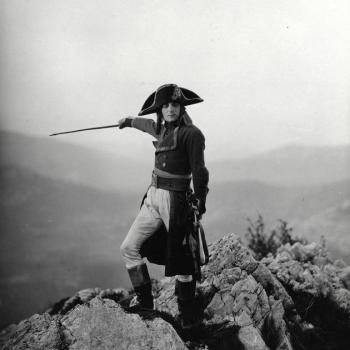
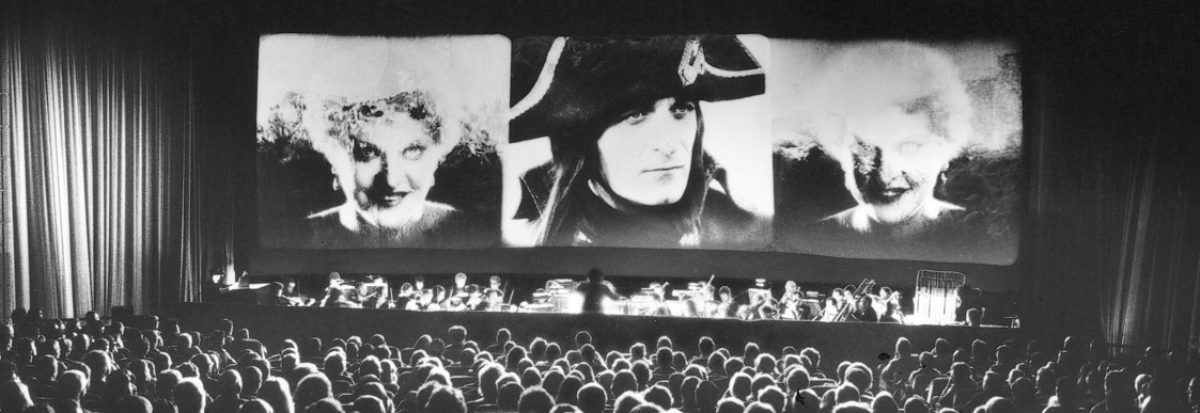


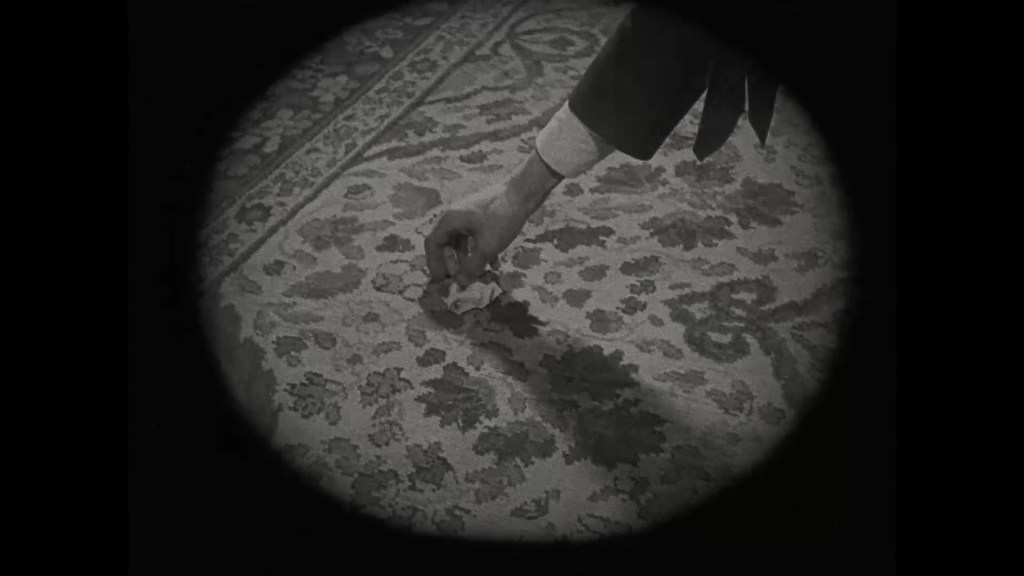


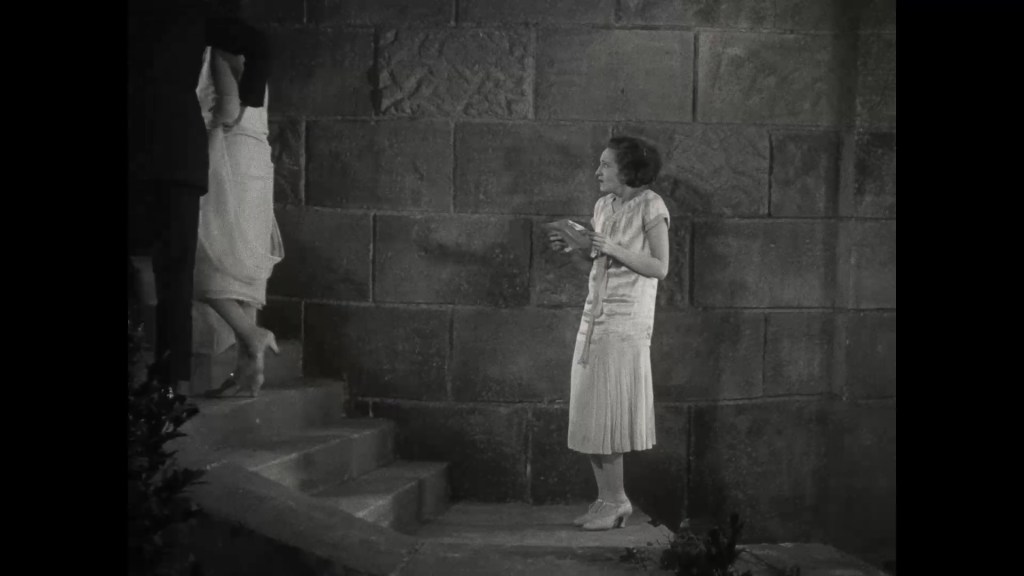


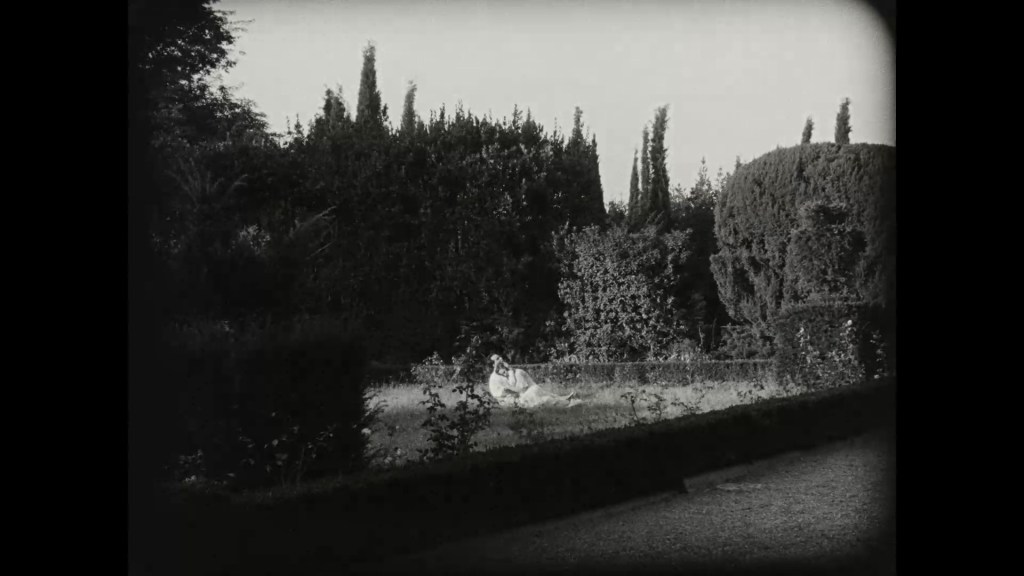


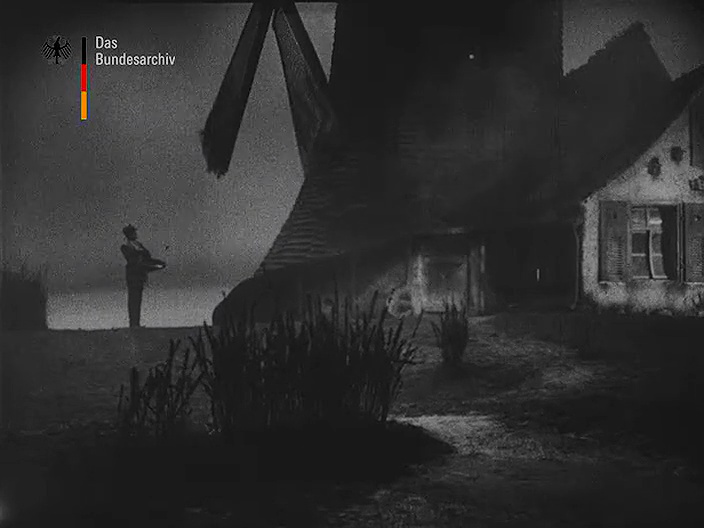


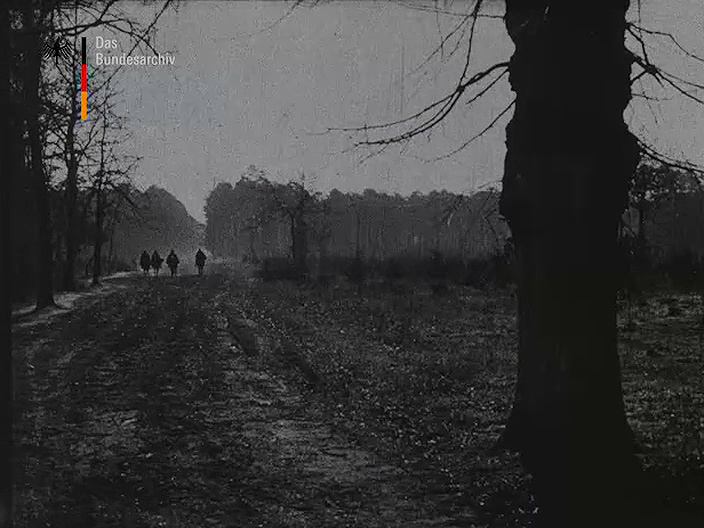


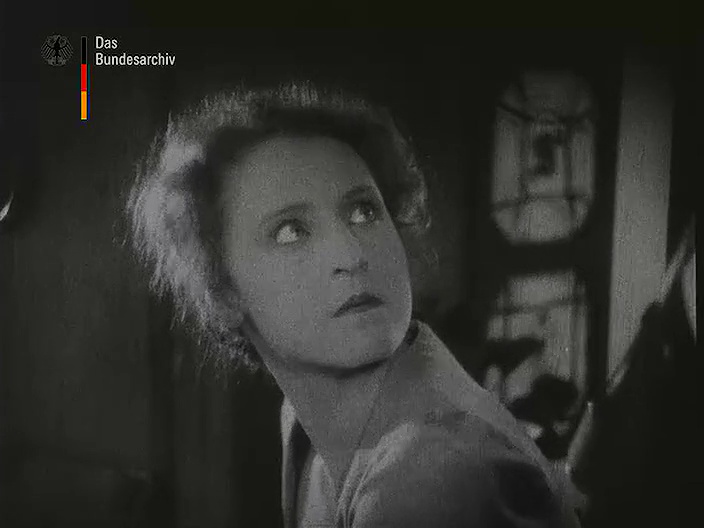


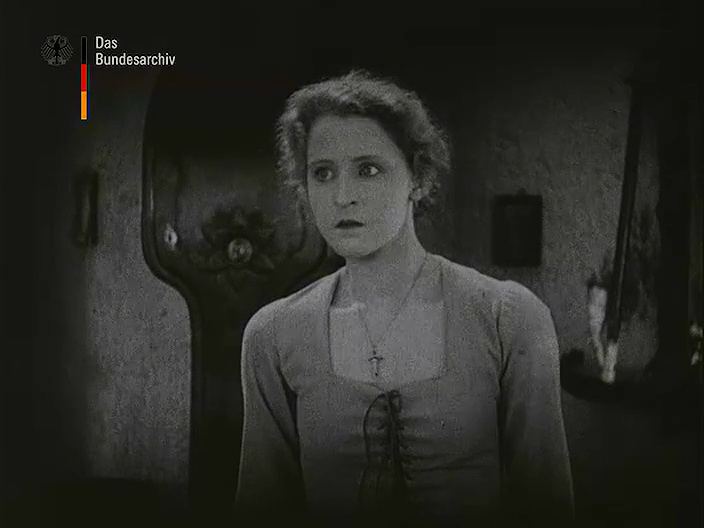
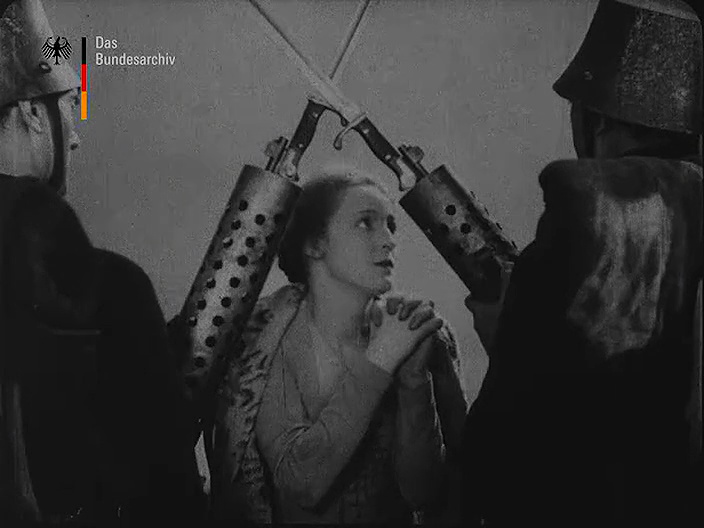


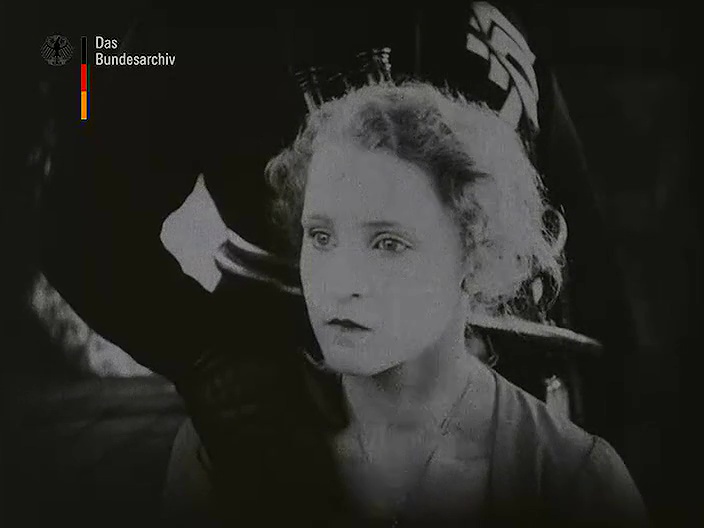



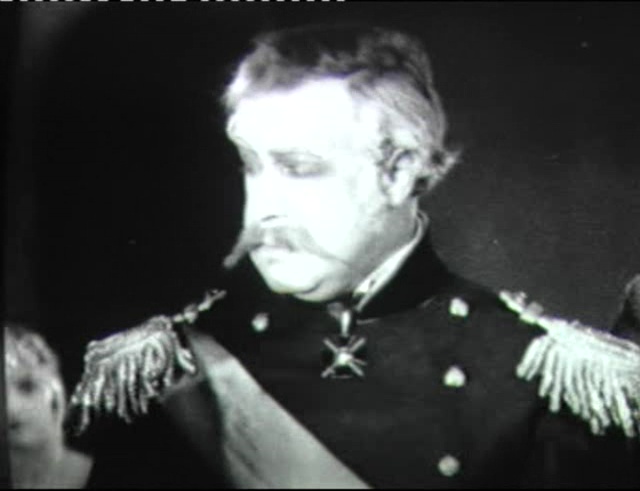
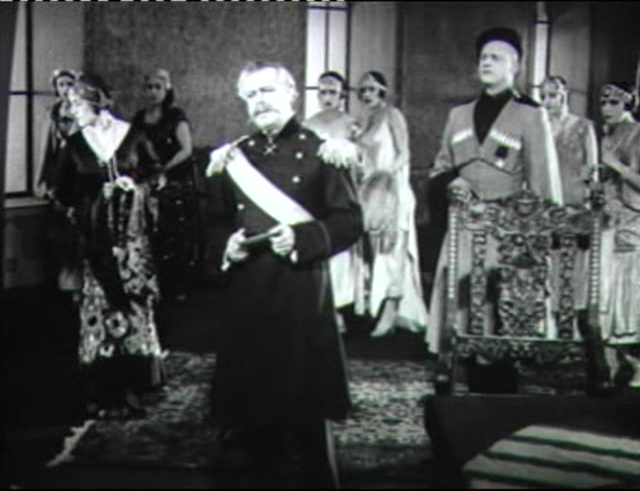

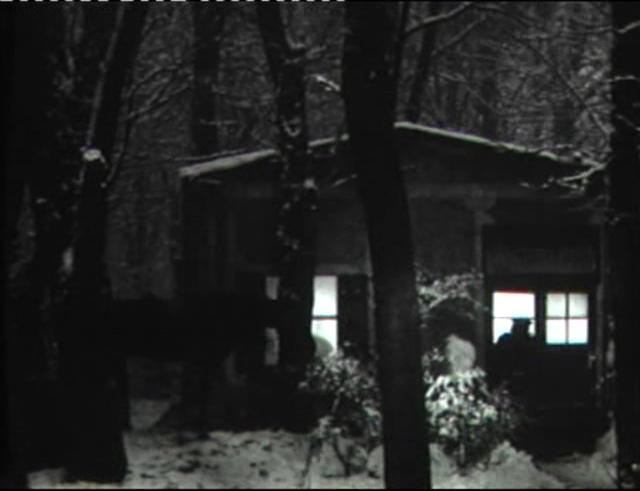
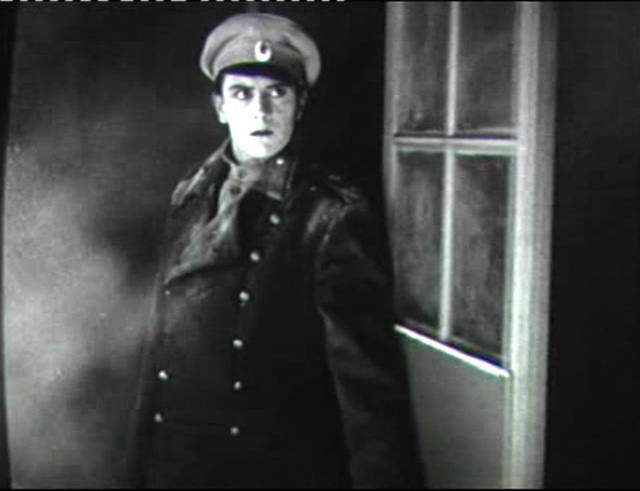


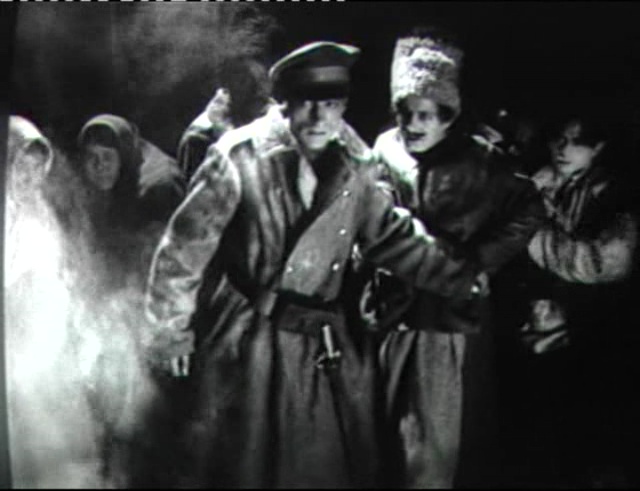

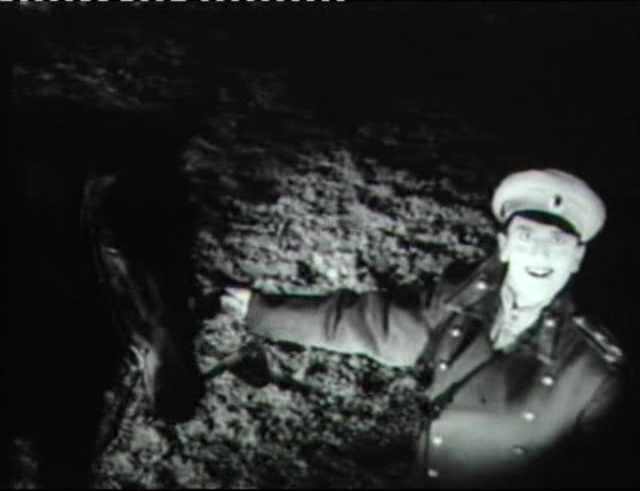
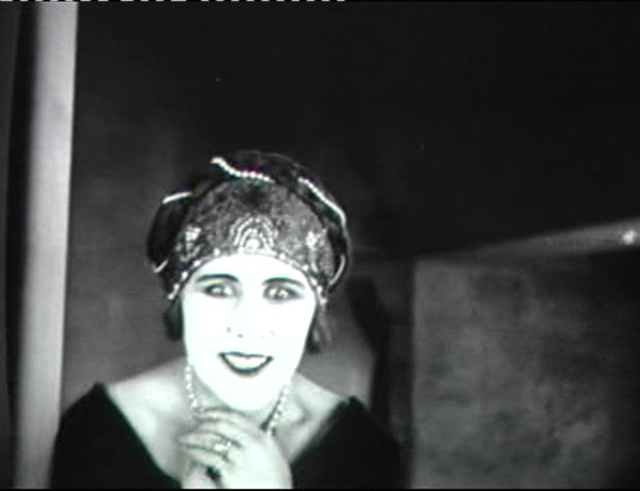
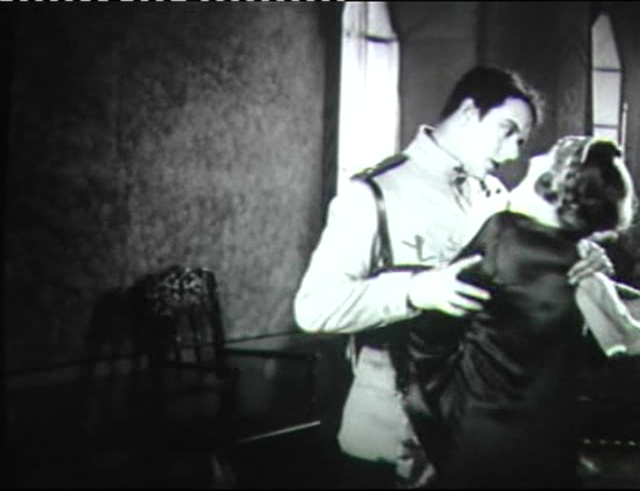
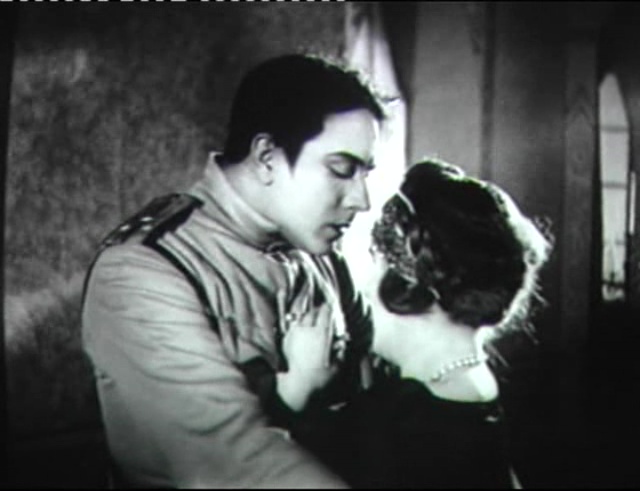
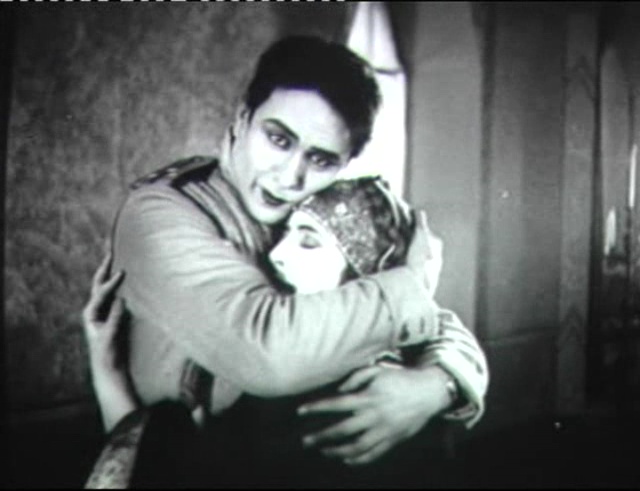


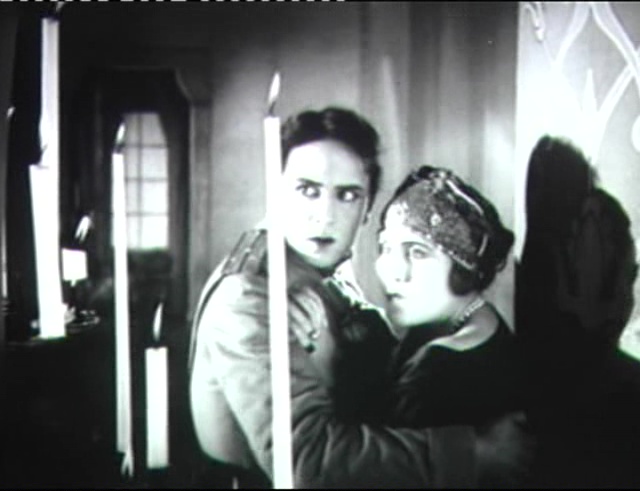


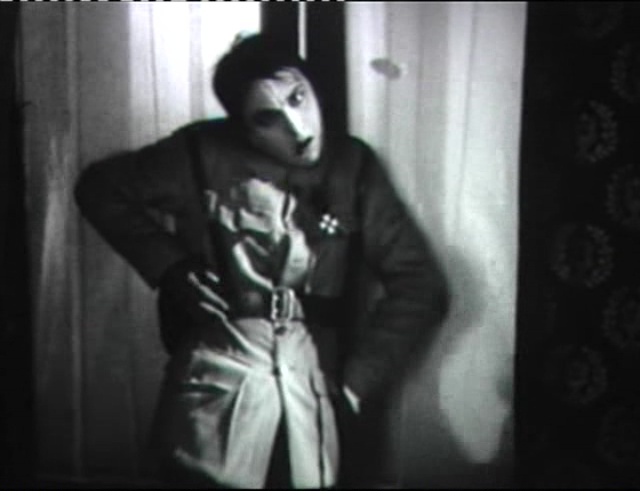


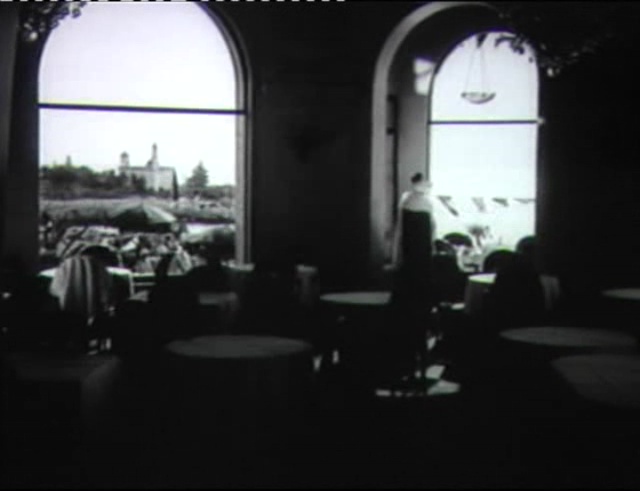


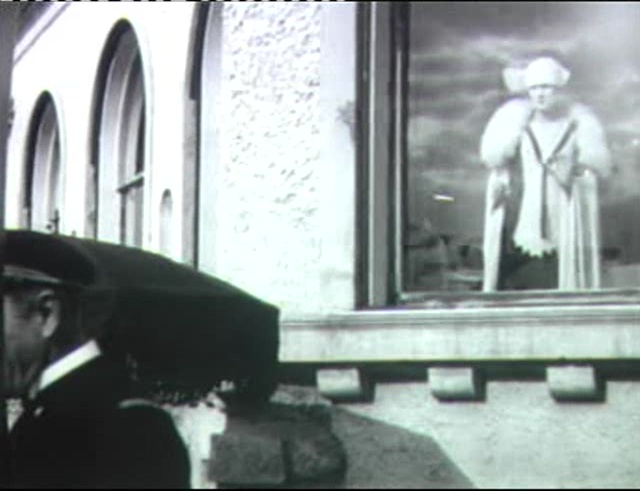
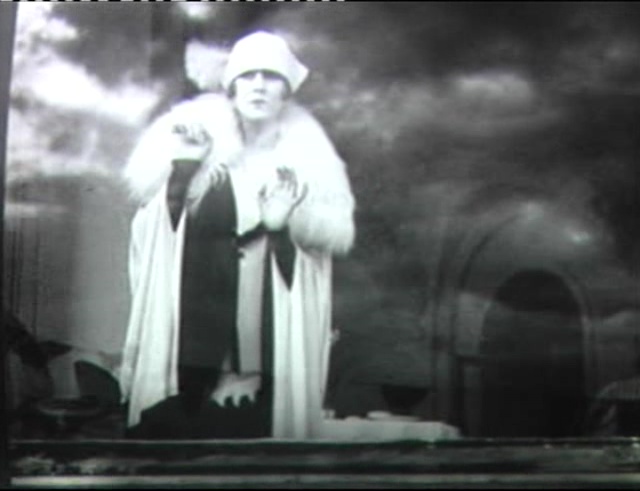
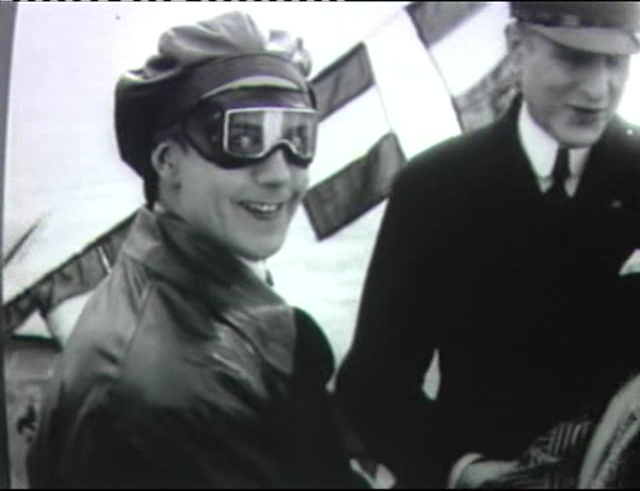
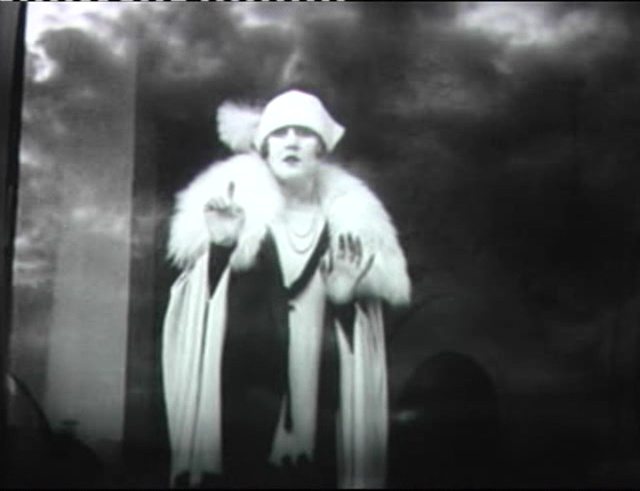

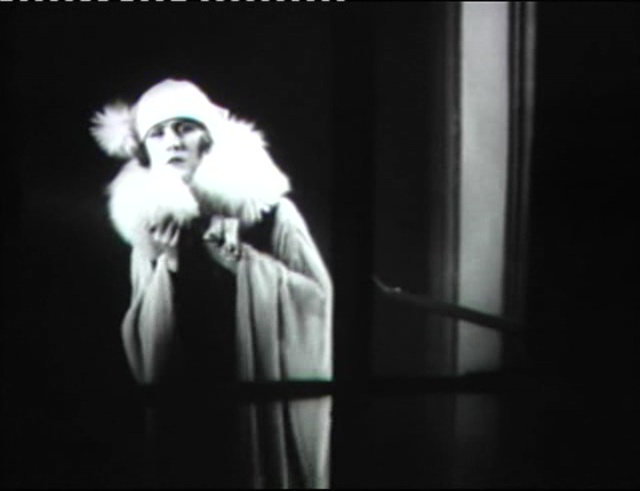

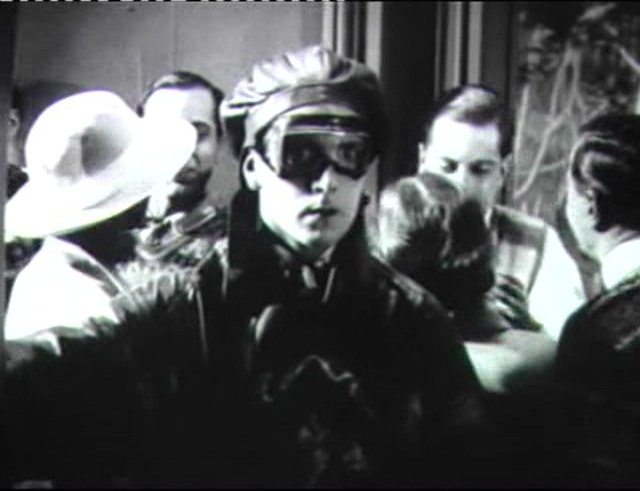

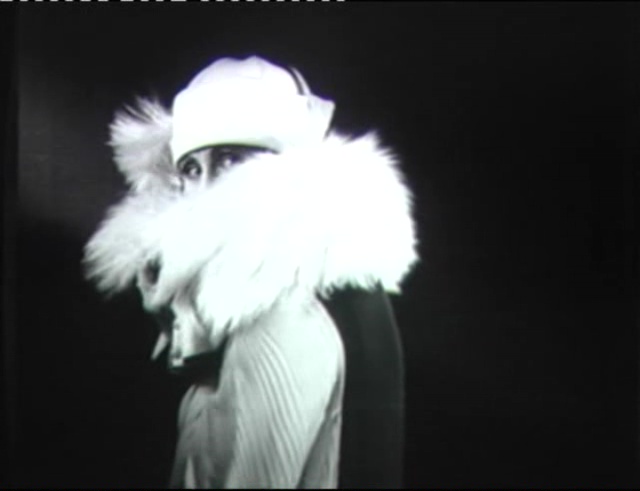


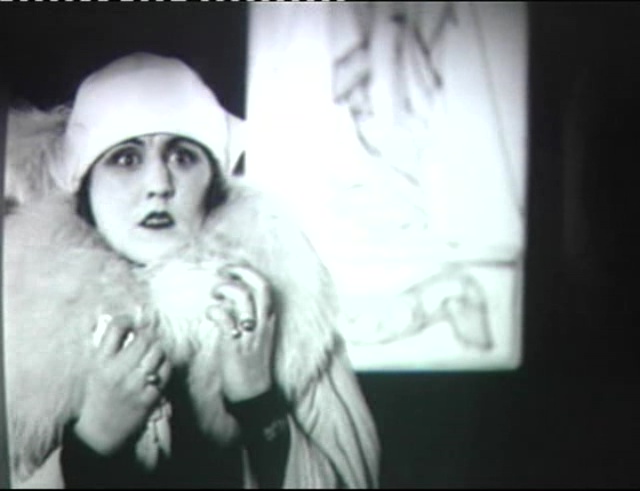

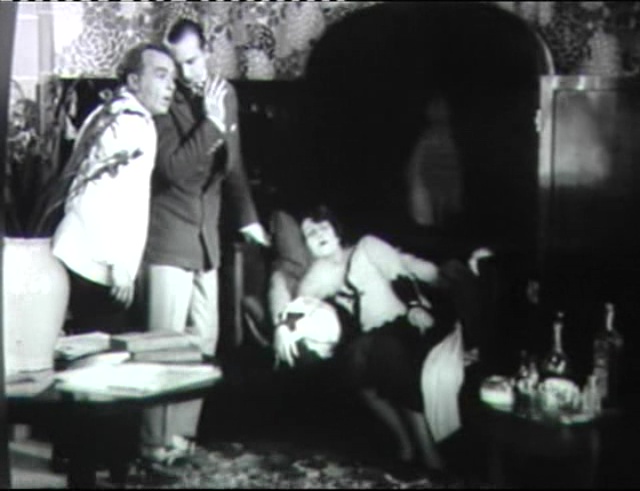
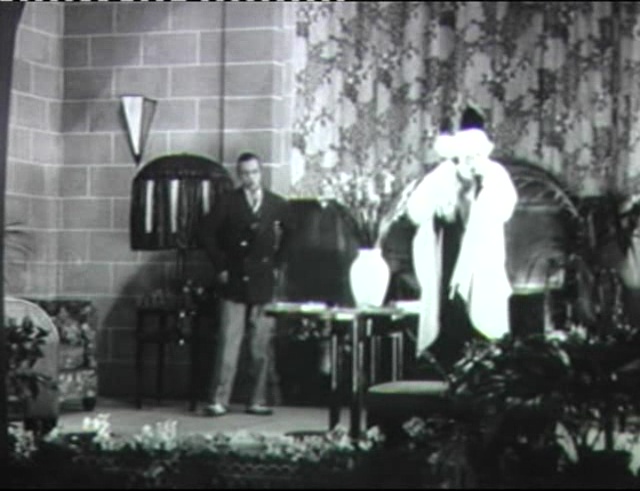

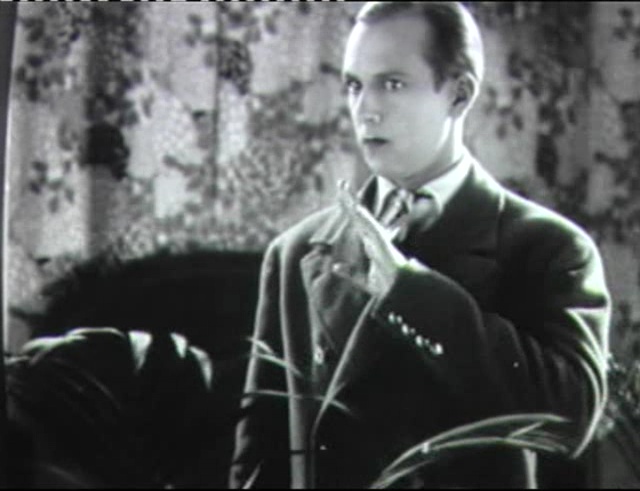


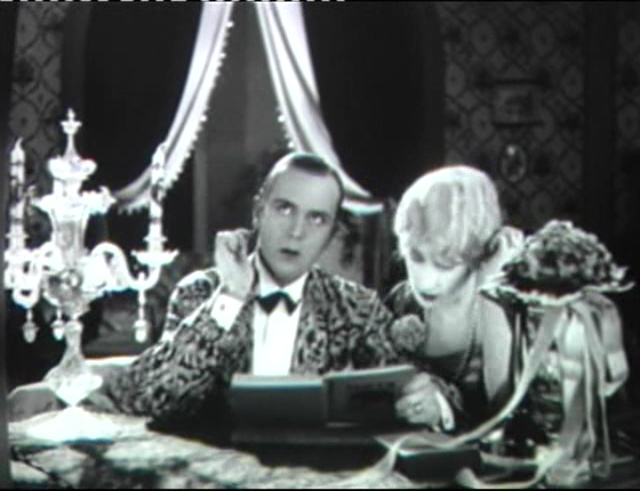

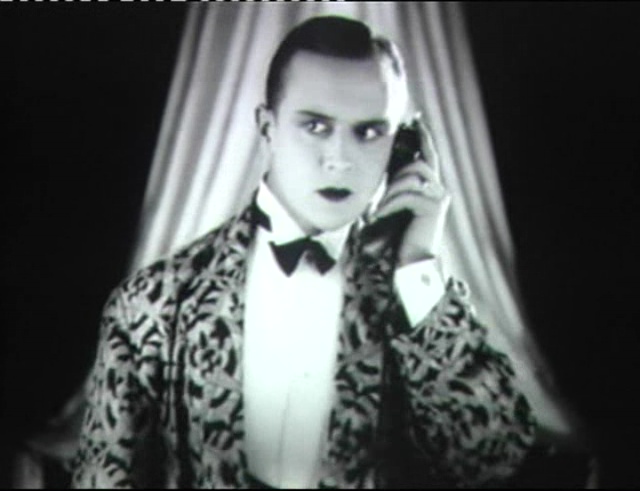

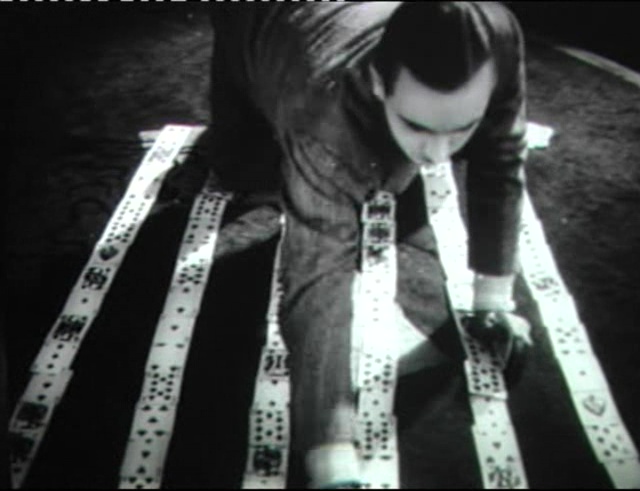


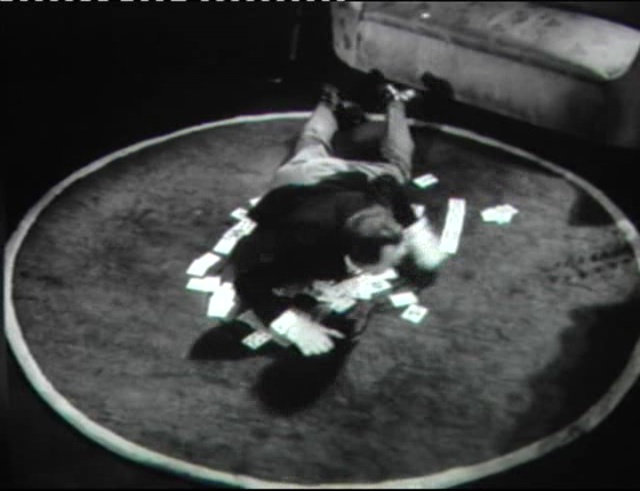


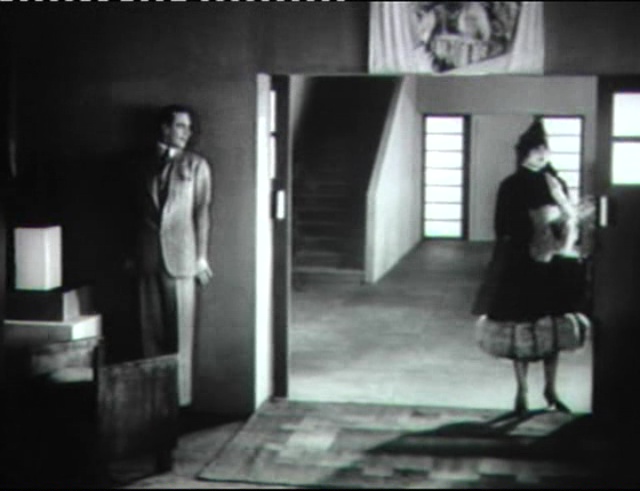
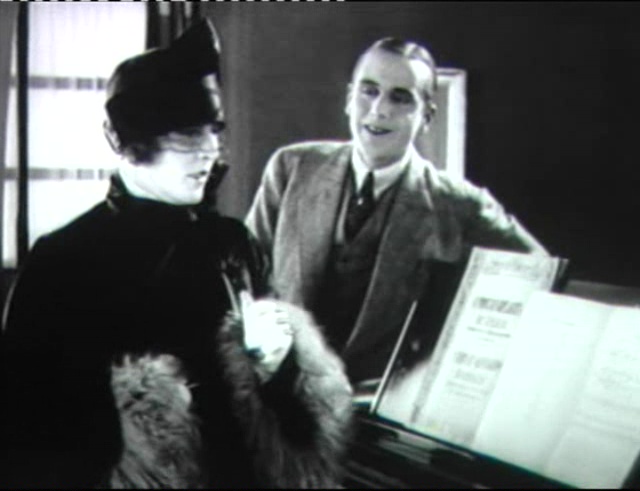
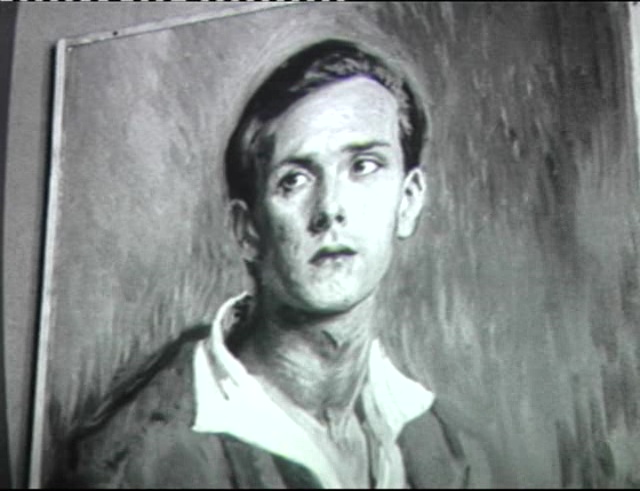




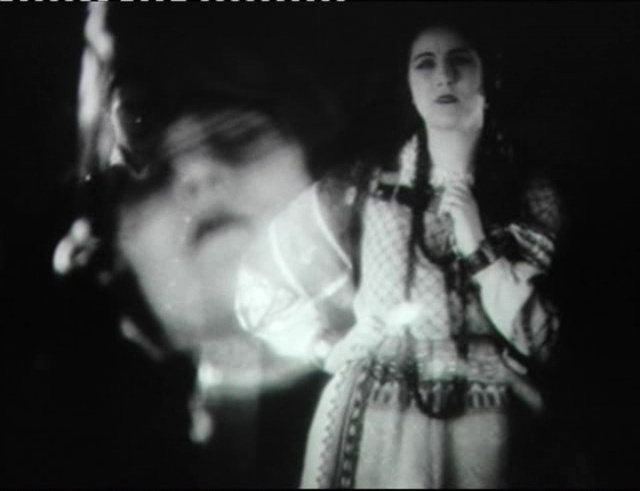


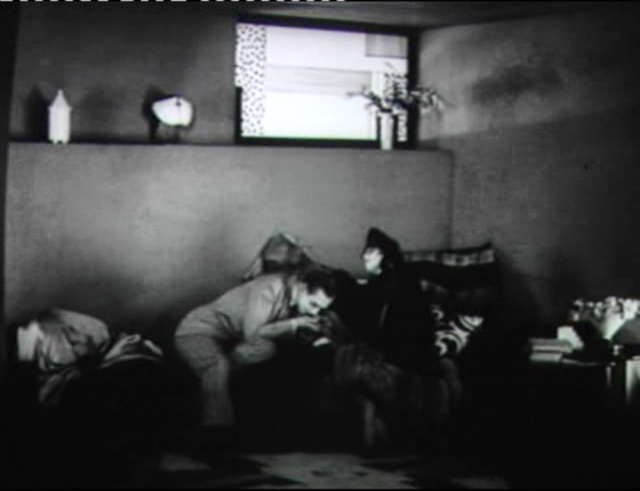
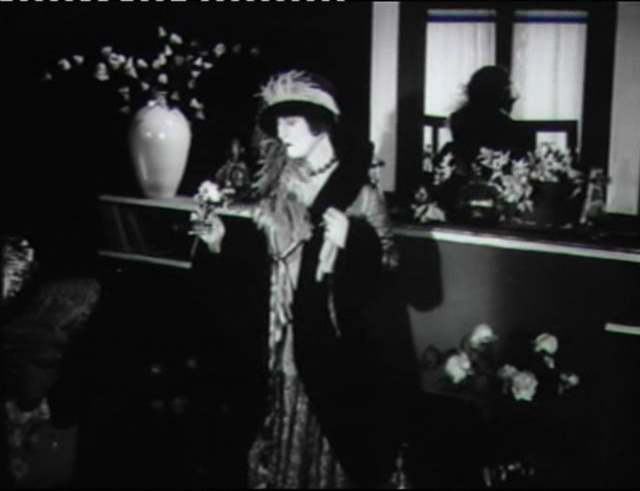


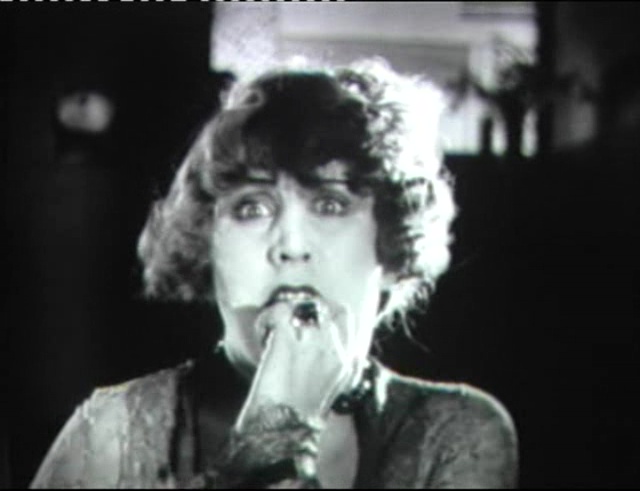

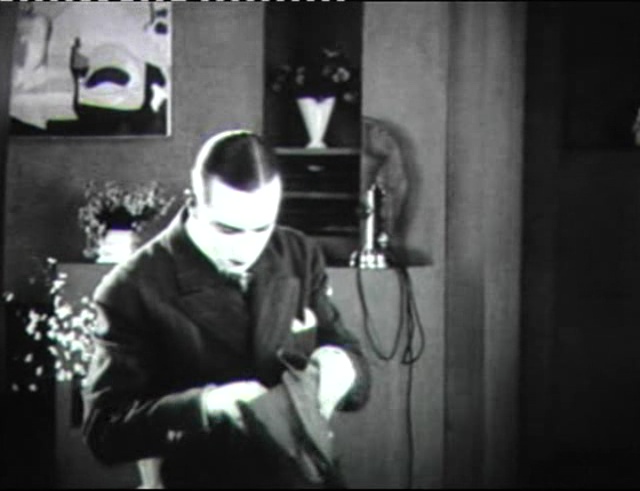


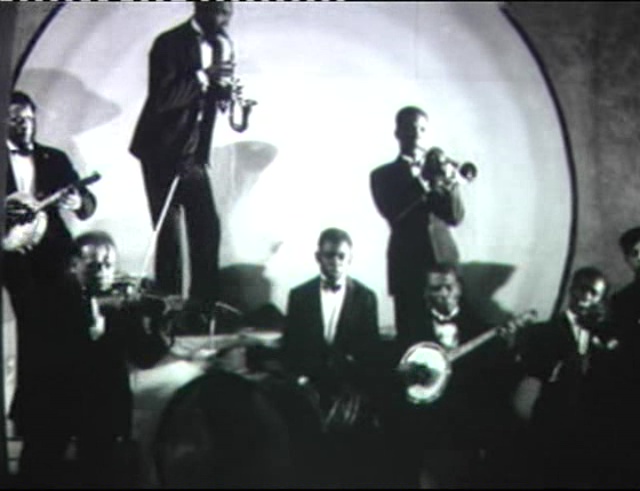


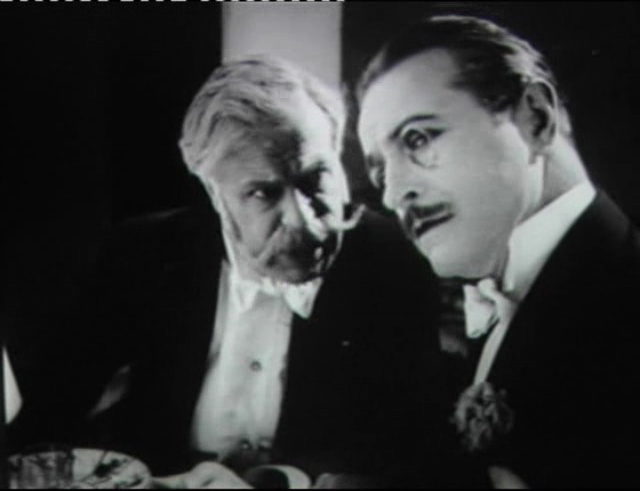

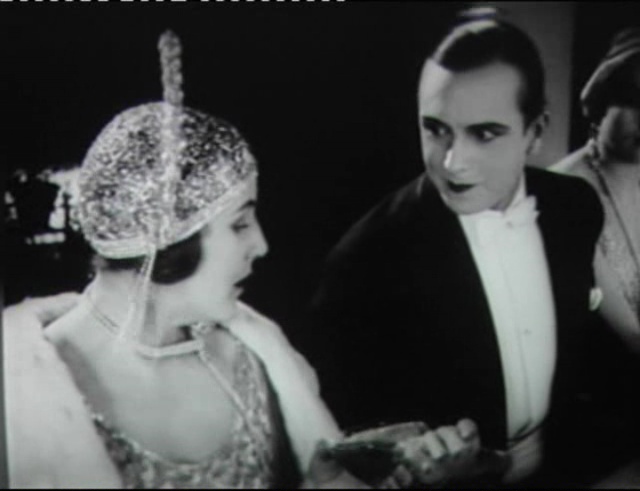


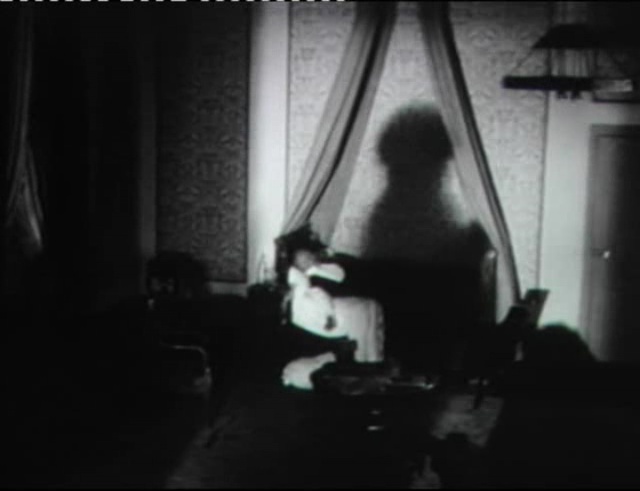

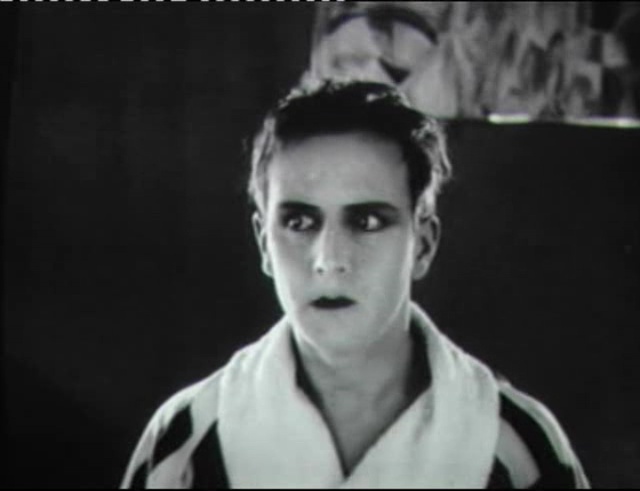
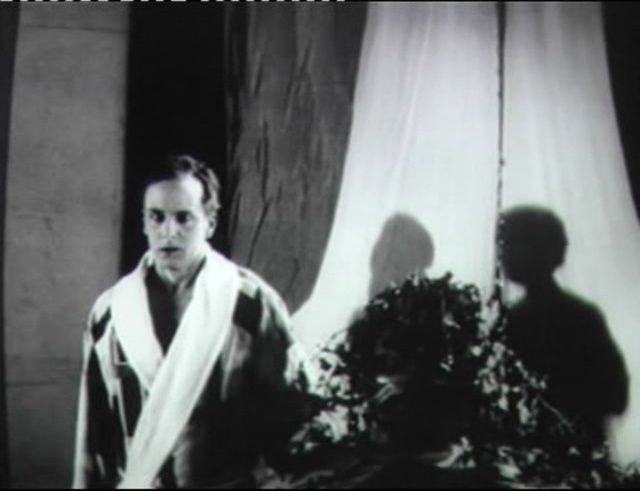

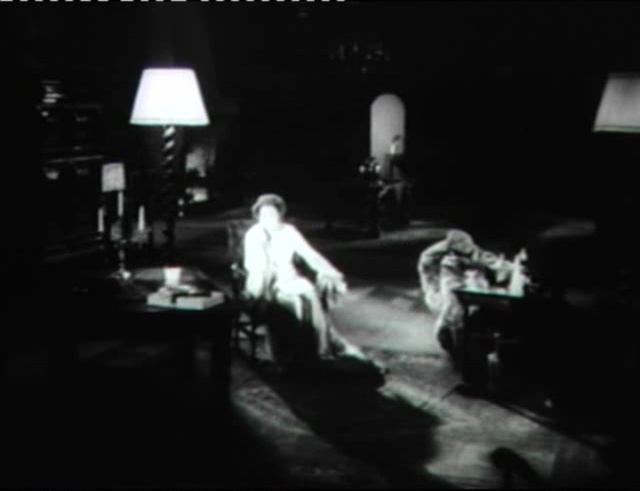


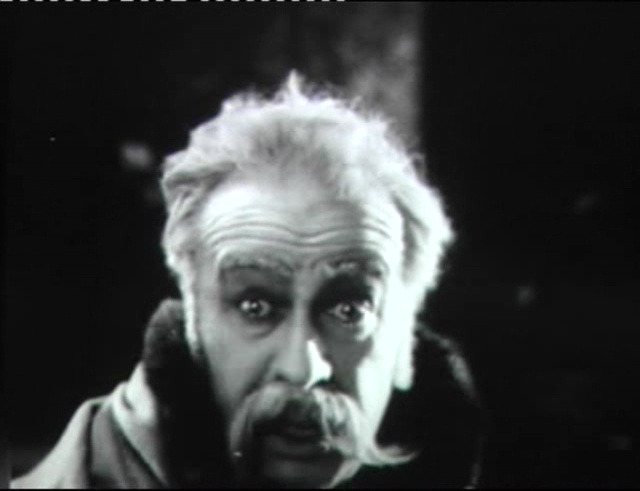


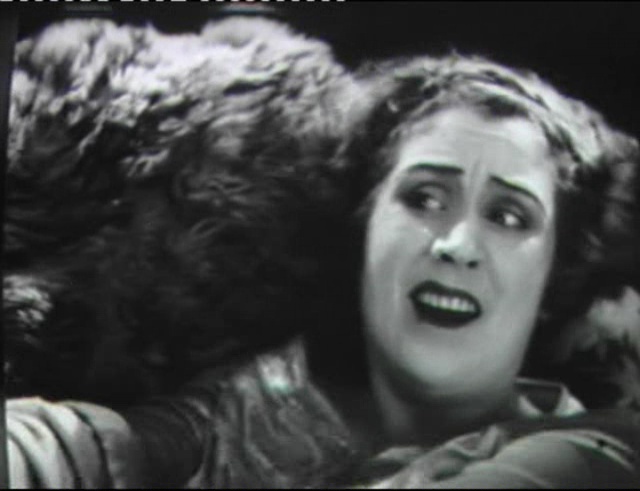


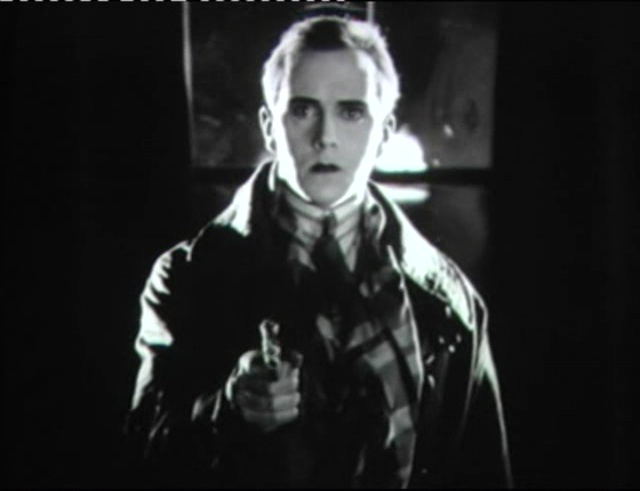

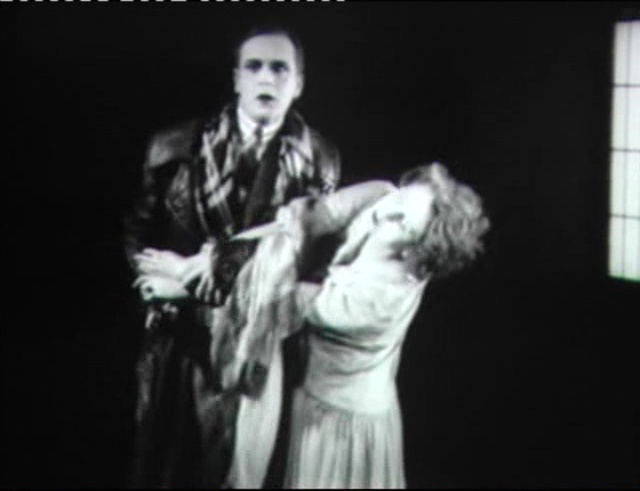


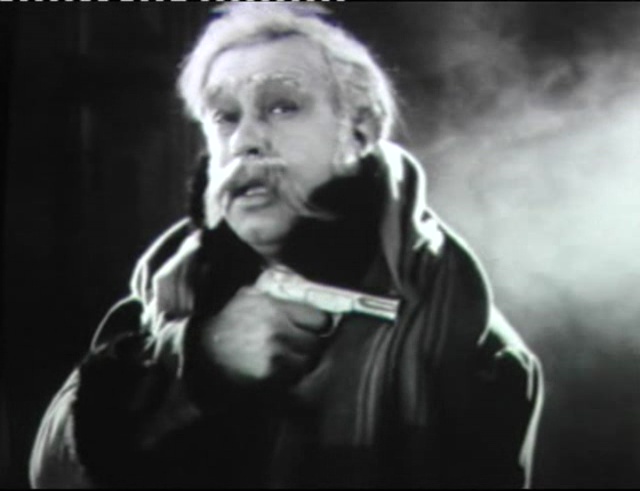


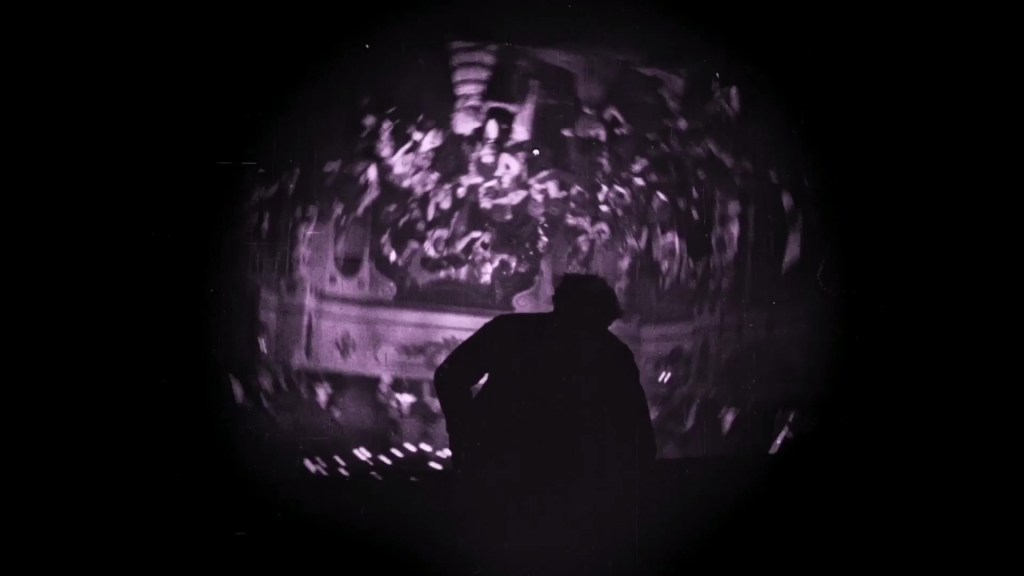






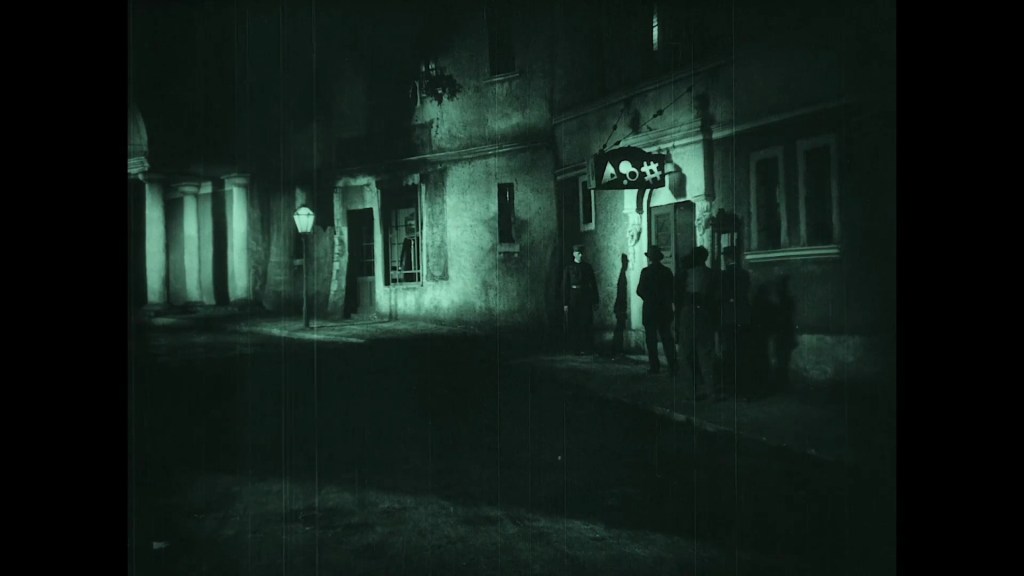


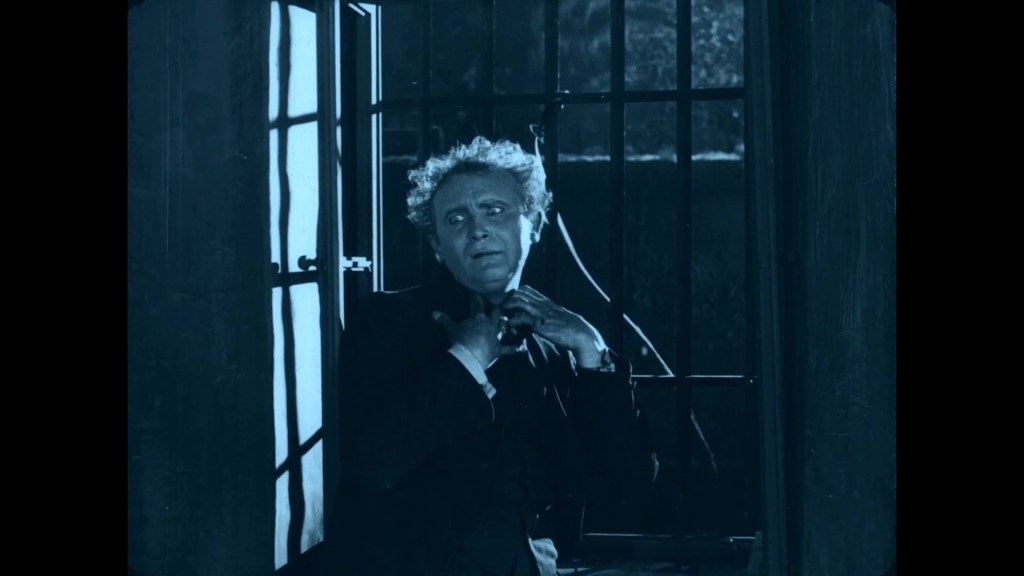


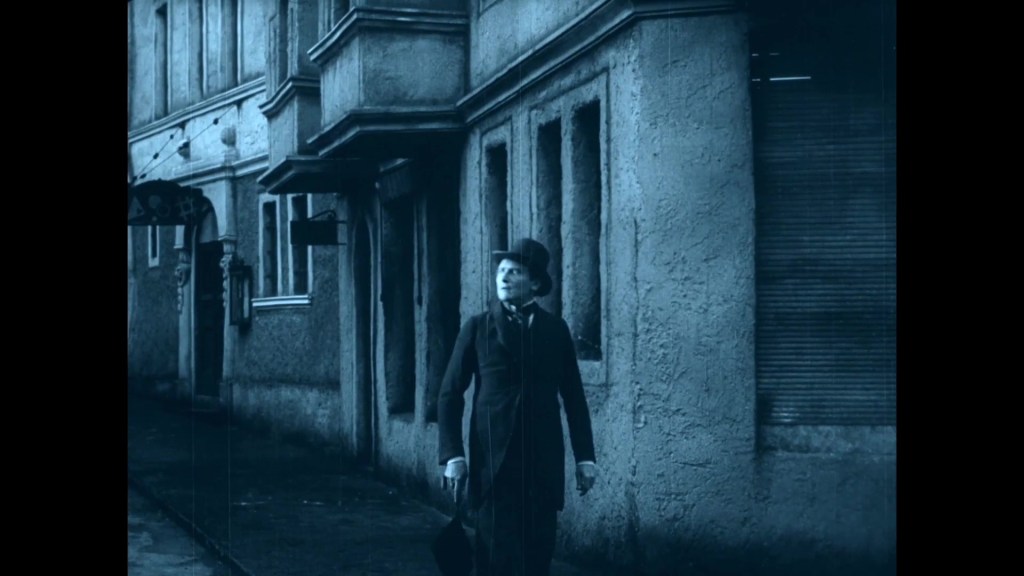




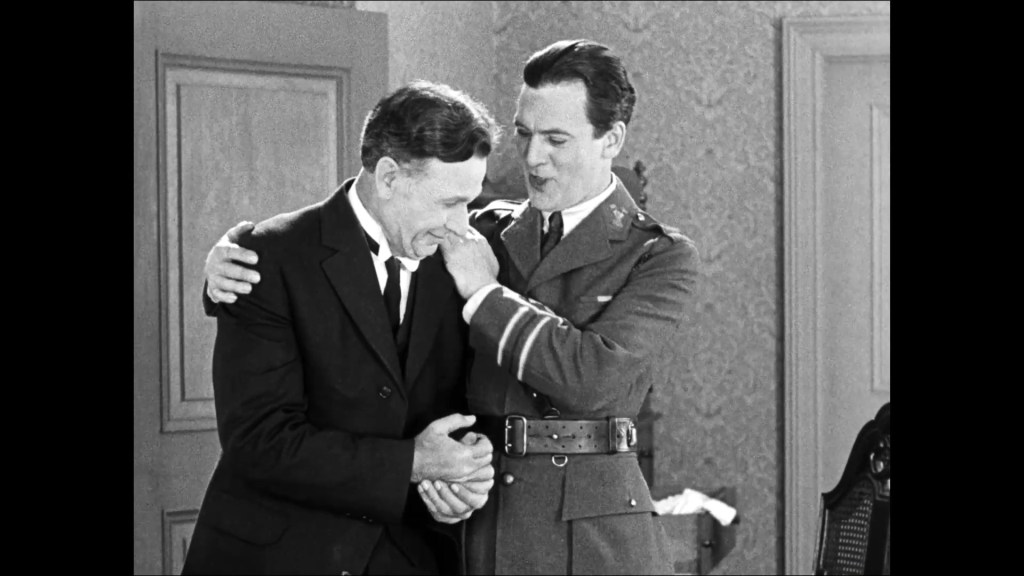





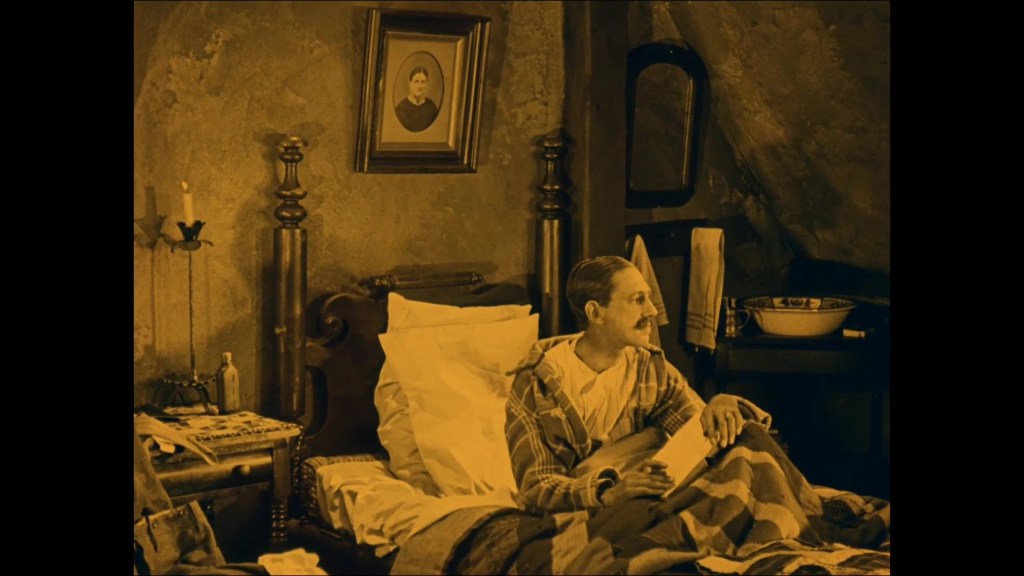


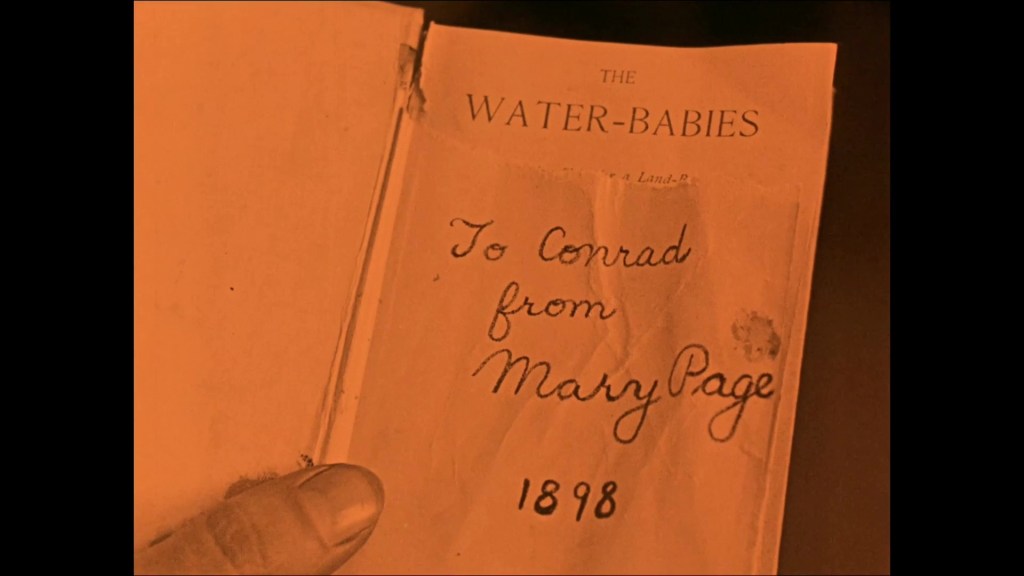
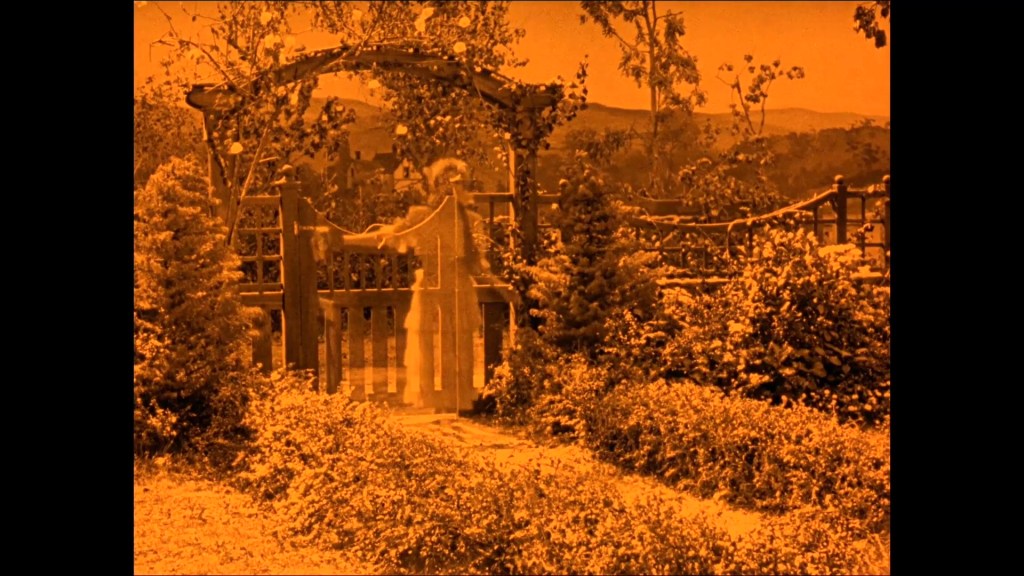
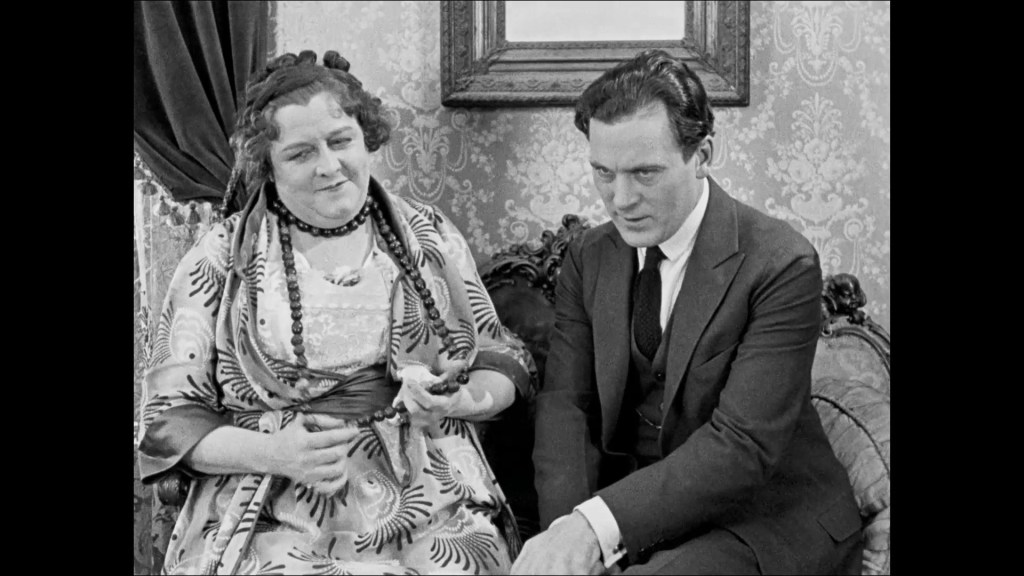


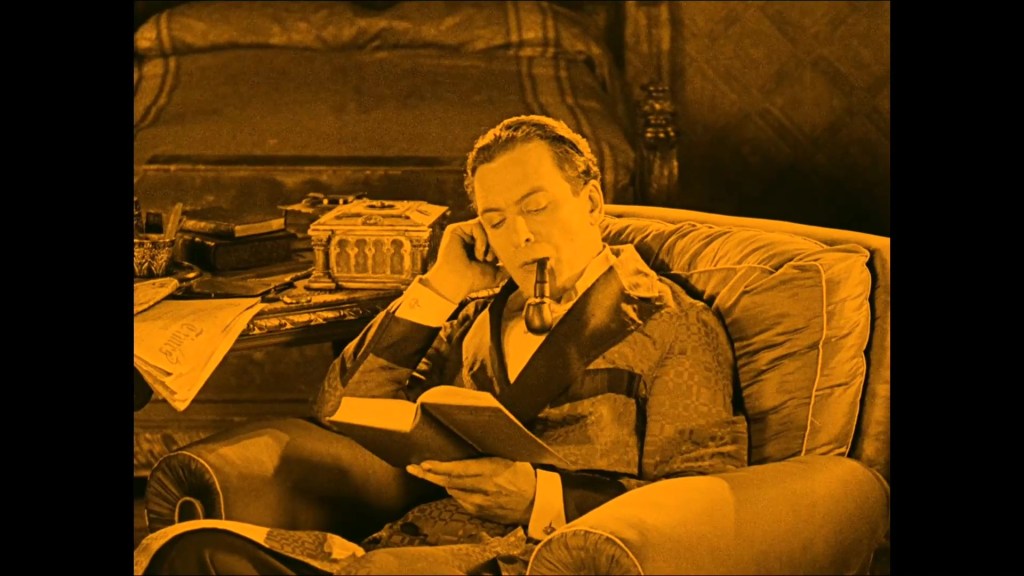


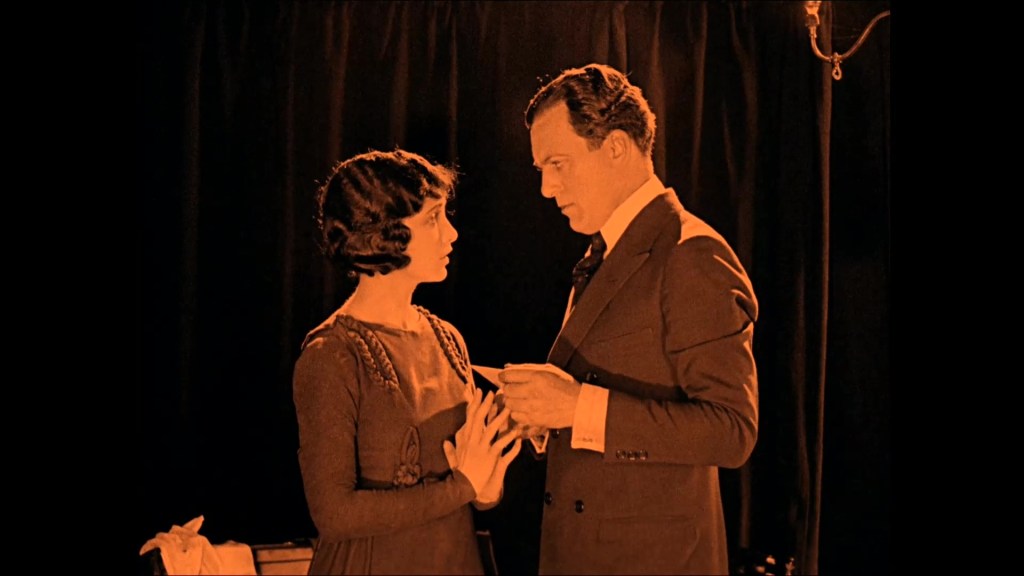


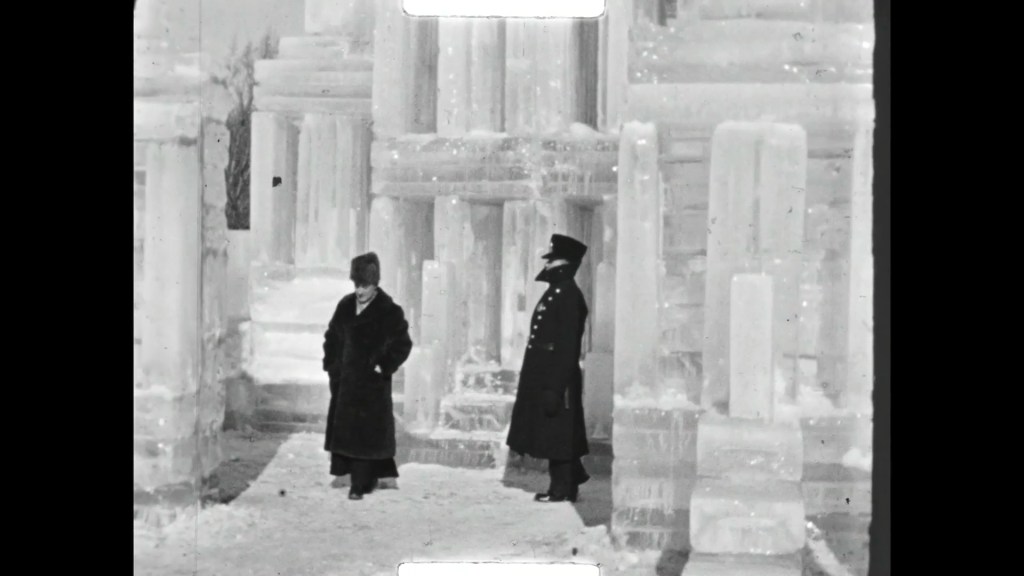






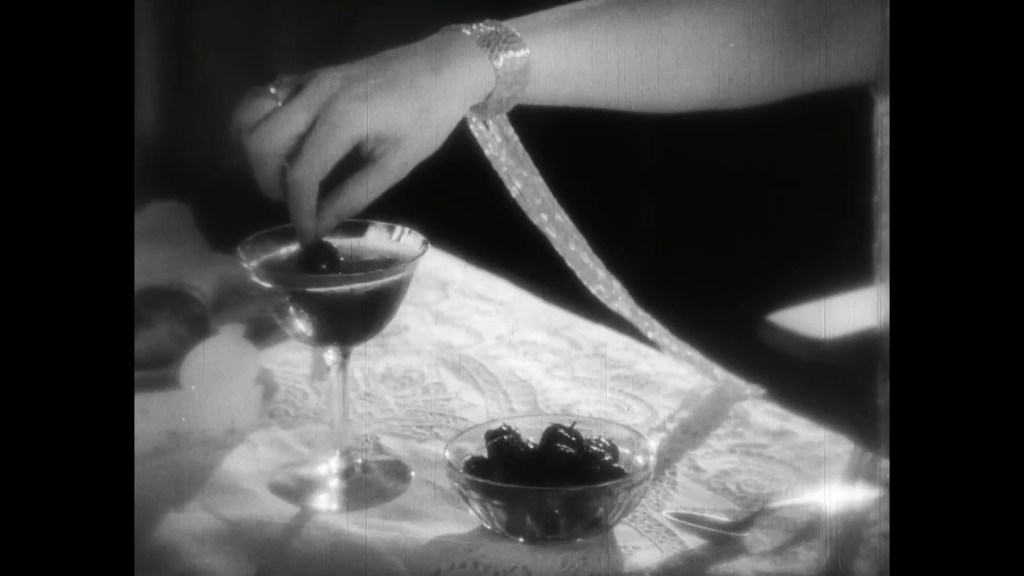




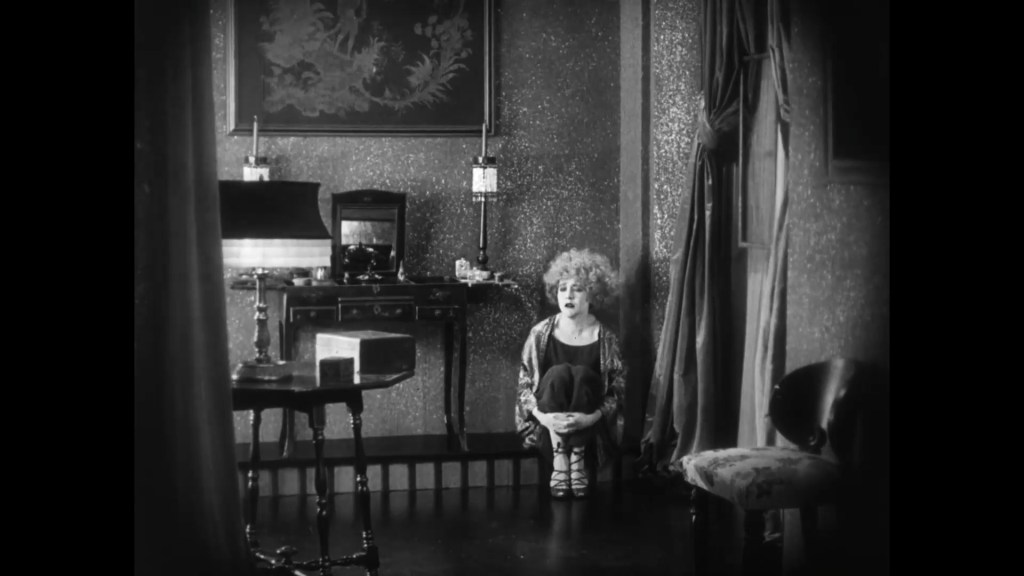


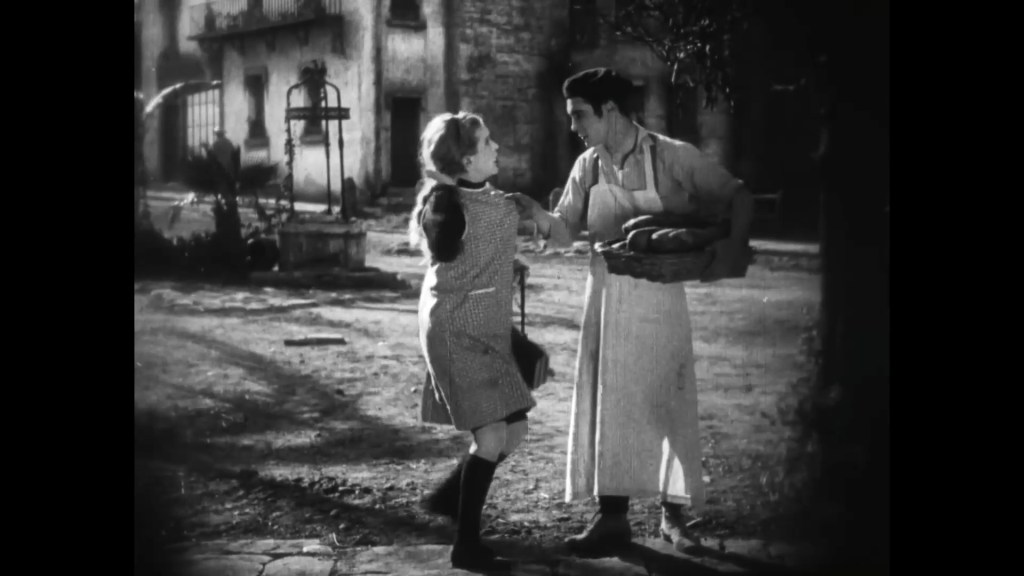


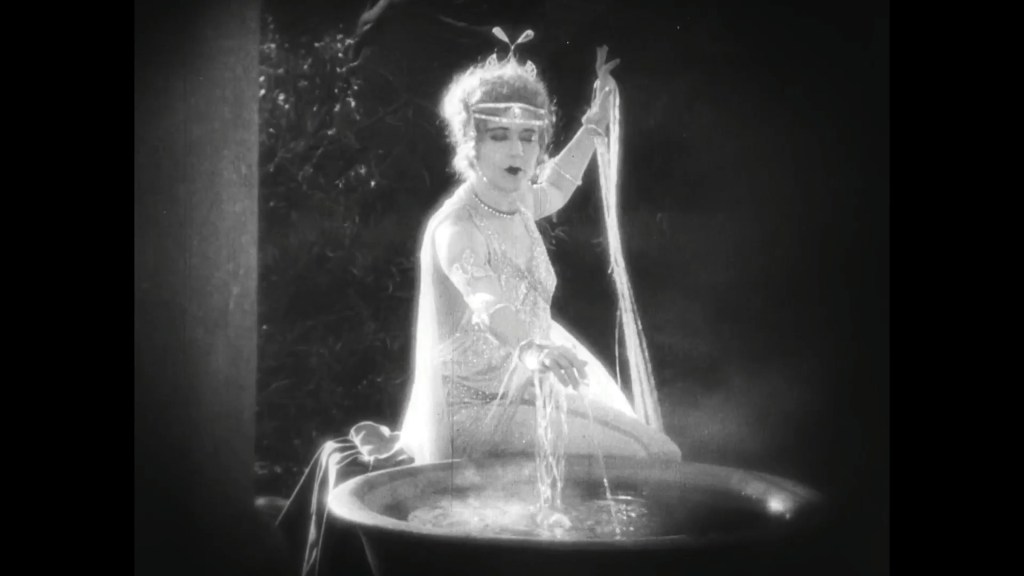


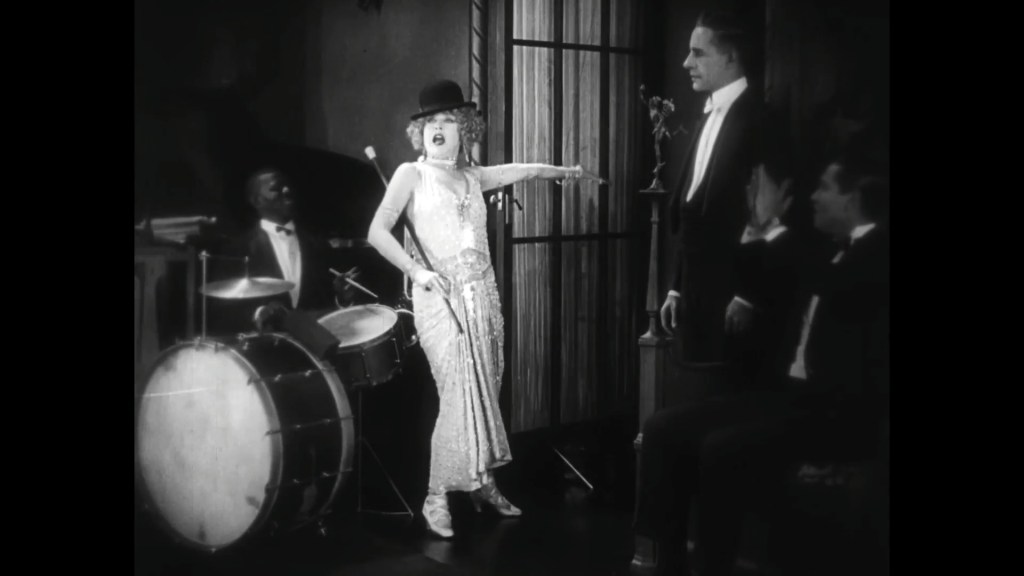


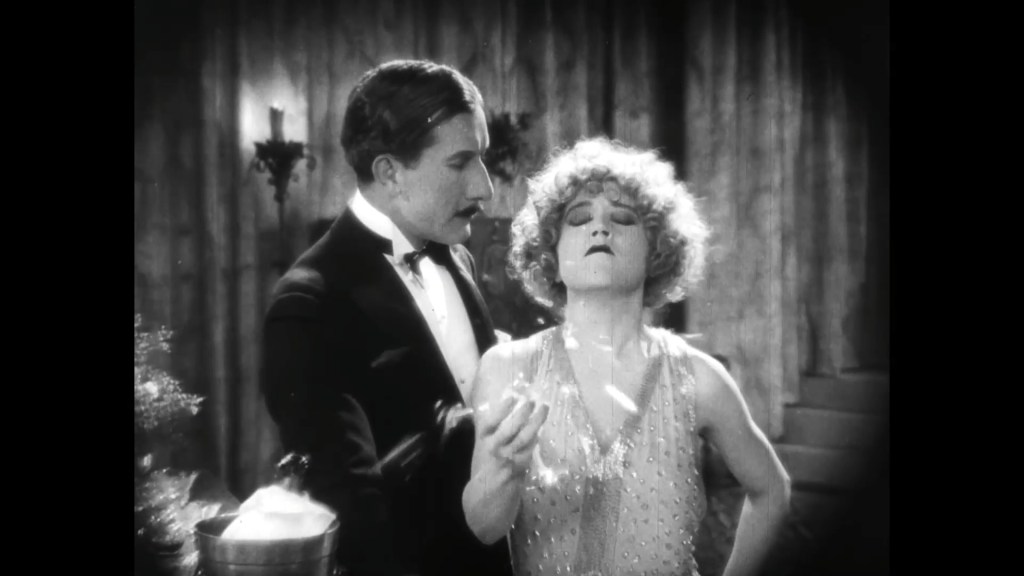


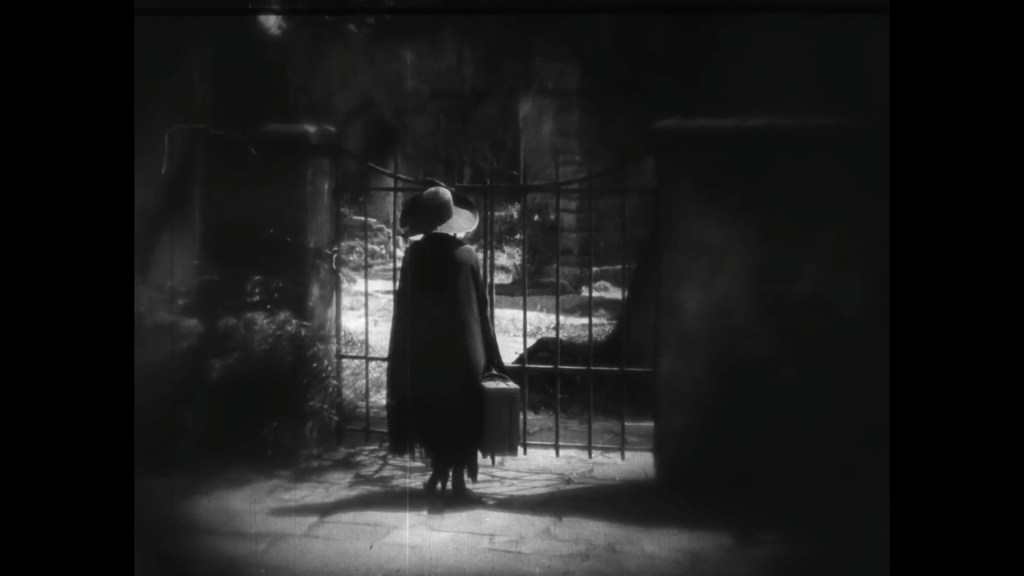


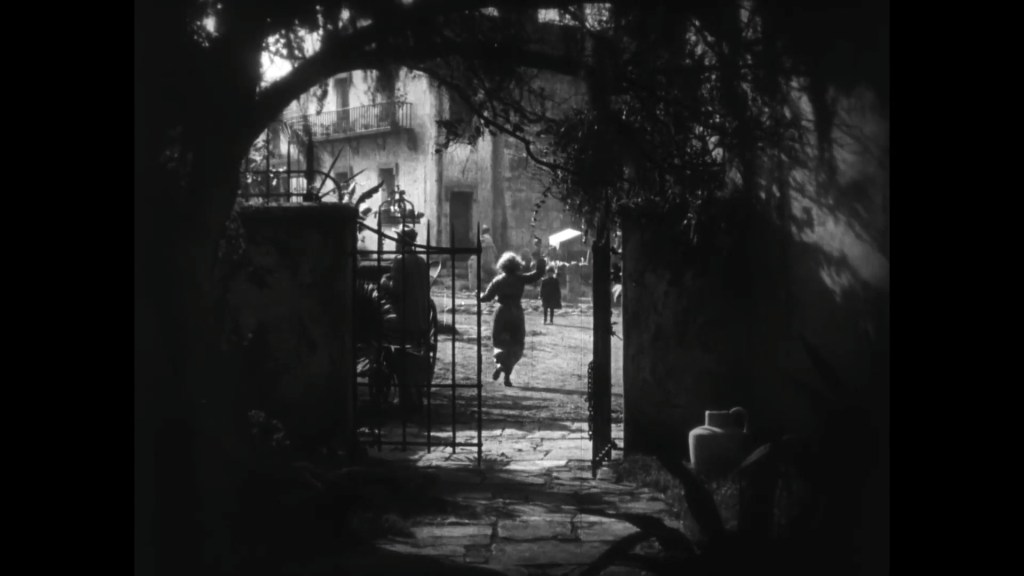


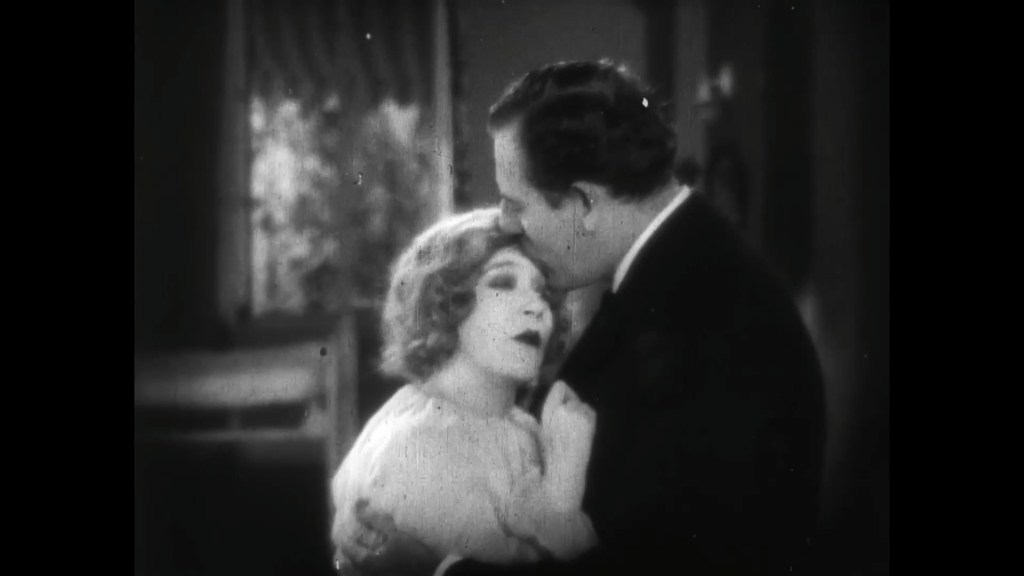





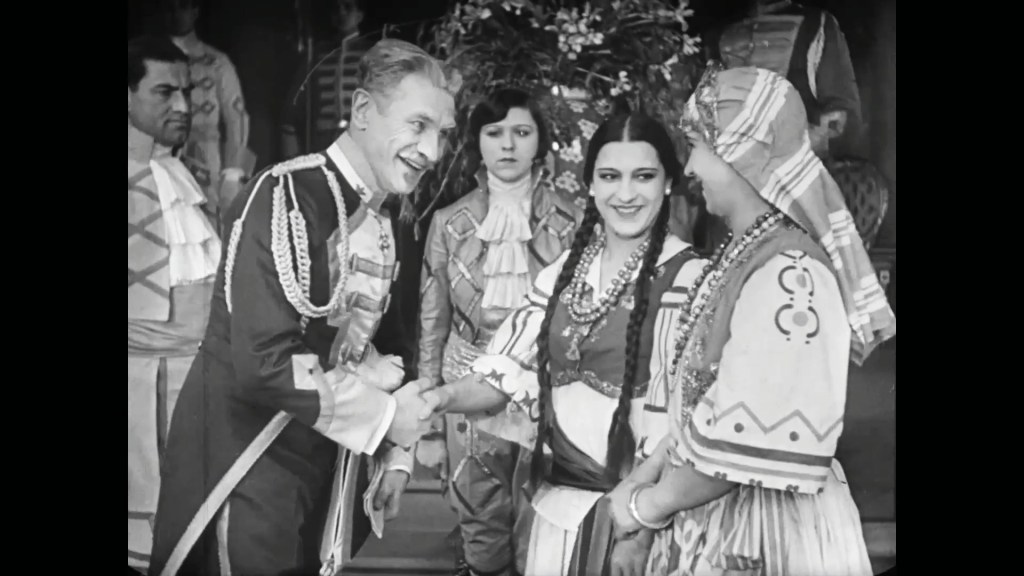
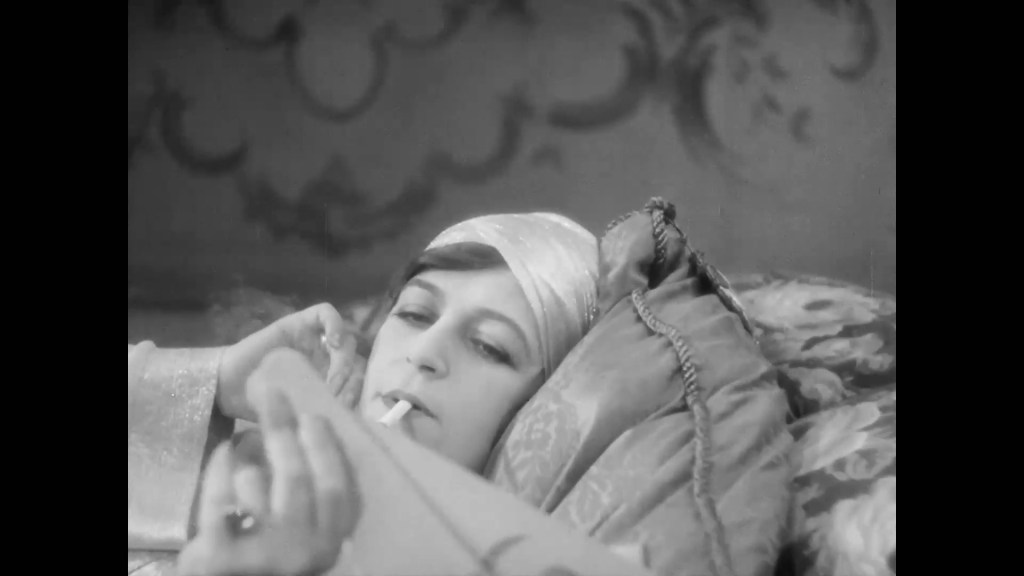
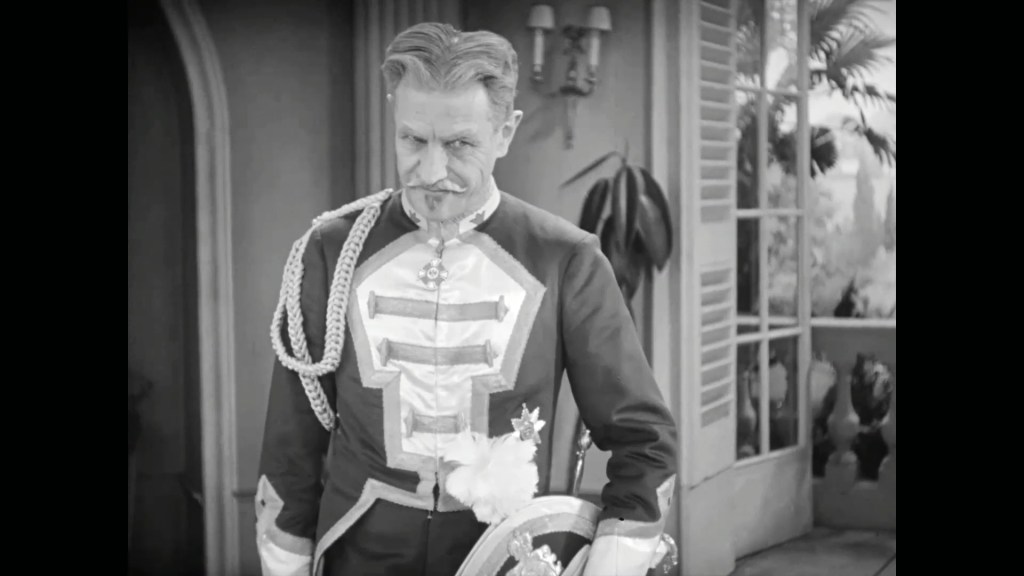
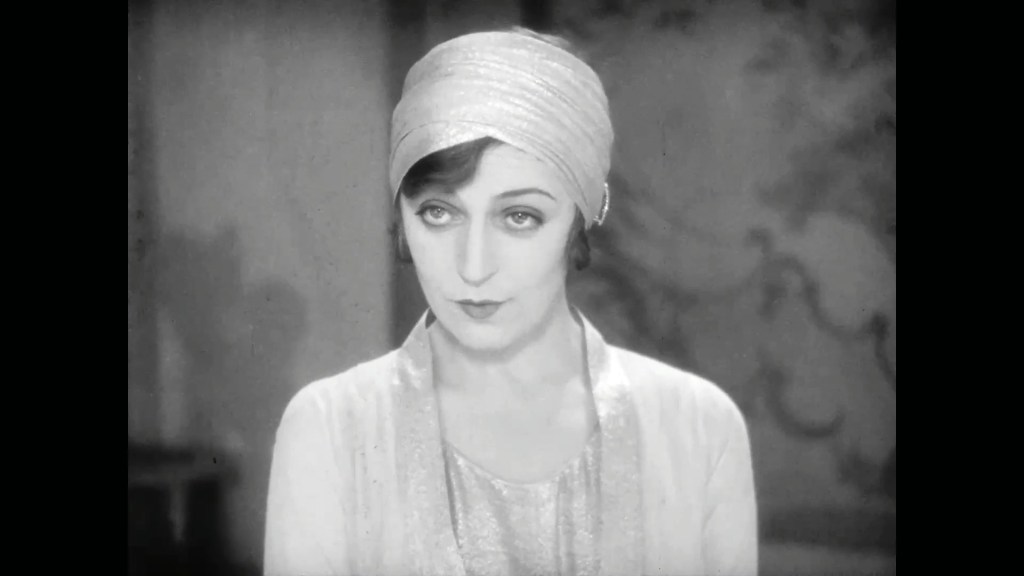


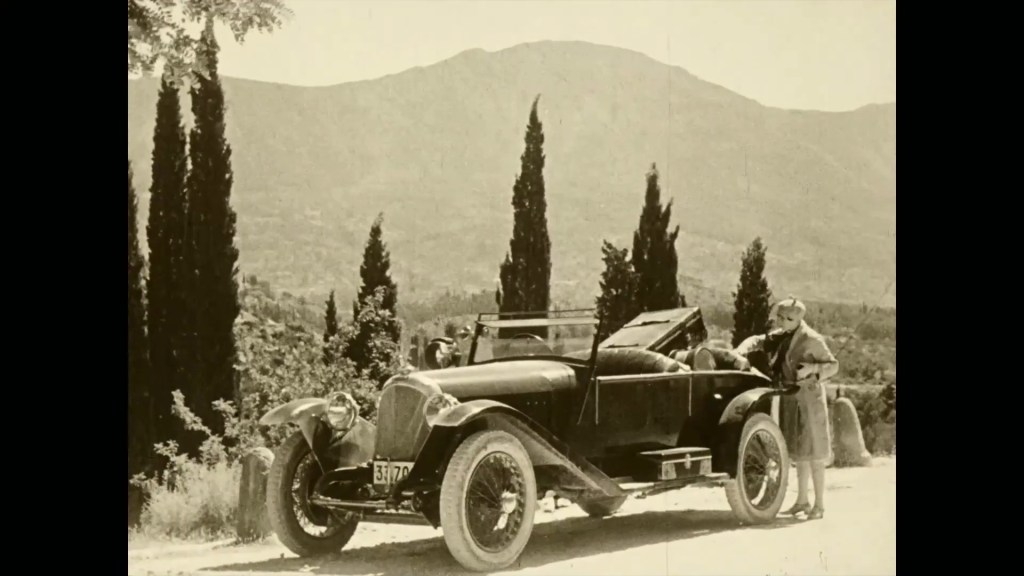


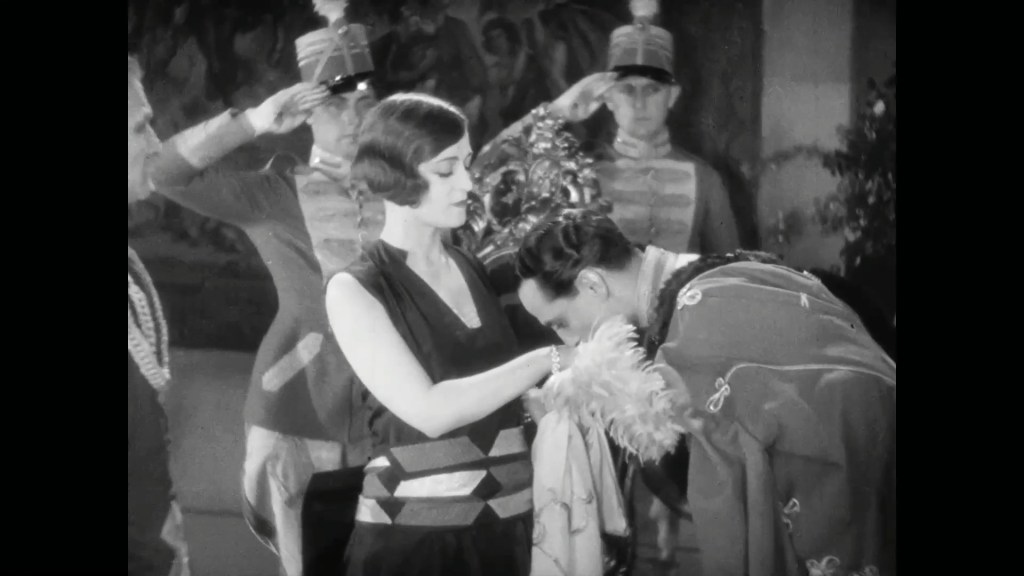
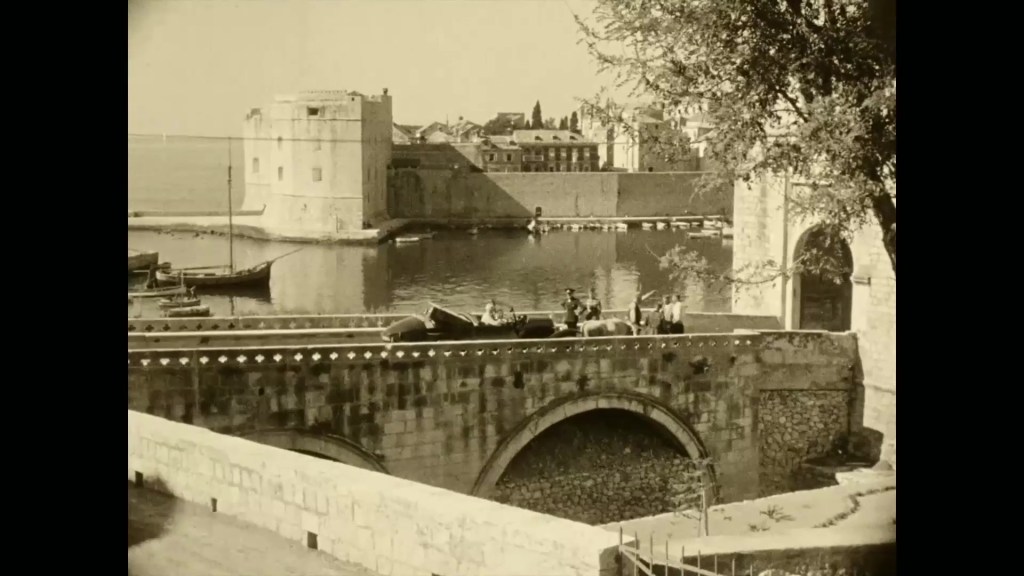
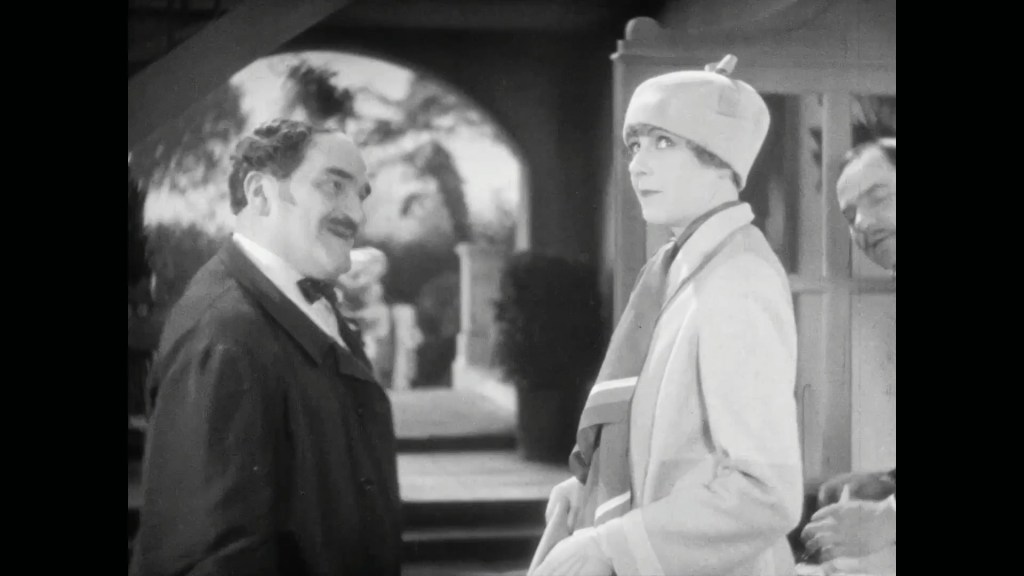

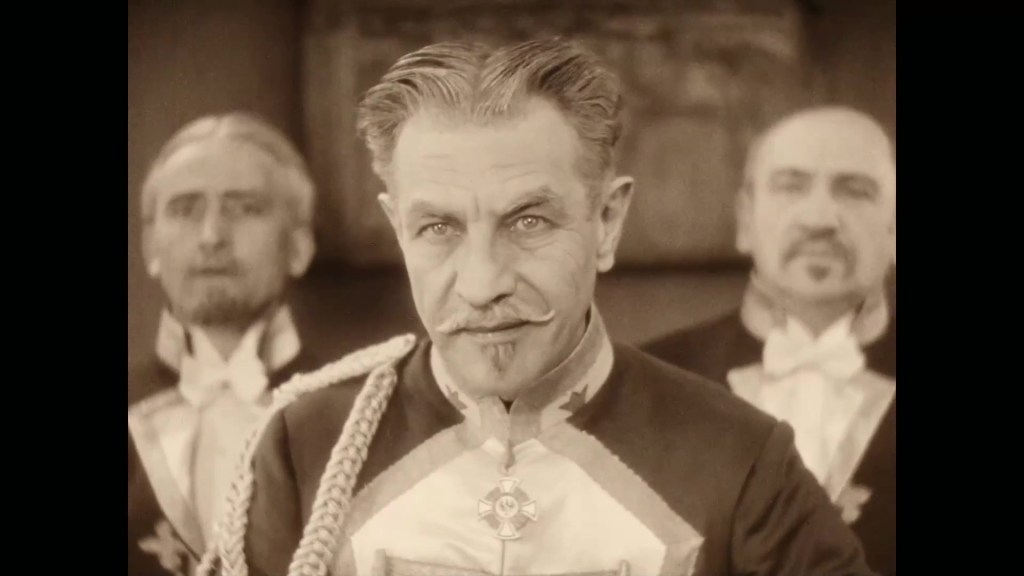
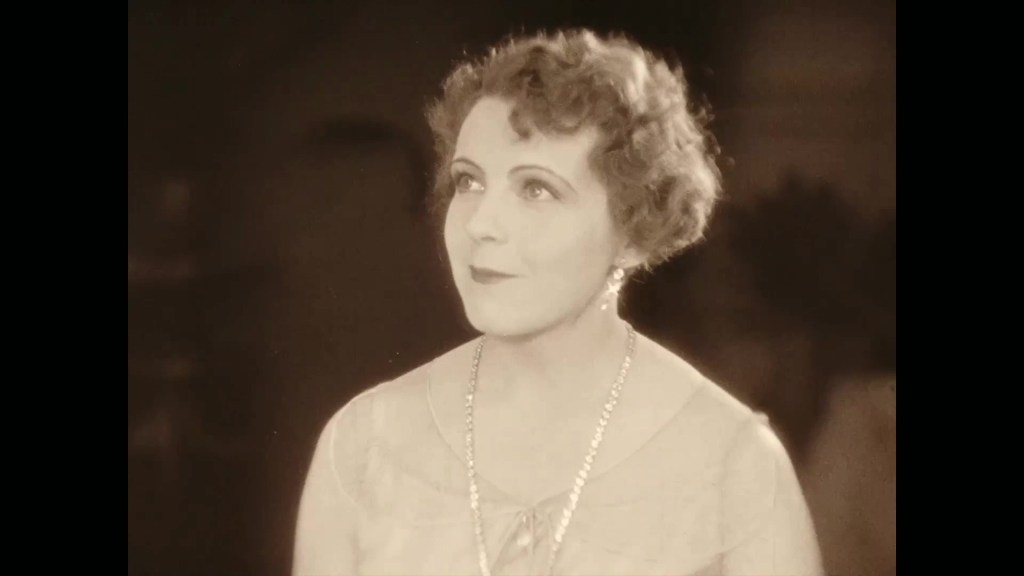

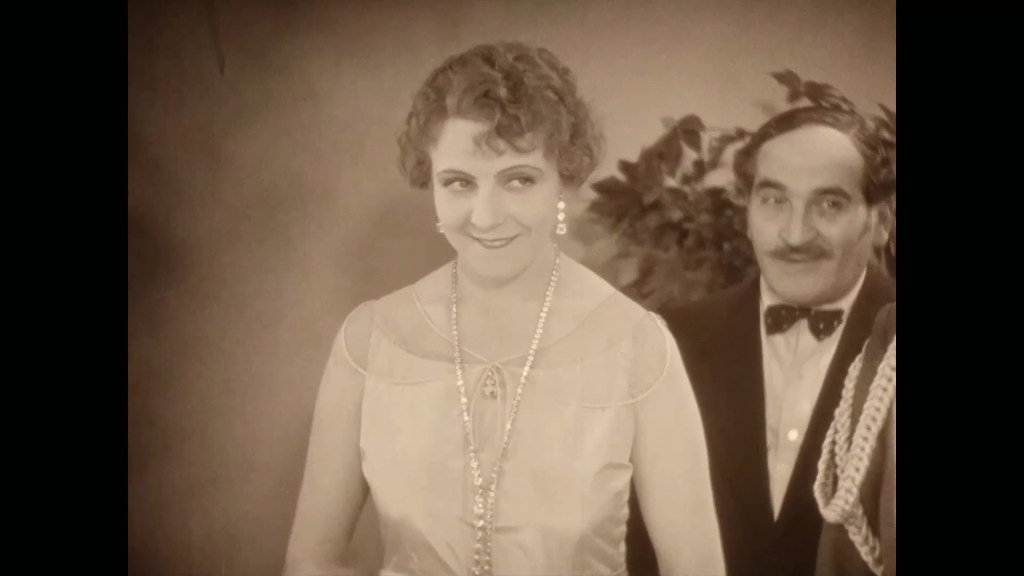


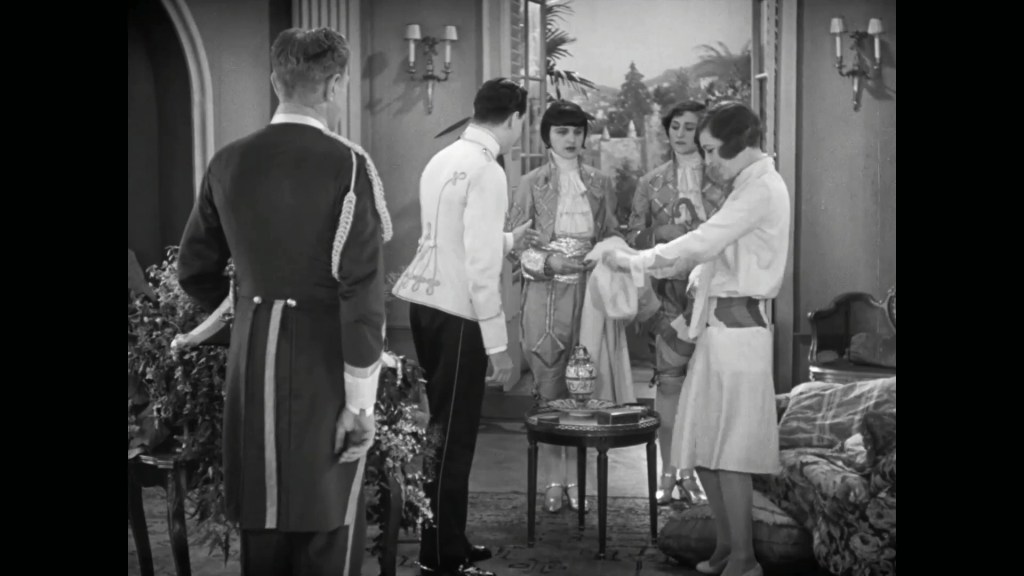


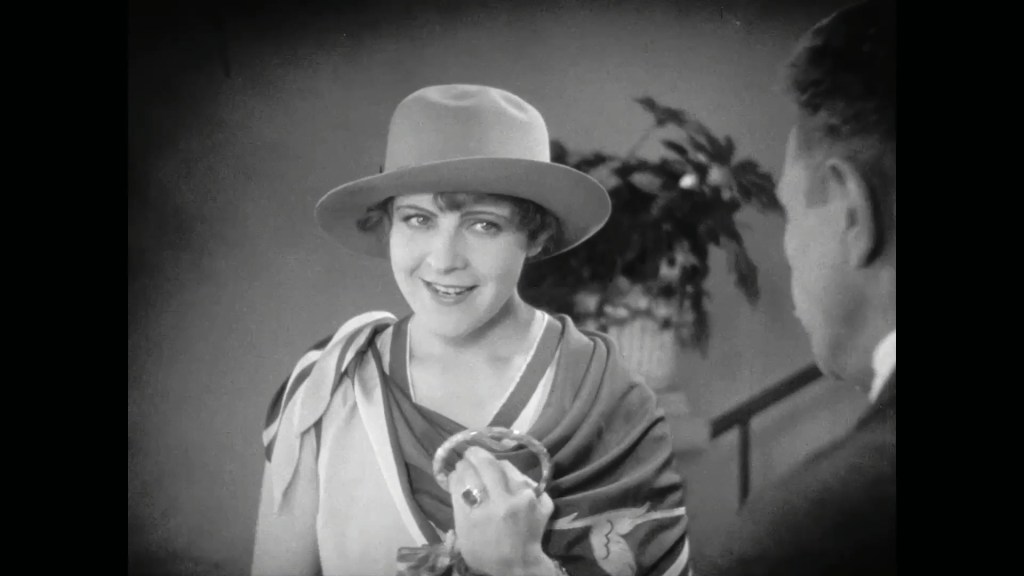
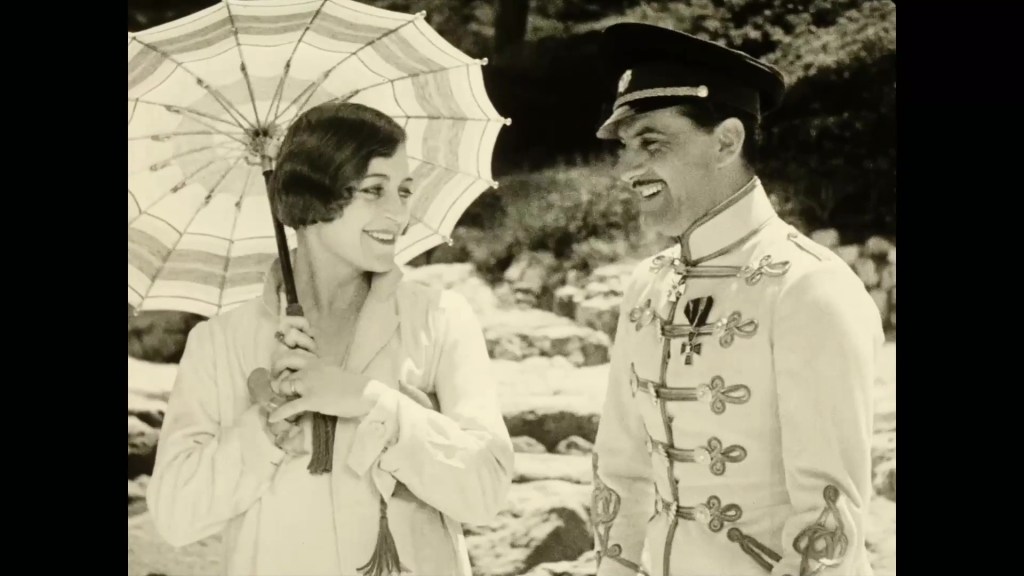
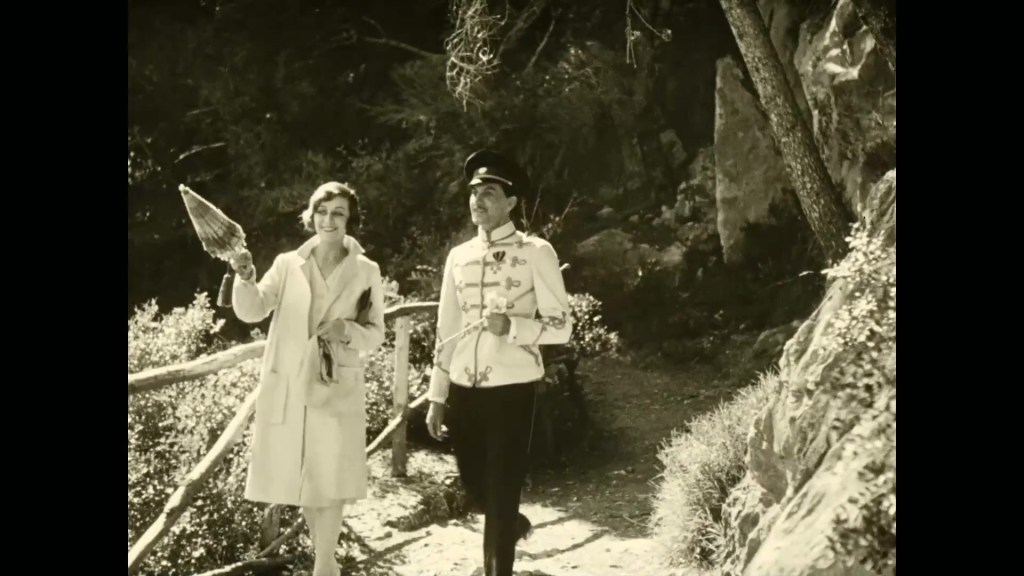


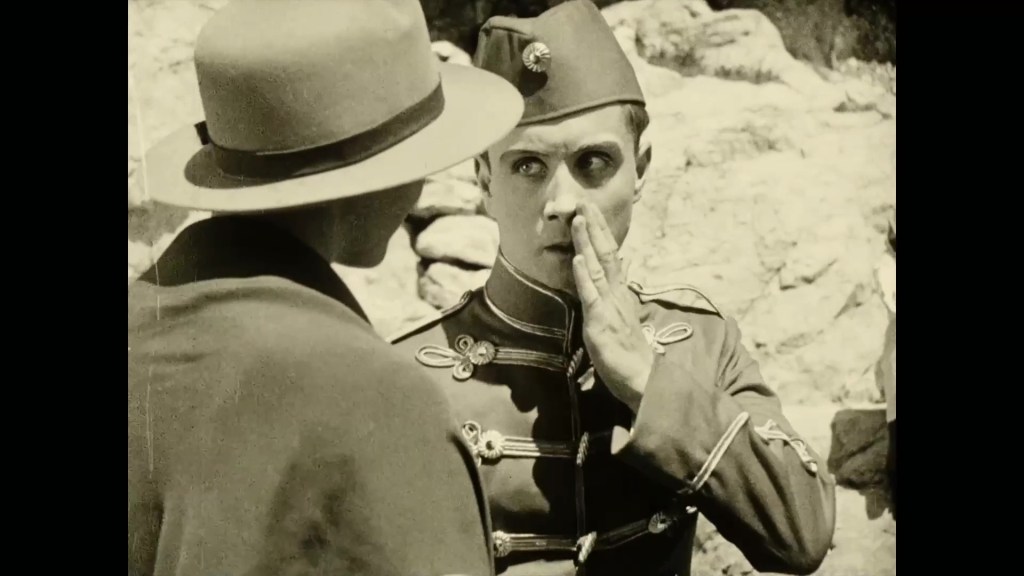
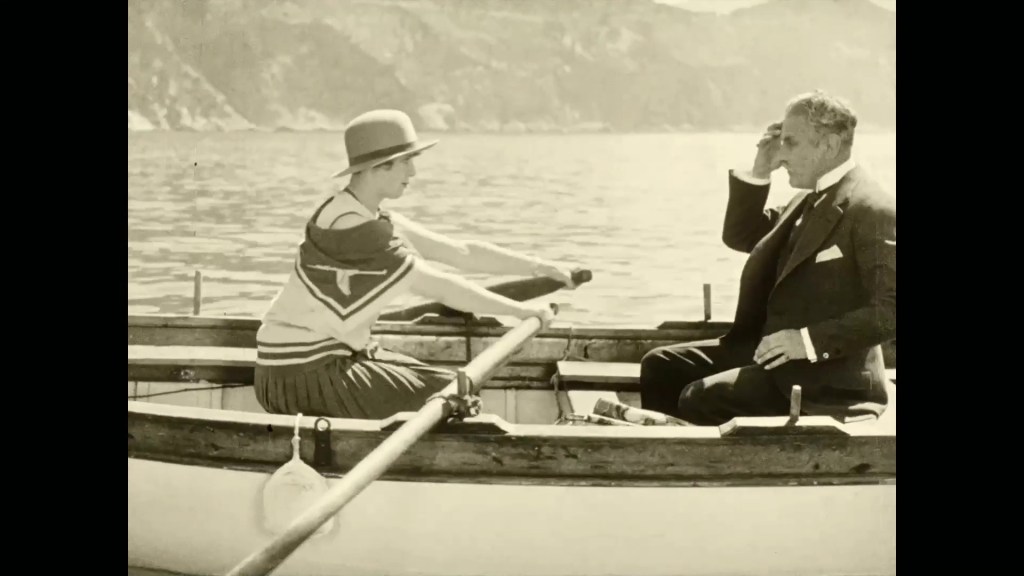
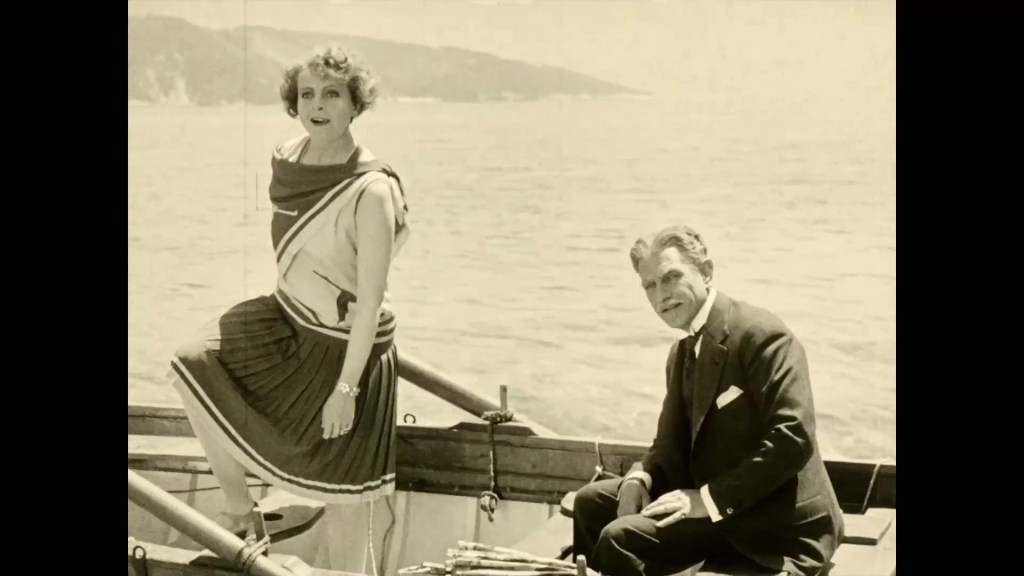


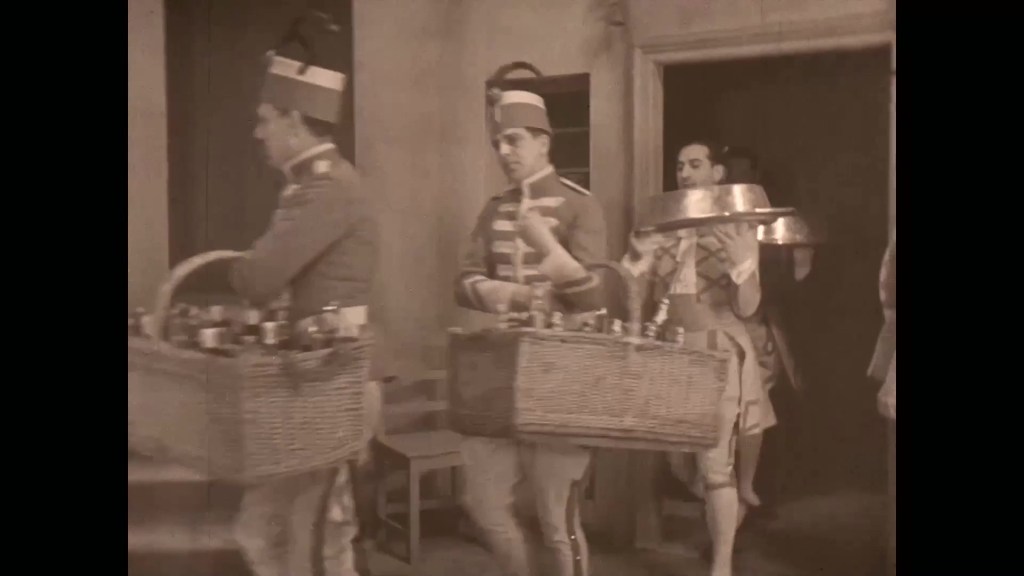


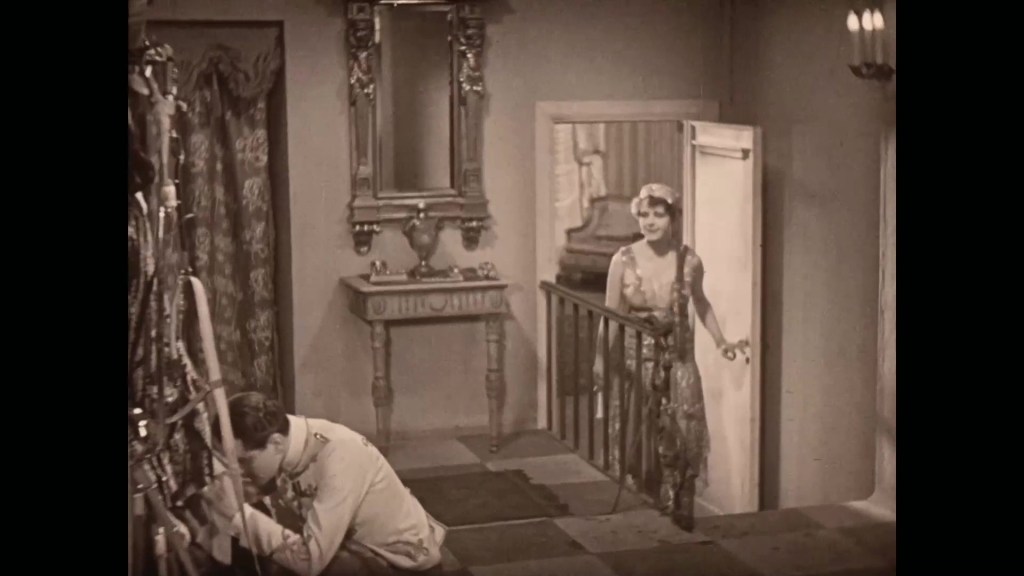
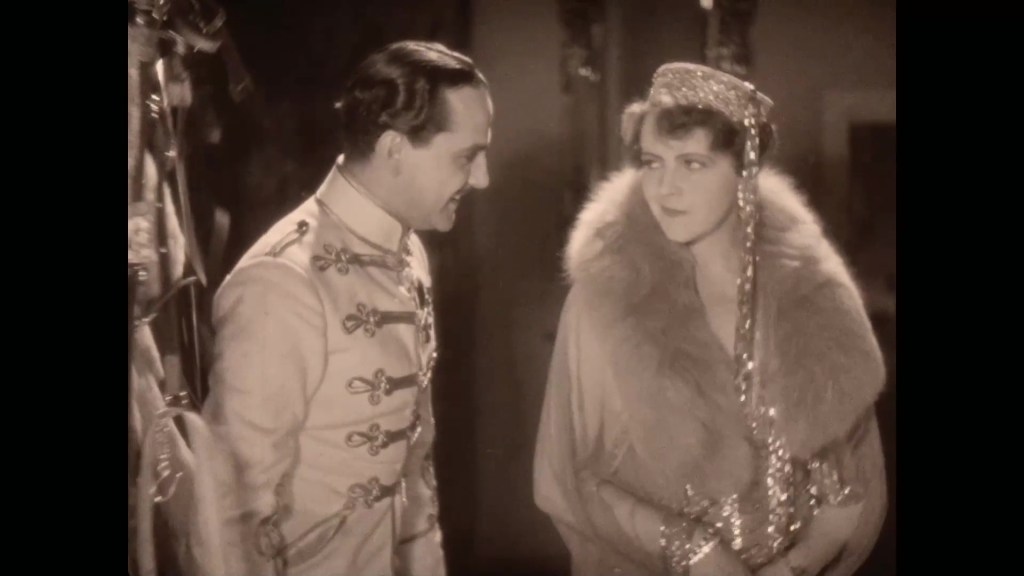


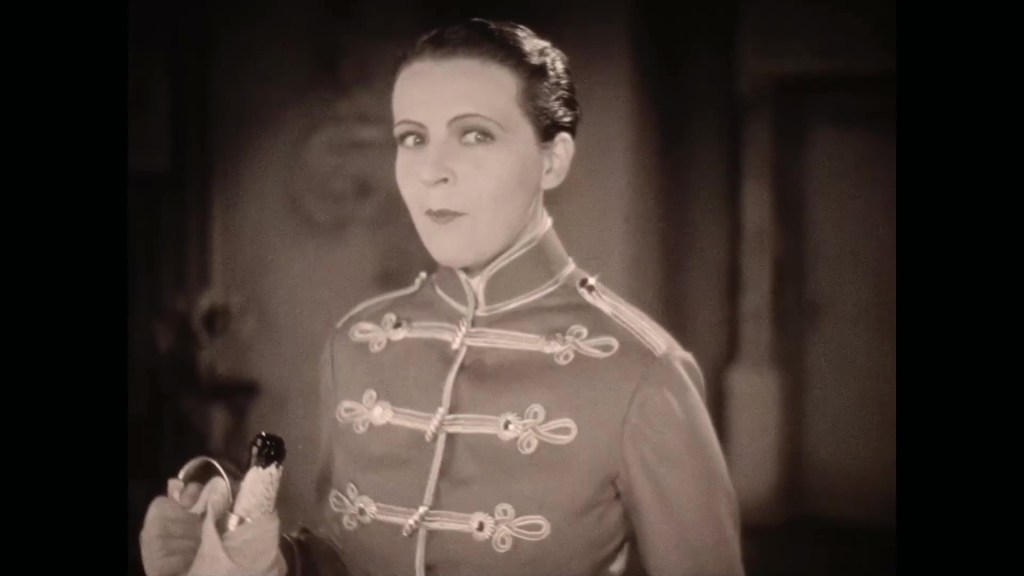

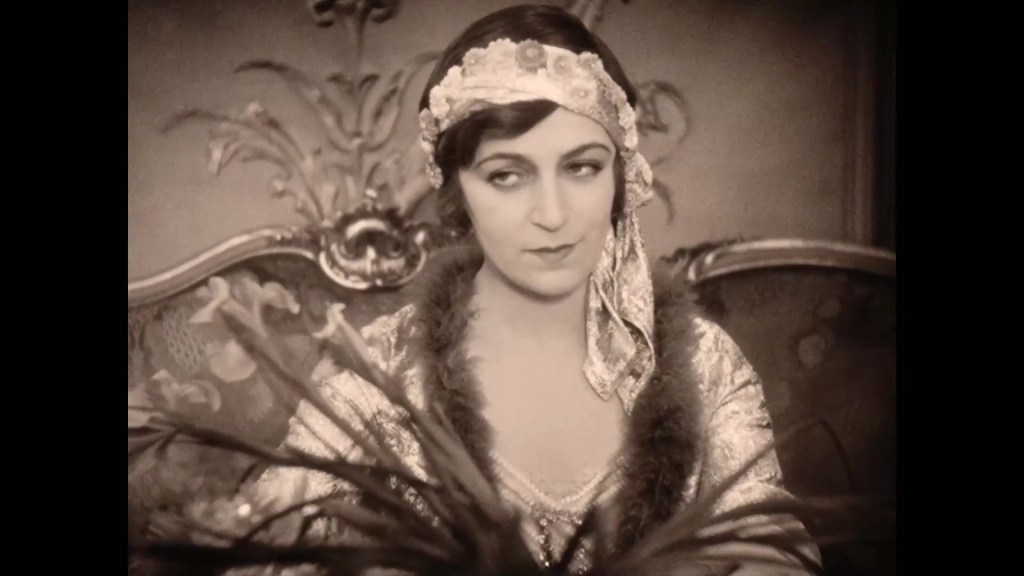


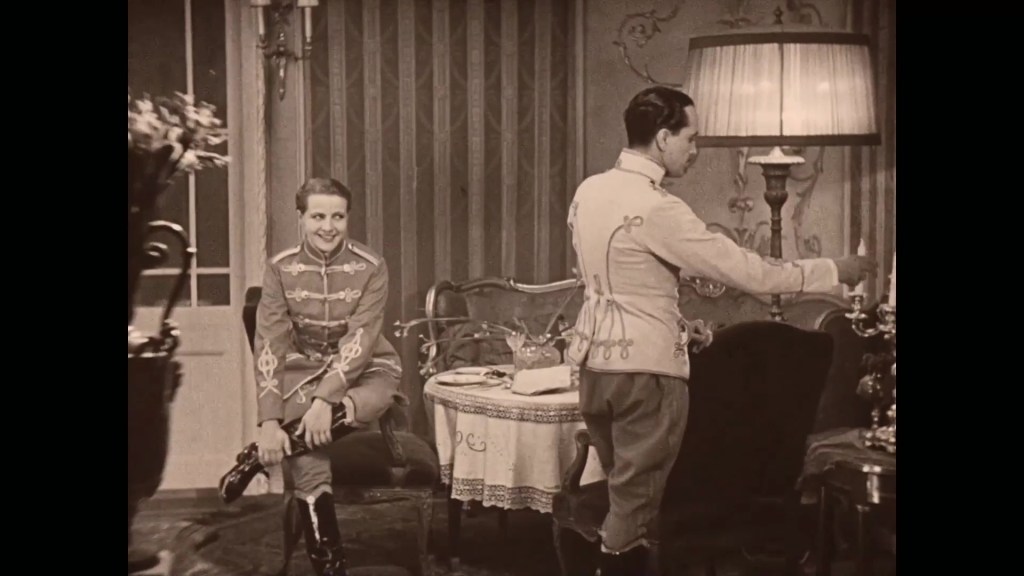
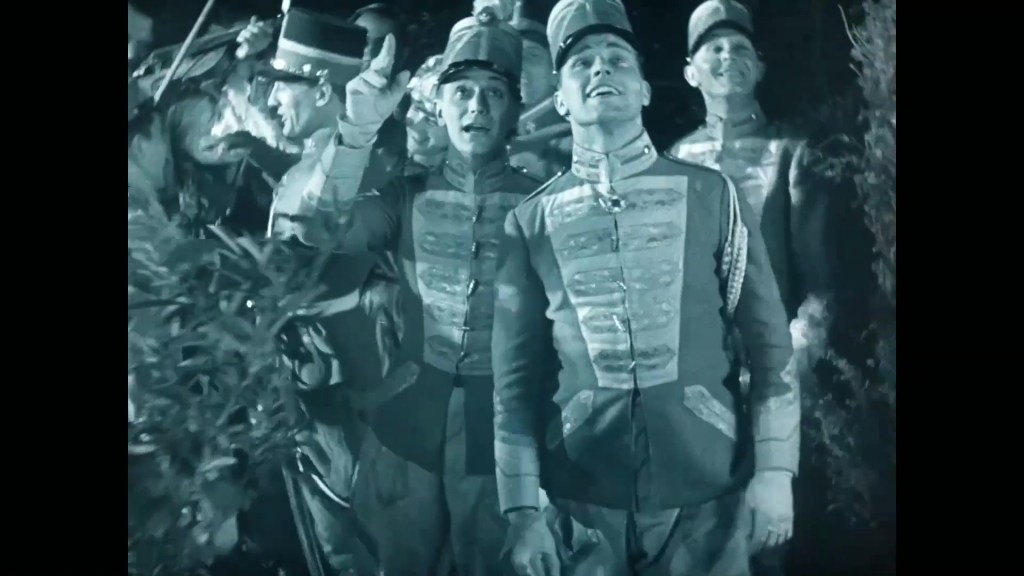

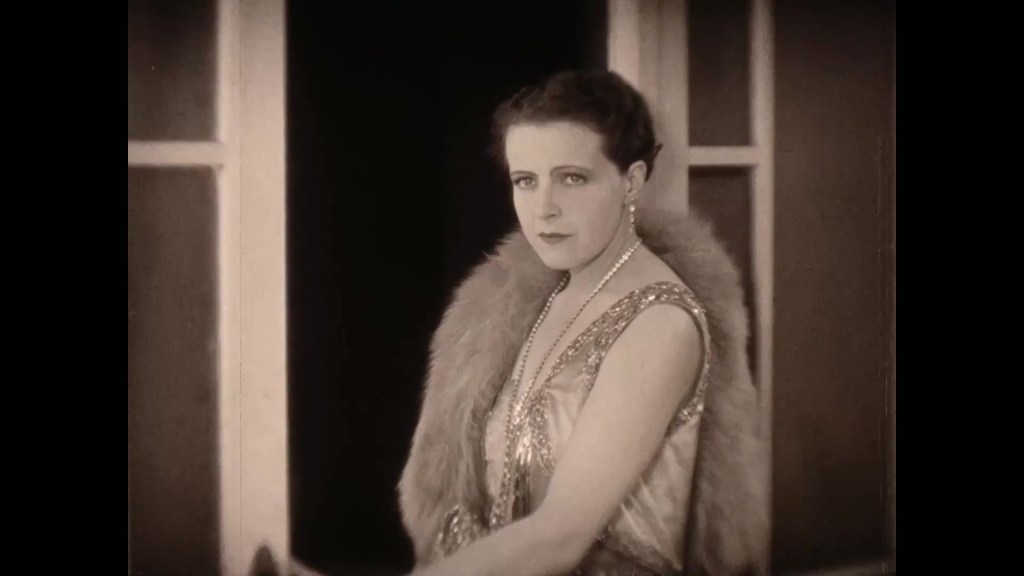

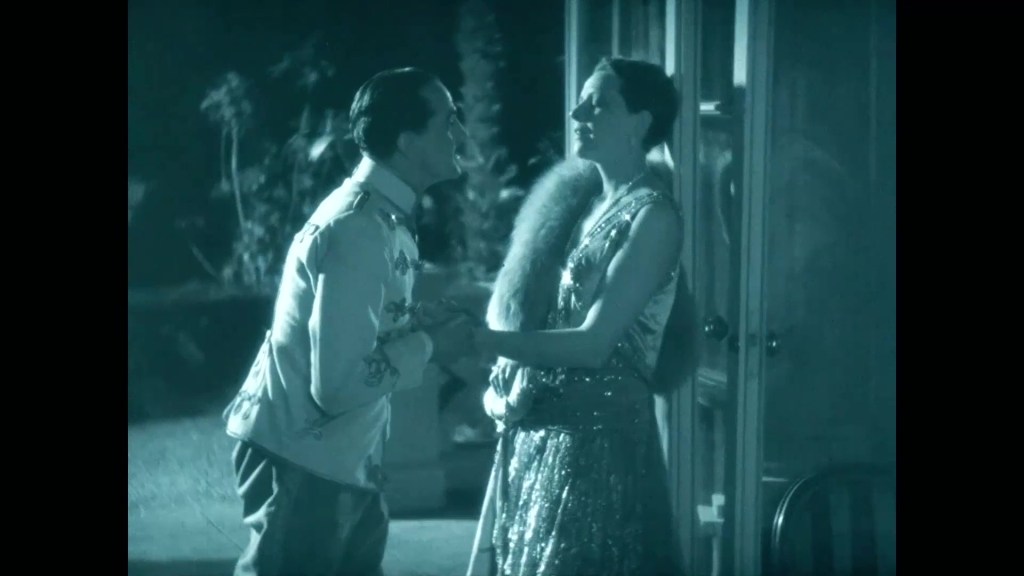
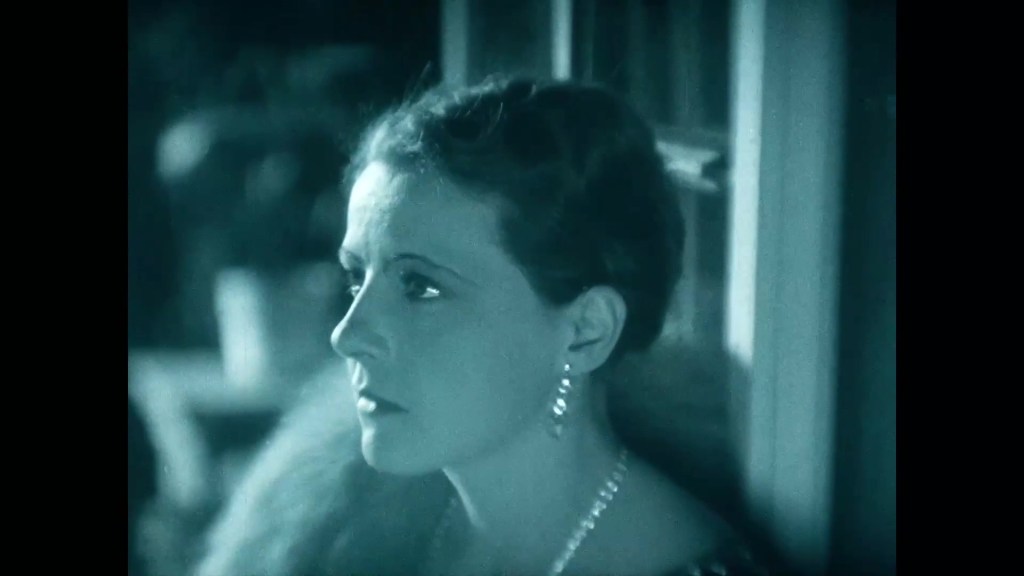
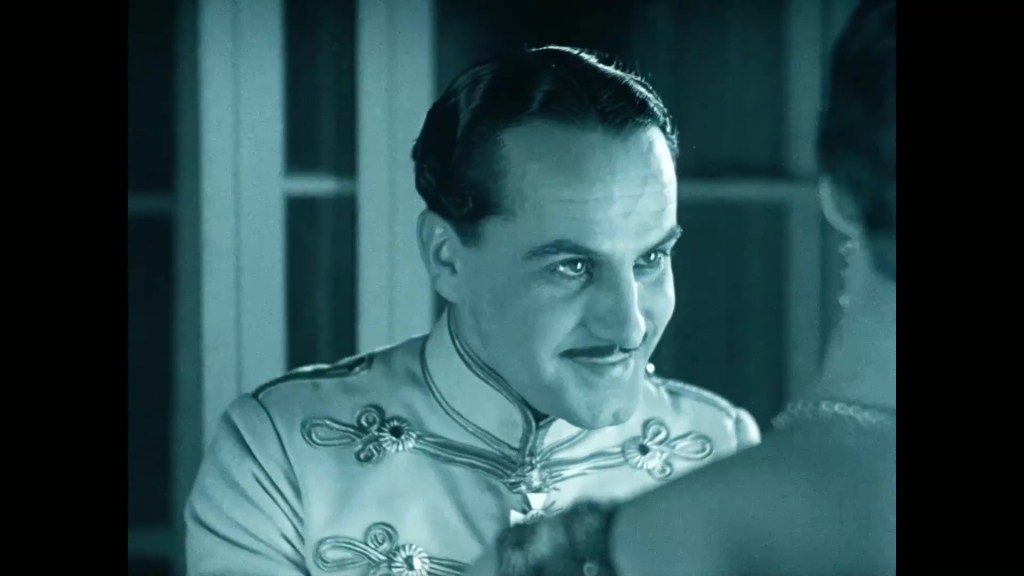
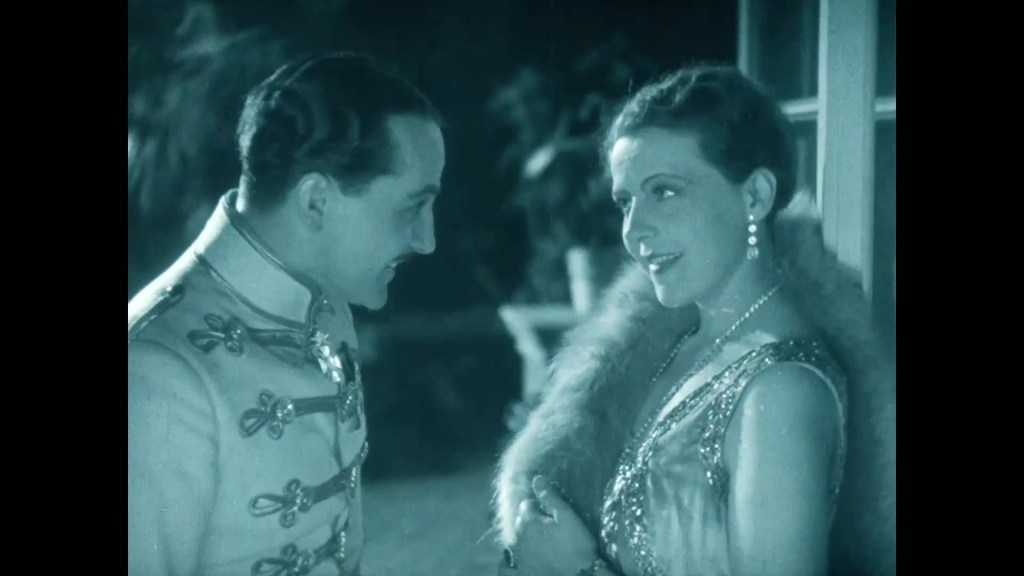

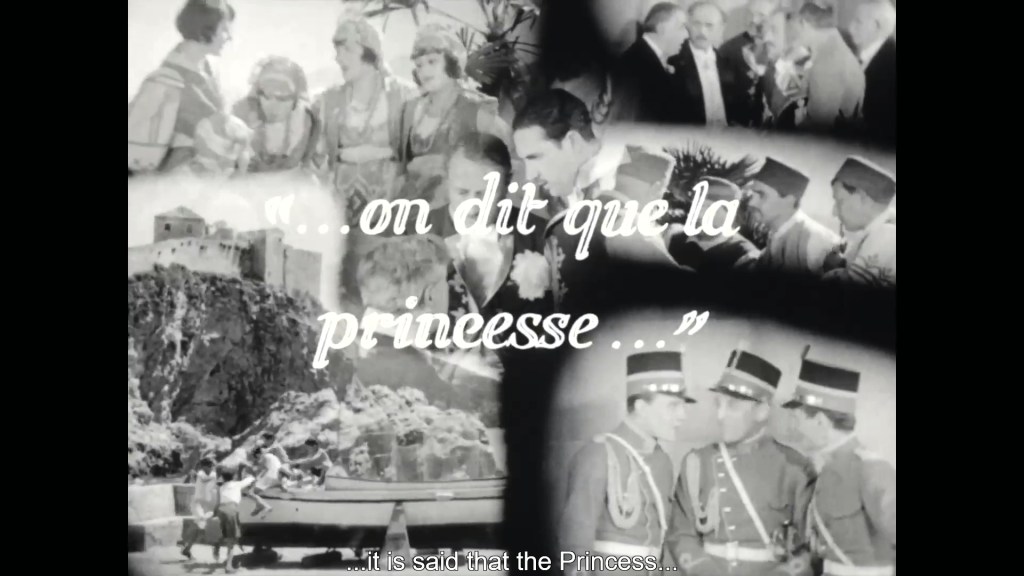
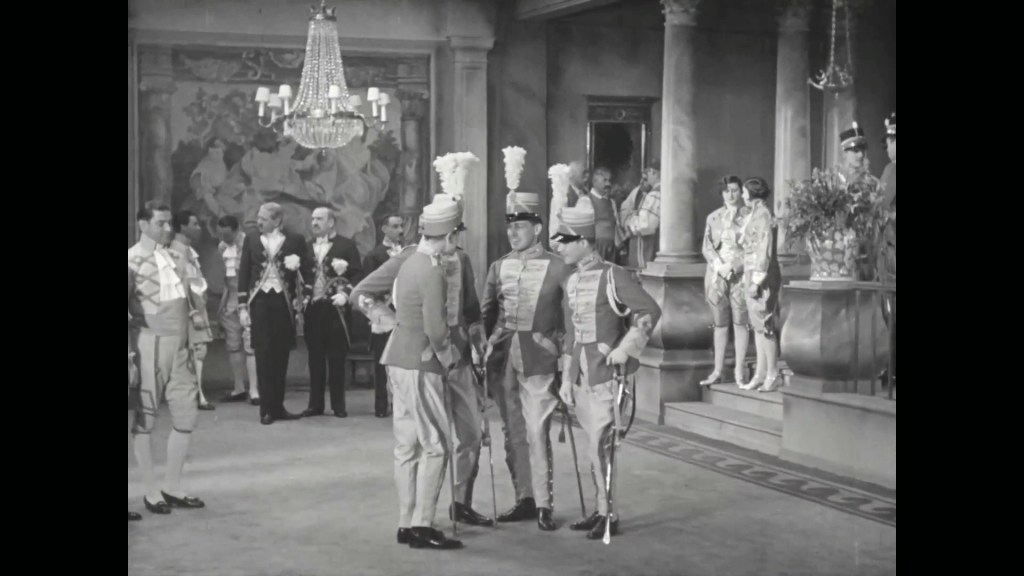
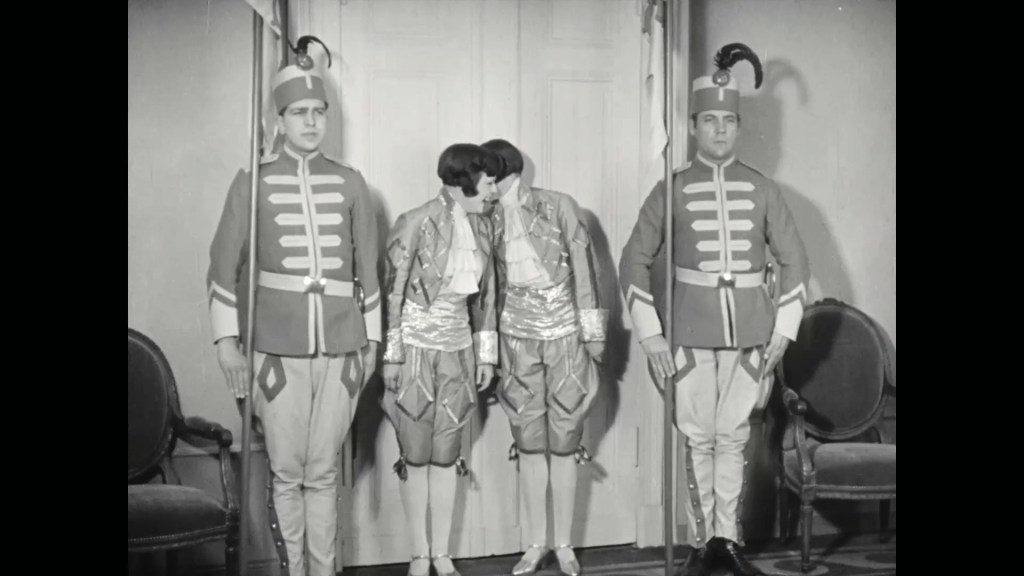

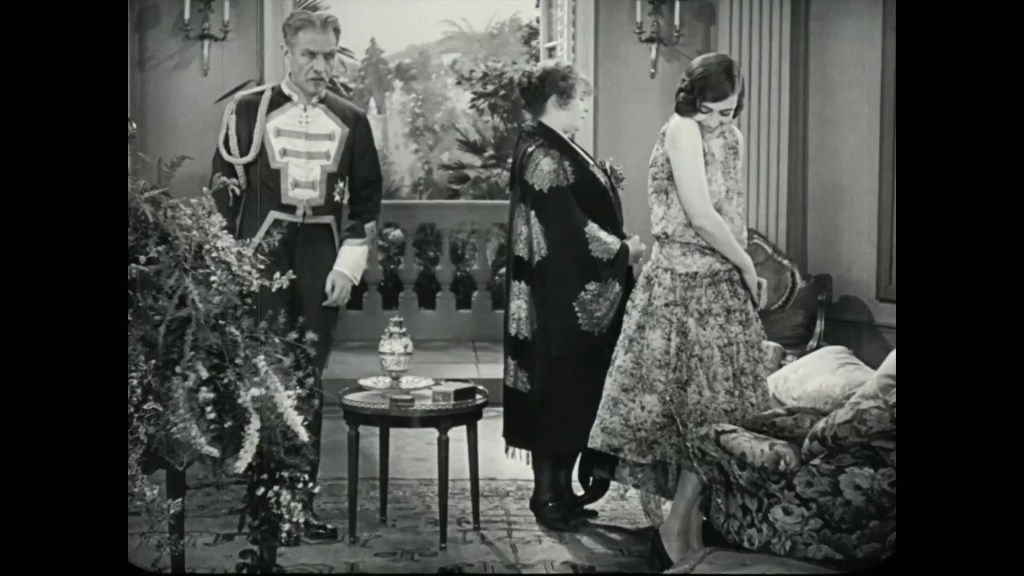
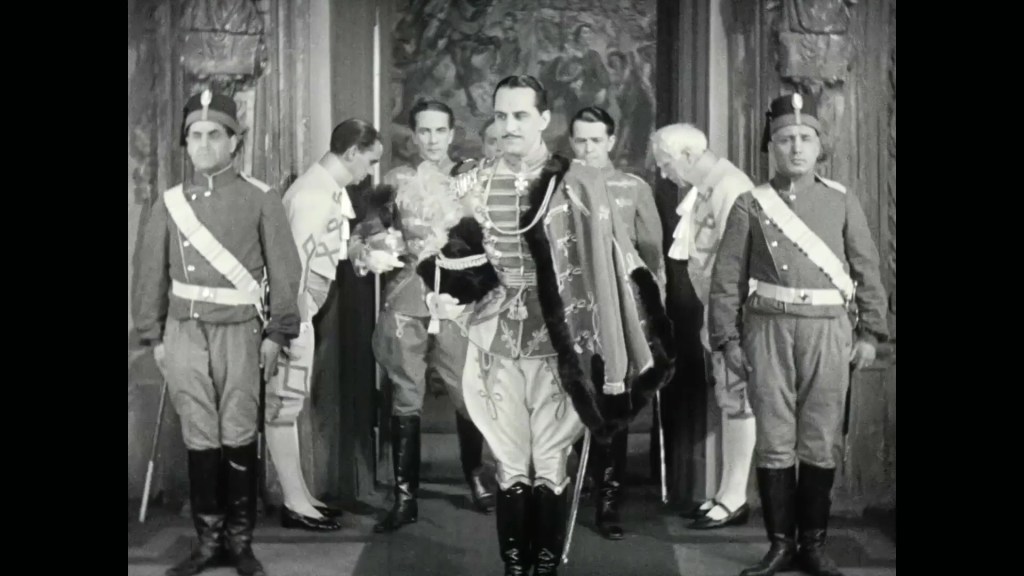
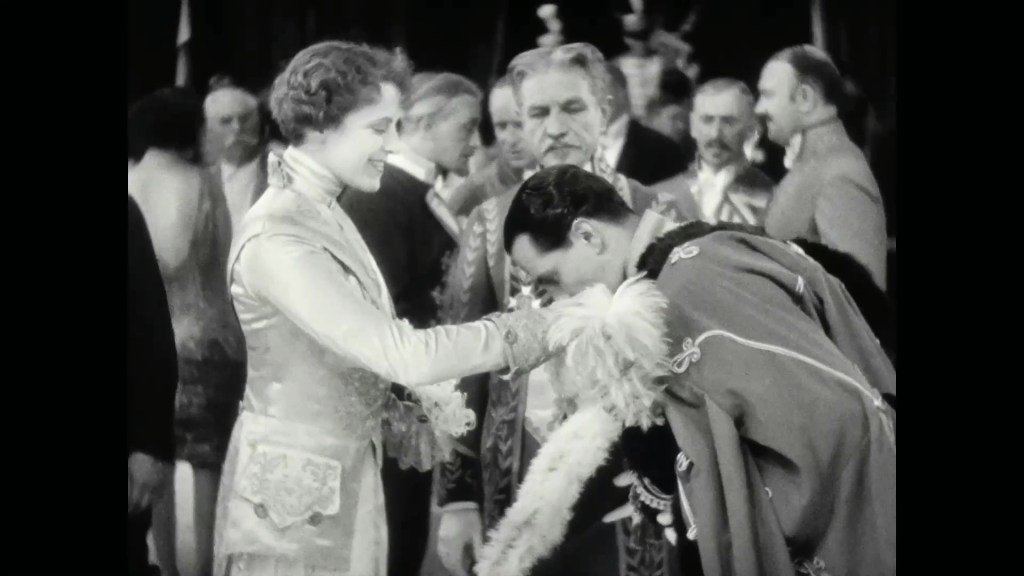


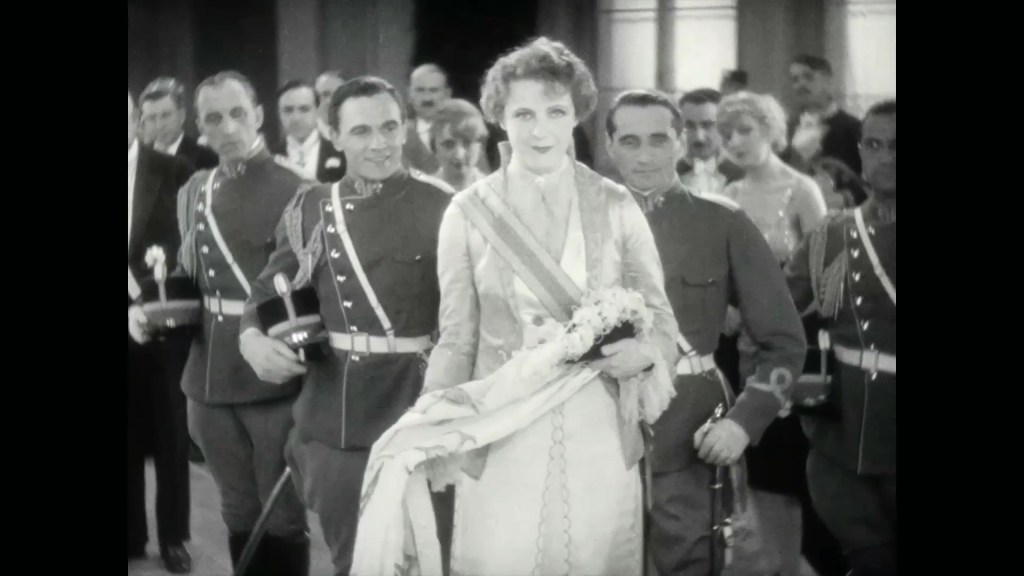
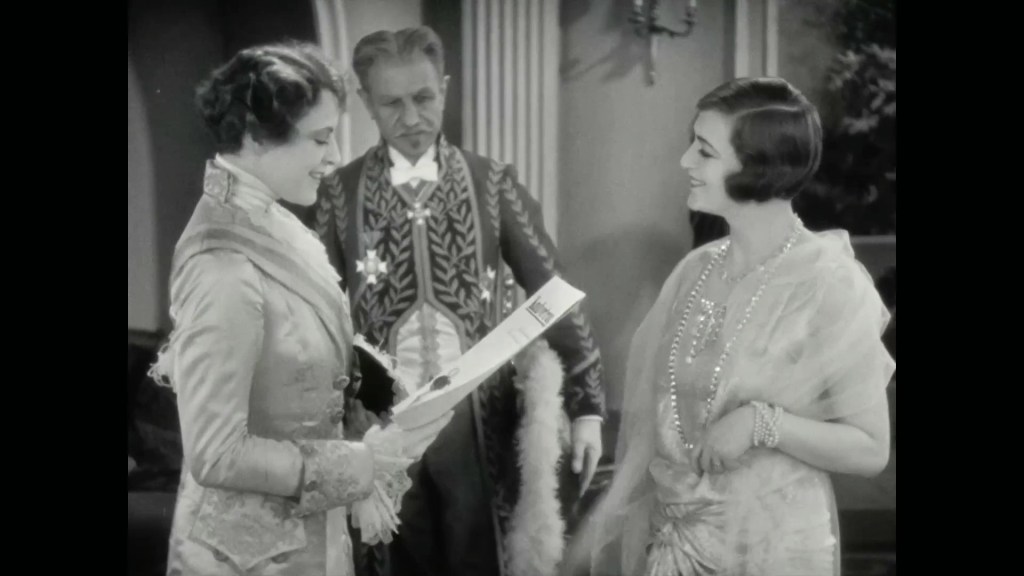
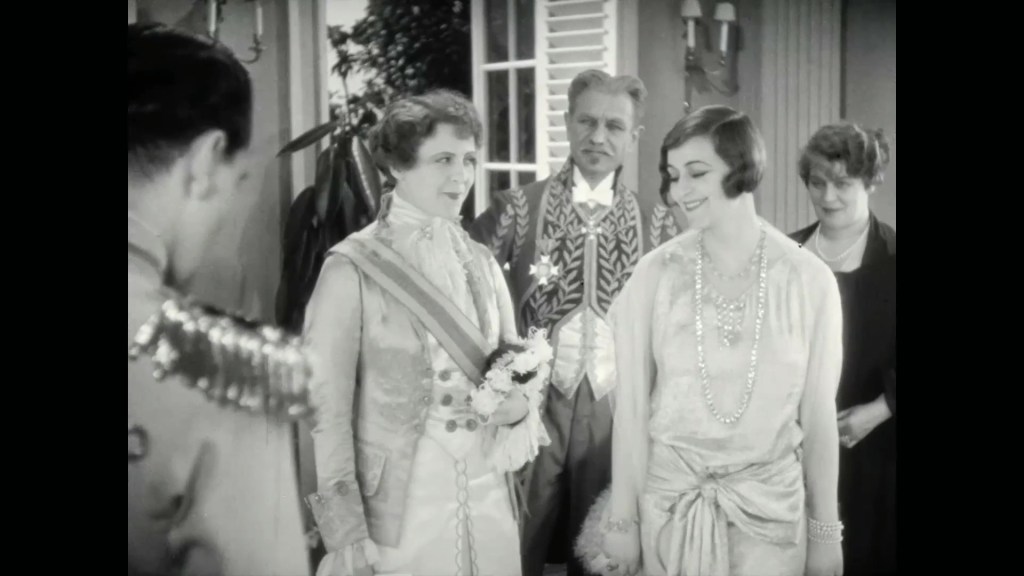
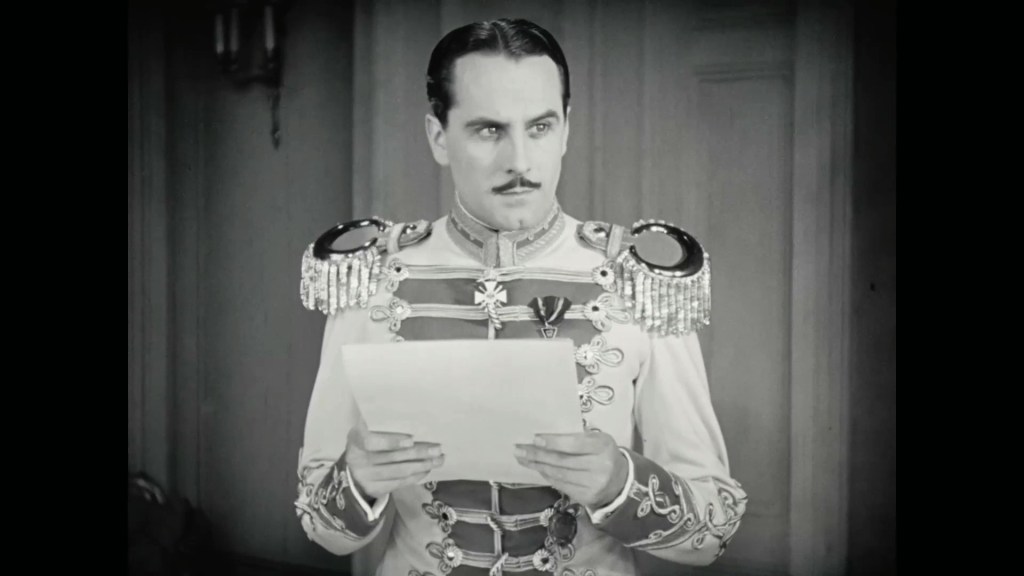
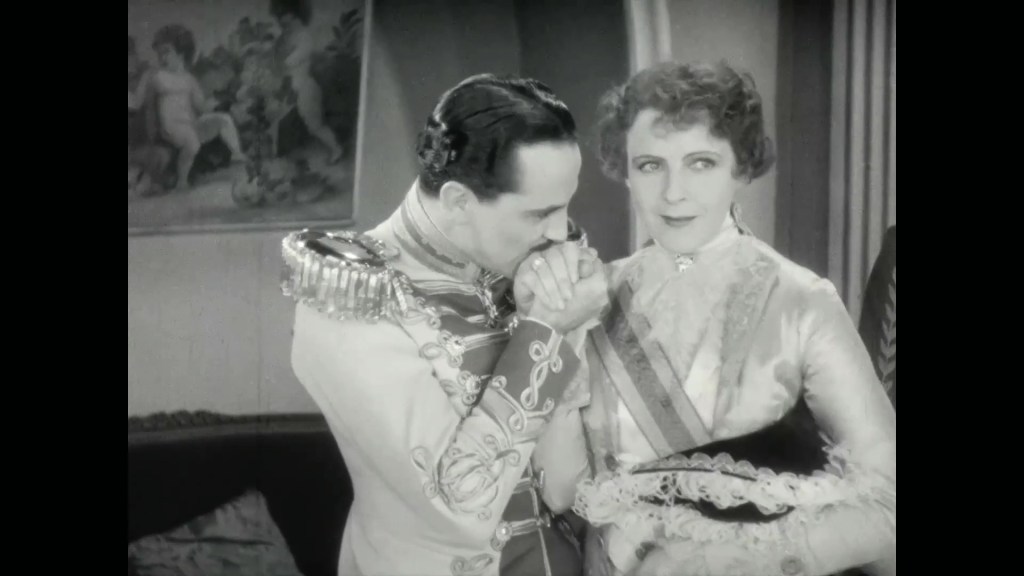







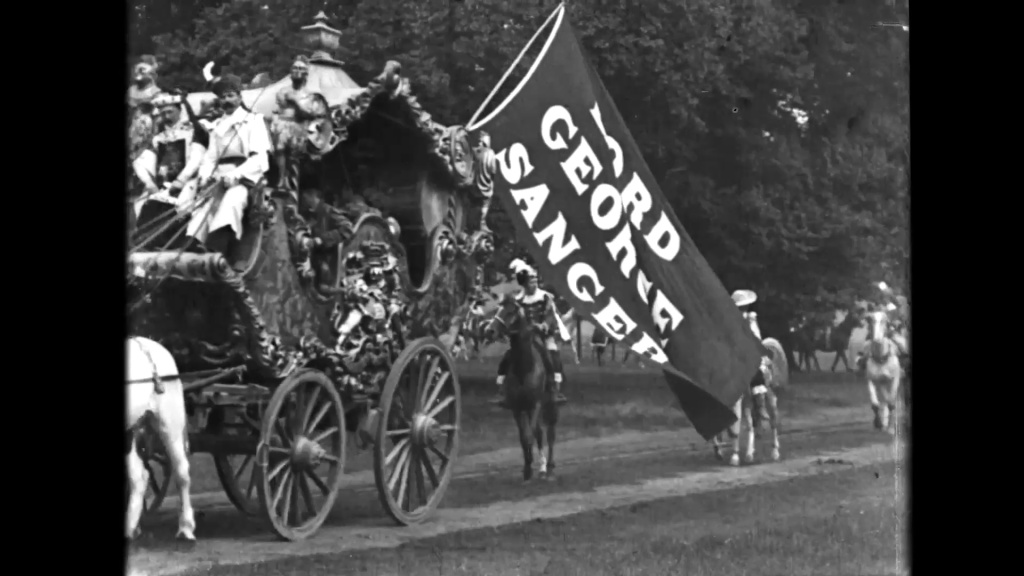
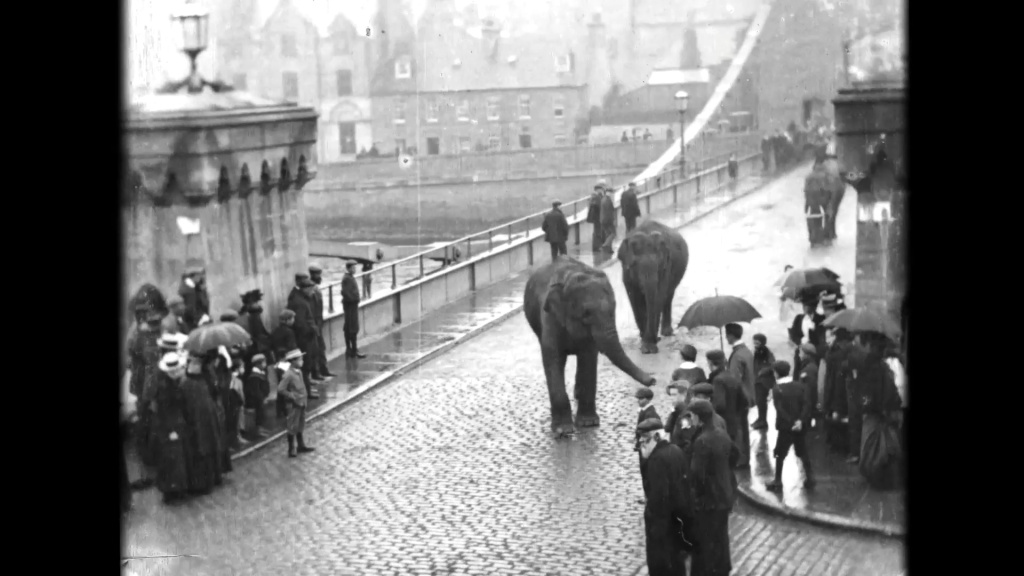


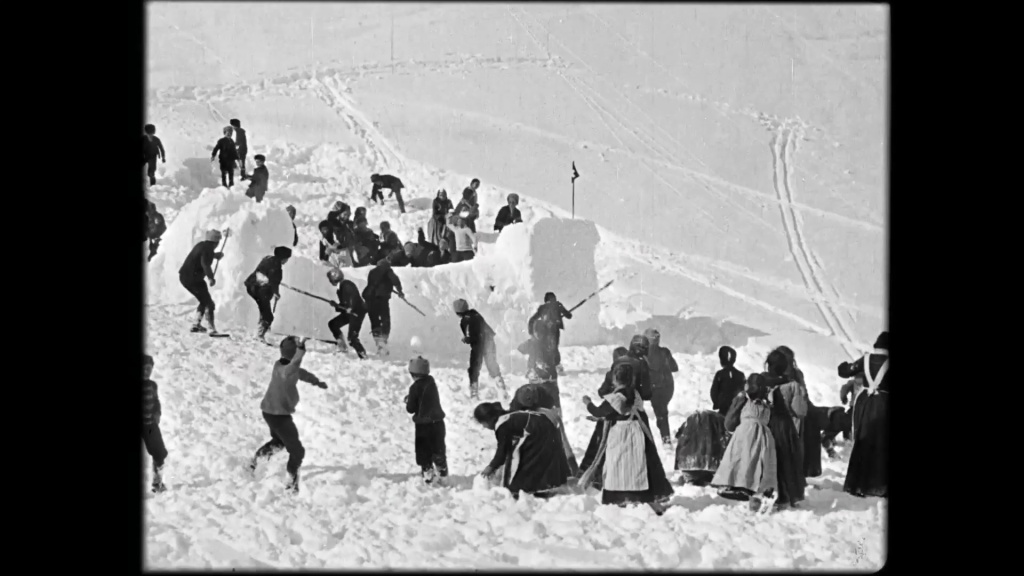
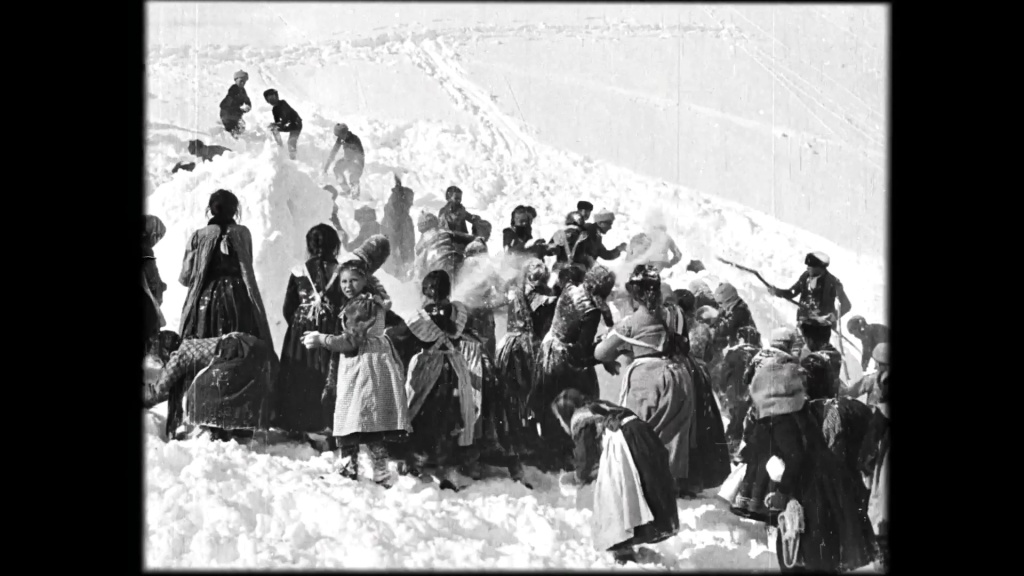






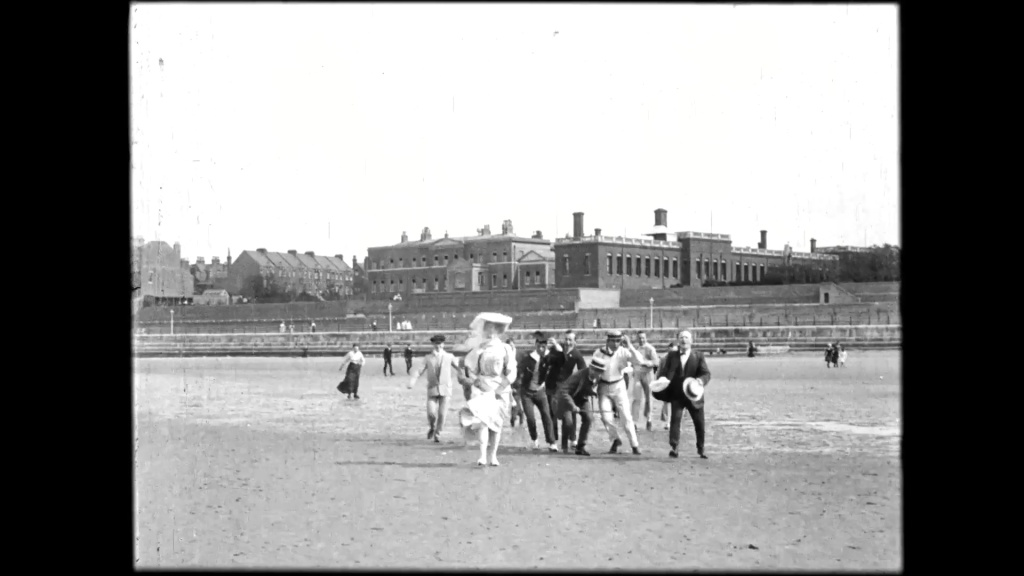
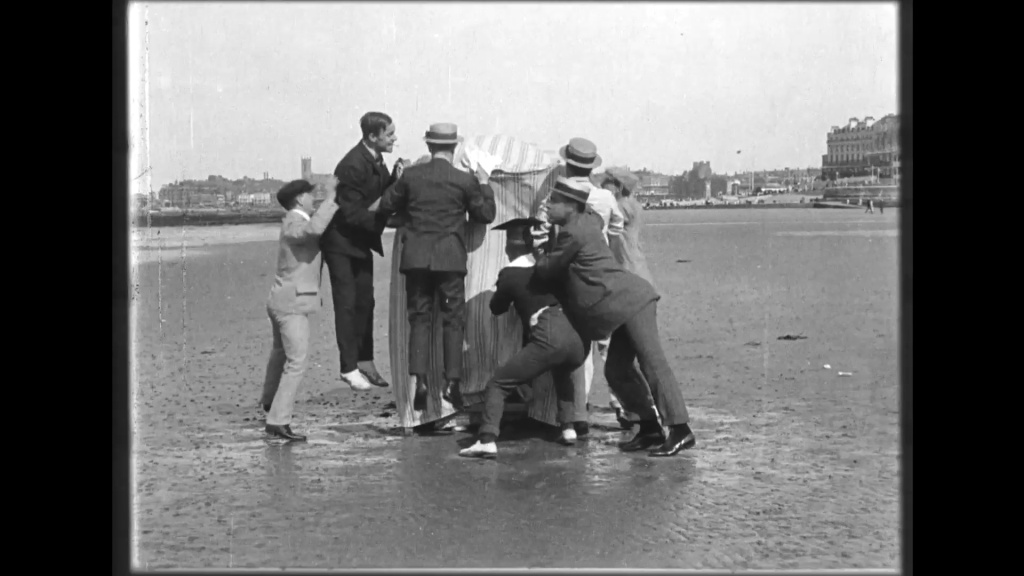


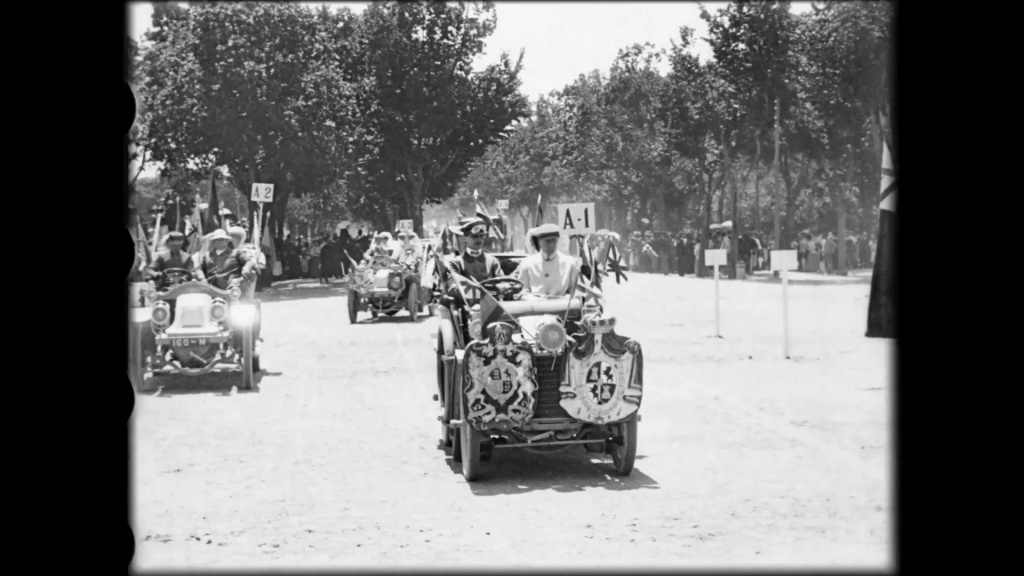
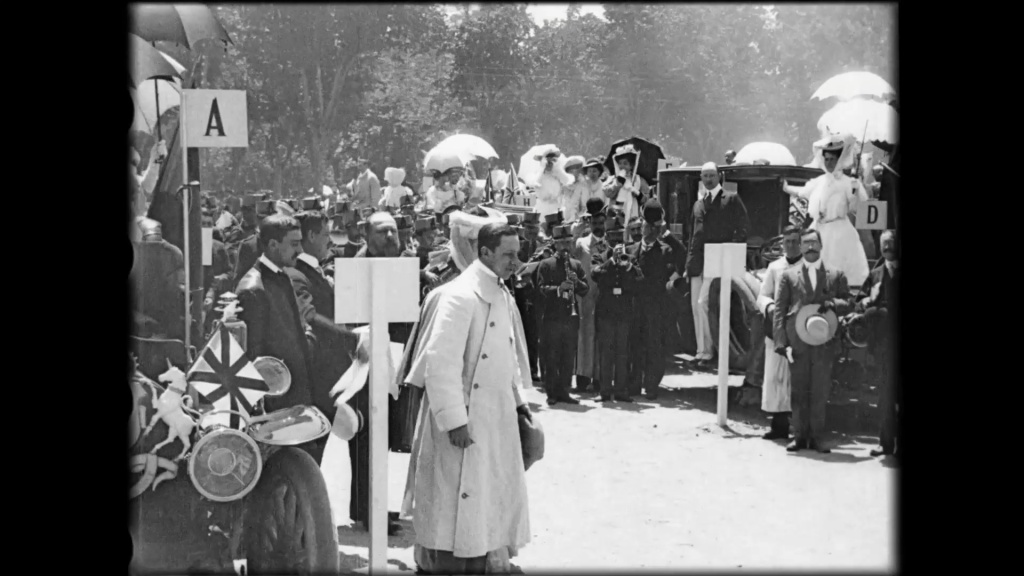







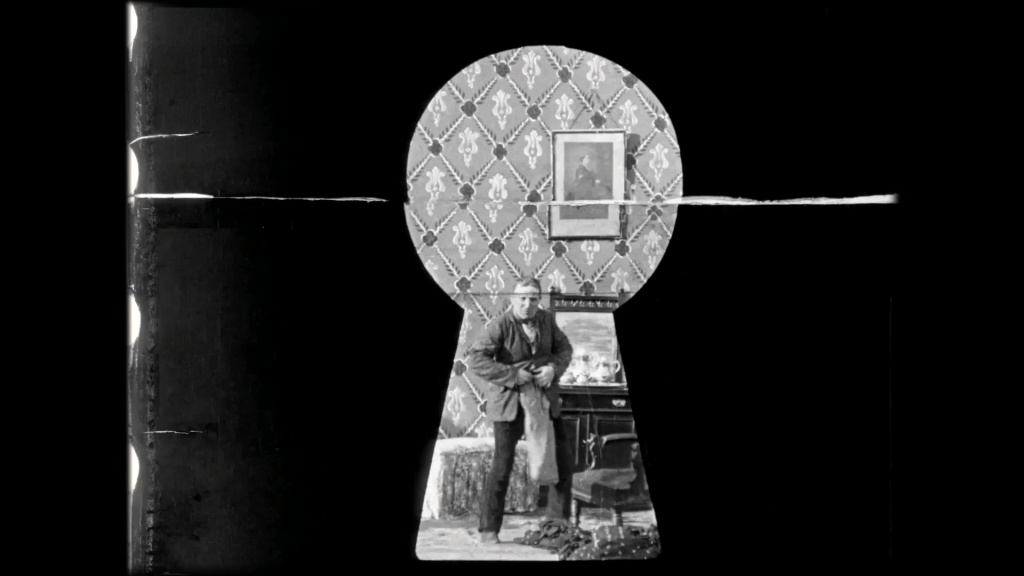
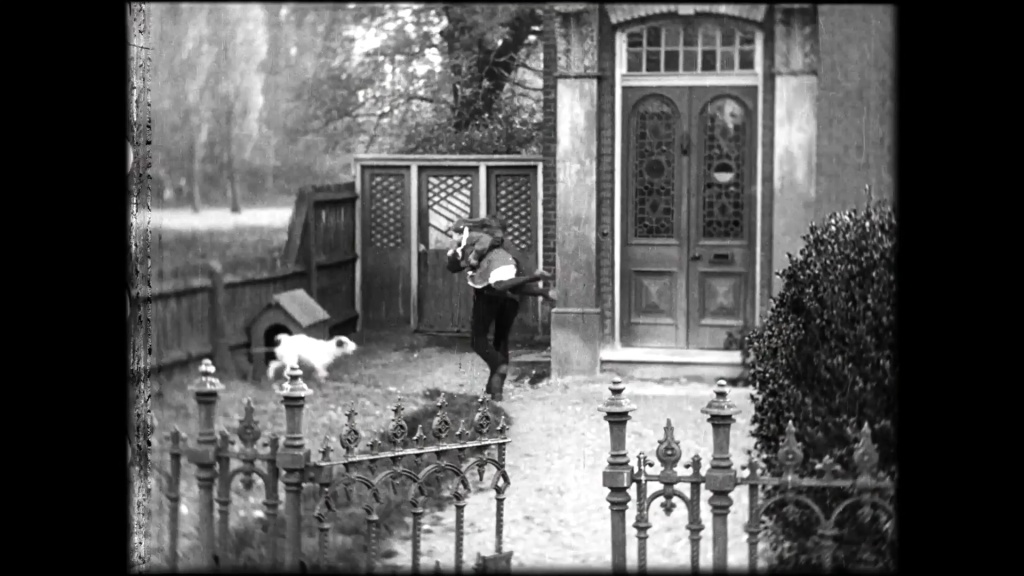

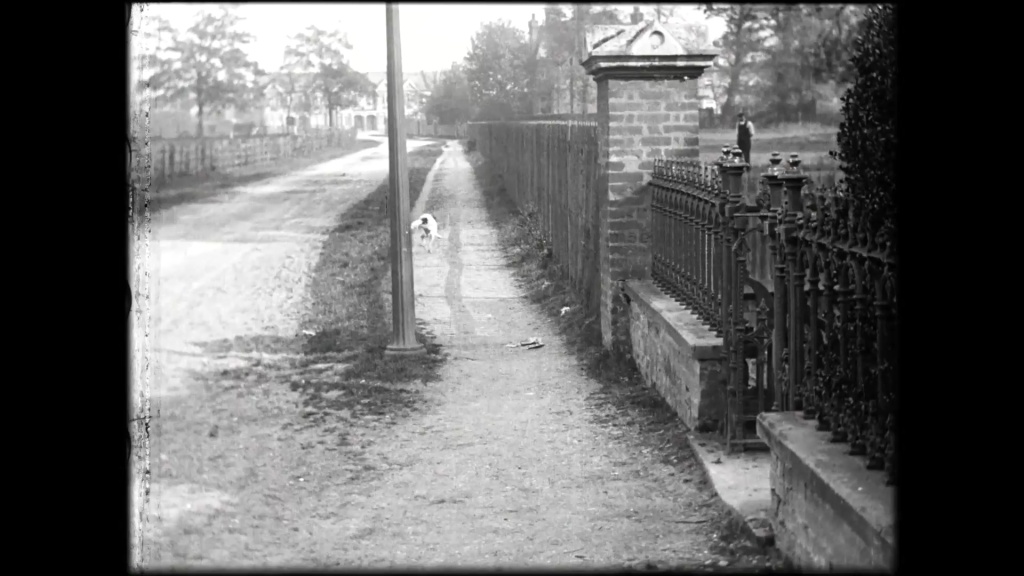


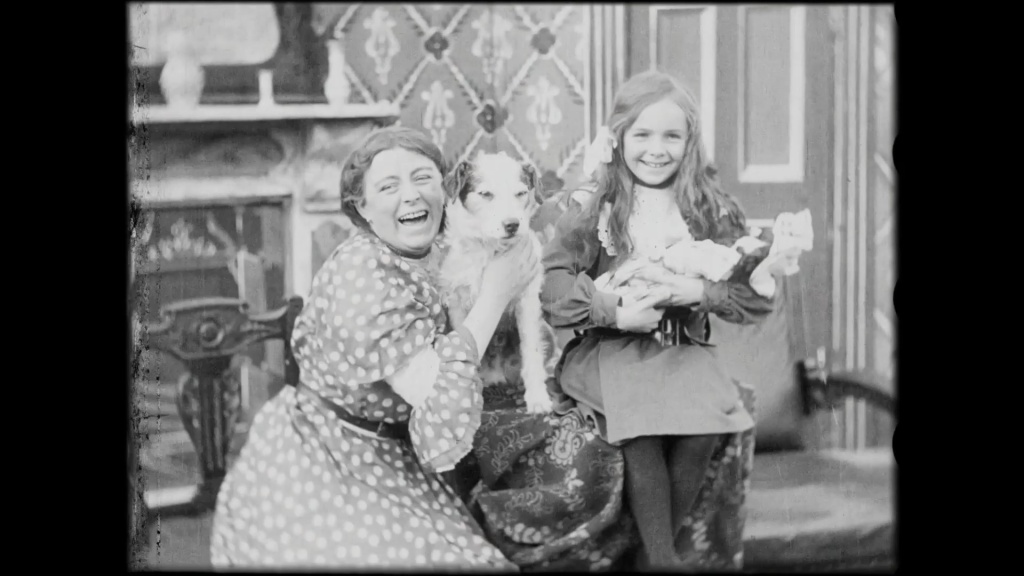

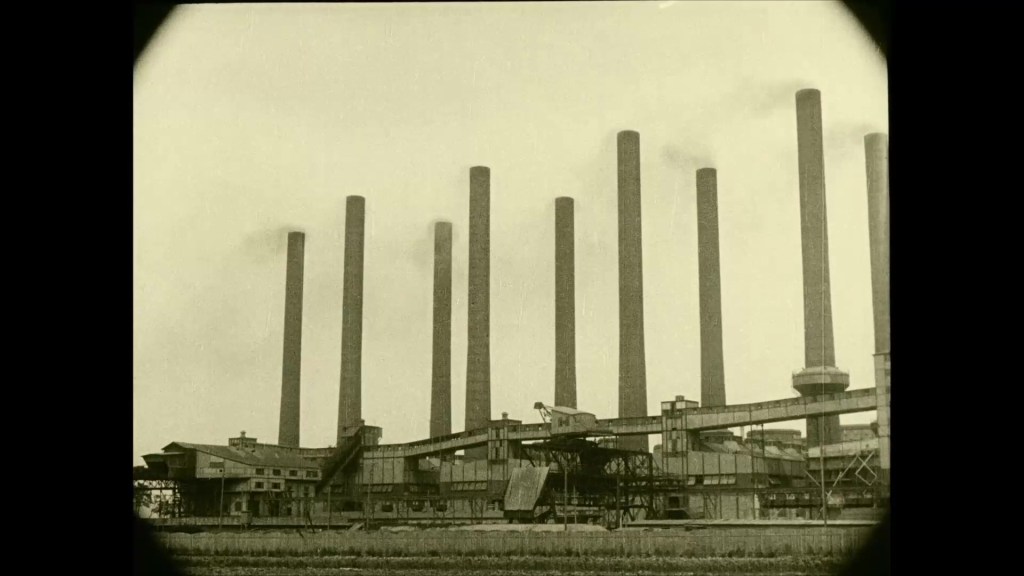


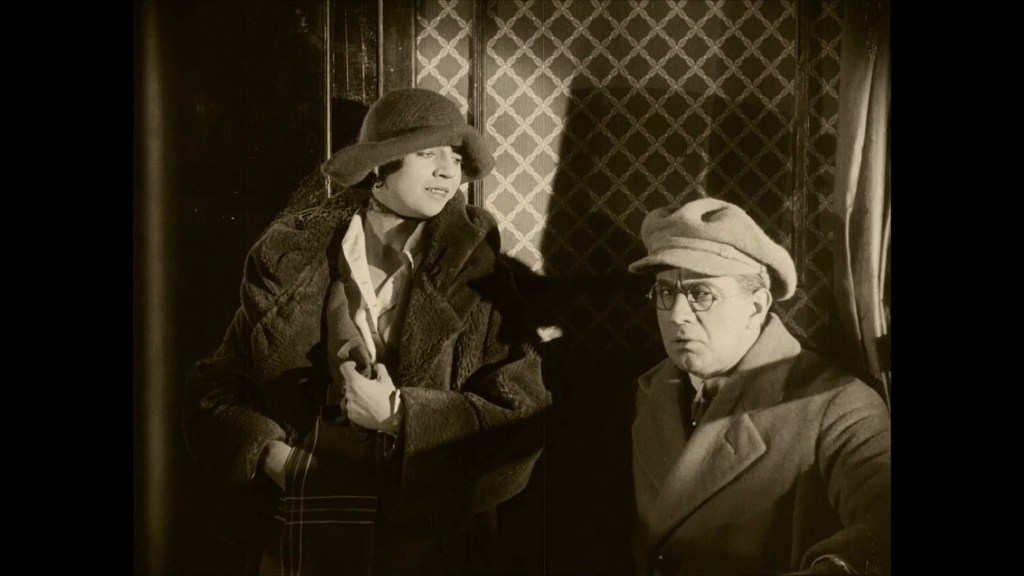

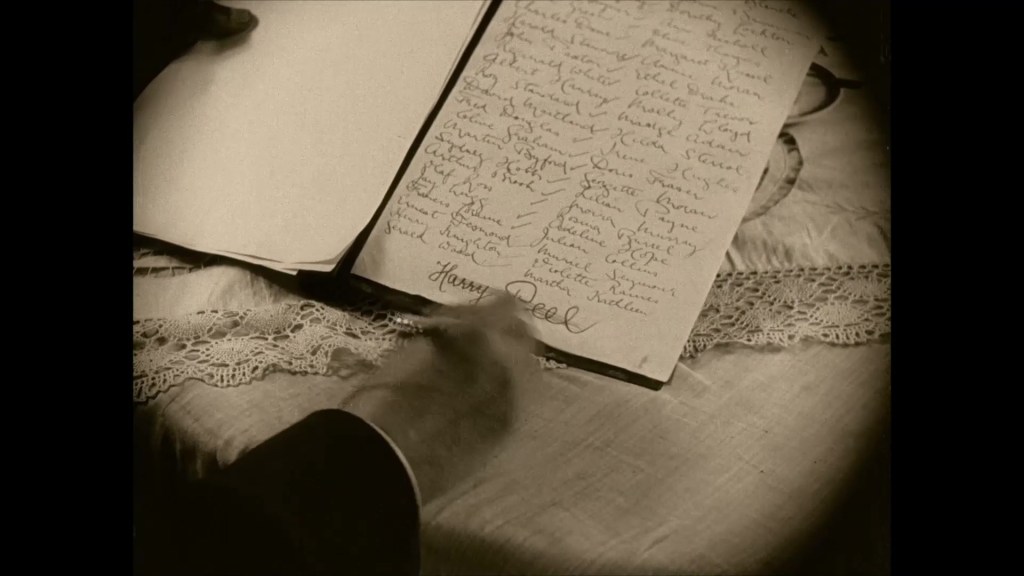


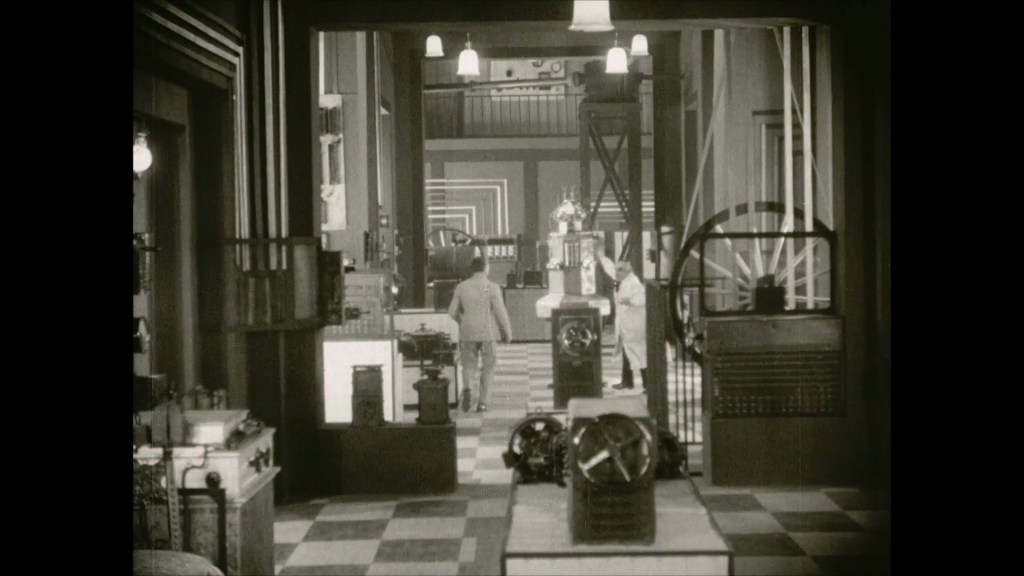


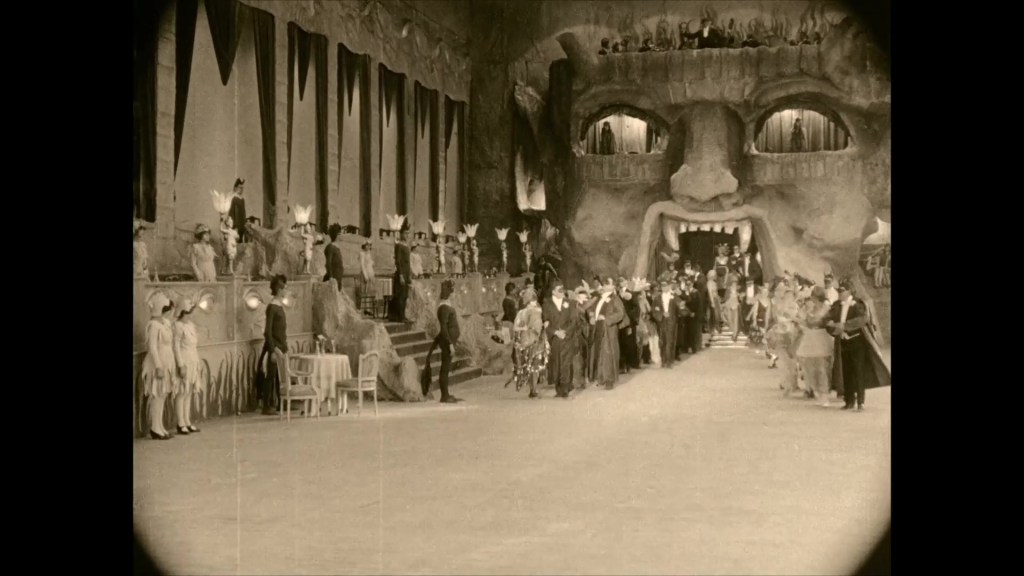
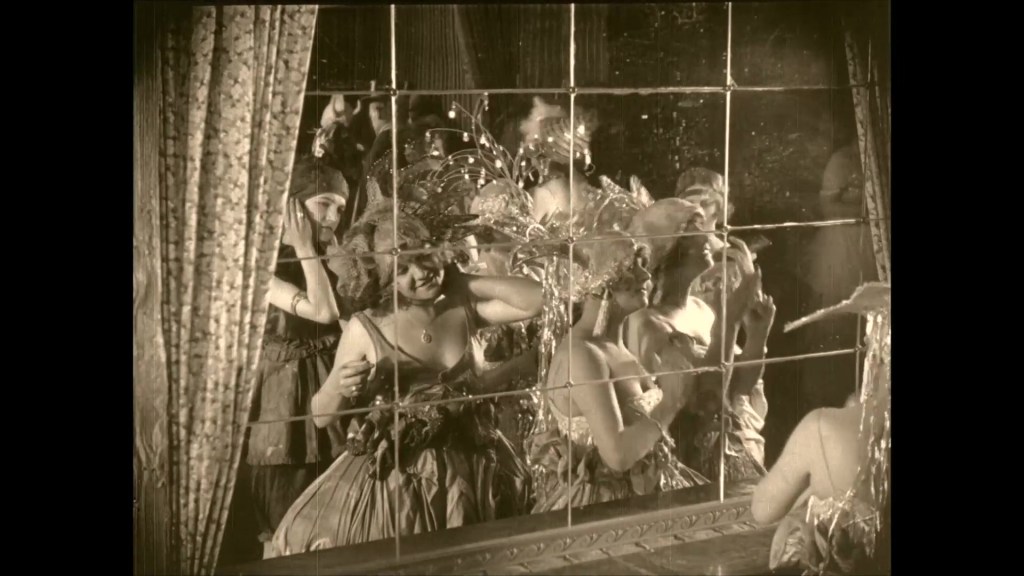
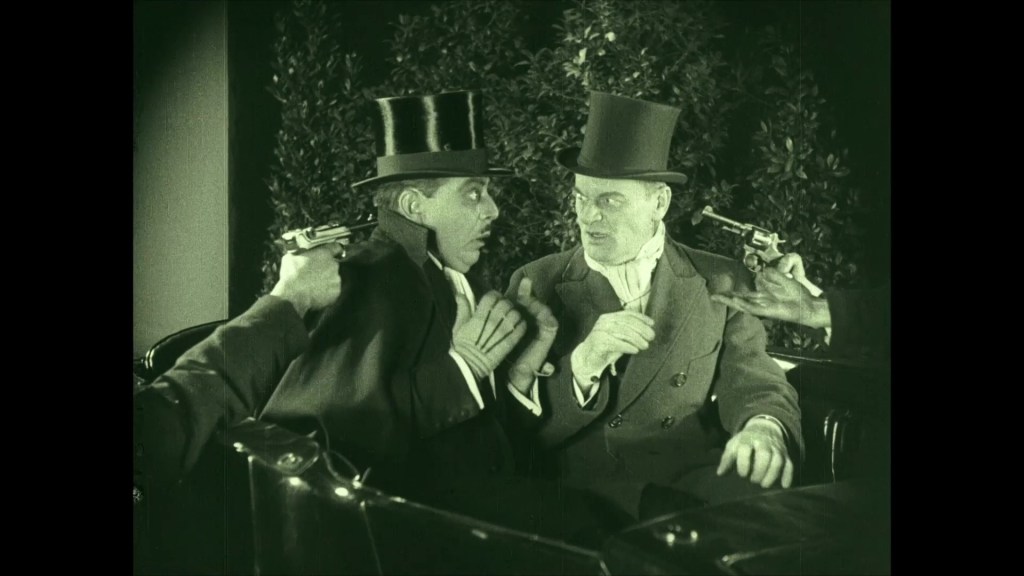


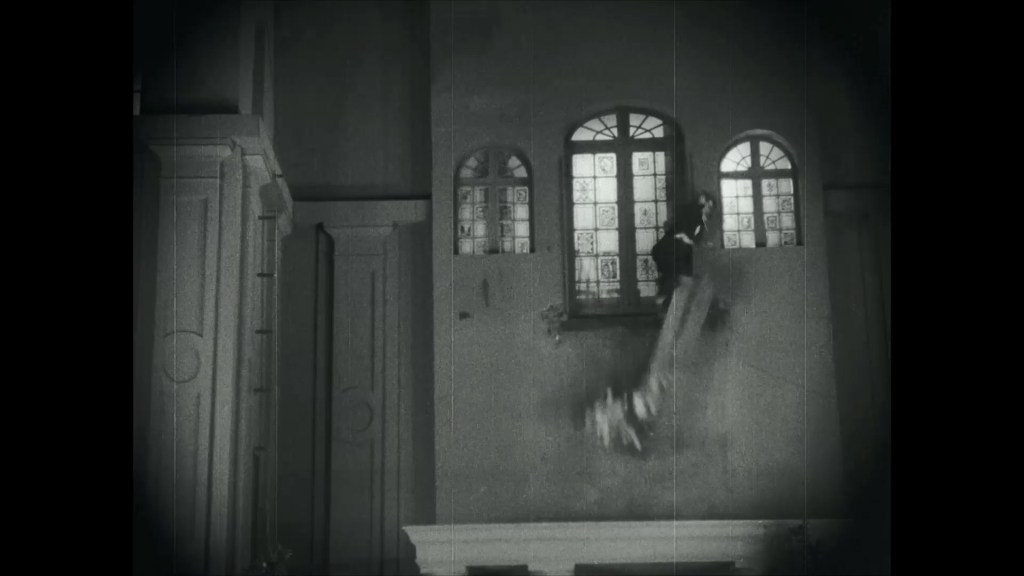


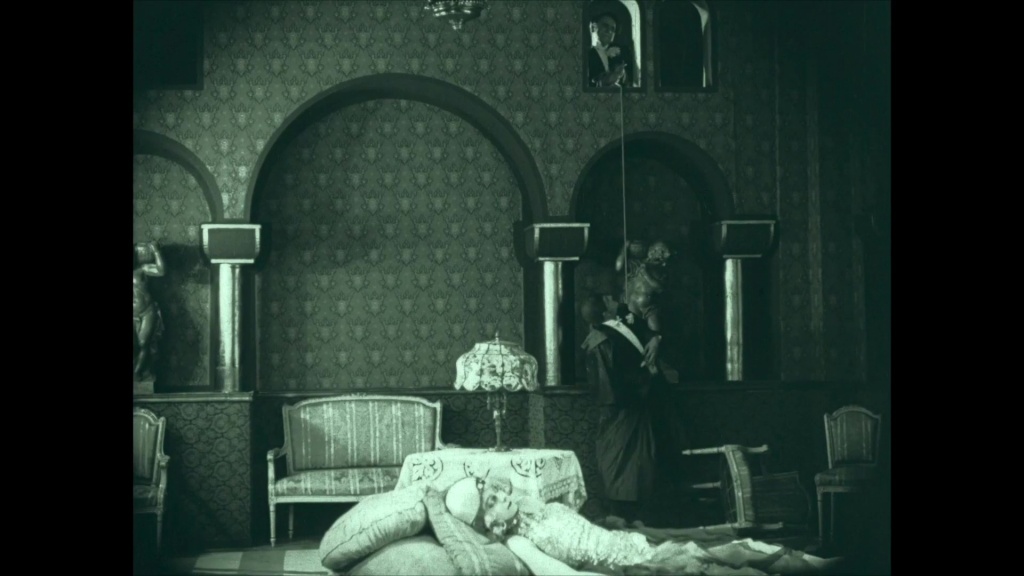


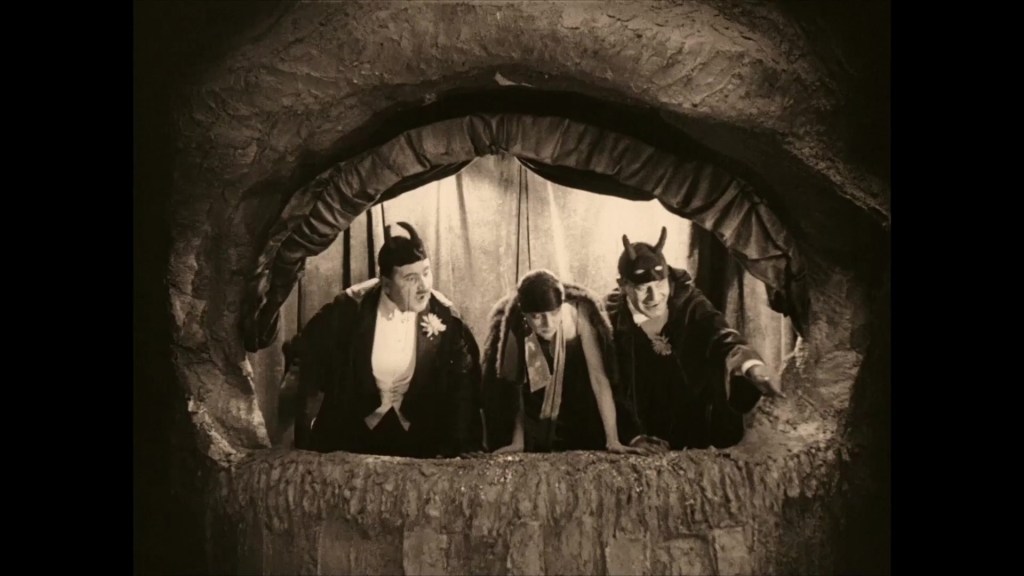


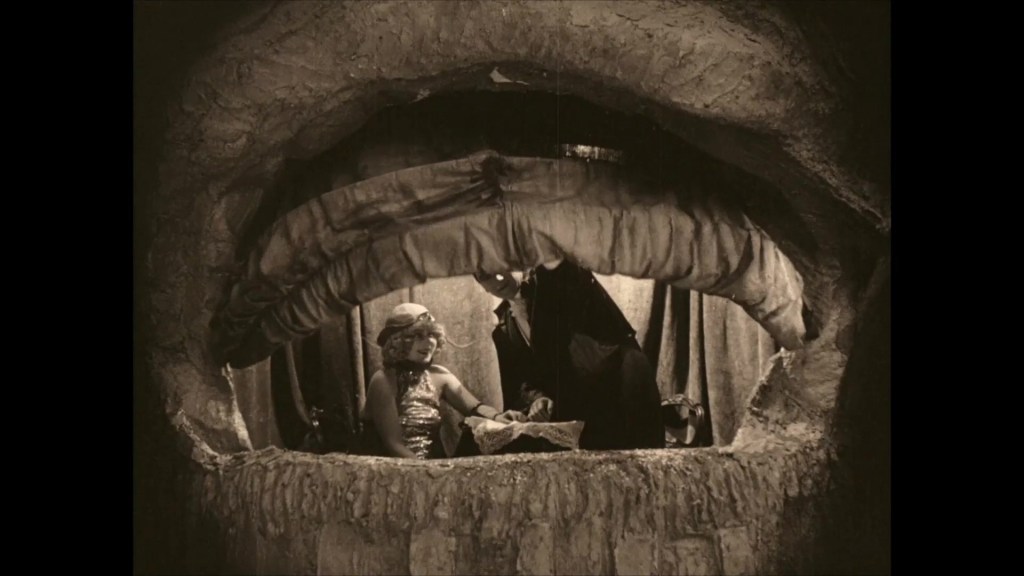
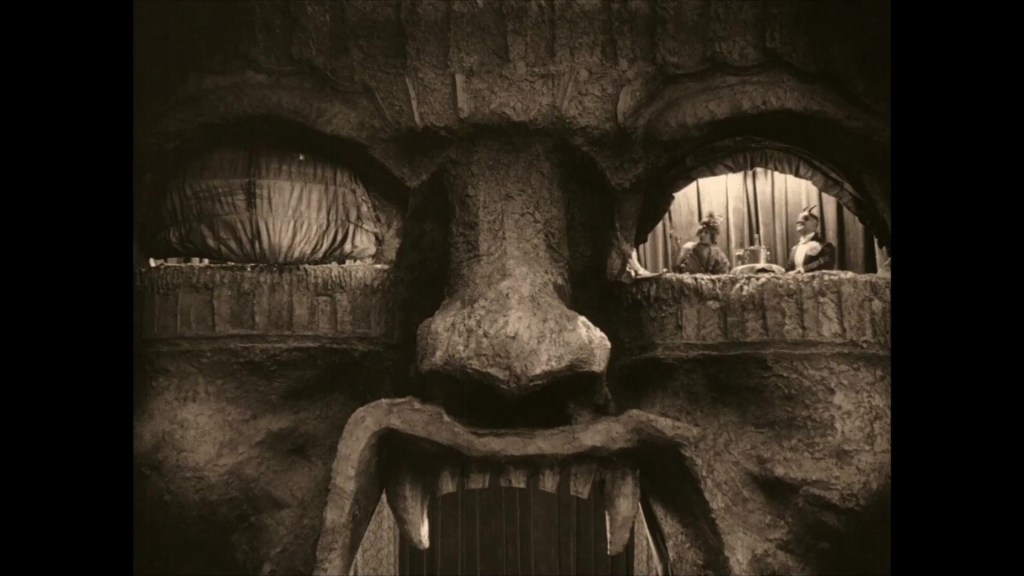


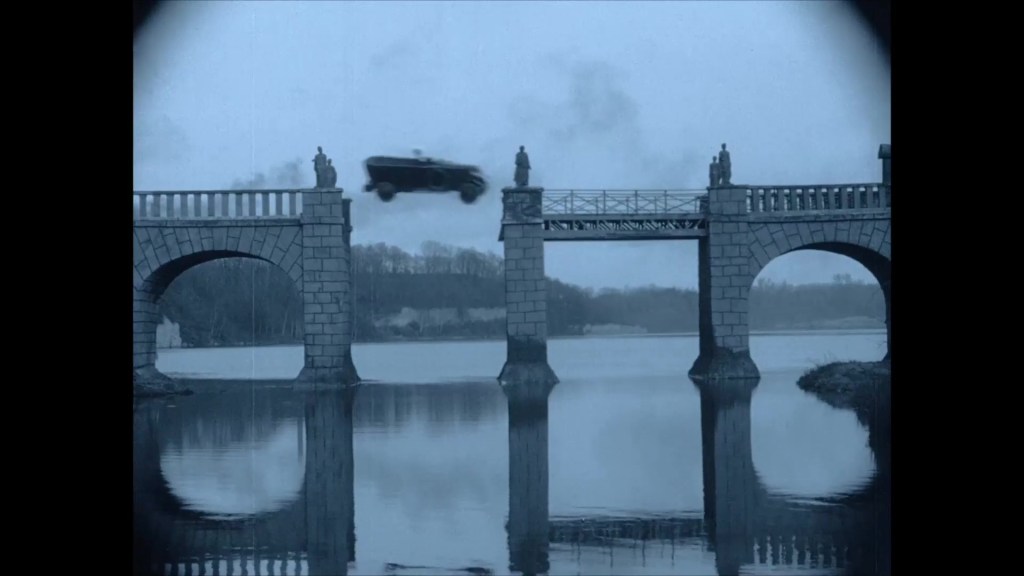
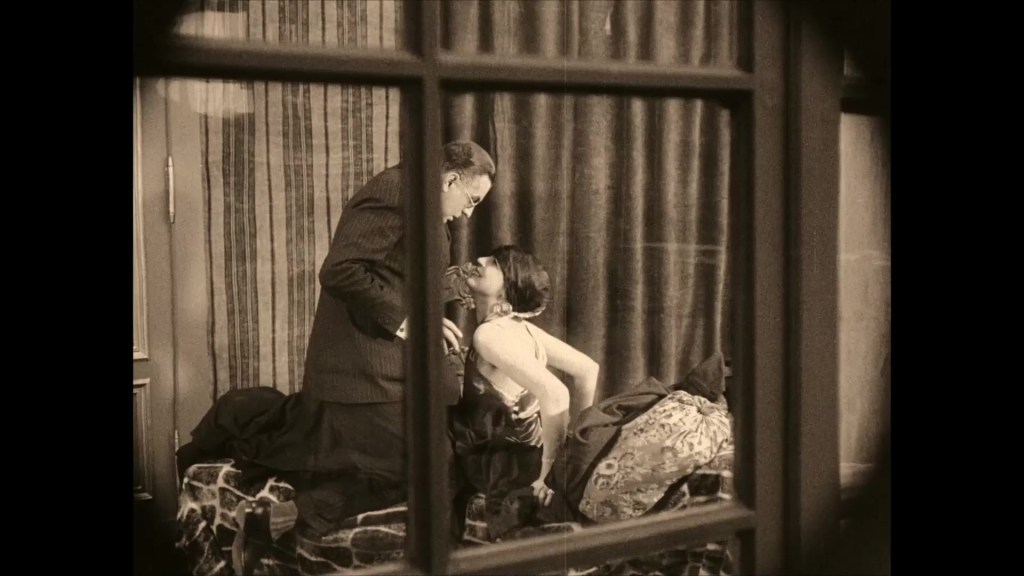
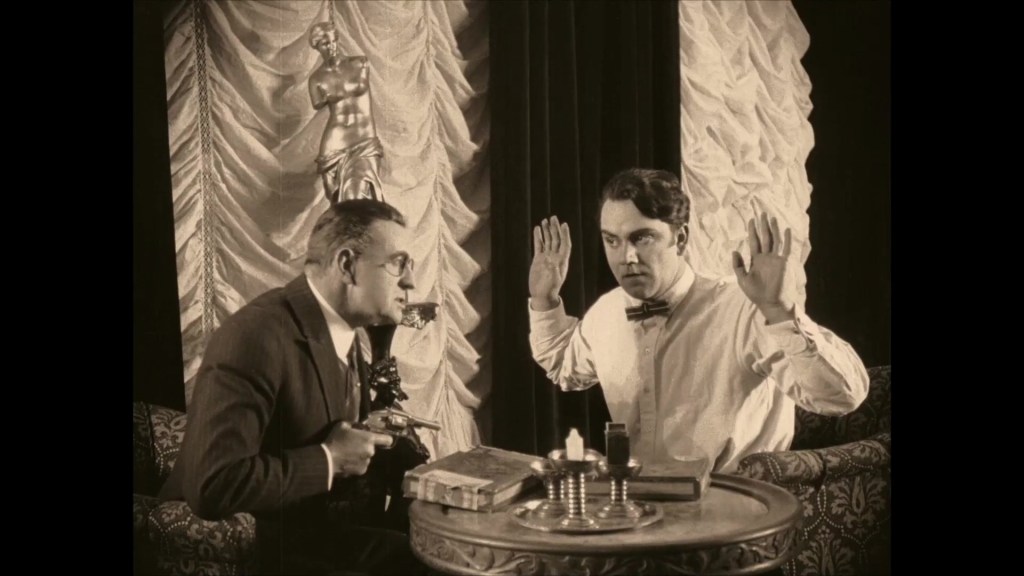
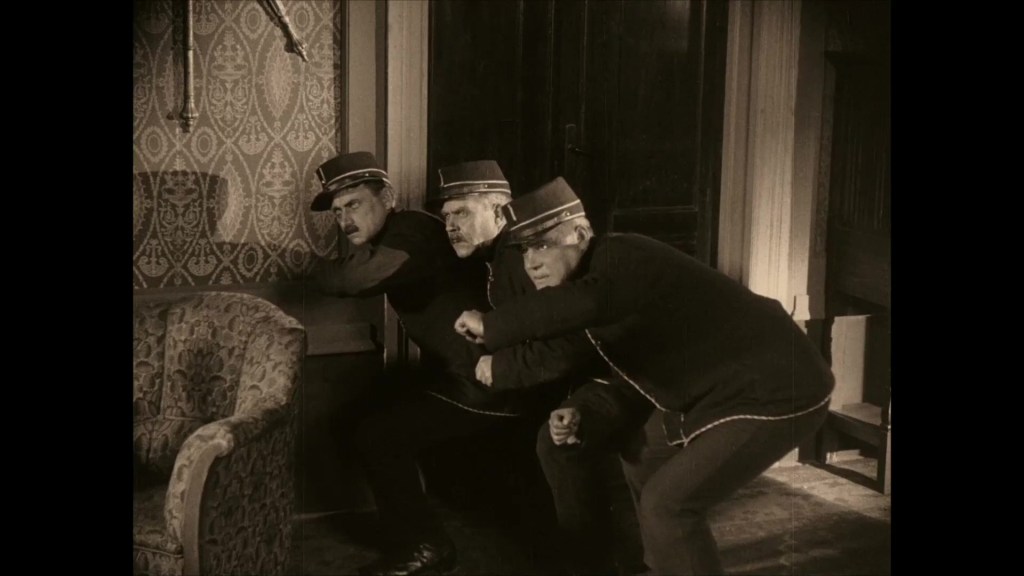


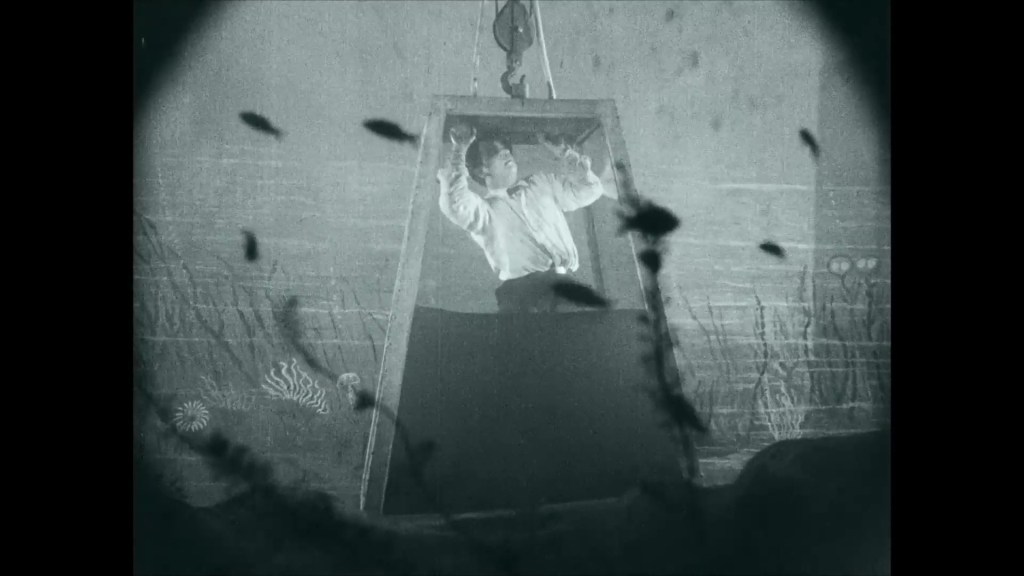
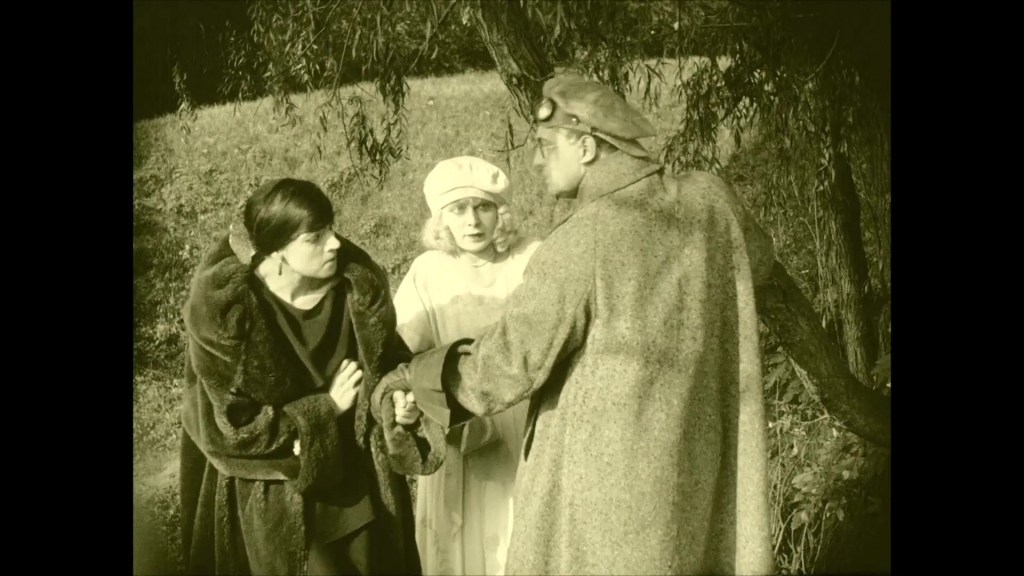
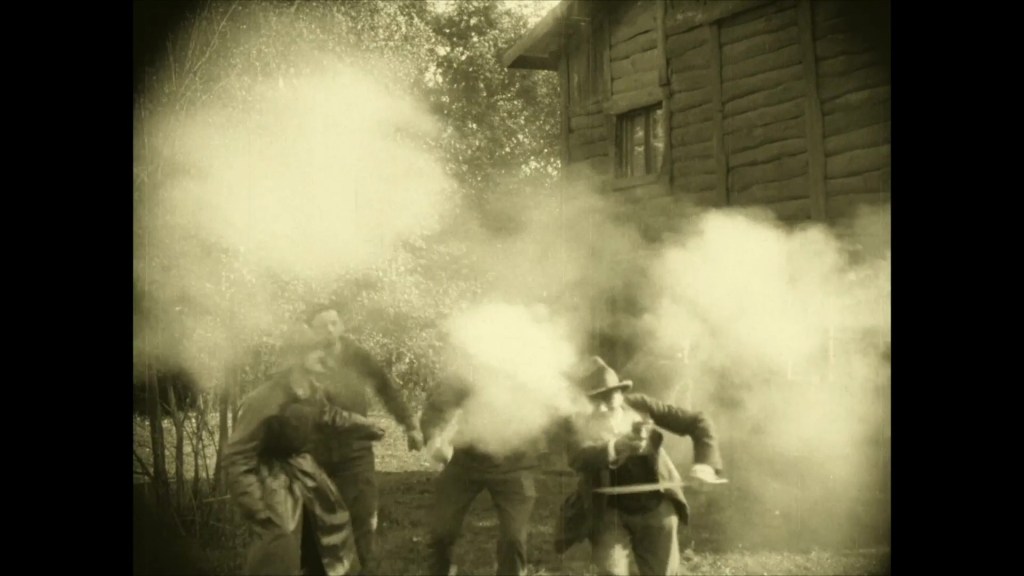

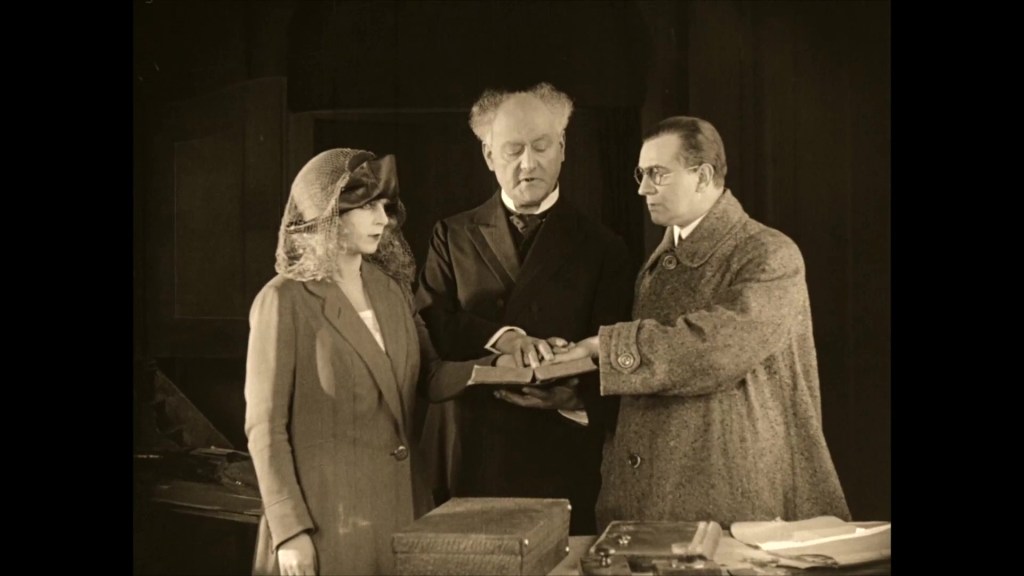

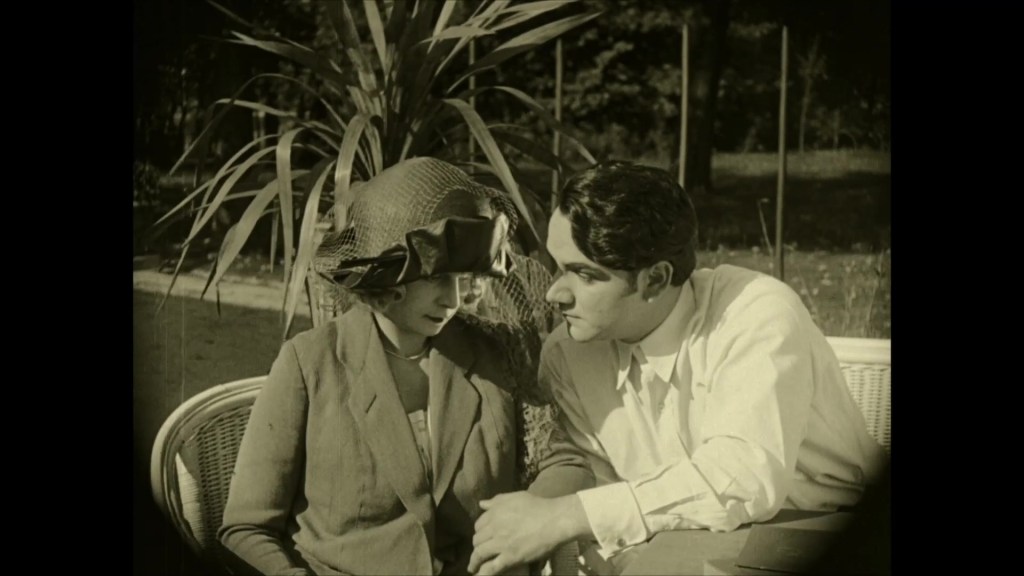






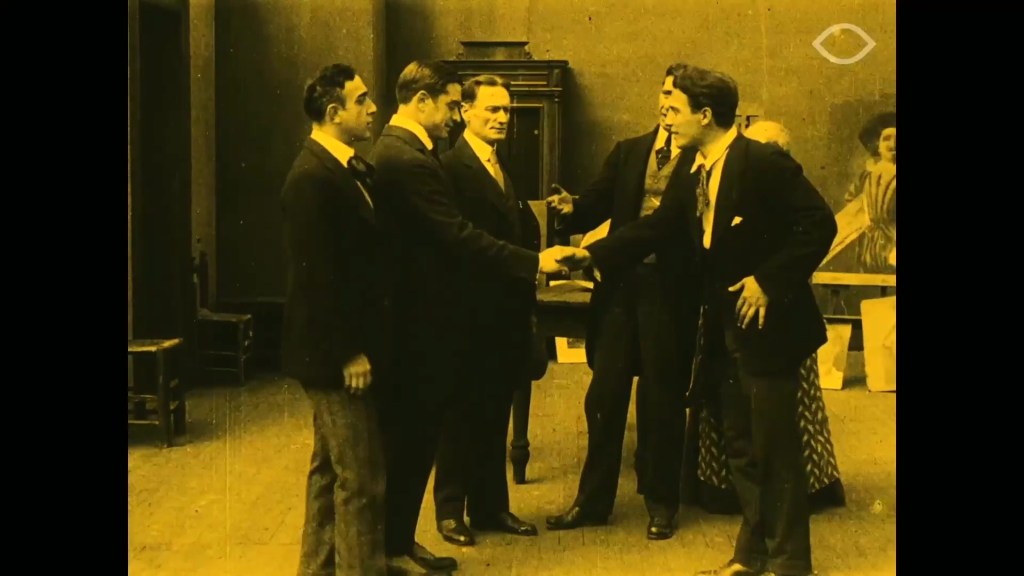


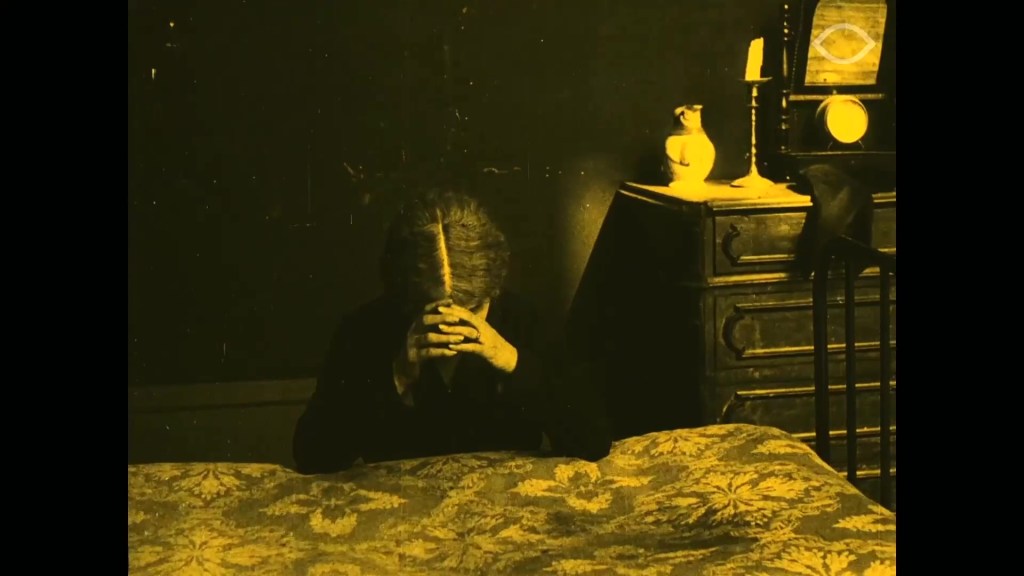


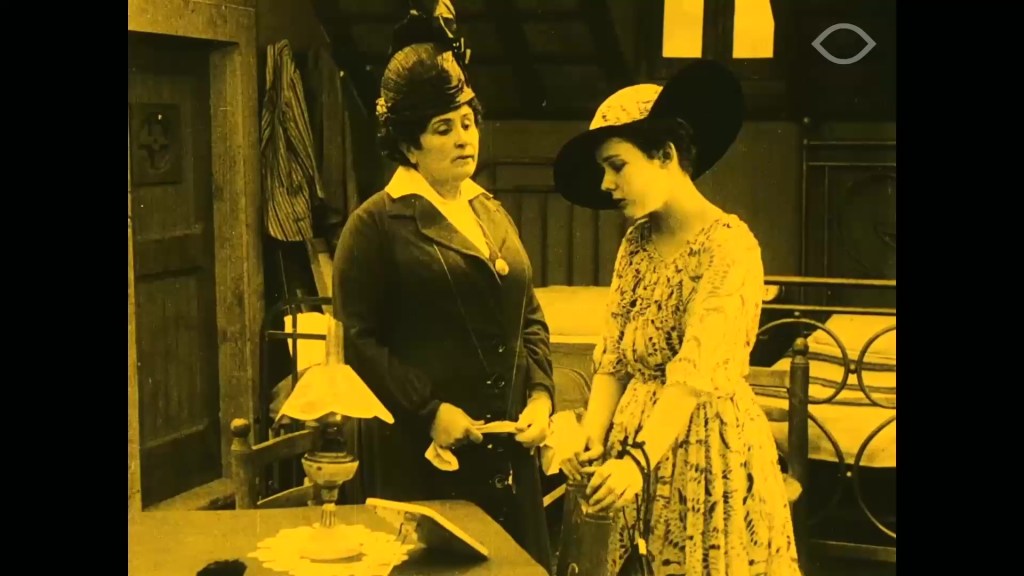


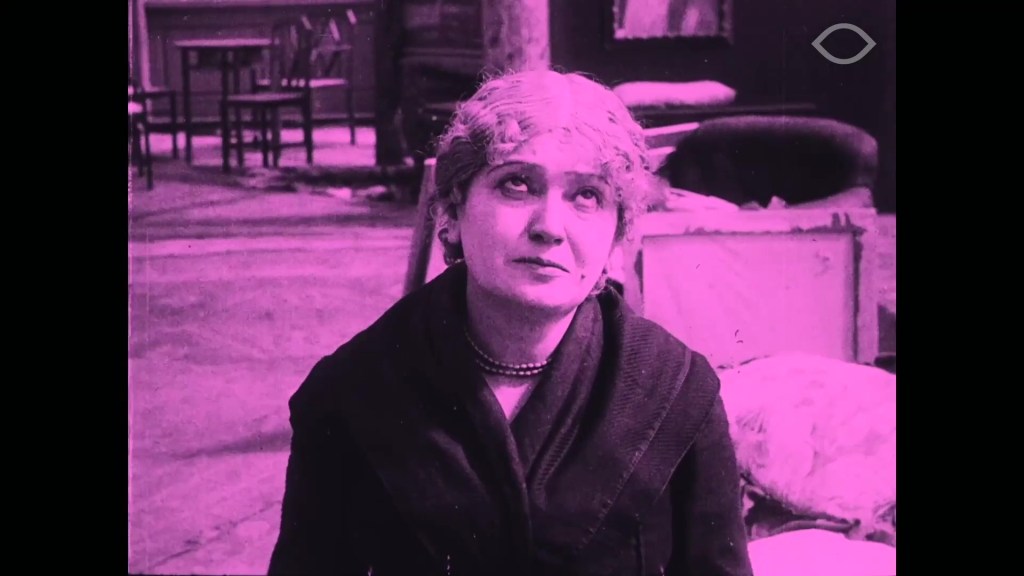


 The Realm of Silence